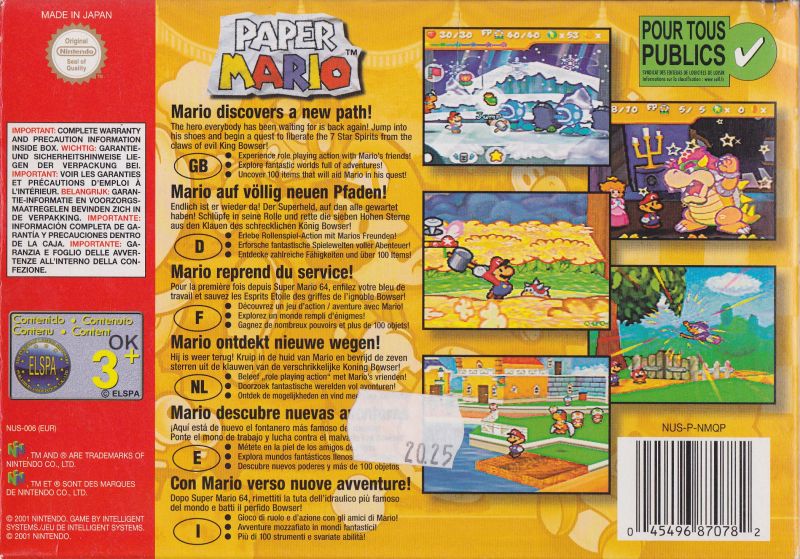
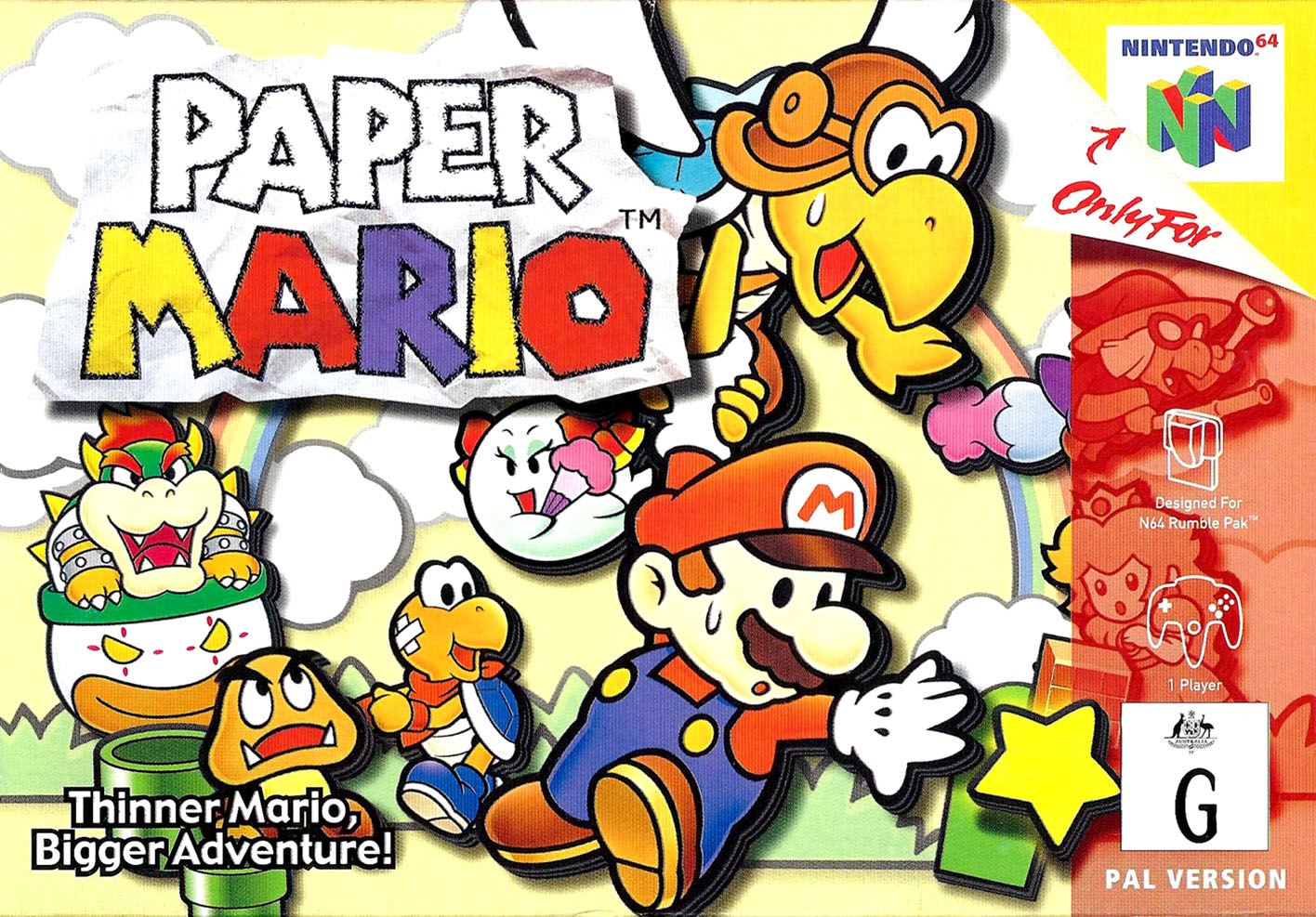
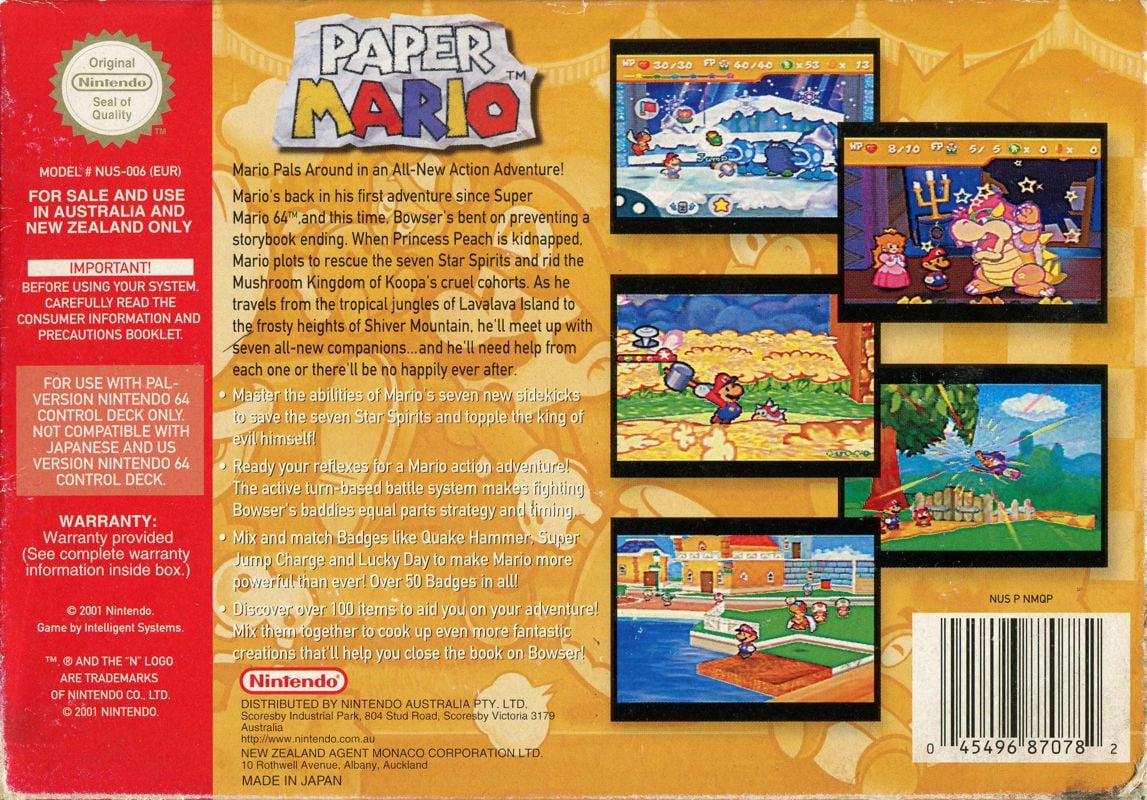
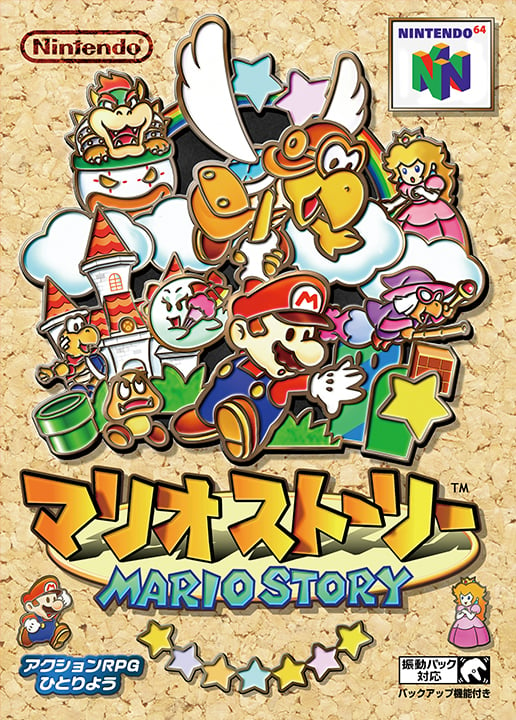
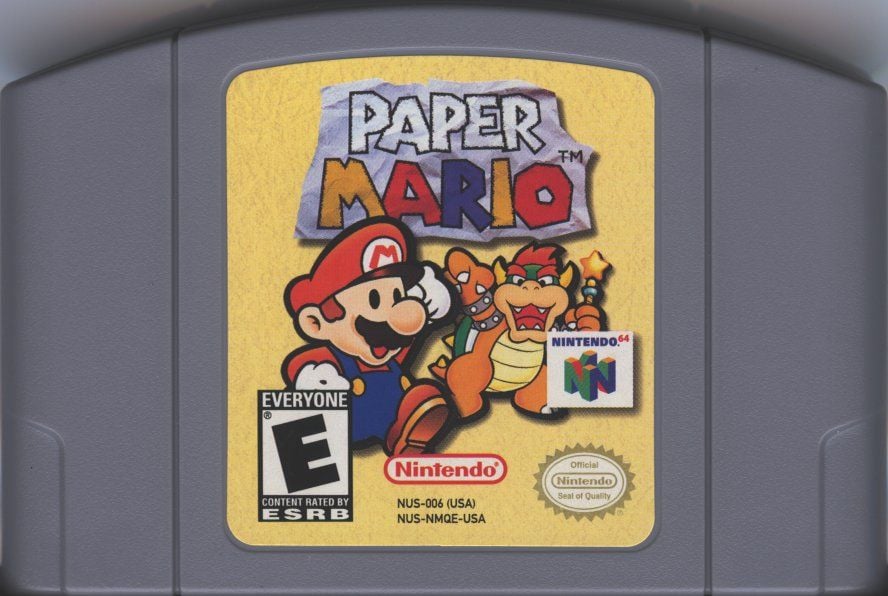
Nintendo 642000Intelligent SystemsRole-playing gameBegan as Super Mario RPG 2Metacritic 938 partners7 Star Spirits160 Star Pieces
Paper Mario
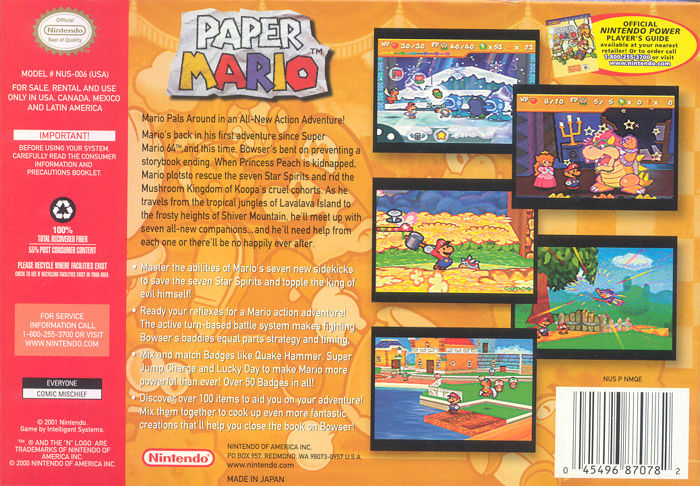
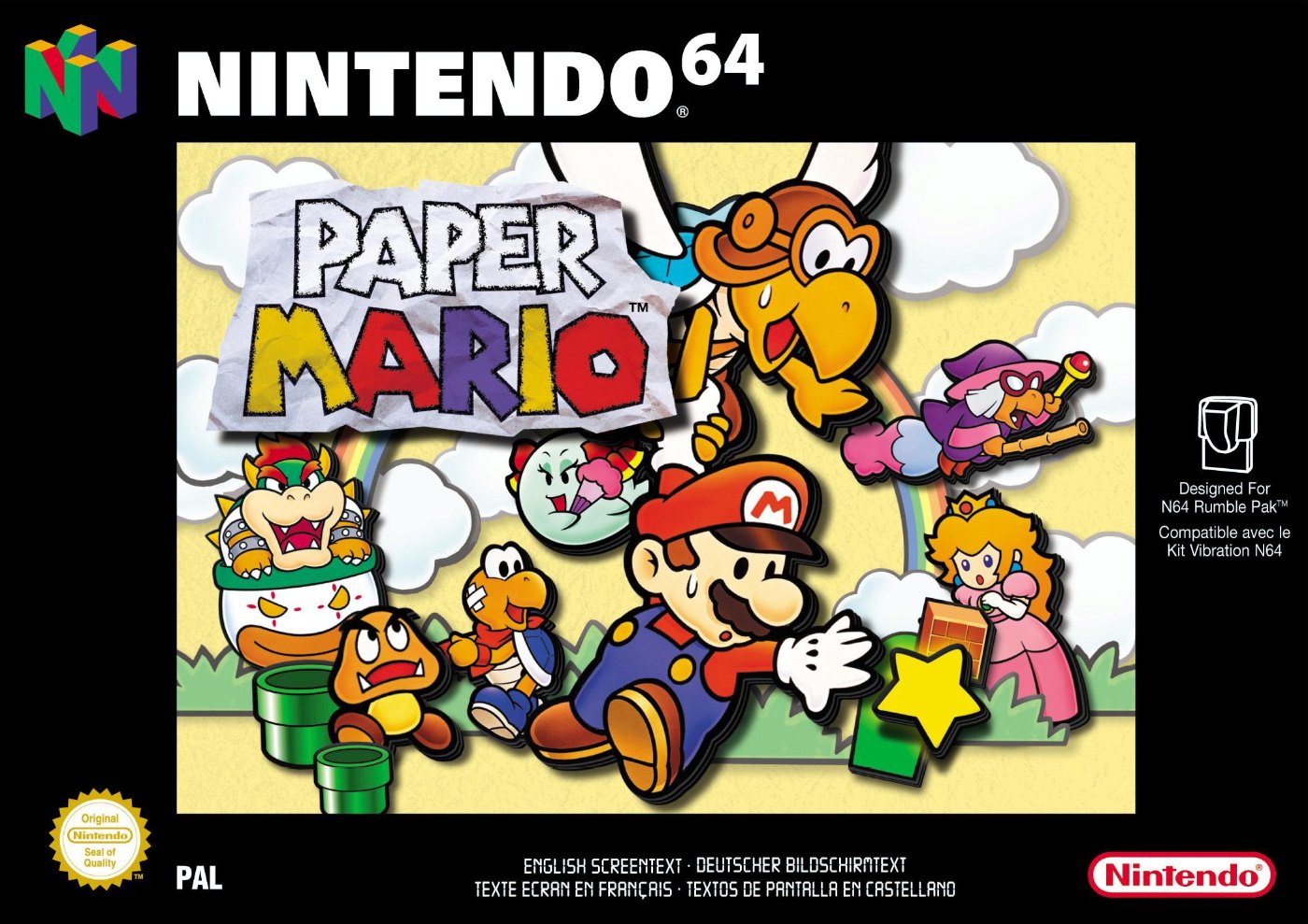
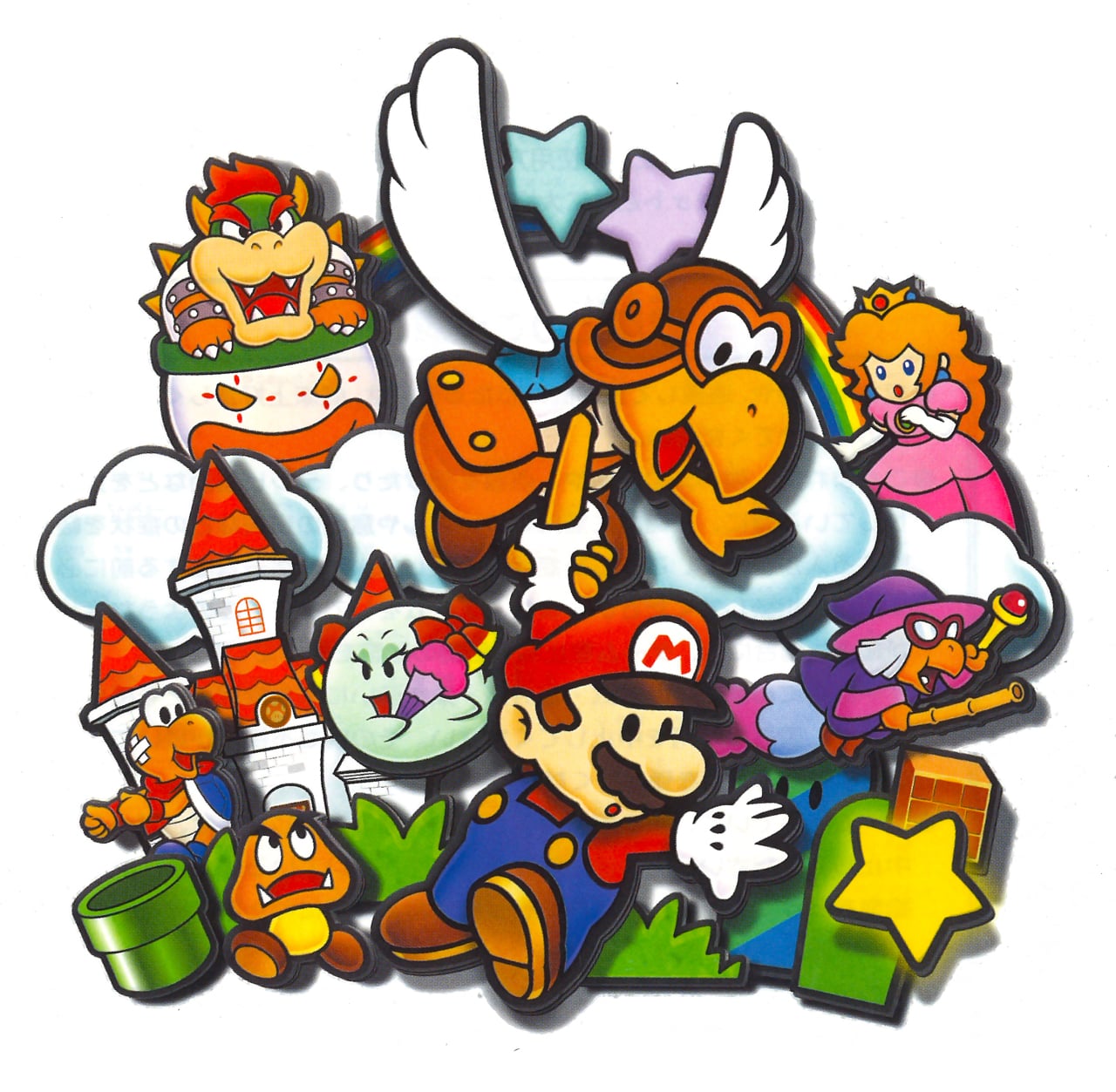
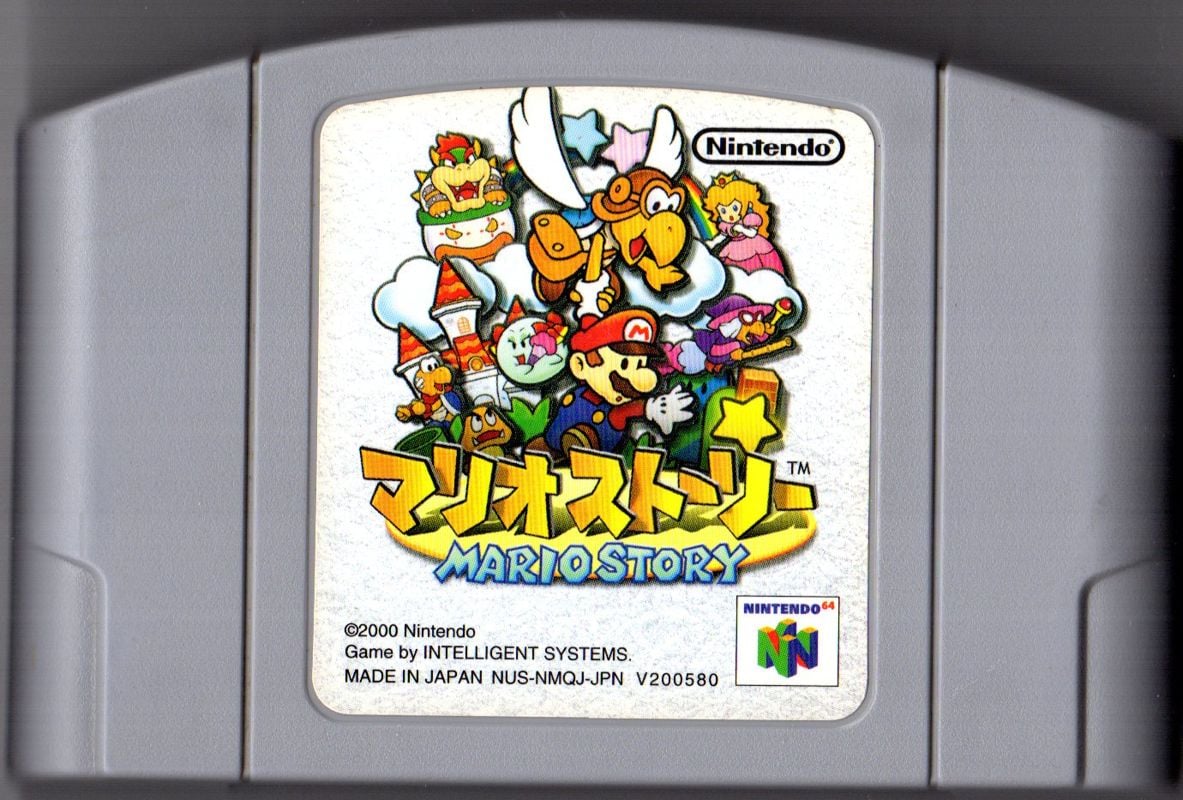
Bowser has stolen the wish-granting Star Rod, made himself invincible, and lifted Princess Peach’s castle clean off the ground and into space with her inside it. Mario, flattened in the first five minutes, has to free the seven Star Spirits before he can lay a glove on him. Paper Mario, released in Japan as Mario Story on 11 August 2000, in North America on 5 February 2001 and in Europe on 5 October 2001, was one of the last great Nintendo 64 games. It began as Super Mario RPG 2, lost Square along the way, and was rebuilt by Intelligent Systems over four years into something of its own: a pop-up storybook Mushroom Kingdom of paper-thin characters, eight partners drawn from Mario’s traditional enemies, badges in place of equipment and battles won by timing rather than arithmetic. Between chapters you play as Peach, sneaking round her own castle. It founded a series that is still going.
Developer:Intelligent Systems
Publisher:Nintendo
Platform:Nintendo 64
Genre:Role-playing game
Japan:11 August 2000 (as Mario Story)
North America:5 February 2001
Europe & Australia:5 October 2001
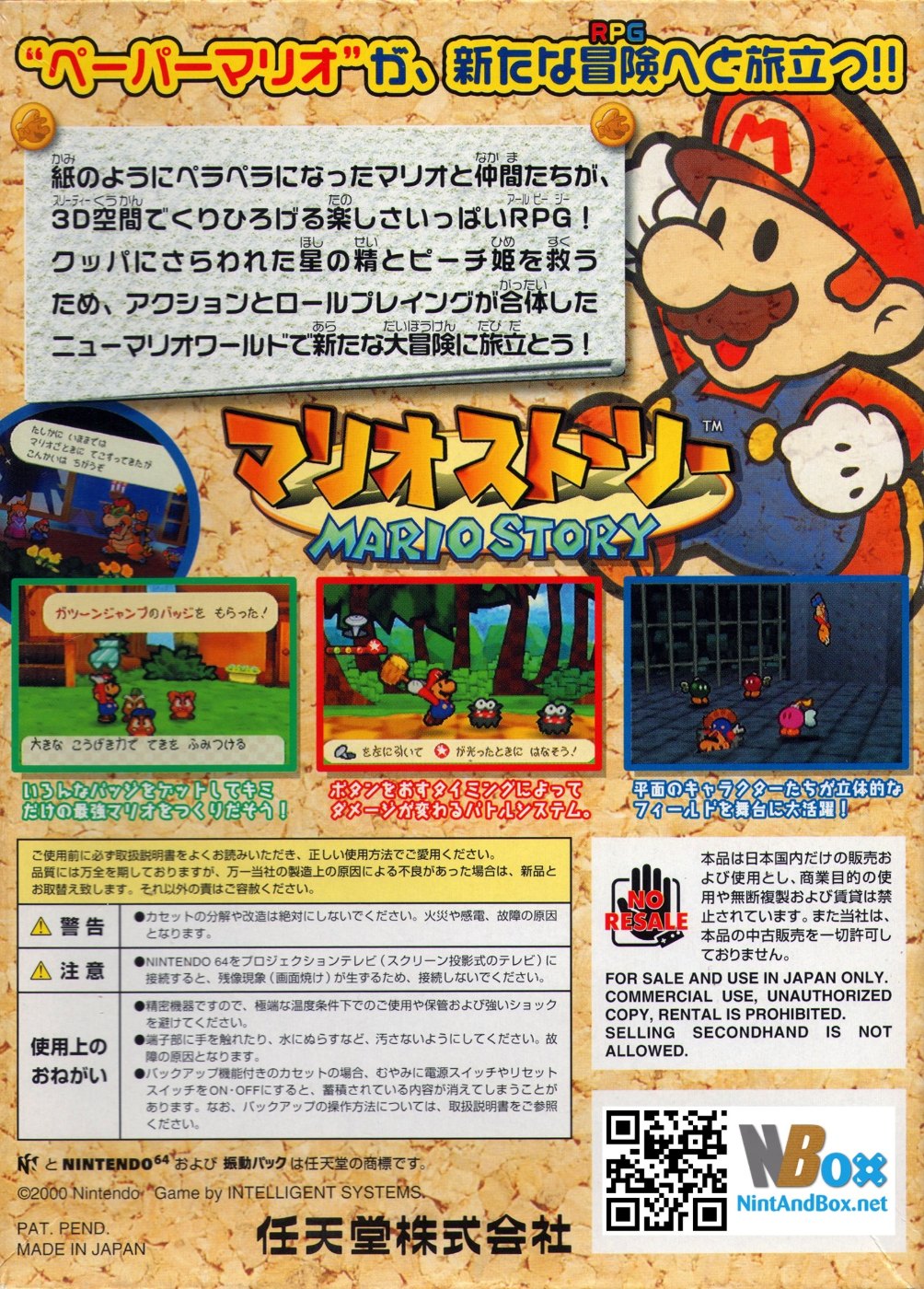
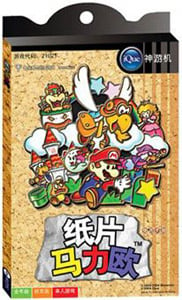
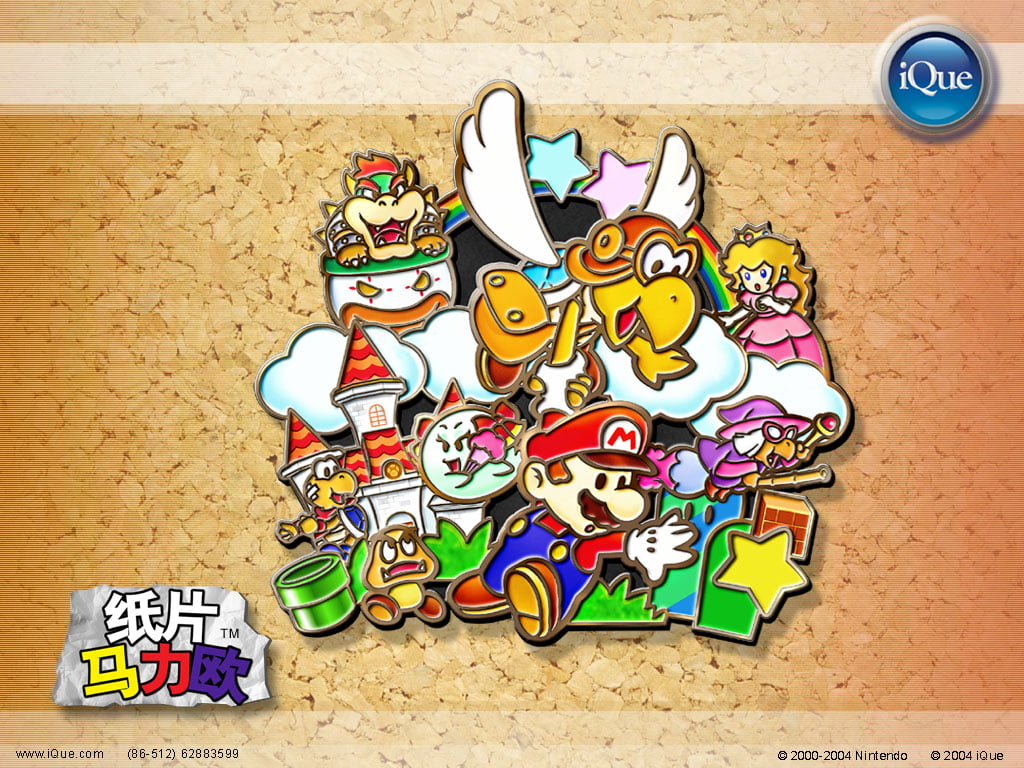
China:8 June 2004 (iQue Player)
Players:1
Chief director:Ryota Kawade
Producers:Shigeru Miyamoto, Kenji Miki
Art director:Naohiko Aoyama
Composer:Yuka Tsujiyoko
Structure:A prologue and eight chapters, with a Peach interlude after each of the first seven chapters and the prologue
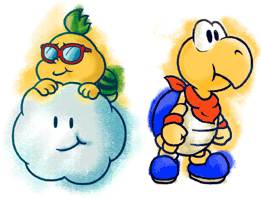
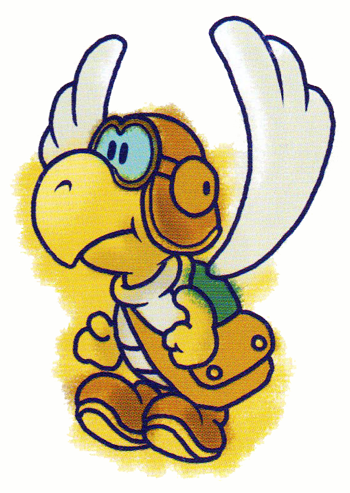
Partners:Goombario, Kooper, Bombette, Parakarry, Lady Bow, Watt, Sushie, Lakilester
Maximums:Level 27; 50 HP, 50 FP, 30 BP
To collect:160 Star Pieces, 69 different badges (80 counting duplicates), 64 quiz questions
Re-releases:iQue Player (2004), Wii Virtual Console (2007), Wii U Virtual Console (2015), Nintendo Switch Online (2021)
Advertisement
Overview
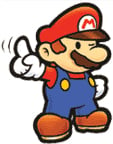
Paper Mario himself.
Paper Mario is the first game in the Paper Mario series and the second Mario role-playing game, after Super Mario RPG: Legend of the Seven Stars. It was developed for the Nintendo 64 by Intelligent Systems, a studio affiliated with Nintendo, with Ryota Kawade as chief director and Shigeru Miyamoto and Kenji Miki producing. Japan got it in August 2000 under the title Mario Story; North America followed in February 2001 and Europe and Australia not until October 2001, very late in the life of the console.
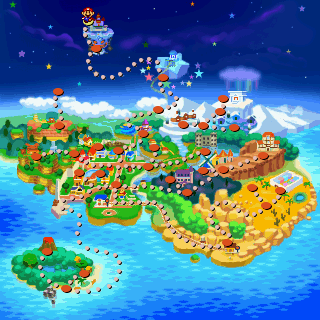
The plot is the old one, raised to a new scale. Bowser and his sorceress Kammy Koopa raid Star Haven, steal the Star Rod and imprison its seven guardians, the Star Spirits, in playing cards. Bowser then turns up at a party at Peach’s castle with his own castle underneath it, hoists the whole building into the sky, and, being invincible now, beats Mario without effort. Mario wakes up in Goomba Village. The rest of the game is a tour of the Mushroom Kingdom in eight chapters, each ending with a boss and a rescued Star Spirit, and each followed by a short scene in which the player takes control of Peach as she snoops for information.
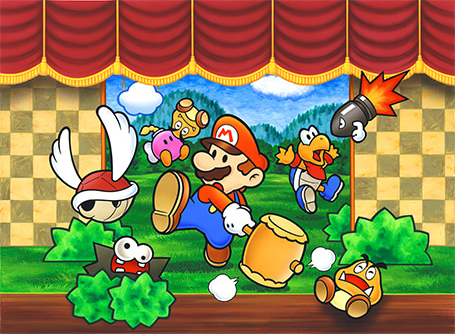
What made it different was how it looked and how it played. Every character is a flat, hand-drawn sprite that turns edge-on like a sheet of paper, moving through bright 3D sets built like a pop-up book. Fights are turn-based and deliberately small in their numbers: Mario starts with 10 HP, a jump does 1 damage, and a well-timed button press makes it 2. There are no swords or armour to buy. Instead Mario pins on badges that give him new moves and quirks, and he travels with a partner, one of eight, each of whom has a talent for getting past some obstacle on the map.
Reviews were excellent (it holds 93 on Metacritic) and the game went straight to the top of the Japanese chart. Its direct sequel, Paper Mario: The Thousand-Year Door, arrived on GameCube in 2004, and the original has been reissued on Wii, Wii U and Nintendo Switch, the last of these through Nintendo Switch Online in December 2021.
Why Paper Mario matters to Mario fans
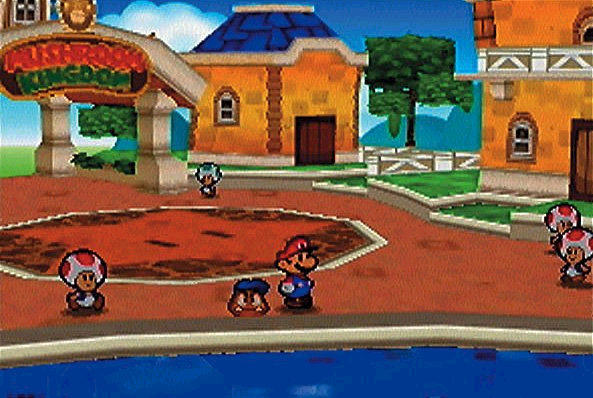
It gave the Mushroom Kingdom a population. Toad Town, with its post office, dojo, cook and gossiping Toads, is the first time Mario’s world feels like a place where people live, and Goombas, Koopas, Bob-ombs and Boos turn out to be perfectly decent neighbours once somebody talks to them. It also rescued the Mario RPG after Square’s departure, started a series that is still running, and introduced Kammy Koopa, Goombario and the rest of a much-loved cast.
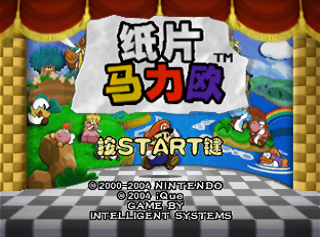
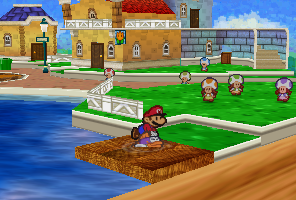
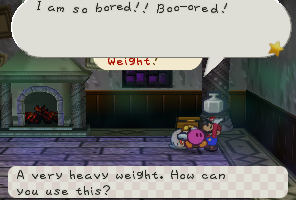
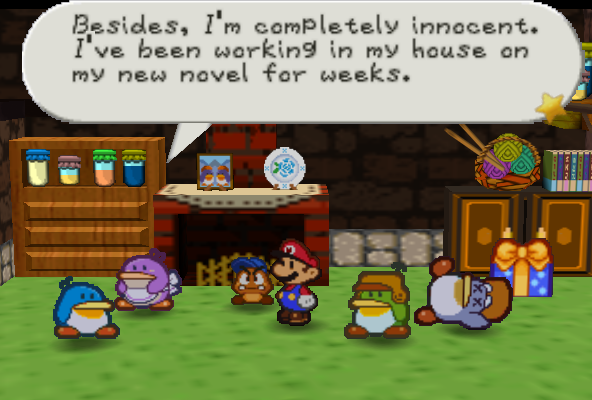
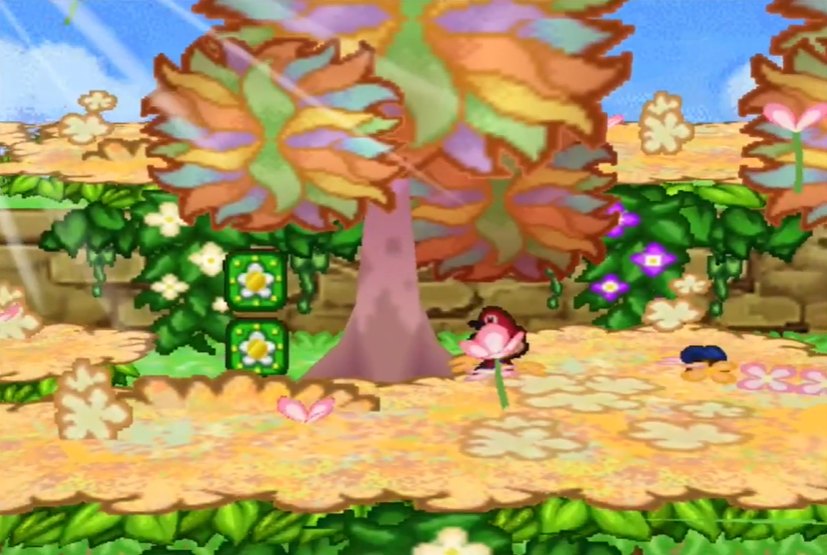
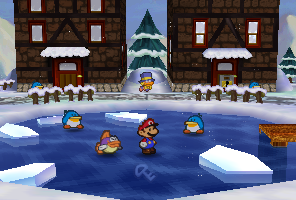
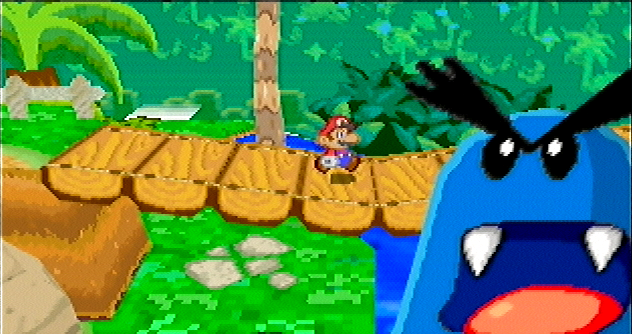
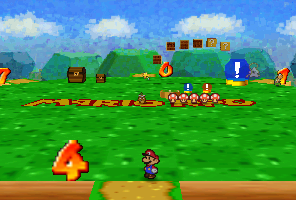
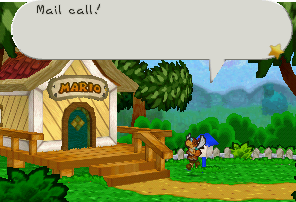
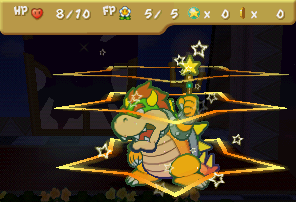
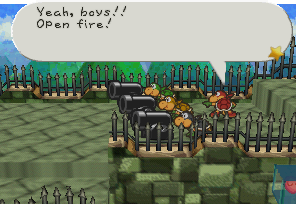
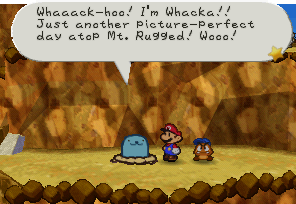
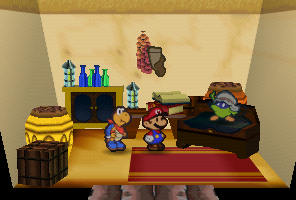
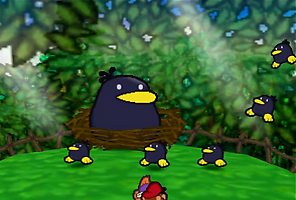
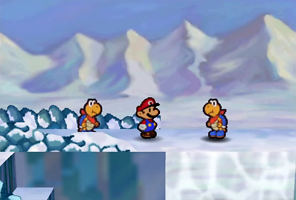
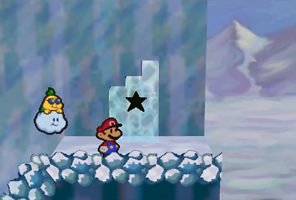
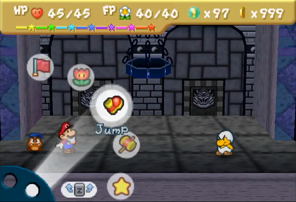
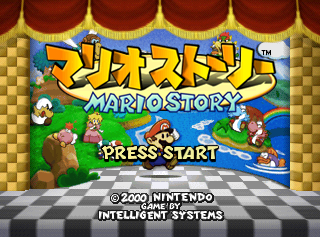
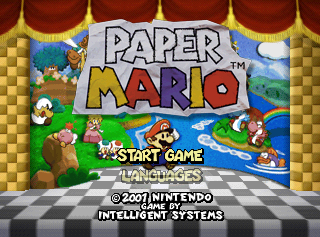
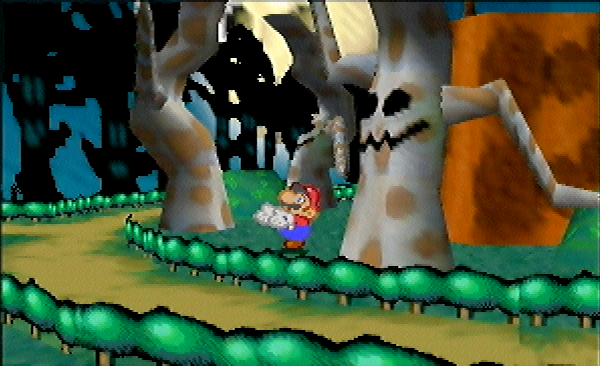
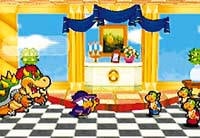
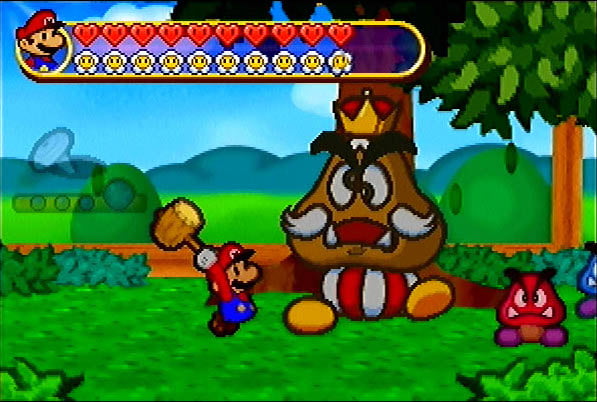
The title screen.Mario and Goombario on Pleasant Path.A battle in progress, against Tubba Blubba’s heart.The first fight with Bowser, which cannot be won.
“We are going forward with the concept of those unique 2-D graphics.”
Shigeru Miyamoto, Nintendo Power “Previews ’99” supplement, 1999.
Shigeru Miyamoto, speaking while the game was still called Super Mario RPG 2. He added that most of the characters from the Mario games would appear in it.
Quick Answers
The questions people ask most about Paper Mario, answered briefly here and in depth further down the page.
When did Paper Mario come out?
On 11 August 2000 in Japan (as Mario Story), 5 February 2001 in North America and 5 October 2001 in Europe and Australia, all on Nintendo 64. A Chinese version for the iQue Player followed on 8 June 2004. More →
Is Paper Mario a sequel to Super Mario RPG?
It started as one. It was announced as Super Mario RPG 2 for the 64DD, but Square was not involved, and Intelligent Systems chose early on to make it a separate game rather than a follow-up. Timed button presses, Flower Points and a seven-star quest are the main things carried over. More →
How many chapters are there?
A prologue and eight chapters. Each of the first seven chapters ends with a boss guarding one of the seven Star Spirits; the eighth is Bowser’s Castle. More →
Who are the partners?
Eight: Goombario, Kooper, Bombette, Parakarry, Lady Bow, Watt, Sushie and Lakilester. One fights beside Mario at a time, and each has a field ability, such as Bombette blowing up cracked walls or Parakarry carrying Mario over gaps. More →
How do you upgrade partners?
By hitting Super Blocks. There are 16 in the game, exactly enough to raise every partner twice. The second upgrade, to Ultra Rank, needs the Ultra Stone from Jade Jungle first. More →
How many badges are there?
69 different badges, or 80 counting the spares of those that exist more than once. They come from red ? Blocks and chests, Rowf’s Badge Shop in Toad Town, and Merlow, who trades them for Star Pieces. More →
What is the maximum level?
Level 27. Each level-up adds 5 HP, 5 FP or 3 BP, to limits of 50 HP, 50 FP and 30 BP. The game’s chief director said a typical playthrough finishes at a bit over level 20. More →
Who is the hardest boss?
Not Bowser. The Master of the Toad Town Dojo can be fought three times, and in his final form he has 99 HP and an attack of 10. Kent C. Koopa and the Anti Guy are the other optional fights to be wary of. More →
How can I play Paper Mario today?
It has been part of the Nintendo 64 library for Nintendo Switch Online + Expansion Pack members since 10 December 2021. It was also sold on the Wii Virtual Console from July 2007 and the Wii U Virtual Console from 2015. More →
Why is it called Mario Story in Japan?
Because that was the title the project settled on once it stopped being Super Mario RPG 2. The West renamed it to draw attention to the way it looks. More →
Story
The seven Star Spirits.
Paper Mario presents itself as a storybook, and it begins with one being read aloud. Far above the clouds lies Star Haven, where the Stars live, and in its sanctuary is kept the Star Rod, which has the power to grant any wish. Seven Star Spirits watch over it and use it to answer the wishes of the people below.
What follows is the whole story: the theft, the fall, eight chapters and the Princess’s adventures in between, ending included.
Opening: the Star Rod is stolen
Bowser and his elderly lieutenant Kammy Koopa break into Star Haven, shatter the seal on the Star Rod and take it. Kammy turns the seven Star Spirits into cards, to be handed out among Bowser’s strongest followers for safe keeping.
Down below, Parakarry the postman drops a letter at the Mario Bros.’ house. Princess Peach is giving a party at the castle and the brothers are invited. Mario has barely found the Princess when the floor heaves. Bowser’s Castle has come up out of the ground underneath Peach’s and is carrying it, guests and all, up through the clouds and into space.
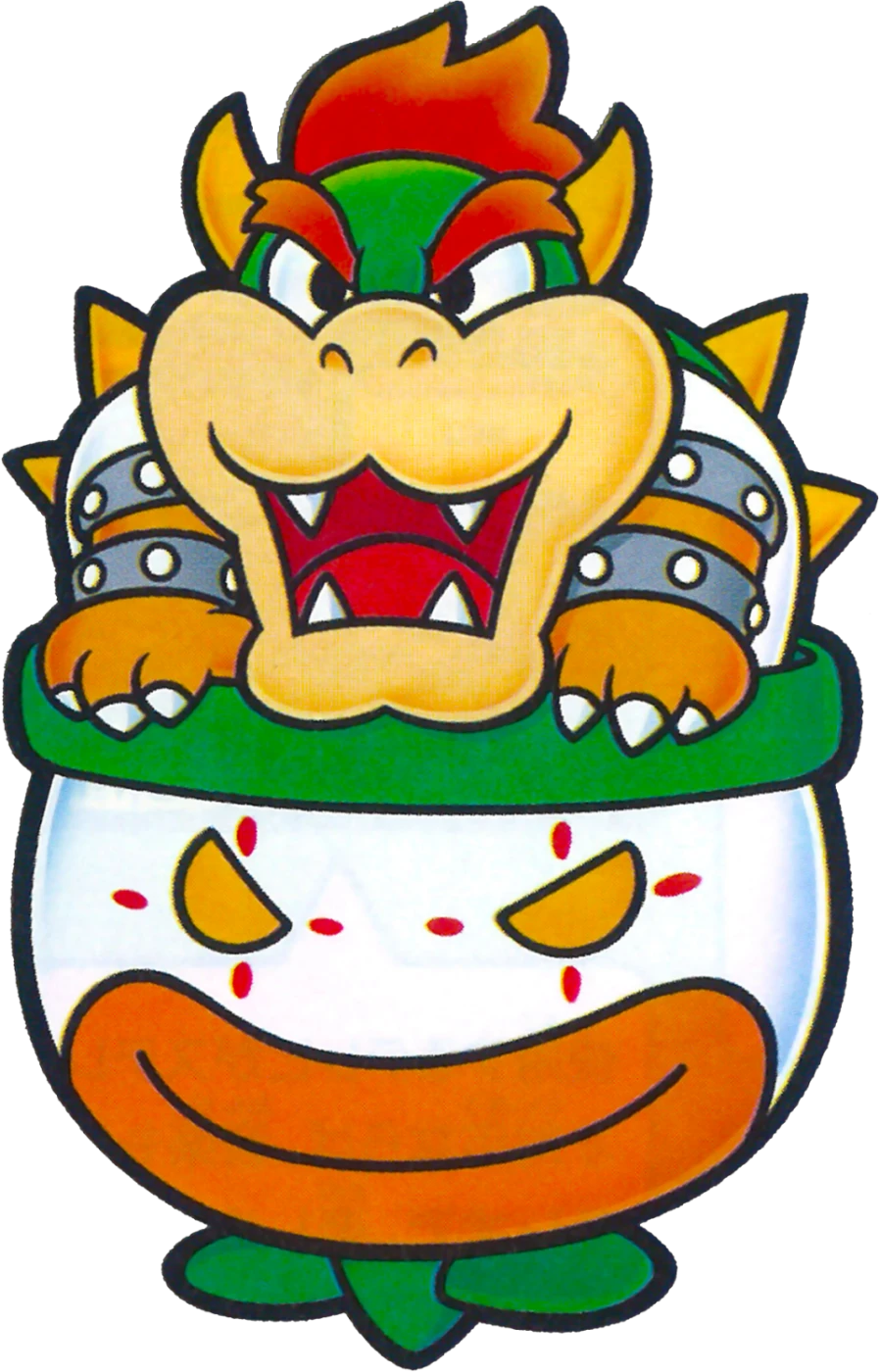
Bowser smashes in through the window in his Koopa Clown Car with Kammy at his side. Mario squares up as usual and, for a couple of turns, the fight goes as usual. Then Bowser raises the Star Rod. Nothing Mario does can hurt him after that, and one burst of fire later Mario is tumbling out of the window and down through the sky.
Star Haven, in the storybook opening.Kammy Koopa arrives.Bowser’s Castle carries Peach’s into space.Bowser comes through the window.
Prologue: A Plea from the Stars
He lands in a forest clearing, out cold. The seven Star Spirits appear over him and spend the last of their strength keeping him alive. A family of Goombas finds him and carries him home to Goomba Village, and while he sleeps the Star Spirit Eldstar speaks to him in a dream: come to Shooting Star Summit.
Kammy Koopa swoops by to check on him and drops a huge Yellow Block across the village gate. Getting out takes a hammer, which means finding the grandfather, Goompa, whose veranda has just collapsed, and that in turn means a first run-in with Jr. Troopa, a small Koopa still wearing his eggshell who regards the clearing as his private playground. He will be back: there are six fights with him in all. The family’s son, Goombario, a devoted Mario fan in a blue cap, is told to go along, and he becomes the first partner.
The road to town is held by the Red and Blue Goomba Bros. and their boss, the enormous Goomba King, whose fortress straddles the road. Beyond him lies Toad Town, and beyond that Shooting Star Summit, where the Star Spirits explain everything. Bowser has the Star Rod. They are prisoners, scattered across the kingdom. If Mario can free all seven, their combined power, the Star Beam, can cancel the Rod’s.
Up in the castle, Peach is locked in her room. She makes a wish, and a very small star answers it: Twink, a Star Kid so newly risen to Star Haven that he cannot grant anything much. He can carry things, though. Peach gives him her Lucky Star pendant for Mario, and it reaches him at the foot of the Summit. In Toad Town the fortune-teller Merlon points the way: a Star Spirit is being held in the fortress to the east, by the Koopa Bros.
Mario, after falling from Peach’s Castle.Jr. Troopa makes his first objection.Goombario joins the party.The Goomba King’s Fortress.
Chapter 1: Storming Koopa Bros. Fortress
Pleasant Path, east of town, leads to Koopa Village, where the peaceful Koopa residents are being robbed of their shells by a plague of Fuzzies. Mario chases the pests off and returns the shells, one of them to Kooper, a young Koopa who dreams of being an explorer like his hero, the archaeologist Kolorado. Kooper joins, and with his shell-kick to call on Mario can get into the fortress.
The Koopa Bros. Fortress is a place of locked doors and trapdoors, one of which drops Mario into a cell full of Bob-ombs. Among them is Bombette, pink and furious, who was locked up for standing up to the Koopa Bros. She blows a hole in the wall and comes along.
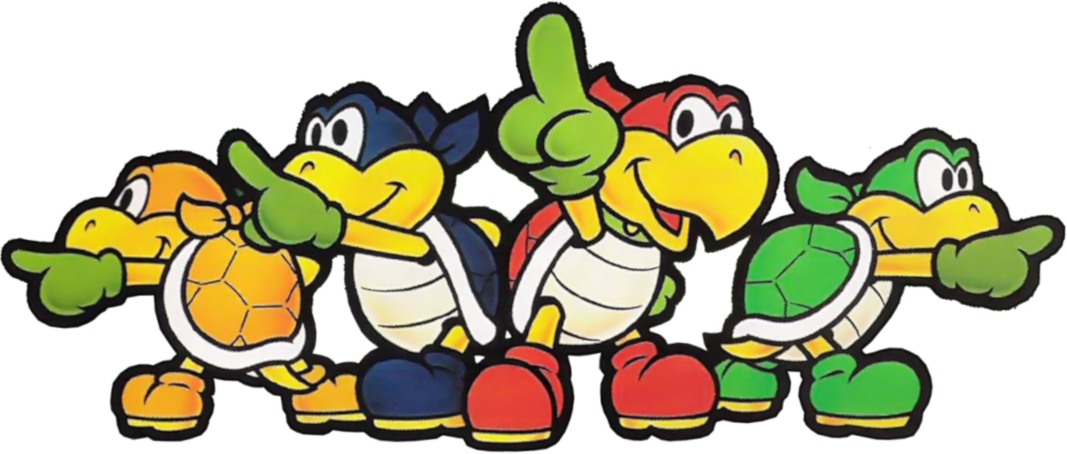
On the roof the four brothers, red, black, yellow and green ninja Koopas with matching masks, try to bluff their way out with a rickety mechanical Bowser. When it falls apart they stack themselves into a tower and fight for real. Beaten, they are knocked down into their own dungeon, and Eldstar is free. He teaches Mario Focus and his first special move, Refresh.
Peach. The Princess remembers a hidden passage out of her room. With Twink she finds Bowser’s private diary, lying open, and reads that another Star Spirit has been sent to Dry Dry Desert. Bowser walks in, is mortified, and has her escorted back by two Koopatrols. Twink flies down to tell Mario. Bombette clears the boulder blocking the railway in the south of Toad Town, and the train leaves for Mt. Rugged.
The Koopa Bros., unconvincingly disguised as Toads.Kooper gets his shell back.Bombette prepares to demolish a wall.The fake Bowser comes to pieces.
Chapter 2: The Mystery of Dry, Dry Ruins
On Mt. Rugged a Paratroopa postman is in despair. Parakarry has dropped his letters all over the mountain. Mario gathers them up, and the grateful postman joins the party, lifting Mario across chasms too wide to jump. A large bird called Buzzar can be fought on the way over.
Beyond lies Dry Dry Desert, wide and easy to get lost in, and in it Dry Dry Outpost, a trading town where information has its price. Its secretive leader, Moustafa, has to be found before he will help. He gives Mario the Pulse Stone, which guides him to the buried ruins. Set into a pedestal out in the dunes, it brings the entrance of Dry Dry Ruins up out of the sand.
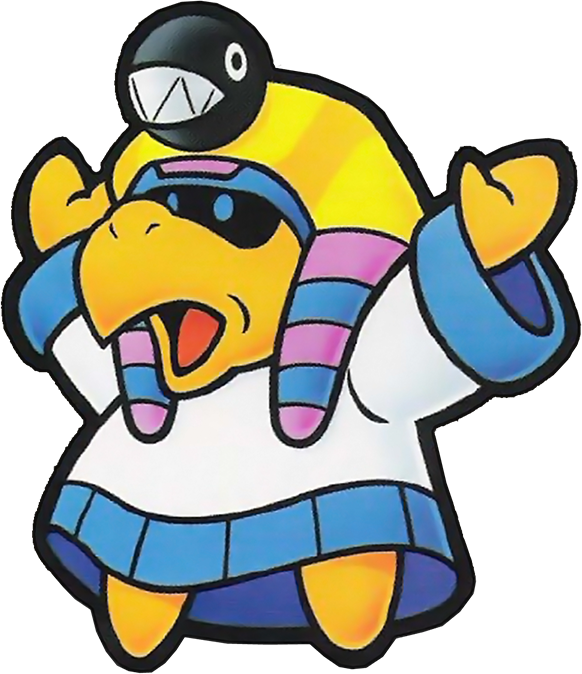
A ghostly voice orders Mario to turn back at every step, and he ignores it at every step, past Stone Chomps and Pokey Mummies, picking up the Super Hammer on the way. The voice belongs to Tutankoopa, a Koopa pharaoh who sets his pet Chomp on intruders. When he loses, the Chomp turns on him and chases him out. Mamar is freed.
Peach. Bowser drops in to boast. Mario’s next opponent will be Tubba Blubba, who is invincible. Kammy interrupts with awkward news (the Star Spirit Tubba was guarding has got away) and the two leave. Peach and Twink reason that an invincible monster must have a secret, and overhear enough from the guards to know that there is one, though not what it is. In Toad Town, meanwhile, a nervous guard called Fice T. has seen a ghost go into Forever Forest. The ghost is Bootler, a butler, with an invitation from his mistress.
Mt. Rugged station.Meeting Parakarry.Dry Dry Ruins rises from the desert.Tutankoopa, pursued by his own Chomp.
Chapter 3: The “Invincible” Tubba Blubba
Forever Forest is a maze. Somewhere in it stands Boo’s Mansion, home of Lady Bow, a haughty young Boo with a fan and a ribbon. Her Boos have caught the escaped Star Spirit, Skolar, and she will hand him over on one condition. A monster called Tubba Blubba has been eating her subjects, and nothing can hurt him. Mario is to deal with it. She comes along herself to make sure, which gives Mario the power to turn invisible.
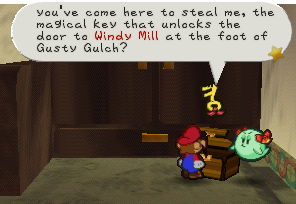
In Gusty Gulch, the Boos’ windswept village, the party sees Tubba Blubba at work: a hulking brute who swallows a Boo named Stanley whole. In his castle, they steal into the master bedroom and open the chest by the bed. Inside is Yakkey, a talking key, who cheerfully explains that he unlocks the Windy Mill where his master keeps his secret, and then, taking Mario for a burglar, screams the place down. The chase goes all the way back down the gulch.
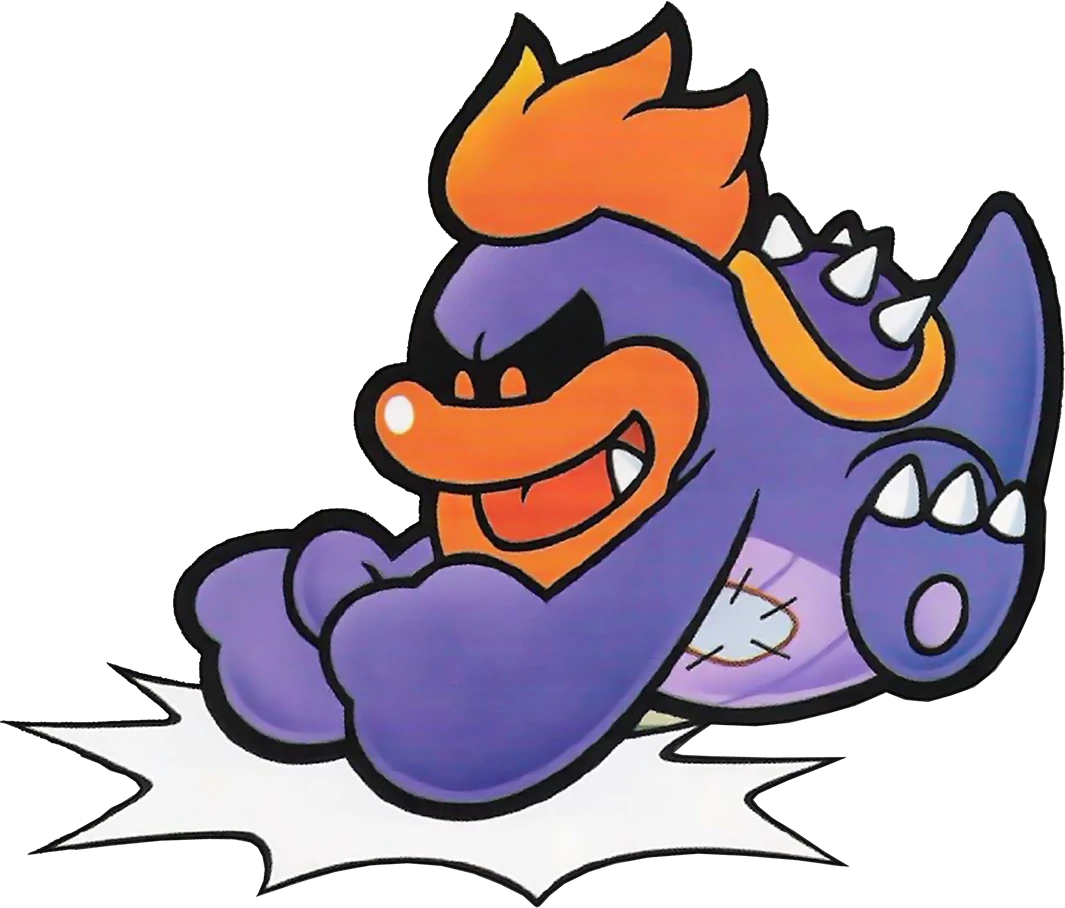
Under the mill is the secret: Tubba Blubba’s heart, which lives apart from him and works the body by remote control. Beaten in a fight, the heart flees back into its owner, and with it back in place Tubba Blubba is as mortal as anyone. One more battle and he gives up, coughs out every Boo he has eaten and confesses that he only ever wanted to stop being frightened of them. Lady Bow keeps her word and Skolar goes free.
Peach. Out exploring again, the Princess walks straight into Bowser and Kammy, who are discussing Mario’s likely next stop, the Shy Guys’ Toy Box. Bowser quizzes her about what Mario dislikes, and whatever the player answers is noted down by Kammy for later. In Toad Town, Shy Guys are running riot and stealing everything not nailed down. Using Bow to stay unseen, Mario watches one slip through a hidden door in an empty house. Behind it is a toy box.
Boo’s Mansion, deep in Forever Forest.Lady Bow joins the party.Tubba Blubba’s heart, under the Windy Mill.Tubba Blubba returns the Boos he ate.
Chapter 4: Trials in the Toy Box
Mario jumps in. Shy Guy’s Toy Box is a world of building blocks, jack-in-the-boxes and a toy railway with colour-coded stations, and the Shy Guys have hidden their loot all over it. The railway has no train until Mario finds the stolen one and puts it on the track, and one line is blocked by Gourmet Guy, a vast Shy Guy who will move only for a cake. Kammy Koopa turns up from time to time to drop in whatever Peach said Mario fears.
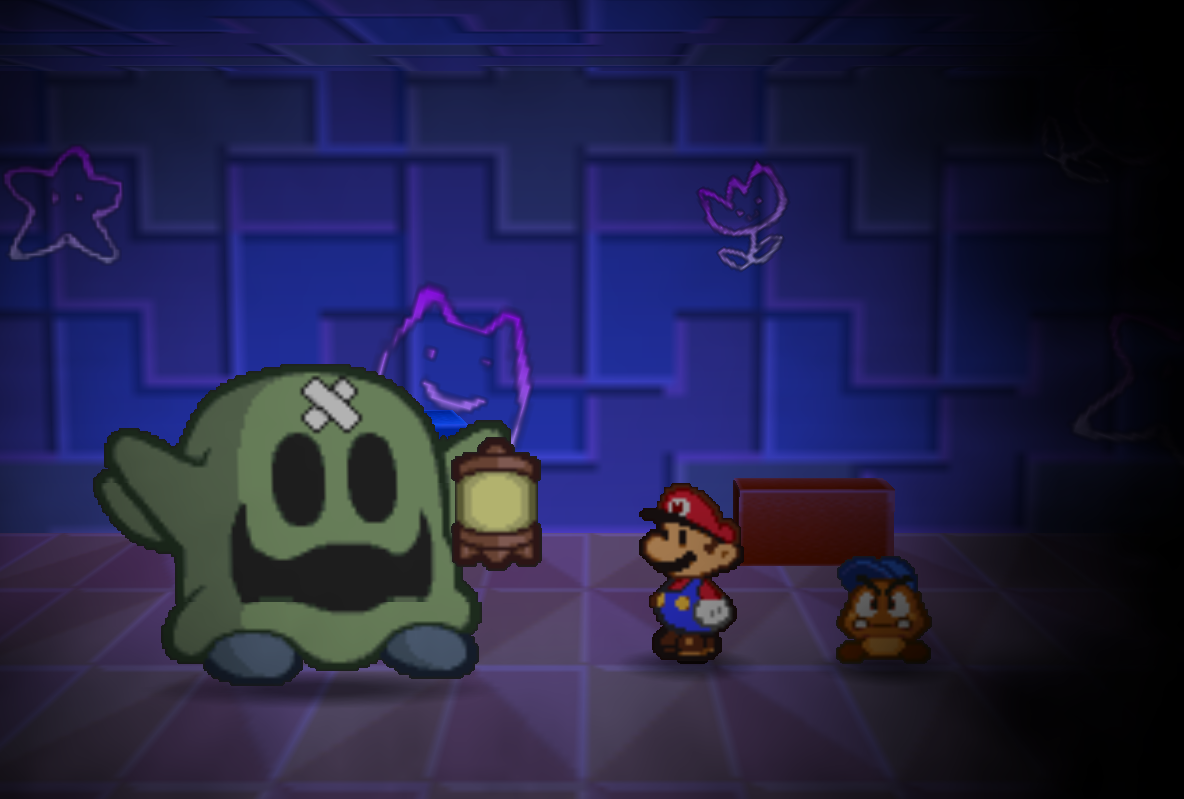
In the dark beyond the Red Station lurks the Big Lantern Ghost. When it is beaten it runs off without its lantern, and inside the glass is Watt, a baby spark the ghost had kidnapped to light its lantern. She joins up, and with her held out in front Mario can see in the dark and spot hidden blocks.
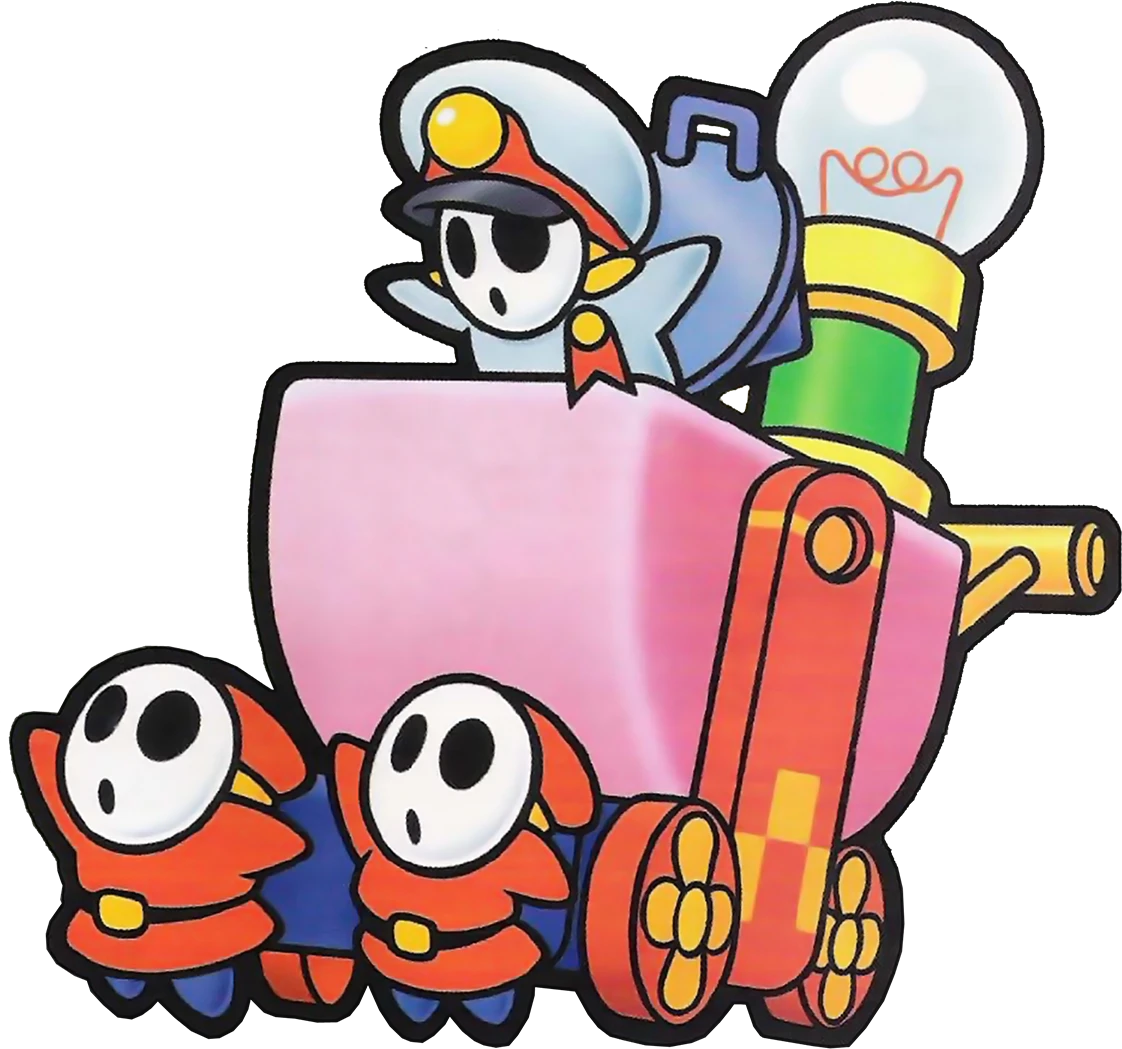
At the heart of the box is the Shy Guys’ barracks and their commander, General Guy, who directs operations from the turret of a toy tank. He throws his army at Mario in waves, a marching Shy Squad, Stilt Guys and a Shy Stack, before joining the fight himself in the tank. Routed, the whole army flees, and Muskular is rescued.
Peach. The Princess meets Gourmet Guy too. He has turned up in the castle, and he will forget he saw her in exchange for something sweet. So Peach bakes a strawberry cake, with Twink’s help. Delighted, he lets slip that a Star Spirit has been taken to Lavalava Island, far to the south. At the Toad Town docks Mario finds Kolorado waiting for passage and a whale with a stomach ache. Mario goes in, evicts the Fuzzipede responsible, and the whale carries them all across the sea.
The way into Shy Guy’s Toy Box.Riding the toy train.Watt is let out of the lantern.General Guy and his tank.
Chapter 5: Hot, Hot Times on Lavalava Island
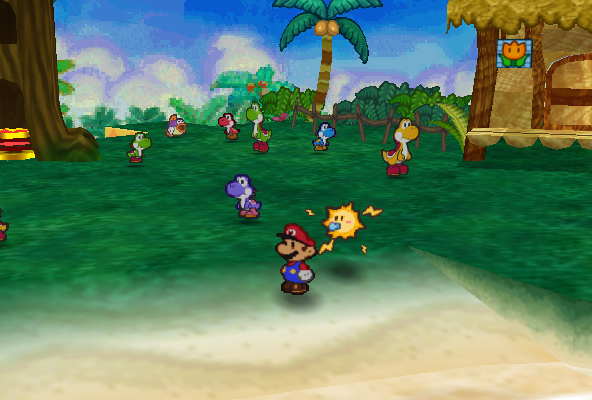
Lavalava Island is jungle around a live volcano, and the path to Mt. Lavalava is cut by a river of lava. In Yoshi’s Village the grown-ups are frantic. Five Yoshi children, the self-styled Fearsome 5, have run off into Jade Jungle, and their minder has gone after them. Mario finds the minder stuck up a tree: Sushie, a brisk purple Cheep Cheep who can carry him across water and under it. Together they round up the five.
The grateful Village Leader sends Mario to the island’s wise old bird, Raphael the Raven, who lives at the top of a colossal tree in the depths of the jungle, reached with the help of a statue called the Jade Raven. Raphael has his flock string a rope-slide across the lava, and Mario rides it to the volcano.
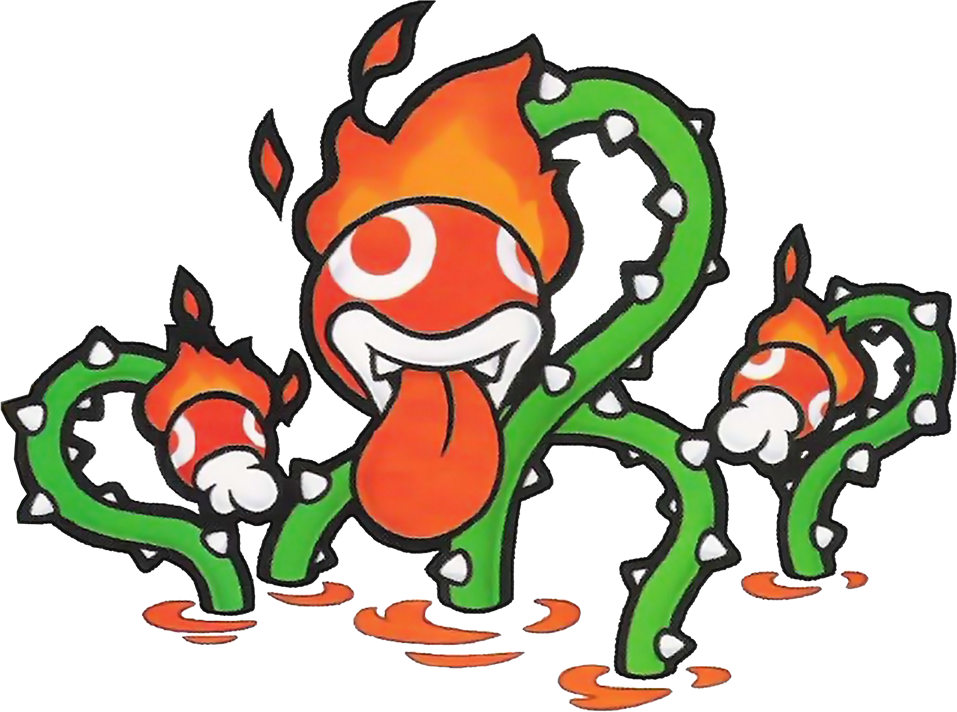
Kolorado comes too, hunting treasure and suffering one mishap after another. Inside the mountain Mario finds the Ultra Hammer, rides out a rolling Spiny Tromp or two, and at the bottom meets the Lava Piranha, a three-headed plant growing out of the magma. Beaten once, it sinks, catches fire and rises again, burning. Beaten twice, it stays down, and Misstar is free, just as the volcano erupts. She whisks Mario, his partner and Kolorado up and out through the crater. Kolorado’s treasure chest goes up with them and comes down in the jungle.
Peach. Bowser’s troops are setting up the 64th Trivia Quiz-Off and are short of a contestant. Peach volunteers. The questions give away that the next Star Spirit is in Flower Fields, and her prize for taking part is the Sneaky Parasol, which turns the holder into a copy of whoever she is facing. Bowser arrives before she can try it. Back in Toad Town, Twink passes the news on. The way to Flower Fields is a door that grows only when four Magical Seeds are planted in the town’s flower garden. Three come from the flower-headed Bub-ulbs dotted about the world. Kolorado has the fourth, and swaps it for the Volcano Vase that was in his chest.
Mario, Watt and Kolorado travel by whale.Sushie, stuck up a tree.The Lava Piranha.Misstar carries everyone out of the erupting volcano.
Chapter 6: Dark Days in Flower Fields
Through the door is a meadow of talking flowers under a sky with no sun in it. A cloud monster called Huff N. Puff has built a Puff Puff Machine that pumps out so much cloud that the Sun, who lives in a tower at the edge of the fields, cannot rise. The ancient tree Wise Wisterwood explains what has to be done: smash the machine, and grow a beanstalk tall enough to reach the villain. For that Mario needs a Magical Bean, Fertile Soil and Miracle Water, each in the keeping of a different flower, each of whom wants a favour first.
On the way to the machine he is stopped by a Lakitu who would like it known that his name is Spike. It is in fact Lakilester. He fights on Huff N. Puff’s orders, loses, and is talked round by his girlfriend, Lakilulu. He has had enough of working for Huff N. Puff anyway, and changes sides. His cloud carries Mario over spikes and lava.
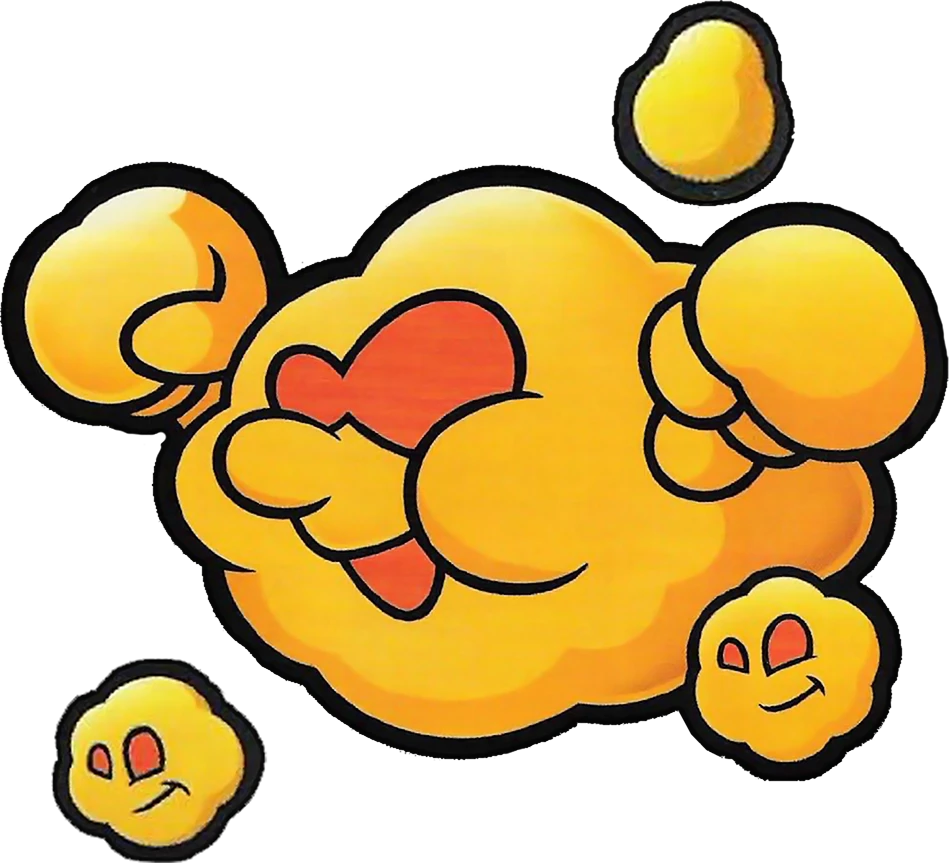
With the machine in pieces the sun comes out, the bean is planted and watered, and the stalk shoots up into Cloudy Climb. Huff N. Puff is a huge, bad-tempered cloud who fights with a swarm of little Tuff Puffs. When he finally bursts, Klevar floats free.
Peach. Armed with the Sneaky Parasol, the Princess disguises herself as one of the guards and walks the castle openly. She learns that Kammy has something ready for Mario at his next destination, but Kammy herself notices that this particular soldier smells suspiciously nice, and the disguise is over. In Toad Town a Ninji is waiting at Merlon’s door with a summons from Merle of Starborn Valley. The way there is a pipe deep in the Toad Town Tunnels, which comes up in Shiver City.
The Sun, stuck at home in his tower.Lakitus work the Puff Puff Machine.Up the beanstalk to Cloudy Climb.Huff N. Puff.
Chapter 7: A Star Spirit on Ice
Shiver City is a snowbound town of penguins, and the road north is closed without the Mayor’s say-so. Mario calls at the Mayor’s house and finds him flat on the floor, apparently dead. Mario is the chief suspect, and has to clear his name with the help of the penguin novelist Herringway. The solution is an anticlimax in the best tradition: a box, a present meant for Herringway, had fallen on the Mayor’s head and knocked him out. He gets up and opens the road.
On Shiver Snowfield, Jr. Troopa attacks for the fifth time, and a terrifying shape called Monstar blocks the path until it turns out to be a crowd of Star Kids. In Starborn Valley, Merle tells Mario that the last Star Spirit is in the Crystal Palace, and gives him a scarf. The Mayor supplies a bucket. Two snowmen up the mountain are missing exactly those items, and once dressed they open the way.
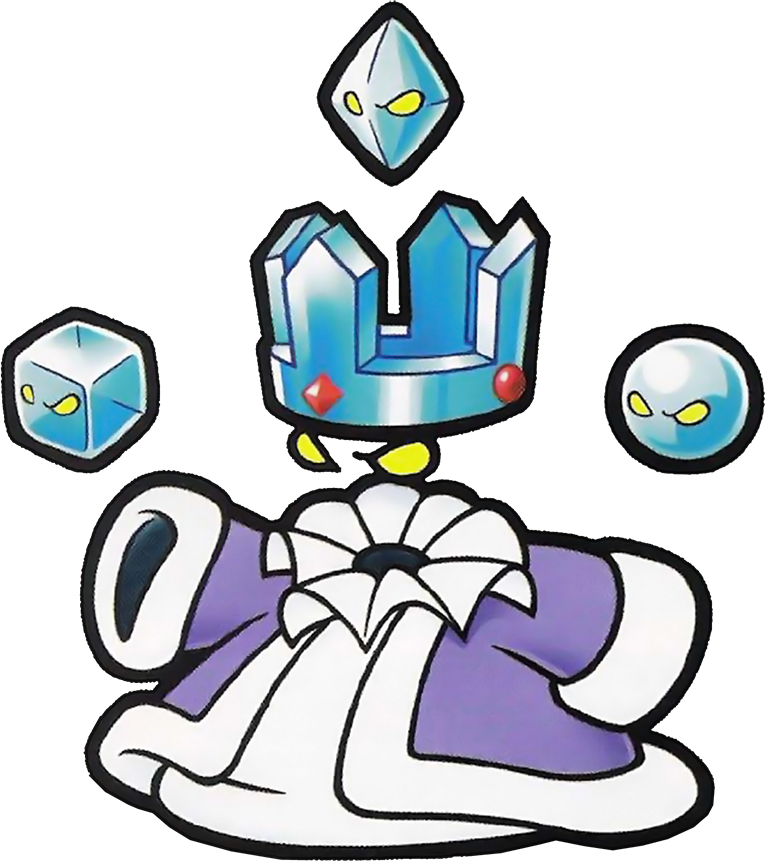
On Shiver Mountain the spirit Madam Merlar hands over the Star Stone that unlocks the palace. The Crystal Palace is a place of doubles, where Duplighosts pose as Mario’s partners. At the back sits the Crystal King, in a cloud of Crystal Bits. When he shatters, Kalmar, the seventh and last, is free.
Peach. Kammy brings Bowser the bad news: Mario has all seven. Bowser sends his army to battle stations and has the Princess tied up. Twink flies at him and is batted out of the window like a moth. On Shooting Star Summit the way to Star Haven opens. The Star Spirits give Mario the Star Beam, and put the Star Ship at his disposal for the flight to the castle in the sky.
The Mayor of Shiver City, apparently murdered.Monstar turns out to be a great many Star Kids.Madam Merlar and the Star Stone.The battle with the Crystal King.
Chapter 8: A Star-Powered Showdown!
Bowser’s Castle has lava, a maze of identical corridors borrowed from the castles of Super Mario Bros., Guard Doors with trapdoors, the Koopa Bros. back for one more humiliation, and Jr. Troopa, who has followed Mario into space for a sixth and final defeat. At the top, the route leads back to the hall where it all began.
Bowser is waiting there with the Princess. This time, when he raises the Star Rod, Mario answers with the Star Beam, and the invincibility falls away. Bowser loses, grabs Peach and retreats to the roof, where Kammy switches on a machine called the Power Platform. It boosts his power and his size. The Star Beam does nothing to him.
Then Twink comes back. He frees Peach, and the two of them take on Kammy Koopa themselves: the Princess concentrating her wishes on the little star, the star getting stronger with each one until Kammy’s magic bounces off him. Kammy, going down, lets slip that Stars get their power from wishes. So Peach wishes, for Mario and for everyone in the kingdom, and the Star Spirits turn the Star Beam into the Peach Beam. With that, Bowser can be hurt again, and after a long fight he falls.
Mario hands the Star Rod back to its keepers. The Power Platform tears itself apart and takes Bowser’s Castle with it, and the Star Spirits lower Peach’s Castle gently back on to its hill. A few days later there is another party, a proper one this time, with every partner on the guest list and a speech of thanks from the Princess. The credits run over a parade through the kingdom led by Luigi. Then Mario and Peach walk home and watch the fireworks, which go on for as long as the console is left switched on.
Star Way, the road to Star Haven.The Star Ship sets off for Bowser’s Castle.Mario and Goombario face Bowser.The Peach Beam.The Star Rod goes back to the Star Spirits.
Every chapter in Paper Mario
The prologue and all eight chapters, with the areas each one covers, the partners who join, the Star Spirit rescued and the boss who has to be beaten, followed by the hub areas that tie the kingdom together.
Prologue: A Plea from the StarsGoomba Village, Goomba Road · Partner: Goombario · Boss: Goomba KingA gentle first hour in the woods that hands over the hammer, the first partner and, at Shooting Star Summit, the Lucky Star.
Chapter 1: Storming Koopa Bros. FortressPleasant Path, Koopa Village, Koopa Bros. Fortress · Partners: Kooper, Bombette · Star Spirit: Eldstar · Boss: Koopa Bros.A castle of trapdoors and cannons held by four ninja Koopas and one very unconvincing Bowser.
Chapter 2: The Mystery of Dry, Dry RuinsMt. Rugged, Dry Dry Desert, Dry Dry Outpost, Dry Dry Ruins · Partner: Parakarry · Star Spirit: Mamar · Boss: TutankoopaA train ride, a mountain, a desert you can get lost in and a buried temple. The Super Hammer is inside.
Chapter 3: The “Invincible” Tubba BlubbaForever Forest, Boo’s Mansion, Gusty Gulch, Tubba Blubba’s Castle, Windy Mill · Partner: Lady Bow · Star Spirit: Skolar · Boss: Tubba Blubba and his heartThe spooky one, with a haunted mansion, a monster who cannot be hurt and a key that will not shut up. The Super Boots are in the mansion.
Chapter 4: Trials in the Toy BoxShy Guy’s Toy Box · Partner: Watt · Star Spirit: Muskular · Boss: General GuyA toy railway with four stations, hidden inside an empty house in Toad Town.
Chapter 5: Hot, Hot Times on Lavalava IslandYoshi’s Village, Jade Jungle, Mt. Lavalava · Partner: Sushie · Star Spirit: Misstar · Boss: Lava PiranhaA tropical island reached by whale, with lost Yoshi children and a volcano that erupts on the way out. The Ultra Hammer and Ultra Stone are both here.
Chapter 6: Dark Days in Flower FieldsFlower Fields, Cloudy Climb · Partner: Lakilester · Star Spirit: Klevar · Boss: Huff N. PuffA sunless garden of fussy flowers, a cloud machine to break and a beanstalk to grow.
Chapter 7: A Star Spirit on IceShiver City, Shiver Snowfield, Starborn Valley, Shiver Mountain, Crystal Palace · Star Spirit: Kalmar · Boss: Crystal KingA murder mystery among penguins, followed by a palace built of mirror images. No new partner joins.
Chapter 8: A Star-Powered Showdown!Star Way, Star Haven, Bowser’s Castle, Peach’s Castle · Star Beam and Peach Beam · Boss: BowserBy Star Ship to the castle in the sky, for Jr. Troopa’s last stand, the Koopa Bros.’ encore and two fights with Bowser.
Toad TownHubThe capital, and the place Mario comes back to after every chapter. Its districts hold the Shroom Grocery and Harry’s Shop, the Post Office, the Dojo, the Badge Shop, Tayce T.’s kitchen, Club 64, the Playroom, the station and the docks.
Shooting Star SummitHubWhere the Star Spirits first speak to Mario and, much later, the gateway to Star Way. Merluvlee and Merlow live at the foot of it.
Toad Town TunnelsHub · optional bosses: Blooper, Electro Blooper, Super BlooperThe sewers under the town. They hold the Ultra Boots, Rip Cheato, short-cut pipes to distant towns and the pipe to Shiver City.
Mario’s HouseHubHome. Luigi minds it all game, Mario’s post arrives in the bedroom and a blackboard keeps track of recipes.
Peach’s CastlePeach interludes; finaleHoisted into space in the opening and explored a little further by the Princess after each chapter.
Star HavenHub · Chapter 8The home of the Stars, with the game’s last shop, a Toad House run by a Star and the Star Ship’s launch pad.
Super Mario Wiki counts ten settlements, from Goomba Village to Star Haven, and ten dungeons. Blue Warp Pipes opened up in the Toad Town Tunnels act as short cuts to the more remote towns.
Advertisement
Gameplay & Controls
Paper Mario takes the Mario RPG idea and sands it down until almost nothing is left that needs a manual. Kawade’s team aimed it first at young children, Japanese first- and second-graders, while trying to make sure adults would never be bored, and the result is a role-playing game that almost anyone can pick up.
Getting about
The Mushroom Kingdom is laid out as a set of connected areas around Toad Town, each built like a stage set and viewed from the front. Mario jumps with A and swings his hammer with B, a tap of Z sends him spinning forward, and C-Down calls on whichever partner is walking behind him. Save Blocks record progress, Heart Blocks refill HP and FP, and Toad Houses in the towns put him to bed and restore everything, Star Power included, for nothing.
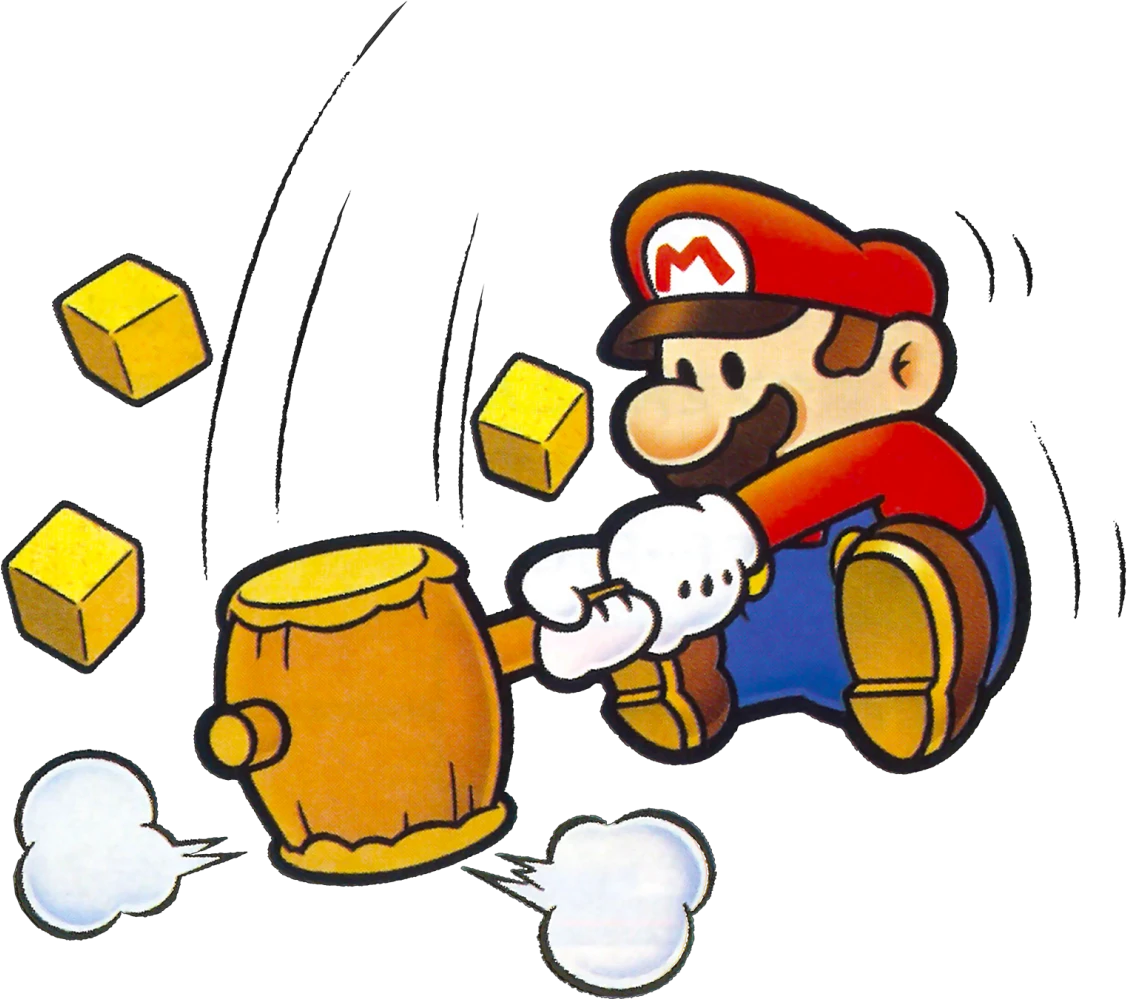
Progress is gated by what Mario can break and who he has with him. A wooden hammer from Goomba Village smashes Yellow Blocks; the Super Hammer from Dry Dry Ruins breaks stone and the Ultra Hammer from Mt. Lavalava breaks metal. The Super Boots from Boo’s Mansion add the Spin Jump, which cracks wooden floors and flips hidden panels, and the Ultra Boots from the Toad Town Tunnels add the higher Tornado Jump. Each upgrade also raises the damage of every jump or hammer blow in battle by one.
Enemies are visible on the map. Strike one first, with a jump or the hammer, and Mario opens the fight with a free hit, a First Strike. Let it touch him first and the enemy gets one instead.
Mario and Lady Bow in Boo’s Mansion.Mario receives the Hammer in Goomba Village.The Super Boots, found in Boo’s Mansion.The Super Hammer, deep in Dry Dry Ruins.
Battles
Fights take place on a little stage, with Mario and his partner on the left and the enemies lined up on the right. On each turn both of them act (Z swaps the order), then every enemy has a go. Mario can Jump, use the Hammer, use an item, call on the Star Spirits, or pick from Strategies, which covers changing partner, doing nothing and running away.
The two basic attacks are the heart of it. The hammer is strong but only reaches the first enemy standing on the ground. A jump can reach anything, including flying enemies and those at the back, but landing on spikes or flames hurts Mario instead. Enemies in shells flip over when stomped and lose their defence. The designers split enemies this way on purpose, so that no fight can be won by pressing A without looking.
The numbers are tiny and completely transparent. Damage is attack power minus the target’s defence, so a Cleft with 2 defence simply ignores an un-upgraded hammer. Partners have no HP of their own; if one is hit, it is knocked out of action for a few turns. They share Mario’s Flower Points for their stronger moves. Mario’s own FP moves come from badges.
Goombario’s Tattle describes an enemy and reveals its HP.Mario takes a hit from a Pokey.Peril: Mario with 1 HP left.
Action Commands
At the foot of Shooting Star Summit, early in the game, Twink hands Mario the Lucky Star, and from then on every attack comes with an Action Command. Press A just before a jump lands and Mario bounces a second time. Hold the Control Stick left and let go as the last light comes on, and the hammer hits twice as hard. Partners’ moves ask for other things: hammering a button to fill a gauge, lining up a cursor, pressing A as each of a row of stars lights up, or tapping out a sequence of buttons.
The same idea works in defence. Press A just as an enemy’s attack connects and Mario guards, taking 1 less damage and shrugging off any status effect the attack carried. Kawade described the whole system as a bonus for skilful players rather than a test: “Even if you mess up the timing, you won’t lose the battle.”
The Star Spirits speak to Mario on Shooting Star Summit. The Lucky Star, and Action Commands, follow at the foot of the hill.
Star Power and the Star Spirits
Each Star Spirit rescued adds one bar to Mario’s Star Power gauge, up to seven, and teaches him a special move that spends it. The gauge refills a little every turn, and faster if Mario uses a turn to Focus. In order: Refresh (Eldstar, 1 bar) restores 5 HP and 5 FP and cures ailments; Lullaby (Mamar, 1) sends enemies to sleep; Star Storm (Skolar, 2) does 7 damage to every enemy, ignoring defence; Chill Out (Muskular, 2) cuts enemies’ attack by 3; Smooch (Misstar, 3) restores 20 HP with a kiss; Time Out (Klevar, 2) freezes enemies in place; and Up and Away (Kalmar, 2) turns ordinary enemies into stars and removes them from the fight.
Two more are reserved for the finale. The Star Beam, granted in Star Haven once all seven Spirits are free, strips away the Star Rod’s protection, and the Peach Beam is the stronger version needed for the last battle. Neither costs any Star Power.
Star Storm.Eldstar: Refresh.Mamar: Lullaby.Skolar: Star Storm.Muskular: Chill Out.Misstar: Smooch.Klevar: Time Out.Kalmar: Up and Away.
Star Points, levels and BP
Beaten enemies leave Star Points, more for strong enemies and fewer as Mario outgrows them. Every 100 Star Points is a level, and each level brings a choice of one of three rewards: 5 more Heart Points, 5 more Flower Points, or 3 more Badge Points. Mario begins with 10 HP, 5 FP and 3 BP and can reach 50, 50 and 30 at the cap of level 27.
The choice matters more than it looks, because BP decide how many badges can be worn and badges are where the power is. A regretted decision can be undone by Chet Rippo, in the residential part of Toad Town, who, for 39 coins, will raise one of the three by two steps and lower the other two by one each.
Level up: HP, FP or BP?Heart Points.Flower Points.Badge Points.
Badges
Badges are Paper Mario’s answer to weapons and armour. “The biggest reason for the Badge system was that we didn’t want Mario to have any weapons,” Kawade explained. Each one costs a set number of Badge Points to wear, from nothing at all to seven, and they can be swapped at any time from the menu. Some add moves to the Jump and Hammer menus (Power Jump, Quake Hammer, Multibounce). Some change the rules: Spike Shield lets Mario stomp spiked enemies, Quick Change swaps partners without using up a turn, Double Dip uses two items in one go. Some simply make numbers bigger, and some do nothing but change the noise his hammer makes.
They are found in red ? Blocks and chests all over the world, bought from Rowf’s open-air Badge Shop in Toad Town (sixteen in all, three on offer at a time) and traded for Star Pieces by Merlow, upstairs at Merluvlee’s place. The list of the most useful is further down this section.
The badge menu.Rowf and Rhuff’s Badge Shop in Toad Town.
Playing as Peach
After the prologue and each of the first seven chapters the scene switches to the captured castle, and the player walks Peach out of her room by a secret passage to see what she can learn. She cannot fight, and being spotted by a guard means being marched back to her room. With the Star Kid Twink as her messenger she passes on to Mario where the next Star Spirit is being held.
These short scenes keep changing the rules. In one she has to bake a cake to a recipe for a greedy Shy Guy; in another she is the contestant in a quiz show run by Bowser’s troops; later she gets the Sneaky Parasol, which disguises her as whoever she points it at. Anything useful she finds can be dropped into a chest in the castle storeroom, and it will turn up in the matching chest at Merluvlee’s place for Mario to collect.
Gourmet Guy gets a cake from Mario in the Toy Box. Peach has to bake him another.Princess Peach.
Things to do in Toad Town (and beyond)
Cooking. Tayce T., an elderly Toad whose house opens up once the Koopa Bros. are beaten, will cook any ingredient Mario brings her into something better. After he finds her the Cookbook in Shy Guy’s Toy Box she will combine two. A blackboard in Mario’s house keeps count of the recipes discovered.
Chuck Quizmo. A travelling quizmaster and his assistant Vanna T. pop up at random in the towns. He asks one multiple-choice question about the game per visit, 64 in all, and pays a Star Piece for each right answer.
Letters. Parakarry has dropped mail all over the kingdom. With him as the active partner, Mario can hand each lost letter to its addressee for a Star Piece, an item or another letter to carry on. The partners receive post of their own at the Toad Town Post Office, and Mario’s arrives in his bedroom.
Koopa Koot’s favours. An elderly Koopa in Koopa Village has a long list of errands, and pays, as a rule, one coin. Now and then the reward is three Star Pieces, or a Silver or Gold Credit that opens up the games in Toad Town’s Playroom.
Star Pieces. There are 160 of these golden fragments: lying behind scenery, handed out as rewards, and buried under floor panels that only a Spin Jump or the Ultra Hammer will flip. Merluvlee will divine the whereabouts of one for 5 coins (a badge costs 20, a Super Block 30).
And the rest. The Li’l Oink Farm sells eggs for 10 coins that hatch into piglets of different colours; when an eleventh joins the pen, the oldest runs off and leaves an item behind. Merlee, in a back alley of Dry Dry Outpost, sells good-luck spells for 5, 20 or 50 coins that randomly boost attack, defence, Star Points or coins. Rip Cheato, in a sewer under Toad Town, sells mystery items for 64 coins each. The Dojo is covered under secrets, below.
Mario calls on Tayce T.Chuck Quizmo’s quiz.Koopa Koot would like a word.Li’l Oinks in their pen.
Controls
Mario and a ? Block.
The Control Stick moves Mario. A jumps, talks and examines; B swings the hammer; Z performs the Spin Dash. C-Down uses the partner’s ability, C-Right opens the partner menu, C-Left the item menu and C-Up hides or shows the status bar. Start opens the main menu. In battle, the stick and A choose commands, B cancels and Z swaps the order in which Mario and his partner act; Action Commands use A, B, the stick and occasionally C-Down. As Peach, A talks and examines and B uses the Sneaky Parasol.
Badges worth pinning on
A selection of 36 of the game’s 69 badges, with what they cost to wear and where they are found. Prices at Rowf’s shop are in coins; Merlow’s are in Star Pieces.
Power Jump1 BP. A single heavy stomp with +2 attack, for 2 FP. Goomba Village.
Power Bounce2 BP. Keep bouncing on one enemy for as long as the timing holds (3 FP). Koopa Bros. Fortress.
Multibounce1 BP. Jump on every enemy in turn (2 FP). Rowf, 75 coins.
Mega Jump3 BP. One stomp with +4 attack (6 FP). Shiver Mountain.
Power Smash1 BP. A hammer blow with +2 attack (2 FP). Toad Town Tunnels.
Mega Smash3 BP. A hammer blow with +4 attack (6 FP). Flower Fields.
Quake Hammer1 BP. Shakes every enemy on the ground or ceiling for 2 (2 FP). Mt. Rugged. Power Quake and Mega Quake are the bigger versions.
Hammer Throw2 BP. Throws the hammer at any enemy, wherever it stands (2 FP). In a chest on top of the Toad Town gate.
D-Down Jump2 BP. A jump that ignores defence (2 FP). Tubba Blubba’s Castle. D-Down Pound does the same for the hammer.
Spike Shield2 BP. Mario can jump on spiked enemies. Dry Dry Ruins.
Fire Shield2 BP. Mario can jump on burning enemies and takes 1 less from fire. Mt. Lavalava.
Ice Power2 BP. +2 damage against fire enemies, and safe to stomp them. Shy Guy’s Toy Box.
Power Plus6 BP. +1 to every jump and hammer attack. One is guarded by the Anti Guy in the Toy Box; Merlow has the other for 25 Star Pieces.
Defend Plus6 BP. Defence +1. Shy Guy’s Toy Box.
HP Plus3 BP. Maximum HP +5. Three exist: Forever Forest, the path behind Kooper’s house in Koopa Village and Rowf (150 coins).
FP Plus3 BP. Maximum FP +5. Three exist: Pleasant Path, Forever Forest and Rowf (150 coins).
Flower Saver6 BP. Every move costs 1 FP less. Flower Fields, and Merlow for 25 Star Pieces.
Damage Dodge3 BP. A successful guard blocks 1 more damage. Mt. Rugged, and Rowf for 150 coins.
Dodge Master2 BP. Makes Action Command timing more forgiving. Rowf, 100 coins.
Quick Change4 BP. Switching partner no longer uses up a turn. In Merlon’s house.
Double Dip1 BP. Use two items in one turn for 3 FP. Rowf, 100 coins. Triple Dip, from the Crystal Palace, allows three.
Happy Heart3 BP. Slowly restores HP during battle. Jade Jungle, and Merlow for 8 Star Pieces. Happy Flower does the same for FP.
HP Drain3 BP. Attack falls by 1, but every hit returns 1 HP. Merlow, 15 Star Pieces.
Close Call1 BP. Enemies sometimes miss when Mario is in Danger (5 HP or fewer). Goomba Road.
Power Rush1 BP. Attack +2 while in Danger. In Peach’s Castle, for the Princess to find and send down.
Mega Rush1 BP. Attack +4 while in Peril, at exactly 1 HP. Tubba Blubba’s Castle.
Last Stand1 BP. Halves damage taken while in Danger. In Peach’s Castle, for the Princess to find and send down.
Zap Tap4 BP. Electrifies Mario, hurting anything that touches him. Merlow, 10 Star Pieces.
Lucky Day7 BP. Enemies miss far more often. The reward from Goompapa at the end of the long chain of letter deliveries.
Money Money7 BP. Doubles the coins won in battle. Merlow, 20 Star Pieces.
Peekaboo3 BP. Shows every enemy’s HP without the need for Tattle. Merlow, 10 Star Pieces.
I Spy1 BP. Sounds an alert when a hidden Star Piece is near. Rowf gives it away when Mario returns his Calculator.
First Attack1 BP. A First Strike on a weak enemy beats it outright without a battle. Rowf, 100 coins. Bump Attack and Spin Attack do the same on contact.
Slow Go0 BP. Stops Mario running, which is meant to help with sneaking past enemies. Dry Dry Ruins.
Attack FX A to E0 BP each. Change the sound of Mario’s attacks. FX E, from Shiver City, uses the noise Yoshi makes in Super Mario World when Mario hops on.
Cartoons, Comics & Other Media
Paper Mario was followed on to the shelves by guides and soundtracks, and its characters and ideas have been turning up in other Mario games ever since.
Nintendo PowerNintendo of America · 1998–2008The magazine covered the game from its first announcement as Super Mario RPG 2 (volume 104, January 1998) and printed Miyamoto’s comments on its look in a “Previews ’99” supplement. It later ranked Paper Mario 63rd in its Top 200 games and 13th among Nintendo 64 games.
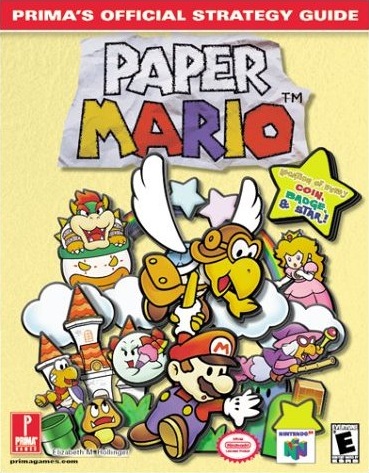
Official guidesNintendo Power; Prima GamesNintendo Power published its own Player’s Guide, and Prima Games an official strategy guide.
Soundtrack albumsEnterbrain, 2000; Nintendo Power, 2001Yuka Tsujiyoko’s score was released in Japan on 21 September 2000 by Enterbrain, through Famitsu. Nintendo of America followed with a two-disc set, offered in limited numbers to Nintendo Power subscribers, containing 78 of the game’s 167 music cues.
Mario Kart: Super CircuitGame Boy Advance · 2001Look at the backdrop of Rainbow Road: Peach’s Castle is sitting on top of Bowser’s, exactly as in Paper Mario. The Goombas and Hammer Bro at the award ceremony use their Paper Mario designs too.
Mario Party 5GameCube · 2003The seven Star Spirits return as the hosts of the game, under the name Star Guards.
Super Mario 64 DS and Mario Kart DSNintendo DS · 2004–05The Goomba King comes back as Goomboss, a boss in Super Mario 64 DS and again in Mario Kart DS’s Mission mode.
Paper Mario: The Thousand-Year DoorGameCube · 2004The sequel opens with Parakarry delivering a letter from Peach, gives Lady Bow a cameo, hides a picture of Jr. Troopa in an e-mail and includes the quiz question “What did Bowser steal in the first Paper Mario?” Its chapters echo the original’s closely. In the Switch remake, Parakarry leads a parade in the credits.
Super Paper MarioWii · 2007All eight partners can be collected as Catch Cards, Francis keeps posters of Lady Bow and Bootler, and Tubba Blubba is said to have his own television show, The Blubbening.
Super Smash Bros.Nintendo · 2001 onwardsMelee has a trophy of Paper Mario. Brawl has stickers of Kooper, Lady Bow, General Guy, Kammy Koopa and three of the Star Spirits. In the 3DS game’s Paper Mario stage, the whale from Chapter 5 surfaces to lift a ship out of the sea.
Mario & Luigi: Superstar SagaGame Boy Advance · 2003A block representing Paper Mario stands in Woohoo Hooniversity, and its description names the game.
Paper Mario: The Origami KingNintendo Switch · 2020Peach’s Castle is lifted into the sky once more, this time to the top of a volcano, and the Princess’s sprite from the Nintendo 64 game appears on the bridge of a ship.
The hotel versionLodgeNet · United StatesPaper Mario was among the Nintendo 64 games offered in American hotel rooms through the LodgeNet service. Its start-up screen warned guests that pressing the Reset button on the controller would wipe their save.
The 20th anniversaryNintendo of AmericaNintendo of America marked the game’s twentieth anniversary with a new illustration on its Instagram account. Famitsu ran a 25th-anniversary appreciation in August 2025, singling out the Peach scenes.
DecompiledFan project · 2023In April 2023 a team of fans finished reverse-engineering the whole game into readable source code, which has opened the door to unofficial PC ports and ambitious mods.
Characters
Mario first, then the eight partners in the order they join, the Princess and her helper, the villains, and the friends, shopkeepers and nuisances who make the Mushroom Kingdom feel inhabited.
Character
Who they are
In this game
Abilities & notes
MarioThe hero, on paper
Invited to a party, thrown out of a window and left for dead in a wood. He says nothing throughout; his partners do the talking.
Jumps and hammers his way through eight chapters to free the Star Spirits. He is the only member of the party with HP, and every badge is his.
Starts with 10 HP, 5 FP, 3 BP; level cap 27
Boots, Super Boots, Ultra Boots: jump attack 1, 2, 3 (twice if timed)
Hammer, Super Hammer, Ultra Hammer: attack 1, 2, 3 (doubled if timed)
GoombarioPartner 1 · Goomba Village
A young Goomba in a blue cap and Mario’s self-declared biggest fan. He joins in the prologue at his grandfather’s request.
The know-all. On the field he will tell Mario about wherever they are standing or whoever they are facing. In battle his Tattle describes an enemy and shows its HP from then on.
Headbonk (0 FP), Tattle (0)
Super Rank: Charge (1), +2 to his next attack
Ultra Rank: Multibonk (3), repeated headbutts
KooperPartner 2 · Koopa Village
A young Koopa Troopa who wants to be an archaeologist like his neighbour and idol, Kolorado.
Joins in Chapter 1 once Mario gets his shell back from a Fuzzy. Mario can kick him along the ground in a straight line to hit switches, strike enemies and fetch items from across gaps.
Shell Toss (0 FP), Power Shell (3), which hits every ground enemy
Super Rank: Dizzy Shell (4)
Ultra Rank: Fire Shell (5), strong against ice enemies and fatal to Dry Bones
BombettePartner 3 · Koopa Bros. Fortress
A pink Bob-omb with a temper, jailed by the Koopa Bros. for complaining about her working conditions.
Joins in the fortress dungeon in Chapter 1. Set her walking and she explodes, taking cracked walls and boulders with her. The designers let a well-timed explosion on the field win an extra turn in the fight that follows.
Body Slam (0 FP), Bomb (3)
Super Rank: Power Bomb (6), all ground enemies
Ultra Rank: Mega Bomb (8), every enemy
ParakarryPartner 4 · Mt. Rugged
A Paratroopa postman from the Toad Town Post Office, slow on the wing and prone to dropping the mail.
Joins in Chapter 2 when Mario collects his lost letters. He carries Mario across gaps too wide to jump, and with him as the active partner Mario can deliver the letters found around the kingdom.
Sky Dive (0 FP), Shell Shot (3)
Super Rank: Air Lift (3), carries an enemy out of the battle
Ultra Rank: Air Raid (6), every enemy
Lady BowPartner 5 · Boo’s Mansion
The aristocratic mistress of Boo’s Mansion in Forever Forest, attended by her butler, Bootler.
Joins in Chapter 3. She more or less blackmails Mario into fighting Tubba Blubba by holding a Star Spirit hostage, then stays because she wants to. She makes Mario invisible and intangible, to dodge enemies and hazards and to eavesdrop.
Smack (0 FP), Outta Sight (2), which makes Mario untouchable for a turn
Super Rank: Spook (3), scares enemies away
Ultra Rank: Fan Smack (5)
WattPartner 6 · Shy Guy’s Toy Box
A Li’l Sparky, a baby spark, kidnapped by the Big Lantern Ghost and shut inside its lamp.
Joins in Chapter 4. Held out in front of Mario she lights up dark rooms and shows up invisible blocks, of which there are 47.
Electro Dash (0 FP), which ignores defence; Power Shock (2), which may paralyse
Super Rank: Turbo Charge (3), +1 to Mario’s attacks
Ultra Rank: Mega Shock (5), may paralyse every enemy
SushiePartner 7 · Jade Jungle
A motherly Cheep Cheep who looks after the Yoshi children of Lavalava Island, with limited success.
Joins in Chapter 5, moved by Mario’s mission to rescue the Princess. From any wooden jetty Mario can ride on her back across water, and she can dive beneath it.
Belly Flop (0 FP), Squirt (3), with +2 damage to fire enemies
Super Rank: Water Block (3), raises Mario’s defence
Ultra Rank: Tidal Wave (6), every enemy
LakilesterPartner 8 · Flower Fields
A Lakitu in the pay of Huff N. Puff who would much rather be known as Spike. His girlfriend, Lakilulu, is not having it.
Joins in Chapter 6 after losing a fight to Mario. Riding his cloud, Mario moves faster than on foot and floats safely over spikes and lava.
Spiny Flip (0 FP), Spiny Surge (4), every enemy
Super Rank: Cloud Nine (4), makes enemies miss Mario
Ultra Rank: Hurricane (5), blows enemies away
Fought first as “Spike?”: 50 HP
Princess PeachPrisoner, spy and occasional baker
Ruler of the Mushroom Kingdom, held in her own bedroom in her own castle, several miles above the ground.
Playable between chapters. She finds out where each Star Spirit is hidden and gets word to Mario through Twink, bakes a cake, wins a quiz show, goes about in disguise and, at the end, helps beat Kammy Koopa. Her wish creates the Peach Beam.
Cannot fight or jump
Sneaky Parasol (B): copies the appearance of the character in front of her
TwinkStar Kid
A very young star, only just arrived in Star Haven, who comes in answer to Peach’s wish and is too small to grant it.
Peach’s companion and messenger. He delivers the Lucky Star to Mario and news after every chapter, is swatted out of the castle by Bowser, and comes back to fight Kammy Koopa on the roof.
Fights Kammy Koopa (10 HP) in the finale, growing stronger with each of Peach’s wishes
BowserKing of the Koopas, briefly invincible
Mario’s arch-enemy, in possession at last of something that grants his wishes. He keeps a secret diary, and is mortified when Peach reads it.
Steals the Star Rod, lifts Peach’s Castle into space on top of his own and defeats Mario in the opening scene. Fought three times in all, the last time enlarged by Kammy’s Power Platform.
Opening: 10 HP (cannot be beaten)
Chapter 8, in the hall: 50 HP, attack 6, defence 1
Chapter 8, on the Power Platform: 99 HP, attack 8, defence 2
Kammy KoopaBowser’s right-hand witch
An elderly Magikoopa on a broomstick with a cackle and a great deal of misplaced confidence.
Seals the Star Spirits into cards, drops the Yellow Block on Goomba Village, sets obstacles in the Toy Box and builds the Power Platform. She is beaten in the end by Twink.
10 HP, attack 4, defence 0
The Star SpiritsGuardians of the Star Rod
Eldstar, Mamar, Skolar, Muskular, Misstar, Klevar and Kalmar. Together they guard the Star Rod and use it to grant wishes.
Turned into cards by Kammy and shared out among Bowser’s champions. Each one freed adds a bar of Star Power and a special move, and all seven together make the Star Beam.
Muskular: Chill Out (2) · Misstar: Smooch (3) · Klevar: Time Out (2) · Kalmar: Up and Away (2)
Jr. TroopaThe pest
A baby Koopa, still half in his eggshell, who decides in the first ten minutes that Mario is his sworn enemy.
The game’s running joke and its most frequent boss, with his own theme tune. He ambushes Mario six times, each time a little stronger, and he follows the party as far as Bowser’s Castle.
Goomba Village 5 HP; Pleasant Path 15; Forever Forest 40; Toad Town port 40; Shiver Snowfield 50; Bowser’s Castle 60
LuigiLeft at home, and not happy about it
Mario’s brother goes to the party, misses the kidnapping and spends the rest of the game minding the house.
He can be visited at any time, and is frank about how unfair it all is. He keeps a secret diary in a hidden basement under the house, in which he admits to being scared of ghosts and writes that he would like to star in an adventure of his own. Within a year of the game reaching North America he did, in Luigi’s Mansion (September 2001 in Japan). He leads the parade in the credits.
Diary, page 7: wants to play the lead, with his name in the title
Merlon, Merluvlee and MerlowFortune-tellers
A family of seers. Merlon has a house in Toad Town; Merluvlee and her brother Merlow live at the foot of Shooting Star Summit. Merlee, Merle and Madam Merlar, met further afield, are cut from the same cloth.
Merlon tells Mario where to go next for 5 coins. Merluvlee locates Star Pieces (5 coins), badges (20) and Super Blocks (30), and keeps the chest that receives Peach’s parcels. Merlow swaps Star Pieces for badges.
Merlee, in Dry Dry Outpost: luck spells for 5, 20 or 50 coins
Tayce T.Cook
An elderly Toad woman with a kitchen in Toad Town.
Cooks one ingredient into a better item, or two together once Mario brings her the Cookbook from the Toy Box. The blackboard at Mario’s house counts the recipes found.
Available after Chapter 1
Two-ingredient recipes after the Cookbook is returned in Chapter 4
The Master, Chan and LeeToad Town Dojo
A Toad martial artist and his two pupils, Chan and Lee.
An optional ladder of five fights above the Shroom Grocery, open once Mario has the Lucky Star. No Star Points are awarded, only degree cards and, for beating the Master’s third form, the Diploma.
Chan 15 HP; Lee 20 HP
The Master: 50 HP (attack 6), 75 HP (attack 8), 99 HP (attack 10)
KoloradoArchaeologist
A Koopa archaeologist from Koopa Village, whose enthusiasm is rather greater than his luck.
Met in the desert in Chapter 2 and a travelling companion through Chapter 5, where he is attacked, scorched and blown out of a volcano in pursuit of treasure. He holds the fourth Magical Seed.
Trades a Magical Seed for the Volcano Vase
Chuck Quizmo and Vanna T.Quiz show on legs
A travelling quizmaster and his assistant, who appear in the towns without warning.
One question per visit, three possible answers, a Star Piece for getting it right. There are 64 questions.
64 Star Pieces in total
Rowf and RhuffBadge sellers
A pair of merchants who lay out their stock in the open air in the middle of Toad Town.
Open for business after Chapter 1 with sixteen badges, three at a time. Return Rowf’s lost Calculator and he gives Mario the I Spy badge.
Prices from 50 to 200 coins
Koopa KootKoopa Village’s oldest inhabitant
An ancient Koopa with a stick and a never-ending list of small jobs.
After the Fuzzies have been seen off he starts asking favours, mostly to fetch things from the far side of the kingdom. The standard fee is one coin.
Occasional rewards: three Star Pieces; the Silver and Gold Credits for the Playroom
The Goomba familyGoomba Village
Goompa the grandfather, Gooma the grandmother, Goompapa and Goomama, and the children, Goombario and his little sister Goombaria.
They find Mario after his fall and nurse him back to health. Goompa supplies the hammer and accompanies Mario for the first few minutes; Goompapa is the last link in the game’s long chain of letters, with the Lucky Day badge as the reward.
Goompa, Goombaria and Twink are all still listed as partners in the game’s data
Bosses & enemies
Every boss and mini-boss first, by chapter, then all 63 regular enemies in the order they are met, with colour variants and close relations sharing an entry. Figures are Heart Points, attack and defence.
Bowser (boss)Peach’s Castle: opening and Chapter 8HP 10 in the opening, where the Star Rod makes the fight unwinnable. HP 50 in the hall, where he switches off some of Mario’s commands. HP 99, attack 8, defence 2 on the Power Platform.
Goomba King (boss)Goomba Road, prologueHP 10, attack 1. Fought with the Red and Blue Goombas beside him, in front of a Goomnut tree.
Red and Blue Goomba Bros. (boss)Goomba Road, prologueHP 7 and 6. A pair of bullies fought first on their own and then again with their king.
Magikoopa (boss)Shooting Star Summit, prologueHP 8, attack 3. Bars the way at the Summit.
Jr. Troopa (boss)Six fights, prologue to Chapter 8HP 5, 15, 40, 40, 50 and 60. In the fourth fight, at Toad Town port, he starts with only half his health.
Bowser??? (boss)Koopa Bros. Fortress, Chapter 1HP 10, defence 1. The Koopa Bros. inside a wobbly mechanical Bowser.
Koopa Bros. (boss)Koopa Bros. Fortress, Chapter 1HP 5 each. Red, Black, Yellow and Green Ninjakoopas, who attack stacked in a tower until it is knocked over.
Buzzar (boss)Mt. Rugged, Chapter 2 (optional)HP 40, attack 3. A big bird, and a fight that can be avoided.
Tubba Blubba (boss)Tubba Blubba’s Castle and Gusty Gulch, Chapter 3Cannot be hurt at all in his castle. Once his heart is back inside him he has HP 10 and attack 4.
Tubba’s Heart (boss)Windy Mill, Chapter 3HP 50. Attack 6, or 12 when it has charged up. The real fight of the chapter.
Big Lantern Ghost (boss)Shy Guy’s Toy Box, Chapter 4HP 40, attack 5. Watt is shut inside its lantern.
General Guy (boss)Shy Guy’s Toy Box, Chapter 4HP 30, attack 4, defence 2, after a Shy Squad (HP 15), two Stilt Guys (HP 7) and a Shy Stack (HP 10). The bulb on his tank has 8 HP of its own.
Anti Guy (boss)Shy Guy’s Toy Box; Bowser’s Castle (optional)HP 50, attack 10. A black Shy Guy standing guard over a chest with a Power Plus in it, and far stronger than anything else in Chapter 4.
Fuzzipede (boss)Inside the whale, Toad Town portHP 20, attack 3. The cause of the whale’s stomach ache.
Lava Piranha (boss)Mt. Lavalava, Chapter 5HP 40 with attack 5, then HP 40 again, on fire, with attack 7. Its two Lava Buds (HP 8) spit out Petit Piranhas.
Kent C. Koopa (boss)Pleasant Path, after Chapter 5 (optional)HP 70, attack 10, defence 6, the highest defence figure in the bestiary. A giant Koopa who turns up on the road to Koopa Village.
Huff N. Puff (boss)Cloudy Climb, Chapter 6HP 60, attack 5. Backed by Tuff Puffs (HP 1).
Monstar (boss)Shiver Snowfield, Chapter 7HP 20, attack 1. All show.
Crystal King (boss)Crystal Palace, Chapter 7HP 70, attack 6, defence 2. Surrounds himself with Crystal Bits (HP 1).
Blooper (boss)Toad Town Tunnels (optional)HP 30, attack 3. The first of three squid guarding the sewers; the Electro Blooper (HP 50) and Super Blooper (HP 70, with Blooper Babies) come later.
Kammy Koopa (boss)Power Platform, Chapter 8HP 10, attack 4. Fought by Twink, with Peach cheering him on.
Chan (boss)Toad Town Dojo (optional)HP 15, attack 2, defence 2. The first rung of the Dojo.
Lee (boss)Toad Town Dojo (optional)HP 20, attack 5. The second rung.
The Master (boss)Toad Town Dojo (optional)HP 50, then 75, then 99 with attack 10 and defence 1. Super Mario Wiki calls his third form the strongest enemy in the game.
GoombaGoomba Village, Goomba Road, Pleasant Path, Toy BoxHP 2, attack 1, defence 0.
Spiked GoombaGoomba Village, Goomba Road, Pleasant PathHP 2, attack 2. Do not jump on it.
ParagoombaGoomba Village, Goomba Road, Pleasant PathHP 2, attack 1. Out of reach of the hammer.
Koopa TroopaPleasant Path, Koopa Bros. FortressHP 4, attack 1, defence 1. Jump on it to flip it over.
MagikoopasJade Jungle onwards; Bowser’s CastleWhite, Red, Green, Yellow and Gray Magikoopas all have HP 11 and attack 3. The ordinary blue kind in Bowser’s Castle has attack 6.
Bombshell BillBowser’s CastleHP 3, attack 6. Heavier Bullet Bills, from B. Bill Blasters (HP 10, defence 4).
Dry BonesBowser’s CastleHP 8, attack 4, defence 2. Throws bones. Kooper’s Fire Shell stops it getting up again.
Albino Dino (unused)Crystal PalaceHP 8, attack 4, defence 4 in the game’s data, but never fought: they stand about in the palace and cannot be attacked. A Dark Paratroopa for the Tunnels was also left unused.
Key staff
From the game’s credits.
Ryota KawadeChief director and game designerLed the project at Intelligent Systems for all four years and personally checked every part of it, which he admitted slowed things down.
Toshitaka Muramatsu, Takahiro Ohgi and Hironobu SuzukiDirectorsThe three sub-directors under Kawade.
Naohiko AoyamaArt director and character designerA newcomer whose spare-time sketch of a storybook Mario world, dated 5 March 1997, became the look of the game. He later directed Paper Mario: Sticker Star.
Kumiko Takeda and Kaori AokiScript writersWrote the Japanese script.
Kenji Nakajima and Kaoru KitaChief programmer and main programmerLed the programming team.
Yuka TsujiyokoMusicComposed the soundtrack, drawing on themes from the Super Mario Bros. games and Super Mario World.
Taishi SendaSound supportWrote the event jingles and musical sound effects.
Koji KondoOriginal Super Mario and Yoshi musicCredited for the classic themes the score quotes.
Shigeru Miyamoto and Kenji MikiProducersMiyamoto backed the flat look from an early stage and saw it through.
Takashi TezukaSupervisorSupervised for Nintendo.
Hiroyasu SasanoTechnical supportNintendo’s liaison with Intelligent Systems, interviewed alongside Kawade in 2000.
Nate BihldorffEnglish screen textWrote the English script at Nintendo of America, under localisation manager Leslie Swan, with Bill Trinen among the support team.
Yoichi KotabeIllustration supportCredited for illustration support.
Hiroshi YamauchiExecutive producerPresident of Nintendo.
Advertisement
How It Was Made
Paper Mario took four years to make, twice what was planned, and for the first eighteen months nobody knew what it would look like. The best accounts come from two interviews chief director Ryota Kawade and Nintendo’s Hiroyasu Sasano gave in 2000, translated by Shmuplations, and from the Iwata Asks session held for Paper Mario: Sticker Star in 2012, in which the original team looked back.
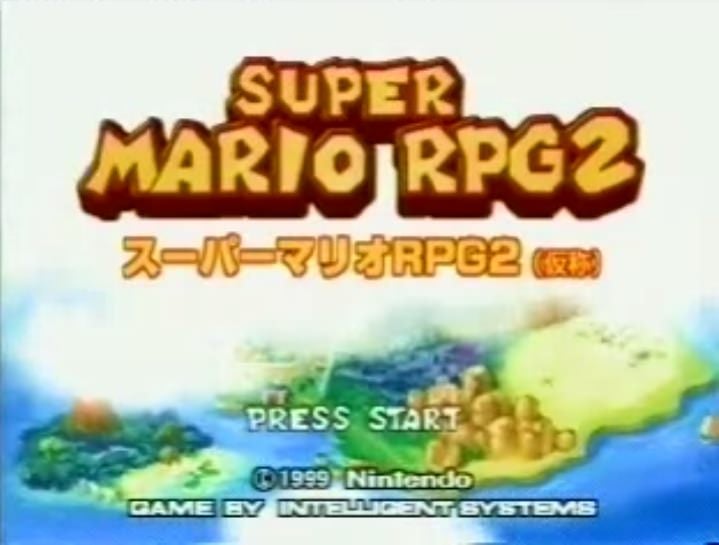
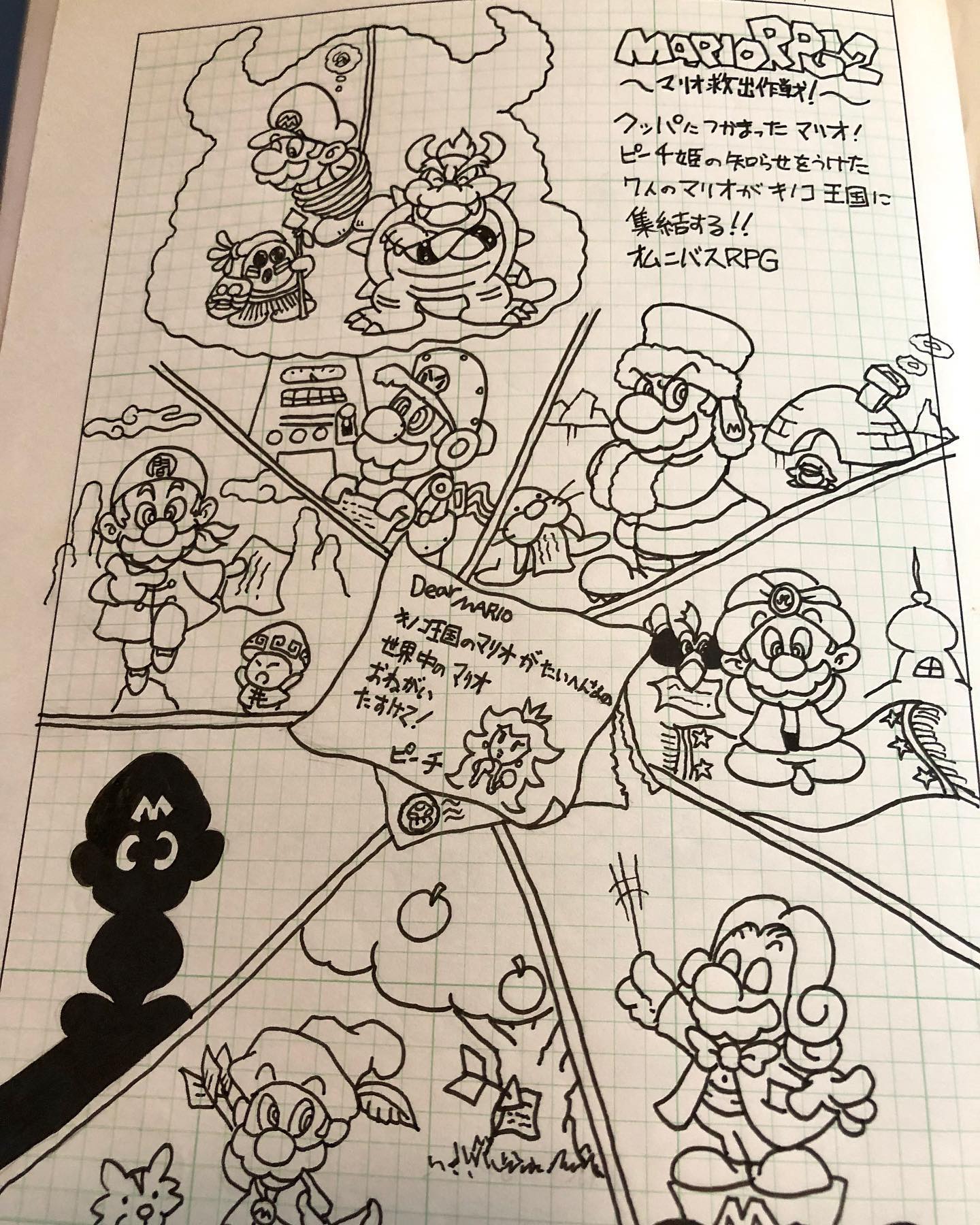
Super Mario RPG 2
The title screen from when the game was still Super Mario RPG 2. Screenshot: Nintendo, via Super Mario Wiki
The project began as a straightforward follow-up to Super Mario RPG, but without the company that had made it. Square was by then committed to PlayStation, and the job went to Intelligent Systems. The game was known at first as Super Mario RPG 2, sometimes Mario RPG 64, and it was meant for the 64DD, the Nintendo 64’s disk drive. Nintendo Power reported the name in January 1998, after a first showing at Nintendo’s Space World show in late 1997, and an early page on Nintendo of America’s website still called it that in 1999. That page also described a game in which Mario’s companions would fight by themselves with no input from the player.
The name did not last. Super Mario Wiki records that, because of complications involving Square, the project became Super Mario Adventure and then Mario Story, the title it kept in Japan. The 64DD plan went too, and the game was released on an ordinary cartridge. For the West the name was changed once more, to point at the one thing nobody could miss about it.
Kawade, who had joined as an adviser and ended up in charge, said the decision to stop treating it as a sequel was taken early. Sasano explained that “we consciously distanced ourselves from the stylings of Super Mario RPG”; staying close would have meant realistic 3D stages rather than a picture book. Geno, Mallow and the rest of Square’s cast were left out, and only characters from the mainline Mario games were used, in order, Kawade said, to protect the atmosphere of Mario’s world.
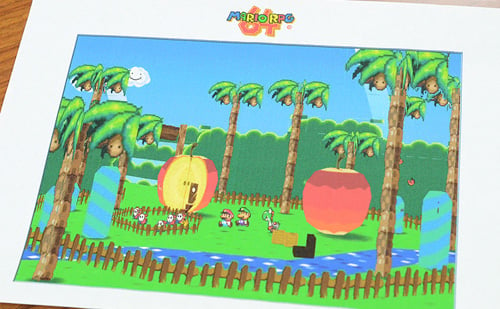
How it became paper
Naohiko Aoyama’s concept image of 5 March 1997, the starting point for the paper style. Concept art: Nintendo / Intelligent Systems, via Super Mario Wiki
Finding a look took a year and a half. The team tried full polygonal 3D, pre-rendered graphics in the manner of Super Mario RPG, and several things in between, working first on Silicon Graphics workstations and then going back to Super Famicom tools and hand-drawn pixel art. The polygon version was dropped, Kawade said, partly because it looked too much like the Nintendo 64 Zelda games. Programmer Kenji Nakajima remembered three groups building three different sample versions side by side.
The answer came from a newcomer. Naohiko Aoyama, a recent recruit with time on his hands while decisions were pending, drew a concept picture off his own bat, dated 5 March 1997: flat, paper-thin characters standing in a simple scene built from polygons. “I drew it to have an atmosphere like that of a picture book transplanted into a video game,” he told Satoru Iwata. His reasoning was that with every console game chasing realism in 3D, using 3D to show off flatness would stand out. Some time later he was called into a planning meeting and told to bring the picture back. It had made a strong impression on Miyamoto.
Miyamoto was telling Nintendo Power by 1999 that the team was “going forward with the concept of those unique 2-D graphics”. Sasano’s explanation at the time was that players might be growing tired of computer-generated 3D, and that polygons made it hard to get across how cute the characters were.
Half the time on battles
An early version of the battle screen. Pre-release screenshot: Nintendo, via Super Mario Wiki
By Kawade’s estimate, about half of the production time went on the battle system, which was developed almost as a separate game from the exploring. A version fought on a grid of hexagons, a more strategic version and a conventional one were all built and thrown away. What survived rests on a single distinction, between enemies that should be jumped on and enemies that should be hammered. Sasano said that “we didn’t want battles where you’re just mashing the A button to win”.
Action Commands were tuned as a reward rather than a requirement, and one that asked the player to rotate the Control Stick was removed. The numbers were kept small on purpose and there is no need to grind for levels. The main audience in mind was first and second graders, with the difficulty set, in Sasano’s words, “so that if you just try a little harder you can probably succeed”. Balancing went on until the final days, by which point the testing team had grown to nearly fifty people. Characters speak in animated text rather than voices because, Kawade said, “playing back voice samples on the N64 is difficult”.
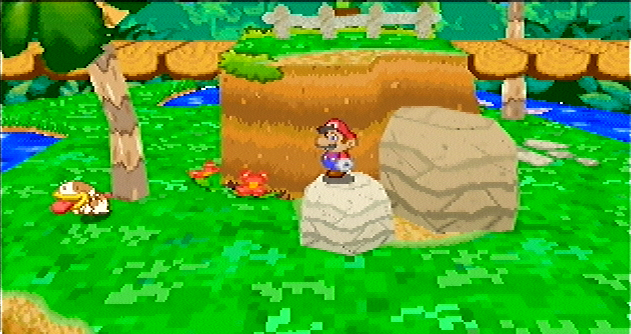
What was cut
An early screenshot with Poochy in it. Pre-release screenshot: Nintendo, via Super Mario Wiki
A good deal fell away over four years. Kawade said roughly a hundred badges were dropped for upsetting the balance (“We cut the ones that broke the game balance”), among them one that sent Mario berserk and one that performed every Action Command perfectly. Both are still in the game’s data, along with a number of others, three unused items and a set of developers’ test rooms, one of which has MARIO RPG written across the floor. A ninth partner, a Ninji who would have joined in Chapter 7, was cut for lack of time, and memory limits ended plans for partners’ field skills to carry over into battle more widely than Bombette’s does.
Early screenshots show other roads not taken. Poochy, the dog from Yoshi’s Island, appears in one, and a Nep-Enut from the same game in another, suggesting that Lavalava Island once leaned harder on that game. Forever Forest had trees with sinister faces, and Mario himself was drawn with the whites of his eyes showing, as in the artwork for Super Mario Bros. 3. “Four years is just too long,” Kawade concluded, and hoped that the next one would take two at most.
Music
The soundtrack is by Yuka Tsujiyoko of Intelligent Systems, with jingles and musical sound effects by Taishi Senda. Koji Kondo is credited for the themes it borrows, and it borrows fondly. Tsujiyoko told Wired in 2007 that she had drawn on Super Mario Bros., Super Mario Bros. 3 and Super Mario World and built outwards from them. A new hammer or pair of boots is greeted with the world-clear fanfare from Super Mario Bros. 3, a rescued Star Spirit with that game’s throne-room music, and the train to Mt. Rugged runs to an arrangement of Kalimari Desert from Mario Kart 64.
There are 167 pieces in all, sequenced with the sounds of a Roland SC-88 module. A handful were altered between the Japanese and American versions: Mt. Rugged’s theme changed instruments, the Bowser’s Castle and final battle themes were re-pitched, and the tune that plays when a partner joins was replaced, although the credits medley still uses the old one.
A late arrival
The title screen of the Chinese iQue Player version. Screenshot: Nintendo / iQue, via Super Mario Wiki
Mario Story went on sale in Japan on 11 August 2000 and was the best-selling game in the country that week. The American version followed on 5 February 2001, with an English script by Nate Bihldorff of Nintendo of America and, according to a trade report cited by Wikipedia, a four-million-dollar marketing budget. Europe and Australia waited until 5 October 2001, when the game arrived with German, French and Spanish translations, very late in the console’s life.
One more version followed. On 8 June 2004 the game was released in China, in Simplified Chinese, for the iQue Player.
Series Firsts
What began here, checked against the Mario games that came before it.
1The first Paper MarioIn Satoru Iwata’s words, “Paper Mario for the Nintendo 64 was the first game in this series of paper-thin 2D graphics.” Five sequels and a remake have followed.
2The first Mario RPG without SquareSuper Mario RPG was Square’s work. This was the first role-playing game starring Mario to be developed by Intelligent Systems.
3Partners with jobsSuper Mario RPG’s party fought together but only Mario explored. Here each companion has a field ability that opens up the map, an idea the sequel kept.
4Badges and Badge PointsThe badge system, invented because the team did not want Mario carrying weapons, makes its debut.
5Kammy Koopa, Goombario and friendsThe first appearances of Kammy Koopa, the eight partners, Twink, Jr. Troopa and the Star Spirits, who went on to host Mario Party 5.
6The Goomba KingFirst fought here on Goomba Road. He returned in Super Mario 64 DS and Mario Kart DS under the name Goomboss.
7KoopatrolsBowser’s armoured Koopa guards are introduced in this game and reappeared in Mario Pinball Land and Super Princess Peach.
Cheats & Secrets
There are no codes, but Paper Mario is stuffed with optional fights, hidden rooms and small kindnesses that the story never points out.
The Toad Town Dojo
Upstairs from the Shroom Grocery, and open from the moment Mario has the Lucky Star. Chan (15 HP) and Lee (20 HP) are the warm-up. The Master then fights three times, with 50, 75 and finally 99 HP and an attack of 10, which is harder than the final Bowser hits. No Star Points are given. Each win earns a degree card, and the last one earns the Diploma.
Kent C. Koopa
After Chapter 5, an enormous Koopa appears on Pleasant Path on the way to Koopa Village. He has 70 HP, an attack of 10 and a defence of 6, the highest in the game, so moves that ignore defence (D-Down Jump, D-Down Pound, Watt’s Electro Dash, Star Storm) are the way to hurt him.
The Anti Guy
A black Shy Guy stands in front of a treasure chest in Shy Guy’s Toy Box. He has 50 HP and hits for 10, in a chapter whose boss hits for 4. The chest holds a Power Plus badge. He can be left alone and visited again later, and Anti Guys turn up again in Bowser’s Castle.
Three Bloopers
The Toad Town Tunnels are guarded by a Blooper (30 HP), an Electro Blooper (50 HP) and a Super Blooper (70 HP, with Blooper Babies). The tunnels are worth the trouble: they hold the Ultra Boots, Rip Cheato’s den, the Power Smash and Shrink Stomp badges and blue pipes that act as short cuts to towns Mario has already visited.
Super Blocks and the Ultra Stone
Sixteen Super Blocks are hidden around the world, each good for one partner upgrade, and there are exactly enough to take all eight partners to Ultra Rank. The second tier is locked until Mario finds the Ultra Stone in Jade Jungle. Merluvlee will reveal where a Super Block is for 30 coins.
All 160 Star Pieces
Some lie in plain sight behind scenery. Many are under floor panels that only flip when Mario lands a Spin Jump nearby or strikes the ground with the Ultra Hammer. Sixty-four come from answering Chuck Quizmo’s questions, others from delivering letters and doing Koopa Koot’s chores. The I Spy badge, which Rowf gives away for returning his Calculator, sounds an alarm when one is close. Merlow exchanges them for badges, at prices from 1 to 25 pieces.
Luigi’s diary
Mario’s house has a secret basement, and Luigi keeps his diary in it. He remembers the days of Golf, Tennis and Parties, confesses that he is afraid of ghosts, and on page 7 writes: “I want to play the lead in an adventure! Of course, my name would have to be in the title.” Luigi’s Mansion followed in September 2001, seven months after Paper Mario reached North America.
8-bit Mario
Hop into a particular vase in Boo’s Mansion and Mario comes out as his sprite from Super Mario Bros., with 8-bit sound to match. The idea was carried over from Booster Tower in Super Mario RPG.
Rip Cheato
His house next to Tayce T.’s is locked. Get in from below, through the Toad Town Tunnels, with Bombette to blast the wall. He sells one unseen item at a time for 64 coins, always in the same order. The third is the Bump Attack badge. After ten purchases he has nothing left but Dried Shrooms, still at 64 coins.
Chet Rippo
For 39 coins this Toad Town resident will raise one of HP, FP or BP by two level-ups’ worth and take one each off the other two. It is how to change your mind about a level-up.
The letter chain
Among Parakarry’s lost letters is one that starts a relay: each person who receives a letter writes another to be delivered somewhere else. The chain crosses the whole kingdom and ends with Goompapa in Goomba Village, who hands over the 7 BP Lucky Day badge.
The Playroom
A pipe in Toad Town leads to a room of minigames, but they need membership. Koopa Koot’s later favours pay out the Silver Credit and Gold Credit that open them.
A song for the Pop Diva
The singer at Club 64 has no song. Fetching the Lyrics and the Melody from the kingdom’s songwriters gets her performing again, and she rewards Mario with the Attack FX D badge.
Presents from Peach
While playing as the Princess, look in the castle’s rooms for badges: Deep Focus, Power Rush and Last Stand are all there. Put them in the chest in the storeroom and Mario can take them out of Merluvlee’s chest. Winning the 64th Trivia Quiz-Off outright adds a Jammin’ Jelly.
Hidden blocks
Forty-seven invisible ? Blocks are scattered about, and they only show up when Mario is holding Watt.
Power Bounce has a limit
The Power Bounce badge lets Mario keep jumping on one enemy for as long as the player keeps the timing. According to the director, the chain is capped at 101 bounces.
The Amazy Dayzee
One enemy in Flower Fields is not like the others. The Amazy Dayzee has 20 HP and an attack of 20, more than three times that of anything else in the chapter, and is best met with a guard ready.
Merlee’s luck
In a back alley of Dry Dry Outpost, Merlee sells spells for 5, 20 or 50 coins; the more paid, the longer it lasts. While one is active, battles will at random give Mario 3 extra attack, 3 extra defence, double Star Points or extra coins.
Mario’s house keeps score: the blackboard records recipes found, and the menu shows Star Pieces, badges and time played, which stops counting at 99:59.
Glitches & Oddities
Paper Mario has a handful of spectacular bugs, and Super Mario Wiki documents dozens more. Unless stated, these work on the Nintendo 64 original; the Virtual Console and Switch versions often behave differently where a crash is involved.
Loading zone storage
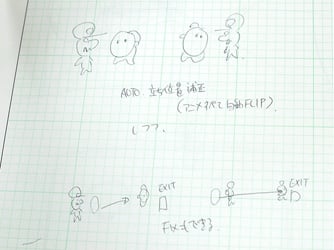
The foundation of most of the others. By jumping on and off the edge of an exit so that Mario touches it for a single frame at a time, the game can be made to start the transition late and send him into the next area at the wrong angle, often outside its walls.
The Kooper super jump
When Mario falls out of bounds the game throws him back up, and remembers his upward speed. Use Kooper’s shell toss before Mario next jumps or falls and he rockets into the sky. Rise for about half a minute and the Nintendo 64 crashes.
Swimming on land
Sushie swims through the dock in Toad Town.
At certain jetties, including ones in Toad Town and Shiver City, careful positioning lets Mario climb on to Sushie and sink through the dock. She then swims through solid ground, carrying him from area to area and under walls. Enemies ignore him while he rides.
The Peach warp
After Chapter 5 the lava rises in Mt. Lavalava and seals off the escape route. Get back into it by glitching (with Sushie or Lakilester) and the eruption scene plays again, followed by whichever Peach interlude comes next in the story. Used at the right moment, that skips Chapters 6 and 7 entirely.
Goombario skip
In the prologue, loading zone storage can drop Mario out of bounds past the door where Goombario joins. Goompa then stays on as the partner indefinitely. He was never meant to: opening the partner menu with him active crashes the game.
Rematch with Jr. Troopa
An elaborate out-of-bounds trick near Jr. Troopa’s playground makes the prologue fight start again later in the game. Winning it resets the story counter to the prologue, with the rest of the world in whatever state Mario left it.
Record skip
Talking to the Boo and opening the chest at once.
In Boo’s Mansion, Bombette’s explosion can nudge the Boo who guards the Weight away from its chest, so the chest can be opened without first finding the Record for the phonograph.
The Herringway glitch
Herringway as a perfectly ordinary penguin.
In Chapter 7, pause at the instant Mario and Herringway walk into the Mayor’s room and the novelist may turn into an ordinary penguin, or vanish. If he has become an ordinary penguin, the Nintendo 64 game crashes to a debugging screen when the Mayor hands him his present. On Virtual Console he merely turns invisible for a moment.
Duplicating badges and seeds
Two Happy Flower badges where there should be one.
On the east path of Flower Fields, hitting three trees in the right order drops a Happy Flower badge. Do it again without picking the first one up and another appears, though the game only ever counts one. A far more involved trick in Forever Forest lets Mario collect the same Magical Seed over and over, and planting a spare opens Flower Fields without visiting Mt. Lavalava at all.
Crashes to avoid
Using an Egg Missile after Double Dip against the Lava Piranha crashes the game. So does landing fourteen or more button presses in Sushie’s Tidal Wave on Nintendo 64 (Virtual Console only slows down), and collecting the letter that falls from a tree in Shiver Snowfield before it reaches the ground. On Nintendo Switch Online, hitting the right-most tree in the left-hand part of Shiver City drops the player back to the Switch home screen.
Negative damage
Wear Ice Power, charge a jump high enough and stomp a fire enemy such as an Ember. The total runs past the game’s cap of 99 and the number shown wraps round to nonsense.
Small oddities
Walking on water in Shiver City.
Electro Pop is meant to restore 15 FP, but in battle it sets FP to Mario’s HP plus 15, so it can actually take points away. A Kooky Cookie restores twice as much FP in battle as out of it. Lose a battle on the first turn while wearing Dizzy Attack and every fight in the title-screen demo starts with a dizzy enemy. And repeated Tornado Jumps on the frozen pond in Shiver City, with the penguin patrol sidestepped, eventually break the ice into textures the game never normally shows.
Videos
Nintendo’s trailer for the game’s arrival on Nintendo Switch Online in 2021, and a long look back at what made the original work.
Nintendo’s official trailer for the Nintendo Switch Online release, as posted by IGN.
A retrospective review of the Nintendo 64 game by AM Playem.
Trivia & Interesting Facts
The Japanese credits are headed “Mario Story staff”, and the name-entry screen in Japan offers both hiragana and katakana.
The number 64 is everywhere. Toad Town has a Club 64, the train to Mt. Rugged is the K64, Peach takes part in the 64th Trivia Quiz-Off, Chuck Quizmo has 64 questions and Rip Cheato charges 64 coins.
The K64 and Dry Dry Desert are a nod to Kalimari Desert in Mario Kart 64. In Japanese all three share the name Karakara Sabaku.
The Koopa Bros. are a send-up of the Teenage Mutant Ninja Turtles, in the same way that Super Mario RPG’s Axem Rangers were a send-up of Japanese superhero squads.
Moustafa goes about Dry Dry Outpost under the name Sheek. Have Goombario describe him after he has revealed himself and the description begins “da da da dum”, the item fanfare from The Legend of Zelda. The name is a play on Sheik from Ocarina of Time.
Rescued from a Shy Guy, Luigi remarks: “I’m a great jumper, but my running needs some work.” That is his character sheet from Super Mario Bros. 2.
When Mario cures the whale’s stomach ache, the whale says “they should call him Dr. Mario!”
The inside of Peach’s Castle is laid out almost exactly as in Super Mario 64, minus the paintings, and both games open with a letter from the Princess. Mario also jumps into a painting to reach the third floor of Boo’s Mansion.
A large share of the cast comes from Yoshi’s Island: Bandits, Spear Guys, Pyro Guys, the Lantern Ghost, Crazee Dayzees, Raphael the Raven, the Little Mousers and the penguins (Bumpties). The Lava Piranha and Kent C. Koopa are close relations of that game’s Naval Piranha and Hookbill the Koopa, and the final battle, in which a magician enlarges Bowser, follows its ending.
The Stone Cap item turns Mario to stone so that nothing can hurt him, much like the Metal Cap of Super Mario 64, and Fire Flowers throw fire rather than changing Mario, as in Super Smash Bros.
A Nep-Enut in an early screenshot.Poochy and a Nep-Enut both appear in early screenshots, and neither is in the finished game.
A ninth partner was planned: a Ninji, who would have joined in Chapter 7. He was cut for time. A lone Ninji still turns up at Merlon’s door to start that chapter.
Goompa, Goombaria and Twink all have entries in the game’s list of partners. Goompa really is one for a few minutes; the other two never are.
The first debug room.Ten debug rooms survive in the cartridge. The first has MARIO RPG spelt out on its floor, and another turns Koopas into copies of the partners.
Among the badges left unfinished in the data are Berserker (Mario attacks by himself, at random), Right On! (every Action Command succeeds automatically), a Crazy Heart that restores 3 HP a turn, and Attack FX F, which makes Mario’s hammer laugh like the flowers of Forever Forest.
Concept artwork for Super Mario RPG 2.Kazuyuki Kurashima, the monster designer of Super Mario RPG, has published on social media concept art he had drawn for a Super Mario RPG 2, showing Samus Aran and Link among the Mario characters. Kurashima did not work on Paper Mario itself.
The Star Spirits were captured on cards, and the back of each card carries a Bowser design.
The Master has battle music of his own, used nowhere else in the game.
The Wii Virtual Console version takes up 270 blocks of memory. Its flashing effects were toned down, with dimmer Super Blocks and flat-coloured fire, and the Wii U version is darker throughout.
Luigi at the head of the parade.Luigi leads the closing parade in the colours he wore in the original Super Mario Bros., down to the gold emblem on his cap.
Paper Mario was among the games offered in American hotel rooms on the LodgeNet system.
The opening notes of the title theme reappear in Paper Mario: Color Splash whenever a Big Paint Star is collected, and the full theme is arranged in the Switch version of The Thousand-Year Door.
Regional Box Art
Front and back covers from each region, the Chinese iQue Player box and the icons used on the Virtual Console.
North AmericaNorth America (back)EuropeEurope (back)AustraliaAustralia (back)Japan (Mario Story)Japan (back)China (iQue Player)Wii Virtual ConsoleMenu icon, 2007Wii U Virtual ConsoleMenu icon, 2015
Screenshots
More scenes from around the Mushroom Kingdom.
Parakarry delivers the invitation to the Mario Bros.’ house.Bowser uses the Star Rod.The Koopa Bros. bring out the Bill Blasters.Mario meets Whacka on Mt. Rugged.Moustafa shows himself in Dry Dry Outpost.Yakkey, the talking key.The Big Lantern Ghost.Yoshi’s Village.Raphael the Raven summons his flock.A Duplighost pretends to be Kooper.The pedestal for the Star Stone on Shiver Mountain.Jr. Troopa’s last stand in Bowser’s Castle.
Artwork & Media Gallery
Official artwork, logos, concept drawings, title screens from each region, cartridges and printed extras.
English logo.Japanese logo: Mario Story.Chinese logo.An early English logo.The original Super Mario RPG 2 logo.Mario.Mario with his hammer.Mario, cross.Group artwork used for the cover.Early group artwork.Bombette and a Goomba.A Goomba.The Goomba King.The Koopa Bros.Tutankoopa.Tubba Blubba.General Guy and two Shy Guys.The Lava Piranha.Huff N. Puff.The Crystal King.Bowser in his Koopa Clown Car.Concept art: Lakilester and Kooper.Concept art: Parakarry.An early concept sketch.More concept artwork for Super Mario RPG 2.Japanese title screen.European title screen.The artwork behind the title screen.Map of the Mushroom Kingdom.North American cartridge.European cartridge.Australian cartridge.Japanese cartridge.Prima’s official strategy guide.A wallpaper from Nintendo’s official Paper Mario website.An iQue Club wallpaper from China.An early Toad Town.Forever Forest before release, with different trees.An early version of the Koopa Bros.The Goomba King at E3 2000, with a bandage under his crown.
Legacy & Re-releases
Paper Mario arrived late in the Nintendo 64’s life, and has been kept available, one way or another, on every Nintendo home console from the Wii to the Switch.
Every release of Paper Mario
Nintendo 6411 August 2000Japan, as Mario Story. North America on 5 February 2001; Europe and Australia on 5 October 2001.
iQue Player8 June 2004China, in Simplified Chinese.
Wii Virtual Console10 July 2007 (Japan)Europe and Australia on 13 July 2007; North America on 16 July 2007. Some flashing effects were softened.
Wii U Virtual Console30 April 2015 (North America)Europe on 21 May 2015, Australia on 22 May 2015 and Japan on 15 July 2015.
Nintendo Switch Online10 December 2021Added to the Nintendo 64 library worldwide for Expansion Pack members.
The series it started
The direct sequel, Paper Mario: The Thousand-Year Door, followed on GameCube in 2004 and kept the formula almost whole: partners, badges, Action Commands, a hub town and chapters that mirror the original’s closely. Super Paper Mario (2007) turned the idea into a platform game. Sticker Star, Color Splash and The Origami King returned to turn-based battles in three different experimental forms, and The Thousand-Year Door was remade for Switch in 2024. Kawade said in 2000 that for the next game he wanted to develop the badge system further; Sasano hoped for deeper battles and more freedom.
The other branch of the Mario RPG family, Mario & Luigi, began three years later, and pays its respects with a Paper Mario block in the halls of Woohoo Hooniversity.
Where its characters went
Most of the cast stayed in the first game. The partners returned only as collectable cards in Super Paper Mario, though Parakarry and Lady Bow both have walk-on parts in The Thousand-Year Door, and Parakarry leads the parade in the credits of its remake. The Star Spirits were given Mario Party 5 to host. The Goomba King had the most successful career, as Goomboss, and Koopatrols have reappeared in other Mario games.
The world proved more durable than the people. Toad Town and a Star Hill both appear in Mario & Luigi: Partners in Time, and Peach’s Castle perched on top of Bowser’s has been a recurring image ever since Mario Kart: Super Circuit.
Opened up
In April 2023 a group of fans completed a full decompilation of the game, a reconstruction of its source code from the finished cartridge. It has made the original far easier to study and to modify, and unofficial PC versions and large-scale mods have followed.
Reviews & Sales
Sales figures
Paper Mario sold more than 276,000 copies in its first week in Japan, which made it the country’s best-selling game that week, IGN reported in August 2000 (as cited by Wikipedia). RPGFan’s chart round-up of 1 September 2000 has it still at No. 1 the following week, with 411,798 copies sold by 20 August. In the United States it was at the top of PC Data’s weekly chart of best-selling video games for the week ending 17 February 2001, GameSpot reported. We have not found a lifetime figure published by Nintendo.
It has done steady business since. When it reached the Wii Virtual Console it was the second most downloaded Virtual Console game in the United States in August 2007.
276,000+first week in Japan (IGN, August 2000)
No. 1in Japan in its week of release
93Metacritic, from 15 reviews
88.81%GameRankings
$4mUS marketing budget (Video Business)
Reception and review scores
Metacritic’s average is 93 and GameRankings closed on 88.81 per cent. Scores are as listed in the review tables on Wikipedia and Super Mario Wiki; Virtual Console reviews are marked.
Next GenerationUS · May 2001 · Chester Barber
5/5
Nintendo LifeVirtual Console review · Marcel van Duyn
10/10
GameSpotUS · 5 February 2001 · Ben Stahl
9.5/10
NGamerUK magazine
94/100
Electronic Gaming MonthlyUS
9.33/10
Official Nintendo MagazineUK magazine
93%
N64 MagazineUK · 85% for the Japanese import
90%
IGNUS · 5 February 2001 · Matt Casamassina
9.0/10
EurogamerUK · 5 February 2001 · Tom Bramwell
9/10
Nintendo PowerUS
4.5/5
Cubed3Adam Riley
9/10
GameFanUS · import review
358/400
FamitsuJapan
33/40
AllGameUS
4/5
GameProUS
4/5
X-PlayUS
4/5
EdgeUK
7/10
Critics found one of the console’s best games. IGN’s Matt Casamassina called it “the best RPG for Nintendo 64” and “fantastically deep, intuitively designed, and wonderfully rewarding”, and thought it the ideal first role-playing game for anyone. Next Generation gave it full marks as “one of the best RPGs ever”. GameSpot’s Ben Stahl wrote that “games of this caliber are few and far between”. Eurogamer’s Tom Bramwell went as far as to say that “Paper Mario is a vastly superior game to SMRPG”.
The complaints were about challenge and ambition. IGN noticed the blocky look of sprites when the camera zoomed in, and felt the plot was simpler than Super Mario RPG’s. RPGamer found the puzzles very easy and the bosses short on strategy, and RPGFan was unimpressed by the enemy designs and the music. Edge gave it seven.
Its standing has only grown. Reviewing the Virtual Console release in 2007, IGN’s Lucas Thomas found that it had “held up very well” even beside its sequels, and Nintendo Life gave it ten out of ten while noting that which of it and The Thousand-Year Door is the better game is “still a frequent debate”.
Honours
GameSpot · Best and Worst of 2001Best Nintendo 64 GameWinner. Runner-up for Best Role-Playing Game on consoles, behind Final Fantasy X.
Academy of Interactive Arts & Sciences · 5th Interactive Achievement AwardsConsole Role-PlayingNominated.
Nintendo Power · Vol. 231, August 2008Best Nintendo 64 gamesRanked 13th.
Nintendo Power · Top 200 Games, 2006Best games on a Nintendo systemRanked 63rd.
Electronic Gaming Monthly · February 2006Greatest 200 Videogames of Their TimeRanked 141st.
MetacriticAmong the best-reviewed N64 gamesThe sixth highest-scoring Nintendo 64 game on the site, and the highest-scoring one released in 2001.
SLB User Reviews
Paper Mario has yet to receive a community review on Super Luigi Bros.
If you’ve played Paper Mario and would like to submit a review, please get in touch.
More from the Super Luigi Bros Guide
These picture lists come from the earlier Super Luigi Bros guide to Paper Mario and are kept here in full.
Battle System & Gameplay
Paper Mario uses a turn-based side-view battle system. Enemies are visible on the overworld; making contact initiates a battle. The way contact is made matters — hit an enemy on the overworld first and Mario gets a first strike; get hit and the enemy gets a free turn before the battle starts.
On the battle screen, Mario and one chosen party member occupy the left side, with the enemy group on the right. Mario’s attacks all fall into jump or hammer categories — hammer hits only the front ground-bound enemy, jump can reach past enemies or hit flying targets but is dangerous against spiked foes.
Stats
Stat
Initial
Max
Function
Level
1
27
Each level-up: increase HP, FP, or BP
Heart Points (HP)
10
50
Health. Zero = Game Over (unless holding a Life Shroom).
Flower Points (FP)
5
50
Fuel for special attacks — shared between Mario & party.
Badge Points (BP)
3
30
How many Badges Mario can equip simultaneously.
Star Energy (SP)
0
7
Unlocked Special Move fuel. +1 per Star Spirit rescued.
Star Points
0
100
100 Star Points = level up.
Coins
0
999
Currency for shops & services.
Star Pieces
0
160
Total in game. Exchanged with Merlow for Badges.
Upgrades
Mario’s boots and hammer upgrade twice across the journey:
Boots → Super Boots (Boo’s Mansion — adds Spin Jump) → Ultra Boots (Toad Town Tunnels — adds Tornado Jump)
Hammer (Goomba Village) → Super Hammer (Dry Dry Ruins — breaks Stone Blocks) → Ultra Hammer (Mt. Lavalava — breaks Metal Blocks)
Ultra Stone (Jade Jungle) — enables Super Block upgrades to Ultra Rank
Action Commands
After Mario receives the Lucky Star from Twink, every attack — Mario’s and his party’s — gets an Action Command prompt. Time the input correctly and the attack deals bonus damage or gets extra effects. The same applies to defence: pressing A just before an enemy attack lands guards, reducing damage by 1 and cancelling status effects.
Enemy Attack
Mario taking damage from a Pokey. Party members get the injured status when hit, freezing them for several turns.
Peril State
Triggered when Mario’s HP drops to 1. Some Badges (Mega Rush, Last Stand) require this state to activate.
Level Up
100 Star Points = level up. Choose HP +5, FP +5, or BP +3. Capped values means careful planning matters.
Status Effects
Common status effects include Dizzy, Frozen, Immobilized, Paralyzed, Sleepy, Electrified, Invisible, Poison, and Tiny. Mario-only states include Cloud Nine (random enemy misses), Danger (HP ≤ 5), Peril (HP = 1), and Stone (impervious but can’t move). Status effects only apply in battle and wear off in the overworld.
Services
Toad Town and other settlements host a wide range of NPCs offering services for coins. Most are essential to optimal play.
Item Shops
Fee: varies
Common goods stores with the Fire Flower sign. Buy items, sell back for coins. The check-system lets you store up to 32 items, accessible from any shop.
Merlon’s House
Fee: 5 coins
Toad Town fortune-teller. Tells you what to do next when you’re stuck. Available after meeting the Star Spirits.
Merluvlee’s Place
Fee: 5/20/30 coins
Foot of Shooting Star Summit. Divines locations of Star Pieces, Badges, or Super Blocks. Also home to the Mysterious Treasure Chest counterpart.
Toad Town Post Office
Fee: free
Receives letters addressed to Mario’s party members from people they’ve met. No mechanical benefit — pure character flavour.
Rowf’s Badge Shop
Fee: varies
Central Toad Town. Opens after Ch 1. 16 Badges total, 3 rotating in stock at a time. Wait long enough and all 16 cycle through.
Li’l Oink Farm
Fee: 10 coins/egg
Buy eggs that hatch into Li’l Oinks. Pen holds 10 max — buy an 11th and the oldest escapes, dropping an item correlating to its colour.
Merlee’s Tent
Fee: 5/20/50 coins
Dry Dry Outpost back alley. Pays magic spells that randomly trigger in battle: +3 ATK, +3 DEF, double Star Points, bonus coin drops. Cost determines duration.
Tayce T. Kitchen
Fee: free
Cooks ingredients into new items. Initially one ingredient at a time; after the Cookbook is recovered in Ch 4, two-ingredient cooking unlocks. 50+ recipes.
Toad Town Dojo
Fee: free
Second story of Shroom Grocery. The five-fight superboss gauntlet. Beat Chan, Lee, then The Master x3 for the Diploma.
Other Services
Toad Houses — Free rest in every settlement (recognisable by the Toad-head sign). Restores HP, FP, AND Star Power — the only thing that does the last one. Star Haven’s Toad House is run by a Star.
Chet Rippo (Toad Town residential) — 39 coins. Re-adjusts Mario’s stats: increase one by 2 stages, drop the other two by 1. Useful for fixing level-up regret.
Rip Cheato (under the blue house next to Tayce T., reached via Toad Town Tunnels) — 64 coins per item. Sells one mystery item at a time. After 10 unique purchases, only Dried Shrooms.
Side Activities
160 Star Pieces
Golden octahedral fragments hidden across the world. 160 total. Some lie in the overworld behind objects; some are buried under floor panels needing the Spin Jump or Ultra Hammer. Trade them with Merlow at Shooting Star Summit for Badges.
Chuck Quizmo’s 64 Quizzes
Chuck Quizmo and his assistant Vanna T. randomly appear in towns. 64 trivia questions about the game total. Right answer = one Star Piece. Wrong answer = he leaves; track him down again.
Koopa Koot’s Favors
An elderly Koopa Troopa in Koopa Village, infamous for asking favours. After resolving the Fuzzy problem, he’ll start asking Mario for specific items. Rewards are usually one coin, but occasionally three Star Pieces in bulk, or items that unlock new Toad Town Playroom minigames (the Silver and Gold Credits).
Letter Delivery
Throughout the world, Mario finds letters that Parakarry has dropped. With Parakarry as the active party member, deliver them to their intended recipients. Rewards include Star Pieces, more letters, or other items. Bonus: meeting Kolorado for the first time happens via a Parakarry letter delivery.
Toad Town Dojo Diploma
Defeat all five Dojo opponents (Chan, Lee, Master x3) for the Diploma. The final-form Master is the strongest enemy in the game, harder than the final boss.
To provide the best experiences, we use technologies like cookies to store and/or access device information. Consenting to these technologies will allow us to process data such as browsing behavior or unique IDs on this site. Not consenting or withdrawing consent, may adversely affect certain features and functions.
Functional
Always active
The technical storage or access is strictly necessary for the legitimate purpose of enabling the use of a specific service explicitly requested by the subscriber or user, or for the sole purpose of carrying out the transmission of a communication over an electronic communications network.
Preferences
The technical storage or access is necessary for the legitimate purpose of storing preferences that are not requested by the subscriber or user.
Statistics
The technical storage or access that is used exclusively for statistical purposes.The technical storage or access that is used exclusively for anonymous statistical purposes. Without a subpoena, voluntary compliance on the part of your Internet Service Provider, or additional records from a third party, information stored or retrieved for this purpose alone cannot usually be used to identify you.
Marketing
The technical storage or access is required to create user profiles to send advertising, or to track the user on a website or across several websites for similar marketing purposes.


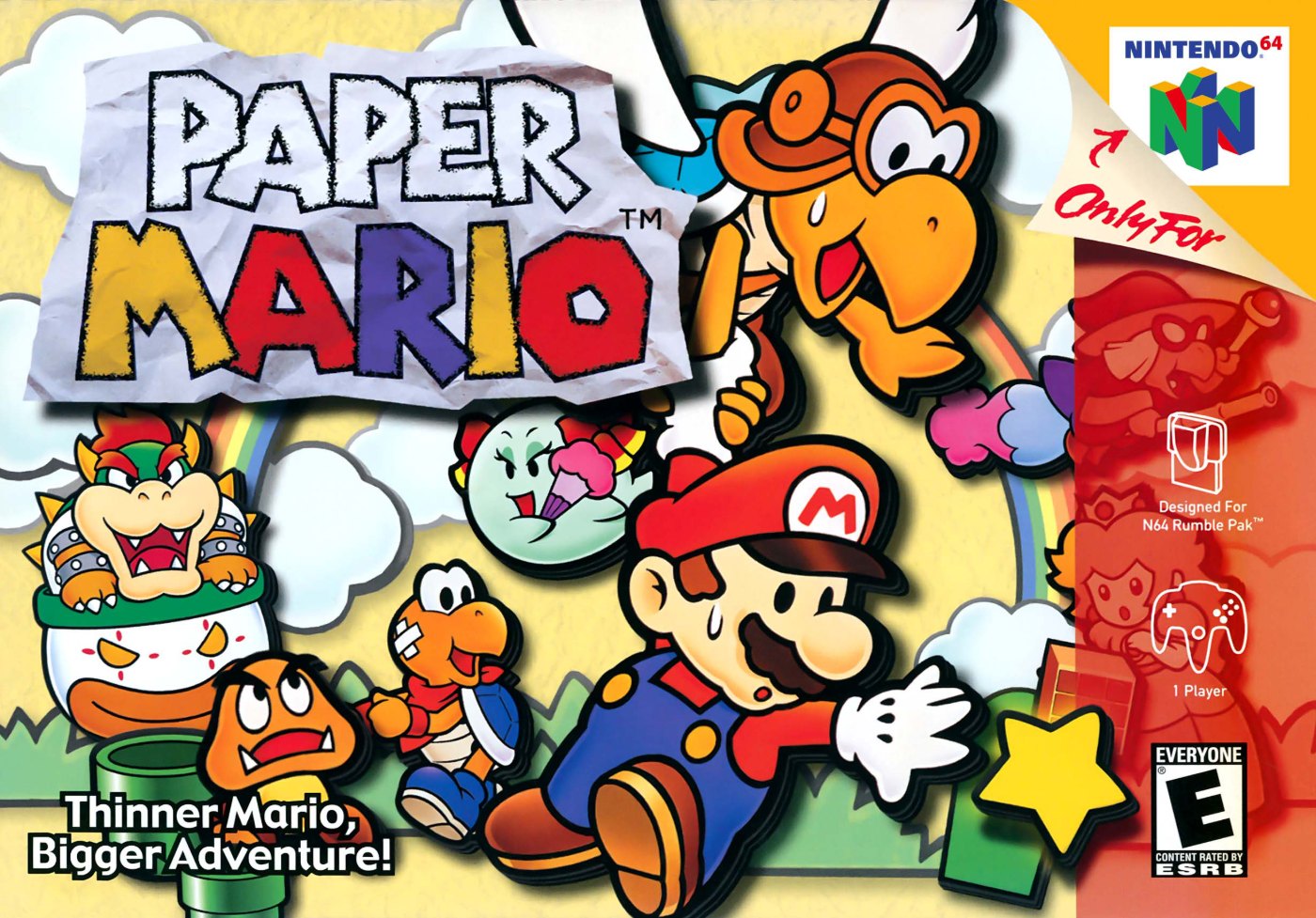
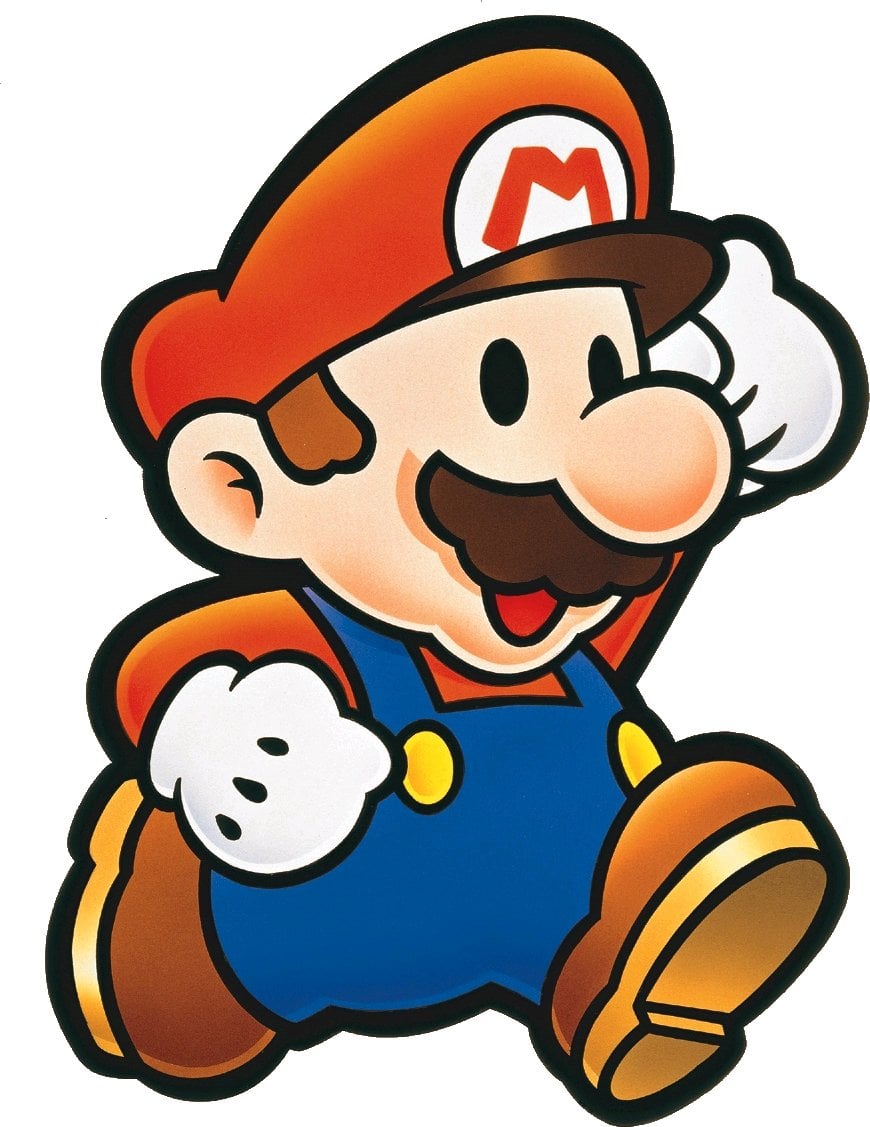
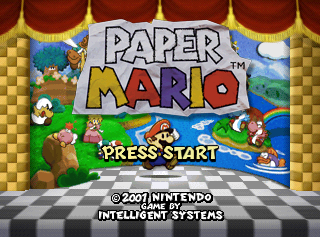
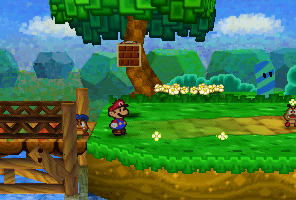
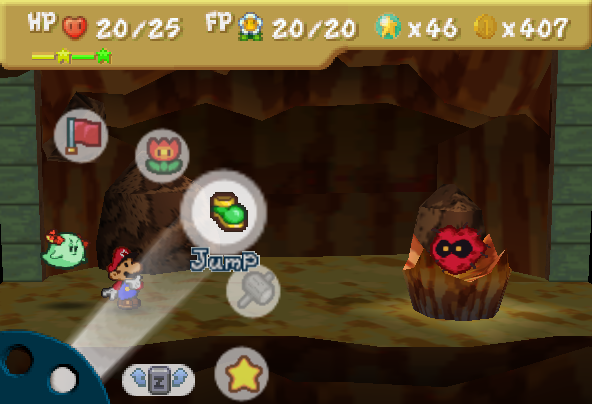
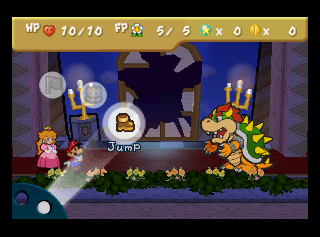
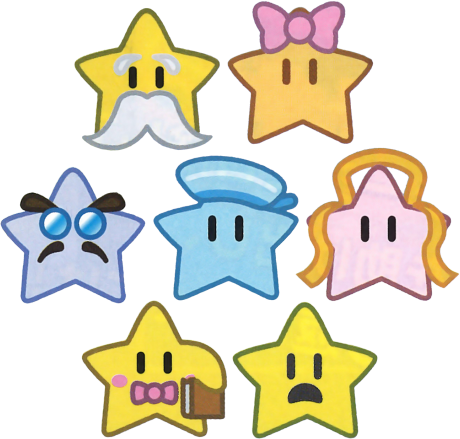
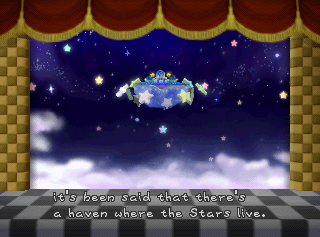
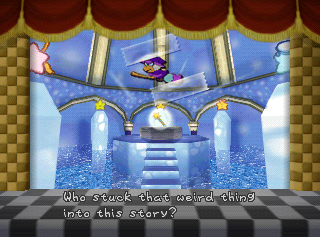
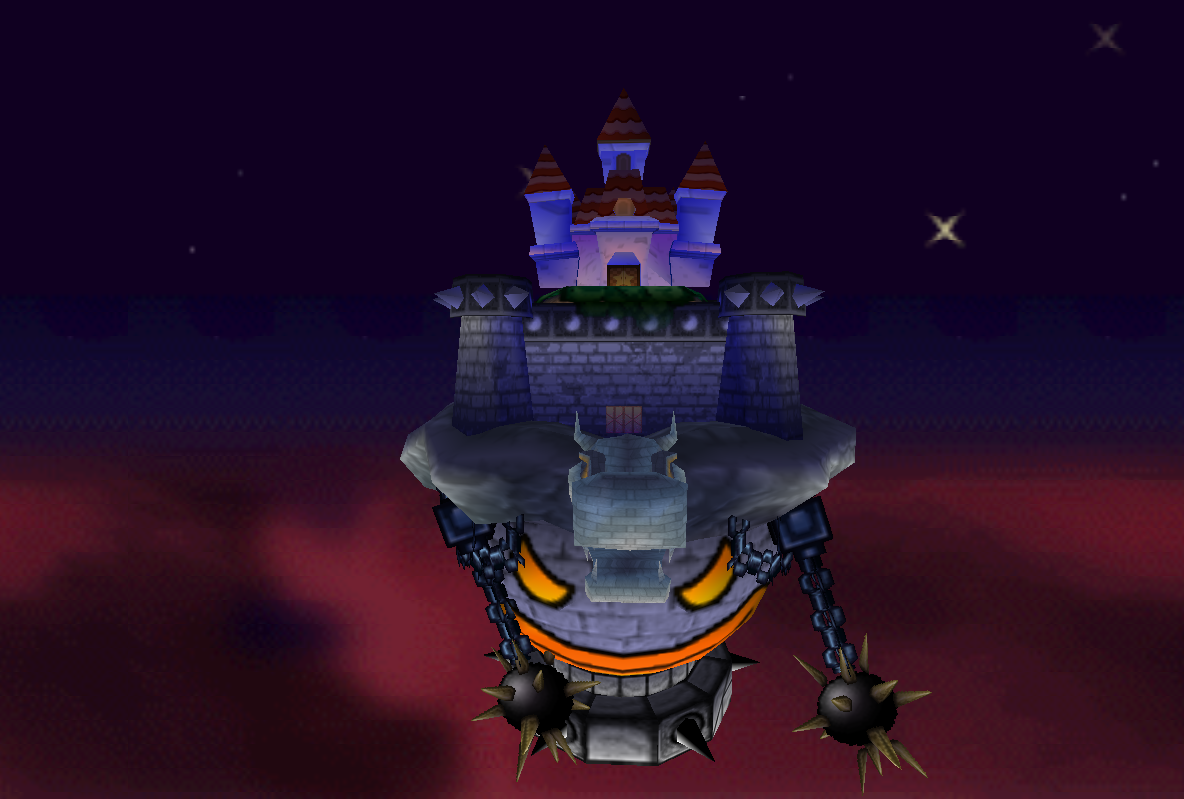
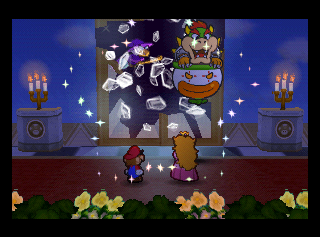
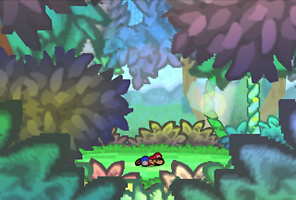
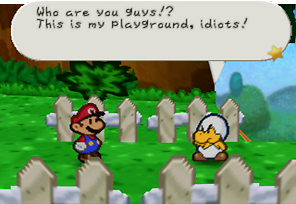
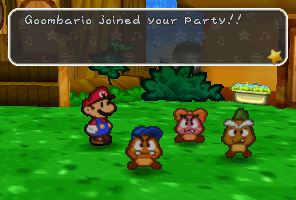
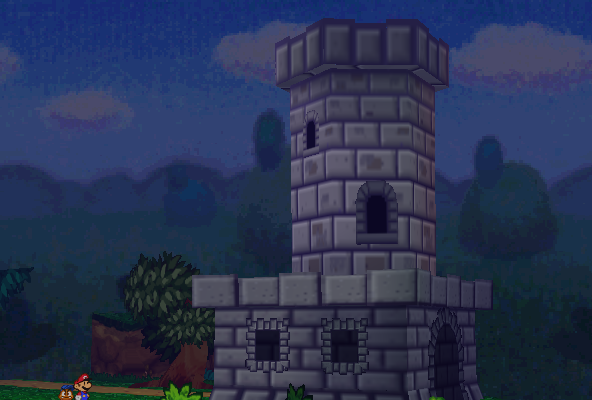
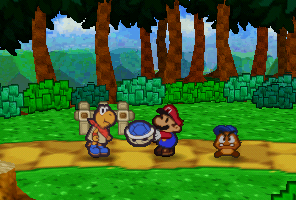
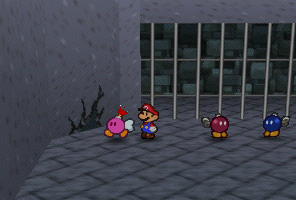
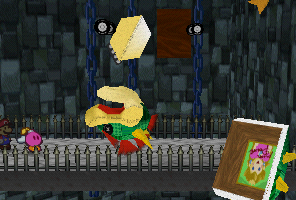
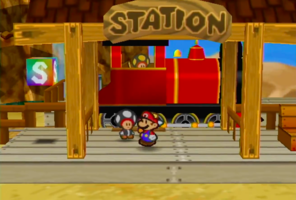
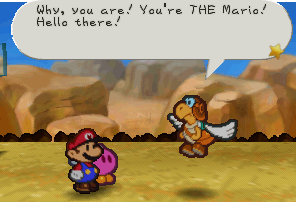
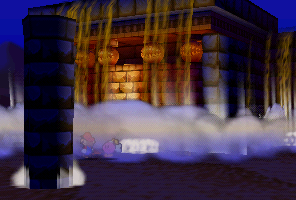
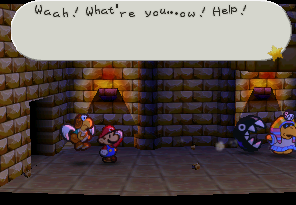
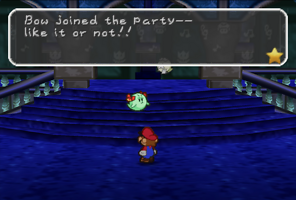
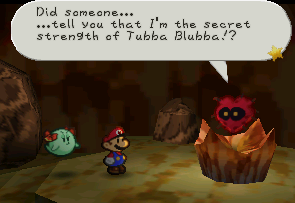
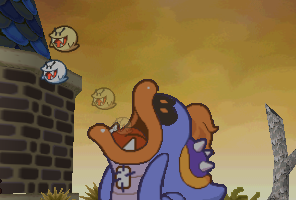
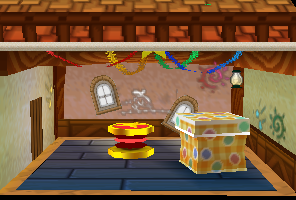
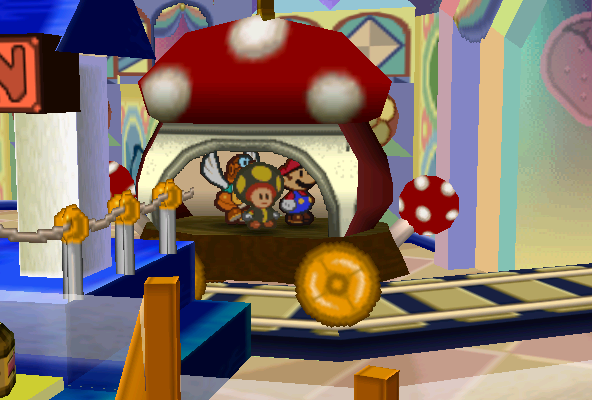
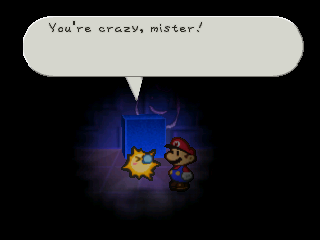
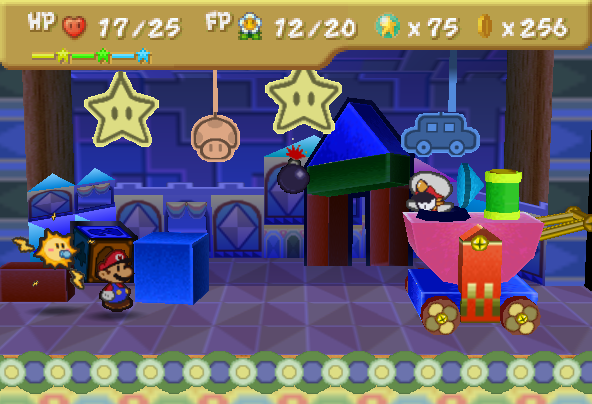
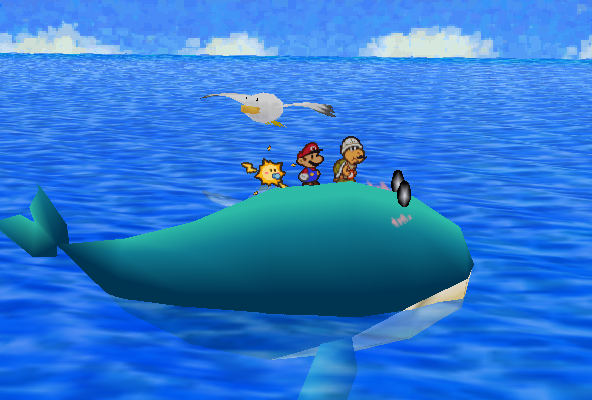
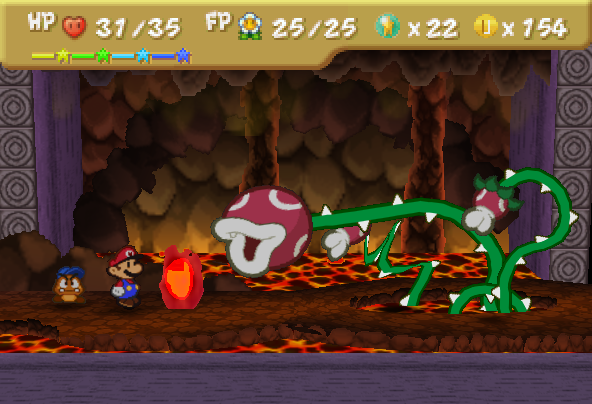
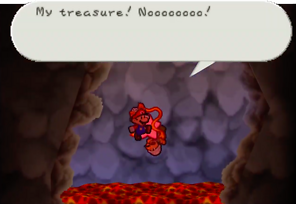
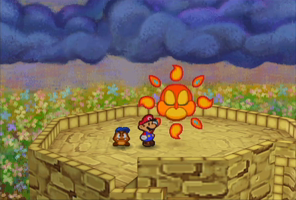
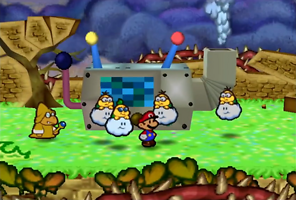
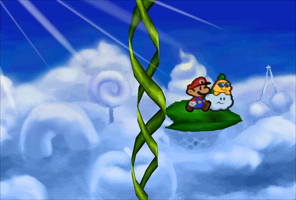
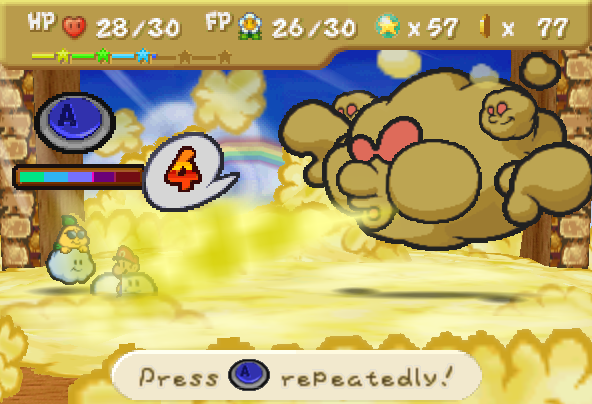
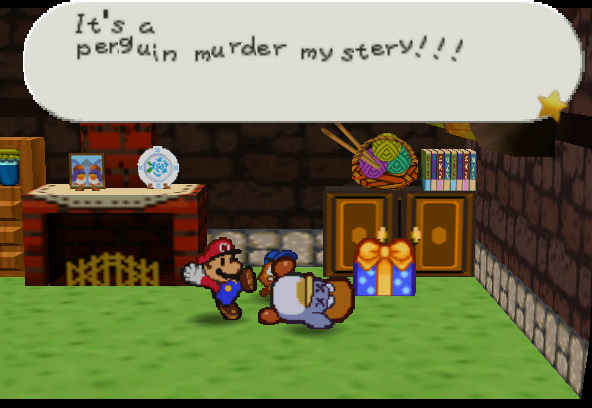
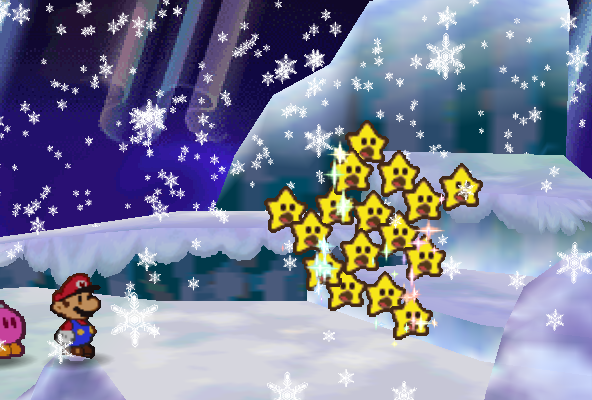
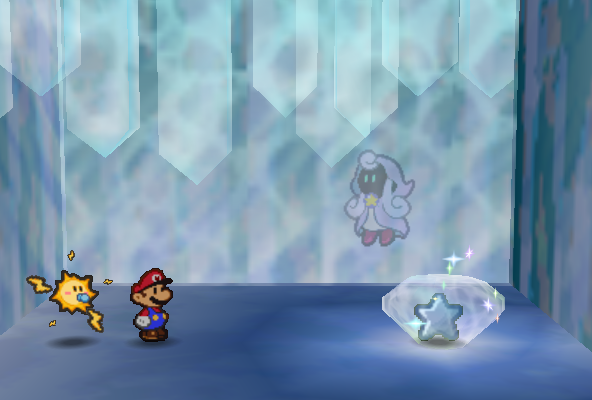
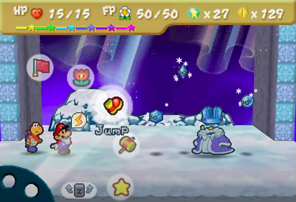
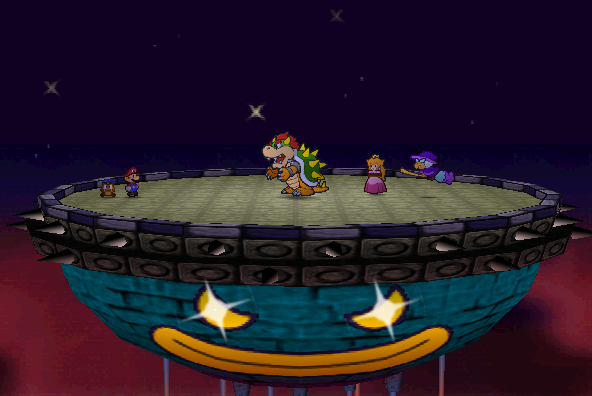
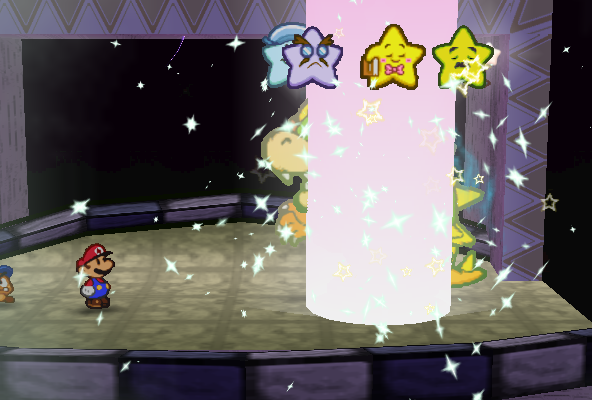
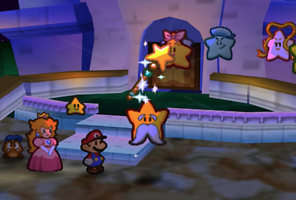
 Prologue: A Plea from the StarsGoomba Village, Goomba Road · Partner: Goombario · Boss: Goomba KingA gentle first hour in the woods that hands over the hammer, the first partner and, at Shooting Star Summit, the Lucky Star.
 Chapter 1: Storming Koopa Bros. FortressPleasant Path, Koopa Village, Koopa Bros. Fortress · Partners: Kooper, Bombette · Star Spirit: Eldstar · Boss: Koopa Bros.A castle of trapdoors and cannons held by four ninja Koopas and one very unconvincing Bowser.
 Chapter 2: The Mystery of Dry, Dry RuinsMt. Rugged, Dry Dry Desert, Dry Dry Outpost, Dry Dry Ruins · Partner: Parakarry · Star Spirit: Mamar · Boss: TutankoopaA train ride, a mountain, a desert you can get lost in and a buried temple. The Super Hammer is inside.
 Chapter 3: The “Invincible” Tubba BlubbaForever Forest, Boo’s Mansion, Gusty Gulch, Tubba Blubba’s Castle, Windy Mill · Partner: Lady Bow · Star Spirit: Skolar · Boss: Tubba Blubba and his heartThe spooky one, with a haunted mansion, a monster who cannot be hurt and a key that will not shut up. The Super Boots are in the mansion.
 Chapter 4: Trials in the Toy BoxShy Guy’s Toy Box · Partner: Watt · Star Spirit: Muskular · Boss: General GuyA toy railway with four stations, hidden inside an empty house in Toad Town.
 Chapter 5: Hot, Hot Times on Lavalava IslandYoshi’s Village, Jade Jungle, Mt. Lavalava · Partner: Sushie · Star Spirit: Misstar · Boss: Lava PiranhaA tropical island reached by whale, with lost Yoshi children and a volcano that erupts on the way out. The Ultra Hammer and Ultra Stone are both here.
 Chapter 6: Dark Days in Flower FieldsFlower Fields, Cloudy Climb · Partner: Lakilester · Star Spirit: Klevar · Boss: Huff N. PuffA sunless garden of fussy flowers, a cloud machine to break and a beanstalk to grow.
 Chapter 7: A Star Spirit on IceShiver City, Shiver Snowfield, Starborn Valley, Shiver Mountain, Crystal Palace · Star Spirit: Kalmar · Boss: Crystal KingA murder mystery among penguins, followed by a palace built of mirror images. No new partner joins.
 Chapter 8: A Star-Powered Showdown!Star Way, Star Haven, Bowser’s Castle, Peach’s Castle · Star Beam and Peach Beam · Boss: BowserBy Star Ship to the castle in the sky, for Jr. Troopa’s last stand, the Koopa Bros.’ encore and two fights with Bowser.
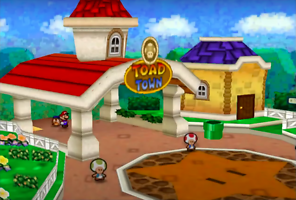 Toad TownHubThe capital, and the place Mario comes back to after every chapter. Its districts hold the Shroom Grocery and Harry’s Shop, the Post Office, the Dojo, the Badge Shop, Tayce T.’s kitchen, Club 64, the Playroom, the station and the docks.
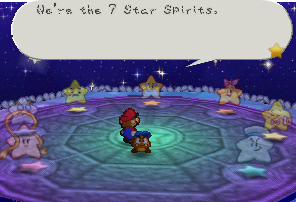 Shooting Star SummitHubWhere the Star Spirits first speak to Mario and, much later, the gateway to Star Way. Merluvlee and Merlow live at the foot of it.
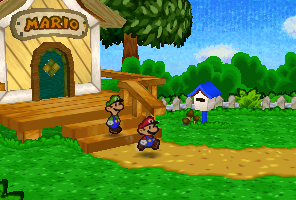 Mario’s HouseHubHome. Luigi minds it all game, Mario’s post arrives in the bedroom and a blackboard keeps track of recipes.
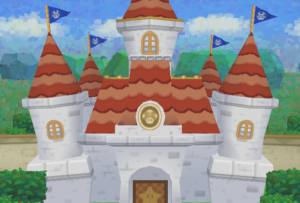 Peach’s CastlePeach interludes; finaleHoisted into space in the opening and explored a little further by the Princess after each chapter.
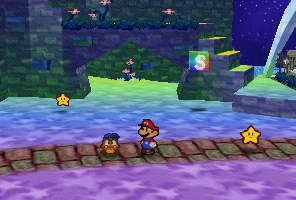 Star HavenHub · Chapter 8The home of the Stars, with the game’s last shop, a Toad House run by a Star and the Star Ship’s launch pad.
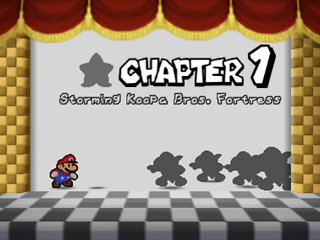
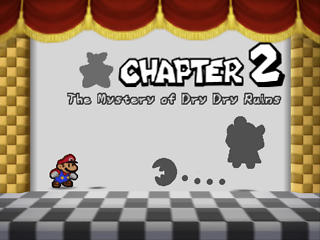
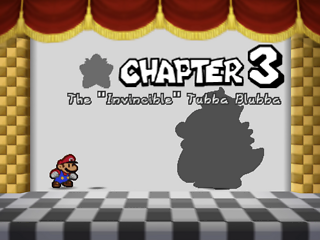
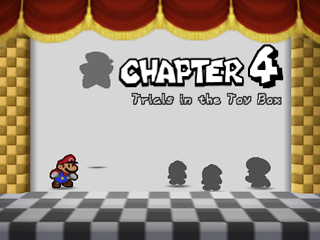
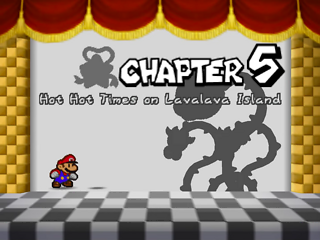
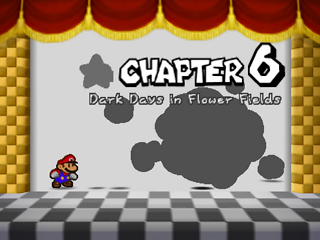
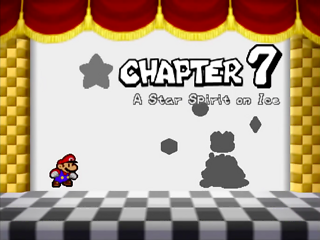
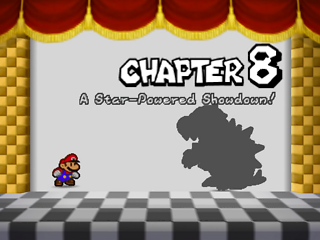
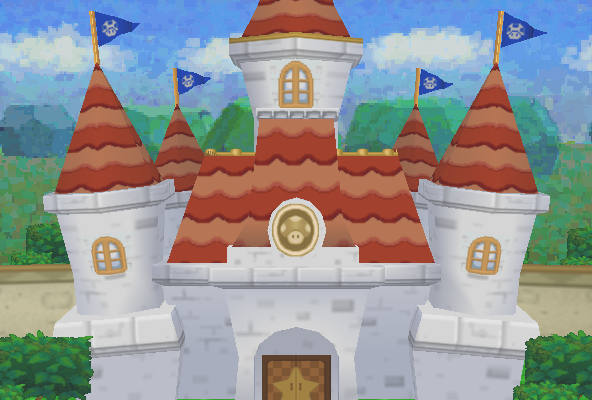
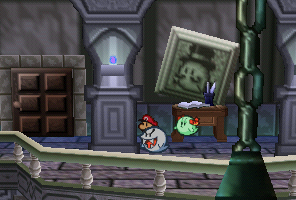
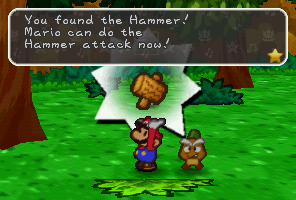
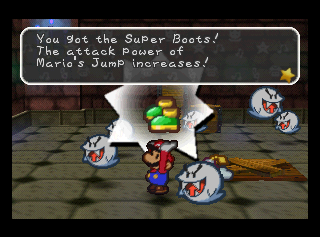
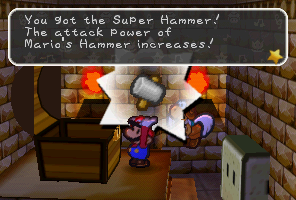
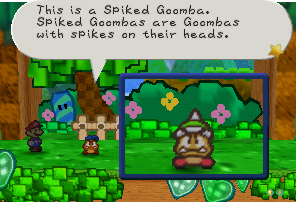
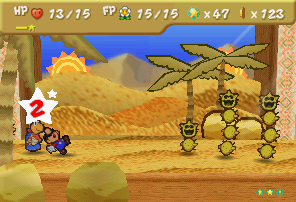
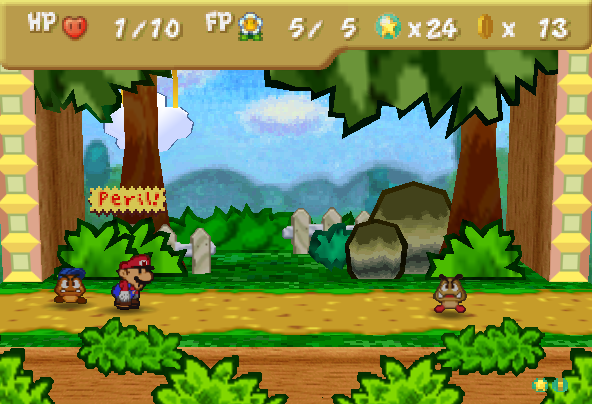
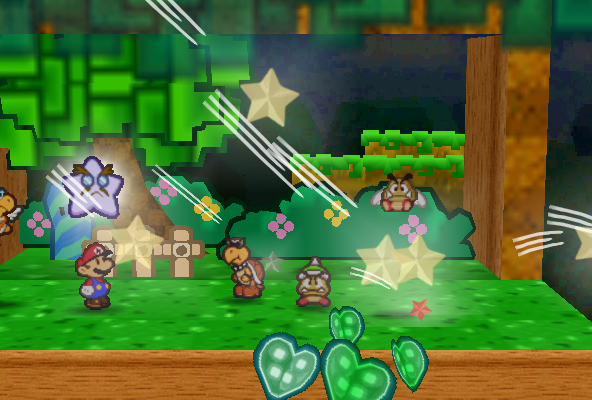


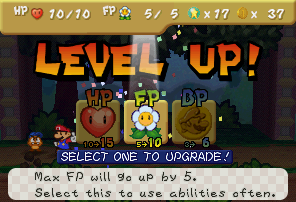



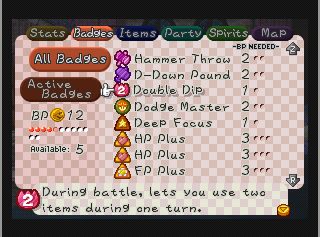
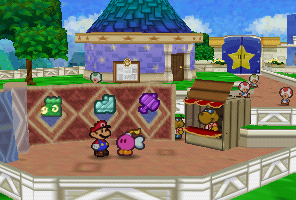
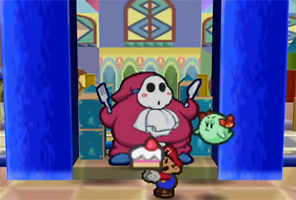
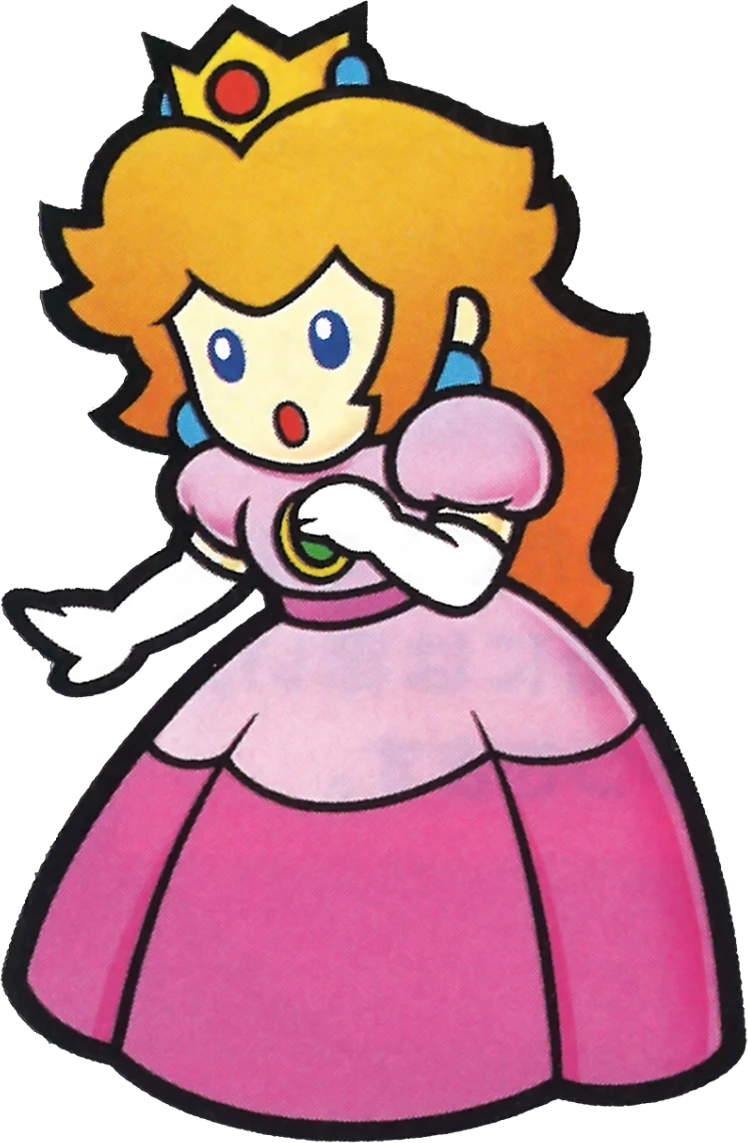
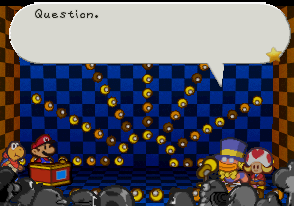
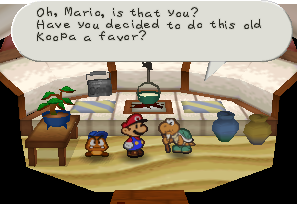
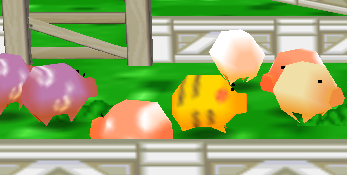
 Power Jump1 BP. A single heavy stomp with +2 attack, for 2 FP. Goomba Village.
 Power Bounce2 BP. Keep bouncing on one enemy for as long as the timing holds (3 FP). Koopa Bros. Fortress.
 Multibounce1 BP. Jump on every enemy in turn (2 FP). Rowf, 75 coins.
 Mega Jump3 BP. One stomp with +4 attack (6 FP). Shiver Mountain.
 Power Smash1 BP. A hammer blow with +2 attack (2 FP). Toad Town Tunnels.
 Mega Smash3 BP. A hammer blow with +4 attack (6 FP). Flower Fields.
 Quake Hammer1 BP. Shakes every enemy on the ground or ceiling for 2 (2 FP). Mt. Rugged. Power Quake and Mega Quake are the bigger versions.
 Hammer Throw2 BP. Throws the hammer at any enemy, wherever it stands (2 FP). In a chest on top of the Toad Town gate.
 D-Down Jump2 BP. A jump that ignores defence (2 FP). Tubba Blubba’s Castle. D-Down Pound does the same for the hammer.
 Spike Shield2 BP. Mario can jump on spiked enemies. Dry Dry Ruins.
 Fire Shield2 BP. Mario can jump on burning enemies and takes 1 less from fire. Mt. Lavalava.
 Ice Power2 BP. +2 damage against fire enemies, and safe to stomp them. Shy Guy’s Toy Box.
 Power Plus6 BP. +1 to every jump and hammer attack. One is guarded by the Anti Guy in the Toy Box; Merlow has the other for 25 Star Pieces.
 Defend Plus6 BP. Defence +1. Shy Guy’s Toy Box.
 HP Plus3 BP. Maximum HP +5. Three exist: Forever Forest, the path behind Kooper’s house in Koopa Village and Rowf (150 coins).
 FP Plus3 BP. Maximum FP +5. Three exist: Pleasant Path, Forever Forest and Rowf (150 coins).
 Flower Saver6 BP. Every move costs 1 FP less. Flower Fields, and Merlow for 25 Star Pieces.
 Damage Dodge3 BP. A successful guard blocks 1 more damage. Mt. Rugged, and Rowf for 150 coins.
 Dodge Master2 BP. Makes Action Command timing more forgiving. Rowf, 100 coins.
 Quick Change4 BP. Switching partner no longer uses up a turn. In Merlon’s house.
 Double Dip1 BP. Use two items in one turn for 3 FP. Rowf, 100 coins. Triple Dip, from the Crystal Palace, allows three.
 Happy Heart3 BP. Slowly restores HP during battle. Jade Jungle, and Merlow for 8 Star Pieces. Happy Flower does the same for FP.
 HP Drain3 BP. Attack falls by 1, but every hit returns 1 HP. Merlow, 15 Star Pieces.
 Close Call1 BP. Enemies sometimes miss when Mario is in Danger (5 HP or fewer). Goomba Road.
 Power Rush1 BP. Attack +2 while in Danger. In Peach’s Castle, for the Princess to find and send down.
 Mega Rush1 BP. Attack +4 while in Peril, at exactly 1 HP. Tubba Blubba’s Castle.
 Last Stand1 BP. Halves damage taken while in Danger. In Peach’s Castle, for the Princess to find and send down.
 Zap Tap4 BP. Electrifies Mario, hurting anything that touches him. Merlow, 10 Star Pieces.
 Lucky Day7 BP. Enemies miss far more often. The reward from Goompapa at the end of the long chain of letter deliveries.
 Money Money7 BP. Doubles the coins won in battle. Merlow, 20 Star Pieces.
 Peekaboo3 BP. Shows every enemy’s HP without the need for Tattle. Merlow, 10 Star Pieces.
 I Spy1 BP. Sounds an alert when a hidden Star Piece is near. Rowf gives it away when Mario returns his Calculator.
 Speedy Spin1 BP. The Spin Dash carries further. Rowf, 50 coins.
 First Attack1 BP. A First Strike on a weak enemy beats it outright without a battle. Rowf, 100 coins. Bump Attack and Spin Attack do the same on contact.
 Slow Go0 BP. Stops Mario running, which is meant to help with sneaking past enemies. Dry Dry Ruins.
 Attack FX A to E0 BP each. Change the sound of Mario’s attacks. FX E, from Shiver City, uses the noise Yoshi makes in Super Mario World when Mario hops on.
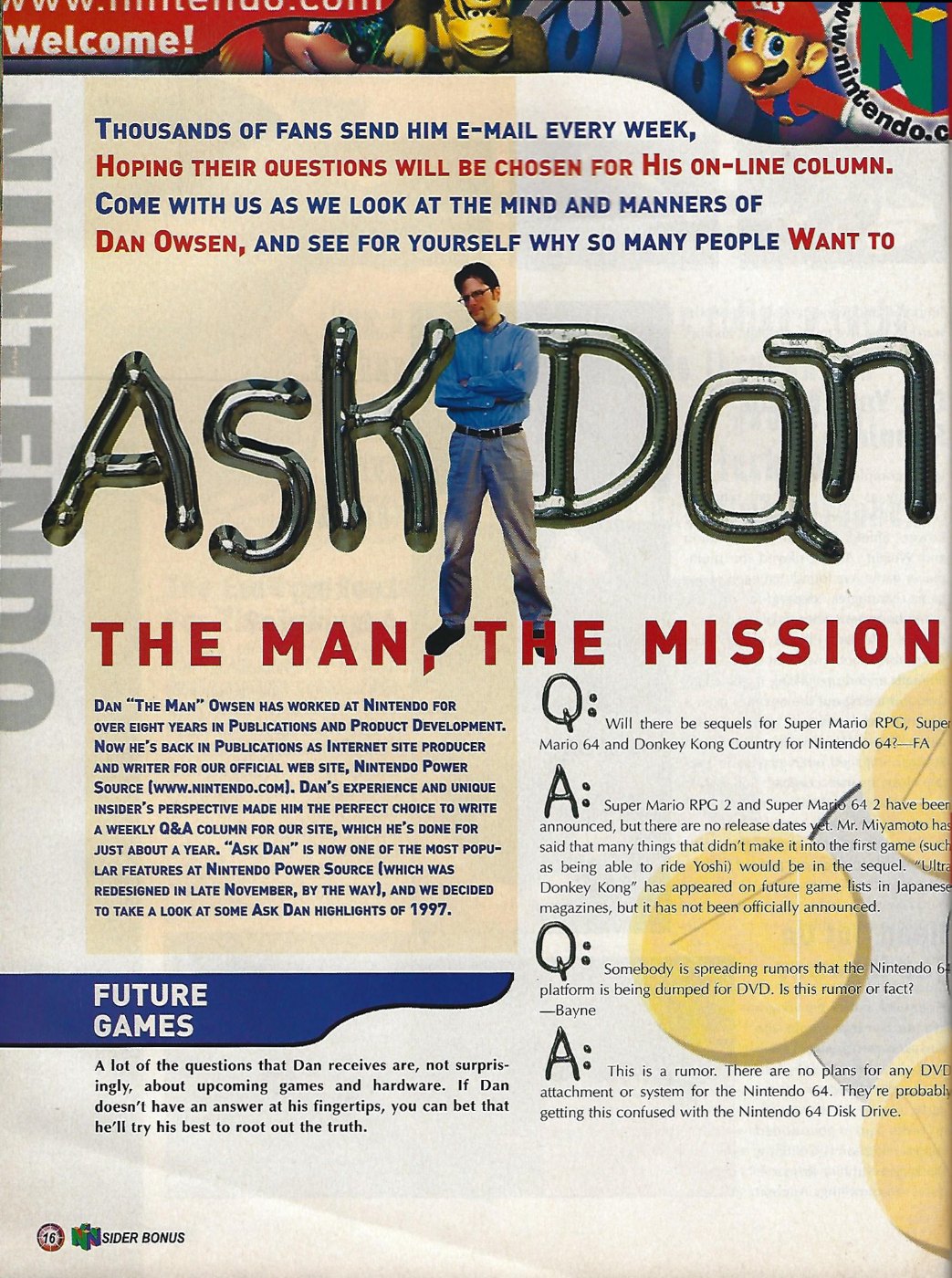 Nintendo PowerNintendo of America · 1998–2008The magazine covered the game from its first announcement as Super Mario RPG 2 (volume 104, January 1998) and printed Miyamoto’s comments on its look in a “Previews ’99” supplement. It later ranked Paper Mario 63rd in its Top 200 games and 13th among Nintendo 64 games.
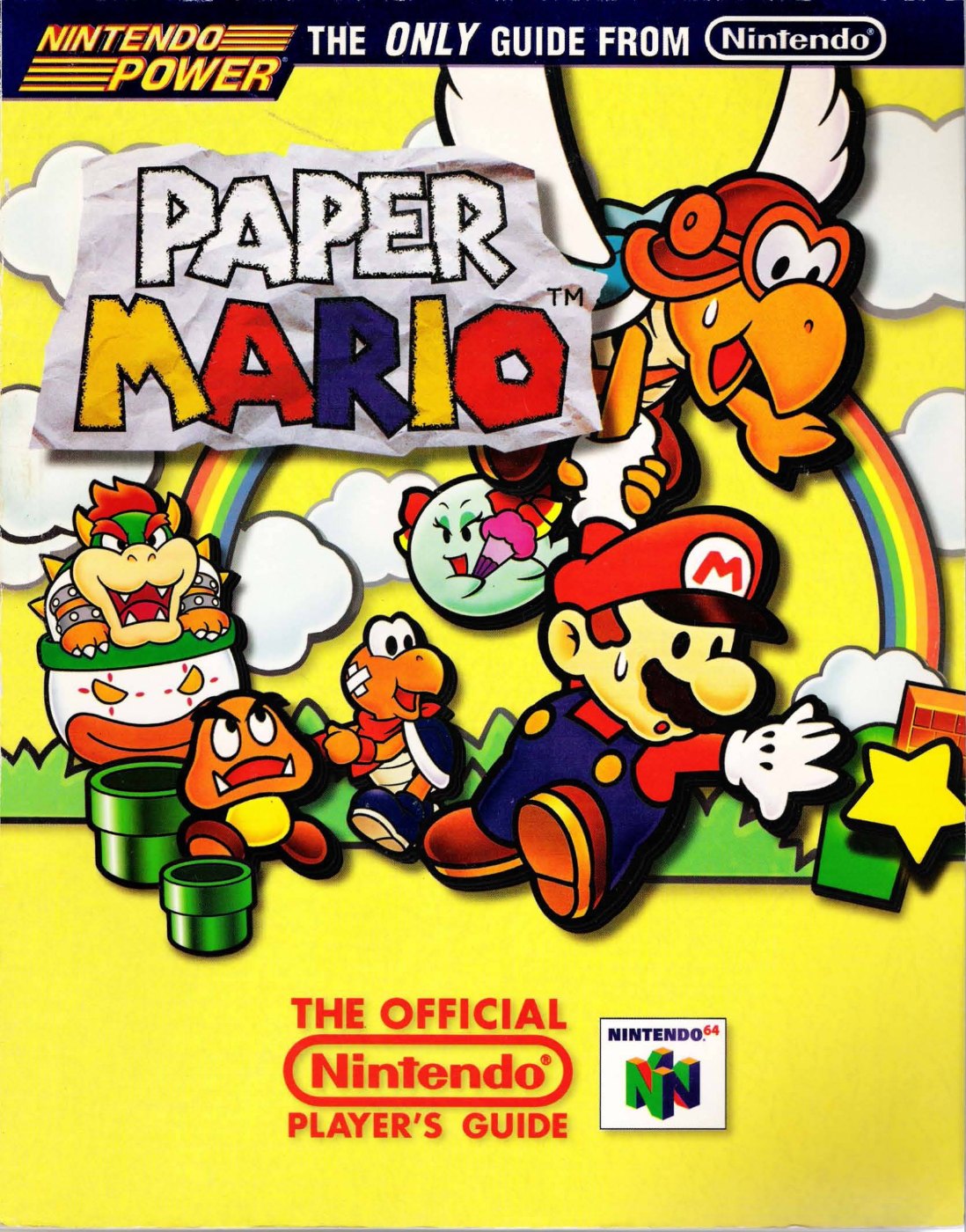 Official guidesNintendo Power; Prima GamesNintendo Power published its own Player’s Guide, and Prima Games an official strategy guide.
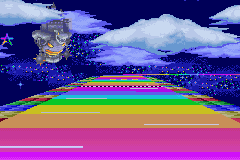 Mario Kart: Super CircuitGame Boy Advance · 2001Look at the backdrop of Rainbow Road: Peach’s Castle is sitting on top of Bowser’s, exactly as in Paper Mario. The Goombas and Hammer Bro at the award ceremony use their Paper Mario designs too.
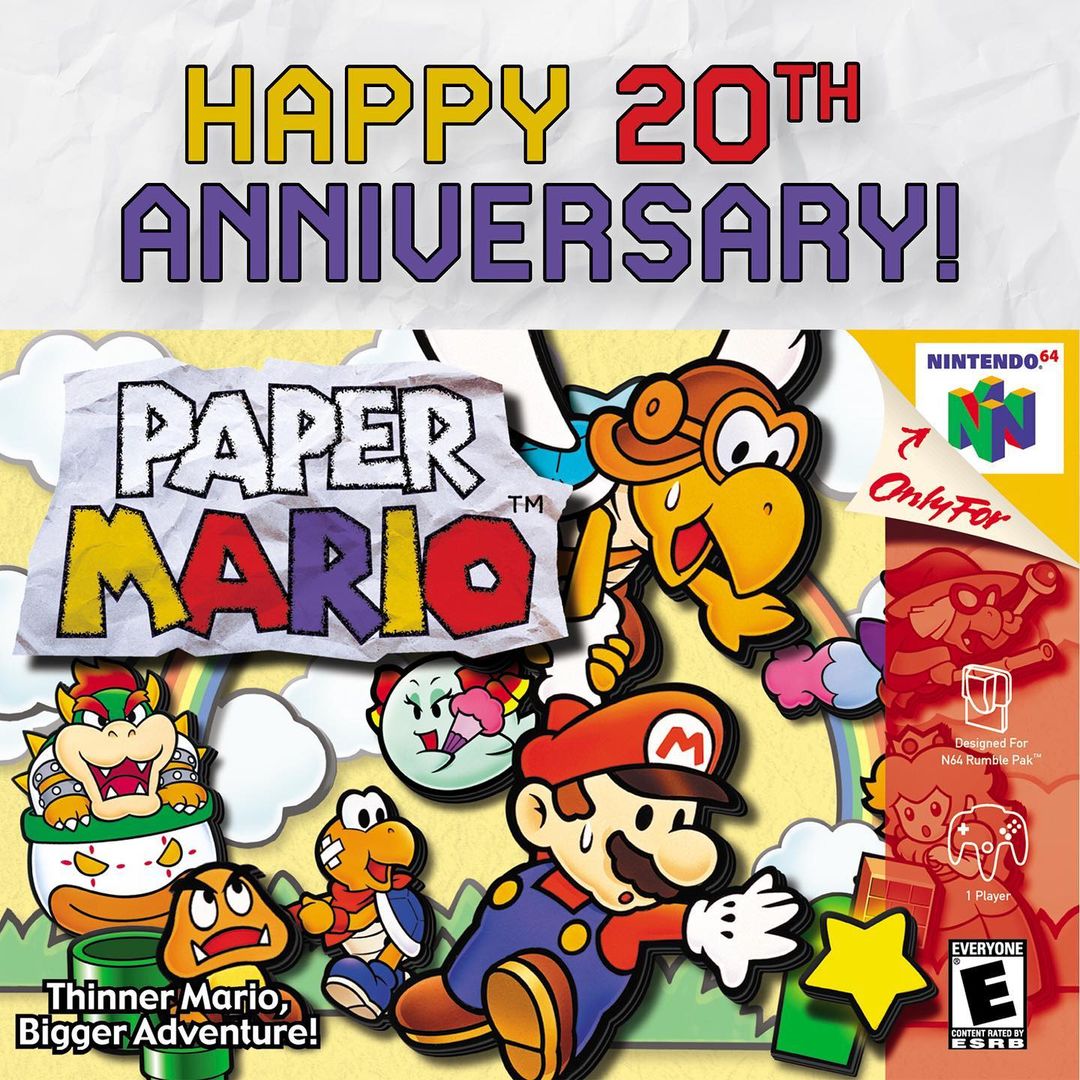 The 20th anniversaryNintendo of AmericaNintendo of America marked the game’s twentieth anniversary with a new illustration on its Instagram account. Famitsu ran a 25th-anniversary appreciation in August 2025, singling out the Peach scenes.
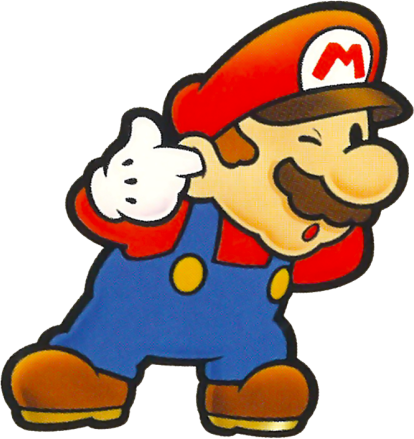 MarioThe hero, on paper
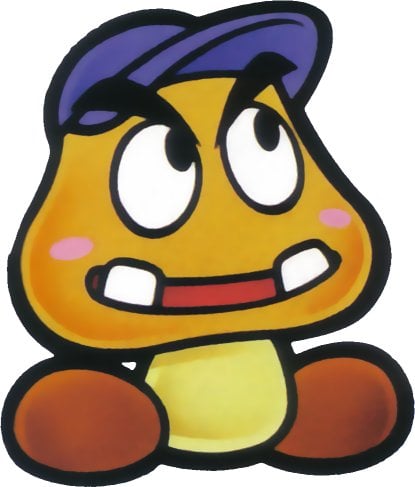 GoombarioPartner 1 · Goomba Village
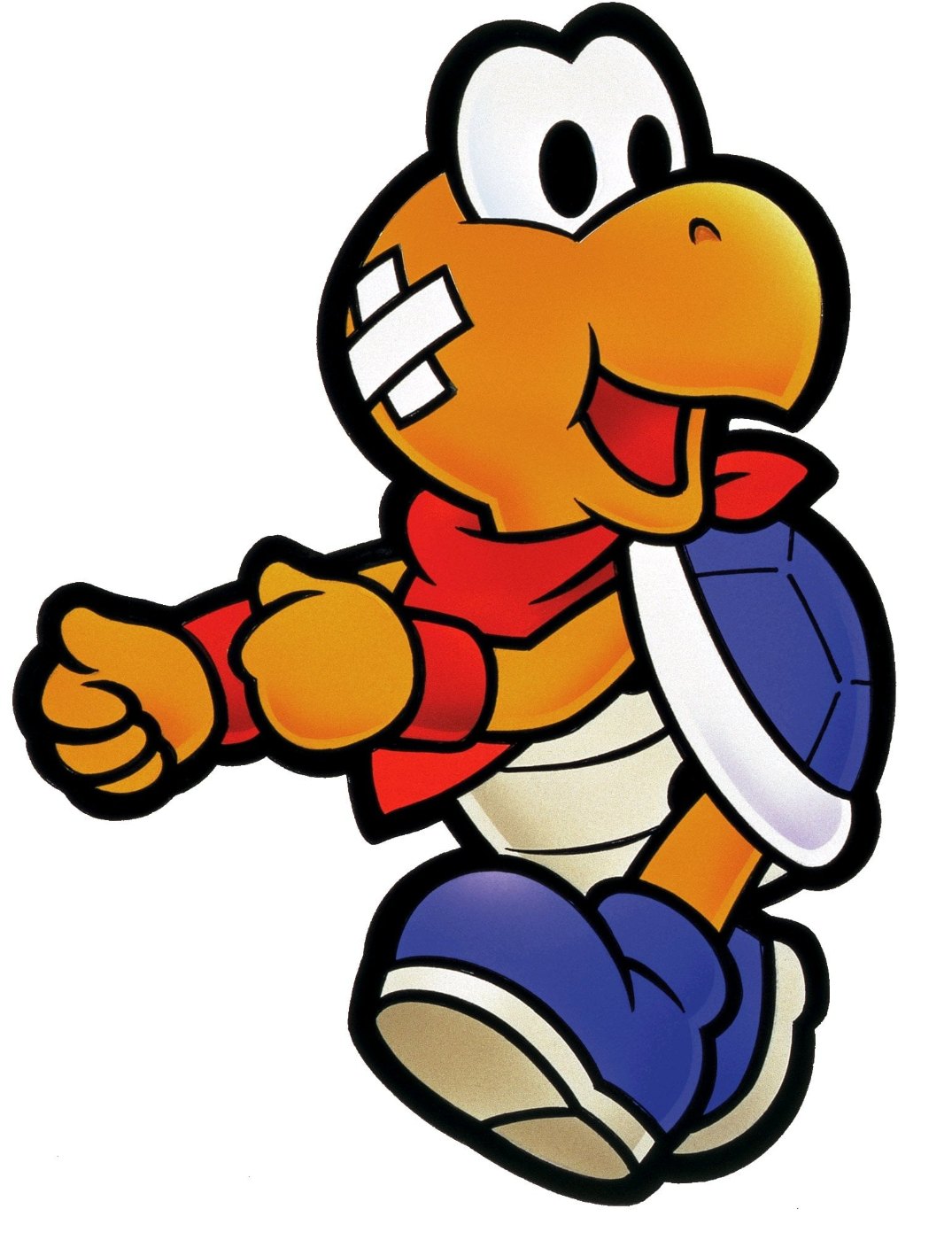 KooperPartner 2 · Koopa Village
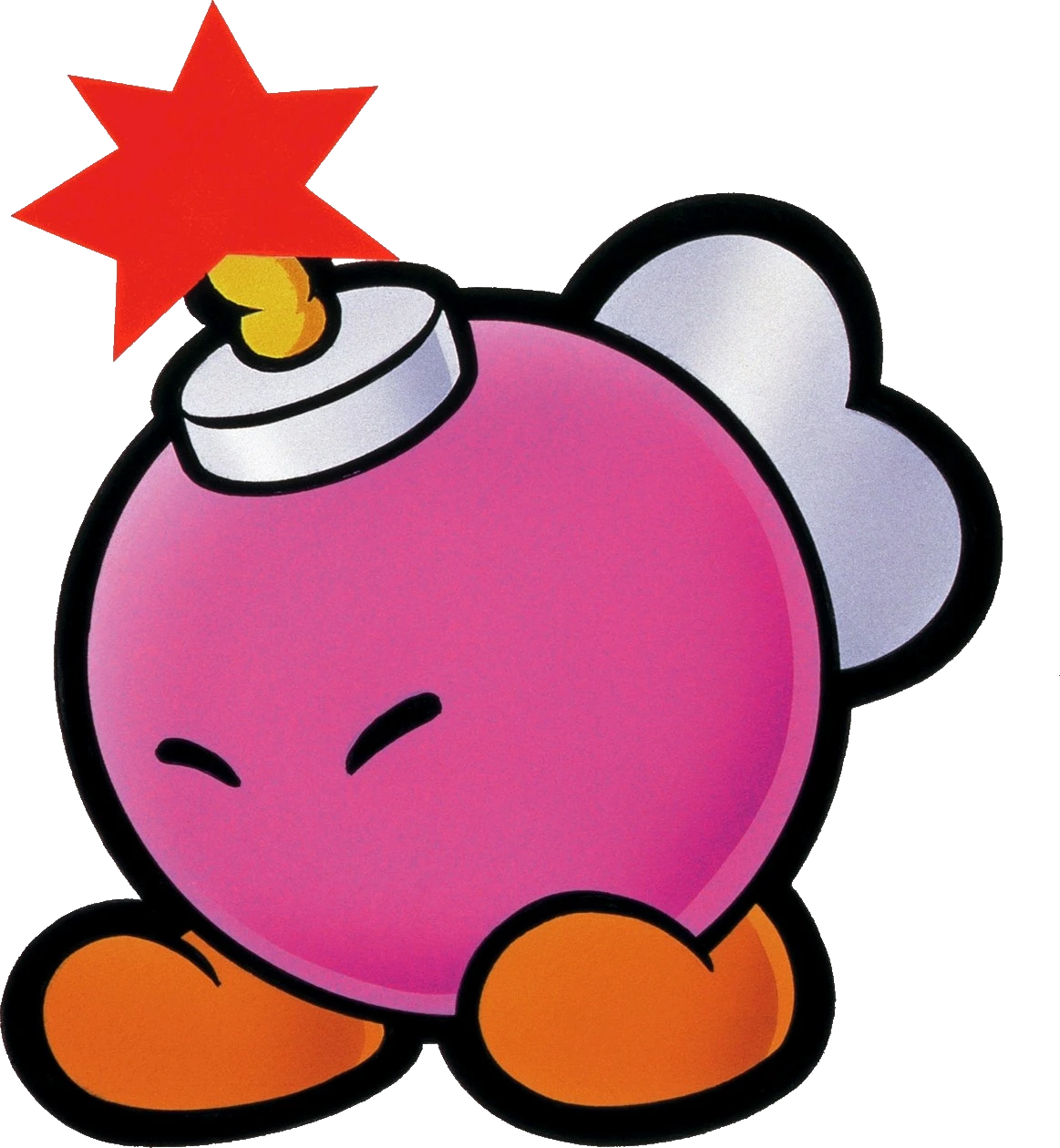 BombettePartner 3 · Koopa Bros. Fortress
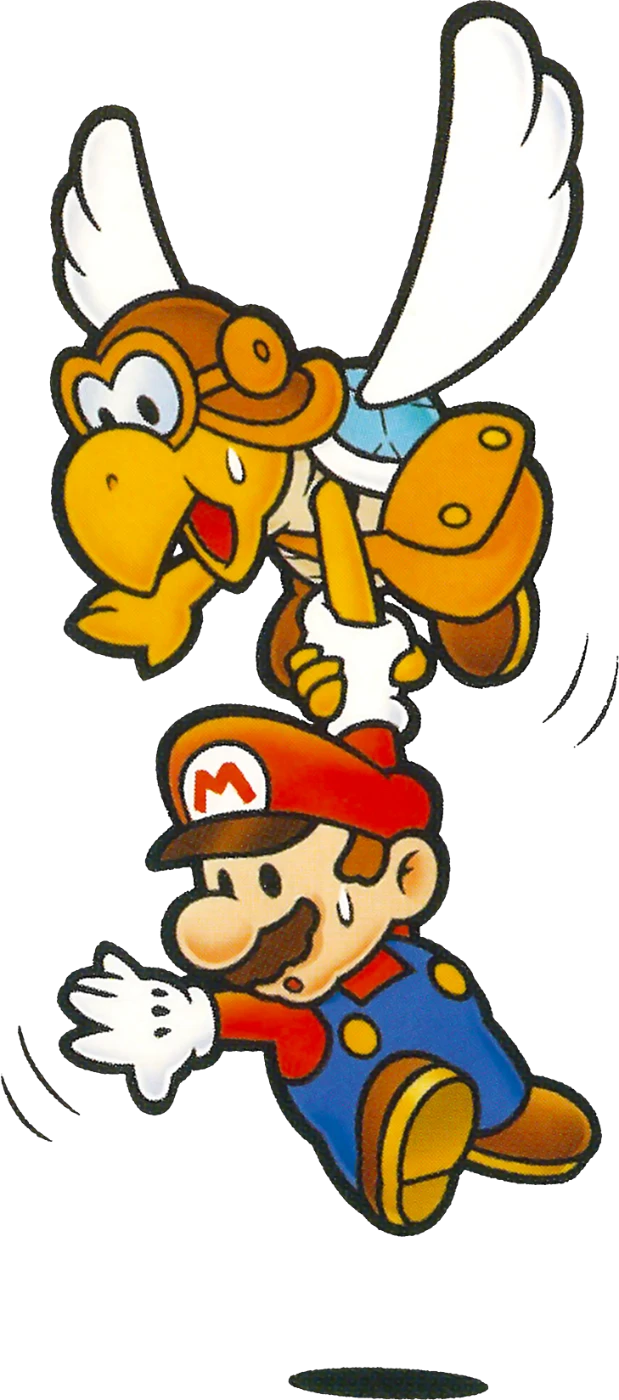 ParakarryPartner 4 · Mt. Rugged
 Lady BowPartner 5 · Boo’s Mansion
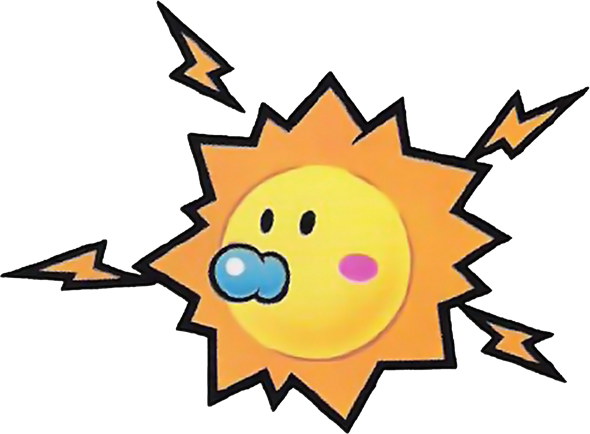 WattPartner 6 · Shy Guy’s Toy Box
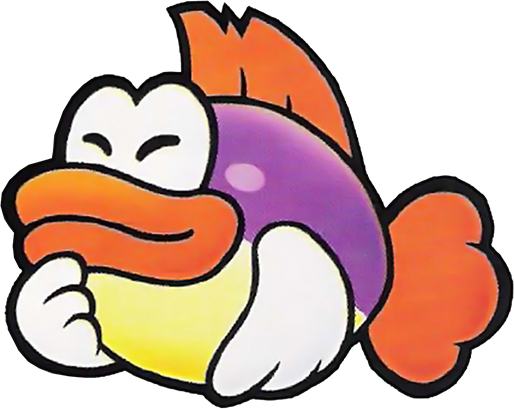 SushiePartner 7 · Jade Jungle
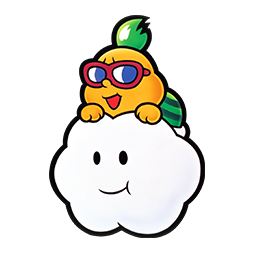 LakilesterPartner 8 · Flower Fields
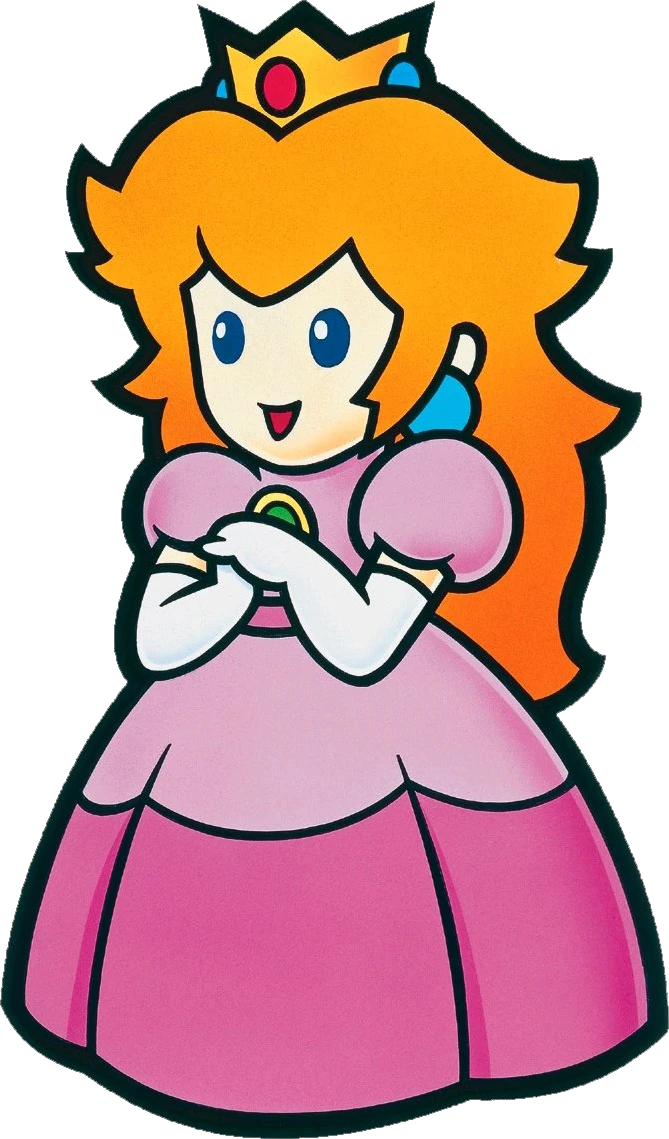 Princess PeachPrisoner, spy and occasional baker
 TwinkStar Kid
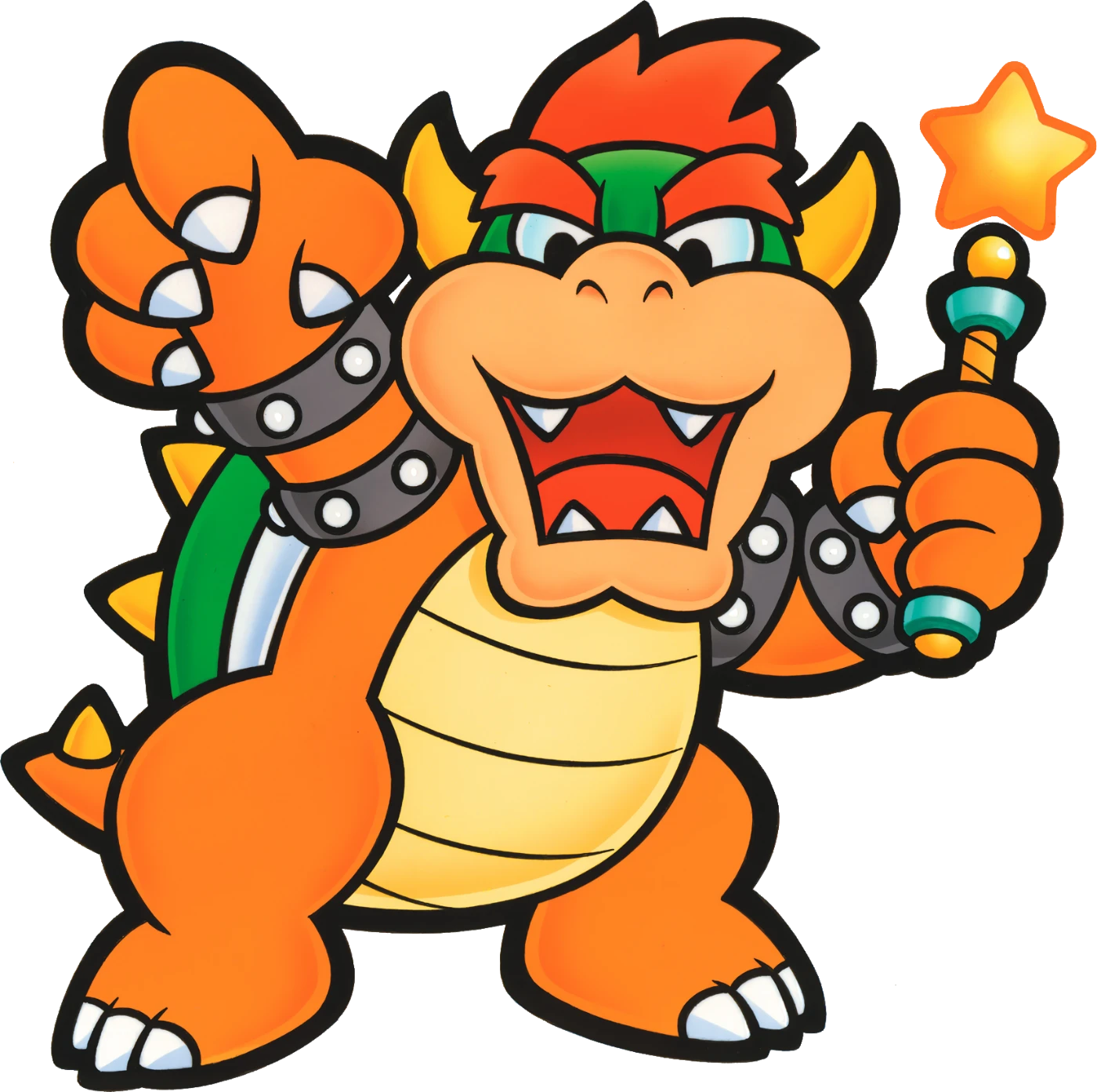 BowserKing of the Koopas, briefly invincible
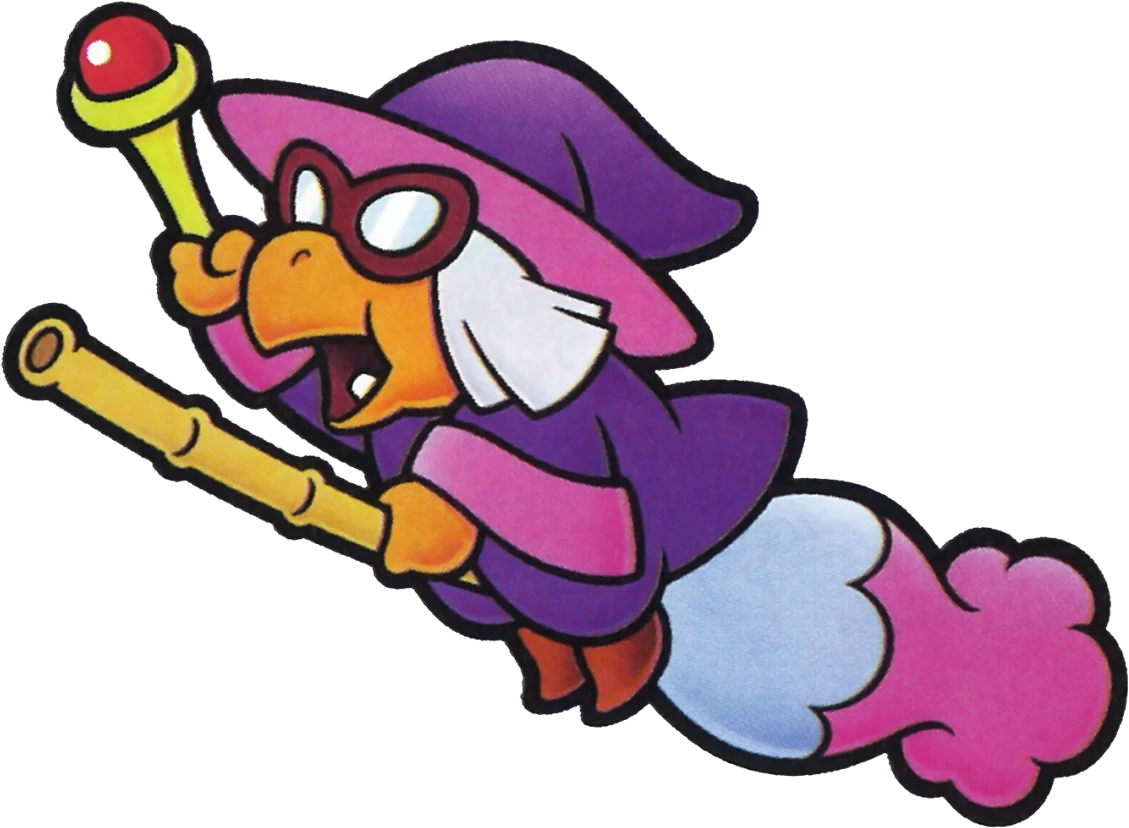 Kammy KoopaBowser’s right-hand witch
 The Star SpiritsGuardians of the Star Rod
 Jr. TroopaThe pest
 LuigiLeft at home, and not happy about it
 Merlon, Merluvlee and MerlowFortune-tellers
 Tayce T.Cook
 The Master, Chan and LeeToad Town Dojo
 KoloradoArchaeologist
 Chuck Quizmo and Vanna T.Quiz show on legs
 Rowf and RhuffBadge sellers
 Koopa KootKoopa Village’s oldest inhabitant
 The Goomba familyGoomba Village
 Bowser (boss)Peach’s Castle: opening and Chapter 8HP 10 in the opening, where the Star Rod makes the fight unwinnable. HP 50 in the hall, where he switches off some of Mario’s commands. HP 99, attack 8, defence 2 on the Power Platform.
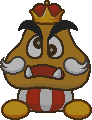 Goomba King (boss)Goomba Road, prologueHP 10, attack 1. Fought with the Red and Blue Goombas beside him, in front of a Goomnut tree.
 Red and Blue Goomba Bros. (boss)Goomba Road, prologueHP 7 and 6. A pair of bullies fought first on their own and then again with their king.
 Magikoopa (boss)Shooting Star Summit, prologueHP 8, attack 3. Bars the way at the Summit.
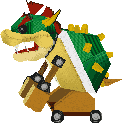 Bowser??? (boss)Koopa Bros. Fortress, Chapter 1HP 10, defence 1. The Koopa Bros. inside a wobbly mechanical Bowser.
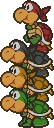 Koopa Bros. (boss)Koopa Bros. Fortress, Chapter 1HP 5 each. Red, Black, Yellow and Green Ninjakoopas, who attack stacked in a tower until it is knocked over.
 Buzzar (boss)Mt. Rugged, Chapter 2 (optional)HP 40, attack 3. A big bird, and a fight that can be avoided.
 Tutankoopa (boss)Dry Dry Ruins, Chapter 2HP 30, attack 3. Summons a Chomp (HP 4, defence 3).
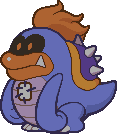 Tubba Blubba (boss)Tubba Blubba’s Castle and Gusty Gulch, Chapter 3Cannot be hurt at all in his castle. Once his heart is back inside him he has HP 10 and attack 4.
 Tubba’s Heart (boss)Windy Mill, Chapter 3HP 50. Attack 6, or 12 when it has charged up. The real fight of the chapter.
 Big Lantern Ghost (boss)Shy Guy’s Toy Box, Chapter 4HP 40, attack 5. Watt is shut inside its lantern.
 General Guy (boss)Shy Guy’s Toy Box, Chapter 4HP 30, attack 4, defence 2, after a Shy Squad (HP 15), two Stilt Guys (HP 7) and a Shy Stack (HP 10). The bulb on his tank has 8 HP of its own.
 Anti Guy (boss)Shy Guy’s Toy Box; Bowser’s Castle (optional)HP 50, attack 10. A black Shy Guy standing guard over a chest with a Power Plus in it, and far stronger than anything else in Chapter 4.
 Fuzzipede (boss)Inside the whale, Toad Town portHP 20, attack 3. The cause of the whale’s stomach ache.
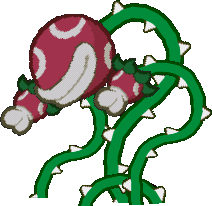 Lava Piranha (boss)Mt. Lavalava, Chapter 5HP 40 with attack 5, then HP 40 again, on fire, with attack 7. Its two Lava Buds (HP 8) spit out Petit Piranhas.
 Kent C. Koopa (boss)Pleasant Path, after Chapter 5 (optional)HP 70, attack 10, defence 6, the highest defence figure in the bestiary. A giant Koopa who turns up on the road to Koopa Village.
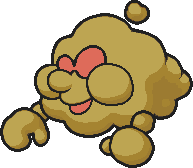 Huff N. Puff (boss)Cloudy Climb, Chapter 6HP 60, attack 5. Backed by Tuff Puffs (HP 1).
 Monstar (boss)Shiver Snowfield, Chapter 7HP 20, attack 1. All show.
 Crystal King (boss)Crystal Palace, Chapter 7HP 70, attack 6, defence 2. Surrounds himself with Crystal Bits (HP 1).
 Blooper (boss)Toad Town Tunnels (optional)HP 30, attack 3. The first of three squid guarding the sewers; the Electro Blooper (HP 50) and Super Blooper (HP 70, with Blooper Babies) come later.
 Kammy Koopa (boss)Power Platform, Chapter 8HP 10, attack 4. Fought by Twink, with Peach cheering him on.
 Chan (boss)Toad Town Dojo (optional)HP 15, attack 2, defence 2. The first rung of the Dojo.
 Lee (boss)Toad Town Dojo (optional)HP 20, attack 5. The second rung.
 GoombaGoomba Village, Goomba Road, Pleasant Path, Toy BoxHP 2, attack 1, defence 0.
 Spiked GoombaGoomba Village, Goomba Road, Pleasant PathHP 2, attack 2. Do not jump on it.
 ParagoombaGoomba Village, Goomba Road, Pleasant PathHP 2, attack 1. Out of reach of the hammer.
 Koopa TroopaPleasant Path, Koopa Bros. FortressHP 4, attack 1, defence 1. Jump on it to flip it over.
 ParatroopaPleasant Path, Koopa Bros. FortressHP 4, attack 1, defence 1.
 FuzzyKoopa Village, Toy BoxHP 3, attack 1. The shell thieves of Koopa Village.
 Bob-ombKoopa Bros. FortressHP 3, attack 1.
 Bullet BillKoopa Bros. FortressHP 2, attack 2. Fired from Bill Blasters (HP 4, defence 1).
 GloombaToad Town TunnelsHP 7, attack 2. Sewer Goombas, with Spiked (attack 3) and winged versions.
 Monty MoleMt. Rugged; Flower FieldsHP 3, attack 2 on the mountain. The green ones in Flower Fields have HP 12 and attack 3.
 CleftMt. RuggedHP 2, attack 2, defence 2. A spiked rock, immune to weak hammers.
 BanditDry Dry DesertHP 5, attack 2. Steals coins.
 PokeyDry Dry Desert, Toy BoxHP 4, attack 2.
 Pokey MummyDry Dry RuinsHP 4, attack 2.
 Buzzy BeetleDry Dry Ruins, Toad Town TunnelsHP 3, attack 2, defence 2.
 SwooperDry Dry RuinsHP 4, attack 2. Hangs from the ceiling until disturbed.
 Stone ChompDry Dry RuinsHP 4, attack 3, defence 1. Guardians of the ruins.
 Piranha PlantForever ForestHP 5, attack 3.
 Forest FuzzyForever ForestHP 6, attack 1.
 Bzzap!Forever Forest, Flower FieldsHP 3 but attack 6. A giant bee.
 Hyper GoombaGusty GulchHP 7, attack 1. There is a winged version too.
 Hyper CleftGusty GulchHP 4, attack 3, defence 3.
 ClubbaTubba Blubba’s Castle, Toy BoxHP 8, attack 3. Tubba Blubba’s guards, usually asleep.
 Dark KoopaToad Town TunnelsHP 8, attack 3, defence 2.
 Shy GuyShy Guy’s Toy BoxHP 7, attack 2. In five colours.
 Groove GuyShy Guy’s Toy BoxHP 7, attack 2. A dancer.
 Sky GuyShy Guy’s Toy BoxHP 7, attack 3. An airborne Shy Guy.
 Spy GuyShy Guy’s Toy BoxHP 7, attack 2. Carries a slingshot or a hammer.
 Medi GuyShy Guy’s Toy BoxHP 7, attack 1. The medic.
 Pyro GuyShy Guy’s Toy BoxHP 7, attack 4. On fire.
 Jungle FuzzyJade JungleHP 7, attack 2.
 Spear GuyJade JungleHP 7, attack 3.
 Hurt PlantJade JungleHP 8, attack 2. Looks just like the harmless Heart Plants.
 M. BushJade JungleHP 8, attack 3. Hides as a bush.
 Putrid PiranhaJade Jungle, Mt. LavalavaHP 12, attack 3. Poisonous breath.
 MagikoopasJade Jungle onwards; Bowser’s CastleWhite, Red, Green, Yellow and Gray Magikoopas all have HP 11 and attack 3. The ordinary blue kind in Bowser’s Castle has attack 6.
 Lava BubbleMt. LavalavaHP 9, attack 4.
 Spike TopMt. Lavalava, Toad Town TunnelsHP 4, attack 3, defence 4.
 Crazee DayzeeFlower FieldsHP 8, attack 4.
 Amazy DayzeeFlower FieldsHP 20, attack 20, defence 1: by far the highest attack of any ordinary enemy.
 Ruff PuffFlower FieldsHP 10, attack 4. Huff N. Puff’s small relations.
 SpinyFlower Fields, Toad Town TunnelsHP 5, attack 4, defence 3. Thrown by Lakitus (HP 12, attack 3).
 LakituFlower FieldsHP 12, attack 3.
 Frost PiranhaShiver Snowfield, Shiver MountainHP 10, attack 4.
 GulpitShiver Snowfield, Shiver MountainHP 12, attack 2.
 DuplighostShiver Mountain, Crystal Palace, Bowser’s CastleHP 15, attack 4. Turns into a copy of Mario’s partner.
 White ClubbaShiver Mountain, Crystal PalaceHP 12, attack 5.
 SwoopulaCrystal PalaceHP 8, attack 2. A relative of the Swooper.
 EmberStar WayHP 10, attack 4. The only enemy on the road to Star Haven.
 KoopatrolToy Box (on Kammy’s orders), Bowser’s CastleHP 8, attack 4, defence 3. Bowser’s armoured elite, and Peach’s jailers.
 Hammer BroToy Box (on Kammy’s orders), Bowser’s CastleHP 12, attack 5, defence 1.
 Bony BeetleBowser’s CastleHP 8, attack 3, defence 4. Puts its spikes out.
 Bombshell BillBowser’s CastleHP 3, attack 6. Heavier Bullet Bills, from B. Bill Blasters (HP 10, defence 4).
 Dry BonesBowser’s CastleHP 8, attack 4, defence 2. Throws bones. Kooper’s Fire Shell stops it getting up again.
 Albino Dino (unused)Crystal PalaceHP 8, attack 4, defence 4 in the game’s data, but never fought: they stand about in the palace and cannot be attacked. A Dark Paratroopa for the Tunnels was also left unused.