
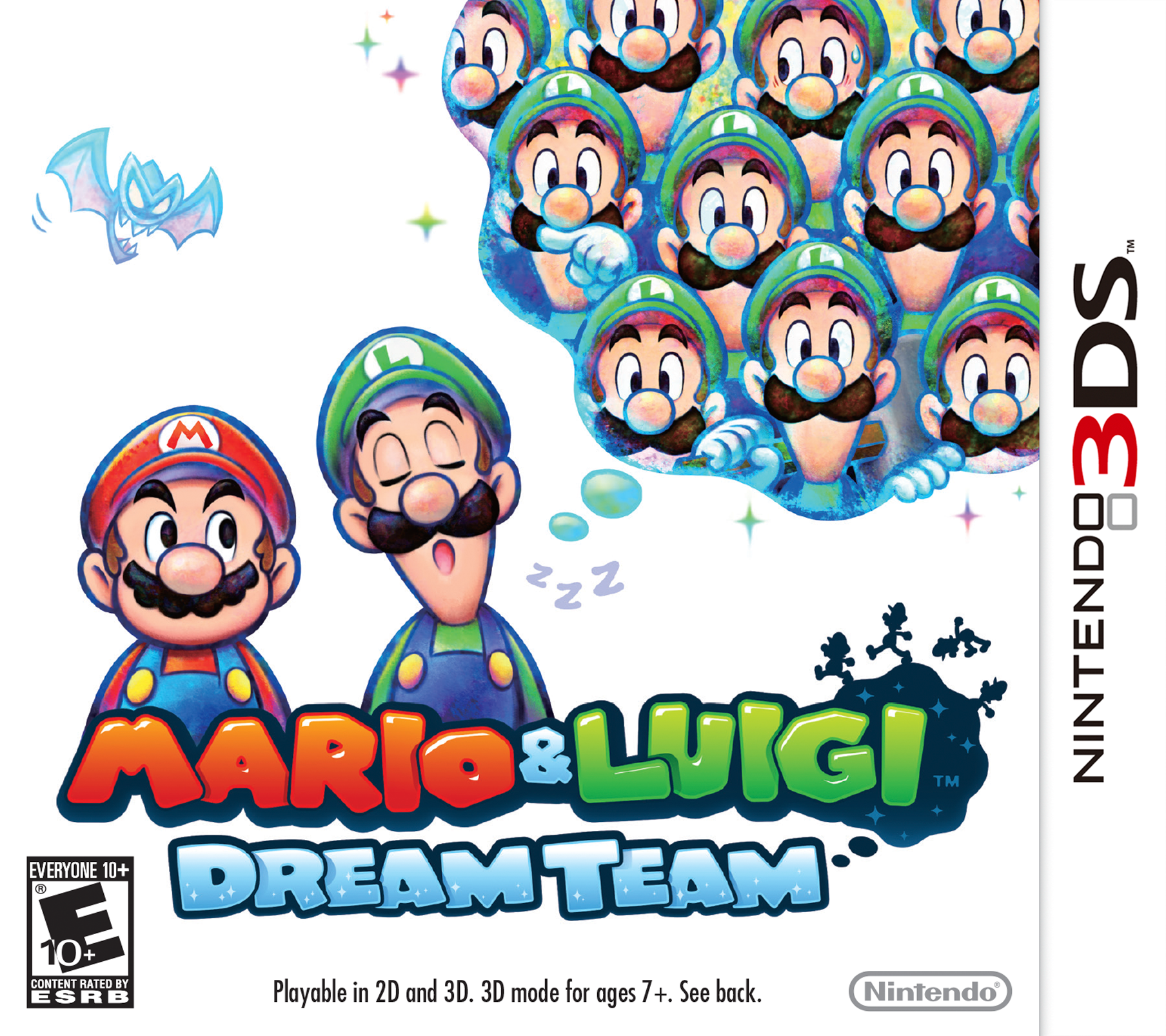
Mario & Luigi: Dream Team
The fourth entry in the beloved Mario & Luigi RPG series takes the brothers to Pi’illo Island, where Luigi’s sleeping mind becomes the key to everything. Mario explores a vivid dream world born from Luigi’s subconscious while the player tickles, pokes and prods a sleeping Luigi on the touch screen to reshape it. Featuring a witty script, strategic turn-based battles, Luiginary attacks, and enormous Giant Luigi showdowns, it’s a love letter to Luigi in his Year of Luigi.
Overview
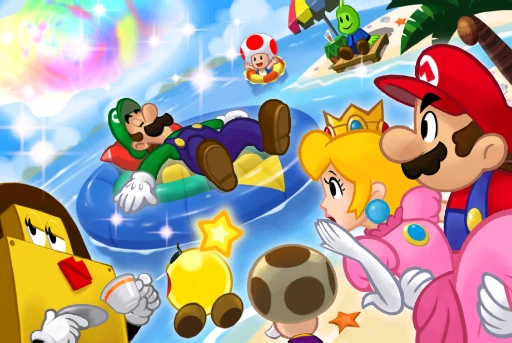
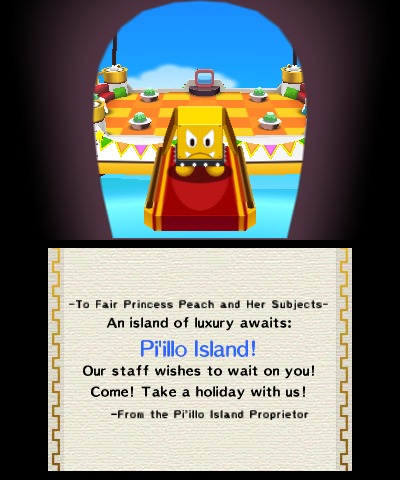 The gang receives their invitation to Pi’illo Island — Toadsworth, Mario, Luigi and Peach off on holiday. What could go wrong? (click for full size)
 Real-world overworld exploration — Mario and Luigi roam Pi’illo Island’s colourful locations together (click for full size)
Mario & Luigi: Dream Team is the fourth mainline entry in AlphaDream’s Mario & Luigi RPG series, and one of the most ambitious. It was released as part of Nintendo’s Year of Luigi — 2013’s year-long celebration of the green plumber — and Luigi is genuinely the star here in a way no previous game had delivered.
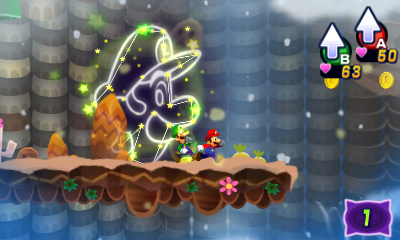
The game’s central mechanic is its dual-world structure: the real world of Pi’illo Island, explored by Mario and Luigi in standard 2D/3D overworld fashion, and the Dream World — Luigi’s subconscious, entered by having Luigi sleep on a Dream Point pillow. Inside dreams, Mario teams up with Dreamy Luigi and an army of Luiginoids (Luigi clones) in side-scrolling 2D environments that shift in response to the player manipulating Luigi’s sleeping face on the bottom touch screen. Spin his moustache, tickle his nose, poke him — and something changes in the dream world above.
The battles are the series’ signature turn-based action combat: time button presses to dodge enemy attacks and power up your own, with Bros. Attacks becoming Luiginary Attacks in the dream world. Giant Battles return from Bowser’s Inside Story, this time as Giant Luigi showdowns — turning the 3DS sideways for a widescreen experience. The script is famously funny, leaning fully into Luigi’s anxious-but-earnest personality.
Story
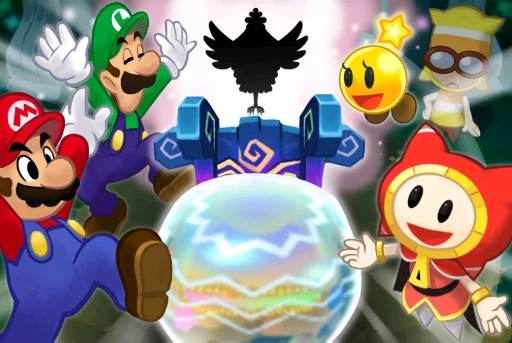
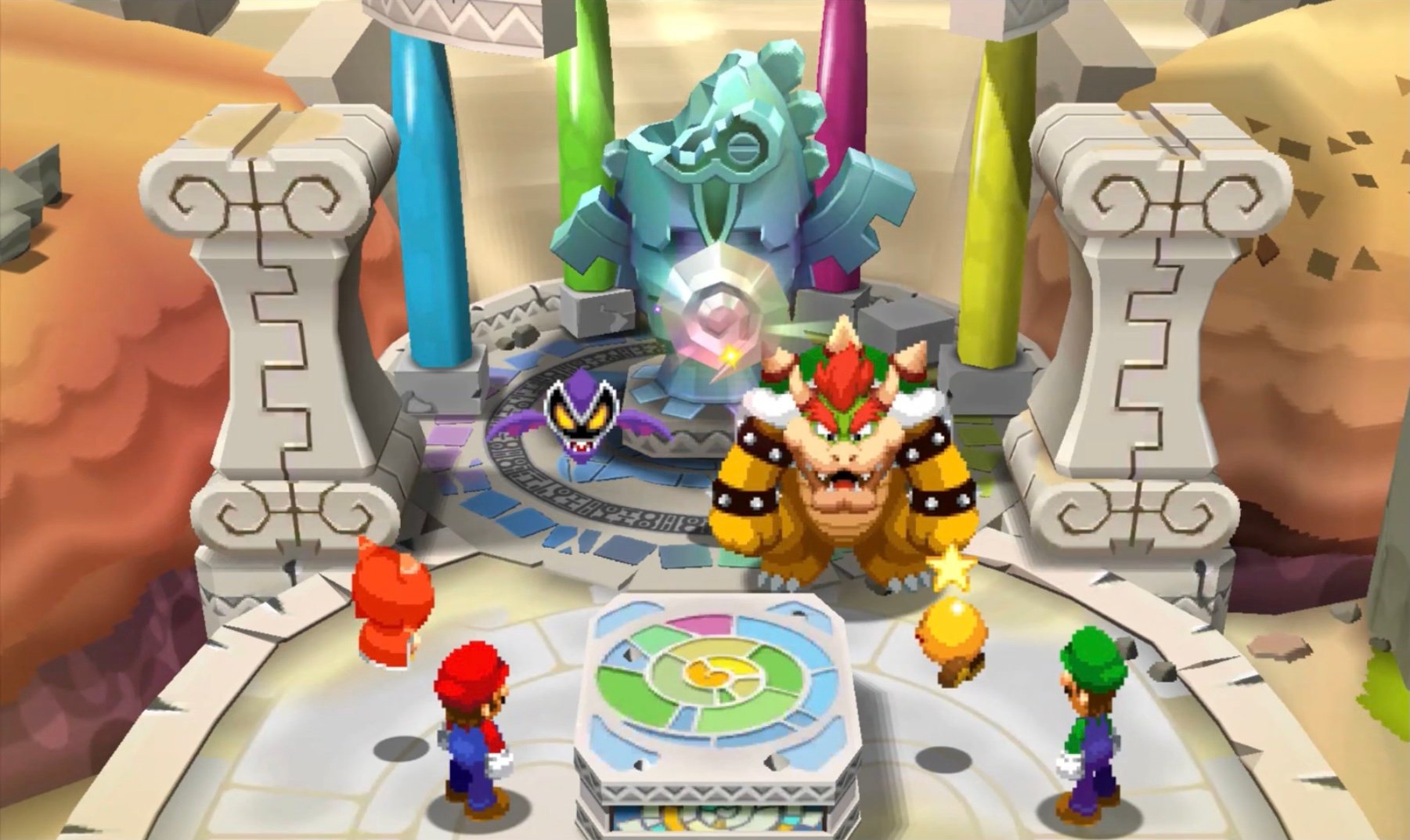 Antasma and Bowser steal the Dream Stone — a world-altering artefact that can grant any wish (click for full size)
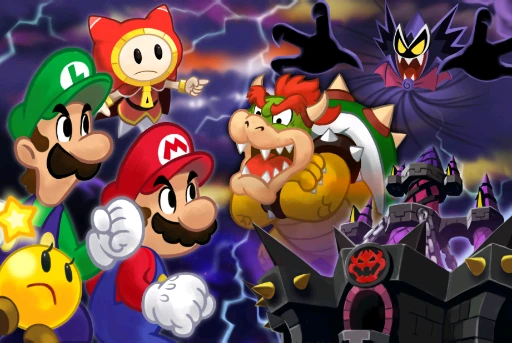
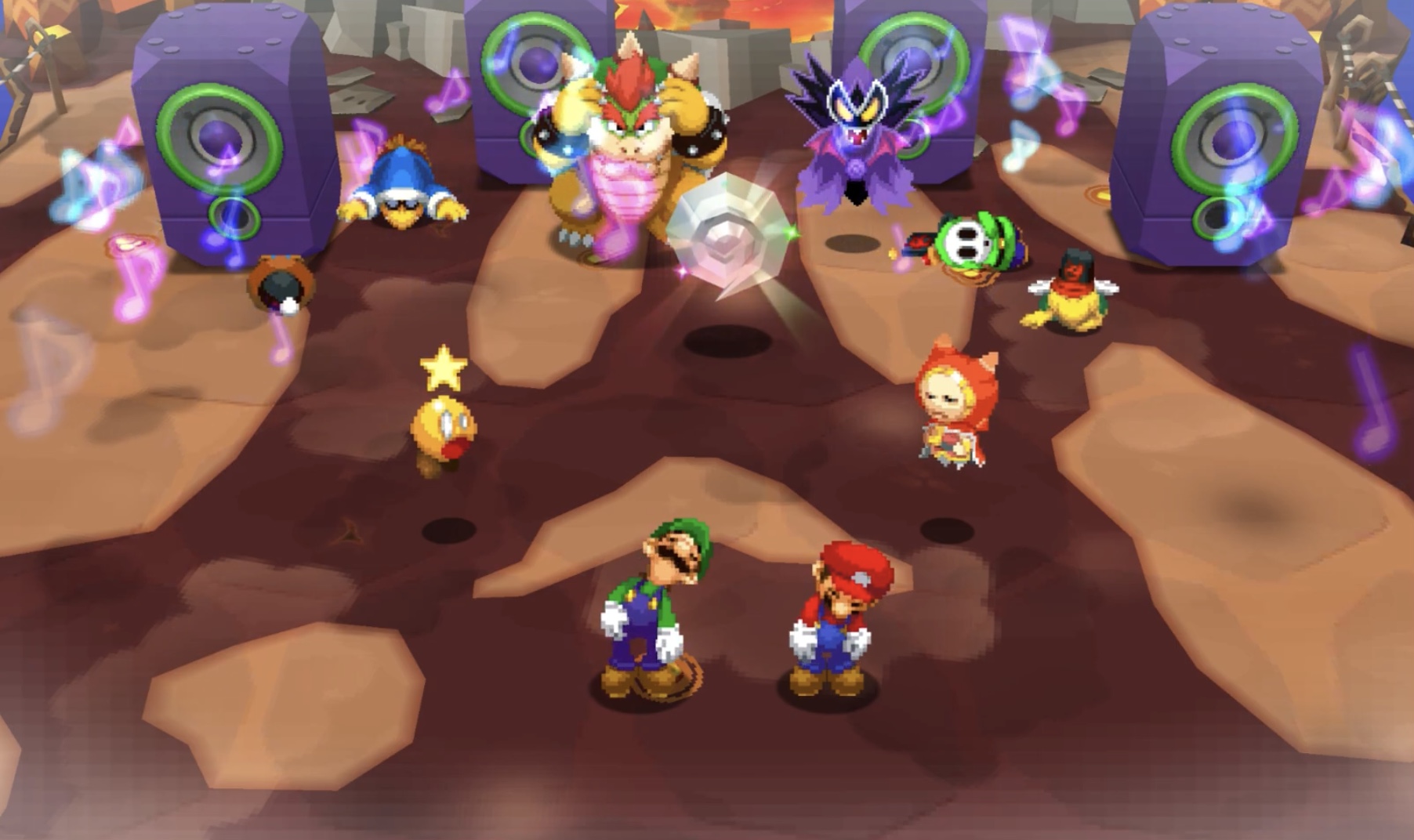 Antasma and Bowser unleash the Dreambeats — a melody that puts everyone except Pi’illos and their allies to sleep (click for full size)
Prologue — Pi’illo Island. Mario, Luigi, Princess Peach, Toadsworth and some Toads receive a special invitation to Pi’illo Island — a resort said to have extraordinary dream-inducing properties. The trip starts eventfully when a dark pillow creature appears on the blimp during the journey, forcing Mario to fight it off. The blimp crash-lands at Pi’illo Blimport, where it’s revealed the entire encounter was actually Luigi’s dream — he’d been asleep the whole time. The group proceeds through the welcome events hosted by the enthusiastic Broque Monsieur and his Brocks, before reaching Pi’illo Castle to meet Starlow.
Act One — The Dark Stone and Antasma. Exploring Pi’illo Castle, Mario and Luigi discover mysterious ancient ruins where they encounter a strange pillow-like being — Prince Dreambert, heir to the Pi’illo people. He explains the island’s history: the evil bat-king Antasma once terrorised Pi’illo Island using the power of the Dark Stone. The Pi’illos fought back and managed to seal Antasma in the Dream World — but not before he shattered the Dark Stone into fragments, which petrified the Pi’illo people into solid stone “Nightmare Chunks.” To free the Pi’illos, Mario must enter the Dream World and destroy the chunks from within, using Luigi as a doorway. The brothers meet Eldream, the Pi’illo elder who opens the portal to Dream’s Deep, and begin their island-wide quest.
Act Two — The Dream Stone and the Alliance. As the brothers work to free more Pi’illos and explore deeper into the island’s regions, a more sinister development unfolds: Bowser arrives on Pi’illo Island with Kamek and his newly-formed Elite Trio (Private Goomp, Corporal Paraplonk and Sergeant Guy). Antasma escapes the Dream World and forms an alliance with Bowser — together they steal the Dream Stone, a wish-granting artefact of immense power. Atop Mount Pajamaja, the villains play the Dreambeats — a hypnotic melody that puts everyone except Pi’illos and their companions into a deep sleep, allowing Antasma and Bowser to take control. Mario and Luigi must chase down the Dream Stone before its power is used to reshape reality.
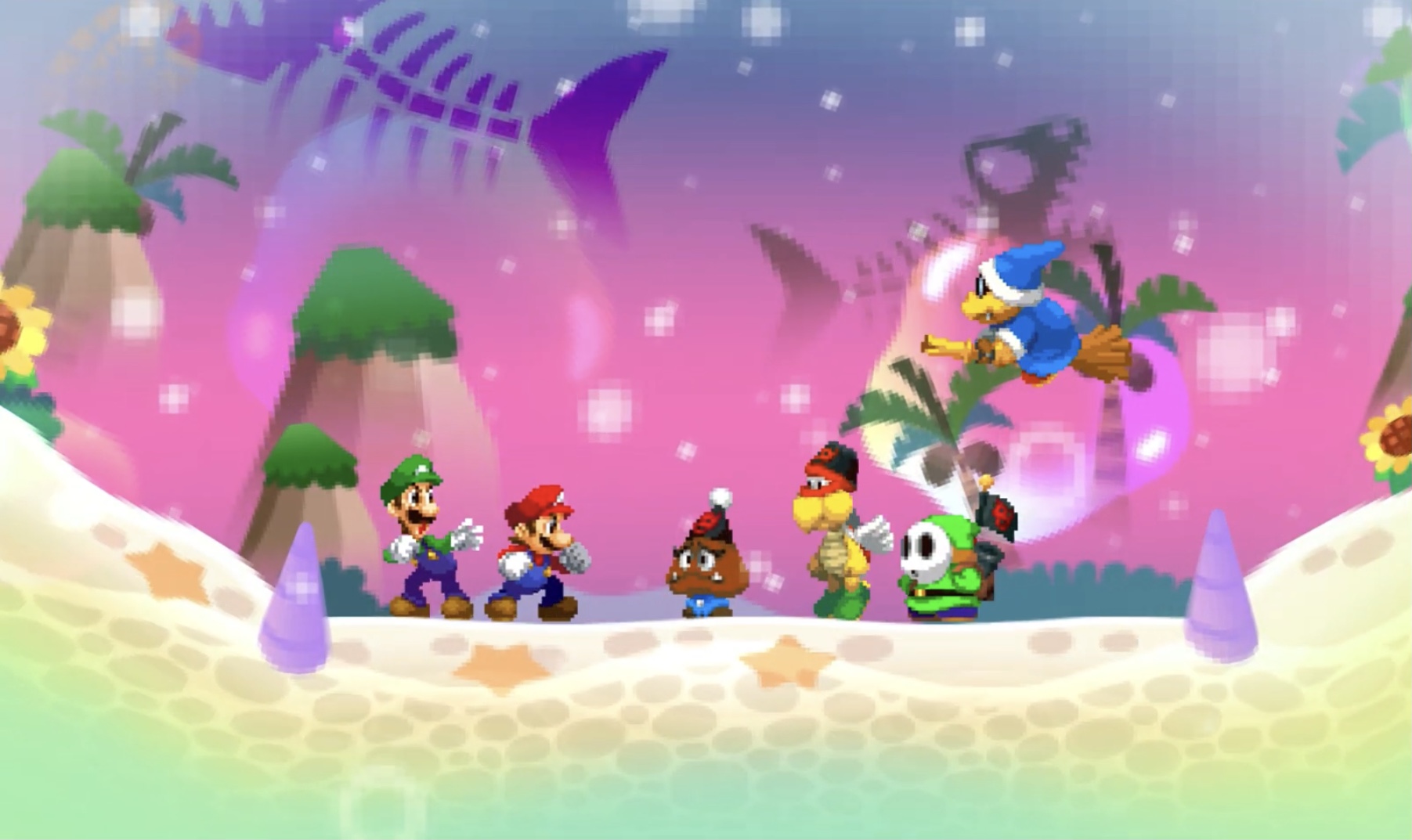 Kamek’s ambush — Bowser’s scheming advisor keeps throwing obstacles at the brothers throughout their journey (click for full size)
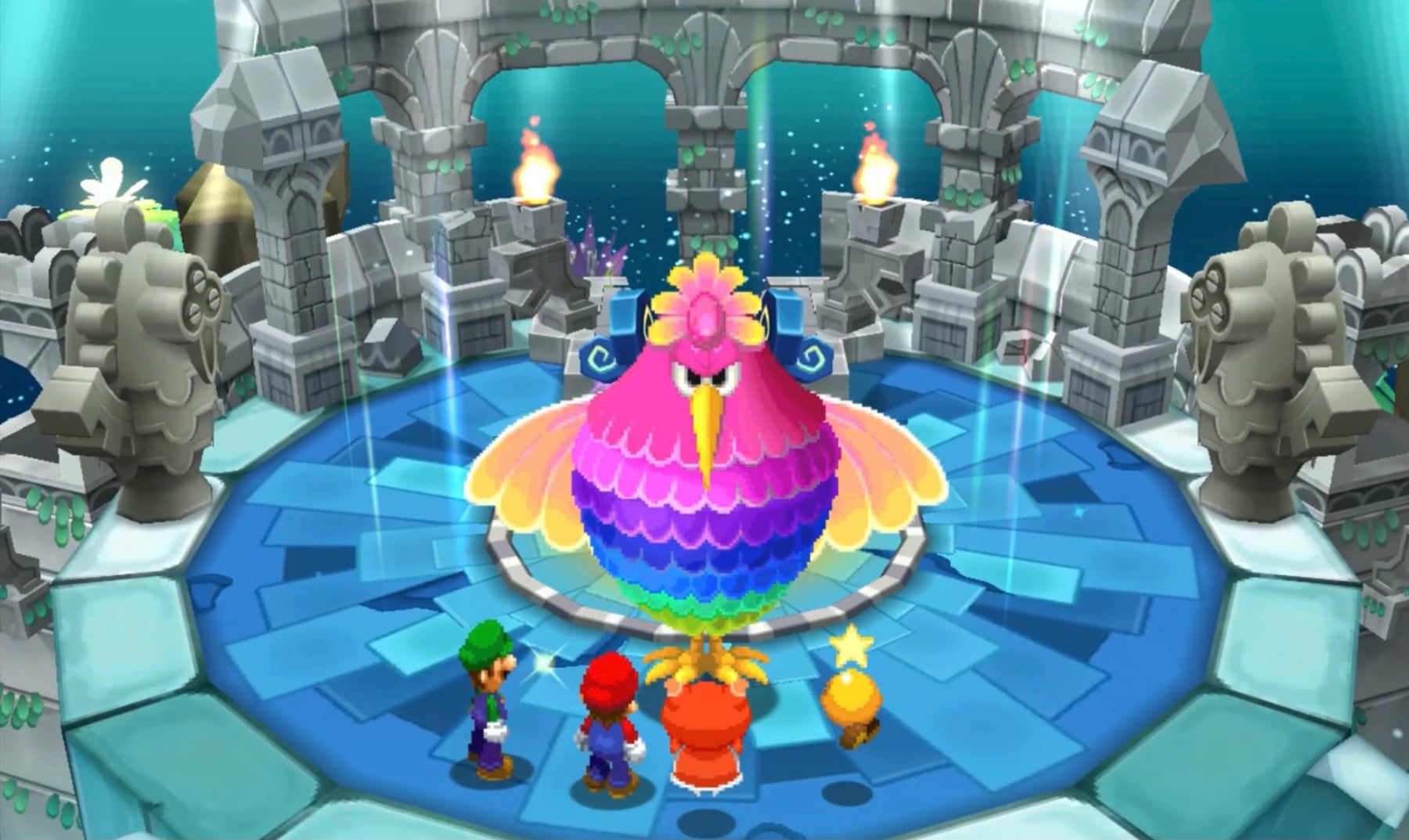 The Zeekeeper — a legendary guardian of the island summoned to break through Neo Bowser Castle’s barrier (click for full size)
Act Three — Neo Bowser Castle. Bowser uses the Dream Stone to construct Neo Bowser Castle above Pi’illo Island, protected by an impenetrable barrier. To break through it, the brothers must summon the Zeekeeper — a legendary guardian of Pi’illo Island. This requires the magical Ultibed, which in turn requires five Zee Parts scattered across the island and a Bedsmith to assemble them. The quest takes Mario and Luigi through every corner of the island, culminating in a Giant Luigi battle against Earthwake before the Ultibed is complete and the Zeekeeper is summoned.
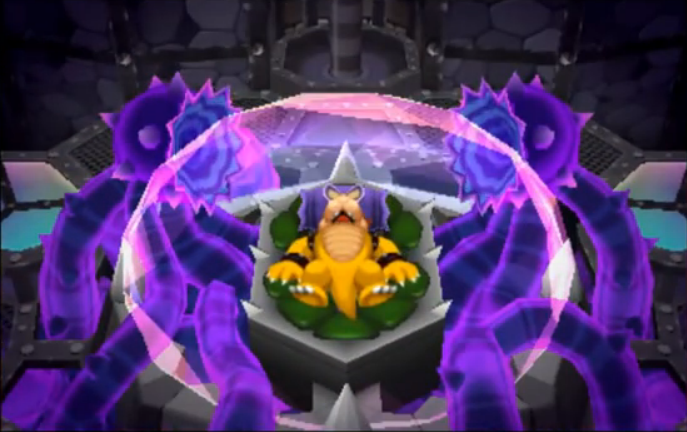
The Betrayal. Inside Neo Bowser Castle, the plot turns: Bowser reveals he was planning to betray Antasma all along, discarding him once the Dream Stone’s power was within reach. Antasma, furious, reveals he had used the Dream Stone to grant himself the ability to create Dream Portals — and he escapes into one. Mario jumps in after him, with Dreamy Luigi and a wounded Prince Dreambert joining the fight. Antasma is defeated, but Bowser absorbs the Dream Stone’s power, becoming the colossal Dreamy Bowser. The brothers face him in a final Giant Luigi battle — and destroy the Dream Stone in the process, freeing all its absorbed power and energy.
Finale. With the Dream Stone destroyed and Bowser defeated, the Pi’illo people are freed from their Nightmare Chunks, Peach is rescued, and Pi’illo Island is restored. Prince Dreambert can finally lead his people home. Luigi gets a rare moment in the sun — the whole adventure was possible because his dreaming mind was the key. E. Gadd… doesn’t appear. It’s a good day for Pi’illo Island.
Gameplay & Battle System
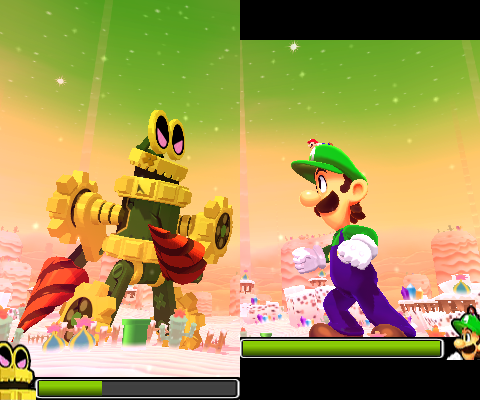
 Giant Dreamy Bowser — the ultimate Giant Battle. Turn the 3DS sideways for full widescreen combat (click for full size)
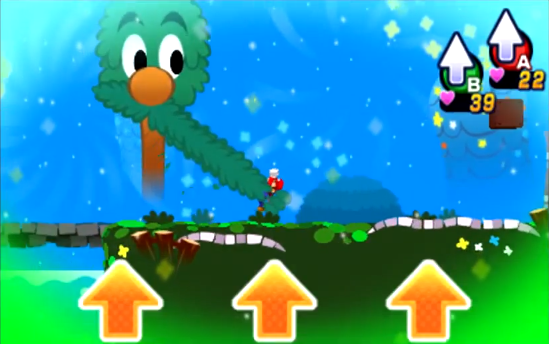
 The Dream World — Mario navigates Luigi’s vivid subconscious landscapes, shaped by the player manipulating sleeping Luigi below (click for full size)
Real World vs. Dream World
Dream Team constantly shifts between two distinct gameplay modes. In the Real World, Mario and Luigi explore Pi’illo Island’s overworld together in full 3D, using their standard Jump and Hammer moves to interact with the environment and trigger battles. In the Dream World, Luigi falls asleep on a Dream Point and Mario enters his subconscious solo — navigating 2D side-scrolling landscapes with the help of Luiginoids while the player interacts with Luigi’s sleeping face on the bottom screen to change the dream environment.
While Mario explores the dream, sleeping Luigi is visible on the touch screen. The player physically interacts with him to affect the dream world above:
🌀 Spin his moustache → rotates platforms or spins drill-like formations
💨 Tilt the 3DS → tilts entire sections of the dream landscape
👆 Poke/tickle → makes Luigi sneeze, bounce or flail, reshaping obstacles
🔍 Pull his face → stretches dream terrain, revealing hidden areas
Battle System
Battles are turn-based with real-time action commands. Both brothers act on each turn — Jump attacks (timed button presses for extra damage), Hammer attacks (dodge-and-smash), and special attacks. On enemies’ turns, the player must dodge or counter-attack by watching enemy animations carefully. Missing or mistiming costs HP; nailing every dodge and counter gives back SP and boosts morale.
| Battle Feature | How It Works |
|---|---|
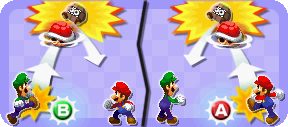
| Jump / Hammer Attacks | Basic attacks for both brothers — press A for Mario, B for Luigi, timed correctly for bonus damage or follow-up hits. |
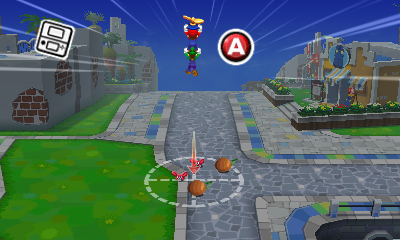
| Bros. Attacks | Special combined moves using Star Points — powerful sequences requiring rhythmic button inputs. Real World only. |
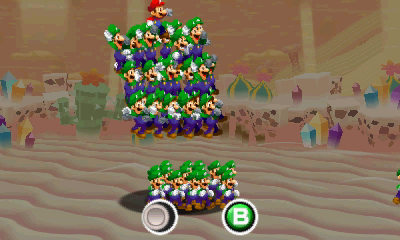
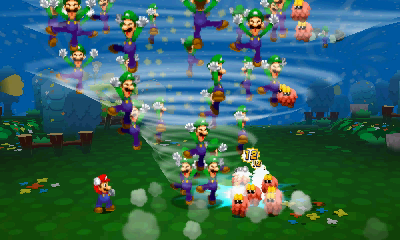
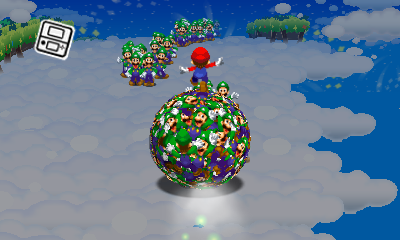
| Luiginary Attacks | Dream World equivalent of Bros. Attacks — Mario directs an army of Luiginoids into formations (hammers, copters, balls) using touch screen inputs. Massively powerful. |
| Badges | Equippable stat modifiers — Attack, Defense, Speed, or special effects. Unlocked through battles and exploration. Returning from Bowser’s Inside Story. |
| Gear | Weapons (hammers, boots), clothing (overalls, shirts), and accessories — all affecting stats. Found in shops and treasure chests throughout Pi’illo Island. |
| SP (Star Points) | Used to perform Bros. and Luiginary Attacks. Earned by timing dodges perfectly and defeating enemies. |
Giant Battles
At key story moments, Luigi grows to enormous size for Giant Battles — the 3DS is held sideways for a widescreen view with Giant Luigi on one side and a massive enemy on the other. These real-time battles use the touch screen and gyroscope: swipe to punch, tilt to dodge, blow into the microphone to unleash wind attacks. They’re among the most visually spectacular moments on 3DS.
Luiginary Attacks & Bros. Attacks
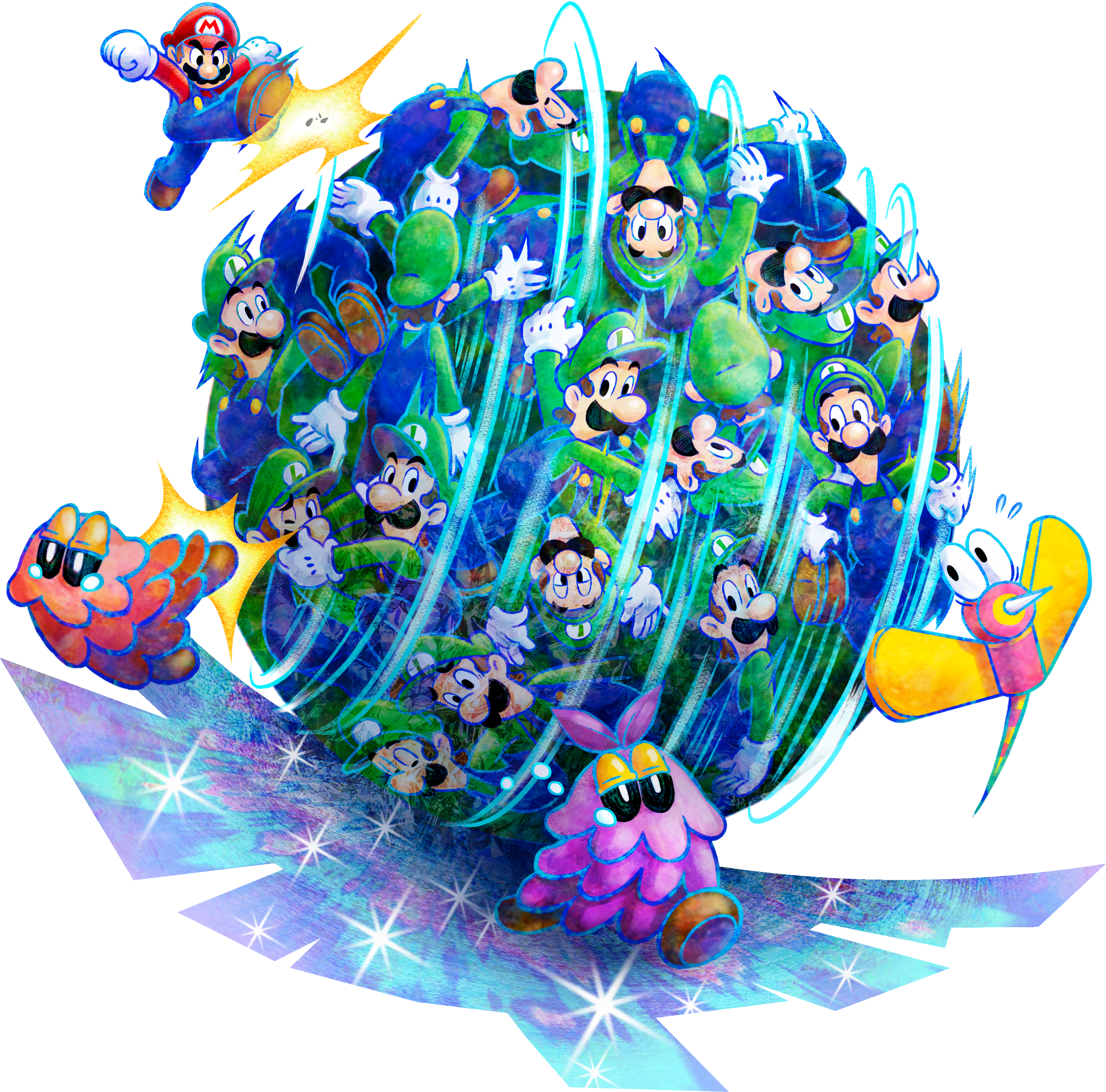 Official Luiginary Attack artwork — the Luiginoid army in action (click for full-size)
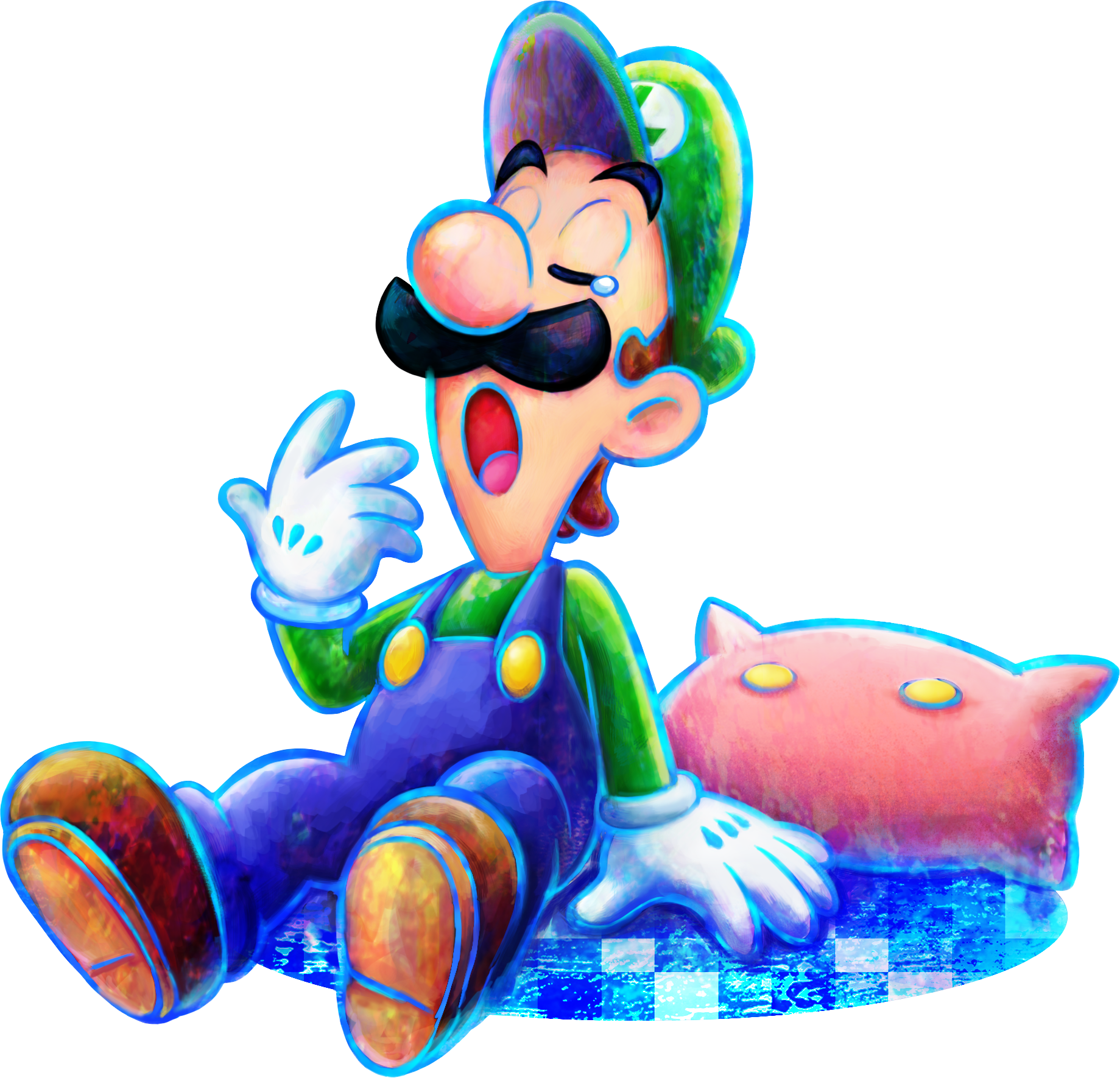 Sleeping Luigi — his subconscious IS the Dream World, and every Luiginary Attack flows through him (click for full-size)
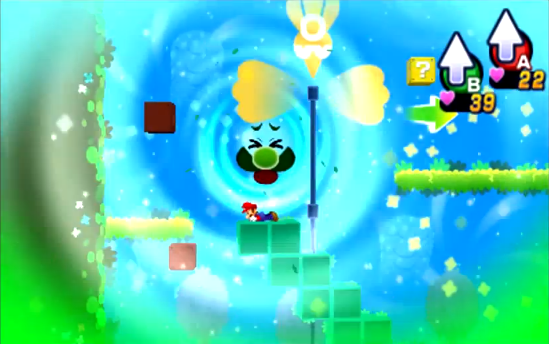
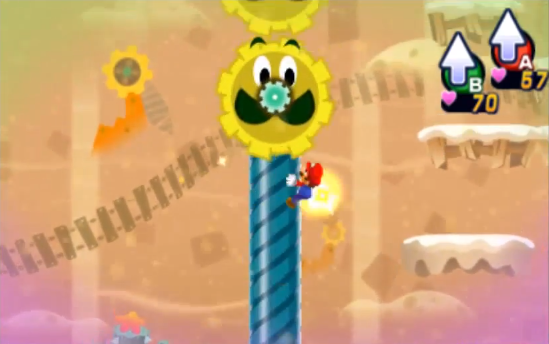
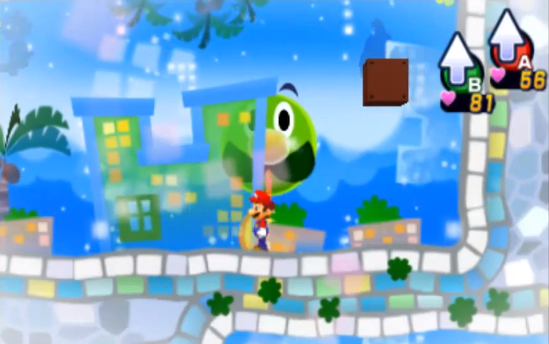
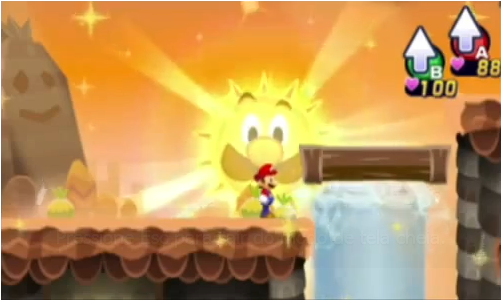
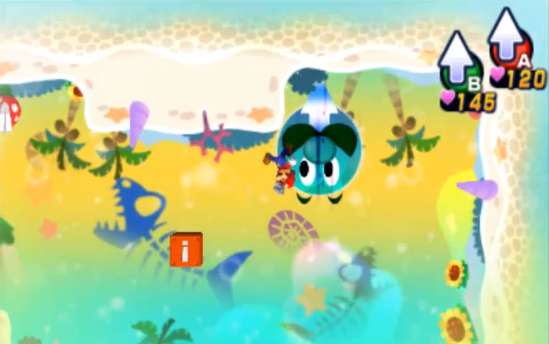
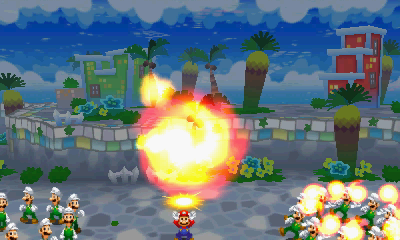
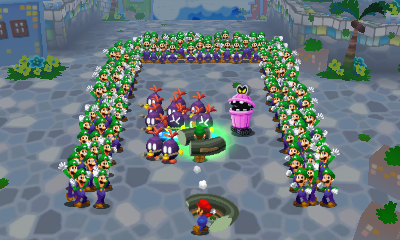
In the Dream World, Mario’s Bros. Attacks become Luiginary Attacks — spectacular assaults commanding an army of Luiginoid clones. Each one uses the touch screen differently and looks spectacular. In the Real World, classic Bros. Attacks return with illustrated move sequences.
Luiginary Attacks (Dream World)
Bros. Attacks (Real World)

Characters
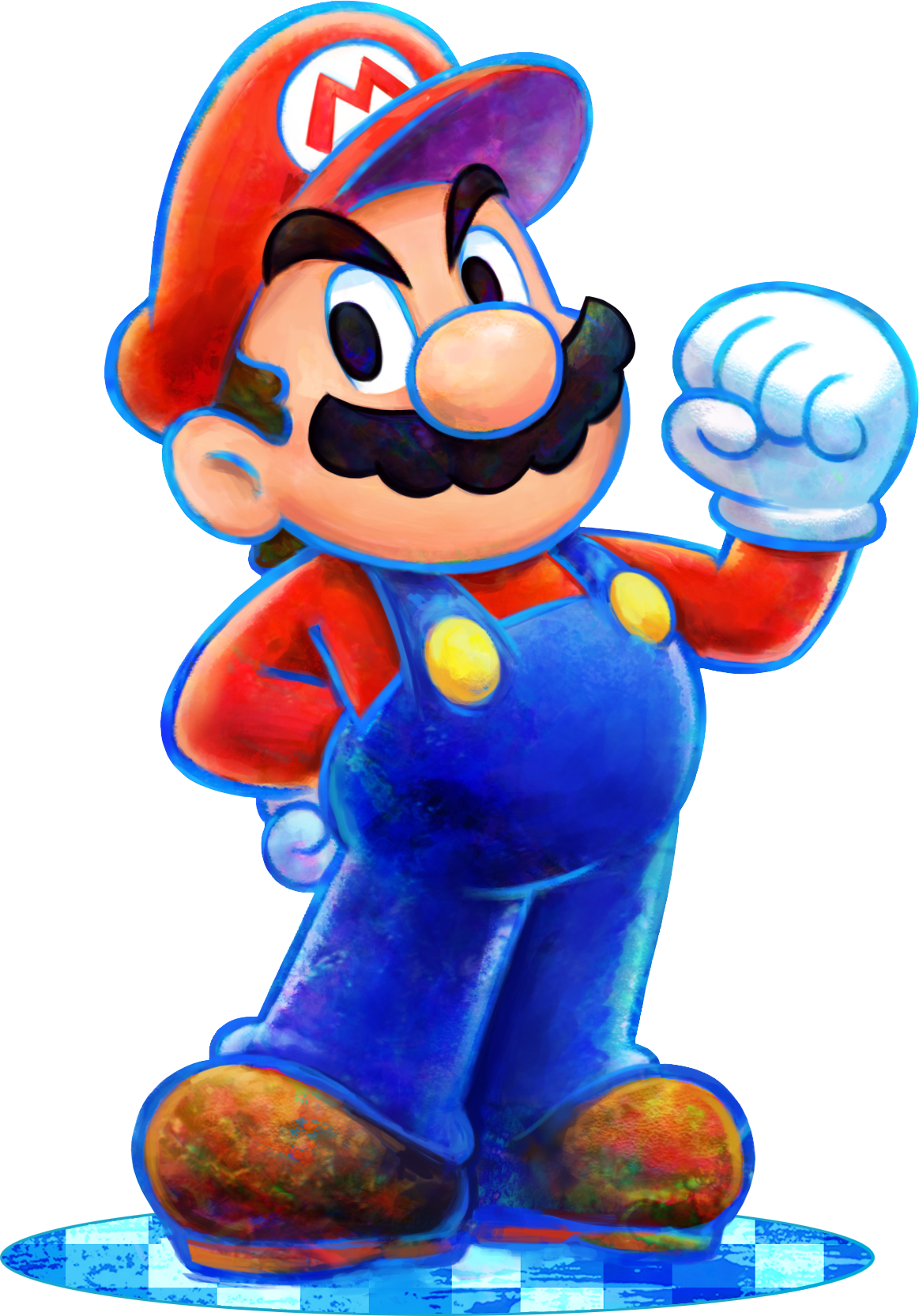

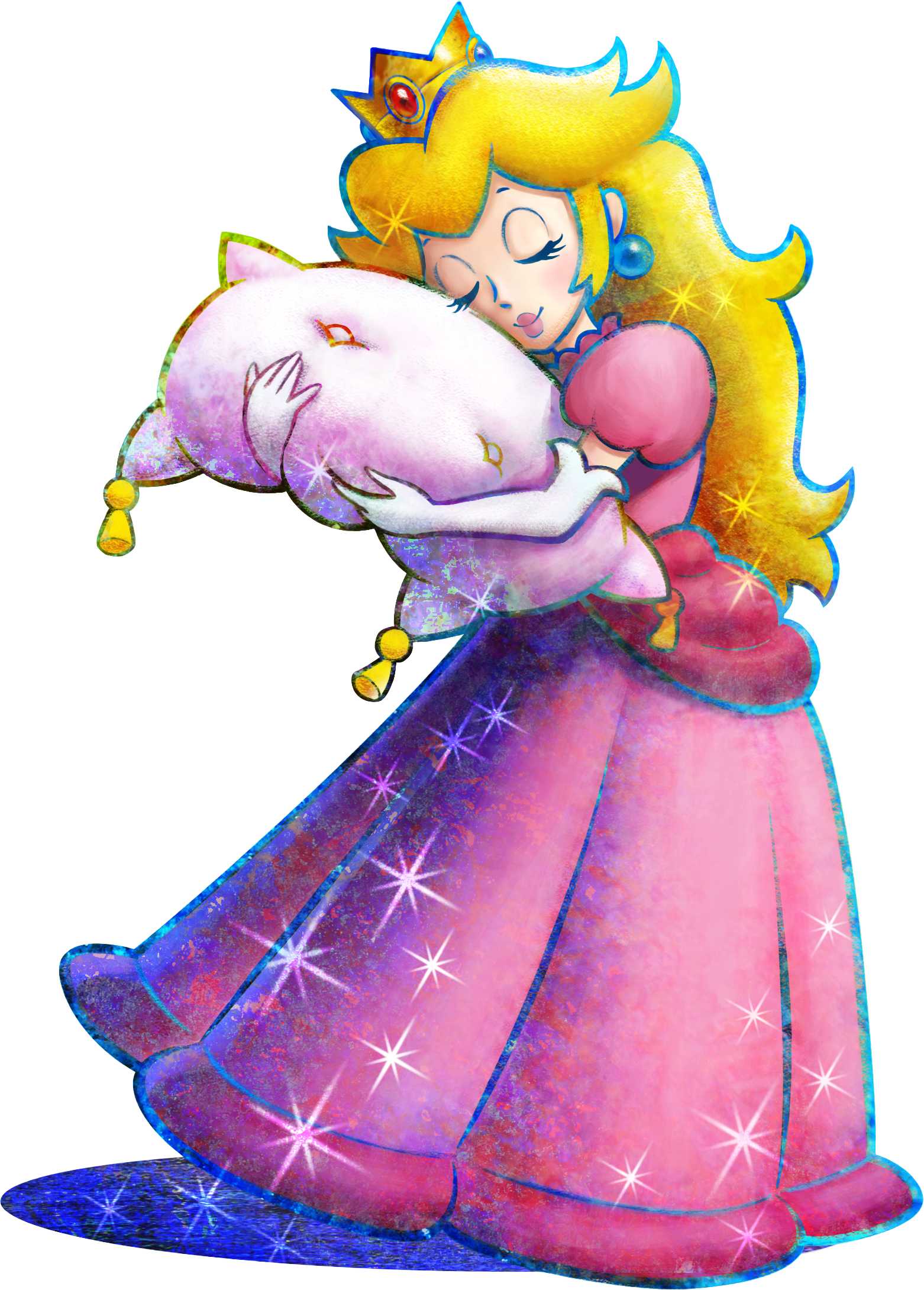

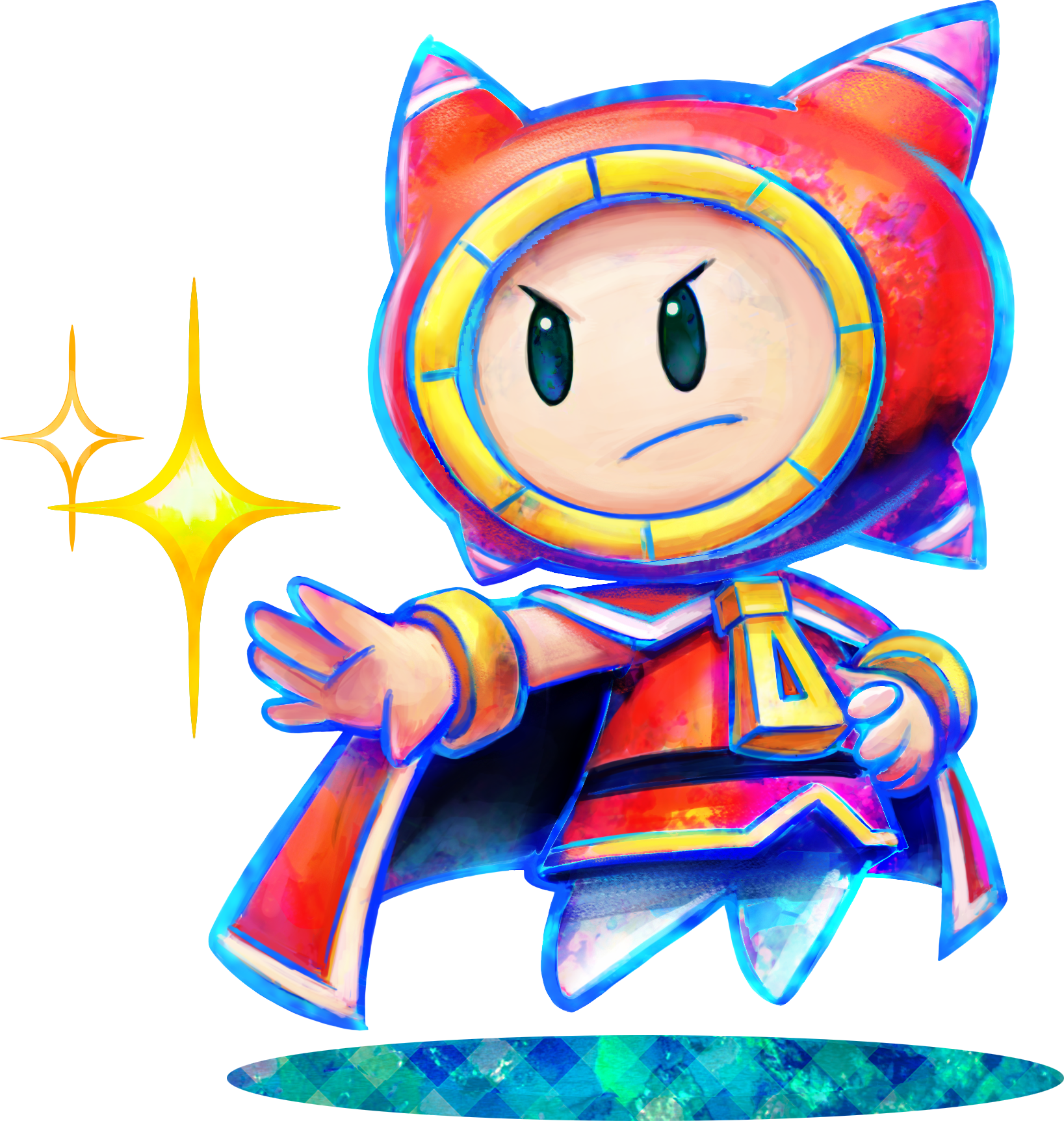
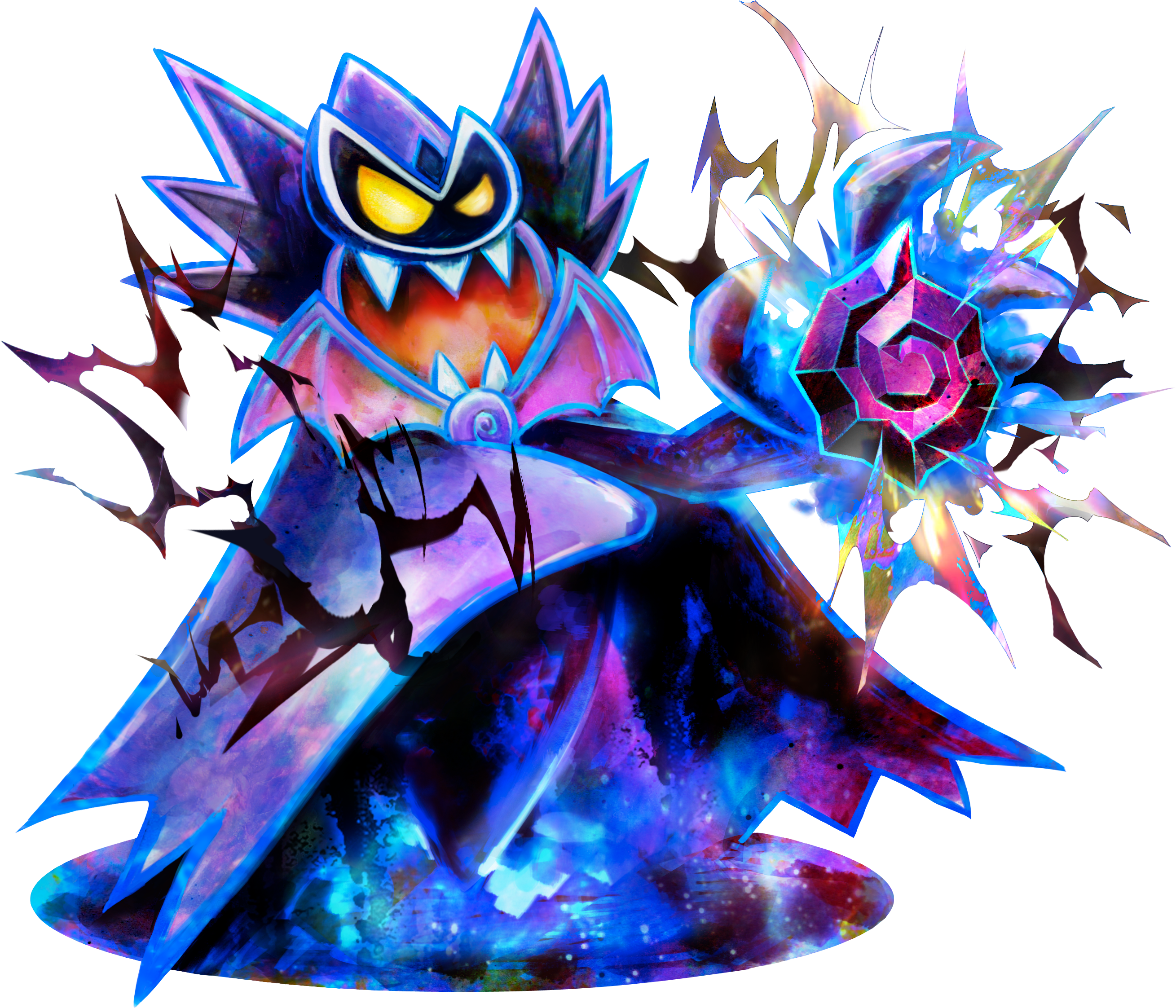

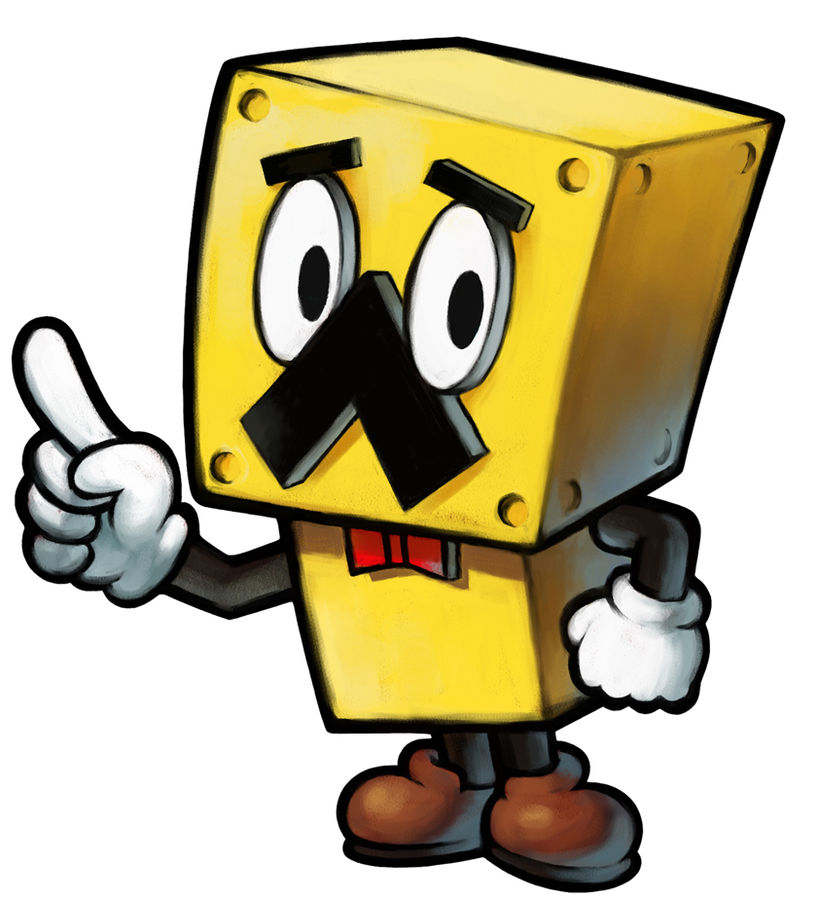


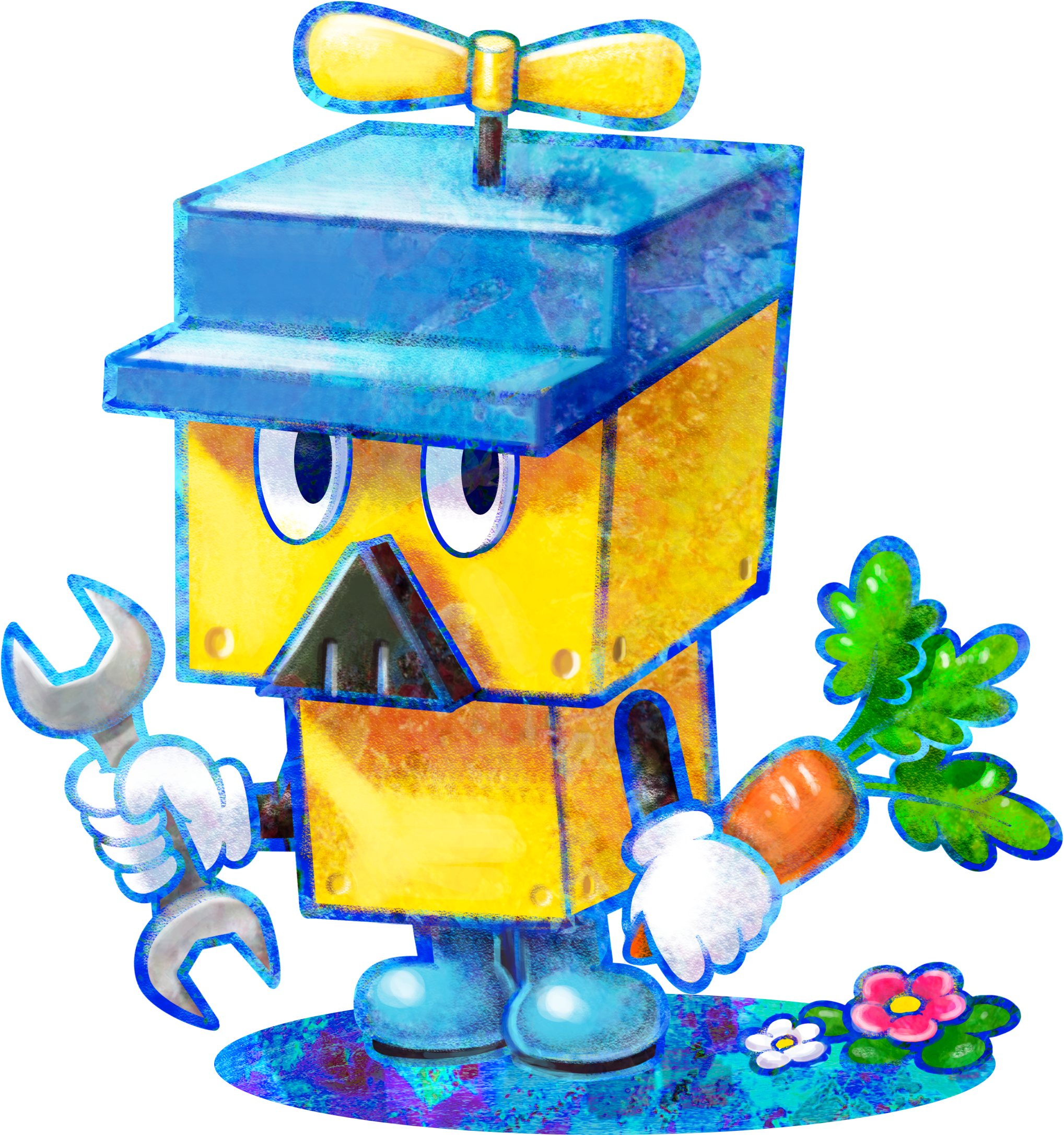
| Character | Role | Description |
|---|---|---|
| Mario | Playable Hero | Cheerful and capable — leads the charge in both worlds, commanding Luiginoids in dreams. |
| Luigi | Playable Hero / Dream Gateway | The true star of Dream Team. His sleeping mind IS the dream world. Dreamy Luigi is everything real-world Luigi wishes he could be. |
| Princess Peach | Supporting / Kidnapped | Joins the Pi’illo Island holiday, promptly kidnapped by Antasma for her connection to the Dream Stone. |
| Starlow | Guide | Returning from Bowser’s Inside Story — sharp, funny, manages items. Bowser still only knows her as “Chippy.” |
| Prince Dreambert | Ally | Ruler of the Pi’illos — joins the final battle. His growing respect for Luigi is one of the game’s best character arcs. |
| Antasma | Primary Villain | The evil bat-king, speaks in broken phrases. Sealed in the Dream World, escaped, allied with Bowser — then betrayed. |
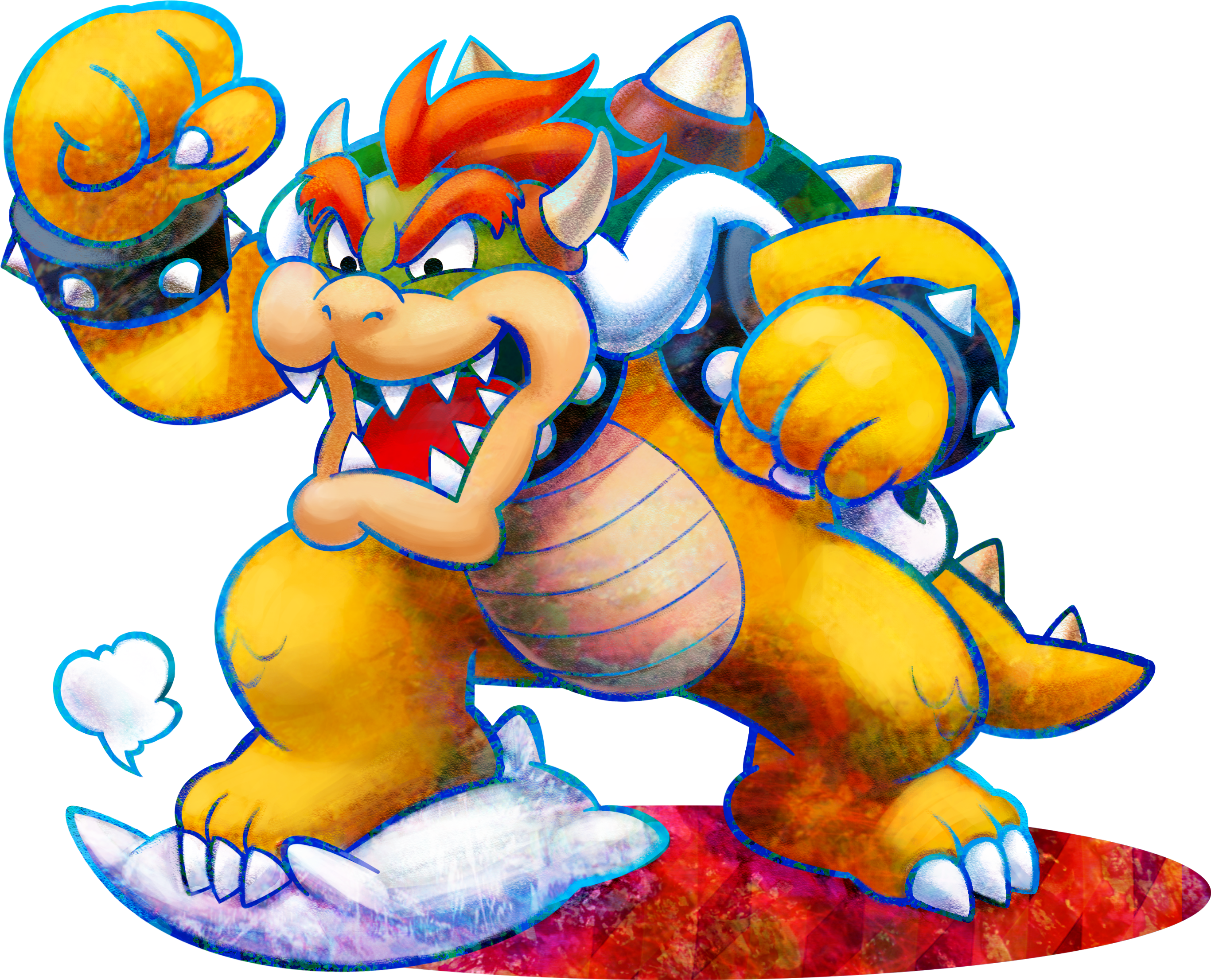
| Bowser | Co-Villain / Final Boss | Arrives as muscle, absorbs the Dream Stone, becomes Dreamy Bowser. Hilarious throughout. |
| Kamek | Henchman | Bowser’s scheming magikoopa — sets ambushes throughout the adventure. |
| Elite Trio | Recurring Villains | Private Goomp, Corporal Paraplonk, Sergeant Guy — back from BIS, still bumbling magnificently. |
Locations
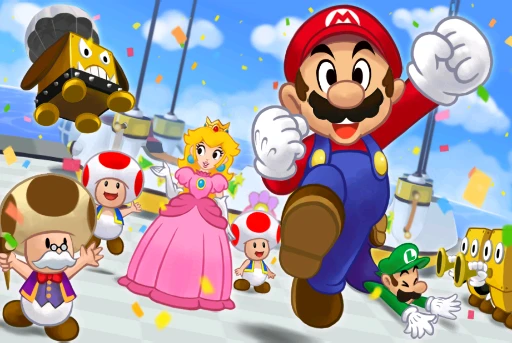
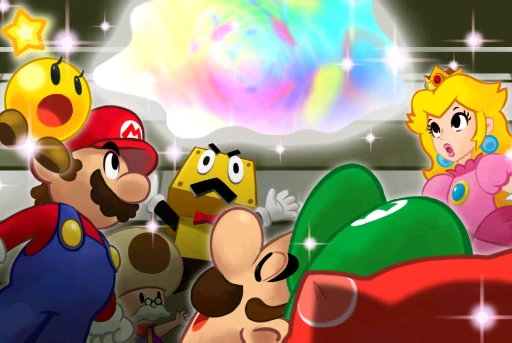
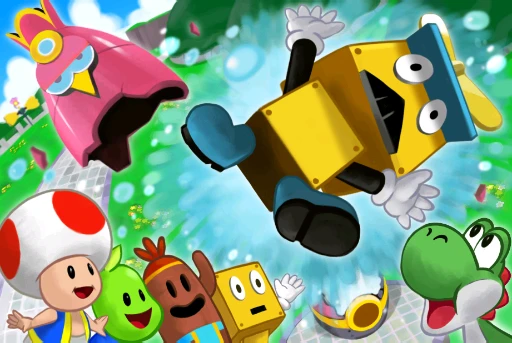
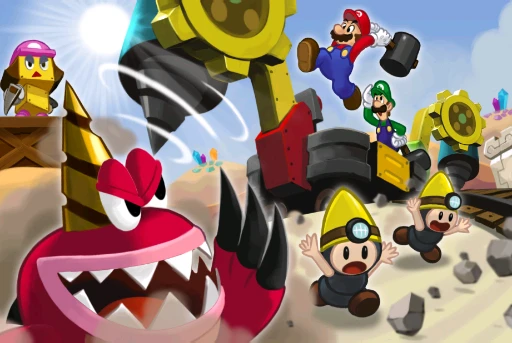
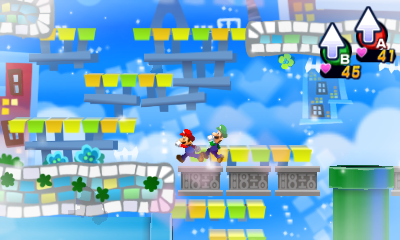
Pi’illo Island is a diverse, interconnected world shaped by dream energy. Each major area has a real-world version and a dream world counterpart with its own visual style and mechanics. Click the Wakeport and Mount Pajamaja images for their dream world versions:
Enemies & Bosses
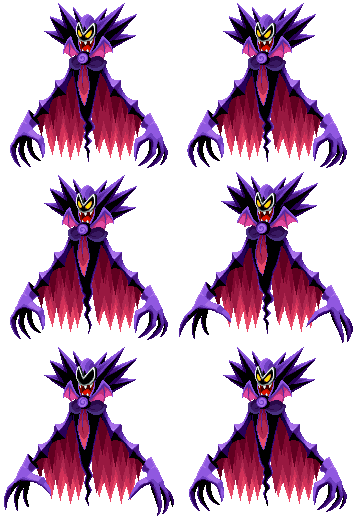 Antasma — the evil bat-king and primary villain, animated sprite (click for full size)
 Dreamy Bowser — the final boss, powered by the Dream Stone (click for full size)
| Boss | Location | Notes |
|---|---|---|
| Robo-Drilldigger | Dreamy Pi’illo Castle | First major Dream World boss — a giant mechanical drill creature. Introduces Giant Battle mechanics. |
| Grobot | Mushrise Park | A malfunctioning watering robot gone haywire — fought in real world. |
| Mammoshka | Dreamy Mushrise Park | A giant matryoshka-like creature requiring multiple layers to be peeled away. Dream World boss. |
| Big Massif / Hooraw Gang | Dreamy Wakeport | The tour guide and his four apprentices — each fought with special conditions (counter-only, no jumping, etc.). |
| Antasma | Dreamy Mount Pajamaja | First full Antasma battle — fought after Bowser betrays him. Multiple phases in the Dream World. |
| Earthwake | Pi’illo Island | An ancient building-based giant — fought as a Giant Luigi battle after it assembles itself from ruins. |
| Zeekeeper | Pi’illo Island | The island’s legendary guardian — must first be summoned to break Neo Bowser Castle’s barrier, then briefly fought to prove the brothers’ worth. |
| Antasma X | Neo Bowser Castle | Final Antasma fight in the Dream World — powered up and desperate after being discarded by Bowser. |
| Dreamy Bowser | Neo Bowser Castle | The ultimate final boss — Bowser with the Dream Stone absorbed into his being. Giant battle. Destroying him also destroys the Dream Stone. |
Sidequests & Extras
Pi’illo Island is full of optional content that rewards thorough explorers and completionists:
| Sidequest / Extra | Description |
|---|---|
| Pi’illo People Rescue | Throughout every area, Pi’illos are imprisoned in Nightmare Chunks — blue crystalline formations. Use the Dark-Light Device to find and destroy each one, freeing the Pi’illo inside. Dozens to find across all locations — each one rewards items or hints. |
| Dreampoint Bonus Rooms | Hidden Dream Points scattered throughout Pi’illo Island lead to optional dream bonus rooms — mini-challenges, enemy gauntlets, and special treasure rooms with rare items and gear. |
| Battle Ring | A special challenge arena accessed later in the game — fight waves of enemies under increasingly strict conditions (no healing items, specific Bros. attacks only, time limits). Great rewards for skilled players. |
| Broggy Bonker | A minigame hosted by Broque Monsieur’s dog, Broggy — bounce Broggy off Bros. to hit targets. Earn coins and items based on accuracy. |
| Skilldex Challenges | Each action command (Jump, Hammer, Bros. Attacks) has a hidden mastery challenge — perform it flawlessly enough times to unlock a Skilldex entry and a stat bonus. |
| Post-Game Boss Rush | After completing the main story, a series of harder rematch battles becomes available — including powered-up “X” versions of major bosses with dramatically increased stats. |
| Gear Crafting (Bossy Baddies) | Some enemies drop rare materials — combining them with a Pi’illo craftsman can produce unique gear items not available in shops. |
Notable Quotes
Dream Team is famous for its script — sharp, funny, and full of character. Here are some of the most memorable moments:
Antasma (threatening the brothers): “ANTASMA… will CRUSH you! Is WONDERFUL plan!”
Prince Dreambert (on Luigi): “Luigi… I once thought you were simply a cowardly shell of a hero. I see now I was mistaken. You are… far more than that.”
Bowser (revealing his betrayal of Antasma): “Ha! Did you seriously think I’d share power with a bat? I’m BOWSER. I don’t share anything.”
Starlow (to Luigi, exasperated): “Luigi, your dream world is incredibly weird. Even by Mario standards.”
Luigi (internal monologue): “Mama mia… why is it always me? Always Luigi who must go into the scary dreams…”
Reception
Mario & Luigi: Dream Team received generally positive reviews and sold well, particularly in Japan and Europe. It is often cited alongside Superstar Saga as one of the most narratively satisfying entries in the series.
| Publication | Score | Notes |
|---|---|---|
| Metacritic | 76 / 100 | Generally Favourable — based on 62 critic reviews. |
| IGN | 7.8 / 10 | Praised the Dream World creativity and Giant Battles; some critics noted pacing issues in the longer sections. |
| GameSpot | 8.0 / 10 | Called it a funny and inventive RPG with excellent battle depth and a loveable cast. |
| Nintendo Life | 9 / 10 | Highlighted Luigi’s characterisation as the series’ best, and praised the Luiginary Attack system. |
| Famitsu | 36 / 40 | Strong Japanese reception — praised visual quality, humour and battle system depth. |
The game sold approximately 3.07 million copies worldwide. It was one of the standout titles of Nintendo’s Year of Luigi celebrations, and is frequently cited by fans as one of the best handheld RPGs of the 3DS era.
References to Other Games
| Game | Reference |
|---|---|
| Mario & Luigi: Superstar Saga (GBA, 2003) | The foundation of the series — combat system, Bros. Attacks, and character dynamic all originate here. Dream Team’s battle mechanics are a direct evolution. |
| Mario & Luigi: Bowser’s Inside Story (DS, 2009) | Giant Battles return directly from BIS (where Bowser grew giant). Badges system, Starlow, and the Elite Trio all return. Dream Team is in many ways a spiritual successor to BIS’s scope. |
| Mario & Luigi: Partners in Time (DS, 2005) | The dual-world structure (switching between time periods) is echoed in Dream Team’s real-world / dream-world dynamic. The concept of two simultaneous battle partners originates here. |
| Paper Mario series | Coins dropping directly from enemies in battle (like Paper Mario: Sticker Star) was noted as a gameplay similarity. The RPG-lite approach to Mario characters shares DNA with Paper Mario. |
| Luigi’s Mansion (GCN, 2001) | Antasma is explicitly compared to Luigi’s history with ghosts — he’s a bat-like spirit creature from nightmares, evoking Luigi’s haunted house adventures. The SLB article noted this connection. |
| Inception (film, 2010) | The dream-within-a-dream mechanics and the concept of a real world being altered by what happens inside someone’s subconscious drew comparisons to the Christopher Nolan film from many reviewers. |
References in Later Games
| Game / Media | Reference |
|---|---|
| Mario & Luigi: Paper Jam (3DS, 2015) | Several Dream Team characters and mechanics reference Dream Team — the battle system directly evolves from it. Giant battles continue. Starlow and the Bros. Attacks carry forward. |
| Super Smash Bros. for 3DS / Wii U (2014) | Dreamy Luigi and Antasma appear as trophies. The Pi’illo Island setting is referenced in Luigi’s Mansion stage descriptions. Several Luiginary Attack animations reference Dream Team’s visual style. |
| Super Smash Bros. Ultimate (2018) | Antasma appears as a Spirit. Dream Team’s soundtrack — particularly the boss theme — is included in the game’s music library. |
| Mario & Luigi: Brothership (Switch, 2024) | The first new Mario & Luigi game since AlphaDream’s closure, developed by a new team. Dream Team’s Luiginoid concept influenced the cooperative mechanics in Brothership’s new “Snoufit Ball” system. |
Trivia
- Dream Team was released as part of Nintendo’s Year of Luigi — 2013’s year-long celebration of Luigi’s 30th anniversary. It was the most ambitious Year of Luigi title, and many fans consider it the definitive Luigi game.
- The Japanese title is Mario & Luigi RPG 4: Dream Adventure (マリオ&ルイージRPG4 ドリームアドベンチャー) — the series is simply numbered in Japan rather than given subtitle names.
- Luigi’s nervous humming is used again throughout this game — performed by Charles Martinet, who has voiced both brothers since 1995.
- The game uses the 3DS gyroscope extensively in Giant Battles — tilting the console physically steers Luigi’s movements, making it one of the few 3DS games to make the gyroscope feel essential rather than optional.
- Antasma’s fragmented speech pattern (“Is WONDERFUL!”) was a deliberate design choice by the localisation team to make him sound alien and unsettling — he speaks in broken phrases as if he hasn’t fully grasped how language works.
- Pi’illo Island’s name is a pun on “pillow” — fitting for a game about sleeping and dreams. Most location names on the island follow the same theme: Wakeport, Mount Pajamaja, Mushrise Park (as in “mushroom” + “sunrise”).
- The Dream Stone and Dark Stone are narrative mirrors of the Star Rod and Dark Star from previous games — powerful artefacts that one villain seeks to corrupt.
- AlphaDream, the developer of the entire Mario & Luigi series, sadly went bankrupt in October 2019 — Dream Team was one of their last major successes before the company’s closure.
- The Luiginoid concept was designed partly as a technical showcase — having hundreds of identical Luigi sprites on screen simultaneously was used to push the 3DS’s capabilities, particularly in the Giant Battle sequences.
- Dream Team features a surprising amount of lore about Luigi’s psychology — the dream world is literally shaped by his subconscious, meaning every level design choice is a reflection of his fears, hopes, and self-image. Dreamy Luigi’s confidence is what Luigi could be if he believed in himself.
Videos
Mario & Luigi: Dream Team — Official Trailer
Mario & Luigi: Dream Team — Dream World Gameplay