
Tetris
Overview
An entire generation could probably hum the music for this addicting game. It rang through halls of arcades and in the back of bars for fifteen years, and was integrated onto just about every major videogame system since. Tetris was one of the first games ever put on phones and tablets, and shows no signs of going away.
The basic premise is that the game rains tetrads, or four-block squares (called Tetriminos), and the player has to arrange them to form solid lines. Once a row of blocks lines up perfectly, it disappears and points are awarded. By the time it was ported to Nintendo hardware in 1989, Tetris already had a rich history — and that rich history would only grow over the next 35 years.
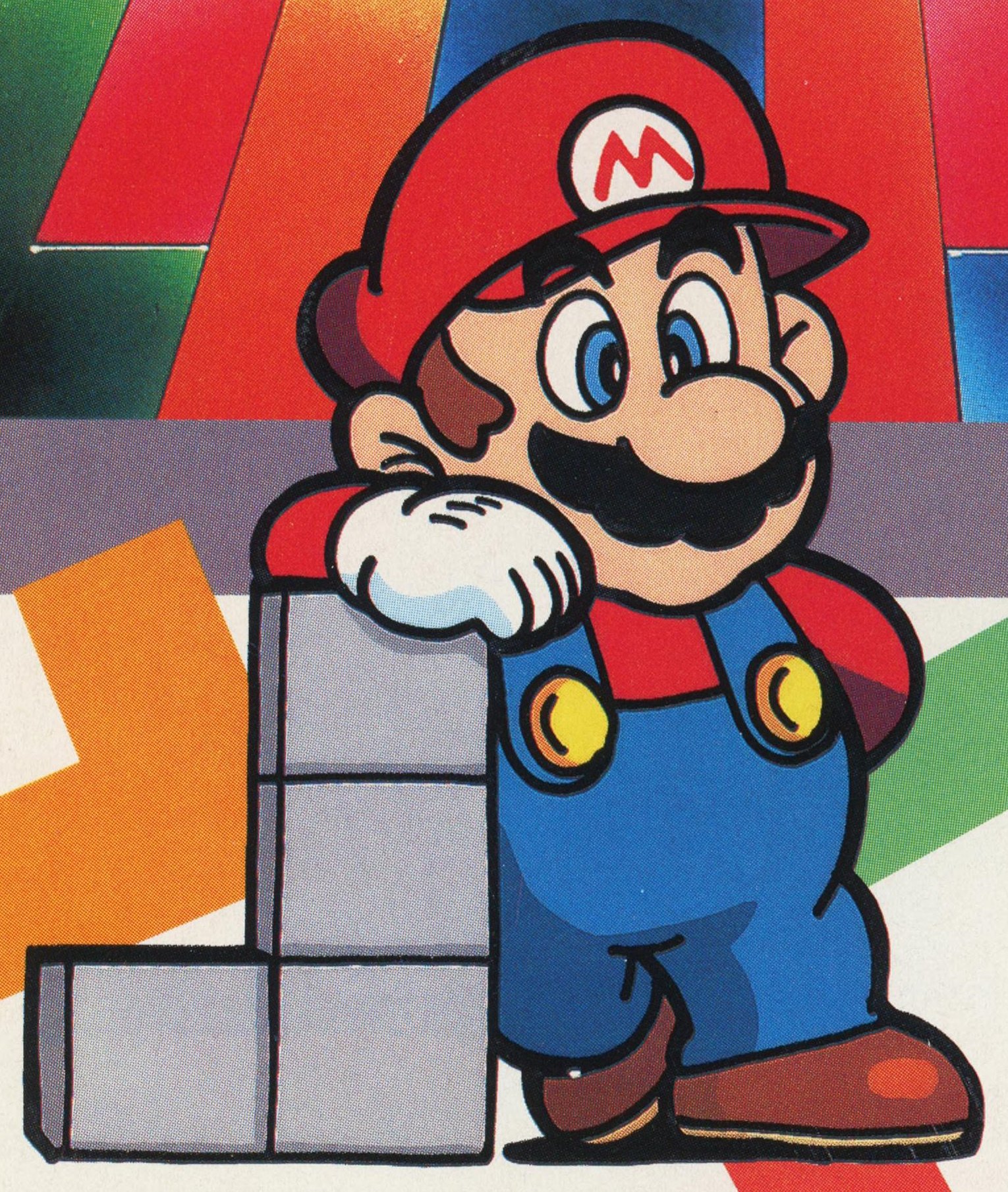
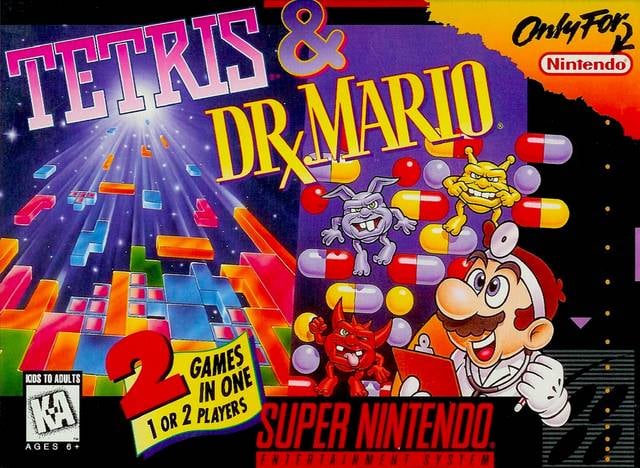
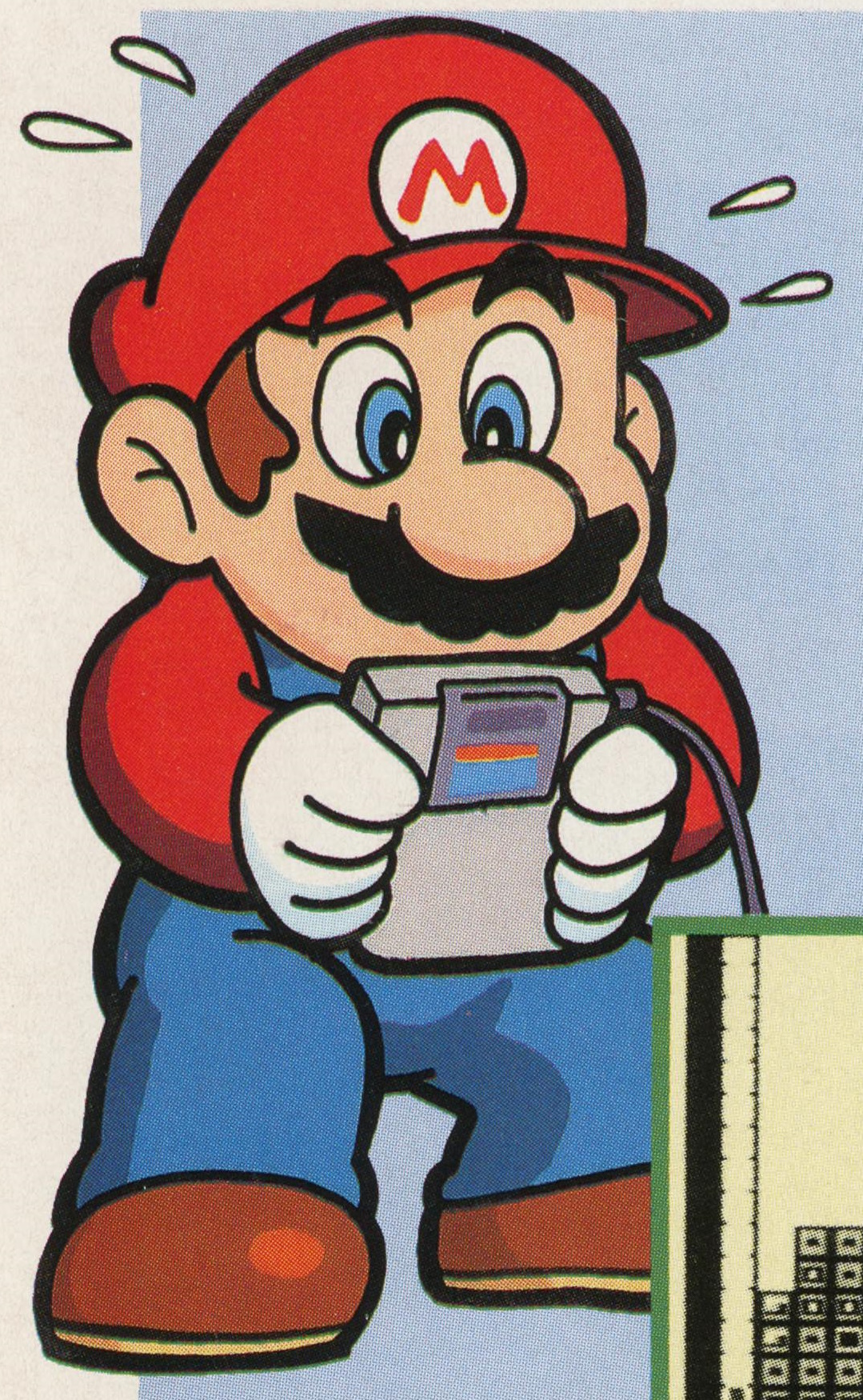
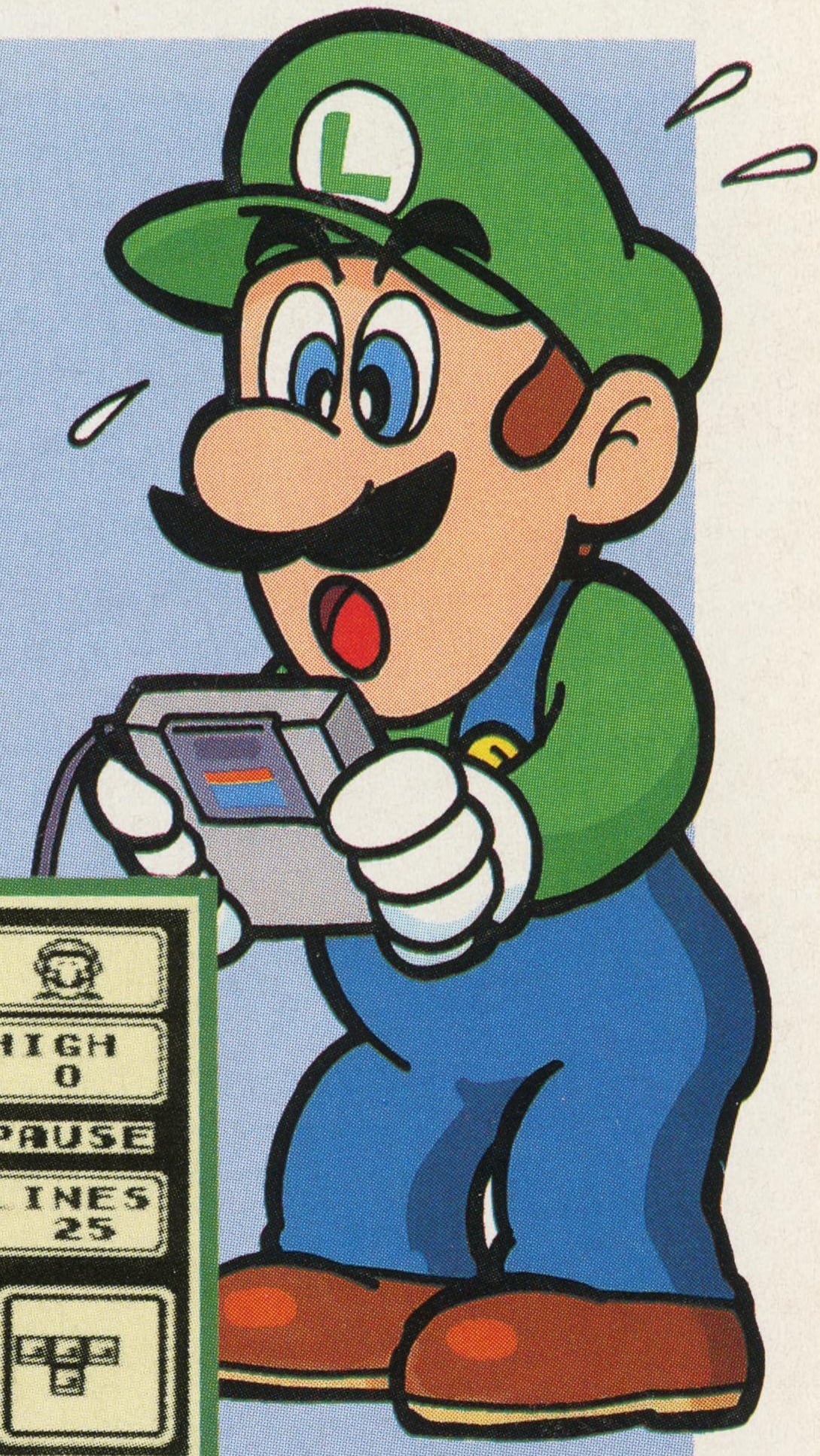
Despite being a Soviet-designed puzzle game with no Mario characters in its original form, Tetris has been adopted by Nintendo as a quasi-canonical part of the Mario family. Mario and Luigi appear as link-cable opponents in the Game Boy version; Mario, Luigi, Link, Samus, Pit, Bowser and Donkey Kong all turn up in the Nintendo NES ending cutscene; and the SNES re-release Tetris & Dr. Mario pairs the puzzle with Nintendo's own house puzzle franchise. The blocks are timeless — but the company that puts the plumbers on top of them is unmistakably Nintendo.
The Origin Story
Tetris was born in the USSR.
In 1984, Alexey Pajitnov — a mathematician working at the Computing Centre of the Soviet Academy of Sciences in Moscow — designed the game on an Elektronika 60 computer. It started life as a conceptual exercise inspired by his love of pentominoes (a classic combinatorial puzzle), simplified down to four-square pieces because the Elektronika 60 didn't have enough memory to render five-square shapes.
It was released first on the IBM PC, then ported to MAC. Before long, it hit arcade systems where it experienced an explosion in popularity unlike anything seen before. People lined up to challenge and beat each other's scores while discussing strategy. The game was popular not just with traditional gamers but with businessmen and non-traditional audiences — Nintendo would later market it to that crowd explicitly.
Because Pajitnov was a Soviet government employee, he did not legally own the rights to his own creation. The Soviet state-controlled trading company ELORG held them. That single legal fact would shape years of complicated international licensing disputes — and ultimately lead to Henk Rogers' legendary Cold War-era plane trip to Moscow.
The Henk Rogers Deal — How Tetris Made the Game Boy
Gameplay
One of the things that's most difficult to understand about Tetris is how something so simplistic could be so engrossing. People have played this game for decades and still come back for more. The basics are simple: constant falling blocks must be fitted together at the bottom of the screen to form a solid line, at which point the line disappears, points are awarded, and the blocks above fall down to fill the gap.
This requires an expert hand at fitting puzzle pieces together and a sense of timing — deciding the right moment to drop the piece in. Since Tetriminos are four blocks each, a well-placed piece can clear up to four lines at once. That four-line clear is itself called a “Tetris” — and only the long, straight I-piece can pull it off. The game is over when the player has cleared a stage or has lost by allowing the blocks to accumulate so high they reach the top of the screen.
No save battery. Back in the old days when games were hard and 8-bits were something to be proud of, Tetris did not have a save battery. This means you played until you lost, and then started over again. Later incarnations had codes that let you start at higher levels — that was to give siblings a chance, not for real gamers.
The Seven Tetriminos
The game blocks are broken down into seven different shapes. The long, straight “I” piece will be your best friend throughout the entire game — it can comprise a long piece or serve as the best way to clear four lines at a time, optimising your score. The other blocks are named for the letters they resemble: J, L, O (a square), S, T, and Z. They fall through the field at random, and require strategy to manoeuvre properly.
Game Modes
There are generally two different game modes you can play on the Nintendo Entertainment System and Game Boy. The first is single player and the other is multiplayer. Within single player, three sub-types exist:
Type A — Endless
The most basic form of gameplay — you simply played endlessly until the game eventually overwhelms you. No goal beyond your own high score. Speed increases over time.
Type B — Sprint
Also called “sprint mode” — your job is to clear the required number of lines as fast as possible to advance to the next stage.
Type C — Garbage
One of the more difficult versions of Tetris. After a certain number of pieces, random blocks appear beneath your lines, forcing you to play around pre-set garbage.
Multiplayer
In multiplayer you go head-to-head with another player until one of you loses. On the NES version you would play one person at a time on the two-player mode. On the Nintendo Game Boy version, you would play head-to-head using the link cable — a then-revolutionary feature that turned Tetris into a competitive social game on the bus, in the playground, and during long car journeys.
The Game Boy Version
The Game Boy version is the iconic one — the bundle that helped sell the handheld worldwide. Developed primarily by Nintendo R&D1 in collaboration with Bullet-Proof Software, it released in Japan on 14 June 1989, North America 31 July 1989, and Europe 28 September 1990. Both the Game Boy hardware and Tetris itself benefited massively from the bundling decision — the puzzle game arguably did more for the system's adoption than any first-party Mario title could have.
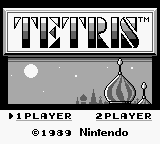
The puzzle game sensation from Russia just got portable on the Nintendo Game Boy. With 20 progressive skill levels — catering for beginners to hardened veterans — this game is fast action and gives no time for hesitation. You can even pick the music that plays while you play.
The Two-Player Link Cable Mode
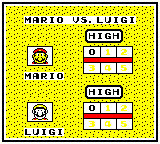
In the two-player mode of Tetris, one player will be Mario, the other will be Luigi, and an icon of their head will appear in the top right hand corner of the game screen. When the game ends, the loser's character will be crying and the winner's character will be jumping up and down.
Mechanically, clearing more than one line at once sends “garbage” rows up from the bottom of your opponent's screen — a feature later puzzle games would adopt as standard. Play continues until either one player runs out of space or one player clears at least 30 lines, at which point Mario and Luigi are seen celebrating or moping. First to three round wins takes the match.
The NES Version
Nintendo NES Tetris (1989-1990)
The NES version was developed in parallel to the Game Boy port — while Satoru Okada and Gunpei Yokoi's team was making the handheld edition, another team within R&D1 was handling the home console. It launched in Japan on 21 December 1988 (under Bullet-Proof Software, before Nintendo's deal), with Nintendo's official Western release on 13 November 1990 in North America and 23 February 1990 in Europe.
The NES version is the one that contains the famous all-star Nintendo dance cameo. After clearing all difficulty settings on Game B, a special celebration cutscene plays starring Mario, Luigi, Link, Samus, Pit, Bowser and Donkey Kong — all dancing while a rocket takes off in front of the Kremlin Palaces.
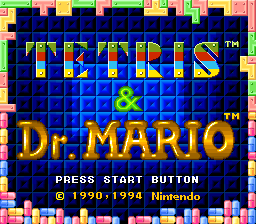
Tetris & Dr. Mario (SNES)
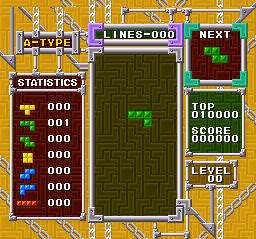
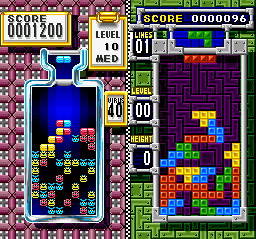
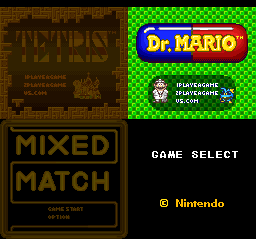
In December 1994, Tetris was re-released for the Super Nintendo with another popular puzzler on one cart — Tetris & Dr. Mario. This epic combo cart launched in North America on 22 December 1994 and followed in Europe on 25 July 1995, but curiously did not get a Japanese release — surprising considering the popularity of such puzzlers there at the time.
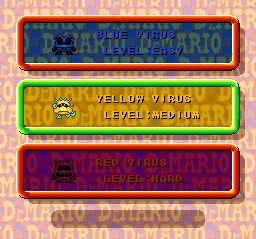
The combo cartridge offered three separate game options: Tetris, Dr. Mario, and the headline addition Mixed Match — a single match that alternates between Tetris and Dr. Mario stages, forcing the player to switch puzzle paradigms on the fly.
Mario Cameo Appearances
There are many character cameos in the various versions, with the most famous being in the Nintendo NES version. Mario appears at Stage 9 Level 5 in Type B mode, along with many others, as they dance while a rocket takes off.
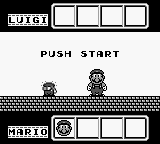
Luigi is also present in the dancing level, with Princess Peach at the top of the castle. Link and Samus are playing instruments in front of the Kremlin Palaces. Bowser is being his evil self on the opposite side of the screen, along with Donkey Kong. It's worth noting that the Mario cameo in Tetris on the Nintendo has one of the funniest looking sprites — surpassed only by his cameo appearance in the original Legend of Zelda.
Once you beat level 9 on Game B on all the difficulty settings, you unlock a special scene featuring various Nintendo characters including Mario, Luigi, Link, Samus, Pit, Bowser and Donkey Kong — and they're all dancing to celebrate your victory! For 1989, this was an extraordinary level of cross-franchise self-celebration, and one of the earliest instances of Nintendo using one game to advertise an entire roster of its IP.
Re-Releases
For decades, Tetris was conspicuously absent from Nintendo's digital storefronts — tangled up in the international rights situation that Henk Rogers untangled in 1989. The licence eventually transitioned to The Tetris Company, and in 2011 Nintendo finally got the Game Boy version onto the 3DS Virtual Console. The Nintendo Switch Online Game Boy library added it in 2023 — making the iconic version finally widely accessible to a modern audience.
Nintendo 3DS Virtual Console
Game Boy — Nintendo Switch Online
Nintendo's description for the 3DS Virtual Console release (2011):
“Easy to pick up, impossible to put down! TETRIS, the iconic block-slotting puzzle game, gets a re-release on the Nintendo 3DS system. Create solid horizontal lines by deftly maneuvering the falling Tetriminos into place. Clear as many lines as possible before the screen is overrun with Tetriminos. Work your way up from the easiest setting or crank up the speed to increase the challenge. Either way, you're in store for hours of entertainment — all over again.”
In Super Smash Bros.
Although Tetris doesn't have a representative fighter in the Smash roster, its music has been a fixture since Brawl:
Super Smash Bros. Brawl (2008)
Arrangements of “Tetris: Type A” and “Tetris: Type B” from the Game Boy Tetris can be played on Luigi's Mansion.
Super Smash Bros. for Nintendo 3DS (2014)
The Brawl arrangement of “Tetris: Type A” reappears as a track for Smash Run.
Super Smash Bros. for Wii U (2014)
The Brawl arrangements of both Tetris themes can be played on Luigi's Mansion and Wuhu Island respectively.
Super Smash Bros. Ultimate (2018)
The Brawl arrangements of both themes can be played on Battlefield, Final Destination, and any stage listing “Other” as their source.
Reception & Cultural Impact
Tetris is one of the most wildly successful games of all time. It has been sold on more platforms than any other game, including mobile phones, where it has been sold over 100 million times. It has been noted as one of the most challenging games and the best way to stay occupied between appointments. It has been rated as one of the best games of all time by many magazines and game review sites — Tetris is fun, addictive, and constantly being reimagined.
Notable Reviews & Awards
Compute! magazine (IBM version)
Called Tetris “one of the most addictive computer games this side of the Berlin Wall” — a fitting Cold War-era endorsement for a Soviet creation.
Compute! Choice Award 1989
Tetris won the arcade game category and was cited as “by far, the most addictive game ever”.
Amiga Power magazine
Tetris Pro ranked at #38 in the top 100 Amiga games of all time.
IGN (3DS) — Lucas M. Thomas
9.0/10. Called it inarguably the most important and nostalgic edition of Tetris ever published — “Tetris endures.”
Honest Gamers (GB) — Marc Golding
10/10. The reviewer summarised Tetris by quoting Tool: “I know the pieces fit!”
Cubed3 (GB) — Adam Riley
10/10. Praised it as a game that “will never be forgotten, no matter how many pretenders to the throne come and go over time.”
Guinness World Record. Tetris made it to the Guinness Book of World Records as the most ported video game in history. In 2011 the game had been ported to an astonishing 65 different platforms including phone apps, consoles, and PCs. That count has only grown since.
The 2023 “Tetris” Movie
In 2023, Apple TV+ released Tetris, a thriller film dramatising Henk Rogers' legendary 1989 trip to the Soviet Union to secure the rights to the game for Nintendo. Directed by Jon S. Baird and starring Taron Egerton as Henk Rogers, the film recreates the Cold War-era international licensing disputes, Robert Stein's deception, and the political tensions surrounding Pajitnov's inability to legally own his own creation.
The film leans into thriller conventions — KGB surveillance, last-minute deal-making, dramatic flight escapes — some of which is heightened for cinematic effect, but the core story is real. The Game Boy bundling decision, the ELORG meetings, and the eventual Nintendo licensing breakthrough all happened essentially as depicted. It's one of the most prominent mainstream dramatisations of a video game business deal ever made.
Gallery
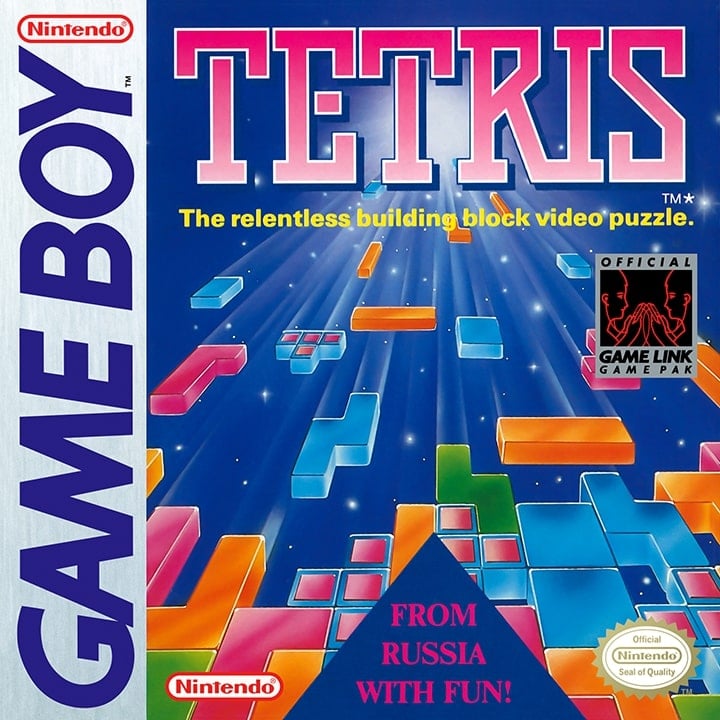
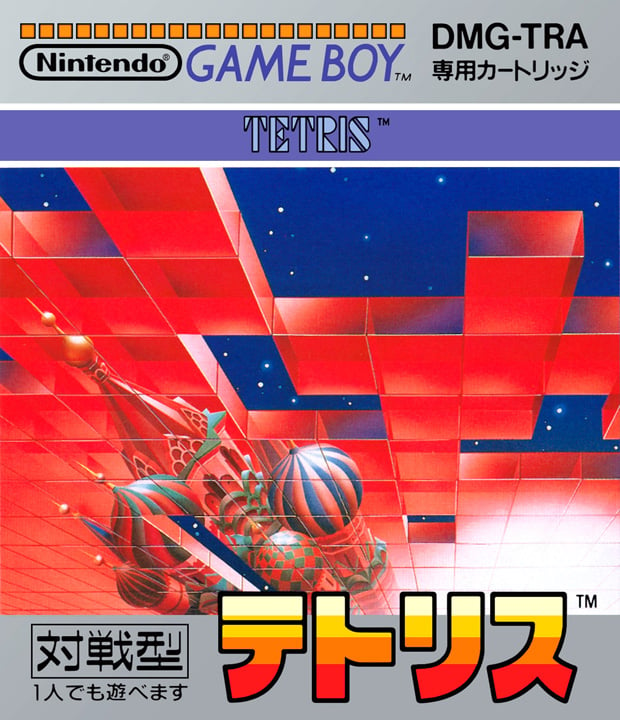
Game Boy Box Art (Regional Variants)
North America
Japan
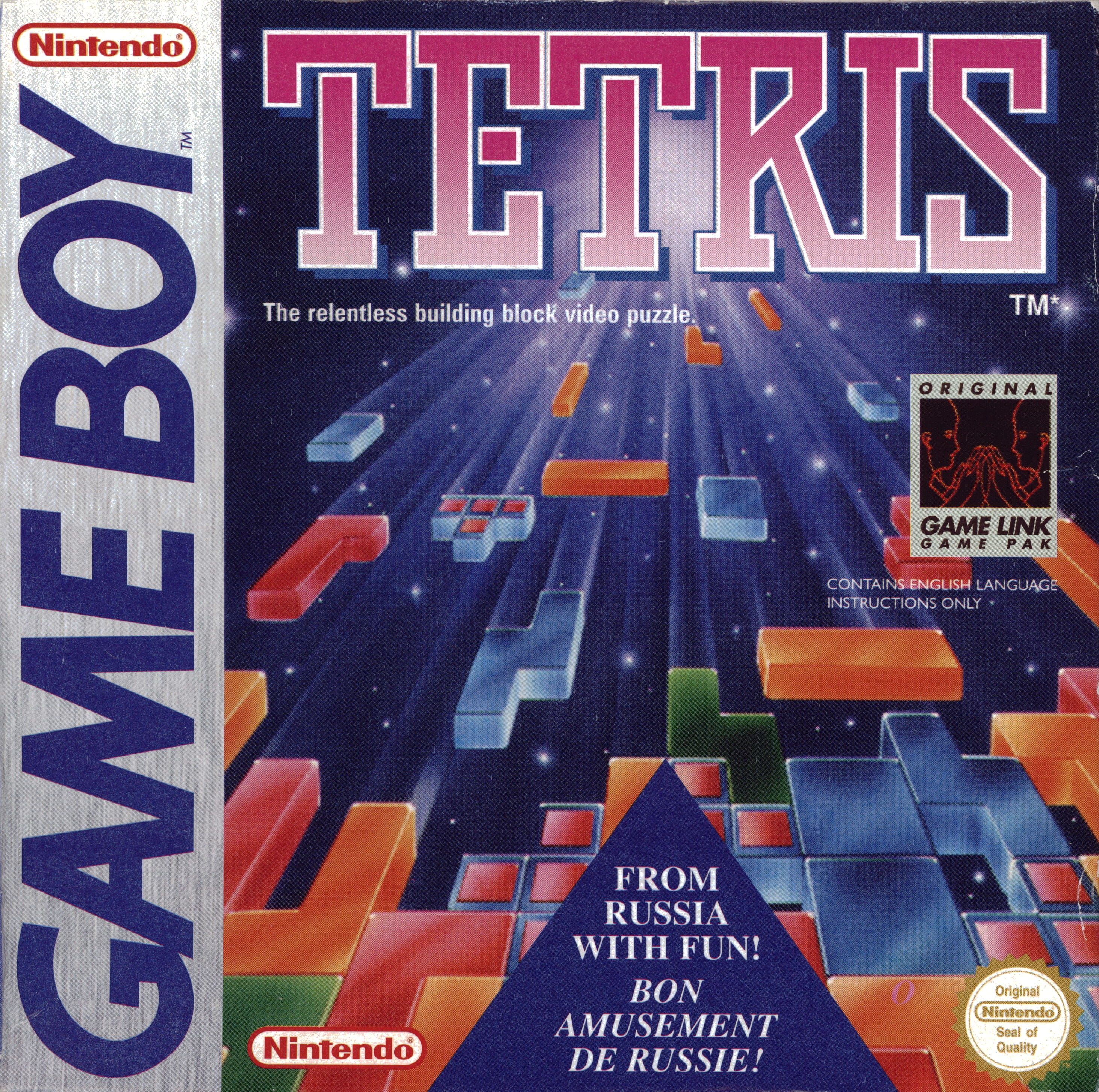
United Kingdom
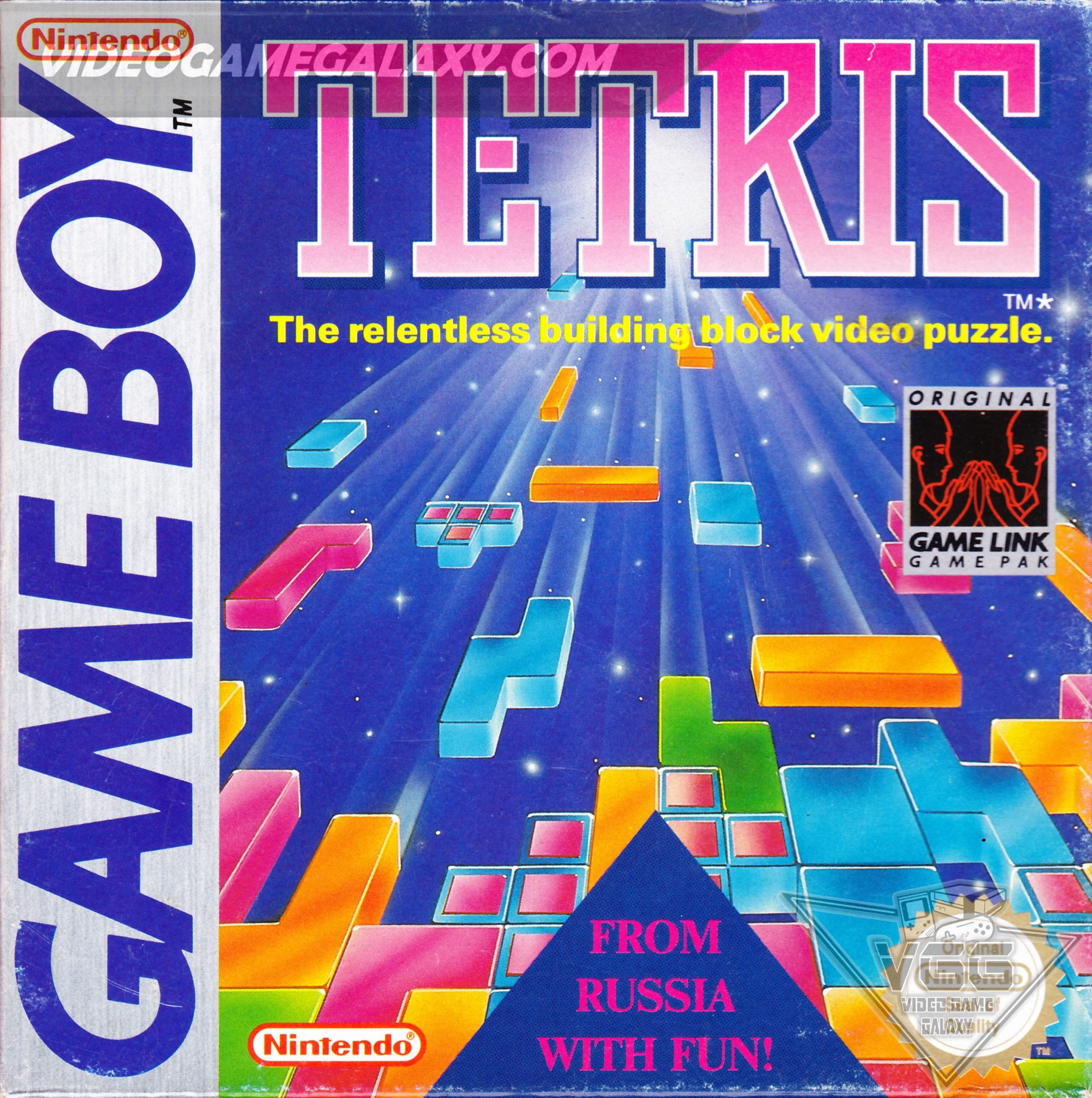
Europe / Australasia
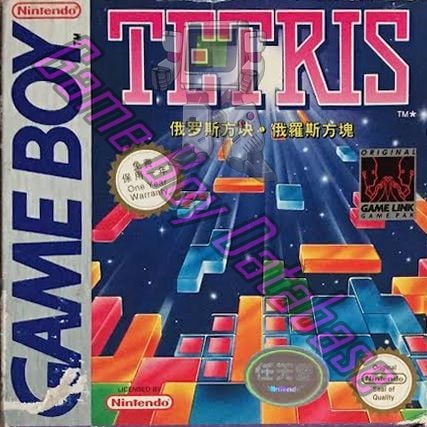
Chinese region
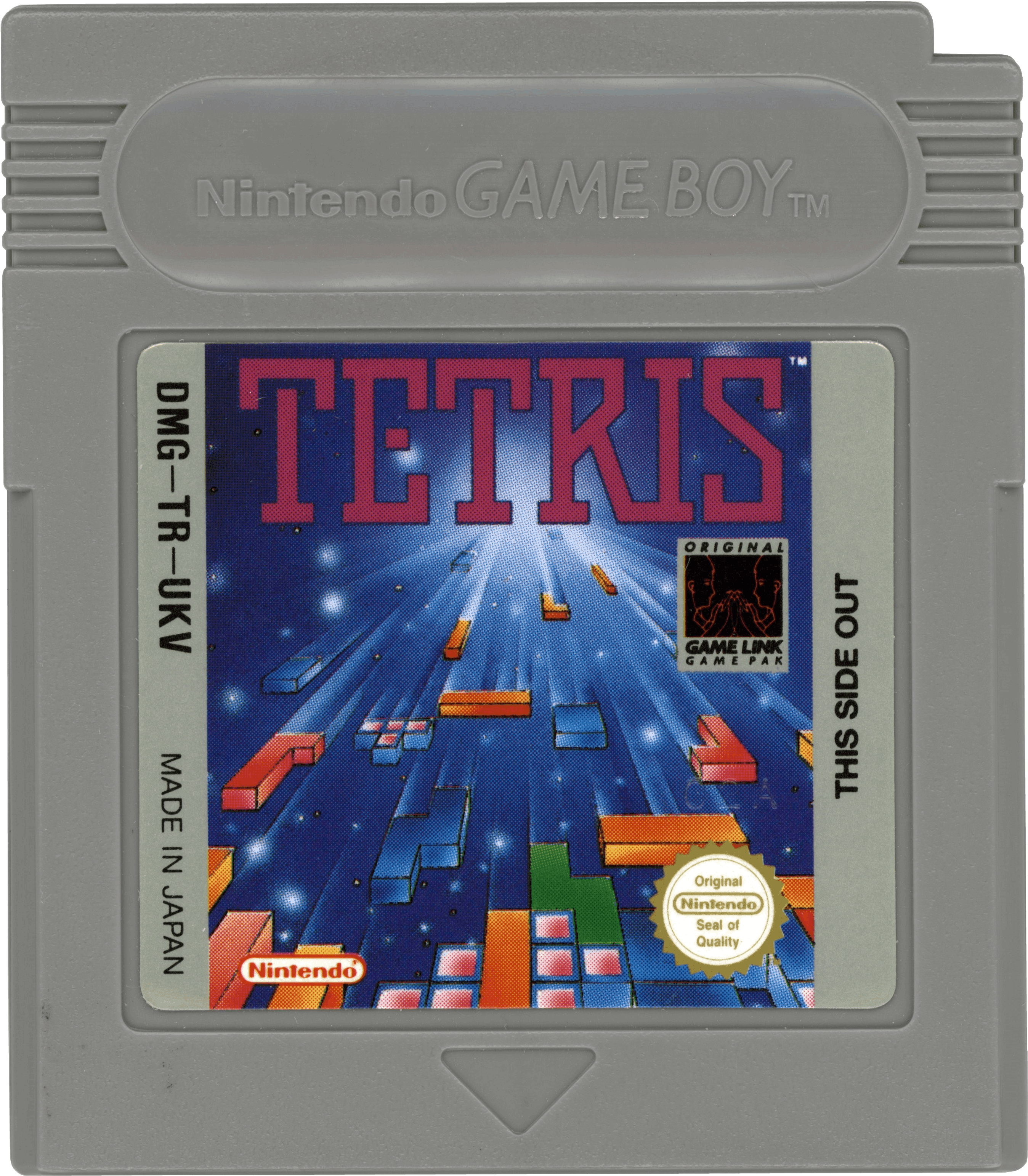
UK Cartridge
Official Artwork
Mario Leaning
Mario Playing
Luigi Playing
Screenshots
GB Title Screen
T&DM Logo
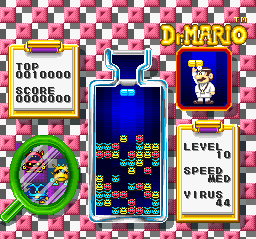
T&DM Single Player
Videos
Gameplay demonstrations and the original Western TV commercial that helped launch Tetris on the Game Boy.
Game Boy Gameplay (Ben Castellanos)
North American TV Commercial
Trivia
- Mario and several other Nintendo characters make cameo appearances in the game — the all-star dance ending on the NES version, Mario/Luigi's opponent icons on the Game Boy link cable mode.
- It was the first game on the Game Boy to use the link cable system, paving the way for future games (and eventually Pokémon trading).
- Tetris was a game made in the Soviet Union, which explains all of the unique Russian architectural buildings (Kremlin Palaces, onion-domed churches) in the NES ending.
- Tetris was the first game played in space. Russian astronaut Aleksandr Aleksandrovich Serebrov took it to orbit on Mir in 1993 — he received the game from Nintendo's then-chairman Howard Lincoln during a trip to the USSR.
- Tetris was packaged with Dr. Mario on the Nintendo — the SNES combo cartridge that was Luke's favourite way of getting both classics on one cart.
- The game name «Tetris» comes from a combination of the Greek prefix “tetra-” (four, for the four-square Tetriminos) and creator Pajitnov's favourite sport, tennis.
- The Japanese title «テトリス» (Tetorisu) is a direct katakana transliteration.
- Tetris & Dr. Mario on SNES was never released in Japan — surprising given the popularity of puzzle games there. The Japanese market got separate releases of both games instead.
- The Tetris music heard on Game Boy — particularly the catchy “Type A” track — is an arrangement of “Korobeiniki”, a Russian folk song based on an 1861 poem by Nikolay Nekrasov.
- 2023 Movie: Apple TV+ released a thriller dramatising Henk Rogers' 1989 trip to Moscow. Starred Taron Egerton; directed by Jon S. Baird.
- The Tetris bundling decision is widely cited as one of the most consequential moments in handheld gaming history — without it, Game Boy's adoption curve might have looked entirely different.
- Pajitnov did not legally own Tetris and made almost no money from it for over a decade. Royalties only started flowing to him in 1996 when he founded The Tetris Company with Henk Rogers.
- Ratings: ESRB E, PEGI 3, CERO A, USK 0, ACB G — rated for all ages in every territory.