
Super Mario Games on the Nintendo 64
Nintendo’s cartridge-based 64-bit console was where Mario learned to move in three dimensions. Super Mario 64 arrived with the machine in 1996 and set the template for 3D platformers, while Mario Kart 64, the first three Mario Party games and Paper Mario made the four-port N64 the place to play Mario with friends.
All Nintendo 64 Mario Games Covered
Click any tile to jump to that game’s full page on Super Luigi Bros. Games are ordered by their first release on the Nintendo 64, and each tile shows the kind of Mario appearance it is:
- Main role – the classic platform-style Mario adventures, such as Super Mario Bros. and Super Mario Land, plus the RPGs and other games built around Mario himself.
- Spin-off – a game that features Mario throughout but is not a mainstream adventure – karting, party, sports and puzzle games.
- Edutainment – games designed to teach as well as entertain, starring characters from the Mario universe.

Super Mario 64

Mario Kart 64

Yoshi's Story
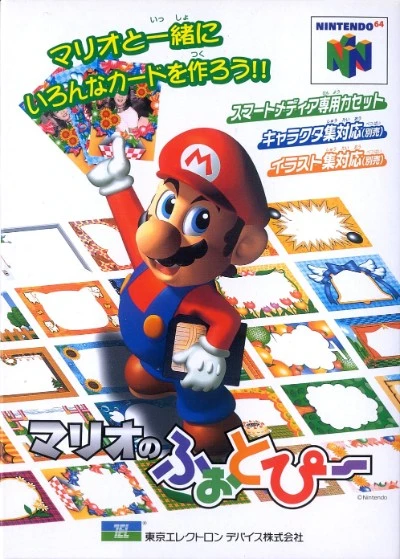
Mario no Photopi (Japan only)

Mario Party

Super Smash Bros.

Mario Golf (N64)

Mario Artist: Paint Studio (64DD, Japan only)

Mario Party 2

Mario Artist: Talent Studio (64DD, Japan only)

Mario Artist: Communication Kit (64DD, Japan only)
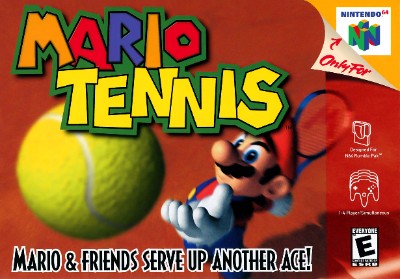
Mario Tennis (N64)

Paper Mario

Mario Artist: Polygon Studio (64DD, Japan only)

Mario Party 3
Dr. Mario 64
About the Nintendo 64
| Manufacturer | Nintendo |
|---|---|
| Generation | Fifth generation (home console) |
| Released | 23 June 1996 (Japan) · 29 September 1996 (North America) · 1 March 1997 (Europe) |
| Launch price | ¥25,000 · US$199.99 · £249.99 |
| Units sold | 32.93 million (Nintendo IR) |
| Media | Game Pak cartridge (4–64 MB) · 64DD magnetic disk (Japan only) |
| Processor | NEC VR4300 at 93.75 MHz, with SGI Reality Coprocessor |
| Best-selling Mario game | Super Mario 64 – 11.91 million |
| Predecessor | Super Nintendo Entertainment System |
| Successor | Nintendo GameCube |
| Discontinued | 2003 |
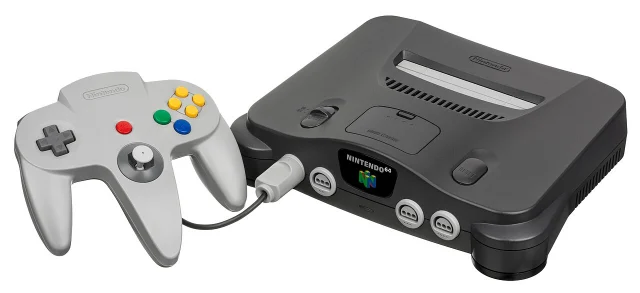
The Nintendo 64 began life as Project Reality, a partnership with Silicon Graphics that was announced in August 1993. SGI and MIPS designed the chipset, pairing an NEC VR4300 processor clocked at 93.75 MHz with SGI’s Reality Coprocessor at 62.5 MHz and 4 MB of Rambus RDRAM, which the later Expansion Pak doubled to 8 MB. Briefly known as the Ultra 64, the machine stuck with cartridges while its rivals moved to CD. Game Paks held between 4 and 64 MB, a fraction of a compact disc, but they loaded almost instantly and shrugged off years of rough handling. The three-pronged controller was the first major pad built around an analogue thumbstick, with a Z trigger tucked underneath, and four controller ports came as standard.
Repeated delays pushed the launch back from Christmas 1995, and Japan finally got the console on 23 June 1996 for ¥25,000, with just three games on the shelf. One of them was Super Mario 64. North America followed on 29 September 1996 at US$199.99 (some shops started selling it a few days early), and Europe waited until 1 March 1997, when it cost £249.99. Less than a year after launch the Japanese price was cut to ¥16,800 to keep pace with Sony and Sega, and Time magazine named the N64 its machine of the year for 1996.
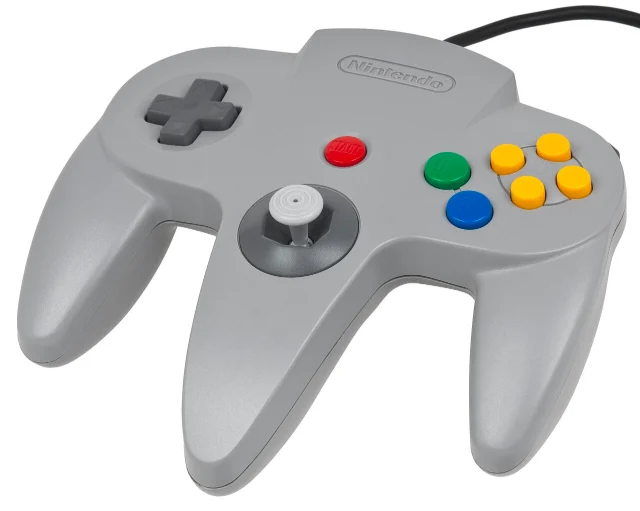
The fight with the PlayStation and the Sega Saturn went two ways. The N64 comfortably outsold the Saturn but finished a long way behind Sony: Nintendo’s own figures put lifetime sales at 32.93 million, of which 20.63 million were sold in the Americas and only 5.54 million in Japan. Costly cartridges with limited space pushed several big third-party games, Dragon Quest VII among them, on to CD-based rivals, so the library stayed small at around 388 titles. What it lacked in quantity it made up for with first-party hits, and Mario was at the centre of most of them.
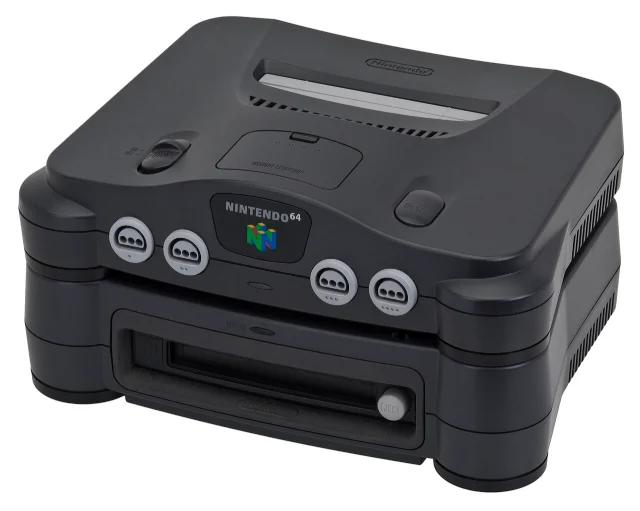
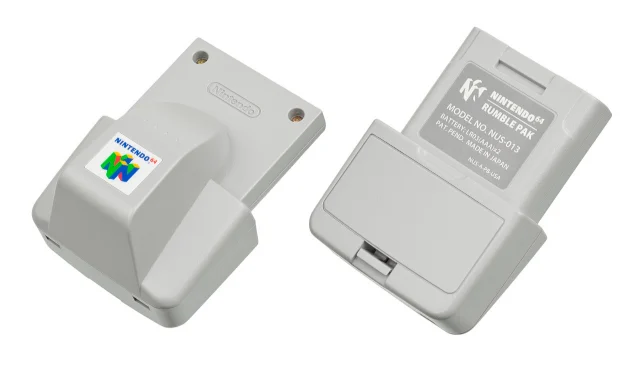
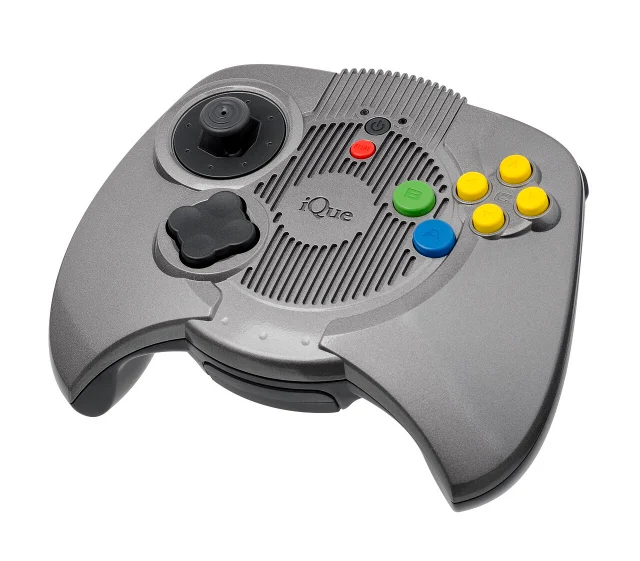
The charcoal-grey console was never slimmed down, so Nintendo grew it through its ports instead. The Rumble Pak, first bundled with Star Fox 64 in 1997, added force feedback, and Japan even received a Rumble Pak-compatible edition of Super Mario 64 that July. The Transfer Pak let Mario Golf and Mario Tennis swap characters and save data with their Game Boy Color namesakes, and coloured consoles and controllers followed later in the system’s life. Japan alone got the 64DD, a magnetic disk drive that slotted underneath the console in December 1999 together with the Randnet online service. It was sold mainly by mail order, managed little more than 15,000 units and closed down in February 2001, but it left behind the Mario Artist creative suite, starting with Paint Studio. China later received the iQue Player, a plug-in version of the hardware, in November 2003.
Super Mario 64 remains the machine’s defining game. Its free-roaming camera, analogue movement and painting-portal worlds set the pattern for 3D platformers, and at around 11.91 million copies it is the best-selling N64 title. Mario Kart 64 (about 9.87 million) made four-player split-screen racing a living-room ritual, Super Smash Bros. started a fighting series of its own and Yoshi’s Story gave Yoshi a storybook side-scroller. Hudson Soft’s Mario Party, Mario Party 2 and Mario Party 3 turned those four ports into board-game nights, Camelot’s Mario Tennis introduced Waluigi, and Intelligent Systems’ Paper Mario, called Mario Story in Japan, picked up the RPG thread from Super Mario RPG. Dr. Mario 64 closed the run in 2001 as a North America-only release.
The N64 bowed out in 2003, after the GameCube had arrived, and it was the last major home console to rely on cartridges until the Switch in 2017. Its Mario games have rarely been out of reach since. Super Mario 64 DS remade the original in 2004, the Wii and Wii U Virtual Console sold many of the others as downloads, and Super Mario 3D All-Stars brought Super Mario 64 to Switch for a limited run in September 2020. Today the Nintendo 64 – Nintendo Classics app for Nintendo Switch Online + Expansion Pack members offers Super Mario 64, Mario Kart 64, Mario Tennis, Dr. Mario 64 and Yoshi’s Story from its October 2021 launch, with Paper Mario, Mario Golf and all three Mario Party games added since, and on Nintendo Switch 2 the app gained extras such as a CRT-style filter.
More Mario on the Nintendo 64
Other notable Mario-related releases on the Nintendo 64 that don’t have their own page here yet:
- Jun 1996Pilotwings 64CameoLaunch title; Mario's face is carved into Mount Rushmore
- Jul 1997Super Mario 64: Rumble Pak Compatible VersionMain roleJapan-only revision adding Rumble Pak support
- Nov 1998The Legend of Zelda: Ocarina of TimeCameoMario, Peach, Bowser and Yoshi portraits in Hyrule Castle
- Nov 1999Donkey Kong 64CameoHides a playable copy of the original Donkey Kong arcade game