
Super Mario Games on the Nintendo DS
Two screens, a stylus and a microphone made the Nintendo DS the most unconventional handheld of its day, and in the end the best-selling one. Mario was there at launch with Super Mario 64 DS, went online in Mario Kart DS, brought 2D platforming back in New Super Mario Bros. and swapped places with Bowser in Mario & Luigi: Bowser’s Inside Story.
All Nintendo DS Mario Games Covered
Click any tile to jump to that game’s full page on Super Luigi Bros. Games are ordered by their first release on the Nintendo DS, and each tile shows the kind of Mario appearance it is:
- Main role – the classic platform-style Mario adventures, such as Super Mario Bros. and Super Mario Land, plus the RPGs and other games built around Mario himself.
- Spin-off – a game that features Mario throughout but is not a mainstream adventure – karting, party, sports and puzzle games.
- Remake – an updated version of an earlier Mario game.
- Compilation – several Mario games collected on one cartridge or disc.

Super Mario 64 DS
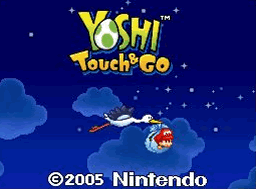
Yoshi Touch & Go

Super Princess Peach

Mario Kart DS

Mario & Luigi: Partners in Time

New Super Mario Bros.
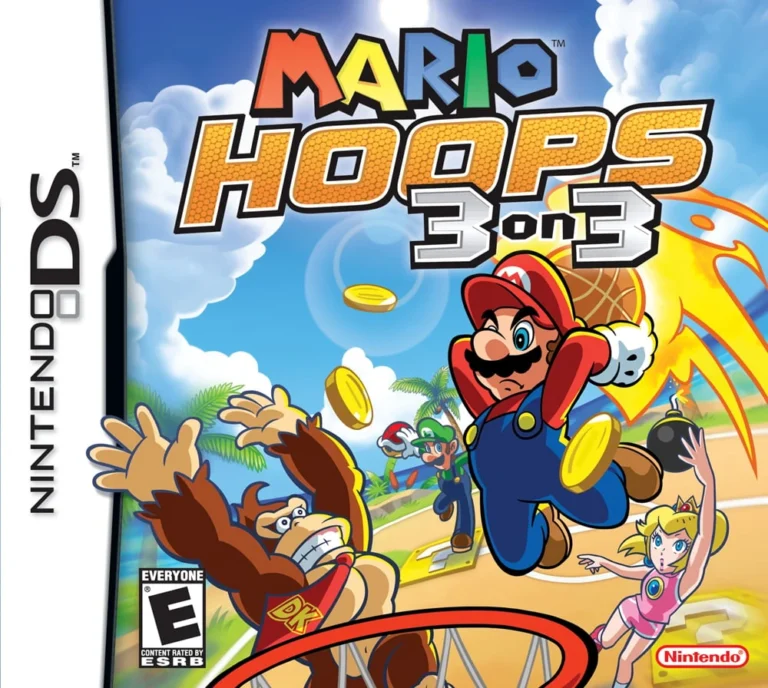
Mario Hoops 3-on-3

Game & Watch Collection (Club Nintendo)

Mario vs. Donkey Kong 2: March of the Minis
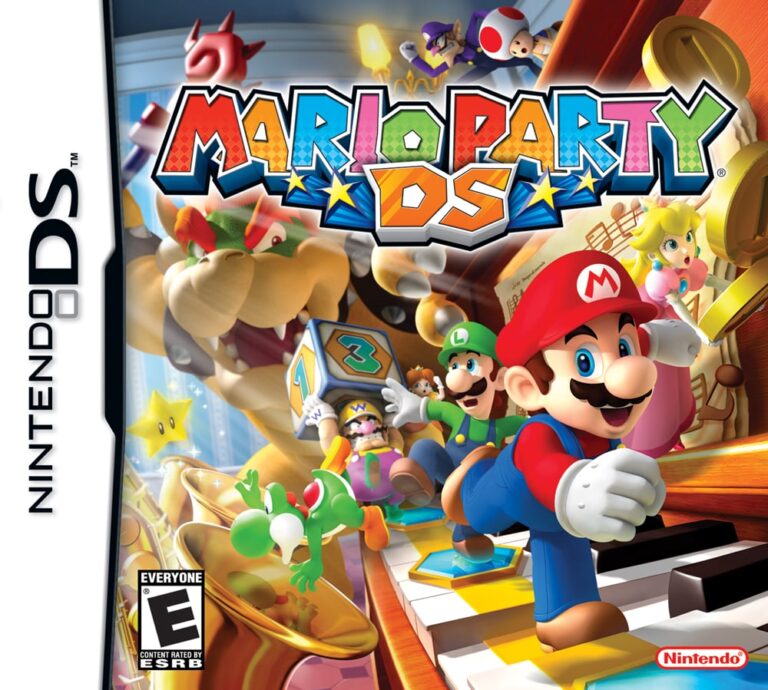
Mario Party DS

Game & Watch Collection 2 (Club Nintendo)

Mario & Luigi: Bowser's Inside Story
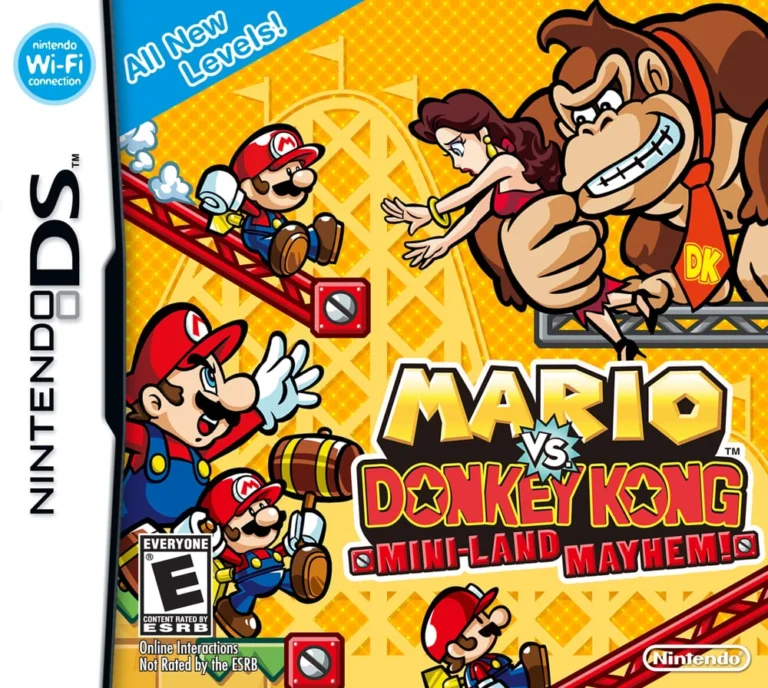
Mario vs. Donkey Kong: Mini-Land Mayhem!
About the Nintendo DS
| Manufacturer | Nintendo |
|---|---|
| Generation | Seventh generation (handheld) |
| Released | 21 November 2004 (North America) · 2 December 2004 (Japan) · 11 March 2005 (Europe) |
| Launch price | US$149.99 · ¥15,000 · £99.99 · €149.99 |
| Units sold | 154.02 million (all DS models, Nintendo IR) |
| Media | Nintendo DS Game Card; Game Boy Advance Game Pak (DS and DS Lite only) |
| Screens | Two 3-inch 256 × 192 LCDs; the lower one is a resistive touchscreen |
| Models | DS (2004) · DS Lite (2006) · DSi (2008) · DSi XL (2009) |
| Best-selling Mario game | New Super Mario Bros. – 30.80 million |
| Predecessor | Game Boy Advance |
| Successor | Nintendo 3DS |
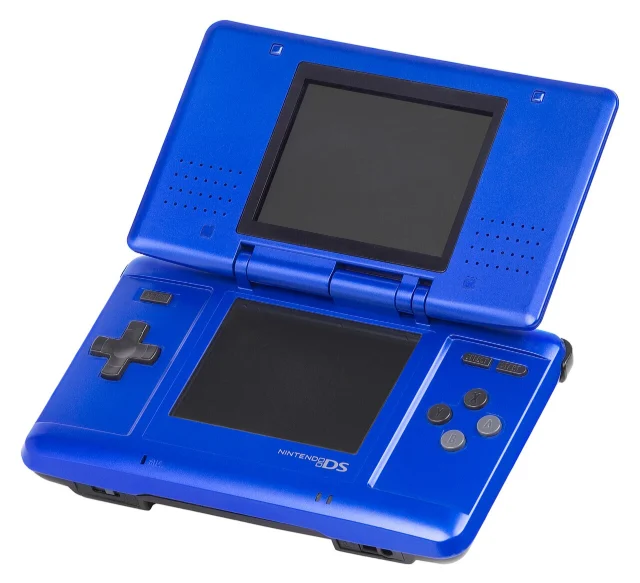
The Nintendo DS started out under the code name Nitro, and its defining idea came from Hiroshi Yamauchi, who, as an adviser after stepping down as president, pushed for a handheld with two screens. His successor Satoru Iwata backed the project, and the design had a clear ancestor in Nintendo’s own dual-screen Game & Watch Multi Screen units of the early 1980s, three of which (Donkey Kong, Oil Panic and Green House) were later recreated for the DS itself. Nintendo first presented the machine as a ‘third pillar’ that would sit alongside the Game Boy Advance and GameCube rather than replace either of them.
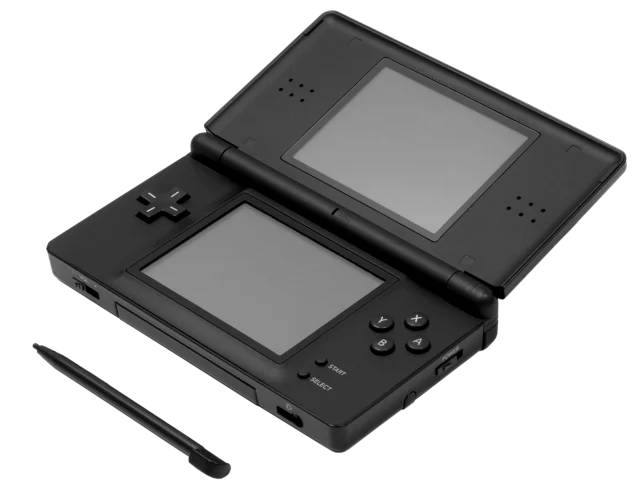
Inside the clamshell, a 67 MHz ARM946E-S processor did the heavy lifting with a 33 MHz ARM7TDMI alongside, the second chip also running Game Boy Advance cartridges in a second slot along the bottom edge. Both 3-inch screens showed 256 × 192 pixels, and the lower one was a resistive touchscreen worked with a stylus or a thumb strap. A built-in microphone and 802.11b Wi-Fi opened up voice controls, local wireless play, the PictoChat doodling app and, from November 2005, free online play through Nintendo Wi-Fi Connection.
Unusually for Nintendo, the DS reached North America first, on 21 November 2004 at US$149.99, before arriving in Japan on 2 December (¥15,000), Australia on 24 February 2005 and Europe on 11 March 2005, where it cost £99.99 or €149.99. Sony’s PlayStation Portable launched within weeks with far more graphical muscle, but the DS’s touch controls and the Touch Generations range, led by nintendogs (23.96 million) and Brain Age (19.01 million), drew in people who had never owned a games machine. The DS family eventually shipped 154.02 million units, second only to the Nintendo Switch among all Nintendo hardware.
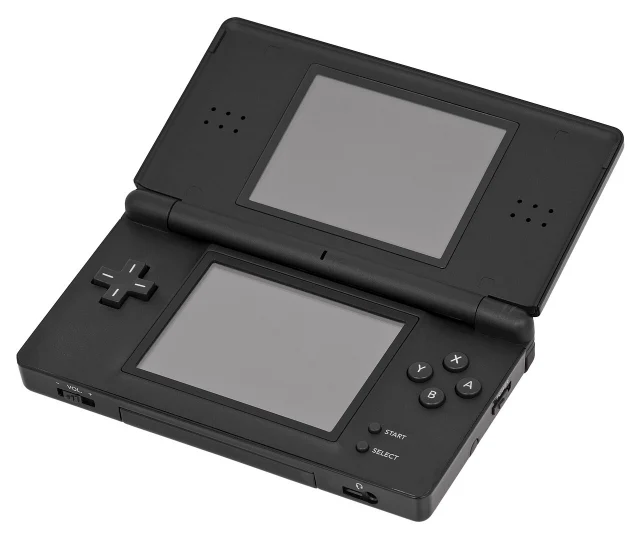
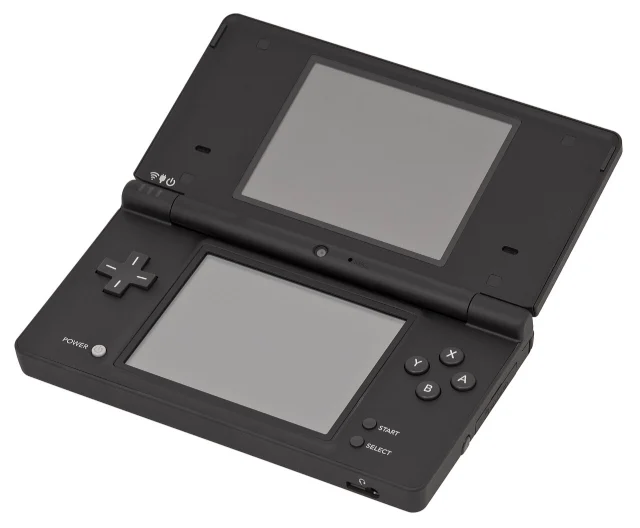
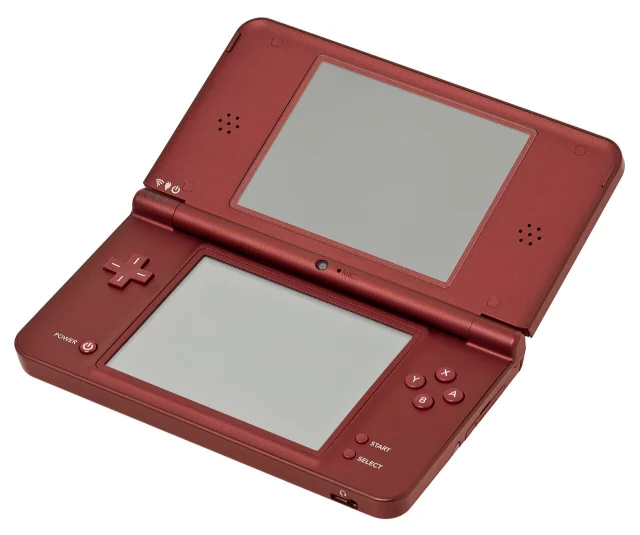
The chunky original did not last long. The slimmer, brighter DS Lite launched in Japan on 2 March 2006 (US$129.99 in North America) and went on to account for more than 60 per cent of all DS shipments. The DSi (Japan, 1 November 2008) dropped the Game Boy Advance slot in favour of two cameras, an SD card slot and the DSiWare download shop, and the DSi XL (Japan, 21 November 2009) stretched the screens for comfortable play on the sofa. Mario fans in China could even buy a red Super Mario Bros. 25th anniversary iQue DS Lite.
Mario was there on day one. Super Mario 64 DS expanded the Nintendo 64 classic with Yoshi, Luigi and Wario as playable characters and went on to sell 11.06 million copies. Yoshi Touch & Go showed off the stylus early in 2005, and that November Mario Kart DS became the first Mario Kart with online races, selling 23.60 million. AlphaDream’s Mario & Luigi: Partners in Time brought the babies along for the ride, and Super Princess Peach finally put the princess in the lead role, with Mario as the one in need of rescue.
The big one landed in May 2006. New Super Mario Bros. was the first new side-scrolling Mario adventure in well over a decade, and with 30.80 million copies it became the best-selling DS game of all. Mario Hoops 3-on-3, the puzzle sequel Mario vs. Donkey Kong 2: March of the Minis and Mario Party DS followed, and in 2009 Mario & Luigi: Bowser’s Inside Story gave Bowser a starring role of his own. Mario vs. Donkey Kong: Mini-Land Mayhem! closed the run in late 2010, while Club Nintendo members could swap loyalty points for the Game & Watch Collection and Game & Watch Collection 2.
The DS still casts a long shadow over Mario’s history. New Super Mario Bros. started a sub-series that continued on the Wii, 3DS and Wii U, and the two-screen, touch-driven design carried straight on into the Nintendo 3DS, which plays almost every DS cartridge. Several of these games, among them Mario Hoops 3-on-3, March of the Minis and Yoshi’s Island DS, were reissued on the Wii U Virtual Console in 2015 and 2016, and Bowser’s Inside Story was remade for the 3DS in 2018. Online play ended when Nintendo Wi-Fi Connection closed on 20 May 2014, but the cartridges themselves still work as well as they ever did.
More Mario on the Nintendo DS
Other notable Mario-related releases on the Nintendo DS that don’t have their own page here yet:
- Dec 2004WarioWare: Touched!Spin-offStylus-driven microgames; launched alongside the DS in Japan
- Mar 2006Tetris DSCameoMario-themed modes and NES-era Mario backdrops throughout
- Nov 2006Yoshi's Island DSMain roleSequel to Yoshi's Island with Baby Mario and Baby Peach
- Jan 2007Wario: Master of DisguiseMain roleTouch-controlled Wario platformer; Japan got it first
- Jan 2008Mario & Sonic at the Olympic Games (DS)Spin-offHandheld version of the first Mario & Sonic crossover
- Apr 2009WarioWare: D.I.Y.Spin-offMake-your-own microgames; WarioWare: Do It Yourself in Europe
- Oct 2009Mario & Sonic at the Olympic Winter Games (DS)Spin-offHandheld edition of the 2009 winter crossover