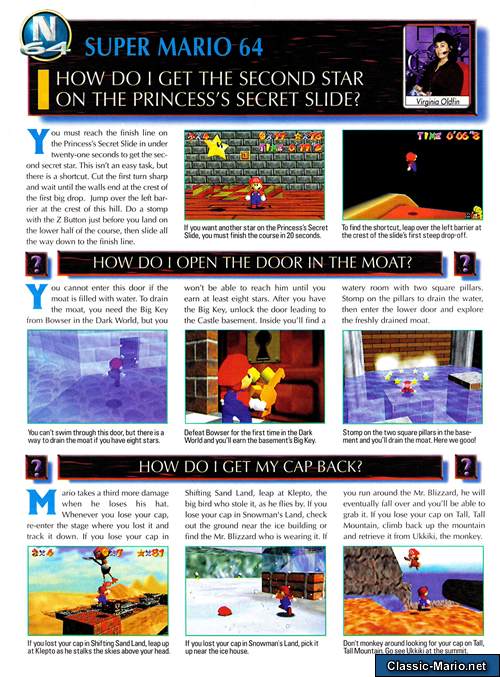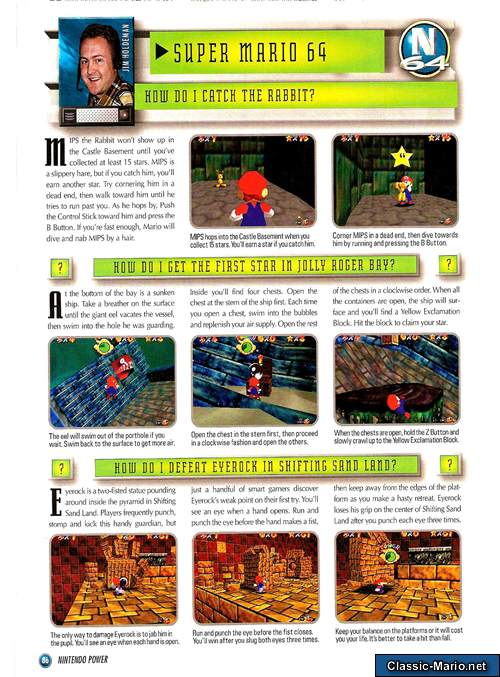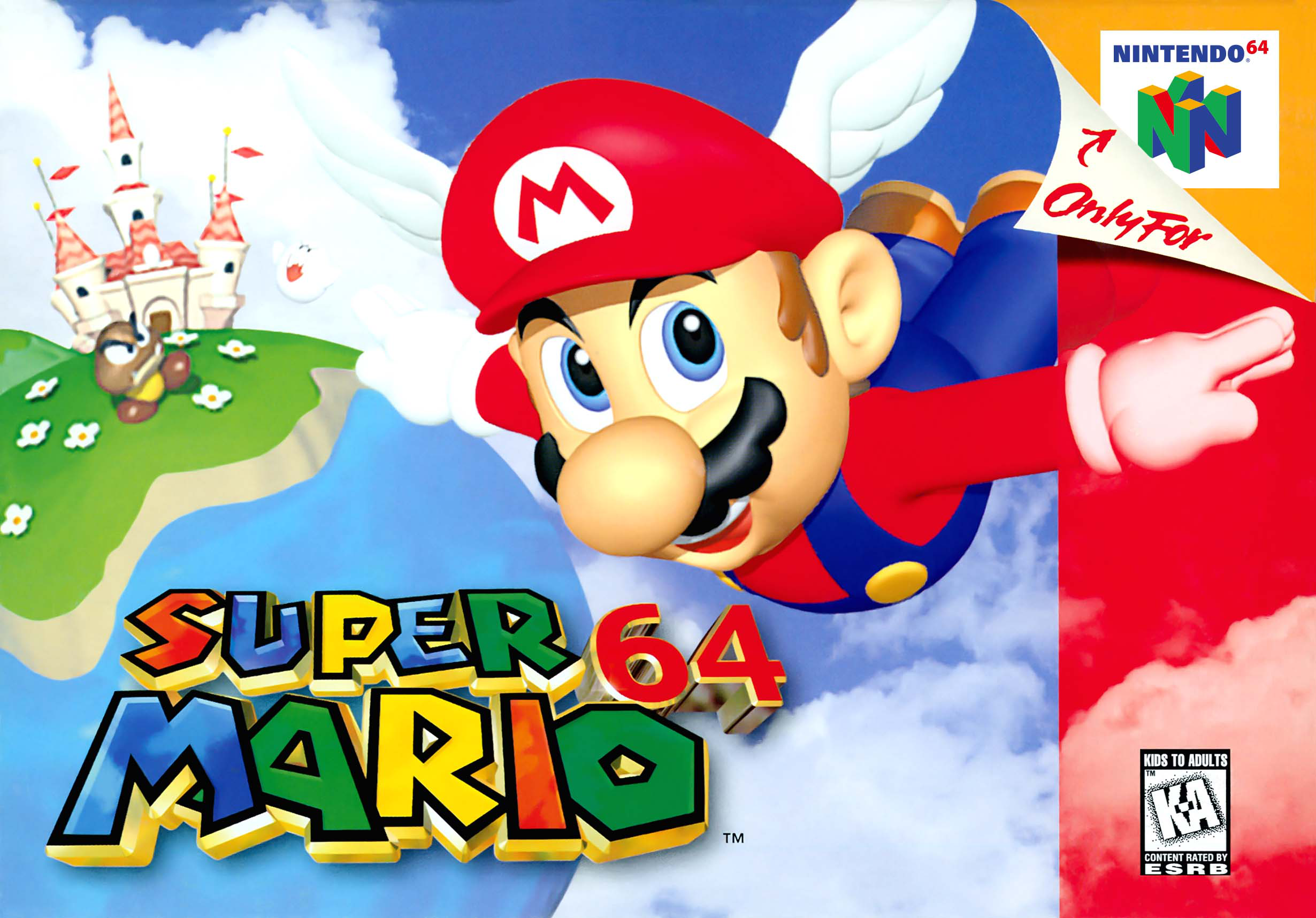
Super Mario 64
The game that taught the world how to move a character in three dimensions — a Nintendo 64 launch title with paintings as portals, 120 Power Stars to find, and a hub-world castle that’s the template every 3D platformer still gets measured against.
Overview
Super Mario 64 was a launch title for the Nintendo 64 in Japan and North America, and the very first time Mario had ever appeared in a fully three-dimensional world. While Sega and Sony were still figuring out what 3D platforming should look like, Nintendo EAD shipped a game with analog control, a free-roaming camera operated by an in-universe cameraman Lakitu, and movement options no platformer had ever offered: triple jumps, long jumps, wall kicks, backflips, side somersaults, ground pounds, dives, swimming, climbing, even a punch-punch-kick combo.
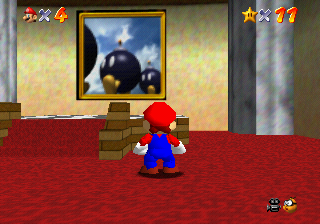
The structure was just as bold. Instead of linear stages, Mario explores Princess Peach’s castle as a hub world. Paintings hanging on the walls are portals to fifteen sprawling courses, each containing six unique missions plus a 100-coin Star challenge. Three confrontations with Bowser, three hidden Cap stages, and a handful of secret rooms round out the 120 Stars total. There’s no rigid order to chase them in — if you can find a Star, you can take it.
What was new for Mario in 1996
| Feature | Why it mattered |
|---|---|
| True 3D analog movement | The N64’s analog stick let Mario walk, tiptoe, jog or sprint — not just “left/right”. |
| Free camera control | Lakitu Bro filmed the action; players could pan and zoom in real time using the C-buttons. |
| Hub-world structure | Princess Peach’s castle replaced the world map. Revisit courses in any order. |
| Mission-based stars | Each course held six themed missions plus a 100-coin Star, not just “reach the flagpole”. |
| Power Caps | Wing, Metal and Vanish Caps replaced the Fire Flower — each lasted 60 seconds and unlocked completely new abilities. |
| Open exploration | Courses had no end. Stars were hidden in cliff-faces, treetops and underwater — rewarding curiosity over speed. |
Story
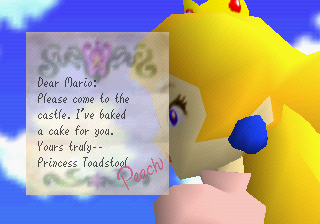
A letter arrives at Mario’s door from the Mushroom Kingdom. Princess Peach has invited him to the castle — she has baked a cake for him. Of course he sets off straight away. But when Mario reaches the castle gate everything is wrong: it’s silent, deserted, no one greets him at the door. A gruff voice he half-recognises booms through the empty halls.
It’s Bowser, of course. While Mario has been away, the Koopa King has invaded Peach’s castle, stolen the 120 Power Stars that fuel its magic, and used them to corrupt the great paintings hanging on the walls. The Stars have been hidden inside those paintings — turning each one into a “painting world” twisted to Bowser’s design. The castle’s inhabitants have been sealed away with them.
The full official opening, told through the instruction booklet, is reproduced below.
Super Mario 64 on the Nintendo 64 brings a long awaited third dimension to the classic Mario adventure games. The story goes as follows…
Peach: “Mario, please come to the castle. I’ve baked a cake for you. Yours truly, Princess Toadstool.”
Mario: “Wow, an invitation from Peach! I’ll head out right away. I hope she can wait for me!”
Mario is so excited to receive the invitation from the Princess, who lives in the Mushroom Castle, that he quickly dresses in his best and leaves right away.
Mario: “Hmmm, something’s not quite right here… It’s so quiet…”
Shaking off his uneasy premonition, Mario steps into the silent castle, where he is greeted by gruff words.
Bowser: “No ones home! Now scram! Bwa, ha ha”
The sounds seem to come from everywhere.
Mario: “Who’s there?! I’ve heard that voice somewhere before…”
Mario begins searching all over the castle. Most of the doors are locked, but finding one open, he peeks inside. Hanging on the wall is the largest painting he has ever seen, and from behind the painting comes the strangest sound that he has ever…
Mario: “I think I hear someone calling. What secrets does this painting hold?”
Without a second thought, Mario jumps at the painting. As he is drawn into it, another world opens before his very eyes.
And so begins the grandest of all adventures!
Once inside the painting, Mario finds himself in the midst of battling Bob-ombs. According to the Bob-omb Buddies, someone… or something.. has suddenly attacked the castle and stolen the “Power Stars.” These stars protect the castle; with the stars in his control, the beast plans to take over the Mushroom Castle. To help him accomplish this, he plans to convert the residents of the painting world into monsters as well. If nothing is done, all those monsters will soon begin to overflow from inside the painting.
Mario: “A plan this maniacal, this cunning… this must be the work of Bowser!”
Princess Toadstool and Toad are missing, too. Bowser must have taken them and sealed them inside the painting. Unless Mario recovers the Power Stars immediately, the inhabitants of this world will become Bowser’s army.
Mario: “Well, Bowser’s not going to get away with it, not as long as I’m around!”
Stolen Power Stars are hidden throughout the painting world. Use your wisdom and strength to recover the Power Stars and restore peace to the Mushroom Castle.
“Mario! You are the only one we can count on.”
The plot is delivered with almost no cutscenes after that opening. Just three Bowser confrontations, a kiss at the end, and a cake. Everything else is conveyed through the world itself — the Bob-omb Buddies giving you cannons once their war is over, Toads scattered through the halls explaining what’s happened, a Hoot owl asleep in a tree above the courtyard. It’s environmental storytelling Nintendo built before the term existed.
Setting & Castle
The whole game takes place inside, on, and underneath Princess Peach’s Mushroom Castle. The castle’s painting-filled rooms are the doorways to fifteen main courses, three secret Bowser arenas, and another seven hidden mini-stages. As you collect more Stars, more of the castle becomes accessible — new wings unlock, new doors open, the moat drains, a basement appears, a stairway to the sky finally lets you up to the rooftop.
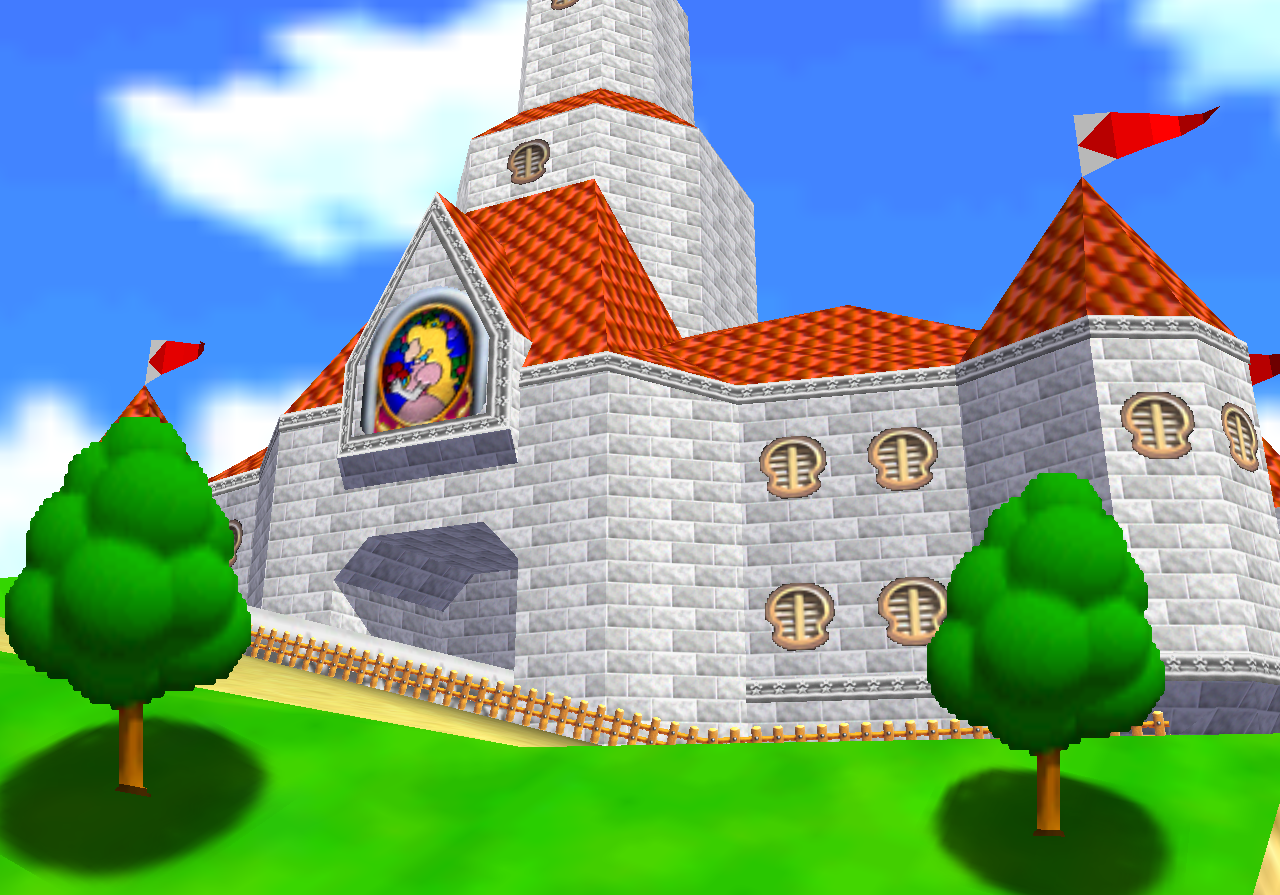
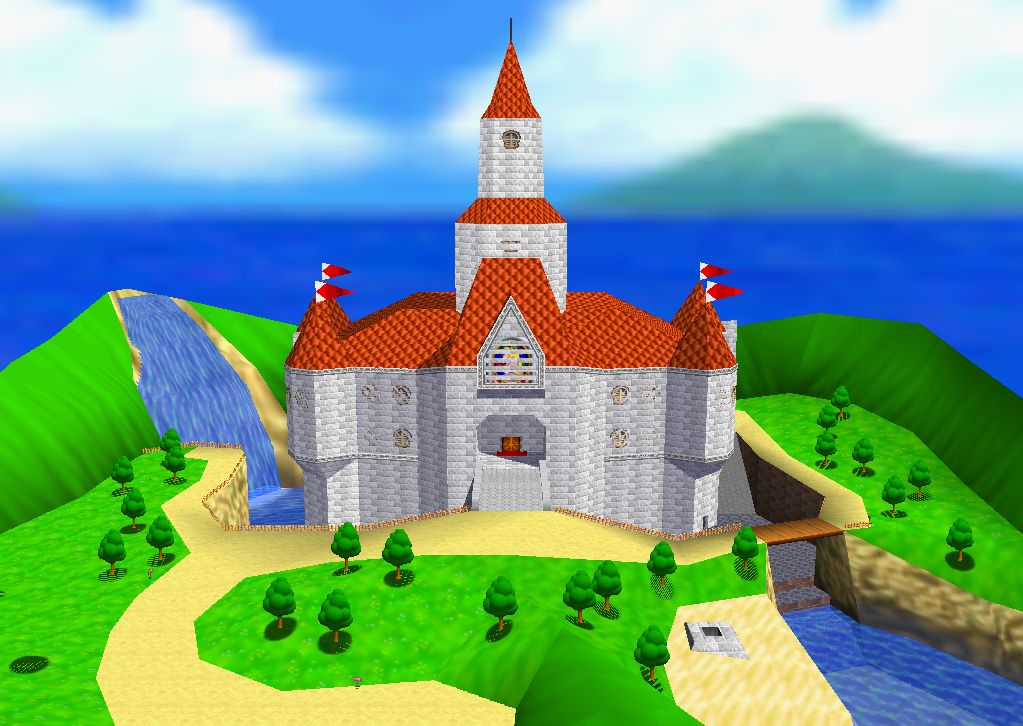
The castle is laid out across three floors plus a basement, with locked Star Doors that need 1, 3, 8, 30, 50, or 70 Stars to pass through. Behind the rainbow-coloured Endless Staircase — which only stops looping when you’ve collected 70 Stars — lies the final Bowser fight on the rooftop in the sky. Miyamoto and his team built the castle as a hakoniwa-style miniature world: a self-contained box garden you wander around, occasionally peering into the strange dioramas hanging on its walls.
Gameplay & Controls
Mario’s moveset in 1996 was, frankly, ridiculous for a console launch title. Where 2D Mario games had run, jump and maybe spin, the 3D Mario could chain dozens of different actions together — and most of them came out cleanly first try. This was the foundation Nintendo would re-use for Sunshine, the Galaxy games, 3D World and Odyssey.
| Action | Input (N64) | Notes |
|---|---|---|
| Move | Control Stick | Walk / jog / sprint based on tilt |
| Jump / Double / Triple | A (chain while running) | Three consecutive jumps each go higher |
| Long Jump | Z + A while running | Covers huge horizontal distance |
| Backflip | Z then A from standstill | High vertical — great for ledges |
| Side Somersault | Sharp turn then A | Faster vertical than backflip |
| Wall Kick | A on contact with a wall mid-jump | Chain off two walls for huge height |
| Ground Pound | Z in midair | Slam down to break blocks or pound stakes |
| Punch / Punch / Kick | B, B, B | Three-hit combo on contact |
| Dive | B while running | Long forward leap, can grab ledges |
| Crouch / Crawl | Z (hold) | Move under low gaps |
| Swim | A repeatedly underwater | Breaststroke based on Miyamoto’s own swimming hobby |
| Camera Control | C-Left / C-Right / C-Up / C-Down | Rotate, zoom and shift Lakitu’s view |
The game runs on an internal Power Meter shown in the HUD — Mario starts each course with eight wedges of health. Wedges are restored by picking up Yellow Coins (one wedge each), Red Coins (two wedges) or Blue Coins (five wedges), or by diving into a Spinning Heart or under a waterfall. Lose all wedges and Mario is sent back to the castle. Lose three lives and it’s Game Over — with full progress saved.
Characters
Super Mario 64 has a small roster, but every face matters — and famously, no Luigi. Luigi was prototyped during development but cut from the final game; he wouldn’t make his 3D debut until Super Mario 64 DS in 2004. Data structures in the code still reference where his object slot used to be.
Playable & Story Characters
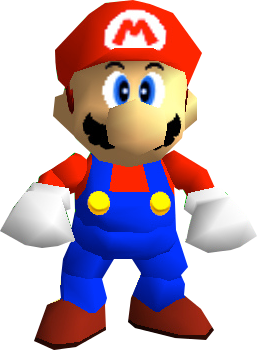
Mario
Princess Peach
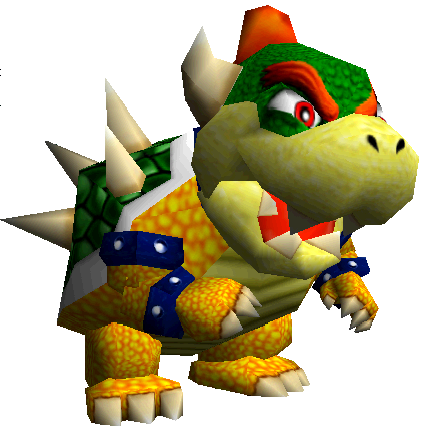
Bowser

Toad
NPCs & Friendly Characters
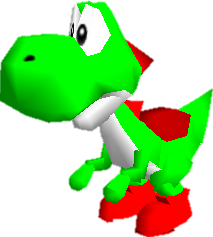
Yoshi
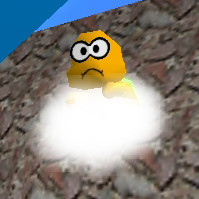
Lakitu Bros.
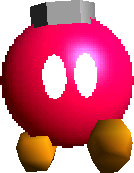
Bob-omb Buddies
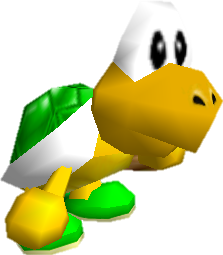
Koopa the Quick

Penguins
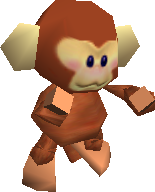
Ukiki
Koopa Troopa
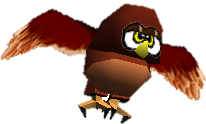
Hoot
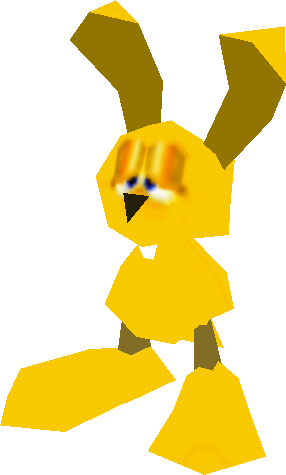
MIPS
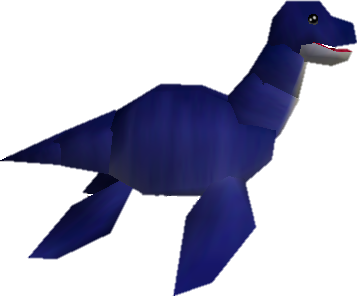
Dorrie
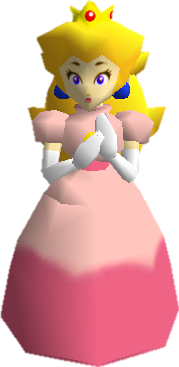
Princess Peach (in person)
The Sealed Castle Toads
Mario’s Power Caps
Power Caps are Super Mario 64’s answer to the Fire Flower. Each one is hidden inside a special Cap Block in the main courses, but the blocks are invisible until you’ve hit the matching Cap Switch in its hidden secret stage. Each Cap lasts just 60 seconds — long enough to get the Star and not a moment longer.
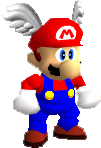
Each Cap Switch is hidden in its own secret stage and must be ground-pounded to activate. From that moment on, the matching coloured Cap Blocks pop into existence across every main course — until Mario completes a mission, when the cap effect ends.

Wing Cap (red)
Metal Cap (green)
Vanish Cap (blue)
Items & Objects
You’re not building an inventory in Super Mario 64 — everything you pick up is either spent immediately, counted towards a Star, or restoring your health. Here’s the full lineup, straight from the game’s 3D model files.
Collectibles

Power Star

Key

Spinning Heart

Mario's Cap
Switches & Coins
Cap Switch

Yellow Coin

Red Coin

Blue Coin
World Objects
Cannon
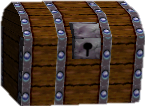
Treasure Chest

Bubble Ring

Warp Pipe
The 15 Main Courses
Each main course holds seven Power Stars: six story missions plus a 100-coin Star. The order below follows the Super Mario 64 Player’s Guide. Tap any screenshot to see the full-size MarioWiki original.
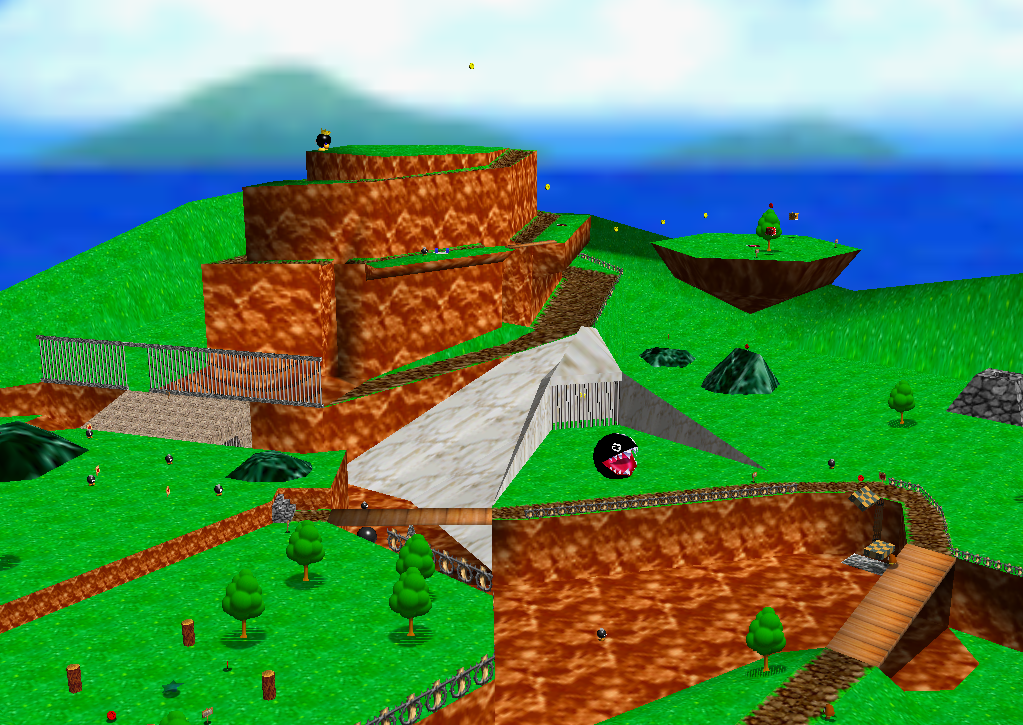
01. Bob-omb Battlefield
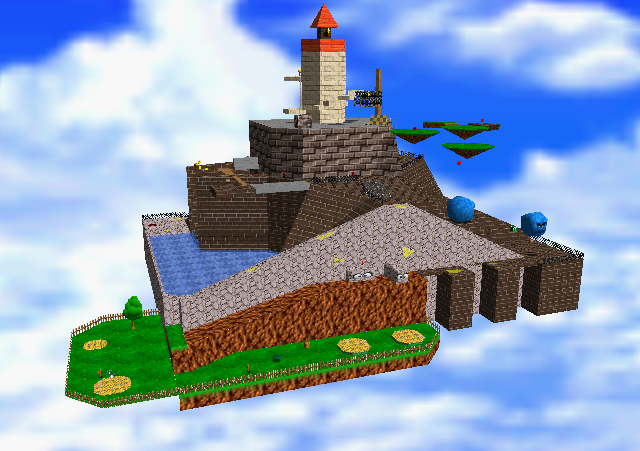
02. Whomp’s Fortress
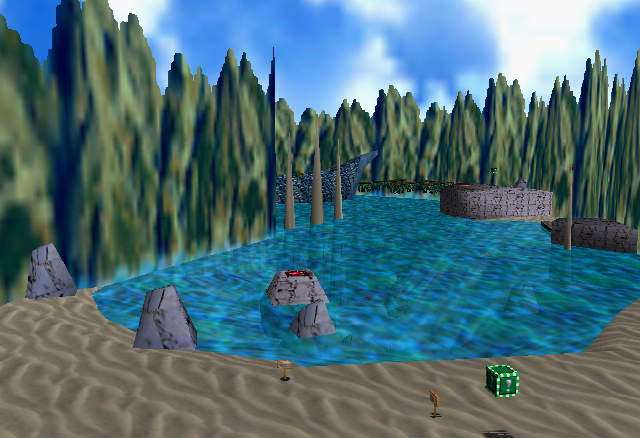
03. Jolly Roger Bay

04. Cool, Cool Mountain
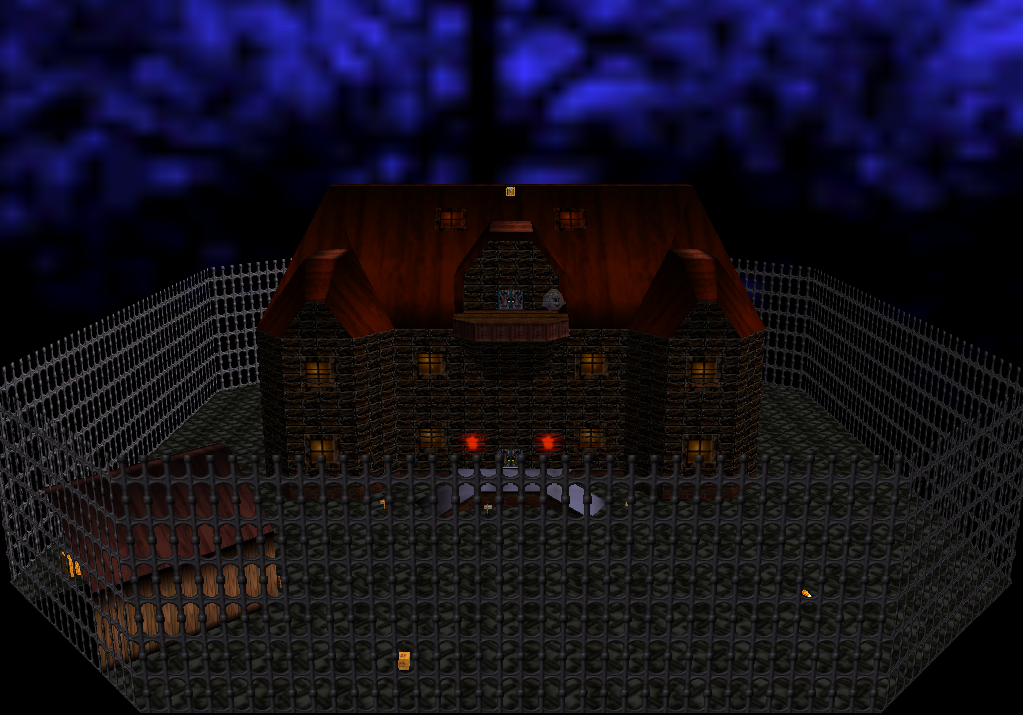
05. Big Boo’s Haunt
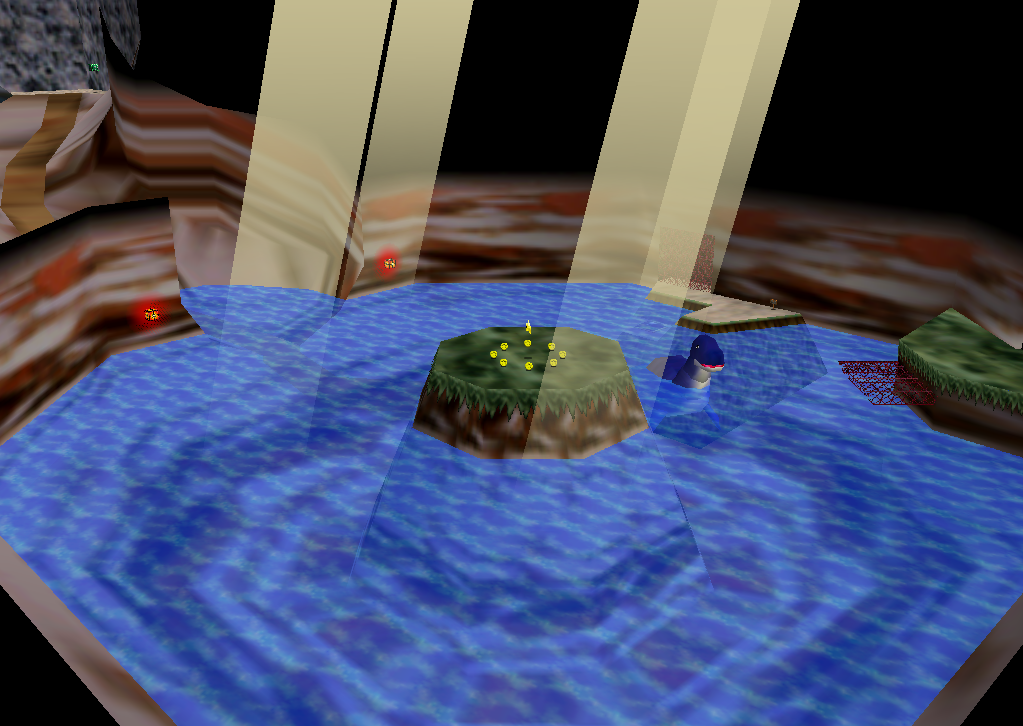
06. Hazy Maze Cave
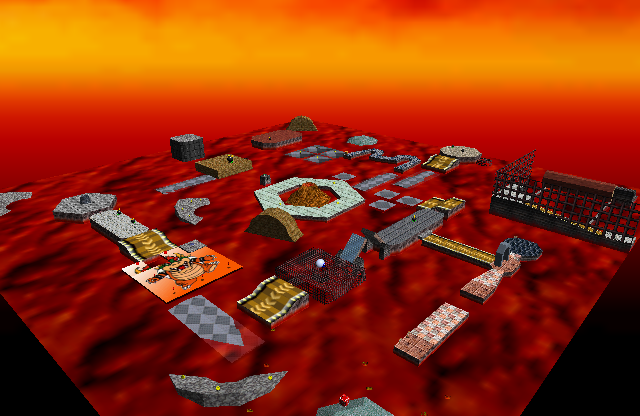
07. Lethal Lava Land
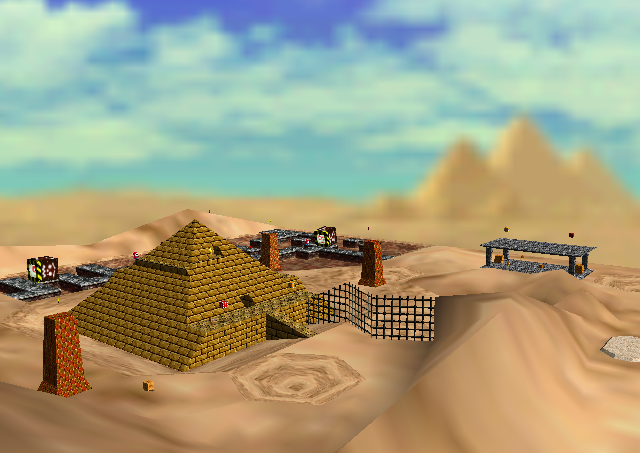
08. Shifting Sand Land
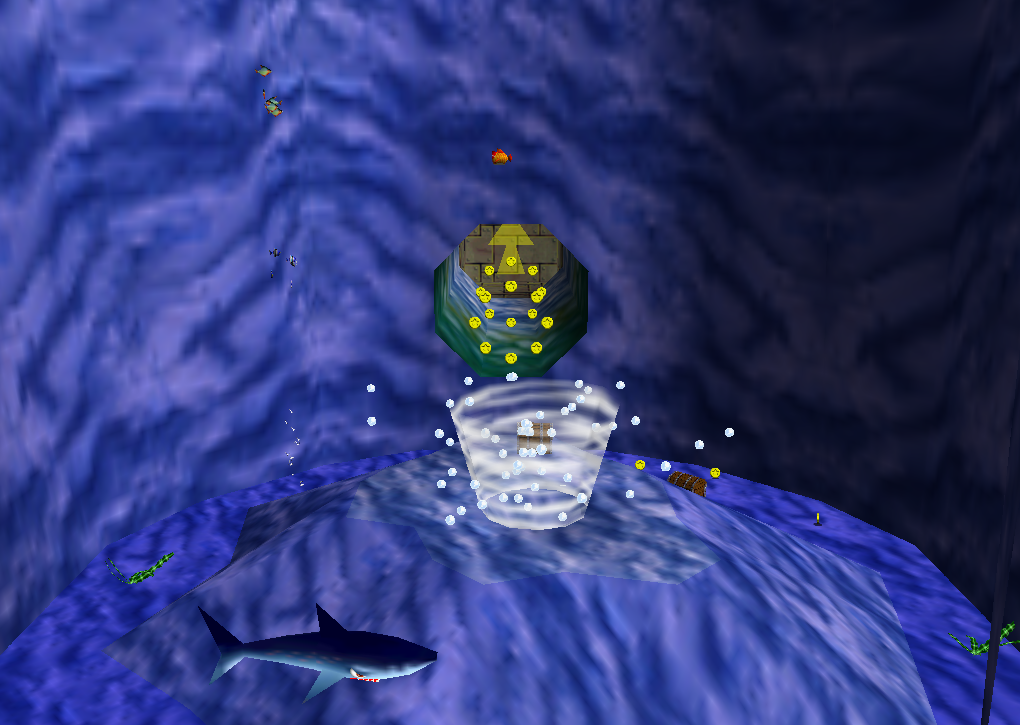
09. Dire, Dire Docks
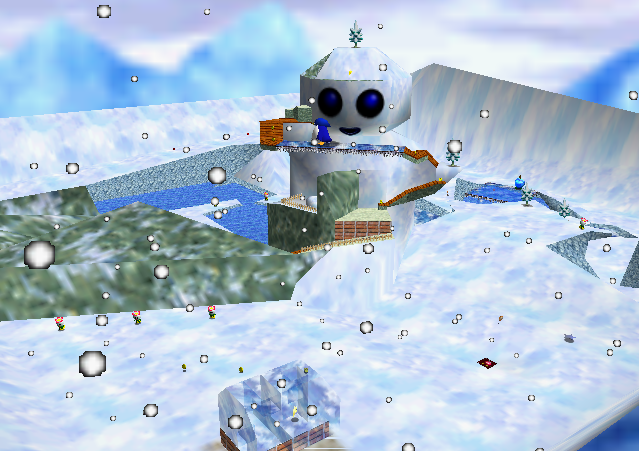
10. Snowman’s Land
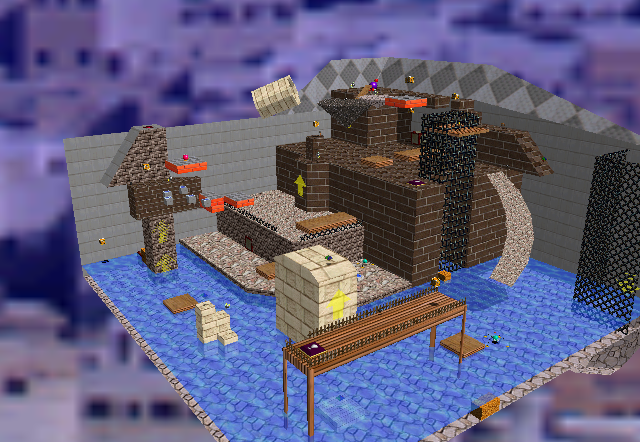
11. Wet-Dry World
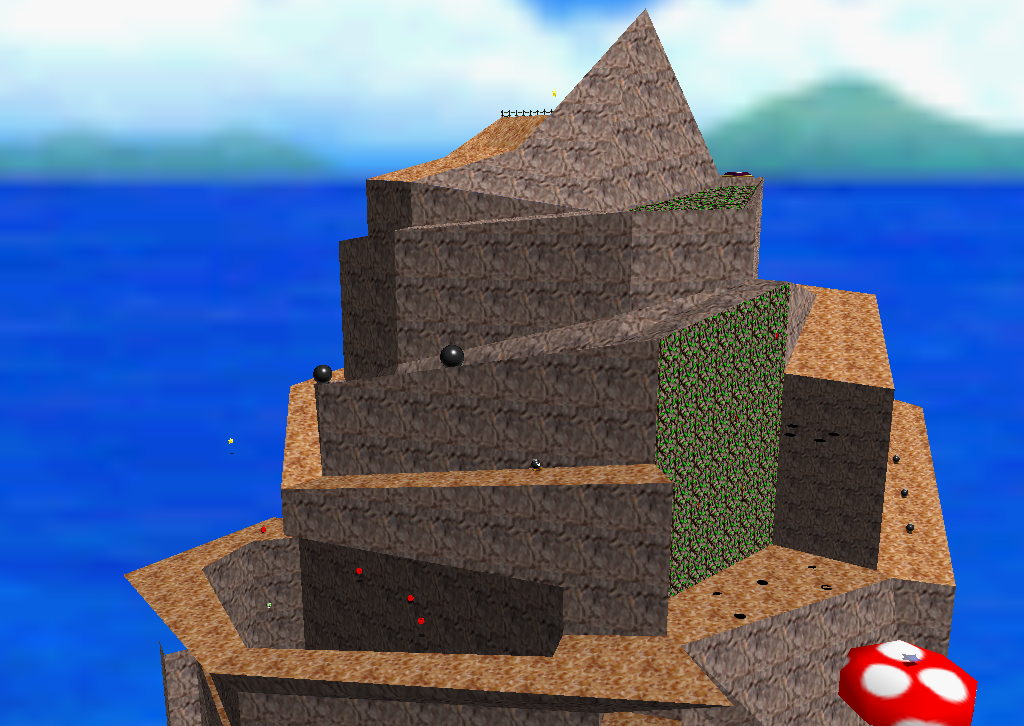
12. Tall, Tall Mountain
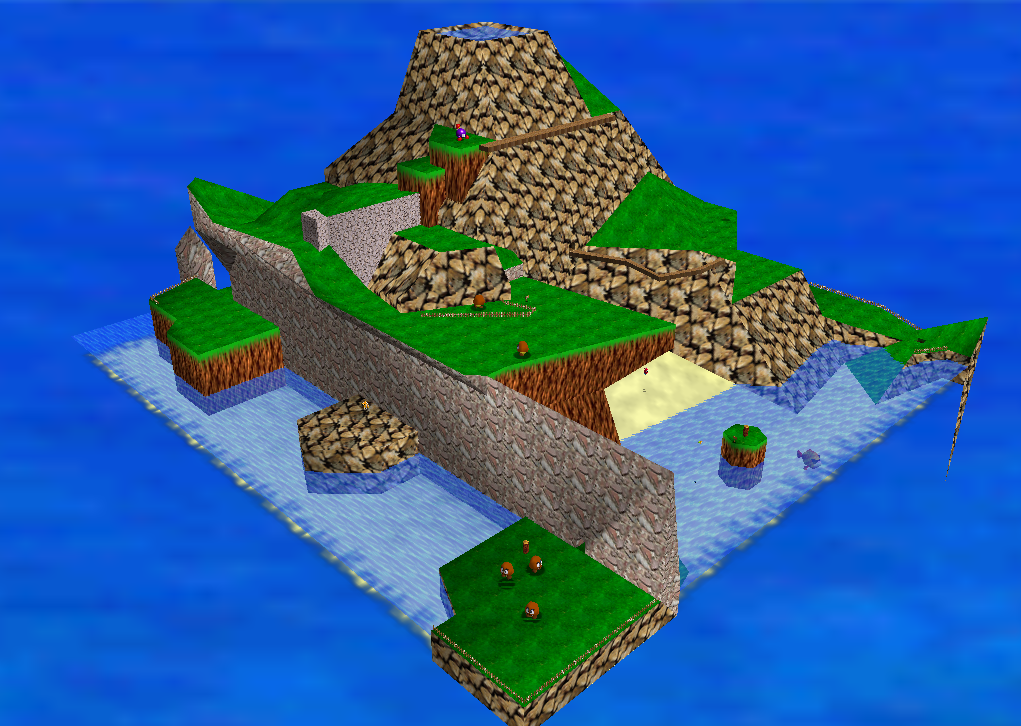
13. Tiny-Huge Island
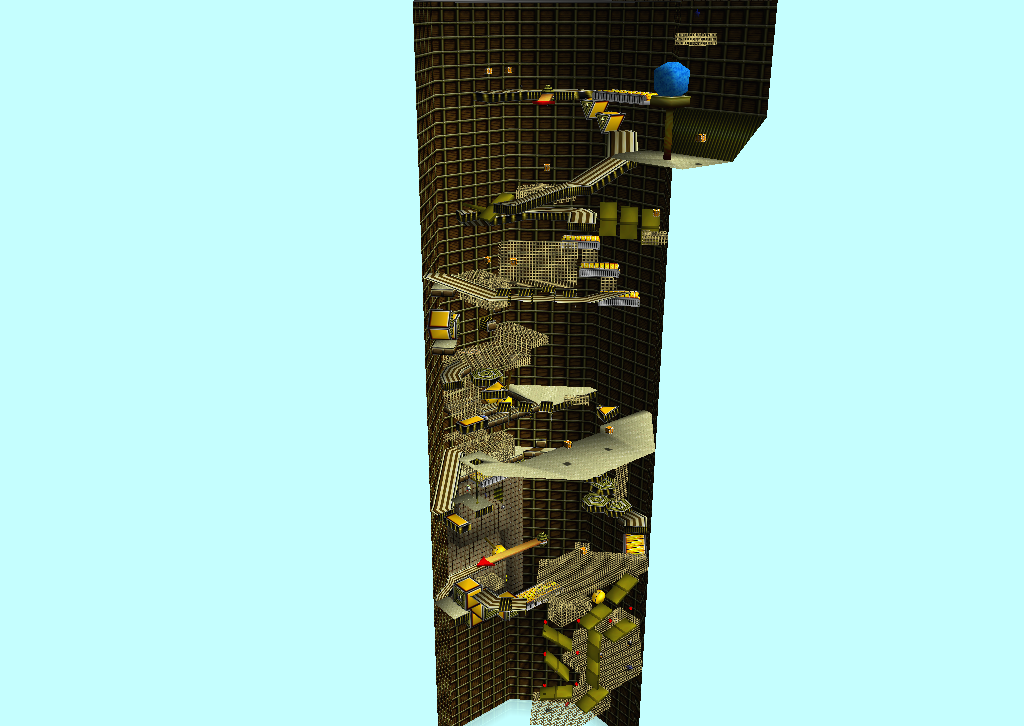
14. Tick Tock Clock
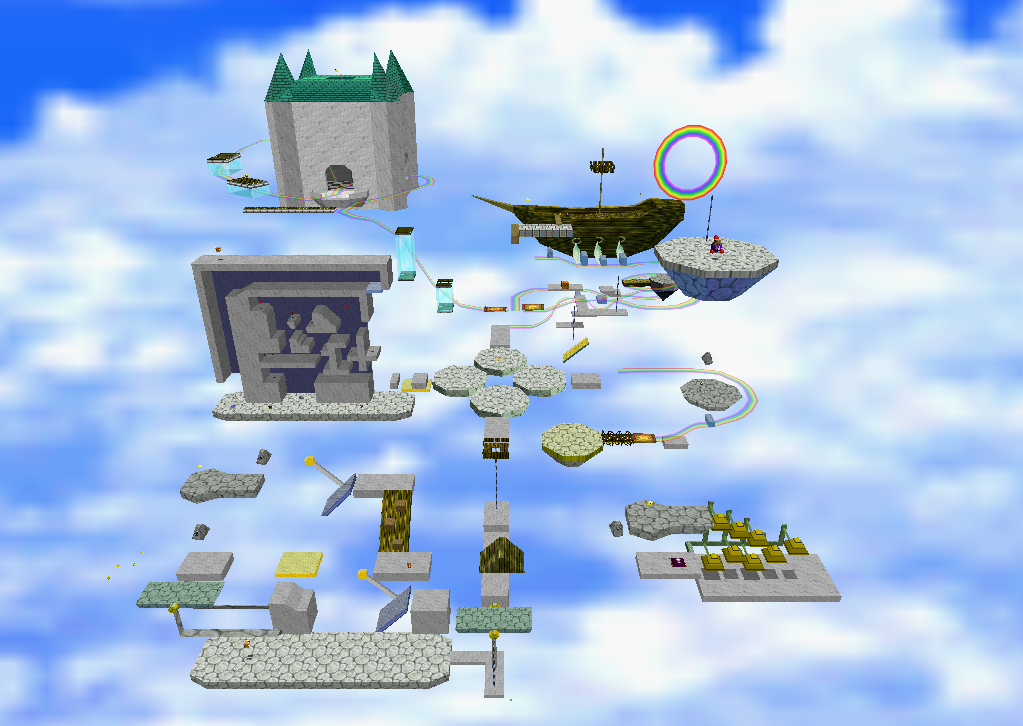
15. Rainbow Ride
The 3 Bowser Stages
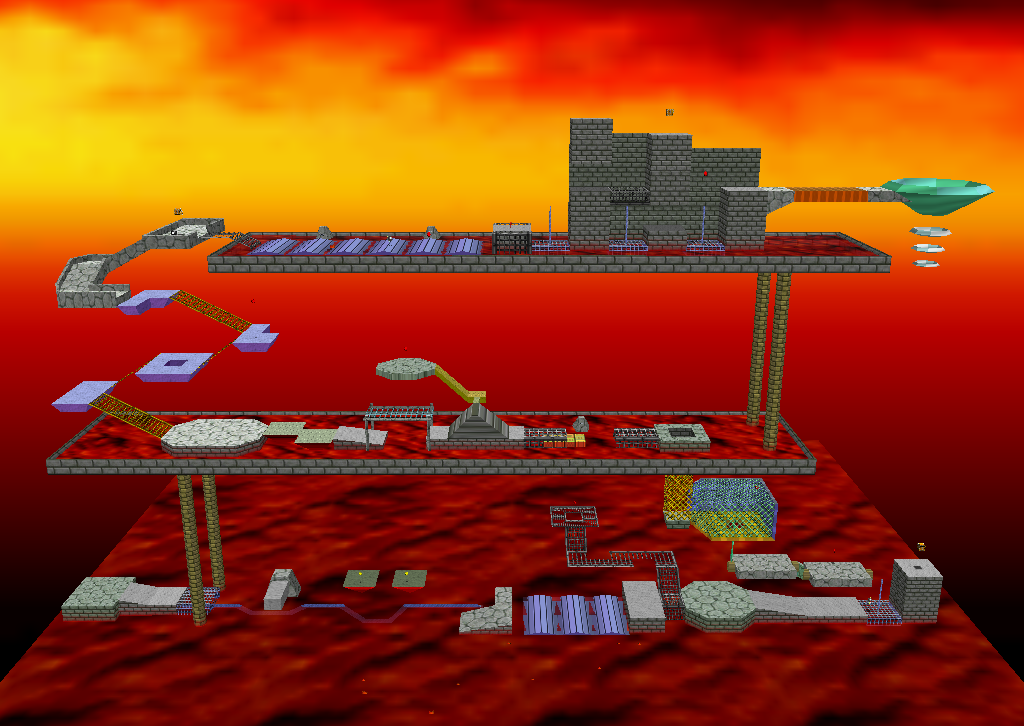
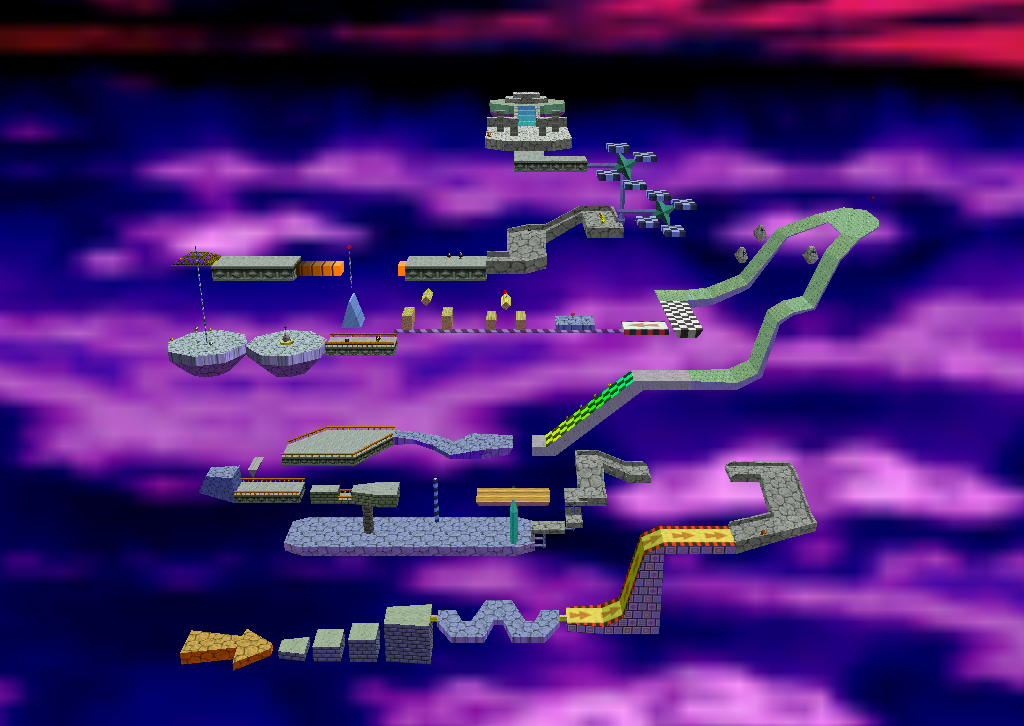
Three confrontations with Bowser are spread across the castle’s three floors. Each one is its own self-contained mini-course leading to an arena; defeat Bowser by grabbing his tail, swinging him in a circle, and chucking him at the floating spike bombs at the edge.
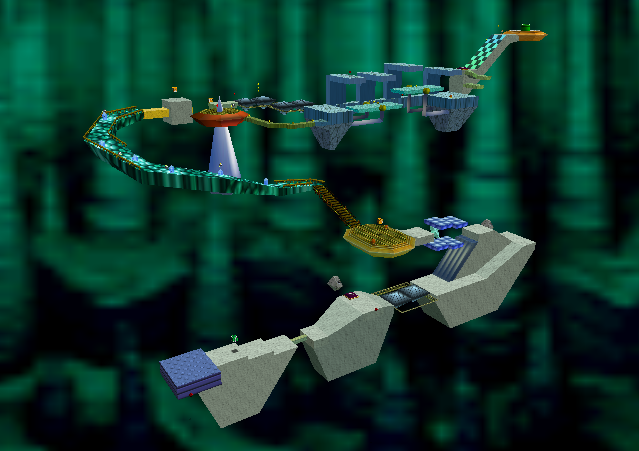
Bowser in the Dark World
Bowser in the Fire Sea
Bowser in the Sky
Secret & Cap Stages
Tucked away in the castle are seven more mini-courses worth a Star or two each. They include the three Cap Switch stages, two hidden rooms, a slide and a flying gauntlet. Easy to miss, but the Wing, Metal and Vanish caps don’t work in main courses until you’ve found these.
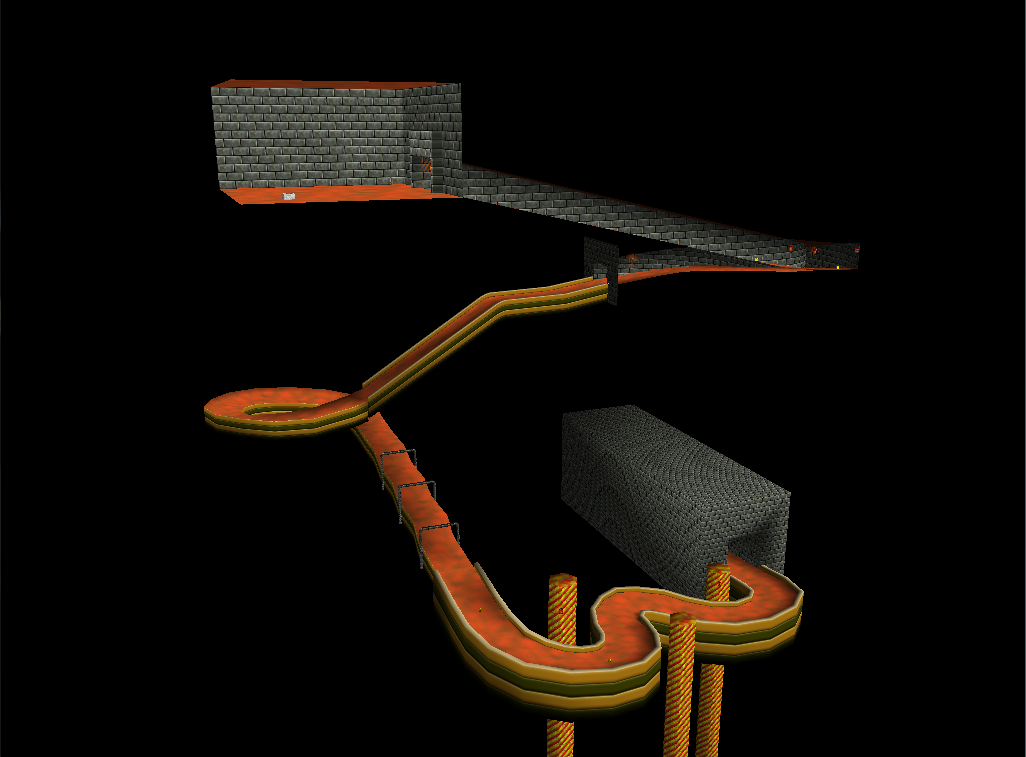
Princess’s Secret Slide
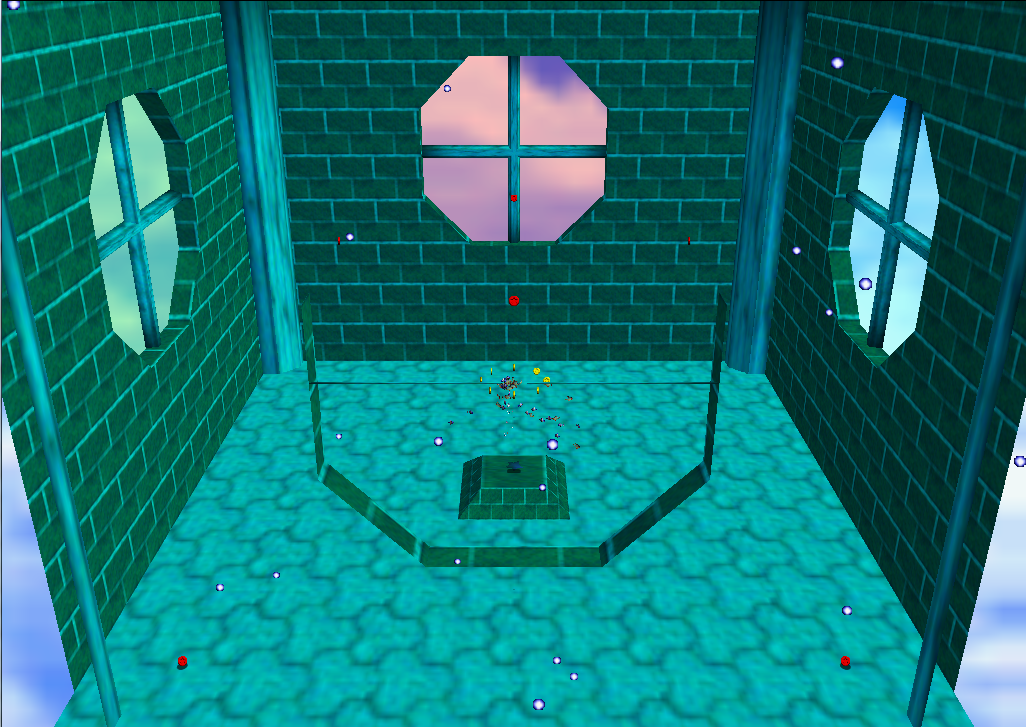
The Secret Aquarium

Tower of the Wing Cap
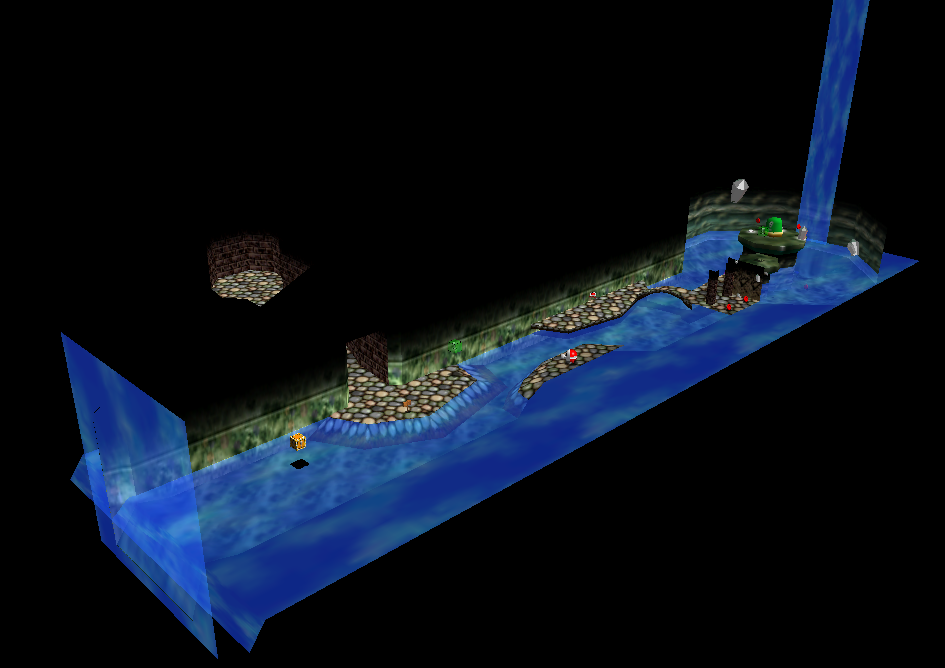
Cavern of the Metal Cap
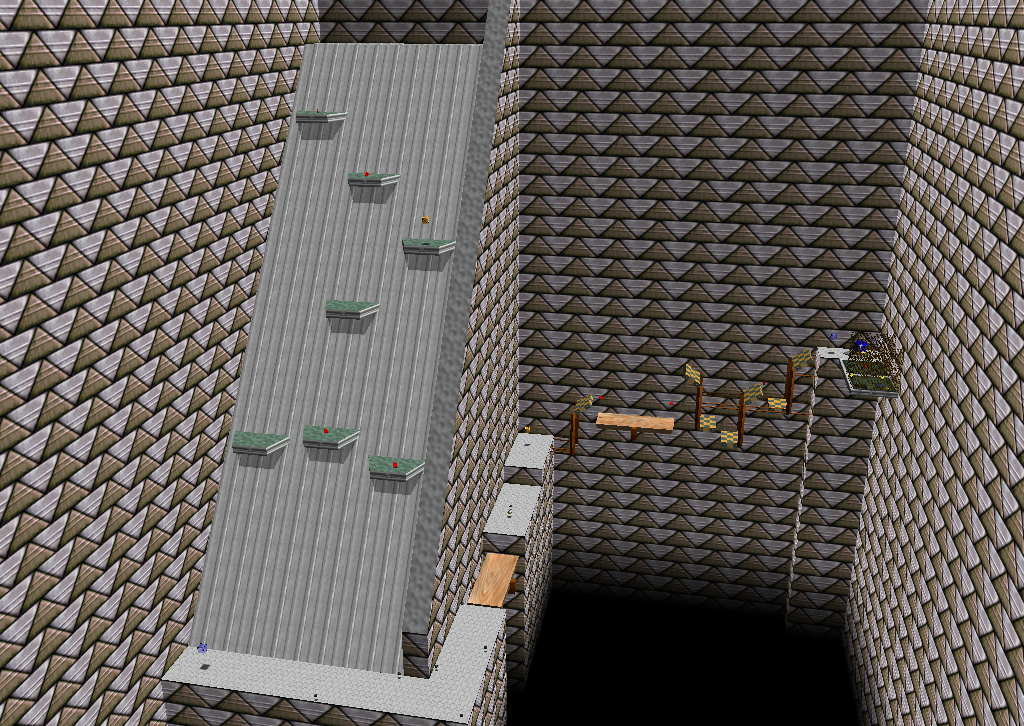
Vanish Cap Under the Moat

Wing Mario Over the Rainbow
Enemies & Bosses
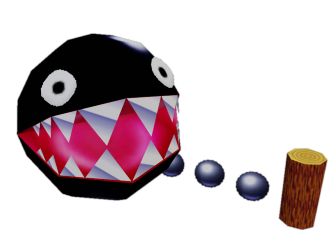
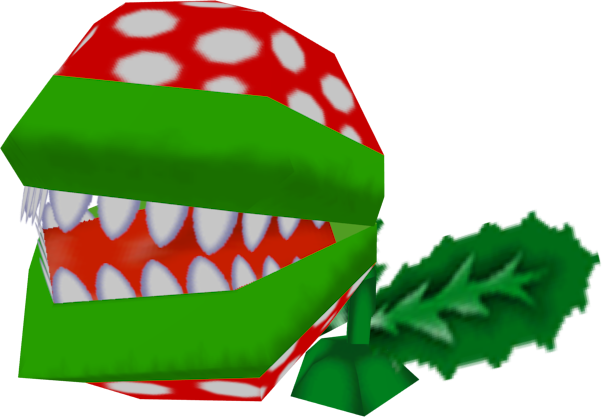
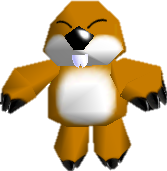
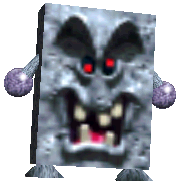
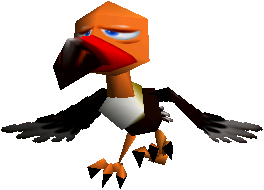
Over 30 different enemy types appear across the courses, ranging from classic Goombas and Koopas to brand-new 3D-only foes like Bullies, Whomps and Klepto the cap-stealing buzzard. Most can be defeated by jumping on them, ground-pounding them or simply punching them off a ledge. Bosses, on the other hand, demand specific tactics.
Common Enemies
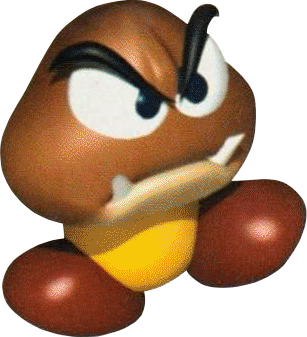
Goomba
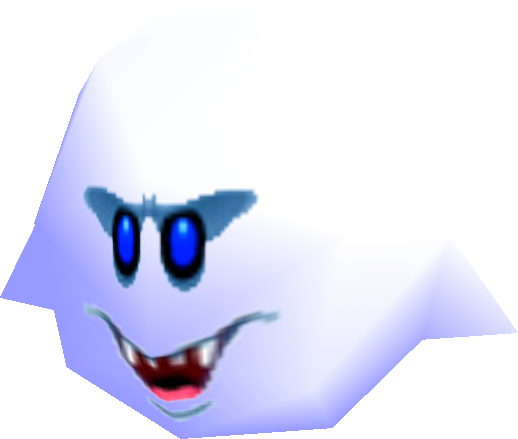
Boo
Chain Chomp
Piranha Plant

Bullet Bill

Mr. Blizzard
Monty Mole

Lava Bubble (Podoboo)
Whomp
Klepto

Bub
Heave-Ho
Tox Box

Mr. I
Haunted Chair

Bob-omb
Bosses
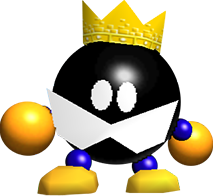
Big Bob-omb

Whomp King

Big Bully & Chill Bully
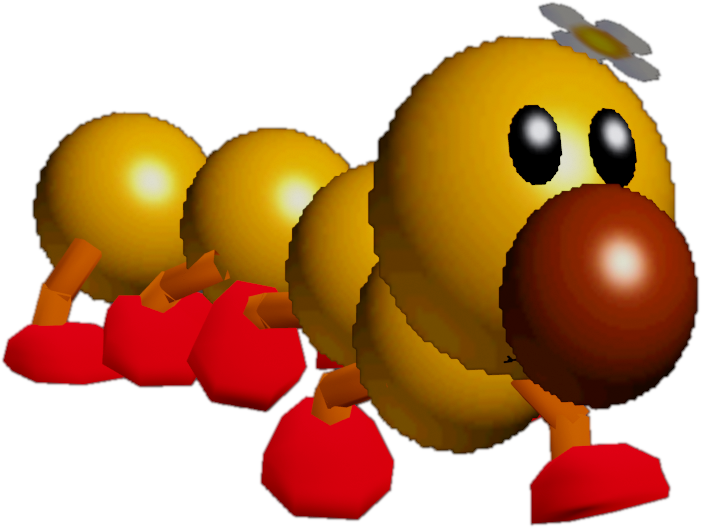
Wiggler
Other bosses include Big Boo (three appearances across Big Boo’s Haunt), Eyerok (a pair of giant stone hands awakened inside the Shifting Sand Land pyramid), King Boo’s haunted piano in the music room, and the moray eel Unagi in Jolly Roger Bay’s sunken ship. The big one is of course Bowser himself, fought three times.
Reissues
Super Mario 64 has been re-released and remade more times than almost any other Mario game. Here’s the full lineage.
| Version | Year | Platform | What’s different |
|---|---|---|---|
| Rumble Pak Compatible Version (Shindou) | 1997 | N64 (Japan only) | Rumble Pak support added, “So long-a, Bowser!” voice line changed to “Buh-bye!”, Backwards Long Jump glitch patched, new title-screen Easter egg. The base for all later rereleases. |
| iQue Player release | 2003 | iQue Player (China) | Mandarin Chinese localisation for the Chinese-market iQue console. |
| Super Mario 64 DS | 2004 | Nintendo DS | Full remake with new graphics, four playable characters (Yoshi, Mario, Luigi, Wario), 30 extra Power Stars (150 total), minigames, multiplayer, plus a touch-screen mini-map. |
| Wii Virtual Console | 2006-2007 | Wii | Emulated re-release. Based on the Shindou version in Japan. |
| Wii U Virtual Console | 2015 | Wii U | Same emulated re-release with off-TV play. |
| Super Mario 3D All-Stars | 2020 | Nintendo Switch | Compilation with Sunshine and Galaxy. Bumped resolution, redrawn UI, retouched textures — based on the Shindou version. Limited-time release pulled in March 2021. |
| Nintendo 64 – Nintendo Classics | 2021 | Switch (NSO Expansion Pack) | Available to Nintendo Switch Online + Expansion Pack subscribers. |

Regional & Version Differences
The original 1996 Japanese release, the North American release, and the PAL European/Australian release all have small but cumulative differences. Most got cleaned up further in the Shindou Rumble Pak version. A quick highlight reel:
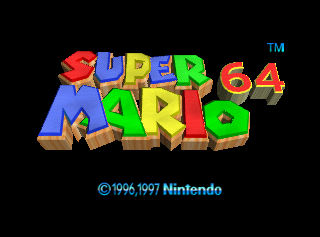
- Jolly Roger Bay painting: the Japanese original is a frame of bubbles in blue; Western releases changed it to a sunken ship in gold.
- Peach’s letter: signed with a pink “Peach” in the West, normal black text in Japan.
- Multi-language support: the European/Australian release added English, German and French via an Options menu.
- “So long-a, Bowser!”: Charles Martinet’s voice clip is changed to “Buh-bye!” in the Shindou Rumble Pak version.
- Backwards Long Jump glitch: patched out in the Shindou and PAL versions — speedrunners still prefer the original NTSC-J/U.
- The Japanese version has a key-dance animation; Western versions changed it to a new dance with the key itself.
Reception & Legacy
Super Mario 64 is regularly listed among the most influential video games ever made. It launched the Nintendo 64, taught the entire industry how a 3D platformer should feel, and went on to be the system’s best-selling game: 11.62 million copies shipped worldwide as of the end of 2009. Reviewers at the time were essentially unanimous — the camera was occasionally awkward, but everything else was 10/10 perfect.
| Publication | Score | Comment |
|---|---|---|
| IGN | 9.8 / 10 | “This game is exactly as one might hope it would be.” |
| GameSpot | 9.4 / 10 | Praised the level design and 3D camera. |
| Game Informer | 9.75 / 10 | Game of the Year 1996. |
| Electronic Gaming Monthly | GotY | Won EGM Game of the Year 1996, beating PS1 launch titles. |
| Nintendo Power | Hall of Fame | Repeatedly featured (see archive of Nintendo Power issues below). |
Super Mario 64 was one of the games featured at The Art of Video Games, a 2012 exhibition at the Smithsonian American Art Museum, where it won the action category for the Nintendo 64 — beating out Banjo-Kazooie and Star Wars: Shadows of the Empire.
Official Descriptions
Wii U eShop (North America): “On a bright, sunny day in the Mushroom Kingdom, Mario goes to visit the princess but finds her castle eerily empty. Leaping through pictures hanging from the walls, he enters 15 magical worlds in a quest to collect the 120 Power Stars pilfered by evil Bowser and save the day.”
Wii U eShop (Europe / Oceania): “Invited to Princess Peach’s castle, Mario discovers that she has once again been kidnapped by Bowser and his minions. However, something has changed… This time the adventure is in 3D!”
Trivia & Easter Eggs
- Luigi was prototyped during development for a two-player co-op mode and cut before release. His unused object slots remained in the code — rumours of unlocking him kept gaming magazines busy for years. He finally got his 3D debut in Super Mario 64 DS (2004).
- Shigeru Miyamoto took up swimming during development. Mario’s underwater breaststroke is a direct reference to the stroke Miyamoto was learning at the time.
- Lakitu is the cameraman. Just as in the Mario Kart games, Lakitu films the action from his cloud — the in-universe excuse for the game’s free 3D camera.
- Some Bob-ombs are friendly! The pink Bob-omb Buddies man cannons across the castle and the various courses, once the Bob-omb war on Bob-omb Battlefield is over.
- MIPS the rabbit in the castle basement is named after MIPS Technologies, the company that designed the N64’s R4300i processor.
- MIPS is also an Alice in Wonderland nod — like the White Rabbit, he scurries about and is always running late.
- Mario can wear different power caps (Wing Cap, Metal Cap, Vanish Cap — and Wario’s Cap in Super Mario 64 DS).
- The title screen lets you stretch and squish Mario’s face into different shapes using the C-buttons. Miyamoto suggested the team “play with Mario’s model like a programmer”.
- Charles Martinet provided Mario’s voice in Super Mario 64. It wasn’t his first time — he had also voiced Mario in Mario’s FUNdamentals, a puzzle game collection from 1995.
- Player 2 controls the camera during the ending. When a second controller is plugged in, the second player can pan and zoom the camera throughout the ending sequence and the closing credits.
- Super Mario 64 was the best-selling game on the Nintendo 64, shifting over 11.62 million copies by the start of 2010.
- According to the January 2005 issue of Electronic Gaming Monthly, Super Mario 64 is the game that made 3-D games popular.
- A sequel was planned for the unreleased Super Nintendo Disc Drive. The SNES-CD addon (developed in partnership with Sony) never made it to market, but a follow-up to SM64 was once destined for it.
- A two-player simultaneous mode was in early development. Developers ultimately scrapped it, deciding two players would never agree on where to go or what to do.
- You have to fight Bowser three times in this game — in the Dark World, in the Fire Sea, and finally in the Sky.
- In the Japanese version of the title screen, the prompt reads Press Start. In the US and EU versions it simply says Start.
- Japan got a Rumble Pak edition. In Japan, the Rumble Pak was released alongside Super Mario 64 as part of a special bundle. The Rumble Pak edition never made it to EU or US markets.
- Wizard of Oz reference: the sixth star in Rainbow Ride is called “Somewhere over the Rainbow” — after the Judy Garland song from The Wizard of Oz.
- Edgar Allan Poe reference: the second star in Tick Tock Clock is named “The Pit and the Pendulums” — a nod to Poe’s short story The Pit and the Pendulum.
- Tick Tock Clock returns as a race track in Mario Kart DS.
- Metal Mario returns as a playable racer in Mario Kart 7 on the 3DS — a callback to the Metal Cap power-up here.
- Royal Raceway on Mario Kart 64 features Peach’s Castle, recreated identically from Super Mario 64. You can drive your kart up to the castle and around its grounds.
- Paper Mario opens the same way: Mario receives a letter from Peach, arrives at the castle, and the main room is almost identical to SM64’s — though the doors then lead to different rooms.
- SM64 DS opens with a callback: at the start of the DS remake, Yoshi jumps down from the castle roof — the exact spot he appears in at the end of the original game.
- The “It that really you???” line when Mario meets Yoshi on the castle rooftop is a typo — it should read “Is that really you???”. The line was carried through the Virtual Console releases and only got patched in Super Mario 3D All-Stars.
- If you collect all 120 Stars, Yoshi appears on the castle roof, gives Mario 100 extra lives, and unlocks a new flailing triple-jump animation. Cannons across the castle also open up.
- Plural-form typo: if Mario tries to enter a level needing one more star, the game still pluralises the message — “You need 1 more stars” instead of “You need one more star”.
- The Backwards Long Jump is the most famous SM64 glitch — performed correctly, it lets Mario climb any flight of stairs, including the Endless Stairs.
- The Black Room of Death: using the Backwards Long Jump you can clip into a section the developers never finished — Mario gets stuck inside the castle walls.
- Invisible walls and objects hide throughout the levels — one of the most famous is on Tall, Tall Mountain.
- You can reach the castle rooftop without 120 Stars. A perfectly-timed Triple Jump on the slope adjacent to the castle gets you up there. It takes a few attempts but it’s reproducible.
- Falling off the castle roof sees Mario cling to the corner of the building — but he still loses a life, and his cap comes off in the process.
Videos
From original 1996 commercials to long-form gameplay walkthroughs — here are some of the best Super Mario 64 videos floating around.
Nintendo Power Archive
Super Mario 64 dominated the pages of Nintendo Power across 1996-1998. We’ve collected every issue’s SM64 coverage here — the original previews, the strategy guide special, the Game Faces competition, and the running Questions & Answers feature where readers wrote in with their toughest sticking points.