
Super Mario Games on the Nintendo Entertainment System (NES)
The Famicom and NES turned Mario from an arcade carpenter into the face of home video games. Across more than a decade the 8-bit console gave him Super Mario Bros., the reworked Super Mario Bros. 2 and the sprawling Super Mario Bros. 3, plus Dr. Mario, Yoshi‘s first puzzle games, sports titles, edutainment and some memorable cameos.
All NES Mario Games Covered
Click any tile to jump to that game’s full page on Super Luigi Bros. Games are ordered by their first release on the NES, and each tile shows the kind of Mario appearance it is:
- Main role – the classic platform-style Mario adventures, such as Super Mario Bros. and Super Mario Land, plus the RPGs and other games built around Mario himself.
- Spin-off – a game that features Mario throughout but is not a mainstream adventure – karting, party, sports and puzzle games.
- Cameo – a non-Mario game with a reference to, or an appearance by, Mario or one of his friends.
- Edutainment – games designed to teach as well as entertain, starring characters from the Mario universe.
- Compilation – several Mario games collected on one cartridge or disc.

Donkey Kong

Donkey Kong Jr.

Mario Bros.

Donkey Kong Jr. Math
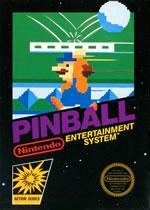
Pinball

Wrecking Crew
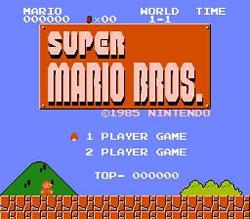
Super Mario Bros.
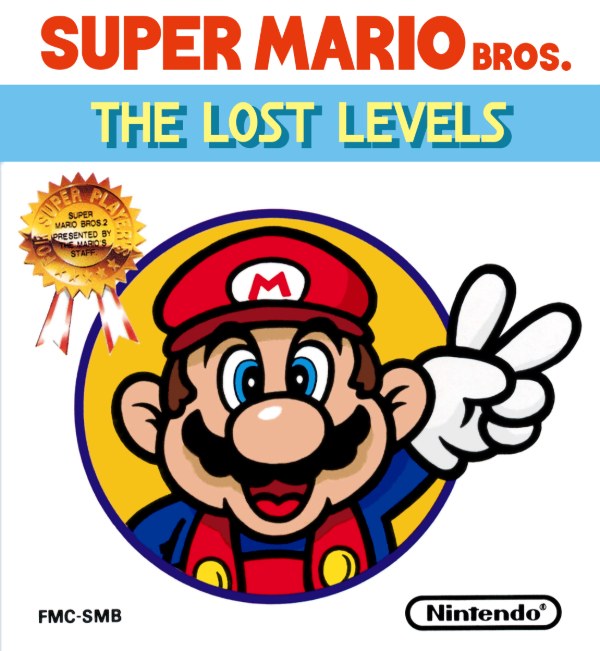
Super Mario Bros.: The Lost Levels

Punch-Out!!
Donkey Kong Classics

Super Mario Bros. 2

Super Mario Bros. 3

Tetris
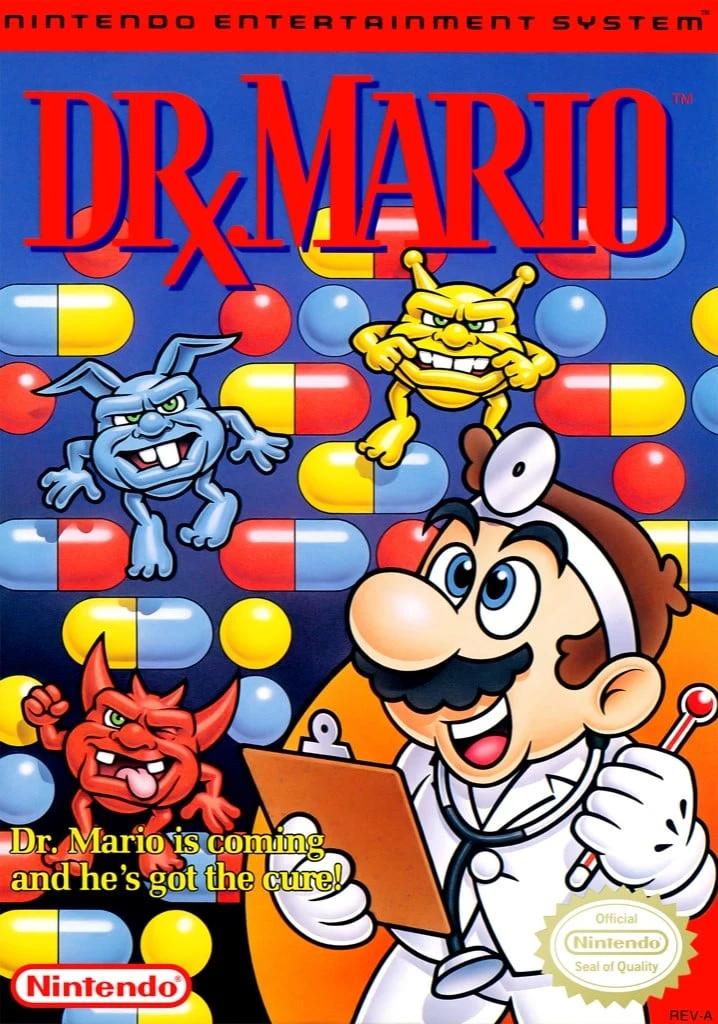
Dr. Mario

NES Open Tournament Golf

Yoshi

Yoshi's Cookie
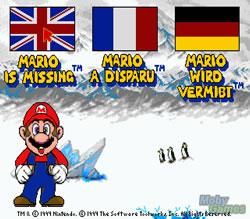
Mario is Missing!

Wario's Woods

Mario's Time Machine
About the NES
| Manufacturer | Nintendo |
|---|---|
| Generation | Third generation (home console) |
| Released | 15 July 1983 (Japan) · 18 October 1985 (North America) · 1 September 1986 (Europe) |
| Launch price | ¥14,800 (Famicom) · US$179.99 (NES Deluxe Set) |
| Units sold | 61.91 million (Famicom and NES combined, Nintendo IR) |
| CPU | Ricoh 2A03 at 1.79 MHz (NTSC); 2 KB work RAM, 2 KB video RAM |
| Media | Game Pak cartridge · Disk Card (Famicom Disk System, Japan) |
| Best-selling Mario game | Super Mario Bros. – 40.24 million (including pack-in copies) |
| Predecessor | Color TV-Game |
| Successor | Super Nintendo Entertainment System (Super Famicom) |
| Discontinued | 14 August 1995 (North America, Europe) · 25 September 2003 (Japan) |
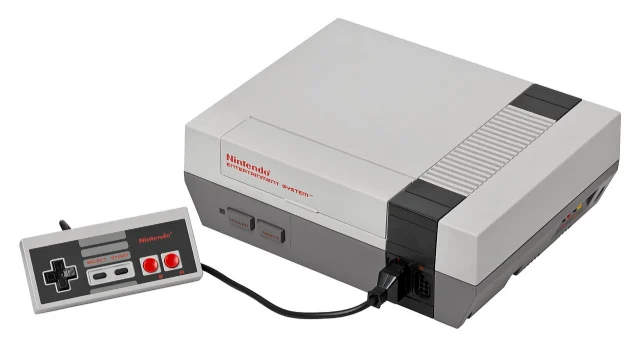
Nintendo’s first cartridge console began life in Japan as the Family Computer, or Famicom. Hiroshi Yamauchi wanted a machine cheap enough for ordinary households and gave the job to Masayuki Uemura’s R&D2 team. Their design paired a Ricoh 2A03 processor running at 1.79 MHz with a Ricoh picture chip, 2 KB of work RAM and another 2 KB for video, while the hard-wired pads borrowed the cross-shaped D-pad Gunpei Yokoi had created for Game & Watch. Yamauchi chose a red-and-white shell so the console would look like a toy rather than a home computer.
The Famicom went on sale on 15 July 1983 for ¥14,800, with home versions of Donkey Kong and Donkey Kong Jr. among its first cartridges. Half a million units sold in two months, then a faulty chip started freezing consoles and Yamauchi recalled the lot rather than repair a few. A revised board restored confidence, and by the end of 1984 nothing in Japan outsold it. The Famicom Disk System followed on 21 February 1986 at ¥15,000, adding rewritable Disk Cards that carried Japan’s own Super Mario Bros. 2.
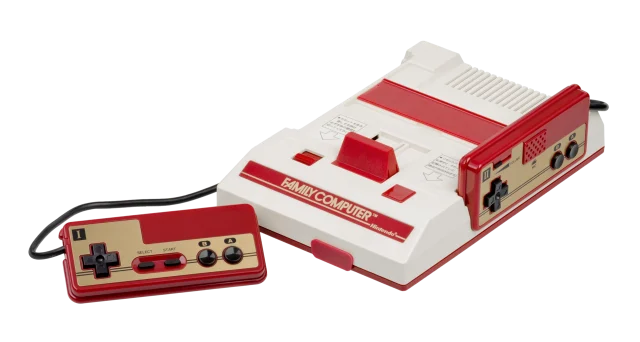
America was a harder sell after the 1983 crash. Nintendo first planned to let Atari distribute the console, but talks stalled when Coleco showed Donkey Kong running on its Adam computer at the June 1983 CES, and they collapsed once Atari’s chief executive Ray Kassar was fired. Nintendo of America went it alone. Lance Barr and Don James reshaped the Famicom into the grey, boxy Nintendo Entertainment System, hiding games behind a VCR-style front-loading slot, while the 10NES lockout chip and the Seal of Quality kept unlicensed software out. The NES was test-launched in New York on 18 October 1985 as a US$179.99 Deluxe Set with R.O.B. and the Zapper, reached Scandinavia on 1 September 1986 and went nationwide in the US on 27 September 1986; most of Europe followed in 1987.
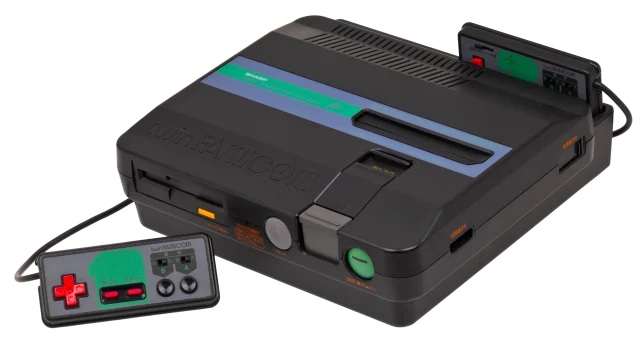
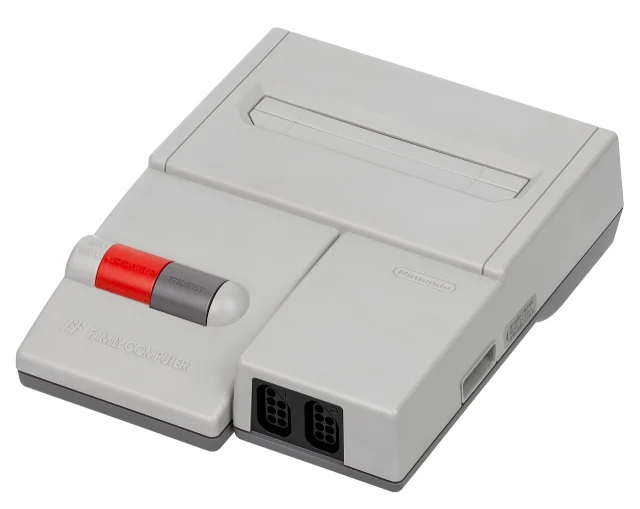
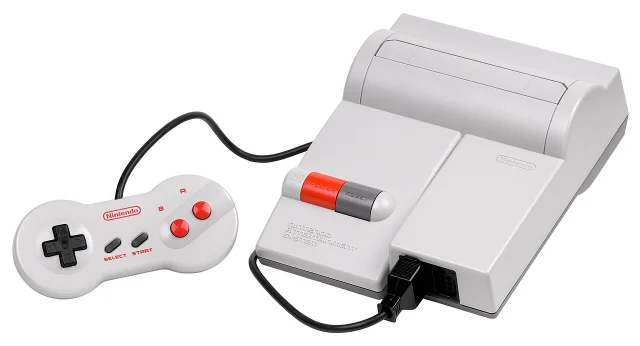
Sega’s Master System, strongest in Europe, and the Atari 7800 were its main rivals, but neither matched it overall. Nintendo kept refreshing the hardware: Sharp’s Twin Famicom (1986) merged the console with a Disk System, and 1993 brought both the AV Famicom, with detachable pads and composite output, and the cheaper top-loading NES-101, sold for US$49.99 with a rounded “dogbone” controller and no lockout chip. Nintendo shipped 61.91 million Famicom and NES consoles in total. Western sales ended on 14 August 1995, while the Famicom carried on in Japan until 25 September 2003.
Mario made the machine. Super Mario Bros. arrived in Japan on 13 September 1985, sat in the North American launch line-up and became the pack-in game, with sales of 40.24 million copies. Japan’s tougher sequel stayed on the Disk System, so the West instead received a Mario-fied version of Yume Kōjō: Doki Doki Panic as Super Mario Bros. 2 in October 1988 (7.46 million sold); Japan finally got it as Super Mario USA in 1992. Super Mario Bros. 3 launched in Japan that same October and reached North America in February 1990 on the way to roughly 18 million sales, and Dr. Mario added a pill-dropping puzzler in 1990 that sold 4.85 million on the NES.
Around those headliners sits a rich supporting catalogue. Conversions such as Mario Bros. and the demolition puzzler Wrecking Crew kept the brothers busy before Super Mario Bros., while cameos put Mario in the bonus round of Pinball, in the referee’s shirt in Punch-Out!! and in the dancing finale of Nintendo’s Tetris. The 1990s added Yoshi, Yoshi’s Cookie, NES Open Tournament Golf and licensed edutainment such as Mario is Missing! and Mario’s Time Machine. Wario’s Woods closed the book: out on the Famicom in February 1994, it became the last officially licensed NES game in North America that December and the only NES game to carry an ESRB rating.
The NES library has rarely been out of reach. Super Mario All-Stars remade the Mario games for the Super NES in 1993, and the Game Boy Advance revisited them through Super Mario Advance, Super Mario Advance 4 and Classic NES Series: Super Mario Bros. The Virtual Console sold the originals again on Wii, 3DS and Wii U, NES Remix chopped them into bite-sized challenges, and the NES Classic Edition mini console arrived in November 2016. Since September 2018 Nintendo Switch Online’s NES library, now branded Nintendo Classics, has kept Super Mario Bros., its sequels and many of the games below a few button presses away. For what came next, head to our SNES hub.
More Mario on the NES
Other notable Mario-related releases on the NES that don’t have their own page here yet:
- Jan 1984TennisCameoMario officiates every match from the umpire's chair
- May 1984GolfCameoThe moustached golfer was later identified as Mario
- Dec 1986All Night Nippon Super Mario Bros.Main roleRadio tie-in remix of The Lost Levels; 3,040 copies
- Oct 1987Famicom Grand Prix: F1 RaceSpin-offDisk System racer with Mario behind the wheel
- 1988Super Mario Bros./Duck HuntCompilationTwo-in-one cartridge packed with the 1988 NES Action Set
- Apr 1988Famicom Grand Prix II: 3D Hot RallySpin-offRally racer with Mario driving and Luigi navigating
- Nov 1988Kaettekita Mario Bros.Main roleDisk Writer remake of Mario Bros. with sponsor adverts