
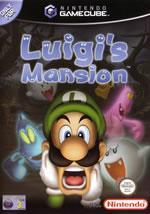
Luigi's Mansion
Overview
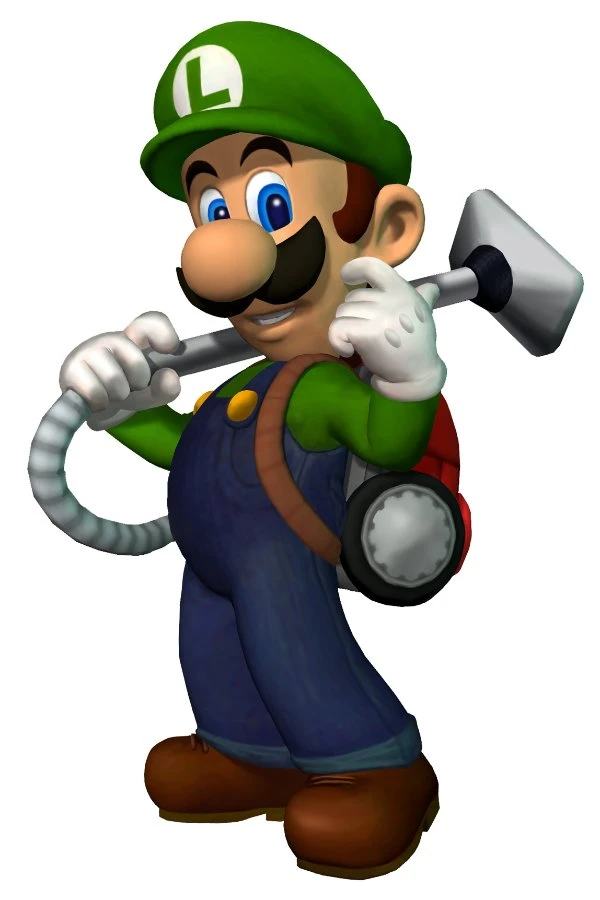
Luigi's Mansion is a Nintendo EAD-developed action-adventure game and one of the most distinctive titles in the Mario franchise. Released on 14 September 2001 in Japan as a Nintendo GameCube launch title, it gave Luigi his first ever leading role in his own game — replacing Mario as the protagonist of a Mario universe title for the first time in the franchise’s history.
The premise: Luigi receives a letter claiming he’s won a luxurious mansion in a sweepstakes he never entered. Suspicious but excited, he calls Mario to meet him there. Mario arrives first, and when Luigi turns up the mansion is a haunted death-trap and his brother is nowhere to be found. Armed with a Poltergust 3000 ghost-catching vacuum cleaner (given to him by the bizarre, hunched-over Professor Elvin Gadd), a flashlight, and a Game Boy Horror communicator, Luigi must explore the mansion room by room, vacuum up its ghostly inhabitants, and find his brother.
The game is short by Nintendo standards (about 6-10 hours) but dense with personality. Every room is hand-designed, every Portrait Ghost has its own biography, and the entire experience is anchored by Luigi's constant nervous mutterings — including the trademark humming of the title theme that has since become one of the most recognisable Luigi audio motifs in gaming.
This was a commercial smash — selling over 3 million copies, making it one of the best-selling GameCube launch games and outselling the system itself in the early launch window. It spawned a long-running sub-franchise of sequels, with Luigi’s Mansion: Dark Moon (3DS, 2013) and Luigi’s Mansion 3 (Switch, 2019) extending the IP into the modern era.
Story
The instruction booklet sets the scene:
One day, Luigi received an unexpected message: You've won a huge mansion! Naturally, he got very excited and called his brother, Mario. “Mario? It's me, Luigi. I won myself a big mansion! Meet me there and we'll celebrate, what do you say?”
Luigi follows a map through a dark forest, becomes lost, and eventually stumbles upon a gloomy mansion that doesn’t match any blueprint Nintendo of America had ever shown. Mario, who was supposed to be there first, is missing. As Luigi steps inside, ghosts appear — and a strange tiny scientist with a vacuum cleaner on his back rescues him from the first attack. The scientist explains: he is Professor Elvin Gadd, the mansion appeared out of nowhere on his property, and Mario is trapped in a painting somewhere within. The Poltergust 3000 is the only weapon that can capture ghosts. Will Luigi please help?
The truth, revealed gradually: the mansion is an illusion conjured by King Boo as a trap to lure Mario in and turn him into a portrait. Luigi must catch the 23 Portrait Ghosts in the mansion (which were originally Professor E. Gadd’s research subjects, escaped from their paintings), collect 50 Boos, and ultimately defeat King Boo — who possesses a giant Bowser mech-suit for the final showdown — to free Mario.
The Five Story Beats
The mansion is divided into four Areas, gated by key acquisitions, with a single boss fight closing each Area. The progression structure:
- Area 1 — The Foyer and the West Wing. Boss: Chauncey, The Spoiled Baby — a Portrait Ghost in the form of an evil giant infant, fought in his Nursery.
- Area 2 — The East Wing and outdoor courtyard. Boss: Bogmire, Caretaker of the Graveyard — a tall shadowy figure who duplicates himself, fought in the Graveyard.
- Area 3 — The basement, the cellar, the well. Boss: Boolossus, The Jumbo Ghost — a massive Boo composed of 15 individual Boos, defeated by splitting it apart with the Ice Element and vacuuming each one separately on the Balcony.
- Area 4 — The Roof, the Telephone Room, and the climb to the Altar. Boss: Vincent Van Gore, The Artistic Ghost in his Studio, who summons waves of normal ghosts as you fight him.
- Final Confrontation — the Secret Altar. King Boo reveals himself, traps Luigi inside a giant Bowser-shaped mech-suit, and the final boss fight ensues. Capturing King Boo frees Mario from his portrait.
The boss progression is satisfying: each one teaches a specific Poltergust mechanic that you’ll need for the rest of the game.
Gameplay
Luigi's Mansion is structured around room-by-room exploration of a single environment — the haunted mansion itself. There is no overworld, no levels, and no traditional Mario-style platforming. Instead, Luigi must:
- Enter each room — some are locked and require keys collected from defeated ghosts or solved puzzles
- Survive the ghost ambush — each previously unexplored room is full of normal ghosts that Luigi must capture before the lights turn back on
- Capture ghosts using the Poltergust 3000 — flash them with the flashlight to stun them, then suck them up. Their stamina determines how long they resist; mash the right analogue stick to pull harder.
- Use Element Medals — Fire, Water and Ice powers obtained from the Elemental Ghosts can be infused into the Poltergust to interact with environmental puzzles and certain ghosts.
- Find Portrait Ghosts — the 23 unique boss-tier ghosts. Each has a specific puzzle to expose their hidden heart (a glowing red weakspot) before they can be vacuumed.
- Hunt 50 Boos — once revealed by capturing the first boss, Boos hide in rooms throughout the mansion and must be tracked with the Game Boy Horror radar.
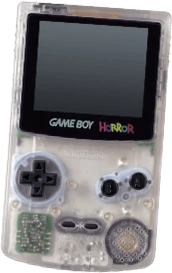
The Game Boy Horror is a Game Boy-shaped communicator E. Gadd gives to Luigi. It serves as the game’s map, ghost-radar, X-ray vision (for inspecting paintings), in-game phone (Luigi can call E. Gadd at any time for hints), and treasure scanner. It’s one of the most charming UI elements Nintendo ever designed.
Controls
| Action | Control |
|---|---|
| Move Luigi | Control Stick |
| Aim flashlight / Poltergust | C Stick (independent of movement) |
| Vacuum | R Trigger (analogue depth controls suction strength) |
| Reverse blow | L Trigger (pushes objects, blows out candles) |
| Flashlight pulse | A Button (stuns ghosts, exposes hearts) |
| Use Element Medal | B Button (Fire/Water/Ice when equipped) |
| Game Boy Horror | Y Button |
| Map / pause | Start |
The dual-stick design is critical: Luigi moves with the left stick, but he aims the Poltergust independently with the right. This allows you to back away from a ghost while still vacuuming it — a defining mechanic. Pulling the analogue R trigger gradually increases suction force, and your stamina meter (visible in the corner) doesn’t deplete, but ghosts pull back equally hard.
Characters
Luigi
The single playable character. Famously the “cowardly” brother who has to push past his fears to rescue Mario. His audio characterisation is iconic: he hums the title theme nervously when no ghosts are around, the tune getting progressively shakier in scary areas, and his voice line catalogue (“Mario? Maaarrrio!?”) is some of Charles Martinet's most distinctive Luigi work.
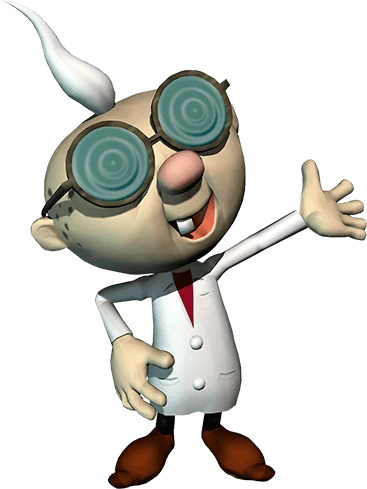
Professor Elvin Gadd
The reclusive paranormal scientist who lives in a small laboratory outside the mansion. Inventor of the Poltergust 3000, the Game Boy Horror, the Ghost Portraficationizer (which turns captured ghosts back into paintings), and the Game Boy Horror radar system. His mansion-front lab is the central hub of the game — Luigi returns here to convert captured ghost portraits, save the game, and check his bank balance.
E. Gadd has gone on to become one of the most recurring secondary characters in the entire Mario franchise — appearing in every Luigi's Mansion sequel plus Mario & Luigi: Partners in Time, Super Mario Sunshine (the FLUDD designer references his work), and many other titles.
Mario
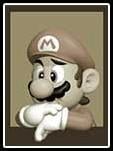
Trapped in a portrait for the entire game. He doesn’t speak or act, but Luigi finds Mario’s hat, letter, shoe, glove and star scattered through the mansion. Collecting all five before the King Boo fight unlocks a small dialogue from Mario at the end.
Toad
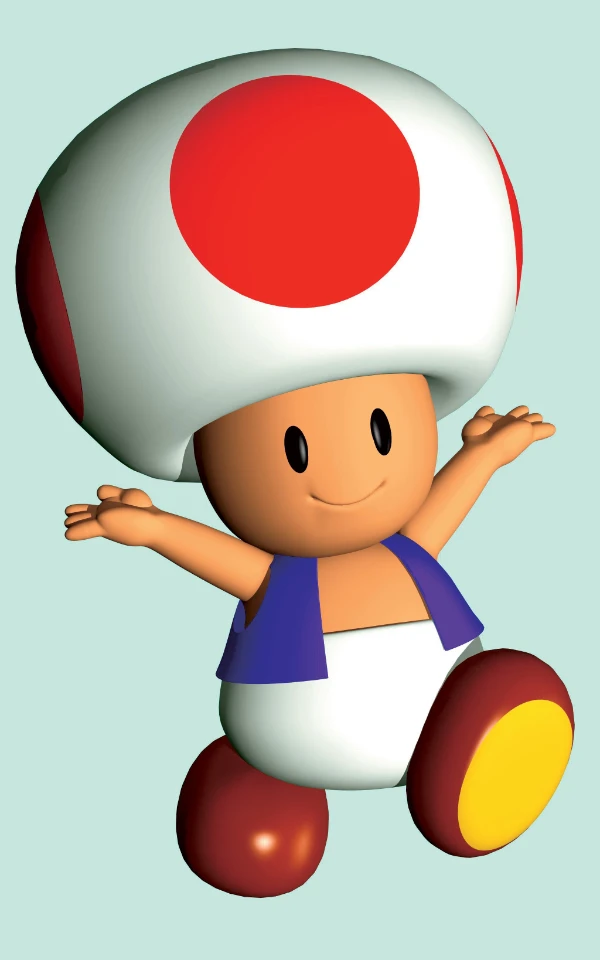
The familiar Mushroom Kingdom companion. Found four times throughout the mansion, initially crying. Once Luigi cheers him up, he doubles as a save point.
King Boo
The principal antagonist. King of all Boos. He constructed the entire mansion as a trap to lure Mario in and turn him into a painting. The final boss fight has King Boo possessing a Bowser-shaped mechanical suit — one of the most memorable boss encounters in Nintendo history.
Ghost Types

Ghosts in Luigi's Mansion come in three main categories: normal ghosts (filler enemies in rooms), Boos (the 50 hidden collectibles), and Portrait Ghosts (the 23 named boss-tier ghosts).
Normal Ghosts (Small)
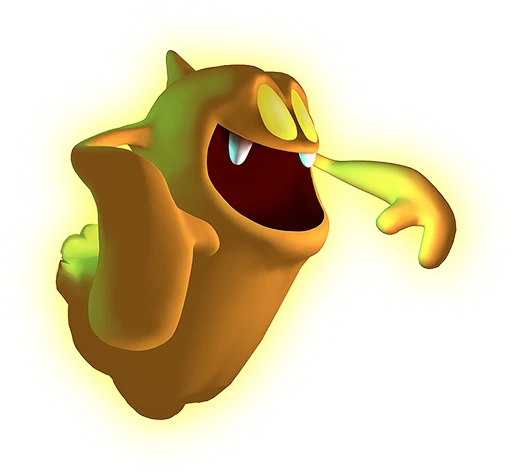
- Gold Ghost — the weakest, easiest to capture. Appear in most early rooms.
- Purple Puncher — aggressive, throws punches. Slightly tougher.
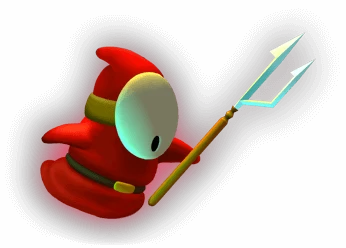
- Ghost Guy — Shy-Guy-shaped ghosts. Throw masks to deflect your flashlight.
- Blue Twirler — spinning ghosts that flit around the room.
- Garbage Can Ghosts — hide inside furniture and ambush.

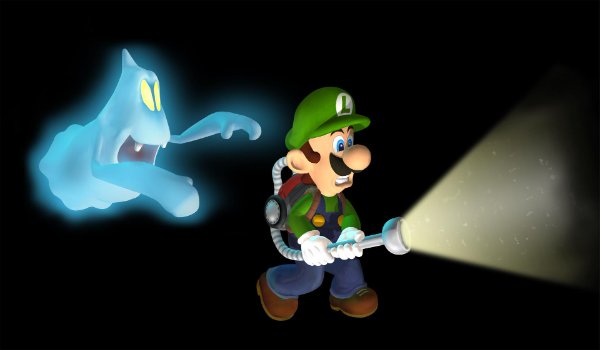
Normal Ghosts (Large / Elemental)
- Flash ghosts — bright, fast, hard to flashlight
- Bowling Ghost — rolls into you
- Mum Mummy / Skeleton Ghost / Speedy Spirit — specialised harder variants
- Fire / Water / Ice Elemental Ghosts — granting the three Element Medals when first captured
The 50 Boos
Hidden throughout the mansion are 50 Boos — the trademark mischievous ghost-friends of the Mario series, sealed inside the mansion by King Boo. They are unlocked after defeating Chauncey (the Area 1 boss) and can then be hunted using the Game Boy Horror radar.
Each Boo has a unique name that’s usually a pun:
- Boogie
- Booffant
- Booigi
- Boolicious
- Boolivia
- Boomer
- Boomeo
- Booniversal
- Booreaucrat
- Boorgeoise
- Boorina
- Boos
- Booscaster
- Boodacious
- Bootha
- Boofoon
- Booffant
- Booigi
- Booligan
- Boolivia
- Booldog
- Boolderdash
- Boolean
- Boolicious
- Boolldog
- Boomeo
- Boomerang
- Boomon
- Boorange
- Booscaster
- Boosephus
- Booskies
- Boostalker
- Booth
- Bootine
- Bootlegger
- Bootykins
- Booware
- Booz
- Eboo
- GameBoo Advance
- Kung Boo
- Li'l Boo
- PB & Booly
- Tabooth
- Taboo
- Turboo
- Underboo
Each Boo has its own HP (between 10 and 200). They flee through walls when low on health, making capture a chase across multiple rooms. The Game Boy Horror radar pings louder as you get closer.
Collecting all 50 Boos unlocks the secret Hidden Mansion mode (in NTSC versions) or the alternate gold version of the ending (in PAL versions).

The 23 Portrait Ghosts
The signature collectibles of the game. Each Portrait Ghost is a unique named character with a backstory, a specific room they haunt, a puzzle for revealing their heart, and a biography quote unlocked when you capture them. Once captured, they return to E. Gadd’s lab and are converted back into a portrait via the Ghost Portraficationizer.
There are 23 Portrait Ghosts across the four Areas. Below are their official Game Boy Horror portraits as they appear in E. Gadd's gallery once captured:
Area 1 — West Wing


Area 2 — East Wing


Area 3 — Basement & Outside


Area 4 — Roof & Altar


Portrait Ghost Highlights — Notable Backstories
- Neville, The Bookish Father (age 42) — reads endlessly. Throws books at Luigi. “Spends his afterlife reading all the books he missed while living.”
- Lydia, The Mirror-Gazing Mother (age 34) — vain, brushes her hair eternally. Defeated by opening the curtain to mess up her hair.
- Chauncey, The Spoiled Baby — Area 1 boss. A massive evil infant who fights from a giant rocking horse. The Neville family’s deceased youngest child.
- Madame Clairvoya, The Mysterious Fortune-Teller — reads Mario’s star, hat, shoe, glove and letter back to Luigi if collected. She’s a key plot character.
- Vincent Van Gore, The Artistic Ghost — Area 4 boss and the in-universe creator of all the other Portrait Ghosts. He summons waves of regular ghosts during his fight.
- Boolossus, The Jumbo Ghost — Area 3 boss. A massive blue Boo composed of 15 individual smaller Boos. Defeated by using Ice on him to shatter him, then vacuuming the 15 pieces.
- Henry and Orville, The Twin Brothers — bratty toddler ghosts who play hide-and-seek. Caught by tracking them around the cellar.
- The Floating Whirlindas, The Dancing Couple — former waltz champions, can’t compete anymore since their feet don’t touch the floor.
Money & Treasure
The total possible score is 142,390,000 G in the Normal Mansion and 186,440,000 G in the PAL Hidden Mansion. Treasures are collected during ghost captures and from furniture/object interactions, with rarer treasures appearing only after certain story events.
| Item | Value | Normal | PAL Hidden |
|---|---|---|---|
| Gold Coin | 5,000 G | 1,536 in mansion | 1,686 |
| Bill | 20,000 G | 1,260 | 1,425 |
| Gold Bar | 100,000 G | 61 | 76 |
| Blue Sapphire | 500,000 G | 10 | 5 |
| Green Emerald | 800,000 G | 10 | 5 |
| Red Ruby | 1,000,000 G | 10 | 5 |
| Blue Diamond | 2,000,000 G | 5 | 30 |
| Gold Diamond | 20,000,000 G | 2 | 2 |
| Small Pearl | 50,000 G | 76 | 76 |
| Medium Pearl | 100,000 G | 76 | 76 |
| Big Pearl | 1,000,000 G | 19 | 19 |
The total money you collect determines which of the five different endings you receive — ranging from a small basic mansion to a gigantic ornate palace with Luigi waving from the front step. Maximum score = the largest mansion.
Mario’s Items
Mario’s personal items are scattered throughout the mansion — one each in five different rooms. Finding all five before approaching Madame Clairvoya is required for the “True” ending dialogue:
- Mario’s Hat — found in the Wardrobe Room
- Mario’s Star — found on the Roof
- Mario’s Glove — found in the Tea Room
- Mario’s Shoe — found in the Sealed Room
- Mario’s Letter — found in the Storage Room
Returning the five items to Madame Clairvoya (Area 2’s fortune teller) triggers a special scene in which she “reads” Mario’s spirit and reveals critical lore about King Boo and what happened to Mario.
E. Gadd's Gallery
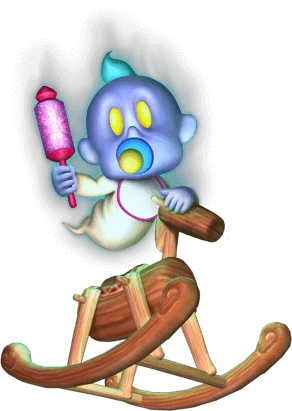
Once you capture a Portrait Ghost via the Poltergust 3000, E. Gadd converts them back into a painting using his Ghost Portraficationizer machine. These paintings are displayed in his personal gallery, accessible from the lab's main room.
Each portrait has three grades based on how full the ghost's HP bar was when you finished sucking it up:
- Bronze frame — you captured them but the HP bar wasn’t fully drained at the moment of capture
- Silver frame — partial HP drain
- Gold frame — full HP drain. The trophy for perfectionists.
Getting all 23 portraits in gold frame is one of the secondary goals for completionists. It requires draining each Portrait Ghost from full HP to zero in a single uninterrupted suction without ever losing your grip on them. Some ghosts (Boolossus, Vincent Van Gore) require almost-perfect play to gold-frame.
Development Lore
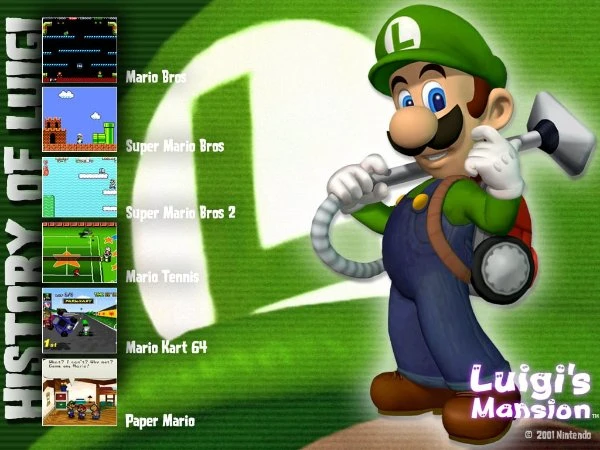
The development story of Luigi's Mansion is one of the most fascinating “direction-pivots” in Nintendo history. The idea for the game originated centred around exploring many different rooms, conceptually similar to the dungeon structure of The Legend of Zelda. Mario was initially chosen as the protagonist.
The team wanted the setting to be a huge house from the start. It began life as a Japanese-style ninja house — with sliding doors, hidden trapdoors, and shadow-puppet shenanigans. After early playtests, the team reconceived the layout to resemble a dollhouse: the player would always be looking through one of the walls into the rest of the room. This dollhouse perspective became the foundation for the game's “side-on, room-by-room” camera style.
As the lighting scheme was developed, the team focused on darkness and shadows. The dollhouse setting evolved into an American-style haunted mansion — the kind seen in old Hollywood horror films. With the change in setting and the new emphasis on ghosts, Luigi was chosen as the new protagonist, because the team wanted a more cowardly character. Mario was “more known for being brave”, so Luigi got the spotlight here by virtue of his comparatively timid personality.
The Portrait Ghosts were specifically created in order to distinguish the mansion's ghost population from the rest of the Super Mario franchise's ghosts (i.e. Boos). The team also briefly considered using no Mario characters at all in the game — a fully detached ghost-hunting IP — before settling on the Luigi-led Mario universe spin-off we got.
The game was demoed at Nintendo Space World 2000 (alongside “Meowth's Party” and other GameCube tech demos) as one of the showcase pieces of the system's launch line-up. The final build shipped less than a year later.
Development Staff
The original game’s producers were Shigeru Miyamoto and Takashi Tezuka, with Hideki Konno as director. The music was composed by Kazumi Totaka (the “Totaka's Song” composer, also responsible for the Animal Crossing soundtrack and the famous hidden song in many Nintendo games) and Shinobu Tanaka.
Notably, this was the last original entry in the Super Mario franchise to be produced under Hiroshi Yamauchi's administration as Nintendo's president — Yamauchi having led Nintendo since 1949. He stepped down in May 2002, with Satoru Iwata taking over. Luigi's Mansion sits at the very end of the Yamauchi era and the start of the Iwata era for Mario games.
- Director: Hideki Konno
- Producers: Shigeru Miyamoto, Takashi Tezuka
- Composers: Kazumi Totaka, Shinobu Tanaka
- Voice of Luigi: Charles Martinet
- Voice of Mario: Charles Martinet (heard only via the Portrait)
- Voice of E. Gadd: Kazumi Totaka (also a composer on the project — gives E. Gadd his characteristic squeaky vocal pattern)
Pre-release & Cut Content
The retail game has a number of differences from the early builds shown at E3 2001 and Nintendo Space World 2000:
- Concept work was being done during the Nintendo 64’s lifetime — character designs were locked in well before final hardware was decided
- Many rooms had different names in early builds: the Foyer was originally called the “Entrance”, with similar internal rebrandings elsewhere
- The Poltergust 3000 originally had a pressure meter — if you used the vacuum continuously without releasing, it would overheat, ignite, and injure Luigi. This mechanic was cut in favour of unlimited-suction simplicity
- The Poltergust’s shape was more rectangular in pre-release builds, more like a traditional vacuum cleaner. The final retail design has the rounded sci-fi backpack we recognise today
- Various early ghost designs and unused enemy types have been data-mined from the final ROM — including a scrapped “Skeleton Ghost” concept and unused texture assets for additional Portrait Ghosts
- An unused King Boo battle dialogue exists in the data referring to events that don’t happen in the shipped version — hinting at a different planned final fight
Reception & Sales
Luigi’s Mansion received mostly positive reviews on release. Critics praised its inventive premise, its character work for Luigi, the Poltergust mechanic, the lighting and shadow technology, and the personality-packed Portrait Ghosts. Common criticisms were the short length (the main story can be cleared in 6-10 hours), the cramped indoor scope, and the relative lack of variety after the central Poltergust mechanic was learned.
GameSpot’s Shane Satterfield scored the game 7.9/10, calling it creative and refreshing but criticising the use of low-resolution textures, cramped rooms with low-polygon objects, and a soundtrack lacking variety. He saw the short length as a positive — arguing the game would have suffered if extended — and recommended the game for Mario collectors first, with rental as a viable option for everyone else.
Sales
Commercially the game was a major success:
- Sold over 350,000 copies in Japan in its launch window
- Sold over 2 million copies in North America within its first year
- Lifetime sales: approximately 3.5 million copies worldwide
- One of the top 10 best-selling GameCube games of all time
- In the GameCube launch window, the game actually outsold the GameCube console itself — many early adopters bought the game and the system together
Awards
- Multiple “Best Action-Adventure” nominations at the 2002 game awards circuit
- Won “Best Action Game” at the 2001 Spike Video Game Awards
- Numerous “Most Innovative Game” nominations for the Poltergust mechanic
Adaptations — Manga & Other Media
Luigi’s Mansion has been adapted into several other media:
Super Mario-kun Manga (Volumes 26 & 29)
The long-running Japanese Super Mario-kun manga adapted Luigi’s Mansion in two volumes. Volume 26 (which typically follows Paper Mario) condenses the entire mansion story into a single chapter — Luigi wins the mansion, meets a harmless Boo (named “Guide Boo”) who leads him through, finds the Poltergust, discovers Mario trapped in a portrait, fights Bowser briefly, and defeats King Boo. Bowser is included in the adaptation in place of King Boo for parts of the story.
Volume 29 features a separate adaptation revisiting different mansion rooms and Portrait Ghost encounters with a more comedic spin.
Other Appearances
- Super Mario-kun manga — volumes 26 & 29 (Japan)
- Various official Nintendo strategy guides and player-tips books
- Featured in the Nintendo Power Magazine November 2001 issue cover story
Legacy & Sequels
Luigi’s Mansion launched a major Nintendo sub-franchise. The sequels and re-releases:
- Luigi’s Mansion 2: Dark Moon (Nintendo 3DS, 2013) — 12 years after the original. Mission-based structure across five mansions. Director: Kensuke Tanabe (the original Luigi's Mansion team had moved on; Next Level Games co-developed).
- Luigi’s Mansion (Nintendo 3DS, 2018) — a faithful HD remake of the original GameCube game, featuring the PAL Hidden Mansion as the canonical hard mode and improved 3D effects
- Luigi’s Mansion 3 (Nintendo Switch, 2019) — a massive multi-storey haunted hotel adventure. Developed by Next Level Games. Considered the most polished entry in the series and a major Switch hit.
- King Boo has become a recurring Mario villain and playable Mario Kart character thanks to this game
- E. Gadd has become one of the most recurring secondary Mario characters in the franchise — appearing in Mario & Luigi: Partners in Time, Super Mario Sunshine, Dance Dance Revolution: Mario Mix and more
- The Poltergust has appeared as Luigi’s weapon in Super Smash Bros. Brawl onward
- Luigi’s Mansion themes have been adapted in Mario Kart 8, Super Smash Bros. and the Mario movie franchise
Names & Title History
Title and naming variations:
- Japan: «ルイージマンション» (Ruīji Manshōn) — “Luigi Mansion” (no possessive)
- North America: Luigi's Mansion
- Europe / Australia: Luigi's Mansion
- Korea: Released as part of the GameCube’s Korean lineup with localised text
- Game ID codes: DOL-GLME-USA (NA), DOL-GLMP-EUR (PAL), DOL-GLMJ-JPN (JP), DOL-GLMK-KOR (KR)
- 3DS remake (2018): Luigi’s Mansion (same title, with subtitle “HD Remaster” in marketing materials)
Trivia
Notable trivia about Luigi's Mansion:
- The very first GameCube game starring Luigi as a protagonist — he had been a sidekick or co-star in every Mario game before this point (excluding the Game Boy spin-offs)
- One of the launch titles of the Nintendo GameCube — shipped September 14, 2001 in Japan, 4 days before the GameCube system itself
- The opening logo sequence features Luigi humming the title theme — this music motif has become so iconic it appears in Smash Bros., Mario Kart, the movie, and numerous tributes
- The Game Boy Horror is shaped exactly like a Game Boy Color — deliberate hardware homage from one Nintendo platform to another
- Mario's painting portrait can be glimpsed if you visit certain rooms with the GBH in early Areas — before the formal reveal
- Each Portrait Ghost has a specific age listed in their biography — everything from Chauncey (newborn) to Sir Weston (61)
- The mansion exterior shifts subtly during the game depending on weather conditions and time of day
- Luigi has a different facial expression depending on his current HP — from confident-but-nervous at 100 HP down to panic at 1 HP. Five distinct expressions in total.
- The original GameCube launch ad campaign featured the slogan: “Luigi’s game. Mario’s problem.”
- Director Hideki Konno would later go on to direct Mario Kart DS, Mario Kart Wii, Nintendogs, and Wii Music
- The captured ghost paintings can be inspected in detail in E. Gadd’s lab — each has a brief biography text that adds to the lore
- The very last line of dialogue in the game is from Luigi: “Mario, let’s go home.”
Reference / Information
Sub-pages, guides and the official manual for Luigi's Mansion.
Media / Downloads
Box art gallery and screenshots for Luigi's Mansion.