
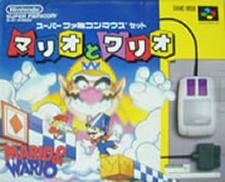

Mario & Wario
Guide a blinded Mario through 100 levels using only a fairy and your wits
Overview
Mario & Wario is one of the more unusual entries in the Mario universe — a puzzle-platform game where you don’t directly control Mario at all. Instead you play as Wanda, a tiny fairy who must guide a completely blinded Mario (or Peach, or Yoshi) safely through each stage to reach Luigi at the goal. The catch? Wario has dropped a bucket, barrel or other object on the character’s head, leaving them stumbling forward completely sightless.
Released exclusively in Japan on 27 August 1993, it requires the Super Famicom Mouse — you use it to click and interact with the level’s obstacles, blocks and hazards to clear a safe path. Think of it as an early precursor to Mario vs. Donkey Kong. The game was designed by Satoshi Tajiri — yes, the creator of Pokémon — during his Game Freak years.
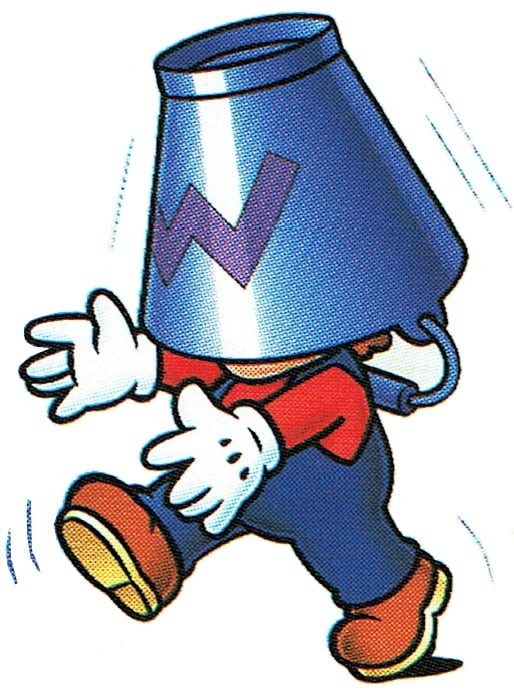
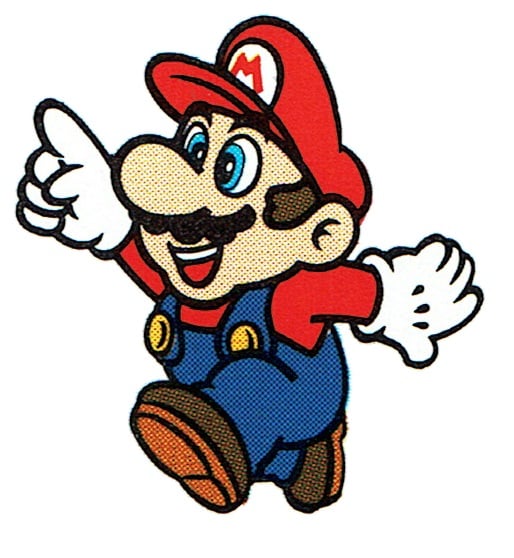
Mario — bucket on head

Wario — the culprit

Wanda — your fairy guide
Story
“This is the fairy forest. Within the forest’s depths lives a fairy, and those who behold it find happiness, as the tale goes. One day, Mario sought the fabled fairy by coming to the forest. Peach, Yoshi and Luigi were together… or should have been, but alas, Luigi’s visage was unseen. Mario’s group of three had decided to look for lost little Luigi.
Then, the sky was overcome with a suspicious engine’s sound. What was that? It was Wario riding his personal plane, Bulldog, and he threw a bucket from the sky. ‘Here you go!’ Uh oh, the bucket landed right over Mario’s head. ‘Uwagh, I can’t see in this thing!’
Watching was the forest fairy, Wanda. She somehow wanted to help, but the small fairy did not have the ability to remove the bucket. Thus, Wanda decided to use her magic wand on Mario to send signals, guiding him to Luigi.” — From the instruction booklet
The whole game follows from that premise — Wario’s random bucket-dropping causes chaos, and Wanda must guide the blinded characters through ten worlds to reunite with Luigi. Along the way, Wario keeps showing up to make things harder, throwing obstacles in the path and interfering from his Bulldog plane between worlds.
Gameplay
Mario & Wario is controlled entirely with the SNES Mouse. You play as Wanda the fairy, clicking around the level to manipulate the environment and clear a safe path for the blinded character — who walks forward automatically on their own and can’t stop.
Each level has a time limit. The character walks at their own pace (Peach is slow, Mario is medium, Yoshi is fast) and will simply plod into danger unless Wanda intervenes. You click blocks to flip them, destroy them or activate them; use springs to redirect the character; and clear enemies out of the way before they get hit. If the character falls into a pit or gets hurt enough, the level restarts.
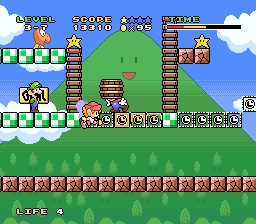
Wanda guiding a blinded character through Level 3-7
After clearing all stages in each world, a bonus stage unlocks where Wario flies overhead in his Bulldog plane. Click on Wario and his plane repeatedly to earn coins — hit him enough and the plane explodes, sending Wario flying. Then you can choose which character to guide through the next world.
Gameplay video
Characters
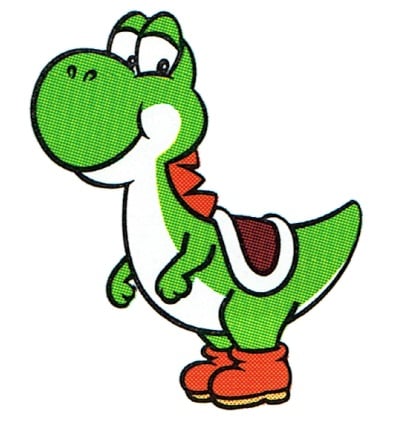
You can choose which character Wanda guides through each world — each one plays differently due to their movement speed:

The fairy you control throughout the entire game. Her magic wand clicks and interacts with the environment. Small and entirely dependent on your mouse skills.

The slowest of the three guided characters, giving more time to react and clear obstacles. Good for tricky sections.

Medium speed — a balanced and familiar choice.

The fastest character. Charges through levels quickly — high risk, high reward.

Waits patiently at the goal of every stage.

The antagonist who drops objects on characters at stage start. Fought in bonus stages between worlds.
Enemies
All enemies must be neutralised by clicking on them with Wanda before they cause damage to the blinded character:
 Dodorigesu Jr.Click to defeat
 GuriguriMoves along walls
 KomorinBats in packs of 4
 TubonBreathes fire
 Unibo (Blue)Moves up and down
 Unibo (Yellow)Moves side to side
The worlds
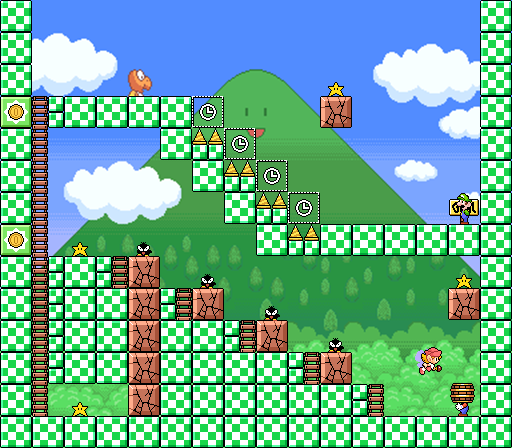
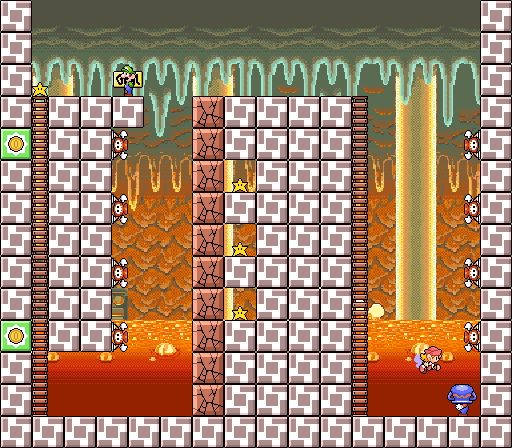
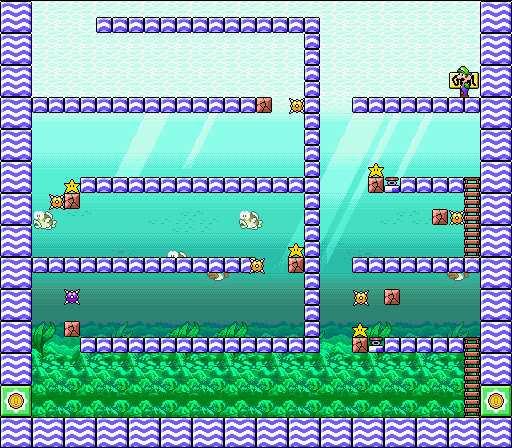
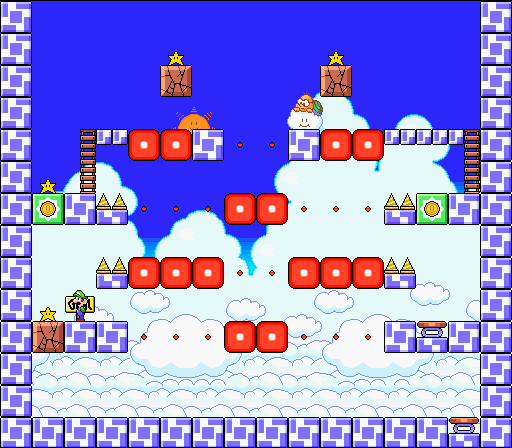
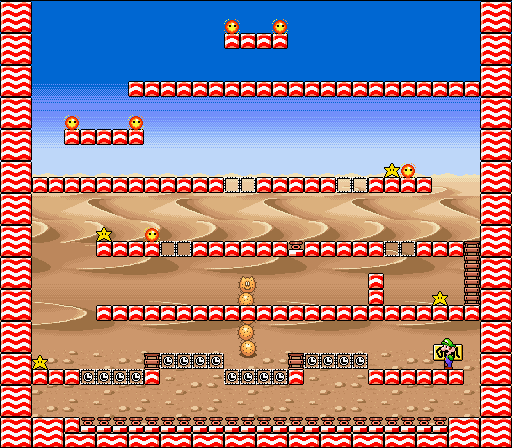
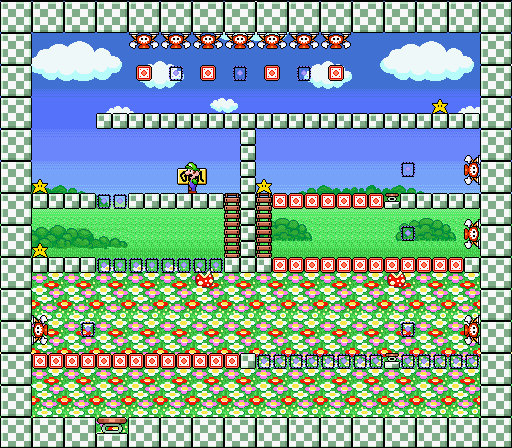
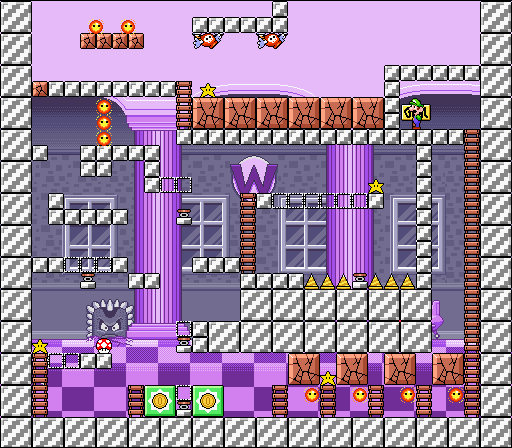
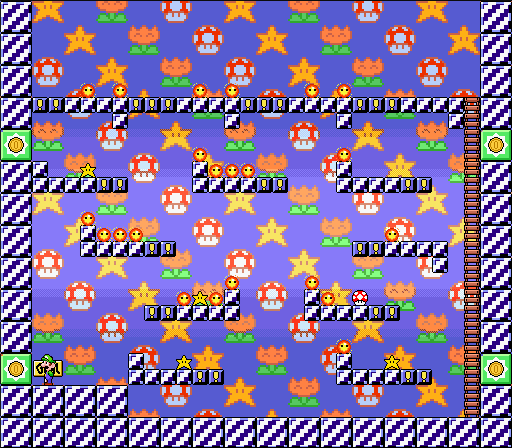
Ten main worlds plus a secret Extra World — 10 levels each, 100 stages in total. Each world introduces new block types and enemy behaviours. After clearing all 10 worlds, the Extra World unlocks:
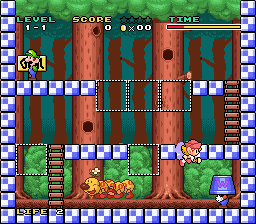


Blocks and obstacles
A big part of the game is learning how each block type works. Wanda must flip, destroy, activate or time each one to keep the blinded character safe:
 Flip-Flop BlockToggle solid/passable
 ElevatorLifts the character
 Balloon BlockExpands and contracts
 Rock BlockHit to destroy
 Jump BlockBounces character
 Sticky BlockTraps all characters
 Switch BlockRed=solid, Blue=passable
 Timer BlockSolid for a short time only
 Spike BlockInstant hazard
Items
Items are collected by the character as they walk over them:
 1-Up MushroomExtra life
 Coin100 = extra life
 Star4 = extra life
 Time MushroomAdds to timer
Wario fight bonus stages
After clearing all stages in a world, a bonus stage triggers. Wario swoops overhead in his Bulldog plane while you click on him and the plane to score coins. Hit him enough times and the plane explodes, sending Wario flying into the sky for a big coin bonus.
It is a fun palate cleanser between worlds — simple shoot-em-up mouse clicking, rewarding accuracy. After the bonus stage you pick which character (Peach, Mario or Yoshi) guides you through the next world.
Wario targets Mario
Wario targets Yoshi
Nintendo Power coverage
Mario & Wario appeared in Nintendo Power Vol. 52 alongside other major 1993 releases. Given the game was Japan-only the coverage was limited, but it captured just how quirky and original the concept was:
Nintendo Power Vol. 52 covered Mario & Wario as part of its Japan-only titles feature — highlighting the unique SNES Mouse gameplay and Wanda’s role as the playable fairy guide.
Read our coverage →
Mario vs. Wario comics
The rivalry between Mario and Wario that drives this game also inspired a pair of excellent comics — the Mario vs. Wario series. These comics were produced as promotional material in Nintendo Power’s era and capture the slapstick antagonism between the two characters perfectly. We have both issues on site:
Adaptations in manga
Super Mario Kodansha manga
The Kodansha Super Mario manga dedicated one full volume to Mario & Wario. In this version, the story picks up after the Super Mario Land 2: 6 Golden Coins arc — Wario is briefly freed from the influence of Aku no Keshin, but the evil spirit returns and possesses him again during a picnic with Mario, Luigi and Peach. Wario accidentally traps Luigi with a bucket and chaos ensues. The heroes first encounter Wanda the fairy, who helps them navigate Wario’s traps, and later Yoshi joins the group. The story escalates dramatically when the characters nearly cause the end of the world by waking a destructive Blargg from its slumber.

The Mario & Wario volume of the Kodansha Super Mario manga
Super Mario-kun
Super Mario-kun adapted Mario & Wario across three volumes. Volume 8, Stage 11 is a choose-your-own-adventure story that blends Mario & Wario with Super Mario Land 2 enemies — Peach, Mario and Yoshi all get buckets on their heads. Volumes 9 and 10 continue the story in a longer arc, with Volume 9 following Mario’s quest to find Wario and force him to remove the buckets. The adaptations have a characteristically madcap Super Mario-kun energy — wild slapstick and non-stop action.

Vol. 8 — Stage 11
Development
The story of how Mario & Wario came to exist is genuinely fascinating. Nintendo president Hiroshi Yamauchi asked Game Freak — fresh off their success with the Game Boy’s Yoshi — to develop a new game utilising the Super Scope accessory. But Game Freak had other ideas.
Internally, there was a desire to develop games using Game Freak’s own characters rather than a licensed Nintendo property. Game Freak president Satoshi Tajiri (who would go on to create Pokémon just two years later) and employee Akihito Tomisawa brainstormed concepts. Tajiri settled on a horror-themed game inspired by the film Gremlins — players would guide tiny gremlin-like creatures through obstacles. It was a genuinely dark concept for a Nintendo game.
The Super Scope requirement was eventually dropped in favour of the SNES Mouse, and the horror theme was replaced with a Mario setting. The Gremlin concept morphed into Wanda the fairy guiding a blinded Mario — keeping the core “guide a character through hazards” mechanic but wrapping it in cheerful Mario aesthetics. The result was something genuinely original that didn’t fit neatly into any existing genre, which probably contributed to it never leaving Japan.
Trivia and interesting facts
- Mario & Wario was designed by Satoshi Tajiri — the creator of Pokémon. He developed it at Game Freak just two years before Pocket Monsters (later Pokémon) launched in Japan
- The game was never released outside Japan — one of several quality SNES Japan-exclusives that Western players missed entirely
- It requires the Super Famicom Mouse to play — clicking the environment with the mouse is the only way to control Wanda
- The game has no save feature — a significant sticking point that likely contributed to the decision not to release it in Western markets
- Originally conceived as a horror game inspired by Gremlins — the dark theme was replaced with the Mario universe during development
- Nintendo president Hiroshi Yamauchi originally requested Game Freak to make a Super Scope game — the peripheral requirement was later switched to the SNES Mouse
- You can choose between three characters to guide — Peach (slow), Mario (medium) and Yoshi (fast) — each making the game play quite differently
- Completing the game triggers a role-reversal ending where your character hijacks the Bulldog plane and drops a bucket on Wario’s head
- The Extra World only unlocks after beating all 10 main worlds and contains the hardest stages in the game
- The game was adapted into a dedicated volume of the Kodansha Super Mario manga and three volumes of Super Mario-kun
- The Mario vs. Wario rivalry explored in this game also inspired the Mario vs. Wario comic series — both issues are available on our site
- This is one of the few games in the franchise where Luigi is not playable — he just stands at the goal waiting to be rescued in every single level
Reference and downloads
Guides
Nintendo Power
Mario vs. Wario comics