
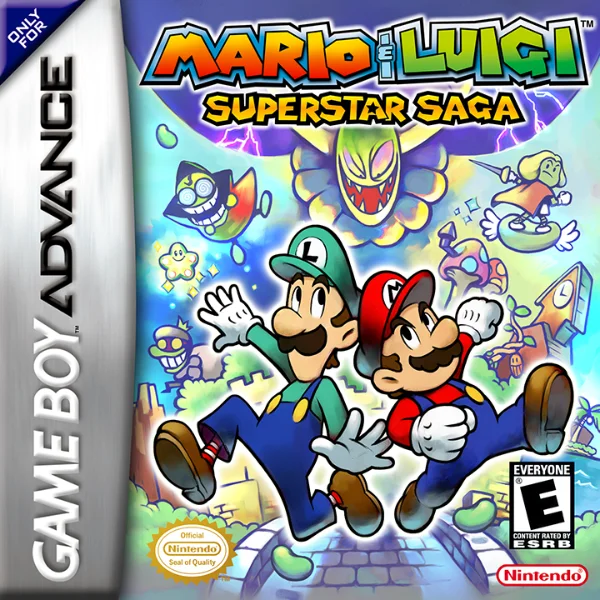
Mario & Luigi: Superstar Saga
Overview
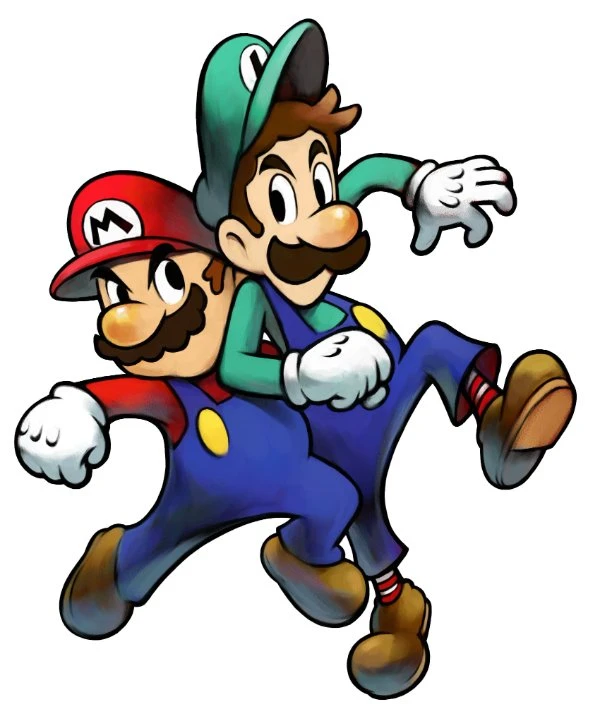
Mario & Luigi: Superstar Saga is a turn-based RPG for the Game Boy Advance and the first entry in the legendary Mario & Luigi series. Developed by AlphaDream (their first major project for Nintendo) and published by Nintendo, it launched on 17 November 2003 in North America, 21 November 2003 in Japan and Europe, and 28 November 2003 in Australia.
The game is a spiritual successor to Super Mario RPG: Legend of the Seven Stars (SNES, 1996) and Paper Mario (N64, 2000), inheriting the timing-based action commands and humor of those titles while introducing an entirely new mechanic: simultaneous two-character control. The A button controls Mario, the B button controls Luigi — a system used in battles, exploration, puzzle-solving, and the legendary Bros. Attacks that became the series’ signature.
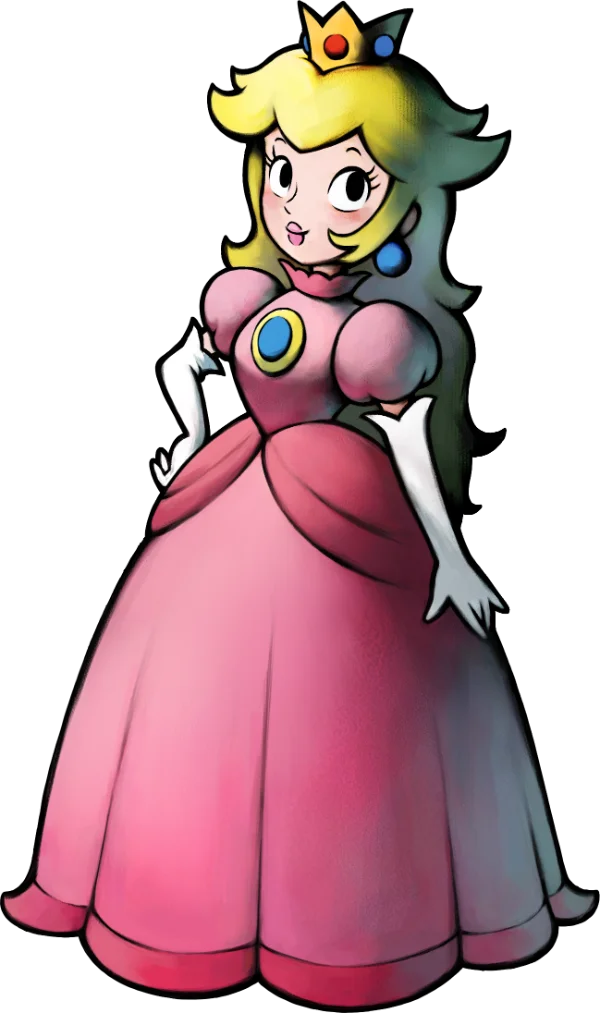
The story sees the evil bean-witch Cackletta and her tech-savvy assistant Fawful steal Princess Peach’s voice from the Mushroom Kingdom, replacing it with explosives. Mario, Luigi, and a reluctant Bowser (whose castle would be wrecked if Peach were kidnapped while explosive) cross the border into the Beanbean Kingdom to recover the voice and stop Cackletta’s mysterious plan involving the legendary Beanstar.
Critically acclaimed at launch with Metacritic 90/100, IGN 9/10, and Eurogamer 9/10. It became one of the highest-rated Game Boy Advance games of all time and established AlphaDream as a Nintendo-collaboration studio. Re-released on Wii U Virtual Console in 2014; remade as Mario & Luigi: Superstar Saga + Bowser’s Minions for Nintendo 3DS in 2017.
The Full Story

The Voice Theft
The story begins at Princess Peach’s Castle in the Mushroom Kingdom. The Goodwill Ambassador from the Beanbean Kingdom and her assistant arrive bearing a gift from Queen Bean for Princess Peach. The whole affair is a deception — the ambassador is actually Cackletta, and her assistant is the diminutive, bespectacled Fawful. They reveal themselves, steal Peach’s voice, and escape into the dark sky on Fawful’s flying contraption.
The Bros. Get Involved
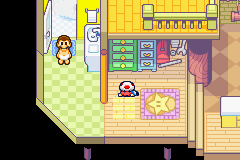
Meanwhile, Mario and Luigi are at their house in the Mushroom Kingdom. Toad rushes in (briefly playable!) to alert them of the disaster. Mario races off to Peach’s castle, literally dragging Luigi behind him in one of the game’s many comedic touches. At the castle, the Bros. confront Bowser, who has chosen that exact moment to attempt his usual Peach kidnapping. Mario defeats Bowser in the tutorial battle.
The Explosive Twist
A Toad reveals the catastrophe: Peach’s voice has been replaced with explosives. Every word she speaks drops a bomb that detonates moments later. Bowser, horrified that kidnapping the princess now means destroying his own castle, reluctantly teams up with Mario and Luigi. He flies them all toward the Beanbean Kingdom border on his Koopa Cruiser airship.
Fawful’s First Strike
During the journey, Fawful ambushes the Koopa Cruiser on his flying device. After a battle, Fawful blasts the airship out of the sky with a powerful attack. Bowser is shot out of a cannon and disappears across the landscape, separated from Mario and Luigi. The Bros. crash-land in Stardust Fields at the border of the two kingdoms, where the proud guard Tolstar demands a coin toll to pass.
Hoohoo Mountain & The Beanstar
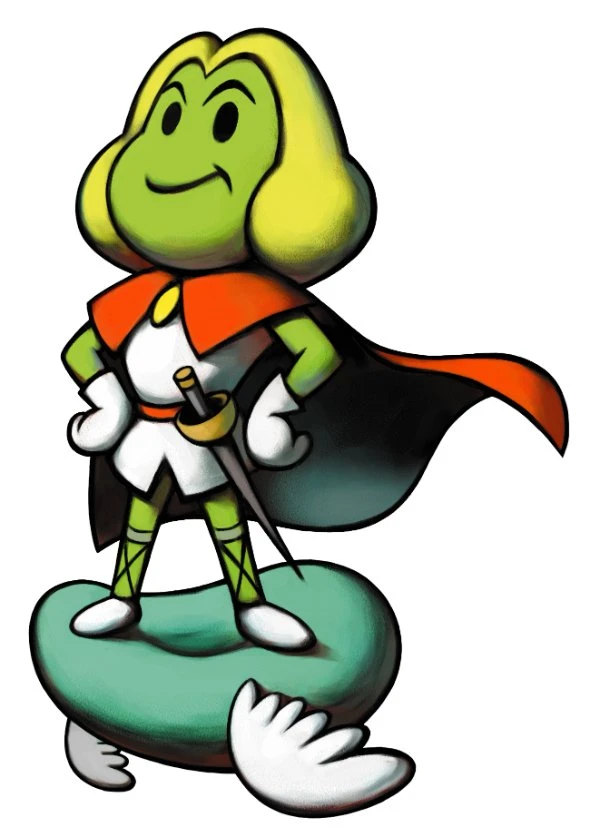
The Bros. travel through Hoohoo Village and climb Hoohoo Mountain, where they meet Prince Peasley of the Beanbean Kingdom (disguised as “Yoshi” at first) and battle Dragohoho. At the summit, they discover that Cackletta has stolen the legendary Beanstar — a powerful artifact that grants wishes to anyone whose voice can awaken it. With Peach’s sweet voice in Cackletta’s possession, this becomes the secondary objective.
Beanbean Castle & Queen Bean
Mario and Luigi reach Beanbean Castle Town, which has been ravaged by Cackletta’s assault. At Beanbean Castle, they meet Queen Bean and her advisor Lady Lima — but the queen has been infected by one of Cackletta’s “Bean-fever” bugs and transformed into a monstrous version of herself. The Bros. fight Queen Bean (Monster Form) as their first major boss battle, defeating her and curing her with a special antidote.
The Chuckola Reserve Quest
To make the antidote, the Bros. need Chuckola Reserve — a legendary drink fermented at Chateau de Chucklehuck in Chucklehuck Woods. At the Chateau, they’re betrayed by Popple the Shadow Thief and his amnesiac partner “Rookie” (who is secretly Bowser, suffering memory loss from the cannon-blast). Popple and Rookie are recurring comic-relief bosses throughout the game.
Deep in Chucklehuck Woods, the Bros. meet Chuckleroot, the ancient tree-guardian, and fight the giant Wiggler followed by the monstrous Chuckolator. They claim the Chuckola Reserve and cure the queen.
Cackletta’s Hideout
Healed, Queen Bean reveals that Cackletta’s hideout is at Woohoo Hooniversity. The Bros. travel through Beanbean Outskirts, where they learn the Firebrand and Thunderhand abilities from the mysterious sisters in Oho Oasis. At Woohoo Hooniversity, they face Mom Piranha (a giant electric Piranha Plant) and then Cackletta herself in her original form.
Cackletta’s Soul & Bowletta
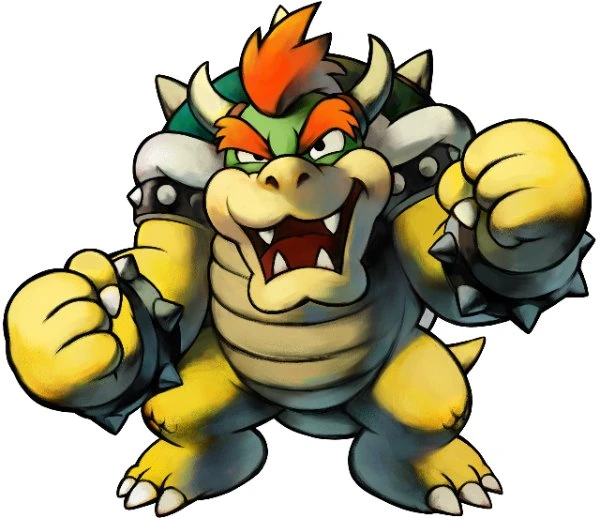
After defeating Cackletta, the witch appears to die — but Fawful captures her departing soul in a special device. He returns with Cackletta’s spirit to find Bowser, who has been working with Popple as “Rookie” the whole time. Fawful uses his device to force Cackletta’s soul into Bowser’s body, creating the abomination known as Bowletta — Cackletta’s consciousness in Bowser’s shell, with all his physical power.
The Beanstar Splits
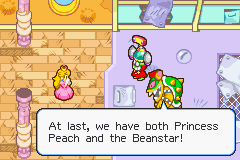
Bowletta steals the Beanstar, but Peach’s sweet voice (still in their possession) causes the Beanstar to react violently and shatter into four pieces that scatter across the Beanbean Kingdom. Bowletta and Fawful demand Princess Peach herself as ransom for the broken Beanstar. The Bros. then must search Teehee Valley, Gwarhar Lagoon, Yoshi Theater, and Joke’s End to retrieve the four shards.
Little Fungitown & Luigi’s Solo Adventure
In Little Fungitown (a Mushroom Kingdom settlement within the Beanbean Kingdom), Mario contracts the dreaded Bean-fever and is bedridden. Luigi must venture out alone to find the cure — one of the game’s most beloved sequences, putting the often-overshadowed brother front and center. At the Yoshi Theater, Luigi obtains the Neon Eggs to cure Mario.
The Decoy Plan
Once recovered, the Bros. plan a deception of their own. They send a Birdo dressed as Princess Peach to Bowletta as the ransom — with the explosive voice still in “Peach”’s possession. The deception works briefly, but Fawful sees through it. In the resulting chaos, the real Peach is captured.
Bowser’s Castle Returns
Bowletta retreats to Bowser’s Castle, which Fawful has upgraded to fly and breathe fire. The castle launches a final aerial assault on the Beanbean Kingdom. Mario and Luigi (assisted by Prince Peasley and a Beanbean cannon) blast into the airborne castle for the final dungeon.
The Final Battles
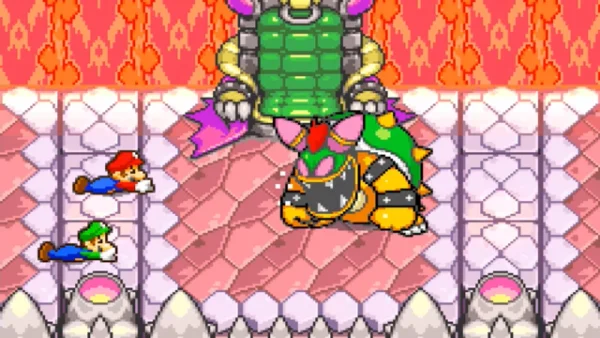
Inside Bowser’s Castle the Bros. face Fawful in a multi-phase battle (the penultimate boss), defeating him after his maniacal “I have fury!” rampage. They then confront Bowletta herself — first fighting the form, then being swallowed alive and battling Cackletta’s Soul inside Bowletta’s body. After Cackletta’s Soul is finally destroyed, the castle disintegrates and crashes into the ocean.
The Aftermath
Bowser, now restored to himself, escapes by clinging to floating debris. Mario, Luigi, Peach, Peasley, and the Beanbean cast celebrate as the credits roll. Princess Peach’s voice is restored. The Beanstar is reassembled. The Beanbean Kingdom is saved. The first chapter of the Mario & Luigi saga ends with the brothers triumphant — and Bowser swearing revenge for next time.
Gameplay
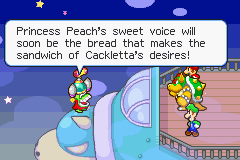
Mario & Luigi: Superstar Saga’s gameplay is structured around simultaneous two-character control. The A button always controls Mario; the B button always controls Luigi. This dual-button system is used everywhere — from walking and jumping in the overworld, to puzzle solving, to timing attacks in turn-based battles.
Field Exploration
- One brother is always in the “front”, the other in the “back”. Press R to swap leader
- Mario and Luigi have different field abilities based on position
- Some areas require precise A-then-B timing to navigate puzzles
- First Strike: jump on or hammer an enemy in the overworld to start the battle with a damage advantage
- Tripped: if enemies hit you from behind on the field, the Bros. trip and lose their first turn
Mario Bros. (NES) Included
Battle System
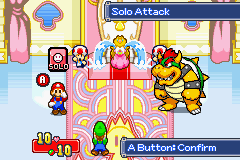
The turn-based battle system is the heart of Superstar Saga. Combat is timing-driven — you can’t just mash a button; well-timed A and B presses dramatically increase damage, and well-timed defensive inputs let you dodge or counterattack incoming hits.
Stats Per Brother
| Stat | Meaning |
|---|---|
| HP (Heart Points) | Health. At 0, the brother is KO’d. Revive with 1-Up Mushroom |
| BP (Bros. Points) | Magic / Bros. Attack resource. Spent on Bros. Attacks and Hand abilities |
| POW | Attack power. Determines damage dealt |
| DEF | Defense. Reduces damage taken |
| SPEED | Determines turn order and dodge ability |
| STACHE | The signature Mario & Luigi stat — affects critical-hit rate, shop prices, and rare drops |
Solo Attacks
- Jump: Mario or Luigi leaps and lands on an enemy. Press A (or B) just before impact for extra damage. Mid-air follow-ups against winged enemies require precise timing
- Hammer: Charge the hammer with timing for power. Hits ground enemies that resist jumps (like spiked enemies). Press the button at the right point for a critical strike
- Solo Techniques: learned through story progression and used outside of Bros. Attacks. Mario’s Firebrand (fire) and Luigi’s Thunderhand (electricity) deal elemental damage
Defensive Play
Every enemy attack can be dodged or countered with the right input. Some attacks need a jump (A), some need a hammer counter (B), and some need both Bros. to react together. The game shows visual cues (a shadow, a flying object, an enemy wind-up) that telegraph what input is needed. Mastery of defense is essential for late-game survival.
Running Away
Press both buttons to attempt to flee. Coins are dropped as a penalty for running. If a brother is KO’d, the other carries him out — fewer coins lost. A timely button press during the flee reduces the coin penalty.
Bros. Attacks
The Bros. Attack is Superstar Saga’s defining battle mechanic and the most-loved feature of the entire Mario & Luigi series. A Bros. Attack is a cooperative two-character special move that consumes BP and requires the player to perform a sequence of A and B inputs with precise timing.
Mario’s Bros. Attacks (Mario leads)
- Splash Bros.: Mario stomps Luigi into the air, then catches him and slams him down on the enemy. Earliest Bros. Attack — learned at Hoohoo Mountain
- Bounce Bros.: Mario bounces Luigi off his head repeatedly onto the enemy. Multi-hit attack
- Fire Bros.: Mario uses Firebrand to ignite Luigi, who is hurled flaming at the enemy. Fire damage — great against grass enemies
- Swing Bros.: Mario swings Luigi by the legs in a circle, then hurls him at the enemy. Hits multiple enemies
Luigi’s Bros. Attacks (Luigi leads)
- Chopper Bros.: Luigi uses his hammer to flatten Mario into a pancake, then launches him as a discus at the enemy. Hilarious animation
- Knockback Bros.: Luigi smashes Mario backwards with the hammer; Mario rebounds off a wall and flies into the enemy. Multi-hit
- Thunder Bros.: Luigi electrifies Mario with Thunderhand, then hurls him at the enemy. Electric damage — great against water enemies
- Cyclone Bros.: Luigi spins Mario at high speed into a cyclone that pulverizes all enemies. Hits everyone on screen
Advanced Mode
Each Bros. Attack has an Advanced Mode unlocked through repeated successful use. Advanced versions deal more damage but require a more complex button sequence — typically faster timing and more inputs. Mastering all 8 Bros. Attacks in Advanced Mode is one of the game’s deepest endgame challenges.
Field Moves
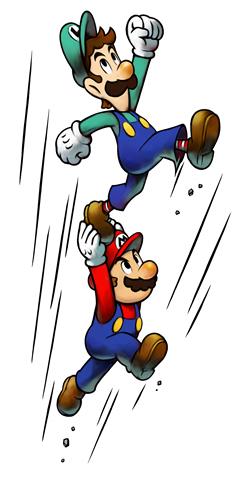
Mario and Luigi each have a set of overworld techniques learned through story progression. These are used outside battle to solve puzzles, reach new areas, and unlock paths. The set of available moves changes based on which brother is in the front vs. the back.
Front-Position Techniques
| Move | Brother | Description |
|---|---|---|
| Jump | Mario / Luigi | Basic jump. Hit blocks above, reach high ledges, attack enemies for First Strikes |
| Hammer | Mario / Luigi | Whack obstacles, hit ground-level switches, defeat enemies that resist jumps |
| Firebrand | Mario (front) | Mario shoots a fireball from his palm. Lights torches, burns vines, melts ice, damages enemies |
| Thunderhand | Luigi (front) | Luigi shoots electricity. Powers switches, freezes/stuns mechanical enemies, activates devices |
Back-Position Techniques
| Move | Description |
|---|---|
| Spin Jump | Mario jumps on top of Luigi and spins through the air to cross large gaps. Essential for many puzzles |
| High Jump | Luigi jumps on top of Mario and bounces incredibly high. Reach high platforms otherwise inaccessible |
| Mini-Mario | Mario shrinks to fit through small pipes and gaps |
| Mini-Luigi | Luigi shrinks to fit through small pipes and gaps |
| Drill (Dig) | One brother becomes a drill and tunnels underground, popping up at a different location |
| Submarine | Both brothers transform into a submarine to traverse water sections |
Playable Characters
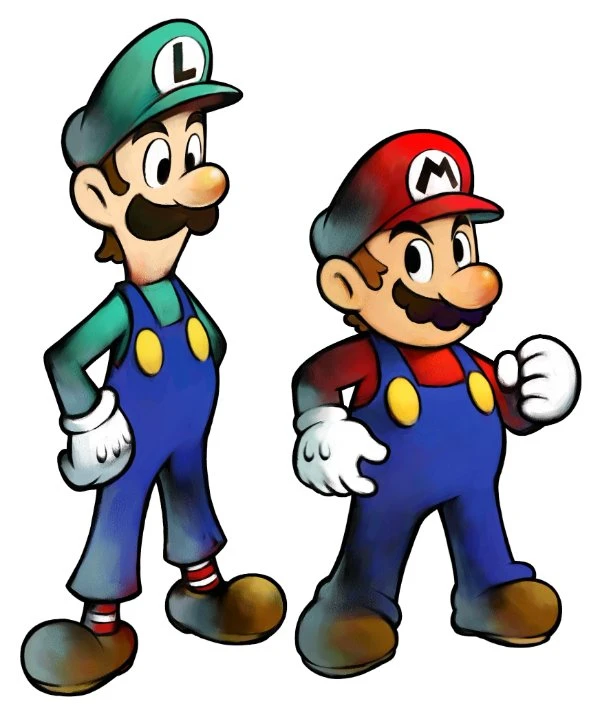
Mario & Luigi: Superstar Saga’s playable cast is tight: Mario and Luigi are the two leads, with Toad briefly playable in the opening sequence.

Supporting Cast
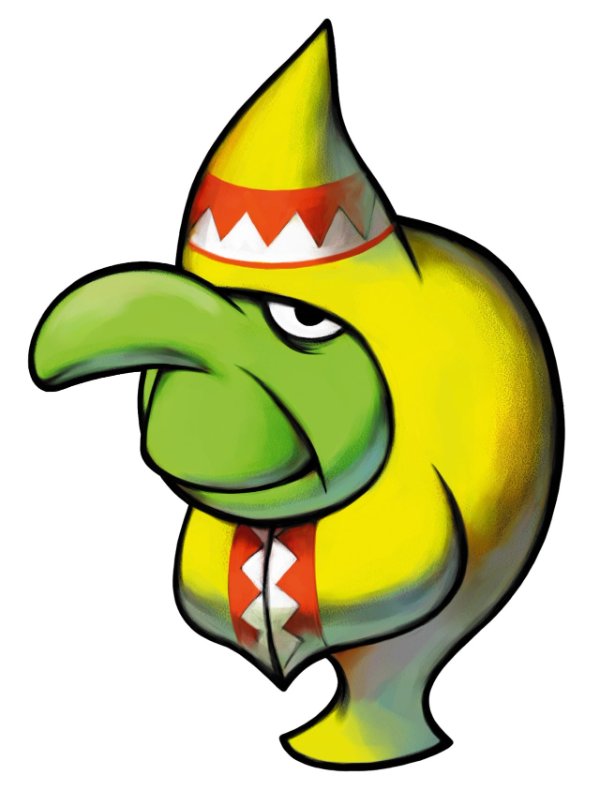
The supporting cast is split between Peach’s court in the Mushroom Kingdom and the Beanbean Kingdom royals who become Mario & Luigi’s allies.
Mushroom Kingdom Royalty
Beanbean Kingdom Royals & Officials

The Villains

Superstar Saga’s villains are some of the most iconic in the entire Mario series — not just for this game, but for their lasting impact across the Mario & Luigi franchise. Cackletta debuts here, and so does Fawful, who would return as the main villain of Mario & Luigi: Bowser’s Inside Story six years later.
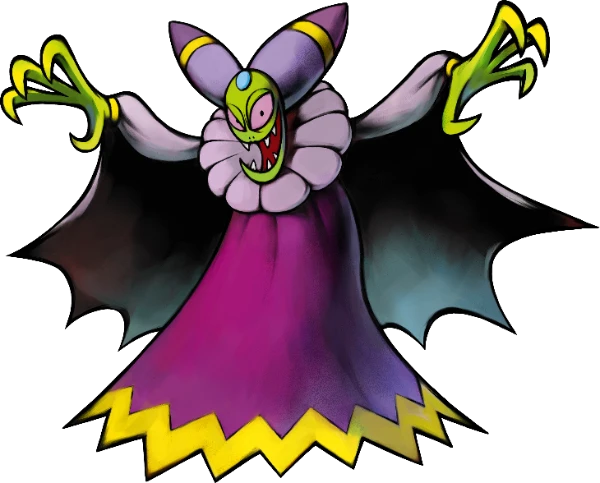

Cackletta – The Mastermind
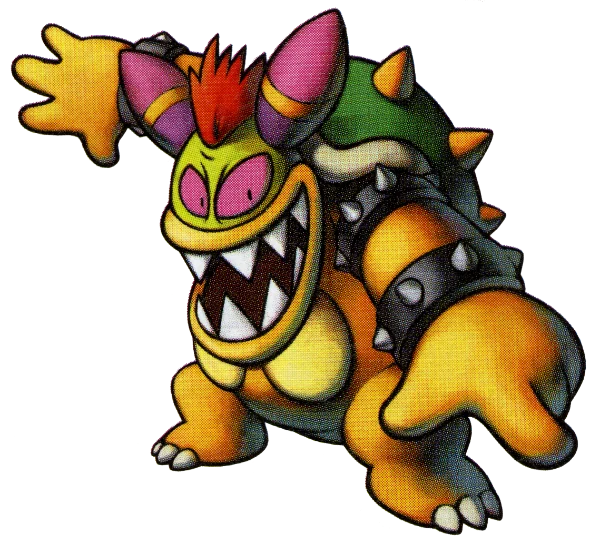
Cackletta is the malevolent witch-figure of the Beanbean Kingdom — a sorceress with a love of theatrical evil and an obsession with the legendary Beanstar. Her plan: steal Peach’s sweet voice (the only kind that can awaken the Beanstar), use it to make her wish on the artifact, and dominate both kingdoms. When defeated in her original form, her soul escapes — only for Fawful to forcibly bind it to Bowser’s body, creating Bowletta. Her final form, fought inside Bowletta’s body, is Cackletta’s Soul — the game’s true final boss.
Fawful – The Iconic Lieutenant
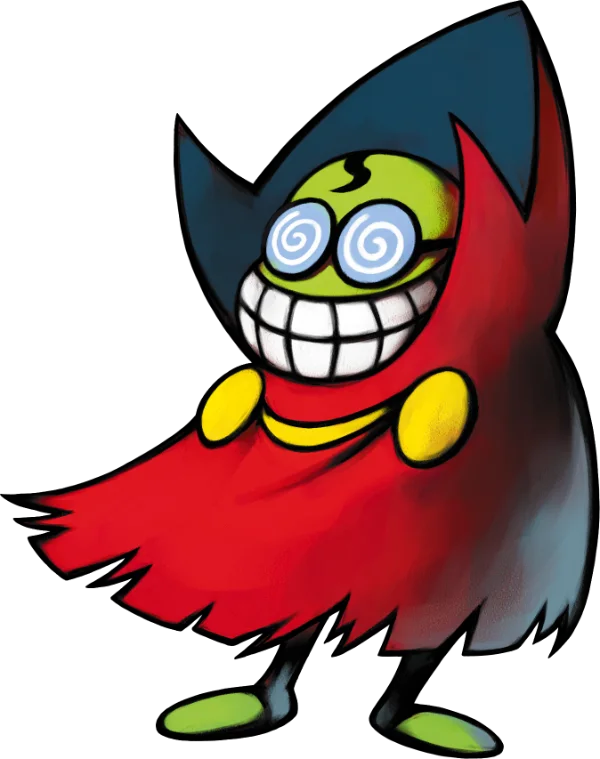
Fawful is a tiny, bespectacled, helmet-wearing genius with a flying device and a vocabulary that broke containment into broader Mario fandom. His sentence structures are gloriously off-kilter — “I have fury!”, “Have you a true face?”, “Mustard of your doom!” Fawful’s loyalty to Cackletta is total. After the credits, he wanders off, plotting his return — which he delivers years later as the main villain of Mario & Luigi: Bowser’s Inside Story.
Popple & Rookie – Comic Relief
Popple is the self-styled “Shadow Thief” — a small purple bandit always paired with a hapless rookie partner. His first partner is Rookie (an amnesiac Bowser). The pair are recurring optional/required mini-bosses across Chateau de Chucklehuck, Teehee Valley, and elsewhere. Popple’s pirate-tinged speech (“see?” at the end of every sentence) makes him an instant fan favourite.
Beanbean Peoples & NPCs
The Beanbean Kingdom is home to numerous unique peoples, factions, and individual NPCs who shape the game’s world. Almost every major area introduces a new sentient race or character.


Cameo Appearances
- Yoshi — appears at the Yoshi Theater in Little Fungitown’s recovered version. The Bros. must rescue 7 colored Yoshis using Neon Eggs as part of Mario’s Bean-fever cure quest
- Birdo — appears in the “decoy Peach” plan. The Bros. dress Birdo up as Princess Peach to fool Bowletta during a fake ransom exchange
- Hammerhead Bros. — the burly NPCs who give Mario and Luigi their iconic hammers during the early-game tutorial
- Starshade Bros. — the actor twins running the Starbeans Cafe in Beanbean Castle Town. Run sidequests for the Bros.
Locations
The game spans both the Mushroom Kingdom (brief opening) and the much larger Beanbean Kingdom. Every Beanbean location’s name except Yoshi Theater and Little Fungitown contains a laughter-related word — a delightful linguistic theme that runs throughout the game.
Mushroom Kingdom
Toadtown Square
Mushroom Kingdom hub area
The plaza outside Princess Peach’s Castle. The opening location. Site of the first sidequests including the iconic Mushroom-stealing-from-Toad sequence
Princess Peach’s Castle
Mushroom Kingdom royal residence
Where Peach’s voice is stolen. Site of the tutorial Bowser battle
Mario & Luigi’s House
Mushroom Kingdom suburb
The Bros.’ humble cottage. Toad arrives here to alert Mario; Luigi is found doing chores
Border Zone
Koopa Cruiser
Bowser’s flying airship
The opening transport between kingdoms. Site of Fawful’s first ambush and the cannon-blast separating Bowser from the Bros.
Stardust Fields
Crash-landing zone
Stretches between the two kingdoms. Tolstar guards the border passage and demands a coin toll. First proper area after the prologue
Beanbean Kingdom — The Heartland
Hoohoo Village
Mountain-base village
The first true Beanbean settlement. Home of the Hammerhead Bros. who give Mario and Luigi their hammers. Tutorial for many mechanics
Hoohoo Mountain
Tall mountain peak
The first dungeon. Climbing puzzle with Hoohoo Blocks. Boss: Dragohoho. At the summit, Cackletta steals the Beanstar
Beanbean Fields
Open overworld
Connects the regions. Random encounters and grinding zone
Beanbean Castle Town
Bean kingdom capital
A bustling town — shops, items, the Starbeans Cafe (Starshade Bros.), and the bean bank. Damaged by Cackletta’s assault
Beanbean Castle
Royal castle
Where Queen Bean and Lady Lima reside. Site of the Queen Bean Monster boss fight after she’s infected with Cackletta’s bean-fever
Chateau de Chucklehuck
Wine château
Brews the legendary Chuckola Reserve antidote. Site of the first Popple & Rookie battle. Cellar puzzles unlock the way to Chucklehuck Woods
Chucklehuck Woods
Sacred forest
Home of Chuckleroot, the ancient guardian. Bosses: Wiggler, Chuckolator (giant talking shield-monster)
Woohoo Hooniversity
Cackletta’s hideout
A bizarre academy of evil. Boss: Mom Piranha (giant electric Piranha Plant). Final showdown with Cackletta in her original form
Beanbean Airport
Transit hub
Connecting flights across the kingdom. Brief level
Teehee Valley
Desert region
Sandy waste with quicksand pit traps. Site of the second Popple battle
Little Fungitown
Mushroom Kingdom enclave
A Mushroom Kingdom settlement within the Beanbean Kingdom. Where Mario contracts Bean-fever and Luigi must adventure solo. Site of Professor E. Gadd’s cameo and the Yoshi Theater
Yoshi Theater
Cinema in Little Fungitown
Where the Neon Eggs sidequest takes place. 7 colored Yoshis must be hatched to advance
Guffawha Ruins
Ancient ruins
Optional dungeon. Boss: Piranha Bean (optional). Holds the Surge Brace upgrade
Oho Oasis
Mystical pools
Home of the Oho Jees twins who bestow Firebrand on Mario and Thunderhand on Luigi — essential elemental powers
Oho Ocean
Ocean stretches
The waters between Beanbean Kingdom landmasses. Submarine traversal section
Seabed
Underwater dungeon
The Bros. travel underwater. Includes various fish-folk encounters
Gwarhar Lagoon
Beach & coral lagoon
Home of the Fish-Folk. The Bros. learn the Hand techniques from a dance master. Boss: Hermie III (optional Hermit Crab)
Joke’s End
Frozen final dungeon
The final pre-castle dungeon. Holds the last Beanstar piece. Boss: Jojora and her friends (sisterhood of ice fairies). Brutal cold puzzles
The Final Confrontation
Bowser’s Castle
The endgame
Upgraded by Fawful to fly and breathe fire. Final dungeon. Battles with Fawful and Bowletta. After defeat, the castle disintegrates and crashes into the ocean
Enemy Lore
Mario & Luigi: Superstar Saga’s enemy roster is one of the most creative in Mario history — a mix of returning classics with Beanbean-themed twists and entirely new creatures inspired by laughter, gardening, and the bean motif.
Sample Normal Enemies
| Name | HP | EXP | Coins | Where |
|---|---|---|---|---|
| Goomba | 4 | 2 | 0 | Koopa Cruiser |
| Fighter Fly | 5 | 2 | 2 | Stardust Fields |
| Bill Blaster | 5 | 3 | 2 | Stardust Fields |
| Beanie | 6 | 4 | 2 (1) | Multiple areas |
| Dry Bones | 8 | 6 | 2 | Hoohoo Mountain |
| Rex | 16 | 8 | 3 | Hoohoo Mountain |
| Sharpea | 8 | 2 | 1 (2) | Beanbean Outskirts |
| Sworm | 14 | 14 (2) | 4 (8) | Beanbean Outskirts |
| Parabeanie | 20 | 9 (8) | 2 (5) | Beanbean Outskirts |
| Troopea | 20 | 16 (4) | 3 | Beanbean Outskirts |
| Tanoomba | 30 (70) | 20 (14) | 0 (20) | Beanbean Outskirts |
| Lakipea | 40 (50) | 20 (10) | 12 | Beanbean Outskirts |
| Bob-omb | 30 | 16 (7) | 1 (5) | Beanbean Outskirts |
| Super Fly | 10 | 12 | 2 (4) | Beanbean Castle Sewers |
| Spiny | 14 | 15 | 1 (2) | Beanbean Castle |
| Pestnut | 15 | 15 (10) | 2 (3) | Chucklehuck Woods |
| Gold Beanie | 11 | 50 | 30 (100) | Rare encounter — huge EXP/Coins |
| Chuck Guy | 22 | 15 | 3 (5) | Chucklehuck Woods |
| Fuzzbush | 15 | 24 | 5 (10) | Chucklehuck Woods |
| Laser Snifit | 20 | 20 (18) | 4 | Woohoo Hooniversity |
| Chomp Bro | Higher | Higher | Higher | Late-game |
| Clumph | Higher | Higher | Higher | Late-game |
| Ankoopa | Higher | Higher | Higher | Joke’s End |
| Sniper Bill | Higher | Higher | Higher | Bowser’s Castle |
(Numbers in parentheses are Hard Mode values, when relevant.)
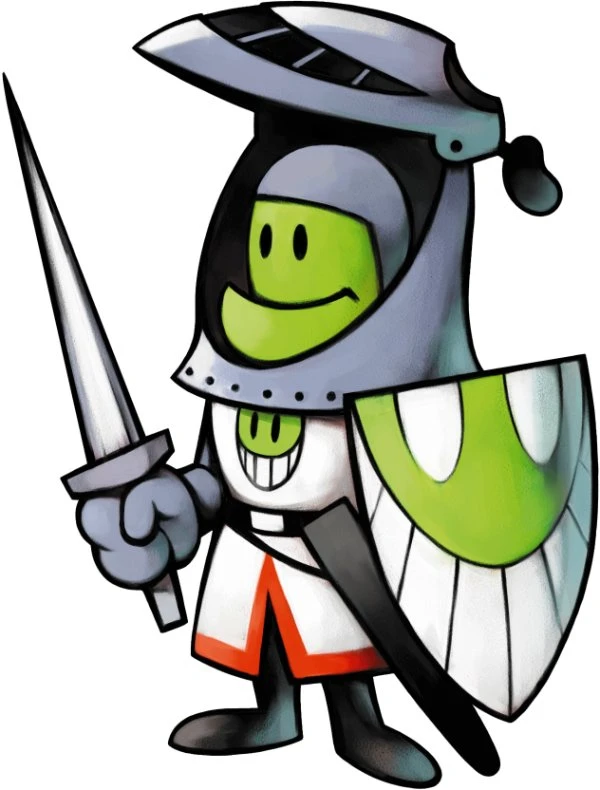





All 28 Bosses
Mario & Luigi: Superstar Saga features 28 bosses across its story — most mandatory, three optional (Hermie III, Popple’s 3rd encounter, Piranha Bean). The fights range from tutorial pushovers to multi-phase nightmares. Here are the major story bosses in chronological order.
1. Bowser
Princess Peach’s CastleHP: 10 | EXP: 0 | Coins: 0
The tutorial boss. Trying to kidnap Peach during the voice-theft crisis. Mario fights him solo — a quick fight to teach the timed-jump mechanic.
2. Fawful (1st encounter)
Koopa CruiserHP: 18 phase 1 / 12 phase 2 | EXP: 0 | Coins: 2 (0)
Ambushes the Koopa Cruiser on his flying device. After defeat, he blasts the airship from the sky, separating Bowser from the Bros. The first proper boss — introduces Fawful’s mechanics.
3. Tolstar
Stardust FieldsHP: 52 | EXP: 30 | Coins: same as toll paid
The proud, golden-mustached border guard who demands a 100-coin toll. Fight him to recover the coins. Tutorial for Bros. Attack timing.
4. Hoohooros
Hoohoo MountainHP: 45 (Hoohooros) + 2 (Pillar) | EXP: 30 | Coins: 20
A mystical bird-guardian fought from elevation pillars. Uses moving-pillar mechanics that require precise jump timing to attack and dodge.
5. Dragohoho
Hoohoo Mountain summitHP: 80 (Dragohoho) + 4 (Hoho Stone) | EXP: 50 | Coins: 30
A dragon-like creature at Hoohoo Mountain’s peak guarding the Beanstar. The first major HP-bar fight — introduces multi-phase combat with phases attacking different body parts.

6. Queen Bean (Monster Form)
Beanbean CastleHP: 120 main / 22 arms | EXP: 142 | Coins: 10
Queen Bean transformed by Cackletta’s bean-fever infection. The Bros. must attack her arms first to expose her main body. A puzzle-fight requiring strategic target selection. Cured by Chuckola Reserve antidote post-battle.
7. Popple & Rookie (1st encounter)
Chateau de ChucklehuckHP: 100 (Popple) + 120 (Rookie) | EXP: 50+110 | Coins: 30+34
The first Popple & Rookie team battle. “Rookie” is amnesiac Bowser. Popple’s comic-relief introduction. Defeat both at once.

8. Wiggler
Chucklehuck WoodsHP: 34 | EXP: 120 | Coins: 0 (87)
A giant rampaging Wiggler protecting the woods. Recovers from anger when defeated. Marks the entry into deeper Chucklehuck Woods.

9. Chuckolator
Chucklehuck WoodsHP: 300 | EXP: 260 | Coins: 100
A grotesque shield-and-gun chuckle-creature. The first true HP-grinder boss. Multi-phase with shield-on and shield-off variants. Requires Bros. Attack mastery to defeat efficiently.
10. Cackletta (1st form)
Woohoo HooniversityHP: 300 | EXP: 300 | Coins: 100
The first direct confrontation with Cackletta. She uses dark-magic projectiles, summons mini-allies, and switches between aggressive and defensive stances. Defeating her appears to be the end — until Fawful captures her soul.

11. Mom Piranha
Woohoo HooniversityHP: Multiple phases | EXP: High | Coins: High
A giant matriarchal Piranha Plant that powers Hooniversity’s electric systems. Switches between blue (electric) and red (fire) forms — the Bros. must use the opposite element to deal damage in each phase. Iconic two-color boss design.

12. Trunkle
Teehee ValleyHP: Multiple phases | EXP: High | Coins: High
A massive Trunkle (a creature made of small Beanies clinging together) that ambushes the Bros. in the desert. Each phase causes Trunkle to split into smaller component pieces, each fought separately.
13. Popple & Birdo
VariousHP: Multiple phases | EXP: High | Coins: High
Popple’s second team-up — this time with Birdo. The egg-spitting partner mechanic creates surprise attacks the Bros. must dodge.
14. Cackletta’s Soul
Inside Bowletta’s bodyHP: Massive | EXP: Massive | Coins: Massive
The true final boss. After Bowletta swallows Mario and Luigi, the Bros. fight Cackletta’s disembodied soul inside Bowletta’s stomach. Multi-phase. Long, brutal fight. Defeating her ends the saga.

15. Bowletta
Bowser’s CastleHP: Massive | EXP: Massive | Coins: Massive
The first form of the final showdown — Bowletta in her external form, with Cackletta’s mind controlling Bowser’s body. Breathes fire, charges, claws. After defeat, she swallows the Bros. for the Soul fight.
16. Fawful (final encounter)
Bowser’s CastleHP: Massive (multi-phase) | EXP: Massive | Coins: Massive
The penultimate boss. Fawful pilots his Headgear device through multiple combat phases. His “I have fury!” rampage and laser barrages are iconic. Defeating him leads to the Bowletta confrontation.
Optional Bosses

17. Hermie III (optional)
Gwarhar LagoonHP: Optional-tier | EXP: Optional-tier
The optional Hermit Crab king. A long, multi-shell-phase fight. Reward: useful late-game gear and major Stache bonus.
18. Piranha Bean (optional)
Guffawha RuinsHP: Optional-tier | EXP: Optional-tier
An optional ancient piranha-bean creature in the Guffawha Ruins. Drops the Surge Brace upgrade. Fight rewards major item upgrades.
The Koopalings & Other Mini-Bosses
The Bros. encounter all seven Koopalings (Larry, Roy, Iggy, Wendy, Lemmy, Morton, Ludwig) as mini-bosses during the airborne Bowser’s Castle final dungeon. Each Koopaling brings their own attack pattern from their classic Mario series appearances.
Sidequests
Mario & Luigi: Superstar Saga is rich with optional content. From the very start, the game rewards players who explore off the critical path.
Toad’s Mushroom (Toadtown Square)
Near the start of the game, while Mario explores Toadtown Square solo, a Mushroom sits atop a hedge near a Toad in the southeast corner. If Mario takes the Mushroom, the Toad asks for it back. Refuse repeatedly and the Toad starts to panic. Each refusal is its own joke. Return the Mushroom: the Toad gives you a Super Mushroom as a thank-you and wishes you well. This sidequest becomes unavailable once the Bros. leave the Mushroom Kingdom — a one-time, missable charmer.
Starshade Bros. Theatre Quest
In Beanbean Castle Town, the Starshade Bros. twins run the Starbeans Cafe. They brew different bean-coffees that grant permanent stat boosts when consumed. Bringing them rare beans found across the kingdom unlocks new brews and substantial stat upgrades.
The Yoshi Theater Neon Eggs
In Little Fungitown, during Luigi’s solo adventure to cure Mario’s Bean-fever, Luigi visits the Yoshi Theater. The owner needs 7 colored Neon Eggs to hatch 7 colored Yoshis for the show. Each egg is found in a different location across the kingdom. Completing the set hatches all 7 Yoshis and triggers a unique cutscene — a beloved sequence that serves as Luigi’s solo character moment.
Bean Trading & The Bean Bank
Multiple bean types (Hoo Beans, Hee Beans, Chuckle Beans, Woo Beans) can be planted in Beanholes across the world and harvested. The Winkles’ lottery at the Beanbean bank lets you wager beans for prizes. A complete bean-collecting playthrough is essentially a meta-game on top of the main story.
Hammerhead Bros. Tutorial
The burly Hammerhead Bros. in Hoohoo Village give Mario and Luigi their iconic hammers. A short tutorial sequence teaches hammer use — mandatory but charming.
Border Guard Challenges
Various Beanbean border guards offer optional challenge battles. Beating them rewards rare gear and Stache-stat bonuses.
Regional Differences
Mario & Luigi: Superstar Saga shipped with several notable differences between its Japanese and Western releases. These differences are minor but together form a fascinating localization study.
Visual Modifications
- Peach’s Castle Mushroom Emblem. The mushroom emblem on and inside Princess Peach’s Castle was modified in the Japanese version to better resemble a Golden Dash Mushroom. Western version uses the standard red Super Mushroom design
- Toad’s House D-pad Hint. When Toad enters Mario and Luigi’s house in the opening, the Japanese version shows a directional pad on-screen in the bottom-left to help players navigate. Western versions omit this
- Peach Portrait Touch-up. The portrait of Princess Peach hanging in the Bros.’ house was touched up cosmetically in the Japanese version
Gameplay Differences
- Starting BP Values. In the Western version, Mario and Luigi both start with 10 BP. In the Japanese version, Mario starts with 14 BP and Luigi starts with 16 BP — a slightly easier early game in Japan
- Level-Up Speech Bubble. When the Bros. level up, Lakitu appears with a speech bubble explaining stat selection. The Japanese version added a directional indicator (↑) inside the speech bubble showing that up/down selects the stat; a cancel icon (✖) appears when a stat is selected. These visual aids were not added to Western versions
- Hammerhead Bros. Tutorial Setting. The Hammerhead Bros. tutorial uses different background art in each version: Beanbean Outskirts in Western releases vs. Hoohoo Mountain in the Japanese release
Other Differences
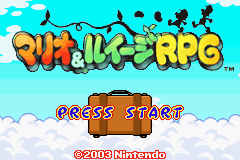
Numerous small audio, sprite-touch-up, and dialogue-pacing differences exist between versions. The Western localization (handled by Treehouse / Nintendo of America) introduced Fawful’s iconic broken-English catchphrases (“I have fury!”) that became series-defining — the Japanese original used different verbal quirks that don’t translate the same way.
Promotion & Videos
Three official promotional videos document Mario & Luigi: Superstar Saga’s 2003 launch and its 2014 Wii U Virtual Console re-release.
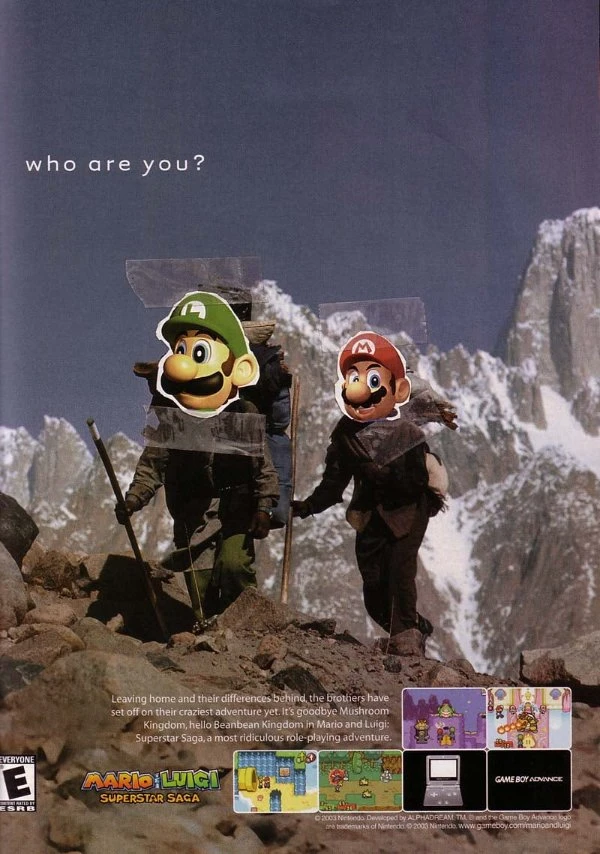
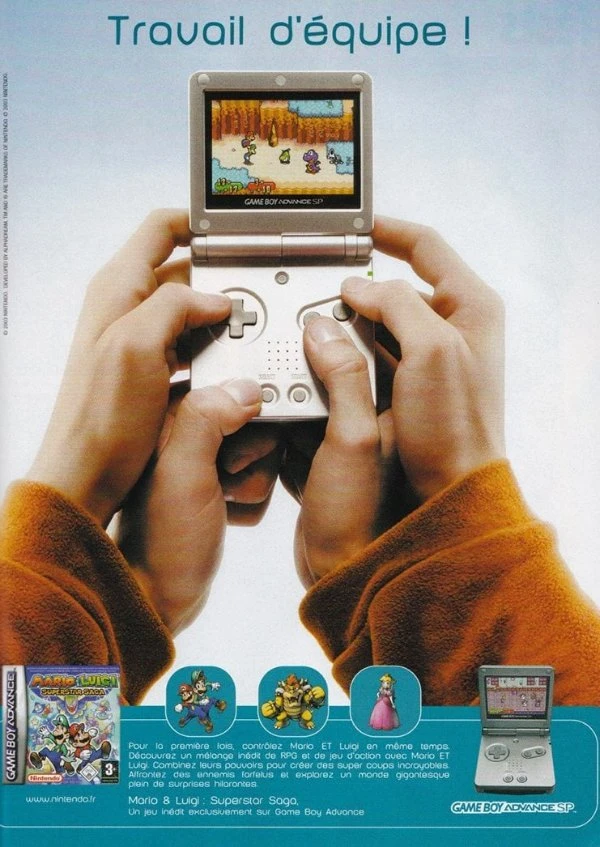
Print Advertising

Development Staff
Mario & Luigi: Superstar Saga was developed by AlphaDream, a Tokyo-based studio founded in 2000 by former Square employees. This was their first major Nintendo collaboration and the title that established them as a Mario RPG developer for the next 16 years.
- Developer: AlphaDream Corporation
- Publisher: Nintendo
- Producer: Tetsuo Mizuno (AlphaDream), Shigeru Miyamoto (Nintendo)
- Director: Yoshihiko Maekawa (AlphaDream)
- Composer: Yoko Shimomura — a legendary composer also responsible for Super Mario RPG: Legend of the Seven Stars (SNES, 1996) and the entire Kingdom Hearts soundtrack series. Her return to Mario RPG music after seven years was a major reason the soundtrack is considered one of the GBA’s finest
- Platform: Game Boy Advance
- Genre: Turn-based RPG with timing-based action
- Series Entry: 1st in the Mario & Luigi series
- Spiritual Predecessor: Super Mario RPG: Legend of the Seven Stars (SNES, 1996)
- Direct Successor: Mario & Luigi: Partners in Time (DS, 2005)
- 3DS Remake: Mario & Luigi: Superstar Saga + Bowser’s Minions (2017)
Reception & Legacy
Mario & Luigi: Superstar Saga was a critical triumph at launch and is widely considered one of the greatest games on the Game Boy Advance and one of the finest Mario RPGs ever made.
Aggregate & Critical Scores
- Metacritic: 90/100 (24 reviews) — a near-universal acclaim verdict
- IGN (Craig Harris): 9/10 — “Outstanding”
- Eurogamer (Tom Bramwell): 9/10 — “One of the best GBA games of the year, Nintendo games on the GBA, and RPGs in existence”
- GameSpot: 8.6/10
- 1UP (Jeremy Parish): 8.5/10 — “If you’re after some lighthearted, lightweight gaming, or if you’re simply a Mario fan, you’ll have a hard time finding a better buy than Mario & Luigi”
What Critics Praised
- The humor. Fawful’s broken-English dialogue, the slapstick brother animations, the running joke of Luigi-as-second-fiddle — a constant comedic backbone unprecedented in Mario RPGs to that point
- The dual-character mechanic. The A-for-Mario / B-for-Luigi system was hailed as innovative and addictive — a true two-character feeling rather than just turn-taking
- The Bros. Attacks. Universally praised as the centerpiece. The slapstick animations alone were called “worth the price of admission”
- The story. The Beanbean Kingdom and its laughter-themed naming, the body-swap Bowletta horror, Luigi’s solo adventure — all praised as remarkably ambitious for a portable RPG
- Yoko Shimomura’s soundtrack. Repeatedly called one of the best on the entire GBA library
- Cackletta, Fawful, Peasley. The supporting cast became instant Mario series icons
Criticisms
- Some difficulty spikes during boss fights (Chuckolator, Cackletta’s Soul)
- The Birdo-as-decoy-Peach sequence felt slow to some reviewers
- Random encounter frequency in Beanbean Outskirts could feel grindy
Legacy
- Launched the Mario & Luigi series — a franchise that ran 16 years and 7 mainline entries
- Made Fawful an iconic Mario villain — his return as protagonist-villain of Bowser’s Inside Story (2009) is one of the most beloved character arcs in the series
- Wii U Virtual Console re-release in 2014 introduced the game to a new generation
- Full 3DS remake as Mario & Luigi: Superstar Saga + Bowser’s Minions in 2017 — added an entire bonus Bowser’s Minions side-campaign featuring Captain Goomba
- Pioneered the Beanbean Kingdom — a setting referenced in nearly every later Mario & Luigi entry
- Set the template for every Mario & Luigi RPG that followed: timing-based combat, Bros. Attacks, laughter-themed humor, dual-button control
SLB User Reviews
Mario & Luigi: Superstar Saga has yet to receive a community review on Super Luigi Bros.
If you’ve played Mario & Luigi: Superstar Saga and would like to submit a review, please get in touch.
Regional Logos, Box Art & Screens
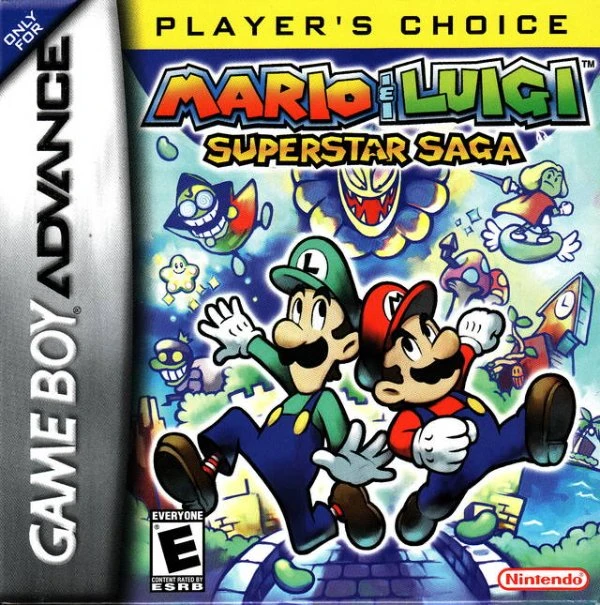
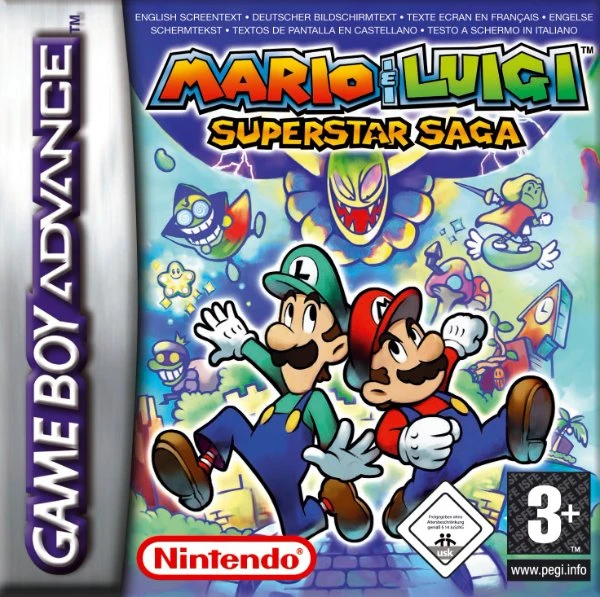
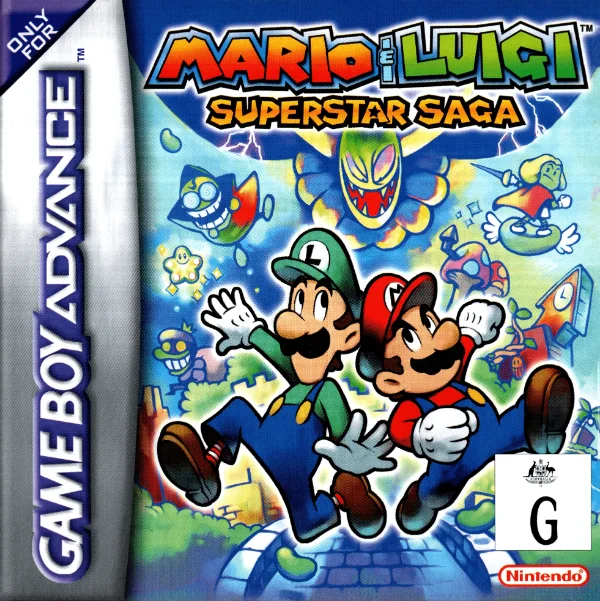
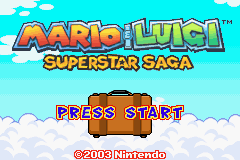
Mario & Luigi: Superstar Saga shipped with distinct regional box art across major markets and was also re-issued as a North American Player’s Choice edition.
Regional Logos
Box Art

Iconic In-Game Screens
Key Story Moments



Trivia & Facts
- First entry in the Mario & Luigi series. Launched a 16-year franchise spanning 7 mainline entries from 2003 to 2018 (with Brothership reviving it on Switch in 2024)
- First AlphaDream Mario collaboration. AlphaDream was founded in 2000 by ex-Square developers; Superstar Saga was the studio’s breakout title
- Yoko Shimomura returned to Mario RPG. The composer of Super Mario RPG (SNES, 1996) returned after 7 years away from the Mario franchise. She would go on to compose Kingdom Hearts and most major Mario & Luigi entries
- Cackletta and Fawful debut here. Both villains became Mario series icons. Fawful would return as the main villain of Mario & Luigi: Bowser’s Inside Story (2009) — one of the most beloved character arcs in Mario history
- Fawful’s broken-English quotes. “I have fury!” / “I have chortles!” / “Mustard of doom!” / “Have you a true face?” — these became series-iconic catchphrases and meme staples
- Prince Peasley’s hair-flip. Peasley’s signature blonde hair-flip animation is one of the most beloved character moments in the entire game. His dialogue is hilariously vain
- Birdo cameo. Birdo appears as the decoy Princess Peach in the Bros.’ deception plan — a hilarious cameo
- Yoshi cameo. 7 colored Yoshis (red/yellow/blue/green/pink/light-blue/purple) hatch from the Neon Eggs at the Yoshi Theater — a beloved sequence
- Popple’s recurring thief role. Popple is fought 3 times — first with Rookie/Bowser, then later with Birdo, then optionally a third time. His pirate-speech (“see?”) defines him
- Bowletta = body-swap horror. Cackletta’s soul forced into Bowser’s body is one of the most disturbing concepts in any Mario game. Sets a high water-mark for Mario series weirdness
- Beanbean naming convention. Every Beanbean location’s name except Yoshi Theater and Little Fungitown contains a laughter-related word — Hoohoo, Hee, Chuckle, Woohoo, Teehee, Guffaw, Oho, Gwarhar, Joke
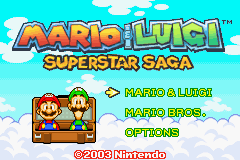
- Full Mario Bros. (NES) included. The original 1983 arcade-style Mario Bros. is fully playable from the main menu — with enhanced graphics and 4-player multiplayer via Game Link Cable
- Professor E. Gadd cameo. The Luigi’s Mansion scientist appears in Little Fungitown, offering a battery-charging service for the Bros.’ gear using a modified Poltergust
- Hammerhead Bros. The burly NPCs who give Mario and Luigi their iconic hammers — a memorable tutorial
- The explosive voice mechanic. A series-first — Peach’s voice replaced with explosives is one of the most creative plot devices in any Mario game
- Wii U Virtual Console re-release in 2014. Made the game accessible on modern Nintendo hardware
- 2017 3DS remake added Bowser’s Minions mode. An entire bonus side-campaign featuring Captain Goomba and Bowser’s troops searching for him during the events of the main story
- AlphaDream’s bankruptcy. The studio dissolved in 2019 after the disappointing performance of the Bowser’s Inside Story 3DS remake. Mario & Luigi: Brothership (Switch, 2024) revived the series with developer Acquire
- Predecessor: Super Mario RPG. Spiritually descended from Super Mario RPG: Legend of the Seven Stars (SNES, 1996), Camelot’s collaboration with Square that inspired Camelot’s later sports-RPG hybrids and AlphaDream’s entire approach to Mario combat
- 4-player Mario Bros. Link Cable multiplayer. The bonus Mario Bros. NES port supports up to 4-player co-op via Game Link Cable — a rare and welcome feature
Reference / Information
Sub-pages and guides for Mario & Luigi: Superstar Saga.
Media / Downloads
Galleries and screenshots.