Game Boy Advance2002CompilationTOSE · Nintendo20 games in all220 starsWaluigi steps into the ringFinal Game & Watch Gallery
Game & Watch Gallery 4
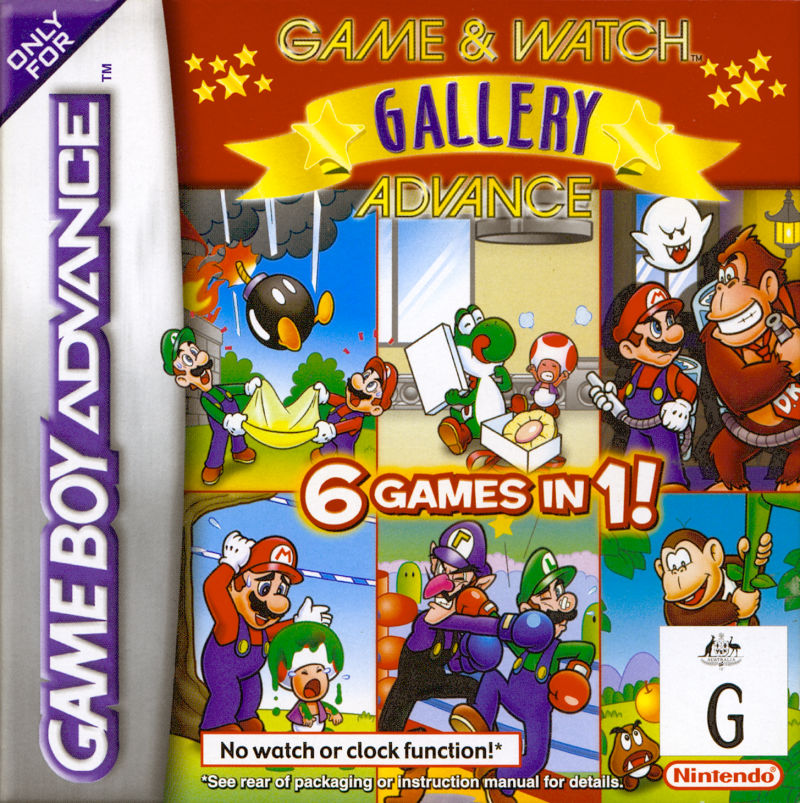
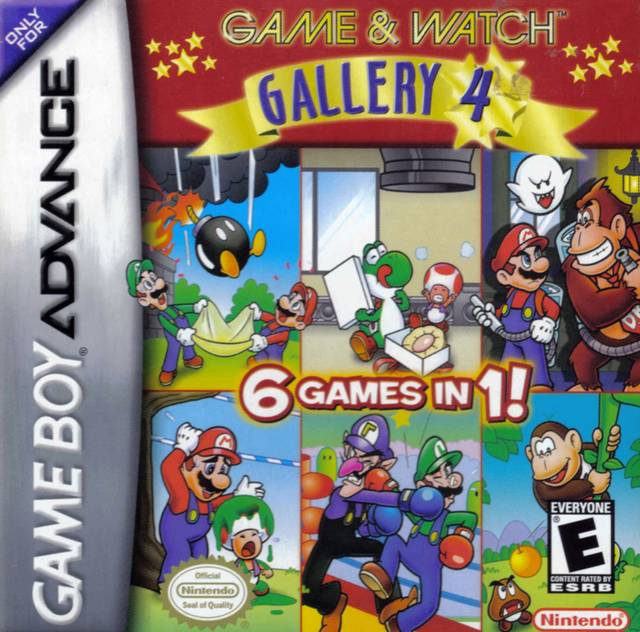
The last and biggest of the series, and the only one on Game Boy Advance. Game & Watch Gallery 4 (sold in Europe and Australia as Game & Watch Gallery Advance) offers eleven games in Classic and Modern form, six from the start (Fire, Boxing, Rain Shower, Mario’s Cement Factory, Donkey Kong Jr. and Donkey Kong 3) and five more unlocked with stars (Chef, Mario Bros., Donkey Kong, Octopus and Fire Attack), then nine more Classic-only games in its Museum, ending with the 1989 Zelda unit. The Modern remakes put Mario and Luigi under a burning Peach’s Castle, send Luigi into the ring against Waluigi, turn the cement works into a cookie factory and let Mr. Game & Watch host the lot. Every 200 points earns a star, up to 220. It reached Europe on 25 October 2002 and North America later that month; Japan, where it is Game Boy Gallery 4, had to wait for the Wii U Virtual Console in 2016.
Developer:TOSE
Publisher:Nintendo
Platforms:Game Boy Advance; Wii U Virtual Console
Genre:Compilation of Game & Watch remakes
Europe:25 October 2002 (as Game & Watch Gallery Advance)
N. America:28 October 2002
Australia:2002 (as Game & Watch Gallery Advance)
Japan:Not released on cartridge; Wii U Virtual Console 16 March 2016 (as Game Boy Gallery 4)
Players:1–2 (two players in Boxing and Donkey Kong 3 by link cable)
Directors:Hitoshi Yamagami, Yasuhito Minamimoto
Producer:Takehiro Izushi
Artists:Yoichi Kotabe, Yasuko Takahashi
Music:Riyou Kinugasa, Kengo Hagiwara
Games:11 Classic and Modern games; 9 Classic-only Museum games
Stars:220
Ratings:ESRB E · PEGI 7 · ELSPA 3+ · ACB G
Re-releases:Wii U Virtual Console: Europe 10 December 2015, Australia 11 December 2015, Japan 16 March 2016, North America 7 April 2016
Advertisement
Overview
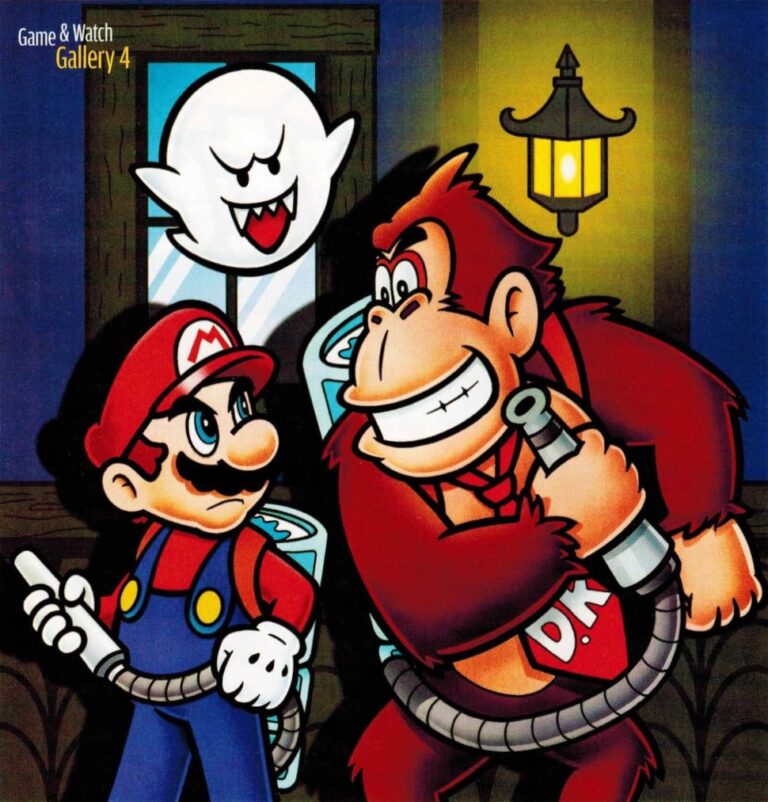
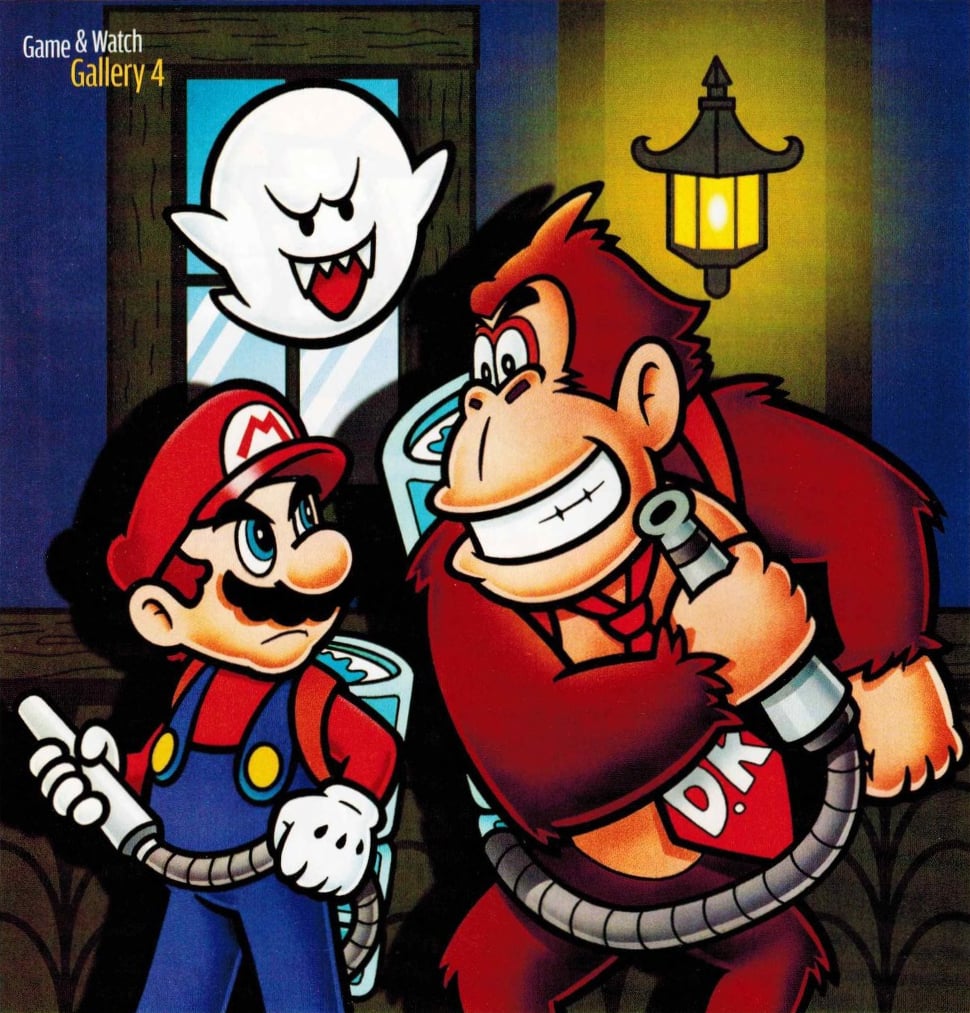
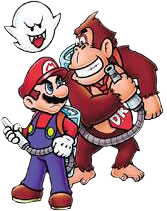
Mario squares up to Donkey Kong in the Donkey Kong 3 artwork.
Four Game Boy collections had perfected the trick: take Nintendo’s old one-game LCD handhelds, present each as it was (Classic) and as a Mario game (Modern), and reward every 200 points with a star. Game & Watch Gallery 4 moved the formula to the Game Boy Advance and simply made more of everything. Seven of its eleven main games had been remade in earlier Galleries, Wikipedia notes; Boxing, Rain Shower, Donkey Kong 3 and Fire Attack were the new arrivals.
The Modern versions are drawn with a richer palette and lean on the GBA cast: Waluigi is Luigi’s final opponent in Boxing and the rope-shaker on Hard in Rain Shower, Wario guards his golden statue in Fire Attack, and Mr. Game & Watch himself greets you in the Gallery Corner. Several games now play a little comic sketch if you sit on their title, from Mario losing his loot to an octopus to Wario and Bowser pinching the Mario Bros.’ delivery truck.
Stars unlock the five hidden games one by one, then nine Museum games that can be played in Classic form only: Manhole, Tropical Fish, Mario’s Bombs Away, Parachute, Bomb Sweeper, Climber, Safe Buster, Life Boat and, at 160 stars, Zelda. A Game & Watch history timeline, a Music Room, a Message Board and the credits complete the package.
Nintendo published it in Europe on 25 October 2002 and in North America three days later. Japan never got the cartridge: its first release there was on the Wii U Virtual Console in March 2016, a few months after Europe’s.
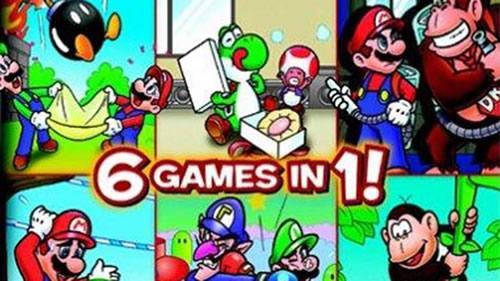
Enjoy six blasts from the past – and discover more – in Game & Watch Gallery Advance.
This collection includes Mario’s Cement Factory, Donkey Kong Jr., Donkey Kong 3, Fire, Boxing, and Rain Shower. Each has a modern mode featuring updated graphics, sound, gameplay and all-new twists. They can also be played in classic mode in their original, LCD-style glory!
The more you play, the more games you’ll unlock. There are other classics waiting to be discovered in this thrilling collection of gaming greats!
— Official description (Nintendo UK, 2002)
Why Game & Watch Gallery 4 matters to Mario fans
It is the most complete of the Gallery games and the last: twenty Game & Watch titles on one cartridge, Mario-cast remakes of eleven of them, and a cast that had grown to include Waluigi and Mr. Game & Watch. It also gathers the Mario-related units in one place, from the two-screen Donkey Kong (see our Donkey Kong page for the arcade original) to Mario Bros., Mario’s Cement Factory and Mario’s Bombs Away.
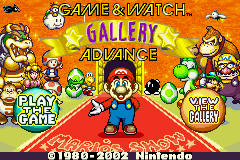
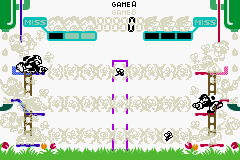
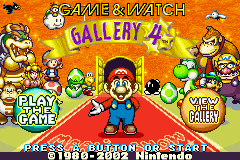
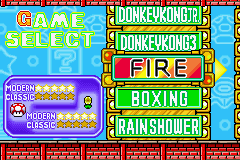
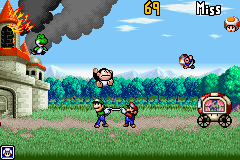
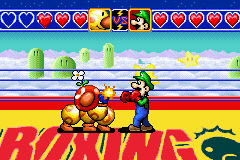
The North American title screen.The game select screen.Modern Fire: Mario and Luigi under Peach’s Castle.Modern Boxing: Luigi in the ring.
Quick Answers
The questions people ask most about Game & Watch Gallery 4, answered briefly here and in depth below.
How many games are in Game & Watch Gallery 4?
Twenty: eleven with Classic and Modern versions (six from the start, five unlocked with stars) and nine Classic-only Museum games. More →
Is Game & Watch Gallery Advance the same game?
Yes. That is its name in Europe and Australia; Japan calls it Game Boy Gallery 4. More →
How do you unlock the extra games?
Chef at 7 stars, Mario Bros. at 20, Donkey Kong at 35, Octopus at 50 and Fire Attack at 65. Museum games appear between 4 and 60 stars and become playable from 80 to 160. More →
How many stars are there?
220. You earn one per 200 points, up to five per mode and difficulty of each of the eleven main games; Museum games award none. More →
Can you play Zelda in it?
Yes. The 1989 Zelda Game & Watch is the last Museum game: it appears at 60 stars and becomes playable at 160. More →
Is it two-player?
Boxing and Donkey Kong 3 have two-player modes by link cable on the cartridge. The Wii U Virtual Console version does not support them. More →
Did it come out in Japan?
Not on cartridge. The Japanese version, Game Boy Gallery 4, was first released on the Wii U Virtual Console on 16 March 2016. More →
Who made it?
TOSE, for Nintendo, directed by Hitoshi Yamagami and Yasuhito Minamimoto, with art by Yoichi Kotabe and Yasuko Takahashi. More →
Games
Mr. Game & Watch, host of the Gallery Corner.
No plot, just a programme. Here are the eleven main games, with their Classic and Modern versions, followed by the Museum.
Fire
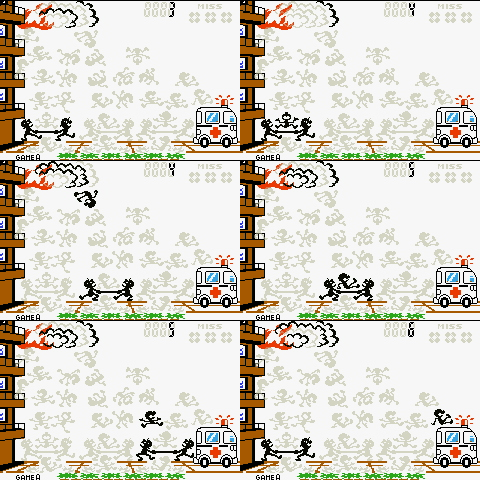
Classic: two firemen bounce people escaping a burning apartment block to safety; anyone who hits the ground is a miss.
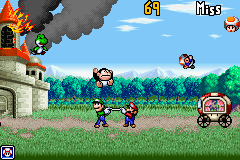
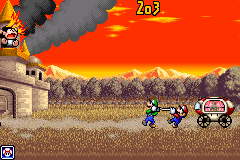
Modern: it is Peach’s Castle that is ablaze, and Mario and Luigi bounce their friends to safety. Each character bounces differently, and 3-Up Moons sometimes fall too, though missing one costs nothing.
Classic Fire.Mario and Luigi with their trampoline.
Boxing
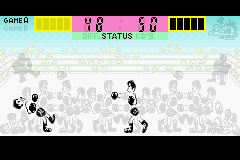
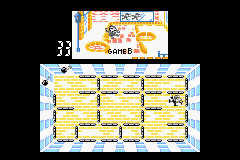
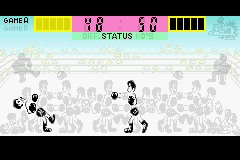
Classic: the original LCD bout, recreated as it was.
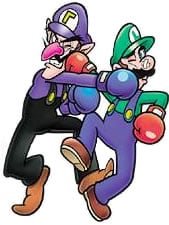
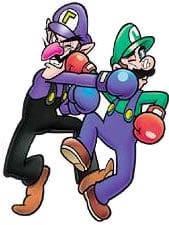
Modern: Luigi works his way up a card of increasingly tough opponents, Wiggler and Big Boo, before facing Waluigi. Stars come from knockouts rather than points: one for every three. In place of a Hard mode there is a two-player bout, with Waluigi controlled by a friend.
Classic Boxing.Artwork: Luigi and Waluigi trade punches.
Rain Shower
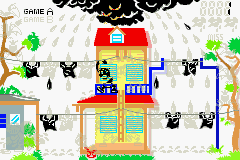
Classic: a boy keeps his washing dry by moving it out of the rain; on Hard, crows tug at the clotheslines.
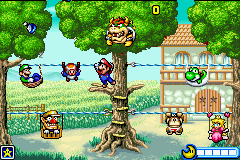
Modern: Bowser drops water balloons, colour-coded to show their path, and Mario moves his friends out of the way. On Hard, Waluigi shakes the ropes.
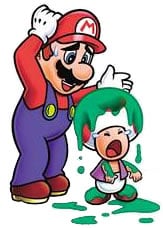
Classic Rain Shower.Modern Rain Shower in summer.Artwork: Toad takes a soaking.
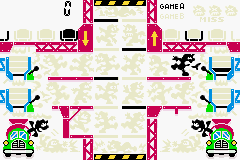
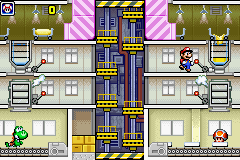
Mario’s Cement Factory
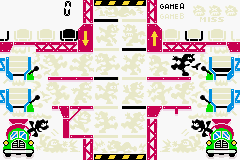
Classic: Mario at work in the original cement works, which appears only in this version.
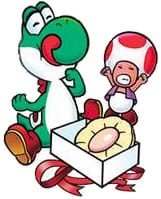
Modern: the cement works becomes a cookie factory, and Boos sometimes squat in the mixers to get in your way.
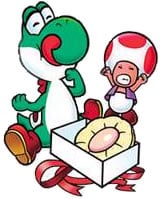
Classic Mario’s Cement Factory.Modern Mario’s Cement Factory: the cookie factory.Artwork: Yoshi unboxes a cookie.
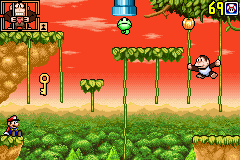
Donkey Kong Jr.
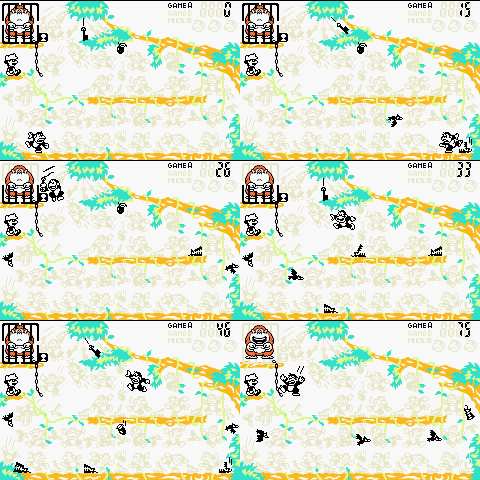
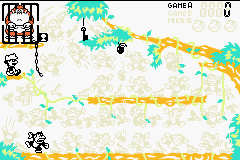
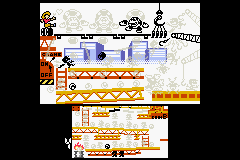
Classic: the 1982 New Wide Screen game: Junior climbs vines and leaps for keys to free his father from Mario’s cage.
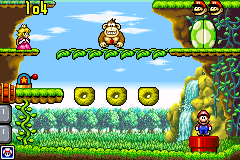
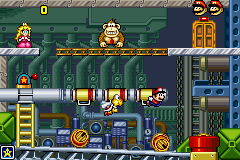
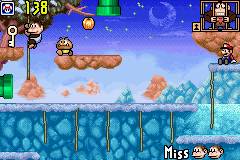
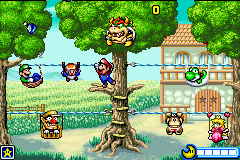
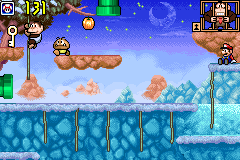
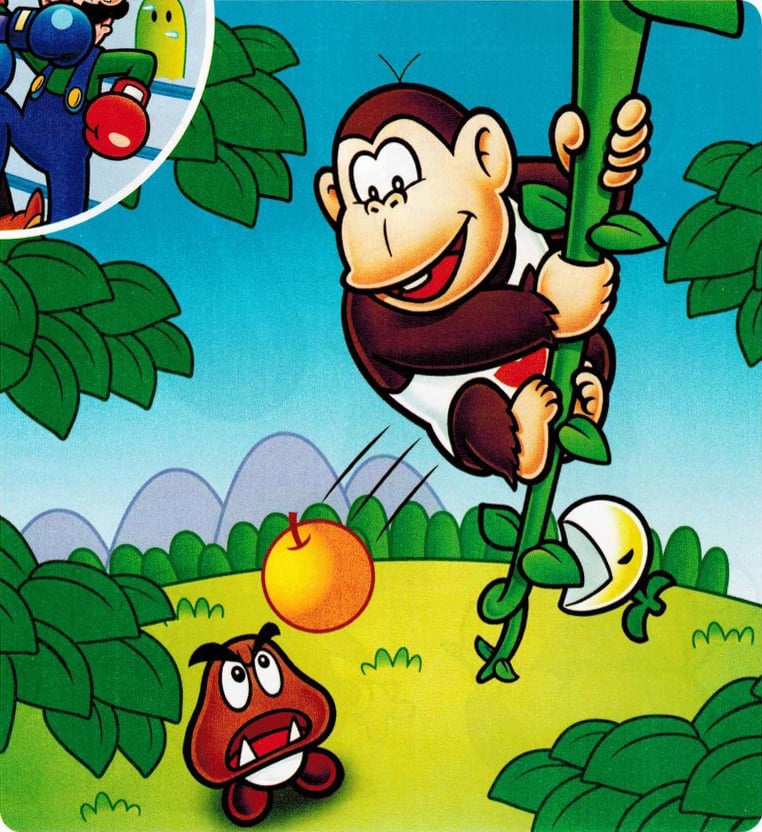
Modern: the three-stage remake from Game & Watch Gallery 3 with new art: jungle floor, sunset treetops and a cloudy night, with Goombas, Nipper Plants, Bullet Bills and Spinies. Wait on the title and Mario snatches Junior’s fruit, DK chases him off, and comes back with Mario locked in a cage.
Modern Donkey Kong Jr., Area 2.Area 3.Artwork: Donkey Kong Jr. climbs a vine.
Donkey Kong 3
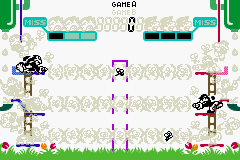
Classic: Stanley drives bees up toward Donkey Kong.
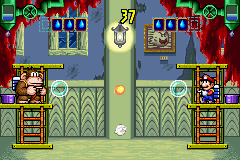
Modern: Mario takes Stanley’s place, firing bubbles that push a fireball toward Donkey Kong, while a Boo moves on its own and sneaks up on whichever of them is refilling his bubble shooter. A second player can take the part of Donkey Kong.
Classic Donkey Kong 3.Modern Donkey Kong 3.
Chef (7 stars)
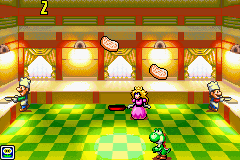
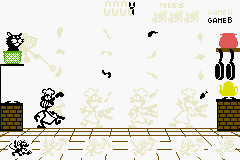
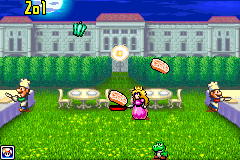
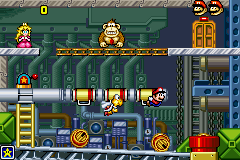
The Gallery 2 favourite, remade: Peach flips food thrown by Mario and Luigi and feeds it to Yoshi. The kitchen is redrawn in gold tones, bell peppers and lobsters replace the sausages and lamb, the Yoshi Egg turns green, every 200 points the scene switches between the kitchen and a castle garden, and Peach now screams at a dropped dish. The intro shows Mario buried under a mountain of eggs.
Classic Chef.Modern Chef, the castle garden scene.
Mario Bros. (20 stars)
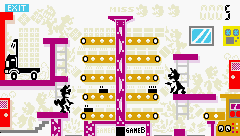
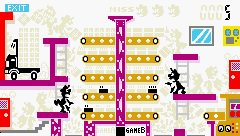
Gallery 3’s cake factory moves indoors. Bowser still sabotages the belts, and the bonus for five full trucks without a miss drops to 20. Leave the title running and the brothers wash their truck, only for Wario and Bowser to drive off with it.
Classic Mario Bros.Modern Mario Bros. in the indoor factory.
Donkey Kong (35 stars)
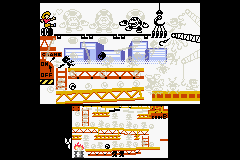
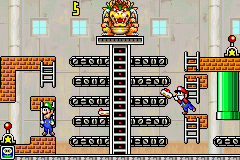
The Gallery 2 remake of the two-screen classic, with Peach at the top and switches and doors in place of the crane. The third area is now a daytime airship instead of a glacier, and waiting on the title shows Mario balancing on a barrel.
Classic Donkey Kong.Modern Donkey Kong, Area 1.Area 3: the airship.
Octopus (50 stars)
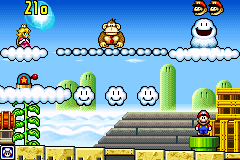
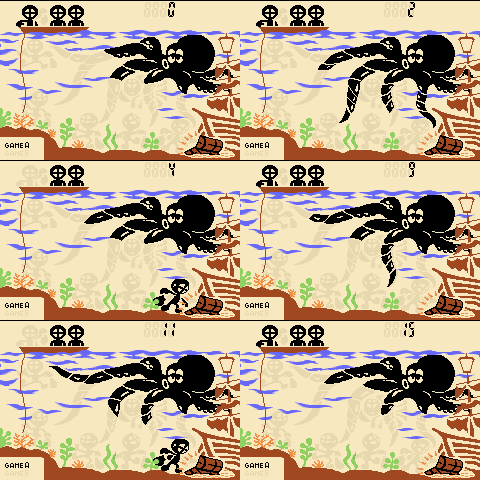
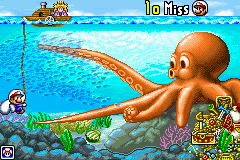
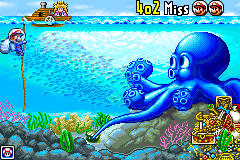
Classic: divers creep down to a sunken treasure while an octopus waves its arms. Modern: Mario dives and Peach waits in the boat. Mario slows as his haul grows, can throw treasure to stun an arm, and must watch for ink; Lakitu brings the hearts. In this version the octopus changes colour every 200 points, and an idle title sketch shows Mario losing his loot to its arms.
Classic Octopus.Modern Octopus with the orange octopus.The blue octopus.
Fire Attack (65 stars)
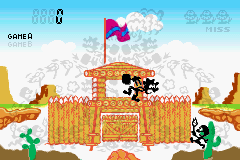
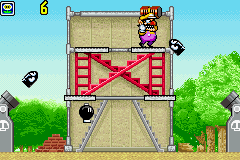
Classic: the original LCD game; Wikipedia notes that one of its sprites was redrawn for this collection because it depicted an insensitive Native American stereotype. Modern: Wario replaces the original character, and he earns extra points by not hitting the apples and hens.
Classic Fire Attack.Modern Fire Attack.
Every game in Game & Watch Gallery 4
Eleven games in Classic and Modern form, then nine Classic-only games in the Museum.
FireFrom the startMario and Luigi bounce friends from a burning Peach’s Castle.
BoxingFrom the start · 2 players by linkLuigi against Wiggler, Big Boo and Waluigi.
Rain ShowerFrom the startKeep the cast dry under Bowser’s water balloons.
Mario’s Cement FactoryFrom the startCookies instead of cement, and Boos in the mixers.
Donkey Kong Jr.From the startThree stages of keys and Spinies to free DK.
Donkey Kong 3From the start · 2 players by linkMario’s bubbles push a fireball at DK while a Boo prowls.
Chef7 starsPeach’s kitchen, redrawn in gold.
Mario Bros.20 starsThe cake factory, now indoors.
Donkey Kong35 starsSwitches, doors and a new airship stage.
Octopus50 starsMario dives for treasure under a colour-changing octopus.
Fire Attack65 starsWario on the attack.
The Museum (Classic only, no stars): Manhole (seen at 4 stars, playable at 80), Tropical Fish (10 / 90), Mario’s Bombs Away (15 / 100), Parachute (25 / 110), Bomb Sweeper (30 / 120), Climber (40 / 130), Safe Buster (45 / 140), Life Boat (55 / 150) and Zelda (60 / 160), in which you play as Link.
Advertisement
Gameplay & Controls
Choose a game, Classic or Modern, and Game A or Game B; three misses ends it. Classic mode imitates the original LCD screens, while Modern adds Mario characters, new graphics and music, hearts that erase a miss and twists of its own.
Stars and Star mode
Every 200 points is a star, up to five per mode and difficulty, so each main game is worth twenty: eleven games make 220. Boxing is the exception to the points rule, paying a star for every three knockouts. Collect all five stars in a Modern game (that is, pass 1,000 points) and its Star mode opens, a punishing extra difficulty; Boxing and Donkey Kong 3 have none.
The Gallery Corner
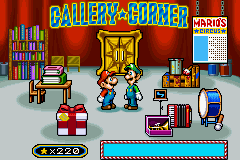
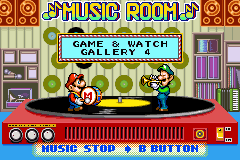
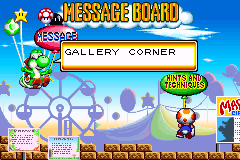
Mr. Game & Watch hosts the Gallery Corner, a row of stands that open as your star count rises: the Music Room at 2 stars, the Museum at 4, the Game & Watch history timeline at 70, the credits at 170 and the cast credits at 220. There is a Message Board for news and a Present stand that announces each unlock.
The Gallery Corner.The Music Room.The Message Board.
Every star reward
2 stars: Music Room · 4: Museum and Manhole · 7: Chef · 10: Tropical Fish · 15: Mario’s Bombs Away · 20: Mario Bros. · 25: Parachute · 30: Bomb Sweeper · 35: Donkey Kong · 40: Climber · 45: Safe Buster · 50: Octopus · 55: Life Boat · 60: Zelda · 65: Fire Attack · 70: G&W History · 80 to 150: the first eight Museum games become playable, one every 10 stars, in the order they arrived · 160: Zelda playable · 170: credits · 220: cast credits.
Two players
Boxing swaps its Hard mode for a two-player bout in which the second player is Waluigi, and Donkey Kong 3 lets a second player take control of Donkey Kong. Both need a link cable; Nintendo’s UK page notes that the Wii U release does not support the cartridge’s link features, and Nintendo Life found the game asks you to connect a cable instead.
Items and pick-ups in the Modern games
A selection of the objects the Modern versions add, with the game each belongs to.
1UP HeartMost Modern games: appears at 200, 500 and 700 points to erase a miss.
Bell pepperChef: new to the GBA version, along with the lobster.
LobsterChef: replaces the sausage and leg of lamb of Gallery 2.
SteakChef: still on the menu.
Yoshi EggChef: now green rather than pink; feed Yoshi well and he lays one.
Treasure chestOctopus: the prize at the bottom of the sea.
CrownOctopus: part of the treasure haul.
ClamOctopus: more sea-bed loot.
LeafDonkey Kong: new to the GBA remake.
AnchorDonkey Kong: part of the new airship area.
CakeMario Bros.: the factory’s product.
Steel BlocksMario Bros.: part of the new indoor factory.
KeyDonkey Kong Jr.: four of them free Donkey Kong.
FruitDonkey Kong Jr.: drop it on an enemy for points.
Cartoons, Comics & Other Media
Where these games came from, and where they went next.
Game & Watch Gallery 2Game Boy / Game Boy ColorThe original Modern Chef and Donkey Kong, remade here.
Game & Watch Gallery 3Game Boy Color, 1999The original Modern Mario Bros. and Donkey Kong Jr.
Game & Watch GalleryGame BoyWhere Modern Fire and Octopus first appeared; Mario’s Cement Factory goes back further still, to Game Boy Gallery.
Super Smash Bros.Mr. Game & WatchHis up smash is a diving-helmet headbutt from Octopus, and his Final Smash turns him into the octopus itself.
Characters
Gallery 4’s Modern cast is the largest in the series.
Character
Who they are
In this game
Abilities & notes
Mr. Game & WatchHost
The flat, black hero of the LCD games.
Greets you in the Gallery Corner.
Host
MarioMost games
The star of the Modern versions.
Bounces jumpers in Fire, shelters friends in Rain Shower, runs the cookie factory, sprays bubbles in Donkey Kong 3, climbs in Donkey Kong, dives in Octopus, works the belts in Mario Bros. and throws food in Chef. In Donkey Kong Jr. he is the villain again.
Playable in most Modern games
LuigiBoxing, Fire, Mario Bros., Chef
Mario’s brother.
The boxer in Modern Boxing; holds the other end of the trampoline in Fire; works the belts in Mario Bros.
Playable in Boxing
Princess PeachChef, Rain Shower, Donkey Kong, Octopus, Fire
Ruler of the Mushroom Kingdom.
Cooks in Chef, waits in the boat in Octopus, awaits rescue in Donkey Kong; it is her castle that burns in Fire.
Playable in Chef
YoshiChef, Fire, Mario’s Cement Factory
Mario’s dinosaur friend.
The diner in Chef, one of the friends rescued in Fire, and the star of the cookie-factory artwork.
Non-playable
WaluigiBoxing, Rain Shower
Luigi’s spindly rival.
The final opponent in Boxing and the second player’s fighter in its VS mode; shakes the ropes on Hard in Rain Shower.
Playable in 2-player Boxing
WarioFire Attack, Mario Bros., Rain Shower
Mario’s greedy rival.
The player character in Modern Fire Attack, defending his golden statue, and the truck thief in the Mario Bros. intro; also appears in Rain Shower.
Playable in Fire Attack
BowserRain Shower, Mario Bros.
King of the Koopas.
Drops water balloons in Rain Shower and stamps on the conveyor machine in Mario Bros.
Hazard
Donkey KongDonkey Kong, Donkey Kong 3, Donkey Kong Jr.
The big ape.
Villain of Donkey Kong and Donkey Kong 3 (playable by a second player in the latter) and the prisoner in Donkey Kong Jr.
Playable in 2-player DK3
Donkey Kong Jr.Donkey Kong Jr.
DK’s son.
Hero of Donkey Kong Jr.
Playable
LakituOctopus
The cloud-riding Koopa.
Drops hearts for Mario in Octopus; he is the one Mario calls for in the idle sketch.
Helper
Opponents, enemies and hazards
Who gets in the way in the Modern games.
WigglerBoxingLuigi’s first opponent.
Big BooBoxingThe middle of the card.
BooMario’s Cement Factory, Donkey Kong 3Squats in the mixers; in Donkey Kong 3 it moves on its own and cannot be sprayed.
Koopa TroopaDonkey KongPatrols the girders; stomp it for points.
Koopa ParatroopaDonkey KongThe flying variety.
GoombaDonkey Kong Jr.Stompable.
SpinyDonkey Kong Jr.Not stompable.
Nipper PlantDonkey Kong Jr.Snaps along the ground.
Bullet BillDonkey Kong Jr.Stompable for a point.
AlbatrossDonkey Kong Jr.A short-lived ride to the cage.
Key staff
Credits as listed by Wikipedia.
Hitoshi Yamagami, Yasuhito MinamimotoDirectorsYamagami directed the previous two Galleries.
Takehiro IzushiProducerProducer of the series’ Game Boy Color entries too.
Hisataka Ikoma, Akira Mochizuki, Erika Hara, Koutarou ShinokiDesignersThe design team.
Kenta Egami, Takahiro FurukawaProgrammersThe programming team.
Yoichi Kotabe, Yasuko TakahashiArtistsCredited for the art.
Riyou Kinugasa, Kengo HagiwaraComposersWrote the music.
How It Was Made
TOSE takes the credit
Wikipedia and other references list TOSE as the developer and Nintendo as publisher; Wikipedia notes that TOSE had co-developed earlier Galleries but that this is the first to credit it. Hitoshi Yamagami, who had directed the Game Boy Color entries, shared the director’s chair with Yasuhito Minamimoto, Takehiro Izushi produced, and the artwork is credited to Yoichi Kotabe and Yasuko Takahashi.
Announcement and release
The European and Australian title screen.
Nintendo announced the game at its E3 2002 press conference, and released it in Europe as Game & Watch Gallery Advance on 25 October 2002, with North America following on 28 October. A Japanese version, Game Boy Gallery 4, exists with Japanese text, but it was not published until the Wii U Virtual Console release of March 2016.
Changes and leftovers
One Classic sprite in Fire Attack was revised because it showed an insensitive Native American stereotype. The data also keeps unused sprite variations, including a Peach from Chef and larger Toad sprites for Mario’s Cement Factory, and the credits open with the alarm characters of eleven games.
Advertisement
Cheats & Secrets
There are no button codes; everything is unlocked with stars.
Unlock the five hidden games
Chef at 7 stars, Mario Bros. at 20, Donkey Kong at 35, Octopus at 50 and Fire Attack at 65.
Play the Museum games
Each Museum game appears first as an exhibit (4 to 60 stars) and becomes playable later: Manhole at 80, then one every ten stars up to Life Boat at 150. Zelda is playable at 160 stars, with Link as your character.
Star mode
Earn all five stars in a Modern game to open its Star mode. Boxing and Donkey Kong 3 have none.
Quick stars in Boxing
Boxing pays one star for every three knockouts rather than every 200 points.
Idle title sketches
Highlight a game and wait: Donkey Kong, Donkey Kong Jr., Mario Bros., Octopus and Chef each play a short comic scene before you start.
Our separate cheats page covers the unlockables too.
Videos
The European trailer for the Wii U Virtual Console release, and a first look at that version.
Third-party upload of the European Wii U Virtual Console trailer.
Third-party first look at the European Wii U release.
Trivia & Interesting Facts
Despite the “4”, it is the fifth Game & Watch Gallery game, after Game Boy Gallery, Game & Watch Gallery and Galleries 2 and 3. It is also the last, and the only one on Game Boy Advance.
Japan never had it on cartridge: its first release there was the Wii U Virtual Console in March 2016, under the name Game Boy Gallery 4.
Waluigi’s Boxing sprite.Waluigi appears as Luigi’s final opponent in Boxing, and as the troublemaker on Hard in Rain Shower.
The Modern Chef changed the Yoshi Egg from pink to green, swapped sausages and lamb for bell peppers and lobsters, and made Peach scream rather than stamp her foot.
The Modern Donkey Kong replaced Gallery 2’s night-time glacier with a daytime airship.
Collect 160 stars and the Museum’s Zelda becomes playable with Link.
Of the eleven main games, Chef and Donkey Kong had already appeared in Gallery 2, Donkey Kong Jr. and Mario Bros. in Gallery 3, Fire and Octopus in the first Game & Watch Gallery, and Mario’s Cement Factory in Game Boy Gallery, according to Wikipedia.
The credits open with the alarm characters from eleven games.
Jeremy Parish of USgamer called it an essential Game Boy Advance game on the Wii U Virtual Console.
A second piece of Donkey Kong 3 artwork.Mario and Donkey Kong face off in the official artwork for Donkey Kong 3.
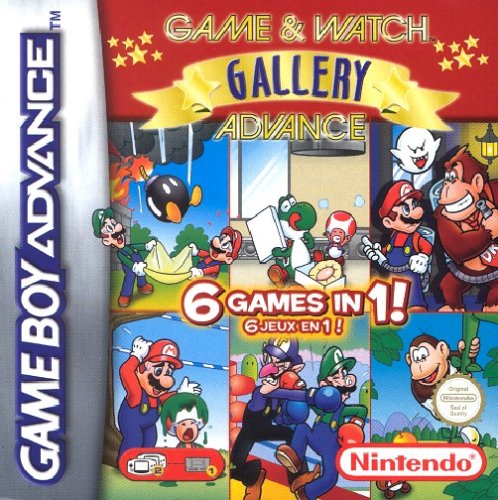
Regional Box Art
Three covers, two names.
North AmericaEuropeAs Game & Watch Gallery AdvanceAustraliaAs Game & Watch Gallery Advance
Screenshots
More of the eleven main games.
Modern Donkey Kong Jr., Area 1.Classic Donkey Kong Jr.Modern Chef in the kitchen.Modern Donkey Kong, Area 2.Modern Octopus: the green octopus.
Artwork & Media Gallery
Logos, Gallery Corner stands and sprites.
The North American logo.The European and Australian Game & Watch Gallery Advance logo.The G&W History stand.The Museum stand.The Present stand.Mario in Mario’s Cement Factory.Peach in Rain Shower.Yoshi in Fire.
Legacy & Re-releases
The final Gallery has had one re-release, on Wii U.
Releases and re-releases
Game Boy Advance25 October 2002Europe, as Game & Watch Gallery Advance; Australia the same year.
Game Boy Advance28 October 2002North America.
Wii U Virtual Console10 December 2015Europe (11 December in Australia).
Wii U Virtual Console16 March 2016Japan, as Game Boy Gallery 4: its first release there.
Wii U Virtual Console7 April 2016North America, at $6.99.
After the Gallery
No fifth numbered Gallery followed. On Nintendo DS, Nintendo instead made two straight Classic-only reproductions for Club Nintendo members, Game & Watch Collection and Game & Watch Collection 2, the second of which included Octopus. For more Mario games, see our games list.
Reviews & Sales
Sales
Nintendo has not published a sales figure for Game & Watch Gallery 4, so none is given here.
Reviews and scores
Metacritic rates it 71, “mixed or average”, and GameRankings, now closed, averaged it at 71.38%. Most critics liked the amount of content; the biggest grumble was how long the unlocks take.
Nintendo World ReportLasse Pallesen, 16 November 2002
Official Nintendo MagazineIssue 123, December 2002
7/10
GameSpyKevin Murphy, 1 December 2002
61/100
Game InformerChet Faliszek, issue 118, February 2003
3/10
Quantity was the selling point and presentation the weak spot. Frank Provo (GameSpot) rated the look and sound below the GBA’s standard yet found the games hard to put down; Craig Harris (IGN) welcomed the size of the package, found the line-up uneven and wanted more background on the original units; Kevin Murphy (GameSpy) judged the star targets too steep for the extras to be worth chasing. Game Informer was the harshest by far. Later opinion has been warmer: Nintendo World Report called it the best of the series when it gave it an honourable mention in a list of the ten best GBA games, and Nintendo Life’s Dave Frear gave the 2015 Wii U release 8/10, docking marks for repetition and the grind of unlocking.
SLB User Reviews
Game & Watch Gallery 4 has yet to receive a community review on Super Luigi Bros.
If you’ve played Game & Watch Gallery 4 and would like to submit a review, please get in touch.
More from the Super Luigi Bros Guide
These picture lists come from the earlier Super Luigi Bros guide to Game & Watch Gallery 4 and are kept here in full.
11 Main Games (Classic + Modern)
The 11 main games each ship with Classic and Modern modes. The first 5 are playable from the start; the next 5 are unlocked through star collection; the final game (Fire Attack) is the last Modern unlock.
Primary Games (Playable from Start)
Game 1
Fire
Default
Classic
Modern
Classic (1980): Two firemen catch pedestrians jumping from a burning apartment with a trampoline and bounce them to safety. Miss any pedestrian and you lose a life. Modern: Mario and Luigi rescue their friends from Princess Peach’s burning castle. Time-of-day cycles (daytime, sunset, nighttime) add variety. One of the most iconic Game & Watch concepts.
Game 2
Boxing
Default
Classic
Modern
Classic: Punch out opponents before they KO you. Modern: Luigi steps into the ring against three opponents — Wiggler, Big Boo, and Waluigi. A star is earned for every three KOs. Note: Boxing is one of two Modern games without a Star Mode (the other being Donkey Kong 3).
Game 3
Rain Shower
Default
Classic
Modern
Classic: A boy keeps his clothes dry from rain by moving clotheslines; crows knock the lines around on Hard. Modern:Mario moves his friends away from water balloons dropped by Bowser. On Hard, Waluigi moves the ropes to make things harder. Modern Rain Shower cycles through four seasons (summer, autumn, winter, spring) for visual variety.
Game 4
Mario’s Cement Factory
Default
Classic
Modern
Classic (1983): The original 1983 Mario Game & Watch unit. Mario navigates cement vats and elevators in a factory. Modern: Mario and friends work in a cookie factory instead, with Yoshi getting fed the cookies. A delightful reskin that retains the cement-factory mechanics intact while making everything cuter.
Game 5
Donkey Kong Jr.
Default
Classic
Modern
Classic (1982): Donkey Kong Jr. climbs vines, gathers keys, and frees his imprisoned father from a cell. The original 1982 single-screen platformer. Modern: Expanded into 3 distinct areas with progression between them — still climbing and key-collecting, but with more variety. A genuine expansion of the original concept.
Secondary Games (Unlock with Stars)
Game 6
Donkey Kong 3
35 Stars
Classic
Modern
Classic (1983): Play as Stanley, the exterminator, firing bug spray upward at Donkey Kong. Modern: Mario uses bubbles to redirect Boos and fireballs against Donkey Kong. A complete reimagining — only Donkey Kong himself bridges Classic and Modern. Note: no Star Mode unlock for this game.
Game 7
Chef
7 Stars
Classic
Modern
Classic: A chef juggles food in mid-air, keeping it from falling to the floor where a mouse waits. Modern:Princess Peach cooks food thrown into the air by the Mario Bros. and feeds it to Yoshi. The cooking minigame structure with Peach as the chef and Yoshi as the customer is one of the compilation’s most charming reimaginings.
Game 8
Mario Bros.
20 Stars
Classic
Modern
Classic: Mario and Luigi prepare packages of bottles in a factory; let one fall and the foreman disciplines them. Modern: Mario and Luigi make cakes in a cake factory while Bowser tries to stop them. The cake passes through five visual stages as it progresses down the assembly line.
Game 9
Donkey Kong
35 Stars
Classic
Modern
Classic (1983): The Game & Watch port of the 1981 arcade classic. Mario ascends a construction site dodging barrels to reach the top. Modern: Mario avoids falling barrels and Koopas to save Peach (replacing Pauline) from Donkey Kong, across 3 areas. A direct lineage to the original 1981 arcade classic.
Game 10
Octopus
50 Stars
Classic
Modern
Classic (1981): A diver dodges octopus tentacles to retrieve treasure from the sea floor. Modern: Mario dodges three colored octopuses (orange, green, blue) underwater. The Modern version expands the original mechanic with multiple octopus types and more challenging tentacle patterns.
Game 11
Fire Attack
65 Stars
Classic
Modern
Classic (1982): A frontier soldier defends a wooden fort from arrow attacks. Modern: The same mechanic with a Mario cast. The last Modern game to unlock — requires 65 stars of dedicated play to access.
9 Museum Games (Classic Only)
The 9 Museum games are Classic-mode-only LCD recreations with no Modern versions, no scoring, and no star collection. They’re pure historical preservation of less-celebrated Game & Watch units, all unlocked through the star-collection meta-game.
Manhole
Unlocks at 4 Stars
The protagonist holds up manhole covers in real time to prevent pedestrians from falling through holes in the floor. A classic 1981 Game & Watch unit.
Tropical Fish
Unlocks at 10 Stars
A man holds up a fishbowl so tropical fish can jump from one fish tank to another. If a fish hits the ground, a cat grabs it for a miss.
Mario’s Bombs Away
Unlocks at 15 Stars
Mario carries a bomb from one buddy to another across a jungle. Enemy soldiers in the trees try to light the bomb. The Heavy Smoker throws cigars carelessly, igniting nearby oil. Mario must avoid all fire or his bomb lights. A rare Mario-cast LCD original from 1983.
Parachute
Unlocks at 25 Stars
A man uses a rowboat to catch falling parachuters before they hit the water. A 1981 classic with a simple sideways-movement mechanic.
Bomb Sweeper
Unlocks at 30 Stars
John Solver goes into a labyrinth-like sewer to stop a bomb set by the criminal Dynamite Jack from detonating. A 1987 New Wide Screen Game & Watch.
Climber
Unlocks at 40 Stars
A climber scales floating platforms in the sky while avoiding birds and obstacles. The classic 1986 Game & Watch unit.
Safe Buster
Unlocks at 45 Stars
Defuse bombs being dropped onto a safe by catching them in baskets. A 1988 Game & Watch design.
Life Boat
Unlocks at 55 Stars
Two sailors steer a lifeboat to rescue passengers falling from a sinking ship. A 1983 dual-screen Game & Watch unit.
Zelda
Unlocks at 60 Stars
The Game & Watch version of Zelda — originally released in 1989. Link becomes playable in this game after collecting 160 total stars, the highest-level unlock in the compilation. A Zelda-series cameo within a Mario compilation.
Screenshots Gallery
A selection of in-game screenshots showcasing the variety of Classic LCD recreations and Modern Mario-cast remakes.
Mode Variety Highlights
Modern Fire — daytime variantModern Fire — sunset variantModern Fire — nighttime variantModern Rain Shower — summerModern Rain Shower — autumnModern Rain Shower — winterModern Rain Shower — springModern Octopus — orangeModern Octopus — greenModern Octopus — blue
North AmericaReleased 2 Oct 2002EuropeReleased 25 Oct 2002AustraliaReleased 2002
Iconic Screens
Title screen (North America)Title screen (Europe / Australia)Game select screenLuigi vs. Waluigi in BoxingToad in Rain ShowerYoshi unboxes a cookie in Mario’s Cement Factory (Modern)Donkey Kong Jr. climbs a vineWiggler — Boxing opponent
To provide the best experiences, we use technologies like cookies to store and/or access device information. Consenting to these technologies will allow us to process data such as browsing behavior or unique IDs on this site. Not consenting or withdrawing consent, may adversely affect certain features and functions.
Functional
Always active
The technical storage or access is strictly necessary for the legitimate purpose of enabling the use of a specific service explicitly requested by the subscriber or user, or for the sole purpose of carrying out the transmission of a communication over an electronic communications network.
Preferences
The technical storage or access is necessary for the legitimate purpose of storing preferences that are not requested by the subscriber or user.
Statistics
The technical storage or access that is used exclusively for statistical purposes.The technical storage or access that is used exclusively for anonymous statistical purposes. Without a subpoena, voluntary compliance on the part of your Internet Service Provider, or additional records from a third party, information stored or retrieved for this purpose alone cannot usually be used to identify you.
Marketing
The technical storage or access is required to create user profiles to send advertising, or to track the user on a website or across several websites for similar marketing purposes.



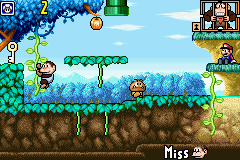 Donkey Kong Jr.From the startThree stages of keys and Spinies to free DK.
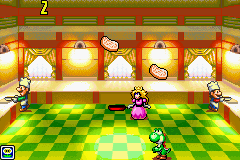 Chef7 starsPeach’s kitchen, redrawn in gold.
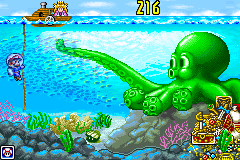 Octopus50 starsMario dives for treasure under a colour-changing octopus.
 1UP HeartMost Modern games: appears at 200, 500 and 700 points to erase a miss.
 Bell pepperChef: new to the GBA version, along with the lobster.
 LobsterChef: replaces the sausage and leg of lamb of Gallery 2.
 SteakChef: still on the menu.
 Yoshi EggChef: now green rather than pink; feed Yoshi well and he lays one.
 Treasure chestOctopus: the prize at the bottom of the sea.
 CrownOctopus: part of the treasure haul.
 ClamOctopus: more sea-bed loot.
 LeafDonkey Kong: new to the GBA remake.
 AnchorDonkey Kong: part of the new airship area.
 CakeMario Bros.: the factory’s product.
 Steel BlocksMario Bros.: part of the new indoor factory.
 KeyDonkey Kong Jr.: four of them free Donkey Kong.
 FruitDonkey Kong Jr.: drop it on an enemy for points.
 MarioMost games
 LuigiBoxing, Fire, Mario Bros., Chef
 Princess PeachChef, Rain Shower, Donkey Kong, Octopus, Fire
 YoshiChef, Fire, Mario’s Cement Factory
 WaluigiBoxing, Rain Shower
 WarioFire Attack, Mario Bros., Rain Shower
 BowserRain Shower, Mario Bros.
 Donkey KongDonkey Kong, Donkey Kong 3, Donkey Kong Jr.
 Donkey Kong Jr.Donkey Kong Jr.
 LakituOctopus
 Big BooBoxingThe middle of the card.
 Koopa TroopaDonkey KongPatrols the girders; stomp it for points.
 Koopa ParatroopaDonkey KongThe flying variety.
 GoombaDonkey Kong Jr.Stompable.
 SpinyDonkey Kong Jr.Not stompable.
 Nipper PlantDonkey Kong Jr.Snaps along the ground.
 Bullet BillDonkey Kong Jr.Stompable for a point.
 AlbatrossDonkey Kong Jr.A short-lived ride to the cage.