Game Boy Advance2004Nintendo Software TechnologyPuzzle platformer104 levelsBegan as Donkey Kong Plus1.37 million solde-Reader levels in JapanRemade for Switch in 2024
Mario vs. Donkey Kong (Game Boy Advance)
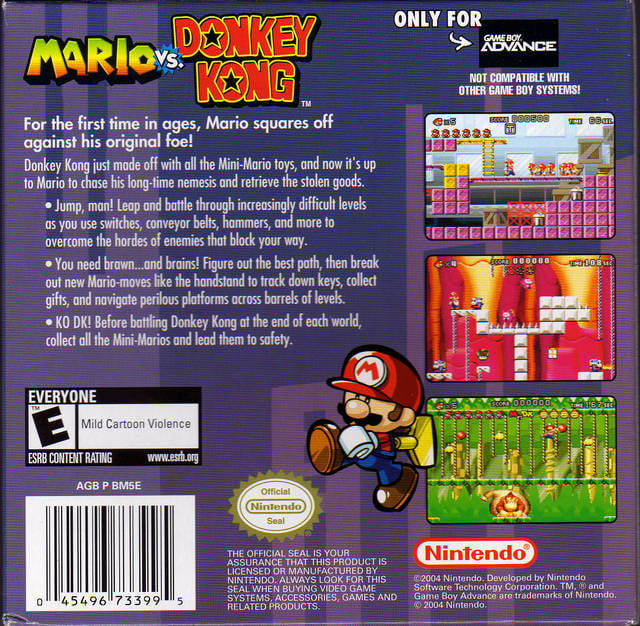
Donkey Kong wants a toy. He sees a Mini-Mario advertised on television, finds the shops sold out, and simply helps himself to the whole stock of the Mario Toy Company. So begins Mario vs. Donkey Kong, released on Game Boy Advance in North America on 24 May 2004 and in Europe on 19 November 2004. Built in Redmond, Washington, by Nintendo Software Technology, with Shigeru Miyamoto among its producers, it is the heir to Donkey Kong ’94: Mario keeps his handstands and backflips, and every level is a compact puzzle with a key, a locked door and a Mini-Mario in a bubble behind it. There are six worlds, each ending in a duel with the ape, then six harder Plus worlds and twelve Expert levels: 104 levels in all. It began life as Donkey Kong Plus, a GameCube-linked remake shown at E3 2002, sold 1.37 million copies and launched a series that is still going.
Platform:Game Boy Advance; Nintendo 3DS (Ambassador Program, 2011); Wii U Virtual Console (2014–2017); Game Boy Advance – Nintendo Classics on Switch (2026)
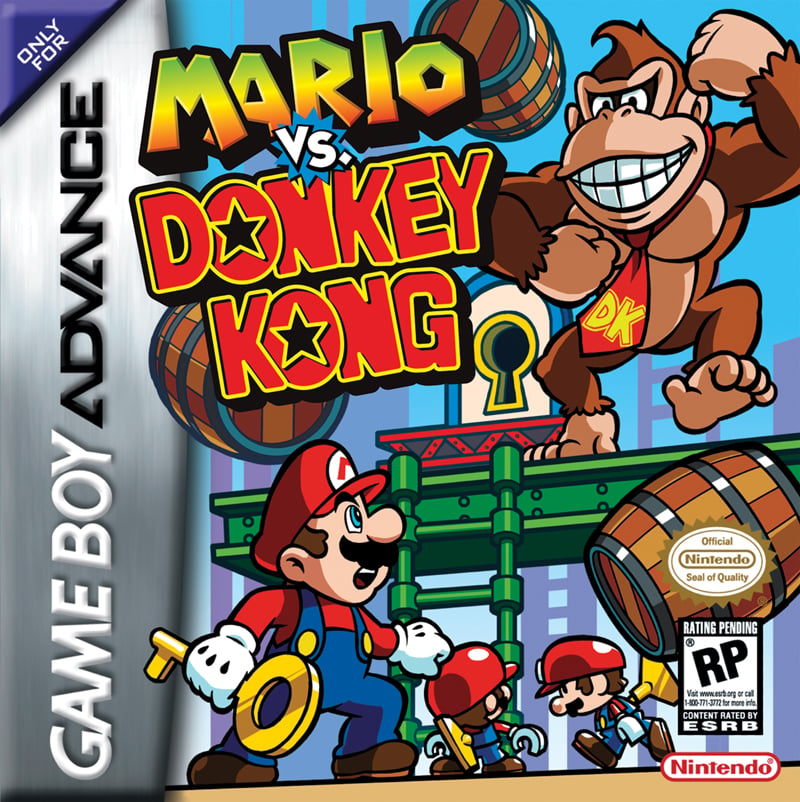
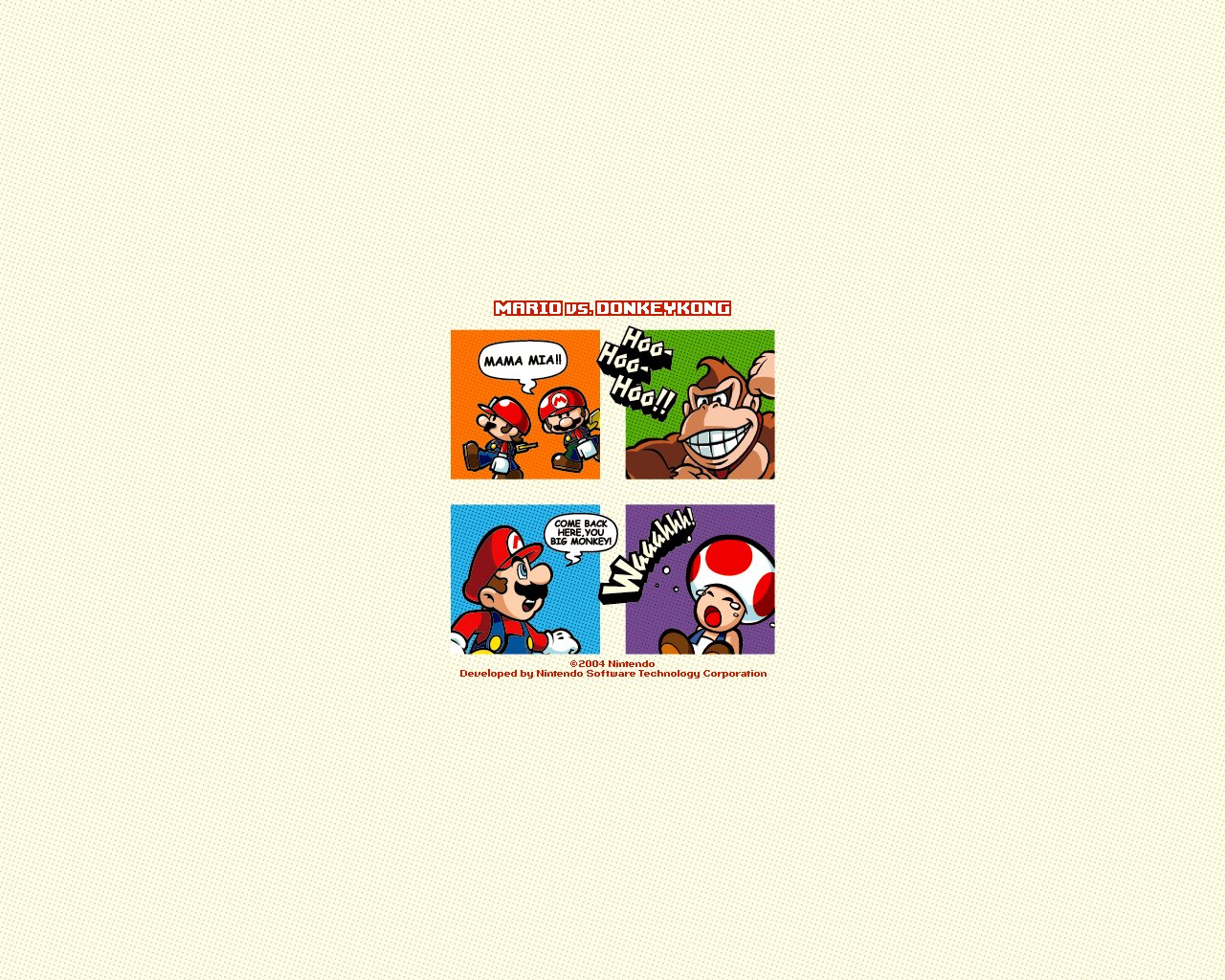
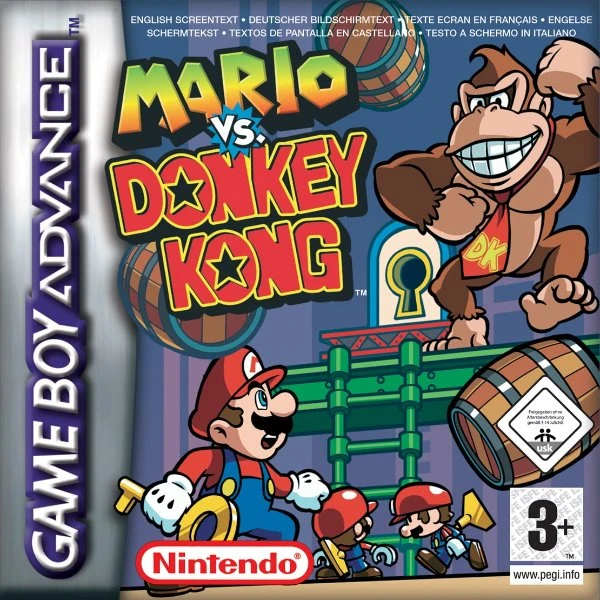
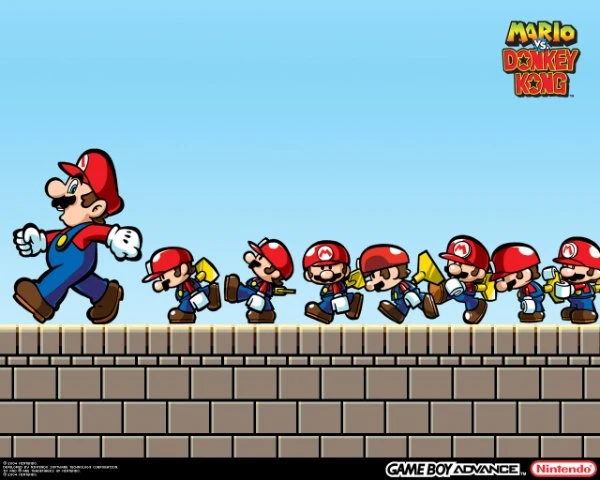
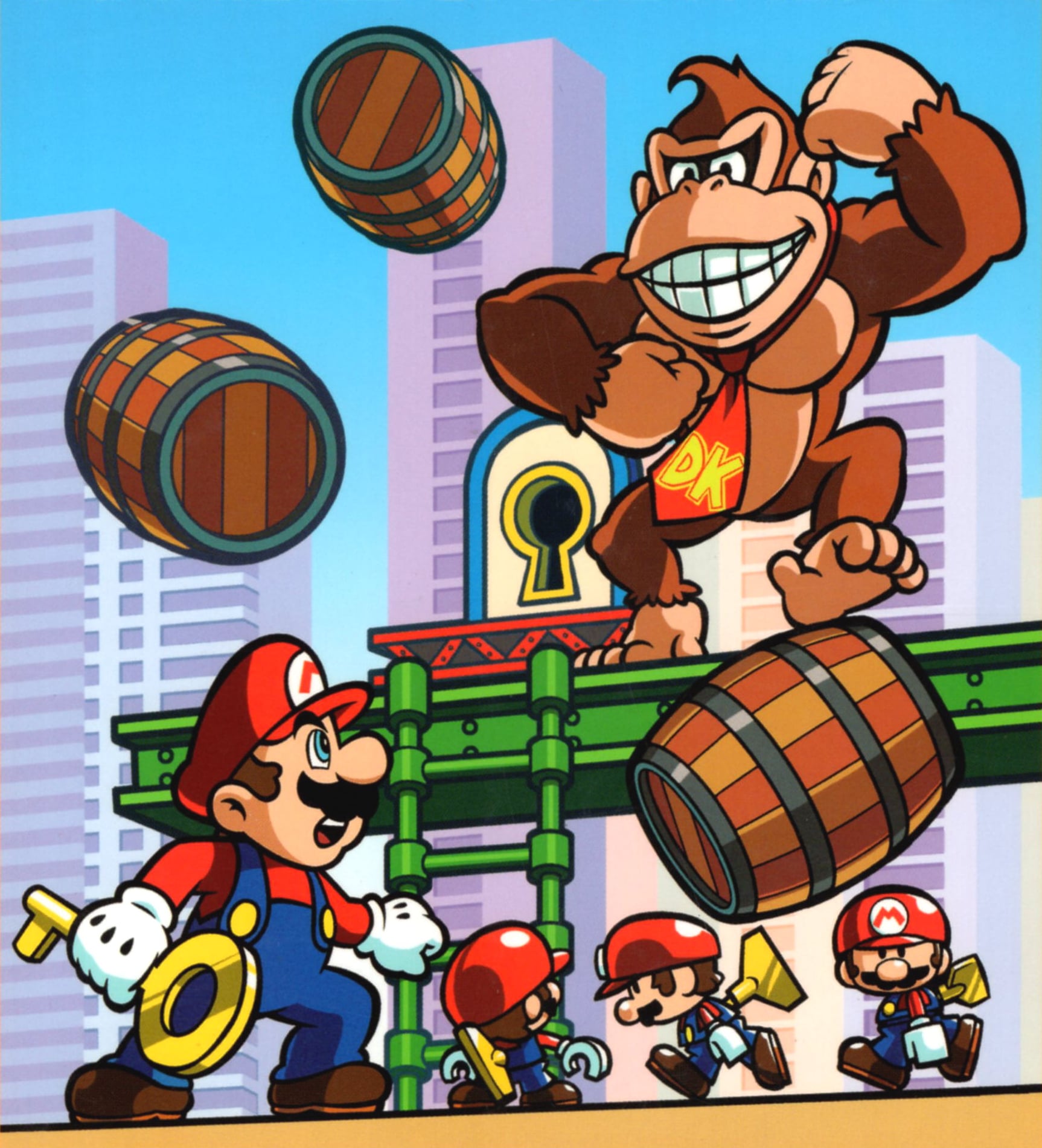
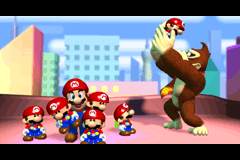
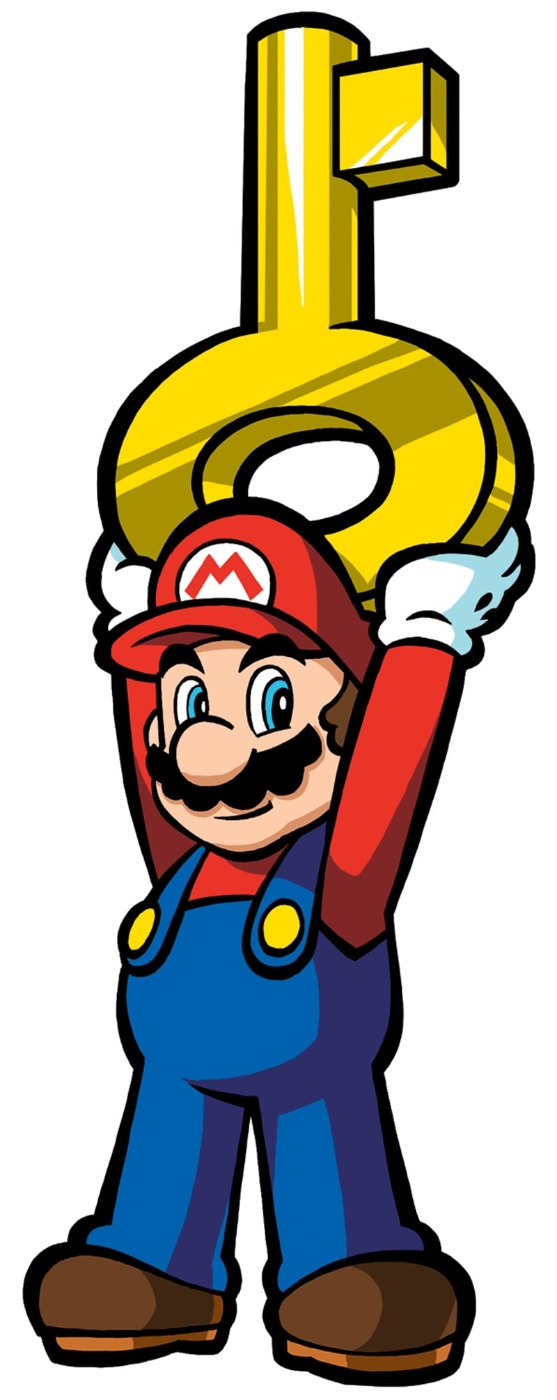
Mario, Donkey Kong and the Mini-Marios in the game’s group artwork.
Ten years after Donkey Kong on Game Boy turned the old arcade rivalry into a hundred-stage puzzle game, Nintendo came back to the idea on Game Boy Advance. The result is a game about a toy theft. Mario has gone into business making wind-up Mini-Mario toys, Donkey Kong cannot get hold of one, and the ape’s solution is to raid the factory and run off with a sack full of them.
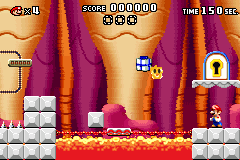
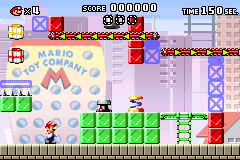
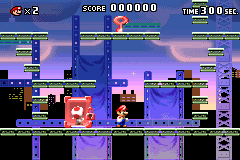
Each level is split in two. In the first room Mario has to find a key and carry it to a locked door; in the second he has to reach a Mini-Mario sealed in a bubble and break it free. Every world adds a seventh level in which the six rescued Mini-Marios follow Mario in a line to their toy box, and an eighth in which he squares up to Donkey Kong, with one hit point for every Mini-Mario he brought home.
Mario moves almost exactly as he did in 1994. He jumps, flips into a handstand, springs off his hands, backflips, swings from wires, climbs ropes and picks up enemies to throw them. The difference is in the look: the characters are sprites pre-rendered from 3D models, and Mario talks, courtesy of Charles Martinet.
Beat the six worlds and the chase starts again in six Plus worlds, where Mario has to escort a key-carrying Mini-Mario to the exit. Collect enough stars for high scores and twelve Expert levels open up. In Japan, e-Reader cards added more. The game sold 1.37 million copies according to the CESA figures cited by Wikipedia, began a series that ran through the DS, Wii U and 3DS, and was remade for Nintendo Switch in 2024.
Mario vs. Donkey Kong pits the Nintendo mascot against his old adversary in a unique twist on the platform genre that made them famous.
The mischievous ape has swiped all the Mini-Mario toys from Mario’s toy factory, so it’s up to you to rescue them from across six inventive worlds. You’ll be scratching your head at puzzles in some stages, before leading Mini-Marios to safety in the next; each world ending with a showdown against Donkey Kong himself!
— Official description (Nintendo UK, 2004)
Why Mario vs. Donkey Kong matters to Mario fans
It is the bridge between two eras of the rivalry. It inherits the move set, the keys and the hammer from Donkey Kong ’94, which itself grew out of the 1981 arcade game, and it hands on the Mini-Marios, the Mario Toy Company and the idea of a level editor to every game that followed, from March of the Minis to Tipping Stars. It is also the only entry before the 2024 Switch remake in which you control Mario himself.
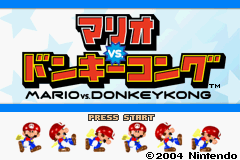
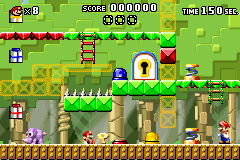
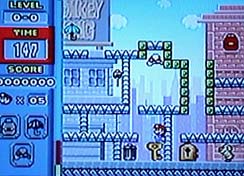
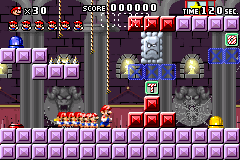
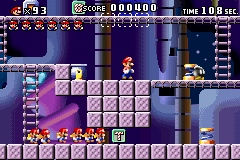
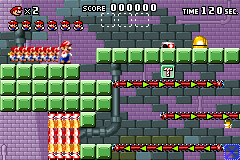
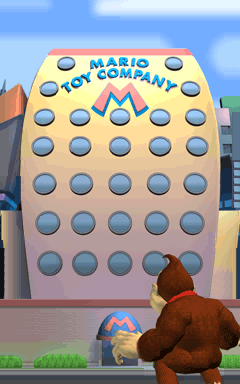
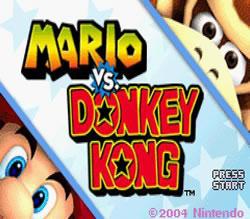
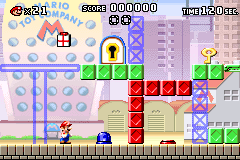
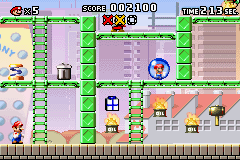
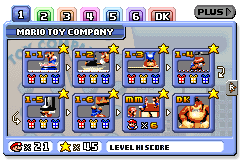
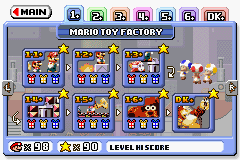
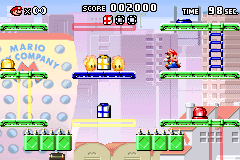
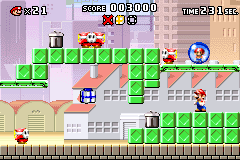
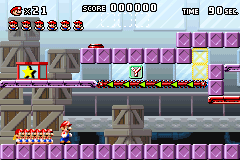
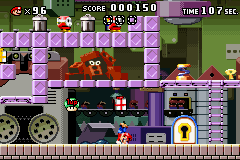
The title screen.Level 1-1, first part: find the key, open the door.Level 1-2, second part: break the Mini-Mario free.The Mario Toy Company level select.
Quick Answers
The questions people ask most about the Game Boy Advance original, answered in brief.
How many levels are in Mario vs. Donkey Kong?
By our count 104: six worlds of eight levels (48), the Donkey Kong finale, six Plus worlds of seven levels (42), the Donkey Kong Plus finale and 12 Expert levels. Japanese players could add e-Reader levels on top. More →
Who made Mario vs. Donkey Kong?
Nintendo Software Technology, Nintendo’s studio in Redmond, Washington. Yukimi Shimura directed; Shigeru Miyamoto and Shigeki Yamashiro produced, with Satoru Iwata as executive producer. More →
Is it a sequel to Donkey Kong on Game Boy?
In spirit. It started as Donkey Kong Plus, a reworking of the 1994 game, and kept its handstands, backflips, keys and doors when it became a new game with a new story. More →
What was Donkey Kong Plus?
The project as Nintendo announced it at its E3 press briefing in May 2002: a revival of Donkey Kong with a level editor that ran on a GameCube connected by link cable, planned for early 2003. The editor was dropped and the game was renamed. More →
Why does Donkey Kong steal the Mini-Marios?
He sees one advertised on television and wants it, but the toy shop has sold out, so he breaks into the Mario Toy Company factory and takes the lot. More →
How do you unlock the Expert levels?
By earning stars. Beat a level’s target score to win its star; collecting enough stars opens the 12 Expert levels. More →
What are the Plus worlds?
Six harder versions of the main worlds that open after the first ending. Each level is a single room in which Mario must lead a Mini-Mario holding the key to the door, and each world ends with a Donkey Kong battle. More →
Does it use the e-Reader?
Yes, as Mario vs. Donkey Kong-e. Six level cards were released in Japan. The mode is in the North American game too, but no cards were distributed there, and the European version removes it. More →
Who voices Mario?
Charles Martinet. Grant Kirkhope is also widely attributed as Donkey Kong and Jen Taylor as the Toads, both uncredited in the game. More →
Can I play it on Nintendo Switch?
Yes. The original joined Game Boy Advance – Nintendo Classics for Nintendo Switch Online + Expansion Pack members on 10 March 2026, and a full remake came out on 16 February 2024. More →
Worlds & Levels
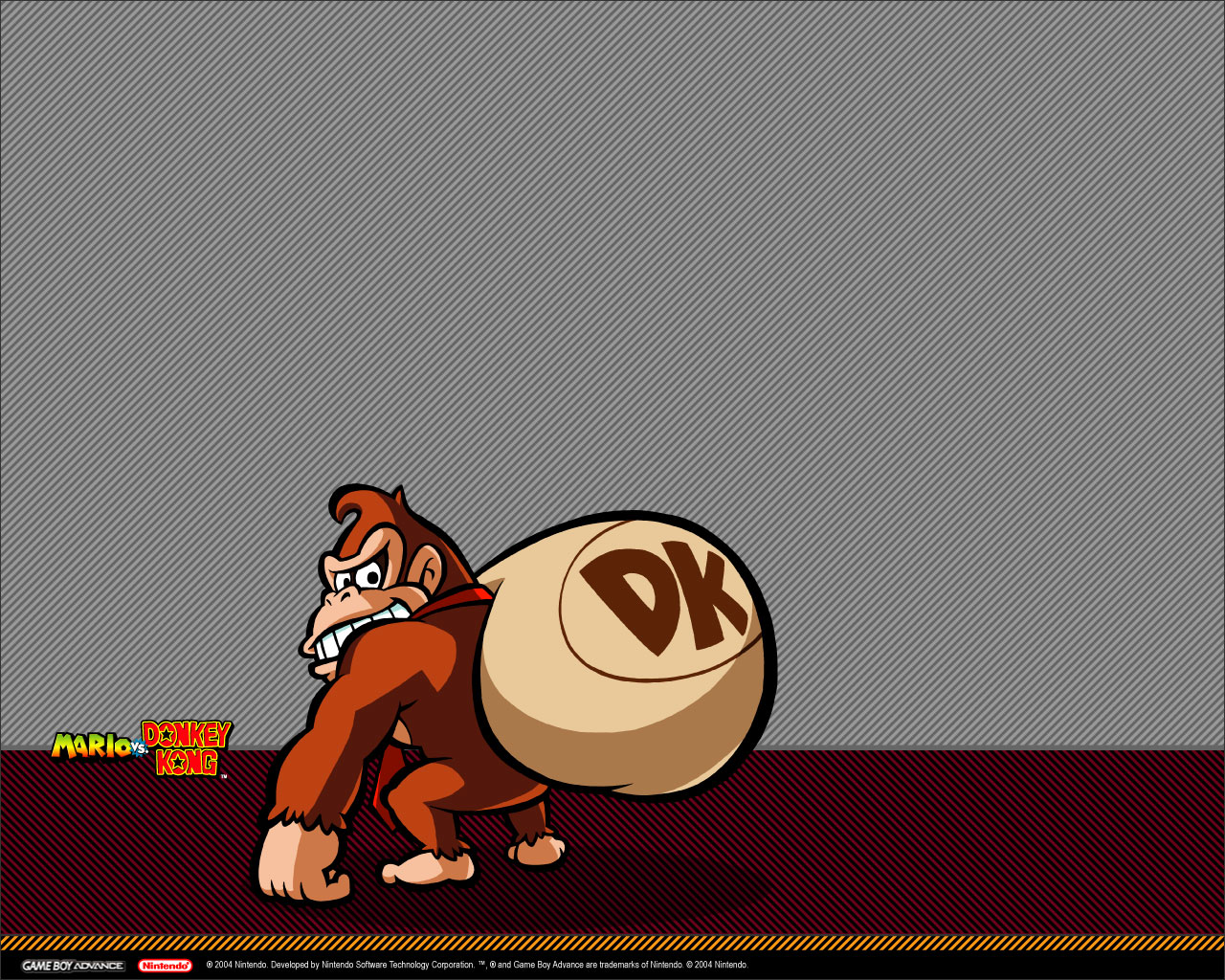
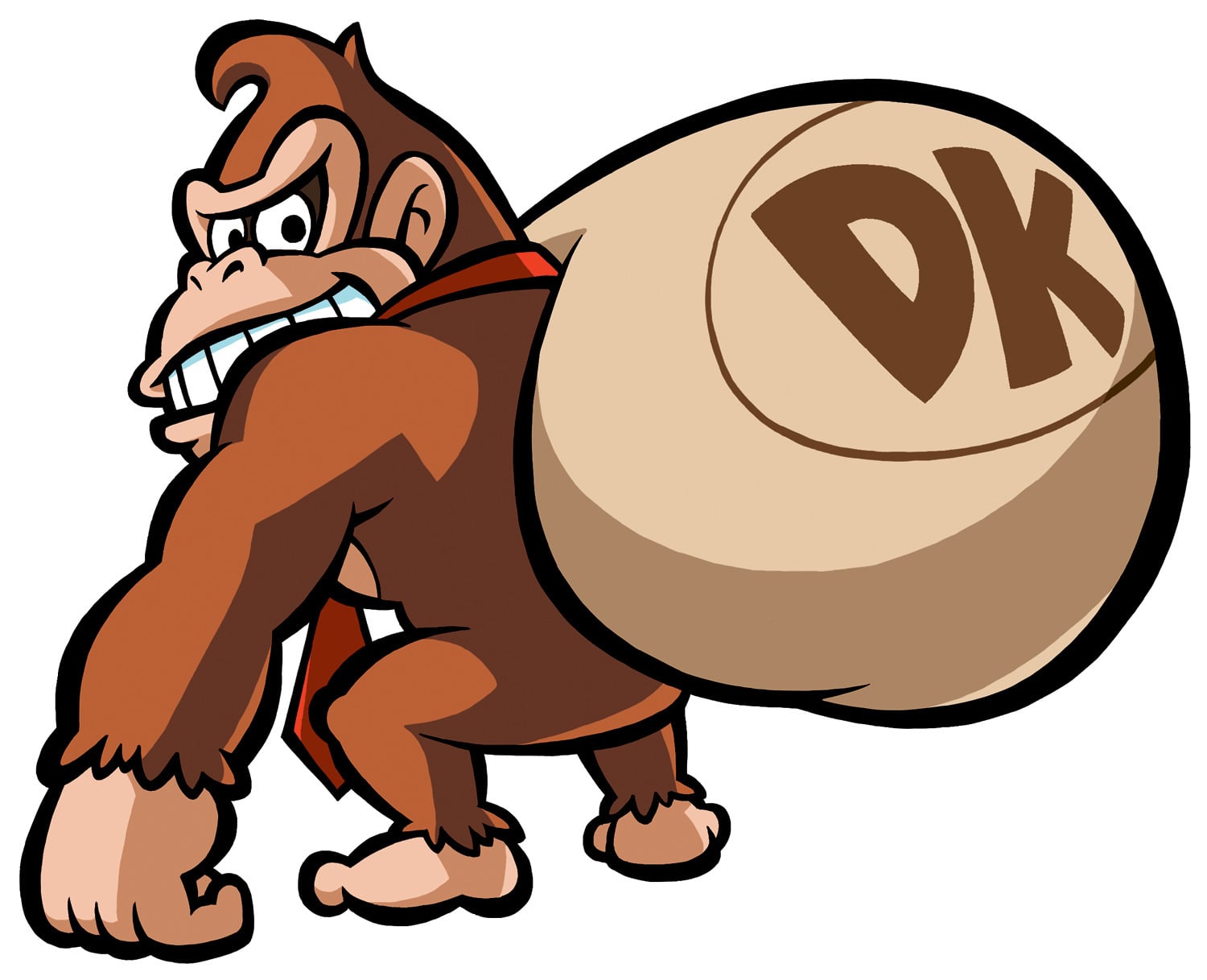
Donkey Kong and his sack of stolen toys.
The story is told in pre-rendered cut-scenes with no on-screen text in English, and it is a comedy of greed. The manual has Mario founding the Mario Toy Company on the back of his fame; its wind-up Mini-Mario toys are the hit of the season.
What follows is one long pursuit through six worlds, a showdown on a building site, another six worlds and a robot. Each world is listed below with its levels and its Donkey Kong battle; the cards at the end give the whole map at a glance.
The opening: sold out
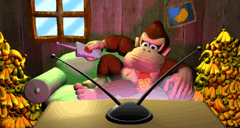
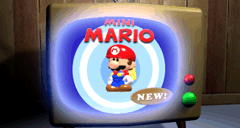
Donkey Kong is slumped in front of the television. A Shy Guy reads the news, an advert for bananas goes by, and then comes a commercial for the Mini-Mario. The ape is smitten. He races to the toy shop, only to find a SOLD OUT sign in the window.
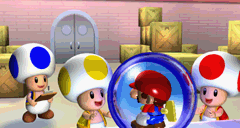
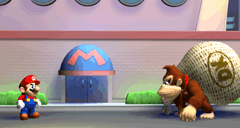
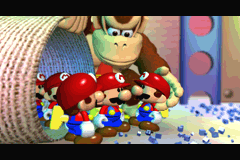
Then he notices the Mario Toy Company factory over the road. Inside, three Toads are supervising the Mini-Mario production line when a huge shadow falls across them. Donkey Kong bursts in, the Toads flee, and he scoops every Mini-Mario into a sack. Mario arrives just in time to see him go, and the chase is on.
Donkey Kong in front of the television.The Mini-Mario commercial.Sold out.The theft.
World 1: Mario Toy Company
The tutorial world is set around the company’s main building, which stands in the background of every ordinary level. Shy Guys walk the platforms, waiting to be lifted and thrown, and Garbage Cans hide Bucket Men that come to life when Mario jumps on them.
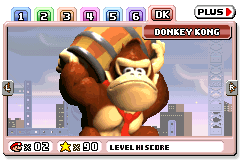
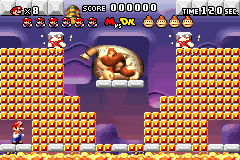
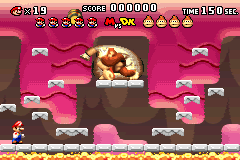
In Level 1-DK, apparently fought in the company storeroom, Donkey Kong has four hit points and Mario’s only weapon is the garbage can. The ape presses Color Switches to change where the cans appear and which platforms exist, and yanks a chain to drop debris, which a handstand will shrug off.
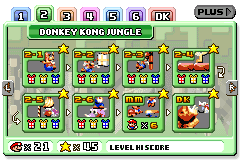
The world map.Level 1-2.Level 1-DK.
World 2: Donkey Kong Jungle
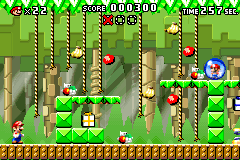
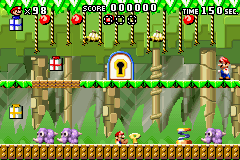
The chase moves into the jungle, and the world turns into a homage to Donkey Kong Junior. Ropes hang everywhere, Snapjaws climb them, and the only way to deal with a Snapjaw is to drop fruit on it. Monchees offer their tails as climbing ropes but bite if Mario touches the rest of them.
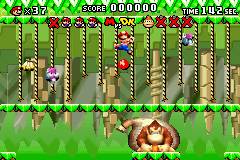
In Level 2-DK Donkey Kong rides a moving platform beneath Mario, who has to knock fruit off the ropes on to his head. After the first hit he speeds up, doubles back unpredictably and starts throwing Snapjaws; four hits and he flees for Fire Mountain.
The world map.Level 2-5.Level 2-DK: fruit from above.
World 3: Fire Mountain
A volcano full of Podoboos, fire birds that drop burning eggs, and Shy Guys with flamethrowers. Lava geysers rise from the pits and lift platforms with them, and chains take over from ropes.
In Level 3-DK Donkey Kong sends barrels and lava rocks bouncing down the platforms. Rocks must be dodged or blocked with a handstand; barrels that land upright can be picked up and thrown at him from the platform above. Four barrels see him off.
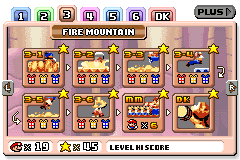
The world map.Level 3-6.Level 3-DK.
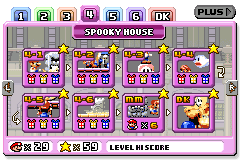
World 4: Spooky House
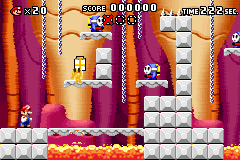
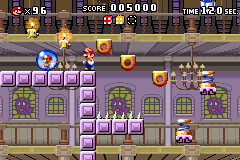
A haunted mansion with Boos that creep up when Mario looks away, floating Candles, Thwomps waiting to drop and Polterguys, ghostly Shy Guys in red, yellow and blue. Hit the matching Color Switch and a Polterguy freezes into a solid block that can be stood on or carried.
That is the whole idea of Level 4-DK. Three Polterguys circle Donkey Kong; Mario turns one solid with its switch, carries it up the platforms and hurls it at him. The ghosts grow faster and nastier with each of the four hits.
The world map.Level 4-2.Level 4-DK.
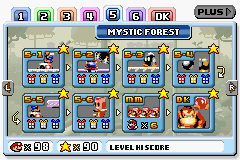
World 5: Mystic Forest
A forest full of machinery: conveyor belts that switches can reverse, Bob-omb dispensers, and Bob-ombs whose fuses light as soon as Mario comes near.
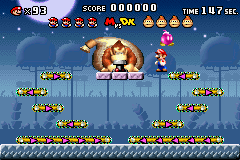
In Level 5-DK Donkey Kong drops Bob-ombs on to the belts and keeps flipping their direction with his own switch. Mario has to grab a Bob-omb, ride it up to the top belt and throw it at him before it goes off. Four hits; on his last legs the ape keeps four Bob-ombs in play at once.
The world map.Level 5-5.Level 5-DK.
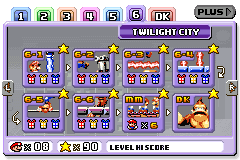
World 6: Twilight City
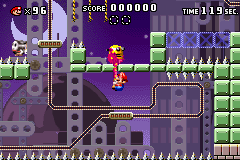
An ultramodern city of lasers that fire in coloured cycles, Robo Kikkis (mechanical Monchees that move faster than the real thing) and Shy Guys that hurl wrenches.
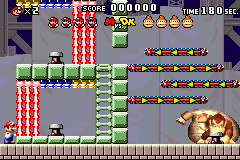
In Level 6-DK Mario never throws a thing. Donkey Kong tosses Bob-ombs on to the top belt and they roll down towards a hole that leads to Mario; Mario works the Direction Switches to keep them out of it and drop them on Donkey Kong instead, while the ape uses a switch of his own to push them back. Four Bob-ombs on his head end it.
The world map.Level 6-6.Level 6-DK.
The tower: Donkey Kong
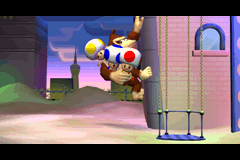
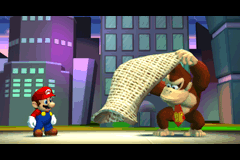
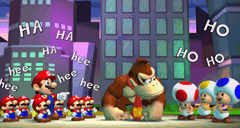
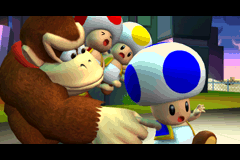
Donkey Kong stops to admire his haul and finds the sack empty: the Mini-Marios have all been rescued along the way. Mario, the Minis and the three Toads burst out laughing. Furious, the ape grabs the Toads and climbs a skyscraper under construction, and Mario follows him up in a lift.
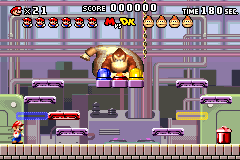
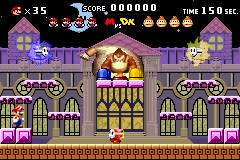
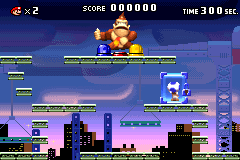
The level called simply Donkey Kong has a 300-second limit and spiked barrels rolling down the girders. Donkey Kong presses three Color Switches, which decide the colour of the key that appears; Mario carries each key to the Toad’s cage of the same colour, and when all three are free he carries a big barrel to the top and throws it. Three hits, with the barrels coming faster after each one, and in the original it is the Toads who send Donkey Kong over the edge.
The sack is empty.Everyone laughs, except Donkey Kong.Donkey Kong grabs the Toads.The Donkey Kong level.
The Plus worlds
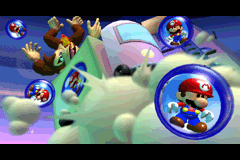
Donkey Kong falls, and lands on a lorry that happens to be delivering more Mini-Marios. The lorry explodes, toys rain down, and the ape picks himself up, gathers them all and runs off again. Mario sighs and follows him back through all six worlds in their Plus versions, starting on the factory’s own production line.
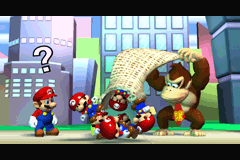
At the end of the sixth Plus world the joke repeats: Donkey Kong looks in his bag, Mario laughs, the Minis tumble out, and the ape scoops them up and bolts.
Donkey Kong lands on the lorry.The lorry explodes.He gathers up the Mini-Marios and runs.The same trick at the end of the Plus worlds.
Donkey Kong Plus and the ending
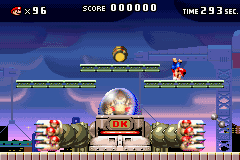
The final level, Donkey Kong Plus, pits Mario against the ape in a giant robot that clutches the last six Mini-Marios. Its hands slam down, pinning or squashing Mario and shaking debris and barrels loose; its fists clap together to crush him. Mario climbs on the hands, throws a barrel at the cockpit, and each hit frees a Mini-Mario and makes the machine faster. The seventh wrecks it, with a 300-second limit to do it in.
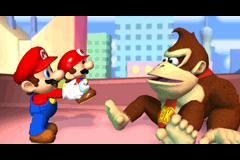
Then the mood changes. Donkey Kong, beaten and electrocuted, bursts into tears. Mario starts to tell him off, softens, and hands him a Mini-Mario of his own, the one thing he wanted from the start. The toy speaks to him, the ape hugs it, everyone cheers, and the real credits roll.
Donkey Kong Plus: the robot.Donkey Kong in tears.Mario offers a Mini-Mario.A happy ending.
Every world in Mario vs. Donkey Kong
Six worlds of eight levels (six two-part levels, a Mini-Mario level and a Donkey Kong battle), the tower finale, six Plus worlds of seven single-room levels, the robot finale and twelve Expert levels. Japanese e-Reader cards added more.
World 1: Mario Toy CompanyLevels 1-1 to 1-6, 1-mm, 1-DK · boss: Donkey Kong (garbage cans, 4 hits)Shy Guys and Garbage Cans outside the factory, where every trick is introduced.
World 2: Donkey Kong JungleLevels 2-1 to 2-6, 2-mm, 2-DK · boss: Donkey Kong (fruit from the ropes, 4 hits)Ropes, Monchees and Snapjaws: a tribute to Donkey Kong Junior.
World 3: Fire MountainLevels 3-1 to 3-6, 3-mm, 3-DK · boss: Donkey Kong (upright barrels, 4 hits)Podoboos, fire birds, flamethrower Shy Guys and rising lava geysers.
World 4: Spooky HouseLevels 4-1 to 4-6, 4-mm, 4-DK · boss: Donkey Kong (frozen Polterguys, 4 hits)Boos, Candles, Thwomps and Polterguys that turn solid at the flick of a switch.
World 5: Mystic ForestLevels 5-1 to 5-6, 5-mm, 5-DK · boss: Donkey Kong (Bob-ombs, 4 hits)Conveyor belts, Direction Switches and Bob-ombs with short fuses.
World 6: Twilight CityLevels 6-1 to 6-6, 6-mm, 6-DK · boss: Donkey Kong (steered Bob-ombs, 4 hits)Lasers, Robo Kikkis and wrench-throwing Shy Guys in a city of the future.
Donkey Kong (the tower)Main-game finale · 300 seconds · free three Toads, then 3 barrel hitsA climb up a building site under a stream of spiked barrels.
World 1+: Mario Toy FactoryLevels 1-1+ to 1-6+, 1-DK+The chase restarts on the Mini-Mario production line.
World 2+: Donkey Kong Jungle PlusLevels 2-1+ to 2-6+, 2-DK+Harder jungle rooms, including the 2-6+ trap reportedly fixed in Europe.
World 3+: Fire Mountain PlusLevels 3-1+ to 3-6+, 3-DK+Lava and fire with a Mini-Mario in tow.
World 4+: Spooky House PlusLevels 4-1+ to 4-6+, 4-DK+Ghosts and Thwomps again, now with an escort to protect.
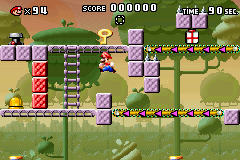
World 5+: Mystic Forest PlusLevels 5-1+ to 5-6+, 5-DK+Belts and Bob-ombs, in single rooms with no checkpoint.
World 6+: Twilight City PlusLevels 6-1+ to 6-6+, 6-DK+The last Plus world, ending in the second empty-bag gag.
Donkey Kong PlusFinal level · 300 seconds · 7 barrel hits on the robotDonkey Kong’s giant robot, holding the last six Mini-Marios.
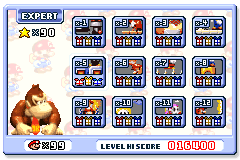
ExpertLevels x-1 to x-12 · unlocked with starsTwelve fiendish single-room key puzzles for players chasing high scores.
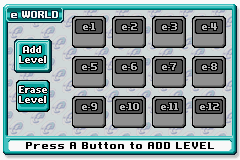
e World (Mario vs. Donkey Kong-e)e-Reader levels · six cards released in Japan onlyCard-based bonus levels with unlimited lives; the mode sits unused in the North American cartridge.
That makes 48 + 1 + 42 + 1 + 12 = 104 levels on the cartridge, not counting e-Reader cards.
Advertisement
Gameplay & Controls
Every level asks one question: how do I get from here to there with this thing in my hands? The answer usually involves a switch, a well-timed handstand and something thrown at the right moment.
A key, a door and a Mini-Mario
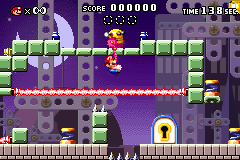
The first six levels of each world come in two halves. In the first, Mario has to find a key, carry it to a locked door and go through; the door also acts as a checkpoint. In the second, a Mini-Mario sits trapped in a bubble somewhere in the room, and touching it ends the level. Lose a life in the second half and Mario restarts there, with his score wound back to what he had at the door.
Each level opens with a short preview that pans across the room and shows the button combinations the designers expect you to need. Help Boxes dotted about repeat the hint when touched. Press L and R together and the game pauses in Free Scroll Mode, so you can study the layout before committing.
There is a clock, as in the Super Mario games. At 30 seconds Mario cries “Hurry, hurry, hurry!” and the music changes; run out and he loses a life. Any time left over from the first half is added to the second, a transfer the Japanese and European versions show with a short animation.
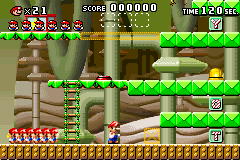
Level 1-1: the key is in reach, the door is not.The second half of Level 1-1.The key.A Help Box, international version.
Mario’s moves
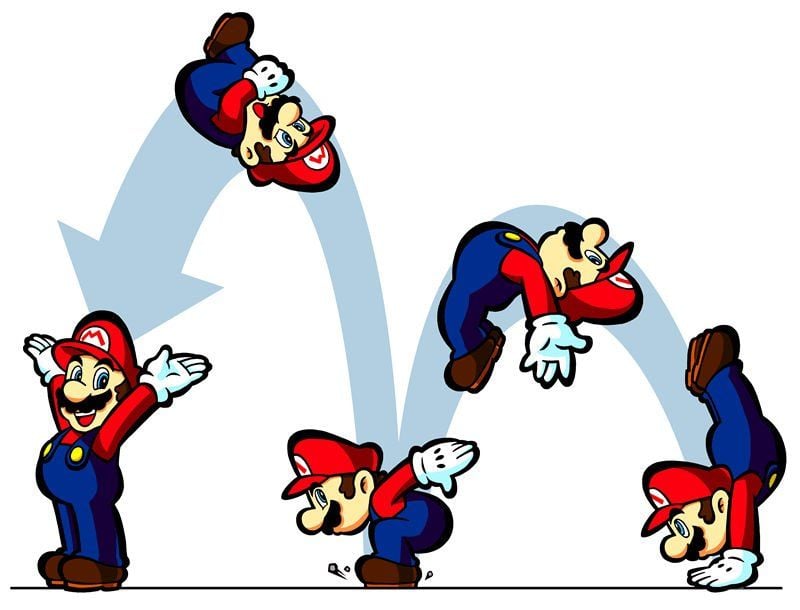
A jumps, B picks things up and throws them, L and R flick between worlds on the map, and Start pauses. The tricks come from combining them. Down and A flips Mario on to his hands; in a handstand his feet catch anything falling from above. A again launches a Handstand Jump, and pressing A the instant he lands gives a higher Handstand Double Jump. Turn and jump in one motion and he performs a backflip.
Wires can be grabbed and spun round to fling Mario higher, ropes can be climbed (faster with one in each hand, the way Junior did it in Donkey Kong Junior), and many enemies can be stood on, lifted and thrown, a trick that goes back to Super Mario Bros. 2. The hammer flattens enemies such as Oil and, as in the 1994 game, can be thrown upwards and caught again.
Mario is fragile. Every hit costs a life, and the game has a little animation for each way of losing one: crushed, burned, electrocuted, squashed or dropped on his head. A short fall merely leaves him flat on his back for a moment.
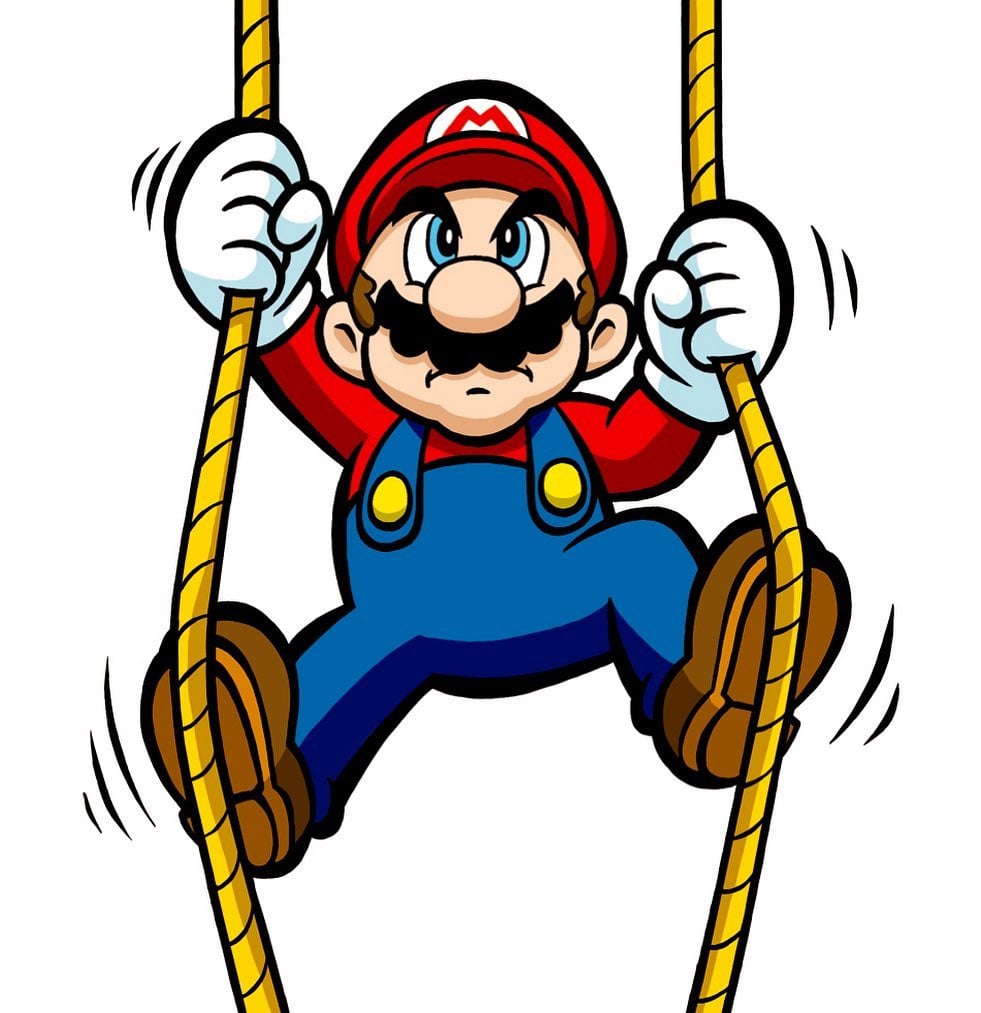
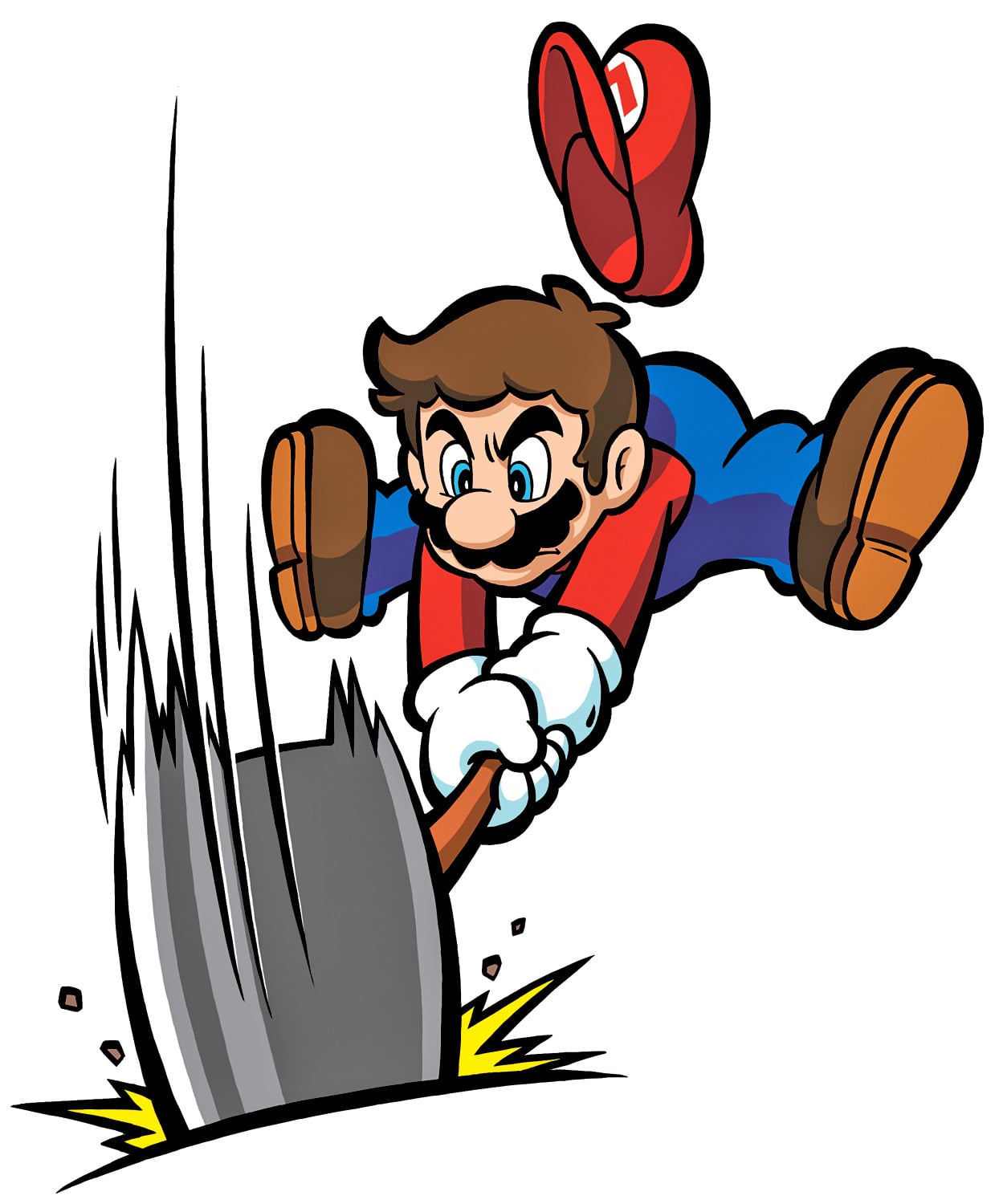
The handstand, in Nintendo’s own demonstration artwork.Climbing two ropes at once.Mario with the hammer.One of Mario’s many ways to lose a life.
Mini-Mario levels and Donkey Kong battles
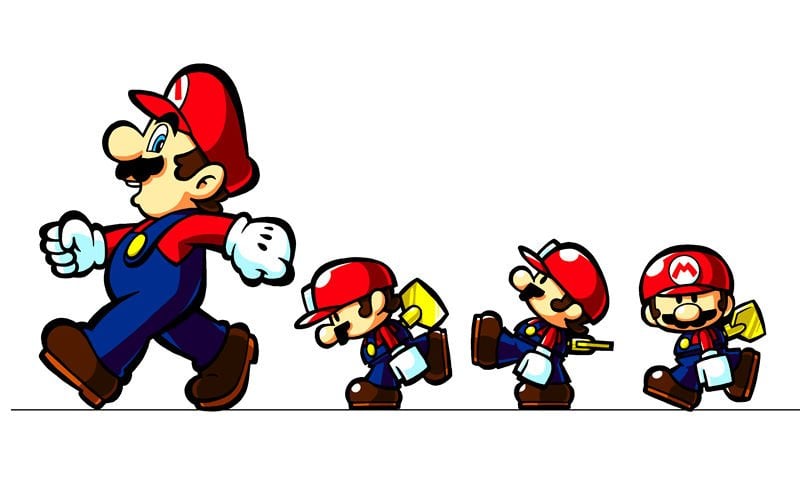
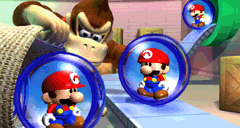
The seventh level of every world, marked “mm”, is a parade. The six Mini-Marios rescued so far wind up and march after Mario, and he has to lead them through the hazards to a toy box. The box stays shut until the Minis have collected the letters T, O and Y.
Every Mini-Mario that reaches the box becomes one hit point for the boss level that follows, so a perfect parade means Mario can survive six hits from Donkey Kong. Skip the Mini-Mario level and he goes into the fight with four; run out of lives in the fight and the parade has to be done again. Each Donkey Kong battle is a different puzzle, from bouncing garbage cans off his head to steering Bob-ombs into him on conveyor belts.
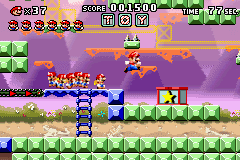
Level 1-mm: lead the Mini-Marios home.The toy box.The T, O and Y letters.
Presents, scores and stars
Three presents, one red, one yellow and one blue, are hidden in most levels. Collecting all three is the key to a big score and also opens a bonus game at the end of the level. In one, an arrow scrolls along a row of presents and you stop it on the one you want; in the other, you shuffle presents so that Donkey Kong’s fist flattens the ones you do not. Inside are 1-Up, 2 UP, 3 UP or 5 UP Mushrooms, or a Donkey Kong head worth nothing at all.
Beat a level’s target score and it earns a star. Stars are what open the Expert levels, so the replay value is built in: going back to an old level for its presents and a faster time is how the game is finished properly.
Presents come in three colours.The Donkey Kong head: the booby prize.A 5 UP Mushroom, the jackpot.
Plus worlds, Expert levels and Mario vs. Donkey Kong-e
After the first ending, six Plus worlds open. They have no Mini-Mario parades and no two-part levels: each is a single room in which a Mini-Mario is holding the key, and Mario has to reach it and lead it to the door. Lose either of them and the level restarts. Each Plus world ends with a Donkey Kong battle in which Mario has six hit points and 120 seconds.
The twelve Expert levels are single-room key-and-door puzzles unlocked by stars. Quitting or restarting one before you have beaten it costs a life, and collecting the presents earns no bonus game.
There is one more mode hidden behind a cable. Connect a Nintendo e-Reader with a Game Link Cable and Mario vs. Donkey Kong-e reads extra levels from cards, in the Expert format, with unlimited lives. Six cards were released in Japan. The North American game has the mode but nothing to feed it, and the European version leaves it out.
Level 1-6+, on the Mini-Mario production line.The Expert level select.The e World level select, unused in North America.Laser Panic!, one of the Japanese e-Reader levels.
Items and objects
Everything Mario can use, carry or stand on. Sprites are from the game.
KeyOpens the locked door in the first half of each main-world level.
DoorThe exit of a level’s first half, and a checkpoint once opened.
Mini-MarioThe goal of the main levels, trapped in a bubble; in the Plus worlds it carries the key itself.
1-Up MushroomAn extra life.
2 UP MushroomTwo extra lives, from a bonus-game present.
3 UP MushroomThree extra lives, from a bonus-game present.
5 UP MushroomFive extra lives, the best a present can hold.
Color SwitchTurns on the platforms, blocks and ladders of its own colour.
Color BlockSolid or see-through depending on which Color Switch was pressed last.
SpringBounces Mario, or a Mini-Mario, much higher than a jump.
Conveyor BeltCarries Mario, keys and objects; a Direction Switch reverses it.
Donut BlockDrops away if Mario stands on it too long.
ElevatorRuns along a fixed track; some can be reversed with a switch.
WireA bar to hang from, cross on, or spin round to launch upwards.
LadderFor climbing; some only appear when their Color Switch is on.
RopeCan be climbed up or down; Mario can hold two at once.
ChainA rope by another name, found in Fire Mountain, Twilight City and other worlds.
Crumble BlockTurns to dust under Mario’s feet. Each world has its own version.
Garbage CanCan be carried and thrown, used as a step, or laid across spikes.
BarrelDoes everything a Garbage Can does, and is the weapon against Donkey Kong in several fights.
HammerKnocks out enemies such as Oil; can be thrown and caught in mid-air.
PresentRed, yellow and blue. All three in one level unlock a bonus game.
T, O and Y lettersCollected by the Mini-Marios in Mini-Mario levels to open the toy box.
Toy boxThe goal of a Mini-Mario level.
Help BoxReminds Mario how to perform a move when he touches it.
Cartoons, Comics & Other Media
A game that looks backwards and forwards at once: it borrows freely from the Donkey Kong games of the 1980s and 1990s, and its toys went on to carry a whole series.
Donkey Kong (Game Boy, 1994)The direct ancestorMario’s handstands, backflips and wire spins, the upward hammer throw, Monchees, Bucket Man, Sir Shovalot and Oil all come from here, and the robot fight plays like its final Stage 9-9. See Donkey Kong ’94.
Donkey Kong JuniorSnapjaws and ropesSnapjaws return, Mario climbs faster on two ropes and drops fruit on enemies, all as Junior did. See Donkey Kong Junior.
Super Mario Bros. and Super Mario Bros. 2NodsThe title music folds in the Super Mario Bros. ground theme, and the first enemies Mario meets are Shy Guys, there to be lifted and thrown as in Super Mario Bros. 2.
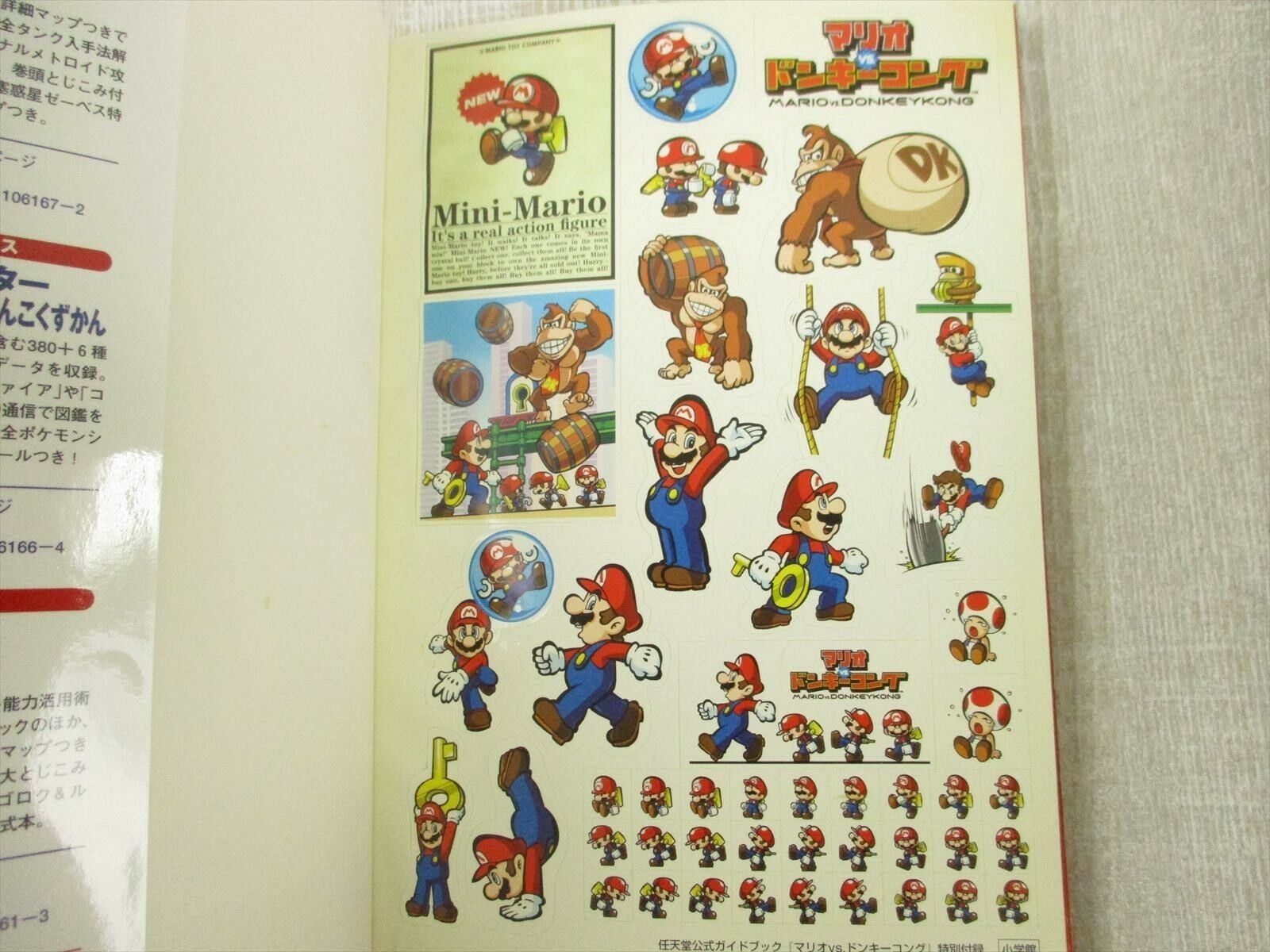
Shogakukan stickersJapanese guidebook extraA Shogakukan guide to the game came with a sheet of stickers.
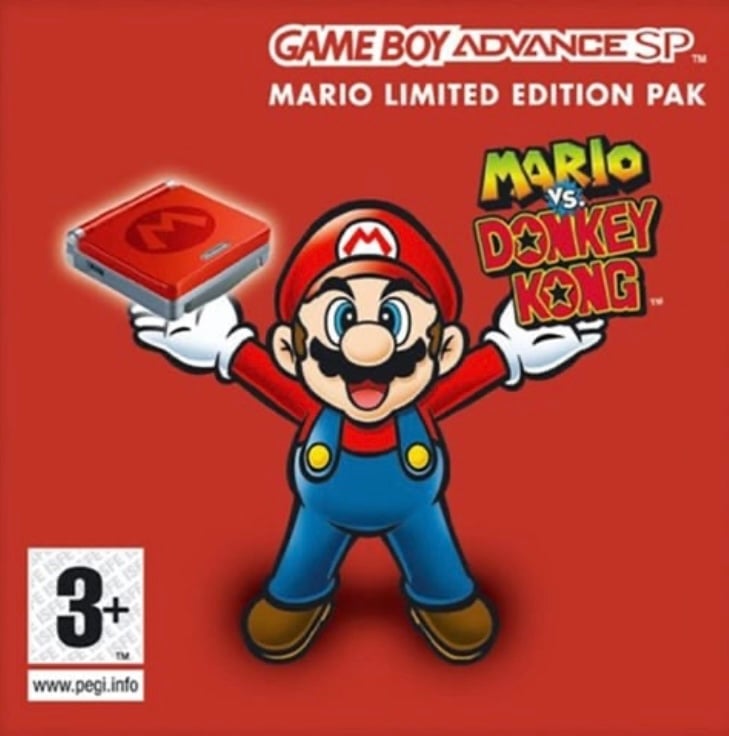
Game Boy Advance SP Mario EditionUK bundleIn Britain the game was sold boxed with a Game Boy Advance SP.
Characters
A small cast: a toy-maker, a thief, his loot, the factory staff and a newsreader.
Character
Who they are
In this game
Abilities & notes
MarioToy tycoon and hero
Founder of the Mario Toy Company, according to the manual, and voiced by Charles Martinet.
Chases Donkey Kong through all 104 levels to recover his stolen stock. The only time before the 2024 remake that the series lets you control him directly.
One hit, one life. Moves: jump, handstand, Handstand Jump and Double Jump, backflip, wire spin, rope climb, lift and throw, hammer.
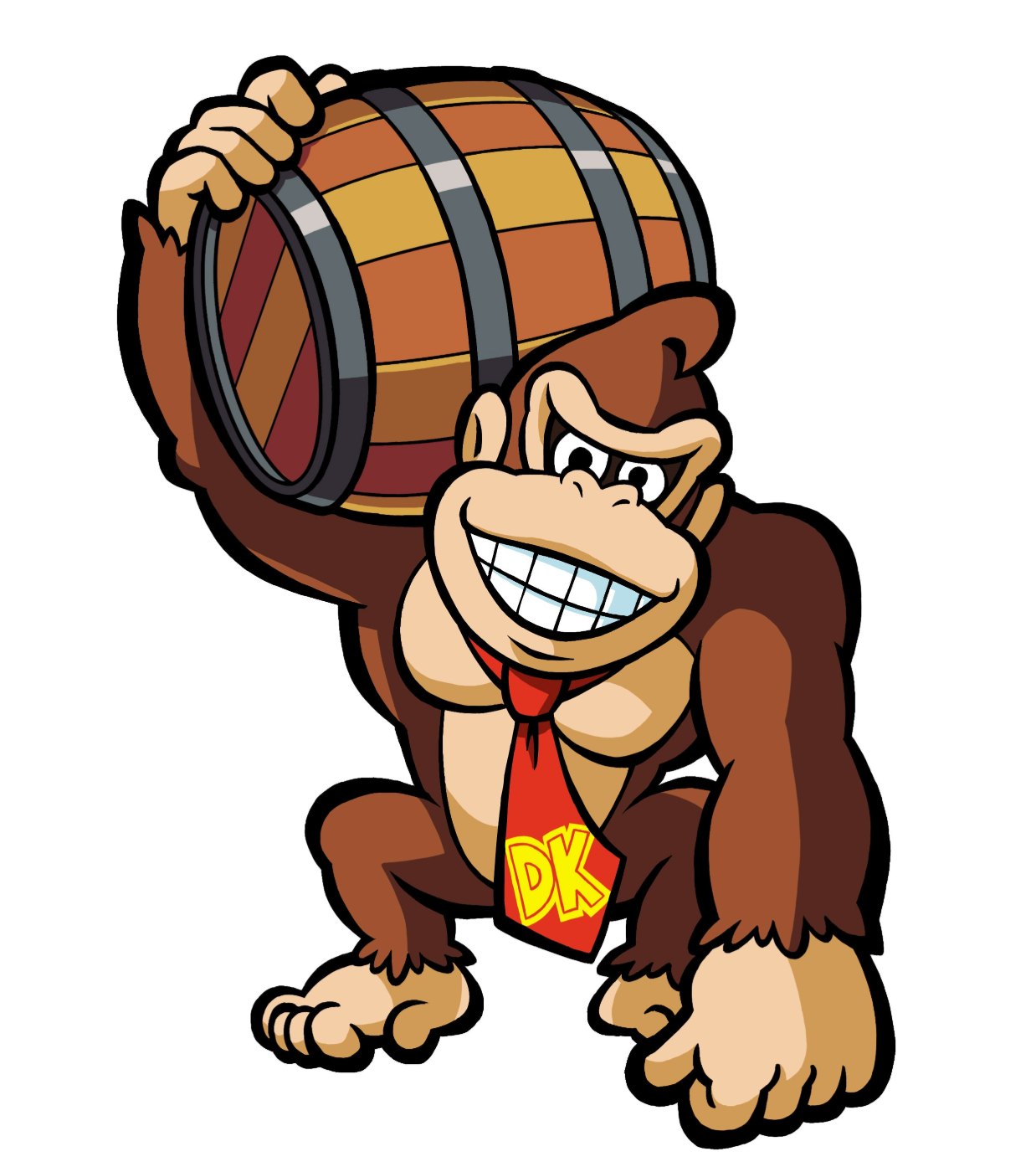
Donkey KongThe toy thief
Mario’s original rival, here a big child who simply wants the toy everyone else has. His voice is uncredited, but widely attributed to Grant Kirkhope.
Steals the Mini-Marios, kidnaps the Toads, and is fought at the end of every world, on the tower and finally in a robot. Ends the game with a Mini-Mario of his own.
Four hits per world battle; three on the tower; seven in Donkey Kong Plus.
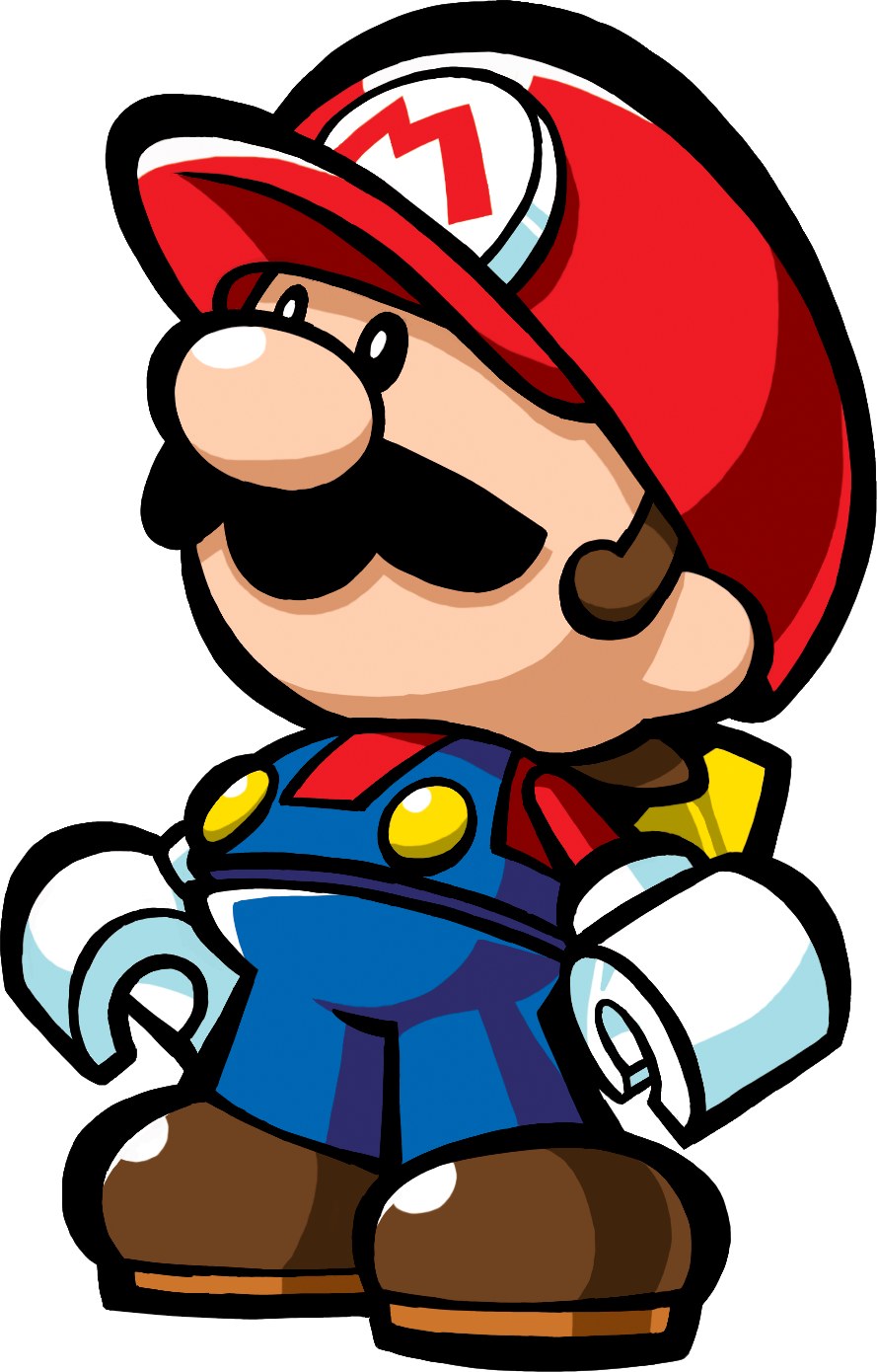
Mini-MarioThe stolen toys
A wind-up toy Mario made by the Mario Toy Company, so popular that the shops sell out.
Trapped in a bubble at the end of every main level; marches after Mario in the Mini-Mario levels; carries the key in the Plus worlds.
Each one delivered to the toy box gives Mario one hit point in the next Donkey Kong battle (six at most).
ToadsFactory workers
Three Toads who run the Mini-Mario production line. Their voices are uncredited, but widely attributed to Jen Taylor.
Flee when Donkey Kong raids the factory, laugh at him when his sack turns up empty, and are carried up the tower as hostages. Once freed, they help bring him down.
Freed from cages with coloured keys in the Donkey Kong level.
Shy GuyEnemy and newsreader
The masked foot soldier of Super Mario Bros. 2, and in the opening scene the presenter of the TV news.
The first enemy Mario meets, in several varieties: Fire Shy Guys in Fire Mountain, ghostly Polterguys in the Spooky House, Wrench Shy Guys in Twilight City.
Plain Shy Guys can be stood on, lifted and thrown.
Donkey Kong battles, enemies and obstacles
Donkey Kong is the only boss, fought at the end of all six main and six Plus worlds and in the two finales. After him come the enemies and hazards, with their behaviour.
Donkey Kong (boss)Level 1-DKFour hits with garbage cans; he works Color Switches and drops debris from a chain.
Donkey Kong (boss)Level 2-DKFour hits with fruit dropped from the ropes as he rides a platform below; he throws Snapjaws.
Donkey Kong (boss)Level 3-DKFour hits with upright barrels; lava rocks bounce down the platforms.
Donkey Kong (boss)Level 4-DKFour hits with Polterguys frozen by their Color Switches.
Donkey Kong (boss)Level 5-DKFour hits with Bob-ombs carried up the conveyor belts he keeps reversing.
Donkey Kong (boss)Level 6-DKFour Bob-ombs steered into him with Direction Switches; Mario throws nothing.
Donkey Kong (boss)Donkey Kong (tower)Free three caged Toads, then three big-barrel hits under a hail of spiked barrels; 300 seconds.
Donkey Kong (boss)Levels 1-DK+ to 6-DK+Remixed world battles in which Mario starts with six hit points and 120 seconds.
Donkey Kong’s robot (final boss)Donkey Kong PlusSeven barrels thrown at the cockpit from the robot’s own hands; each hit frees a Mini-Mario; 300 seconds.
Shy GuyMario Toy CompanyWalks back and forth; can be stood on, lifted and thrown.
Bucket ManMario Toy CompanyHides in a Garbage Can and walks off once Mario lands on it. Rideable but not liftable; knock it out with a thrown object.
MoncheeDonkey Kong JungleA mechanical monkey whose tail is a safe rope. Its body is not.
SnapjawDonkey Kong JungleClimbs ropes. Only falling fruit gets rid of it.
RamRamDonkey Kong JungleSometimes doubles as a platform. Defeated by a collision with fruit, another enemy or an object.
Tane PakkunJungle levels, near ropesA stationary plant that spits seeds.
BatVariousFlies sideways once released and clings to Mario, knocking him off a rope.
BirdVariousLeaves its nest to fly across the screen dropping polka-dot eggs.
PodobooFire MountainLeaps out of the lava. Cannot be defeated.
Fire birdFire MountainA flaming bird that drops burning eggs.
Fire Shy GuyFire MountainA Shy Guy with a flamethrower.
Lava GeyserFire MountainErupts from lava pits, lifting platforms to higher ground.
FireballVariousPatrols a small area and burns on contact.
OilVariousA burning oil can that bobs up and down. The hammer deals with it.
BooSpooky HouseCreeps closer when Mario faces away and freezes when he looks.
PolterguySpooky HouseA ghostly Shy Guy in red, yellow or blue; the matching Color Switch turns it into a solid, safe block.
CandleSpooky HouseFloats slowly up and down.
ThwompSpooky House and laterCrashes down on anyone who walks beneath it; deadly to touch at any time. Switch blocks can hold it back.
Thwomp PlatformVariousRises and falls on a fixed pattern; rideable.
ThwimpVariousHops from side to side. Invulnerable.
Bob-ombMystic ForestDropped from dispensers; its fuse lights when Mario is near. Can blow open Bob-omb Blocks.
NinjiVariousJumps up and down and can boost Mario to higher ground. It is invincible.
Robo KikkiTwilight CityA faster robotic Monchee.
Wrench Shy GuyTwilight CityGasps when it spots Mario, then throws wrenches straight ahead.
LasersTwilight CityFire in cycles depending on colour; electrocute on contact.
Spear GuyVariousSleeps until Mario approaches, then gives chase as far as the edge of its platform.
BrickmanVariousThrows a line of three bricks downwards; a handstand blocks them.
Sir ShovalotVariousAn armoured charger that shoves Mario away. Cannot be defeated; ducking helps.
Falling spikeVariousDrops when Mario comes near, then serves briefly as a platform.
CannonVariousTilts up and down firing cannonballs.
SparkVariousA ball of electricity that runs along wires.
SpikesVariousFatal to touch.
Spiked BarrelDonkey Kong (tower)Rolled by Donkey Kong in the tower fight; cannot be stood on.
Key staff
From the game’s credits. Voice roles marked uncredited are not in the game’s own credits.
Yukimi ShimuraGame director (NST)
Shigeki YamashiroProducer (NST)
Shigeru MiyamotoProducer (Nintendo Co., Ltd.)Creator of Mario and Donkey Kong.
Satoru IwataExecutive producerPresident of Nintendo.
Wing S. ChoGame design
Yoonjoon LeeEngineering director
Kunitake AokiArt director
Yōichi KotabeArt supervisorThe veteran Nintendo illustrator, credited from Nintendo Co., Ltd.
Lawrence SchwedlerAudio director, musicAlso, uncredited, the narrator of the banana advert in the opening.
Charles MartinetVoice of Mario
Grant Kirkhope, Jen TaylorDonkey Kong; the Toads (uncredited)
Koji Kondo, Tadashi Sugiyama, Shinya TakahashiAdvisors (Nintendo Co., Ltd.)
Claude ComairExecutive advisor (NST)One of NST’s founders.
Advertisement
How It Was Made
Nintendo has published little about the making of the game. What is known comes from the 2002 announcement, the finished game’s credits and what dataminers found left inside the cartridge.
Donkey Kong Plus
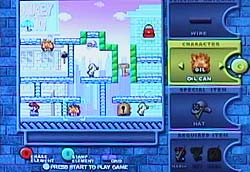
Donkey Kong Plus as shown in 2002.
The game was first seen at Nintendo’s E3 press briefing on 21 May 2002, a presentation built around linking the GameCube to the Game Boy Advance. Nintendo World Report’s preview that day described Donkey Kong Plus as a revival of the original Donkey Kong with the classic stages, a hundred new ones and Mario’s handstands, backflips and double jumps: in other words, the 1994 Game Boy game. The headline feature was a level editor running on the GameCube, with levels saved to a memory card or sent back down the cable to the handheld. It was pencilled in for the first quarter of 2003.
A second report from the same briefing summed up the trick in one line: a new Game Boy Advance Donkey Kong could upload a level editor to the GameCube.
From remake to new game
The pre-release logo: Mario and Donkey Kong.
Donkey Kong Plus did not come out in 2003. By the following year it had been dropped in favour of Mario vs. Donkey Kong, with the editor gone and the graphics replaced by pre-rendered ones. Nintendo’s early English logo called it Mario and Donkey Kong.
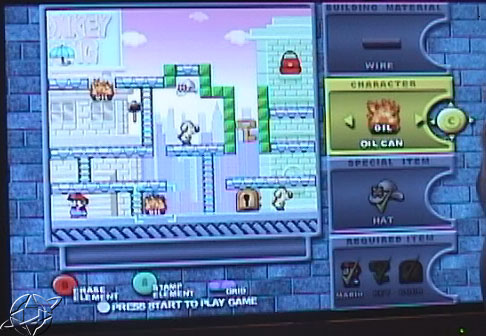
The editor did not disappear entirely. The Cutting Room Floor documents an incomplete version still sitting in the finished cartridge, reachable with a cheat device: it can place and remove objects and test a room, but cannot save, and leftover text mentions “Theme Cards” and multiple worlds. The idea came back properly two years later as the Construction Zone of March of the Minis, with levels shared over Nintendo Wi-Fi Connection instead of a link cable.
Made in Redmond
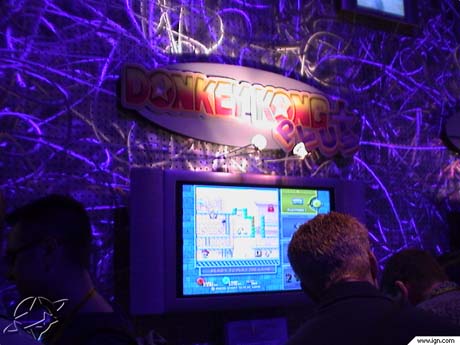
A Donkey Kong Plus demonstration booth.
The game was built by Nintendo Software Technology, the studio Nintendo set up in Redmond, Washington, in 1998. Its own careers page lists Mario vs. Donkey Kong as the earliest of the series games it has made, through to the 2024 remake. Wikipedia’s history of the studio, citing Nintendo World Report, traces it to a merger of DigiPen and Big Bang Software; DigiPen’s founder Claude Comair appears in the credits here as executive advisor.
Yukimi Shimura directed and Wing S. Cho designed the game, with Shigeki Yamashiro producing for NST alongside Shigeru Miyamoto for Nintendo in Kyoto and Satoru Iwata as executive producer. Kyoto also lent Yōichi Kotabe as art supervisor and Koji Kondo, Tadashi Sugiyama and Shinya Takahashi as advisors. Lawrence Schwedler led the audio and Charles Martinet recorded Mario’s many lines.
One game, three versions
The Japanese title screen, with Mini-Marios.
The Cutting Room Floor lists a handful of regional differences. The Japanese title screen shows Mini-Marios instead of Mario and Donkey Kong. The Japanese and European releases add the animation that shows leftover time carried into a level’s second half, put subtitles under the cut-scenes (in Europe, when the language is not English), and drop Mario’s chatter over the credits. Europe also lost the e-Reader mode, while Japan’s cartridge carries a slightly different set of preloaded e-Reader levels.
Europe may have got a bug fix too: according to one player’s report, in Level 2-6+ a Color Switch was moved to stop Mario trapping himself, as described under Glitches below.
Series Firsts
Firsts for the series, worded as tightly as the sources allow.
1The first Mario vs. Donkey KongIt is usually counted as the first game in the series that now runs through March of the Minis, Minis March Again!, Mini-Land Mayhem!, Minis on the Move, Tipping Stars and the 2024 remake.
2The birth of the Mini-MariosThe series’ wind-up toys and the Mario Toy Company that makes them are introduced in this game’s opening; later games build theme parks and a carnival around them.
3The only one starring Mario himself (until 2024)Later entries hand control to the Mini-Marios; the Switch remake is the only other game in the series in which you play as Mario.
4A level editor, years earlyAnnounced as a GameCube feature in 2002 and left half-built in the cartridge, the editor became the Construction Zone of the first DS sequel.
Cheats & Secrets
There are no button codes. The secrets are techniques and unlock conditions, and the one real hidden feature needs a cheat device.
Look before you leap
Press L and R together during a level for Free Scroll Mode. The game pauses and the camera can roam the whole room; press B to return to Mario.
Get every Mini-Mario home
Each Mini-Mario that reaches the toy box is a hit point in the next Donkey Kong battle, up to six. Skipping the Mini-Mario level leaves Mario with four.
Stars open the Expert levels
Beating a level’s target score earns its star. Collect all three presents in a level for the biggest scores, and the Expert levels open as the stars mount up.
Bank your time
Seconds left over in the first half of a level are added to the second half’s clock, so a quick key run buys breathing space later.
Handstand under falling things
Debris shaken loose by Donkey Kong in Level 1-DK, lava rocks in 3-DK and the bricks thrown by Brickman can all be blocked by standing on your hands.
Carry a can for protection
In Level 1-DK, Mario does not lose a hit point if debris hits him while he is holding a garbage can.
Fruit for Snapjaws
Snapjaws ignore everything except fruit dropped on them from above, and the same fruit is the weapon against Donkey Kong in Level 2-DK.
Expert levels cost lives
Leaving or restarting an Expert level before you have cleared it costs a life, and retrying one costs a life even after it is cleared. Stock up first.
The hidden level editor
The Cutting Room Floor gives the details: with a cheat device or a memory edit, pressing Select in a level opens an unfinished editor. The D-Pad moves the cursor, Select changes object type, L and R scroll through objects, A places, B removes and Start tests the room. It cannot save, does not work in the first level of a world, and crashes if overloaded.
SLB’s own cheats and unlockables page for the game is linked under Reference below.
Glitches & Oddities
A handful of glitches are documented, one of which the European version reportedly fixes.
Trapped in Level 2-6+
Level 2-6+.
Stand on the right-hand side of the yellow Color Switch and press it, and Mario’s head no longer bumps the yellow block above. Walk right and he is boxed in by Springs with no way out but a restart. The European version reportedly moves the switch further to the left.
Spooky House softlock
In Level 4-3, a spring jump placed exactly between a stationary Polterguy and the invisible right-hand wall sends Mario over the wall and off the screen. The timer freezes, and the game cannot be finished until it is reset.
Floating in mid-air
Expert level x-3.
In Expert level x-3, if a Thwomp Platform crushes Mario while he is riding a lift, his losing-a-life animation keeps following the lift, so he appears to hover or drift upwards.
Silenced door
Activate Free Scroll Mode while a locked door is swinging open, then exit it: the level-clear jingle plays, but the door’s sound and Mario’s voice are cut off.
A double knockout
If Mario and Donkey Kong are both on their last hit point in Level 3-DK+, a barrel thrown as Mario jumps into the ape can defeat them both at once. In Donkey Kong Plus, Mario can be crushed between the robot’s fists just after the final barrel, with the same result.
Videos
Nintendo’s trailer for the game’s arrival on Nintendo Switch Online in March 2026, and a fan’s look back at the original.
Official Nintendo of America trailer announcing Mario vs. Donkey Kong for Game Boy Advance – Nintendo Classics, alongside two Virtual Boy games.
Third-party video from TheBreadghost’s series on the Game Boy Advance library.
Trivia & Interesting Facts
The game’s composer, Lawrence Schwedler, is widely listed as the uncredited voice of the banana advert Donkey Kong watches in the opening.
Donkey Kong is voiced, uncredited, by Grant Kirkhope, according to the same list.
A Donkey Kong Plus screenshot from 2002.The final level shares its name, Donkey Kong Plus, with the project the game started as.
The robot battle works the same way as the giant Donkey Kong fight in Stage 9-9 of the 1994 Game Boy game.
Monchee, Bucket Man, Sir Shovalot and Oil are all returning enemies from Donkey Kong ’94.
The title-screen music combines the arcade Donkey Kong title theme with the Super Mario Bros. ground theme.
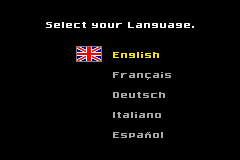
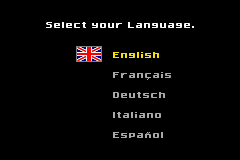
The European version has a language-select screen and no e-Reader mode.
The Japanese title screen.The Japanese title screen swaps Mario and Donkey Kong for a crowd of Mini-Marios.
The North American cartridge contains the full Mario vs. Donkey Kong-e menu, but no cards for it were ever distributed there.
The Cutting Room Floor notes that Bob-ombs are programmed to flee from a hammer-wielding Mario, though no level puts the two together.
Early Mini-Mario graphics in the cartridge look like little Marios rather than wind-up toys.
Mario’s comments over the end credits are missing from the Japanese and European versions.
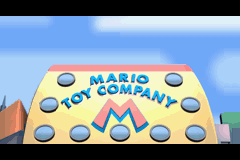
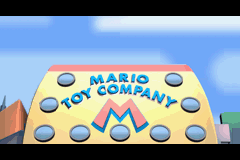
The Mario Toy Company logo.The Mario Toy Company has its own logo.
It was one of ten Game Boy Advance games given free to early Nintendo 3DS buyers through the Ambassador Program in December 2011, and was never sold on 3DS.
The Wii U Virtual Console release reached Japan in July 2014 but North America only in February 2017.
Regional Box Art
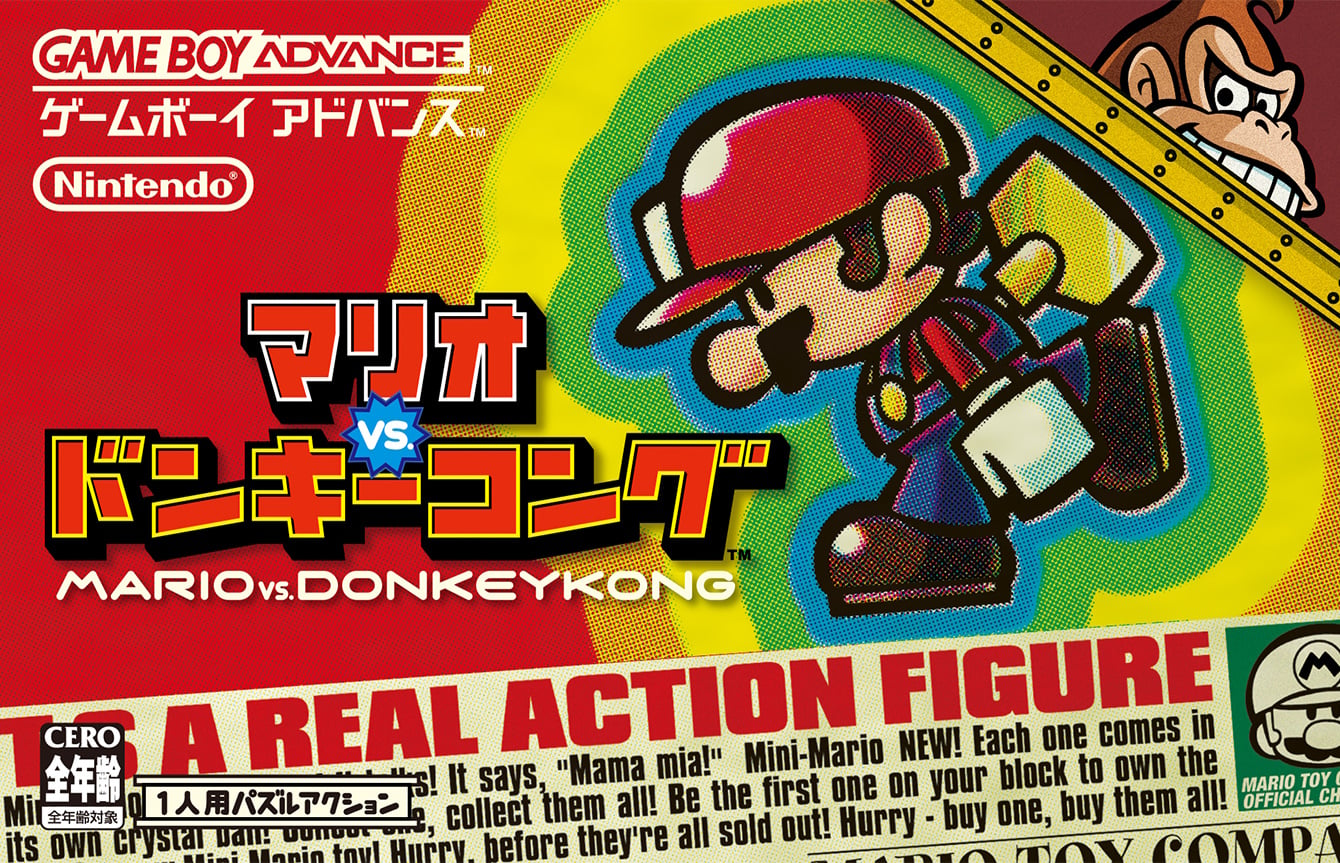
Every region shared the same idea, Mario and the ape face to face, with Japan going its own way on the logo.
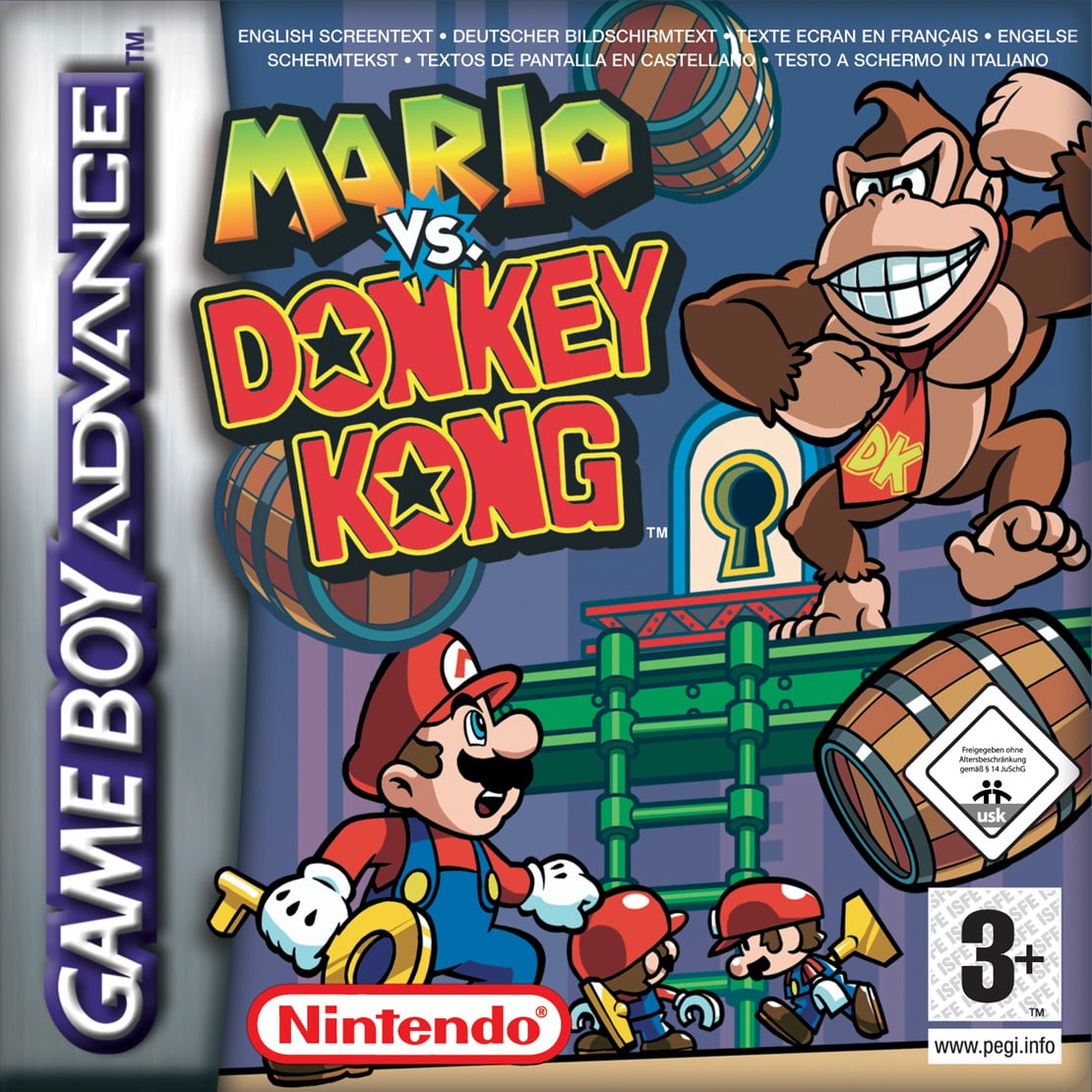
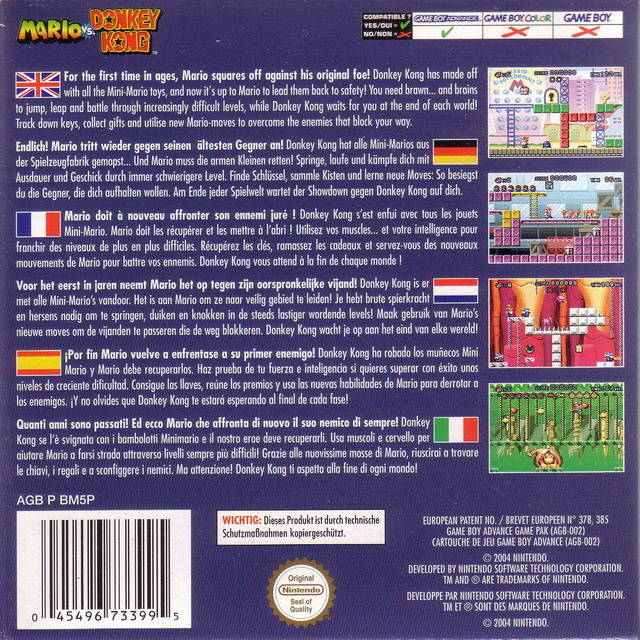
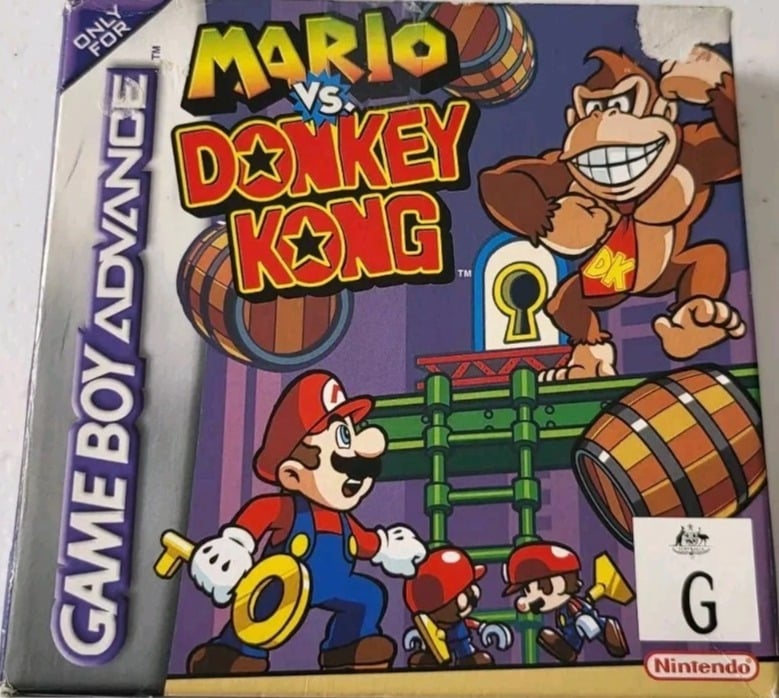
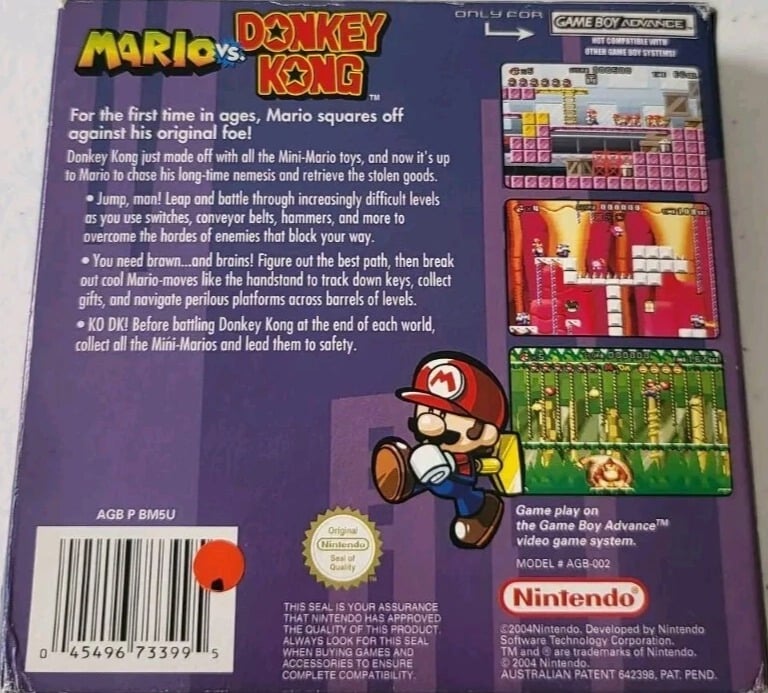
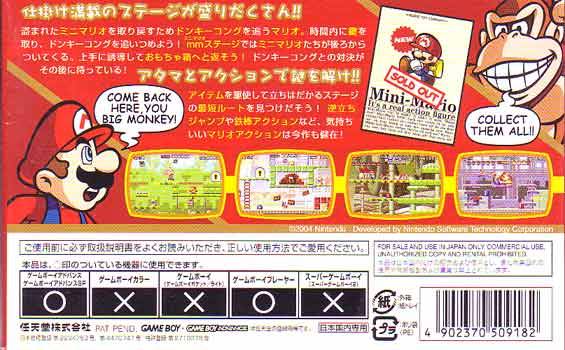
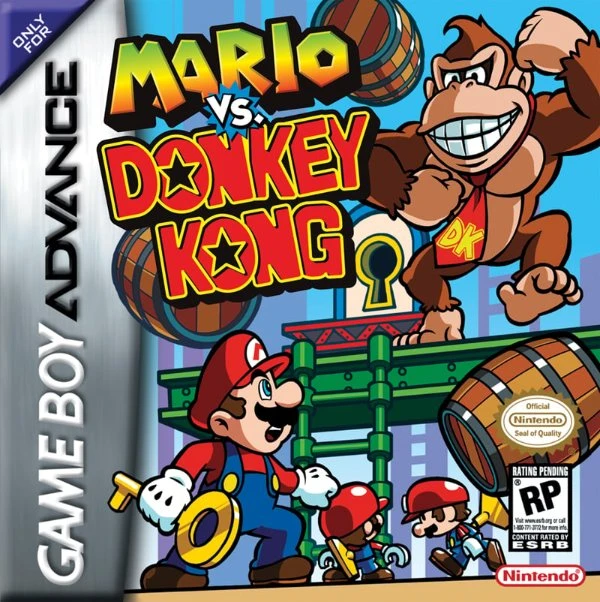
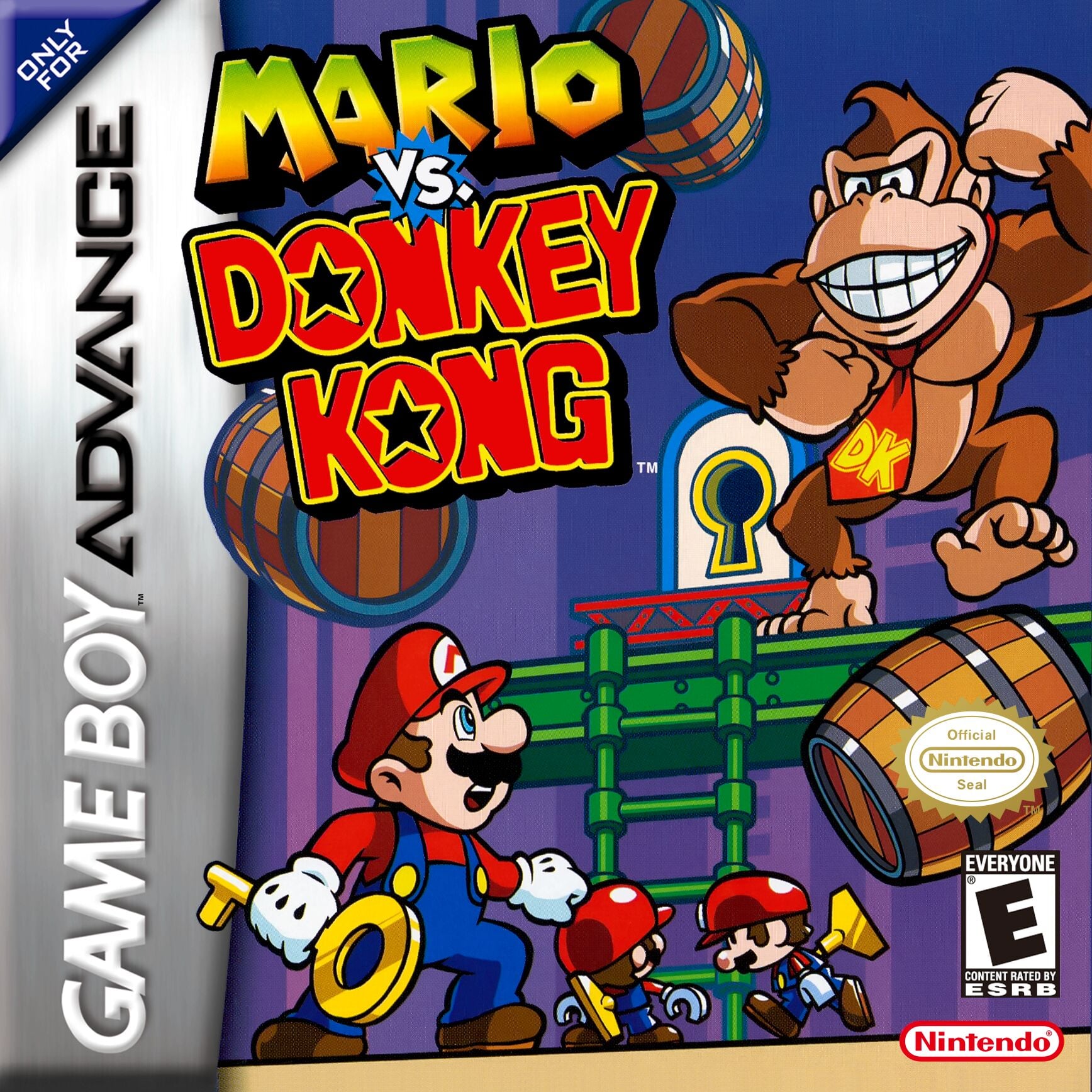
North AmericaThe original 2004 box.North America (back)North America (early design)A pre-release version of the box.EuropeEurope (back)Australia and New ZealandAustralia and New Zealand (back)JapanJapan (back)United Kingdom: Game Boy Advance SP Mario Edition bundleWii U Virtual Console icon
Screenshots
Menus, Mini-Mario parades in every world, and corners of the game the story sections do not reach.
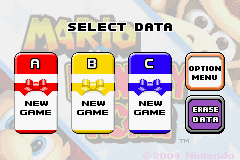
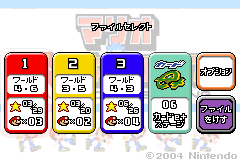
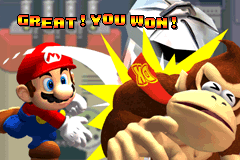
The file select screen.The Japanese file select, with its Card-e+ option.Language selection, European version only.The second half of Level 1-1.Level 2-mm in Donkey Kong Jungle.Level 3-mm on Fire Mountain.Level 4-mm in the Spooky House.Level 5-mm in the Mystic Forest.Level 6-mm in Twilight City.The victory screen after Level 1-DK.The map screen for the Donkey Kong level.Level 3-DK+.Expert level x-1.Revenge, an e-Reader level from the unused North American set.
Artwork & Media Gallery
Nintendo’s artwork for the game, the pre-rendered character models, credits illustrations, wallpapers and cut-scenes.
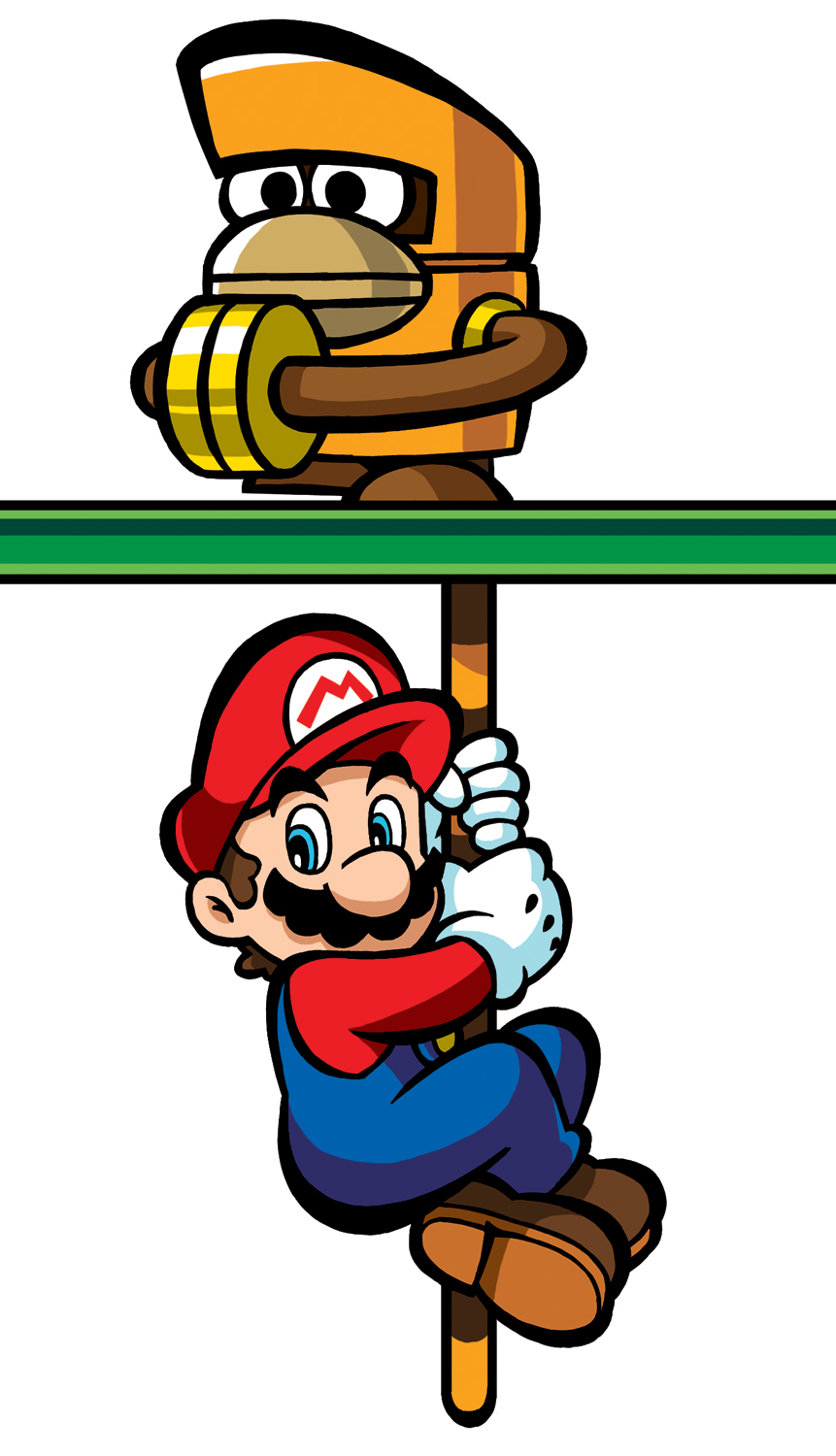
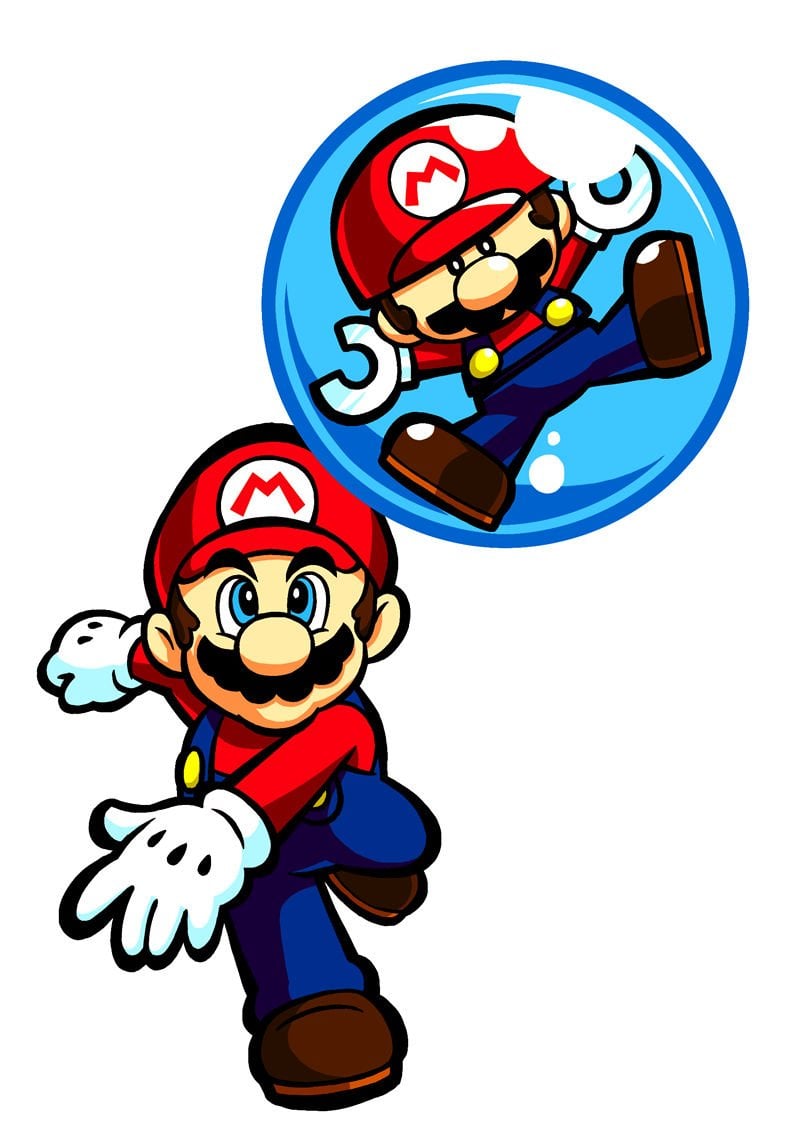
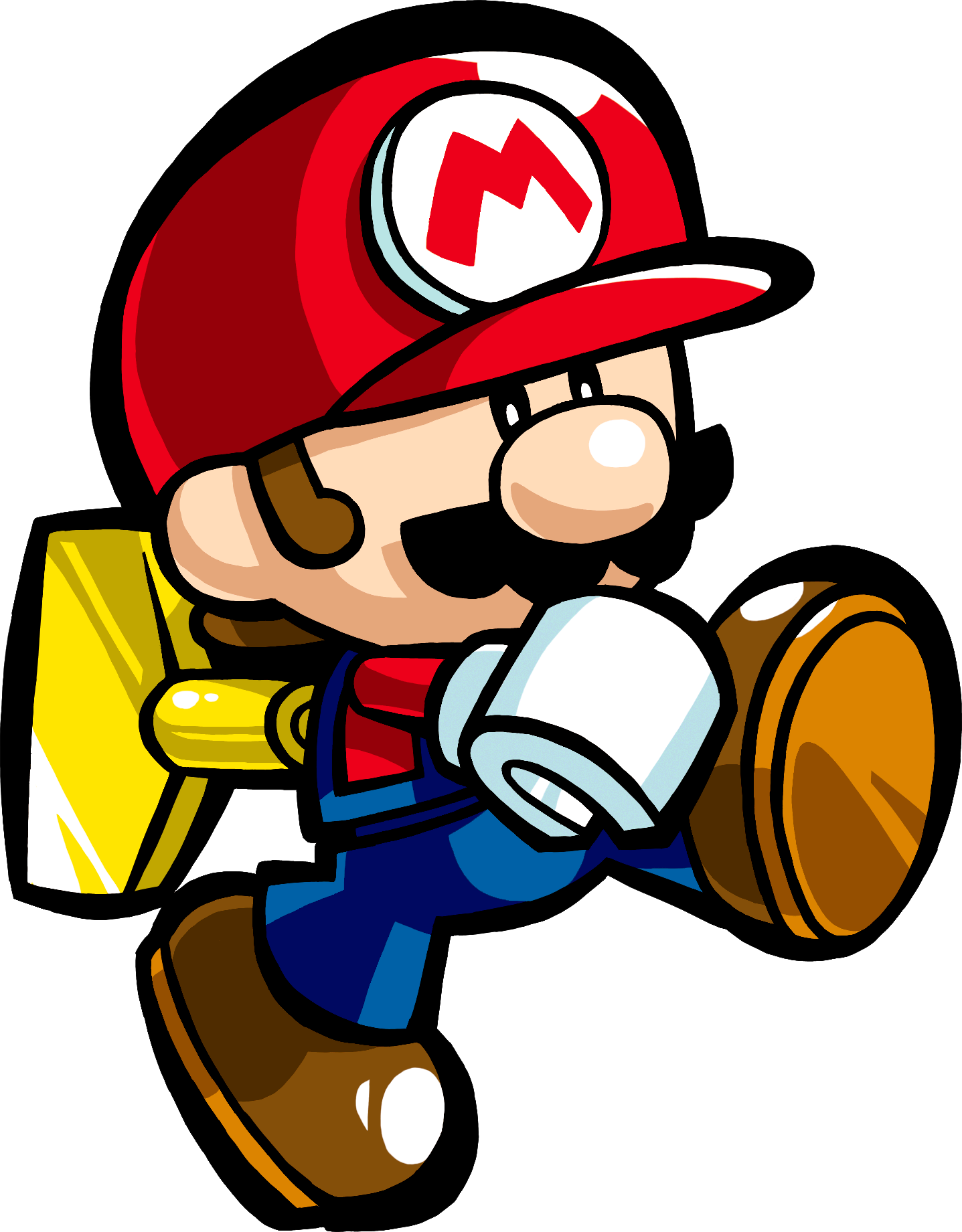
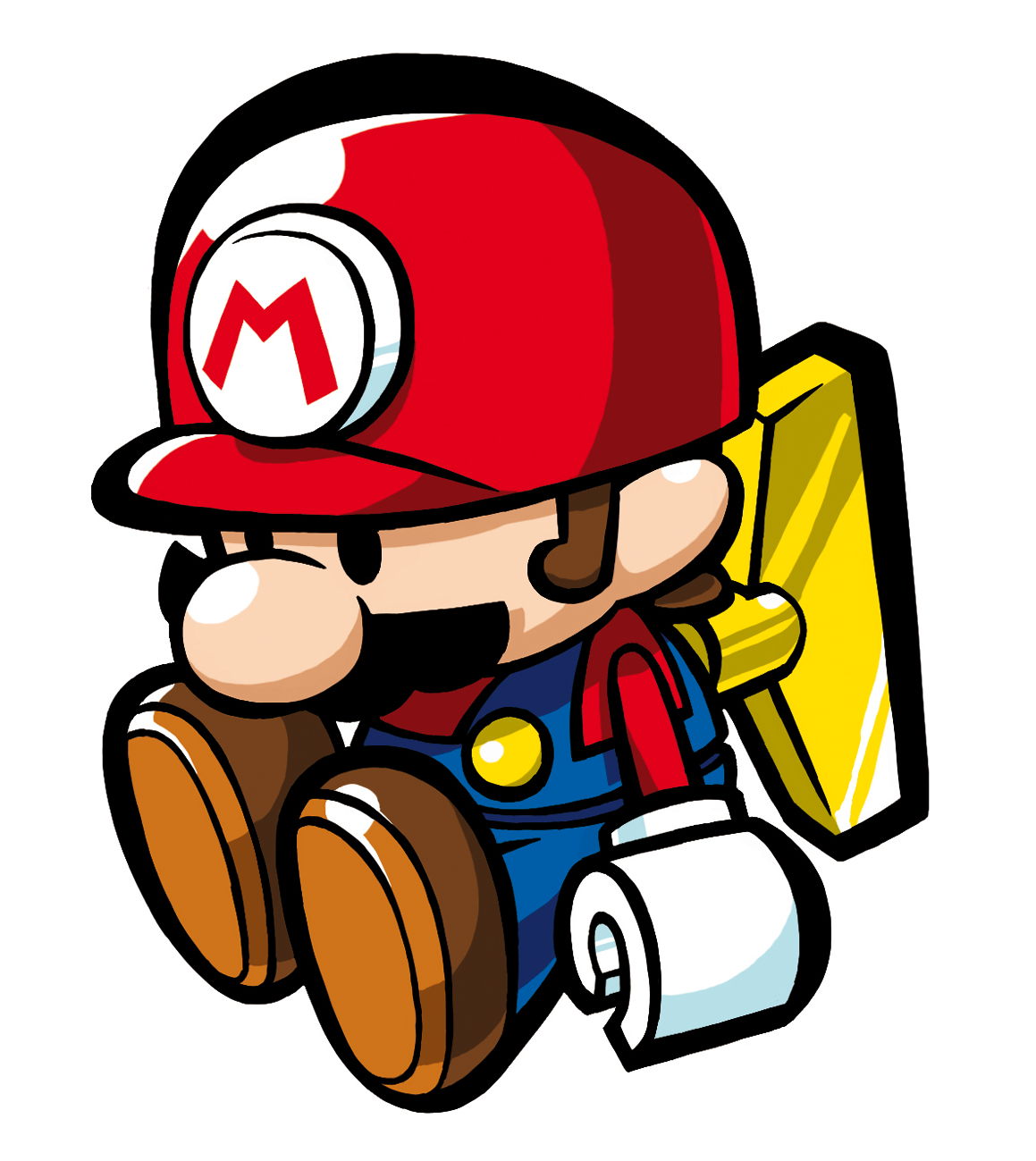
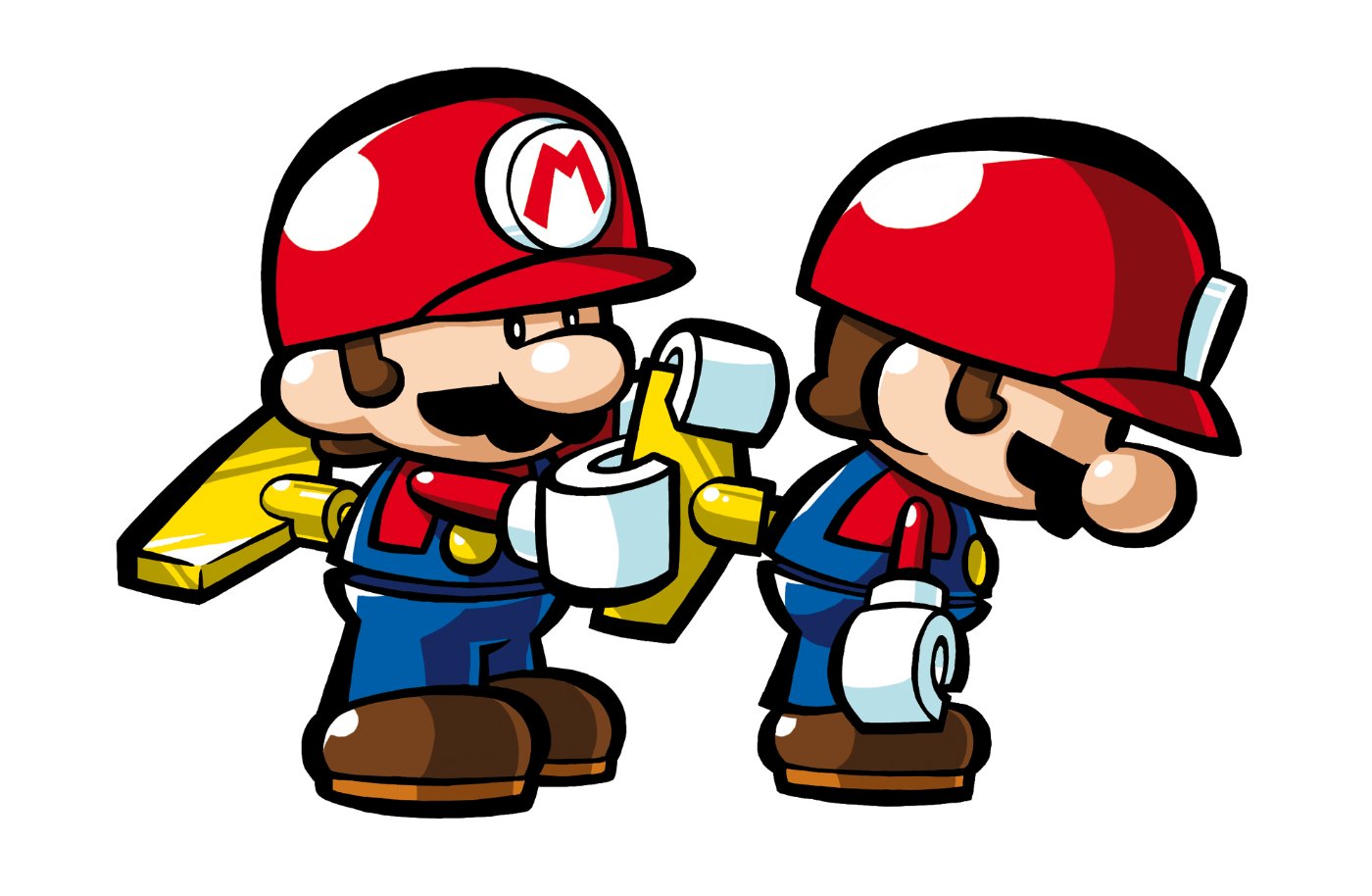
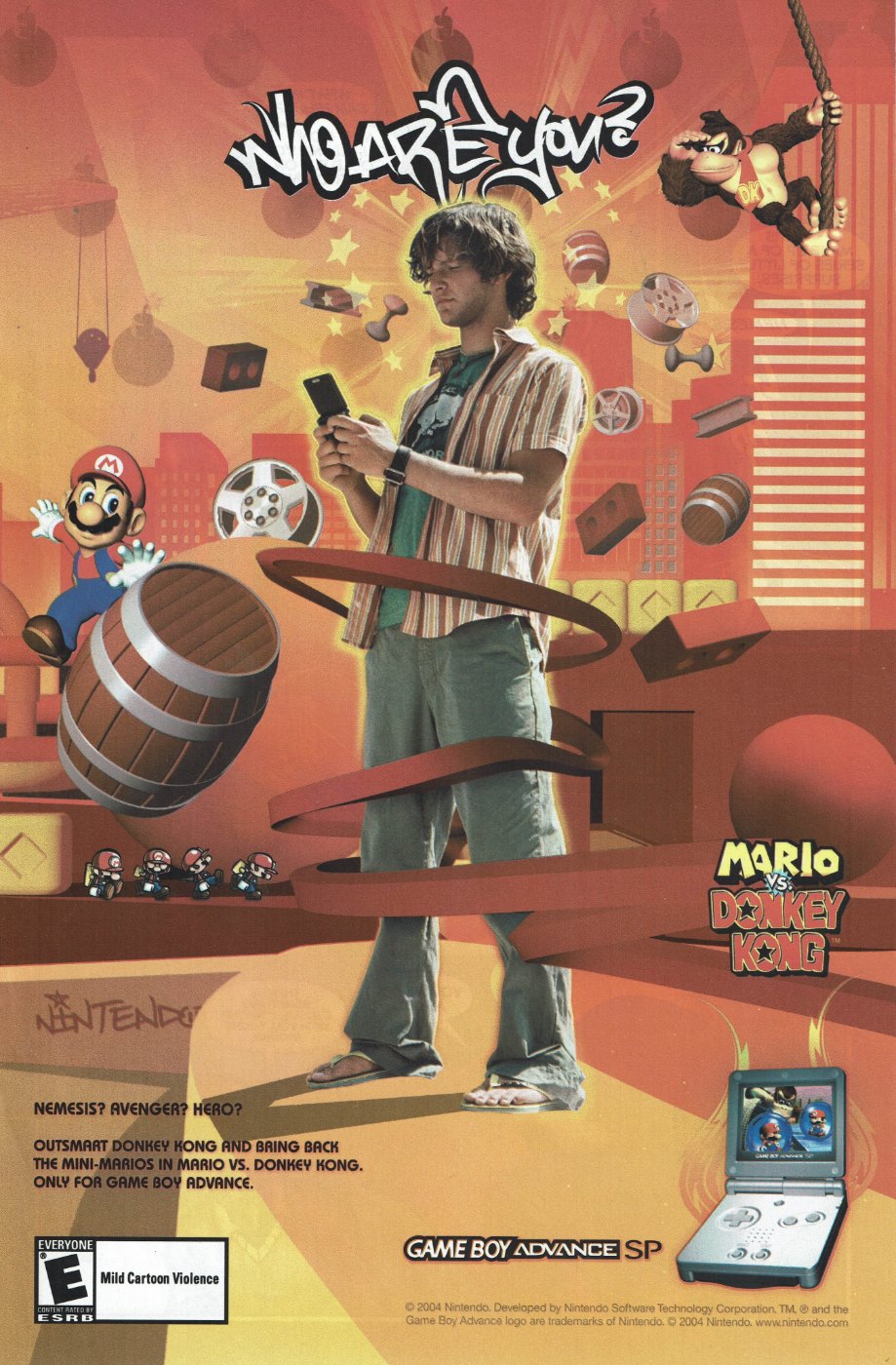
The international logo.The Japanese logo.Mario swinging from a Monchee’s tail.Mario freeing a Mini-Mario.Mario leading a line of Mini-Marios.A Mini-Mario.A Mini-Mario sitting down.One Mini-Mario winding up another.Mario’s pre-rendered model.Donkey Kong’s pre-rendered model.A freed Mini-Mario.Credits artwork: Mini-Mario.Credits artwork: the Toads.Credits artwork: featuring Mario.A North American print advertisement.Wallpaper from the Japanese website.Official wallpaper: Donkey Kong.The opening: a Shy Guy reads the news.The opening: an advert for bananas.The opening: Donkey Kong falls for the toy.Donkey Kong spots the Mario Toy Company.Three Toads at work on the production line.Mario sees Donkey Kong with the sack.Donkey Kong climbs the tower with the Toads.Another Donkey Kong Plus screenshot.
Legacy & Re-releases
The original has been easy to find on Nintendo hardware ever since, and the series it started outlived the console it was made for.
Releases and re-releases
Game Boy Advance2004North America 24 May, Australia 4 June, Japan 10 June and Europe 19 November 2004.
Nintendo 3DS Ambassador ProgramDecember 2011Free to Nintendo 3DS owners who bought the console before its price cut on 11 August 2011, released on 15–16 December depending on region. Never sold on 3DS.
Wii U Virtual Console2014–2017Japan 23 July 2014, Europe 17 September 2015, Australia 18 September 2015, North America 9 February 2017. Nintendo UK notes that Wii U eShop sales ended on 27 March 2023.
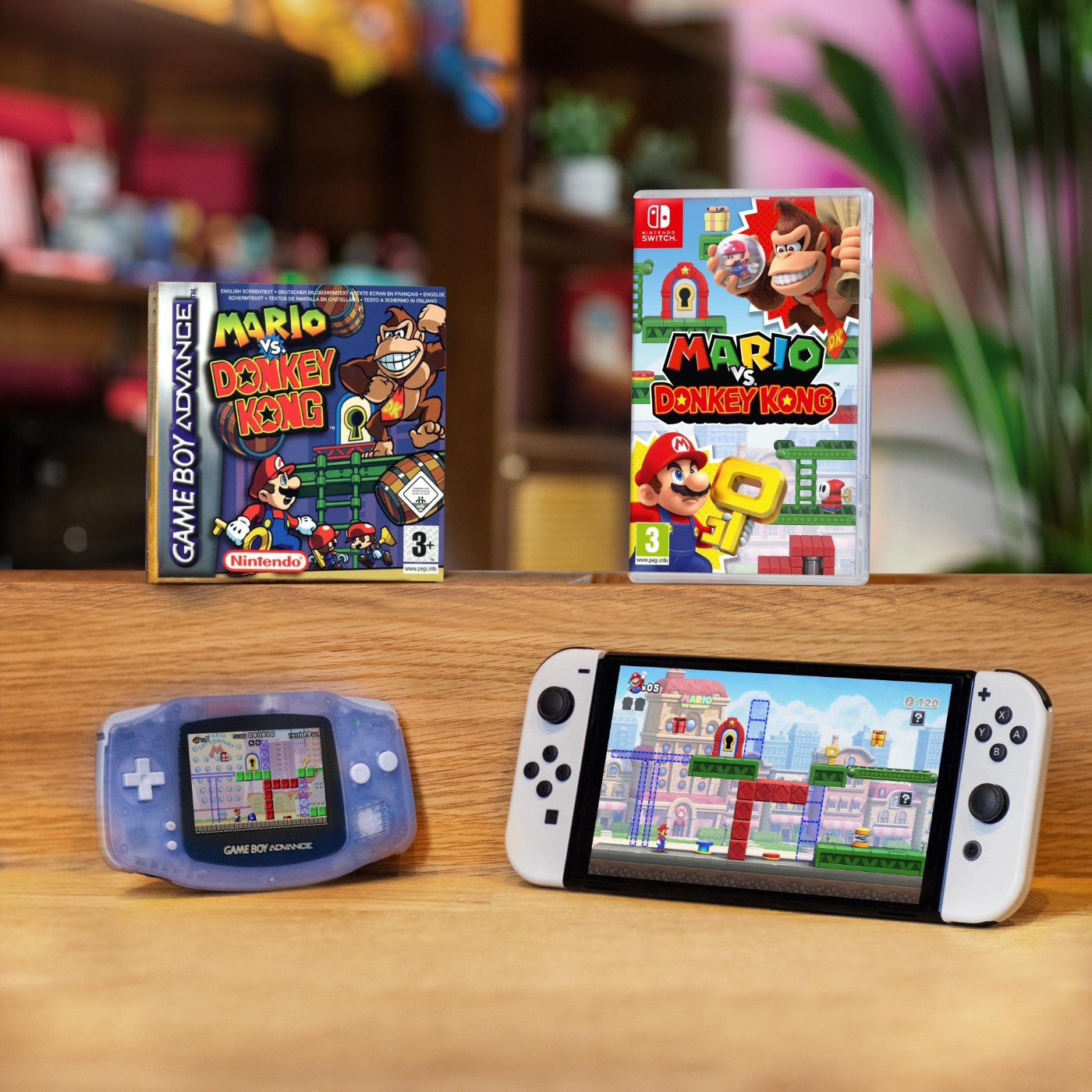
Nintendo Switch remake16 February 2024A full remake by Nintendo Software Technology. See Mario vs. Donkey Kong (Switch).
Game Boy Advance – Nintendo ClassicsMarch 2026Added to the Nintendo Switch Online + Expansion Pack library on 10 March 2026, alongside the Virtual Boy games Mario’s Tennis and Mario Clash. Some sources give 9 March for North America.
The series it started
The sequels changed the formula decisively. March of the Minis (Nintendo DS, 2006) took Mario out of the player’s hands and made the Mini-Marios the stars, steered with the stylus, and finally delivered the level editor. Minis March Again! followed on DSiWare, then Mini-Land Mayhem! in 2010, Minis on the Move in 2013 and Tipping Stars on Wii U and 3DS in 2015. All of them came from the same Redmond studio.
The 2024 remake
Twenty years on, NST remade the original for Nintendo Switch. The 2024 version keeps the levels and story, rebuilds the graphics and adds two new worlds, local co-op with a second player as Toad, Casual and Classic play styles and a Time Attack mode. Nintendo reported 1.12 million copies sold by 31 March 2024. The e-Reader levels did not make the trip.
Reviews & Sales
Sales figures
Wikipedia, citing the 2021 CESA Games White Paper, gives worldwide sales of 1.37 million copies. Nintendo’s own investor material does not list the game. The remake did better still: Nintendo reported 1.12 million copies sold in its first weeks, by 31 March 2024.
1.37mworldwide (CESA Games White Paper 2021, via Wikipedia)
81Metacritic
79.07%GameRankings
104levels
Reception and review scores
Scores from Wikipedia’s review table. Metacritic’s average is 81, which it classes as generally favourable.
GameProUS · 2004
4.5/5
Nintendo PowerUS · 2004
4.5/5
IGNCraig Harris · 24 May 2004
8.5/10
GameZone2004
8.5/10
GameSpotJeff Gerstmann · 2004
8/10
EurogamerTom Bramwell · 2004
8/10
Nintendo Life3DS Ambassador release · Marcel van Duyn · 10 January 2012
8/10
FamitsuJapan
30/40
Game InformerUS · 2004
7.5/10
Electronic Gaming MonthlyUS · 2004
7.33/10
EdgeUK · 2004
7/10
GameSpy2004
3/5
VideoGamerStephen Carvell · 8 February 2005
6/10
Most critics liked it a great deal. IGN’s Craig Harris praised how faithfully it kept the look and feel of the arcade Donkey Kong, though he found the Donkey Kong battles the least inventive levels and the rendered sprites a little awkward, however well animated. GameSpot’s Jeff Gerstmann singled it out as a standout for anyone who likes portable puzzles and enjoyed its nods to earlier Mario and Donkey Kong games. Eurogamer’s Tom Bramwell compared finishing each level to fitting the final piece into a jigsaw, but was no fan of the pre-rendered look either.
The dissenters were milder. VideoGamer’s Stephen Carvell liked the visuals but found the colour-switch puzzles tedious and the Mini-Mario levels short of ideas. Revisiting it on 3DS in 2012, Nintendo Life’s Marcel van Duyn called it a worthy successor to the Game Boy game and argued the old formula deserved its second time in the spotlight, while again grumbling about the sprites.
Honours
GameSpot · Month in Review for May 2004 (1 June 2004)Best Game Boy Advance game of May 2004
GameSpot · Best and Worst of 2004Runner-up, Best Puzzle/Rhythm GameBehind Katamari Damacy.
IGN · 17 March 2007Top 25 Game Boy Advance Games of All TimePlaced 25th.
SLB User Reviews
Mario vs. Donkey Kong (Game Boy Advance) has yet to receive a community review on Super Luigi Bros.
If you’ve played Mario vs. Donkey Kong (Game Boy Advance) and would like to submit a review, please get in touch.
More from the Super Luigi Bros Guide
These picture lists come from the earlier Super Luigi Bros guide to Mario vs. Donkey Kong (Game Boy Advance) and are kept here in full.
Regional Logos, Box Art & Screens
Mario vs. Donkey Kong shipped with distinct regional box art across all major markets.
Regional Logos
InternationalWestern markets logoJapanJapanese market logoPre-releaseWorking title: “Mario and Donkey Kong”
Box Art
North AmericaReleased 24 May 2004EuropeReleased 19 Nov 2004AustralasiaReleased 4 Jun 2004JapanReleased 10 Jun 2004Pre-releaseEarly North American cover
Iconic In-Game Screens
Title screen (international)Title screen (Japanese)File selection screenLanguage selection (Europe only)“Featuring Mario” credits screenMario Toy Company logo — the in-fiction brand
Promotional Wallpapers
Five official wallpapers were released to promote Mario vs. Donkey Kong.
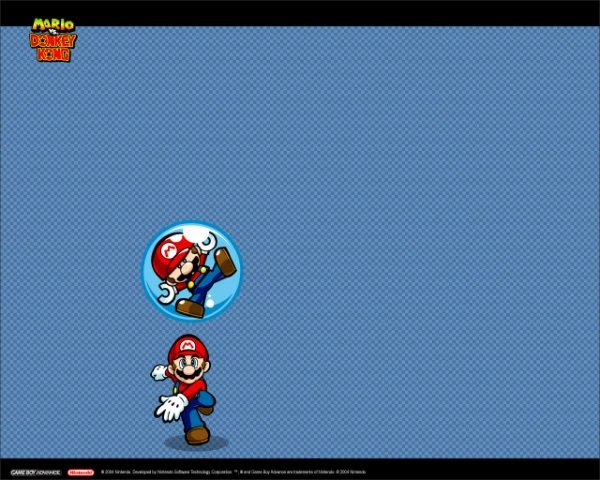
Wallpaper #1 — Donkey KongWallpaper #2 — Mario on a MoncheeWallpaper #3 — Mario & Mini-MariosWallpaper #4 — Mario throwing a Mini-MarioJapanese website wallpaper
To provide the best experiences, we use technologies like cookies to store and/or access device information. Consenting to these technologies will allow us to process data such as browsing behavior or unique IDs on this site. Not consenting or withdrawing consent, may adversely affect certain features and functions.
Functional
Always active
The technical storage or access is strictly necessary for the legitimate purpose of enabling the use of a specific service explicitly requested by the subscriber or user, or for the sole purpose of carrying out the transmission of a communication over an electronic communications network.
Preferences
The technical storage or access is necessary for the legitimate purpose of storing preferences that are not requested by the subscriber or user.
Statistics
The technical storage or access that is used exclusively for statistical purposes.The technical storage or access that is used exclusively for anonymous statistical purposes. Without a subpoena, voluntary compliance on the part of your Internet Service Provider, or additional records from a third party, information stored or retrieved for this purpose alone cannot usually be used to identify you.
Marketing
The technical storage or access is required to create user profiles to send advertising, or to track the user on a website or across several websites for similar marketing purposes.




 Donkey Kong (the tower)Main-game finale · 300 seconds · free three Toads, then 3 barrel hitsA climb up a building site under a stream of spiked barrels.
 World 1+: Mario Toy FactoryLevels 1-1+ to 1-6+, 1-DK+The chase restarts on the Mini-Mario production line.
 World 2+: Donkey Kong Jungle PlusLevels 2-1+ to 2-6+, 2-DK+Harder jungle rooms, including the 2-6+ trap reportedly fixed in Europe.
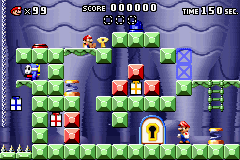 World 3+: Fire Mountain PlusLevels 3-1+ to 3-6+, 3-DK+Lava and fire with a Mini-Mario in tow.
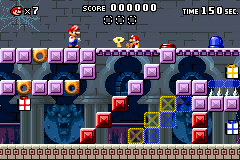 World 4+: Spooky House PlusLevels 4-1+ to 4-6+, 4-DK+Ghosts and Thwomps again, now with an escort to protect.
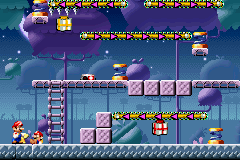 World 5+: Mystic Forest PlusLevels 5-1+ to 5-6+, 5-DK+Belts and Bob-ombs, in single rooms with no checkpoint.
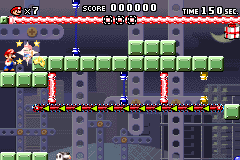 World 6+: Twilight City PlusLevels 6-1+ to 6-6+, 6-DK+The last Plus world, ending in the second empty-bag gag.
 ExpertLevels x-1 to x-12 · unlocked with starsTwelve fiendish single-room key puzzles for players chasing high scores.
 e World (Mario vs. Donkey Kong-e)e-Reader levels · six cards released in Japan onlyCard-based bonus levels with unlimited lives; the mode sits unused in the North American cartridge.





 DoorThe exit of a level’s first half, and a checkpoint once opened.
 Mini-MarioThe goal of the main levels, trapped in a bubble; in the Plus worlds it carries the key itself.
 1-Up MushroomAn extra life.
 2 UP MushroomTwo extra lives, from a bonus-game present.
 3 UP MushroomThree extra lives, from a bonus-game present.
 Color SwitchTurns on the platforms, blocks and ladders of its own colour.
 Color BlockSolid or see-through depending on which Color Switch was pressed last.
 SpringBounces Mario, or a Mini-Mario, much higher than a jump.
 Conveyor BeltCarries Mario, keys and objects; a Direction Switch reverses it.
 Donut BlockDrops away if Mario stands on it too long.
 ElevatorRuns along a fixed track; some can be reversed with a switch.
 WireA bar to hang from, cross on, or spin round to launch upwards.
 LadderFor climbing; some only appear when their Color Switch is on.
 RopeCan be climbed up or down; Mario can hold two at once.
 ChainA rope by another name, found in Fire Mountain, Twilight City and other worlds.
 Crumble BlockTurns to dust under Mario’s feet. Each world has its own version.
 Garbage CanCan be carried and thrown, used as a step, or laid across spikes.
 BarrelDoes everything a Garbage Can does, and is the weapon against Donkey Kong in several fights.
 HammerKnocks out enemies such as Oil; can be thrown and caught in mid-air.
 Donkey Kong (Game Boy, 1994)The direct ancestorMario’s handstands, backflips and wire spins, the upward hammer throw, Monchees, Bucket Man, Sir Shovalot and Oil all come from here, and the robot fight plays like its final Stage 9-9. See Donkey Kong ’94.
 Donkey Kong JuniorSnapjaws and ropesSnapjaws return, Mario climbs faster on two ropes and drops fruit on enemies, all as Junior did. See Donkey Kong Junior.
 Mario vs. Donkey Kong (Nintendo Switch)Remake · 2024A full remake by the same studio, with two new worlds, co-op play with Toad and Casual and Classic styles. See the Switch remake.
 Shogakukan stickersJapanese guidebook extraA Shogakukan guide to the game came with a sheet of stickers.
 Game Boy Advance SP Mario EditionUK bundleIn Britain the game was sold boxed with a Game Boy Advance SP.
 Donkey KongThe toy thief
 Mini-MarioThe stolen toys
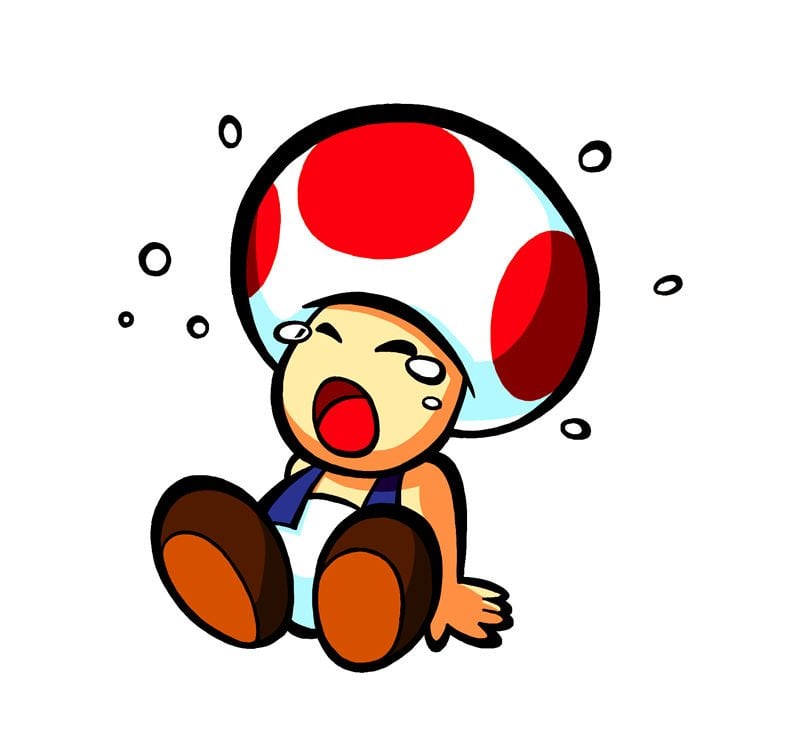 ToadsFactory workers
 Shy GuyEnemy and newsreader
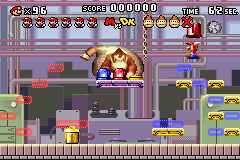 Donkey Kong (boss)Levels 1-DK+ to 6-DK+Remixed world battles in which Mario starts with six hit points and 120 seconds.
 Bucket ManMario Toy CompanyHides in a Garbage Can and walks off once Mario lands on it. Rideable but not liftable; knock it out with a thrown object.
 MoncheeDonkey Kong JungleA mechanical monkey whose tail is a safe rope. Its body is not.
 SnapjawDonkey Kong JungleClimbs ropes. Only falling fruit gets rid of it.
 RamRamDonkey Kong JungleSometimes doubles as a platform. Defeated by a collision with fruit, another enemy or an object.
 Tane PakkunJungle levels, near ropesA stationary plant that spits seeds.
 BatVariousFlies sideways once released and clings to Mario, knocking him off a rope.
 BirdVariousLeaves its nest to fly across the screen dropping polka-dot eggs.
 PodobooFire MountainLeaps out of the lava. Cannot be defeated.
 Fire birdFire MountainA flaming bird that drops burning eggs.
 Fire Shy GuyFire MountainA Shy Guy with a flamethrower.
 Lava GeyserFire MountainErupts from lava pits, lifting platforms to higher ground.
 FireballVariousPatrols a small area and burns on contact.
 OilVariousA burning oil can that bobs up and down. The hammer deals with it.
 BooSpooky HouseCreeps closer when Mario faces away and freezes when he looks.
 PolterguySpooky HouseA ghostly Shy Guy in red, yellow or blue; the matching Color Switch turns it into a solid, safe block.
 CandleSpooky HouseFloats slowly up and down.
 ThwompSpooky House and laterCrashes down on anyone who walks beneath it; deadly to touch at any time. Switch blocks can hold it back.
 Thwomp PlatformVariousRises and falls on a fixed pattern; rideable.
 ThwimpVariousHops from side to side. Invulnerable.
 Bob-ombMystic ForestDropped from dispensers; its fuse lights when Mario is near. Can blow open Bob-omb Blocks.
 NinjiVariousJumps up and down and can boost Mario to higher ground. It is invincible.
 Robo KikkiTwilight CityA faster robotic Monchee.
 Wrench Shy GuyTwilight CityGasps when it spots Mario, then throws wrenches straight ahead.
 LasersTwilight CityFire in cycles depending on colour; electrocute on contact.
 Spear GuyVariousSleeps until Mario approaches, then gives chase as far as the edge of its platform.
 BrickmanVariousThrows a line of three bricks downwards; a handstand blocks them.
 Sir ShovalotVariousAn armoured charger that shoves Mario away. Cannot be defeated; ducking helps.
 Falling spikeVariousDrops when Mario comes near, then serves briefly as a platform.
 CannonVariousTilts up and down firing cannonballs.
 SparkVariousA ball of electricity that runs along wires.
 SpikesVariousFatal to touch.
 Spiked BarrelDonkey Kong (tower)Rolled by Donkey Kong in the tower fight; cannot be stood on.