
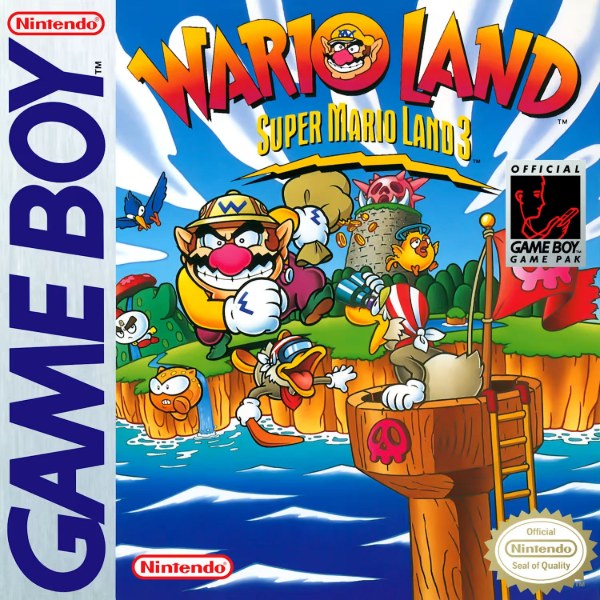

Wario Land: Super Mario Land 3
Overview
Wario Land: Super Mario Land 3 turned Mario’s rival into a hero, of sorts. At the end of Super Mario Land 2: 6 Golden Coins, Wario lost the castle he had taken from Mario. Now he wants an even bigger one, and he has heard that the Brown Sugar Pirates on Kitchen Island have stolen a giant golden statue of Princess Peach. If he can get it first, he can sell it and buy his castle.
The pirates are led by Captain Syrup, who would go on to become Wario’s recurring rival. The final battle at Syrup Castle ends with a genie, a bomb and a cameo from Mario, but Wario walks away with the genie’s lamp. The genie will grant his wish for a castle, but only for the right price.
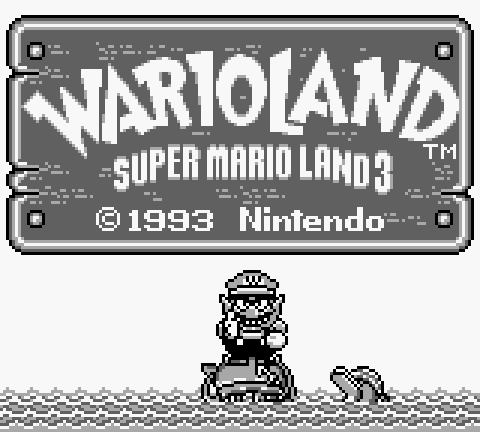
It was released in Japan in January 1994, where it was called Super Mario Land 3: Wario Land, and in the West that spring. It was the first game in what became the Wario Land series.
Gameplay
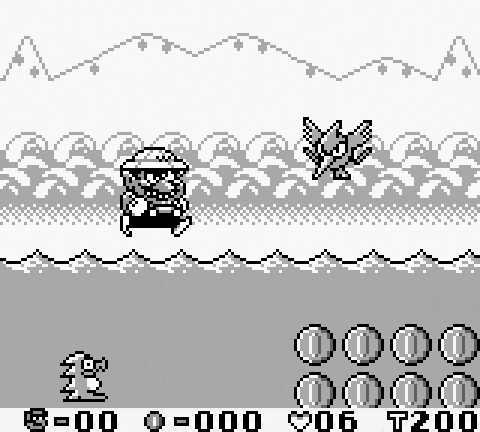
Wario plays very differently from Mario. He knocks enemies over by jumping on or barging into them, then picks them up and throws them. His shoulder charge breaks blocks, flattens enemies and opens hidden areas. If he is hit he shrinks to Small Wario, who cannot charge; a clove of garlic or a new pot restores him.
Pots give Wario a hat with a new ability:
- Bull Pot: a stronger, longer charge, the power to stick to ceilings and a ground pound that stuns nearby enemies.
- Jet Pot: faster running and a short flight across gaps.
- Dragon Pot: a burst of fire that works on land and underwater.
Coins are money rather than a source of extra lives. Wario needs ten of them to open the exit of most courses and to use checkpoints, and at the end of a course he can gamble his haul or spend it on hearts. Every 100 heart points earns an extra life.
Kitchen Island
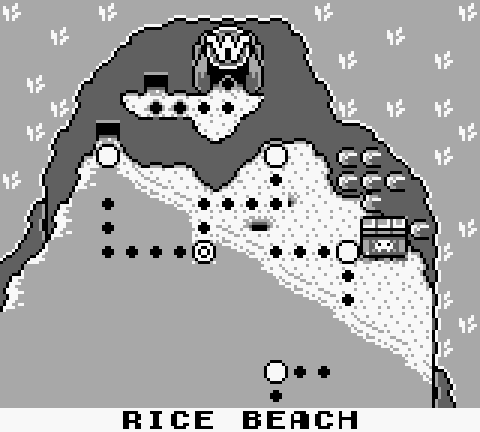
The 40 courses are spread across seven areas, each ending in a boss:
| Area | Courses | Boss |
|---|---|---|
| Rice Beach | 1–6 | Spiked Koopa |
| Mt. Teapot | 7–13 | Minotaur |
| Sherbet Land (optional) | 14–19 | Penguin |
| Stove Canyon | 20–25 | Devil’s Head |
| SS Teacup | 26–30 | Bobo |
| Parsley Woods | 31–36 | Ghost |
| Syrup Castle | 37–40 | Captain Syrup |
Several courses have secret exits that open new paths on the map; Sherbet Land, for example, is only reached through a hidden exit on Mt. Teapot. Beating some bosses changes earlier courses, such as the flood that follows the Rice Beach boss.
Treasures and Endings
Fifteen treasures are hidden behind locked doors. Wario has to carry a key to each room, and while he is holding it he cannot charge or use his hat’s power. Once the game is finished, the treasures are traded in for coins.
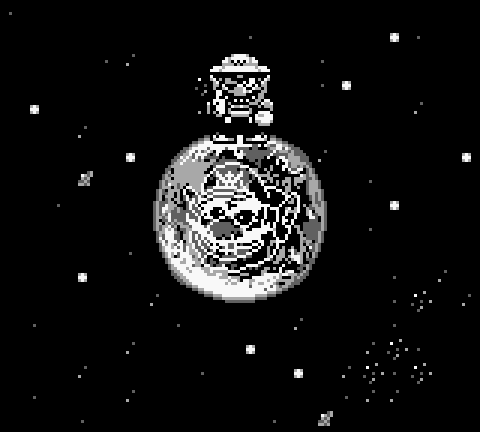
What the genie builds depends on Wario’s final total. The six endings run from a tiny birdhouse through a tree stump, a log cabin and a pagoda up to a castle. Collect every treasure and finish with the maximum 99,999 coins after clearing all 40 courses and the genie gives Wario a whole planet. If you miss the best ending, the game marks the courses where treasure is still waiting.
Reception and Legacy
The game was a big hit. It was the best-selling Game Boy game in the US in March and April 1994 and in the UK from May to July, and it had sold more than five million copies by the 2020s. GamePro named it the best Game Boy game at CES 1994. Retrospective reviews remain positive, including 9/10 from Nintendo Life for the 3DS re-release.
It led to five more Wario Land games: Virtual Boy Wario Land, Wario Land II, Wario Land 3, Wario Land 4 and Wario Land: Shake It!. Mario Kart 7’s Wario Shipyard track is built around its main theme. The game is available on the 3DS Virtual Console and, since July 2026, on Nintendo Switch Online.
Trivia
- Mt. Teapot is the largest area on the map, and Syrup Castle has the fewest courses.
- The golden statue the pirates stole is of Princess Peach, and Mario flies off with it in the ending.
- Erasing a save file blows it up with a bomb, a touch one Famitsu reviewer singled out for praise.
- Captain Syrup became Wario’s recurring rival in later Wario Land games.