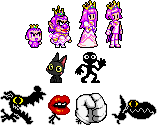
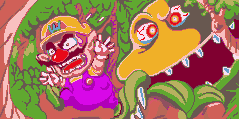
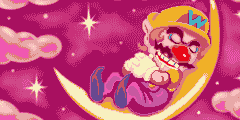
Game Boy Advance2001Nintendo R&D1PlatformerMetacritic 882.2 million sold18 levels, 6 bossesTen transformationsNormal, Hard, S-Hard
Wario Land 4
A newspaper story about a Golden Pyramid deep in the jungle is all the invitation Wario needs. He jumps in his car, follows a black cat through the door and falls straight down a hole, into the fifth and most inventive Wario Land. Released for Game Boy Advance in Japan on 21 August 2001 and in the West that November, Wario Land 4 packs 18 levels into six passages, each one a puzzle box with a sting in its tail: find the four jewel pieces and the key-creature Keyzer, jump on the frog switch, and then run for the exit before the clock hits zero.
Along the way Wario is set on fire, flattened, frozen, inflated and turned into a zombie, a bat and a snowman, and every one of those misfortunes is a tool. Directed by Hirofumi Matsuoka at Nintendo R&D1, with an extraordinary soundtrack by Ryoji Yoshitomi, it scored 88 on Metacritic and sold 2.2 million copies. Its program became the reference for Metroid Fusion, and two of its younger staff became the minds behind WarioWare.
Developer:Nintendo R&D1
Publisher:Nintendo
Platform:Game Boy Advance; 3DS and Wii U Virtual Console; Nintendo Switch Online
Genre:Side-scrolling platformer
Japan:21 August 2001 (as Wario Land Advance)
Australia:9 November 2001
N. America:19 November 2001
Europe:23 November 2001 (Nintendo UK); 16 November in reports of the time
Difficulty:Normal and Hard from the start; S-Hard unlocked by finishing Hard
Sales:2.2 million worldwide (CESA Games White Papers 2021, via Wikipedia)
Re-releases:3DS Ambassador Programme (2011), Wii U Virtual Console (2014), Nintendo Switch Online + Expansion Pack (2025)
Advertisement
Overview
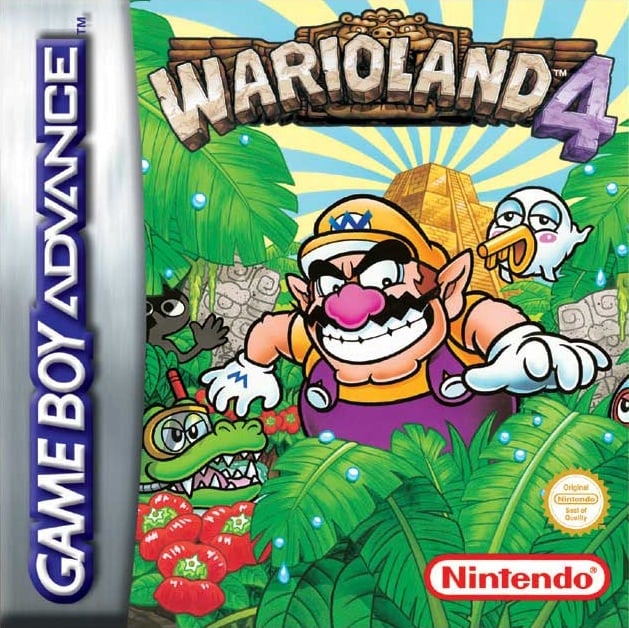
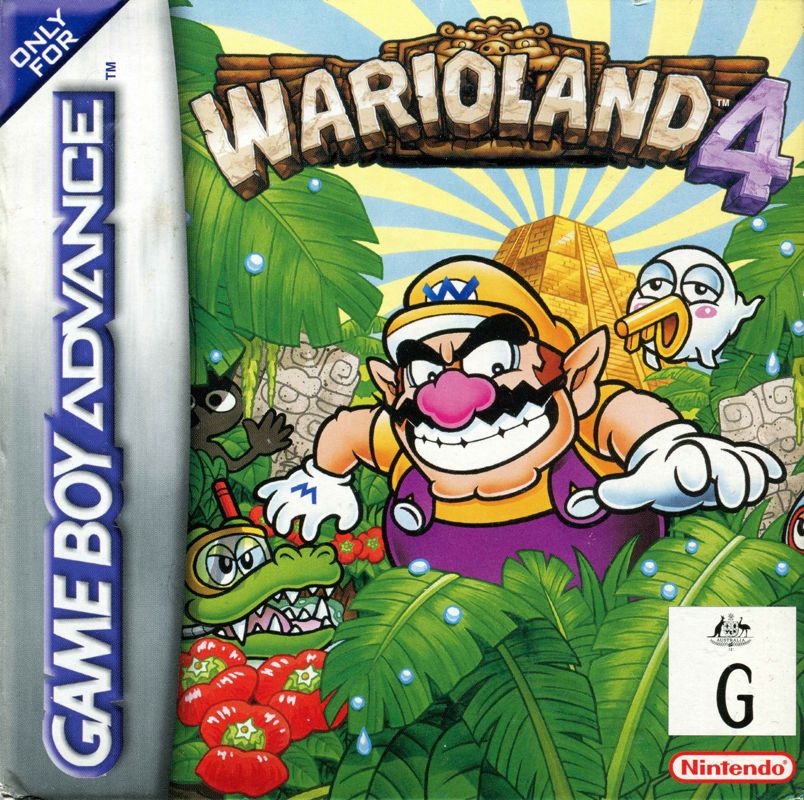
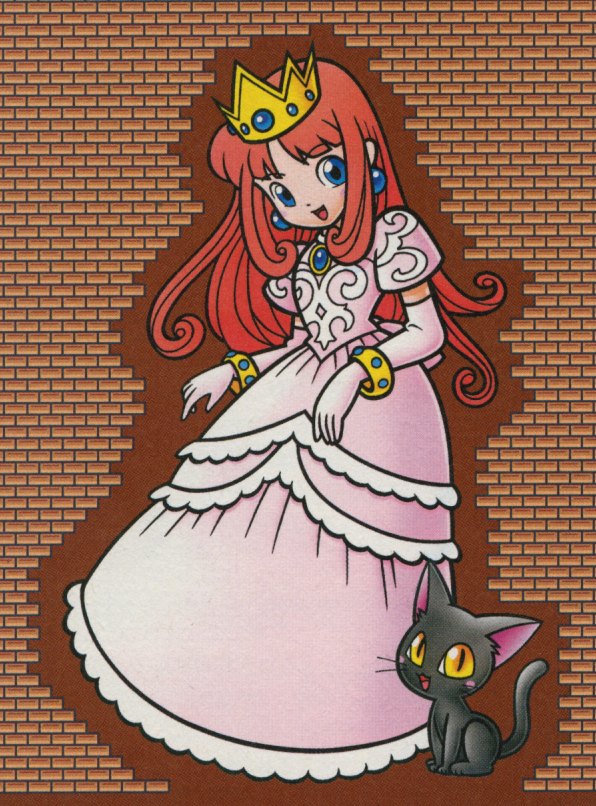
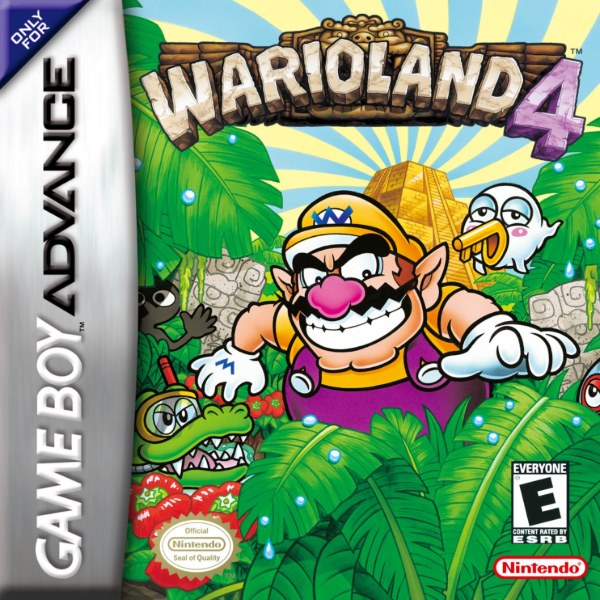
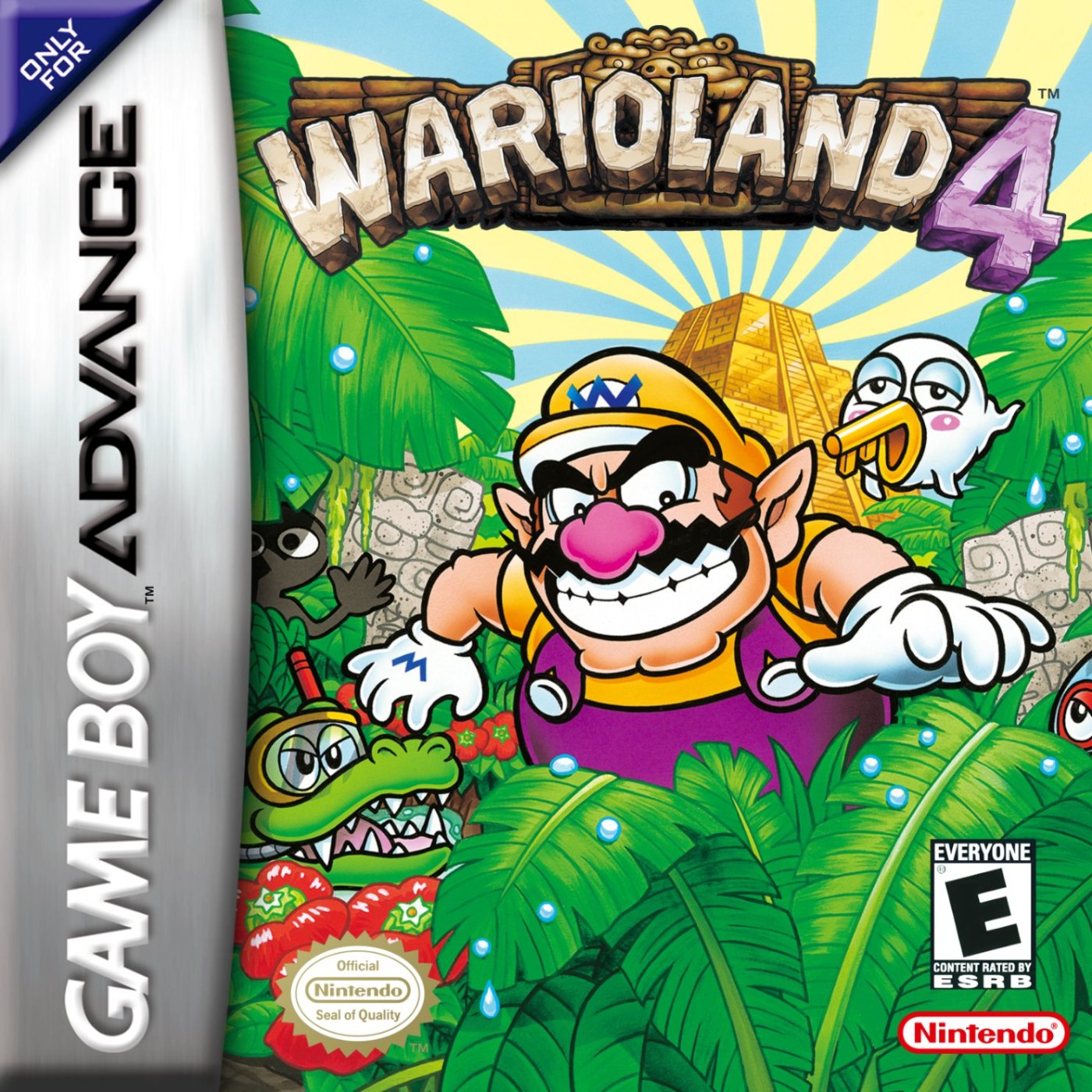
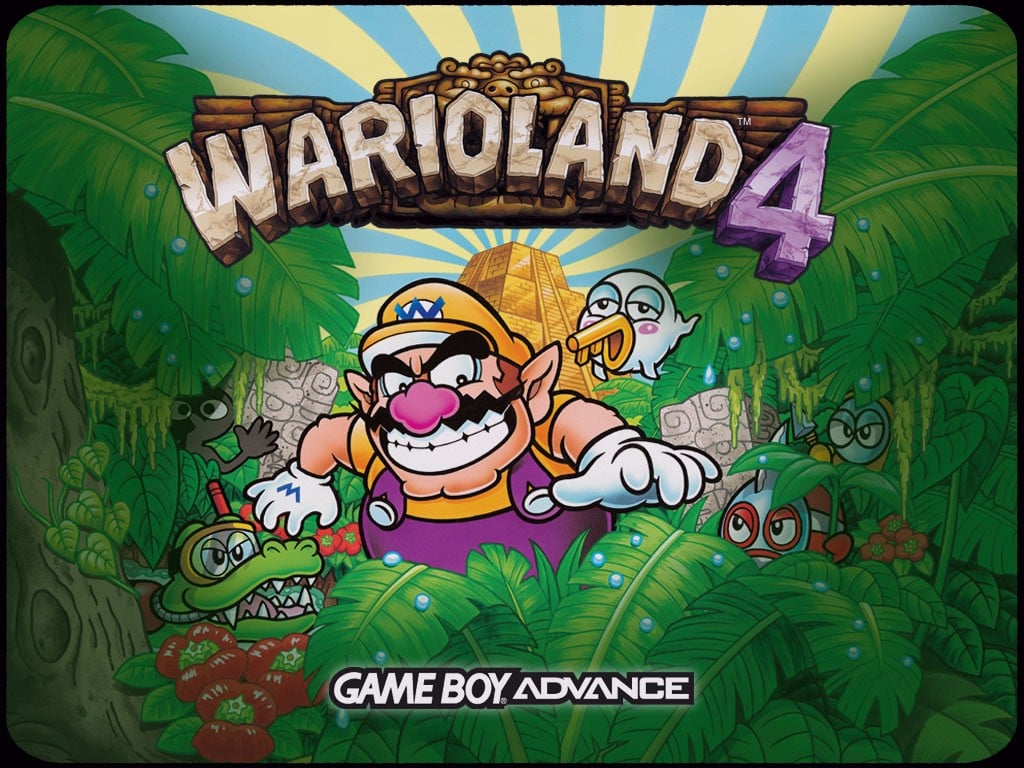
The artwork used on the box.
Wario Land 4 is a Game Boy Advance platformer made by Nintendo Research & Development 1, the department behind every Wario Land since the first. It was released in Japan on 21 August 2001 under the title Wario Land Advance, in Australia on 9 November and in North America on 19 November; Europe followed the same month. It is the fifth game in the series, counting the Virtual Boy entry, and it turned out to be the last on a handheld.
The story is the usual one. Wario reads in the paper that a legendary Golden Pyramid has been found in the jungle, that it is full of treasure and that expeditions there keep meeting with accidents. He drives straight over, follows a stray black cat inside and tumbles into the heart of the place. To get at the gold he must clear its passages, beat their guardians and finally face the pyramid’s mistress, the Golden Diva.
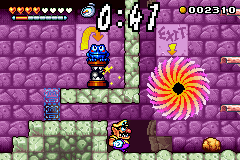
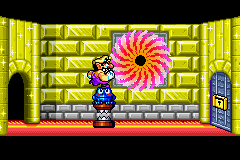
What makes it special is the way each level is built. Wario goes in through a swirling vortex that shuts behind him, and the only way to reopen it is to find a frog-shaped switch somewhere in the depths. Jumping on the switch starts a countdown, flips certain blocks from solid to see-through and back, and turns the level into a race to the start by a route that is often quite different from the way in. Miss the deadline and the coins Wario has collected drain away until there are none left and he is thrown out.
Around that idea the designers hung a fighting system with real weight, an eight-heart health meter, ten slapstick transformations, a shop that sells weapons to use on bosses, a hidden CD in almost every level and three difficulty settings that rearrange the whole game. Critics loved it, and its influence is still easy to spot: the makers of Pizza Tower and Antonblast have both named it as their model.
Loot-loony Wario has discovered his biggest score yet: a fabulous golden pyramid filled with riches. Trouble is, its denizens don’t want to give up the treasure easily – but that hasn’t stopped Wario before!
In Wario Land 4, the greedy hero finds himself no longer invincible, as in his previous platform adventures. However he can undergo amazing transformations that aid him in his quest; now he can become Bat Wario, Bouncy Wario and even Zombie Wario!
— Official description (Nintendo UK, 2001)
Why it matters to Mario fansThis is the bridge between two eras of Wario. It is the last and most polished of R&D1’s handheld Wario Land games, the final active credit of Wario’s creator Hiroji Kiyotake, and an early project for Goro Abe and Ko Takeuchi, who went on to shape WarioWare, which borrowed its music, its sound effects and its sense of humour. Its program was also the starting point for Metroid Fusion.
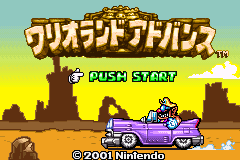
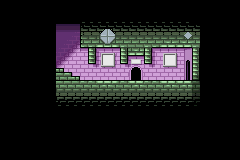
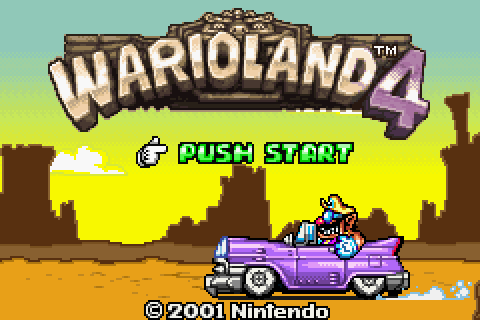
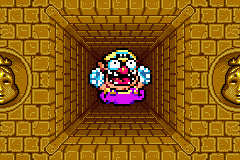
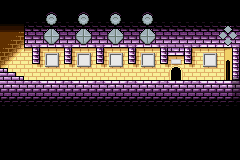
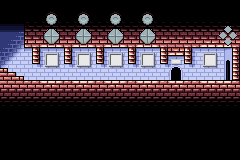
The English title screen.Hall of Hieroglyphs, the opening level.The switch has been hit and the vortex is open: time to leave.Palm Tree Paradise, first level of the Emerald Passage.
“STEAKS! EAT AS MUCH AS YOU CAN!!”
Wario Land 4, ending sequence (Nintendo, 2001)
The headline of the newspaper that flies into view in the closing scene, a bookend to the treasure story Wario reads at the start.
Quick Answers
Short answers to the questions people most often ask about Wario Land 4, each linked to the fuller section below.
When did Wario Land 4 come out?
Japan on 21 August 2001, Australia on 9 November 2001 and North America on 19 November 2001. For Europe, Nintendo UK’s own site gives 23 November 2001, while Wikipedia and a Nintendo World Report news item from that week give 16 November. A Chinese iQue edition followed on 8 June 2004. More →
How many levels does Wario Land 4 have?
Eighteen: one in the Entry Passage, four each in the Emerald, Ruby, Topaz and Sapphire Passages, and one in the Golden Pyramid. Each of the six areas ends with a boss. More →
How do you unlock S-Hard mode?
Finish the game on Hard. Normal and Hard can both be chosen when you create a save file; S-Hard appears once Hard has been beaten. In S-Hard Wario starts every level with one heart. More →
What happens if the timer runs out?
The screen turns black and white and Wario’s score for the level drains rapidly. When it reaches zero he is sent back to the map and has to start the level again. More →
What do the treasure chests in boss fights do?
Each of the four main bosses has three chests in the wall behind it. If the fight drags on they vanish one by one. The number you save, out of twelve, decides which form Princess Shokora takes in the ending. More →
How do you unlock the Karaoke track?
Earn a gold crown, more than 10,000 points, in all 18 levels. It can also be opened temporarily in the Sound Room by pressing Start, Select, Up, L and R together. More →
Who is the black cat?
Princess Shokora, the ancient ruler of the pyramid, cursed by the Golden Diva. She guides Wario in, runs the Item Shop in disguise and returns to her true form when the Diva is beaten. More →
Is Wario Land 4 on Nintendo Switch?
Yes. It joined the Game Boy Advance library of Nintendo Switch Online + Expansion Pack on 13 February 2025 in North America and 14 February elsewhere. It was also on the Wii U Virtual Console and was one of the ten GBA games given to Nintendo 3DS Ambassadors. More →
Does Metroid Fusion use the Wario Land 4 engine?
Its programmers started from it. Katsuya Yamano, a programmer on Wario Land 4 and program director of Metroid Fusion, said in 2003 that the team “referenced that program”, and leftover Wario Land 4 test blocks are still in Fusion’s data. More →
Story
It starts, as these things do, with the morning paper.
The plot is told almost without words, in an animated opening, a scatter of scenes inside the pyramid and a long ending that changes with how well you played. Here it is from start to finish.
A story in the newspaper
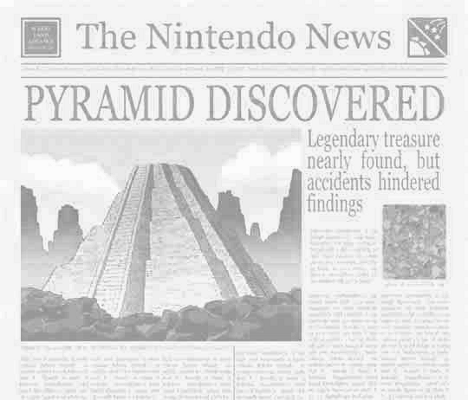
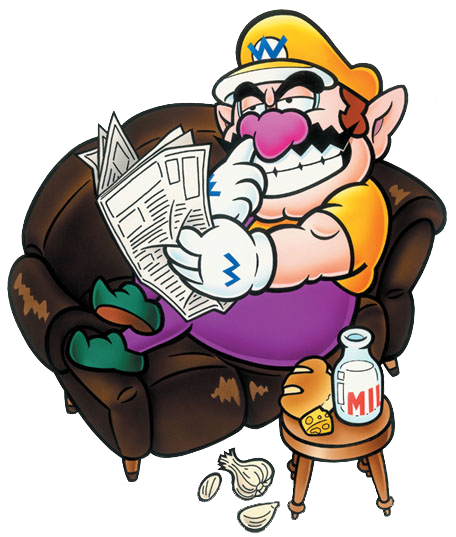
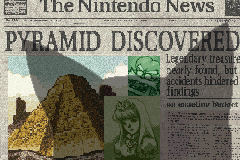
Some time ago a legendary Golden Pyramid was discovered deep in a jungle. Expeditions have been sent to bring out its treasure, and one after another they have ended in accidents. Wario reads all about it at home in the paper, which is called, if you look closely at the unused part of the graphic, The Nintendo News.
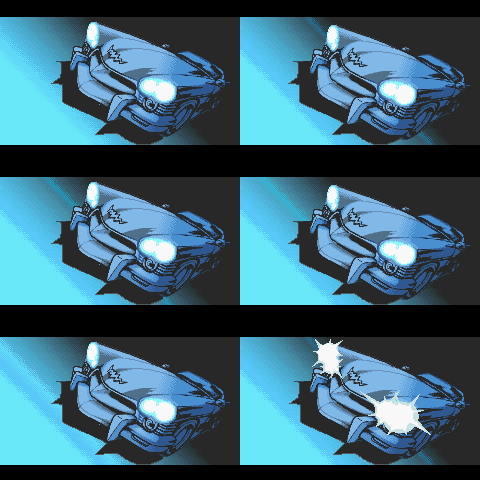
He does not hesitate. He jumps into his car, the Wario Car, and tears off towards the jungle. On the way he very nearly runs over a small black cat.
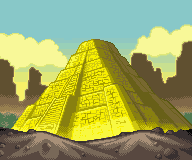
The article that starts it all. Note the shadow.The Wario Car, at speed.The Golden Pyramid.
Down the hole: the Entry Passage
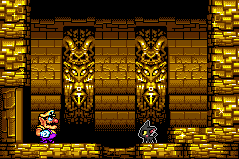
Wario climbs the steps of the pyramid and finds the same black cat waiting in the doorway. It leads him deeper inside and over the edge of a hole. He falls a long way and lands in a chamber near the centre, with four sealed passages around him and one open.
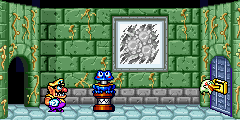
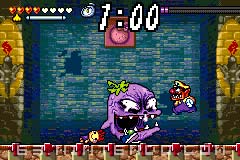
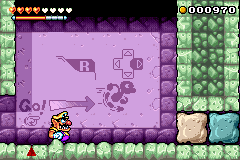
The open one is the Entry Passage. Its single level, the Hall of Hieroglyphs, teaches the rules by way of pictures on the walls, and its guardian is Spoiled Rotten, which seems harmless until it has taken a few knocks and then bares its teeth. Beat it, and the four main passages open.
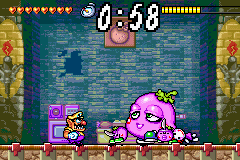
Wario follows the cat inside.And down he goes.Spoiled Rotten and its little knife-wielding helpers.
The Emerald Passage
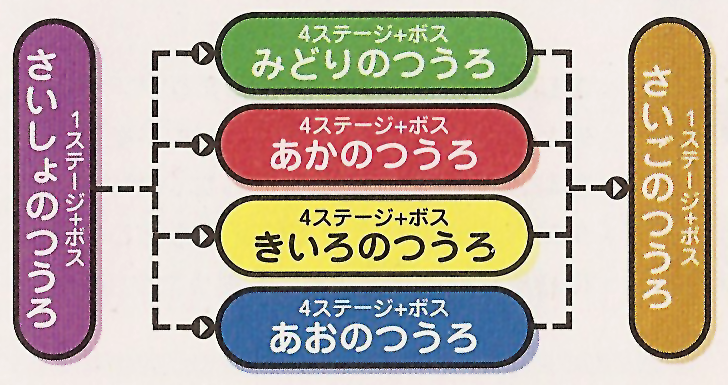
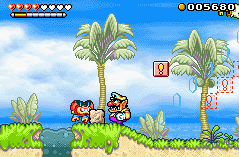
The four passages can be tackled in any order, but the green one is the gentlest. Its theme is nature: the palms of Palm Tree Paradise, the sunflowers of Wildflower Fields, the depths of Mystic Lake and the rain-soaked Monsoon Jungle.
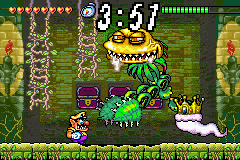
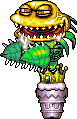
Its guardian is Cractus, a huge plant in a pot. Hit it enough and it rears up to its full height; climb a vine to carry on the attack. Its drool turns Wario into a zombie, and the touch of a firefly turns him back. It holds the Crown.
The Emerald Passage.Mystic Lake.Cractus.
The Ruby Passage
The red passage is all machinery and mess: The Curious Factory with its crushing pistons, the rubbish heaps of The Toxic Landfill, the sub-zero 40 Below Fridge and the bumpers and counters of Pinball Zone.
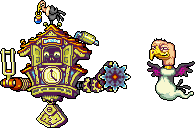
At the end waits Cuckoo Condor, which first appears as a cuckoo clock that can snatch Wario up. Break the clock apart and the vulture inside comes out fighting, dropping eggs that hatch into ducklings and then explode, unless Wario throws them back first. It wears a pair of earrings.
The Ruby Passage.Flat Wario in The Curious Factory.Cuckoo Condor and its eggs.
The Topaz Passage
The yellow passage is a toy box. Toy Block Tower is a castle of building blocks, The Big Board a village played by the spin of a wheel, Doodle Woods a sketchbook in which a pig called Hoggus draws Wario’s enemies as he watches, and Domino Row a series of races against falling dominoes.
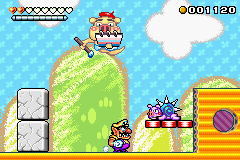
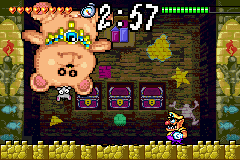
The boss is Aerodent, a rat riding inside a giant inflatable teddy bear. It scatters tack-like soldiers; pick one up, throw it, and the bear deflates far enough for the rat to be hit. Its treasure is a necklace.
The Topaz Passage.Doodle Woods.Aerodent.
The Sapphire Passage
The blue passage is the horror film: Crescent Moon Village under a sickle moon, the flying carpets of Arabian Night, the lava and ice of Fiery Cavern and the endless corridors of Hotel Horror.
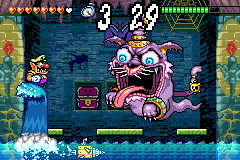
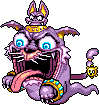
Catbat, the guardian, is fought in a flooded chamber patrolled by mechanical fish. It sends waves rolling across the pool for Wario to jump and coughs up spiked mines, some of which puff him up like a balloon. It wears bracelets.
The Sapphire Passage.Crescent Moon Village: the ghost makes off with the Keyzer.Catbat.
The Golden Pyramid and the Golden Diva
With all four guardians beaten, an inner pyramid appears on the map. Inside is the Golden Passage, a last level with no approach at all: Wario drops onto the switch as he enters and has to fight his way out against the clock.
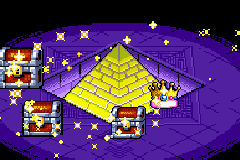
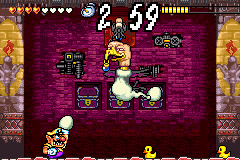
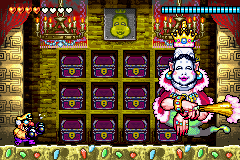
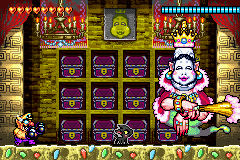
Beyond it is the Golden Diva, once an opera singer, now a monstrous figure in Elizabethan robes with a fan and a stack of porcelain masks over her face. She is wearing the crown, earrings, necklace and bracelets that the four bosses carried. The black cat flies at her and is swallowed whole. Wario does rather better. Every blow knocks away a mask, and the things she throws at him, eggs, hammers, a bouncing bear, can all be sent back. In the end there is nothing left of her but a pair of lips, and one more hit sees to those.
The inner pyramid.The Golden Diva.The cat goes first.
A kiss, some angels and a steak dinner
The pyramid starts to collapse. Wario stuffs the treasure into a sack and runs for it, the cat at his heels. Outside, at a safe distance, the Diva’s jewels float out of the sack and settle on the cat, which changes into Princess Shokora, the pyramid’s ruler in ancient times, who had been under the Diva’s curse all along.
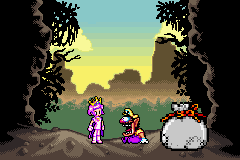
Which Shokora appears depends on how many of the twelve boss-room chests Wario managed to save. With none or one she is a bratty toddler; with two to five, a large woman with a nose rather like his own; with six to eleven, a young princess; and with all twelve, her true, grown-up self. Whichever it is, she kisses him on the cheek, to his embarrassment or delight, and is carried up into the sky by four little angels.
Wario drives home through the desert with his loot while the credits roll over snapshots of his adventure. Back in the city he nearly runs over another cat, and a sheet of newspaper slaps across its face: an advertisement for an all-you-can-eat steak house. Gold bars spell out THE END.
Out, with the treasure.The cat becomes Princess Shokora.Four angels take her home.The last word goes to the newspaper.
Every level in Wario Land 4
All 18 levels in order. After the Entry Passage, the Emerald, Ruby, Topaz and Sapphire Passages can be played in any order; the Golden Pyramid appears once all four of their bosses are beaten.
Hall of HieroglyphsEntry Passage · boss of the passage: Spoiled Rotten · 4 jewel pieces, KeyzerThe tutorial. Hieroglyphs on the walls show Wario how to break blocks, enter pipes and use his moves.
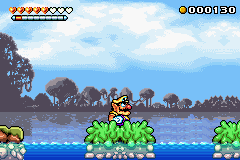
Palm Tree ParadiseEmerald Passage · boss of the passage: Cractus · 4 jewel pieces, Keyzer · CD · 2 pink areasA breezy first proper level, full of blocks and basic enemies, that introduces Fat Wario. Its tune is the vocal number “Medamayaki”.
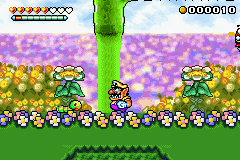
Wildflower FieldsEmerald Passage · boss of the passage: Cractus · 4 jewel pieces, Keyzer · CD · 2 pink areasPuffy Wario floats up to the high ground among giant sunflowers, with burrows and water currents below.
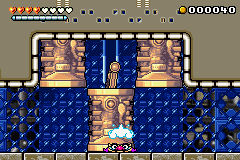
Mystic LakeEmerald Passage · boss of the passage: Cractus · 4 jewel pieces, Keyzer · CD · 2 pink areasMostly underwater. Introduces Bouncy and Bubble Wario, and the octopus Togenobi guards the Keyzer.
Monsoon JungleEmerald Passage · boss of the passage: Cractus · 4 jewel pieces, Keyzer · CD · 2 pink areasPools, vines and crocodiles on the way in, and a root-choked underground stretch on the way back.
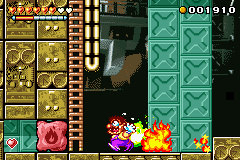
The Curious FactoryRuby Passage · boss of the passage: Cuckoo Condor · 4 jewel pieces, Keyzer · CD · 2 pink areasConveyor belts, machinery and pistons that press Wario flat. Flaming Wario gets a workout too.
The Toxic LandfillRuby Passage · boss of the passage: Cuckoo Condor · 4 jewel pieces, Keyzer · CD · 2 pink areasMurky water and blocks of rubbish, solved with Puffy and Fat Wario.
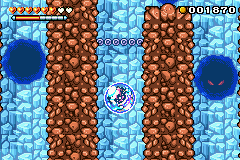
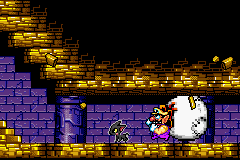
40 Below FridgeRuby Passage · boss of the passage: Cuckoo Condor · 4 jewel pieces, Keyzer · CD · 2 pink areasIn and around a giant refrigerator. Introduces Snowman and Frozen Wario.
Pinball ZoneRuby Passage · boss of the passage: Cuckoo Condor · 4 jewel pieces, Keyzer · CD · 2 pink areasA level dressed as a pinball table, where balls must be thrown into blue boxes to open the way.
Toy Block TowerTopaz Passage · boss of the passage: Aerodent · 4 jewel pieces, Keyzer · CD · 2 pink areasA toy castle whose doors open only when the right triangle blocks are fitted.
The Big BoardTopaz Passage · boss of the passage: Aerodent · 4 jewel pieces, Keyzer · CD · 2 pink areasA toy village laid out as a board game. Chance wheels decide what happens next, and the last one releases the Keyzer.
Doodle WoodsTopaz Passage · boss of the passage: Aerodent · 4 jewel pieces, Keyzer · CD · 2 pink areasPencils for obstacles, and a floating pig artist called Hoggus whose sketches come to life as enemies.
Domino RowTopaz Passage · boss of the passage: Aerodent · 4 jewel pieces, Keyzer · CD · 2 pink areasLines of dominoes topple as Wario passes, and he has to beat them to the button at the end.
Crescent Moon VillageSapphire Passage · boss of the passage: Catbat · 4 jewel pieces, Keyzer · CD · 2 pink areasA moonlit horror village that introduces Zombie Wario. A ghost drifts after Wario stealing coins, and will take the Keyzer if it can.
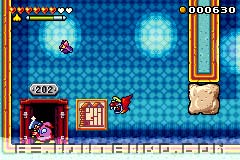
Arabian NightSapphire Passage · boss of the passage: Catbat · 4 jewel pieces, Keyzer · CD · 2 pink areasFlying carpets carry Wario over rooftops and down into flooded cellars, with Mayubirds swarming.
Fiery CavernSapphire Passage · boss of the passage: Catbat · 4 jewel pieces, Keyzer · CD · 2 pink areasLava that erupts like geysers. Hit the switch and the whole cavern freezes over for the escape.
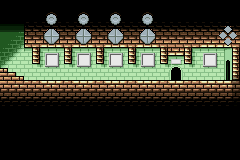
Hotel HorrorSapphire Passage · boss of the passage: Catbat · 4 jewel pieces, Keyzer · CD · 2 pink areasFour floors of long corridors and an outside staircase. Many of the rooms stay locked until the switch is hit.
Golden PassageGolden Pyramid · boss of the passage: Golden Diva · 4 jewel pieces, KeyzerThe final level. Wario lands on the switch as he arrives, in every mode, so the whole thing is an escape.
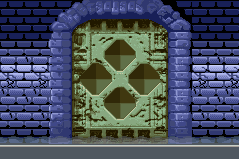
The bosses, in the same order, are Spoiled Rotten, Cractus, Cuckoo Condor, Aerodent, Catbat and the Golden Diva. Each boss room is reached through its own door once every jewel piece in the passage has been collected.
Advertisement
Gameplay & Controls
Wario has a health meter here, eight hearts of it, and with it the possibility of failure. Touching the dangerous part of an enemy, its spikes or its spear, costs a heart. Most defeated enemies drop a little heart that fills a gauge by one eighth, and a full gauge becomes a new heart.
What the designers kept was the comedy. Many enemies do not hurt Wario at all. They do things to him instead, and what they do is usually the solution to a puzzle.
In through the vortex, out against the clock
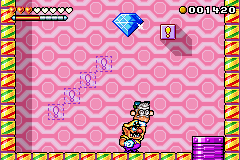
Every level has the same shape. Wario enters through a vortex, which closes. Somewhere inside are four jewel pieces in boxes, one Keyzer (a key with a name and a place among Wario’s allies), and in sixteen of the eighteen levels a CD. Deeper still is the switch, shaped like a frog. Jump on it and three things happen at once: the vortex reopens, a timer starts, and all the Kaeru Blocks in the level swap state, the solid ones turning to outlines and the outlines turning solid.
That swap is the heart of the design. It opens rooms that were sealed on the way in and closes paths that were open, so the escape is often a different level from the approach, and some jewel pieces can only be reached during it. How long you get depends on the level and the difficulty. Reach the vortex in time and everything you are carrying is banked.
A level can be finished without all its prizes, but they matter. The Keyzer unlocks the next level in the passage. Every jewel piece in a passage is needed to open its boss door. And the coins and diamonds collected add up to a score that is saved for each level and marked with a crown on the map: bronze from 6,000 points, silver from 8,000 and gold above 10,000.
The vortex: the way in and the only way out.The switch.A Kaeru Block, solid or not depending on the switch.A boss door, with spaces for a passage’s four jewels.
Wario’s moves
Wario fights with his shoulders. The basic Attack is a short charge that knocks out enemies at their weak point and breaks ordinary blocks; with a run-up it becomes the Dash Attack, which goes through tougher ones. From the air he can drop into a Smash Attack, and one kept up for long enough in mid-air becomes a Super Smash Attack that cracks more solid blocks.
On a 45-degree slope he curls up and rolls, smashing blocks and enemies until he hits something solid or lands in water. He can crawl through low gaps, swim (but not against a current), and pick up enemies, rocks and other objects to throw forwards or straight up, which is how many out-of-reach blocks get broken.
Attack.Dash Attack.Smash Attack.Roll.
Ten ways to ruin Wario’s day
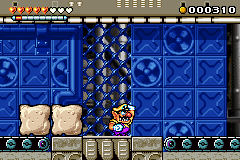
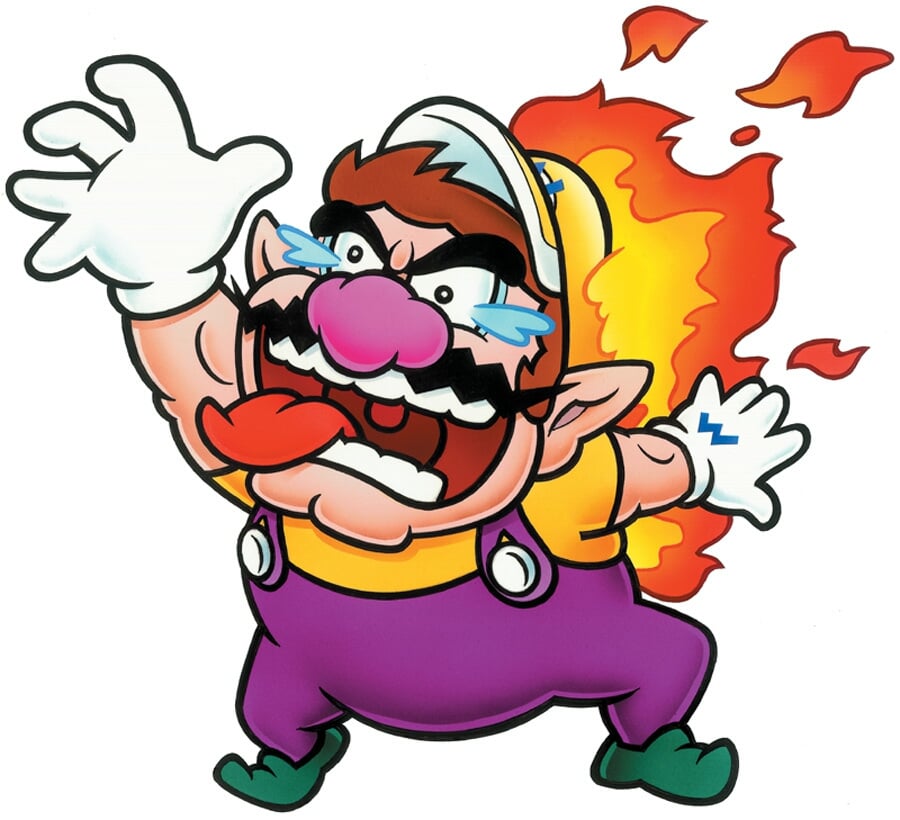
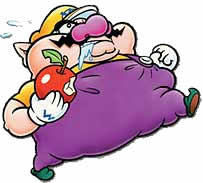
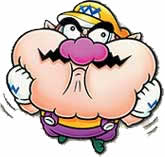
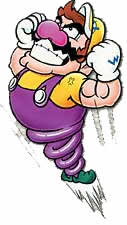
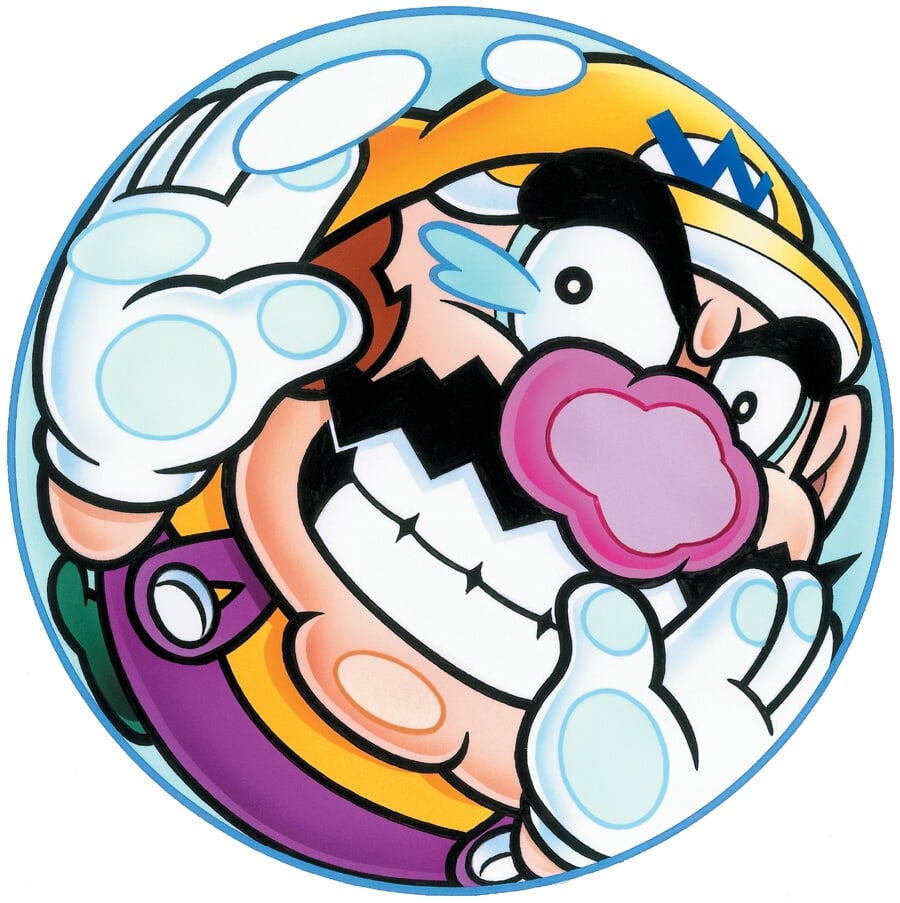
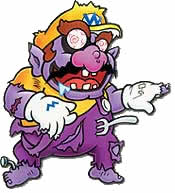
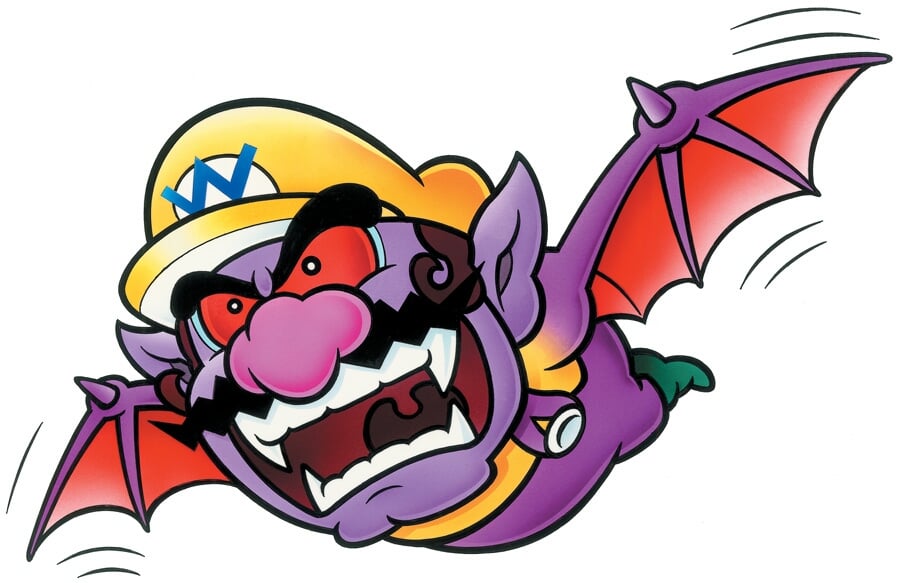
The game calls them reactions, and there are ten. Flaming Wario, lit by a walking fire-pot or a pig-head statue, sprints about out of control and finally burns through Fire Blocks; water puts him out. Flat Wario, squashed by a piston, slips through narrow gaps and drifts down like a leaf until a Decompressor or a dip in water restores him. Fat Wario, after eating a monkey’s apples, is invulnerable and flattens anything he touches for a few steps or jumps. Puffy Wario, stung by a bee or shot by a balloon archer, swells up and floats to the ceiling.
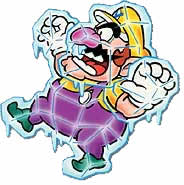
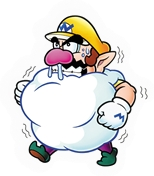
Frozen Wario, sneezed on by a Yeti, slides helplessly backwards, straight through spikes, until he hits something. Snowman Wario forms when snow drops on his head, and becomes a snowball on slopes that breaks Snow Blocks. Bouncy Wario, hammered into a spring, can leap enormous heights. Bubble Wario is carried up through water, currents and all. Zombie Wario, the result of a Skeleton Bird’s attentions, shuffles slowly and sinks through thin floors, and Bat Wario, bitten by a Minicula, flies with taps of the A Button. Water or bright light cures both.
The music joins in. There are no separate transformation themes; the level’s tune is bent in pitch and speed to match Wario’s condition, a trick taken from the Touch Fuzzy, Get Dizzy level of Yoshi’s Island.
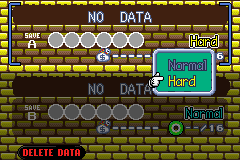
The difficulty is chosen when a save file is created, and it is much more than a matter of enemy strength. Normal and Hard are offered from the start; S-Hard (Super Hard) is added once Hard has been completed. The setting changes where the jewel pieces are hidden, which enemies appear and how many, how much health Wario starts a level with, how long the escape timer runs, how long each boss gives you and what the Item Shop charges.
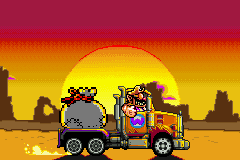
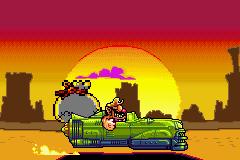
On S-Hard Wario begins every level with a single heart where Normal gives him all eight, and in a few levels even the switch has been moved. Finishing on the harder settings is rewarded with extra scenes in the credits: Wario swaps his car for a truck after Hard and for a hovercar after S-Hard, with company.
Choosing a mode for a new file. S-Hard is not on the list yet.The credits after Hard mode: Wario in a truck.And after S-Hard: a hovercar.
The Mini-Game Shop and the Item Shop
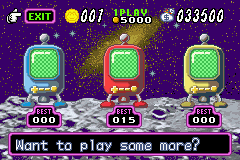
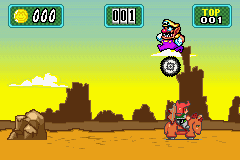
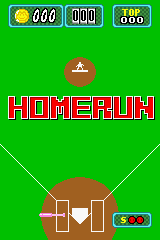
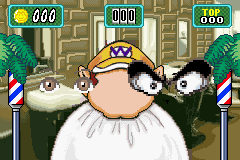
Just before each boss room are two shops. In the Mini-Game Shop three Game Bots each sell a go on a minigame for 5,000 points (2,000 until the Entry Passage has been cleared). The red bot runs The Wario Hop, in which Wario rides a rolling tyre through the desert and hops over obstacles, earning a medal for every 15 clean jumps. The blue bot runs Wario’s Homerun Derby: time the swing against a stick-figure pitcher, with a medal for every three home runs in a row. The yellow bot runs Wario’s Roulette, a memory game in which you rebuild a face you were shown for a moment by stopping spinning reels of eyebrows, eyes and mouths; three correct faces in a row earn a medal.
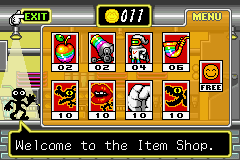
Medals are spent next door in the Item Shop, where a mysterious shopkeeper sells one-shot weapons. Whatever Wario buys is turned on the boss before the battle starts, knocking off part of its health. Dearer items do more damage, and prices rise with the difficulty.
The three Game Bots.The Wario Hop.Wario’s Homerun Derby.Wario’s Roulette.The Item Shop and its proprietor.
Pink areas, CDs and the Sound Room
Each of the sixteen main levels hides two pink areas, reached by pipe: single-screen puzzles, usually solved by throwing the long-suffering archaeologist Arewo Shitain-hakase at something, with a diamond worth 1,000 points or the same in coins as the prize. They are optional, but the points help towards a gold crown.
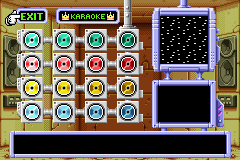
The same sixteen levels each hide a CD. Collected discs can be played in the Sound Room: sixteen tracks with titles such as About That Shepherd, Tomorrow’s Blood Pressure, The Judge’s Feet, Avocado Song and Mr. Ether & Planaria. A seventeenth disc, Karaoke, plays the Palm Tree Paradise song “Medamayaki” in full with its Japanese vocals.
A pink area in Palm Tree Paradise.The Sound Room with every CD in place.About That Shepherd.The Karaoke disc.
Collectibles, shop items and treasure
What Wario picks up in the levels, what he can buy before a boss, and what he carries out of the pyramid at the end.
Jewel piecesFour per level, hidden in boxes. A passage’s sixteen pieces make the four jewels that open its boss door.
KeyzerOne per level. Unlocks the next level, then vanishes.
CDOne in each of sixteen levels. Adds a track to the Sound Room.
DiamondWorth 1,000 points. The usual reward for solving a pink area.
CoinsSmall, bronze, silver and gold. They are the score, and the score is what the timer eats.
Full Health ItemA box that refills all eight hearts.
MedalWon in the minigames and spent in the Item Shop.
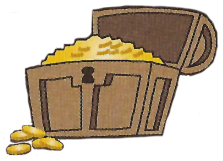
Treasure chestThree sit in the wall of each main boss room, twelve in all. Slow fights lose them.
Gold crownShown on a level’s entrance for a best score above 10,000. Silver starts at 8,000 and bronze at 6,000.
Apple BombItem Shop. A bomb dressed as an apple; small damage to the boss.
Blast CannonItem Shop. Fires a bomb; small damage.
VizormanItem Shop. A laser from a visor; small damage.
BugleItem Shop. Attacks with musical notes; medium damage.
Black DogItem Shop. Bites the boss several times; large damage.
Large LipsItem Shop. A violent kiss; large damage.
Big FistItem Shop. One enormous punch; large damage.
Black DragonItem Shop. Breathes fire; large damage.
SmileItem Shop. Free. The shopkeeper smiles at you and that is all.
The CrownLegendary treasure held by Cractus.
The EarringsLegendary treasure held by Cuckoo Condor.
The NecklaceLegendary treasure held by Aerodent.
The BraceletsLegendary treasure held by Catbat.
Golden Small TreeOne of the twelve golden treasures from the boss-room chests.
Golden AppleOne of the twelve golden treasures from the boss-room chests.
Golden FishOne of the twelve golden treasures from the boss-room chests.
Golden Candle HolderOne of the twelve golden treasures from the boss-room chests.
Golden LampOne of the twelve golden treasures from the boss-room chests.
Golden Crescent Moon BedOne of the twelve golden treasures from the boss-room chests.
Golden Toy BearOne of the twelve golden treasures from the boss-room chests.
Golden LollipopOne of the twelve golden treasures from the boss-room chests.
Golden Game Boy AdvanceOne of the twelve golden treasures from the boss-room chests.
Golden Toy RobotOne of the twelve golden treasures from the boss-room chests.
Golden Toy RocketOne of the twelve golden treasures from the boss-room chests.
Golden RockinghorseOne of the twelve golden treasures from the boss-room chests.
Cartoons, Comics & Other Media
The Golden Pyramid has cast a long shadow, over WarioWare first of all, and more recently over a wave of independent platformers.
WarioWare, Inc.: Mega Microgame$!Game Boy AdvanceFull of this game’s sounds. The Item Shop music plays at the Gelateria in Mona’s story, a sped-up Palm Tree Paradise theme backs the microgame Balancing Act, the Pinball Zone theme can be chosen for Jump Forever, and Sound Room tracks are quoted elsewhere. The Wario Car appears, and 9-Volt’s skateboard began as part of an unused Item Shop sprite.
Metroid FusionGame Boy AdvanceR&D1’s Metroid Fusion was programmed with this game as its reference, and blocks and crystals from the Wario Land 4 debug room are still in its data.
Densetsu no Starfy 3Guest appearanceWario guest-stars, helping Starfy through a ruin where they must find a switch and four jewel pieces to open a boss door. He turns into Bubble, Flaming and Puffy Wario along the way.
Super Mario-kun vol. 28Manga · Yukio Sawada, ShogakukanPrincess Shokora and the Golden Diva both appear in volume 28 of the long-running gag manga.
Super Smash Bros. UltimateNintendo SwitchPrincess Shokora is a Novice-class support spirit. Her spirit battle is against Peach, with Wario and Mr. Game & Watch in support.
The Wario CarMario Kart: Double Dash!!, Wario Land: Shake It!Wario’s convertible from the opening became one of the starting karts in Mario Kart: Double Dash!! and returned in Wario Land: Shake It!
Later WarioWare cameosTwisted!, D.I.Y. Showcase, Get It Together!, Move It!A picture of the Golden Pyramid hangs in Wario’s house in Twisted!; D.I.Y. Showcase has a Wario Land microgame built from this game’s sprites, Spear-Mask included; Get It Together! shows the pyramid and the car again; and Cractus turns up as an obstacle in Move It!
Pizza Tower and AntonblastIndependent games, 2021–2024According to a 2021 Polygon feature cited by Wikipedia, the developers of Antonball Deluxe, Pizza Tower and Antonblast were directly inspired by this game. Both of the latter have their own versions of the transformations and of the run back to the exit, called Pizza Time and Happy Hour.
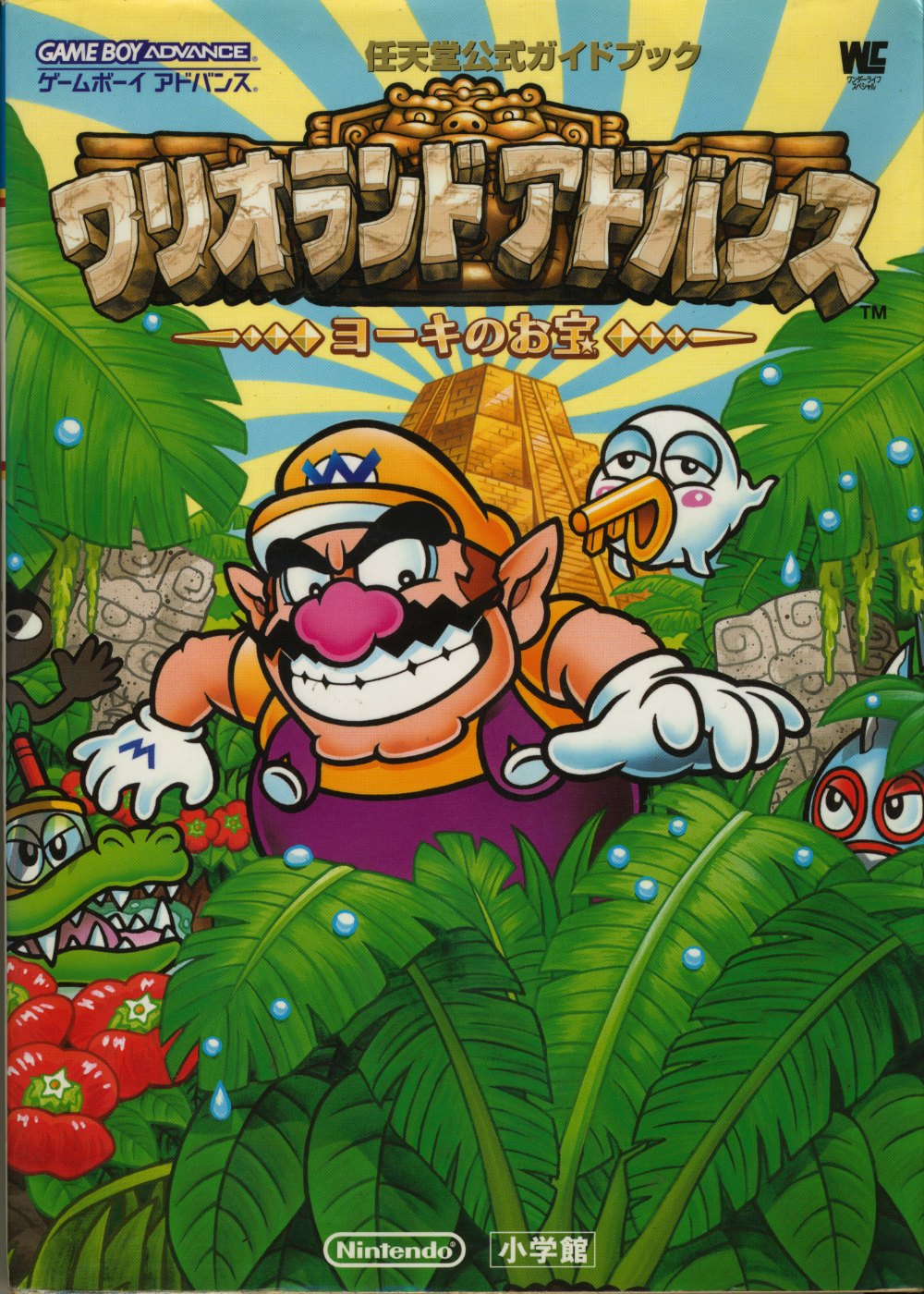
Guides and booksJapan, 2001Official Japanese guides were published by Shogakukan and Enterbrain.
Advertisement
Characters
A greedy hero, a cat with a secret, a put-upon professor and a diva with too many faces.
Reads about the Golden Pyramid, drives there to loot it and ends up trapped inside. The only playable character.
Eight hearts of health
Attack, Dash Attack, Smash Attack, roll, throw
Ten reactions
Kuro Neko (the black cat)Guide
A stray black cat who turns up in the opening, having apparently read the same newspaper.
Leads Wario into the pyramid and down the hole, attacks the Golden Diva and is swallowed, then escapes with him at the end.
Is Princess Shokora under a curse
Also the Item Shop’s owner in another shape
Princess ShokoraThe pyramid’s true ruler
A princess of the ancient country where the game is set, laid to rest in the Golden Pyramid. Her name is the Japanese rendering of the French chocolat.
Cursed by the Golden Diva and turned into a black cat. Restored when the Diva’s jewels return to her, she thanks Wario with a kiss and is carried to the afterlife by angels.
Four possible forms in the ending, decided by chests saved: 0–1, 2–5, 6–11 or all 12
The Golden DivaFinal boss
An opera singer whom time and greed have made monstrous. She dresses in Elizabethan robes, carries a fan and hides her face behind porcelain kabuki-style masks.
Took over the pyramid and cursed its princess. The enemies she summons in battle resemble the four passage bosses, whose treasures she wears.
Loses a mask with each hit
Swallows the black cat
The shop ownerRuns the Item Shop
The proprietor of the shop outside every boss room.
Sells boss-damaging items for medals, and will give you a Smile for nothing. Revealed in the final battle to be another form of the black cat.
Stock: eight weapons and a Smile
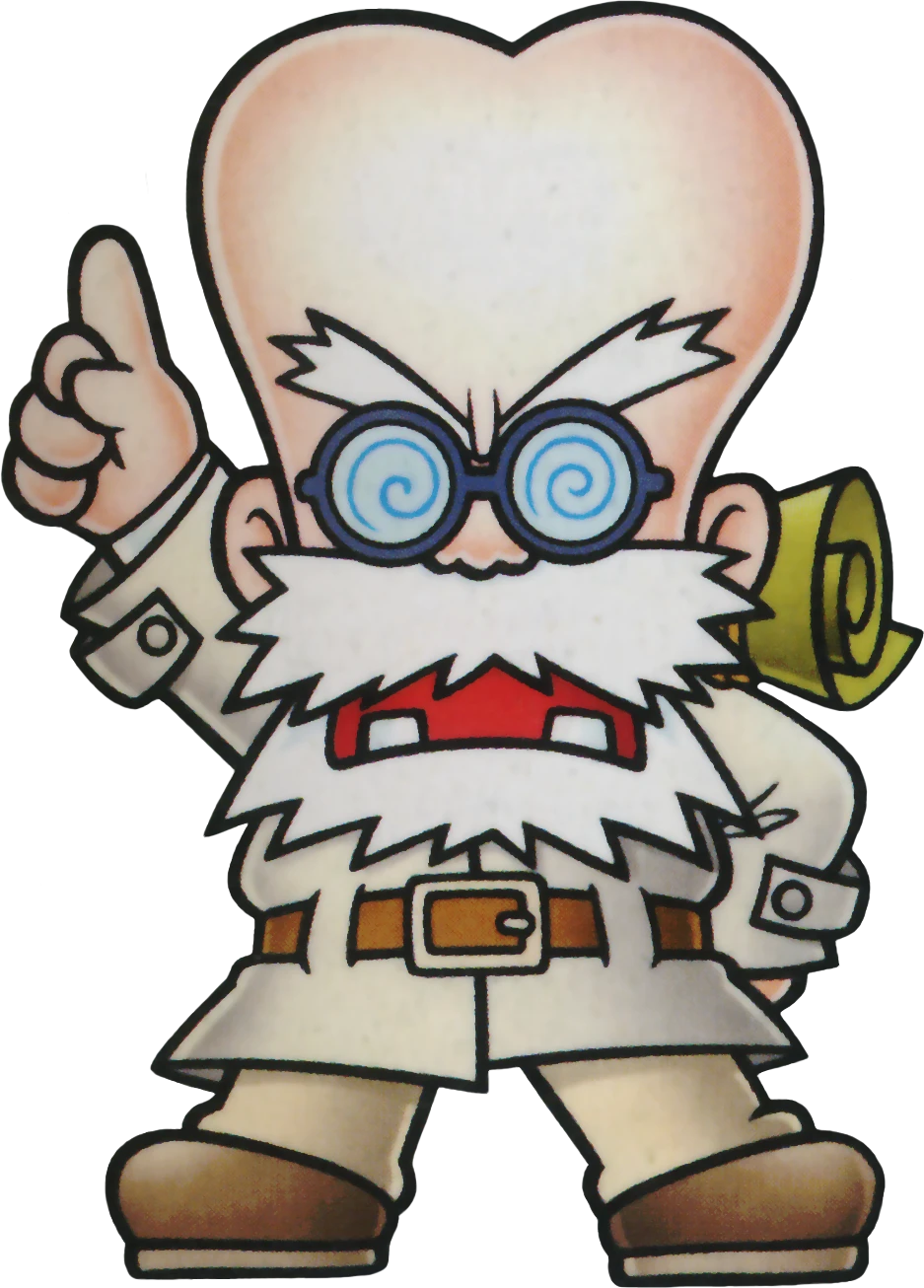
Arewo Shitain-hakaseArchaeologist
A scientist who was exploring the pyramid before Wario arrived, sometimes listed as Mad Scienstein.
Found in the pink areas, where Wario picks him up and throws him to solve the puzzle. Also an obstacle in The Wario Hop.
Throwable
KeyzerLiving key
A key character, one to a level.
Opens the way to the next level once collected, then disappears. In Crescent Moon Village a ghost tries to steal it.
18 in the game
The Game BotsRun the Mini-Game Shop
Three robots, red, blue and yellow.
Red sells The Wario Hop, blue sells Wario’s Homerun Derby and yellow sells Wario’s Roulette.
5,000 points a go
Bosses and enemies
The six bosses, then every enemy and helper: first the ones found in several passages (many of which exist to transform Wario), then those particular to one passage or one boss room. Many kept their Japanese names.
Spoiled Rotten (boss)Entry PassageLooks harmless until it has taken a few hits, then bares its teeth. Keep hitting and stay clear of the bite. Helped by Petit-size no Pinkī.
Cractus (boss)Emerald Passage · holds the CrownA giant potted plant. Damage it until it stands tall, then climb a vine to reach it. Its drool makes Zombie Wario; a firefly cures him.
Cuckoo Condor (boss)Ruby Passage · holds the EarringsSmash the cuckoo clock, then fight the vulture inside. Its eggs can be thrown back before they hatch and explode.
Aerodent (boss)Topaz Passage · holds the NecklaceA rat in a giant inflatable teddy bear. Throw the pin enemies it drops to let the air out, then hit the rat.
Catbat (boss)Sapphire Passage · holds the BraceletsJump its waves and dodge the mines it coughs up. The purple ones turn Wario into Puffy Wario.
Golden Diva (final boss)Golden Pyramid · wears all four treasuresEach hit removes a mask. Throw her own summoned creatures back at her until only the lips remain.
MarumenEntry, Emerald, Ruby, SapphireA harmless walker that changes colour when Wario smashes the ground nearby.
Spear-MaskEntry, Emerald, RubyThe basic foe, in yellow, blue and red, each behaving differently. Avoid the spear.
TotsumenAll four main passagesCharges at Wario and flips over when it hits a wall.
SpikyAll four main passagesA pink spiked shell. Turn it over with a Smash Attack.
Harimen ZettoAll four main passagesA black-shelled Spiky that needs a Super Smash or a jump from Fat Wario.
Goggley-BladeMain passages and Golden PassageA fish that charges underwater. Hit it from underneath.
TogemasukuRuby, SapphireA spiked lump that does not move. Use a transformation or a thrown object.
ShieragutchiEmerald, Ruby, TopazA spiked clam that shoots up through the water. Strike from below.
RingosukīMain passages and Golden PassageA monkey that throws apples. Eat them and Wario becomes Fat Wario.
BeezleyEmerald, SapphireA bee whose sting makes Puffy Wario.
Bow BalloonEmerald, RubyA floating archer. Its arrows also make Puffy Wario.
MenhanmāMain passages and Golden PassageSwings a hammer that squashes Wario into Bouncy Wario.
YetiRuby, Sapphire, Golden PassageIts icy sneeze makes Frozen Wario.
KaentsuboRuby, SapphireA walking jar of fire. Spilled flames make Flaming Wario.
Pig Head StatueRuby, TopazA wall statue that spits flame, for Flaming Wario.
Skeleton BirdSapphire, Golden PassageA ghostly bird whose goo makes Zombie Wario.
MiniculaSapphire, Golden PassageA bat that cannot be defeated. Touch it to become Bat Wario.
Men’onoSapphire, Golden PassageA hooded figure that charges swinging an axe.
Glass birdRuby, SapphireFriendly. Drops orbs that Wario can catch and throw.
Petit-size no PinkīSpoiled Rotten’s roomSmall eggplant creatures with knives that back up the first boss.
MoguramenWildflower FieldsA mole in a drill mask that tunnels until a Smash Attack brings it up.
UtsuboankōMystic LakeA sea monster that lunges from holes in the background.
TogenobiMystic LakeA big octopus whirling mace-tipped tentacles around the Keyzer.
TobawaniMonsoon JungleA crocodile that leaps at Wario or chases him through the water.
HotaruCractus’s roomA firefly. Its light turns Zombie Wario back to normal.
TogeroboThe Curious FactoryA robot that fires its spiked head at Wario and grows another.
PetbottomThe Toxic LandfillA four-legged plastic bottle with a needle. Attack from behind.
RobobirdThe Curious Factory; Pinball Zone on Hard and S-HardA mechanical bird that flies straight at Wario. Jump on it.
Spike CannonPinball ZoneFires spikes from the wall. Its head makes a handy platform.
EggCuckoo Condor’s roomHatches into a duckling, which then explodes.
Toy CarEvery Topaz levelA tiny Wario in a spiked toy car.
DiceThe Big BoardA walking die with a spear, released by a chance wheel.
HoggusDoodle WoodsA floating pig artist who draws Denden and Butatabi into being.
DendenDoodle WoodsA drawn pig in a spiked shell that rolls at Wario.
ButatabiDoodle WoodsA spiked pig that glides across the screen from right to left.
DeburīnaDoodle WoodsA drawing of a dancing pig with a dangerous hula hoop.
Pin enemyAerodent’s roomHopping tacks. Throw them at the bear.
GhostCrescent Moon VillageA pirate ghost that steals coins and tries to snatch the Keyzer.
MayubirdArabian NightFanged, bat-like fliers that come in flocks.
OnomīArabian NightA mummy with an axe, dealt with like Men’ono.
BowlerFiery CavernThrows boulders. Becomes a Yeti when the switch freezes the cavern.
Mechanical fishCatbat’s roomDrill-nosed fish patrolling the pool. Needs a Super Smash.
MineCatbat’s roomSpiked balls coughed up by Catbat.
Green enemyGolden Diva’s roomDropped by the Diva, and just the right size to throw back.
Teddy BearGolden Diva’s roomA blue ball of a bear that Wario can bat at her.
Black eggGolden Diva’s roomHatches a duck with a time bomb.
HammerGolden Diva’s roomA spiked hammer that can flatten Wario into Bouncy Wario.
LipsGolden Diva’s roomAll that is left of the Golden Diva. One attack finishes them.
Key staff
Names and roles as given in the game’s credits.
Hirofumi MatsuokaDirectorHad previously co-directed Virtual Boy Wario Land.
Takehiro IzushiProducerWith Hiroshi Yamauchi as executive producer.
Yoshio SakamotoSupervisorCredited as supervisor.
Ryoji YoshitomiMusicComposer and sound designer. Had written music for the first Wario Land and went on to WarioWare, Inc.: Mega Microgame$!
Hiroji KiyotakeDesignerWario’s creator and director of the first Wario Land. This was his last active development credit before he moved to a supervisory role.
Takehiko HosokawaDesignerKiyotake’s co-director on the first Wario Land; afterwards system director of Metroid Fusion.
Katsuya YamanoProgrammerFirst-listed programmer, and afterwards program director of Metroid Fusion, which he said was built with reference to this game’s program.
Goro AbeProgrammerOne of his first Nintendo projects. Later a key figure in the WarioWare series.
Ko TakeuchiDesignerAnother early credit for a future WarioWare mainstay.
Charles MartinetVoice of WarioHis clips are chopped into single words and sounds and shuffled as the game runs.
Junko Yoshitomi and James MesburSong vocalistsCredited as the female and male singing voices.
Yasuo Inoue and Sachiko NakamichiArtworkCredited for artwork.
How It Was Made
No developer interview about Wario Land 4 itself could be found for this page, but the credits, the cartridge and a later interview about Metroid Fusion say a good deal about who made it and what became of their work.
R&D1’s old hands and new faces
The game was made by Nintendo Research & Development 1, with Takehiro Izushi producing and Hirofumi Matsuoka, co-director of Virtual Boy Wario Land, in charge. The design staff included both directors of the original Wario Land, Hiroji Kiyotake and Takehiko Hosokawa. For Kiyotake, the man who invented Wario, it was the last game he actively worked on before moving into a supervising role.
Alongside them were two newcomers. Programmer Goro Abe and designer Ko Takeuchi were both near the start of their careers at Nintendo, and both went on to be central to WarioWare. Yoshio Sakamoto is credited as supervisor.
From Wario Land Advance to Wario Land 4
The game on show at E3 2001.
The game was announced at Space World 2000, without pictures or details; the first screenshots, shown at E3 2001, had a Wario with darker, more orange skin and enemies in different colours. In those pictures the health display has a garlic bulb beside it, which suggests that Wario was at one stage going to restore his health with garlic, as he had picked up garlic in the first Wario Land.
Other ideas were dropped before release. Jewel-piece boxes were once locked, and an animation of Wario opening one with a key is still in the data. The Mini-Game Shop was called the Game Corner. A text graphic refers to an “Intense Mode”, perhaps an early name for S-Hard. And a language-selection screen like Wario Land 3’s was planned: both the Japanese and English cartridges contain both languages. In Japan the game kept the name Wario Land Advance.
Ryoji Yoshitomi’s soundtrack
The music and sound design are the work of one man, Ryoji Yoshitomi, and they are unlike anything else on the system. The score wanders through blues, soul, folk, country, funk, jazz, drum and bass, heavy metal and stretches of ambient noise and musique concrète. Its instruments come largely from a Roland Sound Canvas SC-8850, its vocal snippets from commercial sample libraries, and it takes up a significant share of the cartridge.
There are real songs, too. The title theme, “Work It!”, is in English. The Palm Tree Paradise song, “Medamayaki”, is sung in Japanese in every version, its vocal line assembled by dropping samples of individual syllables into the backing track. The first credits song was re-recorded with English lyrics for the international release. Wario’s voice, recorded by Charles Martinet, is handled the same way as the music: clips are cut into single words and noises and recombined at random as the game runs.
The Metroid Fusion connection
R&D1 went on to make Metroid Fusion, with Hosokawa as system director and Katsuya Yamano as program director. In a staff interview published by Nintendo Online Magazine in March 2003, and translated by Metroid Database, Yamano said: “since we’d made Wario Land Advance [Wario Land 4] before Fusion, we referenced that program.”
The evidence is on the Fusion cartridge. The Cutting Room Floor notes that the large blocks and crystals of Wario Land 4’s debug room survive, unused, in its data. So the often-repeated claim that Metroid Fusion runs on the Wario Land 4 engine is a fair summary, though “built from its program” is closer to what the programmer actually said.
A test level behind the walls
The debug level.
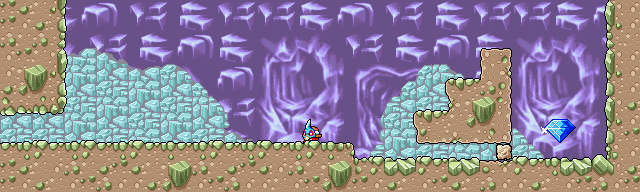
The developers’ test level is still in the game, reachable with a cheat device: four bare rooms of blocks (the dotted ones are exits), slopes, coins and enemies for trying out Wario’s moves, including a water room with currents that the finished game never uses. There is also a lost room in Palm Tree Paradise, a small cave once entered by ramming the wall behind the switch. Its entrance was sealed, but the exit still works.
Series Firsts
Milestones and beginnings, each stated by a source read for this page.
1Nintendo’s first all-new GBA platformerGameSpot’s 2001 review described it as Nintendo’s first platform game developed solely for the Game Boy Advance, the earlier ones having been conversions.
2The last handheld Wario LandIt was the final Wario Land on a handheld and the last in the series before a seven-year gap that ended with Wario Land: Shake It!
3The Wario CarWario’s car from the opening went on to Mario Kart: Double Dash!!, WarioWare and Shake It!
4Among iQue’s firstWith Super Mario Advance, it was one of the first two Nintendo handheld games released in China by iQue, and among the first translated into Simplified Chinese.
5A first step for the WarioWare teamOne of the earliest Nintendo credits for Goro Abe and Ko Takeuchi.
Cheats & Secrets
There are no passwords, but there is plenty to chase after the credits: twelve chests, eighteen gold crowns, sixteen CDs and two harder versions of the whole game.
Save all twelve chests for the true Princess Shokora
Each of the four main bosses is fought against the clock, and when time runs low, usually inside the last minute, the three chests in the back wall disappear one at a time. What is left when the boss falls is yours. The total decides the ending: 0–1 chests, a bratty toddler; 2–5, a large and startling princess; 6–11, a young princess; all 12, the true Princess Shokora. Spending medals in the Item Shop first helps, since the fight then starts with the boss already hurt.
Second chances at the chests
A beaten boss cannot be fought again during the adventure, so chests lost in a slow fight are gone for that run. Once the game has been completed, though, every boss except Spoiled Rotten can be challenged again to win back missing chests, or to lose some on purpose and see the other endings.
Gold crowns and the Karaoke disc
Score more than 10,000 points in a level for a gold crown on its door. Do it in all 18 levels and the Sound Room gains a seventeenth disc, Karaoke. The two pink areas in each level, at about 1,000 points apiece, make a big difference, and once Wario’s hearts and heart gauge are both full most enemies drop a 100-point coin where a heart would have been.
The Karaoke button code
In the Sound Room, press Start, Select, Up, L and R together to open the Karaoke track without the crowns. It only lasts until you leave.
Collect first, switch last
The timer only starts when the frog switch is hit, so sweep the level for jewel pieces, the Keyzer and the CD before touching it. Then look for what the Kaeru Blocks have opened: on the way back there is often a piece or a pink area that could not be reached before.
Cheap minigames
A go on a minigame costs 5,000 points, but only 2,000 until Spoiled Rotten has been beaten, which makes the Entry Passage the cheapest place in the game to stock up on medals.
S-Hard
Complete Hard mode and S-Hard is added to the list for new files. Wario starts each level on one heart, jewel pieces and enemies are rearranged, timers are shorter and in a few levels the switch itself has moved. In the Homerun Derby the pitcher is a woman with a much nastier arm.
The hidden Golden Passage tune
Because Wario lands on the switch as he enters the Golden Passage, the level’s own music is never heard in normal play. It exists all the same, and can just be caught by pausing in the instant before he touches down.
Super Luigi Bros also has a reader review of the game by Nick Beeson, linked at the end of the page.
Glitches & Oddities
Three documented glitches (their names are unofficial) and the debug features that The Cutting Room Floor has uncovered.
The invisible object
Wario, carrying nothing at all.
Now and then, after Wario throws or drops something he was carrying, the game still thinks his hands are full. Nothing can be seen, but he cannot pick anything else up until he throws the invisible thing away.
Vertical zipping
In a corner four blocks high, stand against the wall facing away from it and jump. Just before Wario’s head reaches the ceiling, tap down and forward, then hold forward and hammer A. Done right, Wario zips upwards.
Walking through walls
Jumping at a wall of blocks over and over can, with luck, push Wario into it. He may come out the other side. He may also stay there.
Debug mode
With a cheat device a debug mode can be switched on. In a level it lets Wario be moved freely with the D-Pad (the escape timer stops while he floats), shows the whole map with Start, and with L and Up completes the level outright, awarding the Keyzer, the jewel pieces and the CD.
Videos
Nintendo of America’s February 2025 trailer for the Game Boy Advance library on Nintendo Switch Online, the month Wario Land 4 was added, and a fan retrospective on what makes the game so odd.
Official upload from Nintendo of America’s channel for the February 2025 Game Boy Advance update to Nintendo Switch Online + Expansion Pack.
A third-party video essay from the House Hexagon channel.
Trivia & Interesting Facts
In Japan the game is Wario Land Advance. An unused early logo in the data matches that title.
The newspaper in the opening is cropped by the letterbox; the hidden top of the graphic reveals its name, The Nintendo News.
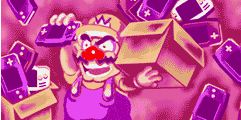
Wario and a crate of Game Boy Advances.One of the twelve golden treasures is a solid-gold Game Boy Advance, and one of the credits snapshots shows Wario with a box full of the consoles.
The room where Spoiled Rotten is fought has a television with two GameCubes beside it. They were not there in pre-release pictures.
The free Smile on the Item Shop’s menu may be a joke about McDonald’s in Japan, whose menus list a smile at no charge.
Princess Shokora’s name is the Japanese pronunciation of chocolat; in Chinese she is named after the word for chocolate as well.
The Golden Diva wears the four treasures the passage bosses were guarding: Cractus’s crown, Cuckoo Condor’s earrings, Aerodent’s necklace and Catbat’s bracelets.
The pitch-bending of the music during transformations was borrowed from Touch Fuzzy, Get Dizzy in Yoshi’s Island.
The files of WarioWare, Inc.: Mega Party Game$! on GameCube contain an almost complete set of this game’s instrument sounds, enough for fans to rebuild each track.
IGN pointed out in 2001 that it was the first Nintendo-published Game Boy Advance game with no Link Cable feature of any kind.
The official ball of Wario’s Homerun Derby.A tiny Wario drives the spiked Toy Cars of the Topaz Passage, and the baseball in the Homerun Derby has his face on it.
In The Wario Hop a drummer appears after 37 jumps in a row and the pace picks up; a second one is the 97th obstacle.
An unused sprite of the shopkeeper on a skateboard was not wasted. The board was given to 9-Volt in WarioWare, Inc.: Mega Microgame$!
The Wario Hop has unused frames of its seagull looking distinctly unwell.
Volume 28 of the Super Mario-kun manga features both Princess Shokora and the Golden Diva.
LodgeNet is sometimes listed among the game’s platforms.
Cractus returns as an obstacle in Kat and Ana’s stage of WarioWare: Move It!
Regional Box Art
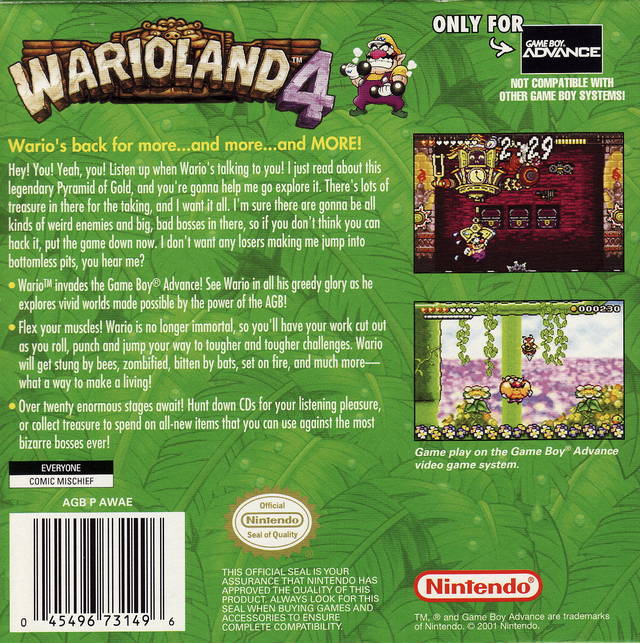
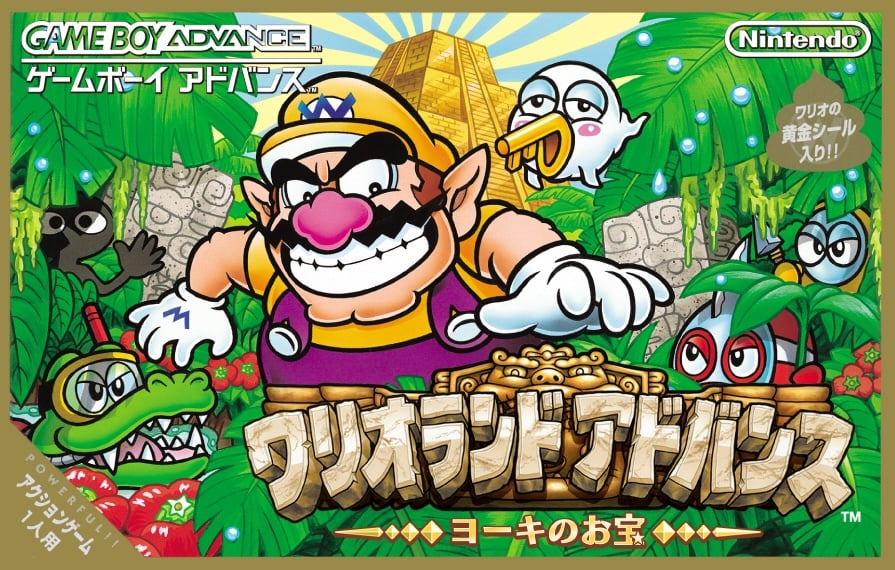
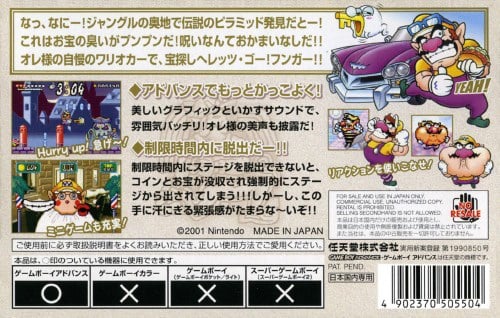
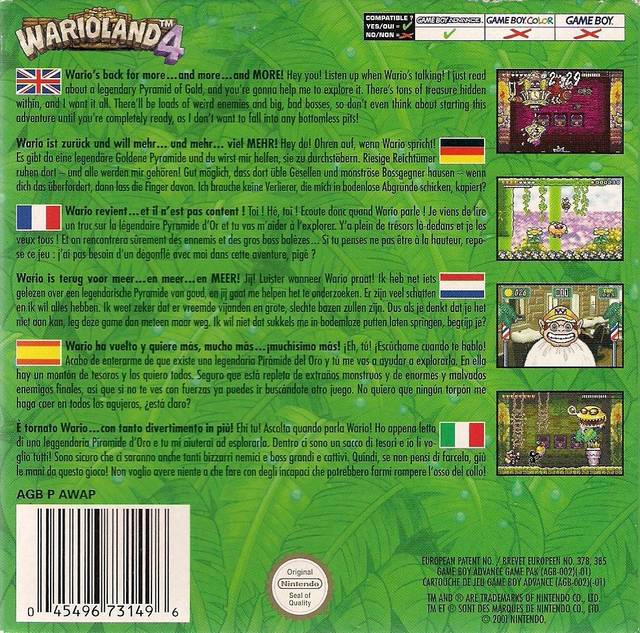
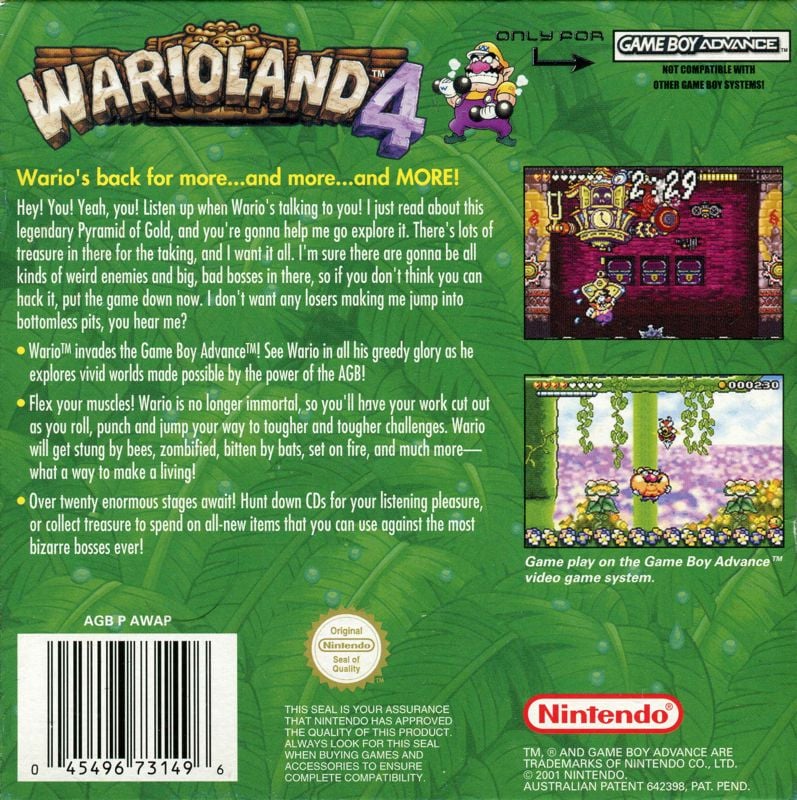
Regional boxes, front and back. Japan’s carries the title Wario Land Advance.
North America (Game Boy Advance, 2001)North America, back of boxJapan (as Wario Land Advance, 2001)Japan, back of boxEuropeEurope, back of boxAustralia and New ZealandAustralia and New Zealand, back of boxChina (iQue, 2004)
Screenshots
More from inside the pyramid.
Monsoon Jungle.40 Below Fridge.Pinball Zone.The Big Board.Domino Row.Fiery Cavern.Hotel Horror.Flaming Wario in The Curious Factory.Bubble Wario in Mystic Lake.Keyzer does his job.A boss’s treasure is added to the pyramid.The Japanese title screen: Wario Land Advance.
Artwork & Media Gallery
Official artwork, sprites, cut material, scans and adverts.
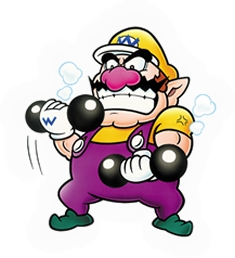
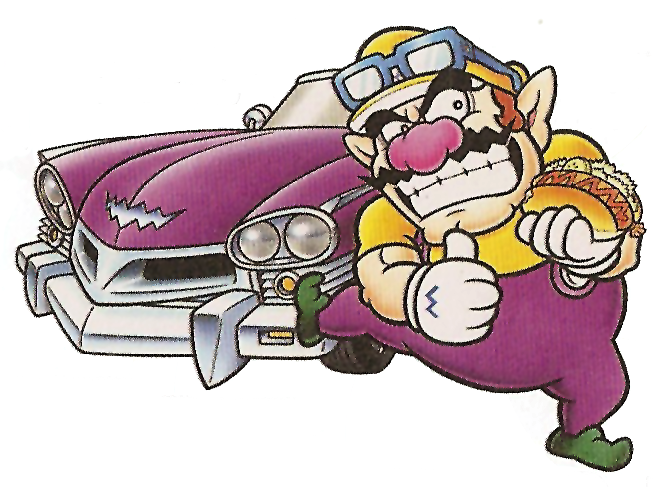
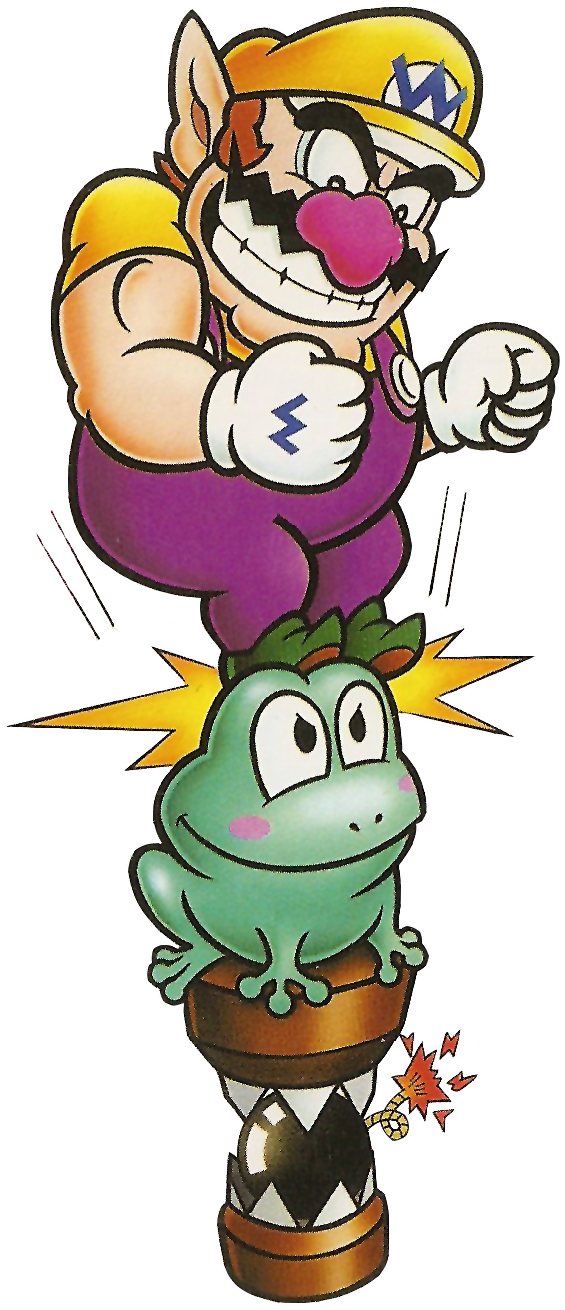
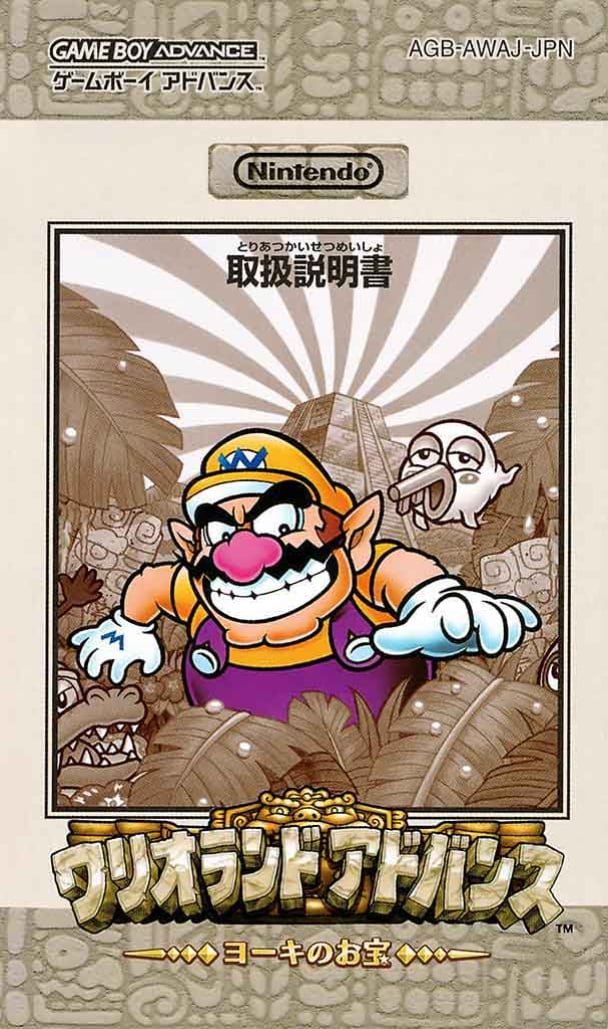
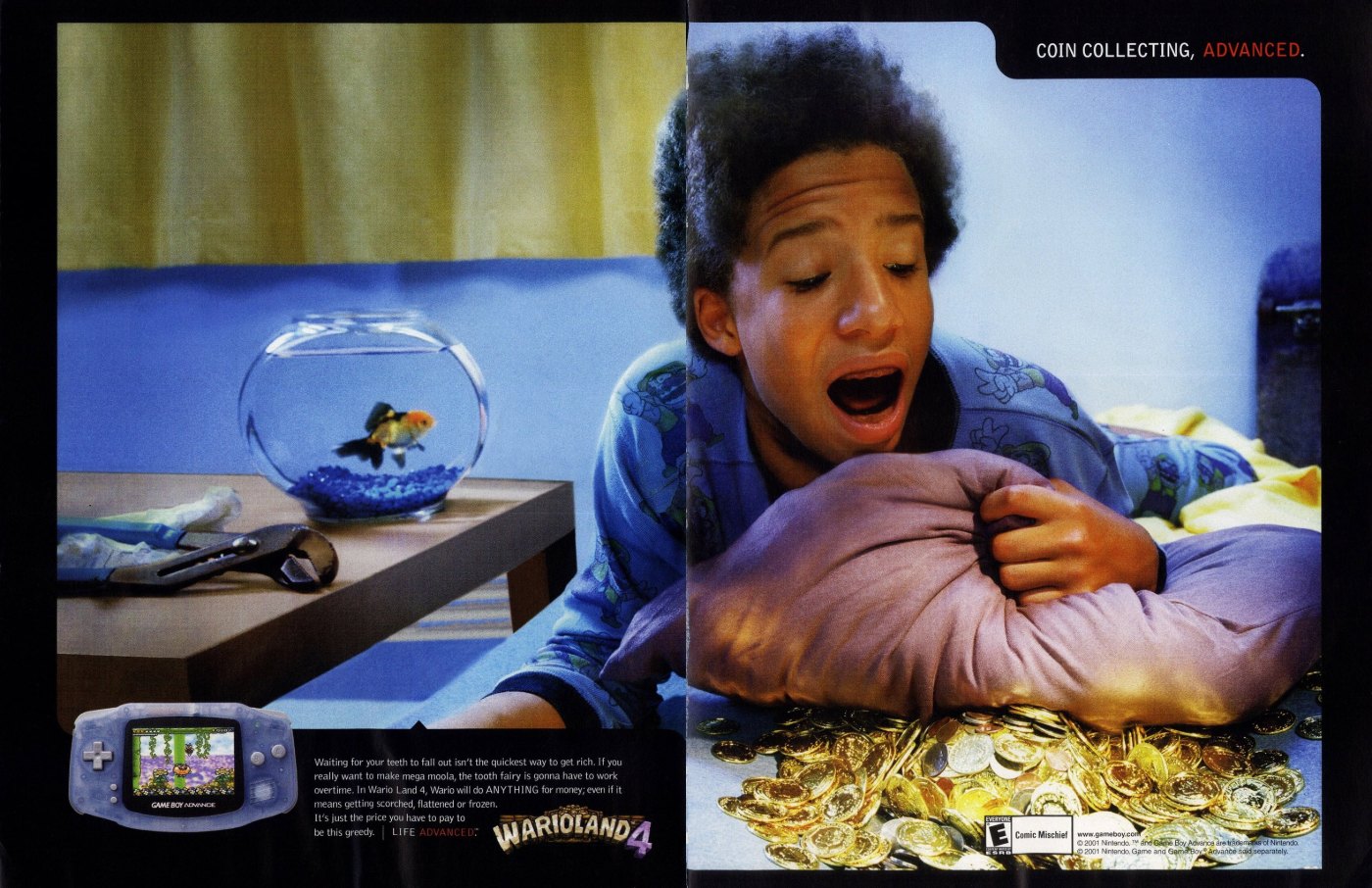
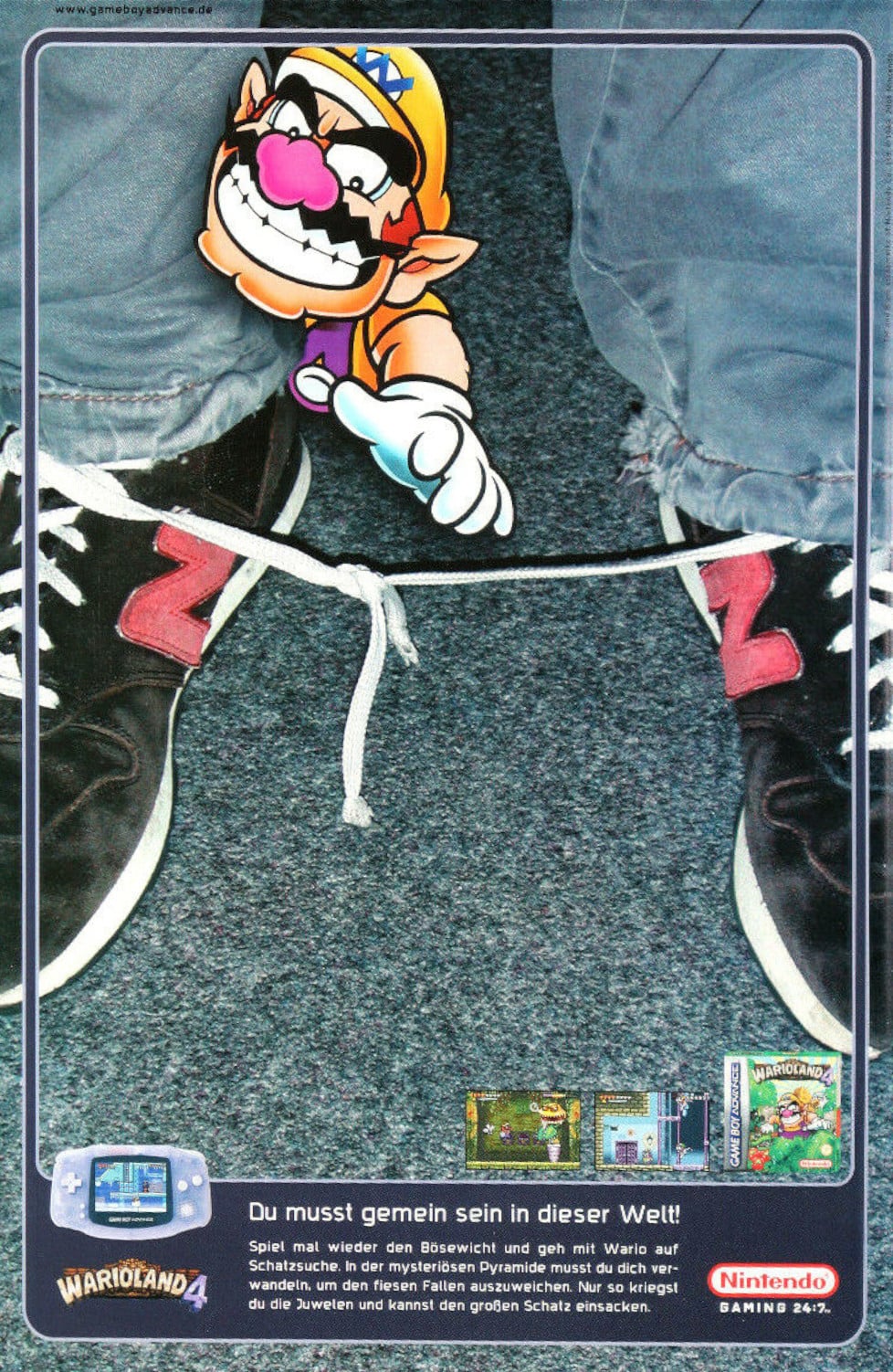
The main artwork.Wario reads the news.The English logo.The Japanese logo.The early logo left in the data.A banner from Nintendo of Europe’s Virtual Console page.Wario in training.Wario and the Wario Car.Wario with empty pockets.Wario lands on the switch.Princess Shokora and the black cat.The passage map as official artwork.The newspaper, as artwork.The Entry Passage.The four Shokoras side by side.Shokora with 0–1 chests.Shokora with 2–5 chests.Shokora with 6–11 chests.The true Princess Shokora, for all 12.The inner pyramid.The six kinds of jewel.A CD case.A credits snapshot: Wario flees Cractus.Another: Wario asleep on the moon.The End, in gold bars.Pre-release: Spoiled Rotten’s room before the television and GameCubes were added.Pre-release: Hotel Horror, with a garlic icon by the health gauge.The lost room of Palm Tree Paradise.Unused: Wario unlocks a jewel-piece box.The Mini-Game Shop’s earlier name.The North American manual.The Japanese manual.A North American print advert.A German print advert.The Wii U Virtual Console icon.Artwork for the European Wii U Virtual Console release.
Legacy & Re-releases
Re-released three times, imitated more often than that, and the hinge on which Wario’s career turned.
Releases and re-releases
Game Boy Advance2001Japan 21 August (as Wario Land Advance); Australia 9 November; North America 19 November; Europe 23 November according to Nintendo UK’s site, or 16 November according to Wikipedia and a Nintendo World Report news item of 20 November 2001.
iQue Game Boy Advance8 June 2004Chinese release in Simplified Chinese, alongside Super Mario Advance.
Nintendo 3DS Ambassador ProgrammeDecember 2011One of the ten free Game Boy Advance games for early buyers of the 3DS: 15 December in Australia, 16 December in Japan, Europe and North America. Never sold separately on 3DS.
Wii U Virtual Console2014Japan 30 April; North America 8 May; Europe and Australia 5 June.
Nintendo Switch Online + Expansion PackFebruary 2025Added to the Game Boy Advance library on 13 February in North America and 14 February in Japan, Europe, Australia and Hong Kong.
After the pyramid
No new Wario Land followed for seven years. When one did, Wario Land: Shake It!, it was a Wii game developed with the studio Good-Feel. In the meantime Wario starred in Wario World, and R&D1’s own staff took him somewhere nobody expected.
That was WarioWare, Inc.: Mega Microgame$!, the start of the series that Goro Abe and Ko Takeuchi went on to shape, with Ryoji Yoshitomi’s music, the Wario Car and a good many sounds lifted straight from the Golden Pyramid. The frantic, anything-goes humour of Wario Land 4’s Sound Room and minigames is recognisably the same sensibility.
Its descendants
The other heir was Metroid Fusion, programmed with Wario Land 4 as its reference and carrying a few of its test blocks to this day. And two decades on, the escape-against-the-clock structure has become a small genre of its own. According to Polygon, the developers of Pizza Tower and Antonblast took it as their direct inspiration, right down to a named panic phase when the switch is thrown.
Wikipedia gives worldwide sales of 2.2 million copies, citing the 2021 edition of the CESA Games White Papers, the Japanese industry association’s yearbook. Nintendo’s own investor pages do not list the game.
For the United States there is a firmer snapshot. In August 2006 the magazine Next Generation reported that the game had sold 720,000 copies there and earned $20 million, which made it the 33rd best-selling game launched for Game Boy Advance, Nintendo DS or PSP in that country since the start of 2000.
2.2mWorldwide (CESA 2021, via Wikipedia)
720,000United States, to August 2006 (Next Generation)
$20mUS revenue, to August 2006
88Metacritic
Reception and review scores
Scores with outlet, reviewer and date where known. The magazine scores are as tabulated by Wikipedia.
Electronic Gaming MonthlyUS · issue 150, January 2002
7.5/10
Reviews were very positive. IGN’s Craig Harris gave it nine out of ten for its level design and replay value, noting that it leaned further towards action than the earlier games and praising the attention paid to sound; he held back the last point because the animation did not stretch the hardware, and grumbled about a ladder control quirk and minigames that were sillier than they were fun. GameSpot’s Shane Satterfield called the gameplay tight and varied and recommended it highly, with a warning that the later puzzles might be too much for younger players.
GameSpy’s Jason D’Aprile found it challenging without the frustration of Wario Land 3; GamePro admired the transparent water and fog; Nintendo Power liked the variety of Wario’s moves. Game Informer thought it offered little that was new to series regulars but enjoyed it anyway, and Electronic Gaming Monthly’s 7.5 is the lowest of the scores listed here.
Its standing has only grown. Marking the tenth anniversary in November 2011, 1UP.com’s Jeremy Parish argued that it was still the best portable Mario-family game there had been, and Nintendo Life gave the 3DS Ambassador release nine out of ten the following month.
Honours
GameSpot · Best and Worst of 2001Runner-up, Best Game Boy Advance GameThe award went to Advance Wars.
GameSpot · Best and Worst of 2001Runner-up, Best Platform GameIn the console category, behind Conker’s Bad Fur Day.
To provide the best experiences, we use technologies like cookies to store and/or access device information. Consenting to these technologies will allow us to process data such as browsing behavior or unique IDs on this site. Not consenting or withdrawing consent, may adversely affect certain features and functions.
Functional
Always active
The technical storage or access is strictly necessary for the legitimate purpose of enabling the use of a specific service explicitly requested by the subscriber or user, or for the sole purpose of carrying out the transmission of a communication over an electronic communications network.
Preferences
The technical storage or access is necessary for the legitimate purpose of storing preferences that are not requested by the subscriber or user.
Statistics
The technical storage or access that is used exclusively for statistical purposes.The technical storage or access that is used exclusively for anonymous statistical purposes. Without a subpoena, voluntary compliance on the part of your Internet Service Provider, or additional records from a third party, information stored or retrieved for this purpose alone cannot usually be used to identify you.
Marketing
The technical storage or access is required to create user profiles to send advertising, or to track the user on a website or across several websites for similar marketing purposes.

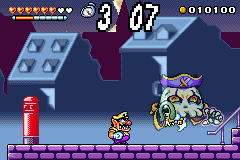


 Wildflower FieldsEmerald Passage · boss of the passage: Cractus · 4 jewel pieces, Keyzer · CD · 2 pink areasPuffy Wario floats up to the high ground among giant sunflowers, with burrows and water currents below.
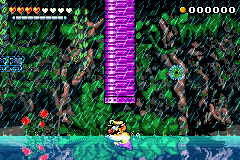 Monsoon JungleEmerald Passage · boss of the passage: Cractus · 4 jewel pieces, Keyzer · CD · 2 pink areasPools, vines and crocodiles on the way in, and a root-choked underground stretch on the way back.
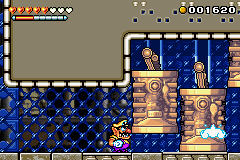 The Curious FactoryRuby Passage · boss of the passage: Cuckoo Condor · 4 jewel pieces, Keyzer · CD · 2 pink areasConveyor belts, machinery and pistons that press Wario flat. Flaming Wario gets a workout too.
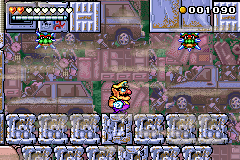 The Toxic LandfillRuby Passage · boss of the passage: Cuckoo Condor · 4 jewel pieces, Keyzer · CD · 2 pink areasMurky water and blocks of rubbish, solved with Puffy and Fat Wario.
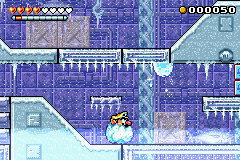 40 Below FridgeRuby Passage · boss of the passage: Cuckoo Condor · 4 jewel pieces, Keyzer · CD · 2 pink areasIn and around a giant refrigerator. Introduces Snowman and Frozen Wario.
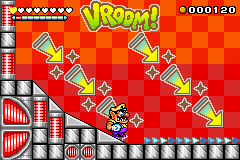 Pinball ZoneRuby Passage · boss of the passage: Cuckoo Condor · 4 jewel pieces, Keyzer · CD · 2 pink areasA level dressed as a pinball table, where balls must be thrown into blue boxes to open the way.
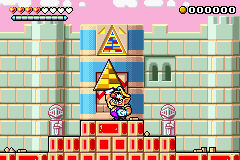 Toy Block TowerTopaz Passage · boss of the passage: Aerodent · 4 jewel pieces, Keyzer · CD · 2 pink areasA toy castle whose doors open only when the right triangle blocks are fitted.
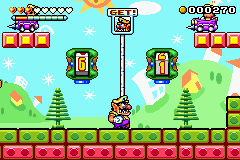 The Big BoardTopaz Passage · boss of the passage: Aerodent · 4 jewel pieces, Keyzer · CD · 2 pink areasA toy village laid out as a board game. Chance wheels decide what happens next, and the last one releases the Keyzer.
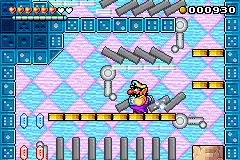 Domino RowTopaz Passage · boss of the passage: Aerodent · 4 jewel pieces, Keyzer · CD · 2 pink areasLines of dominoes topple as Wario passes, and he has to beat them to the button at the end.
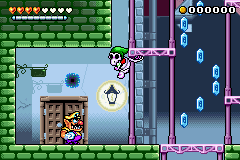 Crescent Moon VillageSapphire Passage · boss of the passage: Catbat · 4 jewel pieces, Keyzer · CD · 2 pink areasA moonlit horror village that introduces Zombie Wario. A ghost drifts after Wario stealing coins, and will take the Keyzer if it can.
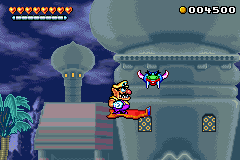 Arabian NightSapphire Passage · boss of the passage: Catbat · 4 jewel pieces, Keyzer · CD · 2 pink areasFlying carpets carry Wario over rooftops and down into flooded cellars, with Mayubirds swarming.
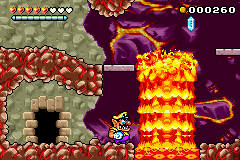 Fiery CavernSapphire Passage · boss of the passage: Catbat · 4 jewel pieces, Keyzer · CD · 2 pink areasLava that erupts like geysers. Hit the switch and the whole cavern freezes over for the escape.
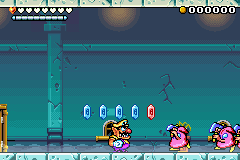 Hotel HorrorSapphire Passage · boss of the passage: Catbat · 4 jewel pieces, Keyzer · CD · 2 pink areasFour floors of long corridors and an outside staircase. Many of the rooms stay locked until the switch is hit.
 Golden PassageGolden Pyramid · boss of the passage: Golden Diva · 4 jewel pieces, KeyzerThe final level. Wario lands on the switch as he arrives, in every mode, so the whole thing is an escape.






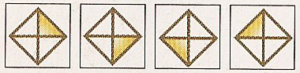 Jewel piecesFour per level, hidden in boxes. A passage’s sixteen pieces make the four jewels that open its boss door.
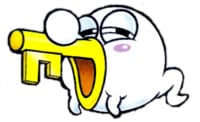 KeyzerOne per level. Unlocks the next level, then vanishes.
 CDOne in each of sixteen levels. Adds a track to the Sound Room.
 DiamondWorth 1,000 points. The usual reward for solving a pink area.
 CoinsSmall, bronze, silver and gold. They are the score, and the score is what the timer eats.
 Full Health ItemA box that refills all eight hearts.
 MedalWon in the minigames and spent in the Item Shop.
 Treasure chestThree sit in the wall of each main boss room, twelve in all. Slow fights lose them.
 Gold crownShown on a level’s entrance for a best score above 10,000. Silver starts at 8,000 and bronze at 6,000.
 Apple BombItem Shop. A bomb dressed as an apple; small damage to the boss.
 Blast CannonItem Shop. Fires a bomb; small damage.
 VizormanItem Shop. A laser from a visor; small damage.
 BugleItem Shop. Attacks with musical notes; medium damage.
 Black DogItem Shop. Bites the boss several times; large damage.
 Large LipsItem Shop. A violent kiss; large damage.
 Big FistItem Shop. One enormous punch; large damage.
 Black DragonItem Shop. Breathes fire; large damage.
 SmileItem Shop. Free. The shopkeeper smiles at you and that is all.
 The CrownLegendary treasure held by Cractus.
 The EarringsLegendary treasure held by Cuckoo Condor.
 The NecklaceLegendary treasure held by Aerodent.
 The BraceletsLegendary treasure held by Catbat.
 Golden Small TreeOne of the twelve golden treasures from the boss-room chests.
 Golden AppleOne of the twelve golden treasures from the boss-room chests.
 Golden FishOne of the twelve golden treasures from the boss-room chests.
 Golden Candle HolderOne of the twelve golden treasures from the boss-room chests.
 Golden LampOne of the twelve golden treasures from the boss-room chests.
 Golden Crescent Moon BedOne of the twelve golden treasures from the boss-room chests.
 Golden Toy BearOne of the twelve golden treasures from the boss-room chests.
 Golden LollipopOne of the twelve golden treasures from the boss-room chests.
 Golden Game Boy AdvanceOne of the twelve golden treasures from the boss-room chests.
 Golden Toy RobotOne of the twelve golden treasures from the boss-room chests.
 Golden Toy RocketOne of the twelve golden treasures from the boss-room chests.
 Golden RockinghorseOne of the twelve golden treasures from the boss-room chests.
 Guides and booksJapan, 2001Official Japanese guides were published by Shogakukan and Enterbrain.
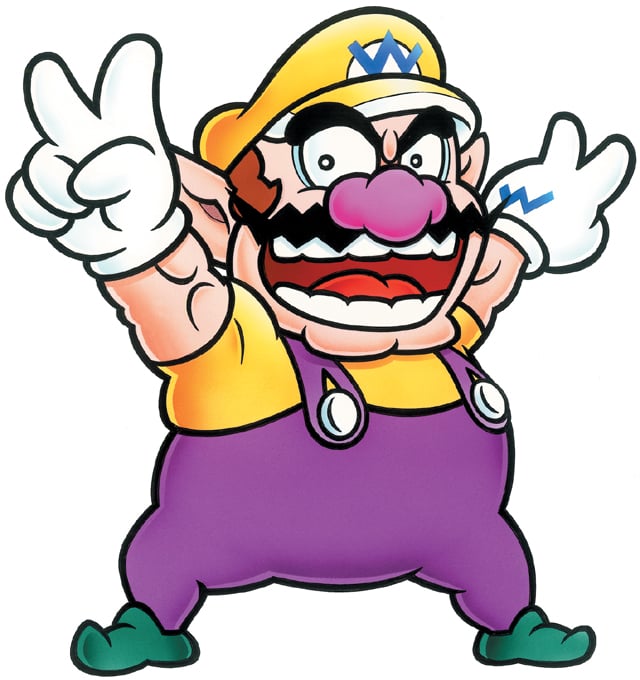 WarioThe hero, after a fashion
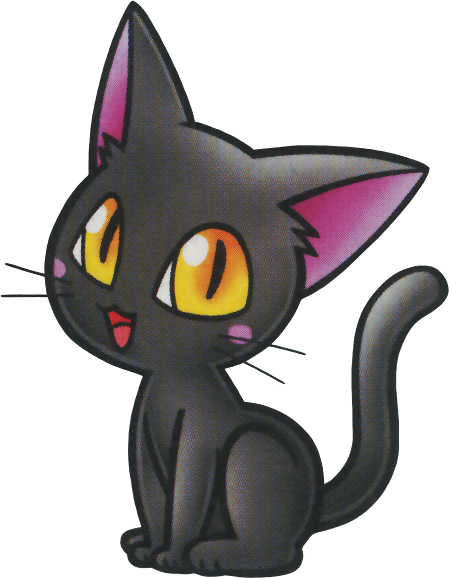 Kuro Neko (the black cat)Guide
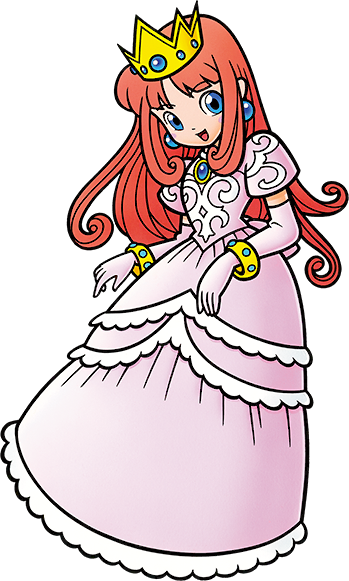 Princess ShokoraThe pyramid’s true ruler
 The Golden DivaFinal boss
 The shop ownerRuns the Item Shop
 Arewo Shitain-hakaseArchaeologist
 KeyzerLiving key
 The Game BotsRun the Mini-Game Shop
 Spoiled Rotten (boss)Entry PassageLooks harmless until it has taken a few hits, then bares its teeth. Keep hitting and stay clear of the bite. Helped by Petit-size no Pinkī.
 Cractus (boss)Emerald Passage · holds the CrownA giant potted plant. Damage it until it stands tall, then climb a vine to reach it. Its drool makes Zombie Wario; a firefly cures him.
 Cuckoo Condor (boss)Ruby Passage · holds the EarringsSmash the cuckoo clock, then fight the vulture inside. Its eggs can be thrown back before they hatch and explode.
 Aerodent (boss)Topaz Passage · holds the NecklaceA rat in a giant inflatable teddy bear. Throw the pin enemies it drops to let the air out, then hit the rat.
 Catbat (boss)Sapphire Passage · holds the BraceletsJump its waves and dodge the mines it coughs up. The purple ones turn Wario into Puffy Wario.
 Golden Diva (final boss)Golden Pyramid · wears all four treasuresEach hit removes a mask. Throw her own summoned creatures back at her until only the lips remain.
 MarumenEntry, Emerald, Ruby, SapphireA harmless walker that changes colour when Wario smashes the ground nearby.
 Spear-MaskEntry, Emerald, RubyThe basic foe, in yellow, blue and red, each behaving differently. Avoid the spear.
 TotsumenAll four main passagesCharges at Wario and flips over when it hits a wall.
 SpikyAll four main passagesA pink spiked shell. Turn it over with a Smash Attack.
 Harimen ZettoAll four main passagesA black-shelled Spiky that needs a Super Smash or a jump from Fat Wario.
 Goggley-BladeMain passages and Golden PassageA fish that charges underwater. Hit it from underneath.
 TogemasukuRuby, SapphireA spiked lump that does not move. Use a transformation or a thrown object.
 ShieragutchiEmerald, Ruby, TopazA spiked clam that shoots up through the water. Strike from below.
 RingosukīMain passages and Golden PassageA monkey that throws apples. Eat them and Wario becomes Fat Wario.
 BeezleyEmerald, SapphireA bee whose sting makes Puffy Wario.
 Bow BalloonEmerald, RubyA floating archer. Its arrows also make Puffy Wario.
 MenhanmāMain passages and Golden PassageSwings a hammer that squashes Wario into Bouncy Wario.
 YetiRuby, Sapphire, Golden PassageIts icy sneeze makes Frozen Wario.
 KaentsuboRuby, SapphireA walking jar of fire. Spilled flames make Flaming Wario.
 Pig Head StatueRuby, TopazA wall statue that spits flame, for Flaming Wario.
 Skeleton BirdSapphire, Golden PassageA ghostly bird whose goo makes Zombie Wario.
 MiniculaSapphire, Golden PassageA bat that cannot be defeated. Touch it to become Bat Wario.
 Men’onoSapphire, Golden PassageA hooded figure that charges swinging an axe.
 Glass birdRuby, SapphireFriendly. Drops orbs that Wario can catch and throw.
 Petit-size no PinkīSpoiled Rotten’s roomSmall eggplant creatures with knives that back up the first boss.
 ImomushiWildflower FieldsA slow, harmless caterpillar.
 MoguramenWildflower FieldsA mole in a drill mask that tunnels until a Smash Attack brings it up.
 UtsuboankōMystic LakeA sea monster that lunges from holes in the background.
 TogenobiMystic LakeA big octopus whirling mace-tipped tentacles around the Keyzer.
 TobawaniMonsoon JungleA crocodile that leaps at Wario or chases him through the water.
 HotaruCractus’s roomA firefly. Its light turns Zombie Wario back to normal.
 TogeroboThe Curious FactoryA robot that fires its spiked head at Wario and grows another.
 PetbottomThe Toxic LandfillA four-legged plastic bottle with a needle. Attack from behind.
 RobobirdThe Curious Factory; Pinball Zone on Hard and S-HardA mechanical bird that flies straight at Wario. Jump on it.
 Spike CannonPinball ZoneFires spikes from the wall. Its head makes a handy platform.
 EggCuckoo Condor’s roomHatches into a duckling, which then explodes.
 Toy CarEvery Topaz levelA tiny Wario in a spiked toy car.
 DiceThe Big BoardA walking die with a spear, released by a chance wheel.
 HoggusDoodle WoodsA floating pig artist who draws Denden and Butatabi into being.
 DendenDoodle WoodsA drawn pig in a spiked shell that rolls at Wario.
 ButatabiDoodle WoodsA spiked pig that glides across the screen from right to left.
 DeburīnaDoodle WoodsA drawing of a dancing pig with a dangerous hula hoop.
 Pin enemyAerodent’s roomHopping tacks. Throw them at the bear.
 GhostCrescent Moon VillageA pirate ghost that steals coins and tries to snatch the Keyzer.
 MayubirdArabian NightFanged, bat-like fliers that come in flocks.
 OnomīArabian NightA mummy with an axe, dealt with like Men’ono.
 BowlerFiery CavernThrows boulders. Becomes a Yeti when the switch freezes the cavern.
 Mechanical fishCatbat’s roomDrill-nosed fish patrolling the pool. Needs a Super Smash.
 MineCatbat’s roomSpiked balls coughed up by Catbat.
 Green enemyGolden Diva’s roomDropped by the Diva, and just the right size to throw back.
 Teddy BearGolden Diva’s roomA blue ball of a bear that Wario can bat at her.
 Black eggGolden Diva’s roomHatches a duck with a time bomb.
 HammerGolden Diva’s roomA spiked hammer that can flatten Wario into Bouncy Wario.
 LipsGolden Diva’s roomAll that is left of the Golden Diva. One attack finishes them.