
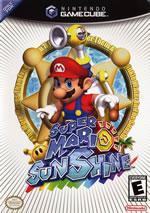

Super Mario Sunshine
Overview

Super Mario Sunshine launched on the Nintendo GameCube in summer 2002 as the system’s flagship Mario title and the long-awaited 3D Mario sequel to Super Mario 64. Developed in-house by Nintendo EAD, it marked the directorial debut of Yoshiaki Koizumi, who would later helm both Super Mario Galaxy games and the Super Mario Odyssey-era hardware projects. Shigeru Miyamoto and Takashi Tezuka produced, and Satoru Iwata received his first executive producer credit on a Super Mario title.
Where Super Mario 64 introduced the world to free-roaming 3D Mario design, Sunshine is the only mainline 3D Mario game where a single new mechanic dominates every level: F.L.U.D.D., the Flash Liquidizer Ultra Dousing Device. A water-pump backpack invented at Gadd Science Incorporated, FLUDD turns Mario into a hovering, jet-propelled, ground-cleaning rescue worker. It speaks, holds conversations with Mario, and is the soul of the entire game.
The setting is the tropical archipelago of Isle Delfino — a sun-drenched, dolphin-shaped chain of resort islands populated by the cheerful Pianta mountain people and the seashell-headed Noki sea folk. The whole place is a giant tourist trap with a beach plaza at its centre, a casino, a theme park, a fishing village, and a hotel. By the time Mario’s plane lands, however, the entire island has been doused in toxic black-and-rainbow paint goop, the seven sacred Shine Sprites have been stolen, and the locals blame Mario. Welcome to your holiday.
Sunshine introduced two characters who would become Mario-franchise mainstays: Bowser Jr., making his debut as Mario’s shadowy paint-wielding doppelganger; and Toadsworth, Princess Peach’s elderly steward, who would become her standard companion across subsequent Mario titles. It also gave us the most beloved tropical Mario soundtrack ever composed, by Koji Kondo and his team, with the “Delfino Plaza” theme alone becoming one of the most-remixed tracks in Nintendo history.
The Story
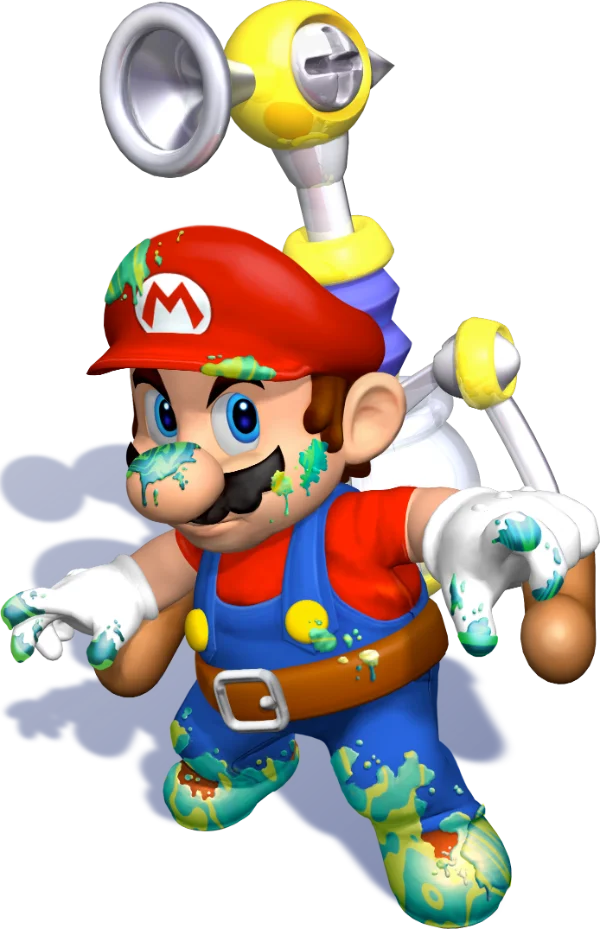
Mario, Princess Peach, Toadsworth and a small entourage of Toads have booked a holiday at Isle Delfino, a tropical resort located far from the Mushroom Kingdom. On the inflight tourist video shown during the plane ride over, Peach is the only one who notices something strange: a shadowy figure that looks exactly like Mario, flickering through the footage. Mario and Toadsworth are too busy daydreaming about beach holidays to notice her concerns.
When the plane lands at Delfino Airstrip, the runway is covered in magical paint goop — a corrosive, sentient substance that has spread across the entire island. The runway’s control tower is missing, the locals are in chaos, and a familiar-looking culprit has been spotted: short, moustachioed, red-capped, with overalls. The islanders identify Mario as the vandal.
Mario is arrested on the spot. At his court hearing, he’s sentenced to clean up the entire island as restitution. He’s handed F.L.U.D.D., a state-of-the-art water-pump device built by the eccentric Gadd Science Inc., and told that the only way to clear his name is to find and collect all seven of the island’s Shine Sprites — the sacred objects that power the island’s sunlight. Without them, the island remains in perpetual dim gloom.
Shadow Mario Revealed
The real culprit is a paint-form impostor calling himself Shadow Mario — a magical clone wielding a paintbrush who has been deliberately framing Mario, attacking Delfino Plaza, kidnapping Princess Peach, and scattering Shine Sprites across the seven courses. Mario must chase Shadow Mario through each location, defeating him to claim back the Shine Sprites and lift the goop from the island.
The Bowser Jr. Twist
The truth, revealed in the game’s final stretch, is that Shadow Mario is in fact Bowser Jr., Bowser’s heretofore-unknown son, making his series debut. Bowser has told the boy that Princess Peach is his “mama” and that Mario kidnapped her from him — a manufactured childhood grievance Bowser is using to enlist his son in his latest scheme. Bowser Jr. uses the Magic Paintbrush, built at Gadd Science Inc., to disguise himself as a paint-clone of Mario and to flood the island with goop in pursuit of his “mother.”
The Finale
The climax takes place atop Corona Mountain, the active volcano at the heart of Isle Delfino. Bowser and Bowser Jr. are sharing a giant hot tub on a floating bathtub-shaped airship; Princess Peach has been kidnapped and is sitting on the rim. Mario must ground-pound the bathtub from below, sending Bowser and Jr. crashing to the beach below. By the credits, Peach is restored, Mario is cleared, Bowser Jr. learns the truth about his “mother” (and decides to keep chasing Mario anyway), and Isle Delfino is sunny once more.
Gameplay
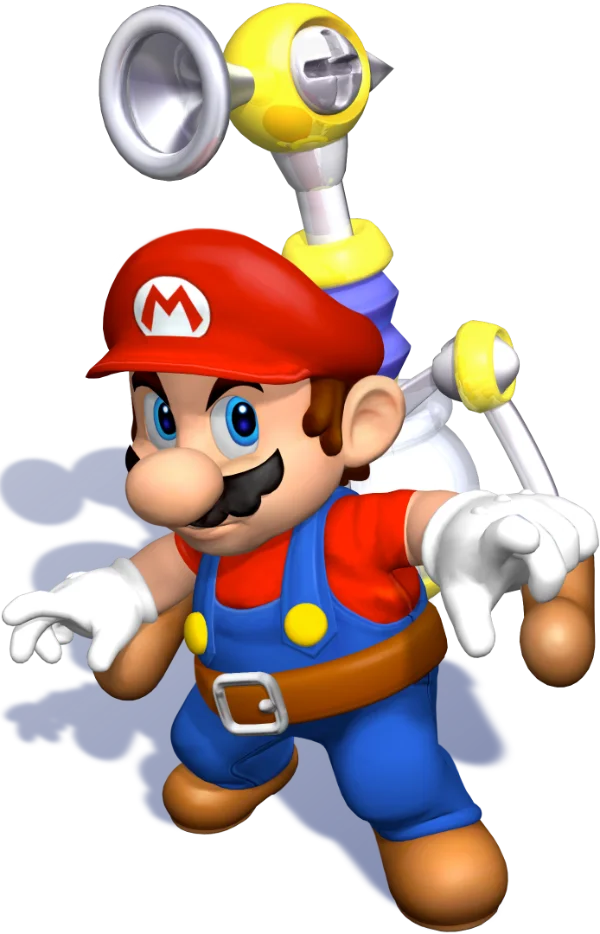
Super Mario Sunshine is a 3D action-platformer built directly on the foundations of Super Mario 64’s hub-and-spoke level design, but with one transformative new mechanic: F.L.U.D.D., the water-pump backpack that accompanies Mario from the moment he’s handed it in the prologue courtroom scene.
Core Loop
- Explore Delfino Plaza, the central hub city. Talk to NPCs, accept missions, find hidden Shines, and pick which course to enter via paint-graffiti portals
- Enter a course (Bianco Hills, Ricco Harbor, Gelato Beach, etc.) and select an episode from the available list. Each course has 8 episodes plus secret-Shine variants
- Complete the episode: a specific objective (defeat a boss, clear goop, race a Pianta, navigate a secret course, collect 8 Red Coins, etc.)
- Earn a Shine Sprite as reward. Stack enough Shines to unlock the next course
- Clean up Delfino Plaza as you go — the hub itself fills with goop, sealed-off areas, and hidden free-roam Shines that gradually become accessible
- Confront Shadow Mario in optional plaza encounters that reward Shines
- Reach Corona Mountain after collecting 50 Shines to unlock the final confrontation with Bowser and Bowser Jr.
F.L.U.D.D.’s Role in Every Level
F.L.U.D.D. is in every fight, every traversal, every puzzle. The default Squirt Nozzle sprays water in a wide arc to clean goop, douse enemies, and water plants. Hover Nozzle lets Mario hover briefly in mid-air — making mid-air course corrections possible and turning every Mario 64-style platforming sequence into something more forgiving. Rocket Nozzle shoots Mario massively upward. Turbo Nozzle propels him at supersonic land/water speed. The interplay of these four nozzles — swapped at coloured Nozzle Boxes throughout the island — is the foundation of every level’s puzzle design.
Controls
GameCube Controls
| Input | Action |
|---|---|
| Control Stick | Move Mario / Aim FLUDD spray |
| C-Stick | Move camera |
| A button | Jump (hold for higher jump) |
| B button | Pick up / drop / spin attack |
| X button | Equip / unequip FLUDD |
| Y button | Spray nozzle (alt fire) |
| Z button | First-person view |
| L trigger | Ground pound (mid-air) / Crouch |
| R trigger | Spray water with FLUDD (hold for sustained spray) |
| R + A | Wall-jump combo |
| Triple Jump | Three consecutive jumps without stopping |
| Long Jump | Run + crouch + jump = forward leap |
| Backflip | Crouch + jump while stationary |
| Side Somersault | Sharp 180° turn + jump |
Sunshine retains most of Super Mario 64’s movement vocabulary — the triple jump, the long jump, the backflip, the wall-kick — and adds FLUDD-based actions on top. The result is the most mechanically dense moveset of any 3D Mario game until Odyssey, with mastery rewarding speed-run-level execution and casual play tolerating less-precise inputs thanks to Hover Nozzle’s forgiveness.
F.L.U.D.D. Nozzles
F.L.U.D.D. has four interchangeable nozzles. Only the Squirt Nozzle is permanently equipped; the other three are unlocked through story progression and swapped in via coloured Nozzle Boxes scattered throughout courses.
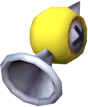
Squirt Nozzle
Default — always equipped
The basic water-blast nozzle. Sprays water in a forward arc by pressing R. Used to clean goop off surfaces, defeat enemies, water plants, hit puzzle switches, and trigger water-reactive elements. The amount of water sprayed scales with R-trigger pressure. The Squirt Nozzle is the only one that cannot be swapped out — it sits in the FLUDD’s default slot.
Hover Nozzle
Available from start
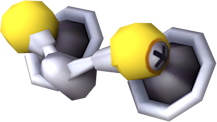
Dual jet-like nozzles that fire downward, letting Mario hover briefly mid-jump. Holding R after a jump kicks in Hover mode; Mario gradually rises while consuming the water tank. The most-used nozzle for ordinary platforming — essential for crossing wide gaps, correcting bad jumps, and reaching ledges just out of normal jump range.
Turbo Nozzle
Unlocked at 25 Shines
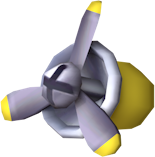
Found in Delfino Plaza after collecting 25 Shines and gaining Yoshi access. Propels Mario at extreme speed across land and water. Used to break through wooden barriers, race through long stretches of course, and navigate certain time-trial Shines. Easier to steer on water than land due to lower friction.

Rocket Nozzle
Unlocked at 30 Shines
Found in Delfino Plaza after 30 Shines. Charges a powerful upward rocket-jet by holding R, then releases Mario in a massive vertical leap. Reaches the tallest structures on the island — the Shine Gate, the rooftops of Delfino Plaza, the high pillars in late-game courses. Essential for many of the harder collectibles.
Shine Sprites & Coins

Shine Sprites are the sun-shaped collectibles that power Isle Delfino. They’re the equivalent of Stars from Super Mario 64. 120 total are available in the game.
Shine Sprite Distribution
- Course Shines — 88 total. Each of the 7 courses has 11 Shines: 8 episode-locked story Shines, 2 secret-course Shines, and 1 100-coin Shine (collect 100 coins in a single visit)
- Delfino Plaza Shines — 32 total. Hidden across the hub city, requiring various nozzles and tricks to access. Many are gated behind specific Shadow Mario encounters or specific story milestones
- Total: 120 Shines for the complete file
Shine Types
- Episode-locked Shines — the main story Shines tied to specific course missions like “Road to the Big Windmill” or “The Sand Bird is Born”
- Secret course Shines — found inside hidden inter-dimensional bonus levels accessed through specific portals. These remove FLUDD entirely, forcing pure platforming. Each course has 1-2 secret courses
- 100-coin Shines — collect 100 gold coins in one visit to a course
- Red Coin Shines — collect all 8 Red Coins in a sub-area
- Boss Shines — awarded for defeating Shadow Mario or a course’s major boss
- Blue Coin Shines — the boathouse Raccoon trades a Shine for every 10 Blue Coins collected; 240 Blue Coins exist in total
Coin Types
- Yellow Coins — standard. Restore 1 HP, contribute to 100-coin Shine
- Red Coins — restore 2 HP. Collect all 8 in a sub-area for a Shine
- Blue Coins — restore 2 HP. 240 across the game; trade 10 at a time with the boathouse Raccoon for a Shine
Isle Delfino & Delfino Plaza

Super Mario Sunshine takes place entirely on Isle Delfino, a tropical archipelago shaped like a dolphin (the Italian word delfino literally means “dolphin”). The island sits in a southern sea, isolated from the usual Mushroom Kingdom geography — much like Super Mario World’s Dinosaur Land before it.
The Setting
- A bustling resort island with shops, hotels, a fishing harbour, a casino, a theme park, and beaches
- Two indigenous peoples: the mountain-dwelling Piantas (large, plump, with palm leaves growing from their heads) and the sea-dwelling Nokis (small shellfish-like creatures who wear conch shells as helmets)
- The island’s economy revolves around tourism and fishing
- The opening cutscene shows the island surrounded by other archipelagos shaped like a crab, a sea turtle, a jellyfish, and a mola — implying Isle Delfino sits on or near Earth’s equator (though no official atlas confirms this)
- The currency is gold coins, identical to the Mushroom Kingdom’s
- Corona Mountain, an active volcano, sits at the centre of the island and forms the game’s final dungeon
Delfino Plaza — The Hub City

Delfino Plaza is the central hub. Built around a giant Shine Gate (the seal that holds the seven main Shines together), the Plaza features a beach promenade, a fountain, a market street, a fishing dock, a lighthouse, the Pianta-run police station, the boathouse, and the air-traffic-control tower above. Most of the buildings can be climbed using FLUDD’s Rocket Nozzle. The plaza itself contains 32 hidden Shine Sprites that gradually become accessible as story progress unlocks new areas, new nozzles, and removes the various blockages around the hub.
The plaza’s seven main course portals are concealed as paint-graffiti murals: clean each one with FLUDD to expose a M, M-shaped icon that teleports Mario to a course. Some portals appear only after certain Shines have been collected.
The 7 Main Courses
Each of the seven main courses has its own theme, biome, supporting cast, central boss, and 11 Shine Sprites to collect. Courses unlock in roughly the order shown here, though several can be tackled out of sequence once unlocked.

Bianco Hills
The first proper course — a pastoral hillside village surrounded by windmills, flower gardens, and a freshwater lake. Bianco Hills is the gentlest of the courses, designed to ease the player into FLUDD-based platforming.
Key elements: giant windmill (the central landmark), Petey Piranha’s nest on top of the Big Windmill, the village proper with its flower beds and goop infestations, a lake with submerged secrets.
Boss: Petey Piranha appears here in two episodes — a giant goop-spewing Piranha Plant variant who would become one of Mario’s more memorable recurring monsters.


Ricco Harbor
A bustling fishing-port town built around a circular harbour, with multi-level wooden piers, gantries, dock cranes, and cargo containers. The course mixes vertical platforming with water-traversal puzzles.
Key elements: the giant industrial dock crane, the fish market, the lighthouse, the underwater section with hidden Shines, the tall pier-mounted Yoshi Egg cart from Episode 6.
Boss: Gooper Blooper, a massive squid-like creature who fills the central harbour pool. Tentacle-pulling boss fight requiring FLUDD blasts to expose his face.


Gelato Beach
A sun-soaked sandy beach with a coral reef offshore, a colossal sand castle, watermelon vines along the shoreline, and the legendary Sand Bird — a giant sand-construct creature that hatches from the dunes when certain conditions are met.
Key elements: the giant sand castle puzzles, the Watermelon Festival episode (push a giant watermelon down the beach without breaking it), the underwater coral reef section, and the Sand Bird itself — hatched and ridden in a memorable mid-air platforming sequence.
Boss: Wiggler, a giant version of the classic Mario enemy, awakened furious from his slumber and chased around the beach until ground-pounded on the head.


Pinna Park
A coastal theme park accessible by a Yoshi-shaped Ferris wheel and Yoshi-decorated rollercoasters. Carnival-themed throughout: roller coaster tracks, a giant Yoshi-shaped Ferris wheel, the spinning Clam Cups ride, the Pirate Ship swing, balloon games, a giant slide. The most overtly fun setting in the game.
Key elements: the giant Yoshi Ferris wheel, the Yoshi-themed Pirate Ship ride, the Mecha-Bowser robot boss fight on the rollercoaster track, the underwater section featuring Phantamanta in some episodes.
Boss: Mecha-Bowser, a massive Bowser robot piloted by Bowser Jr. (in his Shadow Mario disguise). The fight takes place on the moving rollercoaster track and is one of the game’s most memorable set-pieces.


Sirena Beach
A beach resort dominated by the colossal Hotel Delfino, a luxury holiday hotel. Sirena Beach features both outdoor beach sections (with sand-trap puzzles) and indoor hotel-based exploration with Boo-themed puzzles, casino-themed rooms, and a labyrinthine multi-floor interior.
Key elements: Hotel Delfino itself with its multiple floors, casino rooms, hotel-staff Piantas, the giant manta ray attack on the beach (multi-creature boss fight), Boos and Boo-related puzzles, the spinning wardrobe-Boo silhouette mini-game.
Boss: King Boo, the largest Boo Mario has fought to date. Held inside a casino slot machine on the hotel’s roof. Defeated via fruit-juicing puzzle mechanics.


Noki Bay
A coastal Noki village built into the cliff face of a deep azure bay. The water has been turned toxic by Bowser Jr.’s pollution; Mario must clean the bay floor and traverse vertical cliff platforming. Some of the harder vertical FLUDD navigation in the game.
Key elements: the cliff-face Noki dwellings, the giant red Noki bottle (deep-sea puzzle area), the polluted bay floor that must be cleaned to restore the water, the vertical cliff platforming with sliding ropes and rotating platforms.
Boss: Eely-Mouth, a colossal moray eel living inside a giant clam shell on the bay floor. Mario must brush its teeth (literally) with FLUDD to drive it back.


Pianta Village
A treetop Pianta village built across the canopy of a giant rainforest. Connected by rope bridges, treehouses, and high platforms. The most vertically dizzying course — falls from the trees lead to long drops to the forest floor below.
Key elements: the treetop bridges and houses, the giant Pianta village chief’s home, the giant pungent flower tree (gives off offensive odour Mario must dispel with water), the underground forest floor section, the goop-cleansing missions, the “Chain Chomp Spa Day” where Mario must clean a chain-chomp by squirting it.
Boss: Various — the Bowser Jr. encounter occurs here in his final pre-Corona Mountain form, plus assorted goop-restoration objectives.

Secret Bonus Courses
Inside each main course are secret bonus courses — surreal abstract platforming chambers accessible through specific portals. They’re among the most distinctive content in the game.
Format
- Accessed via specific paint-portal triggers within each main course
- FLUDD is completely removed for the duration — pure 3D Mario platforming with no water-pump assistance
- The aesthetic is abstract: floating geometric platforms in a black void, with a single haunting orchestral track playing throughout
- Each secret course has two Shines: one for completing the course, one for collecting all 8 Red Coins within
- Each of the 7 main courses has at least one secret course
Significance
The secret courses are widely regarded as Sunshine’s callback to Super Mario 64’s pure-platforming roots, deliberately stripping away the water-pump mechanic to remind players that Mario’s movement vocabulary alone is enough. Many of the game’s hardest individual platforming challenges live here. The Red Coin time-limit version of each course is one of the more demanding completion requirements in any Mario game.
Characters

Mario
The protagonist. He arrived at Isle Delfino expecting a holiday but is arrested for vandalism within minutes of stepping off the plane. Sentenced to clean the entire island and recover all 120 Shine Sprites to clear his name. Notable detail: Mario wears his only short-sleeved red shirt of any mainline Mario game here, in deference to the tropical setting.
F.L.U.D.D.
The Flash Liquidizer Ultra Dousing Device. A water-pump backpack invented at Gadd Science Incorporated by the eccentric Professor E. Gadd. F.L.U.D.D. is a sentient device with its own personality — it speaks throughout the game, providing tutorial guidance, banter, and the occasional dry commentary. Voiced by Kit Harris in English. Equipped with four interchangeable nozzles (Squirt, Hover, Turbo, Rocket).
Yoshi
Yoshi appears in Sunshine after being unlocked via “Event 6: Shadow Mario and the Yoshi Egg.” This Yoshi was created by Bowser Jr. using the Magic Paintbrush — he’s made of paint goop, which means he vanishes immediately if he touches deep water. Mario can ride him through the island; Yoshi can flutter-jump, eat enemies with his tongue, and — instead of water — spray fruit juice. The fruit Mario feeds Yoshi determines the colour and properties of his juice, which can transform Stu enemies into Yoshi Platforms with different movement patterns.
Princess Peach
The only person at the start who notices Shadow Mario in the airline tourist video. Repeatedly kidnapped by Shadow Mario throughout the story — first in Delfino Plaza, later at Pinna Park, and finally to Corona Mountain. She emerges from her kidnapping unhurt at the credits.
Toadsworth
Debuting in Sunshine, Toadsworth is Princess Peach’s elderly Toad steward. Wears a small green vest and trousers and carries a walking cane. Acts as the practical, slightly officious adult in the room. After Sunshine he becomes Peach’s standard companion in subsequent Mario games (Mario Power Tennis, Mario Kart, Mario Party titles).
Bowser Jr.
Debuting in Sunshine as the secret antagonist, Bowser Jr. is Bowser’s previously-unknown son. Wields the Magic Paintbrush (built at Gadd Science Inc.) which he uses to disguise himself as Shadow Mario and flood Isle Delfino with paint goop. Believes (because Bowser told him) that Princess Peach is his mother and Mario kidnapped her. After Sunshine he becomes a recurring Mario antagonist appearing in Galaxy, NSMB, Odyssey, and many more.
Bowser
The classic antagonist takes a backseat for most of Sunshine. Appears mainly in the final-act bathtub airship scene and the final boss fight on Corona Mountain. Voiced by Scott Burns in English here — the first and only mainline Super Mario game where Burns provides the character’s vocal performance.
NPCs & Locals




The Pianta People
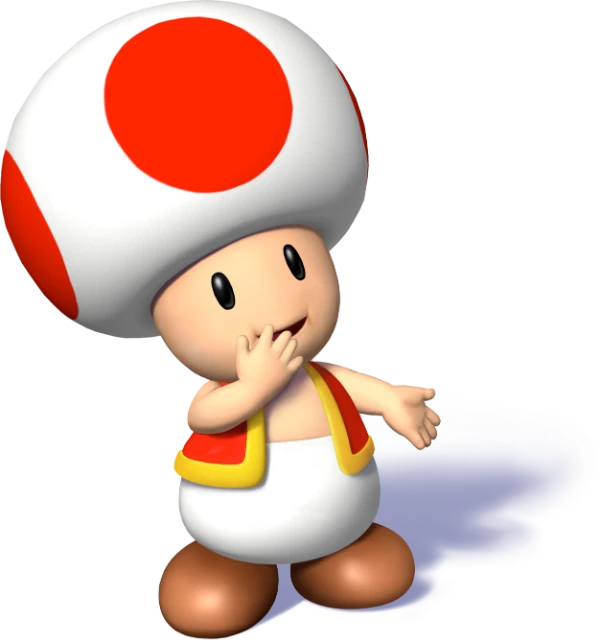
The dominant island natives. Tall, broad, and good-natured, with palm leaves growing directly from the tops of their heads. Population the village rooftops, market stalls, and beach umbrellas of Isle Delfino. Speak in cheerful Italian-inflected accents (in the localised versions). Run most of the island’s businesses, including Hotel Delfino, the fruit market, and the Pianta Village treehouses. Several Piantas play important roles: the Mayor, the police chief, the Doot-Doot Sisters who perform at the casino, the fruit vendor, and the boathouse Raccoon (technically a Pianta-island raccoon).
The Noki People
The smaller, sea-dwelling natives. Each Noki wears a conch shell as a helmet, hiding their small humanoid forms underneath. Native to Noki Bay, where they live in cliff-face dwellings. More reserved than the Piantas, with a stronger connection to the sea, fishing, and the ancient lore of the island. Their elders share legends about the bay and the giant Eely-Mouth that has poisoned its waters.
Key Named NPCs
- Professor E. Gadd (mentioned but unseen) — the eccentric inventor of FLUDD and the Magic Paintbrush at Gadd Science Inc.
- Sunglasses Vendor — sells Mario tropical sunglasses and a Hawaiian shirt in Delfino Plaza after specific Shine milestones (cosmetic-only)
- Il Piantissimo — a Pianta racer in disguise (Pianta with a face mask) who challenges Mario to races across multiple courses for Shines
- The Boathouse Raccoon — collects 10 Blue Coins at a time in exchange for Shines
- The Pianta Mayor — Delfino Plaza’s political head, sets early-game story milestones
- The Sunglasses Vendor & Hotel Manager — various service Piantas
- The Noki Elder — keeper of the legends about Noki Bay
- Mama Noki — the Noki village matriarch
- The Park Director (Pinna Park) — a Noki who runs the rollercoaster
Enemies
Super Mario Sunshine has roughly 40 unique enemies, most of them created specifically for this game and never seen again in the Mario series. According to the Super Mario Bros. Encyclopedia, all enemies in the game were created by Bowser Jr. using the Magic Paintbrush — they’re paint-and-goop constructs, not natural Isle Delfino fauna.
Key Enemy Categories
| Enemy | Where Found | How to Defeat |
|---|---|---|
| Strollin’ Stu | Throughout the island | FLUDD spray to deflate, then stomp |
| Winged Strollin’ Stu | Various courses | Spray to bring down, then stomp |
| Swipin’ Stu | Pinna Park, others | Steals Mario’s hat; spray to recover |
| Swoopin’ Stu | Various | Aerial variant; spray to ground them |
| Cataquack | Gelato Beach | Spray repeatedly; cannot be stomped |
| Sanbo Head (Pokey) | Gelato Beach | Sun-themed cactus stack — spray top segment |
| Seedy Pod | Bianco Hills | Spray pod, then stomp seed |
| Bee | Bianco Hills | Cannot be defeated; avoid |
| Coo-Coo | Bianco Hills | Bird enemy; spray when stationary |
| Skeeter | Water surfaces | Spray to flip and reveal vulnerability |
| Blooper | Ricco Harbor | Standard Mario squid; FLUDD effective |
| Cheep Cheep (multiple variants) | Underwater sections | Spray or avoid; aggressive variants |
| Bullet Bill (gold, blue, missile) | Pinna Park, others | Spray to disarm explosion |
| Bob-omb | Various | Spray to defuse before explosion |
| Snooza Koopa | Pianta Village, others | Asleep on the ground; jump on shell |
| Electro-Koopa (Blue/Red/King) | Ricco Harbor | Electrified; flip via spray, then stomp |
| Boo (multiple variants) | Sirena Beach | Spray with Yoshi juice to defeat |
| Sleepy Boo | Sirena Beach | Wakes when sprayed; chase to defeat |
| Pokey (Sanbo) | Gelato Beach | Multi-segment cactus; spray top |
| Goop blobs | All courses | Spray to dissolve; reveal Shine fragments |
| Phantamanta | Sirena Beach | Splits into smaller mantas when hit — multi-stage boss |
| Plungelo | Noki Bay | Spray to deflate |
| Pokey Sprout | Gelato Beach | Mini cactus enemy |
| Lily Pad enemies | Noki Bay | Spray to flip |
| Piranha Plants & variants | Bianco Hills, others | Spray inside open mouth |
| Plungelo | Underwater | Spray to defeat |
Distinctive Designs
Sunshine notably does NOT include the standard Mario enemy roster: there are no traditional Goombas, no classic Koopa Troopas, no Lakitus in their usual form, no Hammer Bros. Instead the game features its own bespoke menagerie that largely doesn’t return in subsequent Mario games — the Stus, the Cataquacks, the Snooza Koopas, the Electro-Koopas, the Phantamantas are all Sunshine originals. The Bowser Jr. lore explanation reframes this: these enemies are paint-goop creations, not natural inhabitants.
Bosses
Sunshine has a clear boss roster across the seven main courses, plus the persistent Shadow Mario chases throughout the hub, plus the final Bowser/Bowser Jr. confrontation. Below: the major bosses with their backstories and tactics.

Polluted Piranha Plant
Delfino Airstrip (Prologue)
The very first boss of the game — a giant goop-spewing Piranha Plant that erupts on the airstrip from Bowser Jr.’s graffiti as Mario lands. Cleared with FLUDD’s squirt nozzle into its open mouth. Sets the gameplay vocabulary for the rest of the game.
Petey Piranha
Bianco Hills (Episodes 1 & 5)
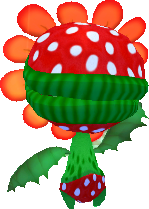
A massive Piranha Plant variant who roosts in Bianco Hills’ Big Windmill. Sprays goop projectiles from a giant bulbous belly. The chapter’s defining boss — fought twice across two episodes. Mario must jump on his head when he naps with his mouth open, then spray water inside his belly to fill him with water and ground-pound him.

Gooper Blooper
Ricco Harbor (Episodes 2 & 5)
A colossal squid-like creature who fills the central pool of Ricco Harbor. Has multiple coloured tentacles that must be grabbed and yanked individually using FLUDD’s spray and Mario’s pull animation. Once all tentacles are disarmed, his giant beaked face is exposed for the kill.
Wiggler
Gelato Beach (Episode 4)
A giant version of the classic Mario series Wiggler enemy. Awakened furious from his slumber when the Sand Bird emerges. Bright red and rampaging across Gelato Beach. Mario must ground-pound his head from above three times to defeat him.

Mecha-Bowser
Pinna Park (Episode 2)
A massive mechanical Bowser robot piloted by Bowser Jr. (in his Shadow Mario form). The fight takes place on a moving rollercoaster track — Mario shoots water rockets at Mecha-Bowser’s face from a moving cart while dodging laser fire and Bullet Bills. One of the game’s most iconic set-pieces.

Phantamanta
Sirena Beach (Episode 1)
A massive ghostly manta ray that descends on Sirena Beach. Mario must spray it with FLUDD; on hit it splits into multiple smaller mantas, each of which must be defeated in turn. The fight scales as each kill produces two more smaller fragments. A clever multi-target boss design.

King Boo
Sirena Beach (Episode 6)
The largest Boo to appear in Sunshine. Held inside a giant casino slot machine on the roof of Hotel Delfino. Mario must spray fruit-juice into the slot machine; matching three of a kind on the reels causes the corresponding fruit type to drop, which Mario can then carry and throw at King Boo to damage him.

Eely-Mouth
Noki Bay (Episode 4)
A massive eel/moray hybrid living inside a giant clamshell on the floor of Noki Bay. The toxic pollution is coming from his teeth. Mario must descend underwater and literally brush Eely-Mouth’s teeth with FLUDD water, working through each rotten tooth in turn. The most surreal boss concept in the game.

Bowser & Bowser Jr.
Corona Mountain (Finale)
The final confrontation. Bowser and Bowser Jr. are sharing a giant heart-shaped hot tub on a floating bathtub-shaped airship at the top of Corona Mountain, with Peach captive on the rim. Mario must navigate up the mountain through a hazardous lava-and-platforms section, then use Rocket Nozzle to launch himself up to the airship, then ground-pound the bathtub from below to send Bowser and Jr. crashing.
Items
Sunshine’s collectibles and pickups are organised into four main categories.
Primary Collectibles
- Shine Sprites — the main collectible. 120 total. Sun-shaped, brightly glowing. End an episode when collected. Restore sunlight to Delfino Plaza as Mario collects them
- Gold Coins — restore 1 HP each. 50 in a level gives an extra life; 100 in a level gives a Shine Sprite
- Red Coins — restore 2 HP. 8 in each sub-area; collect all 8 for a Shine
- Blue Coins — restore 2 HP. 240 total across the game; trade 10 with the boathouse Raccoon for a Shine
- Water Bottles — refill FLUDD’s water tank. Small bottles half-fill, large bottles fully fill
- 1-Up Mushrooms — green mushrooms granting an extra life
Power-Ups (FLUDD Nozzles)
The four FLUDD nozzles are technically items — they’re swapped at Nozzle Boxes around the courses. See the F.L.U.D.D. Nozzles section above for full details on each.
Story Items
- Yoshi Egg — the unhatched egg Mario must feed specific fruits to hatch Yoshi
- Mario Cap — can be lost to Swipin’ Stu enemies; Mario retrieves it
- Sunglasses & Hawaiian Shirt — cosmetic items sold by the Sunglasses Vendor in Delfino Plaza at certain Shine thresholds
Yoshi’s Fruits
Six fruit varieties grow on trees and lie on the ground across Isle Delfino. Most can be picked up and carried by Mario; durians can only be kicked (they’re covered in spikes).
Yoshi-Specific Fruits
Fruits are how Yoshi gets fed. Each Yoshi Egg requires a specific fruit type to hatch. After hatching, Yoshi’s juice colour matches the last fruit he ate — and the juice colour determines how Stu enemies transform when sprayed:
| Fruit | Yoshi Juice Colour | Stu Platform Effect |
|---|---|---|
| Coconut | Pink | Bounces left and right |
| Banana | Yellow | Standard floating platform |
| Papaya | Yellow-green | Standard floating platform |
| Pineapple | Pink/red | Springs upward repeatedly |
| Pepper | Purple | Disappears after delay |
| Durian | N/A (cannot be eaten) | Can only be kicked like a football |
| Watermelon | Green | Floats lazily |
Yoshi Mechanics
- Yoshi only appears in certain courses (Delfino Plaza, Bianco Hills, Ricco Harbor, Gelato Beach, Pinna Park, Sirena Beach, Pianta Village)
- His juice tank depletes over time — he must keep eating fruit to stay alive
- When his juice tank empties, he reverts to a deflated green state and runs away
- Yoshi vanishes immediately if he touches deep water because his body is paint goop (Bowser Jr.’s creation)
- Spraying Stu enemies with juice transforms them into Yoshi Platforms with movement patterns matching the juice colour
Objects & Hazards
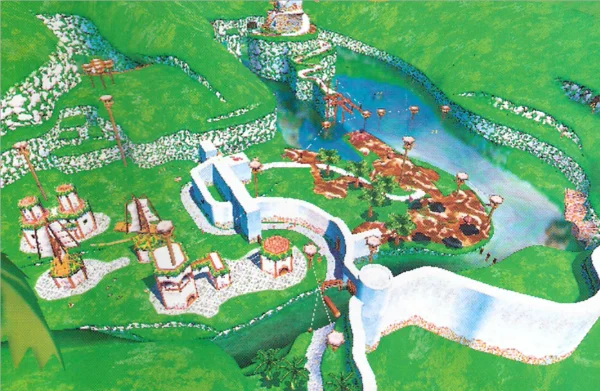


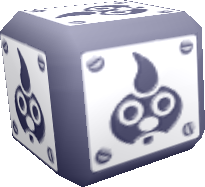




Objects are interactive elements of the environment — things Mario sprays, hits, climbs, or interacts with but doesn’t pick up or collect. The Sunshine world is dense with these interactions; below is a representative selection.
Sprayable / Interactive Objects
- Balloons — 20 large pink balloons in the “Roller Coaster Balloons” Pinna Park episode. Burst with water rockets for a Shine
- Bells — brass chimes hanging across the island. Spraying releases coins; some hide Shine Sprites
- Closet panels — in Hotel Delfino. Spray to spin them; match the Boo silhouette to reveal hidden passages
- Clam Cups — Pinna Park ride. Open when sprayed; one contains a Blue Coin
- Crates — contain items; spray or punch to break
- Watermelons — push down Gelato Beach without breaking them for a Shine
- Goop blobs — ubiquitous; spray to dissolve. Some reveal Shine fragments, others reveal hidden paths
- Dune Buds — Gelato Beach sand-buried switches. Sprayed to germinate giant flowers used as platforms
- Fruit Vat (Yoshi Egg) — the egg cart on Pinna Park where Yoshi unlocks. Show specific fruit to hatch
- Nozzle Boxes — blue (Hover), red (Rocket), gold (Turbo). Replace FLUDD’s current nozzle when Mario touches them
- Brass Bells / Giant Bells — the giant Delfino Plaza bells are covered in goop. Clean one to release a Shine
Hazards & Obstacles
- Goop puddles — damage Mario continuously. Spray to clear
- Spikes — traditional Mario hazard
- Conveyor belts — Ricco Harbor mainstay
- Polluted water — Noki Bay’s toxic bay. Damages Mario over time
- Lava — Corona Mountain finale
- Bullet Bills — various courses. Spray to defuse
- Sand traps — Sirena Beach. Mario sinks; spray to solidify
Regional Differences
Super Mario Sunshine shipped with notable differences between the Japanese, North American, and PAL releases. Most stem from translation/localisation timing.
Cutscene Voice Acting
- Japanese release: uses English voice acting (most Mario games in Japan retain Charles Martinet’s standard English Mario vocalisations) but with several different alternate takes
- Early-game Mario-Toadsworth conversation includes audible unsubtitled dialogue such as Mario saying “It looks like a giant empty plate” and “Oh no! We’re going to be late for dinner!”
- The courtroom prosecutor in the Japanese release uses an alternate take — mispronouncing “Shine” as “Shrine” three times, calling Isle Delfino “Delfino Isle,” and using a less stern tone overall
- International releases tightened the dialogue and re-recorded the prosecutor with a more authoritative tone
Subtitles and Text
- The Japanese release has no option to disable subtitles, likely due to localisation timing
- International releases allow subtitles to be toggled off
- Multiple location and item names use different terminology in the Japanese script that was rewritten for international audiences
Other Regional Changes
- Minor text adjustments throughout to fit the longer English/European character counts
- PAL release includes 50 Hz mode plus a 60 Hz toggle for compatible displays
- PAL includes language menus for English, French, German, Italian, and Spanish
- The Japanese release uses a slightly different cover art treatment, emphasising the orange-yellow Sunshine logo against a pale background
Promotion & Commercials
Super Mario Sunshine launched with a substantial Nintendo marketing campaign in summer 2002 emphasising the tropical setting, the new FLUDD mechanic, and the long-awaited GameCube successor to Super Mario 64. Below: two surviving TV commercials from the period.
Development Staff
Super Mario Sunshine was developed by Nintendo EAD (Entertainment Analysis & Development), Nintendo’s flagship in-house development division based in Kyoto. The staff list represents one of the most legendary teams in gaming history.
- Developer: Nintendo EAD
- Publisher: Nintendo
- Director: Yoshiaki Koizumi. His directorial debut; he had previously served as assistant director on Super Mario 64. Would go on to direct both Super Mario Galaxy games and become a senior producer on Nintendo hardware projects including Super Mario Odyssey and the Switch family
- Co-Director: Kenta Usui
- Producers: Shigeru Miyamoto and Takashi Tezuka (the two Nintendo legends behind every classic Mario game since the original Super Mario Bros.)
- Executive Producer: Satoru Iwata — the first Super Mario game to credit Iwata as executive producer, just before he assumed the Nintendo presidency
- Composer: Koji Kondo (lead) with additional composition contributions. The Delfino Plaza theme alone is widely considered one of the greatest pieces of Mario music ever composed
- Voice Cast: Charles Martinet (Mario), Jen Taylor (Princess Peach, Toads), Dolores Rogers (Bowser Jr. — debut role), Kit Harris (FLUDD), Scott Burns (Bowser — only mainline Mario game where Burns voices the character)
- Development Note: Koizumi reportedly built a clay model of Isle Delfino during development to plan the topography and inter-course geography. The childhood memory of a hero jumping from rooftop to rooftop inspired Delfino Plaza’s vertical layout
Reception & Legacy
Super Mario Sunshine received widespread critical acclaim on launch, though it also drew the most polarised reviews of any mainline 3D Mario game until Sticker Star. Critics universally praised the moveset, world design, and atmosphere; criticism focused on the camera, the gimmicky nature of FLUDD, and the controversial voice acting.
Critic Scores at Launch
- IGN (Fran Mirabella III): 9.4/10 — called it “about gameplay” with depth that “passes by all of the problems with presentation, sound, and visuals”
- GameSpot: 9.1/10 — strong praise for the unique mechanics
- Game Informer: 9.0/10 — highlighted the soundtrack and tropical atmosphere
- Nintendo Power: 9.5/10 — Game of the Month
- Famitsu (Japan): 38/40 (10/9/9/10) — near-perfect scoring from the Japanese games press
- EDGE Magazine: 8/10 — praised the technical accomplishment but noted polish issues
- GameRankings aggregate: 91.50% across 76 reviews
Sales
Super Mario Sunshine sold approximately 6.3 million copies worldwide as of December 2009. This made it:
- The 10th best-selling game of 2002 per NPD data
- The 3rd best-selling Nintendo GameCube title ever, behind Mario Kart: Double Dash!! and Super Smash Bros. Melee
- One of the strongest Mario launches of the GameCube era
Retrospective Position
Within the Mario fanbase, Sunshine has settled into an “underrated cult classic” reputation — less universally beloved than 64 or the Galaxy games, but with a passionate following who consider its tropical atmosphere, the FLUDD mechanic, and the soundtrack genuinely unmatched. Mario’s then-voice actor Charles Martinet has publicly called it “an underrated game.”
Super Mario 3D All-Stars (2020)
Sunshine received a re-release as part of Super Mario 3D All-Stars on Nintendo Switch (18 September 2020), alongside Super Mario 64 and Super Mario Galaxy. The compilation included widescreen and HD upscaling but did not modify the original gameplay. The release was time-limited, sold out in many territories, and reintroduced Sunshine to a new generation of players.
Trivia
- Director Yoshiaki Koizumi’s directorial debut. He had previously been assistant director on Super Mario 64. Sunshine launched his career as one of Nintendo’s most important game directors — he later directed both Super Mario Galaxy games and became a senior producer on Switch-era hardware including the Switch console itself
- First Satoru Iwata executive producer credit on a Super Mario game. Iwata was just about to assume the Nintendo presidency from Hiroshi Yamauchi
- Bowser Jr.’s debut as a character. He would go on to appear in dozens of subsequent Mario titles — Galaxy, NSMB, NSMB Wii, Mario Kart, Smash Bros. Brawl onward, Odyssey, and many more
- Toadsworth’s debut as Princess Peach’s steward. He would become her standard companion in subsequent Mario games
- Mario’s short-sleeved red shirt is unique to Sunshine. In every other mainline Mario game, Mario wears a long-sleeved shirt. The short sleeves are a deliberate choice for the tropical setting
- FLUDD is voiced by Kit Harris, who provided the device’s deadpan British-tinged delivery throughout the game
- Scott Burns voices Bowser for the first and only time in a mainline Super Mario game in Sunshine. Bowser’s standard voice actor is Kenny James (post-Sunshine)
- The Italian word “delfino” means “dolphin” — the island is literally named after its dolphin shape
- Yoshi is made of paint goop in this game (Bowser Jr.’s creation), which is why he vanishes immediately if he touches deep water — unique to this title
- The game features almost none of the traditional Mario enemy roster (no Goombas, no Koopa Troopas, no Hammer Bros). Instead it has its own bespoke enemy set that largely never reappears in subsequent games — the Stus, the Cataquacks, the Phantamantas, the Electro-Koopas. This is canonically explained in the Super Mario Bros. Encyclopedia: all Sunshine enemies were created by Bowser Jr. using the Magic Paintbrush, so they aren’t natural fauna of any world
- Charles Martinet has called Sunshine “an underrated game” in retrospective interviews about his time voicing Mario
- The “Delfino Plaza” theme by Koji Kondo is one of the most-remixed pieces of Nintendo music in history, appearing in Super Smash Bros. Brawl, Wii U, and Ultimate, plus countless fan covers
- The 120-Shine completion mark matches Super Mario 64’s 120 Stars exactly. The two games are widely considered companion pieces in design philosophy despite the FLUDD mechanic’s departure
- The secret bonus courses deliberately strip FLUDD away to remind players that Mario’s movement vocabulary alone is enough — widely interpreted as a design statement about not relying entirely on the new mechanic
- Re-released in Super Mario 3D All-Stars (2020) on Nintendo Switch alongside Mario 64 and Galaxy. The release was time-limited and sold out heavily — demand far exceeded supply, prompting fan complaints. It remains Sunshine’s only HD re-release
- The opening cutscene implies Isle Delfino is on Earth’s equator (shown with a red latitudinal line), though no official Mario atlas confirms this
- The game contains 240 Blue Coins, the most-numerous collectible by far. The boathouse Raccoon trades 10 at a time for a Shine, meaning 24 Shines come from Blue Coin trading alone
- Sunshine’s Italian-inflected Pianta accents in localised versions were deliberately designed to match the Mediterranean tropical resort vibe. The Japanese script has no equivalent
- The boss Eely-Mouth is the only Mario boss ever defeated by literally brushing its teeth — a surreal creative choice that has become one of Sunshine’s most-discussed design quirks
- The Phantamanta multi-split boss mechanic would later inspire the Smorgs in Paper Mario: The Thousand-Year Door
- No Luigi. Despite being a Mario flagship game, Luigi does not appear in Super Mario Sunshine — a rarity in the series
- The game features a cosmetic Hawaiian shirt and sunglasses set sold by the Sunglasses Vendor in Delfino Plaza. Mario can wear these throughout the game for purely aesthetic purposes
Reference / Information
Sub-pages, guides, and walkthroughs for Super Mario Sunshine.
Media / Downloads
Box art gallery and screenshots for Super Mario Sunshine.