Nintendo Switch 22025Nintendo EPD Tokyo3D platformerMetacritic 915.05 million soldBest Family Game, The Game Awards 2025From the Super Mario Odyssey team17 layers
Donkey Kong Bananza
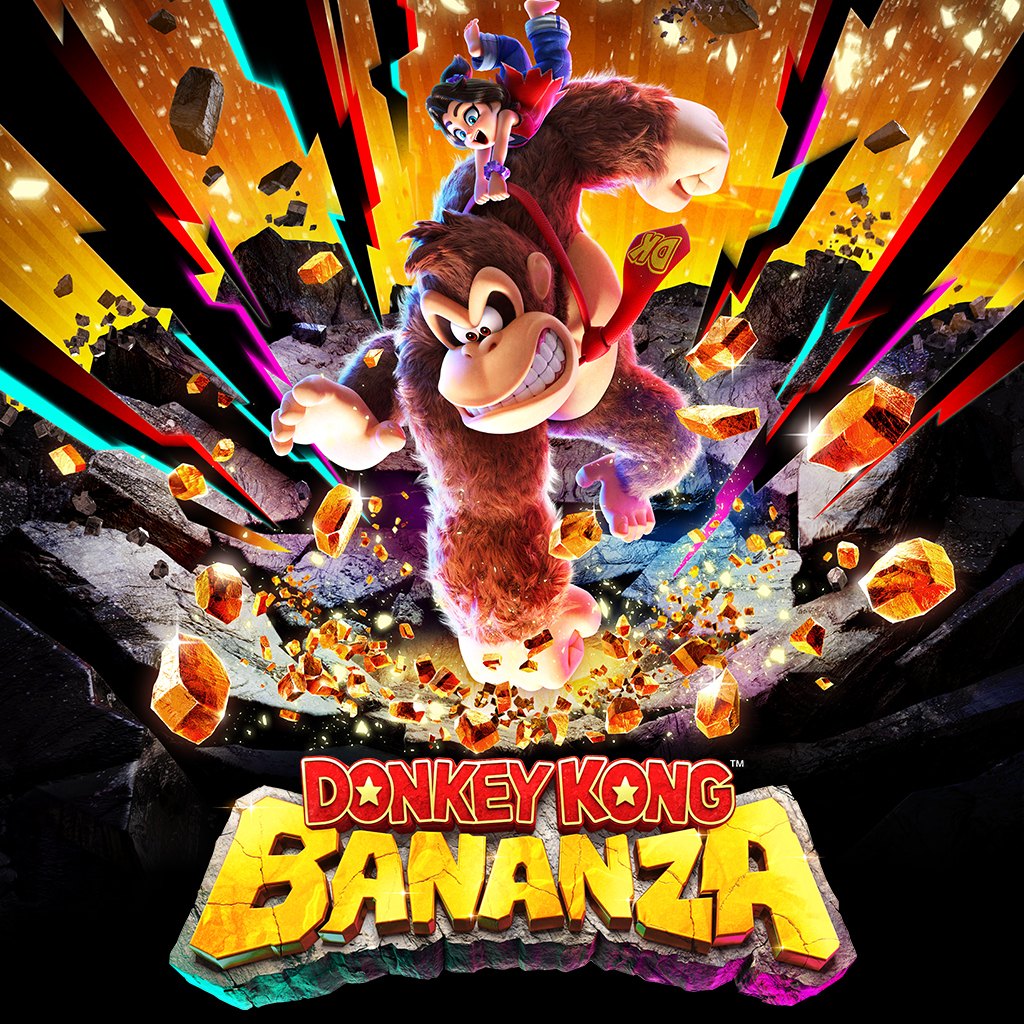
Donkey Kong’s first 3D adventure in a quarter of a century, and the game that proved the Nintendo Switch 2 could do things its predecessor could not. Released on 17 July 2025, six weeks after the console, Donkey Kong Bananza comes from the Super Mario Odyssey team at Nintendo EPD Tokyo and is built on one idea: almost everything can be smashed. DK punches through hillsides, tears boulders out of the ground and tunnels wherever he pleases, down through 17 layers of an underground world towards the Planet Core, where any wish is said to come true. On his shoulder rides Pauline, here a 13-year-old with a remarkable voice, whose songs turn him into five animal Bananza forms. Against them stand Void Kong and his mining company, and behind them a much older enemy. It scored 91 on Metacritic, won Best Family Game at The Game Awards and had sold 5.05 million copies by 30 September 2026.
Developer:Nintendo EPD Tokyo, with 1-UP Studio and tri-Crescendo
Publisher:Nintendo
Platform:Nintendo Switch 2
Genre:3D platformer, action-adventure
Released:17 July 2025 worldwide (United Arab Emirates 17 September 2025; Indonesia scheduled for 10 December 2026)
Players:1–2 (co-op on one console, or by GameShare locally and online)
DLC:DK Island & Emerald Rush (paid, 12 September 2025)
Latest version:Ver. 3.2.0 (24 February 2026)
Sales:5.05 million as of 30 September 2026 (Nintendo IR)
Metacritic:91 (143 reviews)
Advertisement
Overview
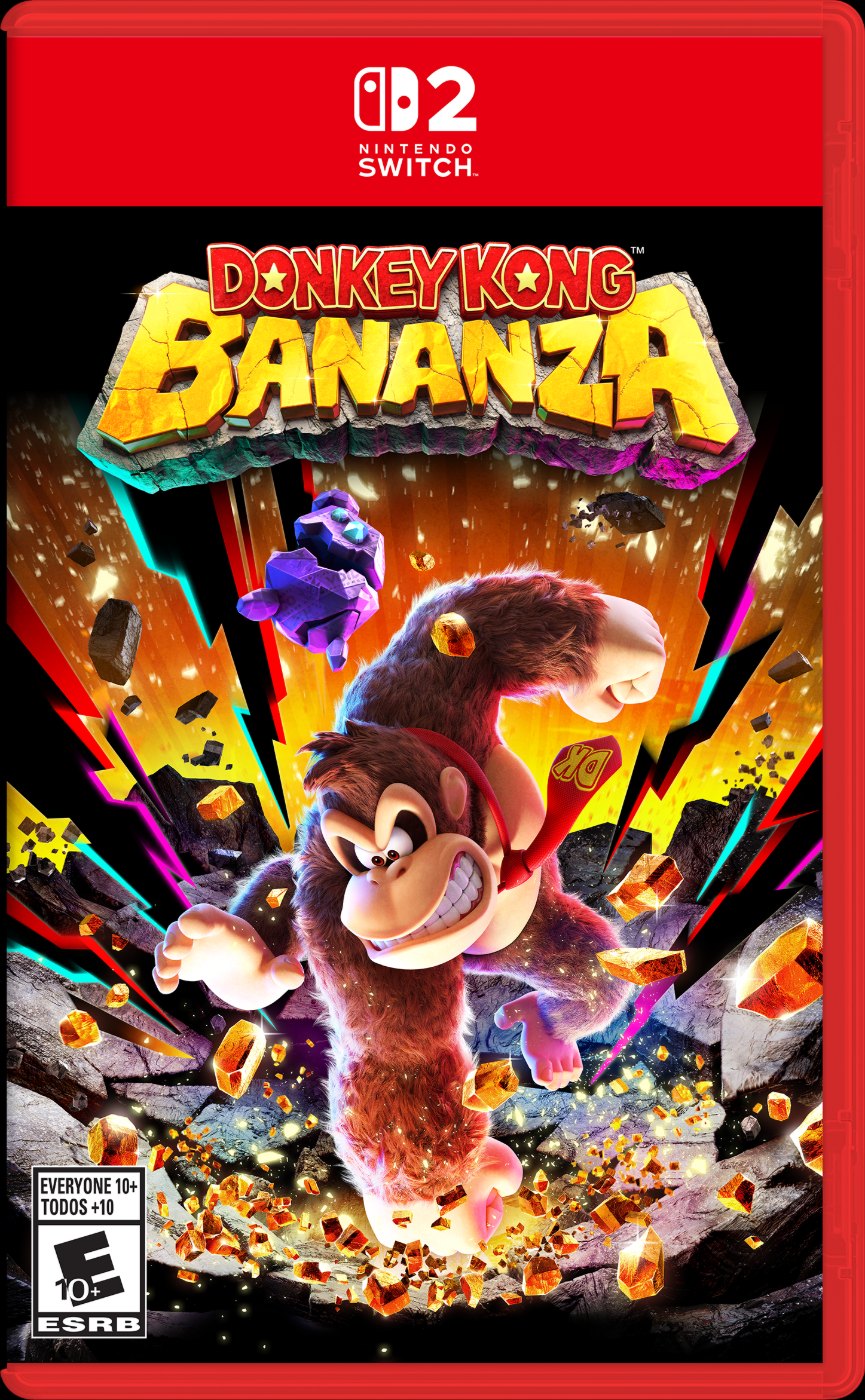
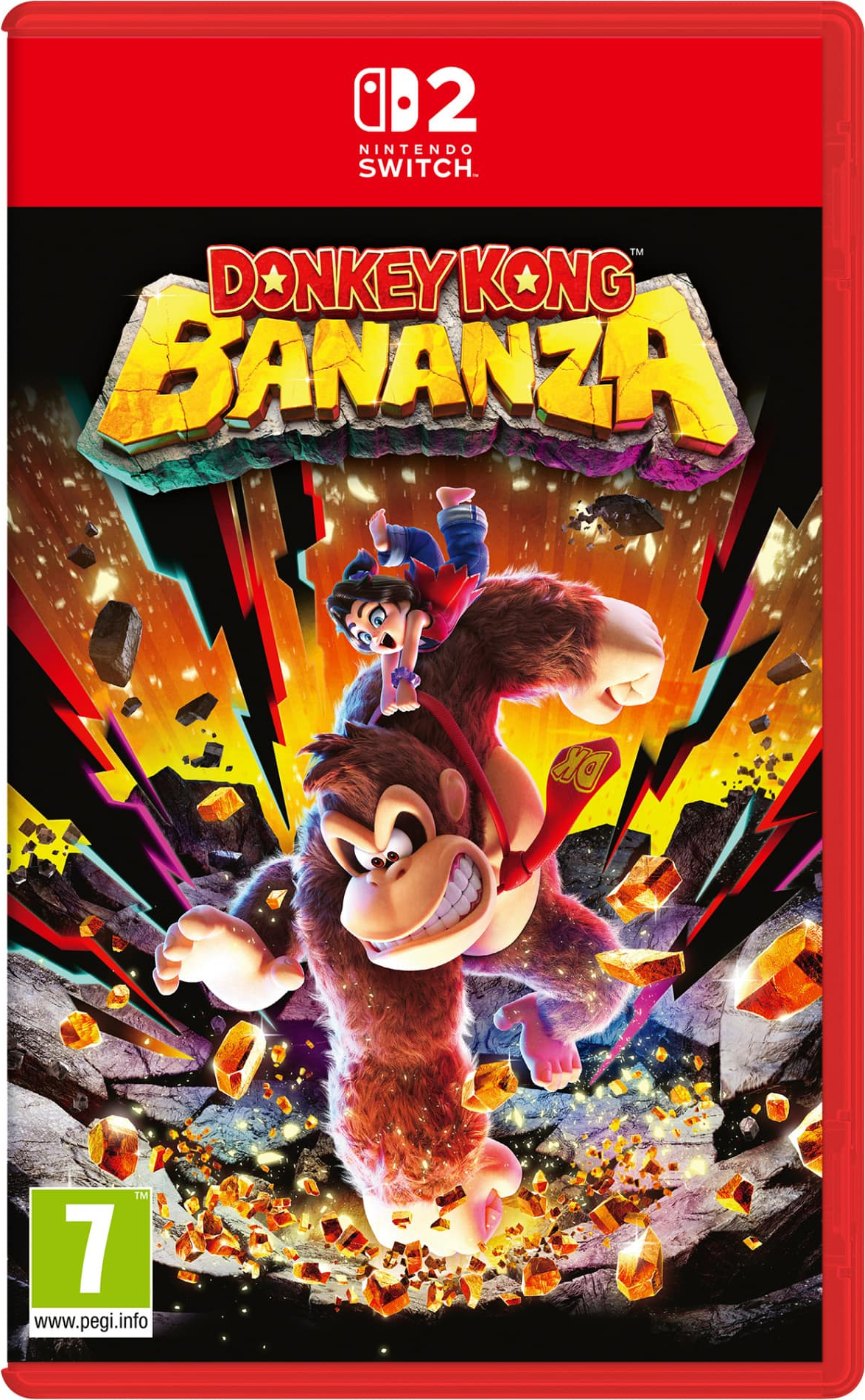
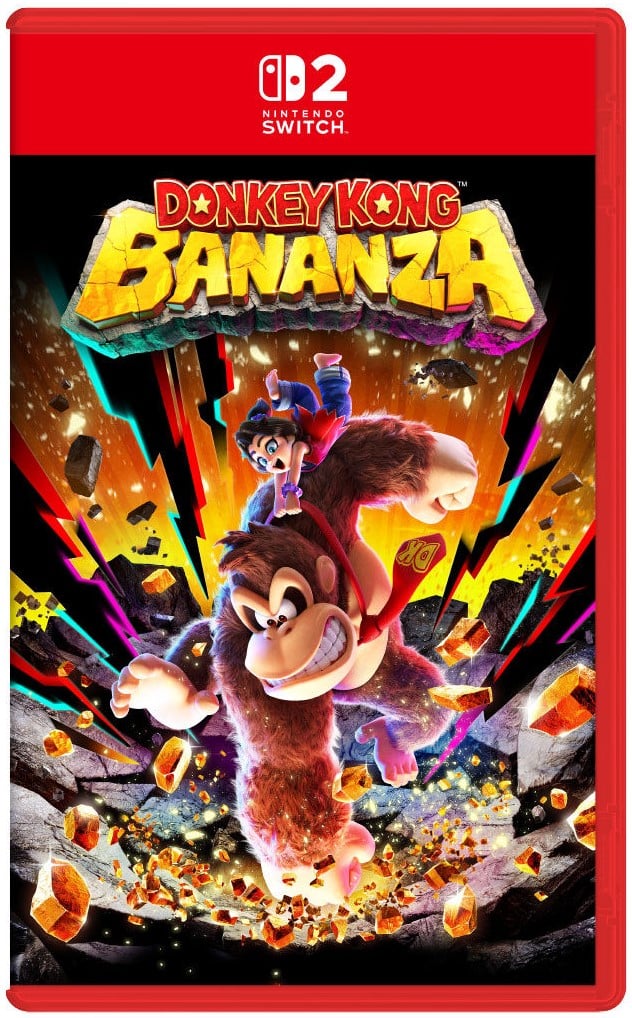
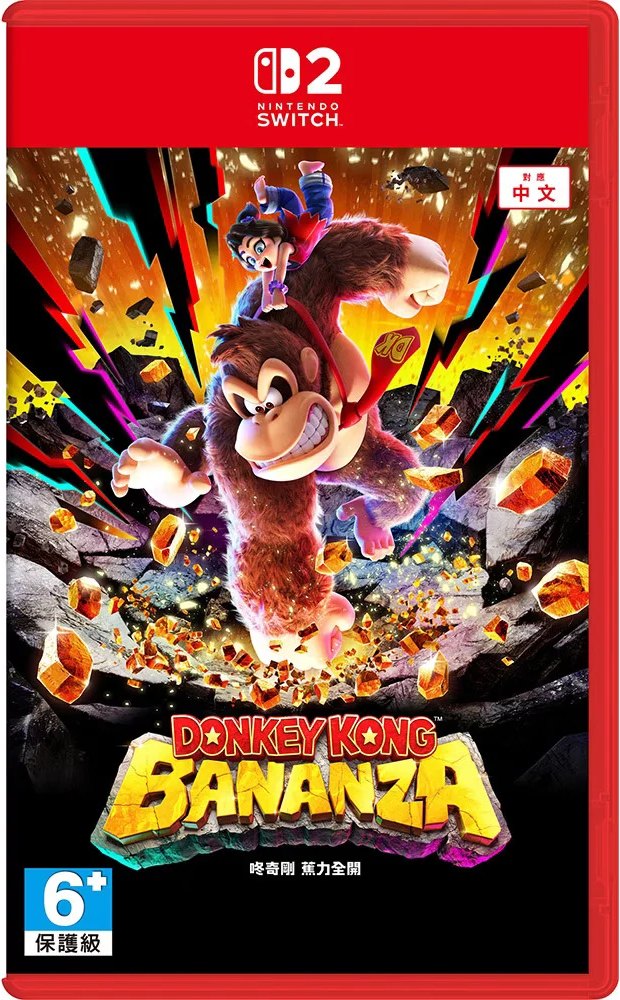
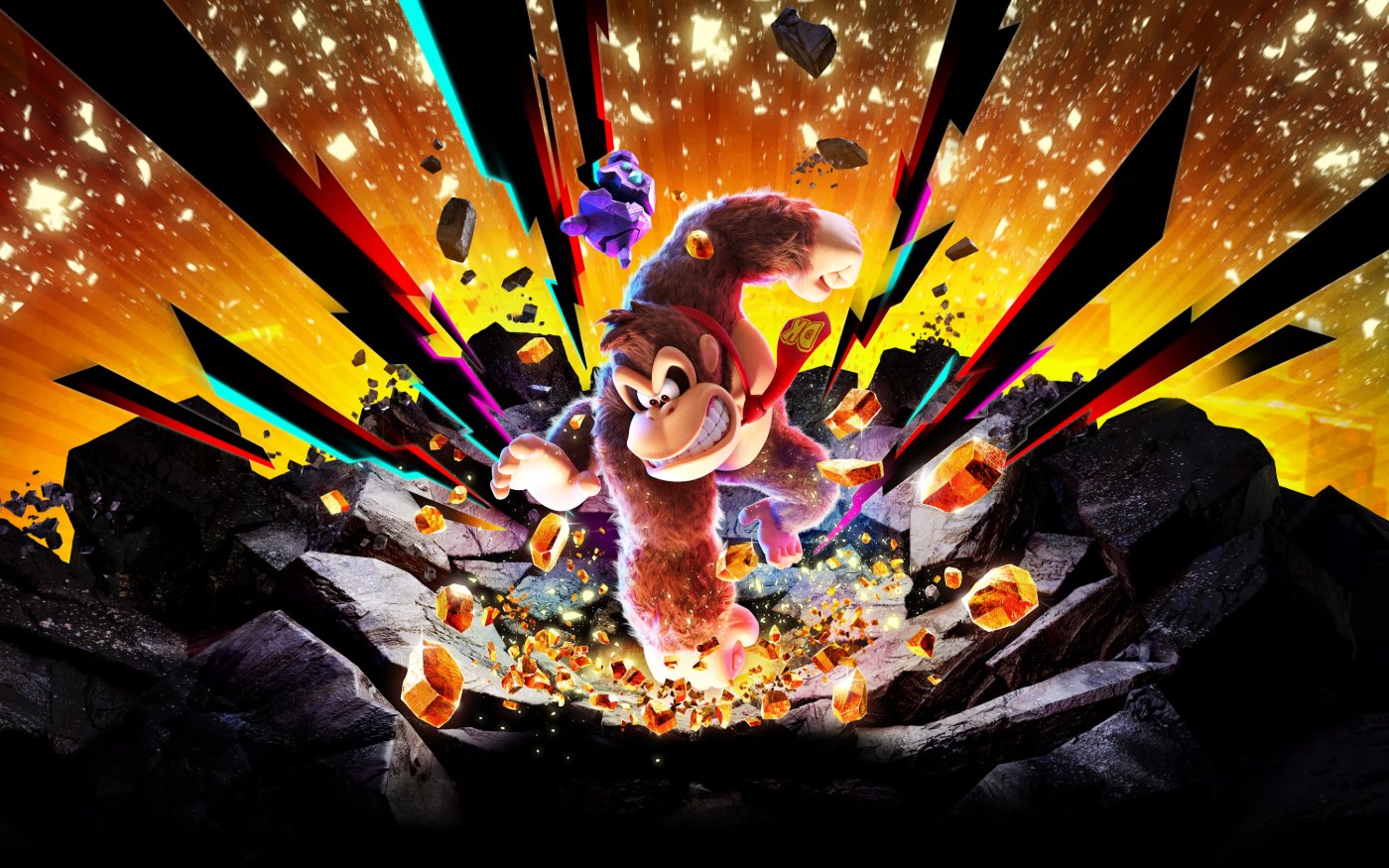
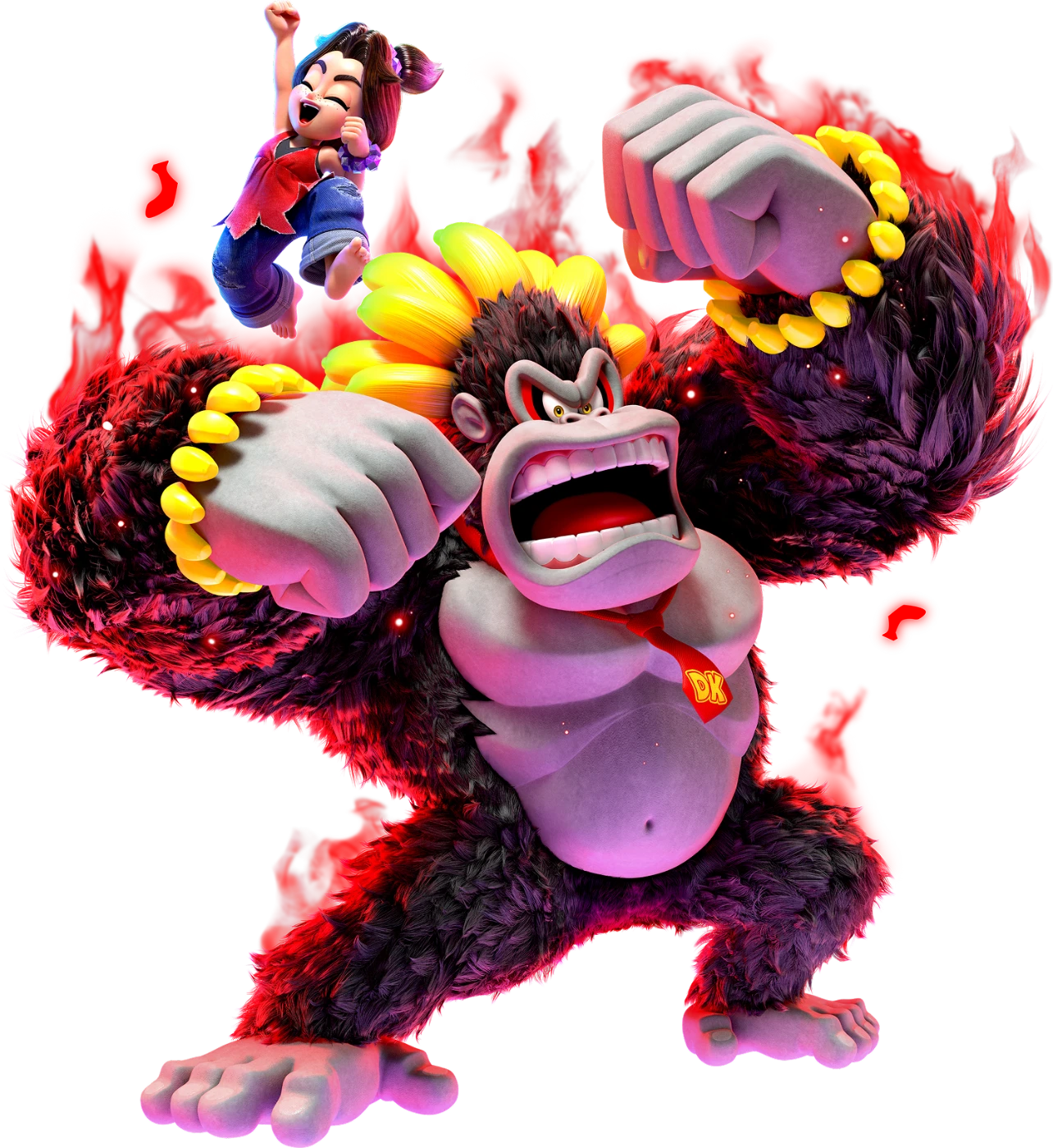
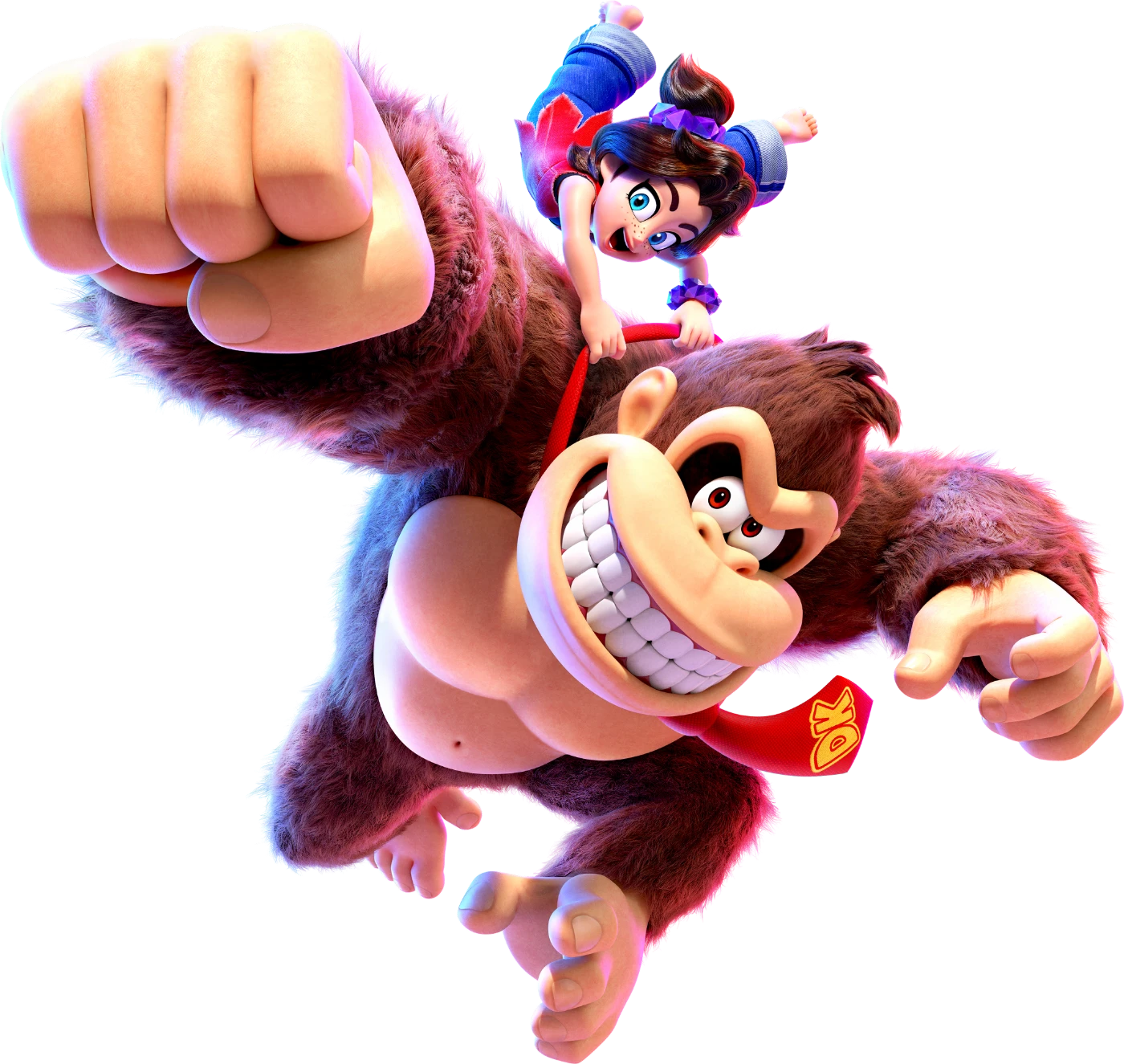
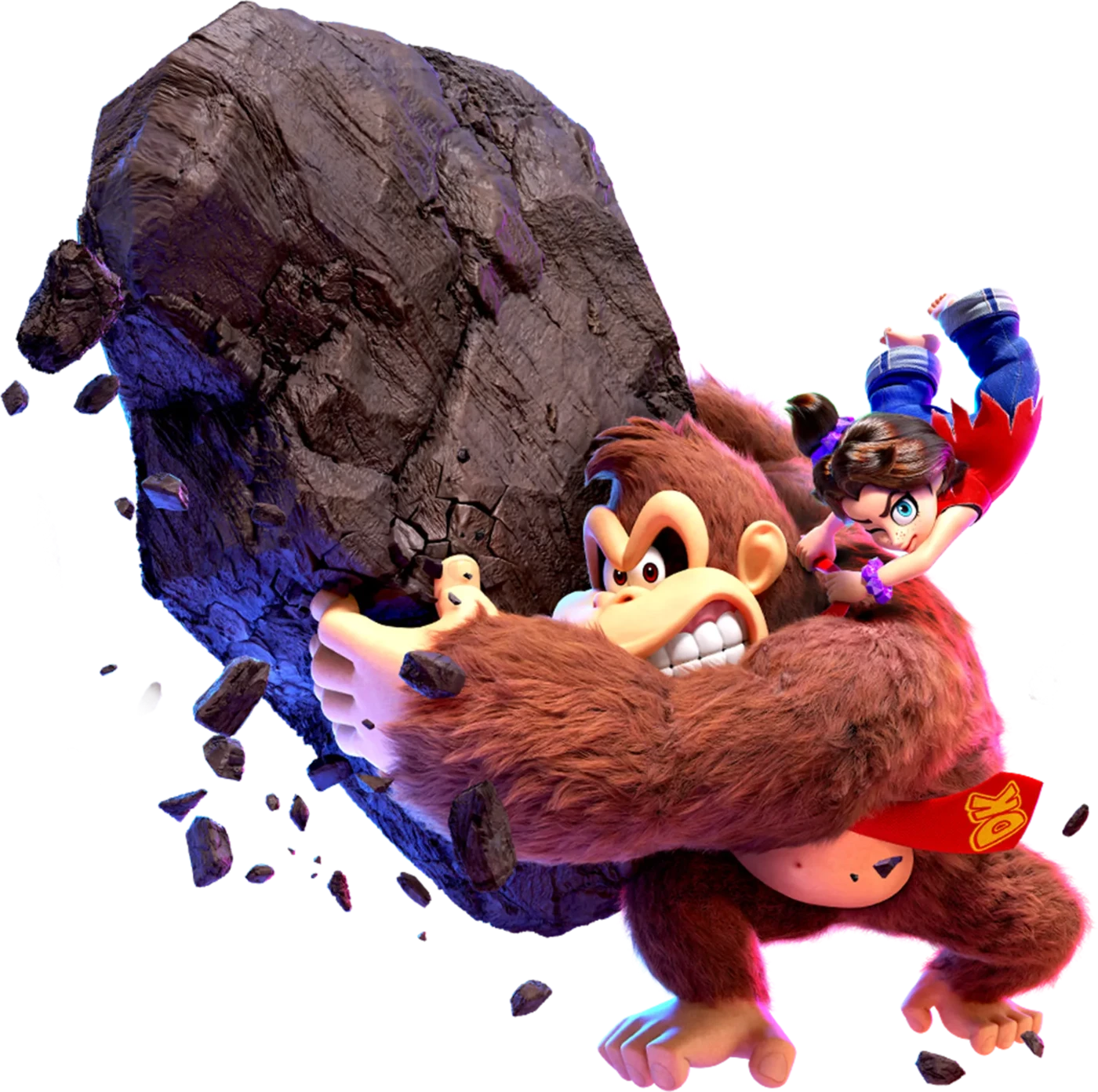
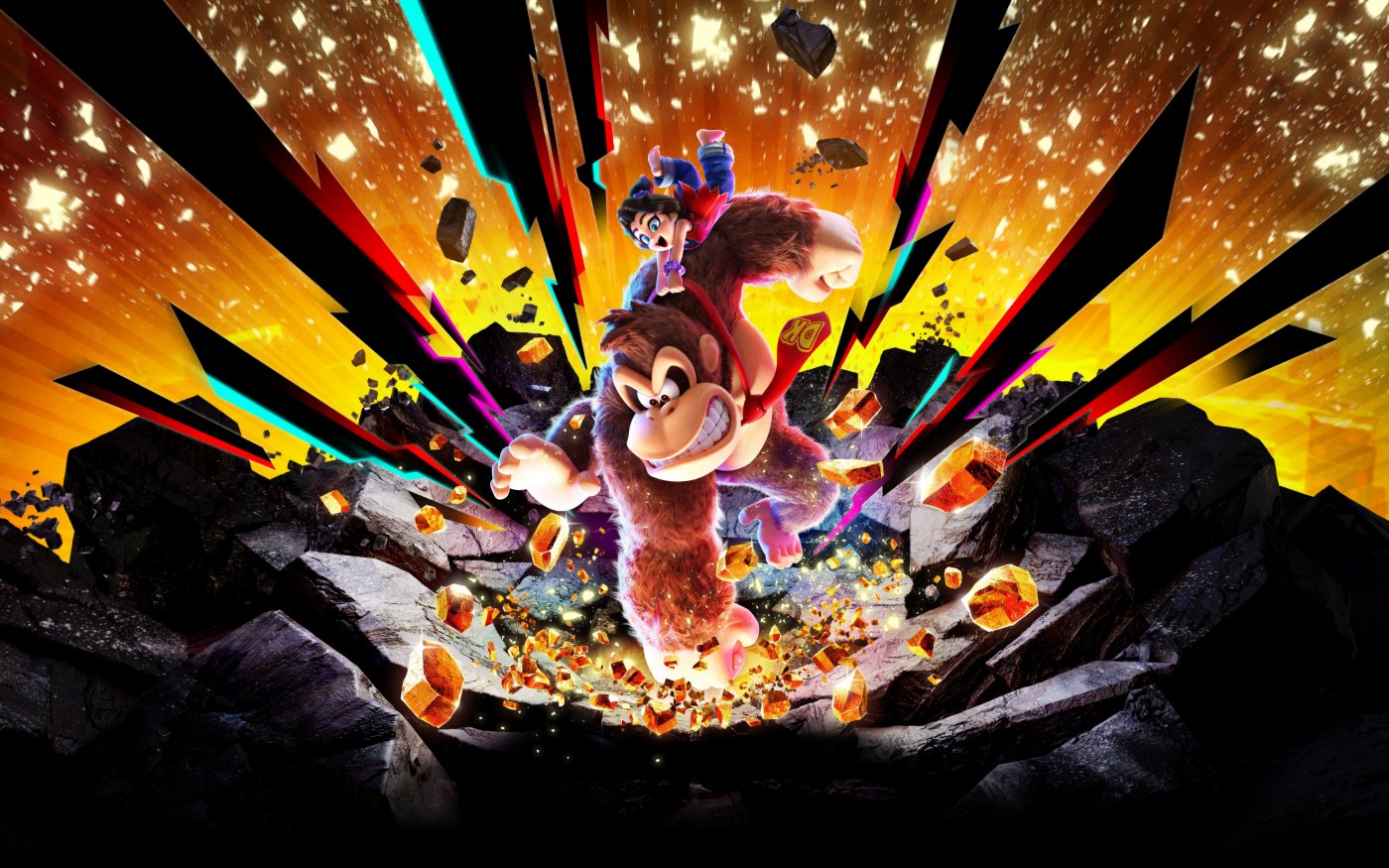
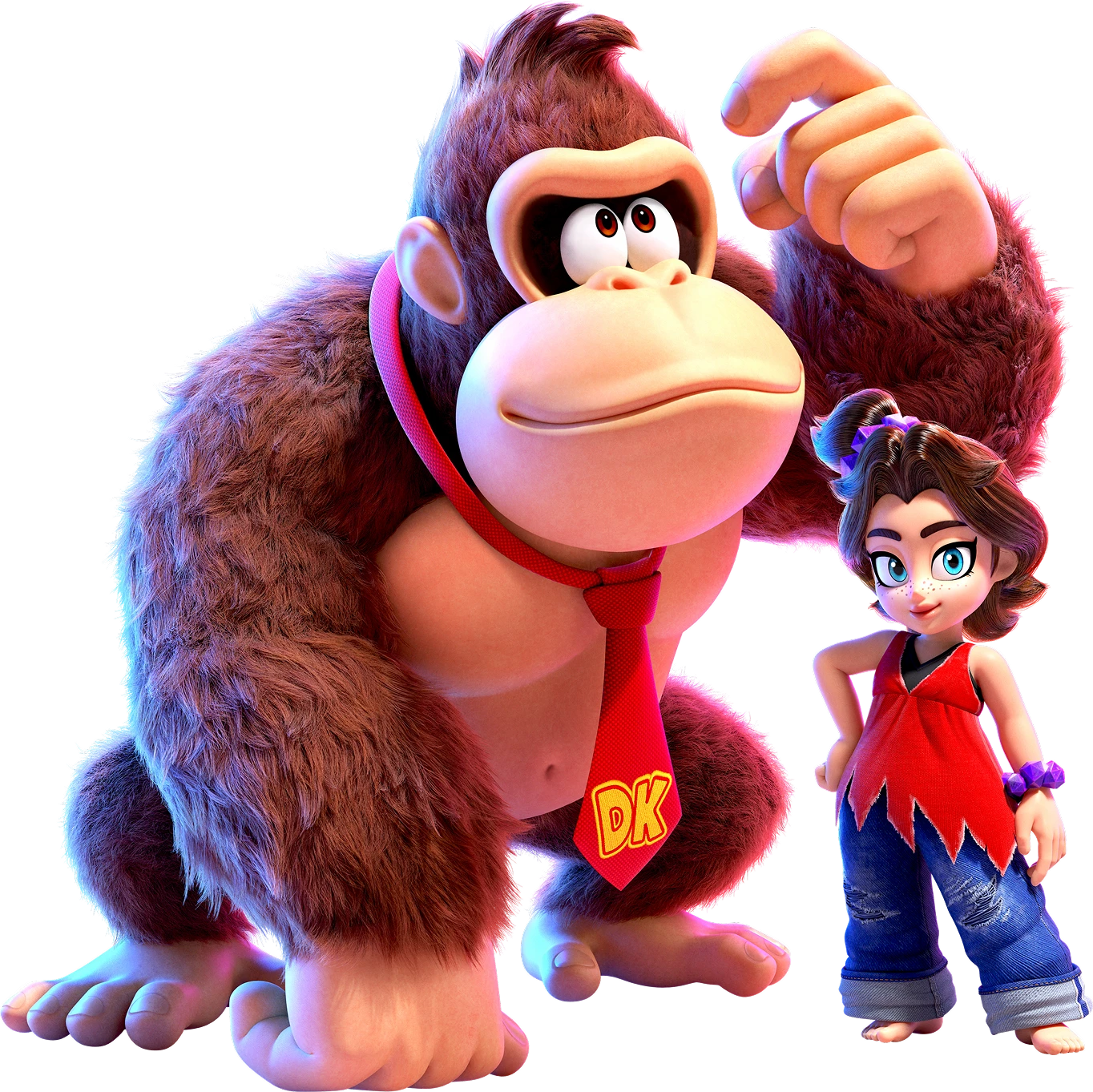
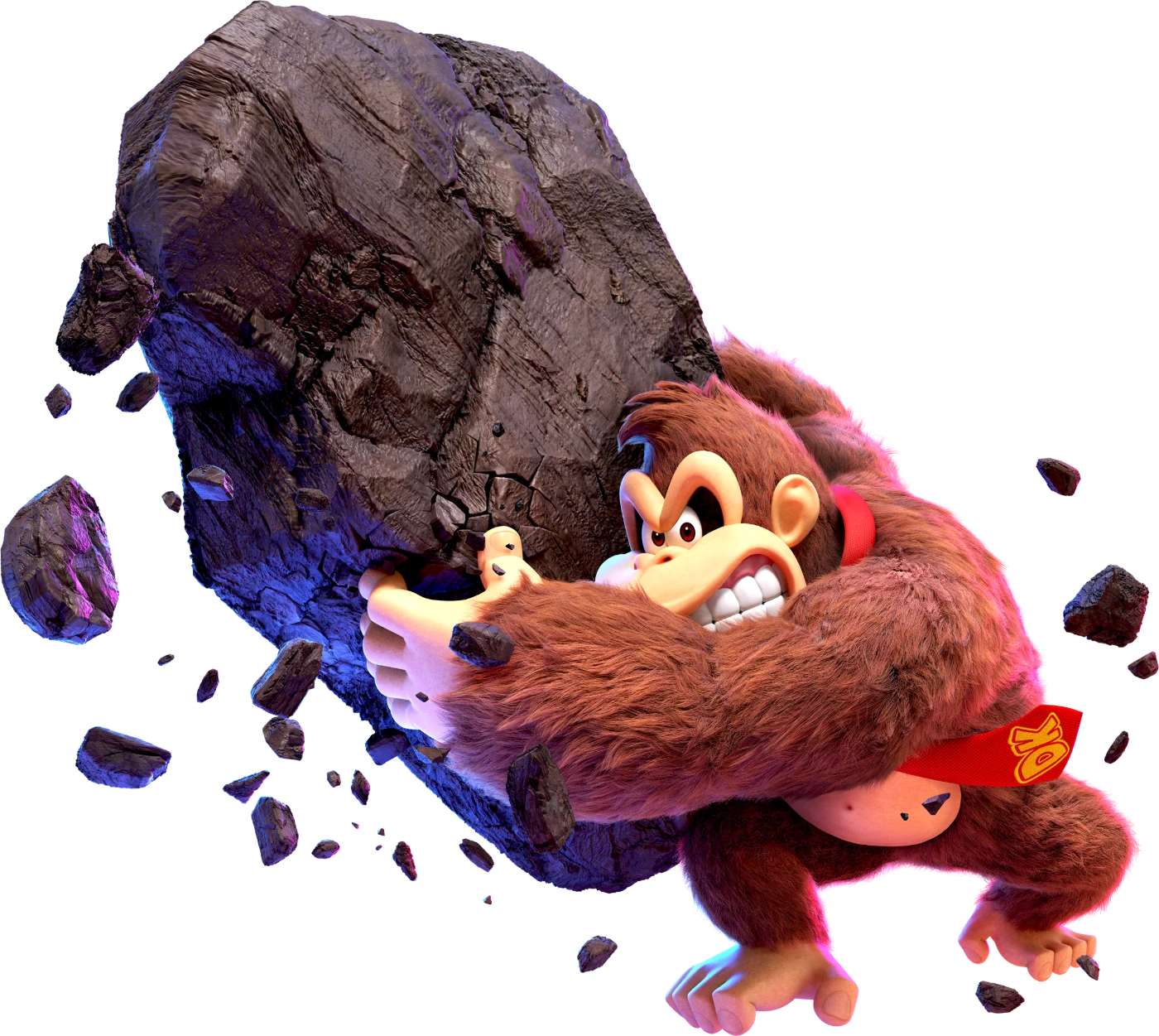
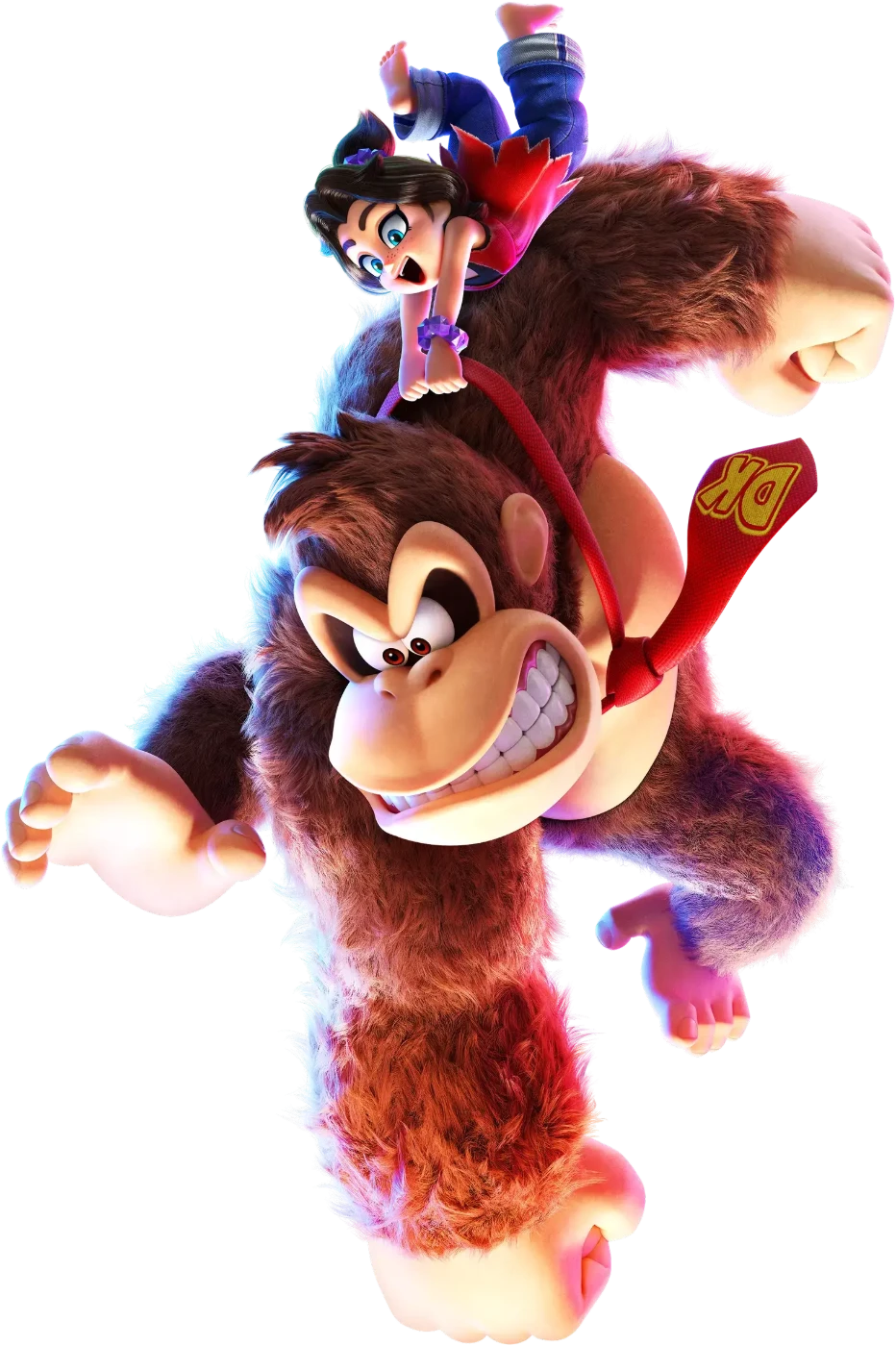
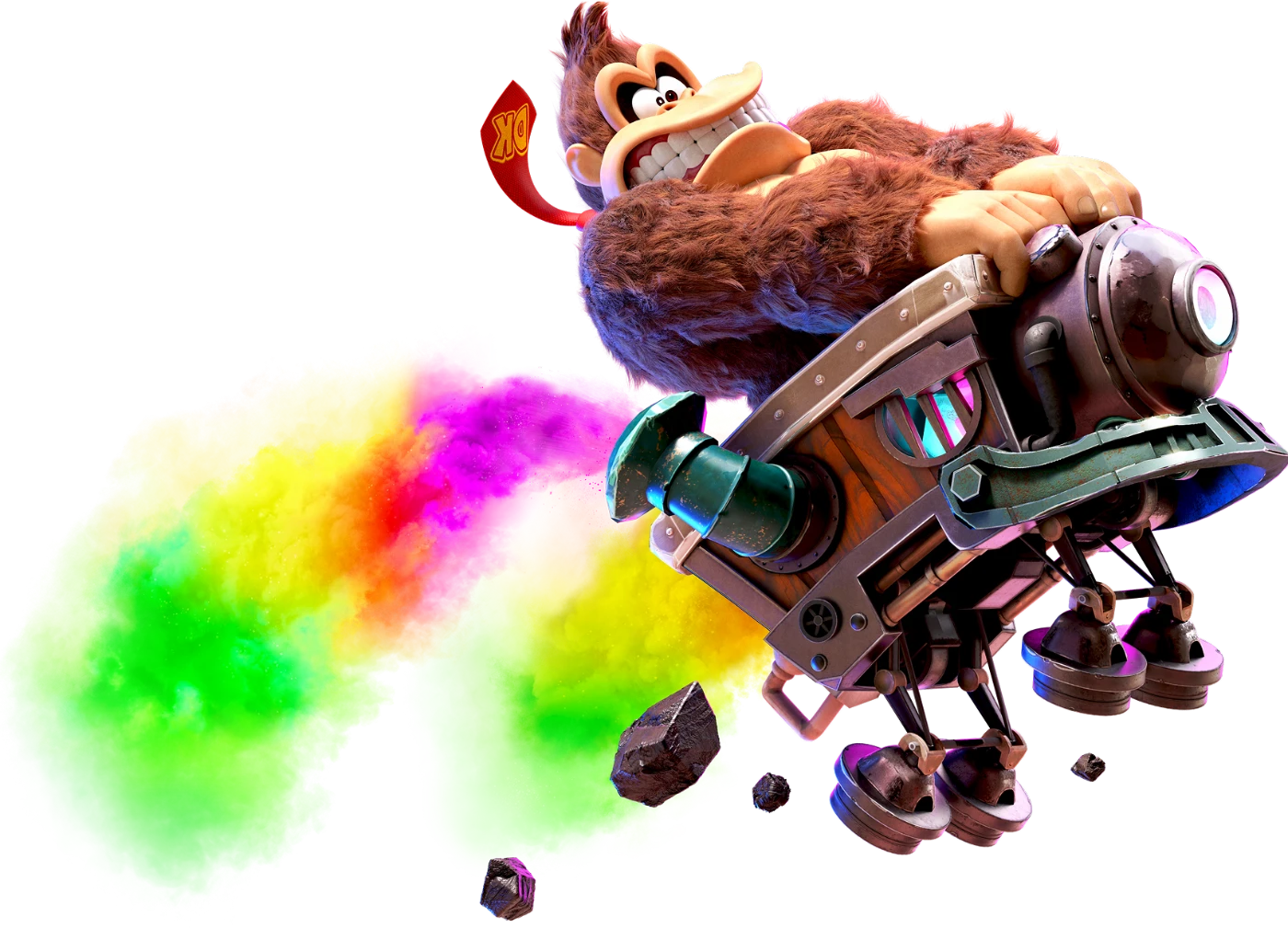
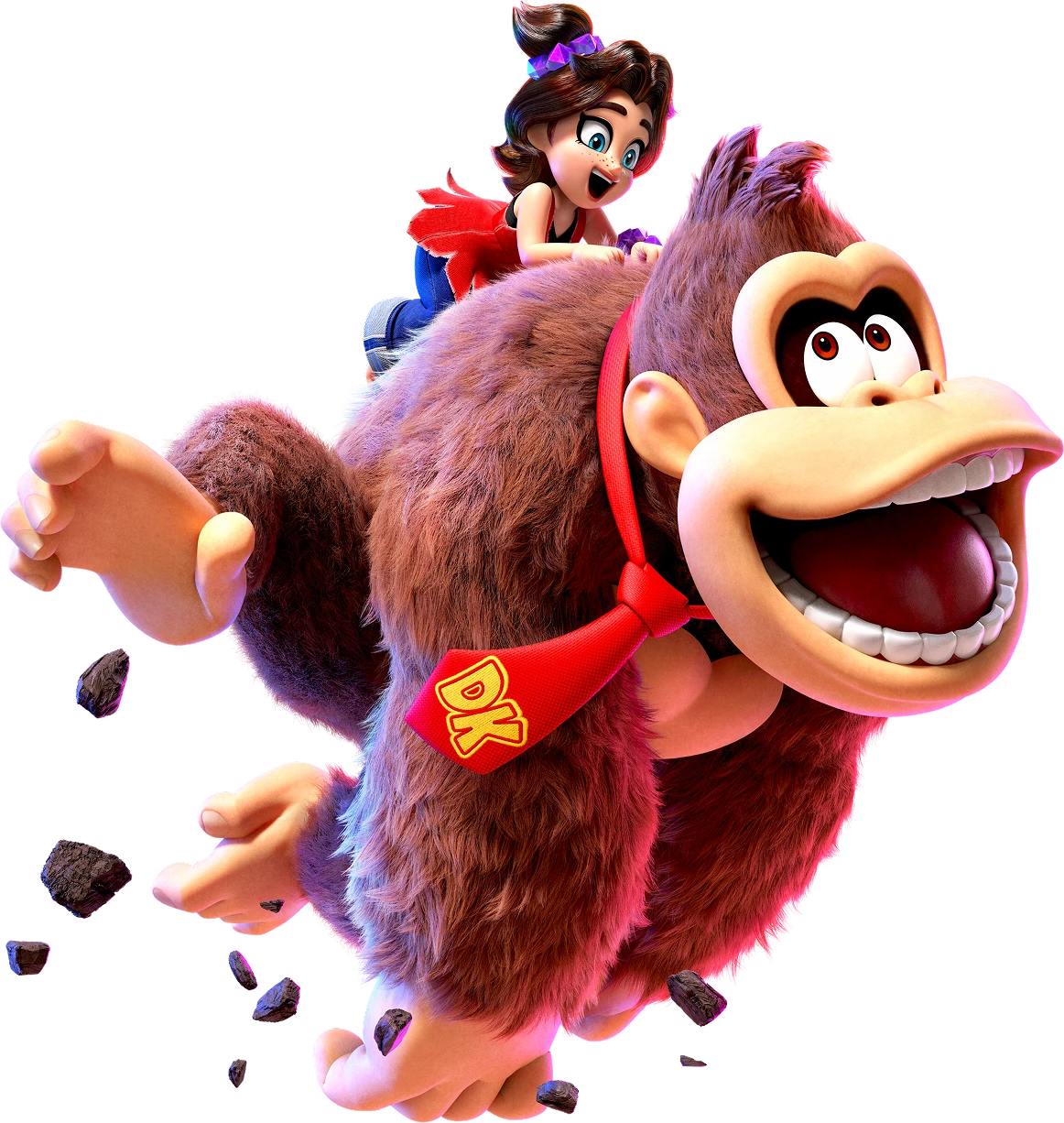
The key artwork: Donkey Kong, Pauline and a great deal of flying rock.
Donkey Kong Bananza was the surprise at the end of the Nintendo Switch 2 Direct on 2 April 2025: a brand-new 3D Donkey Kong, the first since Donkey Kong 64 in 1999 and, by most reckonings, the first original game in the series since Donkey Kong Country: Tropical Freeze in 2014. It went on sale around the world on 17 July 2025 as the second big exclusive for the new console after Mario Kart World.
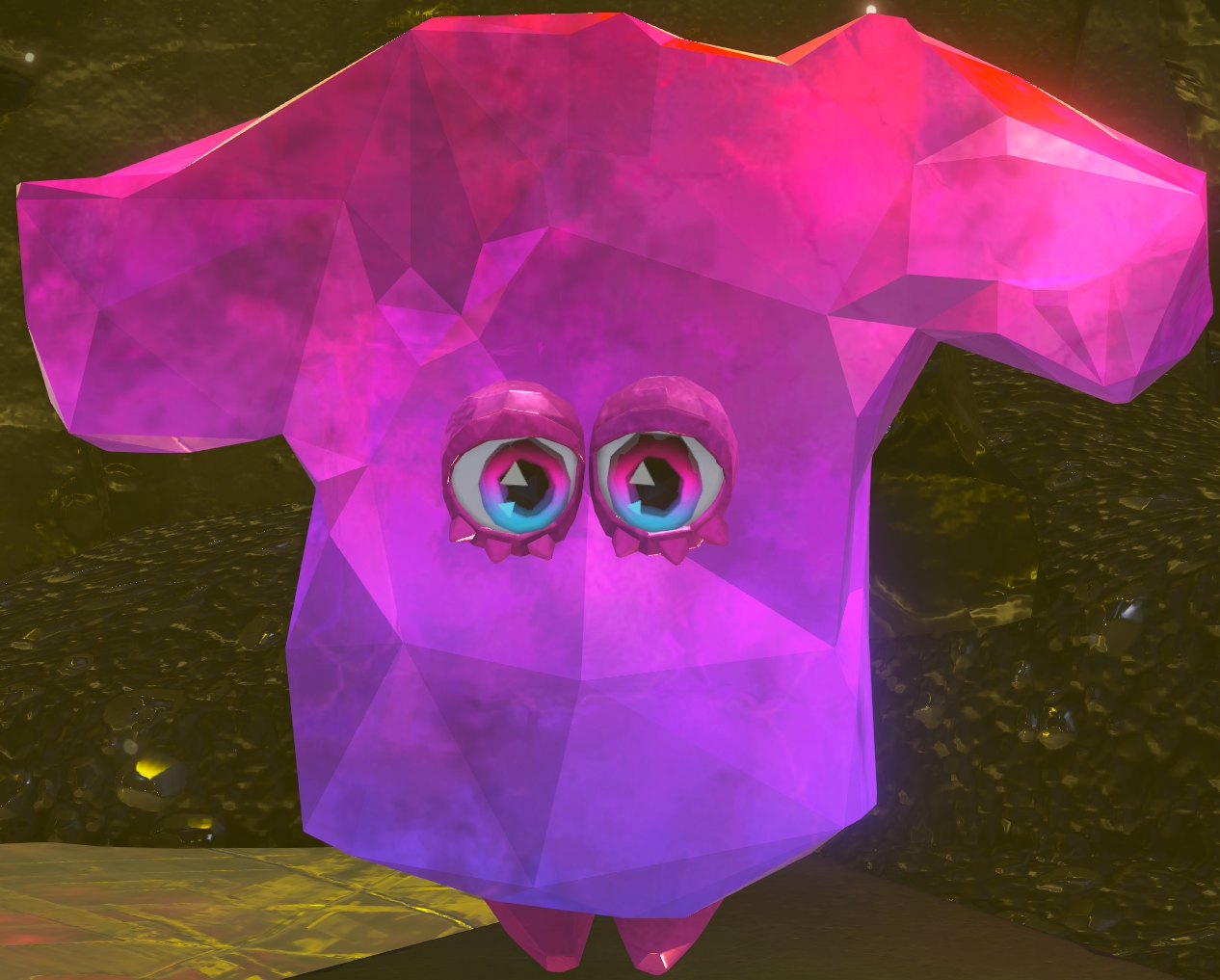
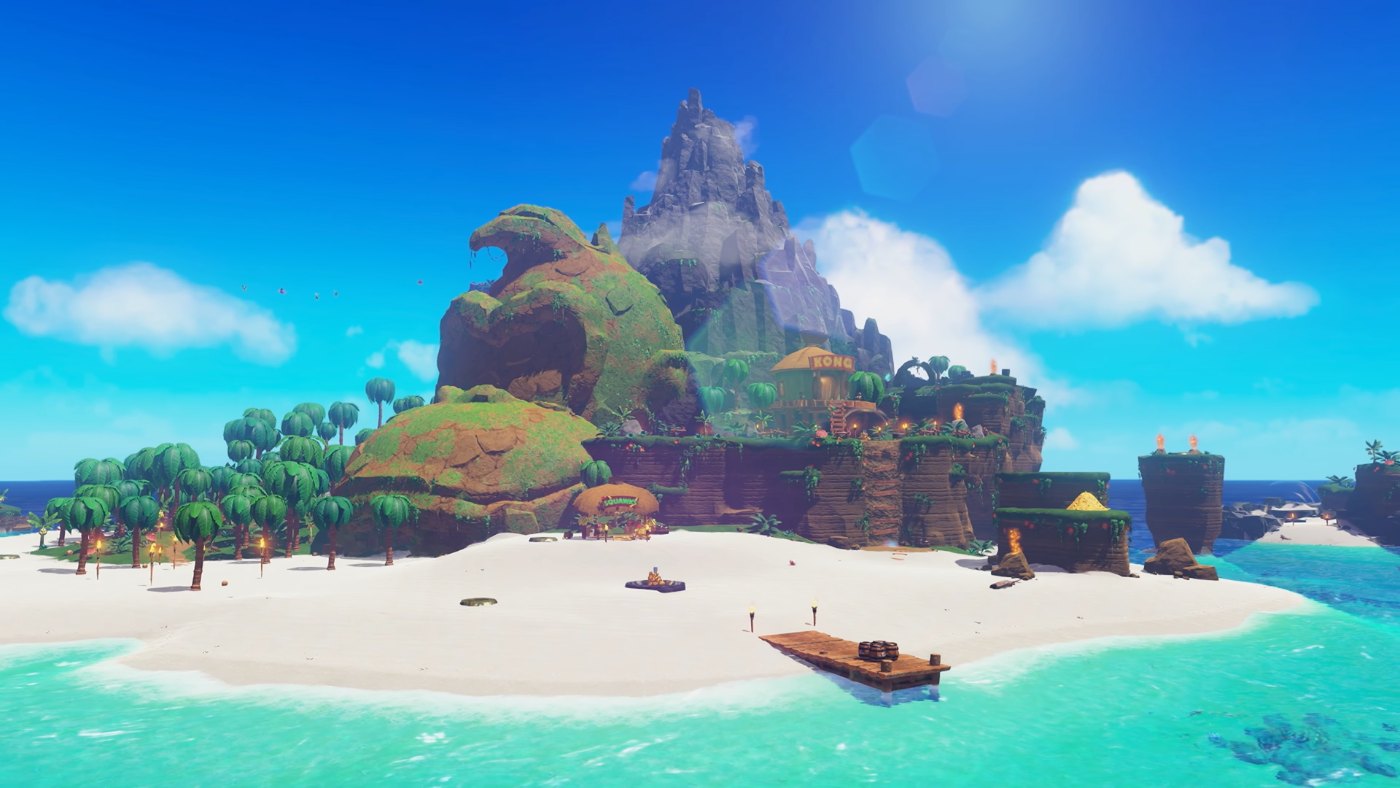
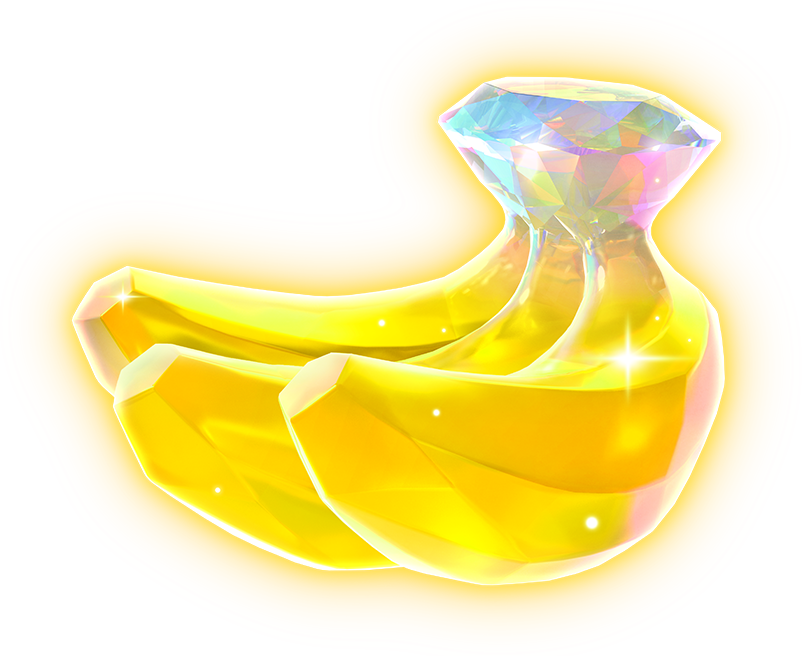
The set-up is brisk. Rumours of Banandium Gems, golden bananas in crystal form, have brought Donkey Kong to the mines of Ingot Isle. Then a rival outfit, Void Company, drops in on a giant drilling machine, scoops up the gems and hammers the whole island into the ground. DK falls into an underground world of stacked “layers” and sets off downwards after his bananas, in the company of an odd purple rock that turns out to be a girl called Pauline.
What makes it unlike any other Nintendo platformer is the ground itself. The terrain is built from voxels, tiny cubes, so that hills, walls, floors and even many enemies can be punched apart, dug through, ripped up and thrown. Banandium Gems are hidden inside the scenery as often as on top of it, and the quickest route between two points is usually a tunnel. The structure will be familiar to anyone who has played Super Mario Odyssey: big open levels, hundreds of small rewards, outfits to buy and a companion with powers of her own. The producer is that game’s director, Kenta Motokura.
Critics called it the Switch 2’s first essential game. It holds a Metacritic average of 91, won the Critics’ Choice award at the 2025 Golden Joysticks and Best Family Game at The Game Awards, where it was also nominated for Game of the Year, and Nintendo’s own figures show 5.05 million copies sold by the end of September 2026. A paid expansion, DK Island & Emerald Rush, followed in September 2025.
Join the unlikely duo of Donkey Kong and Pauline as they smash their way through a vast underground world in Donkey Kong Bananza – only on Nintendo Switch 2.
With his incredible strength, DK can smash and bash his way through almost anything that stands between him and his beloved bananas.
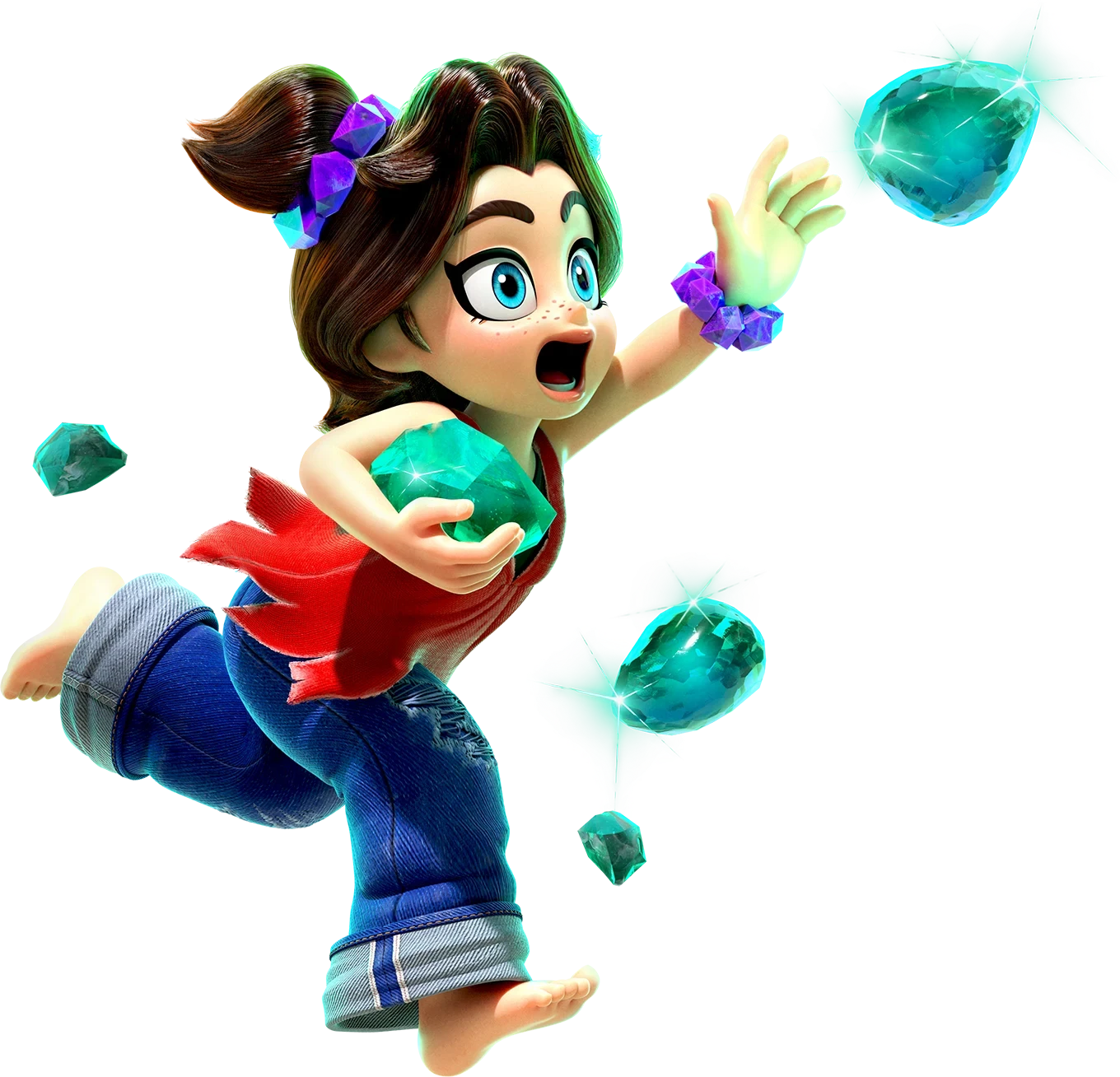
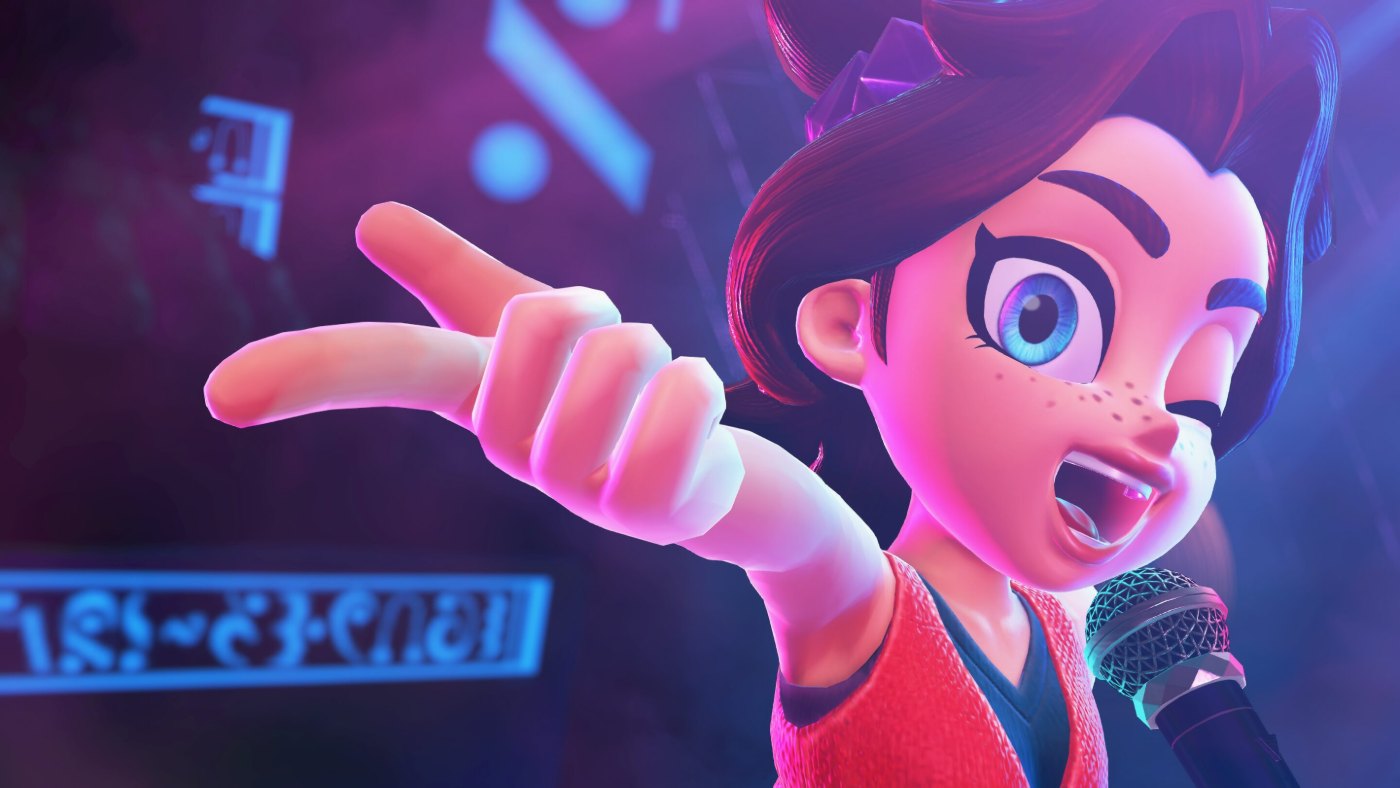
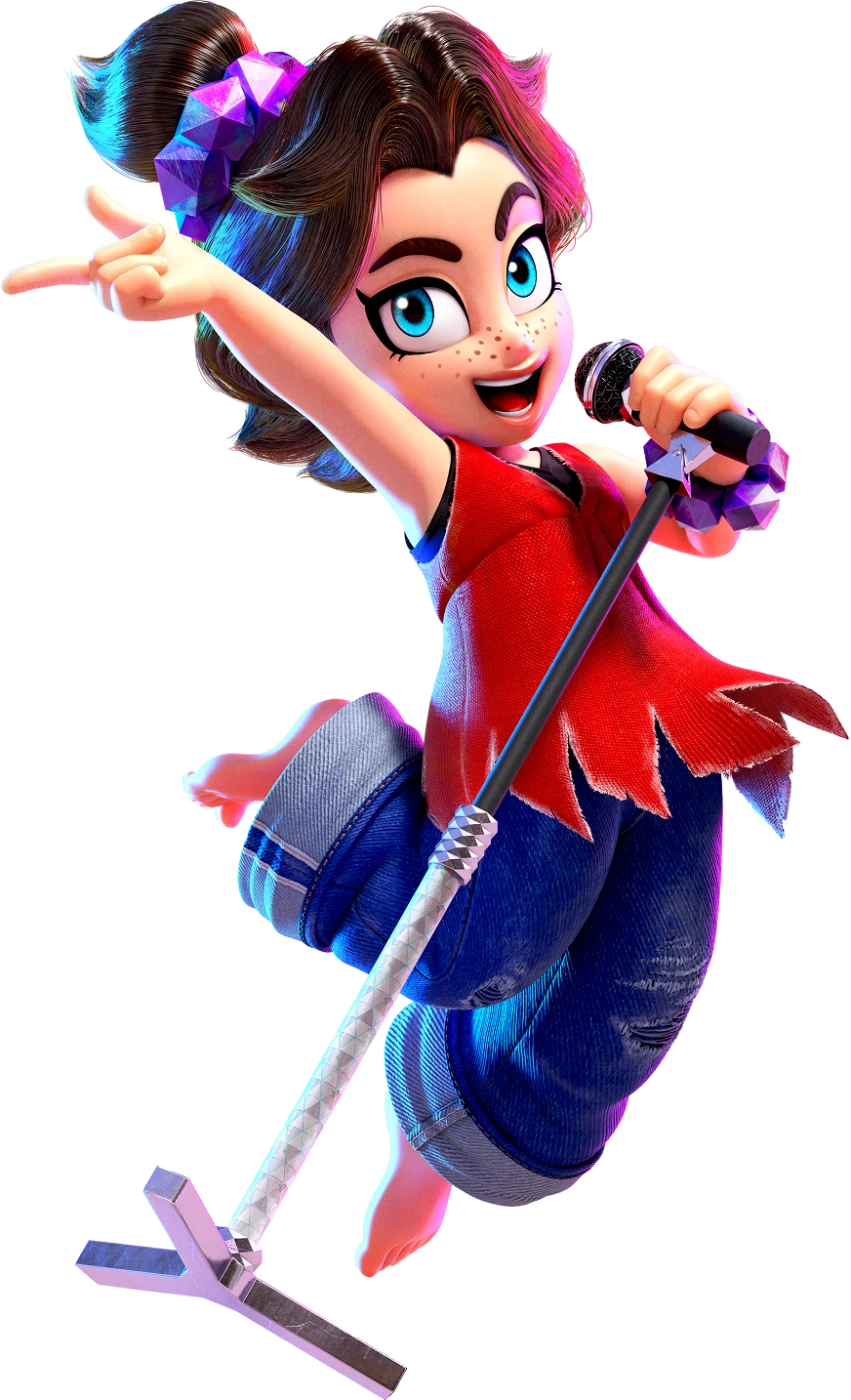
A young girl with a powerful singing voice. She teams up with DK in the hopes of finding a way back to the surface.
— Official description (Nintendo UK, 2025)
Why Donkey Kong Bananza matters to Mario fans
It is the next game from the people who made Super Mario Odyssey, it ends in New Donk City, and its co-star is Pauline, the woman Mario rescued in the 1981 arcade game, reimagined as a teenager at the start of her singing career. It also draws a line under forty years of history: Nintendo has said it wants a 3D Donkey Kong series to sit beside the 2D one, just as Mario has both. If you want to know where the Mario team’s ideas went after 2017, they went underground.
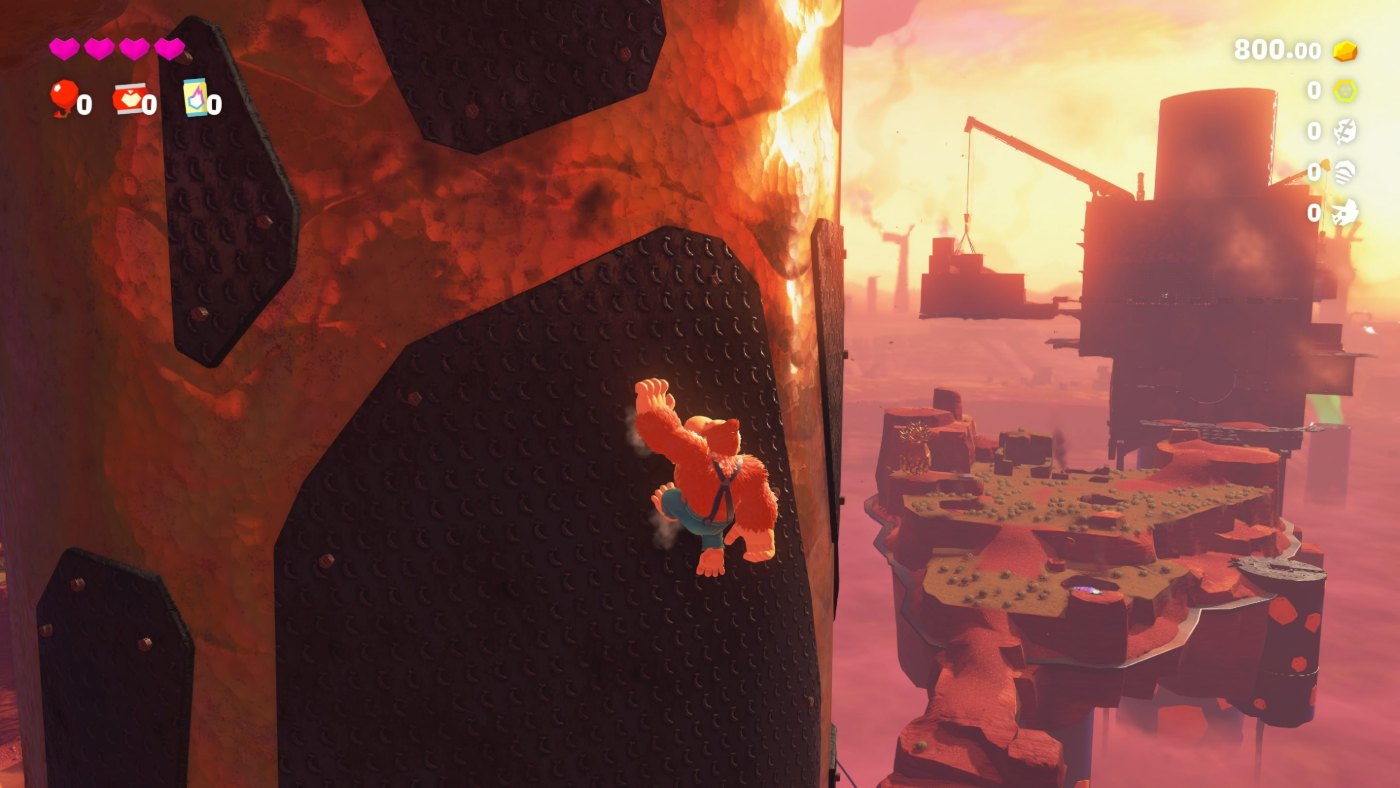
Punching straight through the scenery is the whole idea.Exploring one of the underground layers.Odd Rock turns back into Pauline.Pauline’s song awakens the Kong Bananza.
“we thought the concept of “destruction” would be a good fit.”
Kenta Motokura in Nintendo’s Ask the Developer Vol. 19: Donkey Kong Bananza, Part 1 (15 July 2025).
Producer Kenta Motokura, explaining how the team answered its own question, “What is Donkey Kong?”, after Shigeru Miyamoto pointed them to his hand slaps and Yoshiaki Koizumi to his huge arms and strength.
Quick Answers
The questions people ask most about Donkey Kong Bananza, answered briefly here and in depth further down the page. Story answers contain spoilers.
When did Donkey Kong Bananza come out?
On 17 July 2025 for Nintendo Switch 2, worldwide. The United Arab Emirates followed on 17 September 2025, and an Indonesian release is reportedly scheduled for 10 December 2026. More →
Is it on the original Nintendo Switch?
No. Development began on Switch and moved to Switch 2; the finished game is a Switch 2 exclusive. An original Switch can only join in as Pauline through local GameShare. More →
How many layers are there?
Seventeen underground layers, from Ingot Isle Cave-In down to the Planet Core, followed by a finale in New Donk City. The paid DLC adds DK Island. More →
What are the Bananza transformations?
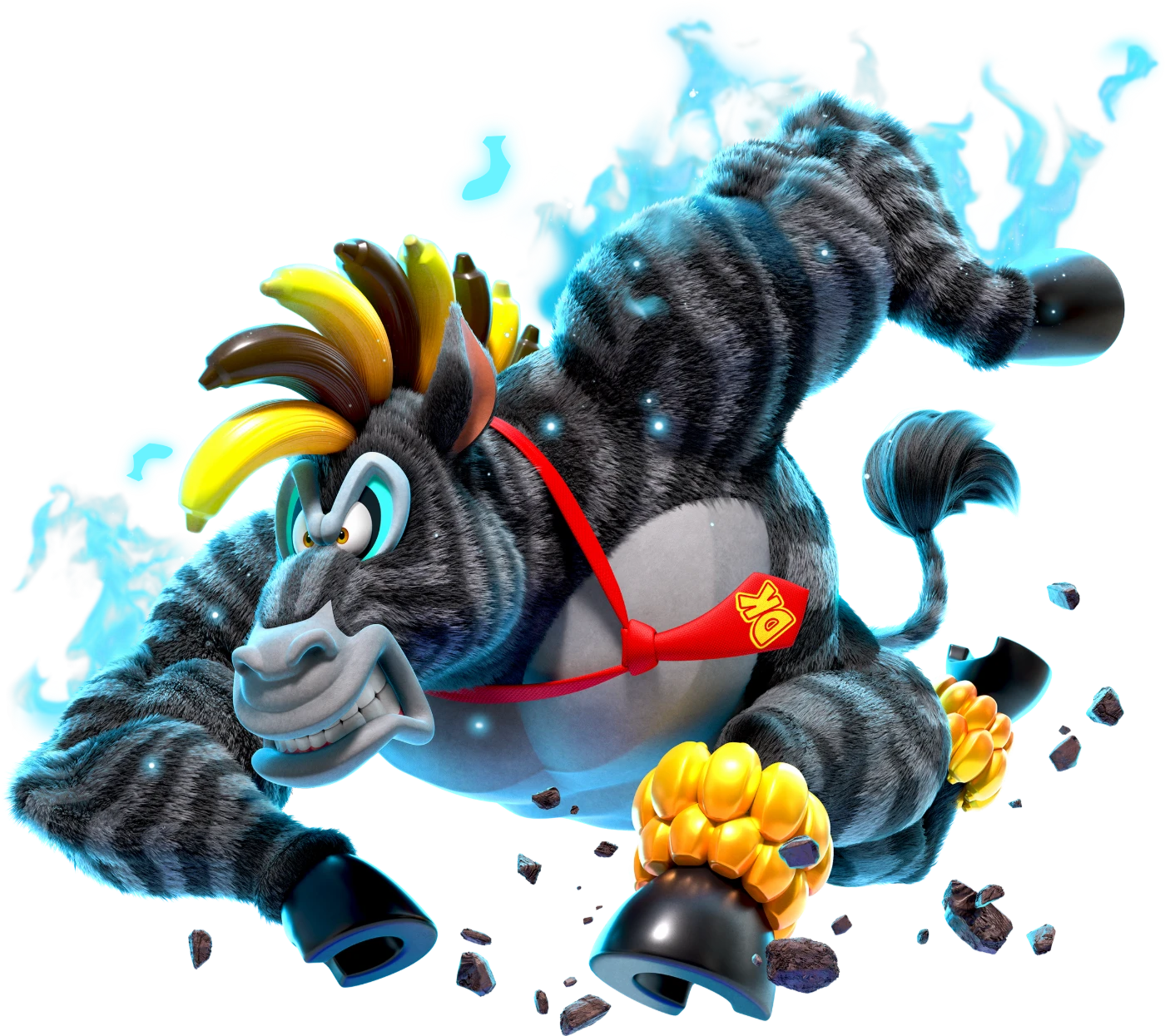
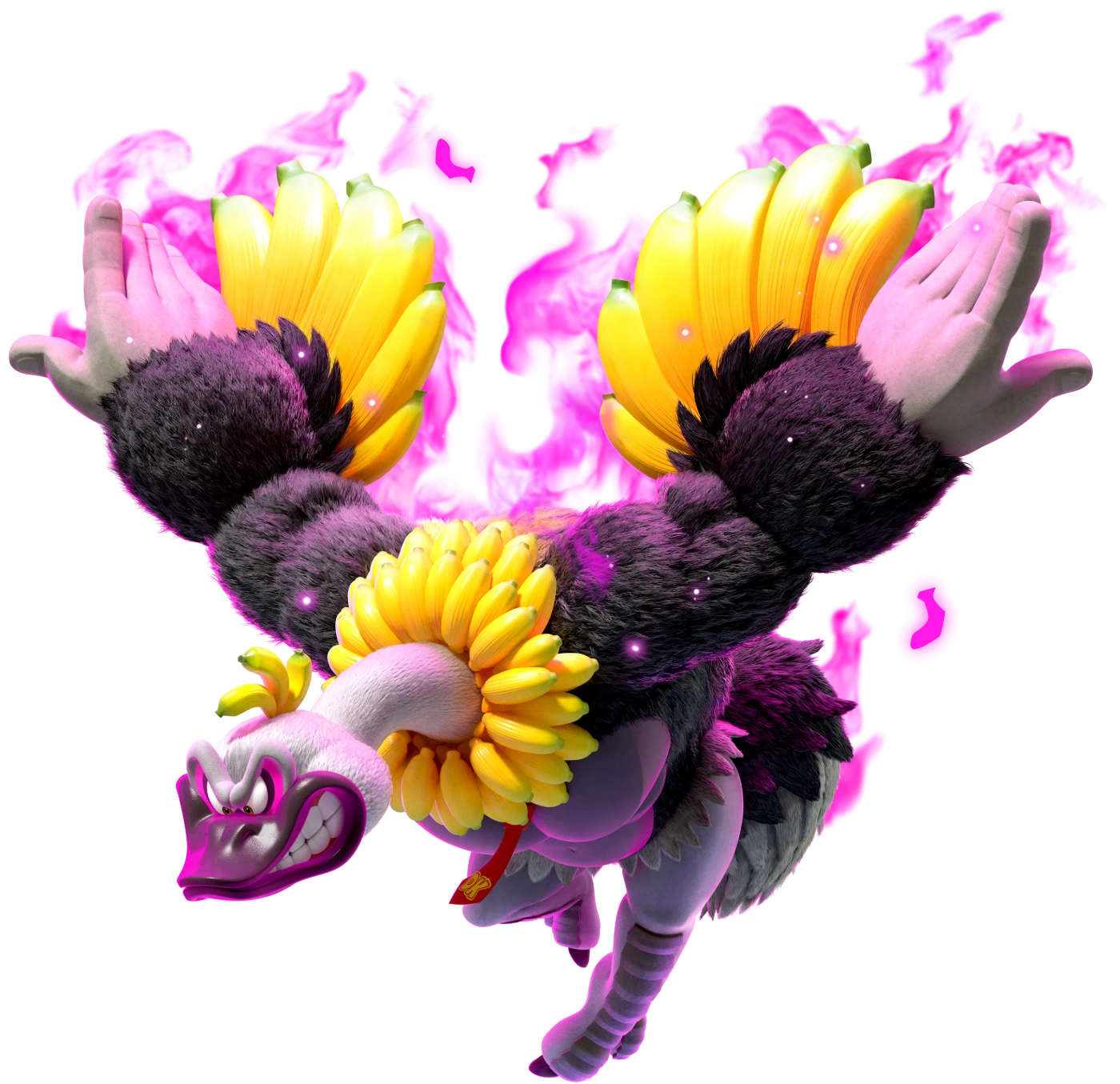
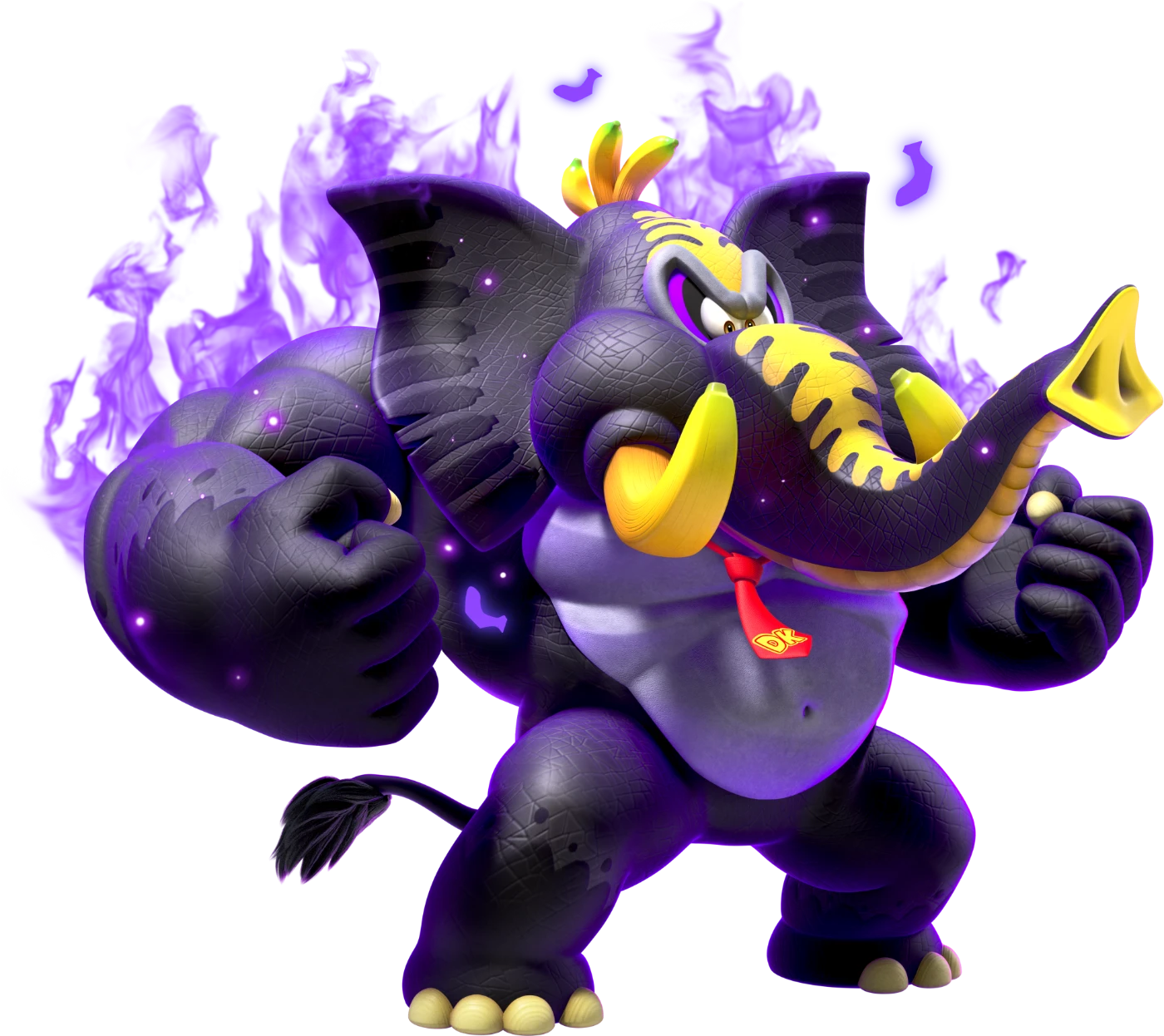
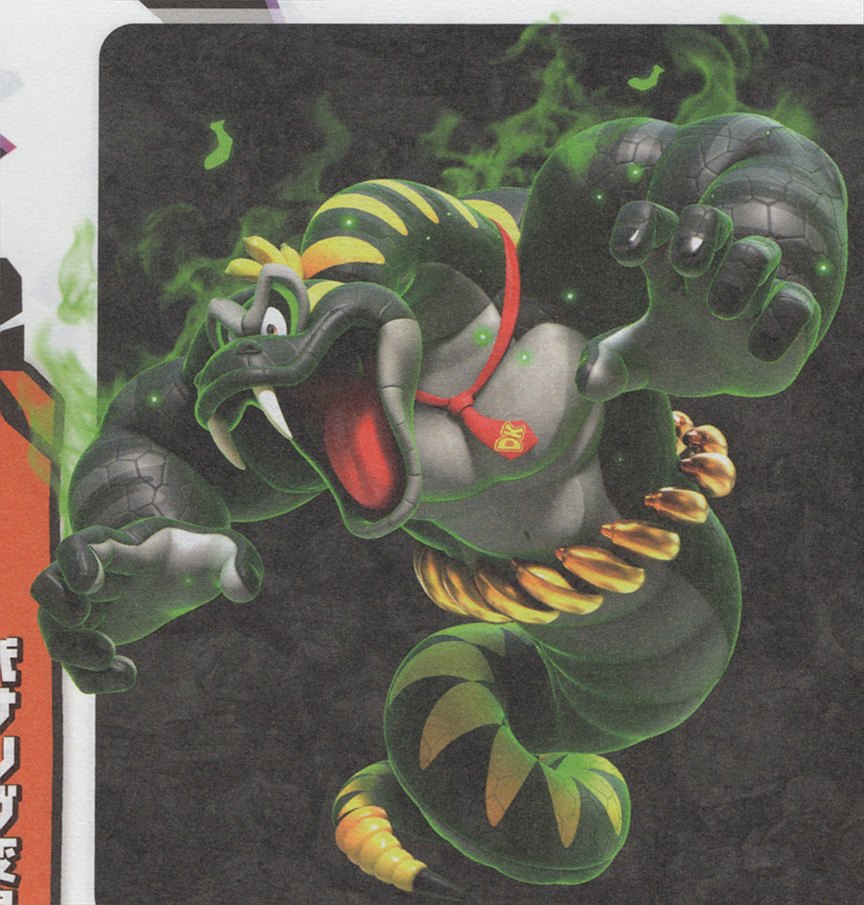
Five: Kong (strength), Zebra (speed and running on water), Ostrich (gliding and Egg Bombs), Elephant (inhaling terrain) and Snake (high jumps and a time-slowing Glare). Each is taught by an animal Elder once Pauline has learned its song. More →
How old is Pauline in Donkey Kong Bananza?
Thirteen. Director Kazuya Takahashi told IGN it is an age at which children start to worry about their future; she dreams of being a singer. More →
Who is the villain?
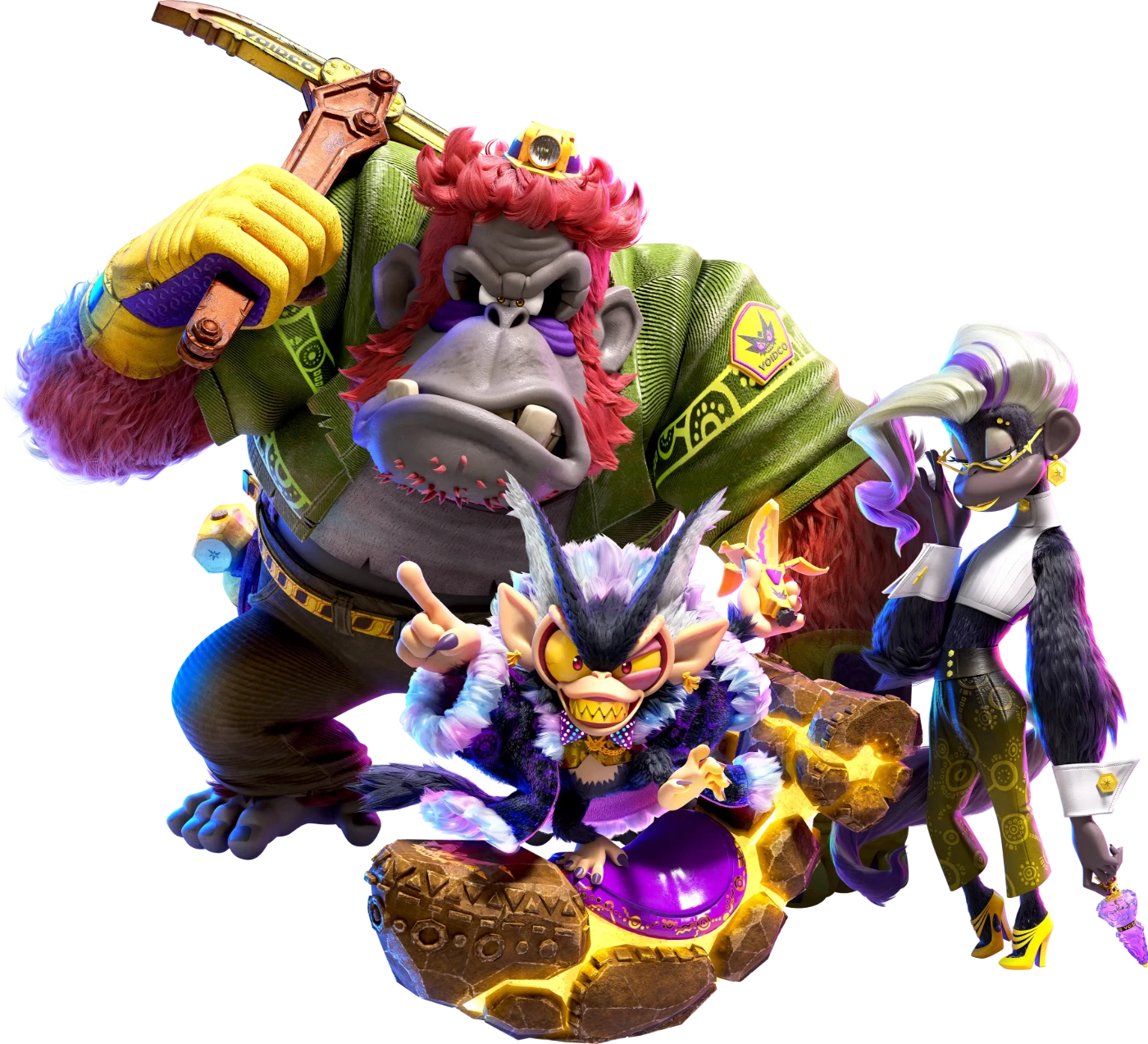
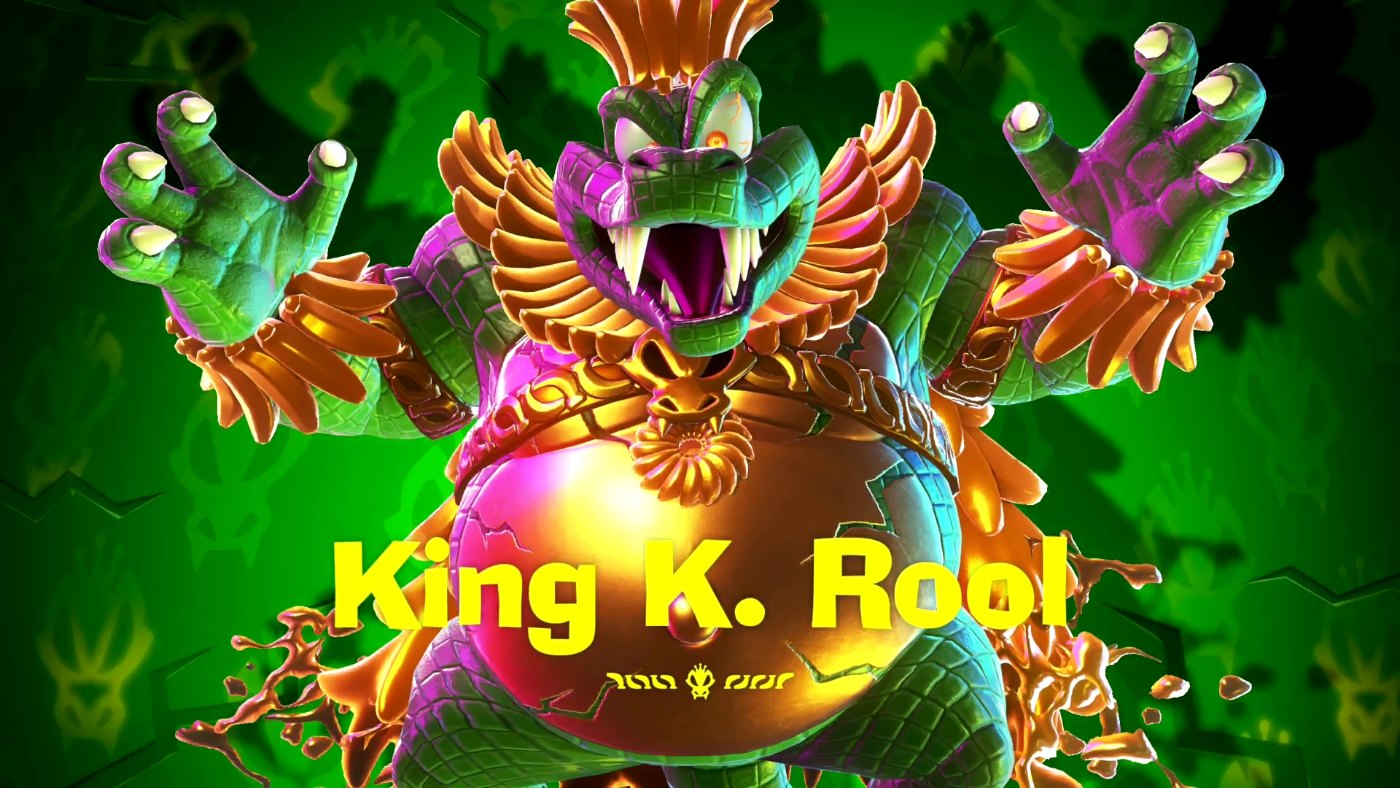
For most of the game it is Void Kong, president of Void Company, with his lieutenants Grumpy Kong and Poppy Kong. The true final boss is King K. Rool, who has been sealed underground and escapes in the Forbidden Layer. More →
Is Donkey Kong Bananza two-player?
Yes. A second player controls Pauline, aiming her voice to fire explosive projectiles made of whatever material she copies from the scenery. It works on one console or through GameShare. More →
What is in the DK Island & Emerald Rush DLC?
A new layer, DK Island, with statues to collect, and Emerald Rush, a timed score-chasing mode in which DK and Pauline mine emerald ore for Void Kong. It was released on 12 September 2025 for US$19.99. More →
How many copies has it sold?
5.05 million as of 30 September 2026, according to Nintendo’s investor relations site, which makes it the second best-selling Switch 2 game behind Mario Kart World. More →
Did it win Game of the Year?
No. At The Game Awards 2025 it was nominated for Game of the Year, which went to Clair Obscur: Expedition 33, and won Best Family Game. More →
Story
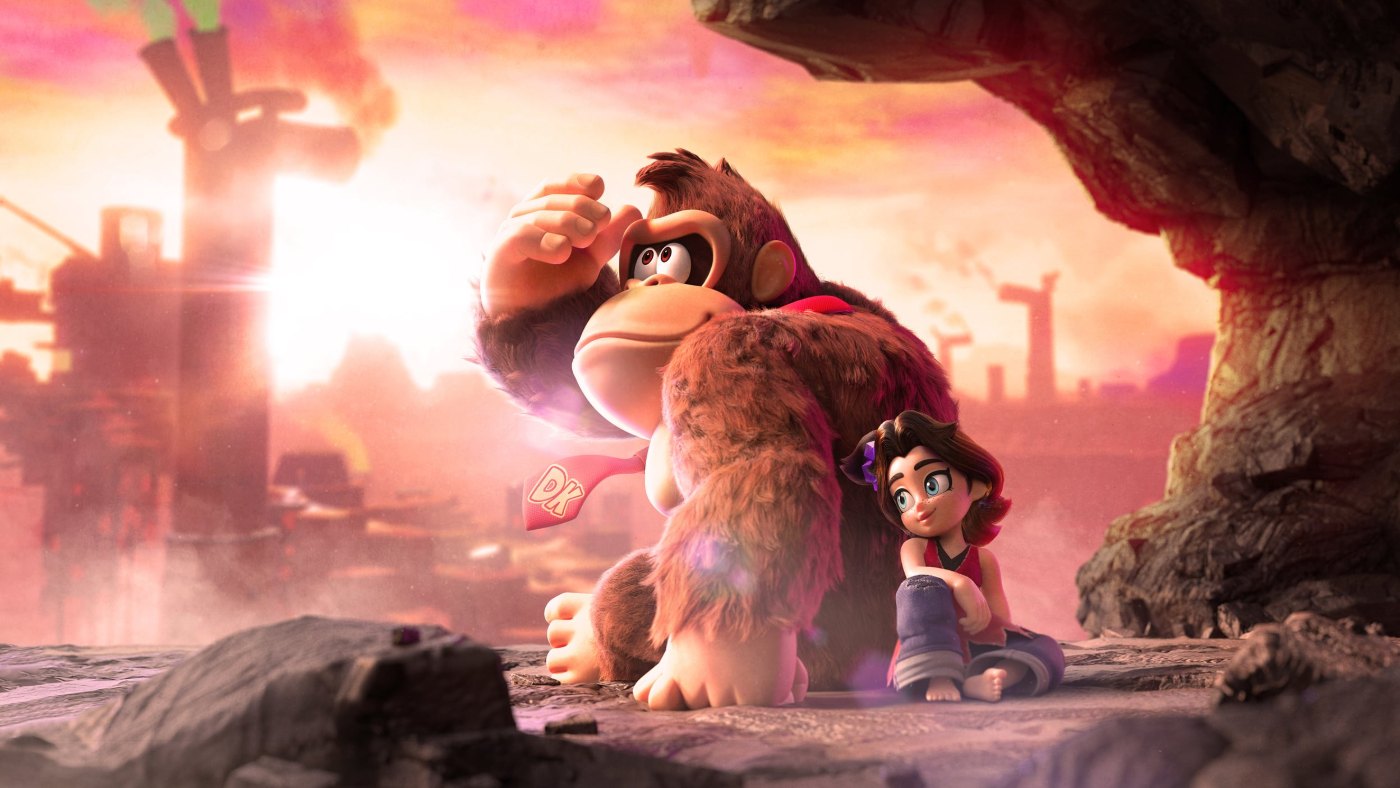
Donkey Kong and Pauline: he wants bananas, she wants to go home.
Spoilers from here on, all the way to the last boss. The story is told in short, mostly wordless scenes (Pauline is the only character who speaks a real language) and it is better than a game about punching rocks has any right to be: a road movie about a big ape who knows exactly what he wants and a girl who is not sure she is allowed to want anything.
Ingot Isle: the cave-in
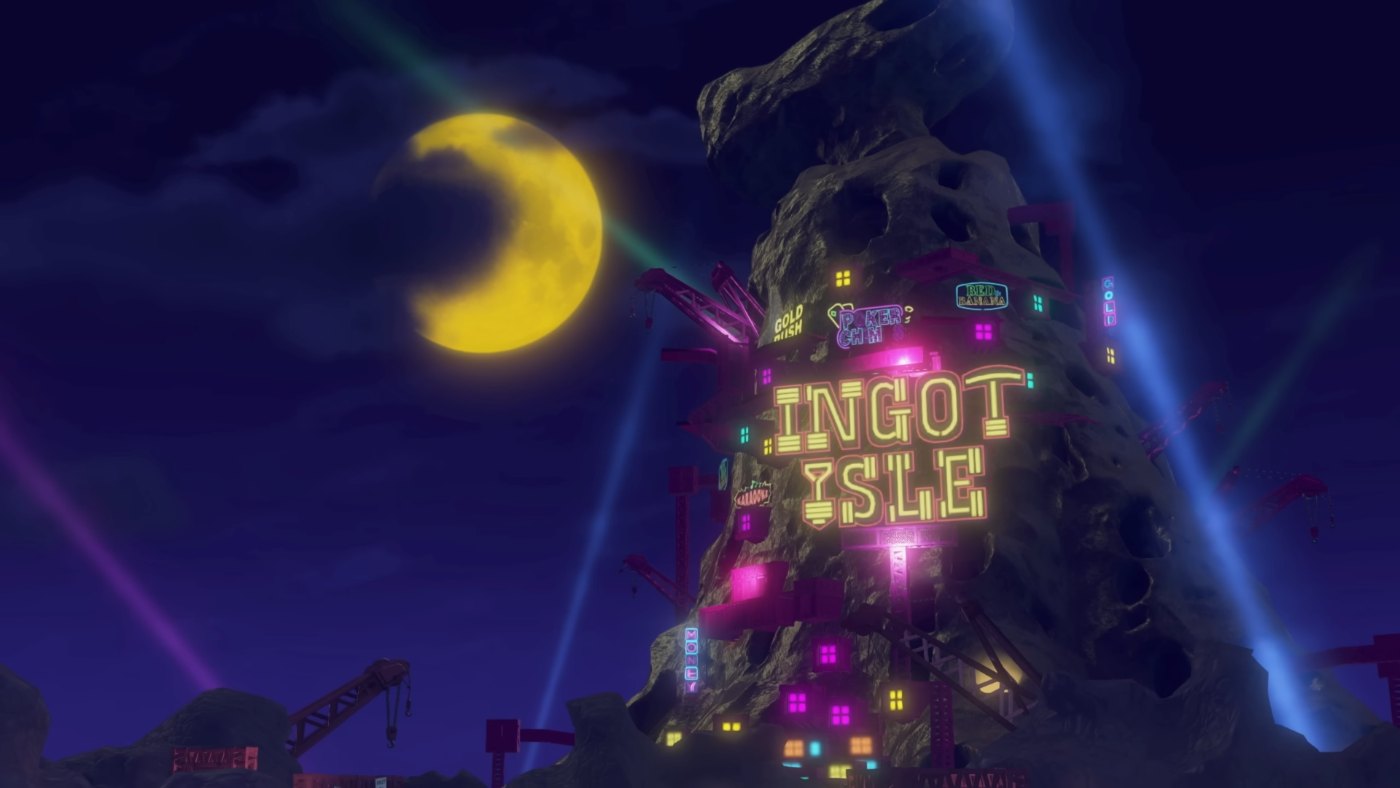
Word has got round that Ingot Isle is full of Banandium Gems, and Donkey Kong has joined the Prospector Monkeys digging for them. The party does not last. Void Company arrives aboard the Pay-Dirt Piledriver, a colossal mining rig, grabs the gems and drives the island deep into the earth. In the storm that follows, DK and the miners are swept down with it.
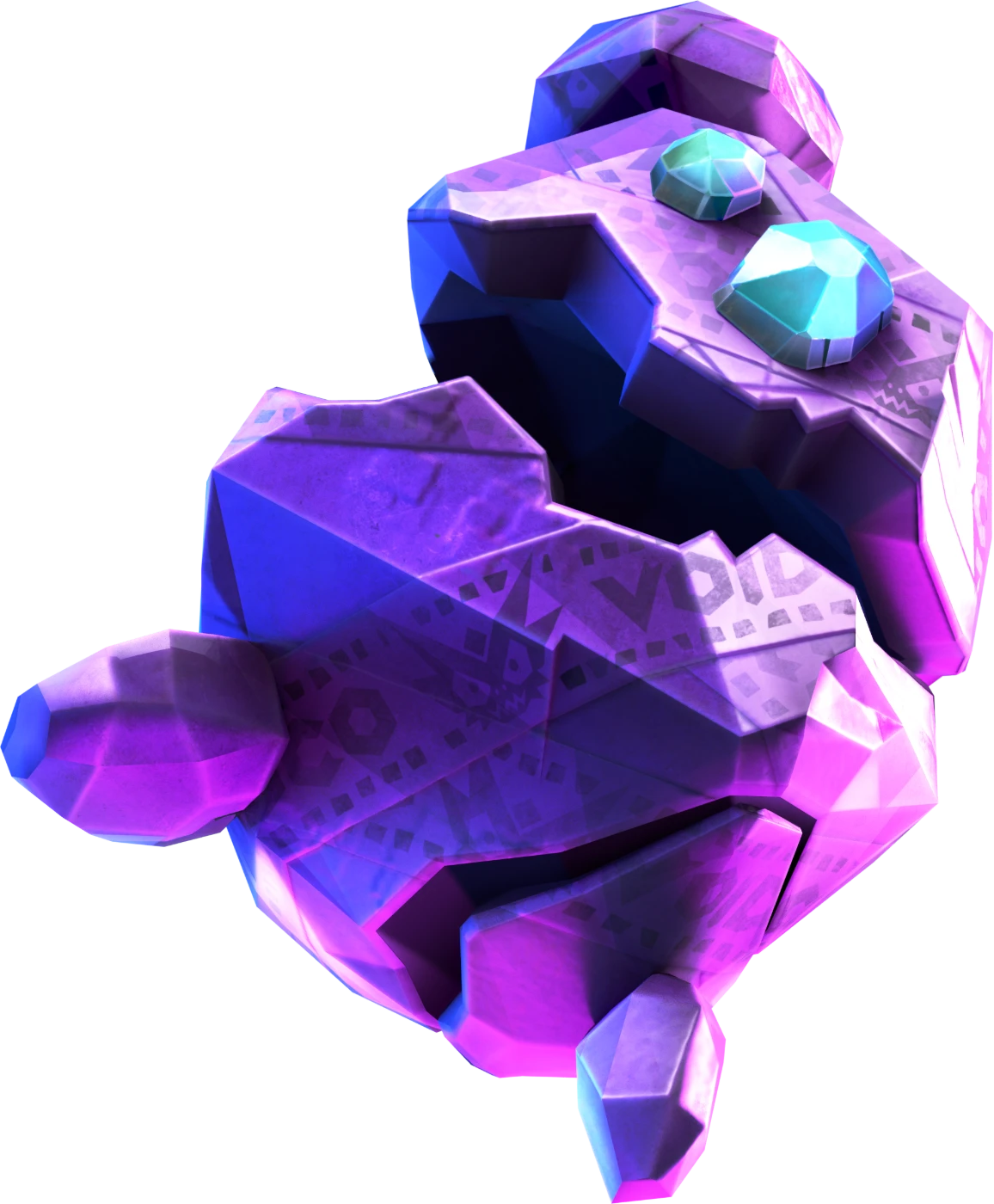
Among the wreckage he meets Odd Rock, a small purple rock that drops out of the sky and decides to tag along. At the summit a Void Company stake is plugging a hole in the ground. A rock monster jumps them; beating it produces the key, the stake comes out, and DK and the rock leap into the sinkhole after the thieves.
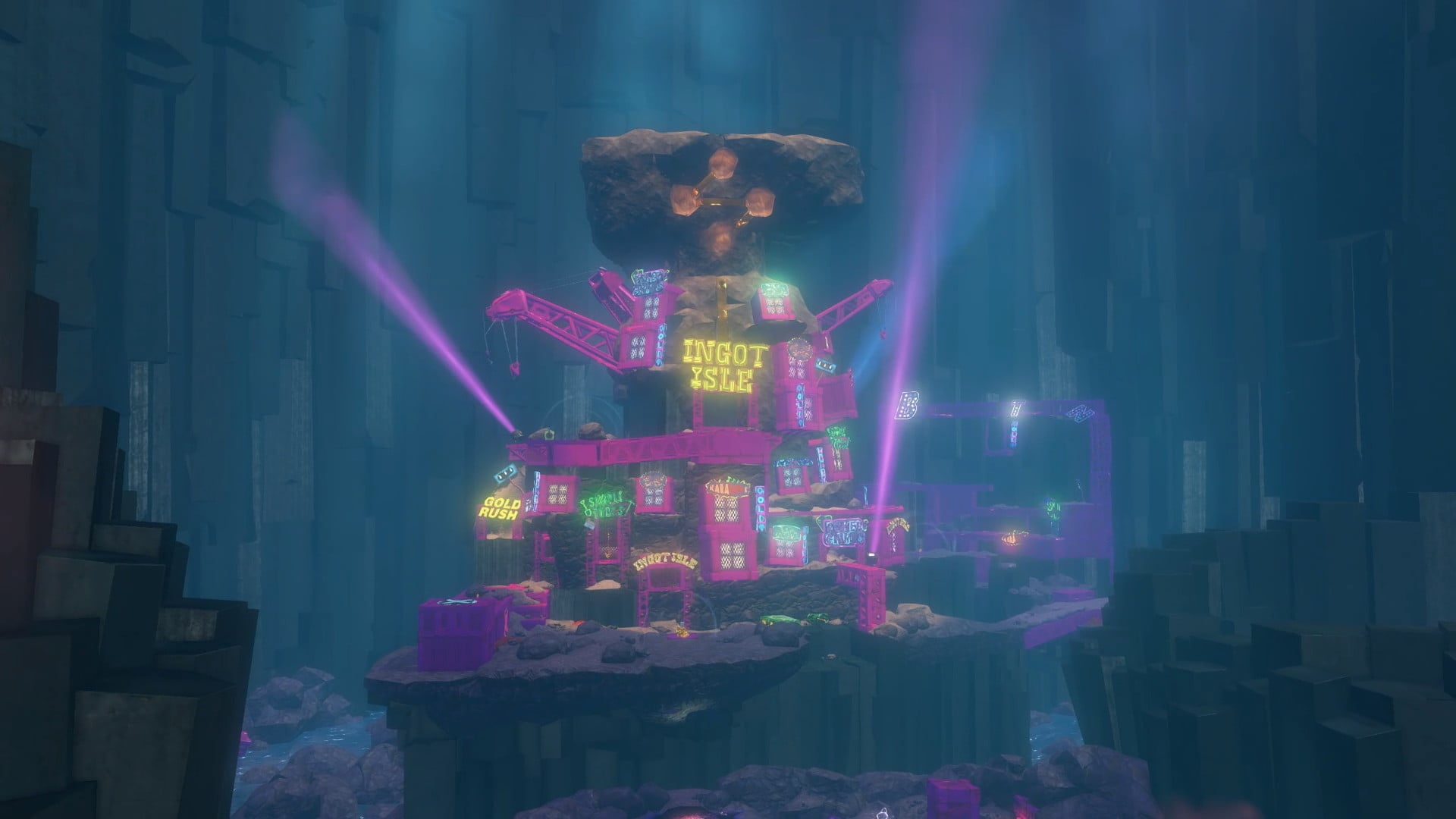
Ingot Isle, as seen in the opening.Ingot Isle Cave-In, the mining town where the game begins.Odd Rock.
The Lagoon Layer: a girl in a rock
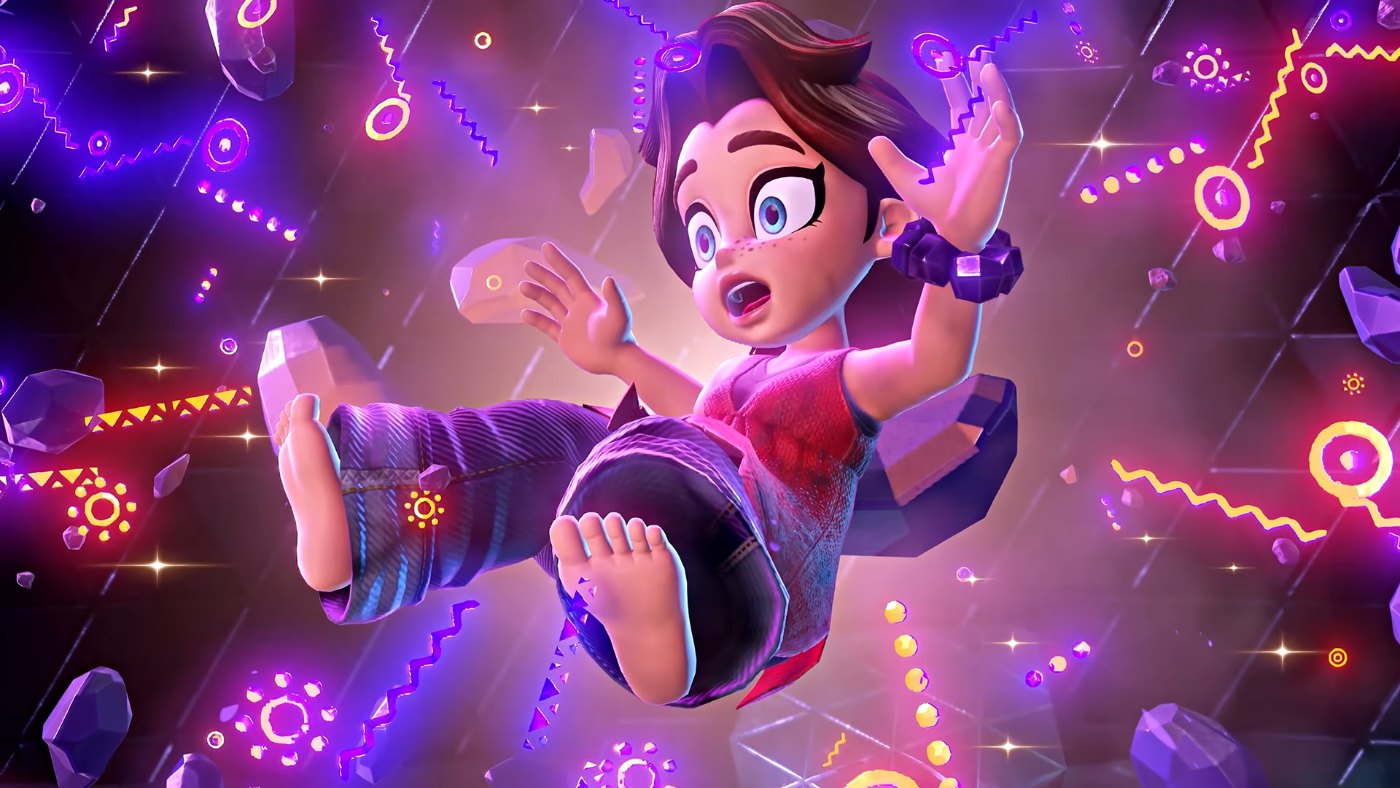
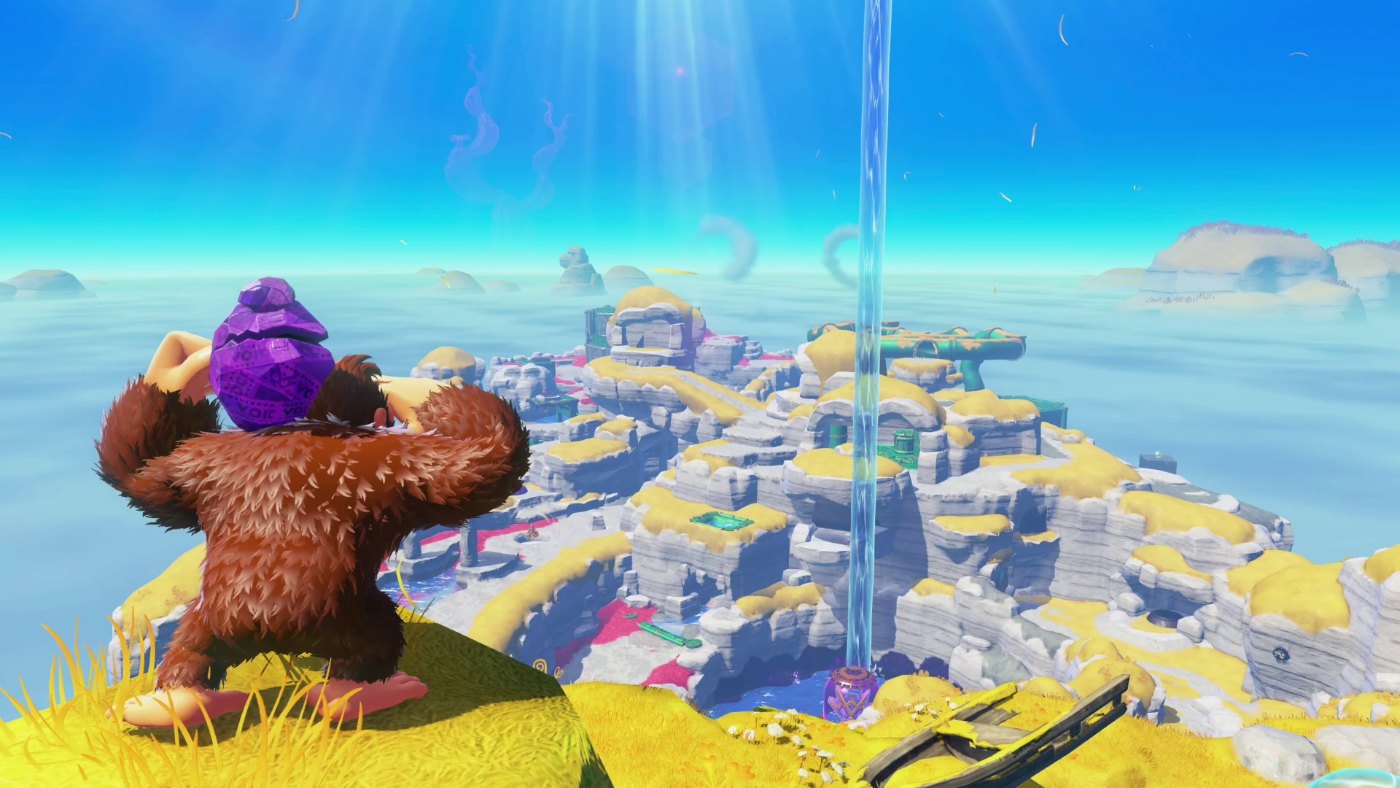
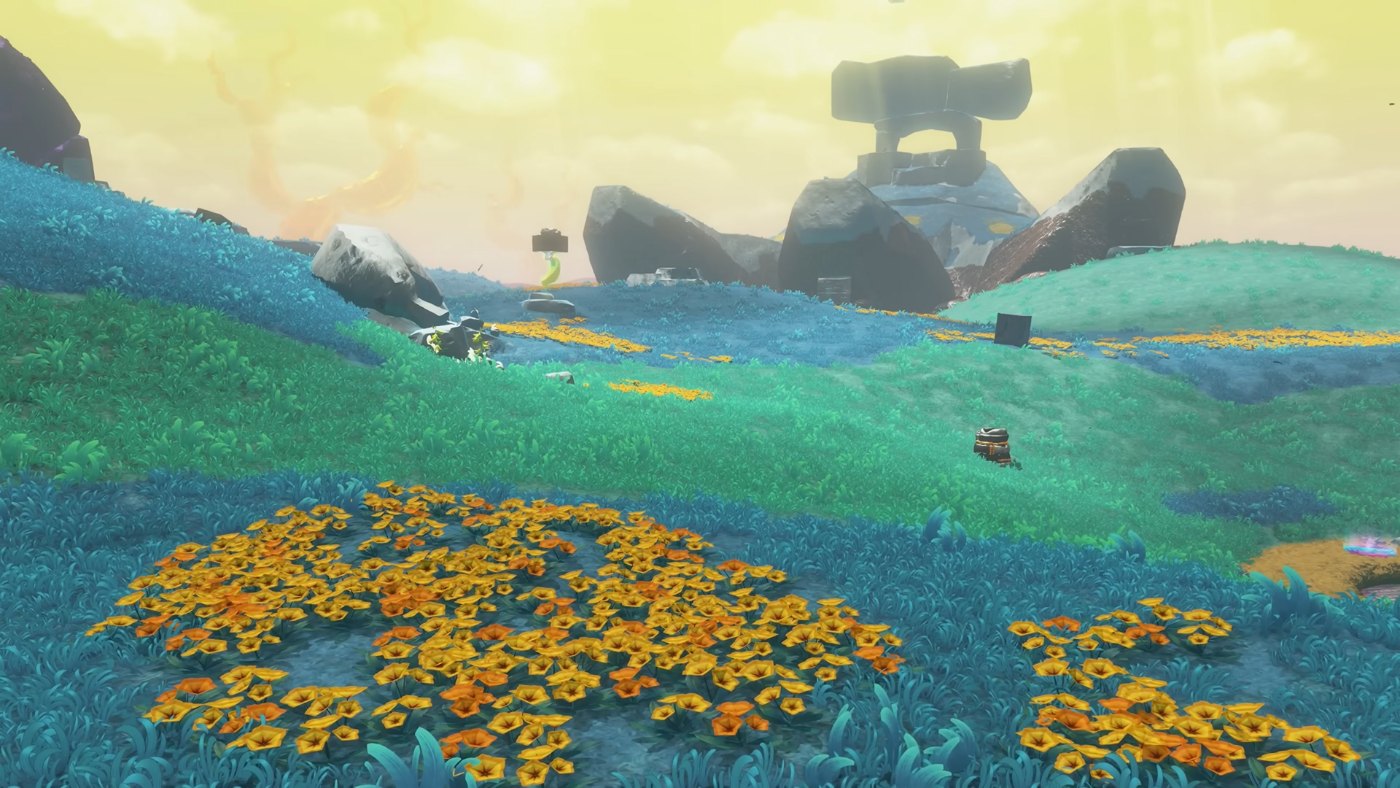
The first proper layer is a sunny archipelago, home to the Salvager Monkeys, whose reservoir Void Company has blocked with another stake. Clearing it leads to the Kong Elder, a gigantic ape who asks DK to fetch his Ancient Record. When it plays, and DK drums on his chest in time, Odd Rock cracks open. Inside is Pauline, a thirteen-year-old from New Donk City whom Void Company had turned to stone.
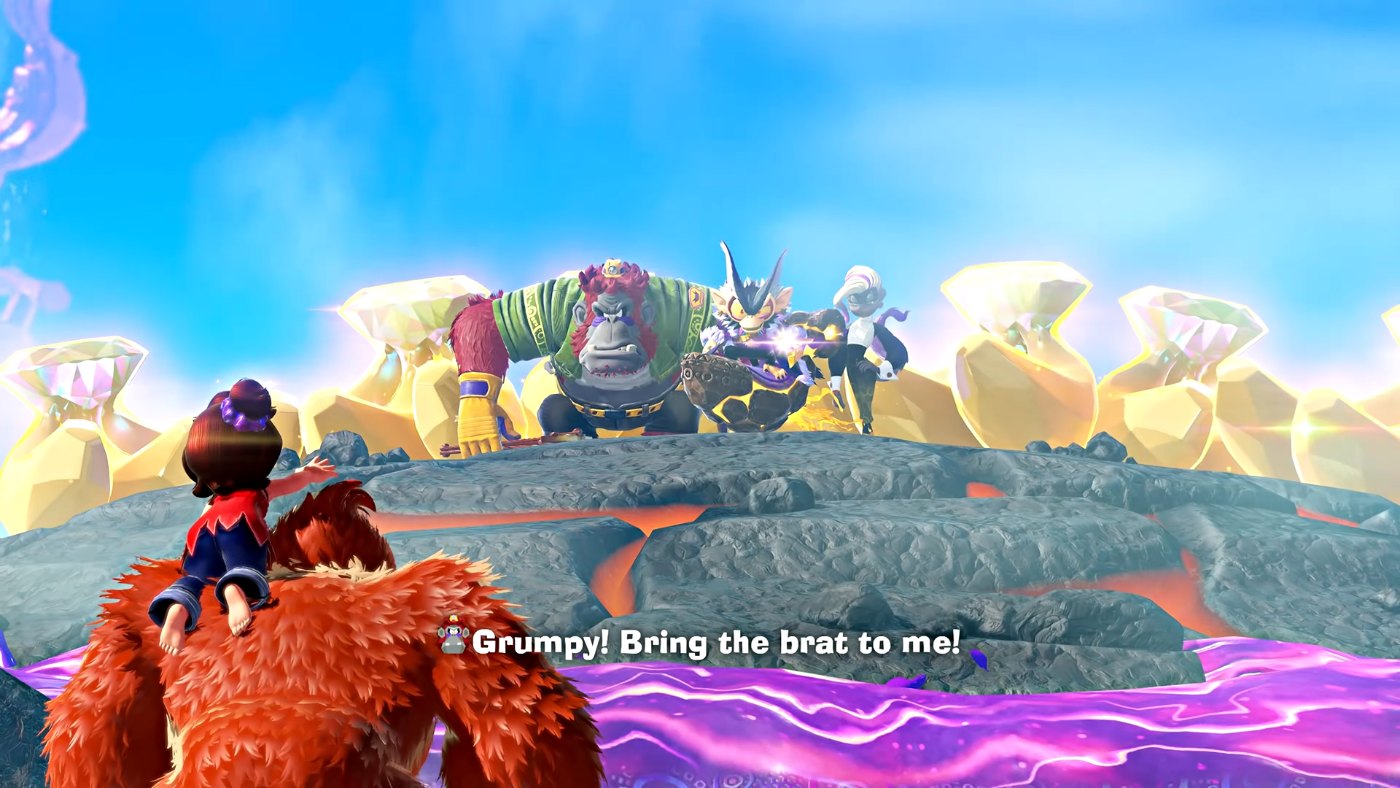
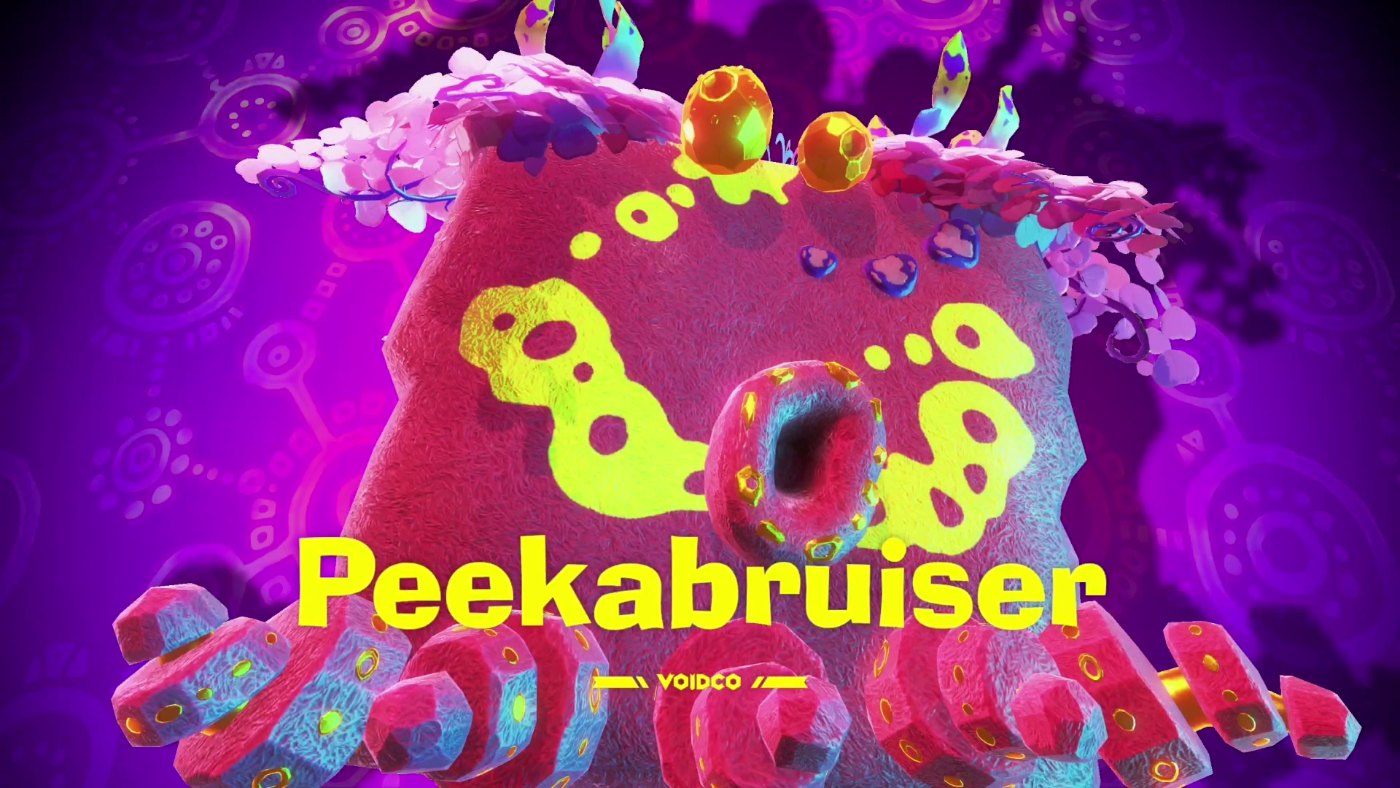
She sings, and DK becomes the Kong Bananza for the first time. The Elder tells them that whoever reaches the Planet Core will have a wish granted. Pauline wishes to go home. DK wishes for bananas. That settles it. On the way out they are spied on by Poppy Kong, ambushed by a monster called Peekabruiser, and confronted at the next sinkhole by Void Kong himself, who is oddly keen to have Pauline back.
The Lagoon Layer.The rock comes off.The first Bananza.Peekabruiser, the first boss.
Hilltop and Canyon: the refinery
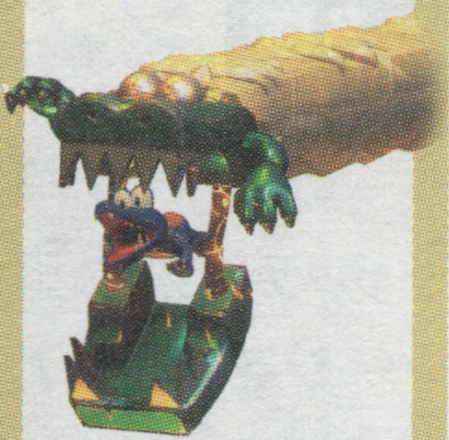
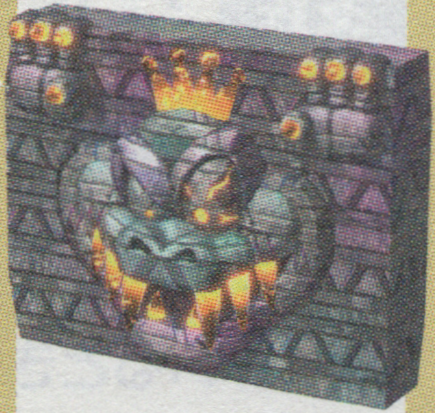
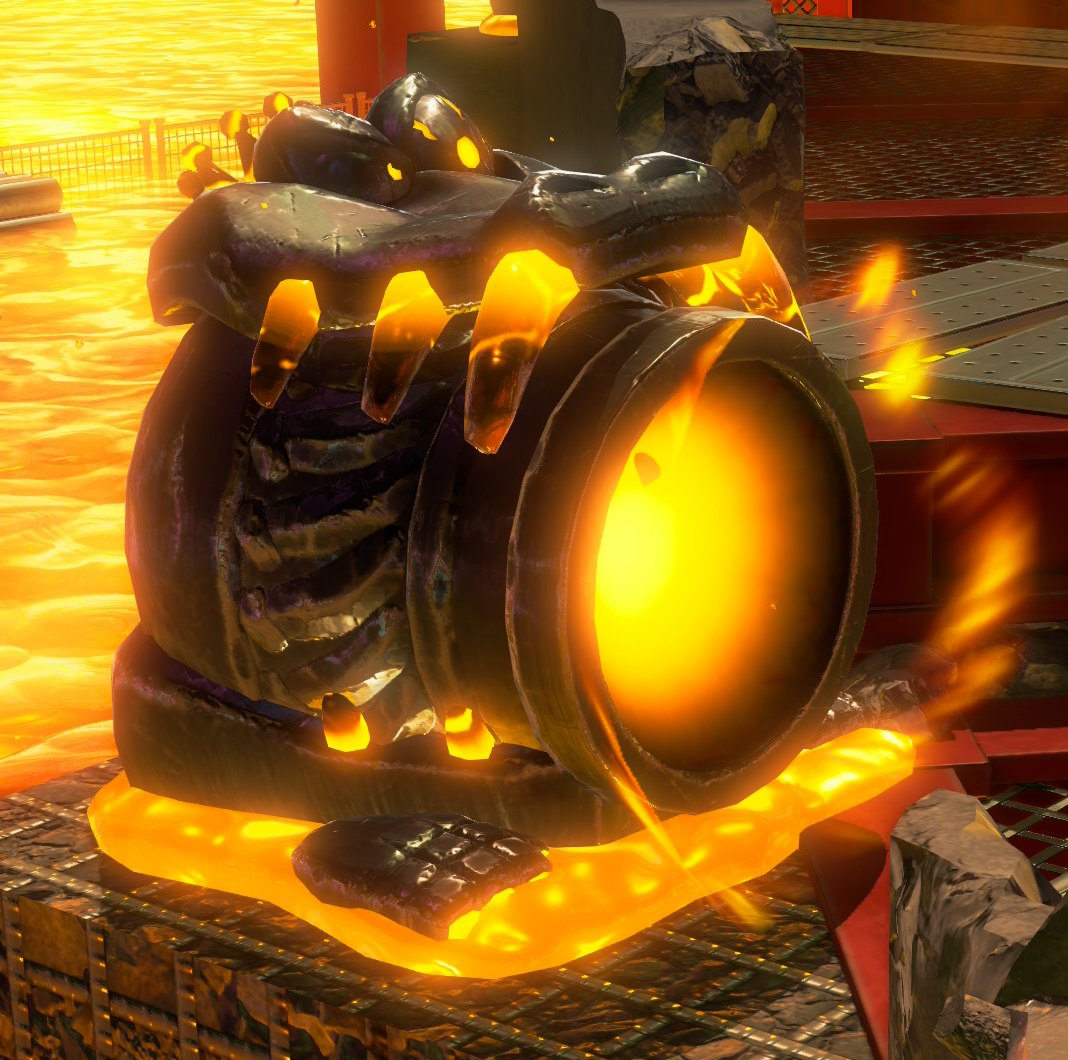
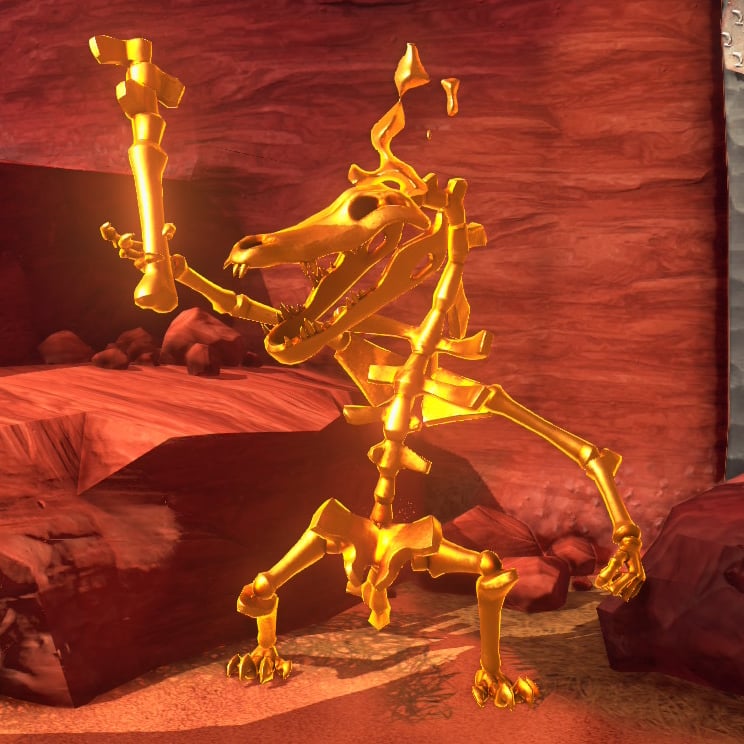
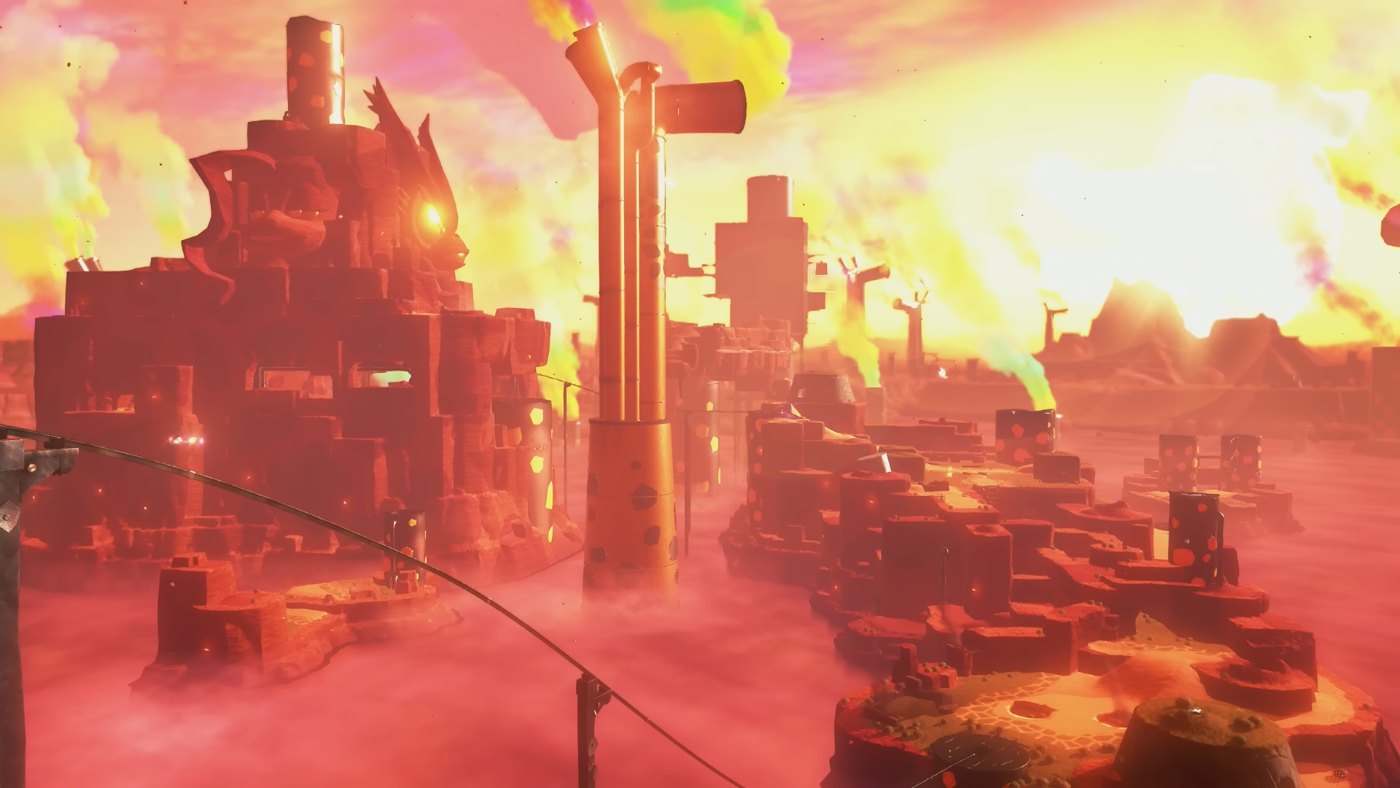
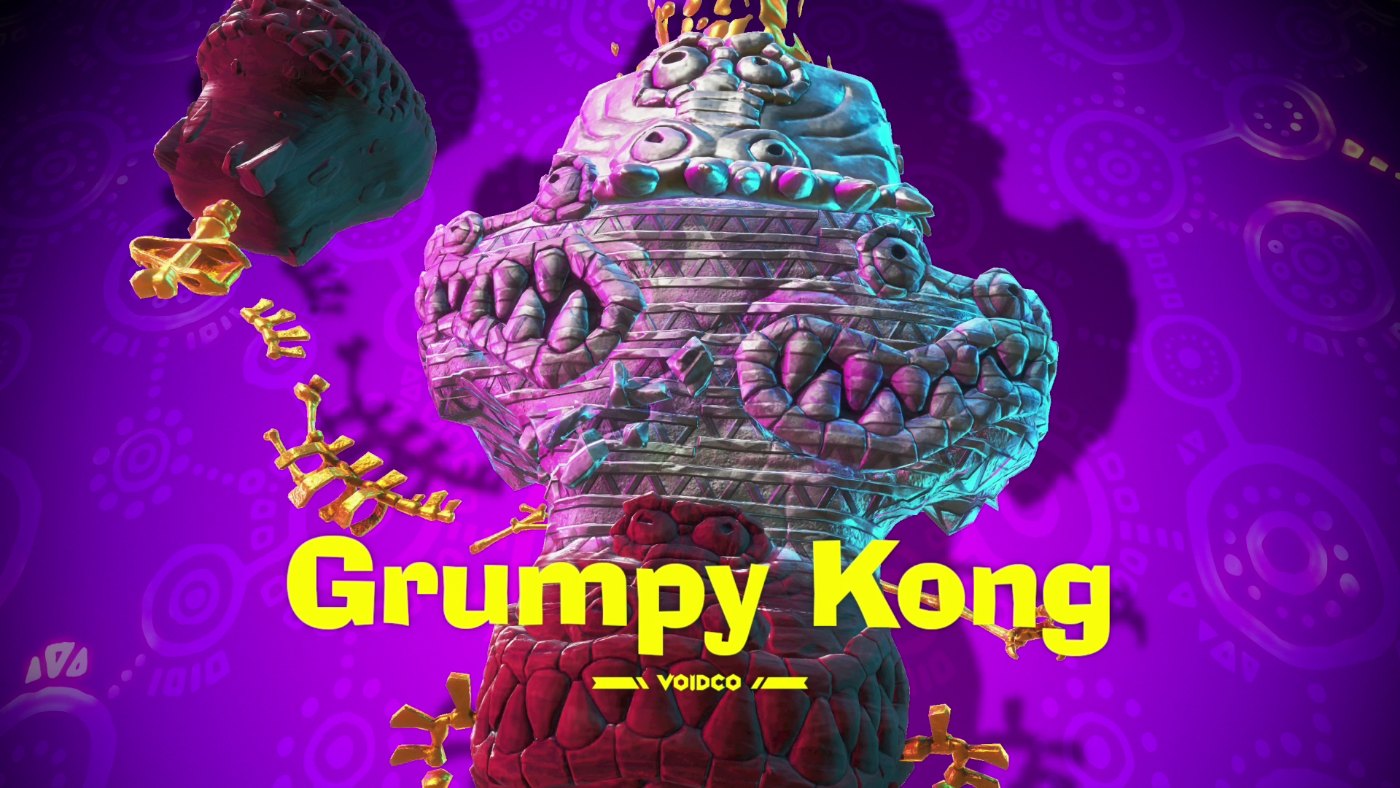
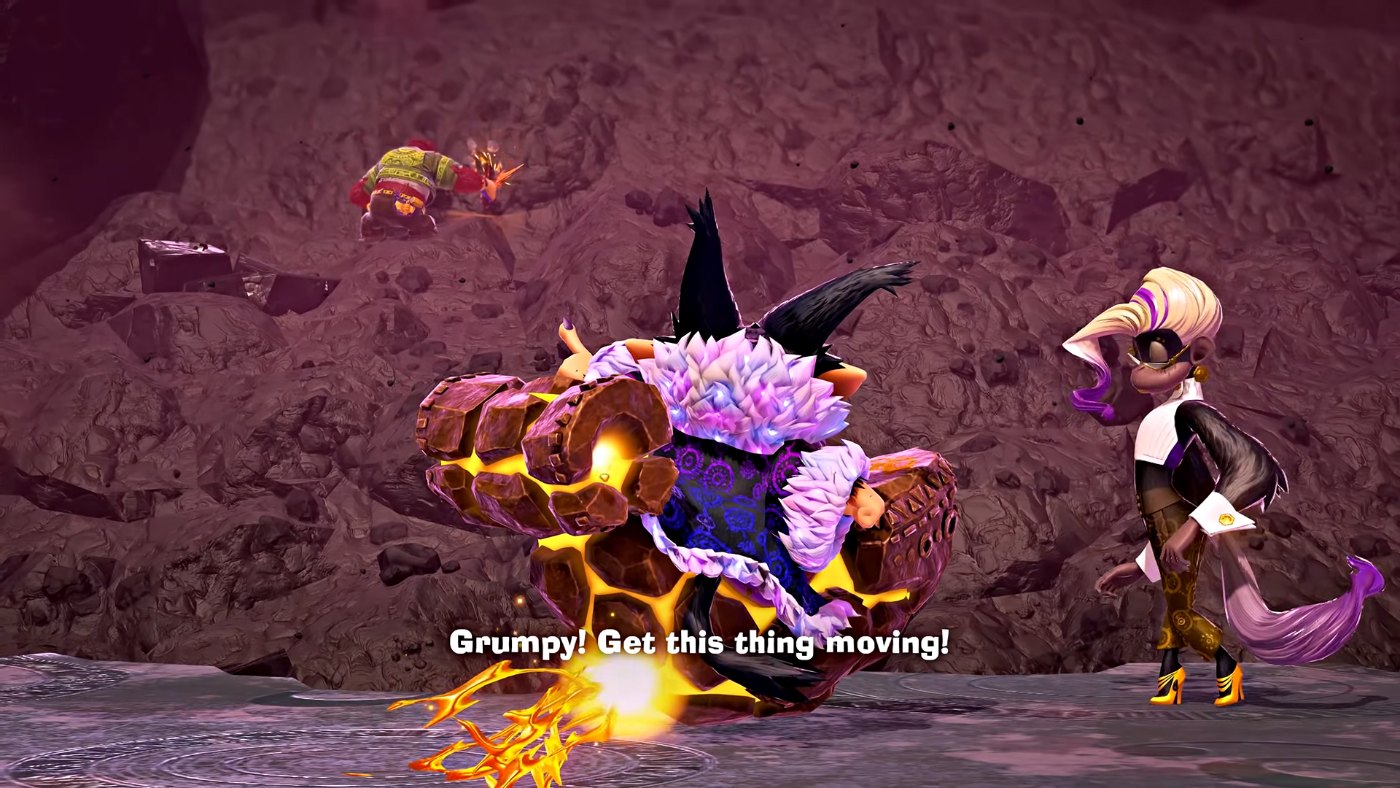
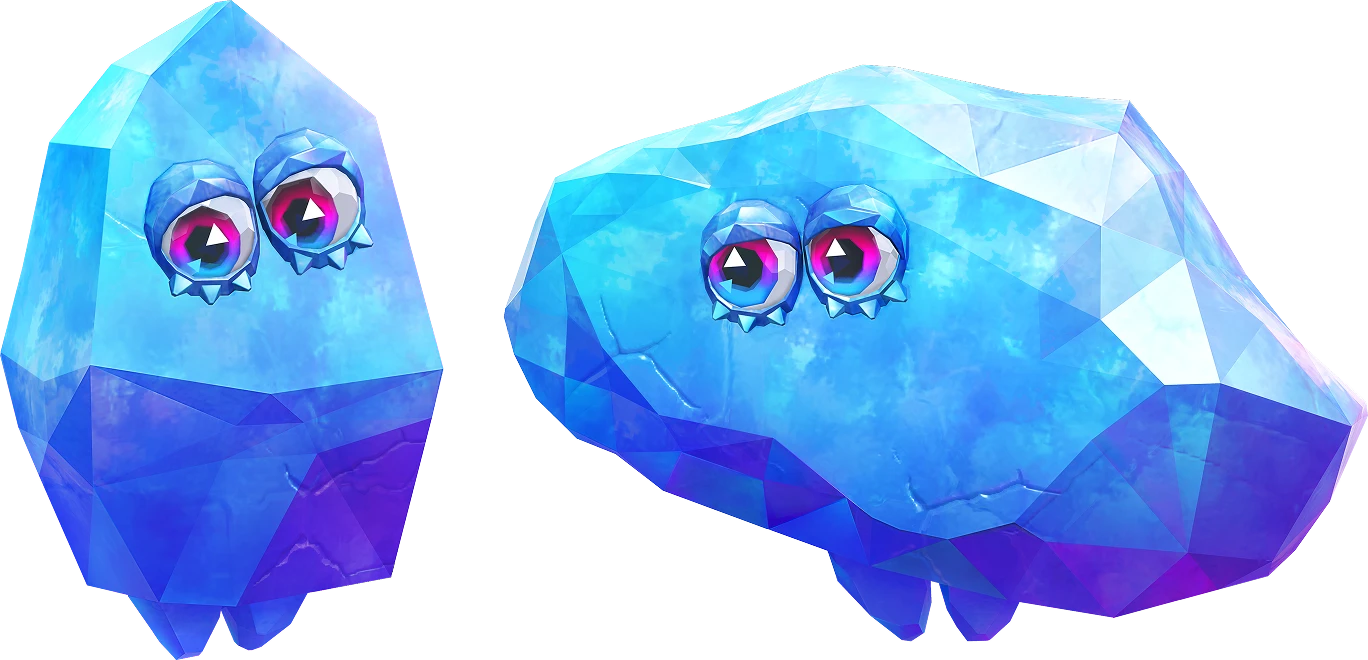
In the Hilltop Layer the pair meet the Fractones, living crystals who can rebuild themselves and who will turn out to run most of the underground’s shops. Below them is the Canyon Layer, where Void Company has taken over the Banandium Refinery. Grumpy Kong, the company’s engineer, guards the way in at the controls of the King Crockoid, a giant skeleton crocodile; beaten, he hands over the key.
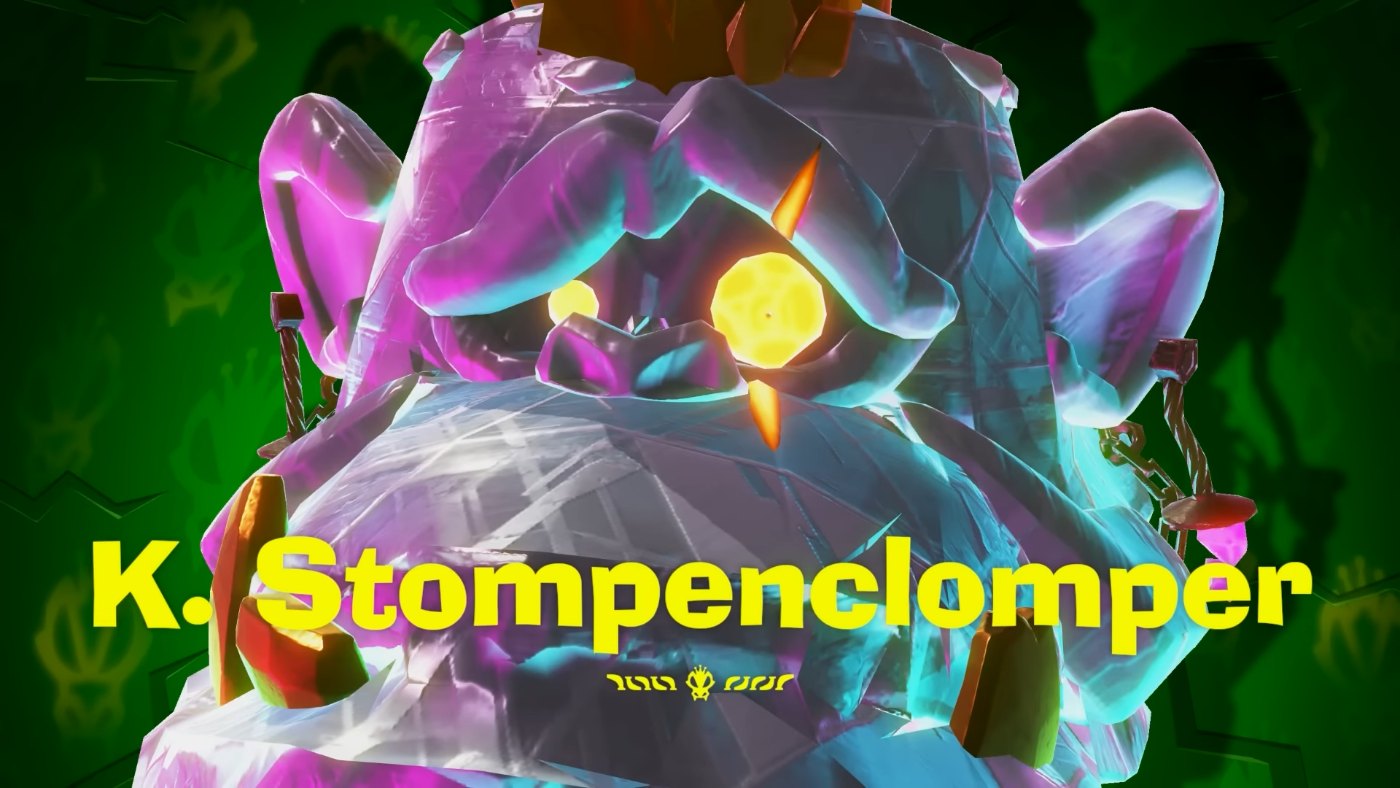
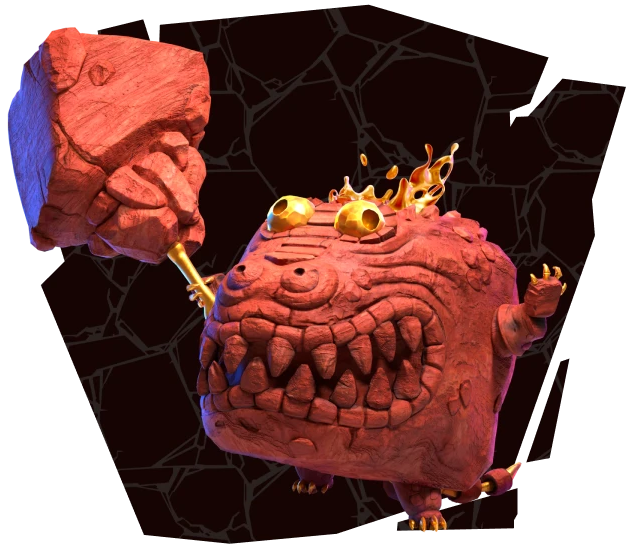
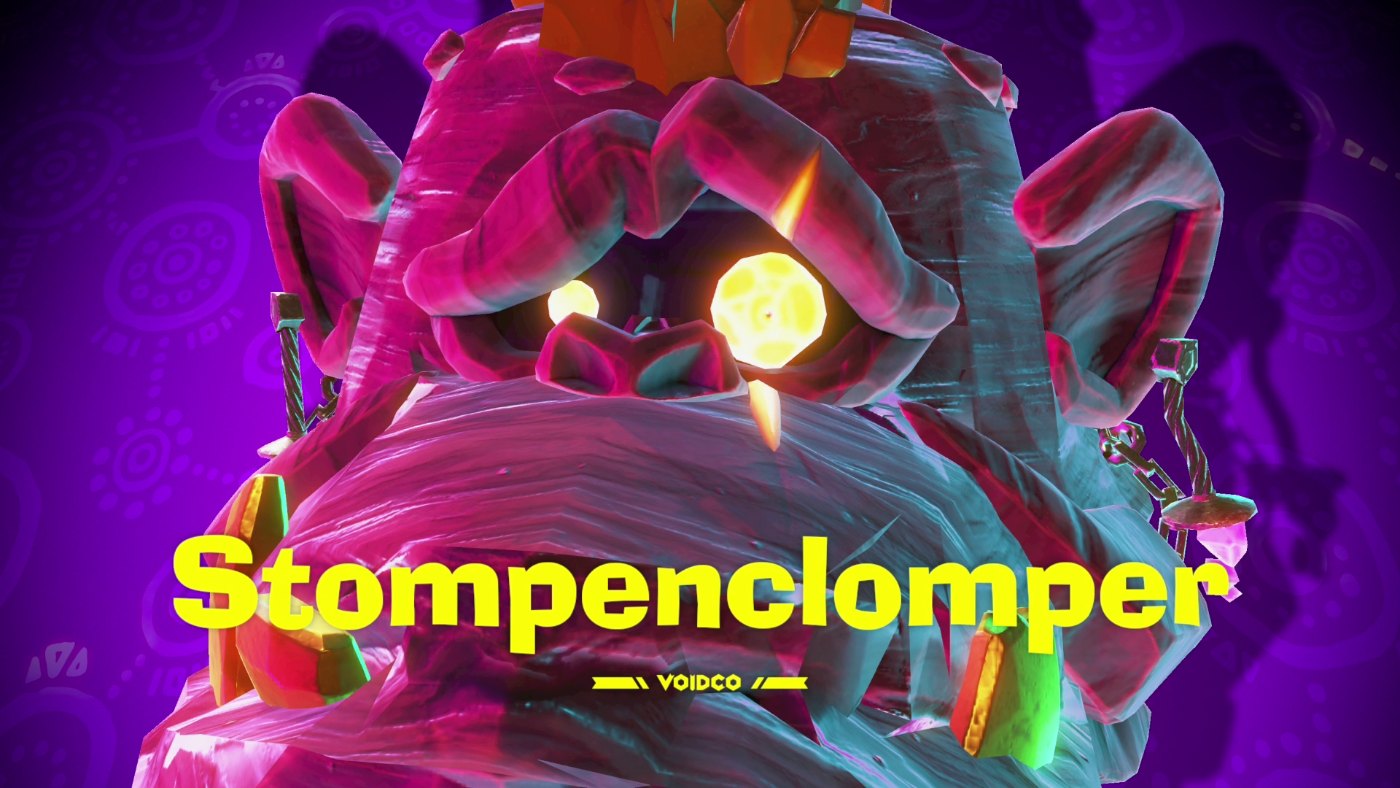
Inside the refinery waits the Mad Mixer, a machine with a mind of its own, and beyond it Mechaneck Isle and the Click-Clack Smokestack, where a two-legged stomping brute called Stompenclomper has run off with the Fractones’ bananas. This is where the plan comes into focus: Void Company is burning bananas as fuel for the machine that bores through the planet.
The Hilltop Layer.The Canyon Layer.Grumpy Kong and the King Crockoid.Stompenclomper.
The Divide: ice cream and ostriches
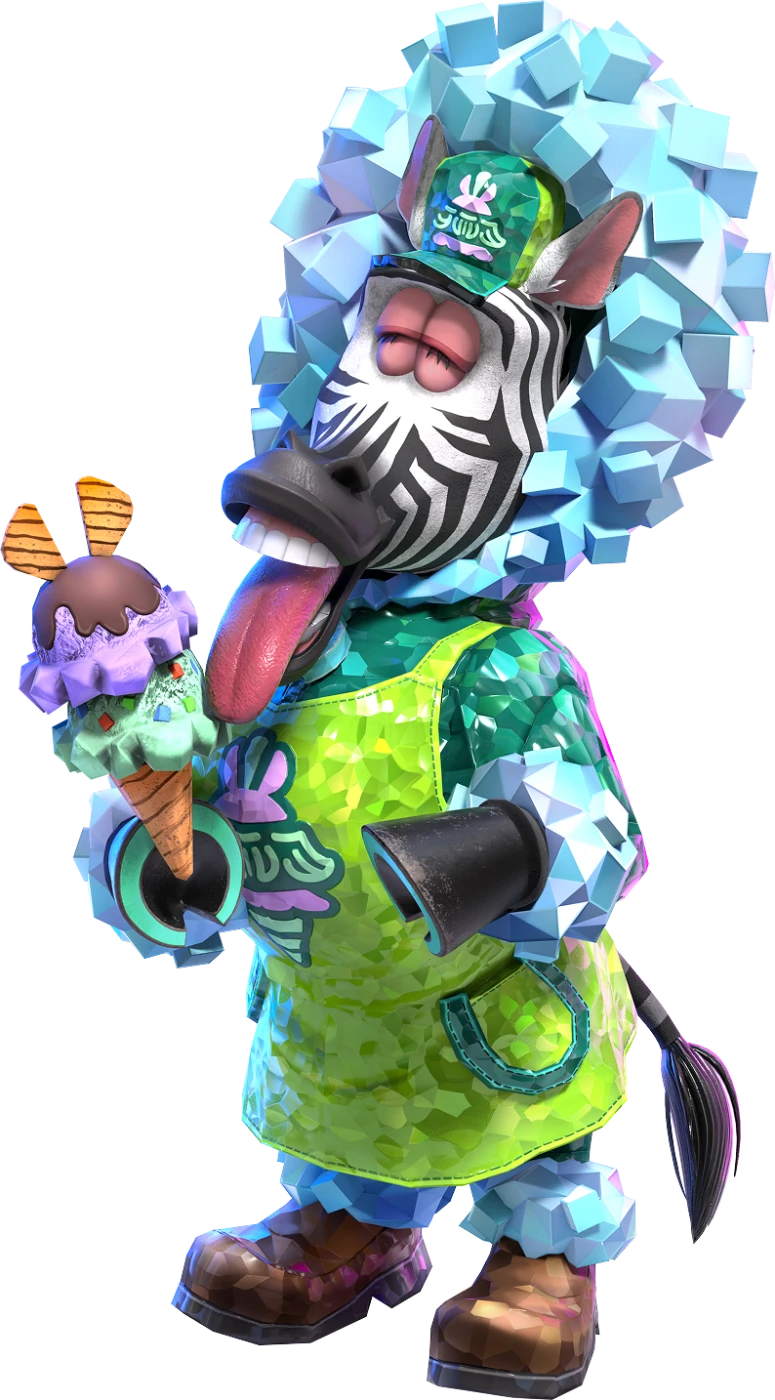
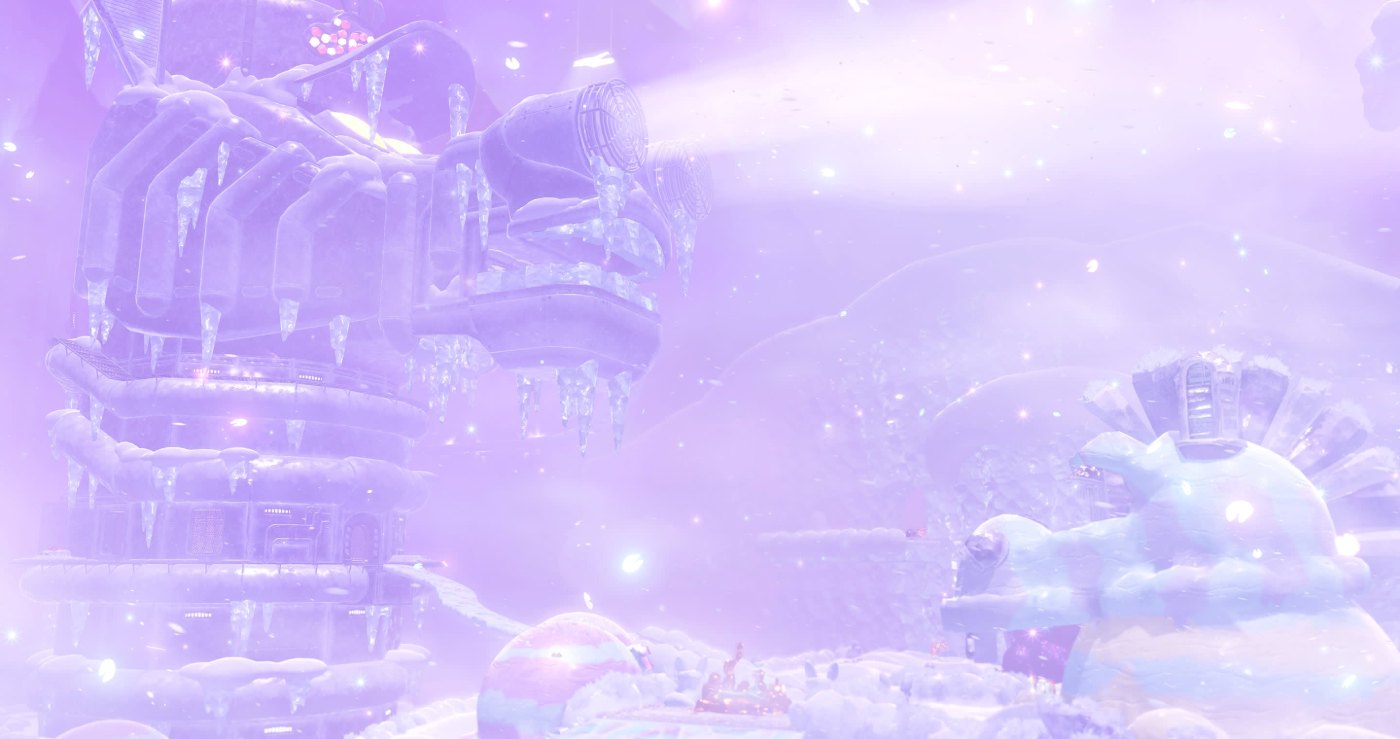
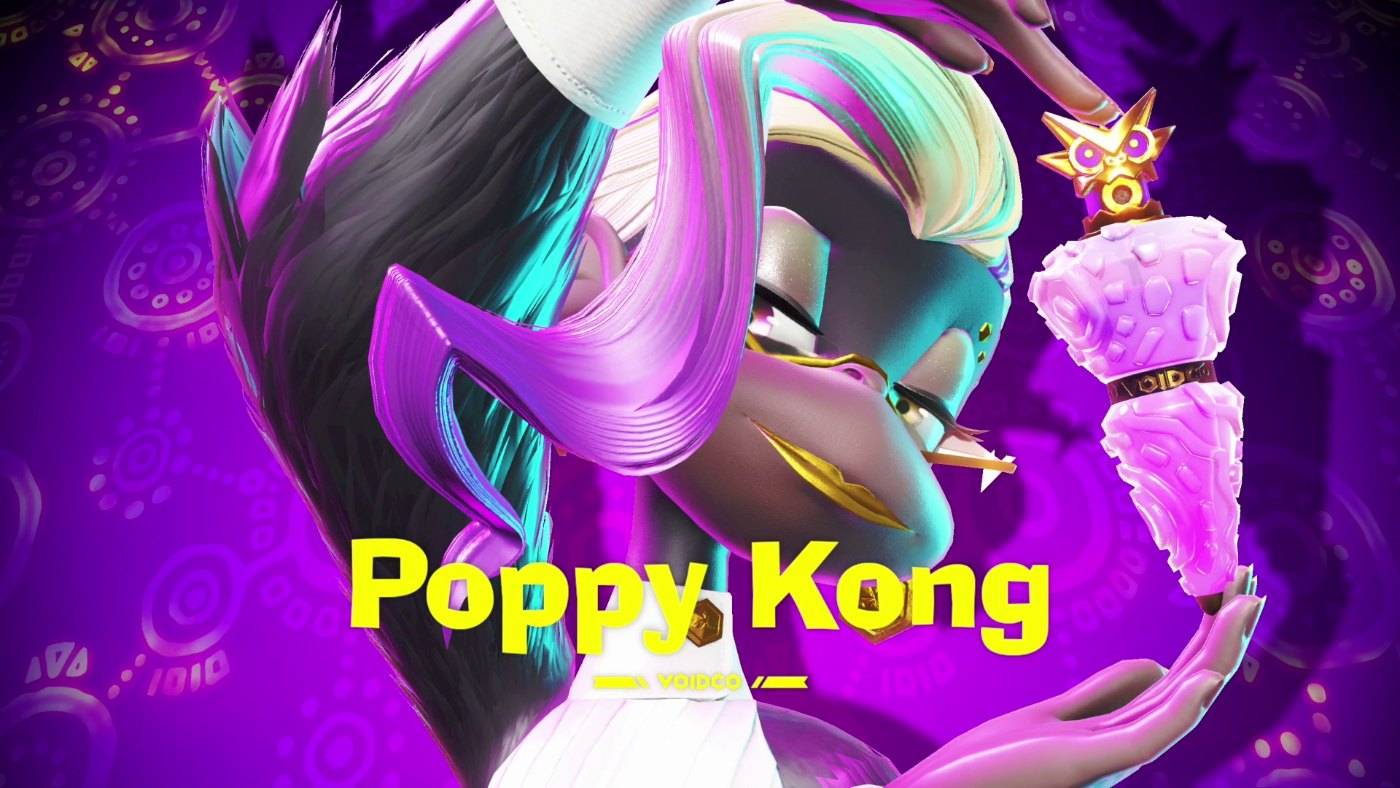
At the Divide the road forks, and both branches have to be cleared. One leads to the Freezer Layer, where zebras in winter clothes run an ice-cream business and are slowly freezing because Poppy Kong has stolen their bananas. The Zebra Elder’s record teaches the Zebra Bananza; Poppy is run to ground at the Cooling Tower, and a lava-coated ammonite, the Inflammonite, is beaten in the Hot-Hoof Heater to put the temperature right.
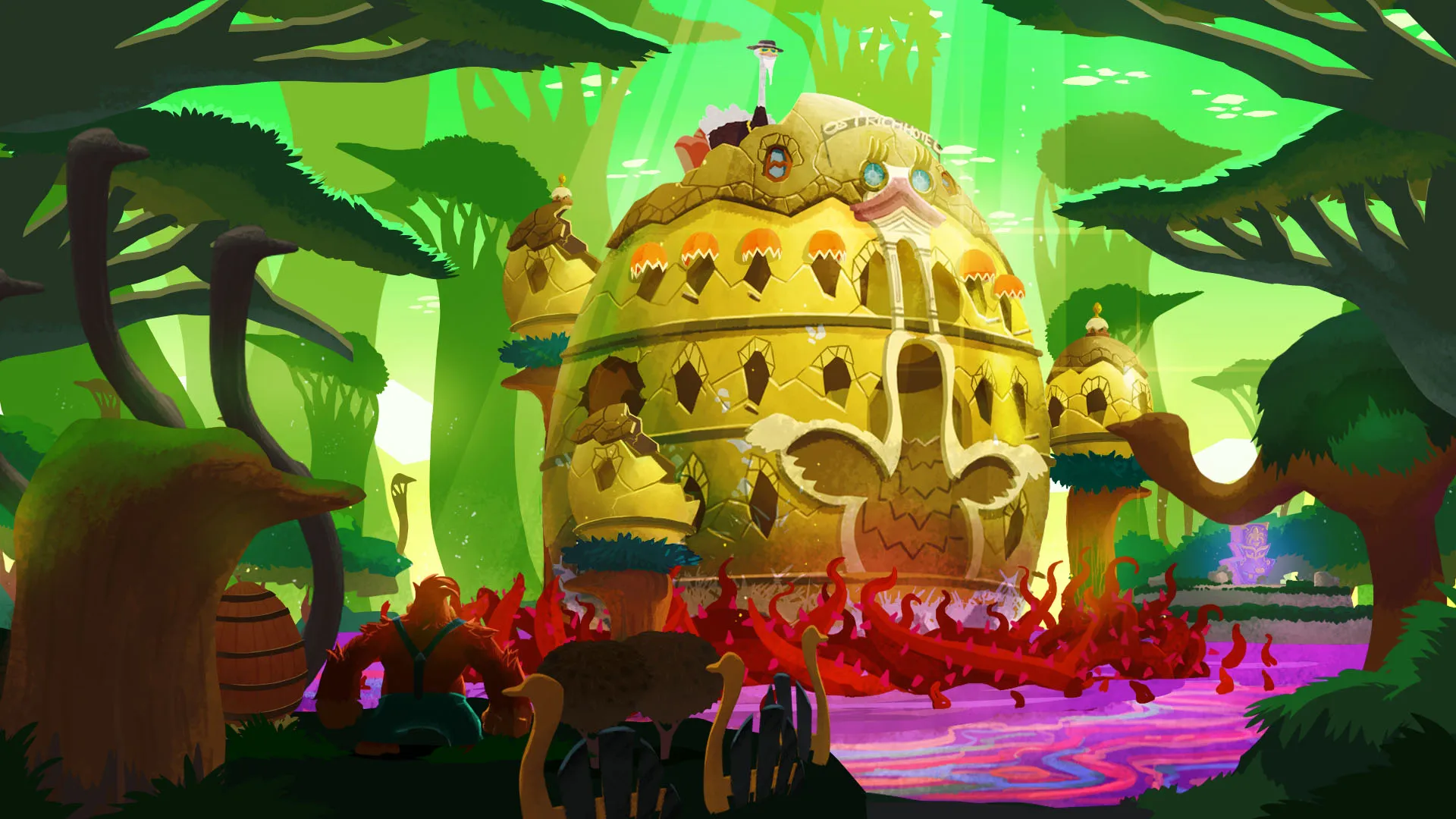
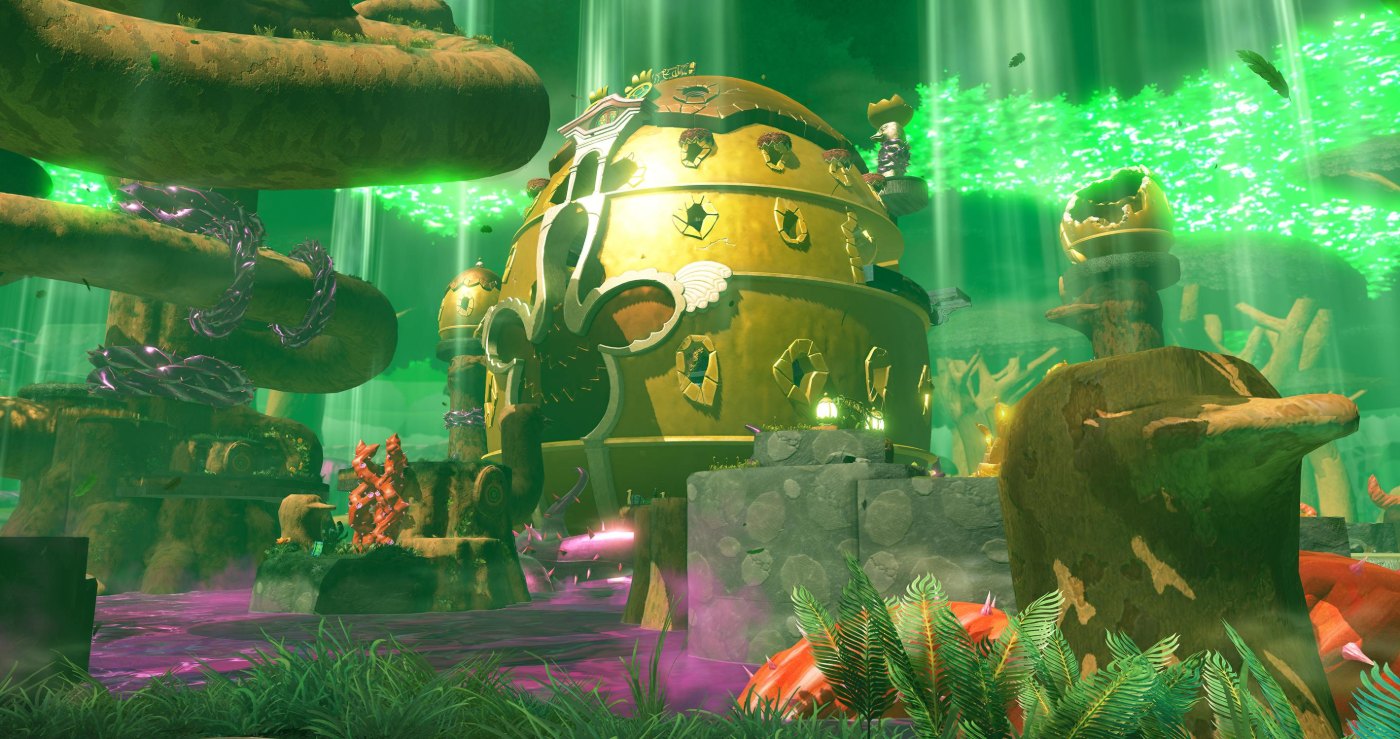
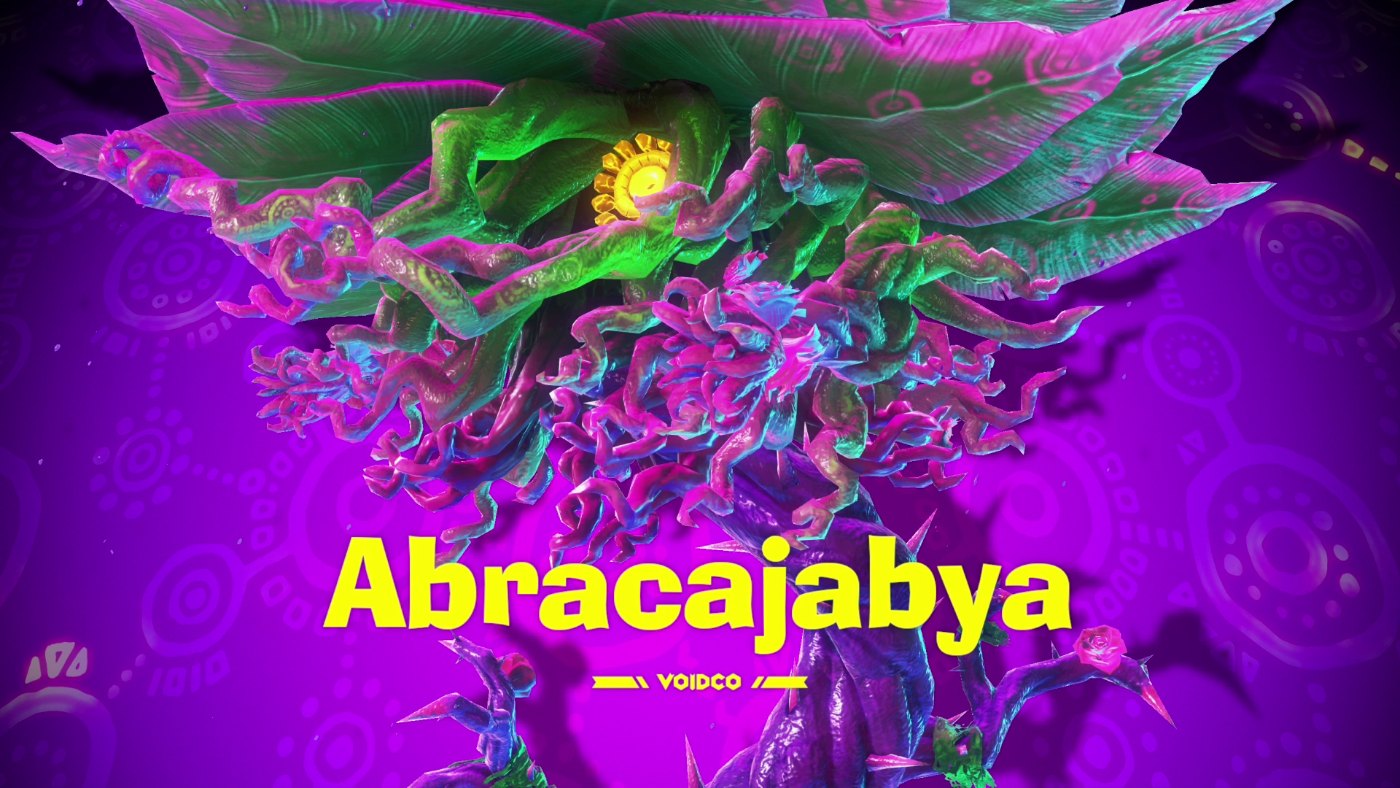
The other branch is the Forest Layer, a wood of colossal trees where ostriches keep the Eggshell Hotel. Poison water and brambles are creeping in. The Ostrich Elder supplies the Ostrich Bananza, DK tears out the poisonous plants, and at the heart of the infestation he finds Abracajabya, a giant plant witch that Grumpy has been cultivating.
The Freezer Layer.The Forest Layer.Poppy Kong, Director of Intelligence.Abracajabya.
The Junction: Void Kong
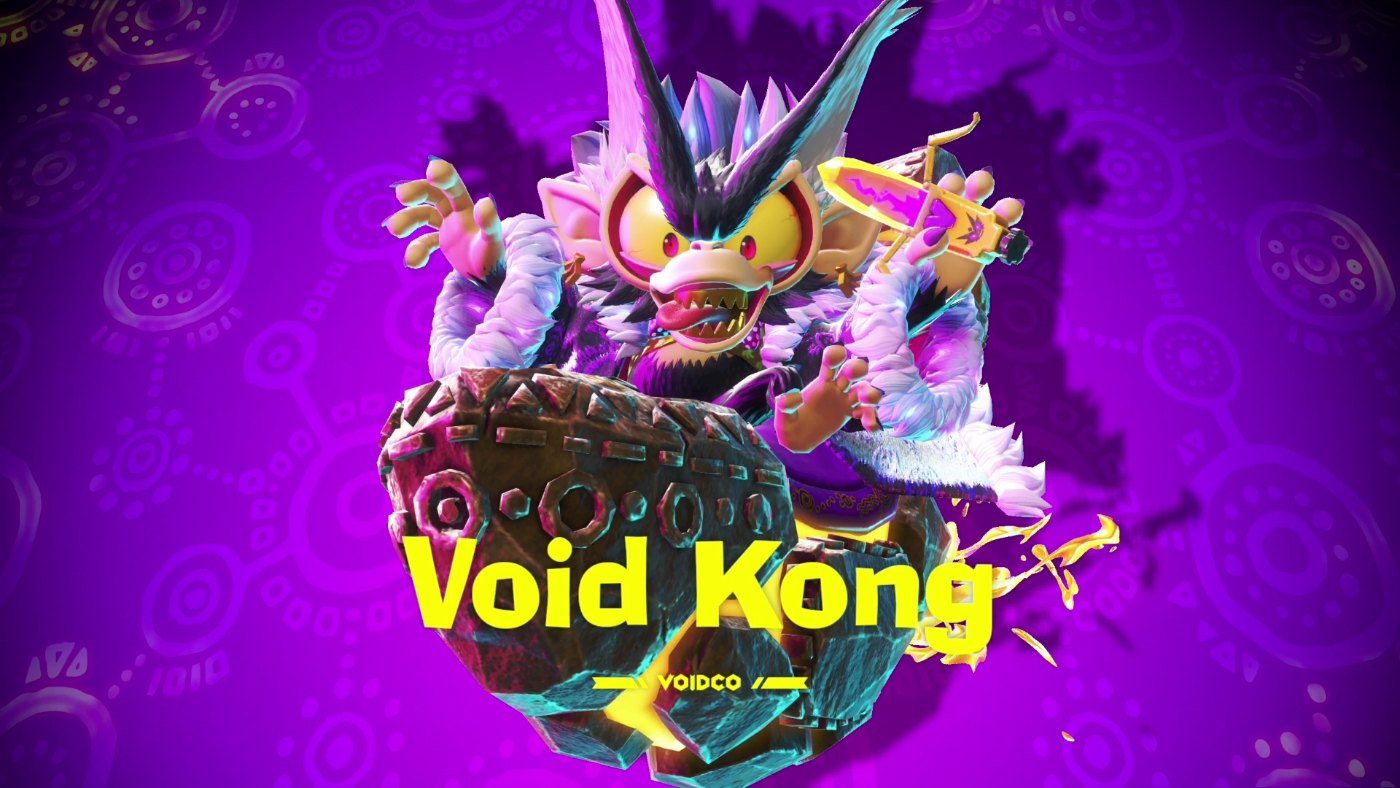
The two roads meet again at the Junction, directly beneath the parked Piledriver. Short of fuel, Void Kong has gone back up to shake down the layers DK has already saved, so the heroes ride the Eelevator after him and fight him first in the Hilltop Layer, next in the Lagoon Layer, and last of all at the Junction itself.
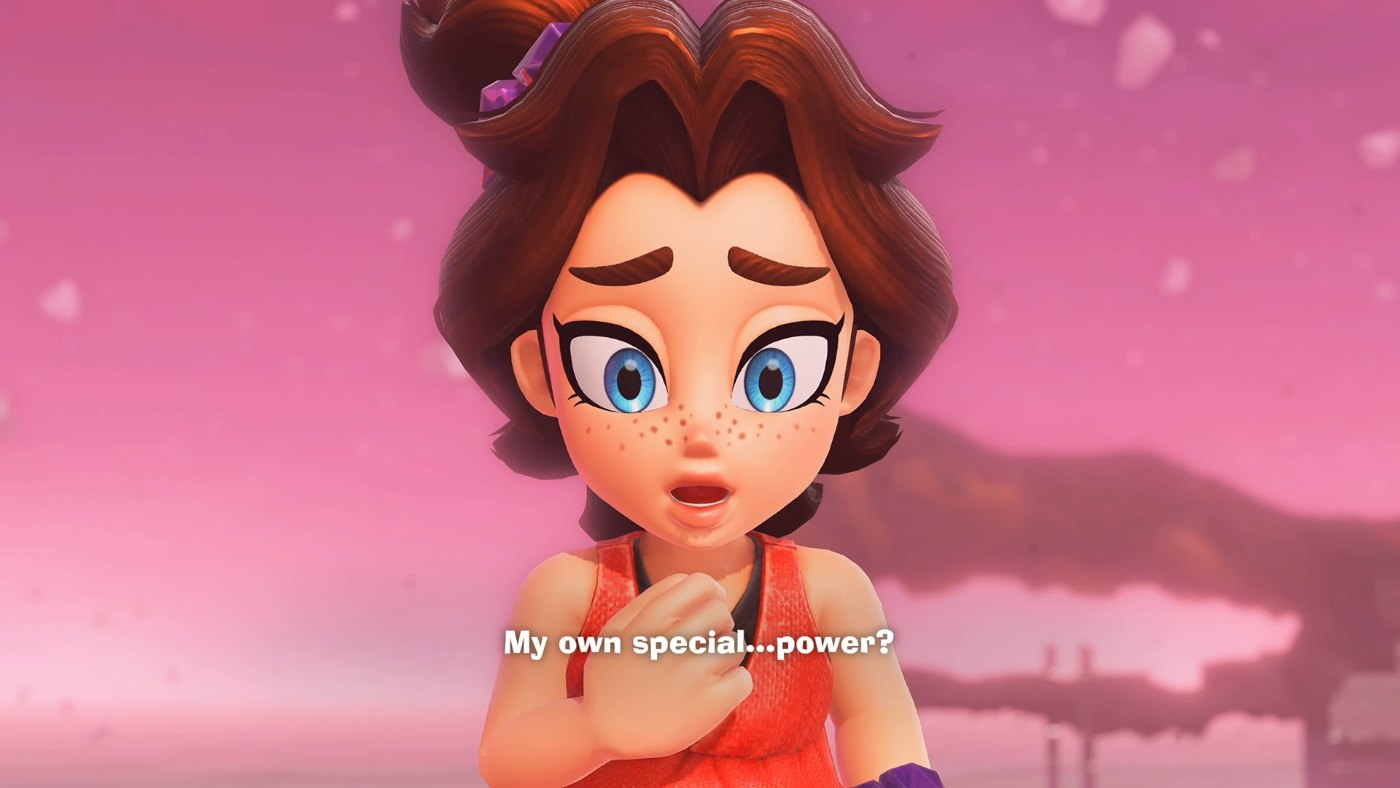
It is not enough to stop the drill. The company gets its bananas and descends, and Void Kong leaves Pauline with a parting thought: her voice is a “special power”, and someone with a power like that should not expect the Core to grant her wish.
The Junction.Void Company at the Junction.Void Kong in his flying machine.Pauline wonders about her special power.
Resort, Tempest, Landfill and a race
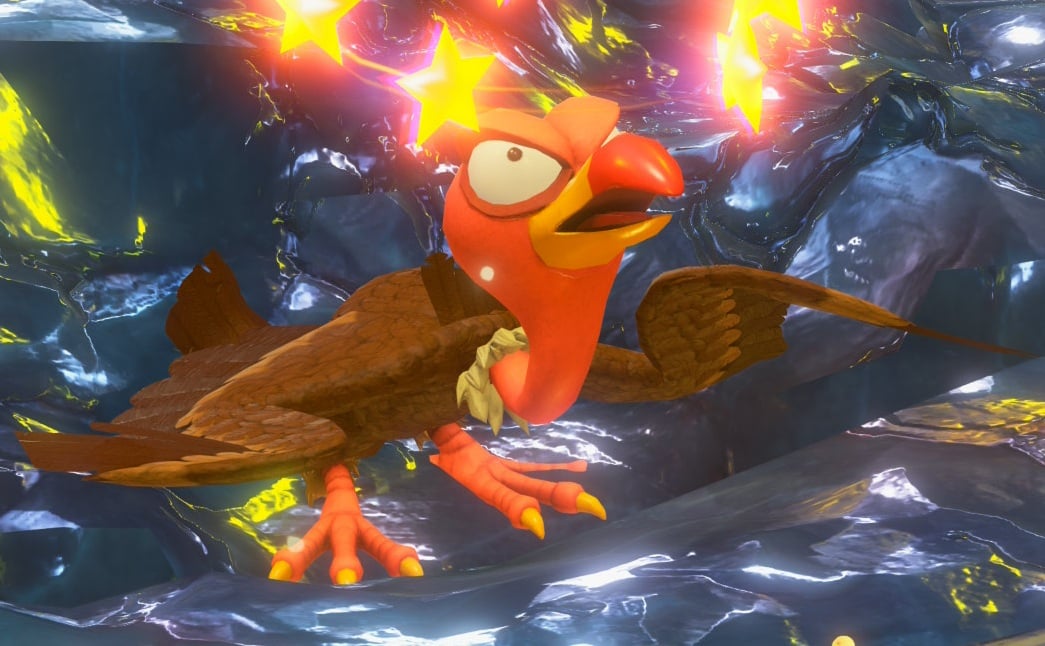
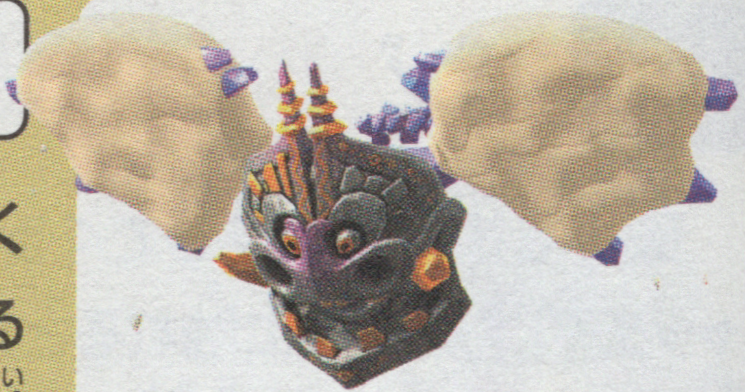
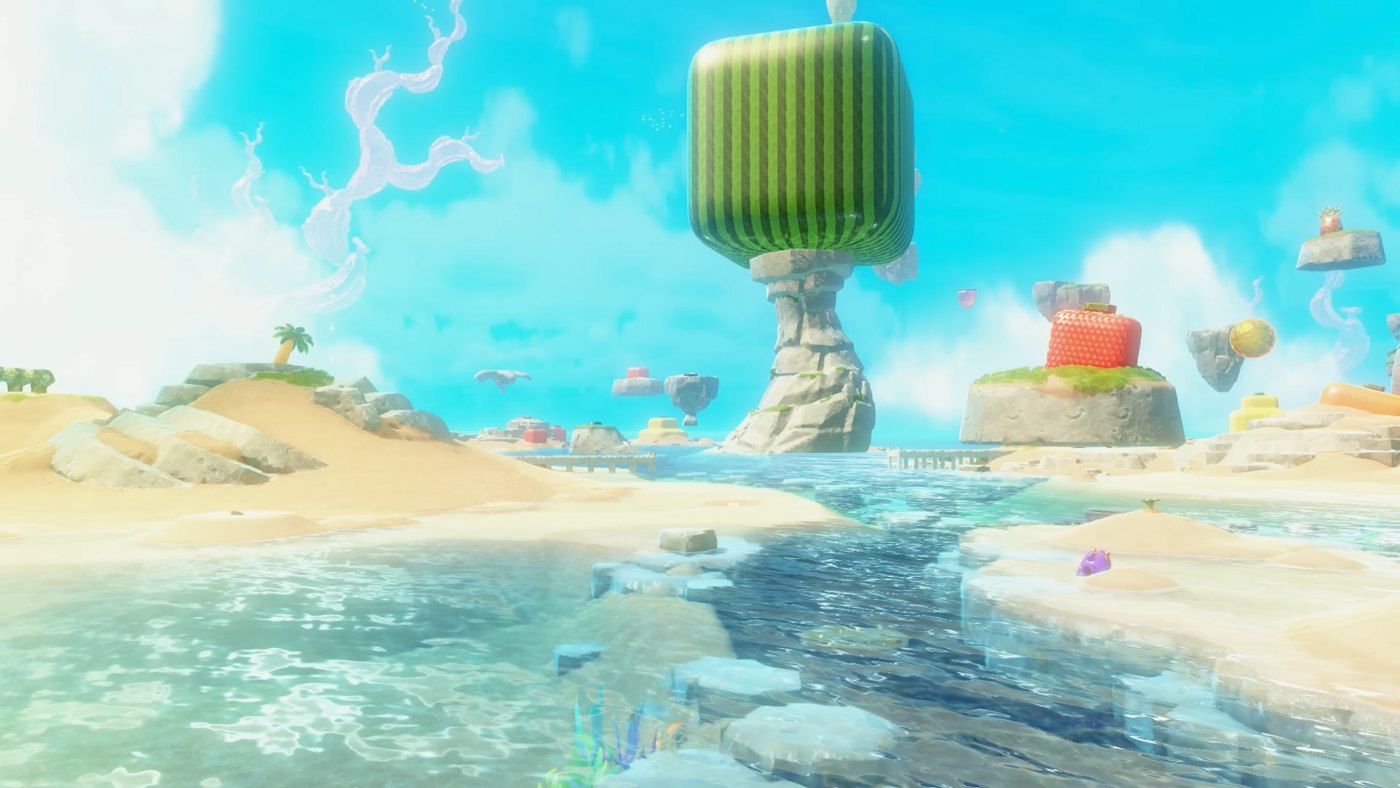
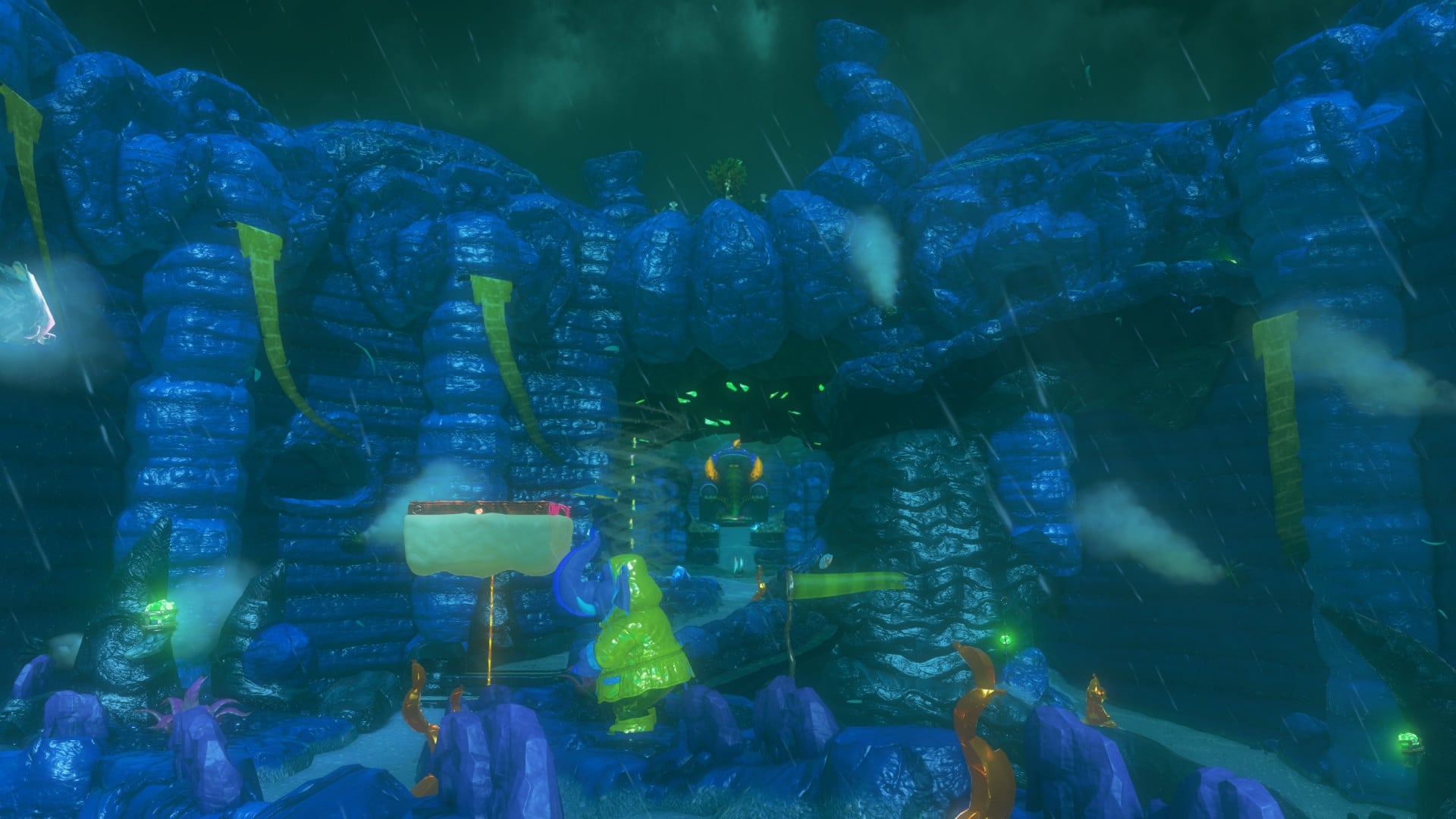
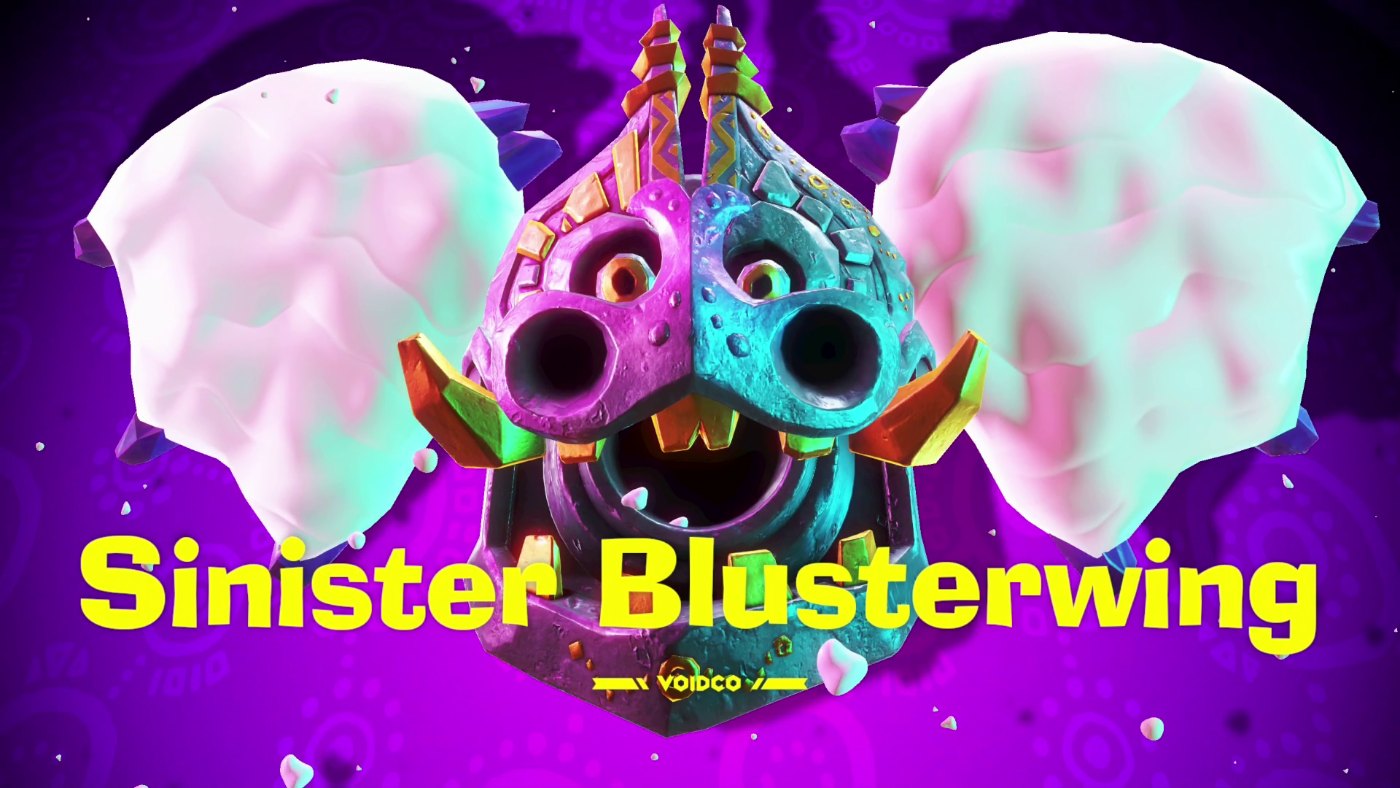
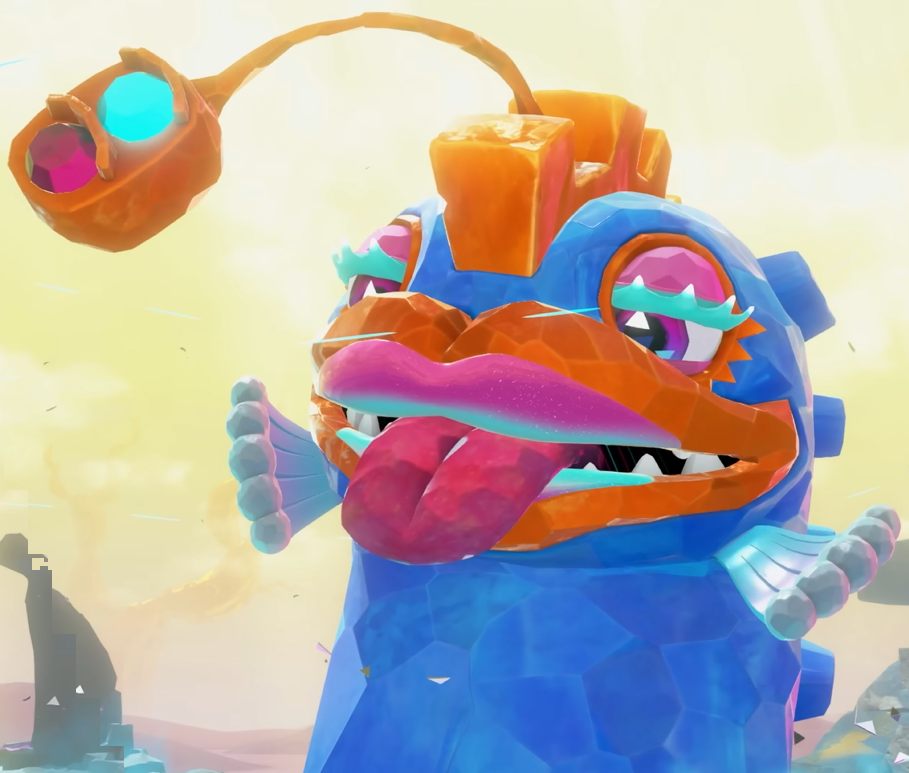
A brief holiday in the Resort Layer, with its giant fruit, gives way to the Tempest Layer, where elephants in raincoats study a sky gone mad. Their weather is governed by the Singing Blusterwing, a bird whose mood decides the forecast, and Void Company has clamped a Mind-Bender Mask on it. As the Sinister Blusterwing it has snapped the Elephant Elder’s record in two. Both halves recovered, Pauline learns the Elephant Bananza, the Elder explains that it is the Banandium Root in the Core that grants wishes, and the bird is fought three times at the Stormy Station before the mask comes off.
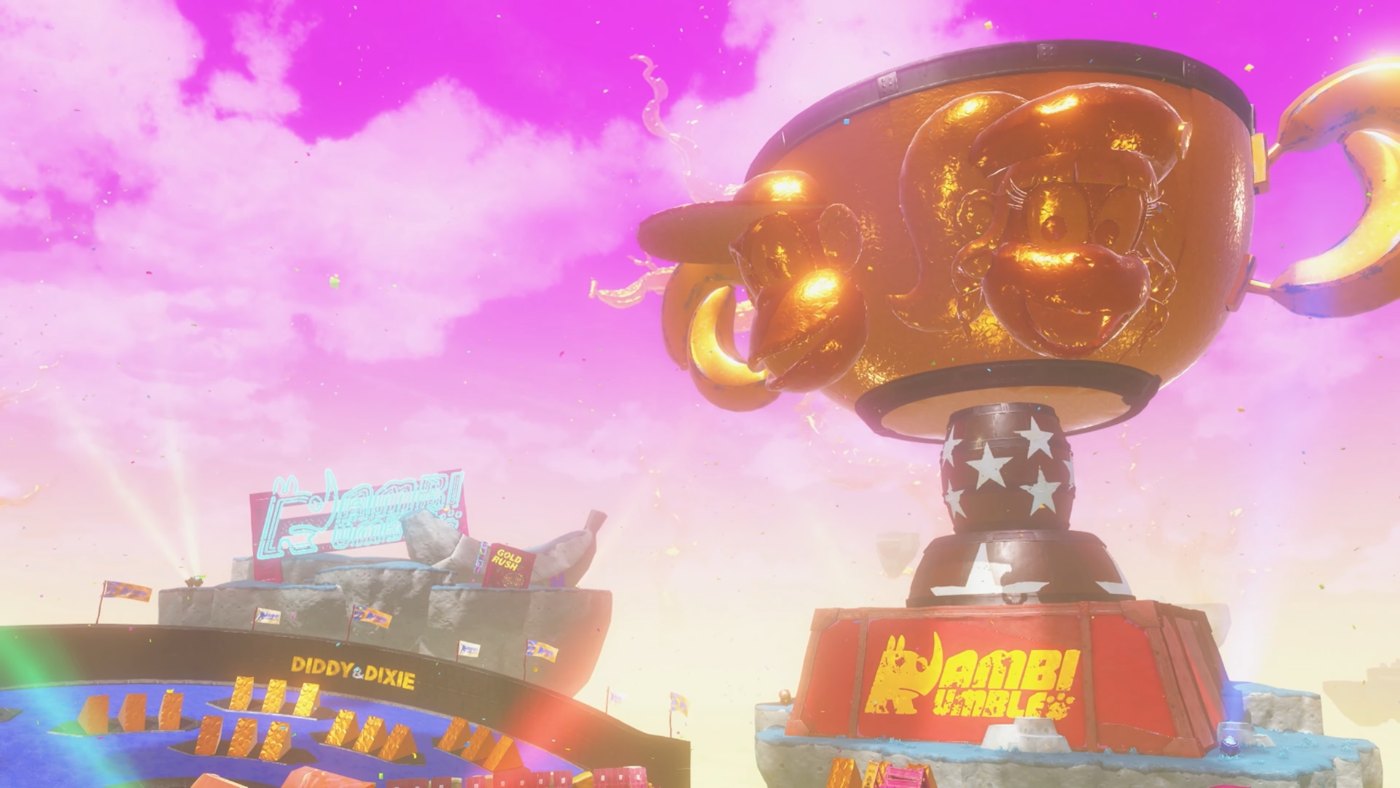
Further down, the Landfill Layer hides a rebuilt Re-Peekabruiser, and the Racing Layer offers something completely different: the Rambi Rumble, a rhino race hosted by Diddy Kong and Dixie Kong.
The Resort Layer.The Tempest Layer.The Sinister Blusterwing.The Racing Layer, home of the Rambi Rumble.
The Radiance Layer: resignations
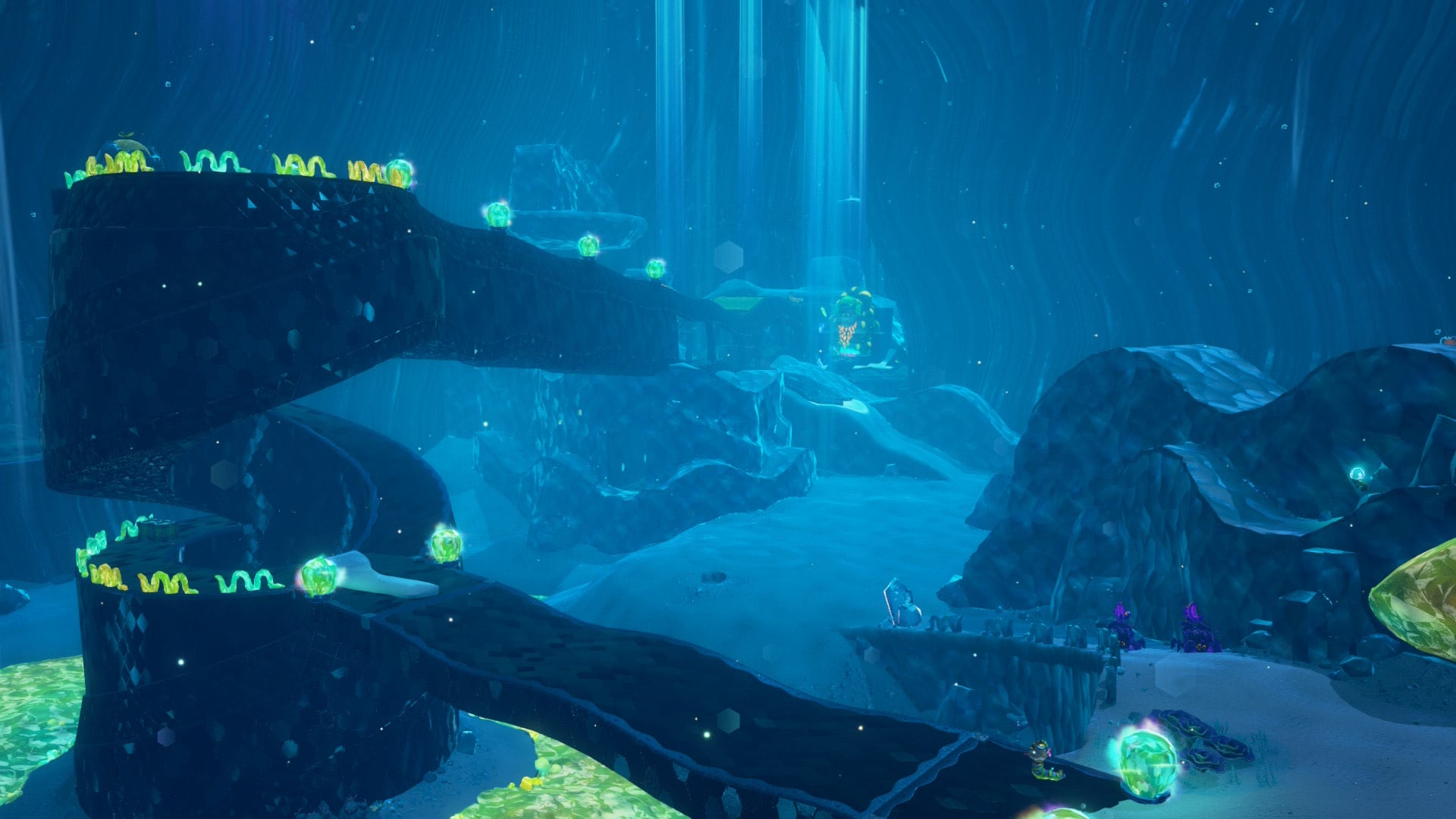
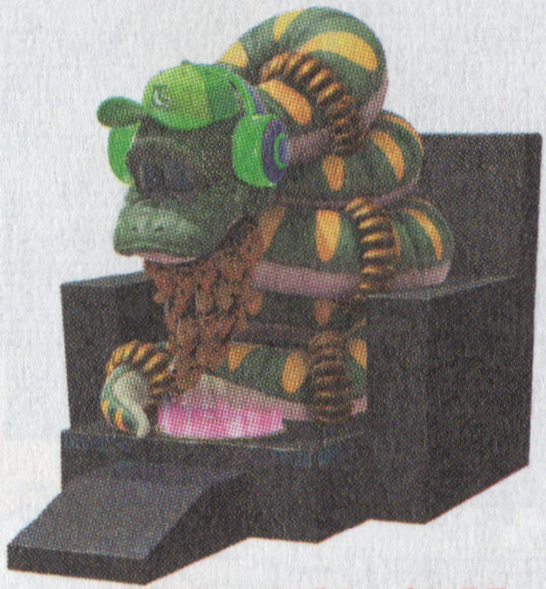
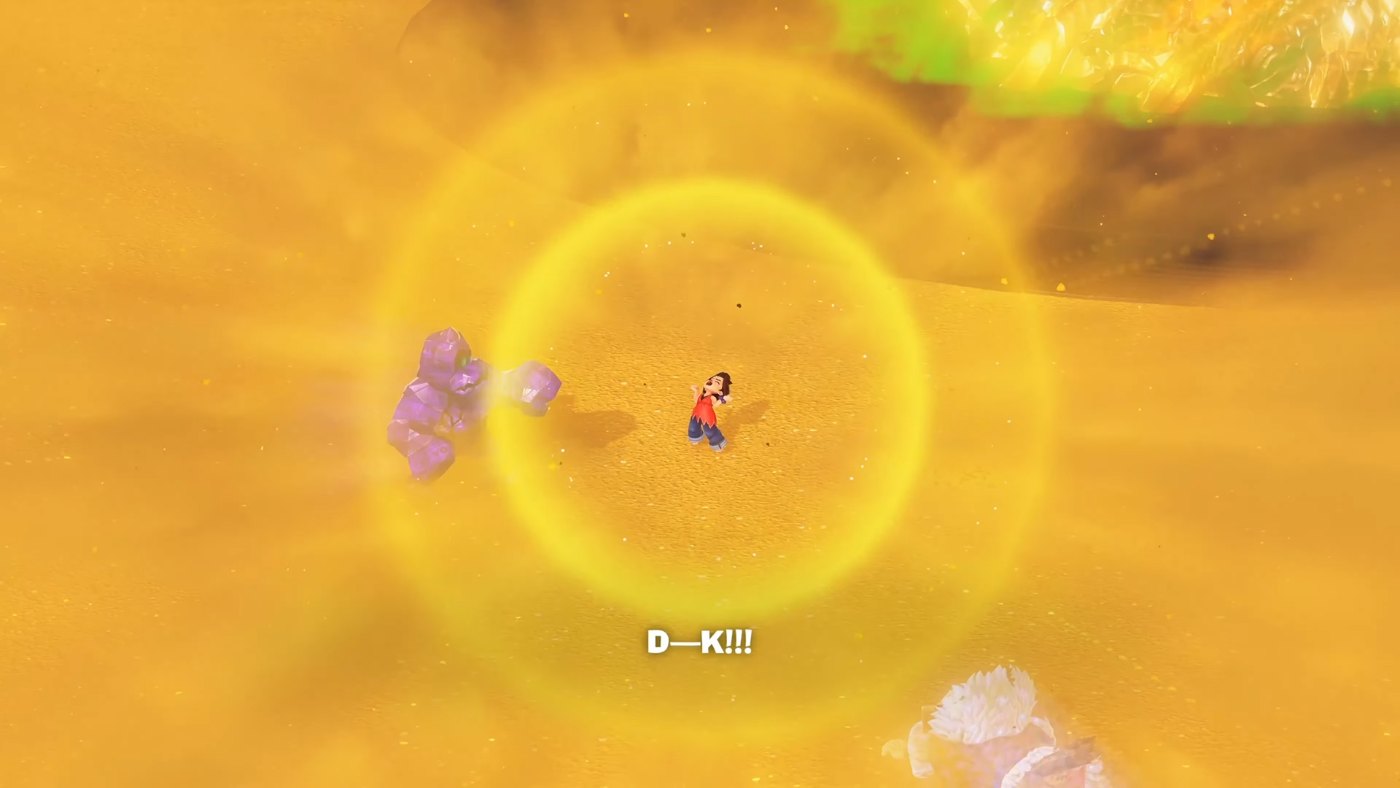
The Radiance Layer is a land of sand dunes and lantern-like buildings, home to snakes who work Glow Stone into art, and it is dark: Void Kong has stolen their Synthetic Sun. The Snake Elder sends DK after the pieces of the last record, which yield the Snake Bananza, and mentions something troubling. The golden roots that run through the layers all grow from the Banandium Root, and no new ones have appeared for a long time.
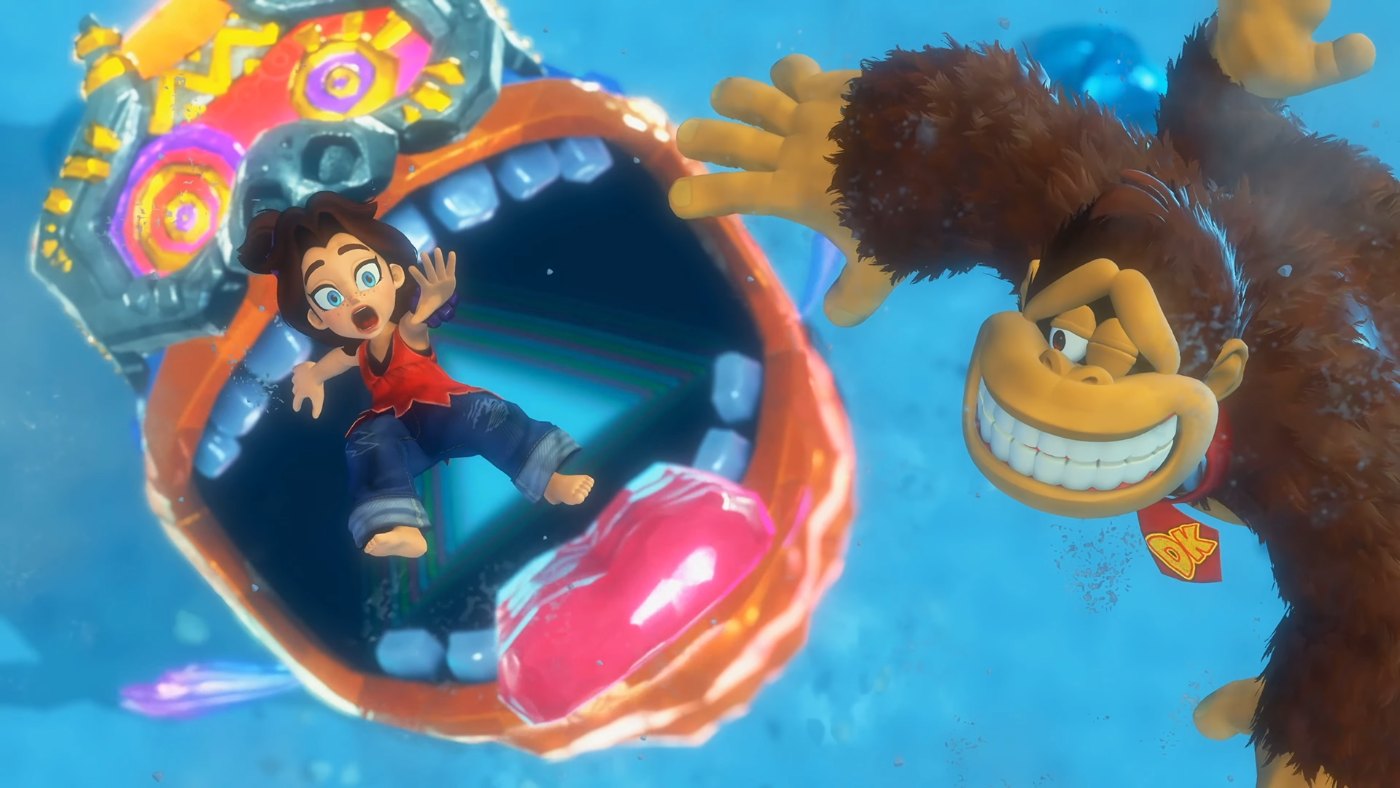
With the sun relit, Poppy Kong is beaten a second time and quits on the spot, declaring the whole operation worthless. Grumpy Kong follows her out of the door one fight later. Before DK can enjoy it, the Great Harmoneel, a vast eel, appears and carries Pauline off, and DK collapses.
The Radiance Layer.The Snake Elder.Pauline, a moment before the Great Harmoneel takes her.
Groove and Feast: alone, then together
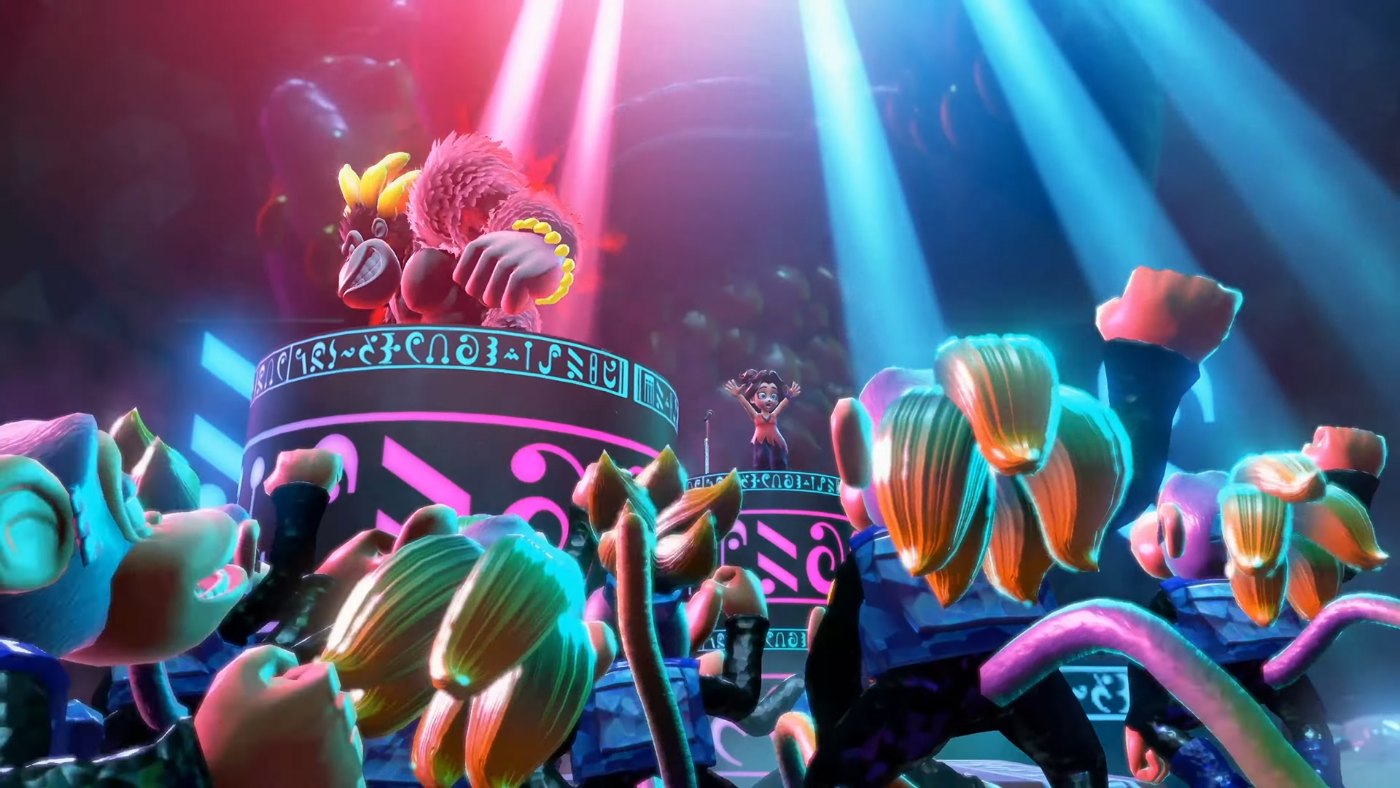
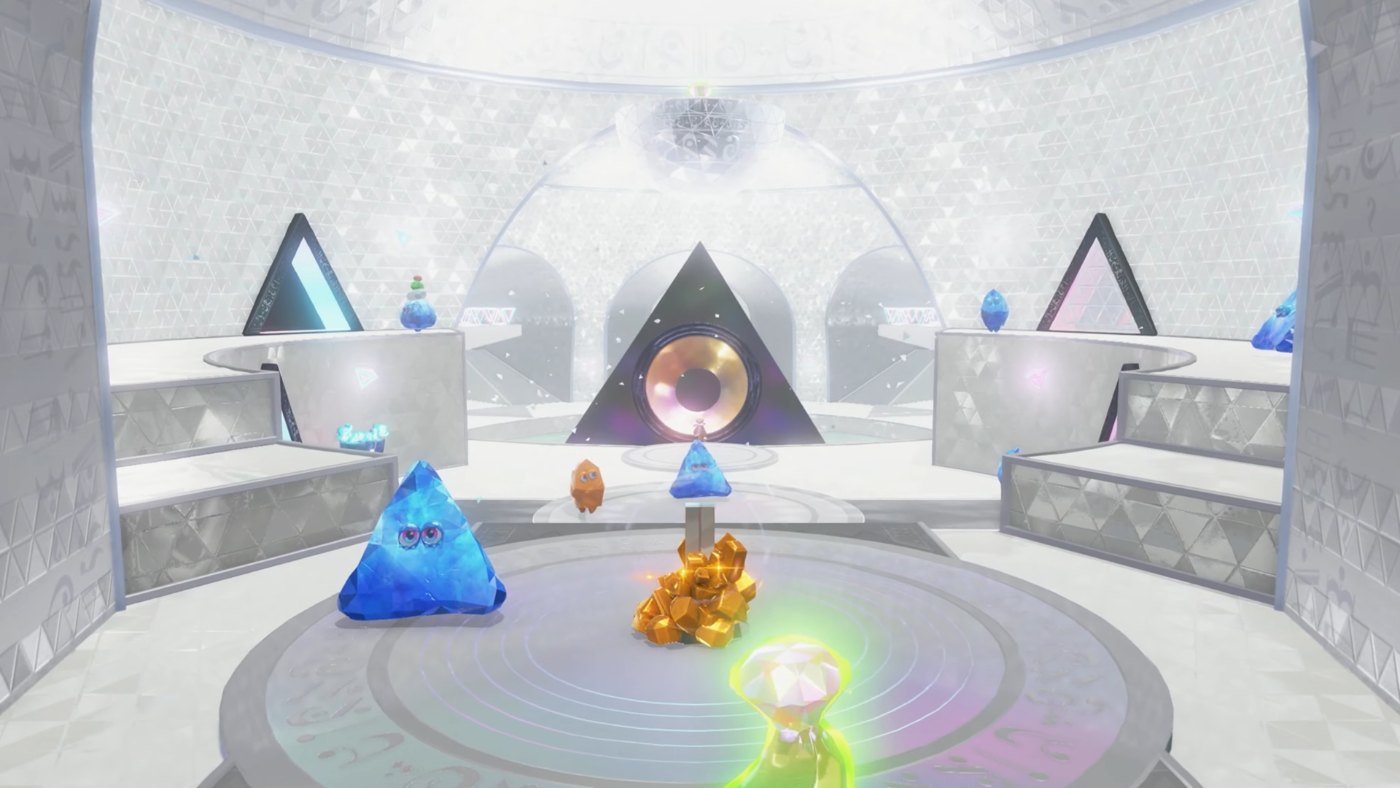
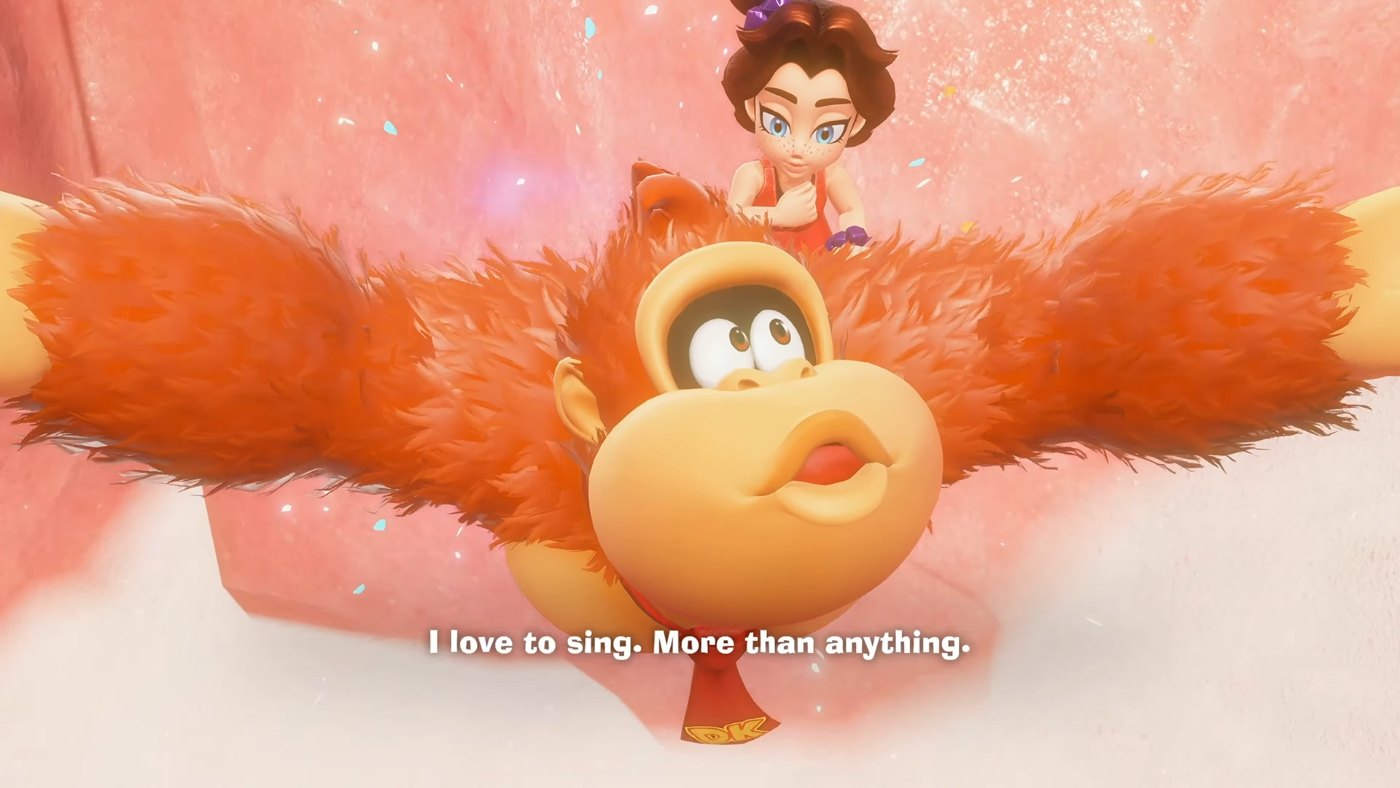
DK wakes in a cell in the Groove Layer, a subterranean disco whose Fractone bouncers blame him for wrecking the place. For one layer he is on his own. He digs his way out, frees a jailed Poppy Kong, and learns from her about the Mind-Bender Masks. The hall’s three sources of sound have been plugged by Terravoiders; with those smashed and tunnels dug to carry the music back to the dance floor, the Great Harmoneel comes to its senses. DK climbs into its mouth and finds Pauline, turned back into Odd Rock. Restored, she tells him for the first time what she actually wants: to be a singer.
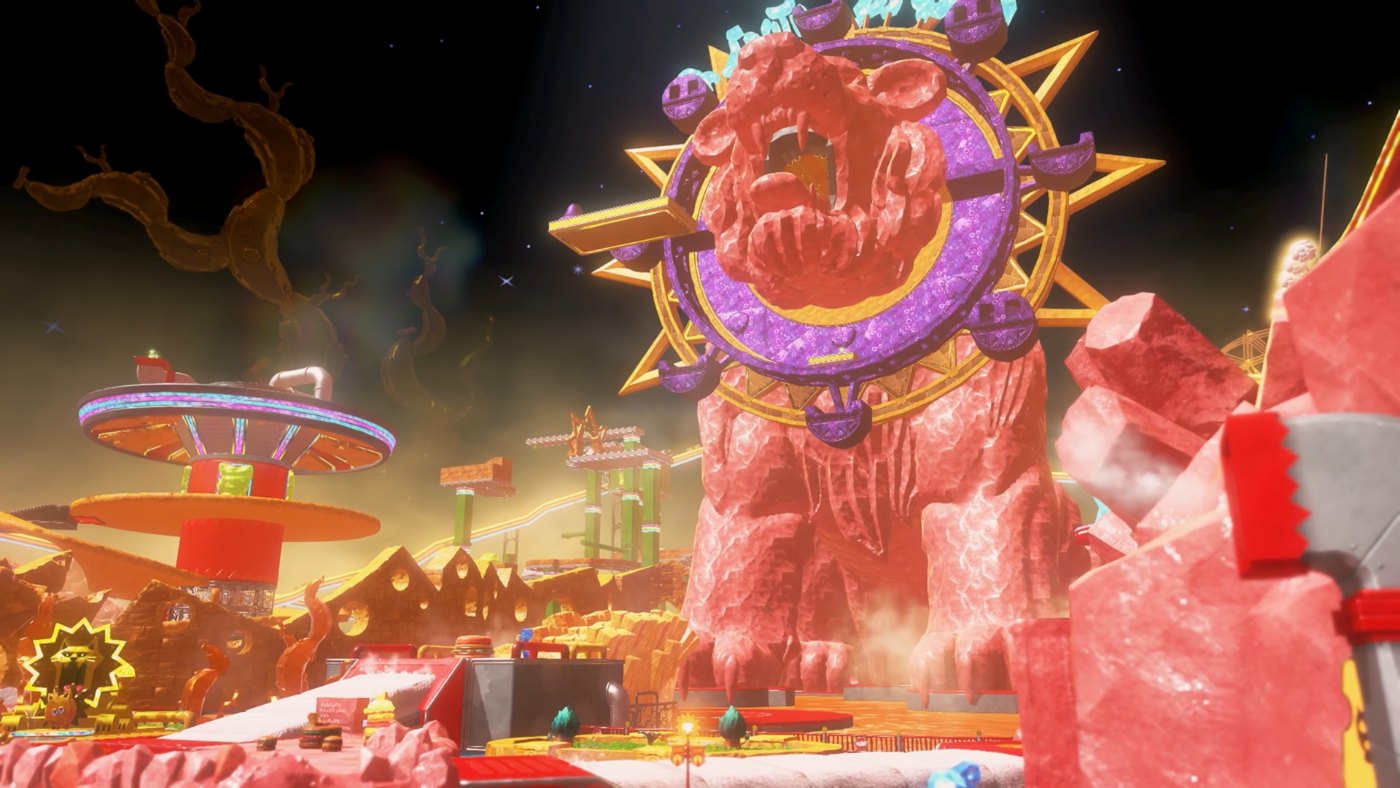
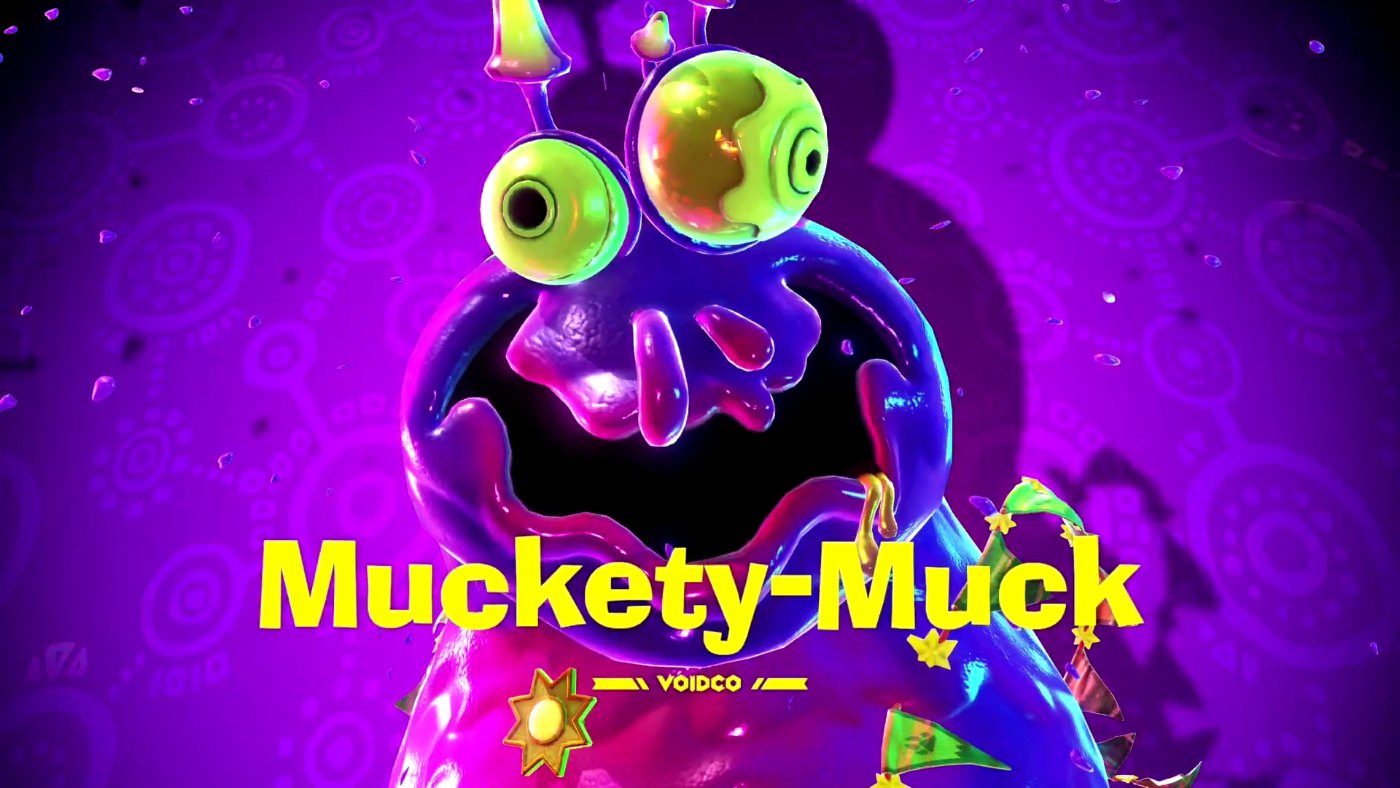
The Feast Layer is a fast-food theme park with a lion motif, slowly drowning in muck. The heroes help assemble a giant Banana Burger and descend to the Cat-Scratch Kitchen to deal with the source, a boss named Muckety-Muck. Void Kong, meanwhile, learns that his staff have failed him.
The Groove Layer.Pauline tells DK how much she loves to sing.The Feast Layer.Muckety-Muck.
The Forbidden Layer: the dome
At the bottom of the Forbidden Layer stands a huge golden dome. This, Void Kong announces, is the Banandium Root, and only Pauline’s voice can wake it. She refuses. DK fights him with bare fists, no Bananza, and wins. Void Kong then produces the All-Mine Remote and turns DK into an Odd Rock. With her friend frozen, Pauline gives in and sings. The song frees him.
It also wakes the dome. The gold cracks, and out of it steps King K. Rool. He swats Void Kong into the side of the Piledriver, pockets the remote and dives into the last sinkhole to find the real Root for himself.
The Forbidden Layer.Pauline sings to free Donkey Kong from his Odd Rock form.Void Kong, president of Void Company.
The Planet Core and New Donk City
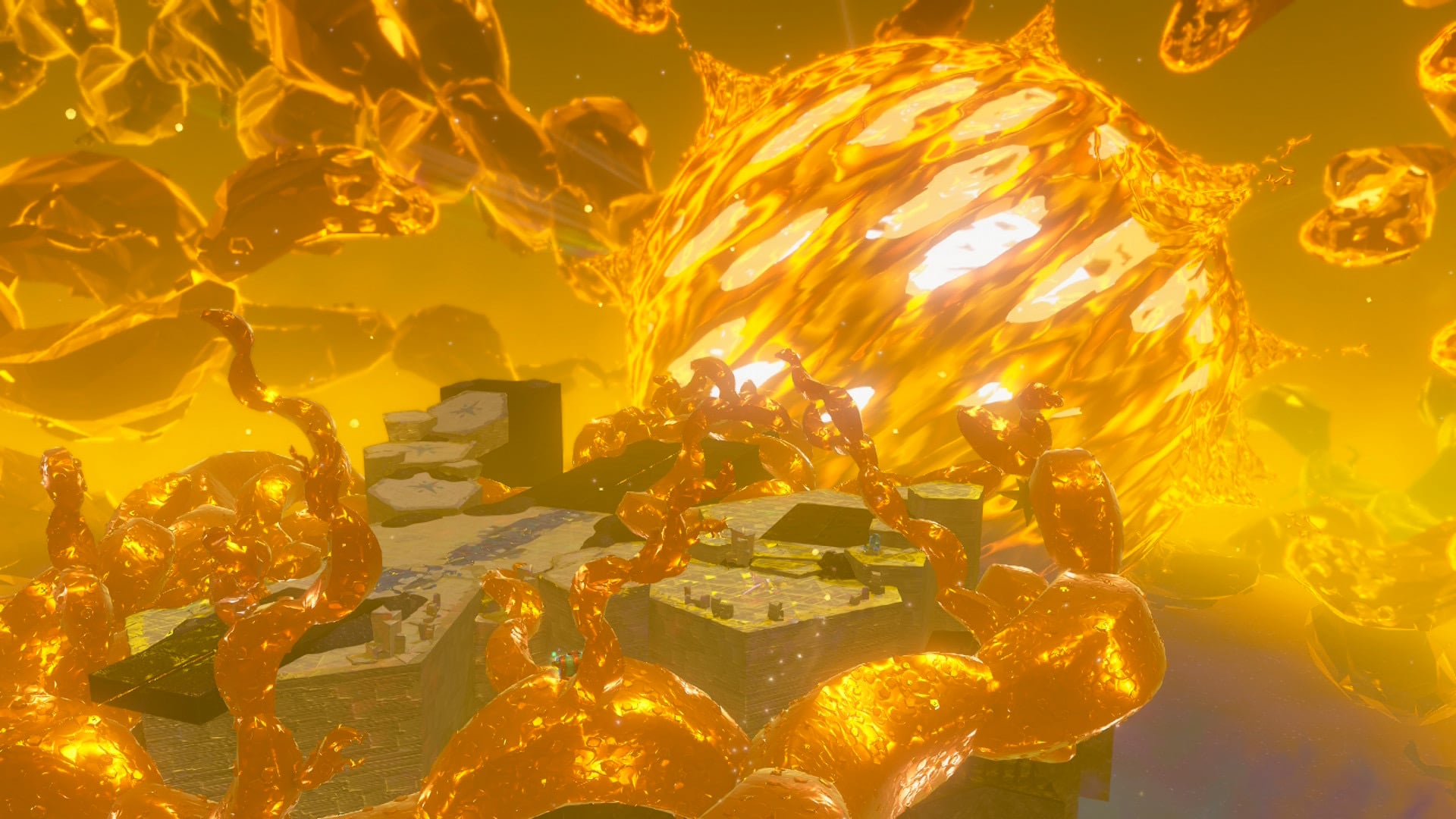
The Core is a platform of gold afloat on a sea of molten gold, and the Kremling Krew have moved in: Kritters, Neckys, Klaptraps and Zingers replace the Void Company creatures. K. Rool reaches the Root first and absorbs its power. Beaten as Core King K. Rool, he collapses, a set of credits begins to roll with his henchmen listed as the staff, and then the Root, having heard two wishes, turns into a pillar of bananas and carries DK and Pauline up through every layer to the surface.
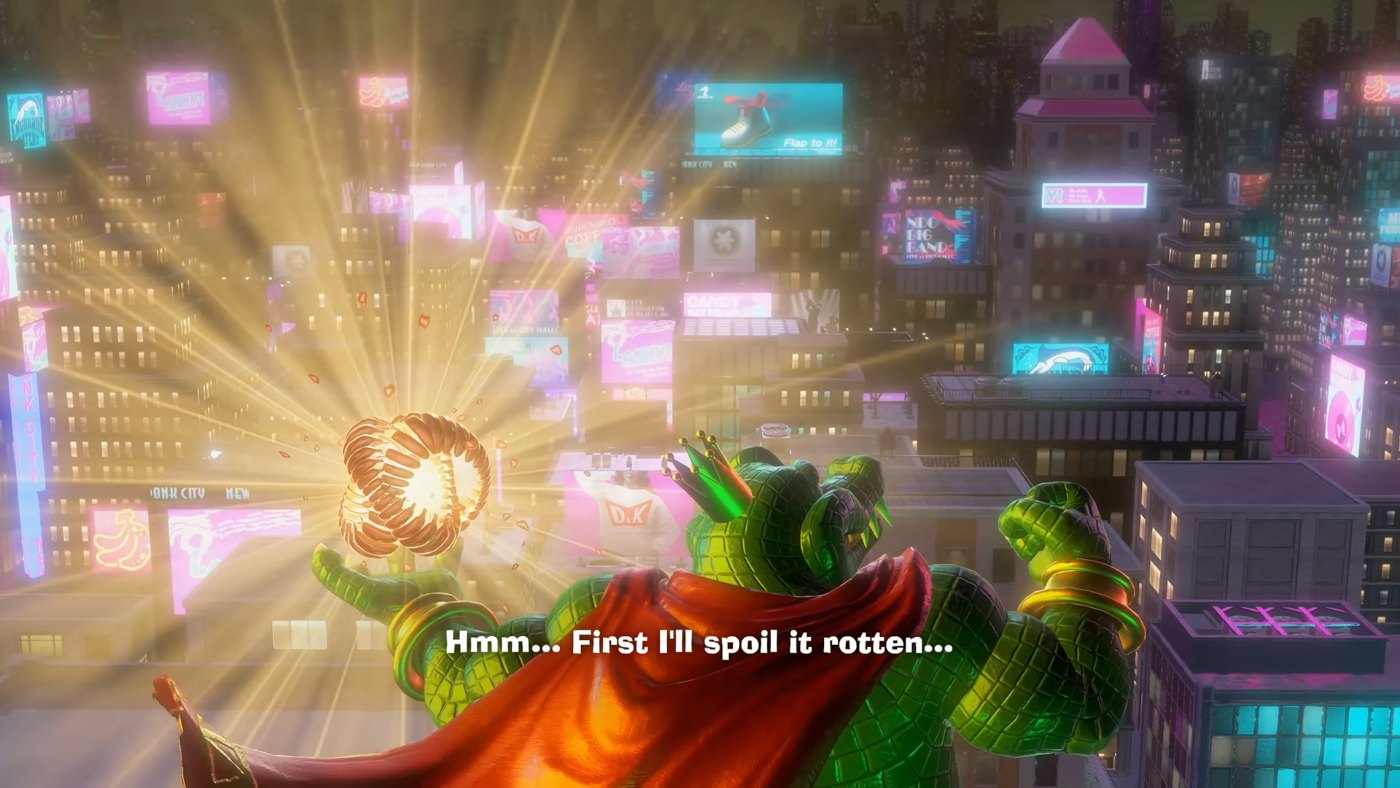
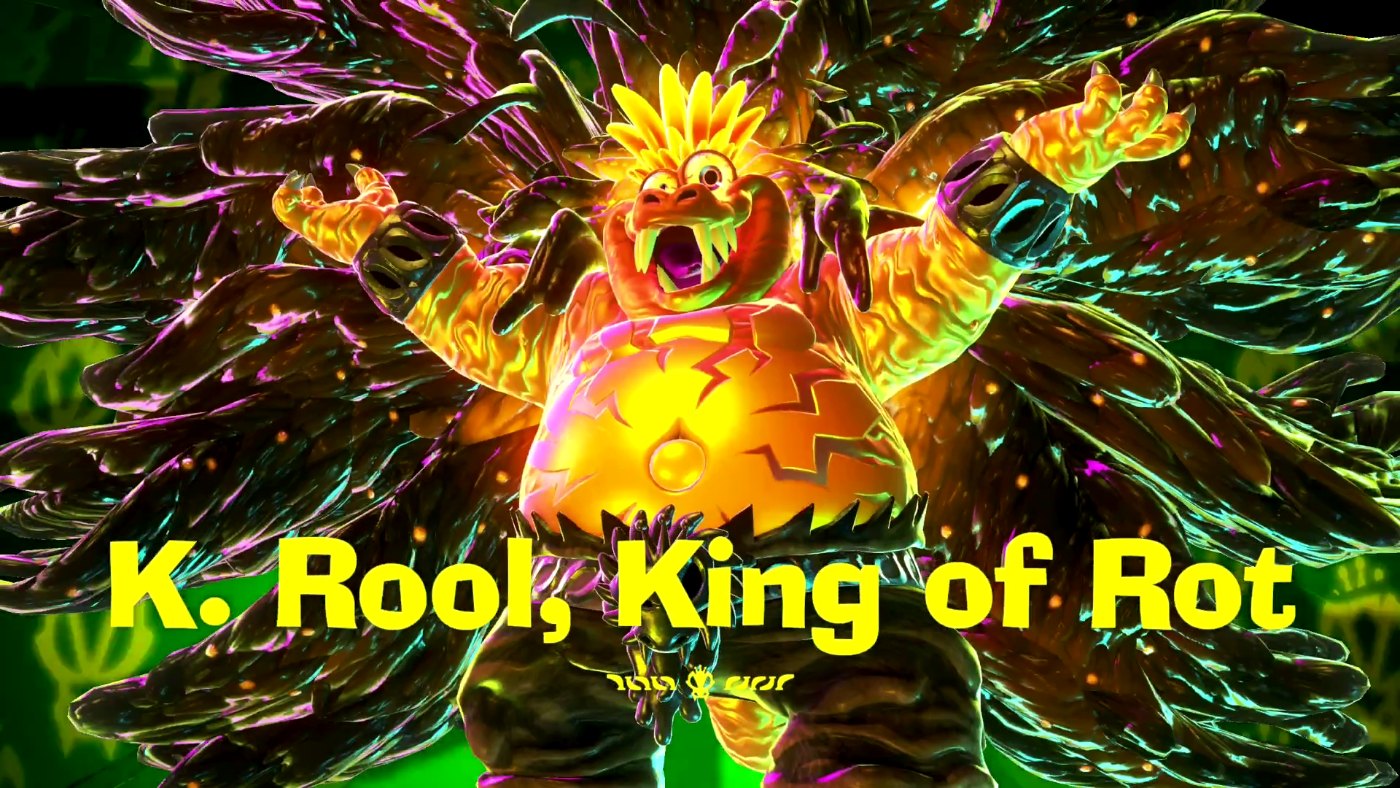
They come out in New Donk City, Pauline’s home, with K. Rool close behind on his Propellerpack. He rots the Root into Banandium Mush, eats it, and smothers the city in the stuff. The last climb leads to an arena floating in front of City Hall, where K. Rool, King of Rot, is finally knocked into the distance.
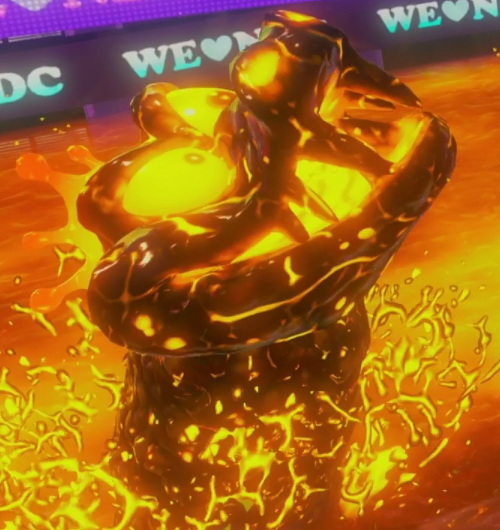
The Planet Core.King K. Rool returns.K. Rool with the Banandium Root over New Donk City.K. Rool, King of Rot.
The ending, and after
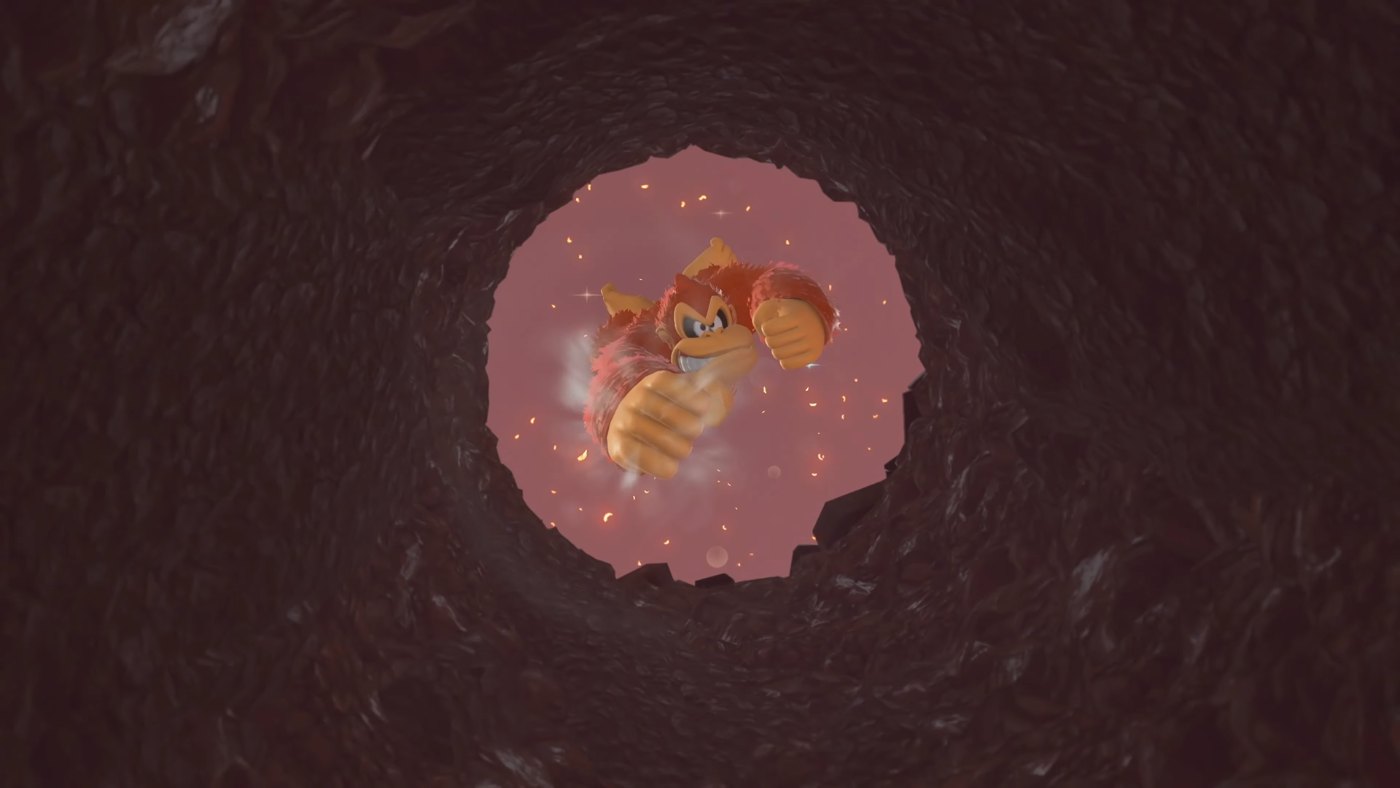
The mush and the gold melt away. Pauline has her wish, since she is home, and has found a better one: she wants to sing for the people of her city. DK has bananas to think about. They part as friends, and he drops back down the shaft the Root left behind. After the credits Pauline is seen performing on the streets of New Donk City.
The postgame picks up the thread. A month later the two meet again underground to learn any Bananza songs they missed. Three months later still, DK returns to Ingot Isle to find Grumpy and Poppy reformed, and a Warp Gong that brings Pauline down on the Eelevator. She has a concert at City Hall to prepare for and no new song, so they visit each Elder again for a Rehearsal. When the last challenge is done she writes one, and the game’s true final scene is Donkey Kong in the audience.
Donkey Kong heads back underground.The final scene.Pauline in concert.
Every layer in Donkey Kong Bananza
The Underground World is numbered by sublayer (SL), increasing with depth. Gem and fossil counts total 777 Banandium Gems and 696 fossils across the seventeen layers.
Ingot Isle Cave-InSL10 · 36 gems · boss rush in the postgameA mining town of purple girders, sunk into the ground in the opening minutes. Home of the Prospector Monkeys.
Lagoon LayerSL100–102 · 56 gems, 72 fossils · Kong Elder · boss: PeekabruiserA sunny archipelago of Salvager Monkeys. Pauline is freed here and DK learns the Kong Bananza.
Hilltop LayerSL200 · 38 gems, 30 fossils · Void Kong (first round)Rolling hills, giant stone bananas and the first Fractones.
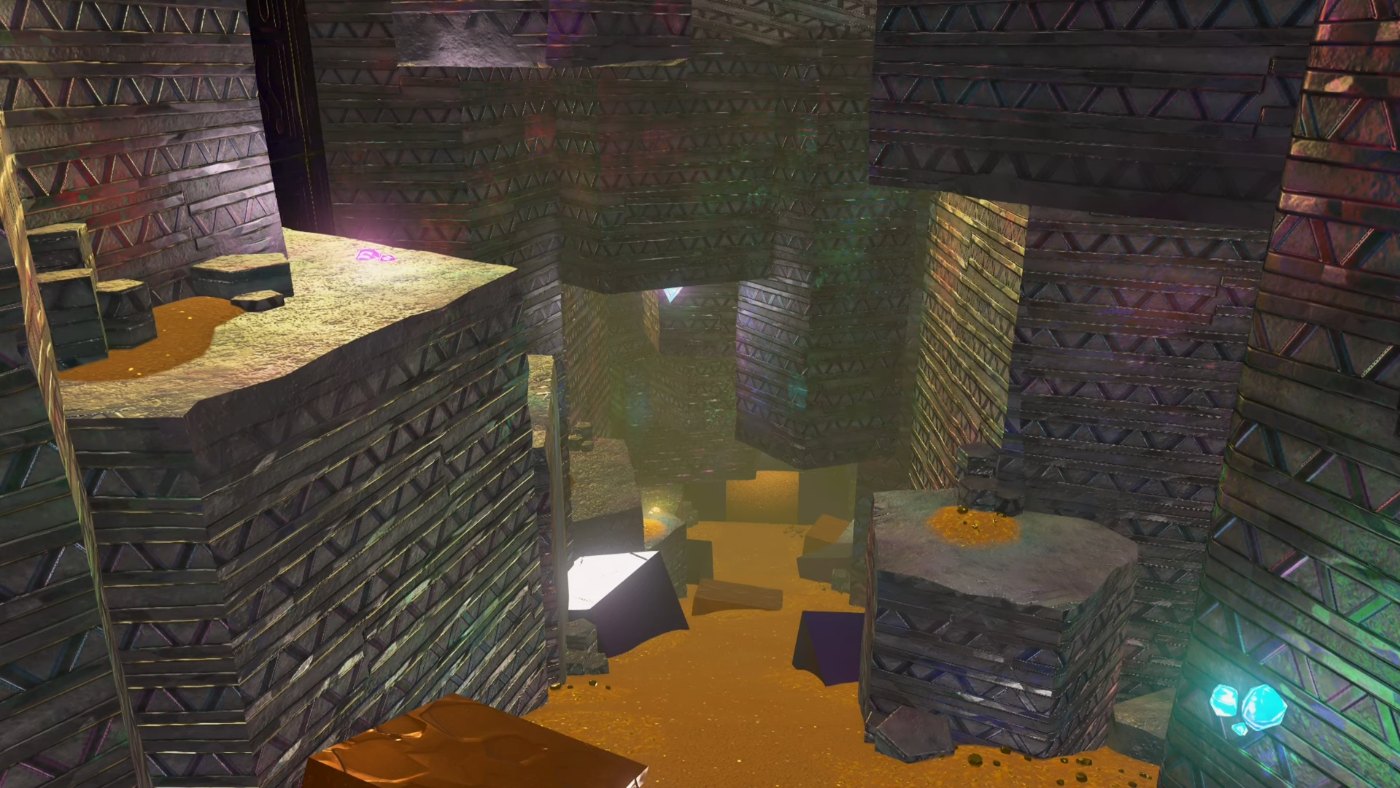
Canyon LayerSL300–302 · 80 gems, 72 fossils · bosses: Grumpy Kong, Mad Mixer, StompenclomperA rocky canyon dominated by the Banandium Refinery and its giraffe-spotted chimneys.
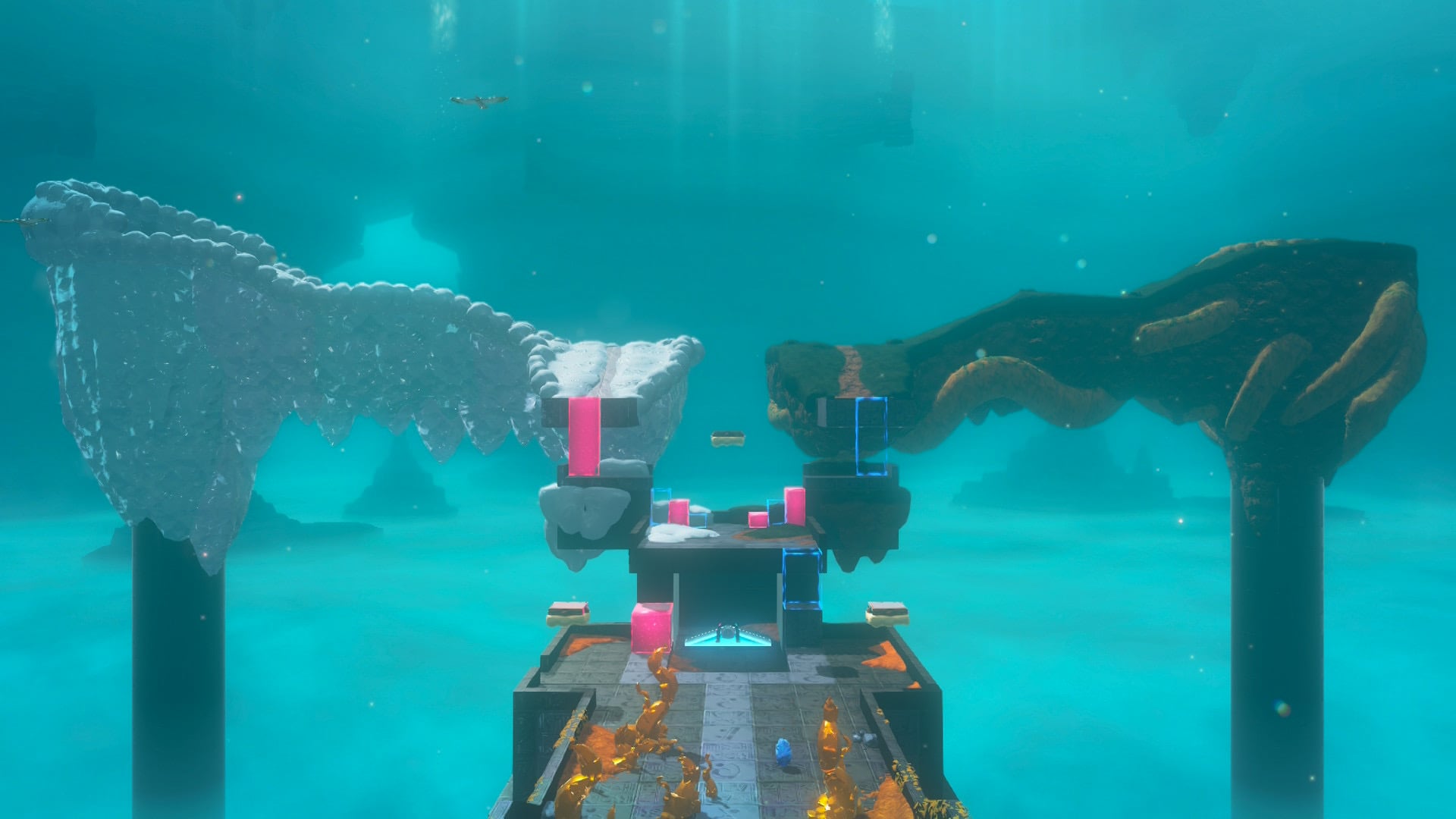
The DivideSL400 · 10 gemsA fork in the road: snow one way, grass the other, with Switcheroo Goo underfoot.
Freezer LayerSL500–503 · 87 gems, 72 fossils · Zebra Elder · bosses: Poppy Kong, InflammoniteSnow, lava and chocolate, and a town of ice-cream-making zebras. Zebra Bananza.
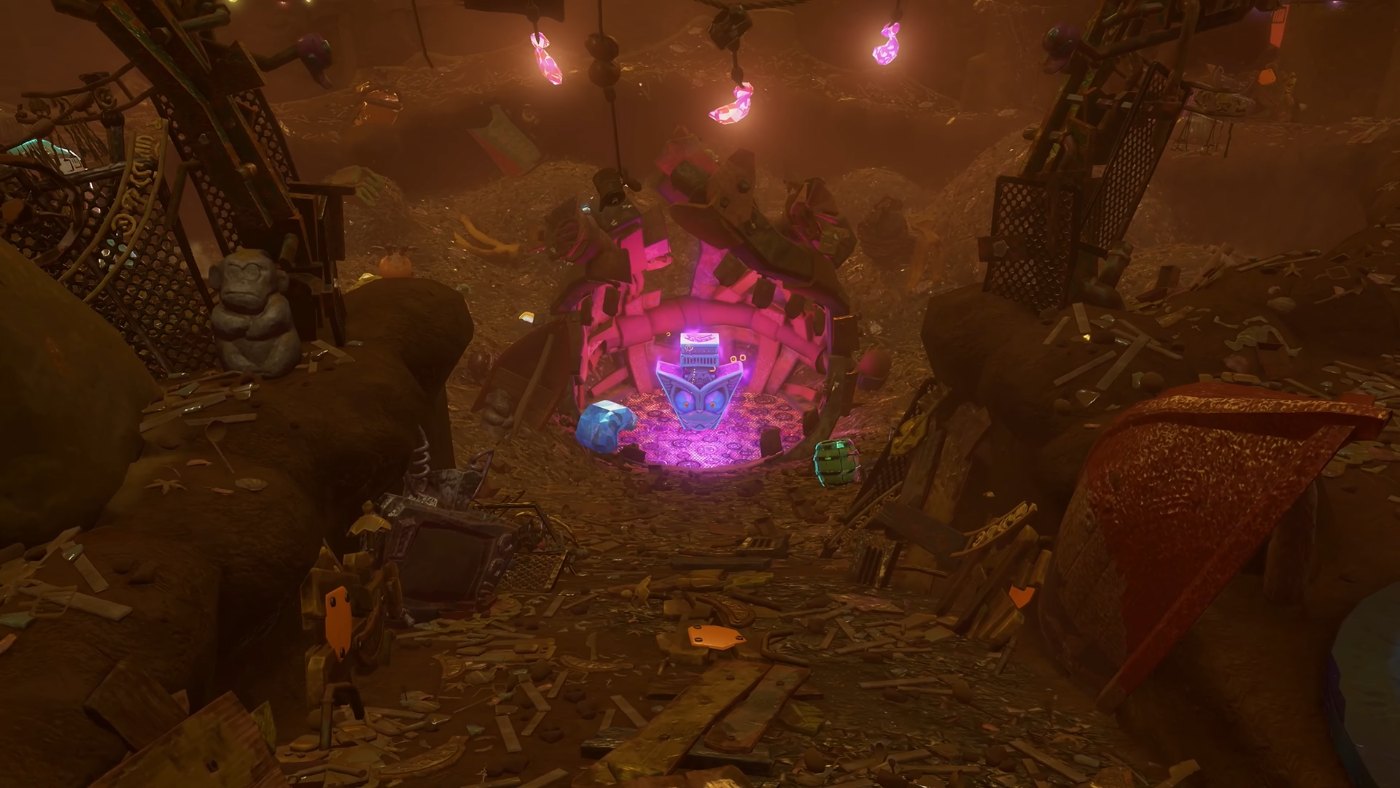
Landfill LayerSL1000–1001 · 27 gems, 30 fossils · boss: Re-PeekabruiserA junk-filled cavern of Fractones and Li’l Eelevators.
Racing LayerSL1100 · 10 gems · Rambi RumbleA racetrack on floating islands, where Diddy and Dixie Kong hold the Rambi Rumble.
Radiance LayerSL1200–1204 · 76 gems, 72 fossils · Snake Elder · bosses: Poppy Kong, Grumpy Kong (rematches)Dunes and lanterns, home to artistic snakes whose Synthetic Sun has been stolen. Snake Bananza.
Groove LayerSL1300 · 30 gems, 30 fossilsA disco hall with its own jail. DK plays it alone until Pauline is rescued from the Great Harmoneel.
Feast LayerSL1400–1401 · 69 gems, 72 fossils · bosses: Mad Mixer Remix, Muckety-MuckA fast-food amusement park built around a giant Banana Burger, with a muck factory underneath.
Forbidden LayerSL1500 · 25 gems, 30 fossils · boss: Void Kong (final)Floating Neptunite platforms guarded by Securitones, and a golden dome that is not what it seems.
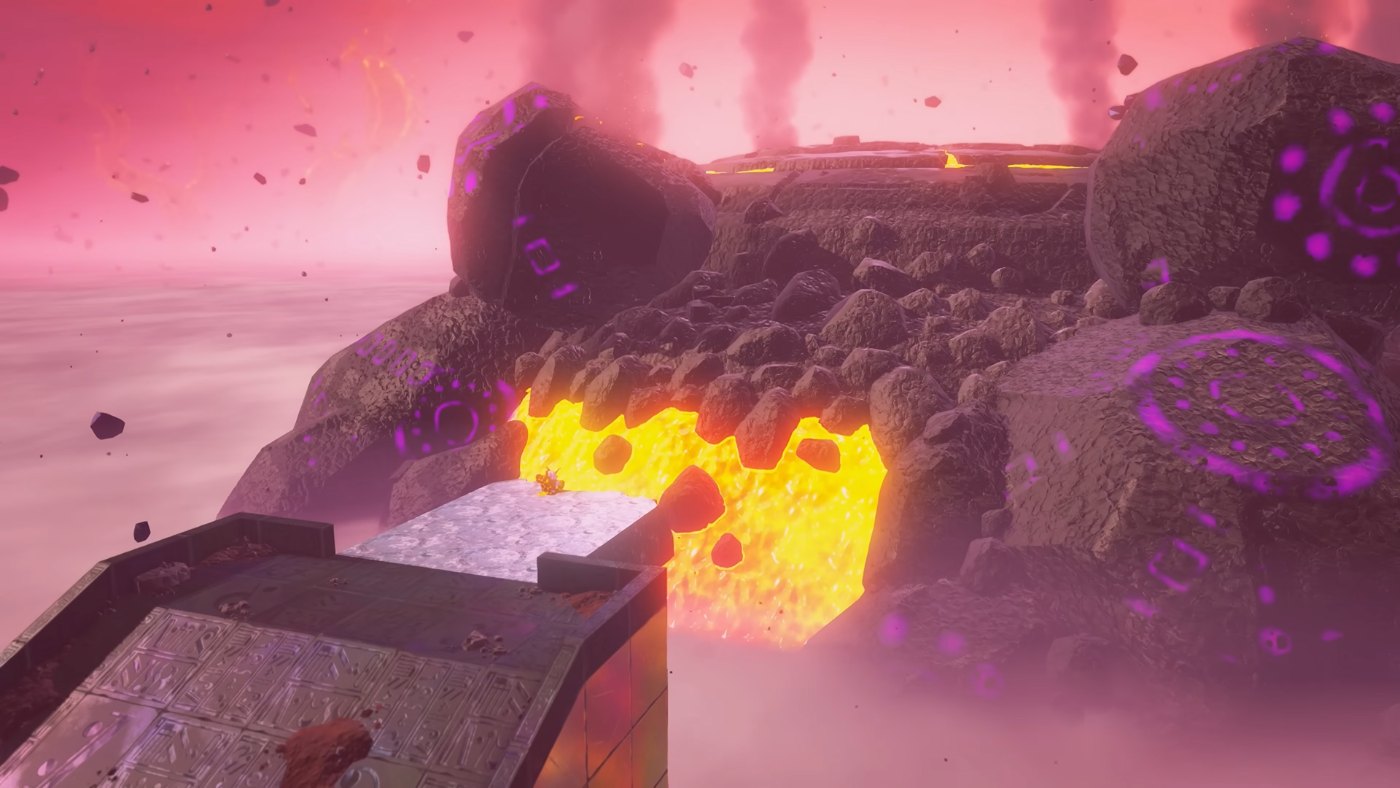
Planet CoreSL1600–1609 · 23 gems, 42 fossils · bosses: K. Stompenclomper, King K. RoolA golden platform in a sea of liquid gold, overrun by the Kremling Krew. Its fossils are 8-bit barrels and a pixel DK.
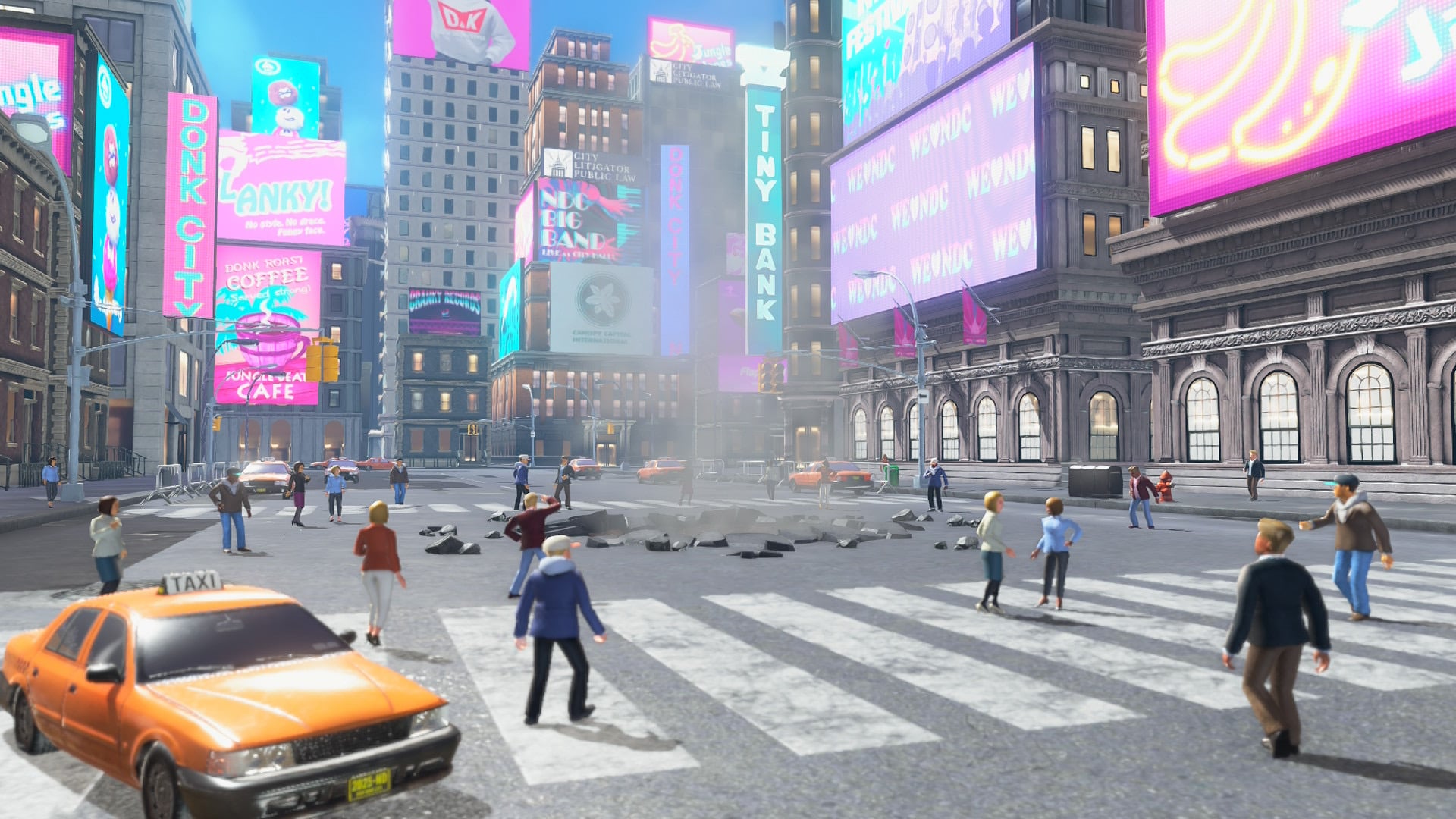
New Donk CitySurface · final boss: K. Rool, King of RotPauline’s home town from Super Mario Odyssey, buried in Banandium Mush for the finale.
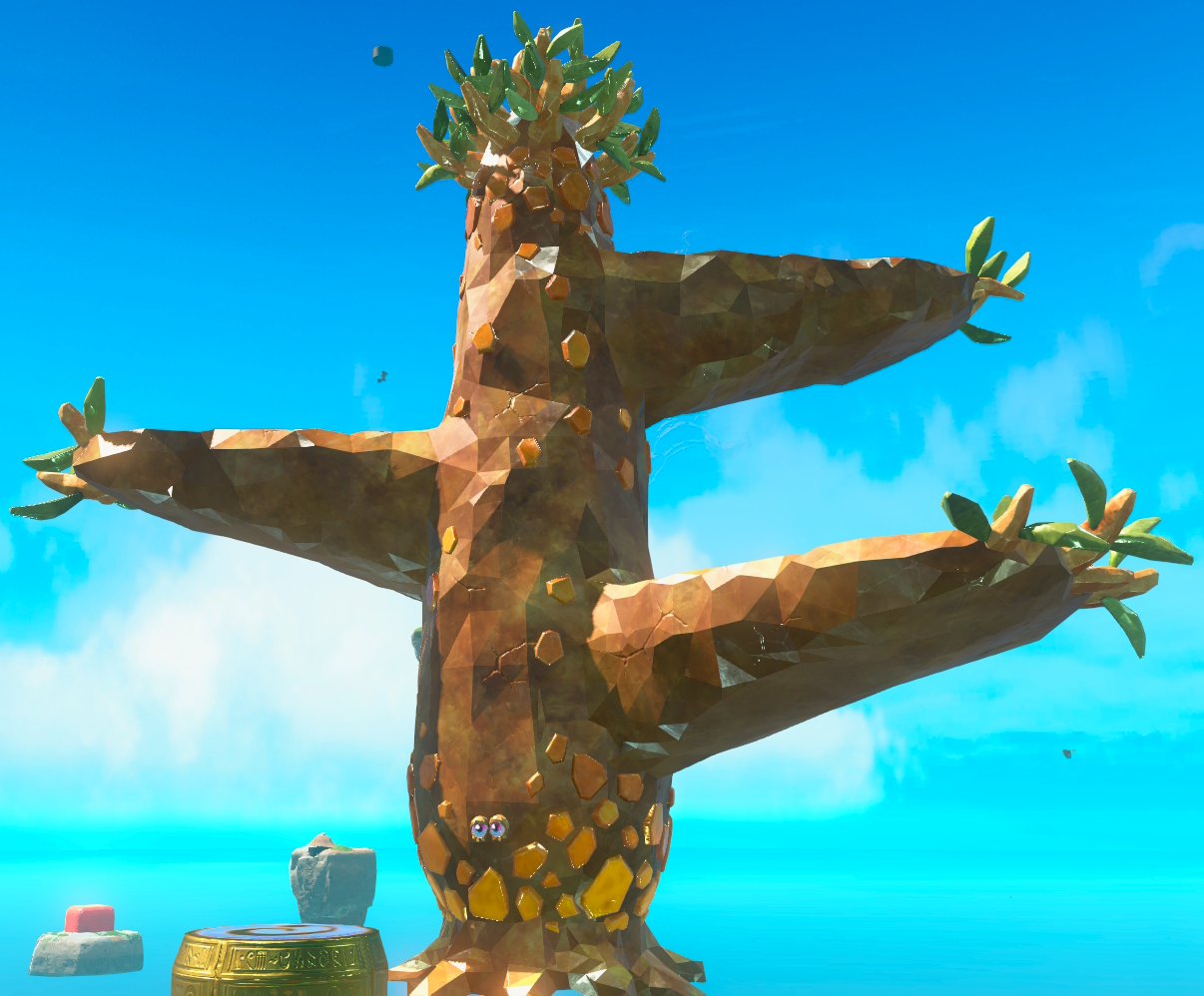
DK Island (DLC)DK Island & Emerald Rush · boss: Void Kong at 10,000 Rating PointsThe Kongs’ home, complete with DK’s Tree House and a mountain carved with his face. Base for Emerald Rush.
Layers are linked by sinkholes, opened by removing Void Company’s stakes, and after a first visit by the Eelevator.
Advertisement
Gameplay & Controls
Imagine Super Mario Odyssey if Mario could eat the level. Each layer is a large open space dotted with Banandium Gems, and the ground between you and any one of them is negotiable.
Smash everything
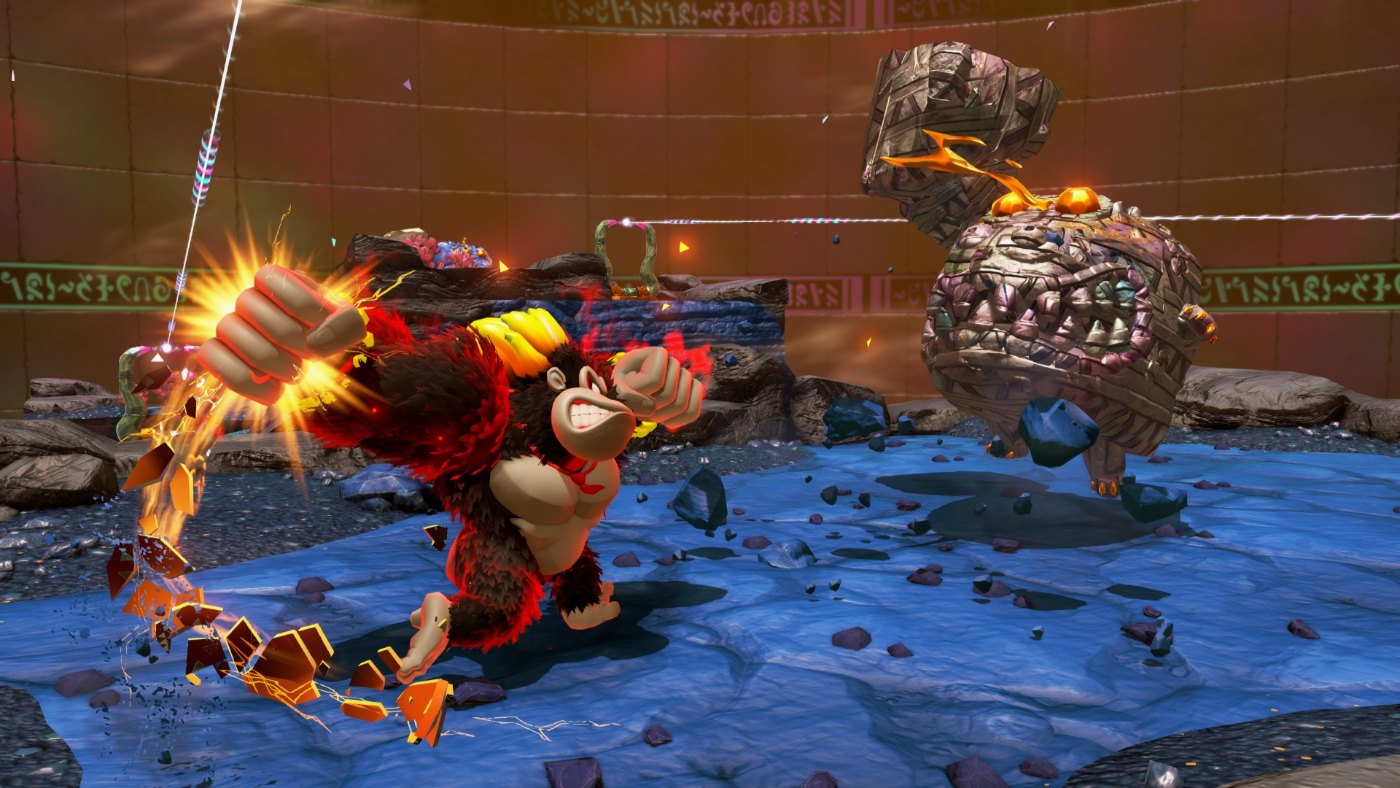
Nearly all the terrain can be destroyed, and different materials behave differently. Soft stuff such as dirt and mud is easy to dig and will stick where it is thrown, so it can be piled into ramps and bridges, but it shatters against anything tough. Hard, “sturdy” rock takes more punishment to break and hits much harder when thrown. Metal and the mineral Neptunite cannot be broken at all and mark the edges of what the designers will let you ruin. Point at any surface and the game names it and tells you how tough it is.
Everything broken is counted. The Smashin’ Stats screen totals the destruction, and a Fractone called Smashintone hands over gold and Banandium Gems at milestones. When DK burrows underground the camera turns the rock around him transparent so that you can still see what you are doing.
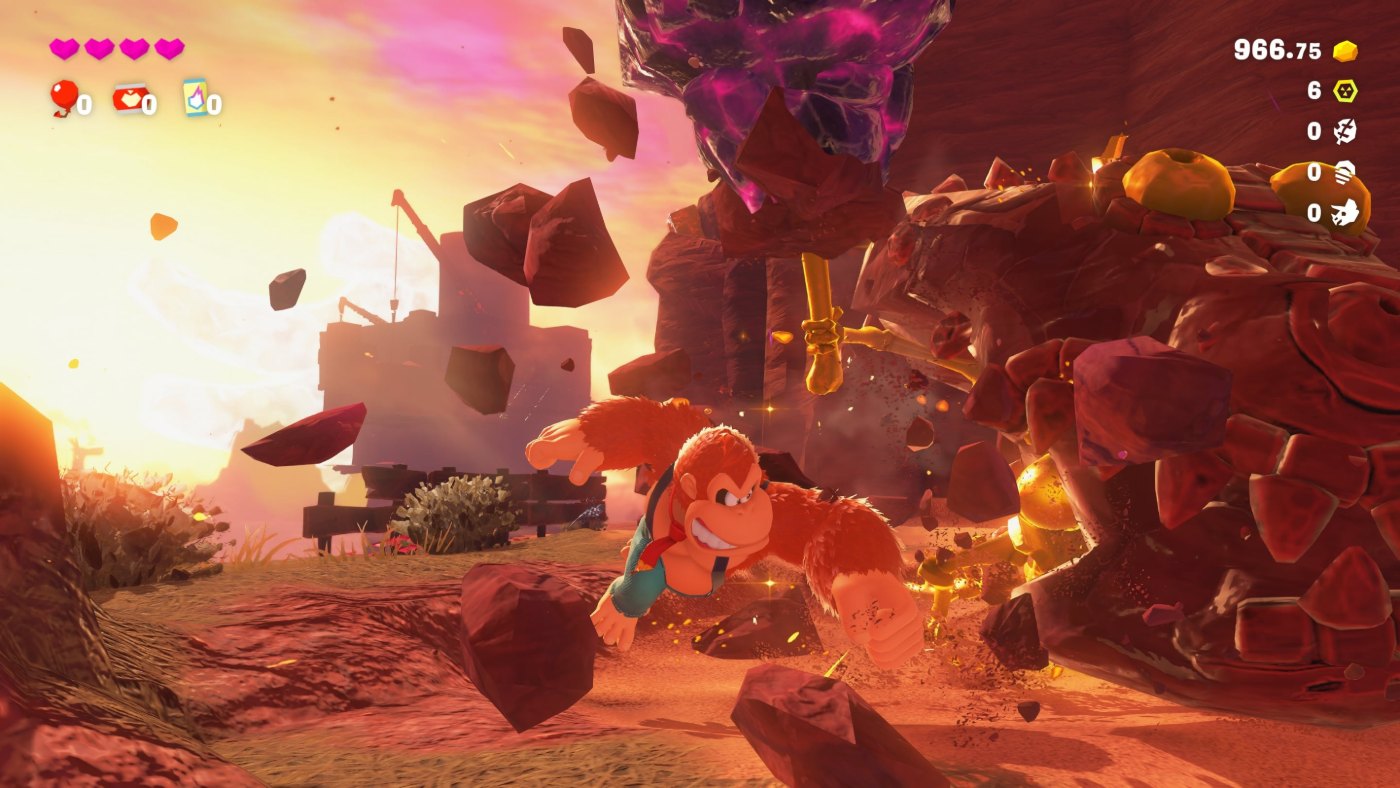
The punch: forwards, upwards or straight down.A chunk of terrain is a weapon, a platform or a surfboard.The Dive Punch.
Donkey Kong’s moves
DK runs, jumps, rolls (and jumps out of a roll for extra distance) and can climb most vertical surfaces. Three buttons punch in three directions: Y ahead, X upwards, B down into the floor. Holding and releasing the downward punch in mid-air gives the Dive Punch, which cracks open the ground and trips arrow-shaped switches. The Hand Slap pulls in nearby pickups and sends out a sonar pulse that shows gems through walls.
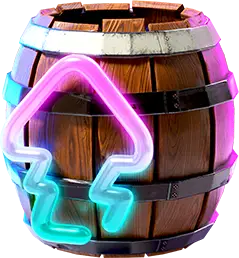
Hold ZR and DK tears a chunk out of whatever he is standing on or facing. A chunk can be swung as a club, thrown at enemies that are too spiky or too tough to punch, tossed downwards in mid-air for a Chunk Jump, or ridden along the ground like a skateboard in a Turf Surf. Big enemies such as Crockoids can be climbed and stripped of their rocky armour piece by piece. Barrel Cannons fire him across gaps, and mine carts run on rails.
Donkey Kong, redesigned for the game.Mine carts return from Donkey Kong Country.A Barrel Cannon.
Pauline and the Bananza powers
Pauline rides on DK’s shoulder for the whole journey and her voice is his second set of tools. If DK whistles, she sings a trail of notes towards the next objective. Her singing also breaks the seals that Void Company has placed over objects and over the entrances to bonus stages.
Her biggest trick needs help from the Elders, five giant animals with Bananza powers. Fetch an Elder its Ancient Record, Pauline learns the song, and from then on she can transform DK into that Elder’s Bananza form whenever the Bananergy gauge is full. Smashing terrain and collecting gold fills the gauge; the form lasts until it drains. Forms can be swapped on the D-pad once more than one is known. As director Kazuya Takahashi put it: “Being able to transform anywhere lets him chain together his destruction, which is the concept of this game.”
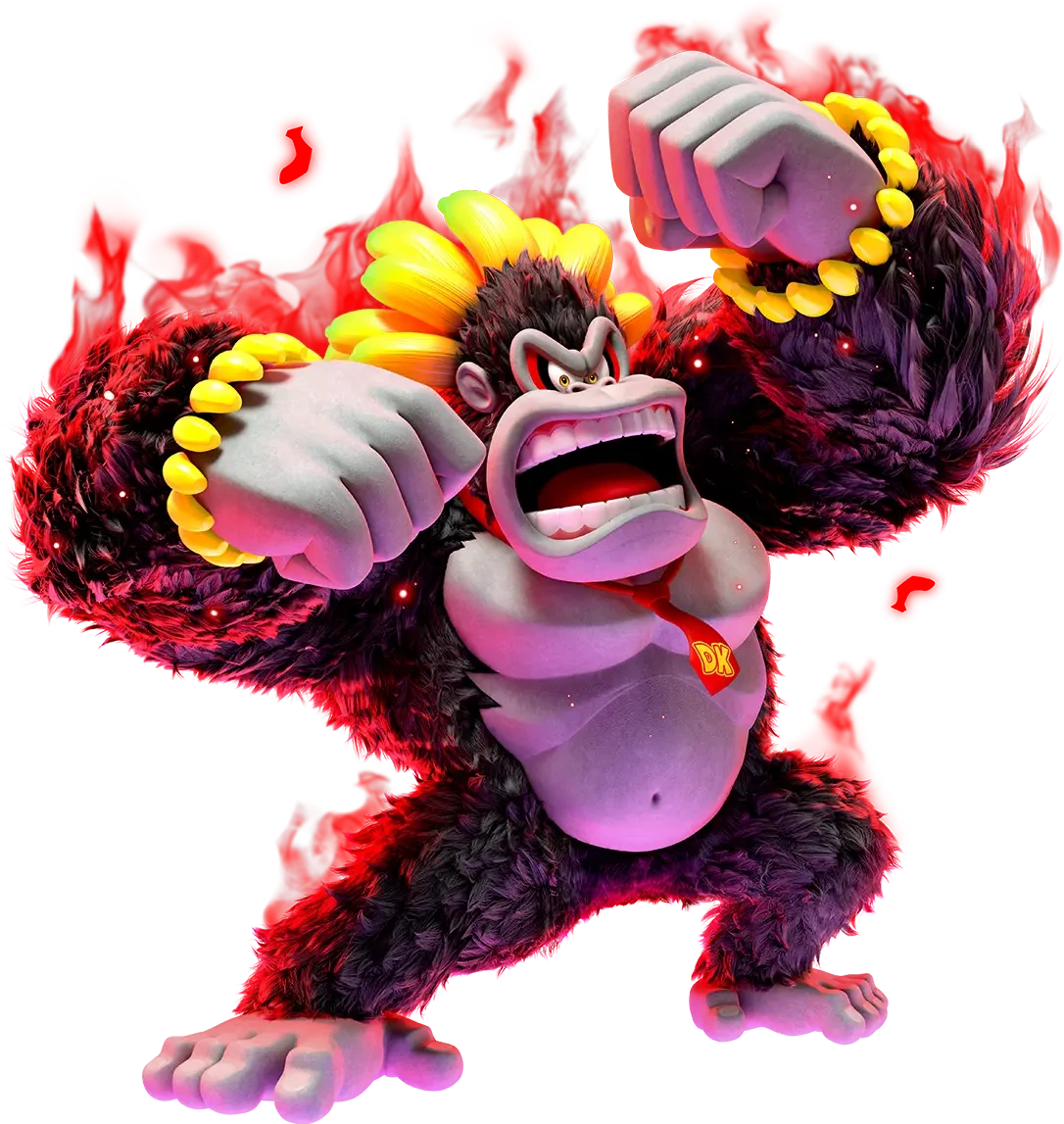
The Kong Bananza is raw power, smashing materials DK cannot normally dent and winding up a Charge Punch. The Zebra Bananza is fast and light enough to gallop over water and crumbling floors. The Ostrich Bananza flutters, glides and drops Egg Bombs. The Elephant Bananza hoovers up terrain with its trunk and fires it back as Trunk Chunks. The Snake Bananza has a double jump, a huge Charge Jump and a Glare that slows time.
Kong Bananza.Zebra Bananza.Ostrich Bananza.Elephant Bananza.Snake Bananza.
Gems, skills, gold and fossils
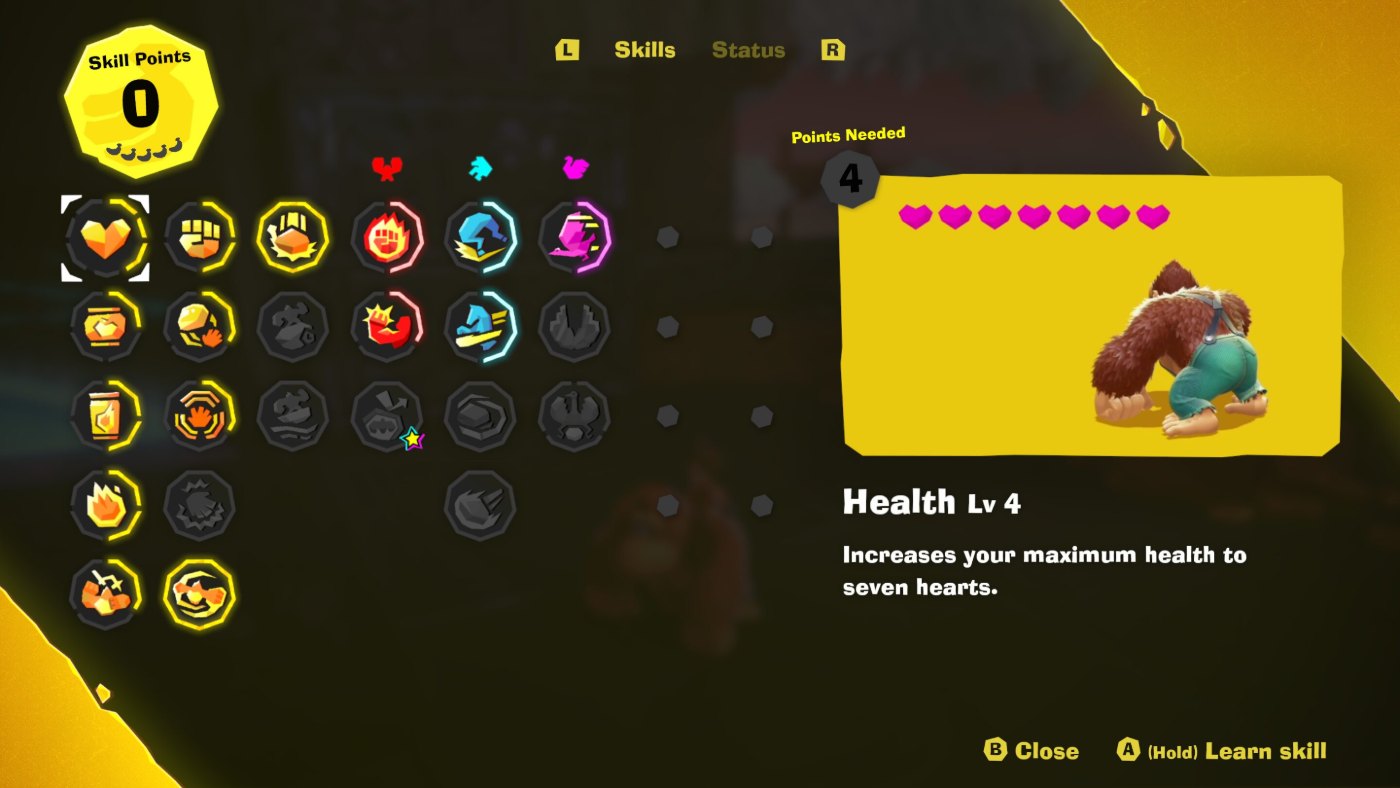
Banandium Gems are the game’s Power Moons: the reward for every puzzle, side quest, challenge course and boss, sometimes handed out in bunches. Every five gems earn a Skill Point, spent on the Skills screen on things like extra health, stronger punches and upgrades for each Bananza. Many skills have several levels, and every Bananza also has a hidden golden skill that unlocks only after the postgame Rehearsals. Mastering the lot takes 200 Skill Points, which is a thousand gems.
Three other collectables do the shopping. Gold, which spills out of almost everything, pays for items at Stuff Shops and for building work by the Fractones, and tops up Bananergy as it is picked up. Banandium Chips are traded for gems at the Chip Exchange. Fossils come in common, rare and extra-rare kinds, can only be spent in the layer where they were found, and buy clothes at the Style Shop: ties and britches for DK, outfits for Pauline, and new fur colours. Clothes are not just for show. Many give a small boost, such as easier movement over a certain terrain, better defence or a longer-lasting Bananza.
Getaways, little houses built for gold by a Fractone called Architectone, serve as rest stops with a bed, a wardrobe and a gramophone for the 110-track Music Player. Fast travel is by eel: the Li’l Eelevators swallow DK and carry him between the sublayers of a layer, and striking a Warp Gong summons their mother, the Eelevator, to move between layers.
The Skills screen.Fractones, the shape-shifting crystal folk who run the shops.The Eelevator.
Co-op and GameShare
Once Pauline has been freed from her rock, a second player can take control of her. Player two aims a cursor with the stick or by motion and shouts with ZR, sending out a burst that explodes on impact; hold the button over a surface and Pauline copies that material, so her shouts can be made of stone, gold or something nastier. The Wikipedia summary of an interview in Nintendo Dream says the team deliberately gave the helper more to do than in the co-op modes of the Galaxy games and Odyssey.
It can be played by passing a Joy-Con 2 across the sofa, or by GameShare, in which one copy of the game is streamed to a second console: another Switch 2 locally or online through GameChat, or an original Switch locally. The GameShare options were added to the pause menu by the Ver. 1.0.1 update on launch day. Photo Mode is switched off while two are playing.
One on the sticks, one on the vocals.In co-op, Pauline’s shouts are projectiles.
DK Artist and other extras
DK Artist is a separate toy on the menu in which the Joy-Con 2 is used as a mouse to carve, paint and add materials, sculpting whatever you like. It began as a tool the developers used to shape the game’s terrain, and its floating heads of DK and Void Kong, which can be pulled about, are a wink at the stretchy Mario face on the title screen of Super Mario 64.
There is also a Photo Mode, an Assist Mode for less experienced players, a Fossil Museum, quiz-setting Fractones and a long list of challenge courses, several of them built as tributes to particular Donkey Kong Country levels. The Donkey Kong & Pauline amiibo, released alongside the game, unlocks a special outfit for Pauline; other Donkey Kong series figures drop explosive golden tiles, and any other amiibo produces spheres that help with getting about.
The DK emblem.Collectone, the Fractone who scans amiibo and keeps the Fossil Museum.
Performance
A Charge Punch winds up.
The game targets 60 frames per second. It runs at a dynamic resolution of 1080p to 1552p when docked and 648p to 1080p in handheld play, upscaled with AMD’s FSR 1 to 1440p or 4K depending on the television, with HDR and 5.1 surround sound. Reviewers noted that the frame rate can dip when a great deal of terrain is destroyed at once, and the camera sometimes struggles in tight tunnels; a December 2025 update added the option to stop it following DK automatically.
Items and collectables
Everything DK can pick up, buy or carry.
Banandium GemThe main collectable, sometimes found in bunches. Five make a Skill Point.
GoldCurrency, found in almost anything breakable. Also refills Bananergy.
Banandium ChipExchanged for gems at the Chip Exchange and, after the credits, for music discs. The carrying limit was raised from 9,999 to 99,999 in Ver. 2.0.0.
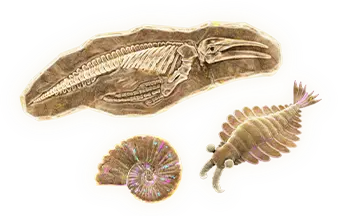
FossilCommon, rare and extra-rare. Spent at the Style Shop in the layer where they were found.
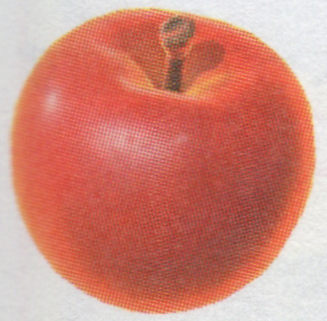
AppleRestores one heart. Hidden in glowing red patches of terrain.
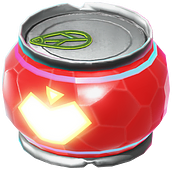
Apple JuiceCarried in the inventory; refills all health automatically when DK runs out.
Melon JuiceLets DK transform even when the Bananergy gauge is not full.
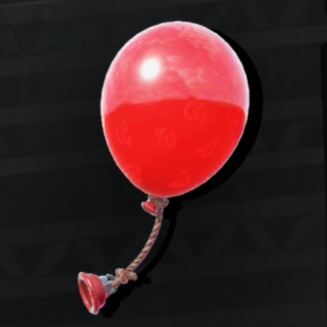
Red BalloonFloats DK back to safety after a fall into the abyss. Sold singly or in tens. Its face changes to DK’s once every skill is unlocked.
Banandium Gem MapMarks one gem on the map. Sold at Stuff Shops and occasionally found in chests.
Fossil MapsThree kinds, for common, rare and extra-rare fossils in the current layer.
DiscDropped at random by defeated enemies. Each one unlocks a track in the Music Player.
KeyOpens the shield around a Void Stake. Usually carried by an enemy.
Void StakeVoid Company’s stakes, driven into the layers. Destroying one undoes the damage it was doing.
Treasure ChestBuried in the terrain; may hold maps or balloons.
Mine CartRides the rails through certain stretches of the underground.
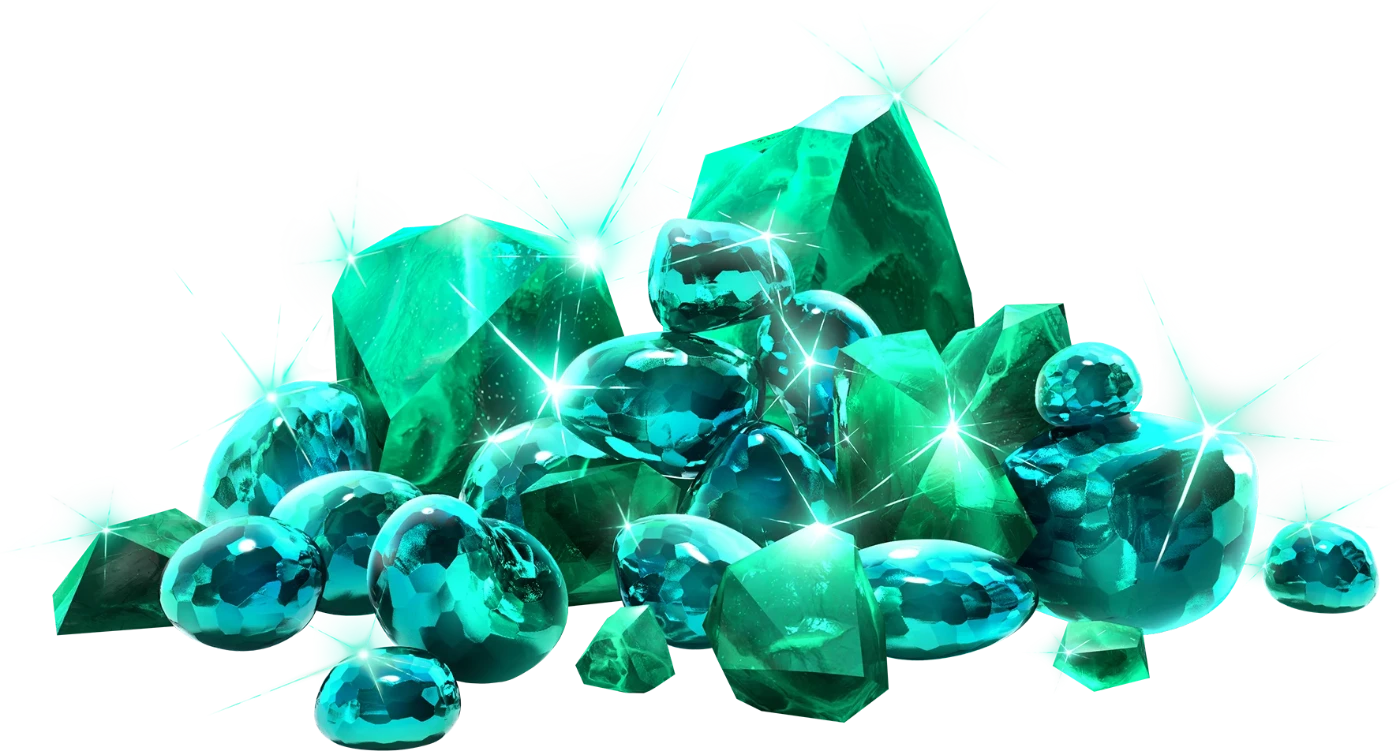
Emerald oreDLC only: the thing Void Kong wants mined in Emerald Rush.
Cartoons, Comics & Other Media
A game barely a year old already has an expansion, a soundtrack release, a string of in-game events and a place in other games’ marketing. It is also stuffed with nods to forty-four years of Donkey Kong.
DK Island & Emerald RushPaid DLC · 12 September 2025Announced and released during the Nintendo Direct of 12 September 2025. Adds DK Island as a layer and the Emerald Rush score-attack mode. Full details under Legacy.
Nintendo Music18 September 2025 and 17 July 2026A nine-track [Special Release] Donkey Kong Bananza selection appeared on the Nintendo Music app in September 2025, and Wikipedia records the full soundtrack (229 tracks, more than eight and a half hours) arriving on the game’s first birthday.
Donkey Kong & Pauline amiiboJuly 2025A new figure of the pair was released with the game and unlocks a special outfit for Pauline. Nintendo also reissued the long-unavailable Diddy Kong and King K. Rool figures.
Super Mario Bros. 40th anniversary eventEmerald Rush · June 2026A themed Emerald Rush event that swaps some of the mode’s decorations for Super Mario imagery.
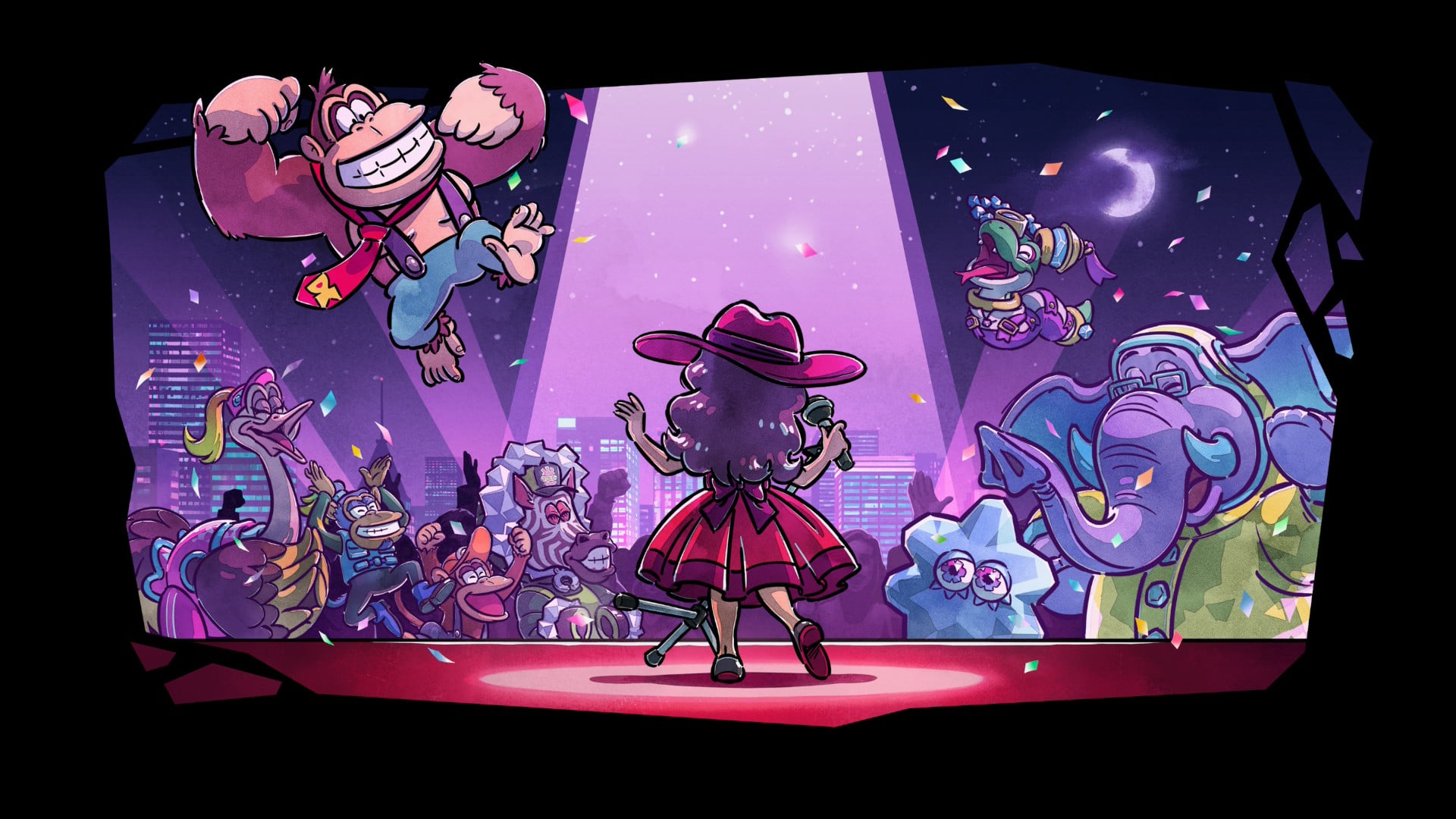
The Game Awards 2025December 2025Supergiant Games’ artwork for the ceremony shows Donkey Kong on the red carpet with characters from the other nominated games.
Super Mario OdysseyNintendo Switch · 2017The finale takes place in New Donk City, part of Jump Up, Super Star! is woven into its music, and Pauline’s Diva Dress recalls her festival outfit. See Super Mario Odyssey.
Donkey Kong (1981)ArcadeAn “Arcade 81” sign, a challenge course modelled on 25 m, Planet Core fossils shaped like a barrel and Pauline’s lost items, and two dresses for Pauline based on her 1981 artwork and sprite. See Donkey Kong.
Donkey Kong Country seriesRare, Retro StudiosChallenge courses themed on Jungle Hijinxs, Mine Cart Carnage and Bramble Blast; new arrangements of DK Island Swing, Stickerbush Symphony and Gang-Plank Galleon; and Bananza forms based on the animal buddies Expresso, Ellie and Rattly.
Donkey Kong 64Nintendo 64 · 1999Picking up a gem plays the old “Ooh, banana!” clip, the Getaway music samples the DK Rap, and the final fight takes place in a boxing ring as it did in 1999.
Mario Kart WorldNintendo Switch 2 · 2025The other Switch 2 launch-window flagship, which shares DK’s new look. See Mario Kart World.
Characters
A cast split between old friends, brand-new villains and one very old enemy. Only Pauline speaks; everyone else makes do with grunts, gestures and subtitles.
Character
Who they are
In this game
Abilities & notes
Donkey KongThe hero
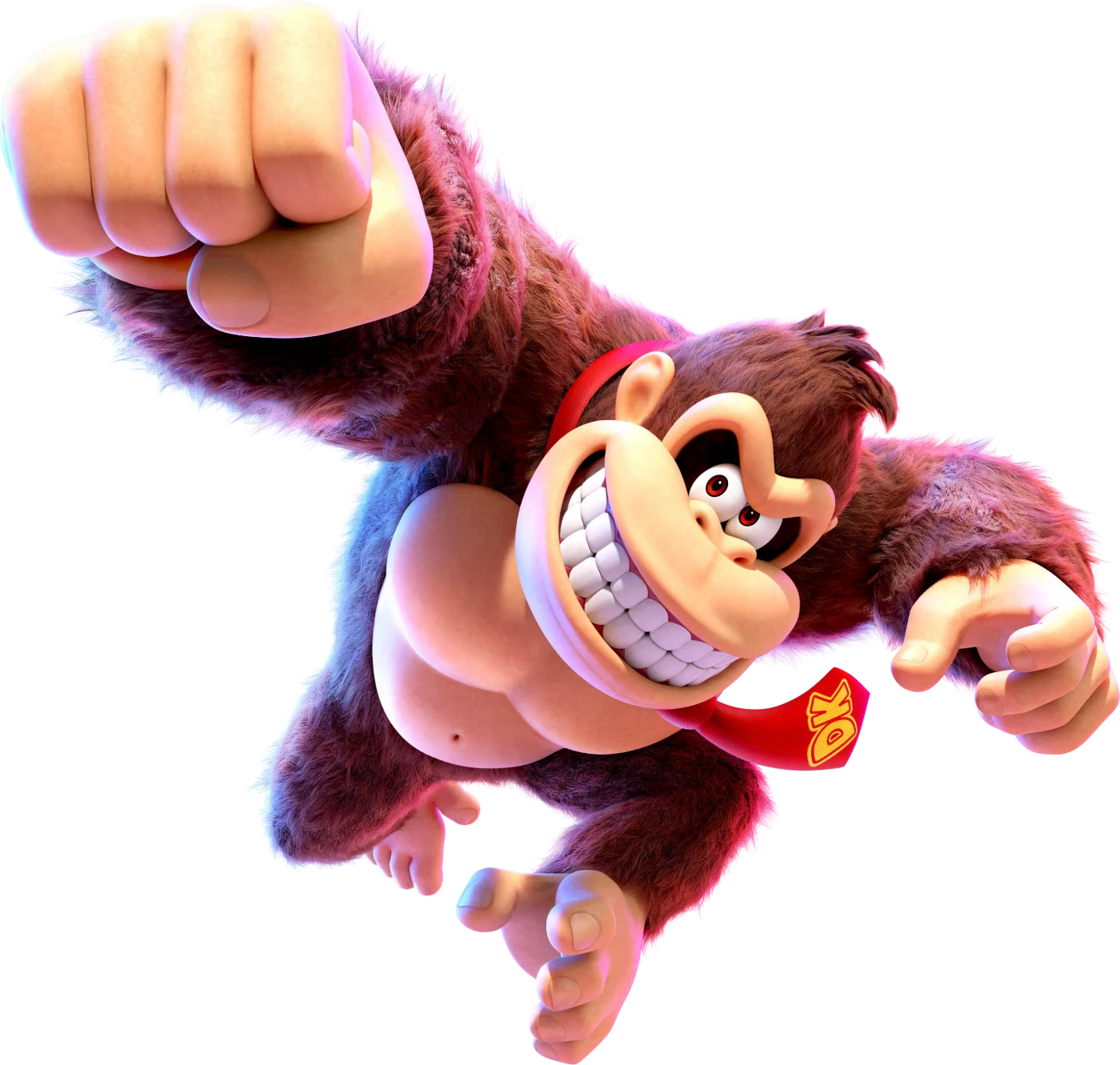
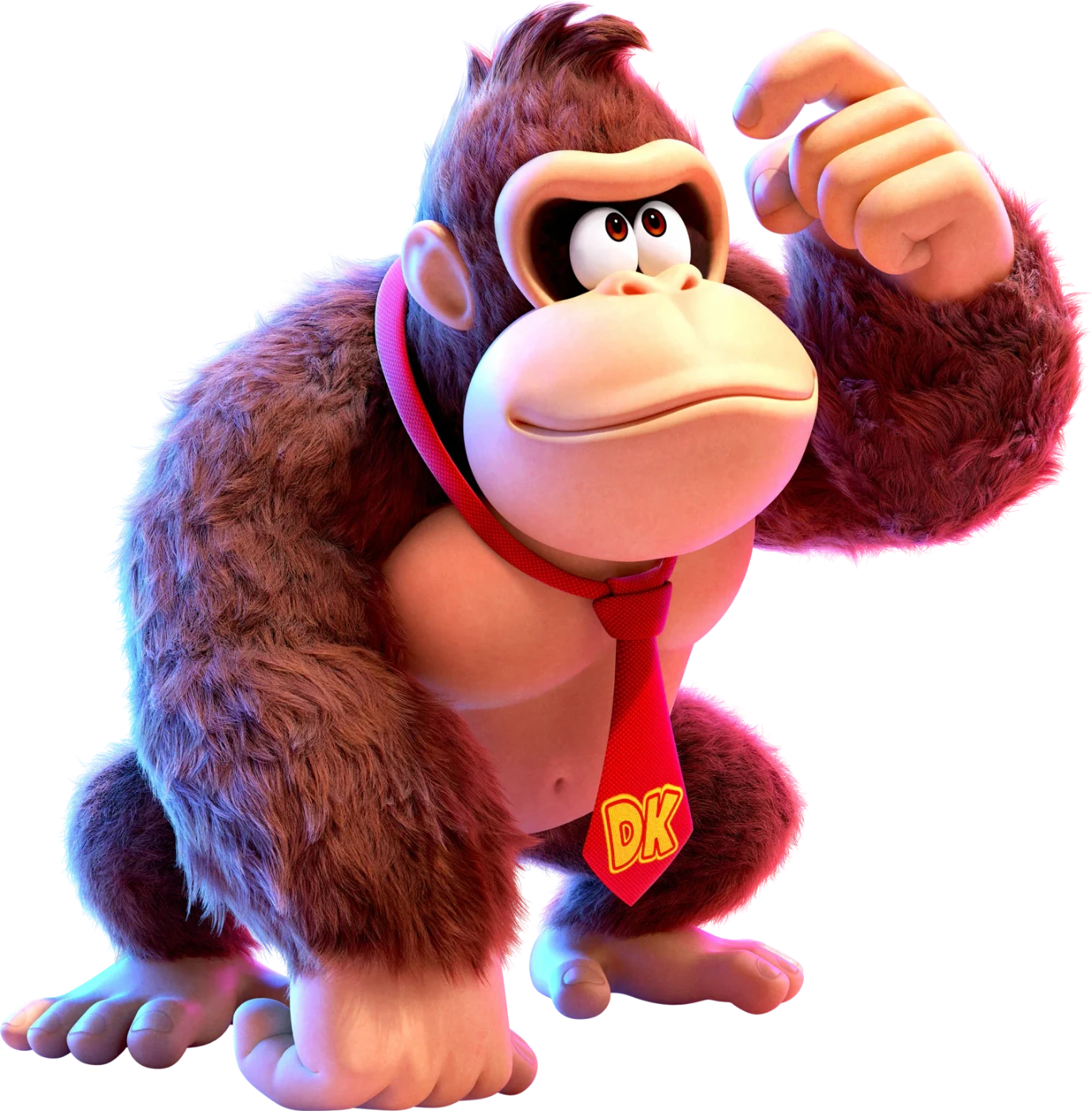
Redesigned from the ground up for this game, on the basis of Shigeru Miyamoto’s original drawing, with thicker fur, a far more expressive face, and britches with braces so that he is more than a mass of brown fur from behind.
Follows Void Company underground to get the Banandium Gems back. He wants bananas, and says so at the Planet Core.
Punches in three directions, Dive Punch, Hand Slap, roll, climb, tear and throw chunks, Chunk Jump, Turf Surf.
PaulineCo-star, aged 13
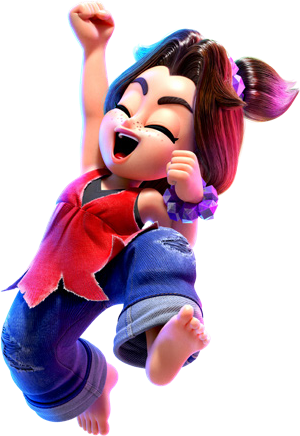
A girl from New Donk City with an extraordinary singing voice, and the same Pauline whose career as a singer was established in Super Mario Odyssey. Her singing voice is provided by Jenny Kidd.
Kidnapped by Void Company for her voice and turned into Odd Rock. Freed in the Lagoon Layer, she rides on DK’s shoulder, sings the Bananza songs, and is playable by a second player.
Song path to the next objective; breaks Void seals; triggers Bananzas. In co-op: explosive shouts in any copied material.
Odd RockPauline, petrified
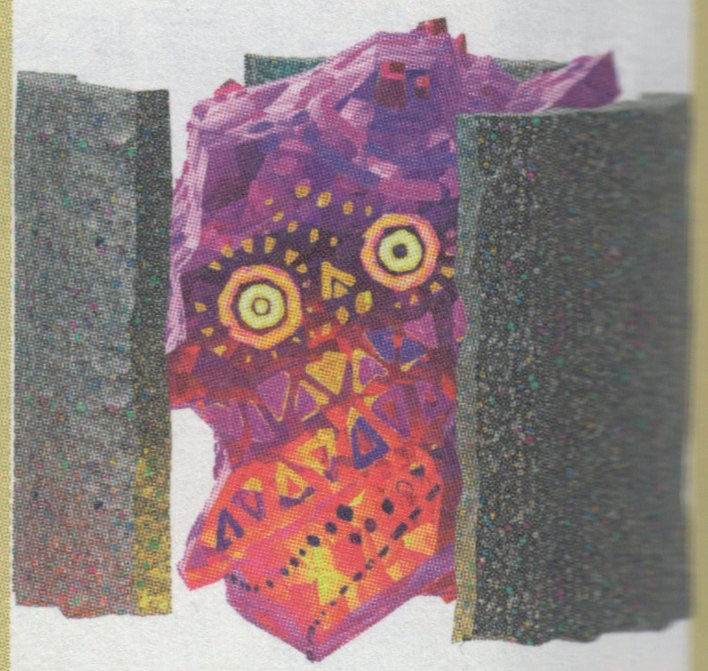
The form Pauline is in when the game begins: a small purple rock.
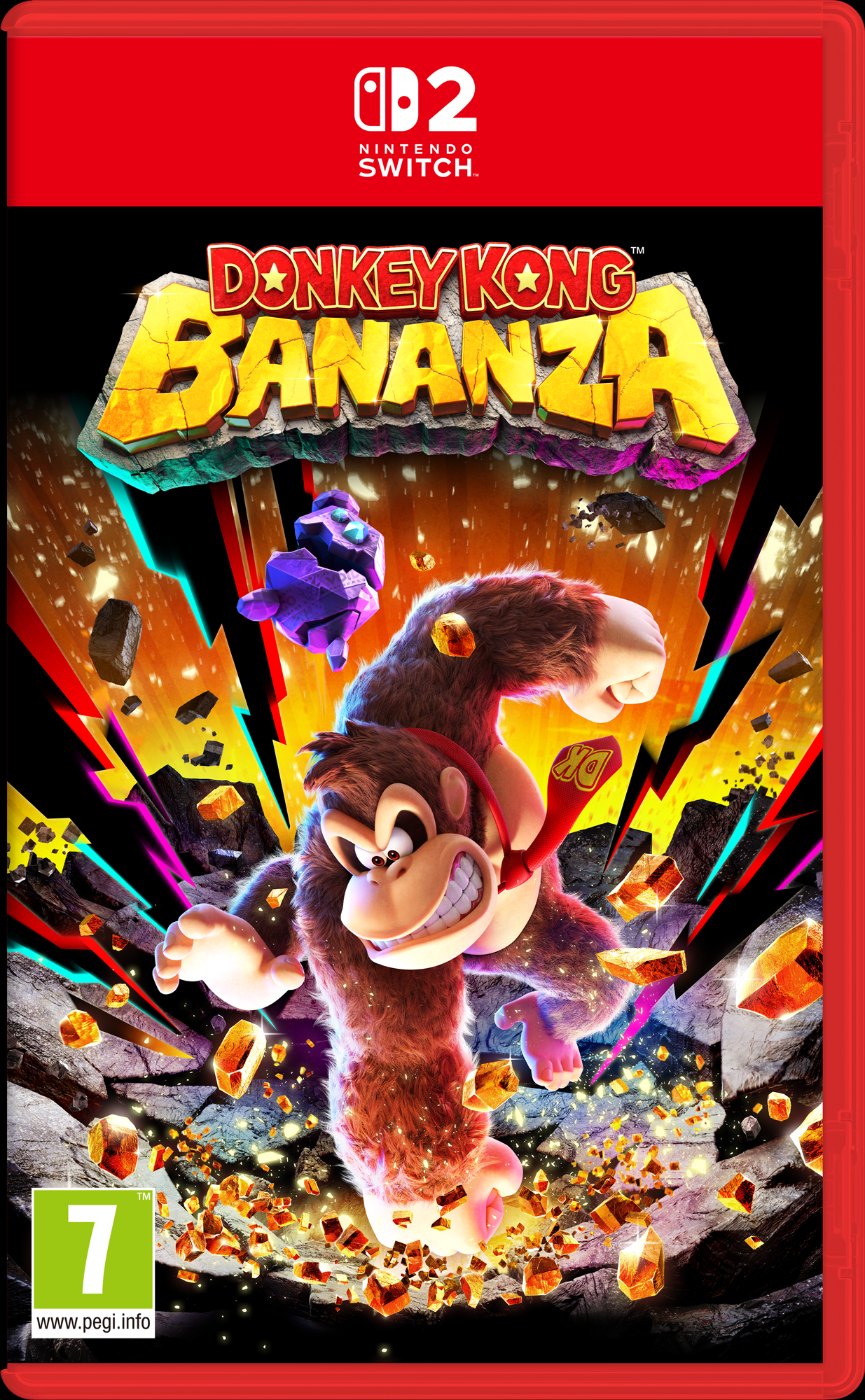
Falls from the sky on Ingot Isle and attaches itself to DK. Until the Direct of June 2025 Nintendo’s trailers and box art showed only the rock, to keep Pauline a secret.
Pauline returns to this form inside the Great Harmoneel; DK is briefly turned into one in the Forbidden Layer.
Kong BananzaBananza form · Kong Elder
DK, bigger and far stronger.
Learned in the Lagoon Layer. Breaks hard materials that ordinary punches cannot.
Charge Punch (hold and release Y) throws a shockwave.
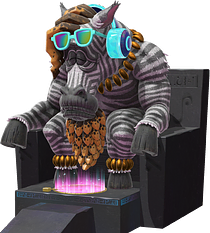
Zebra BananzaBananza form · Zebra Elder
Fast and light. A designer’s sketch of a zebra was the transformation the team built its prototype around, and the song written for it is what brought Pauline into the game.
Learned in the Freezer Layer. Runs across water and fragile platforms.
Charge Dash (hold and release ZL) defeats enemies; Brake Blast when reversing at speed.
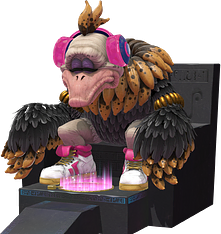
Ostrich BananzaBananza form · Ostrich Elder
A flightless bird that flies. Its glide is modelled on Expresso the ostrich from Donkey Kong Country.
Learned at the Eggshell Hotel in the Forest Layer.
Flutter and Glide (hold ZL in mid-air); Egg Bomb (ZR in mid-air).
Elephant BananzaBananza form · Elephant Elder
A trunk with an ape attached, based on Ellie the elephant from Donkey Kong Country 3.
Learned in the Tempest Layer once both halves of the record are found.
Inhale (hold ZR) vacuums up terrain; Trunk Chunk fires it back.
Snake BananzaBananza form · Snake Elder
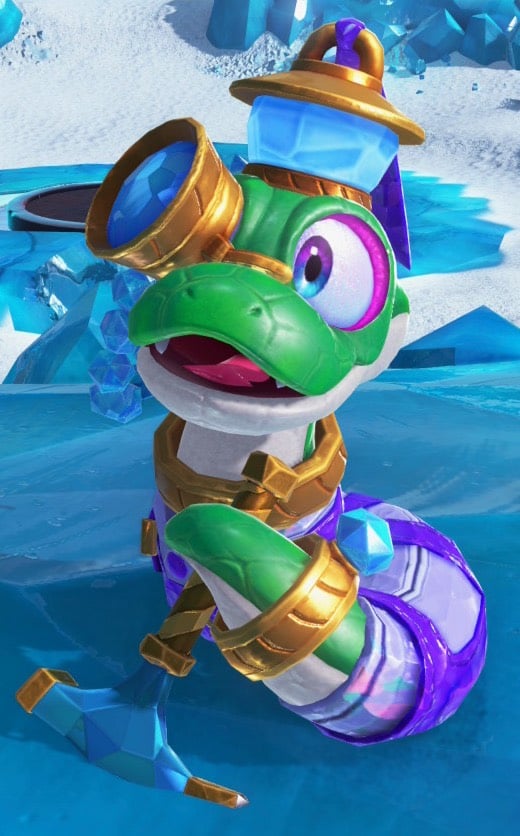
A coiled spring of a snake, based on Rattly from Donkey Kong Country 2.
Learned in the Radiance Layer.
Double jump; Charge Jump (hold and release the jump button); Glare (hold and release Y) slows time.
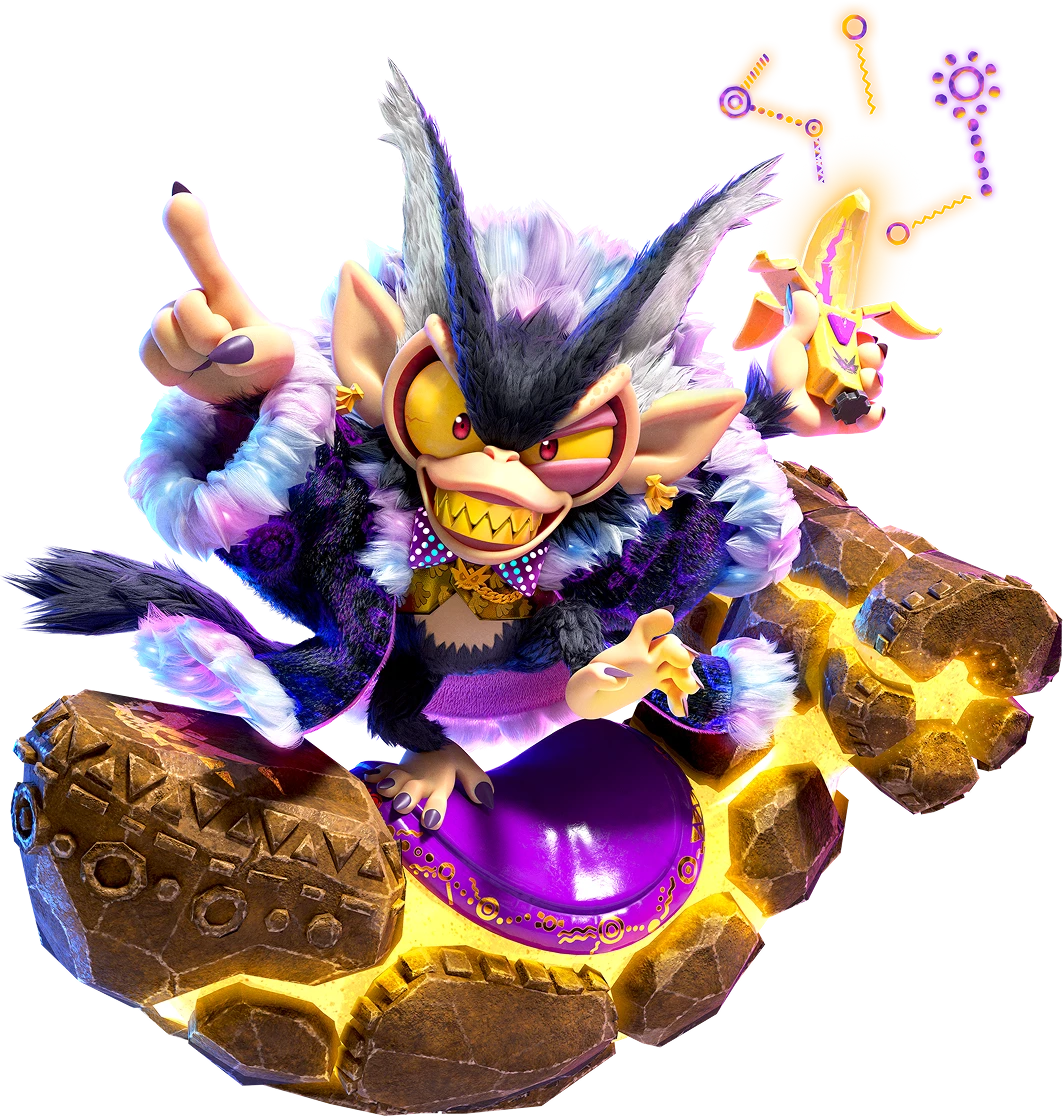
Void KongPresident of Void Company
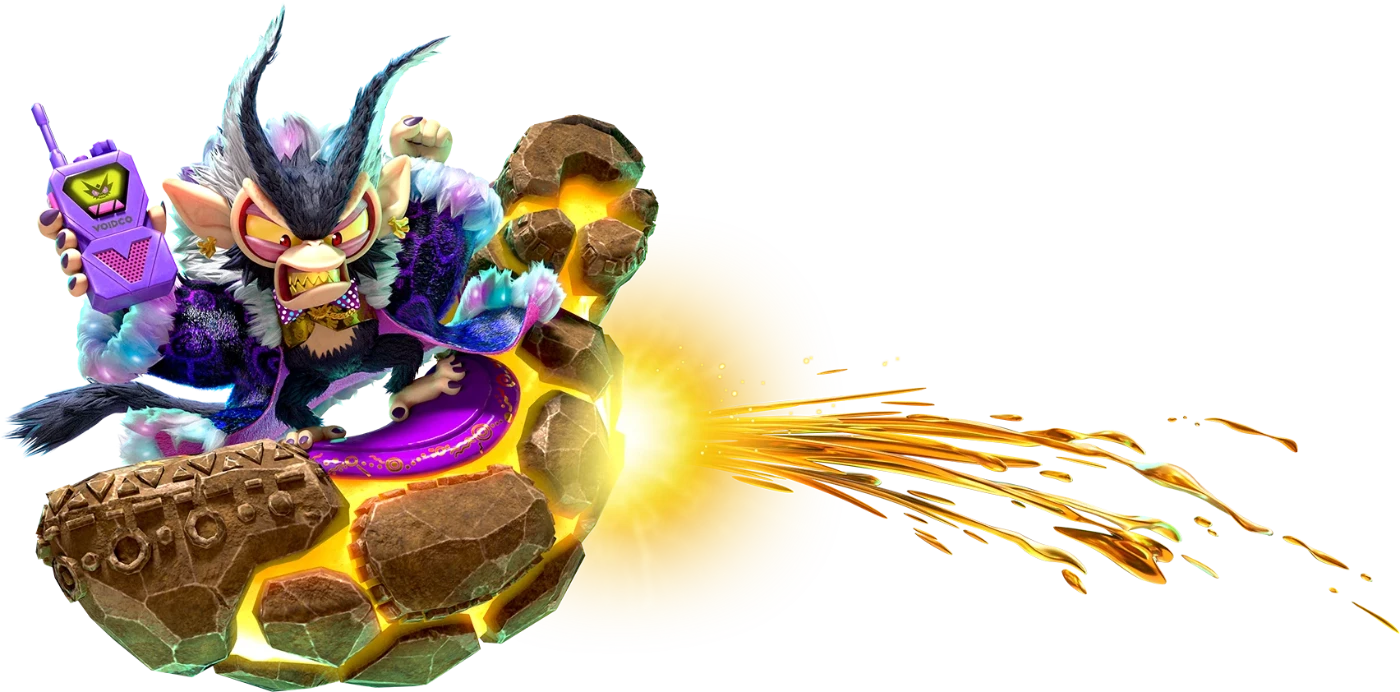
The boss of Void Company, who wants the Banandium Root and believes Pauline’s voice is the key to it.
Fought in the Hilltop Layer, the Lagoon Layer, the Junction and the Forbidden Layer. Punched aside by K. Rool, he turns up again in the DLC with a new scheme to mine emeralds.
Fights from a flying machine, conjuring terrain to block and attack. Tools: Mind-Bender Masks, the All-Mine Remote.
Grumpy KongVoid Company engineer
The Kong who builds the company’s soldiers and weapons.
Boss of the Canyon Layer and again in the Radiance Layer, after which he resigns. In the postgame he is friendly, points DK to the Warp Gong and will repair the Groove Layer’s Massive Speaker for 20,000 gold.
Pilots the King Crockoid, a giant Crockoid of bones; in the rematch it is plated in Shade Ore with a club of Boom Rock.
Poppy KongDirector of Intelligence
Void Company’s spy.
Boss of the Freezer Layer (at the Cooling Tower) and of the Radiance Layer, where she quits. Later found in a Groove Layer cell, she tells DK the truth about the masks.
Turns invisible with stealth perfume; dashes faster in the rematch.
King K. RoolThe real villain
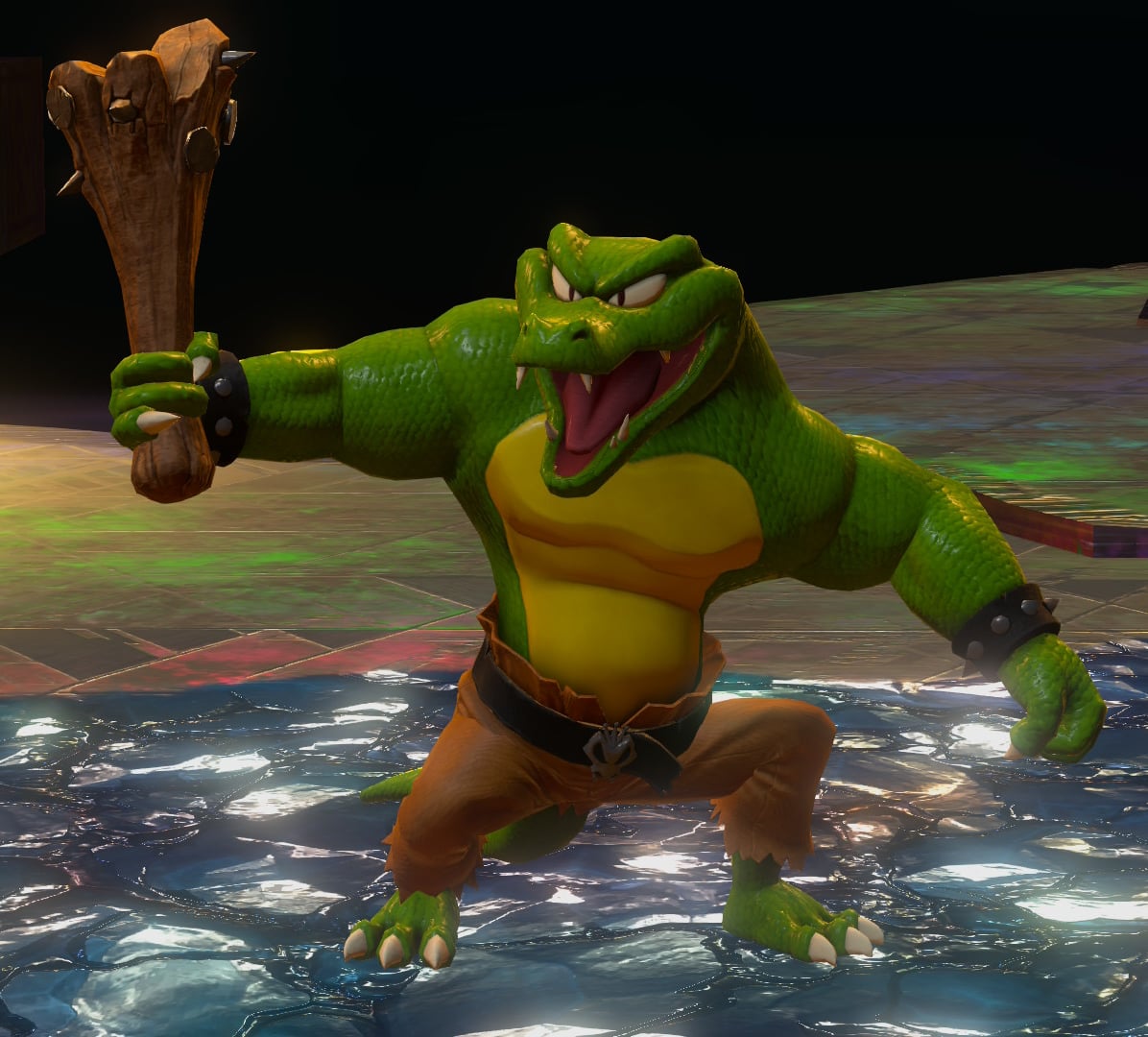
Leader of the Kremling Krew, villain of the Donkey Kong Country games and this game’s surprise final antagonist.
Bursts from the golden dome in the Forbidden Layer. Final boss twice over: as Core King K. Rool in the Planet Core and as K. Rool, King of Rot in New Donk City.
First phase echoes his blunderbuss fight from Donkey Kong Country 2; second uses a Propellerpack.
Kong ElderElder · Lagoon Layer
A giant ape who watches over the Salvager Monkeys.
His record frees Pauline and grants the Kong Bananza. He is the one who tells the heroes about the Planet Core.
Postgame: hosts a Bananza Rehearsal.
Zebra ElderElder · Freezer Layer
Leader of the ice-cream zebras.
Grants the Zebra Bananza in return for an Ancient Record.
Postgame: hosts a Bananza Rehearsal.
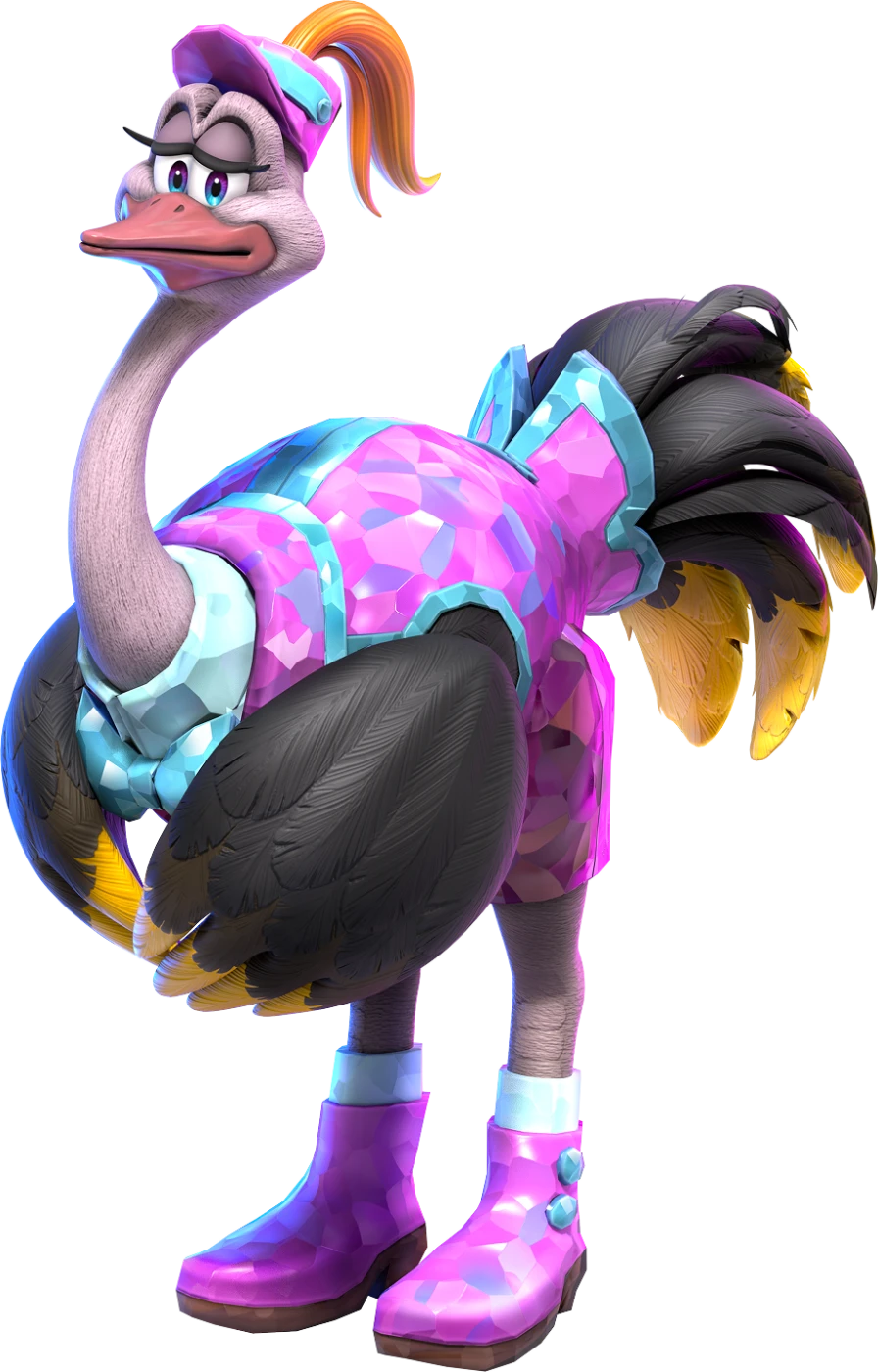
Ostrich ElderElder · Forest Layer
Found at the Eggshell Hotel, in shoes that match Expresso’s.
Grants the Ostrich Bananza.
Postgame: hosts a Bananza Rehearsal.
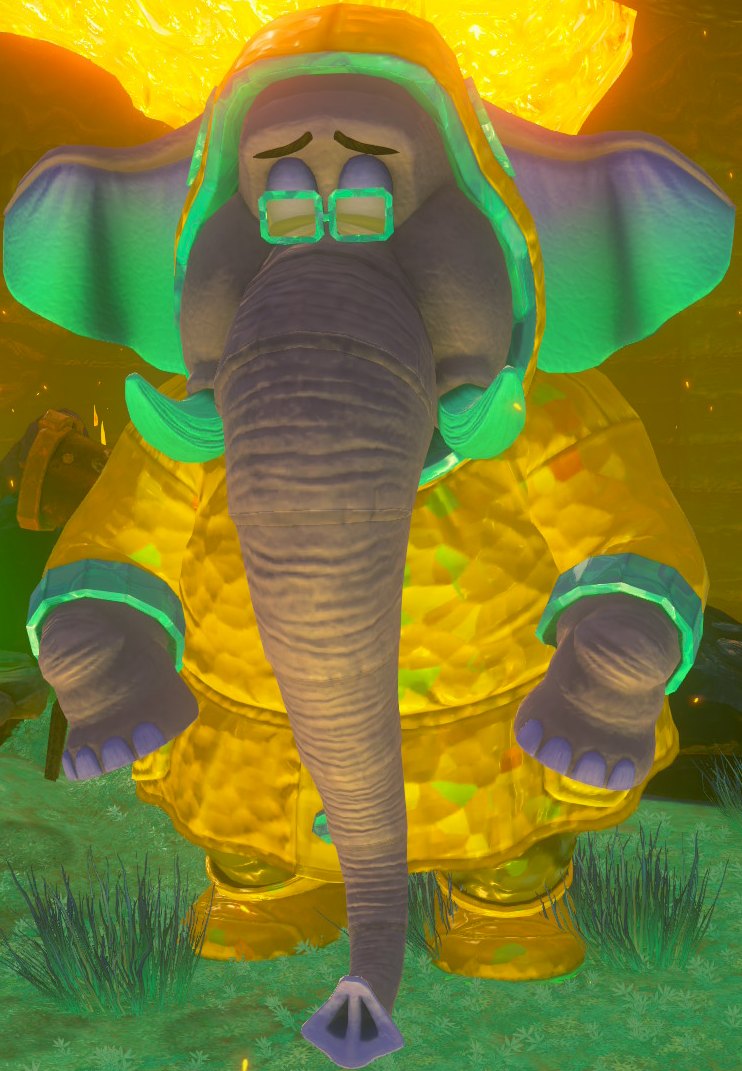
Elephant ElderElder · Tempest Layer
Head of the elephant meteorologists.
Grants the Elephant Bananza and explains the Banandium Root.
Postgame: hosts a Bananza Rehearsal.
Snake ElderElder · Radiance Layer
Patron of the artistic snakes.
Grants the Snake Bananza and warns that the Root has stopped growing.
Postgame: hosts a Bananza Rehearsal.
Cranky KongKong Family patriarch
The original Donkey Kong of 1981, as cantankerous as ever.
Turns up throughout the Underground World on Rambi’s back, chasing a banana thief, and hands over a Banandium Gem each time DK stops to listen. A role much like Captain Toad’s in Odyssey.
One line about rivals in overalls is a dig at Mario.
Diddy KongDK’s best friend
Still in his cap, with the pin he wore in The Super Mario Bros. Movie.
Co-hosts the Rambi Rumble in the Racing Layer. Not playable.
Calls DK his “big buddy”.
Dixie KongRambi Rumble co-host
Diddy’s girlfriend, bubblegum and all.
Runs the Rambi Rumble with Diddy and mentions the events of Donkey Kong Country 2 when she introduces herself.
Appears in the Racing Layer and the Boss Rush lobby.
RambiAnimal friend
The rhino from Donkey Kong Country.
Cranky’s transport, and the mount for the Rambi Rumble races.
Racing Layer.
SquawksDLC
The parrot, an old friend of DK’s.
Runs a hut on DK Island in which Banandium Chips can be traded for statues or gold.
DK Island & Emerald Rush only.
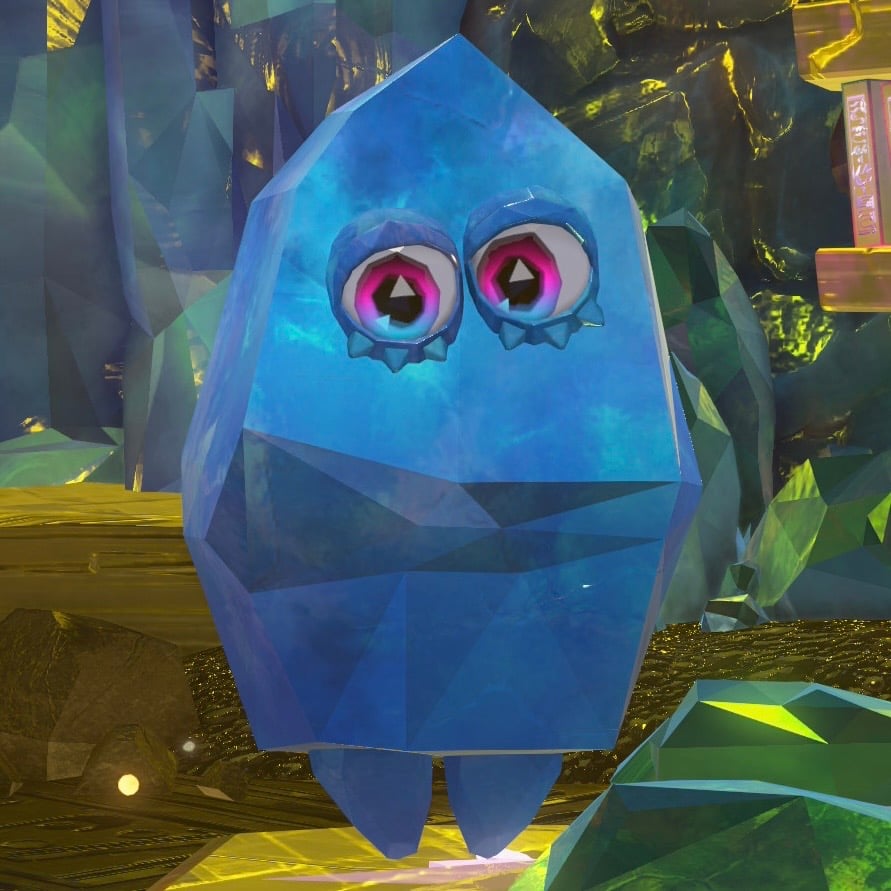
FractonesCrystal people of the Underground World
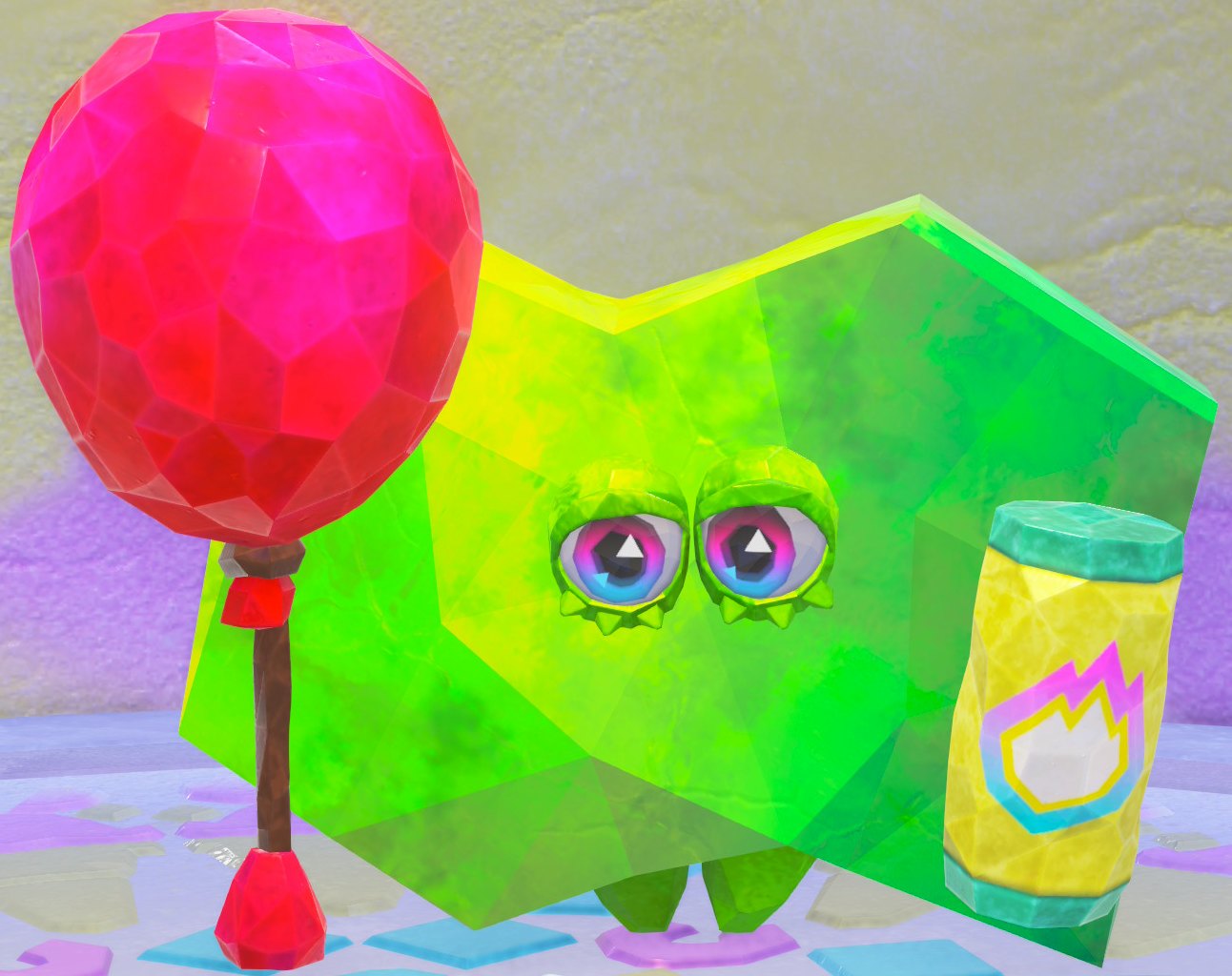
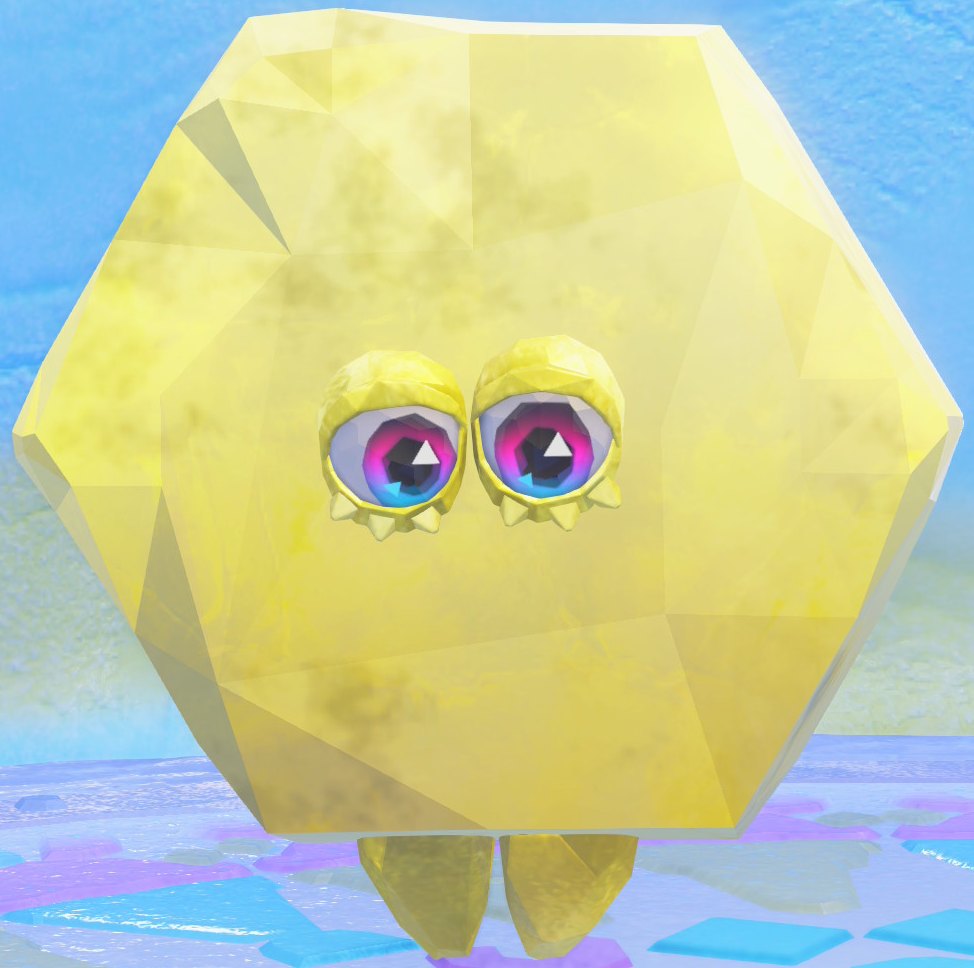
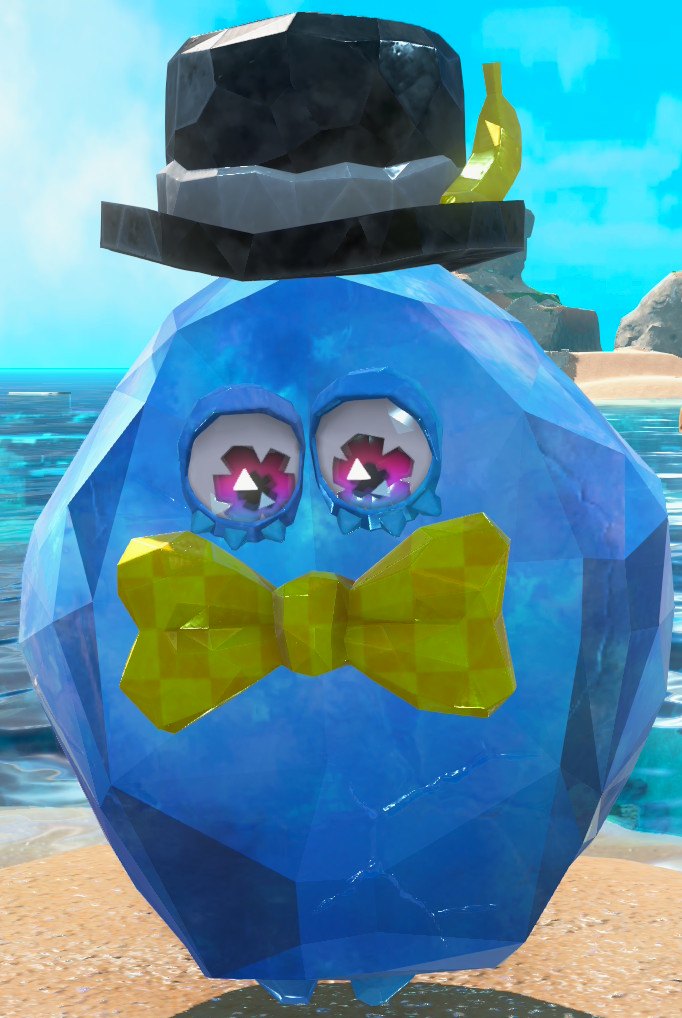
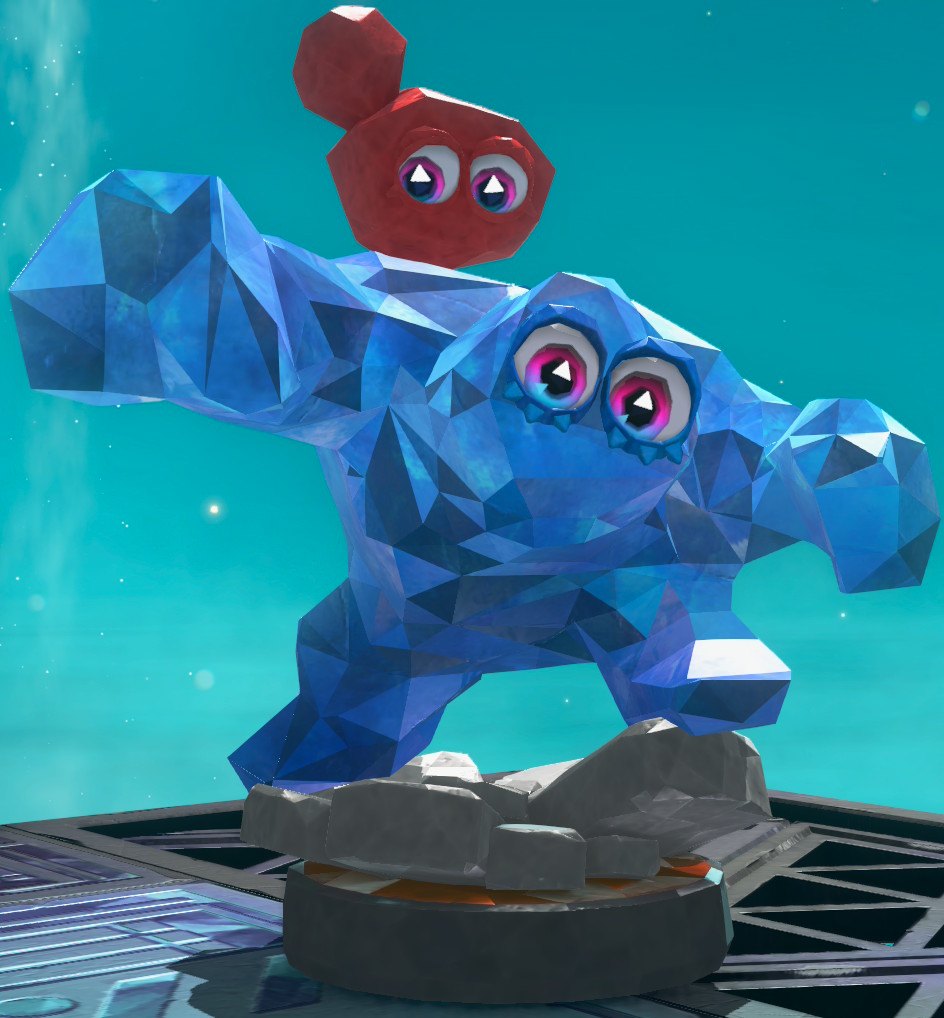
Gem-like creatures with eyes, in many colours and shapes, who simply reassemble if broken.
They run the Stuff Shops, Style Shops and Chip Exchanges, build Getaways, set quizzes and side quests, guard the Forbidden Layer and staff the Groove Layer disco.
Named types include Stufftone, Styletone, Chiptone, Architectone, Constructone, Quiztone, Growtone, Smashintone, Collectone and Trustytone.
The Eelevator familyFast travel
A family of enormous eels: the Eelevator, her children the Li’l Eelevators, and their father the Great Harmoneel.
The children carry DK between sublayers; the mother, called by Warp Gong, carries him between layers; the father is brainwashed into kidnapping Pauline.
Small relatives called Eelings bolt through the ground, leaving tunnels.
Bosses & enemies
Every boss, then the 19 standard enemies and the nine Kremling Krew creatures that replace them in both the Planet Core and New Donk City. Most of Void Company’s creatures have names ending in “-oid”, and many wear a coat of whatever terrain they live in, which has to be knocked off first.
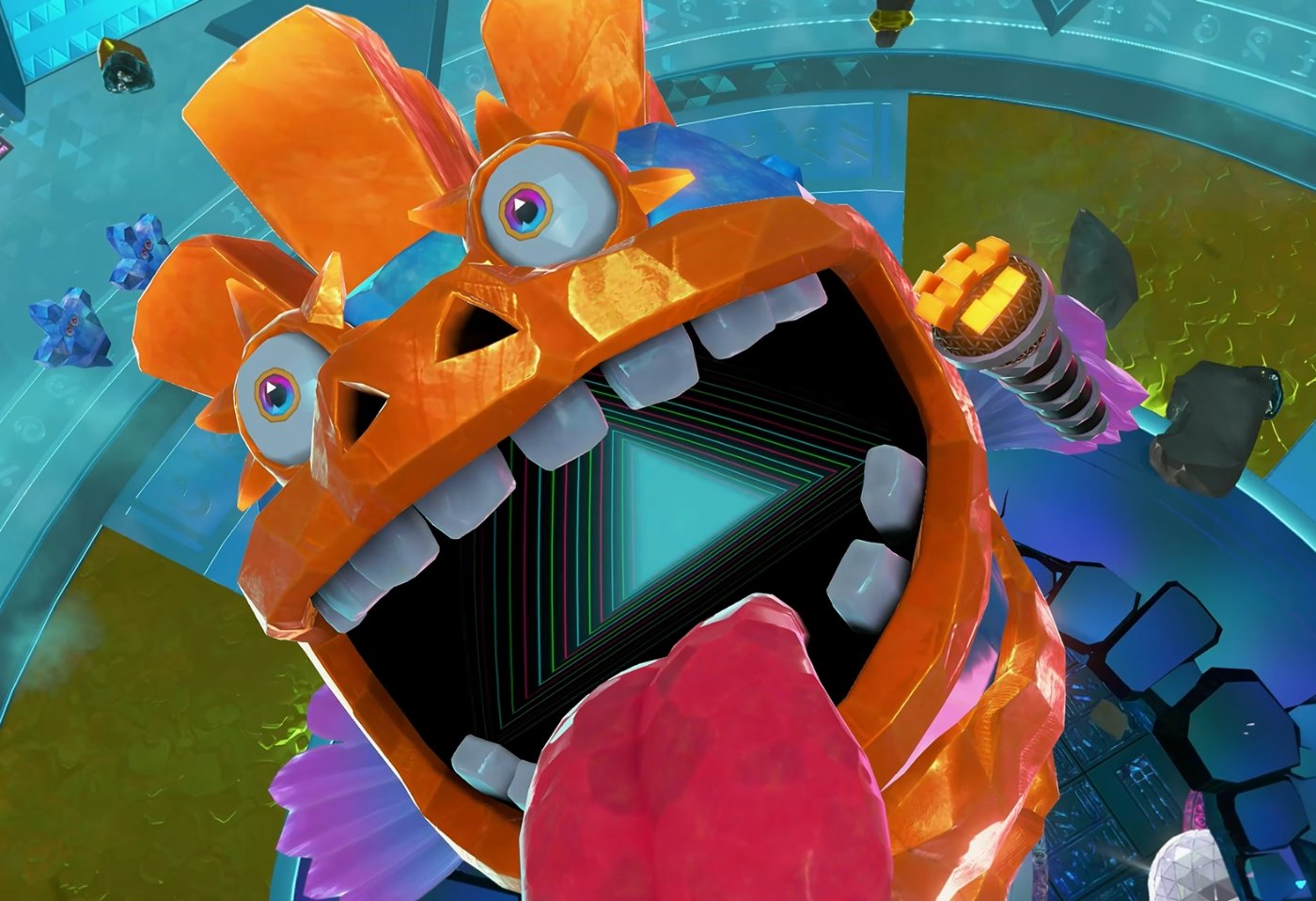
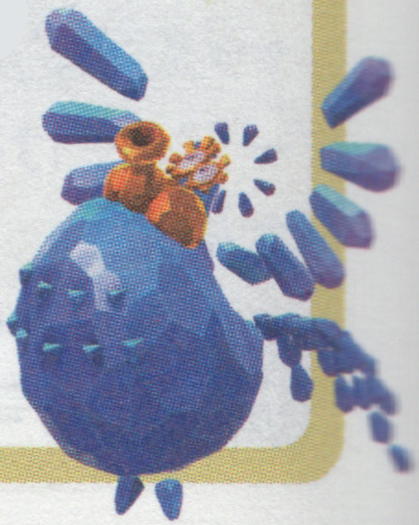
Peekabruiser (boss)Lagoon LayerA mass of Peekaboopoids packed into one terrain-covered body.
Grumpy Kong (boss)Canyon Layer; rematch in the Radiance LayerFights from the King Crockoid. In the rematch it is armoured in Shade Ore and swings a Boom Rock club.
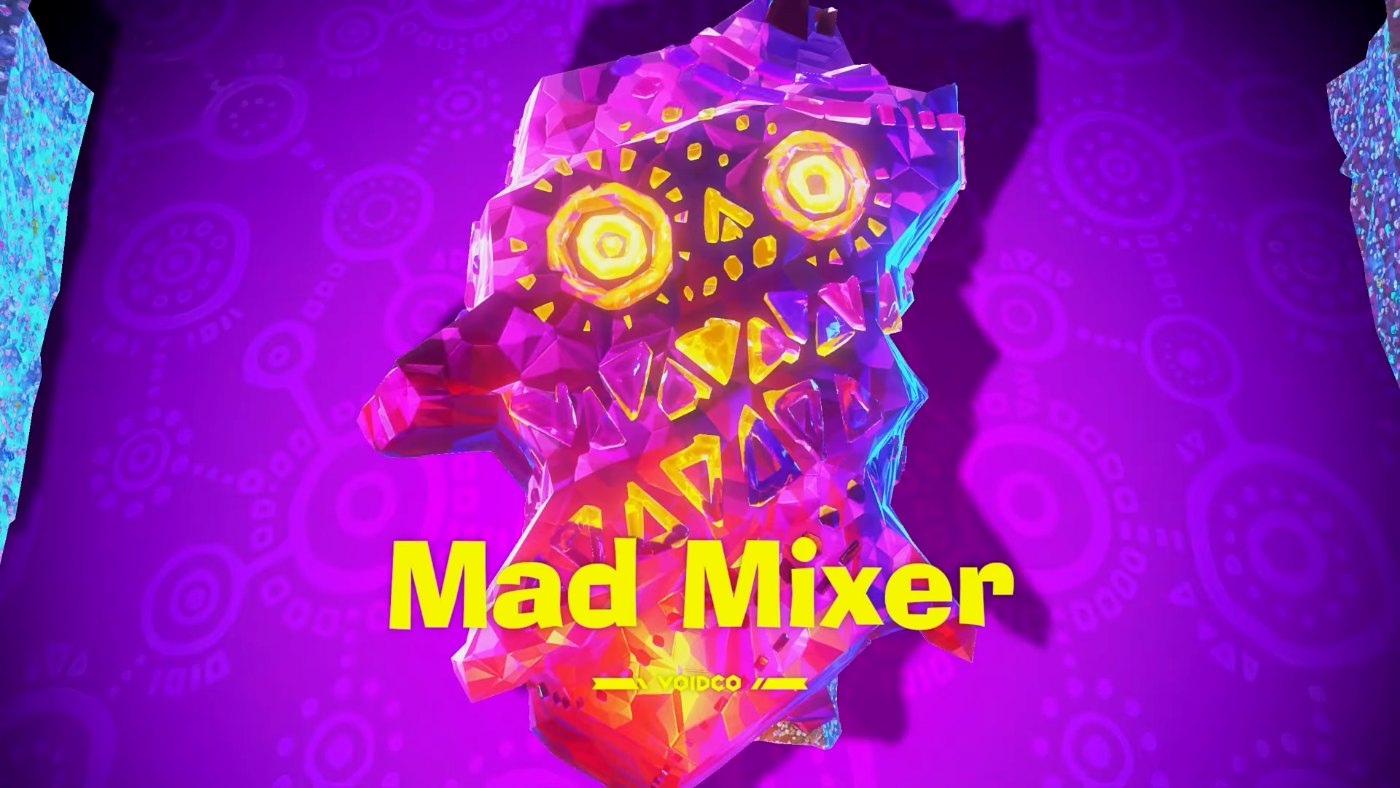
Mad Mixer (boss)Canyon LayerThe living machine at the heart of the Banandium Refinery, its core ringed by concrete pillars.
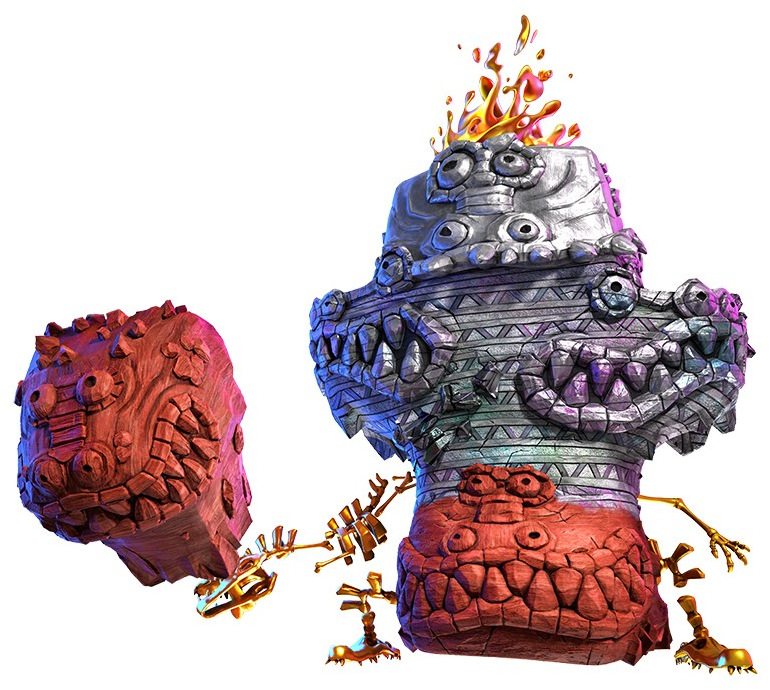
Stompenclomper (boss)Canyon LayerAn oversized Stompoid on two enormous feet.
Poppy Kong (boss)Freezer Layer; rematch in the Radiance LayerVanishes with stealth perfume and strikes from nowhere. Faster the second time.
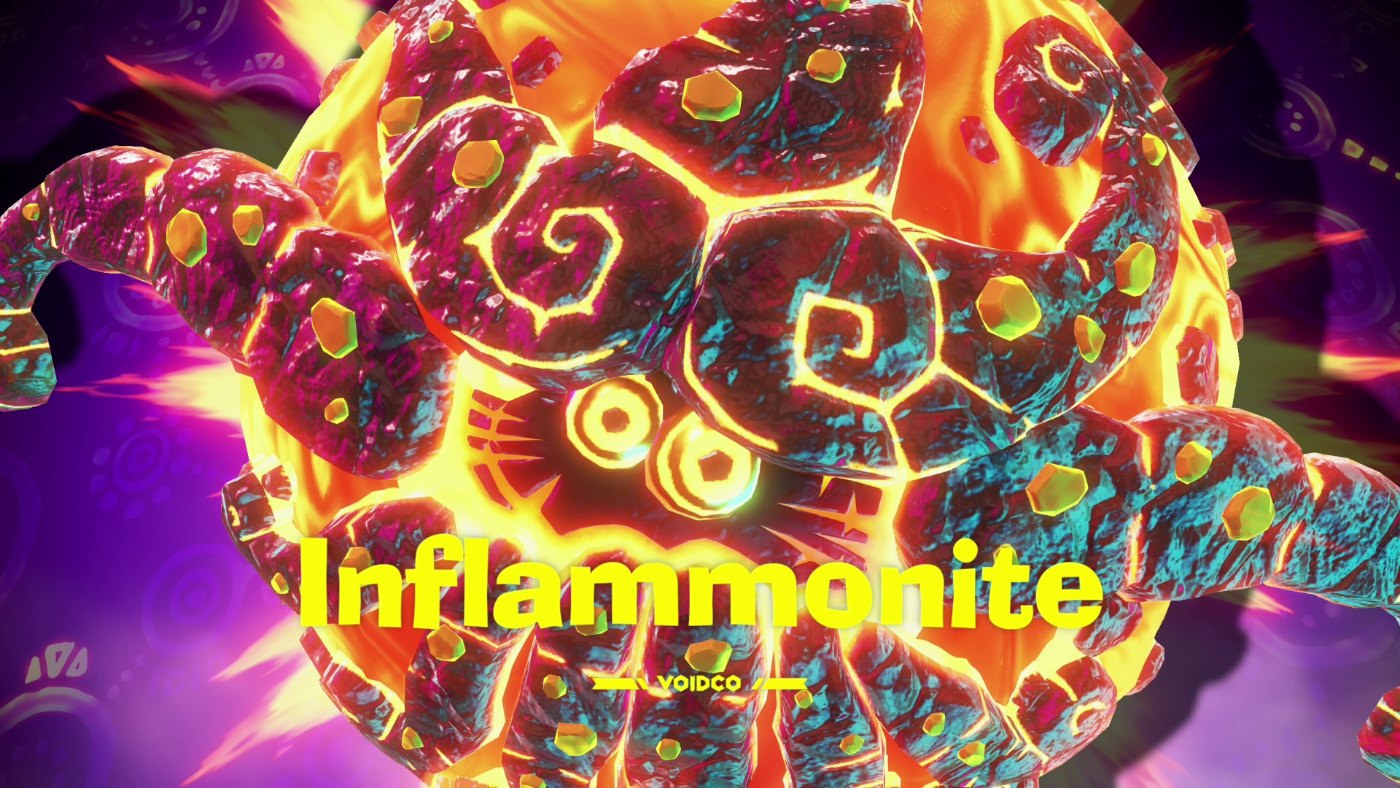
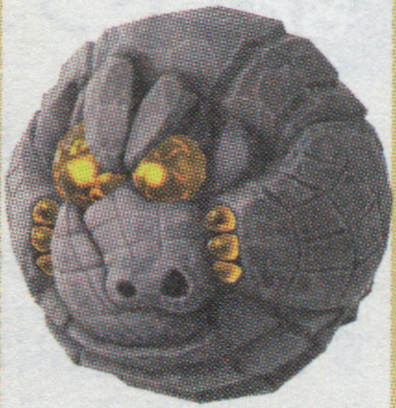
Inflammonite (boss)Freezer LayerA giant Rolluskoid in a shell of lava.
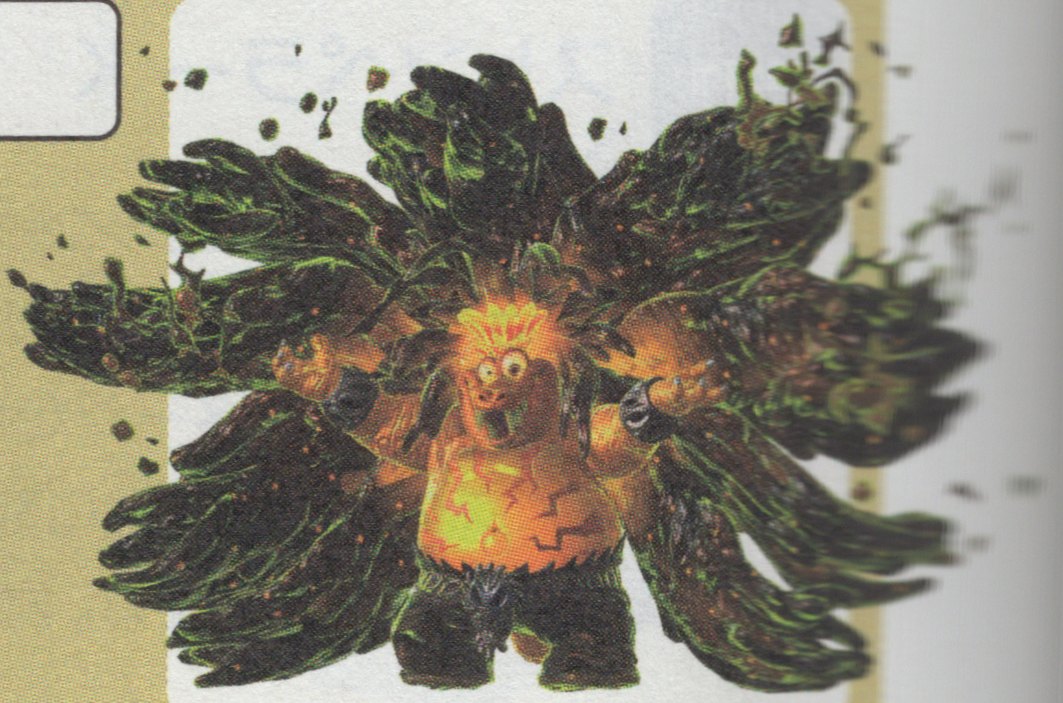
Abracajabya (boss)Forest LayerA giant plant witch that lashes out with thorny vines.
Void Kong (boss)Hilltop Layer, Lagoon Layer, the Junction, Forbidden Layer; DK Island (DLC)Attacks from his flying machine, summoning slabs of terrain. The Forbidden Layer round is fought without Bananzas.
Sinister Blusterwing (boss)Tempest LayerThe Singing Blusterwing under a Mind-Bender Mask. Fought three times, with Gloo Gum, lava, electricity and tornadoes.
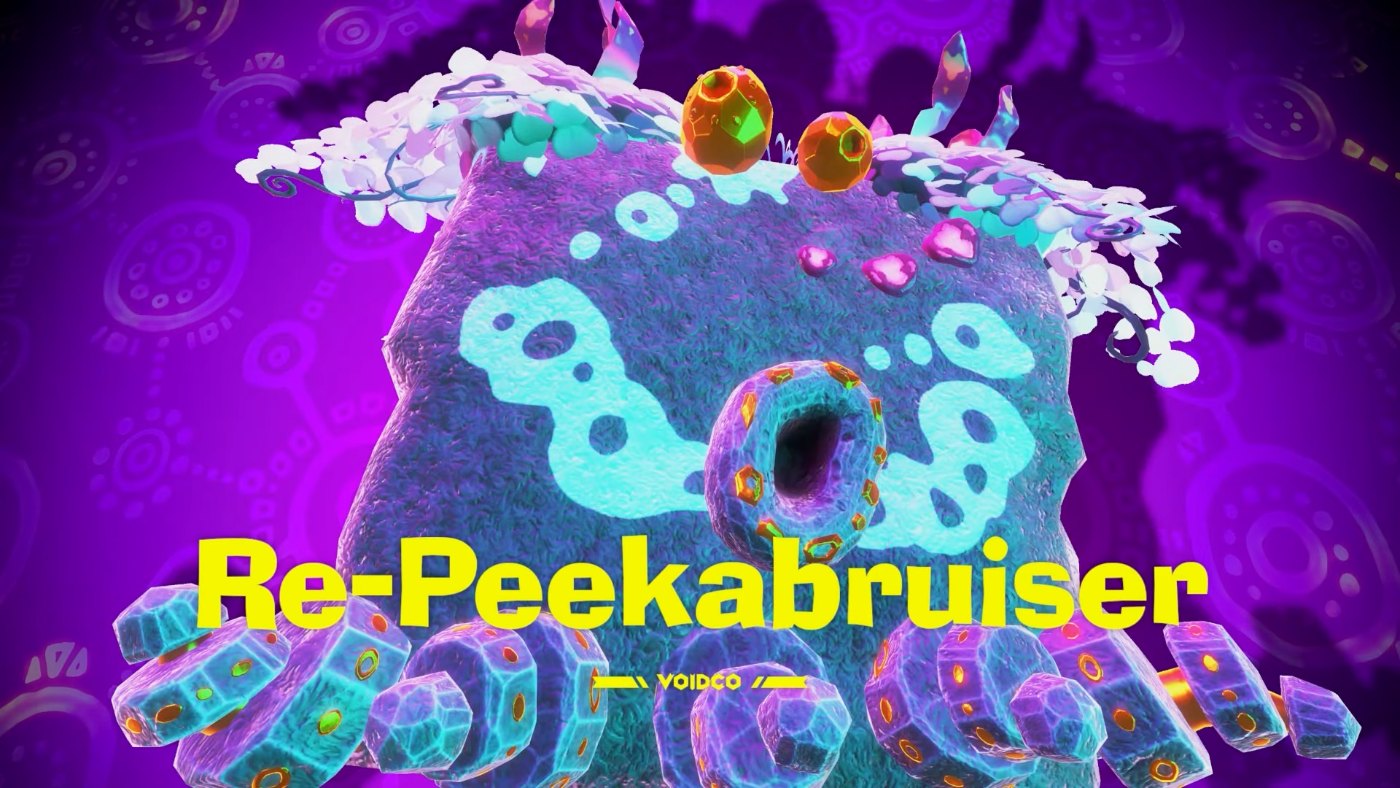
Re-Peekabruiser (boss)Landfill LayerGrumpy’s rebuilt Peekabruiser: quicker, and able to trap DK in a pit.
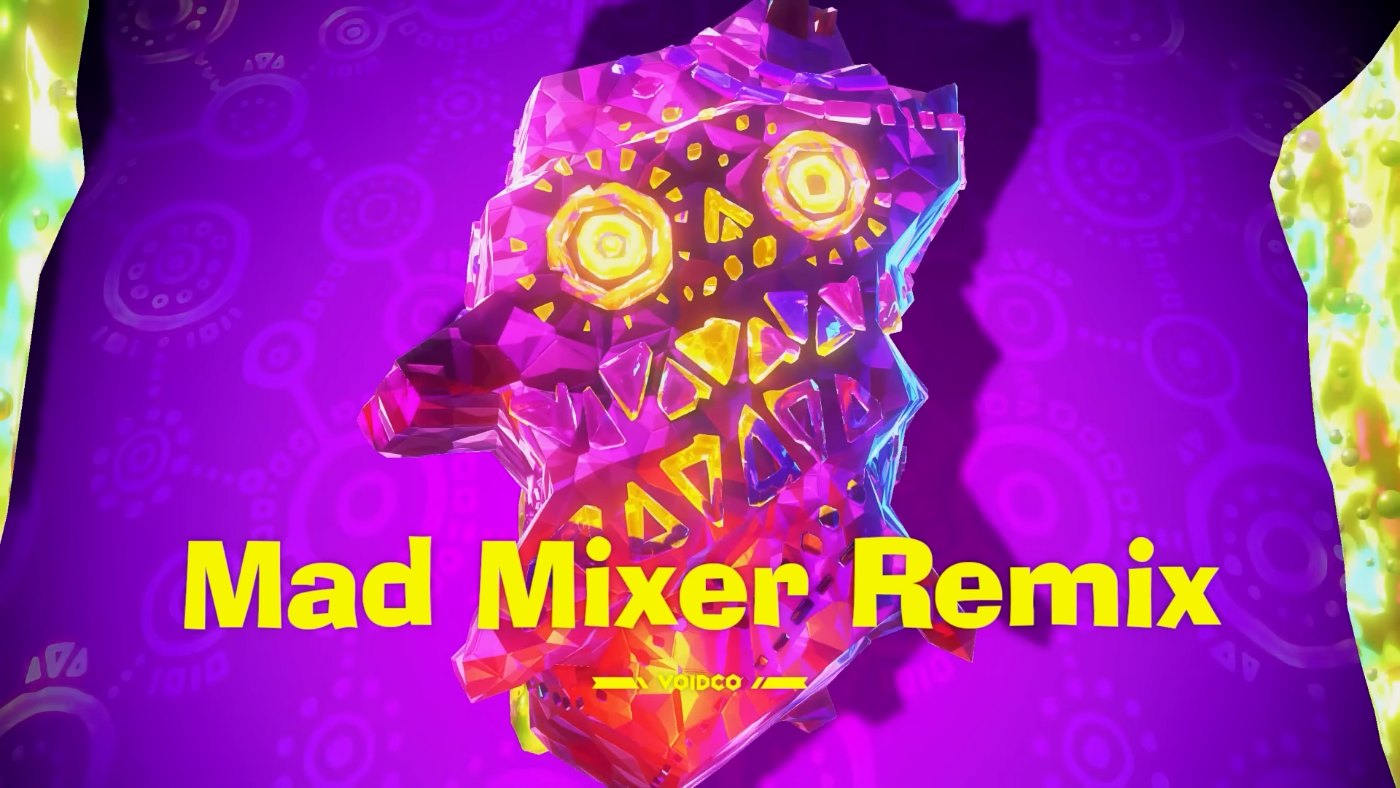
Mad Mixer Remix (boss)Feast LayerThe Mad Mixer again, its pillars now made of muck and crawling with Muckoids.
Muckety-Muck (boss)Feast LayerA huge Muckoid that spits muck, floods the floor and drops crates from above.
K. Stompenclomper (boss)Planet CoreA Kremling-flavoured Stompenclomper with one foot of lava; the feet can be swapped.
King K. Rool (boss)Planet CoreAs Core King K. Rool, charged with the power of the Banandium Root.
K. Rool, King of Rot (final boss)New Donk CityBloated on Banandium Mush, fought in a floating boxing ring in front of City Hall.
AntickoidStandard enemyAn ant with Banandium or rocks inside its crystal abdomen.
MolevoloidStandard enemyA burrowing mole that erupts out of the ground as a tall pillar of earth.
CrockoidStandard enemyA golden crocodile skeleton coated in terrain, swinging a bone club. Climb it and pull the armour off.
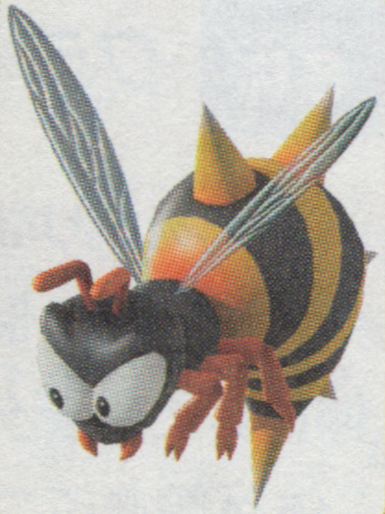
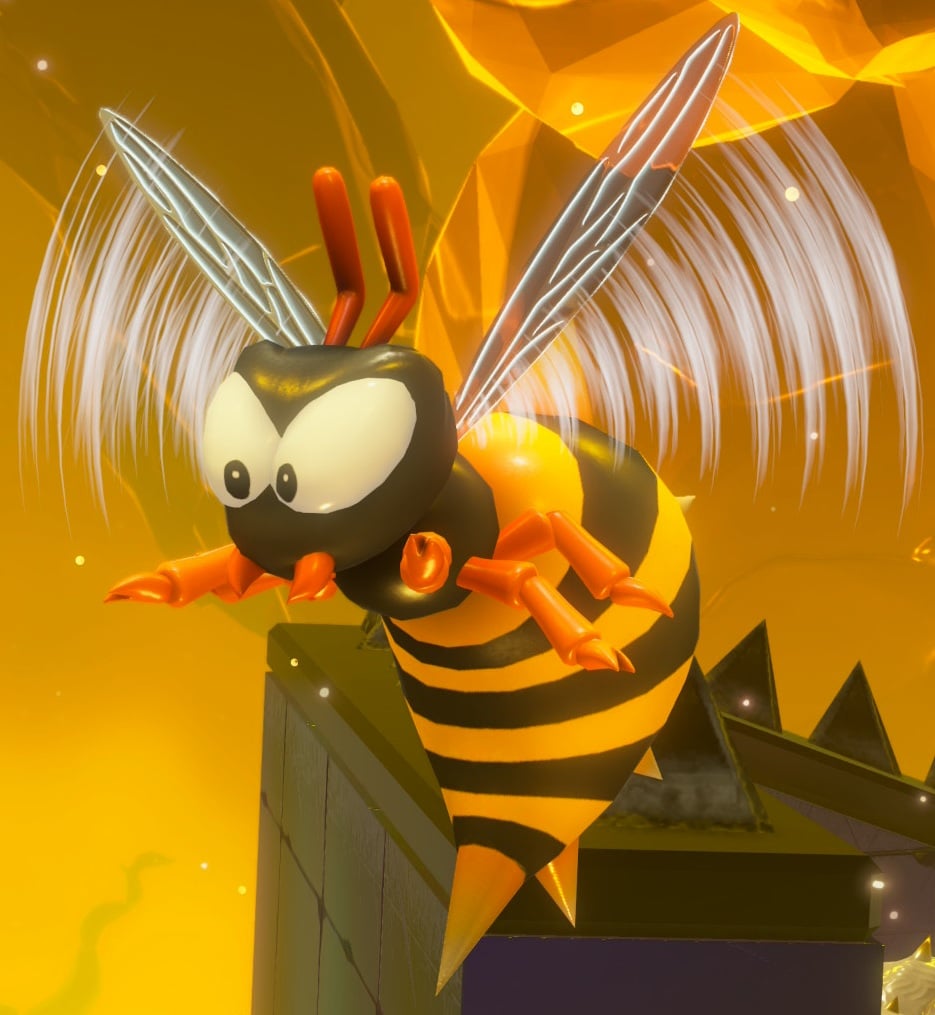
BuzzoidStandard enemyA flying wasp that throws chunks of stone or explosive Boom Rock.
PeekaboopoidStandard enemySmall octopus-like creatures that pose as scenery, then swarm.
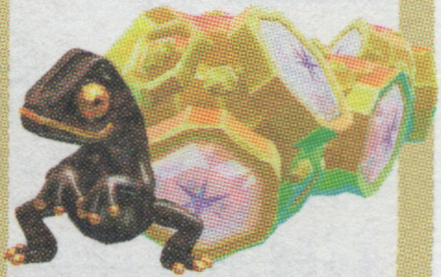
GlitzoidStandard enemyA darting gecko with a tail of gold and Banandium Chips. Worth catching.
VoidCo Spike-Ball SpitterStandard enemyA monkey-shaped mortar that lobs Spiky Balls into the air.
SqueeloidStandard enemyA boar with a fuse. Hops towards DK and explodes.
StompoidStandard enemyA golden monkey skull on one big foot, wearing a head of terrain.
RolluskoidStandard enemyAn ammonite that rolls at DK in a stone shell, then lies dazed.
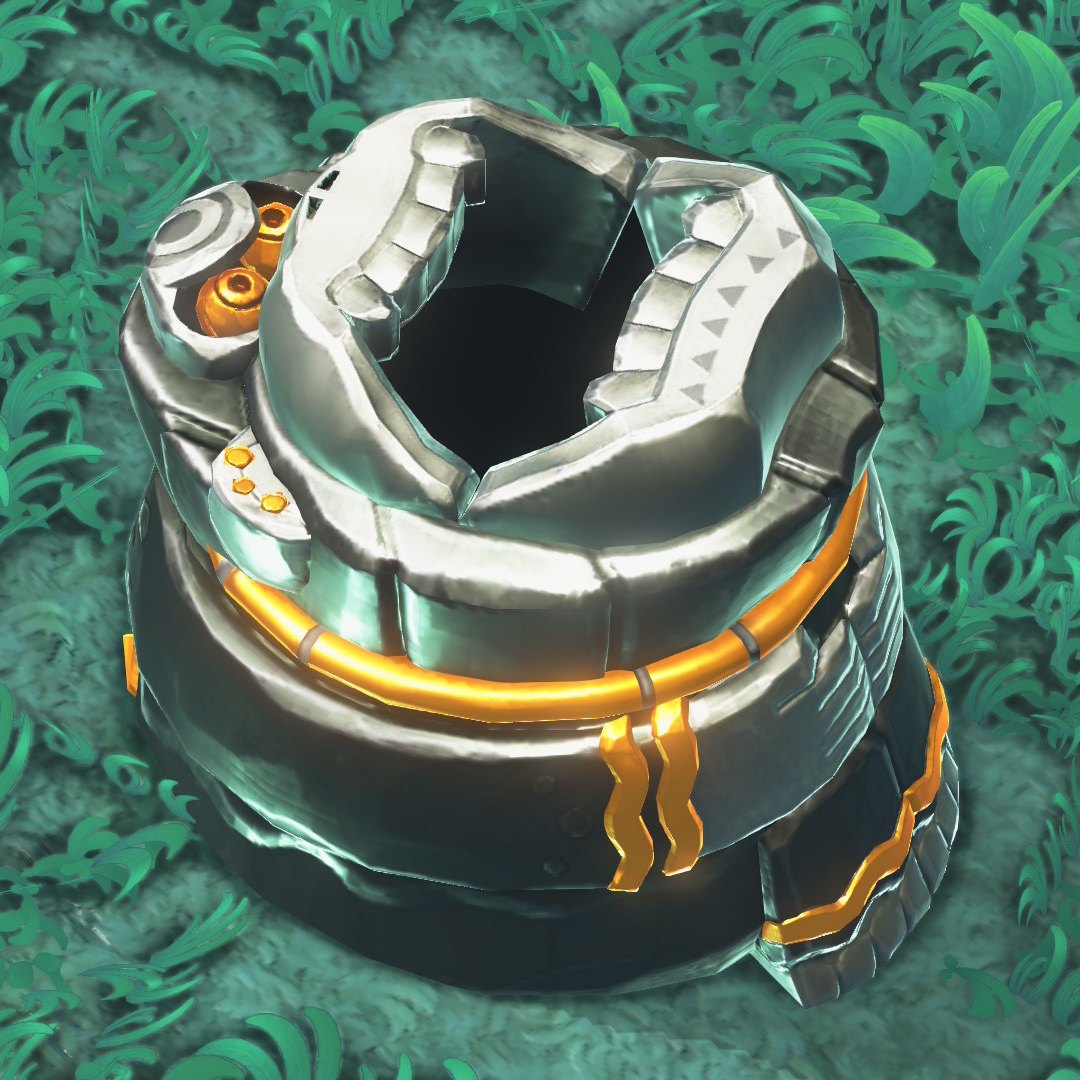
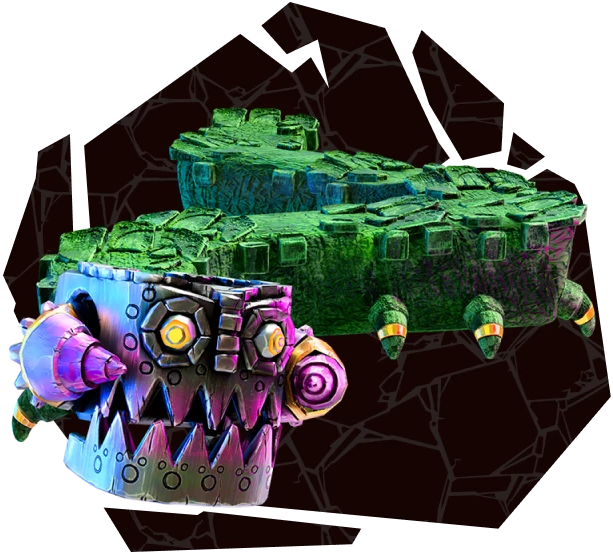
MunchoidStandard enemyA machine with drills for a face that chews through terrain to reach DK.
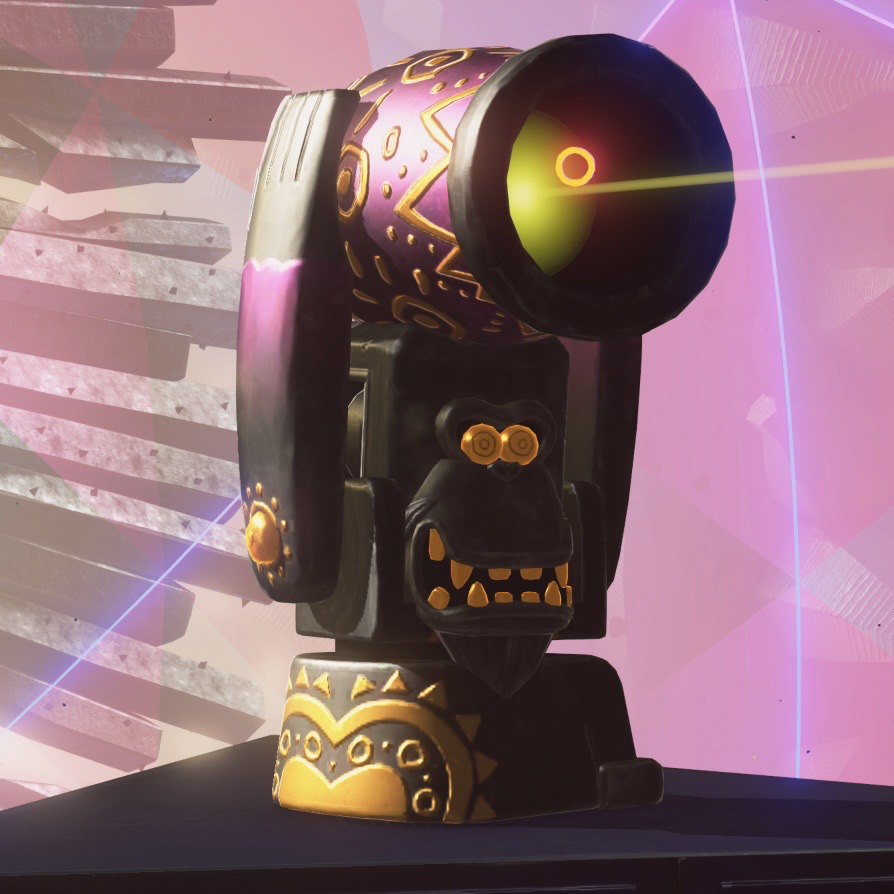
VoidCo Bongo BlasterStandard enemyAn ape-styled turret that tracks DK and fires small Boom Rocks.
TrailfinoidStandard enemyA purple shark that dashes through the ground, leaving a coloured trail of terrain.
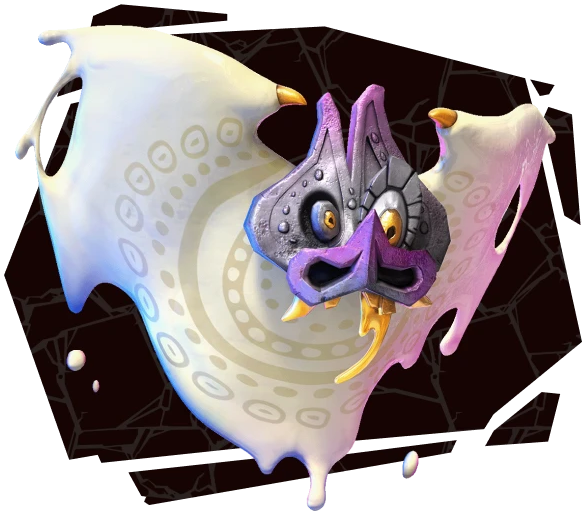
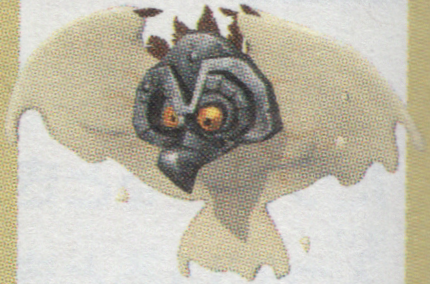
BatteroidStandard enemyA masked bat skeleton in gluey goop that hangs from ceilings and dives.
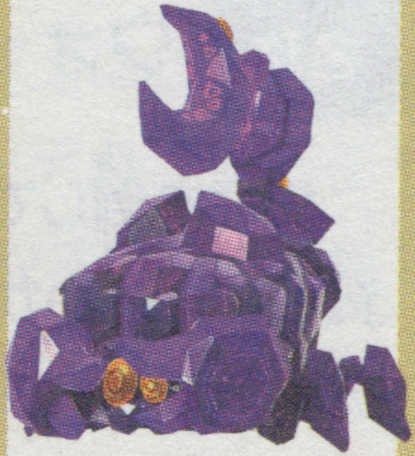
GloominoidStandard enemyA scorpion with a moon on its sting. Light turns it to stone.
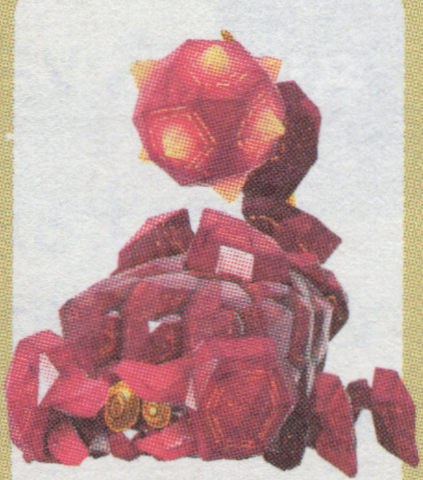
IlluminoidStandard enemyIts opposite, with a sun on its sting: it petrifies in the dark.
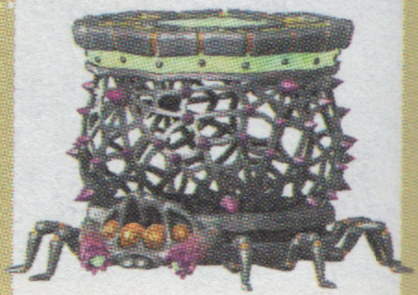
TrapantuloidStandard enemyA tarantula with a cage for a body, full of gold, attacking with two long beams of material.
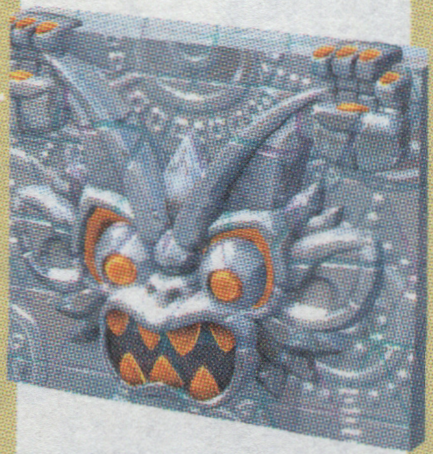
WallopoidStandard enemyA wall carved with Void Kong’s face that waits, then falls on DK.
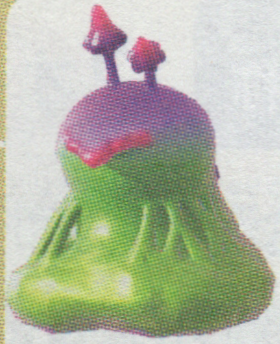
MuckoidStandard enemyA blob that lurks in muck and spits it.
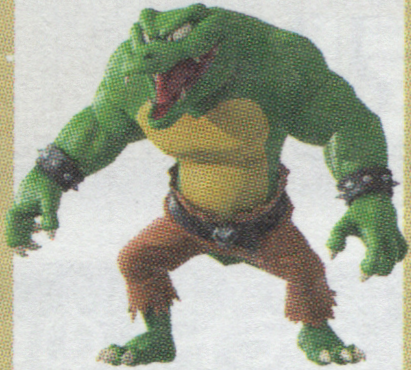
KritterKremling Krew · Planet Core, New Donk CityThe classic green Kremling, taking the place of Crockoids and wearing the same terrain armour.
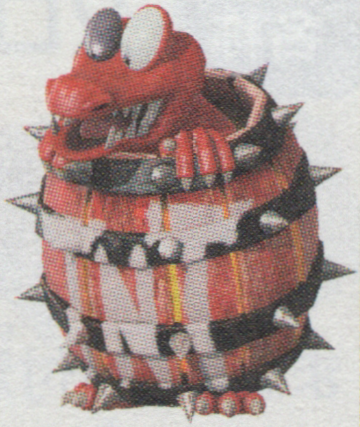
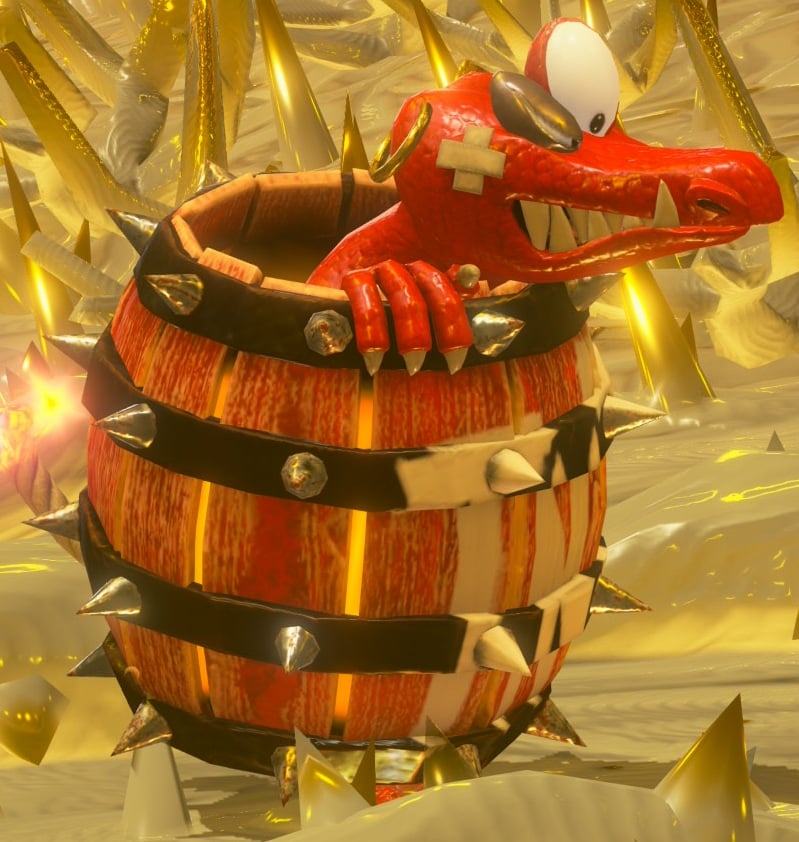
KaboomKremling Krew · Planet CoreA red Kremling hiding in a spiked TNT barrel, replacing Squeeloids. Returns with its original look from Donkey Kong Country 2.
Banandium Mush snakeKremling KrewA snake of Banandium Mush with K. Rool’s face that leaves a harmful trail. Known only by its Japanese name, Dorodoro no Hebi.
K. WallopoidKremling KrewA Wallopoid re-carved with K. Rool’s face.
K. Rool cannonKremling KrewA cannon in K. Rool’s likeness (Japanese name Hōdai) firing iron balls that only the Kong Bananza can punch away.
Kenta MotokuraProducer and senior directorDirector of Super Mario Odyssey. Devised the concept and set the direction for structure and controls.
Kazuya TakahashiDirector (planning)Formerly of Sega and Square Enix; this was his first game at Nintendo. Oversaw game and level design, cutscenes and text.
Wataru TanakaDirector (programming)Lead programmer of Odyssey. Responsible for performance, use of the Switch 2 hardware and enemy behaviour.
Daisuke WatanabeArt directorOversaw the game’s art direction.
Naoto KuboSound director, composerLead composer of Odyssey. Co-ordinated the sound and wrote part of the score.
Daisuke Matsuoka, Reika Nakai, Yuri Goto, Tsukasa UsuiComposersWith Kubo, responsible for a soundtrack of 229 tracks.
Tatsuya KuriharaSoftware engineerBegan the voxel experiments after Odyssey shipped.
Yoshiaki KoizumiInstigatorDirector of Donkey Kong Jungle Beat and producer of Super Mario Odyssey. Asked the 3D Mario team to make a 3D Donkey Kong. This is reportedly the first main EPD Tokyo game he did not work on directly.
Shigeru MiyamotoCreator of Donkey KongConsulted early on; pointed the team to DK’s distinctive actions, such as the Hand Slap and blowing.
Jenny KiddPauline’s singing voicePerforms the Bananza songs.
Koji TakedaVoice of Donkey KongTook over from Takashi Nagasako, having voiced DK for the Japanese-language dub of The Super Mario Bros. Movie.
1-UP Studio and tri-CrescendoCo-developersProvided additional development and programming.
Advertisement
How It Was Made
Nintendo has been unusually open about how this one was made. What follows draws on its own Ask the Developer interview with five of the team, published two days before release, and on interviews with IGN, Famitsu, Nintendo Dream and others as summarised by Wikipedia.
A Goomba with fists
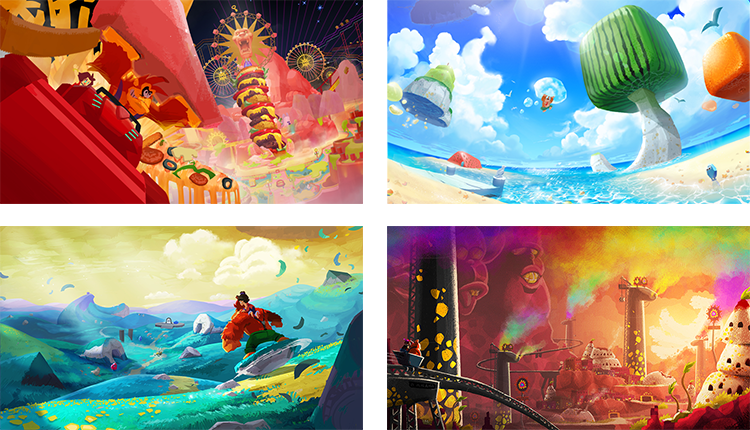
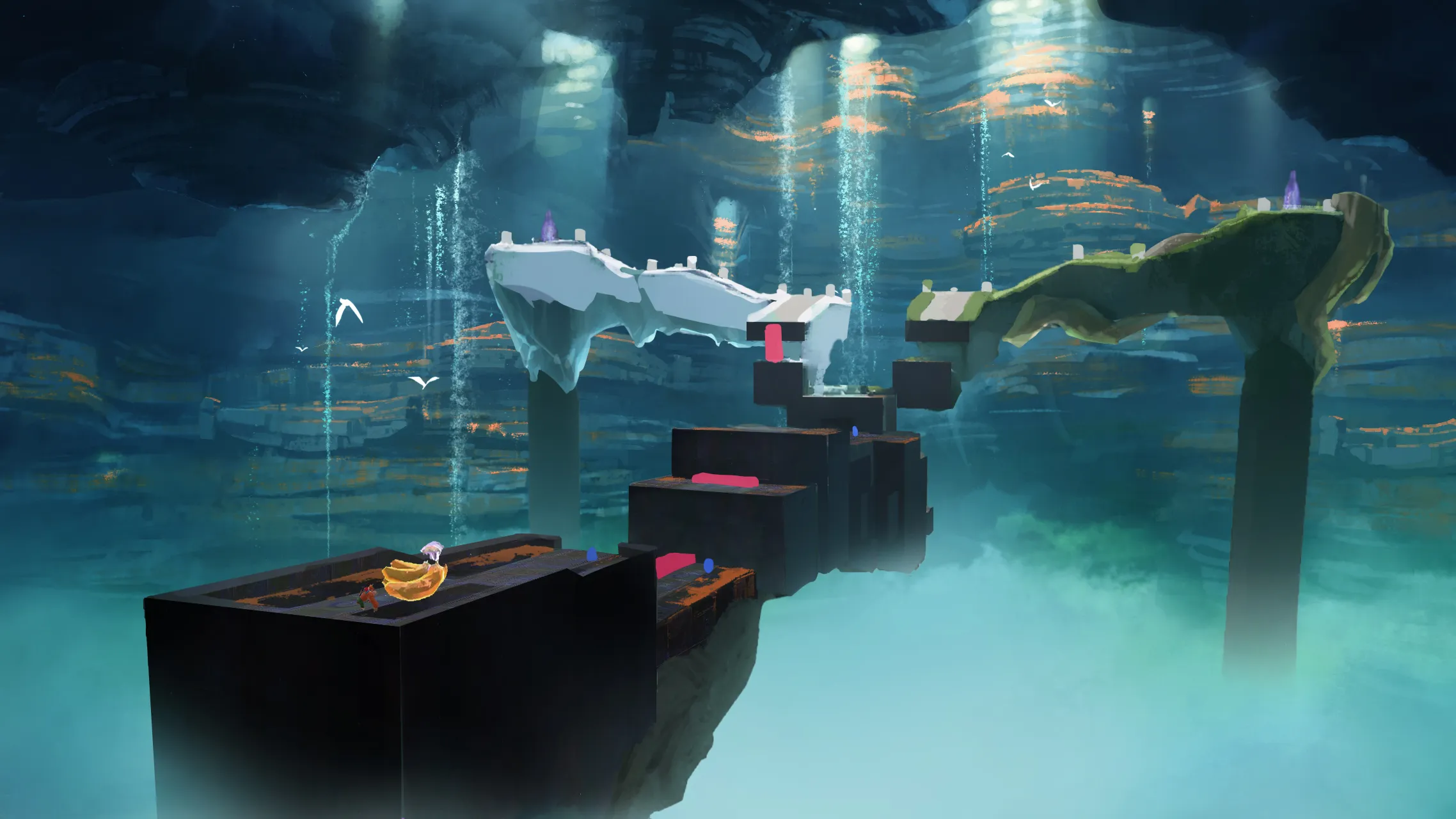
Concept artwork for the game.
When Super Mario Odyssey was finished in 2017, some of its team went on tinkering. They had used voxels, three-dimensional pixels, in a small way in that game, for the cheese rocks of the Luncheon Kingdom and the snow of the Snow Kingdom, and wanted to see how far the idea would stretch. One test took the giant stone hands of the boss Knucklotec and stuck them on a Goomba, which could then smash the ground and rip pieces out of it.
Separately, Yoshiaki Koizumi, who had directed Donkey Kong Jungle Beat and produced Odyssey, asked the 3D Mario team to make a 3D Donkey Kong; as producer Kenta Motokura recalls the request, it was made “with an eye to expanding the Donkey Kong franchise further”. A character defined by his strength and a prototype about destroying things turned out to be the same project.
“What is Donkey Kong?”
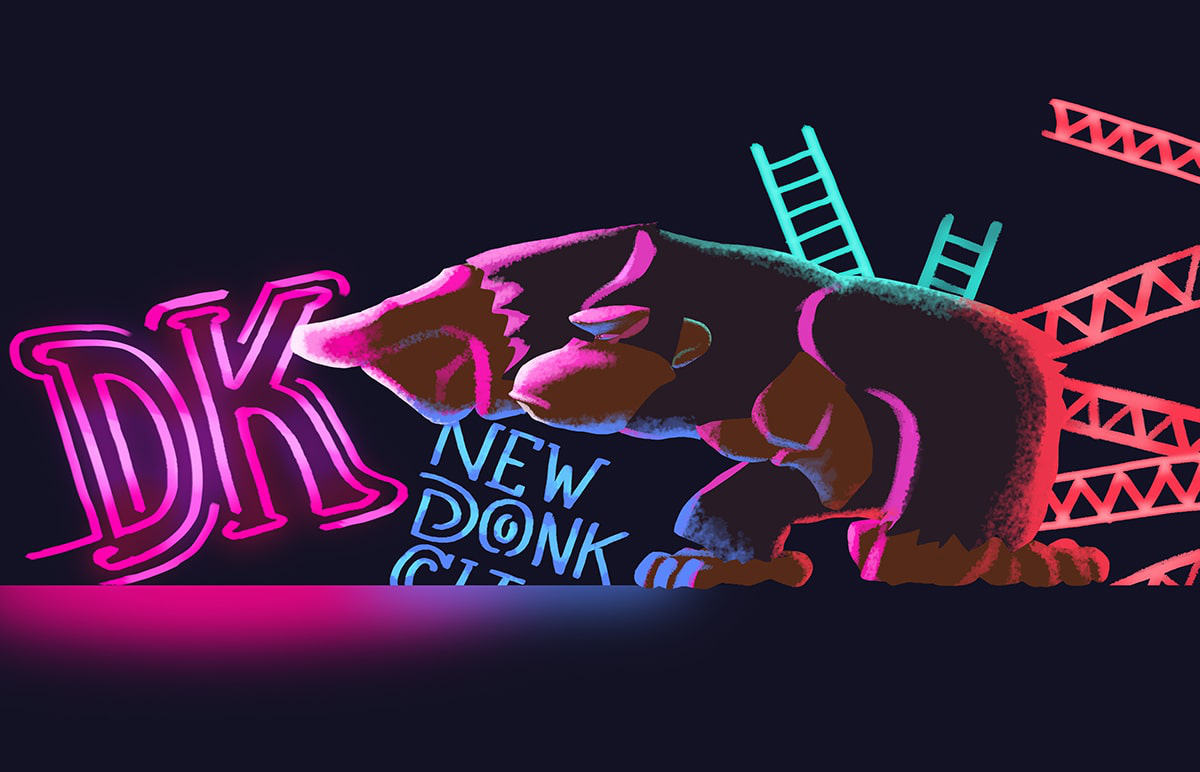
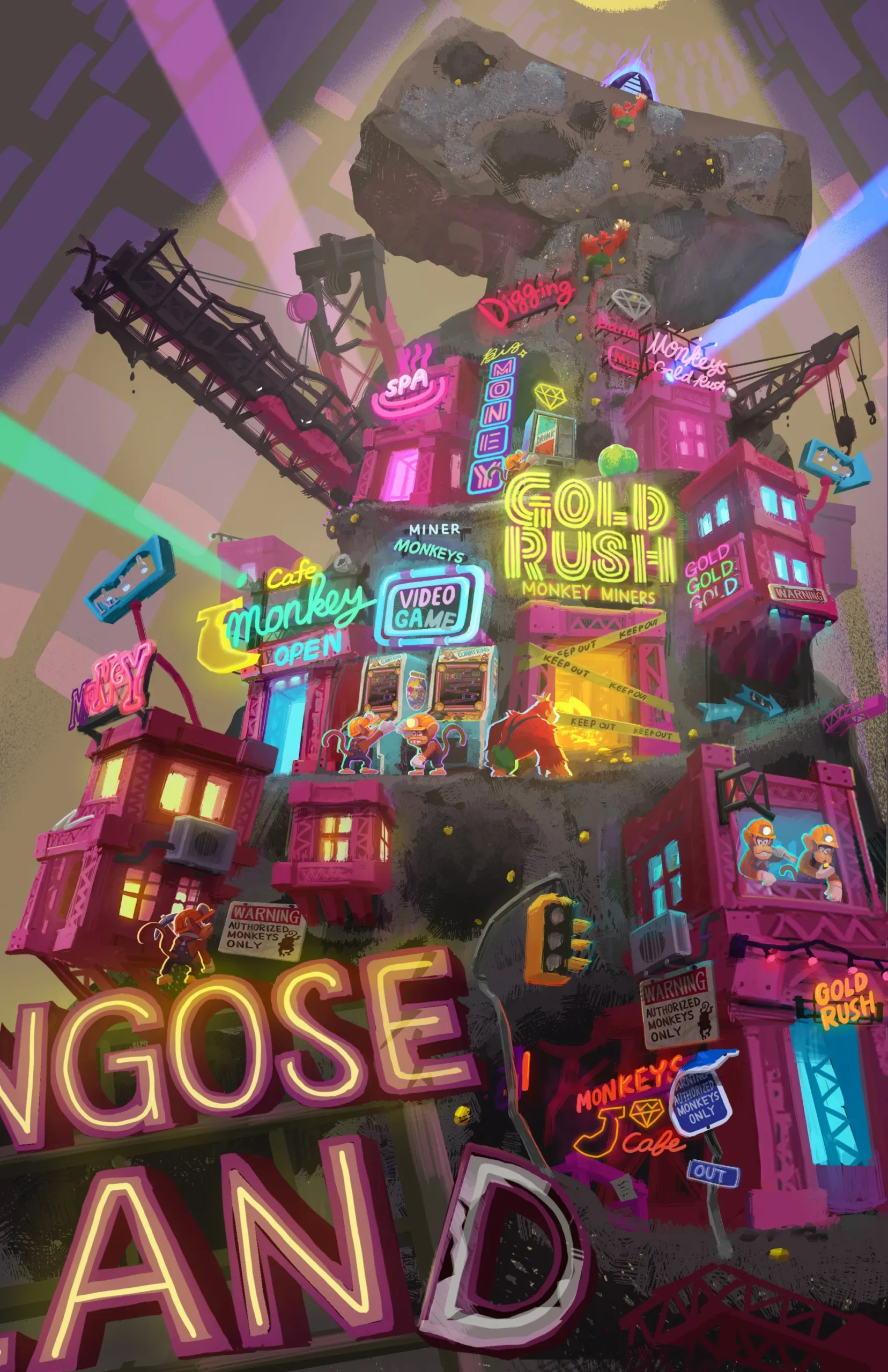
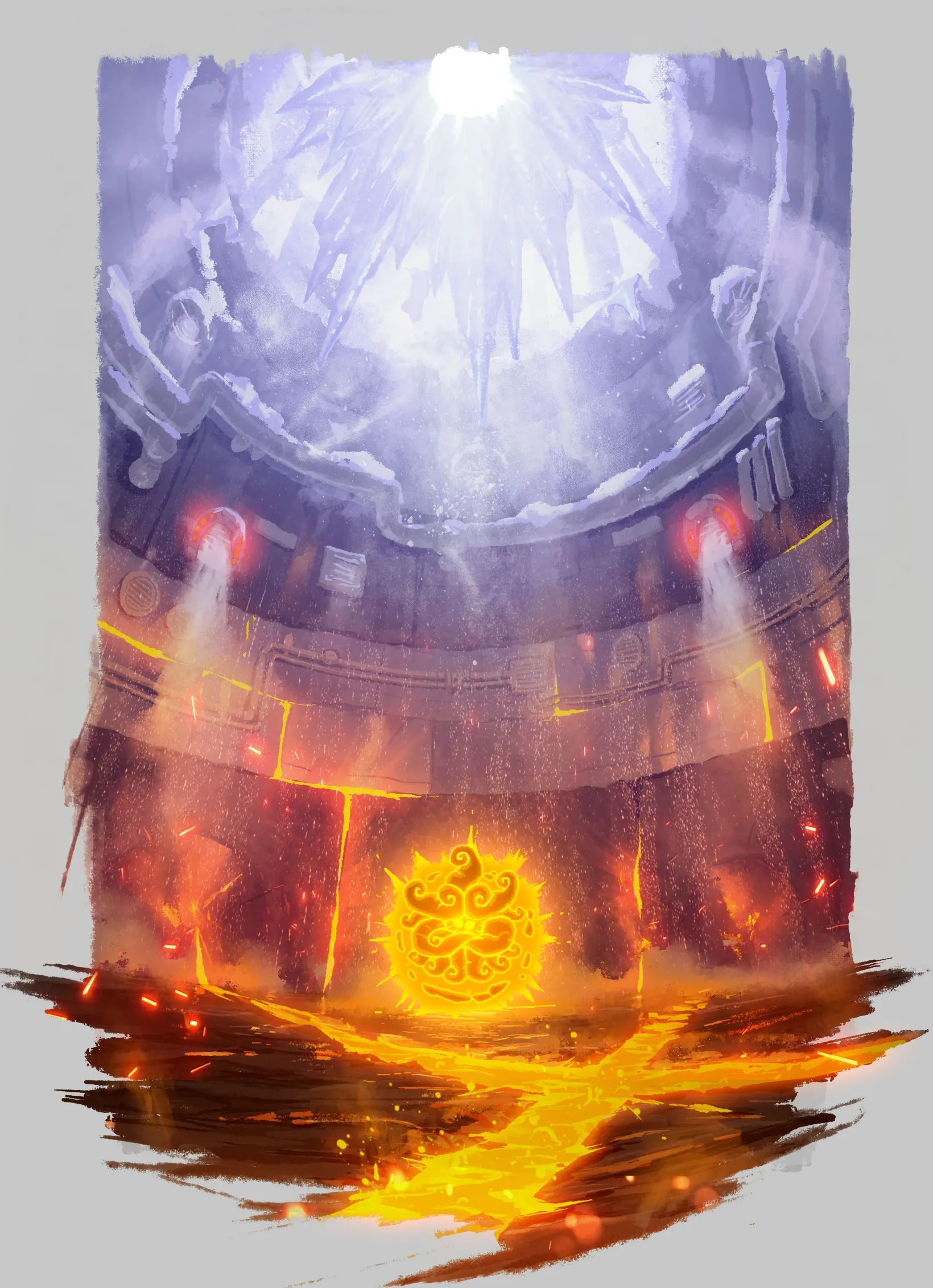
Concept art exploring the neon lighting of the deeper layers.
The team began, Motokura says, by asking that question of the two people best placed to answer. Shigeru Miyamoto, who created the character, talked about the things only DK does, such as the Hand Slap and blowing. Koizumi talked about his enormous arms and what they could lift and hit. Destruction was the idea that used all of it, and it gave Nintendo something else it wanted: a 3D branch of Donkey Kong that could stand apart from the 2D Country games, as 3D Mario does from 2D.
Making the action was the easy part. Building levels for a player who can go through any wall was not, and the team has said level design was by far the harder problem. Terrain, and as many enemies as possible, were made of voxels; Wikipedia, citing Kotaku, puts the average level at more than 347 million of them.
A new Donkey Kong
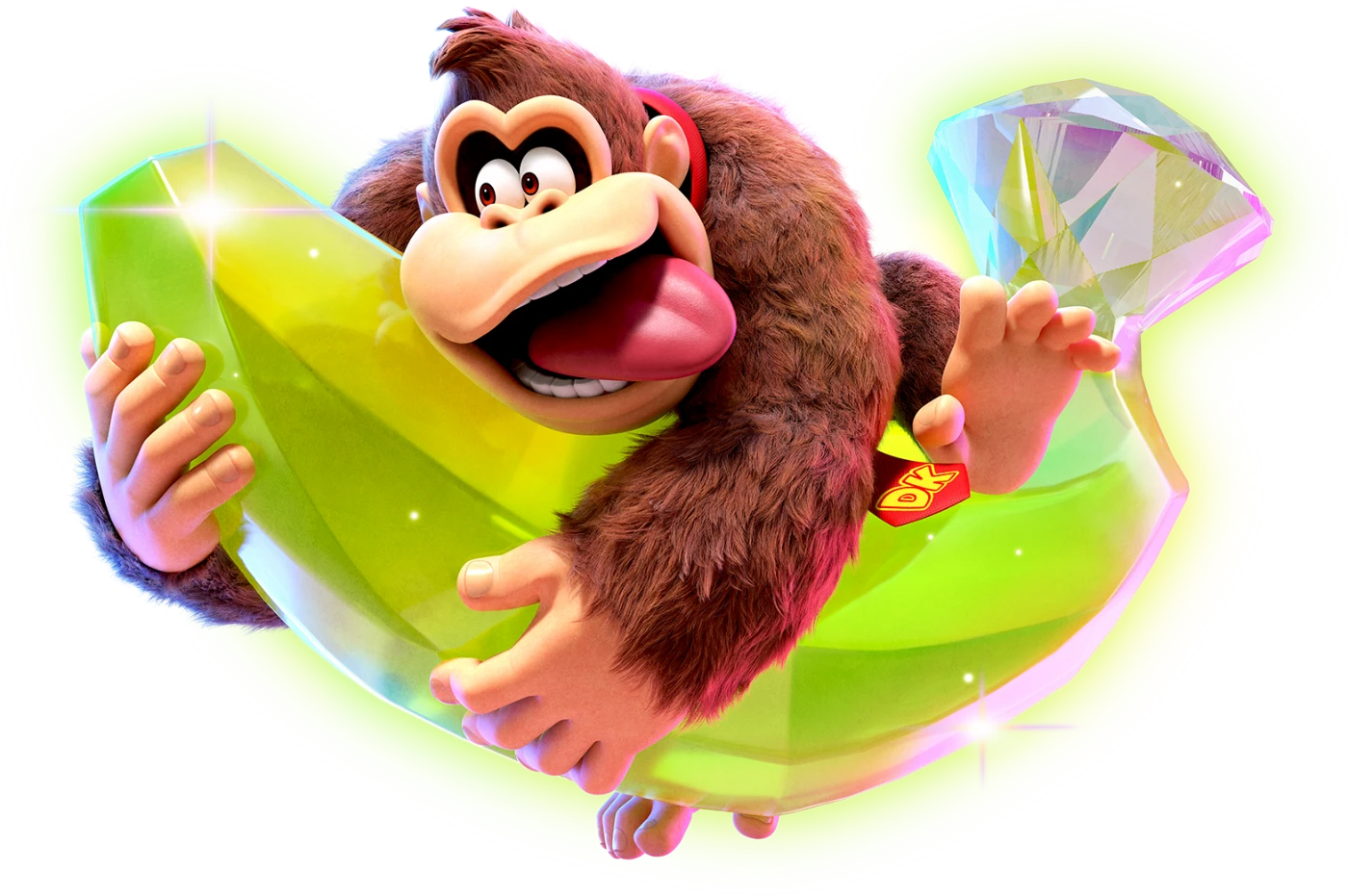
The redesigned Donkey Kong with a Banandium Gem.
DK was redrawn from scratch. The artists interviewed people who had drawn him over the years and went back to Miyamoto’s original design as the foundation. Because he is so much bigger on screen than Mario, there was room for a far wider range of facial expression. The view from behind was a problem of its own, as Motokura explained: “The back view of Donkey Kong just looks like a mass of brown fur,” so he was given thicker fur and a pair of britches with braces. The new look has since influenced his design in other games, Mario Kart World having shown a redesigned DK first.
How Pauline got the part
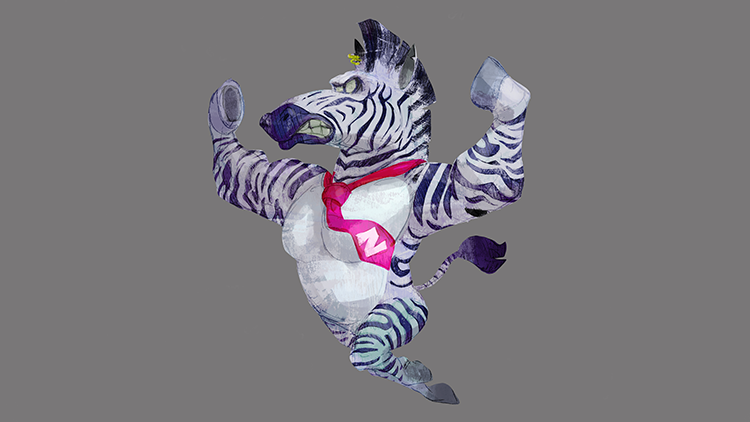
Concept art for the Zebra Bananza, the transformation that started it all.
The transformations came before the companion. The team drew concept art of a zebra form, built a prototype and asked their composer for music to go with it. The piece turned into a song, a song needed a singer, and the team chose Pauline. Once she was singing one transformation the team asked for a song for each, and at that point she had become DK’s travelling partner.
Making her thirteen was deliberate. Director Kazuya Takahashi told IGN it is the age when children start to worry about what they will become. She is the only character in the game with spoken lines. Nintendo kept her out of sight until the Donkey Kong Bananza Direct of 18 June 2025: the first trailer, the demo and even the early box art show only Odd Rock.
From Switch to Switch 2
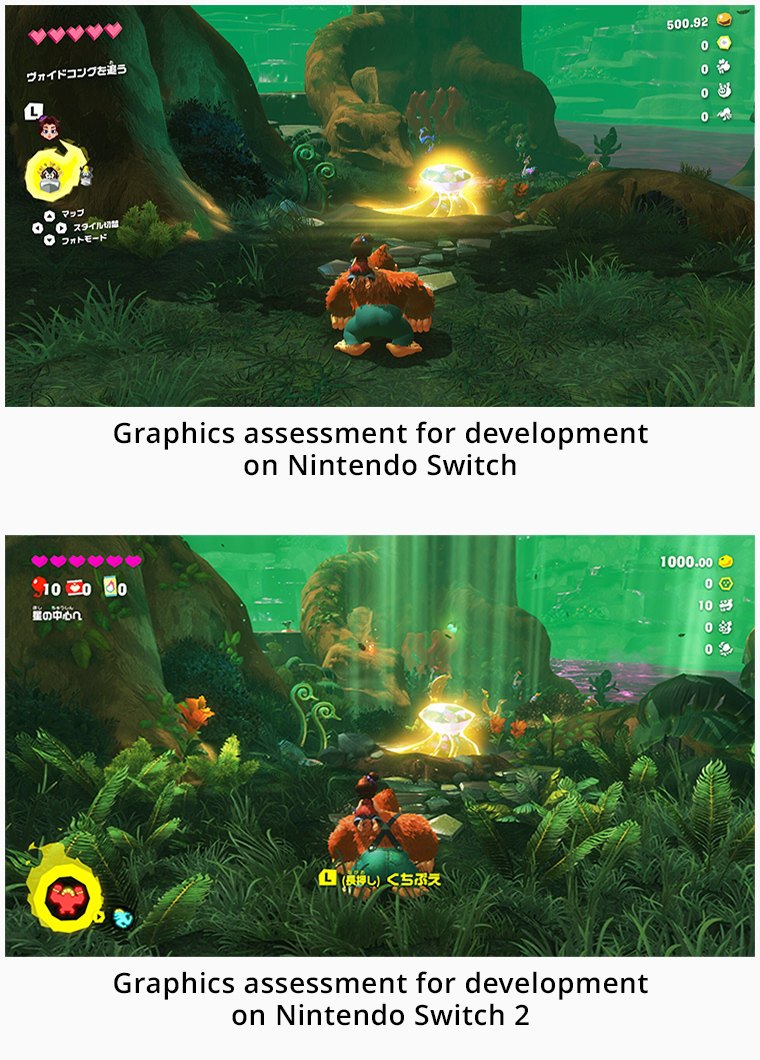
Nintendo’s comparison of the early Switch build with the near-final Switch 2 game.
Like Mario Kart World, the game was begun for the original Nintendo Switch. Wikipedia’s account, from Famitsu and IGN interviews, has it moving to the new console around 2021 when memory ran short; on Switch 2 the team could keep the terrain fully destructible and hold 60 frames per second. Nintendo’s interview includes side-by-side pictures of the two builds, and they show what the old one lacked: DK’s braces, the item counters, and a map on the Up button where the Skills menu now lives.
Additional work came from 1-UP Studio, Nintendo’s regular partner on the 3D Mario games, and tri-Crescendo. DK Artist started as an in-house tool for sculpting terrain.
Reveal and release
The early box art, with Odd Rock where Pauline would later sit.
The game was announced with a trailer at the end of the Nintendo Switch 2 Direct on 2 April 2025, and a 20-minute demo covering Ingot Isle and the start of the Lagoon Layer was playable at the Switch 2 Experience events from 4 April. A dedicated Direct on 18 June revealed Pauline and went through the game in detail. Release followed on 17 July, with a Ver. 1.0.1 patch the same day.
A second, 30-minute demo arrived on the eShop on 12 September 2025 alongside the DLC; in that one Pauline is present from the start and the Kong Bananza is available.
Series Firsts
Firsts and long-awaited returns, each with its source.
1Second 3D Donkey Kong platformerIt is usually described as the second 3D platformer in the series, after Donkey Kong 64 (1999), and the first original Donkey Kong game since Tropical Freeze (2014).
2The 3D Mario team’s first Donkey Kong since Jungle BeatNintendo EPD Tokyo last made a Donkey Kong game in 2004, when it was still called EAD Tokyo and the game was Donkey Kong Jungle Beat.
3A young PaulinePauline appears as a 13-year-old, unlike her adult self in earlier games, and is the one character with fully voiced dialogue.
4First without KoizumiLeaving ports aside, this is reportedly the first main game from EPD Tokyo on which Yoshiaki Koizumi was not directly involved.
5A new voiceKoji Takeda voices Donkey Kong. Wikipedia, citing Nintendo Dream, calls it the first Donkey Kong title in 21 years to go without Takashi Nagasako in the role.
6Kazuya Takahashi’s Nintendo debutThe planning director joined from Sega and Square Enix; this was his first Nintendo game.
Cheats & Secrets
No codes here either, but a game this big hides a great deal. These are the things worth knowing.
Slap first, dig second
The Hand Slap (R) sends out a pulse that shows Banandium Gems through solid rock. Use it on arriving anywhere new, then tunnel straight to what it reveals. If you are lost, have DK whistle and Pauline will sing a trail towards the next objective.
Fossils stay put
Fossils can only be spent at the Style Shop of the layer they came from, so clear a layer’s fossils before leaving if you want its outfits. Most large layers hold 72: 61 common, 10 rare and a single extra-rare one. Stuff Shops sell maps for all three kinds, and the extra-rare map is sold nowhere else.
Dress for the job
Ties, britches and Pauline’s outfits carry bonuses: easier going on certain terrain, more defence, a longer Bananza. Fur colours are cosmetic only. Change at the wardrobe beside a shop or in a Getaway.
Stock up on juice and balloons
Apple Juice revives DK automatically when his hearts run out. Melon Juice allows a transformation without a full Bananergy gauge, which is invaluable against bosses. Red Balloons rescue him from bottomless drops and are sold in packs of ten.
Talk to Cranky
Cranky Kong appears in many layers astride Rambi. Every conversation ends with a free Banandium Gem.
Feed the Growtone
The tree-like Fractone called Growtone grows as it is fed gold and pays out up to three gems. Seekertones want four Hiddentones found, Fragmentones want their three missing pieces, Quiztones want three correct answers, and Glamtones want DK or Pauline dressed a particular way. All pay in gems.
Skipped a Bananza?
The story can be finished without learning every song. Any Bananza you missed is unlocked automatically in the postgame.
Rehearsals and golden skills
After the credits each Elder offers a Bananza Rehearsal. Clearing one, and mastering that form’s earlier skills, opens its hidden golden skill. Completing the Skills screen takes 200 Skill Points, or 1,000 Banandium Gems. When every skill is unlocked the Red Balloon changes to show DK’s face.
Postgame extras
Boss rematches open up (listed under Ingot Isle Cave-In). The Chip Exchange begins selling music discs, and Grumpy Kong will mend the Massive Speaker in the Groove Layer for 20,000 gold so that the 110-track Music Player can be heard at higher quality. The Invisibility Tie, a nod to Odyssey’s Invisibility Cap, is one of the last outfits to unlock.
amiibo
Scan figures at a Collectone. The Donkey Kong & Pauline amiibo unlocks an outfit for Pauline; Donkey Kong, Diddy Kong, King K. Rool and the Super Nintendo World band figures produce explosive gold tiles; anything else gives a traversal sphere.
Emerald Rush targets (DLC)
Reaching 2,000 Rating Points triggers the next story scene on DK Island, and 10,000 unlocks a new fight with Void Kong. Push the score multiplier to 10,000 and the music switches to an arrangement of a tune from the 1981 arcade game.
Check counts and prices against your own save before spending.
Glitches & Oddities
Nothing game-breaking has been documented in the sources read, and no speedrun exploits are covered there. What is on record are the rough edges reviewers noticed and the bugs Nintendo has patched.
Frame-rate dips
The game aims for 60 frames per second and usually gets there, but several reviews recorded drops when a large amount of terrain is destroyed at once, and occasional camera trouble underground. Ver. 3.0.0 (22 December 2025) added a setting to turn off the camera’s automatic tracking.
The missing Rehearsal disc
A bug could block the music disc awarded for collecting every balloon in a Bananza Rehearsal. Fixed in Ver. 2.0.1 (23 September 2025).
Silent Pauline
Two voice bugs: Pauline’s shouts went missing when the console was set to British or Australian English with the voice language set to follow the system (fixed in Ver. 2.0.1), and from Ver. 2.0.0 her line on picking up a fossil sometimes did not play (fixed in Ver. 2.0.2, 22 October 2025).
Videos
Nintendo’s own Direct presentation, which is still the best introduction to the game, and Digital Foundry’s technical review of how it runs on Switch 2.
Official Nintendo of America upload of the Donkey Kong Bananza Direct of 18 June 2025, which revealed Pauline.
Third-party technical review by Digital Foundry.
Trivia & Interesting Facts
A sign in the game reads “Arcade 81”, for the year of the original Donkey Kong, and the challenge course Arcade Country rebuilds 25 m to a medley of the arcade game’s tunes.
Checkpoints in the New Donk City finale are named in metres, and the sublayers at 225 m, 350 m, 475 m and 700 m are a nod to the arcade game’s 25 m, 50 m, 75 m and 100 m.
Pauline can wear a Lady’s Dress, based on her 1981 artwork, and an Arcade Dress, based on her 1981 sprite. Her torn shirt in the story echoes her ripped dress in Donkey Kong for Game Boy.
The fossils of the Planet Core are an 8-bit barrel, Pauline’s lost parasol, hat and bag, and a pixel Donkey Kong.
Picking up a Banandium Gem plays the “Ooh, banana!” voice clip from Donkey Kong 64, and the music in a Getaway samples the chorus of the DK Rap.
The K. Rool-style logo from the fake credits.After Core King K. Rool falls, the game rolls a set of fake credits, restyled “kredits”, in which every job is held by a Kremling. Klump is credited with “Game Koding”.
K. Rool’s first phase reworks his blunderbuss fight from Donkey Kong Country 2; his second uses a Propellerpack like KAOS from Donkey Kong Country 3; and the last arena is a boxing ring, as in Donkey Kong 64.
Three Bananza forms are tributes to animal buddies: the Ostrich to Expresso, the Elephant to Ellie and the Snake to Rattly.
The Rambi Rumble takes its name from a level in Donkey Kong Country 2.
Advertising hoardings in New Donk City plug Funky’s Flights, Candy Music, Cranky Records, a Tiny Bank, an Enguarde Eatery and a Jungle Beat Cafe, and Lanky Kong has a billboard to himself.
Quiztone, the quiz-master Fractone, dresses like Swanky Kong, and one of its wrong answers is “Swankytone”.
DK Artist’s album artwork imitates the box art of Nintendo’s Mario Artist series.
In the DLC, a small island near DK Island is shaped like the DK Bongos controller for GameCube.
Banandium Chips do the job of the Blue Coins in Super Mario Sunshine, the Growtone behaves like a Hungry Luma from Super Mario Galaxy, and the tuning-fork checkpoints work like Odyssey’s flags.
Diddy and Dixie still wear the hat pins they were given in The Super Mario Bros. Movie.
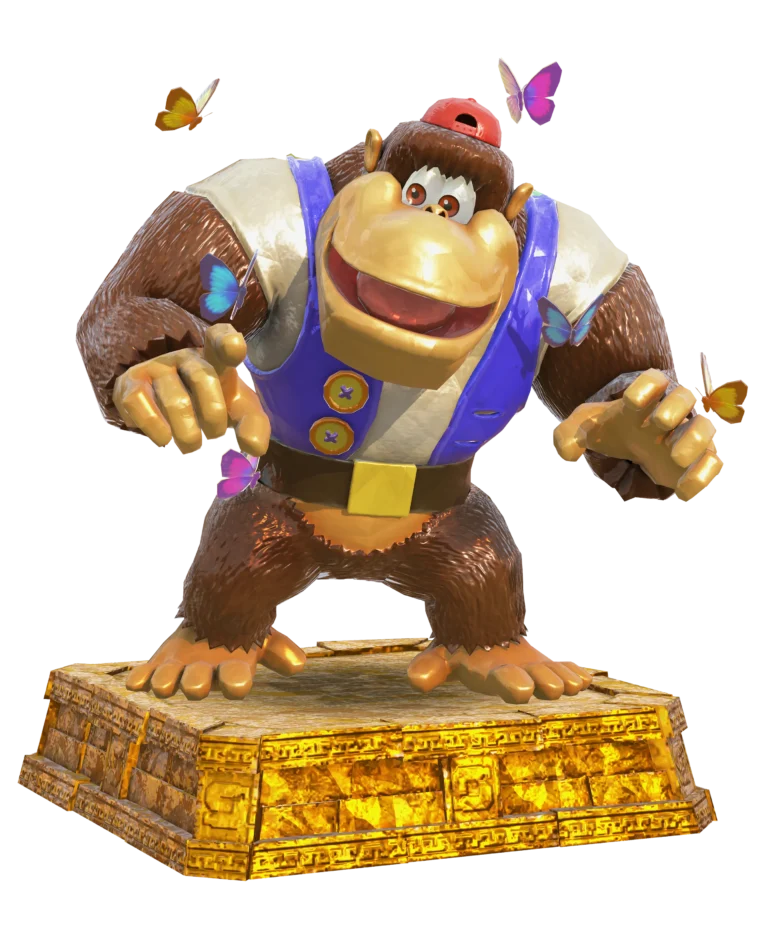
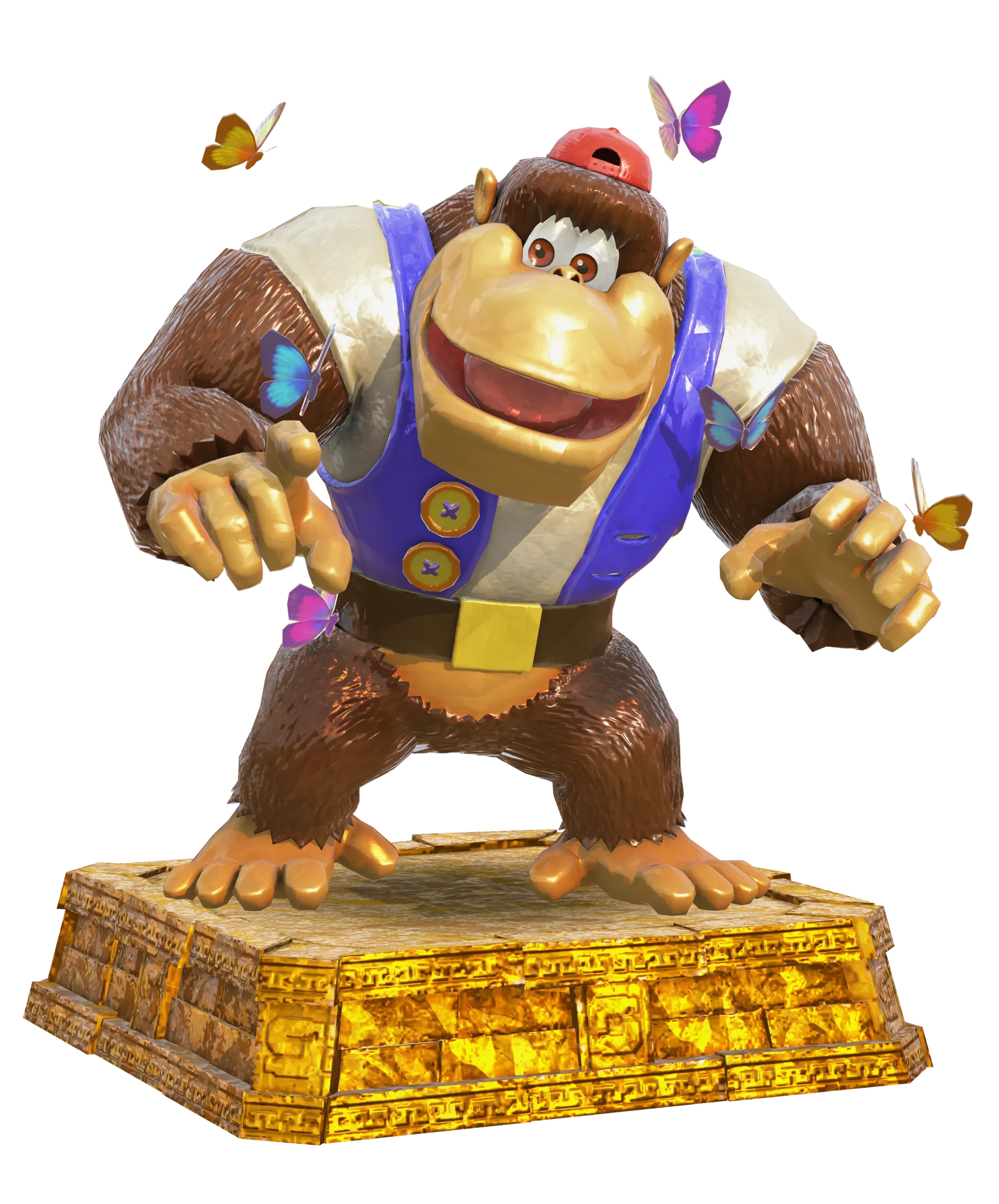
The Chunky Kong statue from an Emerald Rush event.Emerald Rush has run a series of limited-time events since 28 October 2025, each adding statues of Donkey Kong series characters to collect: Enguarde, Chunky and Lanky Kong, Ninja Kong and Ghastly King, Tucks and Lord Fredrik, Expresso, Wrinkly and Tiny Kong, Tiki Goon and Tiki Tong among them.
The Emerald Rush perk “Banana Slamma” is DK’s catchphrase from the Donkey Kong Country television cartoon.
The soundtrack runs to 229 tracks. Pitchfork reviewed it and gave it 7.0.
According to Wikipedia’s summary of the Rolling Stone interview, art director Daisuke Watanabe said the Switch 2 did more than unlock the game’s potential: it made the game possible.
By one count there are 46 brand names invented for the game’s signs and billboards, from 94.0 KNDC Radio to WE♥NDC.
Regional Box Art
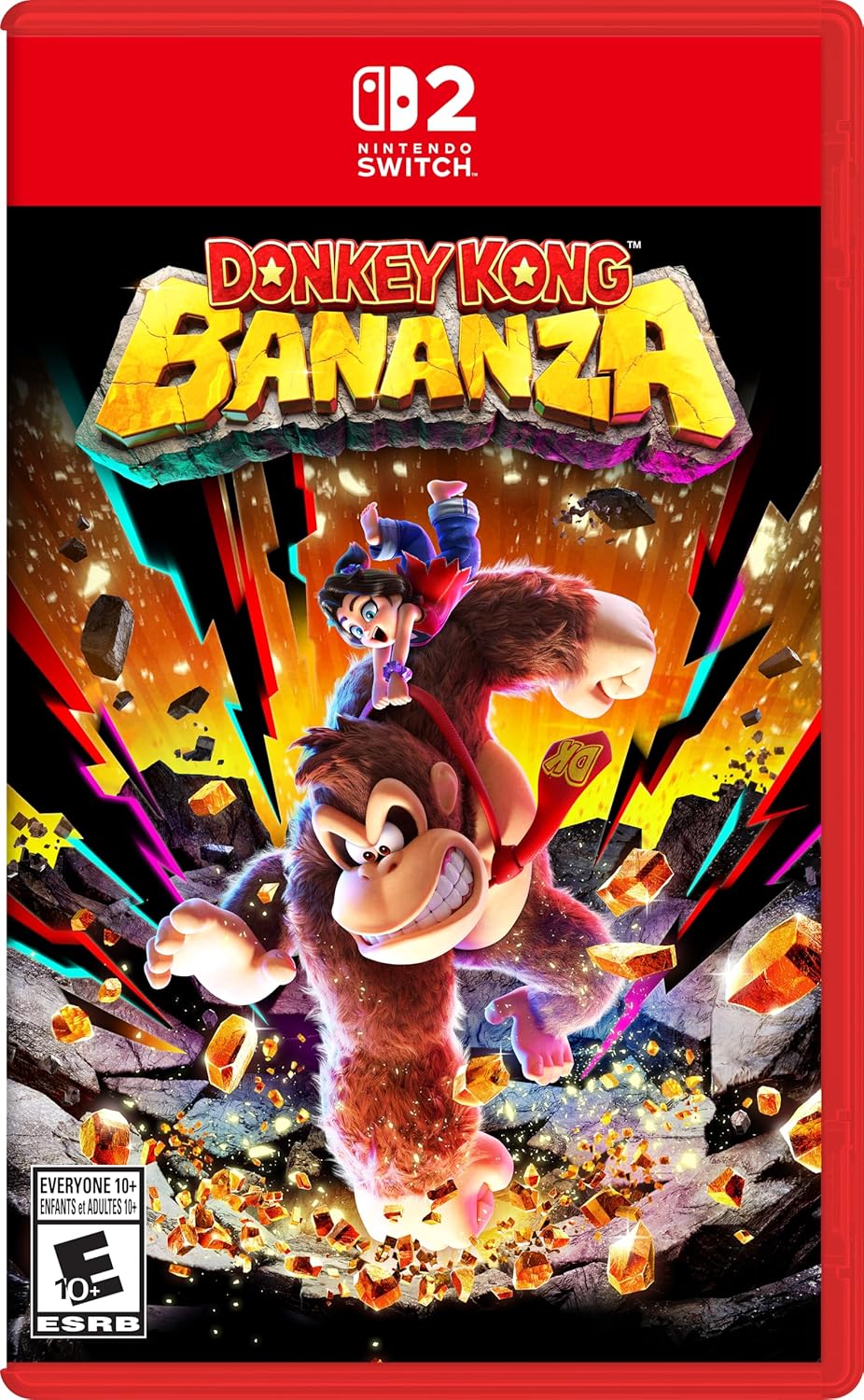
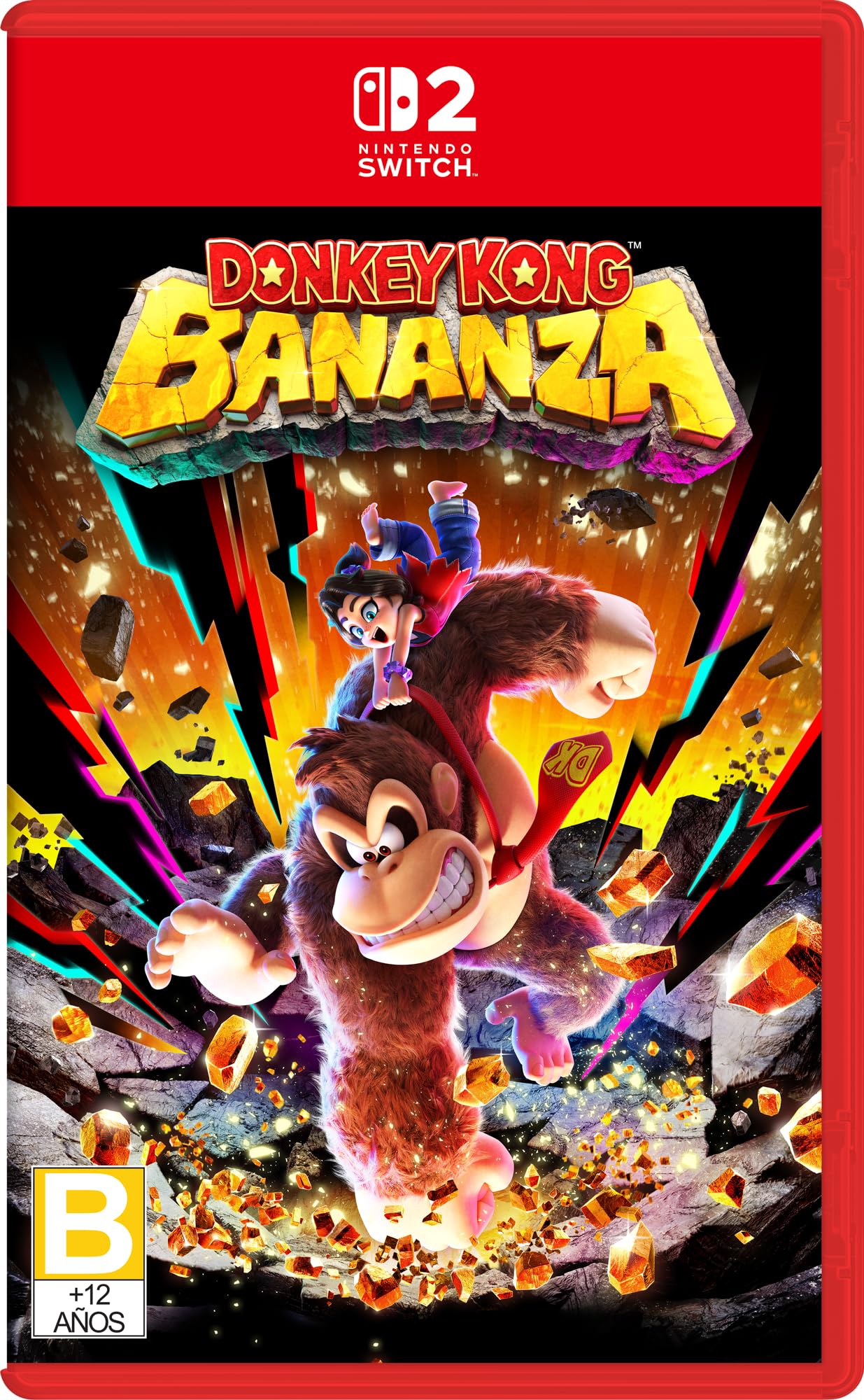
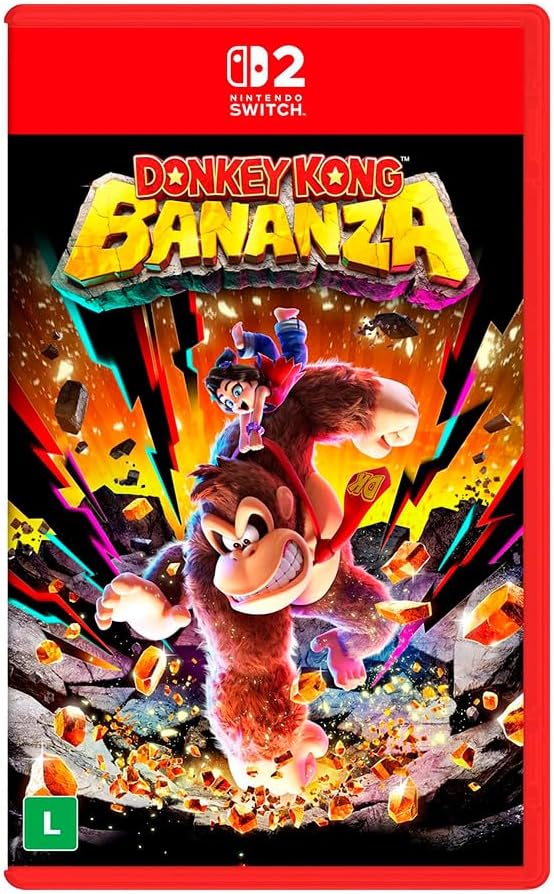
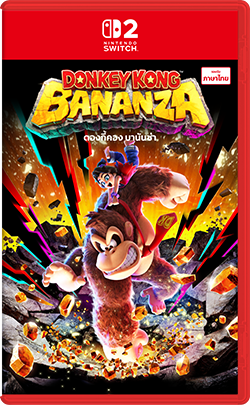
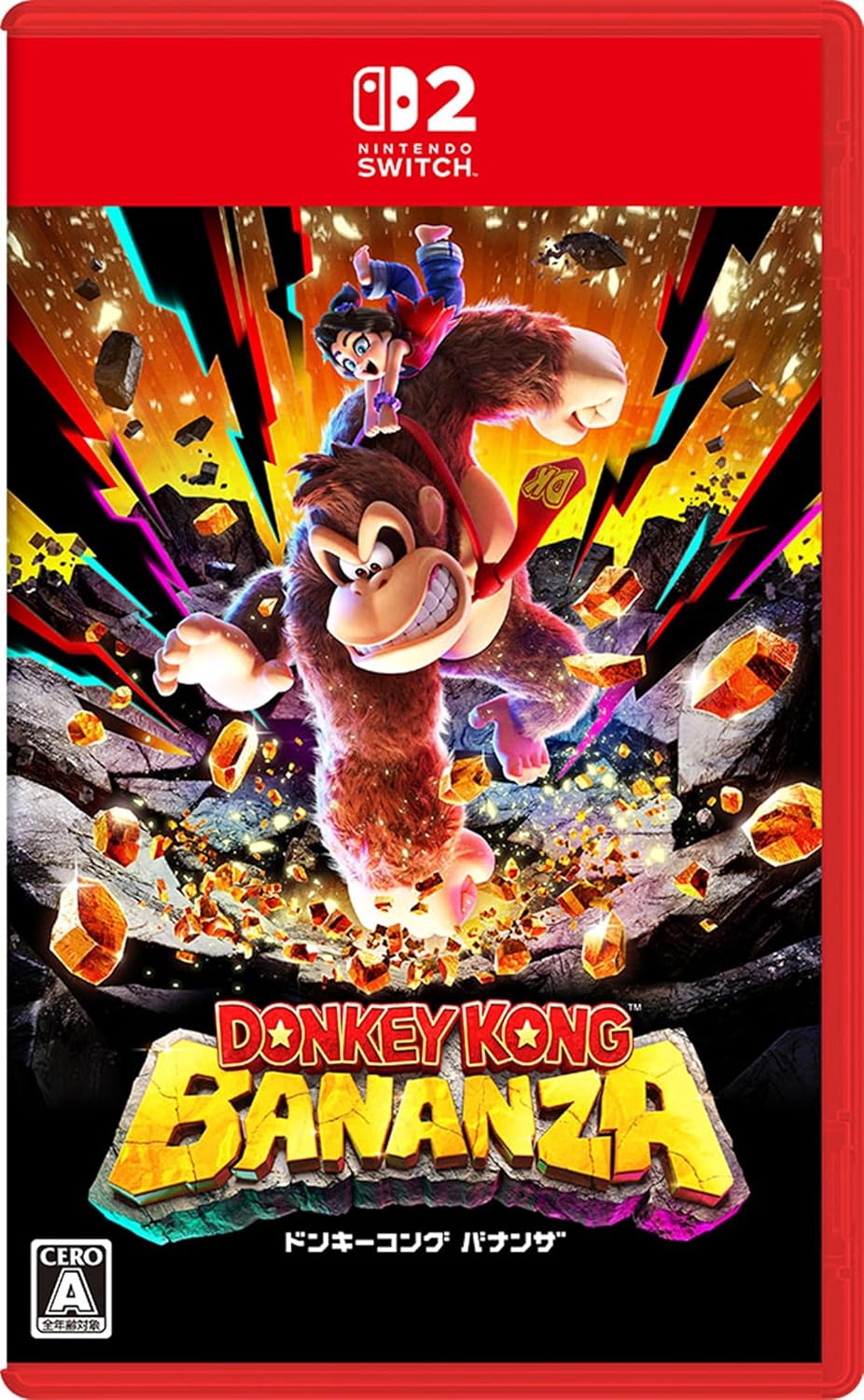
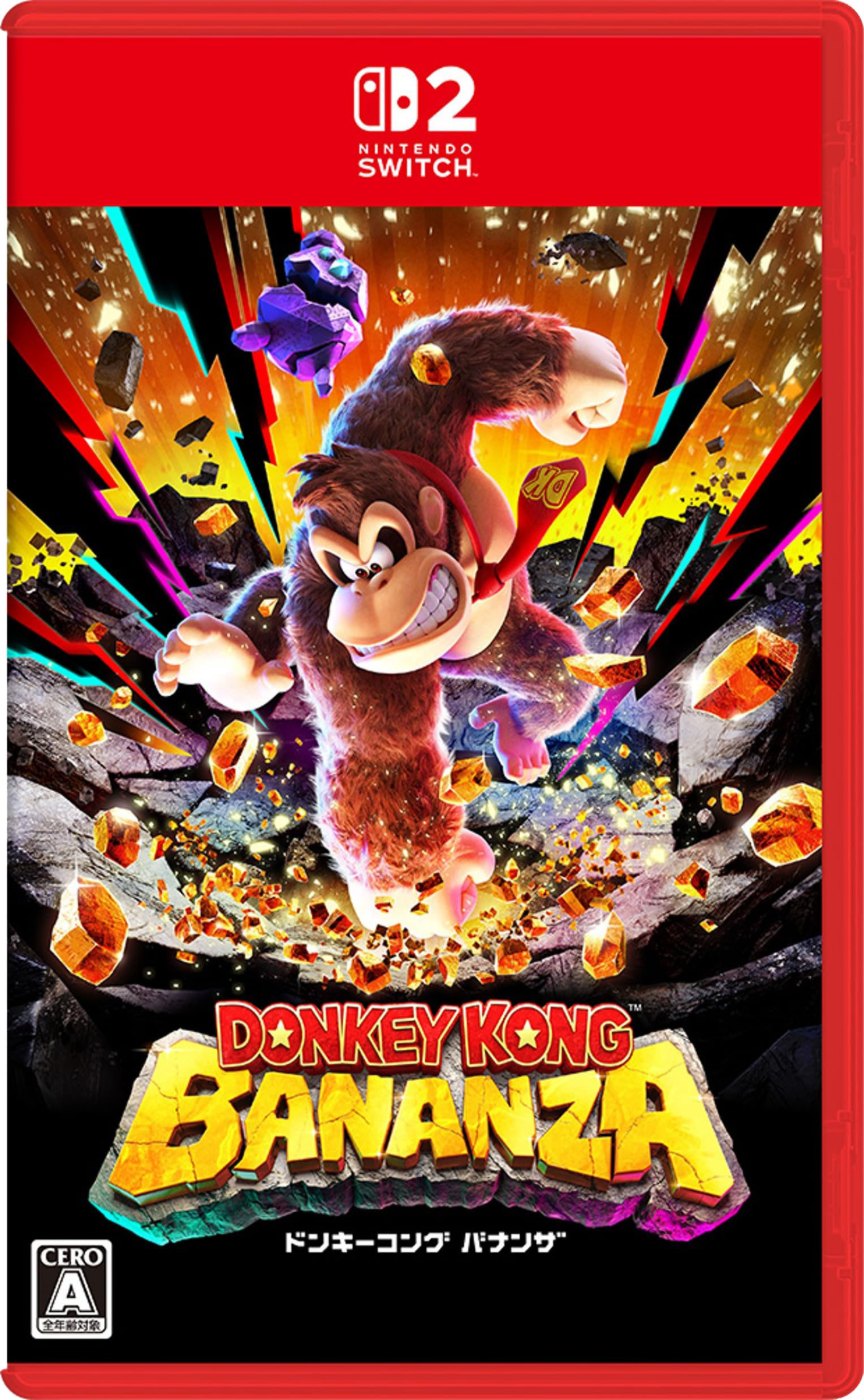
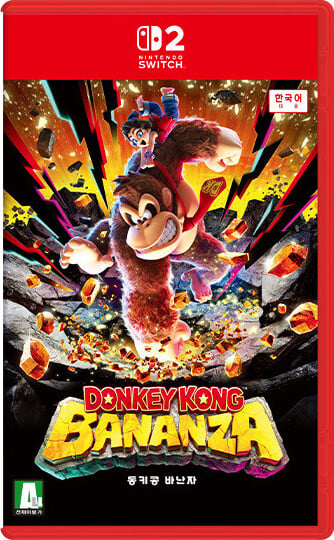
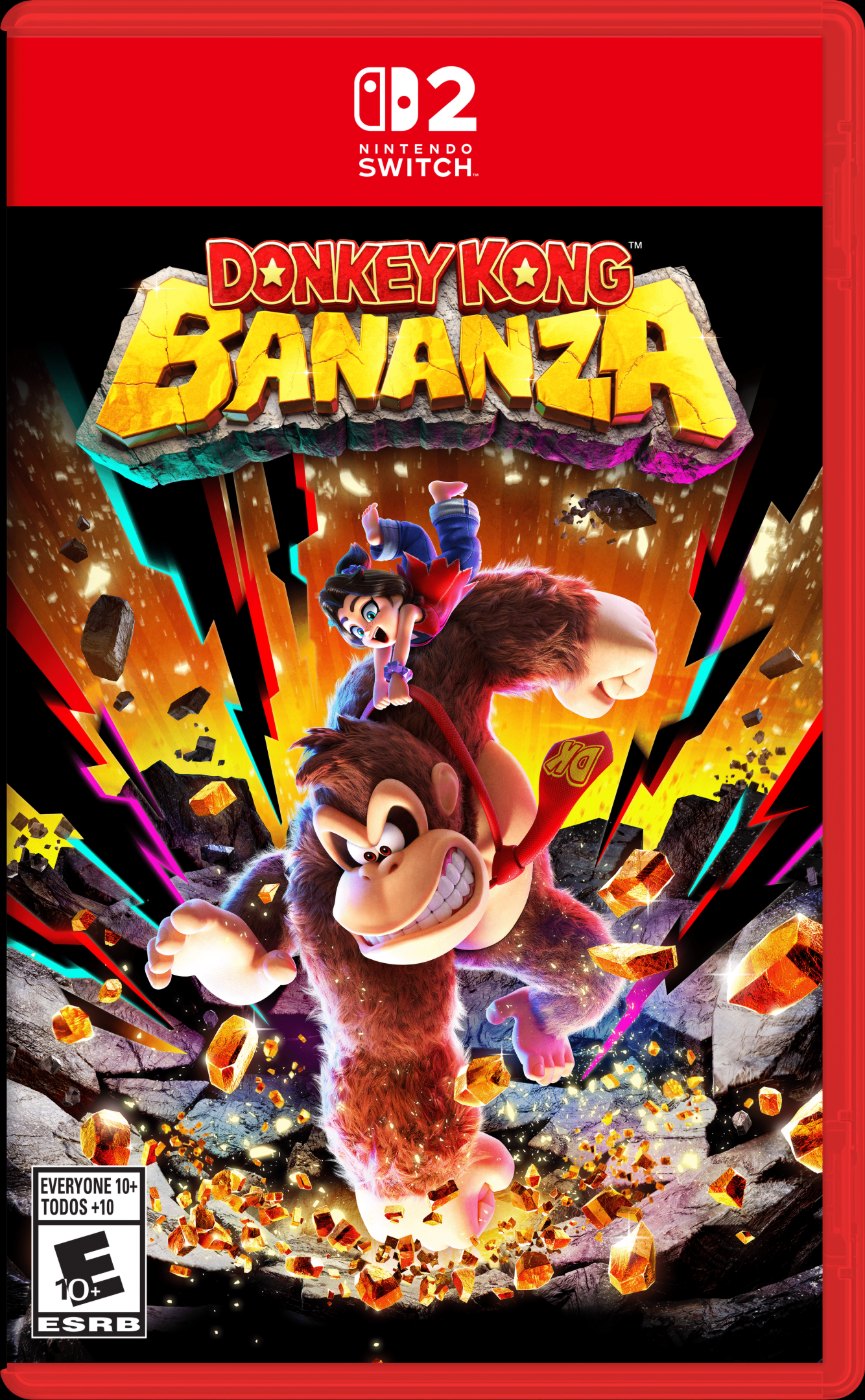
One piece of key art, twenty-odd rating badges. The interesting variant is the early one: until Pauline was revealed in June 2025, every region’s box had Odd Rock in her place.
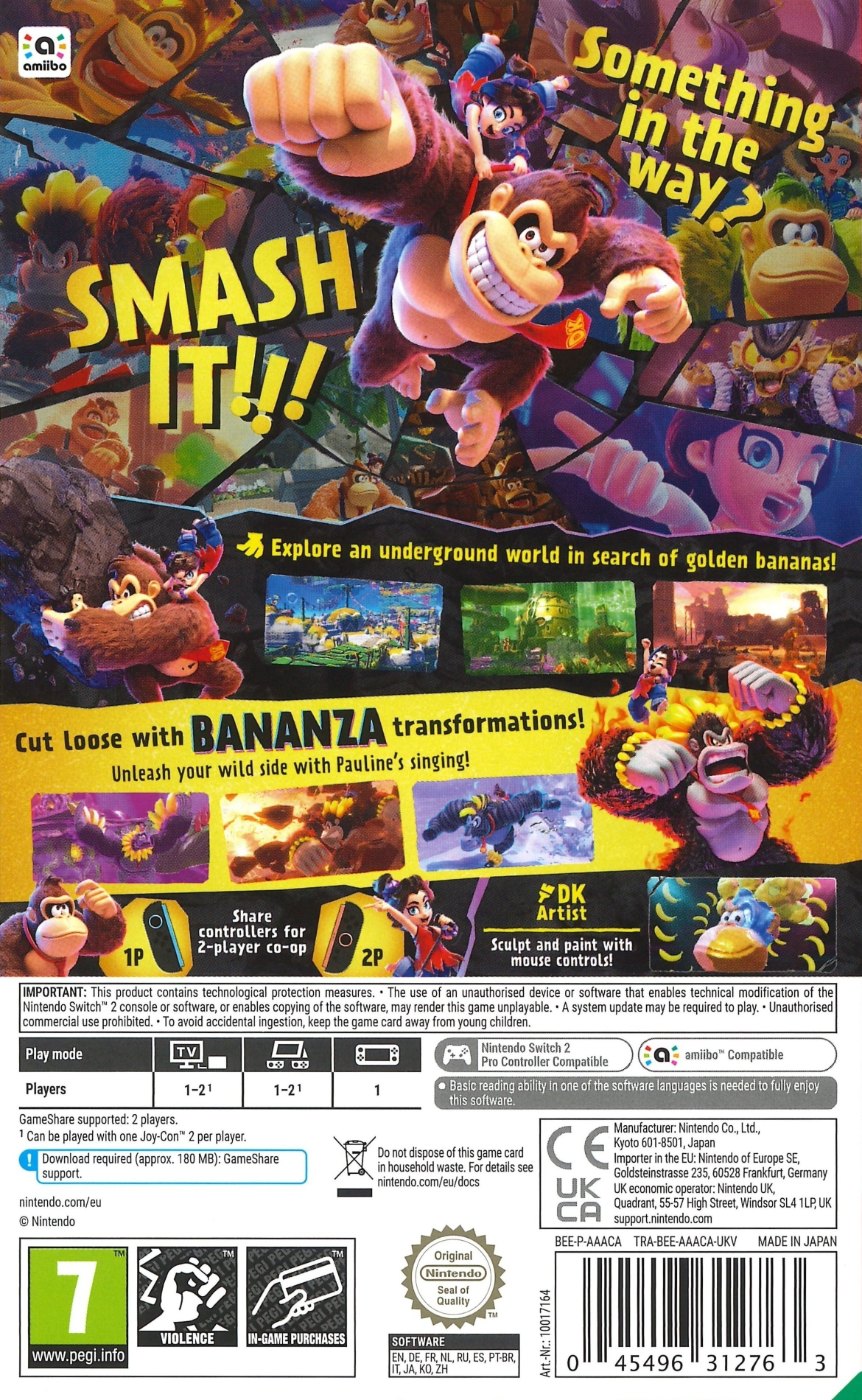
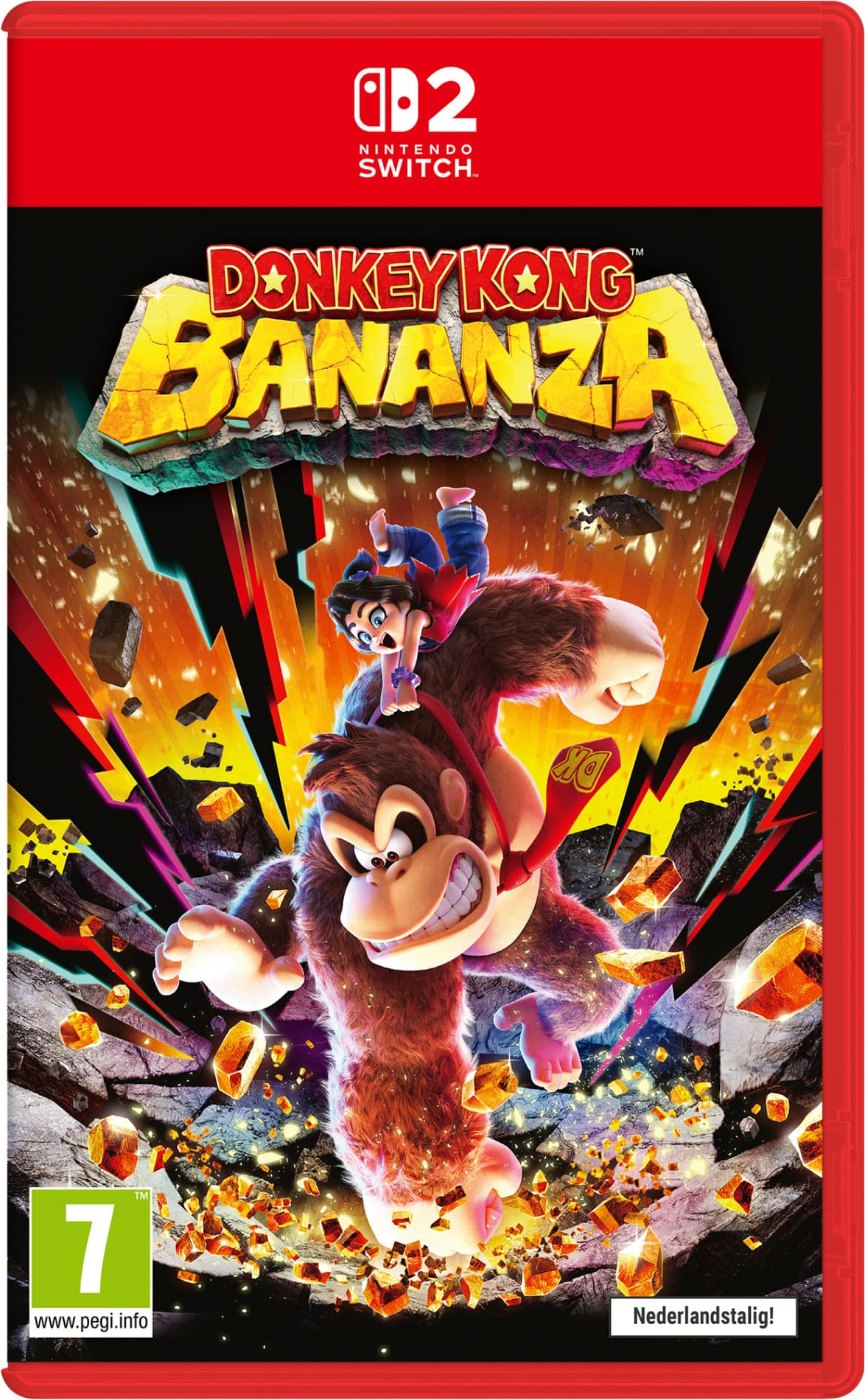
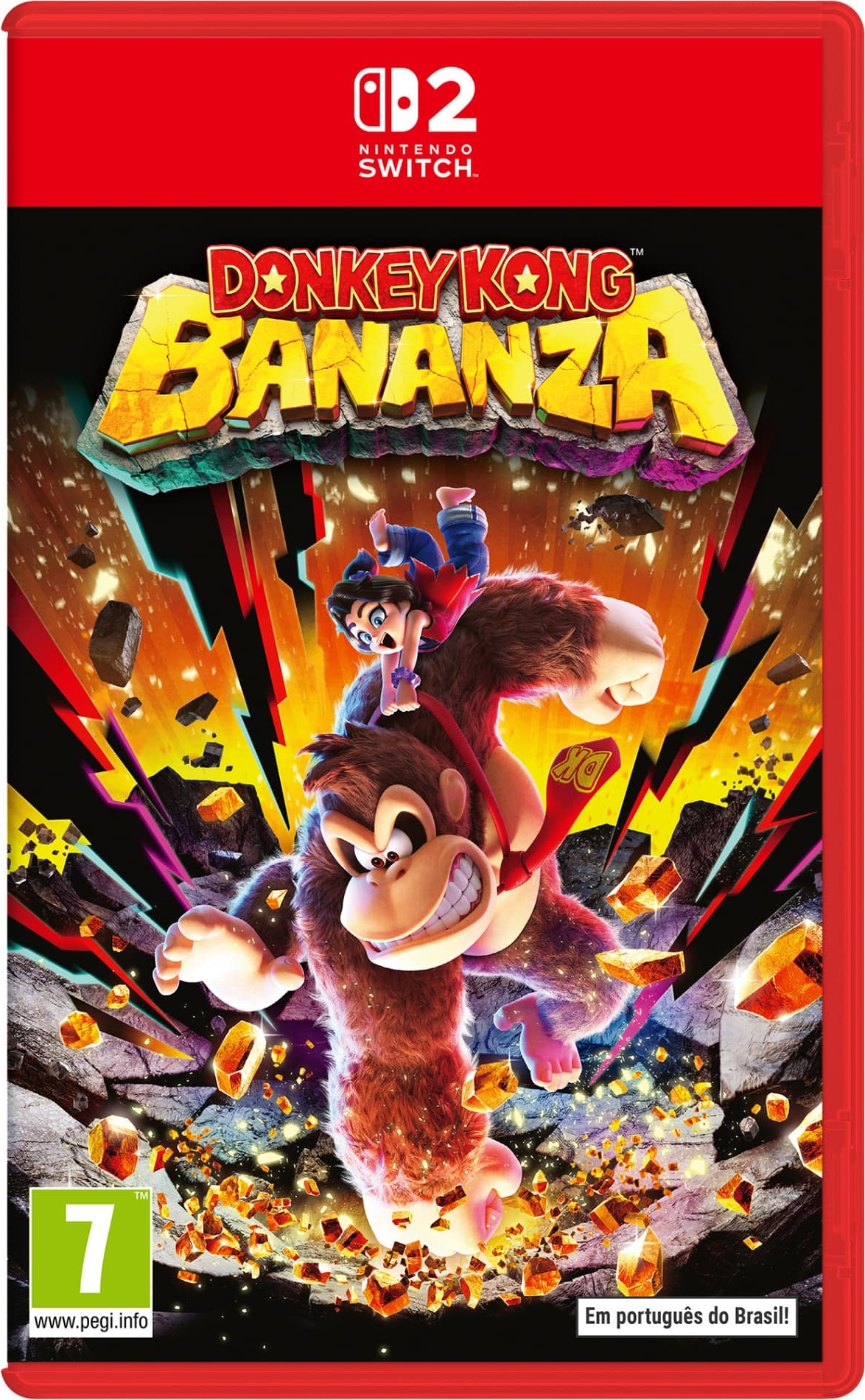
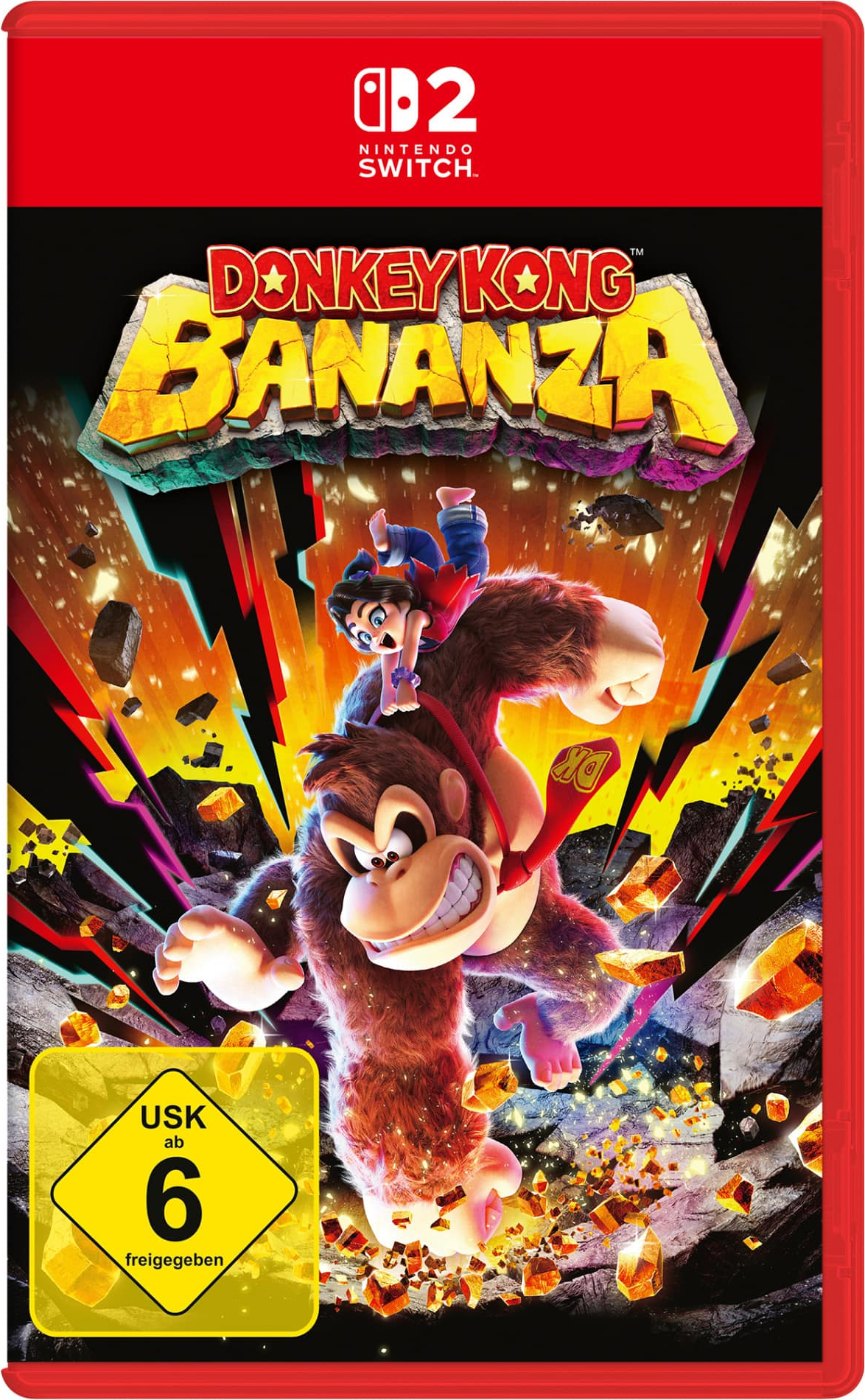
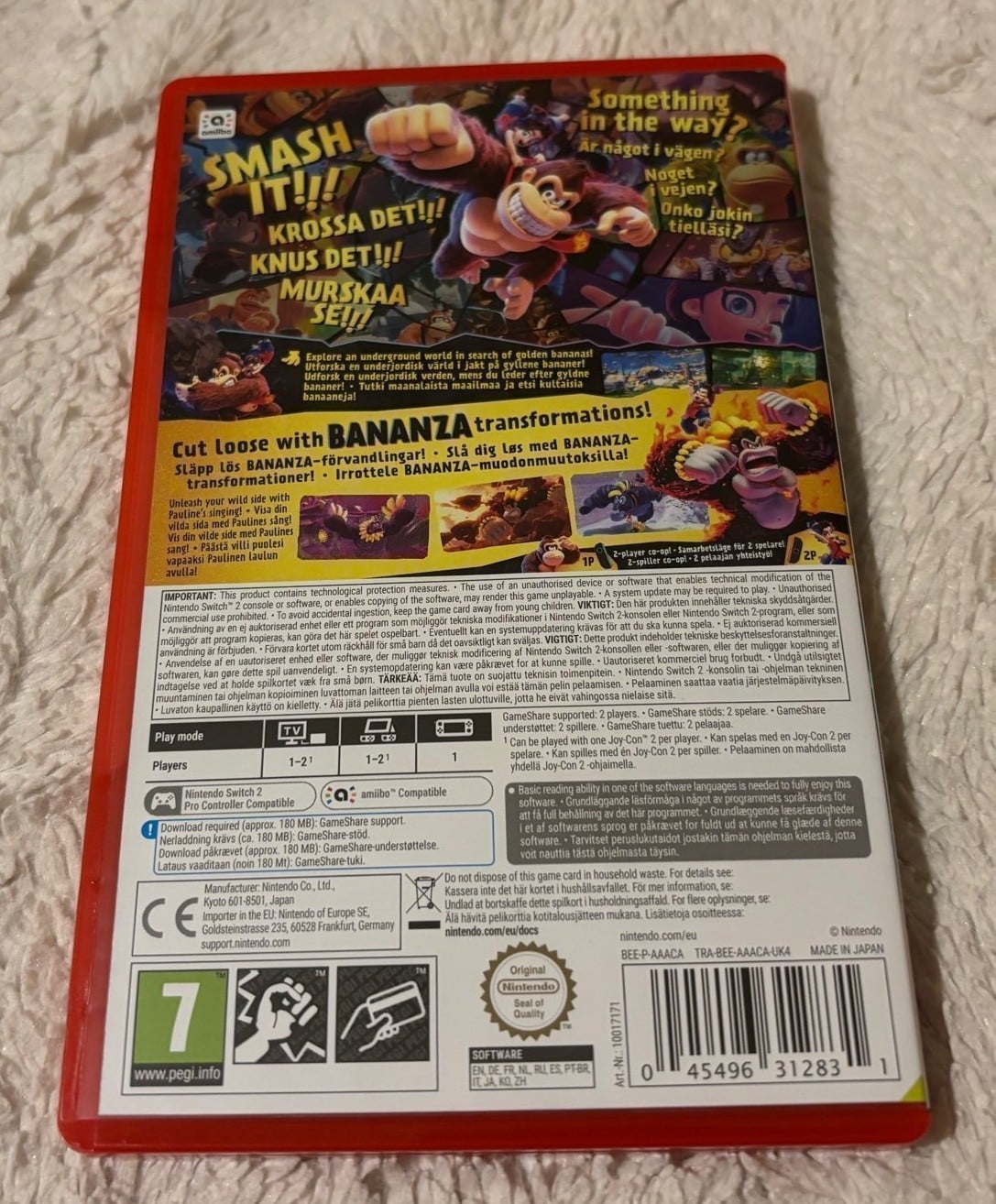
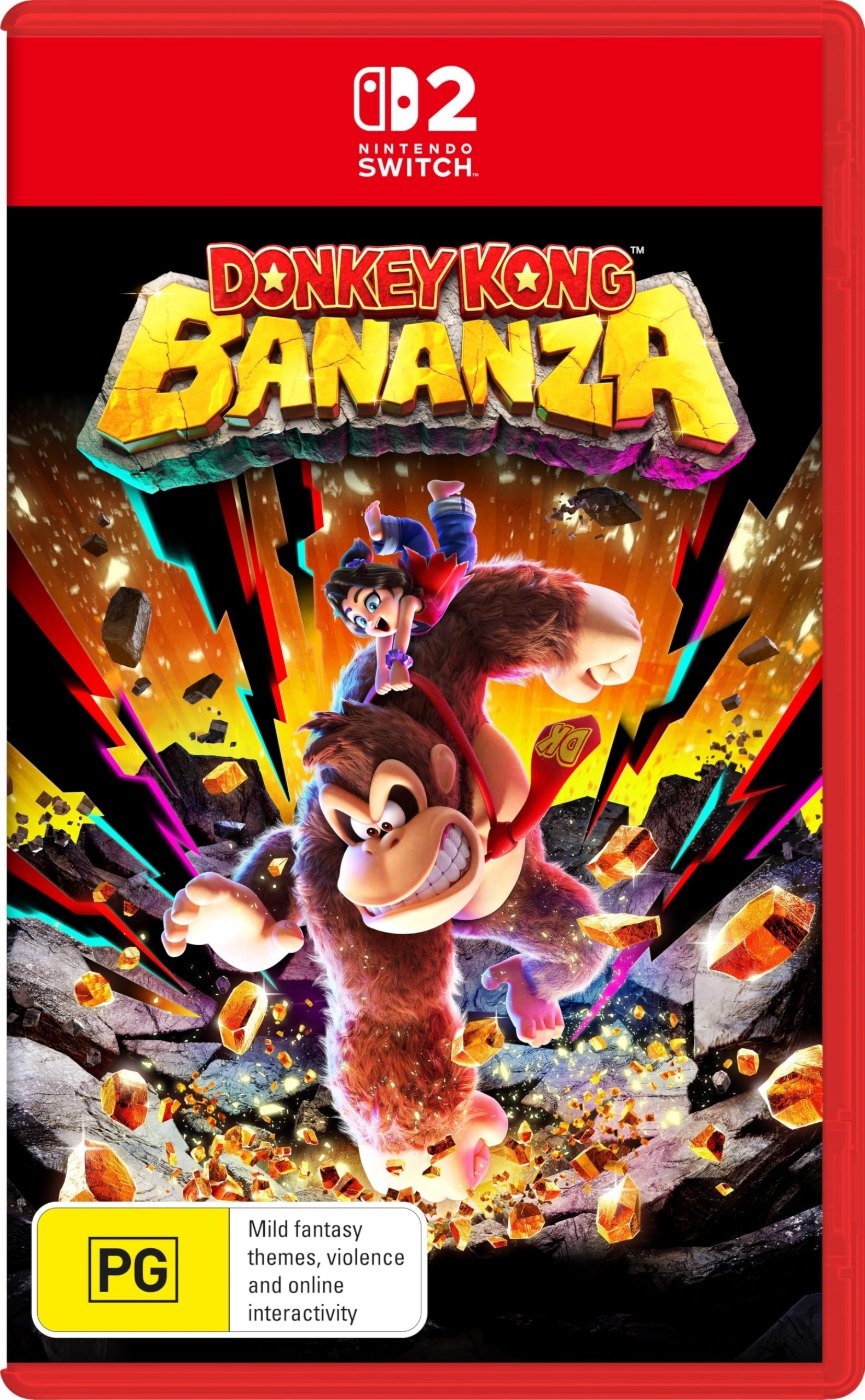
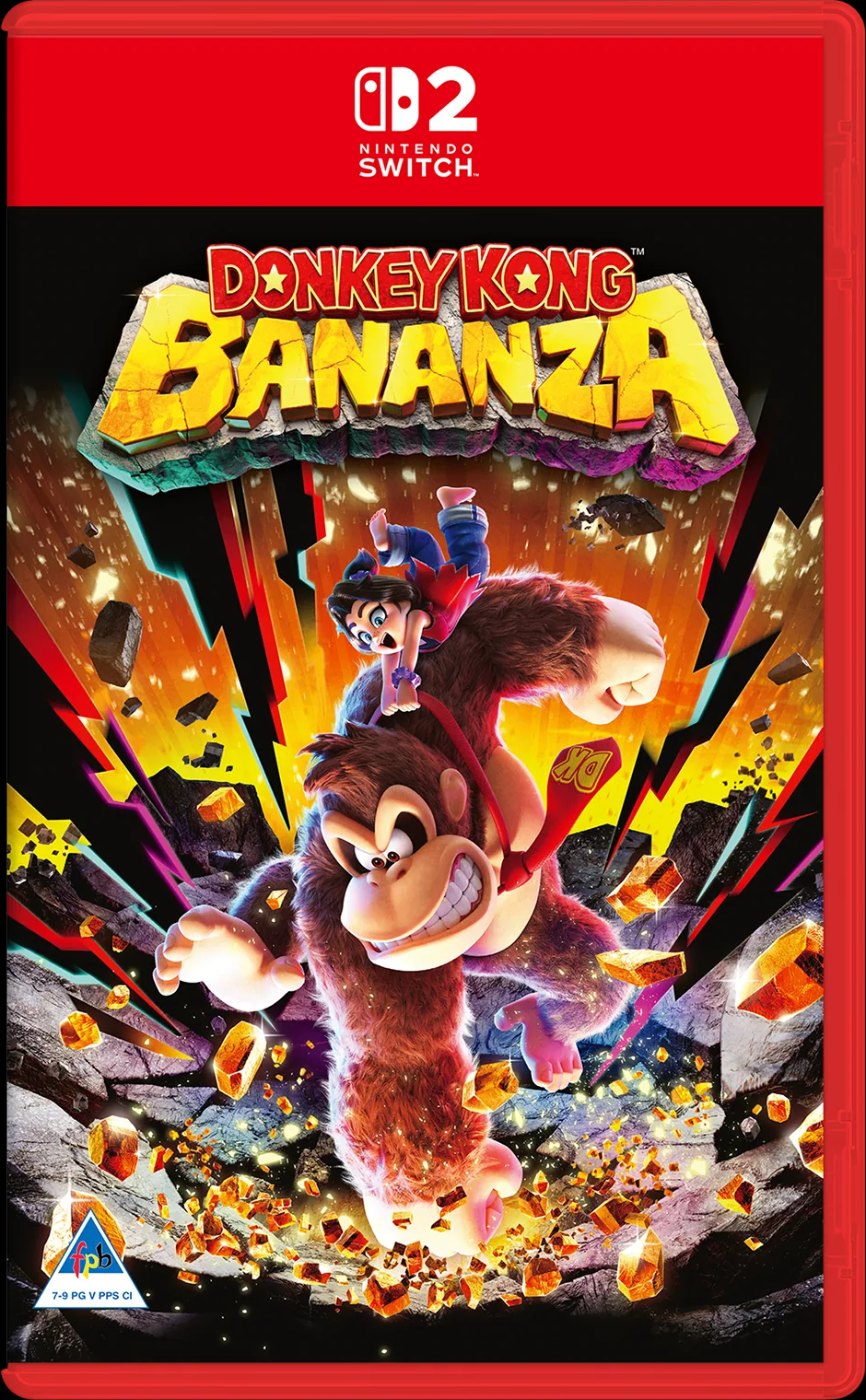
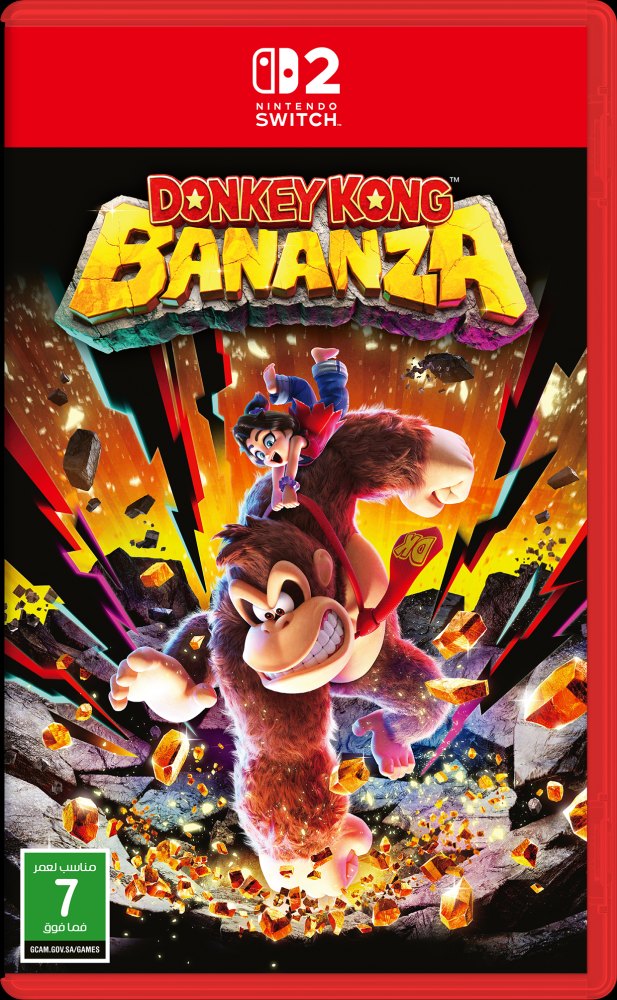
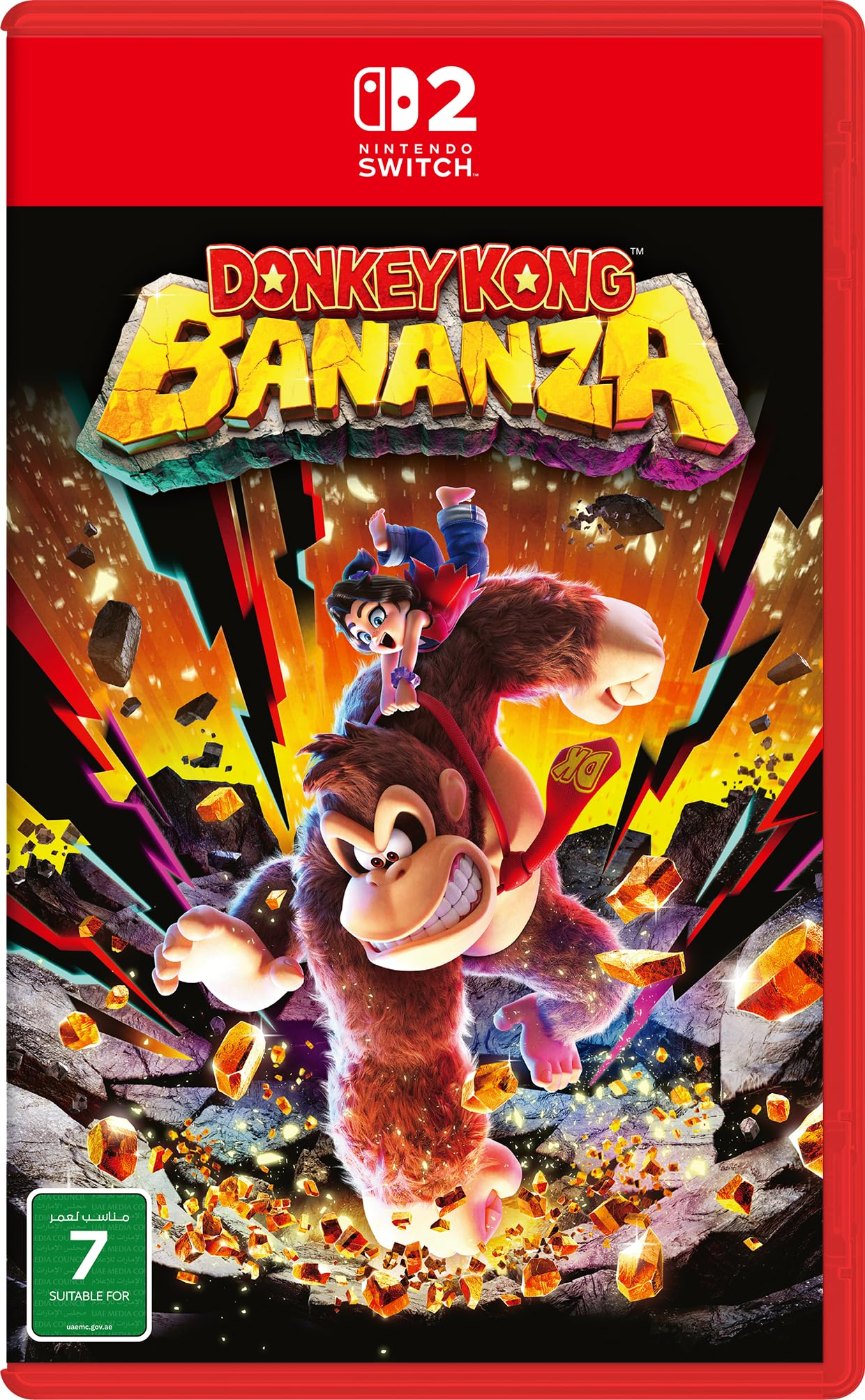
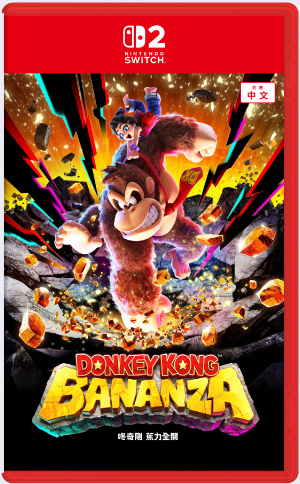
North and Latin AmericaThe final box, with Pauline on DK’s shoulder.North America (pre-release)Before the June 2025 Direct the box showed Odd Rock instead of Pauline.CanadaMexicoBrazilEuropeEurope (pre-release)United Kingdom (back)NetherlandsPortugalGermanyNordic countries (back)AustraliaSouth AfricaSaudi ArabiaUnited Arab EmiratesReleased two months later, on 17 September 2025.Southeast AsiaThailandJapanJapan (pre-release)South KoreaHong KongTaiwan
Screenshots
More from the Underground World, including some faces fans of the Country games will know.
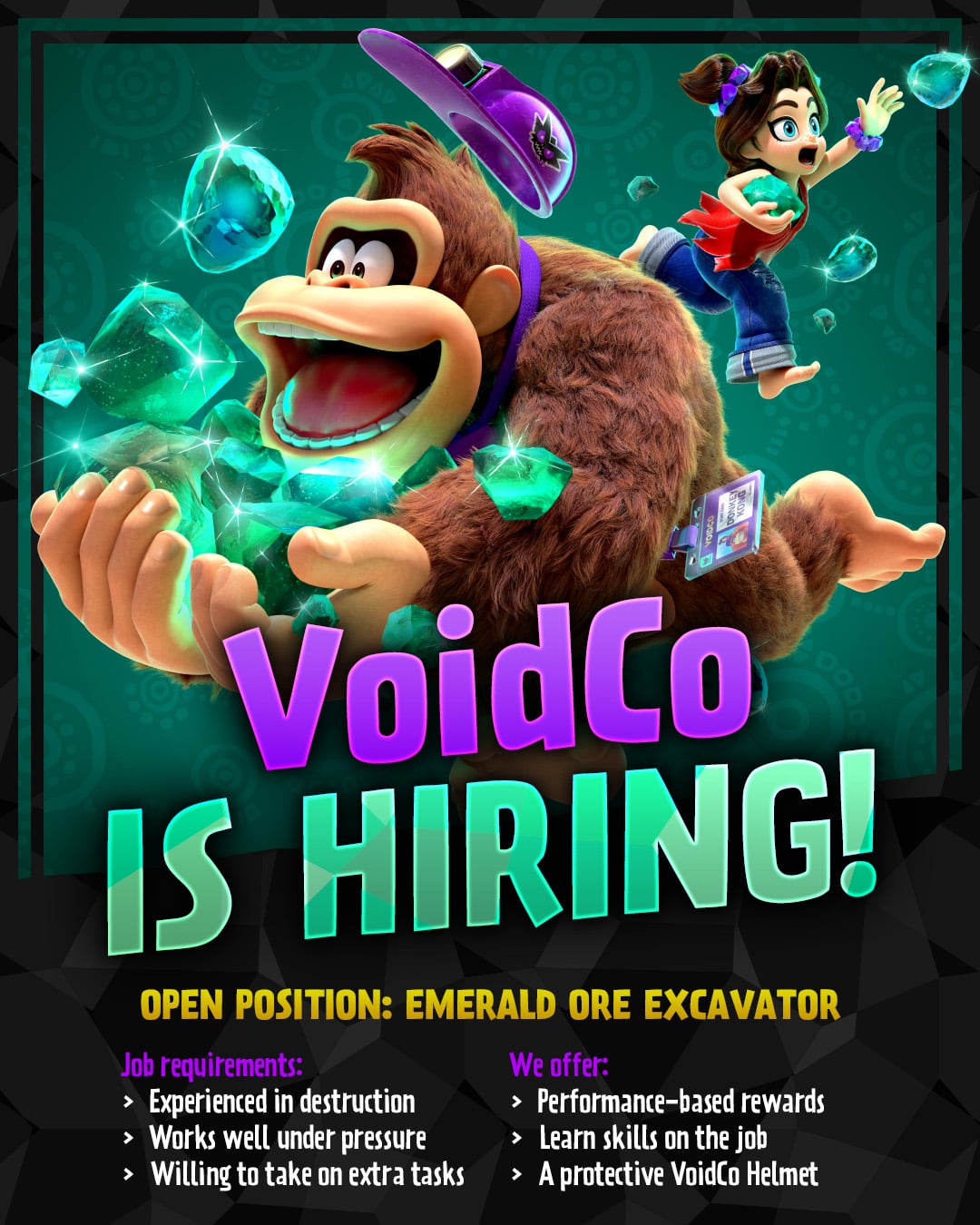
Donkey Kong and Pauline face Void Company.The title screen of the demo.A Crockoid stripped to its golden skeleton in the Canyon Layer.A Kritter with its terrain armour knocked off.A Necky in the Planet Core.A Zinger, back from Donkey Kong Country.Kaboom in its TNT barrel.One of the Exploritone’s stone tablets.A sculptor snake of the Radiance Layer.A Red Balloon in play.VoidCo is hiring: Nintendo of America’s promotional image for the DLC.
Artwork & Media Gallery
Official character artwork, the inhabitants of the Underground World, concept paintings and a couple of the DLC’s collectable statues.
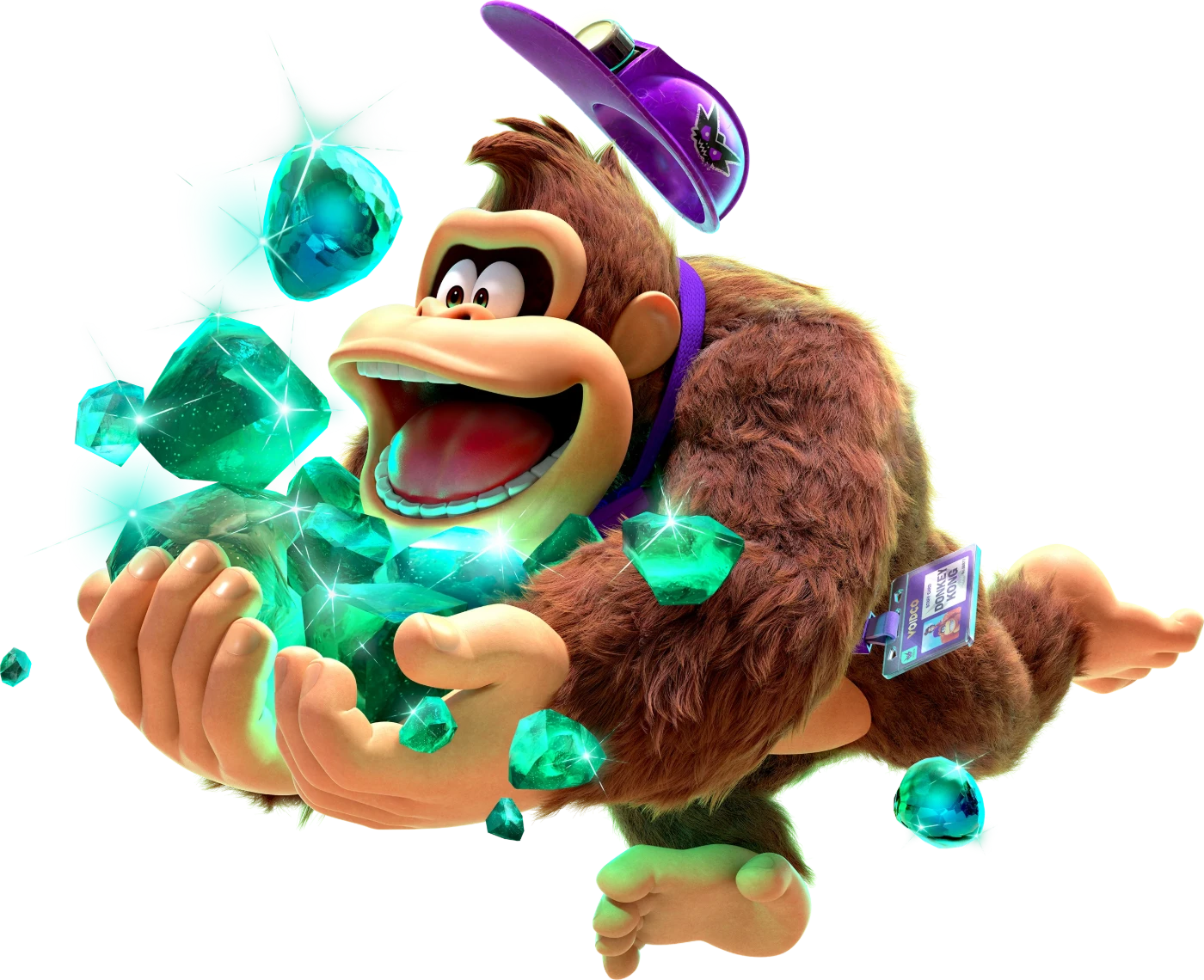
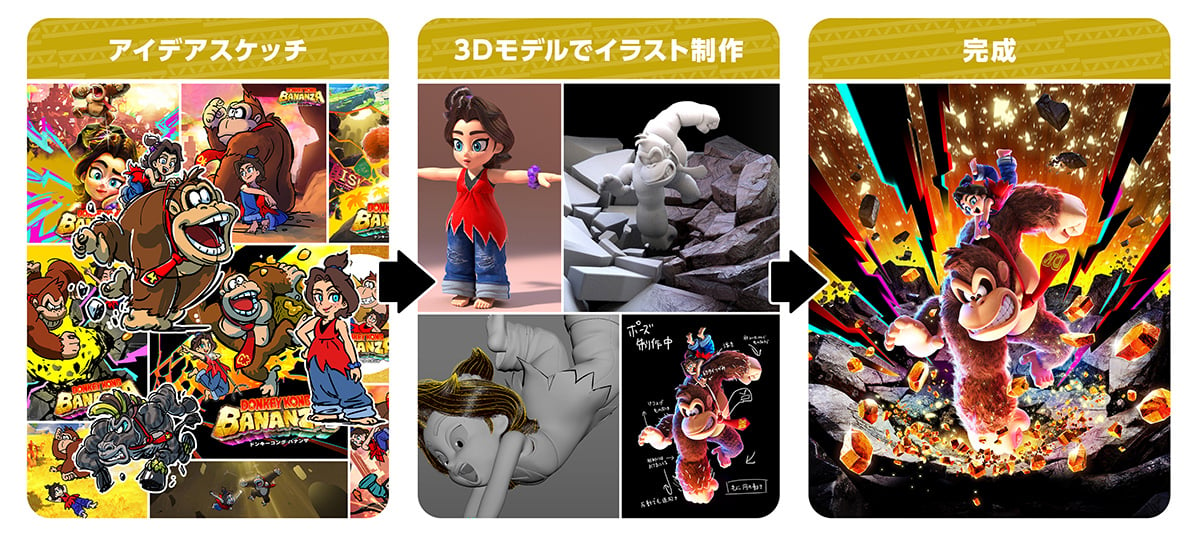
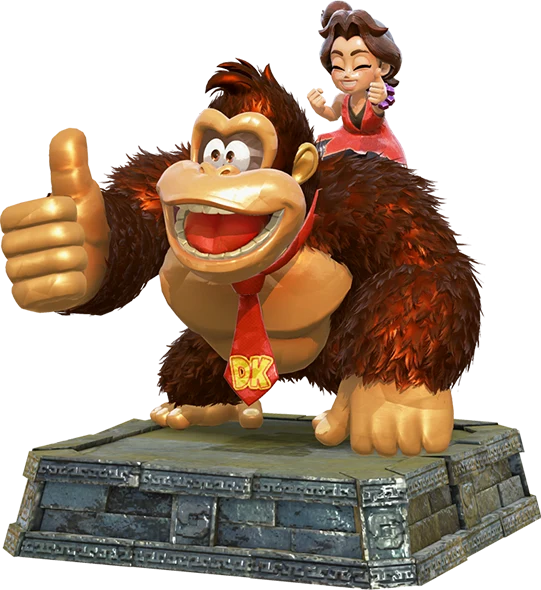
The international logo.The Japanese logo.The logo of the Donkey Kong Bananza Direct.The pre-release key art, with Odd Rock.Donkey Kong and Pauline at sunset in the Canyon Layer.Donkey Kong gathering emerald ore.Pauline.Pauline gathering emerald ore.Void Kong in his Emerald Rush artwork.The members of Void Company.The Kong Bananza with Pauline.A punch, with passenger.Donkey Kong lifts a boulder while carrying Pauline.Donkey Kong and Pauline in a mine cart.A Prospector Monkey.A Salvager Monkey.A Li’l Eelevator.An Eeling.One of the Freezer Layer’s zebras.One of the Forest Layer’s ostriches.One of the Tempest Layer’s elephants.A Trustytone, butler of the Getaways.Stufftone, keeper of the Stuff Shop.Styletone, keeper of the Style Shop.Chiptone, who runs the Chip Exchange.Quiztone.Growtone.The Great Harmoneel.The Singing Blusterwing.Grumpy Kong’s King Crockoid.K. Rool, King of Rot.The Mad Mixer.The Sinister Blusterwing.Concept art for Ingot Isle Cave-In.Concept art for the Divide.Concept art for the Freezer Layer.Concept art for the Forest Layer.How the key art was made, from Nintendo’s careers site.The Donkey Kong and Pauline statue from the DLC.The Funky Kong statue.
Legacy & Re-releases
Sixteen months on, the game is still being updated, still selling and still collecting trophies. This is the story so far, correct to 12 November 2026.
Release, DLC and updates
Reveal2 April 2025Announced at the end of the Nintendo Switch 2 Direct. Playable two days later at the first Switch 2 Experience event.
Donkey Kong Bananza Direct18 June 2025A presentation devoted to the game, and the first appearance of Pauline.
Release17 July 2025Worldwide launch on Nintendo Switch 2, with the Ver. 1.0.1 patch adding the GameShare options. The United Arab Emirates followed on 17 September 2025.
DK Island & Emerald Rush12 September 2025Paid DLC announced and released during that day’s Nintendo Direct, together with Ver. 2.0.0 and a free eShop demo.
Nintendo Music18 September 2025A selection of tracks released on the Nintendo Music app.
Ver. 2.0.1 and 2.0.223 September and 22 October 2025Bug fixes.
Emerald Rush eventsFrom 28 October 2025Limited-time events begin, each with new statues to earn.
Awards seasonLate 2025Critics’ Choice at the Golden Joysticks; Best Family Game and a Game of the Year nomination at The Game Awards.
Ver. 3.0.022 December 2025Thai text and a camera auto-tracking option.
Ver. 3.1.021 January 2026Polish text.
Ver. 3.2.024 February 2026General fixes. The latest version at the time of writing.
Super Mario Bros. 40th eventJune 2026A Mario-themed Emerald Rush event; the game also took part in a Donkey Kong challenge event for Nintendo Switch Online members from June to September.
Full soundtrack17 July 2026The complete score released on the game’s first anniversary.
Sales update30 September 20265.05 million copies sold, according to Nintendo.
Indonesia10 December 2026Scheduled release date.
DK Island & Emerald Rush
The expansion was announced and released on the same day, 12 September 2025, for US$19.99. It has two halves. DK Island is a new layer: the Kongs’ home island, with DK’s Tree House, a mountain bearing his face, a mine, and Squawks the parrot trading Banandium Chips for collectable statues. It is reached through a Warp Gong once the main story has been cleared.
Emerald Rush is a timed, replayable mode that critics have compared to a roguelike. Void Kong, humbled but not reformed, has parked the Piledriver on the beach and hired two Fractones to mine emeralds, and he offers DK and Pauline jobs. Pauline thinks it sounds fun. Each run is a race to gather emerald ore against the clock, picking perks along the way to push a score multiplier ever higher, and the Rating Points earned carry the story on: at 2,000, Void Kong tries to restart the Piledriver and discovers that Poppy and Grumpy have sabotaged it; at 10,000 he can be fought once more. Seven new music discs come with it.
What it means for Donkey Kong
Nintendo said before release that it wanted Donkey Kong to have a 3D line as well as a 2D one, and the reception suggests it now does. The redesign has gone on to influence how DK looks elsewhere. Pauline, the damsel of 1981 and the singer of Odyssey, has a new origin story. And King K. Rool is a working villain again. No follow-up is mentioned in any source read for this page.
Reviews & Sales
Sales figures
Nintendo’s investor relations site lists Donkey Kong Bananza at 5.05 million copies sold worldwide as of 30 September 2026, second among Switch 2 games behind Mario Kart World on 16.48 million. Earlier figures from the same source were 3.49 million at 30 September 2025, ten weeks after release, and 4.78 million at 30 June 2026.
Wikipedia’s round-up of launch charts has it selling 127,905 copies in its first three days in Japan, where it entered at number two, and 207,055 by 3 August 2025; topping the UK physical chart in its first week; and finishing July 2025 as the third best-selling game in the United States. Guinness World Records noted in July 2026 that it had not yet overtaken the 1981 original as the best-selling Donkey Kong game.
5.05mworldwide, 30 Sept 2026 (Nintendo IR)
4.78m30 June 2026 (Nintendo IR)
3.49m30 Sept 2025 (Nintendo IR)
127,905Japan, first three days (via Wikipedia)
91Metacritic, 143 reviews
98%OpenCritic critics recommend
Reception and review scores
Metacritic gives the game 91 from 143 reviews (“universal acclaim”), and 98 per cent of the 176 critics counted by OpenCritic recommend it. Wikipedia records it as the seventh best-reviewed game of 2025 on the former and fifth on the latter. Scores below are from the review table on Wikipedia.
IGNLogan Plant · 16 July 2025
10/10
The Washington PostUS
4/4
FamitsuJapan · 10, 9, 9, 10
38/40
EdgeUK
9/10
GameSpotSteve Watts · 15 July 2025
9/10
Game InformerUS
9/10
Nintendo LifeJim Norman · 16 July 2025
9/10
ForbesOllie Barder · 23 July 2025
9/10
Nintendo World ReportUS
8.5/10
EurogamerUK
4/5
The GuardianUK
4/5
The praise was for the same three things almost everywhere: the sheer pleasure of the destruction, the way the levels are built to reward it, and the double act of DK and Pauline. IGN’s Logan Plant gave it full marks and called it “a brilliant successor to Super Mario Odyssey”; Nintendo Life’s Jim Norman thought it “arguably the Switch 2’s first absolute must-play”; comparisons with Super Mario Odyssey ran through most reviews.
The reservations were consistent too. The camera and the frame rate both wobble when the smashing gets heavy. Plant found the early bosses “pretty easy for the most part” and the Bananza forms “sometimes too powerful”, though he and Norman agreed the later fights put up more resistance. France’s Jeuxvideo.com thought the bosses recycled, and NME felt co-op played “like an afterthought”. Polygon’s Josh Broadwell, who does not give scores, summed up the general mood: “Charm and joy cover a multitude of flaws.”
The DLC was received more coolly. Metacritic files DK Island & Emerald Rush under mixed or average reviews; critics who enjoyed it, Eurogamer and TechRadar among them, still questioned a price of about US$20 for content that arrived eight weeks after launch.
Honours
The Game Awards 2025Best Family GameWinner. Also nominated for Game of the Year, which went to Clair Obscur: Expedition 33.
Golden Joystick Awards 2025Critics’ Choice AwardWinner. Nominated for Ultimate Game of the Year, Console Game of the Year and Best Audio Design.
Gamescom 2025Best GameplayWinner. Nominated for Most Entertaining and Best Nintendo Switch 2 Game.
Japan Game Awards 2026Award for ExcellenceWinner.
CEDEC AwardsEngineering, Visual Arts and Game DesignThree wins from the Japanese developers’ conference.
Famitsu Dengeki Game Awards 2025Best Action GameWinner. Nominated for Game of the Year, Best Studio and Music.
New York Game Awards 2026Best Kids GameWinner of the Central Park Children’s Zoo Award.
BAFTA Games Awards 2026Family (nominated)Also longlisted for Animation, Game Design and Technical Achievement.
D.I.C.E. Awards 2026Two nominationsAdventure Game of the Year and Outstanding Technical Achievement.
Game Developers Choice Awards 2026Four nominationsGame of the Year, Best Design, Best Technology and the Innovation Award, with an honourable mention for Best Audio.
SLB User Reviews
Donkey Kong Bananza has yet to receive a community review on Super Luigi Bros.
If you’ve played Donkey Kong Bananza and would like to submit a review, please get in touch.
More from the Super Luigi Bros Guide
These picture lists come from the earlier Super Luigi Bros guide to Donkey Kong Bananza and are kept here in full.
The Elders
Each Bananza form is tied to an Elder — there are five (Kong, Zebra, Ostrich, Elephant and Snake), each residing in a specific layer of the Underground World. The Elders are unique characters with their own personalities, dialogue, and visual designs. They function both as story characters (representing the lost knowledge of the Underground World) and as gameplay gating elements (their Bananzas open up new routes, though the Zebra, Ostrich and Snake forms can be skipped in the main story).
Zebra Elder
Ostrich Elder
Elephant Elder
Snake Elder
The Elders represent the cultural memory of the Underground World — each tied to a specific layer and the creatures that live there. The Kong Elder, for example, watches over the Lagoon Layer’s Salvager Monkeys.
Featured Layers
A sample of the early-to-mid game Layers that players will encounter in the first half of the campaign:
Lagoon Layer
Tropical underground beaches and shallow water sections. The first Layer, home of the Salvager Monkeys and the Kong Elder — where Pauline’s song first unlocks the Kong Bananza.
Canyon Layer
Massive vertical cliff faces with golden sunset lighting filtering through cracks in the rock above. Vertical traversal-focused; the third Layer of the descent.
Forest Layer
Dense subterranean jungle with vertical climbing. The Ostrich Elder resides here, at the Eggshell Hotel, and teaches the Ostrich Bananza.
Freezer Layer
Ice and frozen-rock environment with mobility-reducing hazards. Home of the Zebra Elder, who teaches the Zebra Bananza.
Multiple additional Layers exist deeper in the game, with more thematic variety and increasing structural ambition. The paid DK Island & Emerald Rush DLC later added DK Island as a Layer of its own.
To provide the best experiences, we use technologies like cookies to store and/or access device information. Consenting to these technologies will allow us to process data such as browsing behavior or unique IDs on this site. Not consenting or withdrawing consent, may adversely affect certain features and functions.
Functional
Always active
The technical storage or access is strictly necessary for the legitimate purpose of enabling the use of a specific service explicitly requested by the subscriber or user, or for the sole purpose of carrying out the transmission of a communication over an electronic communications network.
Preferences
The technical storage or access is necessary for the legitimate purpose of storing preferences that are not requested by the subscriber or user.
Statistics
The technical storage or access that is used exclusively for statistical purposes.The technical storage or access that is used exclusively for anonymous statistical purposes. Without a subpoena, voluntary compliance on the part of your Internet Service Provider, or additional records from a third party, information stored or retrieved for this purpose alone cannot usually be used to identify you.
Marketing
The technical storage or access is required to create user profiles to send advertising, or to track the user on a website or across several websites for similar marketing purposes.

 Ingot Isle Cave-InSL10 · 36 gems · boss rush in the postgameA mining town of purple girders, sunk into the ground in the opening minutes. Home of the Prospector Monkeys.
 Lagoon LayerSL100–102 · 56 gems, 72 fossils · Kong Elder · boss: PeekabruiserA sunny archipelago of Salvager Monkeys. Pauline is freed here and DK learns the Kong Bananza.
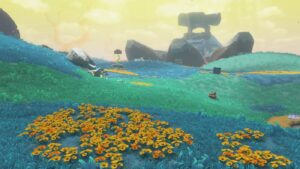 Hilltop LayerSL200 · 38 gems, 30 fossils · Void Kong (first round)Rolling hills, giant stone bananas and the first Fractones.
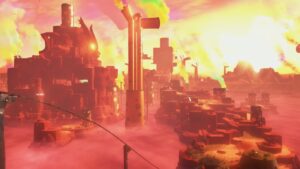 Canyon LayerSL300–302 · 80 gems, 72 fossils · bosses: Grumpy Kong, Mad Mixer, StompenclomperA rocky canyon dominated by the Banandium Refinery and its giraffe-spotted chimneys.
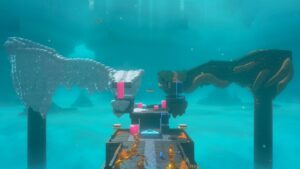 The DivideSL400 · 10 gemsA fork in the road: snow one way, grass the other, with Switcheroo Goo underfoot.
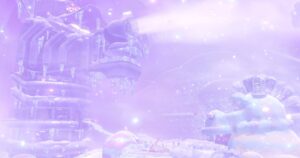 Freezer LayerSL500–503 · 87 gems, 72 fossils · Zebra Elder · bosses: Poppy Kong, InflammoniteSnow, lava and chocolate, and a town of ice-cream-making zebras. Zebra Bananza.
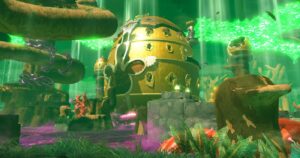 Forest LayerSL600–602 · 83 gems, 72 fossils · Ostrich Elder · boss: AbracajabyaEnormous trees, poison water, thorns and the Eggshell Hotel. Ostrich Bananza.
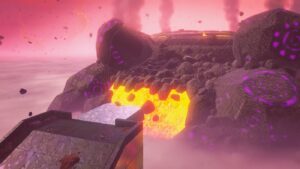 The JunctionSL700 · 15 gems · boss: Void KongWhere the Freezer and Forest roads rejoin, under the shadow of the Pay-Dirt Piledriver.
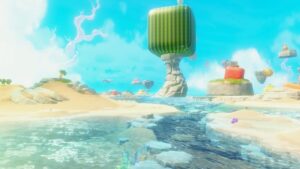 Resort LayerSL800 · 42 gems, 30 fossilsA holiday archipelago run by Fractones, with fruit the size of houses.
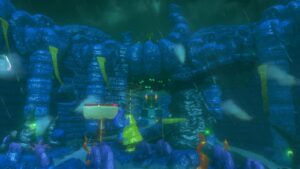 Tempest LayerSL900–903 · 70 gems, 72 fossils · Elephant Elder · boss: Sinister BlusterwingTornadoes, lightning and fiery rain, studied by elephant weather forecasters. Elephant Bananza.
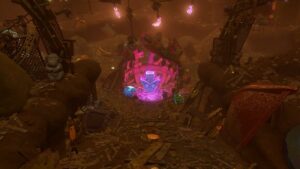 Landfill LayerSL1000–1001 · 27 gems, 30 fossils · boss: Re-PeekabruiserA junk-filled cavern of Fractones and Li’l Eelevators.
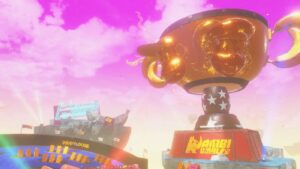 Racing LayerSL1100 · 10 gems · Rambi RumbleA racetrack on floating islands, where Diddy and Dixie Kong hold the Rambi Rumble.
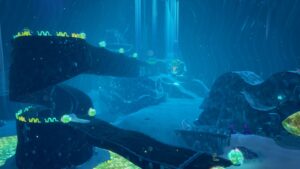 Radiance LayerSL1200–1204 · 76 gems, 72 fossils · Snake Elder · bosses: Poppy Kong, Grumpy Kong (rematches)Dunes and lanterns, home to artistic snakes whose Synthetic Sun has been stolen. Snake Bananza.
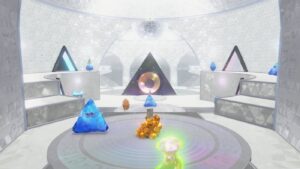 Groove LayerSL1300 · 30 gems, 30 fossilsA disco hall with its own jail. DK plays it alone until Pauline is rescued from the Great Harmoneel.
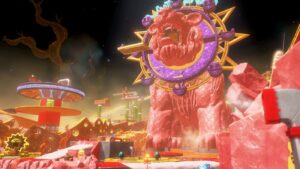 Feast LayerSL1400–1401 · 69 gems, 72 fossils · bosses: Mad Mixer Remix, Muckety-MuckA fast-food amusement park built around a giant Banana Burger, with a muck factory underneath.
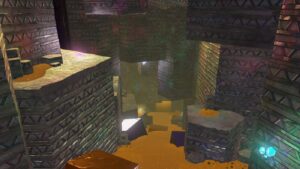 Forbidden LayerSL1500 · 25 gems, 30 fossils · boss: Void Kong (final)Floating Neptunite platforms guarded by Securitones, and a golden dome that is not what it seems.
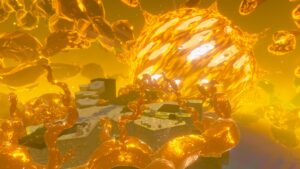 Planet CoreSL1600–1609 · 23 gems, 42 fossils · bosses: K. Stompenclomper, King K. RoolA golden platform in a sea of liquid gold, overrun by the Kremling Krew. Its fossils are 8-bit barrels and a pixel DK.
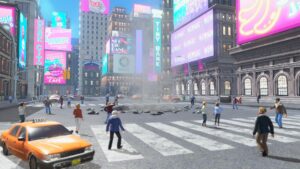 New Donk CitySurface · final boss: K. Rool, King of RotPauline’s home town from Super Mario Odyssey, buried in Banandium Mush for the finale.
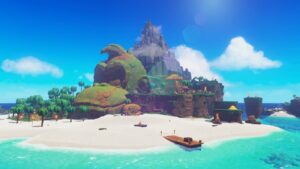 DK Island (DLC)DK Island & Emerald Rush · boss: Void Kong at 10,000 Rating PointsThe Kongs’ home, complete with DK’s Tree House and a mountain carved with his face. Base for Emerald Rush.
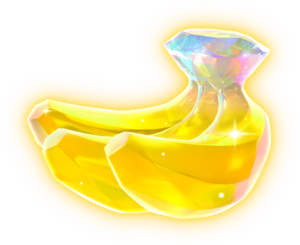 Banandium GemThe main collectable, sometimes found in bunches. Five make a Skill Point.
 GoldCurrency, found in almost anything breakable. Also refills Bananergy.
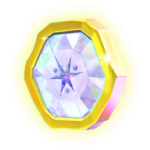 Banandium ChipExchanged for gems at the Chip Exchange and, after the credits, for music discs. The carrying limit was raised from 9,999 to 99,999 in Ver. 2.0.0.
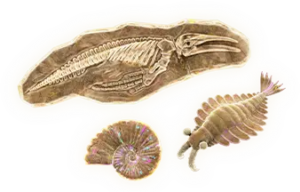 FossilCommon, rare and extra-rare. Spent at the Style Shop in the layer where they were found.
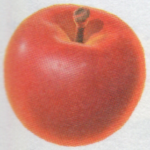 AppleRestores one heart. Hidden in glowing red patches of terrain.
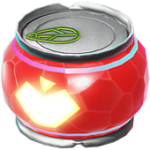 Apple JuiceCarried in the inventory; refills all health automatically when DK runs out.
 Melon JuiceLets DK transform even when the Bananergy gauge is not full.
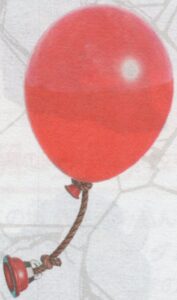 Red BalloonFloats DK back to safety after a fall into the abyss. Sold singly or in tens. Its face changes to DK’s once every skill is unlocked.
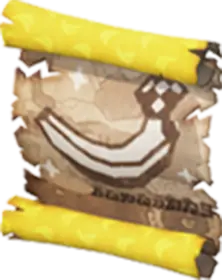 Banandium Gem MapMarks one gem on the map. Sold at Stuff Shops and occasionally found in chests.
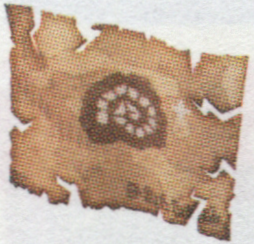 Fossil MapsThree kinds, for common, rare and extra-rare fossils in the current layer.
 DiscDropped at random by defeated enemies. Each one unlocks a track in the Music Player.
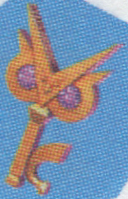 KeyOpens the shield around a Void Stake. Usually carried by an enemy.
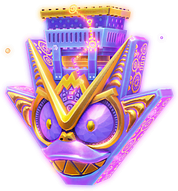 Void StakeVoid Company’s stakes, driven into the layers. Destroying one undoes the damage it was doing.
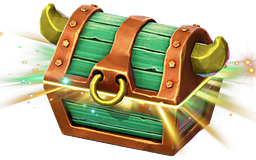 Treasure ChestBuried in the terrain; may hold maps or balloons.
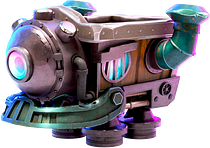 Mine CartRides the rails through certain stretches of the underground.
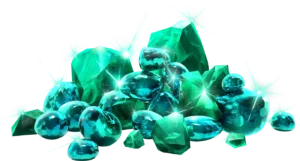 Emerald oreDLC only: the thing Void Kong wants mined in Emerald Rush.



 DK Island & Emerald RushPaid DLC · 12 September 2025Announced and released during the Nintendo Direct of 12 September 2025. Adds DK Island as a layer and the Emerald Rush score-attack mode. Full details under Legacy.
 Nintendo Music18 September 2025 and 17 July 2026A nine-track [Special Release] Donkey Kong Bananza selection appeared on the Nintendo Music app in September 2025, and Wikipedia records the full soundtrack (229 tracks, more than eight and a half hours) arriving on the game’s first birthday.
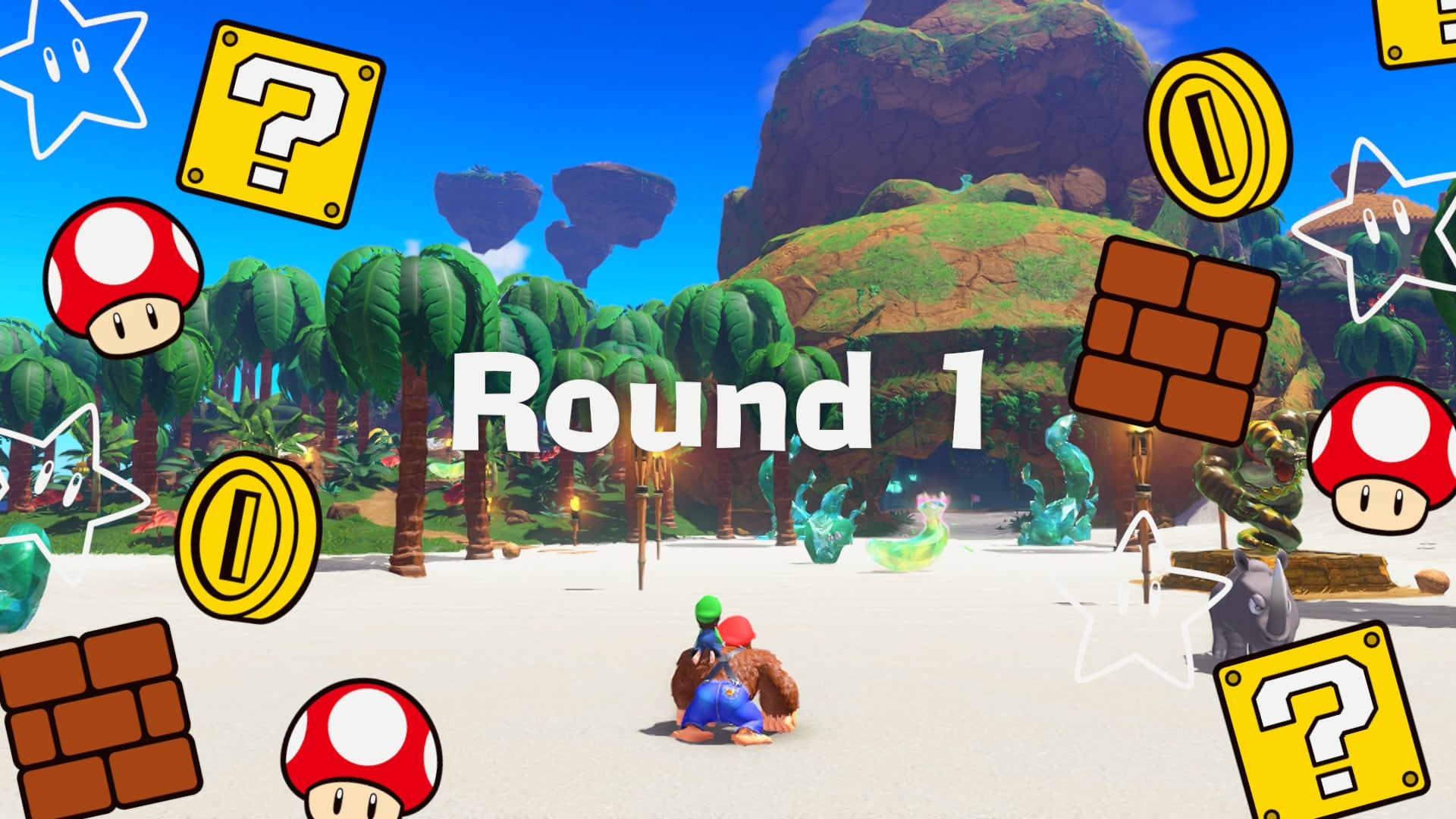 Super Mario Bros. 40th anniversary eventEmerald Rush · June 2026A themed Emerald Rush event that swaps some of the mode’s decorations for Super Mario imagery.
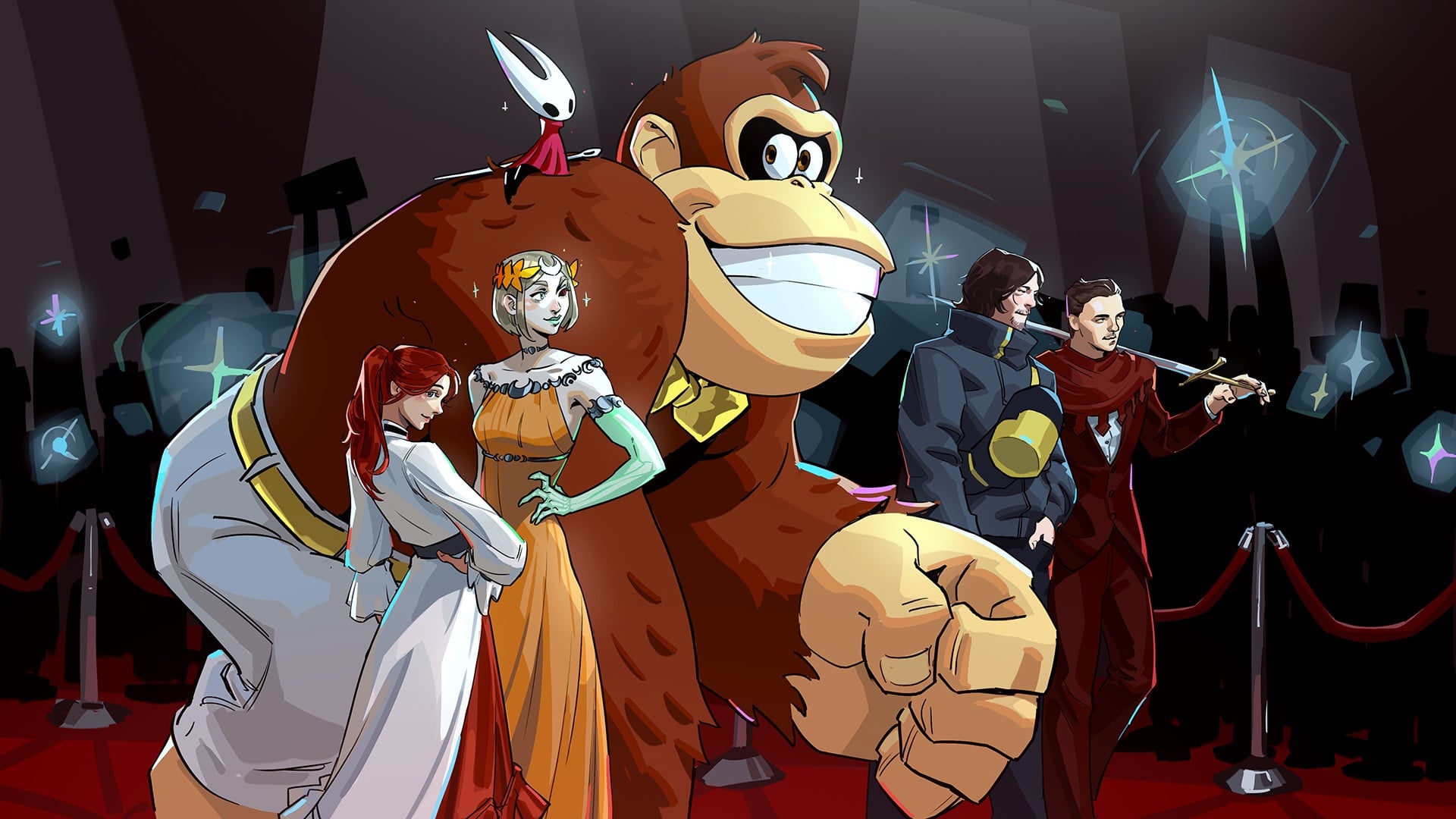 The Game Awards 2025December 2025Supergiant Games’ artwork for the ceremony shows Donkey Kong on the red carpet with characters from the other nominated games.
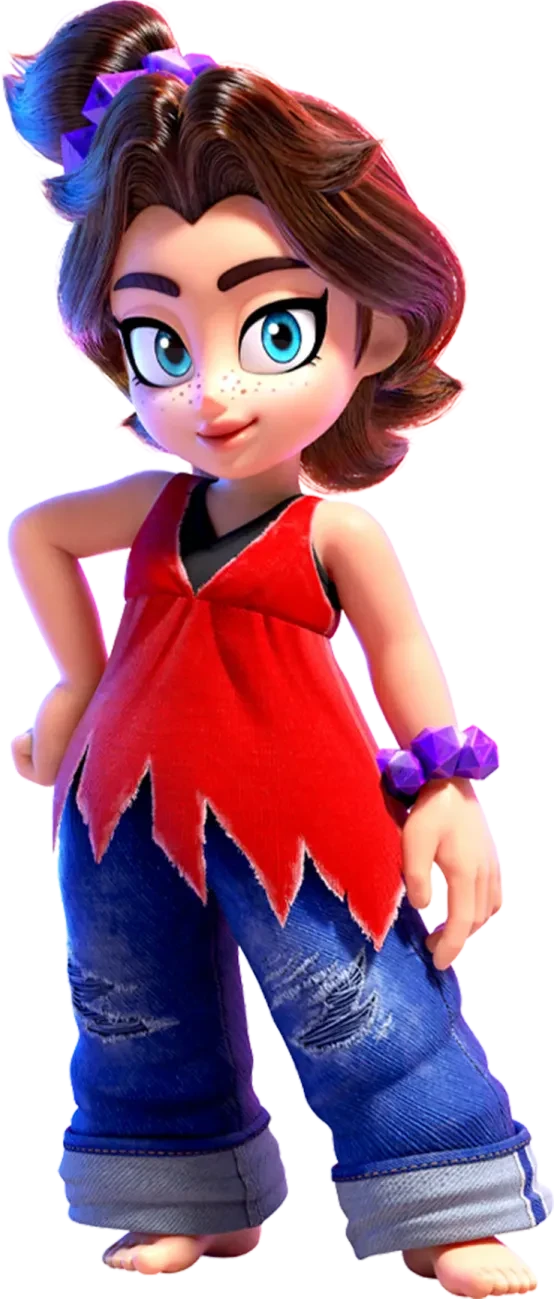 PaulineCo-star, aged 13
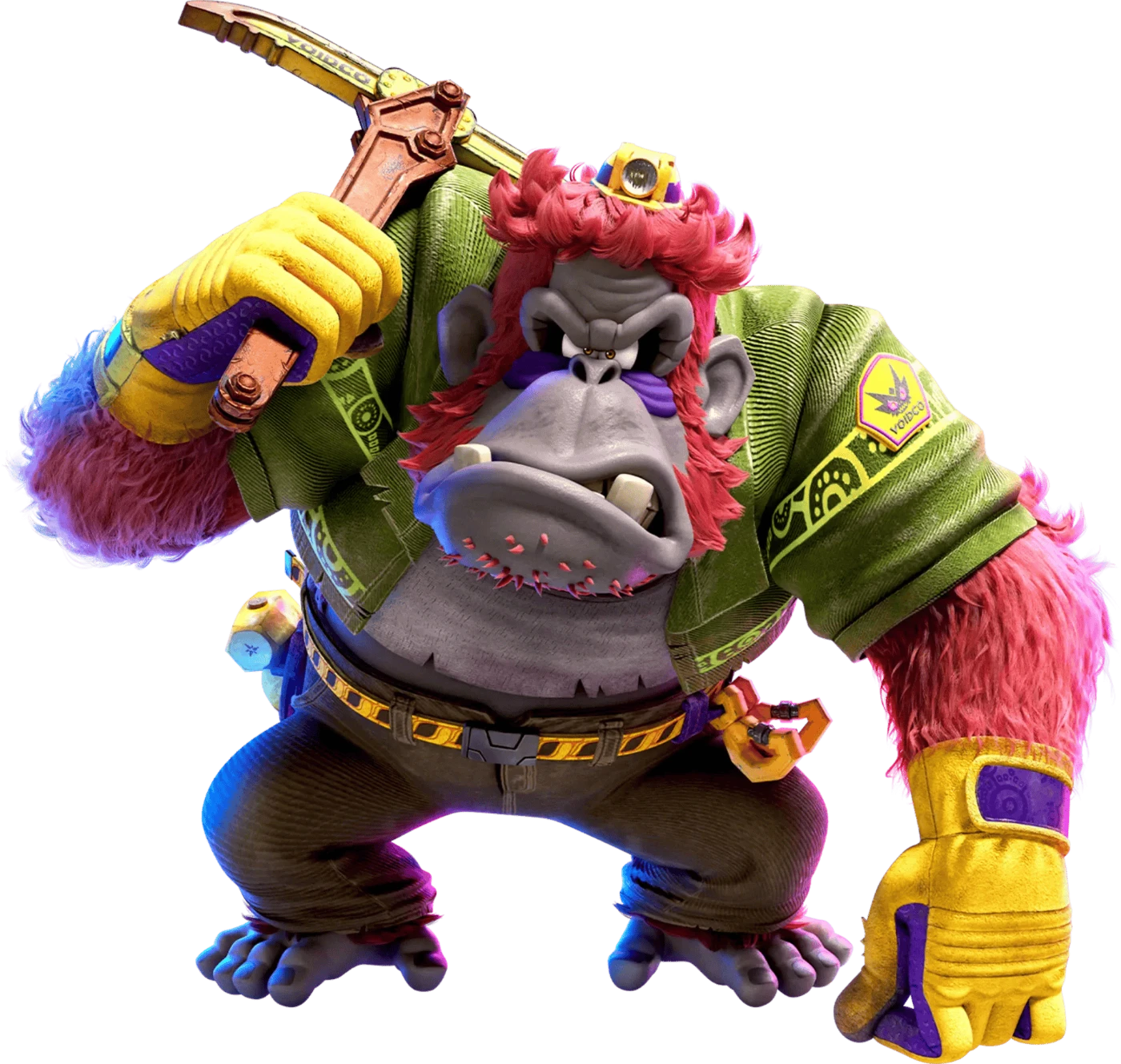 Grumpy KongVoid Company engineer
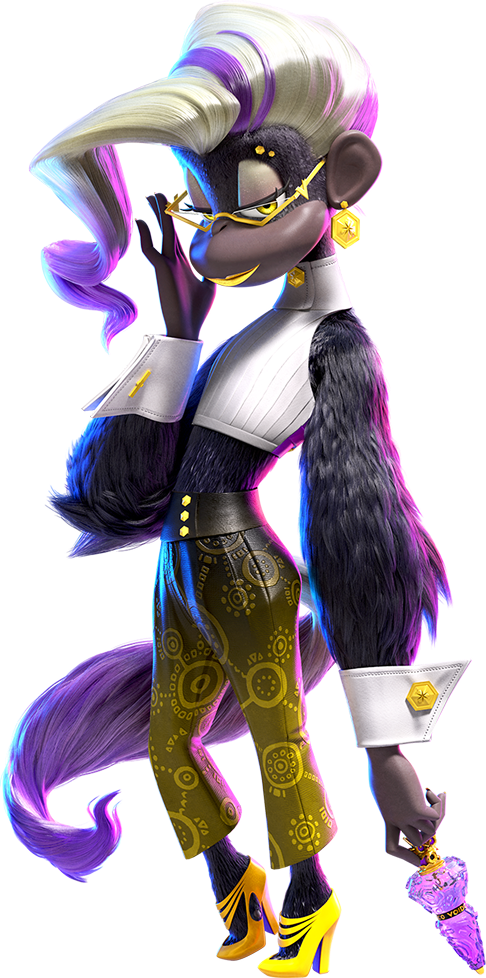 Poppy KongDirector of Intelligence
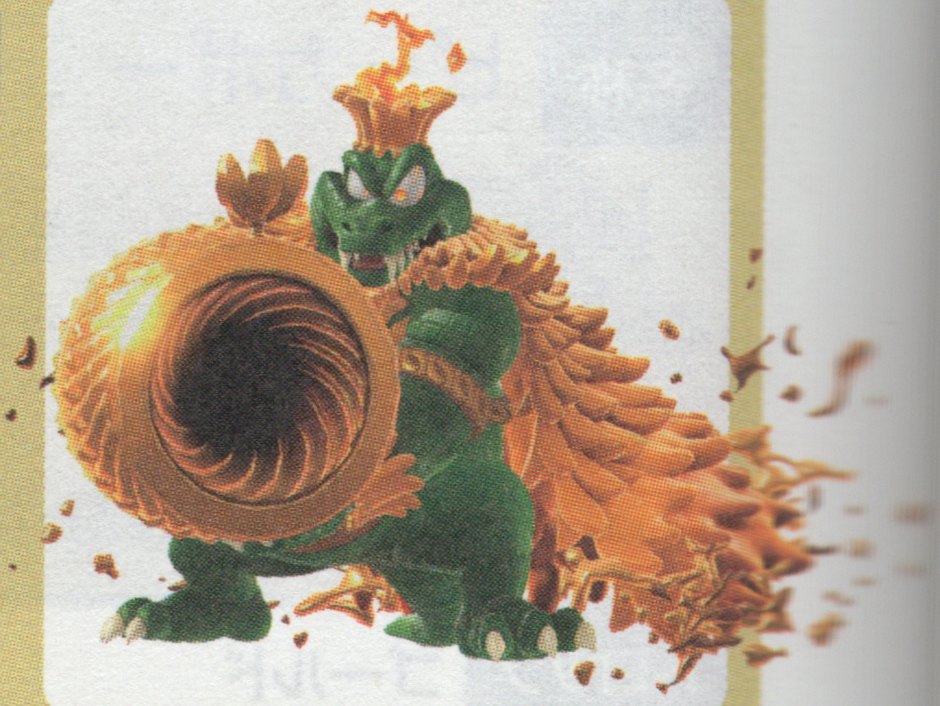 King K. RoolThe real villain
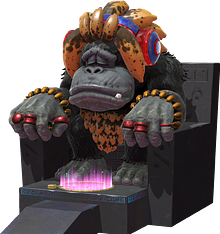 Kong ElderElder · Lagoon Layer
 Zebra ElderElder · Freezer Layer
 Ostrich ElderElder · Forest Layer
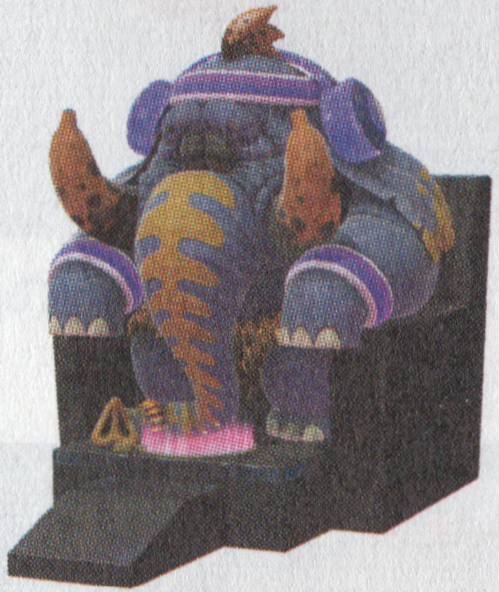 Elephant ElderElder · Tempest Layer
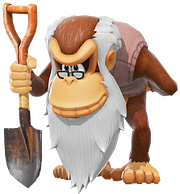 Cranky KongKong Family patriarch
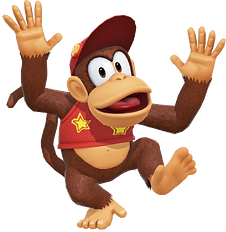 Diddy KongDK’s best friend
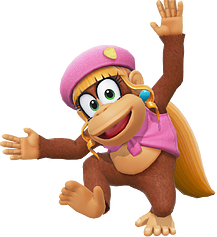 Dixie KongRambi Rumble co-host
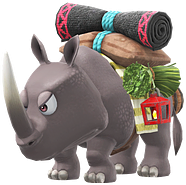 RambiAnimal friend
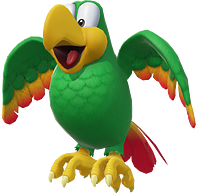 SquawksDLC
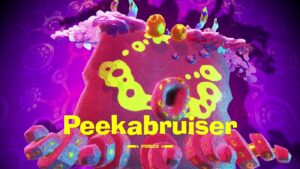 Peekabruiser (boss)Lagoon LayerA mass of Peekaboopoids packed into one terrain-covered body.
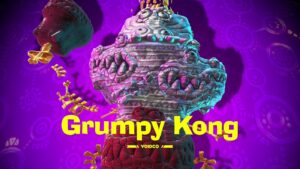 Grumpy Kong (boss)Canyon Layer; rematch in the Radiance LayerFights from the King Crockoid. In the rematch it is armoured in Shade Ore and swings a Boom Rock club.
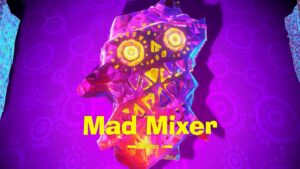 Mad Mixer (boss)Canyon LayerThe living machine at the heart of the Banandium Refinery, its core ringed by concrete pillars.
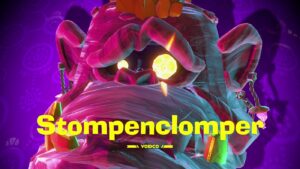 Stompenclomper (boss)Canyon LayerAn oversized Stompoid on two enormous feet.
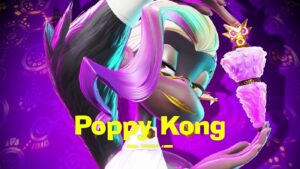 Poppy Kong (boss)Freezer Layer; rematch in the Radiance LayerVanishes with stealth perfume and strikes from nowhere. Faster the second time.
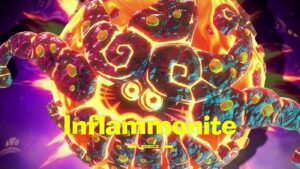 Inflammonite (boss)Freezer LayerA giant Rolluskoid in a shell of lava.
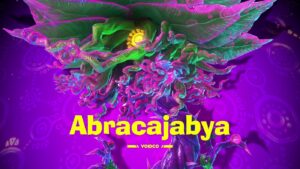 Abracajabya (boss)Forest LayerA giant plant witch that lashes out with thorny vines.
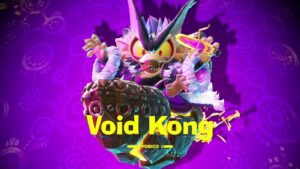 Void Kong (boss)Hilltop Layer, Lagoon Layer, the Junction, Forbidden Layer; DK Island (DLC)Attacks from his flying machine, summoning slabs of terrain. The Forbidden Layer round is fought without Bananzas.
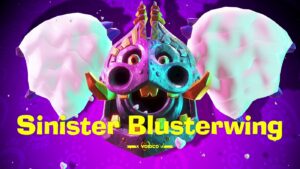 Sinister Blusterwing (boss)Tempest LayerThe Singing Blusterwing under a Mind-Bender Mask. Fought three times, with Gloo Gum, lava, electricity and tornadoes.
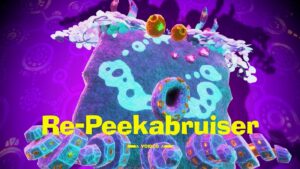 Re-Peekabruiser (boss)Landfill LayerGrumpy’s rebuilt Peekabruiser: quicker, and able to trap DK in a pit.
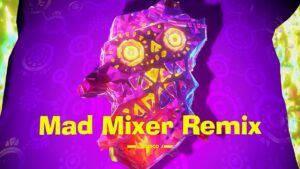 Mad Mixer Remix (boss)Feast LayerThe Mad Mixer again, its pillars now made of muck and crawling with Muckoids.
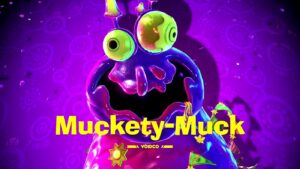 Muckety-Muck (boss)Feast LayerA huge Muckoid that spits muck, floods the floor and drops crates from above.
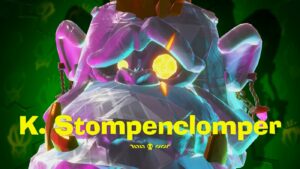 K. Stompenclomper (boss)Planet CoreA Kremling-flavoured Stompenclomper with one foot of lava; the feet can be swapped.
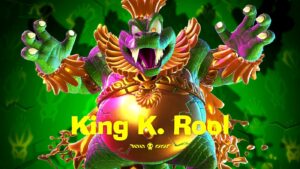 King K. Rool (boss)Planet CoreAs Core King K. Rool, charged with the power of the Banandium Root.
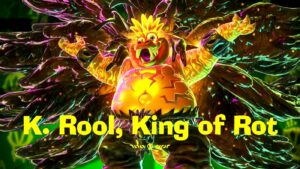 K. Rool, King of Rot (final boss)New Donk CityBloated on Banandium Mush, fought in a floating boxing ring in front of City Hall.
 AntickoidStandard enemyAn ant with Banandium or rocks inside its crystal abdomen.
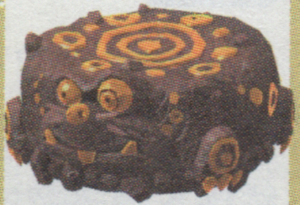 MolevoloidStandard enemyA burrowing mole that erupts out of the ground as a tall pillar of earth.
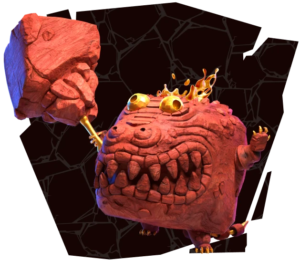 CrockoidStandard enemyA golden crocodile skeleton coated in terrain, swinging a bone club. Climb it and pull the armour off.
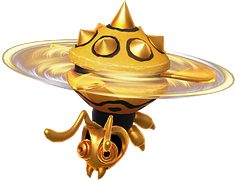 BuzzoidStandard enemyA flying wasp that throws chunks of stone or explosive Boom Rock.
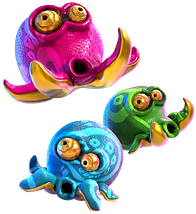 PeekaboopoidStandard enemySmall octopus-like creatures that pose as scenery, then swarm.
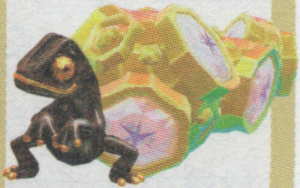 GlitzoidStandard enemyA darting gecko with a tail of gold and Banandium Chips. Worth catching.
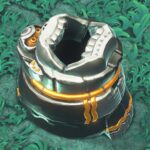 VoidCo Spike-Ball SpitterStandard enemyA monkey-shaped mortar that lobs Spiky Balls into the air.
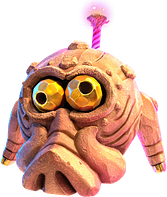 SqueeloidStandard enemyA boar with a fuse. Hops towards DK and explodes.
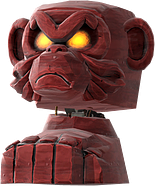 StompoidStandard enemyA golden monkey skull on one big foot, wearing a head of terrain.
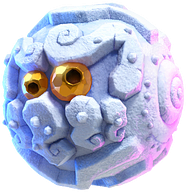 RolluskoidStandard enemyAn ammonite that rolls at DK in a stone shell, then lies dazed.
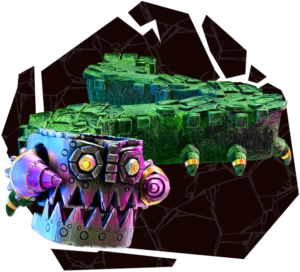 MunchoidStandard enemyA machine with drills for a face that chews through terrain to reach DK.
 VoidCo Bongo BlasterStandard enemyAn ape-styled turret that tracks DK and fires small Boom Rocks.
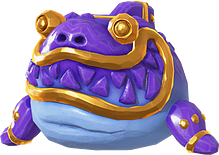 TrailfinoidStandard enemyA purple shark that dashes through the ground, leaving a coloured trail of terrain.
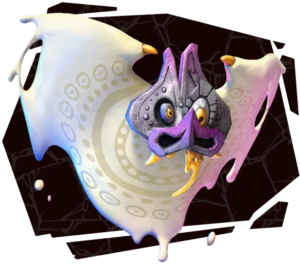 BatteroidStandard enemyA masked bat skeleton in gluey goop that hangs from ceilings and dives.
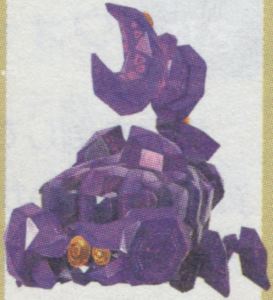 GloominoidStandard enemyA scorpion with a moon on its sting. Light turns it to stone.
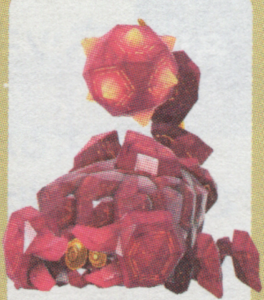 IlluminoidStandard enemyIts opposite, with a sun on its sting: it petrifies in the dark.
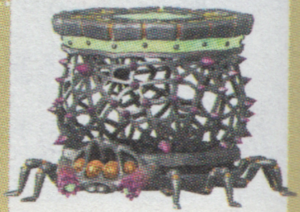 TrapantuloidStandard enemyA tarantula with a cage for a body, full of gold, attacking with two long beams of material.
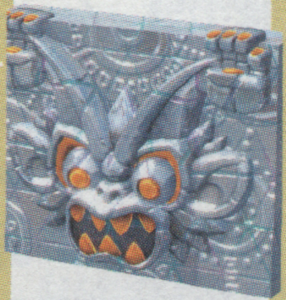 WallopoidStandard enemyA wall carved with Void Kong’s face that waits, then falls on DK.
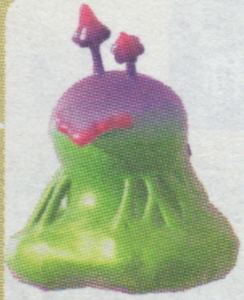 MuckoidStandard enemyA blob that lurks in muck and spits it.
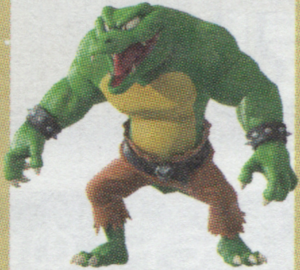 KritterKremling Krew · Planet Core, New Donk CityThe classic green Kremling, taking the place of Crockoids and wearing the same terrain armour.
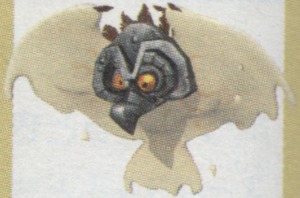 NeckyKremling Krew · Planet Core, New Donk CityThe vulture, replacing Batteroids.
 KlaptrapKremling Krew · Planet Core, New Donk CityA small blue crocodile inside a crocodile-shaped digging machine, replacing Munchoids.
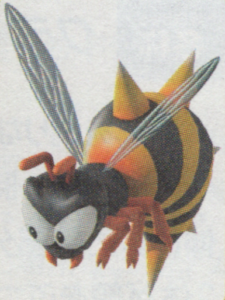 ZingerKremling Krew · Planet Core, New Donk CityThe wasp, replacing Buzzoids.
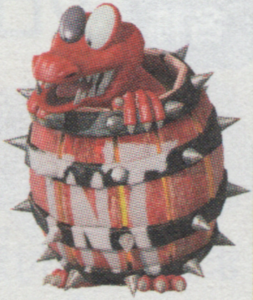 KaboomKremling Krew · Planet CoreA red Kremling hiding in a spiked TNT barrel, replacing Squeeloids. Returns with its original look from Donkey Kong Country 2.
 ArmyKremling Krew · Planet CoreThe armadillo, replacing Rolluskoids.
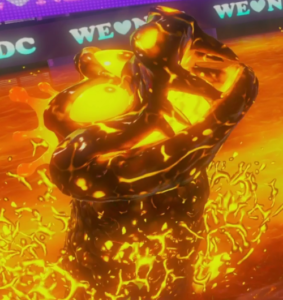 Banandium Mush snakeKremling KrewA snake of Banandium Mush with K. Rool’s face that leaves a harmful trail. Known only by its Japanese name, Dorodoro no Hebi.
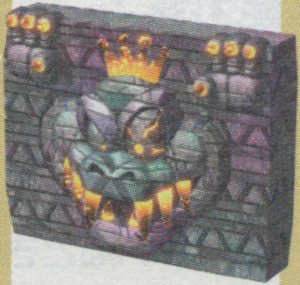 K. WallopoidKremling KrewA Wallopoid re-carved with K. Rool’s face.
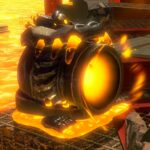 K. Rool cannonKremling KrewA cannon in K. Rool’s likeness (Japanese name Hōdai) firing iron balls that only the Kong Bananza can punch away.