Nintendo DS2005Tose2D platformerPeach to the rescueFour emotion powersPerry the talking parasol8 worlds, 72 stages1.7 million sold (CESA)
Super Princess Peach
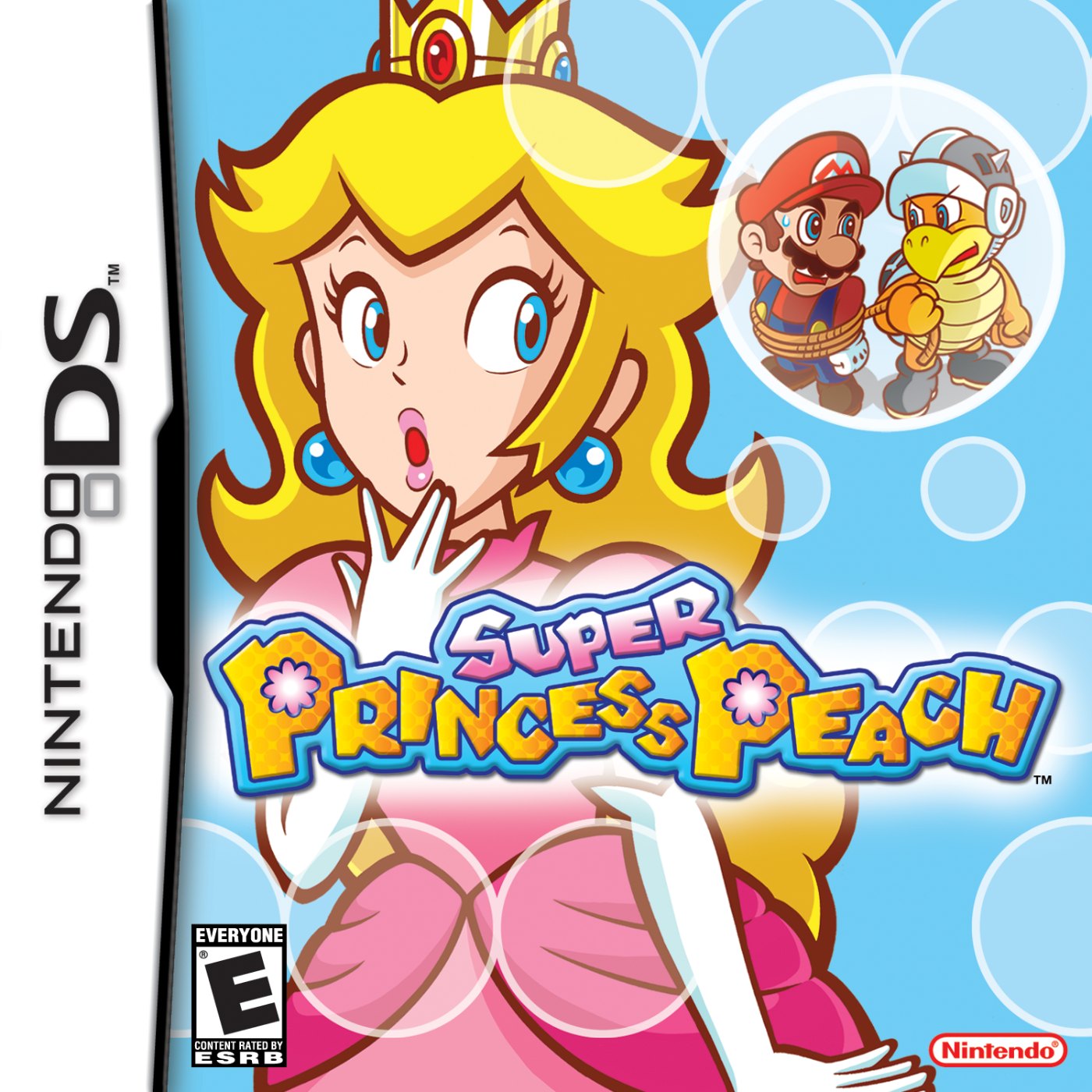
For once it is Mario and Luigi who need rescuing. Bowser has got hold of the Vibe Scepter, a relic that plays with people’s feelings, and his troops have carried the brothers and a crowd of Toads off to Vibe Island. So Princess Peach packs a talking parasol called Perry and goes to fetch them herself. Super Princess Peach came out on Nintendo DS in Japan on 20 October 2005, in North America on 27 February 2006 and in Europe on 26 May 2006, developed by Tose for Nintendo, and it was the first game from Nintendo with Peach in the lead.
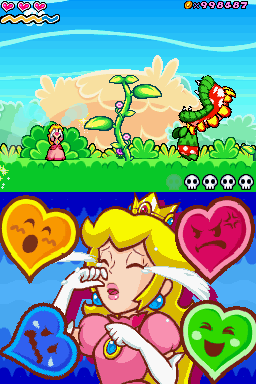
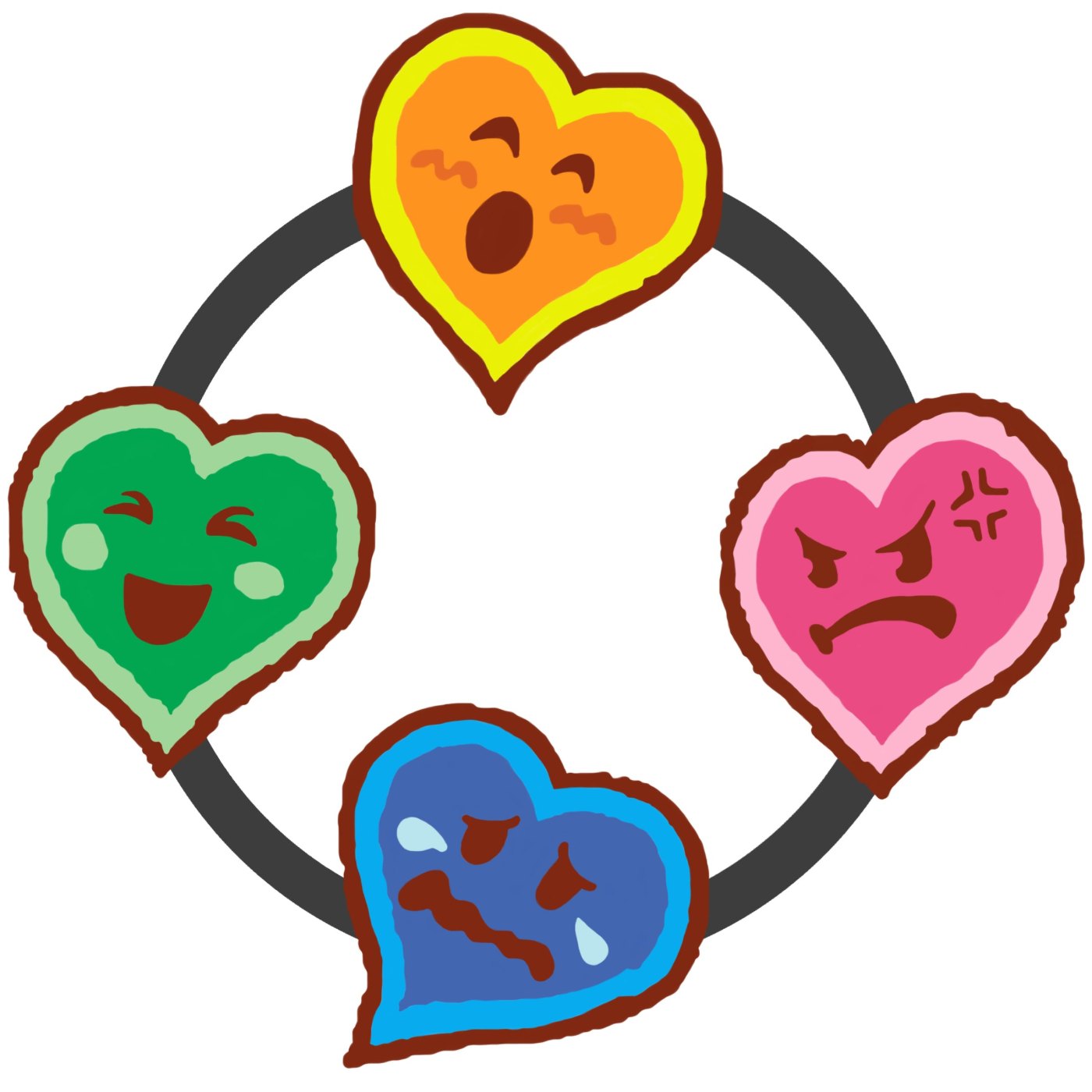
Its gimmick is in the name of the island. Tap one of four hearts on the touch screen and Peach’s mood changes, and with it her powers: Joy lets her float and whip up a cyclone, Rage sets her ablaze, Gloom sends her running in floods of tears and Calm heals her. There are eight worlds of nine stages, three captive Toads hidden in every regular stage, ten boss fights, a shop, puzzles, minigames and Perry’s own mysterious past to piece together.
Developer:Tose, with Nintendo SPD Group No. 2
Publisher:Nintendo
Platform:Nintendo DS
Genre:2D platformer
Japan:20 October 2005 (also Taiwan)
South Korea:4 November 2005
N. America:27 February 2006
Australia:30 March 2006 (some sources give 31 March)
Europe:26 May 2006
Players:1
Directors:Akio Imai and Azusa Tajima
Producers:Yasuhiro Minamimoto and Hitoshi Yamagami; general producer Shin Kondo; executive producer Satoru Iwata
Music:Akira Fujiwara
Voice of Peach:Jen Taylor
Worlds:8 on Vibe Island, each with 5 stages, a boss (x-6) and 3 extra stages (x-7 to x-9)
Ratings:ESRB E · PEGI 3 · CERO A · ACB G · USK 0
Sales:1.15 million by July 2007 (IGN); 1.7 million (CESA White Paper 2020)
Metacritic:75 (48 reviews)
Advertisement
Overview
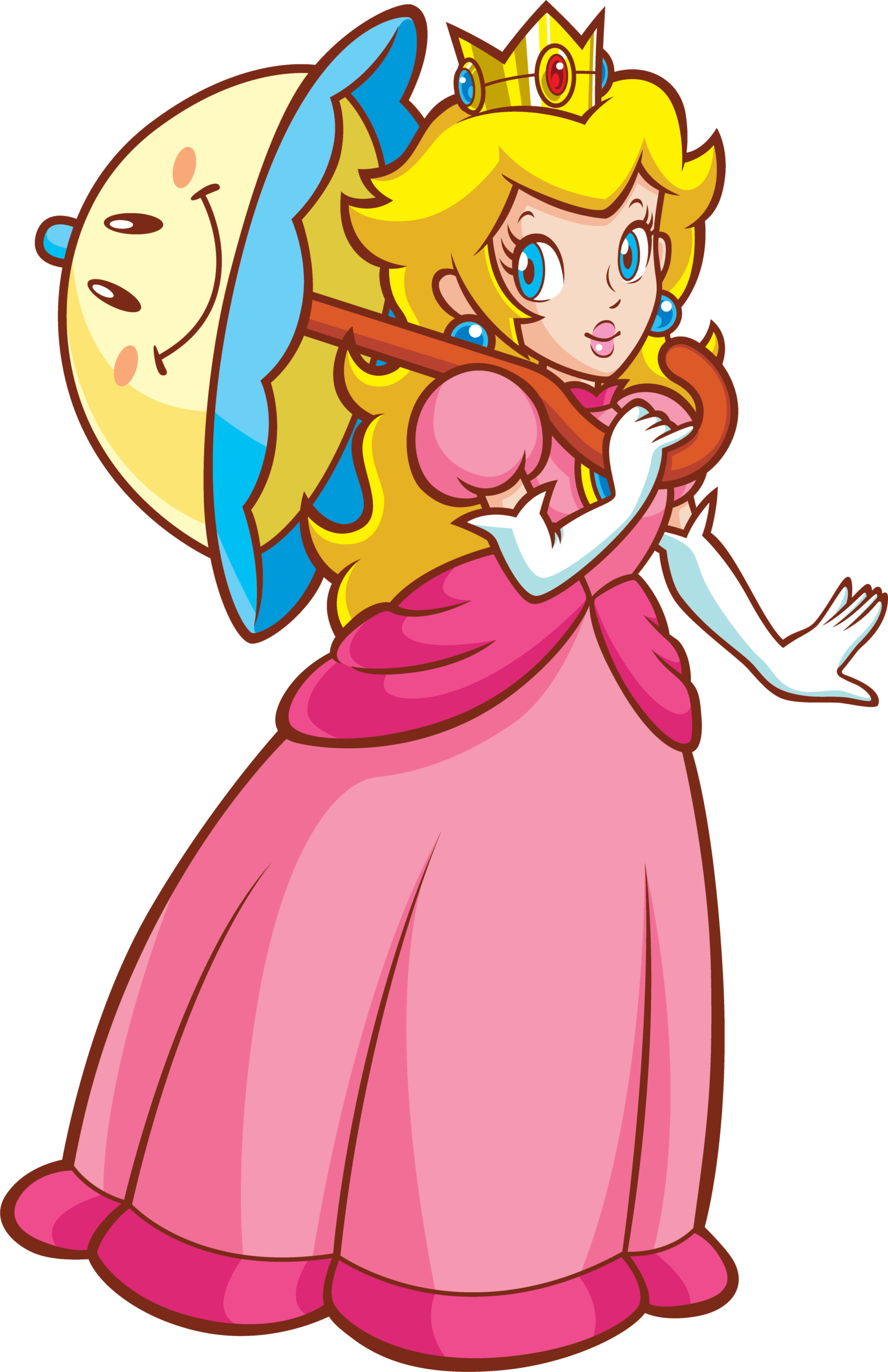
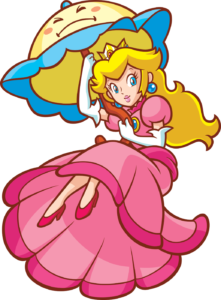
Peach and her new partner, Perry the parasol.
Super Princess Peach is a side-scrolling platformer for the Nintendo DS, made by the Japanese developer Tose with Nintendo’s SPD Group No. 2 and published by Nintendo. It arrived in Japan and Taiwan on 20 October 2005, South Korea a fortnight later, North America on 27 February 2006, Australia at the end of March and Europe on 26 May 2006. It was Peach’s first starring role in a Nintendo-published game, and her last for almost two decades, until Princess Peach: Showtime! in 2024.
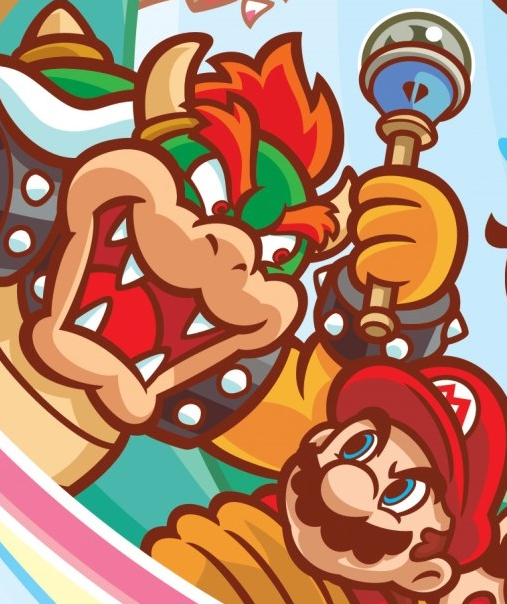
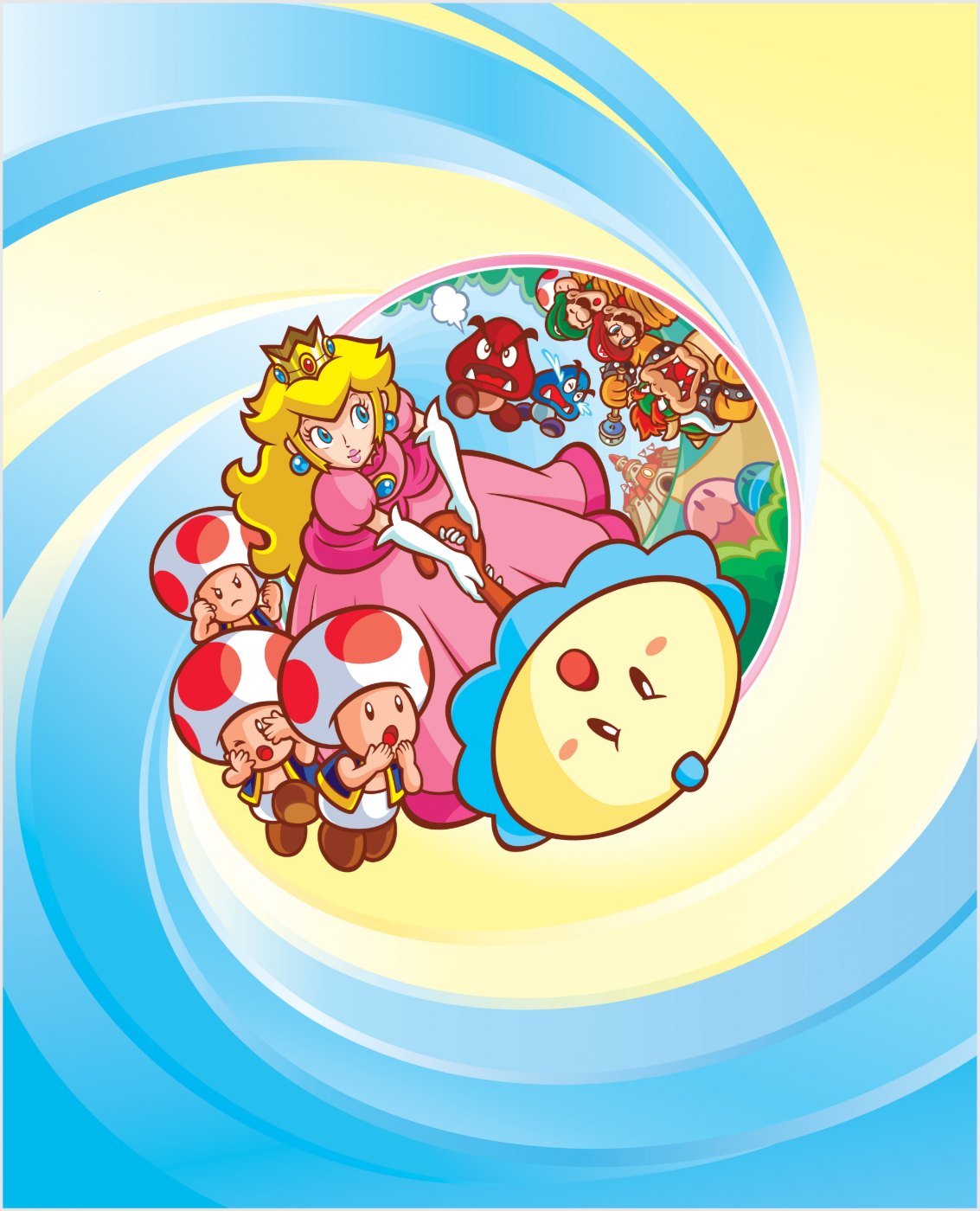
The premise flips the usual arrangement. Bowser has built himself a summer villa on Vibe Island, where his commander, the Army Hammer Bro, finds the Vibe Scepter. Turned on Peach’s Castle, it throws everyone into emotional chaos, and while the household is in pieces Bowser’s troops carry off Mario, Luigi and a crowd of Toads. Peach comes home to find a ransom note, and her steward Toadsworth sends her off with an extraordinary umbrella.
That umbrella is Perry, and he does most of the fighting. Peach stomps and stuns enemies, then Perry whacks them, picks them up, throws them or swallows them whole to top up her Vibe Gauge; his growing set of forms turns him into a glider, a ground-pounder, a blaster, a boat and a submarine. The headline feature, though, is the Vibes: four heart panels on the bottom screen switch Peach between Joy, Rage, Gloom and Calm, each with its own powers, music and puzzle uses. The island’s enemies are caught up in the same emotions, so Goombas turn up mad, sad or glad.
There are eight worlds, each with five stages, a boss and three extra stages that open after the credits, and every regular stage hides three Toads in bubbles. Coins buy health, gauge upgrades and new parasol moves at Toad’s shop, and there are jigsaw puzzles, a music room, a glossary and three microphone and stylus minigames to collect. Critics liked its charm and its premise and found it too easy; it scored 75 on Metacritic and went on to sell well over a million copies.
Princess Peach takes centre stage in this girl-powered platform game! Bowser has finally done the smart thing and kidnapped Mario, whisking him (and Luigi, too) away to his castle hideout on Vibe Island. But Bowser hadn’t reckoned on Peach taking it so personally…
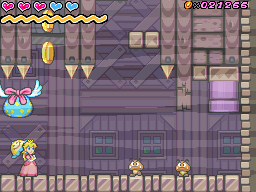
Armed with her trusty parasol, Parry, Peach can whack Bowser’s bad guys if they get too close for comfort, though she also has more womanly wiles to save the day. She can channel her emotional feelings into special abilities, allowing her to float on air when she’s happy – handy for bypassing hazards. She can also set fire to flammable objects when she’s riled. Even turning on the waterworks is a weapon for Peach – her tears can make plants grow huge. Climb up the newly grown vegetation and maybe you’ll discover a new area!
With classic side-scrolling action in the style of a Super Mario Bros. adventure, you’ll collect coins and hunt out imprisoned Toads as you explore the 8 worlds, each containing 5 separate stages. But the game also makes use of the DS’ capabilities, letting you interact with your environment using the stylus and touch screen. You can also build up Peach’s Vibe powers by collecting gems, or by feeding stunned enemies to her magic parasol to absorb their powers. Koopas, Bullet Bills, Cheep-Cheeps and more infest the colourful locales of Vibe Island – look out for some amazing boss battles! Of course, whatever comes your way is no match for Princess power…
— Official description (Nintendo UK, 2006)
Why it matters to Mario fansAfter twenty years of being kidnapped, Peach finally did the rescuing in a Nintendo game of her own, with Mario and Luigi as the prizes in Bowser’s cages. It gave the series Perry and the Army Hammer Bro, an island full of moody Goombas, and a Peach who was playable for a whole adventure rather than one character among four. Her next solo game took more than eighteen years to arrive.
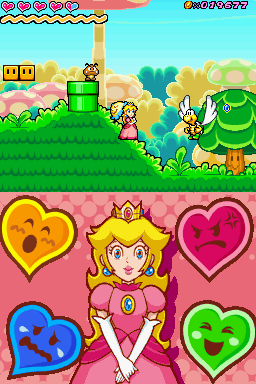
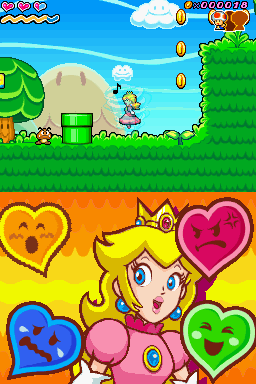
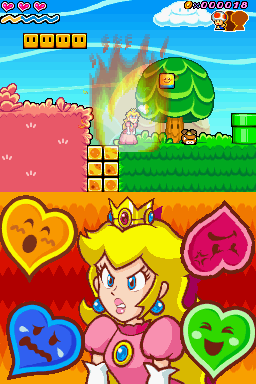
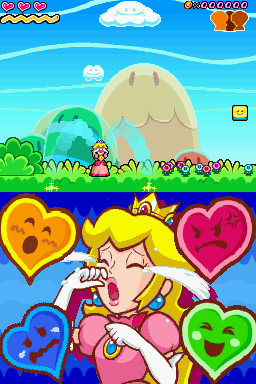
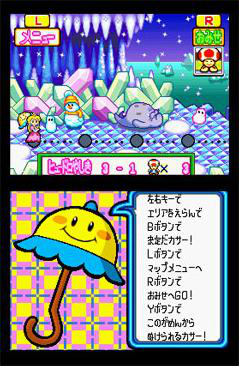
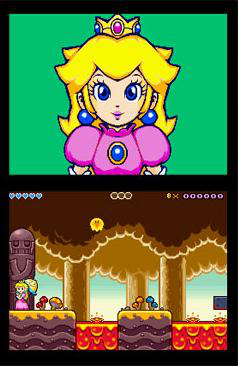
Both screens in play: the action on top, the Vibe hearts below.Joy: Peach floats on a cloud of happiness.Rage: Peach bursts into flames.Gloom: tears that make plants grow.
“It was important to us in Super Princess Peach for Peach to be Peach-like.”
Shigeru Miyamoto, Mario 20th anniversary interview, Nintendo Online Magazine (2005); English translation by shmuplations (2022)
Miyamoto went on to describe the carefree optimism of a princess who never thought of herself as someone Mario protects.
Quick Answers
Short answers to the things people ask most about Super Princess Peach; each links to the full section.
When did Super Princess Peach come out?
In Japan on 20 October 2005, North America on 27 February 2006, Australia at the end of March 2006 and Europe on 26 May 2006, all on Nintendo DS. More →
Who made it?
Tose, working with Nintendo’s SPD Group No. 2. Akio Imai and Azusa Tajima directed. More →
What are the four Vibes?
Joy (float and cyclone), Rage (fire and a ground-shaking stomp), Gloom (fast running and plant-growing tears) and Calm (healing). They are switched with heart panels on the touch screen and drain the Vibe Gauge. More →
Who is Perry?
Peach’s talking parasol, a gift from Toadsworth. He was once a boy with magic powers who was turned into an umbrella, and his story unfolds in dreams after each boss. More →
How many worlds and levels are there?
Eight worlds on Vibe Island. Each has five stages and a boss at x-6, plus three extra stages (x-7 to x-9) that open after Bowser is beaten: 72 in all. More →
Who are the bosses?
Petey Piranha, Hoo, King Boo, Wiggler, Gooper Blooper, Blizzaurus, Giant Kamek, the Army Hammer Bro, Bowser and finally a giant Bowser. More →
How do you unlock the minigames?
Find them: Toad Jump is in Hoo’s Wood 2-4, Toad Tote in Fury Volcano 4-1 and Toad Shot in Gleam Glacier 6-1. Each has ten levels, some hidden in stages and the rest sold in the shop. More →
Is it hard?
No. Lives are unlimited, Calm heals you and the shop sells extra health, and the low difficulty was the most common complaint in reviews. More →
How well did it sell?
IGN reported 1.15 million copies by July 2007, and the CESA Games White Paper of 2020 put it at 1.7 million. More →
Story & Worlds
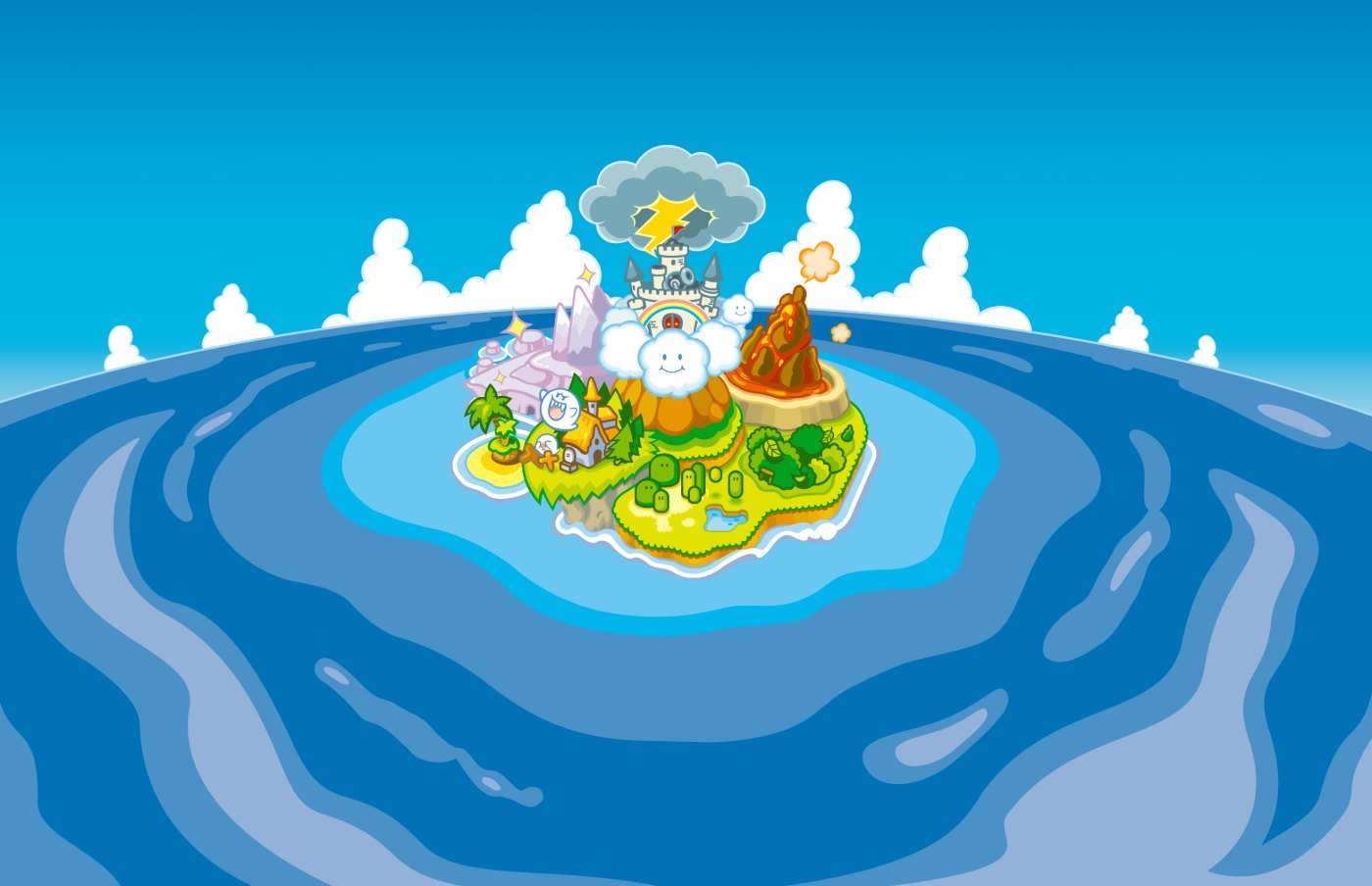
Vibe Island, Bowser’s holiday spot and Peach’s adventure.
The complete plot, spoilers included. The story is told in illustrated scenes at the start and end and in Perry’s dreams between worlds.
The Vibe Scepter
Not far from the Mushroom Kingdom lies Vibe Island, and on it a legendary relic that can control emotions. Bowser hears about it, builds himself a summer villa on the island and sets his second-in-command, the Army Hammer Bro, to find it. The Scepter turns up, and Bowser’s plan to grab the Mario Bros. begins.
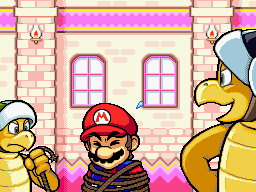
A Goomba carries the Scepter into Peach’s Castle, and its power sends the household into hysterics. In the confusion the Army Hammer Bro and his troops seize Mario, Luigi and a crowd of Toads and lock them up all over the island. Back at the villa the Goomba waves the Scepter about and throws Bowser’s own minions into emotional uproar, until Bowser takes it off him.
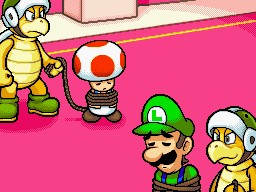
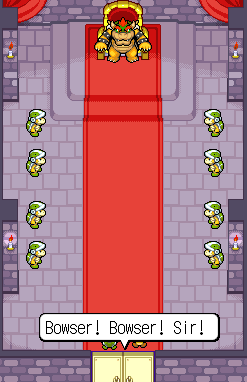
The Army Hammer Bro takes Mario.Luigi and a Toad are carried off too.Bowser at home in his island villa.
A parasol for the princess
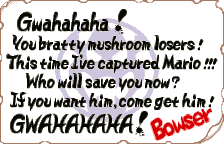
Peach and Toadsworth return to the castle to find everyone in pieces and a note from Bowser boasting that he has the brothers. Peach decides to go after them herself. Toadsworth, not keen on her travelling alone, gives her Perry, a parasol that talks, thinks and fights.
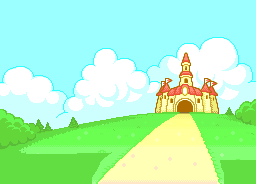
Peach’s Castle, where the trouble starts.Bowser’s note.
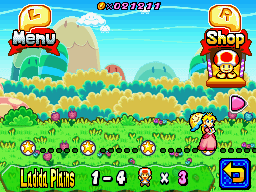
Ladida Plains and Hoo’s Wood
Vibe Island has gone strange. The Goomba’s fooling about with the Scepter has scattered four emotional energies, Joy, Rage, Gloom and Calm, across the land, and Bowser’s troops are under their spell. Peach feels them too, but the Scepter does not control her, so the Vibes become her powers.
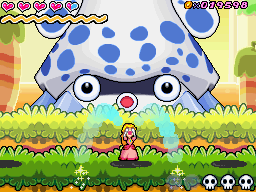
The grasslands of Ladida Plains end with Petey Piranha, who sucks up Peach’s tears until his belly swells and can be jumped on. In the forest of Hoo’s Wood the giant owl Hoo claws at a Toad’s bubble, drops eggs that hatch into owlets and, once hurt, switches to Joy and breaks up the floor, so Peach has to float above it and drop on its head.
Petey Piranha, the first boss.Ladida Plains on the island map.
Shriek Mansion and Fury Volcano
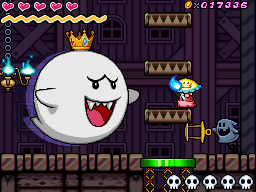
Shriek Mansion is a haunted house full of Boos and weepy enemies. King Boo follows Peach relentlessly through the dark and spawns blue fireballs; the only things that hurt him are the torches around the room, which he puts out as soon as he takes a hit, so Peach has to keep relighting them.
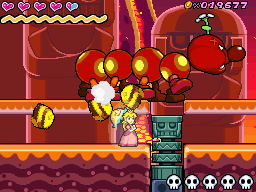
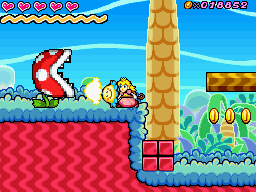
In Fury Volcano the enemies are angry and the floor is lava. Wiggler charges about the arena; Peach uses a Rage stomp to drive a piston that flips him over, then jumps on whichever segment is flashing.
King Boo in Shriek Mansion 3-6.Wiggler in Fury Volcano.
Wavy Beach and Gleam Glacier
Wavy Beach brings the Subrella and a fight with Gooper Blooper, who lashes out with four tentacles and spits goop. Pull off all four and its body can be hit, but it shelters in a healing bubble when it goes Calm, and that bubble has to be popped fast.
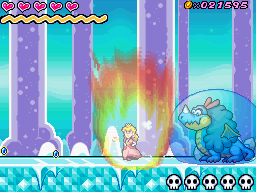
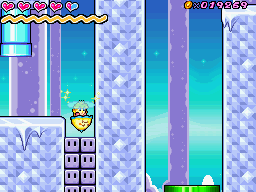
Gleam Glacier’s boss is Blizzaurus, an ice dragon that charges, raises glaciers and breathes a freezing beam. Peach’s Rage melts its ice shield three times, and then it changes into a flying ice sprite that rains icicles; she climbs the fallen ones, or jumps in Rage, to reach it.
Gooper Blooper at Wavy Beach.Blizzaurus in Gleam Glacier 6-6.
Giddy Sky: Luigi
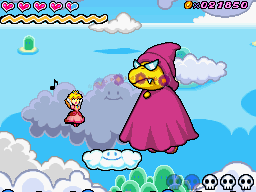
Up in the clouds of Giddy Sky waits Giant Kamek, who teleports, fires homing magic and calls in broom-riding Kameks. Peach passes straight through his robe, so only a Joy cyclone in the face will do: it sets his head spinning and leaves him open. With two hits left he switches to Gloom, the central cloud vanishes and Peach must fly up to reach him. When he fades away, Luigi drops out and is free.
Giant Kamek holds Luigi in Giddy Sky.
Perry’s dreams
After each boss Perry falls asleep and dreams, and bit by bit his past comes back. He was a boy with strange powers, found on a mountain with no memory of who he was, and adopted by a kindly old man. One day two mysterious figures came for him because of those powers; one of them turned him into an umbrella, and he and the old man were parted. Perry escaped, a travelling merchant carried him to a shop, and there Toadsworth sensed something special about him and bought him.
In the last dream, after Luigi is saved, Perry admits he wants to find the old man again, but promises to stay with Peach until Bowser is beaten and Mario is free. There are seven dreams in all, and each can be watched again from the Bonus menu.
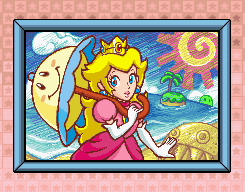
Peach and Perry in one of the game’s puzzle pictures.
Bowser’s Villa
The final world has every kind of enemy, Ball ’n’ Chains in the corridors and Koopatrol statues on the map. At the top Bowser powers up the Army Hammer Bro with Rage and leaves him to it; he throws oversized hammers, summons Hammer Bros and goes down after five hits.
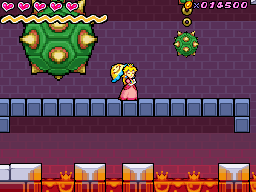
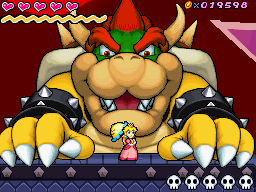
Then it is Bowser himself, charging, breathing fire and throwing hammers, and switching between Joy, Gloom and Rage. Beaten, he turns the Scepter on himself and grows into a giant Bowser who fills the screen, slams his hands and calls down hammers and Bob-ombs. Peach throws the Bob-ombs back so they explode by his eyes, and smashes the symbol that appears when he goes Calm. The final blow sends him flying out of his own villa.
Ball ’n’ Chains in Bowser’s Villa.Giant Bowser, the final boss.
Rescued
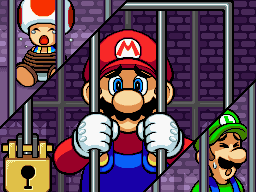
Peach frees Mario, who spins her round in triumph, lifts her up and produces flowers from his cap, and she takes everyone home to the Mushroom Kingdom. The Vibe Scepter, dropped when Bowser went flying, is never found. A closing note teases that it might have ended up in the player’s own house, which would explain a few things about their parents’ moods.
The prisoners Peach came for.
Every world on Vibe Island
Each world has stages 1 to 5, a boss at stage 6 and three extra stages, 7 to 9, that open after the credits. Every regular stage hides three Toads.
World 1: Ladida PlainsStages 1-1 to 1-9 · boss: Petey Piranha (1-6)Gentle grassland and the place to learn the Vibes; its extra stages open when Bowser is beaten.
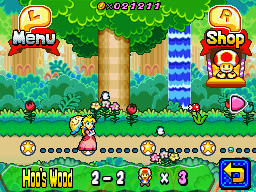
World 2: Hoo’s WoodStages 2-1 to 2-9 · boss: Hoo (2-6)A forest of everyday enemies; Toad Jump is hidden in 2-4.
World 3: Shriek MansionStages 3-1 to 3-9 · boss: King Boo (3-6)A haunted mansion of ghosts and sad enemies; the Slidebrella comes from 3-1.
World 4: Fury VolcanoStages 4-1 to 4-9 · boss: Wiggler (4-6)Lava, fire enemies and angry ones; Toad Tote is found in 4-1.
World 5: Wavy BeachStages 5-1 to 5-9 · boss: Gooper Blooper (5-6)Sand and sea, and the Subrella from 5-2 to take Perry underwater.
World 6: Gleam GlacierStages 6-1 to 6-9 · boss: Blizzaurus (6-6)Ice and snow with sad and angry enemies; Toad Shot is in 6-1.
World 7: Giddy SkyStages 7-1 to 7-9 · boss: Giant Kamek (7-6)A cloud world of calm and glad enemies, where Luigi is held.
World 8: Bowser’s VillaStages 8-1 to 8-9 · bosses: Army Hammer Bro and Bowser (8-6)Bowser’s holiday home, with every enemy type and Mario locked up at the end.
Advertisement
Gameplay & Controls
Peach plays like a classic side-scroller heroine with a few twists: her stomp stuns rather than squashes, Perry does the heavy lifting, and the touch screen is reserved for her mood. The top screen shows her heart meter and Vibe Gauge; the bottom screen holds the four Vibe hearts.
Perry in action
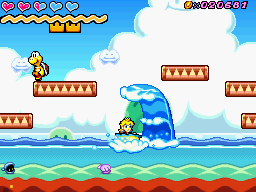
Perry can break blocks, hit enemies, pick up and throw objects, and eat stunned foes, which refills part of the Vibe Gauge; pressing down swallows an enemy he is holding. As the game goes on he gains new forms. The Bowlbrella is a little boat for crossing water and the Slidebrella rides along ropes like a cable car (it unlocks in Shriek Mansion 3-1). The Subrella turns him into a submarine, and blowing into the DS microphone fires bubbles (Wavy Beach 5-2). The Dashbrella lets Peach swing him as she runs.
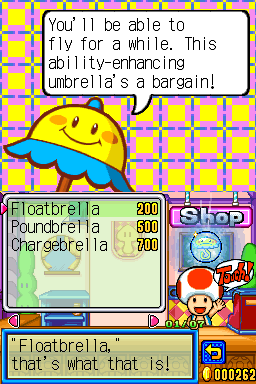
Three more are bought from Toad’s shop at the start: the Floatbrella (200 coins) lets Peach drift down for a few seconds, the Poundbrella (500) slams downward and pulls in nearby items, and the Chargebrella (700) charges a blast that hits switches and enemies.
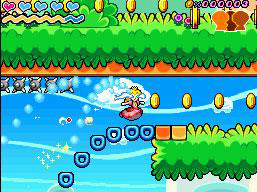
The Subrella: Perry as a submarine.The Slidebrella, Perry’s cable-car mode.
The four Vibes
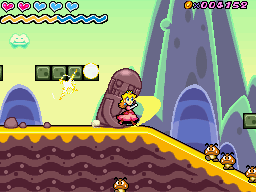
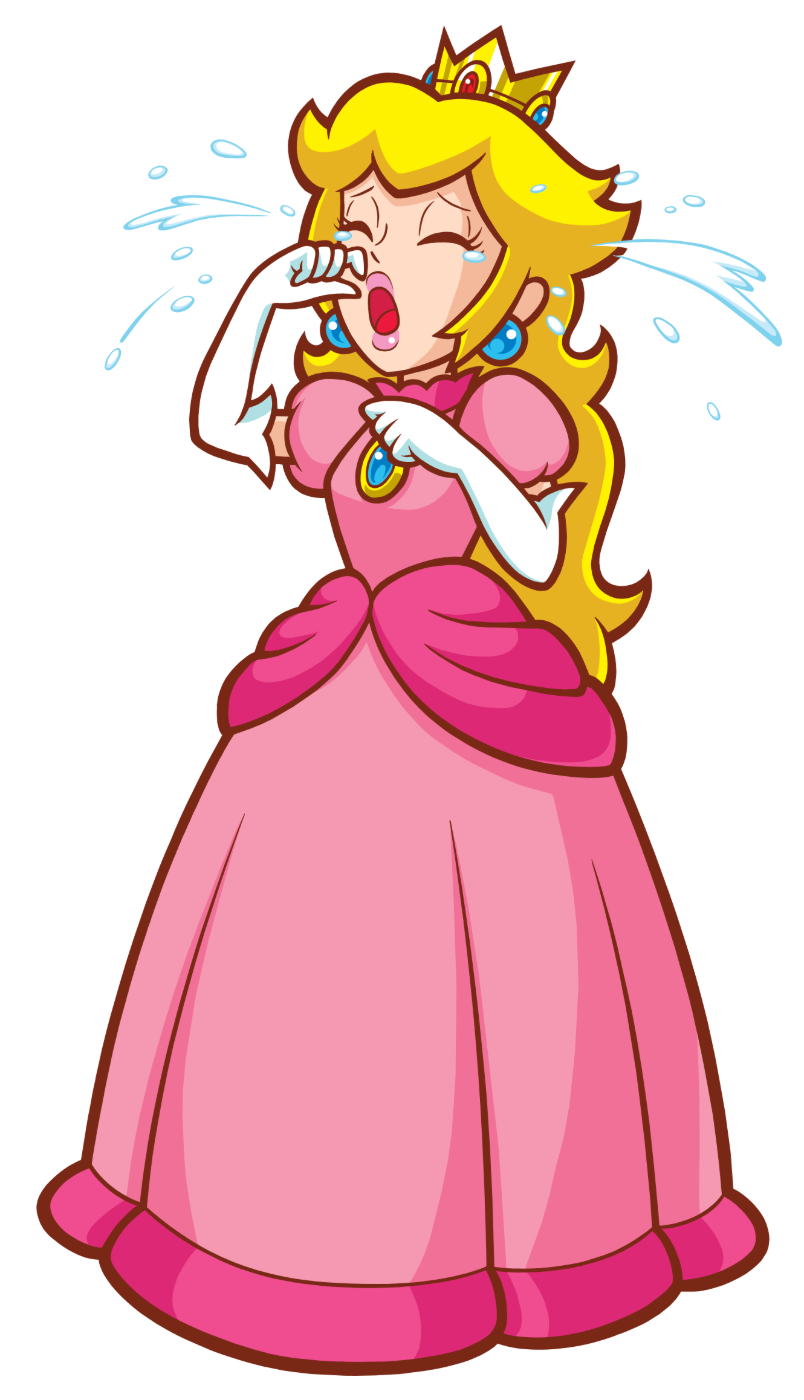
Joy: hold A and Peach floats on a whirl of happiness; let go and she unleashes a tornado that blows away clouds and reaches high ledges, often where Toads are hidden. Rage: she catches fire, lighting lamps, fuelling hot-air balloons and burning wooden obstacles, and each landing makes the ground shake, stunning enemies and pressing big switches. Gloom: two fountains of tears that speed her up, make plants grow into ladders, turn water wheels and leave slippery ice on cold floors. Calm: she restores hearts until the gauge empties, her health is full or something hits her.
Each Vibe also changes the music, from a brighter, faster version of the theme for Joy to a slow, heavy one for Rage. All four drain the Vibe Gauge, which refills from the crystals scattered through every stage and from enemies Perry swallows. Enemies feel the Vibes too: the glossary is full of Mad, Sad, Glad and Calm versions of the usual crowd, and each boss switches to a Vibe of its own partway through the fight.
Shriek Mansion, where Rage’s flames light the way.
Hearts, lives and Toads
Peach’s health is a row of hearts, and lives are unlimited: lose every heart and the stage simply starts again. Each of the five regular stages in a world hides three Toads, often tucked away where only one of the Vibes can reach, and the first six bosses each guard one more; Giant Kamek guards Luigi instead. Every Toad and Luigi must be freed before Bowser will fight.
Toad’s shop and the extras
Toad runs a shop on the island map (press R), open from the start. Besides Perry’s three bought forms it sells Tough Coffee for extra health and Vibe Tea for a longer gauge (250, 500, 1,000 and 1,500 coins for successive cups), Courage Soda (coins for every hit, after Shriek Mansion) and Natural Power (the gauge refills when Peach stands still, 3,000 coins after Gleam Glacier). It also stocks music tracks, puzzle pieces and minigame levels.
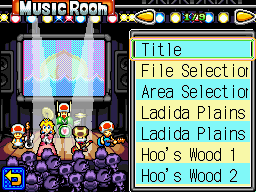
The extras menu holds a glossary that fills in as enemies are beaten; eight jigsaw puzzles whose pieces are hidden in stages or sold; a music room of 60 tracks, five of them Peach’s voice clips, played by a band called Peach Hit Five (Peach and Toadsworth, joined by three Toads as more tracks are found); replays of Perry’s dreams; and three minigames.
Toad’s shop, open for business from the start.Peach Hit Five, the music room’s house band.
Three Toad minigames
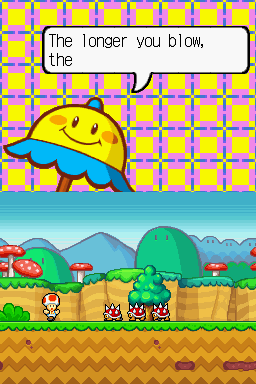
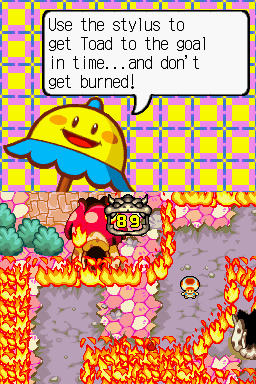
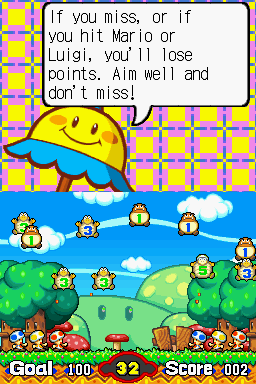
Toad Jump is played entirely with the microphone: blow to make Toad jump over Pokeys, Ptooies and pits, and blow longer to jump further. Toad Tote has you steer Toad with the stylus through a maze of fire walls, Fire Bars and flamethrowers to the exit inside 99 seconds. Toad Shot is a stylus shooting gallery: tap flying targets for points inside 50 seconds, avoid hitting Mario and Luigi, and tap a Bob-omb to blow up everything nearby. Each has ten levels. There is a fourth, too: the little game in the opening scene, which can be replayed by holding R and pressing Start.
Toad Jump: blow to jump.Toad Tote: steer through the flames.Toad Shot: a stylus shooting gallery.
After the credits
Beating Bowser opens three extra stages in the first world, and replaying the other boss fights opens the extra stages of the later worlds: 24 extra stages in all. A rematch with Bowser doubles the number of hits his giant form takes. Finish every stage, minigame level and puzzle and collect every music score, and the shop hands over Endless Vibe for nothing: a drink that stops the gauge draining, switched on and off from the Bonus menu.
Vibes, parasols, drinks and pick-ups
Everything Peach uses or collects, with the in-game sprite where one is available.
JoyFloat while holding A; release for a tornado.
RageFire aura and a stunning ground-shake on landing.
GloomFaster running; tears grow plants, turn wheels and freeze on cold floors.
CalmRestores hearts while draining the gauge.
BowlbrellaPerry as a boat.
FloatbrellaDrift down for a few seconds. 200 coins.
PoundbrellaPound downward and attract items. 500 coins.
ChargebrellaCharge and fire a blast. 700 coins.
SlidebrellaSlide along ropes. Unlocked in Shriek Mansion 3-1.
SubrellaSubmarine; blow into the mic for bubbles. Unlocked in Wavy Beach 5-2.
DashbrellaSwing Perry while running.
Tough CoffeeAdds to maximum health. Four cups, 250 to 1,500 coins.
Vibe TeaExtends the Vibe Gauge. Four cups, 250 to 1,500 coins.
Courage SodaEarns coins with every attack. 1,000 coins, after Shriek Mansion.
Natural PowerRefills the gauge while Peach stands still. 3,000 coins, after Gleam Glacier.
Endless VibeThe gauge never drains. Free once everything is complete.
Vibe crystalRefills the Vibe Gauge.
CoinThe shop’s currency; large coins are worth more.
Puzzle PieceHidden in stages or bought; complete a set to play its jigsaw.
Music scoreAdds a track to the music room.
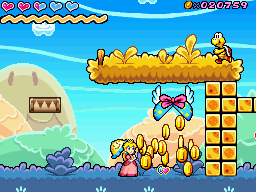
Party BallFound in stages; its design was changed before release.
Vibe ScepterThe relic at the heart of the story; Bowser uses it to power himself up.
Cartoons, Comics & Other Media
Perry outlived his game: the parasol turned up in Smash Bros., manga and elsewhere.
Super Smash Bros. Brawl (2008)Wii · trophy and stickersPerry has a trophy and a sticker, and another sticker shows Peach holding him.
Super Mario-kunManga · volume 37Perry appears in the manga’s Mario & Luigi: Partners in Time arc.
Densetsu no Stafy 4DS · costumeStapy can wear a Peach-themed costume complete with Perry.
Mario & Sonic at the London 2012 Olympic GamesWii · quizA heroine quiz asks whether Peach has ever rescued Mario or Toad; Omochao’s answer mentions her parasol.
The Super Mario Bros. Movie and Galaxy MovieFilm concept artPerry appears in concept art for the 2023 film, and some of Peach’s official artwork for The Super Mario Galaxy Movie is based on her art from this game.
Princess Peach: Showtime! (2024)Switch · Peach’s next lead roleEighteen years later Peach starred again, this time in a theatre. See Princess Peach: Showtime!
Characters
Peach is the only playable character, with Perry in her hand. The usual heroes spend the game behind bars.
Character
Who they are
In this game
Abilities & notes
Princess PeachHeroine · playable
Princess of the Mushroom Kingdom, home from an outing to find her friends gone. Voiced by Jen Taylor in this game.
Crosses all eight worlds to rescue Mario, Luigi and the Toads, using Perry and her four Vibes.
Hearts upgradeable with Tough Coffee
Vibe Gauge upgradeable with Vibe Tea
PerryTalking parasol · new
A lively, excitable parasol with a lost past: once a boy with magic powers, turned into an umbrella. His Japanese name, Kassā, comes from kasa, umbrella.
Peach’s weapon, boat, glider and submarine, and her adviser. His backstory is told in seven dreams.
Seven forms, from Bowlbrella to Subrella
Can swallow stunned enemies
ToadsworthPeach’s steward
The elderly Toad who looks after the princess.
Gives Peach Perry before she sets out, and plays in the music room’s band, Peach Hit Five, alongside her.
He bought Perry from a shop after sensing his power.
MarioCaptive
The hero of the Mushroom Kingdom, for once the one in need of help.
Captured by the Army Hammer Bro and held at the very end of Bowser’s Villa.
Not playable
LuigiCaptive
Mario’s brother, carried off with him.
Held by Giant Kamek in Giddy Sky; freed when Kamek is beaten.
Not playable
ToadsCaptives and shopkeeper
Peach’s subjects, most of them now locked in bubbles around the island.
Three are hidden in every regular stage and one is held by each of the first six bosses. Another Toad runs the shop; three more join the band.
Must all be freed before the final battle
BowserVillain · final boss
King of the Koopas, on holiday at his new villa.
Takes the Vibe Scepter, has the brothers kidnapped, then fights Peach twice, the second time as a giant.
Uses Joy, Gloom and Rage; Calm as a giant
Army Hammer BroBowser’s commander · new
A high-ranking Hammer Bro who leads the others, making his first appearance here.
Finds the Vibe Scepter and captures Mario; fought just before Bowser.
Five hits to beat; uses Rage repeatedly
The GoombasMoody minions
Bowser’s footsoldiers, here swinging between moods: one of them carries the Scepter into the castle.
Turn up as ordinary, Mad and Sad Goombas, with Glad and Calm versions left unused in the game data.
Stomp to stun, then let Perry deal with them
Bosses & enemies
The ten boss fights first, in order, with the Vibe each boss switches to; then the regular enemies, most of which come in Mad, Sad, Glad or Calm versions as well. Hit points are not shown in the game; where hit counts are known, they are given.
Petey Piranha (boss)Ladida Plains 1-6 · Vibe: RageSwallows Peach’s tears until his belly bloats, then takes a stomp; leaps about once he goes Rage.
Hoo (boss)Hoo’s Wood 2-6 · Vibe: JoyA giant owl: three hits in phase one, then two head-drops while Peach floats in Joy.
King Boo (boss)Shriek Mansion 3-6 · Vibe: GloomOnly lit torches hurt him, and he snuffs them out each time.
Wiggler (boss)Fury Volcano 4-6 · Vibe: RageFlip him with a Rage-powered piston and stomp the flashing segment.
Gooper Blooper (boss)Wavy Beach 5-6 · Vibe: CalmRemove all four tentacles; pop its healing bubble quickly.
Blizzaurus (boss)Gleam Glacier 6-6 · Vibe: JoyIce dragon with three lives, then a flying ice sprite; Rage breaks its shield.
Giant Kamek (boss)Giddy Sky 7-6 · Vibe: GloomA Joy cyclone to the face makes him dizzy; goes Gloom with two hits left.
Army Hammer Bro (boss)Bowser’s Villa 8-6 · Vibe: RageBig hammers and Hammer Bro backup; five hits of any kind.
Bowser (boss)Bowser’s Villa 8-6 · Vibes: Joy, Gloom, RageCharges, fire and hammers; Joy makes him leap, Gloom throws six hammers, Rage doubles his speed.
Giant Bowser (final boss)Bowser’s Villa 8-6 · Vibe: CalmThrow his own Bob-ombs back to explode at his eyes; break the Calm symbol.
GoombaAlso Mad and SadThe basic foe, now with mood swings.
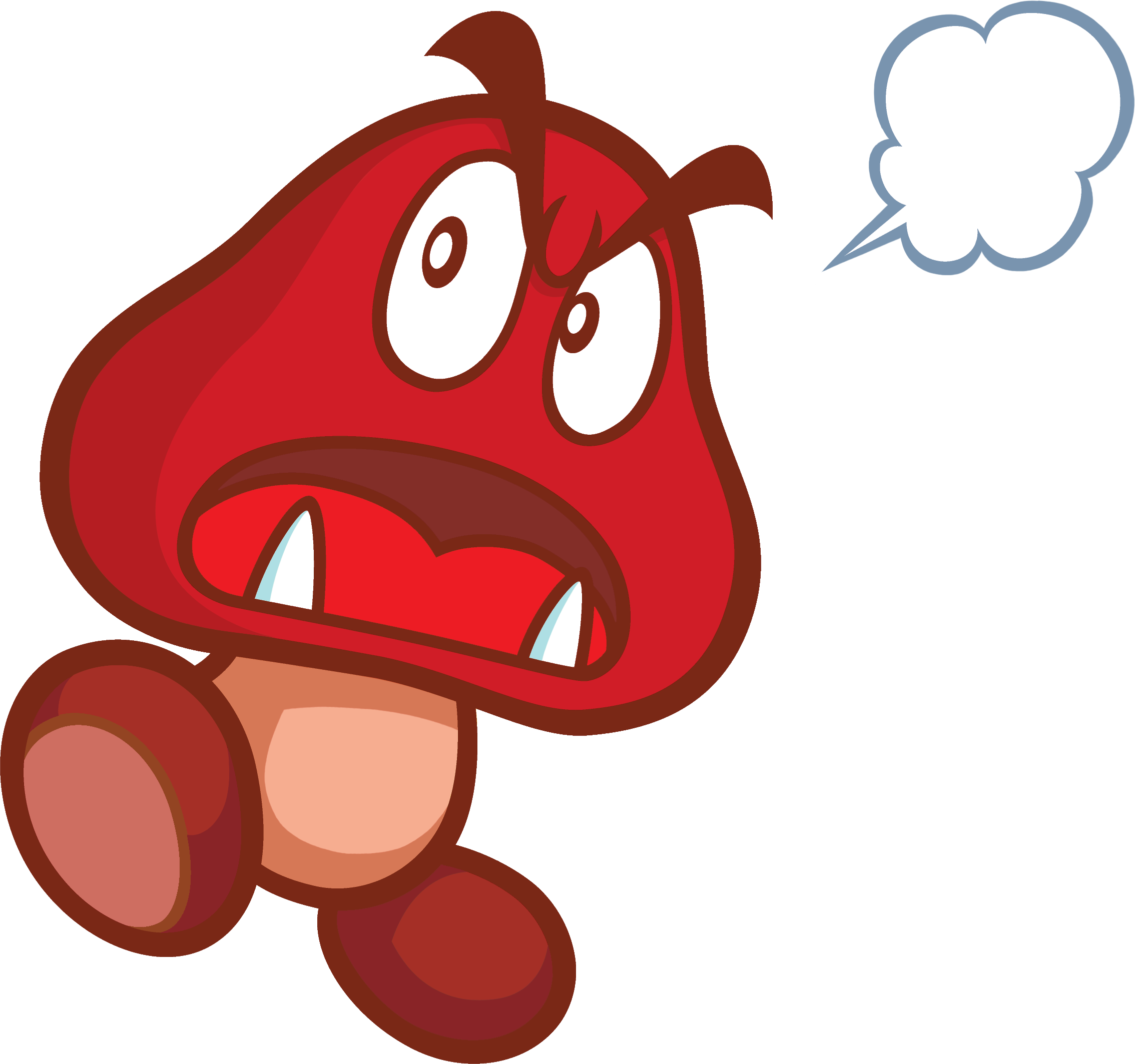
Mad GoombaRageAngry and harder to handle.
Sad GoombaGloomTearful; an unused stage is full of them.
ParagoombaAlso SadKeeps its Super Mario Bros. 3 hopping pattern.
Red ParagoombaAlso MadThe red version from Super Mario Bros. 3 returns.
Koopa TroopaGreen; also MadShell and all.
Red Koopa TroopaAlso GladTurns cheerful under Joy.
Koopa ParatroopaGreen; also MadWinged Koopas.
Red ParatroopaAlso GladRed flyers.
LakituAlso CalmCloud-rider.
SpinyAlso SadSpiked shell; no stomping.
Mecha-Spike TopAlso MadA mechanical spiked crawler.
Hammer BroAlso CalmThe Army Hammer Bro’s rank and file.
Amazing Flyin’ Hammer BroAlso CalmA Hammer Bro on a winged platform.
SpikeAlso MadGreen spiked-ball thrower.
Piranha PlantAlso GladPipe-dwelling biter.
Nipper PlantAlso SadSmall snapping plant.
PtooieAlso GladA plant foe with a spiked ball.
Volcano PlantAlso CalmA fiery plant.
PokeyAlso MadStacked cactus.
Cheep CheepAlso SadFish.
BlurpAlso MadGoggle-eyed fish.
BlooperAlso GladSquid.
UrchinUnderwaterSpiny sea hazard.
BooAlso MadShy ghost.
Big BooAlso MadSupersized Boo.
Dry BonesAlso SadSkeletal Koopa that falls apart.
Fishin’ BooAlso CalmA Boo on a cloud with a fishing line.
PodobooLavaLava bubble.
Lil SparkyHazardA small spark.
HotheadHazardA larger cousin of Lil Sparky.
ThwompAlso CalmCrushing stone block.
Torpedo TedAlso GladUnderwater missile.
Bullet BillAlso MadFired from cannons.
Banzai BillAlso MadA giant Bullet Bill.
CannonAlso CalmFires the Bills.
Bob-ombAlso GladWalking bomb; giant Bowser throws them, and Peach throws them back.
ParabombAlso GladA Bob-omb on a parachute.
Chain ChompAlso CalmLunging ball on a chain; a Big Chain Chomp appears too.
FangAlso GladBat.
RavenAlso SadCrow-like flyer.
RexAlso SadThe dinosaur from Super Mario World.
WalrussEnemyA walrus foe.
StarfishEnemyA starfish foe.
Key staff
From the end credits.
Akio Imai and Azusa TajimaDirectorsCredited as the game’s two directors.
Yasuhiro Minamimoto and Hitoshi YamagamiProducersWith Shin Kondo as general producer.
Satoru IwataExecutive producerCredited as executive producer.
Takayuki IkedaConceptCredited with the game’s concept.
Akira Mochizuki and Yuichiro NakayamaMain designLevel and game design.
Kenta EgamiMain programmingLead programmer.
Akira FujiwaraMusic and sound programmingWrote the score, including the mood-shifted versions for each Vibe.
Yasuko Takahashi, Daiki Nishioka and Chiharu SakiyamaArtworkThe game’s art.
Yoichi Kotabe and othersCharacter supervisionKotabe is credited for character supervision with Yo Ohnishi, Shigehisa Nakaue, Kanae Kobata and Tsuyoshi Watanabe.
Jen TaylorVoice of PeachCredited for Peach’s voice.
Advertisement
How It Was Made
A Nintendo heroine in a game built outside Nintendo’s own studios: Tose made it with producers from Nintendo’s SPD group.
Tose and Nintendo SPD
Peach in a Joyful mood.
The game was developed by Tose Software Co. together with Nintendo SPD Group No. 2. Akio Imai and Azusa Tajima directed; Yasuhiro Minamimoto and Hitoshi Yamagami produced, with Shin Kondo as general producer and Satoru Iwata as executive producer. Takayuki Ikeda is credited with the concept, Akira Mochizuki and Yuichiro Nakayama with the main design, Kenta Egami with the programming and Akira Fujiwara with the music. Peach’s look was supervised by a team that included Yoichi Kotabe.
Making Peach Peach-like
Rage, the Vibe that sets Peach on fire.
In a Mario 20th anniversary interview for Nintendo Online Magazine in 2005, translated by shmuplations, Shigeru Miyamoto said the aim was for Peach to be Peach-like, and that details such as her parasol were chosen with that in mind. He described her as a princess with a carefree optimism who has never seen herself as someone Mario protects, said the team’s image of her was a strong one, and hoped to keep using her in different games.
What changed before release
An early version of the Vibe display.
Early screenshots show a rather different game. Peach’s portrait sat on the top screen instead of the bottom, there were no heart panels, the background was a flat bright green and Peach herself looked different. Her tears were big round drops rather than a continuous stream, and the Party Ball and Bob-ombs had other designs. One screenshot shows a map for an icy world like Gleam Glacier in the place of world three.
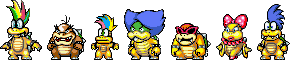
Some leftovers are still on the cartridge: animations for all seven Koopalings, who never appear, early Goomba, Boo, Peach, Luigi and Toad sprites, Glad and Calm Goombas, and an unused stage packed with Sad Goombas.
Launch
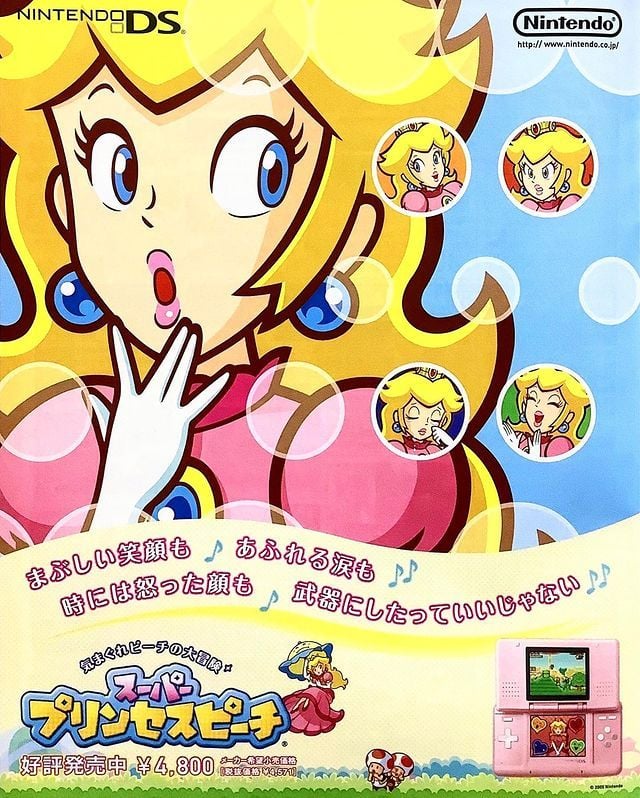
A Japanese print advert.
Wikipedia records that Nintendo first announced the game in October 2004, without a date. It came out in Japan and Taiwan on 20 October 2005 and in South Korea on 4 November, then in North America on 27 February 2006 and Australia at the end of March. Nintendo’s European press release of 13 March 2006 set 26 May for Europe at around £30, promising hidden picture pieces, music and touch-screen minigames as well as the Vibes.
Series Firsts
What the game added to the series, checked against the sources.
1Peach’s first Nintendo-published lead rolePrincess Peach: Showtime! is usually counted as her second, after this game. Her only earlier starring game was a 1990 LCD handheld, Princess Toadstool’s Castle Run.
2Debut of PerryThe talking parasol first appears here and later earned a Smash Bros. trophy and spirit.
3Debut of the Army Hammer BroThis game is usually counted as his first appearance.
Cheats & Secrets
No codes, but plenty to find. Super Luigi Bros also has a separate cheats page for this game.
Where the minigames are
Toad Jump is hidden in Hoo’s Wood 2-4, Toad Tote in Fury Volcano 4-1 and Toad Shot in Gleam Glacier 6-1. Levels 2 to 7 of each cost 100 to 350 coins in the shop; the rest are hidden in stages.
Replay the opening minigame
Hold R and press Start to replay the little game from the opening scene with Toadsworth.
Unlocking the extra stages
Beat Bowser to open stages 1-7 to 1-9. Replaying the other boss battles opens the extra stages in the later worlds, 24 in all.
Endless Vibe
Clear every stage, every minigame level and every puzzle, and collect every music score; Endless Vibe then costs nothing in the shop and can be switched on from the Bonus menu.
Shop unlocks
Courage Soda appears after Shriek Mansion, Natural Power after Gleam Glacier. Puzzle B, C and D pieces go on sale after Hoo’s Wood 2-6, Fury Volcano 4-6 and Gleam Glacier 6-6.
A tougher Bowser
Fight Bowser again after the credits and his giant form takes twice as many hits.
Boss tips
Use Gloom against Petey Piranha (he swallows the tears), keep relighting King Boo’s torches with Rage, Rage-stomp to work Wiggler’s piston, and save Joy for Giant Kamek’s face.
Videos
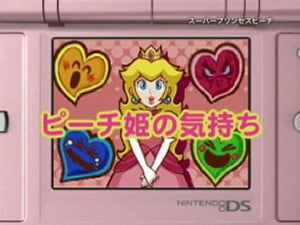
Two of the game’s television adverts, both third-party uploads: the North American commercial and the Japanese one.
Third-party upload of Nintendo of America’s television advert.
Third-party upload of the Japanese television advert.
Trivia & Interesting Facts
Perry’s Japanese name, Kassā, is a play on kasa, the Japanese word for umbrella.
Bosses take up entries 80 to 89 of the in-game glossary.
Toadsworth’s line as he hands over Perry paraphrases the famous warning about going alone from The Legend of Zelda.
Peach throwing enemies, and gliding with the Floatbrella, recall her abilities in Super Mario Bros. 2.
The final battle, a giant Bowser beaten with thrown objects, mirrors the last fight of Donkey Kong on Game Boy.
Koopatrol statues from Paper Mario stand on the Bowser’s Villa map.
Petey Piranha and Gooper Blooper came from Super Mario Sunshine, and Petey, Wiggler and Gooper are beaten in similar ways to that game.
Toad Jump uses only the microphone: blow to jump.
The Subrella fires bubbles when you blow into the microphone.
Unused Iggy Koopa.Animations for all seven Koopalings are in the game data, though none of them appears.
The music room has 60 tracks, five of which are Peach’s voice clips.
The closing note hints that the Vibe Scepter may now be in the player’s own home.
There are seven dreams of Perry’s past; the last comes after Giant Kamek is beaten and Luigi is free.
Glad and Calm Goombas exist in the game’s files but were never used.
Nintendo’s European press release called the relic a wand rather than a sceptre.
Perry is a Support spirit in Super Smash Bros. Ultimate, with the Floaty Jumps skill.
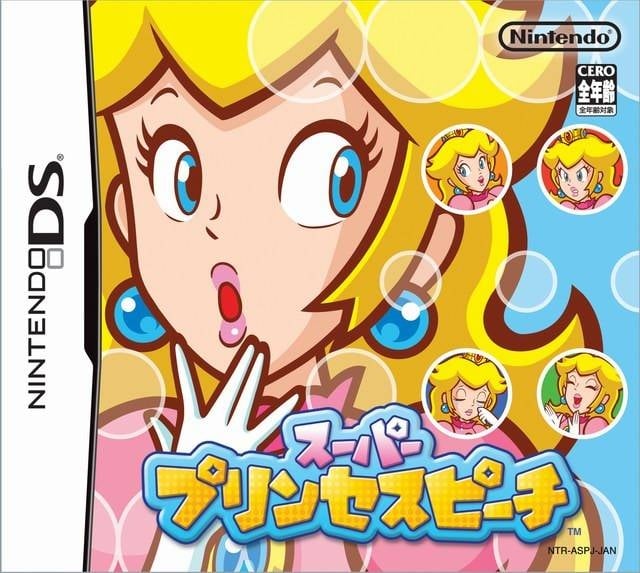
Regional Box Art
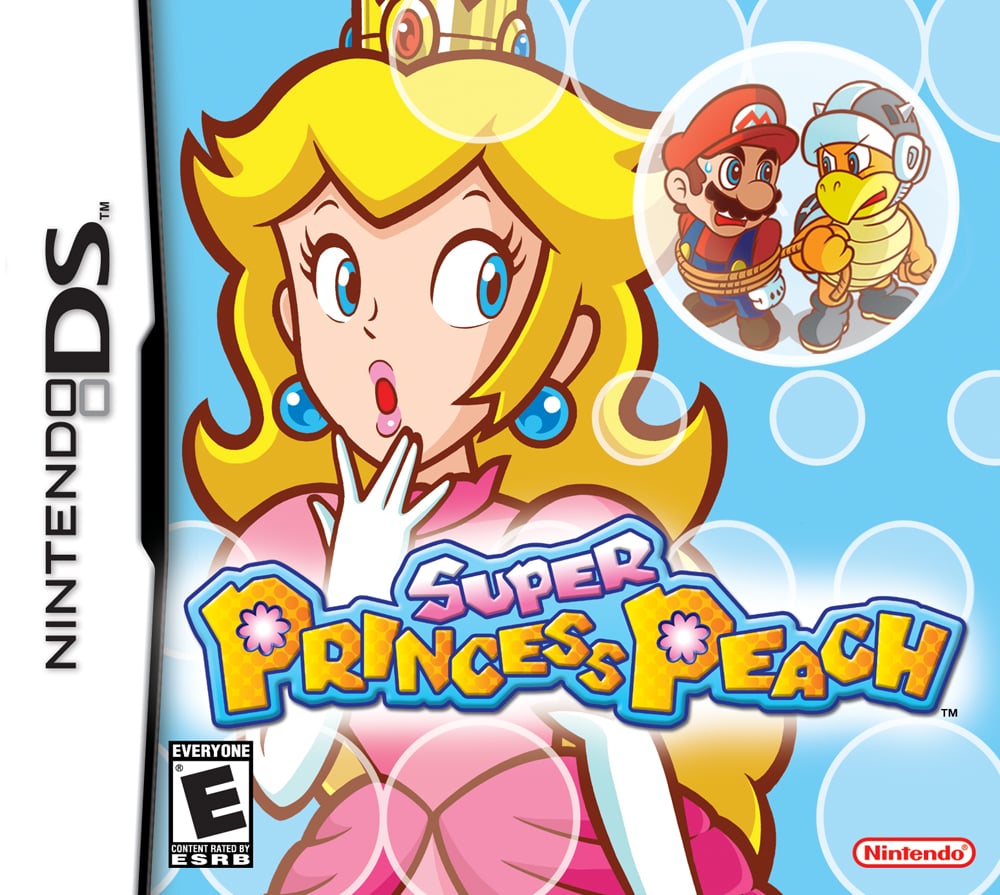
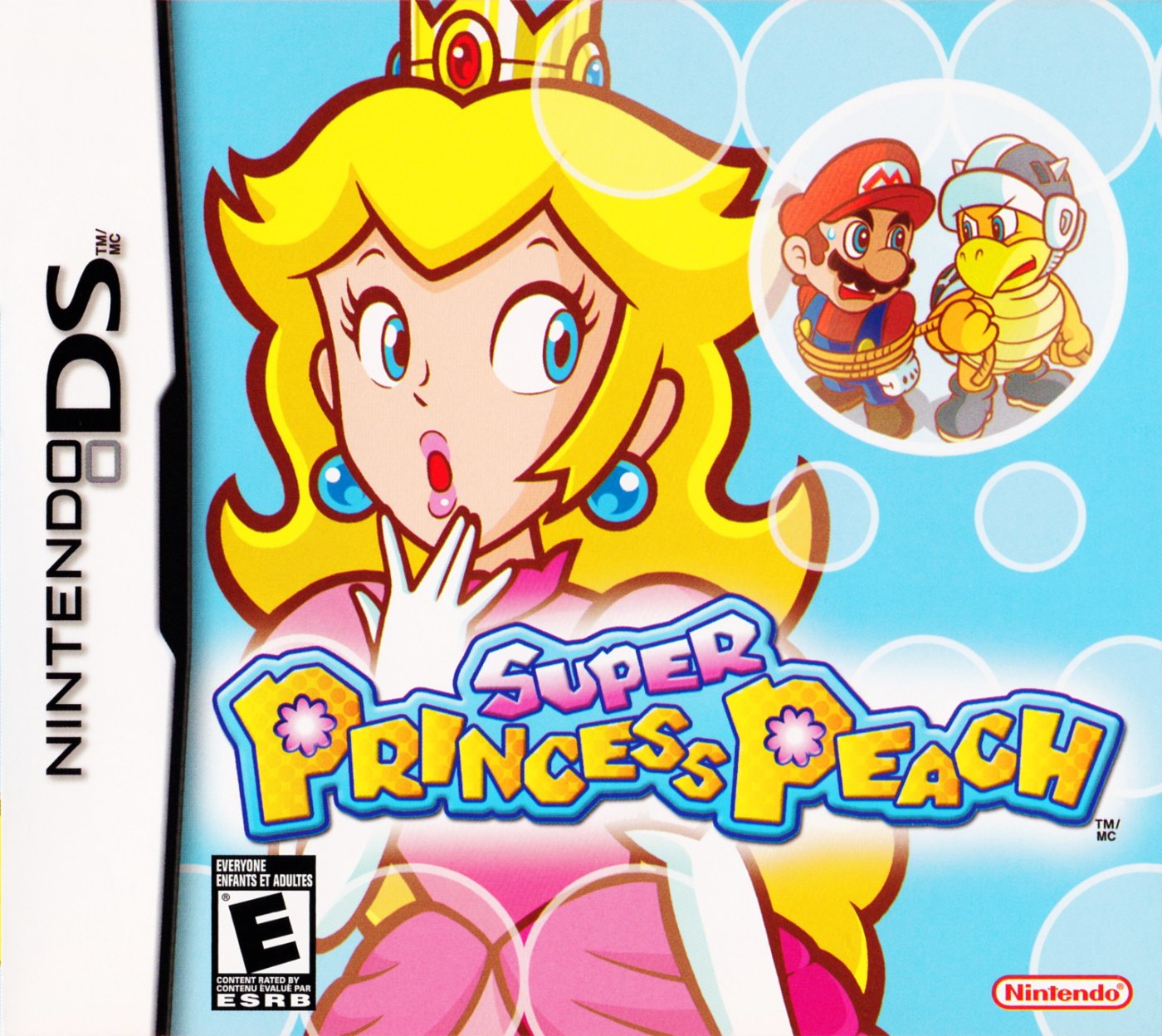
The DS boxes from around the world, plus the pre-release North American cover.
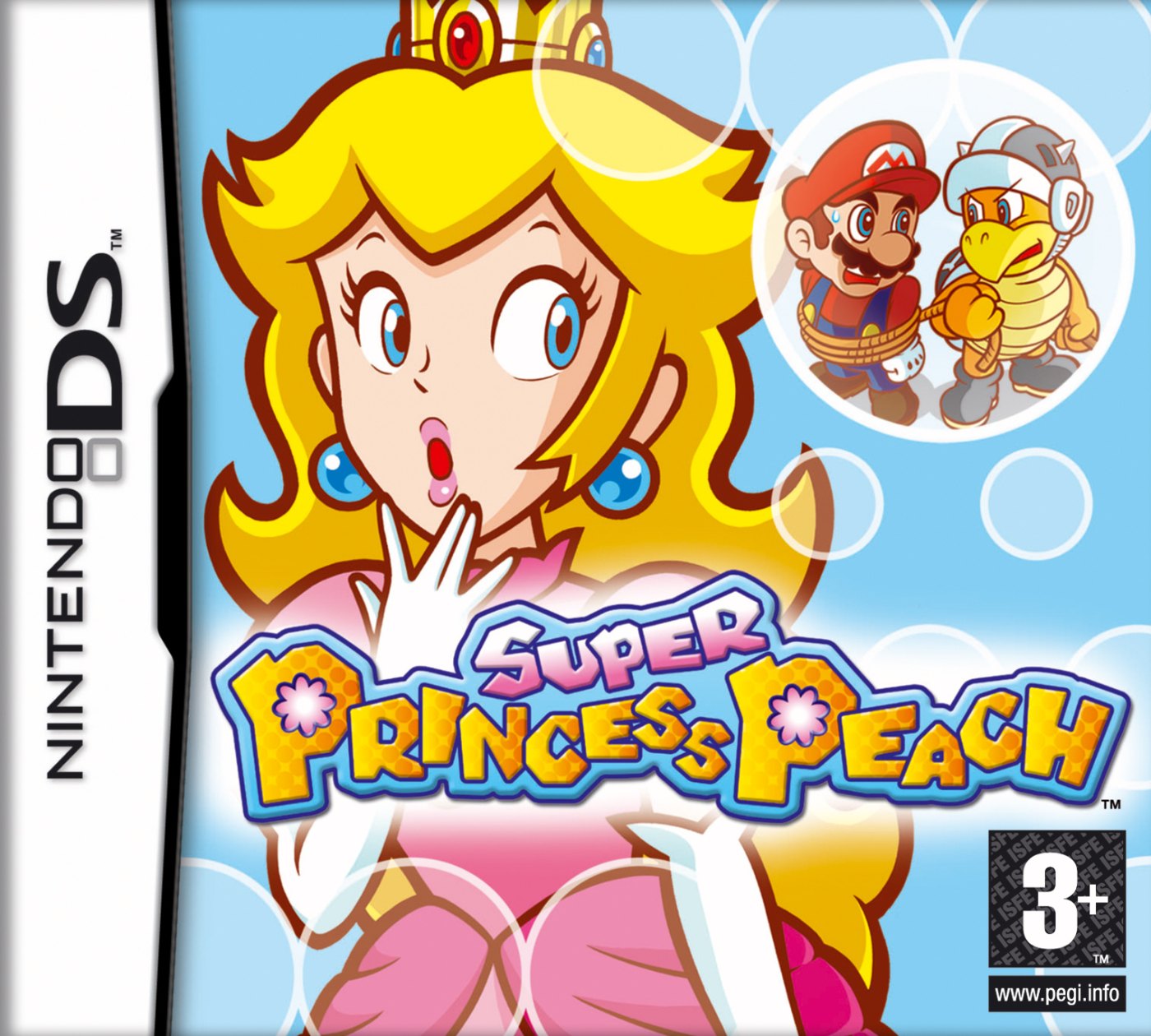
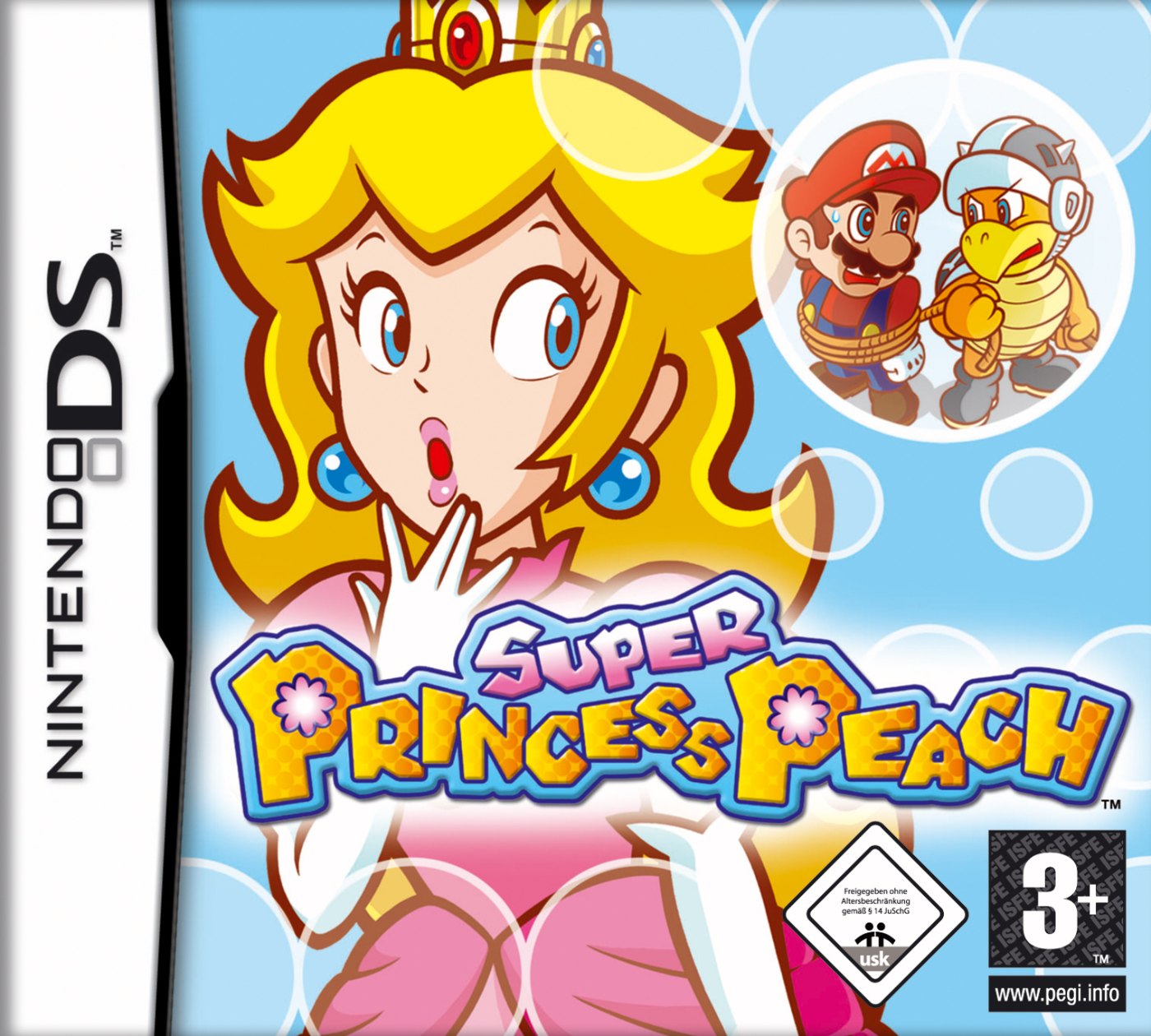
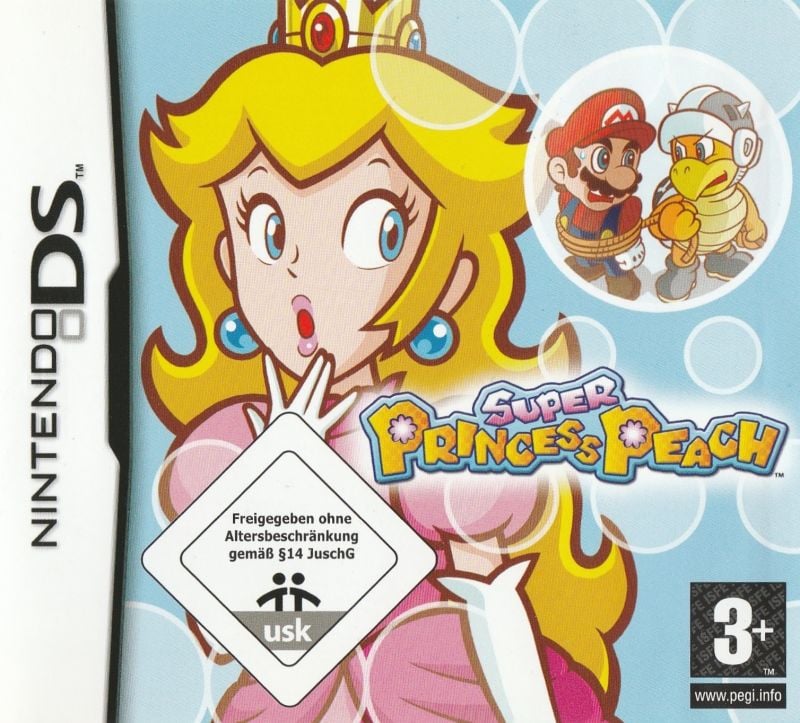
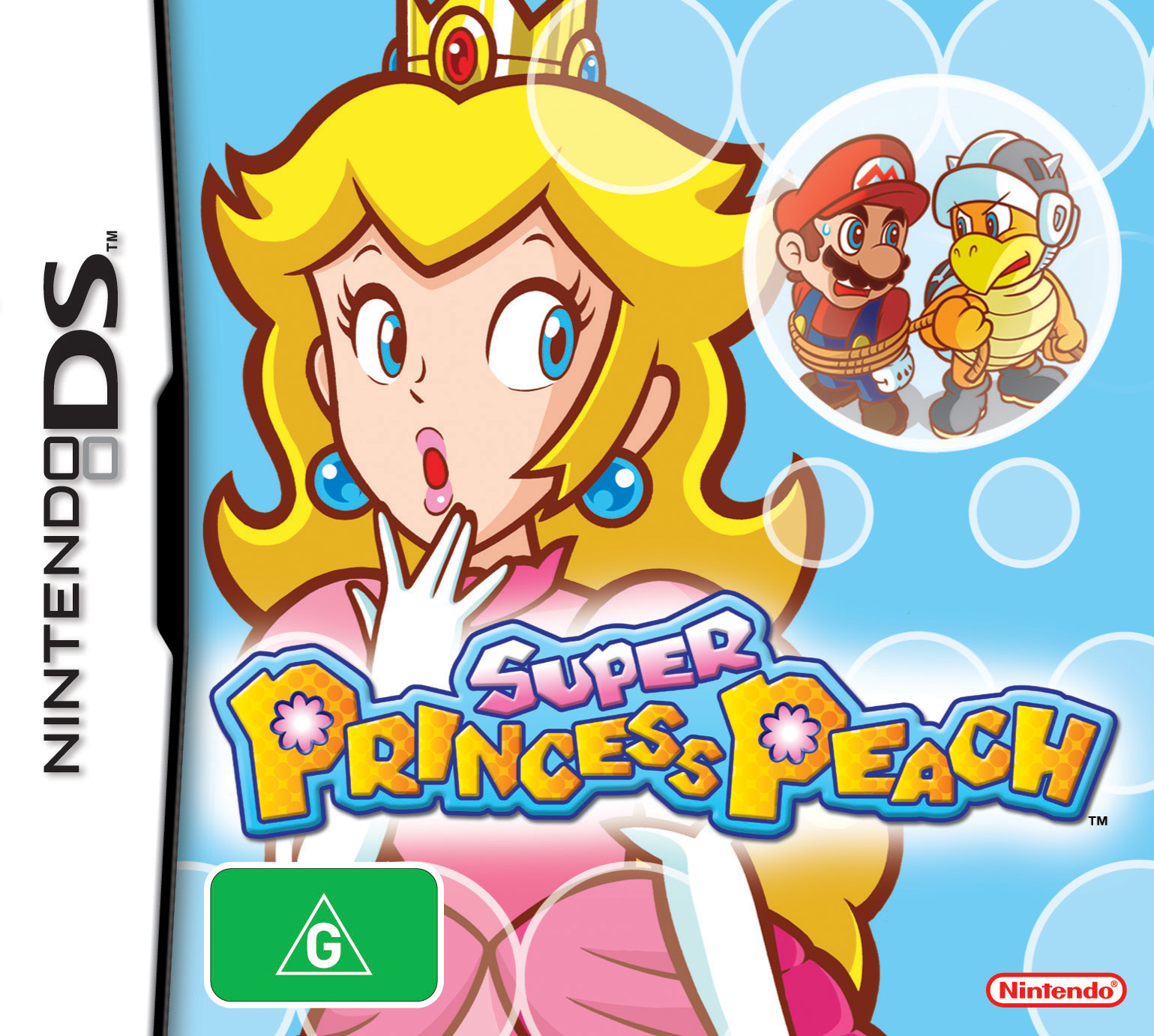
North AmericaNorth America (pre-release)CanadaEuropeGermanyGermany (later release)Australia and New ZealandJapan
Screenshots
More from Vibe Island.
The heart meter and Vibe Gauge.A pushable block.Early footage, before the final interface.A pre-release map of an icy world once planned as world three.Pre-release Gloom, with tears as big drops.A pre-release look at Fury Volcano.
Artwork & Media Gallery
Official artwork, logos and promotional art.
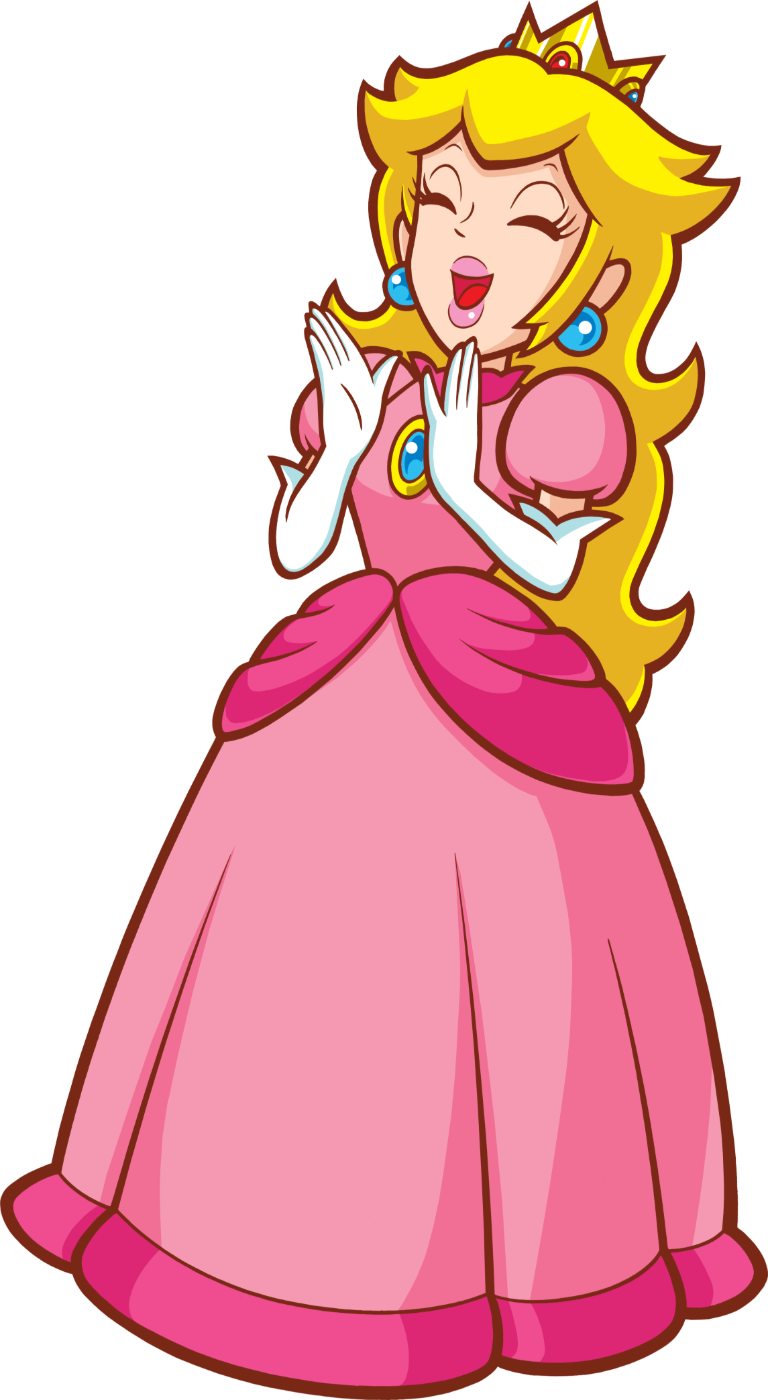
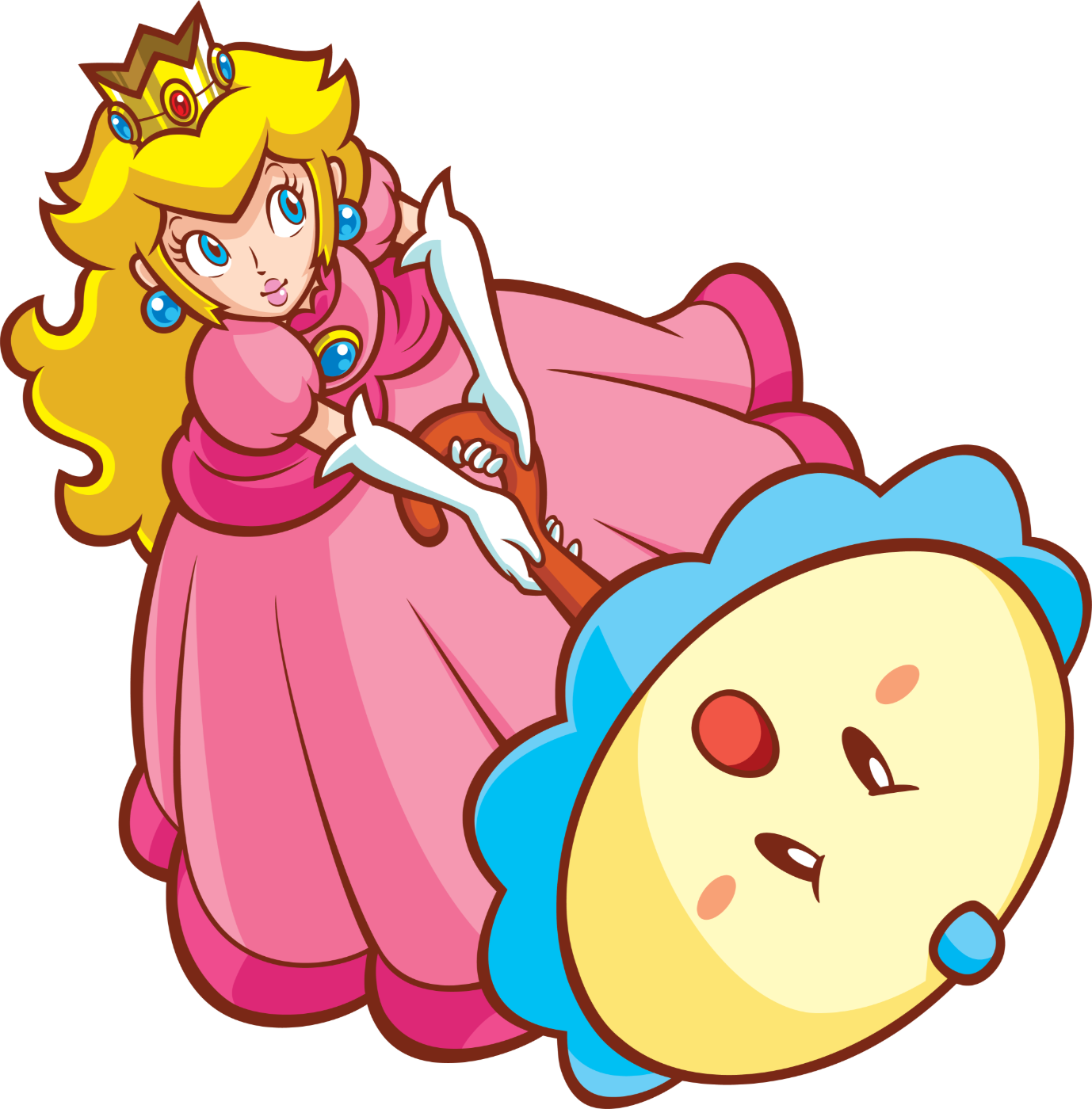
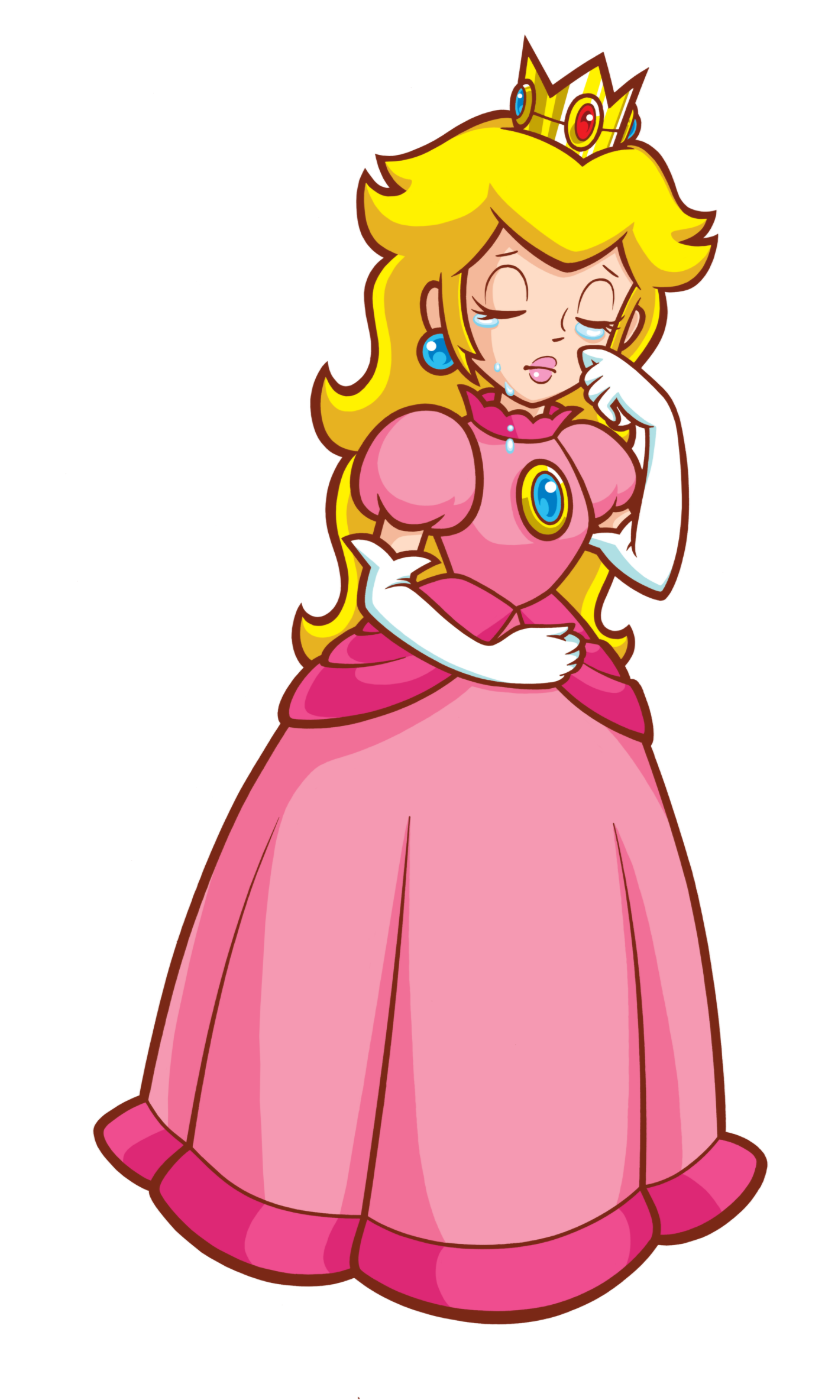
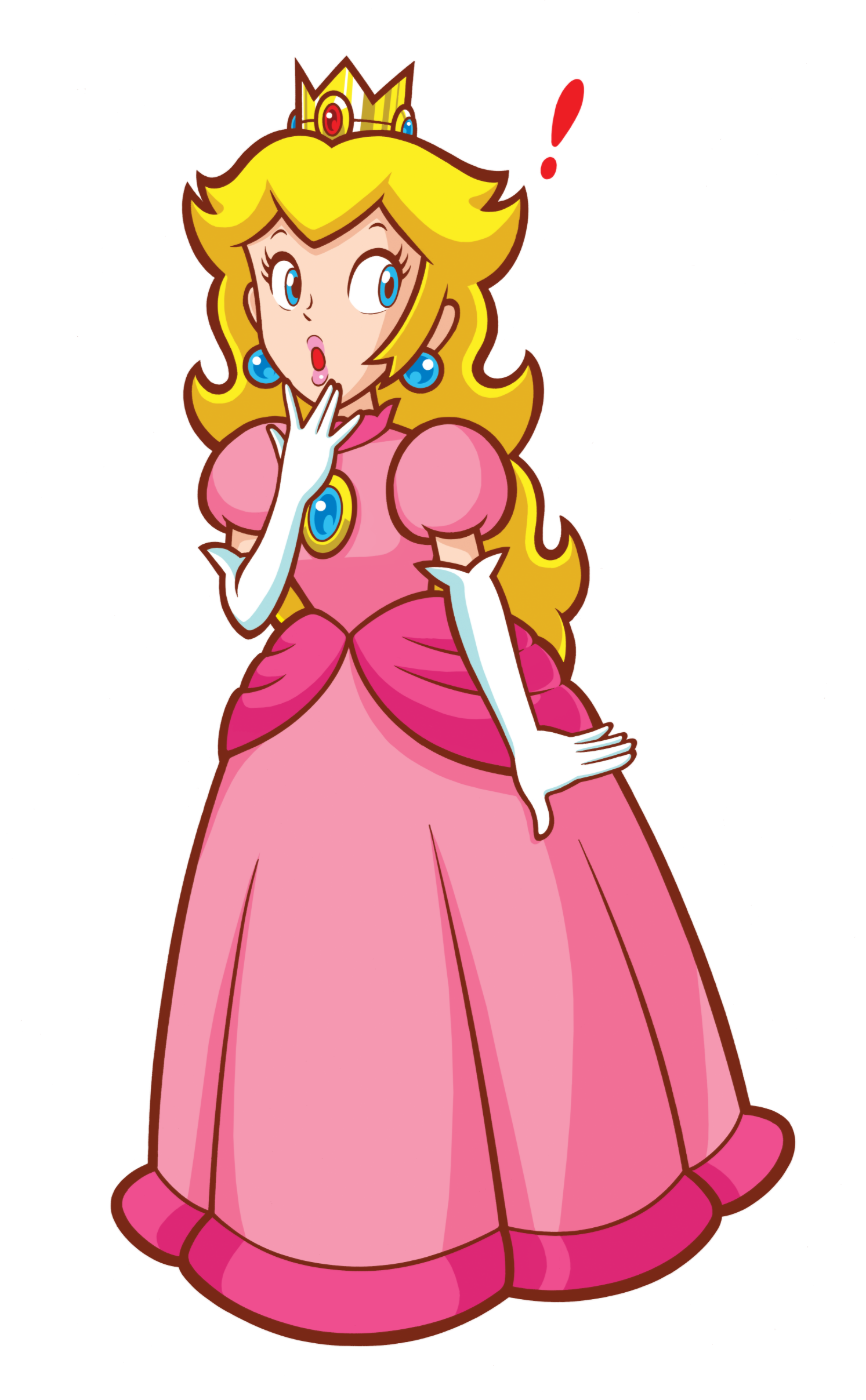
Group artwork.The four Vibes.Gloom.Calm.Joy.Rage.Peach on the defensive with Perry.Peach defeated.Peach’s intuition kicks in.A Mad Goomba.A Vibe crystal.A puzzle piece.International logo.Japanese logo.A promotional wallpaper.The DS menu icon.Peach’s in-game sprite.Perry’s sprite.Luigi’s sprite.The unused Koopalings.
Legacy & Re-releases
Super Princess Peach has not been remade, and Peach waited more than eighteen years for another lead role.
Releases
AnnouncementOctober 2004Announced by Nintendo without a date (per Wikipedia).
Nintendo DS (Japan, Taiwan)20 October 2005First release.
Nintendo DS (South Korea)4 November 2005Korean release.
Nintendo DS (North America)27 February 2006North American release.
Nintendo DS (Australia)30 March 2006Some sources give 31 March.
Nintendo DS (Europe)26 May 2006Around £30 at launch, per Nintendo’s press release.
Nintendo DS (South Africa)26 September 2008Reported release date.
Princess Peach: Showtime!22 March 2024Peach’s next starring game, on Switch.
Perry after Vibe Island
Perry became a minor Nintendo icon: a trophy and stickers in Super Smash Bros. Brawl, a spirit in Ultimate, a cameo in the Super Mario-kun manga, a costume in Densetsu no Stafy 4 and a quiz answer in Mario & Sonic at the London 2012 Olympic Games. Some of Peach’s Galaxy Movie artwork even borrows from this game’s art.
Peach’s next lead role
It took until 2024 for Peach to headline again, in Good-Feel’s Princess Peach: Showtime! on Switch, with a new sidekick, Stella, in place of Perry. For other DS platformers of the era see New Super Mario Bros. and our games index.
Reviews & Sales
Sales
In July 2007 IGN reported, from Nintendo’s sales update, that Super Princess Peach had sold 1.15 million copies worldwide. The Japanese industry body CESA’s Games White Paper of 2020 gives a higher lifetime total of 1.7 million, according to Wikipedia.
1.7mworldwide (CESA Games White Paper 2020, via Wikipedia)
1.15mworldwide by July 2007 (IGN)
75Metacritic, 48 reviews
34/40Famitsu
Reviews
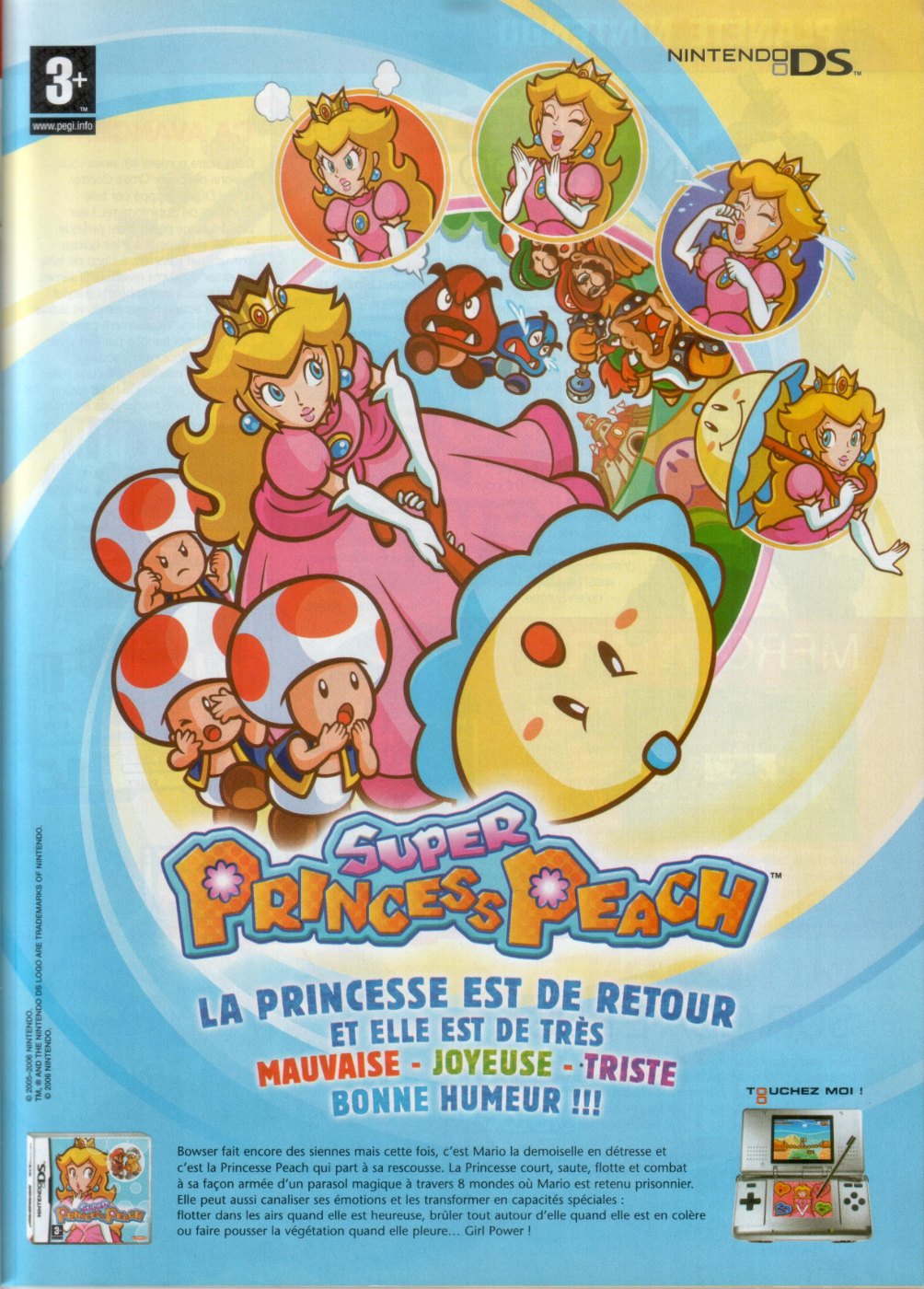
A French print advert for the game.
Generally positive: Metacritic 75 from 48 reviews and GameRankings 76.6%. Scores are as listed by Wikipedia.
Game InformerUS
8.75/10
GameZoneUS
8.8/10
FamitsuJapan
34/40
1UP.comUS
B+
GameProUS
4/5
Nintendo World ReportUS
8/10
X-PlayUS · Morgan Webb
4/5
IGNUS · Craig Harris, 23 Feb 2006
7.8/10
GameRankingsAggregate, 56 reviews
76.6%
MetacriticAggregate, 48 reviews
75/100
GameSpotUS · Ryan Davis
7.2/10
Official Nintendo MagazineUK
72%
GameSpyUS · Bryn Williams
3.5/5
GamesRadar+UK
3.5/5
Game RevolutionUS
C+
EurogamerUK · Mathew Kumar
6/10
Critics enjoyed the role reversal and the charm. Nintendo World Report found it cute and delightfully absurd, GameSpot liked how the Vibes put a new spin on familiar platforming ideas, and Vooks said they stopped it from feeling like a by-the-numbers Mario copy. The minigames, Perry and the presentation were widely praised.
The common complaint was that it was too easy. IGN’s Craig Harris felt it held the player’s hand too much, GameSpy observed that between the shop and Calm it was hard to die, and X-Play’s Morgan Webb pitched it at first-time platform players. Some reviewers also took issue with powers based on a woman’s mood swings: GameSpot’s Ryan Davis saw sexist undertones and GameSpy asked whether Nintendo thought all women were emo. Eighteen years later a CGMagazine retrospective argued the opposite, reading the Vibes as empowering.
Internet Advertising Competition 2007WinnerBest Toy & Hobby Integrated Ad Campaign.
SLB User Reviews
Super Princess Peach has yet to receive a community review on Super Luigi Bros.
If you’ve played Super Princess Peach and would like to submit a review, please get in touch.
More from the Super Luigi Bros Guide
These picture lists come from the earlier Super Luigi Bros guide to Super Princess Peach and are kept here in full.
Peach’s Vibes
The Vibe system is the game’s defining mechanic — and what sets Super Princess Peach apart from every other Mario platformer. As Peach collects Vibe Crystals dropped by enemies and hidden in levels, her Vibe Gauge fills. When charged, she can tap one of four Heart Panels on the touch screen to trigger a Vibe, temporarily transforming her with a powerful emotion-based ability. Click any image below to see the full artwork.
😊 Joy
😡 Rage
😢 Gloom
😌 Calm
😊 Joy — Orange Heart
Peach floats upward while A is held — reach otherwise inaccessible Toads and platforms
Releasing A creates a spinning tornado that defeats enemies and disperses smoke in Fury Volcano
Background music shifts to a faster, happier version
Bosses use Joy to destroy platforms and chase Peach through a freefall
😡 Rage — Pink Heart
Peach catches fire and becomes fully invulnerable to enemy attacks
Stomp stuns all nearby enemies; hard landings trigger large switches
Ignites objects and burns through obstacles in Fury Volcano
Inflates hot air balloons in Giddy Sky to reach new heights
😢 Gloom — Blue Heart
Peach cries — tears make plants grow instantly for climbing
Tears spin water wheels to open hidden passages
Peach runs noticeably faster in this state
Can counter certain boss attacks that require sadness
😌 Calm — Green Heart
Peach radiates serenity and steadily recovers HP until the gauge empties
Can be interrupted by taking damage
Essential for surviving long boss fights and recovery between sections
Pairs perfectly with Gloom for extended exploration runs
Bosses also use Vibes — they enter a powered-up phase partway through each fight, becoming faster or more aggressive. Peach must use her own Vibes strategically to counter or exploit the boss’s emotional state.
Obstacles
Beyond the enemies, Vibe Island is full of environmental hazards — many of which interact directly with Peach’s Vibe abilities in clever ways. Mastering these is key to full completion.
Ball ‘N’ ChainSpiked hazard
SmogballToxic cloud
Stomping block
SandslabDesert hazard
Mini-Fang SwarmTiny swarm
Security ThwompGuard crusher
Obstacle
World
How to Handle
Smoke Clouds
Fury Volcano
Cause continuous damage while Peach is inside. Activate Joy Vibe — the tornado blast clears the smoke instantly. Vibe Crystals are extra plentiful in this world to compensate.
Lava
Fury Volcano
Instant damage on contact — Rage Vibe does not protect against lava. Time platforms carefully and use Perry to float over gaps.
Icy Floors
Gleam Glacier
Slippery surface that reduces traction. Move carefully and use Perry to brake. Rage Vibe combats freezing attacks from enemies.
Blizzard Winds
Gleam Glacier
Strong horizontal gusts that push Peach off course. Use Joy Vibe to float over hazardous sections.
Water Currents
Wavy Beach
Drag Peach in one direction while swimming. Enter Perry’s submarine mode to navigate against currents.
Brambles & Thorns
Hoo’s Wood
Damage Peach on contact. Use Gloom Vibe tears to grow climbable plants and find routes around thorny sections.
Water Wheels
Various
Must be spinning to open hidden doors. Gloom Vibe tears activate them — look for streams near sealed passages.
Hot Air Balloons
Giddy Sky
Balloons that require heat to rise. Activate Rage Vibe — Peach’s fire aura ignites the burner and sends the balloon up to new platforms.
Large Switches
Various
Too heavy for a normal stomp — activate Rage Vibe and perform a hard landing to trigger them and unlock new areas.
Locked Doors
All worlds
Some require key items; others open when all enemies in a room are defeated. The Calm Vibe is useful for recovering HP before a locked-door gauntlet.
Tall Platforms
All worlds
Out of reach of a normal jump — activate Joy Vibe and float upward to reach hidden Toads and secret exits.
Ball ‘N’ Chain
Shriek Mansion & Villa
A spiked ball on a chain swinging in tight corridors — time your movement to the swing pattern carefully.
To provide the best experiences, we use technologies like cookies to store and/or access device information. Consenting to these technologies will allow us to process data such as browsing behavior or unique IDs on this site. Not consenting or withdrawing consent, may adversely affect certain features and functions.
Functional
Always active
The technical storage or access is strictly necessary for the legitimate purpose of enabling the use of a specific service explicitly requested by the subscriber or user, or for the sole purpose of carrying out the transmission of a communication over an electronic communications network.
Preferences
The technical storage or access is necessary for the legitimate purpose of storing preferences that are not requested by the subscriber or user.
Statistics
The technical storage or access that is used exclusively for statistical purposes.The technical storage or access that is used exclusively for anonymous statistical purposes. Without a subpoena, voluntary compliance on the part of your Internet Service Provider, or additional records from a third party, information stored or retrieved for this purpose alone cannot usually be used to identify you.
Marketing
The technical storage or access is required to create user profiles to send advertising, or to track the user on a website or across several websites for similar marketing purposes.

 World 2: Hoo’s WoodStages 2-1 to 2-9 · boss: Hoo (2-6)A forest of everyday enemies; Toad Jump is hidden in 2-4.
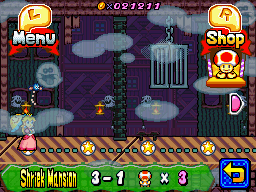 World 3: Shriek MansionStages 3-1 to 3-9 · boss: King Boo (3-6)A haunted mansion of ghosts and sad enemies; the Slidebrella comes from 3-1.
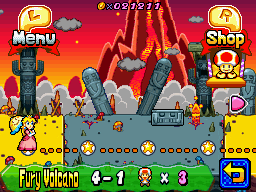 World 4: Fury VolcanoStages 4-1 to 4-9 · boss: Wiggler (4-6)Lava, fire enemies and angry ones; Toad Tote is found in 4-1.
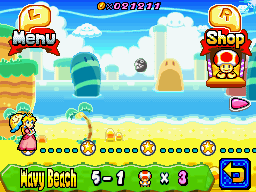 World 5: Wavy BeachStages 5-1 to 5-9 · boss: Gooper Blooper (5-6)Sand and sea, and the Subrella from 5-2 to take Perry underwater.
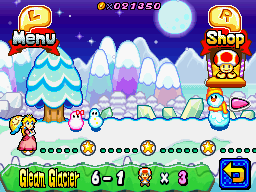 World 6: Gleam GlacierStages 6-1 to 6-9 · boss: Blizzaurus (6-6)Ice and snow with sad and angry enemies; Toad Shot is in 6-1.
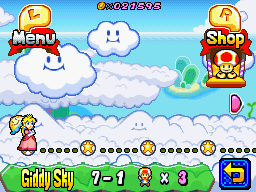 World 7: Giddy SkyStages 7-1 to 7-9 · boss: Giant Kamek (7-6)A cloud world of calm and glad enemies, where Luigi is held.
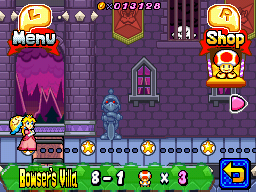 World 8: Bowser’s VillaStages 8-1 to 8-9 · bosses: Army Hammer Bro and Bowser (8-6)Bowser’s holiday home, with every enemy type and Mario locked up at the end.
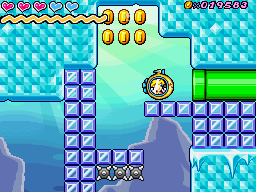
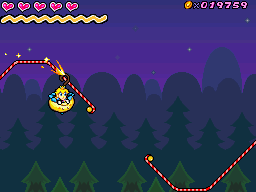
 JoyFloat while holding A; release for a tornado.
 RageFire aura and a stunning ground-shake on landing.
 GloomFaster running; tears grow plants, turn wheels and freeze on cold floors.
 CalmRestores hearts while draining the gauge.
 BowlbrellaPerry as a boat.
 FloatbrellaDrift down for a few seconds. 200 coins.
 PoundbrellaPound downward and attract items. 500 coins.
 ChargebrellaCharge and fire a blast. 700 coins.
 DashbrellaSwing Perry while running.
 Tough CoffeeAdds to maximum health. Four cups, 250 to 1,500 coins.
 Vibe TeaExtends the Vibe Gauge. Four cups, 250 to 1,500 coins.
 Endless VibeThe gauge never drains. Free once everything is complete.
 Vibe crystalRefills the Vibe Gauge.
 CoinThe shop’s currency; large coins are worth more.
 Puzzle PieceHidden in stages or bought; complete a set to play its jigsaw.
 Music scoreAdds a track to the music room.
 Party BallFound in stages; its design was changed before release.
 Vibe ScepterThe relic at the heart of the story; Bowser uses it to power himself up.
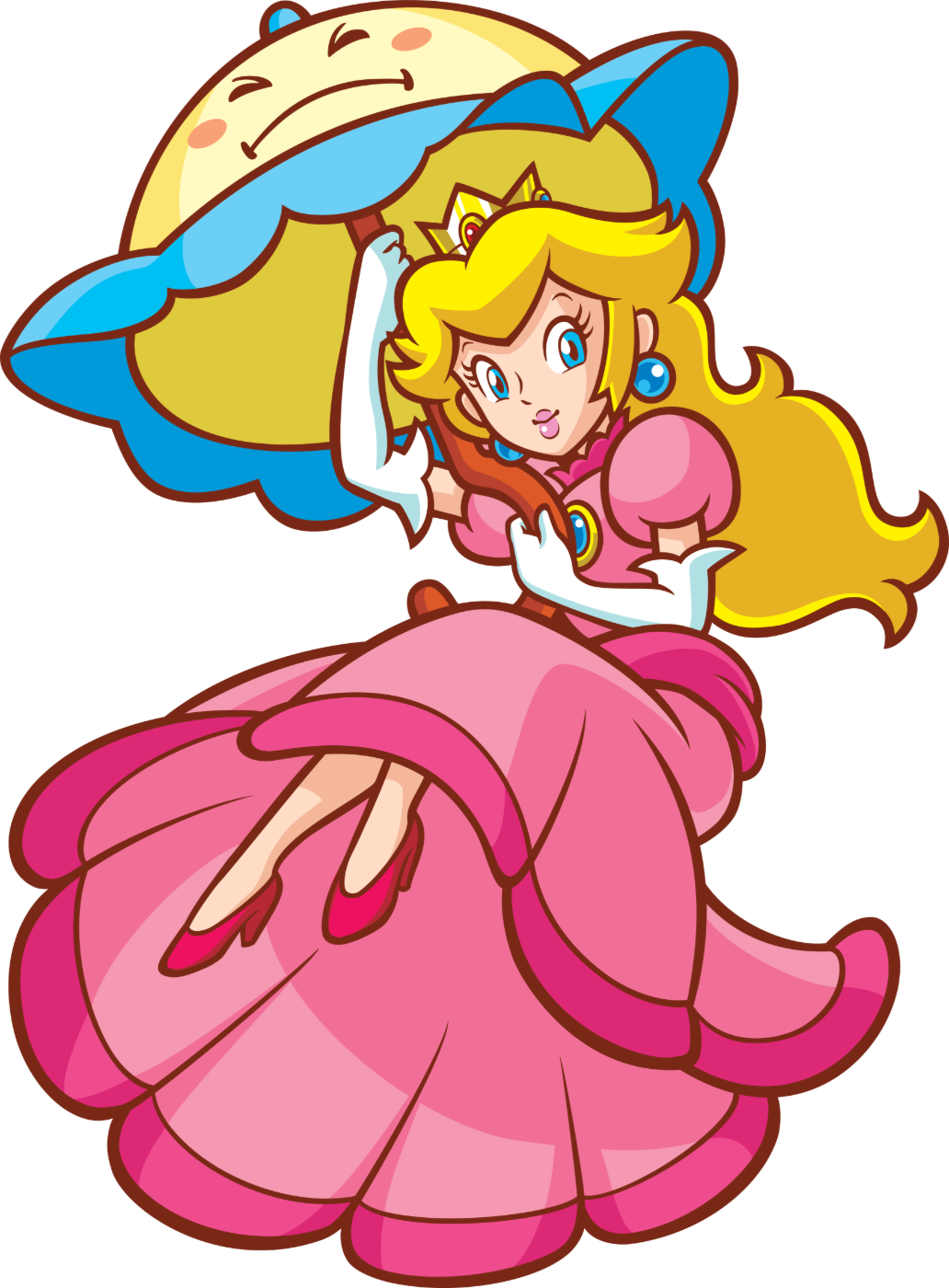


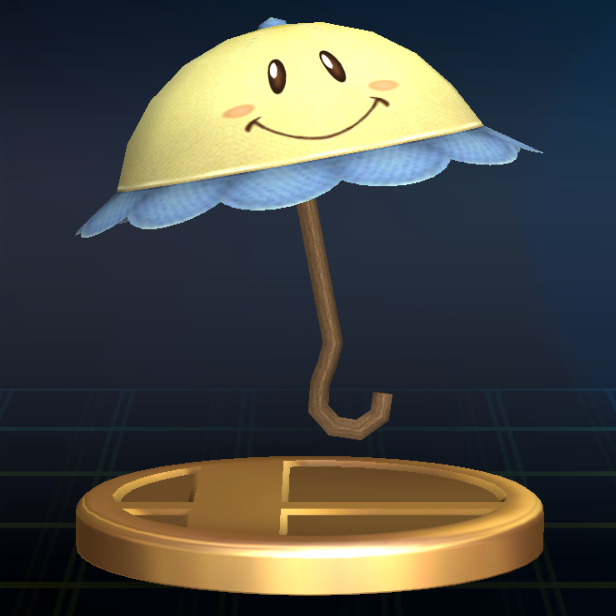 Super Smash Bros. Brawl (2008)Wii · trophy and stickersPerry has a trophy and a sticker, and another sticker shows Peach holding him.
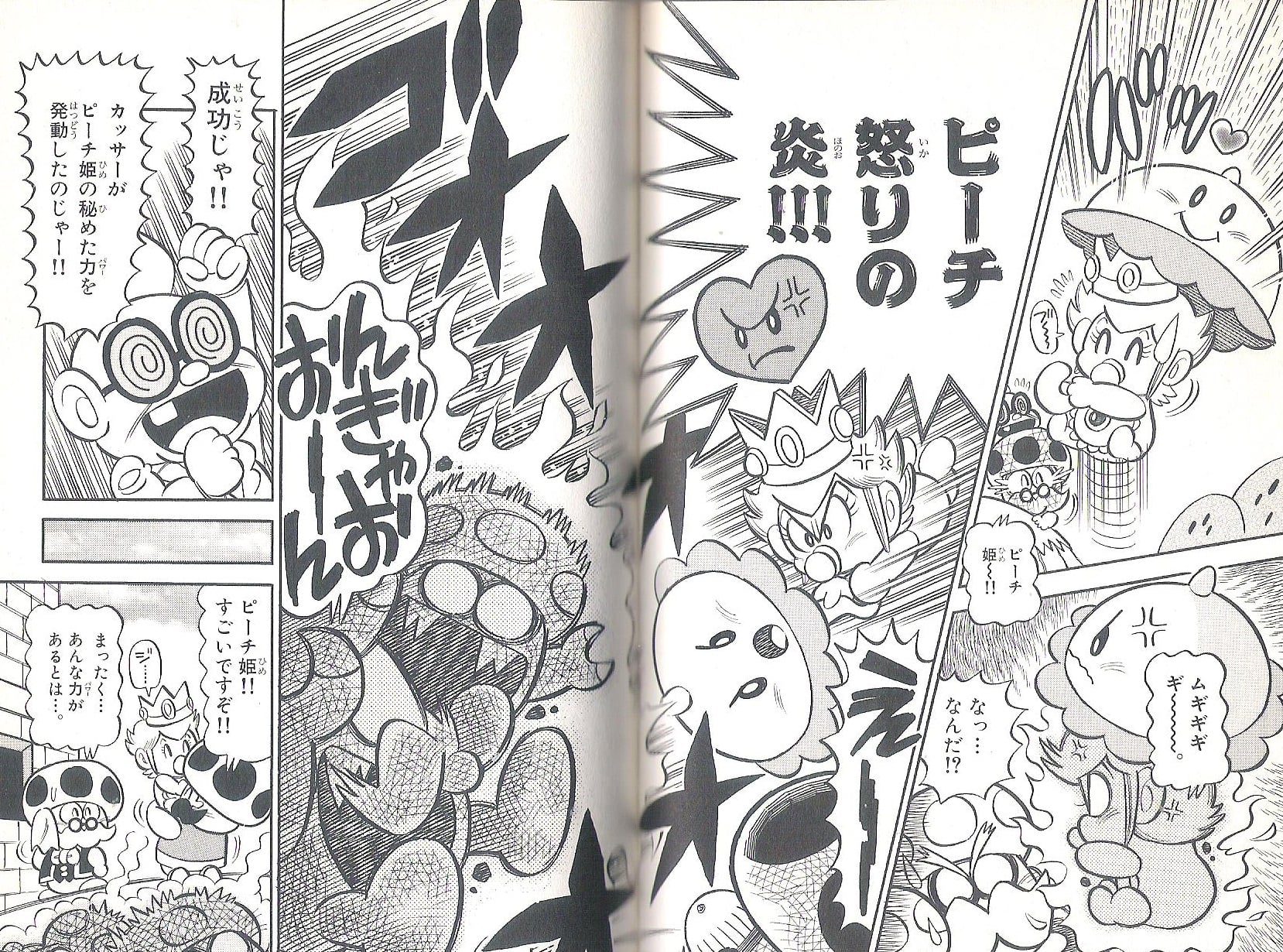 Super Mario-kunManga · volume 37Perry appears in the manga’s Mario & Luigi: Partners in Time arc.
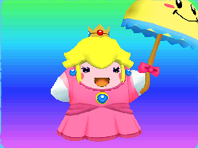 Densetsu no Stafy 4DS · costumeStapy can wear a Peach-themed costume complete with Perry.
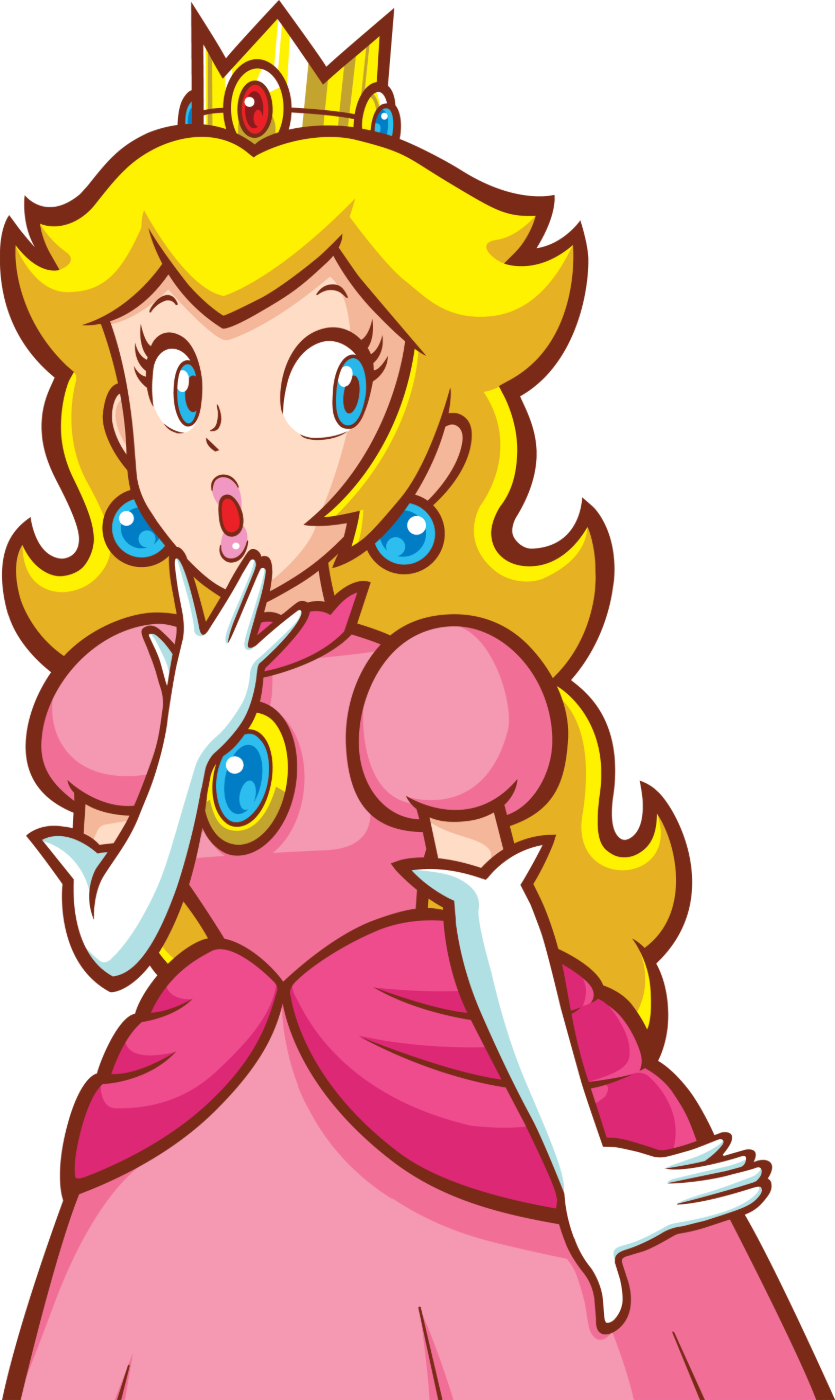 Princess PeachHeroine · playable
 PerryTalking parasol · new
 MarioCaptive
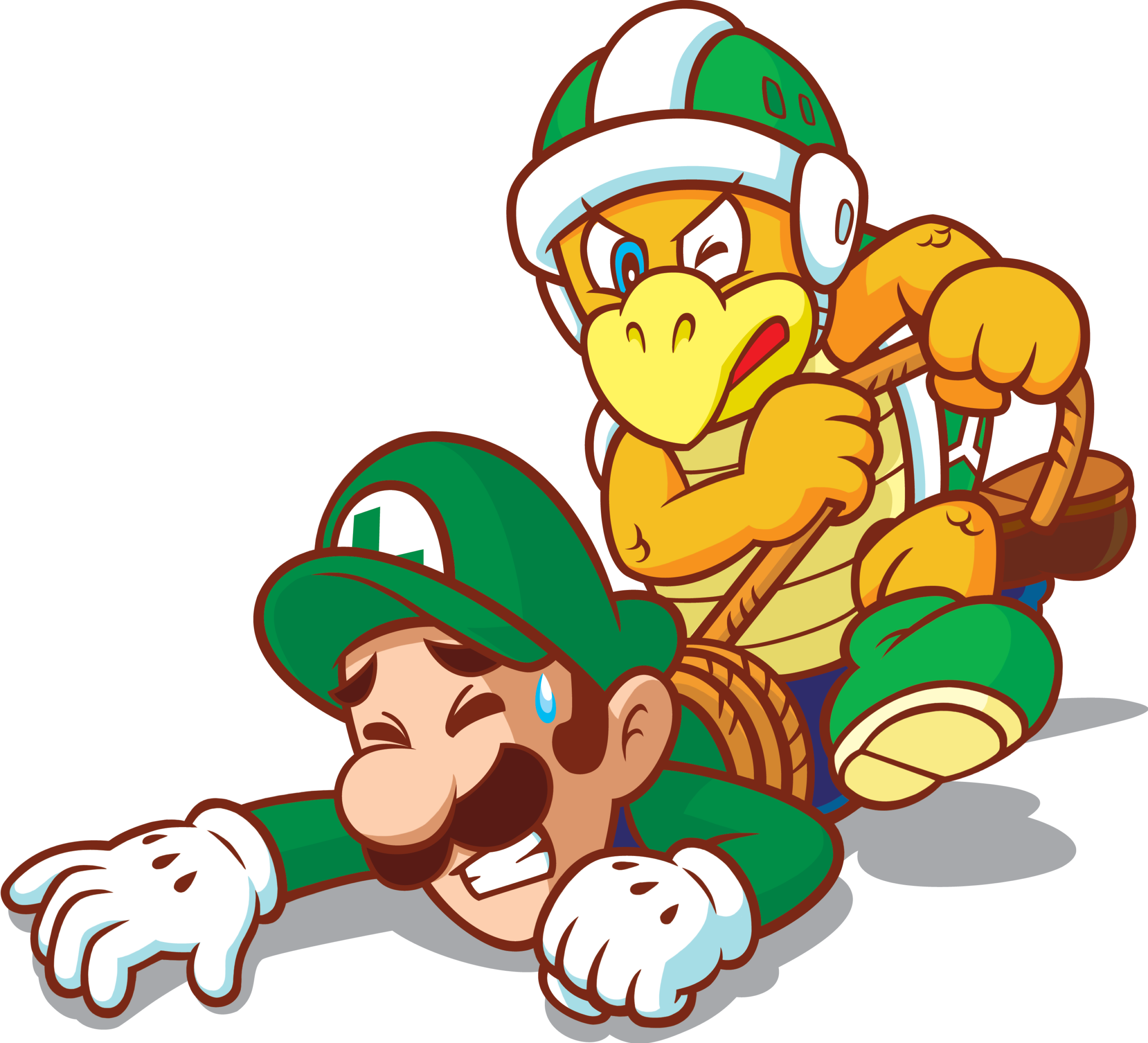 LuigiCaptive
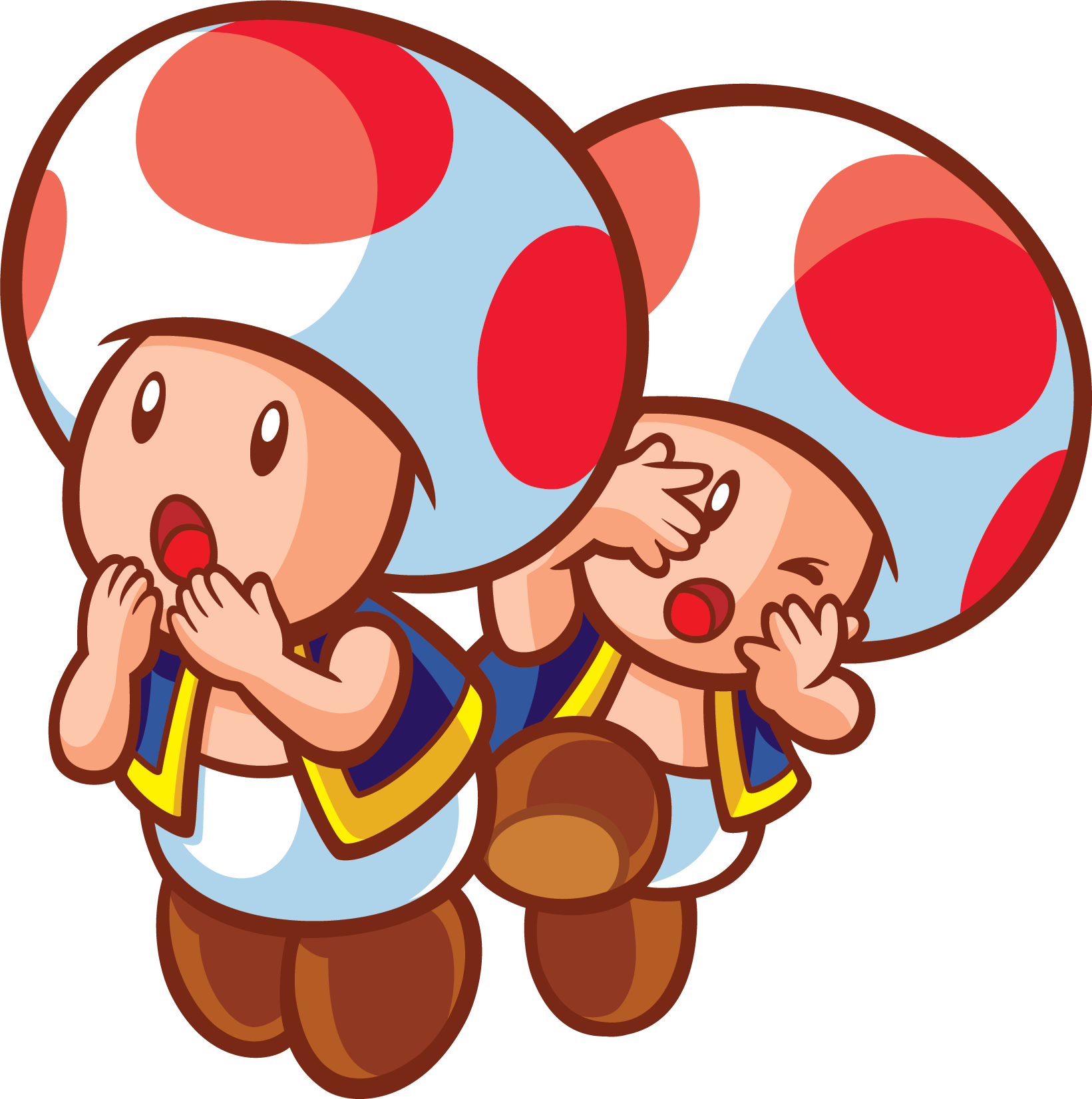 ToadsCaptives and shopkeeper
 BowserVillain · final boss
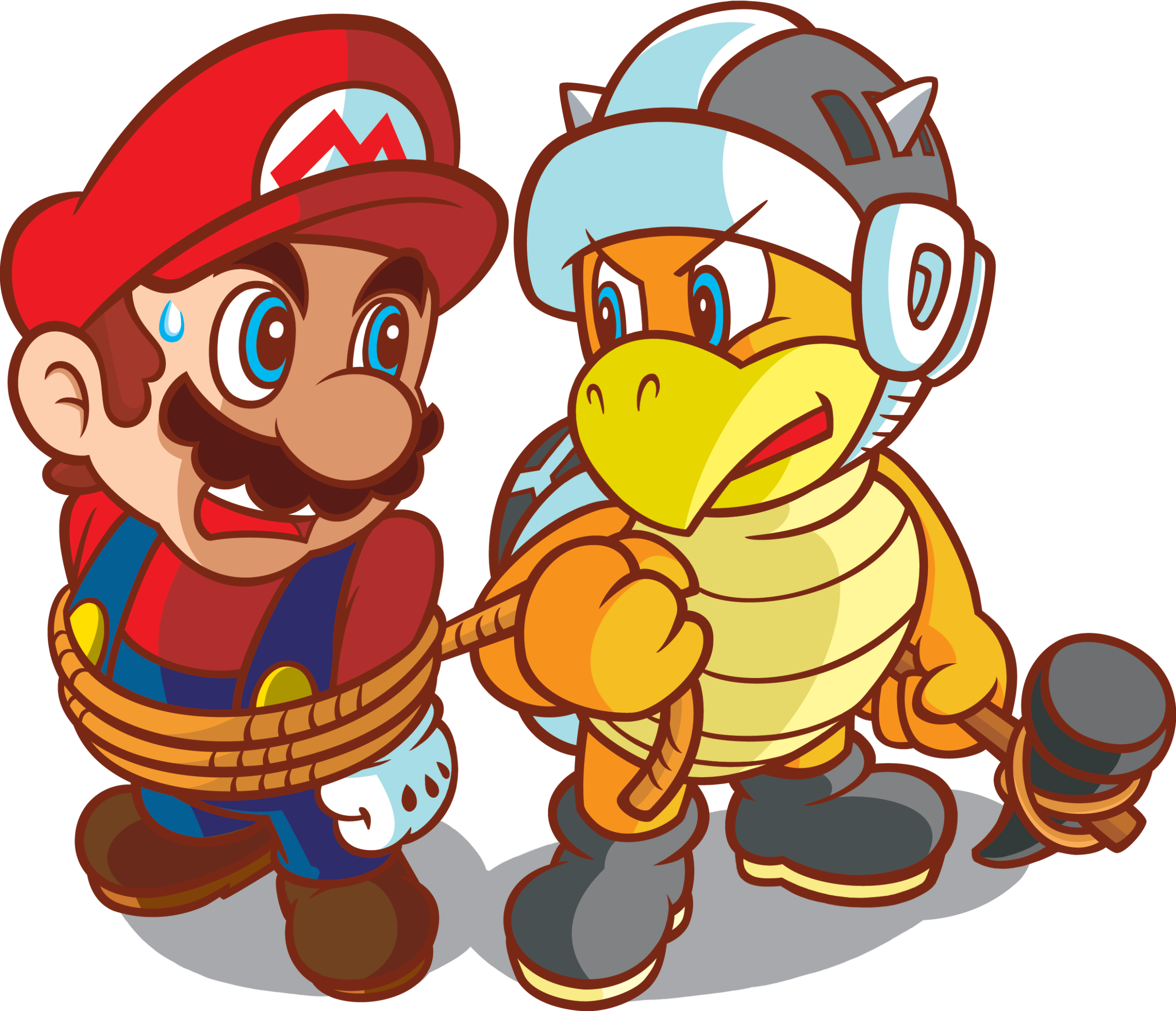 Army Hammer BroBowser’s commander · new
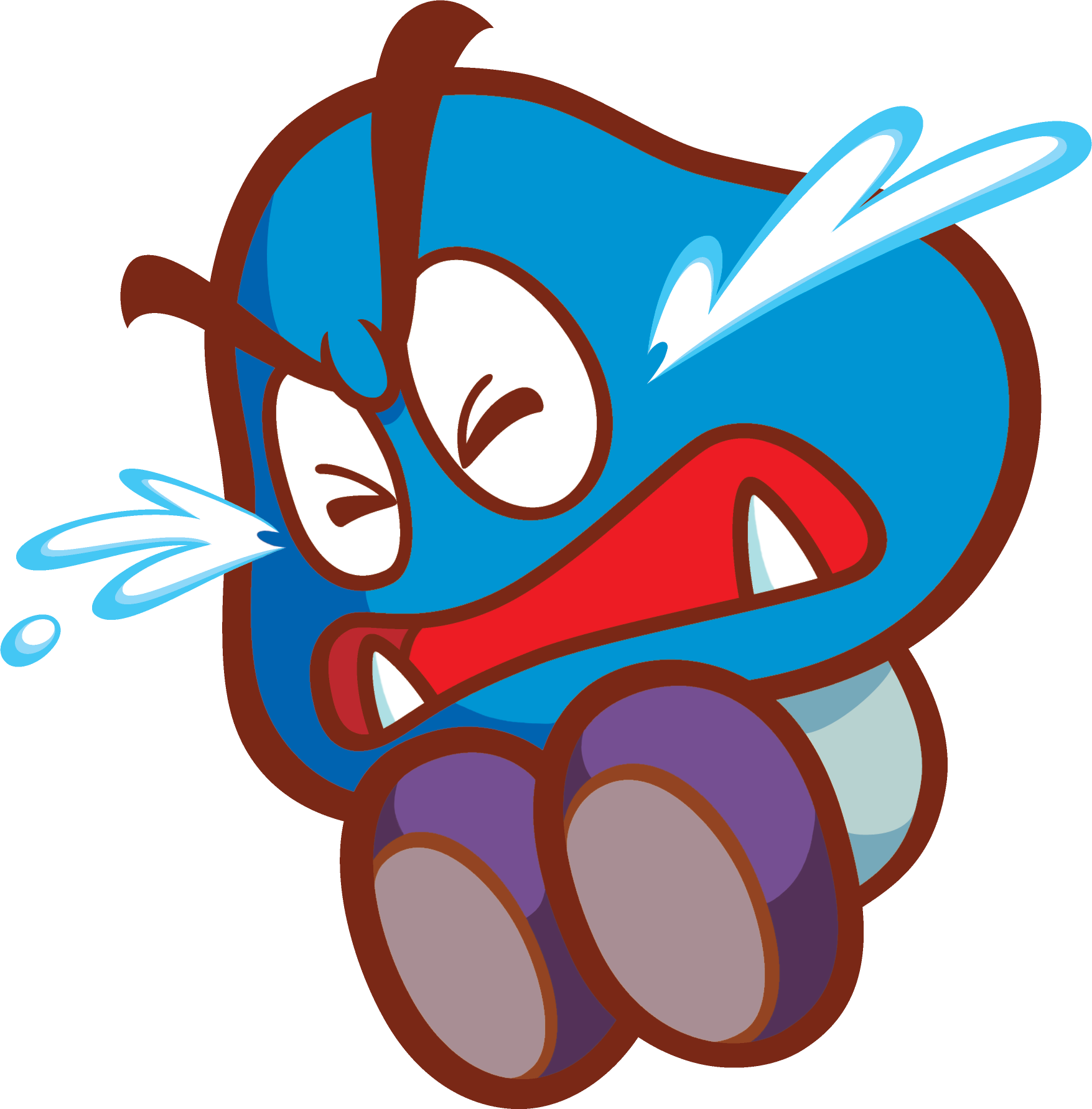 The GoombasMoody minions
 Petey Piranha (boss)Ladida Plains 1-6 · Vibe: RageSwallows Peach’s tears until his belly bloats, then takes a stomp; leaps about once he goes Rage.
 Hoo (boss)Hoo’s Wood 2-6 · Vibe: JoyA giant owl: three hits in phase one, then two head-drops while Peach floats in Joy.
 King Boo (boss)Shriek Mansion 3-6 · Vibe: GloomOnly lit torches hurt him, and he snuffs them out each time.
 Wiggler (boss)Fury Volcano 4-6 · Vibe: RageFlip him with a Rage-powered piston and stomp the flashing segment.
 Gooper Blooper (boss)Wavy Beach 5-6 · Vibe: CalmRemove all four tentacles; pop its healing bubble quickly.
 Blizzaurus (boss)Gleam Glacier 6-6 · Vibe: JoyIce dragon with three lives, then a flying ice sprite; Rage breaks its shield.
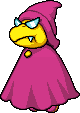 Giant Kamek (boss)Giddy Sky 7-6 · Vibe: GloomA Joy cyclone to the face makes him dizzy; goes Gloom with two hits left.
 Army Hammer Bro (boss)Bowser’s Villa 8-6 · Vibe: RageBig hammers and Hammer Bro backup; five hits of any kind.
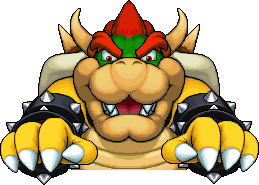 Giant Bowser (final boss)Bowser’s Villa 8-6 · Vibe: CalmThrow his own Bob-ombs back to explode at his eyes; break the Calm symbol.
 GoombaAlso Mad and SadThe basic foe, now with mood swings.
 Mad GoombaRageAngry and harder to handle.
 Sad GoombaGloomTearful; an unused stage is full of them.
 ParagoombaAlso SadKeeps its Super Mario Bros. 3 hopping pattern.
 Red ParagoombaAlso MadThe red version from Super Mario Bros. 3 returns.
 Koopa TroopaGreen; also MadShell and all.
 Red Koopa TroopaAlso GladTurns cheerful under Joy.
 Koopa ParatroopaGreen; also MadWinged Koopas.
 Red ParatroopaAlso GladRed flyers.
 LakituAlso CalmCloud-rider.
 SpinyAlso SadSpiked shell; no stomping.
 Mecha-Spike TopAlso MadA mechanical spiked crawler.
 Hammer BroAlso CalmThe Army Hammer Bro’s rank and file.
 Amazing Flyin’ Hammer BroAlso CalmA Hammer Bro on a winged platform.
 SpikeAlso MadGreen spiked-ball thrower.
 Piranha PlantAlso GladPipe-dwelling biter.
 Nipper PlantAlso SadSmall snapping plant.
 PtooieAlso GladA plant foe with a spiked ball.
 Volcano PlantAlso CalmA fiery plant.
 PokeyAlso MadStacked cactus.
 Cheep CheepAlso SadFish.
 BlurpAlso MadGoggle-eyed fish.
 BlooperAlso GladSquid.
 UrchinUnderwaterSpiny sea hazard.
 BooAlso MadShy ghost.
 Big BooAlso MadSupersized Boo.
 Dry BonesAlso SadSkeletal Koopa that falls apart.
 Fishin’ BooAlso CalmA Boo on a cloud with a fishing line.
 PodobooLavaLava bubble.
 Lil SparkyHazardA small spark.
 HotheadHazardA larger cousin of Lil Sparky.
 ThwompAlso CalmCrushing stone block.
 Torpedo TedAlso GladUnderwater missile.
 Bullet BillAlso MadFired from cannons.
 Banzai BillAlso MadA giant Bullet Bill.
 CannonAlso CalmFires the Bills.
 Bob-ombAlso GladWalking bomb; giant Bowser throws them, and Peach throws them back.
 ParabombAlso GladA Bob-omb on a parachute.
 Chain ChompAlso CalmLunging ball on a chain; a Big Chain Chomp appears too.
 FangAlso GladBat.
 RavenAlso SadCrow-like flyer.
 RexAlso SadThe dinosaur from Super Mario World.
 WalrussEnemyA walrus foe.
 StarfishEnemyA starfish foe.
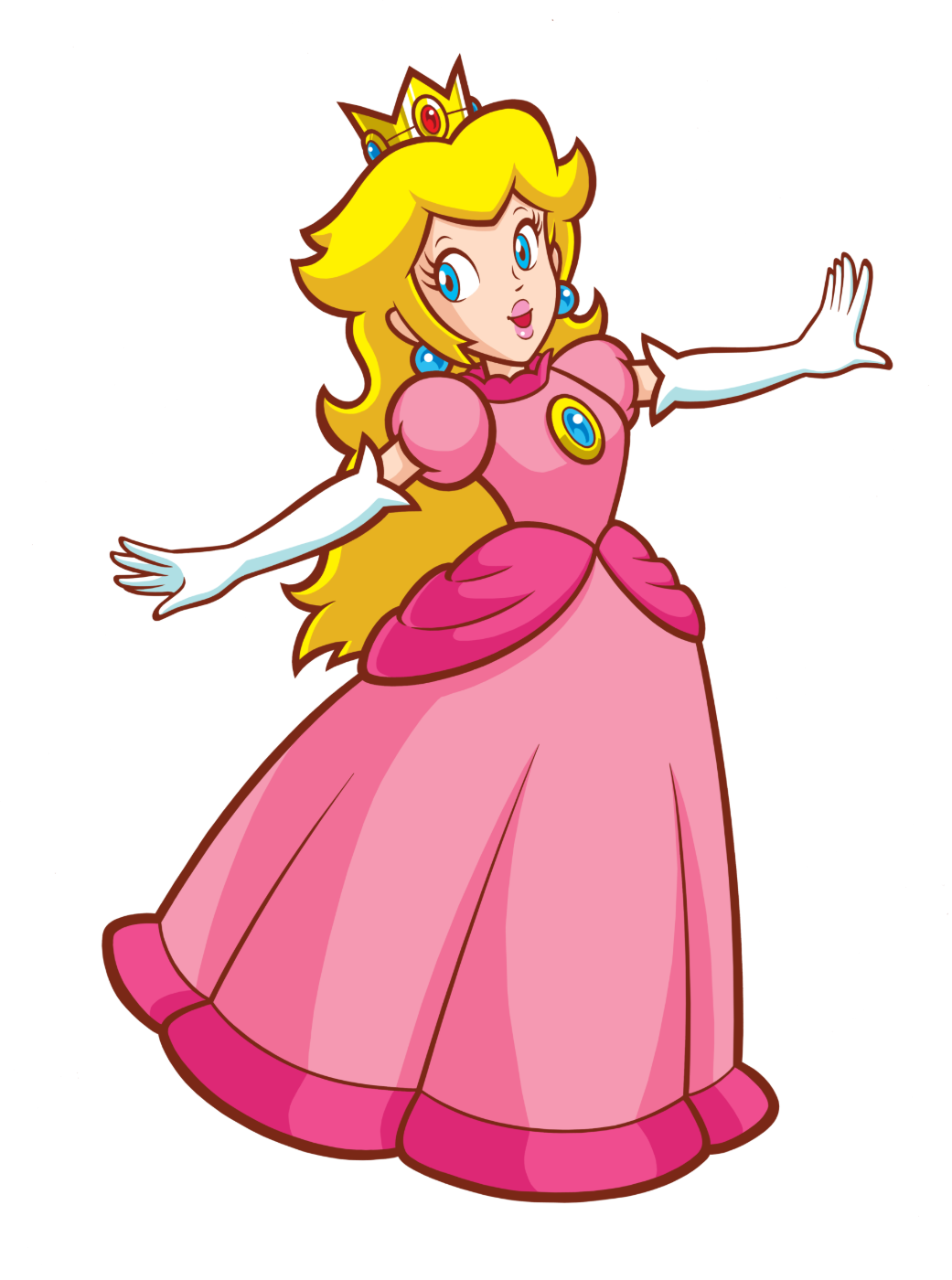
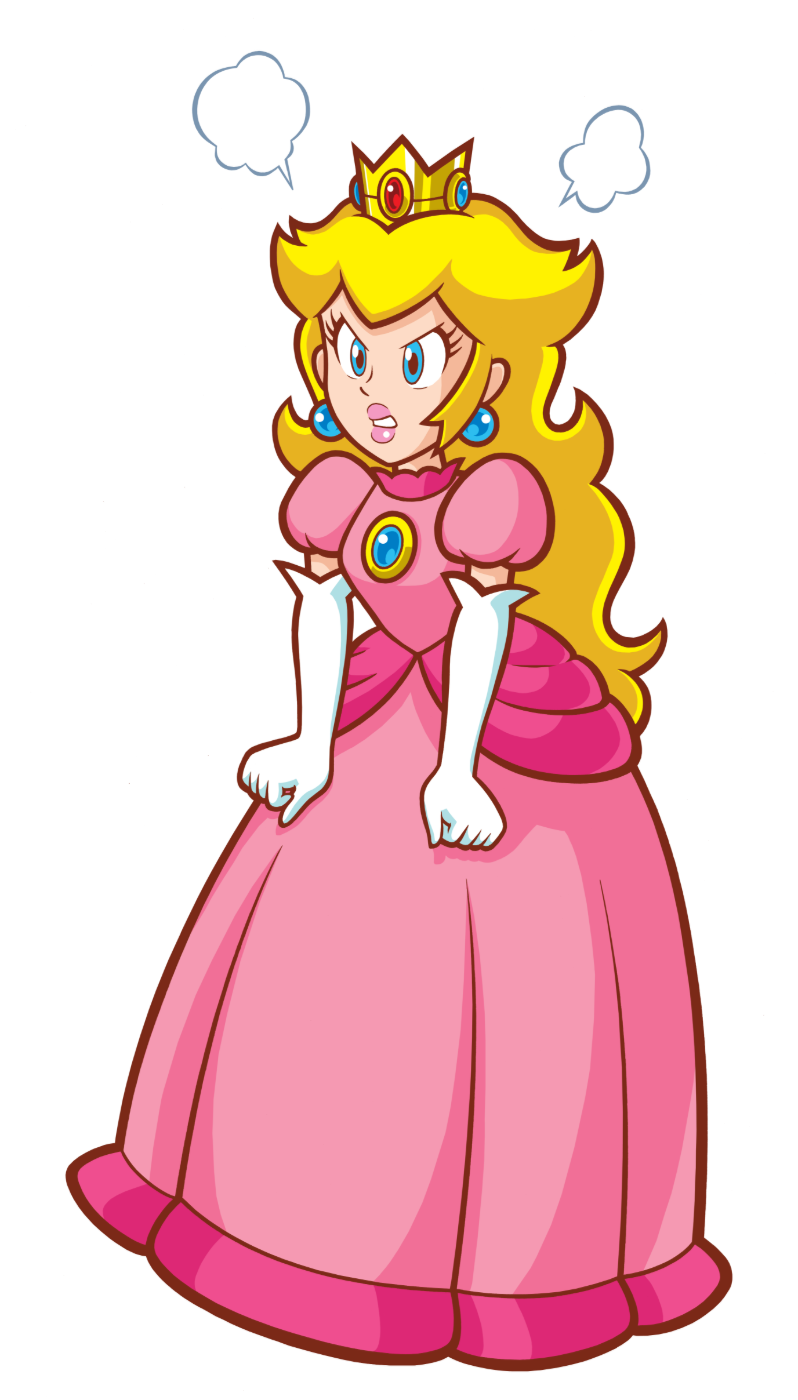












 Ball ‘N’ ChainSpiked hazard
 SmogballToxic cloud
 Stomping block
 SandslabDesert hazard
 Mini-Fang SwarmTiny swarm
 Security ThwompGuard crusher