Nintendo 3DS2013AlphaDreamRPGYear of LuigiDream Team Bros. in EuropeFive giant battlesMetacritic 81Antasma
Mario & Luigi: Dream Team
The one that takes place inside Luigi’s head. Released for Nintendo 3DS in July 2013 (and called Dream Team Bros. in Europe and Australia), Mario & Luigi: Dream Team is the fourth Mario & Luigi game and the centrepiece of Nintendo’s Year of Luigi. A holiday on Pi’illo Island goes wrong when the bat king Antasma drags Princess Peach into the Dream World, and the only way in after her is through a sleeping Luigi. So the game is split in two: a top-down island to explore as both brothers, and side-scrolling dreams where Mario teams up with Dreamy Luigi and a crowd of Luiginoids while Starlow tugs the real Luigi’s moustache on the Touch Screen. There are ten Bros. Attacks, six Luiginary Attacks, five giant battles played with the 3DS held sideways, 52 petrified Pi’illos to rescue, and a finale against Dreamy Bowser. It scored 81 on Metacritic and passed two million sales in its first year.
Developer:AlphaDream, with Good-Feel (giant battles) and Nintendo SPD Group No. 4
Publisher:Nintendo
Platform:Nintendo 3DS (cartridge and Nintendo eShop download)
Genre:RPG with timed, turn-based battles
Europe:12 July 2013, as Mario & Luigi: Dream Team Bros.
Australia:13 July 2013, as Dream Team Bros.
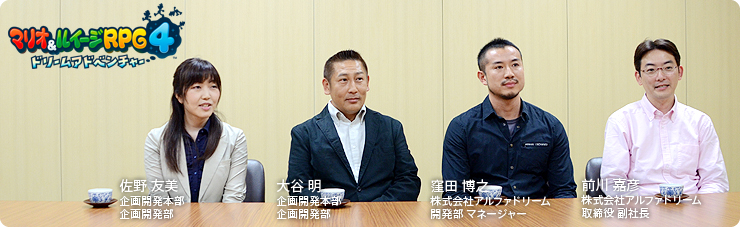
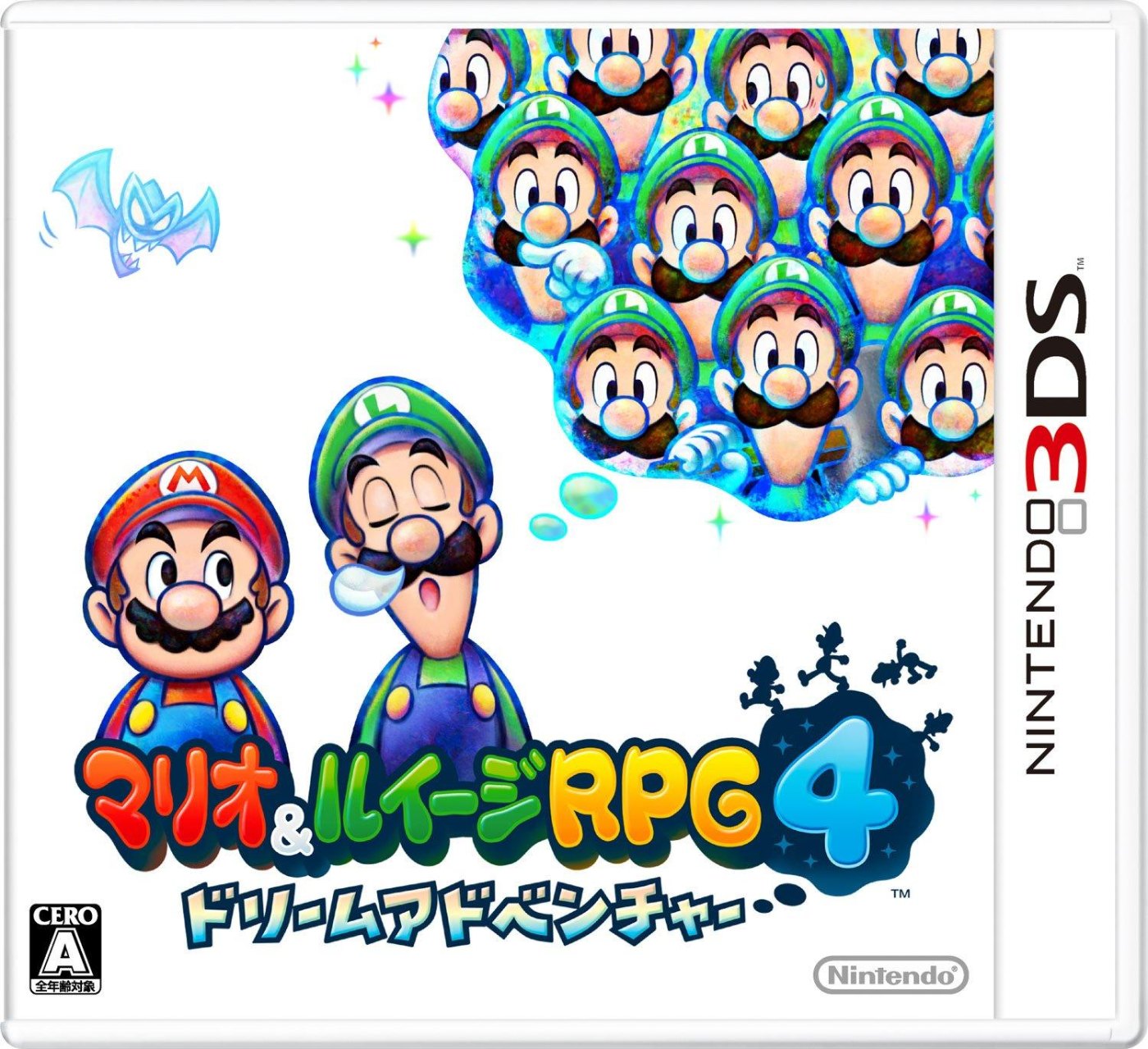
Japan:18 July 2013, as Mario & Luigi RPG 4: Dream Adventure
Sales:2.08 million as of 31 March 2014 (Nintendo’s investor figures, as reported by Nintendo Life); “more than two million” in Nintendo’s 2014 annual report
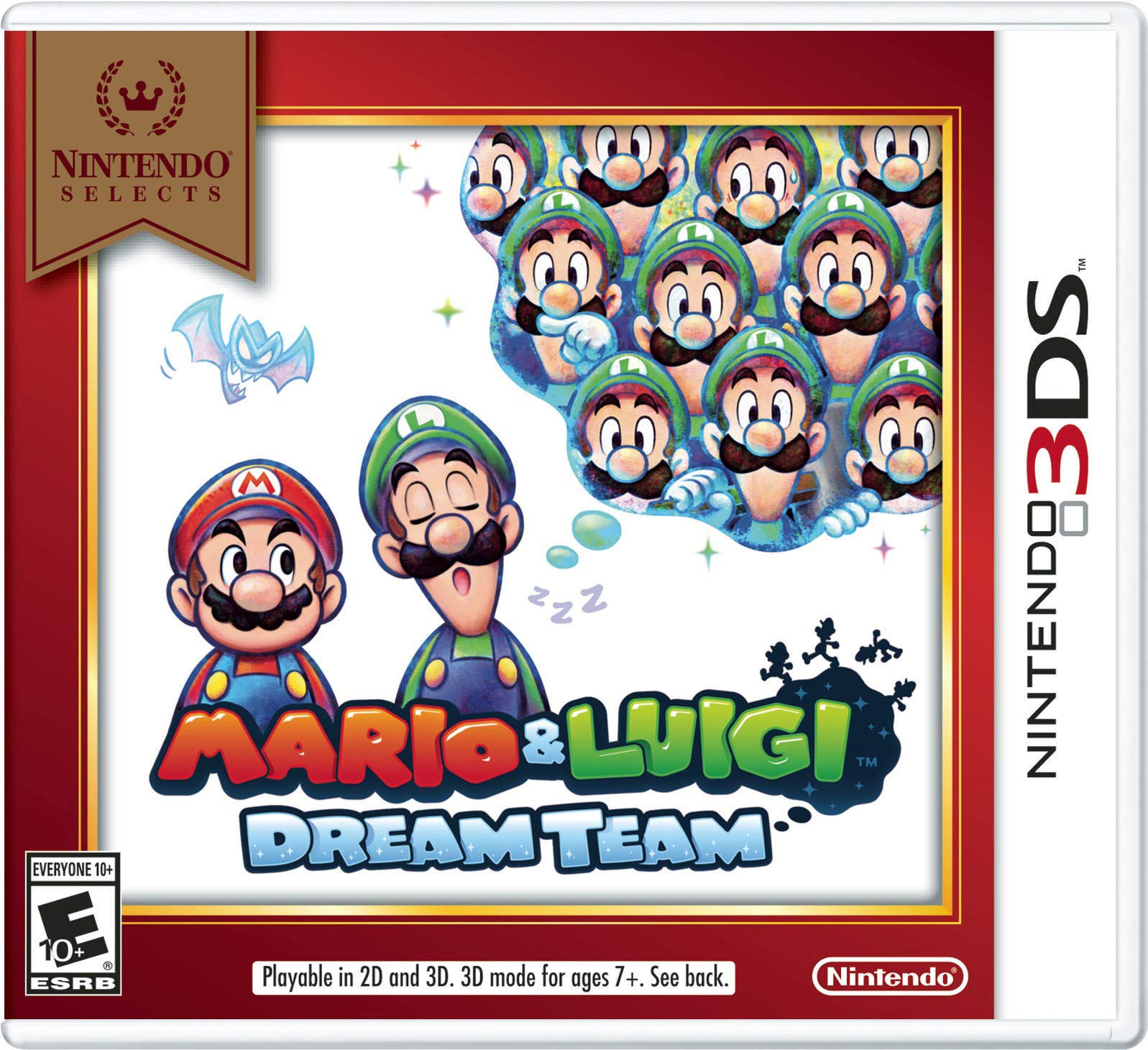
Re-release:Nintendo Selects: Europe 24 June 2016, North America 6 February 2017, Australia 11 May 2017
Mario & Luigi: Dream Team is the fourth game in AlphaDream’s role-playing series and the first on Nintendo 3DS. It reached Europe first, on 12 July 2013, under the title Dream Team Bros.; Australia got it a day later, Japan on 18 July as Mario & Luigi RPG 4: Dream Adventure, and North America on 11 August. Satoru Iwata had announced it in the Nintendo Direct of 14 February 2013, in the same breath as declaring 2013 the Year of Luigi.
The set-up is a package holiday. Princess Peach and her household are invited to Pi’illo Island, a resort built on the ruins of a vanished kingdom whose people, the Pi’illos, looked a good deal like pillows. In the castle’s collection room Luigi lies down on a stone pillow, nods off, and a glowing portal opens above his head. Something reaches out of it and pulls Peach inside. Mario jumps in after her and lands in his brother’s dream.
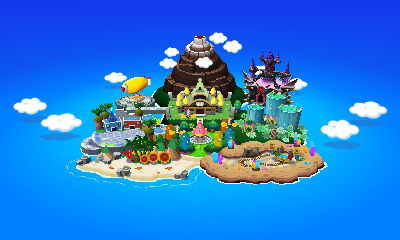
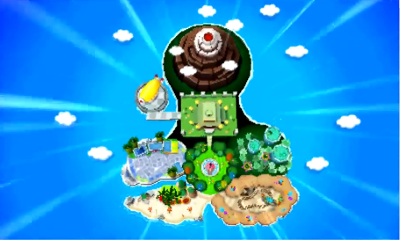
From there the game runs on two tracks. The real island is a three-dimensional overworld (a park, a desert, a harbour town, a volcano, a beach, a forest) that Mario and Luigi explore side by side, viewed from above as in the earlier games. Wherever Luigi can find a pillow to sleep on, Mario can dive into a Dream World version of the same place, drawn side-on like a platformer. In there his partner is Dreamy Luigi, a confident dream-self who can possess the scenery, split into hundreds of Luiginoids and, five times in the story, grow to the size of a mountain.
It is a long game, and a generous one: Nintendo’s developers told Satoru Iwata it had more in it than any earlier entry, with rank-up perks to choose, 111 Expert Challenges, a boss-rush arena and a Hard Mode on top of the story. Reviewers loved the dream sections and grumbled about the tutorials, and the Metacritic average settled at 81. AlphaDream made only one more new Mario & Luigi game, Paper Jam in 2015, before two remakes and the studio’s bankruptcy in 2019.
In this fourth instalment of the popular RPG series Mario & Luigi, the story opens with Princess Peach and her staff, plus brothers Mario and Luigi in tow, being invited for a sightseeing trip to the mysterious Pi’illo Island by its equally mysterious proprietor, Dr Snoozemore. But after an initially hospitable welcoming to the island – albeit with Dr Snoozemore noticeably absent – things take a turn for the worse when Princess Peach is kidnapped and pulled into a Dream World by a new enemy in the series, the ghostly bat king Antasma.
— Official description (Nintendo UK, 2013)
Why Dream Team matters to Mario fans
This is Luigi’s game. He is the door to every dream, the army in every dream battle and the giant in every giant battle, and his sleeping face fills the Touch Screen for hours. It introduced Antasma, Prince Dreambert and the Pi’illos, brought back Popple and Kylie Koopa for long-time fans, and set the hand-drawn-on-3D look that the series kept until Brothership. For a site with Luigi’s name over the door, it is the Mario & Luigi game that matters most.
Pi’illo Castle, where the holiday starts to go wrong.Starlow pulls the sleeping Luigi’s moustache and the dream above reacts.Mario and the Luiginoids flatten a Dromba.Giant Luigi squares up to Robo-Drilldigger.
“Nonetheless, while lots of people can do pixel art, I’ve hardly heard of anyone who could do stereoscopic pixel art!”
Iwata Asks: Mario & Luigi: Dream Team, “Pixel Art Craftsmen” (Nintendo, 2013).
Satoru Iwata to the game’s developers, on hearing that every character had been hand-drawn in 2D and shaded to look solid on the 3DS screen.
Quick Answers
The questions people ask most about Mario & Luigi: Dream Team, answered briefly here and in depth further down the page.
When did Mario & Luigi: Dream Team come out?
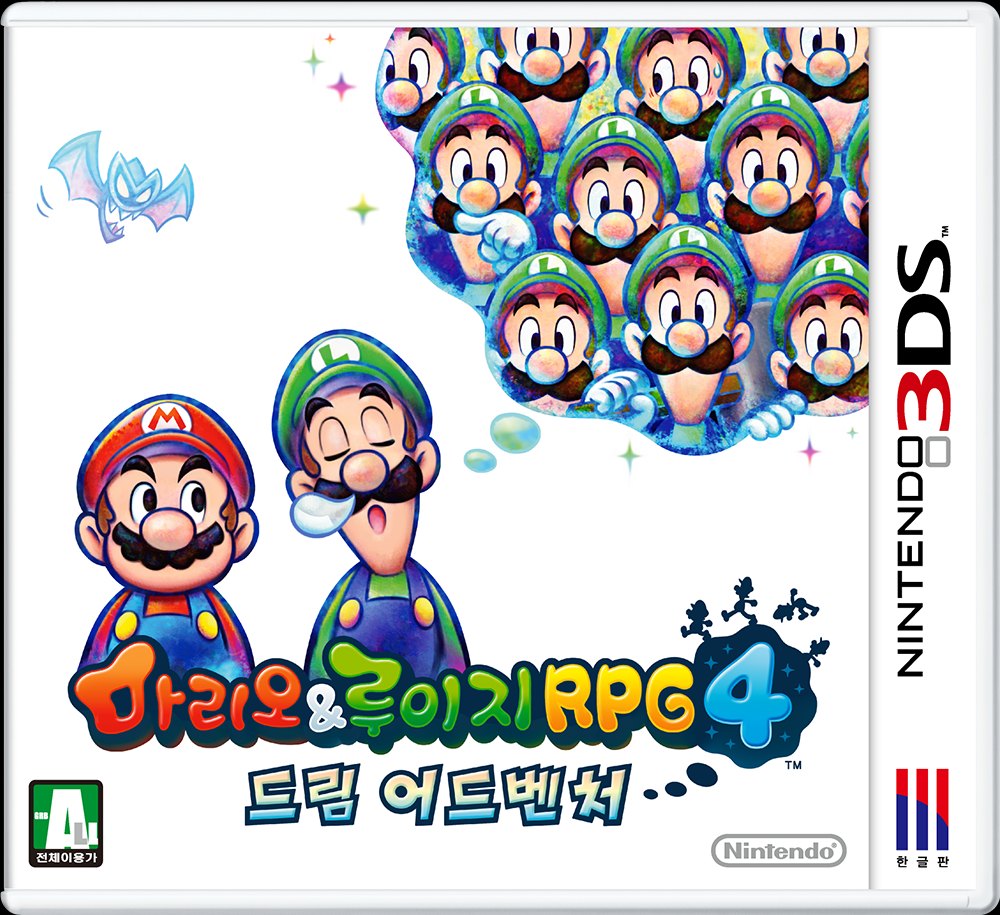
On Nintendo 3DS on 12 July 2013 in Europe, 13 July in Australia, 18 July in Japan and 11 August 2013 in North America. A Korean version followed on 16 January 2014, and Nintendo Selects reissues between 2016 and 2017. More →
Is Dream Team Bros. a different game?
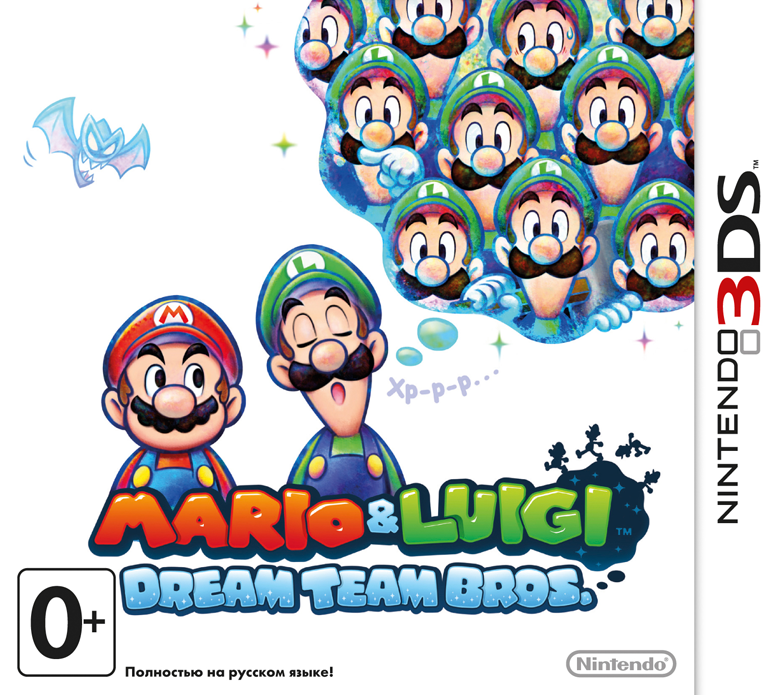
No. Mario & Luigi: Dream Team Bros. is the title used in Europe and Australia; the game is the same apart from its UK English text. In Japan it is Mario & Luigi RPG 4: Dream Adventure. More →
Who is the villain?
Antasma, a bat who grew monstrous by feeding on nightmares and was sealed in the Dream World by the Pi’illos. He teams up with Bowser to steal the wish-granting Dream Stone, and Bowser double-crosses him. The final boss is Dreamy Bowser. More →
How does the Dream World work?
Luigi falls asleep on a pillow (usually a petrified Pi’illo) and a Dream Portal opens. Mario enters alone and plays side-scrolling stages with Dreamy Luigi, while you work the sleeping Luigi’s face on the Touch Screen to operate Luiginary Works: pull his moustache, make him sneeze, spin his nose. More →
How many giant battles are there?
Five, all fought as Giant Luigi with the 3DS held sideways: Robo-Drilldigger, Mount Pajamaja, Earthwake, the Zeekeeper and a giant Bowser. Each has a tougher X version in the Battle Ring. More →
How many Bros. Attacks and Luiginary Attacks are there?
Ten Bros. Attacks for the real world (five started by Mario, five by Luigi) and six Luiginary Attacks for the Dream World. Most are learned by collecting ten Attack Pieces in one area; the 3D Green Shell and the Slingsniper are handed over during the story, and the Zee Egg is Eldream’s reward for rescuing all 52 Pi’illos. More →
How do you unlock Hard Mode?
Finish the game. Hard Mode makes enemies stronger, limits you to ten of each item and sends you back to the title screen when you lose instead of offering a retry. Clearing the game also unlocks the Jukebox. More →
What is the Battle Ring?
An arena in Pi’illo Castle where you refight bosses in stronger X forms against a turn limit, in normal and giant classes. Win all eight normal classes and the Battle Medley ends with a boss found nowhere else: Bowser Jr. More →
How many copies did Dream Team sell?
Nintendo’s annual report for the year to 31 March 2014 says it sold more than two million, and the figures Nintendo published with its results that May put it at 2.08 million as of 31 March 2014 (as reported by Nintendo Life). No later Nintendo total was found; the 2.70 million shown on Wikipedia’s list of best-selling 3DS games carries no citation. More →
Story
Bowser and Antasma, a partnership with a short shelf life.
Dream Team’s plot is a holiday that keeps being interrupted. There are two villains who do not trust each other, an ancient people who have been stone pillows for longer than anyone can remember, and a hero who has to be asleep to be useful. Here is the whole thing, spoilers and all.
Some background first. Long ago Pi’illo Island held two stones that could grant wishes, the Dream Stone and the Dark Stone, and the Pi’illo people guarded both. Antasma began as an ordinary bat that fed on a Pi’illo’s nightmare, liked the taste, and kept feeding until he became the Bat King. He stole the Dark Stone. The Pi’illos and their guardian bird, the Zeekeeper, fought him and sealed him in the Dream World, but in the last moment before the seal closed he shattered the stone. Its fragments, the Nightmare Chunks, rained down on the island, and every Pi’illo they touched was trapped in a dream and turned to stone. The kingdom ended that day.
A Zeeppelin to Pi’illo Island
An invitation to Pi’illo Island arrives at Peach’s Castle, delivered by Broggy the block dog. Peach, Toadsworth, a few Toads and the Mario brothers board a Zeeppelin. Halfway there a dark pillow lands on the deck, unfolds into a dark figure and attacks. Mario fights it off in the game’s first battle, the blimp goes out of control and ploughs into the Pi’illo Blimport, and Luigi wakes up. He had dozed off on the flight.
The real landing is gentler. Broque Monsieur, the moustachioed Brock from Bowser’s Inside Story, is now the island’s tour host, and he and his staff put the visitors through a welcome programme: the Check-X Quiz, a few practice battles and the Coin-Up Challenge. Then it is on to Pi’illo Castle, once Prince Dreambert’s home, where Starlow is waiting as the Star Sprites’ representative. Dr. Snoozemore, the island’s proprietor, is away on business.
During the tour Peach and Toadsworth step on a test platform and vanish into the ruins under the castle. Mario and Luigi go down after them, find them next to a stone pillow, see off four Smoldergeists and come out in a collection room, where Luigi cannot resist lying down on the old pillow. He is asleep in seconds. A Dream Portal swirls open above him, the dark figure from the Zeeppelin reaches out of it, and Peach is gone.
The invitation to Pi’illo Island.The first battle, on the deck of the Zeeppelin.Peach is pulled into the Dream World.
Prince Dreambert and the Dream World
Mario jumps into the portal and lands in Dreamy Pi’illo Castle, where a dream version of Broque Monsieur shows him the ropes. Soon he runs into Dreamy Luigi, who is everything the real Luigi wishes he were, and the two of them chase the kidnapper through the castle. Cornered, the figure conjures a Dreamy Mario to keep them busy and helps it along with fireballs from the sidelines. When the copy is beaten he tears open a way into Dream’s Deep, the heart of the Dream World, slips through with Peach and seals it behind him.
What he leaves behind is a Nightmare Chunk. The brothers smash it, and the stone pillow Luigi has been sleeping on turns out to be Prince Dreambert, ruler of the Pi’illos, awake for the first time in ages. He can put a name to the kidnapper.
The dark figure menaces Mario, Peach and Toadsworth.Prince Dreambert, freed from his Nightmare Chunk.
Antasma, the Dark Stone and the Dream Stone
Dreambert tells the story of the two stones, of Antasma and of the day his people were petrified. With the Dark Stone destroyed, the Bat King has been shut in the Dream World ever since, and now he has a princess whose power he hopes will get him out. Every stone pillow on the island is a Pi’illo waiting to be woken the same way Dreambert was: Luigi sleeps on it, Mario goes in, the Nightmare Chunk is broken.
The prince joins the party (and volunteers himself as Luigi’s pillow whenever a Dreampoint needs one). After a few rescues, one of the freed Pi’illos mentions that the elder, Eldream, knows the way into Dream’s Deep. His pillow was last seen in Mushrise Park.
Antasma with the Dark Stone, long ago.The Bat King in bat form.
Mushrise Park and Dream’s Deep
Mushrise Park is the island’s garden, run by a fussy Brock called Brickle, who has confiscated Eldream’s pillow and will only give it up if the brothers can catch him. The pursuit winds through the park’s fountains, with the pillow finally recovered from the top of one, and the brothers pick up their hammers and their first Bros. Attacks along the way. Brickle’s watering robot, Grobot, then goes haywire and attacks its owner, and the brothers have to scrap it.
Brickle lends his hut and his bed. In Dreamy Mushrise Park Eldream’s Nightmare Chunk is carried off by his pet, Dreambunny, and has to be run down before the elder can be freed. Once awake, he opens the road to Dream’s Deep.
Meanwhile Bowser has arrived on the island with Kamek and three familiar faces from Bowser’s Inside Story, now promoted to the Elite Trio: Private Goomp, Corporal Paraplonk and Sergeant Guy. He follows Peach’s scent straight into Dream’s Deep and walks in on the brothers confronting Antasma. He punches the bat first and asks questions afterwards. Antasma, impressed, drops his plan for the princess and offers a partnership instead, then pours himself into Bowser for a boss fight in which every bat that bites Mario heals the Koopa King. They lose, and Antasma, in bat form, carries his new ally out of the dream. Bowser privately intends to grab Peach later.
Grobot turns on Brickle.Mario against a bat-powered Bowser in Dream’s Deep.Bowser and Antasma join forces.
Dozing Sands: the Dream Stone is stolen
The villains’ next target is the Dream Stone, which rests in Dozing Sands, a desert in the island’s south-east that a crew of Shelltops under forewoman Britta is noisily turning into a tourist attraction. The brothers ride Drilldiggers along the works’ tracks, learn to squash Mario into Mini-Mario and Mole Mario, and wake the Deco Pi’illos, each of whom hands over a piece of Dozite needed to press on (there are five in all, and the last turns up only once Torkscrew is beaten).
At the top Britta is being attacked by a monster called Torkscrew and has to be rescued. It does not matter: the altar beyond is empty. Bowser and Antasma got there first.
The altar is a Dreampoint, so Luigi beds down on Dreambert and Mario goes in to question the Dream Stone’s spirit, tired and cranky now that its stone is gone, which does its best to hide. Pestered once too often, it flies into a rage and becomes the massive Robo-Drilldigger. This is the cue for the first giant battle: Luiginoids swarm, Dreamy Luigi grows, and the 3DS goes on its side. Beaten, the spirit admits that the stone has been taken to Mount Pajamaja.
Dozing Sands.Bowser and Antasma make off with the Dream Stone.Giant Luigi against Robo-Drilldigger.
Wakeport and the Massif Bros.
Nobody climbs Mount Pajamaja without a guide, and the guided tours leave from Wakeport, the island’s tourist town. The brothers sign up with Lil’ Massif, only to find the tour cannot start without his older brother, Big Massif, who is fast asleep on a Dreampoint and cannot be shifted.
In Dreamy Wakeport Big Massif is hosting his Beef-Off, and to reach him Mario must beat his four Hooraw apprentices, each of whom sets a condition for the fight: Heavy Zest, Sorrow Fist, Thunder Sass and Beef Cloud. Big Massif himself turns out to have been disguised as the tour centre’s operator all along. Beat him and the real one wakes up, realises he has overslept and leads the way to the mountain.
Wakeport, outside Pi’illoper’s house.Dreamy Wakeport, scene of Big Massif’s Beef-Off.
Mount Pajamaja and the Dreambeats
Mount Pajamaja is a dormant volcano, fiery on one side and snowbound on the other. The Spin Jump and Side Drill are learned on the way up, Mega Pi’illos are woken to smash open the trail gates, and near the top a badly timed sneeze from Luigi wakes Mammoshka, a mammoth made of bricks that guards the peak.
On the summit the brothers find Antasma, Bowser, Kamek and the Elite Trio playing the Dreambeats, music that sends everyone who hears it to sleep, with the exception of Pi’illos, Starlow, Antasma himself and Bowser, who has his fingers in his ears. Luigi keels over. Mario, with nowhere else to go, dives into the Dream Portal over his brother’s head, and it snaps shut behind him.
In Dreamy Mount Pajamaja the mountain is alive and not pleased to have visitors. The second giant battle is against the volcano itself, and it is where Giant Luigi learns the Hammer Uppercut and the Drill Stomp.
By the time Mario gets out, the damage is done. The whole island has dozed off, and the Dream Orbs that drift up from the sleepers are feeding the Dream Stone. Antasma makes the first wish: a fortress for himself and his partner. Neo Bowser Castle appears in the sky off the coast, wrapped in a barrier nothing can get through, and tries out its main gun on a few neighbouring islets.
Mario and Luigi on the slopes of Mount Pajamaja.Bowser and Antasma play the Dreambeats at the summit.The mountain fights back.
Driftwood Shore: hiding the princess
Bowser still wants Peach. Back at Pi’illo Castle the brothers learn that she has been moved to Driftwood Shore, where Broque Madame has disguised her and Toadsworth as Block folk. Somebody has a better idea: hide the princess in the Dream World, where Bowser cannot follow.
A Dreampoint on the beach leads to Dreamy Driftwood Shore, home of the Seadrings. One of them, Seadric, agrees to enlarge his dream with Dream Eggs to make a hiding place. The moment everyone is safely inside, “Peach” starts laughing. It is Kamek in disguise, and he has brought the Elite Trio, who fight as a team with a squad of Goombas and a cannon in support. When they lose, Kamek whisks them away and leaves.
Driftwood Shore.Kamek springs his trap in Dreamy Driftwood Shore.
The Ultibed, Somnom Woods and the Zeekeeper
Dr. Snoozemore finally comes home, and he knows what can crack the castle’s shield: the Zeekeeper, the island’s legendary guardian. Summoning it takes a very special bed. The Ultibed has to be built by a Pi’illo craftsman, the Bedsmith, out of five Zee Parts scattered across the island.
So begins a second lap of Pi’illo Island. The Pajamaja Rock Frame is the mountain’s fabled treasure. The Dozing Mattress forms from a Dozing Drop deep under the desert. The Mushrise Tree Board comes from Brickle in return for rock-clearing. The Zeekeeper’s Feathers are the prize for beating Grobot X in the castle’s Battle Ring. And the Driftwood Jellyfish Sheets have been pinched by three Fly Guy Rs, who are finally cornered at the Blimport.
With all five in hand the brothers return to Wakeport, where the thief Popple, last seen in Superstar Saga, has fallen out with a Wiggler whose garden he insulted, and steers the brothers into a fight with it. They end up battling the pair of them. Beyond is the house of Pi’illoper, a Beanish collector whose basement holds the Bedsmith’s pillow. In the dream, the Nightmare Chunk is lodged in the head of Earthwake, a guardian that assembles itself out of Wakeport’s buildings: giant battle number three.
The Bedsmith sets up shop in Somnom Woods, the island’s untouched forest, and builds the Ultibed. It has to be placed in the Pi’illo Temple at the forest’s heart, which means waking the Pi’illo Masters and laying a track with their Somnom Stones. Setting the bed down trips an alarm and brings out the temple’s guardian robot, Pi’illodium, which starts a forty-second self-destruct when it is nearly beaten.
At last Luigi lies down on the Ultibed. In Dreamy Somnom Woods Mario finds the Zee Egg and cracks it, and the Zeekeeper comes out fighting: the fourth giant battle. Calmed down, and persuaded by the sight of Prince Dreambert, the bird agrees (without much enthusiasm) to help. It fires its Wakebeam at Neo Bowser Castle. The barrier shatters and the castle drops out of the sky on to the island.
The Luiginary Propeller in Dreamy Somnom Woods.The Zeekeeper, out of the dream and ready to help.
Neo Bowser Castle
The castle is the last dungeon, part lava-filled fortress and part dream. Kamek keeps escaping into the Dream World and has to be beaten there three times, the third time alongside red, green and white copies of himself.
At the centre the brothers find Bowser snoring behind a force field, with Antasma folded up under his head as a pillow: his sleep is powering the castle. Luigi, of all people, has the idea of going into Bowser’s dream. There the Koopa King claims to have invented getting big and, to a shout of “SHOWTIME!”, becomes the fifth and final giant boss, to be spun by the tail, punted into lava and finished with the Star Driver.
Bowser wakes and retreats upstairs with Antasma. When the heroes catch up, the bat proposes that the two of them finish this together, and Bowser hurls him to the floor. He was always going to keep the Dream Stone for himself. He leaves for the roof with it.
Antasma has one trick left. His own wish on the stone was the power to open Dream Portals at will, and he escapes into one. Dreambert goes after him and is thrown straight back out, hurt. Mario follows, Dreamy Luigi appears at his side, the wounded prince joins them, and the three settle a very old score. Defeated, Antasma swells up like a balloon and bursts.
Bowser asleep in Neo Bowser Castle.The last battle with the Bat King.
Dreamy Bowser and the Dream Coin
On the castle balcony Bowser is waiting with Peach and the Dream Stone. While he gloats, Dreambert asks the princess and Starlow for a favour, and the two of them turn their own wish power on the stone and blow it to pieces. Bowser does the only thing he can think of. He inhales the fragments.
The result is Dreamy Bowser, who can summon dream copies of his troops and whose arms have health bars of their own. It is the final battle, fought in the real world with both brothers. When it is over he shrinks back to normal and a pair of hammers send him into the sky.
Without the stone the castle falls apart, and the Zeekeeper swoops in to carry everyone clear. Back at Pi’illo Castle, Dreambert hands the bird the essence of the Dream Stone recovered from Bowser, and the Zeekeeper remakes it as the Dream Coin, which grants no wishes at all but pours out coins without end. Limitless wishes, the Zeekeeper reckons, are more trouble than they are worth; people can buy what they want.
Bowser and his army flee in the Koopa Clown Car, swearing revenge, and promptly sink under the weight of the coins raining on them. The Pi’illos are awake, the island has its people back, and the credits roll over holiday snaps of the cast finally getting the break they came for.
Dreamy Bowser appears.Peach and Prince Dreambert say goodbye.The cast (minus Bowser’s lot) pose for a group photo.
Every area in Dream Team
Pi’illo Island has nine real-world areas and nine dream counterparts, counting Dream’s Deep. Pi’illo and bean counts are Super Mario Wiki’s; the Pi’illos add up to 52.
Pi’illo BlimportReal world · tutorials; later three Fly Guy RsWhere the Zeeppelins land. Broque Monsieur’s welcome events, the Check-X Quiz and the Coin-Up Challenge, are held here. Six beans, no Pi’illos.
Pi’illo CastleReal world · 3 Pi’illos · Smoldergeist; the Battle RingPrince Dreambert’s old home at the centre of the island, with a collection room, ruins and caverns underneath.
Mushrise ParkReal world · 5 Pi’illos, 22 beans · 3D Red Shell, 3D Green Shell, Zee Egg · GrobotBrickle’s gardens. Hammers are learned here, and Eldream gives out his rescue rewards here.
Dozing SandsReal world · 11 Pi’illos, 32 beans · Fire Flower · TorkscrewBritta’s desert building site and the resting place of the Dream Stone. Its name puns on bulldozers as well as dozing.
WakeportReal world · 6 Pi’illos, 12 beans · Bye-Bye Cannon · Wiggler and PoppleThe tourist town: tour centre, hotels, Kylie Koopa’s office, the Mad Skillathon and Pi’illoper’s house.
Mount PajamajaReal world · 12 Pi’illos, 24 beans · Dropchopper, Slingsniper · MammoshkaA volcano of fire and snow. Spin Jump, Side Drill and Ball Hop are all learned on its slopes.
Driftwood ShoreReal world · 3 Pi’illos, 10 beans · Bomb DerbyThe beach. Broque Madame, the Mole Hunt and the Rainbow-rank gold shop are here.
Somnom WoodsReal world · 11 Pi’illos, 19 beans · Jet-Board Bash · Pi’illodiumAncient forest east of Mushrise Park, home of the Nommons, the Bedsmith’s workshop and the Pi’illo Temple.
Neo Bowser CastleReal world · 1 Pi’illo, 18 beans · Star Rocket · Dreamy BowserWished into being by Antasma. It floats offshore until the Zeekeeper brings it down.
Dreamy Pi’illo CastleDream World · Stache Tree, Sneeze Wind · Dreamy MarioThe first dream, where Mario meets Dreamy Luigi and frees Prince Dreambert.
Dreamy Mushrise ParkDream World · Luiginary BallEldream’s dream, entered from the bed in Brickle’s hut.
Dream’s DeepDream World · Luiginoid Formation · Bowser with AntasmaThe core of the Dream World and Antasma’s hiding place. Luigi’s stray thoughts turn up here as messages, one of them about fighting ghosts.
Dreamy Dozing SandsDream World · Luiginary Stack · Robo-Drilldigger (giant)Home of the Dream Stone’s grumpy spirit. Luiginary Cylinder and Gravity puzzles.
Dreamy WakeportDream World · Luiginary Wall · the four Hooraws, Big Massif; Earthwake (giant)Big Massif’s contest of strength, and later the Bedsmith’s prison. The Luiginary Speedometer turns up here.
Dreamy Mount PajamajaDream World · Luiginary Hammer · Mount Pajamaja (giant)A mountain with a mind of its own. Luiginary Ice flips it between lava and snow.
Dreamy Driftwood ShoreDream World · Luiginary Flame · the Elite TrioThe Seadrings’ dream, stretched with Dream Eggs to hide a princess who is not a princess.
Dreamy Somnom WoodsDream World · Luiginary Typhoon · the Zeekeeper (giant)Reached only from the Ultibed. The Zee Egg is at the end of it.
Dreamy Neo Bowser CastleDream World · Luiginary Antigravity · Kamek (three times), Bowser (giant), AntasmaKamek’s, Bowser’s and finally Antasma’s dreams, using nearly every Luiginary Work in the game.
Dream areas are reached from Dreampoints and from the pillows of individual Pi’illos, so most of the 52 rescues are small dream stages of their own.
Advertisement
Gameplay & Controls
Dream Team keeps the series’ foundations (Mario on the A Button, Luigi on B, and battles where good timing matters more than good statistics) and builds a second game on top of them. Half your time is spent on the island with both brothers; the other half is spent inside Luigi’s dreams with only one of them, and a great many copies of the other.
The island and the Dream World
The real world is Pi’illo Island, seen from above. The scenery is built from 3D models, a first for the series, with the brothers and everyone else as hand-drawn sprites walking around on it. Mario and Luigi move as a pair, jump with their own buttons, and pick up new field moves as the story goes: hammers in Mushrise Park, Luigi hammering Mario flat into Mini-Mario or underground as Mole Mario in Dozing Sands, the Spin Jump and Side Drill on Mount Pajamaja, and finally the Ball Hop, learned on a return visit to the mountain.
The Dream World is entered at Dreampoints and through the pillows of petrified Pi’illos. Luigi lies down, a Dream Portal opens over him, and Mario hops in. Dream stages are side-on, like a 2D platformer, and each real area has a dreamy twin with its own enemies, shops and puzzles. Luigi stays asleep on the Touch Screen the whole time, watched over by Starlow.
You can now save anywhere, either at a Save Block or with the Save icon on the Touch Screen, which Super Mario Wiki notes is a first for the series. Most shops sell Pi’i-lattes that refill HP and BP for ten coins; the dream-world branches stock items as well.
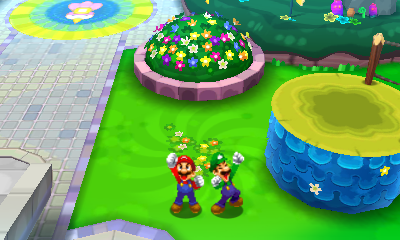
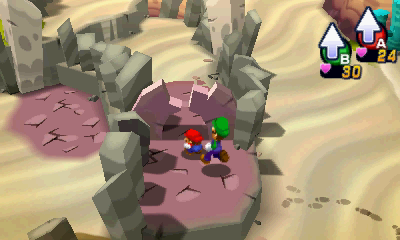
The real world: Mario and Luigi in Mushrise Park.The Dream World: Dreamy Pi’illo Castle, side-on.Mario jumps into a Dream Portal while Starlow keeps watch.
Dreamy Luigi and the Luiginary Works
Dreamy Luigi is how Luigi sees himself when he is asleep: bolder, and able to merge with things. In the field he flies into a Luiginary Work, a piece of dream scenery with his face on it, and from then on whatever Starlow does to the real Luigi on the Touch Screen happens in the dream. There are nine Works in all:
Luiginary Stache Tree (a tree with moustache branches; pull and release Luigi’s moustache to catapult Mario); Sneeze Wind (make him sneeze and a whirlwind in the background blows blocks and platforms about); Luiginoid Formation (a Luigi constellation whose stars drop down as Luiginoids and form up on Mario); Luiginary Cylinder (spin his nose to turn a drill that Mario clings to); Luiginary Speedometer (a clock: touch one side of the moustache to speed time up, the other to slow it); Luiginary Ice (a sun that swaps Dreamy Mount Pajamaja between scorching and frozen when Starlow moves Luigi’s arm to a switch); Luiginary Gravity (a planet that turns the whole dream as the sleeping Luigi is rotated); Luiginary Propeller (a giant pinwheel, again worked by spinning his nose); and Luiginary Antigravity in Dreamy Neo Bowser Castle, which lets Mario swim through the air.
The Luiginoid Formation is the one you use most. The crowd of Luigis can stack into a tower, roll up into a ball or whirl into a typhoon, each shape giving Mario different moves, and the same three shapes come back as Luiginary Attacks in battle.
In the Iwata Asks interview the developers say this face-pulling grew out of the series’ long habit of playing Luigi for laughs. Super Mario Wiki points out the resemblance to stretching Mario’s face on the title screen of Super Mario 64.
Starlow tugs the real Luigi’s moustache; the dream above answers.The Luiginary Stache Tree in Dreamy Pi’illo Castle.Luiginary Ice on Dreamy Mount Pajamaja.Luiginary Gravity tips Dreamy Driftwood Shore on its side.Luiginoids in the stack formation.
How battles work
On the island the brothers fight side by side with the familiar commands: Jump, Hammer, Item, Bros. Attack and Flee. Every attack and every dodge is an action command, and a perfect one earns an “Excellent!”. Mario starts with the higher BP, POW and Speed; Luigi with the higher HP, DEF and Stache. Bros. Attacks are paid for with Bros. Points (BP).
In the Dream World Mario fights alone, fused with Dreamy Luigi. His HP and BP are multiplied by one and a half, Luiginoids pile in on his jumps and hammer swings so that they hit whole groups, and the Bros. slot becomes Luiginary Attacks. The catch is that only Mario can be hurt, and if he goes down it is game over. As in Bowser’s Inside Story, a battle can field more than five enemies at once.
Battles also use the depth of the 3DS screen: enemies charge out of the background or from behind the brothers, and several Bros. Attacks are aimed into it. Fights play out on the top screen, with the badge meter on the Touch Screen below.
The game goes out of its way to help. Lose a fight and you can retry it, optionally in an Easy Mode that toughens the brothers for that battle; a Hint command appears with advice on the enemy’s attacks; and if you keep fumbling a Bros. Attack the game slows it down for you. You also keep your coins when you run away.
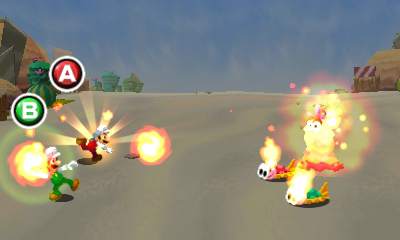
An “Excellent!” jump on a Dromba.In dreams the Luiginoids join every attack.
Bros. Attacks and Luiginary Attacks
Special attacks are learned by collecting Attack Pieces: find all ten hidden in an area and a new move is yours. There are ten Bros. Attacks for the real world, split evenly between the brothers (whoever starts the move pays the BP), and six Luiginary Attacks for the Dream World. All sixteen are listed with their costs below.
This is where the 3DS hardware comes in. The gyro sensor steers the Luiginary Ball as it rolls up Luiginoids, pilots the Dropchopper, aims the Slingsniper and guides the Star Rocket. The developers were proud enough of these to name favourites in the Iwata Asks interview: producer Yoshihiko Maekawa picked the Luiginary Stack, Akira Otani the Bomb Derby and Tomomi Sano the Dropchopper.
The 3D Red Shell, the first Bros. Attack.The Luiginary Ball: tilt the 3DS to gather Luiginoids.
Giant battles
When something enormous threatens Mario in a dream, the sleeping Luigi clutches his cap in fright and the L on it lights up. Starlow presses it, Luiginoids pour in, and Dreamy Luigi swells into Giant Luigi, with Mario riding on the brim of his hat.
As in Bowser’s Inside Story, you turn the console on its side and hold it like a book, this time choosing whether you are left- or right-handed. Everything is done with the stylus: slide up to Jump and again to stomp a second time, slash across for a Hammer Chop that knocks the enemy into the background, and (from the second battle) flick upwards for a Hammer Uppercut. Mario helps with two Bros. Attacks, the healing Rhythm Mushroom and the Drill Stomp. Each fight ends with Finishing Bros., in which Luigi throws a star with Mario aboard and you tilt the 3DS to steer it into the weak point; an “Excellent!” brings better prizes than an “OK!”.
There are five giant battles, in this order: Robo-Drilldigger in Dreamy Dozing Sands, the living summit of Mount Pajamaja, Earthwake in Dreamy Wakeport, the Zeekeeper in Dreamy Somnom Woods and a supersized Bowser in Dreamy Neo Bowser Castle. The last adds the Star Driver, in which Prince Dreambert enlarges the star and you tilt to dodge fireballs on the way in.
Unlike the rest of the game these scenes use polygon models, and they were not made at AlphaDream: the credits give them to Good-Feel, under giant battle director Tadanori Tsukawaki. Yoshihiko Maekawa told Iwata that AlphaDream simply did not have enough 3D staff of its own.
Giant Luigi, with Mario on his cap.The first giant battle, against Robo-Drilldigger.Mount Pajamaja loses its temper.
Badges, ranks and rank-up bonuses
Badges return from Bowser’s Inside Story with a twist. The Badge meter on the Touch Screen fills as the brothers land attacks (faster for good timing, faster still for Bros. and Luiginary Attacks), and when it is full the effect is banked in a stock slot rather than spent. Several effects can be held at once, and changing badges in mid-battle no longer costs a turn. Which effect you get depends on the pair of badges equipped, one from each set of six: the first set (Mush, Strike, Guard, Virus, Risk, Miracle) picks the family of effect and the second (Starter, Master, Expert, Bronze, Silver, Gold) picks the version, giving 36 combinations. Swapping badges empties the meter.
Levelling up raises every stat except Stache and lets you spin a roulette for a bonus to one stat of your choice; pick the same stat too often and the wheel offers smaller numbers. At set levels each brother also gains a rank: Mushroom to start with, then Shell at level 8, Flower at 16, Star at 26 and Rainbow at 40.
What is new is that each rank lets you choose a permanent perk. At Shell rank the list is Gear Slot +1 (which can be taken twice), Badge Stock +1, HP Up+, POW Up+, BP Up+, Quick Level (20 per cent more EXP) and Iron Body (25 per cent less damage). Flower rank adds Jump Man and Hammerhead (solo jumps or hammers at 125 per cent), Counterer (counter-attacks at 150 per cent) and Shroom EXP. Star rank adds Big Lucky (lucky hits do double damage), Casual Bros. (special attacks at half BP) and Quick Healer. Rainbow rank grants one more pick and opens the gold shop at Driftwood Shore.
Mushroom rank.Shell rank, level 8.Flower rank, level 16.Star rank, level 26.Rainbow rank, level 40.Badges in a dream battle.
Expert Challenges and side activities
Expert Challenges are the game’s achievements, introduced during the Smoldergeist fight in Pi’illo Castle. There are 111 of them worth 1,000 points in total: land nothing but Excellents with jumps or hammers in one battle, score an Excellent with each Bros. and Luiginary Attack, string together ten Excellents or ten dodges in each of sixteen areas, and beat each of 61 enemy types without being touched (No Hitter). Points unlock gear at ten thresholds, from Expert Boots at 20 points to the Duplex Crown at 1,000.
Pi’illo rescue runs through the whole game. 52 Pi’illos are scattered across the island as stone pillows; some are on the main path and many are optional. Each one is its own short dream stage ending in a Nightmare Chunk to smash, and Eldream hands out rewards as your total climbs.
Wakeport has the Mad Skillathon, where a Shelltop called Skillit turns seven Bros. Attacks into score-attack games, and Kylie Koopa, the reporter from Partners in Time, who pays for jigsaw puzzles made from photos found in camera blocks around the island. Driftwood Shore has Broque Madame, who invites Mario into her dreams for the Luiginary equivalent of the Skillathon, and the Mole Hunt at ten coins a go. There is also a long trading chain for a lovesick Hooski in Wakeport. Rewards for all of these are under Cheats & Secrets.
The Battle Ring in Pi’illo Castle.
Hard Mode, the Jukebox and version 1.1
The Jukebox, where the brothers finally get some sleep.
Finishing the story unlocks Hard Mode and the Jukebox. In Hard Mode enemies are stronger, you may carry no more than ten of any item, and a lost battle dumps you at the title screen with no retry. Beat the final boss that way and you are rewarded with a picture spread across both screens showing the main cast and bosses. The developers admitted to Iwata that even they struggle with it.
A free update, version 1.1, arrived in early September 2013. According to The Cutting Room Floor it fixed frequent freezes in Somnom Woods and Neo Bowser Castle, a way of trapping yourself behind icicles on the Mount Pajamaja tour, a play-time clock that kept ticking with the console shut, and two bugs involving Antasma.
A Year of Luigi game
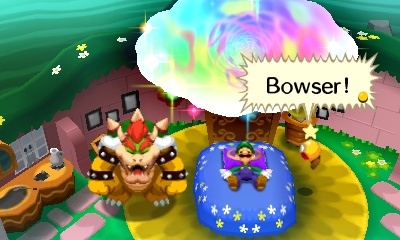
Luigi, ready for bed.
Dream Team was one of the headline releases of the Year of Luigi, Nintendo’s celebration of thirty years since Luigi’s debut in Mario Bros. (1983), which ran from 14 February 2013 to 18 March 2014 alongside Luigi’s Mansion 2, New Super Luigi U and Dr. Luigi. Everything the game adds is built on him: the Luiginary Works, the Luiginoids, the Luiginary Attacks and Giant Luigi. The brothers barely speak, so it is his poses that carry the comedy, and the developers told Iwata they had been looking after him for ten years and were delighted to see him get his due.
Bros. Attacks, Luiginary Attacks, badges and Zee Parts
All ten Bros. Attacks, all six Luiginary Attacks, Giant Luigi’s moves, the badges and the five parts of the Ultibed. BP costs and locations follow Super Mario Wiki’s tables.
3D Red ShellBros. Attack, Mario. 4 BP. The brothers take turns booting a Red Shell at one enemy (A for Mario, B for Luigi), ending with a charged kick. Mushrise Park; needed for the story.
3D Green ShellBros. Attack, Luigi. 4 BP. As above, but the shell bounces between random enemies on the ground. Mushrise Park, once Brickle is freed from the fountain.
Fire FlowerBros. Attack, Luigi. 5 BP. Throw each fireball when it is at its biggest; manage every one and you hammer A and B for a bonfire. Dozing Sands.
Bye-Bye CannonBros. Attack, Mario. 7 BP. Copies of the brothers are fired from a cannon; press A and B in the order they went up, then again in reverse. Wakeport.
DropchopperBros. Attack, Luigi. 7 BP. Tilt the 3DS to fly the chopper over a foe, then drop on cue. Mount Pajamaja.
Bomb DerbyBros. Attack, Mario. 9 BP. Luigi feeds Mario bombs to bat at the enemy before they go off; the last is the biggest. Driftwood Shore. Returns in Brothership.
SlingsniperBros. Attack, Luigi. 9 BP. Mario hauls back a giant catapult and you aim Luigi by tilting the console. A gift from the Massif Bros. on Mount Pajamaja; needed for the story.
Jet-Board BashBros. Attack, Mario. 12 BP. Hold B to build speed on the board and swing the hammer with A at full pelt. Somnom Woods.
Star RocketBros. Attack, Luigi. 12 BP. Tilt to steer a star through smaller stars, then land a double jump. Neo Bowser Castle.
Zee EggBros. Attack, Mario. 15 BP. Line up the Zeekeeper with the Circle Pad and bat a Wakeorb at one target for huge damage. From Eldream for rescuing all 52 Pi’illos.
Luiginary BallLuiginary Attack. 6 BP. Roll up Luiginoids by tilting the 3DS, then kick the ball with A; the bigger, the better. Dreamy Mushrise Park; needed for the story.
Luiginary StackLuiginary Attack. 10 BP. Jump on to a growing tower of Luiginoids and bring it down on the enemy; a wobbly stack hits less hard. Dreamy Dozing Sands.
Luiginary HammerLuiginary Attack. 10 BP. Mash B to build a hammer out of Luiginoids, keep it balanced, then swing with A. Dreamy Mount Pajamaja.
Luiginary FlameLuiginary Attack. 14 BP. Keep a growing fireball in the air between Mario and the Luiginoids, then hammer it into the enemy group. Dreamy Driftwood Shore.
Luiginary WallLuiginary Attack. 14 BP. Bat Dreamy Luigi into a wall of Luiginoids that ploughs through the enemies, bat-and-ball style. Dreamy Wakeport.
Luiginary TyphoonLuiginary Attack. 16 BP. Hold B to wind up a string of Luiginoids, release a typhoon and steer it across the enemies. Dreamy Somnom Woods.
Hammer Chop and Hammer UppercutGiant Luigi. Slash the stylus across the screen to knock the boss into the background; flick upwards for the Uppercut, learned in the Mount Pajamaja battle.
Rhythm MushroomGiant Luigi. Mario lobs mushrooms; tap in time as Luigi swallows them to heal. Not allowed in the Battle Ring.
Drill StompGiant Luigi. Circle the stylus the way the prompt shows for up to three spinning stomps. Learned in the Mount Pajamaja battle.
Finishing Bros.Giant Luigi. The closing move of every giant battle: tilt the 3DS to guide Mario and his star into the weak point.
Star DriverGiant Luigi. Only against giant Bowser: dodge fireballs by tilting, then shove him into the lava.
Mush BadgeHealing effects: 30, 50 or 80 per cent of HP (the last also revives and cures), or the same amounts of BP. Found with Starter in Pi’illo Castle.
Strike BadgeDirect damage: 30, 80 or 160 to one enemy, or 20, 50 or 100 to all of them. Badge shops.
Guard BadgeProtection: barriers that cancel three or six hits, three turns in which HP cannot reach zero, or boosts to DEF, POW or meter charging. Given by a Brock in Dozing Sands.
Virus BadgeSabotage: lowers enemy POW or DEF, dizzies the lot, strips their status effects, may turn one into a Mushroom, or strengthens lucky hits. Badge shops.
Risk BadgeGambles: full HP or 1 HP, a full meter or an empty one, random status effects for all, 256 damage to everyone on the field. Badge shops.
Miracle BadgeOddities: 30 per cent more coins or EXP, more lucky hits, a rewind of the battle’s status, or time stopped for every enemy. Badge shops.
Starter, Master, Expert, Bronze, Silver and Gold BadgesThe second set, which picks the version of the effect: for Mush these give 30, 50 or 80 per cent of HP, then 30, 50 or 80 per cent of BP. Starter is found in Pi’illo Castle and Bronze is a gift in Dozing Sands; the rest are sold in badge shops.
Pajamaja Rock FrameZee Part. The “treasure” of Mount Pajamaja, crusted with Nightmare Chunks that have to be broken off.
Dozing MattressZee Part. Formed from a Dozing Drop under Dozing Sands, past a wall Britta could not drill.
Zeekeeper’s FeathersZee Part. The prize for beating Grobot X in the Battle Ring at Pi’illo Castle.
Mushrise Tree BoardZee Part. Brickle hands it over once the brothers have cleared the rocks from his park.
Driftwood Jellyfish SheetsZee Part. Stolen by three Fly Guy Rs, who have to be chased to Pi’illo Blimport and beaten.
Cartoons, Comics & Other Media
Dream Team arrived in the middle of a year-long Luigi party, and Nintendo sold it accordingly. Its characters and music have surfaced in several games since.
The Year of LuigiNintendo campaign · 14 February 2013 to 18 March 2014Announced by Satoru Iwata in the same Nintendo Direct as the game. A Luigi-themed Nintendo 3DS XL with Dream Team pre-installed was sold in Japan and North America, and through Nintendo’s online store in the UK.
“Dreaming with Mario & Luigi”Nintendo of America sweepstakes · 1–16 August 2013Three videos on Nintendo’s YouTube channel each hid a phrase to tweet with #MarioLuigi, such as “Gigantic Luigi saves the day”. Three winners received a black 3DS XL and the game.
Prima’s Official Game GuideGuide book · 2013The English-language strategy guide, from Prima Games.
Club Nintendo relaxation kitsEurope · 2013According to Wikipedia, European Club Nintendo members could order Luigi- and Peach-themed sets of blanket, carry case and eye mask, in keeping with the game’s sleepy theme.
A Visit from St. Nicholas, Pi’illo styleNintendo on Facebook · December 2013Nintendo retold the plot in a single illustrated graphic, in the style of the poem A Visit from St. Nicholas.
Nintendo Dream New Year cardJapanese magazine · 2014The developers drew a nengājō (New Year card) for the magazine Nintendo Dream.
Super Smash Bros. for Nintendo 3DS and Wii U2014Yoko Shimomura rearranged her own battle theme “Try, Try Again” for Smash. It plays on the Paper Mario stage on 3DS and can be chosen for the Woolly World stage on Wii U.
Super Smash Bros. Ultimate2018 · spiritsPrince Dreambert and Antasma both appear as spirits. Antasma’s spirit battle is against a male Robin on a floor that sends fighters to sleep.
Mario & Luigi: Paper JamNintendo 3DS · 2015The next game reuses Dream Team’s look and most of the brothers’ battle animations, borrows two of its Bros. Attacks and the name Neo Bowser Castle, puts Antasma on one of Bowser’s Battle Cards and brings back the Giant Luigi model for the Mega Thwonk attack.
Superstar Saga + Bowser’s MinionsNintendo 3DS · 2017A poster showing Prince Dreambert standing before a Zeekeeper statue hangs in the Yoshi Theater lobby, a cover of “Challenging Actions!” accompanies some minigames, and the Elite Trio wear their Dream Team uniforms, which Super Mario Wiki puts down to an oversight.
Mario & Luigi: BrothershipNintendo Switch · 2024Capnaps, Magmads and Iceads return as enemies, Bomb Derby returns as one of Mario’s Bros. Attacks, and the Zeekeeper turns up as a rare reef out at sea.
Advertisement
Characters
Dream Team has the biggest cast the series had seen: a whole lost civilisation, an island full of block people and shell people, old friends from three earlier games, and two villains for the price of one.
Character
Who they are
In this game
Abilities & notes
MarioThe A Button
The older twin, and the only member of the party who can stay awake.
Leads on the island and goes into every dream alone, where he fuses with Dreamy Luigi in battle. During giant battles he rides on Luigi’s cap and supplies the mushrooms.
Starts with the higher BP, POW and Speed
Bros. Attacks: 3D Red Shell, Bye-Bye Cannon, Bomb Derby, Jet-Board Bash, Zee Egg
In dreams: HP and BP ×1.5
LuigiThe B Button, and the bed
The younger twin, who can fall asleep anywhere at a moment’s notice.
His dreams are half the game. In the real world he fights and explores beside Mario; at every Dreampoint he lies down and becomes the Touch Screen, where Starlow pulls his moustache and tweaks his nose.
Starts with the higher HP, DEF and Stache
Bros. Attacks: 3D Green Shell, Fire Flower, Dropchopper, Slingsniper, Star Rocket
Field: Mini-Mario and Mole Mario hammer, Side Drill
Dreamy LuigiLuigi as he dreams himself
Luigi’s dream self, brave and endlessly multipliable.
Mario’s partner in the Dream World. He possesses Luiginary Works, splits into Luiginoids for field formations and Luiginary Attacks, and merges with them to become Giant Luigi for the five giant battles.
Cannot be hurt in dream battles; only Mario takes damage
Meets the party at Pi’illo Castle and acts as guide. On the Touch Screen she is your hand: it is Starlow who works Luigi’s face, and Starlow who presses the glowing L on his cap to trigger a giant battle. She and Peach destroy the Dream Stone at the end.
Not a fighter
Unaffected by the Dreambeats
Prince DreambertPrince of the Pi’illos
Ruler of the lost Pi’illo kingdom, petrified as a pillow until Luigi slept on him.
Explains the stones and Antasma, travels with the brothers, and serves as Luigi’s pillow at Dreampoints. He chases Antasma into the last dream and fights alongside Mario there; in the giant Bowser battle he enlarges the star for the Star Driver.
Freed in Dreamy Pi’illo Castle
Smash Ultimate spirit
Princess PeachGuest of honour
Ruler of the Mushroom Kingdom, invited to the island with her retinue.
Dragged into the Dream World by Antasma, who wants her power to break his seal, then hunted by Bowser. She spends the middle of the game in hiding at Driftwood Shore, and it is her wish power, with Starlow’s, that shatters the Dream Stone.
Voiced by Sam Kelly
AntasmaThe Bat King
A bat turned monster by a diet of nightmares; ancient enemy of the Pi’illos.
Kidnaps Peach, allies with Bowser, steals the Dream Stone, plays the Dreambeats and wishes up Neo Bowser Castle, only to be thrown aside by his partner. His speech is modelled on old Dracula films, heavy on the Vs, with the occasional “SCREEEK!” from his bat side.
Final fight: 2,435 HP, and 7,500 EXP, the most of any enemy
Eats Antasmunchies to raise his attack; heals 200 HP a turn when hibernating
Antasma X (Battle Ring): 3,336 HP
BowserCo-villain, then the only villain
King of the Koopas, on the island for the usual reason.
Teams up with Antasma in Dream’s Deep, helps steal the Dream Stone, then betrays him and keeps it. He is a boss three times: possessed by Antasma, as a giant in his own dream, and as Dreamy Bowser at the very end. Super Mario Wiki calls this the first game in the series where he is clearly the final boss.
Dream’s Deep: 233 HP
Giant: 2,800 HP
Dreamy Bowser: 2,417 HP plus arms of 350 and 464
KamekBowser’s adviser
The Magikoopa who does Bowser’s thinking for him.
Impersonates Peach to lure the brothers into an ambush at Dreamy Driftwood Shore, then blocks the way three times in Dreamy Neo Bowser Castle, finally with coloured copies of himself: the green one raises defence and the white one heals, as Magikoopas did in Paper Mario.
Three fights: 1,428, 1,743 and 1,496 HP
Clones: red 544, green 816, white 626 HP
The Elite TrioPrivate Goomp, Corporal Paraplonk, Sergeant Guy
Three of Bowser’s soldiers from Bowser’s Inside Story, promoted and given uniforms.
A Goomba, a Paratroopa and a Shy Guy who command Bowser’s Goombas, Koopas and Shy Guys respectively. They ambush Mario in Dreamy Driftwood Shore and return as Elite Trio X in the Battle Ring.
HP 249, 415 and 581
X versions: 468, 780 and 1,092
Dr. SnoozemoreProprietor of Pi’illo Island
The man in charge of the island, who nods off almost as easily as Luigi.
Away on business when the guests arrive. He returns after the island has been put to sleep and supplies the plan: wake the Zeekeeper with the Ultibed.
Not fought
Broque MonsieurTour host; with Broggy
The block-headed shopkeeper from Bowser’s Inside Story. His people get a name here: the Brocks.
Runs the welcome events at the Blimport and the tour of Pi’illo Castle, and a dream version of him teaches Mario the basics of the Dream World. His dog Broggy delivers the invitation in the opening.
Not fought this time
BrickleBoss Brock of Mushrise Park
The Brock who manages the park, where Grobot waters the plants.
Holds Eldream’s pillow until the brothers catch him, is attacked by his own watering robot, lends Luigi his bed, and later trades the Mushrise Tree Board for some rock-clearing.
Gives a Zee Part
BrittaForewoman of Dozing Sands
The hard-working Brock in charge of the desert works.
Has to be saved from Torkscrew at the top of the sand-flow, and pays 100 coins on top of the takings if the brothers smash all 32 of her boulders.
32 boulders at 20 coins each
EldreamPi’illo elder
The oldest of the Pi’illos, owner of a pet called Dreambunny.
Freed in Dreamy Mushrise Park, he opens the way to Dream’s Deep. Afterwards he stays in the park and rewards the brothers as their tally of rescued Pi’illos grows, ending with the Zee Egg.
Rewards at 5, 7, 12, 18, 26, 37 and 52 Pi’illos
BedsmithPi’illo craftsman
The Pi’illo who can build the Ultibed.
His pillow is in Pi’illoper’s basement and his Nightmare Chunk in Earthwake’s head. Once freed he builds the Ultibed at his workshop in Somnom Woods.
Freed after the Earthwake giant battle
The Massif Bros.Big Massif and Lil’ Massif
Brothers who guide the tours up Mount Pajamaja.
Lil’ Massif signs the brothers up in Wakeport; Big Massif has to be beaten in his own dream, after his four Hooraw apprentices, before he will wake. They guide the climb and later hand over the Slingsniper.
Tries to rob Wakeport and falls foul of a Wiggler whose garden he has insulted. He blocks the path until the brothers hold all five Zee Parts, and the encounter ends in a boss fight with both him and the Wiggler.
999 HP (Wiggler: 1,485)
Kylie KoopaReporter
The Koopa journalist from Partners in Time, now writing the island’s guidebook.
Works from a house in Wakeport and pays the brothers to find camera blocks and piece together the photos inside. Her office has a picture of a Shroob on the wall.
Nine photos, three difficulty levels each
Prizes: 100 coins, 300 coins, a DX bean
The ZeekeeperGuardian of Pi’illo Island
A huge, powerful and thoroughly laid-back bird.
Helped seal Antasma long ago and regards him as a mere pest. Hatched from the Zee Egg in Dreamy Somnom Woods, he fights Giant Luigi, then breaks the castle’s barrier with the Wakebeam, rescues everyone at the end and turns the Dream Stone into the Dream Coin.
Giant boss: 2,064 HP; Zeekeeper X: 3,000
Stars in the Zee Egg Bros. Attack
The Pi’illo folkThe island’s first people
Small pillow-shaped people, petrified by the Nightmare Chunks.
52 can be rescued. Most are ordinary blue or pink Pi’illos; the five Deco Pi’illos of Dozing Sands give Dozite, the Mega Pi’illos break the gates on Mount Pajamaja, and the Pi’illo Masters of Somnom Woods hold the Somnom Stones.
3 in the castle, 5 in Mushrise Park, 11 in Dozing Sands, 6 in Wakeport, 12 on Mount Pajamaja, 3 at Driftwood Shore, 11 in Somnom Woods, 1 in Neo Bowser Castle
Broque MadameOf Driftwood Shore
A very grand Brock who keeps a shop on the beach.
Hides Peach and Toadsworth by dressing them as Block folk. Bored, she also invites Mario into her dreams for four Luiginary Attack challenges.
S rank in all four: Supreme Boots
Bosses & enemies
Every boss in story order, giant bosses included, with HP from Super Mario Wiki’s tables (normal mode) and the HP of its X version in the Battle Ring where there is one. Then the regular enemies of the real world and of the Dream World, with HP, EXP and coins. Recoloured “R” variants met late in the game share a chip with the original.
???? (boss)ZeeppelinAntasma in disguise. A two-turn tutorial in which Mario jumps over charging bats.
Smoldergeist (boss)Pi’illo Castle ruinsFour at once, 12 HP each. 20 EXP. Expert Challenges begin with this fight.
Dreamy Mario (boss)Dreamy Pi’illo Castle96 HP, 75 EXP. Antasma backs his creation with fireballs and tosses it mushrooms.
Grobot (boss)Mushrise Park288 HP, 250 EXP. Brickle’s watering robot on the blink. Grobot X: 1,133 HP.
Bowser and Antasma (boss)Dream’s Deep233 HP, 300 EXP. Bat-form Antasma (6 HP) merges with Bowser, and damage his bats do to Mario heals the boss. Bowser X: 771 HP.
Torkscrew (boss)Dozing Sands656 HP, 500 EXP. Caught attacking Britta at the top of the sand-flow. Torkscrew X: 1,594 HP.
Robo-Drilldigger (giant boss)Dreamy Dozing Sands500 HP. The Dream Stone’s spirit in a temper, and the first giant battle. X: 997 HP, fought without Uppercut or Drill Stomp.
Heavy Zest (boss)Dreamy Wakeport282 HP, 200 EXP. First of Big Massif’s four Hooraw apprentices; each sets a special condition.
Sorrow Fist (boss)Dreamy Wakeport395 HP, 200 EXP. Second apprentice.
Thunder Sass (boss)Dreamy Wakeport140 HP, 200 EXP. Third apprentice, and the frailest.
Big Massif (boss)Dreamy Wakeport864 HP, 800 EXP. Fights with Hooraws (28 HP) in support. Big Massif X: 1,901 HP.
Mammoshka (boss)Mount Pajamaja918 HP, 1,100 EXP. Block Monolifts fit it with helmets unless they are dealt with at once; when its armour cracks, a small pink mammoth is underneath. Mammoshka X: 1,771 HP.
Mount Pajamaja (giant boss)Dreamy Mount Pajamaja1,600 HP. The volcano itself. Giant Luigi learns Hammer Uppercut and Drill Stomp here. X: 1,111 HP.
Private Goomp (boss)Dreamy Driftwood Shore249 HP. The Elite Trio fight together for 2,100 EXP, with Sub-Goombas (80 HP) in support. X: 468 HP.
Sergeant Guy (boss)Dreamy Driftwood Shore581 HP. Brings a cannon; a Banzai Bill launcher sits in the background. X: 1,092 HP.
Earthwake (giant boss)Dreamy Wakeport1,499 HP. A robot assembled from the town’s buildings, with the Bedsmith’s Nightmare Chunk in its head. X: 1,801 HP.
Fly Guy R (boss)Pi’illo BlimportThree thieves with 149 HP each, holding the Driftwood Jellyfish Sheets. They turn up as ordinary enemies afterwards.
Wiggler (boss)Wakeport1,485 HP. Fought together with Popple for 1,500 EXP.
Popple (boss)Wakeport999 HP. The thief from Superstar Saga, fought alongside the Wiggler he provoked.
Pi’illodium (boss)Somnom Woods1,673 HP plus wings of 172. 3,600 EXP. Immune to hammers until grounded; at 299 HP or less it starts a 40-second self-destruct. X: 2,742 HP.
The Zeekeeper (giant boss)Dreamy Somnom Woods2,064 HP. The fourth giant battle. Zeekeeper X: 3,000 HP with a six-turn limit.
Kamek (boss)Dreamy Neo Bowser CastleThree fights: 1,428 HP, then 1,743 with Dry Bones, then 1,496 with red, green and white copies. 3,000 EXP for the last.
Bowser (giant boss)Dreamy Neo Bowser Castle2,800 HP. The last giant battle, finished with the Star Driver. Giant Bowser X: 3,500 HP.
Antasma (boss)Dreamy Neo Bowser Castle2,435 HP, 7,500 EXP. Feeds on Antasmunchies (90 HP), clones himself, drags Mario into a nightmare. Antasma X: 3,336 HP.
Dreamy Bowser (final boss)Neo Bowser Castle2,417 HP, left arm 350, right arm 464. Summons Dreamy Goombas, Bob-ombs, Shy Guys and Paratroopas.
Bowser Jr. (secret boss)Battle Ring4,099 HP, with his Junior Clown Car (512 HP). Appears only at the end of the Battle Medley and is worth 10,000 coins.
Pi’illodactylMount Pajamaja; Pi’illodactyl R in Somnom Woods318 HP, 200 EXP, 180 coins; a background enemy. R: 476 HP, 600 EXP.
DurapurlDriftwood Shore89 HP, 130 EXP, 30 coins.
Fly GuyDriftwood Shore138 HP, 100 EXP, 35 coins.
GoombaDriftwood Shore; Goomba R at the Blimport and Mushrise Park54 HP, 15 EXP. Goomba R: 58 HP, 30 EXP.
Shy Guy AirtubFive real-world areas on return visits; Airtub R in Neo Bowser Castle123 HP, 250 EXP, 240 coins; hovers in the background. R: 178 HP, 500 EXP.
Shy GuyFive real-world areas on return visits; Shy Guy R in Neo Bowser Castle35 HP, 15 EXP. Shy Guy R: 48 HP, 25 EXP.
VirusFive real-world areas on return visits106 HP, 30 EXP, 6 coins.
From the game’s credits as recorded by Super Mario Wiki, and the Iwata Asks interview.
Hiroyuki KubotaDirector and scenario (AlphaDream)Directed and wrote the game, as he had Bowser’s Inside Story. He told Iwata he felt like a blank sheet of paper when that one was finished.
Yoshihiko MaekawaProducer (AlphaDream)Director of the first game turned producer. He claims the Luiginary Stack as his own idea.
Akira OtaniProducer (Nintendo)Nintendo’s producer on the series, who insisted the fourth game be about the brothers alone. He went on to produce Brothership.
Toshiharu IzunoProducer (Nintendo)Took part in the Iwata Asks interview alongside Otani.
Tomomi SanoAssistant producer (Nintendo)Played the giant battles on a projector in meetings so the team could watch a newcomer struggle.
Makoto AioiMain programLead programmer.
Akira Noguchi and Kazumasa YonetaniGraphic design leadsBoth are credited as graphic design lead: Noguchi in the main credits, Yonetani in the giant-battle section that follows.
Takuji SasakiBG graphics leadLed the team that built the series’ first 3D environments.
Chihiro FujiokaMenu designDesigned the menus.
Tadanori TsukawakiGiant battle director (Good-Feel)Good-Feel made the polygon giant battles; Tsukawaki directed them.
Yoko ShimomuraMusicComposed the score. She later rearranged its battle theme “Try, Try Again” for Smash Bros.
Koji KondoSound supervisorCredited as sound supervisor.
Shigeru Miyamoto and Takashi TezukaSupervisorsCredited as supervisors; Shinya Takahashi is general producer, Tetsuo Mizuno and Satoru Iwata executive producers.
Charles Martinet, Sam Kelly, Kenny JamesVoicesMario and Luigi; Princess Peach; Bowser and Dreamy Bowser. Caety Sagoian voices Bowser Jr. and Kazumi Totaka the Yoshis.
Nate Bihldorff and teamNorth American localisationNintendo of America’s localisation team wrote the US English script (Bihldorff also voices a Shy Guy); Nintendo of Europe produced a separate UK English text and the other European languages.
How It Was Made
Nintendo published a five-part Iwata Asks interview for Dream Team in 2013, with AlphaDream’s Yoshihiko Maekawa and Hiroyuki Kubota and Nintendo’s Akira Otani, Toshiharu Izuno and Tomomi Sano. Most of what follows comes from it.
“Like a white sheet of paper”
Some of the developers at the Japanese press presentation. Nintendo, via Super Mario Wiki
Bowser’s Inside Story had revived a series whose sales had dipped with its second game, and it left its director empty. “To be honest, when the third one was done, I was like a white sheet of paper,” Hiroyuki Kubota told Satoru Iwata, who summed it up for him: “You’d burnt out until you were blank.” Kubota’s answer was to ask the whole staff for ideas. Maekawa recalled that about half a year went by between finishing the third game and settling on a direction.
The obvious move was to make Bowser playable again. Akira Otani vetoed it, on the grounds that leaning on other characters would wear away what made the series what it was; the fourth game would be about Mario and Luigi and nobody else. Luigi, the butt of the series’ jokes for a decade, was the natural centre, and Iwata observed that he had been badly treated in a lot of games. Maekawa said the team had been looking after Luigi for ten years and were truly happy to see him honoured.
Lots of Luigis, then a reason for them
The idea that stuck came before any talk of dreams. “First, we made a prototype in which lots of Luigis showed up,” said Otani: a crowd of them that you shepherded to a goal without losing any. It was fun as an action toy but would not stretch to a whole RPG, so the team went looking for a setting in which a horde of Luigis made sense, and arrived at a Dream World. Wikipedia, citing later interviews, adds that the developers found the crowd too much for the Nintendo DS to handle, which pushed the project on to the 3DS.
The second screen then supplied the other half: a sleeping Luigi down below whose face you could play with, in keeping with the way the series had always treated him, and a dream above that reacted. Kubota admits he was uneasy at first about whether dream gameplay would hold together.
Pixel art in stereoscopic 3D
“This time, we actually made the backgrounds in 3D, but all the characters are 2D pixel art,” Otani explained. AlphaDream’s craft was sprites, and Maekawa was frank that the studio did not have enough 3D people in-house, which is why the polygon giant battles were handed to another company (the credits name Good-Feel). Kubota said the first wall the team hit was stereoscopic backgrounds, because the old 2D shortcuts for placing objects no longer worked.
Making flat sprites look solid on a 3D screen took special drawing and colouring techniques and a great many retakes, especially for big characters, where flatness showed most. The DS games had drawn the brothers facing about eight directions; here, Kubota said, “we made pixel art for 16 directions.” Nothing could simply be mirrored, because the L on Luigi’s cap would flip and Mario would raise the wrong arm. Five or six artists made every animation by hand, and when a crowd of Luiginoids appears each one is posed differently so that the group never looks regimented. Otani said this was one reason the game took so long to follow Bowser’s Inside Story.
Easier to start, harder to finish
The team worried that players raised on Mario platformers would ignore levelling up and hit a wall, so they built in help: the Easy Mode offered after a defeat, the Hint Block, the slow-motion Bros. Attacks. Assistant producer Tomomi Sano became the test case, playing a giant battle on a projector in front of the staff, who cheered the attempt on all the way to defeat. At the other end is Hard Mode, and a tutorial that does not pull its punches: “If you blink, even the tutorial will wipe you out!” warned Sano.
According to Wikipedia’s account of later interviews, the developers also used Dream Team to gauge how many tutorials players really need. Reviewers had an answer for them.
Announcement and release
Satoru Iwata unveiled the game in the Nintendo Direct of 14 February 2013, straight after announcing the Year of Luigi, with a summer release promised for Europe and North America. A new trailer followed at E3 in June. Europe received it on 12 July, Japan on 18 July and North America on 11 August, the same day a demo went up on the Nintendo eShop: 1,010 blocks, twelve plays, with a slice of Mushrise Park, a dream sequence and a choice of boss.
Nintendo sold a Luigi-themed 3DS XL with the game pre-installed and ran a Twitter sweepstakes in the United States. Version 1.1, in early September, dealt with the freezing that some players had met late in the game.
Series Firsts
Firsts for the Mario & Luigi series, as stated by Super Mario Wiki’s comparison with the earlier games.
1The series arrives on Nintendo 3DSThe first Mario & Luigi game on 3DS, after one on Game Boy Advance and two on DS, and the first with 3D environments. The giant battles go further and use full polygon models.
2Save anywhereThe first game in the series that lets you save at any time, from an icon on the Touch Screen as well as at Save Blocks.
3Bowser, final bossThe first Mario & Luigi game in which Bowser himself is unambiguously the last boss, as Dreamy Bowser.
4No Bowser tutorialThe first without an opening tutorial fight against Bowser. The opening battle is against a disguised Antasma, and the instructions wait for the first ordinary enemy.
5Rank-up bonuses you chooseRanks came in with Bowser’s Inside Story, where each had a fixed reward. Here, for the first time, the player picks a perk at every rank.
6Never leaving for homeThe first, and Super Mario Wiki says only, game in the series in which the Mushroom Kingdom cannot be explored: Peach’s Castle appears only in cutscenes.
7Nobody gets swallowedThe first in which the brothers never end up inside another character, after Bowletta, Yoob and Bowser in the first three.
8New facesIntroduced here: Antasma, Prince Dreambert, the Pi’illos, the Zeekeeper, Dr. Snoozemore and the Massif Bros. The Cutting Room Floor notes that this is also the game that reveals Broque Monsieur’s people as a species, the Brocks.
Cheats & Secrets
No button codes, but a great deal of optional reward. Rescue counts, prize lists and turn limits here are Super Mario Wiki’s.
Rescue all 52 Pi’illos for the Zee Egg
Go back to Eldream in Mushrise Park whenever your rescue count rises. He pays out at 5 Pi’illos (Bare Hammer), 7 (Birthday Hammer), 12 (POW Gloves), 18 (Birthday Ring), 26 (Golden Wear), 37 (POW Gloves DX) and all 52 (the Zee Egg, a 15 BP Bros. Attack for Mario that does heavy damage to one target). Area by area: 3 in Pi’illo Castle, 5 in Mushrise Park, 11 in Dozing Sands, 6 in Wakeport, 12 on Mount Pajamaja, 3 at Driftwood Shore, 11 in Somnom Woods and 1 in Neo Bowser Castle.
Expert Challenge rewards
The 111 challenges add up to 1,000 points, and gear is handed out as you pass 20 (Expert Boots), 50 (POW Scarf), 90 (Expert Wear), 140 (Perfect POW Gloves), 200 (BP Knockout Bangle), 300 (Expert Hammer), 450 (Birthday Boots), 600 (Golden Hammer), 800 (Master Gloves) and 1,000 points (Duplex Crown). Several of these have different names in the European version, such as Challenge Boots and Pro Gloves. The 61 No Hitter challenges, worth five points each, are the bulk of it: beat one of each enemy without it landing a hit, having let it attack at least once.
The Battle Ring and Bowser Jr.
The Battle Ring is a Dreampoint in Pi’illo Castle. Each class opens once you have beaten its boss in the story, costs a one-off entry fee (100 to 500 coins) and gives you a fixed bag of items and a turn limit. The eight normal classes are Grobot X (6 turns), Bowser X and Antasma X (8), Torkscrew X (8), Big Massif X (12), Mammoshka X (16), Elite Trio X (12), Pi’illodium X (26) and Antasma X (14), paying 600 to 3,000 coins. Clear them all and the Battle Medley opens for 1,000 coins: every one of those fights in a row inside 45 turns, with HP and BP carried over, ending with Bowser Jr. (4,099 HP) in his Junior Clown Car. The prize is 10,000 coins.
The giant classes work the same way, without the Rhythm Mushroom: Robo-Drilldigger X, Mount Pajamaja X, Earthwake X, Zeekeeper X (six turns, four on Hard) and Bowser X, then a Giant Battle Medley worth 8,000 coins.
Hard Mode and the Jukebox
Both unlock when you finish the story. Hard Mode strengthens enemies, caps every item at ten and removes retries. Beating the final boss on Hard earns a two-screen illustration of the main characters and bosses.
Hunt the Gold Beanie
A Gold Beanie can turn up in every dream area bar Dream’s Deep. It has 517 HP and is worth 4,000 EXP and 800 coins, more experience than any boss except Antasma.
Mad Skillathon prizes
Skillit’s stall in Wakeport scores seven Bros. Attacks: 200 points for a B rank (100 coins), 500 for an A (300 coins) and 800 for an S. The S-rank prizes are the Rally Belt (3D Green Shell), Flame Hammer (Fire Flower), Strike Gloves (Bye-Bye Cannon), Action Boots (Dropchopper), Bare Boots DX (Bomb Derby), EXP Bro Gloves DX (Slingsniper) and Perfect Bro Gloves (Star Rocket). S-rank all seven for the Pro Wear.
Broque Madame’s dream challenges
The same idea at Driftwood Shore, with Luiginary Attacks and the same score thresholds. S ranks win Coin Boots DX (Luiginary Ball), Sap Hammer DX (Stack), Blunt Hammer DX (Flame) and Lucky Gloves DX (Wall), and all four together win the Supreme Boots.
Kylie Koopa’s photo puzzles
There is one camera block in each of the nine real-world areas. Bring the photos to Kylie in Wakeport and solve each as a jigsaw at three levels: 100 coins for level 1 (three minutes), 300 coins for level 2 (four minutes) and a DX bean for level 3 (six minutes). The first is in plain sight in her own house.
The Hooski’s proposal
In Wakeport a Hooski called Hoolo wants to propose to Hoola but has no gift. Take his plush Zeekeeper and trade your way along the chain: Rare Fruit, Yoshi Egg, Peach’s Photo, Book of Ruins, Queen Bean’s Photo, Lost Camera, and finally a tip-off about something a bird buried between the umbrella and the fountain. Dig up the Pi’illo Ring, hand it over, and the happy couple give you a Sap Hammer, Heart Bean DX, Rally Wear and a 1-Up Mushroom.
Break Britta’s boulders
Dozing Sands has 32 boulders worth 20 coins apiece. Smash every one and Britta adds a 100-coin bonus, 740 coins in all.
Reach Rainbow rank
Level 40 brings Rainbow rank, one more rank-up bonus and access to the gold shop at Driftwood Shore. Two bonuses are worth planning for early: Gear Slot +1 can be chosen twice by the same brother, and if both brothers take Badge Stock +1 you can bank four badge effects.
Mole Hunt
The old Shelltop’s game at Driftwood Shore has to be played twice for the story (he is the one who knows where the Fly Guy thieves went). After that it is open at ten coins a go, with prizes for good scores.
Glitches & Oddities
Dream Team shipped with a few rough edges, most of them smoothed off by the version 1.1 update of September 2013. These are the ones recorded by Super Mario Wiki and The Cutting Room Floor.
Freezes late in the game
The original release could lock up, most often in Somnom Woods and Neo Bowser Castle. Version 1.1 fixed the known cases.
Stuck behind the icicles
On the Mount Pajamaja tour a path that needs a Spin Jump is blocked by icicles. In version 1.0, doing things in the wrong order could leave them in place and the game impossible to continue. Fixed in 1.1.
Antasma’s unopenable present
After the Antasma fight in version 1.0, the gift box holding his rare drop could fail to open, forcing a reset. A related freeze could strike in the Battle Ring when Dreamy Luigi was released from an Antasmunchie X. Both were fixed in 1.1.
The clock that never slept
Version 1.0 kept counting play time while the 3DS was closed or suspended. From 1.1 only active play is counted.
Gyro goes dead
Now and then a tilt-controlled moment fails to register any movement at all. Super Mario Wiki names the Zeekeeper battle and the shell-repelling part of the giant Bowser battle as the likeliest places, and says the cause is unknown.
A trophy before its time
Beat a story boss, go straight to the Battle Ring and beat its X version without saving, then reset. On reloading, the trophy for the X boss is on show even though the class has not been unlocked yet.
Wrong voice, wrong frame
Two small slips: on two occasions Antasma’s text is accompanied by Britta’s speech sound instead of his own, and one in-between frame of Bowser Jr.’s hammer attack is visibly garbled.
Videos
Nintendo UK’s E3 2013 trailer for Dream Team Bros., and a documentary on the series as a whole.
Nintendo UK’s upload of the official E3 2013 trailer, under the game’s European title.
A fan-made documentary of facts and development history from across the Mario & Luigi series, by DidYouKnowGaming (2017).
Trivia & Interesting Facts
The Japanese title is Mario & Luigi RPG 4: Dream Adventure. It is the final game in the series to carry a number there.
The European and Australian title adds a word: Mario & Luigi: Dream Team Bros.
According to The Cutting Room Floor, the project’s internal name was REDSPARK.
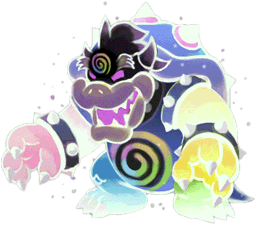
The early Dreamy Bowser sprite left in the game’s files.The files still hold an earlier design for Dreamy Bowser, with a spiral on his stomach and forehead where the finished version wears the Dream Stone.
The unused Ice Flower sprite.Three Bros. Attacks were cut. Sprites remain for an Ice Flower, barely begun, and for two moves from Bowser’s Inside Story, the Yoo Who Cannon and the Jump Helmet. The Cutting Room Floor reckons the helmet was nearly finished and suggests it may have been dropped because it needed both screens.
Antasma’s name is probably the Romance-language word fantasma, ghost, with an “anti” on the front. In Japan he is Akkūmu, from akumu, nightmare; in France Phobieux; in Spain Conde Pesadillo; in Russia Mrakula, which manages to get Dracula in.
Mammoshka’s name crosses mammoth with mamushka, a mistaken name for Russian nesting dolls, and Mount Pajamaja is pyjamas with, perhaps, a little magma.
A Shelltop workman in Dozing Sands sings about other places he has dug: Hoohoo Mountain, Donut Plains and Jolly Roger Bay. In the Dutch version he names Acorn Plains and Soda Jungle instead.
One of the Flower-rank bonuses is called Jump Man, Mario’s name in the original Donkey Kong.
Fawful does not appear, but one unnamed islander quotes a line of his.
Poison is gone from the list of status effects; Mini takes its place.
Kamek has disguised himself as Peach before, in New Super Mario Bros. Wii.
The developers named their favourite special attacks to Satoru Iwata: the Luiginary Stack for Maekawa (“because I’m the one who thought of it!”), the Bomb Derby for Otani and the Dropchopper for Sano.
Antasma is worth 7,500 EXP, more than anything else in the game and 3,500 more than a Gold Beanie.
The sound Antasma makes in Dream’s Deep was reused for Ganon’s shadow in the Switch remake of The Legend of Zelda: Link’s Awakening, according to Super Mario Wiki.
Dreamy Bowser is drawn with a white outline. Ordinary enemies lost their black outlines altogether in the move to 3DS, the brothers gained visible mouths, and the letters on their caps became red and green.
The demo starts the brothers at level 5 in Mushrise Park and level 3 in the dream, halves the cost of every special attack and lets enemies respawn the moment you leave the room.
The secret phrases in Nintendo of America’s 2013 sweepstakes were “Gigantic Luigi saves the day”, “Luigi’s mustache saves the day” and “Defying gravity with Luigi saves the day”.
The Zeekeeper’s parting gift, the Dream Coin, is the Dream Stone rebuilt so that it makes money instead of granting wishes.
Its sprite style outlived it: Paper Jam and both 3DS remakes used the same look, and the series only changed again with Brothership in 2024.
Regional Box Art
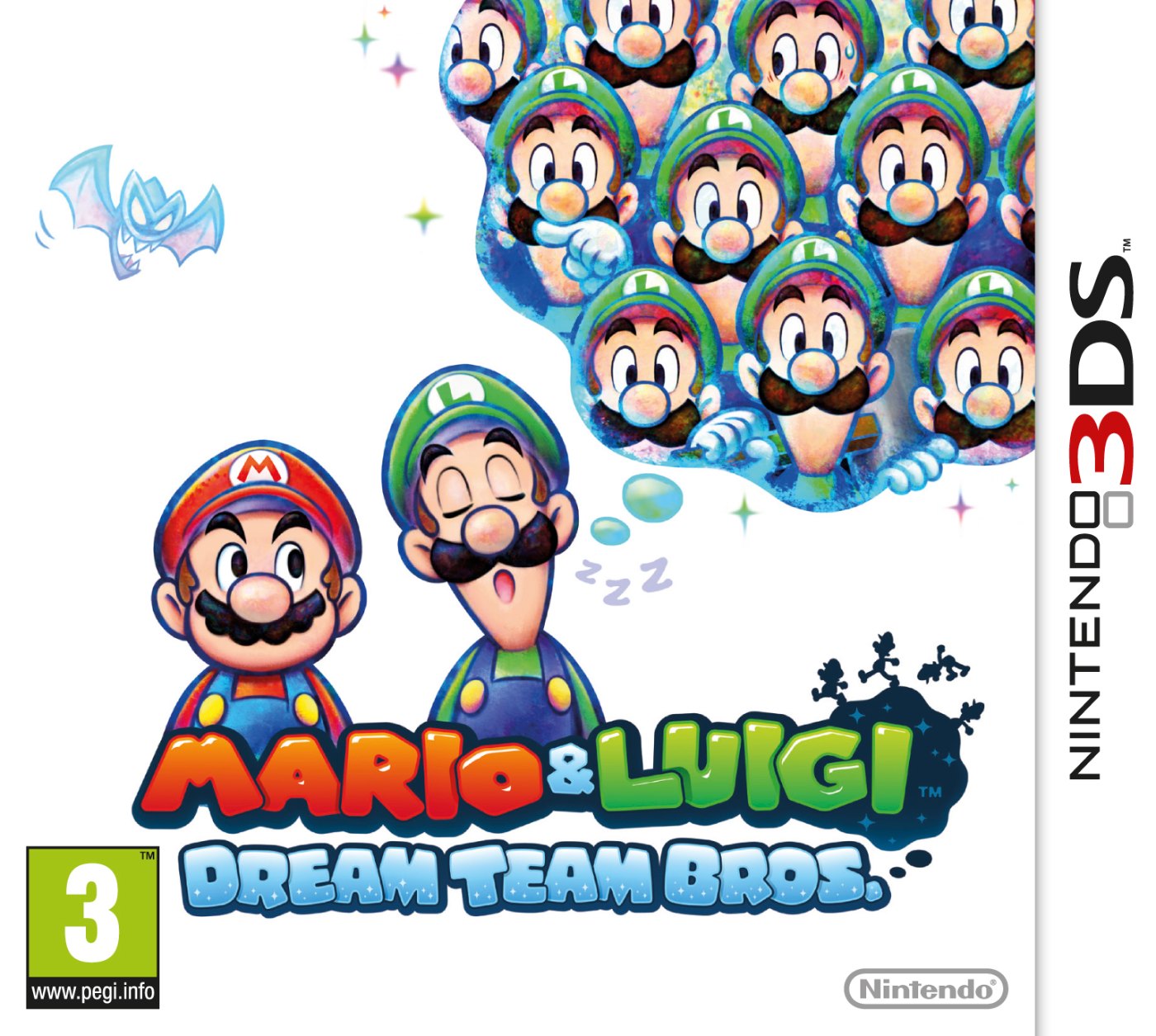
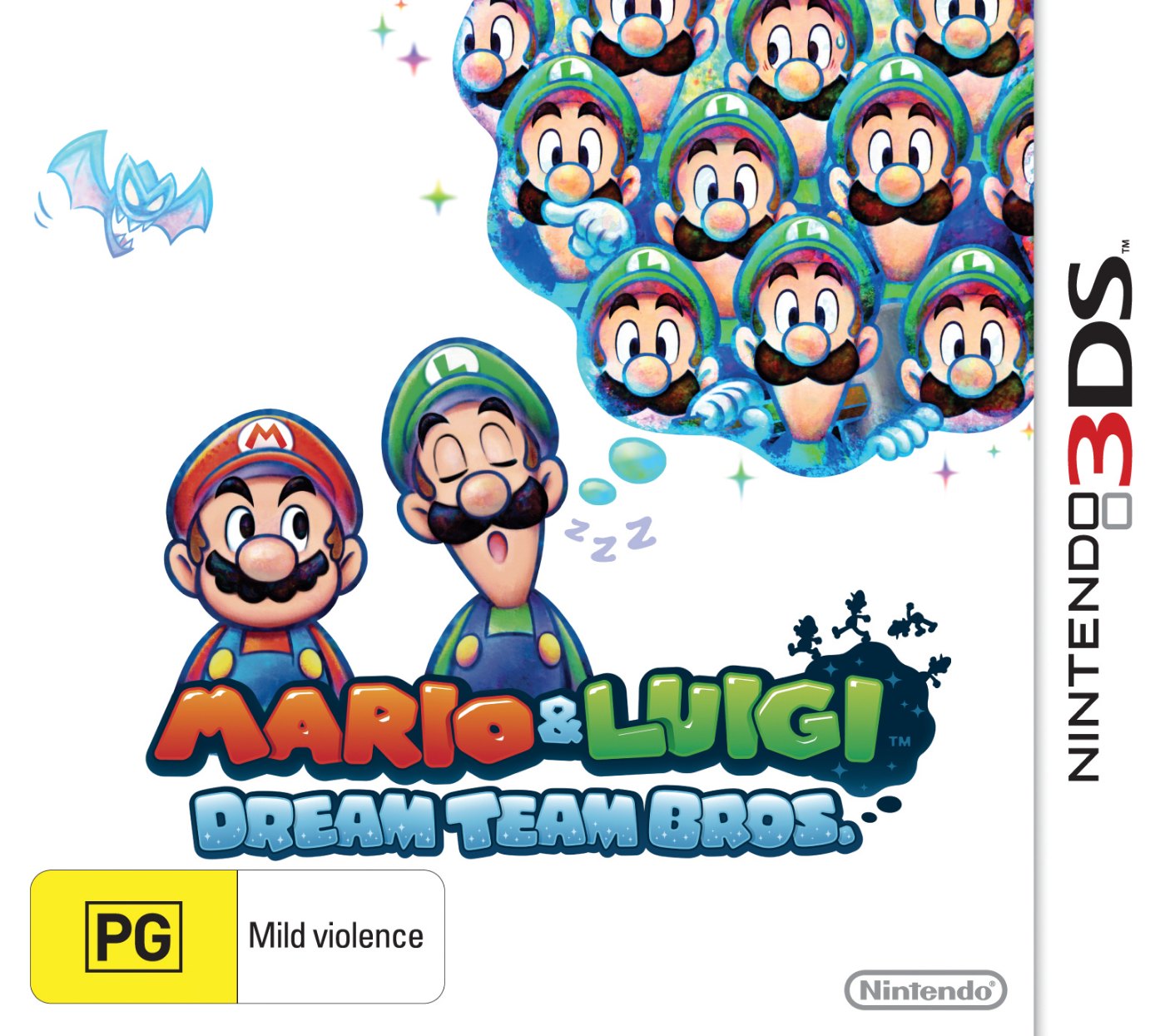
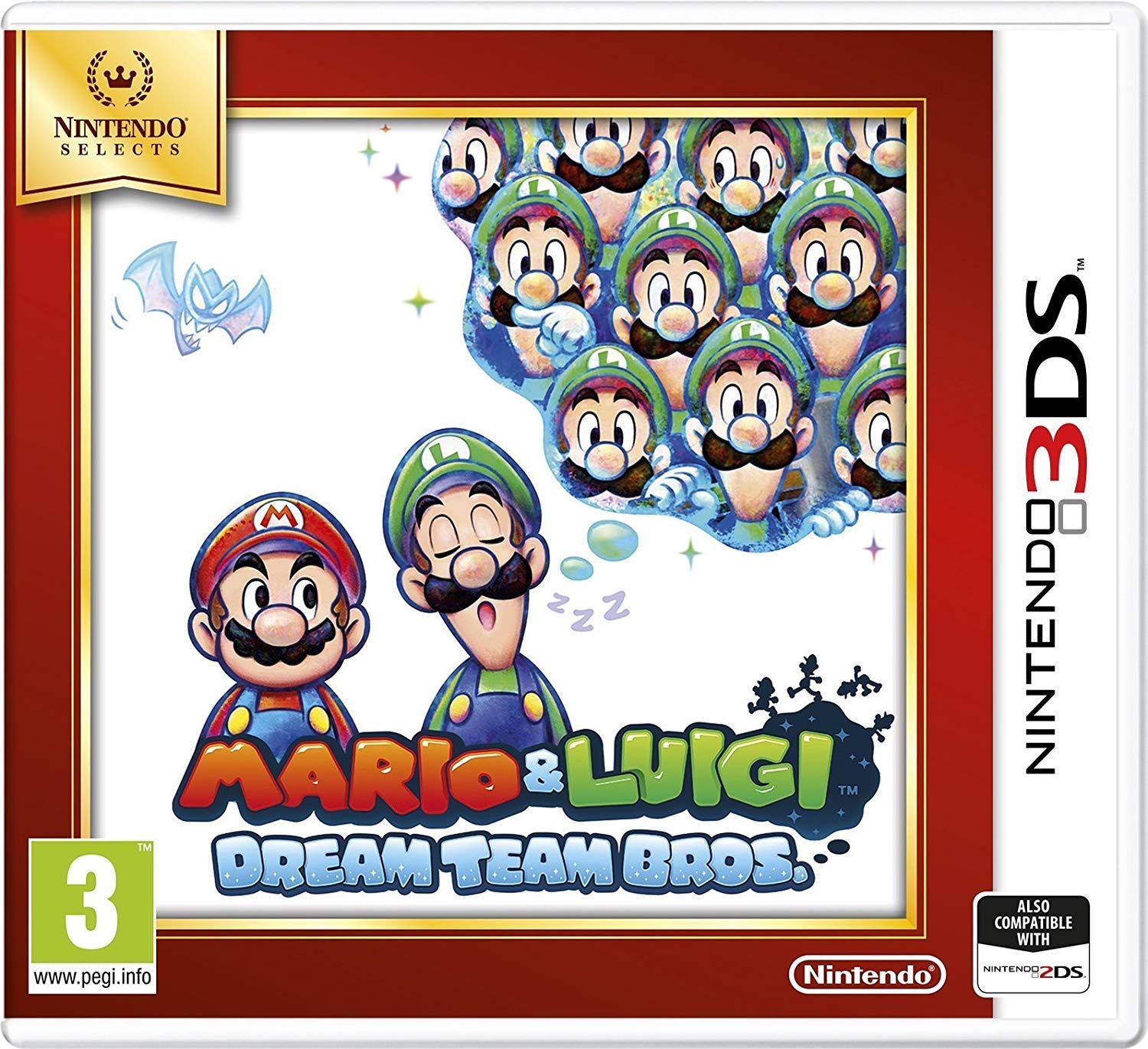
The box art features the brothers, a dream bubble and Antasma in his bat form. Europe and Australia carry the Dream Team Bros. logo and Japan the RPG 4 one. The Nintendo Selects reissues follow.
North AmericaEuropeAs Dream Team Bros.AustraliaAs Dream Team Bros.JapanMario & Luigi RPG 4: Dream AdventureSouth Korea2014RussiaNorth AmericaNintendo Selects, 2017EuropeNintendo Selects, 2016
Screenshots
More from around the island.
Pi’illo Island as it appears on the title screen.The island from above.The brothers strike a pose with their new hammers.The Fire Flower Bros. Attack.Mini-Mario in Dozing Sands.Bowser makes his entrance.
Artwork & Media Gallery
Official artwork, logos and promotional pieces. SLB’s own artwork, box art and screenshot galleries for the game are linked below.
Mario, Luigi and Starlow.Mario.Luigi.Luigi yawning.Starlow.Princess Peach.Prince Dreambert.Antasma.Antasma in bat form.Bowser.Bowser with Antasma at his shoulder.The Zeekeeper.Eldream.The Bedsmith.The Pi’illo line-up.Dr. Snoozemore.Brickle.Britta.The Dream Stone.Giant Luigi.North American logo.The Dream Team-themed Nintendo 3DS XL.Prima’s official guide.Nintendo’s festive retelling, December 2013.Developers at the Japanese press presentation.The group photo from the credits.
Legacy & Re-releases
Super Mario Wiki lists no ports or remakes of Dream Team: apart from its Nintendo Selects reissues it remains a Nintendo 3DS game. Its influence is in the three AlphaDream games that followed, all of which reused its look.
Releases and re-releases
Nintendo Direct14 February 2013Announced by Satoru Iwata alongside the Year of Luigi.
Nintendo 3DS, Europe12 July 2013As Mario & Luigi: Dream Team Bros.; Australia followed on 13 July.
Nintendo 3DS, Japan18 July 2013As Mario & Luigi RPG 4: Dream Adventure.
Nintendo 3DS, North America11 August 2013Released with a free eShop demo the same day.
Luigi Nintendo 3DS XL2013A Luigi-themed console with the game pre-installed, sold in Japan, North America and (online only) the UK.
Version 1.1September 2013Free update fixing freezes and several progress-blocking bugs.
Nintendo 3DS, South Korea16 January 2014Korean-language release.
Nintendo Selects, Europe24 June 2016Budget reissue.
Nintendo Selects, North America6 February 2017Budget reissue.
Nintendo Selects, Australia11 May 2017Budget reissue.
What AlphaDream did next
Mario & Luigi: Paper Jam (2015) is Dream Team’s direct descendant. It reuses the art style and nearly all of the brothers’ battle animations, carries over two Bros. Attacks and the name Neo Bowser Castle, and swaps giant battles for papercraft ones that pay out prizes in the same way. Giant Luigi’s model even returns for a Bros. Attack. The 3DS remakes of Superstar Saga (2017) and Bowser’s Inside Story (2018) used the same look again.
AlphaDream filed for bankruptcy on 1 October 2019. The series returned five years later with Brothership on Nintendo Switch, in a new style; Bomb Derby, the Capnap and the Zeekeeper all made the trip.
Where the cast turned up later
Prince Dreambert and Antasma are spirits in Super Smash Bros. Ultimate, and Antasma appears on a Battle Card in Paper Jam. “Try, Try Again”, the island battle theme, was rearranged by Yoko Shimomura herself for Super Smash Bros. for Nintendo 3DS and Wii U.
Reviews & Sales
Sales figures
In Japan Dream Team went straight to the top of Media Create’s chart with 99,972 copies in its first week, as reported by VG247, and had sold about 250,000 by 18 August 2013 according to Gematsu’s summary of the same charts. Siliconera noted that this first week was only about a quarter of the stock shipped, and roughly half of what Bowser’s Inside Story had managed. In Britain it held third place in its second week, according to Nintendo Life.
Nintendo’s own annual report for the year ended 31 March 2014 says the game sold more than two million units worldwide. The sales list Nintendo published with its results that May, as reported by Nintendo Life, gave the exact figure: 2.08 million as of 31 March 2014. No later Nintendo total was found. Wikipedia’s list of best-selling Nintendo 3DS games shows 2.70 million as of 31 December 2022, but attaches no citation to that row, so the number cannot be traced to a document. Either way it is well short of the 4.56 million credited to its predecessor (see our Bowser’s Inside Story page).
2m+worldwide, year to 31 March 2014 (Nintendo annual report)
2.08mworldwide as of 31 March 2014 (Nintendo figures, via Nintendo Life)
99,972first week in Japan (Media Create)
c. 250,000Japan by 18 August 2013 (Media Create)
81Metacritic, 75 reviews
80.65%GameRankings
Reception and review scores
Metacritic’s average is 81 from 75 reviews and GameRankings closed on 80.65 per cent. Scores below are as listed in Wikipedia’s and Super Mario Wiki’s reception tables.
Nintendo LifeThomas Whitehead
9/10
VentureBeatStephanie Carmichael
90/100
Game InformerDan Ryckert
8.5/10
MetacriticAverage of 75 reviews
81/100
GameRankingsAggregate
80.65%
IGNDaniel Krupa · July 2013
8/10
GameSpotMark Walton
8/10
GamesRadar+Justin Towell
4/5
EurogamerSimon Parkin
7/10
The pattern in the reviews is consistent: the dreams are wonderful and the game takes too long to trust you. IGN’s Daniel Krupa found the controls “surprisingly intuitive” and liked the variety of enemies, but felt that the best Dream World ideas were dropped almost as soon as they were introduced. GameSpot’s Mark Walton singled out the dream characters and gimmicks as the best of it. Nintendo Life’s Thomas Whitehead, the most enthusiastic, enjoyed the cast and the villains while admitting the plot ran long and some side quests dragged.
At the cooler end, Eurogamer’s Simon Parkin praised the timing-based combat but thought the tutorials slowed the opening to a crawl and the Luigi gimmicks were kept on too tight a lead. VentureBeat’s Stephanie Carmichael loved the 3D presentation of the dreams and complained about backtracking, and Game Informer’s Dan Ryckert compared the dream stages to old side-scrolling Mario. Wikipedia’s summary is that critics praised the characters, the combat and the Dream World, and that the weight of tutorials was the most common complaint.
SLB User Reviews
Mario & Luigi: Dream Team has yet to receive a community review on Super Luigi Bros.
If you’ve played Mario & Luigi: Dream Team and would like to submit a review, please get in touch.
To provide the best experiences, we use technologies like cookies to store and/or access device information. Consenting to these technologies will allow us to process data such as browsing behavior or unique IDs on this site. Not consenting or withdrawing consent, may adversely affect certain features and functions.
Functional
Always active
The technical storage or access is strictly necessary for the legitimate purpose of enabling the use of a specific service explicitly requested by the subscriber or user, or for the sole purpose of carrying out the transmission of a communication over an electronic communications network.
Preferences
The technical storage or access is necessary for the legitimate purpose of storing preferences that are not requested by the subscriber or user.
Statistics
The technical storage or access that is used exclusively for statistical purposes.The technical storage or access that is used exclusively for anonymous statistical purposes. Without a subpoena, voluntary compliance on the part of your Internet Service Provider, or additional records from a third party, information stored or retrieved for this purpose alone cannot usually be used to identify you.
Marketing
The technical storage or access is required to create user profiles to send advertising, or to track the user on a website or across several websites for similar marketing purposes.

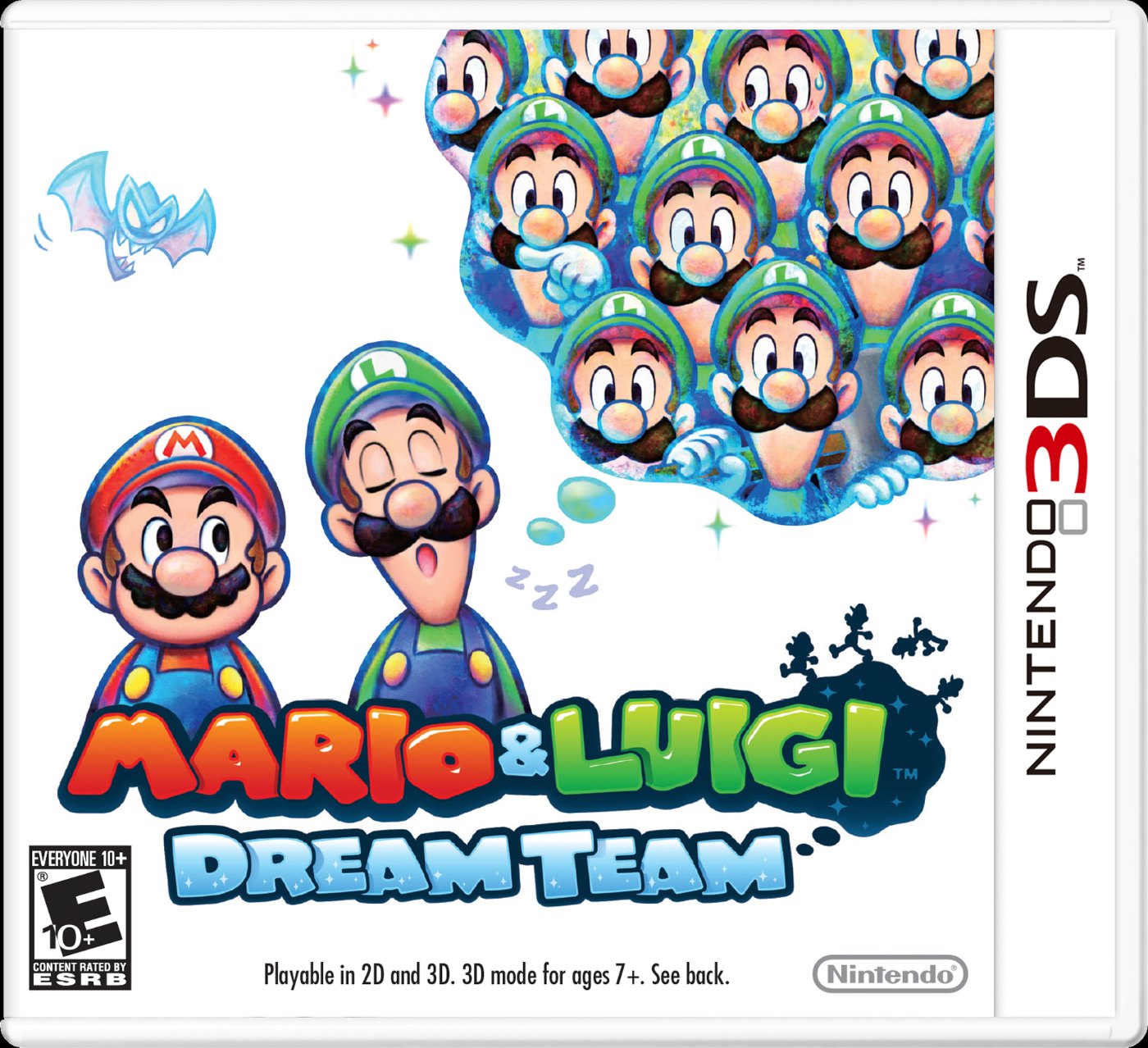
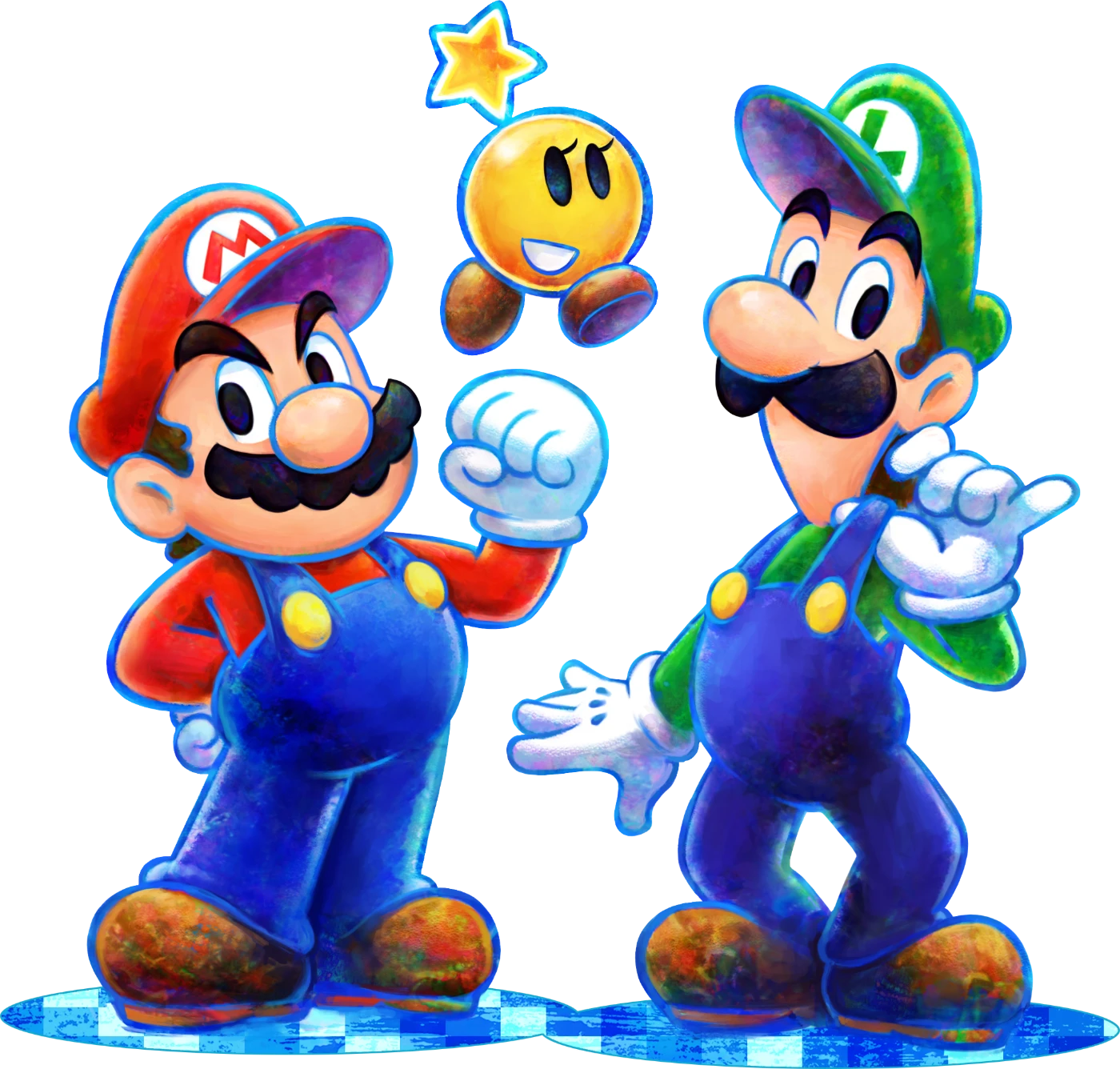
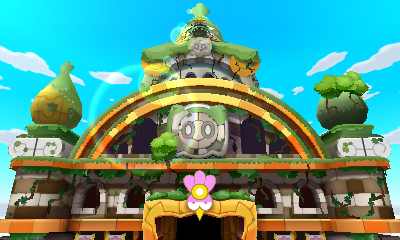
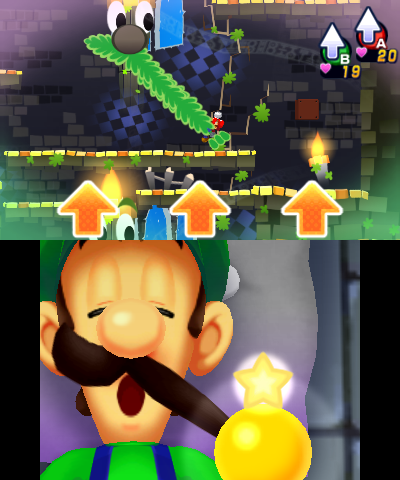
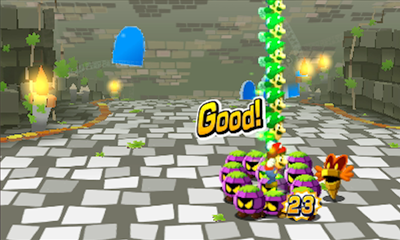
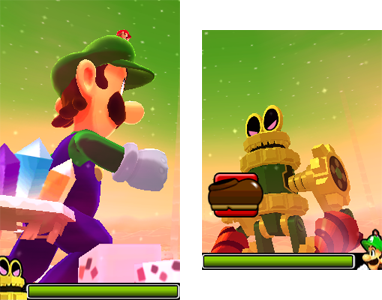
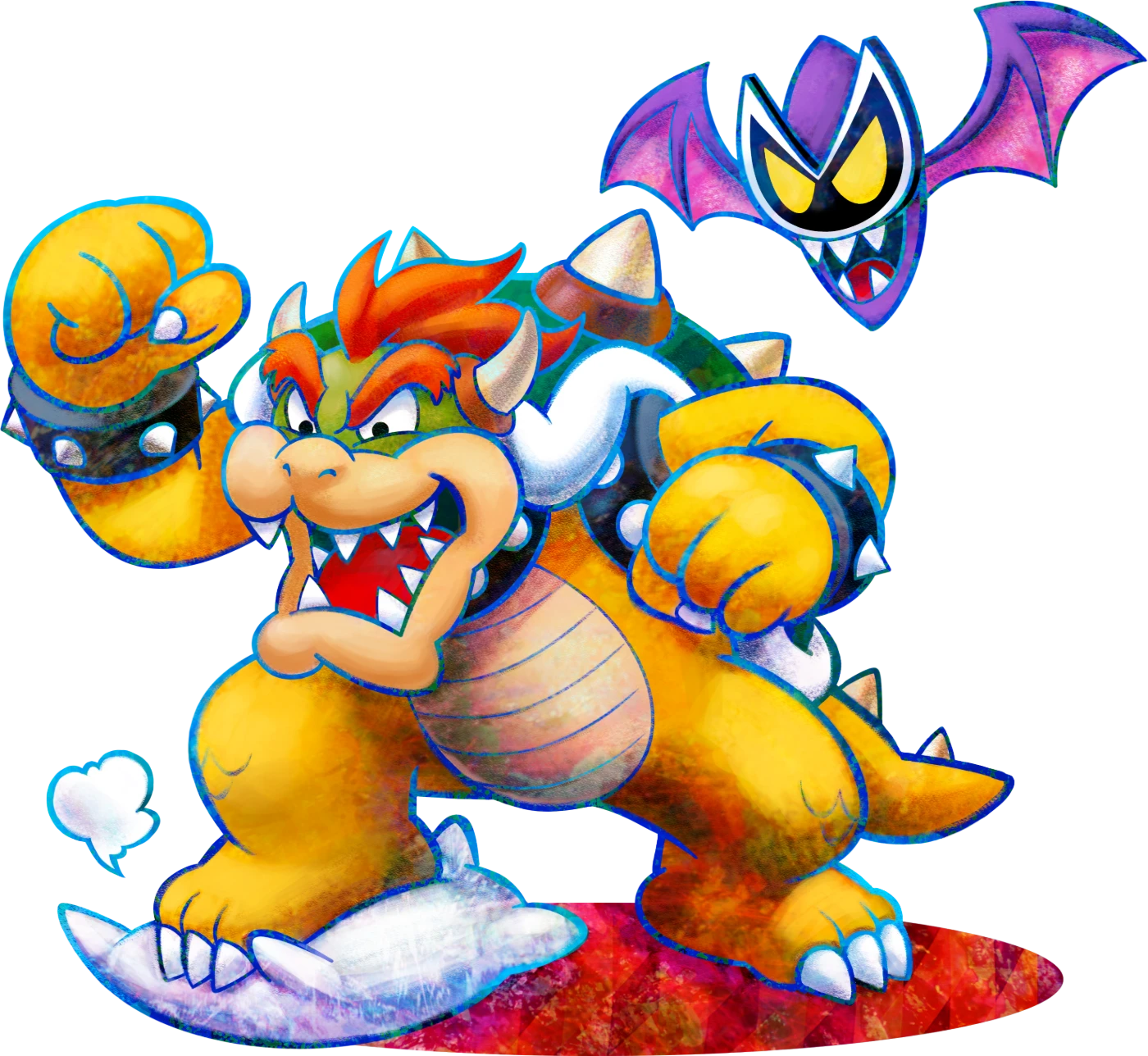
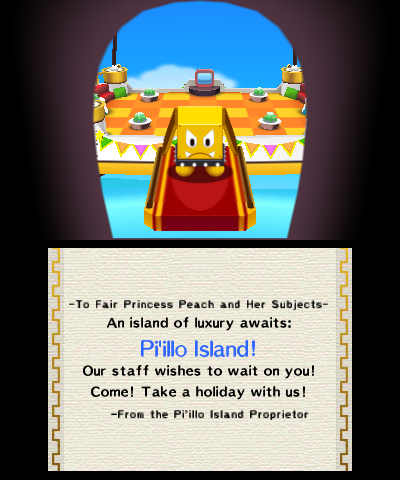
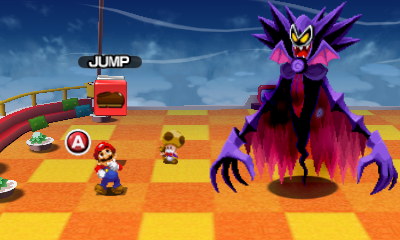
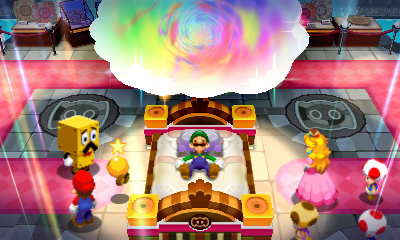
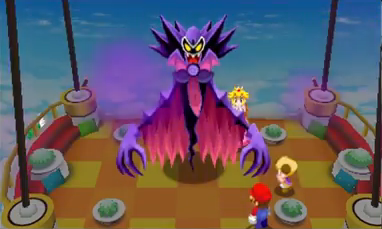
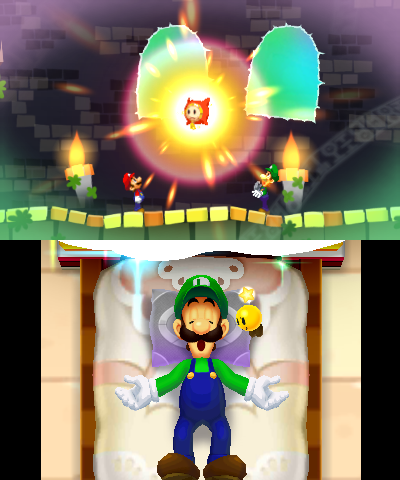
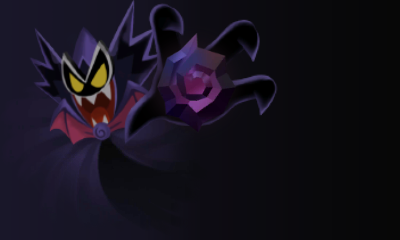
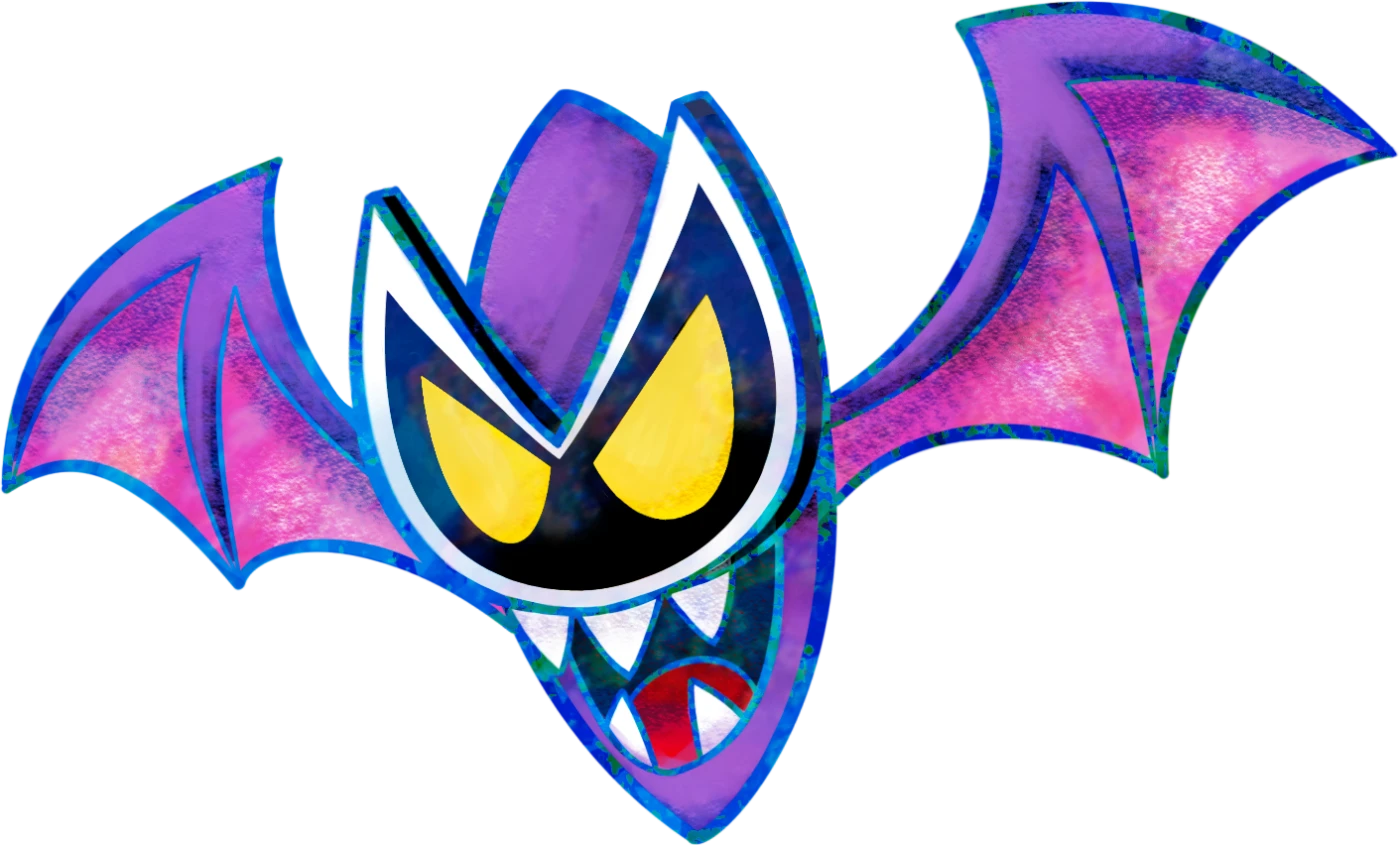
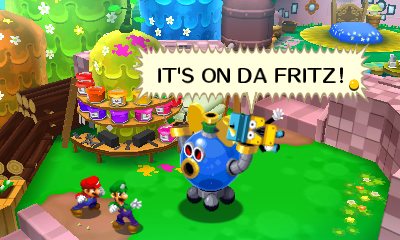
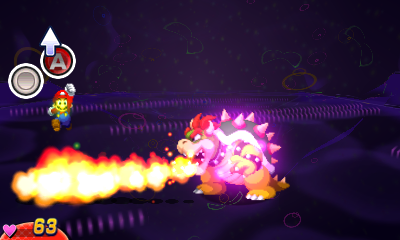
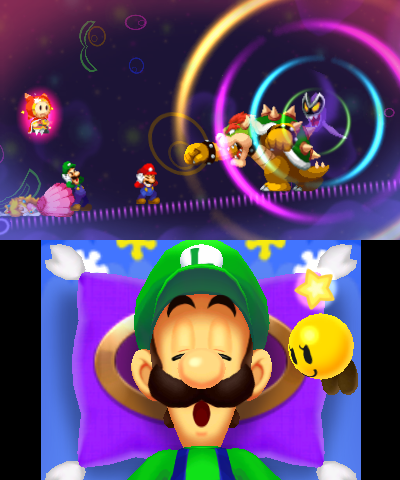
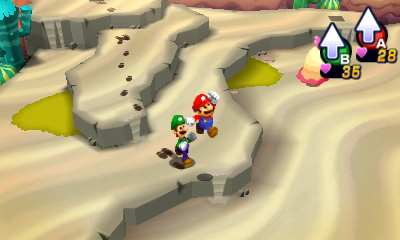
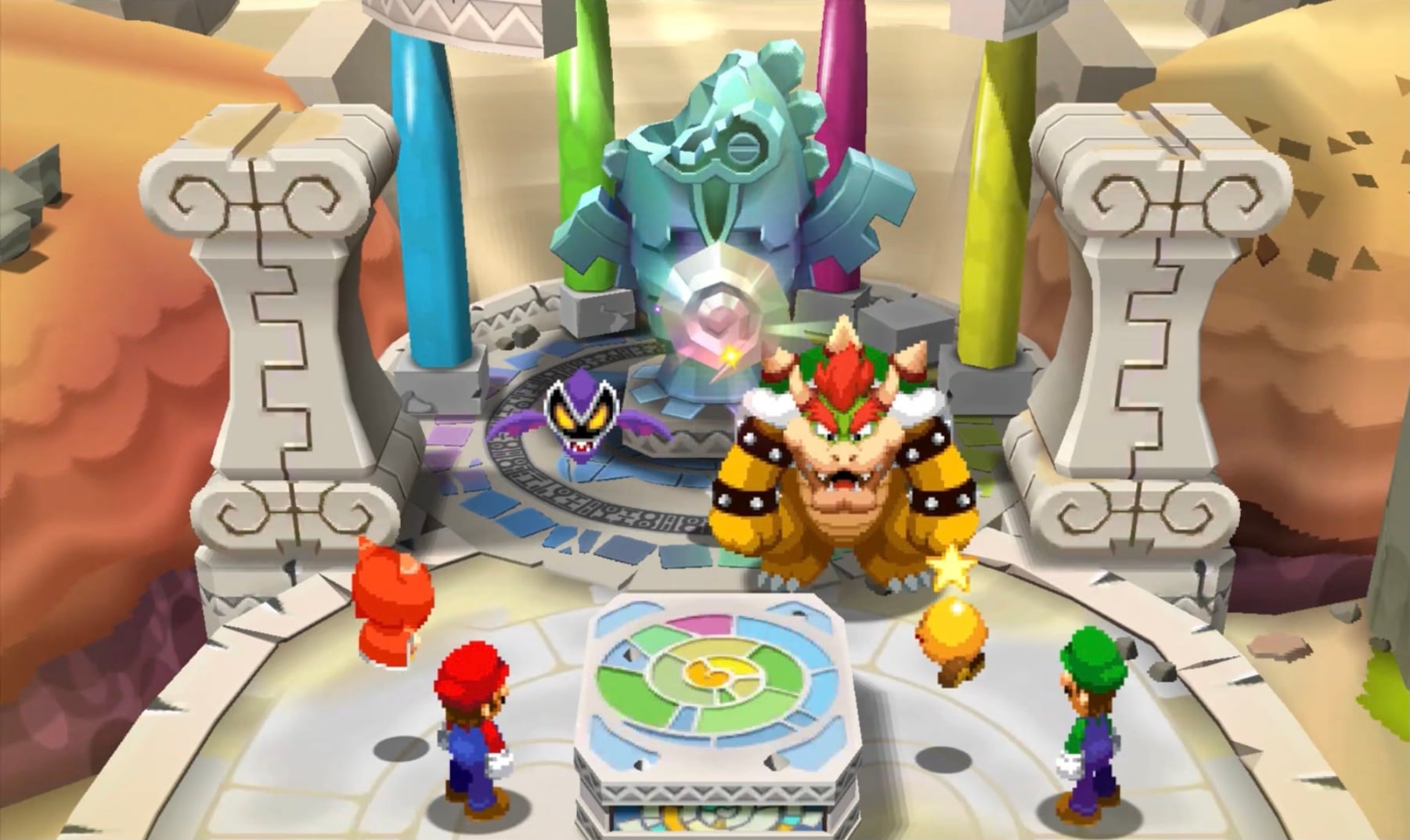
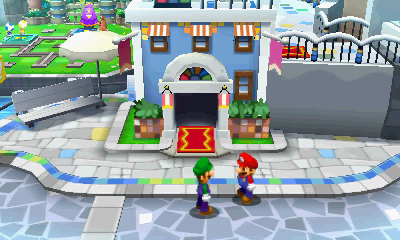
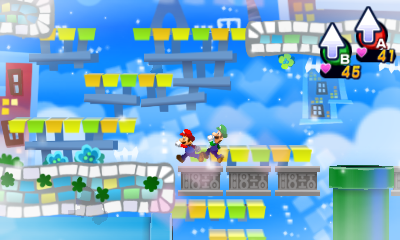
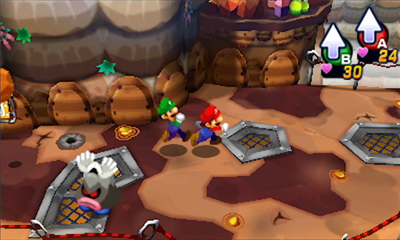
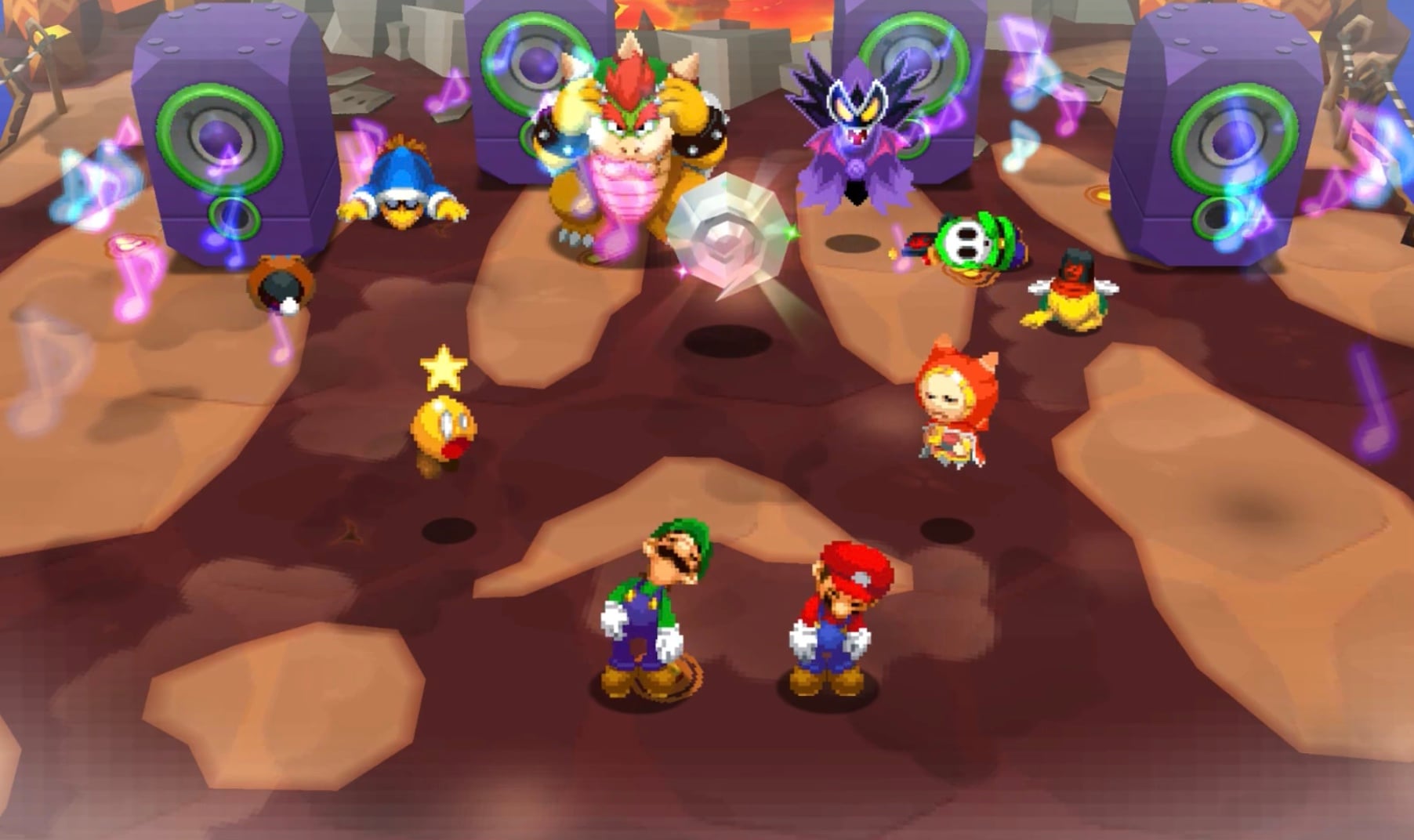
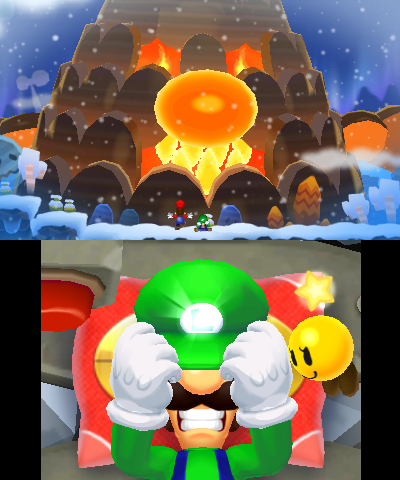
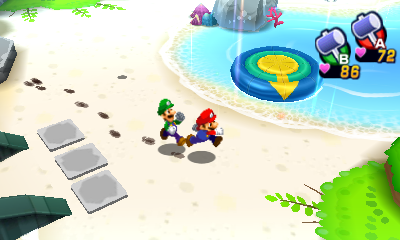
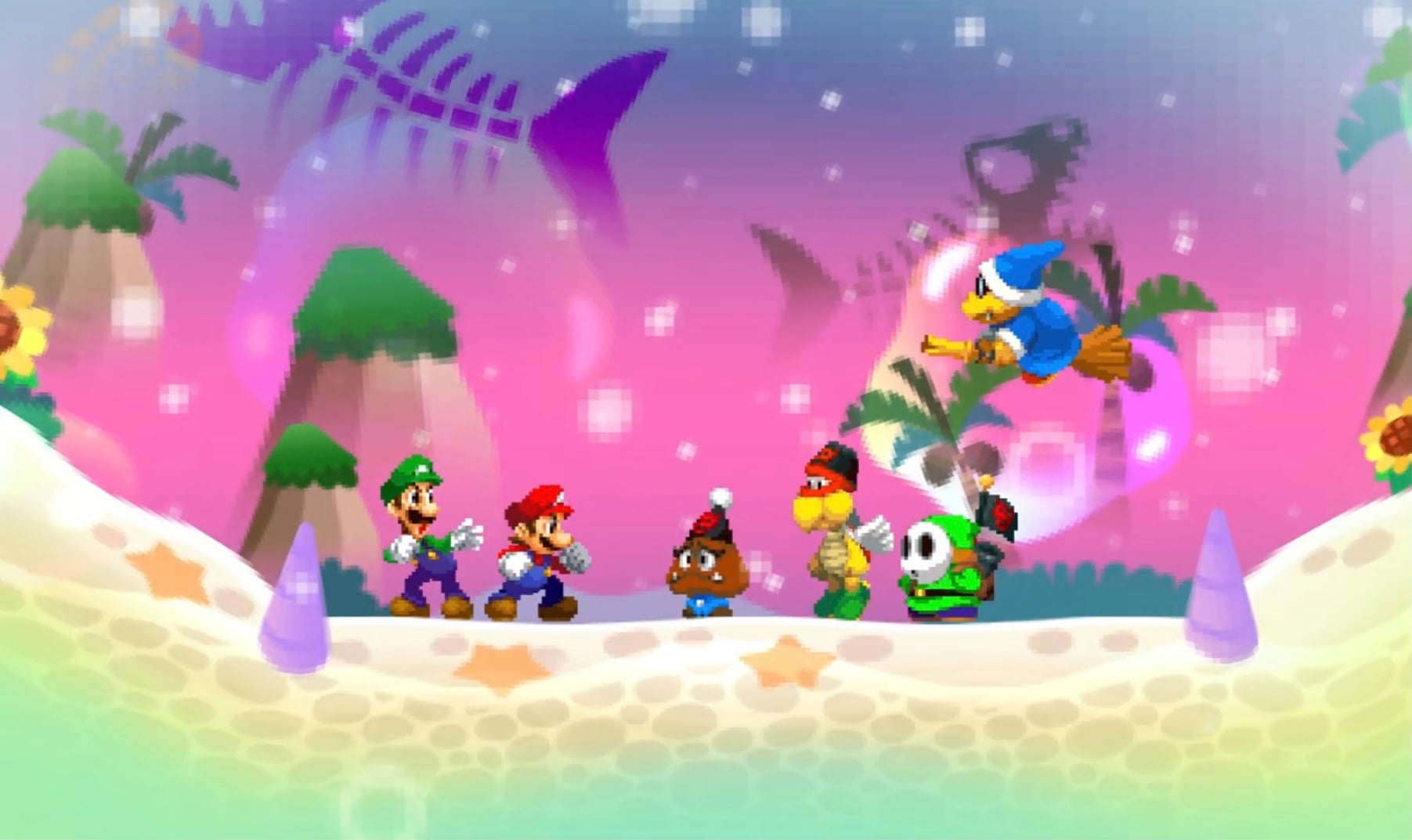
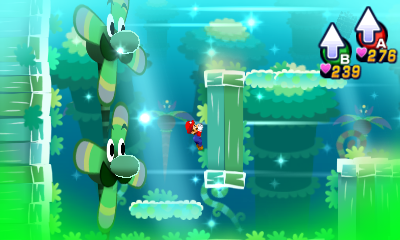
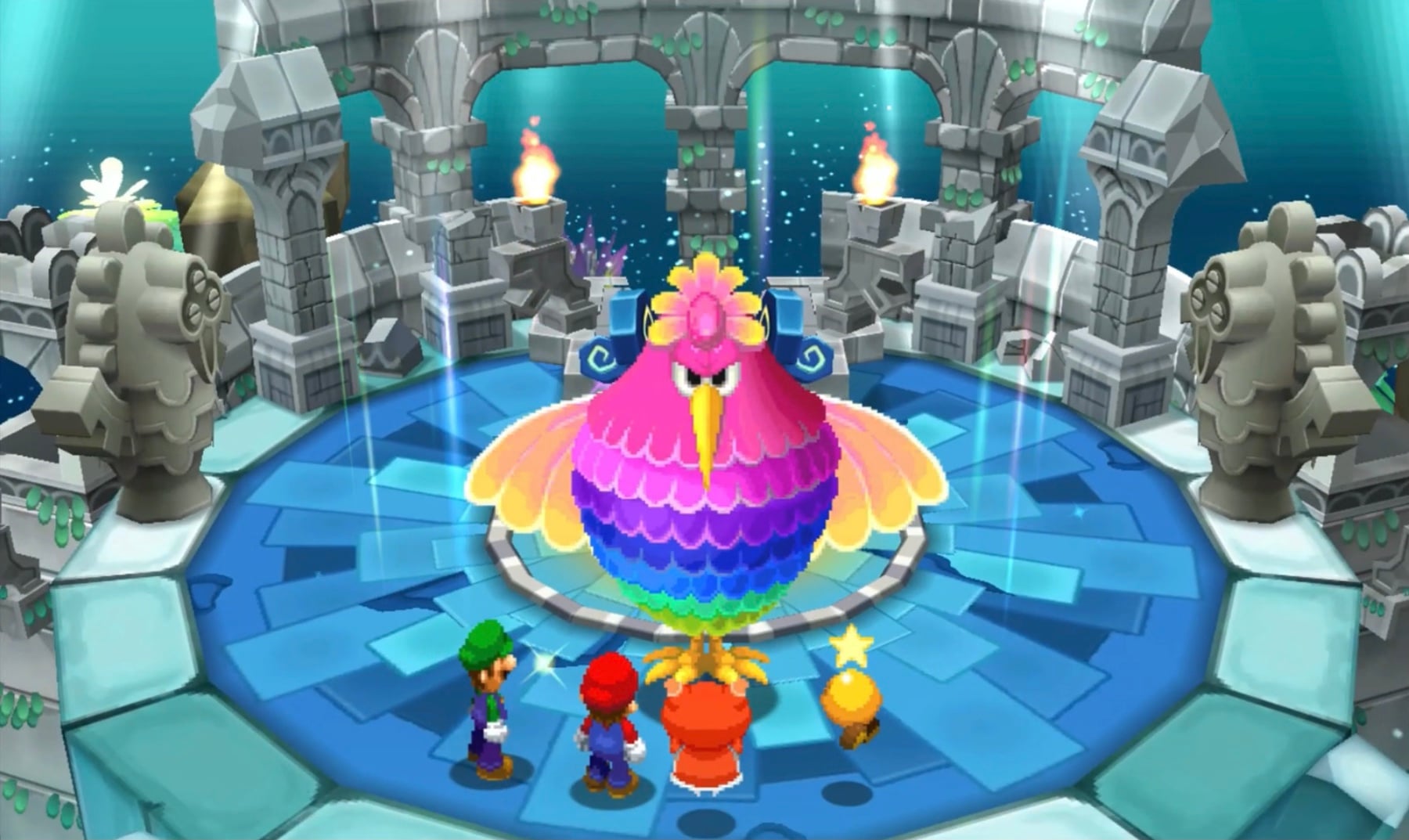
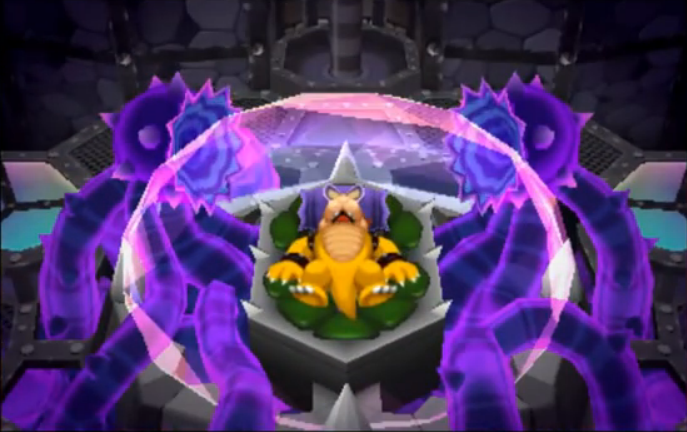
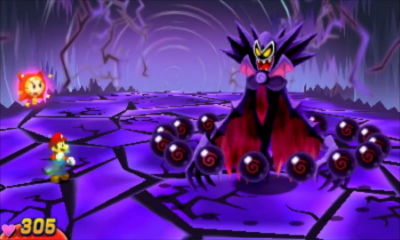
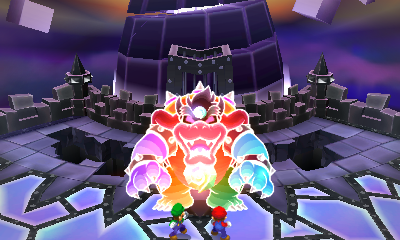
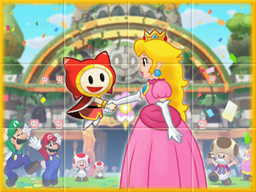
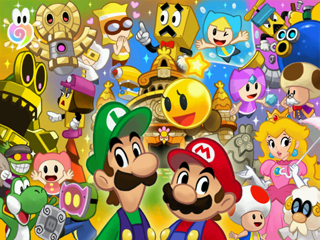
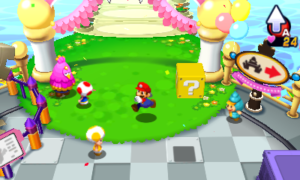 Pi’illo BlimportReal world · tutorials; later three Fly Guy RsWhere the Zeeppelins land. Broque Monsieur’s welcome events, the Check-X Quiz and the Coin-Up Challenge, are held here. Six beans, no Pi’illos.
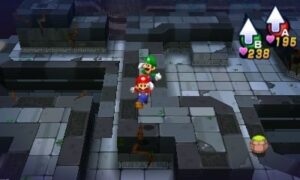 Pi’illo CastleReal world · 3 Pi’illos · Smoldergeist; the Battle RingPrince Dreambert’s old home at the centre of the island, with a collection room, ruins and caverns underneath.
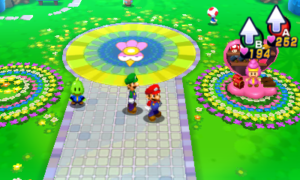 Mushrise ParkReal world · 5 Pi’illos, 22 beans · 3D Red Shell, 3D Green Shell, Zee Egg · GrobotBrickle’s gardens. Hammers are learned here, and Eldream gives out his rescue rewards here.
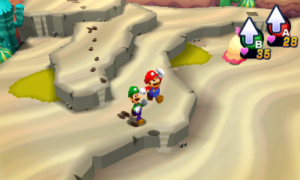 Dozing SandsReal world · 11 Pi’illos, 32 beans · Fire Flower · TorkscrewBritta’s desert building site and the resting place of the Dream Stone. Its name puns on bulldozers as well as dozing.
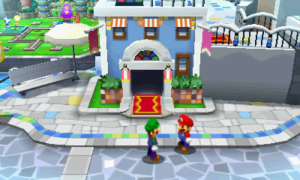 WakeportReal world · 6 Pi’illos, 12 beans · Bye-Bye Cannon · Wiggler and PoppleThe tourist town: tour centre, hotels, Kylie Koopa’s office, the Mad Skillathon and Pi’illoper’s house.
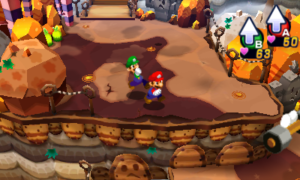 Mount PajamajaReal world · 12 Pi’illos, 24 beans · Dropchopper, Slingsniper · MammoshkaA volcano of fire and snow. Spin Jump, Side Drill and Ball Hop are all learned on its slopes.
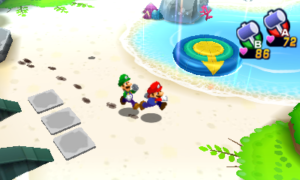 Driftwood ShoreReal world · 3 Pi’illos, 10 beans · Bomb DerbyThe beach. Broque Madame, the Mole Hunt and the Rainbow-rank gold shop are here.
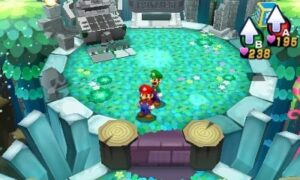 Somnom WoodsReal world · 11 Pi’illos, 19 beans · Jet-Board Bash · Pi’illodiumAncient forest east of Mushrise Park, home of the Nommons, the Bedsmith’s workshop and the Pi’illo Temple.
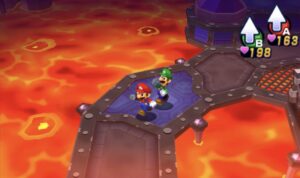 Neo Bowser CastleReal world · 1 Pi’illo, 18 beans · Star Rocket · Dreamy BowserWished into being by Antasma. It floats offshore until the Zeekeeper brings it down.
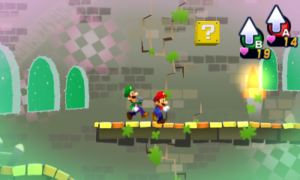 Dreamy Pi’illo CastleDream World · Stache Tree, Sneeze Wind · Dreamy MarioThe first dream, where Mario meets Dreamy Luigi and frees Prince Dreambert.
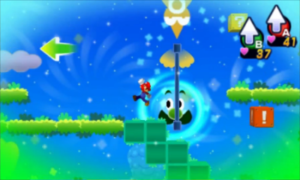 Dreamy Mushrise ParkDream World · Luiginary BallEldream’s dream, entered from the bed in Brickle’s hut.
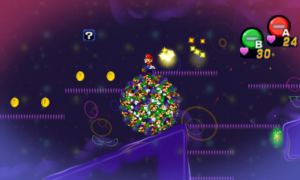 Dream’s DeepDream World · Luiginoid Formation · Bowser with AntasmaThe core of the Dream World and Antasma’s hiding place. Luigi’s stray thoughts turn up here as messages, one of them about fighting ghosts.
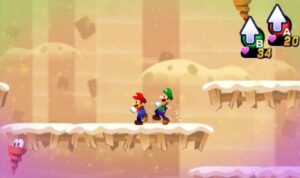 Dreamy Dozing SandsDream World · Luiginary Stack · Robo-Drilldigger (giant)Home of the Dream Stone’s grumpy spirit. Luiginary Cylinder and Gravity puzzles.
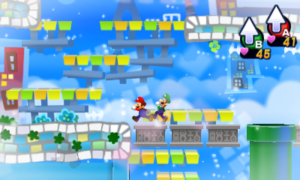 Dreamy WakeportDream World · Luiginary Wall · the four Hooraws, Big Massif; Earthwake (giant)Big Massif’s contest of strength, and later the Bedsmith’s prison. The Luiginary Speedometer turns up here.
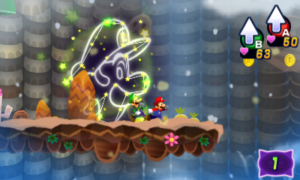 Dreamy Mount PajamajaDream World · Luiginary Hammer · Mount Pajamaja (giant)A mountain with a mind of its own. Luiginary Ice flips it between lava and snow.
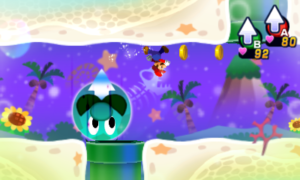 Dreamy Driftwood ShoreDream World · Luiginary Flame · the Elite TrioThe Seadrings’ dream, stretched with Dream Eggs to hide a princess who is not a princess.
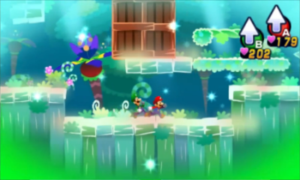 Dreamy Somnom WoodsDream World · Luiginary Typhoon · the Zeekeeper (giant)Reached only from the Ultibed. The Zee Egg is at the end of it.
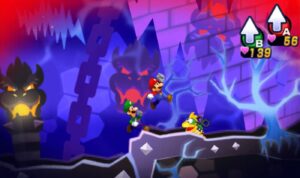 Dreamy Neo Bowser CastleDream World · Luiginary Antigravity · Kamek (three times), Bowser (giant), AntasmaKamek’s, Bowser’s and finally Antasma’s dreams, using nearly every Luiginary Work in the game.
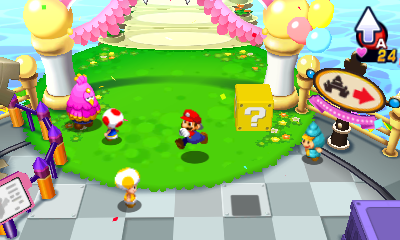
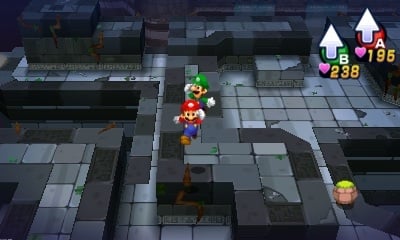
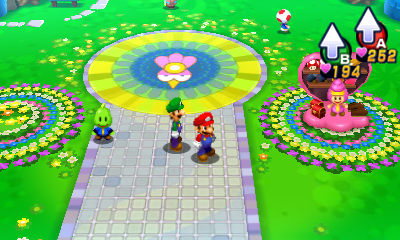
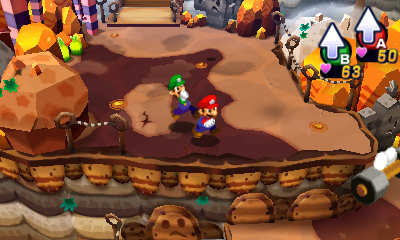
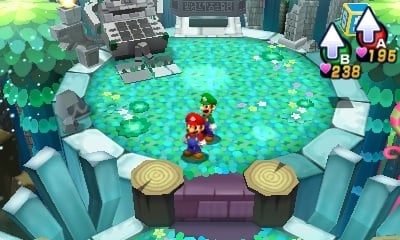
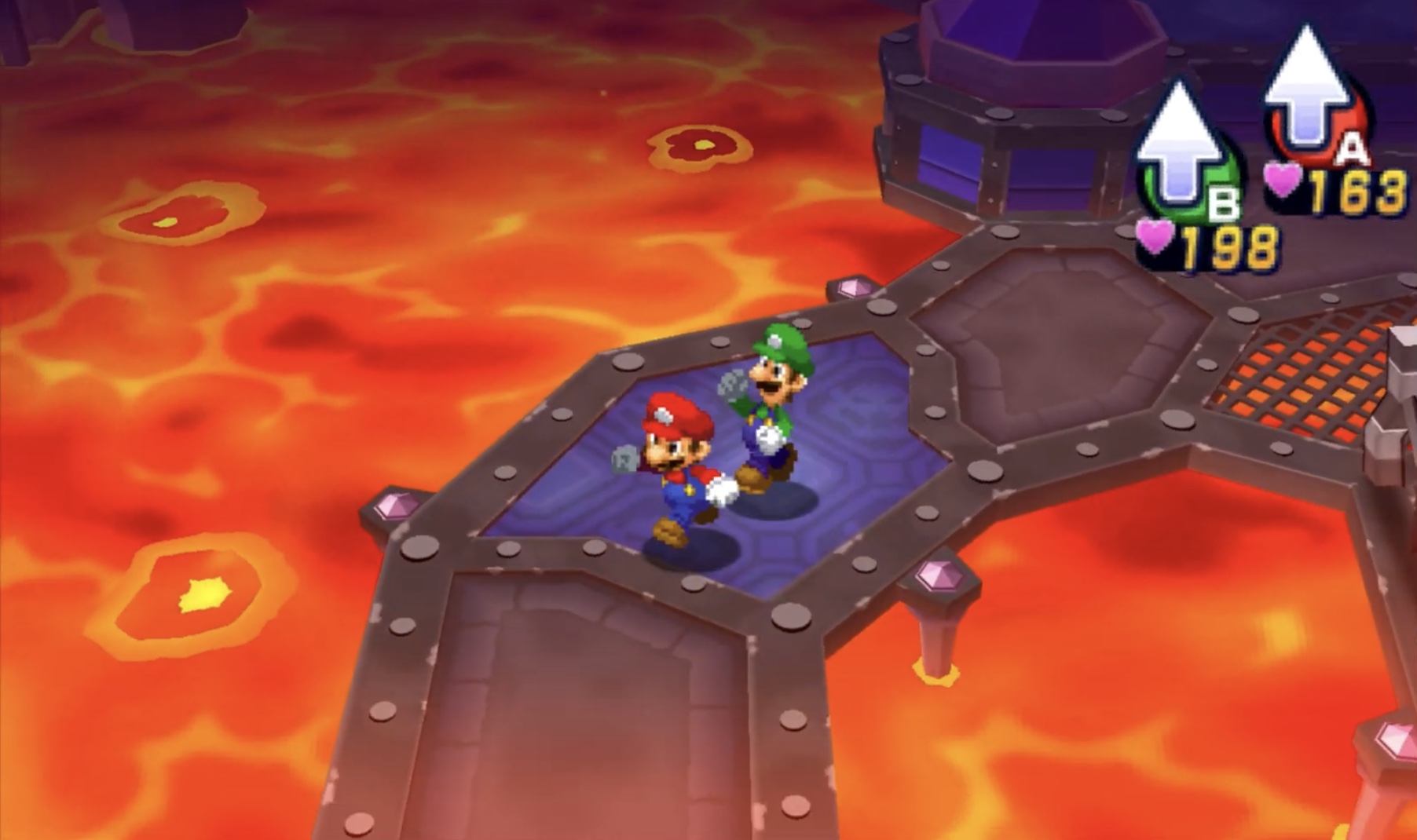
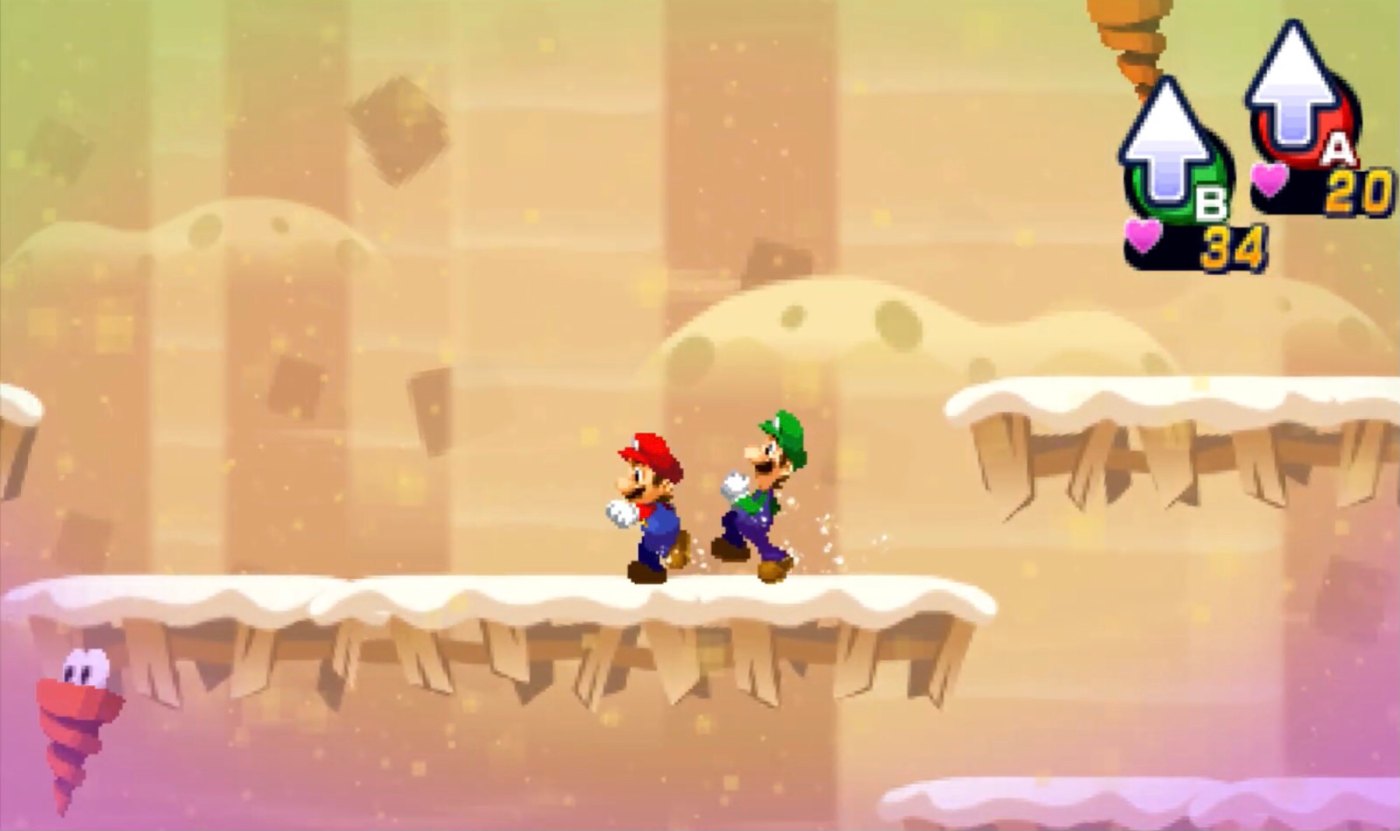
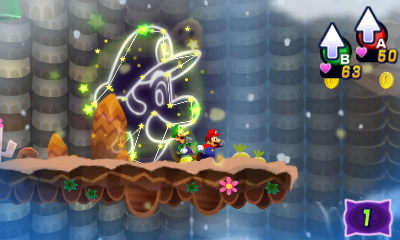
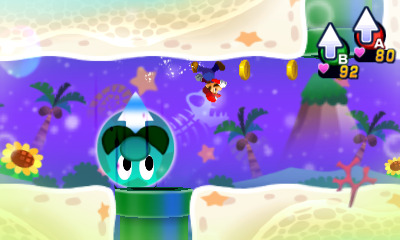
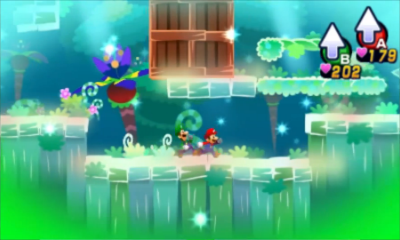
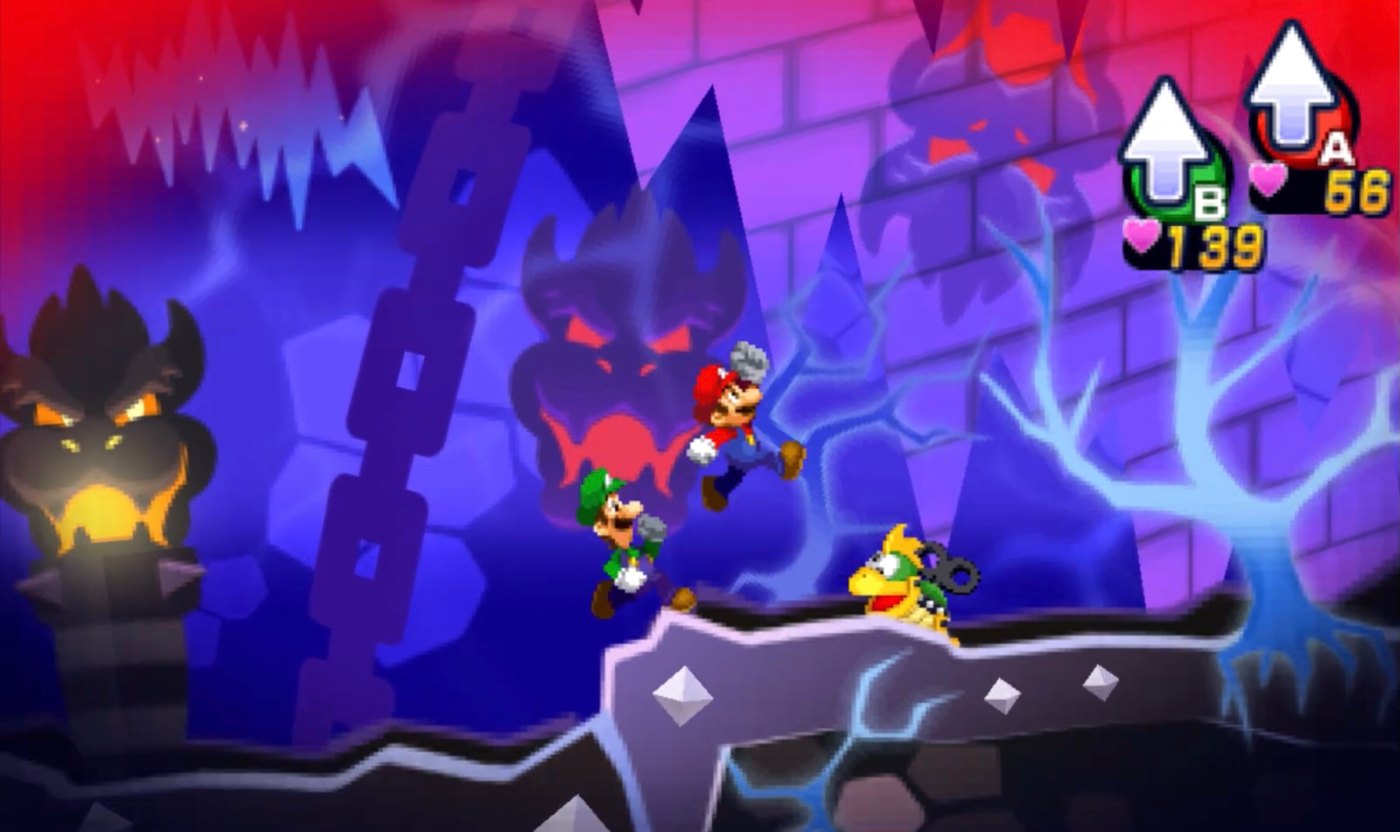
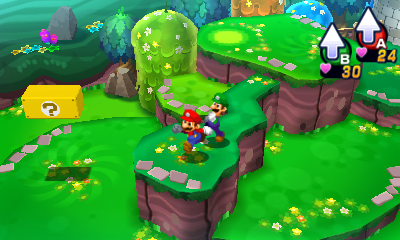
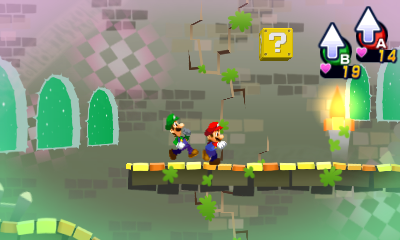
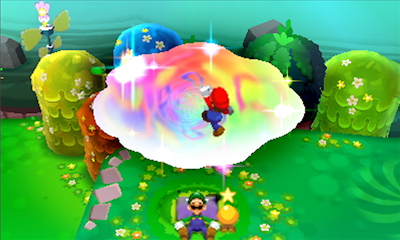
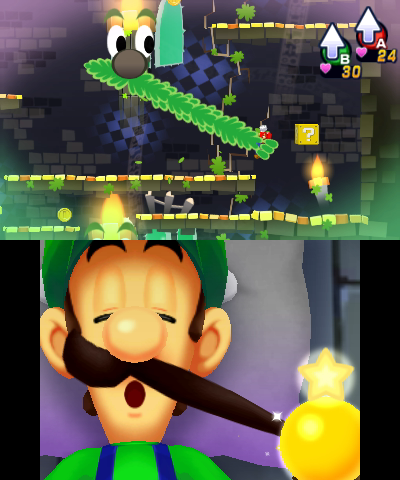
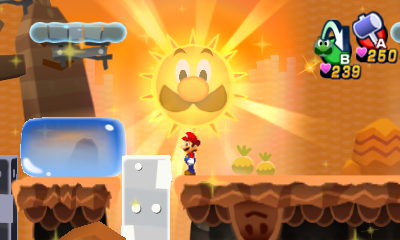
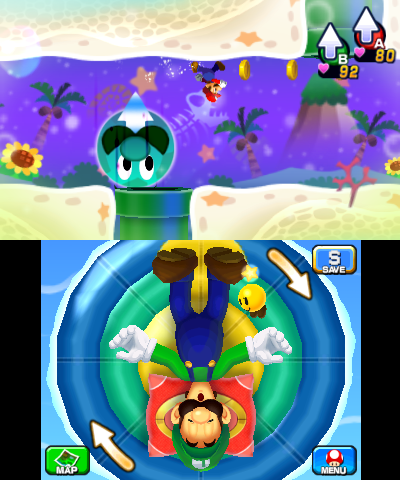
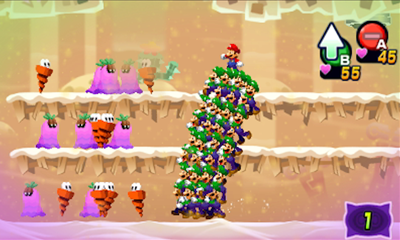
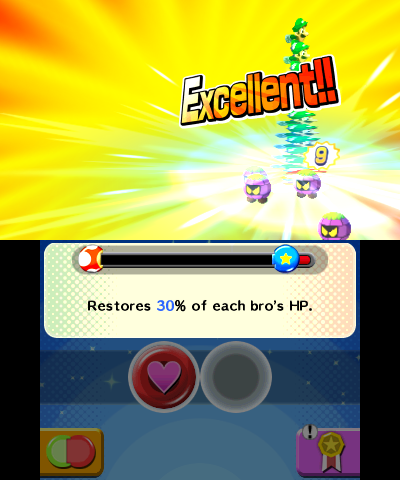
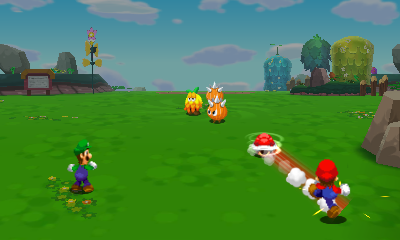
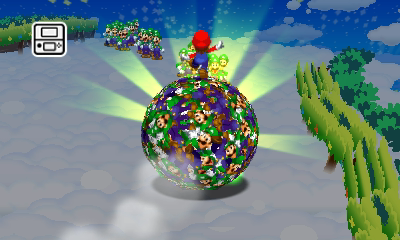


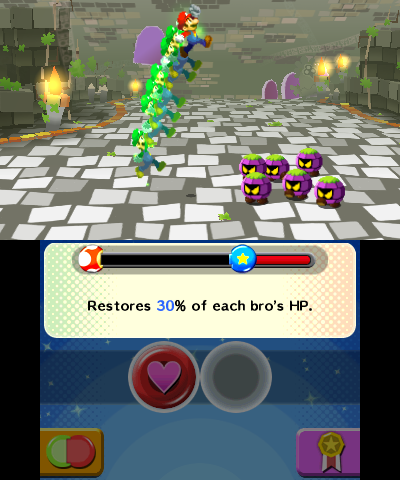
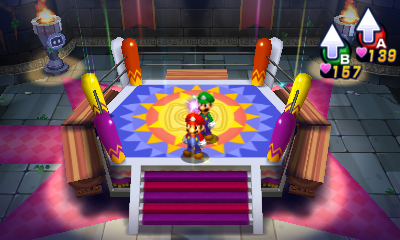
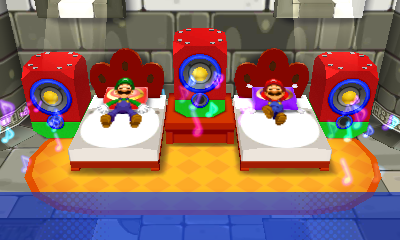
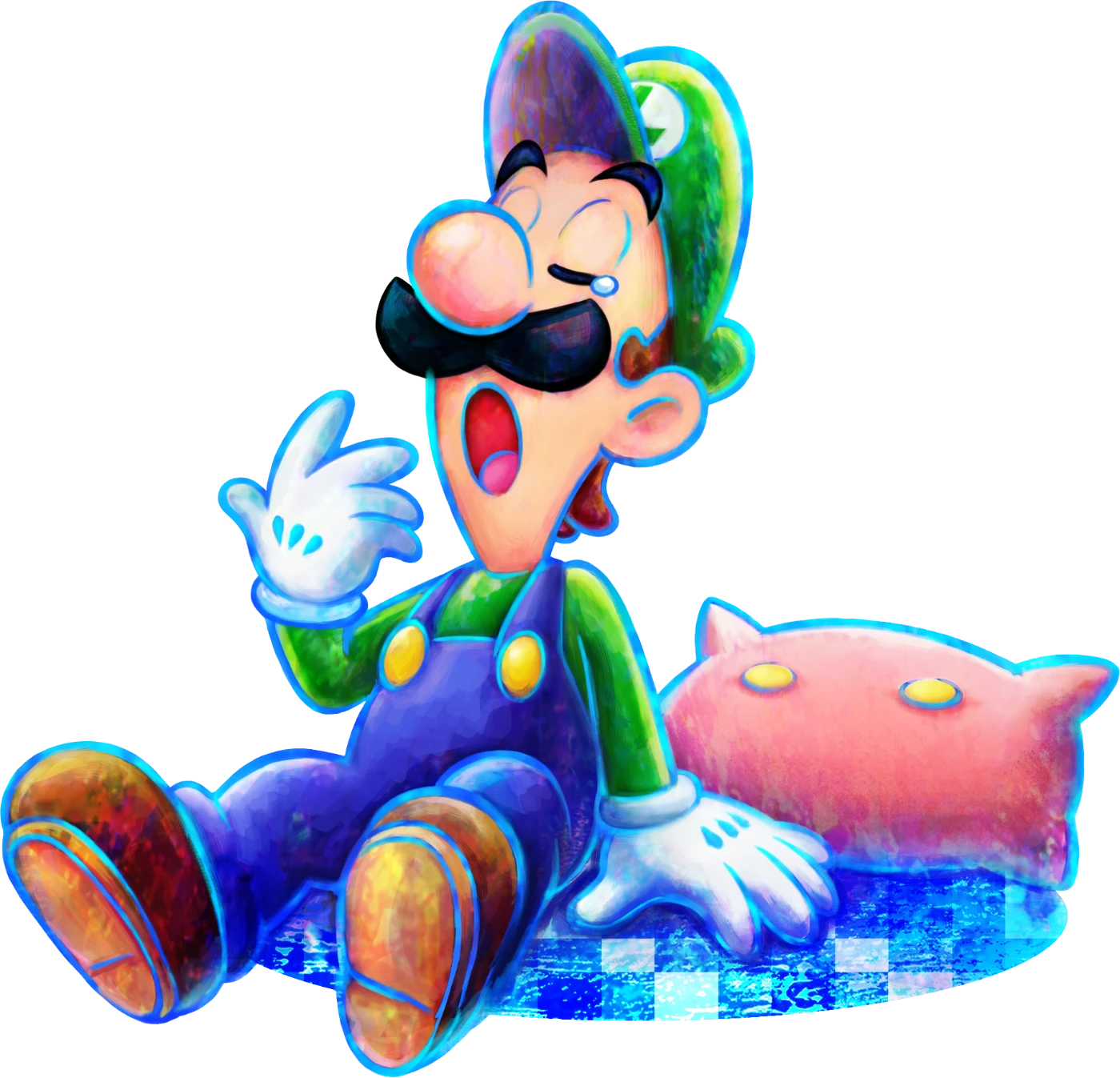
 3D Red ShellBros. Attack, Mario. 4 BP. The brothers take turns booting a Red Shell at one enemy (A for Mario, B for Luigi), ending with a charged kick. Mushrise Park; needed for the story.
 3D Green ShellBros. Attack, Luigi. 4 BP. As above, but the shell bounces between random enemies on the ground. Mushrise Park, once Brickle is freed from the fountain.
 Fire FlowerBros. Attack, Luigi. 5 BP. Throw each fireball when it is at its biggest; manage every one and you hammer A and B for a bonfire. Dozing Sands.
 Bye-Bye CannonBros. Attack, Mario. 7 BP. Copies of the brothers are fired from a cannon; press A and B in the order they went up, then again in reverse. Wakeport.
 DropchopperBros. Attack, Luigi. 7 BP. Tilt the 3DS to fly the chopper over a foe, then drop on cue. Mount Pajamaja.
 Bomb DerbyBros. Attack, Mario. 9 BP. Luigi feeds Mario bombs to bat at the enemy before they go off; the last is the biggest. Driftwood Shore. Returns in Brothership.
 SlingsniperBros. Attack, Luigi. 9 BP. Mario hauls back a giant catapult and you aim Luigi by tilting the console. A gift from the Massif Bros. on Mount Pajamaja; needed for the story.
 Jet-Board BashBros. Attack, Mario. 12 BP. Hold B to build speed on the board and swing the hammer with A at full pelt. Somnom Woods.
 Star RocketBros. Attack, Luigi. 12 BP. Tilt to steer a star through smaller stars, then land a double jump. Neo Bowser Castle.
 Zee EggBros. Attack, Mario. 15 BP. Line up the Zeekeeper with the Circle Pad and bat a Wakeorb at one target for huge damage. From Eldream for rescuing all 52 Pi’illos.
 Luiginary BallLuiginary Attack. 6 BP. Roll up Luiginoids by tilting the 3DS, then kick the ball with A; the bigger, the better. Dreamy Mushrise Park; needed for the story.
 Luiginary StackLuiginary Attack. 10 BP. Jump on to a growing tower of Luiginoids and bring it down on the enemy; a wobbly stack hits less hard. Dreamy Dozing Sands.
 Luiginary HammerLuiginary Attack. 10 BP. Mash B to build a hammer out of Luiginoids, keep it balanced, then swing with A. Dreamy Mount Pajamaja.
 Luiginary FlameLuiginary Attack. 14 BP. Keep a growing fireball in the air between Mario and the Luiginoids, then hammer it into the enemy group. Dreamy Driftwood Shore.
 Luiginary WallLuiginary Attack. 14 BP. Bat Dreamy Luigi into a wall of Luiginoids that ploughs through the enemies, bat-and-ball style. Dreamy Wakeport.
 Luiginary TyphoonLuiginary Attack. 16 BP. Hold B to wind up a string of Luiginoids, release a typhoon and steer it across the enemies. Dreamy Somnom Woods.
 Hammer Chop and Hammer UppercutGiant Luigi. Slash the stylus across the screen to knock the boss into the background; flick upwards for the Uppercut, learned in the Mount Pajamaja battle.
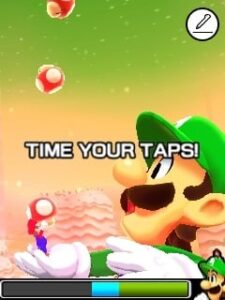 Rhythm MushroomGiant Luigi. Mario lobs mushrooms; tap in time as Luigi swallows them to heal. Not allowed in the Battle Ring.
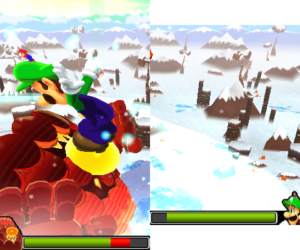 Drill StompGiant Luigi. Circle the stylus the way the prompt shows for up to three spinning stomps. Learned in the Mount Pajamaja battle.
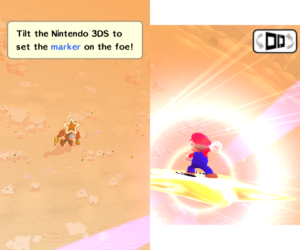 Finishing Bros.Giant Luigi. The closing move of every giant battle: tilt the 3DS to guide Mario and his star into the weak point.
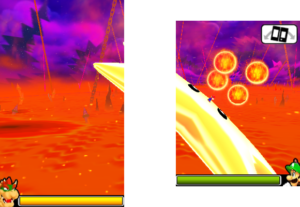 Star DriverGiant Luigi. Only against giant Bowser: dodge fireballs by tilting, then shove him into the lava.
 Mush BadgeHealing effects: 30, 50 or 80 per cent of HP (the last also revives and cures), or the same amounts of BP. Found with Starter in Pi’illo Castle.
 Strike BadgeDirect damage: 30, 80 or 160 to one enemy, or 20, 50 or 100 to all of them. Badge shops.
 Guard BadgeProtection: barriers that cancel three or six hits, three turns in which HP cannot reach zero, or boosts to DEF, POW or meter charging. Given by a Brock in Dozing Sands.
 Virus BadgeSabotage: lowers enemy POW or DEF, dizzies the lot, strips their status effects, may turn one into a Mushroom, or strengthens lucky hits. Badge shops.
 Risk BadgeGambles: full HP or 1 HP, a full meter or an empty one, random status effects for all, 256 damage to everyone on the field. Badge shops.
 Miracle BadgeOddities: 30 per cent more coins or EXP, more lucky hits, a rewind of the battle’s status, or time stopped for every enemy. Badge shops.
 Starter, Master, Expert, Bronze, Silver and Gold BadgesThe second set, which picks the version of the effect: for Mush these give 30, 50 or 80 per cent of HP, then 30, 50 or 80 per cent of BP. Starter is found in Pi’illo Castle and Bronze is a gift in Dozing Sands; the rest are sold in badge shops.
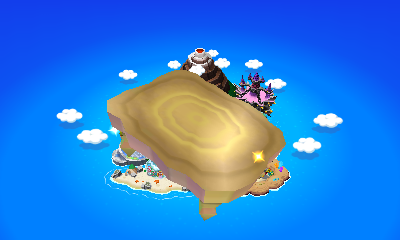 Pajamaja Rock FrameZee Part. The “treasure” of Mount Pajamaja, crusted with Nightmare Chunks that have to be broken off.
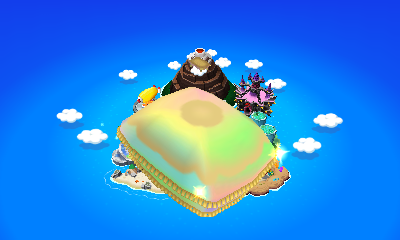 Dozing MattressZee Part. Formed from a Dozing Drop under Dozing Sands, past a wall Britta could not drill.
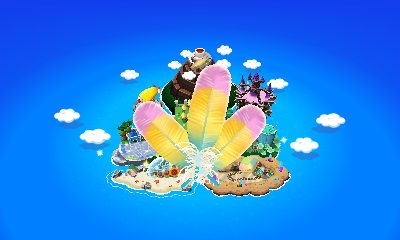 Zeekeeper’s FeathersZee Part. The prize for beating Grobot X in the Battle Ring at Pi’illo Castle.
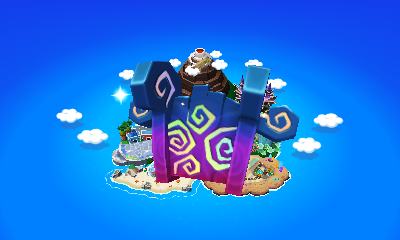 Mushrise Tree BoardZee Part. Brickle hands it over once the brothers have cleared the rocks from his park.
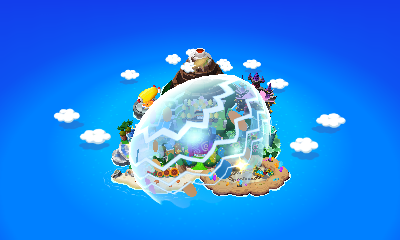 Driftwood Jellyfish SheetsZee Part. Stolen by three Fly Guy Rs, who have to be chased to Pi’illo Blimport and beaten.
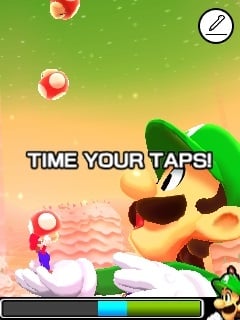
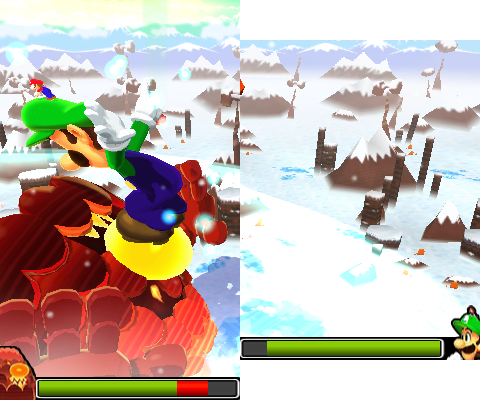
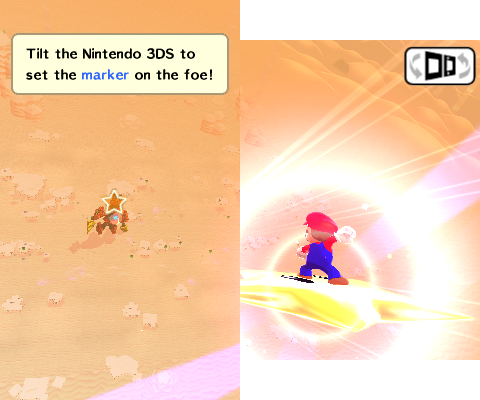
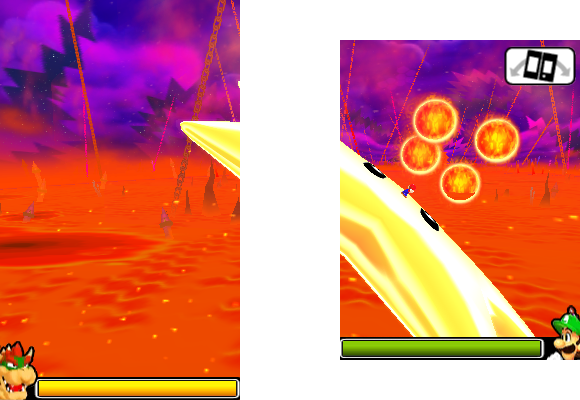
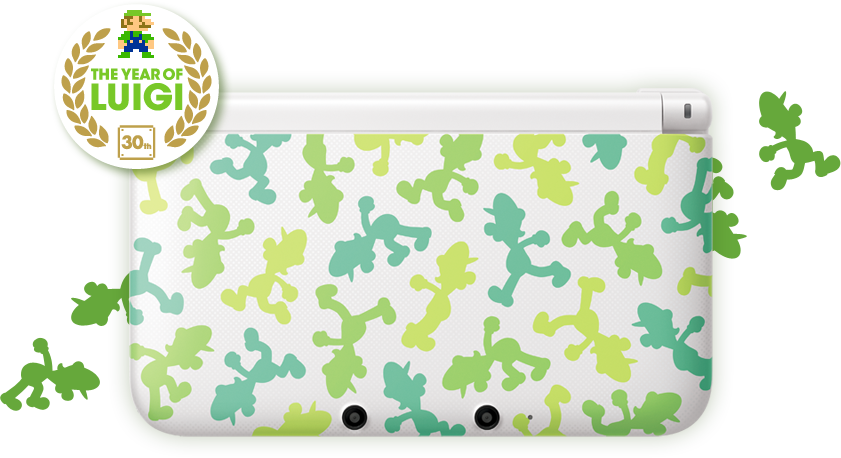 The Year of LuigiNintendo campaign · 14 February 2013 to 18 March 2014Announced by Satoru Iwata in the same Nintendo Direct as the game. A Luigi-themed Nintendo 3DS XL with Dream Team pre-installed was sold in Japan and North America, and through Nintendo’s online store in the UK.
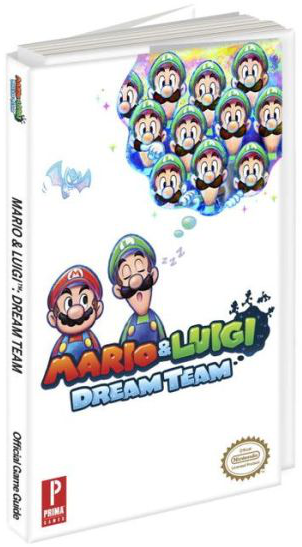 Prima’s Official Game GuideGuide book · 2013The English-language strategy guide, from Prima Games.
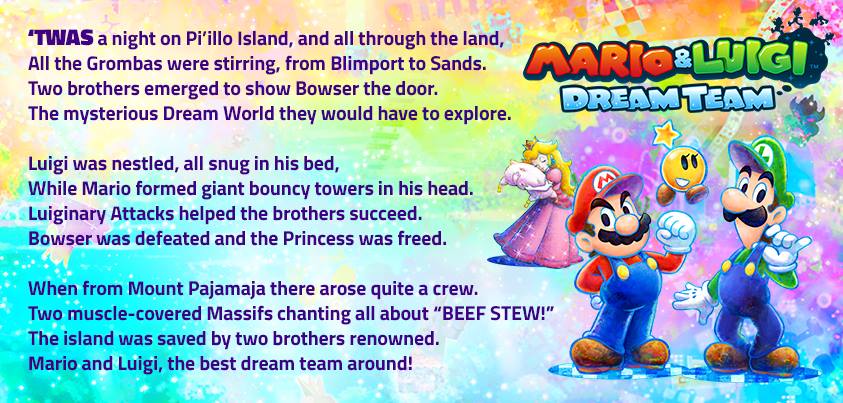 A Visit from St. Nicholas, Pi’illo styleNintendo on Facebook · December 2013Nintendo retold the plot in a single illustrated graphic, in the style of the poem A Visit from St. Nicholas.
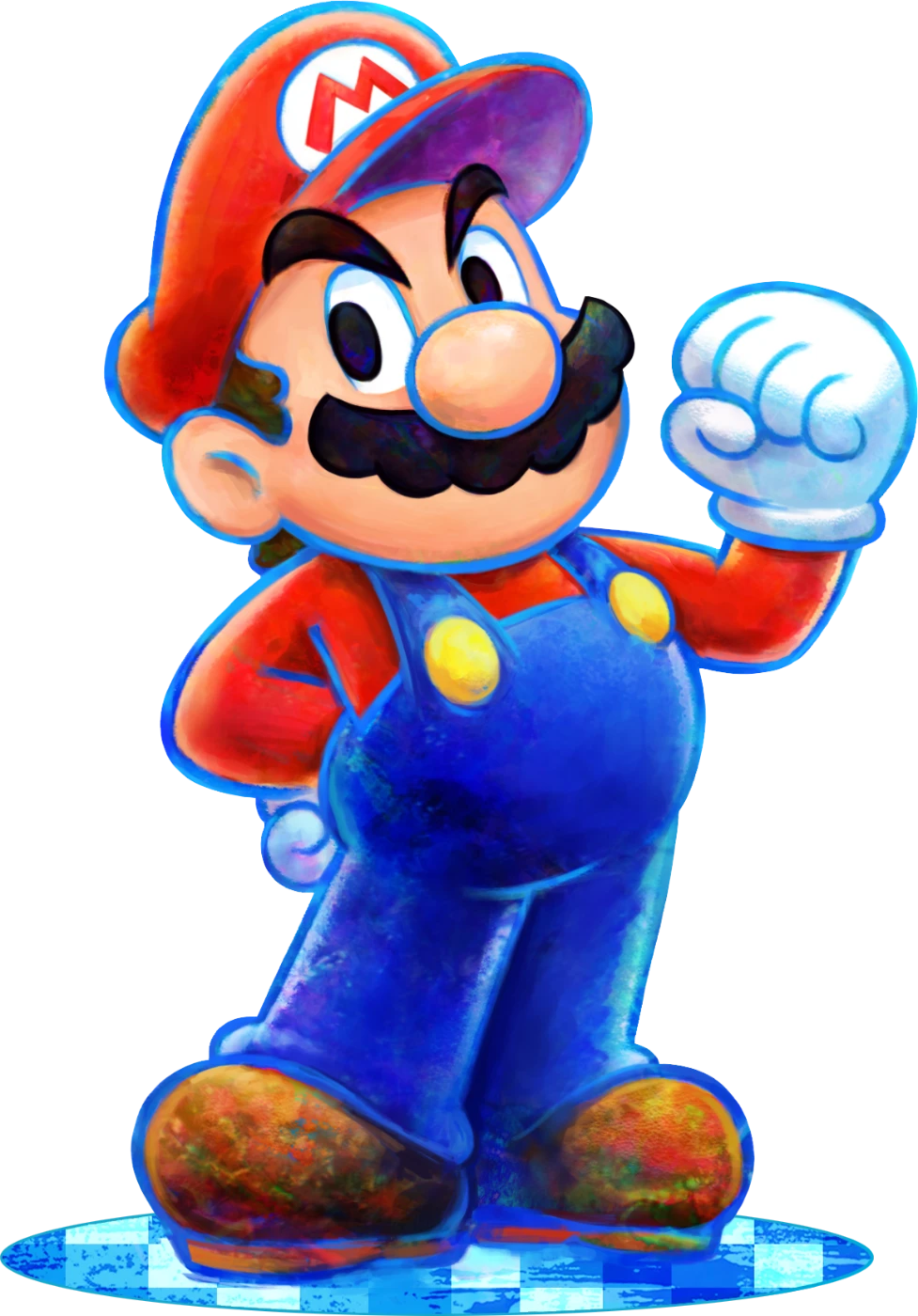 MarioThe A Button
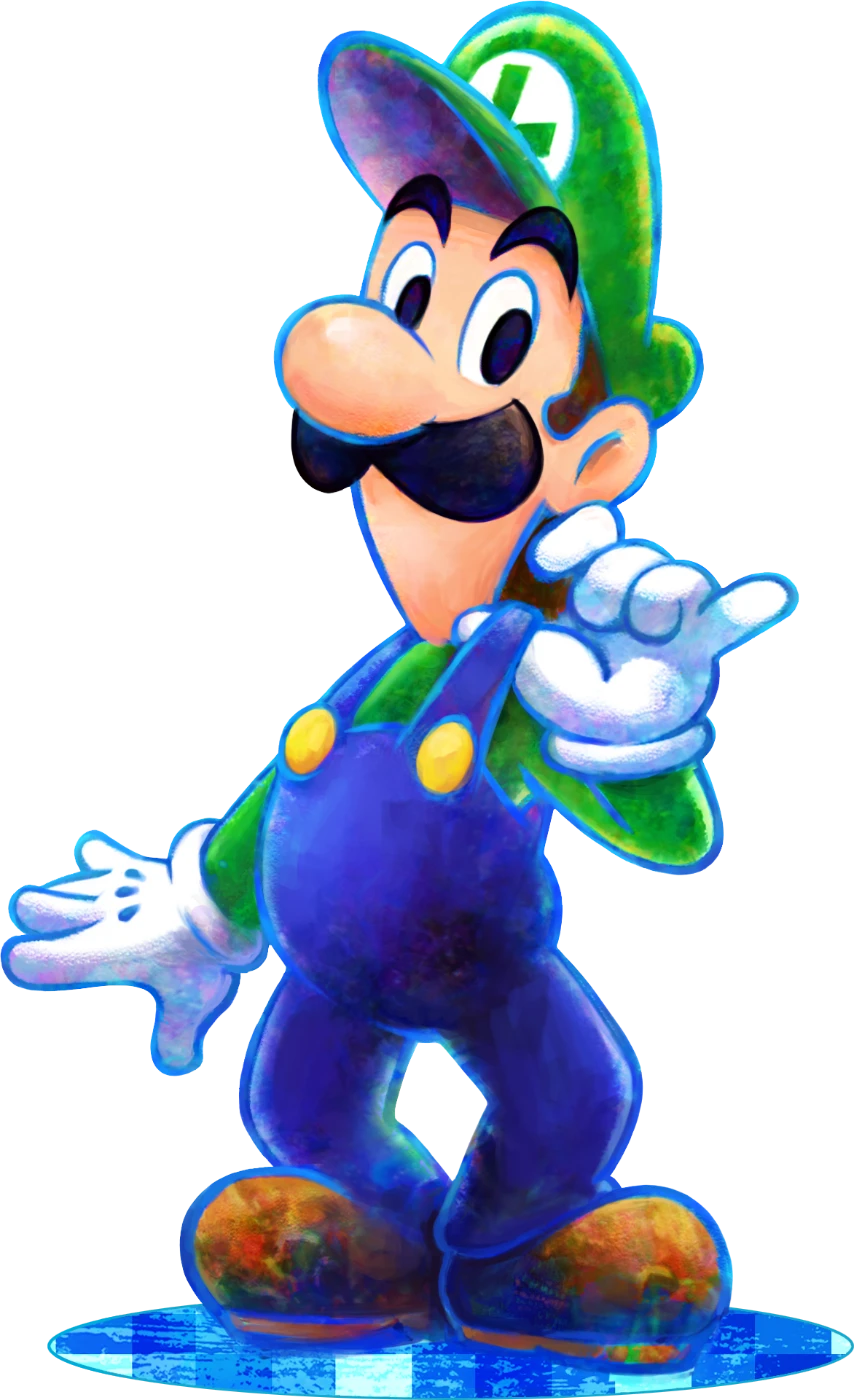 LuigiThe B Button, and the bed
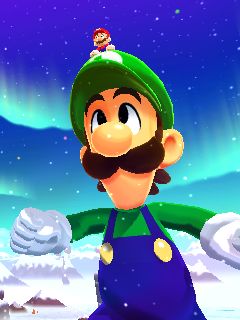 Dreamy LuigiLuigi as he dreams himself
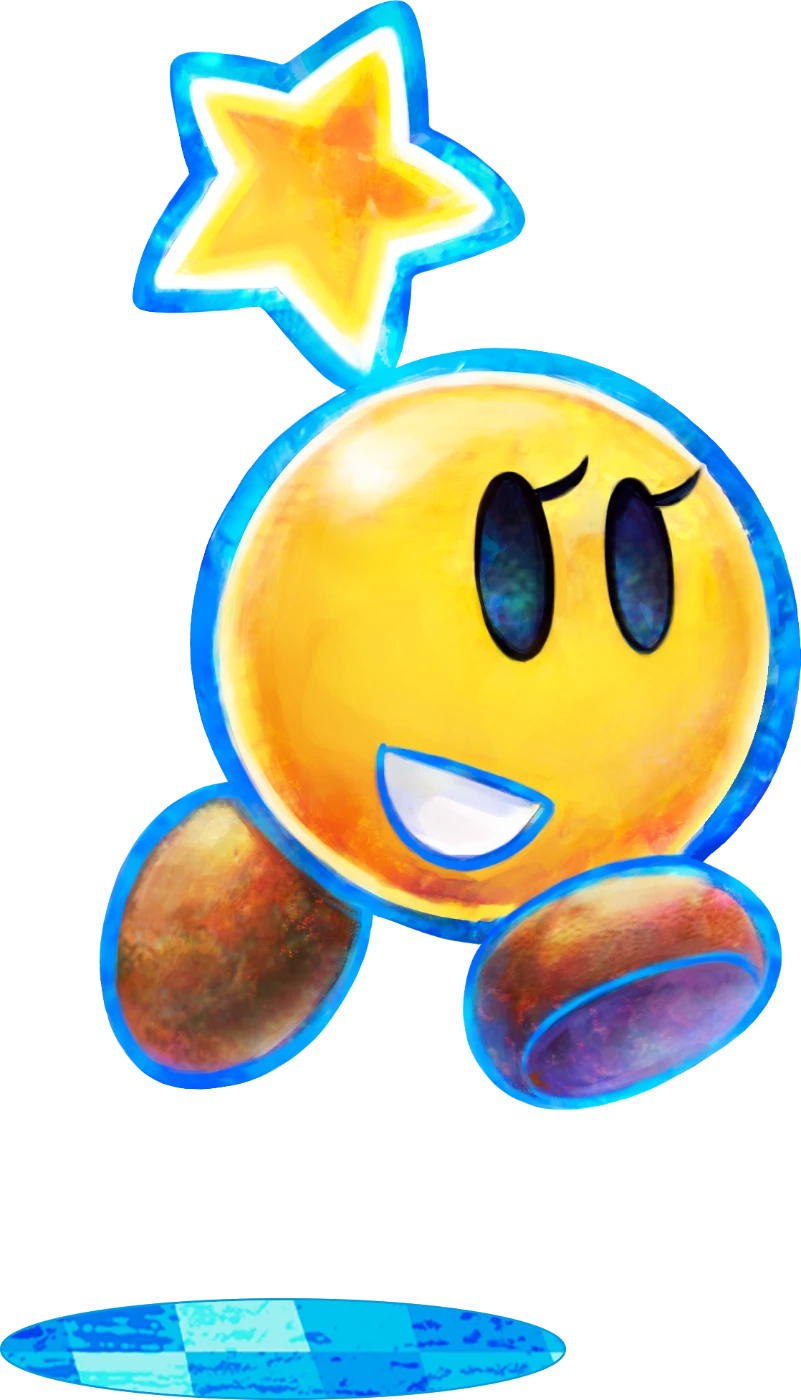 StarlowStar Sprite representative
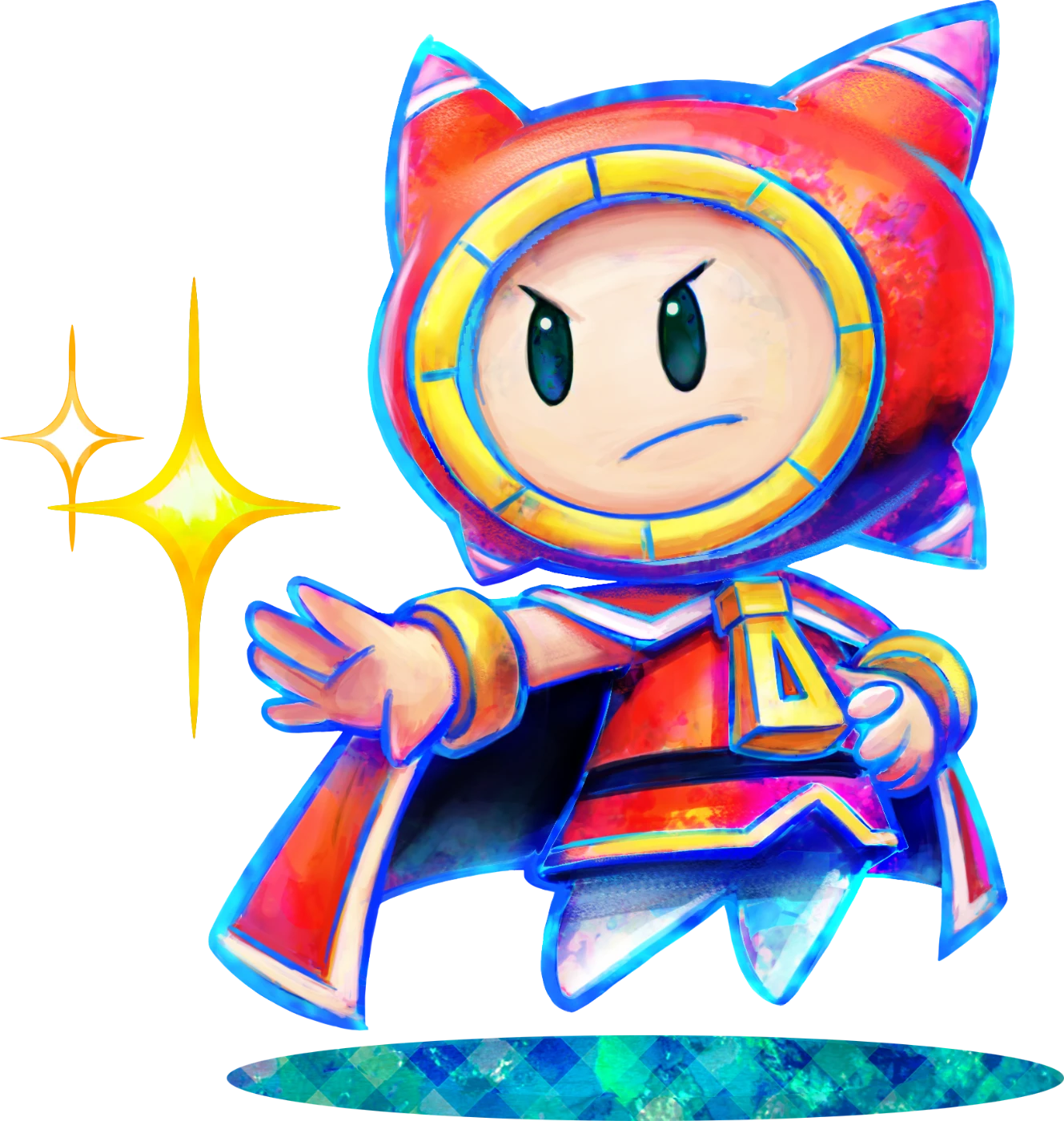 Prince DreambertPrince of the Pi’illos
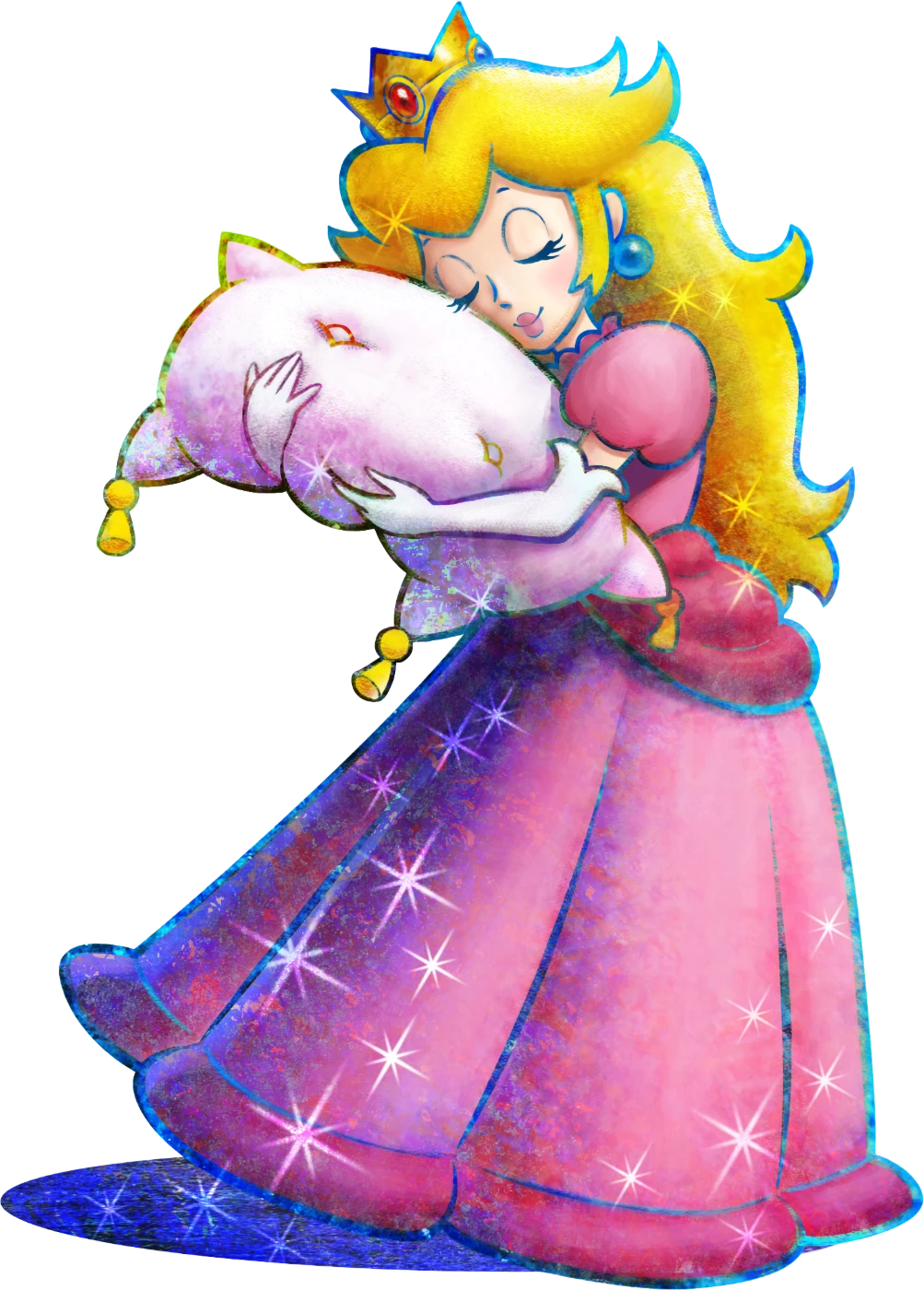 Princess PeachGuest of honour
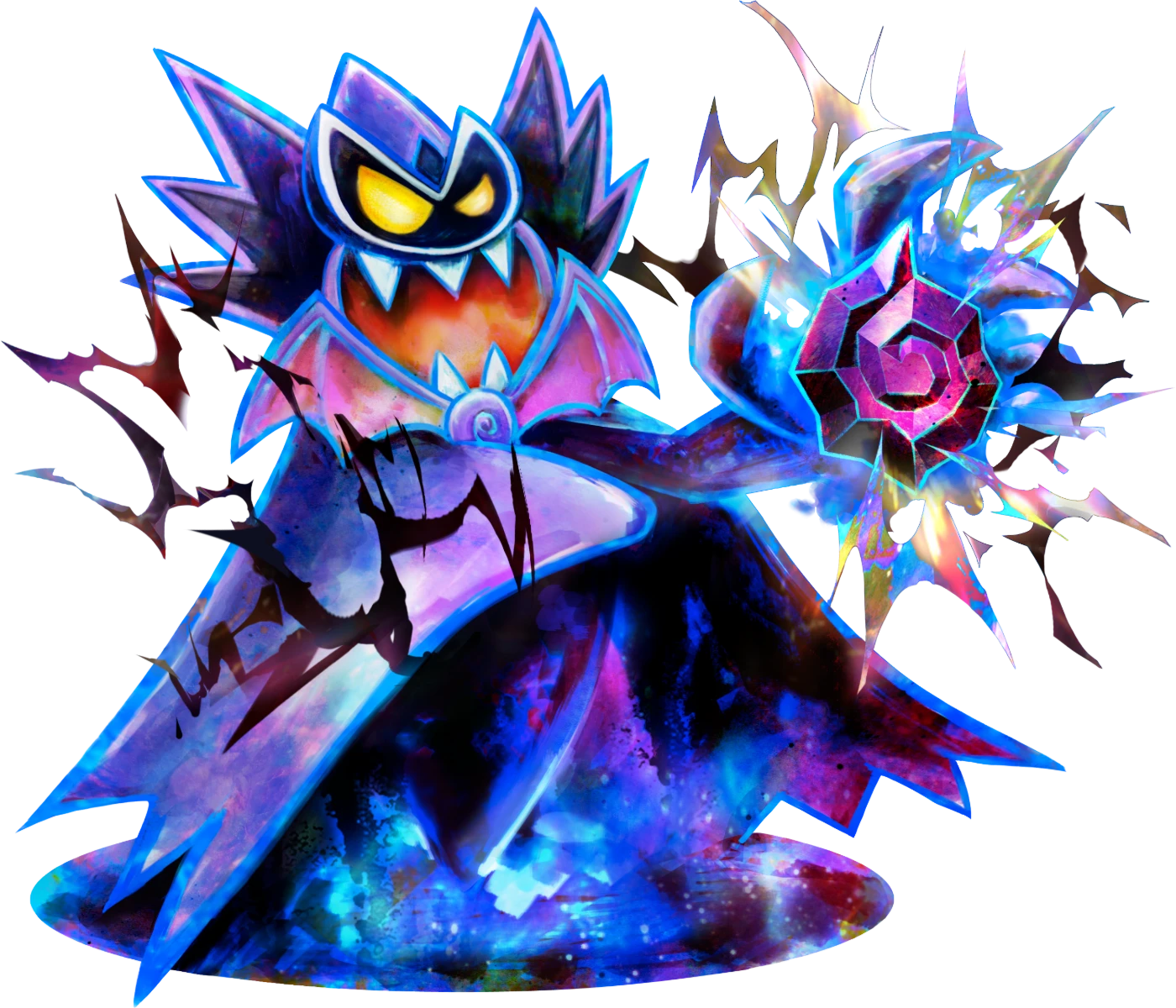 AntasmaThe Bat King
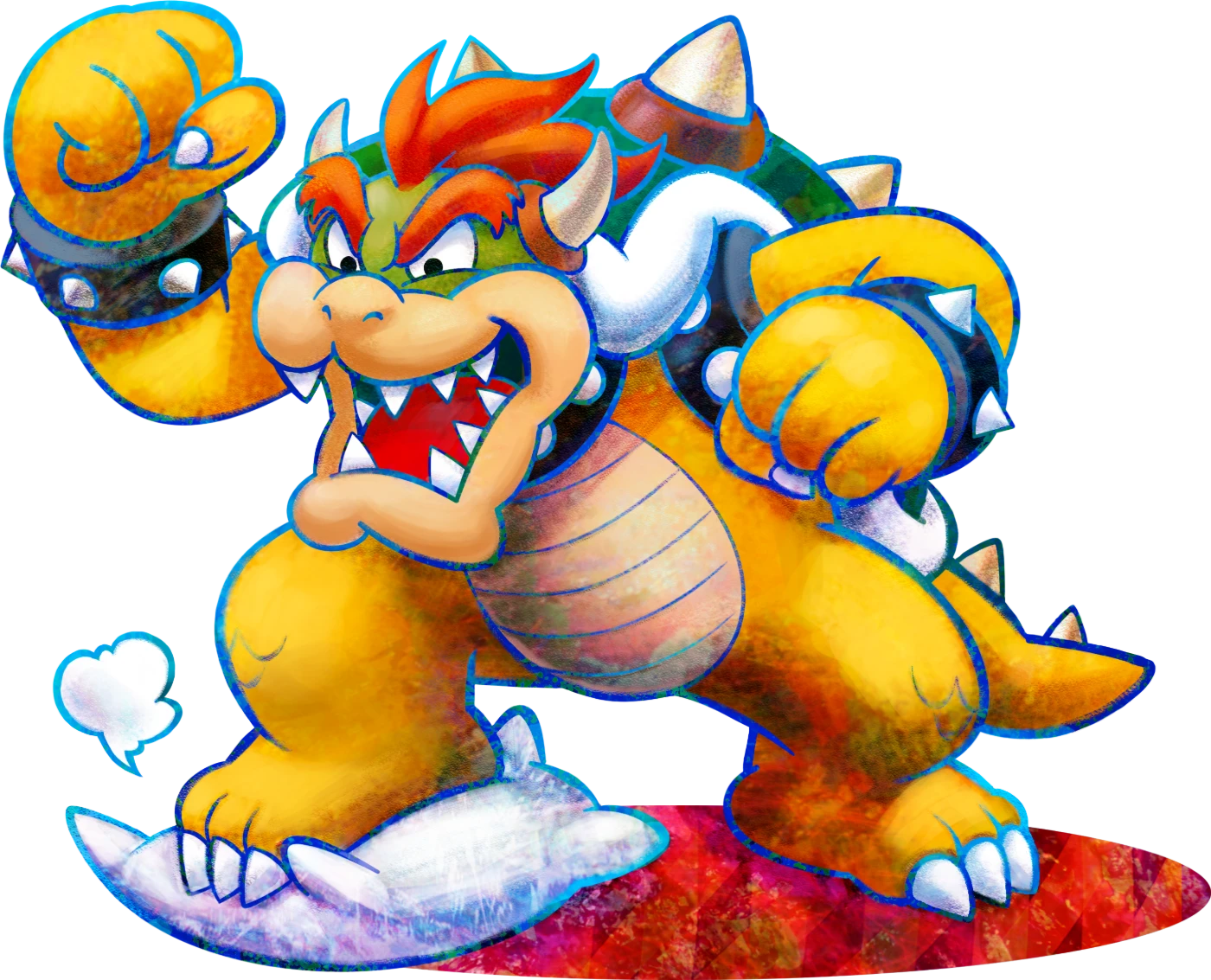 BowserCo-villain, then the only villain
 KamekBowser’s adviser
 The Elite TrioPrivate Goomp, Corporal Paraplonk, Sergeant Guy
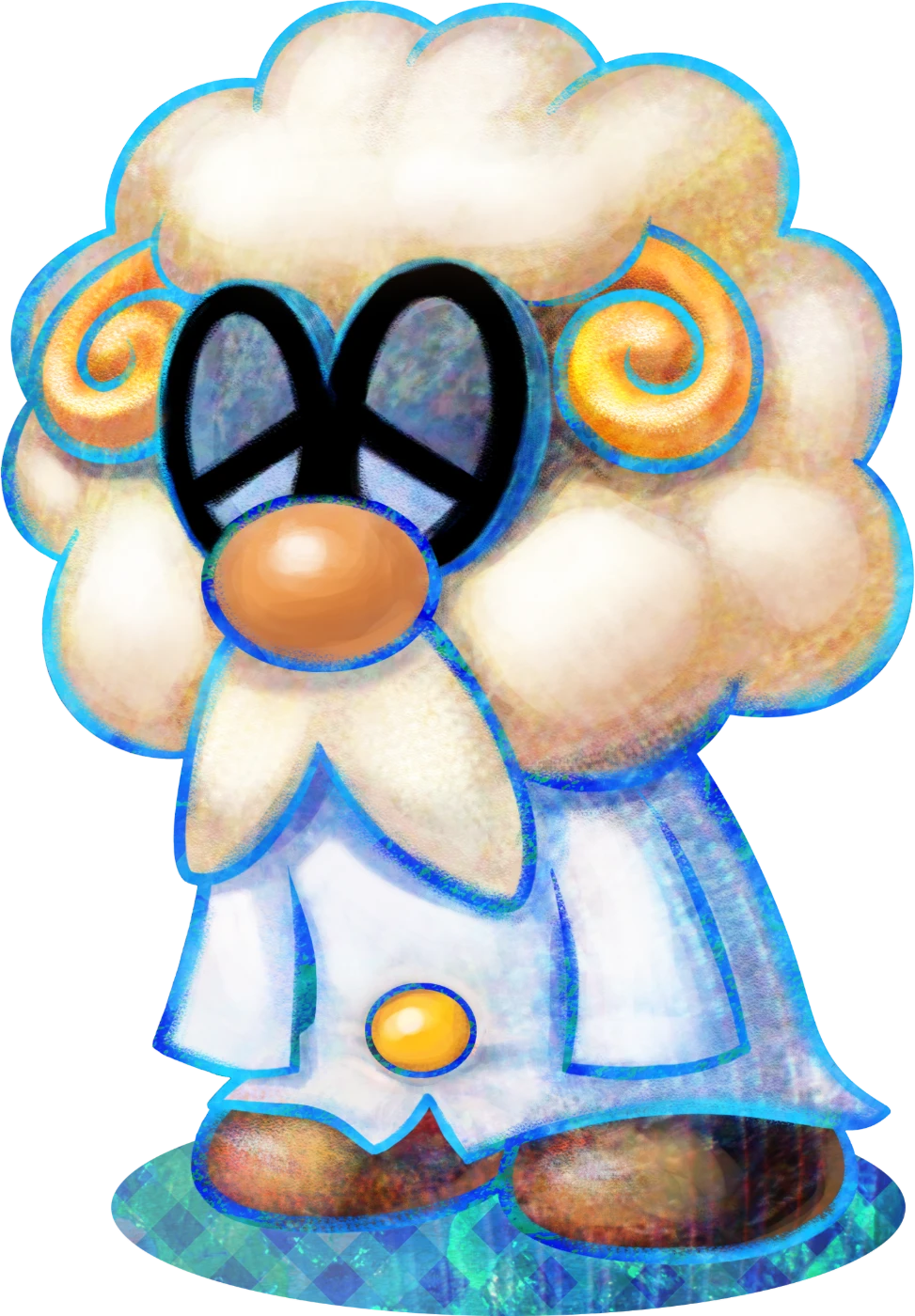 Dr. SnoozemoreProprietor of Pi’illo Island
 Broque MonsieurTour host; with Broggy
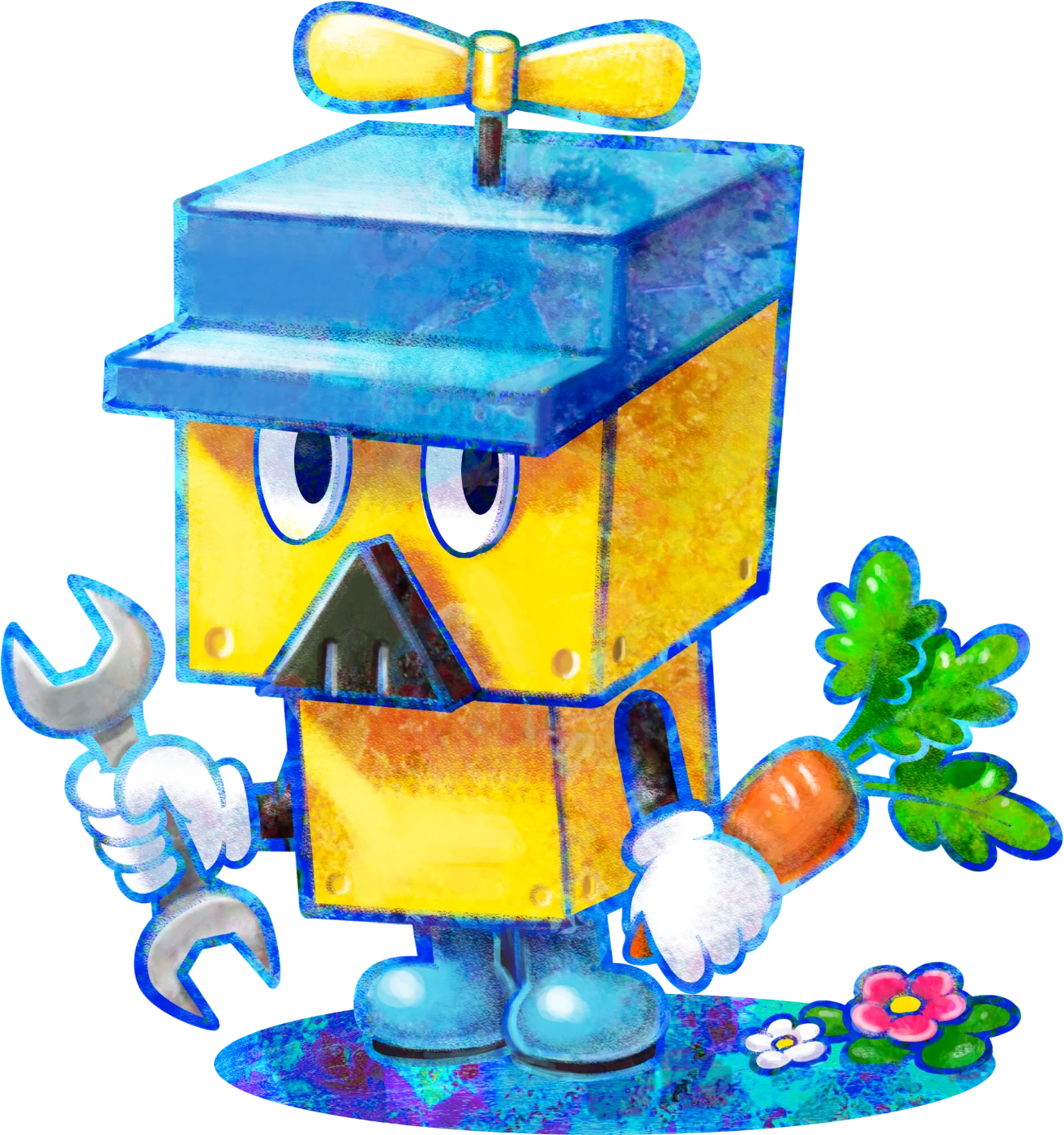 BrickleBoss Brock of Mushrise Park
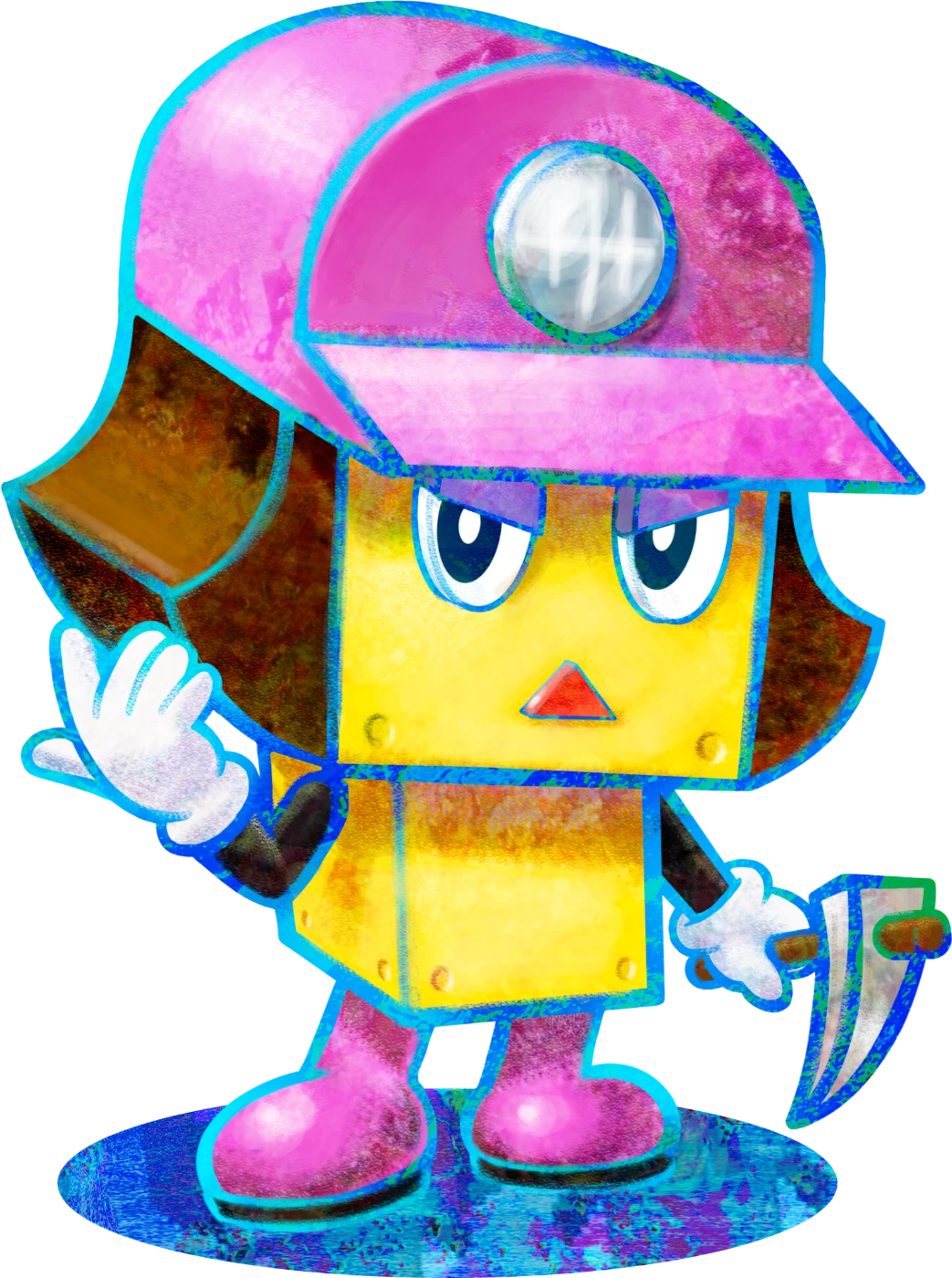 BrittaForewoman of Dozing Sands
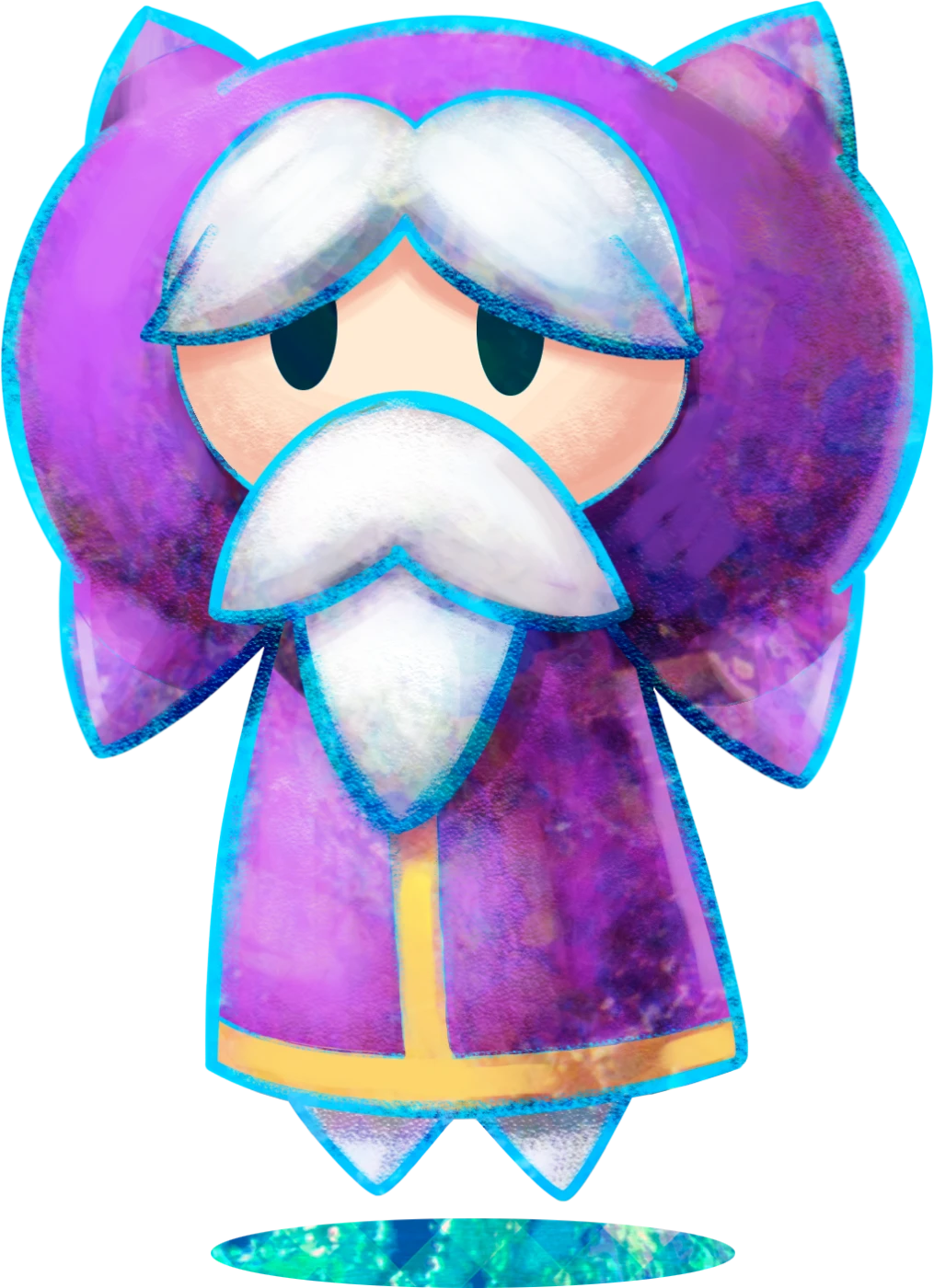 EldreamPi’illo elder
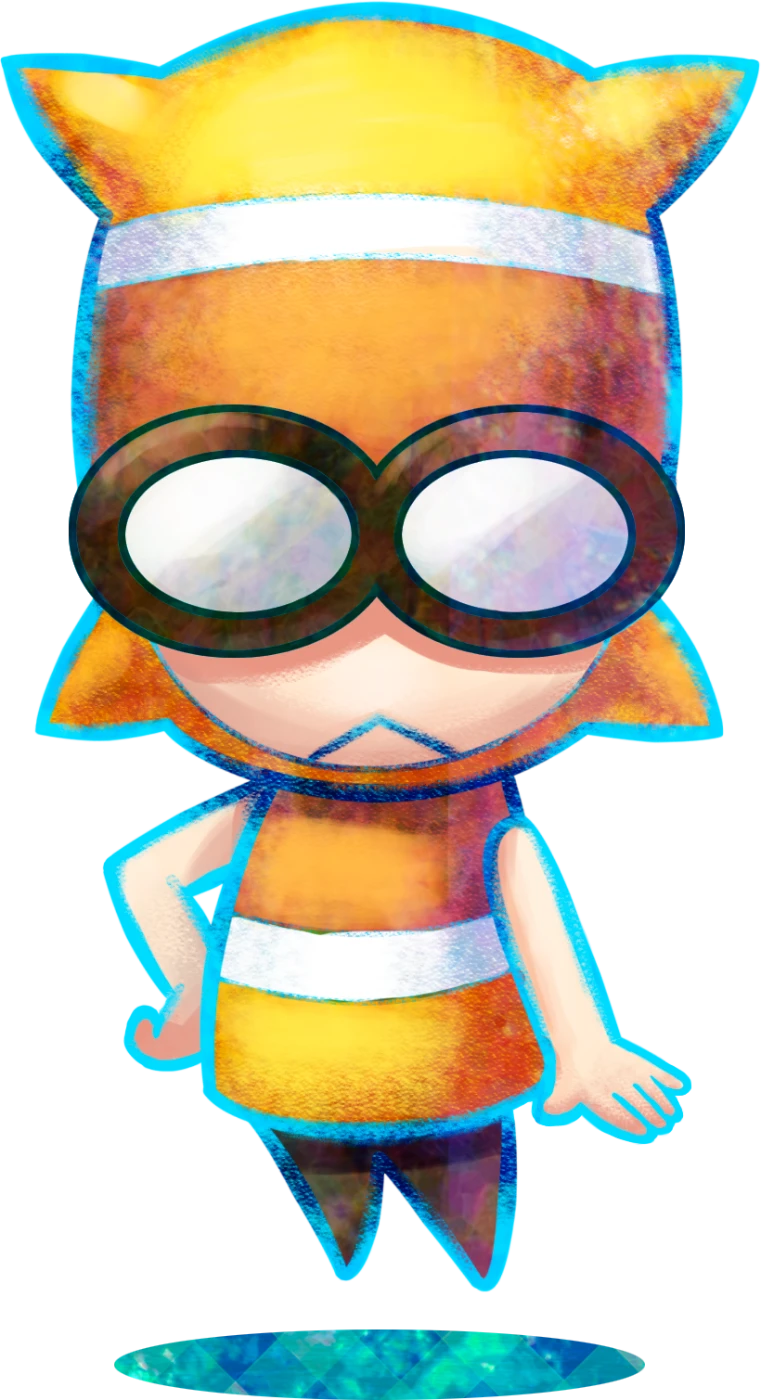 BedsmithPi’illo craftsman
 The Massif Bros.Big Massif and Lil’ Massif
 PoppleThe shadow thief
 Kylie KoopaReporter
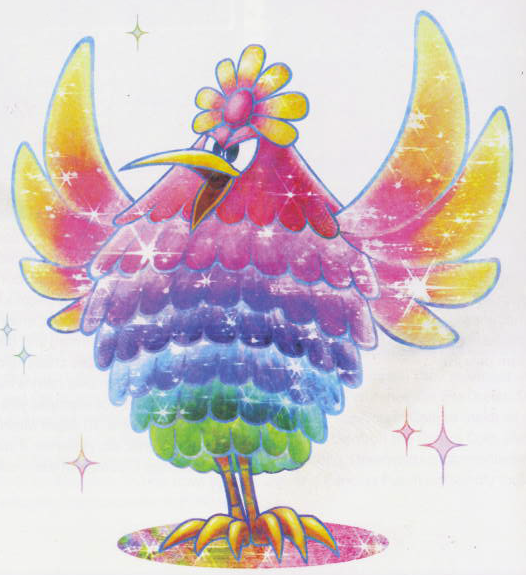 The ZeekeeperGuardian of Pi’illo Island
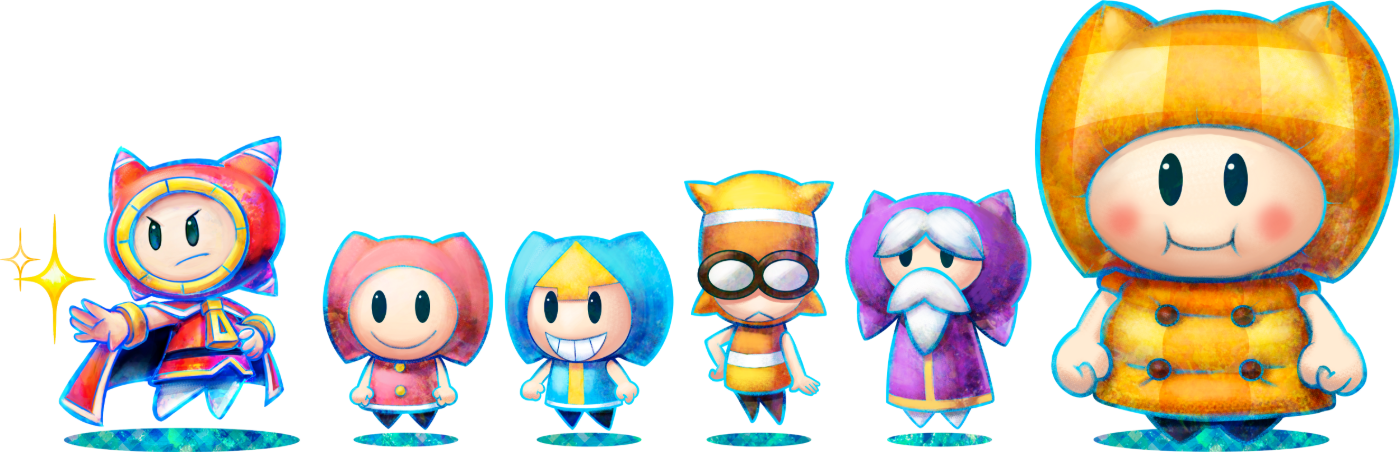 The Pi’illo folkThe island’s first people
 Broque MadameOf Driftwood Shore
 ???? (boss)ZeeppelinAntasma in disguise. A two-turn tutorial in which Mario jumps over charging bats.
 Smoldergeist (boss)Pi’illo Castle ruinsFour at once, 12 HP each. 20 EXP. Expert Challenges begin with this fight.
 Dreamy Mario (boss)Dreamy Pi’illo Castle96 HP, 75 EXP. Antasma backs his creation with fireballs and tosses it mushrooms.
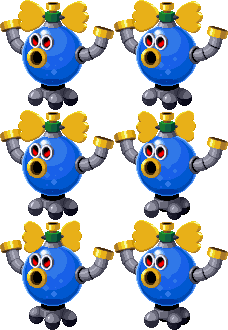 Grobot (boss)Mushrise Park288 HP, 250 EXP. Brickle’s watering robot on the blink. Grobot X: 1,133 HP.
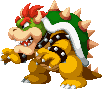 Bowser and Antasma (boss)Dream’s Deep233 HP, 300 EXP. Bat-form Antasma (6 HP) merges with Bowser, and damage his bats do to Mario heals the boss. Bowser X: 771 HP.
 Torkscrew (boss)Dozing Sands656 HP, 500 EXP. Caught attacking Britta at the top of the sand-flow. Torkscrew X: 1,594 HP.
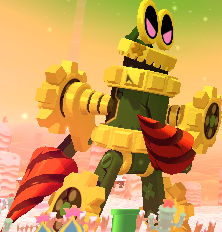 Robo-Drilldigger (giant boss)Dreamy Dozing Sands500 HP. The Dream Stone’s spirit in a temper, and the first giant battle. X: 997 HP, fought without Uppercut or Drill Stomp.
 Heavy Zest (boss)Dreamy Wakeport282 HP, 200 EXP. First of Big Massif’s four Hooraw apprentices; each sets a special condition.
 Sorrow Fist (boss)Dreamy Wakeport395 HP, 200 EXP. Second apprentice.
 Thunder Sass (boss)Dreamy Wakeport140 HP, 200 EXP. Third apprentice, and the frailest.
 Beef Cloud (boss)Dreamy Wakeport357 HP, 200 EXP. Fourth apprentice.
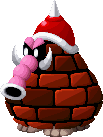 Mammoshka (boss)Mount Pajamaja918 HP, 1,100 EXP. Block Monolifts fit it with helmets unless they are dealt with at once; when its armour cracks, a small pink mammoth is underneath. Mammoshka X: 1,771 HP.
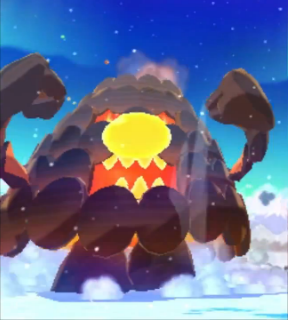 Mount Pajamaja (giant boss)Dreamy Mount Pajamaja1,600 HP. The volcano itself. Giant Luigi learns Hammer Uppercut and Drill Stomp here. X: 1,111 HP.
 Private Goomp (boss)Dreamy Driftwood Shore249 HP. The Elite Trio fight together for 2,100 EXP, with Sub-Goombas (80 HP) in support. X: 468 HP.
 Corporal Paraplonk (boss)Dreamy Driftwood Shore415 HP. X: 780 HP.
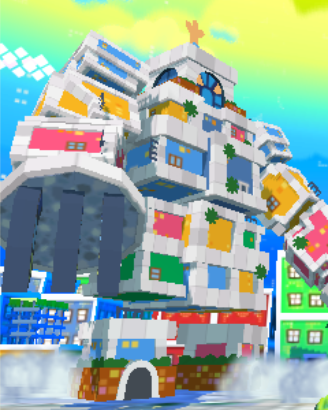 Earthwake (giant boss)Dreamy Wakeport1,499 HP. A robot assembled from the town’s buildings, with the Bedsmith’s Nightmare Chunk in its head. X: 1,801 HP.
 Fly Guy R (boss)Pi’illo BlimportThree thieves with 149 HP each, holding the Driftwood Jellyfish Sheets. They turn up as ordinary enemies afterwards.
 Wiggler (boss)Wakeport1,485 HP. Fought together with Popple for 1,500 EXP.
 Pi’illodium (boss)Somnom Woods1,673 HP plus wings of 172. 3,600 EXP. Immune to hammers until grounded; at 299 HP or less it starts a 40-second self-destruct. X: 2,742 HP.
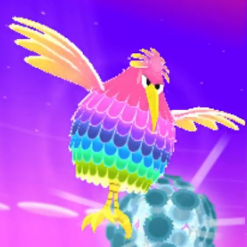 The Zeekeeper (giant boss)Dreamy Somnom Woods2,064 HP. The fourth giant battle. Zeekeeper X: 3,000 HP with a six-turn limit.
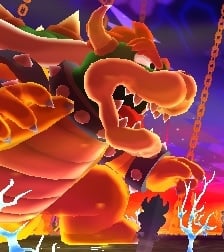 Bowser (giant boss)Dreamy Neo Bowser Castle2,800 HP. The last giant battle, finished with the Star Driver. Giant Bowser X: 3,500 HP.
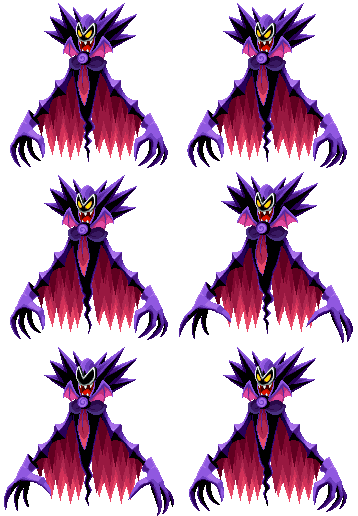 Antasma (boss)Dreamy Neo Bowser Castle2,435 HP, 7,500 EXP. Feeds on Antasmunchies (90 HP), clones himself, drags Mario into a nightmare. Antasma X: 3,336 HP.
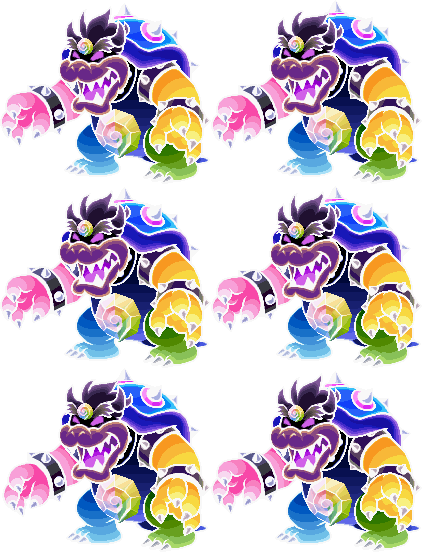 Dreamy Bowser (final boss)Neo Bowser Castle2,417 HP, left arm 350, right arm 464. Summons Dreamy Goombas, Bob-ombs, Shy Guys and Paratroopas.
 Bowser Jr. (secret boss)Battle Ring4,099 HP, with his Junior Clown Car (512 HP). Appears only at the end of the Battle Medley and is worth 10,000 coins.
 GrombaPi’illo Blimport; Pi’illo Castle8 HP, 3 EXP, 1 coin.
 BloatulaPi’illo Castle12 HP, 5 EXP, 4 coins.
 ThorbMushrise Park12 HP, 16 EXP, 6 coins.
 CapnapMushrise Park16 HP, 15 EXP, 5 coins. Returns in Brothership.
 FlibbeeMushrise Park; Flibbee R on Mount Pajamaja36 HP, 17 EXP. Flibbee R: 142 HP, 75 EXP.
 FlounderflageDozing Sands28 HP, 24 EXP, 8 coins.
 SandoonDozing Sands52 HP, 30 EXP, 12 coins.
 CaccacDozing Sands74 HP, 32 EXP, 16 coins.
 BanditDozing Sands; Somnom Woods111 HP, 110 EXP in the desert; 123 HP in the woods.
 Hermite CrabWakeport; Hermite Crab R also at Driftwood Shore40 HP, 55 EXP. Hermite Crab R: 81 HP, 220 EXP.
 MonoliftMount Pajamaja120 HP, 85 EXP. Monolift R: 184 HP, 210 EXP.
 GrumbellMount Pajamaja88 HP, 90 EXP, 24 coins.
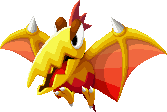 Pi’illodactylMount Pajamaja; Pi’illodactyl R in Somnom Woods318 HP, 200 EXP, 180 coins; a background enemy. R: 476 HP, 600 EXP.
 DurapurlDriftwood Shore89 HP, 130 EXP, 30 coins.
 Fly GuyDriftwood Shore138 HP, 100 EXP, 35 coins.
 GoombaDriftwood Shore; Goomba R at the Blimport and Mushrise Park54 HP, 15 EXP. Goomba R: 58 HP, 30 EXP.
 Shy Guy AirtubFive real-world areas on return visits; Airtub R in Neo Bowser Castle123 HP, 250 EXP, 240 coins; hovers in the background. R: 178 HP, 500 EXP.
 Shy GuyFive real-world areas on return visits; Shy Guy R in Neo Bowser Castle35 HP, 15 EXP. Shy Guy R: 48 HP, 25 EXP.
 VirusFive real-world areas on return visits106 HP, 30 EXP, 6 coins.
 Golden EggSomnom Woods68 HP, no EXP, 200 coins.
 Eyepi’illoSomnom Woods138 HP, 290 EXP, 50 coins.
 BeehossSomnom Woods178 HP, 280 EXP, 60 coins.
 Boomerang BroSomnom Woods135 HP, 160 EXP, 30 coins.
 Commander LakituSomnom Woods1 HP, 100 EXP. A background enemy.
 Fire BroNeo Bowser Castle172 HP, 300 EXP, 50 coins.
 Flaming AntasmatonNeo Bowser Castle190 HP, 400 EXP, 70 coins.
 Inky Piranha PlantNeo Bowser Castle3 HP, 100 EXP. Borrowed from Super Mario 3D Land.
 Walker GuyNeo Bowser Castle136 HP, 330 EXP, 20 coins.
 Chain ChompNeo Bowser Castle245 HP, 50 EXP, 80 coins.
 DrombaDreamy Pi’illo Castle6 HP, 1 EXP. The first dream enemy, usually met in crowds.
 StorchDreamy Pi’illo Castle14 HP, 4 EXP, 3 coins.
 DreamcapDreamy Mushrise Park; Dreamcap R at Dreamy Driftwood Shore18 HP, 1 EXP. Dreamcap R: 74 HP, 10 EXP.
 Dreamcap CaptainDreamy Mushrise Park; R at Dreamy Driftwood Shore26 HP, 6 EXP. Captain R: 116 HP, 30 EXP.
 PropellionDreamy Mushrise Park42 HP, 8 EXP, 8 coins.
 Dreamy SandoonDreamy Dozing Sands38 HP, 5 EXP, 2 coins.
 Lob-ombDreamy Dozing Sands; Lob-omb R on Dreamy Mount Pajamaja42 HP, 10 EXP. Lob-omb R: 105 HP, 30 EXP.
 SkipdrillDreamy Dozing Sands; Skipdrill R in Dreamy Somnom Woods22 HP, 7 EXP. Skipdrill R: 66 HP, 35 EXP.
 CocoknightDreamy Wakeport42 HP, 10 EXP. Cocoknight R: 101 HP, 20 EXP.
 TicksquawkDreamy Wakeport90 HP, 20 EXP, 18 coins.
 KrubbishDreamy Wakeport83 HP, 160 EXP, 45 coins.
 ChizzleDreamy Mount Pajamaja44 HP, 12 EXP, 3 coins.
 MagmadDreamy Mount Pajamaja125 HP, 50 EXP, 20 coins. The fiery counterpart of Icead.
 IceadDreamy Mount Pajamaja125 HP, 50 EXP, 20 coins. Magmad’s icy twin. Both return in Brothership.
 SpinyDreamy Driftwood Shore; Spiny R in Dreamy Neo Bowser Castle31 HP, 21 EXP. Spiny R: 50 HP, 56 EXP.
 LakituDreamy Driftwood Shore; Lakitu R in Dreamy Neo Bowser Castle60 HP, 45 EXP; a background enemy. Lakitu R: 97 HP, 120 EXP.
 Piranha PlantDreamy Driftwood Shore222 HP, 170 EXP, 30 coins.
 Nipper PlantDreamy Driftwood Shore1 HP, no EXP, 10 coins.
 BloopurnDreamy Driftwood Shore127 HP, 75 EXP, 35 coins.
 Dark BlockDream’s Deep133 HP, 150 EXP, 40 coins.
 Gold BeanieEvery Dream World area except Dream’s Deep517 HP, 4,000 EXP, 800 coins: the best pay-out of any regular enemy.
 PelicrumpDreamy Somnom Woods109 HP, 50 EXP, 10 coins.
 SpritzbloomDreamy Somnom Woods200 HP, 160 EXP, 60 coins.
 MechakoopaDreamy Neo Bowser Castle124 HP, 40 EXP, 8 coins.
 Big Tail GoombaDreamy Neo Bowser Castle260 HP, 180 EXP, 84 coins. Another visitor from Super Mario 3D Land.
 AntasmanDreamy Neo Bowser Castle204 HP, 84 EXP, 12 coins.