GameCube2005Rhythm · danceKonami · NintendoDance mat in the box29 songsMush ModeDancing Stage: Mario Mix in Europe
Dance Dance Revolution: Mario Mix
Konami’s dance series meets the Mushroom Kingdom. In Dance Dance Revolution: Mario MixWaluigi breaks into Truffle Towers and lets loose the four Music Keys, and the stray power of music starts flooding rivers and spinning up whirlpools. The cure, Toad insists, is dancing. So Mario (or Luigi) steps out the arrows on a Mario-branded dance mat across five worlds, out-dancing Waluigi, a Big Blooper, Wario at his own carnival, a giant Freezie and finally Bowser, who only wanted the keys to cure his tone-deafness. The soundtrack mixes remixed Mario music, from Wrecking Crew to The Thousand-Year Door, with Mozart, Bizet, Elgar and Strauss, and Mush Mode turns arrows into Goombas, Koopa shells, Bloopers and Bullet Bills. Co-developed by Konami and Nintendo and announced in January 2005, it reached Japan on 14 July 2005 as Dance Dance Revolution with Mario, then North America in October and Europe as Dancing Stage: Mario Mix, bundled with the Action Pad.
Developers:Konami and Nintendo SPD Group No. 2
Publisher:Nintendo
Platform:Nintendo GameCube
Genre:Rhythm / dance
Japan:14 July 2005 (as Dance Dance Revolution with Mario)
N. America:24 October 2005
Europe:28 October 2005 (as Dancing Stage: Mario Mix)
Australia:24 November 2005
Players:1–2
Director:Yukihiro Yamazaki
Producers:Hitoshi Yamagami, Hirotaka Ishikawa
Executive producers:Satoru Iwata, Kazumi Kitaue
Sound director:U1-ASAMi
Voices:Charles Martinet (Mario, Luigi, Wario, Waluigi), Jen Taylor (Toad), Scott Burns (Bowser), all uncredited
Songs:29, including four bought in Story Mode EX
Difficulties:Easy, Normal, Hard, Very Hard, Super Hard
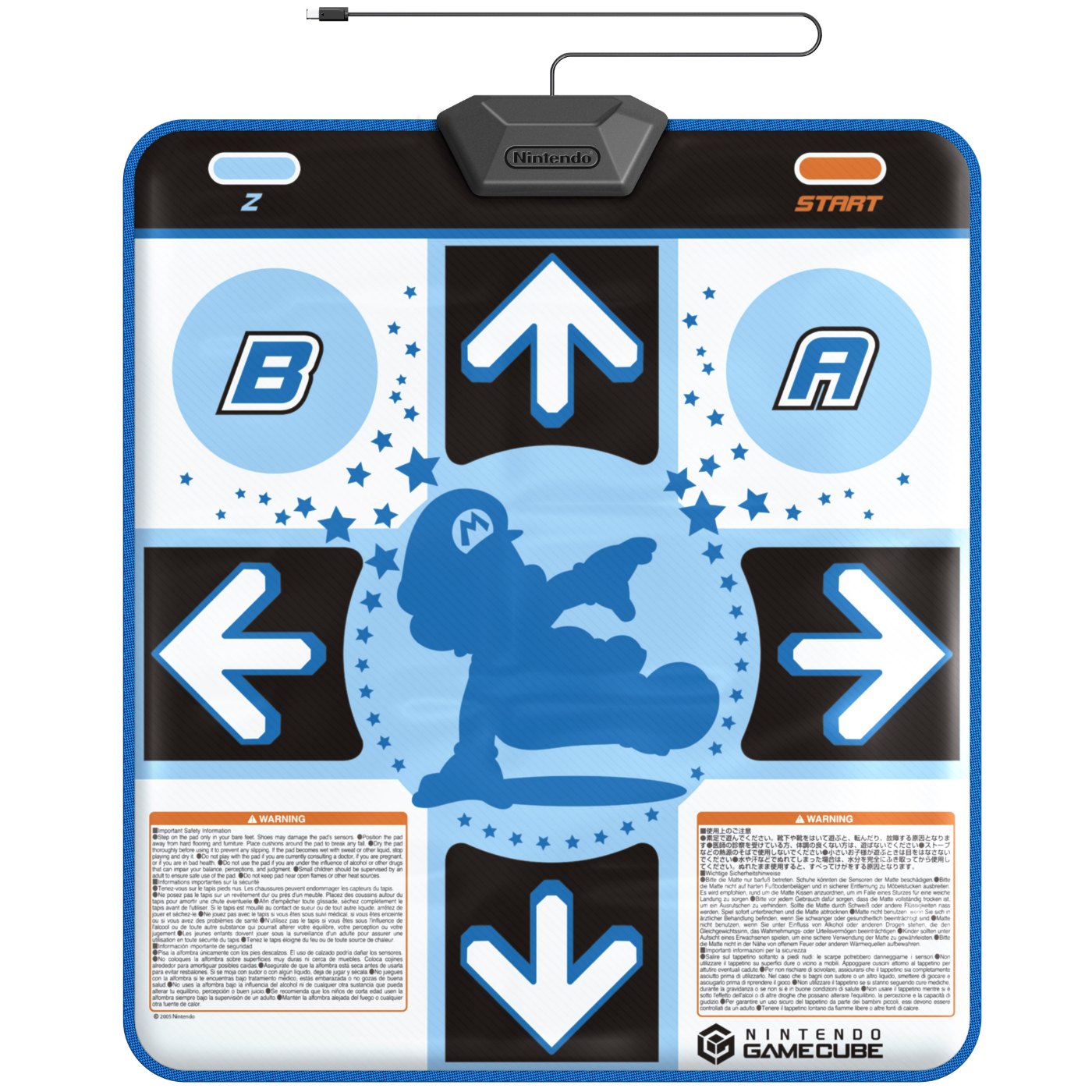
Controls:Action Pad dance mat (bundled) or GameCube controller
Metacritic:69/100
Advertisement
Overview
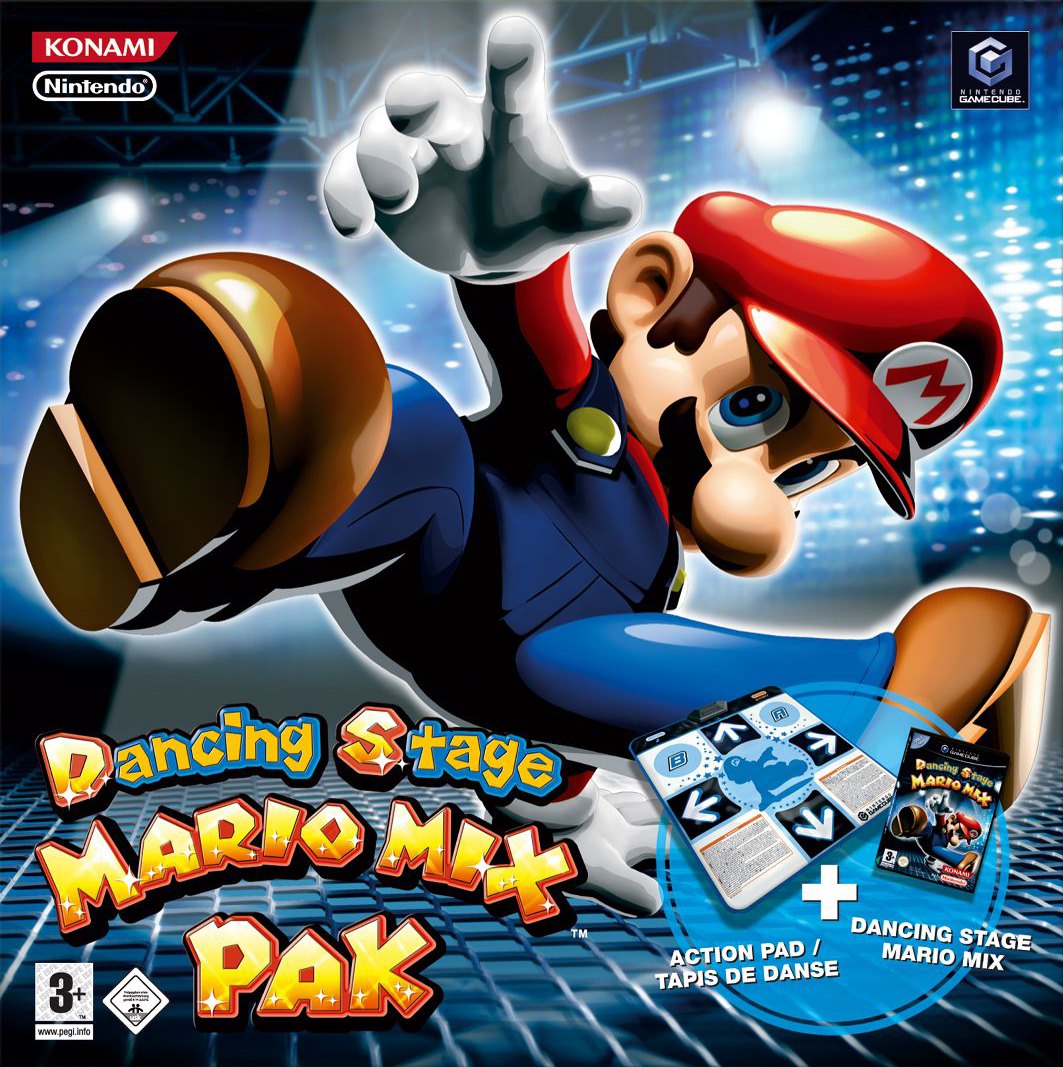
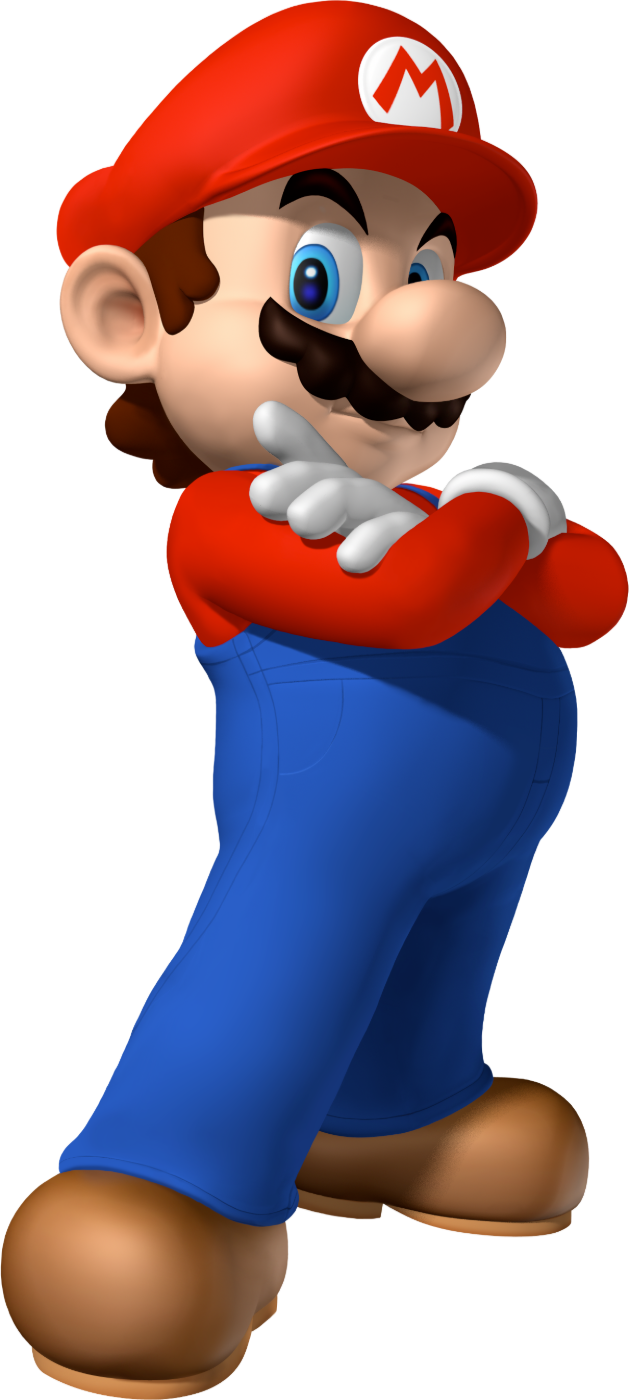
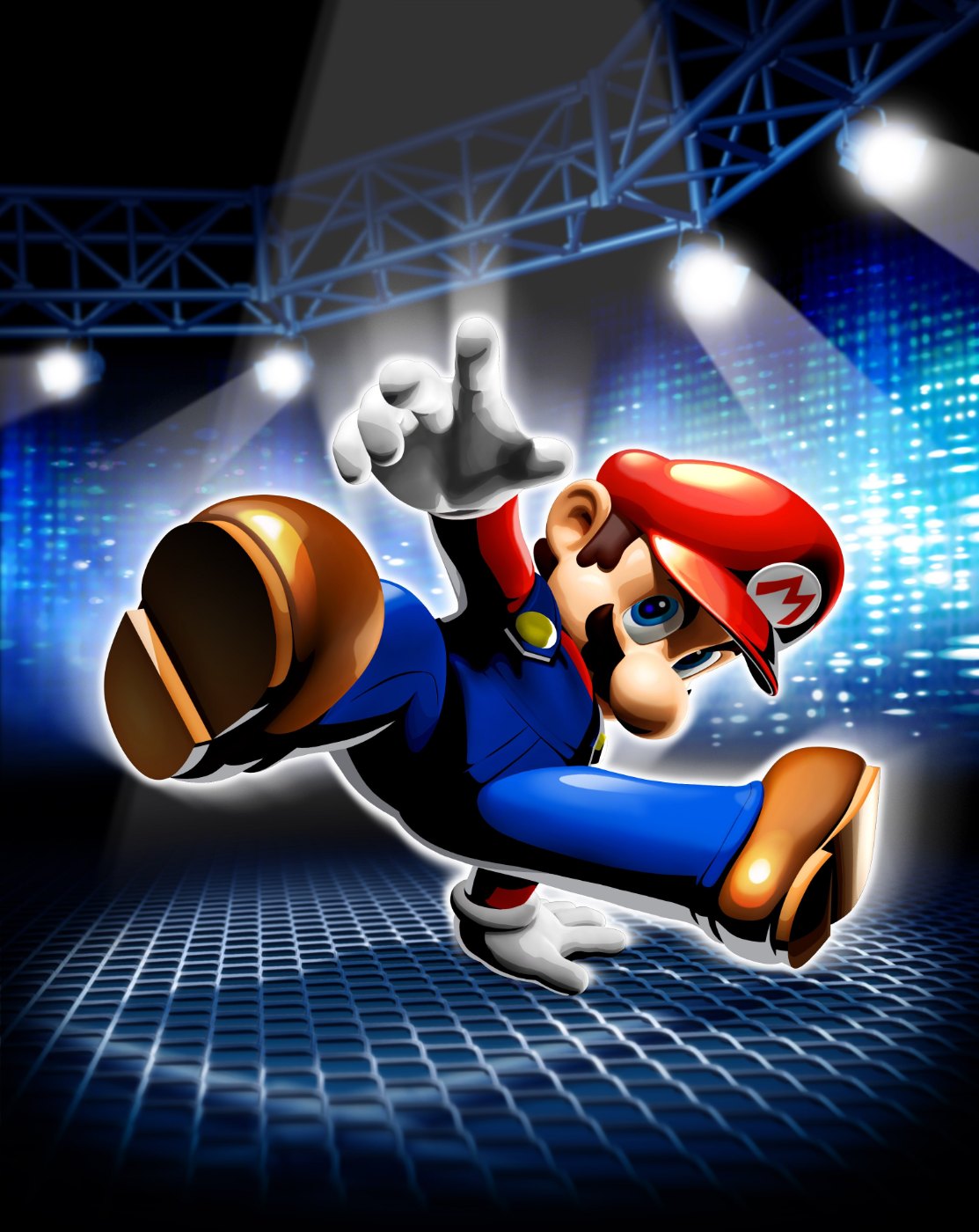
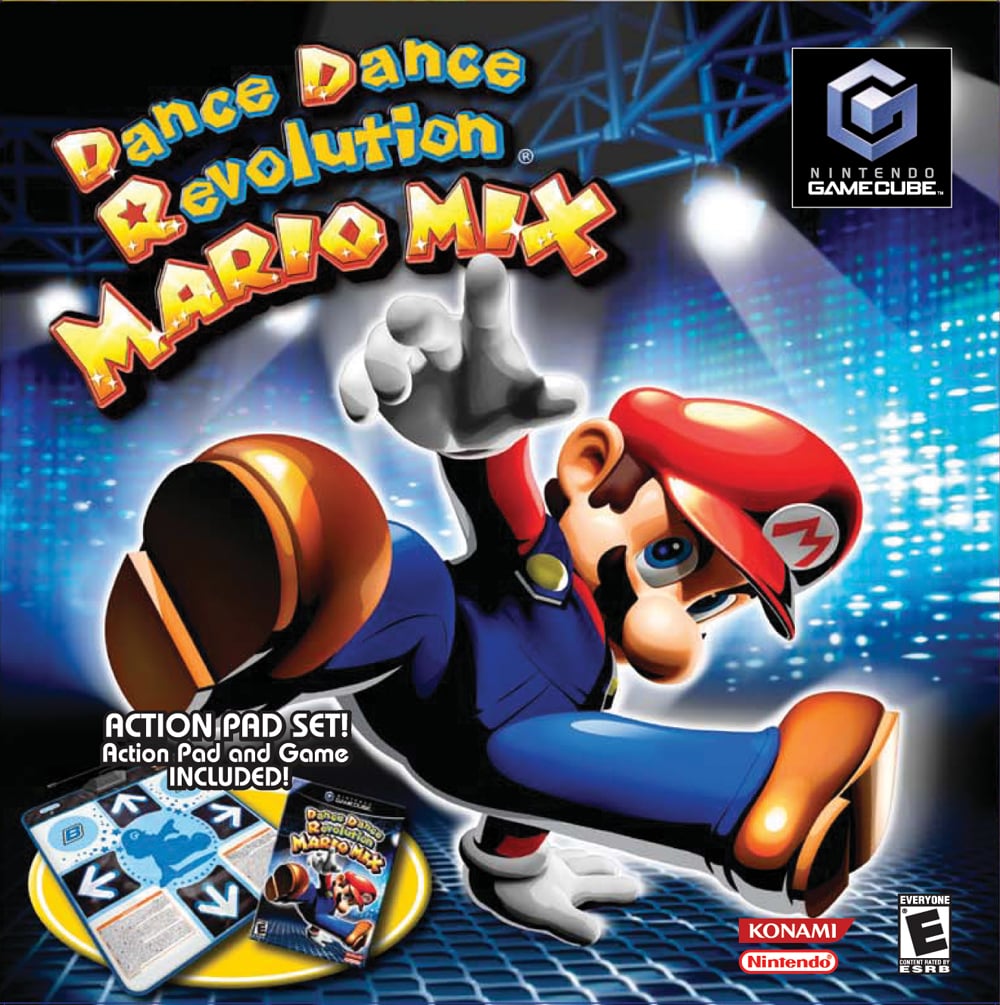
Key artwork: Mario mid-move.
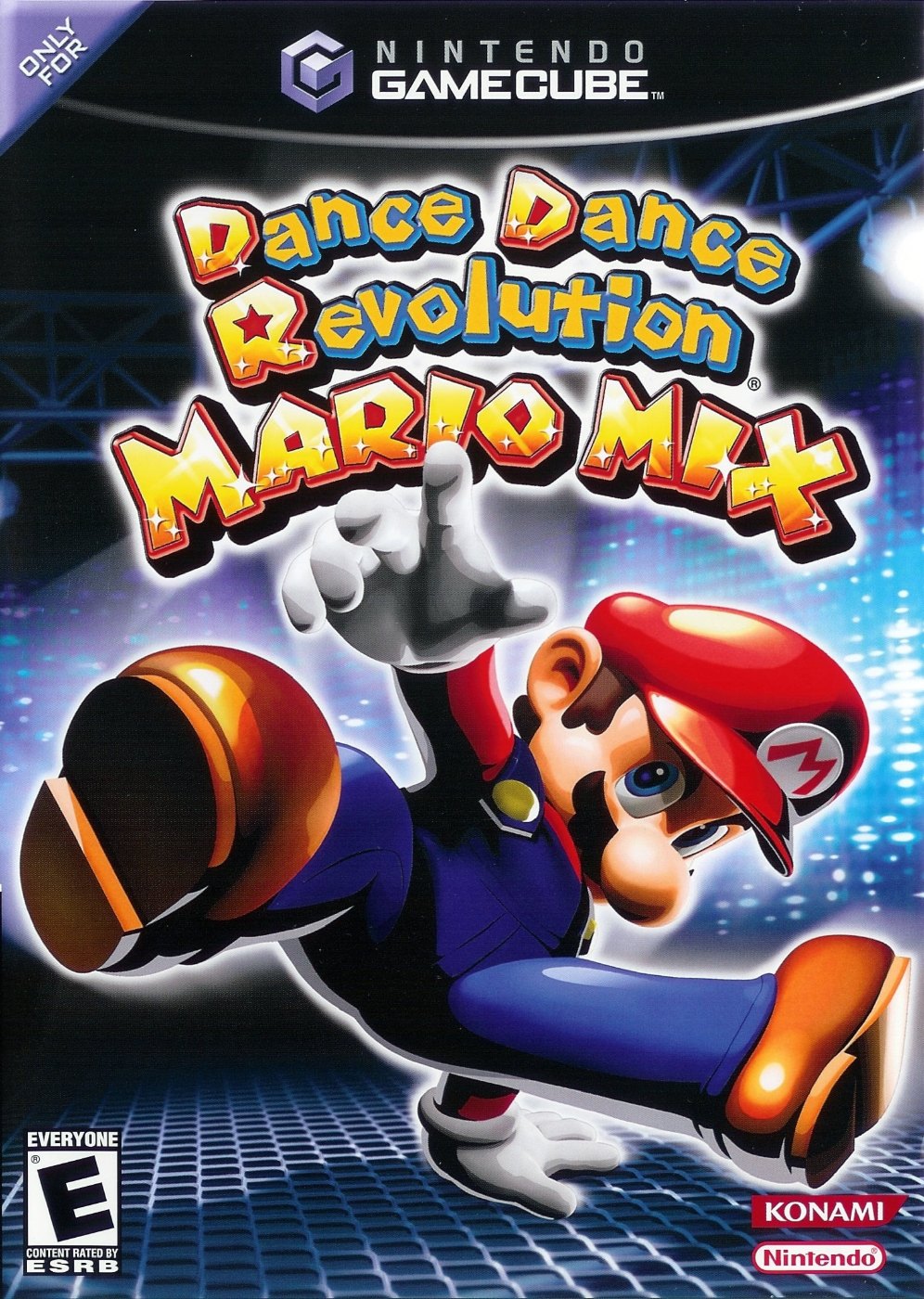
Dance Dance Revolution, sold in Europe as Dancing Stage, is Konami’s long-running series of games played with your feet. In January 2005 Konami and Nintendo announced that they were making a DDR game together, with Mario in the lead and the Mushroom Kingdom as the dance floor. The result is a gentle, generous introduction to dance games, shipped in a big box with its own mat.
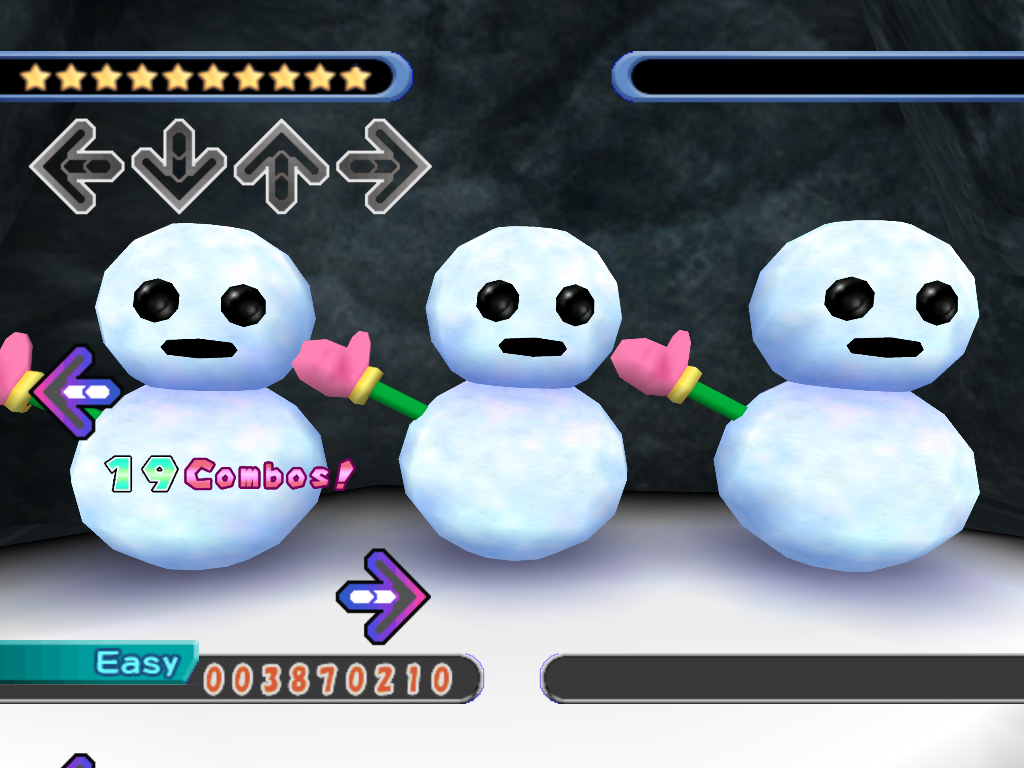
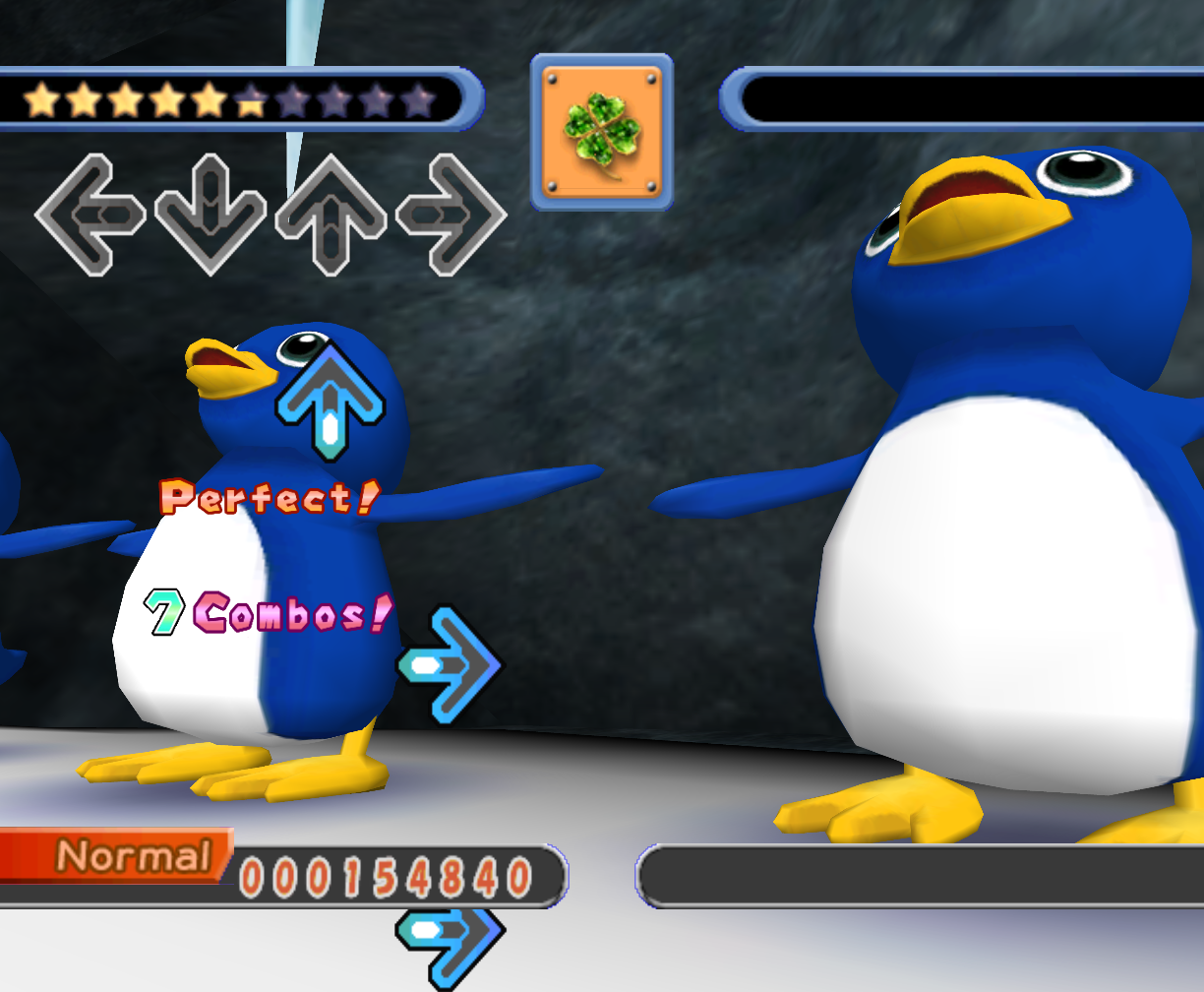
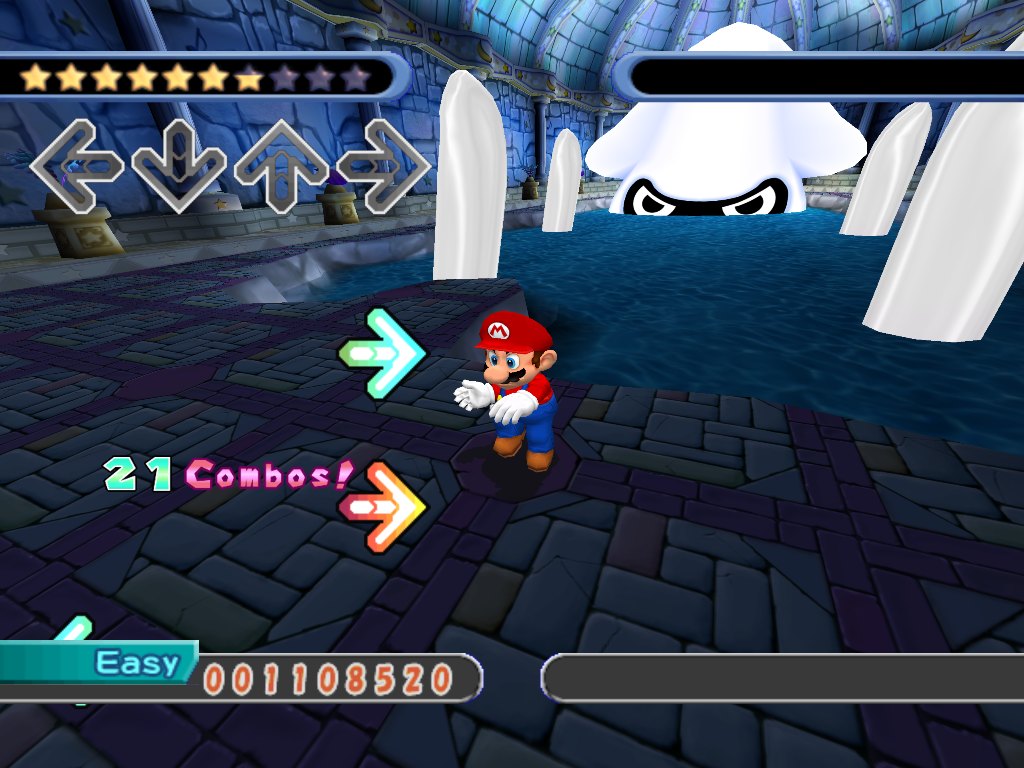
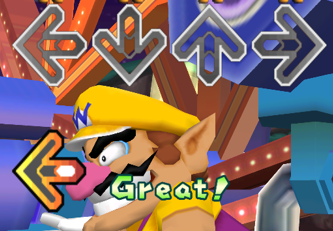
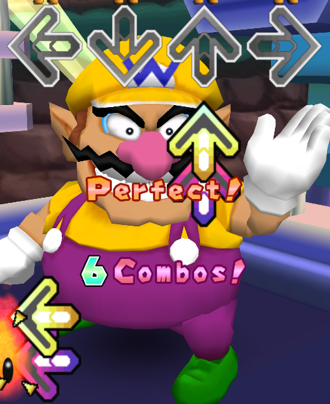
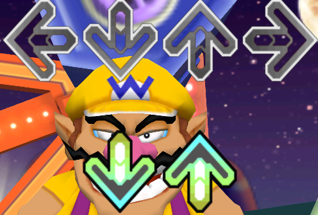
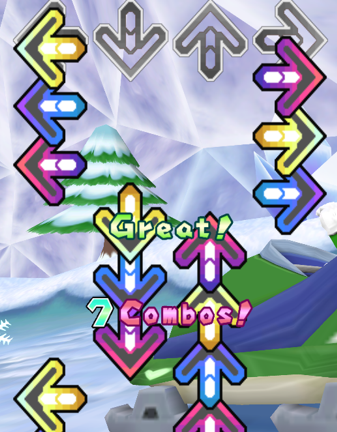
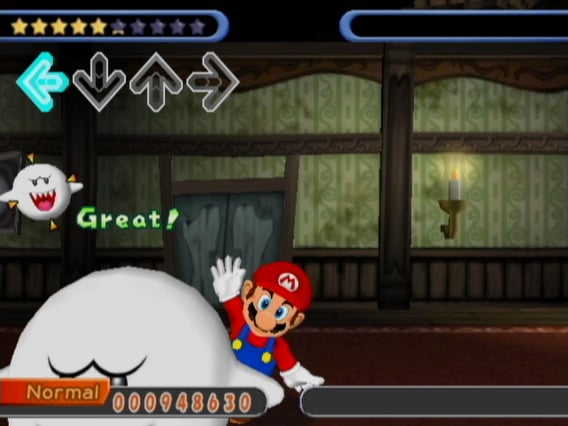
The rules are pure DDR. Arrows rise up the screen towards a row of outlines at the top, and you stamp on the matching arrow of the mat as each one arrives. Hit it on the beat for a Perfect, close for a Great; miss too many and the ten-star dance meter drains away. Higher difficulties add half-beat steps, jumps on two arrows at once, staircases and drills.
Then it adds Mario. A full Story Mode sends Mario and Toad across five worlds after the scattered Music Keys, with a boss dance-off at the end of each, coins to spend in Lakitu’s shop and minigames between songs. Mush Mode replaces some arrows with Mario enemies that need stamping, kicking back or avoiding, and the soundtrack is made of 29 remixes of Nintendo tunes and public-domain classics.
Reviewers liked the charm and found it easy; Metacritic settled on 69. It has had no re-release, so the GameCube bundle with its Action Pad remains the way to play it.
Calamity in the Mushroom Kingdom – someone has stolen the Music Keys! Mario must recover the keys, before the unstable power of music destroys the entire Kingdom! Strut your stuff on the dance mat that’s included with each copy of the game; you can shake your thang to over 25 dance-flavoured songs, from classic Nintendo themes to familiar favourites. With five difficulty levels, dancers of all abilities will be able to get into the groove. Grab a friend and throw your own dance party to see who’s got the best moves, or have fun getting in shape! The special “Workout” feature keeps track of the calories burned while playing.
— Official description (Nintendo UK, 2005)
Why DDR: Mario Mix matters to Mario fans
This is Mario’s dance game: a proper Story Mode with Waluigi, Wario and Bowser as dance-floor bosses, and a soundtrack that doubles as a tour of Nintendo music: Wrecking Crew, Dr. Mario, Yoshi’s Cookie, Mario Kart, Mario Party 5, Wario World and The Thousand-Year Door all get a remix. And it still turns up today: Mario’s down smash in Super Smash Bros. Ultimate is the breakdance kick he learned here.
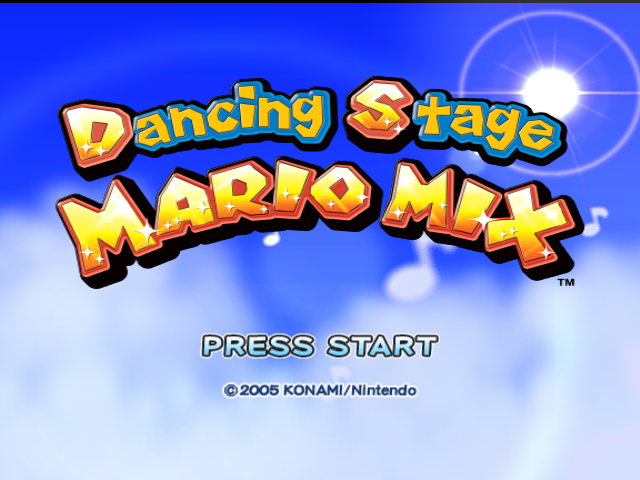
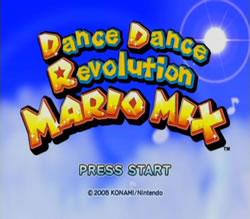
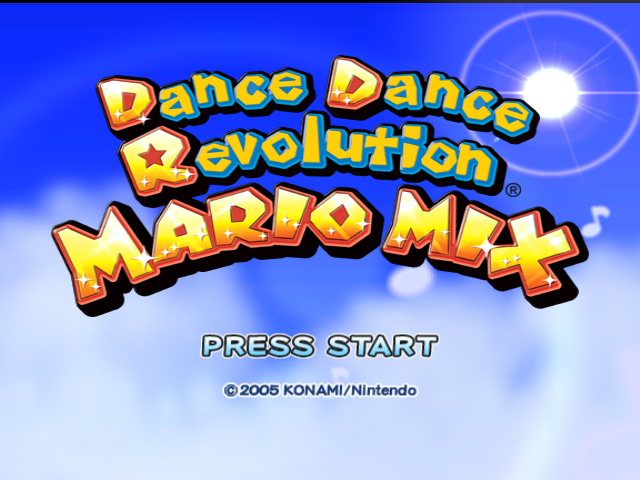
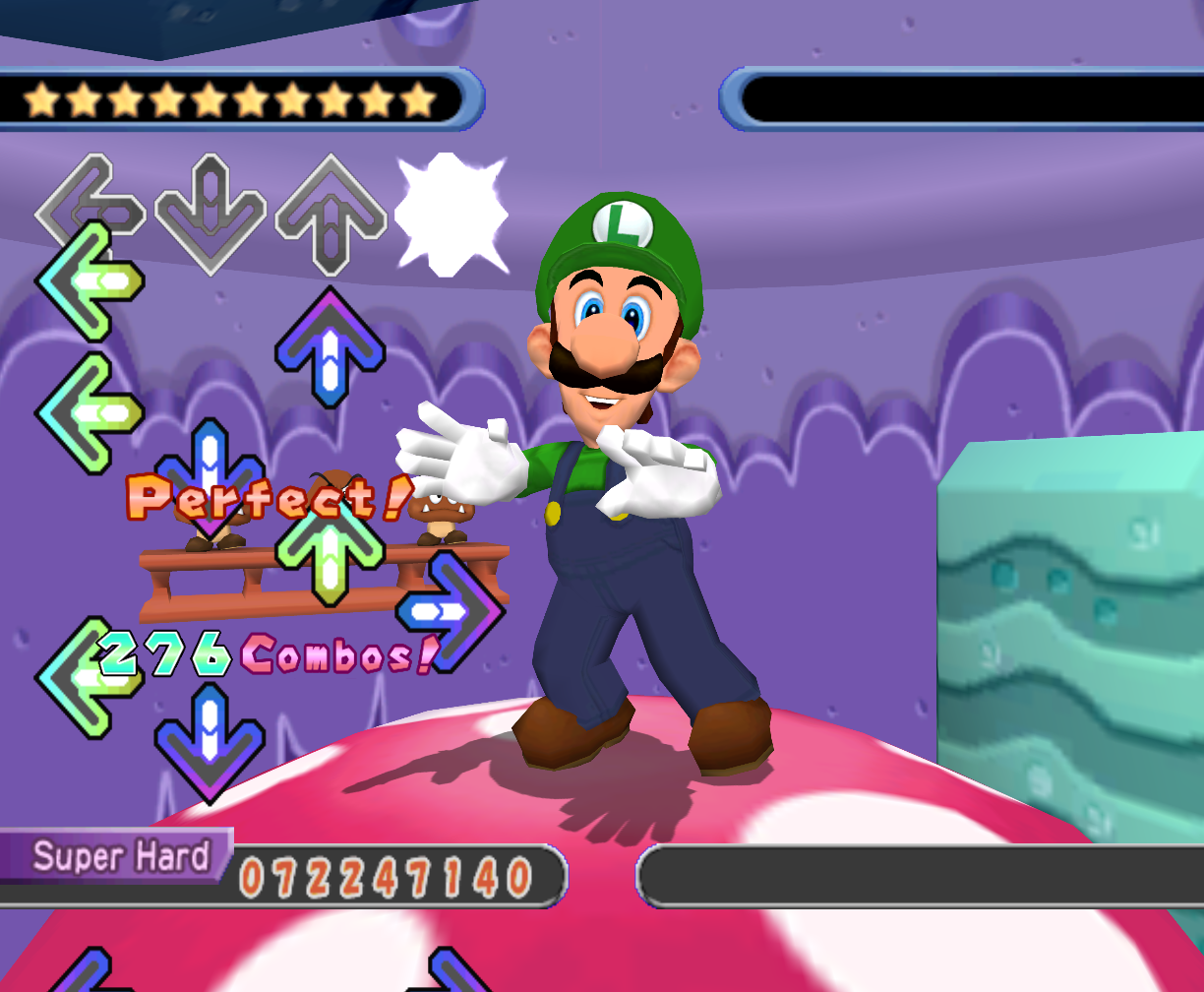
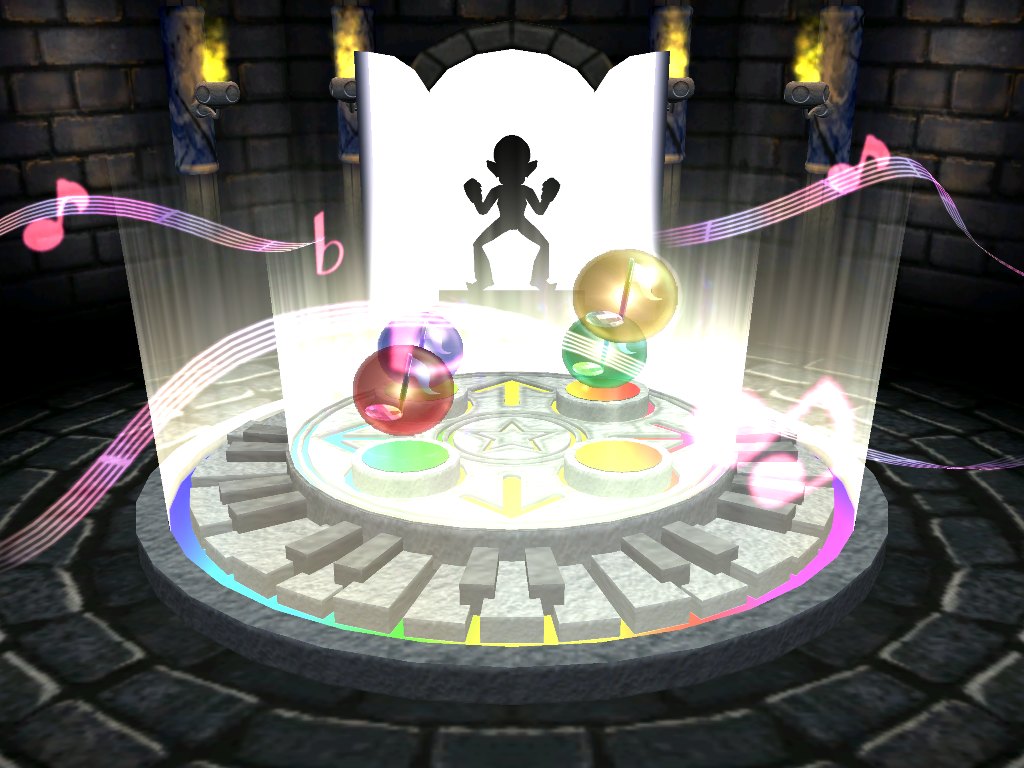
The North American title screen.Arrows rising to the step zone, with the Mush Mode display.Luigi on Super Hard in Underground Mozart.Waluigi makes off with the Music Keys from Truffle Towers.
Quick Answers
The questions people ask most about Dance Dance Revolution: Mario Mix.
Who made DDR: Mario Mix?
Konami and Nintendo co-developed it, with Nintendo publishing. The credits list Yukihiro Yamazaki as director and Hitoshi Yamagami and Hirotaka Ishikawa as producers; Hudson appears only in the special thanks. More →
Does it come with a dance mat?
Yes: the game was sold bundled with the Mario-themed Action Pad, which plugs into a controller port. It can also be played with a normal GameCube controller. More →
How many songs are there?
29. Twenty-four are stages in Story Mode and Story Mode EX, four bonus songs are bought from Lakitu’s shops in Story Mode EX, and one, Up, Down, Left, Right, is not tied to any stage. More →
What is Mush Mode?
Mario enemies and items replace some arrows: Goombas to squash, Koopa shells to kick back down, Spinies to avoid, a Giant Boo or Freezie that hides the arrows when you slip up, and Rocket Parts to fire at Bowser. More →
Who is the villain?
Waluigi sets the story going by stealing the Music Keys, Wario keeps one for himself, and Bowser snatches the lot at the end. Each is beaten in a dance-off. More →
Is it hard?
Not by DDR standards. Its Hard setting is roughly equal to DDR’s Light, and reviewers called it a game for beginners and families. More →
What is it called in Europe and Japan?
Dancing Stage: Mario Mix in Europe and Australia, and Dance Dance Revolution with Mario in Japan. More →
Can I play it on Switch?
No. It has had no re-release on any later system; it remains a GameCube game. More →
Story & Songs
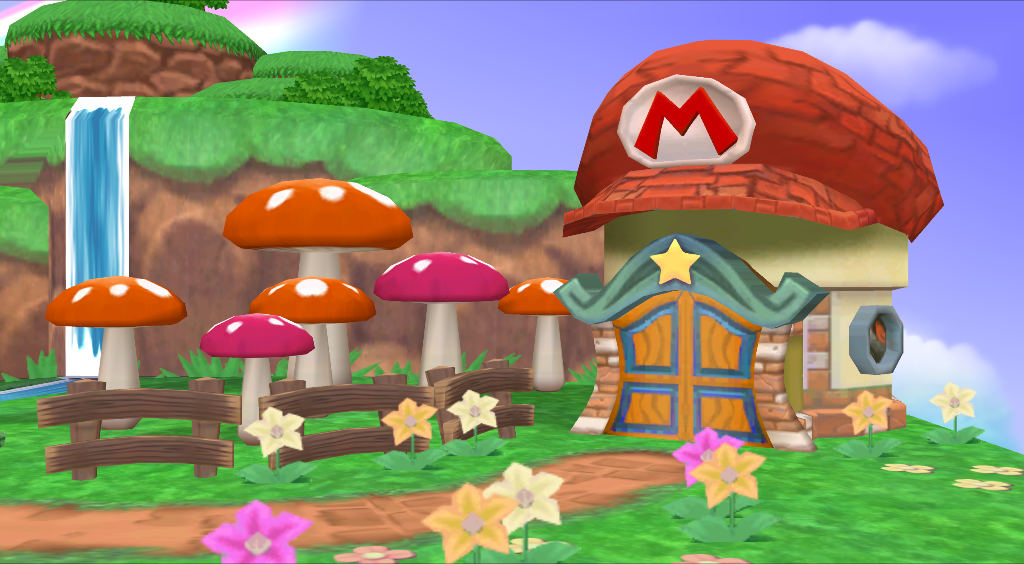
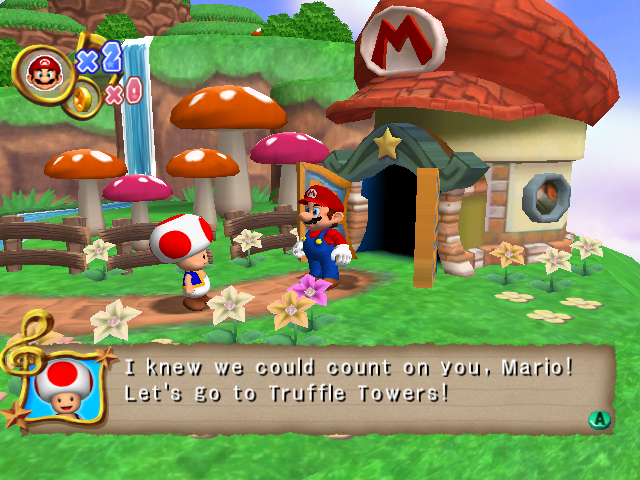
Mario’s house, where the adventure starts.
The instruction booklet sets it up in a line: someone has stolen the Music Keys, their power is causing floods and whirlpools all over the Mushroom Kingdom, and only dancing can fix it. The game fills in the rest. Waluigi has broken into Truffle Towers, the four keys have scattered, and Toad, who cannot dance a step, recruits Mario (or Luigi) to get them back.
Story Mode runs through five worlds of two to four stages each, every one a song, with boss dance-offs, minigames and Lakitu’s shop along the way. Finish it and Story Mode EX opens: the same journey with harder settings, a few songs swapped for new ones and four bonus songs for sale.
World 1: Truffle Towers
Mario and Toad cross a river swollen with music by boat and climb a beanstalk to Truffle Towers, only to find it locked. Waluigi lobs a Bob-omb, Mario tumbles down a Warp Pipe into a cave full of Goombas; his dancing makes the mushroom under his feet grow, and he escapes.
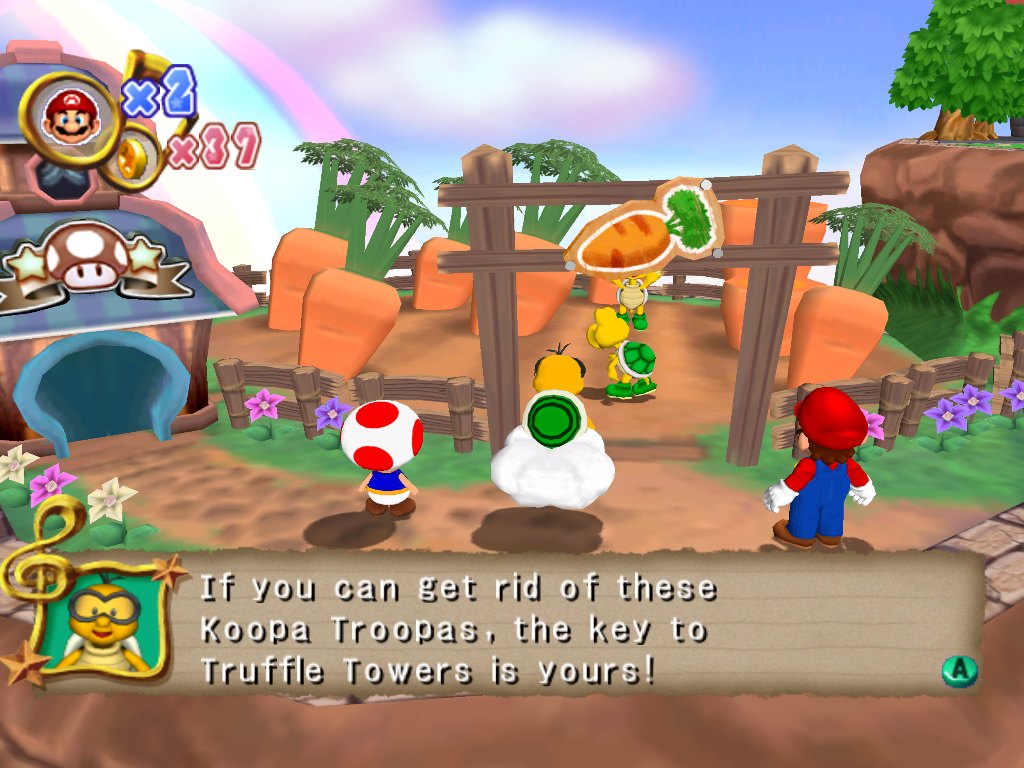
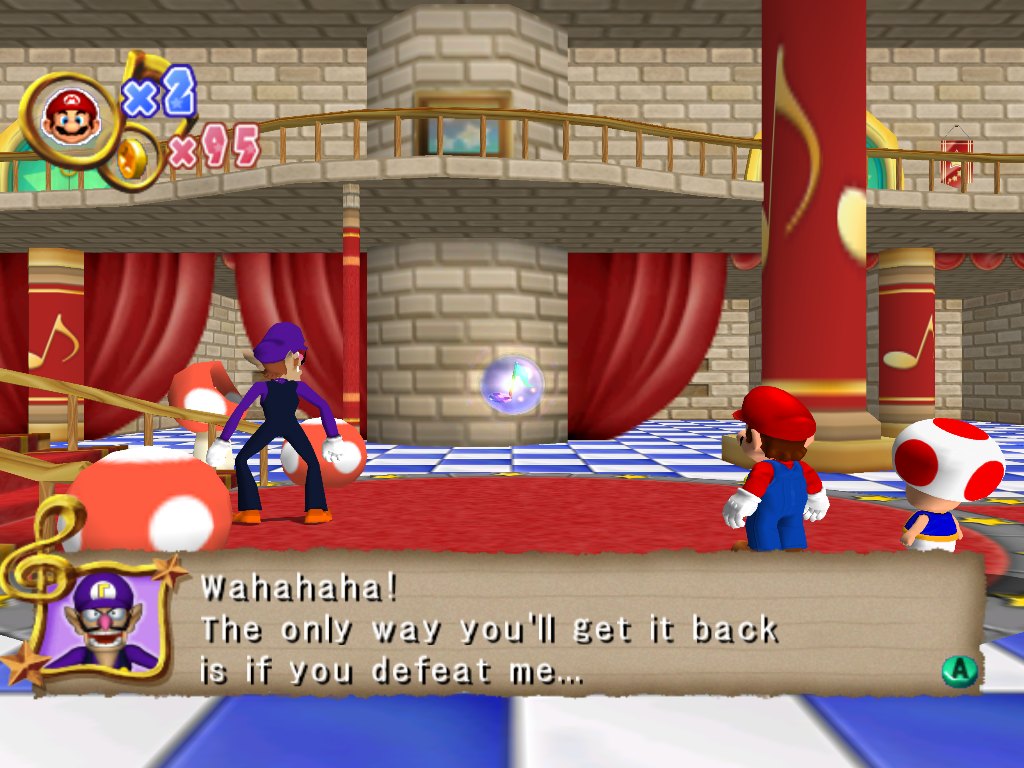
Lakitu has the key to the tower and will hand it over if Mario clears the Koopa Troopas out of his garden (Garden Boogie, to Bizet’s Carmen). Inside, Waluigi agrees to give up his key only if he loses a dance-off. He does, to a remix of Wrecking Crew, and vanishes.
Toad brings Mario the news.Looking at Lakitu’s garden.Facing Waluigi in Truffle Towers.
World 2: out to sea
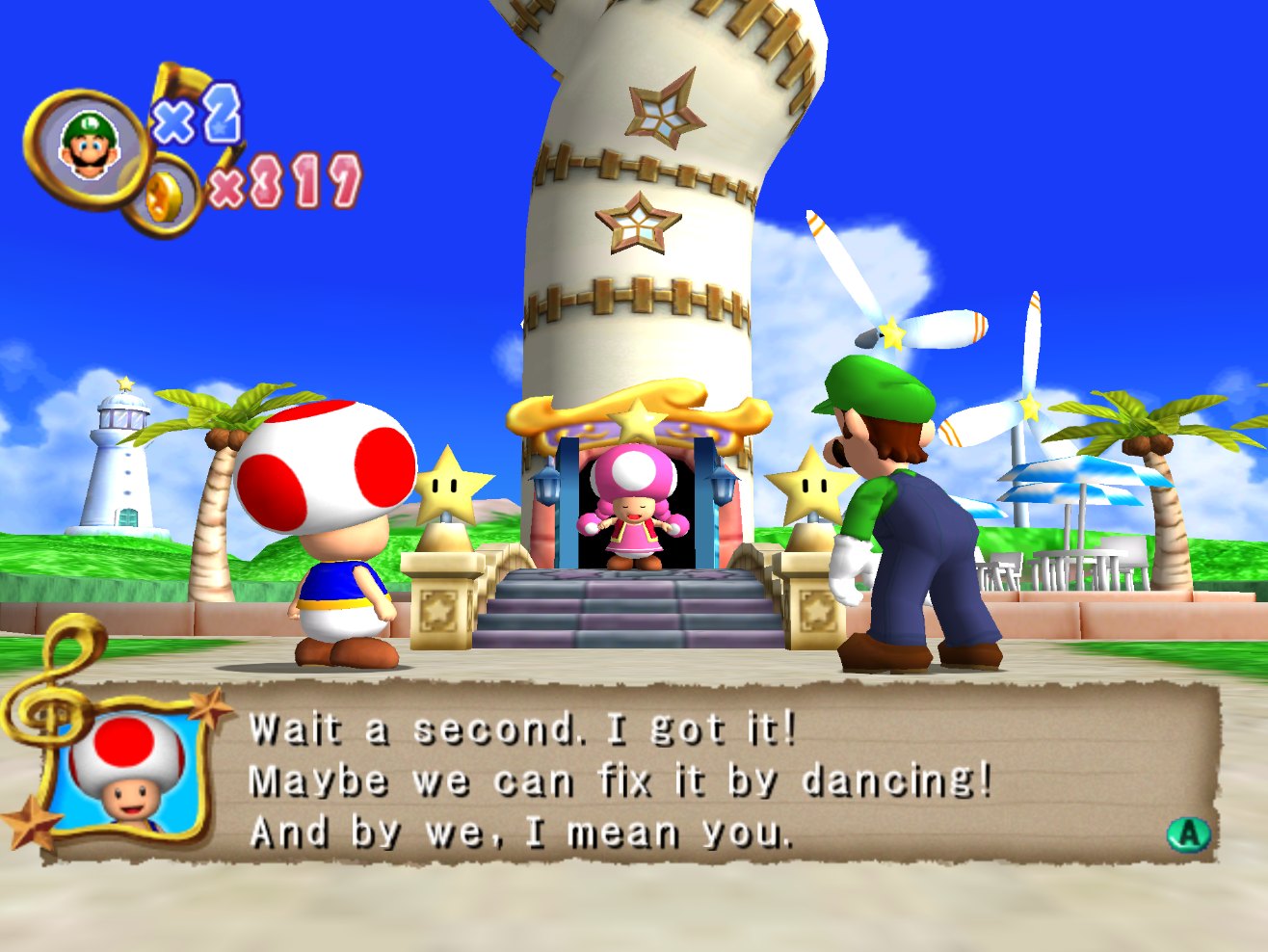
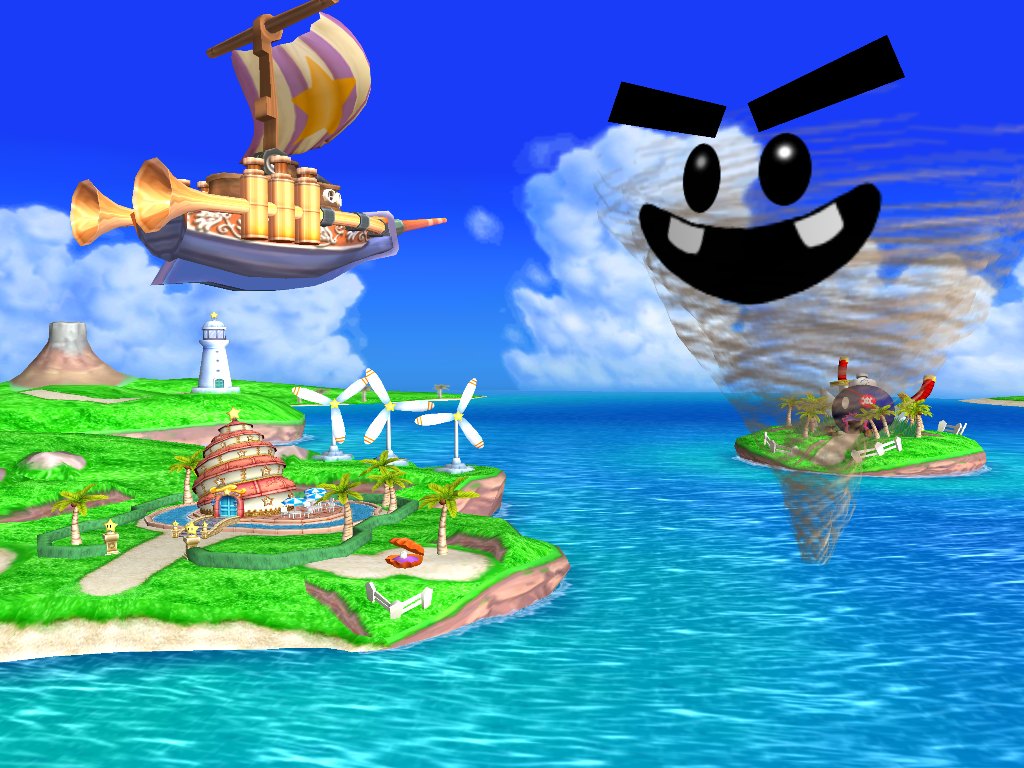
Aboard the SS Brass the pair are spun round by a Tweester cyclone, which also twists Toadette’s seaside hotel into a corkscrew. She is not amused, and Mario puts it right by dancing to Jump! Jump! Jump!
A whirlpool blocks the way until a pirate Lakitu, owner of the Pirate’s Plunder shop, parts with his Boogie Booster after losing a duel (Fishing Frenzy, or Pirate Dance in EX). The boosted SS Brass reaches an underwater temple, where a Big Blooper guards the second key and falls in a dance-off; World 2’s last stage, Blooper Bop, remixes the Super Mario Bros. underwater theme.
Toadette’s corkscrew hotel.The SS Brass meets the cyclone.The Big Blooper.
World 3: Wario’s carnival
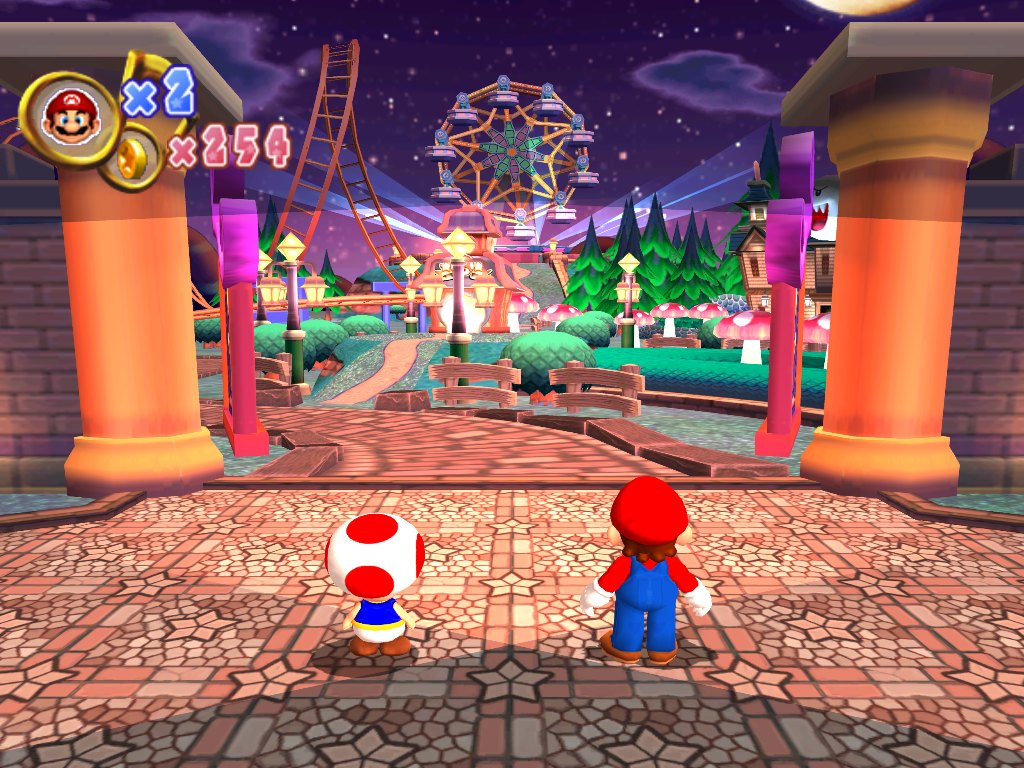
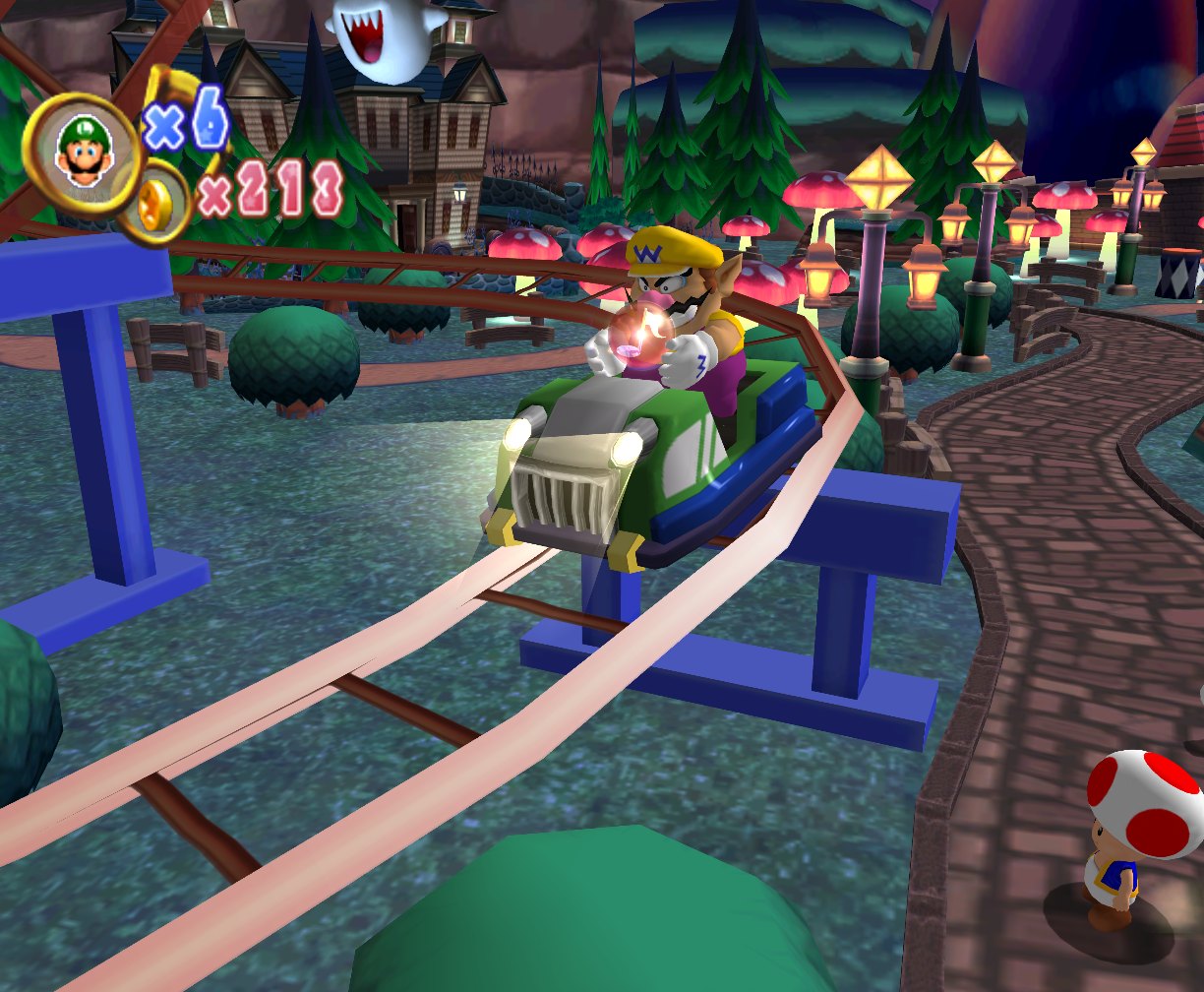
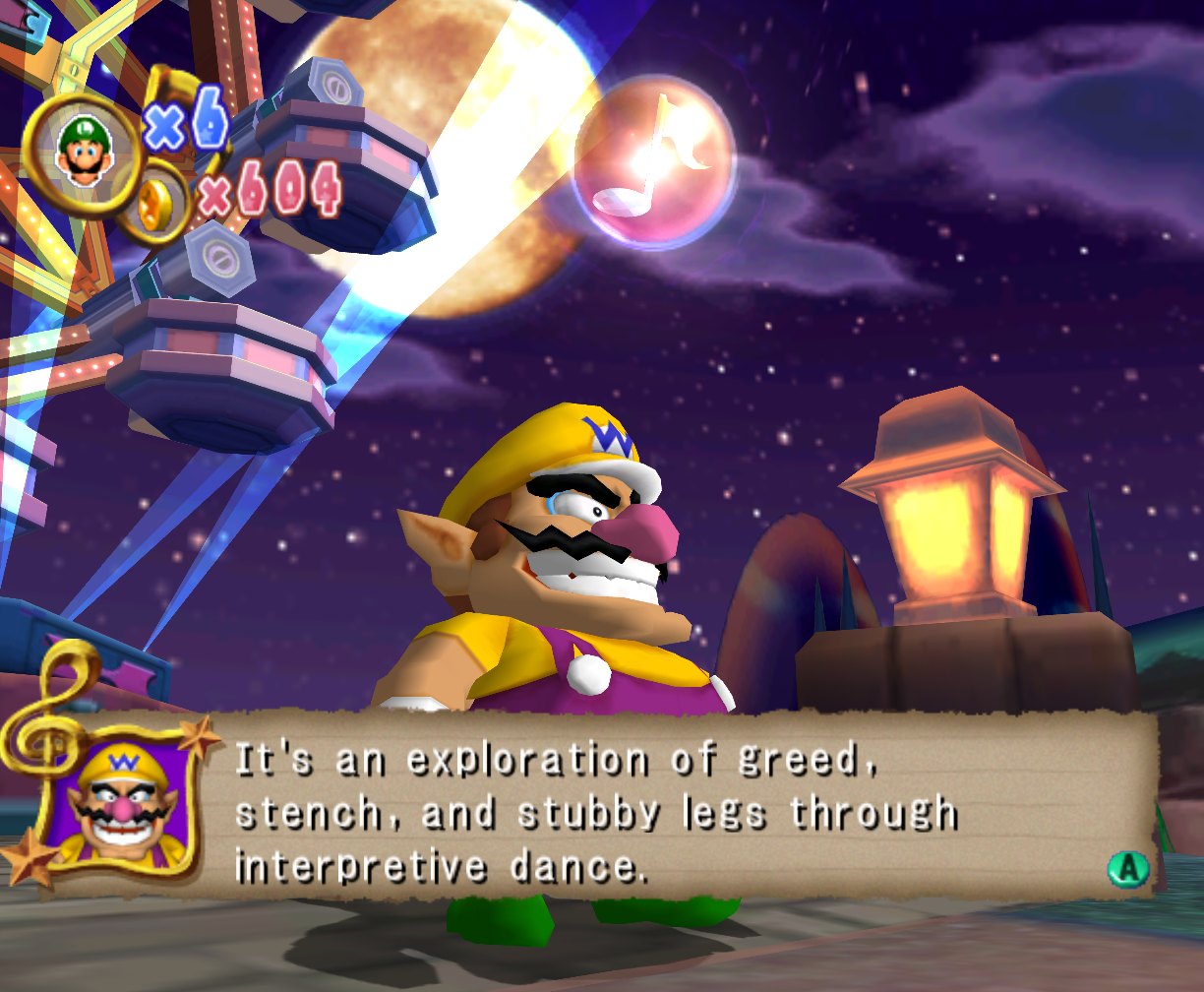
Two Hammer Bros. guard the gates of Wario’s carnival and demand a dance-off of their own. Inside, Wario is riding the roller coaster with the third key; after a chase round a park that also holds a Boo-filled Ghost House, Mario corners him by the Ferris wheel.
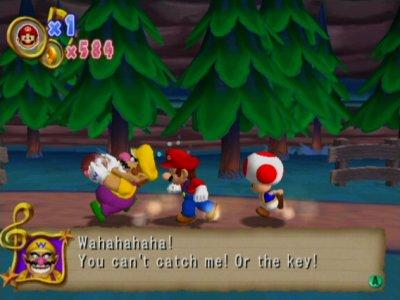
Wario explains that he plans to wish for a game of his own, DDR: Wario Mix (Dancing Stage: Wario Mix in Europe), and challenges Mario to Starring Wario!, a remix of Wario World. He loses, hands over the key and promises to take it back later.
At the gates of Wario’s carnival.Wario on the roller coaster.The carnival’s Ghost House.Wario tells Mario about his dance.
World 4: the frozen mountain
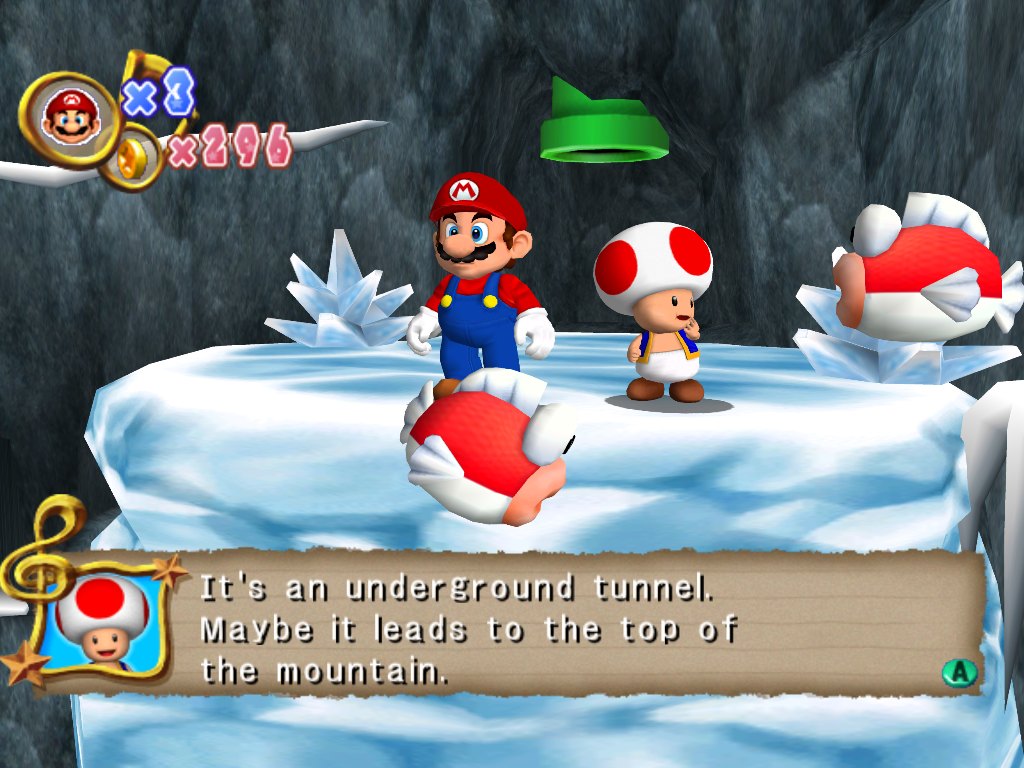
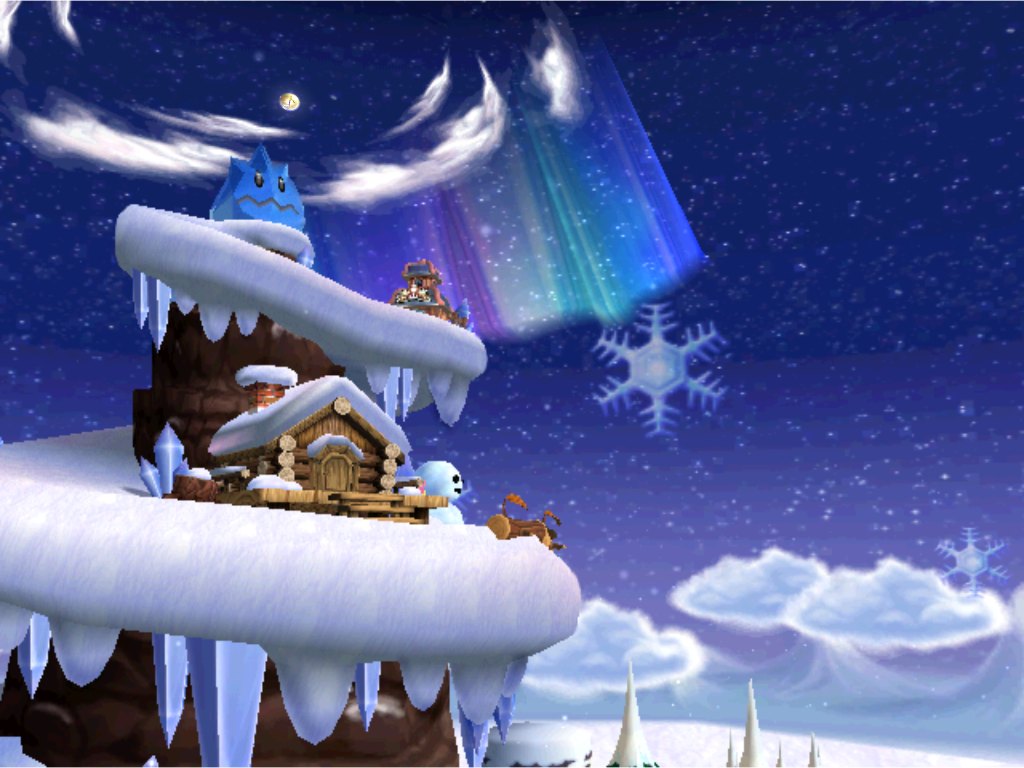
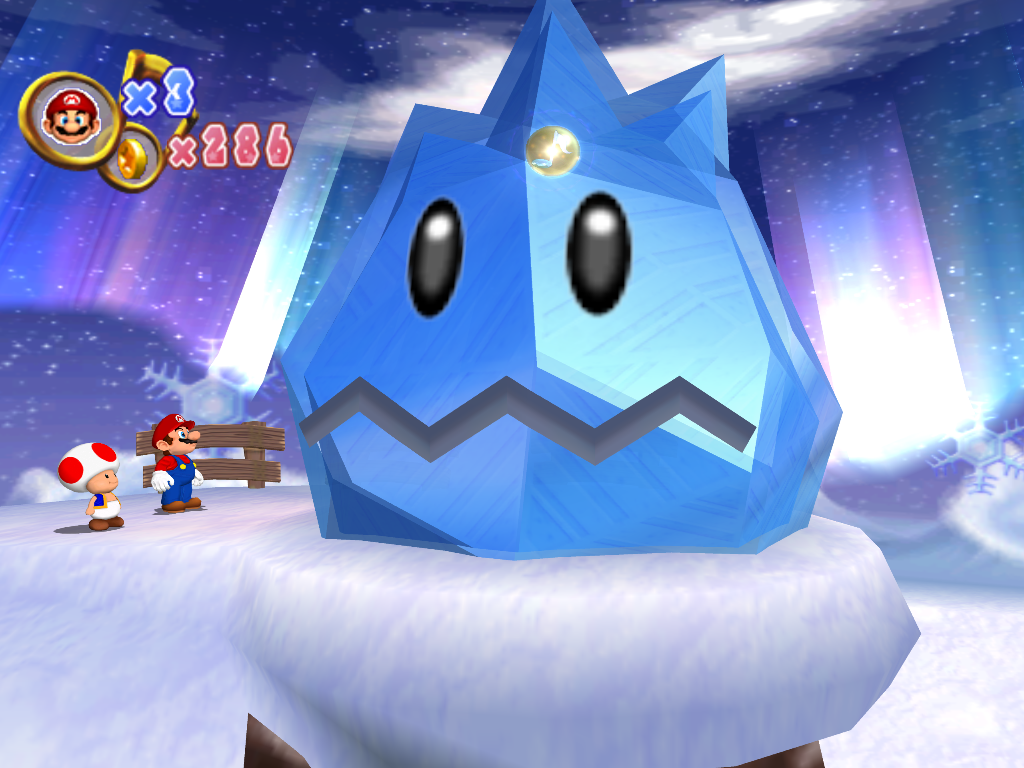
The last key is frozen inside a giant Freezie at the top of a snowy mountain. The path is too slippery for Toad, so they go underground through a Warp Pipe and warm up in a log cabin on the way. At the summit the Freezie will not budge, so Mario dances to Deep Freeze (a remix of Dr. Mario’s Fever) while Fire Flowers melt it. Key in hand, they sledge back down ahead of an avalanche.
In the tunnel under the mountain.The summit.Face to face with the Freezie.
World 5: Bowser’s Castle
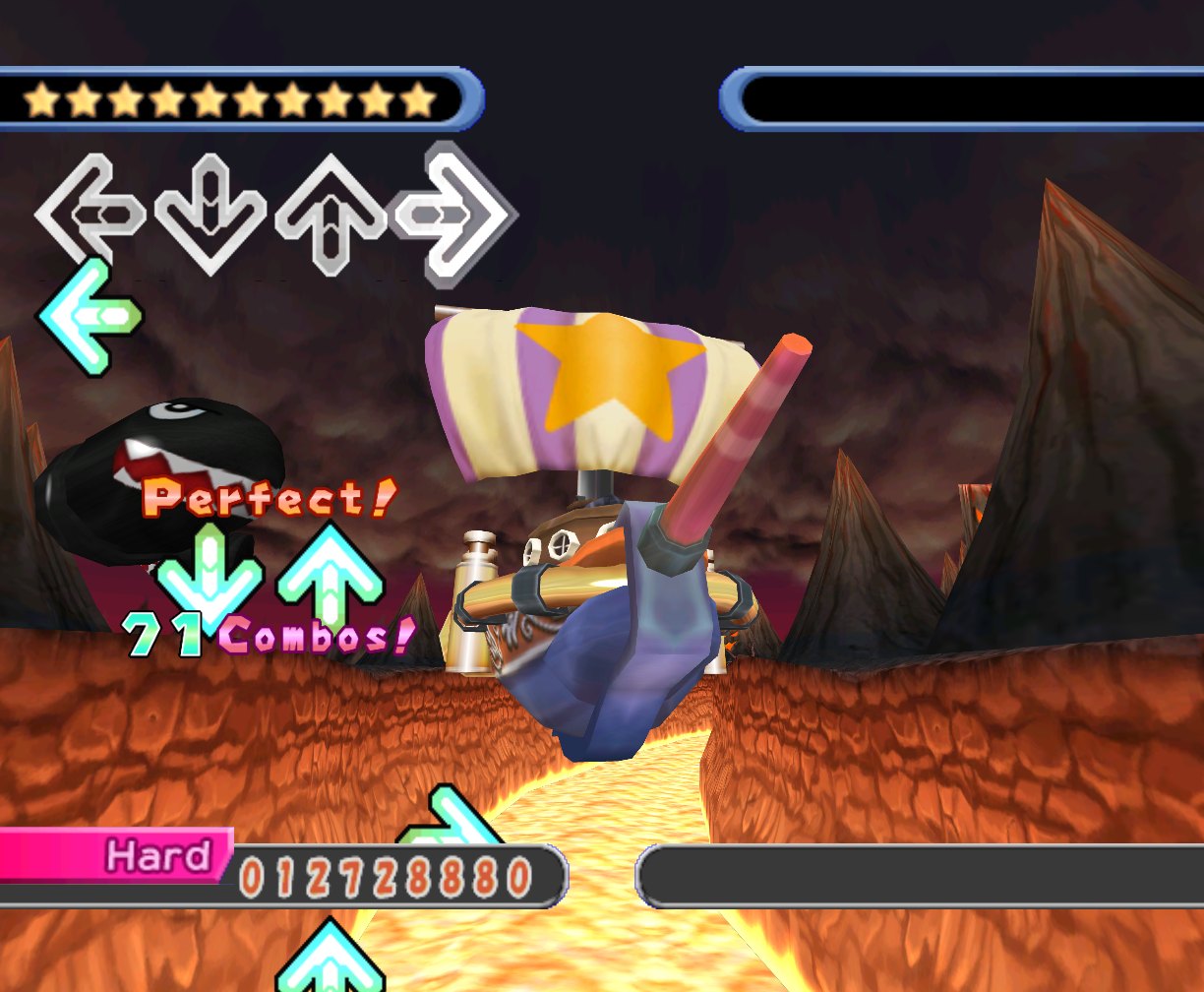
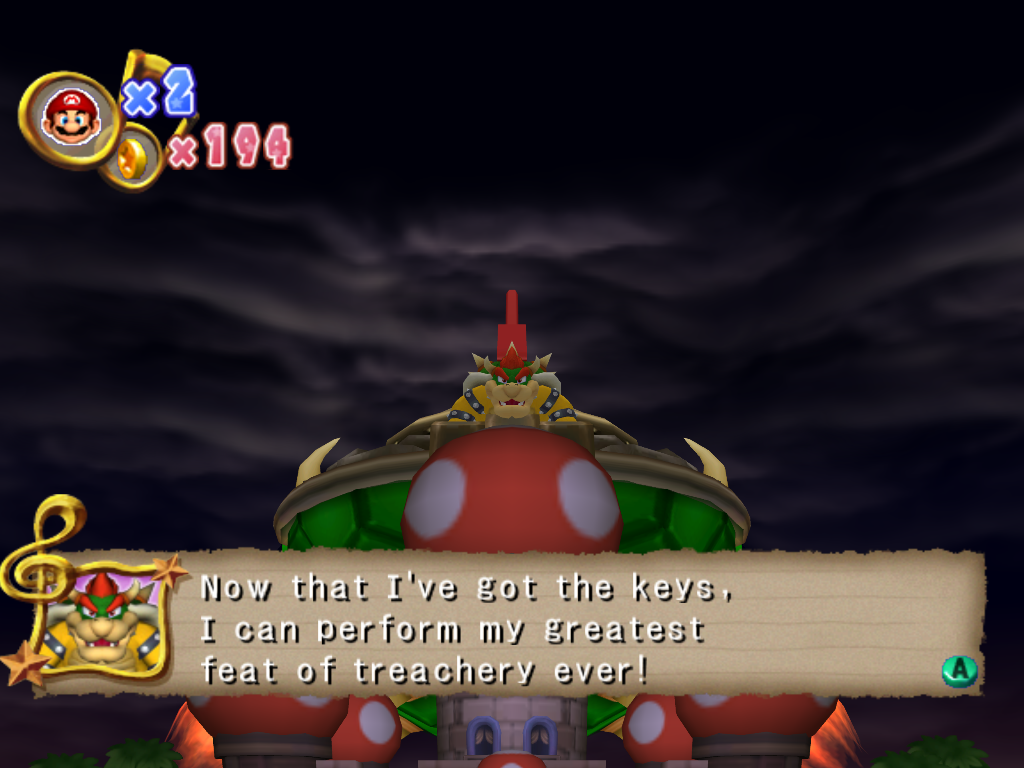
Back at Truffle Towers, Bowser swoops in and steals all four keys. The SS Brass sails to his volcanic castle through a barrage of Bullet Bills, and the keys are snatched back before he can use them. The world’s first stage, Always Smiling (to Strauss), is the one song with Bullet Bills in Mush Mode.
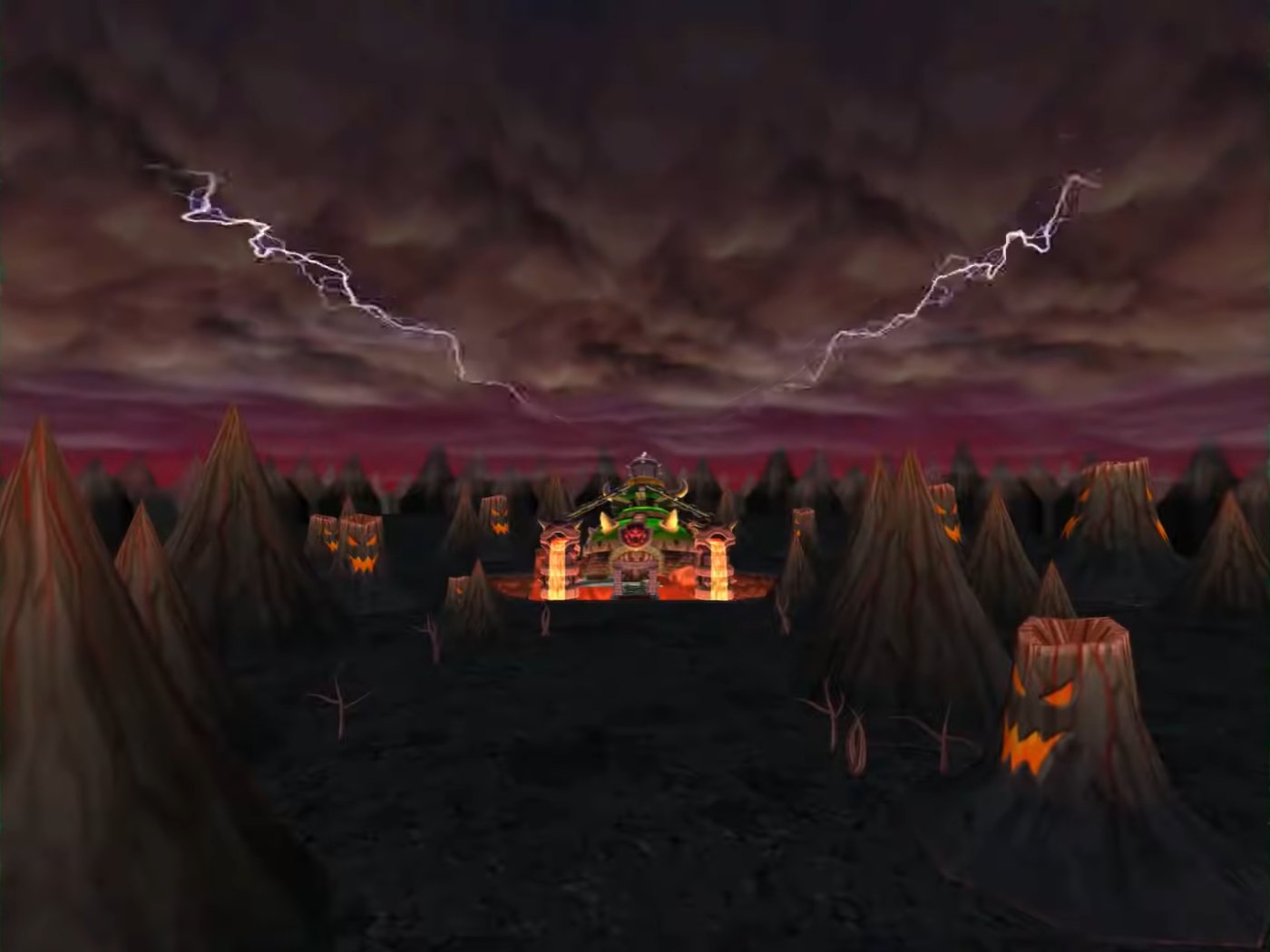
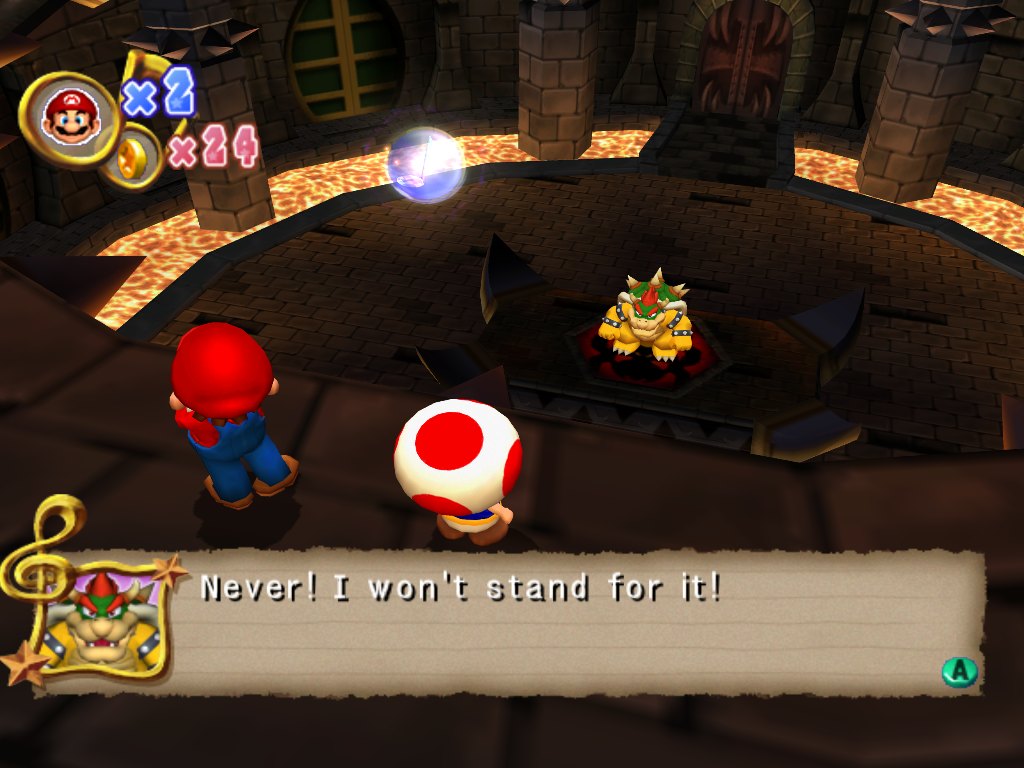
Bowser demands one last dance-off to a remix of Mario Kart: Double Dash!!’s Bowser’s Castle. In Mush Mode, Rocket Parts build rockets that blast him away. Beaten, he admits he only wanted the keys to cure his tone-deafness. Mario uses them to turn the land around the castle green, and Toad suggests everyone dance.
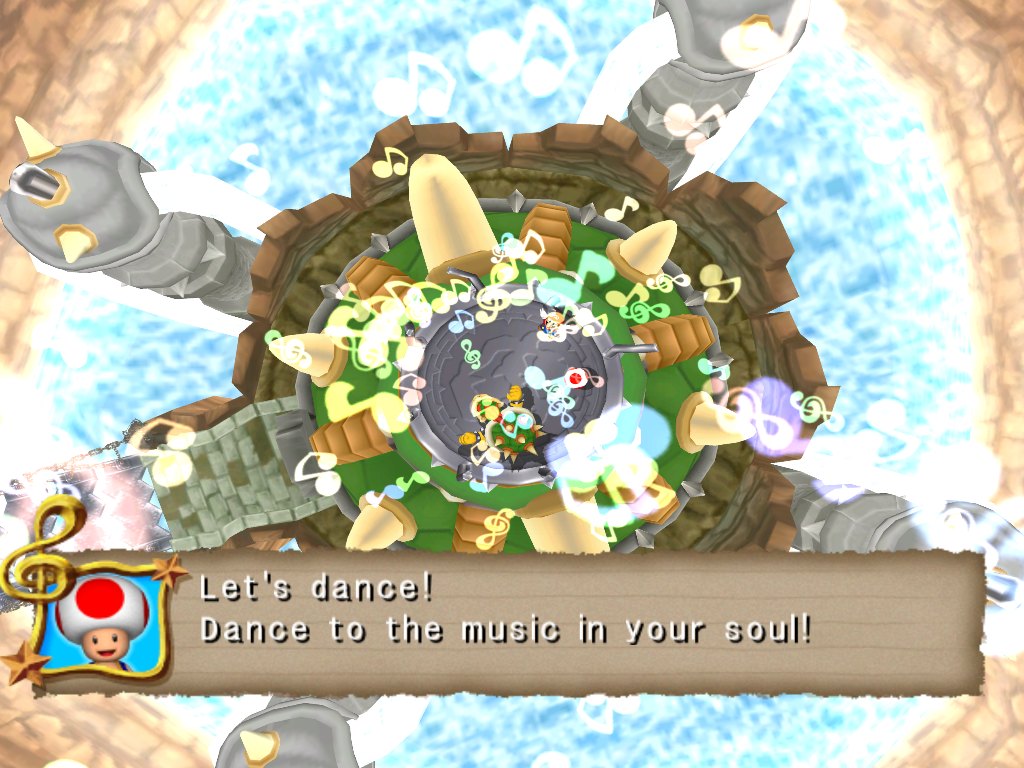
Bowser steals the keys.Bowser’s Castle.The final dance-off.Toad suggests everyone dance.
Story Mode EX and the bonus songs
Story Mode EX replays the journey with Hard difficulty available and a few songs swapped: Pipe Pop, Pirate Dance, Step by Step, Moustache, Barrel, and Gorilla, Ms. Mowz’s Song and Midnight Drive take the place of the regular versions’ picks. Lakitu’s shops in Worlds 1 to 4 also stock one bonus song each: Choir on the Green, Hop, Mario!, Where’s the Exit? and Piroli.
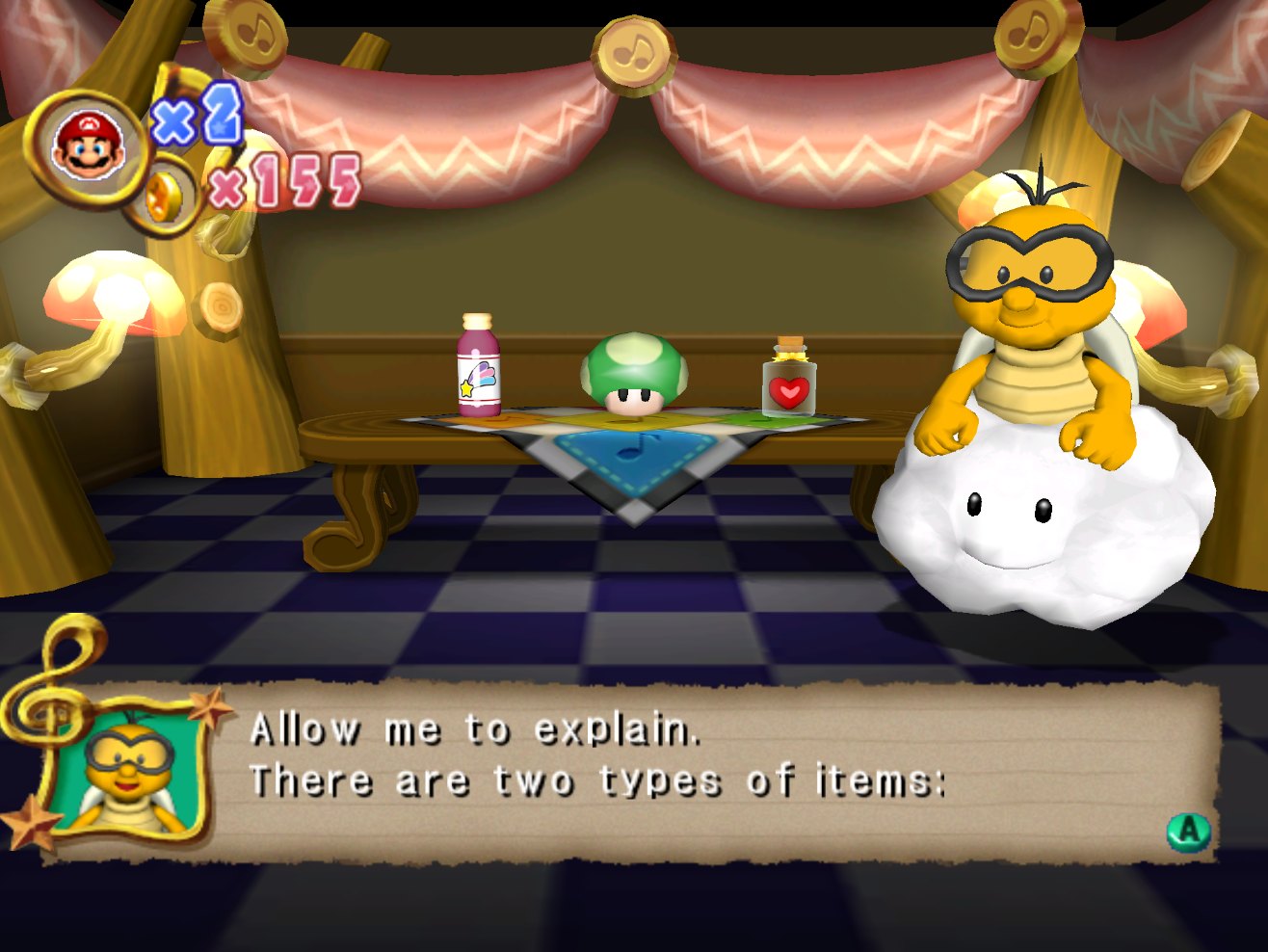
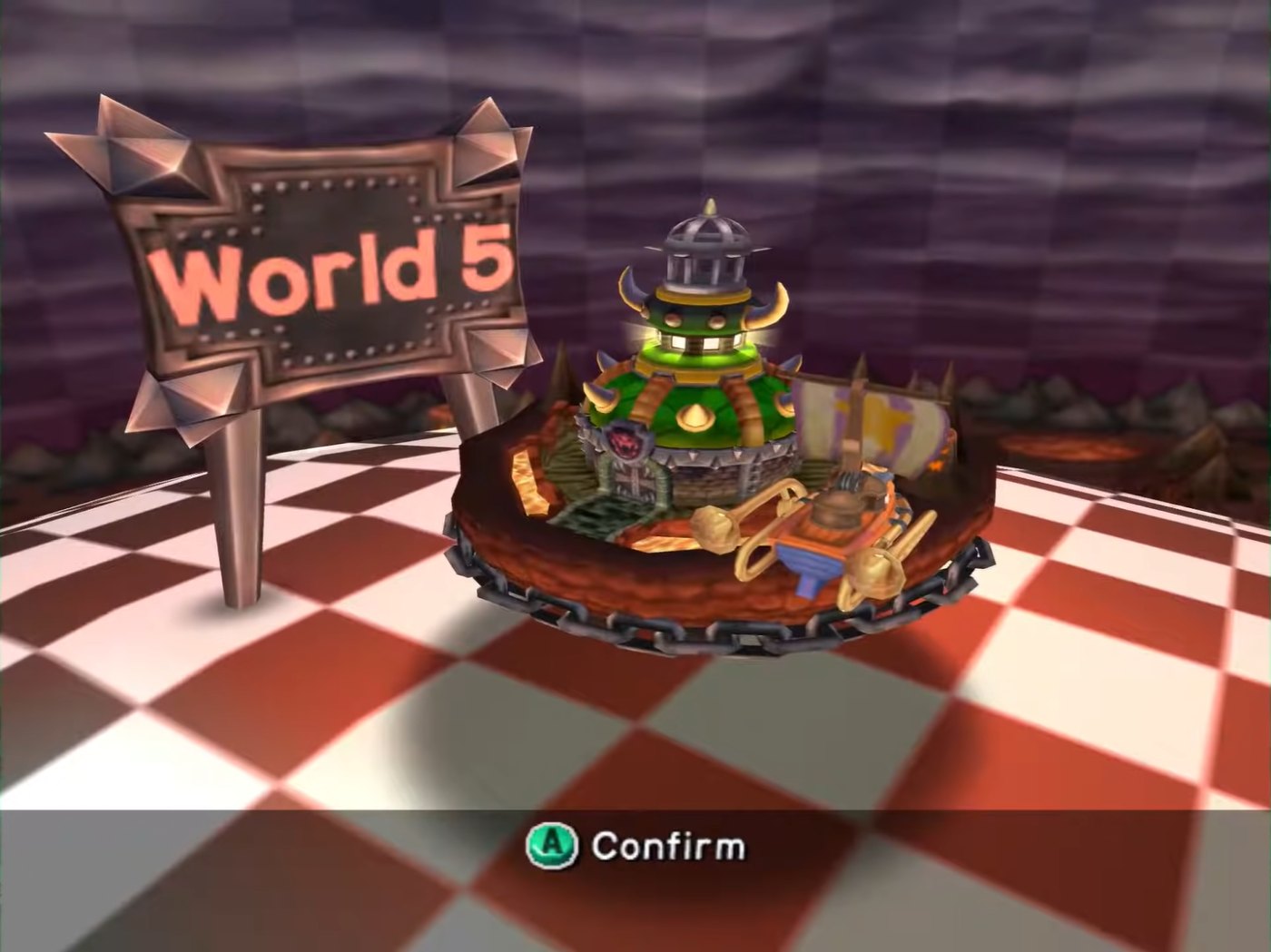
Lakitu’s shop.World 5 on the map.
Every song in DDR: Mario Mix
All 29 songs, in story order, with the tune each one remixes. EX songs replace the song before them in Story Mode EX; the last five are the tutorial-style song and the four shop bonuses.
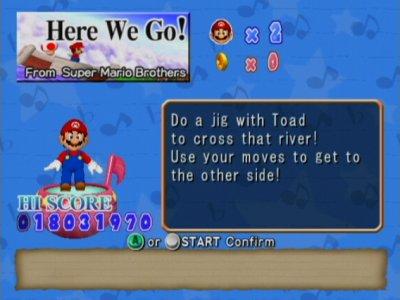
Here We Go!1-1 · Super Mario Bros., Ground BGM (Koji Kondo)The famous overworld theme, and the first song of Story Mode.
Underground Mozart1-2 · Mozart, Eine kleine Nachtmusik, via Mario Bros.Laced with Mario Bros. sound effects.
Pipe Pop1-2EX · Mozart, Turkish MarchReplaces Underground Mozart in Story Mode EX.
Garden Boogie1-3 · Bizet, Carmen: PreludeClearing Koopa Troopas out of Lakitu’s garden.
Frozen Pipes4-1 · Stephen Foster, Old Folks at HomeIts Mush Mode Cheep Cheeps switch arrows halfway up the screen.
Cabin Fever4-2 · Mario Party 5, Lots of Toys (Aya Tanaka)Its intro and ending differ between the Japanese and Western versions.
Ms. Mowz’s Song4-2EX · Paper Mario: The Thousand-Year Door, Ms. Mowz and X-Naut FortressReplaces Cabin Fever in EX.
Deep Freeze4-3 · Dr. Mario, Fever (Hirokazu Tanaka)Melting the giant Freezie.
Rendezvous on Ice4-4 · Waldteufel, Les PatineursWaldteufel’s waltz, on the snow world’s last regular stage.
Midnight Drive4-4EX · Mario Kart 64, title theme (Kenta Nagata)Replaces Rendezvous on Ice in EX.
Always Smiling5-1 · Johann Strauss II, Tritsch-Tratsch-PolkaStamping Bullet Bills back into their launchers.
Bowser’s Castle5-2 · Mario Kart: Double Dash!!, Bowser’s CastleThe final boss, with the most steps in the game on Super Hard (337).
Up, Down, Left, RightNo stage · Twinkle, Twinkle, Little StarThe nursery-rhyme song, played outside the story.
Choir on the GreenBonus · World 1 shop in EX · Aj lučka, lučka širokáBought with coins in Story Mode EX.
Hop, Mario!Bonus · World 2 shop in EX · Super Mario World, Title BGMBought with coins in Story Mode EX.
Where’s the Exit?Bonus · World 3 shop in EX · Super Mario Bros., Underground BGMBought with coins in Story Mode EX.
PiroliBonus · World 4 shop in EX · Famicom Disk System theme (Koji Kondo)Koji Kondo’s Famicom Disk System theme as a dance track.
Composers named are those of the original tunes; the remixes are credited to the game’s sound team under sound director U1-ASAMi.
Advertisement
Gameplay & Controls
Pick Mario or Luigi (they dance identically), pick a song and a difficulty, and stand in the middle of the mat. Arrows scroll up the screen towards the step zone; step on the right one as it reaches the top. With a controller, the stick or D-pad works, or the face buttons: Y up, A down, B left and X right.
Steps, the dance meter and grades
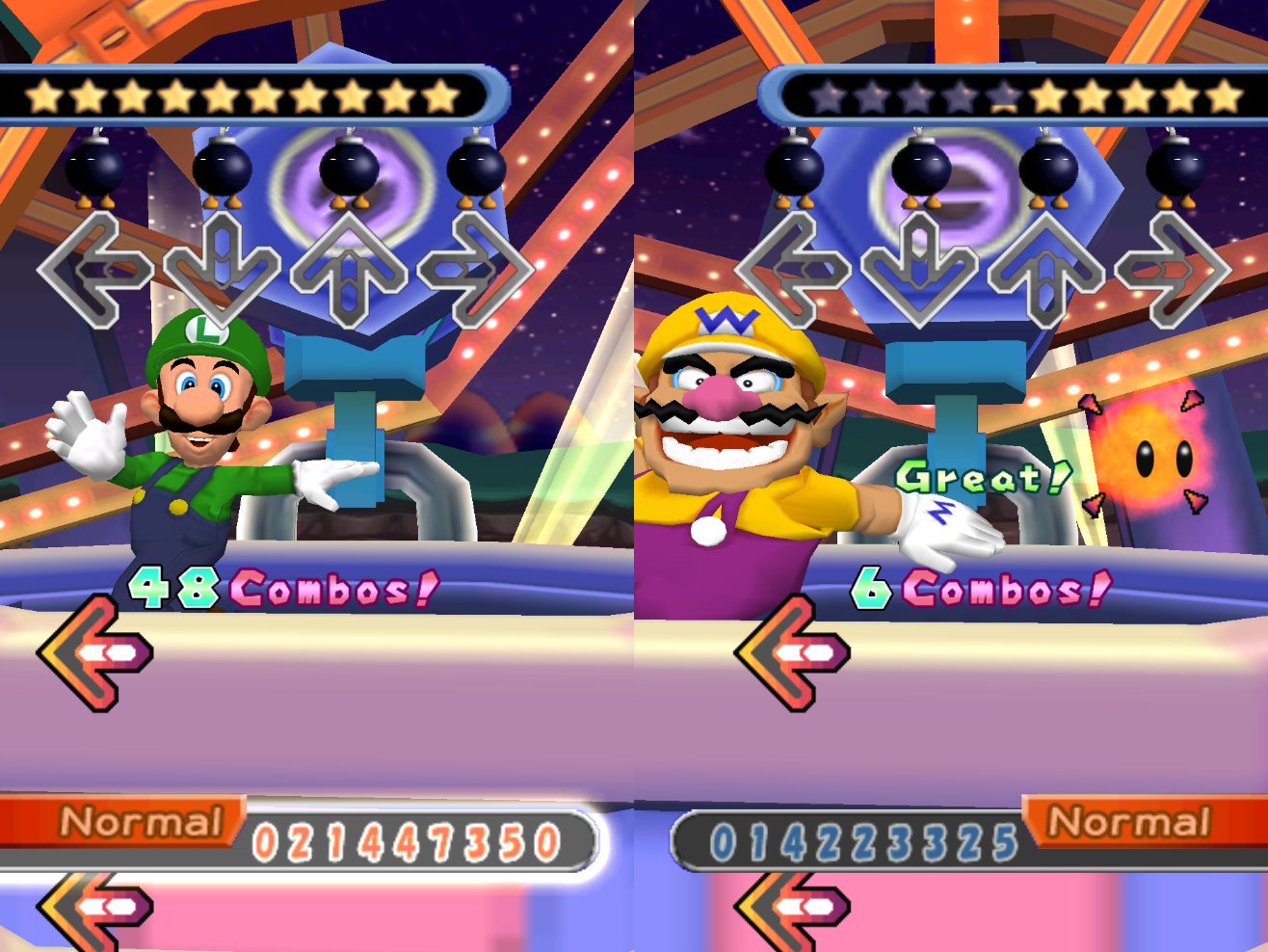
Every step is judged. A Perfect! lands right on the mark and earns full points; a Great! is nearly there and earns half; Early or Late earns nothing but costs nothing; a Miss drains the meter. Perfects and Greats build a combo, and the announcer chimes in when it reaches 100.
The dance meter has ten stars and starts at five. Good steps fill it, misses empty it, and below two and a half stars it starts flashing a warning. Run it dry and the song ends in failure, which in Story Mode also costs a life. A cleared song is graded A to F in the West; the Japanese version runs AA to D instead.
The step zone and the dance meter.Quarter steps on the beat.Eighth steps between beats.A jump: two arrows at once.
Five difficulties
Easy uses only the left and right arrows. Normal brings in all four, Hard can reach around 200 steps in a song, Very Hard starts moving you off the centre of the mat, and Super Hard throws in off-beat steps, with Bowser’s Castle topping out at 337. Story Mode starts you on Easy or Normal; Story Mode EX opens Hard, and clearing EX opens Very Hard.
There is no official rating chart, and the whole game is gentler than mainline DDR: roughly, Normal sits at DDR’s Beginner and Hard at Light. Nintendo World Report made the same point, warning experts that the ceiling is lower than in most DDR games.
Super Hard difficulty.A drill, found only on Super Hard.
Mush Mode
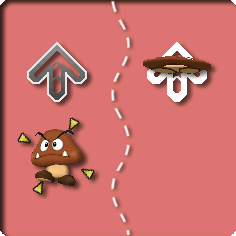
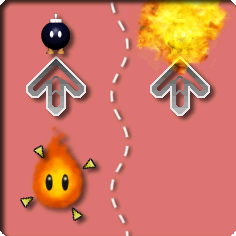
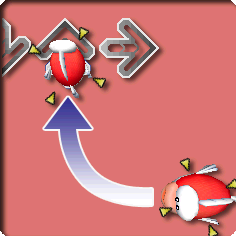
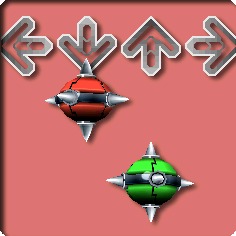
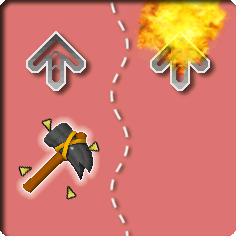
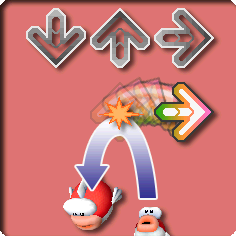
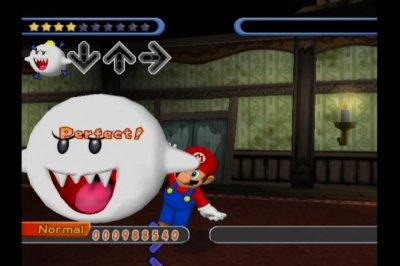
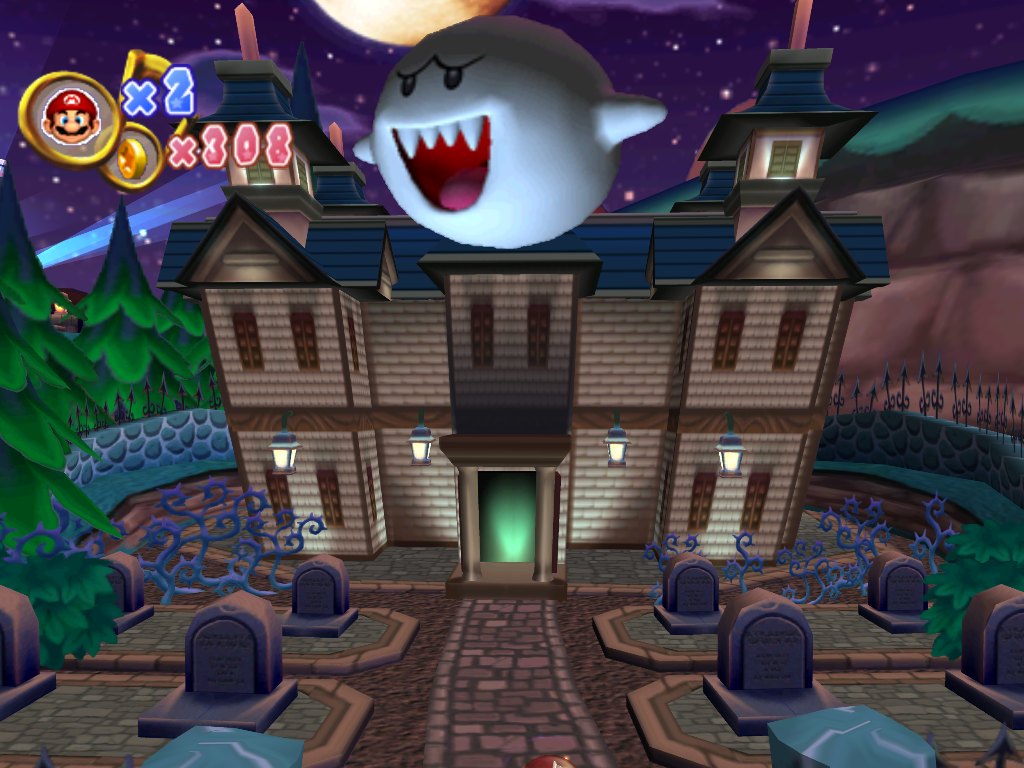
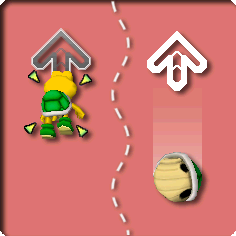
This is the twist that makes it a Mario game. In Mush Mode, enemies and items replace some arrows or attack the screen. Goombas are stamped like normal steps; Koopa Troopas need one step to knock them into their shells and another to kick the shell back down the screen (only with a Perfect) to destroy an incoming arrow. Spinies must be left alone. Miss a mini-Blooper and ink smothers the bottom of the screen; slip up with Boos around and a Giant Boo rises to hide the arrows.
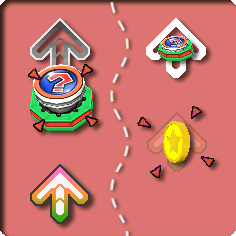
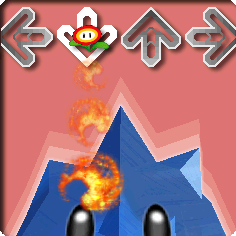
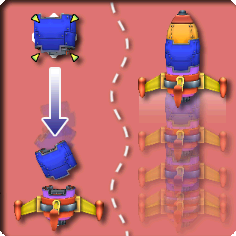
Some songs have their own gimmick: hammers in Hammer Dance, a Freezie that a Fire Flower step can melt in Deep Freeze, Bullet Bills to stamp back into their launchers in Always Smiling, and Rocket Parts in Bowser’s Castle that build a rocket to fire at Bowser. Coin Switches turn every arrow into a coin for a few seconds. Mush Mode is compulsory in Story Mode at first, can be switched off in the options, and is optional in Free Mode.
Koopa Troopas in Mush Mode.Mario and the Boo gimmick.Rocket Parts in Bowser’s Castle.
The Action Pad
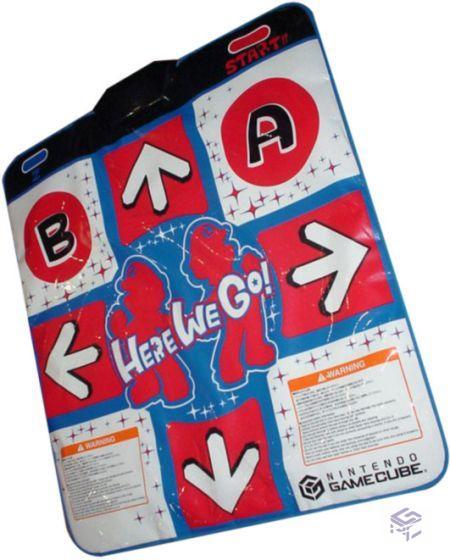
The game came bundled with the Action Pad, a Mario-decorated soft mat that plugs into a GameCube controller socket. Two versions of the mat exist. Nintendo World Report found it light and responsive, though the buttons were hard to feel through the cover, and noted that PlayStation 2 mats also work through a converter. According to Wikipedia, spare pads were sold through Nintendo’s online store, and a second one is needed for two players on mats.
The Action Pad, first version.The Action Pad, second version.The North American bundle.
Free Mode, dance-offs, Workout and minigames
Songs cleared in Story Mode open up in Free Mode, playable at any difficulty with Mush Mode on or off. Two players can go head to head as Mario and Luigi in a dance-off on any song. Workout records the calories burned for each registered player once you enter a name and weight, a feature Nintendo’s own European page mentions.
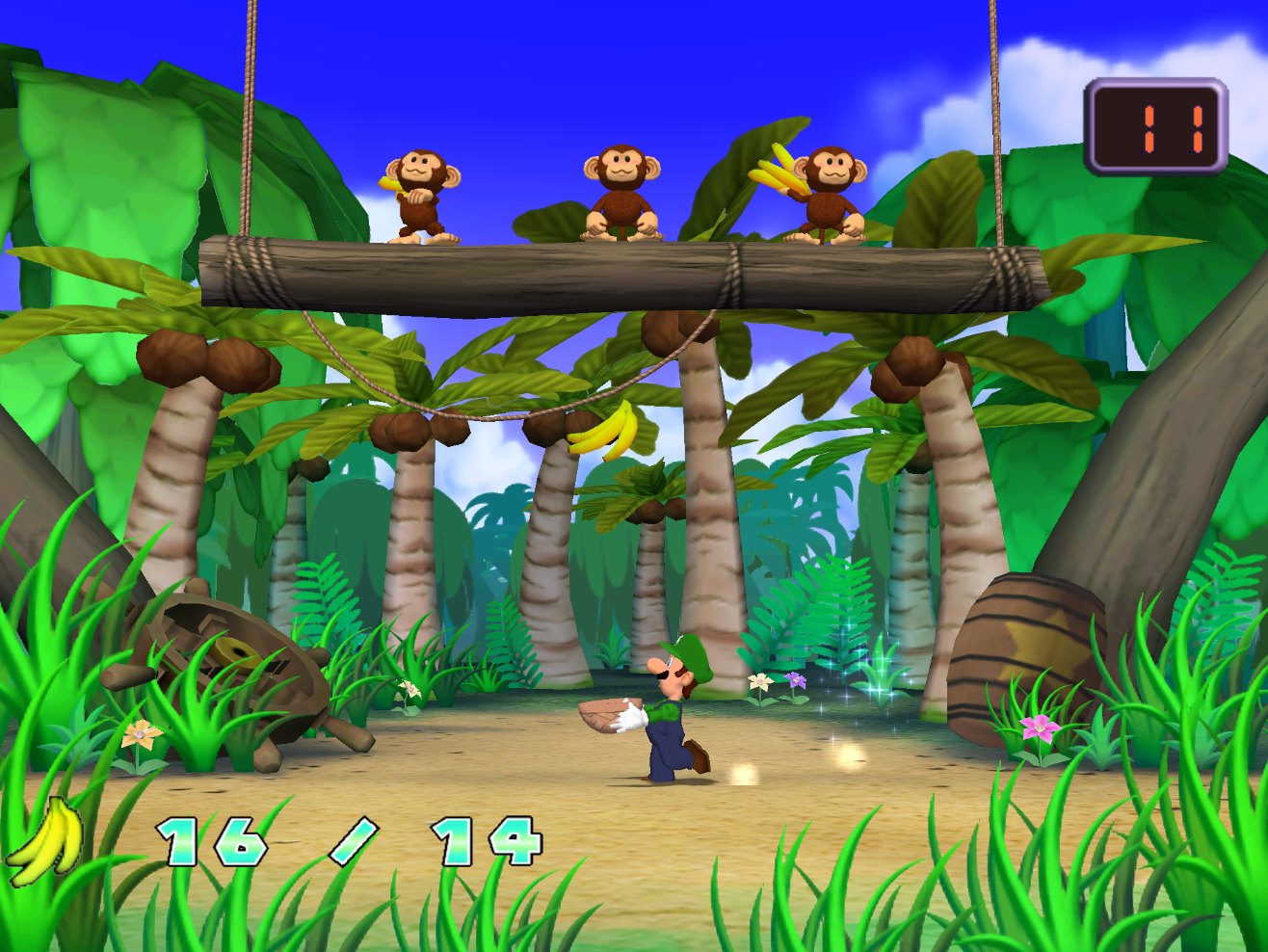
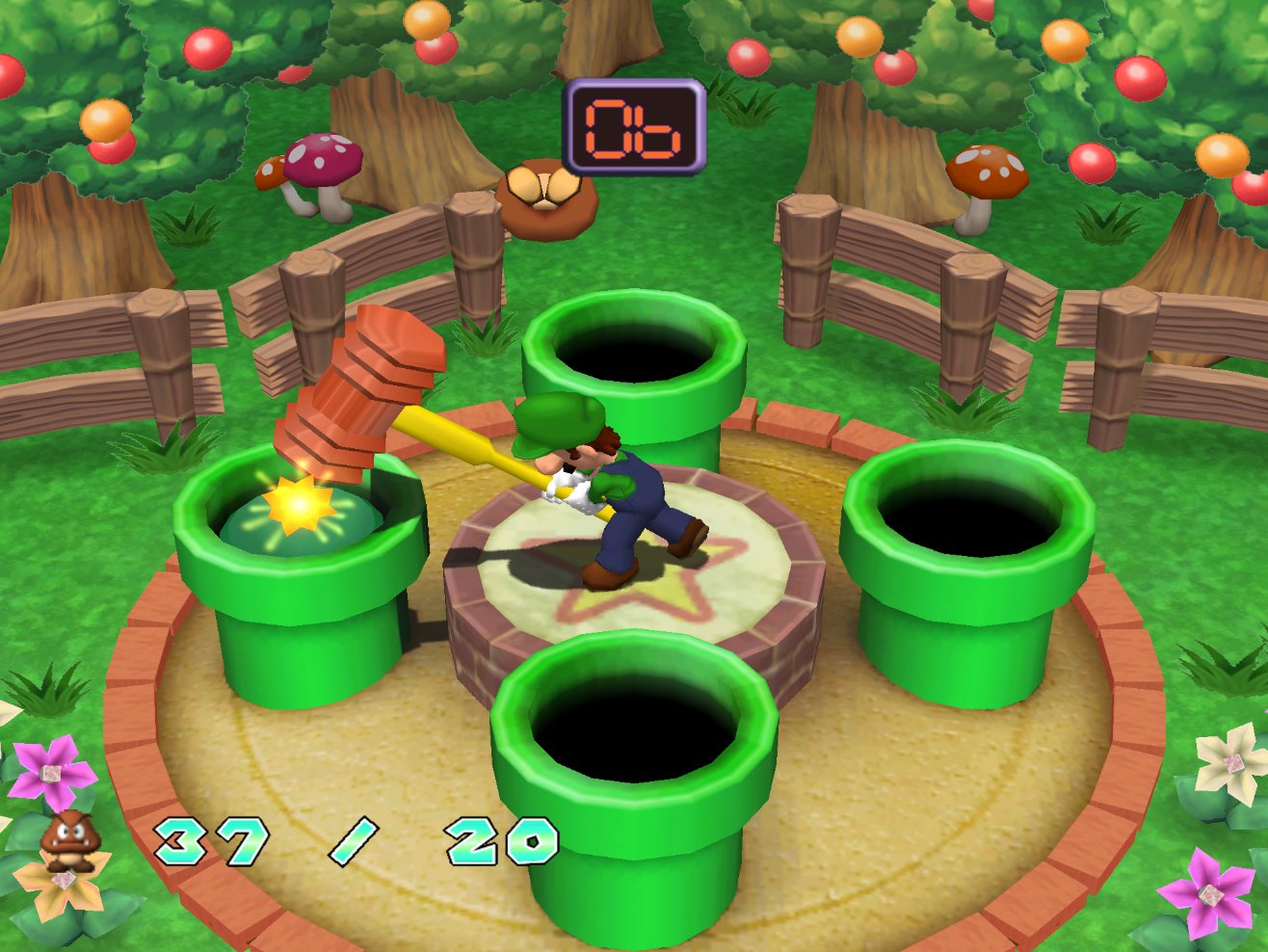
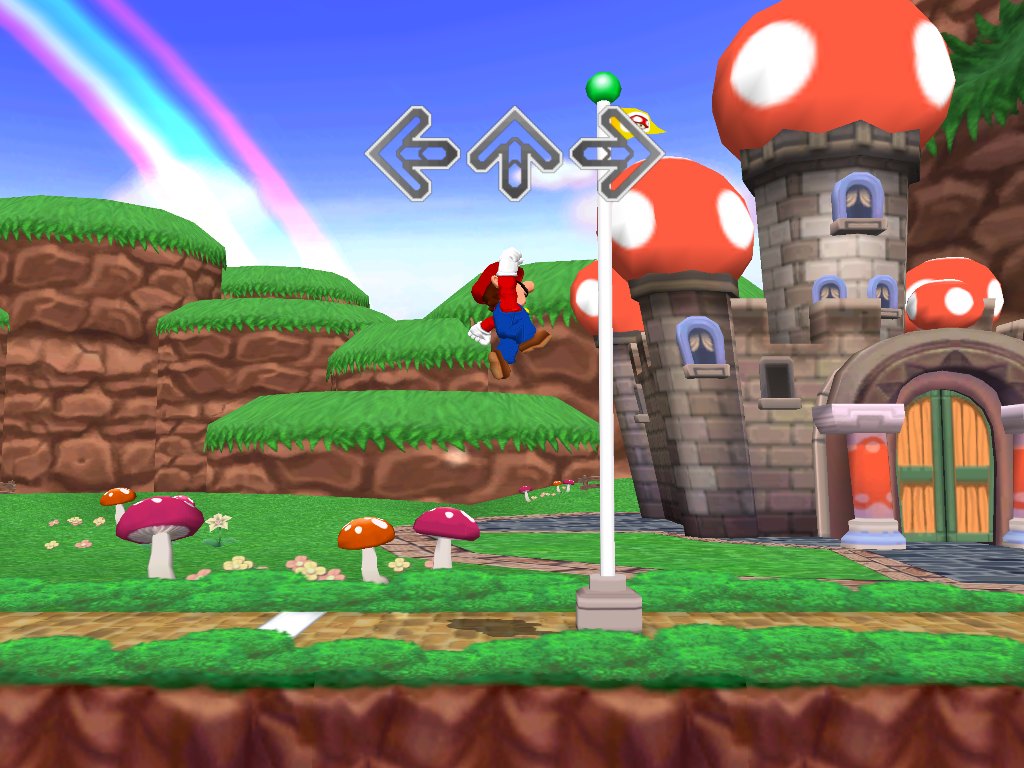
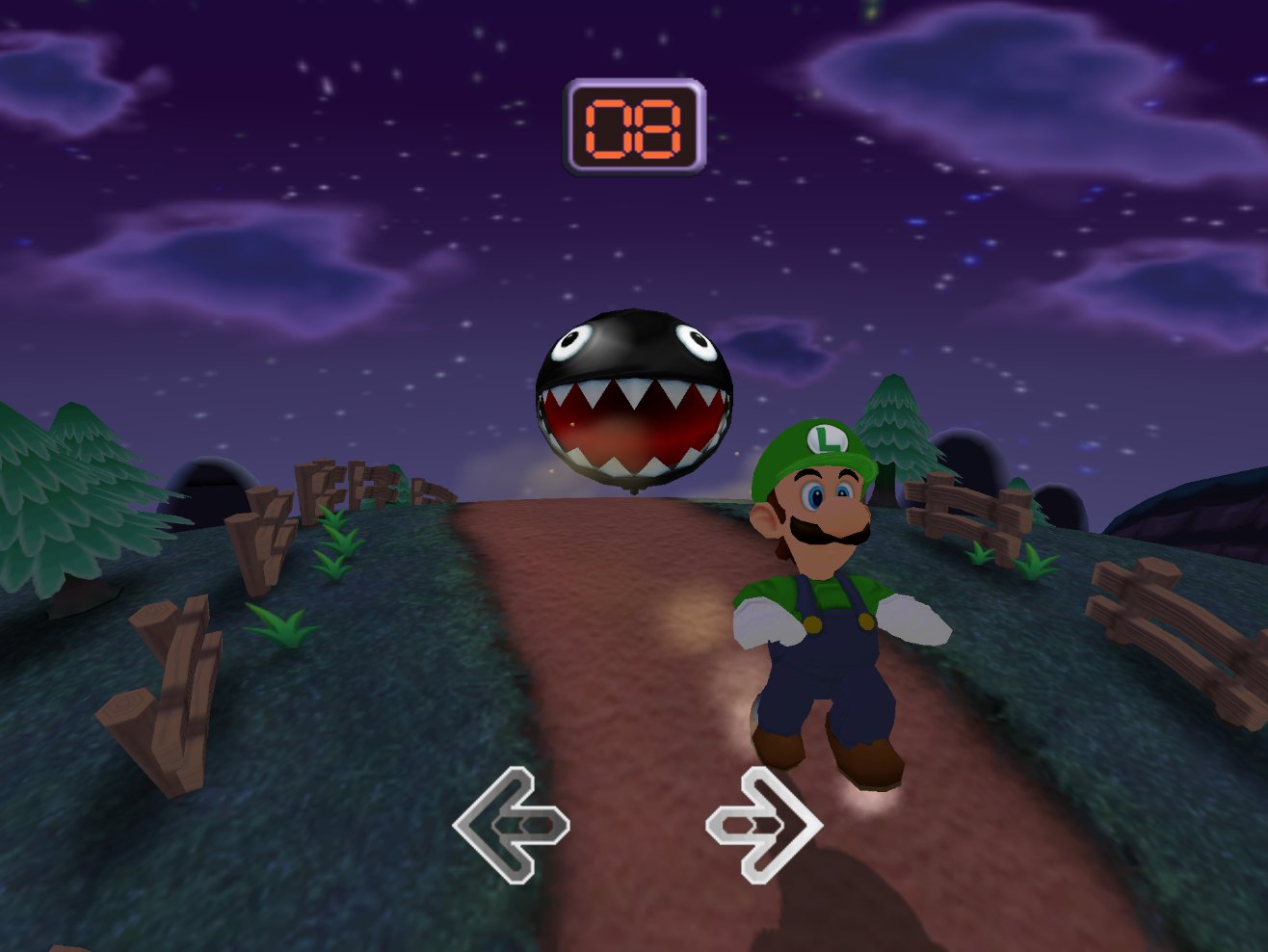
Twelve minigames sit between Story Mode songs and earn coins: Whack-a-Goomba, Flagpole Leap, Banana Storm (catching Ukiki’s bananas), Punch Up, Chain-Chomp Chase, Avalanche!, Hidden Treasure, Block Treasure, Coin Collection and Whee!, plus Note Pickup and Fire Up the SS Brass, which are only in the Minigame mode. Each unlocks there once played.
Luigi against Wario.Whack-a-Goomba.Flagpole Leap.Chain-Chomp Chase.
Lakitu’s shop
Lakitu runs a shop in every world from stage 1-3 on. You can carry three items at once, and all but the 1-Up must be used before a song.
1-Up Mushroom100 coins. An extra life; also won in some minigames.
Mystery Drink10 coins. Raises or lowers the dance meter at random.
Max Drink50 coins. Raises the dance meter’s maximum.
Small Heart70 coins. Refills half the meter when it empties.
Big Heart170 coins. Refills the whole meter when it empties.
Lucky Clover50 coins. Stops the meter falling four times.
Music Wand200 coins. Drops the difficulty by one level.
Cartoons, Comics & Other Media
Its artwork and moves have had a surprisingly long life in later Nintendo games.
Super Smash Bros. UltimateNintendo SwitchMario’s down smash became the breakdance kick he performs in this game.
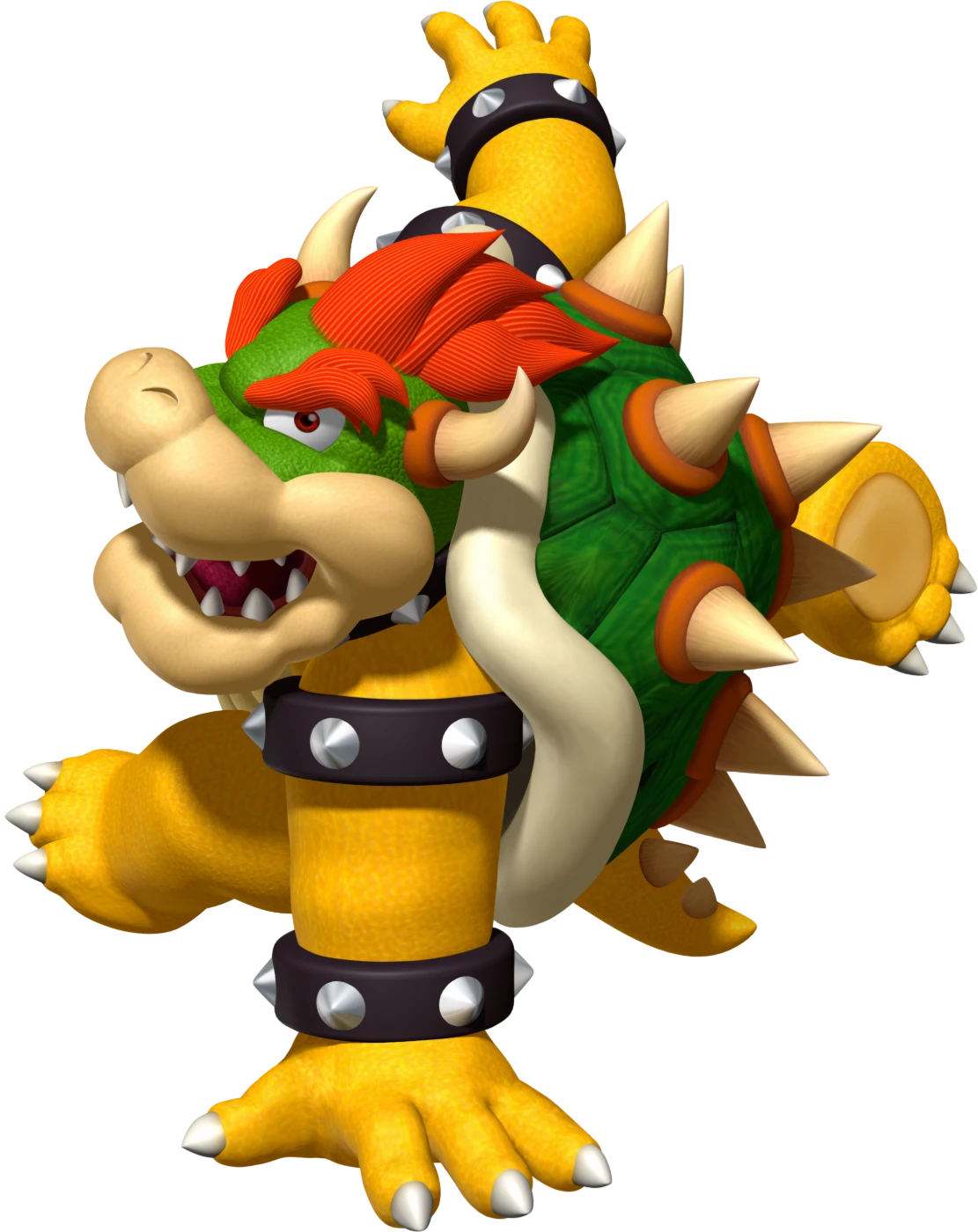
Super Smash Bros. BrawlWiiBowser’s artwork from DDR: Mario Mix is one of the stickers.
Mario Super SluggersWiiBaby Mario and Baby Luigi’s artwork imitates this game’s Mario and Luigi poses.
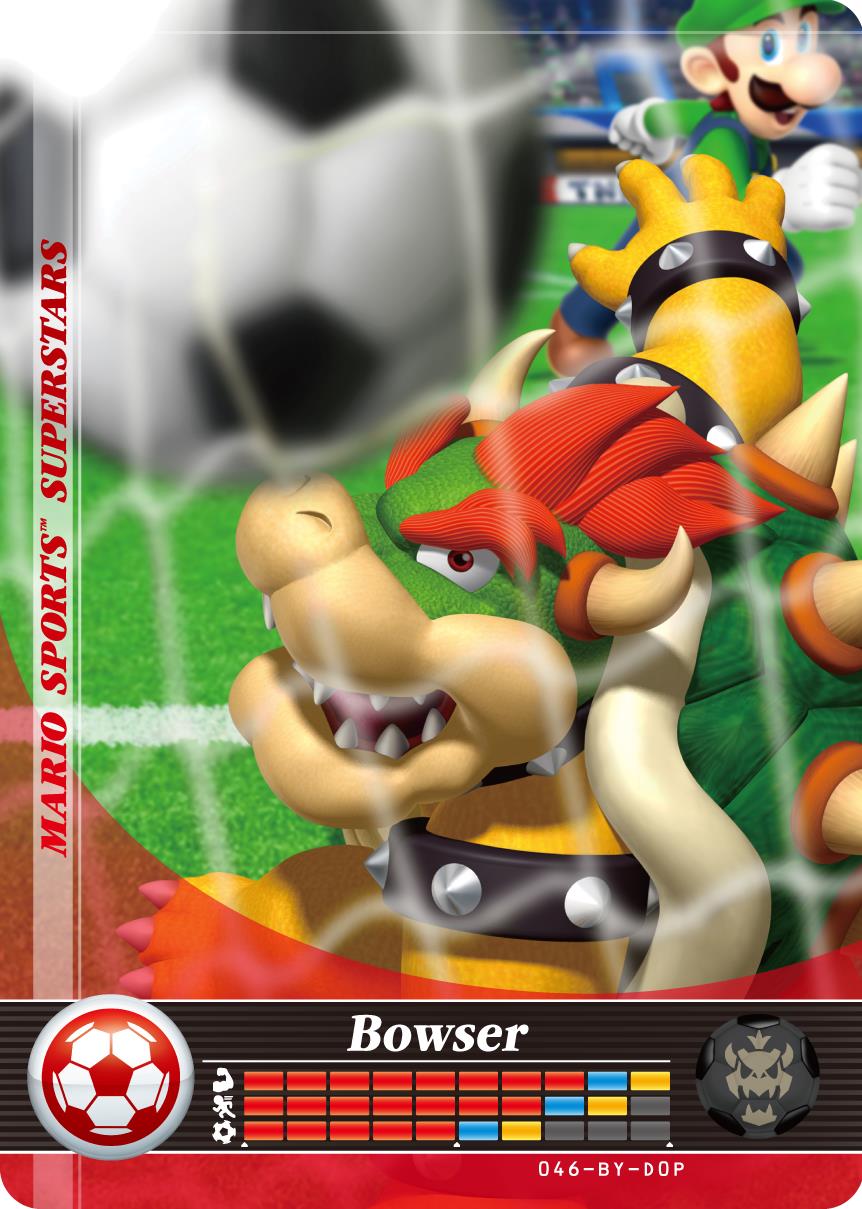
Mario Sports SuperstarsNintendo 3DSBowser’s amiibo card reuses his DDR artwork.
Mario vs. Donkey KongNintendo Switch remakeMario’s official artwork reworks his standing pose from this game.
Mario Party modelsRecycled assetsMany character models, poses and animations come from Mario Party 4, 5 and 6; the Big Blooper is the Mario Party 6 model.
Characters
Two dancers, one narrator and a parade of rivals, many of them built from Mario Party models.
Character
Who they are
In this game
Abilities & notes
MarioPlayer 1
The default dancer, voiced as usual by Charles Martinet.
Dances every song of Story Mode unless you pick Luigi; Player 1 in dance-offs.
Playable from the start
LuigiPlayer 2
Mario’s brother, also voiced by Martinet.
Can take Mario’s place in Story Mode and is Player 2 in dance-offs. He plays identically to Mario.
Playable from the start
ToadNarrator and sidekick
The Truffle Towers witness, voiced by Jen Taylor.
Fetches Mario, narrates the story and runs the menus. He cannot dance, so it is all down to the brothers.
Non-playable
WaluigiWorld 1 boss
The thief who sets everything off.
Breaks into Truffle Towers, keeps one Music Key and loses it in the Destruction Dance dance-off.
Song: Destruction Dance (1-4)
LakituShopkeeper
The cloud-rider, running a shop in every world.
Holds the Truffle Towers key until Mario clears his garden of Koopa Troopas; sells items and bonus songs.
Song: Garden Boogie (1-3)
ToadetteHotel owner
Owner of a seaside hotel in World 2.
Scolds Mario after the cyclone turns her hotel into a corkscrew, and has him dance to fix it. Calls the keys “shiny globes” in American English and “shiny keys” in British English.
Song: Jump! Jump! Jump! (2-1)
Pirate LakituWorld 2 rival
Owner of the Pirate’s Plunder shop.
Holds the Boogie Booster the SS Brass needs to beat the whirlpool, and gives it up after a duel.
Song: Fishing Frenzy (2-2), Pirate Dance in EX
Big BlooperWorld 2 boss
A giant squid guarding the underwater temple; its model comes from Mario Party 6.
Guards the second Music Key. In Mush Mode its tentacles shoot up the screen.
World 2’s last stage: Blooper Bop (2-4)
Hammer Bros.World 3 gatekeepers
A pair guarding Wario’s carnival.
Block the carnival entrance until Mario out-dances them, then turn up again with Wario later.
Song: Hammer Dance (3-1)
WarioWorld 3 boss
Owner of the carnival.
Wants the keys so he can wish himself a game of his own, DDR: Wario Mix. Loses the dance-off and vows to get the key back.
Song: Starring Wario! (3-4)
FreezieWorld 4 boss
A giant ice block at the mountain’s summit.
Holds the last key inside and stays silent until Toad suggests dancing it into a puddle.
Song: Deep Freeze (4-3)
BowserFinal boss
The Koopa King, voiced by Scott Burns.
Steals all four keys from Truffle Towers, loses the final dance-off to a volley of rockets and confesses he only wanted to fix his tone-deafness.
Song: Bowser’s Castle (5-2)
Mush Mode enemies and gimmicks
Every Mush Mode element, with what it does. Goombas, Piranha Plants, Shy Guys, Ukiki, Chain-Chomps, Mr. Blizzards, penguins and a Banzai Bill also dance in the backgrounds.
GoombaMany songsStep on it like a normal arrow.
Koopa TroopaMany songsOne step to shell it, a Perfect second step to kick it back down and destroy an arrow.
Bob-omb and PodobooMany songsMiss a Podoboo and a Bob-omb blast takes a big bite out of the meter; in dance-offs Podoboos bounce to the other player.
Cheep CheepMany songsCurves in from the side, leaving less time to read it.
SpinyMany songsDo not step on it; red ones move faster than green.
BlooperBlooper Bop and othersMiss a mini-Blooper and ink covers the bottom of the screen; the Big Blooper sends tentacles up it.
Hammer Bros.Hammer Dance onlyHammers that explode and sap the meter if missed.
Coin SwitchMany songsTurns every arrow into a coin for a few seconds; better steps keep it going longer.
BooBoo Boogie and othersA Giant Boo rises as you miss steps and hides the arrows; stamping mini-Boos pushes it back.
Cheep Cheep (Frozen Pipes)Frozen PipesPops up and changes an arrow’s direction halfway up the screen.
FreezieDeep Freeze onlyCovers the whole screen; Fire Flower steps fire fireballs to melt it.
Ice SpinyWorld 4Works just like a Spiny, but without the colour clue.
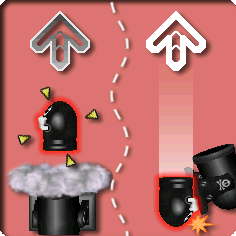
Bullet BillAlways Smiling onlyStamp them back into the launchers; three hits destroy a launcher.
Rocket PartsBowser’s Castle onlyThree in a row fire a rocket at Bowser; land too few and the song is failed.
The people who made it
A Konami and Nintendo co-production. The staff, as credited:
Yukihiro YamazakiDirectorDirected the game.
Hitoshi Yamagami, Hirotaka IshikawaProducersThe two producers credited.
Satoru Iwata, Kazumi KitaueExecutive producersIwata had been Nintendo’s president since 2002.
Shinichi Kasahara, Shinichi Nakata, Tatsuma MinamiPlanningThe planning team.
U1-ASAMiSound directorLed the sound team of Osamu Narita, Katsunori Takahashi, Ichiro Shimakura, Hideki Oka and Kenichi Yoshimoto.
Shinya Takahashi and othersCharacter supervisorsWith Tsuyoshi Watanabe, Yo Ohnishi and Kanae Kobata.
Charles Martinet, Jen Taylor, Scott BurnsVoices (uncredited)Mario, Luigi, Wario and Waluigi; Toad; Bowser.
Advertisement
How It Was Made
Few behind-the-scenes details have been published; the announcement and the credits tell most of the story.
Konami and Nintendo, together
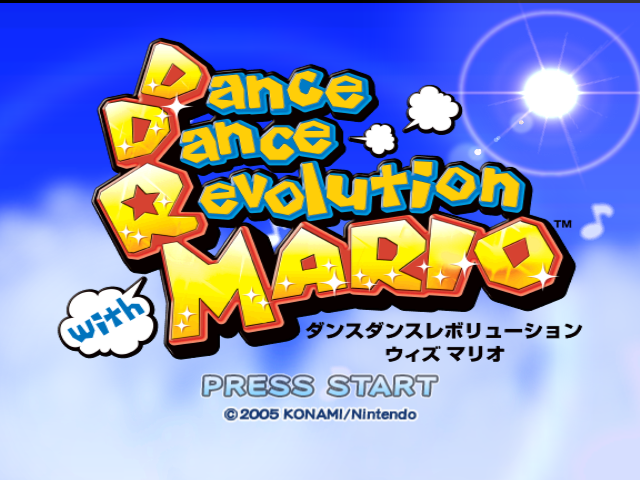
The Japanese logo: Dance Dance Revolution with Mario.
Konami announced the project in Japan in January 2005 under a headline saying that it and Nintendo were jointly developing Dance Dance Revolution with Mario. GameSpot’s report described a new DDR for the GameCube starring Mushroom Kingdom characters, with backdrops in the style of the 3D Mario games, a normal dance mode and original minigames, due in Japan that summer and shown to the public at the Next Generation World Hobby Fair from 16 January. No Western release had been confirmed at that point.
Nintendo SPD Group No. 2 worked alongside Konami, and the credits name Hitoshi Yamagami and Hirotaka Ishikawa as producers and Satoru Iwata among the executive producers. Hudson appears only in the special thanks. Much of the cast came ready-made: models, poses and animations were recycled from Mario Party 4, 5 and 6.
Release and the bundle
The European bundle.
The game reached Japan on 14 July 2005, North America on 24 October, Europe on 28 October under Konami’s European brand as Dancing Stage: Mario Mix, and Australia on 24 November. It shipped with the Action Pad in the box, which, as Nintendo World Report pointed out in its import review, made it an expensive thing to ship.
Cheats & Secrets
DDR: Mario Mix has no button codes; everything is unlocked by playing.
Story Mode EX
Finish Story Mode once to open Story Mode EX, which adds Hard difficulty and swaps in six new songs. Clear EX to open Very Hard.
Bonus songs
In Story Mode EX, save coins for Lakitu’s shops: Choir on the Green (World 1), Hop, Mario! (World 2), Where’s the Exit? (World 3) and Piroli (World 4).
Minigame mode
Every minigame you play in Story Mode is added to the Minigame mode, which also holds two exclusives: Note Pickup and Fire Up the SS Brass.
Make it easier
A Music Wand drops the difficulty one level; a Lucky Clover protects the meter four times; hearts refill it when it runs out. Mush Mode can be switched off in the options.
Hidden Treasure odds
One chest holds a single coin; the other holds 100 coins or a 1-Up Mushroom. Chain-Chomp Chase and Avalanche! pay 100 coins for success but take 100 for failure.
Our older cheats page is linked below.
Videos
The E3 2005 trailer and a complete longplay.
Third-party upload of the E3 2005 trailer, upscaled from a DVD.
Third-party upload: a full playthrough.
Trivia & Interesting Facts
Pressing Start on the title screen gets a “Let’s DDR!” in Japan and a “Let’s Dance!” everywhere else.
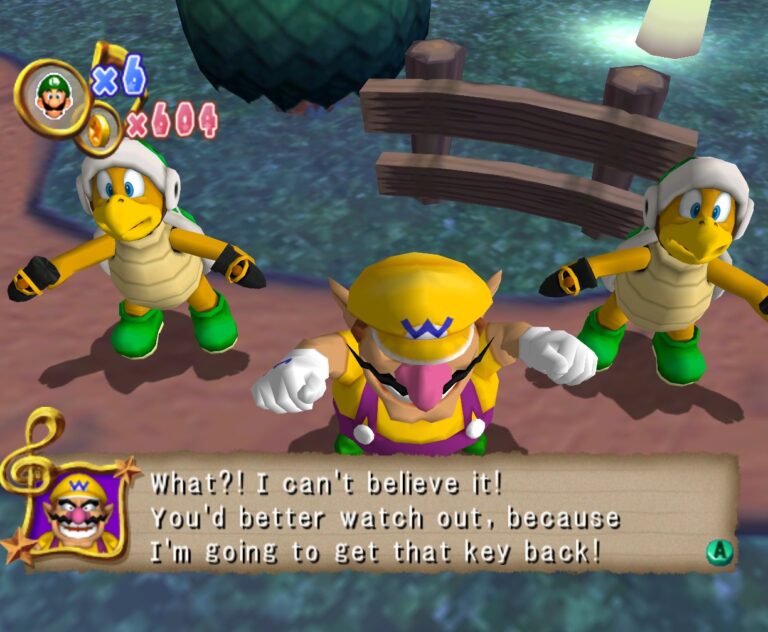
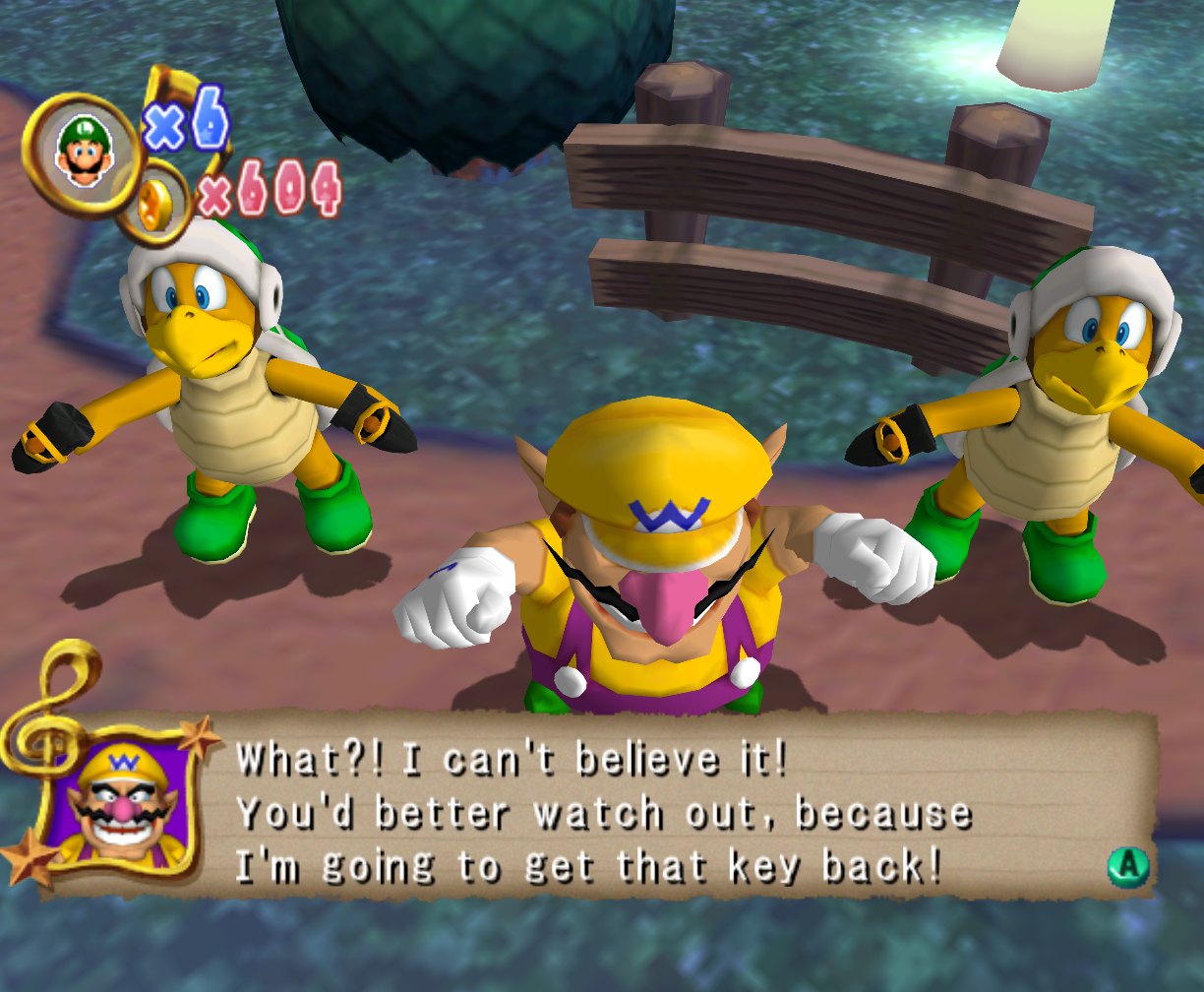
Wario, with the Hammer Bros., vowing revenge.Wario’s plan is to wish for his own game, called DDR: Wario Mix in American English and Dancing Stage: Wario Mix in Europe.
Toadette calls the Music Keys “shiny globes” in American English but “shiny keys” in British English.
Underground Mozart remixes Eine kleine Nachtmusik as heard in Mario Bros., and samples that game’s sound effects.
Piroli is a remix of Koji Kondo’s theme for the Famicom Disk System.
Charles Martinet voices four characters here: Mario, Luigi, Wario and Waluigi.
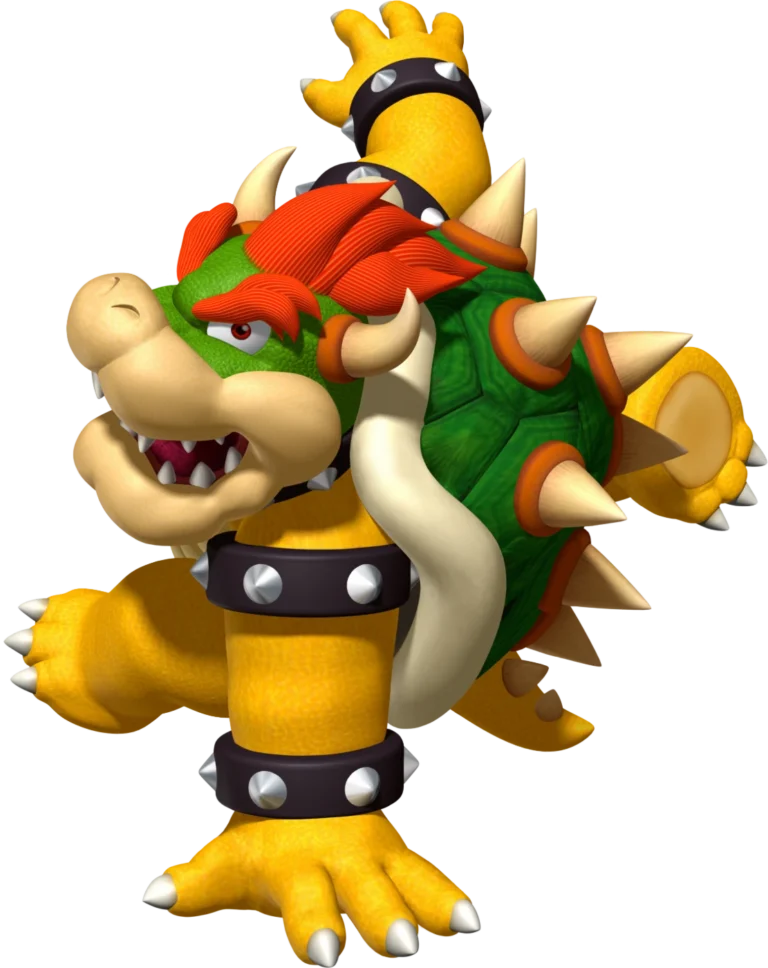
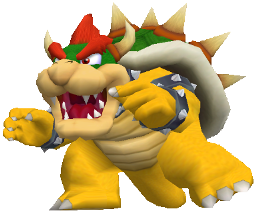
Bowser’s DDR artwork, later a Brawl sticker.Bowser’s whole motive is that he is tone-deaf.
Bowser’s Castle on Super Hard has 337 steps, the most in the game.
Mario’s breakdance kick from this game became his down smash in Super Smash Bros. Ultimate.
The Japanese song grades run from AA to D; the Western versions use A to F.
Cabin Fever has a different intro and ending in the Japanese version.
Nintendo World Report’s review noted that PlayStation 2 dance mats work through a converter, though without the Z button.
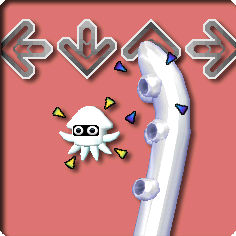
Bloopers in Mush Mode.The Big Blooper boss is the model from Mario Party 6.
Regional Box Art
The game was sold mainly as a big-box bundle with the Action Pad; game-only boxes exist for several regions.
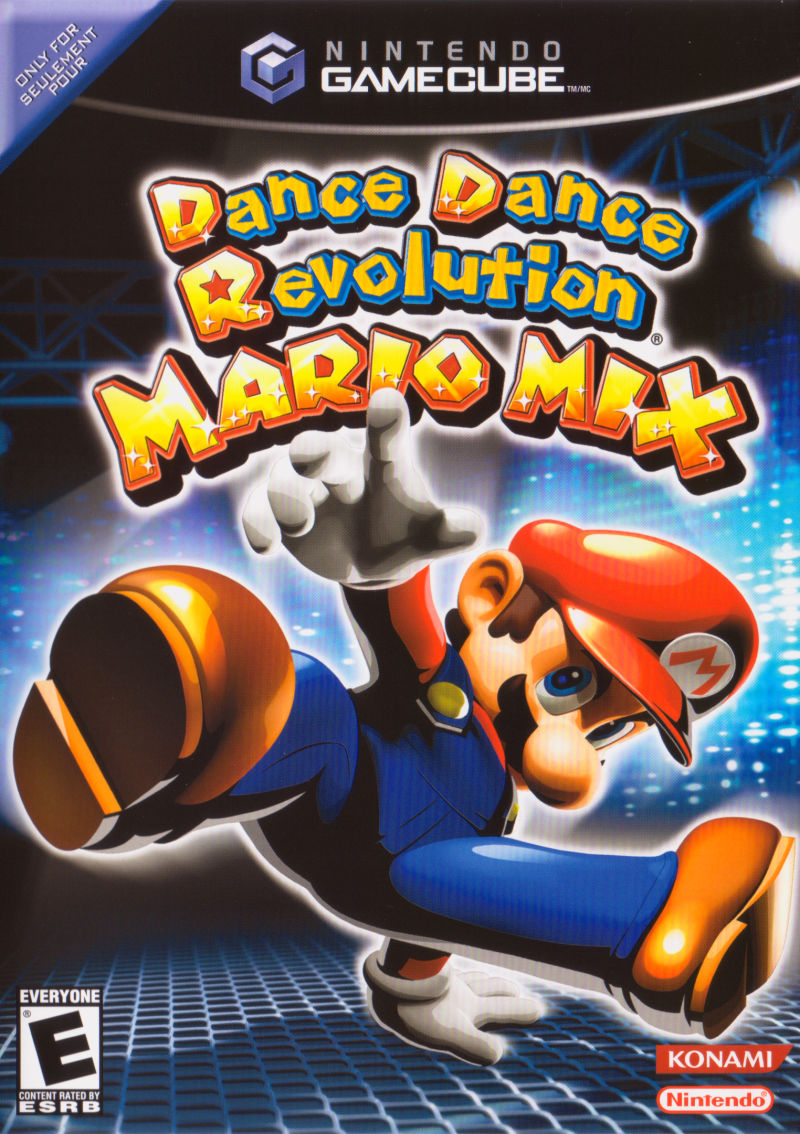
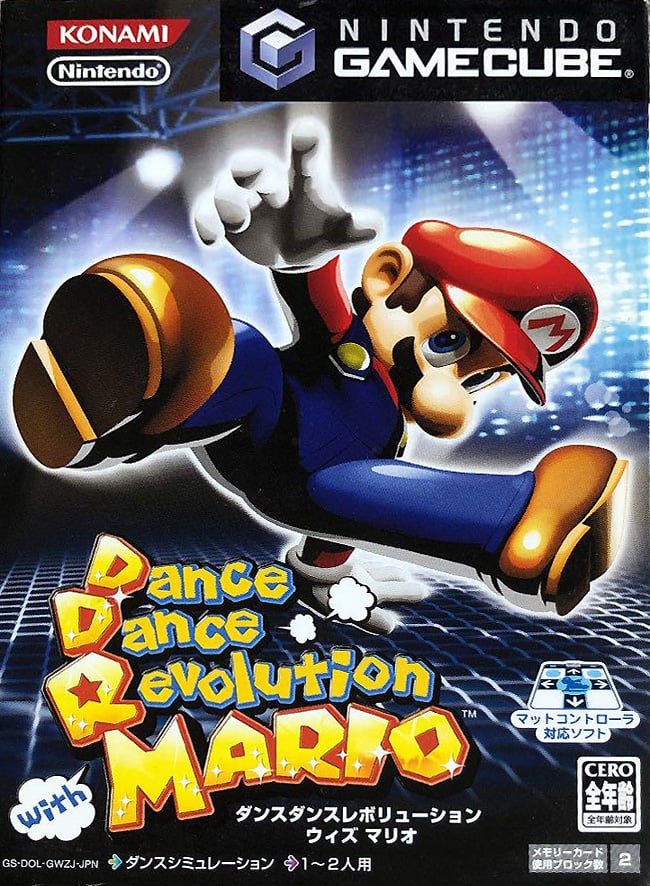
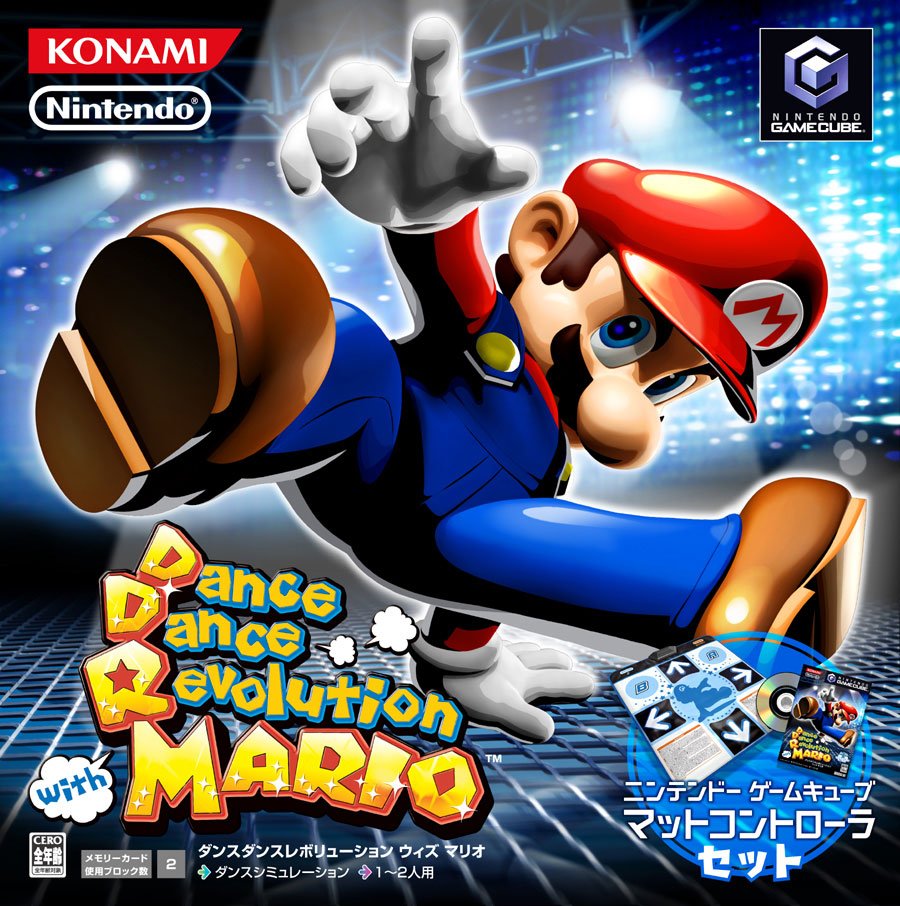
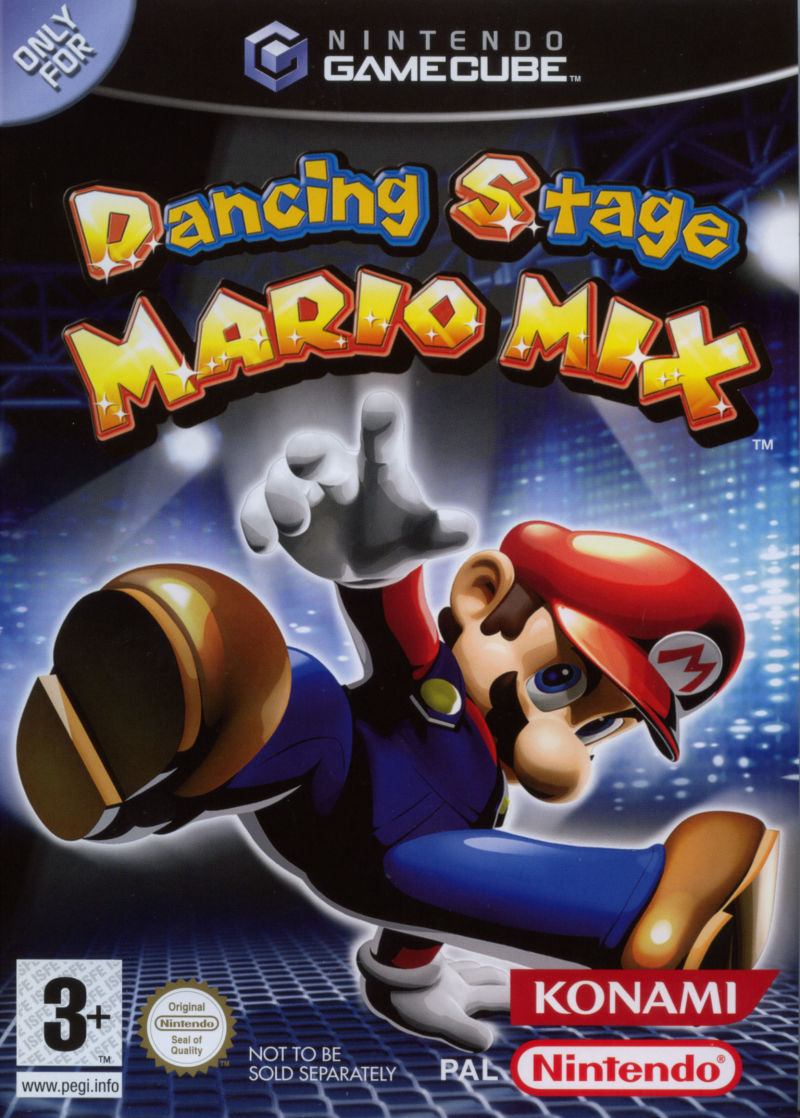
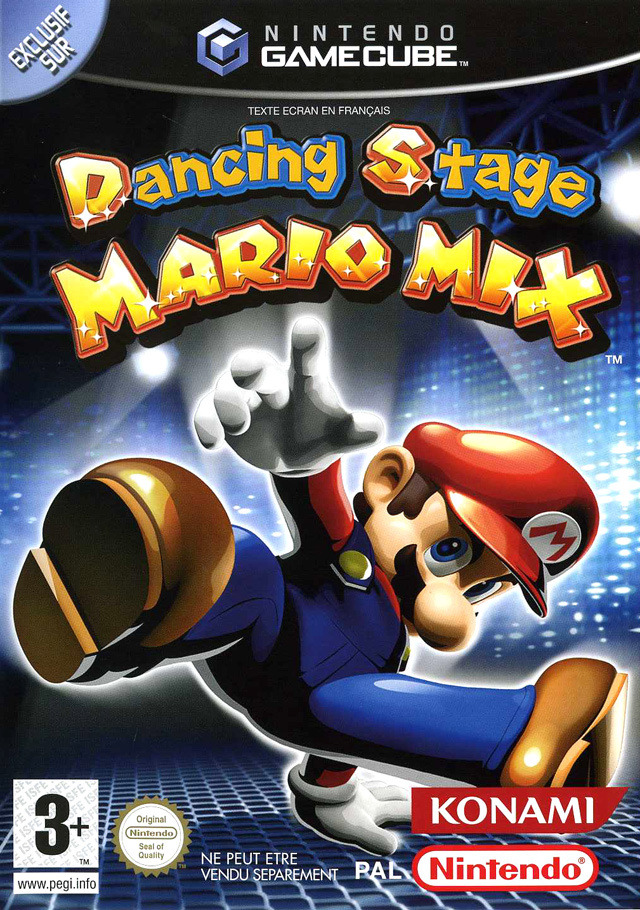
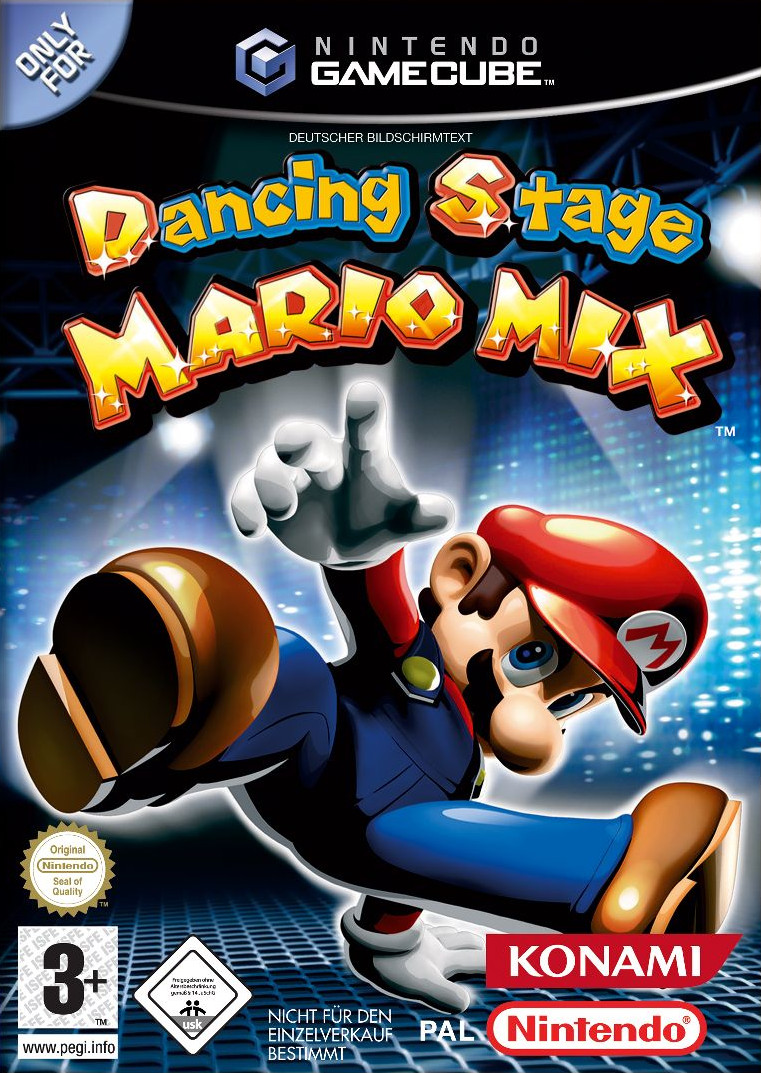
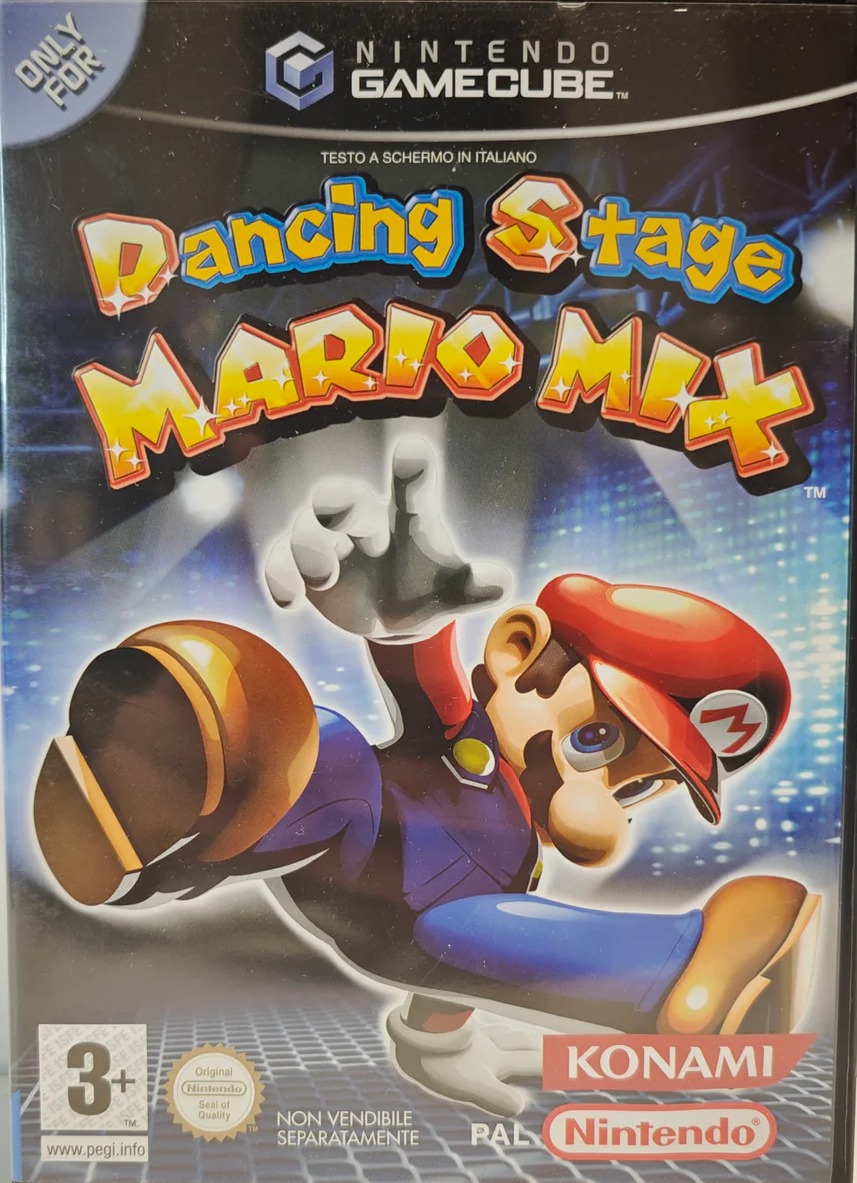
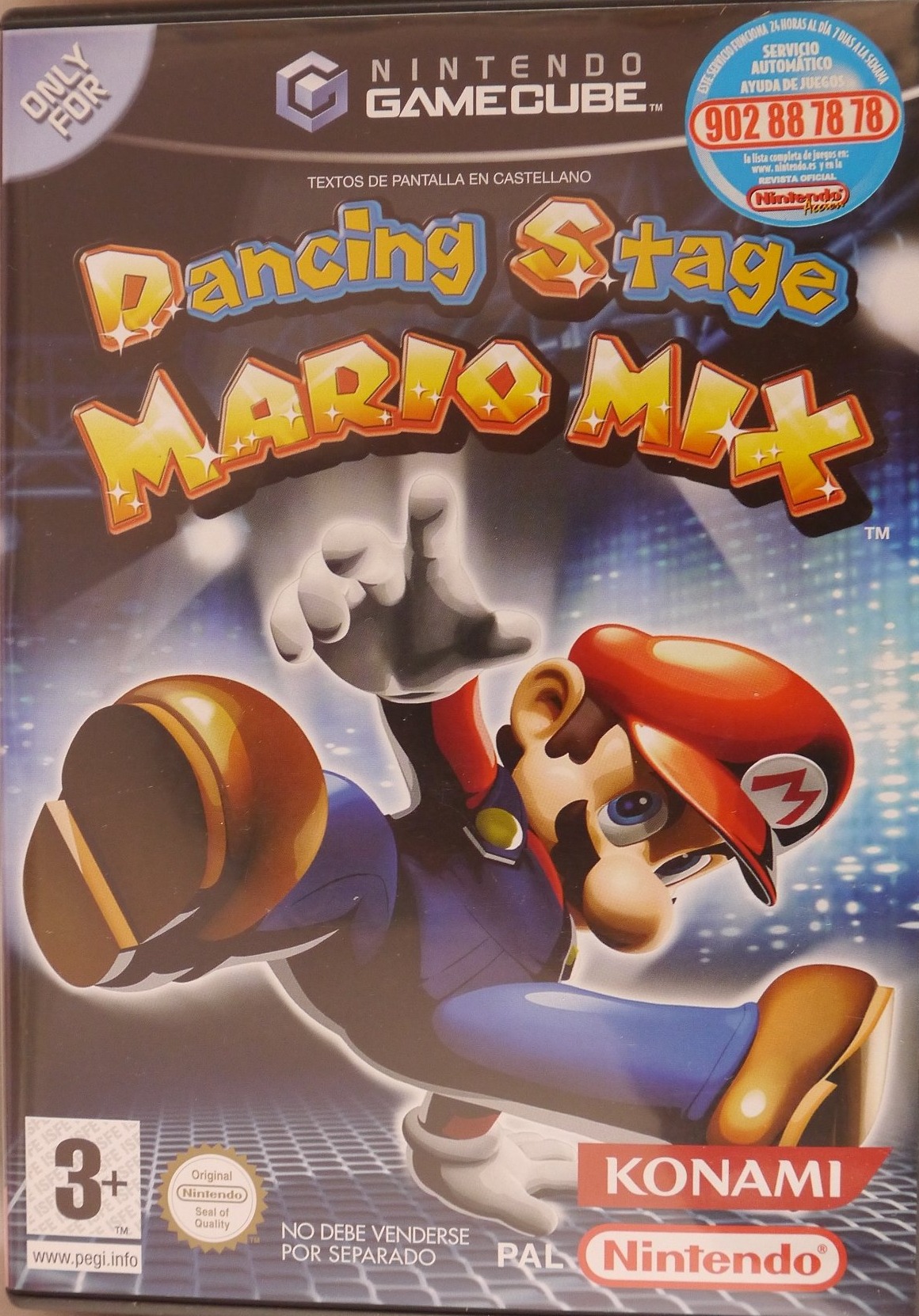
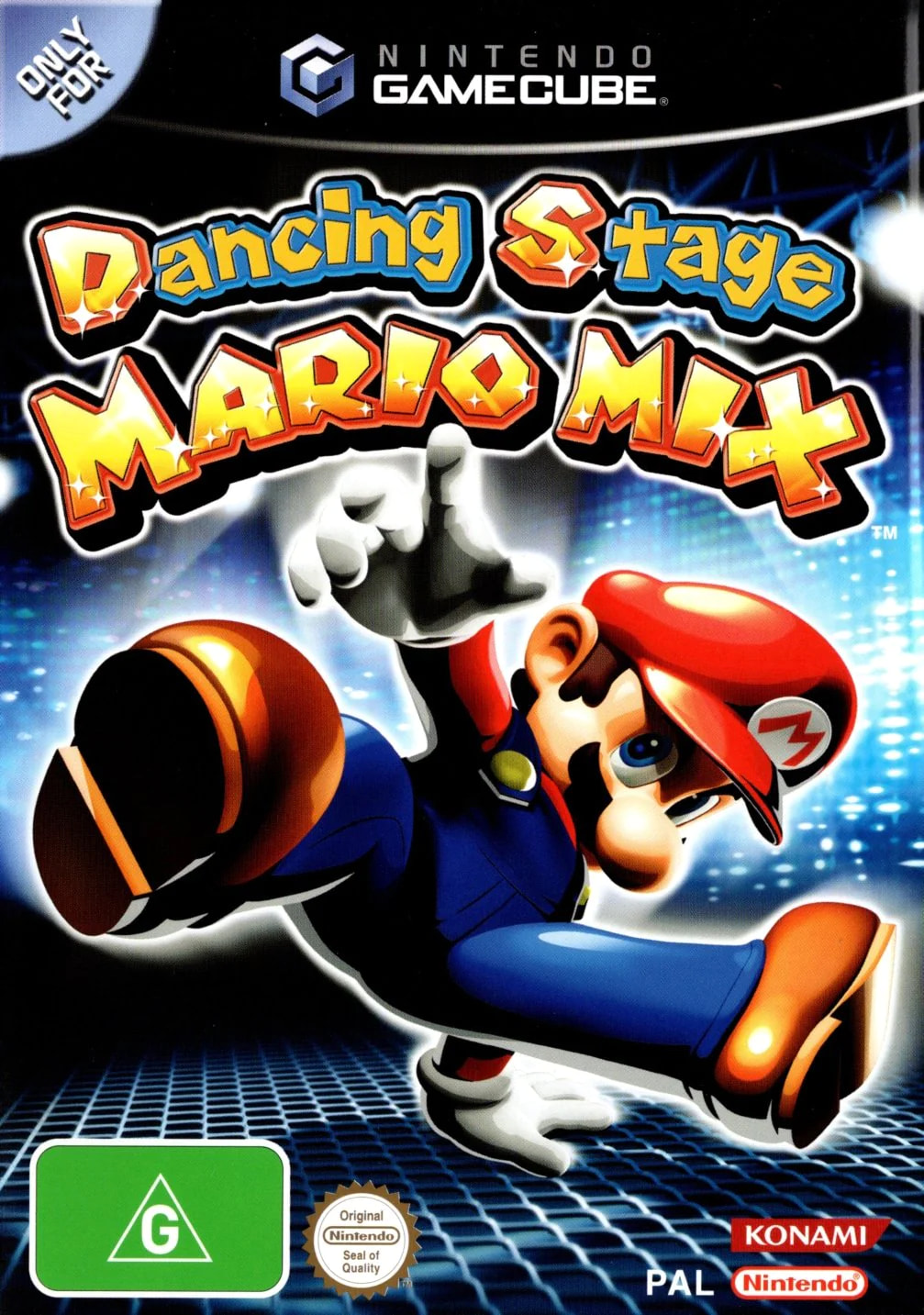
North AmericaNorth America, Action Pad bundleCanadaJapanJapan, Action Pad bundleEuropeEurope, Action Pad bundleFranceGermanyItalySpainAustralia
Screenshots
More from the dance floor.
The European title screen.The Japanese title screen.Bowser on the dance floor.A Chain-Chomp in the background.Shy Guys join in.Mr. Blizzard in World 4.A penguin on the mountain.A Banzai Bill at Bowser’s Castle.Banana Storm: catching Ukiki’s bananas.Toad.
Artwork & Media Gallery
Artwork, logos and promotional material.
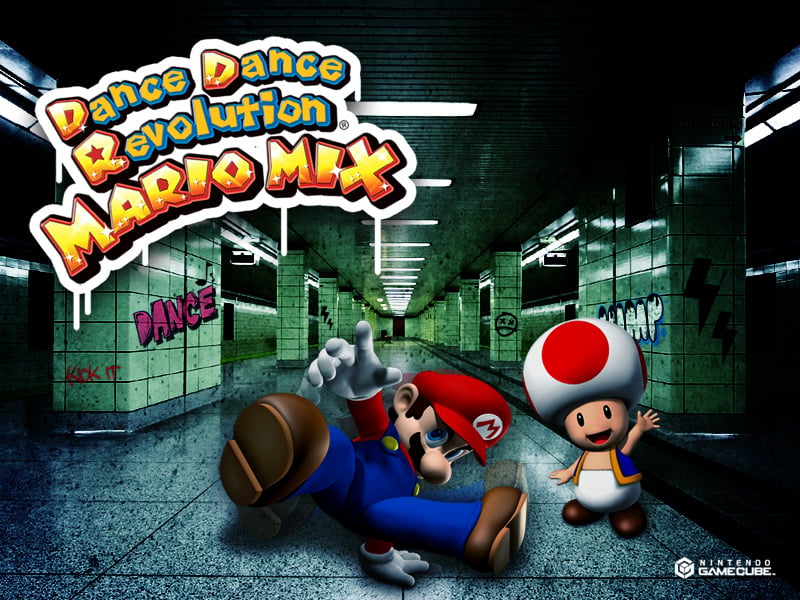
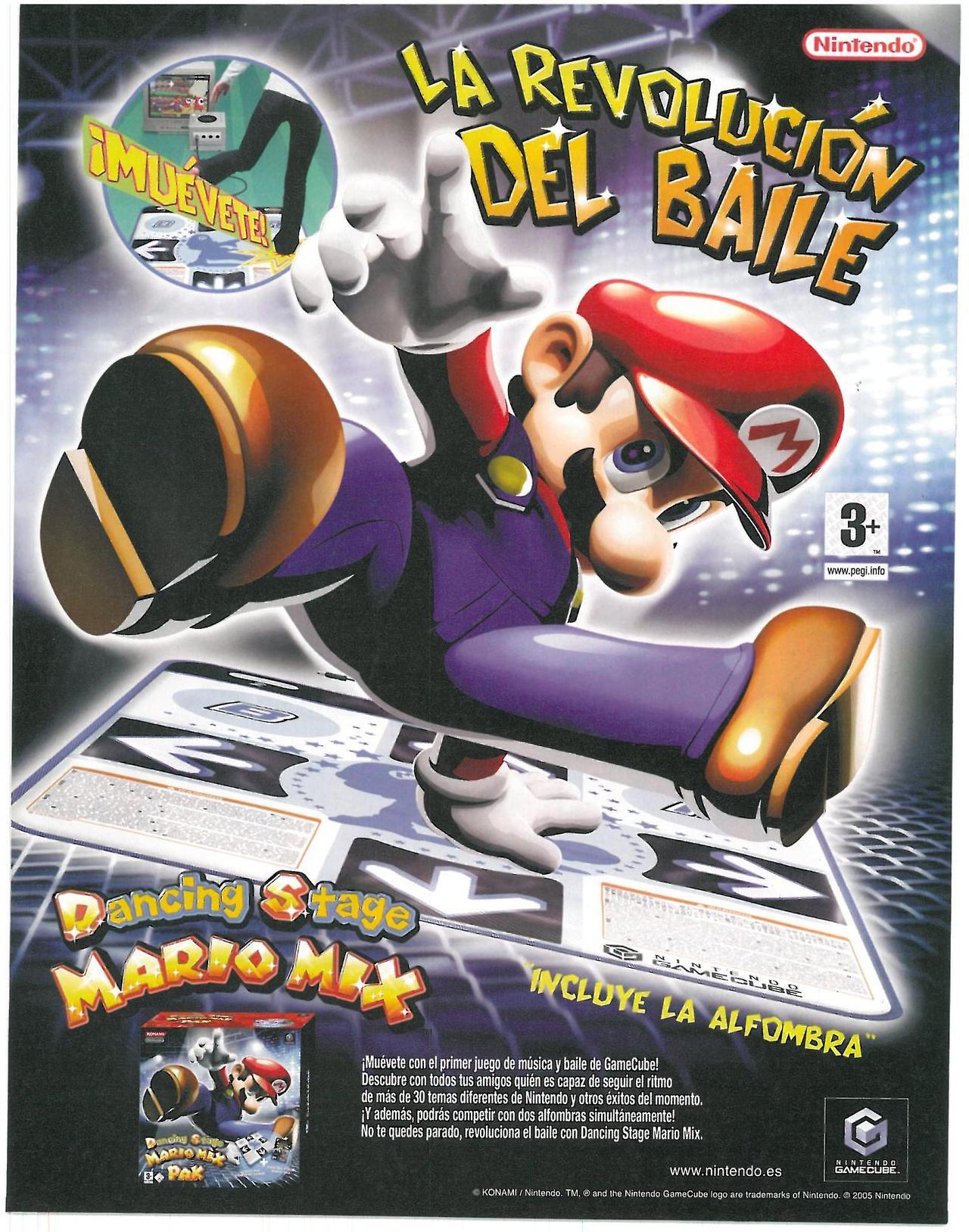
Mario, alternative pose.North American logo.European and Australian logo.Official wallpaper.Spanish print advert.Lakitu.A Brick Block on the dance floor.A drill pattern.
Legacy & Re-releases
Mario has not had another dance game since, but this one has quietly fed later games ever since.
Release history
AnnouncementJanuary 2005Konami and Nintendo reveal Dance Dance Revolution with Mario; shown at the Next Generation World Hobby Fair from 16 January.
E32005A trailer is shown at E3.
GameCube (Japan)14 July 2005Dance Dance Revolution with Mario.
GameCube (North America)24 October 2005Dance Dance Revolution: Mario Mix, bundled with the Action Pad.
GameCube (Europe)28 October 2005Dancing Stage: Mario Mix.
GameCube (Australia)24 November 2005As in Europe.
Where it turns up later
It has had no re-release of any kind. Its influence shows up elsewhere: Bowser’s artwork became a Brawl sticker and a Mario Sports Superstars amiibo card, Mario’s standing pose was updated for the Switch Mario vs. Donkey Kong, and his breakdance kick is now a Smash move.
Reviews & Sales
Reviews and scores
Mixed to positive: reviewers enjoyed the charm and the soundtrack but warned DDR veterans that it is easy and short. Metacritic gives 69 and GameRankings about 72%. Nintendo has not published a sales figure.
IGNMatt Casamassina · 26 October 2005 (via Wikipedia)
8/10
Nintendo World ReportJonathan Metts · 21 August 2005 (import)
8/10
Cubed3Adam Riley · 1 December 2005
8/10
NGC MagazineUK · issue 110 (via Wikipedia)
77%
GameRankingsAggregate
71.76%
EurogamerKristan Reed
7/10
GameSpotAvery Score (via Wikipedia)
7/10
MetacriticAggregate
69/100
GameSpyPhil Theobald (via Wikipedia)
3/5
Game Informervia Wikipedia
5.25/10
Nintendo World Report reviewed the Japanese release in August 2005 and liked almost everything except the Story Mode’s text and having to play it twice to open every song; it praised the catchy soundtrack and the light, responsive mat. Cubed3’s Adam Riley gave the European version 8/10, estimated the story at about three hours and called it a good first dance game, while noting that the odd problem comes when you have to deal with more than plain arrows.
IGN’s Matt Casamassina enjoyed the Nintendo take on the formula but wanted more songs. Eurogamer’s Kristan Reed rated it the best Dancing Stage on any system, and GameSpot’s Avery Score recommended it for children and beginners rather than seasoned dancers. Wikipedia’s summary of the reviews, including the lower marks from GameSpy and Game Informer, finds the same two complaints throughout: the low difficulty and the short Story Mode.
Honours
9th Interactive Achievement Awards (2006)NomineeFamily Game of the Year; the award went to Guitar Hero.
SLB User Reviews
Dance Dance Revolution: Mario Mix has yet to receive a community review on Super Luigi Bros.
If you’ve played Dance Dance Revolution: Mario Mix and would like to submit a review, please get in touch.
More from the Super Luigi Bros Guide
These picture lists come from the earlier Super Luigi Bros guide to Dance Dance Revolution: Mario Mix and are kept here in full.
Modes & Minigames
Single Player Modes
Story Mode — the main campaign across the five worlds, the heart of the game. Approximately 6-8 hours to clear on Normal difficulty.
Free Mode — play any unlocked song at any difficulty without story progression.
Endless Mode — one song after another until you fail.
Workout Mode — an organised exercise sequence tracking calorie burn over a set duration. Marketing angle, but mechanically real.
Versus Play
Two-player simultaneous mode with Mario (P1) and Luigi (P2). Requires two Action Pads (or one Pad + one controller). The game splits the screen vertically and both players step in parallel.
Minigames
Scattered throughout Story Mode are short dance-themed minigames built around specific gimmicks: timing-based ones, memory-based pattern-recall ones, and reaction-test challenges. Some unlock customisation rewards.
Story Mode dialogue between songsA boss dance-offTwo-player Versus modeA minigame challenge
Reference / Information
Sub-pages and cheats for Dance Dance Revolution: Mario Mix.
To provide the best experiences, we use technologies like cookies to store and/or access device information. Consenting to these technologies will allow us to process data such as browsing behavior or unique IDs on this site. Not consenting or withdrawing consent, may adversely affect certain features and functions.
Functional
Always active
The technical storage or access is strictly necessary for the legitimate purpose of enabling the use of a specific service explicitly requested by the subscriber or user, or for the sole purpose of carrying out the transmission of a communication over an electronic communications network.
Preferences
The technical storage or access is necessary for the legitimate purpose of storing preferences that are not requested by the subscriber or user.
Statistics
The technical storage or access that is used exclusively for statistical purposes.The technical storage or access that is used exclusively for anonymous statistical purposes. Without a subpoena, voluntary compliance on the part of your Internet Service Provider, or additional records from a third party, information stored or retrieved for this purpose alone cannot usually be used to identify you.
Marketing
The technical storage or access is required to create user profiles to send advertising, or to track the user on a website or across several websites for similar marketing purposes.

 Here We Go!1-1 · Super Mario Bros., Ground BGM (Koji Kondo)The famous overworld theme, and the first song of Story Mode.
 Underground Mozart1-2 · Mozart, Eine kleine Nachtmusik, via Mario Bros.Laced with Mario Bros. sound effects.
 Pipe Pop1-2EX · Mozart, Turkish MarchReplaces Underground Mozart in Story Mode EX.
 Garden Boogie1-3 · Bizet, Carmen: PreludeClearing Koopa Troopas out of Lakitu’s garden.
 Destruction Dance1-4 · Wrecking Crew, Bonus Phase (Hirokazu Tanaka)The Waluigi dance-off.
 Jump! Jump! Jump!2-1 · Super Mario Bros. 3, Athletic BGM (Koji Kondo)Fixing Toadette’s hotel.
 Fishing Frenzy2-2 · Necke, Csikós Post, via Yoshi’s CookieThe duel with the pirate Lakitu.
 Pirate Dance2-2EX · Super Mario World, Ground BGM (Koji Kondo)The pirate duel in Story Mode EX.
 In the Whirlpool2-3 · Elgar, Pomp and Circumstance March No. 1Elgar’s march, reborn as a dance track.
 Step by Step2-3EX · Super Mario World, Bonus Game BGM (Koji Kondo)Replaces In the Whirlpool in EX.
 Blooper Bop2-4 · Super Mario Bros., Underwater BGM (Koji Kondo)The Super Mario Bros. underwater theme, for World 2’s last stage.
 Hammer Dance3-1 · Super Mario Bros. 3, Ground BGM (Koji Kondo)The Hammer Bros. at the carnival gates.
 Rollercoasting3-2 · Mario Kart: Double Dash!!, Luigi CircuitThe Double Dash circuit theme, remixed for the carnival.
 Boo Boogie3-3 · Super Mario Bros. 2, Ground BGM (Koji Kondo)Samples and arranges the Super Mario Bros. 2 overworld theme.
 Moustache, Barrel, and Gorilla3-3EX · Donkey Kong (Yukio Kaneoka)Built from the NES Donkey Kong jingles and sound effects.
 Starring Wario!3-4 · Wario World, Greenhorn ForestWario’s dance-off.
 Frozen Pipes4-1 · Stephen Foster, Old Folks at HomeIts Mush Mode Cheep Cheeps switch arrows halfway up the screen.
 Cabin Fever4-2 · Mario Party 5, Lots of Toys (Aya Tanaka)Its intro and ending differ between the Japanese and Western versions.
 Ms. Mowz’s Song4-2EX · Paper Mario: The Thousand-Year Door, Ms. Mowz and X-Naut FortressReplaces Cabin Fever in EX.
 Deep Freeze4-3 · Dr. Mario, Fever (Hirokazu Tanaka)Melting the giant Freezie.
 Rendezvous on Ice4-4 · Waldteufel, Les PatineursWaldteufel’s waltz, on the snow world’s last regular stage.
 Midnight Drive4-4EX · Mario Kart 64, title theme (Kenta Nagata)Replaces Rendezvous on Ice in EX.
 Always Smiling5-1 · Johann Strauss II, Tritsch-Tratsch-PolkaStamping Bullet Bills back into their launchers.
 Bowser’s Castle5-2 · Mario Kart: Double Dash!!, Bowser’s CastleThe final boss, with the most steps in the game on Super Hard (337).
 Up, Down, Left, RightNo stage · Twinkle, Twinkle, Little StarThe nursery-rhyme song, played outside the story.
 Choir on the GreenBonus · World 1 shop in EX · Aj lučka, lučka širokáBought with coins in Story Mode EX.
 Hop, Mario!Bonus · World 2 shop in EX · Super Mario World, Title BGMBought with coins in Story Mode EX.
 Where’s the Exit?Bonus · World 3 shop in EX · Super Mario Bros., Underground BGMBought with coins in Story Mode EX.
 PiroliBonus · World 4 shop in EX · Famicom Disk System theme (Koji Kondo)Koji Kondo’s Famicom Disk System theme as a dance track.
 1-Up Mushroom100 coins. An extra life; also won in some minigames.
 Mystery Drink10 coins. Raises or lowers the dance meter at random.
 Max Drink50 coins. Raises the dance meter’s maximum.
 Small Heart70 coins. Refills half the meter when it empties.
 Big Heart170 coins. Refills the whole meter when it empties.
 Lucky Clover50 coins. Stops the meter falling four times.
 Music Wand200 coins. Drops the difficulty by one level.

 Super Smash Bros. BrawlWiiBowser’s artwork from DDR: Mario Mix is one of the stickers.
 Mario Sports SuperstarsNintendo 3DSBowser’s amiibo card reuses his DDR artwork.
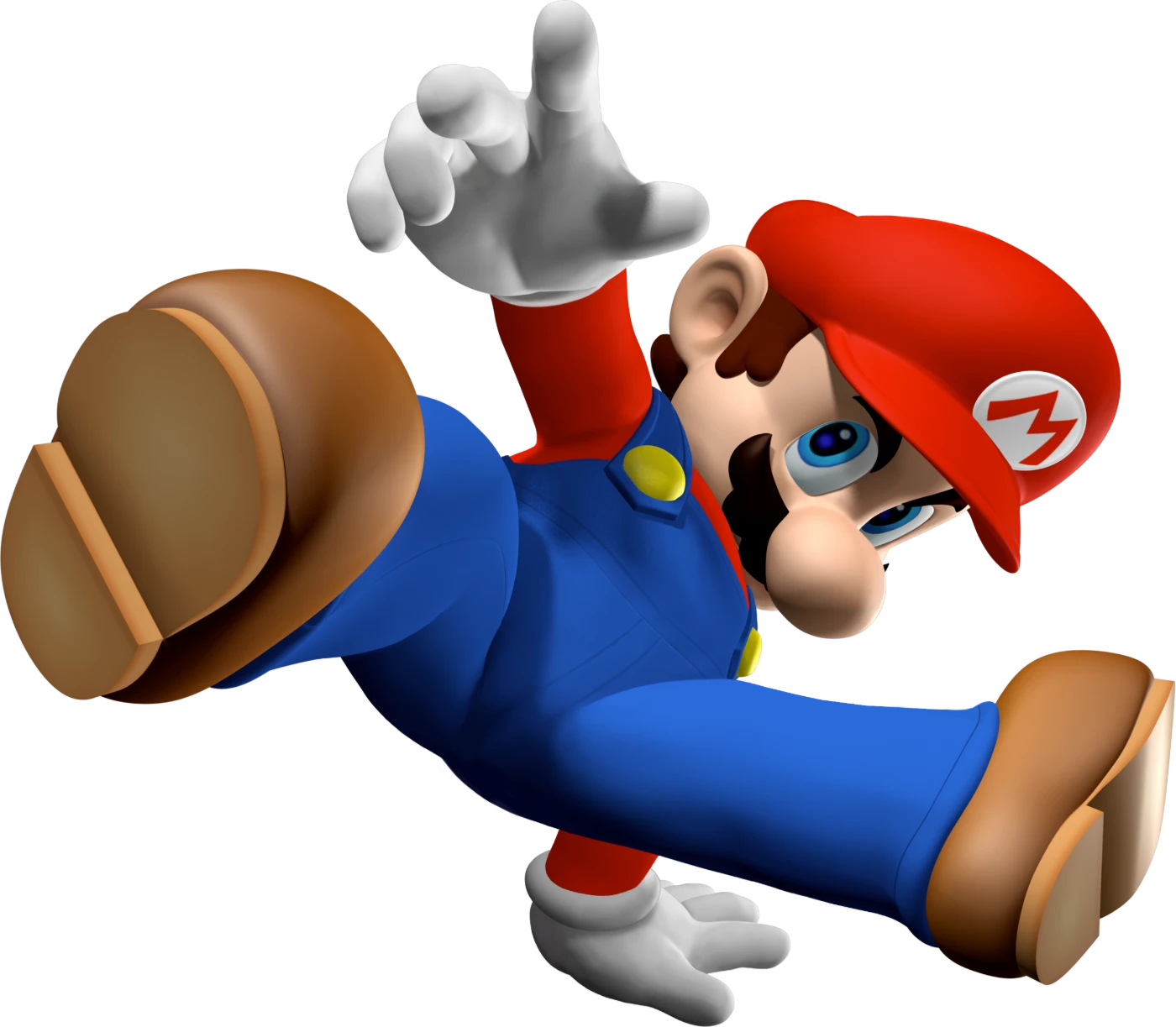 MarioPlayer 1
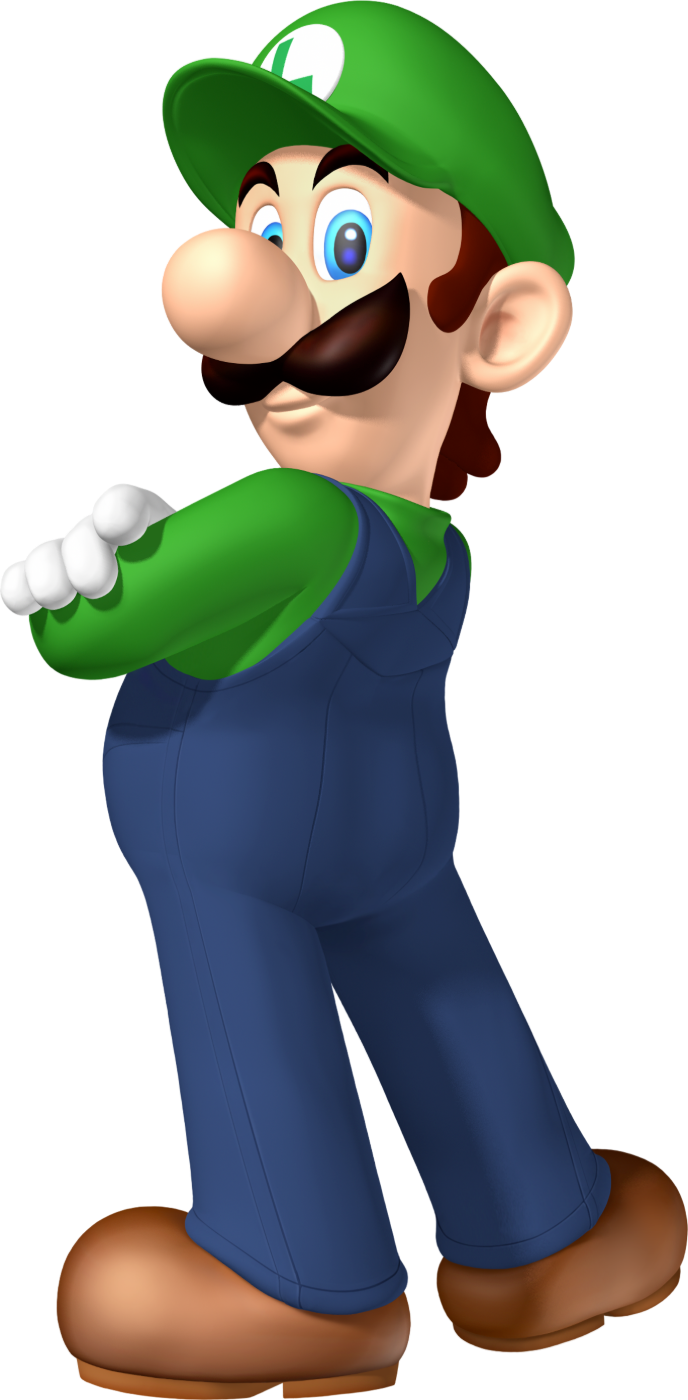 LuigiPlayer 2
 ToadNarrator and sidekick
 WaluigiWorld 1 boss
 LakituShopkeeper
 ToadetteHotel owner
 Pirate LakituWorld 2 rival
 Hammer Bros.World 3 gatekeepers
 WarioWorld 3 boss
 FreezieWorld 4 boss
 BowserFinal boss
 GoombaMany songsStep on it like a normal arrow.
 Koopa TroopaMany songsOne step to shell it, a Perfect second step to kick it back down and destroy an arrow.
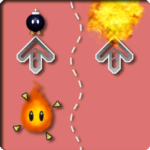 Bob-omb and PodobooMany songsMiss a Podoboo and a Bob-omb blast takes a big bite out of the meter; in dance-offs Podoboos bounce to the other player.
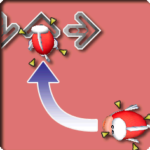 Cheep CheepMany songsCurves in from the side, leaving less time to read it.
 SpinyMany songsDo not step on it; red ones move faster than green.
 BlooperBlooper Bop and othersMiss a mini-Blooper and ink covers the bottom of the screen; the Big Blooper sends tentacles up it.
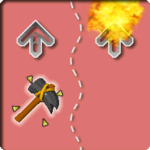 Hammer Bros.Hammer Dance onlyHammers that explode and sap the meter if missed.
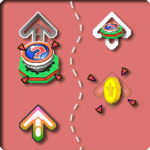 Coin SwitchMany songsTurns every arrow into a coin for a few seconds; better steps keep it going longer.
 BooBoo Boogie and othersA Giant Boo rises as you miss steps and hides the arrows; stamping mini-Boos pushes it back.
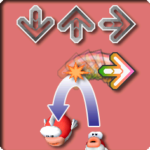 Cheep Cheep (Frozen Pipes)Frozen PipesPops up and changes an arrow’s direction halfway up the screen.
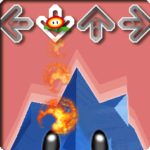 FreezieDeep Freeze onlyCovers the whole screen; Fire Flower steps fire fireballs to melt it.
 Ice SpinyWorld 4Works just like a Spiny, but without the colour clue.
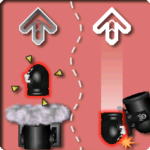 Bullet BillAlways Smiling onlyStamp them back into the launchers; three hits destroy a launcher.
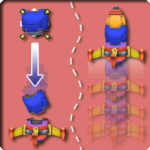 Rocket PartsBowser’s Castle onlyThree in a row fire a rocket at Bowser; land too few and the song is failed.