Game Boy Advance2005Nintendo SPD & Intelligent SystemsPuzzleTwo games on one cartridgeVertical ModeSingle-Pak demosMetacritic 74On Switch Online since July 2026
Dr. Mario & Puzzle League (Game Boy Advance)
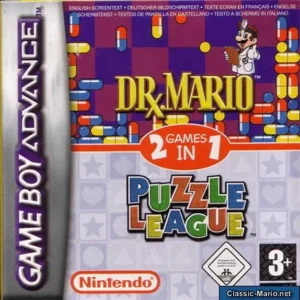
Two of Nintendo’s best puzzle games for the price of one. Dr. Mario & Puzzle League pairs a remade Dr. Mario, with the look of Dr. Mario 64, and Puzzle League, the panel-swapping game that began life on the Super Famicom as Panel de Pon and reached the West with Yoshi as Tetris Attack. Built by Nintendo SPD Group No. 2 with Intelligent Systems, it came out in Japan on 13 September 2005 as Dr. Mario & Panel de Pon, during Super Mario Bros.’ 20th-anniversary celebrations, then in Europe on 4 November, North America on 28 November and Australia on 1 December 2005. Dr. Mario has three modes and a shorter, 13-cell bottle; Puzzle League has six, including the original Puzzle sets. Both have an unlockable Vertical Mode played with the system turned on its side, and both can be played by two people from one cartridge. Metacritic averages 74, and in July 2026 it joined Game Boy Advance – Nintendo Classics on Nintendo Switch Online.
Developers:Nintendo SPD Group No. 2, Intelligent Systems
Publisher:Nintendo
Platform:Game Boy Advance
Genre:Puzzle (two games)
Japan:13 September 2005 (Dr. Mario & Panel de Pon)
Europe:4 November 2005
N. America:28 November 2005
Australia:1 December 2005
Players:1–2 (Game Link Cable; Single-Pak and Multi-Pak)
Music & sound:Morihiro Iwamoto (Dr. Mario); Michiko Yoshida (Puzzle League)
Modes:Dr. Mario: Classic, Vs. CPU, Flash. Puzzle League: Marathon, Timed, Line, Garbage, Puzzle, Vs. CPU
Ratings:ESRB E · PEGI 3 · CERO A
Re-release:Game Boy Advance – Nintendo Classics (Switch Online + Expansion Pack), 7–8 July 2026
Metacritic:74 (14 reviews)
Advertisement
Overview
In Japan the game was called Dr. Mario & Panel de Pon.
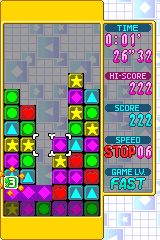
Dr. Mario & Puzzle League is a two-in-one Game Boy Advance cartridge. Pick Dr. Mario from the menu and you are dropping two-tone vitamin capsules on to red, blue and yellow viruses, lining up four of a colour to wipe them out. Pick Puzzle League and a wall of coloured panels creeps up from the bottom of the screen while you swap neighbours side to side to make lines of three before the stack reaches the top.
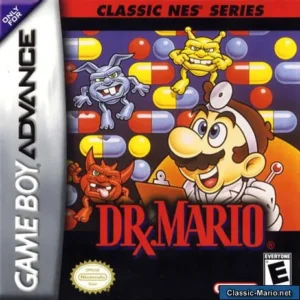
Neither half is a straight emulation. Unlike the Classic NES Series Dr. Mario of a year earlier, this Dr. Mario is a remake that borrows much of its look from Dr. Mario 64 and squeezes the bottle down to 13 cells tall to suit the small screen. Puzzle League, meanwhile, is a heavily reworked take on Intelligent Systems’ 1995 Super Famicom game Panel de Pon, with the plain look of the Game Boy Advance version that Japan’s GameCube Nintendo Puzzle Collection could send to a linked handheld.
In Japan the cartridge arrived on the same day as the Game Boy Micro and the 20th-anniversary reissue of Famicom Mini: Super Mario Bros. Reviewers everywhere found the same thing: very few extras, and two superb games.
Two scintillating puzzle titles in one game pak? That’s just what the doctor ordered! In Dr. Mario, stand guard against an odious collection of malignant viruses by throwing vitamins at them. Match the appropriate vitamin capsules to similarly coloured germs; form a row of four capsule halves or viruses of the same colour in a horizontal or vertical line to make that line vanish. Play against the computer or a friend – just don’t let those viruses prevail! With Puzzle League, you’ll need to match blocks before they reach all the way to the top of the screen, by forming chains of three or more blocks of the same colour. A plethora of different variations, plus a highly customisable range of settings, mean you’ll be able to set up a puzzle game that’s just right for you. And with countless puzzling permutations, the fun never stops!
— Official description (Nintendo UK, 2005)
Why it matters to Mario fansThis is the last time Dr. Mario came out on a cartridge or disc of his own; every later Dr. Mario game has been a download. It is also the handiest way to play Puzzle League on the move, with the original puzzles and a two-player game that needs only one cartridge.
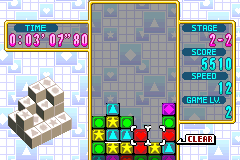
Choosing a game.Dr. Mario’s Classic mode.Puzzle League’s Marathon mode.
Quick Answers
Quick answers about Dr. Mario & Puzzle League.
What is Dr. Mario & Puzzle League?
A 2005 Game Boy Advance cartridge with two complete puzzle games: a remake of Dr. Mario in the style of Dr. Mario 64, and Puzzle League, a new version of Panel de Pon (Tetris Attack). More →
Who developed it?
Nintendo SPD Group No. 2 together with Intelligent Systems, the studio behind the original Panel de Pon. Satoru Iwata was executive producer and Hitoshi Yamagami produced both games. More →
When was it released?
Japan on 13 September 2005 (as Dr. Mario & Panel de Pon), Europe on 4 November, North America on 28 November and Australia on 1 December 2005. More →
What modes does it have?
Dr. Mario: Classic, Vs. CPU and Flash. Puzzle League: Marathon, Timed, Line, Garbage, Puzzle and Vs. CPU (in Garbage, Timed and Line flavours). Both games add an unlockable Vertical Mode. More →
How do you unlock Vertical Mode?
In Dr. Mario, beat level 20 in Classic. In Puzzle League, score at least 10,000 in Marathon, clear stage 6-5 in Line or clear puzzle 6-10. More →
Can two people play with one cartridge?
Yes. Both games support Multi-Pak link play, and a single cartridge can send a cut-down demo version of either game to a second Game Boy Advance. More →
Is it on Wii U or Switch?
It is not among the Game Boy Advance games released for the Wii U Virtual Console. It joined Game Boy Advance – Nintendo Classics for Nintendo Switch Online + Expansion Pack members on 7 July 2026 in North America and 8 July elsewhere. More →
Was it originally called something else?
Yes: it was first announced as Dr. Mario & Tetris Attack. More →
Games & Modes
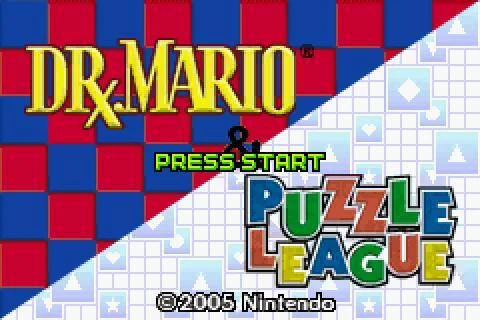
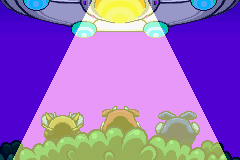
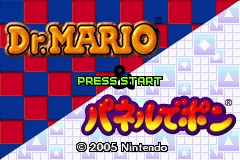
The menu that splits the cartridge in two.
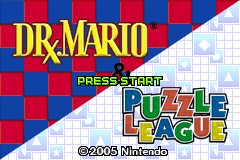
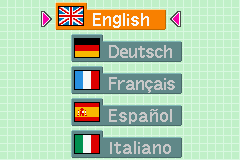
There is no story to speak of: a doctor with viruses to beat and a wall of panels to clear. The cartridge opens on a choice of game (and, in Europe, a choice of language), and each game then has its own menu of modes.
Dr. Mario’s modes
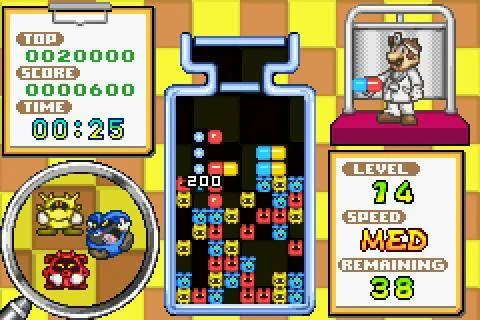
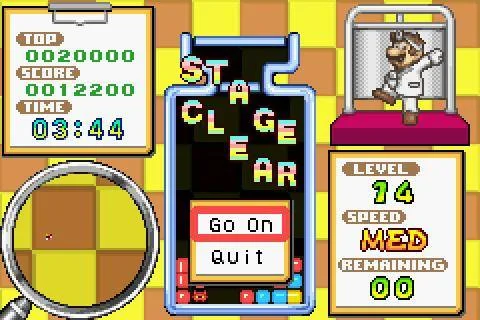
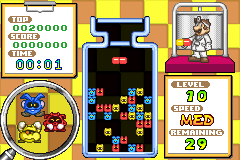
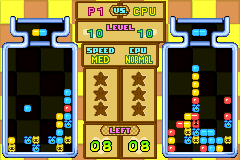
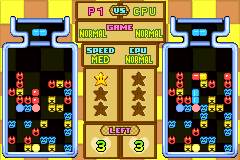
Classic is the original game: choose a level and a speed, clear the bottle, move up a level. Vs. CPU pits you against a computer doctor in a bottle of its own; you win by clearing your viruses first or when the computer’s bottle blocks up. Flash is a quicker race in which only three flashing viruses, one of each colour, need to be destroyed.
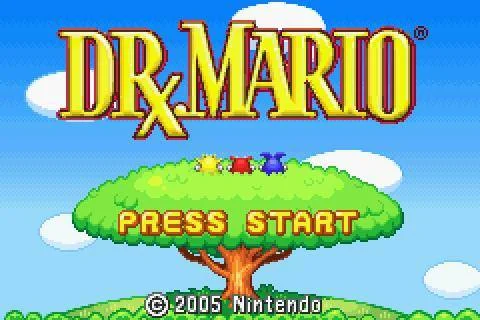
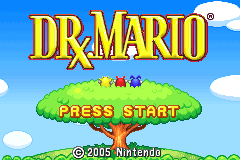
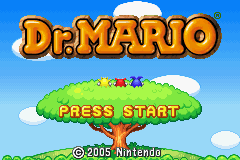
Dr. Mario’s title screen.Vs. CPU.Flash.
Dr. Mario’s intermission films
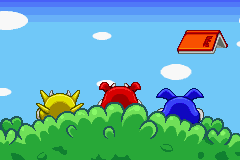
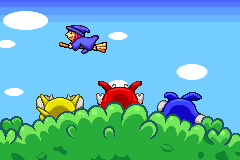
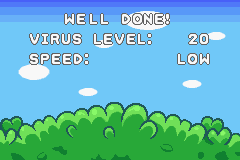
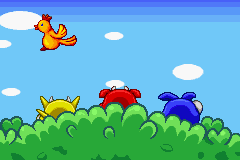
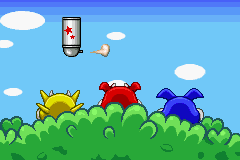
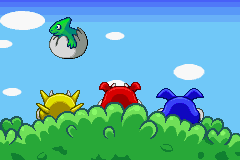
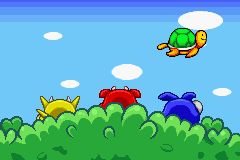
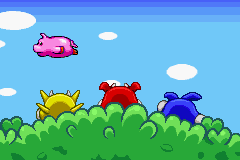
As in the NES original, clearing levels 5, 10, 15 and 20 on Med or Hi, and level 20 on Low, earns a short film, redrawn for this version, in which the three viruses perch in a tree as the original game’s flying objects go by above them.
Level 5, Med.Level 15, Hi.Level 20, Hi.
Puzzle League’s modes
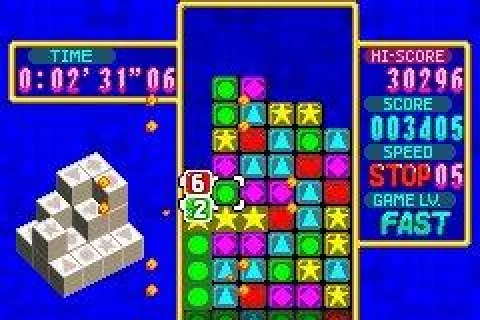
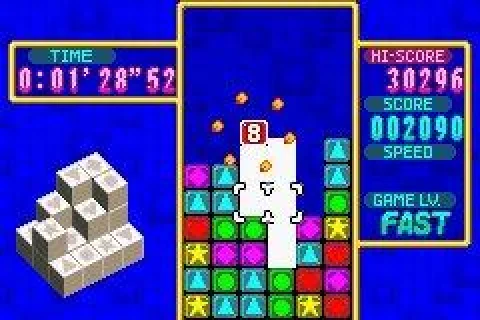
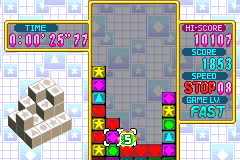
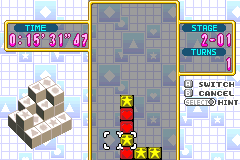
Marathon is endless: clear as much as you can before the stack tops out. Timed gives you two minutes to score as high as possible. Line is a stage-by-stage mode in which you clear every panel above a marked line. Garbage plays like Marathon but drops garbage blocks on you from above. Puzzle sets fixed layouts that must be cleared in a limited number of moves, using the original puzzles from the Super NES game; asking for a hint costs five minutes on the clock. Vs. CPU comes in three flavours, Vs. Garbage, Vs. Timed and Vs. Line, against an opponent of level 1 to 20.
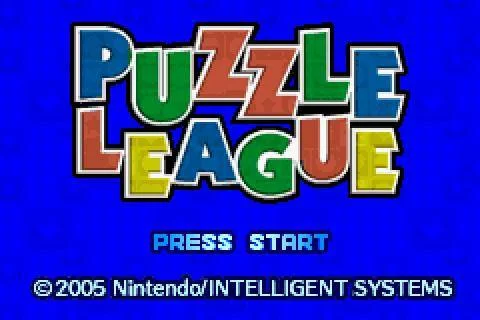
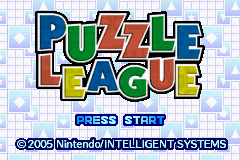
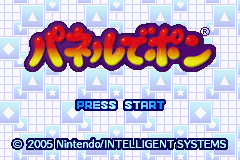
Puzzle League’s title screen.Puzzle mode.Line mode.
Every mode on the cartridge
Nine modes across the two games, plus Vertical Mode.
ClassicDr. MarioClear the bottle, climb the levels; films at 5, 10, 15 and 20.
Vs. CPUDr. MarioOut-cure a computer opponent.
FlashDr. MarioDestroy the three flashing viruses to win.
MarathonPuzzle LeagueEndless survival against the rising stack.
LinePuzzle League · Train optionClear everything above the line, stage by stage.
GarbagePuzzle LeagueMarathon with garbage falling from above.
PuzzlePuzzle League · Train optionThe original puzzles, in a limited number of moves.
Vs. CPUPuzzle League · levels 1–20Vs. Garbage, Vs. Timed or Vs. Line.
Vertical Mode is unlocked separately for each game; see Cheats & secrets.
Advertisement
Gameplay & Controls
Two puzzlers, two rulebooks. Both are played with the Control Pad and buttons in the usual way and both share a menu, a two-player link and the hidden Vertical Mode. Here is how each works on this cartridge.
Dr. Mario: what changed
The rules are the classic ones: capsules made of two coloured halves fall into a medicine bottle, four or more of a colour in a row or column disappear, and a level ends when the last virus does. The game is lost if the pile blocks the neck of the bottle. Our Dr. Mario page has the full rules.
The bottle is the big change. It is 13 cells tall instead of the usual 16, the same squat shape as the unlockable Dr. Wario minigame in WarioWare, Inc., so the virus counts are different from every other Dr. Mario: three viruses at level 0, rising to 68 at level 20 and beyond. Its look follows Dr. Mario 64. In two-player games, clearing several lines in one move drops loose capsule halves on your rival, and how many depends on how many lines you cleared.
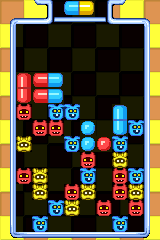
A 13-cell bottle in Classic mode.
Puzzle League: how it plays
Puzzle League turns the falling-block idea upside down. A stack of coloured panels rises steadily from the bottom of the well, and a two-panel-wide cursor swaps any pair of side-by-side panels. Line up three or more of a colour, horizontally or vertically, and they flash and vanish. Clearing more than three at once is a combo; when falling panels land in a fresh match it is a chain; and both briefly halt the rising stack and score big bonuses. Let any panel touch the top and it is game over.
Against an opponent, combos and chains drop slabs of garbage blocks on the other player’s stack. This version is heavily changed from the 1995 original, with simpler graphics close to the Game Boy Advance version found in Nintendo Puzzle Collection.
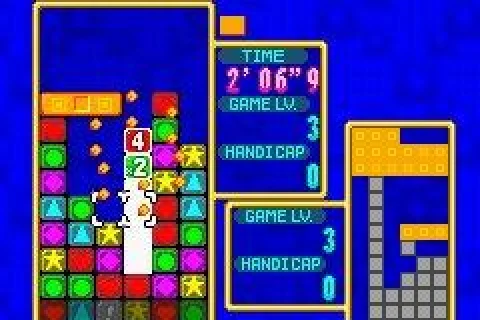
Garbage blocks on the way in a Vs. CPU match.
Speeds, levels and training
Dr. Mario offers the familiar virus level and three speeds before each game. In Puzzle League you can set the speed of the rising panels in every mode except Line and Puzzle, which instead have a Train option for replaying any stage you have already cleared. The computer opponent in Puzzle League’s Vs. CPU can be set anywhere from level 1 to 20.
Vertical Mode
Each game hides a Vertical Mode, played with the Game Boy Advance turned 90 degrees anticlockwise so the playing field fills the long side of the screen, with the controls remapped to match. In Dr. Mario only Classic can be played this way, and the screen shows nothing but the bottle; in Puzzle League it covers Marathon, Timed and Garbage.
Dr. Mario in Vertical Mode.Puzzle League’s Timed mode in Vertical Mode.
Two players
Both games can be played head to head over the Game Link Cable. With two cartridges you get the full game on both systems; with one, the cartridge sends a demo version to the second Game Boy Advance. The Dr. Mario demo has reduced animation and the NES music, and the Puzzle League demo, the same one found in Nintendo Puzzle Collection, has a small animal character who reacts to the panels you clear.
Viruses, capsules and panels
The pieces of both games, in this cartridge’s artwork.
Red virusDr. Mario: cleared by red capsule halves.
Blue virusDr. Mario: cleared by blue halves.
Yellow virusDr. Mario: cleared by yellow halves.
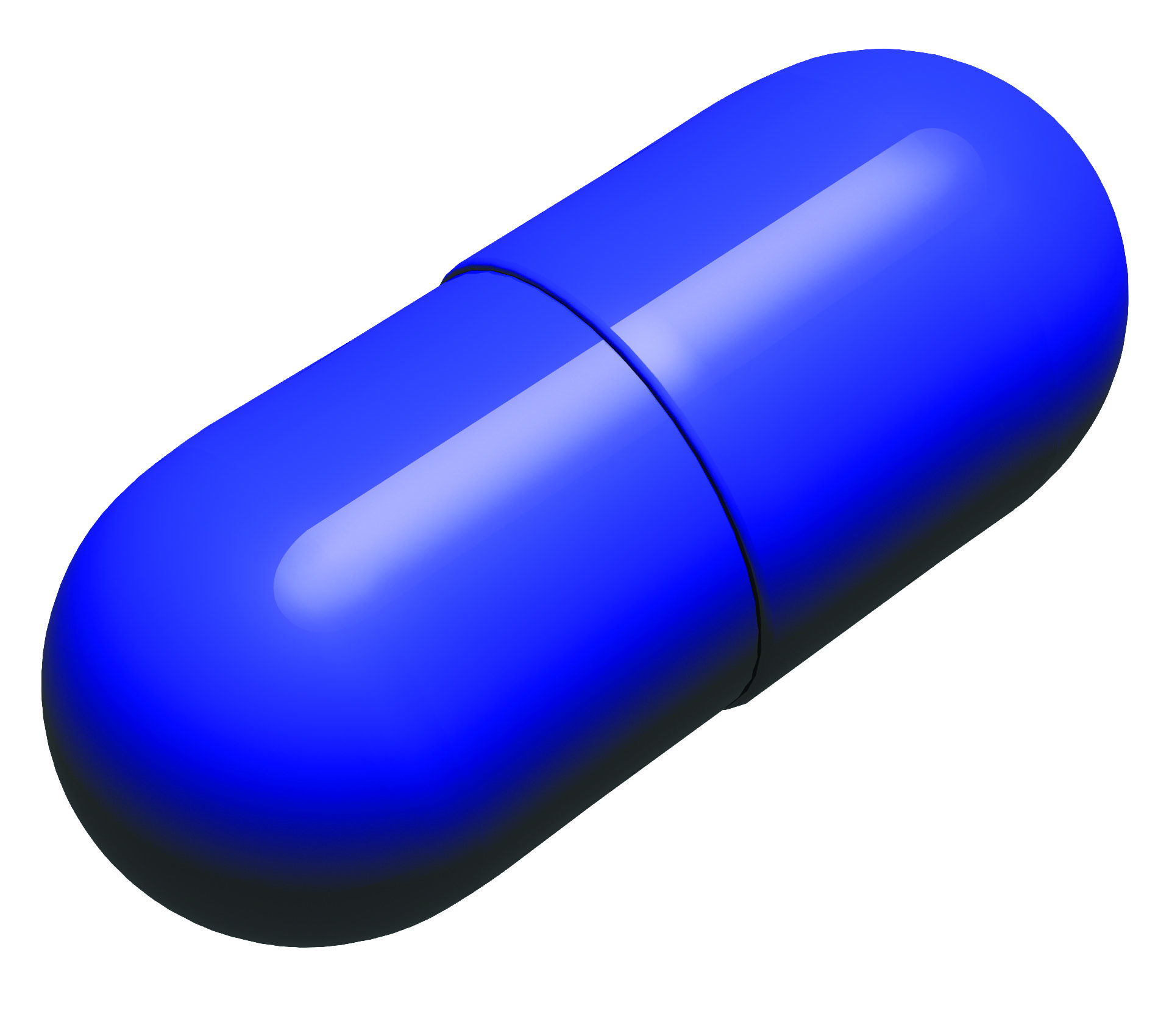
Vitamin capsuleDr. Mario: two halves, any mix of the three colours.
Red panelPuzzle League: match three or more.
Yellow panelPuzzle League.
Green panelPuzzle League.
Cyan panelPuzzle League.
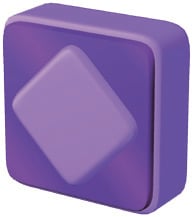
Purple panelPuzzle League.
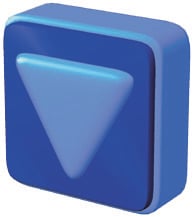
Blue panelPuzzle League.
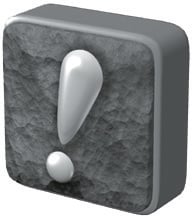
Grey panelPuzzle League.
Characters
Dr. Mario’s small cast, in the artwork made for this cartridge. Puzzle League has no characters of its own here, only panels.
Character
Who they are
In this game
Abilities & notes
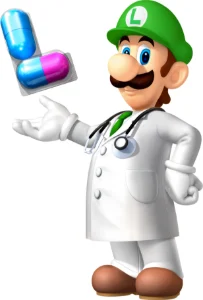
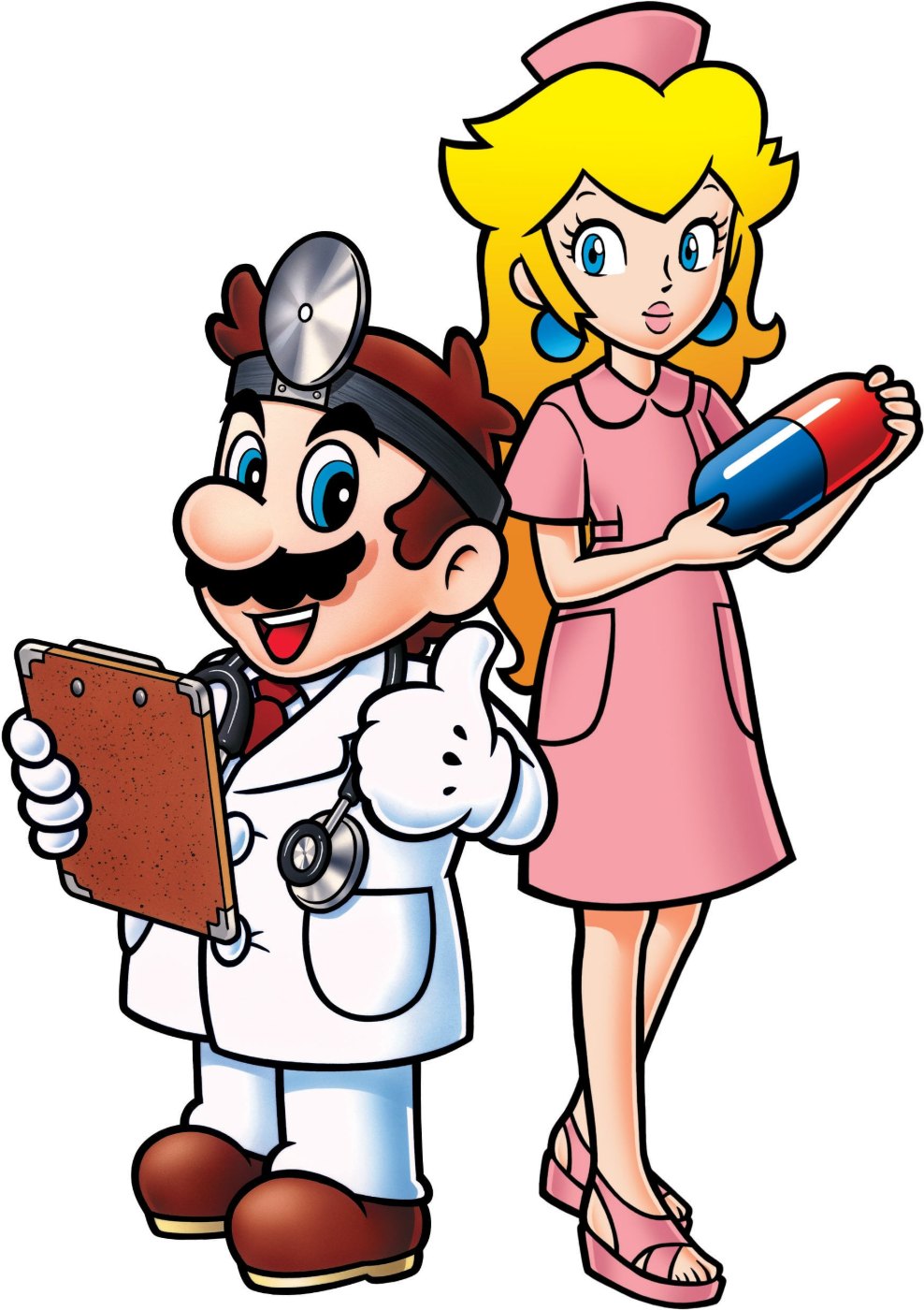
Dr. MarioThe doctor
Mario in a white coat, as styled for Dr. Mario 64.
Throws the capsules into the bottle in every Dr. Mario mode.
Not in Puzzle League
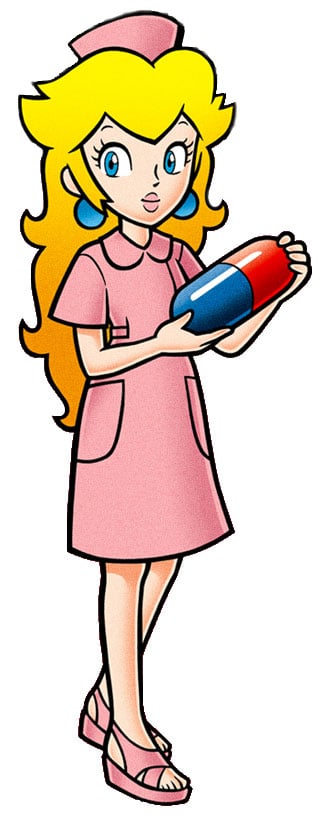
Nurse ToadstoolArtwork
Princess Toadstool as a nurse.
Appears in the game’s artwork beside Dr. Mario.
Not playable
Red virusGerm
One of the three viruses.
Cleared by red; stars in the intermission films.
—
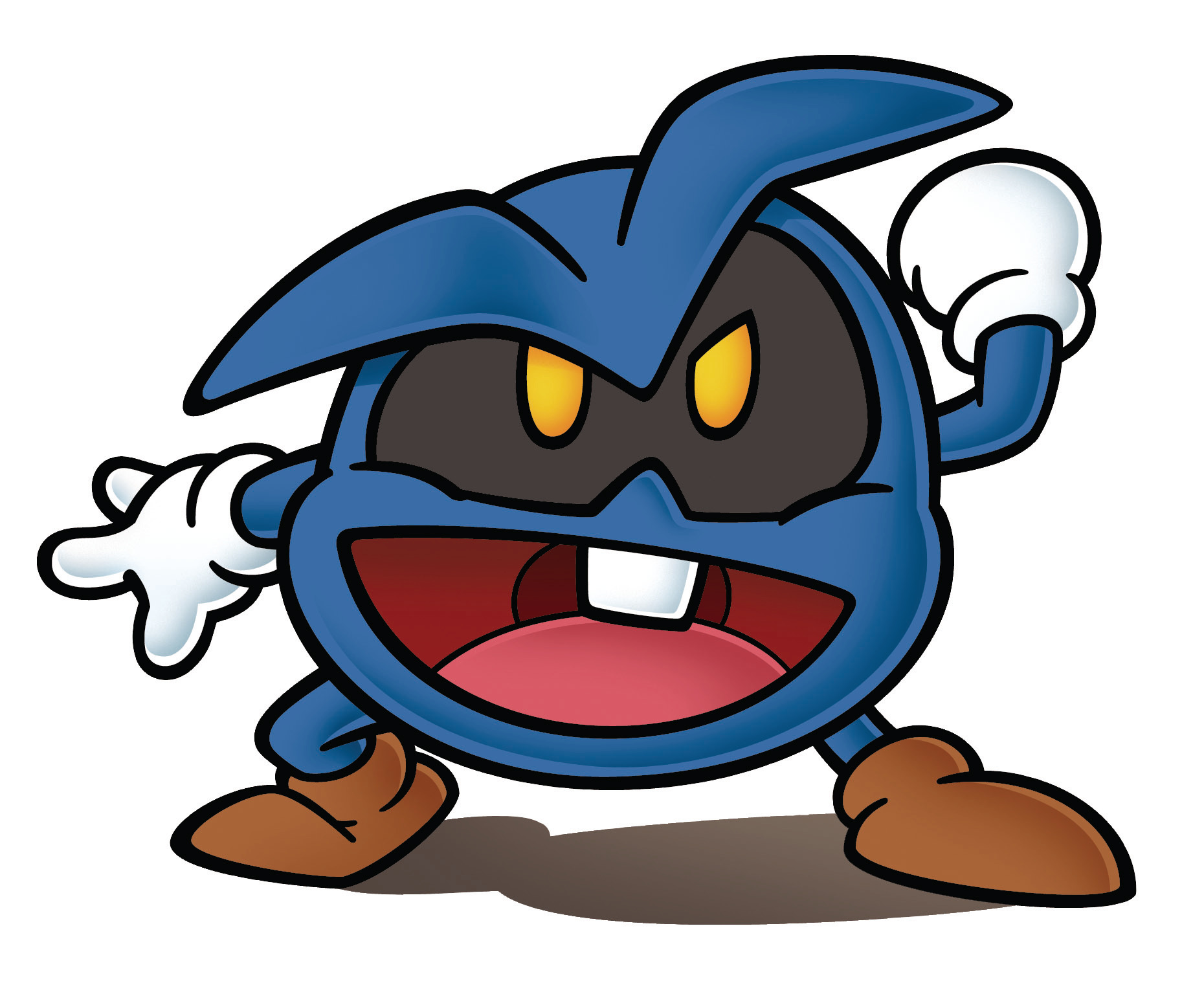
Blue virusGerm
One of the three viruses.
Cleared by blue.
—
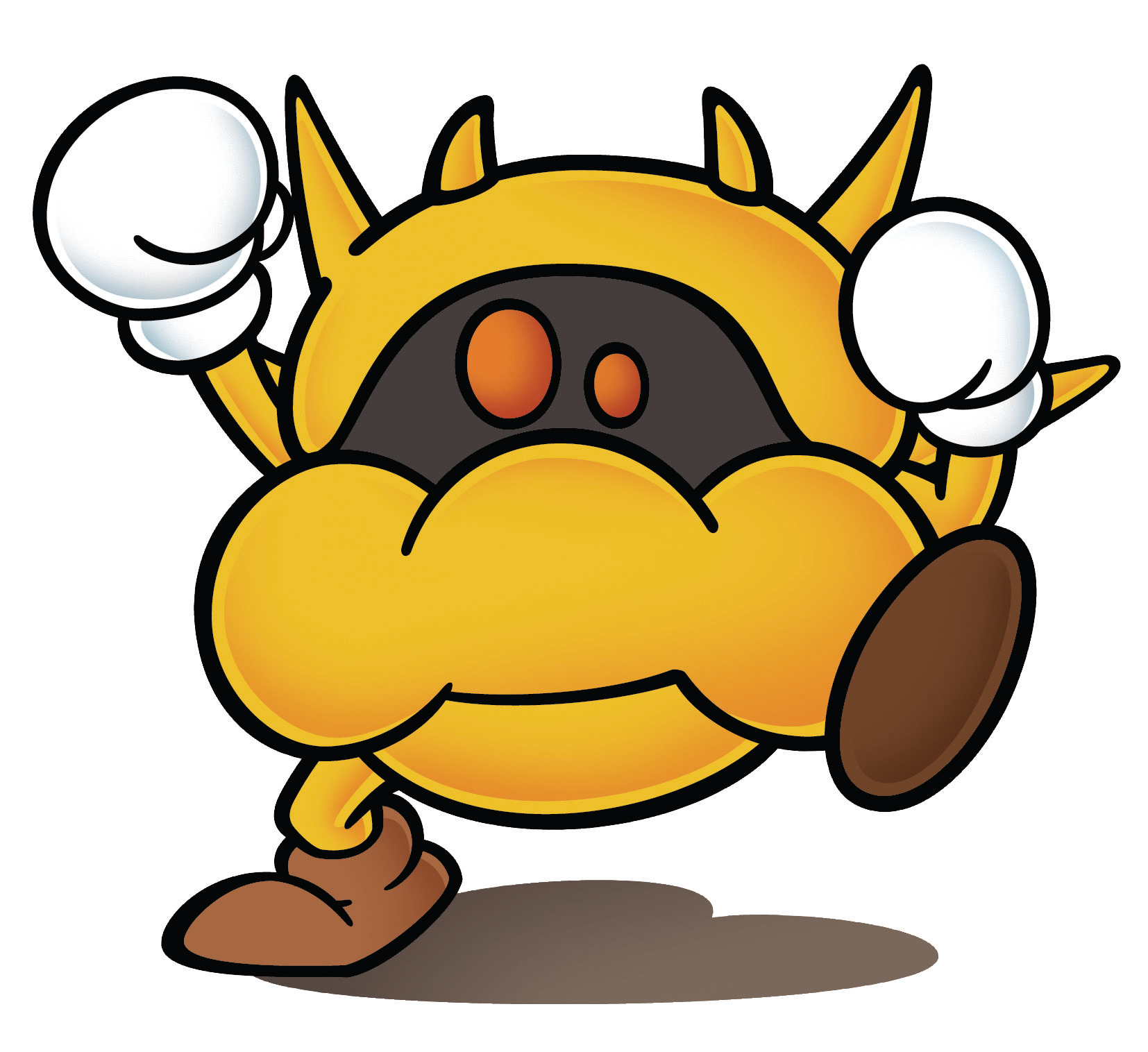
Yellow virusGerm
One of the three viruses.
Cleared by yellow.
—
Key staff
From the game’s credits. Each game had its own team.
Satoru IwataExecutive producerBoth games.
Hitoshi YamagamiProducerBoth games; with Yasuhiro Minamoto (Dr. Mario) and Ryoichi Kitanishi (Puzzle League).
Azusa TajimaDirector, Dr. MarioCredited as an assistant on Dr. Mario 64.
Makoto UemuraDirector, Dr. MarioCo-director.
Koichi Kitano, Naotaka NodaProgrammers, Dr. Mario
Morihiro IwamotoMusic, Dr. Mario
Kazuya Yoshioka, Takashi ItoArtwork
Masaki TawaraDirector, Puzzle League
Toshihiro NishiiDirector and programmer, Puzzle LeagueWith Motomu Chikaraishi on programming.
Eiko HiraoDesign, Puzzle League
Michiko YoshidaSound, Puzzle League
Advertisement
How It Was Made
Two teams, one cartridge
The game was developed by Nintendo SPD Group No. 2 and Intelligent Systems, with each half credited to its own team under producer Hitoshi Yamagami and executive producer Satoru Iwata. Dr. Mario was directed by Azusa Tajima, who had been credited as an assistant on Dr. Mario 64, and Makoto Uemura; Puzzle League by Masaki Tawara and Toshihiro Nishii. Intelligent Systems, which created Panel de Pon, appears in Puzzle League’s copyright notice.
From Panel de Pon to Puzzle League
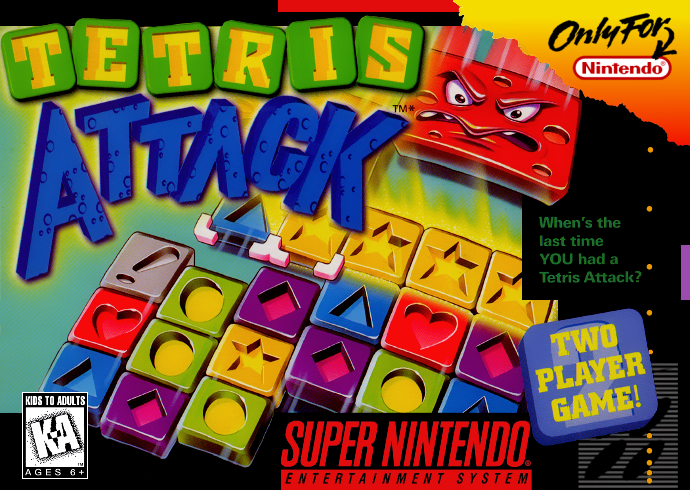
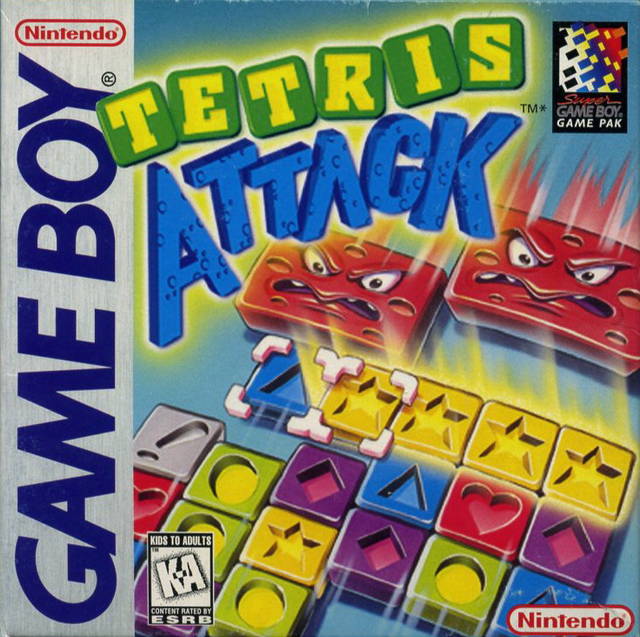
Tetris Attack (1996), the Yoshi-themed Western version of Panel de Pon.
Puzzle League’s story starts with Panel de Pon, an Intelligent Systems game for the Super Famicom released in Japan on 27 October 1995 and starring a young fairy called Lip. It was not sold abroad in that form. Instead Nintendo re-dressed it with Yoshi and his friends and released it as Tetris Attack in North America in August 1996 and in Europe that November, alongside a Game Boy version programmed by Nintendo R&D1. Reportedly, Rare had earlier been asked to localise it with Killer Instinct characters before the idea was dropped in favour of a Mario theme.
Later Western releases took the name Puzzle League, beginning with Pokémon Puzzle League on the Nintendo 64, and in 2003 Japan’s GameCube Nintendo Puzzle Collection carried a simplified Game Boy Advance version. That is the look this cartridge’s Puzzle League builds on. The cartridge was first announced as Dr. Mario & Tetris Attack and shipped as Dr. Mario & Puzzle League.
A Super Mario anniversary release
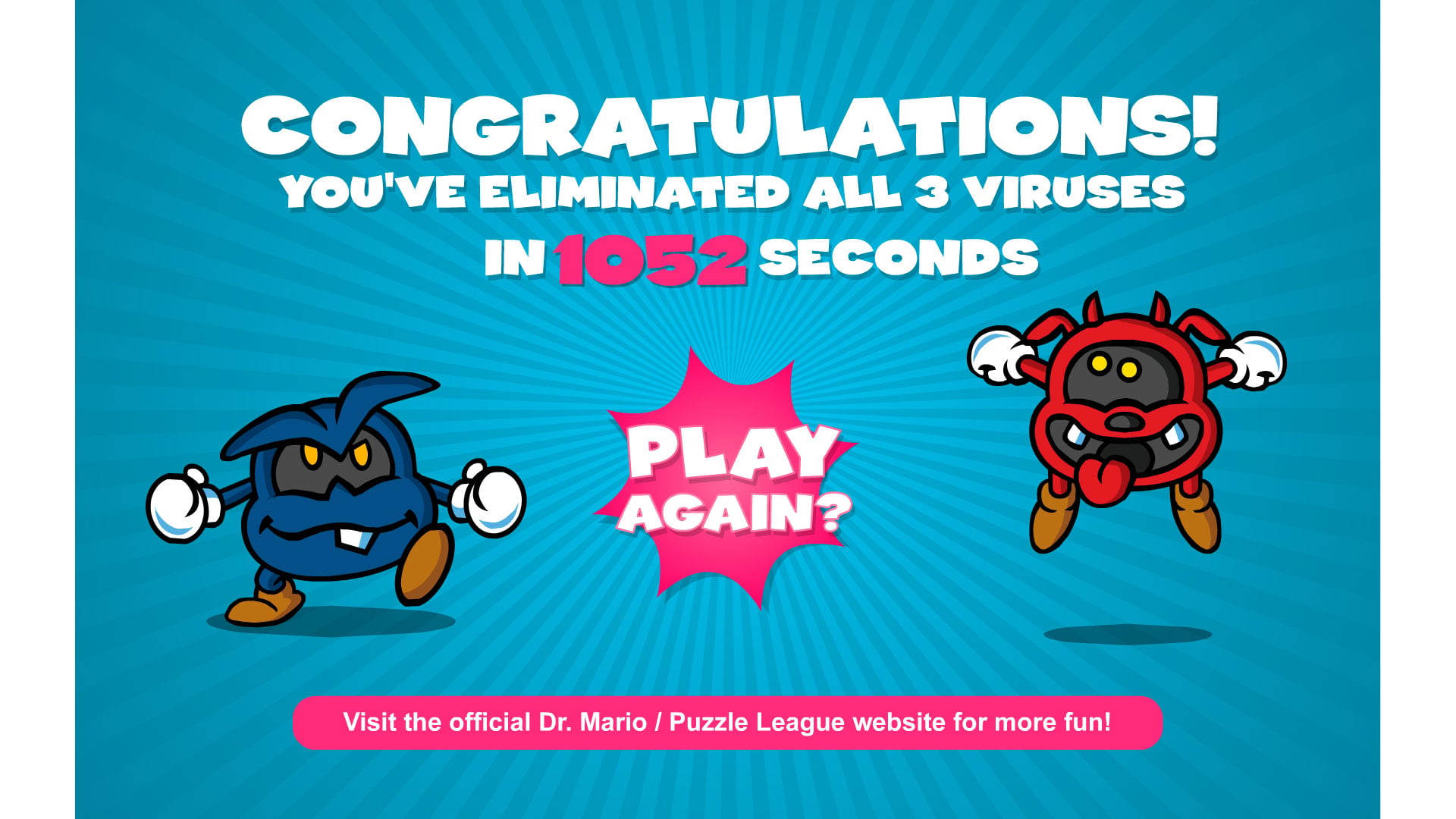
Dr. Mario Vitamin Toss, the web tie-in.
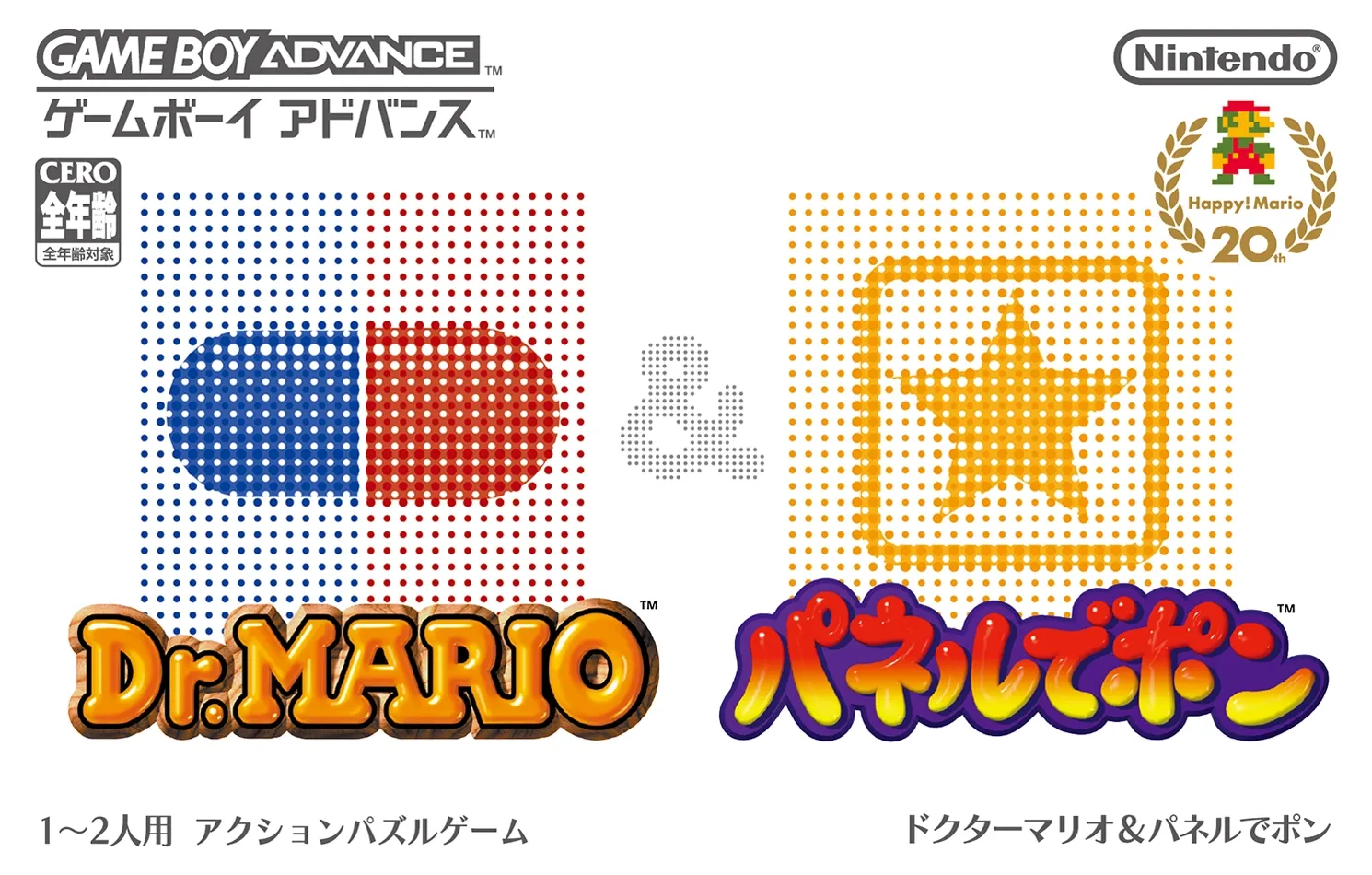
In Japan, Dr. Mario & Panel de Pon came out on 13 September 2005, twenty years to the day after Super Mario Bros., and it is usually counted among the releases of that anniversary. To promote the game, Nintendo also put out a browser game, Dr. Mario Vitamin Toss, on its Nintendo Arcade site in 2005.
Cheats & Secrets
The cartridge has no codes, but it does have unlockables.
Vertical Mode for Dr. Mario
Beat level 20 in Classic mode. Vert then appears in the menu, and Classic can be played with the system on its side.
Vertical Mode for Puzzle League
Do any one of these: score at least 10,000 points in Marathon, clear stage 6-5 in Line, or clear puzzle 6-10 in Puzzle. Marathon, Timed and Garbage can then be played vertically.
Train mode
In Line and Puzzle, any stage you have already cleared can be replayed for practice from the Train option.
Puzzle hints
Stuck on a puzzle? A hint is available, but it adds five minutes to your time.
Videos
Nintendo’s trailer for the game’s arrival on Nintendo Switch Online, and a fan review of the original cartridge.
Official trailer for the July 2026 additions to Nintendo Classics, Dr. Mario & Puzzle League among them.
Third-party video review.
Trivia & Interesting Facts
It is reportedly the last Dr. Mario game to get a physical release; every later entry in the series has been download-only.
Its 13-cell bottle is the same height as the one in the unlockable Dr. Wario minigame from WarioWare, Inc.
Because the bottle is shorter, no other Dr. Mario uses the same virus counts: this one starts at three viruses on level 0 and tops out at 68.
The game was announced as Dr. Mario & Tetris Attack before taking the Puzzle League name, which first appeared in the West with Pokémon Puzzle League.
The single-cartridge Puzzle League demo is the same one that Japan’s GameCube Nintendo Puzzle Collection sent to the Game Boy Advance.
The single-cartridge Dr. Mario demo uses the NES music rather than the cartridge’s own soundtrack.
The European release opens with a language selection screen that the other versions do not have.
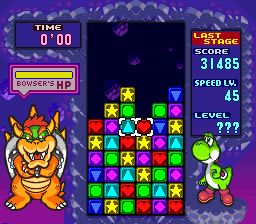
Yoshi versus Bowser in Tetris Attack.Tetris Attack, Puzzle League’s Western ancestor, swapped Panel de Pon’s fairies for Yoshi and his friends, and put Bowser among the opponents.
Japan’s release fell on 13 September 2005, the 20th anniversary of Super Mario Bros.
Regional Box Art
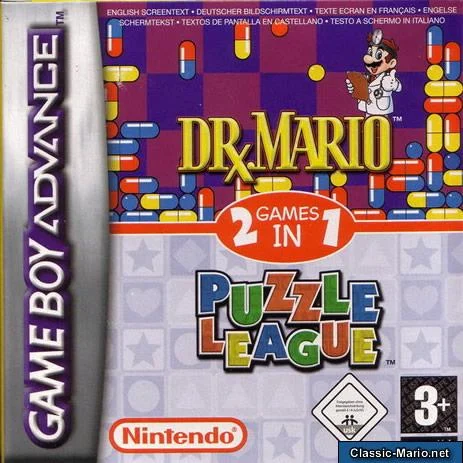
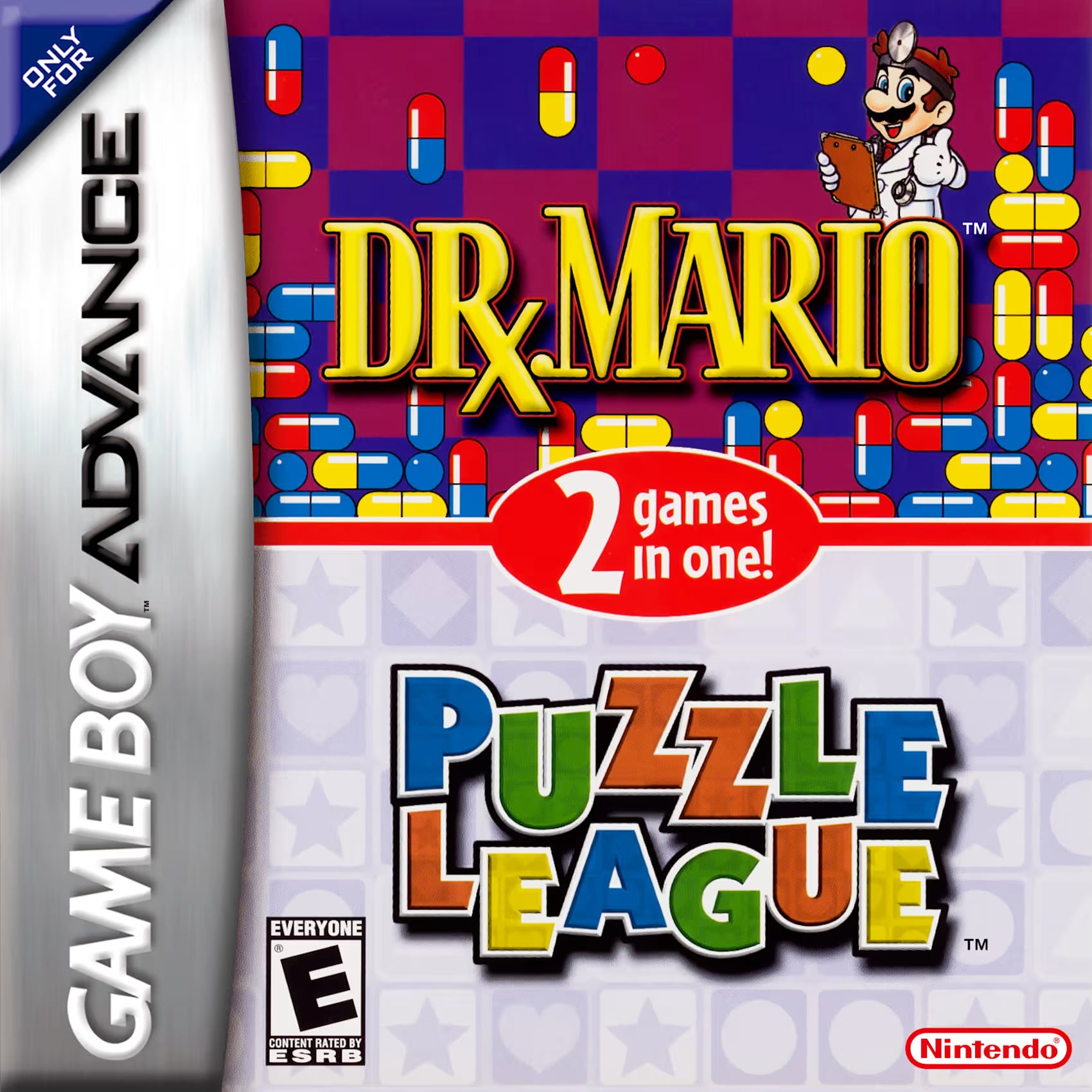
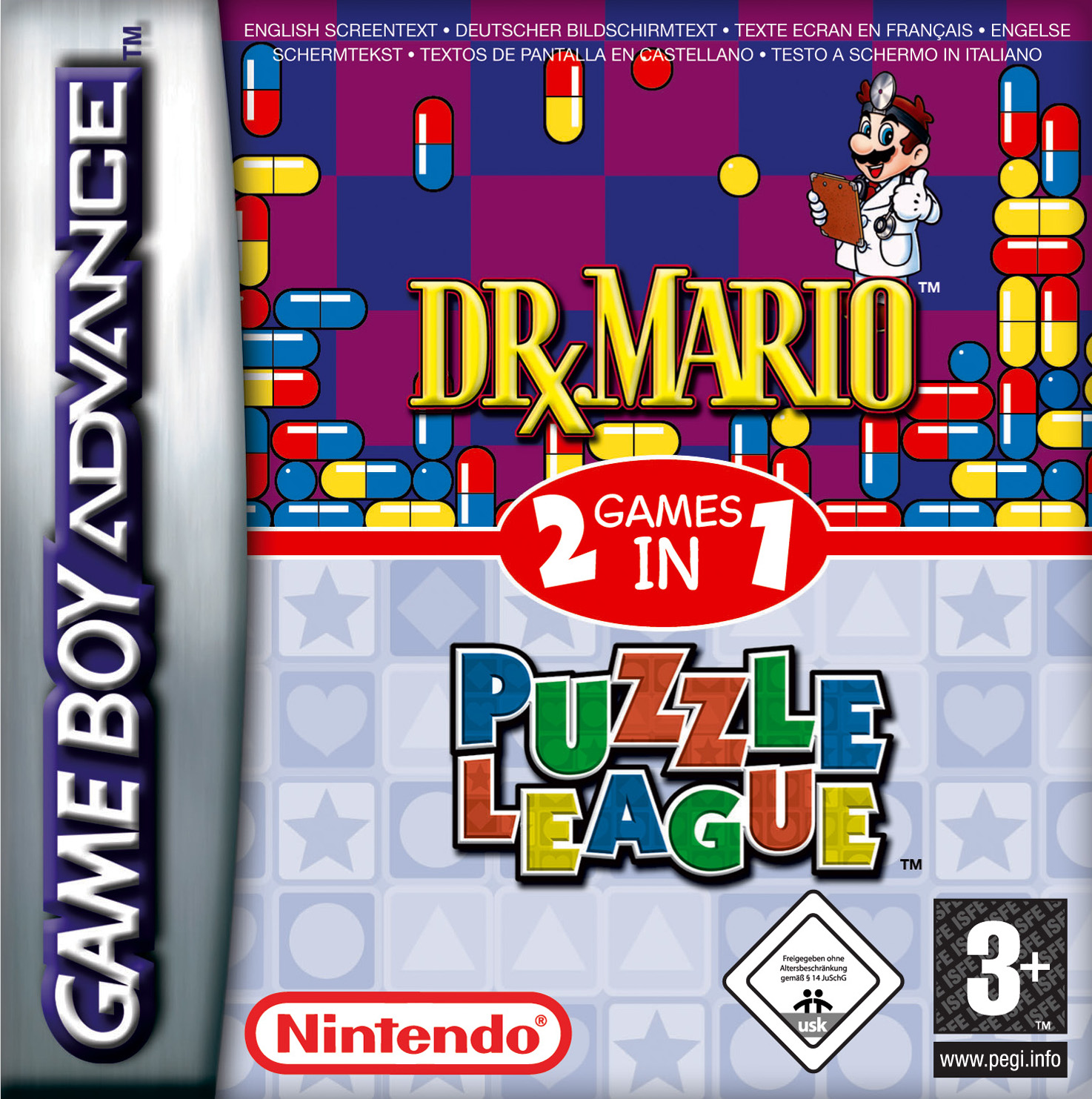
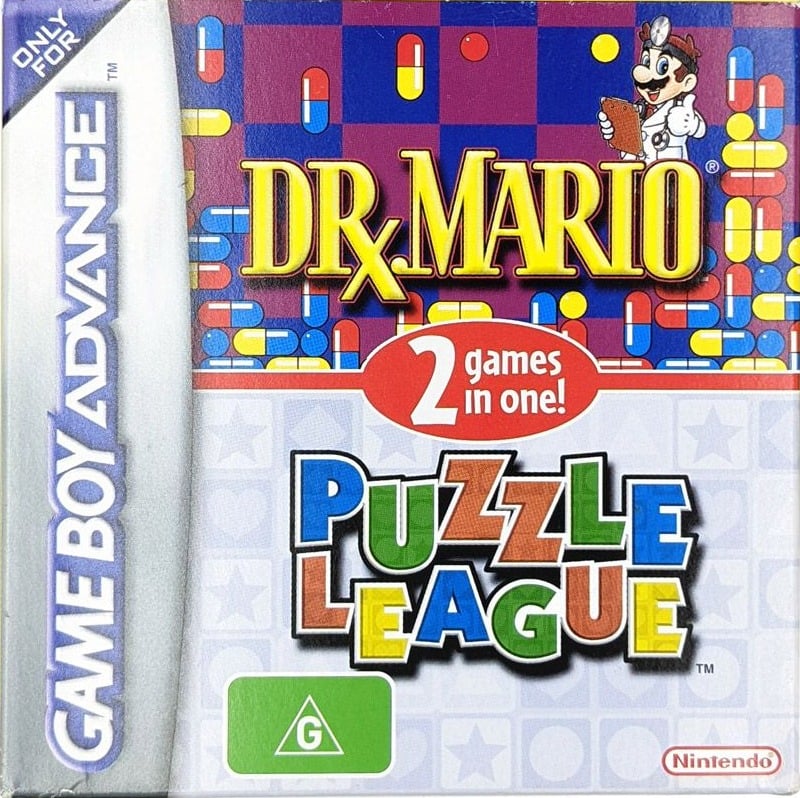
Four covers, including Japan’s Dr. Mario & Panel de Pon.
North America (2005)Europe (2005, German print)Australasia (2005)Japan (2005, Dr. Mario & Panel de Pon)
Screenshots
More from both games and the Japanese and European versions.
Europe’s language selection.The Japanese game-selection screen.Dr. Mario’s Japanese title screen.Panel de Pon’s Japanese title screen.Puzzle League’s Timed mode.Puzzle League’s Garbage mode.The level 20 Low film.The level 10 Med film.The level 15 Med film.The level 20 Med film.The level 5 Hi film.The level 10 Hi film.
Artwork & Media Gallery
Logos and artwork made for the cartridge.
The vertical logo.The horizontal logo.Vitamin capsule artwork.More capsule artwork.Dr. Mario’s sprite.Tetris Attack on Game Boy (1996).
Legacy & Re-releases
Where the cartridge sits in the histories of two puzzle series.
Release history
Panel de Pon27 October 1995Super Famicom, Japan, by Intelligent Systems.
Tetris Attack1996Super NES and Game Boy, with Yoshi; North America in August, Europe on 28 November.
Nintendo Puzzle Collection7 February 2003GameCube, Japan: Dr. Mario and Panel de Pon, both sendable to a Game Boy Advance.
Japan13 September 2005Dr. Mario & Panel de Pon.
Europe4 November 2005
North America28 November 2005
Australia1 December 2005
Game Boy Advance – Nintendo Classics7–8 July 2026Nintendo Switch Online + Expansion Pack: 7 July in North America, 8 July elsewhere.
The cartridge had no Wii U Virtual Console release that we could find, so its first re-release came more than twenty years later, when Nintendo added it to Game Boy Advance – Nintendo Classics for Expansion Pack members in July 2026.
Reviews & Sales
Sales
Nintendo has not published a sales figure for Dr. Mario & Puzzle League, and we found no reliable published estimate, so this page does not give one.
74Metacritic, 14 reviews
76.44%GameRankings
What the critics said
Metacritic shows 74 from 14 reviews. Scores as listed by Metacritic unless noted.
The verdict was close to unanimous: two brilliant puzzle games, presented with almost no effort. IGN regretted how little effort went into the presentation but agreed that both games stand up on their own, and GameSpot made it a must-have for puzzle fans despite the plain looks. Puzzle League generally won the head-to-head, with BonusStage praising its extra modes and options over the simpler Dr. Mario. Nintendo World Report’s only real complaint was some image-size problems in Dr. Mario, while Eurogamer loved the games but balked at paying full price for them.
SLB User Reviews
Dr. Mario & Puzzle League (Game Boy Advance) has yet to receive a community review on Super Luigi Bros.
If you’ve played Dr. Mario & Puzzle League (Game Boy Advance) and would like to submit a review, please get in touch.
More from the Super Luigi Bros Guide
These picture lists come from the earlier Super Luigi Bros guide to Dr. Mario & Puzzle League (Game Boy Advance) and are kept here in full.
Dr. Mario through the years
The Dr. Mario games covered on Super Luigi Bros, with the year each first came out. The SNES remake in Tetris & Dr. Mario (1994) is covered on the Dr. Mario series page.
To provide the best experiences, we use technologies like cookies to store and/or access device information. Consenting to these technologies will allow us to process data such as browsing behavior or unique IDs on this site. Not consenting or withdrawing consent, may adversely affect certain features and functions.
Functional
Always active
The technical storage or access is strictly necessary for the legitimate purpose of enabling the use of a specific service explicitly requested by the subscriber or user, or for the sole purpose of carrying out the transmission of a communication over an electronic communications network.
Preferences
The technical storage or access is necessary for the legitimate purpose of storing preferences that are not requested by the subscriber or user.
Statistics
The technical storage or access that is used exclusively for statistical purposes.The technical storage or access that is used exclusively for anonymous statistical purposes. Without a subpoena, voluntary compliance on the part of your Internet Service Provider, or additional records from a third party, information stored or retrieved for this purpose alone cannot usually be used to identify you.
Marketing
The technical storage or access is required to create user profiles to send advertising, or to track the user on a website or across several websites for similar marketing purposes.

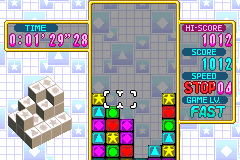 TimedPuzzle LeagueTwo minutes, highest score wins.
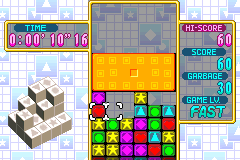 GarbagePuzzle LeagueMarathon with garbage falling from above.
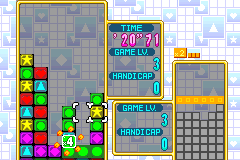 Vs. CPUPuzzle League · levels 1–20Vs. Garbage, Vs. Timed or Vs. Line.
 Red virusDr. Mario: cleared by red capsule halves.
 Blue virusDr. Mario: cleared by blue halves.
 Yellow virusDr. Mario: cleared by yellow halves.
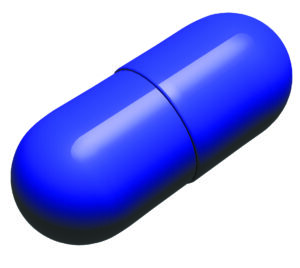 Vitamin capsuleDr. Mario: two halves, any mix of the three colours.
 Red panelPuzzle League: match three or more.
 Yellow panelPuzzle League.
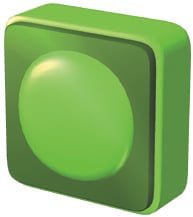 Green panelPuzzle League.
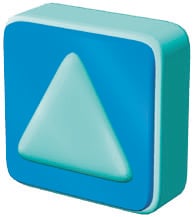 Cyan panelPuzzle League.
 Purple panelPuzzle League.
 Blue panelPuzzle League.
 Grey panelPuzzle League.
 Dr. MarioThe doctor
 Nurse ToadstoolArtwork
 Red virusGerm
 Blue virusGerm
 Yellow virusGerm



 Dr. Mario & Puzzle League2005 · Game Boy Advance