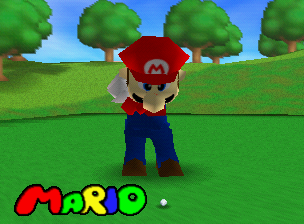
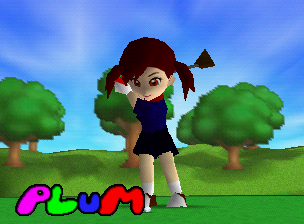
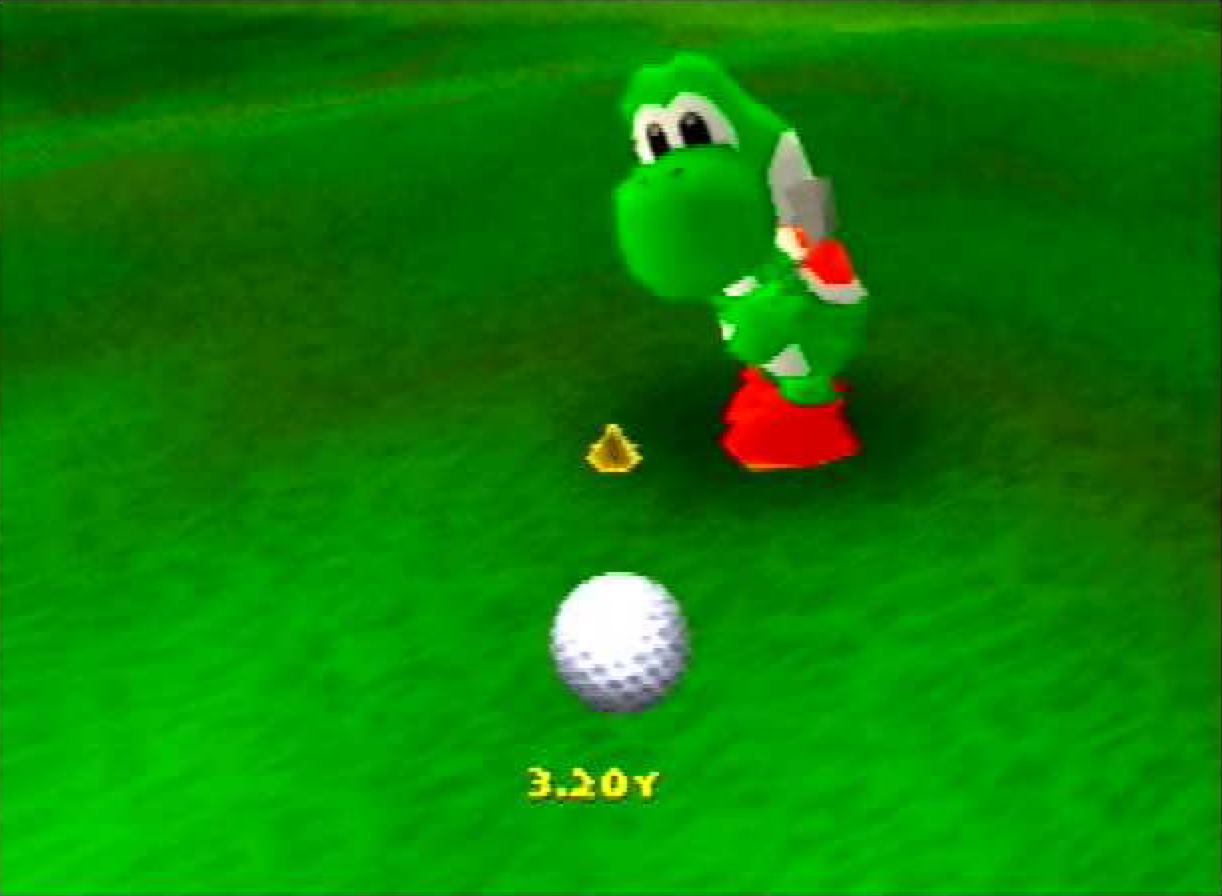
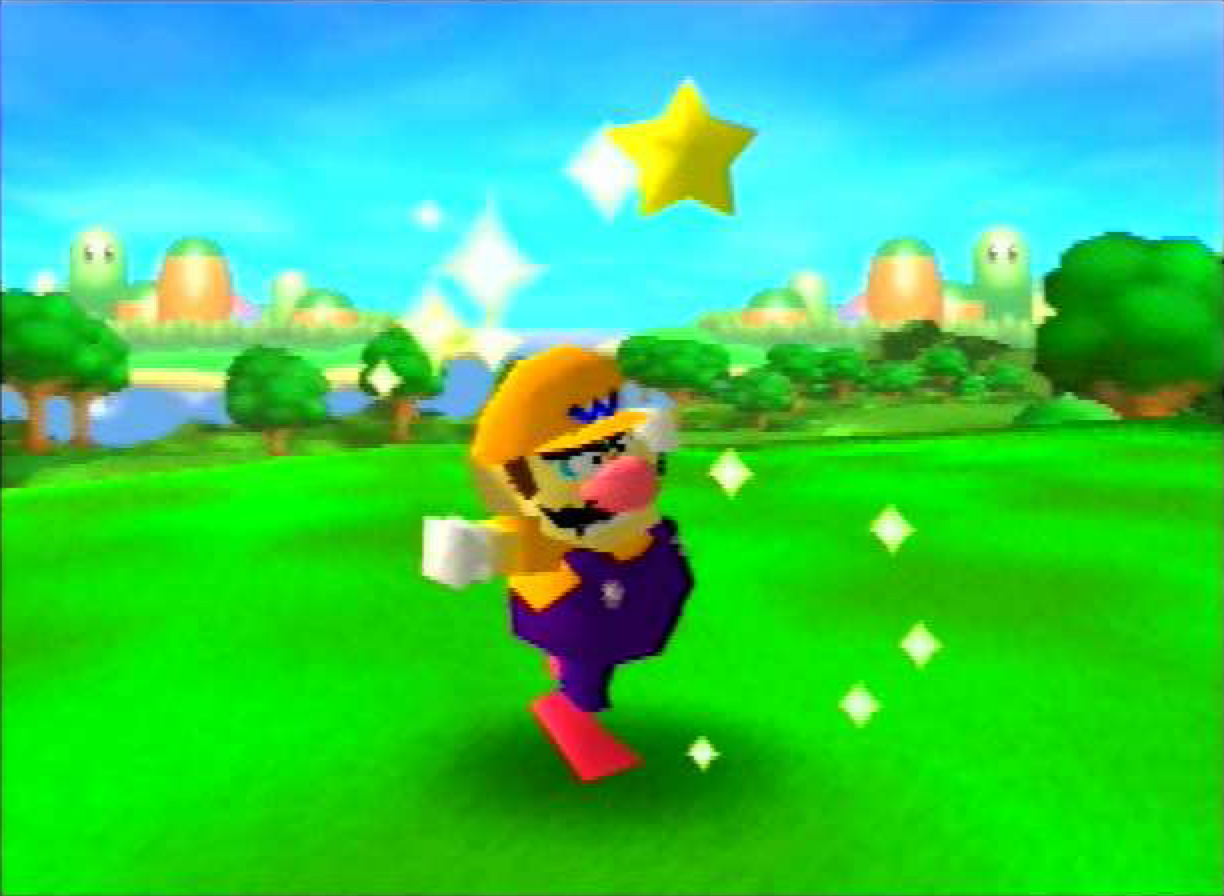
Nintendo 641999GolfCamelot Software PlanningSix 18-hole courses14 golfers + 4 by Transfer PakMetal Mario’s playable debutMetacritic 91On Nintendo Switch Online
Mario Golf
Before Mario Tennis, Mario Strikers or a single Mario & Sonic medal, there was this. Mario Golf teed off on the Nintendo 64 in Japan on 11 June 1999 (as Mario Golf 64), in North America on 26 July and in Europe in September, and it is the game that turned Mario’s sporting sideline into a series. It was the first game Camelot Software Planning made for Nintendo, and it was built on the engine of the studio’s PlayStation hit Everybody’s Golf (Hot Shots Golf in America), with a quick timed swing and a crowd of likeable original golfers. There are six 18-hole courses, from gentle Toad Highlands to Mario’s Star, whose holes are shaped like Mushroom Kingdom characters, plus two Mini-Golf greens and ten modes including Ring Shot, Speed Golf and the party-friendly Club Slots. Fourteen golfers live on the cartridge, from Plum and Baby Mario to a Western-only Metal Mario, and four more could be carried over from the Game Boy Color version with the Transfer Pak. It scored 91 on Metacritic and is now part of Nintendo Switch Online + Expansion Pack.
Developer:Camelot Software Planning
Publisher:Nintendo
Platform:Nintendo 64
Genre:Sports (golf)
Japan:11 June 1999 (as Mario Golf 64)
N. America:26 July 1999
Australia:14 September 1999
Europe:24 September 1999
Players:1–4
Director:Haruki Kodera
Lead game design:Hiroyuki Takahashi, Shugo Takahashi
Courses:Six 18-hole courses, two 18-hole Mini-Golf courses and a Driving Range
Golfers:14 on the cartridge (4 at the start) plus 4 via Transfer Pak
Modes:10
Metacritic:91
Re-releases:Wii Virtual Console (2008–09), Wii U Virtual Console (2015), Nintendo Switch Online + Expansion Pack (2022)
Advertisement
Overview
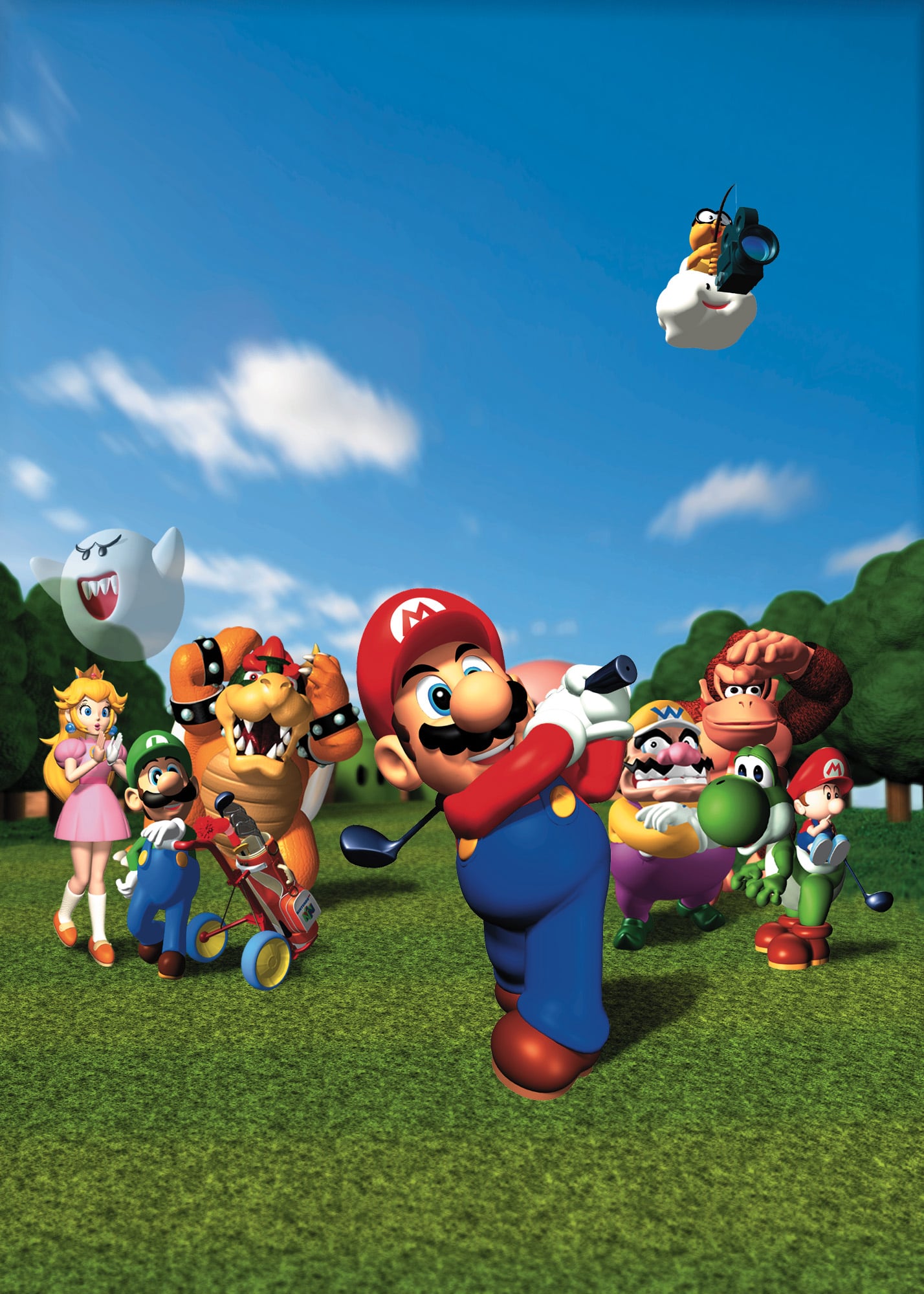
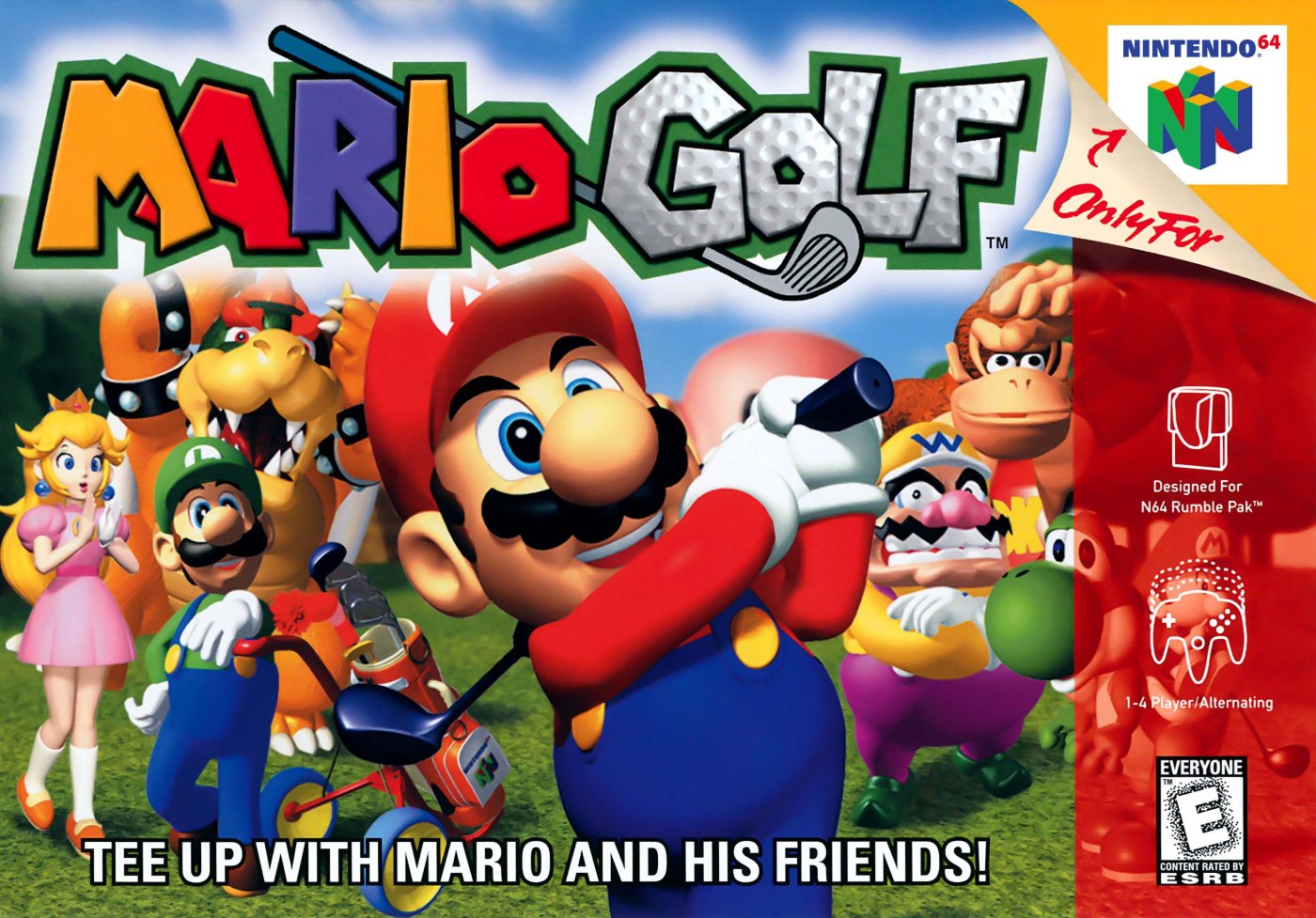
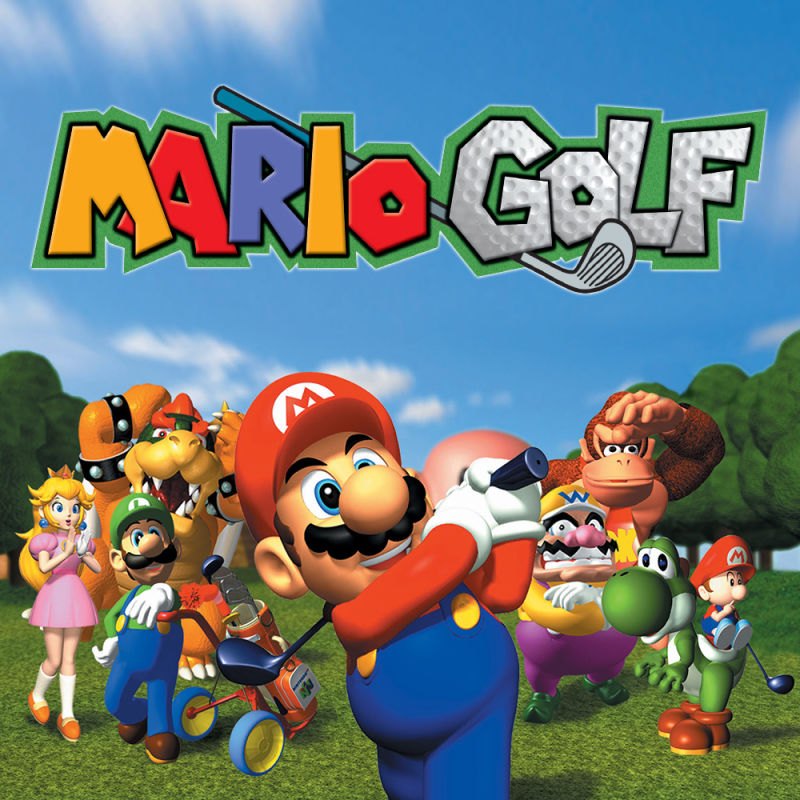
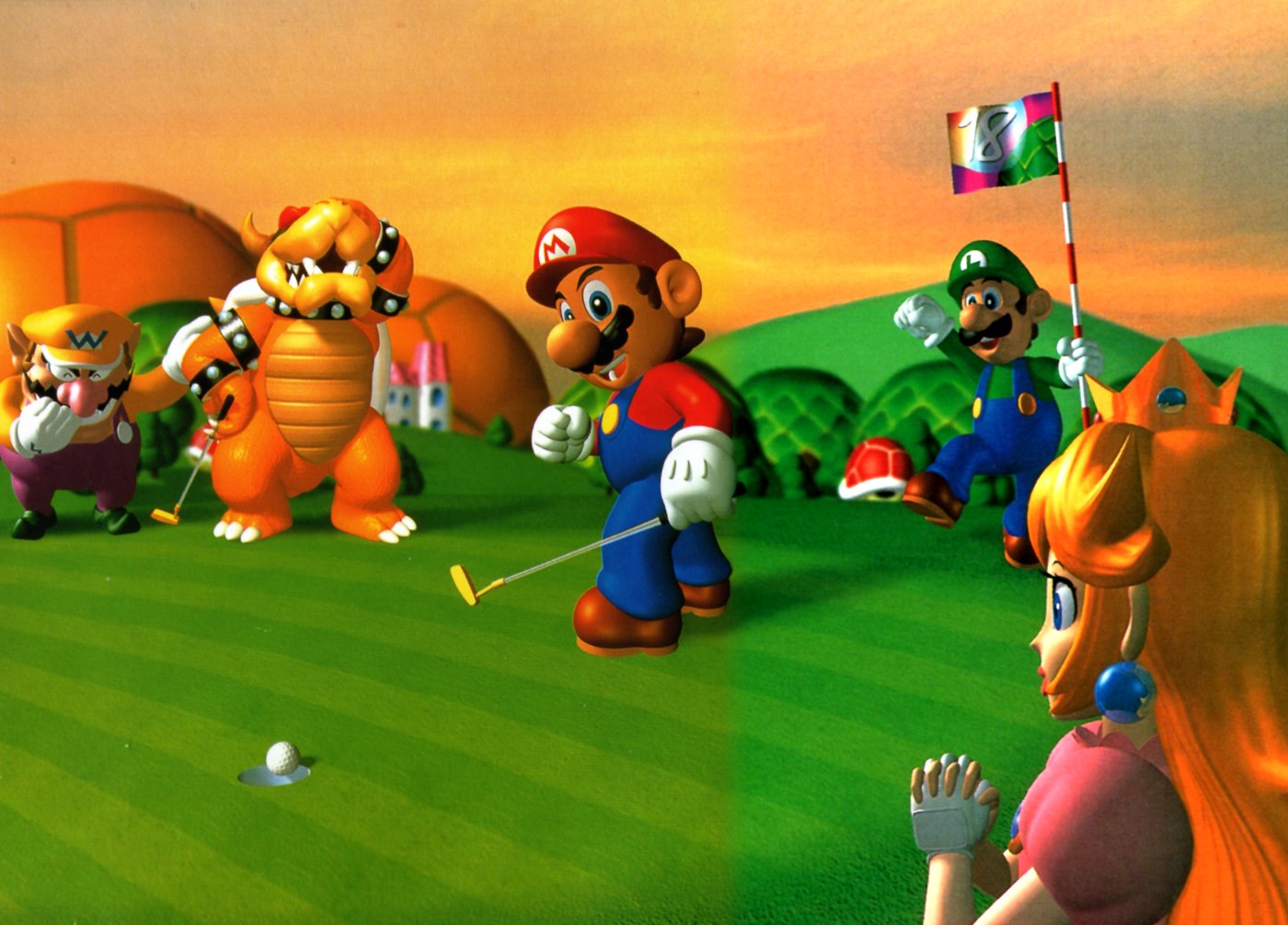
The main cast of Mario Golf, in the key art used on Western cartridges.
Mario had played golf before, in NES Open Tournament Golf, but he had always been a man in a cap on a realistic course. Mario Golf is something else: a proper golf game that happens to be set in the Mushroom Kingdom, where Boos tell you which way the wind is blowing, a Monty Mole pokes his head out of the cup after a long putt and the final course is a parade of holes in the shape of a Wiggler, a Chain Chomp and Bowser himself.
The secret is the studio. Camelot Software Planning had made the first Everybody’s Golf (Hot Shots Golf in America) for Sony in 1997, and GameSpot’s reviewer noticed straight away that Mario Golf was built on the same foundations, with fully polygonal golfers in place of that game’s sprites. The swing is a matter of well-timed taps of A on a sliding meter, the game picks a sensible club for you, and every shot is shaped by wind, rain, spin and the slope of the ground. Behind the friendly face is a game that rewards proper golf.
There is a lot to unlock. You start with four golfers (Plum, Charlie, Princess Peach and Baby Mario) and one course, and you earn the rest: Course Points from Tournaments open new courses; Get Character matches win you Luigi, Yoshi, Wario, Mario, Bowser and two of Camelot’s own golfers, Sonny and Harry; Birdie Badges bring Maple and, outside Japan, Metal Mario; and Ring Shot, a mode of trick shots through floating rings, earns Donkey Kong.
It had a Game Boy Color companion that could swap golfers with it through the Transfer Pak, and it led directly to Mario Tennis a year later. Every Mario sports game Camelot has made since, through Toadstool Tour to Super Rush, grows from this one.
Tee off with Mario and friends as they put a new spin on golf! Choose from 14 different characters, each with their own power and swing styles. You can even taunt opponents to break their concentration!
Mario Golf is packed with features, including 10 different modes (such as Tournament, Speed Golf and even Mini-Golf), and six different courses to play through by earning experience points to progress. With easy-to-learn gameplay and a four-player competitive mode, anyone can get into the swing of Mario Golf!
— Official description (Nintendo UK, 1999)
Why it matters to Mario fans
This is where the modern Mario sports games begin: the first by Camelot and the template that Mario Tennis copied a year later. It is also Metal Mario’s first outing as a character in his own right, the debut of Plum, Charlie, Sonny, Harry and Maple, and still the only Mario Golf with a Mini-Golf mode.
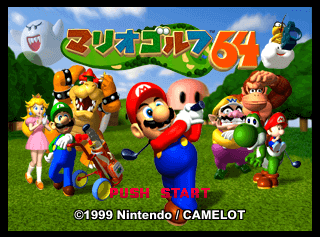
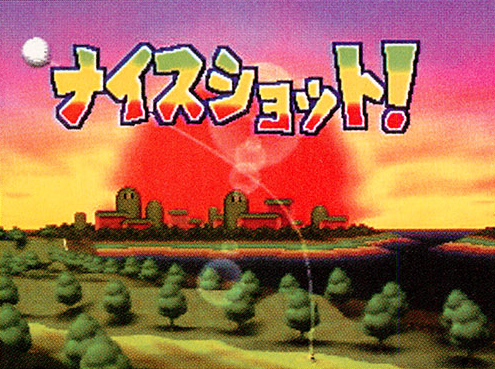
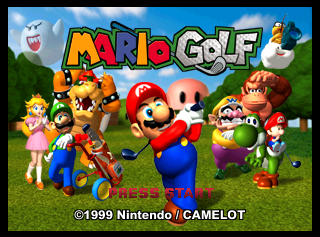
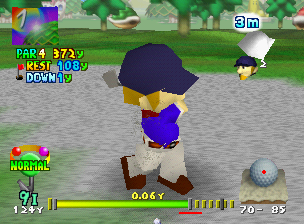
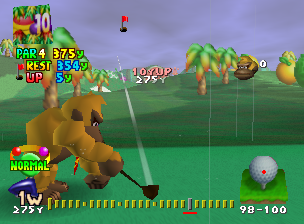
The title screen of the North American version.Harry plays out of a bunker.Donkey Kong lines up a drive on a rainy hole 10 at Yoshi’s Island.
Quick Answers
The questions people ask most about Mario Golf on the Nintendo 64, answered briefly here and in depth further down the page.
When did Mario Golf come out on the N64?
Japan: 11 June 1999. North America: 26 July 1999. Australia: 14 September 1999. Europe: 24 September 1999. More →
How many characters are there?
Fourteen on the cartridge (thirteen in Japan, which has no Metal Mario), plus four Game Boy Color golfers, Kid, Joe, Sherry and Azalea, who can be brought across with the Transfer Pak. More →
How do you unlock Mario, Bowser and the others?
Beat them in Get Character mode: Luigi, Yoshi, Sonny, Wario, Harry, Mario and finally Bowser. Maple needs 50 Birdie Badges, Metal Mario all 108, and Donkey Kong 30 cleared Ring Shot holes. More →
How many courses are there?
Six 18-hole courses, each a par 72: Toad Highlands, Koopa Park, Shy Guy Desert, Yoshi’s Island, Boo Valley and Mario’s Star. There are also two Mini-Golf courses and a Driving Range for practice. More →
How do you unlock the courses?
With Course Points, earned by placing well in Tournaments: 50 for Koopa Park, 300 for Shy Guy Desert, 1,000 for Yoshi’s Island, 1,500 for Boo Valley and 2,500 for Mario’s Star. More →
What did the Transfer Pak do?
It linked the N64 game with Mario Golf on Game Boy Color, so golfers raised in the handheld game could play on the N64 courses. The Virtual Console and Nintendo Switch Online versions cannot use it. More →
Can I play it on Nintendo Switch?
Yes. It joined Nintendo Switch Online + Expansion Pack on 14 April 2022 in North America and 15 April elsewhere. More →
Who made it?
Camelot Software Planning, directed by Haruki Kodera with Hiroyuki and Shugo Takahashi as lead game designers and producers, and music by Motoi Sakuraba. Nintendo published it. More →
Is Metal Mario in the Japanese version?
No. He was added for the North American and European releases, and the Western character select screen was rearranged as well. More →
How well did it review and sell?
Very well reviewed: 91 on Metacritic. Nintendo has not published a sales figure for it. More →
Modes & Courses
Mario, Luigi, Peach, Wario and Bowser at Koopa Park, in Nintendo’s artwork.
There is no story to Mario Golf, just a clubhouse, a growing list of courses and ten ways to play them. A round is 18 holes, and every main course is a par 72. Single-player progress runs along three tracks at once. Tournaments earn Course Points, which open the next course. Get Character matches win new golfers. Birdie Badges, collected for every birdie or better in a Tournament, open the last two secret golfers, while Ring Shot has its own ladder of courses and a reward of its own.
Everything else is for practice or for friends: Stroke Play, Match Play, Skins Match and Club Slots for up to four, Speed Golf against the clock, Training with the Driving Range, and the putting-only Mini-Golf.
Tournament and Course Points
The main event is a full 18-hole stroke-play tournament against 29 computer golfers, who exist only as names on the leaderboard. Finish in the top three to take a trophy; win it and you collect the most Course Points. Each course hosts its own event: the Toad Tournament, Koopa Cup, Shy Guy International, Yoshi Championship, the Boo Classic (spelt “Boo Clasic” in the game) and the Mario Open.
The names on the board are worth a look. They mix Mario enemies (Chain Chomp, Whomp, Wiggler and five of the Koopalings) with characters from Ocarina of Time and Star Fox 64 (Link, Saria, Darunia, Fox, Falco and Andross) and a run of ordinary first names that match the English voice cast and the Nintendo of America staff thanked in the credits.
The Toad Tournament emblem.The Mario Open emblem.The Tournament Total emblem.
Get Character
The unlocking mode. You play match play against a single computer golfer: whoever takes fewer strokes wins the hole, the match finishes early once one player cannot be caught, and a tie after 18 holes goes to sudden death. Win and your opponent joins the roster. There are seven matches, and the opponents get longer off the tee as you go: Luigi first, then Yoshi, Sonny, Wario, Harry and Mario, and finally Bowser, the longest hitter on the cartridge until Metal Mario arrives.
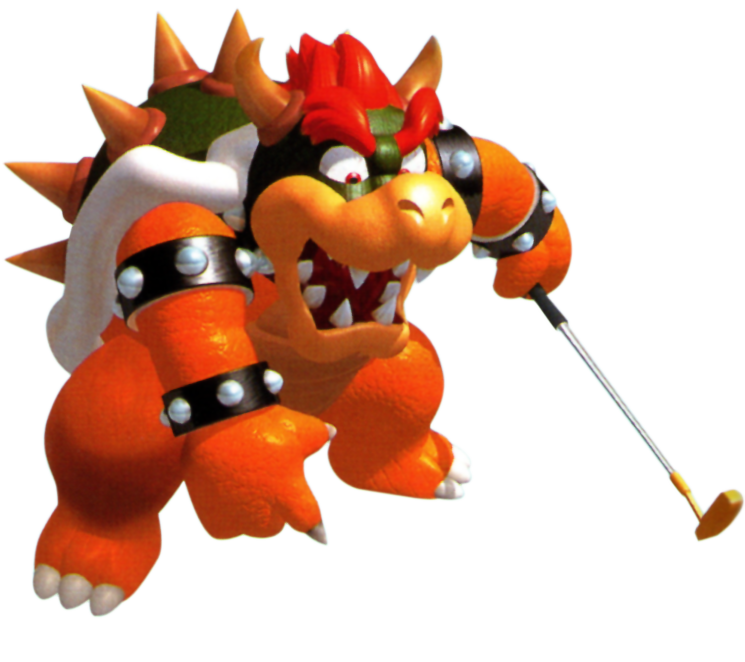
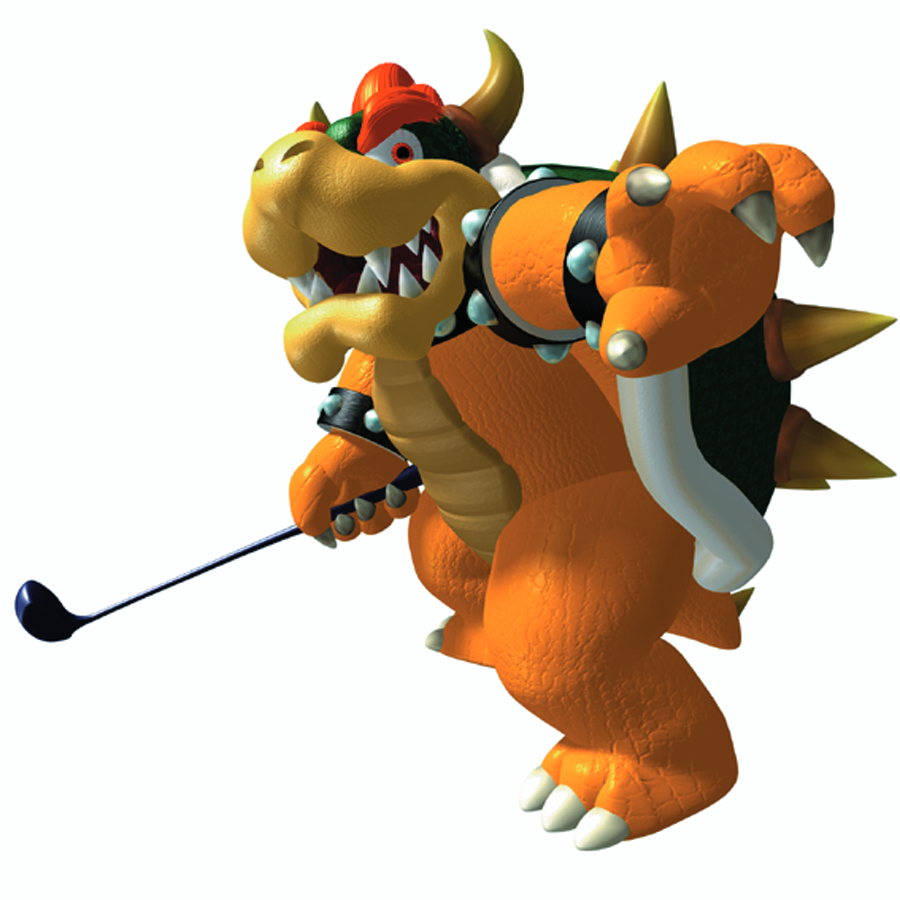
Bowser, the seventh and final Get Character opponent.
Ring Shot
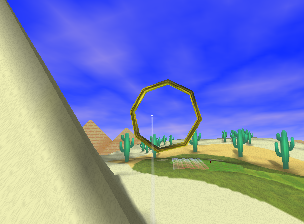
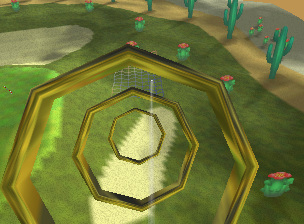
Ring Shot turns golf into a trick-shot puzzle. Each challenge is a real hole with one or more rings hanging in the air, and you must send the ball through all of them and still finish at par or better, or the hole starts again. You get one Power Shot per hole. There are six challenges on each of the six courses, 36 in all, each with its own name, and new courses open after you clear 4, 8, 12, 16 and 20 holes. Clear 30 and Donkey Kong joins the roster.
Yoshi’s Island’s set gives the flavour: Doughnut Hole on the 15th, Scraping the Cliff on the 5th, Dunk the Bunker! on the 8th, Drop into the Valley! on the 12th, and two three-ring tests, Arches in the Hills and Zig and Zag. In Shy Guy Desert you thread Cactus Arms, the Pyramid Ring and the three-ring Center of the Bull’s-Eye. GameSpot found it a good lesson in how wind and club choice shape the flight of a ball.
Doughnut Hole, a Ring Shot challenge on hole 15 of Yoshi’s Island.Zig and Zag, a three-ring challenge on hole 7 of Yoshi’s Island.Pyramid Ring, on hole 13 of Shy Guy Desert.Center of the Bull’s-Eye, on hole 7 of Shy Guy Desert.
Speed Golf
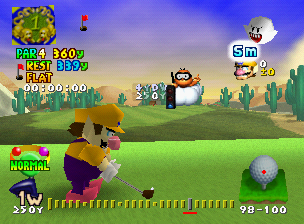
Speed Golf is a race round the course: play all 18 holes as quickly as you can, with Lakitu holding the starting light.
Wario starts a round of Speed Golf.
Mini-Golf
Putters only, on two 18-hole crazy-golf courses where every hole is a par 3. Luigi’s Garden has greens shaped like the numbers 1 to 9 and then the letters A to I; Peach’s Castle carries on from J to Z and ends with a question mark on the 18th. Each can be played at normal, slow or fast green speeds. Up to four people can play but there are no computer opponents. No other Mario Golf has a Mini-Golf mode.
The Luigi’s Garden menu icon.The Peach’s Castle menu icon.
Stroke Play, Match Play, Skins and Club Slots
Stroke Play is an ordinary round for one to four players, lowest total wins. Match Play is Get Character for two people: win holes, not strokes. In a Skins Match each hole is worth a point to its winner, and a tied hole carries its point on to the next, so one putt can be worth several holes. Club Slots plays like Skins, except that the game deals you a random set of clubs on each hole; you can always fall back on the putter. Club Slots and Mini-Golf are for humans only.
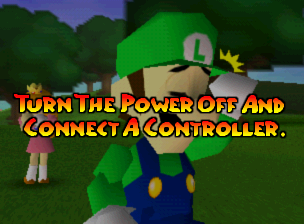
The message shown when a mode needs more controllers than are plugged in.
Training and the Driving Range
Training lets you play any hole on any unlocked course and set the weather yourself, and it is the only place to use the Driving Range, a practice ground with five greens and yardage boards.
The Driving Range menu icon.
Toad Highlands
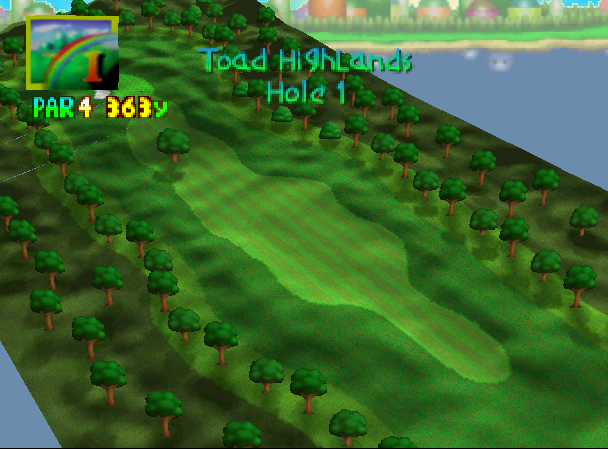
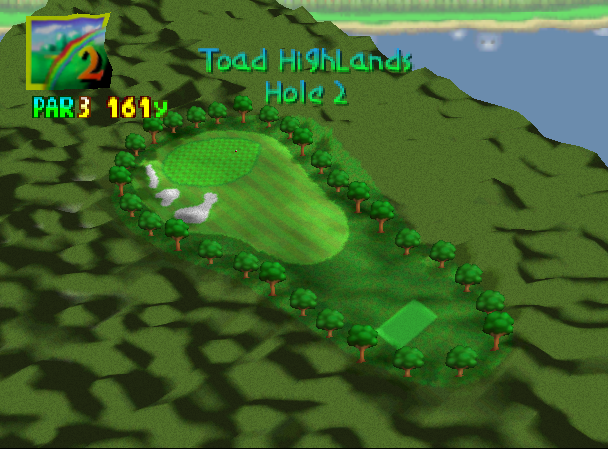
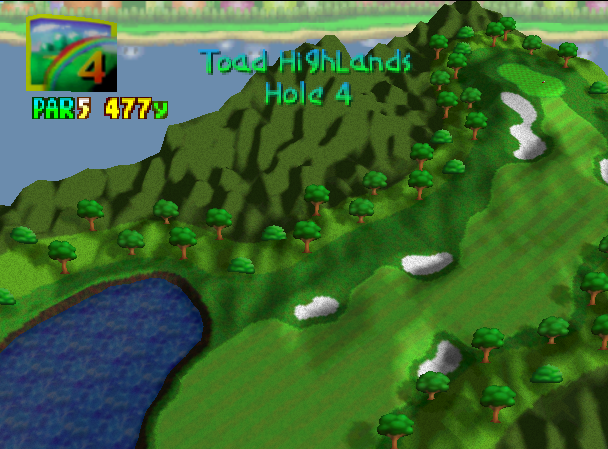
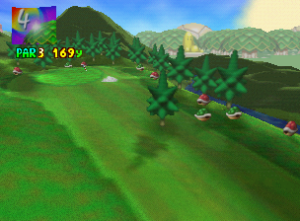
The only course open from the start is Toad’s, a gentle upland par 72 with a little water, a few bunkers and no tricks. It opens with a 363-yard par 4 and a 161-yard par 3, and its longest early test is the 477-yard par 5 4th. It is where you learn the swing and win your first Course Points in the Toad Tournament.
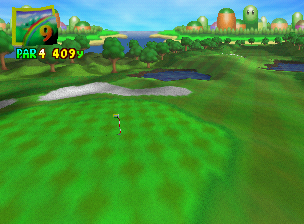
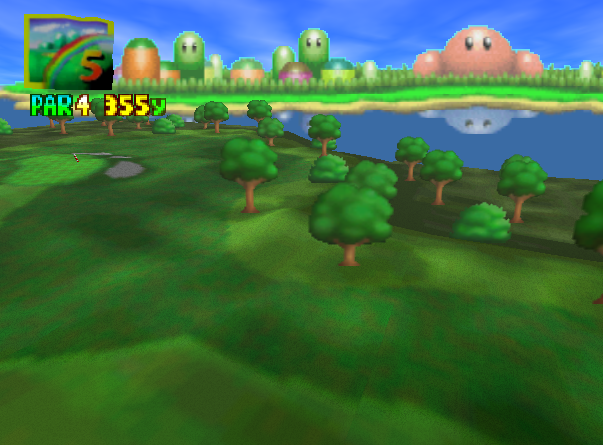
Toad Highlands, hole 1: par 4, 363 yards.Hole 2: par 3, 161 yards.Hole 4: par 5, 477 yards.Hole 9: par 4, 409 yards.
Koopa Park
Fifty Course Points open Koopa Troopa’s wooded park, which has more trees, more sand and much more water than Toad Highlands. A Koopa balloon and Koopa statues watch over the 1st, the 8th green slopes sharply towards a lake, a lake crosses the 9th fairway and a Koopa statue stands guard in front of the 18th green.
Koopa Park, hole 9, with its lake across the fairway.The Koopa Park menu icon.
Shy Guy Desert
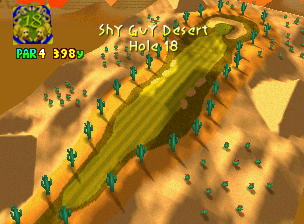
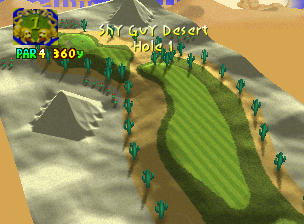
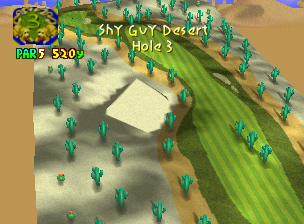
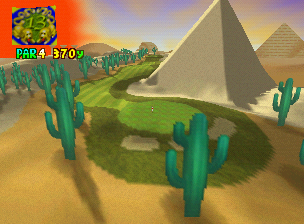
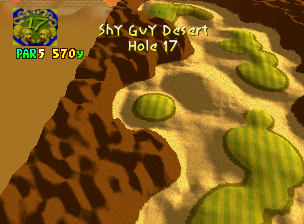
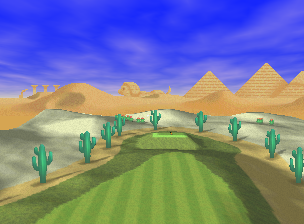
Three hundred Course Points open Shy Guy’s desert, a course with no water at all but sand everywhere: bunkers, waste areas, cacti and beige dunes that count as out of bounds. It rarely rains. The 3rd has three cacti planted in the fairway, the 13th curls round a towering sand pyramid and the 570-yard 17th is played from inside a vast bunker under rocky cliffs, the only hole on the course without a cactus.
Shy Guy Desert, hole 1.Hole 3, with three cacti in the fairway.Hole 13 and its sand pyramid.Hole 17, set in a giant bunker.
Yoshi’s Island
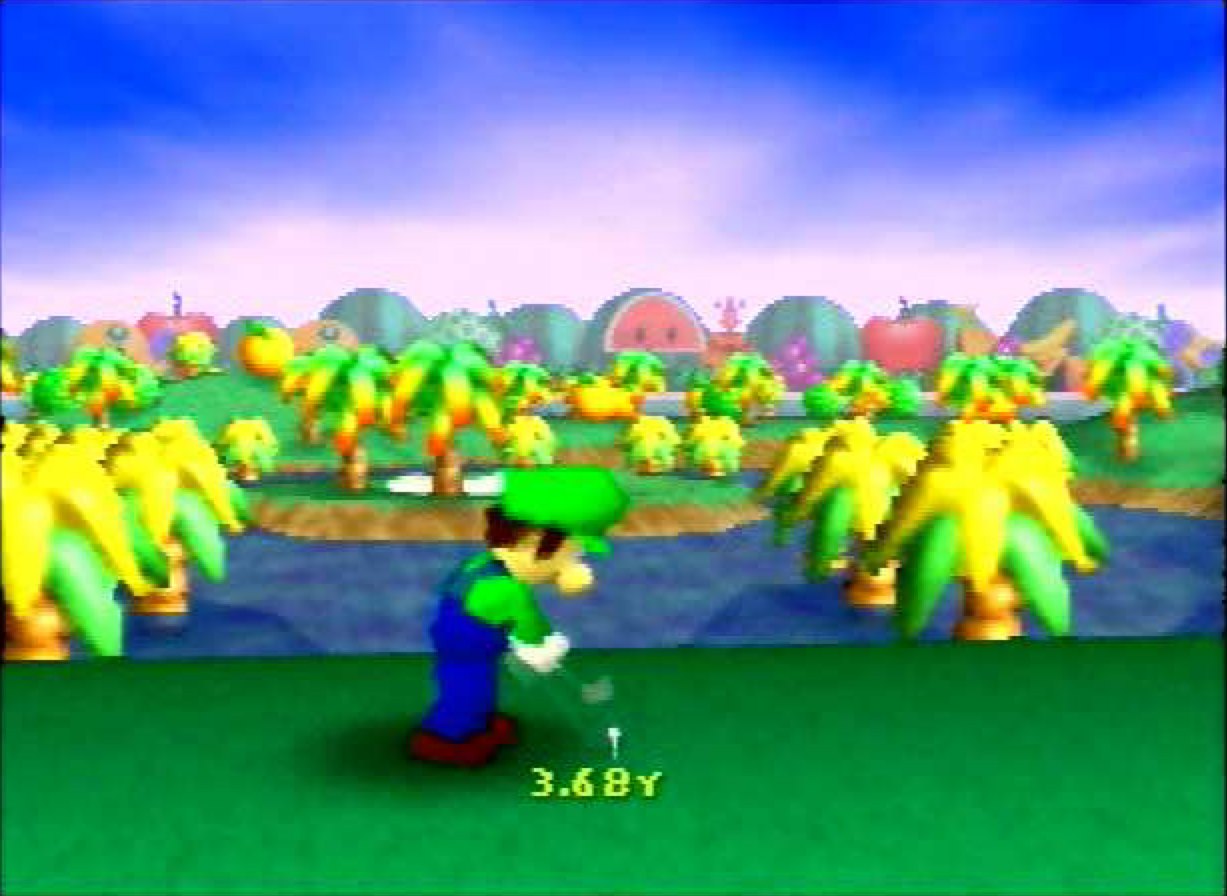
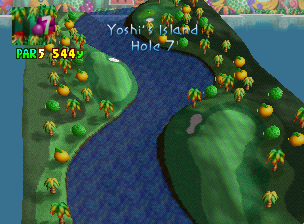
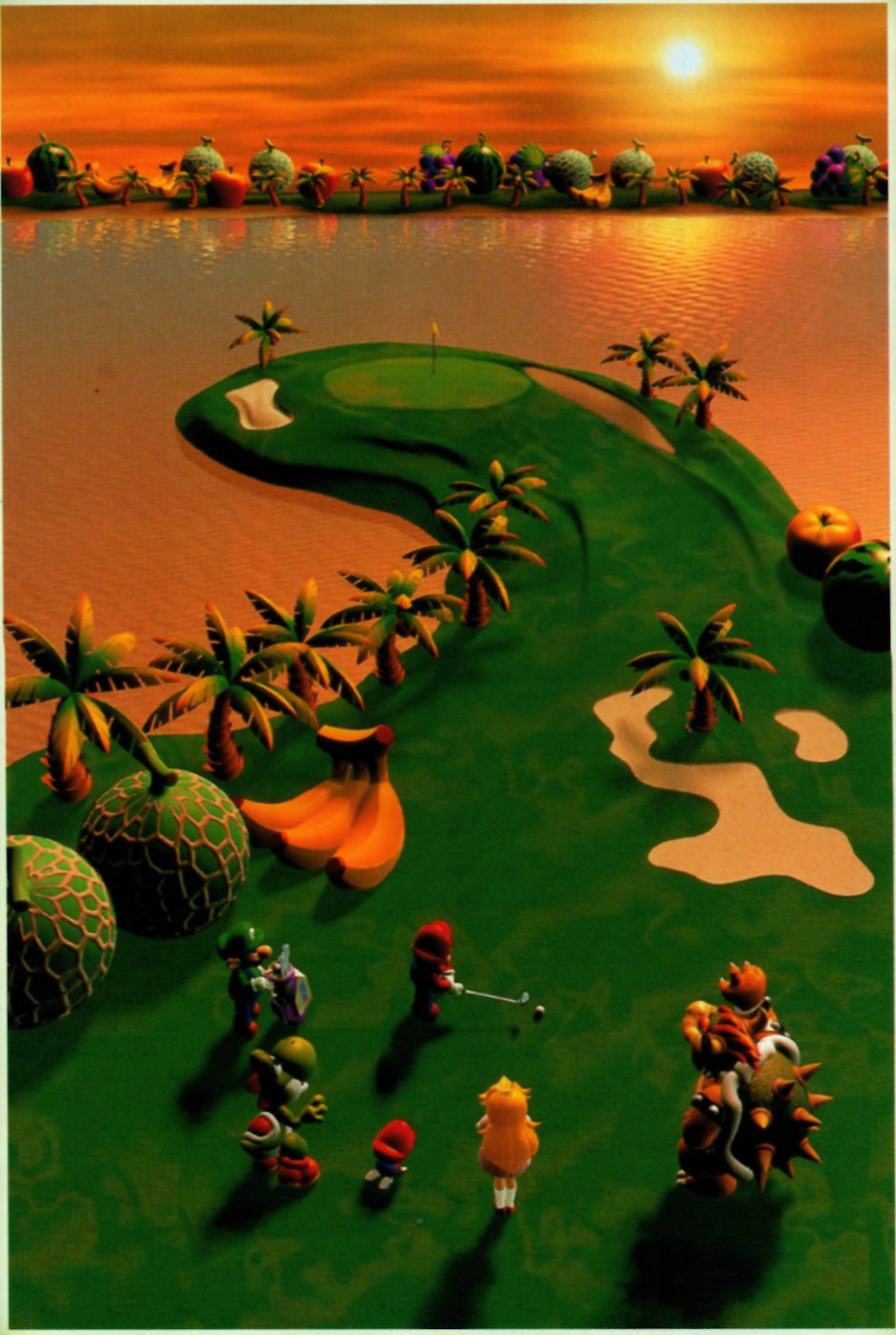
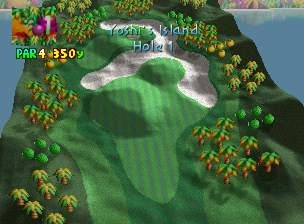
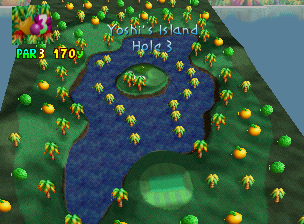
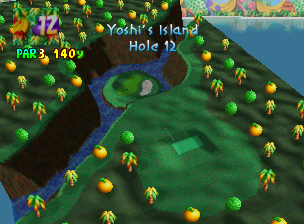
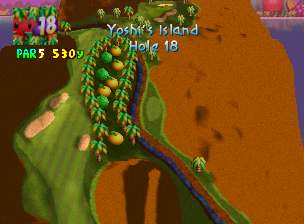
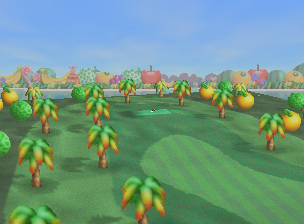
A thousand Course Points open Yoshi’s tropical island, dotted with giant fruit and full of lakes. Rain and strong winds are common, and Donkey Kong and Ukiki can be heard in the background. Two par 3s have island greens, the 3rd beside open water and the 12th in a flooded canyon; the 15th green sits inside a doughnut-shaped bunker, and the 530-yard 18th offers an optional route over a cliff.
Yoshi’s Island, hole 1.Hole 3: an island green.Hole 12, in a water-filled canyon.Hole 18, a 530-yard par 5.
Boo Valley
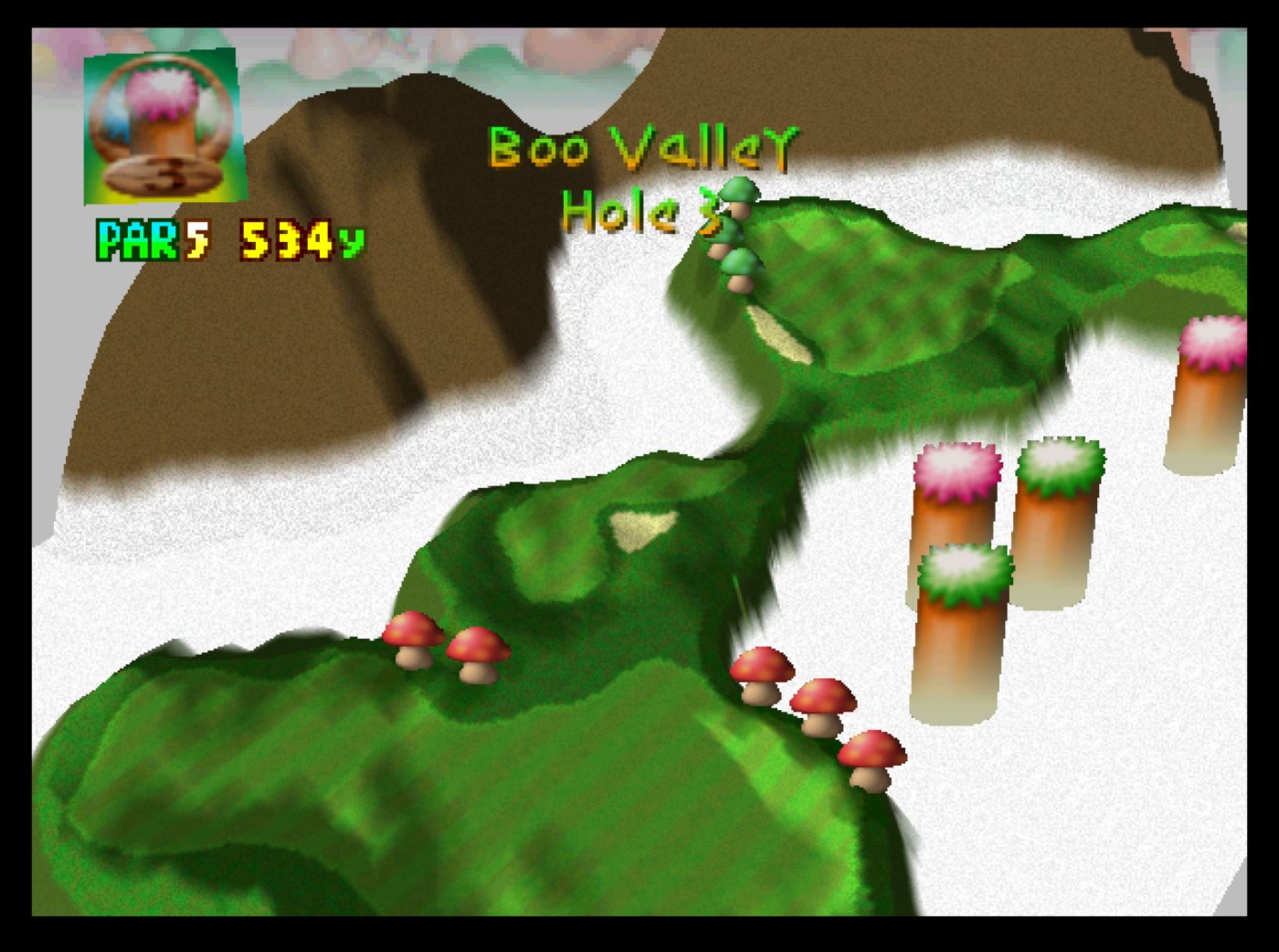
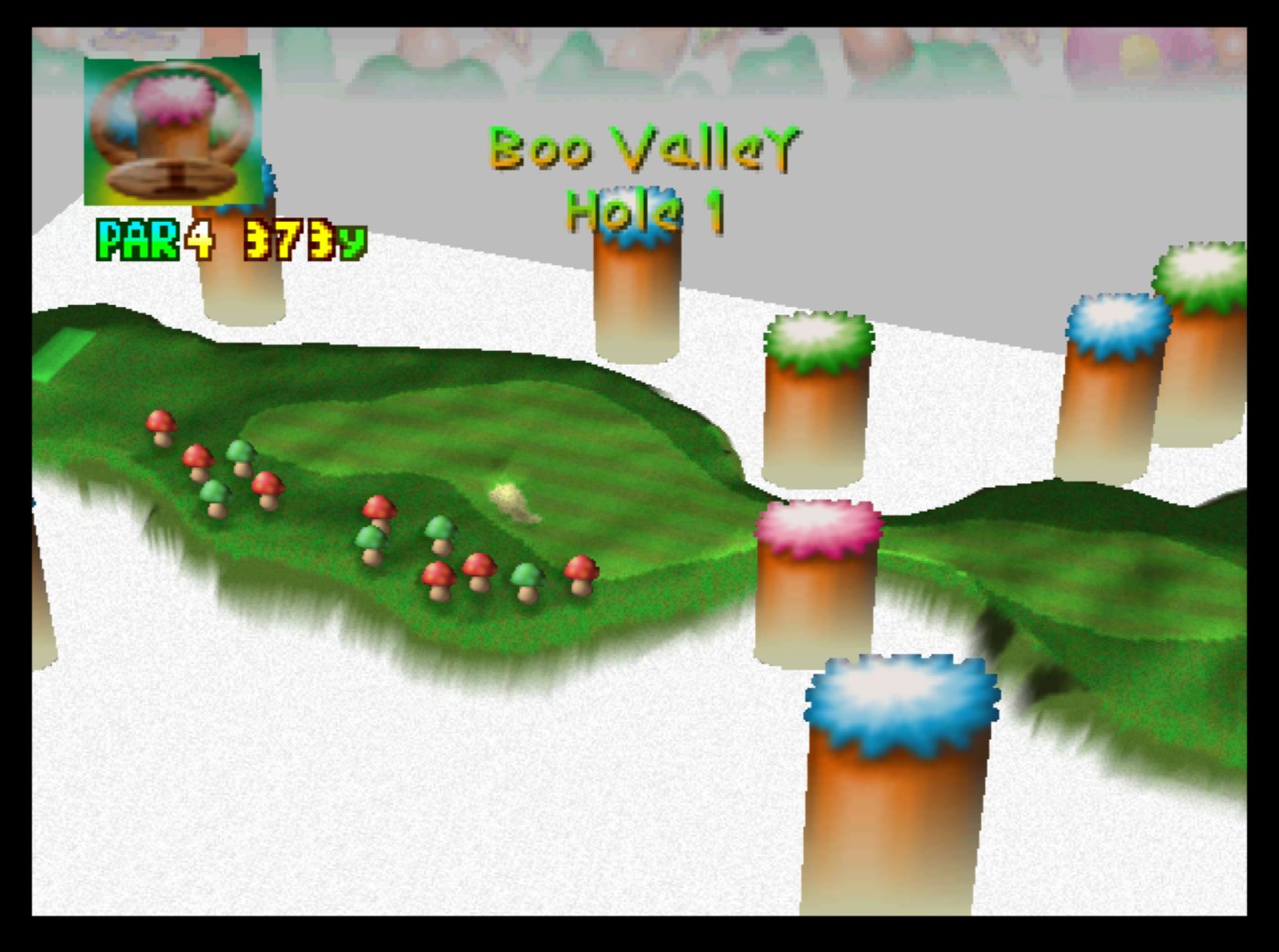
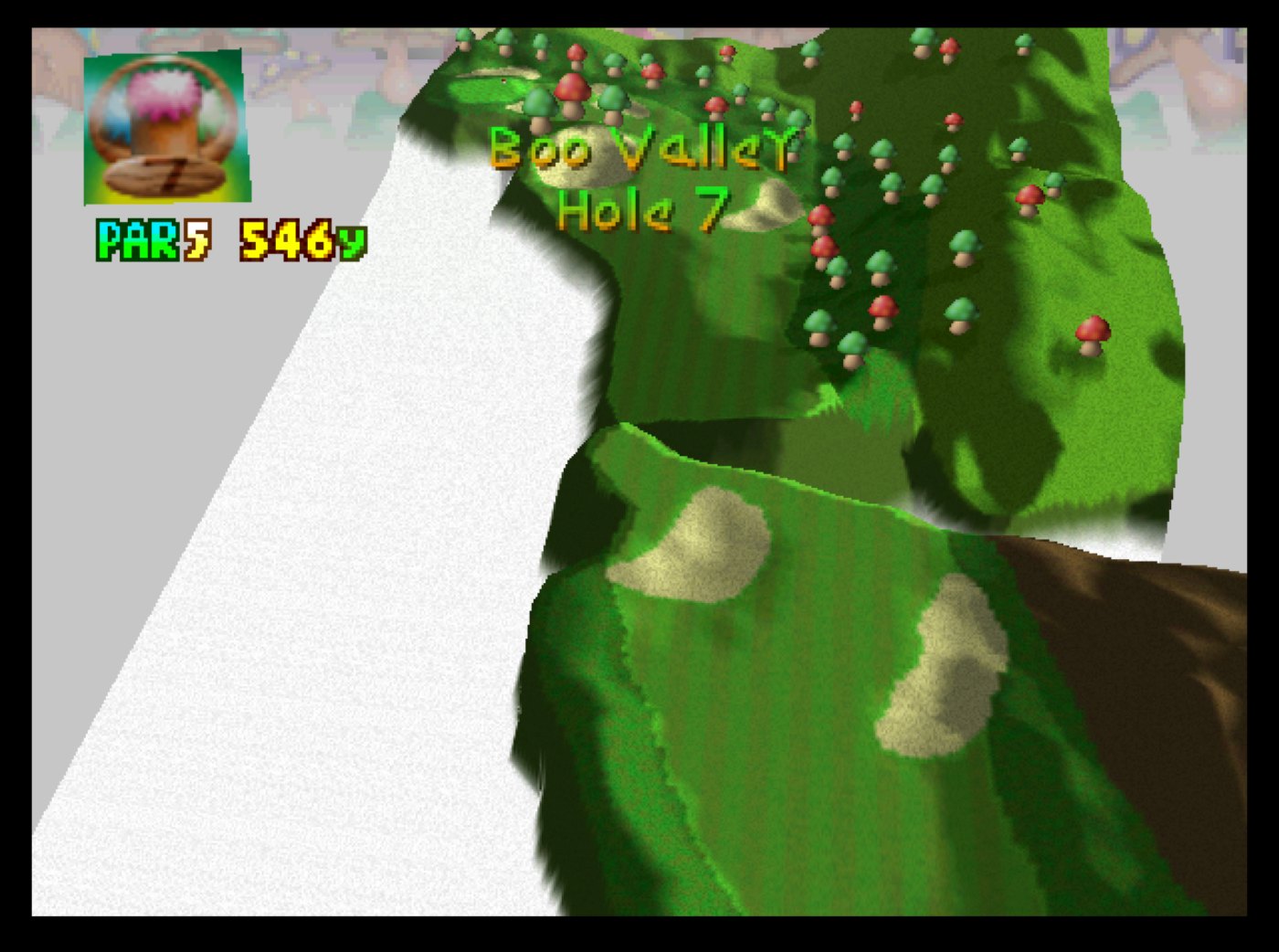
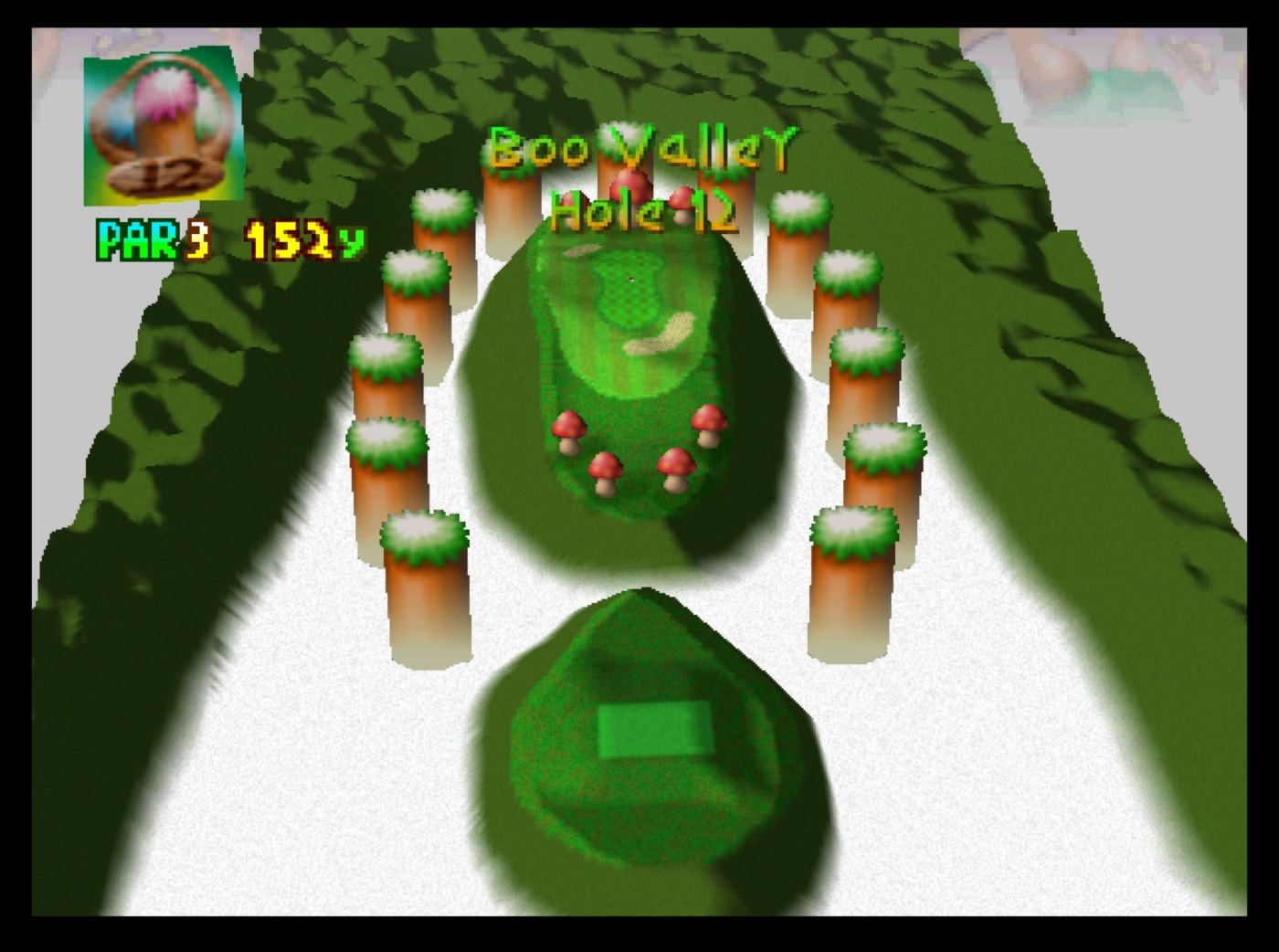
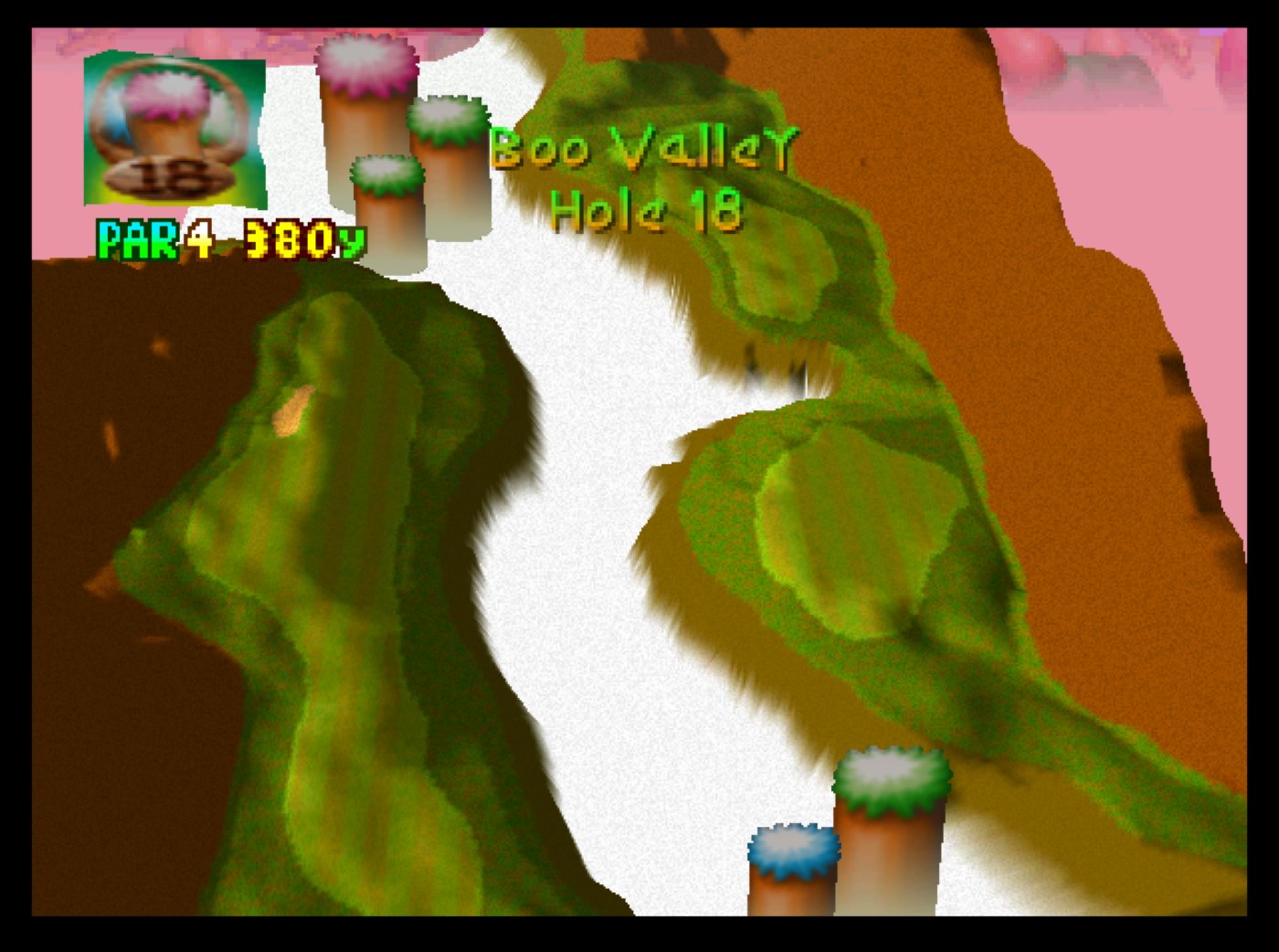
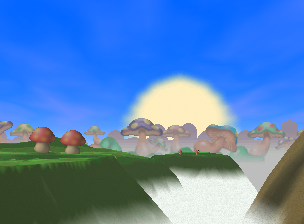
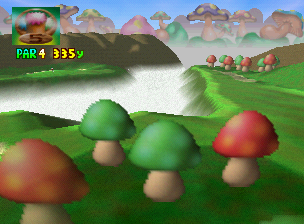
Fifteen hundred points open the haunted valley. Bunkers are scarce and only one hole has water, but there are cliffs everywhere and it is very easy to go out of bounds. The sky is grey, crooked mushrooms grow beside the holes, and on the par 5s the fog thickens and the rain comes down. At 6,635 yards it is a test of accuracy more than length.
Boo Valley, hole 1.Hole 7, a 546-yard par 5.Hole 12, a 152-yard par 3.Hole 18.
Mario’s Star
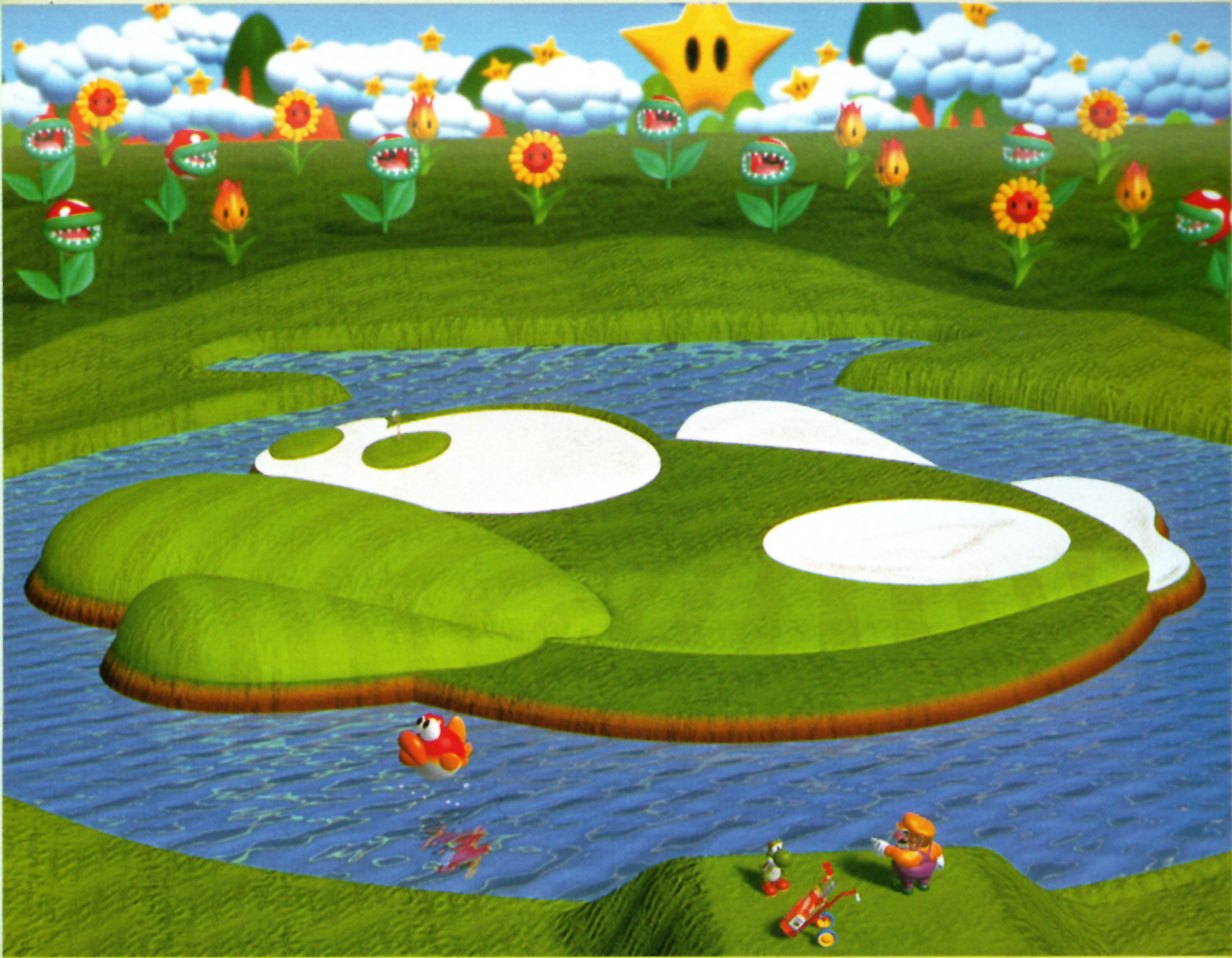
The last course costs 2,500 points and is the hardest in the game. Every hole is laid out in the shape of something from the Mario games: a Yoshi Egg and Yoshi on the 1st, seven Boos on the 2nd, a Wiggler, a Cheep Cheep in a bowl, three Thwomps, Lakitu, two Shy Guys, a Piranha Plant, Bowser ringed by shells on the 9th, a Koopa Troopa and its shell on the 10th, Bill Blasters, Toad, Goombas, a Chain Chomp, Blooper Nanny and her babies, Princess Peach’s stained-glass window on the par 3 16th, five Bob-ombs and finally Mario and Luigi on the 18th.
The fairways are often broken into pieces, Piranha Plants, sunflowers and Fire Flowers mark the out-of-bounds, stars float among the clouds and the music is an arrangement of the Super Mario Bros. overworld theme.
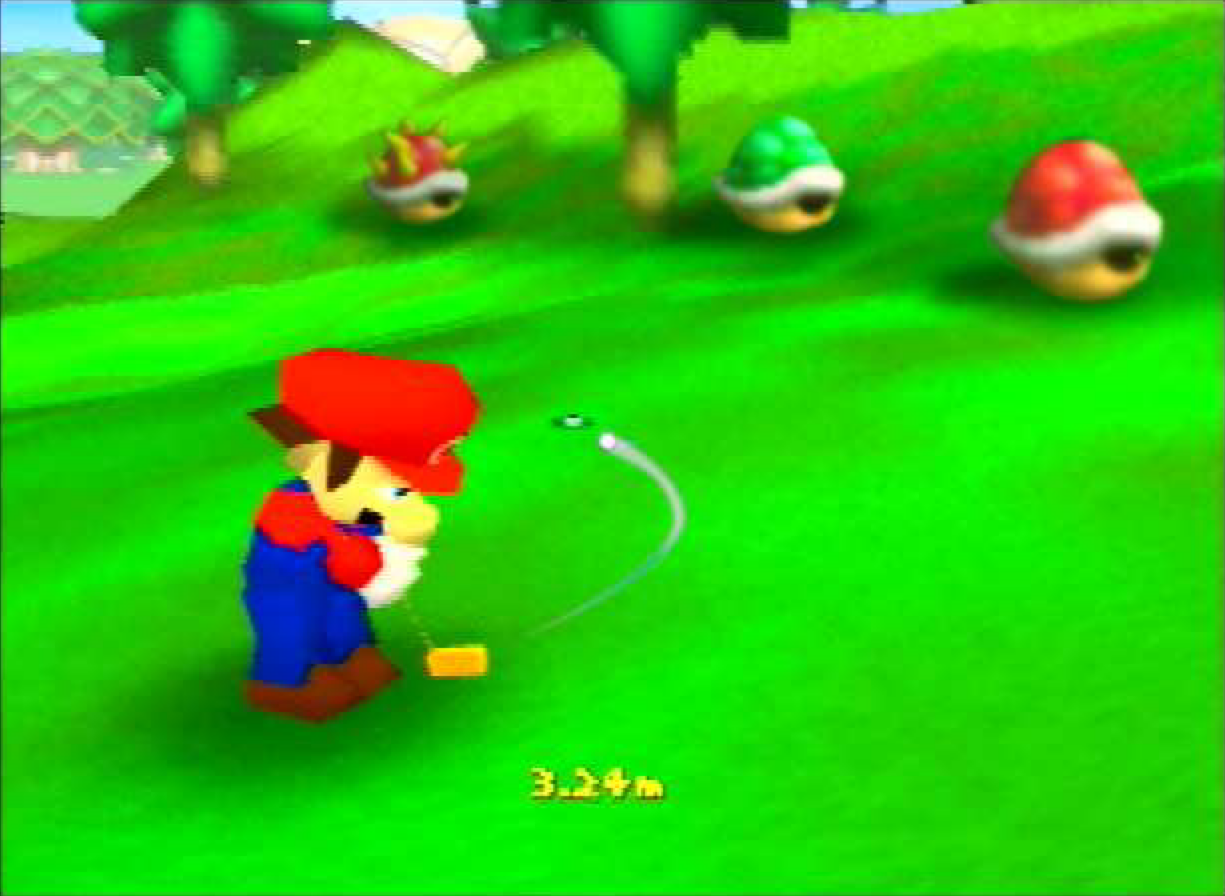
Yoshi and Wario at Mario’s Star.Mario on the course, in a screenshot released for E3 1999.
Every course in Mario Golf
Six championship courses in the order they unlock, then the practice and Mini-Golf courses. Every championship course is 18 holes and par 72.
Toad HighlandsPar 72 · open from the start · Toad TournamentToad’s gentle, gimmick-free opening course in the hills, with just a little water and sand.
Koopa ParkPar 72 · 50 Course Points · Koopa CupWooded lowland full of lakes, with Koopa statues and a Koopa balloon on the 1st.
Shy Guy DesertPar 72 · 300 Course Points · Shy Guy InternationalNo water, all sand: cacti, waste areas, a sand pyramid and dunes that count as out of bounds.
Yoshi’s IslandPar 72 · 6,595 yards · 1,000 Course Points · Yoshi ChampionshipTropical island of giant fruit, island greens, frequent rain and strong winds.
Boo ValleyPar 72 · 6,635 yards · 1,500 Course Points · Boo ClassicFoggy, cliff-lined valley where out-of-bounds is the main danger and the par 5s bring rain.
Mario’s StarPar 72 · 2,500 Course Points · Mario OpenThe hardest course, every hole shaped like a Mario character, to the Super Mario Bros. theme.
Luigi’s GardenMini-Golf · 18 holes, all par 3Greens shaped like the numbers 1 to 9 and the letters A to I.
Peach’s CastleMini-Golf · 18 holes, all par 3Letters J to Z, then a question mark for the final hole.
Driving RangeTraining mode onlyFive greens and yardage boards for practising distances.
All six championship courses came back as downloadable content for Mario Golf: World Tour on 3DS, three of them under new names (see Legacy).
Advertisement
Gameplay & Controls
Take away the Mushroom Kingdom scenery and Mario Golf is a straight, honest round of golf: tee shot, approach, putt, with the wind, the weather and the lie of the ball all mattering. Camelot’s trick was to make the controls simple enough for anyone while leaving all the depth in the ball physics and the courses.
The swing
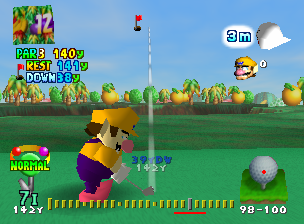
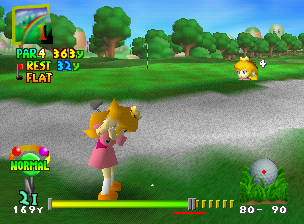
Every shot uses the same sliding power meter. Once the swing starts, a marker sweeps out towards the left-hand end of the bar: press A to set the power, and the nearer the end you stop it, the harder the hit. The marker then slides back, and a second press as it reaches the start of the bar decides the accuracy. Miss that spot and the ball is pushed off line.
The game chooses a club for you and you can change it with up and down on the stick or D-Pad. L or Z moves the point on the ball where the club will strike it, and every shot also follows your golfer’s natural shape: a draw, a fade or straight. Western versions added a small grey power indicator at the left of the meter that the Japanese original does not have.
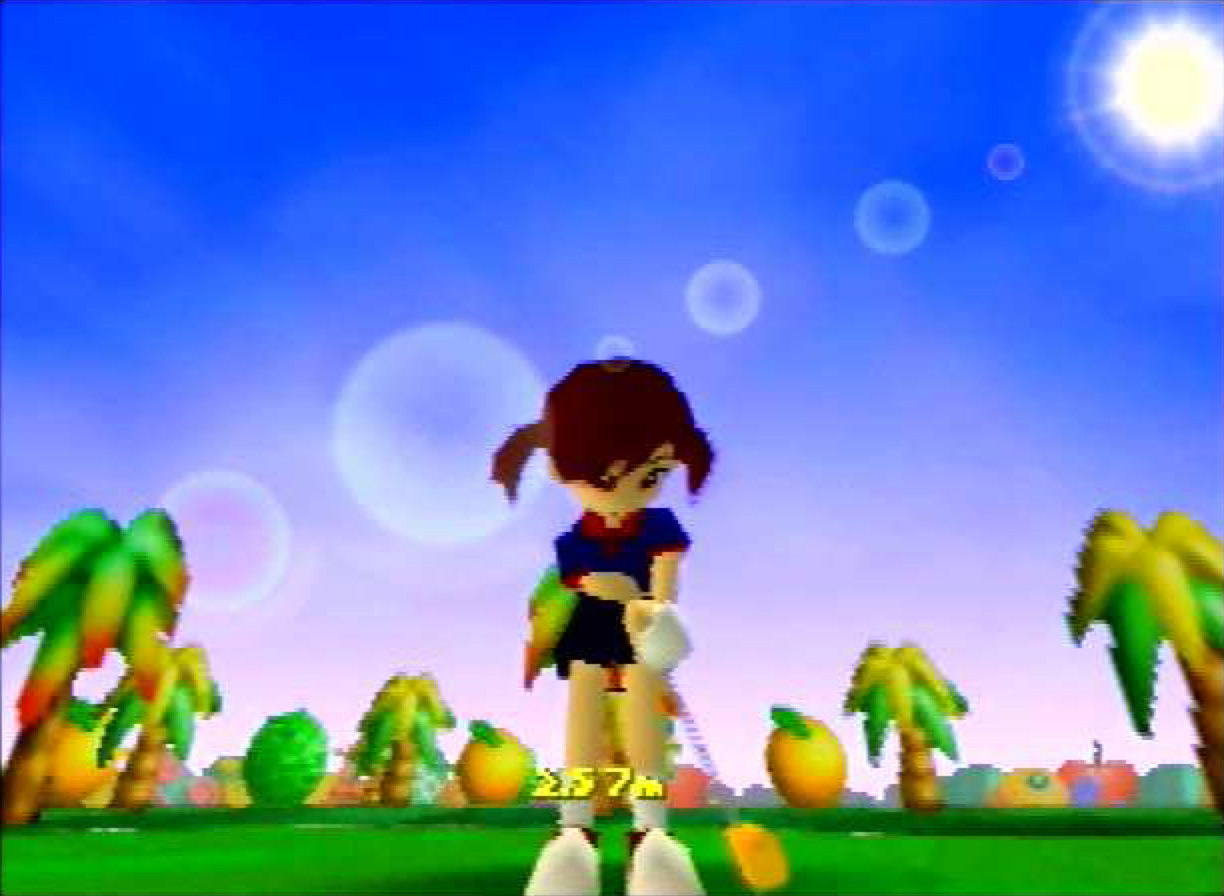
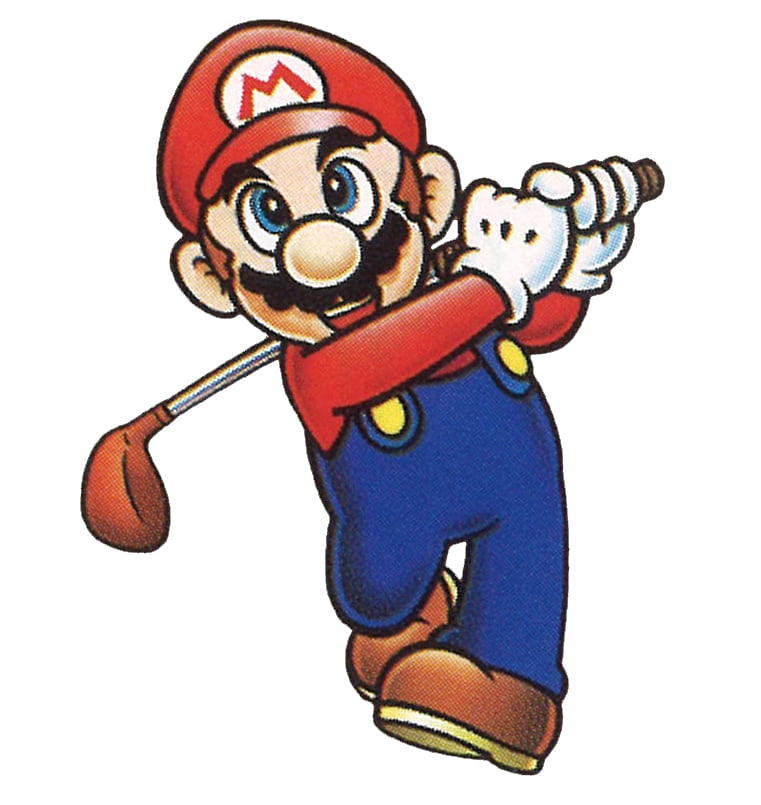
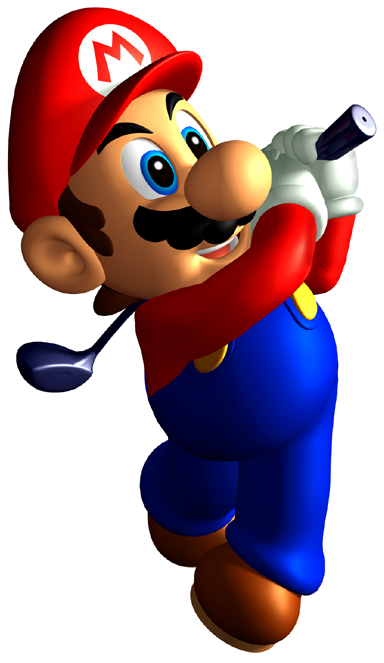
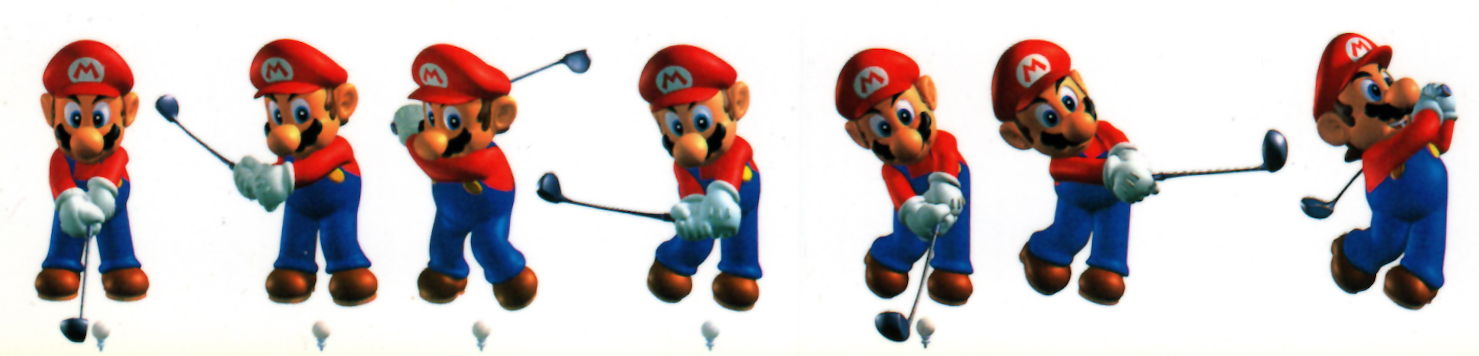
Princess Peach on the tee, with the power meter at the bottom of the screen.Mario’s swing broken down frame by frame, from Nintendo’s artwork.
Controls
Control Stick or D-Pad left/right: aim. Up/down: change club. A: swing. B: switch between normal and Power Shot mode. L or Z: change where the club strikes the ball. C-Up and C-Down: move the camera ahead and back; C-Left and C-Right: lower and raise it. R: look at the projected landing spot, and back again. Holding Start hides the display while the ball is in flight, and on the character select screen in most multiplayer modes, holding R and pressing A adds a computer player.
Power Shots and Nice Shots
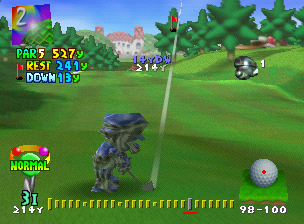
Press B and the next swing becomes a Power Shot, which carries much further. You get six in a round. Hit one perfectly, with full power and pinpoint accuracy, and it is not used up at all, and the ball leaves the club with the golfer’s own effect trailing behind it: a Fireball for Mario, Baby Mario and Metal Mario, a Rainbow for Yoshi and Donkey Kong, Thunder for Wario, a Flame Ray for Bowser and a Ray for everyone else. Miss the timing and the Power Shot is wasted.
Metal Mario, whose perfect shots fly off in a Fireball.
Wind, weather and the course
A Boo at the side of the screen shows the wind’s direction and strength, and on a gusty tee a Fly Guy can be seen being blown about. Rain is common at Yoshi’s Island, rare in Shy Guy Desert and arrives with fog on the par 5s at Boo Valley. On the six main courses the sun goes down over the last six holes, whatever mode you are playing. Bunkers, rough, water and out-of-bounds all behave as they should, and the game even gives the ball a different sound on the green from the one it makes on the fairway.
The misty landscape of Boo Valley.
Golfers and their stats
Each golfer has three numbers that matter: driving distance, which runs from 200 yards for Sherry to 285 for Metal Mario; trajectory, high or low; and shot shape, draw, fade or straight. The starting four hit the ball a little over 200 yards, while the last unlockables reach 270 yards and more, so beating the Get Character matches is also how you get a longer hitter. Nintendo Life’s review noted that the early golfers quickly stop being useful once the big hitters arrive.
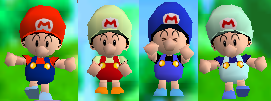
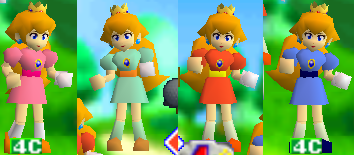
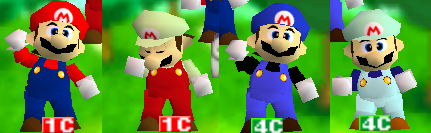
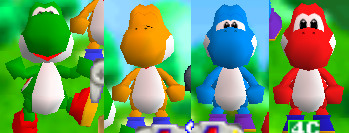
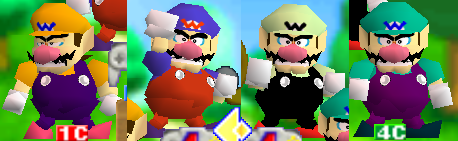
Every golfer comes in four colour schemes, and several are nods to older games: Fire Mario’s white and red, Yoshi in red, light blue and yellow as in Super Mario World, Peach in the green dress from NES Open Tournament Golf, Wario in the black and white of Wario Land II and 3 and Bowser in the green skin of Super Mario Bros.
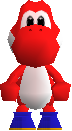
Mario’s four colour schemes.Yoshi’s four colours.Wario’s four colours, including his Wario Land look.
The Transfer Pak link
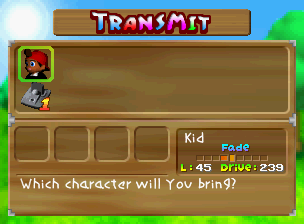
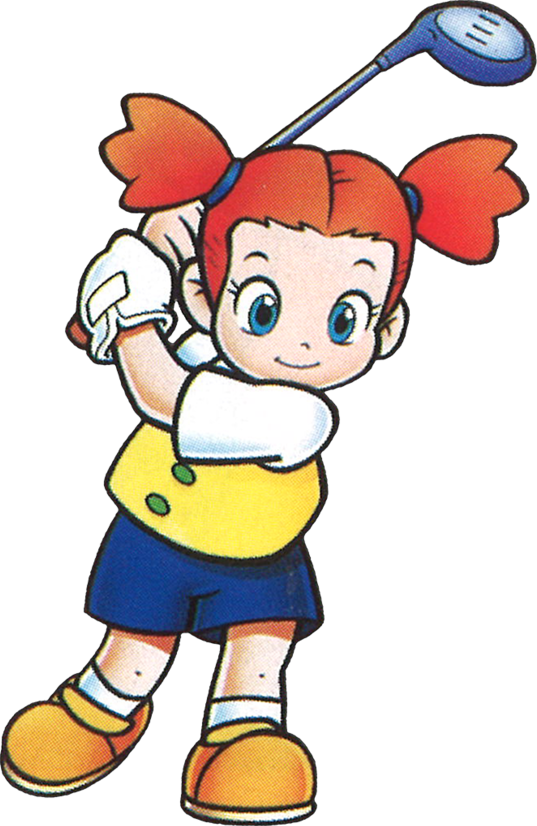
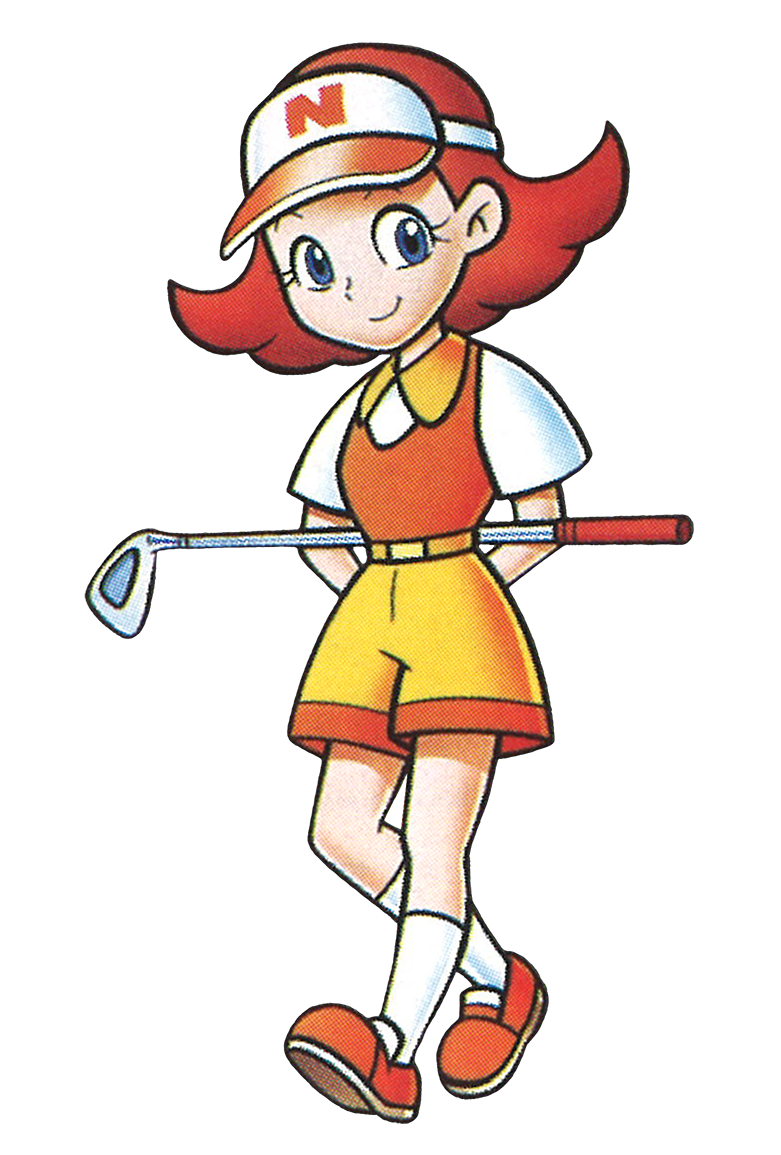
Camelot made a Game Boy Color Mario Golf at the same time, released in Japan on 10 August 1999, with a role-playing story mode in which your golfer levels up by playing. With the Nintendo 64 Transfer Pak, those Game Boy Color golfers could be loaded into the N64 game and played on its courses. Four can make the trip, Kid, Joe, Sherry and Azalea, singly or together; the handheld game’s other unlockables, Putts, Grace, Tiny and Gene, cannot.
The link is gone from every re-release: the Virtual Console versions on Wii and Wii U and the Nintendo Switch Online release have no way to read a Game Boy cartridge, so the four transfer golfers are out of reach there.
The Transfer Pak mode screen.The icon used for the N64 link in the Game Boy Color game.
Multiplayer and taunts
Up to four people can play, taking turns on one controller each. Every multiplayer mode except Club Slots and Mini-Golf can be filled out with computer players. Golfers can also taunt each other, which GameSpot described as blowing raspberries to put a rival off their timing, and the Nintendo description of the game makes a selling point of it.
Scores, badges and markers
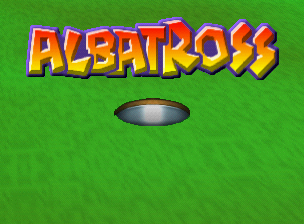
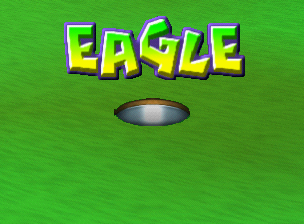
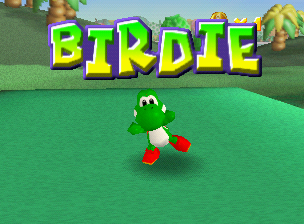
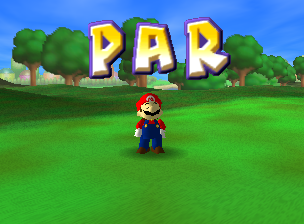
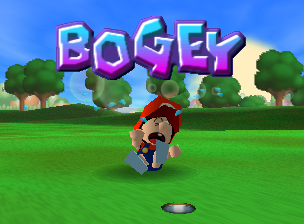
Mario Golf has no items in the usual sense; what you collect are scores and badges. Each score has its own end-of-hole animation for every golfer.
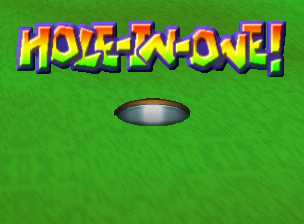
Hole-in-OneIn with the first stroke. Most likely on a par 3 but possible on any hole.
AlbatrossThree under par, which can only happen on a par 5.
EagleTwo under par: usually on a par 5, occasionally on a short par 4.
BirdieOne under par, the least you need to earn a Birdie Badge in a Tournament.
ParExactly the expected number of strokes.
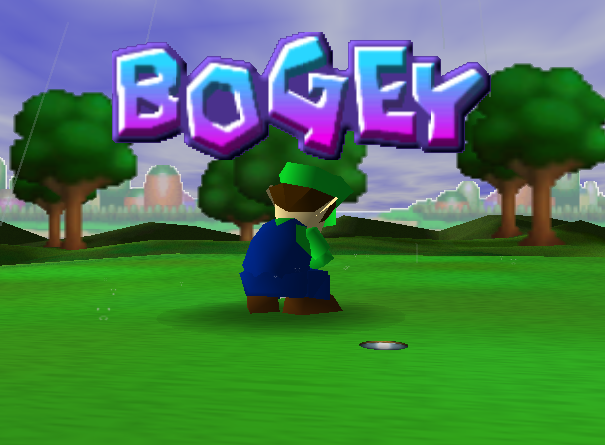
BogeyOne over par. Worse scores show the number of strokes over.
Birdie BadgeAwarded for every birdie or better in Tournament mode. There are 108 to collect, one per hole on the six courses, and the collection unlocks Maple and Metal Mario.
Cartoons, Comics & Other Media
Mario Golf’s original golfers never got a game of their own, but the courses, costumes and one golfer in particular have turned up again and again.
Mario Golf (Game Boy Color)Camelot · 1999The handheld companion, with a role-playing story mode and the Transfer Pak link to this game. Our page covers it.
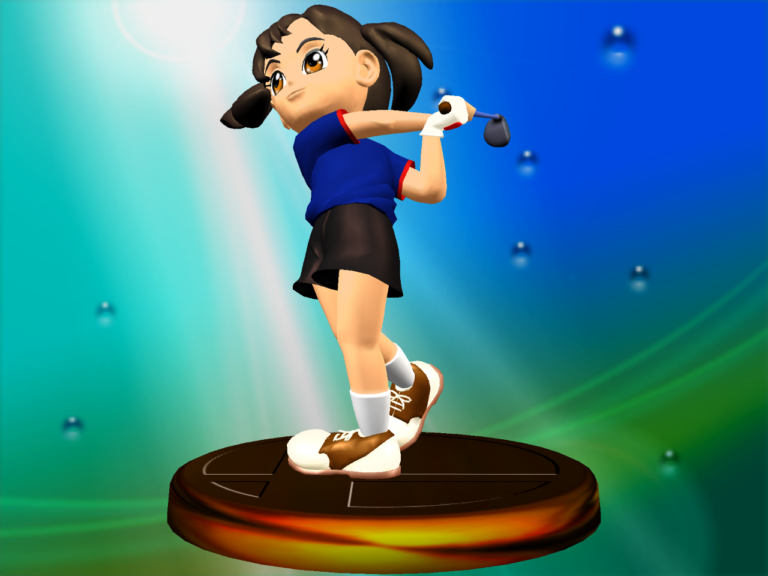
Plum in Super Smash Bros.Melee (2001) · Brawl (2008)Plum is a collectible trophy in Super Smash Bros. Melee, the only character who debuted in the Mario Golf series to get one, and a sticker in Brawl.
Smash Bros. costumesBrawl, 3DS/Wii U, UltimateSeveral Mario Golf colour schemes became Smash alternate costumes: Wario’s red-and-blue and black-and-white outfits in Brawl, and Bowser’s blue and green skins, Donkey Kong’s blue and yellow fur and Luigi’s dark green and yellow from the 3DS/Wii U games onward.
Luigi’s MansionGameCube · 2001The picture of Mario in Luigi’s Mansion reuses Mario’s pose from this game’s artwork.
Mario Golf: World TourNintendo 3DS · 2014 DLCAll six courses were remade as downloadable content with new graphics and music. Shy Guy Desert became Layer-Cake Desert, Yoshi’s Island became Sparkling Waters and Boo Valley became Rock-Candy Mines.
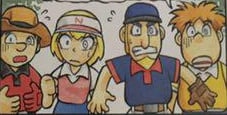
The 64 Dream strategy guideJapan · 1999The Japanese magazine’s guide to the game included short manga strips starring Plum, Charlie and the other golfers.
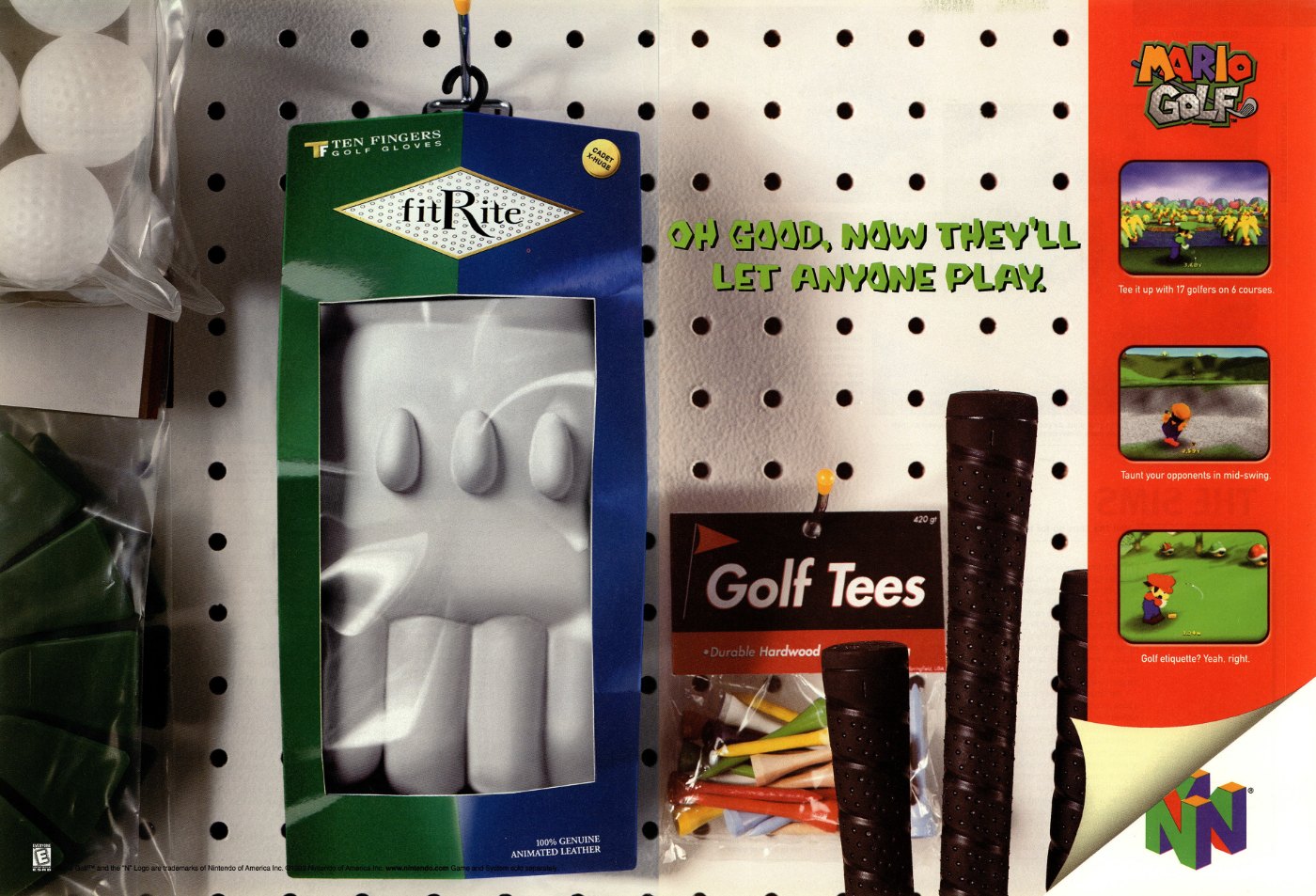
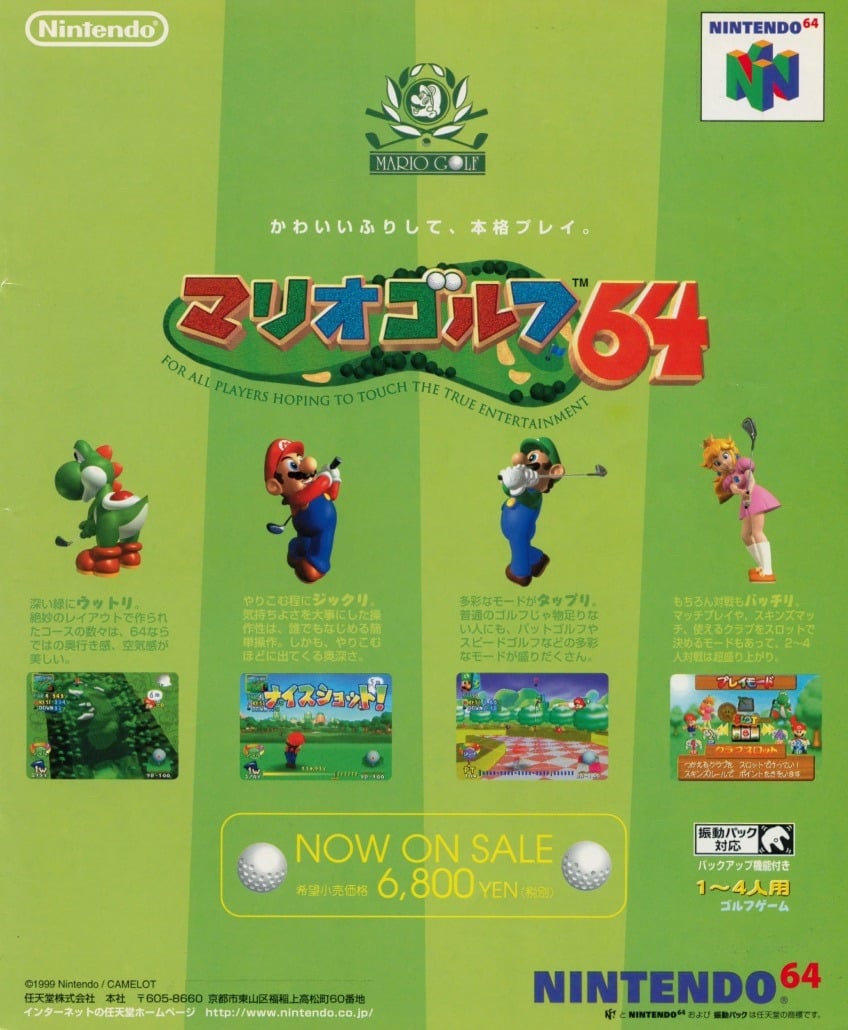
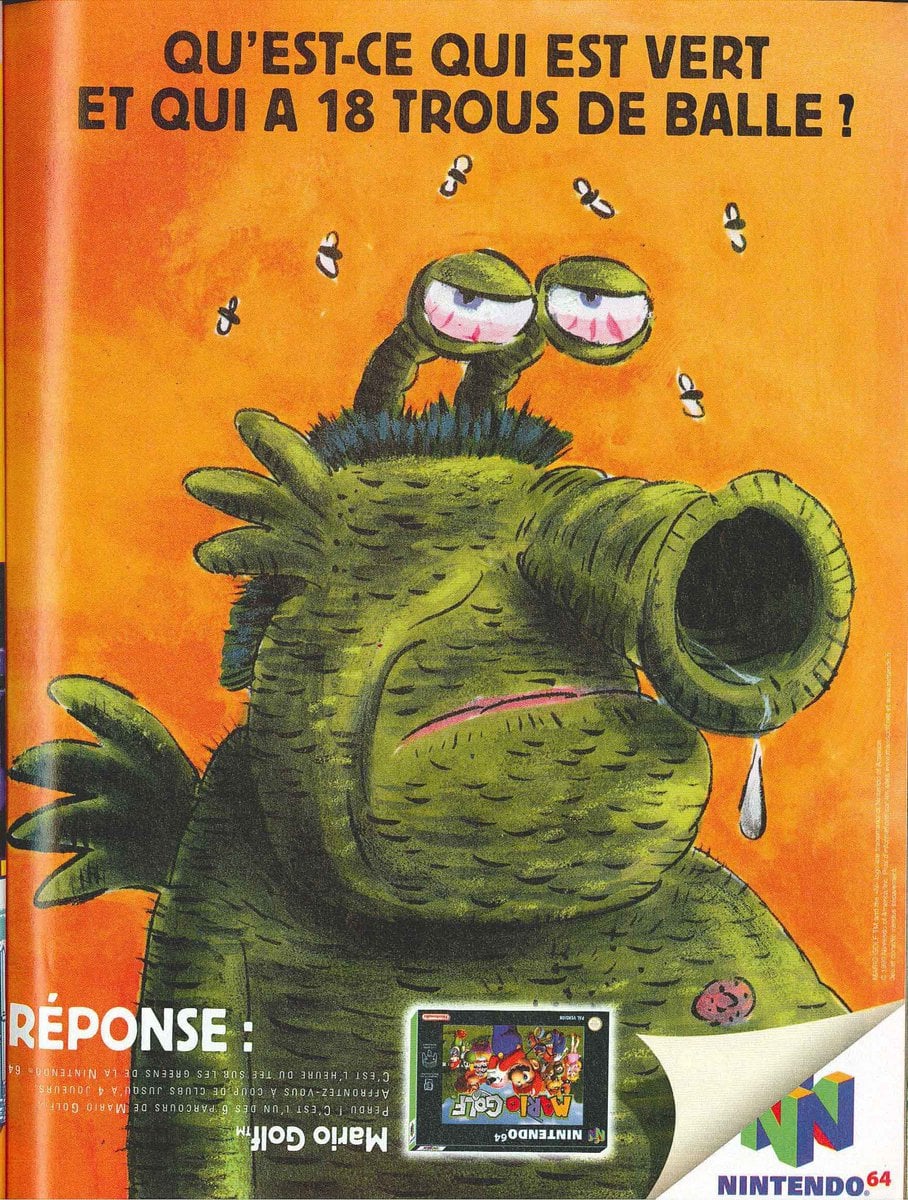
Print advertsNorth America, Japan, FranceNintendo advertised the game in one-page and two-page spreads in America and with separate designs in Japan and France.
The Roster
Fourteen golfers on the cartridge, four of them available from the start, and four more from the Game Boy Color game. Distances are each golfer’s standard drive; the Nice Shot effect is what trails a perfect Power Shot.
Character
Who they are
In this game
Abilities & notes
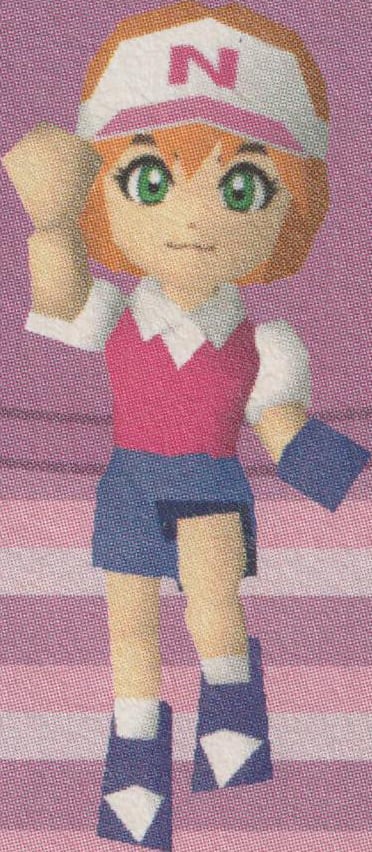
PlumOriginal golfer · starter
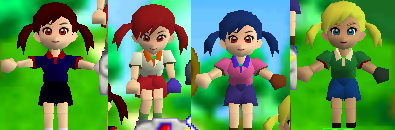
A young girl with black pigtails and a love of golf, created by Camelot for this game. She is the face of the intro alongside Mario, Luigi and Peach.
Available from the start. The shortest hitter of the original cast, but straight and easy to control.
Drive: 208 yards
Low trajectory, straight shot
Nice Shot: Ray
CharlieOriginal golfer · starter
A teenage golfer in a yellow shirt and jeans, another Camelot creation. The credits list Dex Manley as his voice.
Available from the start. The wind moves his drives less than most.
Drive: 210 yards
Low trajectory, fade
Nice Shot: Ray
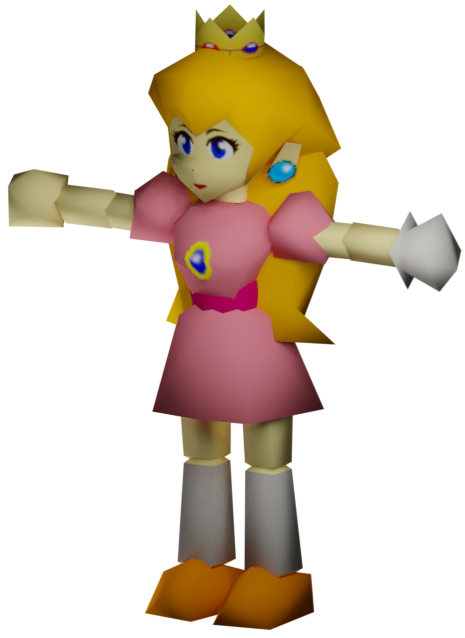
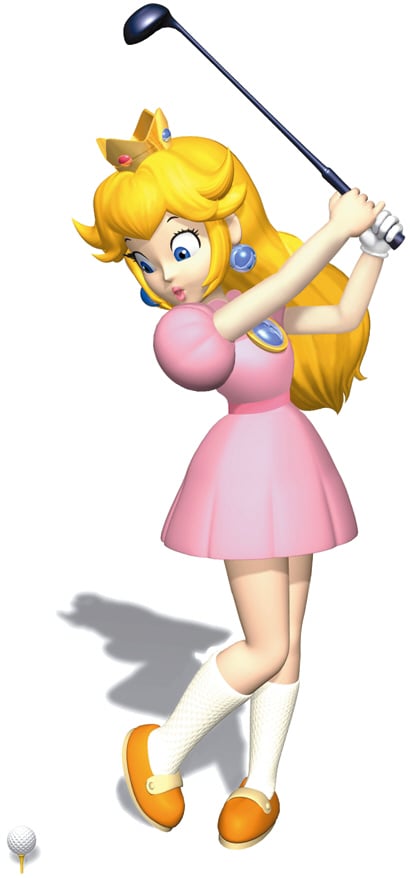
Princess PeachStarter
In a sporty outfit for the occasion, voiced by Jen Taylor. One of her alternate colours is the green dress she wore in NES Open Tournament Golf, another Daisy’s blue.
Available from the start, and the best of the starting four off the tee apart from Baby Mario.
Drive: 212 yards
High trajectory, straight shot
Nice Shot: Ray
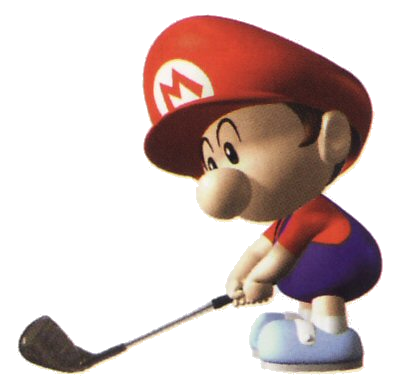
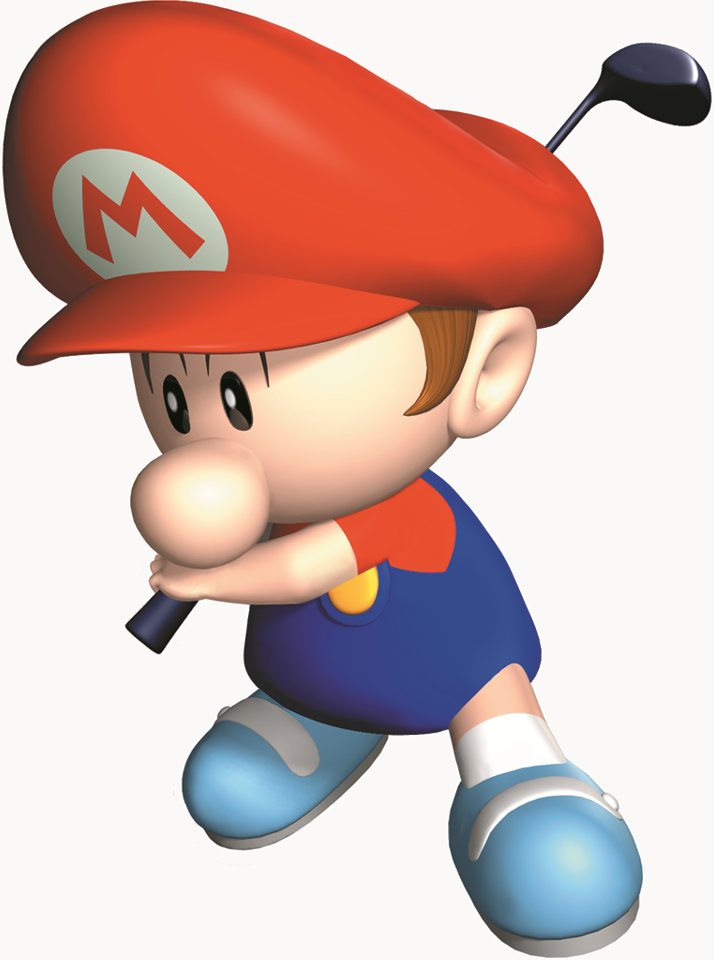
Baby MarioStarter
Mario in nappies, last seen riding Yoshi in Yoshi’s Island. In the intro his ball rolls up behind Yoshi’s, and it turns out he is riding on Yoshi’s back.
Available from the start: the longest of the four starting golfers, with his grown-up self’s fiery Power Shots.
Drive: 215 yards
High trajectory, draw
Nice Shot: Fireball
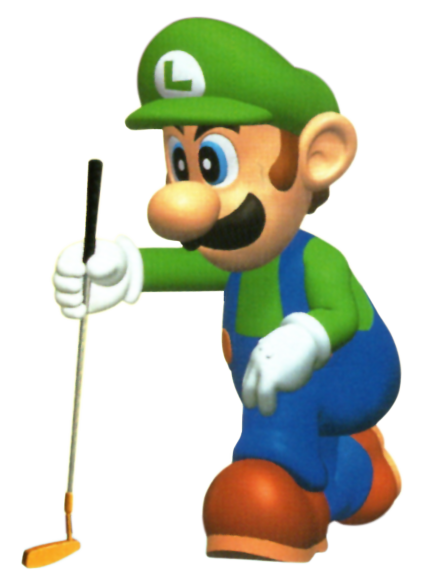
LuigiGet Character match 1
Mario’s brother, who ends the intro slapping his face when Toad waves an out-of-bounds flag at his ball.
The first Get Character opponent.
Drive: 220 yards
Low trajectory, fade
Nice Shot: Ray
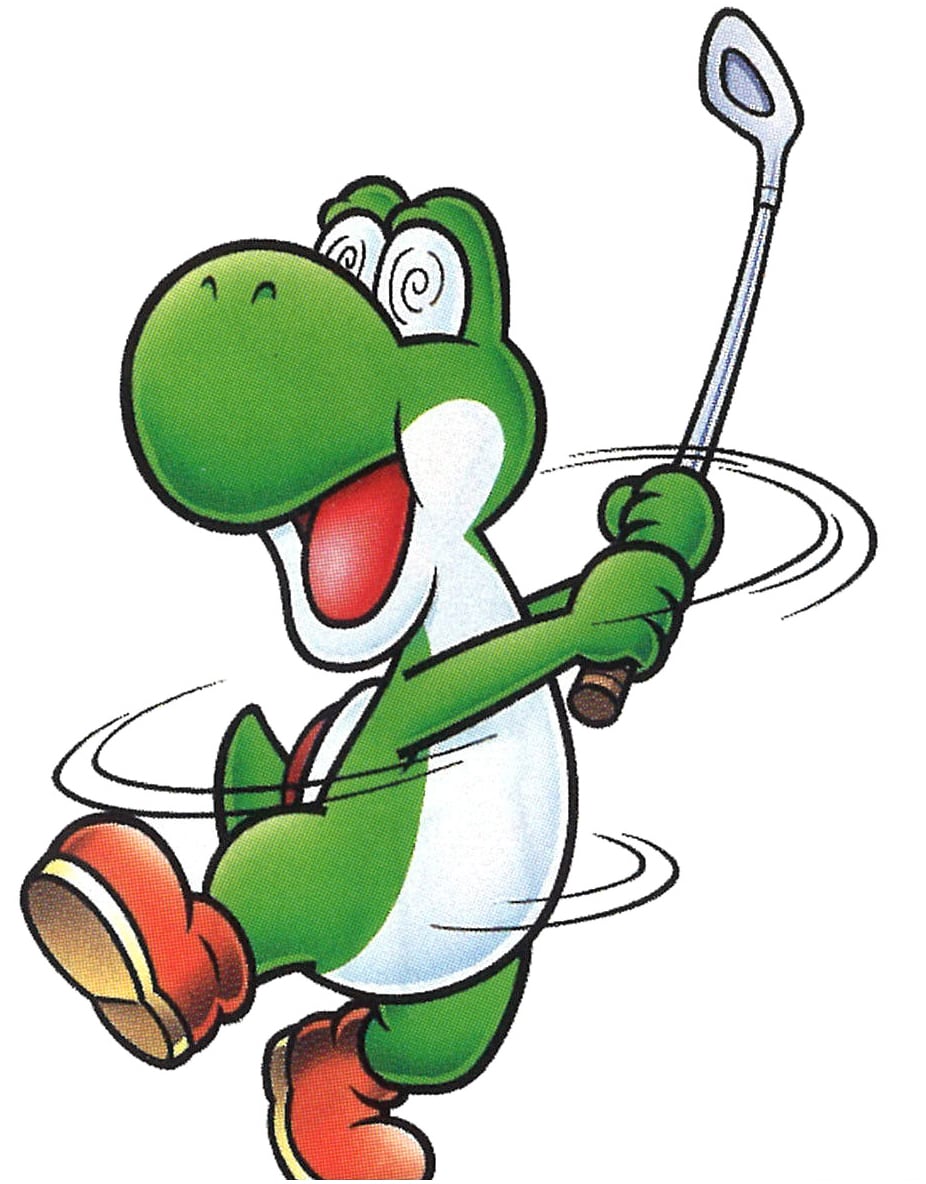
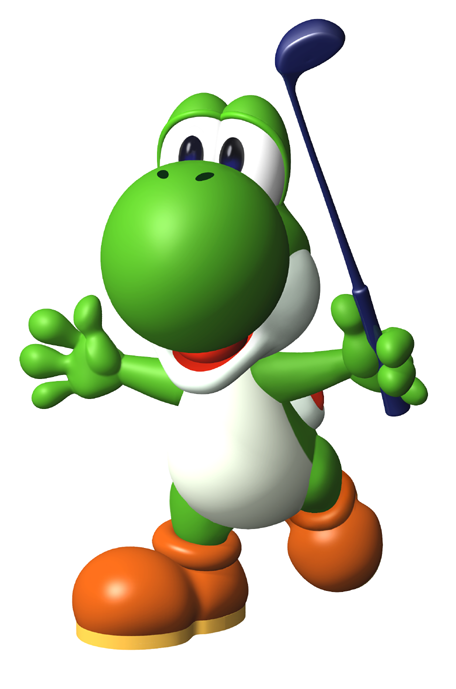
YoshiGet Character match 2
The dinosaur, using his sound effects from Super Mario World 2: Yoshi’s Island. His alternate colours are red, light blue and yellow.
The second Get Character opponent.
Drive: 230 yards
Standard trajectory, straight shot
Nice Shot: Rainbow
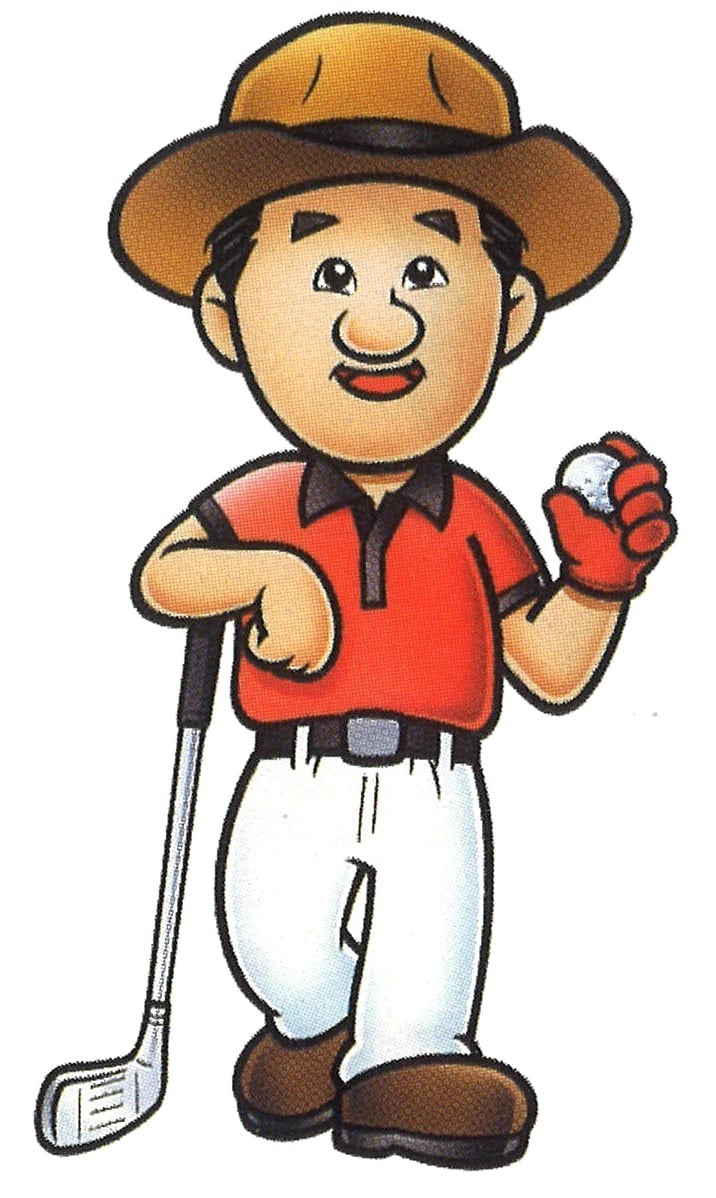
SonnyOriginal golfer · match 3
A cheerful young man in a red polo shirt and cowboy hat. He tosses the hat with a cry of “Yahoo!” after an eagle and hangs it in shame after a bogey.
The third Get Character opponent: a traditional, talented player.
Drive: 240 yards
High trajectory, draw
Nice Shot: Ray
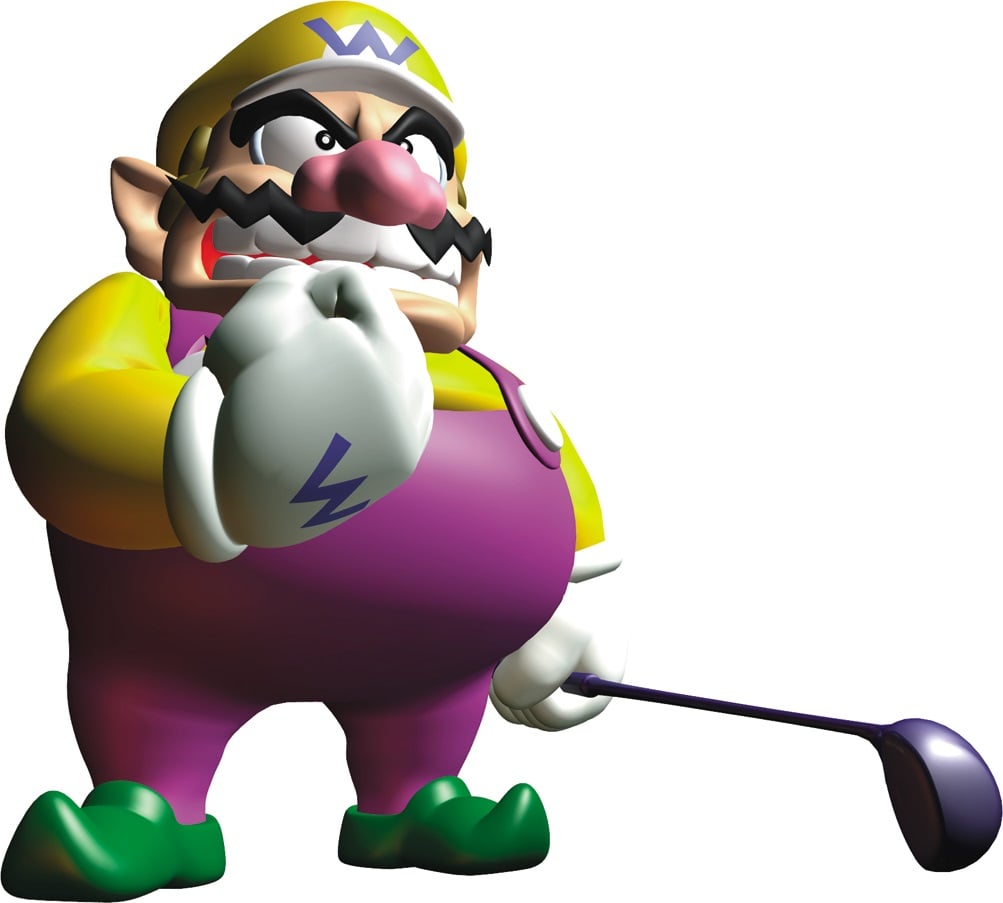
WarioGet Character match 4
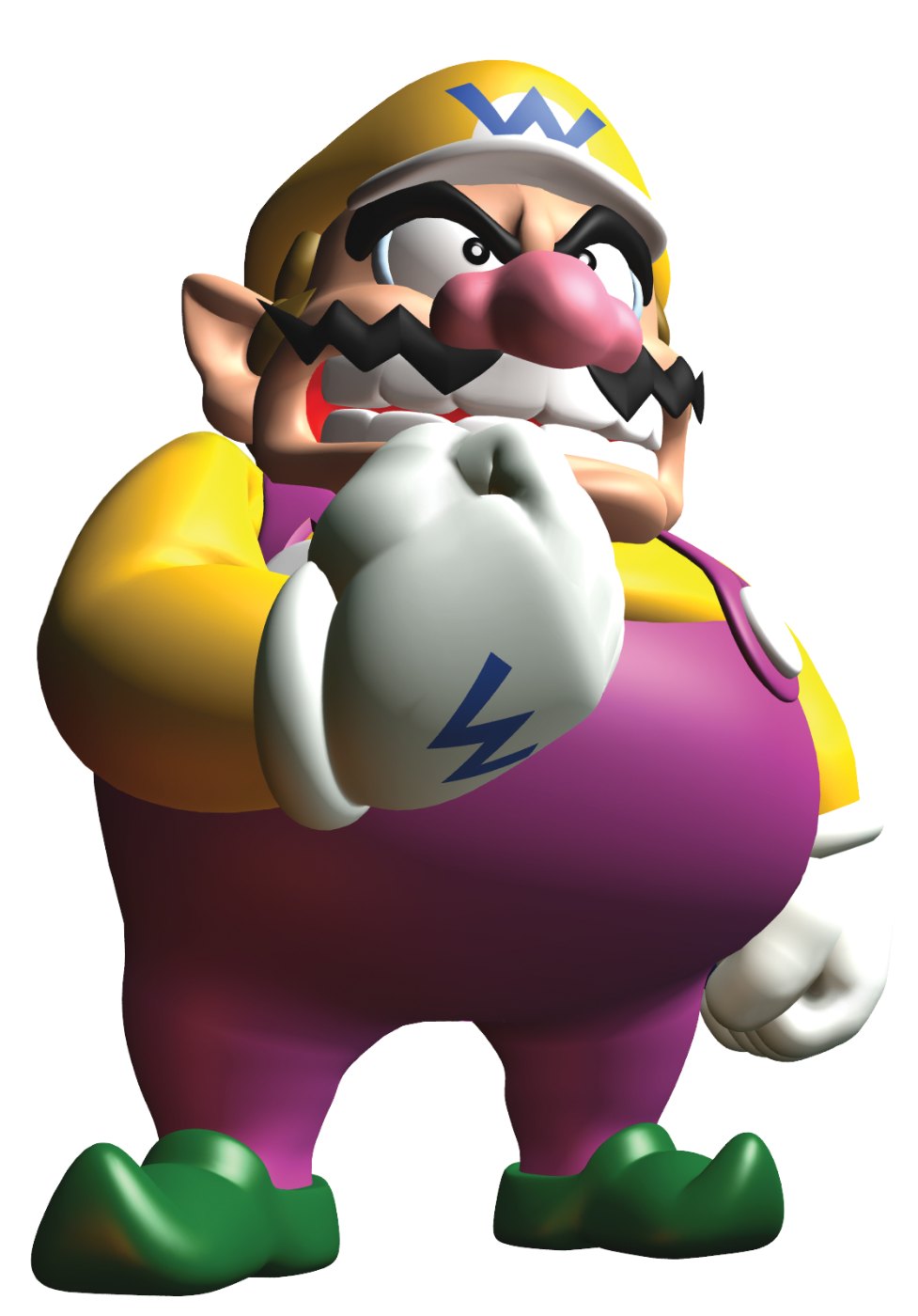
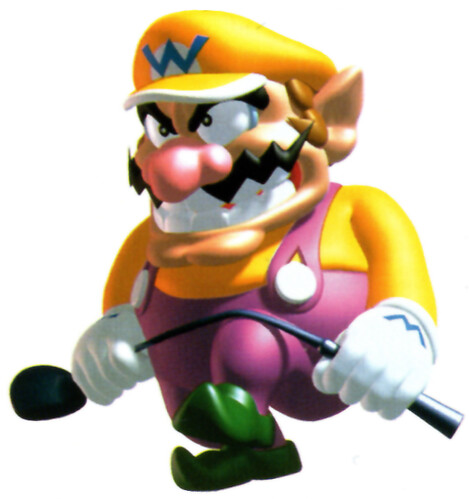
Mario’s greedy rival, in pink shoes. In the Western intro he grumbles that the game should have been called Wario Golf. One alternate colour is the black and white of Wario Land II and 3.
The fourth Get Character opponent, with crackling Thunder shots.
Drive: 250 yards
Low trajectory, fade
Nice Shot: Thunder
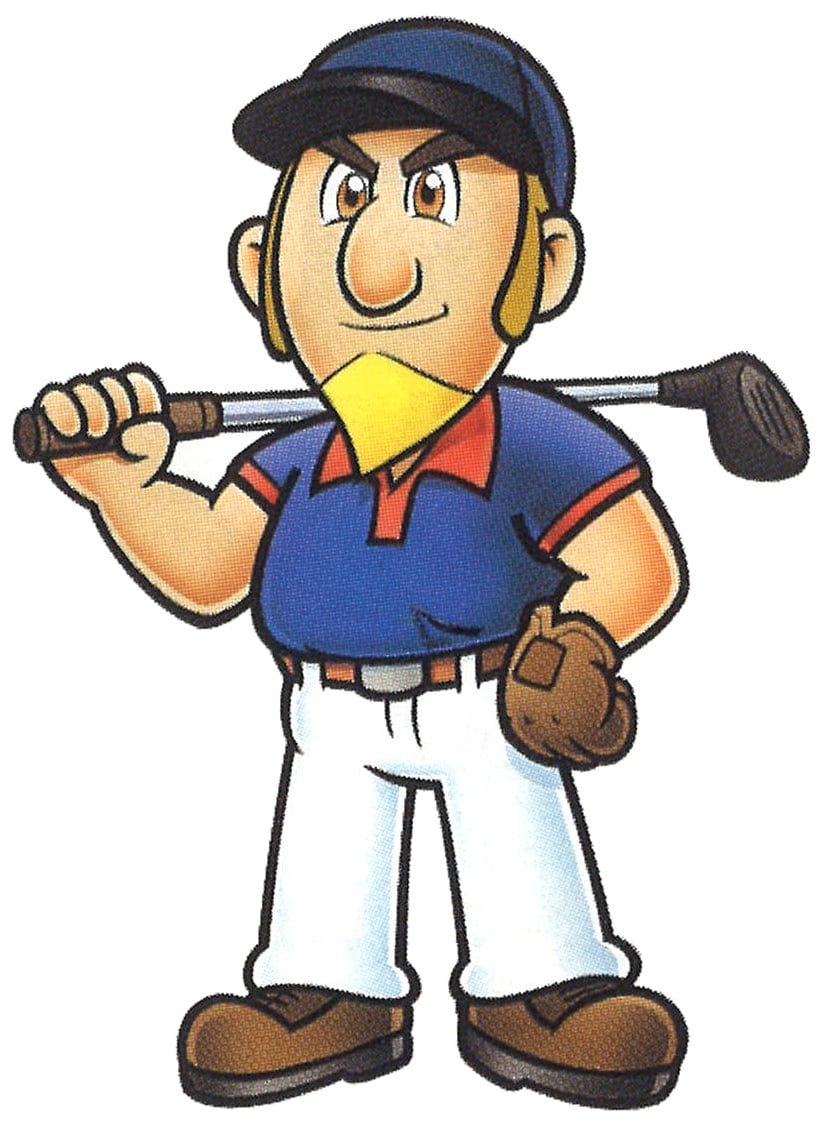
HarryOriginal golfer · match 5
A blond, goateed golfer in blue who takes the game very seriously: he is angry at bogeys, grunts at pars and is merely satisfied with birdies, and he bends his club when he loses a hole.
The fifth Get Character opponent, with a long high draw much like Mario’s.
Drive: 260 yards
High trajectory, draw
Nice Shot: Ray
MarioGet Character match 6
The star of the show, voiced by Charles Martinet. His hole-in-one celebration is his victory pose from Super Mario 64, and his alternate colours include Fire Mario.
You have to earn him: he is the sixth Get Character opponent.
Drive: 270 yards
High trajectory, draw
Nice Shot: Fireball
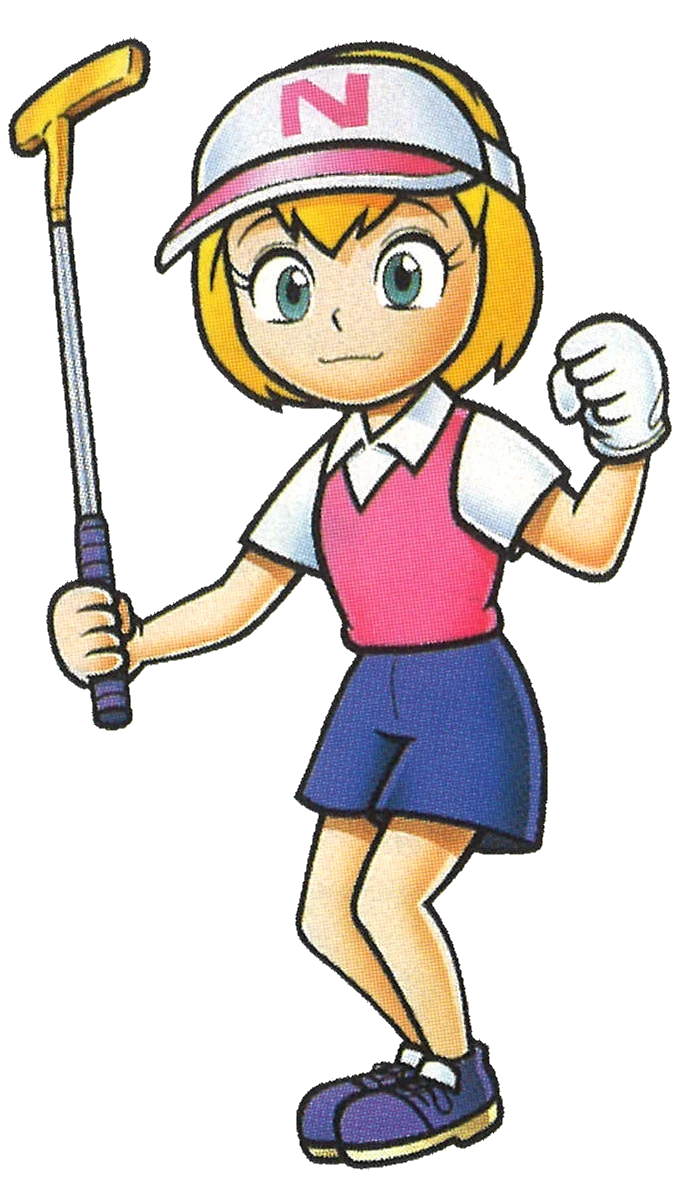
MapleOriginal golfer · Birdie Badges
An excitable, energetic young woman, voiced by Haley Burns, who is described as the best female golfer on the circuit.
Unlocked by collecting 50 Birdie Badges. The most powerful of the straight hitters.
Drive: 245 yards
High trajectory, straight shot
Nice Shot: Ray
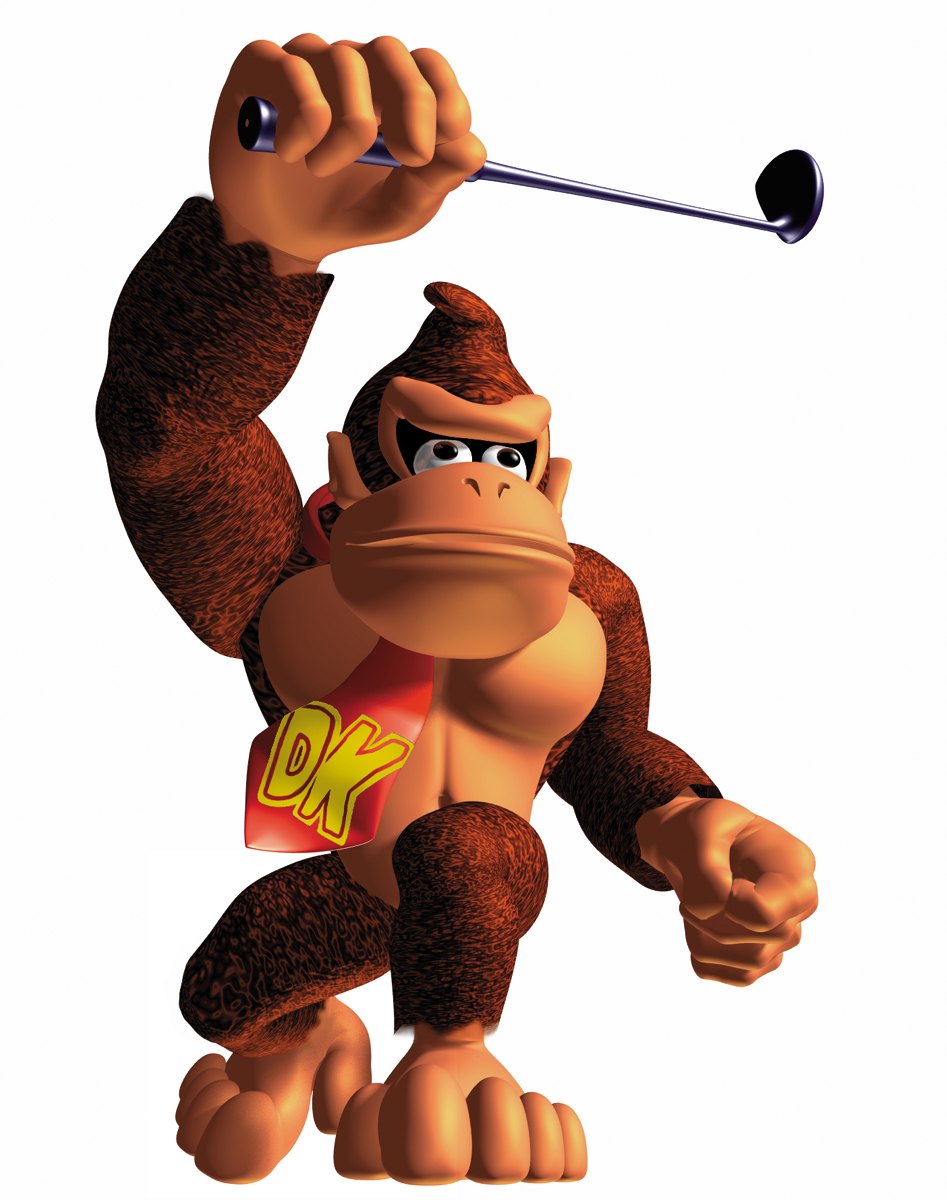
Donkey KongRing Shot reward
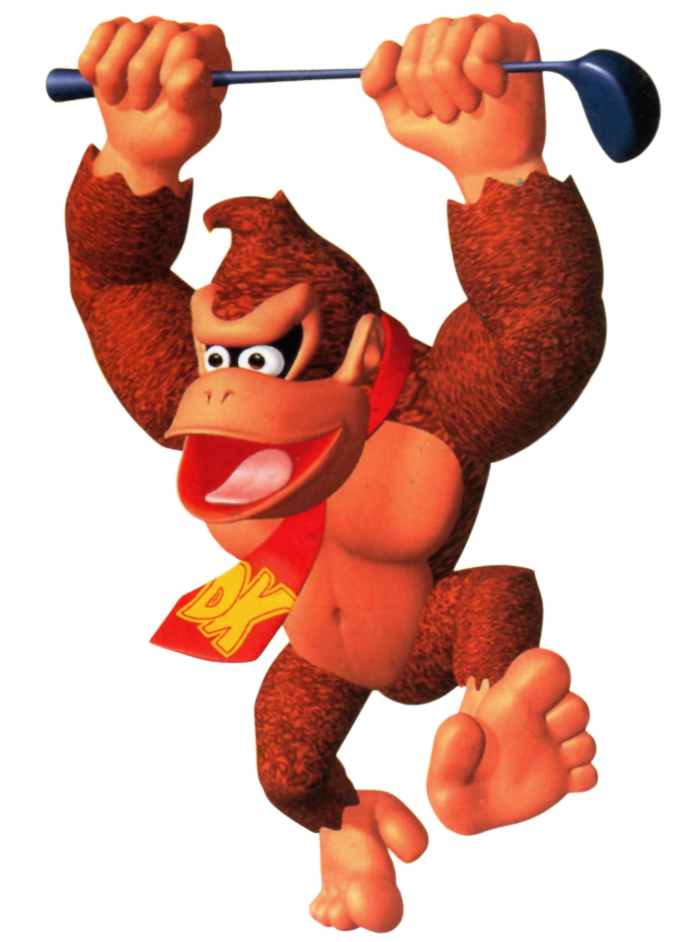
The great ape, whose alternate colours include blue and yellow fur, later reused for his Super Smash Bros. costumes.
Unlocked by clearing 30 Ring Shot holes.
Drive: 275 yards
Low trajectory, fade
Nice Shot: Rainbow
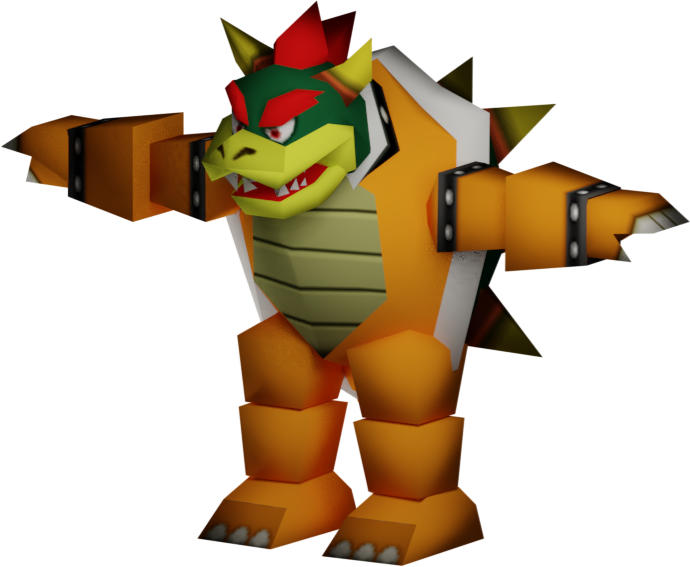
BowserGet Character match 7
The Koopa King, who can also be played in the green skin of his Super Mario Bros. sprite.
The seventh and last Get Character opponent. Beat him on Mario’s Star and you see a different version of the credits.
Drive: 280 yards
High trajectory, draw
Nice Shot: Flame Ray
Metal MarioSecret · Western versions only
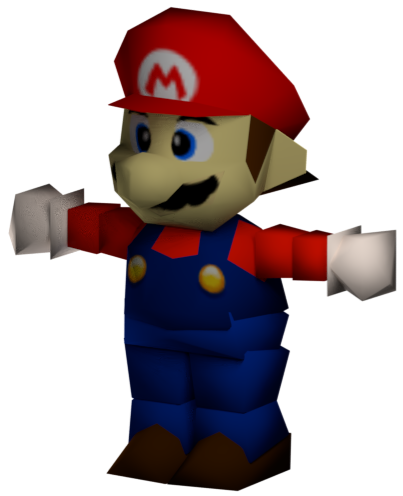
Mario in his Metal Cap form from Super Mario 64, with the same sound effects. This is his first appearance as a playable character in his own right.
Unlocked by collecting all 108 Birdie Badges, one for every hole of the six courses. He is not in the Japanese version.
Drive: 285 yards, the longest in the game
High trajectory, draw
Nice Shot: Fireball
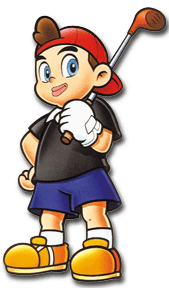
KidTransfer Pak
One of the four rookie heroes of the Game Boy Color Mario Golf, who can be levelled up in that game’s story mode.
Playable on the N64 only by transfer from a Game Boy Color save.
Starting drive: 202 yards
High trajectory, draw
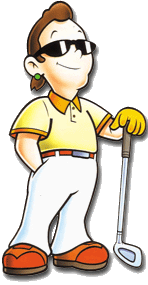
JoeTransfer Pak
A second Game Boy Color hero.
Transfer Pak only.
Starting drive: 205 yards
High trajectory, straight shot
SherryTransfer Pak
A third Game Boy Color hero.
Transfer Pak only.
Starting drive: 200 yards
High trajectory, draw
AzaleaTransfer Pak
The fourth Game Boy Color hero.
Transfer Pak only.
Starting drive: 204 yards
Low trajectory, fade
Course characters
Mushroom Kingdom regulars who help out round the course without ever picking up a club.
BooEvery holeShows the wind direction and strength.
Lakitu (camera)Every holeFilms distant parts of the course when you look ahead.
Lakitu (starter)Speed GolfHolds up the starting light.
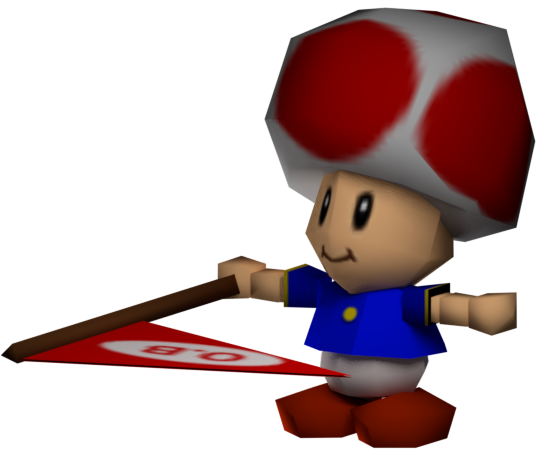
ToadOut of boundsWaves a flag when the ball goes out of bounds.
Monty MoleThe cupPops up to look around after you hole a putt from 30 feet or more.
UkkikiThe flagstickSlides down the pole when the ball hits the pin.
Fly GuyWindy teesGets blown about at the start of a hole with strong wind.
BubbaWater hazardsOne of two fish that may surface when your ball finds the water.
Cheep Cheep (Blurp)Water hazardsThe other fish waiting in the lakes.
The people who made it
Names and roles from the game’s staff roll. The credits name Camelot, Monegi Corporation and Nintendo as the makers.
Haruki KoderaDirector, lead programmerCamelot’s director on the project, also one of its two lead programmers.
Hiroyuki TakahashiLead game designer, producerCamelot’s head, who reportedly also whistles as Mario and Metal Mario, uncredited.
Shugo TakahashiLead game designer, producerHiroyuki’s brother and fellow Camelot leader.
Shinji Hatano, Hidetoshi EndoProducersCo-producers alongside the Takahashi brothers.
Motoi SakurabaMusic composition and arrangementCamelot’s long-time composer, who went on to score the Mario Tennis and Golden Sun games.
Masaaki UnoSound effects and sound directionAlso one of three assistant directors.
Hiroshi YamauchiExecutive producerCredited as executive producer.
Shigeru Miyamoto, Takashi Tezuka, Koji KondoSupervisorsNintendo EAD veterans credited as supervisors, with Miyamoto also credited for the original character designs.
Charles MartinetVoice of Mario, Luigi, Wario, Baby Mario and Metal MarioMisspelt “Martinee” in the credits.
Jen TaylorVoice of Princess Peach and ToadVoices both the princess and Toad.
Advertisement
How It Was Made
Mario Golf was a new partnership: a studio that had just made a hit golf game for Sony, now working for Nintendo.
A studio changes sides
The Mario Golf logo used in the West.
Camelot Software Planning began inside Sega, as the team behind the Shining role-playing games, and became an independent company in 1994. In 1997 it developed the first Everybody’s Golf for Sony’s PlayStation, known in America as Hot Shots Golf. Mario Golf was its first game for Nintendo, the start of a relationship that has lasted through Mario Tennis, Golden Sun and every Mario Golf since.
From “Golf” to Mario Golf
The Japanese Mario Golf 64 logo.
According to the Japanese magazine The 64 Dream, Nintendo was already working on a Nintendo 64 golf game in April 1997, tentatively titled simply “Golf”. Mario Golf itself was announced in The 64 Dream’s February 1999 issue, which went on sale in December 1998, barely six months before release. In Japan the game was named Mario Golf 64, a name the Japanese intro shouts out; the Western intro became “Welcome to Mario Golf!”
Built on Hot Shots
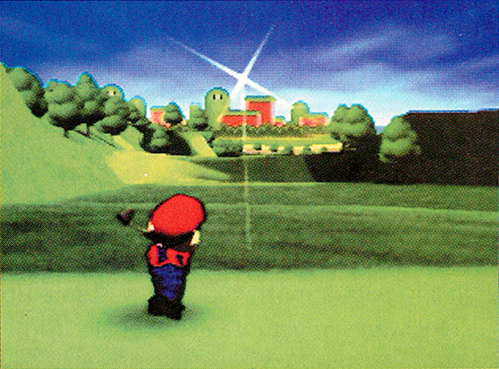
A pre-release screenshot.
GameSpot’s 1999 review pointed out that the game was built on the engine Camelot had made for Hot Shots Golf and kept the options that had made that game fun, while replacing its sprite golfers with fully 3D characters. Before it, the reviewer noted, the only golf game on the Nintendo 64 was Waialae Country Club: True Golf Classics.
The team
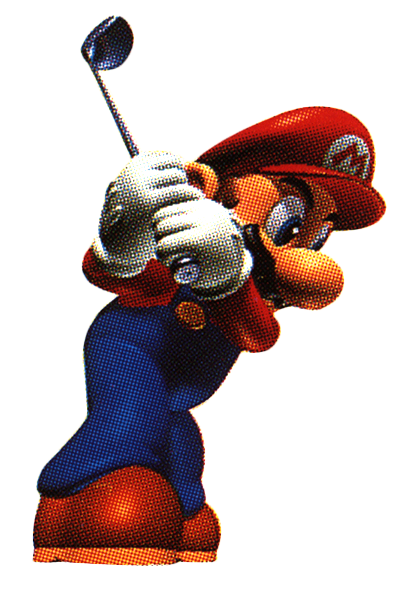
Mario lines up a putt, in the game’s artwork.
Haruki Kodera directed, with Hiroyuki and Shugo Takahashi as lead game designers and producers alongside Shinji Hatano and Hidetoshi Endo; Hiroshi Yamauchi was executive producer. Motoi Sakuraba wrote the music. The credits name Camelot, Monegi Corporation and Nintendo as the game’s makers, list Shigeru Miyamoto, Takashi Tezuka and Koji Kondo among the supervisors, and thank the Nintendo EAD artwork team. The English voices were recorded with Charles Martinet as Mario, Luigi, Wario and Baby Mario, Jen Taylor as Peach and Toad, Haley Burns as Maple and Dex Manley as Charlie.
Pre-release and E3 1999
Plum in a screenshot shown at E3 1999.
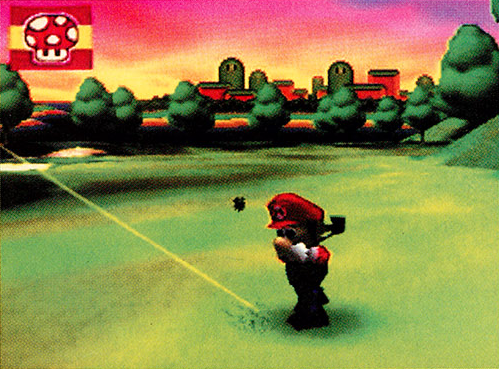
Screenshots were released before launch and at E3 1999, showing Plum, Luigi, Yoshi, Wario and Mario on the courses. The Japanese version came out first, in June; the Western release a few weeks later added Metal Mario, reordered the character select screen, moved the wind display slightly to the left and gave the power meter its extra indicator bar.
Two versions, one link
Mario in artwork for the Game Boy Color version.
Camelot also made the Game Boy Color version, released in Japan on 10 August 1999 and in North America on 5 October. The two were designed to talk to each other through the Transfer Pak, so that golfers raised in the handheld game’s story mode could play on the console courses.
Series Firsts
What Mario Golf brought to the series, checked against the earlier golf games and Camelot’s later work.
1Camelot’s first Mario gameThe first game Camelot Software Planning made for Nintendo, and the first Mario Golf from the studio that has made every one since.
2Metal Mario’s playable debutMetal Mario first appeared as a power-up form in Super Mario 64; this is the first game in which he is a separate playable character, in Western versions only.
3Camelot’s golfersPlum, Charlie, Sonny, Harry and Maple all make their first appearances here.
4Mini-GolfThe only Mario Golf game with a Mini-Golf mode.
5The first Mario Golf titleMario had played golf in earlier Nintendo games, but this was the first to carry the Mario Golf name.
6A console and handheld pairReleased alongside a Game Boy Color version that could share golfers with it through the Transfer Pak.
Cheats & Secrets
Everything in Mario Golf is unlocked by playing, and the game keeps a few extras for those who look.
Unlocking every golfer
Get Character, in order: Luigi, Yoshi, Sonny, Wario, Harry, Mario, Bowser. Maple: 50 Birdie Badges. Metal Mario (not in Japan): all 108 Birdie Badges. Donkey Kong: clear 30 Ring Shot holes. Kid, Joe, Sherry and Azalea: transfer from Mario Golf on Game Boy Color with the Transfer Pak (original cartridge only).
Unlocking every course
Course Points from Tournaments: Koopa Park at 50, Shy Guy Desert at 300, Yoshi’s Island at 1,000, Boo Valley at 1,500 and Mario’s Star at 2,500. Ring Shot courses open separately after 4, 8, 12, 16 and 20 cleared holes.
Keep your Power Shots
A Power Shot hit with perfect power and accuracy is not deducted from your six, so a good timer can use them on every long hole.
The other ending
Beat Bowser or Metal Mario on Mario’s Star and the credits play out differently, with a new picture at the end.
Add computer players
In multiplayer modes other than Club Slots and Mini-Golf, hold R and press A on a character to make them a computer player.
Code Entry
In the Japanese and North American versions, highlight Clubhouse on the main menu, hold L and R (or Z and R) and press A to reveal a Code Entry option. It was used for Nintendo’s official tournaments, whose passwords were entered on Nintendo’s website to post scores to a leaderboard. The European version does not have it, and on Nintendo Switch Online it cannot be reached.
A secret soundtrack
If all four players pick Donkey Kong or Yoshi, most courses play a remix of the Palm Club theme from the Game Boy Color Mario Golf in place of their usual music.
Glitches & Oddities
Mario Golf is a tidy piece of work, and its oddities are mostly leftovers that The Cutting Room Floor has dug out of the code.
Debug text on the Mini-Golf walls
Bouncing the ball off a wall on the Mini-Golf courses can make leftover debug messages such as “CheckXYAxis” and “Hit” flash up on screen.
Pins off the map
Some of the pin positions stored for the Mini-Golf courses and the Driving Range lie outside the playable area.
The dummy golfer
The Japanese cartridge holds an unfinished extra character, reachable only with a cheat device, who has Yoshi’s stats, Donkey Kong’s score sprites and Mario’s costumes. The Cutting Room Floor suggests it may be an early Metal Mario.
The unused cart path
A grey “cartway” ground type is fully programmed, with its own name and bounce, but no course uses it.
Videos
Nintendo Japan’s introduction to the game for its Nintendo Switch Online release, and the English trailer for the same release.
Nintendo Japan’s official video: three things to know about Mario Golf 64, made for its 2022 arrival on Nintendo Switch Online.
Nintendo’s English-language trailer for the Nintendo Switch Online release, as uploaded by IGN.
Trivia & Interesting Facts
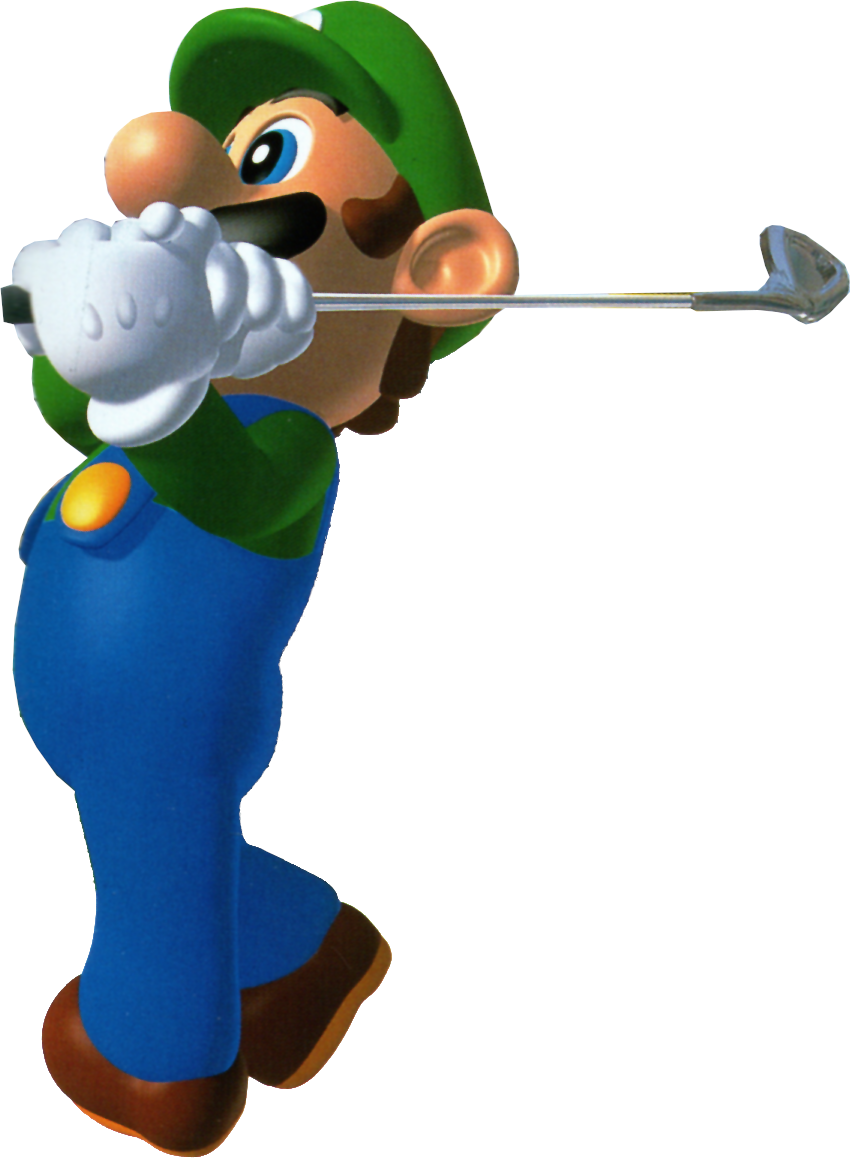
Luigi’s bogey animation.Every golfer has a short animation for every score. The bogey ones are the most characterful: Harry is furious and Sonny hangs his hat in shame.
The Tournament leaderboard is full of in-jokes. Alongside Mario enemies and Zelda and Star Fox characters are first names such as Jen, Haley, Dex, Terry, Charles, Bill, Michelle and Christian, which match the English voice cast and the Nintendo of America staff thanked in the credits.
The Boo Valley tournament is spelt “Boo Clasic” in the game.
A hole-in-one.Mario’s hole-in-one celebration reuses his victory animation from Super Mario 64.
When you go for a birdie, the music switches to an arrangement of the Super Mario Bros. underground theme. The overworld theme plays on Mario’s Star and in the credits.
Many of the sound effects are borrowed: menu noises and the coin sound (used for Birdie Badges) from Mario Party, item and lap sounds from Mario Kart 64, and camera sounds from Super Mario 64.
In the Japanese intro Mario and Wario shout the game’s Japanese title, “Mario Golf 64!”. In English versions they say “Welcome to Mario Golf!”, and Wario complains that it should have been Wario Golf.
The European version plays a different song over the intro. The original is still on the cartridge, unused.
Japanese and European versions measure putts in metres and wind in metres per second; the North American version uses feet and miles per hour.
Wario in pink shoes.Wario’s shoes are pink in this game.
The credits misspell Charles Martinet’s surname as “Martinee”.
Nintendo’s UK site notes that the Wii U Virtual Console release uses the American version of the game.
Plum’s Melee trophy.Plum is the only character who debuted in a Mario Golf game to become a Super Smash Bros. Melee trophy.
Hole 16 of Mario’s Star is drawn as the stained-glass portrait of Princess Peach from her castle.
Baby Mario’s four colours.Every golfer has four colour schemes; Baby Mario can dress as Fire Mario, and Bowser can wear his original green.
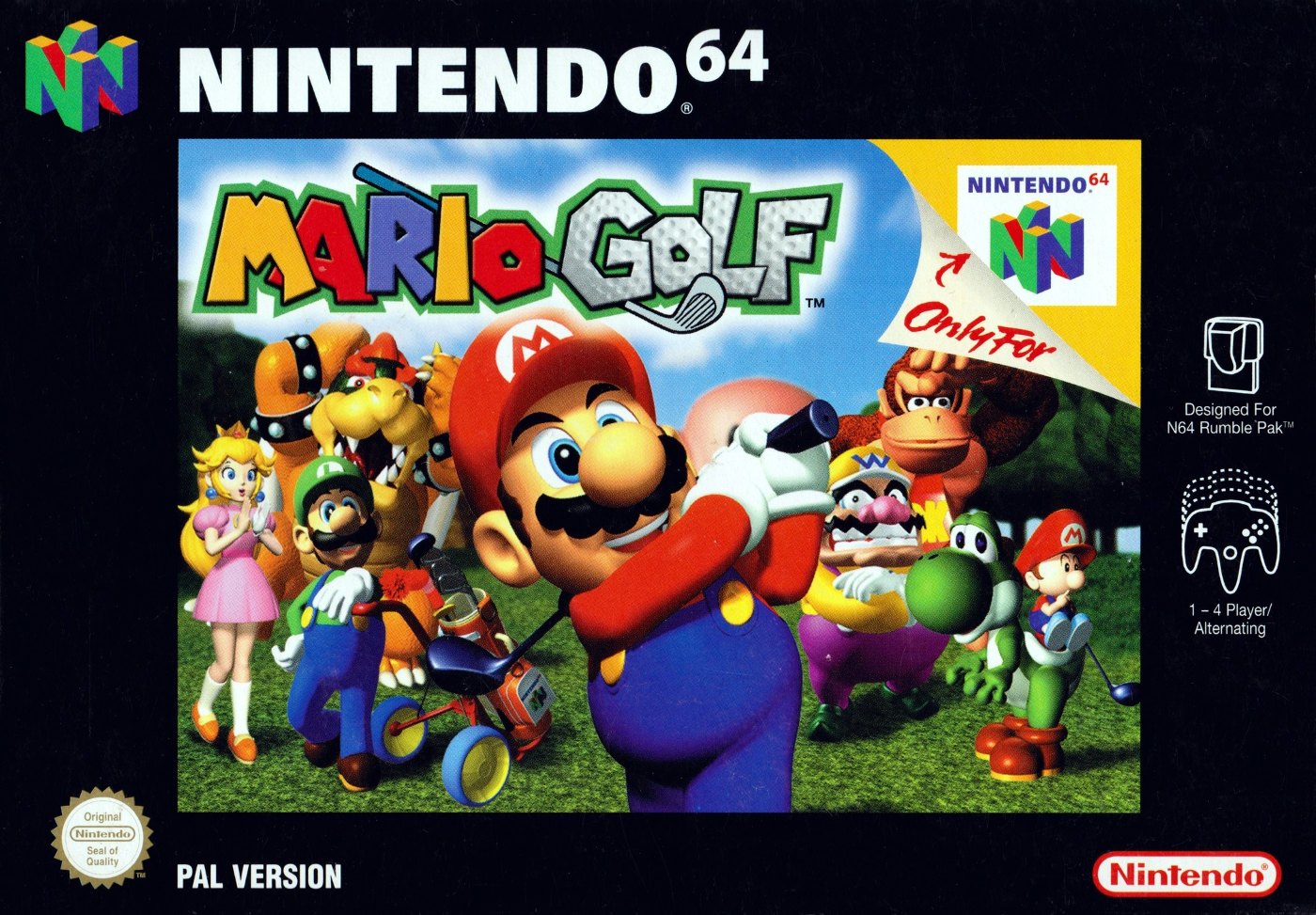
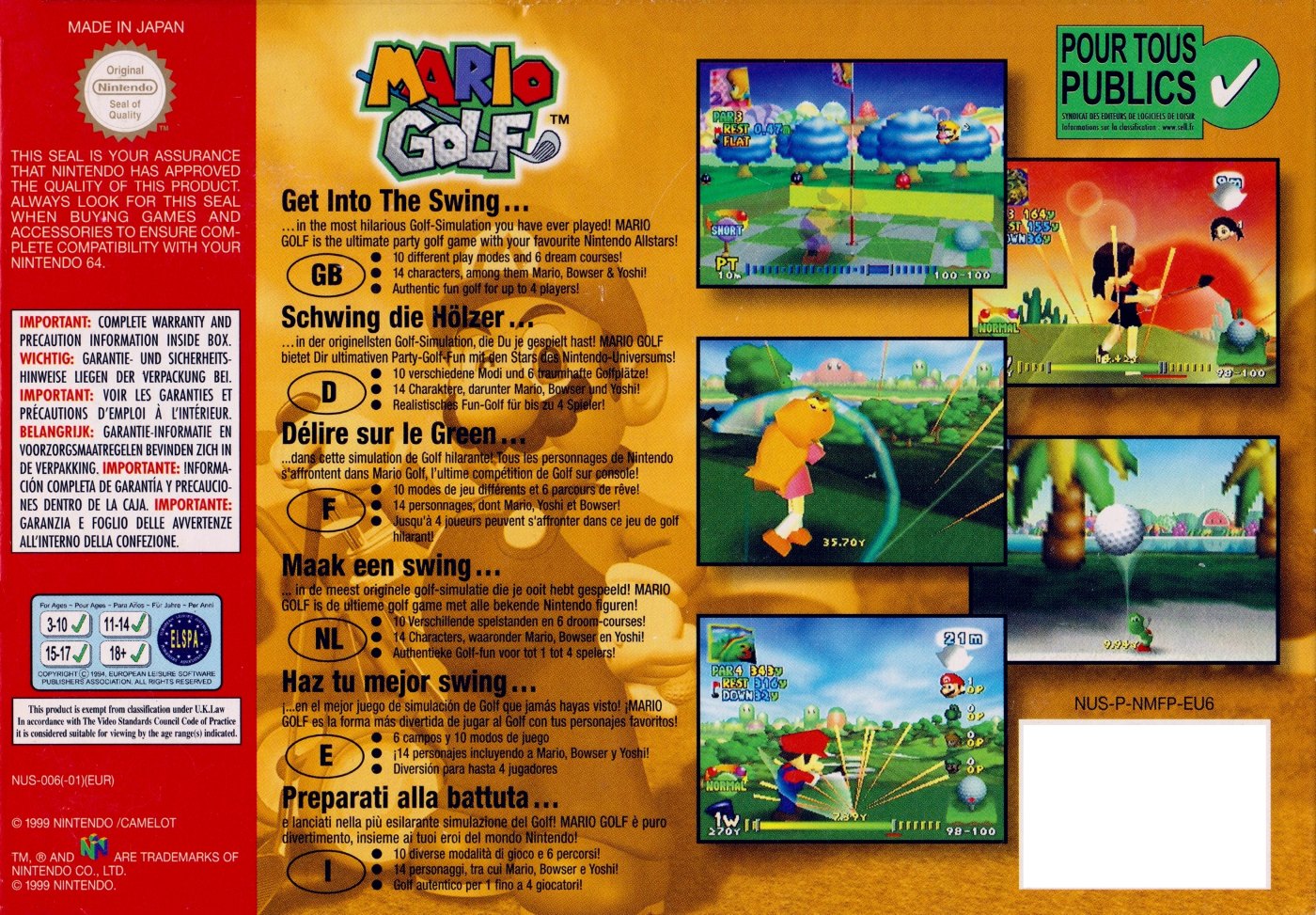
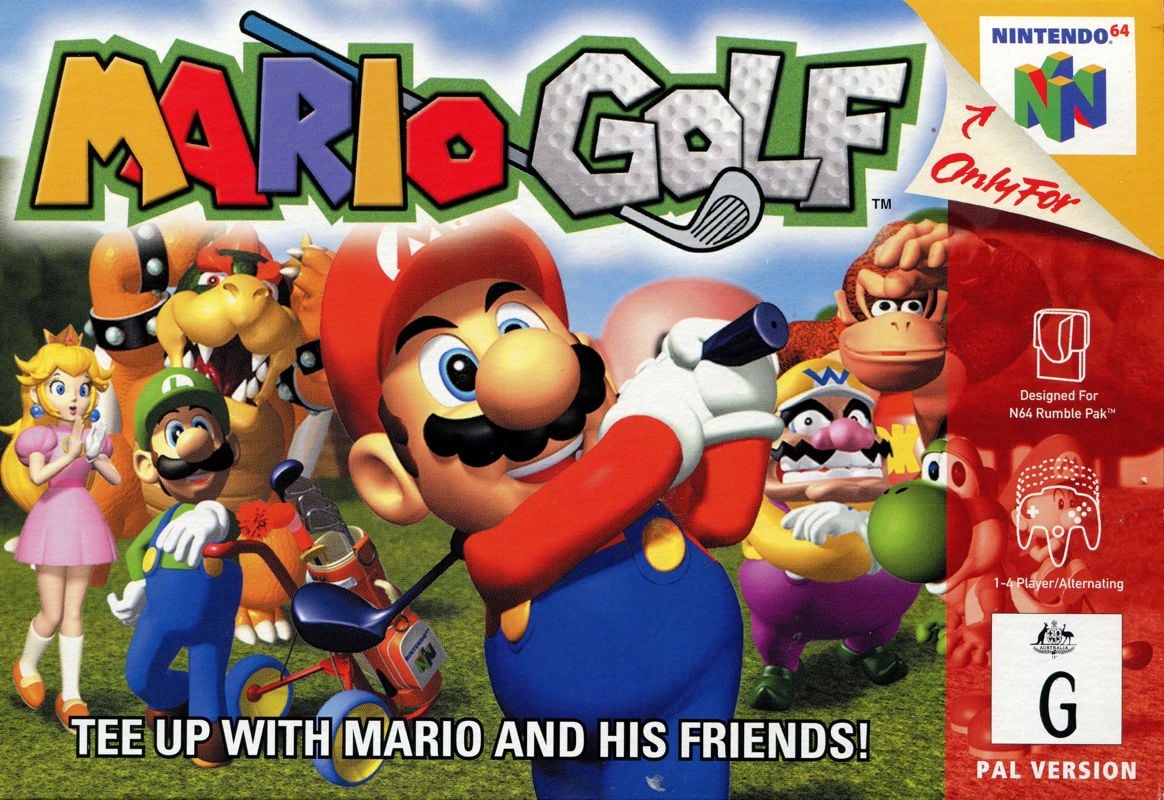
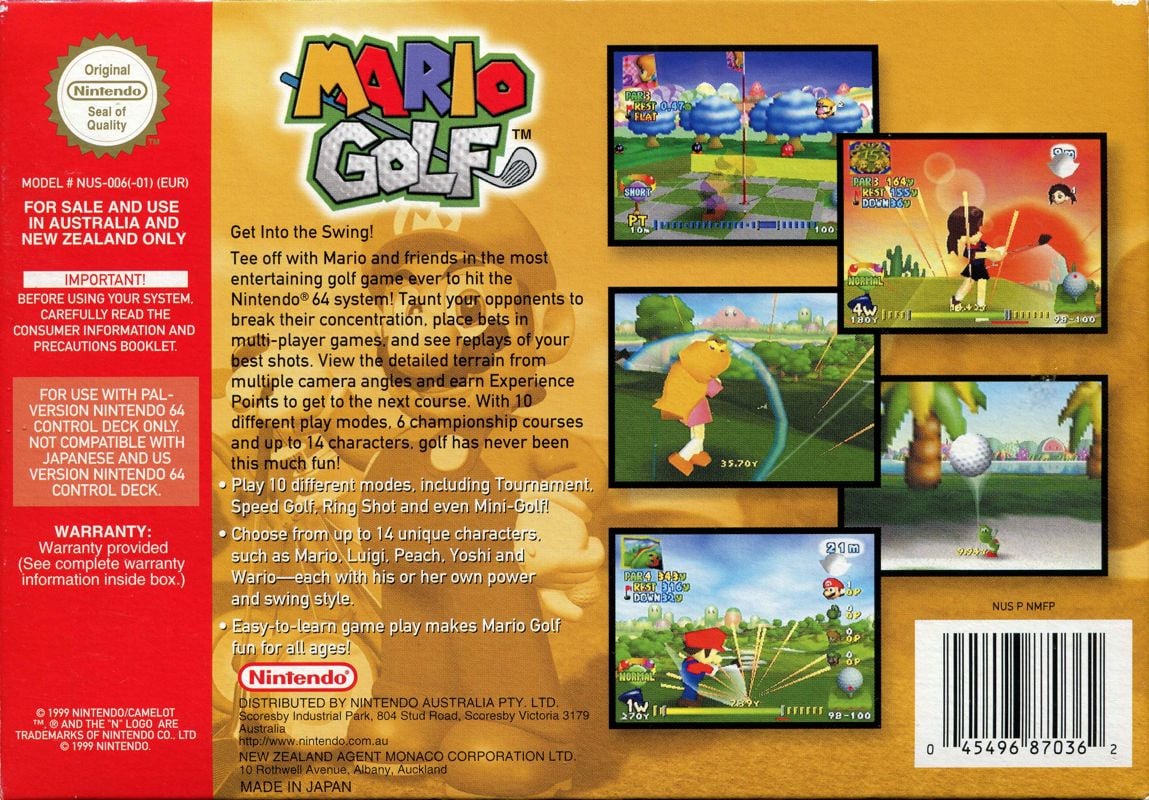
Regional Box Art
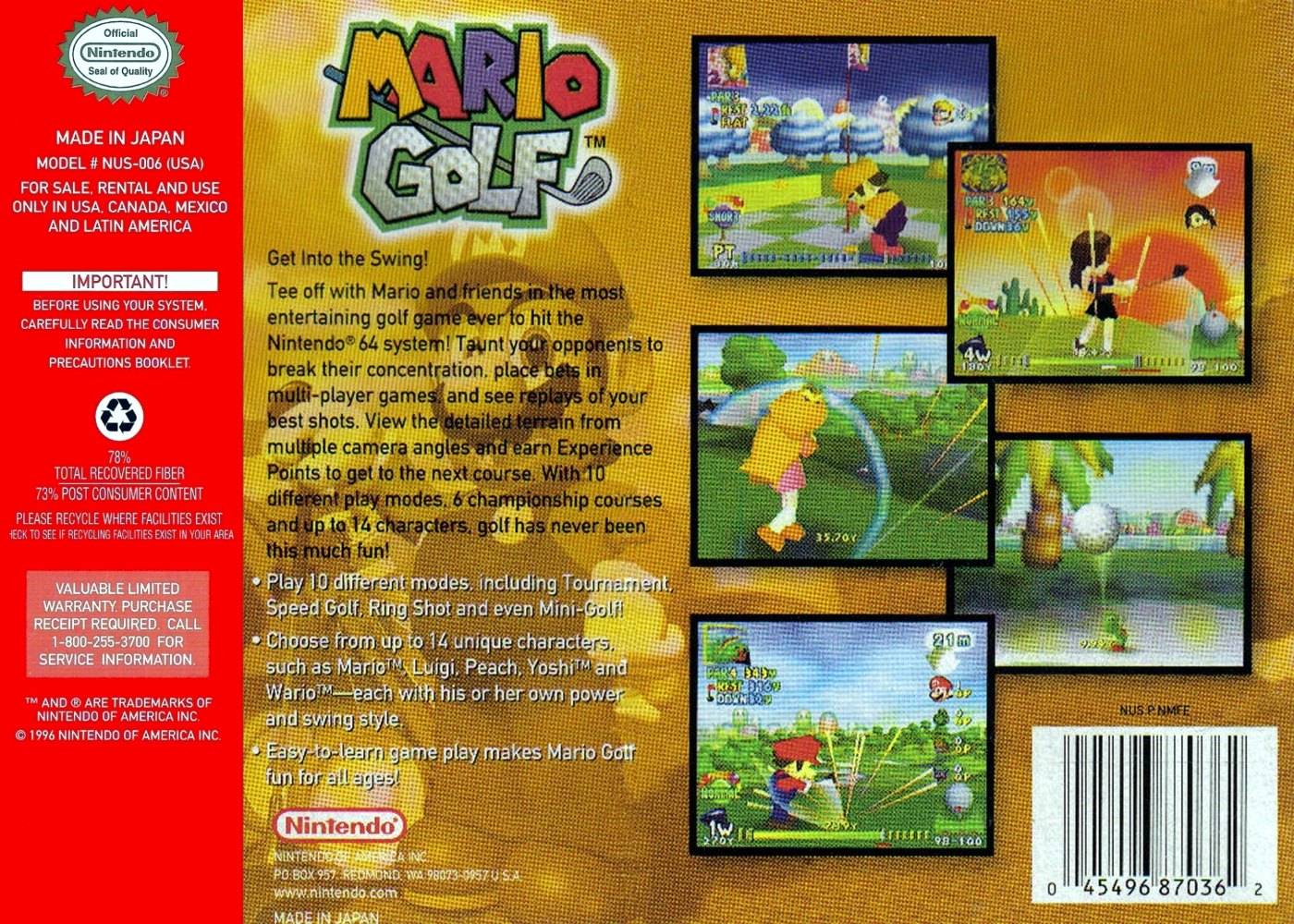
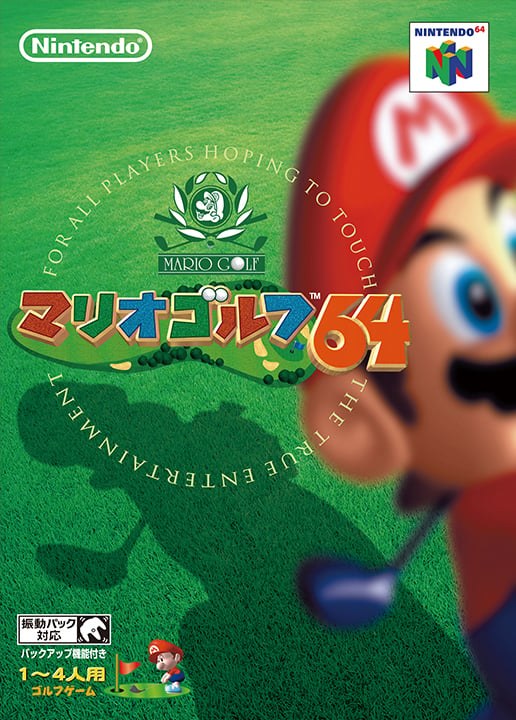
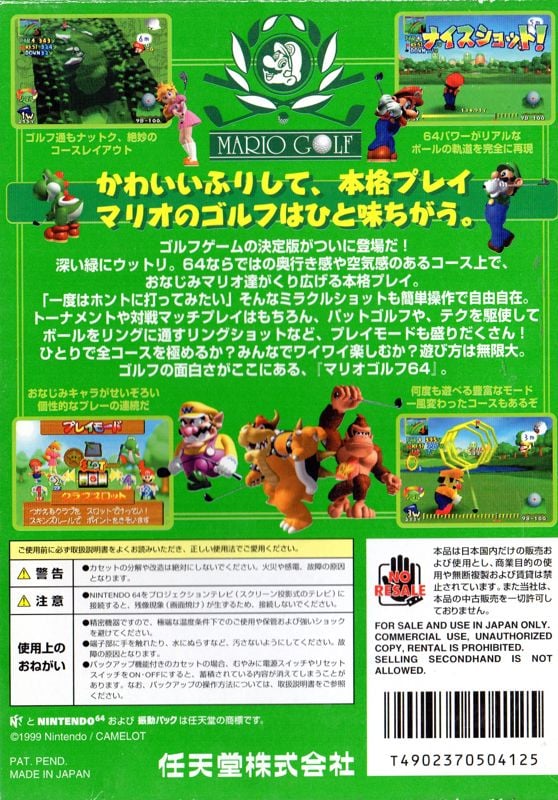
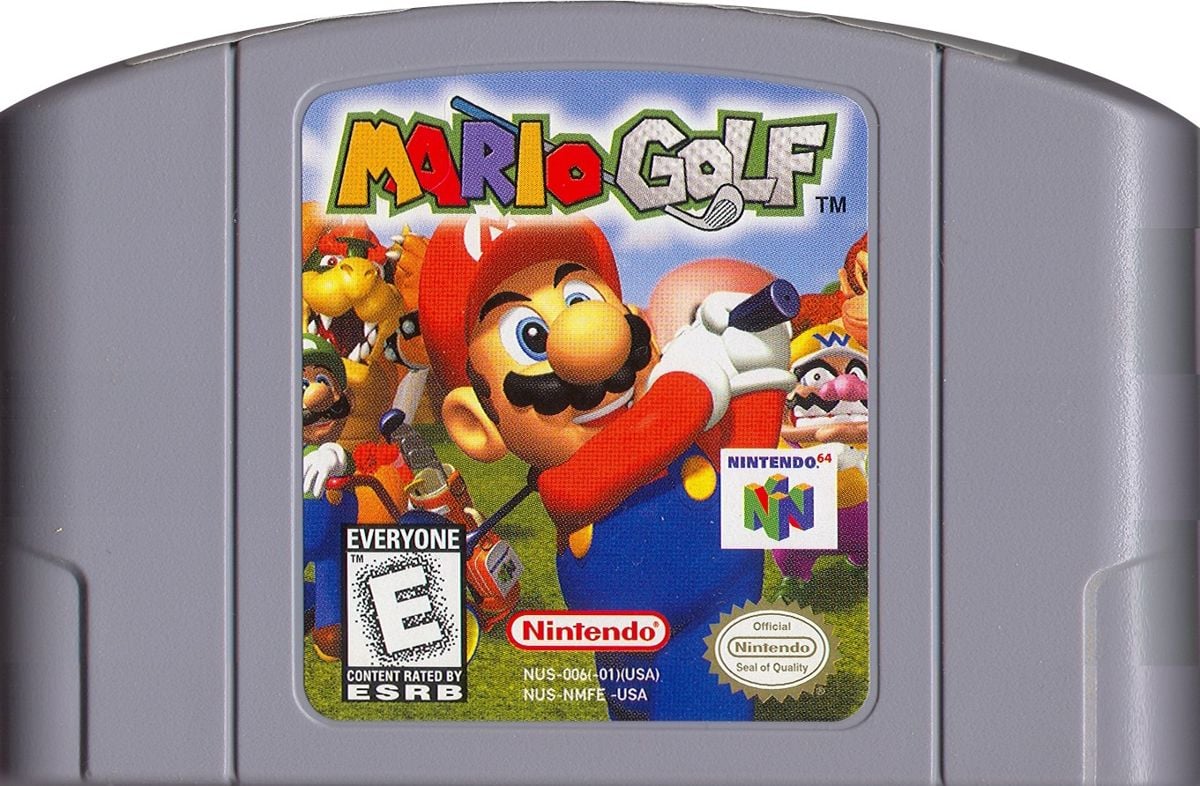
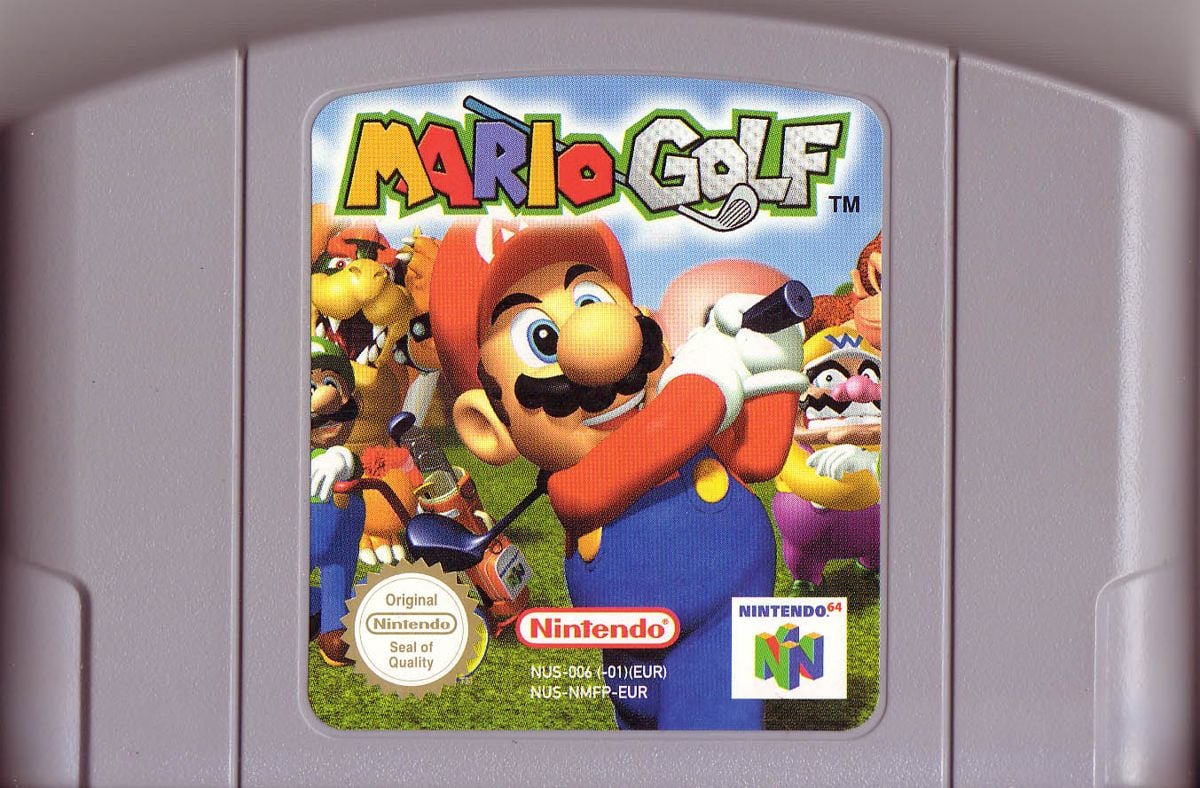
The same golfing line-up appeared on every Western box; Japan used its own design for Mario Golf 64.
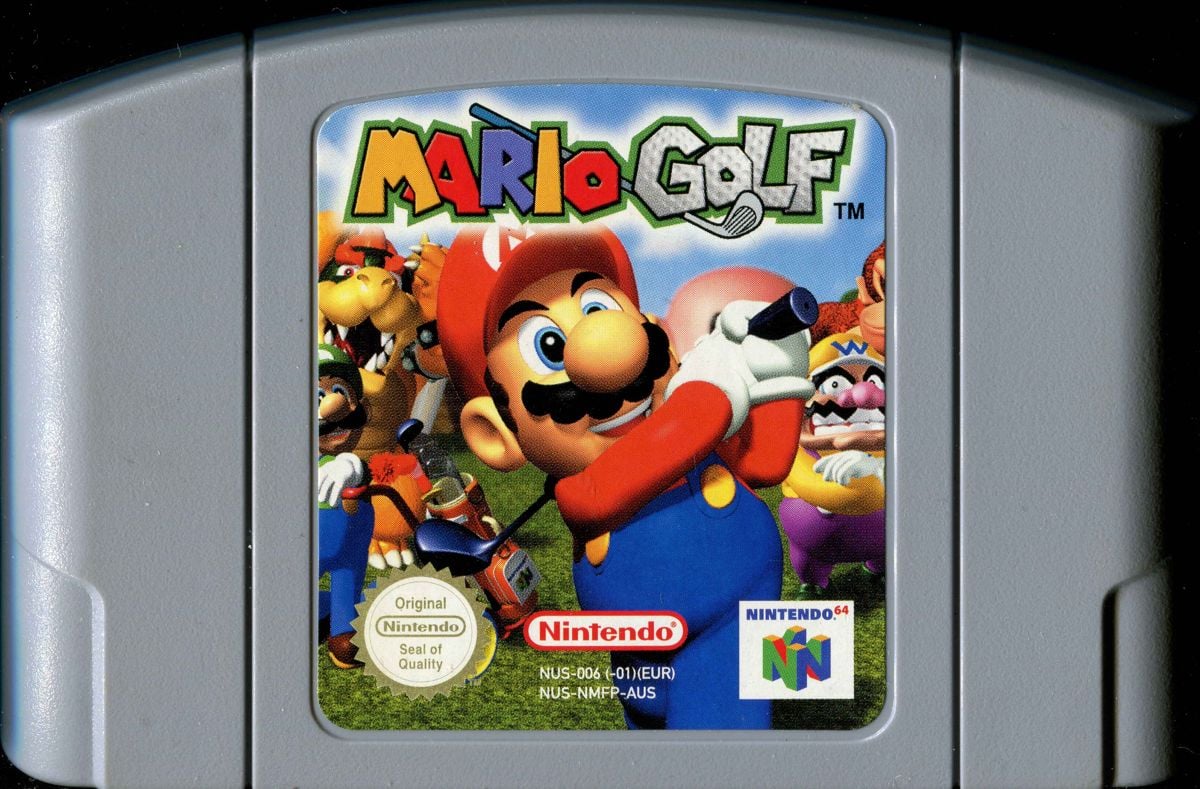
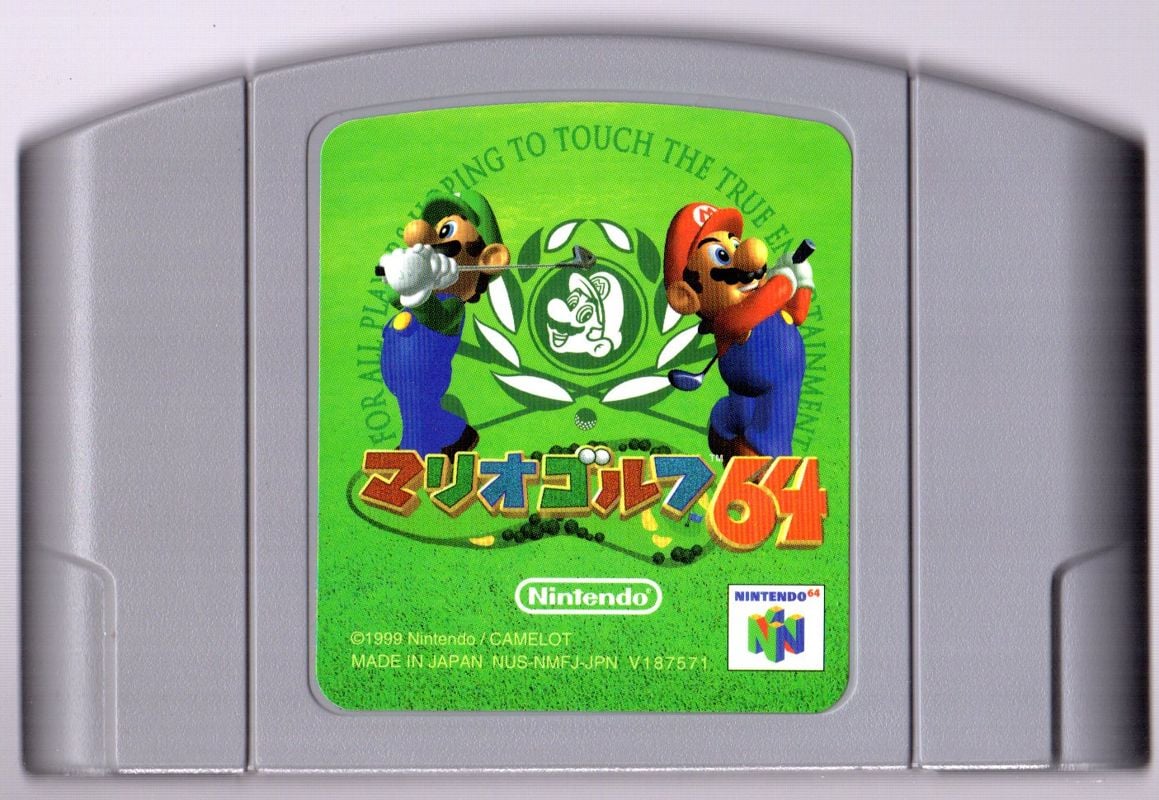
North America (1999)Front.North America, backEurope (1999)Front.Europe, backAustralia (1999)Front.Australia, backJapan (1999)Mario Golf 64.Japan, backCartridge, North AmericaCartridge, EuropeCartridge, Australia and New ZealandCartridge, JapanWii U Virtual Console (2015)The download icon.
Screenshots
More from the courses and the clubhouse.
The Japanese title screen, with the Mario Golf 64 logo.Mario in the opening sequence.Plum takes her shot in the intro.Wario, pink shoes and all, on hole 12 of Yoshi’s Island.Yoshi in an E3 1999 screenshot.Wario in an E3 1999 screenshot.Luigi in an E3 1999 screenshot.A pre-release screenshot.Another pre-release screenshot.Boo Valley, hole 3, a par 5.Yoshi’s Island, hole 7, split by a lake.Shy Guy Desert, hole 18.
Artwork & Media Gallery
Official artwork, character models, logos, adverts and more from Mario Golf. Select any image to see it full size; SLB’s artwork and screenshot galleries have more.
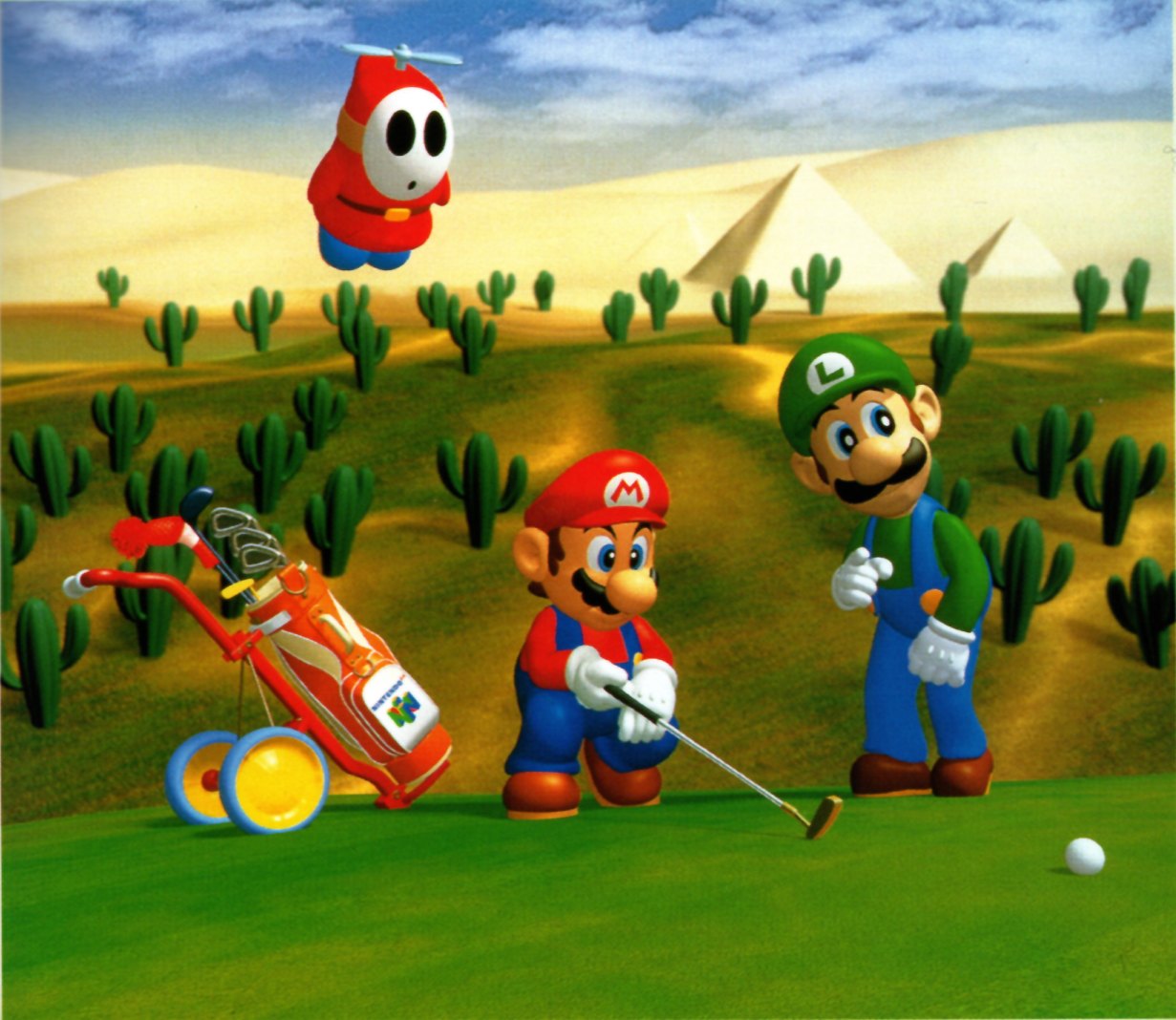
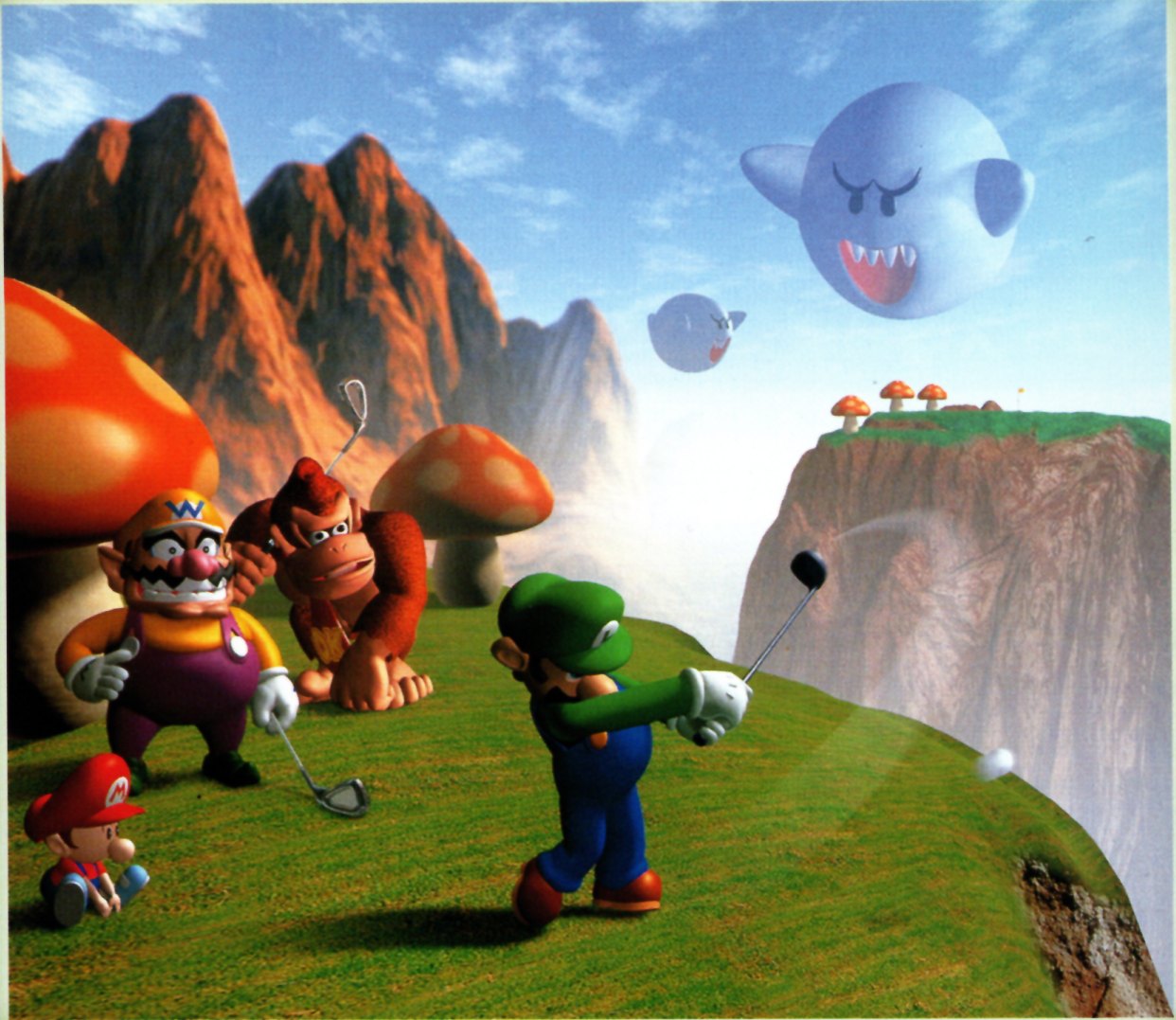
The cover artwork.Mario and Luigi at Shy Guy Desert.Six golfers at Yoshi’s Island.Luigi, Wario, Donkey Kong and Baby Mario at Boo Valley.The golf clubs.Mario.Luigi swings.Wario.Wario breaks his club.Donkey Kong.Bowser.Baby Mario.Yoshi.Maple, alternate artwork.Mario’s in-game model.Peach’s in-game model.Bowser’s in-game model.Toad’s model.Mario in his Fire Mario colours.Red Yoshi.Peach’s four colour schemes.Plum’s four colour schemes.Koopa Cup emblem.Shy Guy International emblem.Yoshi Championship emblem.Boo Classic emblem.Toad Highlands menu icon.Shy Guy Desert menu icon.Yoshi’s Island menu icon.Boo Valley menu icon.The two-page North American advert.Japanese print advert.French print advert.A manga strip from The 64 Dream’s guide.Plum’s sticker in Super Smash Bros. Brawl.
Legacy & Re-releases
Mario Golf has been re-released on every Nintendo home console since the Wii, and its courses came back in World Tour.
Every release
Nintendo 64 (Japan)11 June 1999Released as Mario Golf 64, without Metal Mario.
Nintendo 64 (North America)26 July 1999Adds Metal Mario and the Western intro.
Nintendo 64 (Australia)14 September 1999The PAL release reached Australia ten days before Europe.
Nintendo 64 (Europe)24 September 1999With a different intro song.
Player’s Choice (North America)Date not recordedBudget reissue.
Wii Virtual Console30 September 2008 (Japan), 6 October 2008 (North America), 23 January 2009 (Europe and Australia)No Transfer Pak support.
Wii U Virtual Console2 September 2015 (Japan), 3 September 2015 (North America), 8 October 2015 (Europe and Australia)Off-TV Play on the GamePad. Wii U eShop sales ended on 27 March 2023.
Nintendo Switch Online + Expansion Pack14 April 2022 (North America), 15 April 2022 (Japan, Europe, Australia)In the Nintendo 64 library, now called Nintendo 64 – Nintendo Classics; Code Entry is unavailable.
All six of this game’s courses were remade for Mario Golf: World Tour as downloadable content, split across its Mushroom, Flower and Star Packs. Toad Highlands, Koopa Park and Mario’s Star kept their names; Shy Guy Desert, Yoshi’s Island and Boo Valley were reworked as Layer-Cake Desert, Sparkling Waters and Rock-Candy Mines. Koopa Park traded its Super Mario 64-style trees for more natural ones, and Mario’s Star moved into space with new music.
Reviews & Sales
Sales
Nintendo has not, as far as we can find, published a sales figure for Mario Golf. The totals that circulate on fan sites and wikis give no source, so we leave them out. There was also a budget Player’s Choice reissue in North America.
91Metacritic
87%GameRankings average
10game modes
Reviews
Scores as listed by Wikipedia, with dates and issues where they are given.
MetacriticAggregate · Nintendo 64
91/100
GameRankingsAggregate · Nintendo 64
87.32%
GameProUS · 1999
5/5
Game InformerUS · August 1999
9/10
GameSpotJames Mielke · 30 July 1999
8.7/10
Nintendo PowerUS · vol. 123, August 1999
8.5/10
IGNAaron Boulding · 28 July 1999
8.3/10
Electronic Gaming MonthlyUS · 1999
8.12/10
FamitsuJapan · Cross Review
8, 8, 8, 8
Computer and Video GamesUK · December 1999
4/5
AllGameUS
4/5
EurogamerWii Virtual Console · 2009
9/10
Official Nintendo MagazineUK · Wii Virtual Console · 23 January 2009
89%
Nintendo LifeMarcel van Duyn · Virtual Console, 2008
8/10
IGNWii Virtual Console · 6 October 2008
8/10
Critics in 1999 liked it a great deal. GameSpot’s James Mielke summed it up as “a top-quality golf game, despite the cartoony premise”, and praised the way it chooses a sensible club for you so that newcomers are not left guessing; IGN’s Aaron Boulding called it simple fun and the golf game N64 owners should choose. The reviews collected by Metacritic average 91.
It has aged well too. Reviewing the Virtual Console release, Nintendo Life’s Marcel van Duyn liked how much purer and more golf-focused it is than later Mario sports games, though he pointed out that the starting golfers become redundant once the longer hitters are unlocked. Eurogamer gave the same release 9 out of 10.
SLB User Reviews
Mario Golf has yet to receive a community review on Super Luigi Bros.
If you’ve played Mario Golf and would like to submit a review, please get in touch.
To provide the best experiences, we use technologies like cookies to store and/or access device information. Consenting to these technologies will allow us to process data such as browsing behavior or unique IDs on this site. Not consenting or withdrawing consent, may adversely affect certain features and functions.
Functional
Always active
The technical storage or access is strictly necessary for the legitimate purpose of enabling the use of a specific service explicitly requested by the subscriber or user, or for the sole purpose of carrying out the transmission of a communication over an electronic communications network.
Preferences
The technical storage or access is necessary for the legitimate purpose of storing preferences that are not requested by the subscriber or user.
Statistics
The technical storage or access that is used exclusively for statistical purposes.The technical storage or access that is used exclusively for anonymous statistical purposes. Without a subpoena, voluntary compliance on the part of your Internet Service Provider, or additional records from a third party, information stored or retrieved for this purpose alone cannot usually be used to identify you.
Marketing
The technical storage or access is required to create user profiles to send advertising, or to track the user on a website or across several websites for similar marketing purposes.






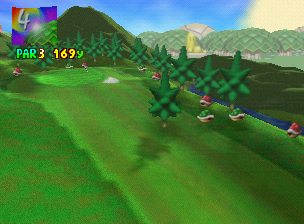

 Toad HighlandsPar 72 · open from the start · Toad TournamentToad’s gentle, gimmick-free opening course in the hills, with just a little water and sand.
 Koopa ParkPar 72 · 50 Course Points · Koopa CupWooded lowland full of lakes, with Koopa statues and a Koopa balloon on the 1st.
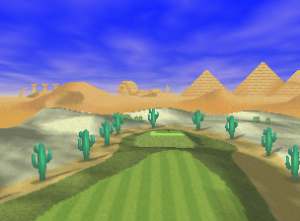 Shy Guy DesertPar 72 · 300 Course Points · Shy Guy InternationalNo water, all sand: cacti, waste areas, a sand pyramid and dunes that count as out of bounds.
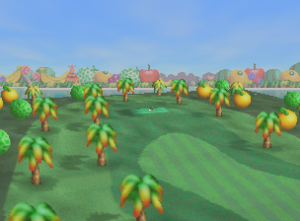 Yoshi’s IslandPar 72 · 6,595 yards · 1,000 Course Points · Yoshi ChampionshipTropical island of giant fruit, island greens, frequent rain and strong winds.
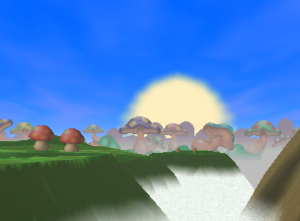 Boo ValleyPar 72 · 6,635 yards · 1,500 Course Points · Boo ClassicFoggy, cliff-lined valley where out-of-bounds is the main danger and the par 5s bring rain.
 Mario’s StarPar 72 · 2,500 Course Points · Mario OpenThe hardest course, every hole shaped like a Mario character, to the Super Mario Bros. theme.
 Luigi’s GardenMini-Golf · 18 holes, all par 3Greens shaped like the numbers 1 to 9 and the letters A to I.
 Peach’s CastleMini-Golf · 18 holes, all par 3Letters J to Z, then a question mark for the final hole.
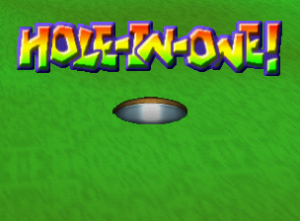 Hole-in-OneIn with the first stroke. Most likely on a par 3 but possible on any hole.
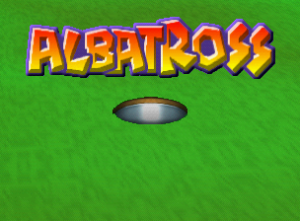 AlbatrossThree under par, which can only happen on a par 5.
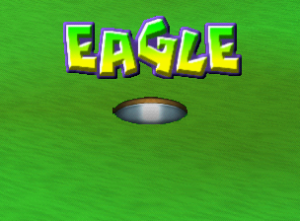 EagleTwo under par: usually on a par 5, occasionally on a short par 4.
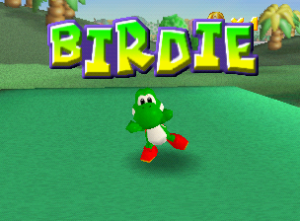 BirdieOne under par, the least you need to earn a Birdie Badge in a Tournament.
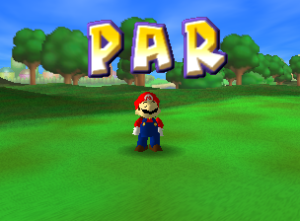 ParExactly the expected number of strokes.
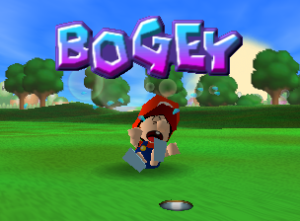 BogeyOne over par. Worse scores show the number of strokes over.
 Birdie BadgeAwarded for every birdie or better in Tournament mode. There are 108 to collect, one per hole on the six courses, and the collection unlocks Maple and Metal Mario.
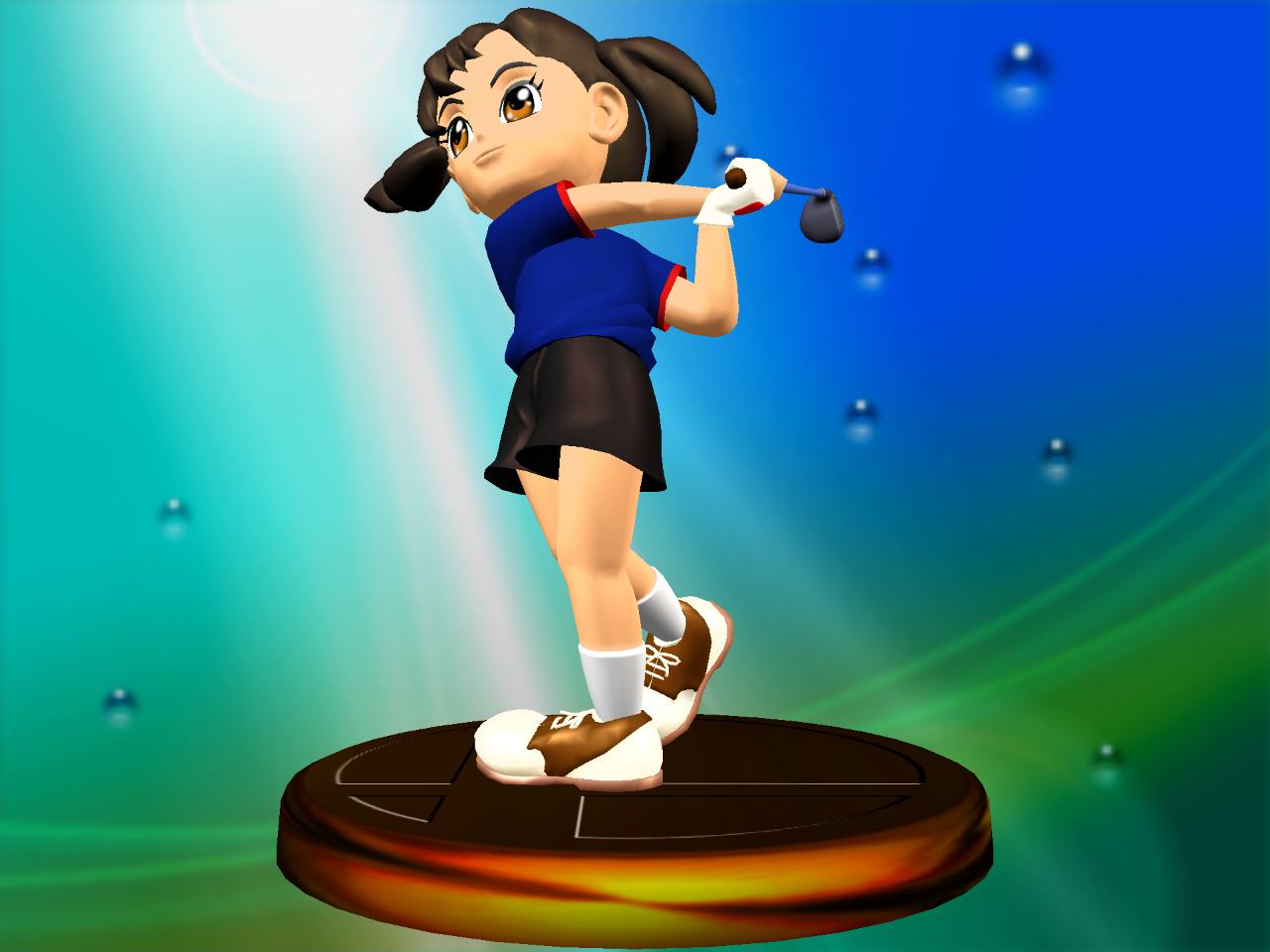 Plum in Super Smash Bros.Melee (2001) · Brawl (2008)Plum is a collectible trophy in Super Smash Bros. Melee, the only character who debuted in the Mario Golf series to get one, and a sticker in Brawl.
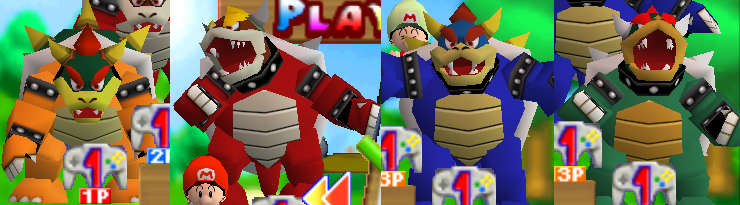 Smash Bros. costumesBrawl, 3DS/Wii U, UltimateSeveral Mario Golf colour schemes became Smash alternate costumes: Wario’s red-and-blue and black-and-white outfits in Brawl, and Bowser’s blue and green skins, Donkey Kong’s blue and yellow fur and Luigi’s dark green and yellow from the 3DS/Wii U games onward.
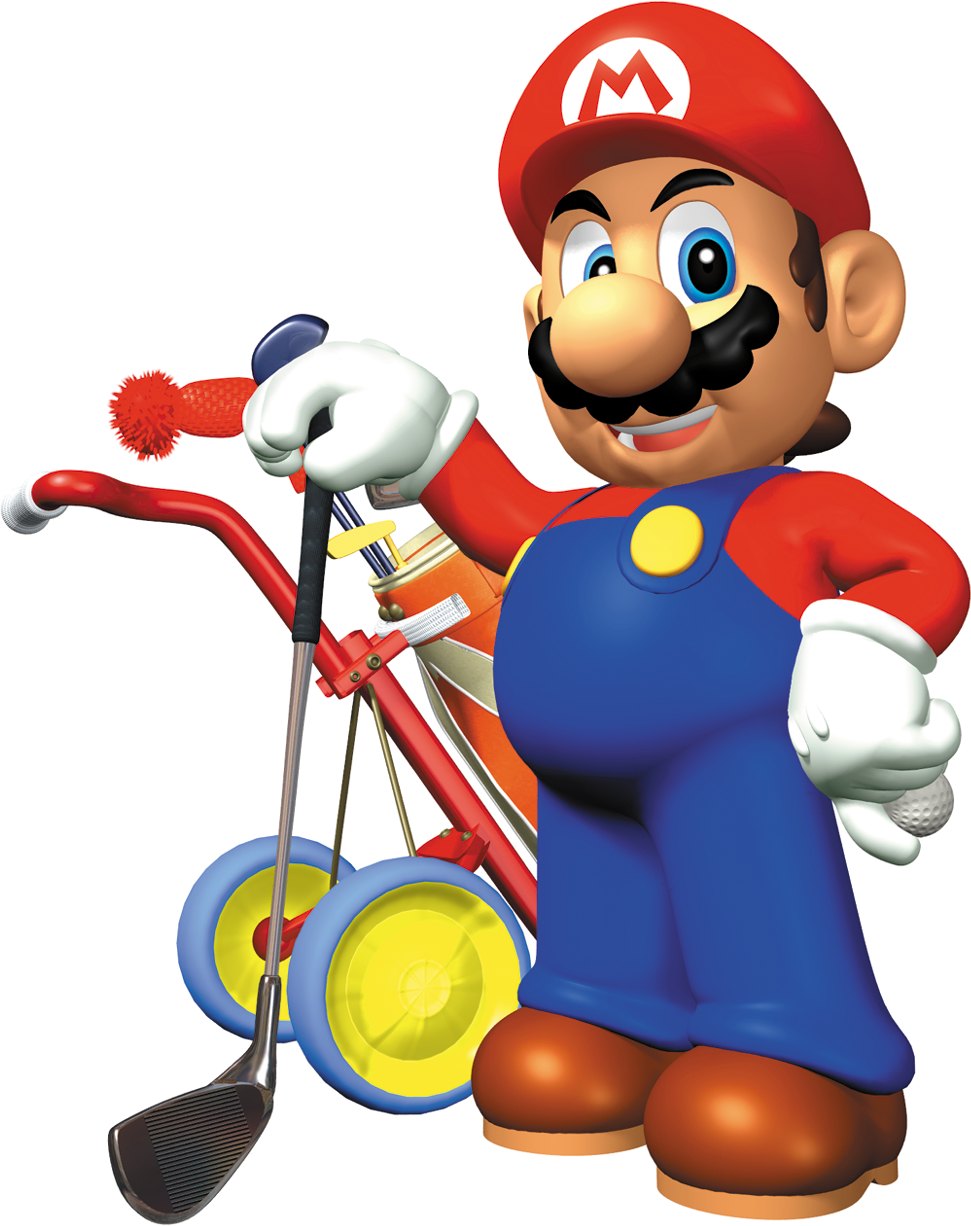 Luigi’s MansionGameCube · 2001The picture of Mario in Luigi’s Mansion reuses Mario’s pose from this game’s artwork.
 Mario Golf: World TourNintendo 3DS · 2014 DLCAll six courses were remade as downloadable content with new graphics and music. Shy Guy Desert became Layer-Cake Desert, Yoshi’s Island became Sparkling Waters and Boo Valley became Rock-Candy Mines.
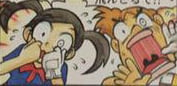 The 64 Dream strategy guideJapan · 1999The Japanese magazine’s guide to the game included short manga strips starring Plum, Charlie and the other golfers.
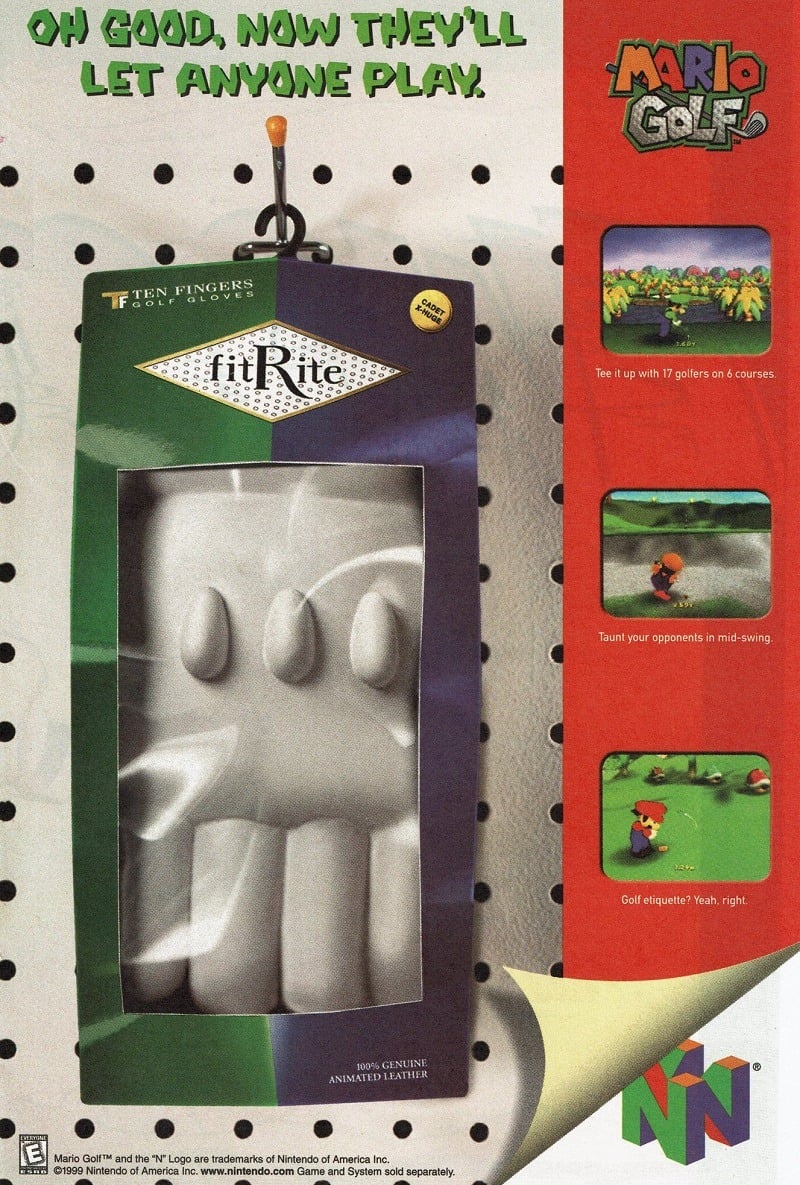 Print advertsNorth America, Japan, FranceNintendo advertised the game in one-page and two-page spreads in America and with separate designs in Japan and France.
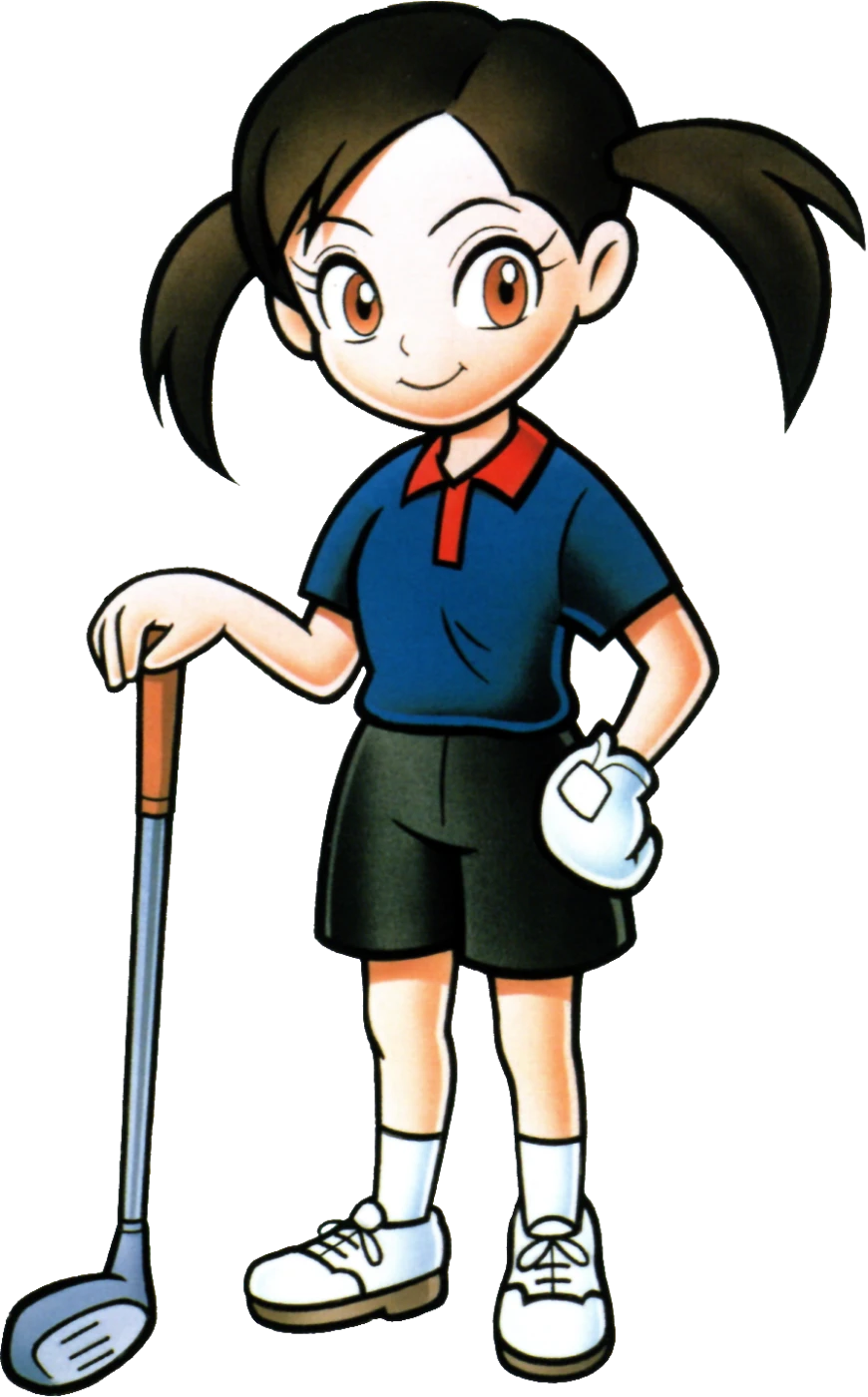 PlumOriginal golfer · starter
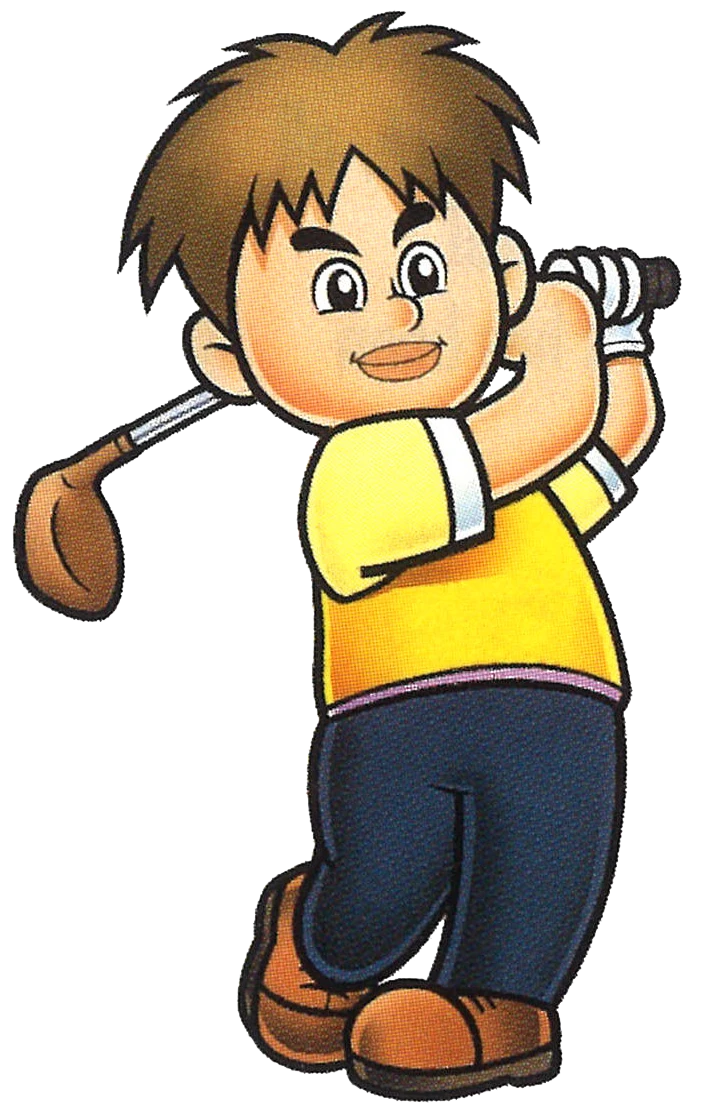 CharlieOriginal golfer · starter
 Princess PeachStarter
 Baby MarioStarter
 LuigiGet Character match 1
 YoshiGet Character match 2
 SonnyOriginal golfer · match 3
 WarioGet Character match 4
 HarryOriginal golfer · match 5
 MapleOriginal golfer · Birdie Badges
 Donkey KongRing Shot reward
 Metal MarioSecret · Western versions only
 KidTransfer Pak
 JoeTransfer Pak
 SherryTransfer Pak
 AzaleaTransfer Pak
 BooEvery holeShows the wind direction and strength.
 Lakitu (camera)Every holeFilms distant parts of the course when you look ahead.
 Lakitu (starter)Speed GolfHolds up the starting light.
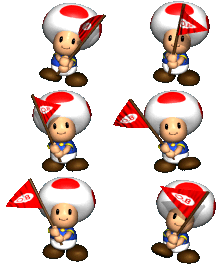 ToadOut of boundsWaves a flag when the ball goes out of bounds.
 Monty MoleThe cupPops up to look around after you hole a putt from 30 feet or more.
 UkkikiThe flagstickSlides down the pole when the ball hits the pin.
 Fly GuyWindy teesGets blown about at the start of a hole with strong wind.
 BubbaWater hazardsOne of two fish that may surface when your ball finds the water.
 Cheep Cheep (Blurp)Water hazardsThe other fish waiting in the lakes.