The Smash Bros. that never went away. Super Smash Bros. Melee reached the Nintendo GameCube in Japan on 21 November 2001, in North America on 3 December and in Europe on 24 May 2002, made by HAL Laboratory in a crunch of about 13 months under director Masahiro Sakurai, with Nintendo’s Satoru Iwata stepping in to help debug it in time. It doubled the cast to 25 fighters, among them newcomers Peach, Bowser and Dr. Mario, and added 29 stages, an Adventure mode that starts in a side-scrolling Mushroom Kingdom, 51 Event Matches, 290 collectable trophies and a hidden final boss called Giga Bowser. Nintendo said in 2008 that it had sold more than seven million copies, the most of any GameCube game, and its lightning-fast physics turned it into a tournament game that players were still filling halls for more than twenty years later.
Developer:HAL Laboratory
Publisher:Nintendo
Platform:Nintendo GameCube (optical disc)
Genre:Platform fighter
Japan:21 November 2001
North America:3 December 2001
Europe:24 May 2002
Australia:31 May 2002
Players:1–4; Tournament Melee brackets of up to 64 entrants
Music:Hirokazu Ando and Shogo Sakai, with arrangements by Tadashi Ikegami and Takuto Kitsuta
Fighters:25 (26 counting Sheik): 14 at the start, 11 to unlock; 13 newcomers
Stages:29 for VS. play: 18 at the start, 11 to unlock, including three Past Stages from the Nintendo 64 game
Trophies:290 (293 in Japan, 292 in Europe)
Japanese title:Dairantō Smash Brothers DX
Sales:7.09 million (Nintendo of America, March 2008); 7.41 million in the 2020 CESA Games White Paper, as cited by Wikipedia
Metacritic:92
Advertisement
Overview
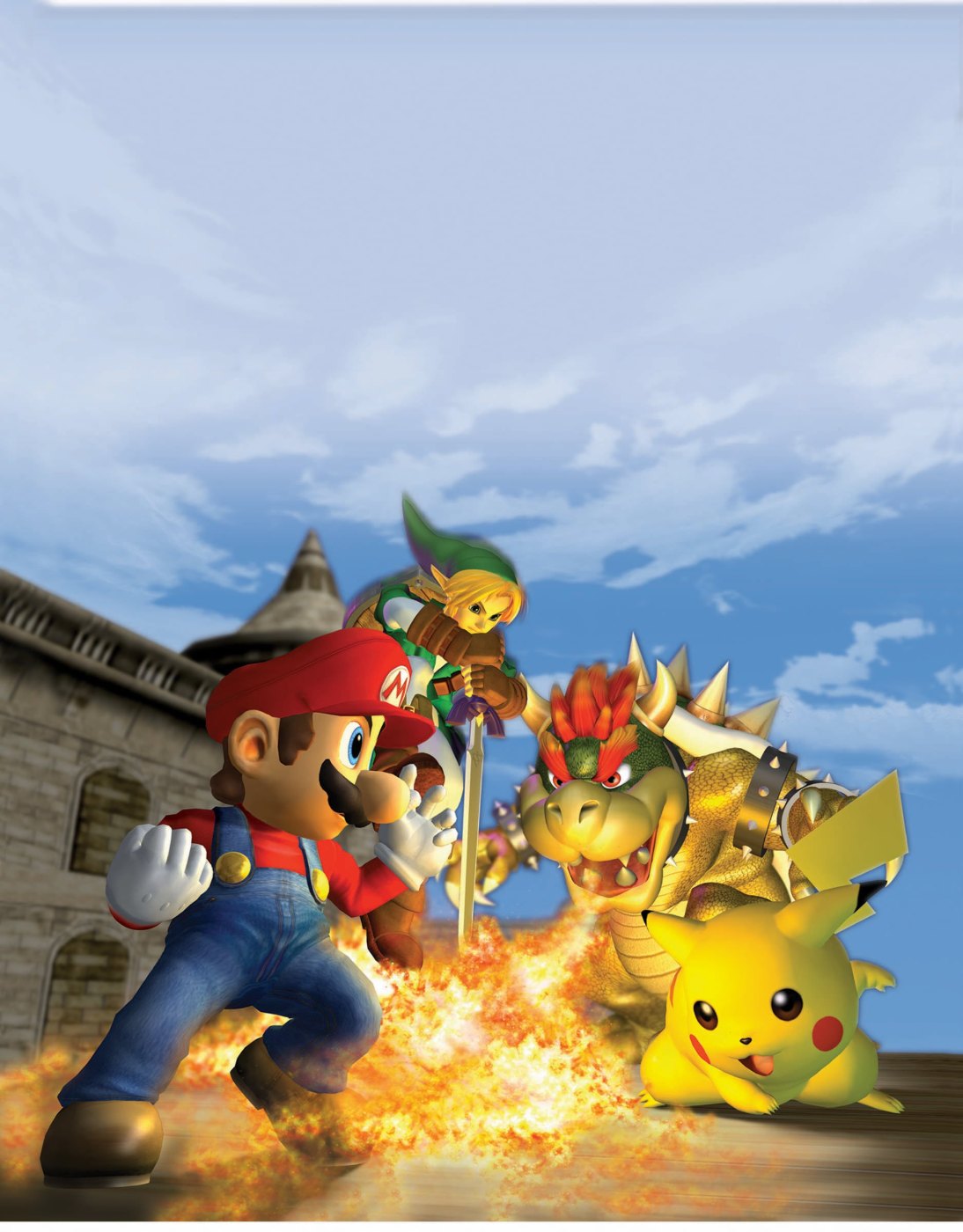
Melee’s group artwork, with Luigi diving in with his Green Missile.
Super Smash Bros. Melee is the second game in the series and the first on the GameCube, and it is a much bigger, much faster game than the Nintendo 64 original. The rules are unchanged: up to four fighters, a damage percentage instead of a health bar, and a knock-out only when someone is launched past the edge of the screen. Everything around those rules was rebuilt. Every fighter gained a fourth special move, there were new ways to dodge, shield and throw, and the physics proved deep enough to keep a competitive scene going for decades.
The cast grew from twelve to twenty-five. Mario’s world sent the most: Peach and Bowser fought for the first time, Dr. Mario came along as a hidden extra, and Mario, Luigi, Yoshi and Donkey Kong returned. Zelda (who becomes Sheik), Ganondorf, Young Link, Falco, the Ice Climbers, Mewtwo, Pichu, Mr. Game & Watch and the Fire Emblem swordsmen Marth and Roy joined them.
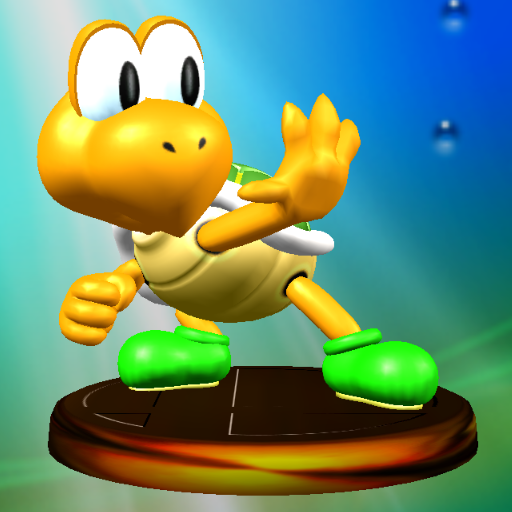
For players on their own there was suddenly a great deal to do. Classic mode was joined by Adventure, a tour of Nintendo’s worlds that opens with a side-scrolling Mushroom Kingdom full of Goombas and Koopa Troopas, by All-Star, by 51 scripted Event Matches and by the Home-Run Contest. Running through all of it were trophies, 290 figurines of characters and objects from Nintendo history with a short write-up each, and Mario fans can find everything from Raccoon Mario and Plum to Waluigi and the Koopa Clown Car among them.
Melee was a hit from its first week, and it never really went away. Its speed and depth turned it into a serious competitive game, played at Major League Gaming events in the 2000s and at the Evo fighting-game championships from 2007, and in 2013 fans raised money to put it back on Evo’s main stage, more than a decade after release. The whole story is in the Legacy section below.
Nintendo’s all-star cast of combatants is back, along with a new batch of brawlers ready to tear it up on Nintendo GameCube. Super Smash Bros. Melee is the ultimate four-player fighting game with unpredictable action and non-stop animated onslaughts.
The most striking aspect of Super Smash Bros. Melee is its incredible visuals. Mario’s overalls are detailed down to the rivets, and Princess Peach’s dress flutters in the breeze with amazing realism. Special attacks take full advantage of Nintendo GameCube’s potential for spectacular lighting effects, and the GameCube handles all of this at 60 frames per second without even breaking into a sweat.
In addition to new characters, Super Smash Bros. Melee also features all-new battle arenas, gameplay modes, options and stat tracking. A beefed-up single-player mode ensures that even solo brawlers will be entertained.
If you’re worried that Super Smash Bros. Melee might stray too far from the gameplay mechanics found in the original Smash Bros., stop stressing, the basic premise is the same. Characters duke it out in interactive environments, using special attacks and various items to knock each other into the abyss. Some new defensive techniques add an even deeper level of complexity to the combat.
New to Melee is the ability to dodge attacks and projectiles. All characters can execute a mid-air dodge, or lean away from danger while standing on the ground. Also, you can catch most thrown items by pressing the A Button just before the object hits your fighter. All characters can execute a move similar to Fox’s reflector shield by pressing the shield button just before a projectile hits.
In addition to traditional battle royal matches, players can select all-new ways to play like Coin Mode (bash players, collect coins), Tournament Mode (up to 64 players), and lots more.
— Official description (Nintendo UK, 2002)
Why Melee matters to Mario fans
Melee is the game that turned the Mushroom Kingdom into a full Smash Bros. family. Peach and Bowser became fighters, Dr. Mario stepped out of his puzzle game, and Giga Bowser, the monstrous form that later games turned into Bowser’s Final Smash, made his first appearance as the Adventure mode’s hidden final boss. Ten of the 29 stages come from Mario, Yoshi and Donkey Kong games, from Super Mario 64’s castle roof and Rainbow Ride to Super Mario Bros. 2’s Subcon, and the trophy collection reaches as far as Paper Mario, Plum from Mario Golf and Waluigi from Mario Tennis. Kongo Jungle brings back the DK Rap, recorded again with a new singer.
The title screen.Princess Peach’s Castle, the first stage on the select screen.Mario against Giga Bowser, Adventure mode’s secret final boss.Adventure mode opens in a side-scrolling Mushroom Kingdom.
“the sharpest game in the series”
Masahiro Sakurai, interviewed in 2010, as reported by IGN (9 December 2010)
Looking back, the director singled out Melee for how good it felt to play.
Quick Answers
The questions people ask most about Super Smash Bros. Melee, answered briefly here and in depth further down the page.
When did Super Smash Bros. Melee come out?
21 November 2001 in Japan, 3 December 2001 in North America, 24 May 2002 in Europe and 31 May 2002 in Australia, on the Nintendo GameCube. More →
How many characters are in Melee?
25 fighters, or 26 if Sheik is counted apart from Zelda. 14 are available from the start and 11 have to be unlocked. Thirteen are new to the series, including Peach, Bowser and Dr. Mario. More →
How do you unlock Luigi in Melee?
Finish the first stage of Adventure mode when the last digit of the seconds on the timer is a 2. Luigi kicks Mario off the castle roof; beat him and Peach within a minute, finish Adventure, then beat Luigi when he challenges you. Or simply play 800 VS. matches. More →
How do you unlock Dr. Mario?
Clear Classic, Adventure or All-Star as Mario without using a continue, or play 100 VS. matches, then beat him on Princess Peach’s Castle. More →
How do you fight Giga Bowser?
Play Adventure mode on Normal or higher and reach the final stage within 18 minutes. After you beat Giant Bowser, lightning strikes his trophy and he returns as Giga Bowser, worth 100,000 points. More →
How many stages does Melee have?
29 for VS. play: 18 from the start and 11 to unlock. Ten come from Mario, Yoshi and Donkey Kong games, two of them Past Stages brought back from the Nintendo 64 game. More →
How many trophies are there?
290 in the North American version, 293 in Japan and 292 in Europe. Every fighter has three of their own. More →
How many copies did Melee sell?
Nintendo of America said in March 2008 that it had sold more than seven million copies worldwide, making it the best-selling GameCube game. The 2020 CESA Games White Paper gives 7.41 million, as cited by Wikipedia. More →
What is wavedashing?
An advanced trick: jump, then immediately air-dodge diagonally into the ground, and the fighter slides along the floor. It comes from the way Melee’s air dodge carries momentum, and it became a staple of tournament play. More →
How many Event Matches are there?
51. They unlock in groups, and the last one, The Showdown, pits you against Giga Bowser, Ganondorf and Mewtwo and unlocks the Final Destination stage. More →
Modes & Stages
Mario faces Kirby in the first round of Classic mode.
A Melee match is two to four fighters, human or computer, on one of 29 stages, under Time, Stock, Coin or Bonus rules (see Gameplay above). That is VS. Mode, and for most players it is the whole game.
For one player, the 1-P Mode menu holds five modes: Classic, Adventure, All-Star, Event Match and the Stadium, plus Training. Each is described below, with Adventure retold stage by stage and all 51 Event Matches listed, and the 29 stages are at the end of the section.
Classic mode
Classic is the arcade ladder. You pick a difficulty and a number of lives, then fight through eleven rounds against random opponents. Round 2 gives you a partner for a two-on-two, round 5 sets you and two allies against a giant fighter, round 8 throws a team of ten of the same character at you, and round 10 is a metal fighter on Battlefield. Three bonus games break things up: Break the Targets in each fighter’s own target course, Snag the Trophies, where you knock trophies into the collecting area in the middle, and Race to the Finish, a dash through a tunnel to the furthest door you can reach before time runs out.
The last round is always Master Hand, the giant glove, on Final Destination. Play on Normal or harder without using a continue and his left-handed brother Crazy Hand joins in once Master Hand is down to half his health. Clearing Classic earns the fighter’s first trophy, the one about their original game. Losing all your lives lets you continue by spending coins, at a cost to your score.
Master Hand and Crazy Hand corner Peach.Snag the Trophies.The Master Hand trophy.The Crazy Hand trophy.
Adventure: from the Mushroom Kingdom to Zebes
Adventure is Melee’s big new mode: twelve stages, each introduced with its series’ emblem, that mix side-scrolling platform levels with battles against giant, tiny, metal and multiplied fighters. There are trophies to pick up on the way and bonus points for style. And it begins, of course, in the Mushroom Kingdom.
Stage 1 is a side-scrolling Super Mario Bros. level against the clock. Goombas, Koopa Troopas and Koopa Paratroopas patrol between Warp Pipes and Brick Blocks, Toads panic in the background, and the grounds in front of the castle are laid out as a golf course, a nod to Mario Golf. Two-thirds of the way along, a crowd of ten Yoshis ambushes you, and once you pass the flagpole the fight moves up to the roof of Princess Peach’s Castle against Mario and Peach. Finish the level with a 2 as the last digit of the seconds and the cut-scene changes: Luigi jumps on Mario’s head, sends him flying off the roof and takes his place.
Stage 2 is Kongo Jungle: first two tiny but unusually sturdy Donkey Kongs, then a giant one on Jungle Japes. Stage 3, the Underground Maze, is a Hyrule dungeon crawling with ReDeads, Like Likes and Octoroks. The Triforce sits in one of six rooms; the other five hold a Master Sword, and walking up to one starts a fight with Link (beat all five Links for a 30,000-point bonus). Find the Triforce and you face Zelda at the Temple’s summit. Stage 4 is a duel with Samus on Brinstar, after which the planet starts to self-destruct and you have to climb an escape shaft before the countdown ends, or lose a life.
The Mushroom Kingdom title card.Goombas on the march.A Koopa Troopa.A Koopa Paratroopa.A ReDead in the Underground Maze.A Like Like.An Octorok.
Adventure: Green Greens to Onett
Stage 5 starts with Kirby on Green Greens, then sends in a whole team of Kirbys, each wearing a power copied from a different fighter; beat them fast enough and a Giant Kirby turns up as a bonus round. Stage 6 is Fox on Corneria, first alone and then reborn in red with the Arwings joining in, after Peppy, Slippy and Falco radio in to say they are coming to help. Once Falco is unlocked he sometimes takes Fox’s place.
Stage 7 is a free-for-all against a team of twelve Pokémon, mostly Pikachu, on Pokémon Stadium, where the only items are Poké Balls. Stage 8, the F-Zero Grand Prix, is a sprint along the Big Blue track while racing machines come screaming through, a big exclamation mark warning you each time, followed by a fight with Captain Falcon on Mute City. Stage 9 pits you against three Nesses on Onett, with only Mr. Saturns to throw.
Green Greens.Corneria.Big Blue, where the F-Zero Grand Prix stage runs.Onett.
Adventure: the climb, the metal brothers and Giga Bowser
Stage 10 is a race up Icicle Mountain as the screen scrolls upwards, dodging Topi, Polar Bears and Freezies until two pairs of Ice Climbers arrive to fight. Stage 11, on Battlefield in low gravity, starts with a crowd of large Fighting Wire Frames and ends with Metal Mario, the shining form from Super Mario 64; if you have unlocked Luigi, Metal Luigi comes too, and beating the pair earns the Metal Bros. bonus.
Stage 12 is Final Destination, where a Giant Bowser is waiting. On Very Easy and Easy, beating him ends the adventure. On Normal or higher, if you reach this point within 18 minutes of starting, something else happens: Bowser’s fallen trophy is struck by lightning and rises again as Giga Bowser, a hulking, horned version of the Koopa King that takes damage and can be launched like a fighter but is enormously heavy and hits like a truck. Defeating him is worth 100,000 points and, without continues, his trophy. Clearing Adventure with a fighter also earns one of their Smash trophies.
A Topi on Icicle Mountain.A Polar Bear.The Fighting Wire Frames.Mario against Giga Bowser.Giga Bowser’s model.
All-Star mode
All-Star appears once every fighter has been unlocked. You fight the entire cast, one opponent at first, then two, then three at a time, each on a stage from their own series, and your damage carries over from fight to fight. Between rounds you rest in a quiet room holding three Heart Containers, which have to last the whole run. The final round is 25 Mr. Game & Watches on Flat Zone, five at a time. Clearing All-Star for the first time unlocks the Battlefield stage, and each fighter who finishes it earns their second Smash trophy.
The All-Star rest area and its Heart Containers.
Every Event Match
Event Matches are 51 hand-made challenges, each with its own rules: some fix your fighter, others let you choose; some are straightforward fights, others ask you to protect someone, collect coins or survive. There are no healing items in any of them. Only the first ten are open at the start, and more appear as you win: six of the first ten opens Events 11 to 15, and so on, while Events 31 to 39 also need Jigglypuff, Luigi, Dr. Mario, Falco and Young Link unlocked, Events 40 to 50 need every fighter, and Event 51 needs all fifty others plus a clear of both Classic and Adventure.
Trouble King: Mario takes on Bowser on Battlefield.
Lord of the Jungle: As a giant Donkey Kong, beat a tiny but tough one on Kongo Jungle.
Bomb-fest: Link and Samus on Princess Peach’s Castle, with nothing but explosives to fight with: Bob-ombs, Motion-Sensor Bombs and Poké Balls full of Electrode.
Dino-wrangling: A colossal Yoshi on Yoshi’s Story.
Spare Change: As Ness, scoop up 200 coins on Onett while Captain Falcon gets in the way.
Kirbys on Parade: Three tiny Kirbys on Fountain of Dreams.
Pokémon Battle: A Pikachu on Pokémon Stadium that only Pokémon from Poké Balls can hurt.
Hot Date on Brinstar: Samus on Brinstar, with both of you starting the fight badly damaged.
Hide ’n’ Sheik: Two Zeldas on Great Bay who keep turning into Sheik.
All-Star Match 1: Mario, Donkey Kong, Yoshi, Peach and Bowser, one after another, on their own stages.
King of the Mountain: Survive a minute against two pairs of Ice Climbers on Icicle Mountain.
Seconds, Anyone?: Knock out Captain Falcon on Mute City in seven seconds; both of you start at 100%.
Yoshi’s Egg: As Yoshi, guard an egg from Pikachu, Fox and Donkey Kong on Rainbow Cruise for 55 seconds.
Trophy Tussle 1: Three random opponents on a stage built on a giant Goomba trophy.
Girl Power: Giant versions of Peach, Zelda and Samus on Fountain of Dreams.
Kirby’s Air-raid: As Kirby, knock out ten Kirbys on Corneria in 38 seconds using Warp Stars.
Bounty Hunters: As Samus, finish off Bowser on Jungle Japes before Captain Falcon can claim him.
Link’s Adventure: As Link, defeat Dark Link on Temple.
Peach’s Peril: As Mario, keep Peach safe from Bowser on Final Destination for a minute.
All-Star Match 2: Samus, Link, Zelda, Captain Falcon and Fox in turn.
Ice Breaker: Two pairs of Ice Climbers on Princess Peach’s Castle: knock out both Nanas, but not a Popo.
Super Mario 128: 128 tiny Marios on Mushroom Kingdom II, five at a time.
Slippy’s Invention: An invisible Fox and Falco on Venom.
The Yoshi Herd: Thirty Yoshis on Yoshi’s Island in two minutes; the last one is giant.
Gargantuans: As Giant Bowser, beat Giant Donkey Kong on Fourside while a tiny Mario and Peach scurry about.
Trophy Tussle 2: Three random opponents on a giant Entei trophy.
Cold Armor: As Samus, three metal Samuses on Brinstar Depths.
Puffballs Unite!: Fourteen Kirbys with copied powers on Green Greens, in two minutes.
Triforce Gathering: As Link, with Zelda at your side, defeat Ganondorf on Temple. Winning leads to Ganondorf’s challenge.
All-Star Match 3: Kirby, Pikachu, Ness and the Ice Climbers in turn.
Mario Bros. Madness: Outscore Mario and Luigi on Mushroom Kingdom in two minutes.
Target Acquired: As Falco on Corneria, knock out Jigglypuff more often than the Arwings do in a minute.
Lethal Marathon: As Captain Falcon, run Adventure mode’s F-Zero Grand Prix course at double speed in 45 seconds.
Seven Years: As Young Link, take on Link on Great Bay.
Time for a Checkup: As Luigi, beat Dr. Mario and Peach on Yoshi’s Story.
Space Travelers: As Ness, beat Samus, Kirby and Fox on Fourside, then Captain Falcon and Falco on Battlefield, one life each.
Legendary Pokémon: Giant Wire Frames and Jigglypuff on Battlefield, with Poké Balls full of legendary Pokémon. Winning leads to Pichu’s challenge.
Super Mario Bros. 2: Mario, Luigi and Peach on Mushroom Kingdom II.
Jigglypuff Live!: As Jigglypuff, beat the other Jigglypuffs on Pokémon Stadium.
All-Star Match 4: Marth, Luigi, Jigglypuff, Mewtwo and Mr. Game & Watch in turn.
En Garde!: As Marth, duel Link on Temple.
Trouble King 2: As Luigi, take on a Giant Bowser on Poké Floats.
Birds of Prey: As Fox, beat Captain Falcon and Falco on Big Blue.
Mewtwo Strikes!: Mewtwo crashes a fight with Zelda on Battlefield: defeat Mewtwo, and leave Zelda standing.
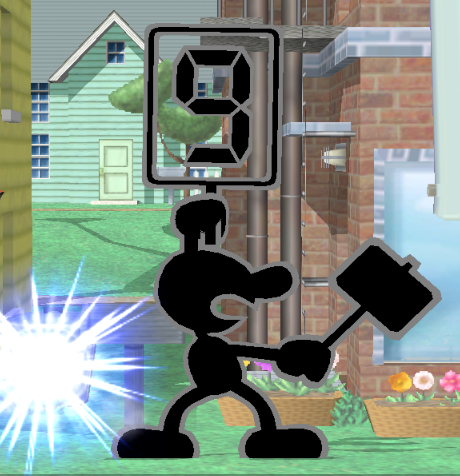
Game & Watch Forever!: As Mr. Game & Watch, beat 25 of him on Flat Zone, three at a time.
Fire Emblem Pride: Marth and Roy together on Temple.
Trophy Tussle 3: Three random opponents on a giant Majora’s Mask trophy.
Pikachu and Pichu: Two Pichus on Dream Land, guarded by a Pikachu that keeps coming back.
All-Star Match Deluxe: Dr. Mario, Falco, Pichu, Young Link, Roy and Ganondorf in turn.
Final Destination Match: Master Hand and Crazy Hand at once, on one life.
The Showdown: Giga Bowser, Ganondorf and Mewtwo on Final Destination. Winning unlocks the Final Destination stage.
The three Trophy Tussles are fought on stages shaped like giant trophies of a Goomba, the legendary Pokémon Entei and Majora’s Mask.
Trophy Tussle 1, on a giant Goomba.Trophy Tussle 2, on Entei.Trophy Tussle 3, on Majora’s Mask.
The Stadium: Target Test, Home-Run Contest and Multi-Man Melee
Target Test is Classic’s Break the Targets on its own: every fighter has a course of their own, and the aim is to smash all its targets as quickly as possible. In the Home-Run Contest you get ten seconds to batter Sandbag with whatever you have, then a Home-Run Bat to send him flying off the platform for distance.
Multi-Man Melee sets endless Fighting Wire Frames, male ones modelled on Captain Falcon and female ones on Zelda, against you: 10-Man and 100-Man Melee are races against the clock, 3-Minute and 15-Minute Melee count how many you can knock out in the time, Endless Melee goes on until you fall, and Cruel Melee has no items and Wire Frames that can launch you at almost no damage. Clearing 100-Man Melee unlocks Falco, and 15-Minute Melee unlocks the old Kongo Jungle.
The Home-Run Contest.Fighting Wire Frames, the foes of Multi-Man Melee.
Trophies, the Lottery and Training
Melee is the game that brought trophies to Smash Bros. There are 290 of them in the North American version (293 in Japan and 292 in Europe), each a little figure of a character or object with a short history. Every fighter has three: one about their original game for clearing Classic, and two Smash Bros. trophies for clearing Adventure and All-Star. The rest are found during the 1-P modes, awarded for milestones, or won in the Lottery, which turns the coins you earn into random trophies. The trophy gallery lets you look at each one in detail.
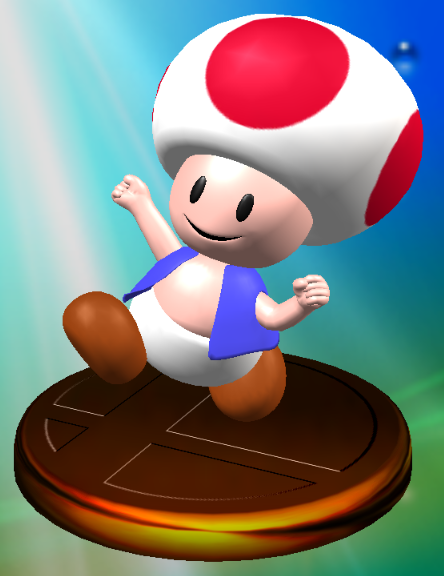
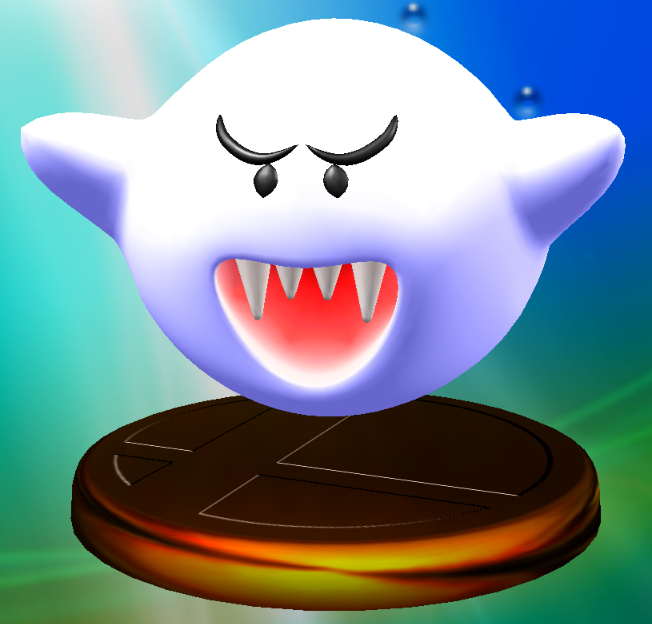
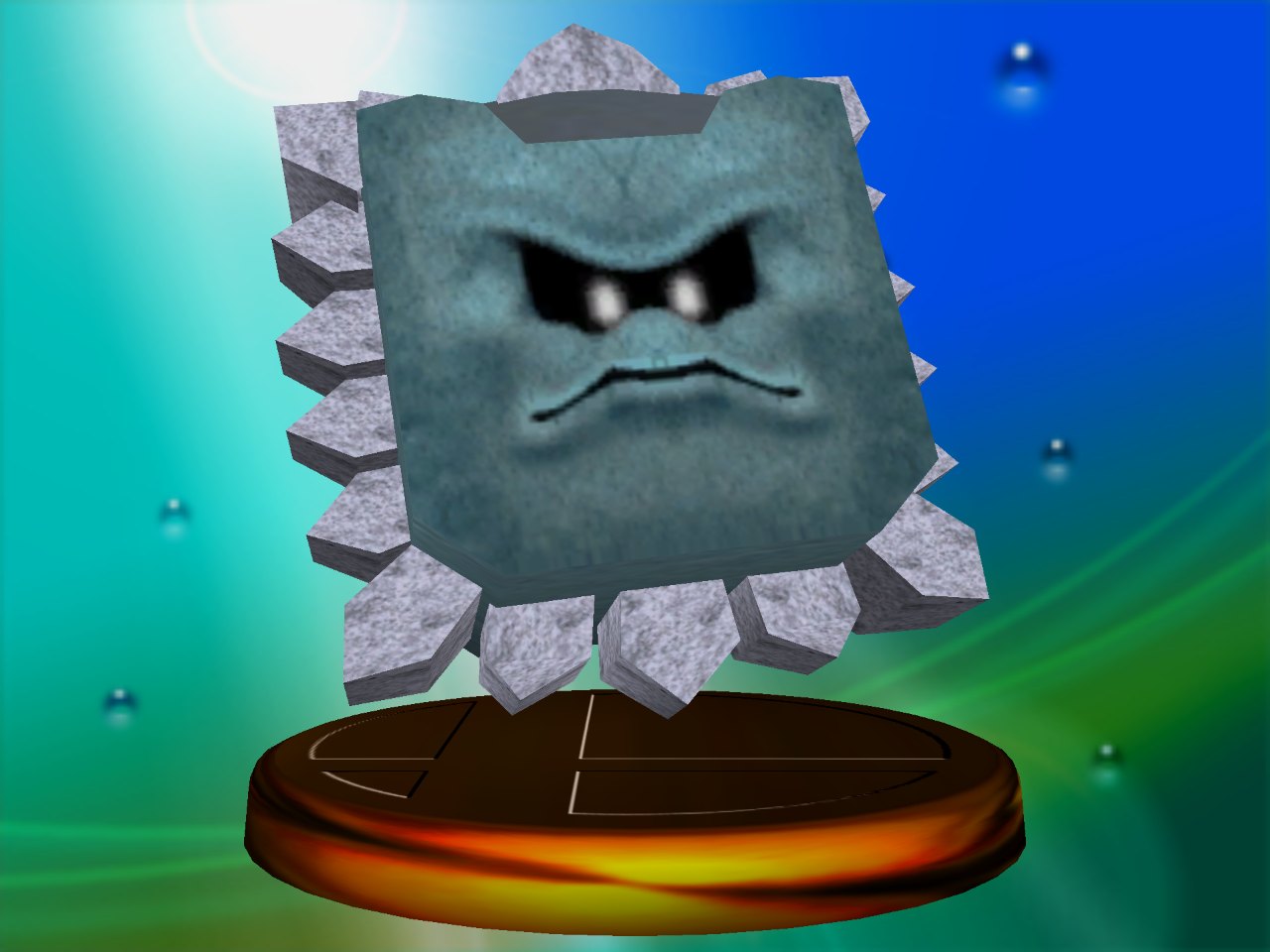
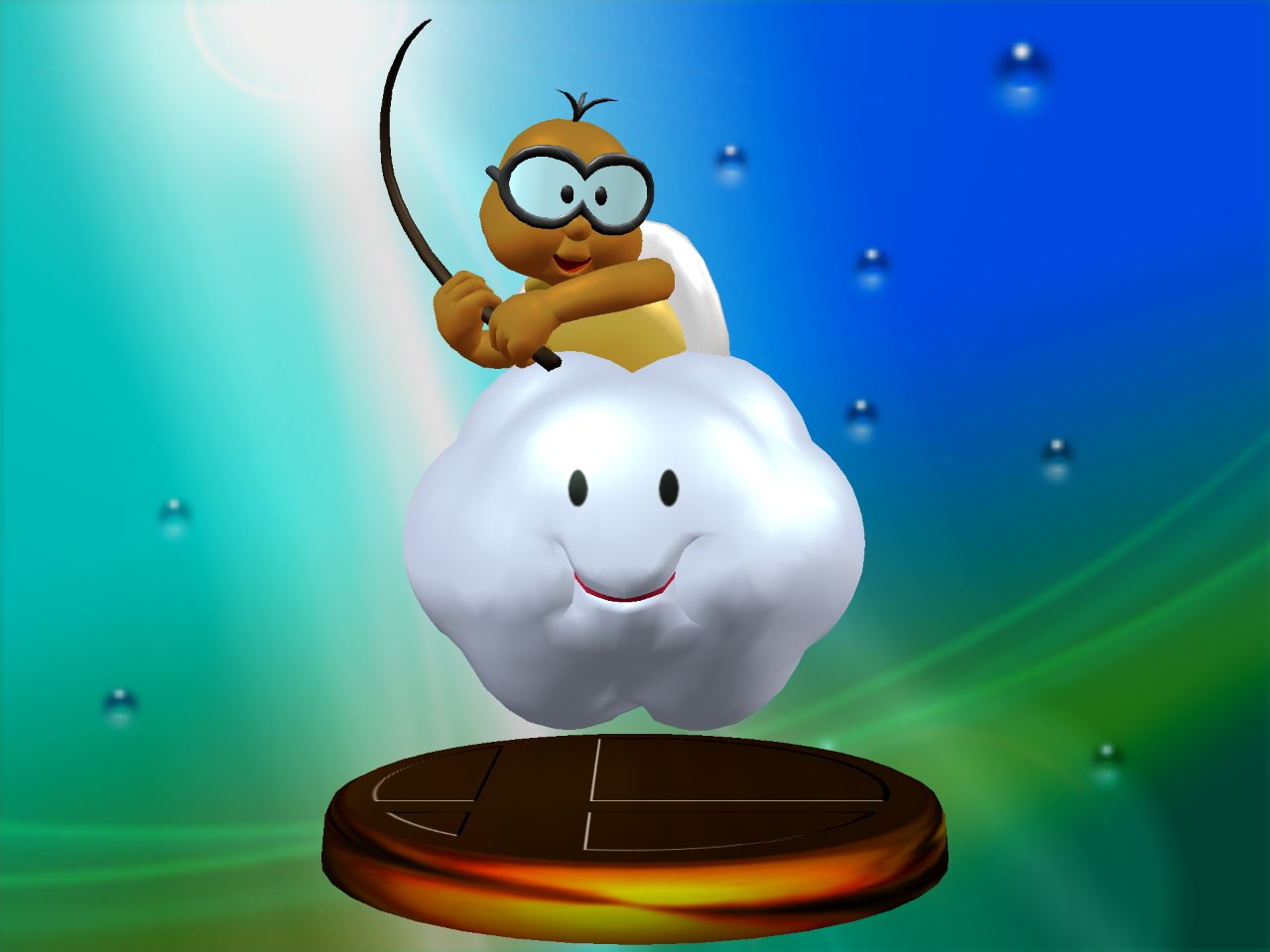
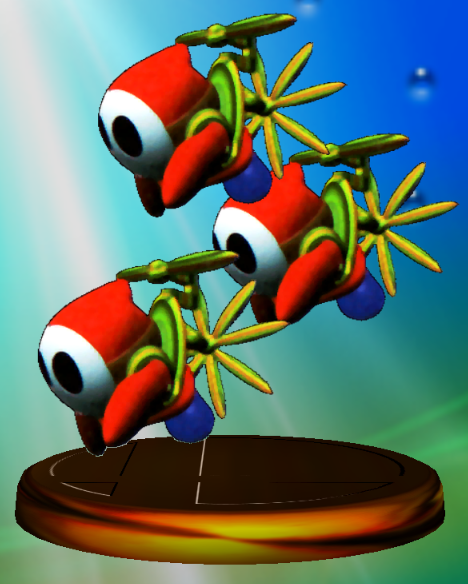
Mario’s side of the collection runs from Mario, Luigi, Peach, Bowser and Dr. Mario to Toad, Birdo, Pidgit, Shy Guys, Boos, Thwomps, Lakitu and the Koopa Clown Car, with stars from the spin-offs such as Paper Mario, Plum and Waluigi. Training mode, meanwhile, lets you set what the dummy opponent does and conjure up items to practise with, and it records the longest combo each fighter has managed.
Viewing a trophy.The Mario trophy.Luigi.Peach.Bowser.Dr. Mario.Yoshi.Donkey Kong.Giga Bowser.
Every stage in Super Smash Bros. Melee
29 stages for VS. Mode: 18 open from the start and 11 to unlock, three of them Past Stages carried over from the Nintendo 64 game. Ten come from Mario, Yoshi and Donkey Kong games, and the Mario ones are listed first.
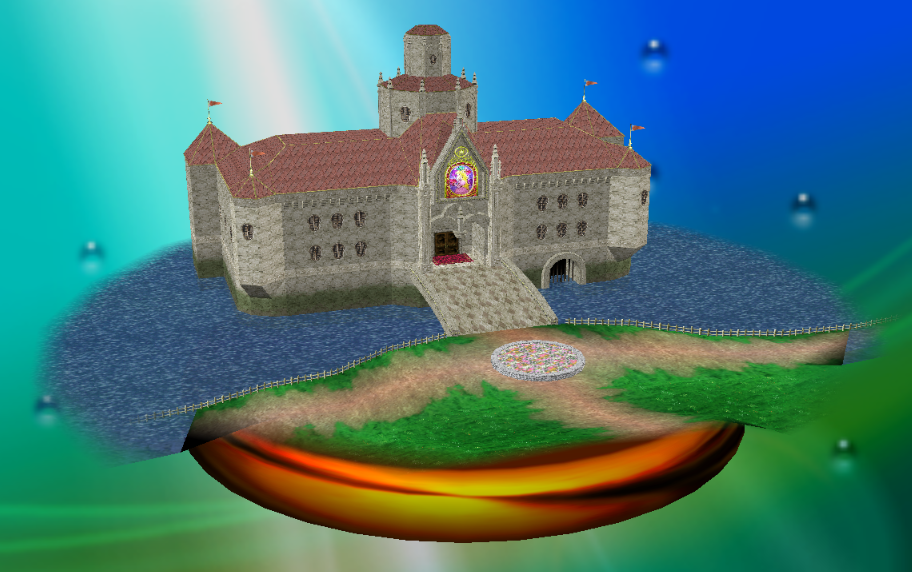
Princess Peach’s CastleSuper Mario 64 · starterA fight on the castle roof. Coloured switches make floating platforms and ! Blocks appear, and now and then a Banzai Bill streaks in and explodes.
Rainbow CruiseSuper Mario 64 · starterStarts aboard the Rainbow Cruiser, which tips and sinks, then hurries everyone on across Rainbow Ride’s magic carpets, swings, seesaws and Donut Lifts. Called Rainbow Ride in the European version.
Mushroom KingdomSuper Mario Bros. · starterWorld 1-1 rebuilt, with Brick Blocks and ? Blocks, two pits and a pair of Scale Lifts that drop if one side sinks too far.
Kongo JungleDonkey Kong Country · starterLogs ride a waterfall past the main platform, and a Barrel Cannon swings below to catch anyone who falls. The music is the DK Rap.
Jungle JapesDonkey Kong 64 · starterThree wooden ledges over a racing river, Cranky Kong’s cabin in the middle, and Klaptraps leaping out of the water.
Yoshi’s StoryYoshi’s Story · starterFloating platforms over a cloud that can catch you, with Shy Guys drifting past carrying food.
Yoshi’s IslandSuper Mario World · starterA Super Mario World landscape with a hole in the middle, bridged by Rotating Blocks that flip over when hit.
Great BayThe Legend of Zelda: Majora’s Mask · starterFixed and floating platforms by the sea, a giant turtle that surfaces now and then, and Tingle’s balloon to stand on.
TempleZelda II: The Adventure of Link · starterThe biggest stage in the game: a palace full of platforms with a tunnel underneath.
Fountain of DreamsKirby · starterA fountain with three small platforms that rise and sink.
Green GreensKirby’s Dream Land · starterWhispy Woods blows the fighters about while Blocks and Bomb Blocks drop into place.
CorneriaStar Fox · starterOn top of the Great Fox, with Arwings flying in to shoot at the fighters.
VenomStar Fox · starterThe Great Fox again, facing forward over Venom, with Wolfens attacking.
BrinstarMetroid · starterPlatforms held together by organic growths that can be knocked apart, over acid that rises and falls.
OnettEarthBound · starterRooftops and a tree in Ness’s home town, with cars tearing through the street below.
Mute CityF-Zero · starterA floating platform that sets down on the track, where racing machines flatten anyone in the way.
Pokémon StadiumPokémon · starterTwo platforms over a floor that changes into fire, water, rock and grass layouts.
Icicle MountainIce Climber · starterA mountain that scrolls up and down, with dozens of small ledges to jump between.
Brinstar DepthsMetroid · unlock: play 50 VS. matchesA round slab of rock around a caged giant brain; Kraid lashes out from the background and sends it spinning.
FoursideEarthBound · unlock: play 100 VS. matchesSkyscraper rooftops with wide gaps, and a UFO that sometimes floats down to stand on.
Big BlueF-Zero · unlock: play 150 VS. matchesA fight on the backs of speeding racing machines; touch the road and you are swept away.
Poké FloatsPokémon · unlock: play 200 VS. matchesGiant Pokémon balloons drift through the Kanto skies, each disappearing in turn.
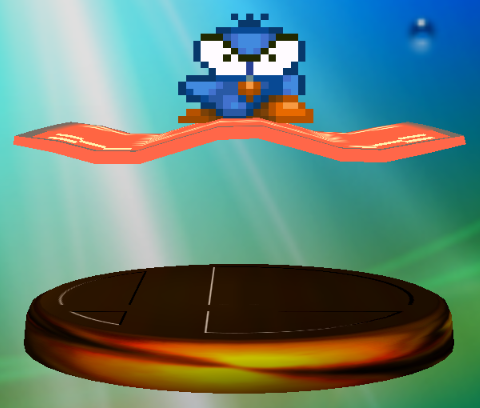
Mushroom Kingdom IISuper Mario Bros. 2 · unlock: collect the Birdo trophySubcon’s log-laden waterfall, with Pidgit flying over on his carpet and Birdo spitting eggs.
Flat ZoneGame & Watch · unlock: clear Classic as Mr. Game & WatchA flat LCD world with falling tools, slippery oil and firemen with a trampoline.
BattlefieldSuper Smash Bros. · unlock: clear All-StarOne main platform with three smaller ones above, floating in space.
Final DestinationSuper Smash Bros. · unlock: clear Event 51A single flat platform with nothing in the way: the stage where Master Hand waits.
Dream LandKirby’s Dream Land · unlock: clear Target Test with all 25 fighters · Past Stage from the Nintendo 64 gameThe original game’s Kirby stage, with Whispy Woods blowing in either direction.
Yoshi’s Island (Past Stage)Yoshi’s Story · unlock: hit Sandbag 400 m (1,325 ft) in the Home-Run Contest · Past Stage from the Nintendo 64 gameThe original game’s Yoshi stage: the Super Happy Tree behind, three platforms above and clouds at the edges that fade away.
Kongo Jungle (Past Stage)Donkey Kong Country · unlock: clear 15-Minute Melee · Past Stage from the Nintendo 64 gameThe original game’s jungle: a big wooden platform with smaller floating ones and a Barrel Cannon underneath.
On top of these there are single-player stages that never appear in VS. Mode: Adventure’s side-scrolling Mushroom Kingdom, Underground Maze, Brinstar escape shaft, F-Zero Grand Prix and Icicle Mountain climb, the bonus stages and every fighter’s Target Test course.
Advertisement
Gameplay & Controls
Melee plays by the rules the Nintendo 64 game set down. Hits push up a damage percentage, the higher it climbs the further the next hit sends you flying, and you are only out when you cross a blast line at the edge of the screen. What changed is how much you can do: Melee is faster than its predecessor, gravity is heavier, and every fighter has more moves.
Controls and what was new
Melee is played on the GameCube controller: the Control Stick moves, A attacks, B uses special moves, X and Y jump, and L and R shield and dodge. Pushing the stick sharply as you press A gives a smash attack, which in Melee can be held to charge it up for more damage.
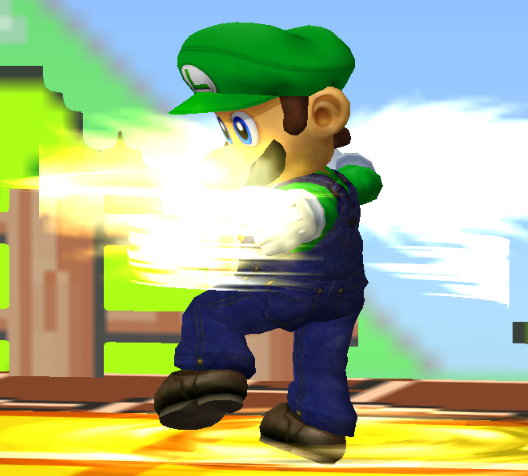
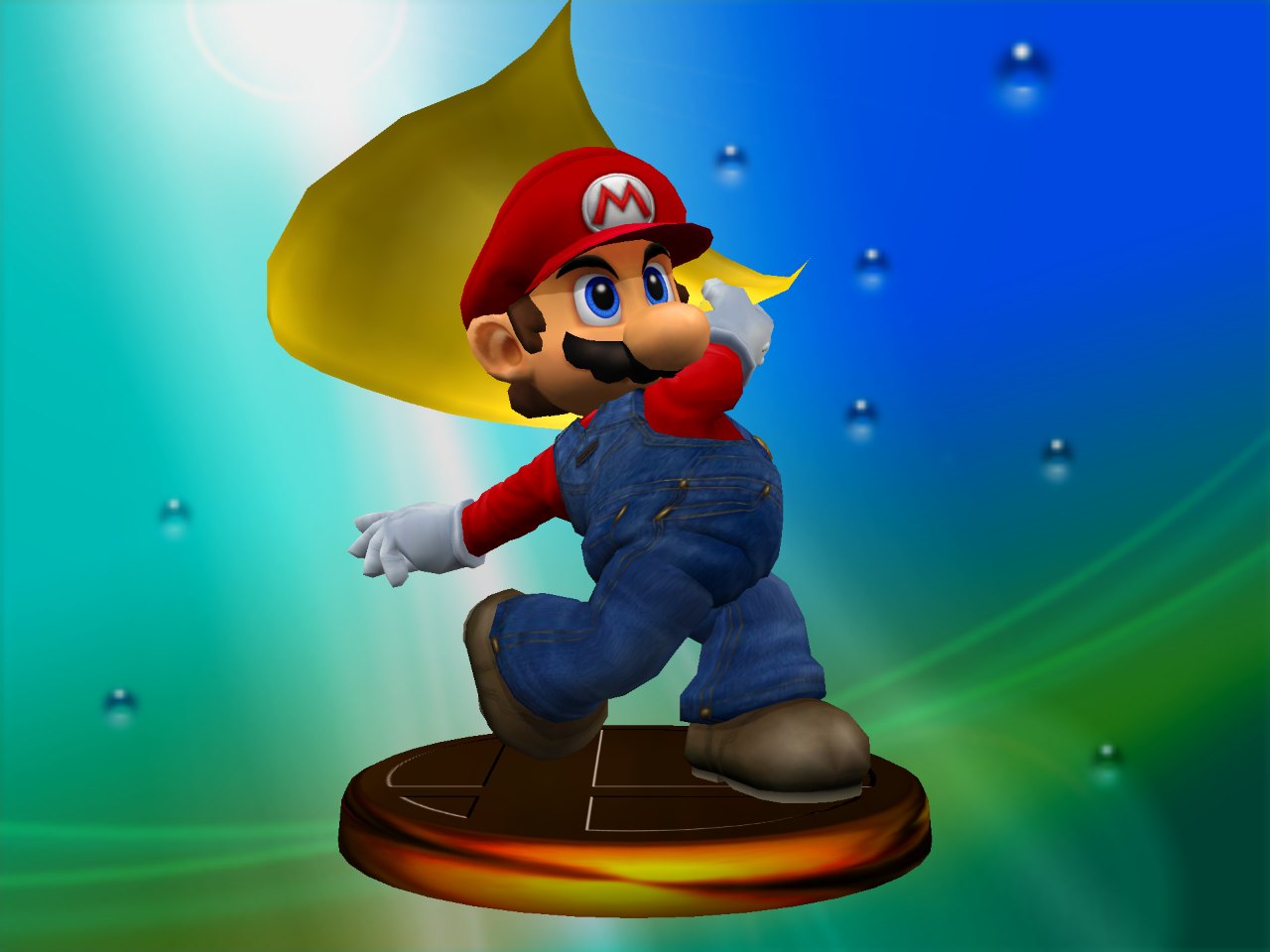
Almost everything else was new. Every fighter now has a side special to go with the standard, up and down ones, so Mario gets his Cape and Luigi his Green Missile. There is a sidestep dodge and an air dodge in any direction, wall jumps for some fighters (Mario among them), ledges you can jump up from, and up throws, down throws and a pummel to use once you have grabbed someone. Fighters can tech, recovering instantly as they hit the floor, a wall or the ceiling.
Players later found much more in the physics: a well-timed shield press on landing halves the landing lag of an aerial attack (L-canceling), fast-falling can be used at any moment, and an air dodge into the ground sends you sliding, a trick called wavedashing. These are covered under Legacy.
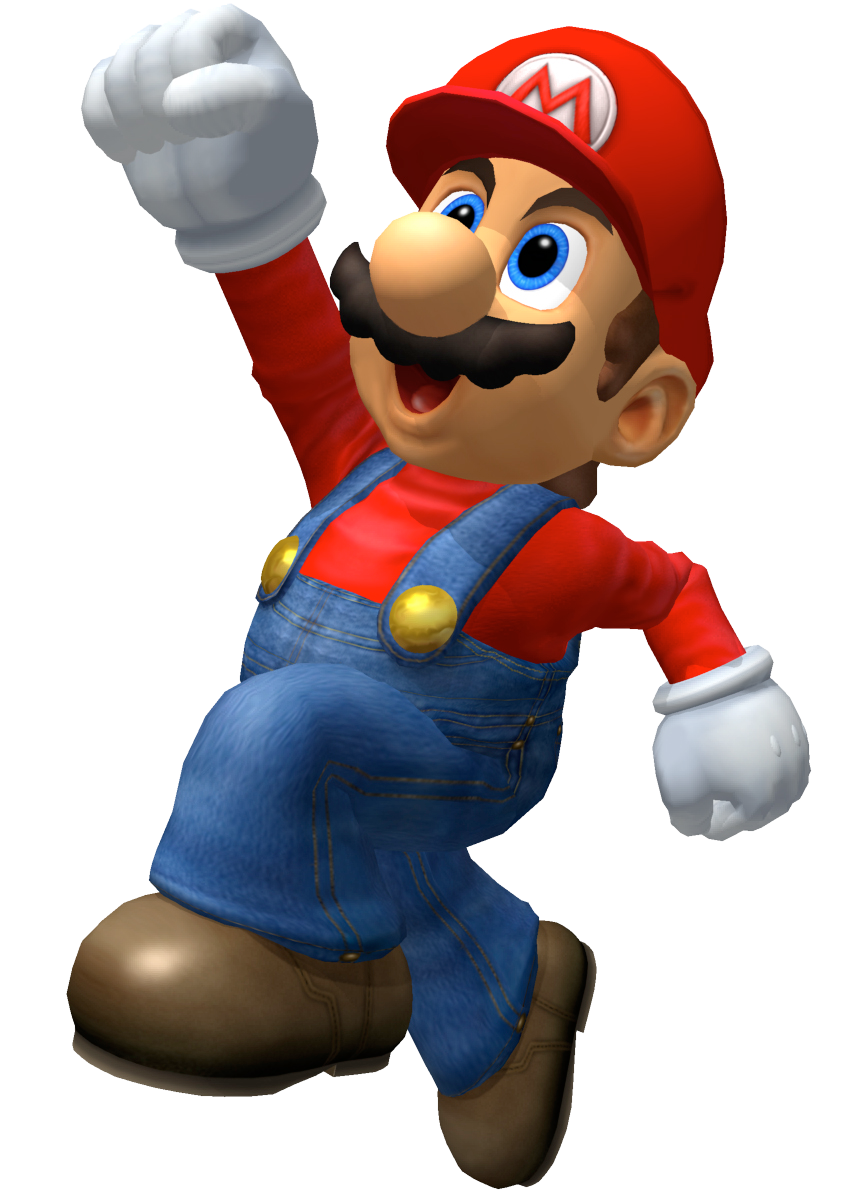
Mario in mid-jump.Mario’s Cape, his new side special.Luigi’s Green Missile, also new.
Mario, Luigi and Dr. Mario
Mario throws his Fireball, flips opponents round with his Cape (which also sends projectiles back), rises with the Super Jump Punch and spins as the Mario Tornado, which looks back to the Spin Jump of Super Mario World. He is the series’ balanced all-rounder: quick, average in weight and easy to learn.
Luigi shares the template but plays very differently. His fireballs are green, the Green Missile launches him headfirst across the stage, and he has his own Super Jump Punch and Luigi Cyclone. He jumps high and hits harder than his weight suggests, but he is slow in the air and his low traction makes him slide on the ground.
Dr. Mario is Mario in a white coat with more power and less speed. He throws Megavitamins from his own puzzle game, swaps the Cape for a Super Sheet, and spins as the Dr. Tornado.
Mario’s Fireball.Mario’s Super Jump Punch.The Mario Tornado.Luigi’s green Fireball.Luigi’s Super Jump Punch.Dr. Mario’s Megavitamins.The Super Sheet.Dr. Mario’s Super Jump Punch.The Dr. Tornado.
Peach and Bowser
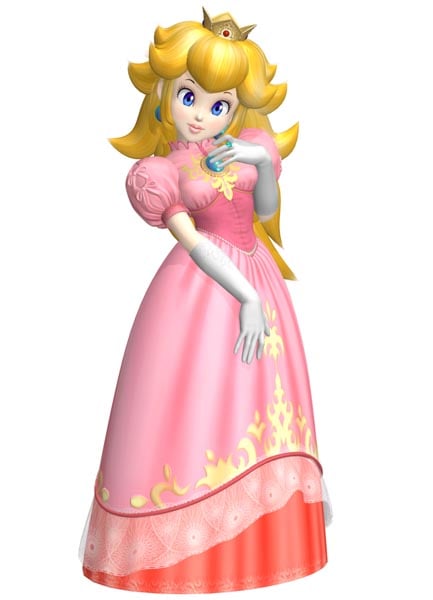
Peach is unlike anyone else. She can float in mid-air for a short time, a trick she learned in Super Mario Bros. 2, and so is her down special, which plucks Vegetables out of the ground to throw. The Peach Bomber is a flying hip attack, the Peach Parasol carries her up and lets her drift down, and her standard special holds Toad out in front of her. Her forward smash swings one of three things: a golf club, a tennis racket or a frying pan.
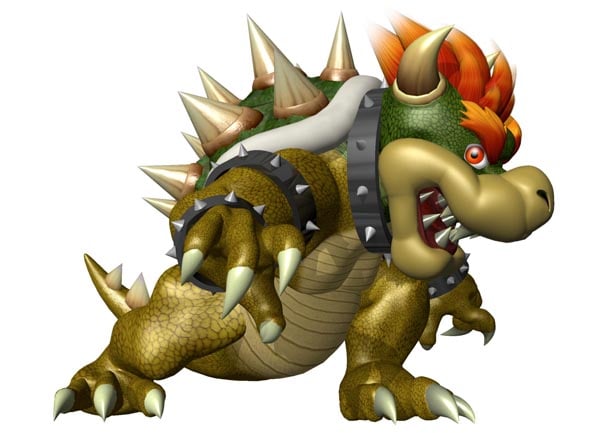
Bowser is the heaviest fighter in the game and one of the slowest, with enormous power to make up for it. He breathes Fire Breath, grabs and bites with the Koopa Klaw, spins in his shell as the Whirling Fortress, and crashes down with the Bowser Bomb, the ground-pound he used in Super Mario Bros. 3.
Peach holds out Toad.The Peach Bomber.The Peach Parasol.Peach plucks a Vegetable.Bowser’s Fire Breath.The Koopa Klaw.The Whirling Fortress.The Bowser Bomb.
Yoshi and Donkey Kong
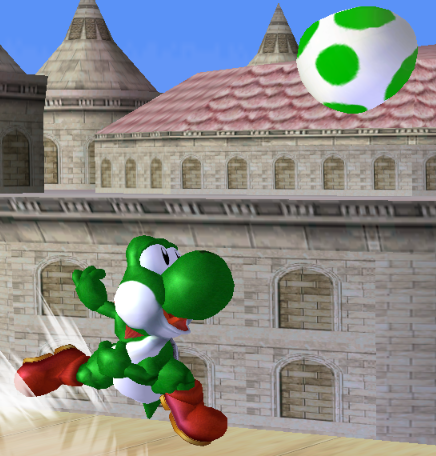
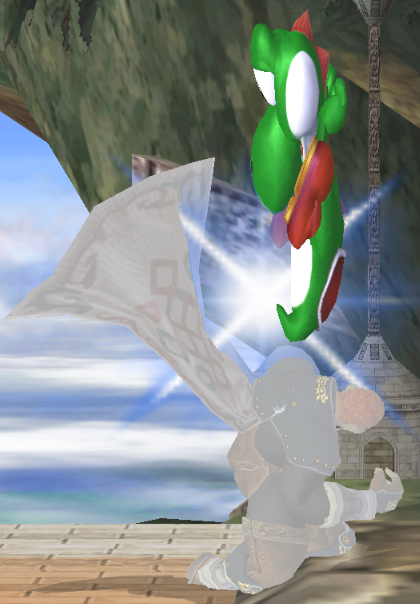
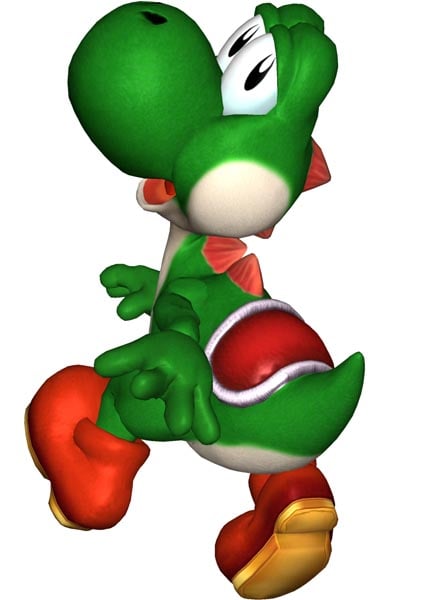
Yoshi is heavy but not very strong. His shield is an egg, his second jump is the floaty Flutter Jump of Super Mario World 2: Yoshi’s Island, and every special is an egg: Egg Lay swallows an opponent and pops them out in an eggshell, Egg Roll turns Yoshi into a rolling egg, Egg Throw lobs one, and the Yoshi Bomb is his ground pound.
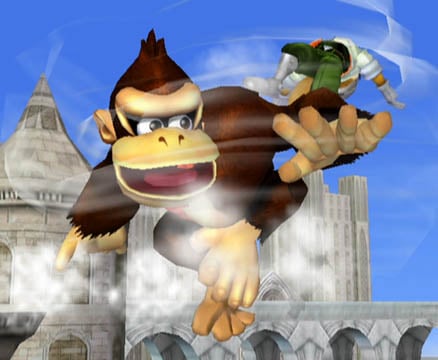
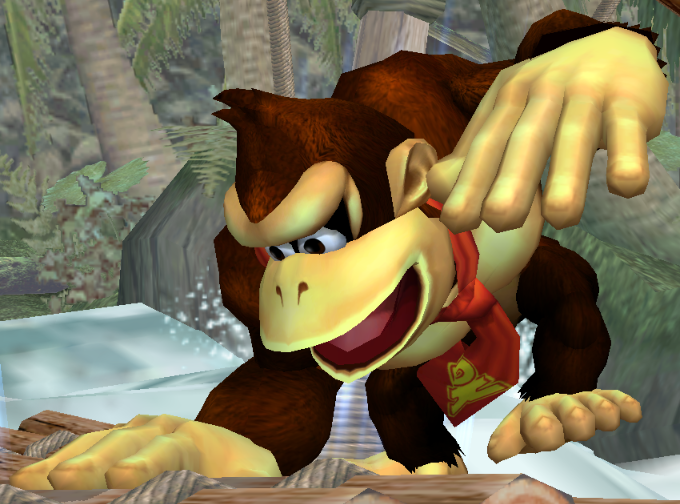
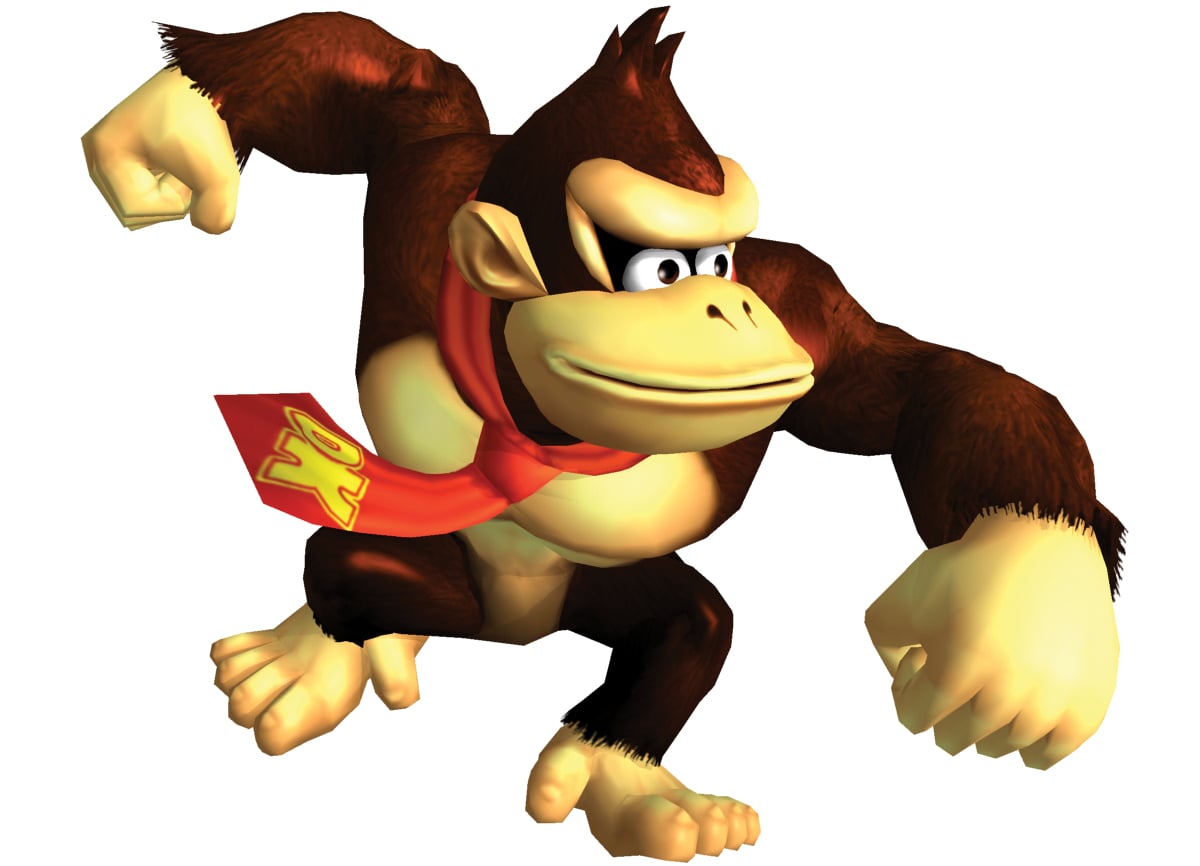
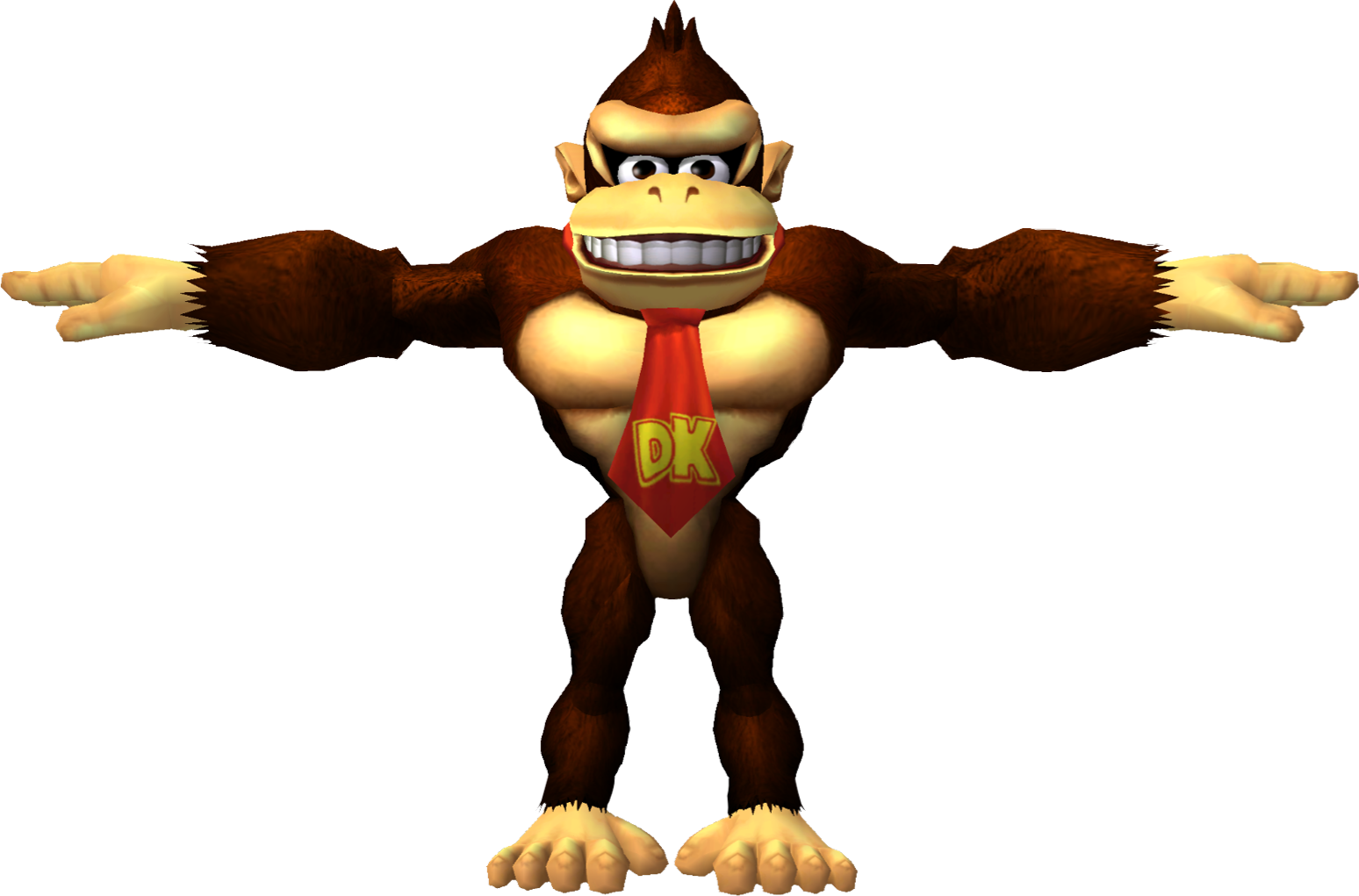
Donkey Kong is strong, heavy and quicker than he looks, and he can carry a grabbed opponent around before throwing them. His Giant Punch charges up by winding his arm, the new side special is a Headbutt, Spinning Kong whirls him across the stage and the Hand Slap from Donkey Kong Country shakes the ground.
In VS. Mode up to four players, human or computer, fight under one of four rules. Time scores KOs against falls in a set time, Stock gives everyone a number of lives, Coin rewards whoever grabs the most coins knocked out of opponents, and Bonus counts the bonus points the game hands out for all kinds of feats. Computer players run from level 1 to 9, handicaps can be set or left on automatic, teams can play with friendly fire on or off, and the damage ratio can be raised or lowered.
Special Melee holds the party versions: Stamina Mode with 150 hit points, Super Sudden Death with everyone starting at 300%, Giant, Tiny and Invisible Melee, Fixed-Camera and Single-Button modes, Lightning and Slo-Mo Melee, and a Camera Mode that saves snapshots to the Memory Card. Tournament Melee runs a knock-out bracket of up to 64 entrants, or a winner-stays-on rotation for a room full of friends.
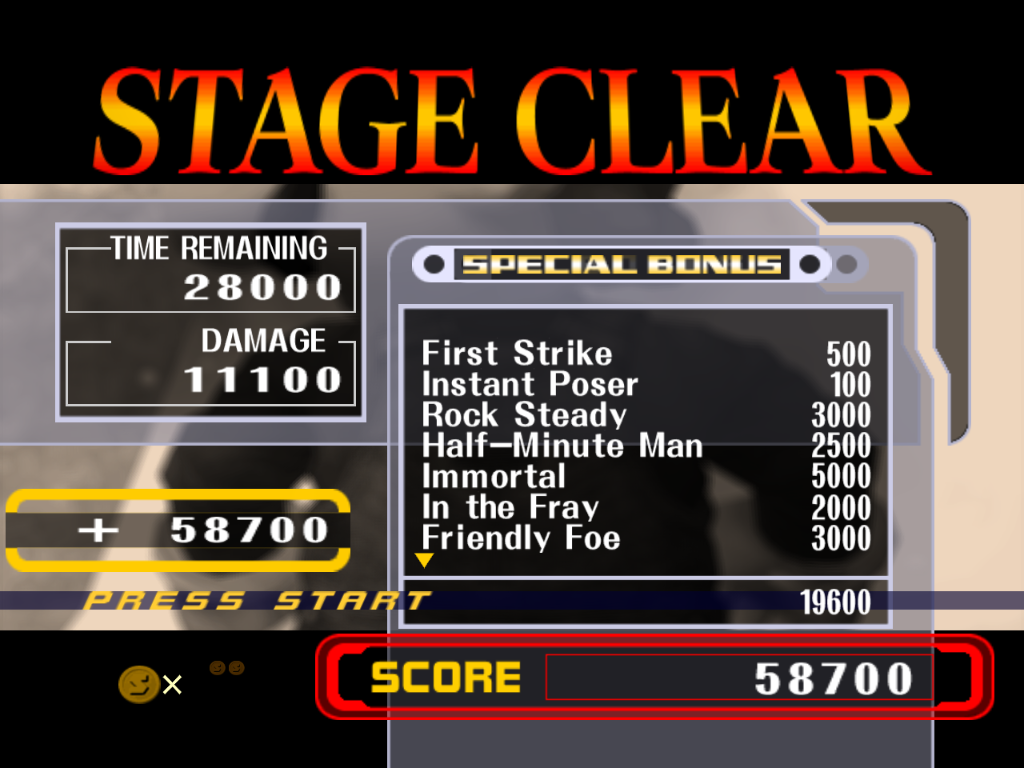
Choosing fighters for Camera Mode.The bonus tally after a match.
Poké Balls
Throw a Poké Ball and one of 29 Pokémon pops out to help, from Clefairy, Snorlax and Wobbuffet to Charizard, Blastoise and Venusaur. The legendary Articuno, Zapdos, Moltres, Raikou, Entei, Suicune, Lugia and Ho-Oh turn up far more rarely, and Mew and Celebi do not fight at all: they simply bring a big points bonus. Celebi is the rarest of all, appearing only once everything else in the game has been unlocked.
Every item in Melee
Melee has 36 items. Eleven come from Mario and Donkey Kong games. Every item also has a trophy of its own, which is where most of these pictures come from.
FoodSuper Smash Bros. Heals a little damage; the amount depends on the snack.
Maxim TomatoKirby. Heals 50%.
Heart ContainerThe Legend of Zelda. Heals 100%.
Warp StarKirby. Rockets you up, then slams you back down in an explosion you can steer.
Ray GunSuper Smash Bros. Up to 14 laser shots.
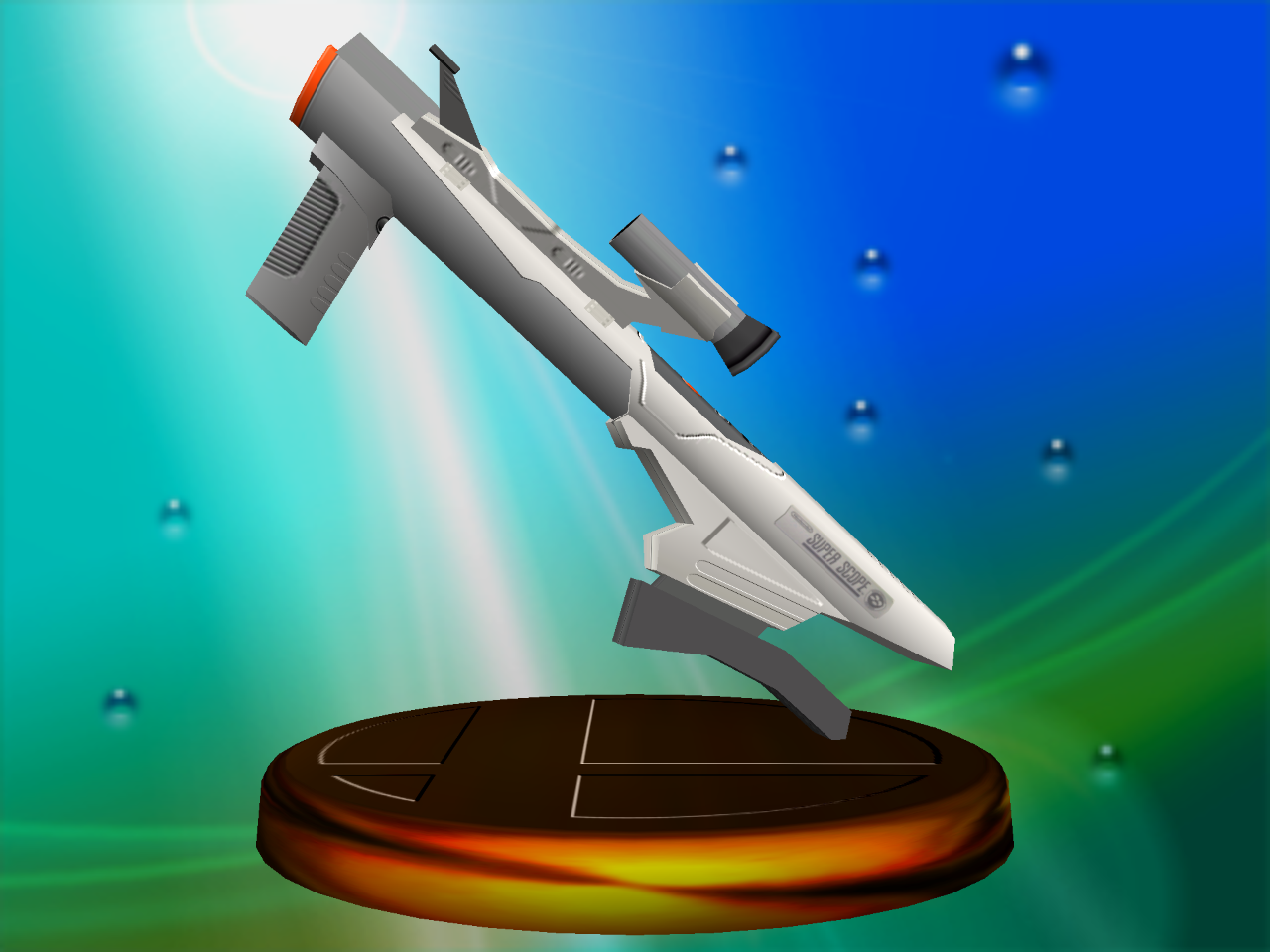
Super ScopeSuper Nintendo. Rapid small shots, or up to three charged blasts.
Fire FlowerSuper Mario. A stream of fire, much like Bowser’s Fire Breath.
Lip’s StickPanel de Pon. Plants a flower on the victim’s head that keeps hurting them.
Star RodKirby. Fires a limited number of stars.
Beam SwordSuper Smash Bros. A strong, slow sword.
Home-Run BatSuper Smash Bros. A smash attack with it is an instant KO.
FanSuper Smash Bros. Quick, feeble slaps.
HammerDonkey Kong. A massive hammer that deals heavy damage.
Green ShellSuper Mario. Slides along the ground, hitting anyone it meets.
Red ShellSuper Mario. Like the Green Shell, but it chases fighters and does not fall off the edge.
FlipperBalloon Fight. Stays where it is thrown, bouncing away fighters and projectiles.
FreezieSuper Mario. Slides along and freezes whoever it touches; fire thaws them.
Mr. SaturnEarthBound. A weak throwing item that can be used again and again.
Bob-ombSuper Mario. Explodes on impact, or walks off and blows up on its own.
Motion-Sensor BombGoldenEye 007 and Perfect Dark. Sticks to a surface and explodes when someone comes near.
Super MushroomSuper Mario. Makes you giant: stronger and harder to KO, but an easier target.
Poison MushroomSuper Mario. Shrinks you: weaker and easier to KO, but nimbler.
StarmanSuper Mario. A short spell of invincibility, though not against the blast lines.
ParasolKirby. A weapon that also lets you float down slowly.
Screw AttackMetroid. Turns every jump into Samus’s spinning attack.
Metal BoxSuper Mario. Turns you to metal: hard to launch, poor at recovering.
Bunny HoodThe Legend of Zelda. Faster running and higher jumps.
Cloaking DevicePerfect Dark. Makes you invisible for a while.
Barrel CannonDonkey Kong. Traps a fighter and fires them out at an angle set by the timing.
Party BallSuper Smash Bros. Floats up and showers the stage with items, often Food or Bob-ombs.
CrateSuper Smash Bros. Holds three items, and sometimes explodes.
BarrelSuper Smash Bros. Holds one item; thrown, it rolls into people.
CapsuleSuper Smash Bros. A small container that may explode.
EggSuper Smash Bros. What it holds varies by stage (Food or a weapon), and it can also explode.
Smash CoinSuper Smash Bros. The prize in Coin matches, in three values.
Poké BallPokémon. Releases a Pokémon that fights for the thrower.
Cartoons, Comics & Other Media
Melee is packed with nods to the Mario series, far beyond its seven Mario, Yoshi and Donkey Kong fighters: stages, music, moves, costumes and dozens of trophies. These are the connections traced game by game, followed by the places Melee itself has been remembered since.
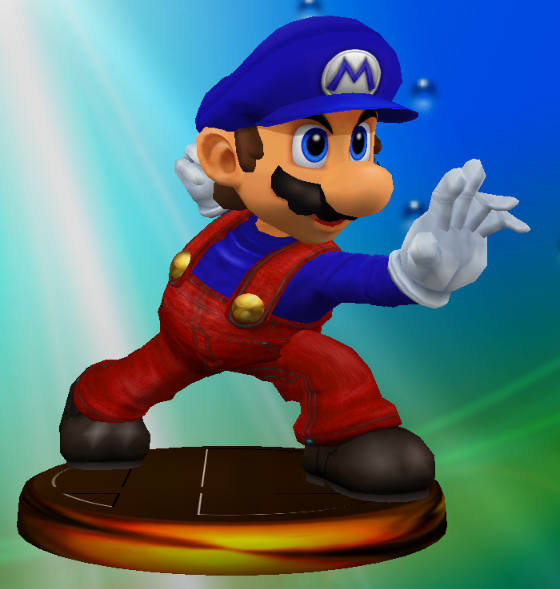
Donkey Kong and Donkey Kong Jr.Arcade, 1981–1982Mario’s blue alternative costume and Donkey Kong’s red one recall their arcade sprites, the Hammer returns as an item, and Donkey Kong Junior has a trophy.
Mario Bros. and Wrecking CrewCostumes and trophiesThe Freezie is both an item and a trophy, and one of Mario’s costumes follows his Mario Bros. artwork. From Wrecking Crew come Mario’s white-and-black outfit, based on Foreman Spike, Luigi’s red-and-pink colours and an Eggplant Man trophy.
Super Mario Bros.Stage, Adventure level and trophiesThe Mushroom Kingdom stage and Adventure mode’s opening level are built from its worlds, its enemies return as trophies, Luigi and Peach have costumes in their 1985 colours, and one of Bowser’s matches the game’s overseas box art.
Super Mario Bros. 2Stage, moves and trophiesMushroom Kingdom II is set in Subcon, drawn with the Super Mario All-Stars graphics, with Birdo and Pidgit as both hazards and trophies. Peach’s float and her Vegetable special come from this game too.
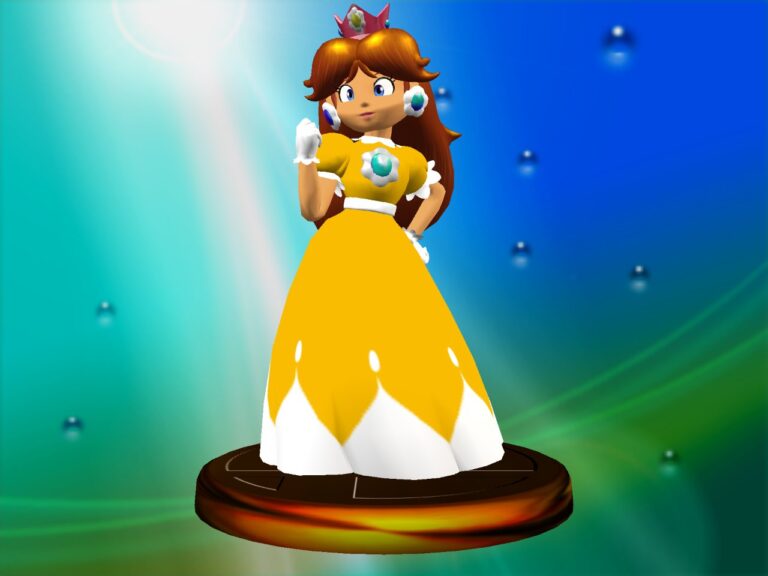
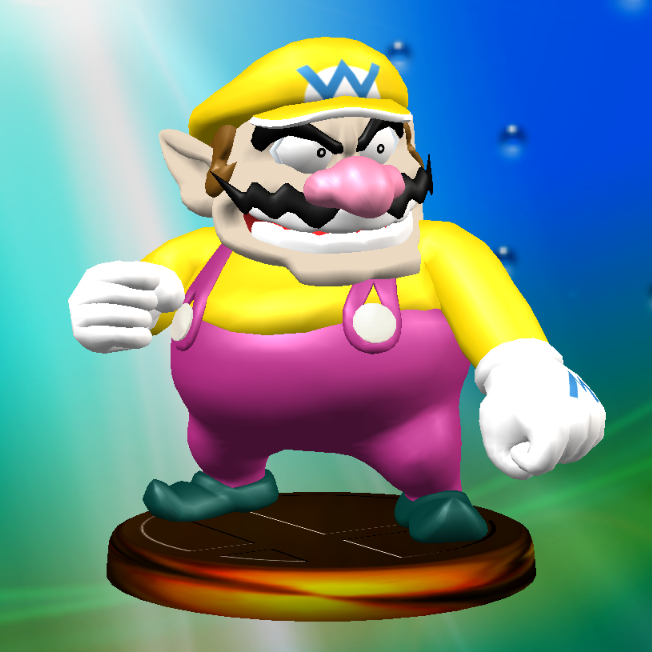
Super Mario Land and Super Mario Land 2Costumes and trophiesPeach’s yellow costume is modelled on Princess Daisy, who has a trophy of her own, and Mario’s yellow-and-purple outfit is a Wario costume. Wario’s trophy mentions Mario’s castle from Super Mario Land 2.
Super Mario Bros. 3Music, move and trophyA reggae medley of the overworld and Grass Land map themes debuts here as an alternative track, Bowser’s Bowser Bomb is his ground pound from this game, and Raccoon Mario is a trophy.
Dr. MarioFighter, music and trophiesDr. Mario joins the cast with Megavitamins as his standard special, the Viruses and Megavitamins have trophies, and a Dr. Mario track (Fever) is the alternative music on Mushroom Kingdom.
Super Mario WorldStage, move and trophiesThe Yoshi’s Island stage is built from its Yoshi’s Island levels, with a banjo arrangement of the athletic theme, Banzai Bill and a Fishin’ Lakitu in the background. Mario’s Cape is his new side special, the Koopa Clown Car and Banzai Bill have trophies, and a Mario-and-Yoshi trophy exists only in Japan.
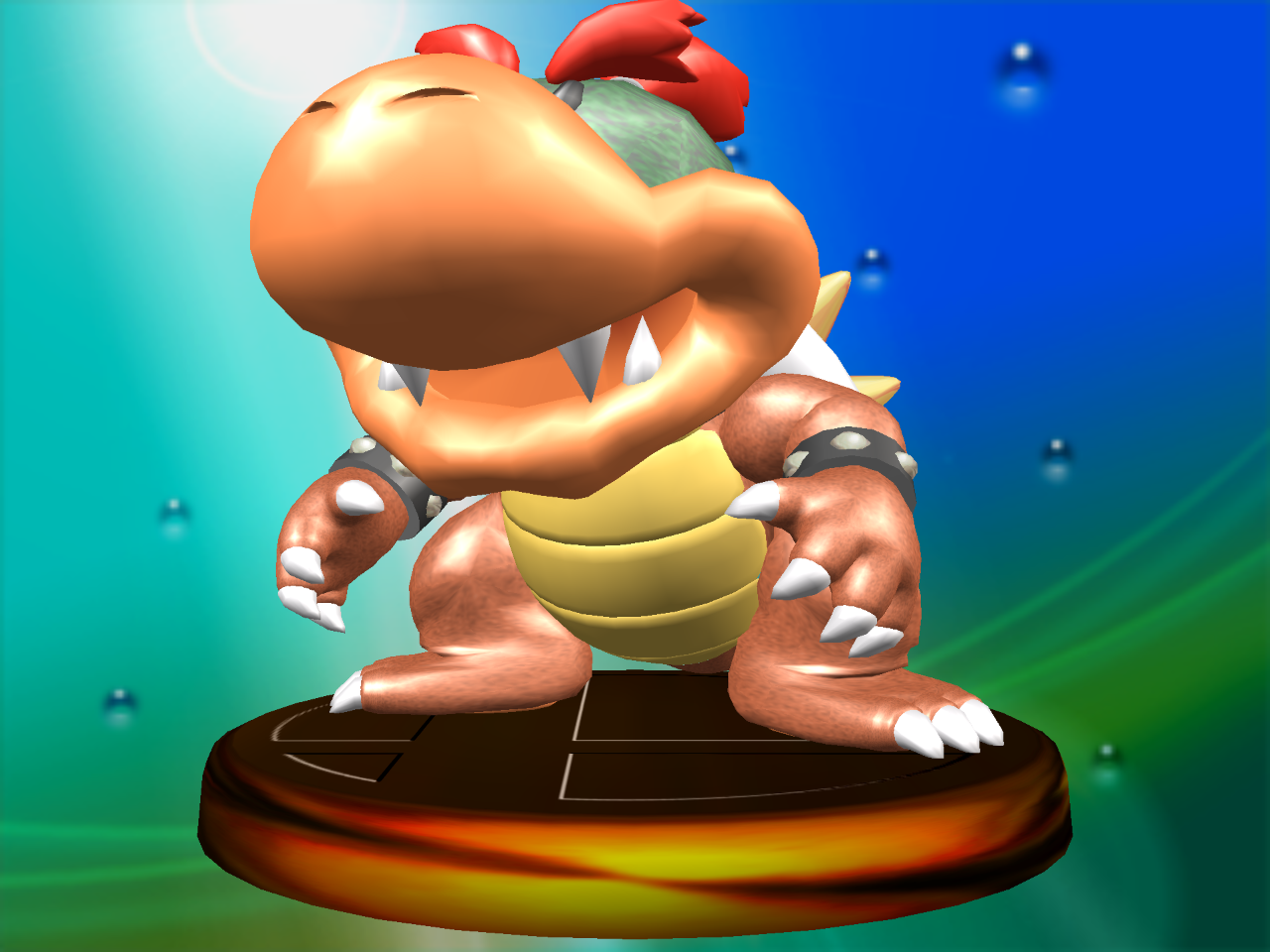
Super Mario World 2: Yoshi’s IslandMoves and trophiesYoshi’s Flutter Jump, Egg Throw and Yoshi Bomb all come from this game, and Baby Mario and Baby Bowser are trophies.
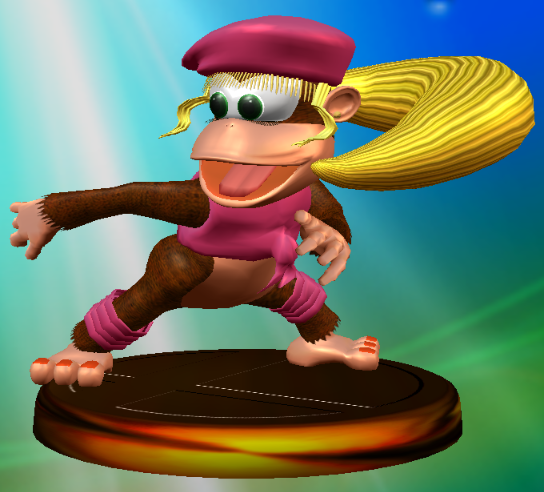
Donkey Kong Country and Donkey Kong 64Stages, music and trophiesKongo Jungle comes from Donkey Kong Country’s first area and Jungle Japes from Donkey Kong 64, with Klaptraps and the Barrel Cannon on hand. The Hand Slap is a Donkey Kong Country move, the DK Rap plays on Kongo Jungle, and King K. Rool and Dixie Kong are trophies.
Super Mario RPGMovesPeach’s frying pan was first swung in Super Mario RPG and her neutral attack is its Super Slap, while Bowser’s Koopa Klaw and side tilt both echo his Drill Claw.
Super Mario 64Stages, boss and itemsPrincess Peach’s Castle and Rainbow Cruise (its Rainbow Ride course) are stages, Metal Mario is an Adventure opponent and a trophy, the Metal Box returns, one of Kirby’s Stone forms is a Thwomp and one of Peach’s victory poses ends like her stained-glass portrait.
Yoshi’s StoryStages, music and trophiesA stage named after it, plus the returning Past Stage from the Nintendo 64 game. Yoshi’s victory fanfare arranges its theme, his colours come from it, and a Shy Guy, Pak E. Derm and Raphael the Raven are trophies.
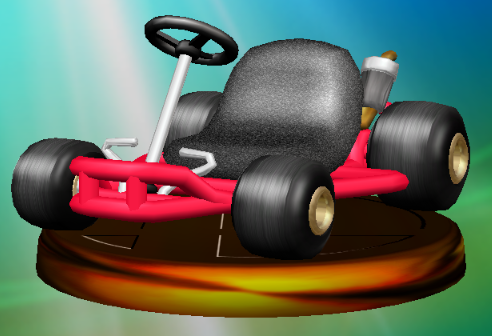
Mario Kart, Mario Golf and Mario TennisSpin-offsPeach’s forward smash can be a golf club or a tennis racket, a racing kart is a trophy, and so are Plum from Mario Golf and Waluigi, who made his debut in Mario Tennis.
The Mario music in MeleeSoundtrackPrincess Peach’s Castle overlaps the Super Mario Bros. overworld and underground themes, Rainbow Cruise mixes Super Mario 64’s slide music with the Super Mario Bros. underwater theme, Mushroom Kingdom II uses Super Mario Bros. 2’s overworld music and Jungle Japes swings to a jazzy DK Island Swing. The DK Rap on Kongo Jungle, sung by James W. Norwood Jr., is the first vocal track in the series.
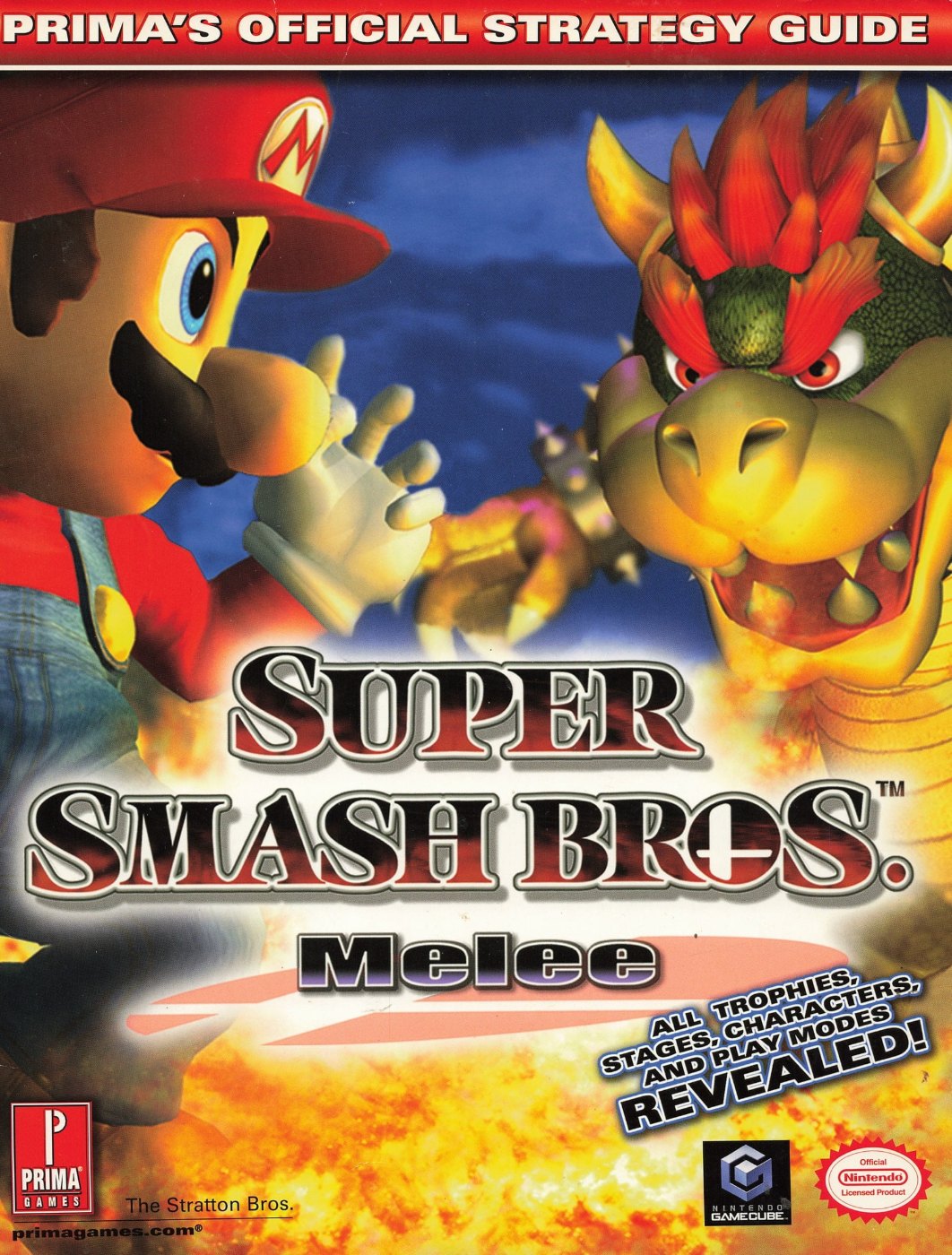
Nintendo Power Player’s GuideStrategy guidesNintendo Power’s Player’s Guide and Prima Games’ official guide both covered the game.
Later Mario games and Donkey KongaReferences to MeleeDonkey Konga has four Melee tracks, Rainbow Cruise and the DK Rap among them. Super Mario 3D World calls one of its challenge rooms Mystery House Melee, and in The Super Mario Bros. Movie Bowser aims a giant Bomber Bill at Peach’s castle, much as the Melee stage’s Banzai Bill does.
Later Smash Bros. gamesBrawl, 3DS / Wii U and UltimateBrawl brought back Melee’s menu, Battlefield, Final Destination and Giga Bowser music. Super Smash Bros. for Nintendo 3DS and Wii U plays Melee’s Battlefield theme on Final Destination, and in Ultimate Giga Bowser is a boss again and Luigi Green Missiles across the group artwork just as he does here.
The Roster
Twenty-five fighters, or twenty-six counting Sheik. Twelve are veterans of the Nintendo 64 game and thirteen are new. Fourteen are open from the start and eleven must be unlocked, each by meeting a condition and then beating the fighter in a one-on-one challenge. The Mario family comes first here, then the other fighters who matter most; every fighter is in the full roster below, with how to unlock them.
Character
Who they are
In this game
Abilities & notes
MarioSuper Mario · starter · veteran
The series’ all-rounder: quick attacks, a short jump, and a Cape that turns opponents round and reflects projectiles. Voiced by Charles Martinet.
Fights alongside Peach on the castle roof at the end of Adventure’s first stage, returns as Metal Mario in stage 11, and stars in Event 1, Trouble King, against Bowser.
Fireball · Cape · Super Jump Punch · Mario Tornado
LuigiSuper Mario · unlockable · veteran
Average weight and speed but above-average power, with high jumps, slow air movement and very low traction, which gives him one of the longest wavedashes in the game. His voice is Charles Martinet’s Mario recordings, pitched up.
Ambushes Mario on the castle roof in Adventure if the timer ends in a 2, then waits to challenge you on Mushroom Kingdom II. Once unlocked he joins Metal Mario as Metal Luigi, and he is the hero of Events 35 and 42.
Fireball · Green Missile · Super Jump Punch · Luigi Cyclone
PeachSuper Mario · starter · newcomer
New to Smash. She can hover in the air for a while, and her forward smash is a golf club, a tennis racket or a frying pan. Jen Taylor is credited for her voice.
Mario’s partner on the castle roof in Adventure, the princess you protect in Event 19, Peach’s Peril, and one of the giants of Event 15, Girl Power.
Toad · Peach Bomber · Peach Parasol · Vegetable
BowserSuper Mario · starter · newcomer
New to Smash: the heaviest fighter in the game and one of the slowest, with very powerful attacks and crushing grabs. Known as Koopa in Japan.
Adventure’s last opponent as Giant Bowser, and on Normal or higher the trophy that lightning turns into Giga Bowser. He is also the giant you play as in Event 25, Gargantuans.
A clone of Mario who trades some speed for extra power and electric hits. Charles Martinet voices him too.
Challenges you on Princess Peach’s Castle once unlocked, and teams up with Peach against Luigi in Event 35, Time for a Checkup.
Megavitamin · Super Sheet · Super Jump Punch · Dr. Tornado
YoshiYoshi · starter · veteran
Heavy but not very strong, with a high Flutter Jump and an egg instead of a shield. Kazumi Totaka provides his voice.
Ten Yoshis ambush you in Adventure’s Mushroom Kingdom, a colossal one guards Yoshi’s Story in Event 4 and thirty of them stampede through Event 24, The Yoshi Herd.
Egg Lay · Egg Roll · Egg Throw · Yoshi Bomb
Donkey KongDonkey Kong · starter · veteran
Strong, heavy and surprisingly agile, and able to carry a grabbed opponent before throwing them.
Adventure’s second stage: first two tiny Donkey Kongs, then a giant on Jungle Japes. In Event 2 you play the giant.
Giant Punch · Headbutt · Spinning Kong · Hand Slap
FoxStar Fox · starter · veteran
Fast, strong and quick to fall, with a blaster that does damage without stopping opponents and the Reflector, his down special. Tournament players came to rate him the best character in the game.
Fought twice on Corneria in Adventure, the second time reborn in red with the Arwings joining in.
Blaster · Fox Illusion · Fire Fox · Reflector
FalcoStar Fox · unlockable · newcomer
Plays like Fox but jumps higher, reaches further and has a blaster that stops opponents in their tracks.
Unlocked by clearing 100-Man Melee; once he is free he sometimes replaces Fox in Adventure.
Blaster · Falco Phantasm · Fire Bird · Reflector
SheikThe Legend of Zelda · Zelda’s other form · newcomer
Zelda transforms into Sheik with her down special: faster, with rapid attacks and strong combos but fewer heavy hitters.
Fought as Zelda on top of the Temple in Adventure, and the twist in Event 9, Hide ’n’ Sheik.
Needle Storm · Chain · Vanish · Transform
Captain FalconF-Zero · starter · veteran
The fastest runner in the game, with quick, hard-hitting attacks.
Fought on Mute City after Adventure’s F-Zero Grand Prix race; on Very Hard he wears his red Blood Falcon colours.
Plays like Marth but hits hardest near the base of his sword. He was added partly to promote a Fire Emblem game that had not yet been released, and his look is based on its pre-release material.
Unlocked by clearing a single-player mode as Marth without continues; partners Marth in Event 46, Fire Emblem Pride.
GanondorfThe Legend of Zelda · unlockable · newcomer
Slow and heavy, with enormous knockback. He owes his place to the decision, midway through development, to add fighters who reuse another fighter’s moves, and to a Ganondorf model already built for Space World 2000.
The villain of Event 29, Triforce Gathering, which leads straight to his challenge; one of the three final opponents in Event 51.
Slow, with a strong grab and powerful throws, and light because it hovers rather than walks.
The hardest fighter to unlock by playing time: 20 hours of VS. matches, counted per player. Crashes Event 44, Mewtwo Strikes!
Shadow Ball · Confusion · Teleport · Disable
Mr. Game & WatchGame & Watch · unlockable · newcomer
Flat, light and armed with props from the Game & Watch handhelds: a frying pan, a judge’s hammer, a fire-escape trampoline and an oil bucket.
The last fighter to unlock, needing every other fighter to clear a single-player mode, or 1,000 VS. matches. The final round of All-Star throws 25 of him at you.
Chef · Judge · Fire · Oil Panic
Ice ClimbersIce Climber · starter · newcomer
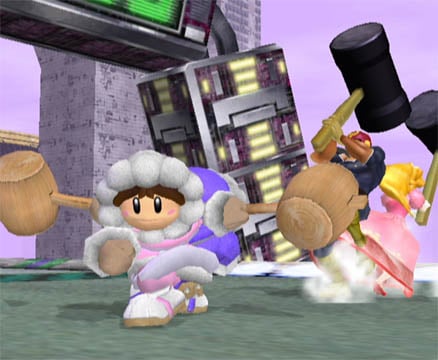
Popo and Nana fight as a pair, one steered by the player and the other by the computer. Short reach, but some powerful attacks.
Fought in pairs at the top of Adventure’s Icicle Mountain climb; picked to represent the early NES era.
Ice Shot · Squall Hammer · Belay · Blizzard
JigglypuffPokémon · unlockable · veteran
Light, with five mid-air jumps, fast air speed and the slowest ground speed, plus a few devastating moves such as Rest.
The easiest fighter to unlock: just clear Classic, Adventure or All-Star once.
Rollout · Pound · Sing · Rest
PichuPokémon · unlockable · newcomer
A smaller, faster Pikachu and the lightest fighter of all, whose electric attacks hurt itself as well as its opponents.
Unlocked through Event 37, Legendary Pokémon; guarded by Pikachu in Event 48.
Thunder Jolt · Skull Bash · Agility · Thunder
Young LinkThe Legend of Zelda · unlockable · newcomer
A weaker, lighter, faster Link who can wall jump, with fire arrows instead of plain ones.
Replaces Link in Adventure’s Underground Maze once unlocked, and takes on his older self in Event 34, Seven Years.
Fire Bow · Boomerang · Spin Attack · Bomb
The full roster
Every fighter, with how each is unlocked, followed by the four opponents you cannot play as. Every unlockable fighter has a single-player route and a VS. match count; once either is met, the fighter appears as a challenger on a set stage and must be beaten in a one-stock match. Fighting this way, the counts unlock them one at a time.
MarioSuper Mario · starterThe balanced all-rounder, now with the Cape.
LuigiSuper Mario · unlock: an Adventure mode secret, or 800 VS. matches; fought on Mushroom Kingdom IIHigh jumps, low traction, Green Missile.
PeachSuper Mario · starter · newFloats, plucks Vegetables and holds out Toad.
BowserSuper Mario · starter · newThe heaviest fighter, slow but enormously strong.
Dr. MarioDr. Mario · unlock: Classic, Adventure or All-Star as Mario with no continues, or 100 VS. matches; fought on Princess Peach’s Castle · newA stronger, slower Mario with Megavitamins.
YoshiYoshi · starterHeavy but weak, with an egg for a shield.
Donkey KongDonkey Kong · starterStrong and heavy; can carry opponents.
Captain FalconF-Zero · starterThe fastest runner, famous for the Falcon Punch.
FoxStar Fox · starterFast and strong, with a blaster and a reflector.
NessEarthBound · starterPSI powers, a bat and a yo-yo.
Ice ClimbersIce Climber · starter · newPopo and Nana, one of them steered by the computer.
KirbyKirby · starterLight; five mid-air jumps; copies standard specials.
SamusMetroid · starterHeavy, with a chargeable shot and a long grapple beam.
ZeldaThe Legend of Zelda · starter · newSlow magic user who can turn into Sheik.
SheikThe Legend of Zelda · starter (Zelda’s other form) · newFast, with rapid attacks and strong combos.
LinkThe Legend of Zelda · starterSword, bow, boomerang and bombs.
PikachuPokémon · starterFast and light, with electric attacks.
JigglypuffPokémon · unlock: clear Classic, Adventure or All-Star with anyone, or 50 VS. matches; fought on Pokémon StadiumFive mid-air jumps and the dreaded Rest.
PichuPokémon · unlock: clear Event 37, or 200 VS. matches; fought on Pokémon Stadium · newThe lightest fighter; its electricity hurts itself.
FalcoStar Fox · unlock: clear 100-Man Melee, or 300 VS. matches; fought on Battlefield · newFox’s wingman: higher jumps, a blaster that stuns.
MarthFire Emblem · unlock: play all 14 starters in VS. or the 1-P modes, or 400 VS. matches; fought on Fountain of Dreams · newLong reach; strongest at the tip of his sword.
Young LinkThe Legend of Zelda · unlock: clear Classic, Adventure or All-Star with 10 fighters, or 500 VS. matches; fought on Great Bay · newLighter and faster than Link; can wall jump.
GanondorfThe Legend of Zelda · unlock: clear Event 29, or 600 VS. matches; fought on Final Destination · newSlow, heavy and brutally strong.
MewtwoPokémon · unlock: 20 hours of VS. play, or 700 VS. matches; fought on Final Destination · newPsychic powers and strong throws; light for its size.
RoyFire Emblem · unlock: clear Classic, Adventure or All-Star as Marth with no continues, or 900 VS. matches; fought on Temple · newStrongest at the base of his blade.
Mr. Game & WatchGame & Watch · unlock: clear Classic, Adventure, All-Star or Target Test with all 24 others, or 1,000 VS. matches; fought on Flat Zone · newFlat, light and armed with LCD-game props.
Giga BowserSuper Smash Bros. · Adventure mode final boss (Normal or higher)Bowser transformed, fought after Giant Bowser on Final Destination; also in Event 51.
Master Hand and Crazy HandSuper Smash Bros. · Classic mode final bossThe giant gloves; Crazy Hand joins on Normal or higher if you have not continued.
Fighting Wire FramesSuper Smash Bros. · Multi-Man Melee and AdventureWeak wireframe fighters that come in endless waves; they cannot use special moves.
SandbagSuper Smash Bros. · Home-Run ContestThe punchbag you hit as far as you can.
Key staff
From the game’s credits, with roles from the development history.
Masahiro SakuraiDirector; planning; game and data designCreated the series at HAL Laboratory and wrote Melee’s project plan himself in July 1999.
Hiroshi YamauchiExecutive producerNintendo’s president at the time of release.
Shigeru MiyamotoProducerCredited alongside Masayoshi Tanimura, Hiroaki Suga and Kenji Miki.
Satoru IwataMarketing supervision (special thanks)Then head of corporate planning at Nintendo; spent about three weeks at HAL helping to debug the game so it could ship on time.
Hitoshi KobayashiDesign directorAlso one of HAL’s character modellers; Creatures Inc. modelled fighters too.
Yoshiki SuzukiProgramming directorAlso credited as system programmer.
Hirokazu Ando and Shogo SakaiMusicComposers and arrangers, with Tadashi Ikegami and Takuto Kitsuta also arranging. Sakai took over the opening theme from Ando in February 2001.
Taizo TakemotoConductorConducted the orchestra credited as Orchestra Melee.
Charles MartinetVoice of Mario, Luigi and Dr. MarioLuigi’s voice is Mario’s clips pitched up.
Jen TaylorVoice of PeachAs credited.
Kazumi TotakaVoice of YoshiAs credited.
Dean HarringtonAnnouncerThe voice that calls every fighter’s name and every “Game!”.
James W. Norwood Jr.DK Rap vocalsSang the new recording of the Donkey Kong 64 rap.
Bill TrinenEnglish textWrote and edited the English text at Nintendo of America, and is one of three Treehouse staff credited for crowd cheers.
Advertisement
How It Was Made
Melee was made at speed. Most of what is known about its development comes from Masahiro Sakurai’s interviews and, more recently, his own YouTube series, gathered by SmashWiki and Wikipedia, and from the credits.
A deluxe sequel, planned alone
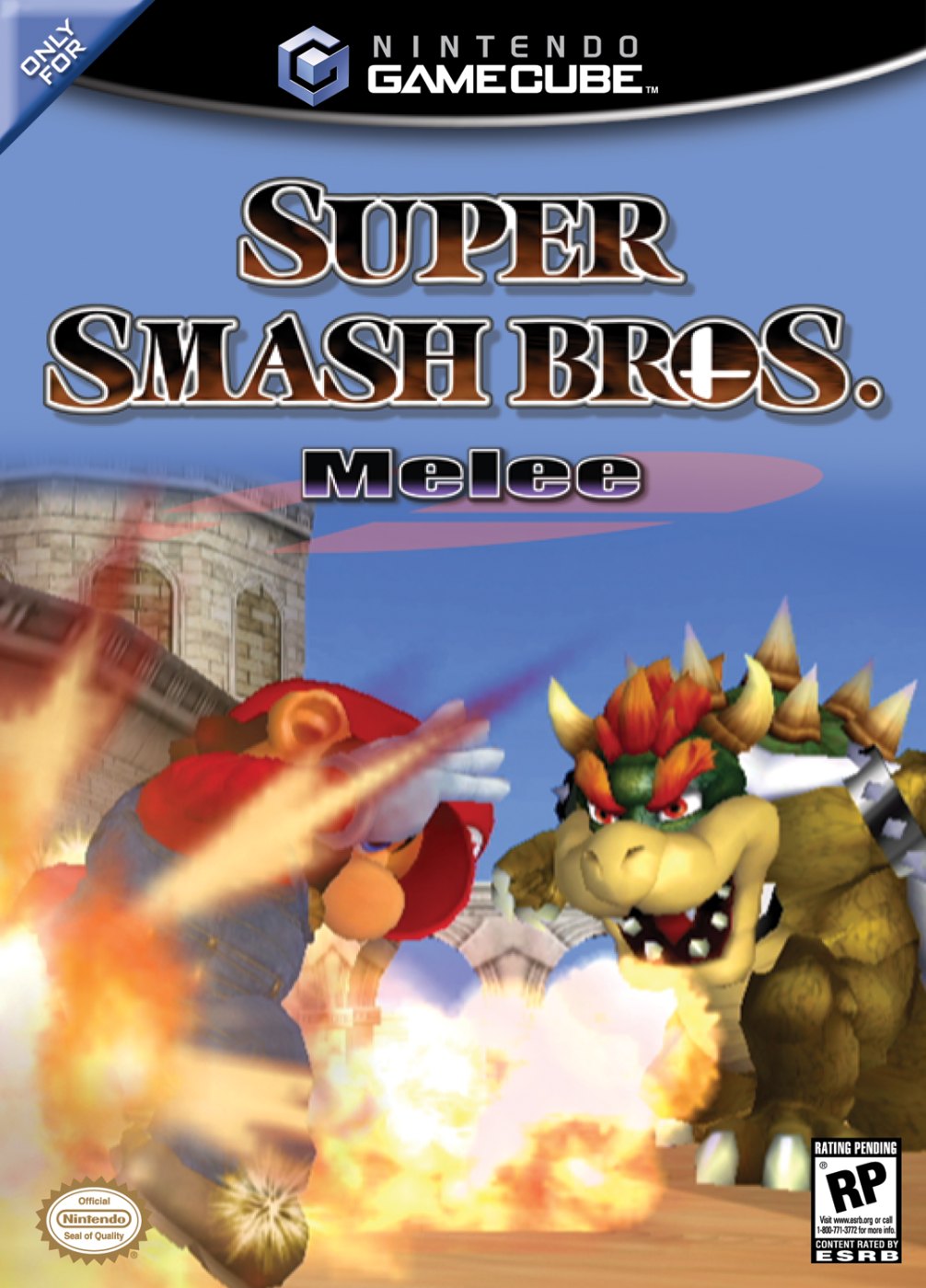
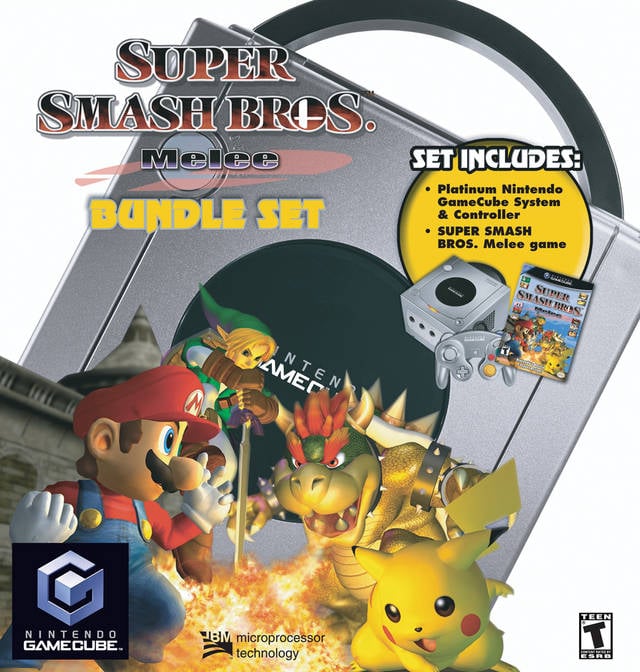
The artwork used on the box.
The Nintendo 64 Super Smash Bros. had begun as a weekend prototype that Sakurai designed and Satoru Iwata, then at HAL Laboratory, helped to build. Its success made a sequel inevitable, and Sakurai wrote the project plan for one on 5 July 1999, without yet knowing the GameCube’s final specifications, and spent more than a year working on it on his own.
He thought of the new game as a “deluxe” version of the first, a chance to do everything he had not been able to do the first time, and in Japan it kept that name: Dairantō Smash Brothers DX. HAL Laboratory returned as developer, with Sakurai directing again and Shigeru Miyamoto among the producers.
Thirteen months of crunch
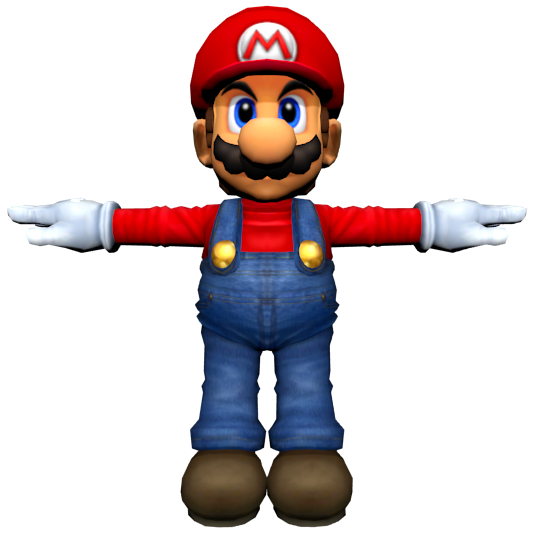
Mario’s in-game model.
Full development took about 13 months, and it was punishing. Looking back in 2010, Sakurai described his way of life during the project as destructive, with no holidays and weekends cut short; he said he had felt great pressure to make a sequel worthy of the first game, and that it was the biggest project he had ever led up to that point. He also called the result the sharpest game in the series.
The ambition shows in the numbers: more than twice as many fighters as the Nintendo 64 game, 29 stages where it had nine, five single-player modes and nearly three hundred trophies, each with its own text.
Choosing the newcomers
Roy, added to promote a Fire Emblem game that was not yet out.
The newcomers first planned were Bowser, Peach, Zelda with Sheik, the Ice Climbers, Marth, Mewtwo and Mr. Game & Watch, with the Ice Climbers there to stand for the early NES era. Midway through development the team decided to add fighters who reuse another fighter’s moves, which saved time and made room for Dr. Mario, Falco, Young Link, Pichu, Ganondorf and Roy. Ganondorf was helped in by a model already made for Nintendo’s Space World 2000 show.
Roy was a piece of promotion. Sakurai wanted a hero from the next Fire Emblem while that game was still in production, so Roy was drawn from its pre-release material; when Fire Emblem: The Binding Blade slipped, Melee reached the shops first. He is commonly named as one reason the series later found an audience outside Japan.
Iwata comes to the rescue
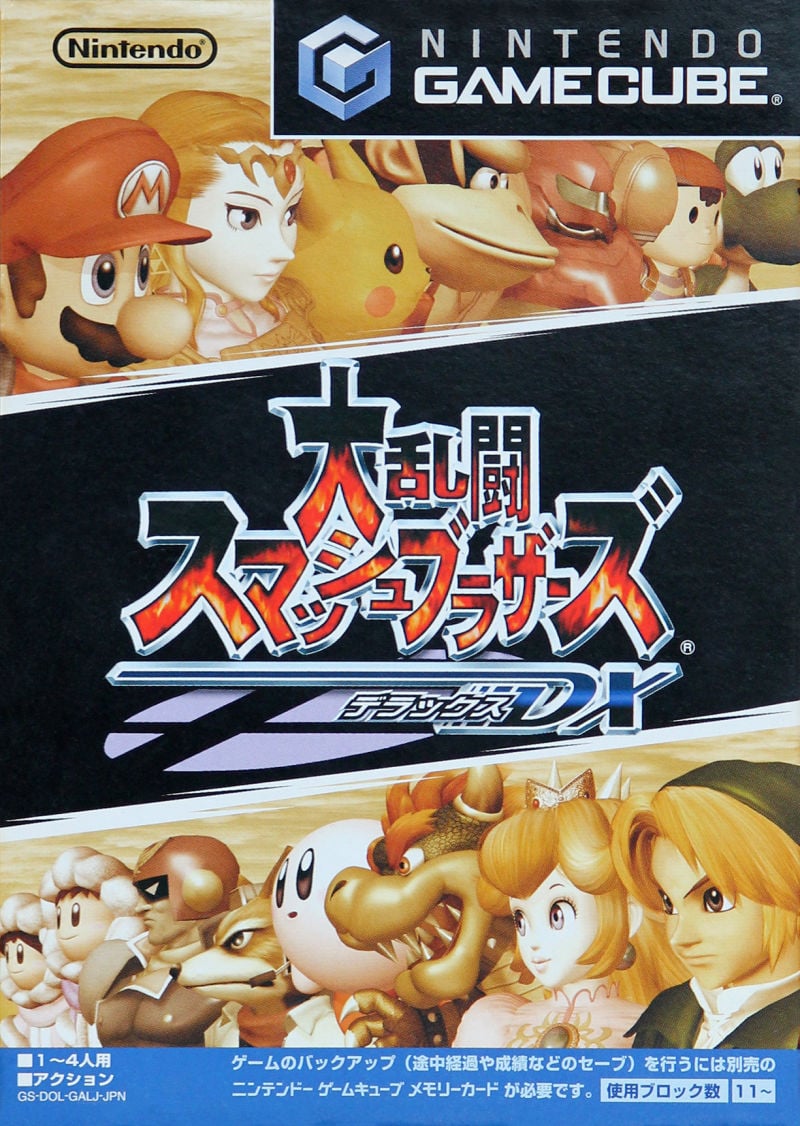
The Japanese logo: Dairantō Smash Brothers DX.
During 2001 the game fell behind schedule. Satoru Iwata, who had left HAL to head Nintendo’s corporate planning division in 2000, went back to HAL’s office for about three weeks to help, reviewing code and hunting bugs alongside the team. His help was key to the game shipping on the planned date, and Sakurai recalls the episode in his video about Iwata on his YouTube channel.
The game went gold on 31 October 2001, three weeks before its Japanese release. Nintendo named Iwata its fourth president on 24 May 2002, the same day Melee reached Europe, and he took office at the end of that month.
The opening movie and the music
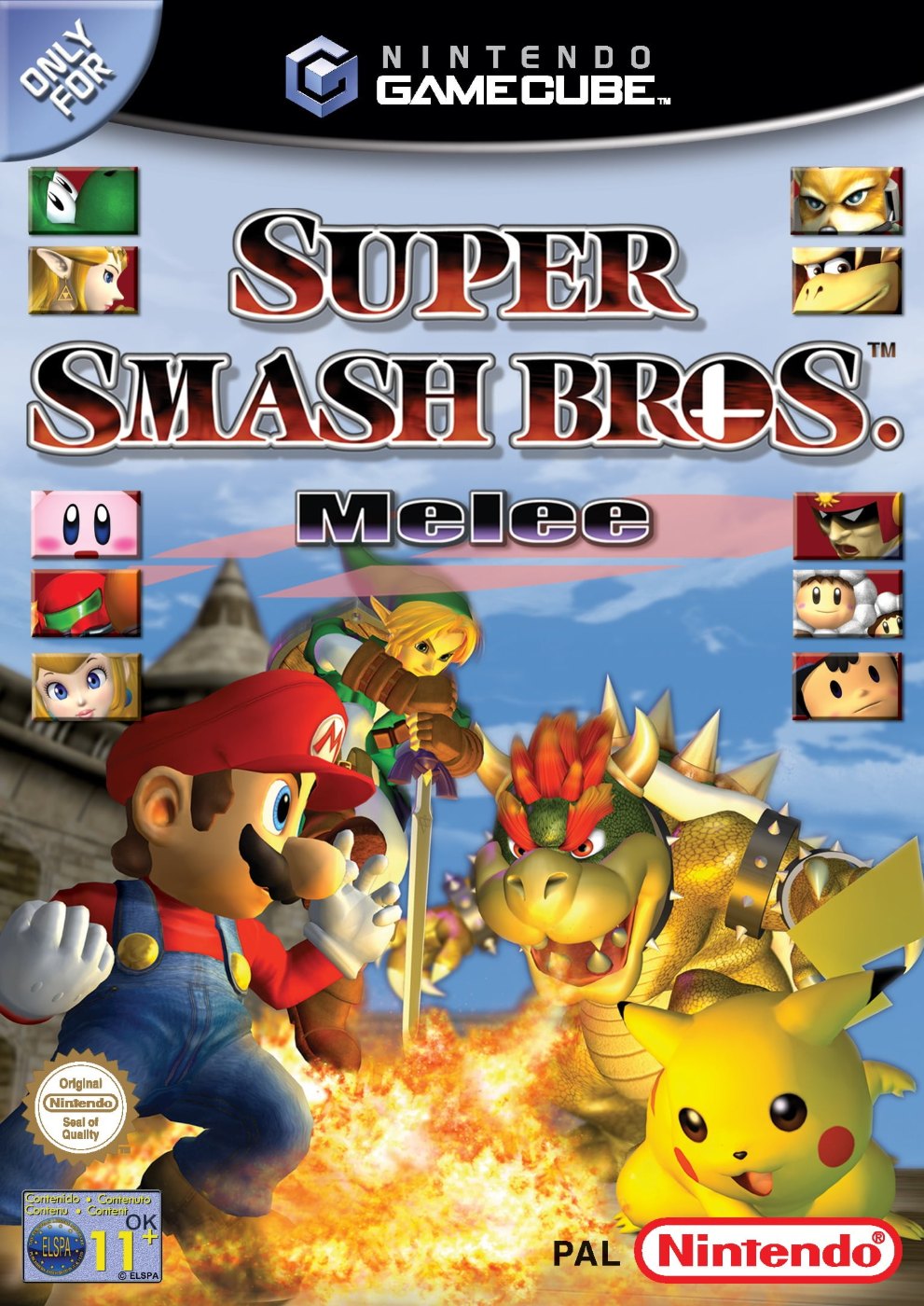
The international logo.
Sakurai wanted Melee to open with a pre-rendered movie that would show off the new console, the first such cut-scene in the series. HAL worked with three Tokyo graphics studios on it, and Sakurai storyboarded it himself rather than spend New Year with his family.
The music was composed by Hirokazu Ando and Shogo Sakai, who took over the opening theme from Ando on 14 February 2001, with arrangements by Tadashi Ikegami and Takuto Kitsuta and real orchestral recordings conducted by Taizo Takemoto. Voice recording began the same month with the Japanese Star Fox cast and Masachika Ichimura, the voice of Mewtwo, and James W. Norwood Jr. recorded a new DK Rap. Two orchestral albums followed: Dairantō Smash Brothers DX Orchestra Concert in Japan in 2002 and Smashing… Live!, performed by the New Japan Philharmonic, which was a bonus for Nintendo Power subscribers in North America in 2003 and given away with Britain’s official Nintendo magazine.
Reveal and release
An early version of the box art.
Nintendo had a playable version at E3 2001 in May, and the Japanese website opened on 17 May 2001 with weekly updates of screenshots and character profiles. At Space World 2001 in August a newer demo let players pick from ten fighters, and Nintendo ran a fan tournament with a GameCube and a copy of the game as prizes. By September the starting roster had been shown, with question marks hiding the secret fighters, and the game was being advertised in Japanese cinemas before Pokémon films.
Melee came out in Japan on 21 November 2001 and sold 358,525 copies in its first week, the fastest start of any GameCube game at the time. North America followed on 3 December 2001, Europe on 24 May 2002 and Australia on 31 May 2002.
Series Firsts
What Melee brought to Smash Bros. Each of these is stated in the sources listed at the foot of the page; we have kept to the series and avoided claims about fighting games in general.
1TrophiesMelee introduced collectable trophies, each with a short history of a character or object; they replaced the Nintendo 64 game’s character biographies and returned in later games.
2Peach and BowserThe princess and the Koopa King became playable in Smash Bros. for the first time, alongside Dr. Mario.
3Giga BowserBowser’s monstrous form made his first appearance here as Adventure mode’s hidden final boss; later games turned him into Bowser’s Final Smash.
4Adventure, All-Star and Event MatchThree new single-player modes, joined by the Home-Run Contest, which replaced the Nintendo 64 game’s Board the Platforms.
5Side specialsEvery fighter has four special moves, adding a side special such as Mario’s Cape and Luigi’s Green Missile.
6Air dodges and new defenceSidestepping, the air dodge, wall, ceiling and ledge techs, and the power shield all arrived with Melee.
7Tournament and Special MeleeA built-in tournament bracket for up to 64 entrants, and party rules such as Stamina, Giant and Slo-Mo Melee.
8A song with wordsThe DK Rap on Kongo Jungle is the first track with vocals in the series, and the only one in Melee.
9A pre-rendered openingMelee’s opening movie is the series’ first pre-rendered cut-scene.
10The GameCube’s first Japanese million-sellerAbout two months after release it became the first GameCube game to sell a million copies in Japan.
Cheats & Secrets
Everything in Melee is unlocked by playing; there are no button codes. Every hidden fighter has two routes, a single-player feat or a count of VS. matches, and once either is met the fighter appears with the message “A new foe has appeared!” and has to be beaten in a one-stock match on a set stage. If a single-player feat triggered the challenge and you lose, you must repeat the feat; a VS. count brings the challenger straight back next match.
Unlock Luigi
Finish the first part of Adventure mode’s Mushroom Kingdom stage when the last digit of the seconds on the timer is a 2 (any time ending in 2 seconds). Luigi replaces Mario on the castle roof: beat him and Peach within a minute, finish the rest of Adventure, then beat Luigi on Mushroom Kingdom II. Or play 800 VS. matches.
Unlock Dr. Mario
Clear Classic, Adventure or All-Star as Mario without using a continue, or play 100 VS. matches. Challenge stage: Princess Peach’s Castle.
Unlock Jigglypuff, Pichu and Falco
Jigglypuff: clear Classic, Adventure or All-Star with any fighter, or 50 VS. matches (Pokémon Stadium). Pichu: clear Event 37, Legendary Pokémon, or 200 VS. matches (Pokémon Stadium). Falco: clear 100-Man Melee, or 300 VS. matches (Battlefield).
Unlock Marth, Young Link, Ganondorf and Roy
Marth: play as all fourteen starting fighters in VS. Mode or the 1-P modes, or 400 VS. matches (Fountain of Dreams). Young Link: clear Classic, Adventure or All-Star with ten different fighters, or 500 VS. matches (Great Bay). Ganondorf: clear Event 29, Triforce Gathering, or 600 VS. matches (Final Destination). Roy: clear Classic, Adventure or All-Star as Marth without continuing, or 900 VS. matches (Temple).
Unlock Mewtwo and Mr. Game & Watch
Mewtwo: 20 hours of VS. play in total, counted per player, so four people playing for five hours will do it; or 700 VS. matches (Final Destination). Mr. Game & Watch: clear Classic, Adventure, All-Star or Target Test with all 24 other fighters, or 1,000 VS. matches (Flat Zone).
Unlock the Mario stages
Mushroom Kingdom II: collect the Birdo trophy. Yoshi’s Island (Past Stage): hit Sandbag at least 400 m (1,325 ft) in the Home-Run Contest. Kongo Jungle (Past Stage): clear 15-Minute Melee.
Unlock the other stages
Brinstar Depths, Fourside, Big Blue and Poké Floats: 50, 100, 150 and 200 VS. matches. Battlefield: clear All-Star. Final Destination: clear Event 51. Flat Zone: clear Classic as Mr. Game & Watch. Dream Land: clear Target Test with all 25 fighters.
Fight Giga Bowser and Crazy Hand
Giga Bowser: play Adventure on Normal or higher and beat Giant Bowser within 18 minutes of starting. Crazy Hand: reach Master Hand in Classic on Normal or higher without continuing; he joins when Master Hand is down to half health.
Adventure bonuses worth chasing
Defeat all five Links in the Underground Maze for the 30,000-point Link Master bonus; beat Metal Mario and Metal Luigi together for the Metal Bros. bonus; beat the Kirby team quickly enough to summon Giant Kirby; and finish Adventure in 18 minutes 20 seconds or less for the Wolfen trophy.
Alternative music and the Sound Test
Hold L or R as you choose a stage to hear its alternative track (with several players, everyone must hold it). Unlock every stage to open the Sound Test, which plays all the music and voices.
Event Match order
Events 1 to 10 are open from the start. Win 6 of them for Events 11–15, 10 of the first 15 for 16–20, 16 of the first 20 for 21–25, 22 of the first 25 for 26–29, and 27 of the first 29 for Event 30. Events 31–39 also need Jigglypuff, Luigi, Dr. Mario, Falco and Young Link; 40–50 need every fighter; and Event 51 needs all fifty others plus a clear of Classic and Adventure.
Glitches & Oddities
Melee went through three American revisions (1.00, 1.01 and 1.02) and a reworked European version, and several of these glitches only exist in some of them. The physics trick that matters most, wavedashing, is under Legacy.
The Ice Climbers freeze
The Ice Climbers’ Squall Hammer.
With the Ice Climbers, have the partner grab an opponent while the main climber uses the side special, the Squall Hammer, at the right moment, and the victim freezes in place until hit by a Screw Attack. The European version is said to have fixed it.
The bottomless Super Scope
The Super Scope.
Fire fifteen small shots and two charged ones, then get hit while charging the third. The Super Scope now never runs out, until you throw it away.
Bunny Hood jabs
In version 1.00, Ganondorf jabbing while wearing a Bunny Hood plays an unused second jab of his, which does nothing because nobody gave that attack any hitboxes.
No Distance
The Home-Run Contest.
In version 1.00, a Home-Run Contest hit of more than 4,556.9 ft was recorded as “No Distance” because the stadium was too small. Later versions enlarged it, and the Japanese and European versions also have a slightly bigger platform.
The continue that will not continue
On the Game Over screen, choosing “Yes” to continue without enough coins can leave the option unselectable.
Videos
Masahiro Sakurai’s own look back at Melee, from his YouTube series on making games, and the game’s E3 2001 reveal in a third-party upload.
Sakurai’s episode on Melee, published on his official channel in 2022.
The E3 2001 reveal, uploaded by a third-party channel.
Trivia & Interesting Facts
In Japan the game is Dairantō Smash Brothers DX, Bowser is Koopa, and the announcer shouts “Battle Royale!” and “Game Set!” where the English version says “Melee!” and “Game!”.
The European version renames Rainbow Cruise as Rainbow Ride, after the Super Mario 64 course it is based on.
Luigi has no voice clips of his own: his are Charles Martinet’s Mario recordings, pitched up.
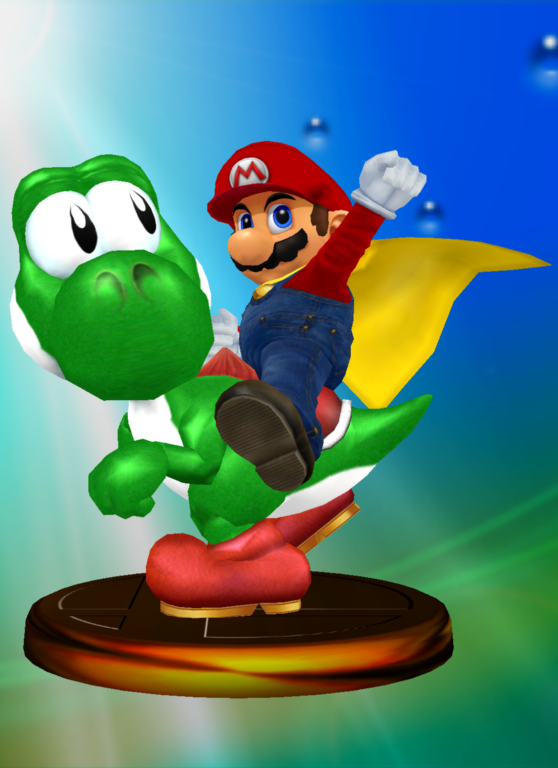
The Mario and Yoshi trophy.A trophy of Mario riding Yoshi is tied to a Japanese event and cannot be won in a normal copy of the game outside Japan, although its text is in the European version.
The Daisy trophy.Princess Daisy’s trophy model had a stray third eye in the Japanese and early American versions; it was fixed in the European release and American version 1.02.
The Motion-Sensor Bomb has three identities: in Japan it is the Sensor Bomb from Perfect Dark, in North America it is redrawn as GoldenEye 007’s mine, and in Europe it is the Proximity Mine. The change is put down to Perfect Dark’s mature rating in North America.
The Ice Climber Topi are seals in the Japanese version and white, furry yeti-like creatures elsewhere.
The Giga Bowser trophy.A playable Giga Bowser existed during development, probably to test the computer’s fighting; it can only be reached with cheat devices.
An unused voice clip names Giga Bowser “Giga Koopa”; it is in the Japanese and American discs but was removed from the European and Australian ones.
One of Peach’s victory poses ends like her stained-glass portrait in Super Mario 64.
Peach’s yellow costume is a Daisy tribute, and one of Mario’s outfits is in Wario’s yellow and purple.
The grounds in front of Peach’s Castle in Adventure mode are laid out as a golf course, after the Nintendo 64 Mario Golf course of the same name.
Cranky Kong can be seen in silhouette in the cabin on Jungle Japes, rocking in his chair or pacing about.
The PAL version made Mario, Fox and Marth slightly lighter and Bowser, Kirby and Yoshi heavier, and its Bowser can hurt Jigglypuff and Mr. Game & Watch with his down throw, which he could not in other versions.
Ditto is hidden in the game’s data as a Poké Ball Pokémon; it can appear but vanishes almost at once.
Melee’s data holds unfinished stages, among them one called AKANEIA, apparently for Fire Emblem, and a version of Icicle Mountain with no music.
Event 22 is called Super Mario 128, and it means it: you fight 128 tiny Marios.
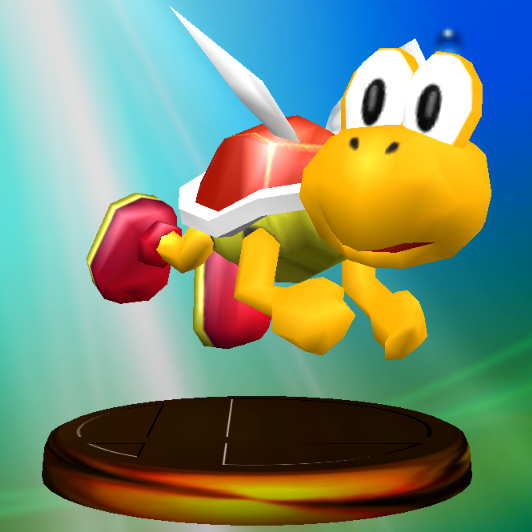
The Koopa Paratroopa trophy.The North American copy has 290 trophies, Japan 293 and Europe 292, because some are exclusive to one region.
Nintendo bundled Melee with a GameCube for $99.99 in the United States in 2005.
Melee’s Mushroom Kingdom stage swaps the Nintendo 64 version’s POW Blocks for Brick Blocks and ? Blocks, and its warp pipes are only for show.
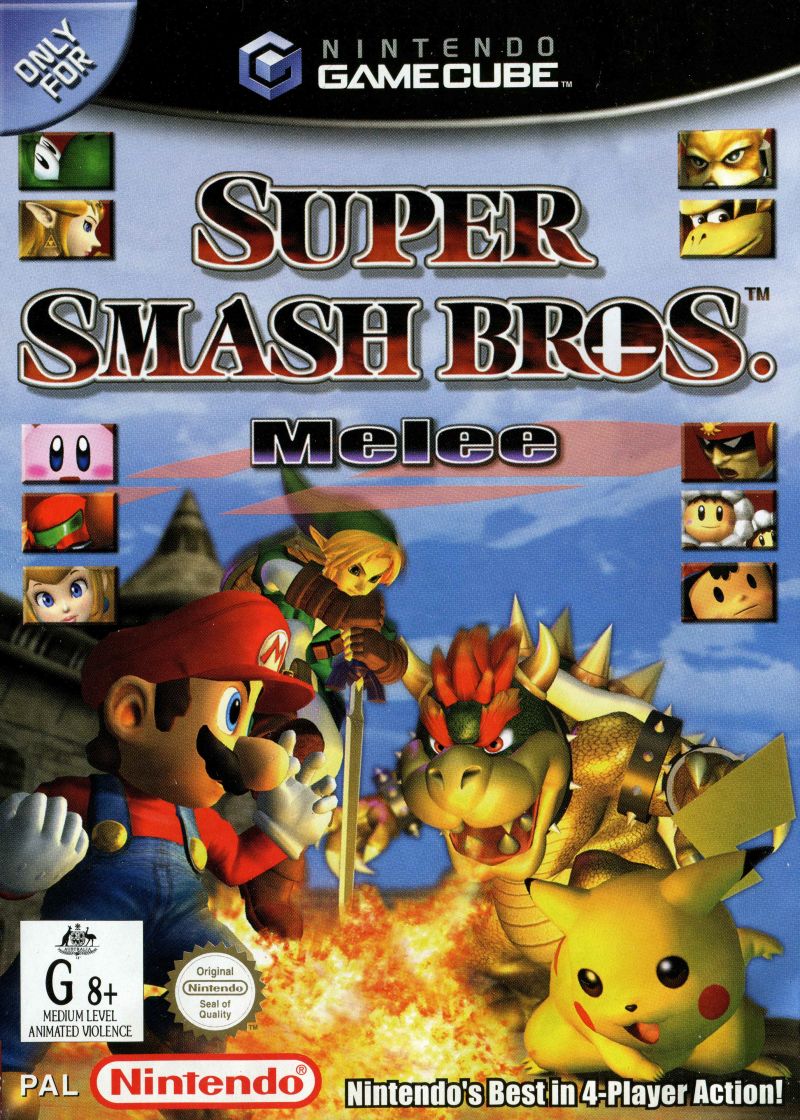
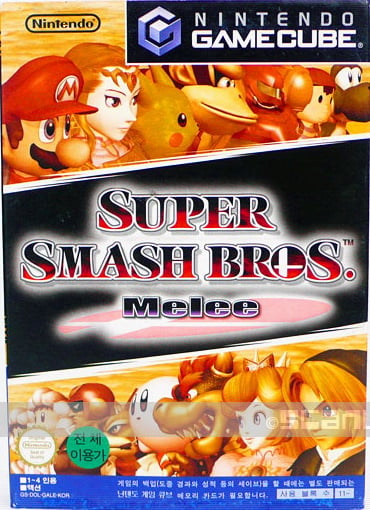
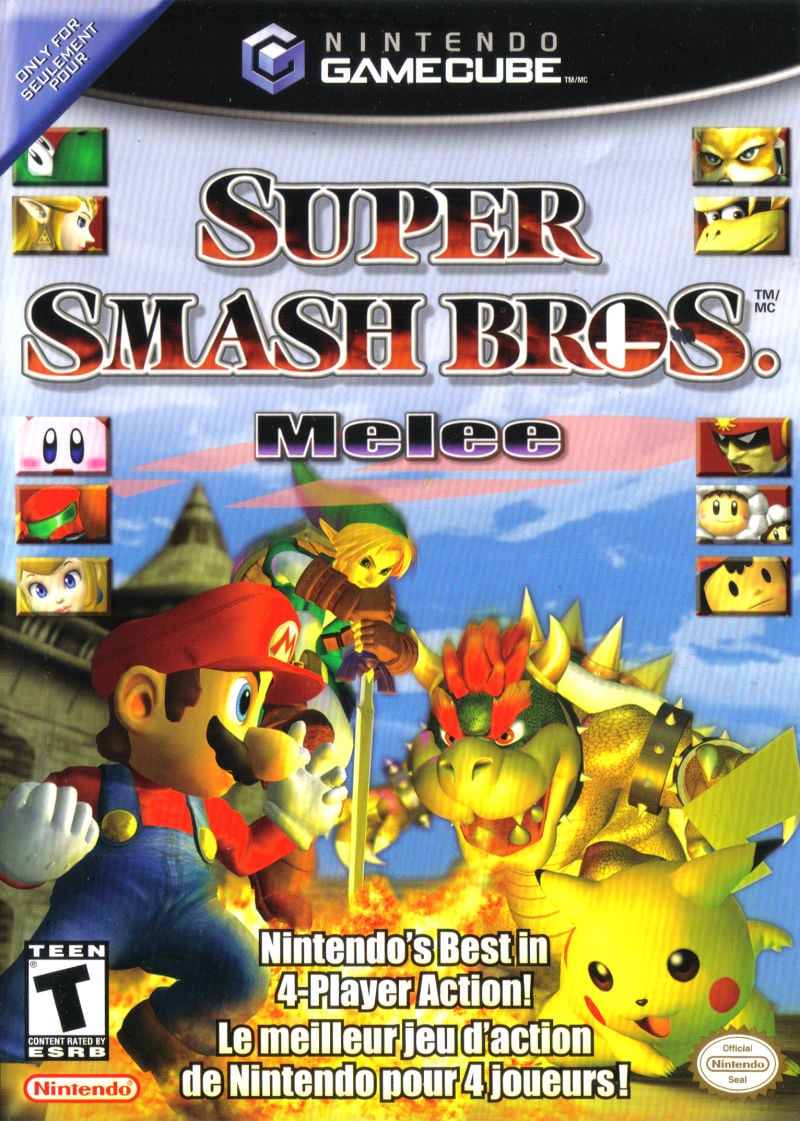
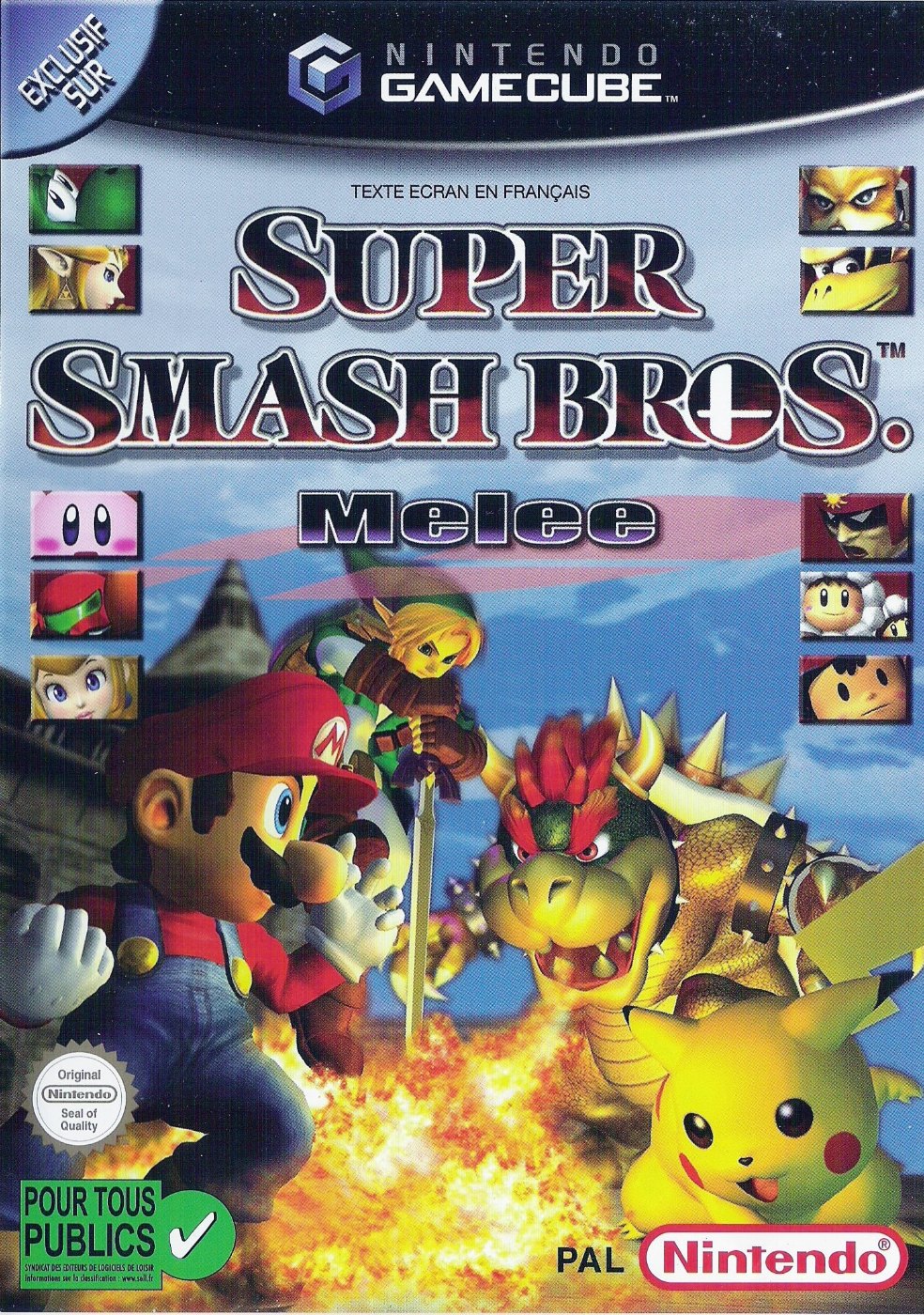
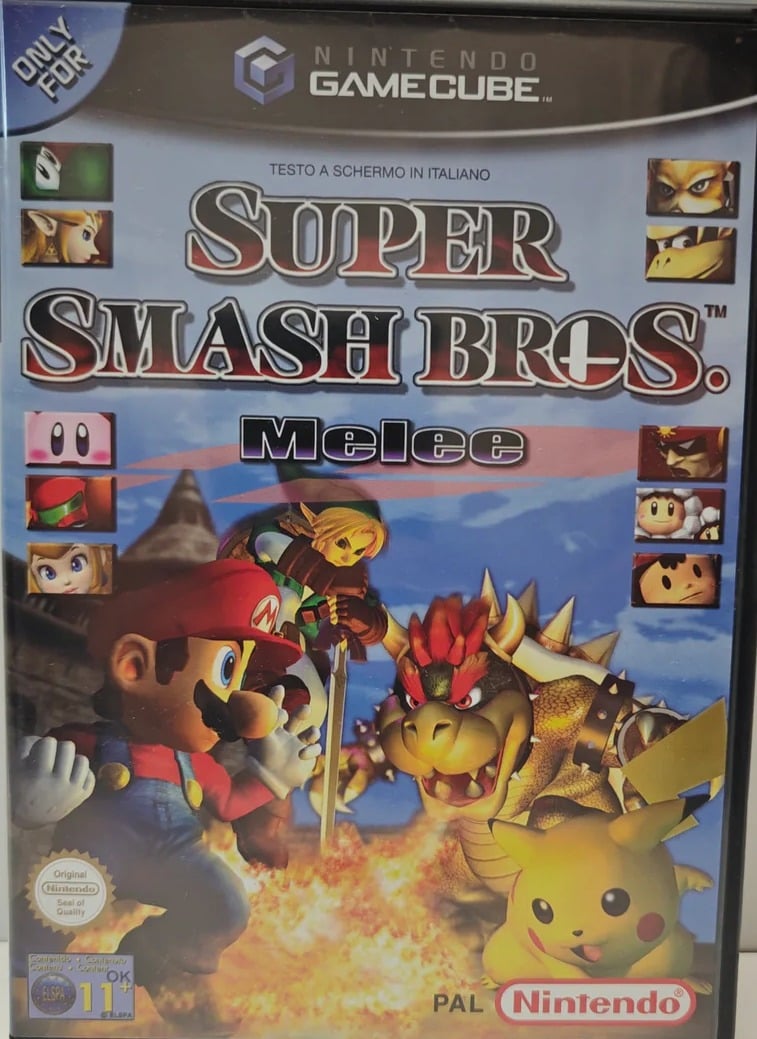
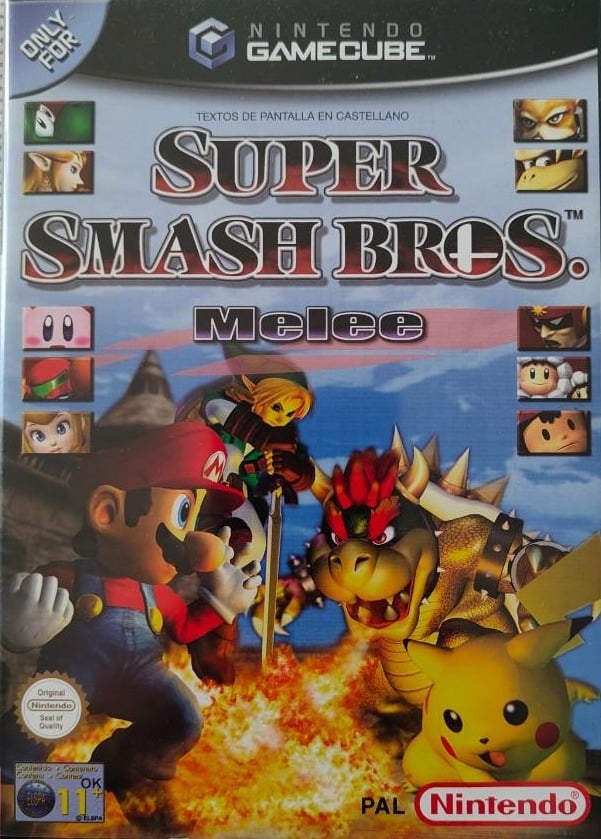
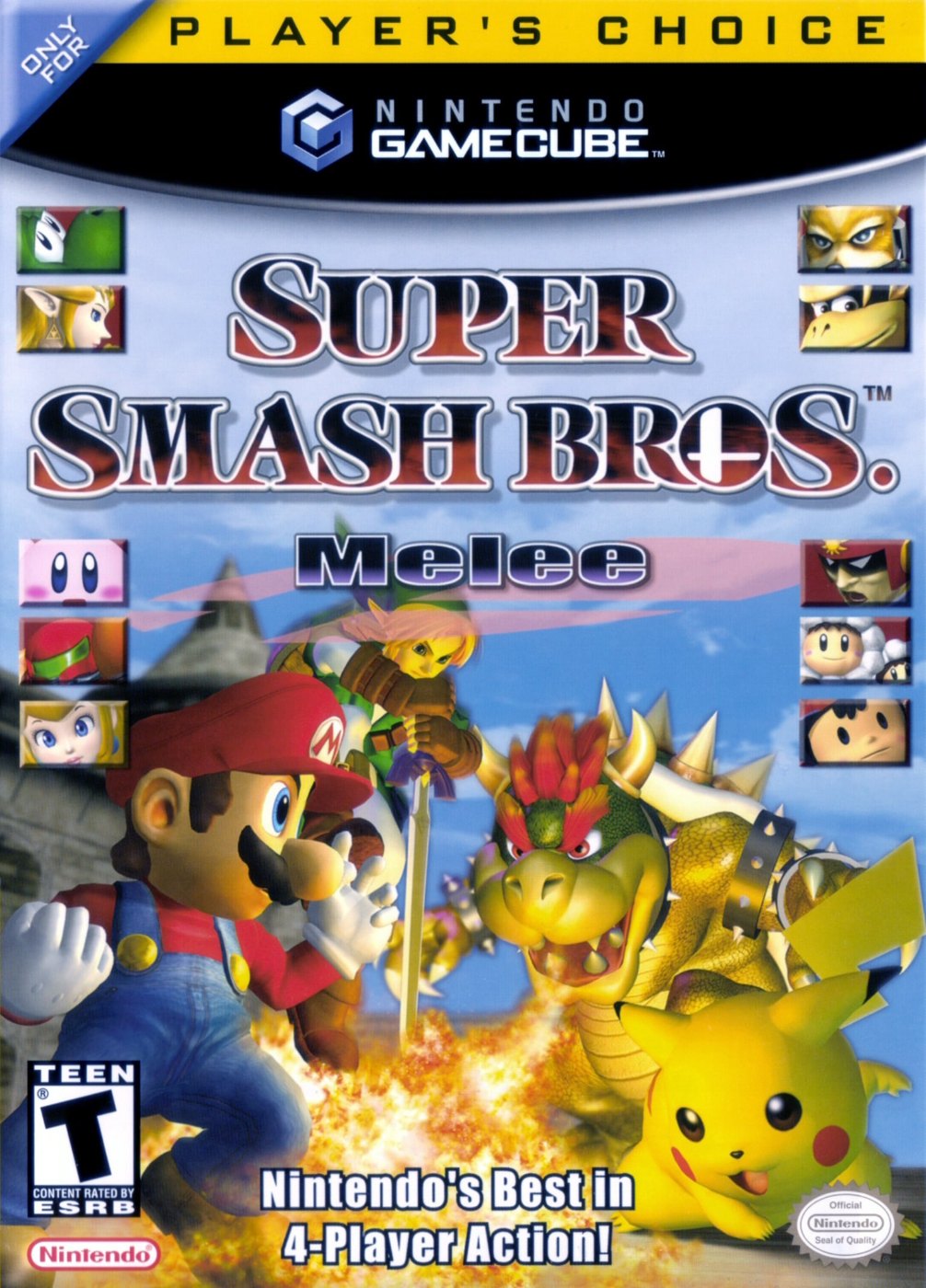
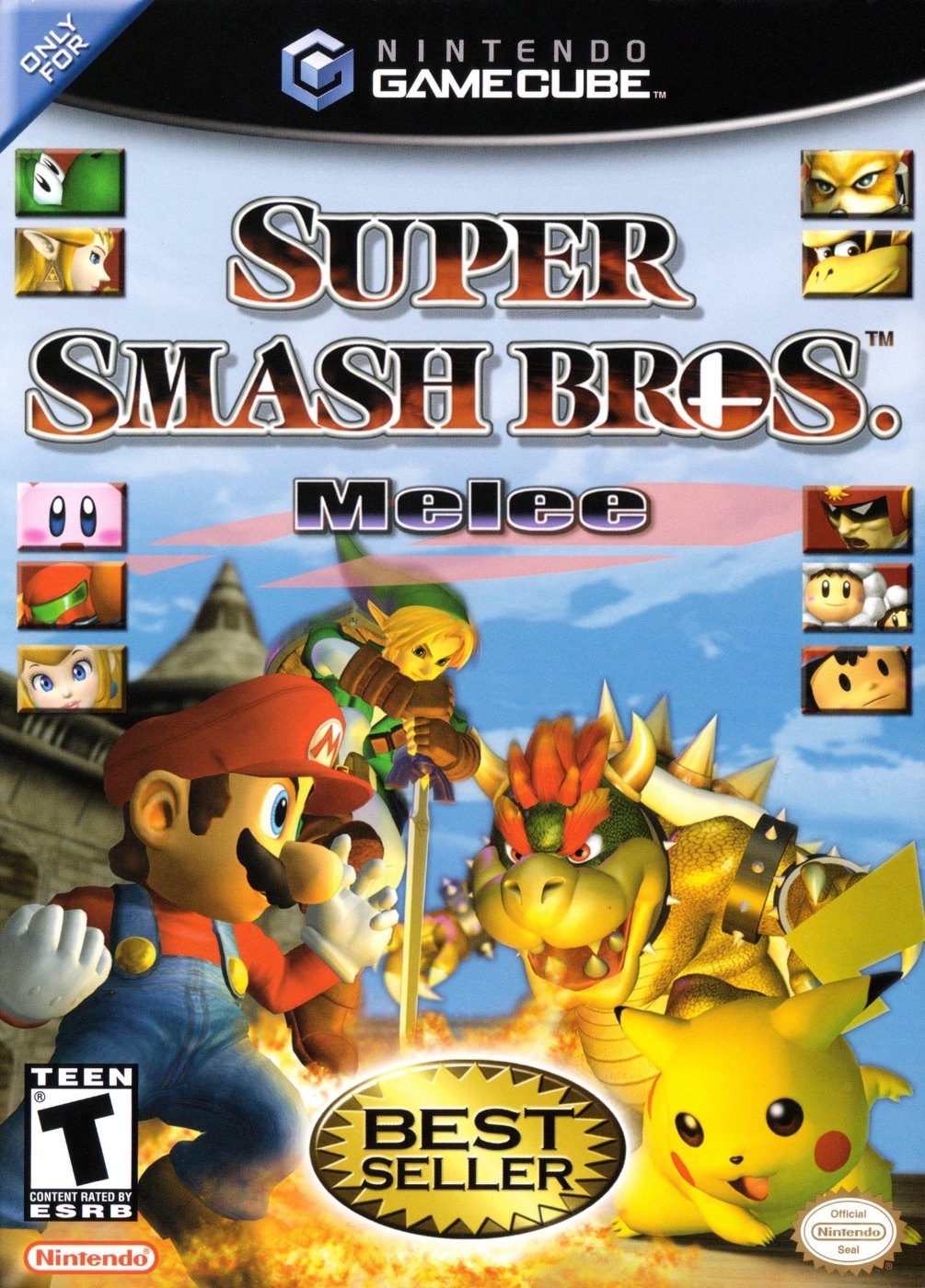
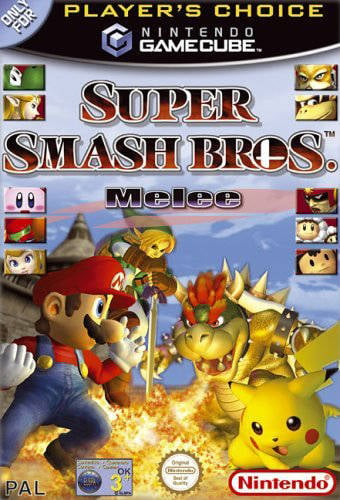
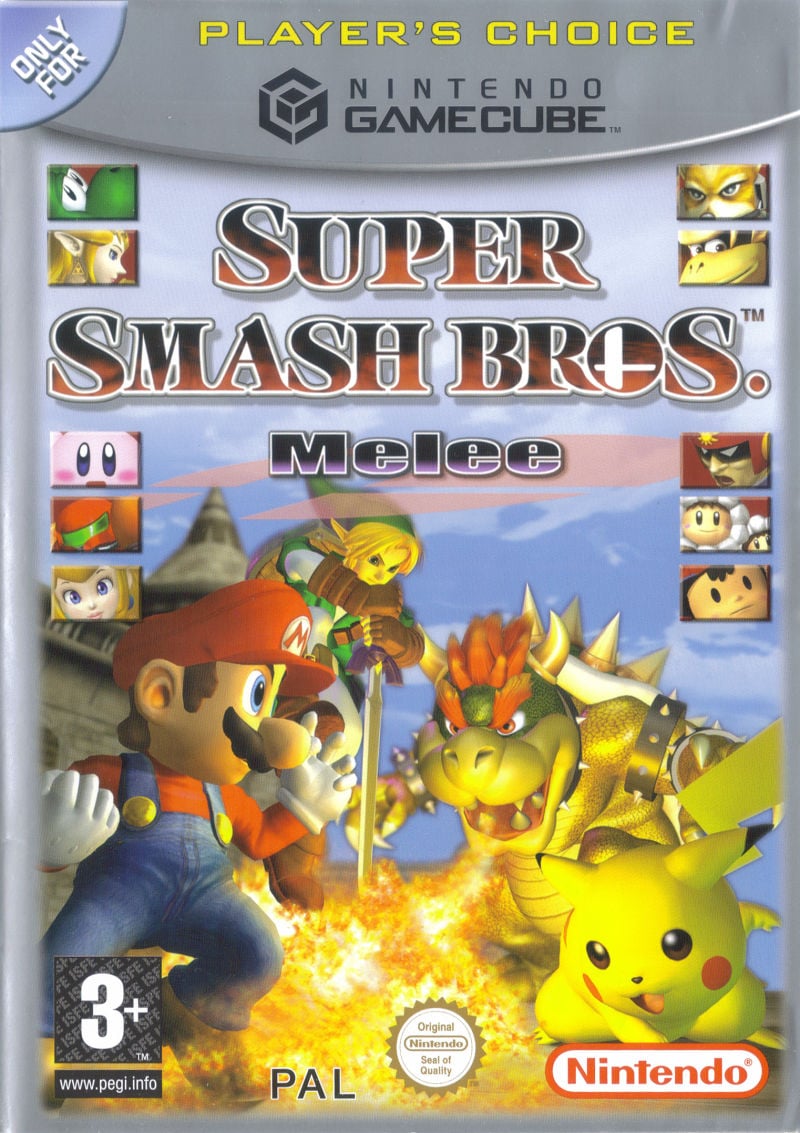
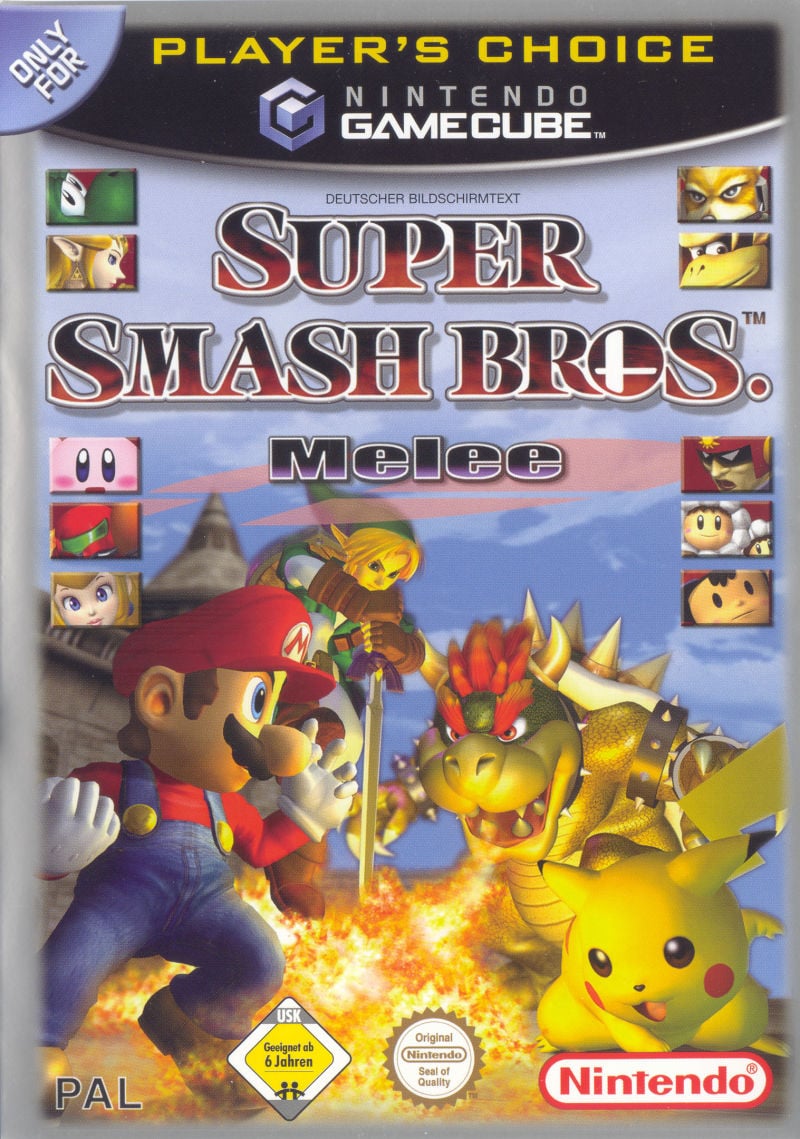
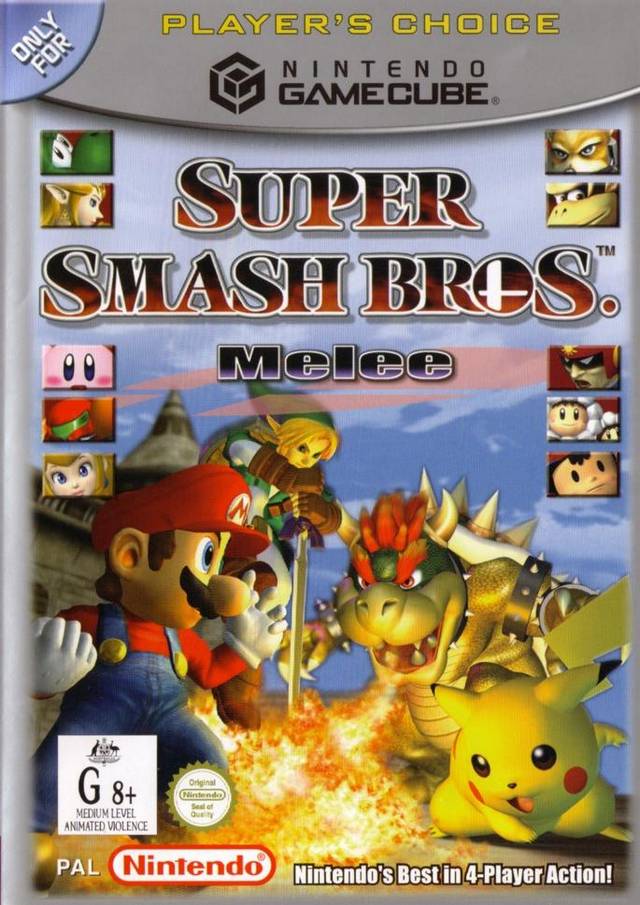
Regional Box Art
Every regional cover, plus the Player’s Choice and Best Seller reprints and the 2005 American console bundle.
North AmericaDecember 2001JapanNovember 2001; Dairantō Smash Brothers DXEuropeMay 2002Australia and New ZealandMay 2002South Korea2002CanadaFranceItalySpainNorth America, Player’s ChoiceJanuary 2003North America, Best SellerEurope, Player’s ChoiceApril 2003Europe, Player’s Choice (later version)Germany, Player’s ChoiceAustralia, Player’s ChoiceApril 2003North America, GameCube bundle2005Early box artPre-release
Screenshots
More of the Mario family in action, and a few famous moves from the rest of the cast.
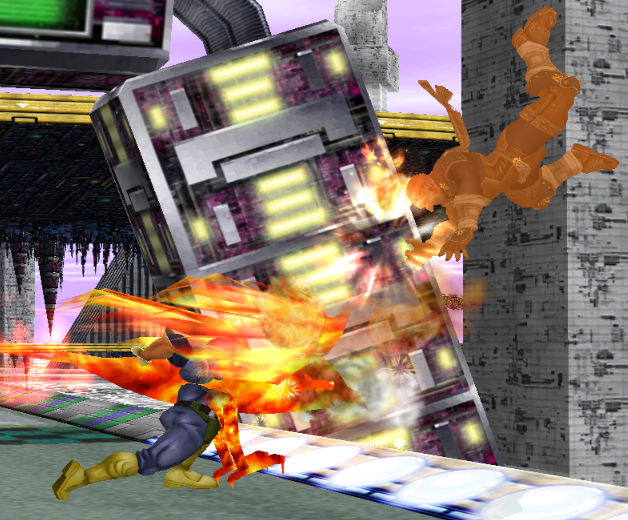
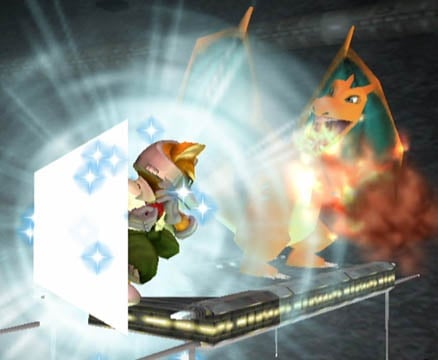
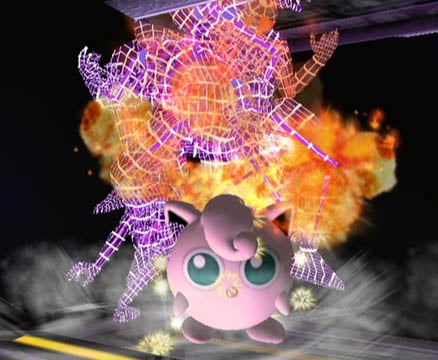
The Luigi Cyclone.Yoshi’s Egg Throw.The Yoshi Bomb.Spinning Kong.Donkey Kong’s Hand Slap.Captain Falcon’s Falcon Punch.Fox’s Reflector.Jigglypuff’s Rest.Mr. Game & Watch’s Judge.A stage cleared.
Artwork & Media Gallery
Logos, artwork, in-game models, Mario-series trophies and other extras.
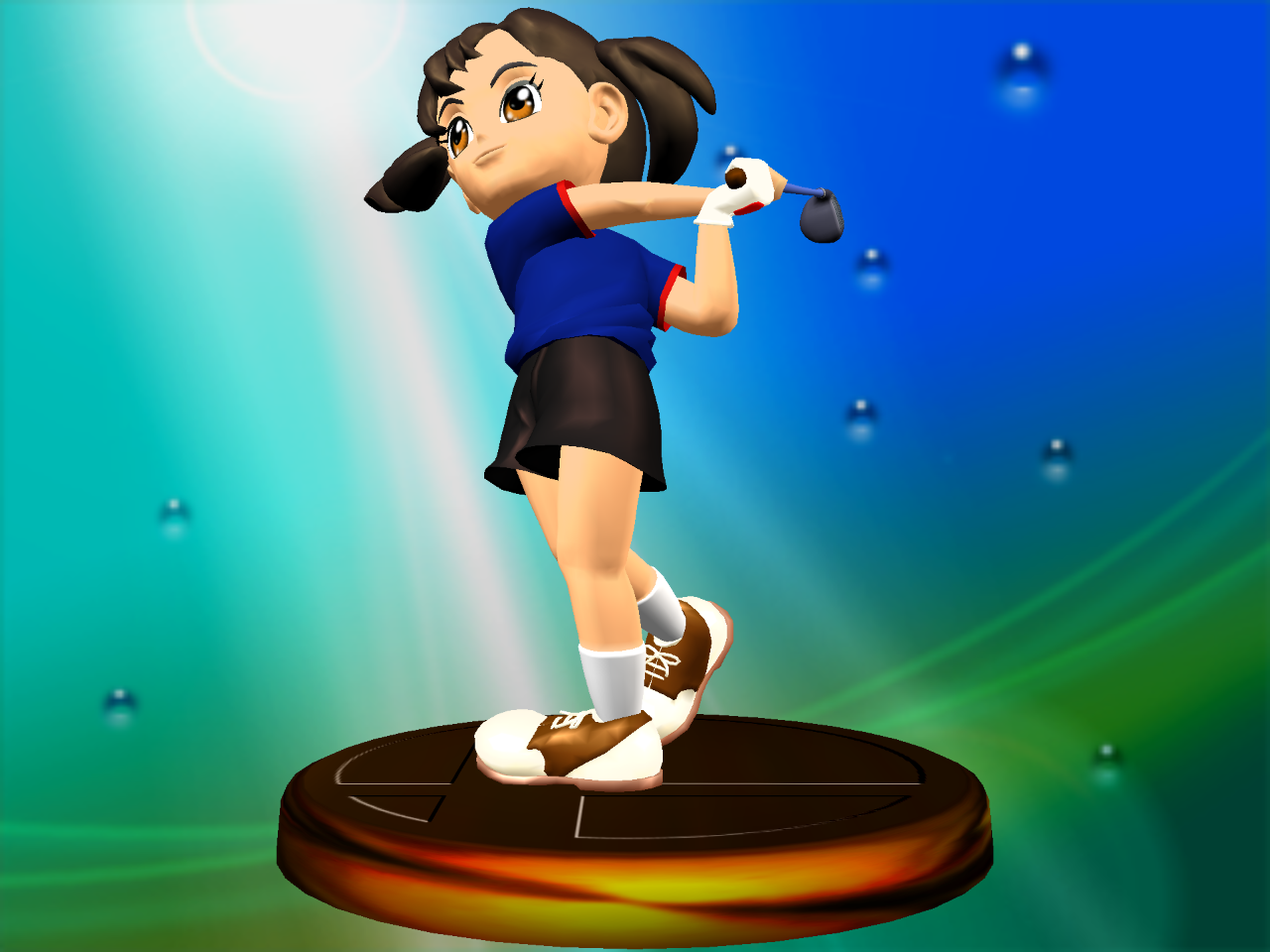
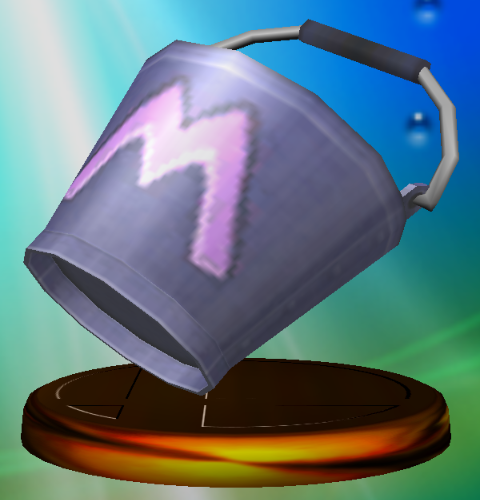
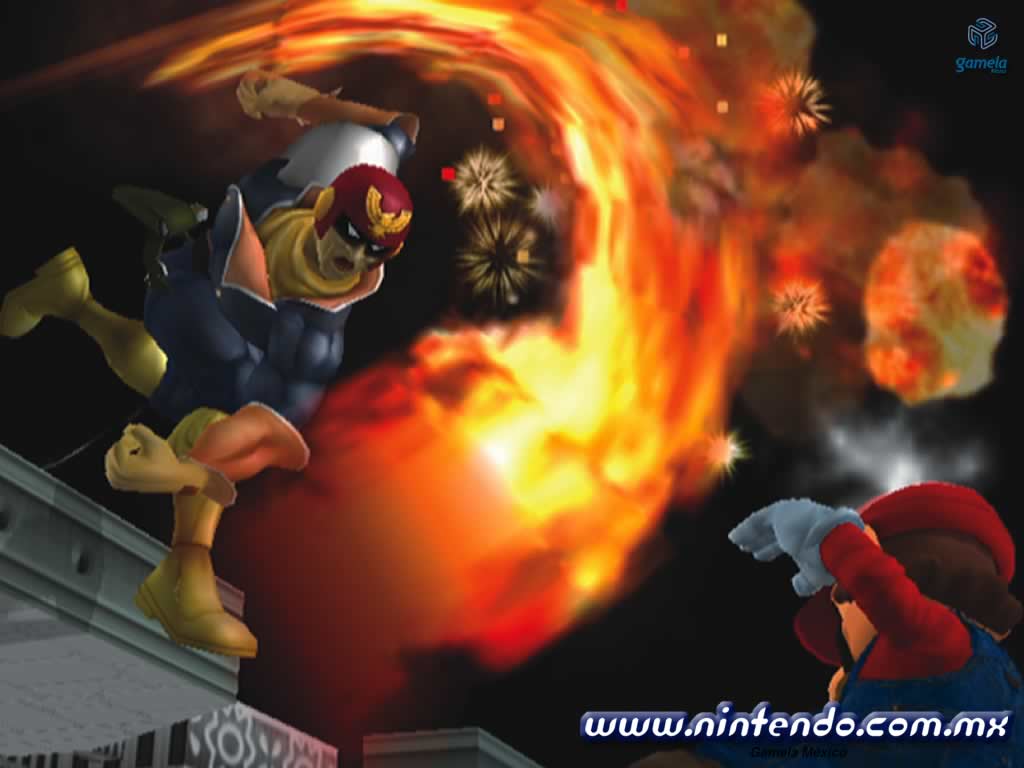
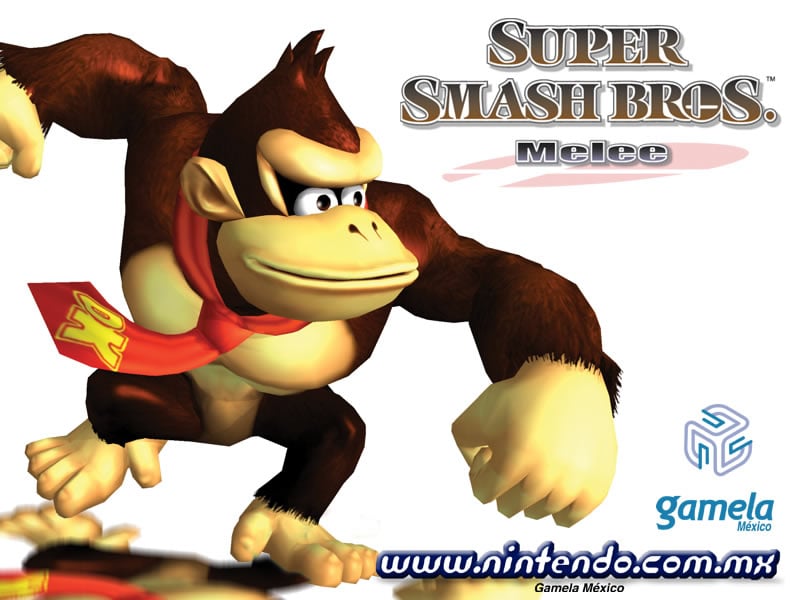
The international logo.The Japanese logo.The box artwork.Group artwork.Mario.Peach.Bowser.Yoshi.Donkey Kong.Donkey Kong’s model.Mario [Smash] trophy.Mario’s second Smash trophy.Wario.Toad.Peach’s Castle.Koopa Troopa.Boo.Thwomp.Lakitu.Pidgit.Shy Guys.Baby Bowser.Plum, from Mario Golf.A racing kart.The Bucket.A Coin.Megavitamins.A Klap Trap.Dixie Kong.Prima Games’ official guide.The Memory Card save icon.A Nintendo of Mexico wallpaper with Mario and Captain Falcon.A Nintendo of Mexico wallpaper with Donkey Kong.
Legacy & Re-releases
Melee has outlived almost every game of its generation, thanks to the players who refused to put it down. These are its releases, the milestones of its tournament life and what it left to the series.
Releases and milestones
GameCube (Japan)21 November 2001First release; 358,525 sold in the first week.
GameCube (North America)3 December 2001250,000 sold in the first nine days.
Japanese millionJanuary 2002The first GameCube game to sell a million copies in Japan.
GameCube (Europe; Australia)24 May 2002; 31 May 2002The European version rebalances several fighters and fixes a number of glitches.
GameCube (Brazil; South Korea)23 August 2002; 2002Later territories.
Player’s Choice23 January 2003 (North America); 4 April 2003 (Europe, Australia)Budget reissue.
GameCube bundle2005Packaged with the console for $99.99 in the United States.
Evo2007Melee joins the Evolution Championship Series after Major League Gaming drops it.
Nintendo sales update10 March 2008As Brawl launches in North America, Nintendo says Melee has sold more than seven million.
Evo 201312–14 July 2013Back on the main stage after a charity vote; 709 entrants.
The Smash BrothersOctober 2013The documentary on the Melee scene.
Evo 201520151,869 entrants, then a record for a Melee tournament.
Slippi rollback netcode22 June 2020Fan-made online play with rollback, through the Dolphin emulator.
Nintendo cease and desist19 November 2020Sent to The Big House over its online event.
Sakurai’s Melee episode2022The director looks back on his YouTube channel.
From basements to Evo
Nintendo itself ran the first Melee tournament, at Space World 2001, months before release. The real scene grew up in basements and game shops: Matt Deezie’s Tournament Go series, begun in Northern California in April 2002, helped settle the rules and stages, and Tournament Go 6 in 2004 drew the first hundred-player field. Major League Gaming featured Melee from 2004 to 2007, when players such as Ken Hoang, widely seen as the best of his era, Azen, ChuDat, Isai, PC Chris and KoreanDJ were the names to beat. MTV even followed several of them for a 2005 episode of True Life.
When MLG dropped it in 2007, Evo picked it up. Brawl’s arrival in 2008 then emptied the brackets for a year, until a 2009 event called simply Revival of Melee began the comeback. From 2008 to 2015 five players, Armada, Hungrybox, Mango, Mew2King and PPMD, won almost every tournament that at least two of them entered, and the community named them the Five Gods.
Wavedashing and the physics
Melee’s staying power comes from its engine. Jump, then air-dodge diagonally into the floor, and the air dodge’s momentum has nowhere to go but sideways: the fighter slides along the ground without seeming to leave it. That is a wavedash. Sakurai noticed it during development and, as he later told Nintendo Power, left it in because he did not think it would matter much; the first known mention by players dates from a Smashboards thread on 24 January 2002, when it was called mad dashing.
With L-canceling, fast-falling, dash dancing and directional influence, it turned Melee into a game of tiny margins. Brawl reworked the air dodge so that wavedashing disappeared, which did as much as anything to split the community; Ultimate brought directional air dodges back, but its wavedash is slower and seldom used.
Evo 2013, the documentary and Nintendo
In early 2013 Evo let fans vote for a game with charity donations for breast cancer research. The Melee community’s drive, Melee It On Me, raised nearly $95,000, out of more than $225,000 given in all, and Melee went back on the main stage, where its bracket drew 709 entrants. Nintendo at first tried to stop the event being streamed. That October, Samox’s crowd-funded documentary The Smash Brothers told the story of seven of the greatest players, and it is widely credited with reviving interest in the game.
Relations warmed: Reggie Fils-Aimé congratulated Evo 2014’s top eight by video, Nintendo sponsored Apex 2015, and Evo 2015’s Melee bracket reached 1,869 entrants. They cooled again in 2020, when the fan-made Slippi project gave Melee rollback netcode for online play and Nintendo sent a cease and desist to The Big House over its online tournament. Through it all, players such as Zain, Mang0, Leffen, Hungrybox, Jmook and aMSa, who won The Big House 10 in 2022 with Yoshi, kept the game at the top of tournament schedules.
Melee sold fast and kept selling. In Japan it shifted 358,525 copies in its first week, according to figures reported by IGN, and about two months later it became the first GameCube game to pass a million there. In North America Nintendo announced 250,000 sales in its first nine days, and the NPD Group placed it 19th among the best-selling games of 2001 in the United States.
Nintendo of America said on 10 March 2008, as it launched Brawl, that Melee had sold 7.09 million copies worldwide, making it the best-selling GameCube game. Wikipedia’s list of the best-selling GameCube games gives 7.41 million, citing the 2020 CESA Games White Paper.
7.09 millionworldwide (Nintendo of America, 10 March 2008)
7.41 millionCESA Games White Paper 2020, as cited by Wikipedia
358,525first week in Japan, to 25 November 2001
250,000first nine days in North America (Nintendo)
Reviews
Scores as listed by Wikipedia, plus the GameRankings average. Critics loved the cast, the multiplayer and the extra modes; the doubters found it too fast and too twitchy.
EurogamerTom Bramwell, 23 May 2002
10/10
IGNFran Mirabella III, 3 December 2001
9.6/10
Official Nintendo MagazineUK
95%
FamitsuCross Review: 9, 10, 9, 9
37/40
MetacriticAggregate
92/100
GameRankingsAggregate
90.52%
GameSpyBryn Williams, 3 December 2001
4.5/5
AllGameGavin Frankle
4.5/5
GameSpotMiguel Lopez, 1 December 2001
8.9/10
EdgeIssue 106, January 2002
6/10
IGN’s Fran Mirabella III felt Melee was in a different league from the Nintendo 64 game and praised its physics, animation and graphics, though his colleague Matt Casamassina found some backgrounds rough. Eurogamer, GameSpot and GameSpy all rated the multiplayer highly, GameSpy struggling to think of a more enjoyable multiplayer game on any console, and reviewers welcomed the bigger roster, the trophies and a soundtrack full of nostalgia. GameSpot liked the improved Classic mode but found Adventure hit and miss.
The complaints were about speed and control. GameSpot called the controls hyper-responsive to a fault and GameSpy thought movement a touch too sensitive; Nintendo Spin felt the game was too fast for its own good. Edge, the harshest critic, thought the pace made blocking pointless and saw the game as more of a reproduction of the original than an evolution.
Honours
Nintendo PowerGame of the Year 2001And 16th in its 2006 list of the best games on Nintendo consoles.
Electronic Gaming Monthly, April 2002Best Multiplayer and Best GameCube GameIn its Gamers’ Choice Awards.
GameSpot, 2001Best GameCube GameAnd tenth-best game of the year overall; nominated for Best Music and Best Fighting Game.
GameSpy, 2001Best Fighting GameCube GameIn its Best of 2001 awards.
IGNReaders’ Game of the YearFor 2001; in 2007 IGN ranked it the third-best GameCube game.
Academy of Interactive Arts & SciencesTwo nominationsConsole Fighting Game of the Year and Outstanding Achievement in Animation, at the 5th Interactive Achievement Awards.
Game Informer, 20192ndIn its ranking of the best fighting games of all time.
SLB User Reviews
Super Smash Bros. Melee has yet to receive a community review on Super Luigi Bros.
If you’ve played Super Smash Bros. Melee and would like to submit a review, please get in touch.
Sources
Every fact on this page was checked against the 20 sources listed here.
To provide the best experiences, we use technologies like cookies to store and/or access device information. Consenting to these technologies will allow us to process data such as browsing behavior or unique IDs on this site. Not consenting or withdrawing consent, may adversely affect certain features and functions.
Functional
Always active
The technical storage or access is strictly necessary for the legitimate purpose of enabling the use of a specific service explicitly requested by the subscriber or user, or for the sole purpose of carrying out the transmission of a communication over an electronic communications network.
Preferences
The technical storage or access is necessary for the legitimate purpose of storing preferences that are not requested by the subscriber or user.
Statistics
The technical storage or access that is used exclusively for statistical purposes.The technical storage or access that is used exclusively for anonymous statistical purposes. Without a subpoena, voluntary compliance on the part of your Internet Service Provider, or additional records from a third party, information stored or retrieved for this purpose alone cannot usually be used to identify you.
Marketing
The technical storage or access is required to create user profiles to send advertising, or to track the user on a website or across several websites for similar marketing purposes.

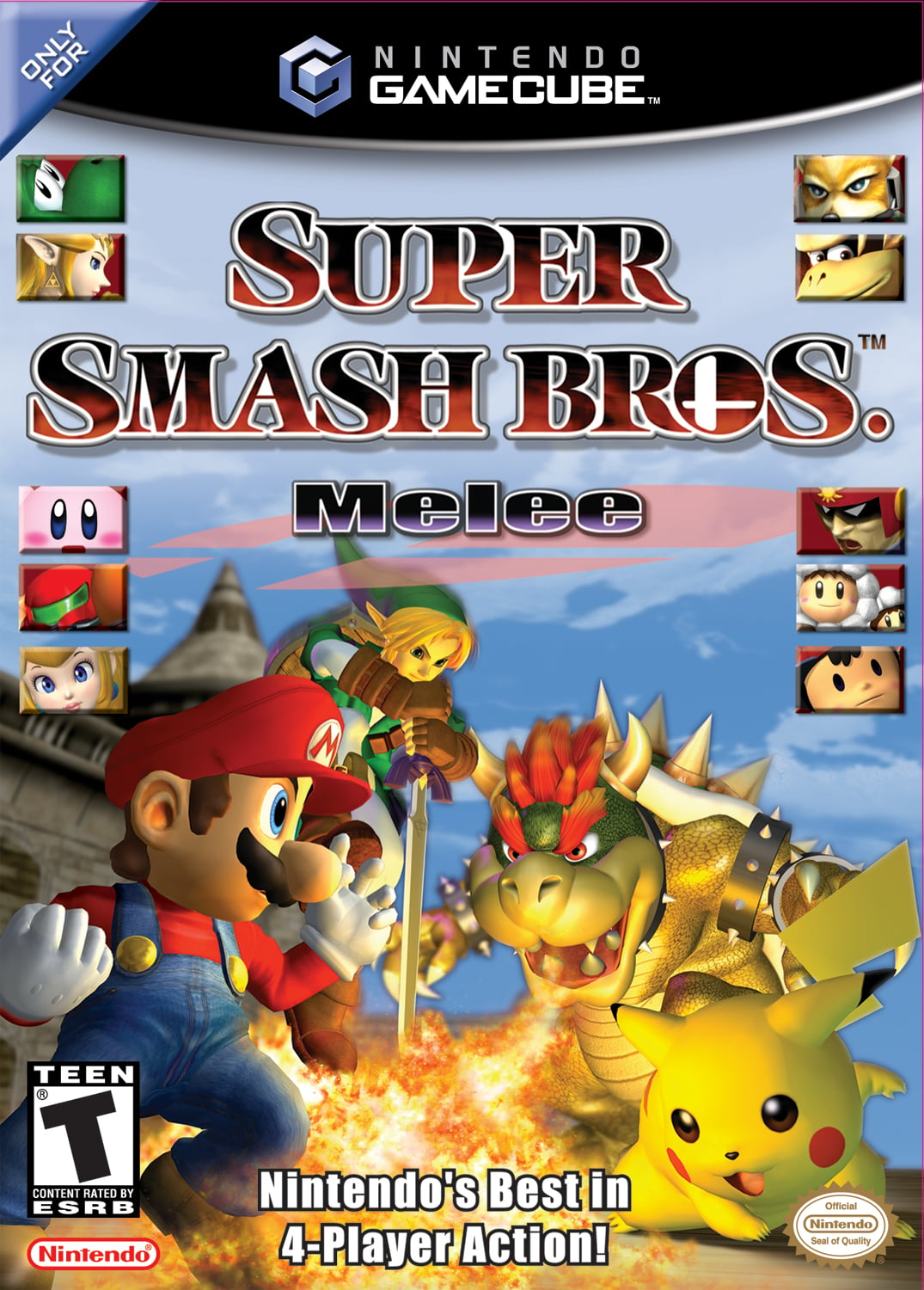
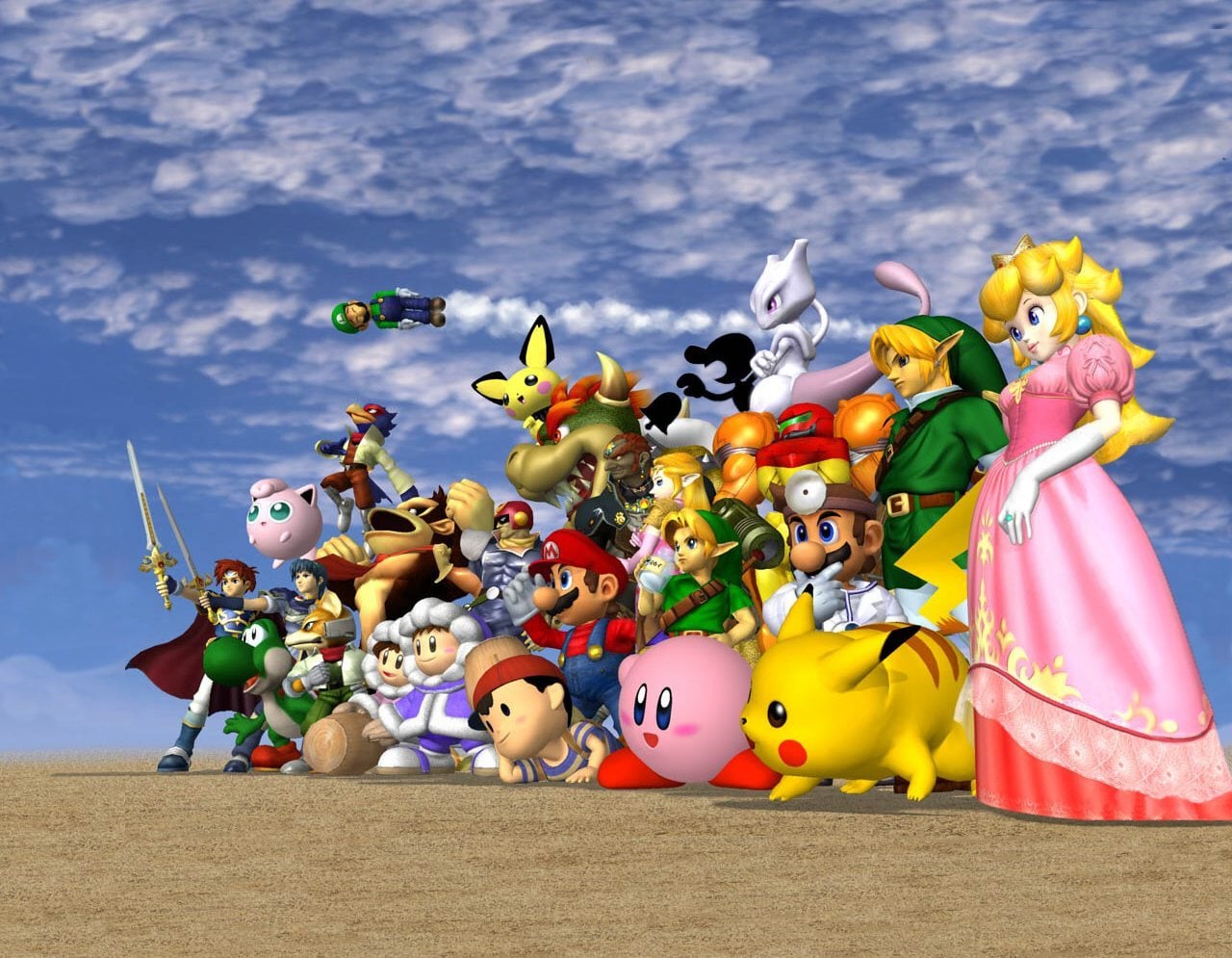
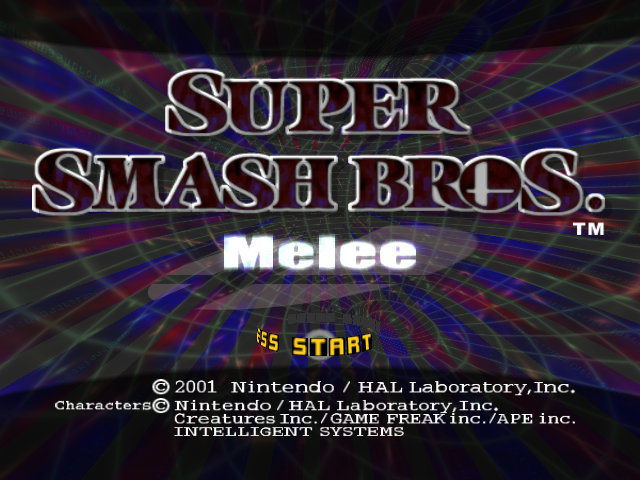
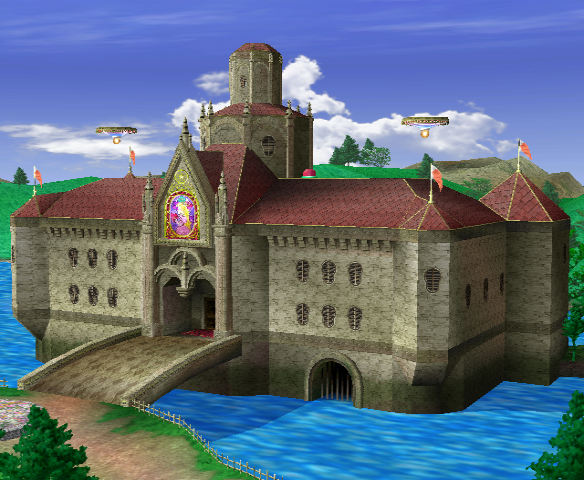
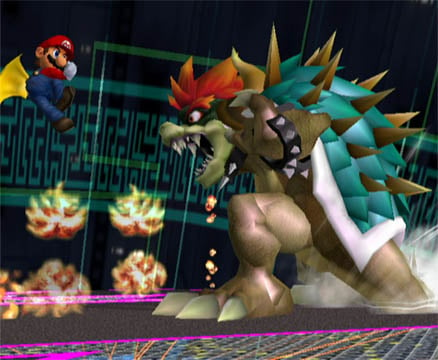
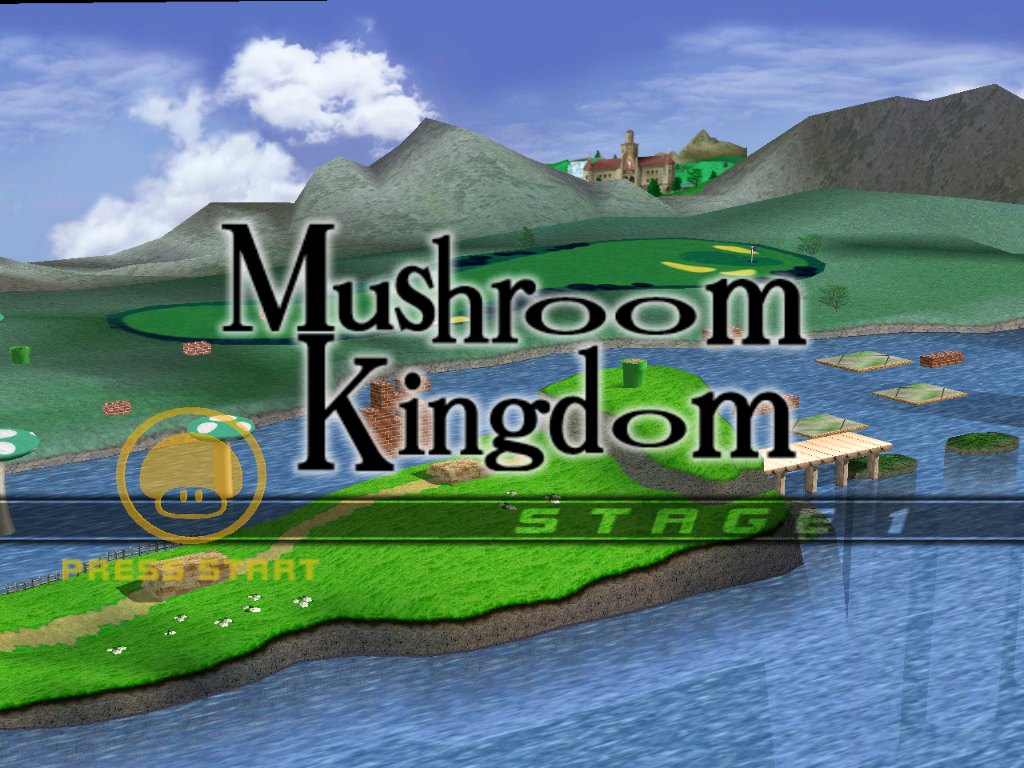
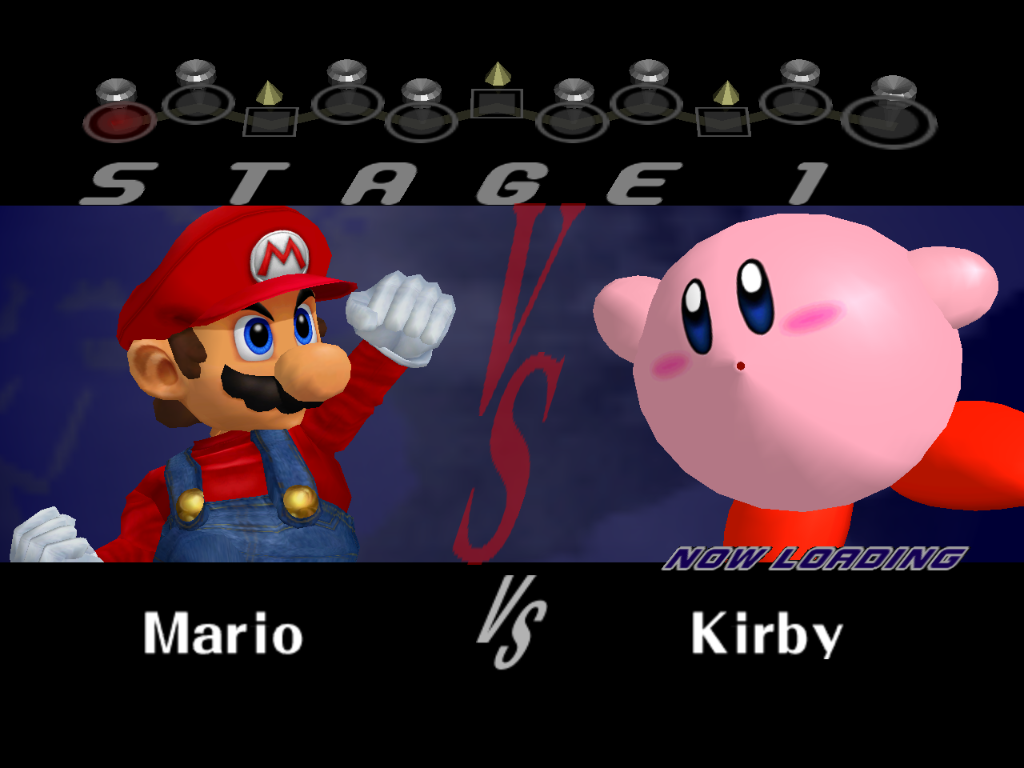
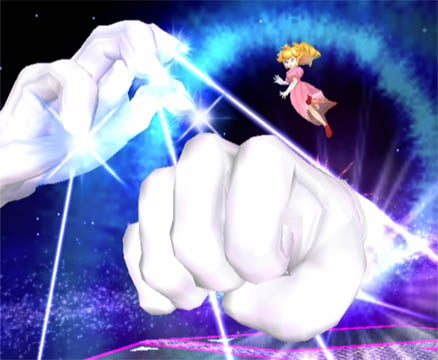
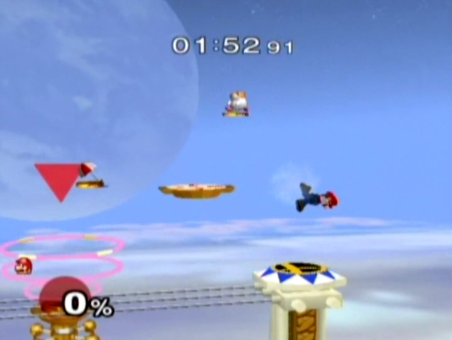
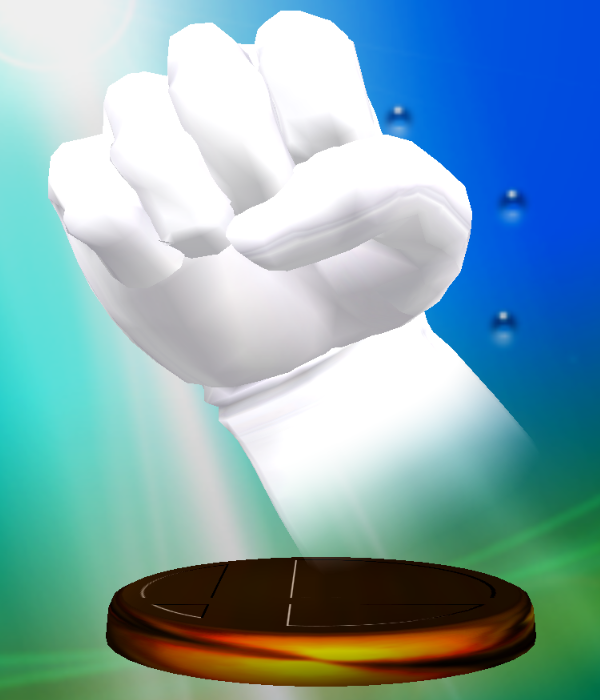
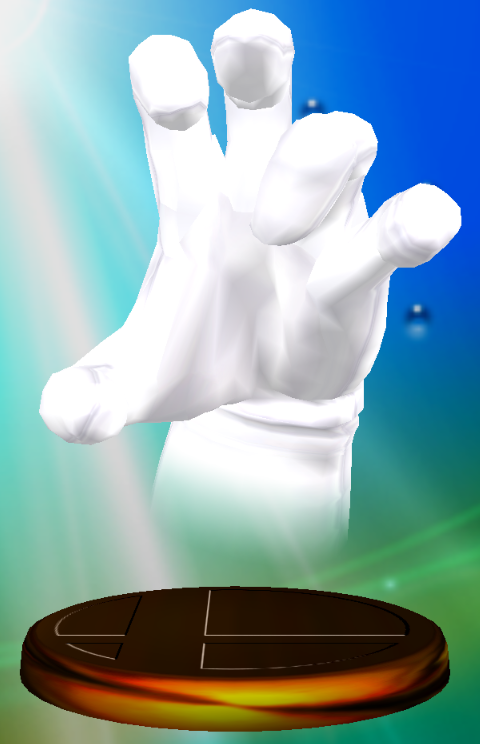
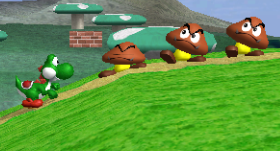
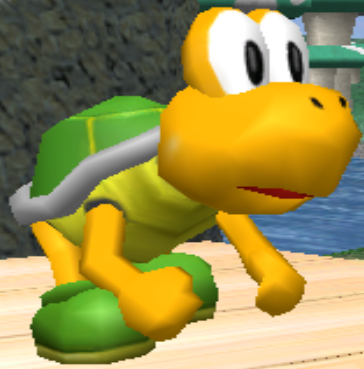
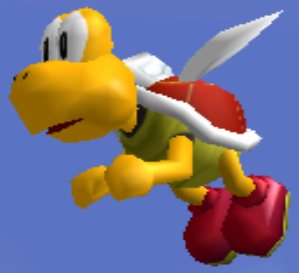
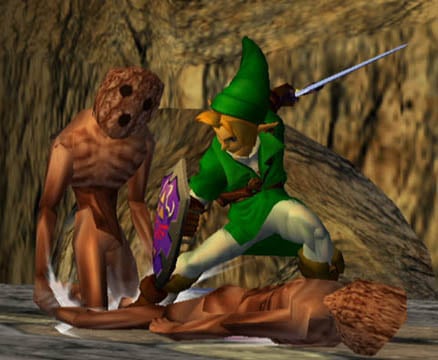
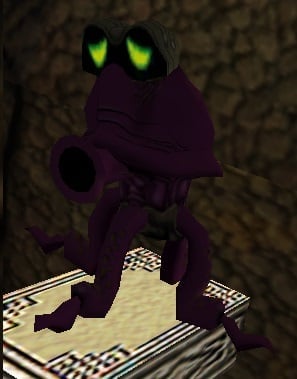
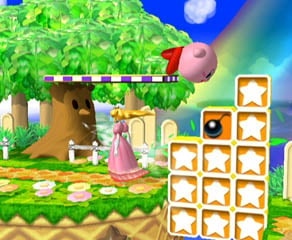
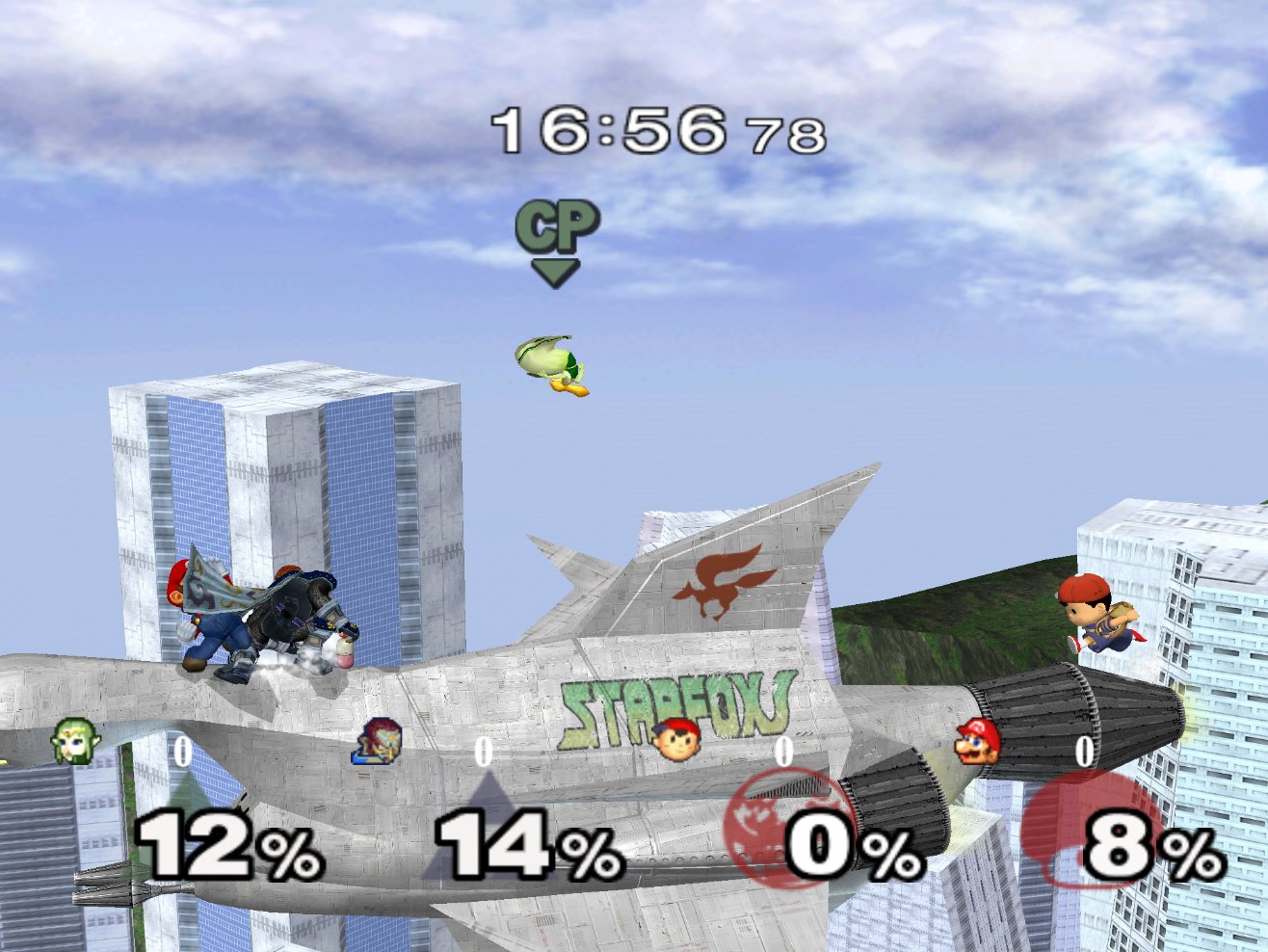
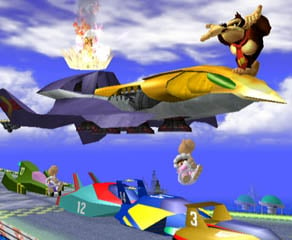
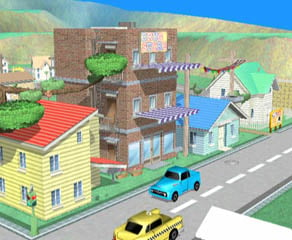
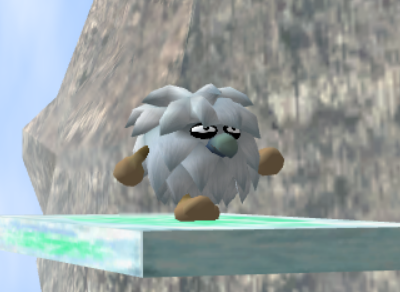
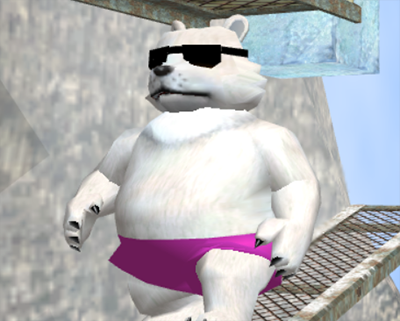
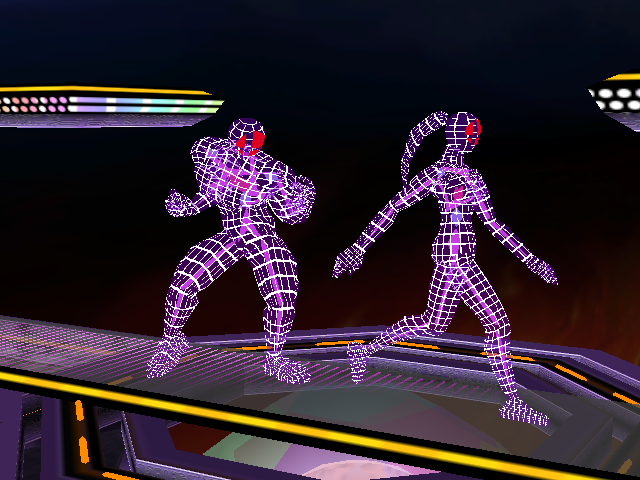
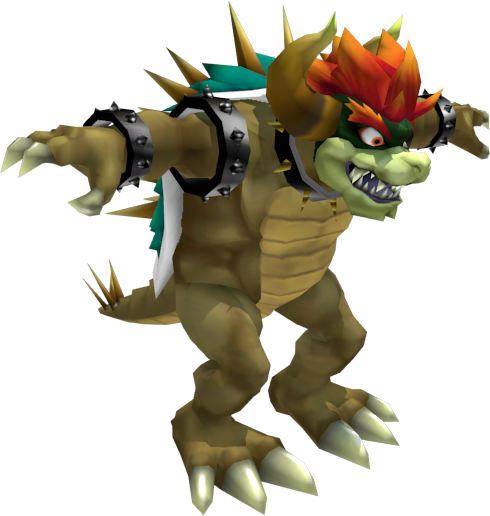
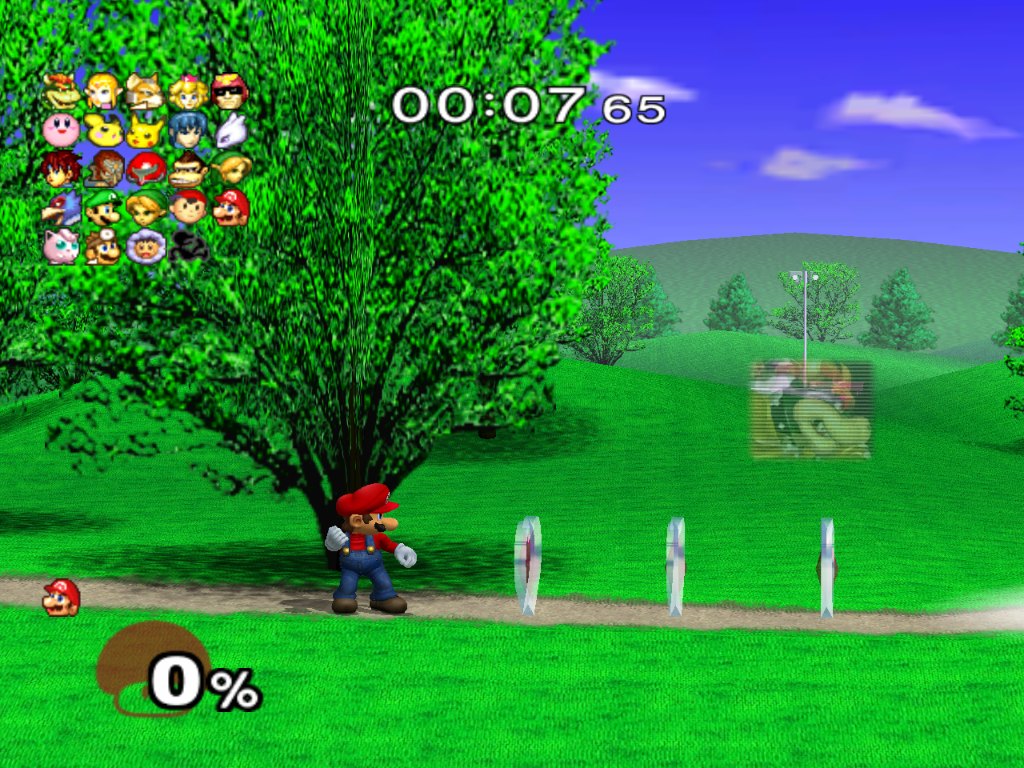
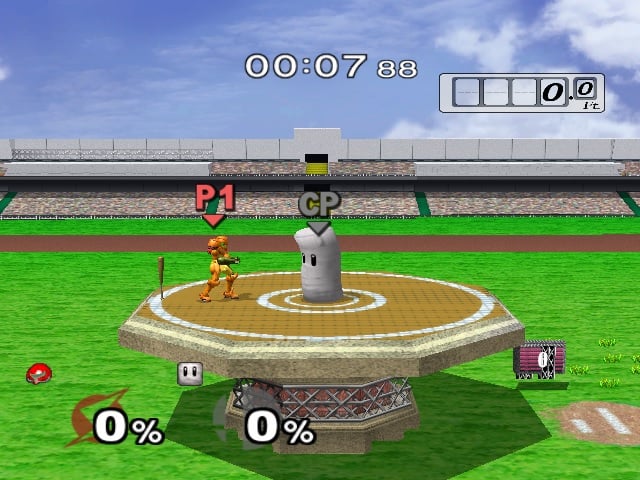
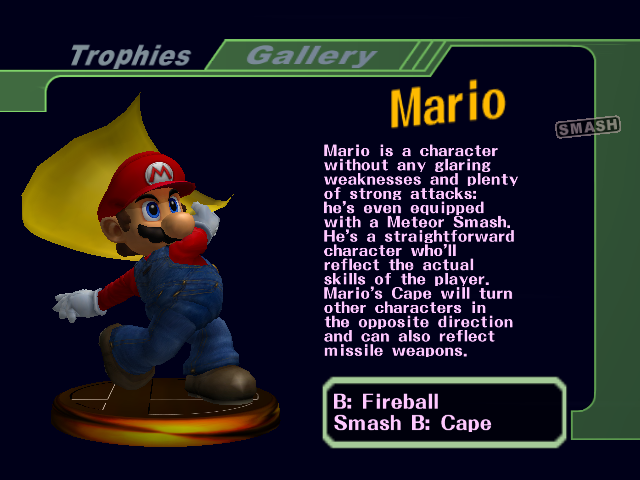
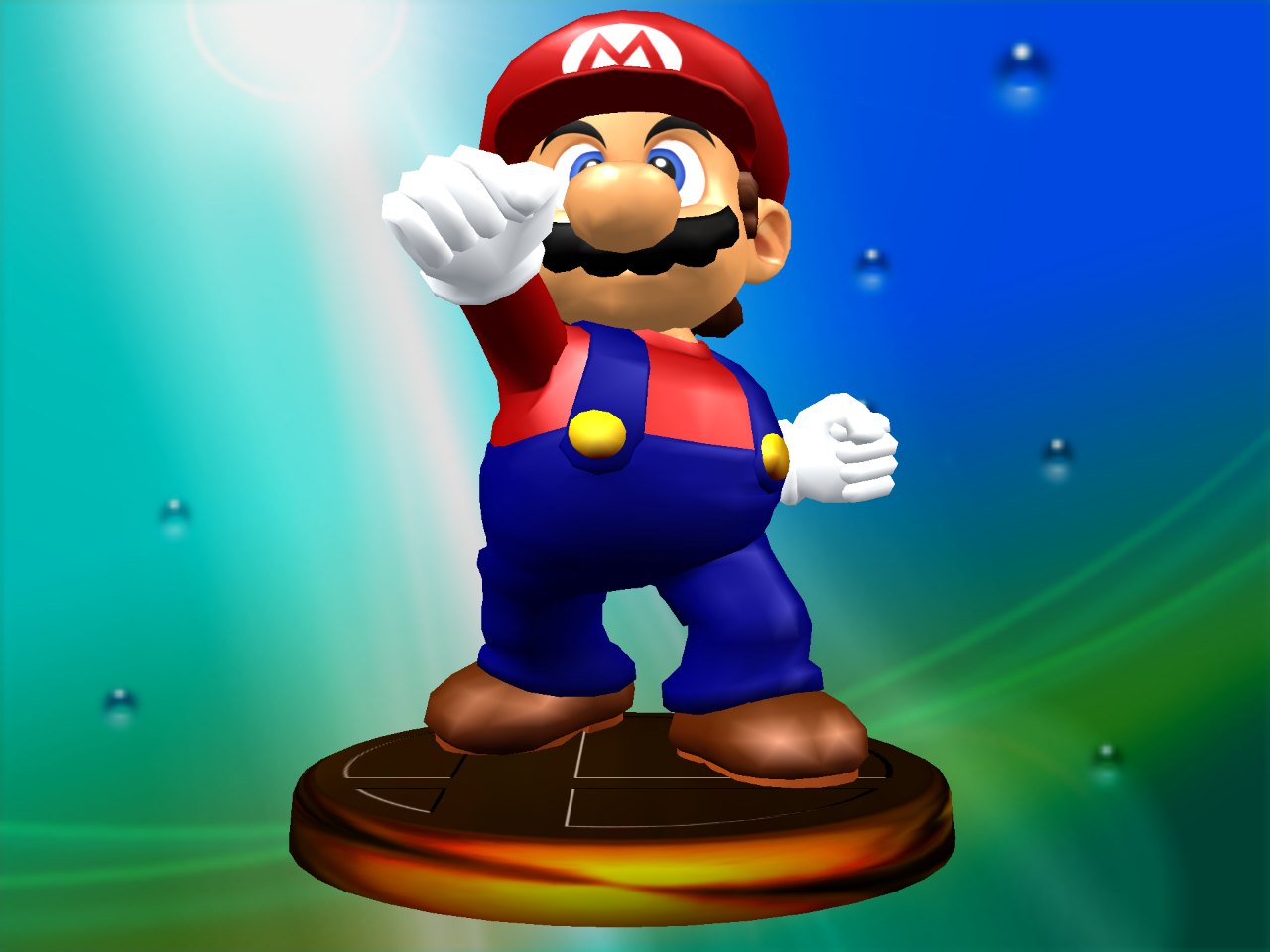
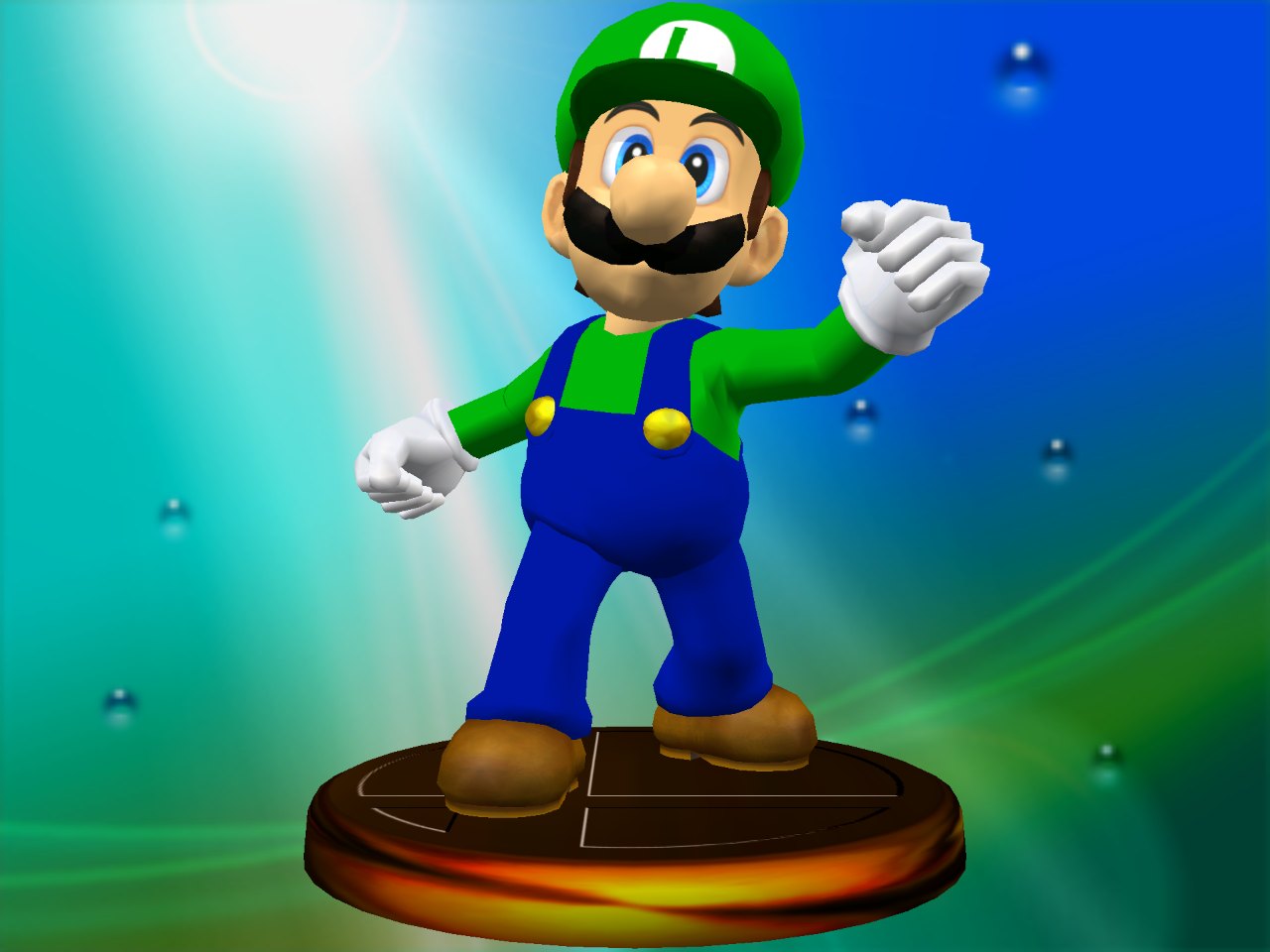
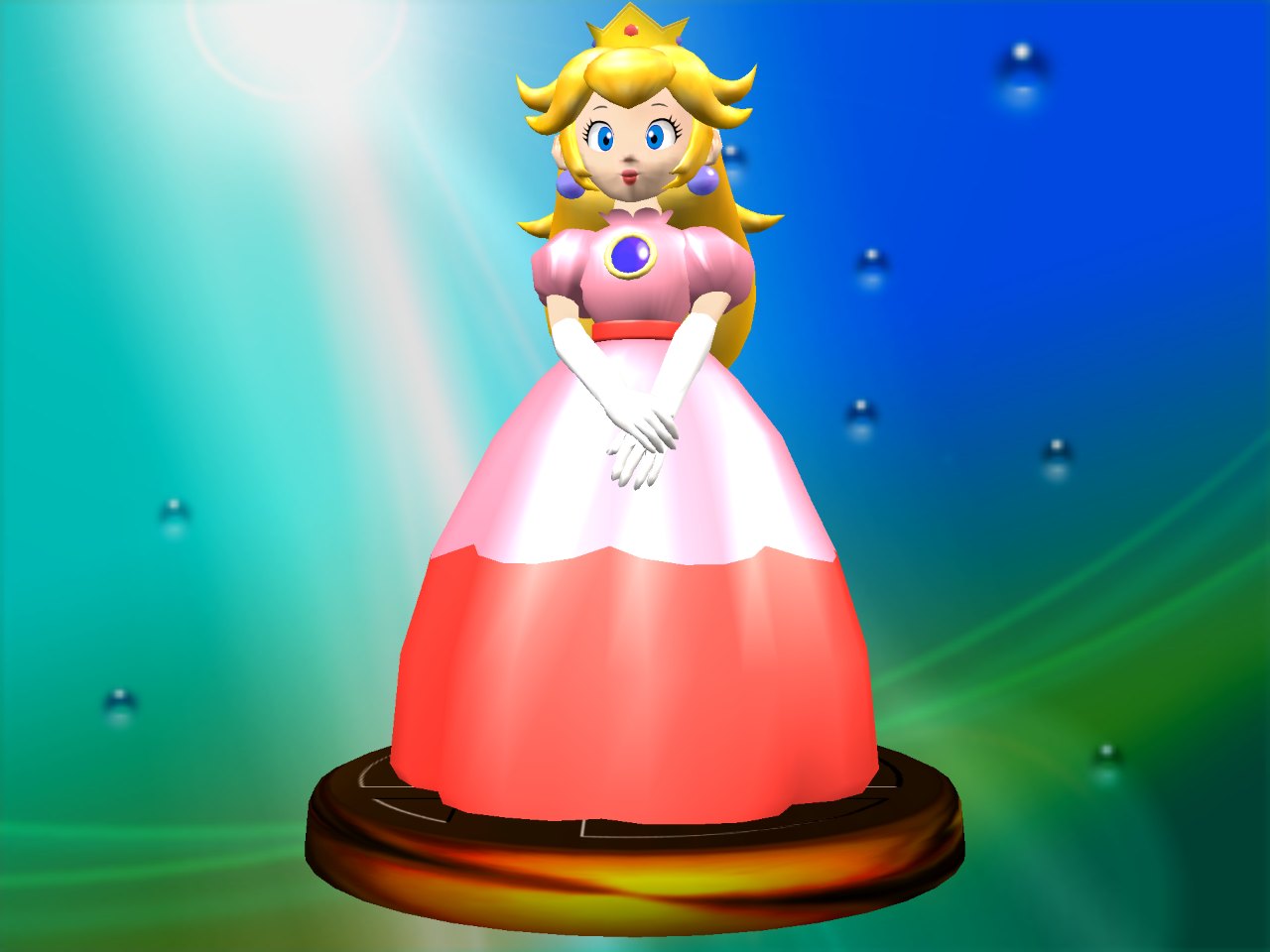
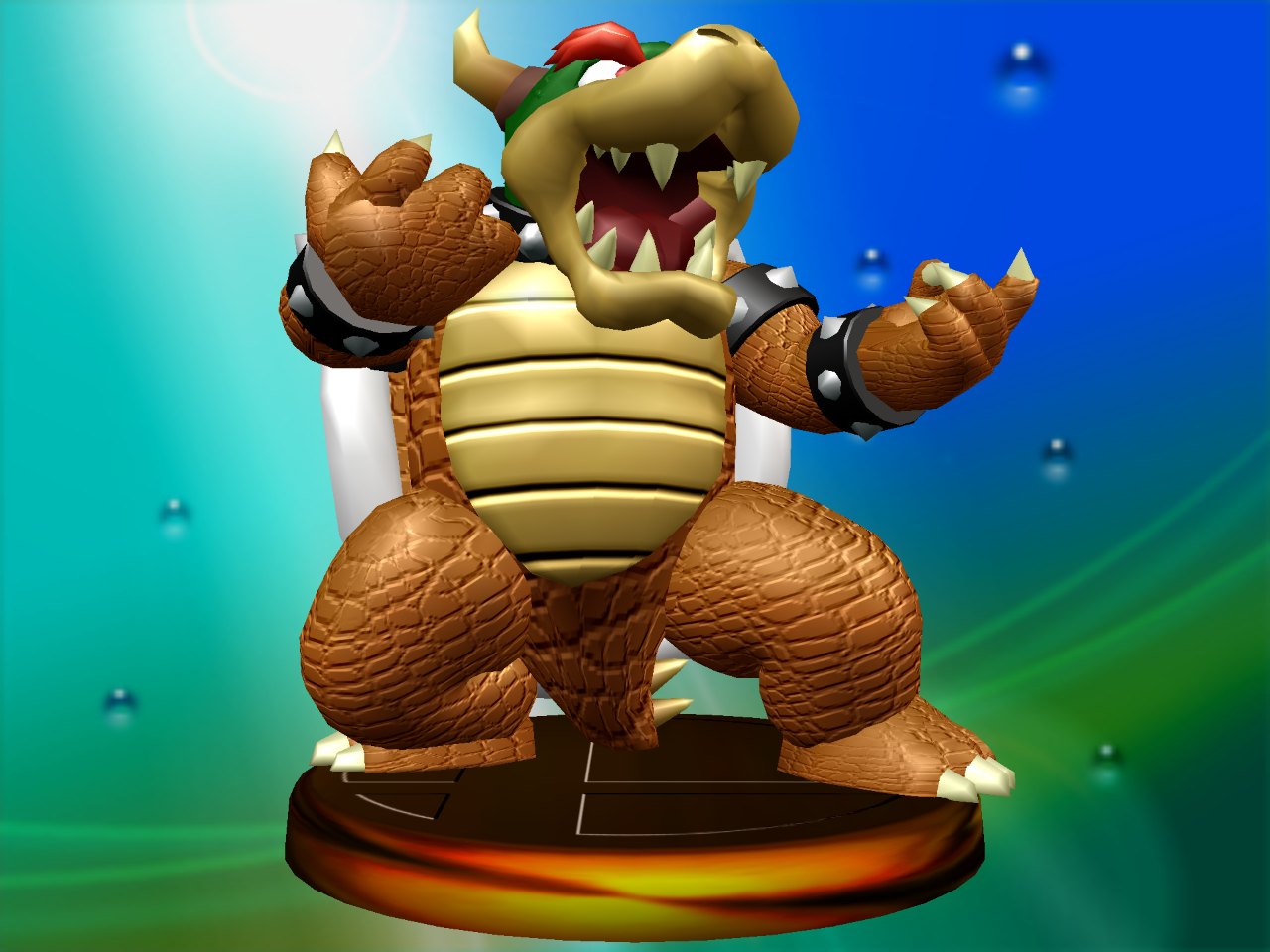
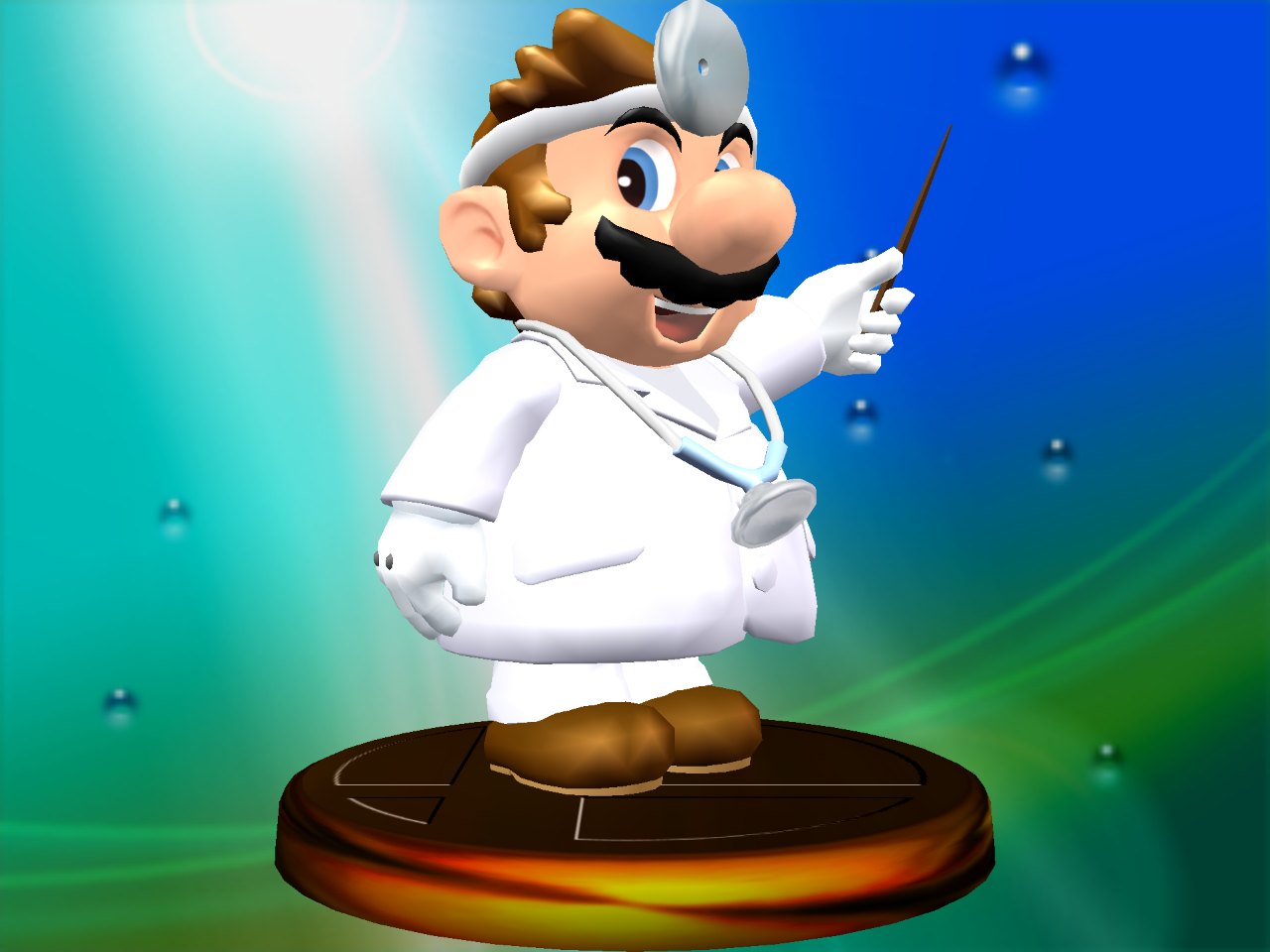
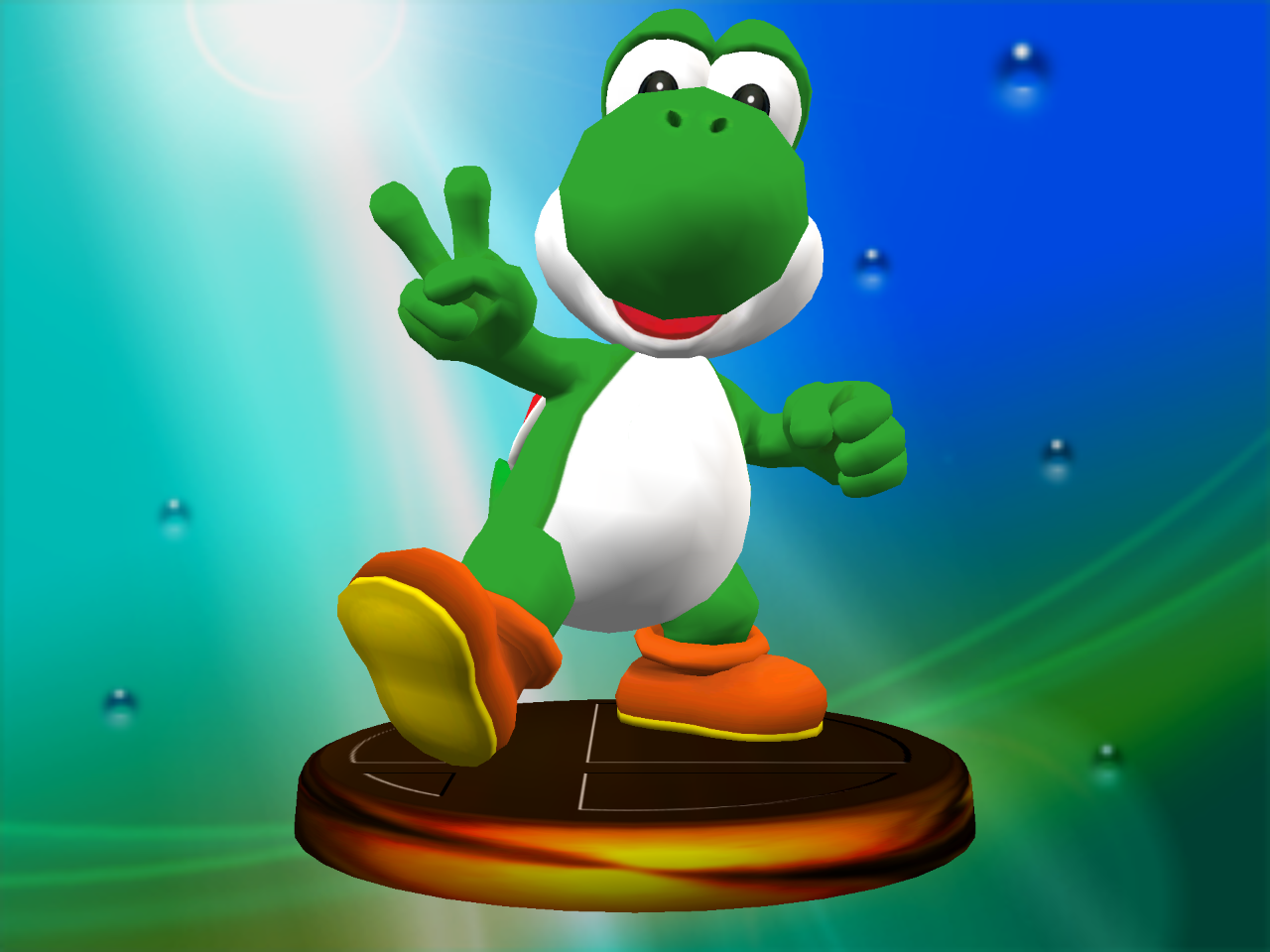
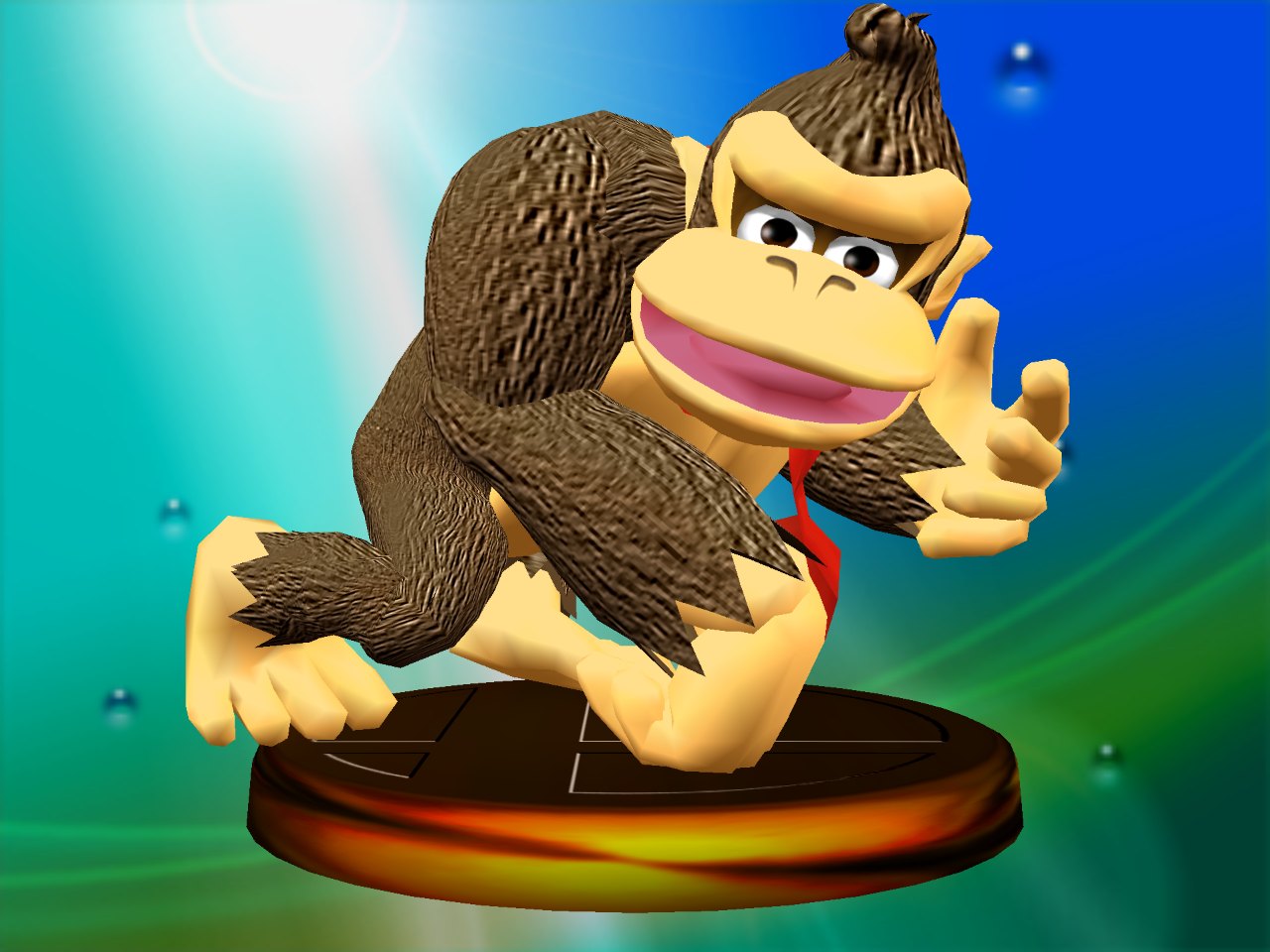
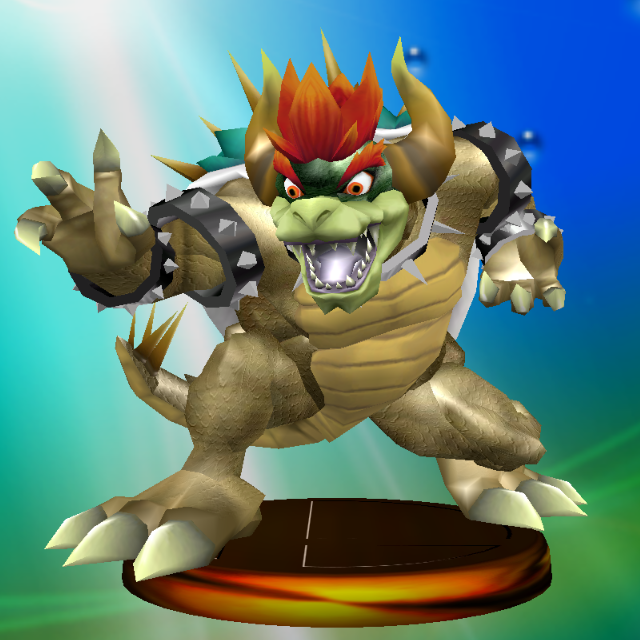
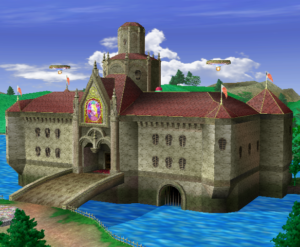 Princess Peach’s CastleSuper Mario 64 · starterA fight on the castle roof. Coloured switches make floating platforms and ! Blocks appear, and now and then a Banzai Bill streaks in and explodes.
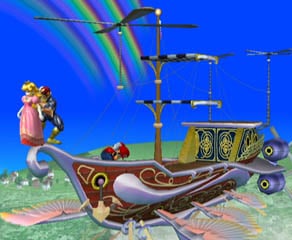 Rainbow CruiseSuper Mario 64 · starterStarts aboard the Rainbow Cruiser, which tips and sinks, then hurries everyone on across Rainbow Ride’s magic carpets, swings, seesaws and Donut Lifts. Called Rainbow Ride in the European version.
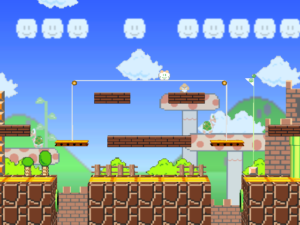 Mushroom KingdomSuper Mario Bros. · starterWorld 1-1 rebuilt, with Brick Blocks and ? Blocks, two pits and a pair of Scale Lifts that drop if one side sinks too far.
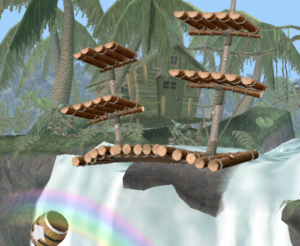 Kongo JungleDonkey Kong Country · starterLogs ride a waterfall past the main platform, and a Barrel Cannon swings below to catch anyone who falls. The music is the DK Rap.
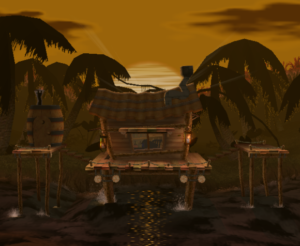 Jungle JapesDonkey Kong 64 · starterThree wooden ledges over a racing river, Cranky Kong’s cabin in the middle, and Klaptraps leaping out of the water.
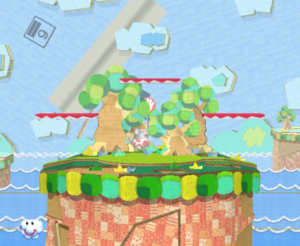 Yoshi’s StoryYoshi’s Story · starterFloating platforms over a cloud that can catch you, with Shy Guys drifting past carrying food.
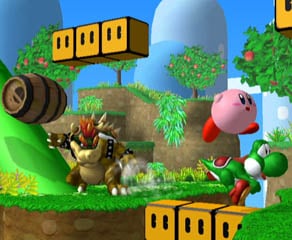 Yoshi’s IslandSuper Mario World · starterA Super Mario World landscape with a hole in the middle, bridged by Rotating Blocks that flip over when hit.
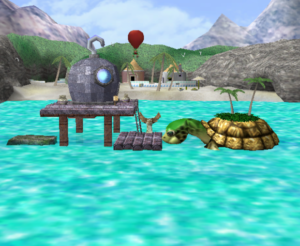 Great BayThe Legend of Zelda: Majora’s Mask · starterFixed and floating platforms by the sea, a giant turtle that surfaces now and then, and Tingle’s balloon to stand on.
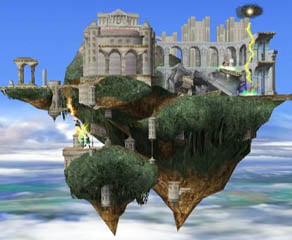 TempleZelda II: The Adventure of Link · starterThe biggest stage in the game: a palace full of platforms with a tunnel underneath.
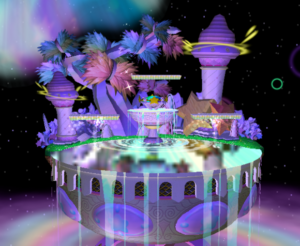 Fountain of DreamsKirby · starterA fountain with three small platforms that rise and sink.
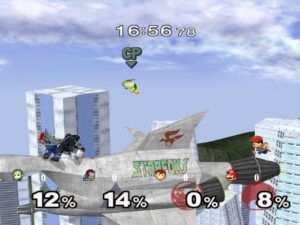 CorneriaStar Fox · starterOn top of the Great Fox, with Arwings flying in to shoot at the fighters.
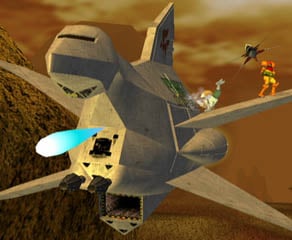 VenomStar Fox · starterThe Great Fox again, facing forward over Venom, with Wolfens attacking.
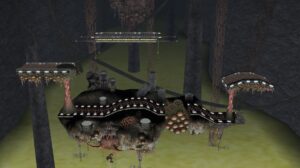 BrinstarMetroid · starterPlatforms held together by organic growths that can be knocked apart, over acid that rises and falls.
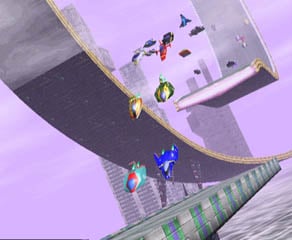 Mute CityF-Zero · starterA floating platform that sets down on the track, where racing machines flatten anyone in the way.
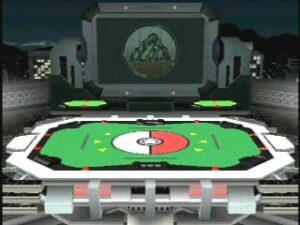 Pokémon StadiumPokémon · starterTwo platforms over a floor that changes into fire, water, rock and grass layouts.
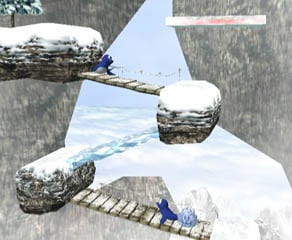 Icicle MountainIce Climber · starterA mountain that scrolls up and down, with dozens of small ledges to jump between.
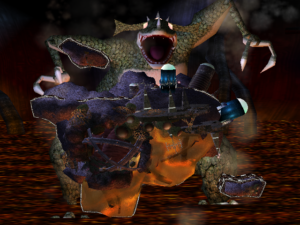 Brinstar DepthsMetroid · unlock: play 50 VS. matchesA round slab of rock around a caged giant brain; Kraid lashes out from the background and sends it spinning.
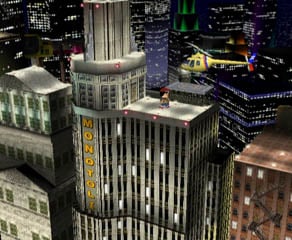 FoursideEarthBound · unlock: play 100 VS. matchesSkyscraper rooftops with wide gaps, and a UFO that sometimes floats down to stand on.
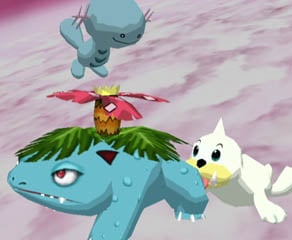 Poké FloatsPokémon · unlock: play 200 VS. matchesGiant Pokémon balloons drift through the Kanto skies, each disappearing in turn.
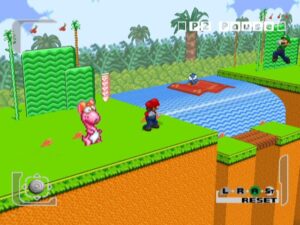 Mushroom Kingdom IISuper Mario Bros. 2 · unlock: collect the Birdo trophySubcon’s log-laden waterfall, with Pidgit flying over on his carpet and Birdo spitting eggs.
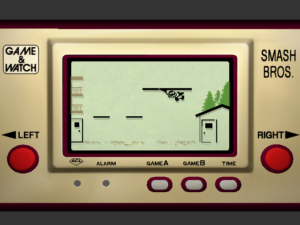 Flat ZoneGame & Watch · unlock: clear Classic as Mr. Game & WatchA flat LCD world with falling tools, slippery oil and firemen with a trampoline.
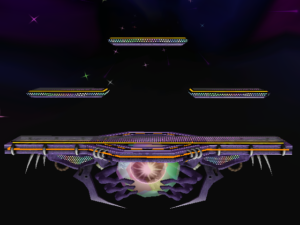 BattlefieldSuper Smash Bros. · unlock: clear All-StarOne main platform with three smaller ones above, floating in space.
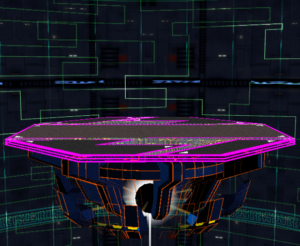 Final DestinationSuper Smash Bros. · unlock: clear Event 51A single flat platform with nothing in the way: the stage where Master Hand waits.
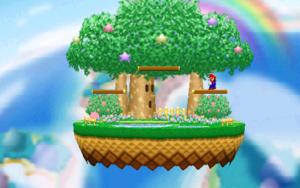 Dream LandKirby’s Dream Land · unlock: clear Target Test with all 25 fighters · Past Stage from the Nintendo 64 gameThe original game’s Kirby stage, with Whispy Woods blowing in either direction.
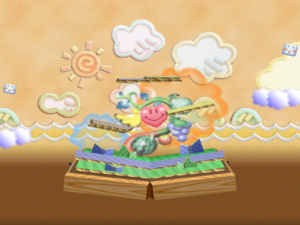 Yoshi’s Island (Past Stage)Yoshi’s Story · unlock: hit Sandbag 400 m (1,325 ft) in the Home-Run Contest · Past Stage from the Nintendo 64 gameThe original game’s Yoshi stage: the Super Happy Tree behind, three platforms above and clouds at the edges that fade away.
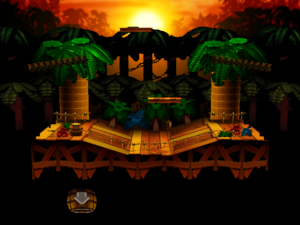 Kongo Jungle (Past Stage)Donkey Kong Country · unlock: clear 15-Minute Melee · Past Stage from the Nintendo 64 gameThe original game’s jungle: a big wooden platform with smaller floating ones and a Barrel Cannon underneath.
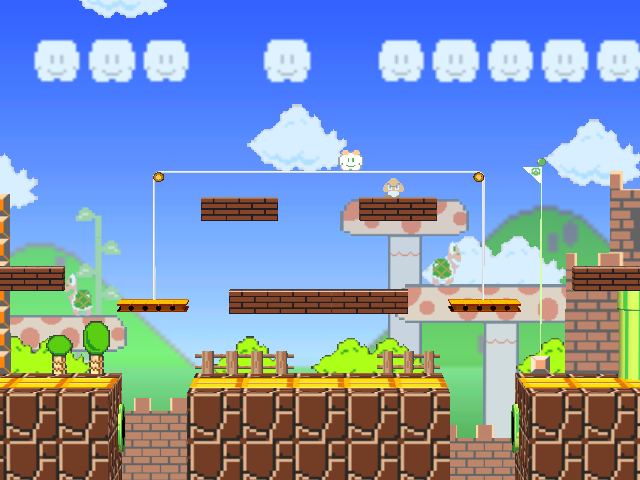
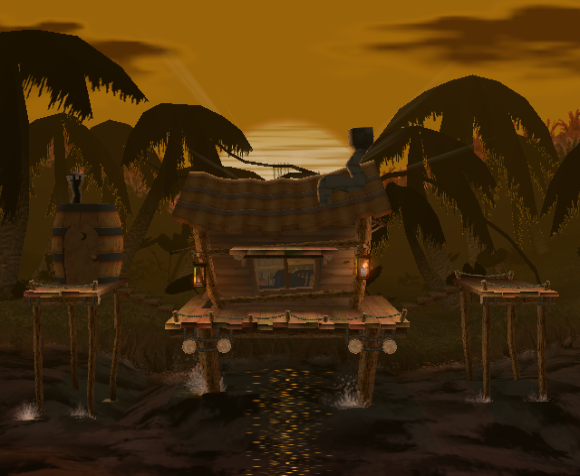
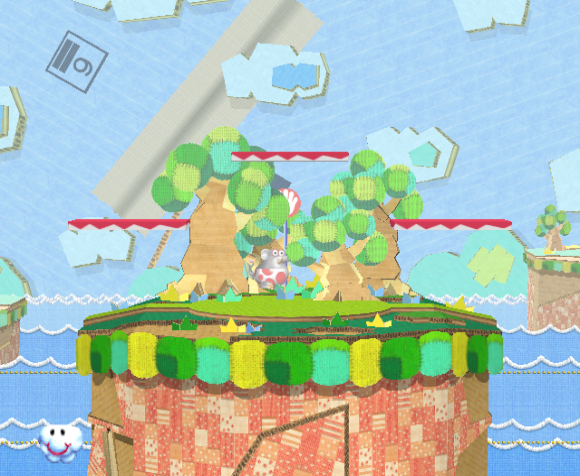
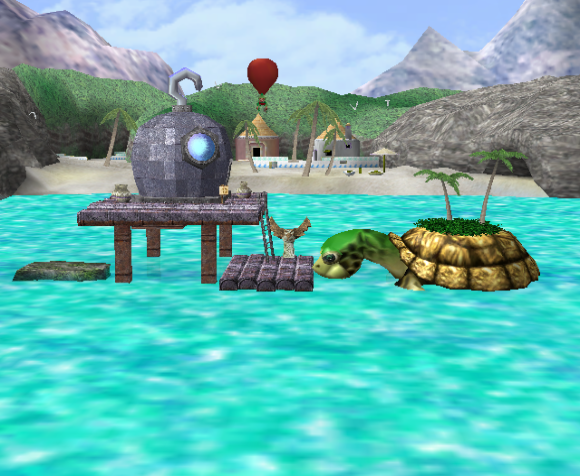
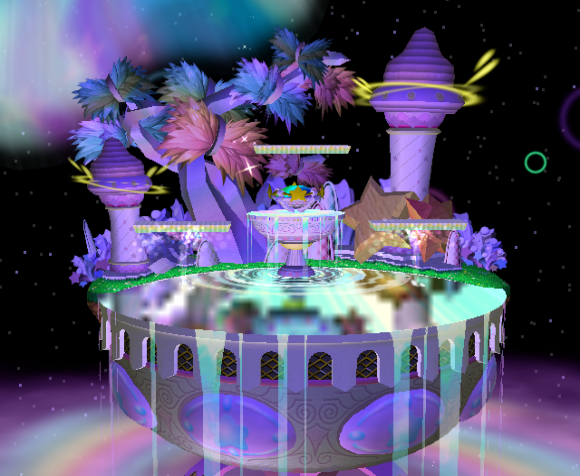
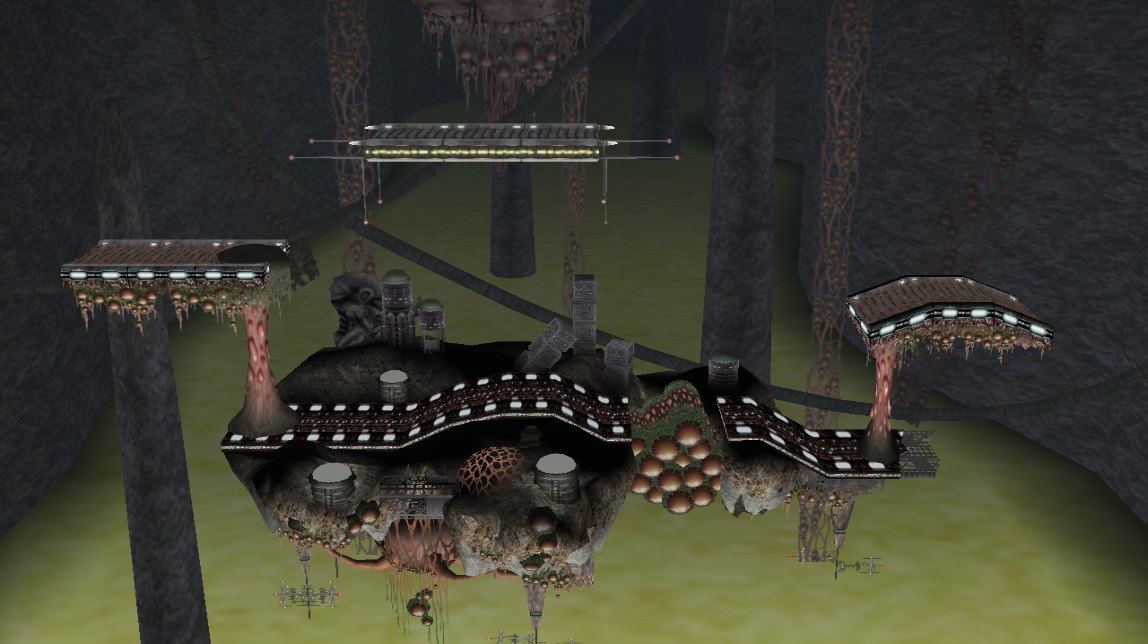
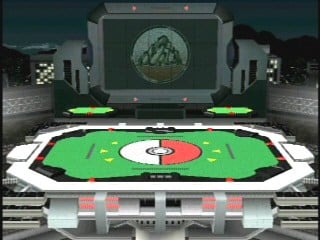
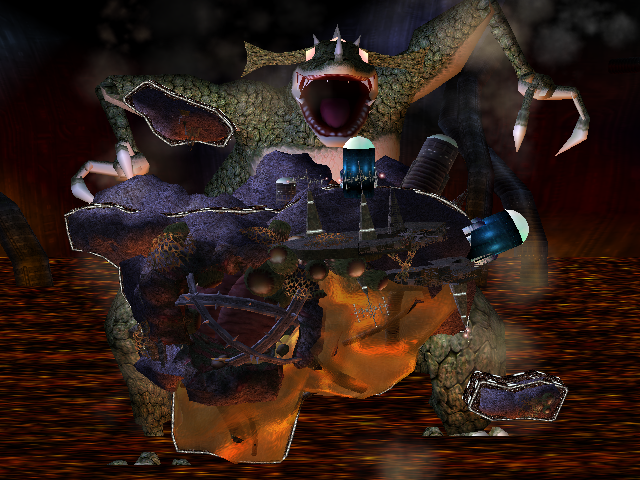
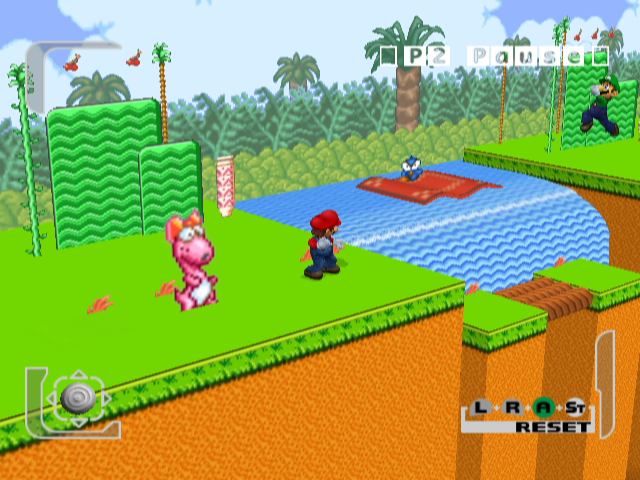
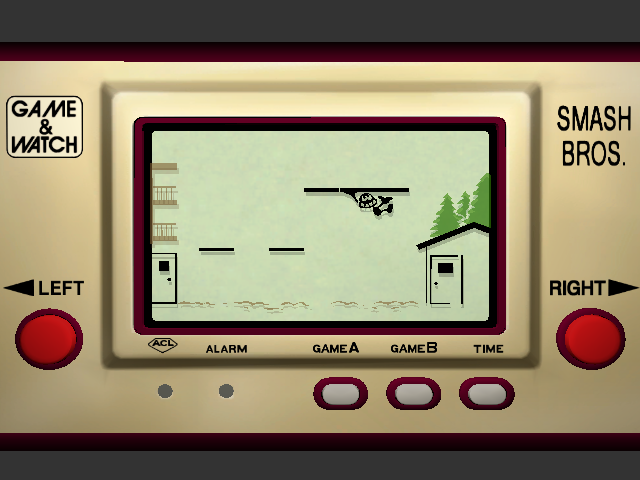
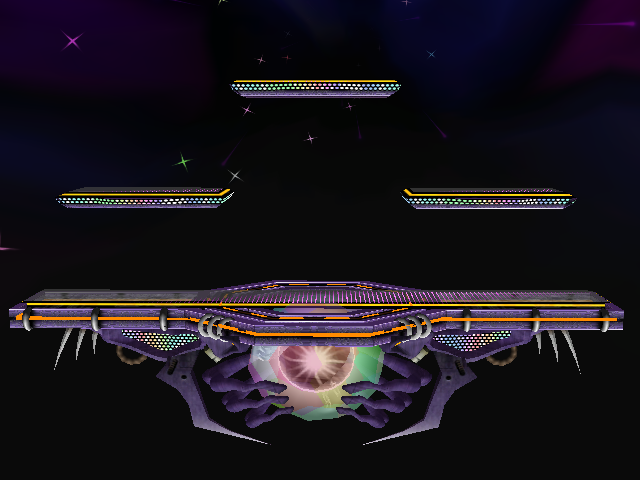
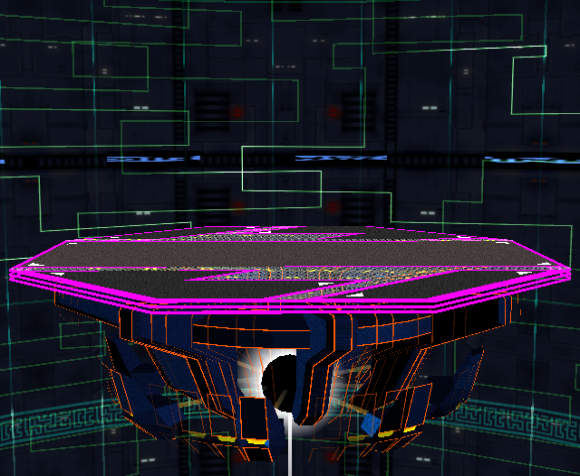
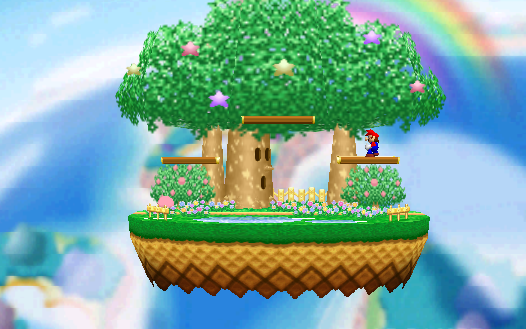
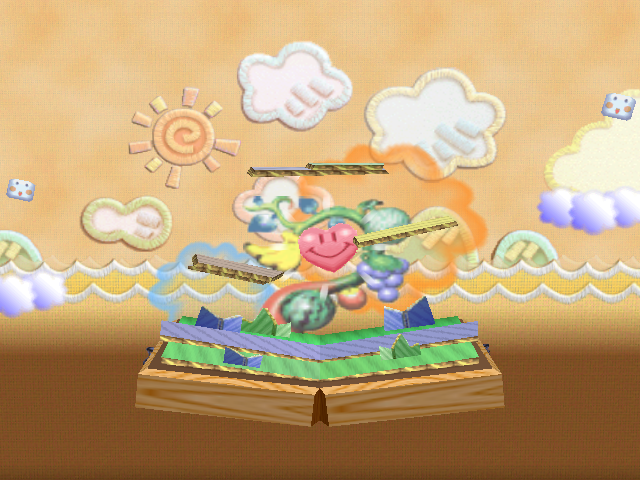
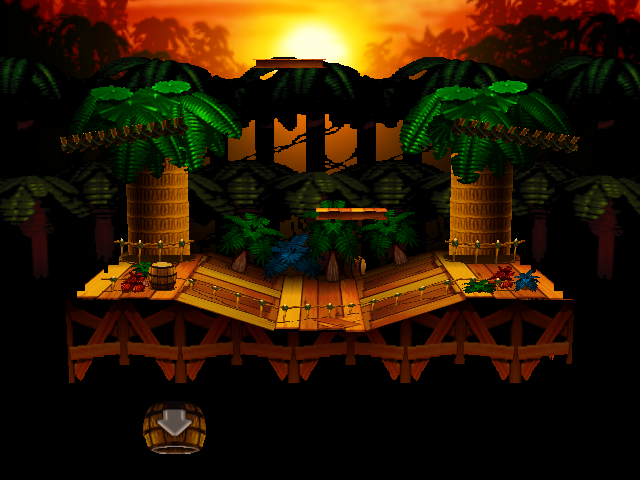
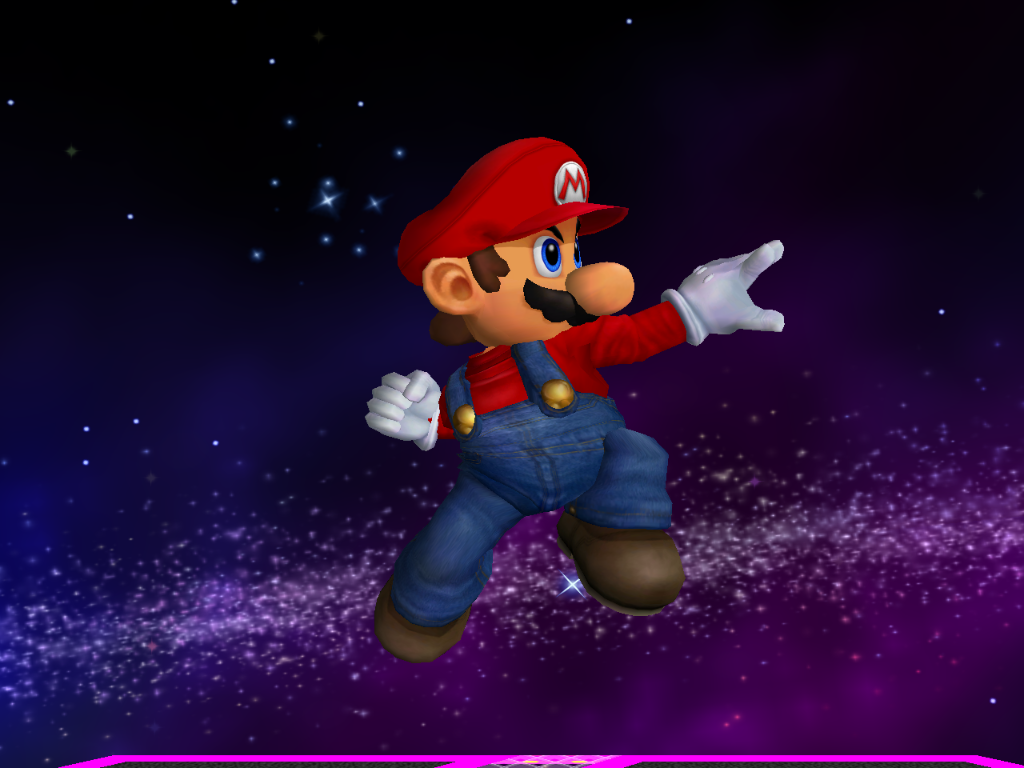
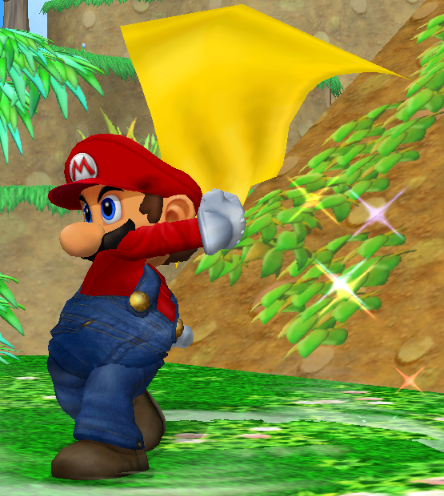
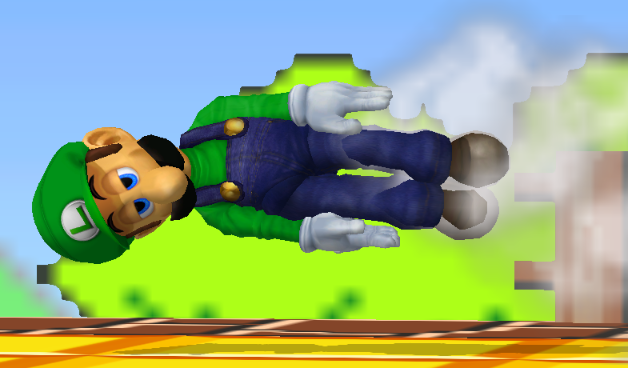
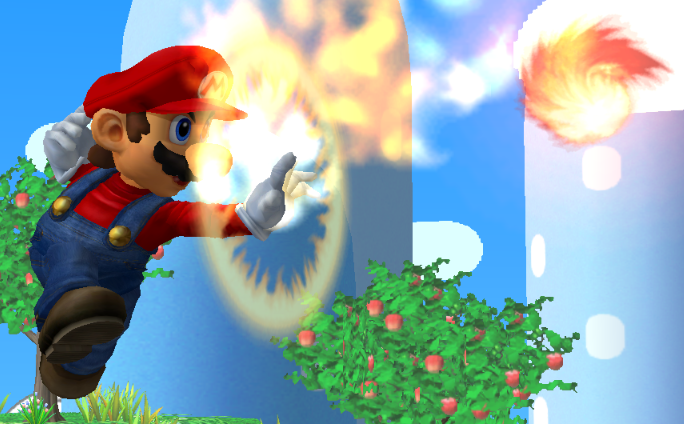
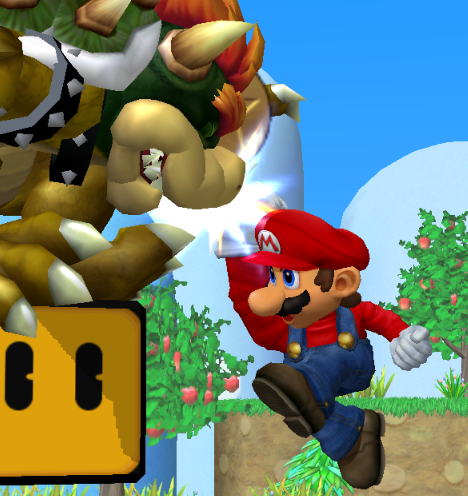
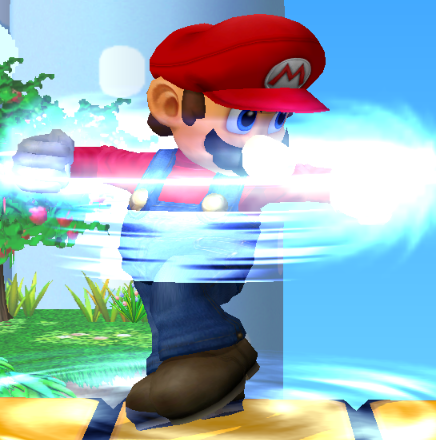
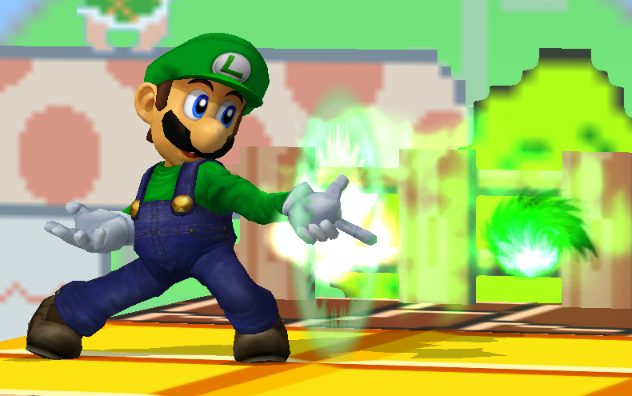
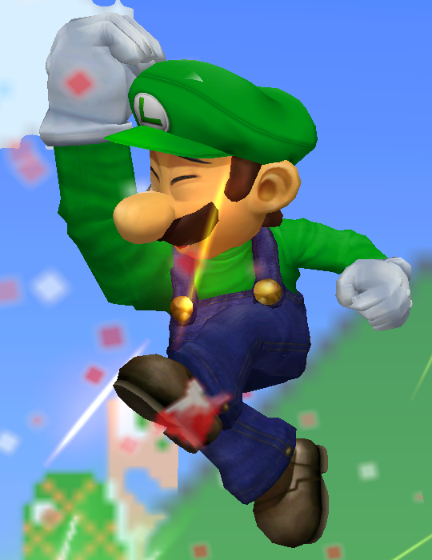
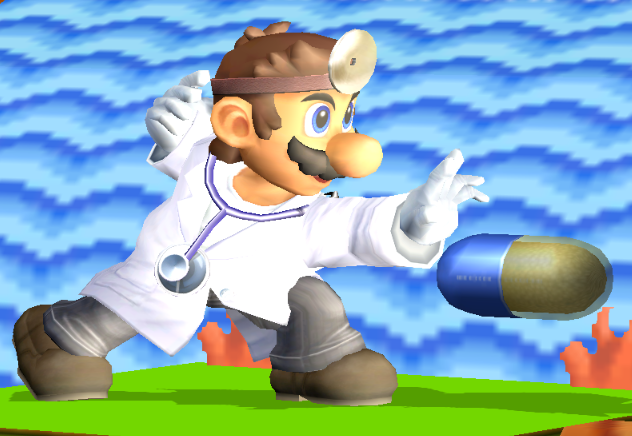
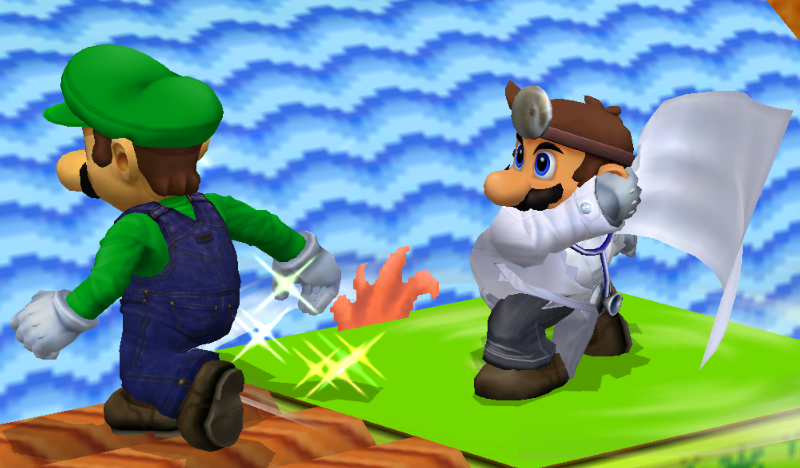
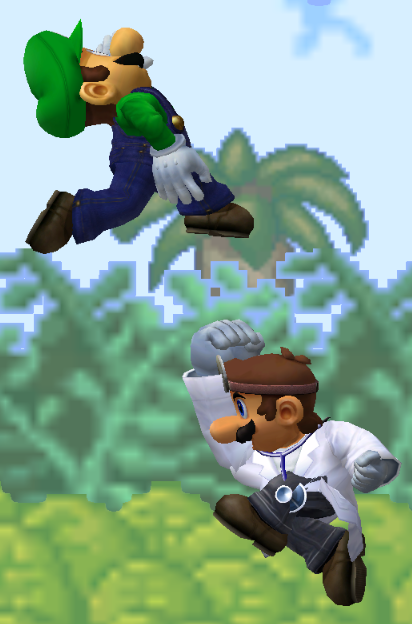
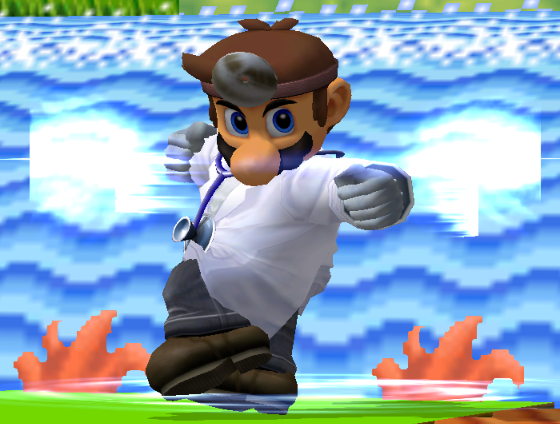
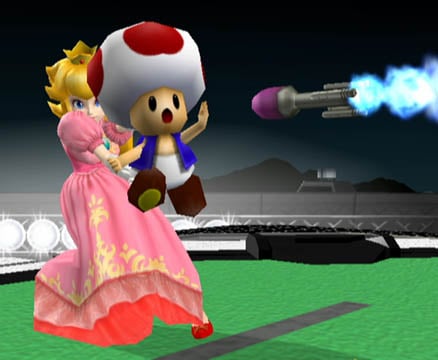
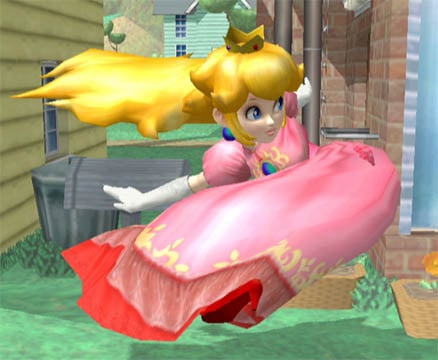
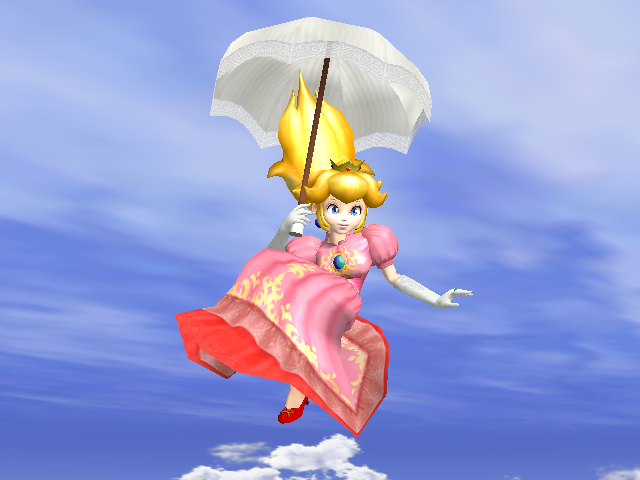
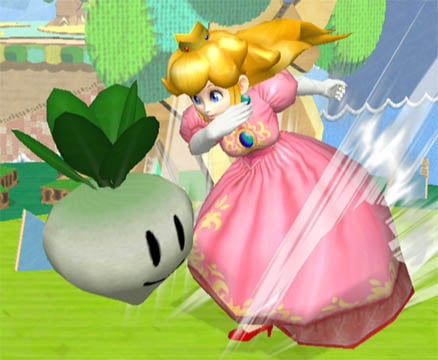
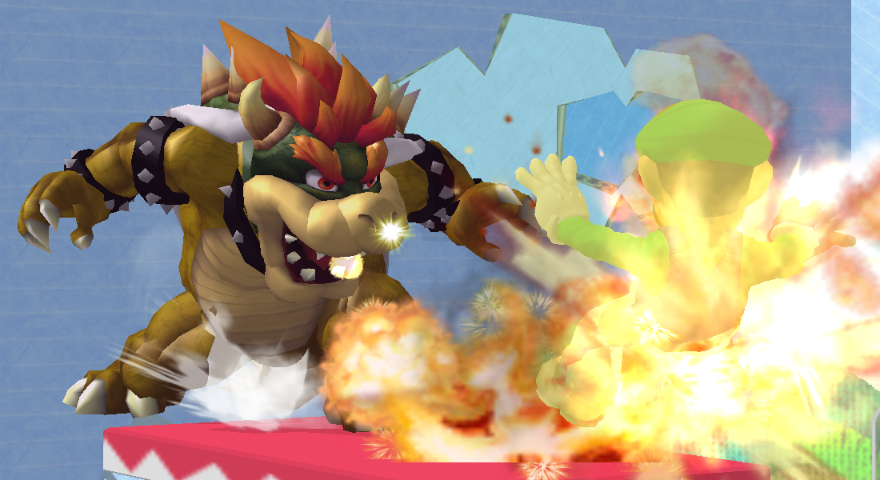
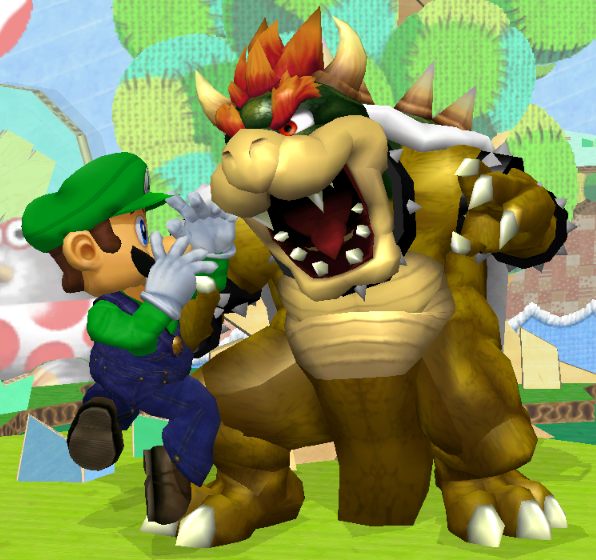
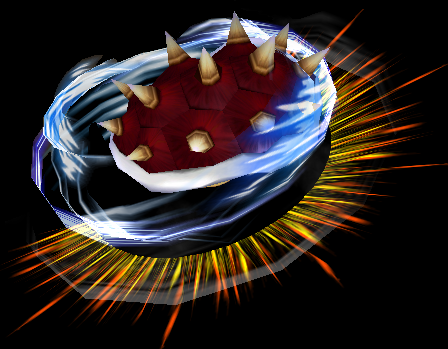
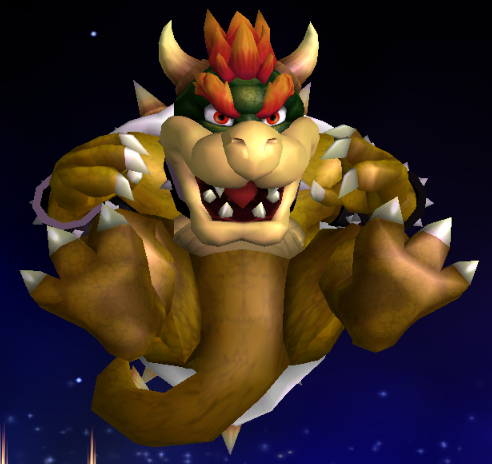
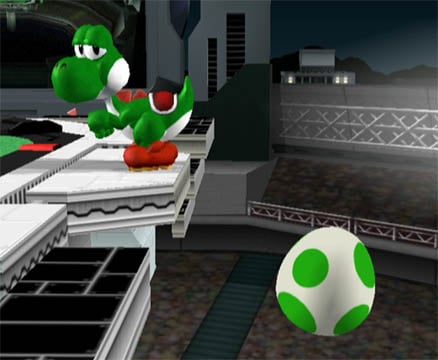
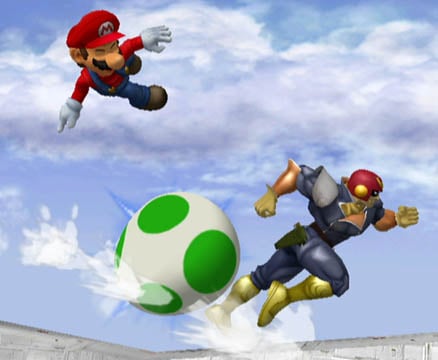
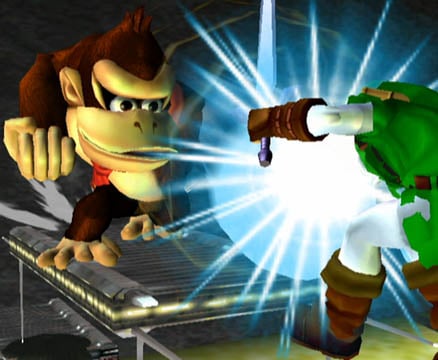
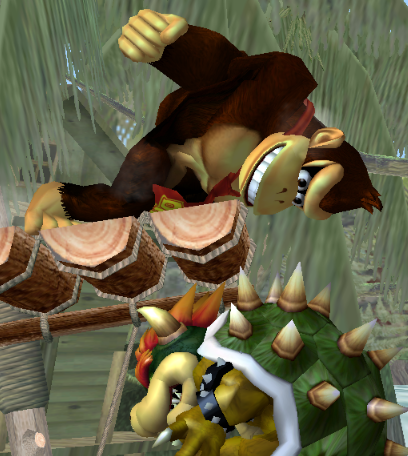
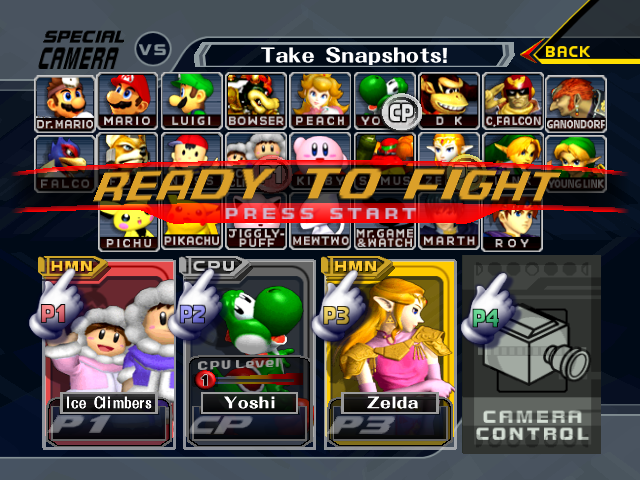
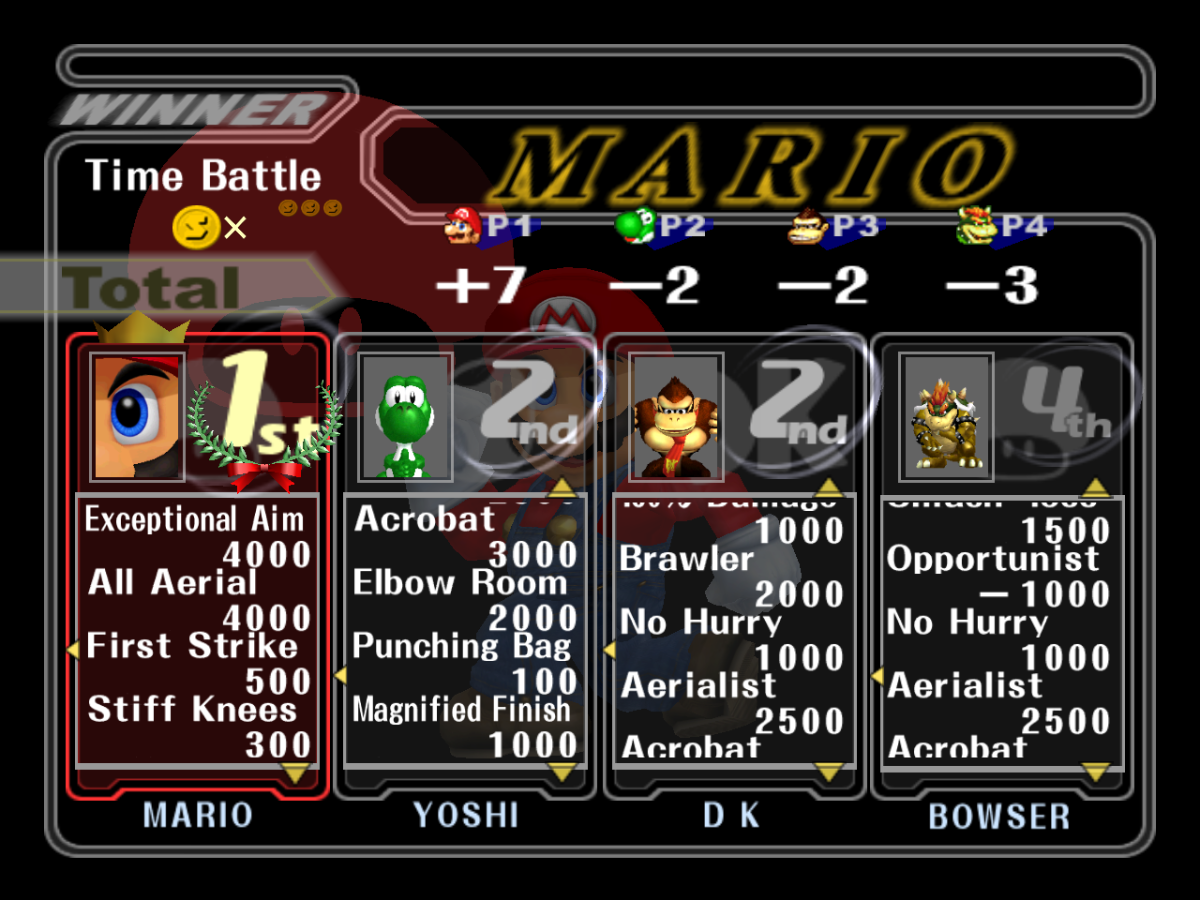
 FoodSuper Smash Bros. Heals a little damage; the amount depends on the snack.
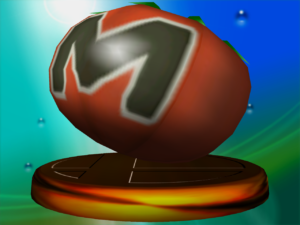 Maxim TomatoKirby. Heals 50%.
 Heart ContainerThe Legend of Zelda. Heals 100%.
 Warp StarKirby. Rockets you up, then slams you back down in an explosion you can steer.
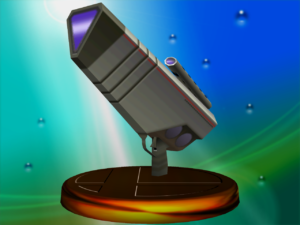 Ray GunSuper Smash Bros. Up to 14 laser shots.
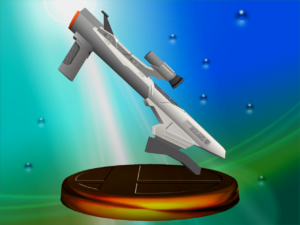 Super ScopeSuper Nintendo. Rapid small shots, or up to three charged blasts.
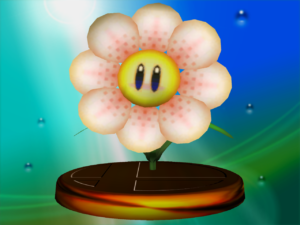 Fire FlowerSuper Mario. A stream of fire, much like Bowser’s Fire Breath.
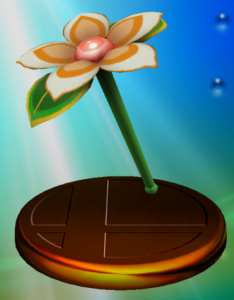 Lip’s StickPanel de Pon. Plants a flower on the victim’s head that keeps hurting them.
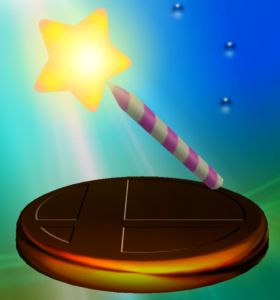 Star RodKirby. Fires a limited number of stars.
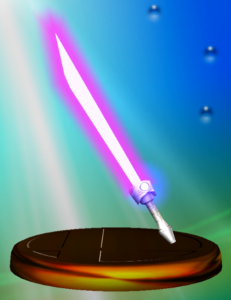 Beam SwordSuper Smash Bros. A strong, slow sword.
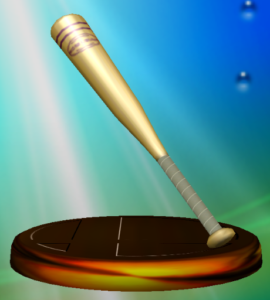 Home-Run BatSuper Smash Bros. A smash attack with it is an instant KO.
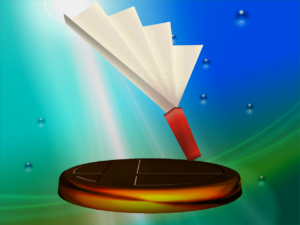 FanSuper Smash Bros. Quick, feeble slaps.
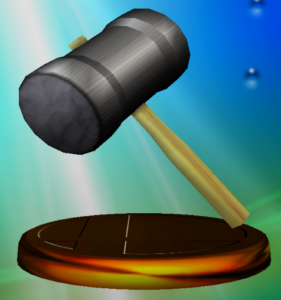 HammerDonkey Kong. A massive hammer that deals heavy damage.
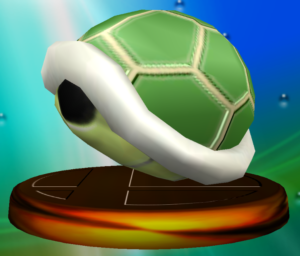 Green ShellSuper Mario. Slides along the ground, hitting anyone it meets.
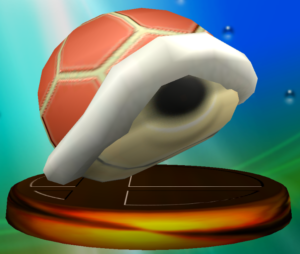 Red ShellSuper Mario. Like the Green Shell, but it chases fighters and does not fall off the edge.
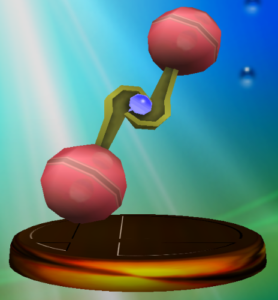 FlipperBalloon Fight. Stays where it is thrown, bouncing away fighters and projectiles.
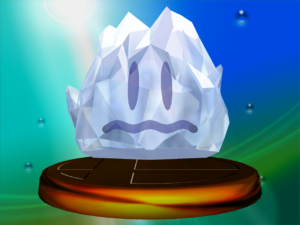 FreezieSuper Mario. Slides along and freezes whoever it touches; fire thaws them.
 Mr. SaturnEarthBound. A weak throwing item that can be used again and again.
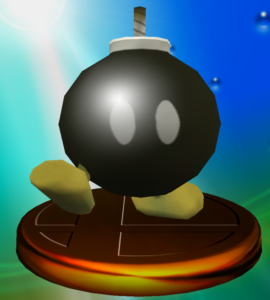 Bob-ombSuper Mario. Explodes on impact, or walks off and blows up on its own.
 Motion-Sensor BombGoldenEye 007 and Perfect Dark. Sticks to a surface and explodes when someone comes near.
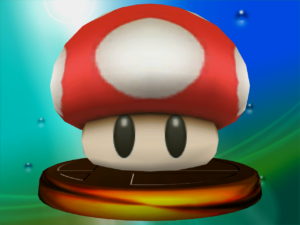 Super MushroomSuper Mario. Makes you giant: stronger and harder to KO, but an easier target.
 Poison MushroomSuper Mario. Shrinks you: weaker and easier to KO, but nimbler.
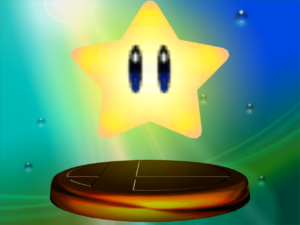 StarmanSuper Mario. A short spell of invincibility, though not against the blast lines.
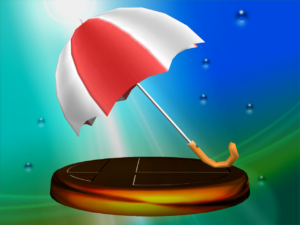 ParasolKirby. A weapon that also lets you float down slowly.
 Screw AttackMetroid. Turns every jump into Samus’s spinning attack.
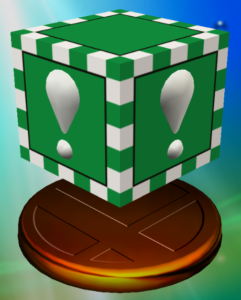 Metal BoxSuper Mario. Turns you to metal: hard to launch, poor at recovering.
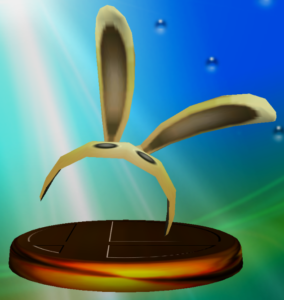 Bunny HoodThe Legend of Zelda. Faster running and higher jumps.
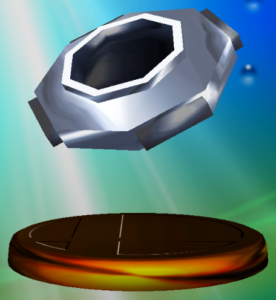 Cloaking DevicePerfect Dark. Makes you invisible for a while.
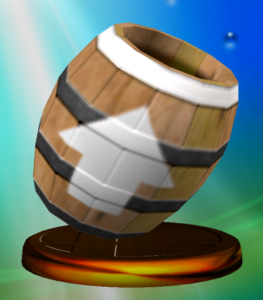 Barrel CannonDonkey Kong. Traps a fighter and fires them out at an angle set by the timing.
 Party BallSuper Smash Bros. Floats up and showers the stage with items, often Food or Bob-ombs.
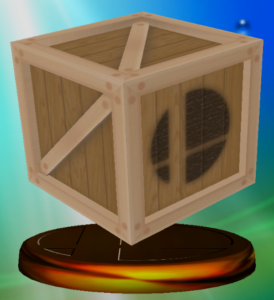 CrateSuper Smash Bros. Holds three items, and sometimes explodes.
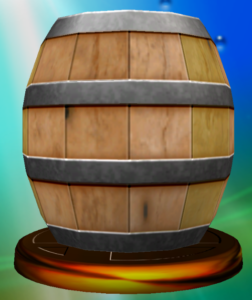 BarrelSuper Smash Bros. Holds one item; thrown, it rolls into people.
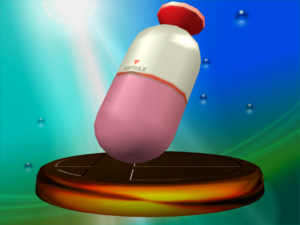 CapsuleSuper Smash Bros. A small container that may explode.
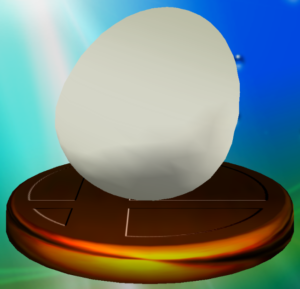 EggSuper Smash Bros. What it holds varies by stage (Food or a weapon), and it can also explode.
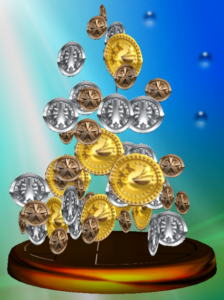 Smash CoinSuper Smash Bros. The prize in Coin matches, in three values.
 Poké BallPokémon. Releases a Pokémon that fights for the thrower.

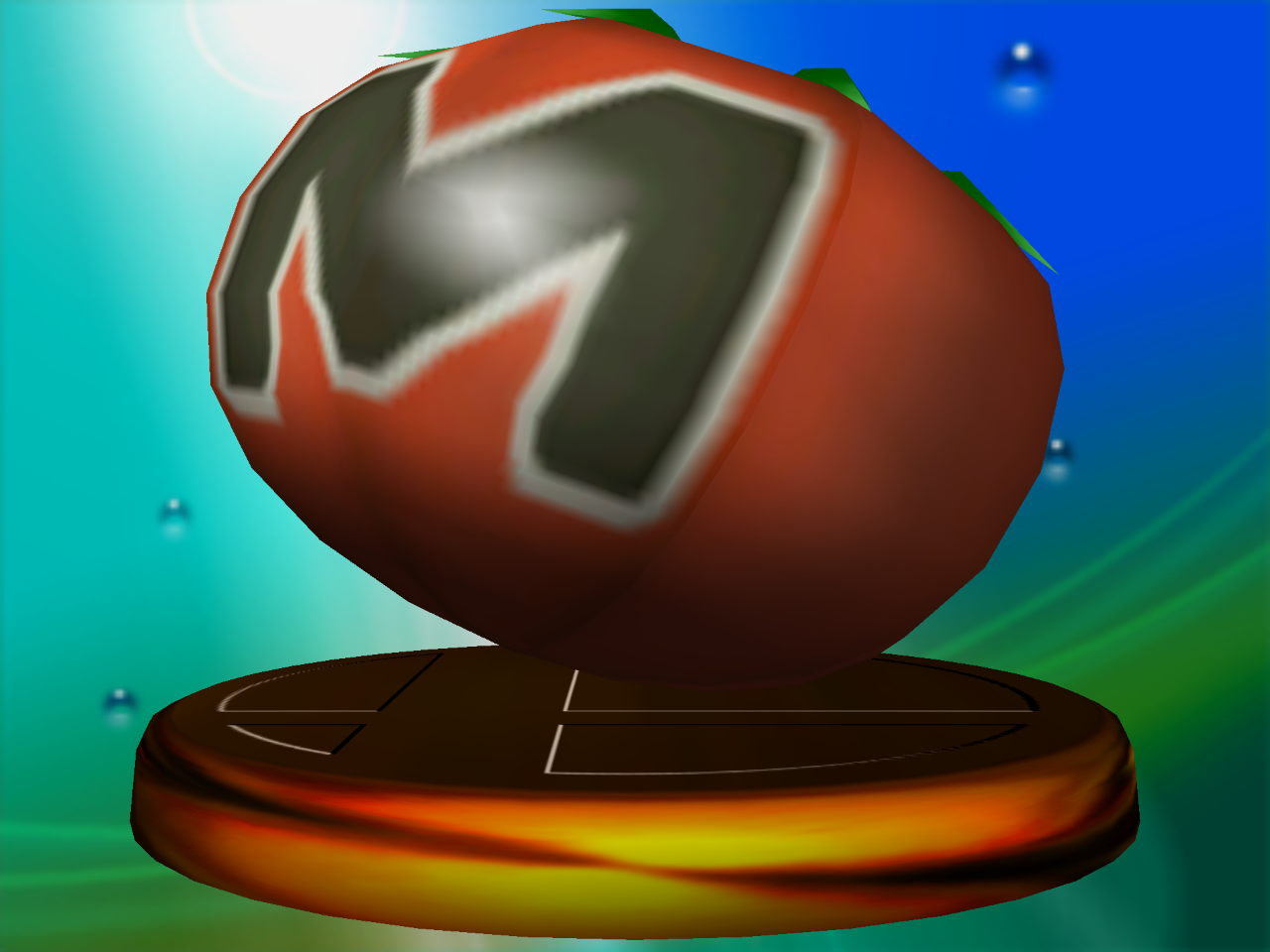

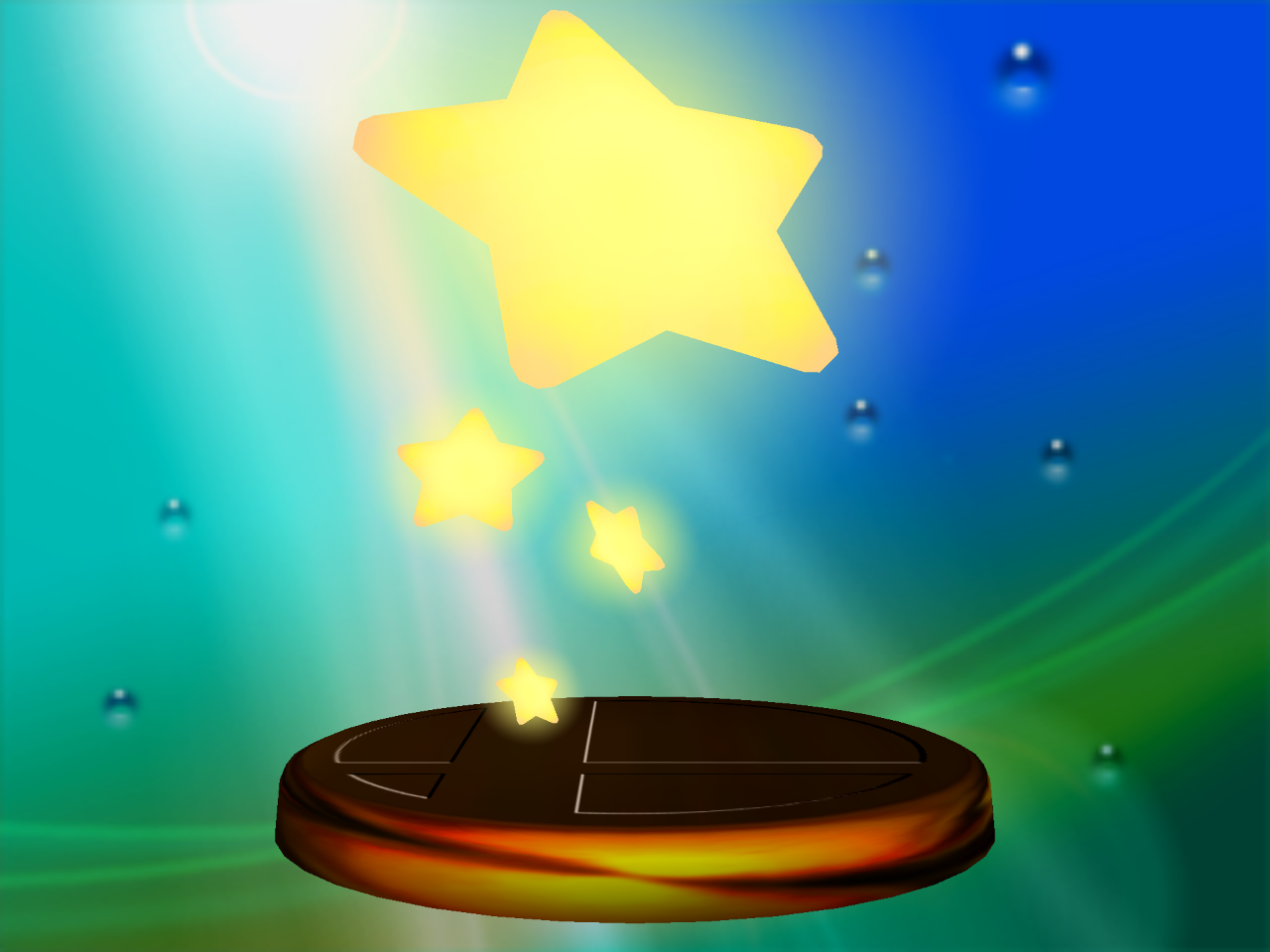
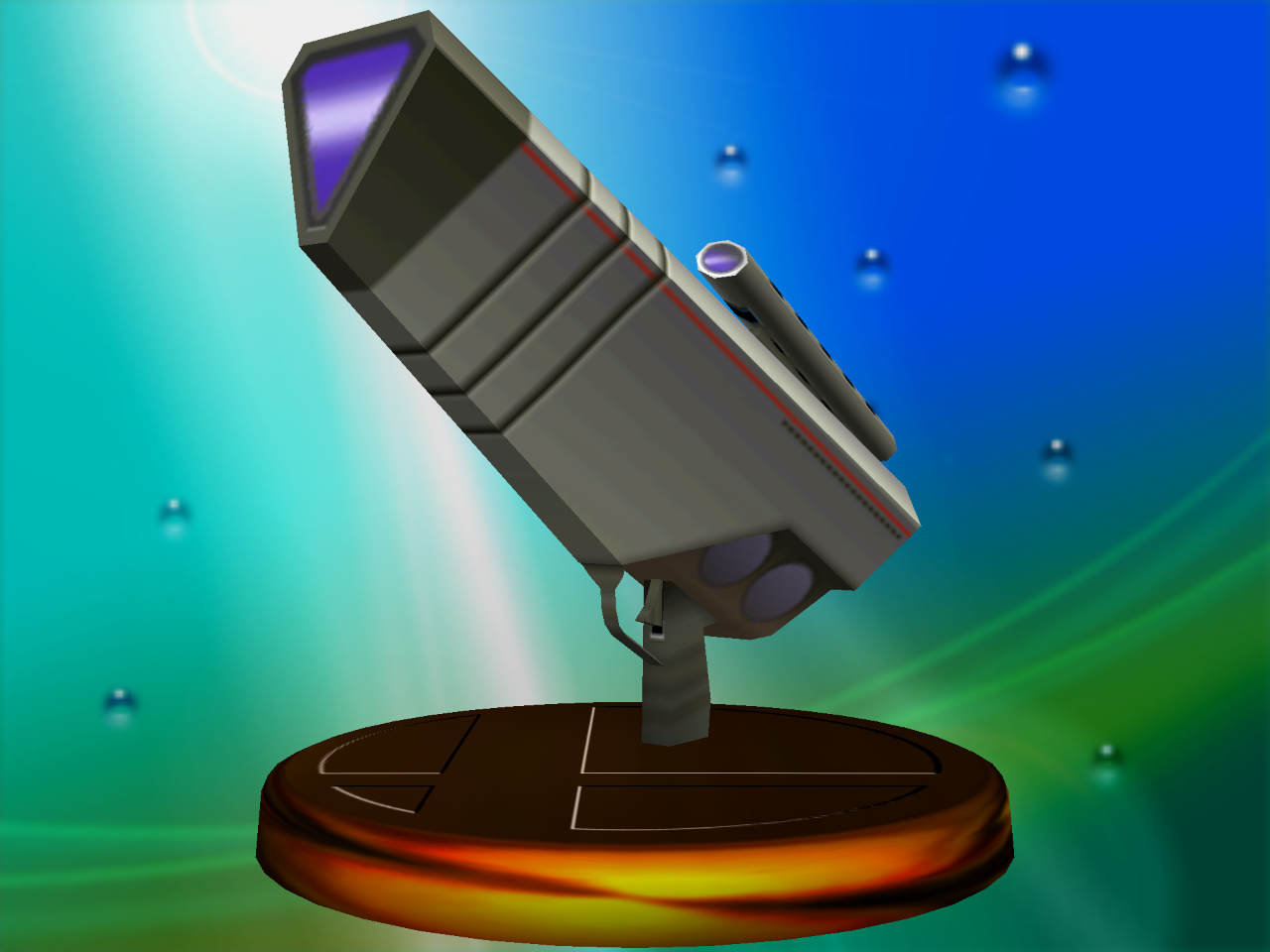
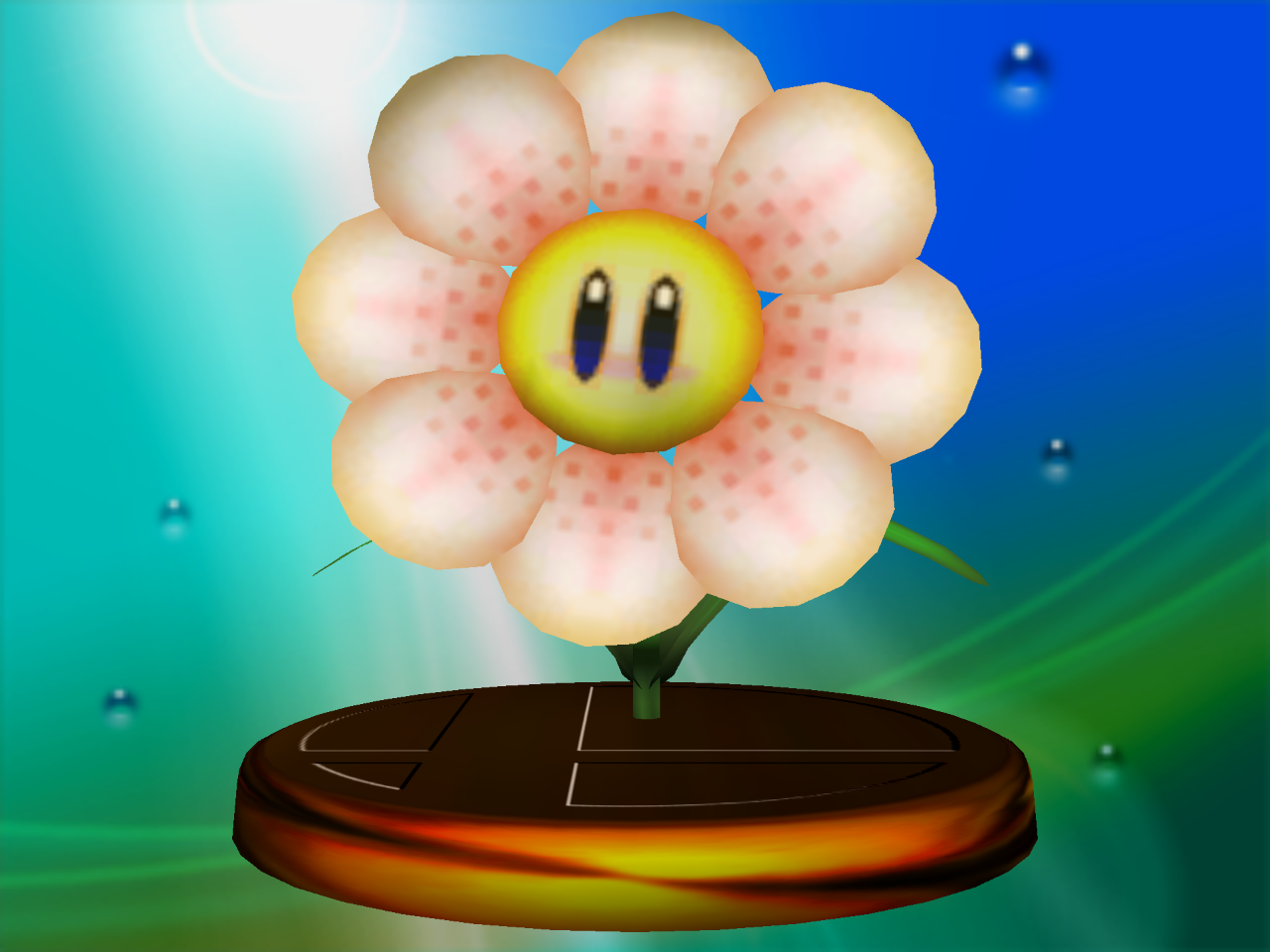
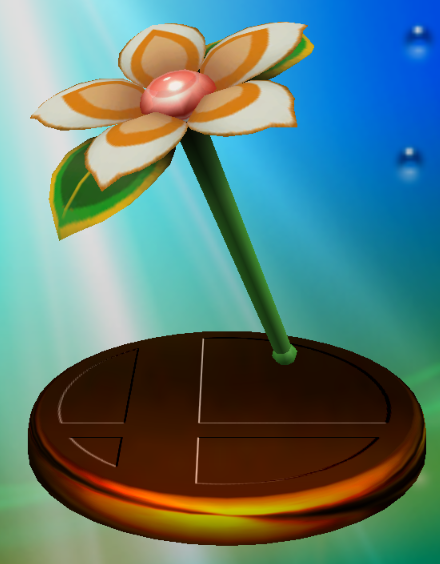
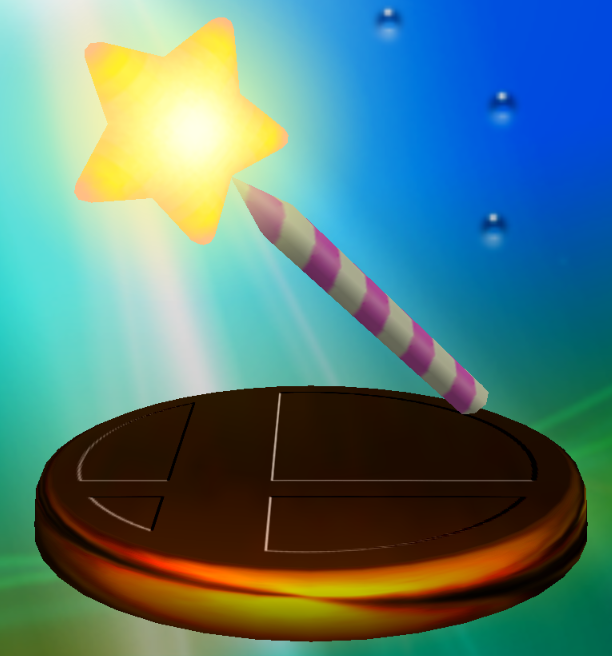
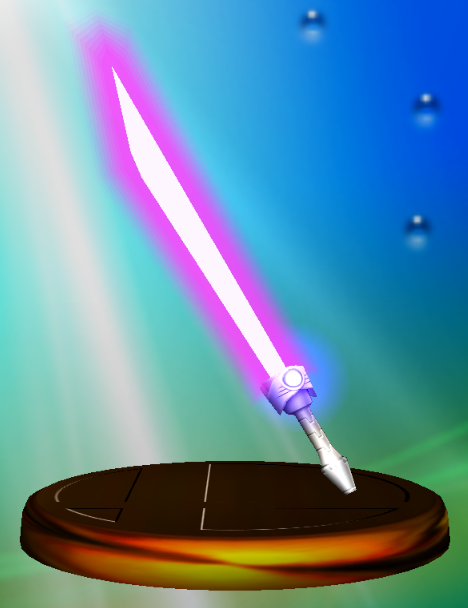
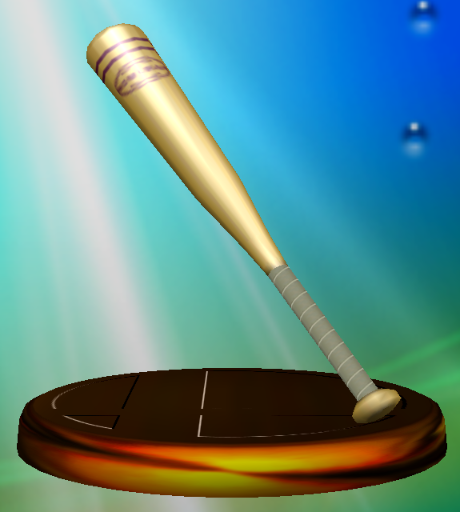
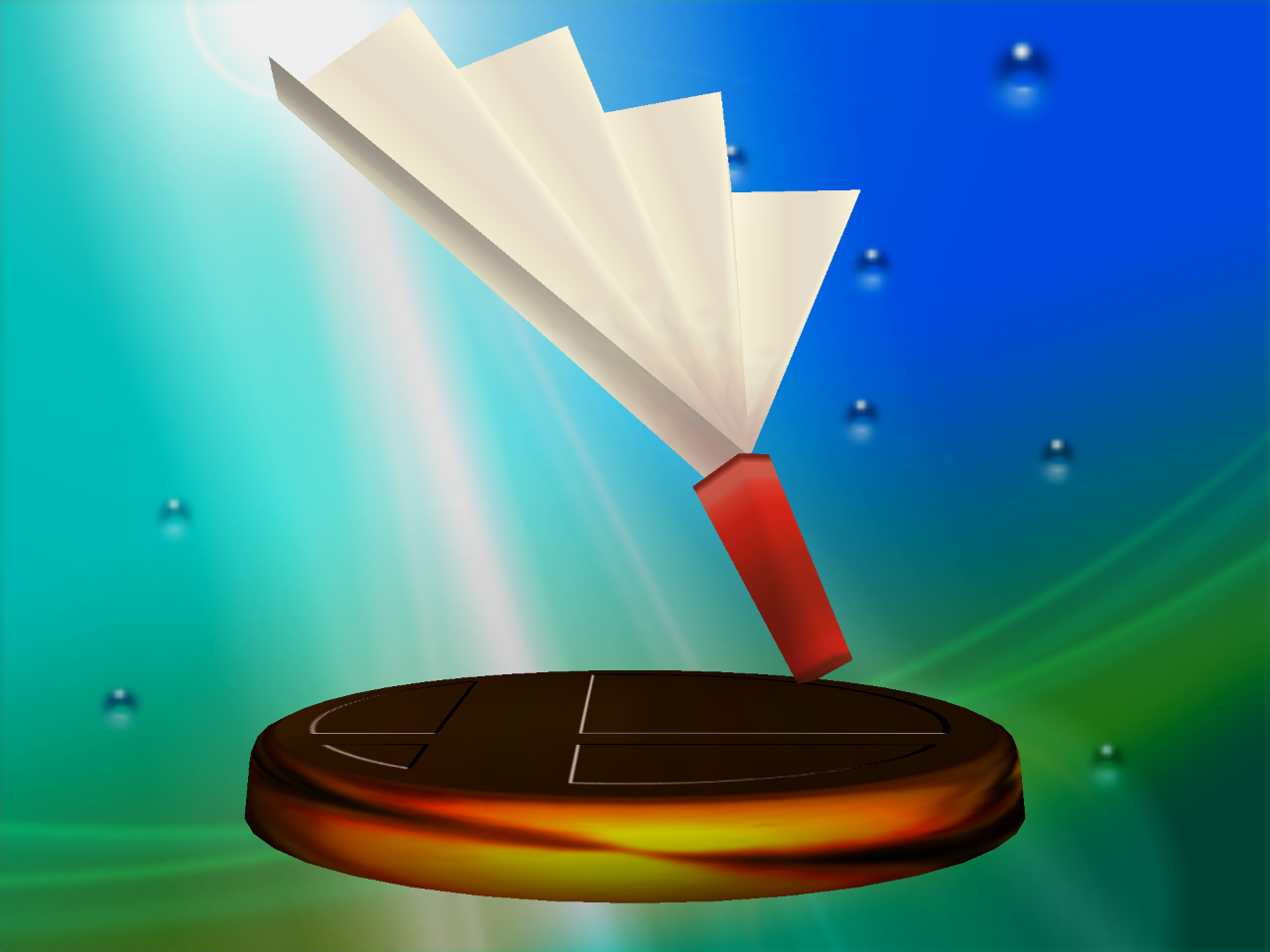
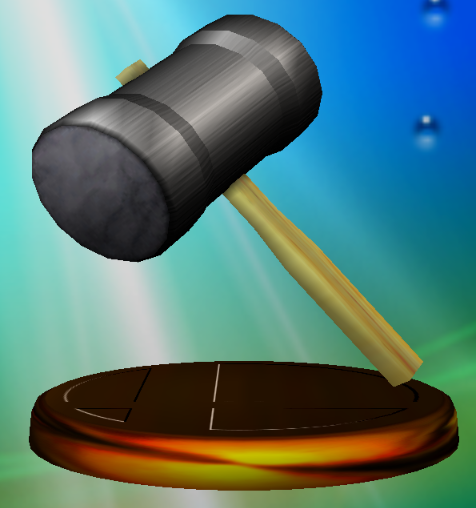
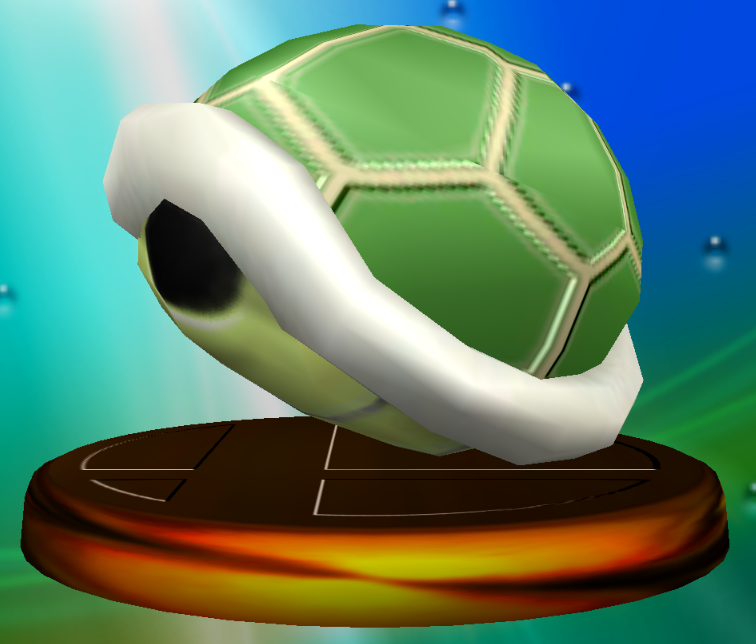
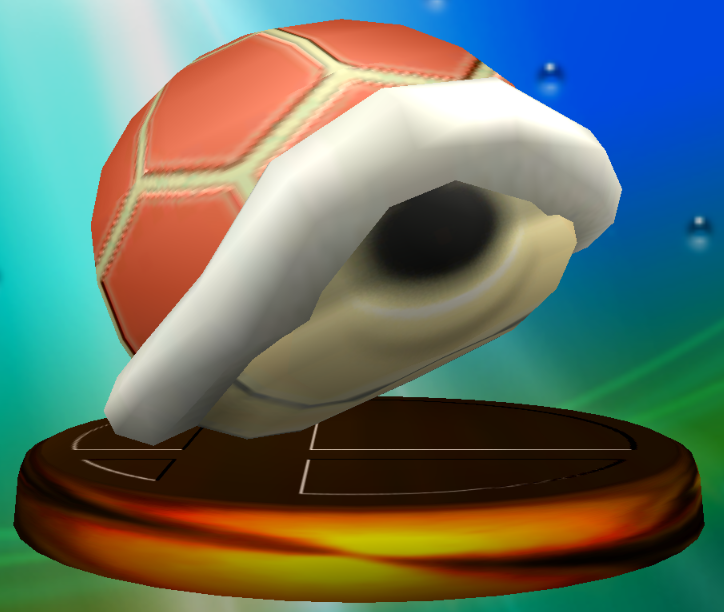
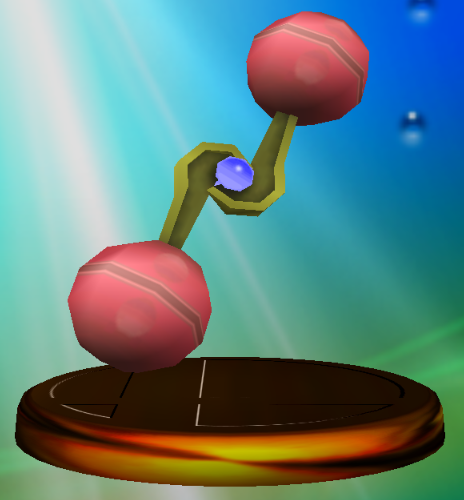
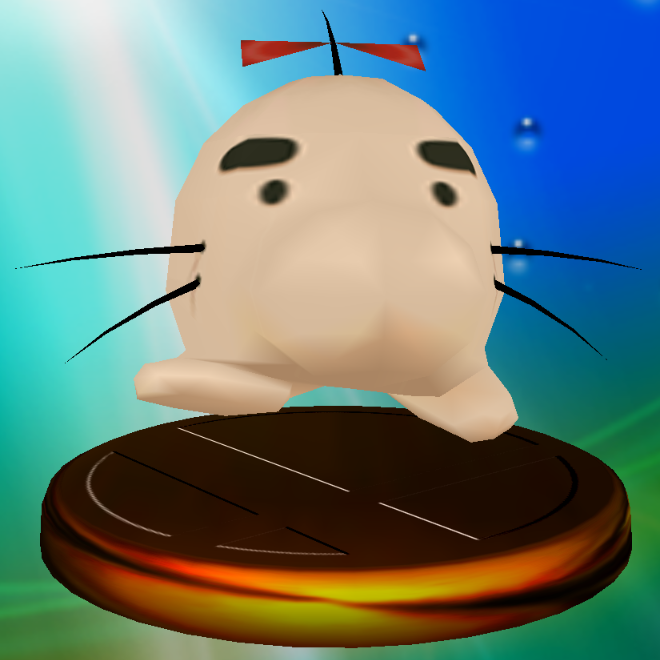
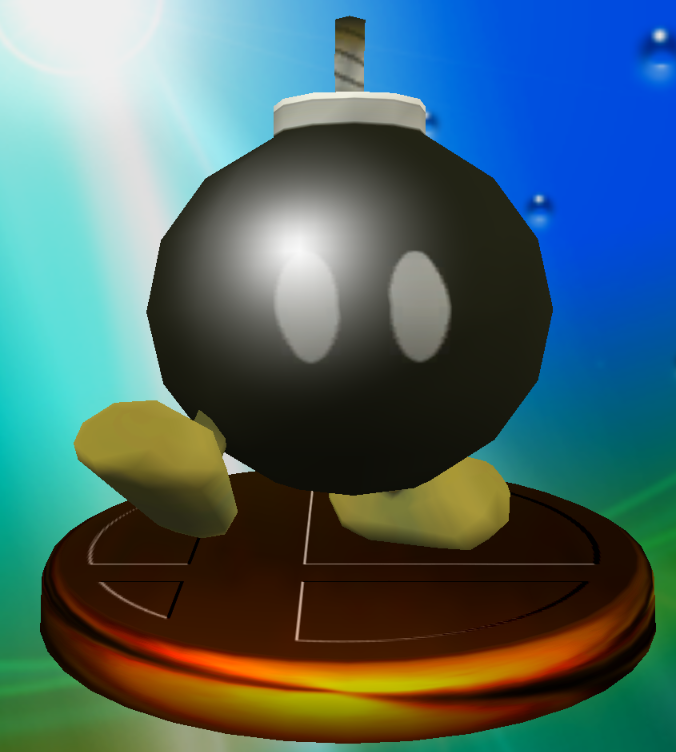
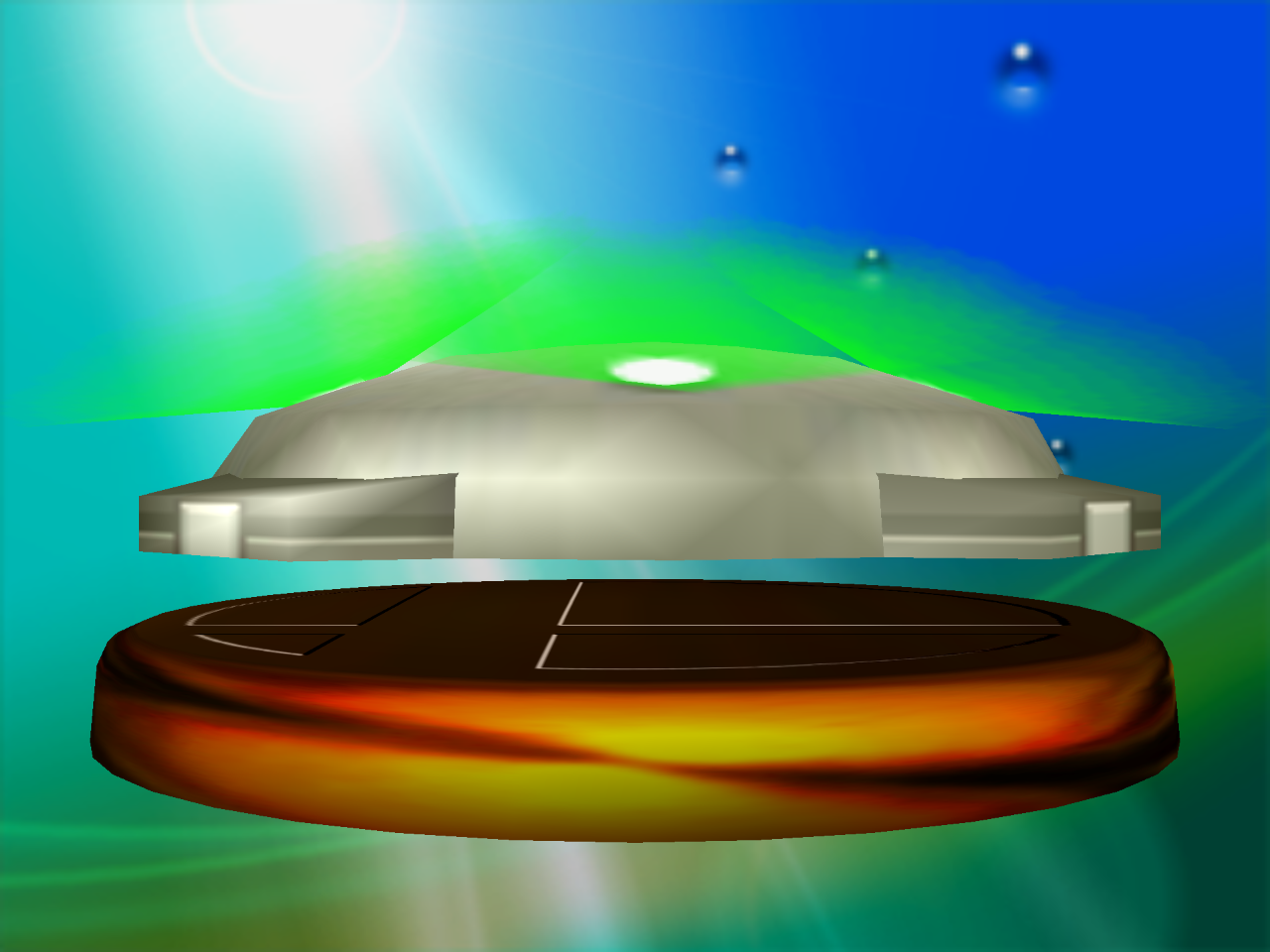
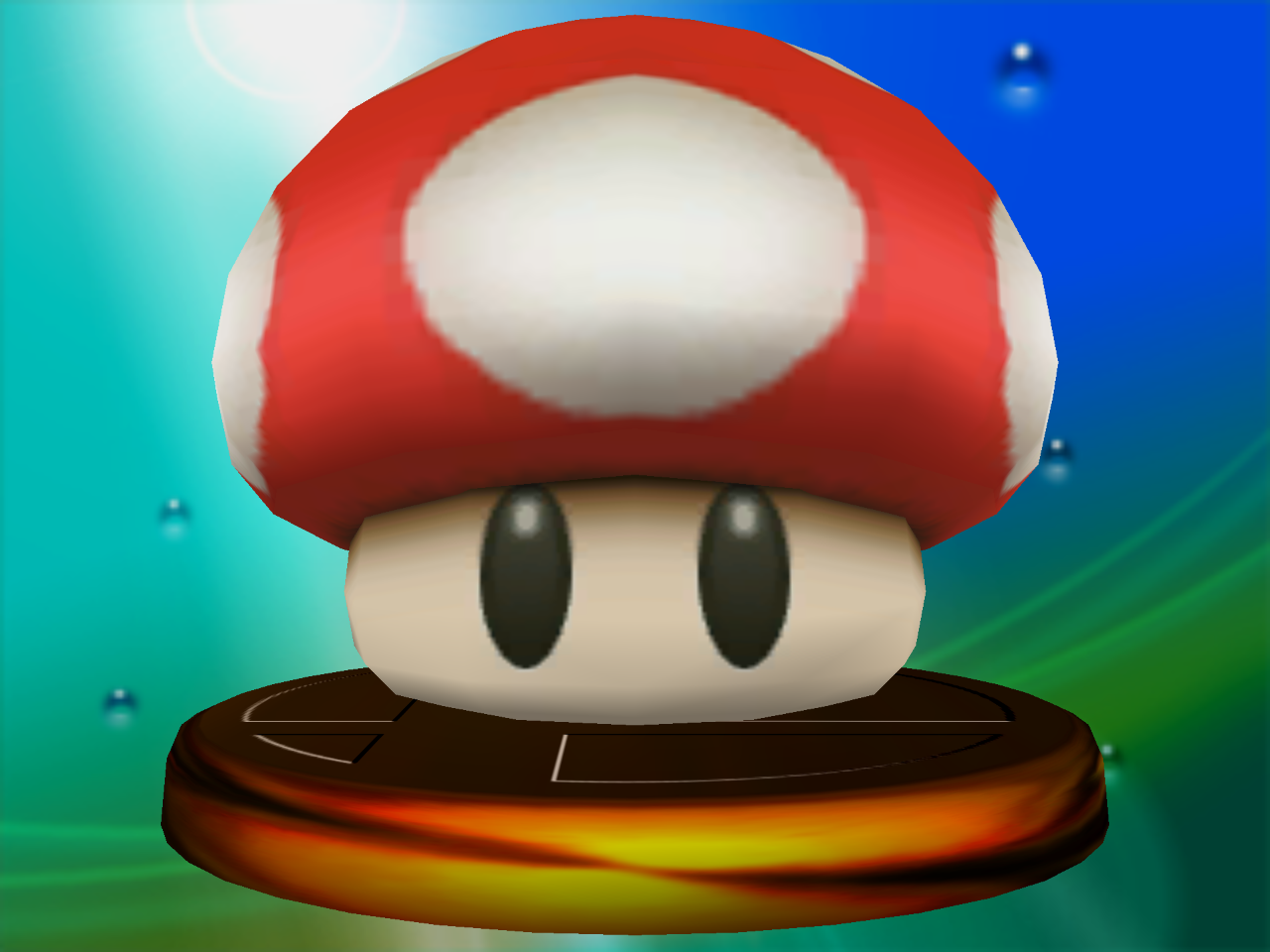
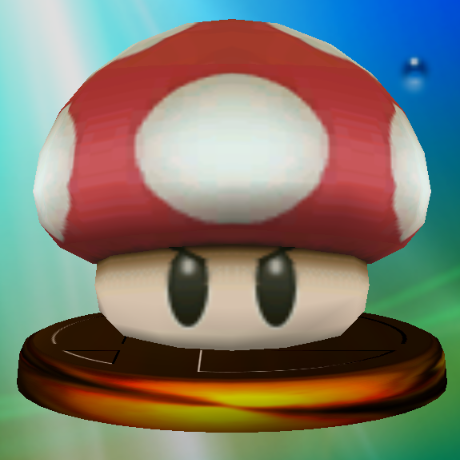
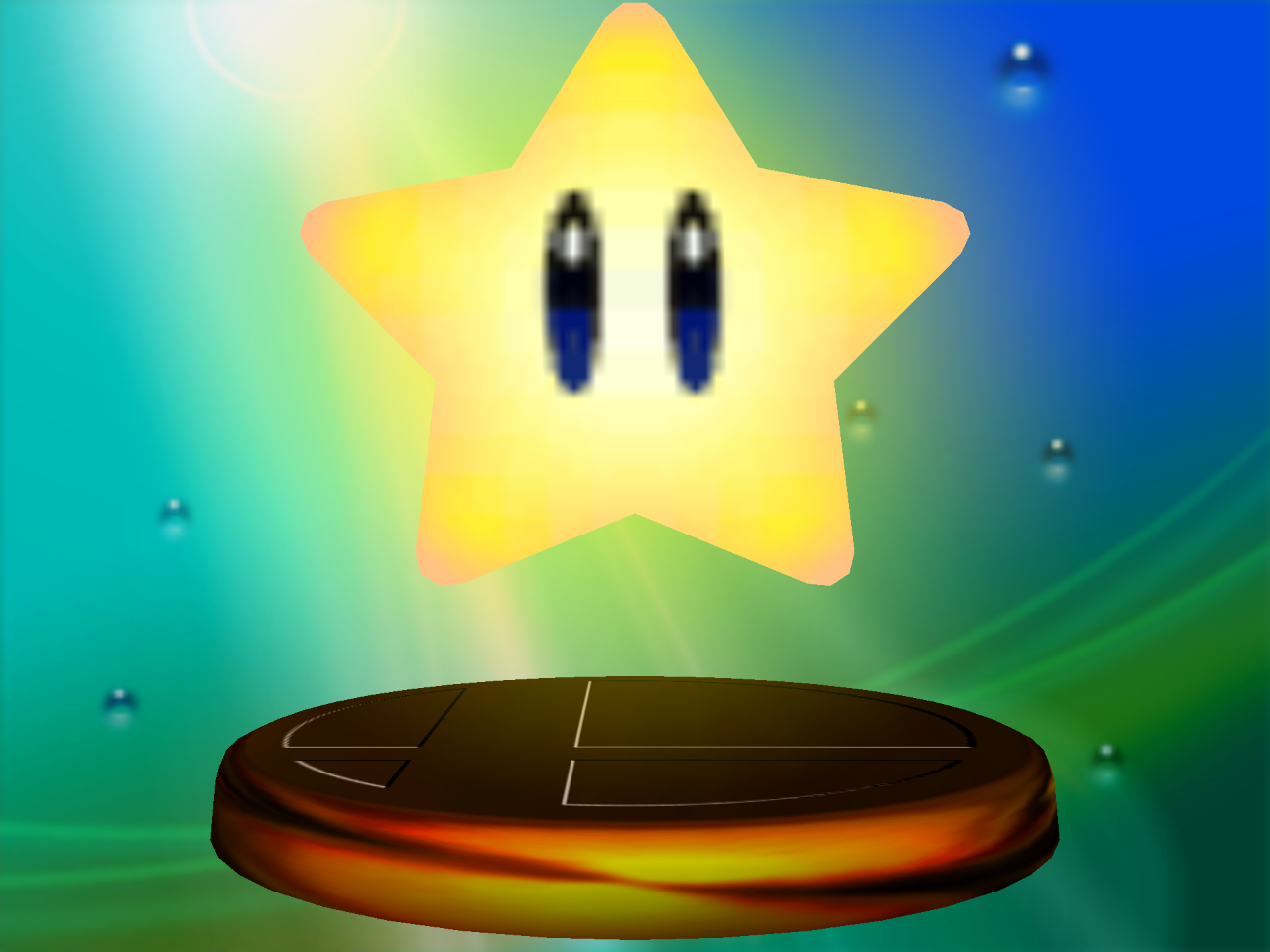
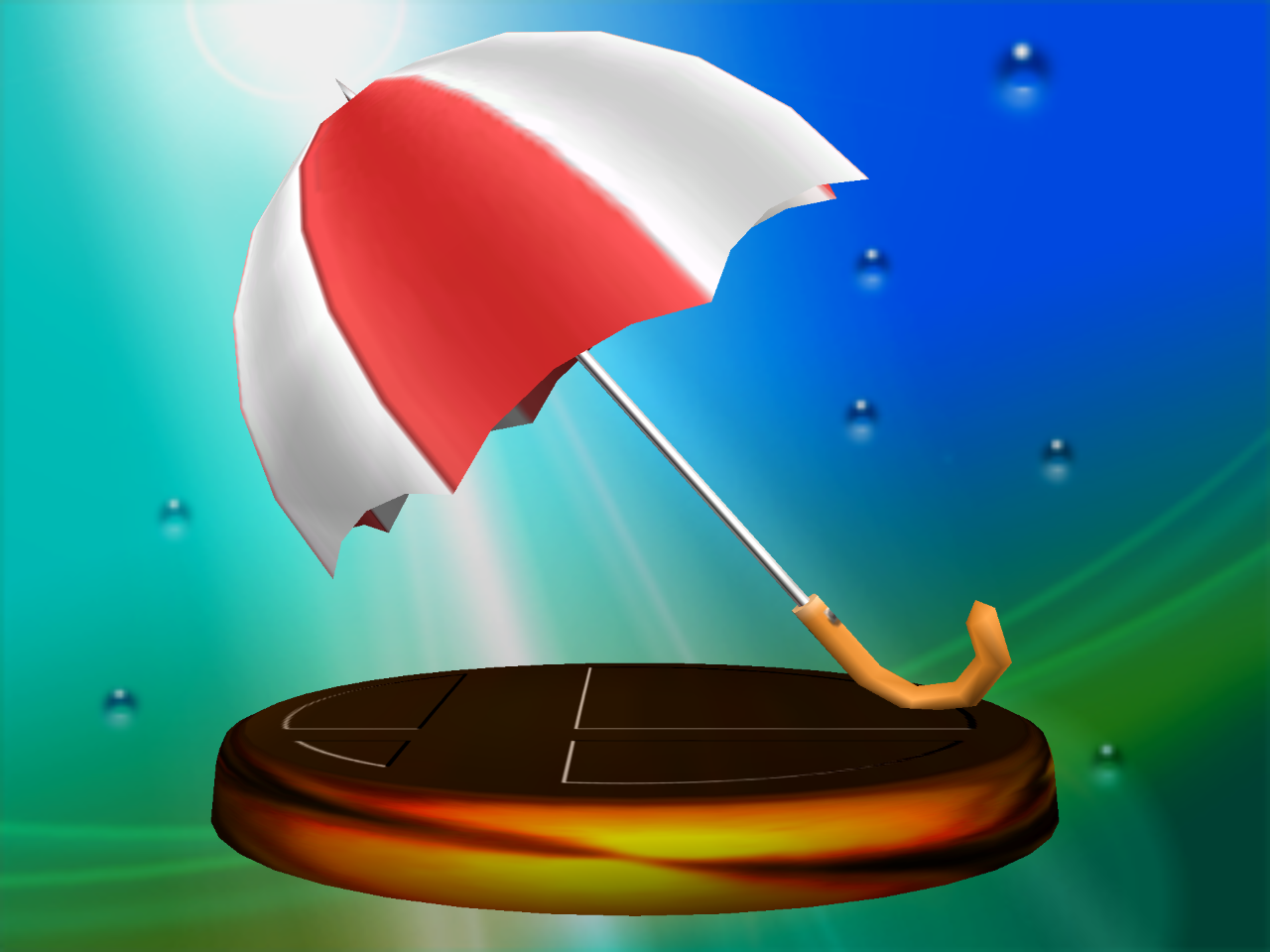
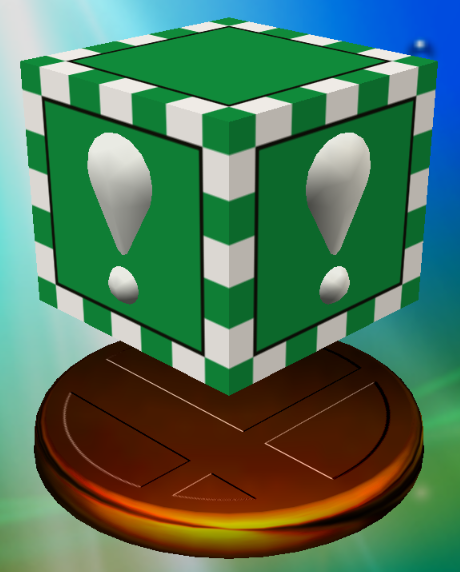
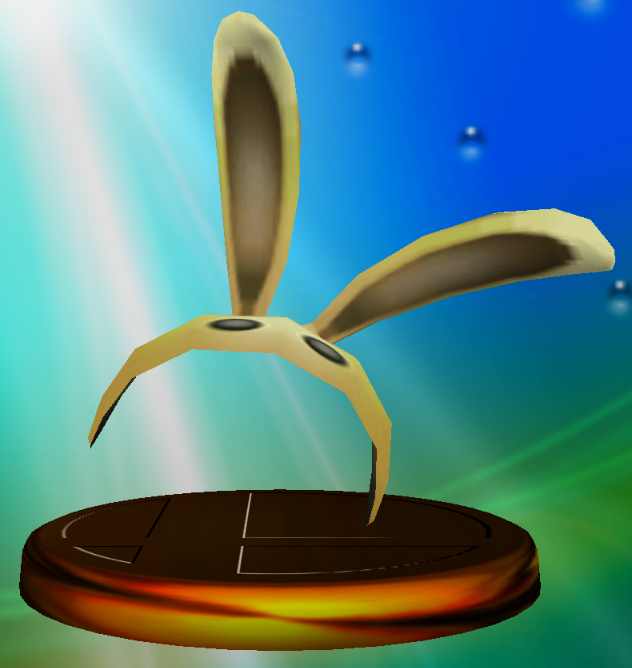
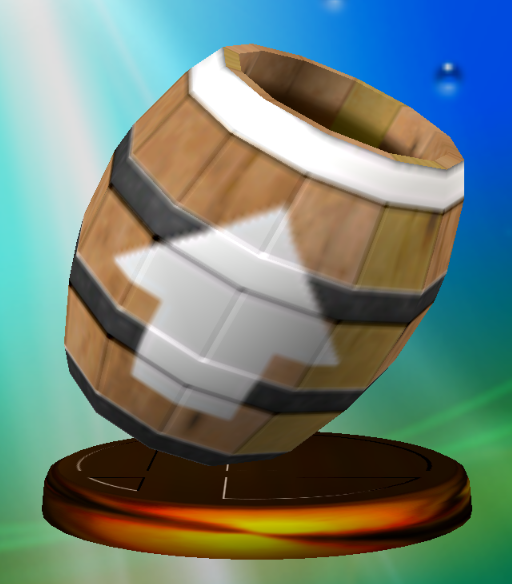
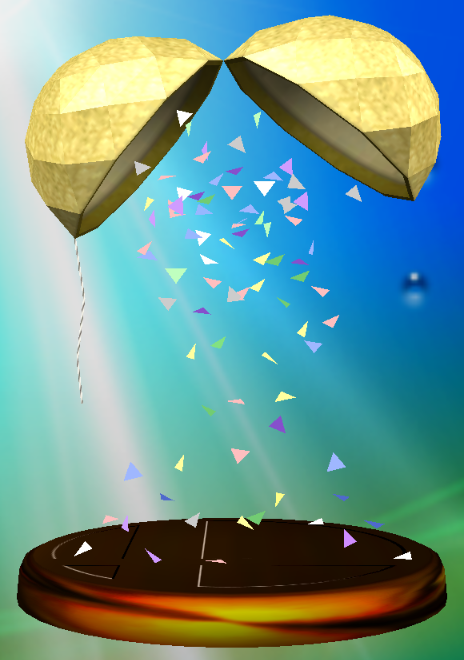
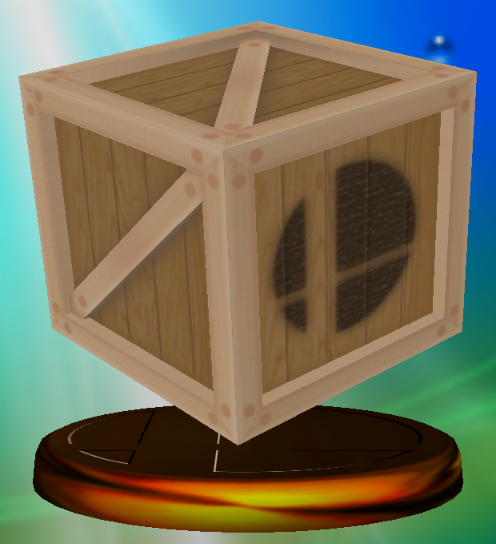
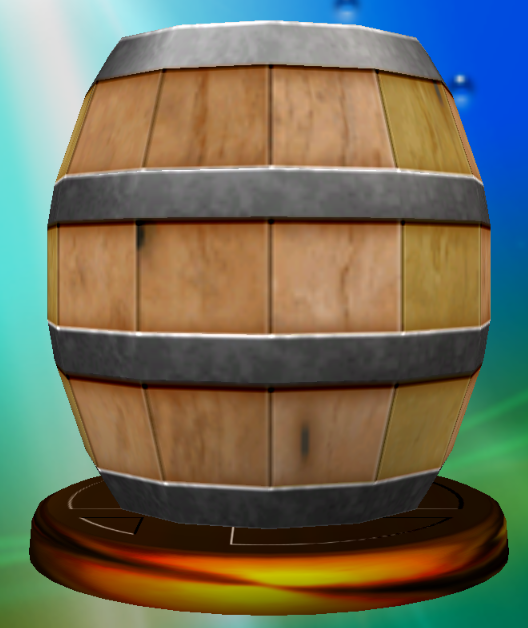
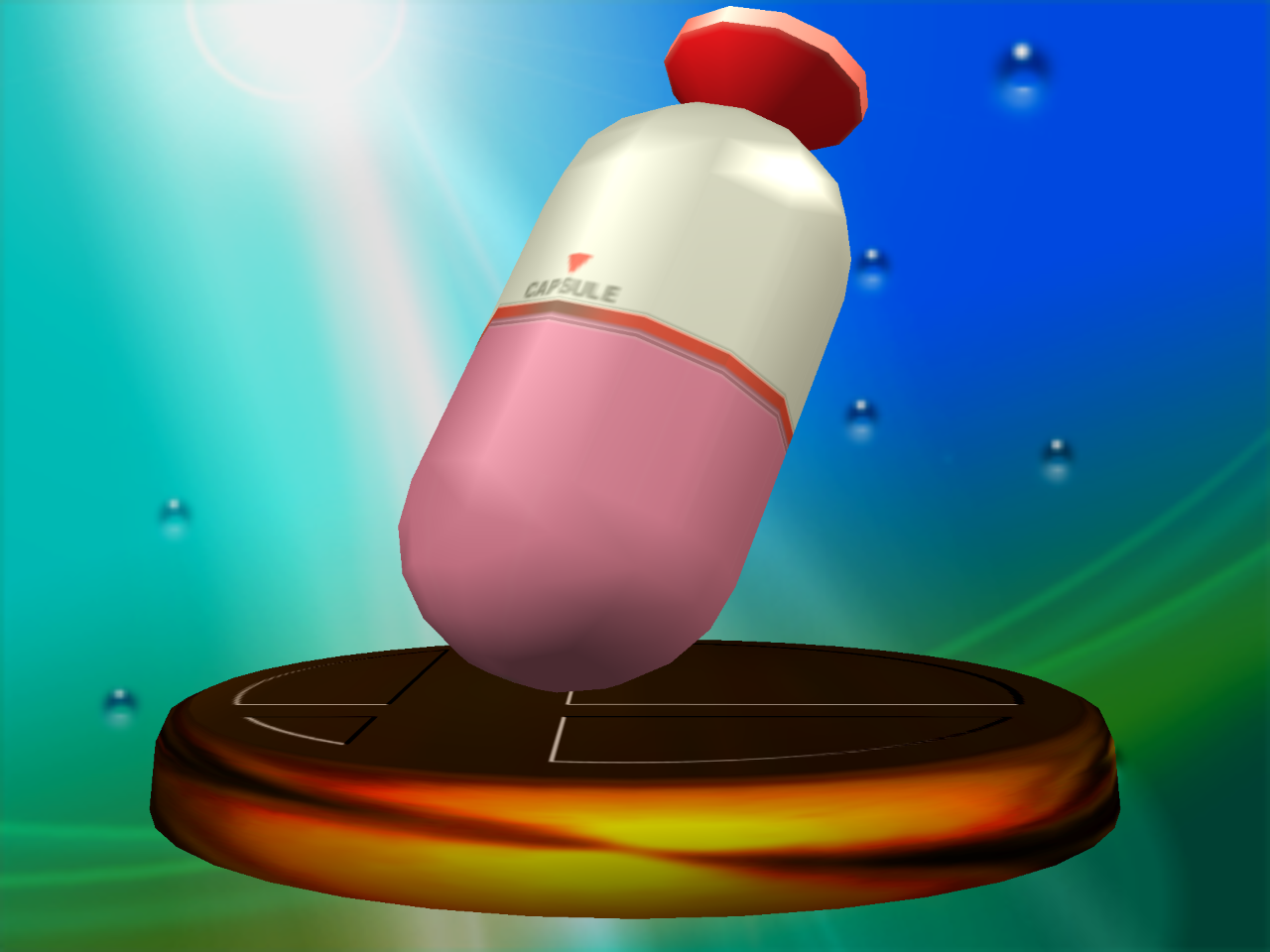
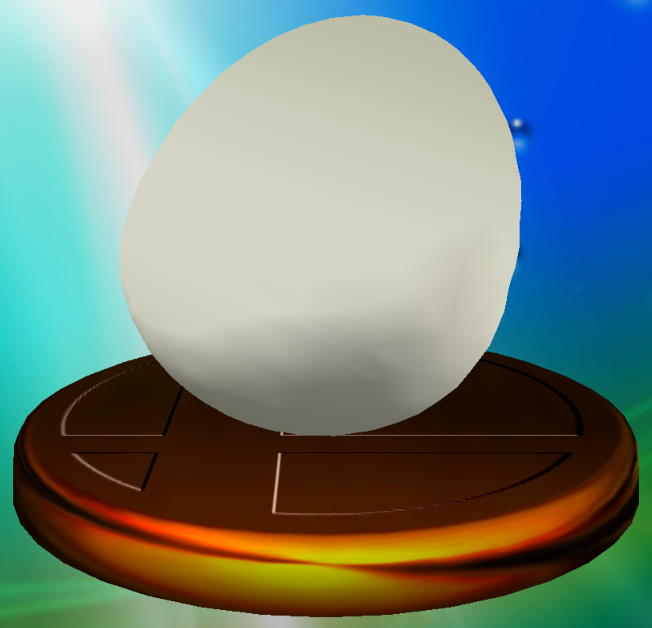
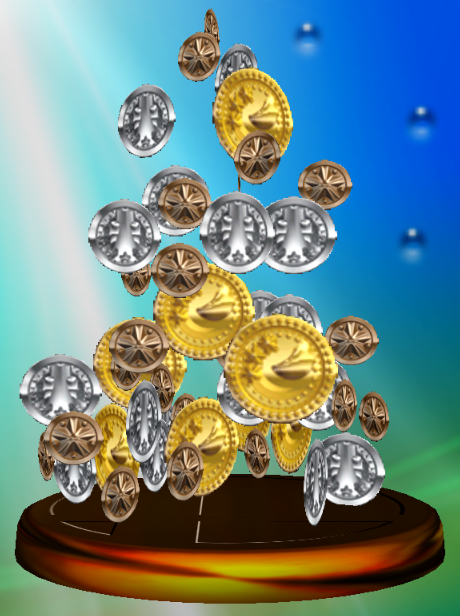
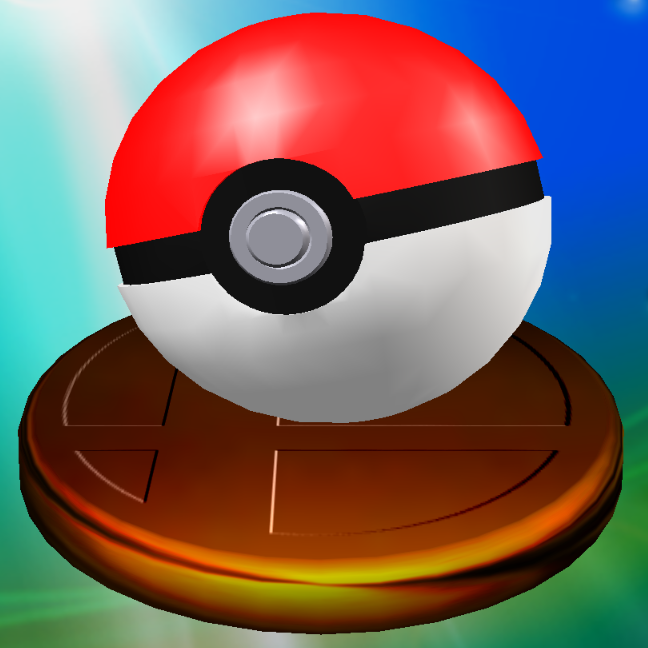
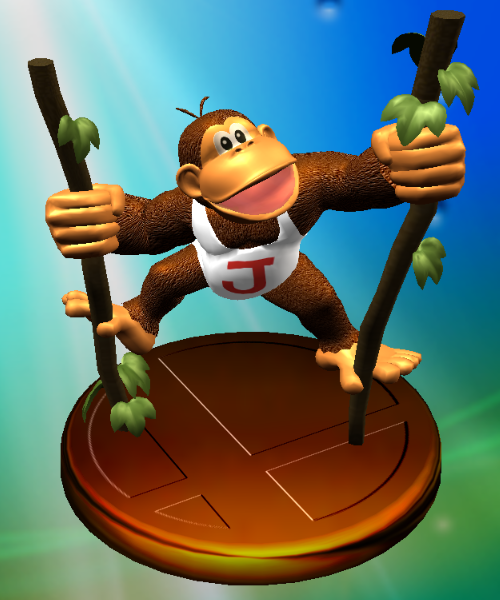 Donkey Kong and Donkey Kong Jr.Arcade, 1981–1982Mario’s blue alternative costume and Donkey Kong’s red one recall their arcade sprites, the Hammer returns as an item, and Donkey Kong Junior has a trophy.
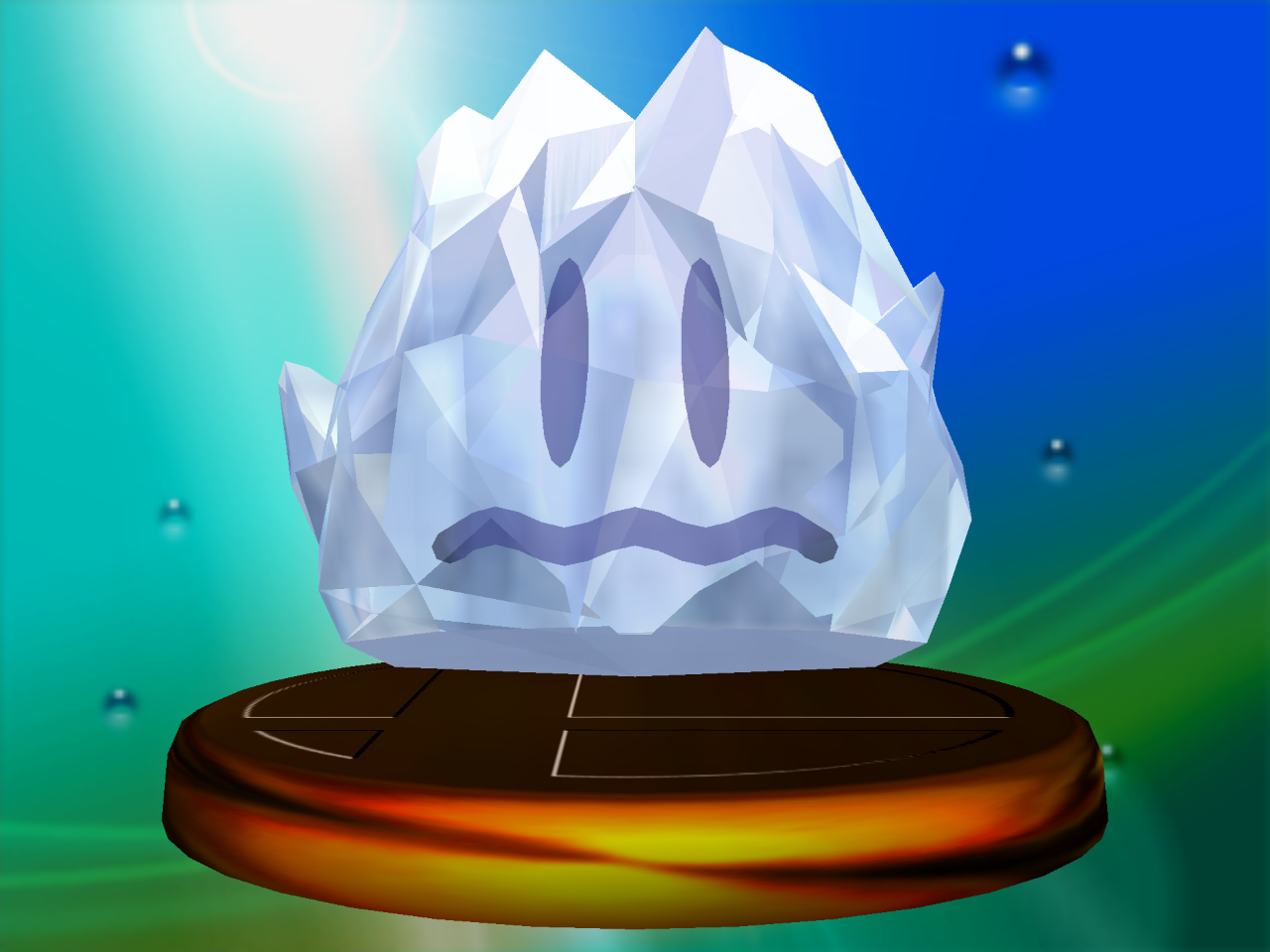 Mario Bros. and Wrecking CrewCostumes and trophiesThe Freezie is both an item and a trophy, and one of Mario’s costumes follows his Mario Bros. artwork. From Wrecking Crew come Mario’s white-and-black outfit, based on Foreman Spike, Luigi’s red-and-pink colours and an Eggplant Man trophy.
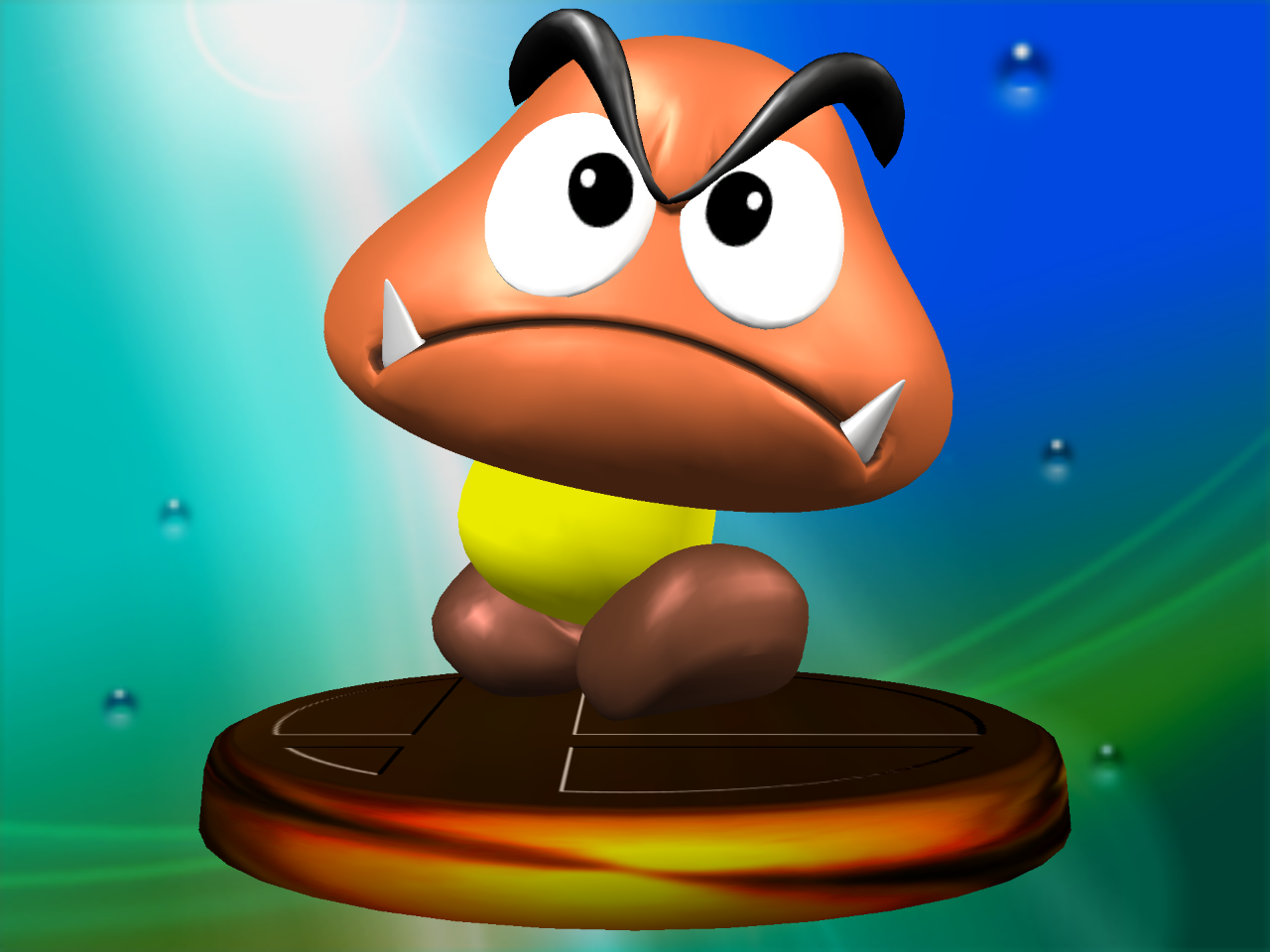 Super Mario Bros.Stage, Adventure level and trophiesThe Mushroom Kingdom stage and Adventure mode’s opening level are built from its worlds, its enemies return as trophies, Luigi and Peach have costumes in their 1985 colours, and one of Bowser’s matches the game’s overseas box art.
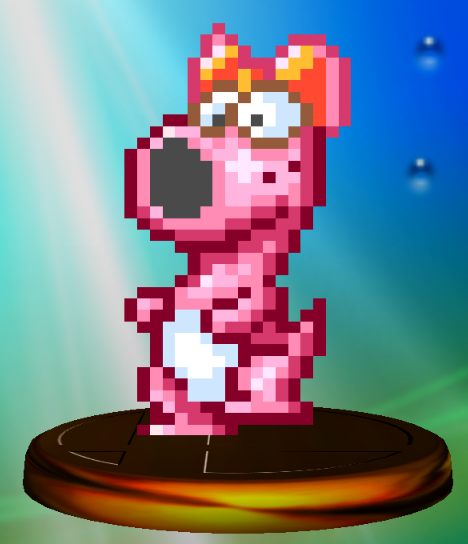 Super Mario Bros. 2Stage, moves and trophiesMushroom Kingdom II is set in Subcon, drawn with the Super Mario All-Stars graphics, with Birdo and Pidgit as both hazards and trophies. Peach’s float and her Vegetable special come from this game too.
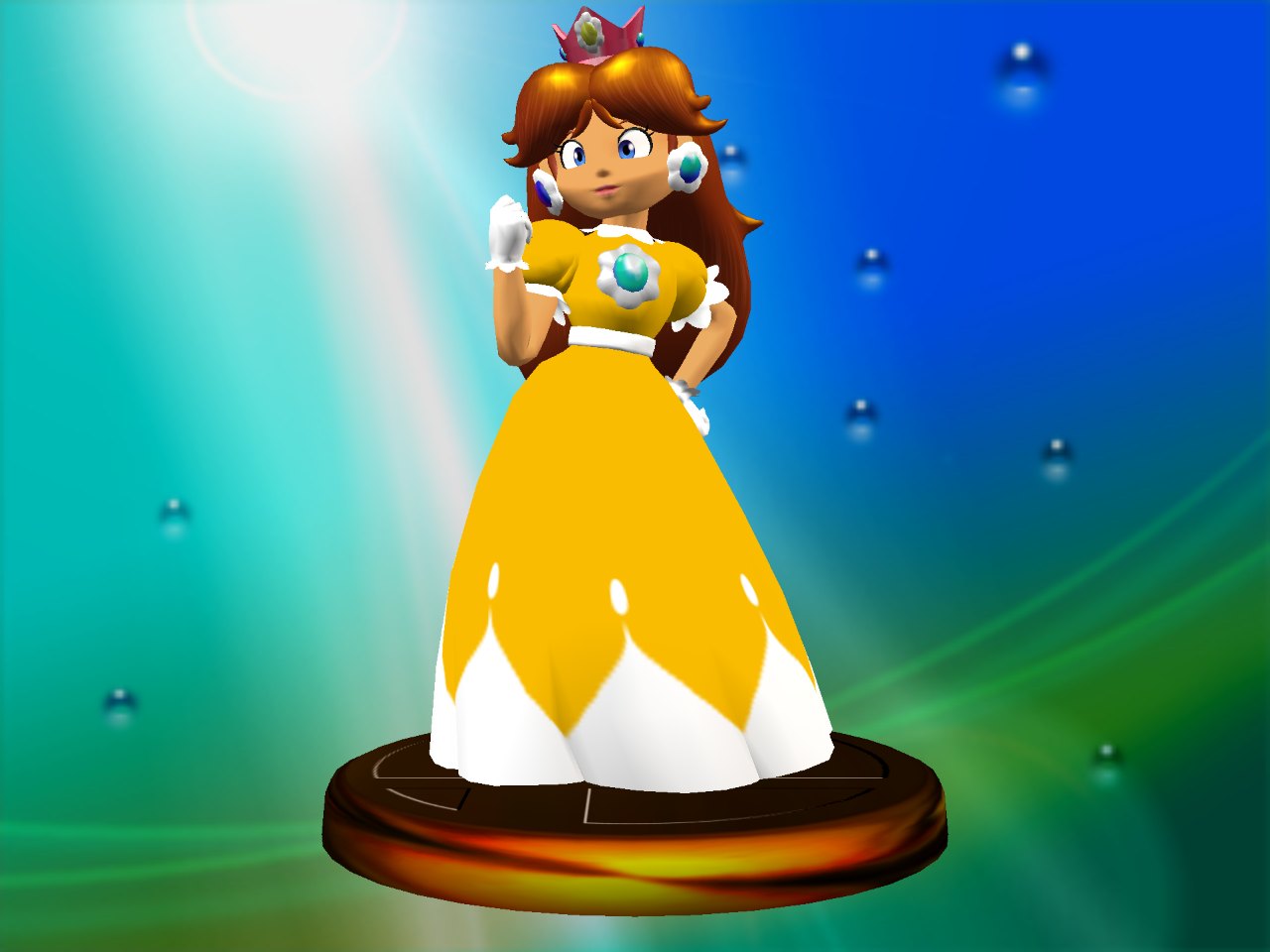 Super Mario Land and Super Mario Land 2Costumes and trophiesPeach’s yellow costume is modelled on Princess Daisy, who has a trophy of her own, and Mario’s yellow-and-purple outfit is a Wario costume. Wario’s trophy mentions Mario’s castle from Super Mario Land 2.
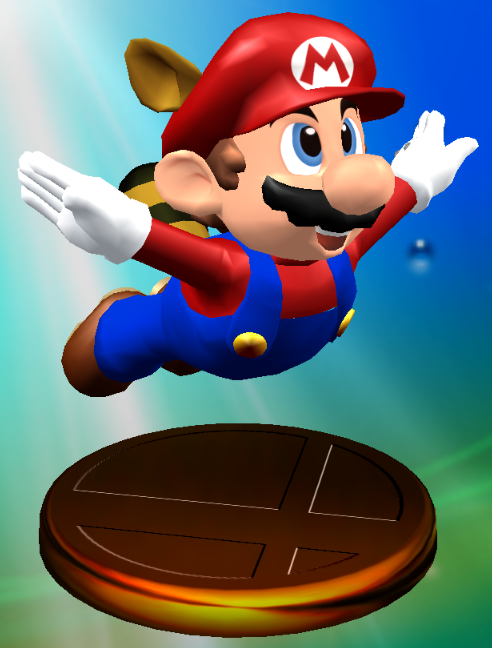 Super Mario Bros. 3Music, move and trophyA reggae medley of the overworld and Grass Land map themes debuts here as an alternative track, Bowser’s Bowser Bomb is his ground pound from this game, and Raccoon Mario is a trophy.
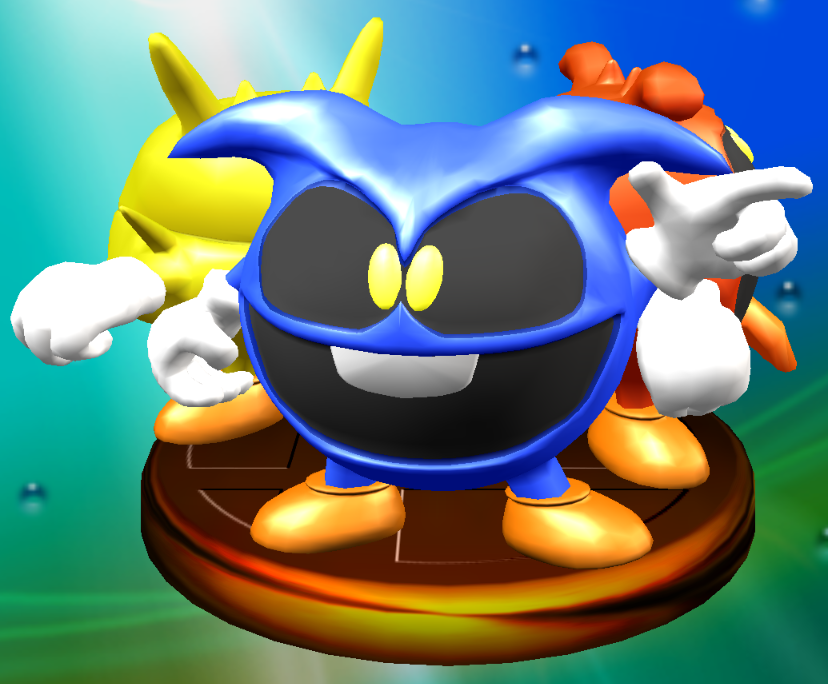 Dr. MarioFighter, music and trophiesDr. Mario joins the cast with Megavitamins as his standard special, the Viruses and Megavitamins have trophies, and a Dr. Mario track (Fever) is the alternative music on Mushroom Kingdom.
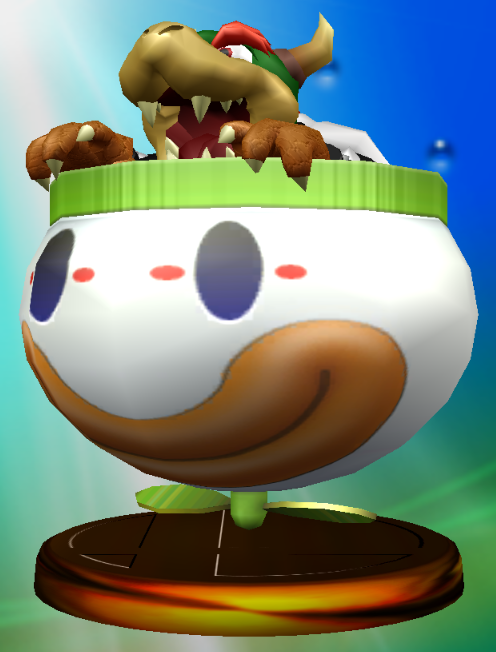 Super Mario WorldStage, move and trophiesThe Yoshi’s Island stage is built from its Yoshi’s Island levels, with a banjo arrangement of the athletic theme, Banzai Bill and a Fishin’ Lakitu in the background. Mario’s Cape is his new side special, the Koopa Clown Car and Banzai Bill have trophies, and a Mario-and-Yoshi trophy exists only in Japan.
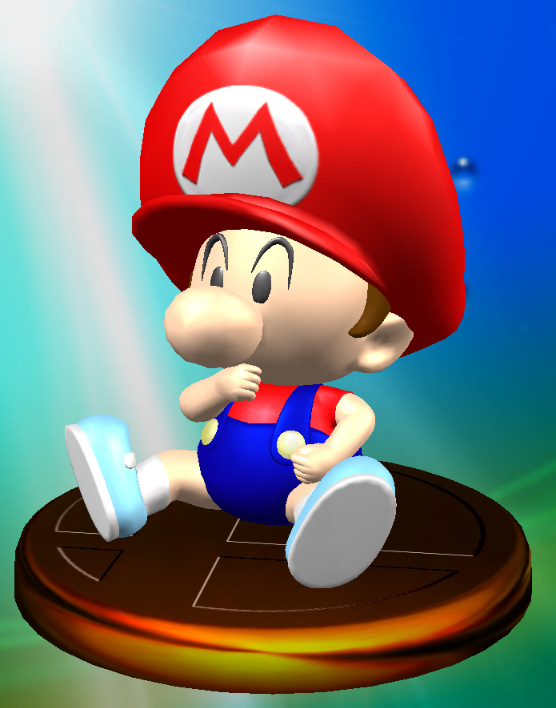 Super Mario World 2: Yoshi’s IslandMoves and trophiesYoshi’s Flutter Jump, Egg Throw and Yoshi Bomb all come from this game, and Baby Mario and Baby Bowser are trophies.
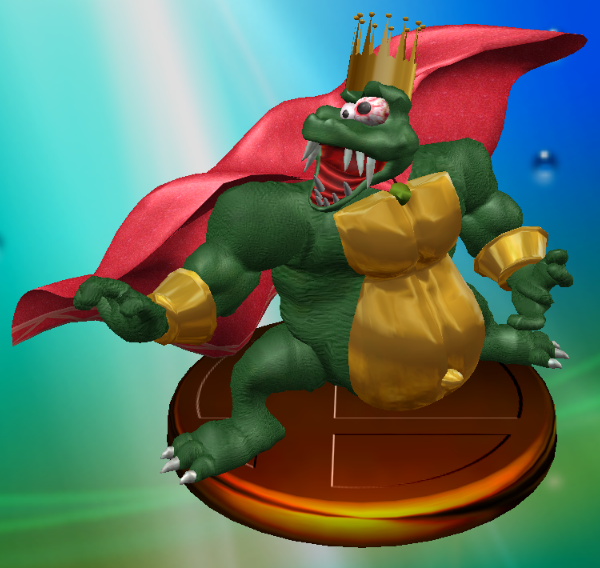 Donkey Kong Country and Donkey Kong 64Stages, music and trophiesKongo Jungle comes from Donkey Kong Country’s first area and Jungle Japes from Donkey Kong 64, with Klaptraps and the Barrel Cannon on hand. The Hand Slap is a Donkey Kong Country move, the DK Rap plays on Kongo Jungle, and King K. Rool and Dixie Kong are trophies.
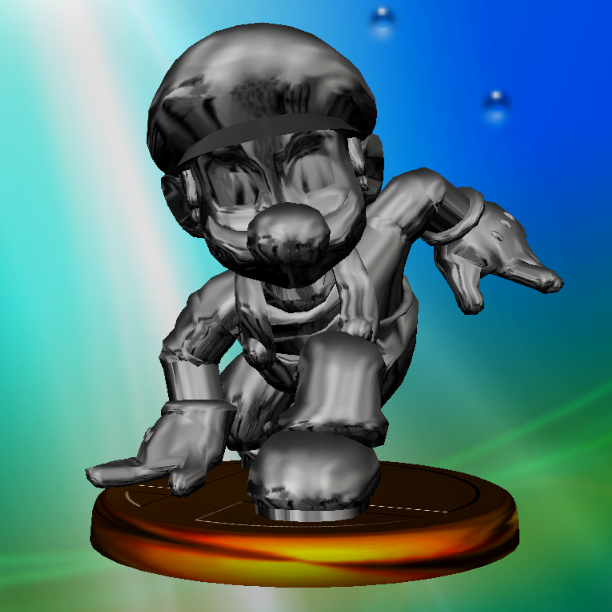 Super Mario 64Stages, boss and itemsPrincess Peach’s Castle and Rainbow Cruise (its Rainbow Ride course) are stages, Metal Mario is an Adventure opponent and a trophy, the Metal Box returns, one of Kirby’s Stone forms is a Thwomp and one of Peach’s victory poses ends like her stained-glass portrait.
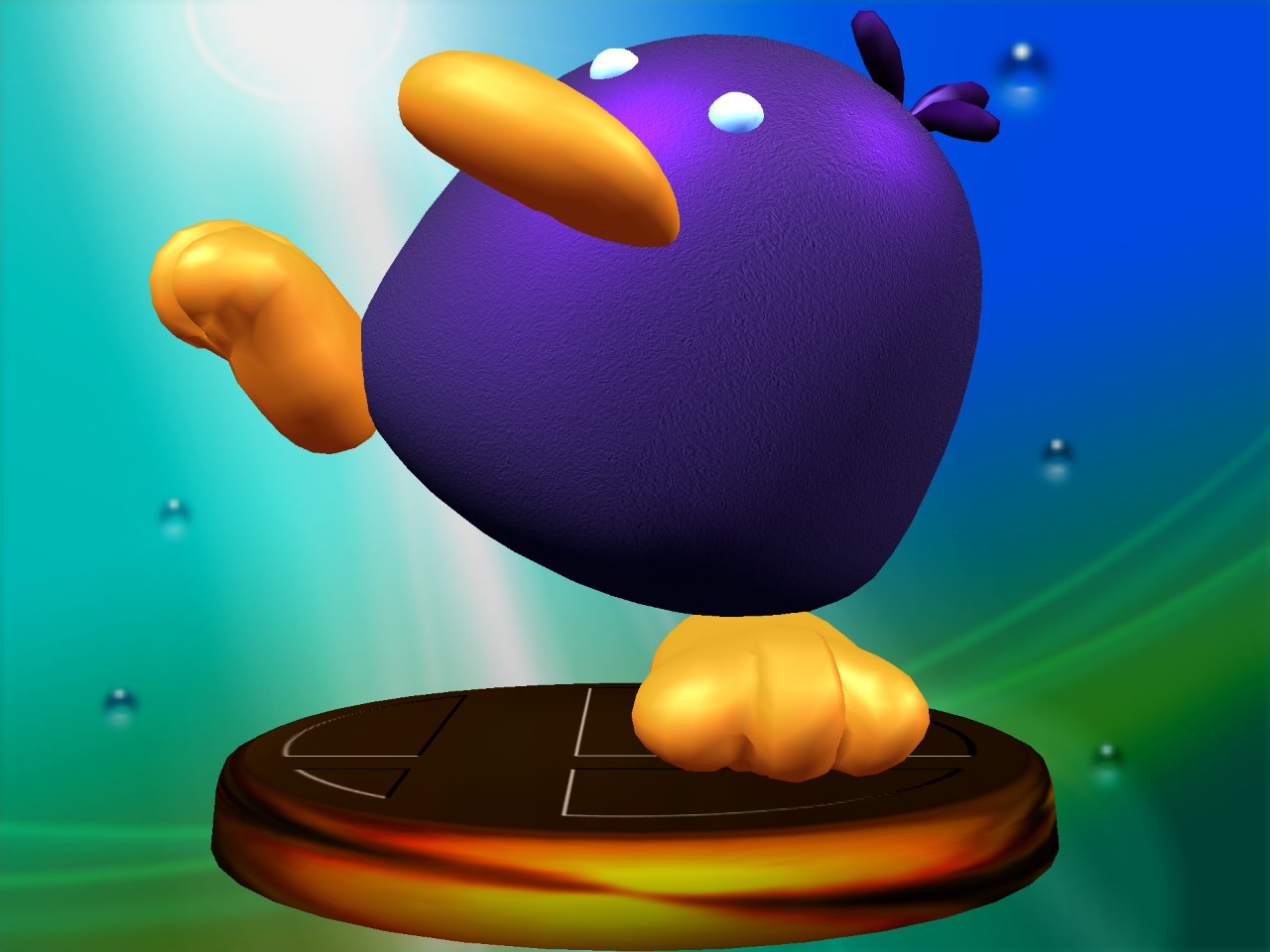 Yoshi’s StoryStages, music and trophiesA stage named after it, plus the returning Past Stage from the Nintendo 64 game. Yoshi’s victory fanfare arranges its theme, his colours come from it, and a Shy Guy, Pak E. Derm and Raphael the Raven are trophies.
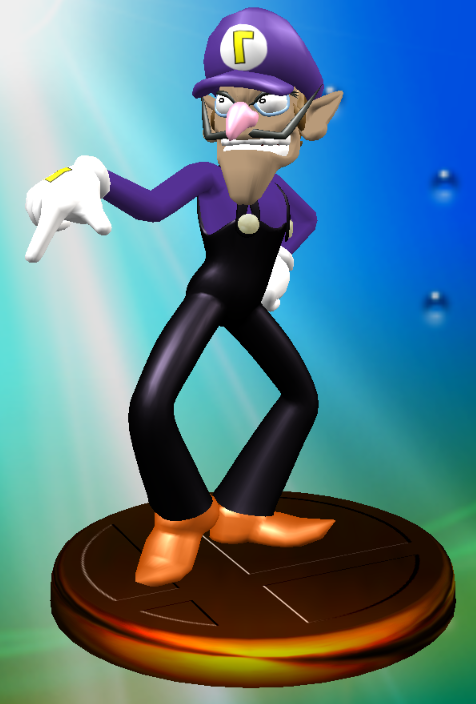 Mario Kart, Mario Golf and Mario TennisSpin-offsPeach’s forward smash can be a golf club or a tennis racket, a racing kart is a trophy, and so are Plum from Mario Golf and Waluigi, who made his debut in Mario Tennis.
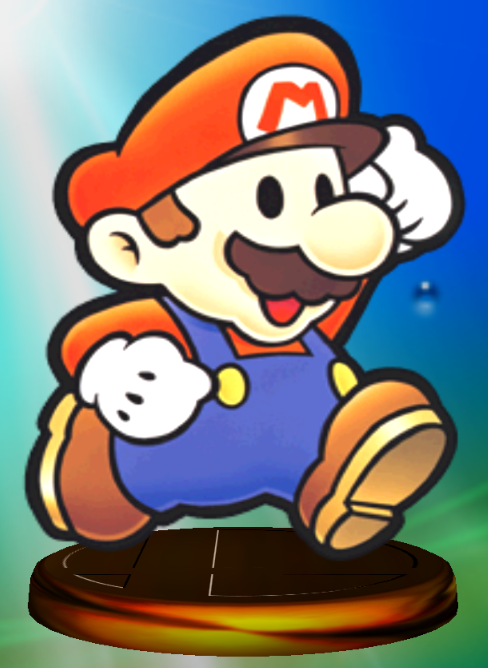 Paper Mario and Luigi’s MansionTrophiesPaper Mario has a trophy, and one of Luigi’s trophies shows him with the Poltergust 3000 from Luigi’s Mansion.
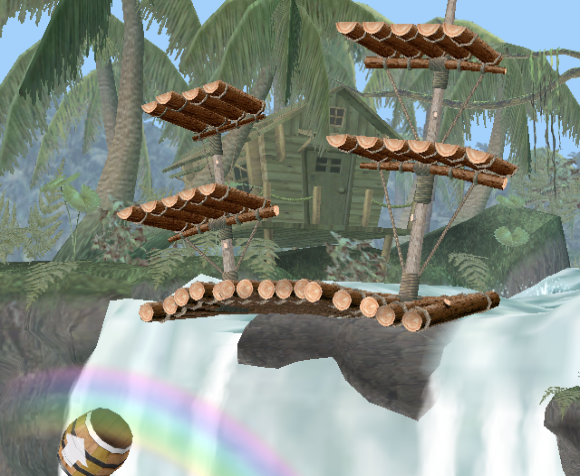 The Mario music in MeleeSoundtrackPrincess Peach’s Castle overlaps the Super Mario Bros. overworld and underground themes, Rainbow Cruise mixes Super Mario 64’s slide music with the Super Mario Bros. underwater theme, Mushroom Kingdom II uses Super Mario Bros. 2’s overworld music and Jungle Japes swings to a jazzy DK Island Swing. The DK Rap on Kongo Jungle, sung by James W. Norwood Jr., is the first vocal track in the series.
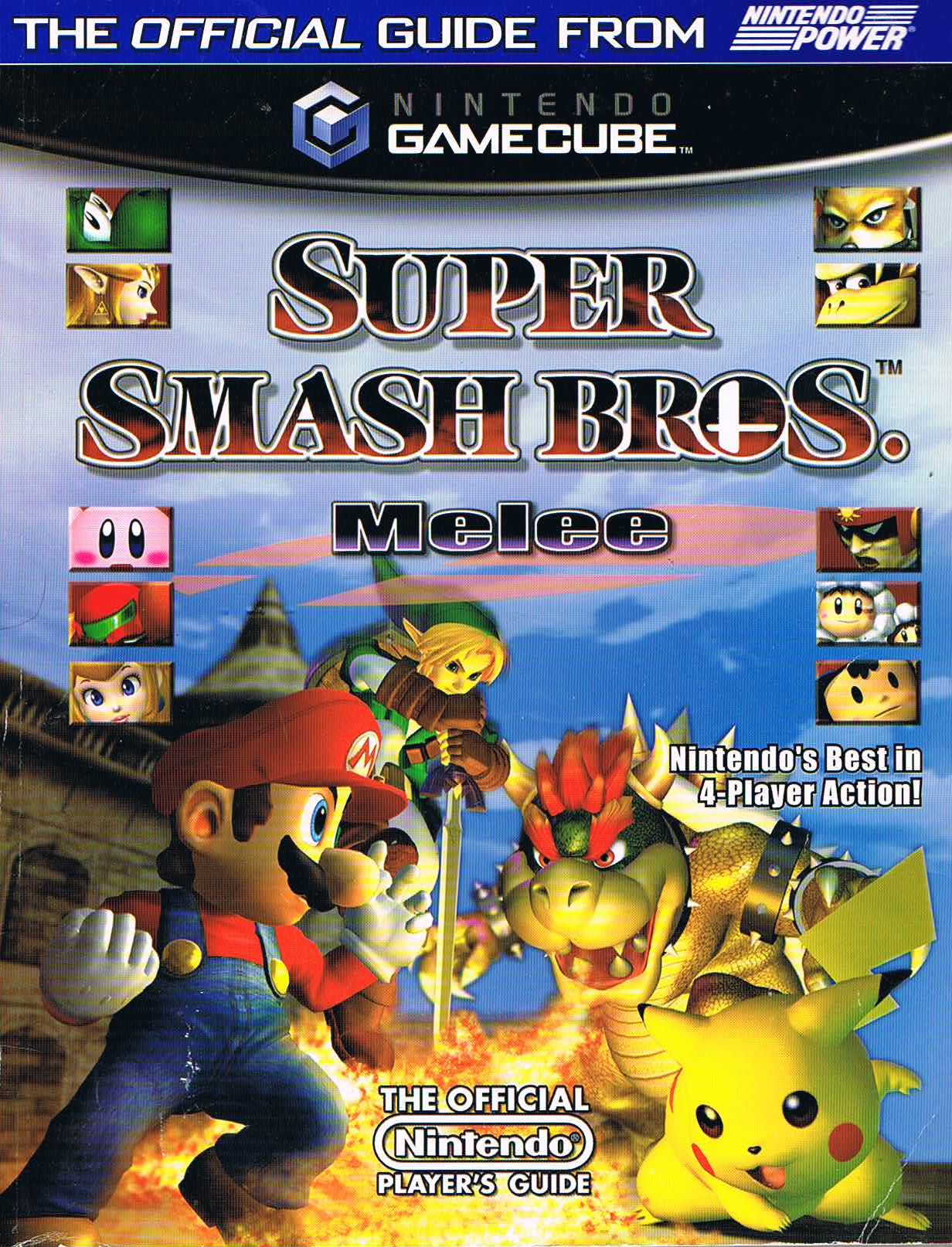 Nintendo Power Player’s GuideStrategy guidesNintendo Power’s Player’s Guide and Prima Games’ official guide both covered the game.
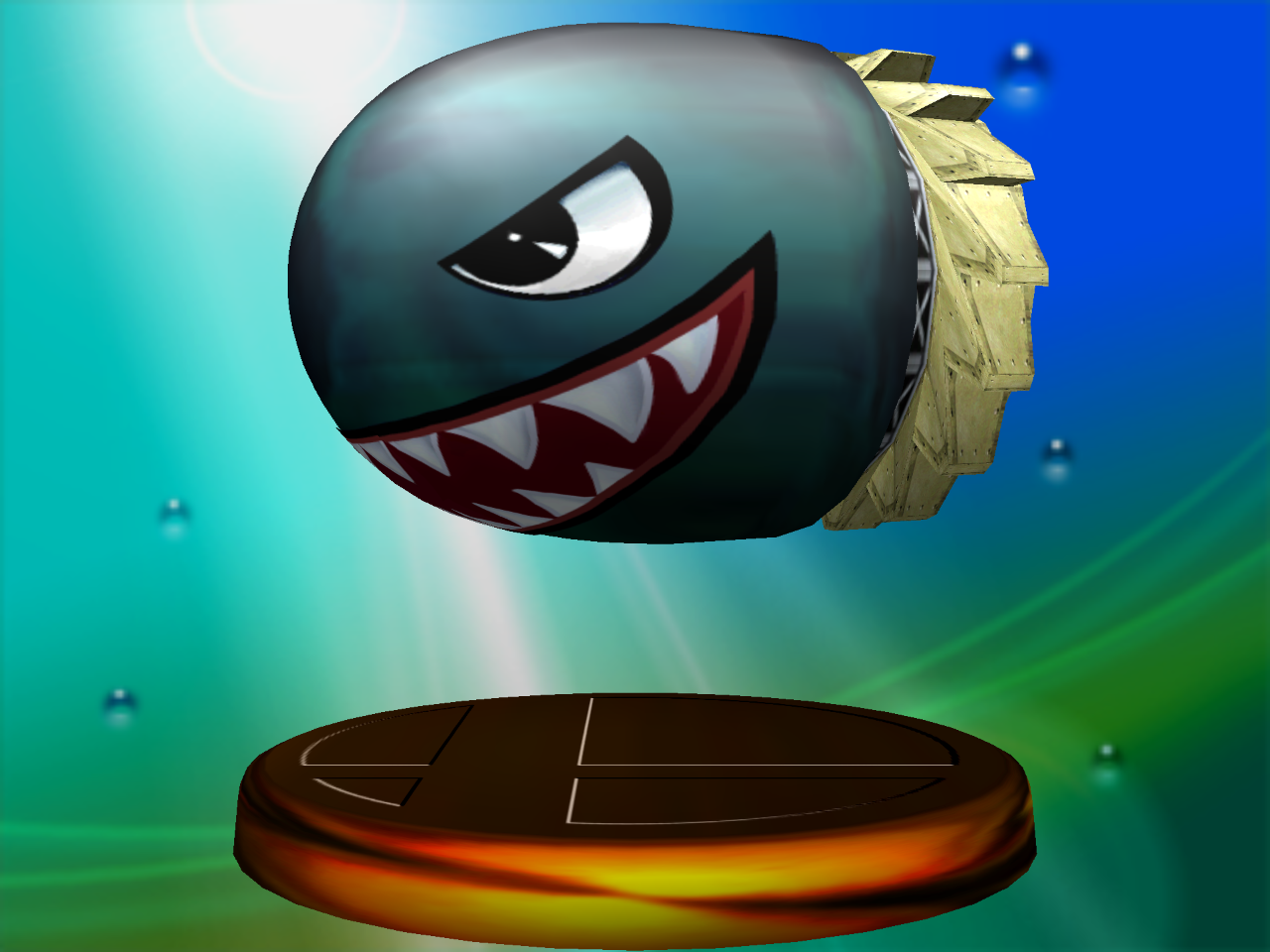 Later Mario games and Donkey KongaReferences to MeleeDonkey Konga has four Melee tracks, Rainbow Cruise and the DK Rap among them. Super Mario 3D World calls one of its challenge rooms Mystery House Melee, and in The Super Mario Bros. Movie Bowser aims a giant Bomber Bill at Peach’s castle, much as the Melee stage’s Banzai Bill does.
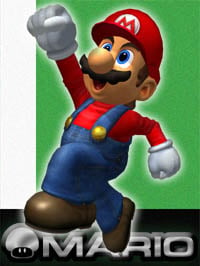 MarioSuper Mario · starter · veteran
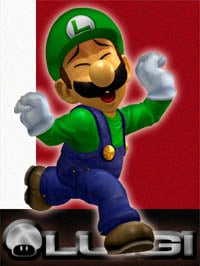 LuigiSuper Mario · unlockable · veteran
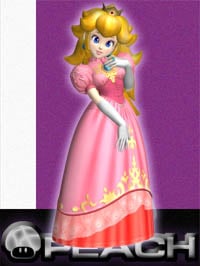 PeachSuper Mario · starter · newcomer
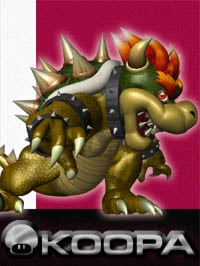 BowserSuper Mario · starter · newcomer
 Dr. MarioDr. Mario · unlockable · newcomer
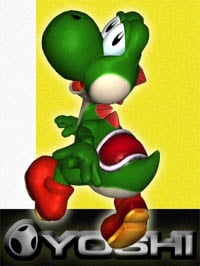 YoshiYoshi · starter · veteran
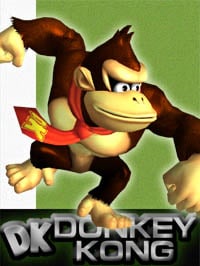 Donkey KongDonkey Kong · starter · veteran
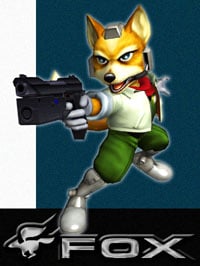 FoxStar Fox · starter · veteran
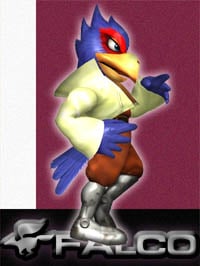 FalcoStar Fox · unlockable · newcomer
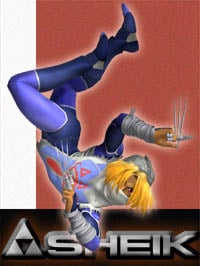 SheikThe Legend of Zelda · Zelda’s other form · newcomer
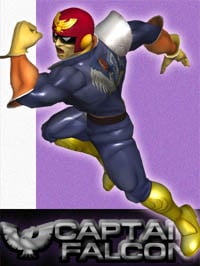 Captain FalconF-Zero · starter · veteran
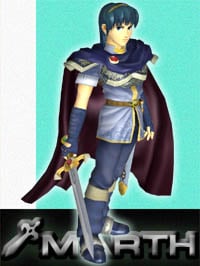 MarthFire Emblem · unlockable · newcomer
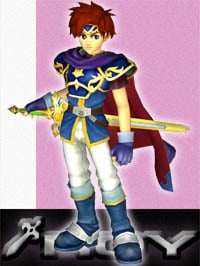 RoyFire Emblem · unlockable · newcomer
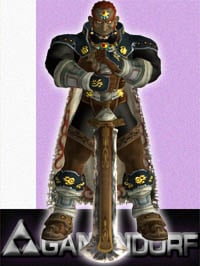 GanondorfThe Legend of Zelda · unlockable · newcomer
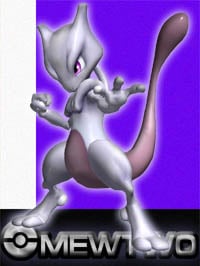 MewtwoPokémon · unlockable · newcomer
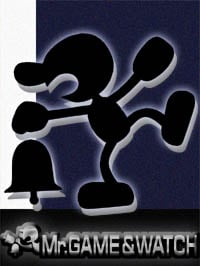 Mr. Game & WatchGame & Watch · unlockable · newcomer
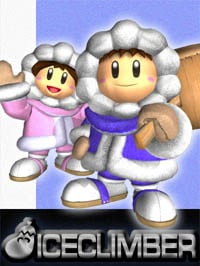 Ice ClimbersIce Climber · starter · newcomer
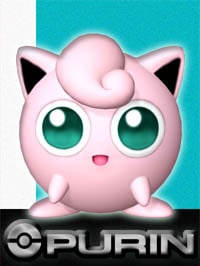 JigglypuffPokémon · unlockable · veteran
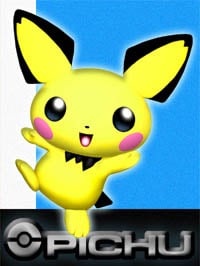 PichuPokémon · unlockable · newcomer
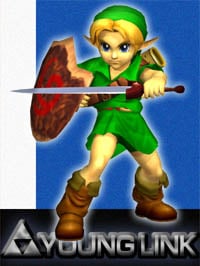 Young LinkThe Legend of Zelda · unlockable · newcomer
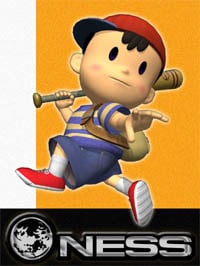 NessEarthBound · starterPSI powers, a bat and a yo-yo.
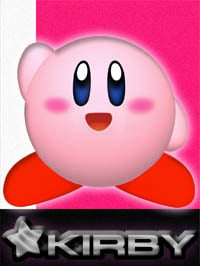 KirbyKirby · starterLight; five mid-air jumps; copies standard specials.
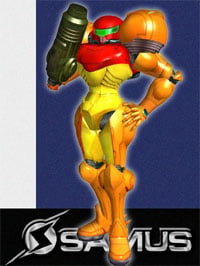 SamusMetroid · starterHeavy, with a chargeable shot and a long grapple beam.
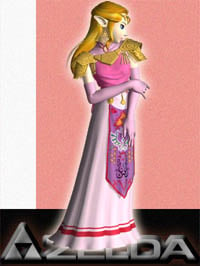 ZeldaThe Legend of Zelda · starter · newSlow magic user who can turn into Sheik.
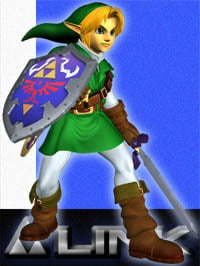 LinkThe Legend of Zelda · starterSword, bow, boomerang and bombs.
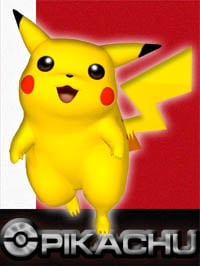 PikachuPokémon · starterFast and light, with electric attacks.
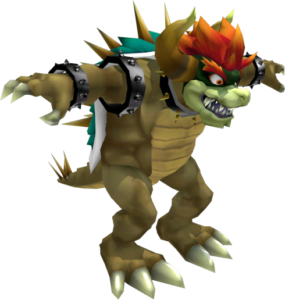 Giga BowserSuper Smash Bros. · Adventure mode final boss (Normal or higher)Bowser transformed, fought after Giant Bowser on Final Destination; also in Event 51.
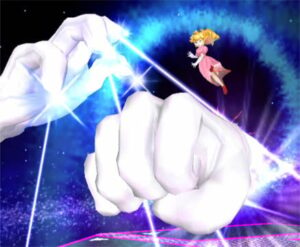 Master Hand and Crazy HandSuper Smash Bros. · Classic mode final bossThe giant gloves; Crazy Hand joins on Normal or higher if you have not continued.
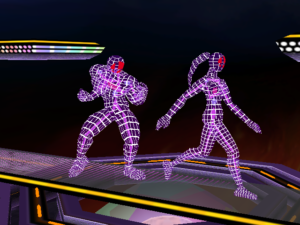 Fighting Wire FramesSuper Smash Bros. · Multi-Man Melee and AdventureWeak wireframe fighters that come in endless waves; they cannot use special moves.
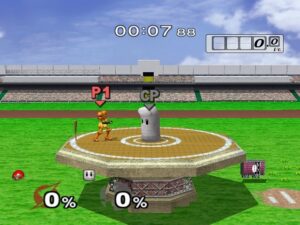 SandbagSuper Smash Bros. · Home-Run ContestThe punchbag you hit as far as you can.