Nintendo 3DS2013Next Level GamesAction-adventure6.44 million soldYear of Luigi5 mansions4-player ScareScraperMetacritic 86
Luigi’s Mansion 2 (Luigi’s Mansion: Dark Moon)
Twelve years after he cleared one haunted house, Luigi is beamed out of his armchair to clear five. Luigi’s Mansion 2, known in North America as Luigi’s Mansion: Dark Moon, arrived on Nintendo 3DS in March 2013 as the opening act of Nintendo’s Year of Luigi. King Boo has smashed the Dark Moon that keeps the ghosts of Evershade Valley friendly, and Professor E. Gadd needs its six pieces back. Made in Vancouver by Next Level Games with Shigeru Miyamoto as producer, it swaps the single mansion of the original for five, split into bite-sized missions, and gives Luigi a new Poltergust 5000, a ghost-stunning Strobulb and a Dark-Light Device that shows what the spooks have hidden. There are Possessor bosses that turn staircases and clock faces into monsters, a ghost dog called Polterpup, and the ScareScraper, a co-operative tower for four Luigis. It reviewed warmly, sold 6.44 million copies and returned in 2024 as Luigi’s Mansion 2 HD on Nintendo Switch.
Developer:Next Level Games, with Nintendo SPD Group No. 3 (HD version: Tantalus Media)
Publisher:Nintendo
Platform:Nintendo 3DS; Nintendo Switch (Luigi’s Mansion 2 HD, 2024)
Genre:Action-adventure
Japan:20 March 2013 (as Luigi Mansion 2)
N. America:24 March 2013 (as Luigi’s Mansion: Dark Moon)
Europe:28 March 2013
Australia:28 March 2013
South Korea:18 July 2013 (as Dark Moon)
Players:1 in the story; 1–4 in the ScareScraper (local, Download Play and online)
Director:Bryce Holliday
Producers:Shigeru Miyamoto (Nintendo); Bjorn Nash, Eric Randall, Ken Yeeloy and others (Next Level Games); executive producer Satoru Iwata
Music:Chad York, Darren Radtke, Mike Peacock
Mansions:Five, plus King Boo’s Illusion and the ScareScraper
Missions:33: 23 numbered missions, five boss missions, five bonus missions
Collectables:65 gems, 32 Boos, six Dark Moon pieces
Ratings:ESRB E · PEGI 7 · CERO A · ACB G · USK 6
Sales:6.44 million on 3DS (to 31 December 2020); 1.88 million for the HD version (to 31 March 2025)
Re-releases:Nintendo Selects (2016–2018); Luigi’s Mansion 2 HD (Nintendo Switch, 27 June 2024)
Advertisement
Overview
Luigi and the ghosts of Gloomy Manor.
The sequel to Luigi’s Mansion took its time. Fans had been asking for one since 2001, as Shigeru Miyamoto acknowledged when it was finally done, and what they got in March 2013 was a different sort of game from the GameCube original: bigger, busier, funnier and built for a handheld. It was released in Japan on 20 March 2013, in North America on 24 March and in Europe and Australia on 28 March. Japan and Europe call it Luigi’s Mansion 2; North America and South Korea know it as Luigi’s Mansion: Dark Moon.
The setting is Evershade Valley, where Professor E. Gadd has been happily studying a population of friendly ghosts under the glow of the Dark Moon that hangs over the valley. When King Boo shatters it the ghosts turn nasty overnight, the professor bolts for his Bunker and Luigi, dozing in front of the television at home, is teleported in to help whether he likes it or not. The Dark Moon has broken into six pieces, and the ones still missing are in the hands of the Possessors, the boss ghosts of the valley’s five haunted buildings.
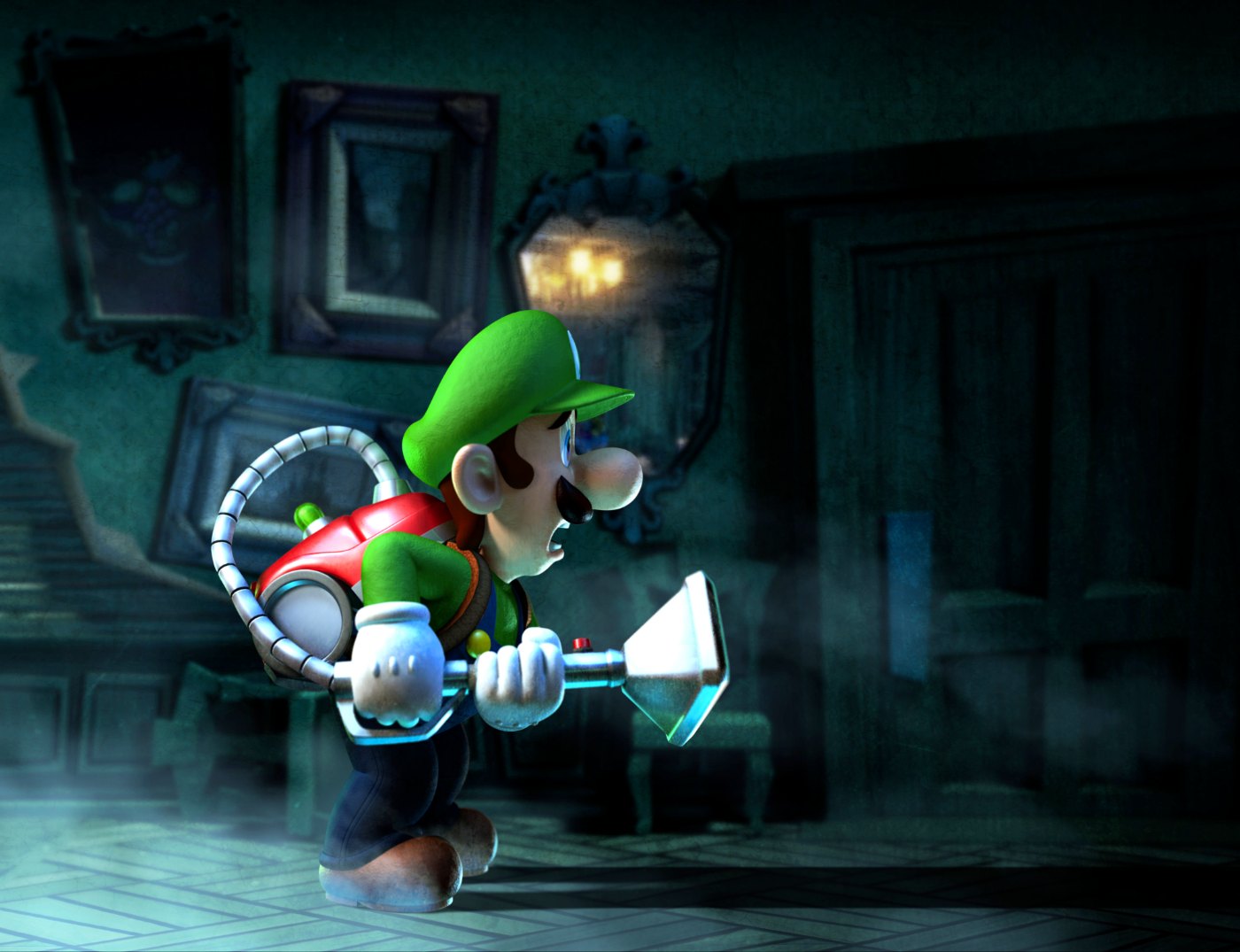
Where the first game was one house explored in one sitting, this one is a string of missions. The professor beams Luigi into a mansion with a job to do (find the gears, mend the water pump, catch the dog that ate the key), beams him out when it is done, and gives him a score and a star rating. The mansions themselves are full of the clockwork contraptions and hidden-room tricks that the developers, borrowing a word from Miyamoto, called karakuri. Luigi no longer breathes fire or ice. Instead he has the Strobulb, a camera flash that stuns anything caught in it, and the Dark-Light Device, which makes vanished furniture reappear and shows the trail of an invisible Boo.
Critics adored the look of it and the slapstick of Luigi himself, and grumbled, where they grumbled, about long missions with no checkpoints. Metacritic’s average is 86. The figure usually quoted for the 3DS version, from the CESA Games White Paper, is 6.44 million copies, almost double what the original managed, and it was followed by Luigi’s Mansion 3 on Switch in 2019. In June 2024 the game was remastered for Switch by Tantalus Media as Luigi’s Mansion 2 HD, under that name in every region.
Join Luigi, the lean, green ghost-catching machine in an eerie new 3D adventure!
Luigi is back on a mission to remove a bunch of stubborn ghosts from some super-spooky mansions in Luigi’s Mansion 2 for Nintendo 3DS. Armed with his trusty “Poltergust” ghost-grabbing vacuum cleaner, Mario’s brother takes centre stage to capture those pesky phantoms. Sure, Luigi’s the nervous type who’d rather be as far from these ghosts as he can get, but a reluctant hero can still save the day!
— Official description (Nintendo UK, 2013)
Why Luigi’s Mansion 2 matters to Mario fans
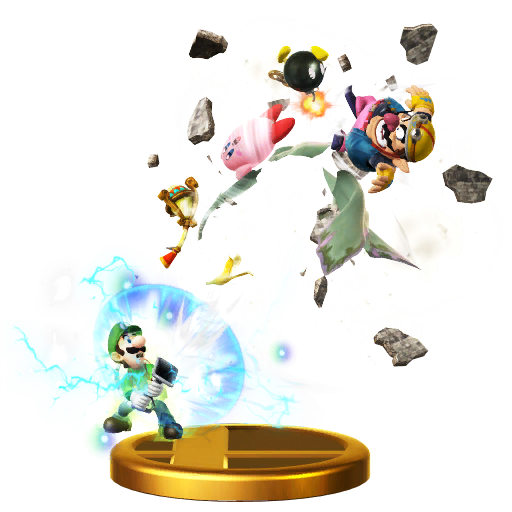
This is the game that turned a one-off GameCube curiosity into a series. It gave Luigi his Poltergust 5000 (and with it his Final Smash in Super Smash Bros. for Nintendo 3DS and Wii U), introduced Polterpup, brought four-player co-op to the mansion for the first time and began Nintendo’s partnership with Next Level Games on the series, which continued with Luigi’s Mansion 3. It was also the centrepiece of the Year of Luigi, which on this site we would happily have every year.
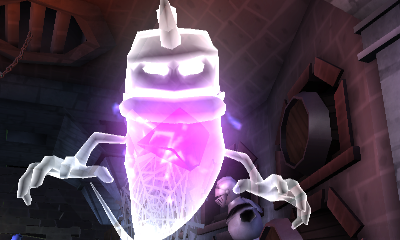
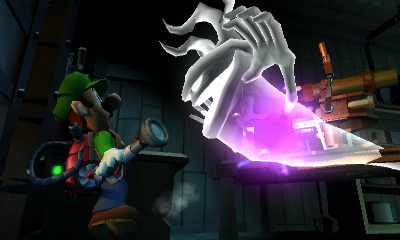
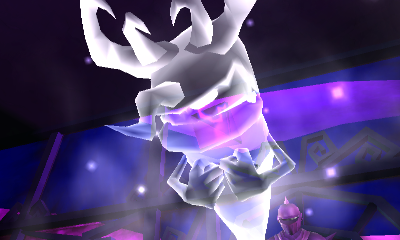
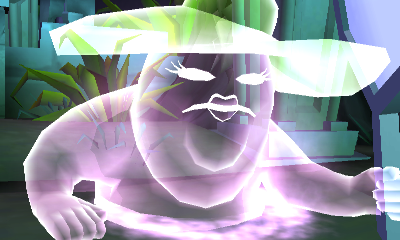
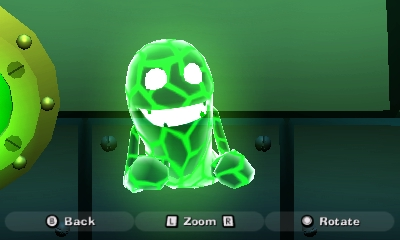
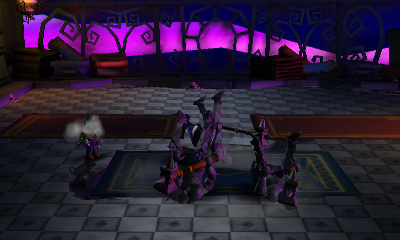
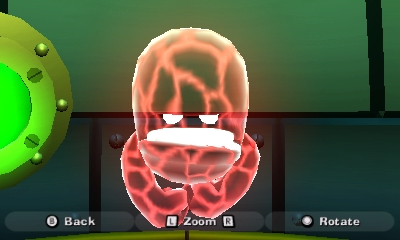
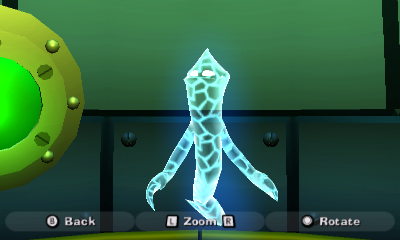
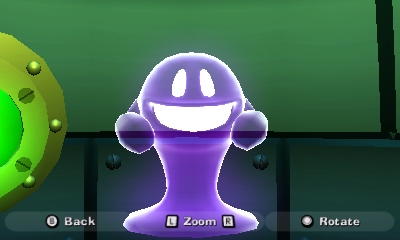
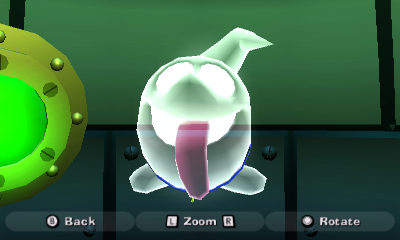
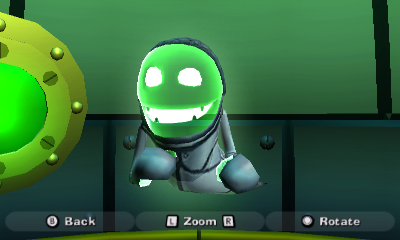
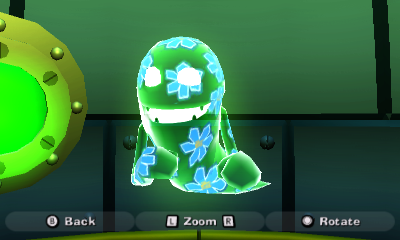
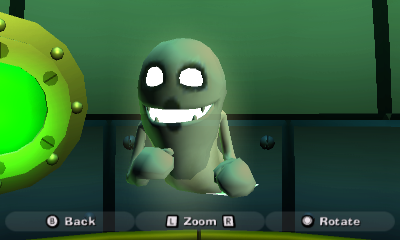
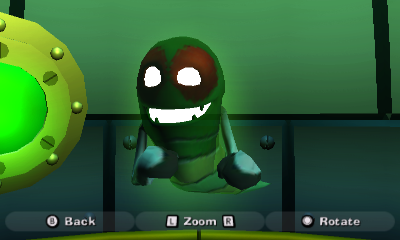
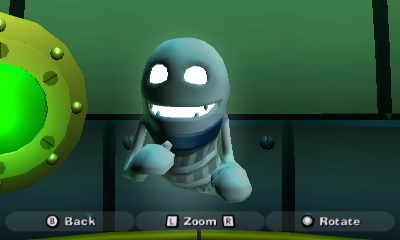
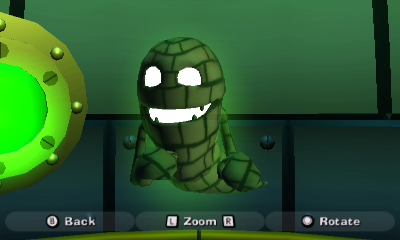
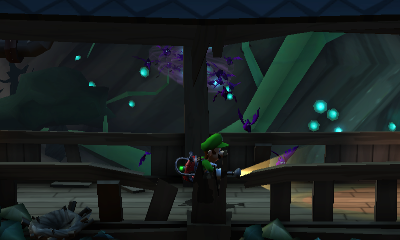
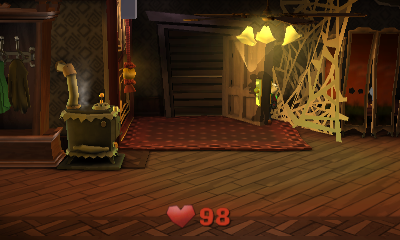
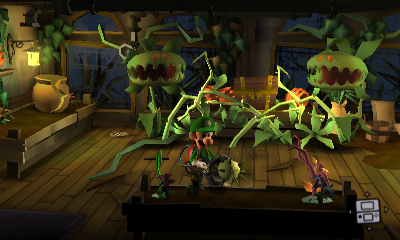
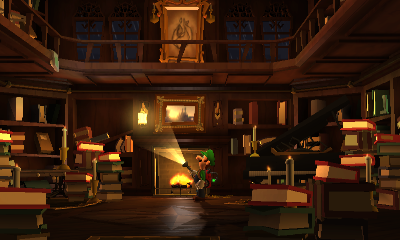
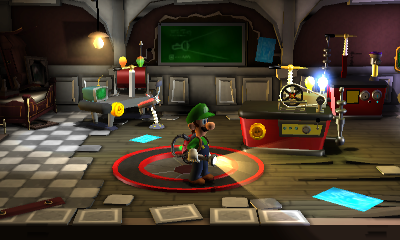
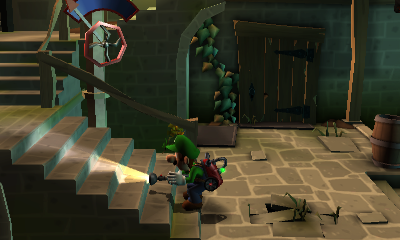
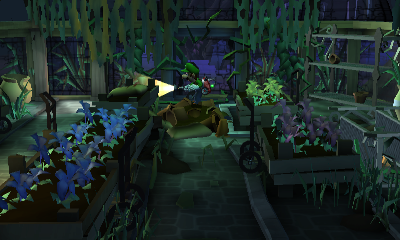
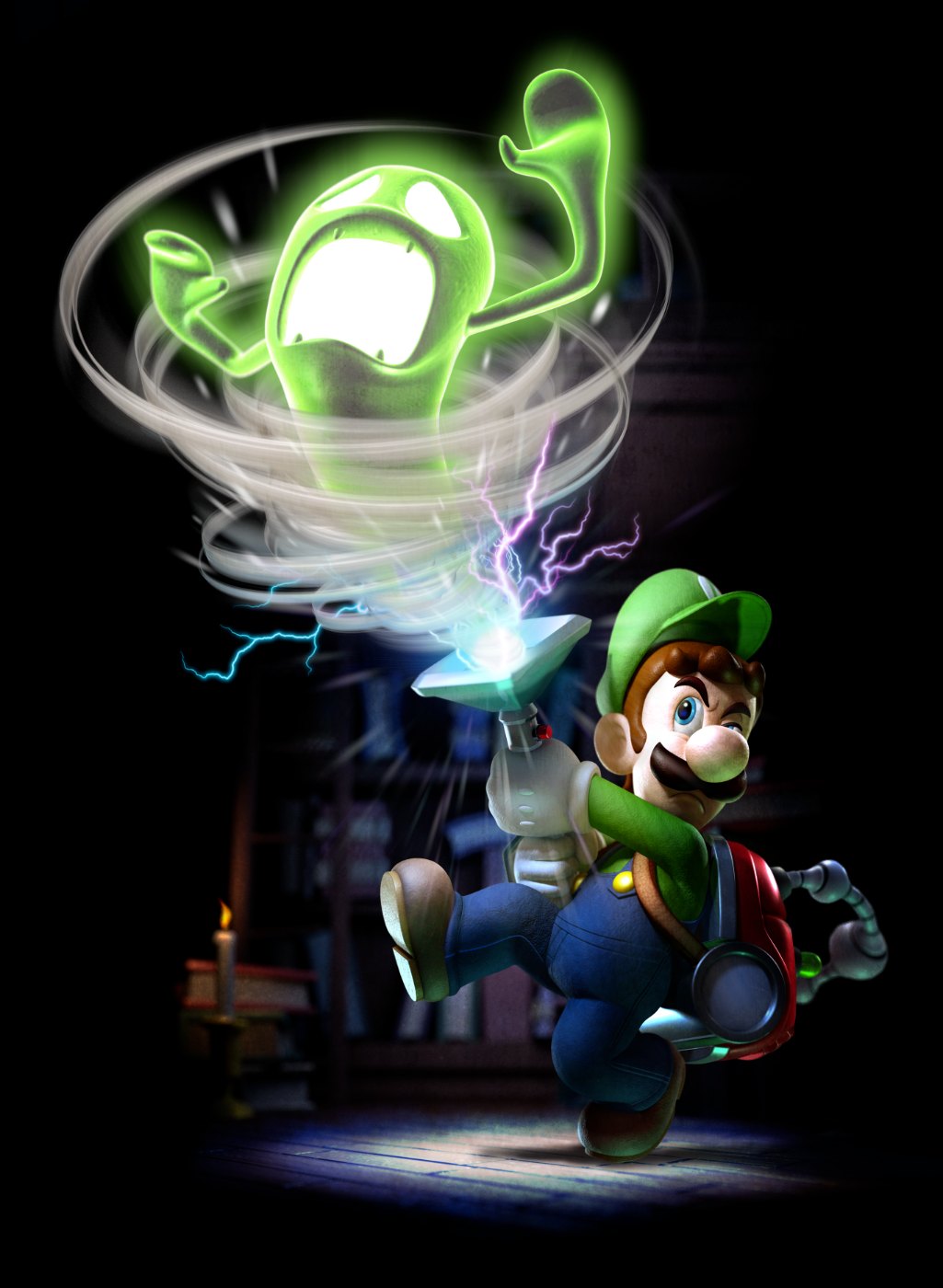
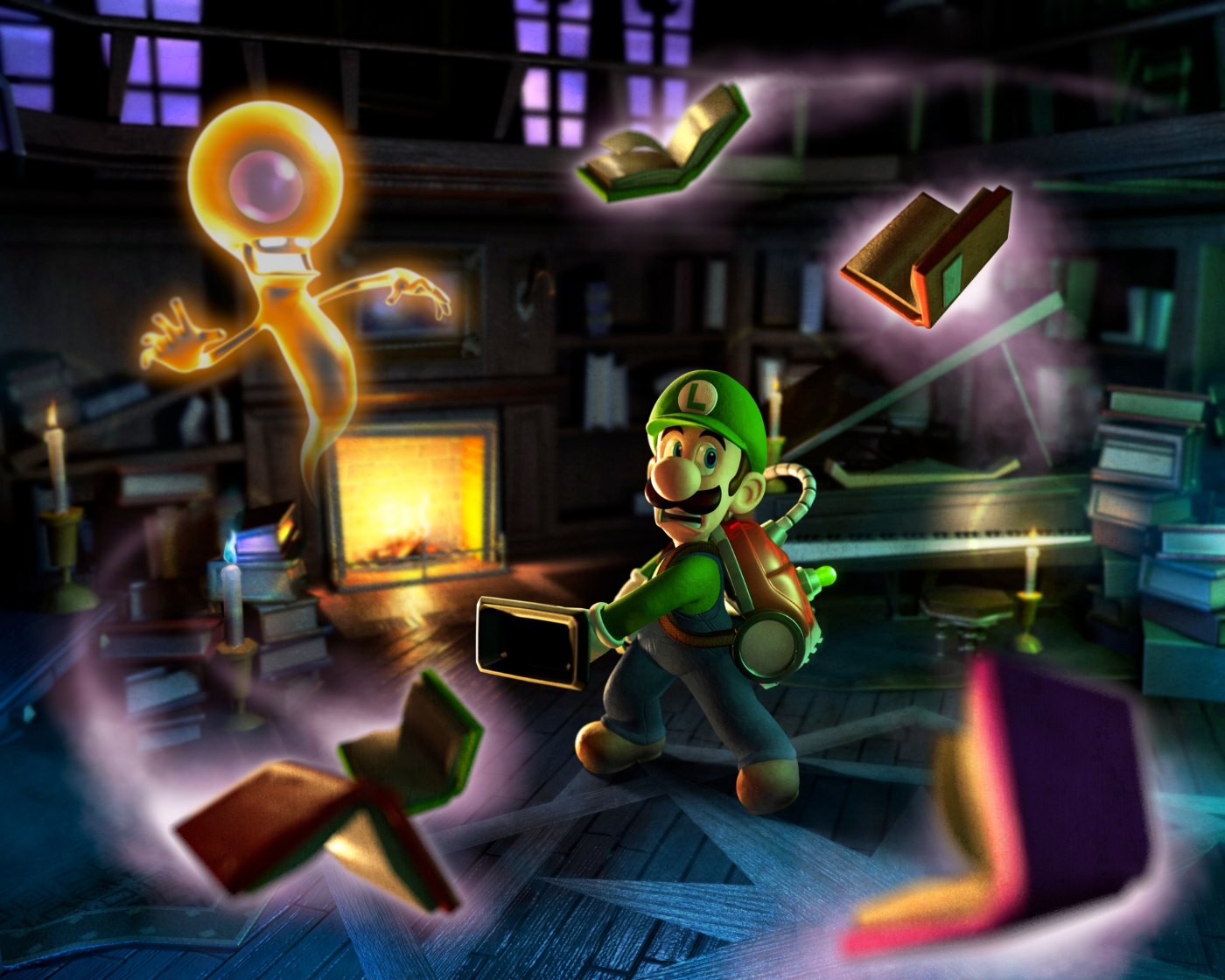
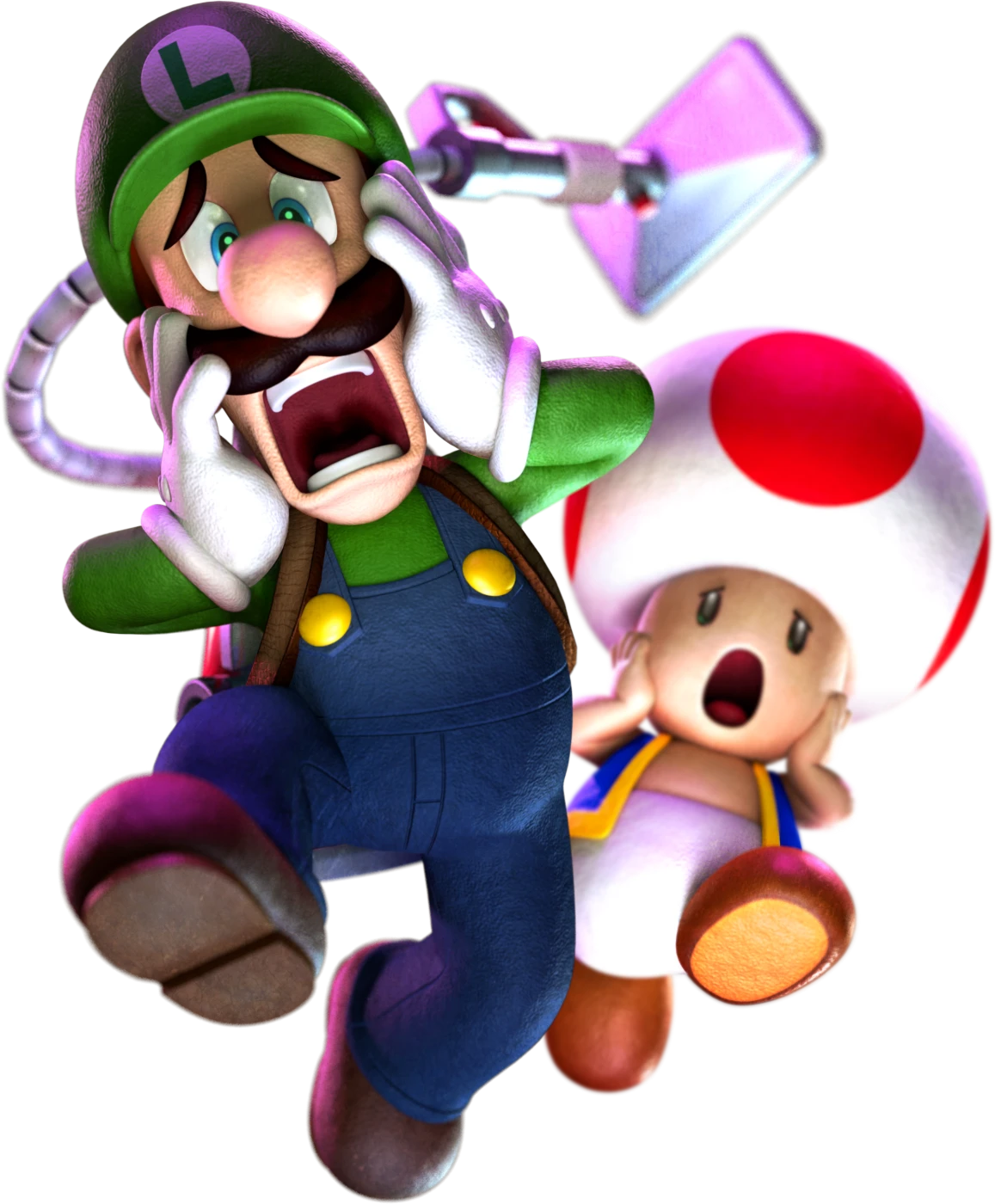
A Greenie on the end of the Poltergust 5000.Trying out the Dark-Light Device.Quiet Please! A Poltergeist redecorates the Library.The last battle with King Boo.
“Why, if it isn’t my old pal Luigi! Or is it Baby Luigi? I can’t tell the difference.”
King Boo, Luigi’s Mansion: Dark Moon (Nintendo, 2013; North American English script).
King Boo has not forgotten who put him in a picture frame. This is how he greets Luigi when they finally meet again, inside an illusion of his own making.
Quick Answers
The questions people ask most about Luigi’s Mansion 2, answered briefly here and in depth further down the page.
Are Luigi’s Mansion 2 and Dark Moon the same game?
Yes. It was announced everywhere as Luigi’s Mansion 2 in 2011; at E3 2012 the North American version was renamed Luigi’s Mansion: Dark Moon, and South Korea followed. Japan, Europe and Australia kept the number. A few names differ between the American and British scripts, but the game is the same. More →
When did Luigi’s Mansion 2 come out?
On Nintendo 3DS on 20 March 2013 in Japan, 24 March in North America and 28 March 2013 in Europe and Australia. Luigi’s Mansion 2 HD was released worldwide on Nintendo Switch on 27 June 2024. More →
How many mansions and missions are there?
Five mansions: Gloomy Manor, Haunted Towers, Old Clockworks, Secret Mine and Treacherous Mansion. Four of them have five missions, a boss and a bonus mission; Secret Mine has three missions, a boss and a bonus. With the finale in King Boo’s Illusion that makes 34 stages. More →
How many Boos and gems are there?
Thirty-two Boos, one hidden in each numbered mission (the Big Boo in Treacherous Mansion counts as ten), and 65 gems, thirteen to a mansion. Catching every Boo in a mansion unlocks its bonus mission. More →
Who are the bosses?
Each mansion ends with a Possessor, a boss ghost that takes over something large: a giant spider, a staircase, a clock face, a sheet of ice and a set of giant suits of armour. King Boo is the final boss. Along the way there are sub-bosses including the Poltergeist, the Three Sisters and a Big Boo. More →
What is the ScareScraper?
The multiplayer mode, called the Thrill Tower in the British English 3DS version. Up to four Luigis climb a tower of 5, 10 or 25 floors (or an endless one) in Hunter, Rush, Polterpup or Surprise mode, with a boss on every fifth floor. It unlocks after the fourth mission, Visual Tricks. More →
How do you upgrade the Poltergust 5000?
By banking treasure. The total you have collected across all missions unlocks the green Power Surge at 2,000G, a longer Dark-Light at 4,000G, the red Power Surge at 7,000G, the full Dark-Light meter at 10,000G and the Super Poltergust at 20,000G. More →
Who made Luigi’s Mansion 2?
Next Level Games of Vancouver, the studio behind Super Mario Strikers and the Wii Punch-Out!!, directed by Bryce Holliday. Shigeru Miyamoto produced, and Yoshihito Ikebata and Ryuichi Nakada supervised for Nintendo. More →
What is different in Luigi’s Mansion 2 HD?
Sharper 1080p visuals with models reworked in the style of Luigi’s Mansion 3, right-stick camera control, HD Rumble, the map moved to a corner of the screen, a longer Rush Mode timer and online play through Nintendo Switch Online. Stereoscopic 3D is gone, and it uses the American names in every English-speaking region. More →
Story
Luigi and King Boo: unfinished business.
Evershade Valley is home to a population of unusually friendly ghosts. Professor E. Gadd has set up shop there to study them, with Greenies as his willing research assistants, and the whole valley basks under the Dark Moon, the strange object in the sky that keeps them that way.
Then King Boo appears in front of it, attacks, and shatters the Dark Moon into six pieces. What follows is the whole story, ending included.
Prologue: the Dark Moon shatters
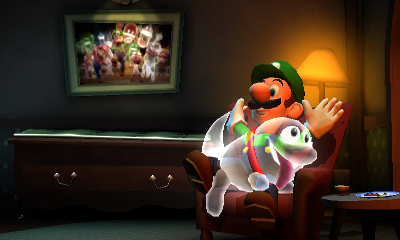
The change is instant. The Greenies around the professor turn on him, and he runs for the Bunker with ghosts at his heels. Safe underground, he does what he did last time and sends for Luigi. Luigi is asleep in an armchair at home when his television fizzes into life; he prods the screen, the professor’s face fills it, and before he can finish saying no he has been broken down into pixels and reassembled in Evershade Valley.
The professor explains. The fragments of the Dark Moon have fallen on the valley’s mansions, and until they are put back together the ghosts will stay hostile. He has recovered one piece already. The rest will have to be fetched, and his Poltergust 5000 is still in the garage of the house he was working in when everything went wrong.
Happier times: the professor and a friendly Greenie.King Boo takes aim at the Dark Moon.E. Gadd runs from his own research assistants.A message for Luigi.
Gloomy Manor
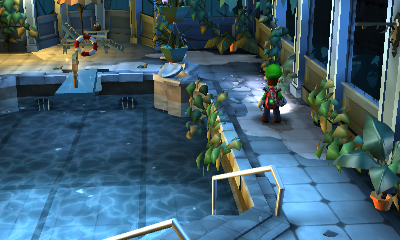
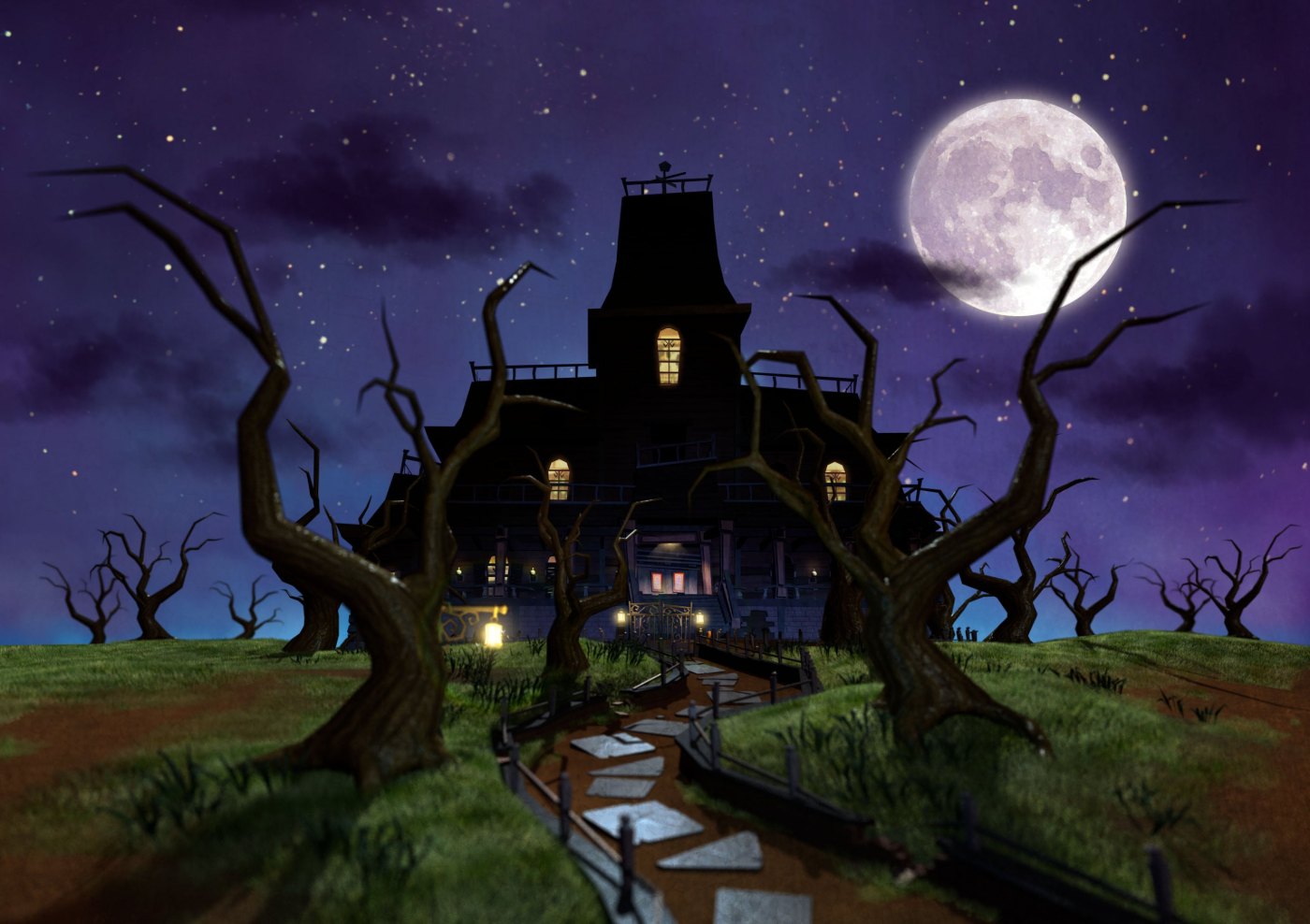
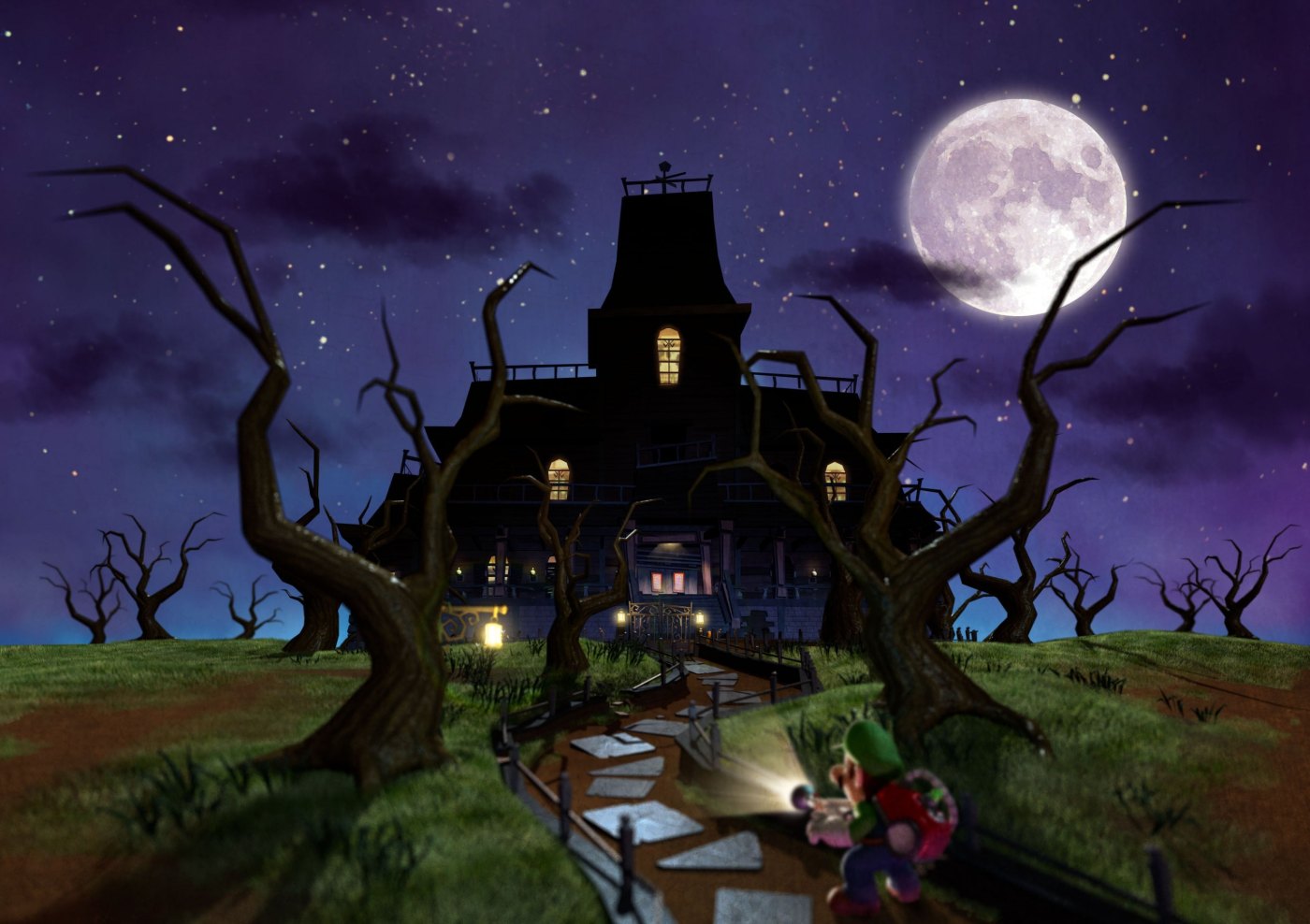
The first mansion is the one nearest the Bunker, a traditional haunted house in a permanent thunderstorm, laced with the pipes and cables the professor installed while he was studying its ghosts. Luigi’s first job (A-1, Poltergust 5000) is simply to reach the Garage and take the new vacuum cleaner from the professor’s car. The Strobulb has been stolen by Greenies and has to be won back, and in Gear Up he scours the west wing for four gears that the ghosts have taken from the mechanism in the Foyer.
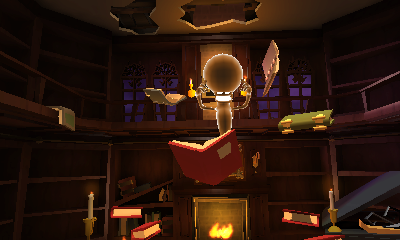
With the machinery turning, the northern rooms open. Piano music is coming from the Library, and in Quiet Please! Luigi finds out why: a Poltergeist, a ghost with a visible brain that hurls books across the room. Visual Tricks sends him to the Lab for the Dark-Light Device, because something has begun making furniture vanish, and the culprit turns out to be the game’s first Boo. By Sticky Situation the whole manor has been cocooned by spiders and the webs must be cleared away one by one.
That trail leads down a failing lift to the Cellar and the source of the trouble. In Confront the Source Luigi meets the Grouchy Possessor, who dives into the body of a giant purple spider queen. Beat her three times over and the Possessor is left with nowhere to hide, and the Dark Moon piece is his.
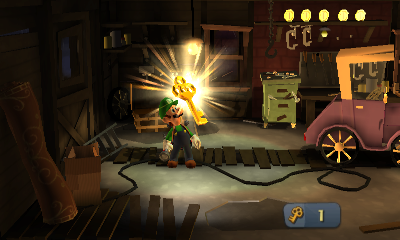
A-1: collecting the Poltergust 5000 from the Garage.The Foyer of Gloomy Manor.A-5: Sticky Situation.Confront the Source: the spider queen in the Cellar.
Haunted Towers
The second piece is in a forest, at the top of the tallest building in the valley: towers that were once the home and hothouse of three gardening sisters and have since been broken open by an enormous tree. Everything runs on water power, and the ghosts have broken the plumbing, so A Job for a Plumber has Luigi restart the Hydro Generator and mend the pump on the roof. The way into the Hollow Tree is a gate driven by a pinwheel whose vanes have been carried off by Hiders (The Pinwheel Gate).
Graveyard Shift takes him down to the Crypt in search of a special key. The key is gone, but hanging on the wall is a painting of a Toad, one of the professor’s assistants, who had been forgotten in the panic. He has no sooner been freed with the Dark-Light than the former owners arrive: the Three Sisters, Herlinda, Belinda and Lucinda, circling Luigi with hand mirrors raised against the Strobulb. Each has to be caught in the moment she lowers her mirror to jeer. The Toad is then escorted to a Pixelator and sent home, carrying a photograph from the security cameras.
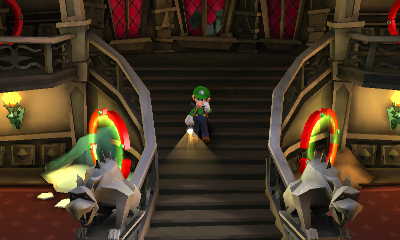
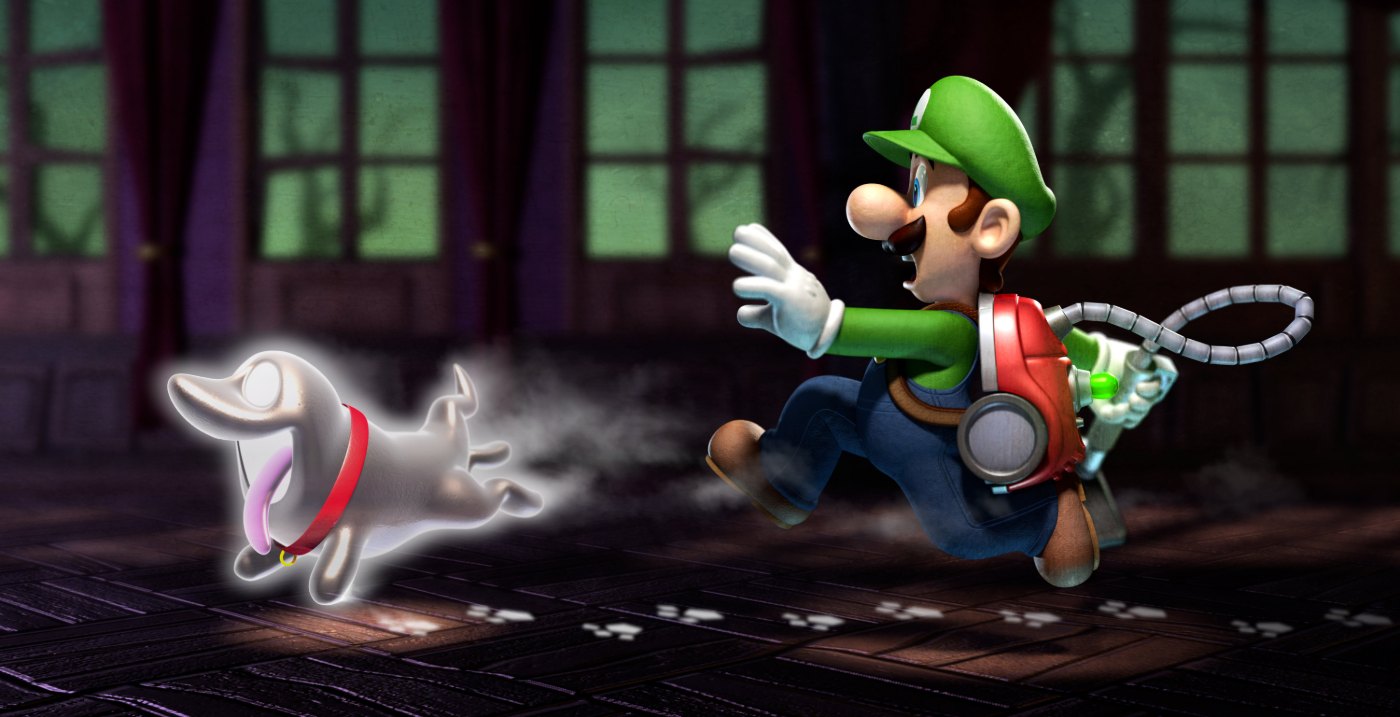
The photograph points to the Rooftop Pool (Pool Party), and the key, when it finally turns up, is promptly taken by a ghost dog. Doggone Key is a chase along a trail of glowing paw prints. With the key recovered Luigi climbs to the Tree House for Tree Topping, where the Harsh Possessor takes over the staircase itself. Luigi zigzags up three long, booby-trapped flights, which the Possessor sets alight, before a much shorter staircase makes its stand at the top.
B-1: A Job for a Plumber.The Three Sisters close in.B-5: Doggone Key.Tree Topping: the staircase bites back.
Old Clockworks
Out in the desert stands the oldest building in the valley, a factory that once made fine clocks and watches and was built on top of ancient ruins. The Dark Moon piece is at the top of its clock tower, behind a gate that will not open because the ghosts have made off with its parts. A Timely Entrance is a search for a special compass in the Drafting Room; Underground Expedition follows the compass down into the sand-choked tombs beneath the factory, where Greenies shuffle about wrapped as mummies.
The clock hands are in the Roundhouse with an Ancient Poltergeist, who fights for them in Roundhouse Brawl. No sooner has Luigi got them back than the ghost dog reappears, snatches the hour hand and runs into the Warehouse with a pack of ghosts after it (Play Catch). In Piece at Last a ghost steals the clock’s rotor and locks itself in the Storage Room, and Luigi finds a second Toad assistant, a yellow one, to help him get it back.
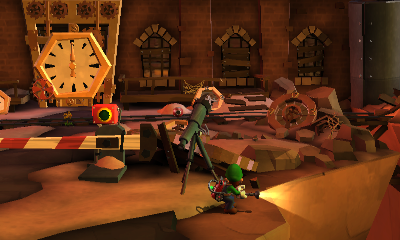
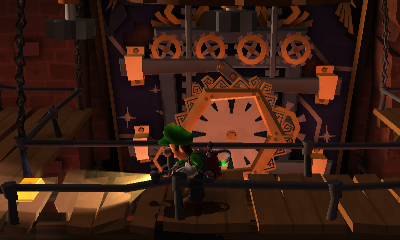
With the gate mended he rides up to the Belfry Clock for Showtime. The Overset Possessor takes over the giant clock face and keeps summoning other enemies to do his fighting for him.
C-1: A Timely Entrance.C-2: mummies in the ruins.C-3: Roundhouse Brawl.Showtime, on the Belfry Clock.
Secret Mine
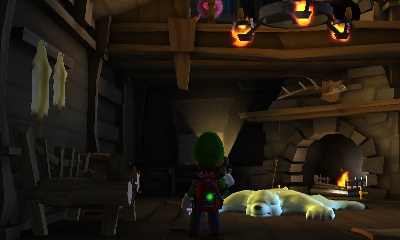
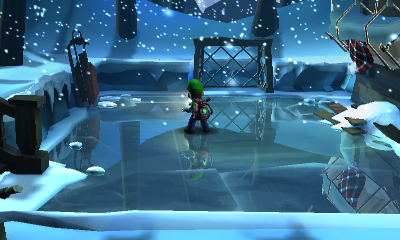
The fourth mansion is not a mansion at all but a mining camp high in the snowy mountains, abandoned by its crew when the ghosts moved in. It is the shortest chapter, three missions and a boss. In Cold Case the professor has lost contact with the Toad he posted to the Chalet; Luigi finds him, and the blue Toad’s victory dance promptly breaks the ice and drops them both into the caves below.
Hit Rock Bottom explains what has been going on all along. At the bottom of the mine is a quarry of crystals that make any ghost left inside them stronger, and the Boos have been harvesting them. Ghosts treated this way come out with white markings and several times their usual health. Three of them, a Strong Greenie, a Strong Slammer and a Strong Gobber, hold the paranormal chains that seal the gondola in Across the Chasm.
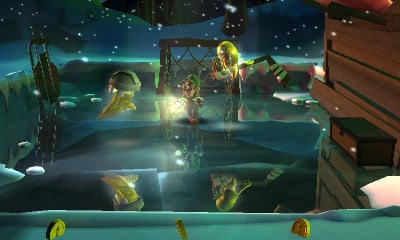
The Shrewd Possessor is waiting in the Workshop on the far side. He does not stay to fight. In Chilly Ride he makes off with his Dark Moon piece, possessing the ice itself, and the battle becomes a downhill chase by sled.
D-1: Cold Case, at the Chalet.D-2: Hit Rock Bottom.D-3: the strengthened ghosts of Across the Chasm.Chilly Ride.
Treacherous Mansion
The last building stands on a crag in a ravine above the sea: a museum of curiosities gathered by a globe-trotting collector, giving off the strongest paranormal readings the professor has ever recorded. Its four lower galleries, the Dark Age, Jungle, Ancient and Ice Age Exhibits, are echoes of the four mansions Luigi has already cleared. Even getting in is a chore, since the Polterpup makes off with the Front-Door Key.
Two more Toads are trapped inside (Double Trouble), and like the others they come back with a security photograph. When the professor sharpens this one, it shows Mario trapped in a painting, and King Boo with him. That gives the rest of the game its purpose. Luigi fights his way to the Train Exhibit past a Strong Poltergeist (A Train to Catch), but the picture was a plant. In Ambush Maneuver the trap closes: the scene was staged with a miniature model, and a Big Boo, worth ten ordinary Boos to the collection, is lying in wait.
The real signal is coming from the Terrace. Luigi arrives to find King Boo himself, who tears open a paranormal portal, empties a horde of ghosts into the mansion and vanishes through it with Mario under his arm. Paranormal Chaos is the mop-up, a race to capture every ghost before their dimension collapses, and then Luigi steps through the portal himself. On the other side, in Stop the Knightmare, the Tough Possessor inhabits giant suits of armour and crackles across the floor as a trail of electricity whenever he is forced out of one.
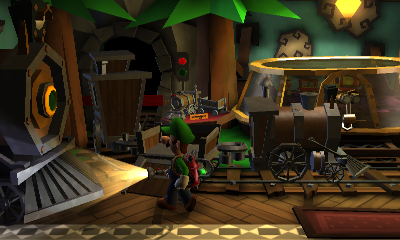
E-1: the Treacherous Mansion.E-4: Ambush Maneuver in the Train Exhibit.E-5: Paranormal Chaos.Stop the Knightmare.
King Boo’s Illusion
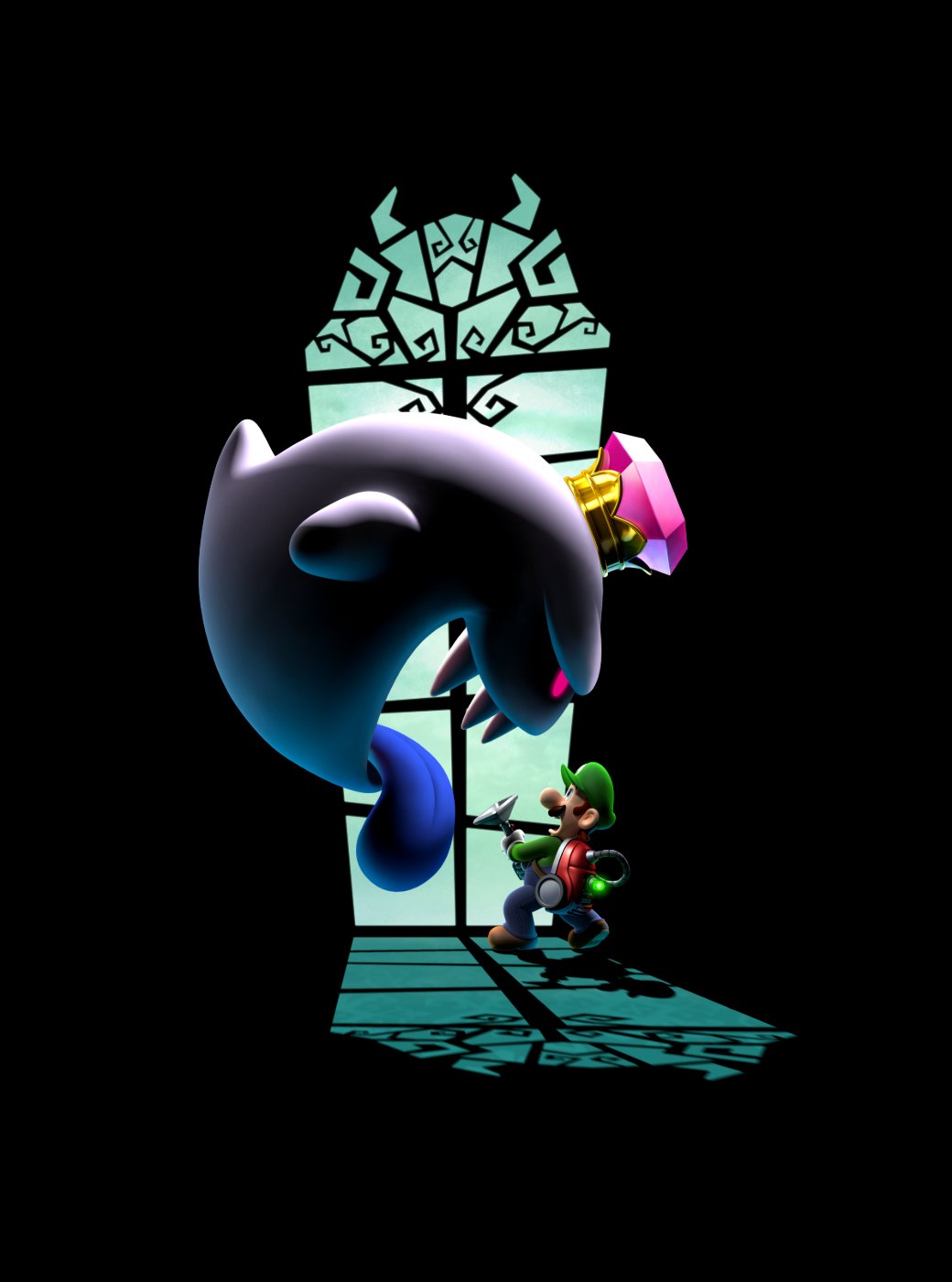
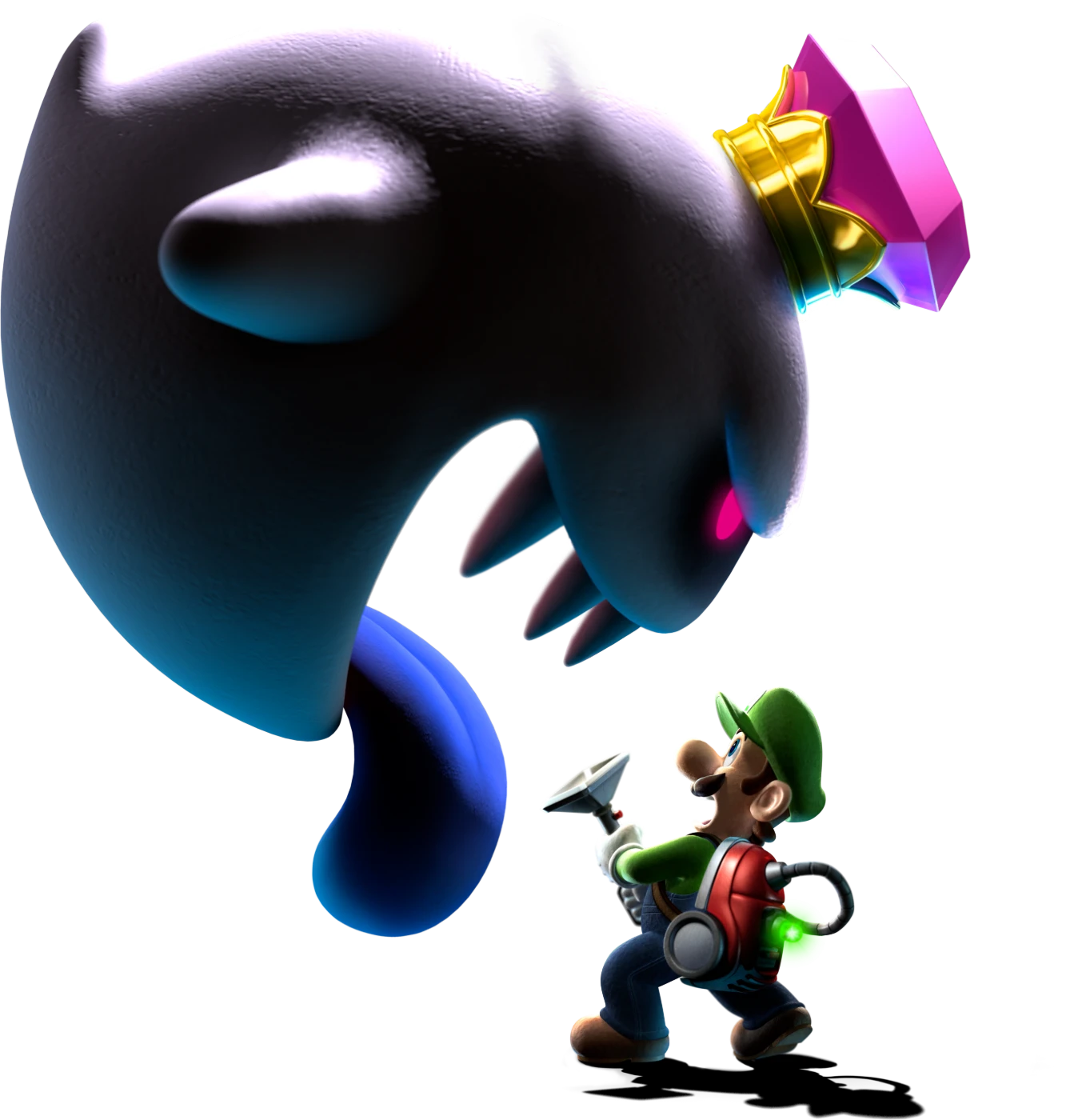
With the last piece in his hands Luigi waits for the Pixelator to take him home. Halfway through the transfer King Boo reaches into the signal and drags him back, into a void where windows flicker open to show the king’s silhouette. A painting of Mario hangs in the air; the king slides out from behind it and it melts away. He is delighted to see his old friend Luigi, or perhaps Baby Luigi, he can never tell. Then he lays it all out. He broke the Dark Moon, he says, to make every ghost in the valley his to command, and with that army he will take his rightful place as ruler of the Mushroom Kingdom, with Luigi and his friends as portraits for the throne room.
A Nightmare to Remember (Shatter the Illusion in the British version) is fought on a tilting platform fenced with lightning. King Boo slams the floor and spiked balls drop from the sky; the trick is to lure him under one, which flattens him and leaves him open to the vacuum. Each time he is nearly caught he breaks free with the power of his crown, swells to enormous size and chases Luigi down a crumbling mansion corridor full of sand, ice and swinging knights, to a springboard and a fresh platform. The third time, he does not get away.
Luigi pockets the jewel from the crown and finds himself back on the Terrace, where the real painting had been hidden all along.
“Or is it Baby Luigi?”King Boo slams the platform.The corridor chase.The crown slips.
Ending: a new best friend
One sweep of the Dark-Light and Mario steps out of the canvas. The Toads arrive with the pieces, and together they and Luigi put the Dark Moon back in the sky. At once the valley’s ghosts are themselves again, and the professor opens the Vault and lets every one of them out. A Slammer scoops up Mario, Greenies mob the professor, the Grouchy Possessor makes friends with the Toads, and the Polterpup that has plagued Luigi for the entire game creeps up to him and whimpers. Luigi calls him over.
A Greenie takes a group photograph. In the last scene it is hanging on the wall at home, where Luigi is asleep in his armchair again, this time with a ghost dog curled up on his lap. Over the credits the professor goes back to his research (and takes a flower to the Three Sisters), and Luigi stays on in the valley a while to help.
Mario is released from the painting.The Toads bring the Dark Moon pieces together.Everybody say “Boo”.Home again, with company.
The ScareScraper
The sixth building on the valley map has no story at all, only floors. The ScareScraper (Thrill Tower to British 3DS owners) is where the game sends up to four Luigis for co-operative ghost hunting, and where its strangest ghosts live: forty-five tower-only bosses with names like Spookumber, Tennis Menace, Horrorca and Jack-goo-lantern, grouped into Gold, Fashion, Flower, Food, Halloween, Bug, Marine, Sport and Animal sets, plus a Big Polterpup and, on the roof, the Brain. Catching at least one of each is part of completing the Vault.
The Brain, boss of the top floor.Bomb Brother, of the Gold series.Spookumber, of the Food series.Horrorca, of the Marine series.
Every mansion and mission in Luigi’s Mansion 2
All 34 stages in order. Each numbered mission hides one Boo; names are from the North American version, with the room where it lurks. Bonus missions open when every Boo in that mansion has been caught.
A-1: Poltergust 5000Gloomy Manor · Boo: Boogie Woogie (Garage)Fetch the Poltergust 5000 from the professor’s car and catch the first few Greenies.
A-2: Gear UpGloomy Manor · Boo: BaBoon (Mudroom)Recover four stolen gears from the west wing to restart the Foyer mechanism.
A-3: Quiet Please!Gloomy Manor · Sub-boss: Poltergeist · Boo: Boo Boo (Studio)Crank open the north wing and silence the book-throwing ghost in the Library.
A-4: Visual TricksGloomy Manor · Dark-Light Device · first Boo (Dining Room, required)Collect the Dark-Light from the Lab and track down whoever is hiding the furniture. Clearing it unlocks the ScareScraper.
A-5: Sticky SituationGloomy Manor · Boo: Ooga Booga (Library; Boothoven in HD)Spiders have webbed up the whole house. Clear every web.
A-Boss: Confront the SourceGloomy Manor · Cellar · Boss: Grouchy PossessorDown the lift to the Cellar and a possessed spider queen.
A-Bonus: Gradual InfiltrationGloomy Manor · bonusThe ghosts are back. Catch them all against the clock.
B-1: A Job for a PlumberHaunted Towers · Boo: MamBoo (Hydro Generator)Restart the Hydro Generator and repair the pump on the roof.
B-2: The Pinwheel GateHaunted Towers · Boo: Boolean (Sewer)Hiders have taken the vanes of the pinwheel that opens the Hollow Tree.
B-3: Graveyard ShiftHaunted Towers · Sub-boss: the Three Sisters · Boo: Booluga (Crypt)A Toad in a painting, three vain sisters in the Old Graveyard and an escort job back to the Gardener’s Lab.
B-4: Pool PartyHaunted Towers · Boo: Boo B. Trap (Family Room)Follow the Toad’s snapshot to the Rooftop Pool in search of a special key.
B-5: Doggone KeyHaunted Towers · Boo: French Boodle (Tool Shed)The Polterpup has the key. Follow its paw prints with the Dark-Light.
B-Boss: Tree ToppingHaunted Towers · Tree House · Boss: Harsh PossessorThree booby-trapped staircases and a small, angry fourth.
B-Bonus: Hostile IntrusionHaunted Towers · bonusA timed ghost hunt through the towers.
C-1: A Timely EntranceOld Clockworks · Boo: ComBooter (Warehouse)Find the special compass in the Drafting Room.
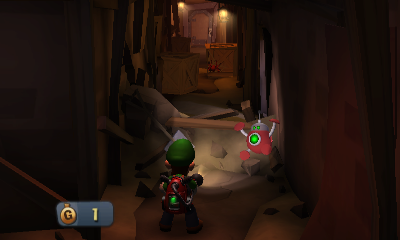
C-2: Underground ExpeditionOld Clockworks · Underground Trek in Europe · Boo: Bootine (Quarry)Into the buried ruins after the clock hands, among mummified Greenies and Robombs.
C-3: Roundhouse BrawlOld Clockworks · Sub-boss: Ancient Poltergeist · Boo: Boodonkulous (Kiln Room)Win back the clock hands in the Roundhouse.
C-4: Play CatchOld Clockworks · Boo: JamBoolaya (Clock Tower Gate)The Polterpup has run off with the hour hand. Get to it before the other ghosts do.
C-5: Piece at LastOld Clockworks · Boo: Boony Raboot (Crank Room)Recover the stolen rotor and lead the yellow Toad to the Service Elevator.
C-Boss: ShowtimeOld Clockworks · Belfry Clock · Boss: Overset PossessorA fight around a giant clock face that keeps summoning help.
C-Bonus: Outlandish InterruptionOld Clockworks · bonusA timed ghost hunt through the factory.
D-1: Cold CaseSecret Mine · Boo: Boofoon (Terminal)Find the silent Toad assistant at the Chalet and the Fishing Hut and send him home.
D-2: Hit Rock BottomSecret Mine · Boo: Booger (Chalet; Boouncer in Britain)Descend to the Crystal Quarry and see what the Boos are doing to the other ghosts.
D-3: Across the ChasmSecret Mine · Sub-bosses: Strong Greenie, Strong Slammer, Strong Gobber · Boo: ParaBoola (Deep Hall)Break the paranormal chains on the gondola and find a way over to the Workshop.
D-Boss: Chilly RideSecret Mine · Frozen Pit · Boss: Shrewd PossessorA downhill sled chase after a boss who has possessed the ice.
D-Bonus: Severe InfestationSecret Mine · bonusA timed ghost hunt through the mine.
E-1: Front-Door KeyTreacherous Mansion · Boo: Boolldog (Underground Lab)Chase the Polterpup for the key to the front entrance.
E-2: Double TroubleTreacherous Mansion · Boo: Boopa Troopa (Inner Courtyard, required)Rescue two Toad assistants and get both to a Pixelator.
E-3: A Train to CatchTreacherous Mansion · Sub-boss: Strong Poltergeist · Boo: Booreaucrat (Dark Age Exhibit)Raise the stairwell in the Inner Courtyard and head for the Train Exhibit, where Mario is said to be.
E-4: Ambush ManeuverTreacherous Mansion · Sub-boss: Big Boo (counts as ten Boos)It was a trap. Survive the Big Boo in the Train Exhibit.
E-5: Paranormal ChaosTreacherous Mansion · Boo: MaraBoo (Aviation Exhibit)King Boo has opened a portal on the Terrace. Capture the horde before it is too late.
E-Boss: Stop the KnightmareThrough the portal · Boss: Tough PossessorGiant suits of armour and the last Dark Moon piece.
E-Bonus: Terrifying InvasionTreacherous Mansion · bonusRace between outbreak points catching every ghost.
A Nightmare to RememberKing Boo’s Illusion · Final boss: King BooThree rounds on a tilting platform and three corridor chases. Shatter the Illusion in the British version.
The BunkerHub · Vault, Parascope, PixelatorThe professor’s shelter outside Gloomy Manor, where missions are chosen and the catch is counted. Shown here in its E3 2011 form.
The ScareScraperMultiplayer · 5, 10, 25 or endless floorsHunter, Rush, Polterpup and Surprise modes for one to four Luigis, with the Brain on the roof.
Gems: every mansion holds thirteen, named after their cuts (Round, Pebble, Rhombus, Star, Baguette, Octagon, Triangle, Football, Oval, Drop, Spindle, Mushroom and Coffin), for 65 in all.
Advertisement
Gameplay & Controls
The fundamentals are the ones Hideki Konno’s team laid down in 2001, summed up by director Bryce Holliday as three founding rules: Luigi, a vacuum cleaner and a doll’s-house camera. Everything built on top of them is new.
Strobulb, suction and the Power Surge
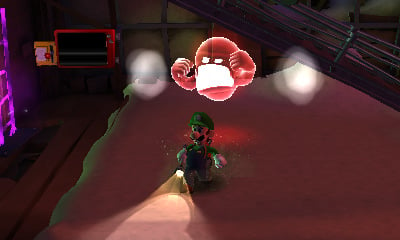
Ghosts still only come out when a room is dark, and a change in the music and in Luigi’s posture tells you when they are about. The torch alone no longer bothers them. To stun a ghost Luigi has to fire the Strobulb with A, and holding the button charges a wider flash that can freeze a whole group. Then it is the familiar tug of war with R, pulling against the ghost as its health counts down.
New to the struggle is the Power Gauge. It fills while a ghost is on the line, and pressing A when it is full delivers a Power Surge that knocks off a chunk of health at once and shakes out extra money: a blue surge takes 10 HP and drops three coins, the green one (unlocked later) takes 20 and drops a gold bar, and the red takes 50 and drops three. Hooking several ghosts together fills the gauge faster and the surge hits all of them, which is why the developers kept using the word ichimodajin, catching the lot in one go. Up to three ghosts can be on the hose at a time.
While Luigi is busy, others will try to clobber him from behind, and so pressing B during a capture makes him hop clear without letting go. That dodge was Miyamoto’s suggestion. Away from the fighting, the Poltergust 5000 pulls sheets and rags off things, hoovers up piles of dirt, spins fans and chandeliers, and with L blows: unrolling carpets, pushing objects and firing off whatever is stuck to the nozzle.
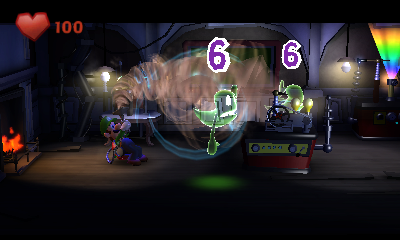
Charging the Strobulb.Luigi leans into it.A Power Surge goes off.
The Dark-Light Device
From the fourth mission onwards Luigi carries a second lamp, switched on with Y. Its beam does the job that fire, water and ice did in the first game: it is the tool for puzzles. Boos have a habit of making doors, chests and whole pieces of furniture invisible, and the Dark-Light brings them back; a few Spirit Balls float out as it does, and they must be hoovered up quickly or the object fades again. The beam also shows the paw prints of the Polterpup and the path a Boo has taken, lifts keys, coins and trapped Toads out of paintings, and exposes ghosts that are hiding in plain sight, such as a Sneaker creeping up behind.
It runs on a meter and overheats if held too long. Bryce Holliday told Satoru Iwata that the idea began as something much bigger, a second, ghostly world laid over the real one, and was cut down to a gadget because games with two overlapping worlds were already common.
The Dark-Light Device in use.Spirit Balls escape from a revealed object.
Missions, stars and the Dual Scream
Each trip into a mansion is a self-contained mission with its own goal, and the same building is rearranged between visits: doors that were shut are open, rooms have been webbed over, a different set of ghosts is in residence. Luigi arrives and leaves through the Pixelator, the professor’s network of security cameras turned teleporters, and takes his orders over the Dual Scream, a gadget based on the Nintendo DS that has replaced the Game Boy Horror. The mansion map sits permanently on the Touch Screen and marks which doors are fakes.
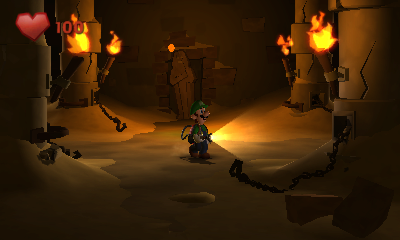
When the job is done the professor tots up four things, the time taken, the ghosts captured, the damage Luigi took and the treasure he found, and awards one, two or three stars. Luigi begins every mission with 100 HP; hearts give back 25 or 50, a Game Over is still “Good night!”, and there are no checkpoints, so a fall near the end means starting the mission again. The one safety net is the Gold Bone. Find one in a piece of furniture and, if Luigi is knocked out, the Polterpup trots up, takes the bone and licks him back to life. It works once per mission.
The developers split the game this way because it was for a handheld. Missions were meant to last ten to twenty minutes, and reusing each mansion with new mischief in it was their answer to the backtracking of the original.
Luigi is collected by the Pixelator.Evershade Valley: five mansions and the Bunker.
Treasure, gems, Boos and the Vault
Money matters twice over. It counts towards the star rating of the mission in hand, and the running total across the whole game is what upgrades the Poltergust. Coins, banknotes and gold bars are hidden in every drawer, vase and suit of armour, and most missions hide a Gold Greenie who drops a small fortune if caught.
Every mansion hides thirteen gems of its own kind and shape: amethysts in Gloomy Manor, emeralds in the Haunted Towers, rubies in the Old Clockworks, sapphires in the Secret Mine and diamonds in the Treacherous Mansion. Every numbered mission also hides a Boo, tucked inside an invisible object that only the Dark-Light will reveal. Catch all the Boos in a mansion and a bonus mission opens there, a timed sweep of the whole building.
Everything Luigi catches is stored in the professor’s Vault under the Bunker, which doubles as the game’s trophy cabinet. There are three E. Gadd Medals to earn. One marks three stars on every mission, another a complete Vault, meaning every gem, every Boo, every upgrade and at least one of every ghost in the valley and the ScareScraper. With all three the save file turns gold.
A Gold Greenie: catch it for a pile of treasure.One Boo hides in every numbered mission.
The ScareScraper
Multiplayer was part of the plan from the first day. Hideki Konno, director of the original, had experimented with a second Luigi on GameCube and never got it in, and according to supervisor Yoshihito Ikebata he insisted the sequel must have it. Miyamoto was blunter: he did not care whether it was for four players or eight, but it was happening. The result is a tower that up to four differently coloured Luigis (green for the host, then blue, orange and pink) climb together, locally, by Download Play from a single game card, or online. It opens after mission A-4, and can be played alone.
The host picks a mode, a length (5, 10 or 25 floors, with Endless unlocked by clearing 25) and a difficulty (Normal, Hard or Expert). In Hunter every ghost on the floor must be caught inside five minutes. Rush is a race to reach the exit and stand on its switches against a clock that starts at 30 seconds (45 in the HD version) and gains ten seconds for each timepiece found, with more for each room cleared. In Polterpup the team tracks invisible paw prints with the Dark-Light to round up between two and six ghost dogs. Surprise, unlocked by finishing each of the other three once, shuffles them. Every fifth floor is a boss floor, and unless the climb is endless the last boss, on the roof, is always the Brain.
Floors are laced with traps that only a team-mate can undo: carpets that roll a Luigi up, vases that swallow him, curses that reverse his controls until somebody shines a Dark-Light on him. A fallen Luigi can be revived by a friend and comes back with 20 HP. Between floors there is a 20-second scramble for four Red Coins and a roulette for bonus gear, and treasure earned during the climb buys temporary upgrades that vanish when the run ends. The tower has its own bestiary too: 45 boss ghosts in nine themed sets, from Bomb Brother to Cawe.
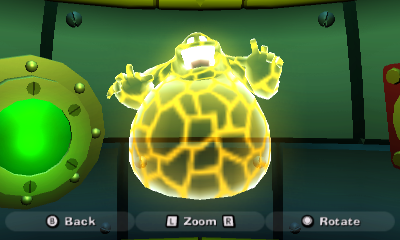
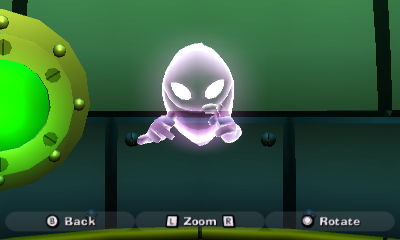
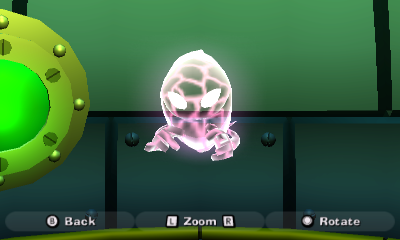
The 3DS Download Play limit of 32 MB shaped all of it. It is why the guest version shows bosses as large yellow versions of ordinary ghosts, and why, Super Mario Wiki notes, Mario, Toad and Peach were left out.
Four Luigis take on the Brain.Polterpups break cover in Polterpup Mode.The opening card for Rush Mode.The ScareScraper.
Controls
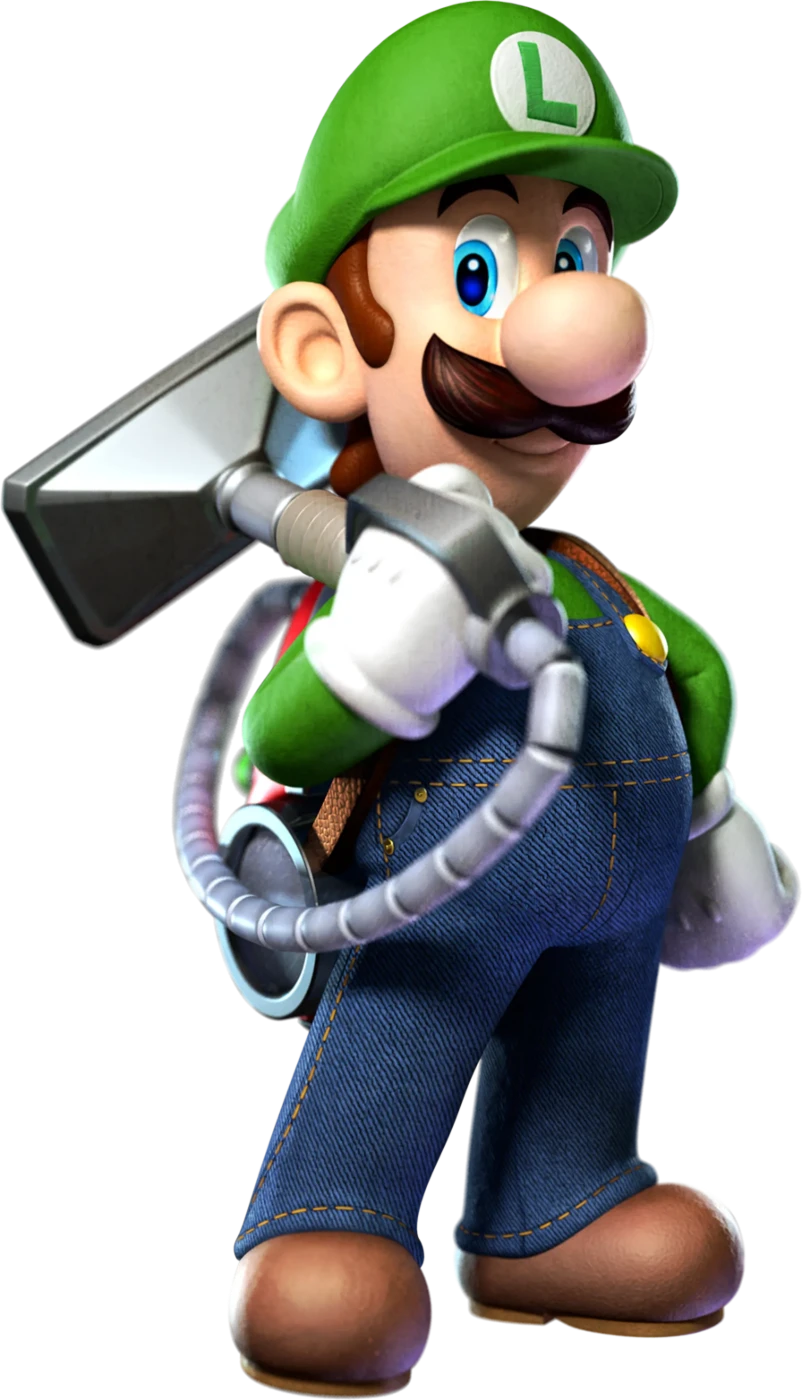
Luigi and the Poltergust 5000.
On Nintendo 3DS the Circle Pad moves Luigi, R sucks and L blows, A fires the Strobulb (hold to charge), Y lights the Dark-Light, X examines things and opens doors, and holding B makes him run. X and B also tilt the nozzle up and down, and the +Control Pad makes Luigi call out; in the ScareScraper each direction is a different shout to the team. There is only one stick, so Luigi turns by walking, and tilting the console itself is used for balancing along beams and peeking through windows and cracks in the walls.
Getting there was painful. Miyamoto told Iwata the controls were rebuilt more than ten times, and a two-stick scheme like the GameCube game’s was abandoned as too awkward for newcomers. Next Level tried the Circle Pad Pro add-on but found the fixed camera gave a second stick little to do. Luigi’s Mansion 2 HD does use the right stick to look around, in the manner of Luigi’s Mansion 3.
American and British versions
The 3DS game was localised separately for North America and Europe, and the two English scripts do not always agree. Beyond the title itself, the ScareScraper is the Thrill Tower in the British version, the Pixelator is the Pixelshifter, the Shrewd Possessor is the Scornful Possessor, the youngest of the Three Sisters is Melinda instead of Lucinda, mission C-2 is Underground Trek instead of Underground Expedition, the finale is Shatter the Illusion instead of A Nightmare to Remember, and the Restorator bonus item is a Heal-Vac. Some Boos differ too: Booger in America, for one, is Boouncer in Britain.
The HD remaster settles the matter by using the American names for ghosts, missions and locations in both regions. It changes one of them: the Boo hidden in a piano in Sticky Situation, formerly Ooga Booga, is now Boothoven.
Gadgets, upgrades and treasure
Luigi’s kit, what it costs to improve it, and what he is sent to collect.
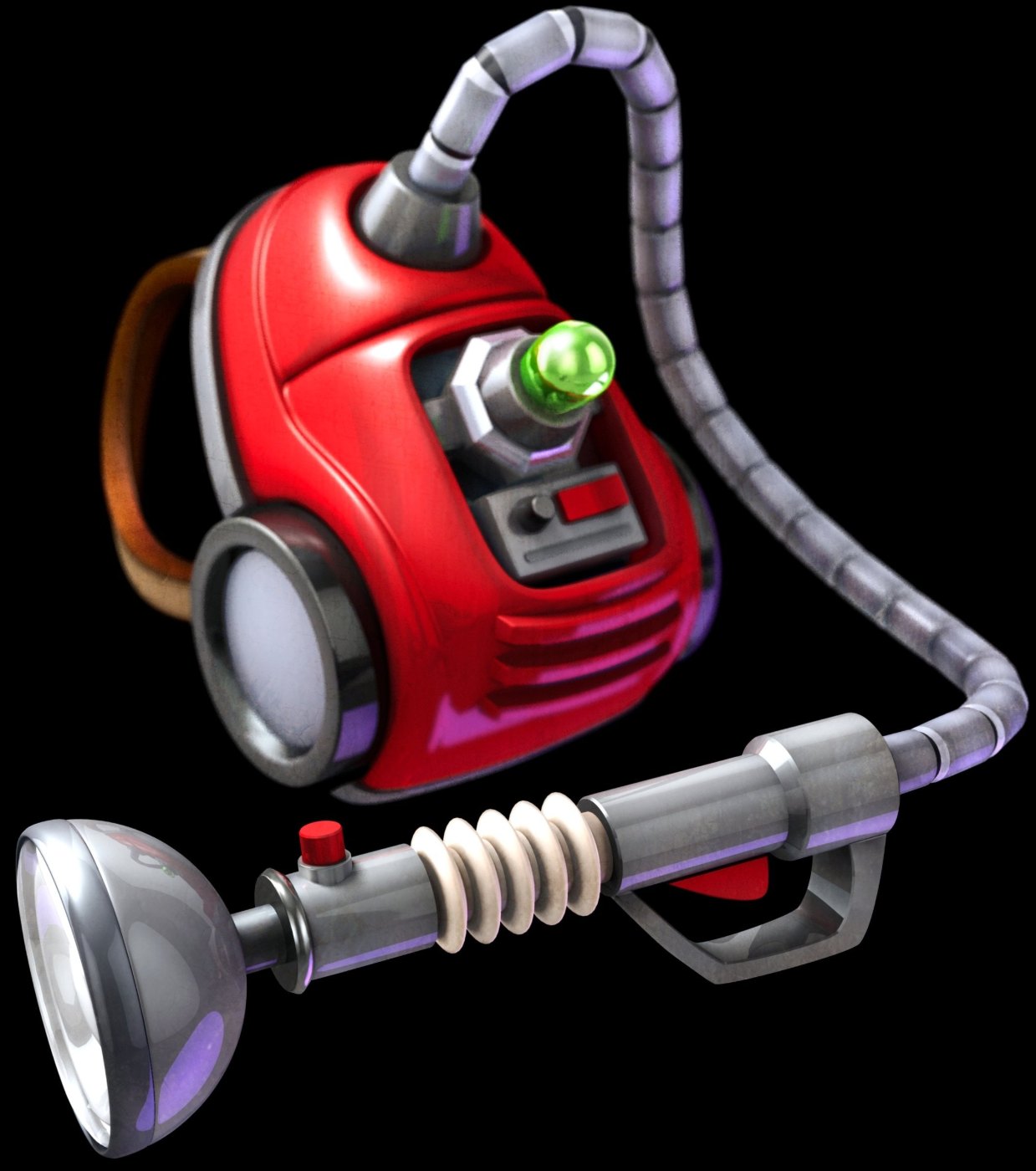
Poltergust 5000The professor’s newer model, left behind in his car in the Gloomy Manor garage when he fled. Sucks with R and blows with L on separate buttons, but cannot fire elements as the 3000 could.
StrobulbThe flash attachment that stuns ghosts. Greenies run off with it in the first mission, so Luigi starts without it. A charged flash can stun five ghosts, though only three can be vacuumed at once.
Dark-Light DeviceFound in the Lab in mission A-4. Reveals invisible objects, Boo trails and paw prints, and frees things from paintings. Its meter grows at 4,000G and again at 10,000G.
Power SurgeBlue from the start (10 damage), green at 2,000G (20 damage), red at 7,000G (50 damage). Needed to finish Creepers, shielded ghosts and Possessors.
Super PoltergustThe last upgrade, at 20,000G: the gauge fills faster and ghosts lose health faster.
Dual ScreamA Nintendo DS adapted by the professor as a communicator and map, replacing the Game Boy Horror.
PixelatorTurns Luigi into pixels and sends him through the valley’s camera network. He never gets used to it. Called the Pixelshifter in Europe.
ParascopeThe Bunker’s detector, which picks up paranormal signals and locates each Dark Moon piece.
Dark Moon pieceSix in all. Each of the five Possessors holds one.
Gold BoneFound in otherwise empty furniture. Polterpup will swap it for Luigi’s life once per mission; finish without needing it and it is worth 200G.
HeartsRestore 25 HP, or 50 for the larger kind.
Coins, bills and gold barsThe currency of upgrades and star ratings. Gold bars come from Gold Greenies and from green and red Power Surges.
AmethystsThe thirteen gems of Gloomy Manor: seven on the ground floor, five upstairs and one in the Rafters.
EmeraldsThe thirteen gems of the Haunted Towers, each a different cut, from Round and Pebble to Mushroom and Coffin.
RubiesThe thirteen gems of the Old Clockworks.
SapphiresThe thirteen gems of the Secret Mine.
DiamondsThe thirteen gems of the Treacherous Mansion.
E. Gadd MedalsThree awards shown on the save file, including one for three stars everywhere and one for a full Vault.
Red Coins (ScareScraper)Four appear after each floor. Collect them in 20 seconds for a spin of the bonus roulette.
ScareScraper bonus itemsDark-Light Goggles, Poltergust x2 and x3, the Restorator (Heal-Vac in Britain) and the Map. Up to three can be carried to the next floor.
Cartoons, Comics & Other Media
No comics or cartoons, but Dark Moon left its mark on Smash Bros., Mario Kart and Mario Party, spawned an arcade machine and inspired some unusual merchandise.
Super Smash Bros. for Nintendo 3DS and Wii UNintendo / Bandai Namco · 2014The Poltergust 5000 became Luigi’s Final Smash, replacing the Negative Zone of Brawl: it sucks in opponents and items, batters them and spits them out. There is a Polterpup trophy, the Gloomy Manor theme can be chosen on the Luigi’s Mansion stage in the Wii U game, and Luigi’s blue costume matches the second-player Luigi of the ScareScraper. In Ultimate the 5000 survives as a spirit.
Luigi’s Mansion ArcadeCapcom / Sega · 2015A sit-down, first-person, on-rails shooter built from Dark Moon’s assets under licence, with Poltergust-nozzle controllers for one or two players. Capcom tested it on location in autumn 2014, Sega showed it at the Japan Amusement Expo in 2015, and the first North American cabinet was installed at a Dave & Buster’s in Addison, Illinois that October. The Three Sisters reappear in it as bosses of the Old Clockworks.
Mario Kart 8Nintendo · 2014Snatches of the Library piano music from Gloomy Manor are woven into the music of the Twisted Mansion course.
New Super Luigi UNintendo · 2013A metal sign by the hidden exit of Vanishing Ghost House carries the game’s artwork of Luigi and King Boo, one of the Year of Luigi’s many winks.
Mario Party 10 and Mini Mario & FriendsNintendo · 2015–2016The Luigi amiibo board in Mario Party 10 has a model of Gloomy Manor and a signpost with a Greenie on it, and the Mini Luigi stages of Mini Mario & Friends: amiibo Challenge use the manor as their backdrop.
Mario Strikers: Battle LeagueNext Level Games / Nintendo · 2022Next Level’s own football game has a Spooky Mansion pitch dressed with Gloomy Manor and the Dark Moon, set to an arrangement of the manor’s theme.
Luigi’s Mansion 3Next Level Games / Nintendo · 2019The sequel brings back Polterpup, the Strobulb, the Dark-Light and the ScareScraper, displays a model of Gloomy Manor, and shows the Poltergust 5000 on posters and in a blueprint beside its successor, the G-00.
Super Mario RunNintendo · mobileAn event themed on the HD release let players earn statues of Luigi with the Poltergust 5000, King Boo, and Luigi chasing the Polterpup.
The iam8bit Poltergust 5000Nintendo of America · March 2013For the launch Nintendo commissioned a full-size Poltergust 5000 with working light and wheels from the production company iam8bit. A making-of video appeared on 13 March 2013 and a second, on the 28th, showed a live-action Luigi wearing it.
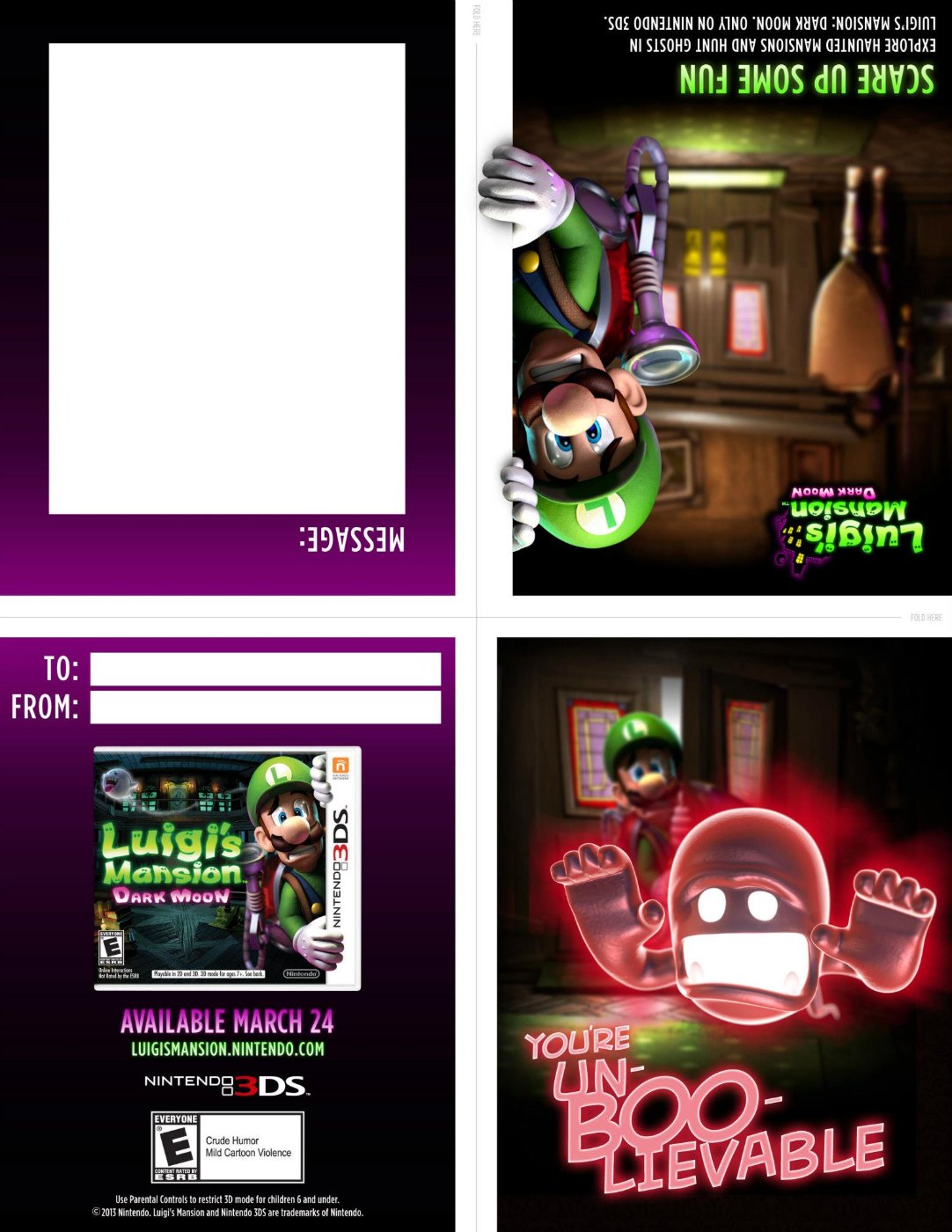
Club Nintendo diorama and other extrasNintendo · 2013Club Nintendo members could claim a figurine of Luigi, Polterpup and a Greenie. European buyers were offered a limited glow-in-the-dark cover sheet, with a Boo stress ball for pre-orders; the Nintendo 3DS Facebook page gave away nine printable Valentine’s cards in February 2013; and American shops sold it in a bundle with a Cobalt Blue 3DS, while Canada got a Cosmo Black bundle instead.
Prima Official Game GuidePrima Games · 2013The official strategy guide.
Iwata Asks: Luigi’s Mansion: Dark MoonNintendo · 2013Satoru Iwata interviewed Shigeru Miyamoto and supervisor Yoshihito Ikebata in Kyoto with Bryce Holliday, Chad York and Brian Davis of Next Level Games on a video link from Vancouver, all three in Luigi caps. It is the source of most of the development stories on this page.
StreetPass Mii PlazaNintendo 3DSOne of the Puzzle Swap panels is themed on the game.
Characters
A small living cast and a very large dead one. Dark Moon’s ghosts are types, not individuals like the portrait ghosts of the first game, but its bosses and its dog more than make up for that.
Character
Who they are
In this game
Abilities & notes
LuigiGhost hunter, under protest
Timid, clumsy, easily startled and, as far as the professor is concerned, the only man for the job.
Is teleported out of his own living room, re-equipped and sent through five mansions to recover the Dark Moon. He hums along to the background music, his posture changes between lit and dark rooms, and once he knows Mario has been taken he can call out his name.
100 HP at the start of every mission
Poltergust 5000 with Strobulb and Dark-Light Device
Dodge with B while vacuuming
Voiced by Charles Martinet
Professor E. GaddMission control
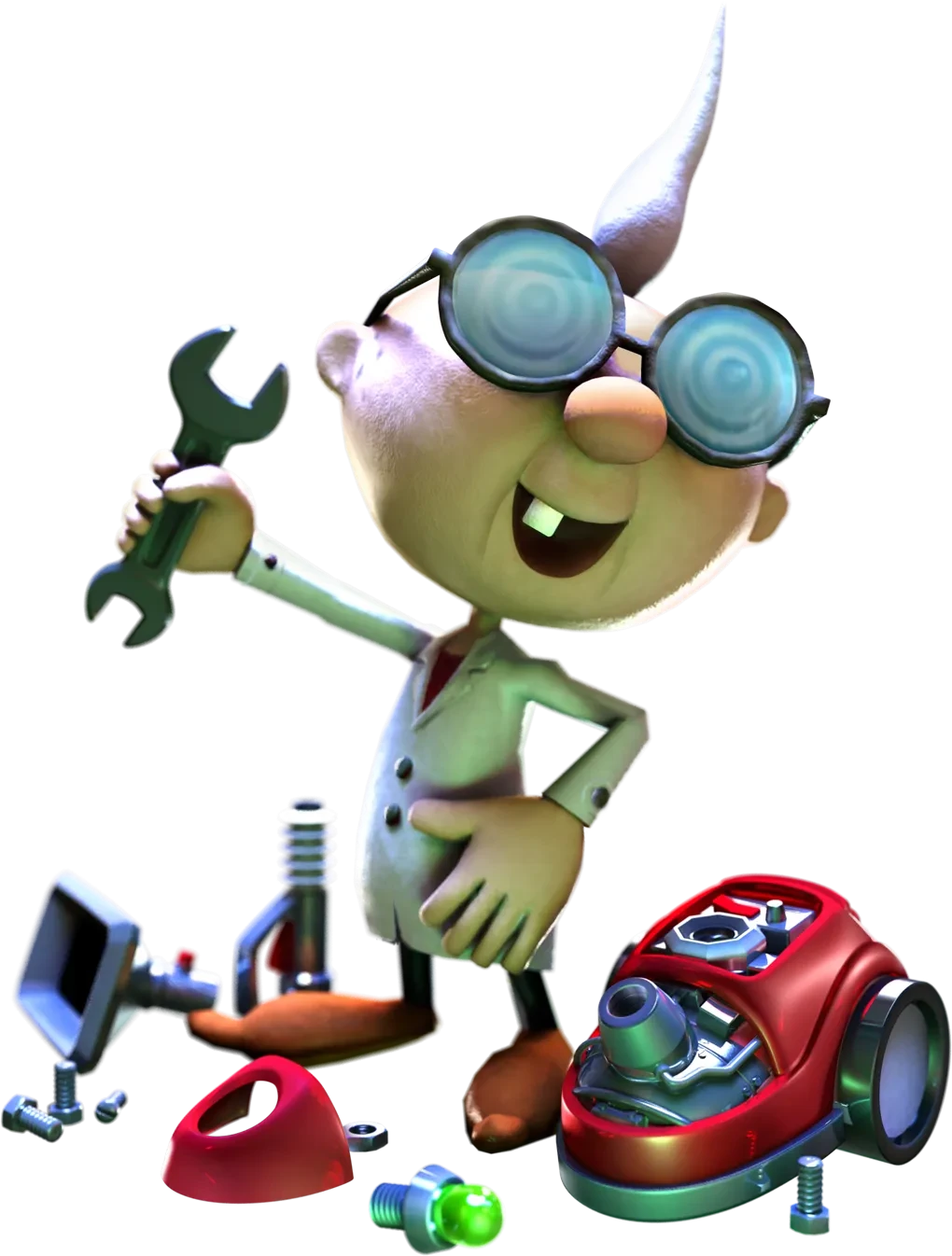
The inventor from the first game, now studying the friendly ghosts of Evershade Valley from a Bunker outside Gloomy Manor.
Gives the orders, teaches the controls, watches through the security cameras and beams Luigi in and out with the Pixelator. Releases every captured ghost from the Vault once the Dark Moon is whole again.
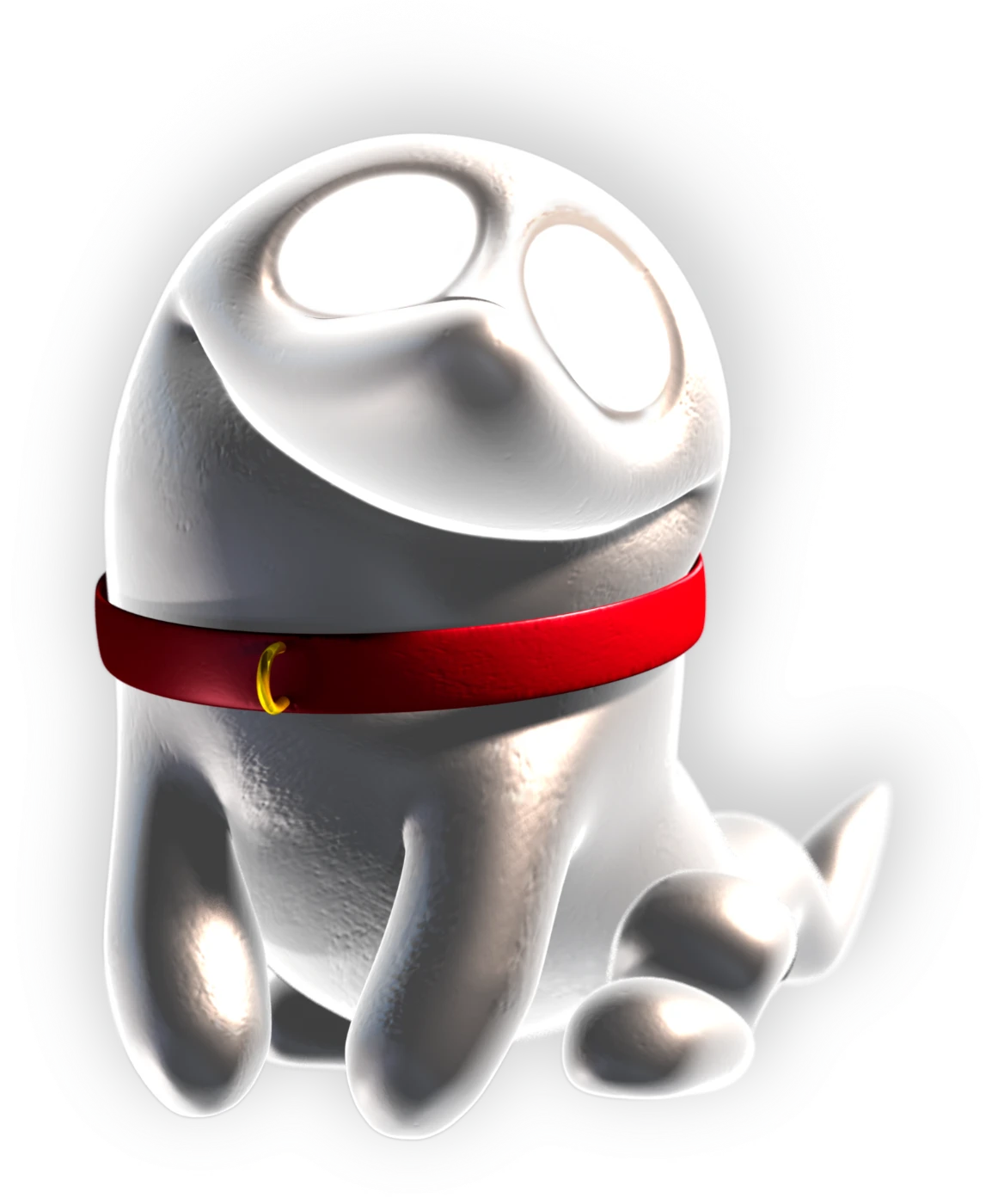
A playful ghost dog, new in this game. His pupils are missing for as long as the Dark Moon is broken.
Steals keys and a clock hand in mansion after mansion and has to be tracked by his paw prints. He will also revive Luigi in exchange for a Gold Bone, has a whole ScareScraper mode named after him, and goes home with Luigi at the end.
Missions: Doggone Key, Play Catch, Front-Door Key
Later: Luigi’s Mansion 3 and a Smash Bros. trophy
The Toad assistantsFive lost researchers
Five Toads, each a different colour, who were helping the professor with his research and were left behind when he fled.
Trapped in paintings until Luigi frees them with the Dark-Light. Each then follows him, can be carried and fired across gaps with the Poltergust, and carries a security image back to the Bunker. They rebuild the Dark Moon in the ending.
Red in the Haunted Towers, yellow in the Old Clockworks, blue in the Secret Mine, two more in the Treacherous Mansion
Voiced by Samantha Kelly
MarioIn a painting, again
Kidnapped off-screen by King Boo, exactly as in the first game.
His capture is only discovered in the Treacherous Mansion, and rescuing him becomes the aim of the final act. Freed on the Terrace with the Dark-Light Device.
Voiced by Charles Martinet
King BooWould-be ruler of the Mushroom Kingdom
The villain of the first game, back with a power-enhancing jewel in his crown.
Shatters the Dark Moon to bend the valley’s ghosts to his will, has the Boos strengthen them with crystals from the Secret Mine, and lures Luigi to the Treacherous Mansion with a faked photograph. Final boss, in a dimension of his own invention.
100 HP per round, three rounds
Attacks: spiked balls, sand, ice and spike patches, electrified floor
The Three SistersHerlinda, Belinda and Lucinda
The vain, garden-loving former owners of the Haunted Towers, who according to the professor are celebrities among ghosts. Each insists another is the eldest.
Sub-bosses of the Haunted Towers. They circle Luigi behind hand mirrors that block the Strobulb, and can only be stunned when one lowers hers to taunt him.
Herlinda 150 HP, Belinda 100 HP, Lucinda 50 HP
Lucinda is Melinda in the British version
The ghosts of Evershade ValleyGreenies, Slammers, Hiders and friends
Ordinarily harmless and rather fond of the professor. Without the Dark Moon they are spiteful, organised and inclined to dress up.
The rank and file of every mission. Greenies in particular turn up wearing sunglasses, kitchen utensils and mummy wrappings, or inside suits of armour, and are cheerfully back to normal in the ending.
Green, blue, orange and pink Luigis, one per player.
Climb the ScareScraper together, reviving one another and freeing each other from traps. The +Control Pad lets each shout to the rest: “Hey!”, “Thank you very much!”, “Good job!” and “Help help!”
Revived with 20 HP
The run ends if all four are down or trapped
Portrait ghosts, bosses & ghosts
There are no portrait ghosts this time. In their place are five Possessors, a handful of sub-bosses, fifteen kinds of ordinary ghost and the tower-only ghosts of the ScareScraper, followed by the valley’s pests and traps. HP figures are from Super Mario Wiki.
Grouchy Possessor (boss)Gloomy Manor · Cellar · Confront the SourcePossesses a giant spider queen. Like every Possessor he has no health bar and is caught only after three rounds.
Harsh Possessor (boss)Haunted Towers · Tree House · Tree ToppingPossesses a staircase and sets it alight. The boss Miyamoto asked for in place of an “ordinary” plant monster.
Overset Possessor (boss)Old Clockworks · Belfry Clock · ShowtimePossesses the great clock and summons other enemies, beetles among them.
Shrewd Possessor (boss)Secret Mine · Frozen Pit · Chilly RidePossesses the ice and flees downhill with his Dark Moon piece. Scornful Possessor in the British version.
Tough Possessor (boss)Beyond the Terrace portal · Stop the KnightmarePossesses giant suits of armour; outside them he moves as trails of electricity.
King Boo (boss)King Boo’s Illusion · A Nightmare to RememberFinal boss. Lure him under his own spiked balls, then survive three corridor chases.
Poltergeist (boss)Sub-boss · Gloomy Manor · Library50 HP. Throws books around the Library in Quiet Please!
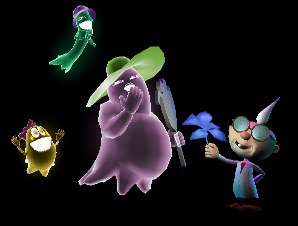
Sister Herlinda (boss)Sub-boss · Haunted Towers · Old Graveyard150 HP. The large purple sister in the straw hat.
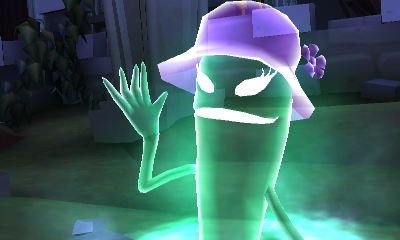
Sister Belinda (boss)Sub-boss · Haunted Towers · Old Graveyard100 HP. Thin, aqua, and the expert on plants.
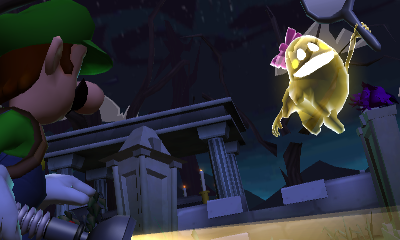
Sister Lucinda (boss)Sub-boss · Haunted Towers · Old Graveyard50 HP. The small yellow one with the pink bow.
Ancient Poltergeist (boss)Sub-boss · Old Clockworks · Roundhouse100 HP. Guards the stolen clock hands in Roundhouse Brawl.
Strong Greenie, Slammer and Gobber (boss)Sub-bosses · Secret Mine · Terminal100, 250 and 300 HP. The three keepers of the paranormal chains in Across the Chasm.
Strong Poltergeist (boss)Sub-boss · Treacherous Mansion · Space Exhibit200 HP. Met in A Train to Catch.
Big Boo (boss)Sub-boss · Treacherous Mansion · Train ExhibitThe ambush in Ambush Maneuver. Counts as ten Boos in the Vault.
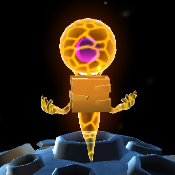
The Brain (boss)ScareScraper · final floorAlways the last boss of a 5, 10 or 25-floor climb.
GreenieEverywhere10 HP. The standard ghost. Punches, or hits Luigi with whatever it has picked up.
Gold GreenieHidden in most missions20 HP. Runs instead of fighting and drops a heap of treasure.
Strong GreenieSecret Mine onwards50 HP. A Greenie toughened by the mine’s crystals.
MummyOld ClockworksA Greenie in bandages. It charges, and the wrapping comes loose when it hits a wall.
Statue Armour GhostTreacherous MansionA Greenie inside a suit of armour. Its weapon sticks in the floor when it misses.
SlammerFrom Gloomy Manor30 HP. A burly red ghost whose handclap sends out a shockwave.
Strong SlammerSecret Mine onwards150 HP.
HiderFrom Gloomy Manor15 HP. Lanky and blue. Hides inside furniture and runs to a new spot when found.
Strong HiderSecret Mine onwards75 HP.
GobberVarious100 HP. Slow, round and yellow. Spits puddles of goo across the floor.
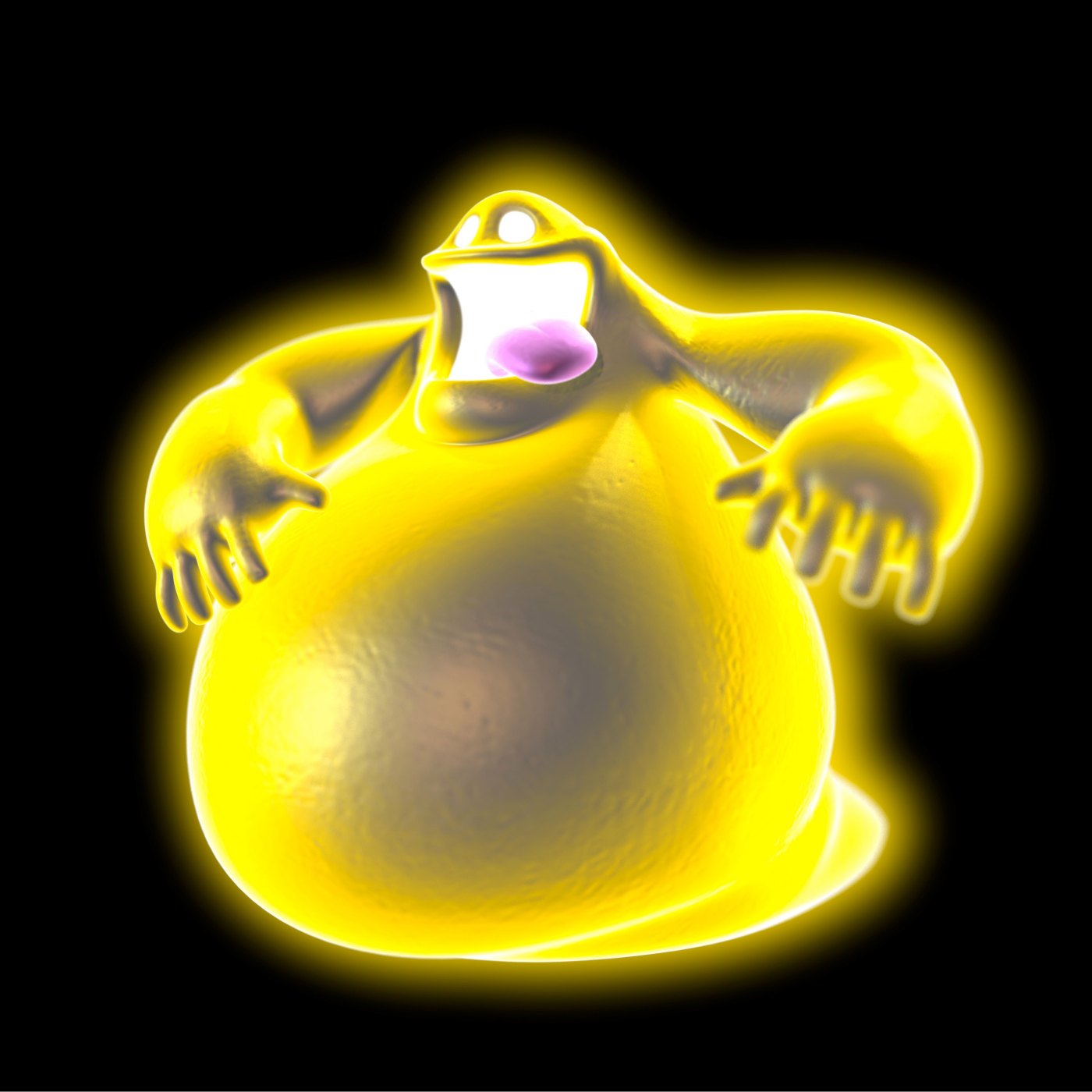
Strong GobberSecret Mine onwards200 HP.
SneakerVarious25 HP. A pink ghost that creeps up behind Luigi and scares him while he is busy catching others.
Strong SneakerSecret Mine onwards100 HP.
CreeperVariousA purple blob that lies in wait as a puddle and tries to trap Luigi. Only a Power Surge finishes it.
BooOne per numbered mission32 to catch, counting the Big Boo as ten. All have pun names: ComBooter, JamBoolaya, Boo B. Trap, Booreaucrat, French Boodle, Boopa Troopa.
Big PolterpupScareScraperThe oversized ghost dog of the tower.
Flower seriesScareScraper bossesBlue Pimpernel, Sun Flower, Pink Zinnia, Violet and Daisy.
Food seriesScareScraper bossesSpookumber, Aweberry, Scorn, Scareambles and Terrorange.
Halloween seriesScareScraper bossesSpooky Spook, Scars, Scool, Jack-goo-lantern and Blimp Reaper.
Bug seriesScareScraper bossesDreadonfly, Lady Gug, Fright Fly, Blobberfly and Go-Bee.
Marine seriesScareScraper bossesHorrorca, Clown Fishy, Shriek Shark, Pondguin and Wurdle.
Sport seriesScareScraper bossesBad-minton, Footbrawl, Tennis Menace, Goolf and Soccer Ball.
Animal seriesScareScraper bossesAwelligator, Banegal, Zebrawl, Leoprank and Cawe.
BatPestHangs from ceilings and swoops. Like all pests, costs 5 HP on contact.
BeetlePestRound bugs that fly slowly at Luigi. The Overset Possessor summons them; gold ones live in the ScareScraper.
CrowPest · mainly Haunted TowersPurple birds that mob Luigi in flocks.
FrogPest · mainly Haunted TowersRed, hopping, and only the Strobulb will see them off. King Boo conjures them too.
MousePestScurries away from Luigi, usually near a mousehole.
SpiderPestRed spiders that guard their webs and rear up at Luigi.
False doorTrapSlams Luigi flat for 5 HP. The Dual Scream map shows which doors are fakes.
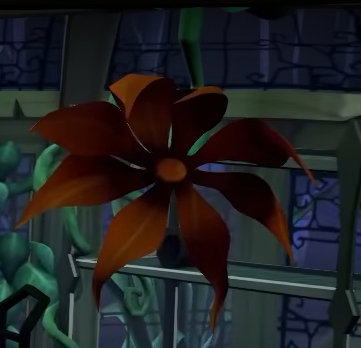
FlytrapHaunted Towers, Treacherous MansionA giant plant that bites for 10 HP. Feed it either a burning roast chicken or a spiky fruit.
Orange flowerHaunted TowersHangs from the ceiling and slams down as Luigi passes. Dodge, then pull it up.
RobombOld ClockworksA walking bomb that explodes for 20 HP when flashed with the Strobulb. Gold ones are full of gold bars.
FuzzballSecret MineHarmless purple fluff from the Chalet that sticks to the Poltergust. Gold ones shed money when thrown.
Spirit BallWherever the Dark-Light is usedReleased when a hidden object is revealed. Vacuum them or the object vanishes again.
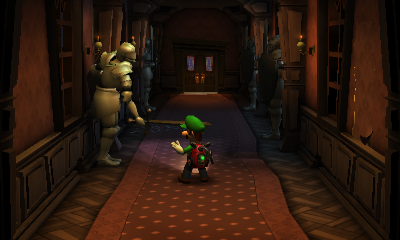
Suit of armourGloomy Manor (Guard Hall) and elsewhereBrings its blade down for 20 HP when Luigi walks past.
Key staff
Credits as listed in the staff roll. Development was led from Vancouver and supervised from Kyoto.
Bryce HollidayGame director (Next Level Games)Led the project from the 2009 video call at which Nintendo’s Kensuke Tanabe told the studio it would be making Luigi’s Mansion 2; he says he could barely speak.
Shigeru MiyamotoProducer (Nintendo)Described himself as a shepherd, steering mostly by saying where not to go. Visited Vancouver twice, had the bosses redesigned and added the dodge.
Yoshihito Ikebata, Ryuichi NakadaSupervisors (Nintendo)The day-to-day link between the two companies. Ikebata reported to Miyamoto every fortnight and relayed his verdicts.
Chad YorkAudio director and composerWrote the score with Darren Radtke and Mike Peacock. His favourite touch is Luigi humming along with the background music.
Jason CarrLead level designHead of the team that built the five mansions.
Rob DavidsonLead boss designIn charge of the Possessor fights.
Brian DavisGameplay programmerBuilt the spider and staircase bosses, and brought his GameCube copy of the original to the Iwata Asks interview.
David CatlinTechnical directorCredited as the game’s technical lead.
Neil SinghArt directorWith Barret Chapman as presentation director.
Bjorn Nash, Eric Randall, Ken Yeeloy, Paul Goad, Paul MartinProducers (Next Level Games)The studio’s production team.
Koji Kondo, Kazumi Totaka, Yoji InagakiSound supervisors (Nintendo)Totaka, co-composer of the first game, also returns as the voice of Professor E. Gadd.
Charles Martinet, Samantha KellyVoicesMartinet is Luigi and Mario; Kelly, uncredited, is the Toads.
Hideki Konno, Kensuke TanabeSpecial advisorsThe director of the first game, who insisted the sequel have multiplayer, and the Nintendo producer who brought the project to Next Level.
Satoru IwataExecutive producerWith Shinya Takahashi as general producer. The HD version credits Shuntaro Furukawa.
Tantalus MediaDeveloper, Luigi’s Mansion 2 HDThe studio behind Nintendo’s HD versions of Twilight Princess and Skyward Sword.
Advertisement
How It Was Made
Dark Moon was made by a Canadian studio under the close eye of Nintendo in Kyoto, over more than three years, and its makers have talked about it unusually freely: to Satoru Iwata, to Game Developer and to Nintendo Life.
A 3D experiment and a video call
The first logo, from E3 2011, when the game was Luigi’s Mansion 2 everywhere. Logo: Nintendo, via Super Mario Wiki
The road to a sequel began with a screen. The GameCube original had been running in glasses-free 3D inside Nintendo back in 2001, and when Nintendo began work on what became the 3DS, the first game’s team tried it again; Miyamoto, by Wikipedia’s account, built a working version of Luigi’s Mansion on a 3DS development kit to see what the hardware could do. That experiment turned into a brief for a new game.
The job went to Next Level Games in Vancouver, makers of Super Mario Strikers and the Wii Punch-Out!!. In 2009 the studio was building a prototype for a different Nintendo project (reported years later to have been a Metroid game) when, during a video conference, producer Kensuke Tanabe announced a change of plan. “I was so happy I was in seventh heaven!” audio director Chad York told Iwata; a horror comedy would let him write a far wider range of music than football or boxing. The 3DS itself had not yet been announced, so for a while the team did not know what they were making the game for.
They were given three fixed points, in Bryce Holliday’s words: “Luigi, a vacuum, dollhouse camera in a 3D dollhouse game.” Nintendo’s supervisors asked them to study what the 2001 game did well and badly, and at first banned nostalgia outright: no Mario references, no borrowed characters, nothing that would stop the game standing by itself. Touches such as Luigi’s humming were put back late, as polish.
Miyamoto the shepherd
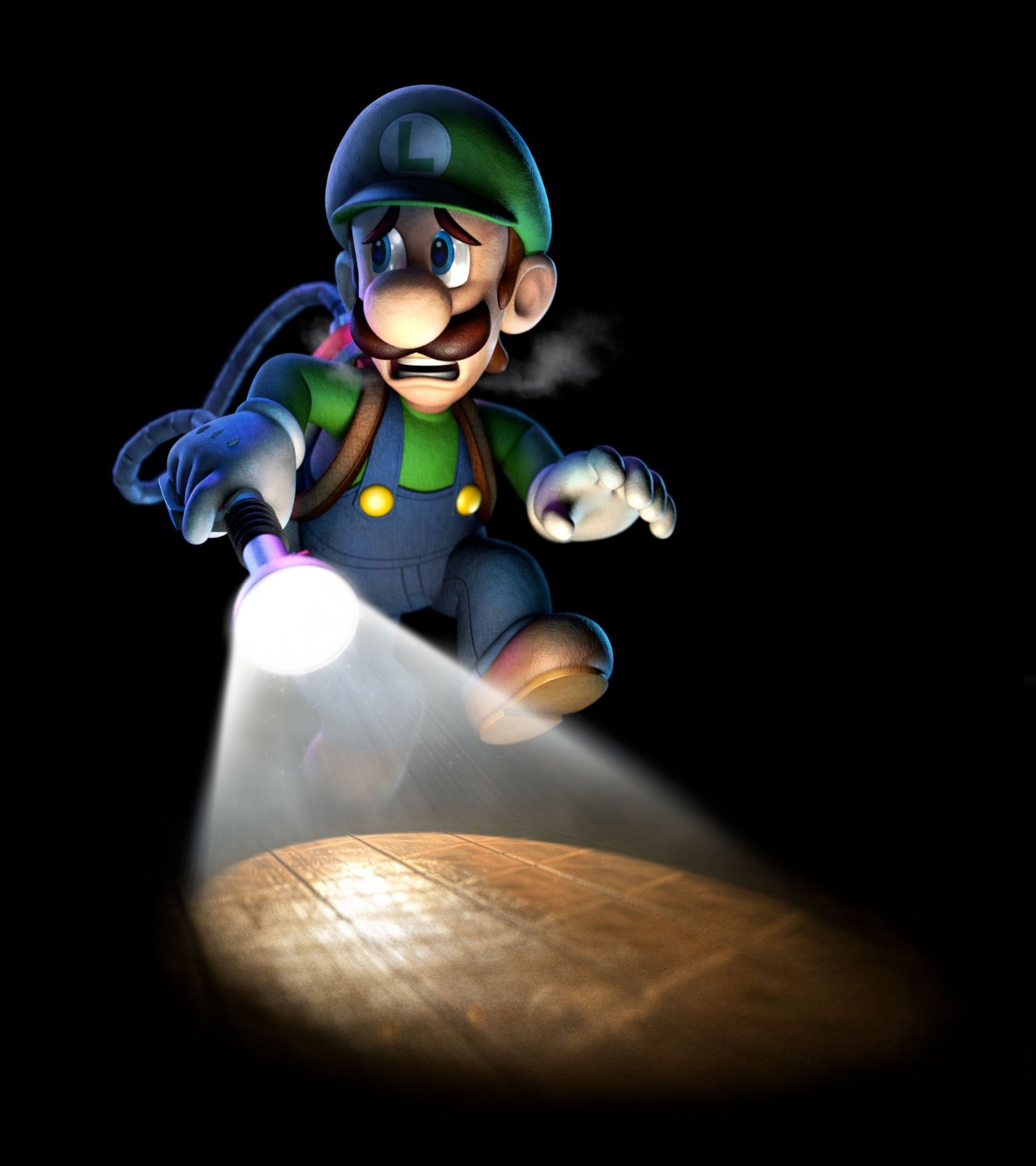
Luigi on tiptoe: official artwork.
Shigeru Miyamoto produced, and by his own description was involved more than usual. He would not call himself a mentor. “I suppose I was like a shepherd,” he said, or the sheepdog, running round the flock shouting “Don’t go that way!” Supervisor Yoshihito Ikebata went to see him every two weeks, often to be asked a single word, “So?”, or drawn into a discussion of television dramas that he gradually realised was a lesson in how scenes are put together.
Work moved between the two countries overnight. Next Level built tools it called tweakers so that staff in Kyoto could adjust values in the game directly; a build sent from Vancouver in the evening came back with notes by morning. Miyamoto flew out twice. Programmer Brian Davis remembers that it was the only time the team wore suits, that developers from other studios turned up to swap StreetPass data with him, and that he beat the spider boss alarmingly quickly.
Upending the tea table
The Harsh Possessor, who became a staircase at Miyamoto’s suggestion.
Miyamoto’s best-known habit is overturning a design late in the day, and Dark Moon got the treatment. The original bosses, he felt, could have come from any game. A giant plant for the mansion built round a tree was “ordinary”; a mummy or sphinx for the one in the desert was generic. He wanted bosses that belonged to their buildings, so that players would look back and say, as he put it, “The boss in that building was the stairs!” Holliday calls the staircase “the first upending of the tea table”. Its first version was just a flight of steps with a mouth, and nobody liked it; the answer was to make the climb itself the fight and leave the creature at the top as little more than a punchline. Only the spider in Gloomy Manor is a conventional boss.
The controls went through the mill as well, rebuilt more than ten times by Miyamoto’s count. He also pushed back against a stream of haunted-house film parodies, wanting the series to have a world of its own, and kept asking the team whether they were enjoying themselves, on the theory that it shows in the finished game. By Miyamoto’s own account the team thought this optimism irresponsible, and Ikebata agrees that it caused some trouble.
Karakuri, prototypes and the handheld
An E3 2011 screenshot. The health gauge was still on the top screen. Screenshot: Nintendo, via Super Mario Wiki
Early on Miyamoto gave the team a Japanese word, karakuri, meaning mechanisms or tricks, and it became the guiding idea: mansions full of contraptions that do something surprising when poked. Next Level built hundreds of small prototypes to find them, and went on prototyping well into production. An idea was reckoned “sticky” if it bred variations quickly and needed no explaining. “It’s always gameplay first,” Davis said of the Nintendo way of working.
The handheld shaped the rest. Missions were kept to ten or twenty minutes so the game could be played in short bursts, with each mansion reshuffled between visits instead of asking players to trudge back through it. The lower screen was given over to a map that Miyamoto says was reworked again and again. Ghost fights were tuned around the stereoscopic display; Holliday reckons they are easier with the 3D switched on. And where the first game had asked for two sticks, this one made do with one, to keep newcomers on board.
Luigi, meet Luigi
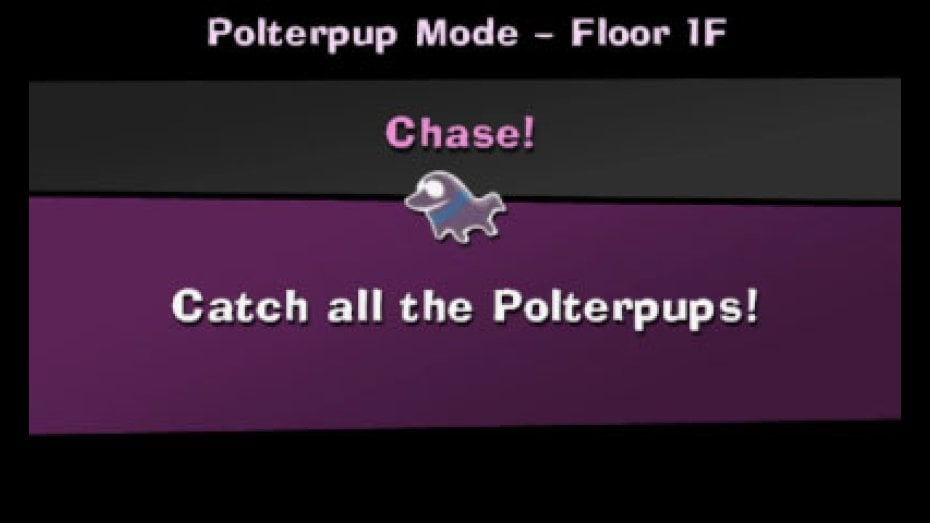
The title card for Polterpup Mode.
The ScareScraper exists because of unfinished business. A build of the GameCube game had tested a mode in which Luigi meets another Luigi, and it was dropped; Hideki Konno, that game’s director and a special advisor on this one, told the new team that “multiplayer had to be in this one”. Miyamoto challenged them to give it the staying power of Mario Kart. The shared goal of reaching the top of a tower was fixed early, and staff in both countries played four-player sessions over and over to find rules that worked. The Polterpup mode grew out of a practical problem, how to give four players a reason to move from room to room, and reviving a fallen team-mate was added after the team had seen how players behaved in Luigi’s Ghost Mansion in Nintendo Land.
The internal folder for the tower’s rooms is still called terrortower, which looks like an earlier name.
From E3 2011 to the Year of Luigi
An early version of the North American box art. Box art: Nintendo, via Super Mario Wiki
Reggie Fils-Aimé announced the game at E3 on 7 June 2011 under the working title Luigi’s Mansion 2. The demo of that year shows a Luigi who wears a utility belt, already has his Strobulb in the Garage and still speaks in voice clips from 2001, with his health gauge on the upper screen. A year later, at E3 2012, the North American version became Luigi’s Mansion: Dark Moon and was promised for that Christmas; Gloomy Manor was being called Ghostly Manor, and at one stage the Old Clockworks was the second mansion, not the third.
In August 2012 the date slipped to the first half of 2013. Iwata noted in the interview that a project meant to wrap up by the end of 2012 had run into the new year, and Holliday admitted the last stretch was stressful. Multiplayer was revealed in January 2013 along with the March release date, and in a Nintendo Direct that February Iwata declared 2013 the Year of Luigi, in honour of thirty years since the character’s debut. A build date left in the game’s files reads 14 February 2013.
Luigi’s Mansion 2 HD
Luigi as redrawn for Luigi’s Mansion 2 HD.
The remaster was announced in the Nintendo Direct of 21 June 2023 and released worldwide on 27 June 2024. It was handled by Tantalus Media, and its credits say that it builds on the work of the original 3DS team. Character models, Luigi’s above all, were redrawn to match Luigi’s Mansion 3, down to the stitching on his dungarees; ghosts are more solid; the valley map has been repainted. The game runs at 1080p and a fixed 30 frames per second, where the 3DS original was uncapped.
Series Firsts
What the second game added to the series, checked against the GameCube original and its 2018 remake.
1Multiplayer in the mansionThe ScareScraper is the first multiplayer mode in a Luigi’s Mansion game, and the first with online play. The idea had been tried and dropped on GameCube; co-op only reached the first game with its 3DS remake in 2018.
2Next Level Games takes overThe first Luigi’s Mansion made outside Nintendo’s own studios. The Vancouver team went on to make Luigi’s Mansion 3.
3PolterpupLuigi’s ghost dog makes his first appearance here, as a pest, and leaves as a pet.
4The Poltergust 5000, Strobulb and Dark-LightThree pieces of kit introduced in this game. The Strobulb and Dark-Light both returned in Luigi’s Mansion 3, and the Strobulb was added to the 3DS remake of the original as an option.
5Missions and star ratingsThe first game in the series to be divided into separate, graded missions instead of one continuous house.
6PossessorsThe first boss ghosts that fight by taking over an object. Super Mario Wiki notes that three of Luigi’s Mansion 3’s bosses follow the same pattern.
7A handheld Luigi’s MansionThe first entry made for a portable console, and the first to ship with the stereoscopic 3D that had been prototyped for the GameCube game.
8The Year of LuigiReleased weeks after Satoru Iwata declared 2013 the Year of Luigi, in celebration of the character’s thirtieth anniversary.
Cheats & Secrets
There are no codes to enter. What the game has is a long list of things to find and a scoring system that rewards doing everything properly.
Upgrades depend on the total treasure banked across all missions, so replaying a rich mission counts. Green Power Surge at 2,000G; Dark-Light level 2 at 4,000G; red Power Surge at 7,000G; Dark-Light level 3 at 10,000G; Super Poltergust at 20,000G.
Three stars
The rating weighs treasure, damage taken, ghosts captured and time. The cheapest way to raise it is money: hook two or three ghosts together and hold on until the gauge allows a green or red Power Surge, which pays out gold bars, and catch the Gold Greenie. Three stars on every mission earns an E. Gadd Medal.
Finding the Boos
Every numbered mission has one. Look for a gap where a piece of furniture ought to be, shine the Dark-Light on it and vacuum the Spirit Balls. Two Boos cannot be missed, the one in Visual Tricks and Boopa Troopa in Double Trouble, and the first three in Gloomy Manor only appear once the Visual Tricks Boo has been caught. The Big Boo of Ambush Maneuver counts as ten, which is how 22 hiding places make 32 Boos.
Bonus missions
Catch every Boo in a mansion and its bonus mission unlocks: Gradual Infiltration, Hostile Intrusion, Outlandish Interruption, Severe Infestation and Terrifying Invasion. Each is a timed hunt for every ghost in the building.
Gems
Thirteen per mansion, 65 in all. Super Mario Wiki’s mansion pages list them room by room: the Old Clockworks, for example, hides rubies in the Clockworks Court, Warehouse, Roundhouse (two), Canyon Stairs, Clock Tower Gate, Movements, Service Elevator, Gear Chamber, Clockmaker’s Chambers, Storm Cellar, Maintenance Hub and Quarry.
The Gold Bone
Once you have a little money in the bank, Gold Bones start to turn up in furniture that would otherwise be empty. Carrying one means a free revival from the Polterpup, once per mission. Finish without using it and it converts to 200G.
Strobulb technique
Miyamoto’s own advice: let the ghosts gather behind you, then turn and release a fully charged flash to stun the whole group, and use the B-button dodge while reeling them in. A charged flash can stun five ghosts, though only three can be vacuumed together.
Unlocking the ScareScraper and its modes
The tower opens after Visual Tricks (A-4). Surprise Mode appears once Hunter, Rush and Polterpup have each been completed at any length and difficulty, and Endless once a 25-floor climb has been cleared in that mode.
ScareScraper upgrades
Inside the tower, upgrades are bought with the team’s shared treasure and last only for that run. In Hunter Mode the Poltergust reaches level 2 at 600G and level 3 at 7,000G, the Dark-Light at 1,800G and 11,500G, and suction at 4,000G and 16,000G; the other modes use lower thresholds. Collect the four Red Coins after a floor for a chance at Dark-Light Goggles, a doubled or tripled Poltergust, a Restorator or a Map.
Completing the Vault
The final medal needs every gem, every Boo, every upgrade and at least one capture of each ordinary and boss ghost in both the valley and the ScareScraper, which means meeting all 45 tower bosses. With all three medals the save file turns gold and sparkles.
Names are those of the North American 3DS version and of Luigi’s Mansion 2 HD.
Glitches & Oddities
A well-behaved game with very few documented bugs. The more interesting finds are the things left in its files.
Luigi’s left arm
Luigi holds up a key with his left arm stuck at his side.
Make Luigi call out with the +Control Pad at the same instant as he starts another action, such as opening a door, and his left arm hangs limp at his side through whatever comes next. It is most obvious when he answers the Dual Scream or holds up a gem one-handed, and it lasts until the mission ends or control returns.
Toad through the floor
In Piece at Last (C-5), free the Toad, take him to the Maintenance Hub and fire him across the chasm to the floor above. Walk round to meet him and he drops straight through the metal floor.
The shaking Greenie (HD)
In Luigi’s Mansion 2 HD a Greenie can occasionally wedge itself against furniture, where it shudders on the spot with its voice clip looping.
Debug menus and a missing sandbox
The 3DS game still contains two debug screens, a mission select and a progress editor, with strings such as “Unlock Missions” and “100% Completion”, plus a camera test for a sandbox level that no longer exists.
Unused rooms
Gloomy Manor’s files hold a small 3D maze with a chest and a spring pad. The Haunted Towers has a barely begun bonus room containing an untextured platform and a teleporter to the Secret Mine that crashes the game.
StreetPass that never was
A folder named streetpass holds the ScareScraper’s exclusive ghosts, although the finished game has no StreetPass feature.
Videos
Nintendo’s overview trailer for Luigi’s Mansion 2 HD, and Did You Know Gaming on the Luigi’s Mansion series.
Nintendo of America’s official overview trailer, June 2024.
Did You Know Gaming’s episode on newly uncovered Luigi’s Mansion facts.
Trivia & Interesting Facts
Read down the names of the five Possessors, Grouchy, Harsh, Overset, Shrewd and Tough, and their initials spell GHOST.
In Japanese the Three Sisters are Nōti, Rēti and Jīti, which is to say N, L and G: the initials of Next Level Games.
The music in Gloomy Manor’s lift is the pause menu theme from Mario Strikers Charged, an earlier Next Level game.
An E3 2011 screenshot of a Poltergeist, before it was given a visible brain.At E3 2011 Luigi wore a utility belt to hold his DS and other bits of kit. It had gone by the time the game came out.
The four lower galleries of the Treacherous Mansion are miniature versions of the earlier mansions: the Dark Age Exhibit stands for Gloomy Manor, the Jungle Exhibit for the Haunted Towers, the Ancient Exhibit for the Old Clockworks and the Ice Age Exhibit for the Secret Mine.
When Mario’s portrait flashes up in the final mission, the music slips into an arrangement of the ground theme from Super Mario Bros.
An unused tune in the game’s files is a Haunted Towers-style version of the nursery rhyme “Ring a Ring o’ Roses”. It was finally used in Luigi’s Mansion Arcade, as the Three Sisters’ battle music.
The Polterpup’s pupils are missing for the whole game and only return when the Dark Moon is restored.
Internally the project was simply “LM3DS”, and the Pixelator is named “Pixelporter” in the code. The name leaks into one line of the North American script.
A line cut from the professor’s briefing on the Old Clockworks explained that the factory closed after a series of horrific accidents, and that he considers it perfectly safe.
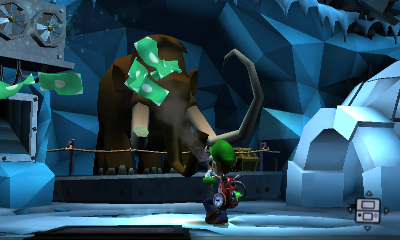
Gold Greenies at play on the Ice Lake, in a pre-release screenshot.Two Gold Greenies can be found playing ice hockey on the Ice Lake in the Secret Mine.
The +Control Pad has exactly one job in the whole game, according to the developers: making Luigi shout.
When Shigeru Miyamoto visited Next Level Games it was the only time the staff wore suits to work, and developers from outside the studio dropped by to exchange StreetPass data with him.
The house Luigi is dozing in at the start is the Rank D mansion from the ending of the first game.
Haunted Towers is the tallest building in the game, with six floors and a basement, and the Old Clockworks is the oldest.
The British English 3DS version renames a surprising amount: Thrill Tower, Pixelshifter, Scornful Possessor, Sister Melinda, Heal-Vac, Boouncer. The HD remaster quietly standardises on the American names.
The HD version carries a PG rating in Australia, up from the G of the 3DS original, and credits Shuntaro Furukawa as executive producer in place of Satoru Iwata.
Luigi’s Mansion 2 HD is listed after Luigi’s Mansion 3 when a Switch sorts its software by title.
On the 3DS the frame rate was uncapped and wandered between 30 and 60 frames per second; the Switch version is locked to 30.
Luigi cannot jump, on Nintendo’s instructions, and the dodge he does while vacuuming was added at Miyamoto’s suggestion.
Regional Box Art
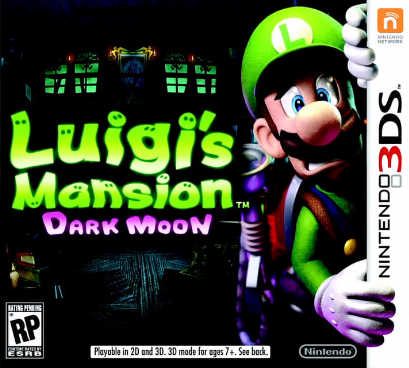
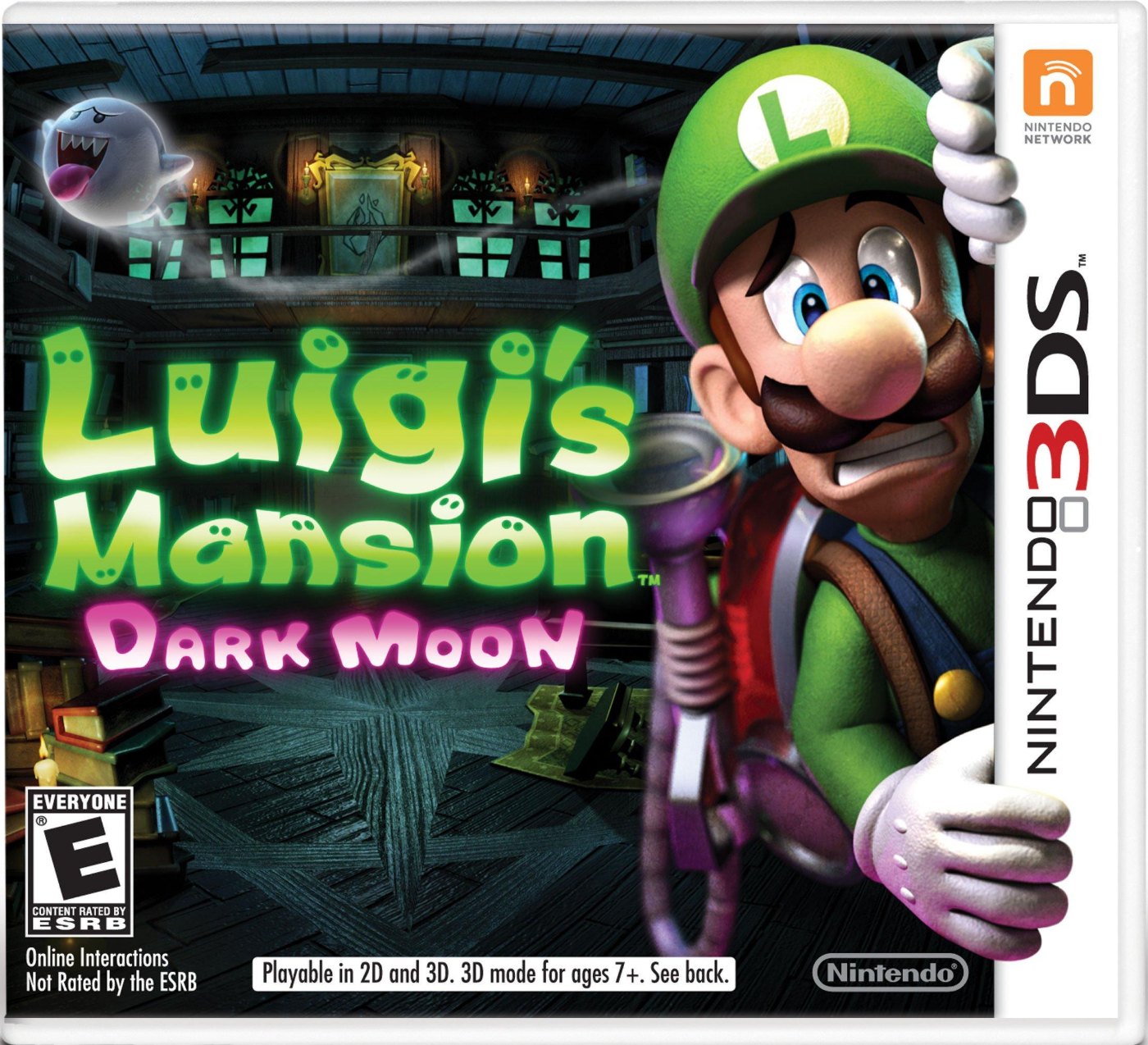
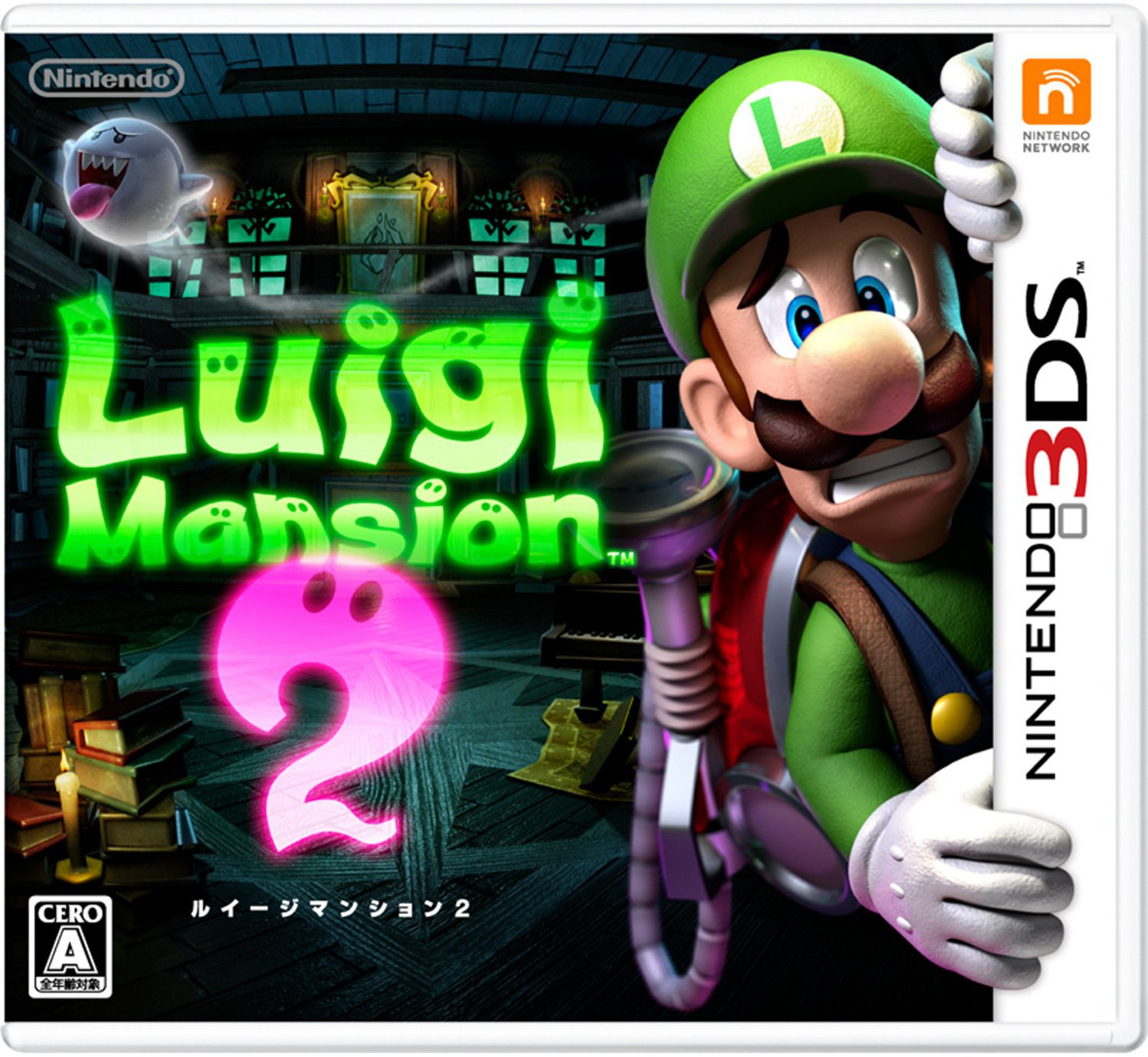
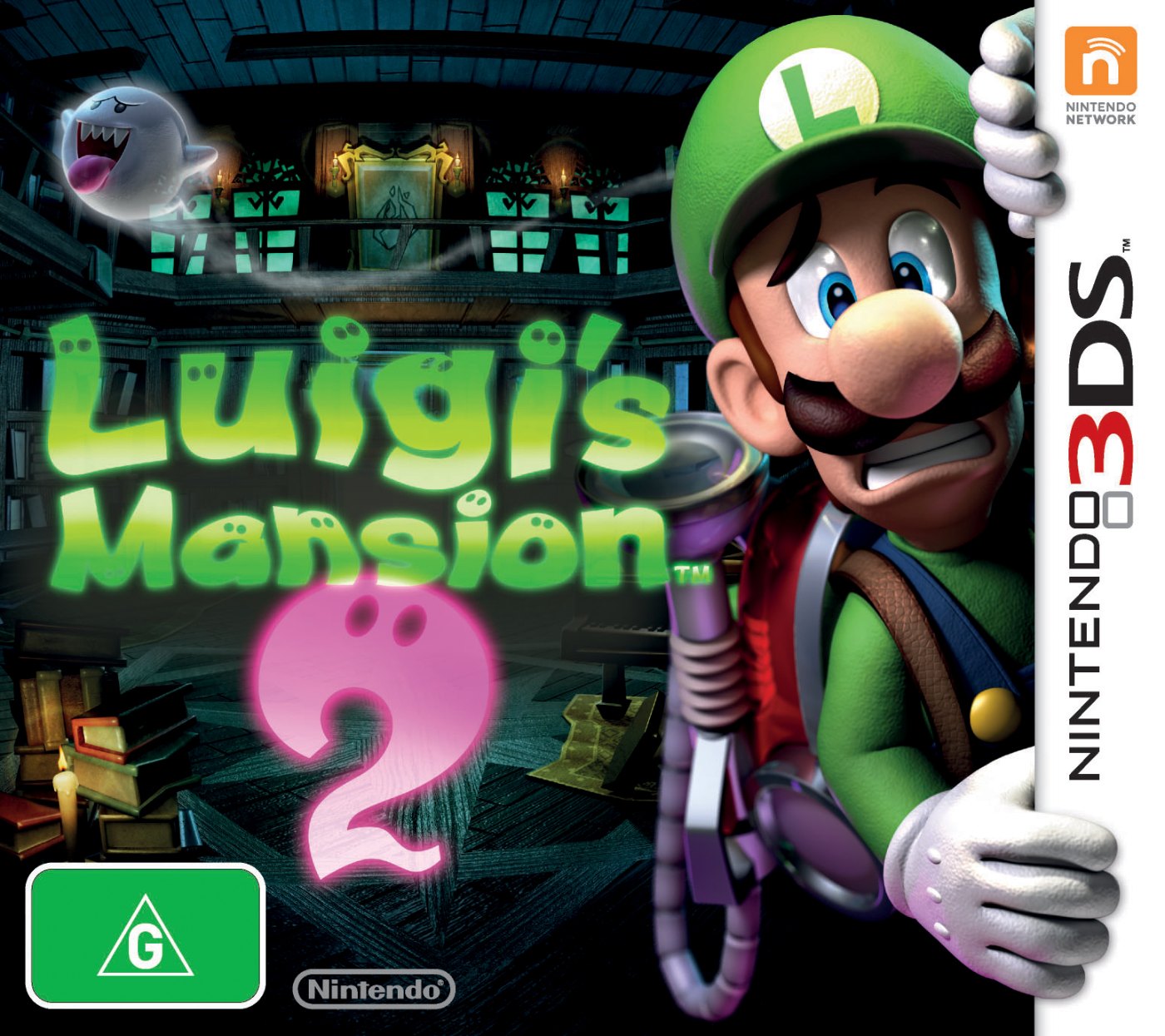
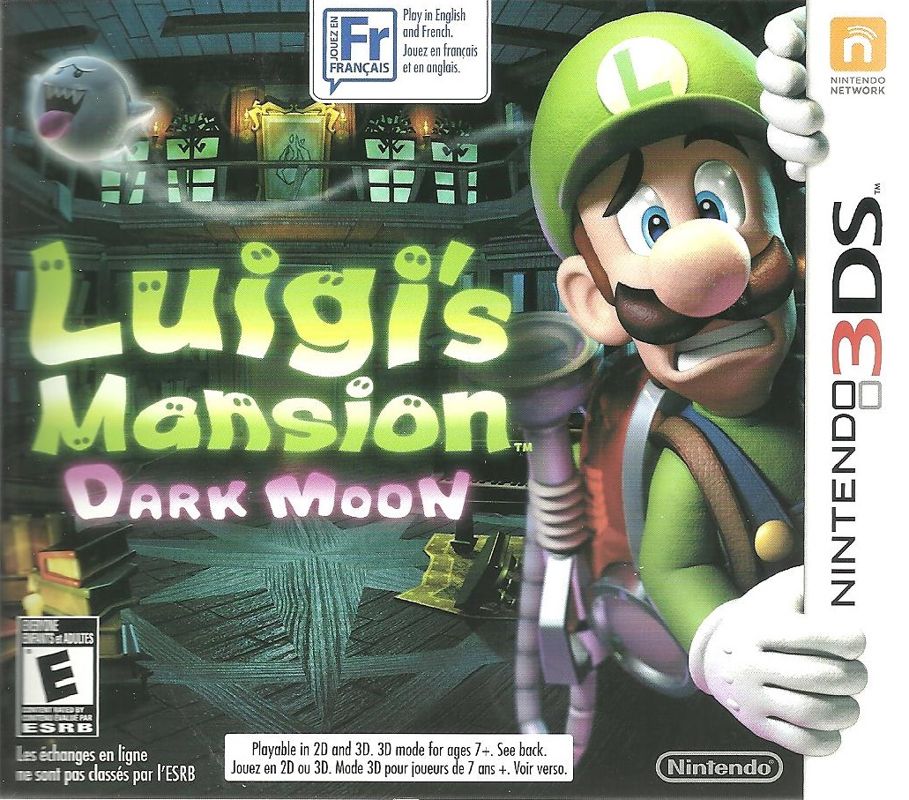
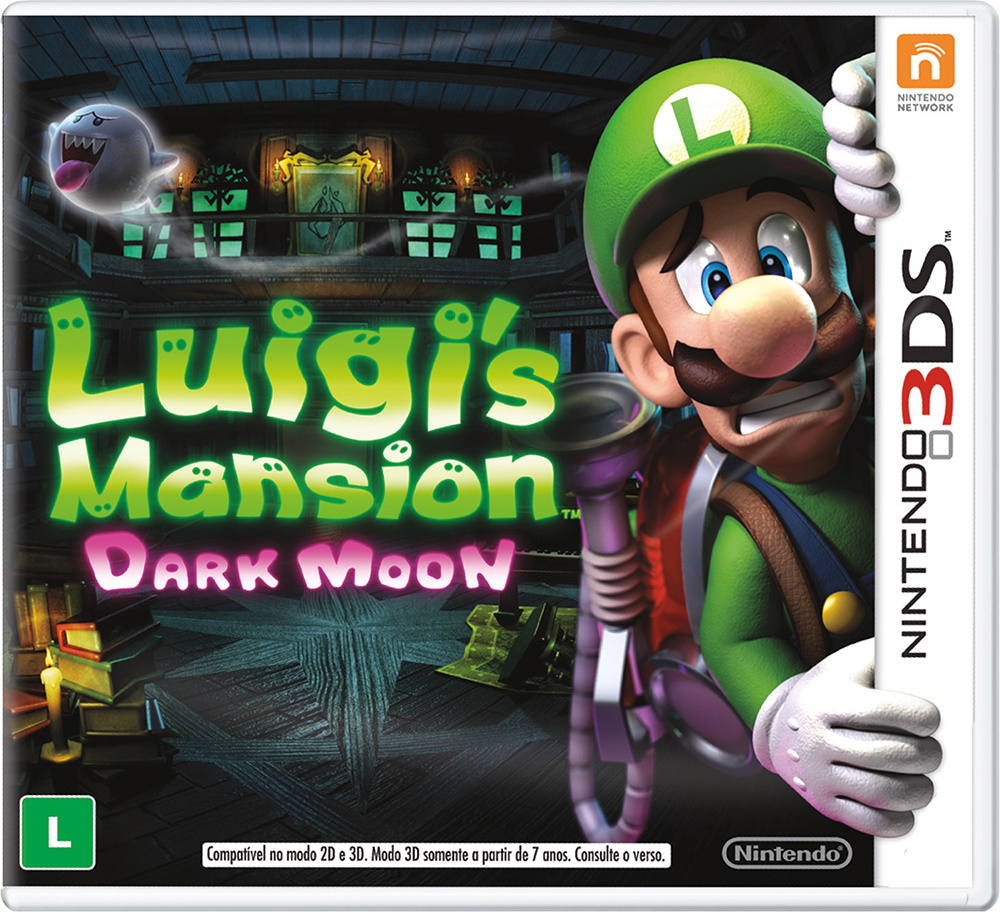
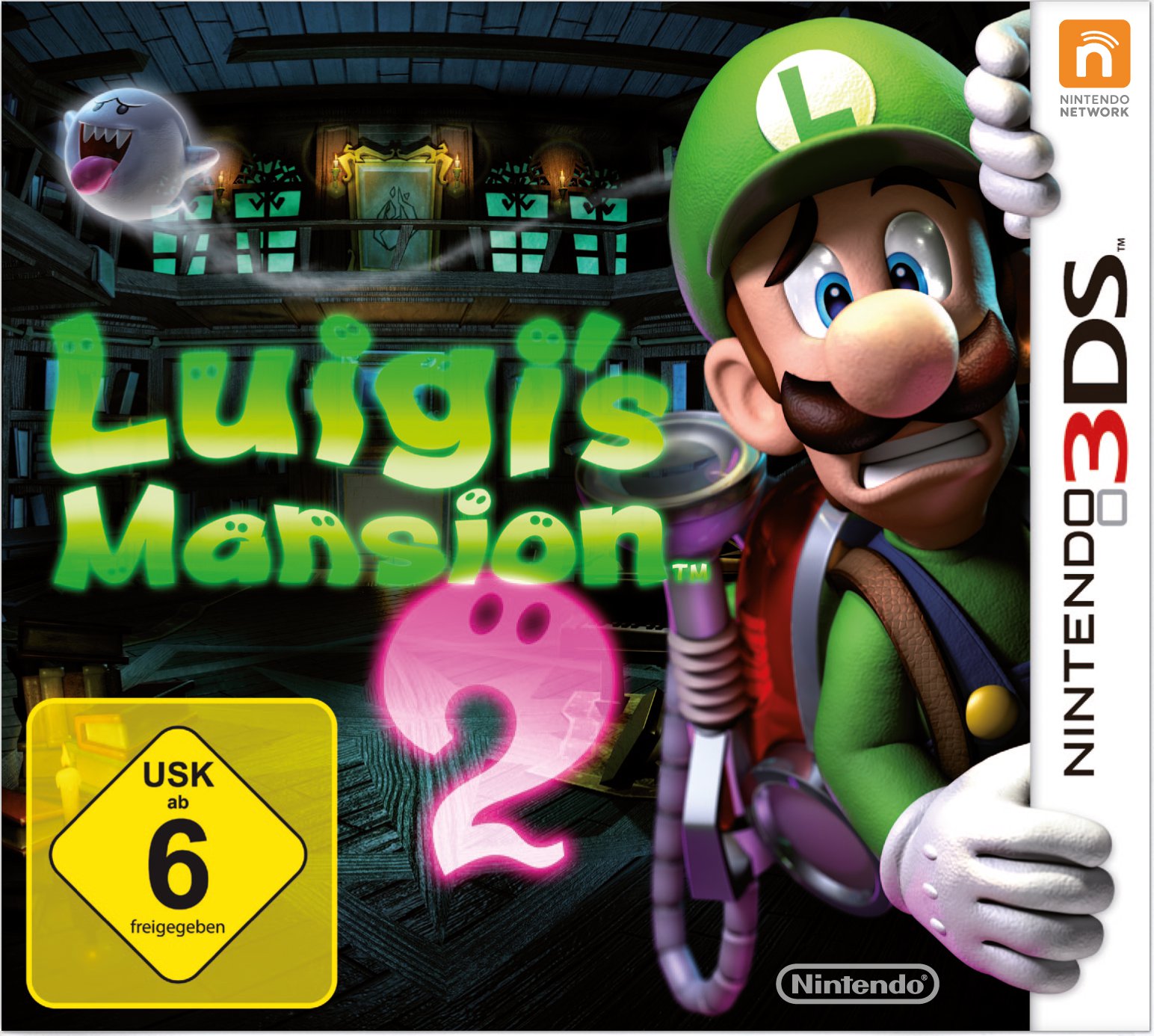
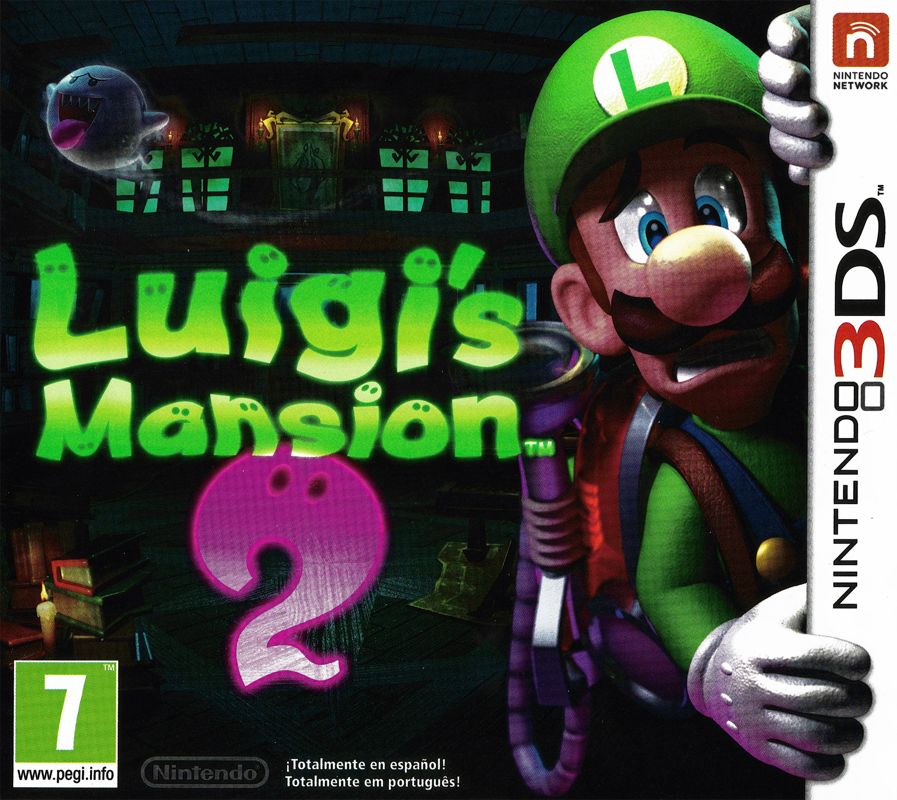
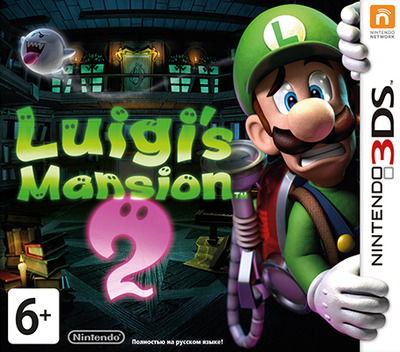
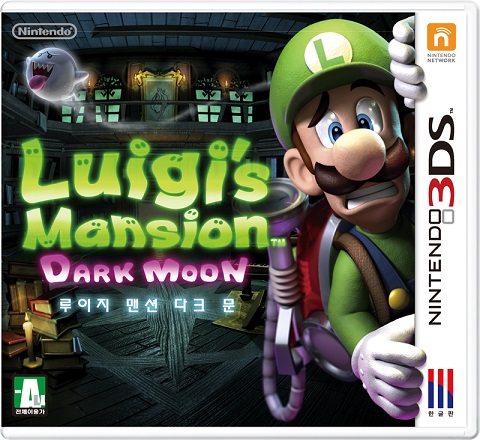
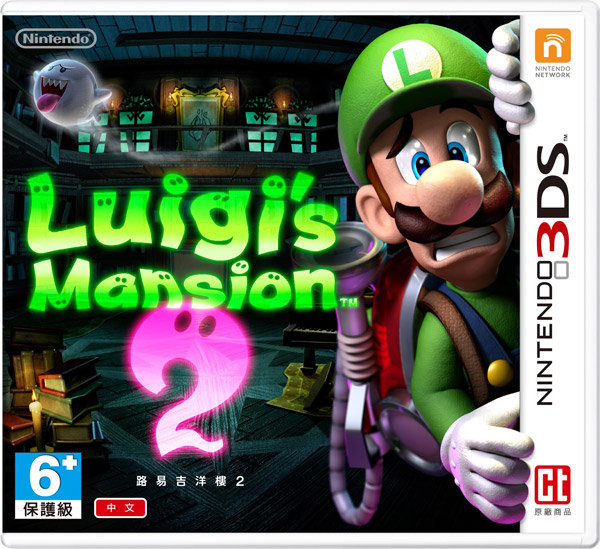
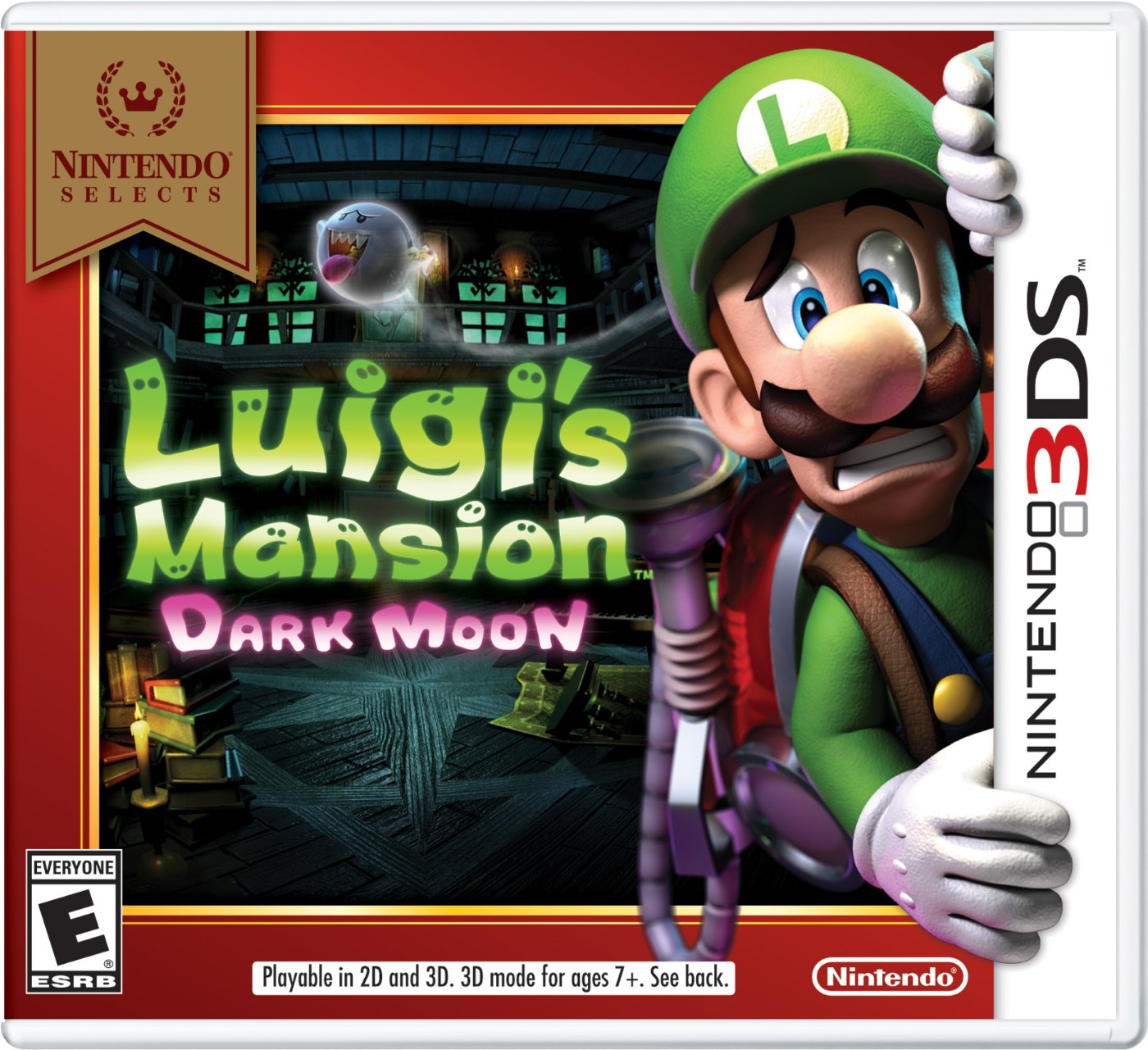
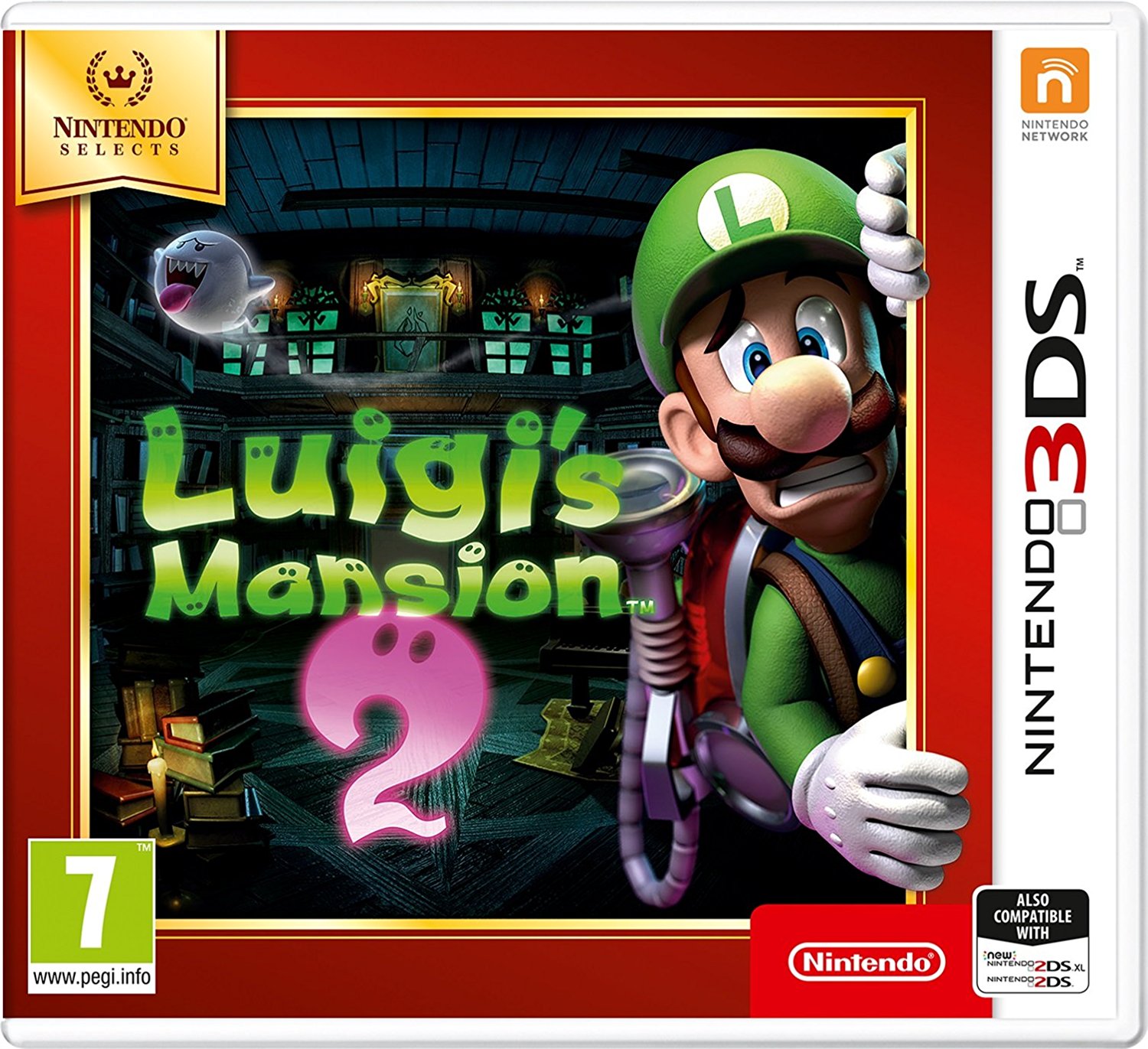
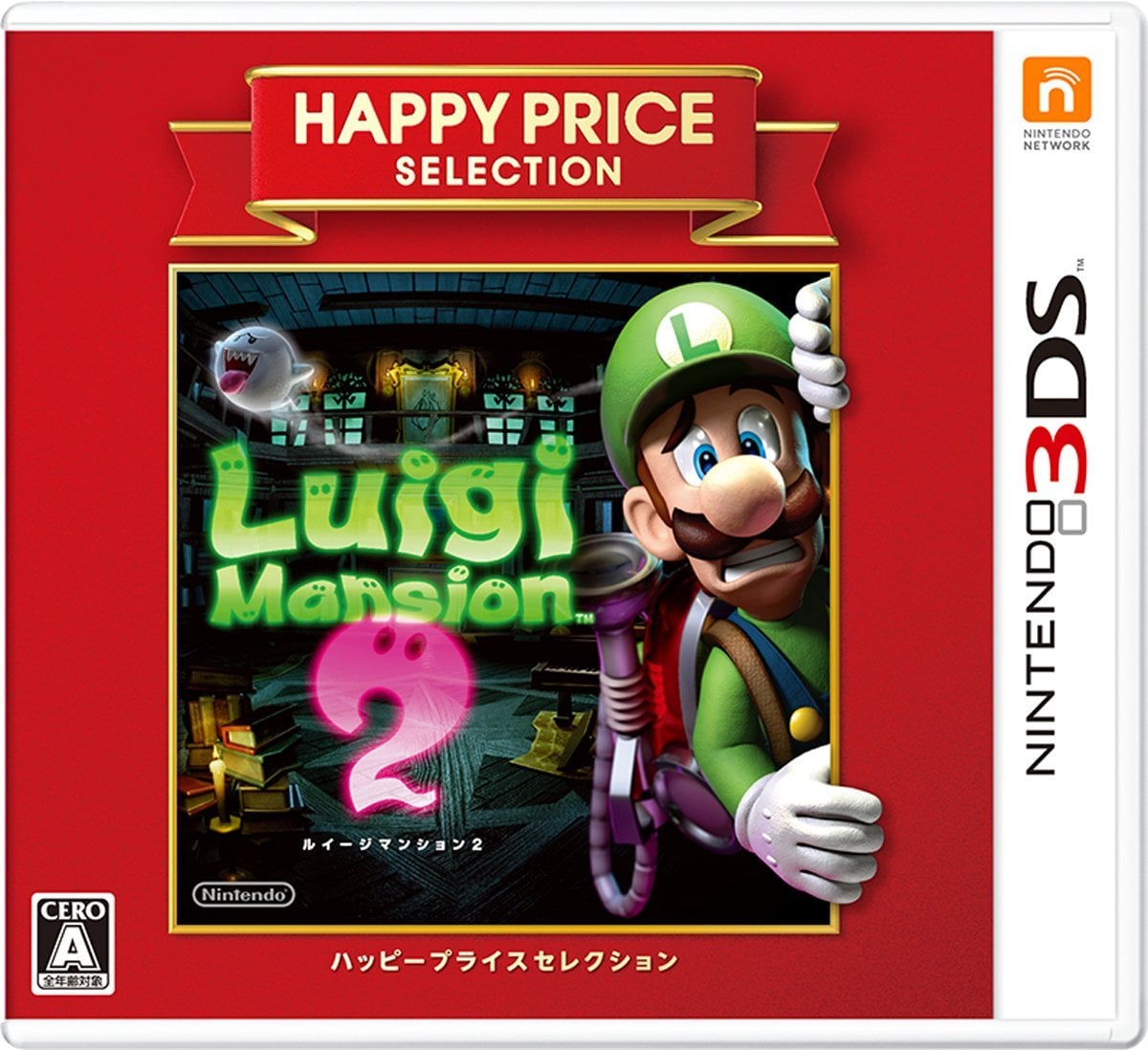
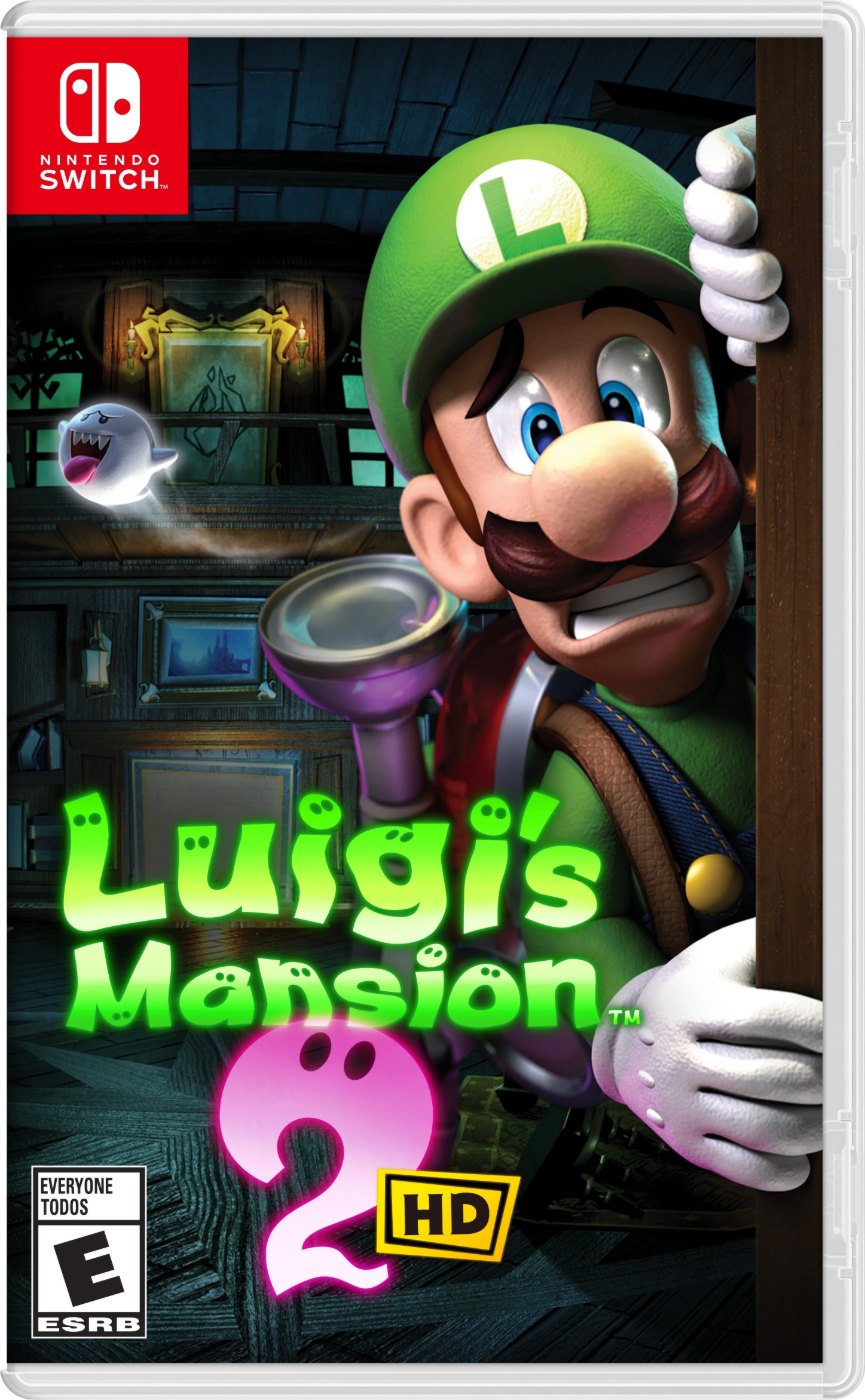
Two families of cover: Luigi’s Mansion: Dark Moon for North America and South Korea, and Luigi’s Mansion 2 for Japan, Europe, Australia and the Chinese-language release. The package art shows Luigi peeking fearfully, which supervisor Yoshihito Ikebata tied to how much of the game is spent peering through holes and windows. Europe also had a limited glow-in-the-dark cover sheet, and the game was later reissued in Nintendo Selects and Happy Price Selection sleeves.
EuropeLuigi’s Mansion 2North AmericaLuigi’s Mansion: Dark MoonNorth AmericaEarly designJapanAustralasiaCanadaBrazilGermanySpain and PortugalRussiaSouth KoreaHong Kong and TaiwanEuropeLimited glow-in-the-dark coverNorth AmericaNintendo Selects, 2016EuropeNintendo Selects, 2017JapanHappy Price Selection, 2016United StatesLuigi’s Mansion 2 HD, Switch, 2024
Screenshots
More from the five mansions.
The Library of Gloomy Manor.The Lab, where the Dark-Light Device is kept.The Tower Lobby of the Haunted Towers.The Greenhouse.The Rooftop Pool.Clockworks Court, the way in to the Old Clockworks.The Clock Tower Gate.The Chalet at the Secret Mine.The Ice Lake.The Front Entrance of the Treacherous Mansion.The Ice Age Exhibit.The Train Exhibit.
Artwork & Media Gallery
Official artwork, logos and promotional pieces. Super Luigi Bros also keeps its own Luigi’s Mansion 2 galleries, linked below.
North American logo.European logo.Japanese logo.Luigi’s Mansion 2 HD logo.Luigi stuns a Hider.Luigi and a Greenie.Luigi against a Poltergeist in the Library.Luigi chases the Polterpup.Luigi, Polterpup and ghosts.Luigi in the Guard Hall.Gloomy Manor.Luigi approaches Gloomy Manor.Gloomy Manor (map icon).Haunted Towers (map icon).Old Clockworks (map icon).Secret Mine (map icon).Treacherous Mansion (map icon).The Dark Moon pieces scatter across the valley.Luigi and a Toad assistant.Polterpup.The E3 2011 teaser artwork.Luigi versus King Boo.The Poltergust 5000 with its flashlight attachment.Early and final versions of Luigi’s artwork compared.E3 2011: Luigi in the Tomb of the Old Clockworks.Pre-release: an angry Slammer in the Cargo Room.One of nine promotional Valentine’s cards.A promotional Facebook cover.Promotional image: the return of King Boo.End credits: the professor brings the Three Sisters a flower.Luigi and his new dog.The Poltergust 5000 trophy from Super Smash Bros. for Nintendo 3DS / Wii U.Professor E. Gadd, Luigi’s Mansion 2 HD.
Legacy & Re-releases
Dark Moon established Luigi’s Mansion as a series, and eleven years later it was brought back for a new audience.
Releases and re-releases
Nintendo 3DS (Japan)20 March 2013Released as Luigi Mansion 2.
Nintendo 3DS (North America)24 March 2013Released as Luigi’s Mansion: Dark Moon.
Nintendo 3DS (Europe, Australia)28 March 2013Released as Luigi’s Mansion 2.
Nintendo 3DS (South Korea)18 July 2013Released under the Dark Moon title.
Nintendo 3DS (Hong Kong, Taiwan)26 July 2013Chinese-language release.
Luigi’s Mansion Arcade2015Capcom and Sega’s arcade spin-off, built on Dark Moon’s mansions and ghosts.
Happy Price Selection / Nintendo Selects17 March 2016 (Japan); 26 August 2016 (North America); 11 May 2017 (Australia); 13 October 2017 (Europe); 19 July 2018 (South Korea)Budget reissues of the 3DS game.
Luigi’s Mansion 2 HD announced21 June 2023Revealed in a Nintendo Direct for release the following year.
Luigi’s Mansion 2 HD (Nintendo Switch)27 June 2024Worldwide release of Tantalus Media’s remaster, using the numbered title in every region.
Luigi’s Mansion 2 HD: what changed
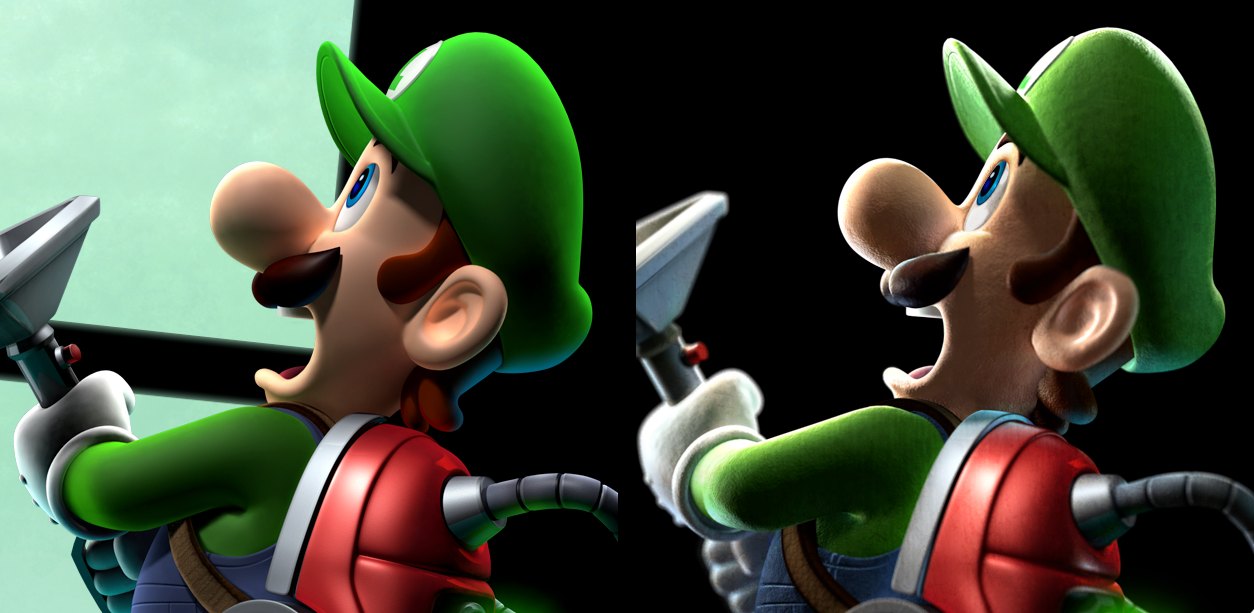
The Switch version is the same game with a thorough repaint. It outputs at 1080p in place of the 3DS’s 240p, and the models have been rebuilt to sit alongside Luigi’s Mansion 3: Luigi has visible stitching, a more detailed moustache and more arched eyebrows, Boos glow at the edges, gold bars are stamped with stars. With only one screen to work with, the map has moved to the top-right corner and the Dark-Light meter floats over Luigi’s head; dialogue now names its speaker instead of showing a portrait. The right stick looks around, motion control can still be used, and HD Rumble kicks in when a ghost is on the line.
What has gone is the stereoscopic 3D that the game was designed around, the “Over here!” touch-screen call in multiplayer, and the uncapped frame rate. The ScareScraper needs a Nintendo Switch Online subscription for online play, and its Rush Mode clock starts at 45 seconds instead of 30. The script is the American one in both English regions, with a single Boo renamed.
What came next
Next Level Games stayed with the series. Luigi’s Mansion 3 followed on Nintendo Switch on 31 October 2019, keeping the Strobulb, the Dark-Light, the Polterpup and the ScareScraper and returning to a single enormous building; the studio was later bought by Nintendo. The first game was remade for 3DS in 2018 in Dark Moon’s visual style, with the Strobulb as an option and a visit from the Polterpup, and its new co-op partner Gooigi is explained as an invention the professor sent back from the time of this game.
Outside the series, the Poltergust 5000 was Luigi’s Final Smash for a generation of Super Smash Bros., Gloomy Manor has turned up as a model in Mario Party 10 and a football pitch in Mario Strikers: Battle League, and Polterpup has become as much a part of Luigi’s household as the vacuum cleaner.
Reviews & Sales
Sales figures
Dark Moon was one of the Nintendo 3DS’s biggest sellers. It passed a million copies worldwide in its first week, topped the Japanese chart for three weeks running (459,000 sold there by 7 April 2013) and was the sixth best-selling game in the United States in March 2013 with 415,000 copies, rising to more than 750,000 by mid-July. In Britain it spent three consecutive weeks at number five in the all-formats chart. Nintendo of America’s Bill Trinen credited it, along with a Pokémon Mystery Dungeon release, with lifting 3DS hardware sales.
The worldwide total stood at 3.13 million by the end of October 2013 and 3.98 million on 31 March 2014, when it was the seventh best-selling game on the system. The figure usually quoted, from the CESA Games White Paper for 31 December 2020, is 6.44 million, which ranks twelfth among 3DS games and is nearly twice the lifetime sales of the GameCube original.
Luigi’s Mansion 2 HD went straight to the top of the Japanese and British charts and sold 1.19 million copies in its first four days. It had reached 1.57 million by 30 September 2024, in Nintendo’s report of November 2024, and 1.88 million by 31 March 2025.
6.44m3DS, worldwide, to 31 Dec 2020 (CESA)
1.88mHD version, to 31 Mar 2025 (Nintendo)
1m+first week, worldwide
459kJapan, by 7 April 2013
750k+United States, by July 2013
86Metacritic, 74 reviews
Reception and review scores
Metacritic’s average for the 3DS game is 86 from 74 reviews, and GameRankings closed on 85.86 per cent. Luigi’s Mansion 2 HD stands at 77. Scores below are as listed in the reception tables on Wikipedia and Super Mario Wiki.
DestructoidChris Carter
9.5/10
IGNKeza MacDonald · 21 March 2013
9.3/10
GameTrailersUS
9.3/10
Official Nintendo MagazineUK · Matthew Castle
92%
EurogamerOli Welsh · 22 March 2013
9/10
Nintendo LifeUK
9/10
GamesTMUK
9/10
VideoGamer.comUK
9/10
4PlayersGermany
90/100
Pocket GamerUK
4.5/5
FamitsuJapan · 9, 9, 8, 9
35/40
Electronic Gaming MonthlyUS
8.5/10
Game InformerUS · Tim Turi
8.5/10
EdgeUK
8/10
GamesRadar+US
4/5
Giant BombUS
4/5
GameRevolutionUS · Kevin Schaller
4/5
Shacknews (HD)Donovan Erskine · 2024
8/10
VGC (HD)Chris Scullion · 2024
4/5
PolygonUS
7/10
JoystiqUS
3.5/5
GameSpot (HD)Steve Watts · 2024
7/10
GameSpotCarolyn Petit
6.5/10
The praise was for how it looked and moved. Eurogamer’s Oli Welsh called it “as close to a playable cartoon as anything since Zelda: The Wind Waker”, and IGN’s Keza MacDonald thought it showed “Nintendo at its inventive best”. Reviewers singled out the animation, the 3D effect and the atmosphere, and Destructoid was especially taken with the multiplayer.
The complaints were about structure. Official Nintendo Magazine, in an otherwise glowing 92 per cent review, missed checkpoints and found the ghosts blander than the first game’s portrait gallery. GameSpot’s Carolyn Petit, the most critical of the major reviewers, wrote that “difficulty spikes and a lack of checkpoints weigh heavily on the experience”, though she liked the ScareScraper. Opinion on the professor’s chatter was split: Game Informer enjoyed it and GameRevolution found it irritating.
IGN, Eurogamer, USgamer and VentureBeat all listed it among the best games of 2013, and it has been a fixture of best-of-3DS lists since. The HD version was received as a handsome but conservative remaster. Nintendo World Report called it the company’s best, VGC “another strong Nintendo remaster”, while others felt that a game built from ten-minute handheld missions sits less comfortably on a television.
Honours
Canadian Videogame Awards · 2014Best Game on the GoWinner.
British Academy Children’s Awards · 2013GameNominated.
D.I.C.E. Awards · 2014Handheld Game of the YearNominated at the 17th awards.
Game Developers Choice Awards · 2014Best Handheld/Mobile GameNominated.
Golden Joystick Awards · 2013Best Handheld GameNominated.
NAVGTR Awards · 2014Animation, Interactive; Control Design, 3DTwo nominations.
Game Critics AwardsBest Handheld GameNominated before release on the strength of its E3 showing.
SLB User Reviews
Super Luigi Bros readers have reviewed Luigi’s Mansion 2 (Luigi’s Mansion: Dark Moon) over the years. Their write-ups are kept exactly as they were sent in:
To provide the best experiences, we use technologies like cookies to store and/or access device information. Consenting to these technologies will allow us to process data such as browsing behavior or unique IDs on this site. Not consenting or withdrawing consent, may adversely affect certain features and functions.
Functional
Always active
The technical storage or access is strictly necessary for the legitimate purpose of enabling the use of a specific service explicitly requested by the subscriber or user, or for the sole purpose of carrying out the transmission of a communication over an electronic communications network.
Preferences
The technical storage or access is necessary for the legitimate purpose of storing preferences that are not requested by the subscriber or user.
Statistics
The technical storage or access that is used exclusively for statistical purposes.The technical storage or access that is used exclusively for anonymous statistical purposes. Without a subpoena, voluntary compliance on the part of your Internet Service Provider, or additional records from a third party, information stored or retrieved for this purpose alone cannot usually be used to identify you.
Marketing
The technical storage or access is required to create user profiles to send advertising, or to track the user on a website or across several websites for similar marketing purposes.

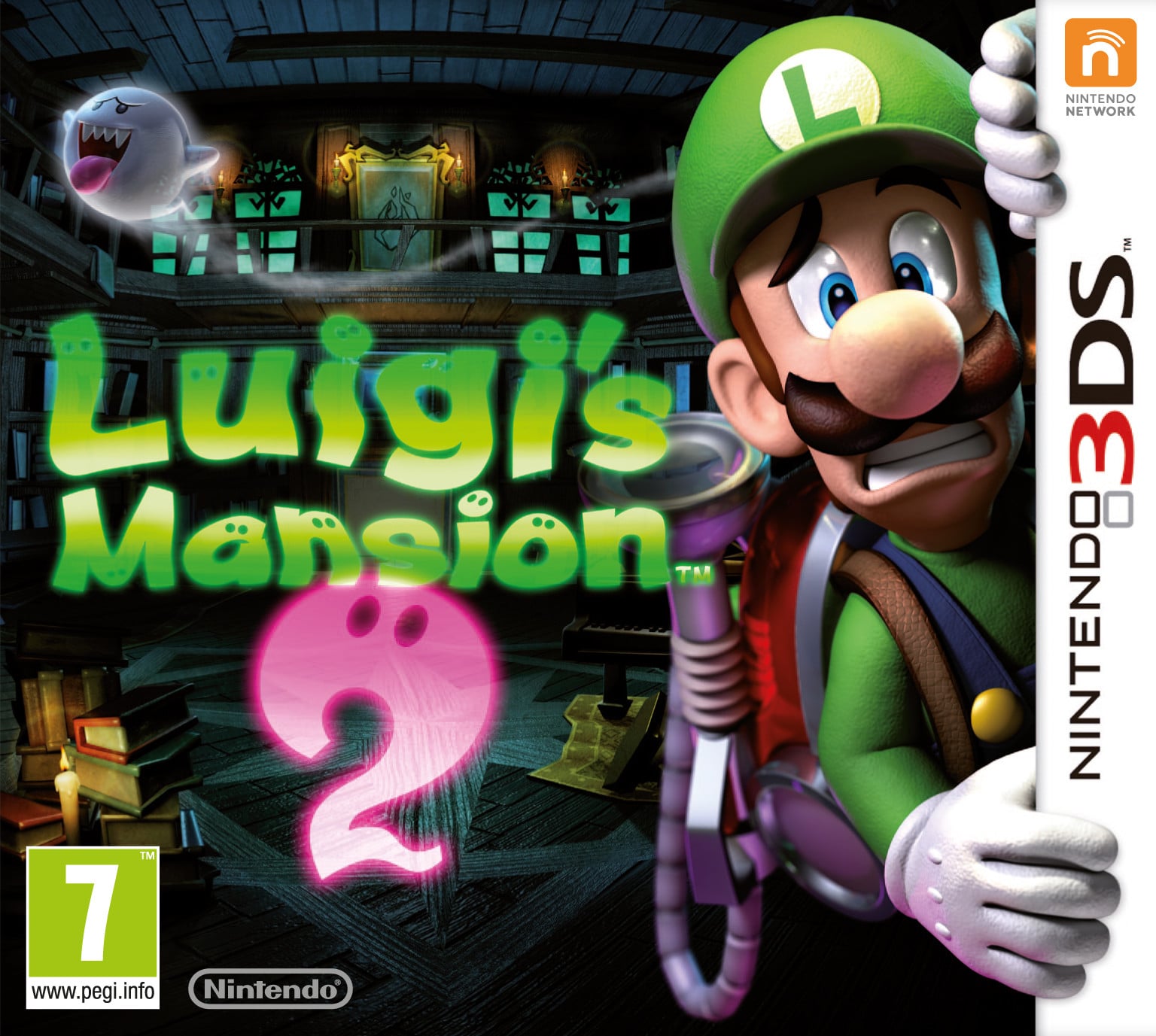
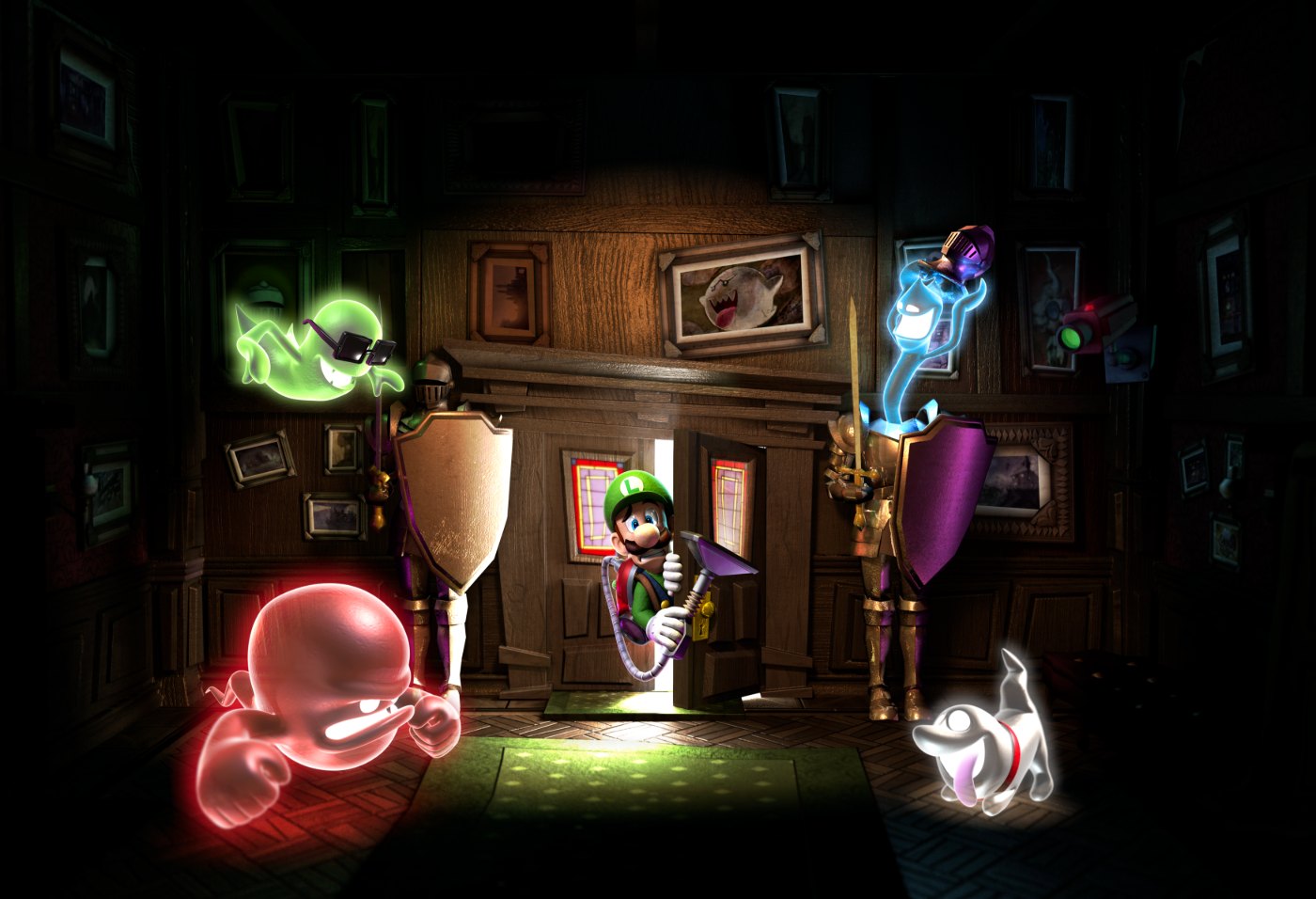
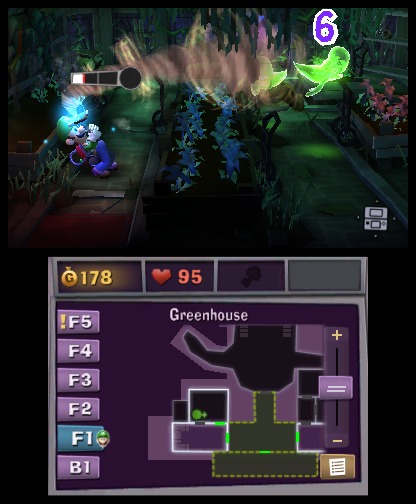
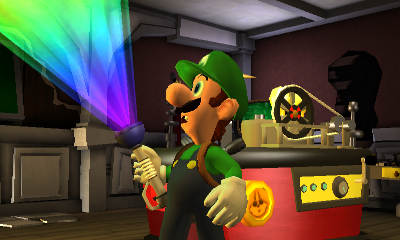
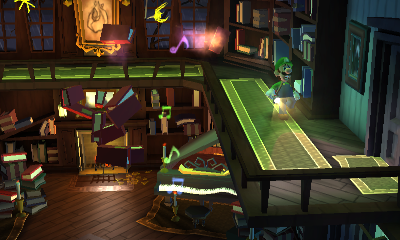
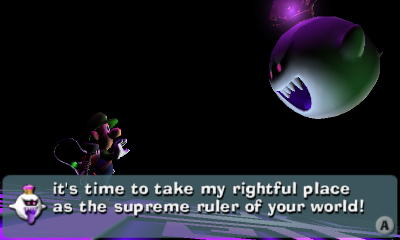
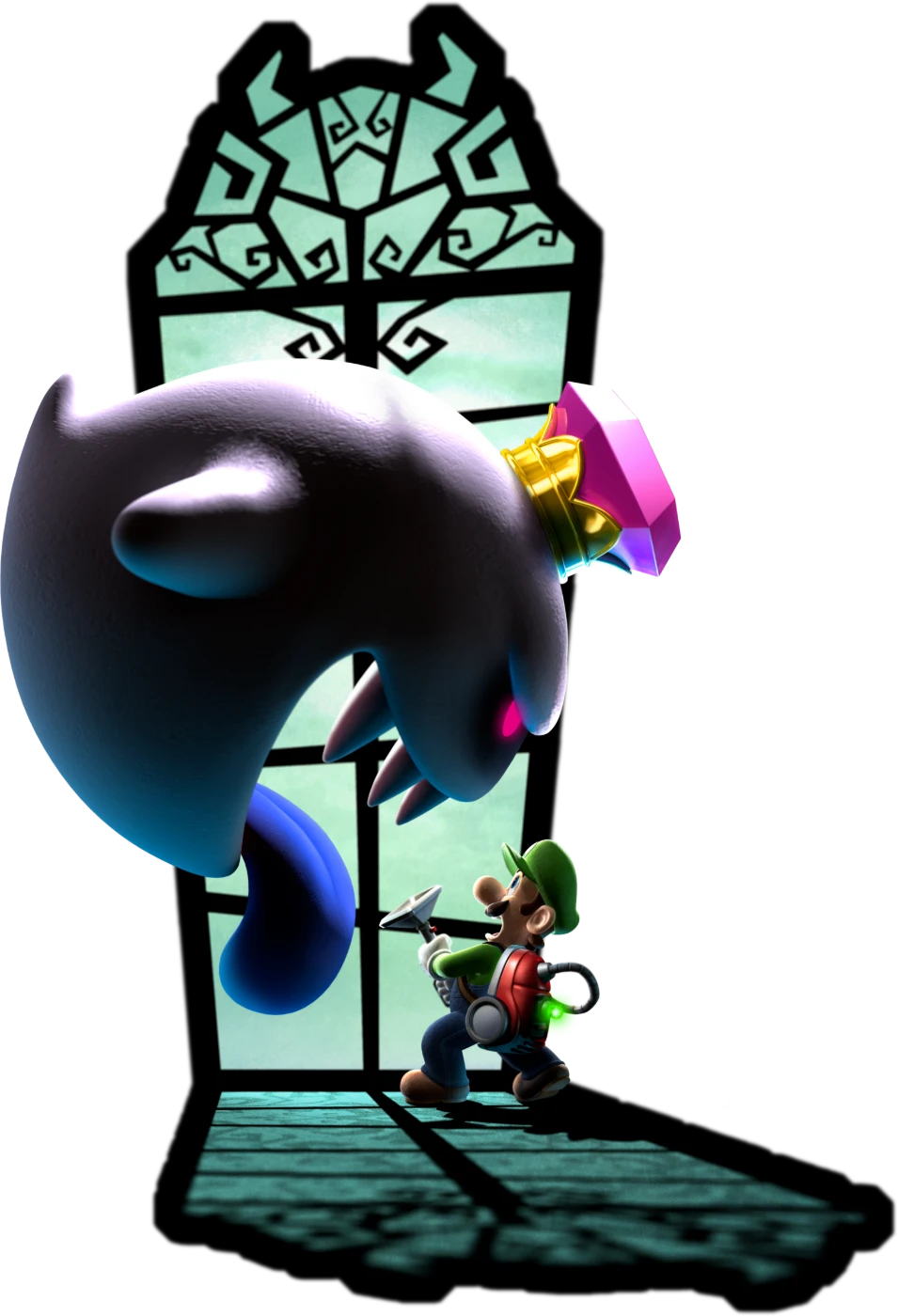
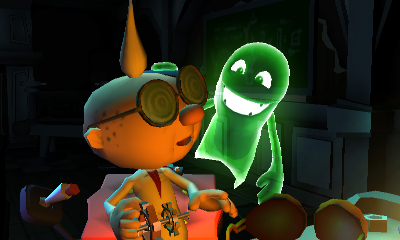
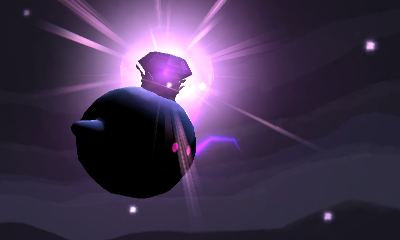
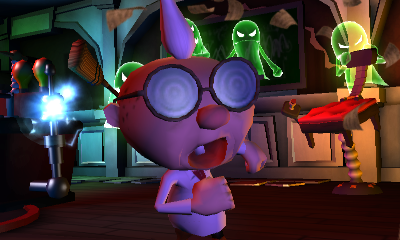
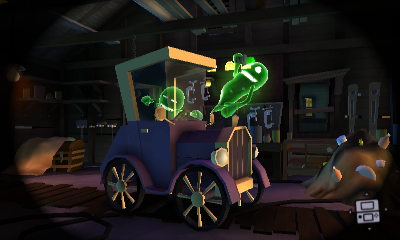
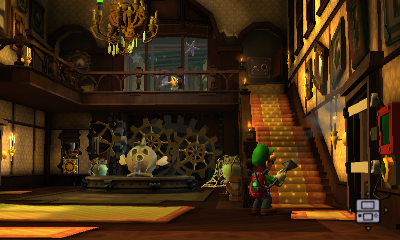
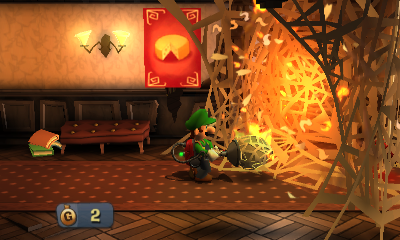
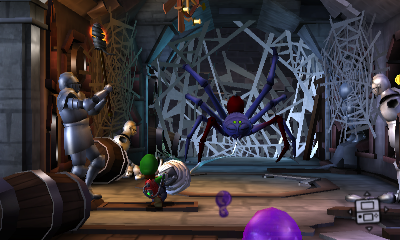
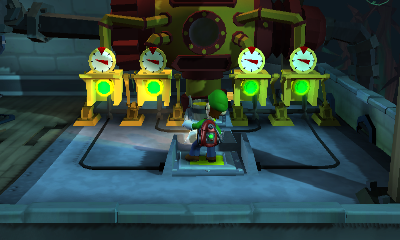
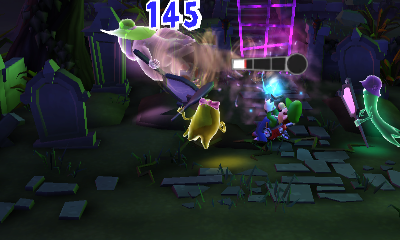
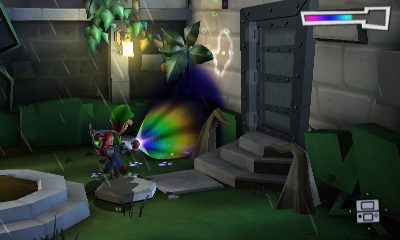
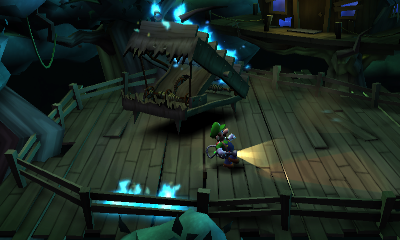
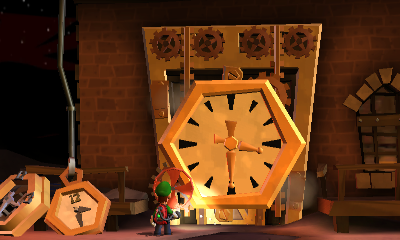
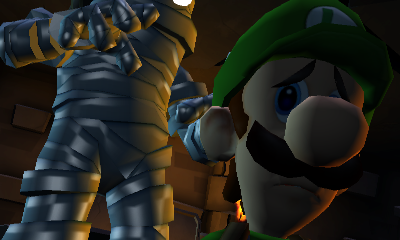
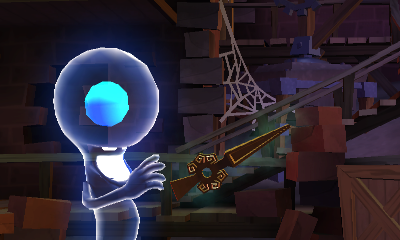
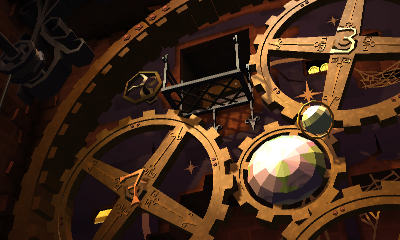
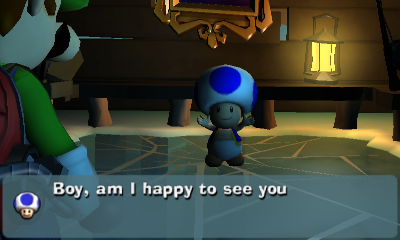
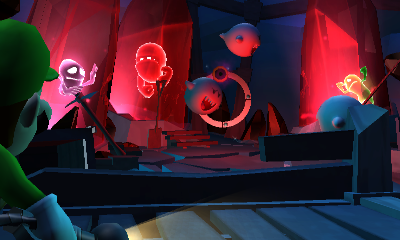
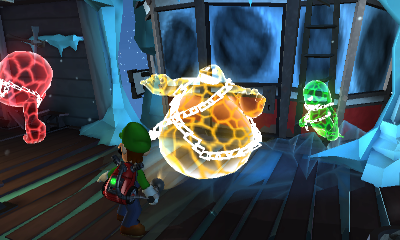
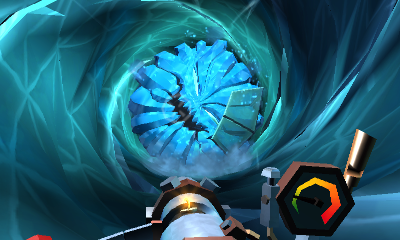
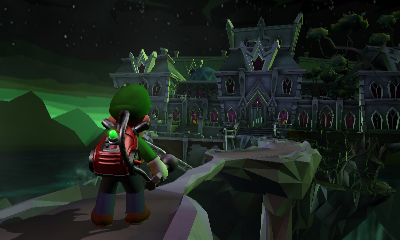
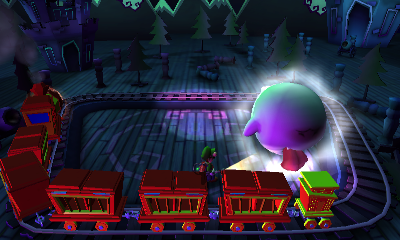
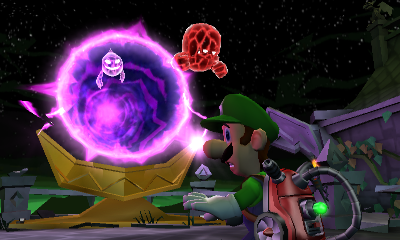
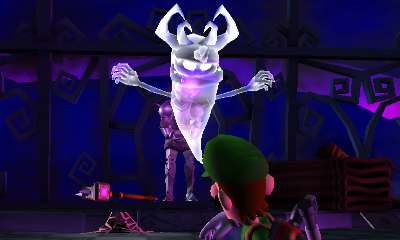

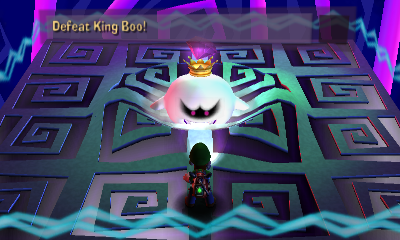
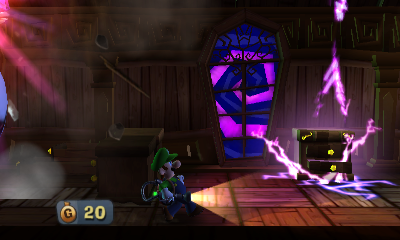
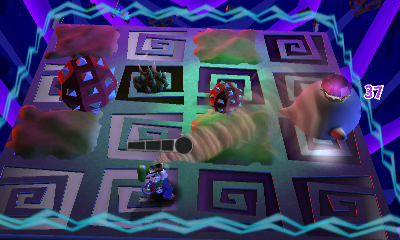
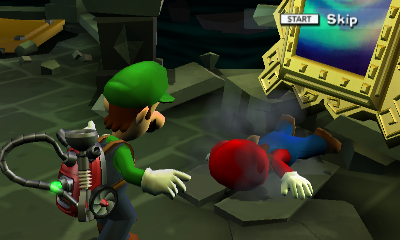
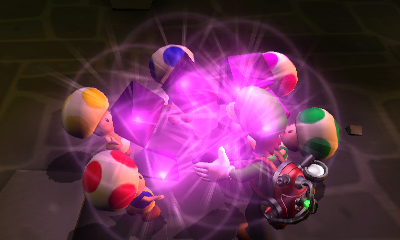
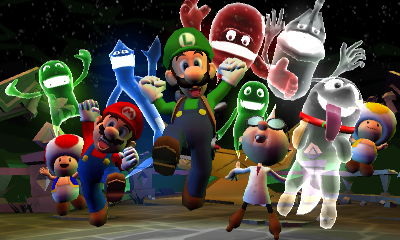
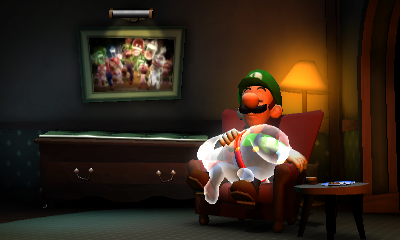
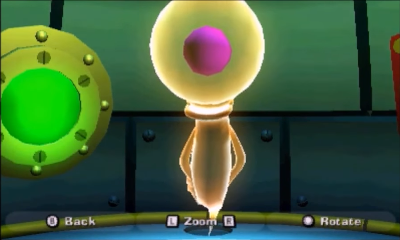
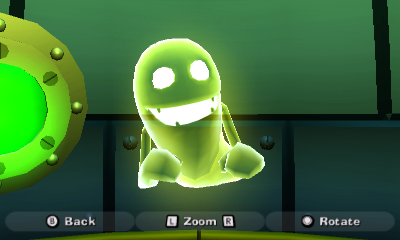
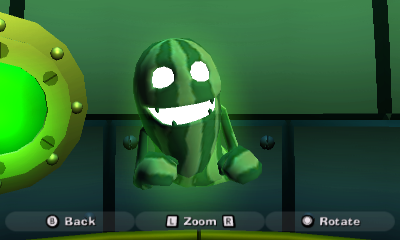
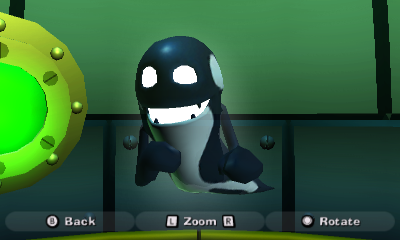
 A-1: Poltergust 5000Gloomy Manor · Boo: Boogie Woogie (Garage)Fetch the Poltergust 5000 from the professor’s car and catch the first few Greenies.
 A-2: Gear UpGloomy Manor · Boo: BaBoon (Mudroom)Recover four stolen gears from the west wing to restart the Foyer mechanism.
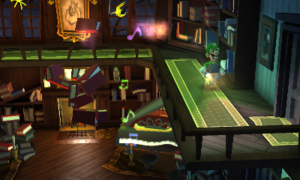 A-3: Quiet Please!Gloomy Manor · Sub-boss: Poltergeist · Boo: Boo Boo (Studio)Crank open the north wing and silence the book-throwing ghost in the Library.
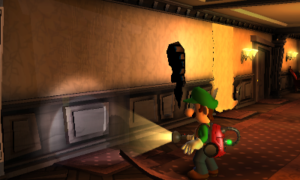 A-4: Visual TricksGloomy Manor · Dark-Light Device · first Boo (Dining Room, required)Collect the Dark-Light from the Lab and track down whoever is hiding the furniture. Clearing it unlocks the ScareScraper.
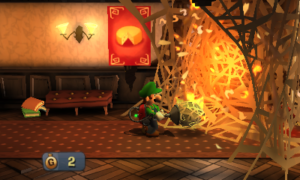 A-5: Sticky SituationGloomy Manor · Boo: Ooga Booga (Library; Boothoven in HD)Spiders have webbed up the whole house. Clear every web.
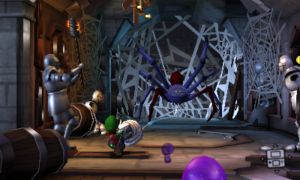 A-Boss: Confront the SourceGloomy Manor · Cellar · Boss: Grouchy PossessorDown the lift to the Cellar and a possessed spider queen.
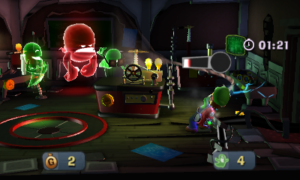 A-Bonus: Gradual InfiltrationGloomy Manor · bonusThe ghosts are back. Catch them all against the clock.
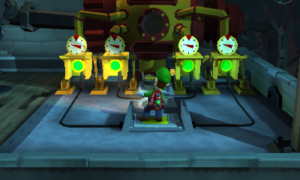 B-1: A Job for a PlumberHaunted Towers · Boo: MamBoo (Hydro Generator)Restart the Hydro Generator and repair the pump on the roof.
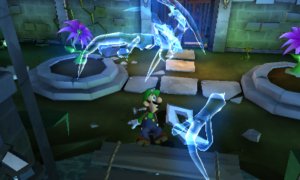 B-2: The Pinwheel GateHaunted Towers · Boo: Boolean (Sewer)Hiders have taken the vanes of the pinwheel that opens the Hollow Tree.
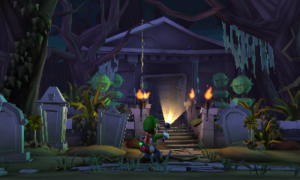 B-3: Graveyard ShiftHaunted Towers · Sub-boss: the Three Sisters · Boo: Booluga (Crypt)A Toad in a painting, three vain sisters in the Old Graveyard and an escort job back to the Gardener’s Lab.
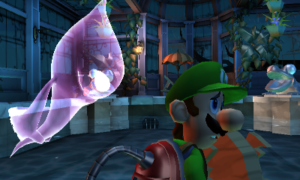 B-4: Pool PartyHaunted Towers · Boo: Boo B. Trap (Family Room)Follow the Toad’s snapshot to the Rooftop Pool in search of a special key.
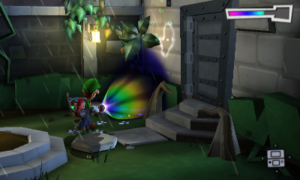 B-5: Doggone KeyHaunted Towers · Boo: French Boodle (Tool Shed)The Polterpup has the key. Follow its paw prints with the Dark-Light.
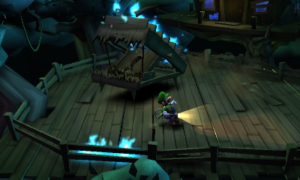 B-Boss: Tree ToppingHaunted Towers · Tree House · Boss: Harsh PossessorThree booby-trapped staircases and a small, angry fourth.
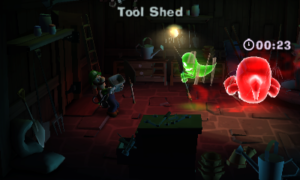 B-Bonus: Hostile IntrusionHaunted Towers · bonusA timed ghost hunt through the towers.
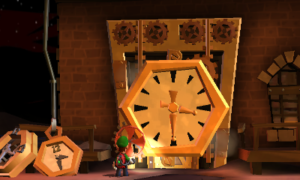 C-1: A Timely EntranceOld Clockworks · Boo: ComBooter (Warehouse)Find the special compass in the Drafting Room.
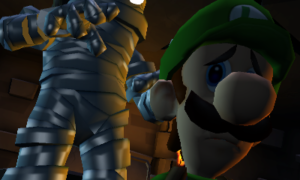 C-2: Underground ExpeditionOld Clockworks · Underground Trek in Europe · Boo: Bootine (Quarry)Into the buried ruins after the clock hands, among mummified Greenies and Robombs.
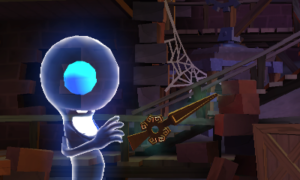 C-3: Roundhouse BrawlOld Clockworks · Sub-boss: Ancient Poltergeist · Boo: Boodonkulous (Kiln Room)Win back the clock hands in the Roundhouse.
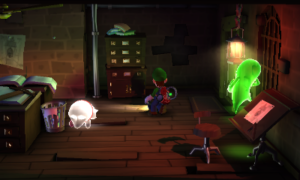 C-4: Play CatchOld Clockworks · Boo: JamBoolaya (Clock Tower Gate)The Polterpup has run off with the hour hand. Get to it before the other ghosts do.
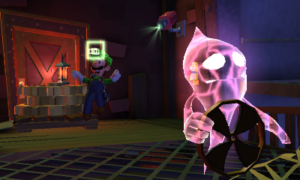 C-5: Piece at LastOld Clockworks · Boo: Boony Raboot (Crank Room)Recover the stolen rotor and lead the yellow Toad to the Service Elevator.
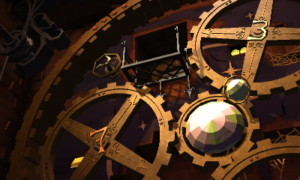 C-Boss: ShowtimeOld Clockworks · Belfry Clock · Boss: Overset PossessorA fight around a giant clock face that keeps summoning help.
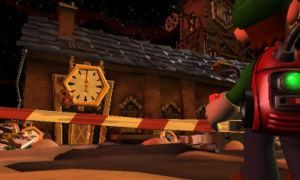 C-Bonus: Outlandish InterruptionOld Clockworks · bonusA timed ghost hunt through the factory.
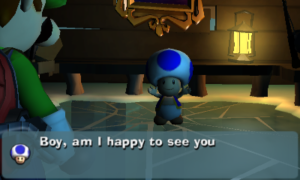 D-1: Cold CaseSecret Mine · Boo: Boofoon (Terminal)Find the silent Toad assistant at the Chalet and the Fishing Hut and send him home.
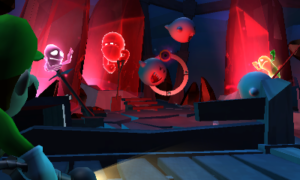 D-2: Hit Rock BottomSecret Mine · Boo: Booger (Chalet; Boouncer in Britain)Descend to the Crystal Quarry and see what the Boos are doing to the other ghosts.
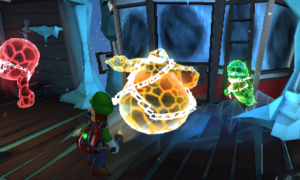 D-3: Across the ChasmSecret Mine · Sub-bosses: Strong Greenie, Strong Slammer, Strong Gobber · Boo: ParaBoola (Deep Hall)Break the paranormal chains on the gondola and find a way over to the Workshop.
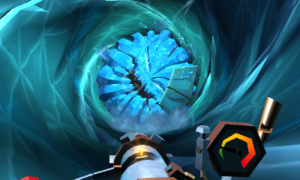 D-Boss: Chilly RideSecret Mine · Frozen Pit · Boss: Shrewd PossessorA downhill sled chase after a boss who has possessed the ice.
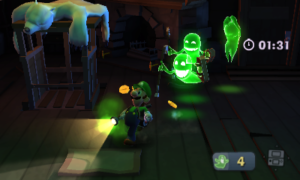 D-Bonus: Severe InfestationSecret Mine · bonusA timed ghost hunt through the mine.
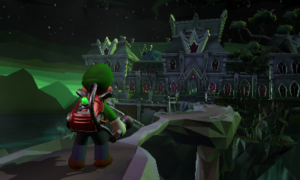 E-1: Front-Door KeyTreacherous Mansion · Boo: Boolldog (Underground Lab)Chase the Polterpup for the key to the front entrance.
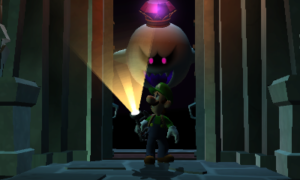 E-2: Double TroubleTreacherous Mansion · Boo: Boopa Troopa (Inner Courtyard, required)Rescue two Toad assistants and get both to a Pixelator.
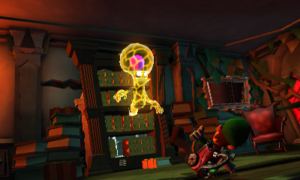 E-3: A Train to CatchTreacherous Mansion · Sub-boss: Strong Poltergeist · Boo: Booreaucrat (Dark Age Exhibit)Raise the stairwell in the Inner Courtyard and head for the Train Exhibit, where Mario is said to be.
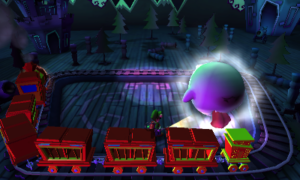 E-4: Ambush ManeuverTreacherous Mansion · Sub-boss: Big Boo (counts as ten Boos)It was a trap. Survive the Big Boo in the Train Exhibit.
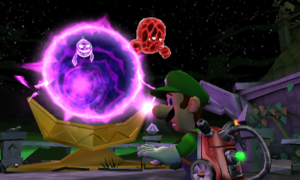 E-5: Paranormal ChaosTreacherous Mansion · Boo: MaraBoo (Aviation Exhibit)King Boo has opened a portal on the Terrace. Capture the horde before it is too late.
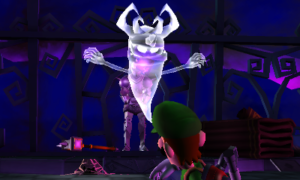 E-Boss: Stop the KnightmareThrough the portal · Boss: Tough PossessorGiant suits of armour and the last Dark Moon piece.
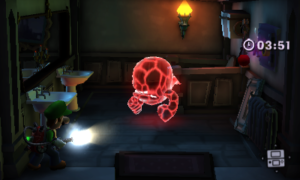 E-Bonus: Terrifying InvasionTreacherous Mansion · bonusRace between outbreak points catching every ghost.
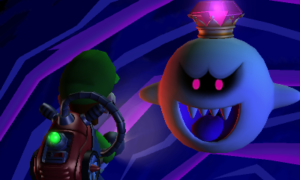 A Nightmare to RememberKing Boo’s Illusion · Final boss: King BooThree rounds on a tilting platform and three corridor chases. Shatter the Illusion in the British version.
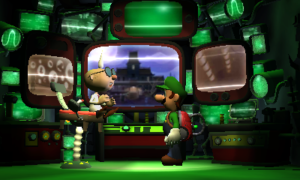 The BunkerHub · Vault, Parascope, PixelatorThe professor’s shelter outside Gloomy Manor, where missions are chosen and the catch is counted. Shown here in its E3 2011 form.
 The ScareScraperMultiplayer · 5, 10, 25 or endless floorsHunter, Rush, Polterpup and Surprise modes for one to four Luigis, with the Brain on the roof.
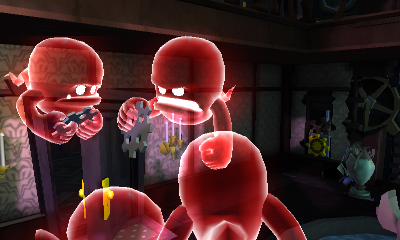
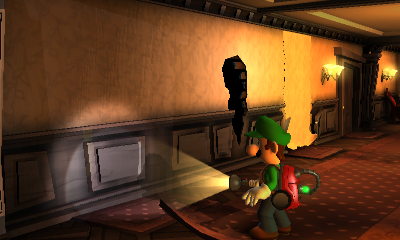
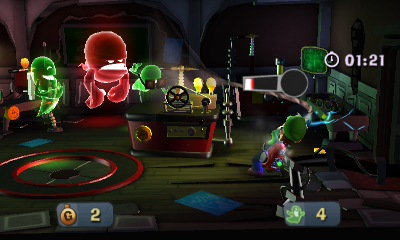
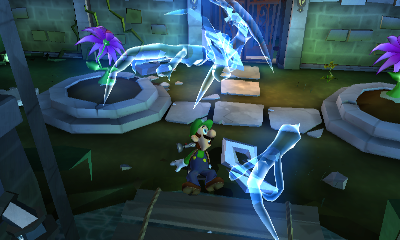
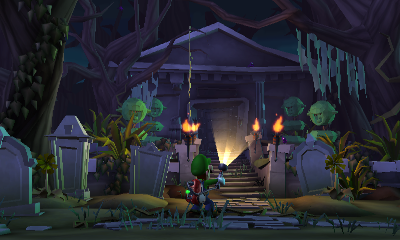
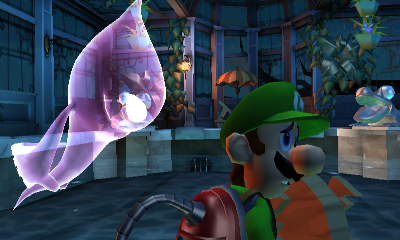
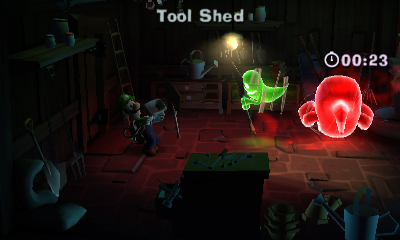
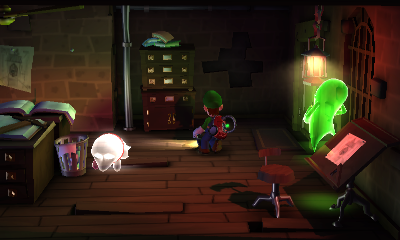
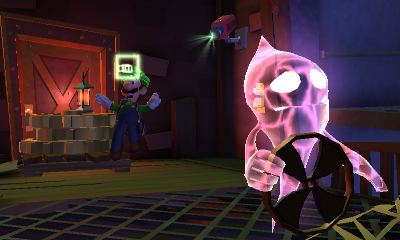
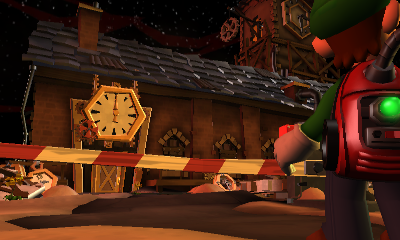
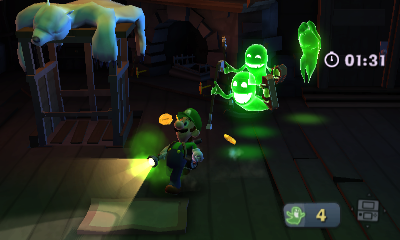
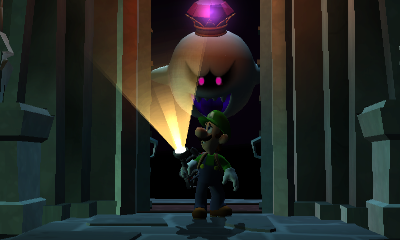
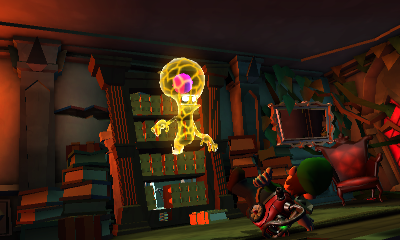
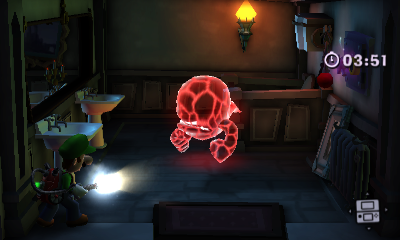
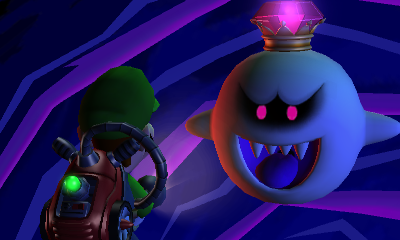
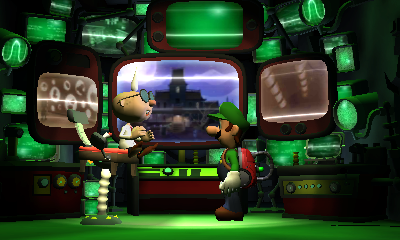
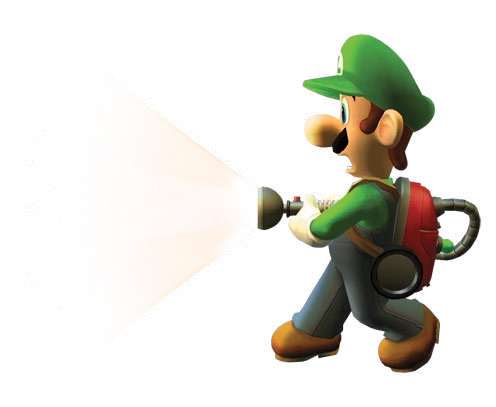
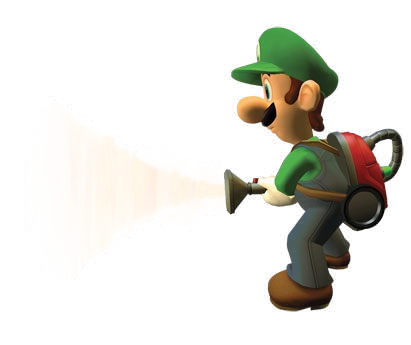
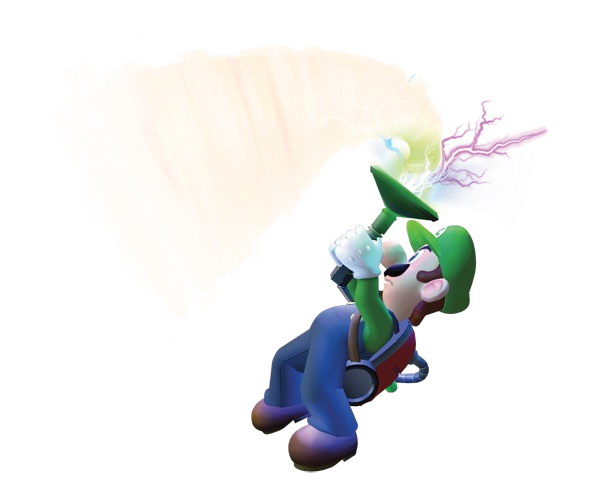
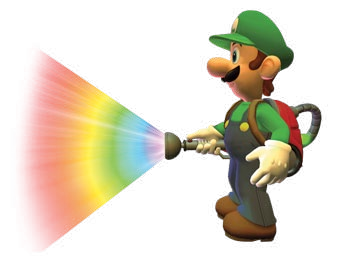
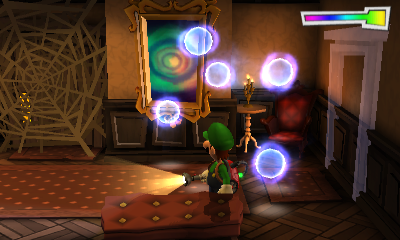
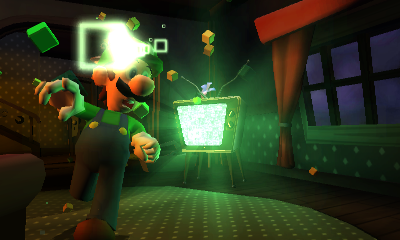
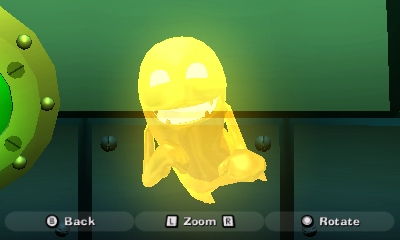

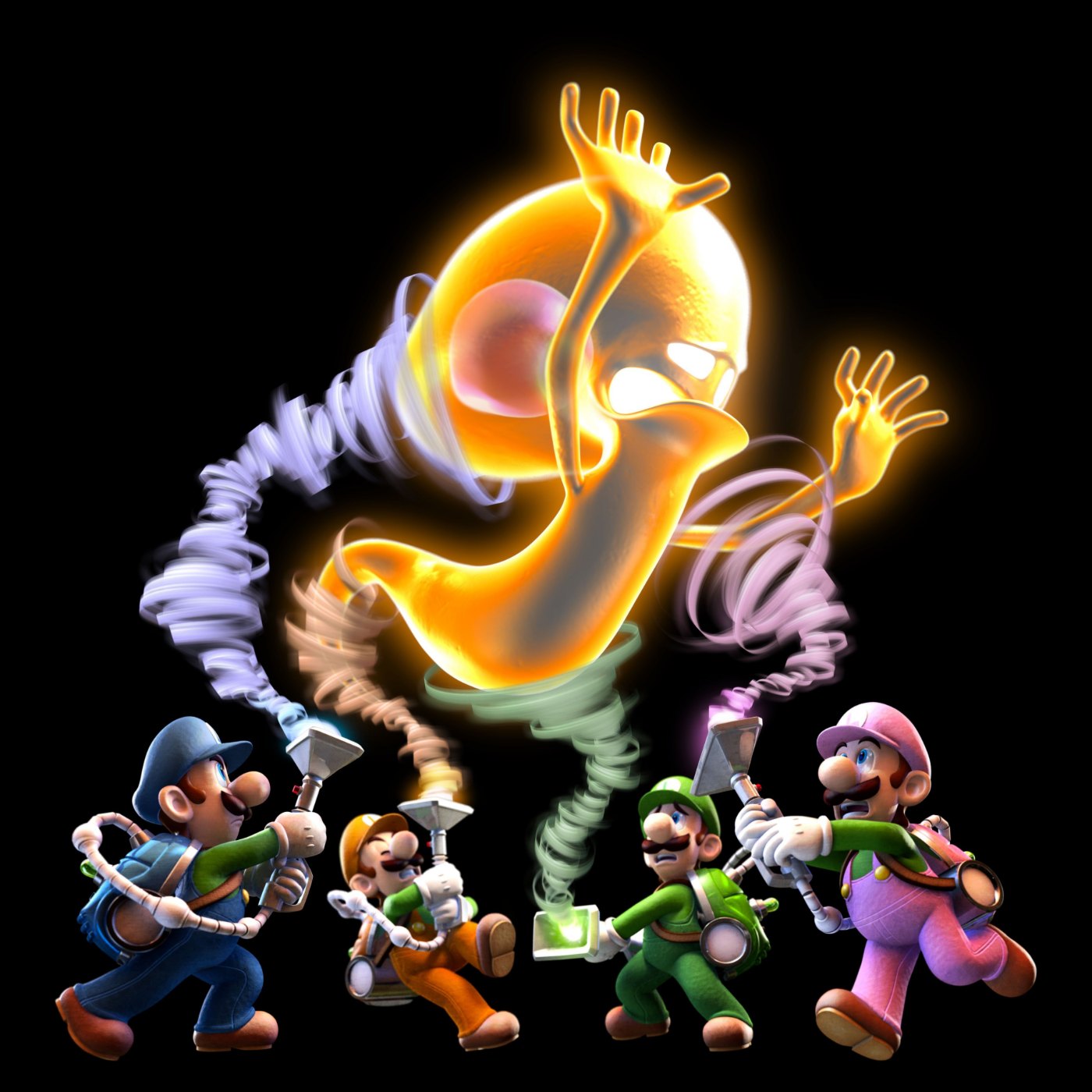
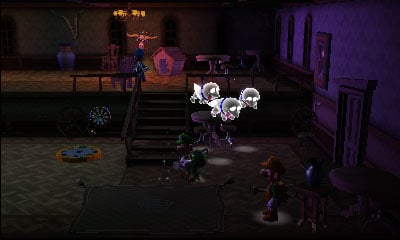
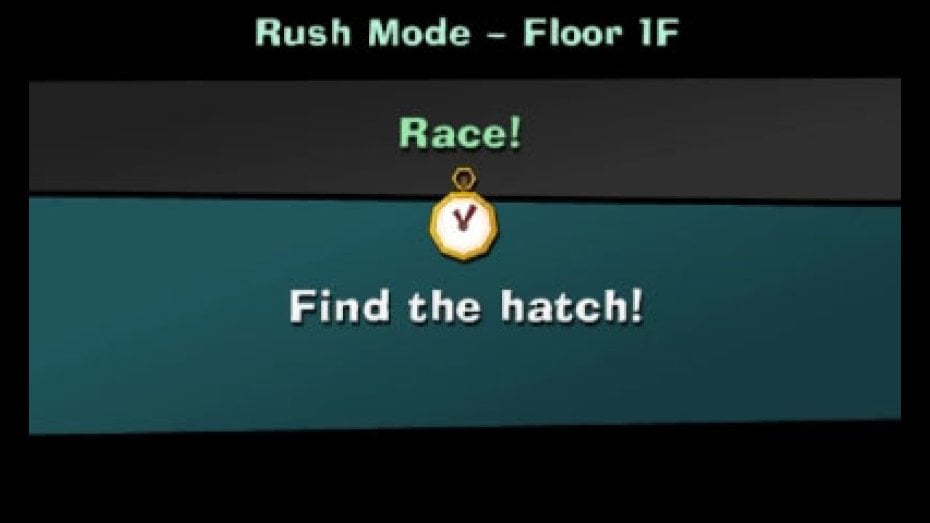

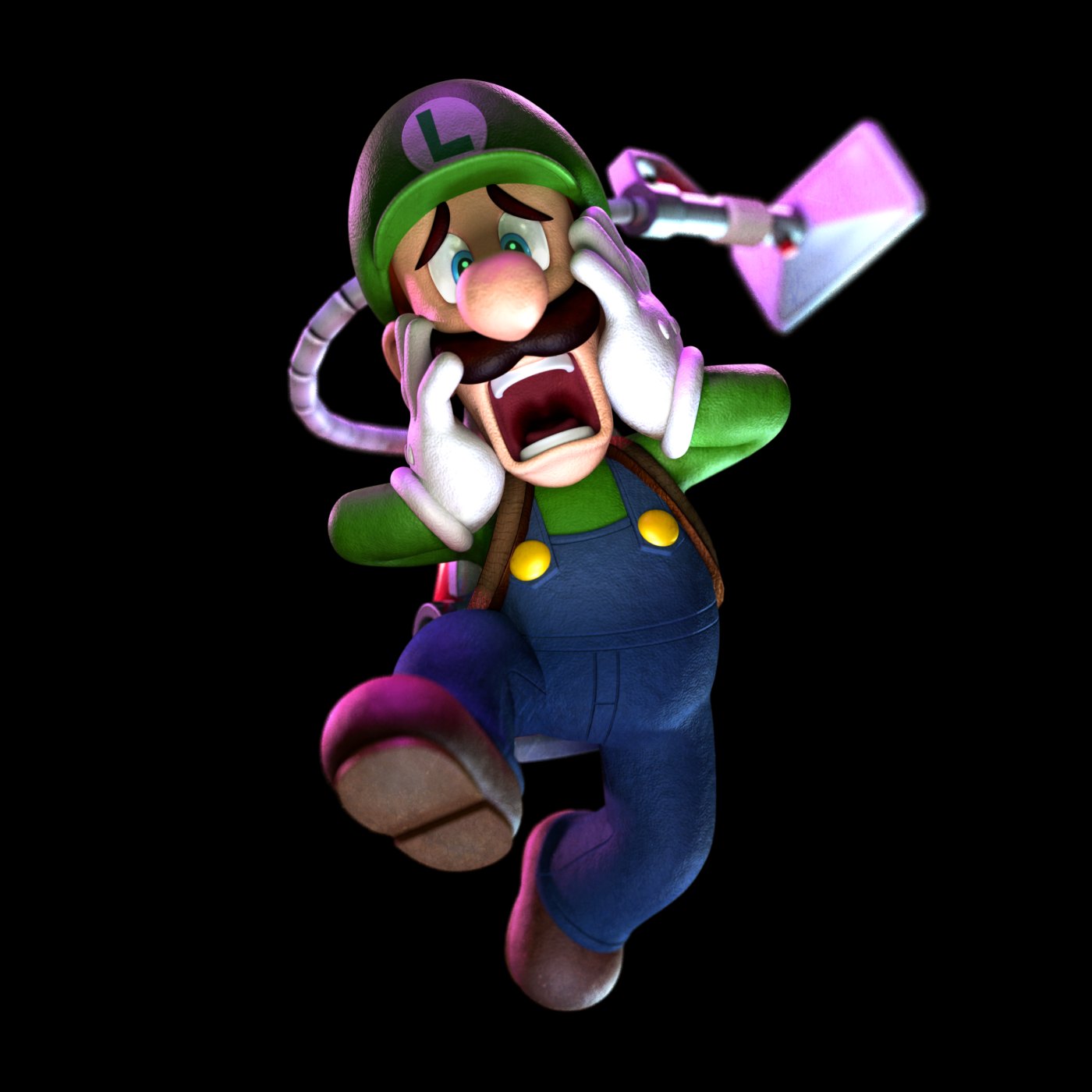
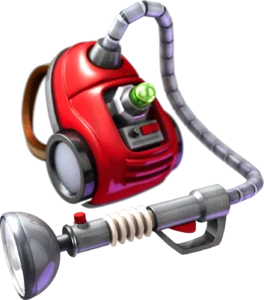 Poltergust 5000The professor’s newer model, left behind in his car in the Gloomy Manor garage when he fled. Sucks with R and blows with L on separate buttons, but cannot fire elements as the 3000 could.
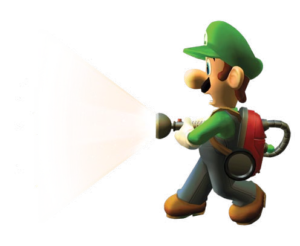 StrobulbThe flash attachment that stuns ghosts. Greenies run off with it in the first mission, so Luigi starts without it. A charged flash can stun five ghosts, though only three can be vacuumed at once.
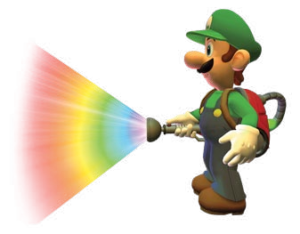 Dark-Light DeviceFound in the Lab in mission A-4. Reveals invisible objects, Boo trails and paw prints, and frees things from paintings. Its meter grows at 4,000G and again at 10,000G.
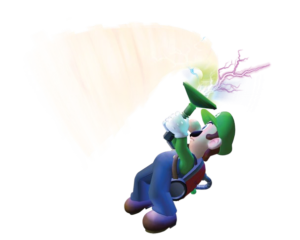 Power SurgeBlue from the start (10 damage), green at 2,000G (20 damage), red at 7,000G (50 damage). Needed to finish Creepers, shielded ghosts and Possessors.
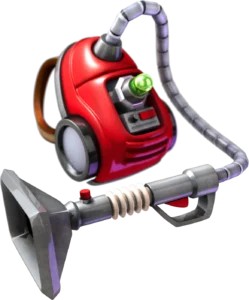 Super PoltergustThe last upgrade, at 20,000G: the gauge fills faster and ghosts lose health faster.
 Dark Moon pieceSix in all. Each of the five Possessors holds one.
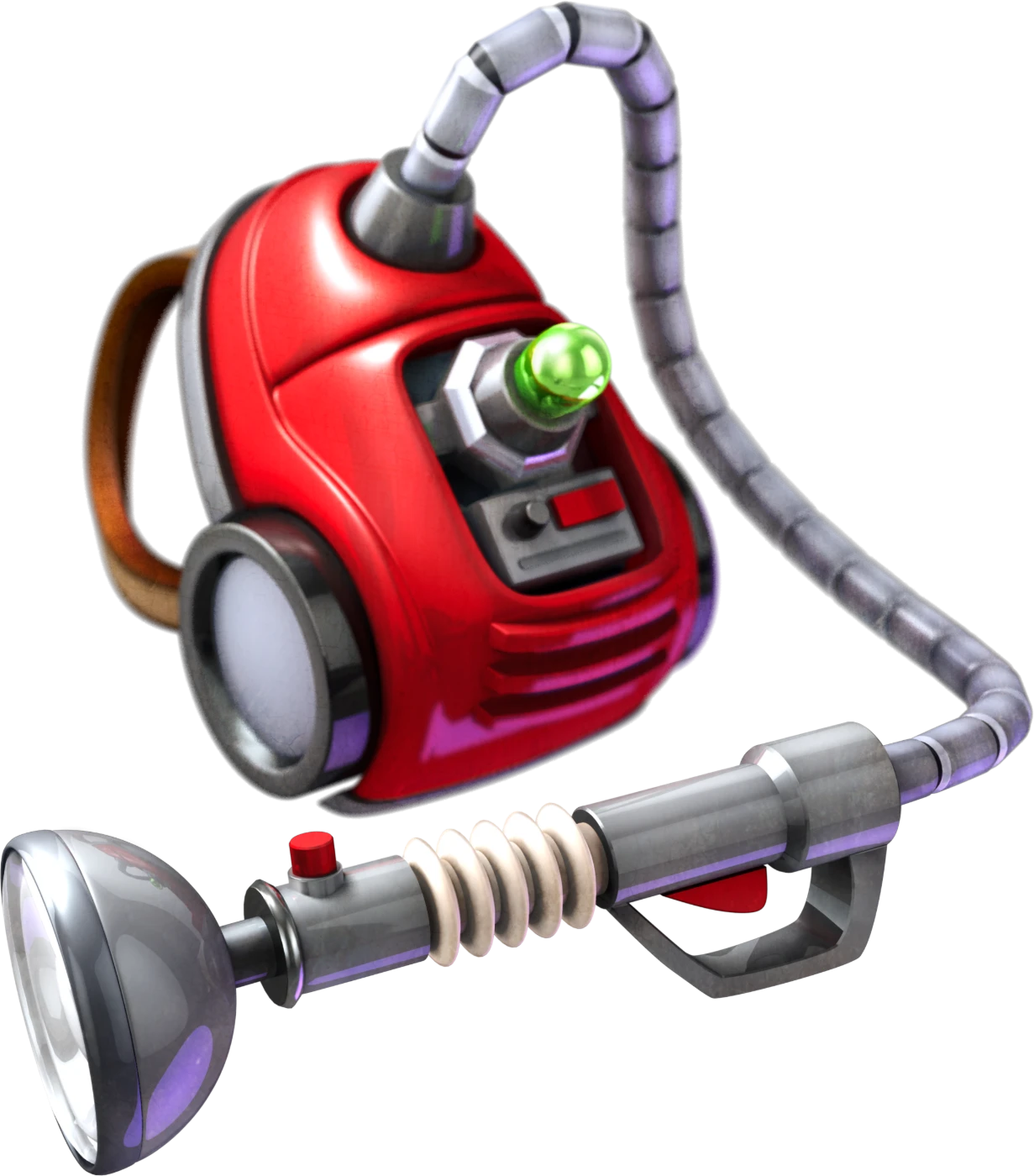
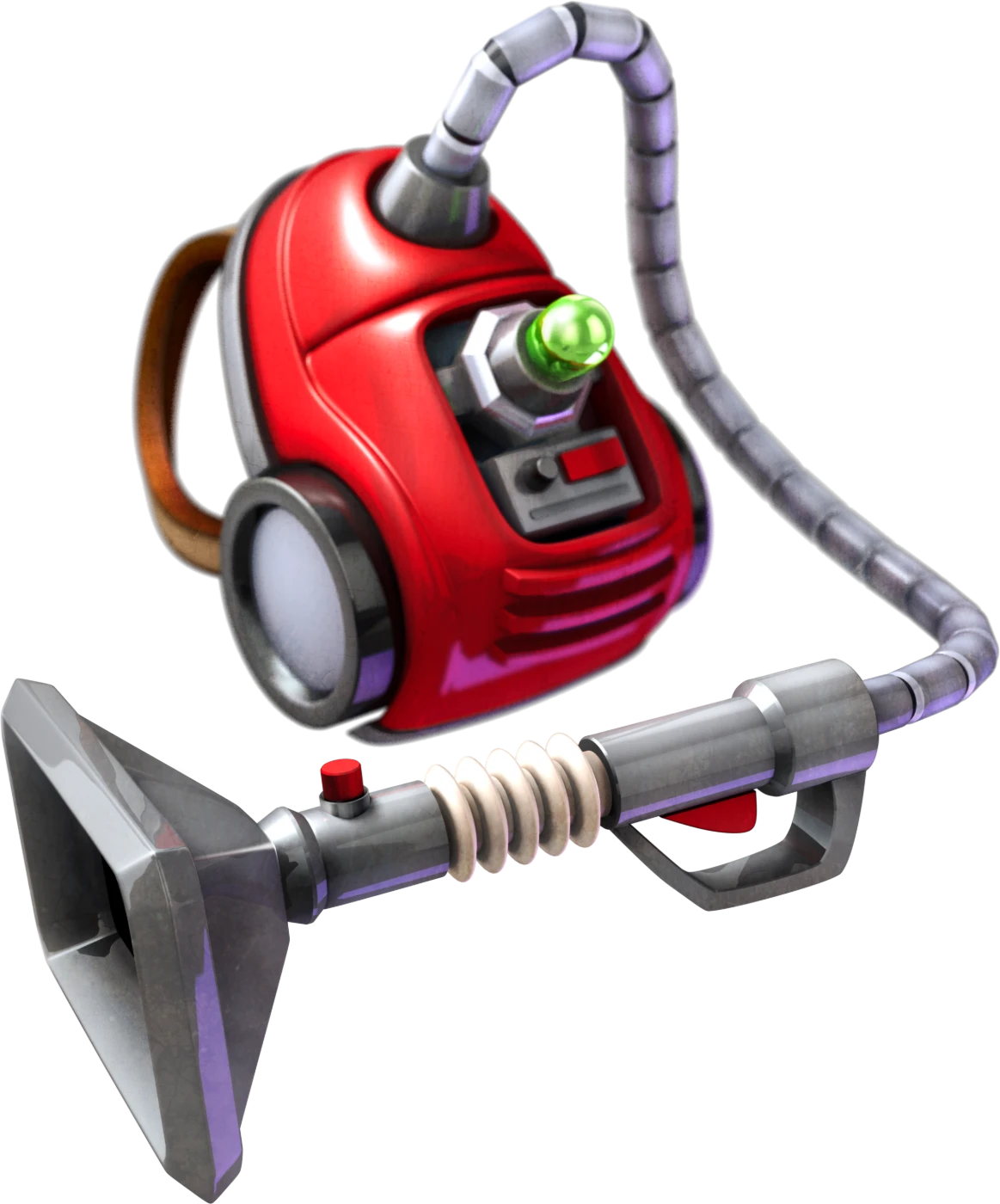
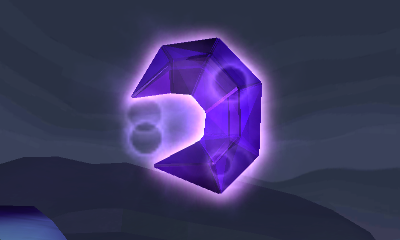
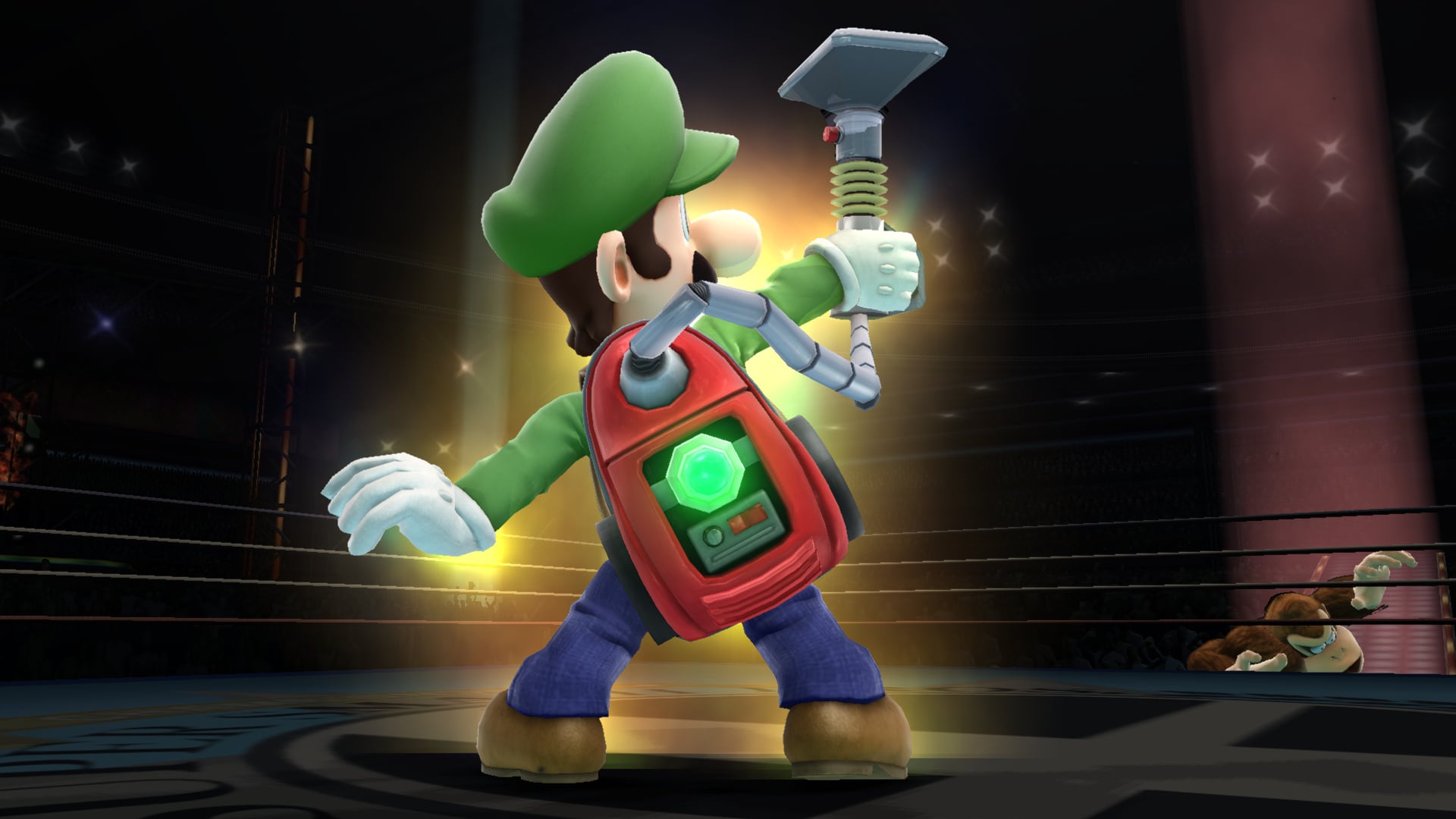 Super Smash Bros. for Nintendo 3DS and Wii UNintendo / Bandai Namco · 2014The Poltergust 5000 became Luigi’s Final Smash, replacing the Negative Zone of Brawl: it sucks in opponents and items, batters them and spits them out. There is a Polterpup trophy, the Gloomy Manor theme can be chosen on the Luigi’s Mansion stage in the Wii U game, and Luigi’s blue costume matches the second-player Luigi of the ScareScraper. In Ultimate the 5000 survives as a spirit.
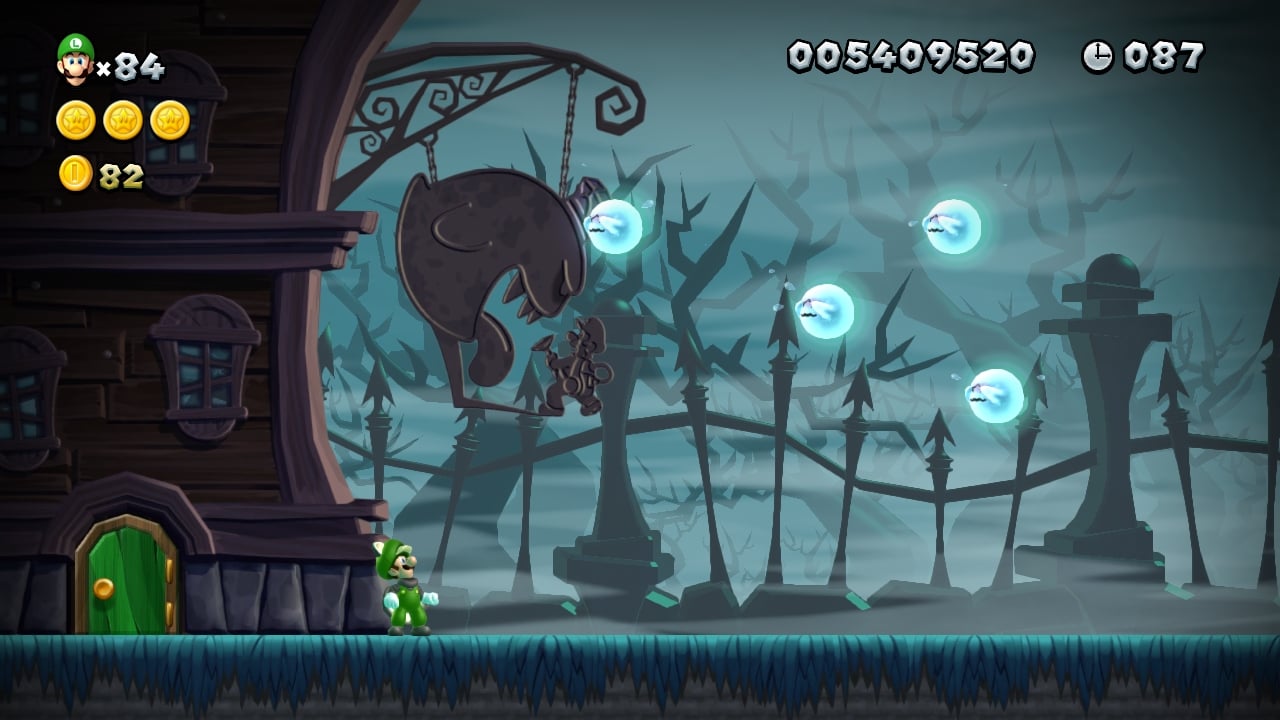 New Super Luigi UNintendo · 2013A metal sign by the hidden exit of Vanishing Ghost House carries the game’s artwork of Luigi and King Boo, one of the Year of Luigi’s many winks.
 Luigi’s Mansion 3Next Level Games / Nintendo · 2019The sequel brings back Polterpup, the Strobulb, the Dark-Light and the ScareScraper, displays a model of Gloomy Manor, and shows the Poltergust 5000 on posters and in a blueprint beside its successor, the G-00.
 Super Mario RunNintendo · mobileAn event themed on the HD release let players earn statues of Luigi with the Poltergust 5000, King Boo, and Luigi chasing the Polterpup.
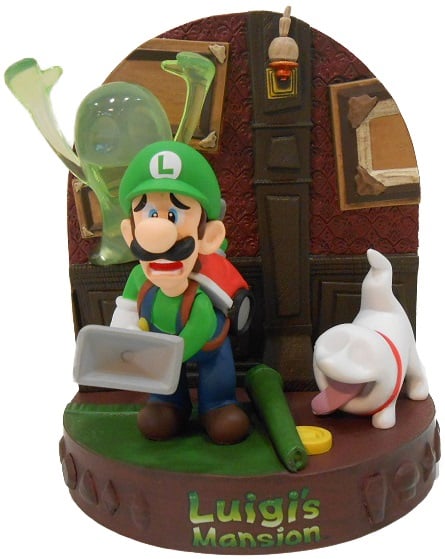 Club Nintendo diorama and other extrasNintendo · 2013Club Nintendo members could claim a figurine of Luigi, Polterpup and a Greenie. European buyers were offered a limited glow-in-the-dark cover sheet, with a Boo stress ball for pre-orders; the Nintendo 3DS Facebook page gave away nine printable Valentine’s cards in February 2013; and American shops sold it in a bundle with a Cobalt Blue 3DS, while Canada got a Cosmo Black bundle instead.
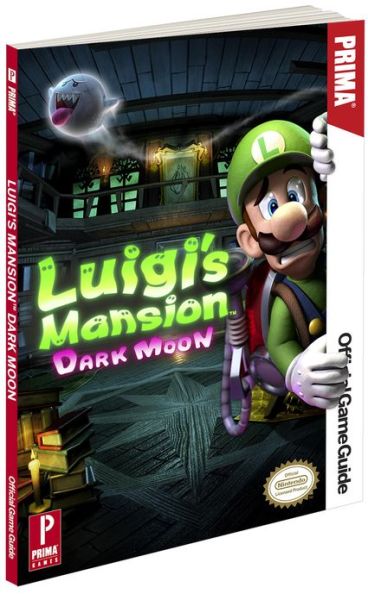 Prima Official Game GuidePrima Games · 2013The official strategy guide.
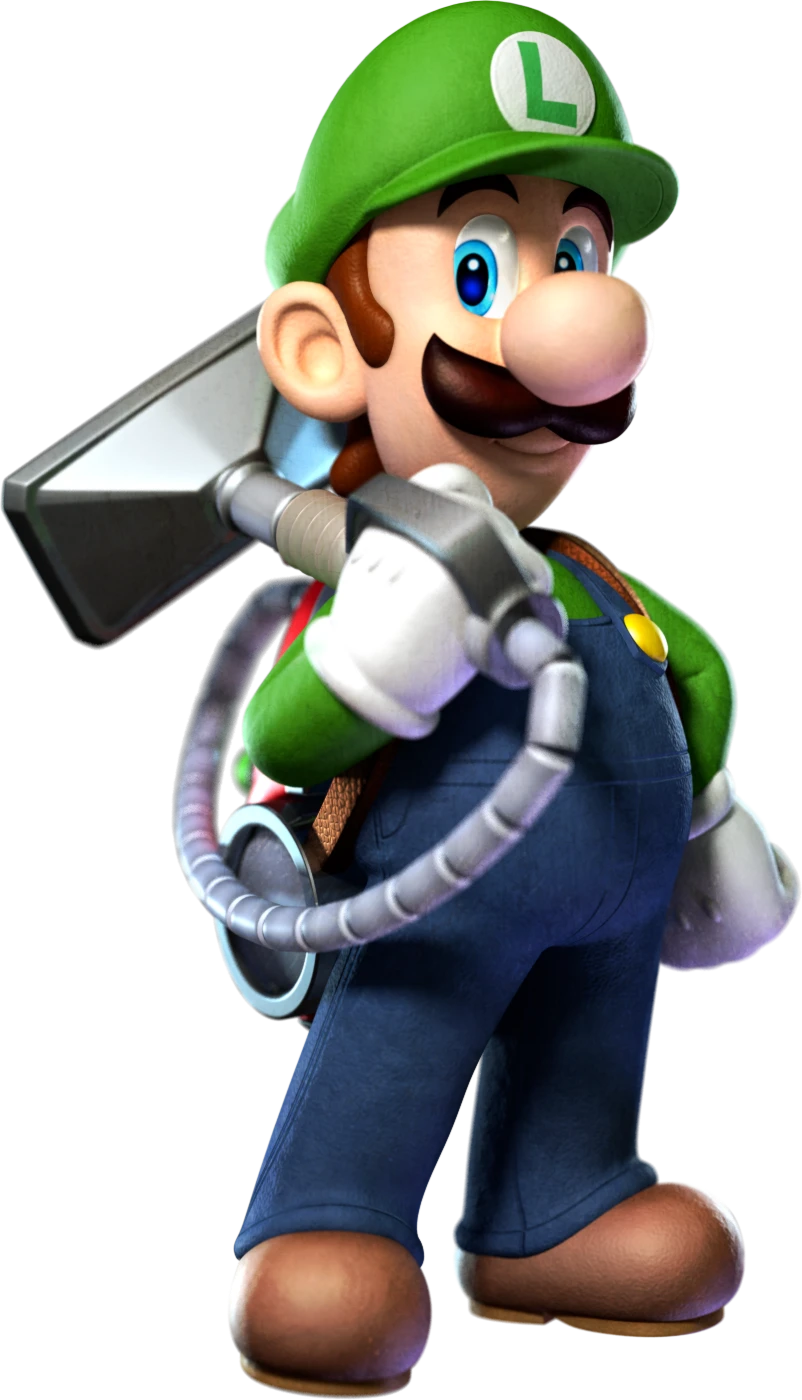 LuigiGhost hunter, under protest
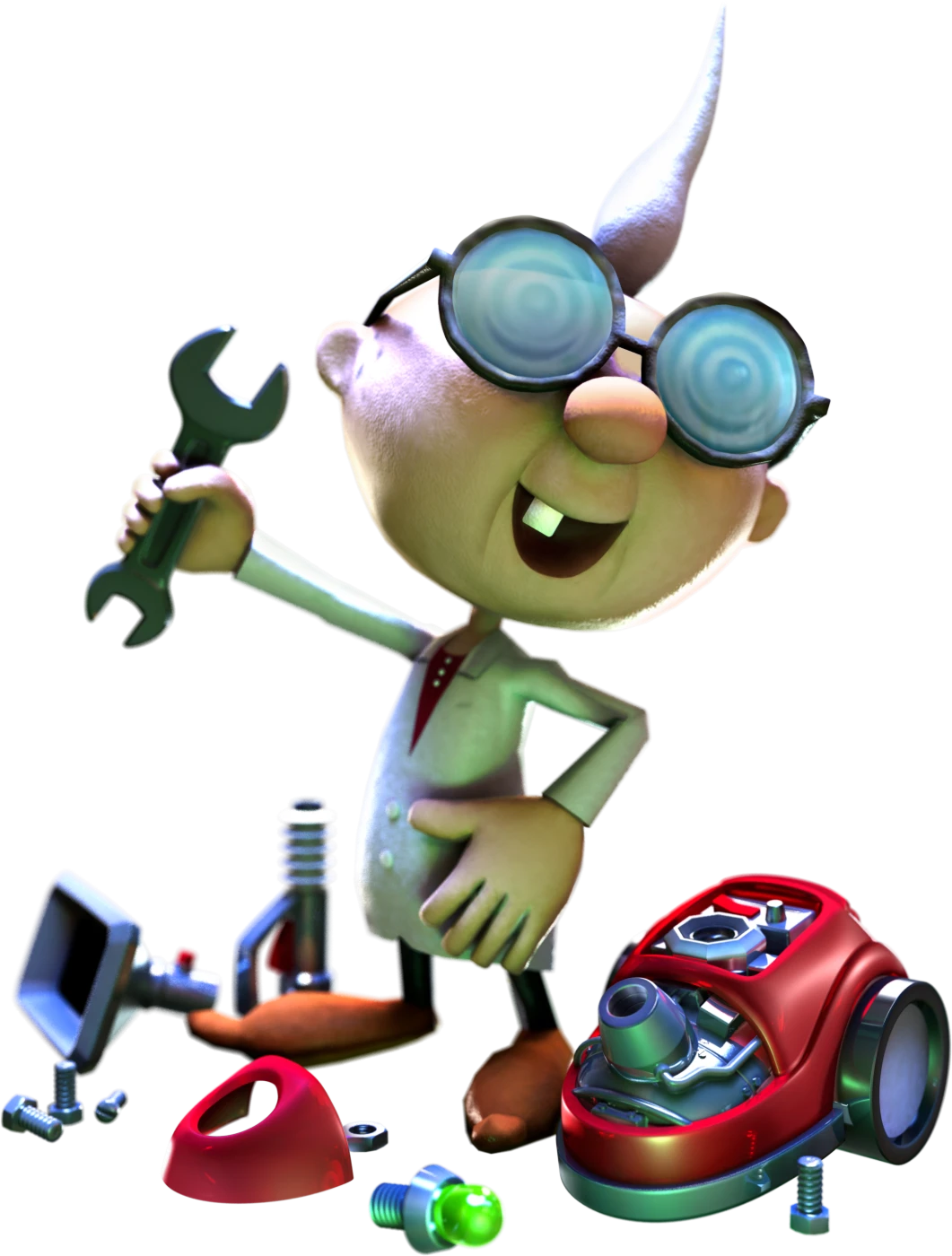 Professor E. GaddMission control
 PolterpupThief, nuisance, pet
 The Toad assistantsFive lost researchers
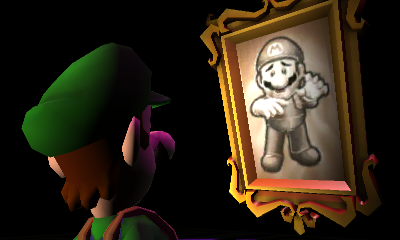 MarioIn a painting, again
 King BooWould-be ruler of the Mushroom Kingdom
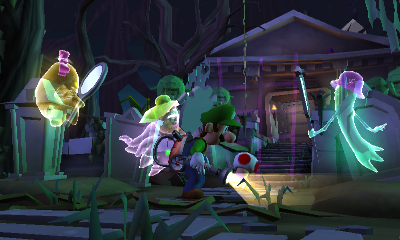 The Three SistersHerlinda, Belinda and Lucinda
 The ghosts of Evershade ValleyGreenies, Slammers, Hiders and friends
 Grouchy Possessor (boss)Gloomy Manor · Cellar · Confront the SourcePossesses a giant spider queen. Like every Possessor he has no health bar and is caught only after three rounds.
 Harsh Possessor (boss)Haunted Towers · Tree House · Tree ToppingPossesses a staircase and sets it alight. The boss Miyamoto asked for in place of an “ordinary” plant monster.
 Overset Possessor (boss)Old Clockworks · Belfry Clock · ShowtimePossesses the great clock and summons other enemies, beetles among them.
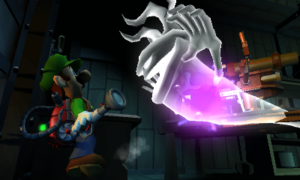 Shrewd Possessor (boss)Secret Mine · Frozen Pit · Chilly RidePossesses the ice and flees downhill with his Dark Moon piece. Scornful Possessor in the British version.
 Tough Possessor (boss)Beyond the Terrace portal · Stop the KnightmarePossesses giant suits of armour; outside them he moves as trails of electricity.
 King Boo (boss)King Boo’s Illusion · A Nightmare to RememberFinal boss. Lure him under his own spiked balls, then survive three corridor chases.
 Poltergeist (boss)Sub-boss · Gloomy Manor · Library50 HP. Throws books around the Library in Quiet Please!
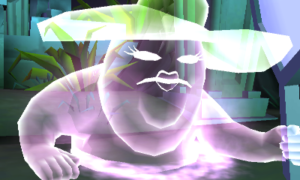 Sister Herlinda (boss)Sub-boss · Haunted Towers · Old Graveyard150 HP. The large purple sister in the straw hat.
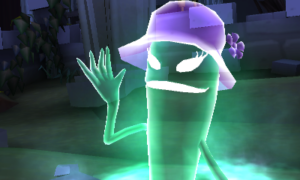 Sister Belinda (boss)Sub-boss · Haunted Towers · Old Graveyard100 HP. Thin, aqua, and the expert on plants.
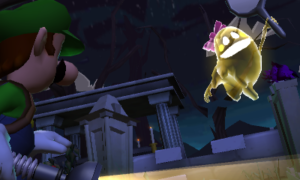 Sister Lucinda (boss)Sub-boss · Haunted Towers · Old Graveyard50 HP. The small yellow one with the pink bow.
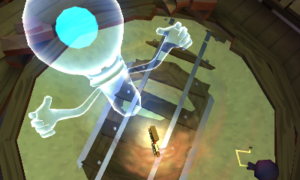 Ancient Poltergeist (boss)Sub-boss · Old Clockworks · Roundhouse100 HP. Guards the stolen clock hands in Roundhouse Brawl.
 Strong Poltergeist (boss)Sub-boss · Treacherous Mansion · Space Exhibit200 HP. Met in A Train to Catch.
 Big Boo (boss)Sub-boss · Treacherous Mansion · Train ExhibitThe ambush in Ambush Maneuver. Counts as ten Boos in the Vault.
 The Brain (boss)ScareScraper · final floorAlways the last boss of a 5, 10 or 25-floor climb.
 GreenieEverywhere10 HP. The standard ghost. Punches, or hits Luigi with whatever it has picked up.
 Gold GreenieHidden in most missions20 HP. Runs instead of fighting and drops a heap of treasure.
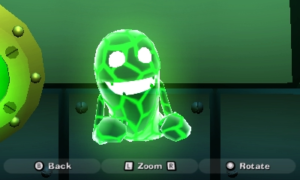 Strong GreenieSecret Mine onwards50 HP. A Greenie toughened by the mine’s crystals.
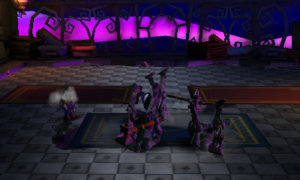 Statue Armour GhostTreacherous MansionA Greenie inside a suit of armour. Its weapon sticks in the floor when it misses.
 SlammerFrom Gloomy Manor30 HP. A burly red ghost whose handclap sends out a shockwave.
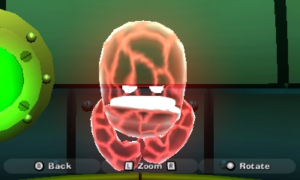 Strong SlammerSecret Mine onwards150 HP.
 HiderFrom Gloomy Manor15 HP. Lanky and blue. Hides inside furniture and runs to a new spot when found.
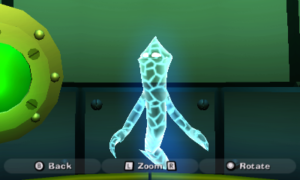 Strong HiderSecret Mine onwards75 HP.
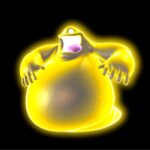 GobberVarious100 HP. Slow, round and yellow. Spits puddles of goo across the floor.
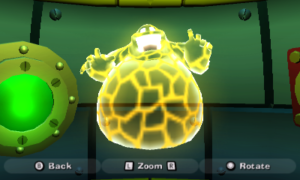 Strong GobberSecret Mine onwards200 HP.
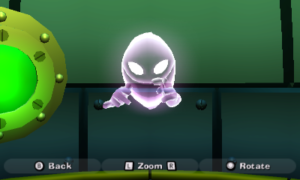 SneakerVarious25 HP. A pink ghost that creeps up behind Luigi and scares him while he is busy catching others.
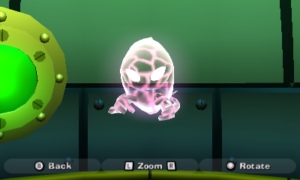 Strong SneakerSecret Mine onwards100 HP.
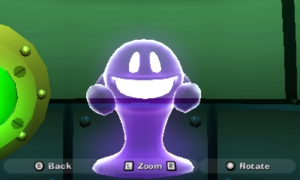 CreeperVariousA purple blob that lies in wait as a puddle and tries to trap Luigi. Only a Power Surge finishes it.
 BooOne per numbered mission32 to catch, counting the Big Boo as ten. All have pun names: ComBooter, JamBoolaya, Boo B. Trap, Booreaucrat, French Boodle, Boopa Troopa.
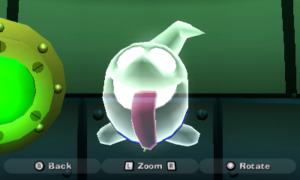 Big PolterpupScareScraperThe oversized ghost dog of the tower.
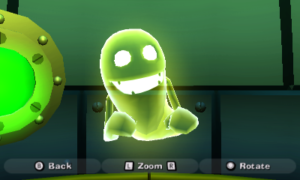 Gold seriesScareScraper bossesBomb Brother, Beetle Whisperer, Terrible Teleporter, Primordial Goo and Creeper Launcher.
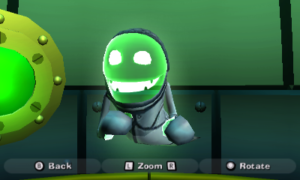 Fashion seriesScareScraper bossesFright Knight, Cold Catcher, Freaker Sneaker, Tether Jacket and Yukata Ball.
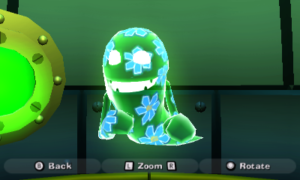 Flower seriesScareScraper bossesBlue Pimpernel, Sun Flower, Pink Zinnia, Violet and Daisy.
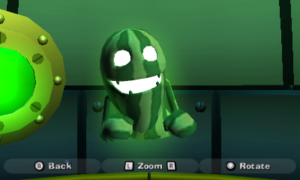 Food seriesScareScraper bossesSpookumber, Aweberry, Scorn, Scareambles and Terrorange.
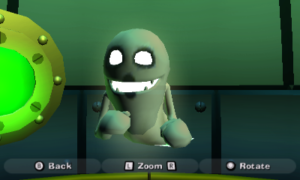 Halloween seriesScareScraper bossesSpooky Spook, Scars, Scool, Jack-goo-lantern and Blimp Reaper.
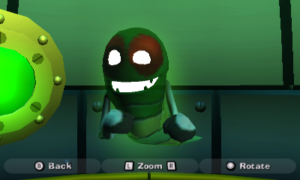 Bug seriesScareScraper bossesDreadonfly, Lady Gug, Fright Fly, Blobberfly and Go-Bee.
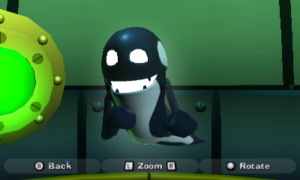 Marine seriesScareScraper bossesHorrorca, Clown Fishy, Shriek Shark, Pondguin and Wurdle.
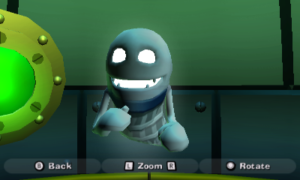 Sport seriesScareScraper bossesBad-minton, Footbrawl, Tennis Menace, Goolf and Soccer Ball.
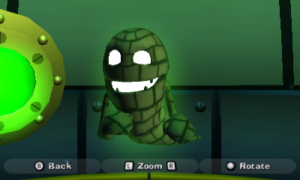 Animal seriesScareScraper bossesAwelligator, Banegal, Zebrawl, Leoprank and Cawe.
 BatPestHangs from ceilings and swoops. Like all pests, costs 5 HP on contact.
 BeetlePestRound bugs that fly slowly at Luigi. The Overset Possessor summons them; gold ones live in the ScareScraper.
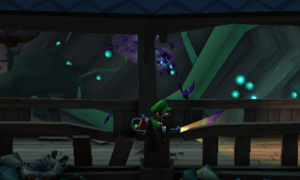 CrowPest · mainly Haunted TowersPurple birds that mob Luigi in flocks.
 FrogPest · mainly Haunted TowersRed, hopping, and only the Strobulb will see them off. King Boo conjures them too.
 MousePestScurries away from Luigi, usually near a mousehole.
 SpiderPestRed spiders that guard their webs and rear up at Luigi.
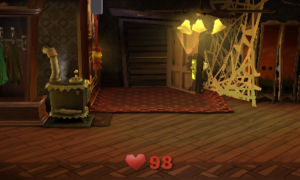 False doorTrapSlams Luigi flat for 5 HP. The Dual Scream map shows which doors are fakes.
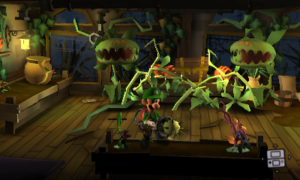 FlytrapHaunted Towers, Treacherous MansionA giant plant that bites for 10 HP. Feed it either a burning roast chicken or a spiky fruit.
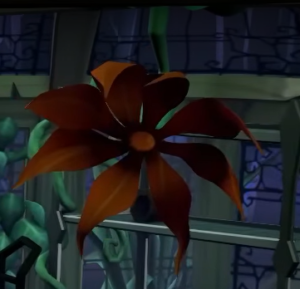 Orange flowerHaunted TowersHangs from the ceiling and slams down as Luigi passes. Dodge, then pull it up.
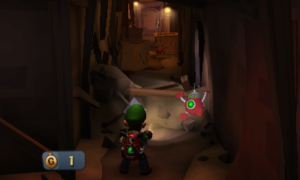 RobombOld ClockworksA walking bomb that explodes for 20 HP when flashed with the Strobulb. Gold ones are full of gold bars.
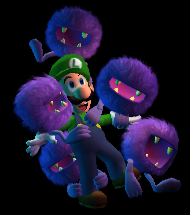 FuzzballSecret MineHarmless purple fluff from the Chalet that sticks to the Poltergust. Gold ones shed money when thrown.
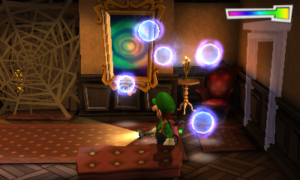 Spirit BallWherever the Dark-Light is usedReleased when a hidden object is revealed. Vacuum them or the object vanishes again.
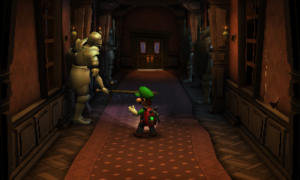 Suit of armourGloomy Manor (Guard Hall) and elsewhereBrings its blade down for 20 HP when Luigi walks past.