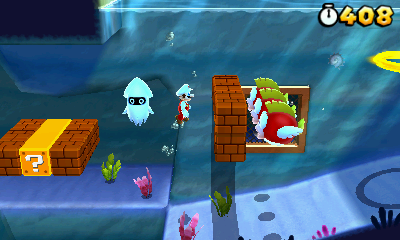
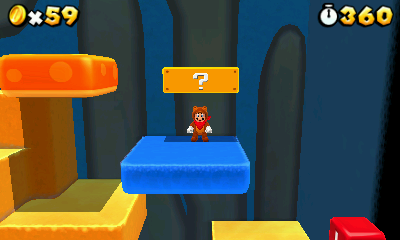
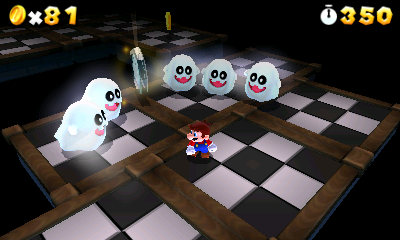
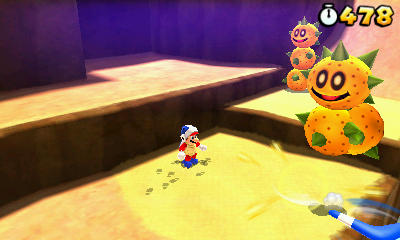
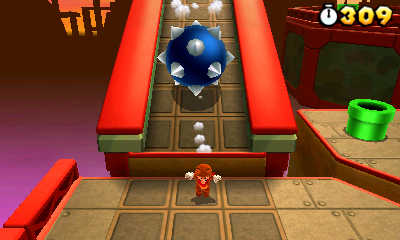
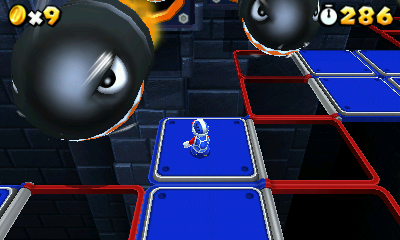
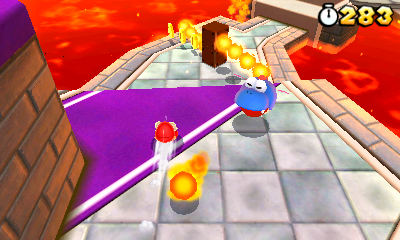
Nintendo 3DS2011Nintendo EAD Tokyo3D platformerStereoscopic 3DTanooki Mario returns12.89 million sold96 coursesMetacritic 90
Super Mario 3D Land
A 3D Mario that thinks like a 2D one. Super Mario 3D Land arrived on Nintendo 3DS in November 2011, the first Super Mario adventure in glasses-free stereoscopic 3D and the first 3D Mario built from scratch for a handheld. The Tokyo team behind Super Mario Galaxy threw out the open playgrounds and the Power Stars and brought back a countdown clock and a Goal Pole at the end of every course. They also brought back the Super Leaf, missing since Super Mario Bros. 3, and then stuck raccoon tails on Goombas, Bullet Bills, Boos and even Bowser. Add the new Boomerang Flower, a late-arriving Statue Leaf, airship duels with Boom Boom and newcomer Pom Pom, and a second set of eight Special Worlds where Luigi is waiting to be rescued: 96 courses in all, directed by Koichi Hayashida and produced by Yoshiaki Koizumi. It reviewed at 90 on Metacritic, became the first 3DS game to pass five million sales and has now sold 12.89 million.
Developer:Nintendo EAD Tokyo, with Brownie Brown (now 1-UP Studio)
Publisher:Nintendo
Platform:Nintendo 3DS (game card; Nintendo eShop download from 2012)
Genre:3D platformer
Japan:3 November 2011
N. America:13 November 2011
Europe:18 November 2011
Australia:24 November 2011
South Korea:28 April 2012
Players:1, with StreetPass exchanges
Director:Koichi Hayashida
Producer:Yoshiaki Koizumi; general producers Shigeru Miyamoto and Takashi Tezuka
Music:Asuka Hayazaki, Takeshi Hama, Mahito Yokota
Courses:96: 48 in Worlds 1–8 and 48 in Special 1–8
Star Medals:285 in the courses, plus 50 in Mystery Boxes
Ratings:ESRB E · PEGI 3 · CERO A · ACB G · USK 6
Sales:12.89 million as of 31 March 2026 (Nintendo)
Re-releases:Nintendo eShop download (2012); Nintendo Selects (2017–2018)
Advertisement
Overview
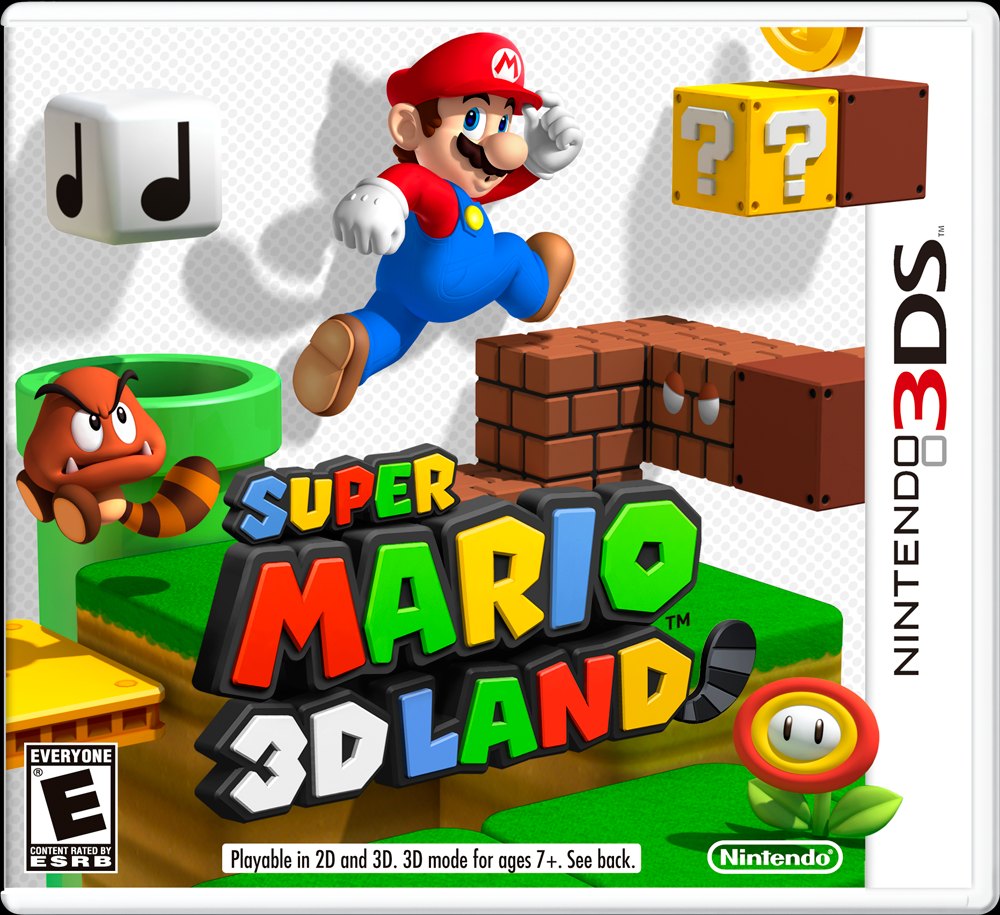
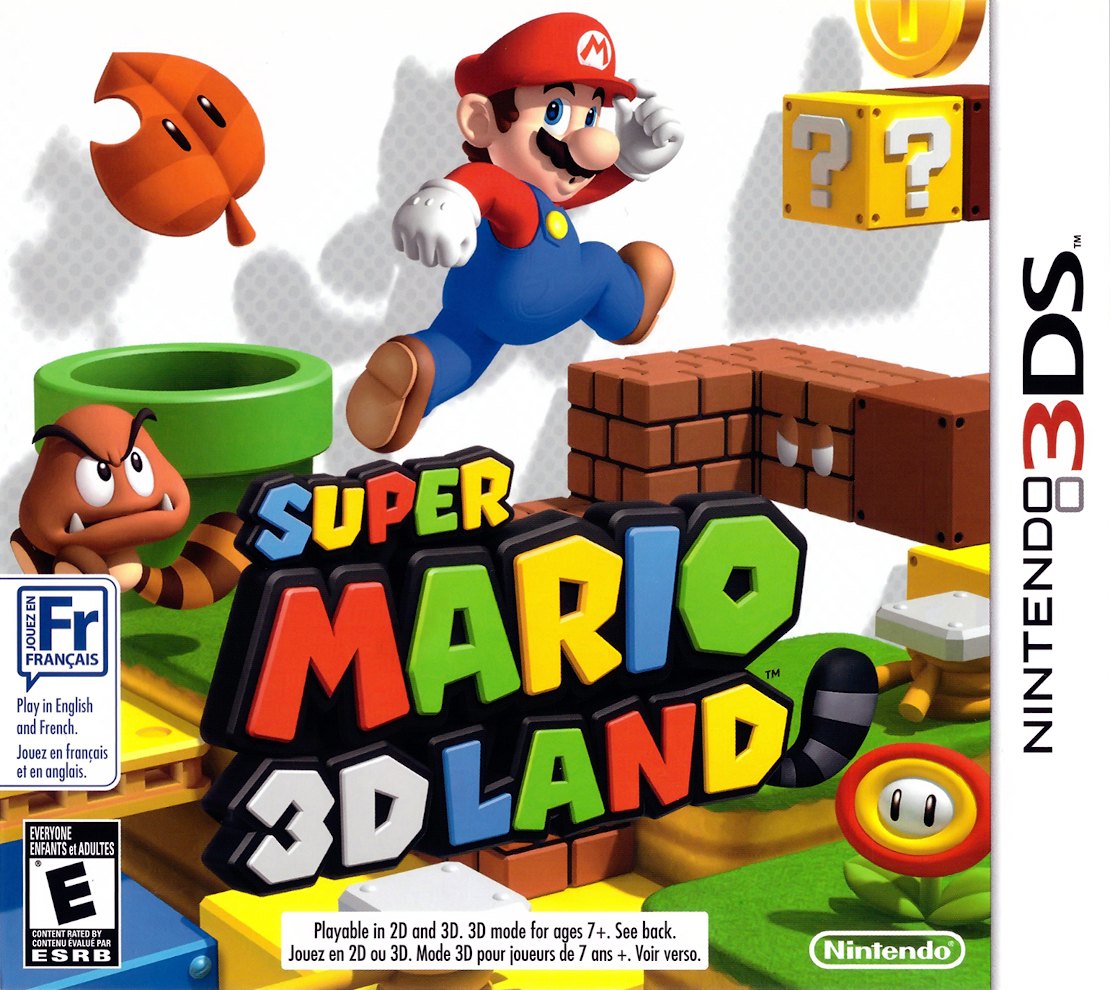
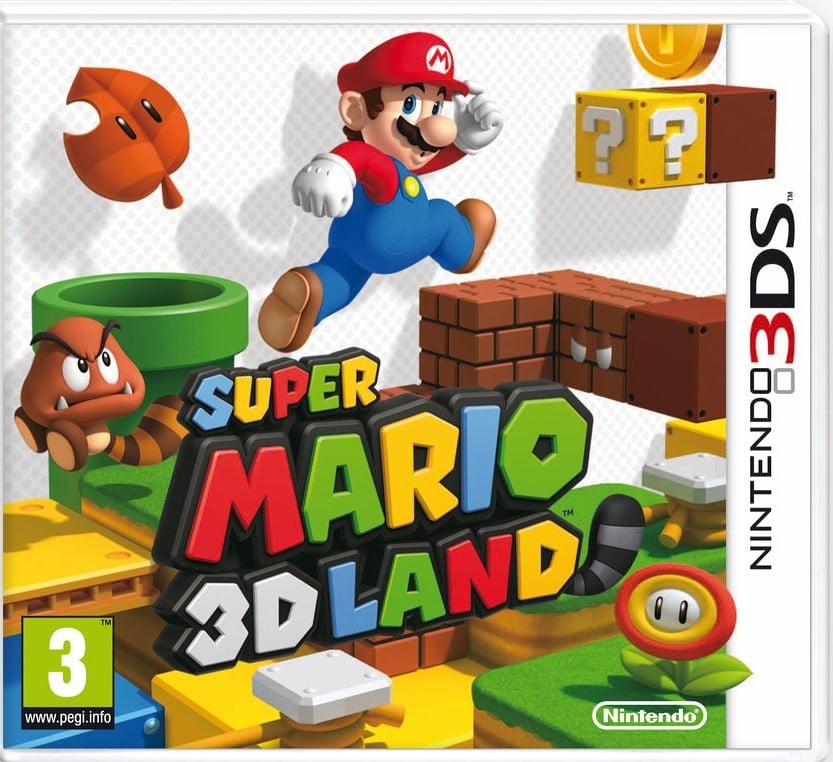
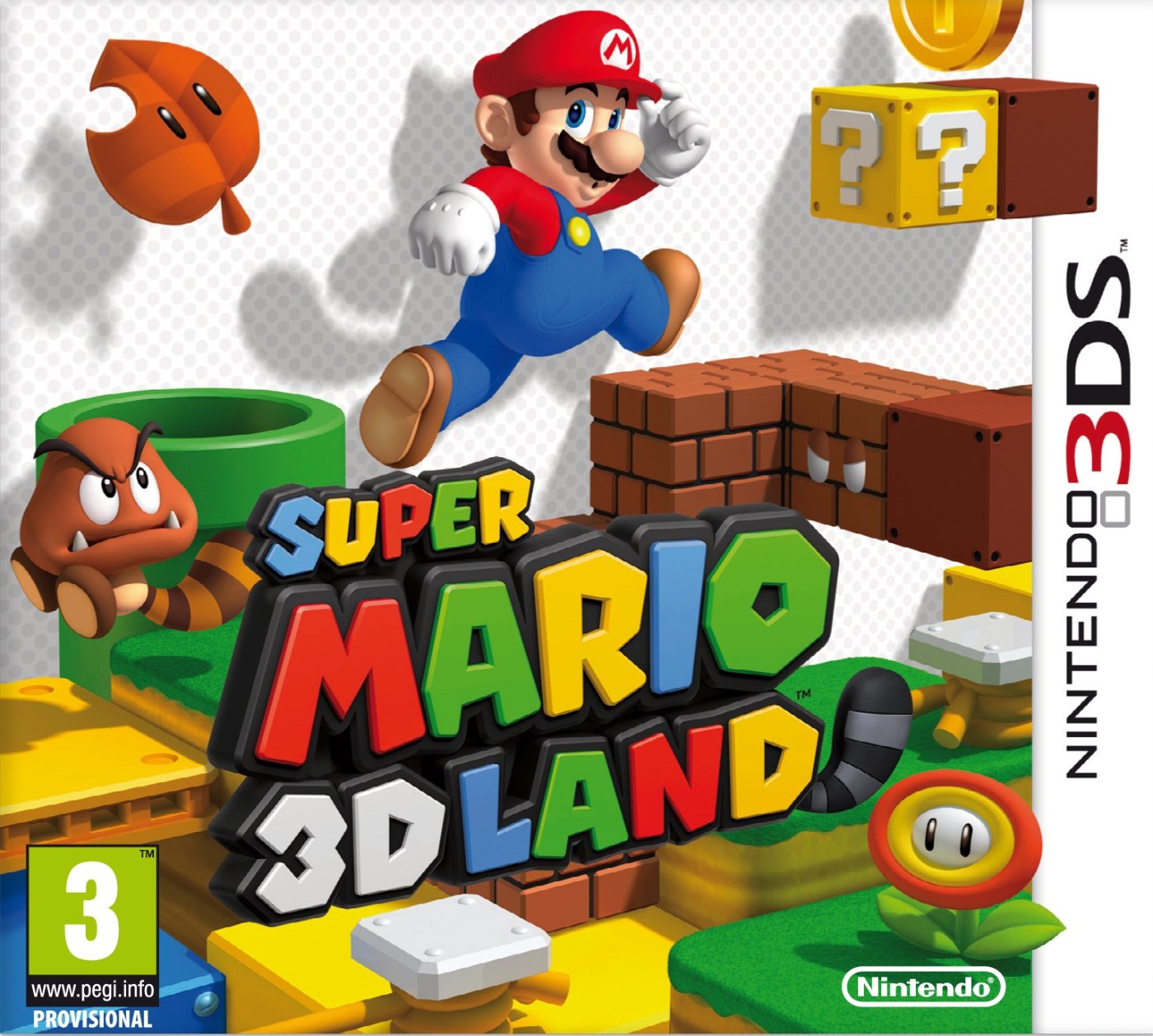
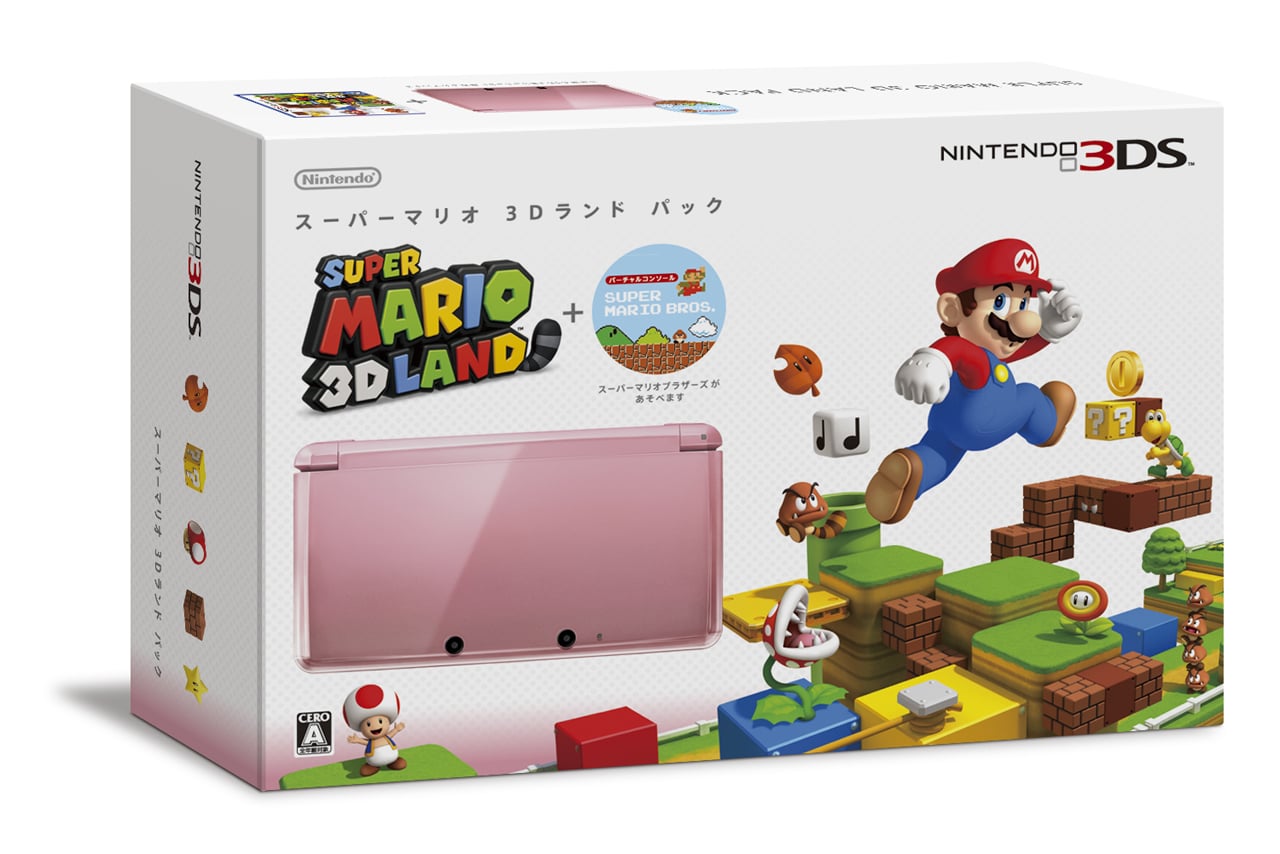
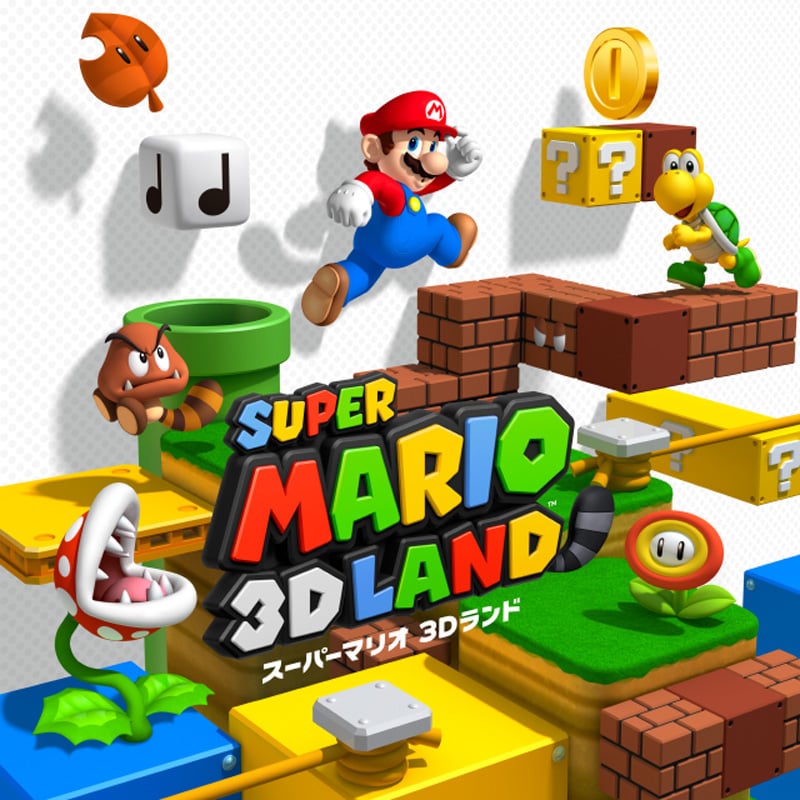
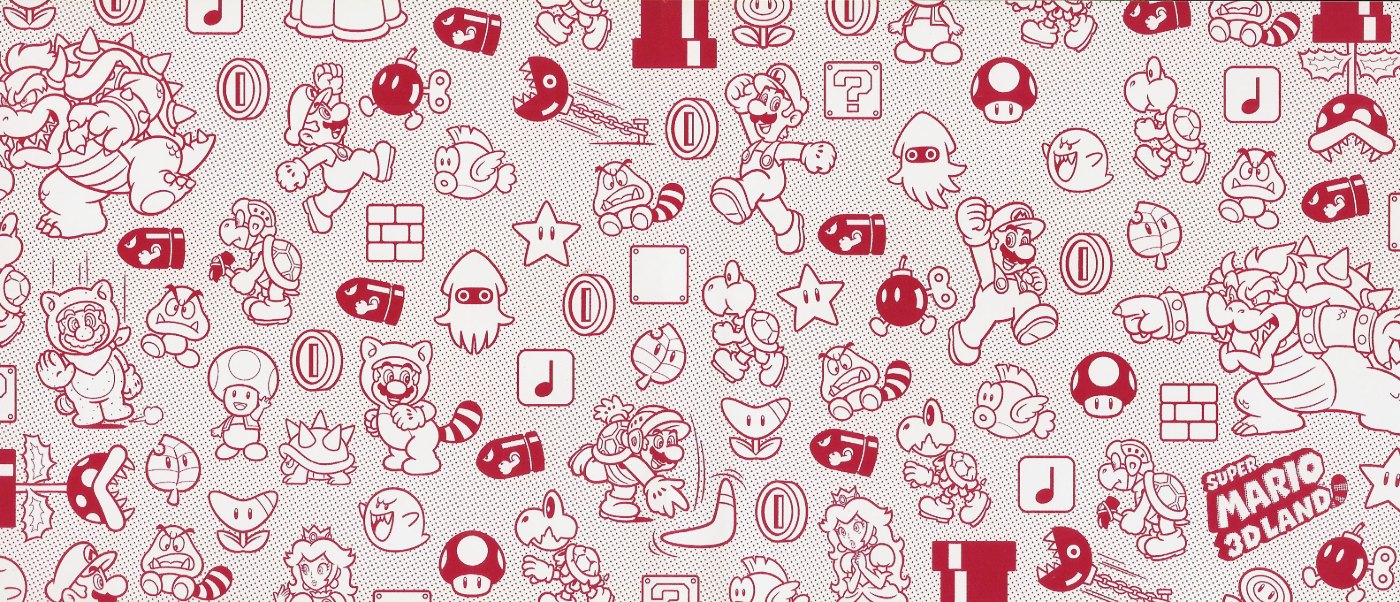
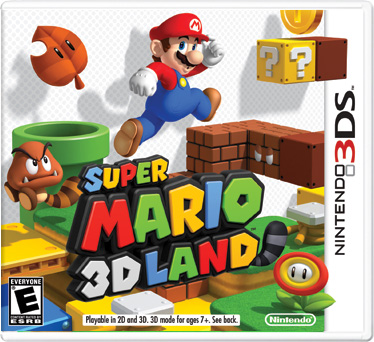
The box artwork: Tanooki Mario, a Tail Goomba and a great many tails.
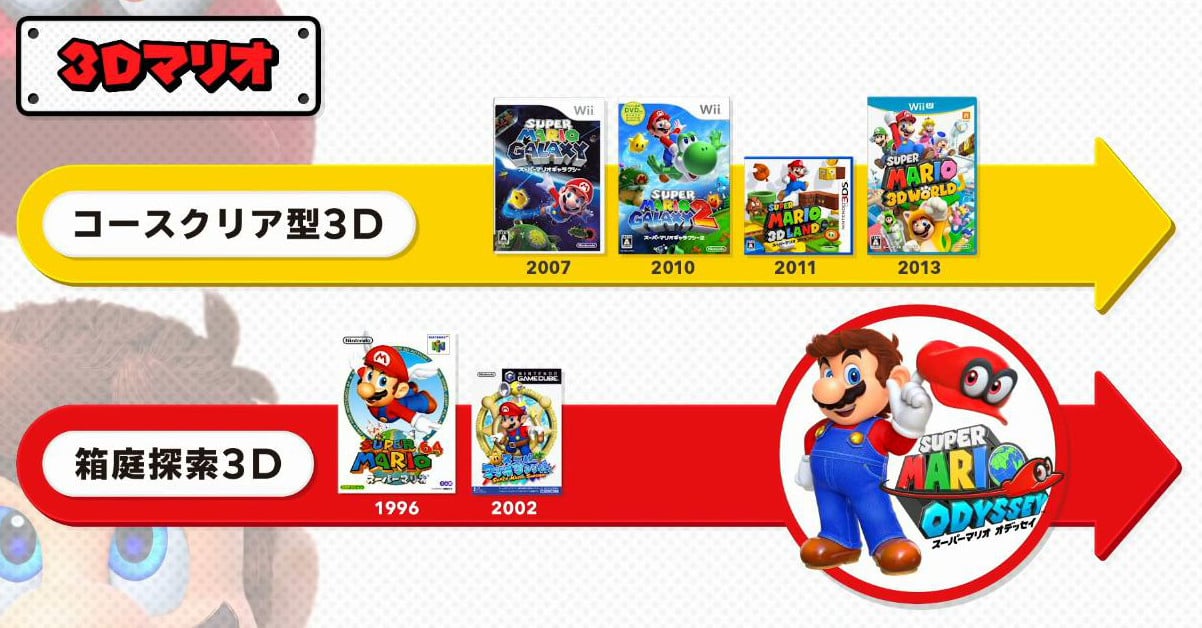
By 2011 there were two Marios, and they did not have the same fans. The side-scrolling New Super Mario Bros. games sold in enormous numbers to people who had grown up running to the right. The 3D games, from Super Mario 64 to Super Mario Galaxy 2, were the critics’ favourites, but a good many players bounced off them without ever finding their feet. Super Mario 3D Land is Nintendo’s attempt to join the two up. Its director, Koichi Hayashida, called it the missing link between Super Mario World and Super Mario 64: a game in three dimensions that keeps the rules of two.
So the courses are short, and each one is a path, not a playground. There is a timer. There is a run button. A hit shrinks Mario and a mushroom puts him right, there are no health wedges, and every course ends with a leap at a flagpole. What is new is the sense of depth. This was the 3DS’s first Mario, and the designers used the glasses-free 3D screen as a tool: floating blocks, swinging spike balls and distant platforms are far easier to judge when you can actually see how far away they are, which let the team remove the safety nets (the hover nozzle, the spin, Yoshi’s flutter) that earlier 3D Marios had needed.
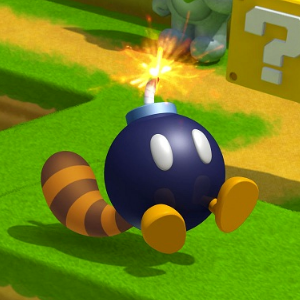
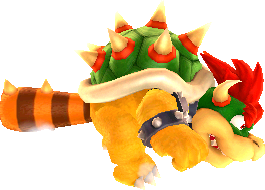
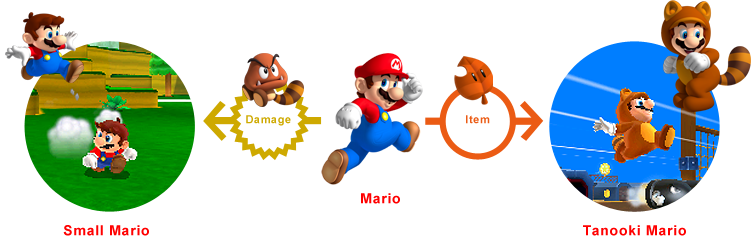
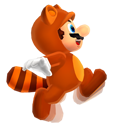
The costume cupboard is raided from Super Mario Bros. 3. The Super Leaf is back and turns Mario into Tanooki Mario, who whips enemies with his tail and floats gently down from jumps (though he can no longer fly). The Boomerang Flower is this game’s answer to the old Hammer Suit, the Statue Leaf lets him turn to stone, and airships cruise in at the end of worlds carrying Boom Boom and his new partner Pom Pom. Bowser, for his part, has shaken every leaf off the Tail Tree outside Peach’s Castle and handed them out to his troops, which is why almost everything in the game has a stripy tail.
Eight worlds take most players a handful of evenings. Then the game starts again: eight Special Worlds of remixed and brand-new courses, tougher by design, with Luigi locked up in the first castle and a single brutal final course behind them all. It was reviewed as the best reason yet to own a 3DS, sold 343,492 copies in its first week in Japan, and helped pull a struggling console back onto its feet. Two years later the same team turned its ideas into Super Mario 3D World on Wii U.
SUPER MARIO 3D LAND reinvents everything fans love about Mario gaming with the first platforming environment in true 3D, presenting a 3D Mario game that plays like a 2D Mario game! Players will experience an exhilarating new sense of depth, distance and speed while running, jumping and stomping on enemies throughout the levels.
Like other games for Nintendo 3DS the game can also be played in 2D, but the 3D visuals make it easier for players to judge the depths and distances in their environments. Discover the joy of 3D gaming as you can more accurately judge the jump to the next platform or how far Mario is from a question block!
— Official description (Nintendo UK, 2011)
Why Super Mario 3D Land matters to Mario fans
It is the game that brought the Super Leaf, Tanooki Mario and Boom Boom back from Super Mario Bros. 3, introduced Pom Pom, the Boomerang Flower and the Invincibility Leaf, and proved that a 3D Mario could be as easy to pick up as a 2D one. Its formula of short courses, a clock and a flagpole went straight on to Super Mario 3D World. And for Luigi fans it has one of the series’ better unlocks: clear the first Special World castle and the green brother is playable in every course, higher jump, slippery shoes and all.
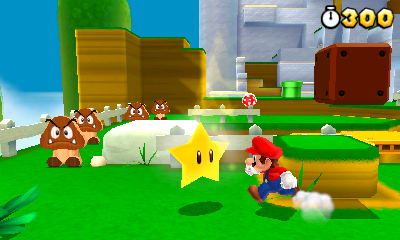
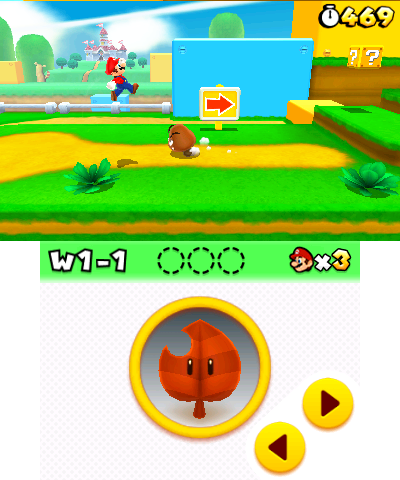
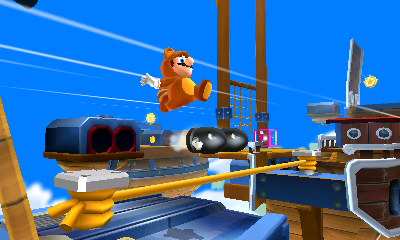
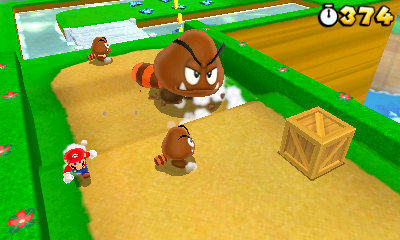
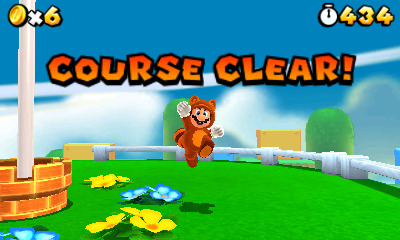
World 1-1, where it all starts.Tanooki Mario aboard the World 2 airship.Running from a Big Tail Goomba.Every course ends at a Goal Pole.
Quick Answers
The questions people ask most about Super Mario 3D Land, answered briefly here and in depth further down the page.
When did Super Mario 3D Land come out?
On Nintendo 3DS on 3 November 2011 in Japan, 13 November in North America, 18 November in Europe and 24 November 2011 in Australia. A download version followed on the Nintendo eShop in October and November 2012. More →
How many worlds and levels are there?
Sixteen worlds and 96 courses. Worlds 1 to 8 hold 48 courses and the Special Worlds, which open after the first ending, hold another 48, finishing with Special 8-Crown. More →
How do you unlock Luigi?
Finish World 8 to open the Special Worlds, then clear Special 1-Castle, where Dry Bowser is holding him. After that an M/L button on the touch screen of the world map swaps between the brothers. More →
How many Star Medals are there?
285 in the courses (three in each of 95 courses; Special 8-Crown has none) and another 50 in Mystery Boxes, 335 in all. You need 290 to open every locked course. More →
What do the Invincibility Leaf and P-Wing do?
They are optional help. Lose five lives on one course and an Assist Block offers an Invincibility Leaf, which makes White Tanooki Mario invincible for that course. Lose ten and a P-Wing appears that carries you straight to the Goal Pole. Neither Assist Block appears in the Special Worlds. More →
How do you unlock Special 8-Crown?
Earn all five stars on your save file: beat Bowser in World 8, clear every course as Mario, clear every course as Luigi, get a golden flag on every course and collect every Star Medal. More →
Can you play it without the 3D effect?
Yes. The 3D Depth Slider can be turned right down, and the game runs normally on a Nintendo 2DS. Shadows under blocks, coins and enemies were designed so that jumps can be judged in 2D; only a few optional illusion rooms lose their trick. More →
What is the Statue Leaf?
A Super Leaf with a red scarf, found only in the Special Worlds and in some StreetPass gifts. It gives Statue Mario everything Tanooki Mario has, plus the power to turn into an invulnerable stone statue with a Ground Pound, as the Tanooki Suit did in Super Mario Bros. 3. More →
Who made Super Mario 3D Land?
Nintendo EAD Tokyo, the studio behind both Super Mario Galaxy games, with help from Brownie Brown. Koichi Hayashida directed, Yoshiaki Koizumi produced, and Shigeru Miyamoto and Takashi Tezuka were general producers. More →
Is Super Mario 3D Land on Nintendo Switch?
No. Every release so far has been for the Nintendo 3DS family: the 2011 game card, the 2012 eShop download and the Nintendo Selects reissue. Its sequel, Super Mario 3D World, is the one that moved to Switch. More →
Story
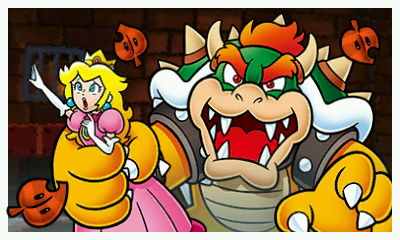
The first letter: Bowser, Peach and a sky full of Super Leaves.
The plot is told without a word of dialogue, in short scenes at the start and end and in a run of picture postcards that drift down to Mario after each world. They are drawn in a flat storybook style by Nintendo illustrator Shigehisa Nakaue, and between them they tell a slightly different story from the usual one: Peach spends most of this game trying to rescue herself.
The night of the storm
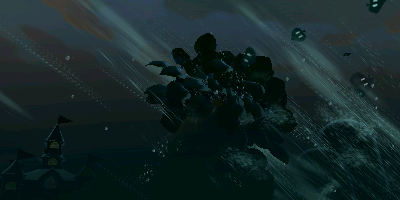
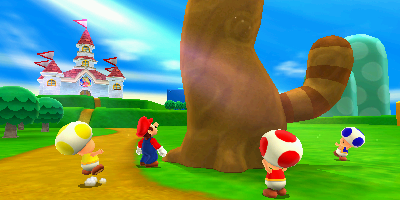
Outside Princess Peach’s Castle grows the Tail Tree, a tree with a striped tail of its own and branches heavy with Super Leaves. One night a storm rips every leaf from it, and somewhere in the wind Bowser can be heard laughing. Peach goes out to look at the damage and does not come back.
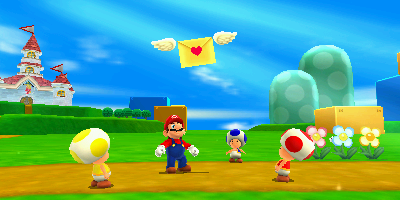
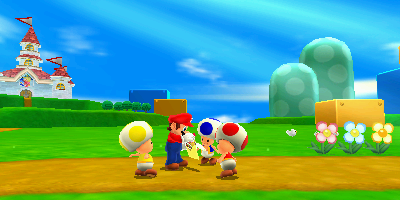
In the morning Mario and three Toads, one red, one yellow and one blue, find the tree bare. The yellow Toad spots an envelope hanging in the air beside it. Inside is a picture: Bowser with the princess in his grip and the stolen leaves swirling behind him. Mario sets off at a run.
The storm strips the Tail Tree.Morning: Mario and the Toads find the tree bare.A letter hangs in the air.Reading the bad news.
Tails on everything
It does not take long to find out where the leaves went. World 1 is the green countryside around the castle, and its Goombas now have raccoon tails, jump after Mario and float down on top of him. The first Super Leaf is in the first course, and with it Tanooki Mario is back, in his first new adventure since Super Mario Bros. 3.
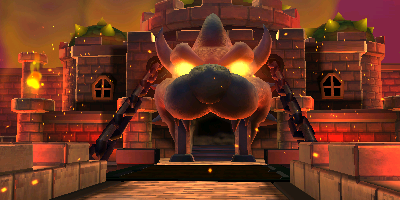
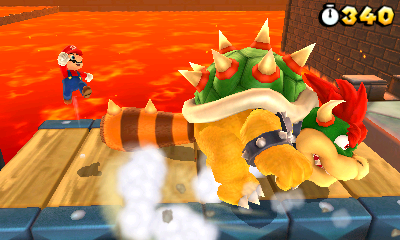
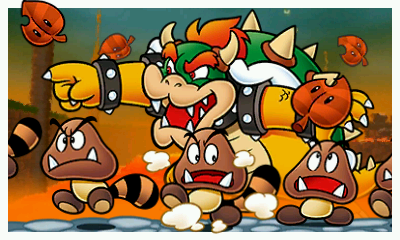
At the end of the world is a castle over lava and, on its bridge, Bowser, tail and all. Slip past him, hit the switch and the bridge drops. What falls into the lava is a Goomba in a Bowser disguise, a turnabout of the fake Bowsers in the original Super Mario Bros. The postcard that follows shows the real one handing out Super Leaves to his Goombas.
Every castle opens with this view.The Tail Bowser on the World 1 bridge.Postcard: Bowser gives his Goombas tails.
Airships and postcards
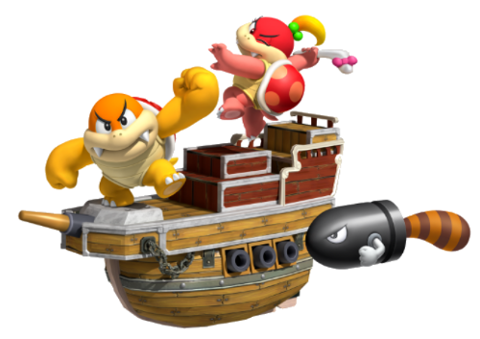
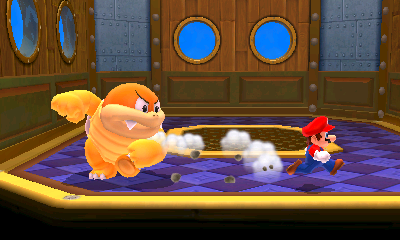
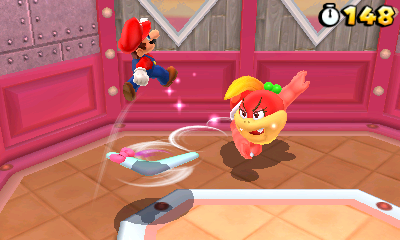
From World 2 onwards most worlds end on Bowser’s airships, wooden gunboats bristling with cannons and Rocky Wrenches, just as they did in Super Mario Bros. 3. The captain of the first two is an old face from that game: Boom Boom, flailing his arms and spinning across the deck like a top. World 4 introduces his opposite number, Pom Pom, who leaps about the deck throwing boomerangs.
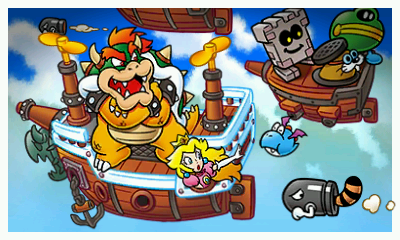
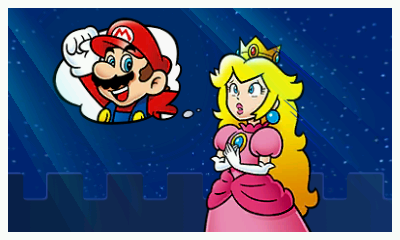
The postcards keep coming. One shows Bowser carrying Peach away aboard his own airship. The next finds her alone, thinking of Mario.
Boom Boom on the World 2 airship.Pom Pom makes her debut in World 4.Postcard: Peach is flown away.Postcard: Peach thinks of Mario.
Peach fights back
Worlds 5 to 7 cross deserts, cloud-top windmills, a seaside boardwalk, a pyramid and a clockwork tower, with a second fake Bowser in the World 5 castle (a Magikoopa this time) and both airship captains attacking together at the end of World 7. World 5-2 stops for a tribute to another Nintendo series altogether: a stone dungeon seen from directly overhead, with torches to light, in the manner of the first Legend of Zelda.
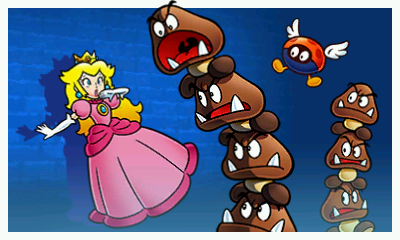
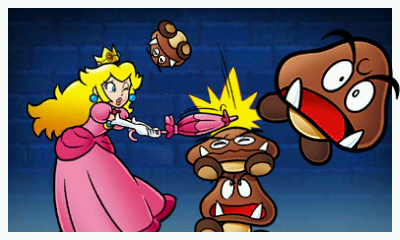
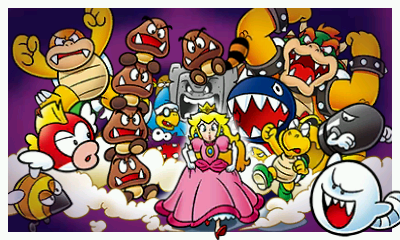
Meanwhile the princess has had enough. A postcard shows her cornered by two Goomba Towers and a Para-Biddybud. In the next she is laying into them with her parasol, and in the one after that she is running for it with Bowser and half his army behind her. They catch her. The last card before World 8 shows her back in his grip, inside his castle.
World 5-2, seen from above like a Zelda dungeon.Postcard: Peach is cornered.Postcard: the parasol comes out.Postcard: Peach makes a run for it.
The cardboard princess
World 8 is Bowser’s own country, all fortresses and lava. The first showdown plays out like the fake Bowser fights, and when the bridge goes the real Bowser goes with it. Mario runs to the princess waiting beyond and finds she is a flat cutout. Bowser has got away with the real one.
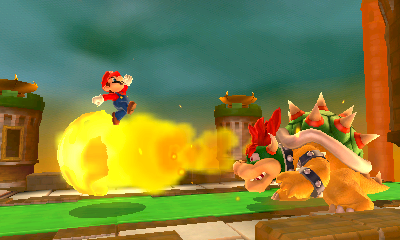
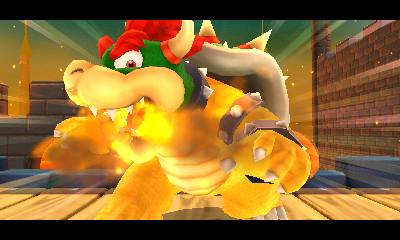
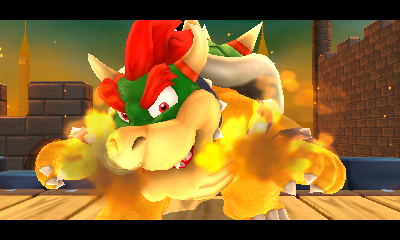
Further on, Mario catches up with him in his lair. Before either can move the floor gives way and the fight becomes a chase down through the castle, with Bowser crashing after Mario, breathing fire and throwing barrels as if he had been watching Donkey Kong. At the bottom is one last bridge and one last switch. This time Bowser stays in the lava.
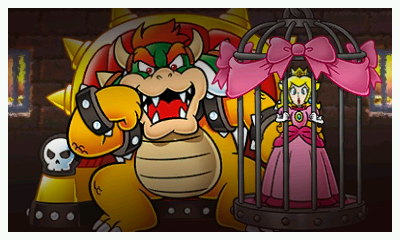
Postcard: Peach in Bowser’s castle.Dodging Bowser’s fire.Bowser, the real one this time.Another look at the Koopa King.
Home by tail
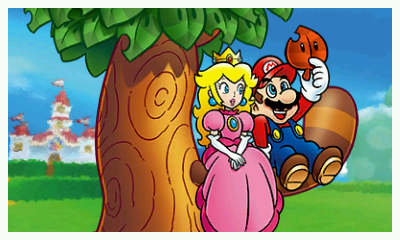
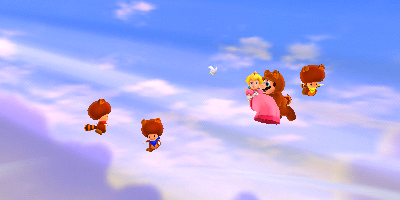
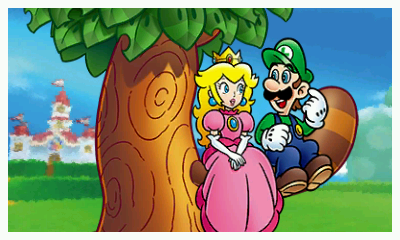
Mario and the three Toads find Peach, and all of them use their Tanooki powers to float her home to the castle. The album gains a new picture: Mario and Peach sitting side by side in the branches of the Tail Tree, its leaves grown back.
Mario and Peach on the Tail Tree.Tanooki Toads in the credits.
A letter about Luigi
After the credits another envelope floats down in World 1-1. The picture inside is of Luigi, surrounded by Bowser’s minions. A pipe opens to Special 1, a mirror image of the Mushroom Kingdom where the courses are remixed, the Statue Leaf and the Poison Mushroom make their first appearances, and a shadowy Cosmic Clone trails behind Mario copying every move he makes.
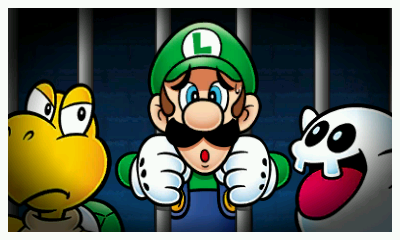
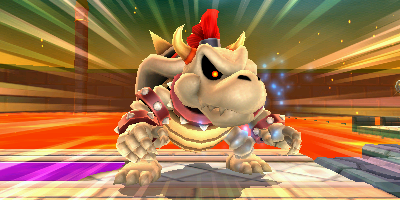
Luigi is in the castle at the end of that first Special World, guarded by Dry Bowser, a skeletal Bowser who breathes blue flame. Drop him into the lava like the others and Luigi is free, and playable from then on. Seven more Special Worlds follow, some with harder versions of earlier courses, some entirely new, with Tanooki-suited Toads turning up along the way.
The second letter: Luigi in trouble.Dry Bowser.A Cosmic Clone on Mario’s heels.Luigi, free at last, in World 1-1.
One more kidnapping, and the Crown
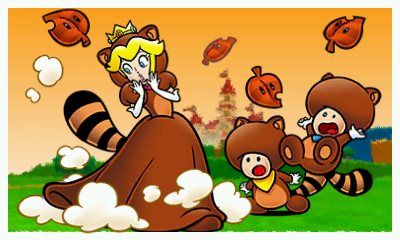
Beat Dry Bowser for the last time in Special 8 and a third letter arrives. The Toads, in Tanooki suits, open it: Bowser has taken Peach again. Go back and win the final battle of World 8 once more and the album’s last picture appears, of Peach herself in a Tanooki suit with two Toads. Beat the game as Luigi and the album also gains his own version of the ending, sitting in the Tail Tree with the princess.
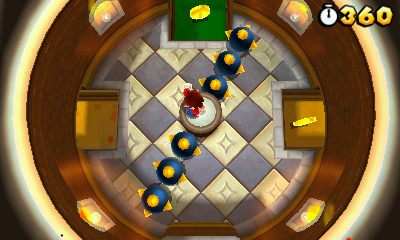
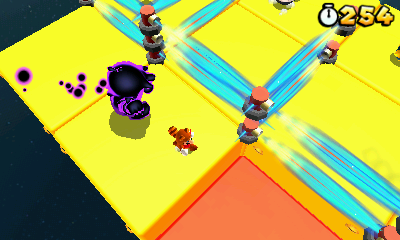
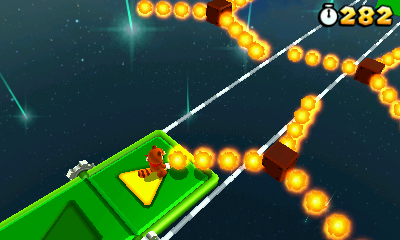
One course remains. Special 8-Crown opens only for a save file with all five stars, and it is the hardest thing in the game: 500 seconds, no checkpoint, no power-ups, a platform full of Hammer and Boomerang Bros., Boom Boom and Pom Pom together, a ride past Fire Bars, a giant Cosmic Clone that smashes through bricks to get at you, and finally a bridge of Flip Panels that unfold to spell THANK YOU!! on the way to a flagpole surrounded by Toads.
The last album picture: Tanooki Peach.Luigi’s version of the ending.The Big Cosmic Clone in Special 8-Crown.Fire Bars and a Switchboard in Special 8-Crown.
All sixteen worlds of Super Mario 3D Land
Eight worlds for the story and eight Special Worlds after it, 48 courses in each half. Themes are mixed freely inside a world, as in the Galaxy games, so a desert can sit next to a snowfield. Figures in brackets are the Star Medals needed to open a locked course.
World 15 courses · Tail Bowser (a Goomba in disguise)Grassy fields in front of Peach’s Castle, the first Super Leaf and the first tailed enemies. 1-2 is the first underground course and hides a Warp Zone; 1-4 (3) is the first gate. Ends at World 1-Castle.
World 25 courses · Boom Boom (airship)High-wire platforming on Flip Panels and Red-Blue Panels, the first Propeller Box, and Bowser’s first airship. The only world with no medal gate.
World 36 courses · Boom Boom (airship)Desert ruins full of Wallops and Sandmaarghs, an underwater course, snow, and the first auto-scrolling course away from an airship. 3-5 (15). The blue album Toad House is here.
World 46 courses · Pom Pom (airship)Giant spiralling trees, face blocks and the first Ghost House. A hidden pipe in 4-2 warps straight to World 5. 4-3 (30).
World 56 courses · Tail Bowser (a Magikoopa in disguise)A cactus desert with the Boomerang Flower, the overhead Zelda tribute of 5-2, Monty Mole burrows and clouds above wind turbines. 5-3 (40); World 5-Castle (50).
World 66 courses · Pom Pom (airship)A seaside boardwalk, a pyramid of rising platforms and the first Beep Blocks, which blink in and out in time with the music. 6-5 (60).
World 76 courses · Boom Boom and Pom Pom together (airship)Spike Eels in underwater caves, a forest of Fuzzies on tightropes, the first clock-tower course and wooden walkways being sawn up by Grinders. 7-3 (70).
World 88 courses · Bowser, twiceBowser’s domain: fortresses in seas of lava, with no Toad Houses or Mystery Boxes. 8-3 (80), World 8-Bowser: Part 1 (90) and World 8-Bowser: Part 2 (100).
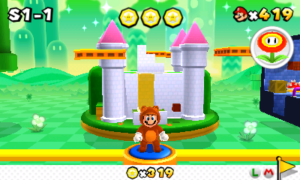
Special 15 courses · Dry Bowser (castle) · unlocks LuigiA mirror of the Mushroom Kingdom. Introduces the Statue Leaf, the Poison Mushroom and the Small Cosmic Clone. Special 1-Castle (110).
Special 26 courses · airship with no bossOpens with an auto-scrolling course of Note Blocks and rising lifts. One of two Special Worlds with no Cosmic Clone course. Special 2-Airship (120).
Special 36 courses · airship finalePendulum platforms, rotating blocks and Beep Blocks; the other clone-free world. Special 3-Airship (140).
Special 46 courses · Boom Boom and Pom Pom (airship)A clock course, a Ghost House and a boardwalk under a barrage of Bullet Bills. Special 4-Airship (160).
Special 56 courses · Dry Bowser (castle)Red-Blue Panels, Switchboards and lifts shaped like cakes and biscuits. Special 5-Castle (180).
Special 66 courses · Boom Boom (airship, optional)Propeller Boxes, fiddly Flip Panel routes and thick fog. The Boom Boom fight on its airship is the only boss battle in the game that can be skipped. Special 6-Airship (200).
Special 76 courses · castle finaleSnow and a crowd of Boomerang Bros., then more Beep Blocks. The Big Cosmic Clone arrives in 7-4 and returns in the castle. Special 7-Castle (220).
Special 87 courses · Dry Bowser · Special 8-CrownMostly rearranged lava courses from the main game, every one of them gated: 8-1 (230), 8-2 (240), 8-3 (250), 8-4 (260), 8-5 (270) and Special 8-Bowser (290). Special 8-Crown needs five save-file stars instead.
Course counts are from Super Mario Wiki’s world tables and include castles, airships and Bowser stages but not Toad Houses or Mystery Boxes: 5, 5, 6, 6, 6, 6, 6 and 8 in the main worlds, and 5, 6, 6, 6, 6, 6, 6 and 7 in the Special Worlds.
Advertisement
Gameplay & Controls
Forget hub worlds and Power Stars. 3D Land is laid out like a 2D Mario: a world map with courses in a row, each one a self-contained obstacle run from a starting gate to a Goal Pole. What makes it more than a 2D game with a spare dimension is how much of the design leans on depth.
Courses, the clock and the Goal Pole
The Goal Pole: aim for the top.
Hayashida wanted courses you could finish in the time it took him to ride a few stops on the train to work, so most of them are over in a few minutes. Each has a time limit, topped up by + Clocks worth 10 or 100 seconds, and a Checkpoint Flag part-way through. The higher you grab the Goal Pole the more coins you get, and landing on the very top earns a 1-Up and turns the flag gold. The last course of each world, a castle or an airship, ends at a Big Goal Pole.
Health works as it does in the side-scrollers. Mario begins every life as Super Mario; one hit knocks him down to cap-less Small Mario and the next costs a life. A power-up adds a layer on top, and a spare can be held in reserve and dropped in when needed, as in New Super Mario Bros. Coins from stomped enemies fly straight into your pocket instead of lying on the ground to be fetched, a change Takashi Tezuka pushed for because he thought sending players back for them was mean.
Mario’s moves
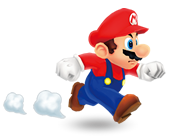
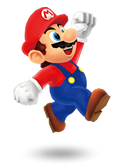
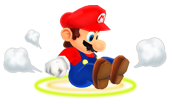
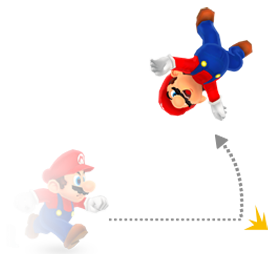
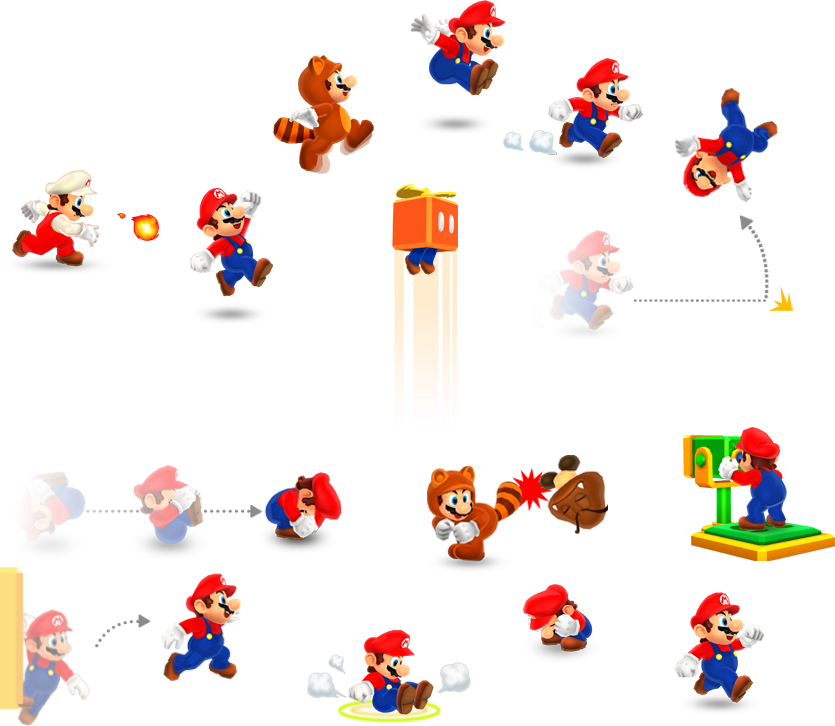
There is a dedicated run button, as on the NES, and Mario’s top speed is lower than in the earlier 3D games, which shortens his jumps to match. The double and triple jumps are gone. In their place are the Long Jump, the Wall Jump, the Ground Pound, the Side Somersault, a charged Backward Somersault that works like the crouching super jump of Super Mario Bros. 2, and a new Roll that smashes blocks from the side and squeezes Mario through low gaps.
He cannot punch or kick without a power-up, cannot carry a shell (he boots it instead) and cannot grab ledges. In return he can steer in mid-air far more freely than a real body could. Miyamoto resisted that at first, then came round to it as the thing that makes landing on a Goomba’s head feel right in three dimensions.
The Long Jump.The Roll, new to this game.The Wall Jump.
Playing with depth
The camera travels alongside Mario on a path the designers have chosen, sometimes side-on, sometimes from above, sometimes straight down a corridor, and the player has only a little control over it. With the 3D Depth Slider up, the top screen becomes a box you look into. Blocks hang at visibly different distances, spiked pendulums swing out towards your face, and Bowser’s fire comes right at you. The +Control Pad switches between two styles: Normal View, in which Mario himself sits on the surface of the screen and stays sharp when your hands move, and Deep View, which pushes the whole scene further back.
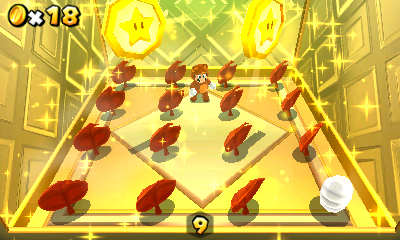
A few secret rooms are built purely to show off: coloured blocks arranged so that, seen flat, you cannot tell which are near and which are far, with a pad on the floor that swings the view round and gives the trick away. Elsewhere, View Plates turn the camera to reveal things hidden by perspective. None of this is compulsory. Everything in the air casts a shadow straight down, Mario’s own shadow shows where he will land, and the whole game can be finished with the slider off or on a Nintendo 2DS.
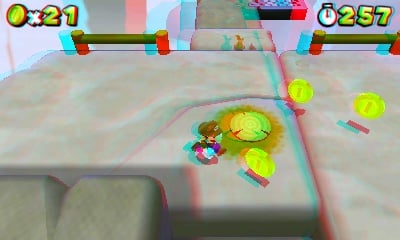
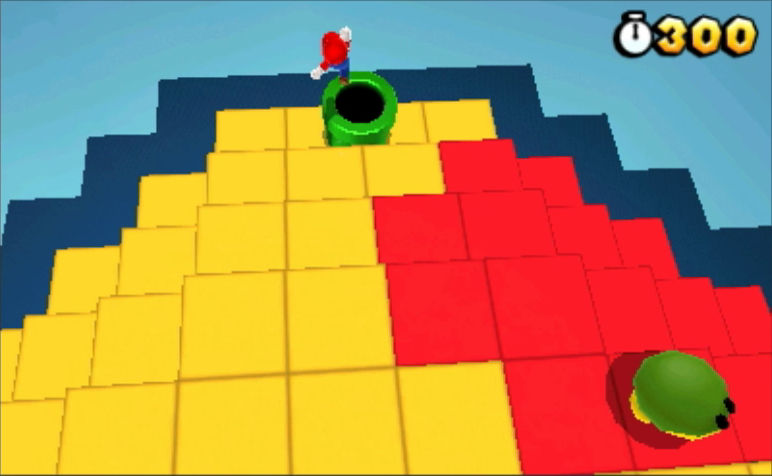
An optical illusion room: flat from here, not flat at all.Stepping on the pad changes the angle and gives the game away.World 2-1 as a stereogram, the closest a web page gets to the 3D screen.
Star Medals, Toad Houses and Mystery Boxes
Every course except the last hides three Star Medals. They do the job that Star Coins do in the 2D games and that Power Stars do in the 3D ones: finding them means poking into corners, and certain courses stay locked until you own enough. The first gate, at World 1-4, asks for three. The last, at Special 8-Bowser, asks for 290.
Between courses the map offers Toad Houses, which hand over a power-up exactly as in Super Mario Bros. 3, and Mystery Boxes: single rooms with a task, usually to wipe out every enemy against a very short clock, that pay out coins, 1-Ups and sometimes a Star Medal. A blue Toad House in World 3 keeps the photo album of letters Mario receives during the story.
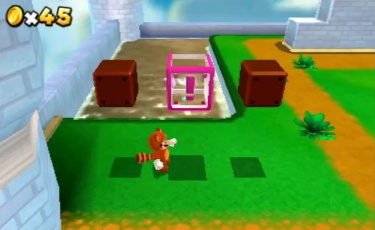
A Toad House.Tanooki Mario inside a Mystery Box.The World 1 map.
Help if you want it
Lose two lives on a course and a winged Roulette Block flutters in with a free power-up. Lose five and a golden Assist Block appears holding an Invincibility Leaf: White Tanooki Mario is invincible until the Goal Pole. Lose ten and the block holds a P-Wing, which simply flies you to the end. The Assist Blocks only turn up in Worlds 1 to 8, never in the Special Worlds, and you are free to ignore them. But once an Assist Block has appeared, used or not, the stars on your save file stop sparkling for good.
An Assist Block delivers an Invincibility Leaf.White Tanooki Mario walks through a Big Tail Goomba.
StreetPass
The Exclusive Mystery Box Nintendo sent out through Nintendo Zone in 2013.
Pass another 3DS owner in the street and the two consoles swap Mystery Boxes; a box that arrives this way always contains a Star Medal. Once the eight normal worlds are cleared the game also trades best times for every course, so you can chase the records of people at about your own level. And through StreetPass Mii Plaza, Miis can leave gifts at your Toad Houses even if their owners have never played the game, with a better present the second time you meet. Satoru Iwata noted that this made it the first Mario game to exchange data with people who did not own it.
Gyroscope, binoculars and the touch screen
Tilt the console to aim cannons and to look around through the binoculars that stand in many courses. Find a distant Toad through them and he will send a reward your way. The touch screen, meanwhile, is where the M/L button appears on the world map once Luigi is free.
Mario at the binoculars.A pair of binoculars in World 2-1.
Playing as Luigi
Luigi joins after Special 1-Castle and can be used in any course, including the ones Mario has already cleared. He jumps higher and takes longer to stop, in the tradition of The Lost Levels, though designer Kenta Motokura said the team tuned him to be easier to handle than his Galaxy self so that players could happily use either brother. His power-ups have their own look: a Super Leaf makes him Kitsune Luigi, a fox instead of a tanooki. Clearing every course with him is one of the five conditions for the final level.
Luigi in mid-leap.Kitsune Luigi: same leaf, different animal.
Power-ups and items
Three transformations come back from Super Mario Bros. 3 in one form or another, two things are worn as boxes instead of eaten, and the Fire Flower no longer runs out on a timer as it did in the Galaxy games.
Super LeafTanooki Mario swings his tail at enemies and blocks and drifts slowly down if you hold jump. He cannot fly. Luigi becomes Kitsune Luigi.
Boomerang Flower (new)Boomerang Mario throws one boomerang at a time. It passes through enemies, comes back, and can fetch coins and Star Medals from out of reach.
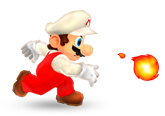
Fire FlowerBouncing fireballs that defeat enemies and light torches. Each one fizzles out after about two seconds.
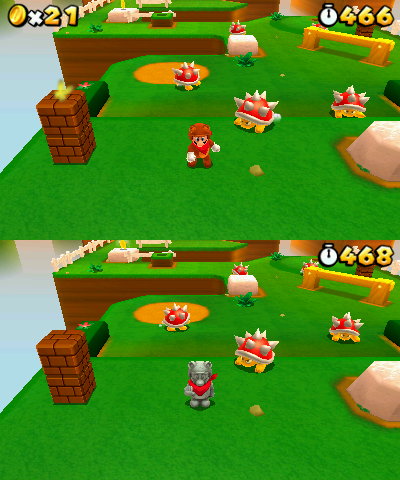
Statue Leaf (new)Special Worlds and StreetPass gifts only. Statue Mario wears a red scarf and turns to invulnerable stone when he Ground Pounds; enemies lose interest in him.
Super MushroomRestores Small Mario to Super Mario, who can break Brick Blocks.
Super StarA short burst of invincibility. Run into five or more enemies in one go and the 1-Ups start.
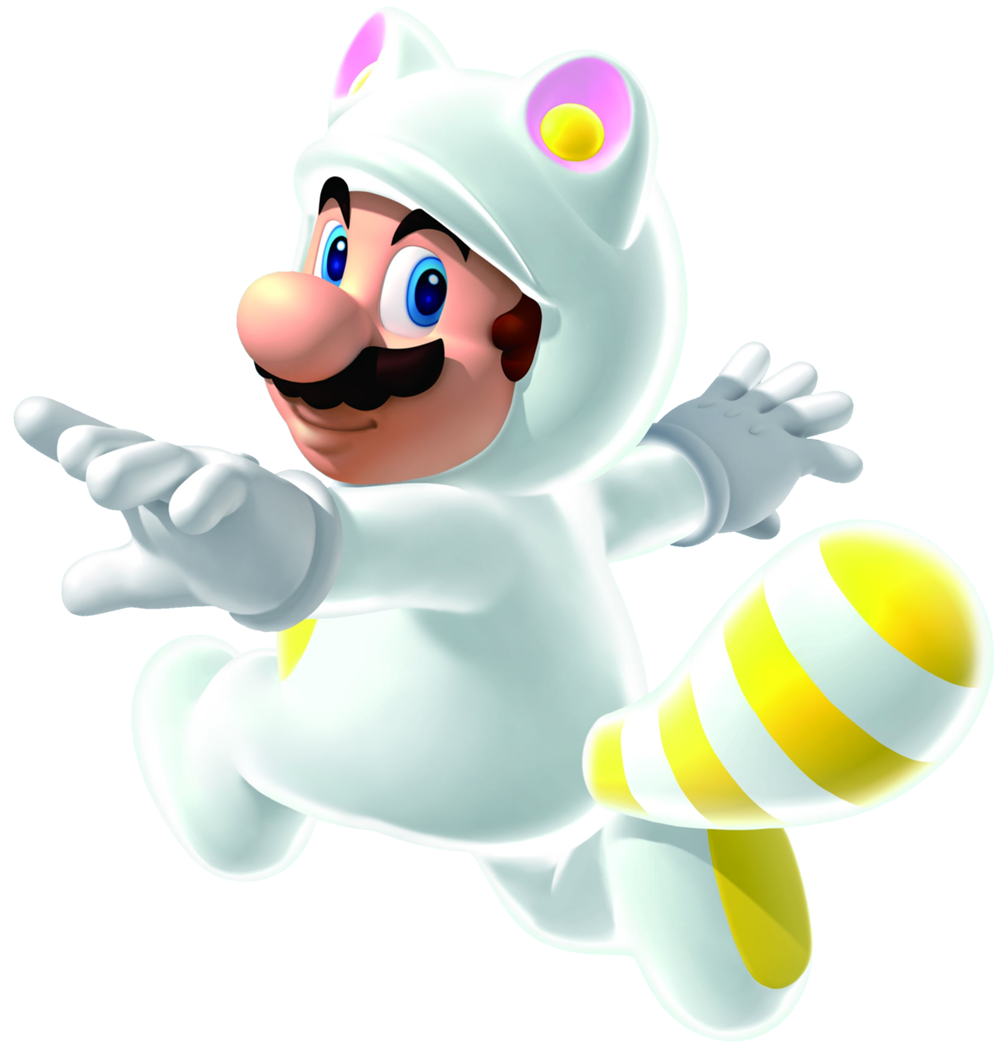
Invincibility Leaf (new)From an Assist Block after five lost lives on a course. White Tanooki Mario has every Tanooki power and is invincible until the flagpole.
P-WingFrom an Assist Block after ten lost lives, or from certain Mystery Boxes. Touch it and Mario is carried directly to the Goal Pole.
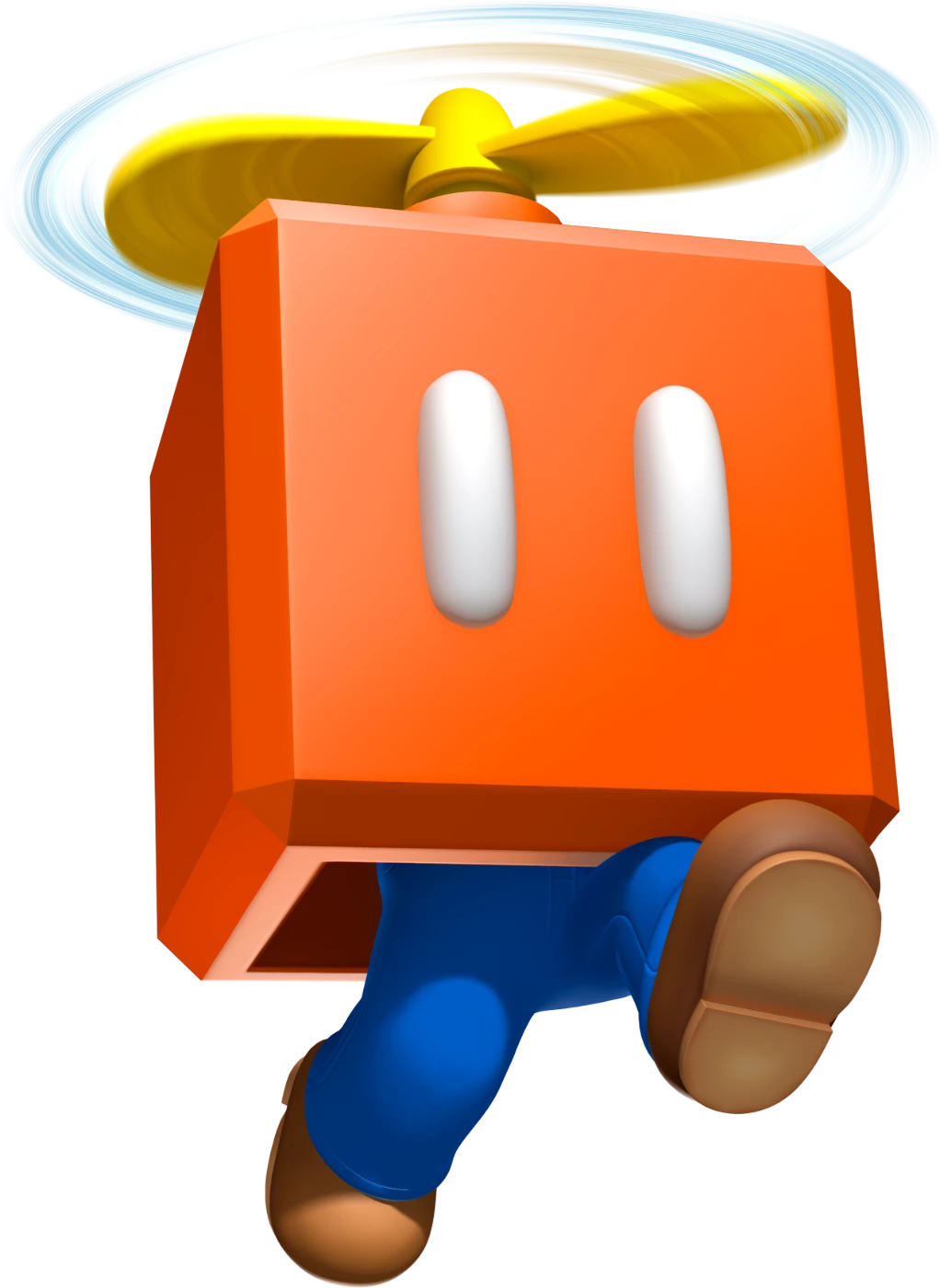
Propeller BoxA box worn over the head. Hold jump to shoot upwards, then float down. Carry it to the Goal Pole for a 1-Up.
? BoxAnother wearable box, which sheds coins for as long as you keep running and jumping. Also worth a 1-Up at the flagpole.
1-Up MushroomAn extra life. The counter runs all the way to 1,110.
Poison MushroomSpecial Worlds only. A purple mushroom that pops out of certain ? Blocks and chases you; touching it counts as a hit.
Star MedalThree per course, and more in Mystery Boxes. They unlock gated courses.
+ ClockAdds 10 or 100 seconds to the timer.
CoinA hundred make a 1-Up, as ever.
Red CoinsPass through a Red Ring and five appear for a few seconds. Collect them all for a power-up or a 1-Up.
Assist BlockThe golden block that delivers the Invincibility Leaf or the P-Wing.
Roulette BlockCycles through the power-ups; hit it to take the one showing.
Mystery BoxA bonus room on the map or inside a course, played against a short clock.
Warp BoxAn orange box that carries Mario to another part of the course.
Note BlockBounce on it. The rare Super Note Block goes further and launches you into Coin Heaven.
Flip PanelsSet them off and a temporary path of panels unfolds ahead of you.
Checkpoint FlagRestart from here after losing a life.
Green ShellKick it into enemies and blocks. It cannot be picked up.
Baddie BoxFound in World 2-4, World 5-Castle and Special 1-3. An invincible Mario can burst one with a Ground Pound.
Cartoons, Comics & Other Media
Super Mario 3D Land never had a cartoon or a comic of its own, but it was launched with a street party in New York, produced a direct sequel within two years and has been quoted by Nintendo games ever since.
Super Mario 3D WorldNintendo · Wii U 2013 · Switch 2021The sequel, made by the same Tokyo team for Wii U in November 2013 and brought to Switch in 2021. It keeps the clock, the Goal Pole, the Boomerang Flower, the wearable ? Box and the Invincibility Leaf, and adds four-player co-op. Boom Boom and Pom Pom both came along.
Nintendo takes over Times SquareNintendo of America · 12 November 2011The day before the North American launch, Nintendo turned Military Island in Times Square into a walk-through 3D Land course with trampolines, a Warp Pipe slide and a Bullet Bill statue. Visitors could play the game early and were given Tanooki ears and tails; the first thousand to tweet #SuperMario3D were handed mushroom pizza by a Mushroom Kingdom pizza truck.
Iwata Asks: Super Mario 3D LandNintendo · 2011Two volumes of Satoru Iwata’s interview series. In the first he talks to Hayashida, Motokura, Sugawara and Tsujimura; in the second, “The Producers”, to Hayashida, Koizumi, Miyamoto and Tezuka. Most of what is known about the game’s making comes from here.
Thinking in 3DGame Developers Conference · March 2012Koichi Hayashida’s GDC talk on designing for stereoscopic 3D, on Miyamoto’s sayings and on finishing the game in the months after the Tōhoku earthquake. It is also the source of the famous list of “rejected ideas”, which he later admitted were jokes.
Prima Official Game GuidePrima Games · 2011The licensed strategy guide to the game.
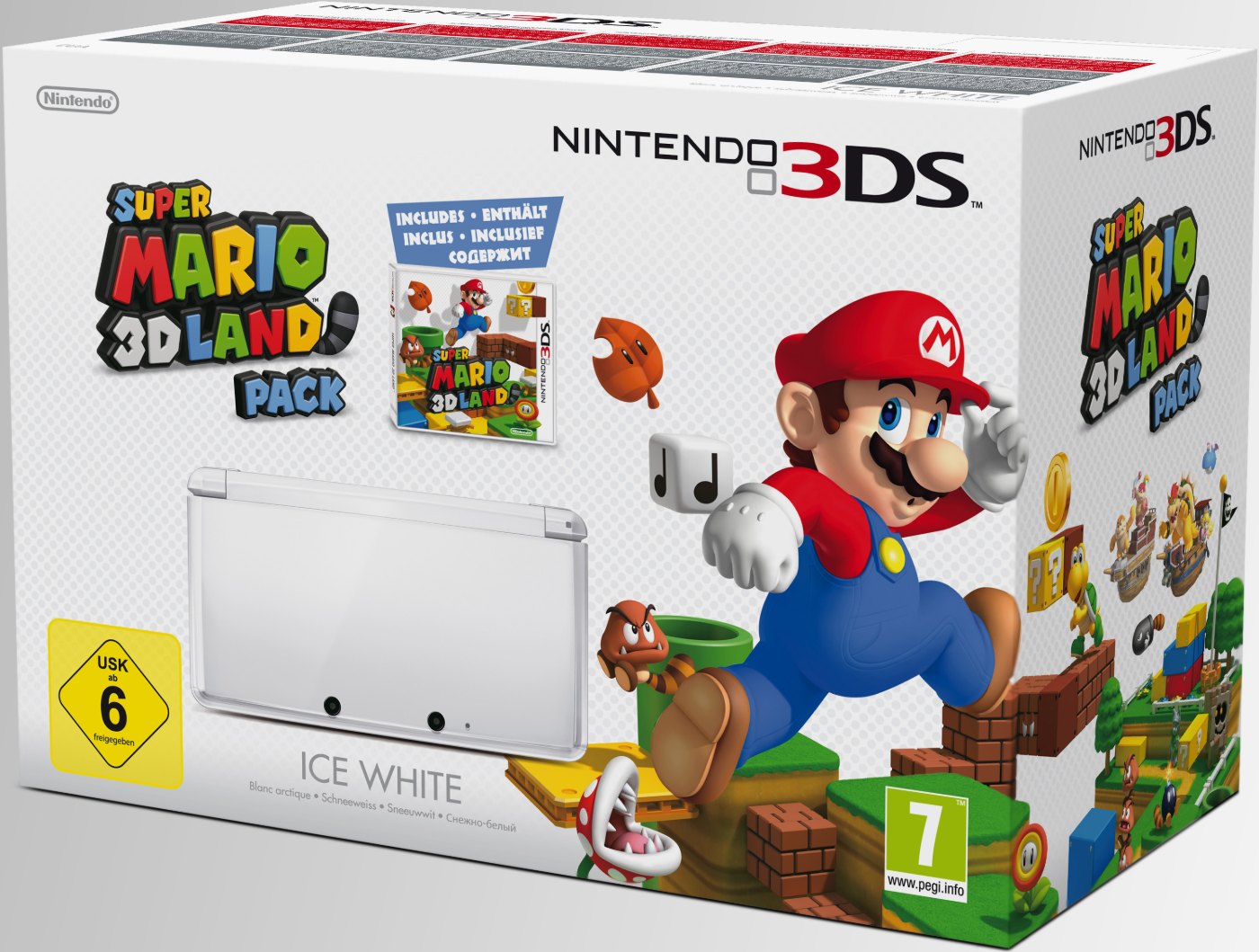
Nintendo 3DS hardware bundlesNintendo · North America, Europe, Japan and the Middle EastThe game was packed in with a Flame Red 3DS in North America and an Ice White one in Europe. Japan had Pearl Pink and Ice White consoles with 3D Land and the original Super Mario Bros. pre-installed, and a red 3DS XL bundle was sold in the Middle East.
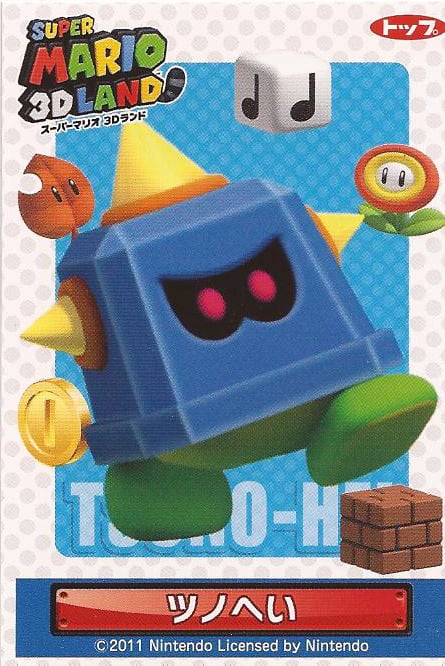
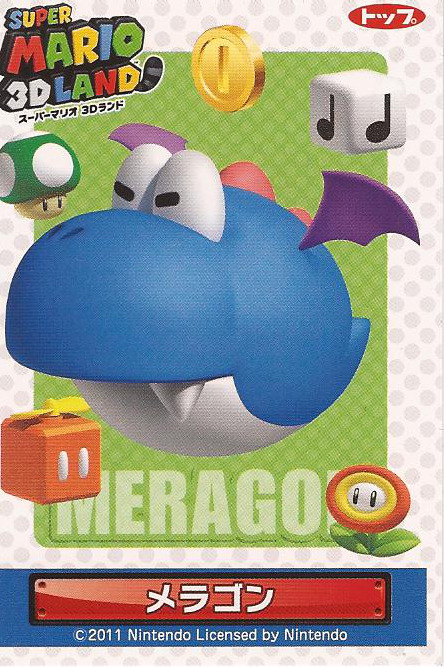
Trading cards and stationeryPromotional itemsA set of character trading cards whose backs join up into one large picture, and a 3D Land writing paper for the 3DS messaging app Swapnote.
Mario Kills TanookiPETA · 2011The animal-rights group greeted the game with a parody browser game claiming that the Tanooki Suit promoted the wearing of fur. It later described the stunt as tongue-in-cheek.
Mario Kart 7Nintendo · 3DS · December 2011Released weeks later on the same console. The Leaf Cup emblem uses 3D Land’s redesigned Super Leaf, Stingbies buzz around Honeybee Hive and cardboard Goombas line Piranha Plant Slide.
New Super Mario Bros. 2Nintendo · 3DS · 2012Borrows the Invincibility Leaf, Peepas, Coin Coffers, Goomba Towers and the lives counter that tops out at 1,110 in three crowns.
Super Smash Bros.Nintendo · 3DS 2014 · Switch 2018Super Smash Bros. for Nintendo 3DS has a stage called 3D Land, which returns in Ultimate. Boom Boom and Pom Pom share a spirit there, using their artwork from this game.
Super Mario OdysseyNintendo · Switch · 2017The Tail Tree stands in the Mushroom Kingdom, Coin Coffers return, Statue Mario’s 3D Land look appears when Mario captures a Jizo, and the music of World 2-3 plays when a Mario amiibo is tapped.
StreetPass Mii PlazaNintendo · 3DSOne of the Puzzle Swap panels is a Super Mario 3D Land scene, pieced together from other players’ consoles.
Cameos elsewhere2012 onwardsThe modern Tanooki Suit is a Mii costume in Mario Tennis Open and Mario Golf: World Tour; Big Tail Goombas and Sandmaarghs turn up in the Mario & Luigi games; the Boomerang Flower is an item in Mario Kart 8; Donkey Kong plays 3D Land on a 3DS in one of his idle animations in Donkey Kong Country: Tropical Freeze; and a Boomerang Flower and some Biddybuds can be spotted in The Super Mario Bros. Movie.
Characters
A small cast by Mario standards: two brothers, a princess who does some of her own rescuing, three loyal Toads and a Koopa King with a new fondness for tails.
Character
Who they are
In this game
Abilities & notes
MarioThe hero
The Mushroom Kingdom’s resident hero, voiced by Charles Martinet.
Finds the Tail Tree stripped and Peach gone, and chases Bowser across eight worlds. Then does it all again in the Special Worlds to rescue his brother.
Starts every life as Super Mario
Run button, Long Jump, Roll, Wall Jump, Ground Pound
No double or triple jump
LuigiThe unlockable brother
Mario’s younger brother, also voiced by Charles Martinet.
Captured by Dry Bowser and held in Special 1-Castle. Once freed he can be swapped in on the world map and used in every course.
Jumps higher than Mario
Less grip: slower to stop and turn
Super Leaf form is Kitsune Luigi, a fox
Princess PeachThe princess, with parasol
Ruler of the Mushroom Kingdom, voiced by Samantha Kelly.
Kidnapped on the night of the storm. The postcards show her breaking out, beating up Goomba Towers with her parasol and being recaptured. After the Special Worlds she appears in a Tanooki suit of her own.
Not playable.
The ToadsRed, yellow and blue
Three Toads who are with Mario when the letter arrives, plus the Toads who staff the Toad Houses.
Run the red Toad Houses and the blue album house, wait before airship courses, can be spotted through the binoculars and help carry Peach home at the end.
Not playable.
Tanooki ToadsToads in the family suit
Toads who have picked up Super Leaves of their own.
Seen only in the Special Worlds, where they open the third letter.
Not playable.
Tanooki MarioSuper Leaf form
Mario in the full Tanooki suit from Super Mario Bros. 3. Testers preferred it to a plain raccoon tail and ears because it was easier to read on a small screen.
The game’s signature form, on the logo, the box and half the enemies.
Tail whip hits enemies, blocks and Tail Wheels
Hold jump to fall slowly
Cannot fly
Boomerang MarioBoomerang Flower form
A new form that borrows the weapon of the Boomerang Bros.
A tribute to Hammer Mario, built by combining Fire Mario’s throwing action with the enemy’s boomerang.
One boomerang in the air at a time
Passes through enemies and returns
Collects distant items, Star Medals included
Statue MarioStatue Leaf form
Tanooki Mario with a red scarf. Fans kept asking whether the suit would still turn to stone, so the team added it near the end of development.
A reward for reaching the Special Worlds.
All Tanooki moves
Ground Pound turns him into an invulnerable statue
Enemies stop chasing a statue
White Tanooki MarioInvincibility Leaf form
Tanooki Mario in white; Luigi’s version is White Kitsune Luigi.
The optional assist form offered after five lost lives on one course in Worlds 1 to 8.
Invincible for the rest of the course
All Tanooki moves
The save-file stars stop sparkling as soon as its Assist Block appears, used or not
BowserKing of the Koopas
The villain, voiced by Kenny James.
Strips the Tail Tree, kidnaps Peach, arms his troops with Super Leaves and waits in World 8, where he is fought twice. He kidnaps Peach again after the Special Worlds.
Part 1: fire breath on collapsing bridges
Part 2: a chase with fire and thrown barrels
Beaten by a switch that drops the bridge
Tail BowsersImpostors with tails
Minions disguised as Bowser, striped tail included. The one in World 1 is a Goomba; the one in World 5 is a Magikoopa.
Castle bosses of Worlds 1 and 5.
Breathe fire, swing their tails and hop between collapsible bridges until the switch is pressed.
Special Worlds only. A Small Cosmic Clone follows from Special 1-2; a Big one, which smashes Brick Blocks, from Special 7-4.
Repeats every move Mario makes, a moment later. Touching one is a hit.
Enemies and bosses
All 51 enemies in Super Mario Wiki’s table for the game, with the course in which each first appears, followed by the five bosses. Those marked new made their series debut here.
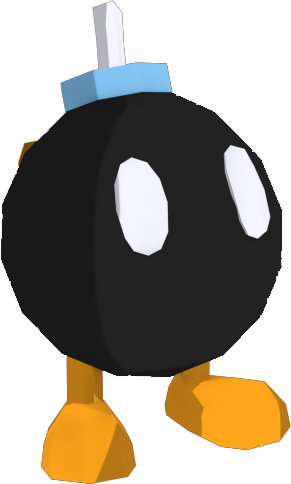
GoombaWorld 1-1Now gives chase when it sees Mario. One stomp.
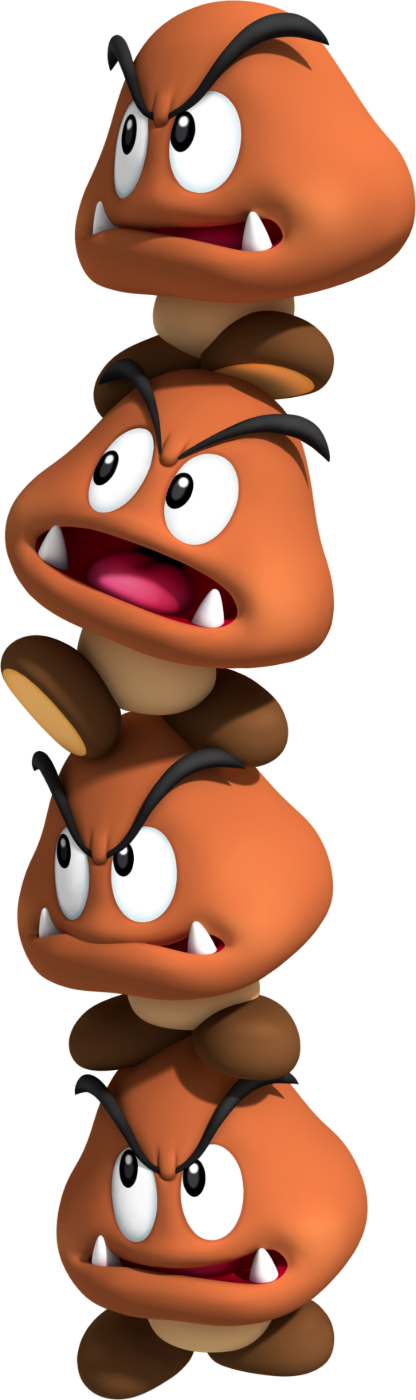
Goomba Tower (new)World 1-2A stack of Goombas; the one at the bottom does the walking.
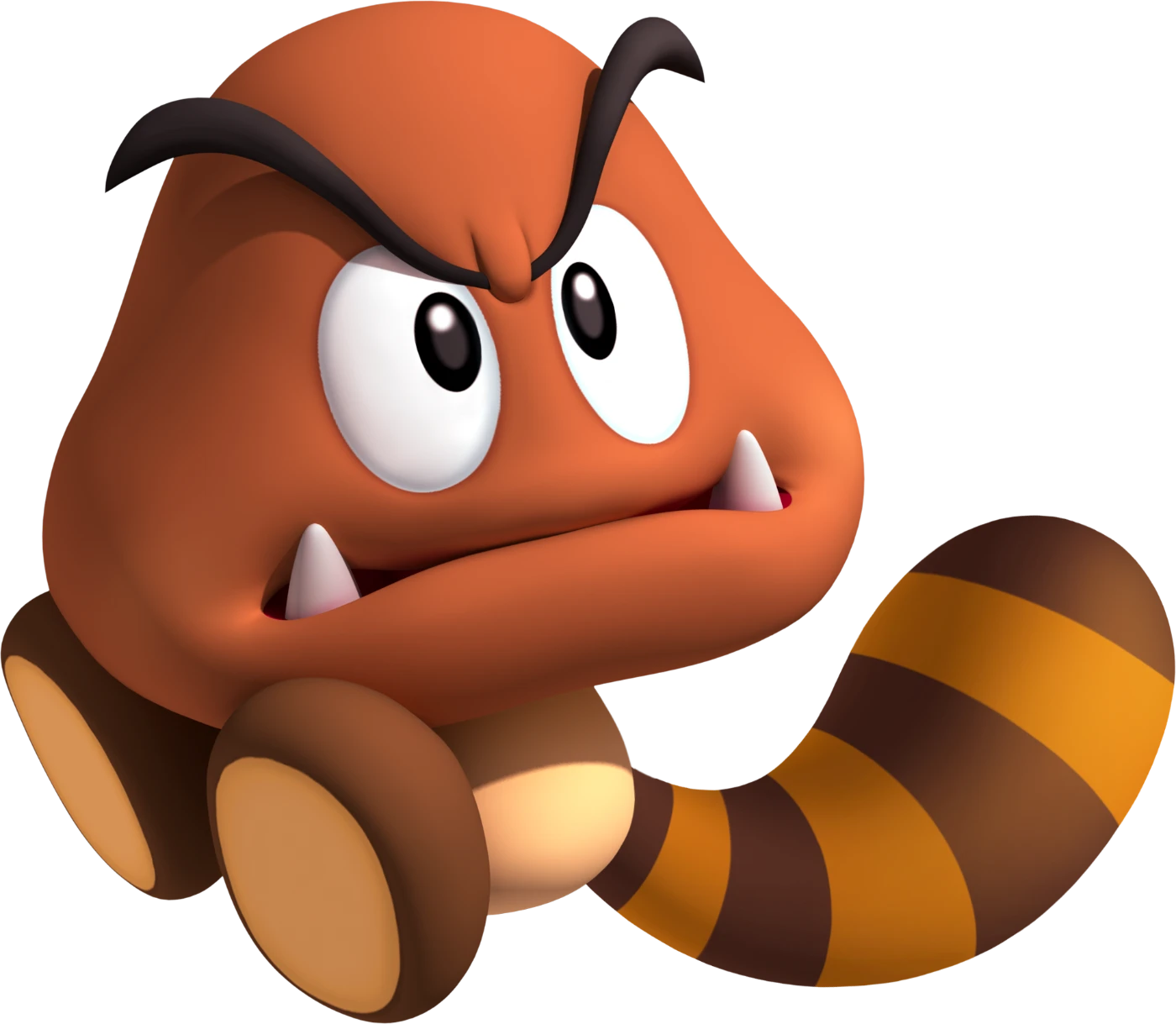
Tail Goomba (new)World 1-1Jumps, floats down and swings its tail as it lands.
Big Tail Goomba (new)World 1-1A giant version with a much longer reach.
ParagoombaWorld 1-4Flies back and forth or up and down on a fixed route.
Cheep CheepWorld 1-1Swims set paths; some leap over bridges.
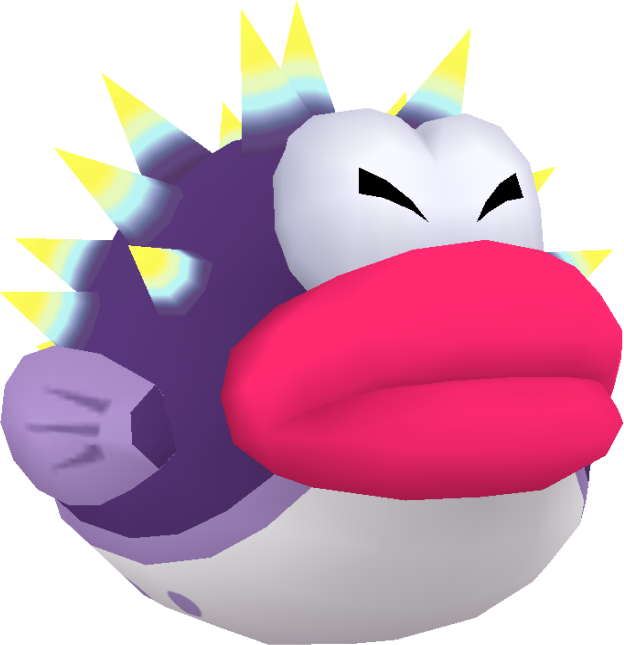
PorcupufferWorld 3-2A spiny purple fish. The leaping ones smash the bridge above.
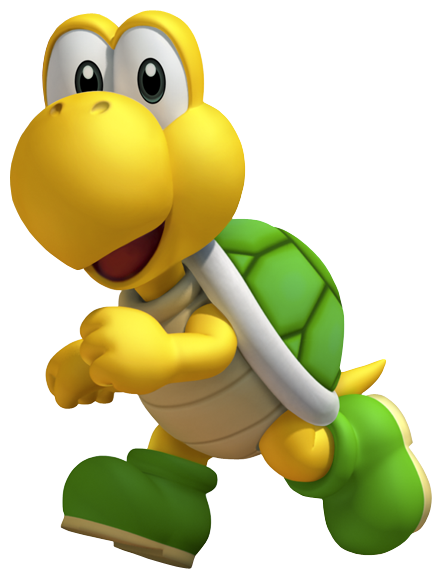
Koopa TroopaWorld 1-2A green-shelled Koopa. Stomp it and kick the shell.
Dry BonesWorld 1-CastleCollapses when hit and rebuilds itself. Only invincibility finishes it.
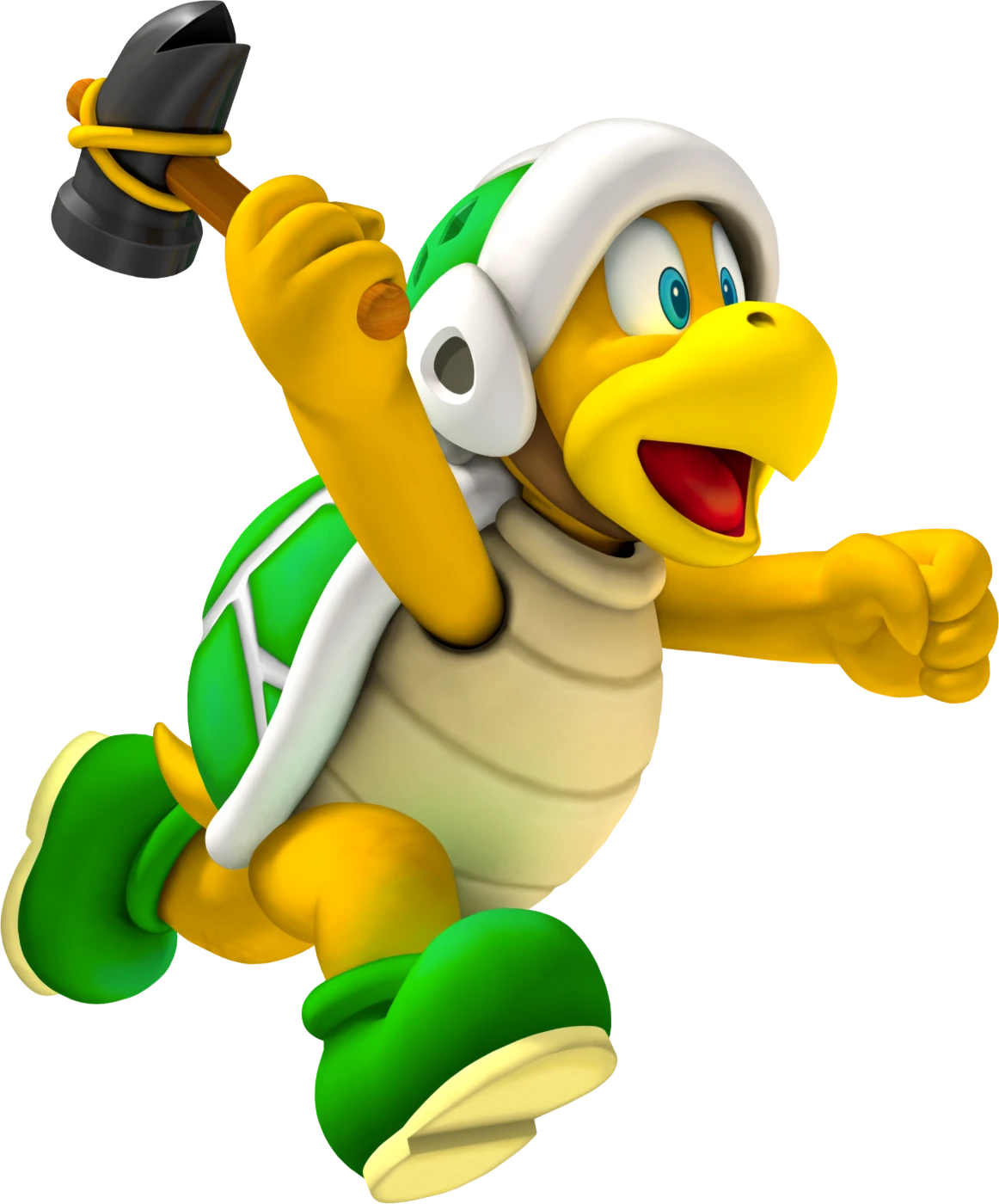
Hammer BroWorld 1-CastleA helmeted Koopa that throws hammers.
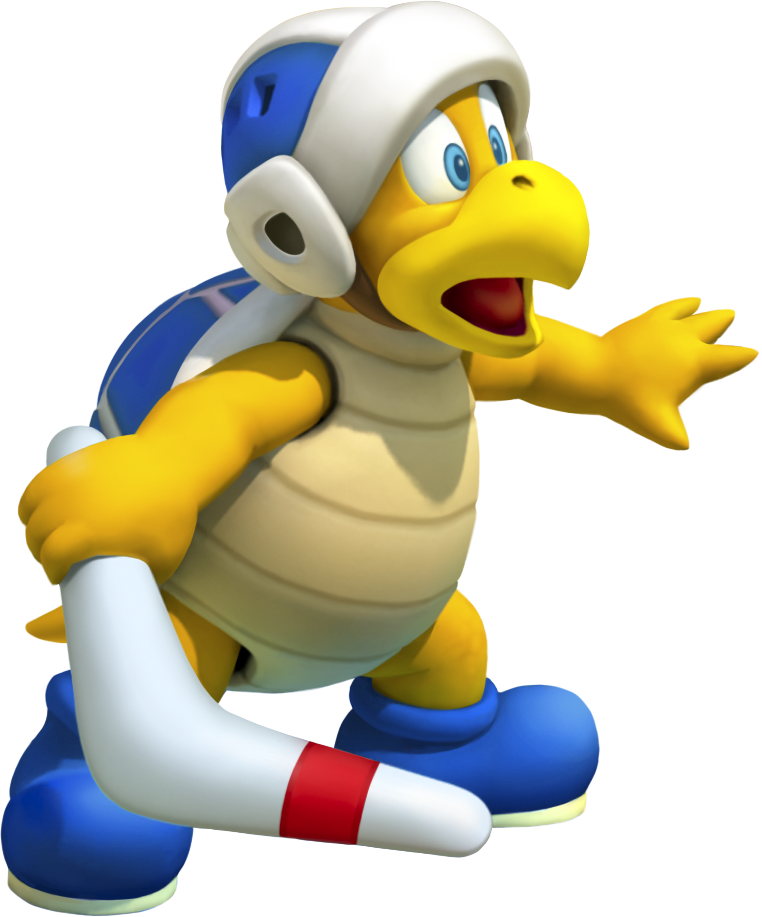
Boomerang BroWorld 4-5Jumps and throws boomerangs. Some drop a Boomerang Flower.
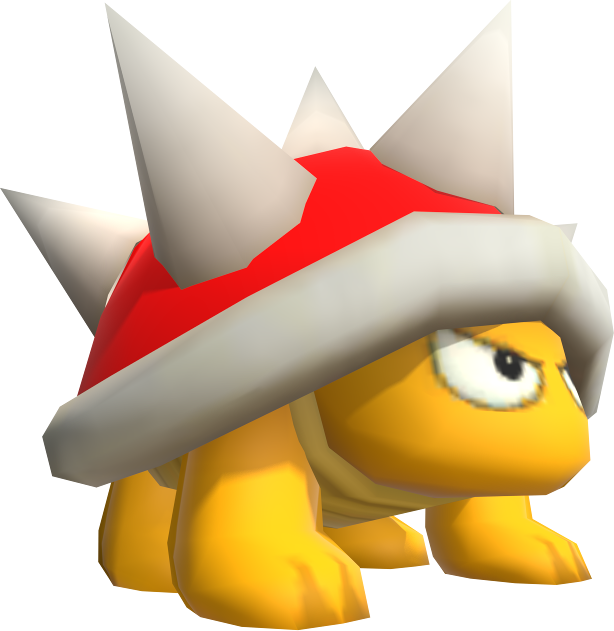
SpinyWorld 5-2Charges at Mario on sight.
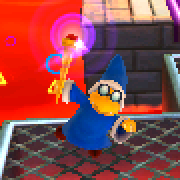
MagikoopaWorld 7-AirshipTeleports about and fires magic from its wand.
Inky Piranha Plant (new)World 1-2Spits ink that splatters across the screen and hides the view.
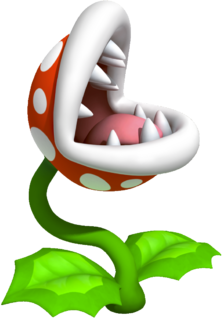
Piranha PlantWorld 1-3Lunges when Mario comes close.
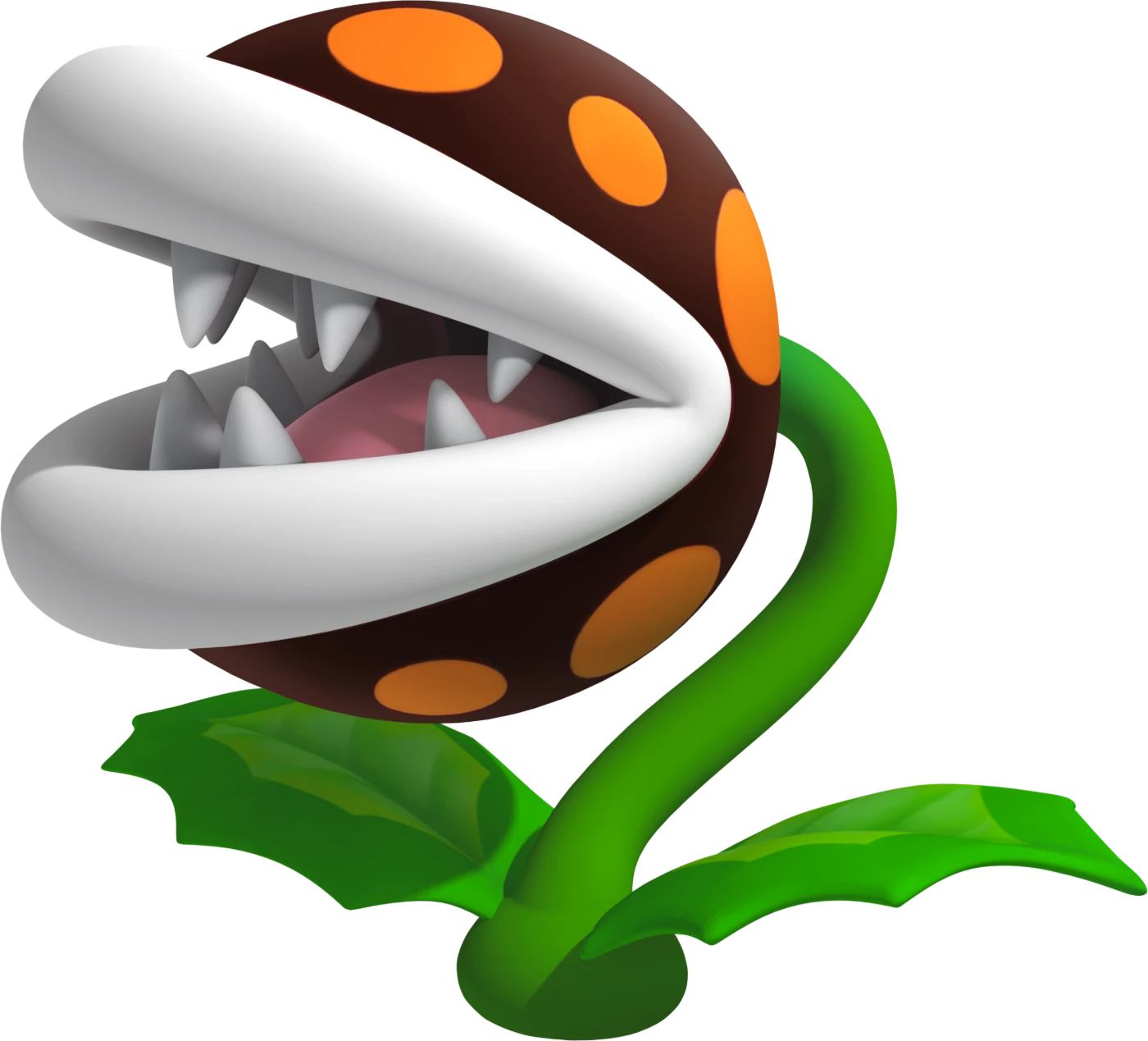
Fire Piranha PlantWorld 1-3The fireball-spitting kind.
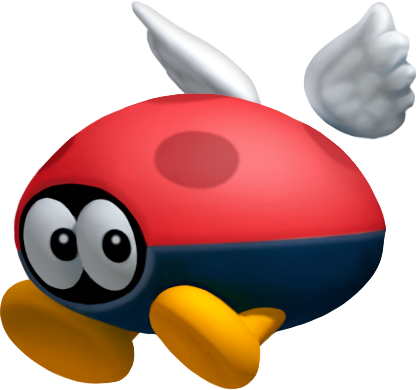
Biddybud (new)World 1-3Beetle-like bugs that march in single file, in several colours.
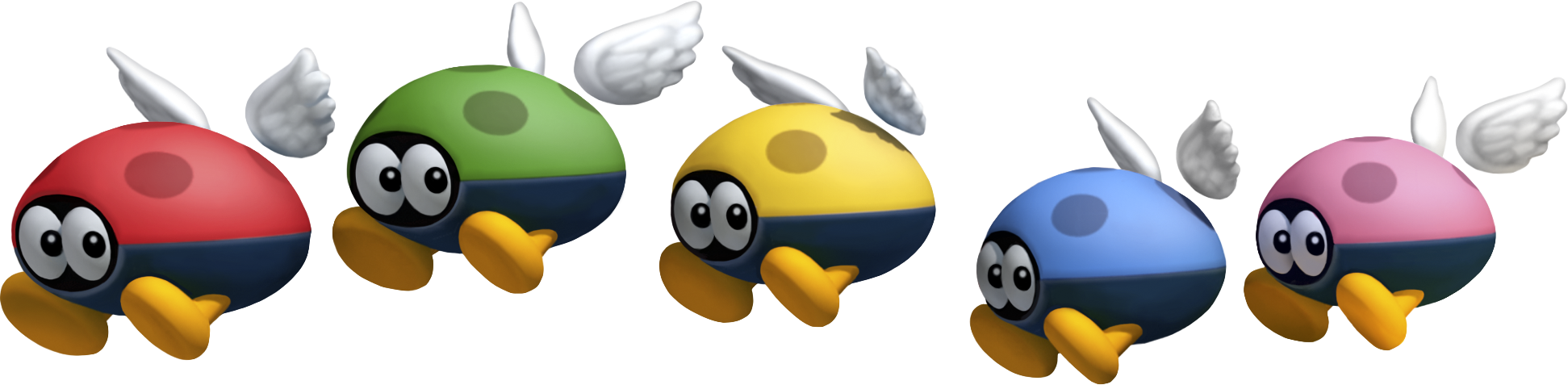
Para-Biddybud (new)World 1-3Winged Biddybuds flying in formation.
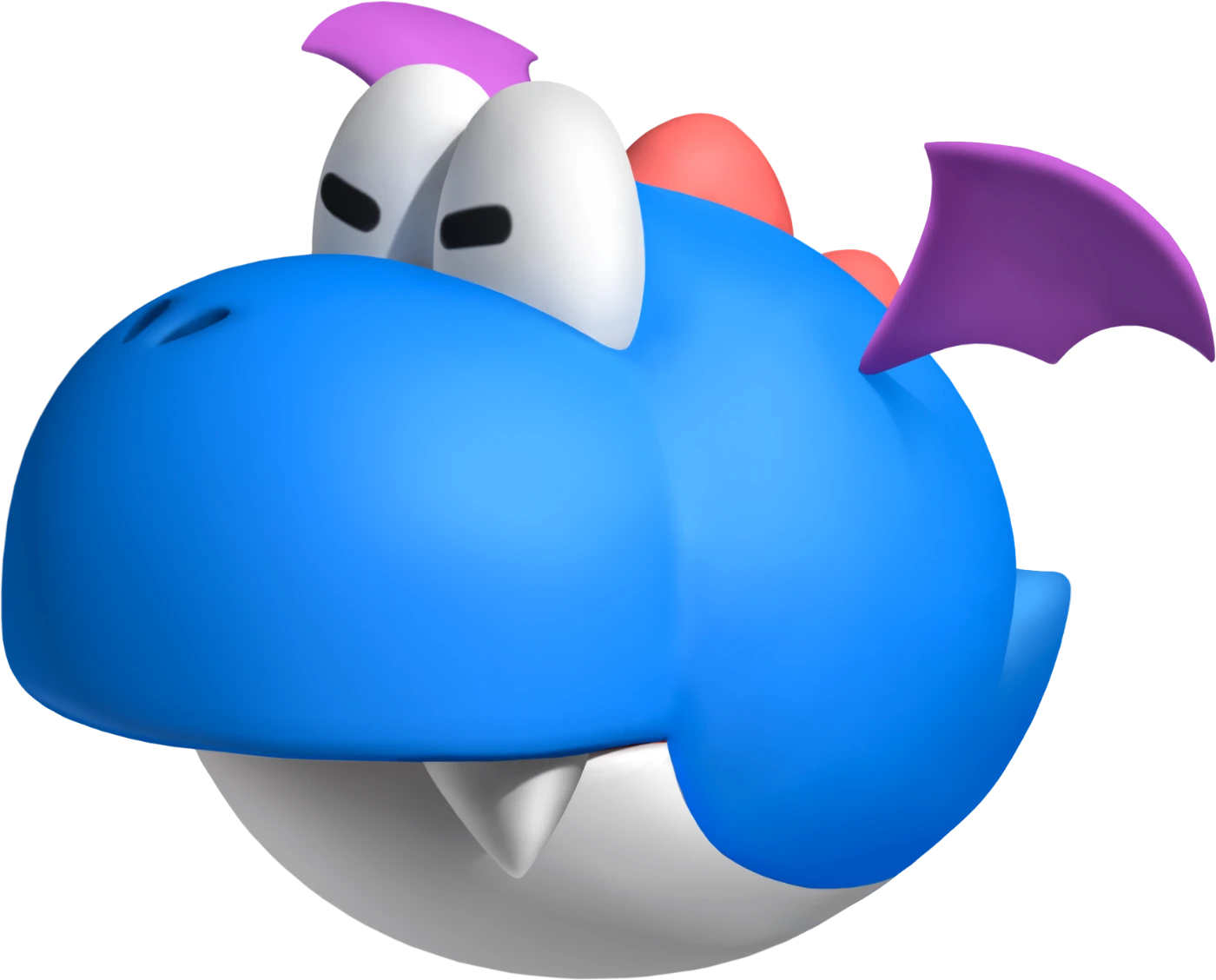
Draglet (new)World 1-CastleA small dragon that spits fireballs.
Lava BubbleWorld 1-CastleLeaps out of the lava between platforms, usually in groups.
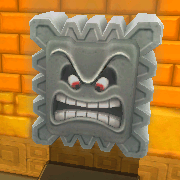
ThwompWorld 1-CastleSlams down at intervals. Its top and sides can be used as platforms and walls.
Tail Thwomp (new)World 5-1A Thwomp with a tail that hops along a route. Appears in one course only.
Coin Coffer (new)World 2-3A purse on legs, usually invisible. Flush it out and hit it for a pile of coins.
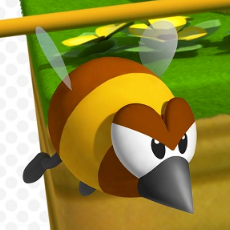
Stingby (new)World 2-4A bee that chases Mario on sight.
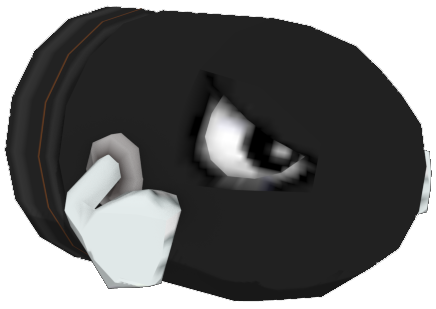
Bullet BillWorld 2-AirshipFired in straight lines from Bill Blasters.
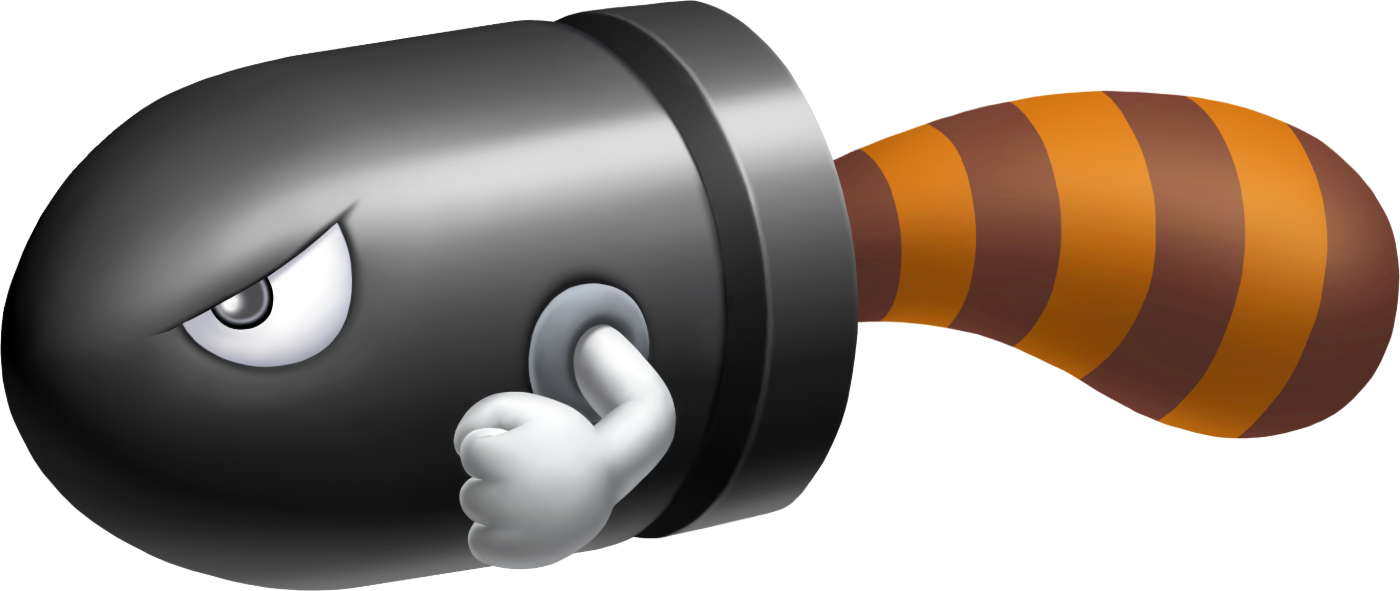
Tail Bullet Bill (new)World 2-AirshipFlies a little way, then lashes out with its tail.
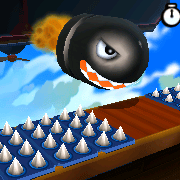
Banzai BillWorld 8-5A huge, slow missile that flies in one fixed direction.
Rocky WrenchWorld 2-AirshipPops out of a hatch to throw wrenches, Bob-ombs or, now and then, coins.
Monty MoleWorld 5-4Bursts out of the ground and patrols.
Morty Mole (new)World 5-4A big mole that takes two stomps; the first only flattens it.
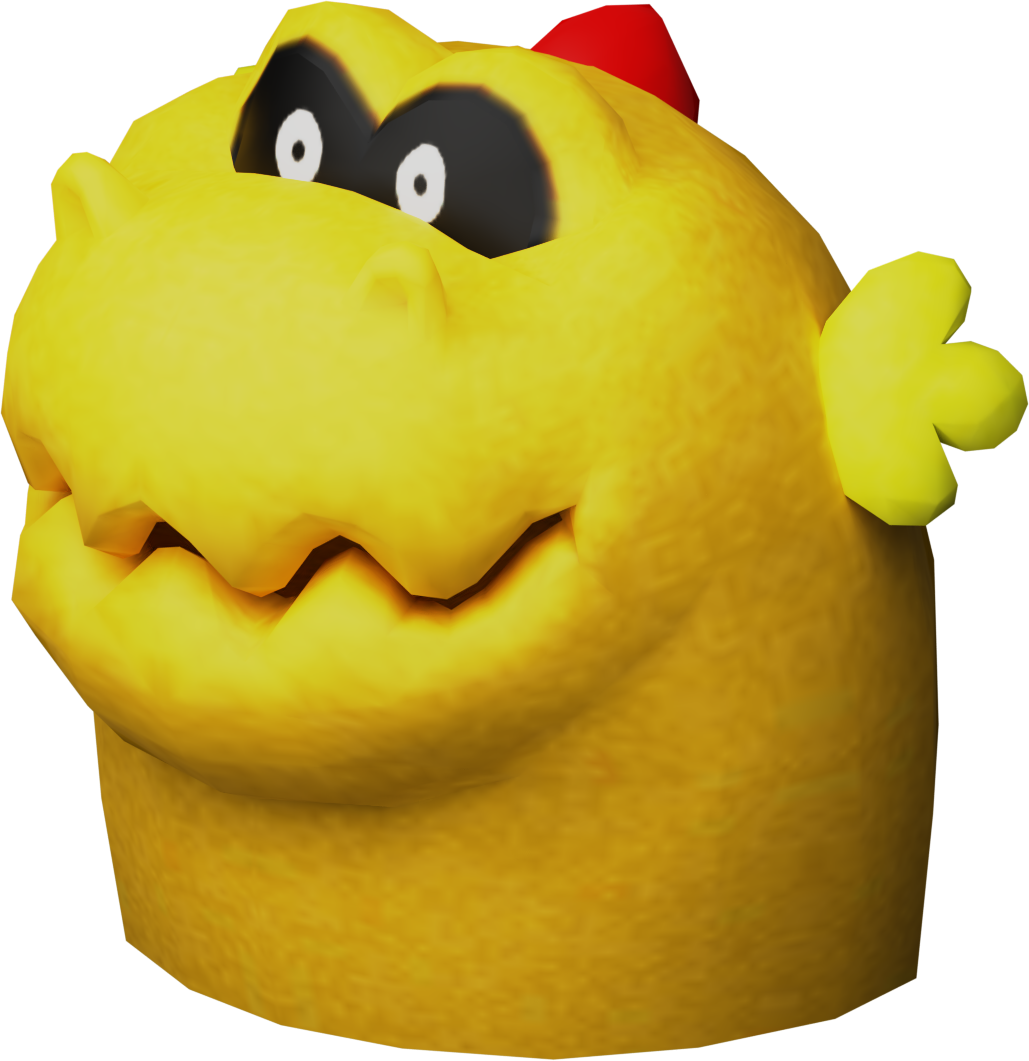
Sandmaargh (new)World 3-1Hides under the sand and surges up to bite when Mario is overhead.
MagmaarghWorld 8-Bowser: Part 1Its bigger, lava-dwelling relative, which rises up through the platforms and shuffles along.
PokeyWorld 3-1Knock out segments one at a time or hit the head to finish it at once.
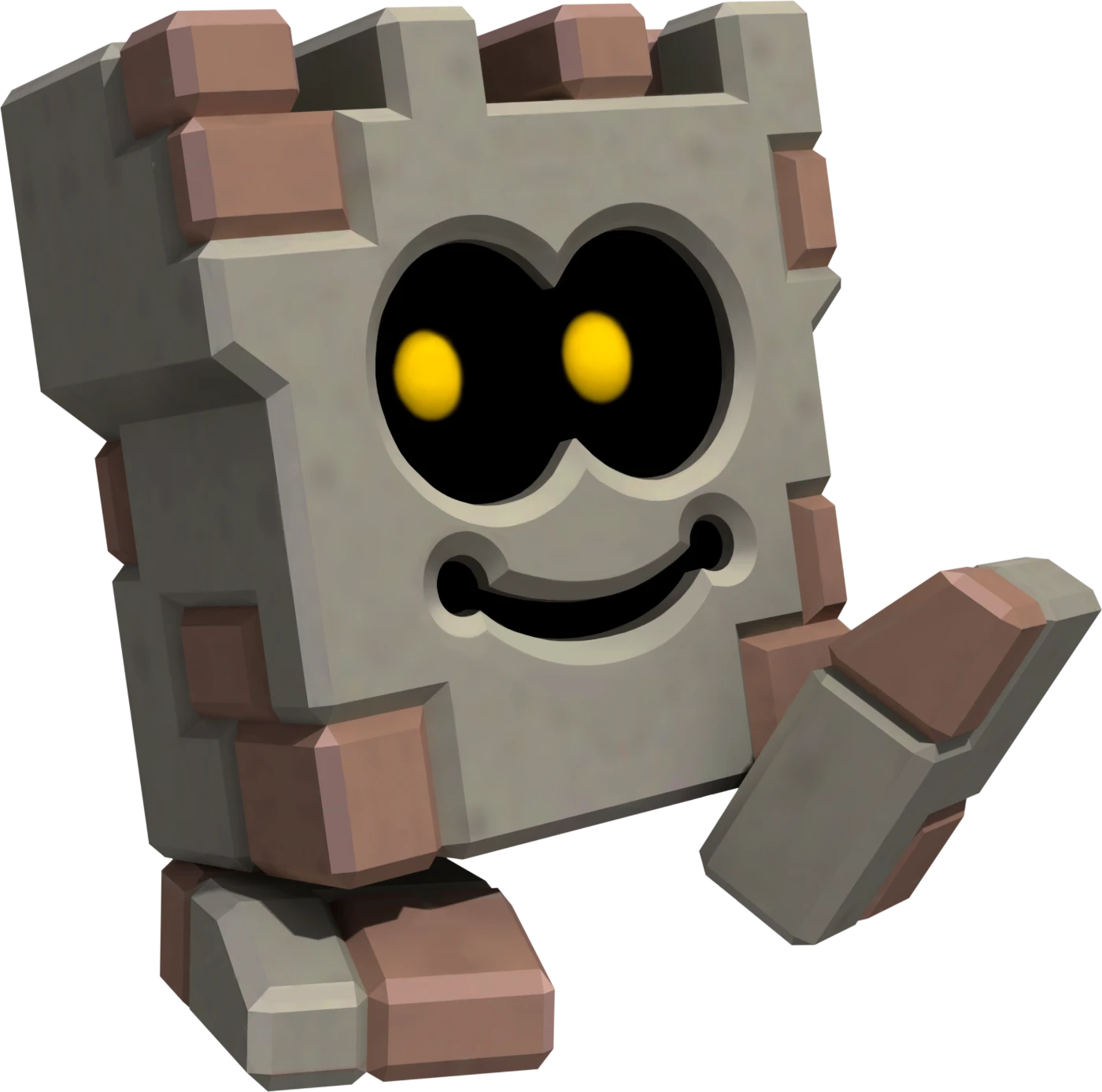
Wallop (new)World 3-1A grinning stone that sidesteps to block narrow corridors.
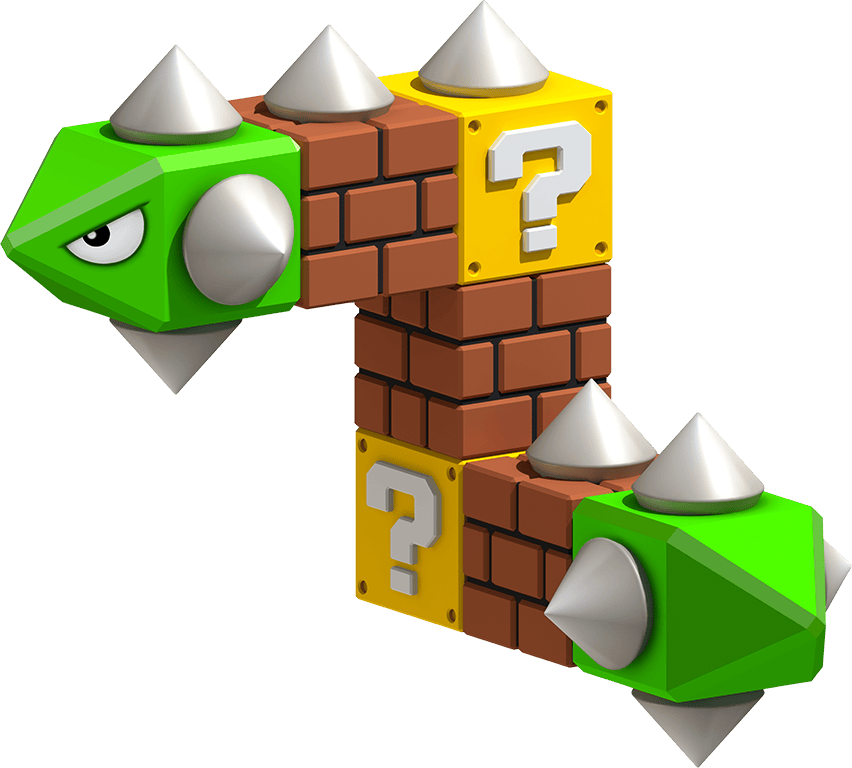
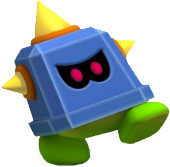
Blokkablok (new)World 3-1A snake of spiked blocks. Break every block to beat it.
Fake Block (new)World 3-1Poses as a Brick Block, then sprouts a tail and gives chase.
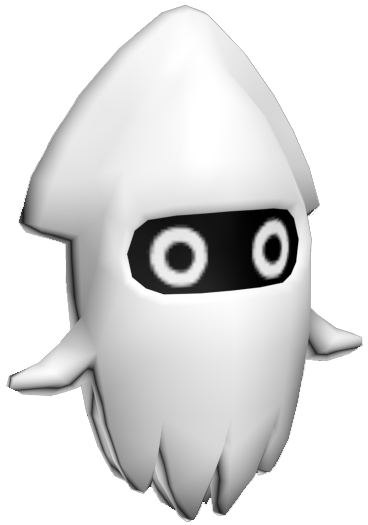
BlooperWorld 3-2Jerks through the water towards Mario.
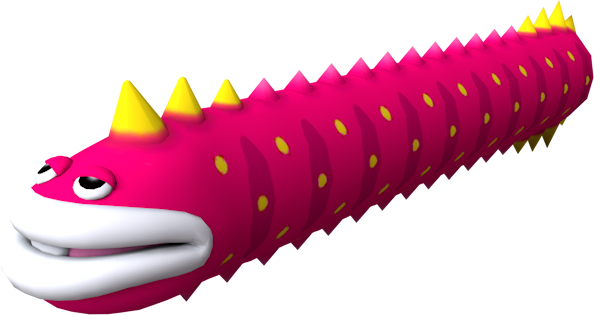
Spike Eel (new)World 3-2A giant eel that shoots out of its hole into your path.
Chain ChompWorld 3-3Tethered to a stump. Lunges when Mario is in range.
FuzzyWorld 3-4Slides along tightropes in gangs.
Bob-ombWorld 3-AirshipChases Mario until it blows.
Tail Bob-omb (new)World 7-4Floats down on its tail and explodes shortly after landing.
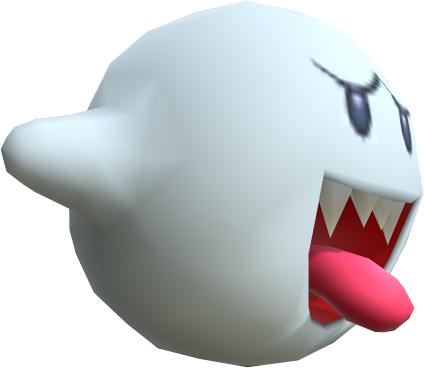
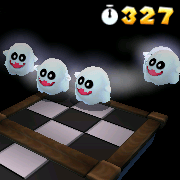
BooWorld 4-4Creeps up when Mario’s back is turned and hides its face when he looks.
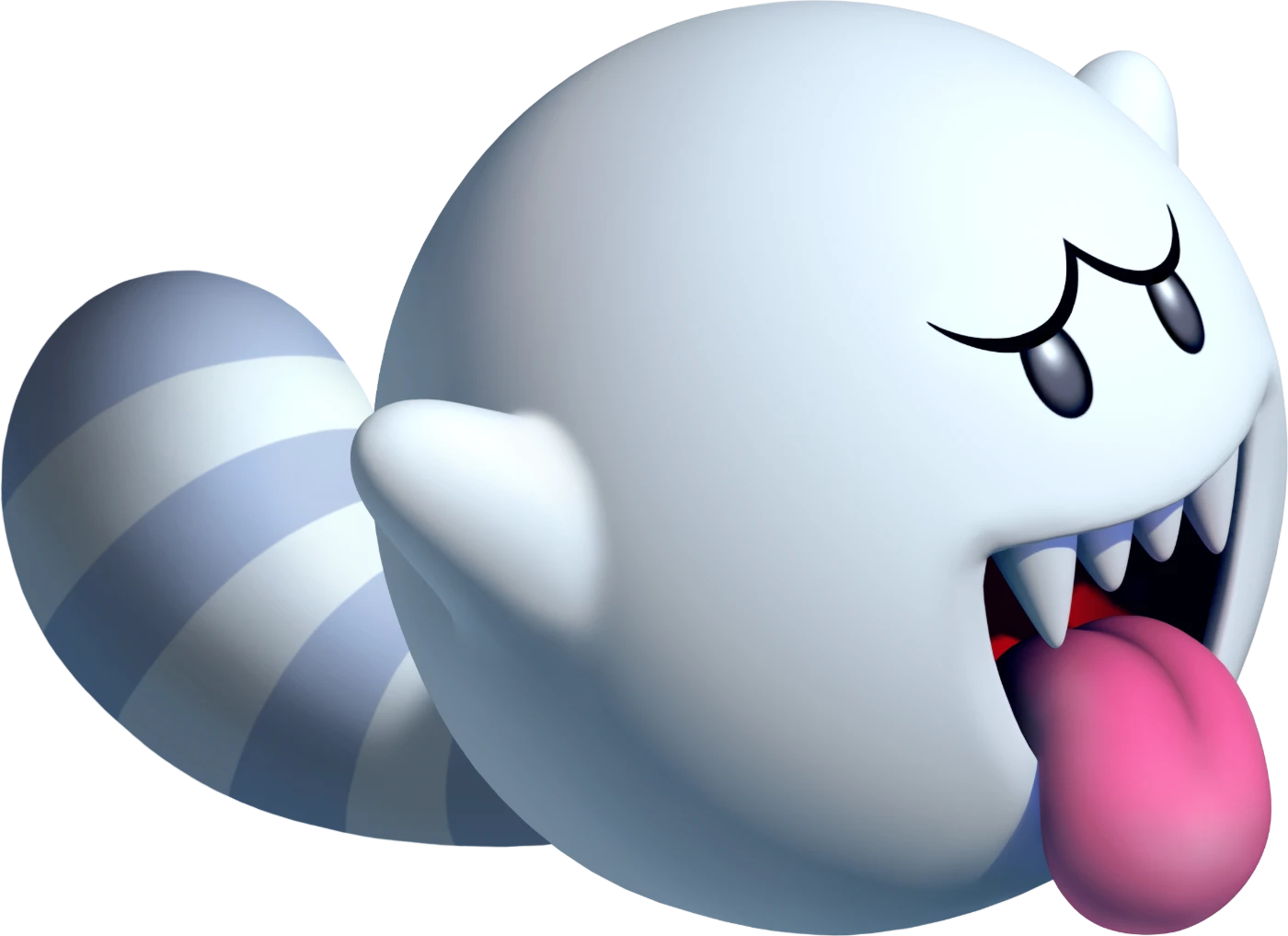
Tail Boo (new)World 4-4Looking at this one does not help: it swats with its tail instead.
Big BooWorld 4-4Found in a few Ghost Houses.
Peepa (new)World 4-4A smiling ghost that stays put or drifts round a set area.
Flophopper (new)World 5-3Flips between a spiky side and a soft one, and clings to rotating platforms.
Prongo (new)World 6-4Dives horn-first. If it misses it sticks in the ground, belly up.
GrinderWorld 7-5A circular saw from Super Mario World that cuts up the wooden floor. One course only.
Small Cosmic Clone (new)Special 1-2A dark Small Mario that copies your route.
Big Cosmic Clone (new)Special 7-4Larger, and able to break Brick Blocks.
Tail Bowser (boss)World 1-Castle; World 5-CastleGet past him to the switch at the end of the bridge.
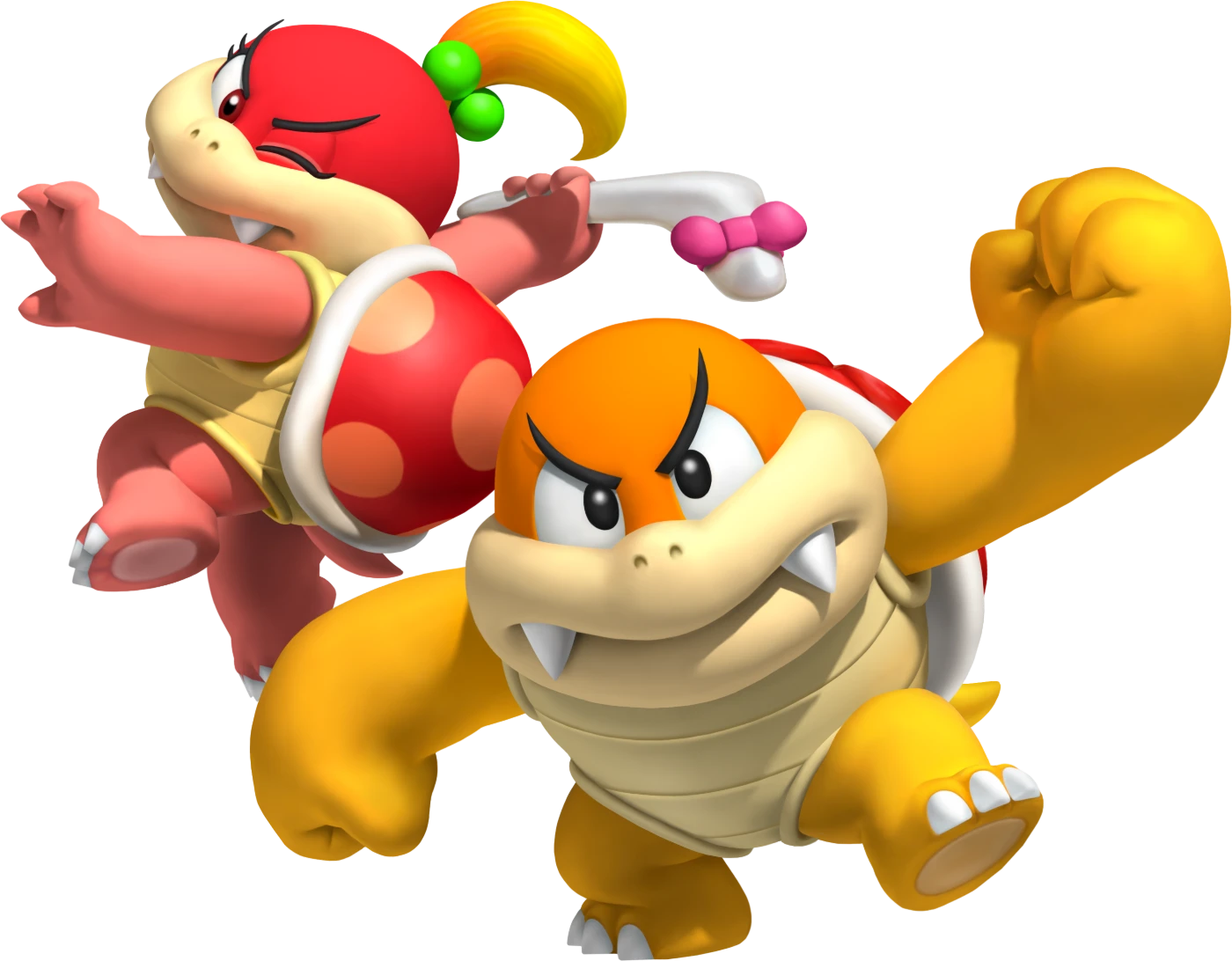
Boom Boom (boss)World 2, 3 and 7 airships; Special 4, 6 and 8Swinging fists and a spinning-top charge.
Pom Pom (boss, new)World 4, 6 and 7 airships; Special 4 and 8Boomerangs and big jumps.
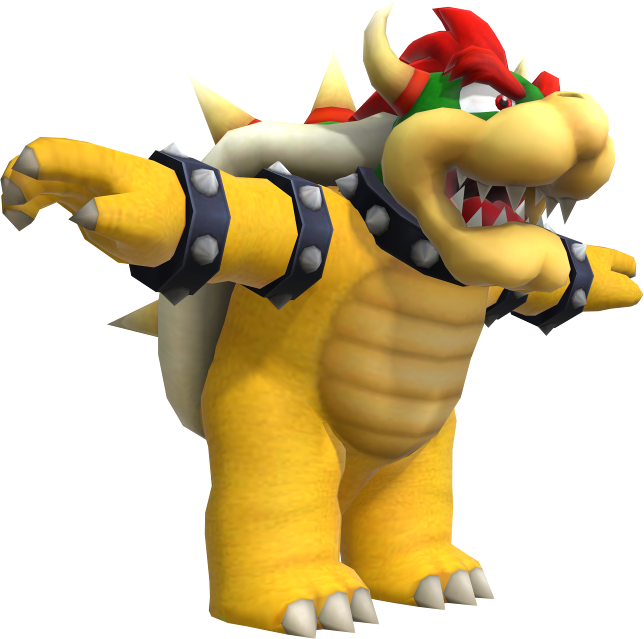
Bowser (boss)World 8-Bowser: Part 1 and Part 2A bridge fight, then a long chase.
Dry Bowser (boss)Special 1-Castle; Special 5-Castle; Special 8-BowserBlue fire, same switch.
The people who made it
Nintendo’s Tokyo studio, whose core staff had made home-console games, Donkey Kong Jungle Beat among them, from Super Mario Sunshine to Galaxy 2. Wikipedia’s account has the project growing from two people to about thirty over two years. Role titles below follow Super Mario Wiki’s staff list, which takes them from a January 2012 Nintendo Dream feature.
Koichi HayashidaDirectorDirector of Galaxy 2. He proposed the project, wrote many of its specifications and tuned the whole game. His first game was Joy Mech Fight for the Famicom, begun at a seminar taught by Miyamoto, and he taught the Nintendo Game Seminar himself the year before 3D Land.
Yoshiaki KoizumiProducerDirector of Super Mario Galaxy. He described his job here as watching from behind while Hayashida led, and he insisted StreetPass stay in.
Shigeru Miyamoto and Takashi TezukaGeneral producersMiyamoto travelled from Kyoto with corrections and pressed for the Normal View; Tezuka, the veteran of the 2D games, fought for anything that made the game kinder and more fun.
Satoru IwataExecutive producerNintendo’s president, who unveiled the game at GDC 2011 and interviewed its makers twice.
Daisuke TsujimuraPlanning directorLed the planners, shaped the courses to guide players towards the goal, and supervised the Special Worlds.
Kenta MotokuraDesign directorHandled Mario’s animation, the cutscenes and the outline of the story, and drew the first tailed Goomba. He went on to co-direct Super Mario 3D World and direct Super Mario Odyssey.
Hideyuki SugawaraProgramming directorProgrammed enemies including Bowser and the Goombas, and had the job of making every course cope with Statue Mario.
Futoshi ShiraiLead level designHeaded the five-strong level design group.
Daisuke Watanabe, Rikuto Yoshida, Sho MurataCharacter designDesigners of the new enemies and of all those tails.
Shigehisa NakaueIllustrationDrew the storybook pictures in Peach’s letters. Super Mario Wiki notes it as the first time his 2D style was used inside a Super Mario game.
Asuka Hayazaki, Takeshi Hama, Mahito YokotaMusicComposers of the score. Koji Kondo is thanked in the credits.
Charles Martinet, Samantha Kelly, Kenny JamesVoices (uncredited)Mario and Luigi; Peach and Toad; Bowser and Dry Bowser.
Brownie BrownAdditional productionThe Nintendo subsidiary now called 1-UP Studio, brought in to help hit the end-of-year date.
Advertisement
How It Was Made
The game was made in about two years by the Tokyo team that had just finished Super Mario Galaxy 2. Nintendo documented it unusually well, in two volumes of Iwata Asks and in Koichi Hayashida’s talk at the 2012 Game Developers Conference.
“Let’s reset”
The first logo, shown in March 2011, when the game was simply “Super Mario”. Logo: Nintendo, via Super Mario Wiki
When Super Mario Galaxy 2 shipped in May 2010, Koichi Hayashida proposed a game that would serve as a way in to every 3D Mario the team had made. He compared Galaxy 2 to a Manchu Han Imperial Feast, a banquet that takes days to get through; the next game should be a hamburger. It would also be Hayashida’s first game for a handheld, and simply shrinking Galaxy onto a 3DS did not appeal. His instruction to the team was two words long: “Let’s reset.”
The direction was settled between summer and autumn 2010. An early prototype had a plain square block hopping about a test landscape of coins and blocks in place of Mario. Hayashida, who lived a few stations from the office, set the length of a course by his own commute: something you could clear between getting on the train and getting off. Producer Yoshiaki Koizumi asked for very little that was new, just the best of Galaxy 2, the fun of stereoscopic 3D and a single power-up.
The missing link
A figure Nintendo published in 2017 to explain the design thinking behind its 3D Mario games. Image: Nintendo, via Super Mario Wiki
Hayashida’s big idea was that something was missing from Mario’s family tree. Between Super Mario World and Super Mario 64 the series had jumped from “reach the end” to “search for a Star”, and nobody had made the game in between. The Goal Pole was his bridge. He was nervous about suggesting it to Shigeru Miyamoto, who simply agreed that the pole and Mario belong together, then asked for the flag to rise only as high as the player had grabbed it, something he had wanted in 1985 and could not have. Koizumi added a footnote: the Mario 64 team had tried a Goal Pole too, and dropped it because wandering about was the fun of 3D.
With the goal fixed, planner Daisuke Tsujimura’s courses were built to lead the player by the nose: generally to the right or into the screen, with arrows, fences and the flagpole visible in the distance. Star Medals were then tucked away for players who wanted the old 3D pleasure of exploring. The team also borrowed the camera that tracks alongside Mario in parts of Galaxy 2, because it made a 3D Mario play most like a 2D one.
Designing for a 3D screen
An anaglyph version of a 3D screenshot, for viewing through red-and-cyan glasses. Image: via Super Mario Wiki
Stereoscopic 3D turned out to have a problem nobody had met in slower games: players of action games move their hands, and when the console moves, a deep 3D image smears. Miyamoto pointed out that Mario Kart 7 did not blur. Hayashida worked out why, which was that the kart sits exactly at the depth of the screen, and with about a month of development left the team moved the whole scene so that Mario did the same. Around four in five testers preferred the result, which became Normal View; the original, deeper setting was kept as Deep View for the rest.
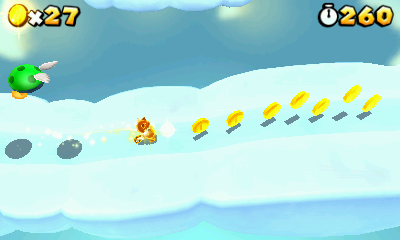
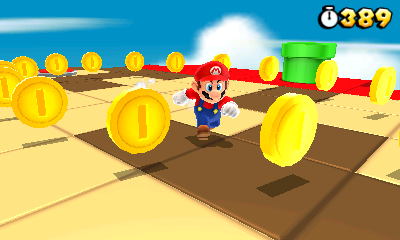
The depth changed the design as well as the picture. Earlier 3D Marios had given players a way to correct a misjudged jump, the hover nozzle in Sunshine, the spin in Galaxy, Yoshi’s flutter in Galaxy 2. With distances now visible, the team took the aids out, leaving Tanooki Mario’s slow fall for anyone who wanted one. They also filled the game with things that fly at the screen, starting with a coin in the first course that bobs down a stream and hops out towards you. And they had to adjust the drop into the pits, because testers looking down into them for the first time said, “It’s so high I’m scared!”
“Give him a tail!”
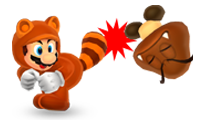
Tanooki Mario meets a Goomba. Artwork: Nintendo, via Super Mario Wiki
The one power-up was always going to be the Super Leaf. The team mocked up Raccoon Mario with just ears and a tail, the full Tanooki suit and something in between, and testers picked the full suit as the easiest to make out. Super Mario Wiki, citing Nintendo Power, adds that the cape from Super Mario World was considered first. Flight was left out, and so was the Goomba’s Shoe.
Then the tails spread. Kenta Motokura sketched a Goomba with one and found the enemy designer had been thinking the same thing. From there it was a short step to Bowser, approved to chants of “Give him a tail! Give him a tail!”, and a neat reversal of the original Super Mario Bros., where a fireballed Bowser turns out to be a Goomba: here a Goomba with a Super Leaf turns into Bowser. Takashi Tezuka thought it would be cool if more things had tails, so Bullet Bills, Thwomps and Boos got them too.
Other forms arrived as the schedule allowed. Staff built Boomerang Mario out of parts they already had, Fire Mario’s throw and the Boomerang Bro’s weapon, as a salute to Hammer Mario. Statue Mario went in late because players kept asking for it, and gave programmer Hideyuki Sugawara his worst weeks, since every enemy in every course had to learn to ignore a statue. The wearable ? Box was Motokura’s; he had been muttering about a “Box Mario” since Galaxy.
“It’s fun, so it’s okay!”
White Tanooki Mario, the form born from a tester’s complaint. Artwork: Nintendo, via Super Mario Wiki
Tezuka, whose home ground is 2D Mario, kept pulling the game towards generosity. Coins that had to be walked back for were “ungenerous”, so they became automatic. Enemies placed to ambush a player straight after a jump were unfair, so they were moved. When the team could not see why a Checkpoint Flag should make Small Mario grow, he told them it was a bonus, and that was that. Hayashida summed up his outlook as “It’s fun, so it’s okay!” The properly nasty ideas were saved for the Special Worlds.
The Invincibility Leaf came from a play-tester who was stuck on one spot and, offered a P-Wing to fly over it, said he did not want to skip it, he wanted to play it. The answer was a suit that lets you stay and try without being hurt. It was first set to appear after eight failures and the P-Wing after sixteen, which reminded Iwata of the arguments over when the Super Guide should step in in New Super Mario Bros. Wii. Tezuka felt eight was too many, and five and ten it became.
Twice the game they planned
Statue Mario, a late addition that touched every course in the game. Screenshot: Nintendo, via Super Mario Wiki
The compact game did not stay compact. The eight main worlds had to teach things in a strict order, which left the planners with a heap of ideas that did not fit, so Tsujimura poured them into a second set of worlds for after the ending, in the spirit of the second quest of the original Super Mario Bros. By the end the game was about double its planned size. “That’s not what you said at all!” was Sugawara’s verdict on Hayashida’s original pitch. Hayashida’s defence was that he had learned it from Miyamoto: show everyone the smallest version that can be built, then keep adding.
StreetPass was nearly cut as too difficult and survived because Koizumi insisted. What kept the project moving, by Hayashida’s account, was speed of feedback: a new build to play every day, and corrections from Miyamoto and Tezuka turned round the same day they were given.
March 2011
On 11 March 2011 the Tōhoku earthquake struck. Hayashida told the GDC audience a year later that in the moment he thought he might die. Trains stopped, staff visiting Kyoto were stranded there, others stayed at home through the aftershocks and the Fukushima emergency, and the Tokyo office closed for about a week with no certainty that work could carry on in the city at all. A web forum kept the project ticking over in the meantime.
When the office reopened Hayashida told the team that putting smiles on faces by the end of the year might be something only they could do. He also changed how they worked: closer together, with a weekly session in which the whole staff sat in one room and played the game side by side, like children round at a friend’s house. His conclusion became the theme of his talk: “Enjoying making something leads to making something enjoyable.” To hold the end-of-year date, parts of the work were shared with Brownie Brown, which Super Mario Wiki notes was unusual for a Super Mario game at the time.
From “Super Mario” to 3D Land
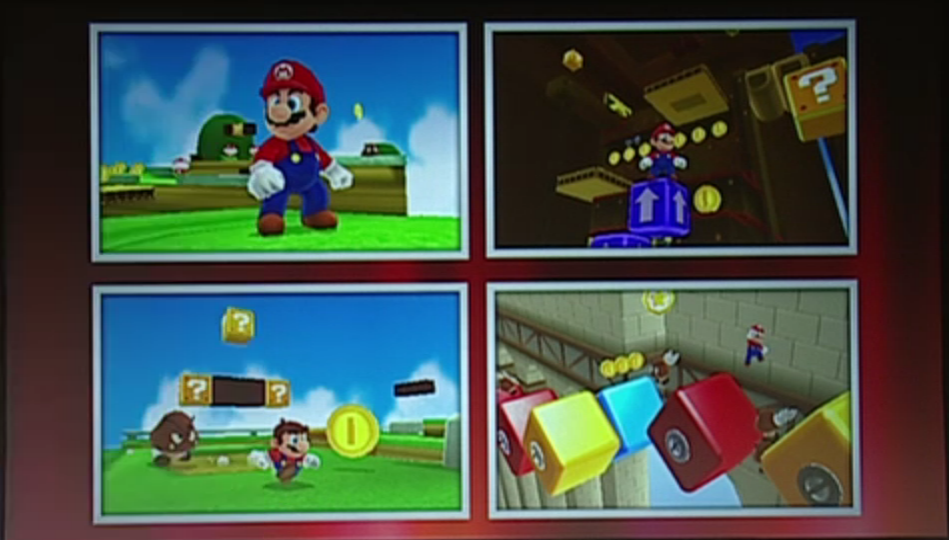
The four screenshots shown at GDC 2011. Two of these areas are not in the finished game in this form. Screenshots: Nintendo, via Super Mario Wiki
Miyamoto first mentioned a 3DS Mario in an Iwata Asks interview in October 2010, and said the following month that a 2D and a 3D game were both on the way (the 2D one became New Super Mario Bros. 2). Iwata showed the 3D game at the Game Developers Conference in March 2011 with four screenshots, the working title Super Mario and a logo with a raccoon tail on its letter O. Asked about the tail, Miyamoto said it was what people thought it was.
The full reveal came at E3 on 7 June 2011, with a trailer and a four-course demo: a grassland, an underground course, a course of switch-driven platforms and an airship with Boom Boom at the end. Nintendo of America’s Reggie Fils-Aimé called it Super Mario 3D; the word “Land”, a nod to the Game Boy’s Super Mario Land, was added when a new trailer appeared alongside news of the 3DS price cut that summer. A further trailer at the Nintendo 3DS Conference on 13 September 2011 showed Bowser with a tail.
What changed after E3
The four courses of the E3 2011 demo. Screenshot: Nintendo, via Super Mario Wiki
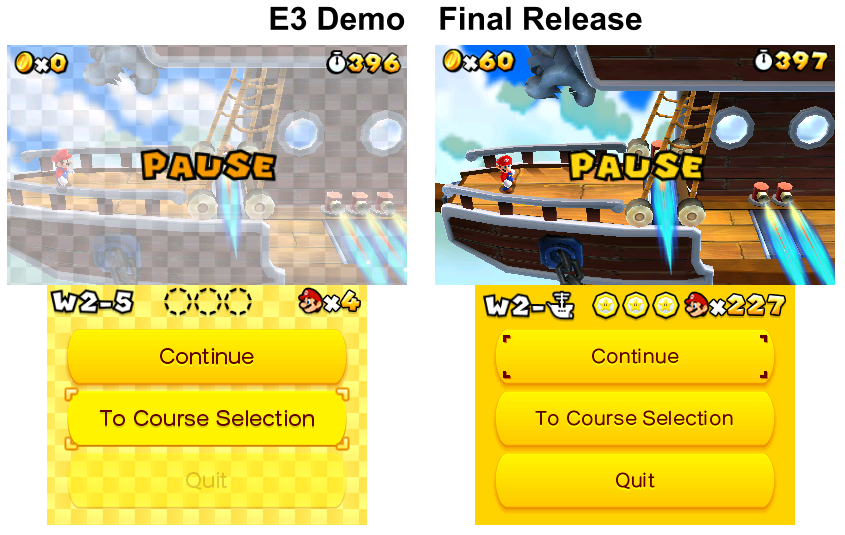
The E3 demo is well documented, and it was a rougher game. The lives counter stopped at 99. A coin popped out of each stomped enemy and had to be collected by hand. Touching a Checkpoint Flag added 100 seconds to the clock. Rolling was done with a shoulder button on the move, a control Miyamoto called unintuitive, and the Warp Zone in World 1-2 had three green pipes where the final game has one orange one. Boom Boom’s fight borrowed Peewee Piranha’s music from Galaxy 2 as a stand-in, and the fake Bowsers in the first trailer had no tails yet.
Later trailers show things that were cut altogether: Golden Tail Goombas that glided further than the ordinary sort, a Coin Coffer that looked more like the older Moneybags enemy, and a purple Warp Box. The Zelda-style dungeon was meant to be World 2-5, a wink at The Legend of Zelda’s 25th anniversary, until the team decided that was too early in the game and turned the number round to 5-2.
The ideas that never were
A real cut: the Golden Tail Goomba from the second trailer. Screenshot: Nintendo, via Super Mario Wiki
At GDC 2012 Hayashida ran through a list of ideas the team had supposedly thrown out: Mario skating down a half-pipe on a Koopa shell, a cockroach enemy you squashed by snapping the 3DS shut, a way to paste somebody else’s face onto Princess Peach, a Mario so huge only his legs fitted on screen and a Mario with enormously long limbs. They were reported as fact and are still repeated. About a week later he told Joystiq’s JC Fletcher that none of them had come close to being in the game (“No, not at all”) and that he had turned his sense of humour up to maximum for an American audience.
Series Firsts
What Super Mario 3D Land did before any other game in the series, as far as the sources confirm.
1Mario in stereoscopic 3DNintendo’s own history of the series calls it the first Super Mario title you could play in stereoscopic 3D.
2A 3D Mario made for a handheldThe first 3D Mario platformer designed from the ground up for a portable. Super Mario 64 DS got there first as a remake of a home-console game.
3A flagpole in three dimensionsThe first 3D Mario in which a course is cleared by reaching a Goal Pole instead of collecting a Star or a Shine.
4Pom PomBoom Boom’s boomerang-throwing partner makes her first appearance here.
5The Boomerang Flower and the Invincibility LeafBoth power-ups debut in this game, and both were carried into Super Mario 3D World.
6Tails for the enemiesTail Goombas, Tail Bullet Bills, Tail Boos, Tail Thwomps and Tail Bob-ombs all start here, along with Biddybuds, Stingbies, Coin Coffers, Peepas and Goomba Towers.
7StreetPass in a Mario gameSatoru Iwata described it as the first Mario game to exchange data with people who do not own it, through StreetPass Mii Plaza gifts.
8Storybook cutscenesSuper Mario Wiki records Peach’s letters as the first use of Shigehisa Nakaue’s 2D illustration style inside a Super Mario game.
9New languagesAccording to Super Mario Wiki it was the first Super Mario game on a Nintendo system to be officially translated into Dutch, European Portuguese and Russian.
10Five million on 3DSIn January 2012 it became the first Nintendo 3DS game reported to have sold more than five million copies.
Cheats & Secrets
There are no button codes, but there is a second half to unlock, a hidden final course and a good supply of things the game never mentions. SLB’s own cheats page for the game has more.
Unlock the Special Worlds
Beat Bowser in World 8-Bowser: Part 2, which needs 100 Star Medals to enter. After the credits a letter about Luigi arrives and a pipe to Special 1 opens.
Unlock Luigi
Clear Special 1-Castle (110 Star Medals), where Dry Bowser is holding him. From then on, tap the M/L button on the touch screen of the world map to switch brothers. Courses cleared as Luigi are marked with an L on the map.
The five stars and Special 8-Crown
The save file earns a star for each of five feats: beating Bowser in World 8; clearing every course as Mario; clearing every course as Luigi; grabbing the very top of the Goal Pole for a golden flag in every course, Special Worlds included; and collecting every Star Medal. With all five, Special 8-Crown appears where the pipe between World 8 and Special 8 used to be.
Keep the stars sparkling
The stars lose their shine as soon as an Assist Block appears, whether or not you touch it, so the rule is never to lose five lives on one course. GamesRadar’s advice if the block does show up is to restart the console before going on. You are put back on the map and must replay the course, but the sparkle is safe.
Warp Zones
World 1-2 has a secret exit to a Warp Zone, a tribute to the same course number in the original Super Mario Bros., and a hidden orange pipe in World 4-2 leads directly to World 5.
Infinite lives in World 1-2
After the Checkpoint Flag, step off the long ? Block onto the Koopa Troopa below. With the right timing Mario keeps bouncing on the shell and the 1-Ups keep coming.
Free lives at the flagpole
Touching the very top of any Goal Pole is worth a 1-Up. So is finishing a course still wearing a Propeller Box or a ? Box.
The photo album
The blue Toad House in World 3 stores twelve pictures. The first is there from the start, the next seven arrive as Worlds 1 to 7 are cleared, and the rest come from beating the game as Mario, beating it as Luigi, opening the Special Worlds and, last of all, finishing every Special World and then beating Bowser again. Tilt or shake the 3DS while a picture is on screen and things in it move. Shake the picture of Peach fighting the Goomba Tower for a few seconds and she hits faster, to the sound of 1-Ups.
The test room
Leave the title screen alone for 42 seconds and the game drops you into a small room of coloured blocks arranged as an optical illusion, where you can practise Mario’s moves and compare 2D with 3D. Five Toads are standing about, one of them out of reach. There is nothing to win.
Statue Leaves outside the Special Worlds
The Statue Leaf normally appears only in Special World courses, but gifts received through StreetPass Mii Plaza can contain one. A Mystery Box that arrives by StreetPass always holds a Star Medal.
The Zelda room
In the overhead dungeon of World 5-2, light all four torches with Fire Mario and a door opens to the second Star Medal.
Kick everything
Kick a rock into a pipe and a 1-Up Mushroom comes out. A Golden Rock breaks after ten kicks and pays five coins. Boomerang Mario can knock down cacti for a coin each, and many flowers, bushes and dandelions give up coins when Mario brushes through them.
Toads through the binoculars
Look around properly whenever a course offers binoculars. A Toad standing somewhere in the distance will reward you for finding him.
1,110 lives
The lives counter does not stop at 99. Past 1,000 the hundreds digit becomes a crown, then the tens, and at the maximum of 1,110 all three digits are crowns. Super Mario Wiki adds that Mario goes hatless at the maximum, a joke carried over from New Super Mario Bros. Wii.
Unlock conditions are from Super Mario Wiki and GamesRadar’s cheats page; SLB’s own Super Mario 3D Land cheats and tips page lists the same five stars and the twelve album photographs.
Glitches & Oddities
A tidy game with few known bugs. Super Mario Wiki documents four in the retail version, plus one that only existed in the E3 demo.
Baddie Box lag
Ground Pound a Baddie Box as Invincible Mario or White Tanooki Mario and the game slows to a crawl while the box explodes, with a harsh grinding noise, until Mario jumps clear. Baddie Boxes are found only in World 2-4, World 5-Castle and Special 1-3, and in the first two the trick needs the Invincibility Leaf, so Special 1-3 is the only place it can be repeated once the course has been cleared, and the only place Luigi can do it.
The World 1 Bowser softlock
In the Tail Bowser fight of World 1-Castle, use Tanooki Mario’s slow fall to glide straight over the gap that separates the bridge from the platforms at the start, and hit the switch at the moment the boss jumps away to the left. The bridge collapses while he is off screen and the victory scene never finishes. The only way out is to quit the course.
Warp Box death
On the World 2 airship, take the first Warp Box to the bonus airship and run to its far end, but do not enter the Warp Box there. Turn the camera to the left until the box is off screen, then jump in. Mario loses a life as the camera swings back to the main airship.
A camera through the wall
In Special 1-3, aim a cannon just above the blocks at the edge of the platform and the camera briefly clips inside the scenery.
Out of bounds in the E3 demo
In the 2011 show-floor demo, Tanooki Mario could bounce up a wall beside the Checkpoint Flag of World 1-2 and leave the course altogether. It was fixed before release.
Videos
Nintendo of America’s own trailer for the game, and its film of the day it rebuilt a corner of Times Square as a 3D Land course for the launch.
Nintendo of America’s official trailer for the game.
Nintendo of America’s film of the 12 November 2011 launch event at Military Island, New York, uploaded in December 2011.
Trivia & Interesting Facts
World 5-2 from above.World 5-2 is a tribute to the top-down dungeons of The Legend of Zelda, made for that series’ 25th anniversary. It was planned as World 2-5 and moved because that felt too early in the game.
The “rejected ideas” Koichi Hayashida listed at GDC 2012, including Pro Skater Mario and a cockroach you killed by closing the 3DS, were jokes. He confirmed as much a week later.
The length of a course was set by Hayashida’s train journey to work, which was a few stops long.
Testers looking down a bottomless pit in stereoscopic 3D for the first time complained that it was frighteningly high, and the team changed the height.
A Tail Bowser, before the mask slips.The Tail Bowser of World 1 is a Goomba, a deliberate reversal of the original Super Mario Bros., in which fake Bowsers hit with fireballs turned out to be ordinary enemies.
Boom Boom is voiced by Sho Murata, one of the game’s character designers.
In the final battle Bowser throws barrels at Mario, a nod to Donkey Kong. The world map icons for the brothers are their sprites from the 1985 Super Mario Bros.
The music on the Special 8 map is an arrangement of “The Mario Drawing Song” from the DSi application Flipnote Studio.
Start Special 8-Crown and the brothers say “Here we go!” instead of their usual “Let’s-a go!” The course ends with Flip Panels spelling out THANK YOU!!, an idea the team repeated in Clear Pipes at the end of Champion’s Road in Super Mario 3D World.
Small Mario and Small Luigi lose their caps, as Wario does when he shrinks in Wario Land: Super Mario Land 3.
The tightropes come from Super Mario Sunshine, and the scene in which the floor collapses before the last Bowser fight echoes the one before Petey Piranha in that game.
The Golden Tail Goomba.A Golden Tail Goomba that glided further than normal ones appears in the second trailer and nowhere in the finished game.
In the E3 2011 demo, Boom Boom’s battle was set to Peewee Piranha’s theme from Super Mario Galaxy 2, presumably as a placeholder.
The game was announced as plain Super Mario and briefly called Super Mario 3D. Super Mario Wiki notes that a good deal of merchandise never caught up with the final name.
The Cutting Room Floor reports that the game’s internal project name was “RedPepper”, and that its files still list test stages named after individual members of staff.
Also in the files: the first half of Bowser’s greeting from Super Mario 64, of which only the second half is used, and an instrument bank left over from The Legend of Zelda: Ocarina of Time 3D.
Special 6-3 contains a set of coins that cannot be reached, spelling out “3D”. They are left over from World 2-2.
An unused jingle in the game’s sound data, a snatch of the Super Mario Bros. theme, was later reused in Animal Crossing: New Leaf.
Hayashida keeps a personal collection of Shigeru Miyamoto’s sayings and brought it to the Iwata Asks interview. Miyamoto said it contained things he did not remember saying.
The earliest prototype starred a square block. The equivalent prototype for Super Mario Galaxy had used a mushroom that everybody agreed to pretend was Mario.
Inside the Exclusive Mystery Box.In North America, 3DS owners who visited a Nintendo Zone hotspot between 22 November and 24 December 2013 received an Exclusive Mystery Box from Hayashida himself.
From November 2013 to January 2014, people in parts of Europe and Australia who registered a new 3DS and one of fifteen selected games with Club Nintendo could claim a free download of 3D Land.
Donkey Kong plays Super Mario 3D Land on a 3DS when left idle in Donkey Kong Country: Tropical Freeze; you can hear him stomp a Goomba.
PETA marked the launch with a parody browser game, Mario Kills Tanooki, objecting to the fur suit.
Regional Box Art
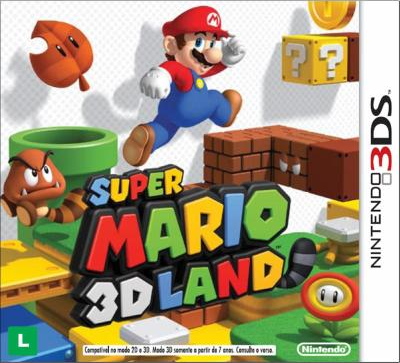
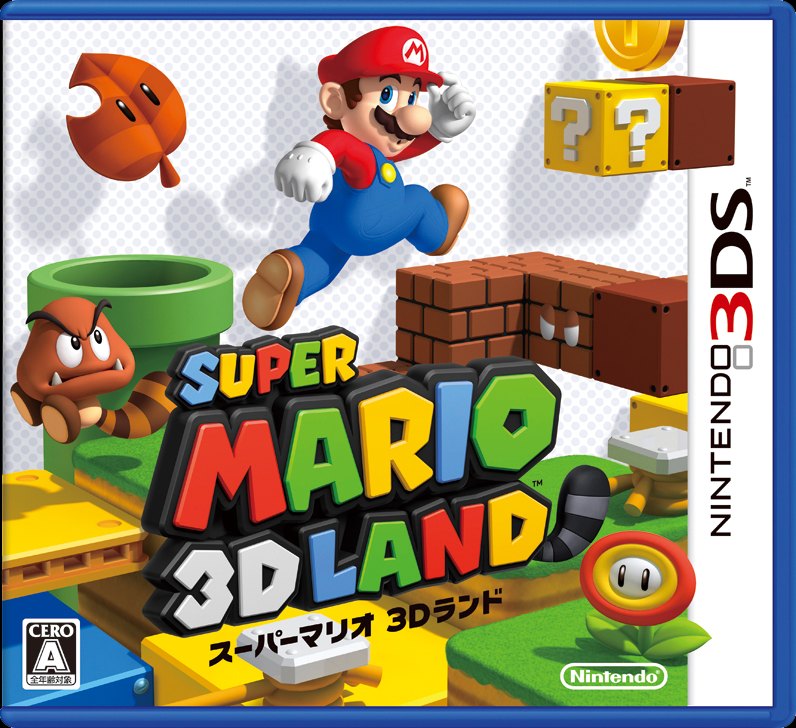
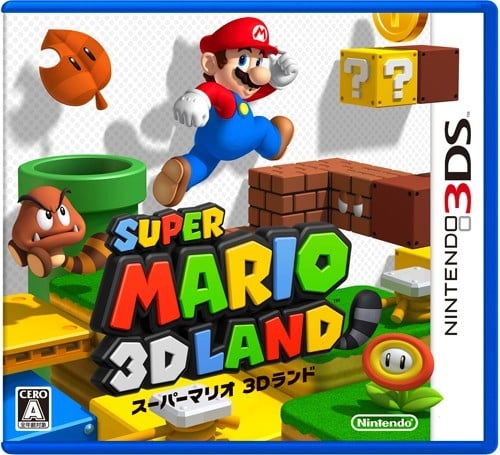
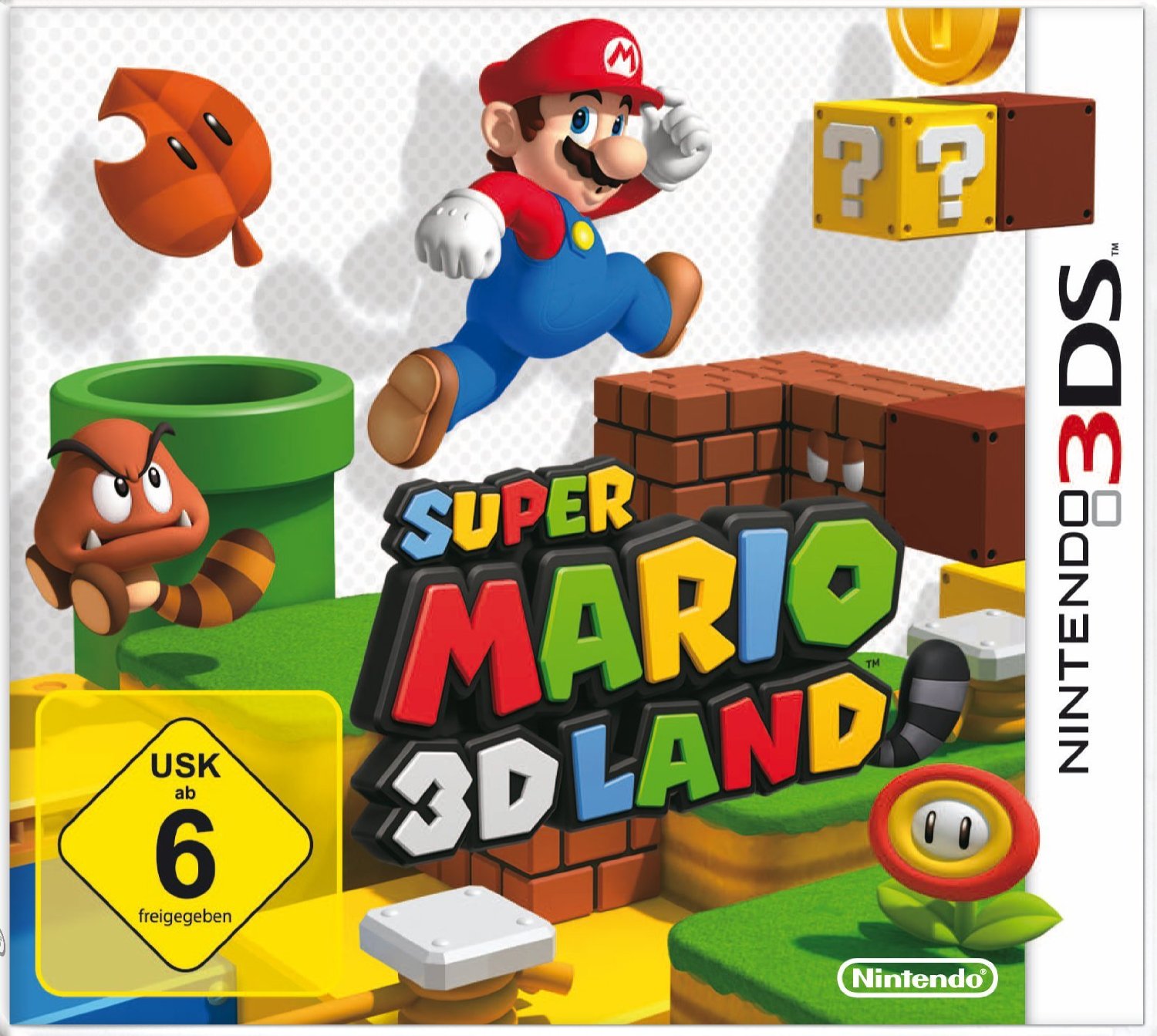
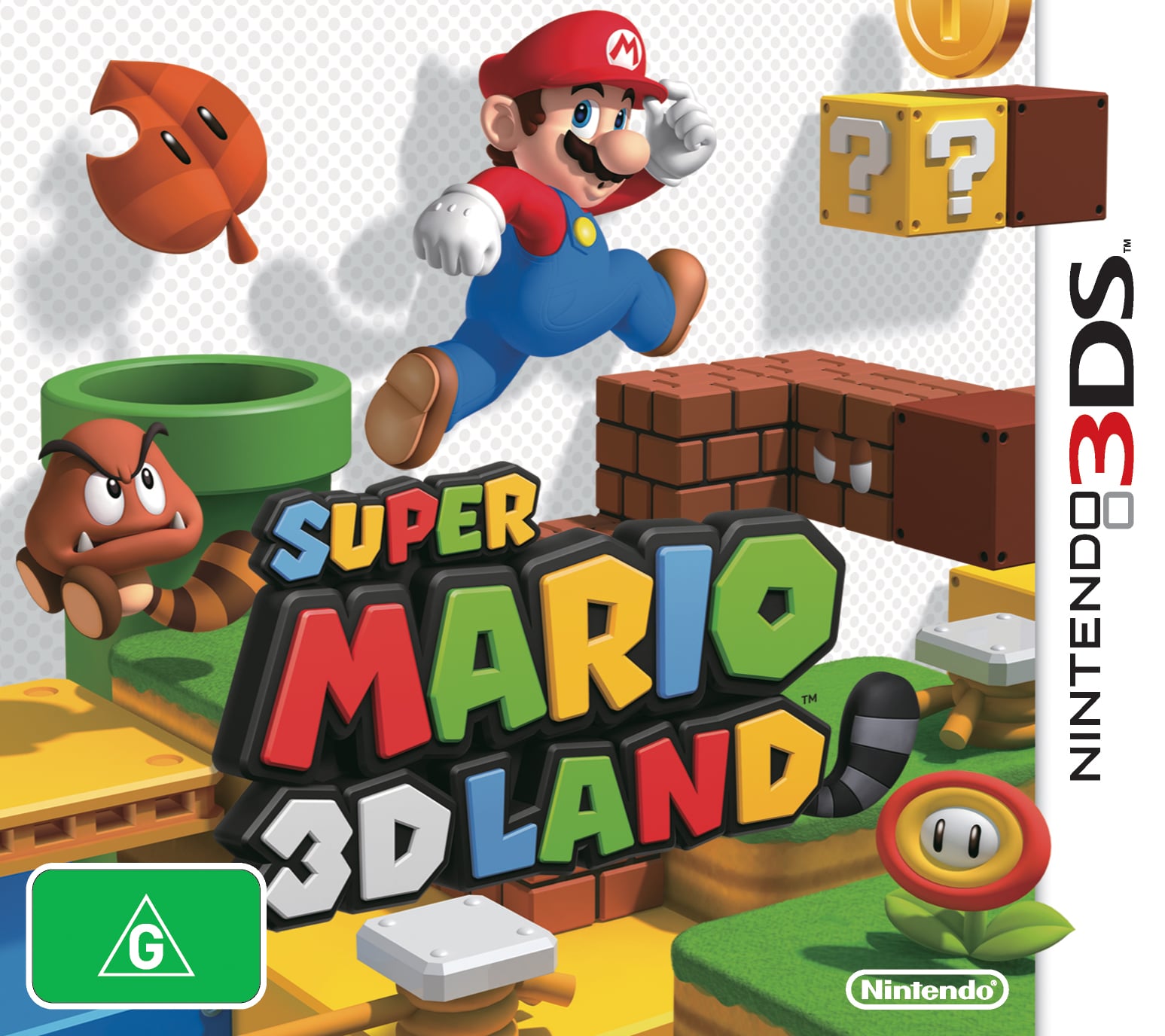
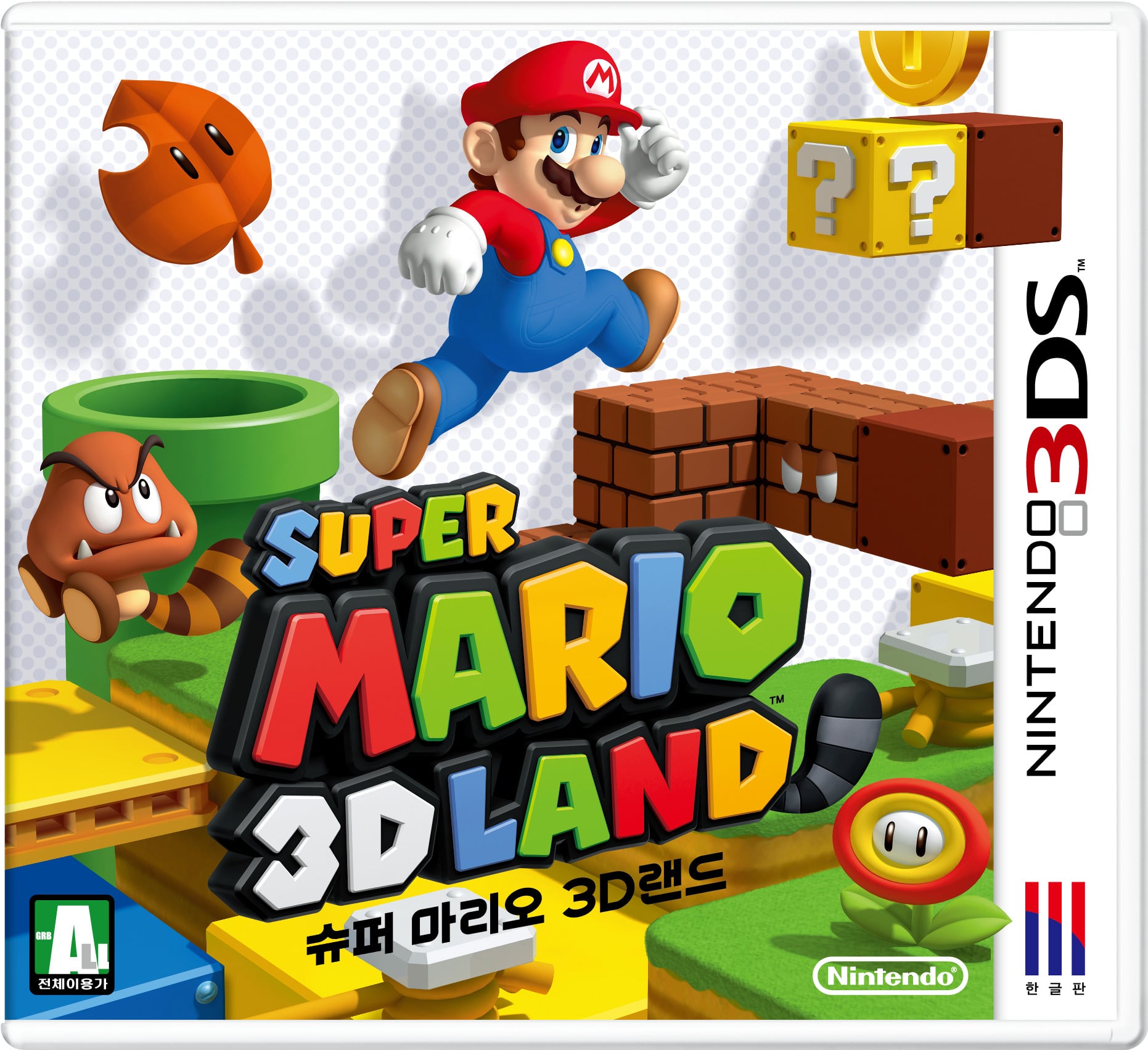
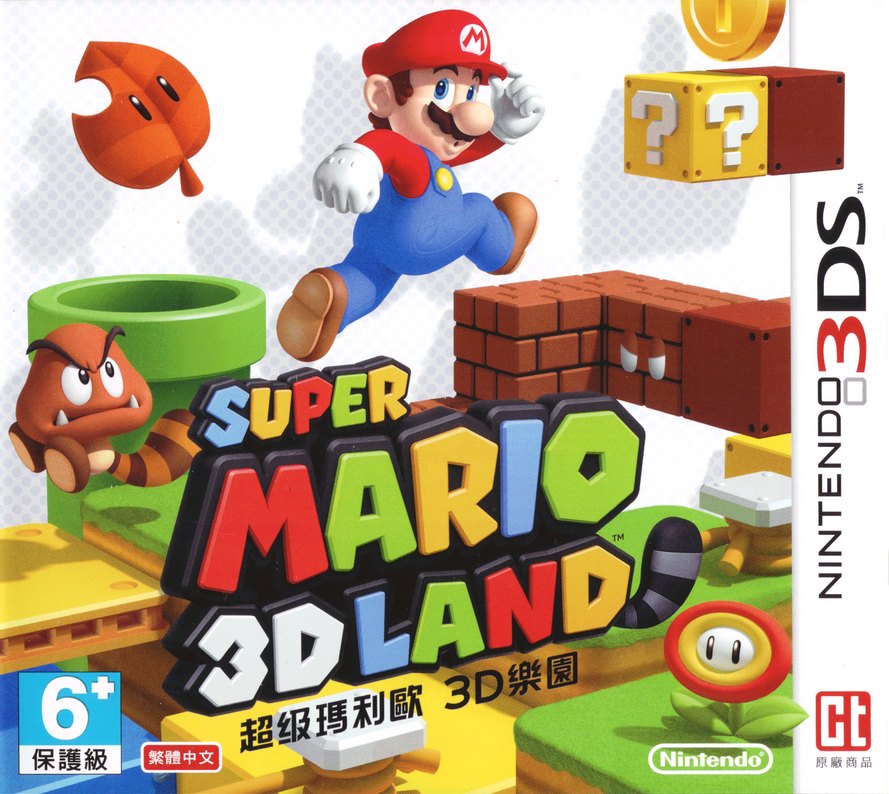
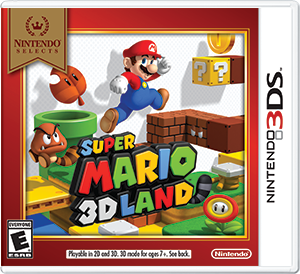
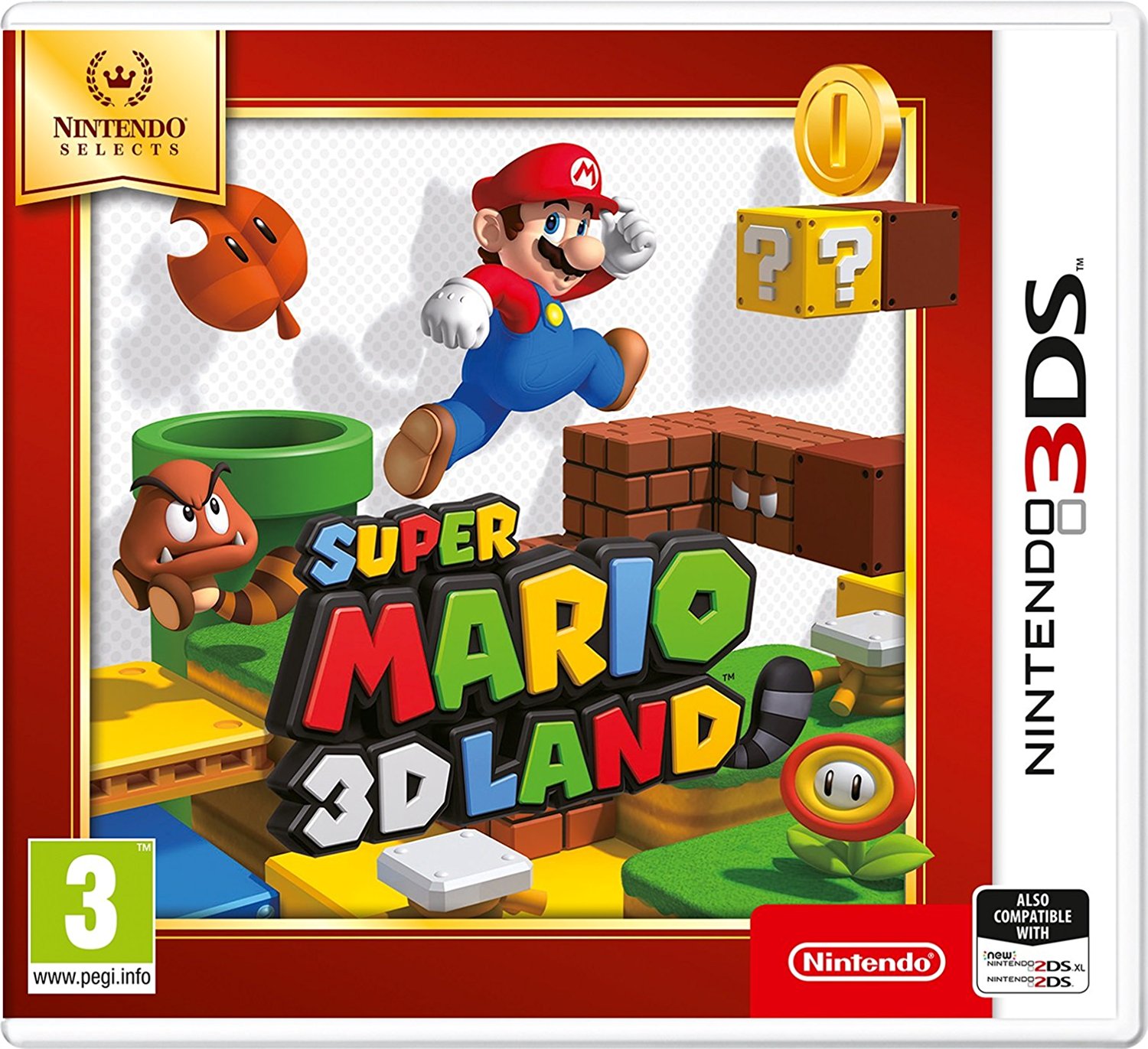
Tanooki Mario leaps out of every cover. Japan’s box has its own version of the artwork, and the game was reissued under the Nintendo Selects banner from 2017.
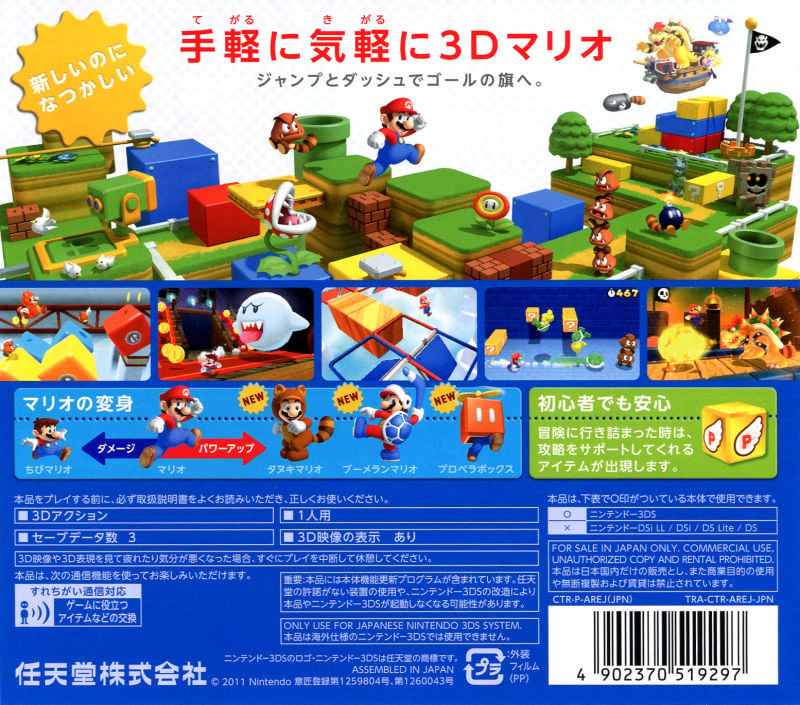
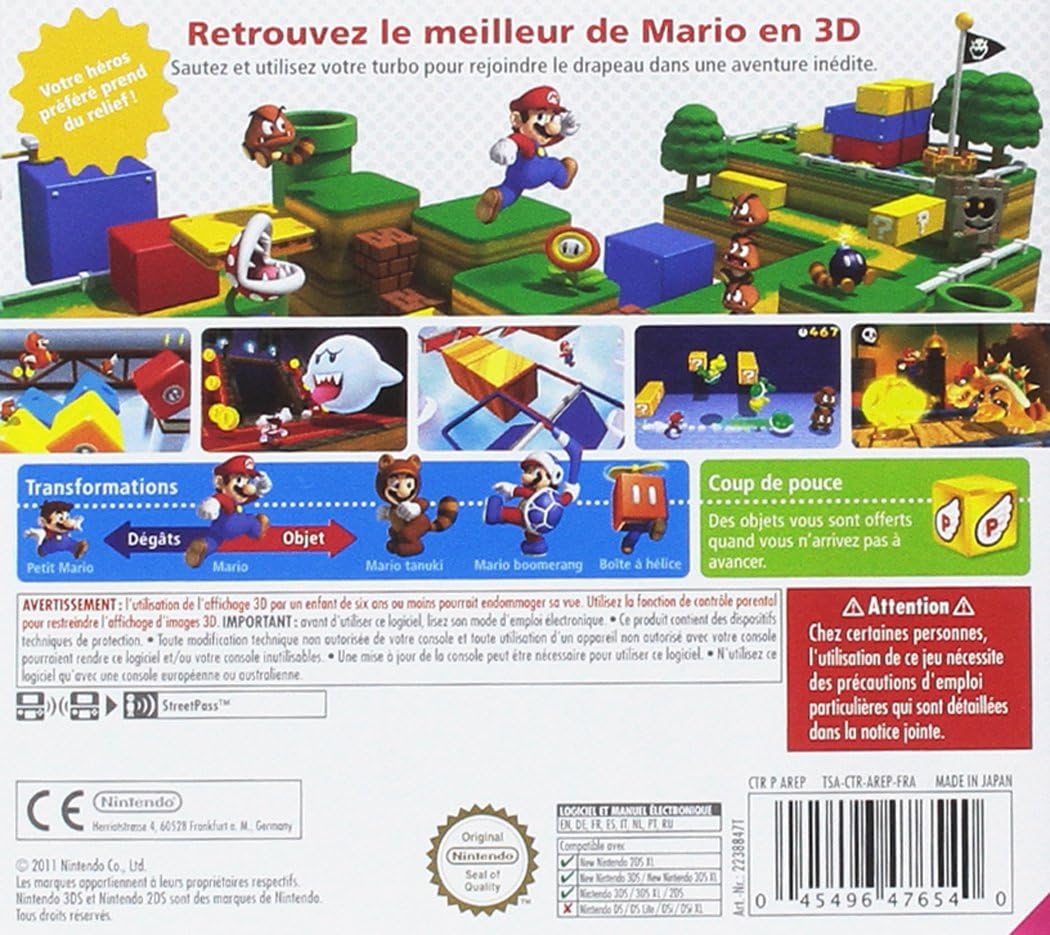
North America13 November 2011.North America (back)The reverse of the US case.North America (early)A provisional design shown before release.CanadaThe Canadian cover.Brazil13 November 2011.Japan3 November 2011.Japan (alternate)An alternative Japanese cover.Japan (back)The Japanese reverse.Europe18 November 2011.Europe (provisional)The placeholder cover used before launch.France (back)The French reverse.GermanyThe German cover.Australia and New Zealand24 November 2011.South Korea28 April 2012.Hong Kong and Taiwan7 December 2012.North America (Nintendo Selects)5 February 2018.UK (Nintendo Selects)13 October 2017.Australia (Nintendo Selects)11 May 2018.North America (Flame Red 3DS bundle)Console and game together.Europe (Ice White 3DS bundle)The European hardware pack.Japan (Pearl Pink 3DS bundle)With the game and Super Mario Bros. pre-installed.
Screenshots
More of the sixteen worlds, from Nintendo’s press screenshots.
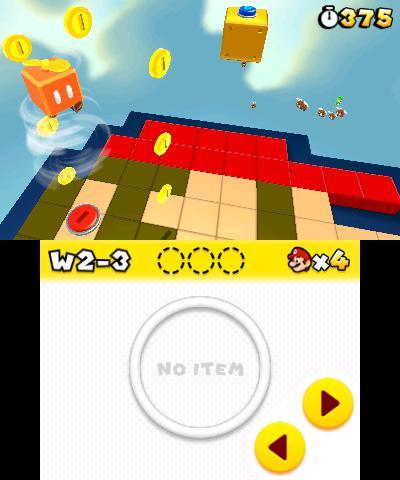
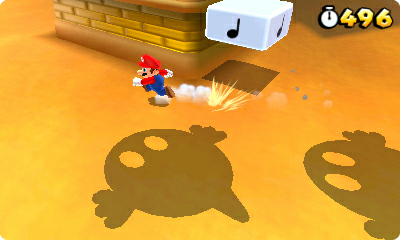
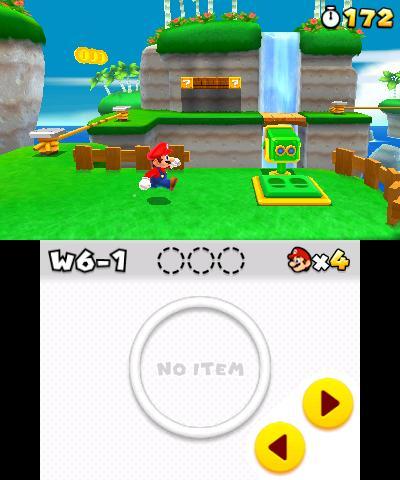
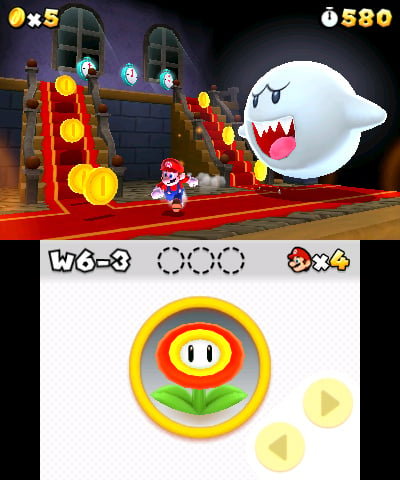
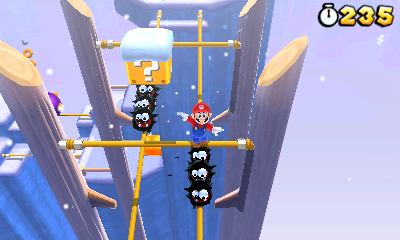
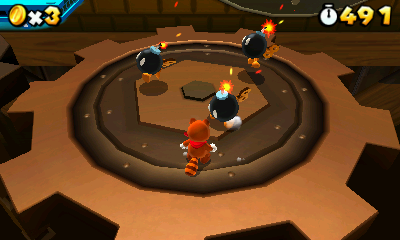
Coin Heaven above World 1-3.World 2-3, with its platforms shaped like 8-bit sprites.Sandmaarghs give chase in World 3-1.Underwater in World 3-2.World 4-2.Mario meets the Peepas.Boomerang Mario takes on a Pokey in World 5-1.World 6-1.World 6-3.Tightropes and Fuzzies.Bob-ombs on a giant gear.A giant spiked ball rolls after Tanooki Mario in World 8-1.Banzai Bills in World 8-5.A Draglet lets fly.
Artwork & Media Gallery
Official artwork, logos, pre-release material and merchandise from Super Mario 3D Land. Select any image to view it larger.
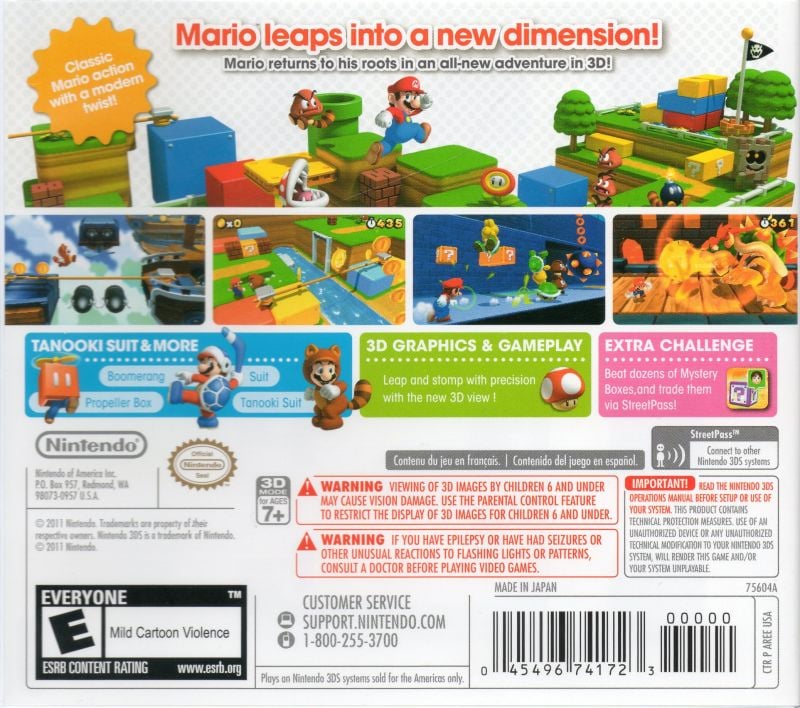
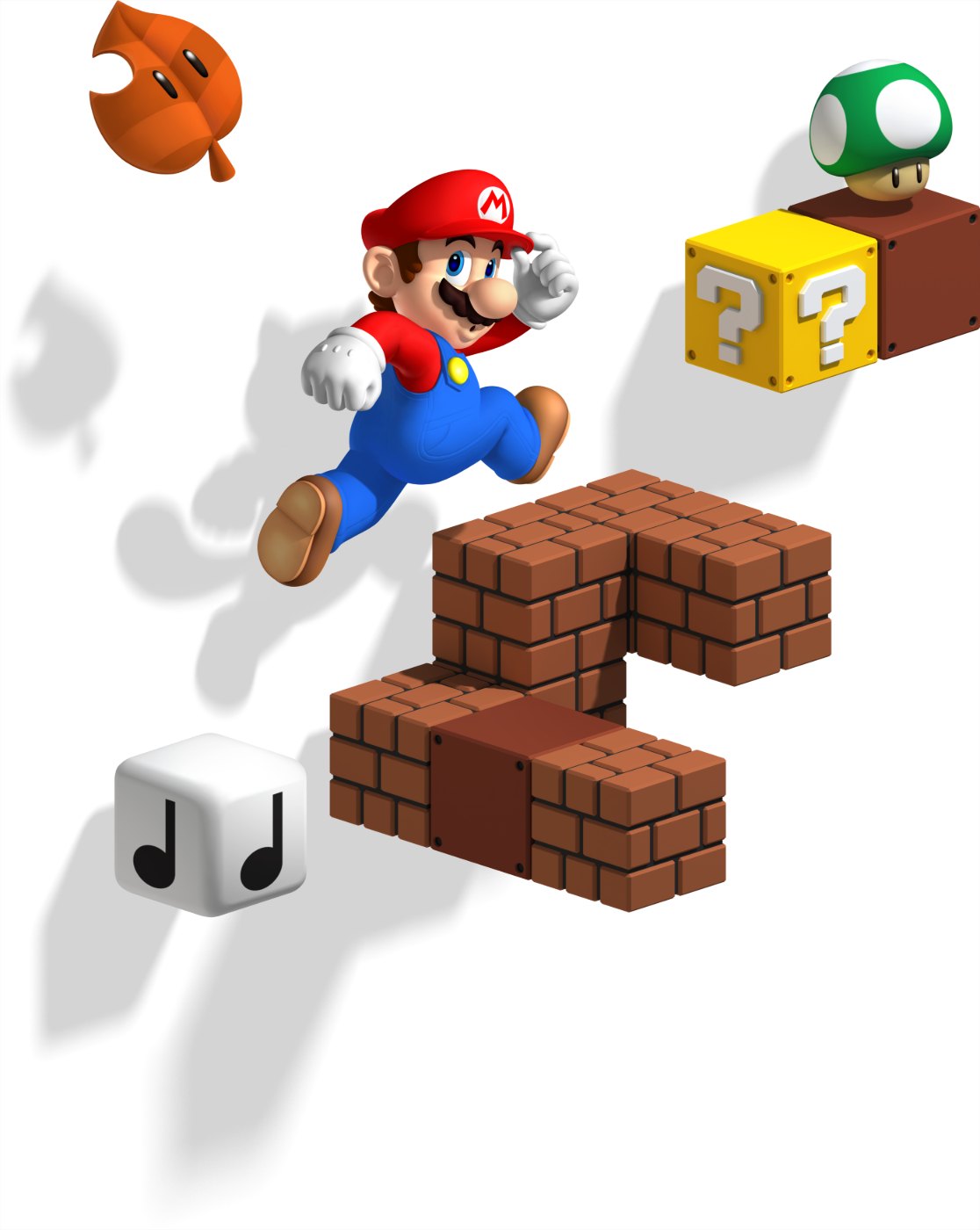
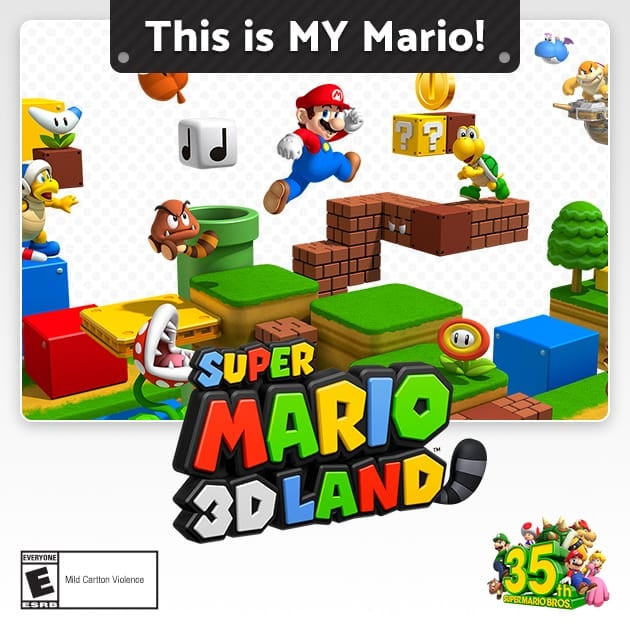
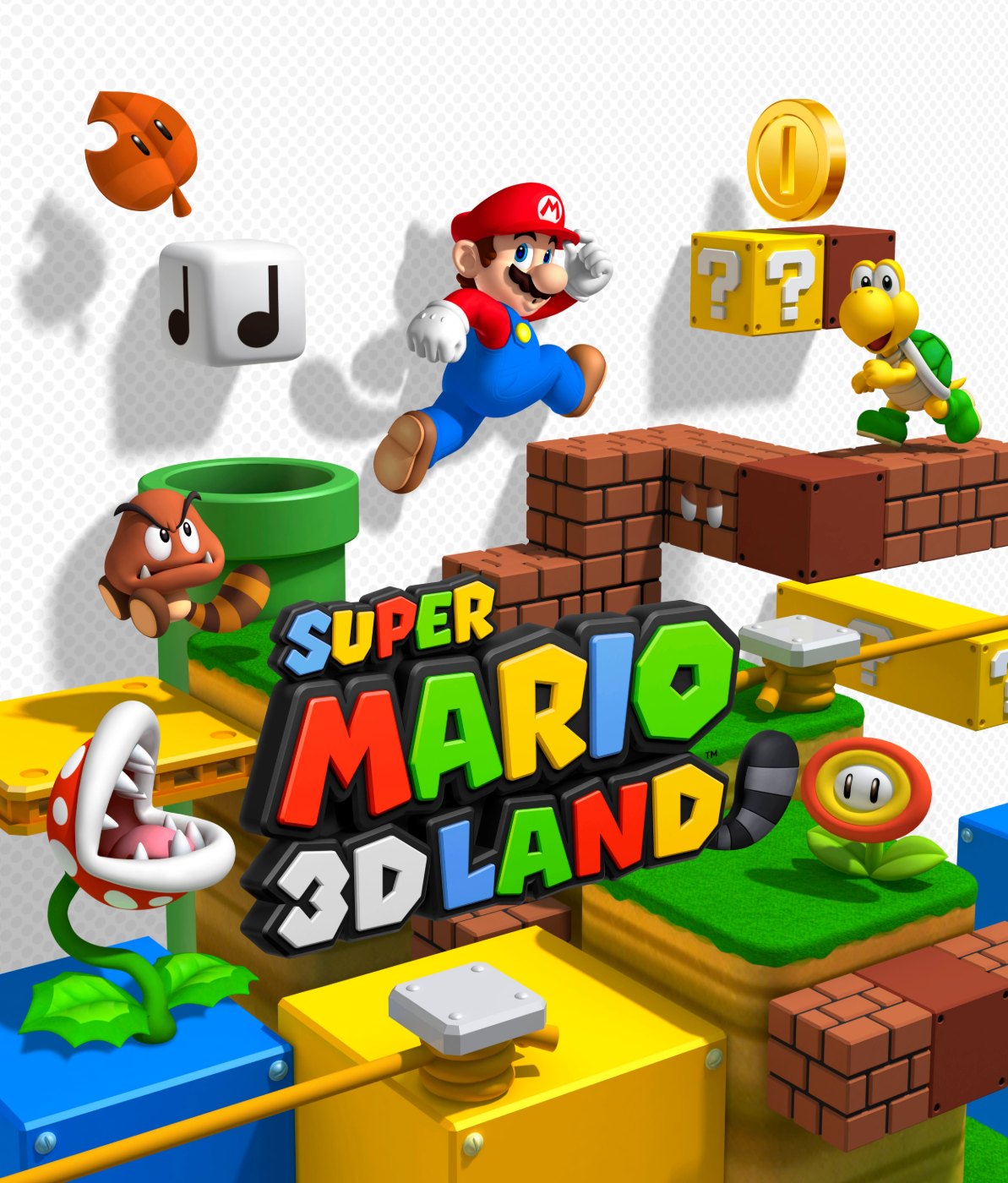
The international logo, tail and all.The Japanese logo.The second working logo, from E3 2011.The Japanese box artwork.A Super Leaf, a 1-Up Mushroom and blocks, with Mario.The reverse side of the box sleeve.Mario dashing.Mario jumping.The Ground Pound.The Side Somersault.Mario swimming.Mario in a Propeller Box.Nintendo’s chart of Mario’s actions.The power-up diagram.Tanooki Mario in flight (or as near as he gets).Fire Mario.Boom Boom and Pom Pom.A second piece of Boom Boom and Pom Pom artwork.An early version of World 2-1, with a Super Star that was later moved.Para-Biddybuds.The early Coin Coffer design seen in the first trailer.The purple Warp Box of the pre-release versions.Pause menus compared: E3 demo on the left, final game on the right.A stretch of World 2-3 that was removed after E3 2011.Trading card: Prongo.Trading card: Draglet.The picture the card backs make when laid out together.Promotional Swapnote stationery.The Home Menu icon, as shown on the top screen.Nintendo’s “This is MY Mario!” graphic for the 35th anniversary in 2020.
Legacy & Re-releases
Super Mario 3D Land has never left the 3DS, but its way of making a 3D Mario travelled a long way.
Releases and re-releases
Nintendo 3DSNovember 2011Japan 3 November, North America and Brazil 13 November, Europe 18 November and Australia 24 November 2011.
South Korea28 April 2012Korean-language release.
Nintendo eShopOctober–November 2012Download version: Europe and Australia 4 October, North America 18 October and Japan 1 November 2012. Super Mario Wiki gives the download size as about 296 MB.
Hong Kong, Taiwan and China7 December 2012Chinese-language releases.
Super Mario 3D WorldNovember 2013The Wii U sequel. At the same time Nintendo ran the Exclusive Mystery Box giveaway in North America and a free-download Welcome Promotion in Europe and Australia.
Nintendo Selects2017–2018Budget reissue: Europe 13 October 2017, North America 5 February 2018 and Australia 11 May 2018.
Nintendo 3DS eShop closes27 March 2023New purchases on the 3DS eShop ended, leaving the game card as the only way to buy the game.
From Land to World
The Tokyo team went straight from this game to Super Mario 3D World, with Hayashida directing again alongside Kenta Motokura. It is the same idea on a television: short courses, a timer, a flagpole, a camera that keeps its distance, the Boomerang Flower, the wearable ? Box, the Invincibility Leaf, and Boom Boom and Pom Pom guarding the ends of worlds. The multiplayer Hayashida could not have on 3DS became its headline feature.
Looking back, the 3D Marios fall into two families, the open sandboxes of Super Mario 64, Sunshine and Odyssey and the course-clear games, and 3D Land is where the second family found its final shape. Miyamoto said at the time that making Mario move in a way that felt like 2D had given the team a foundation for the future.
The game the 3DS needed
Its other legacy is commercial. The 3DS had been on sale for eight months with no flagship Nintendo platformer, and had needed an emergency price cut. 3D Land arrived in November 2011 and Mario Kart 7 in December. ZDNet reported Japanese hardware sales leaping in the game’s first week; in the United States, according to Reggie Fils-Aimé, 3DS sales rose by nearly half in its launch week and went on to carry the console past the original DS’s first-year total there of 2.37 million. The 3DS family went on to sell 75.94 million units, and this game has sold about one copy for every six of them.
What it left behind
Pom Pom became a regular. Biddybuds, Stingbies, Coin Coffers, Peepas and Goomba Towers are now part of the series’ standard bestiary, and the Tail Tree still stands outside Peach’s Castle in Super Mario Odyssey. Super Smash Bros. has a 3D Land stage. The Invincibility Leaf went on to New Super Mario Bros. 2 and 3D World, and so did the lives counter with the three crowns.
Reviews & Sales
Sales figures
The Nintendo 3DS had a difficult first year. It launched in early 2011 at US$249.99 without a major Nintendo series behind it, sold more slowly than expected, and on 28 July Nintendo announced a cut to US$169.99 (and from 25,000 to 15,000 yen in Japan). 3D Land was the first of the big games meant to make the cheaper console worth owning.
It sold 343,492 copies in its first week in Japan, a week in which more than 145,000 3DS consoles were also sold. In the United States, Nintendo of America president Reggie Fils-Aimé told USA Today at the end of November that it had passed 500,000 copies since its launch on the 13th, which made it the fastest-selling portable Mario game to date. By January 2012 it had become the first 3DS title to pass five million worldwide.
Japanese sales reached 1.66 million by August 2012 and American sales 3.09 million by August 2014. Nintendo’s current figure, as of 31 March 2026, is 12.89 million copies. That puts it seventh on the company’s list of best-selling 3DS games, behind Mario Kart 7 (18.99 million), three pairs of Pokémon games, New Super Mario Bros. 2 (13.42 million) and Animal Crossing: New Leaf (13.07 million).
12.89mworldwide to 31 March 2026 (Nintendo)
343,492Japan, first week
500k+United States, by late November 2011
5mfirst 3DS game to reach it, January 2012
3.09mUnited States, by August 2014
90Metacritic
Reception and review scores
Metacritic’s average is 90 and GameRankings closed on 90.09 per cent. The scores below are those listed in Wikipedia’s and Super Mario Wiki’s reception tables.
The praise was for the level design and for what the game did with the screen. IGN’s Audrey Drake called it the first 3DS game to make full use of the hardware and gave it an Editors’ Choice. Game Informer’s Bryan Vore judged it “easily the best reason to own a 3DS”, while praising the run button and the 3D. X-Play’s Russ Frushtick found it about twice as long as he had expected, and Famitsu singled out how welcoming it was to beginners.
The doubts were about challenge and ambition. Eurogamer’s Christian Donlan thought it great but not flawless: experienced players would rattle through the first eight worlds, and the Boomerang Flower and Propeller Box felt like lesser inventions beside the Tanooki suit. 1UP’s Jeremy Parish, who gave it a B+, wrote that a moderately skilled player was in no danger of running out of lives. GameSpot’s Maxwell McGee enjoyed it without finding it as inventive as the series at its best, and GamePro’s Justin Haywald handed out full marks while calling the 3D mostly a gimmick. Game Informer was not alone in wishing for more variety than the same airship bosses again and again.
Honours
Academy of Interactive Arts & SciencesHandheld Game of the YearAt the 15th Annual Interactive Achievement Awards.
Spike Video Game Awards · 2011Best Handheld GameWinner.
GameTrailers · 2011Best Platform GameAlong with Nintendo 3DS Game of the Year.
IGN · November 2011Editors’ ChoiceAwarded with its 9.5 review.
SLB User Reviews
Super Luigi Bros readers have reviewed Super Mario 3D Land over the years. Their write-ups are kept exactly as they were sent in:
To provide the best experiences, we use technologies like cookies to store and/or access device information. Consenting to these technologies will allow us to process data such as browsing behavior or unique IDs on this site. Not consenting or withdrawing consent, may adversely affect certain features and functions.
Functional
Always active
The technical storage or access is strictly necessary for the legitimate purpose of enabling the use of a specific service explicitly requested by the subscriber or user, or for the sole purpose of carrying out the transmission of a communication over an electronic communications network.
Preferences
The technical storage or access is necessary for the legitimate purpose of storing preferences that are not requested by the subscriber or user.
Statistics
The technical storage or access that is used exclusively for statistical purposes.The technical storage or access that is used exclusively for anonymous statistical purposes. Without a subpoena, voluntary compliance on the part of your Internet Service Provider, or additional records from a third party, information stored or retrieved for this purpose alone cannot usually be used to identify you.
Marketing
The technical storage or access is required to create user profiles to send advertising, or to track the user on a website or across several websites for similar marketing purposes.

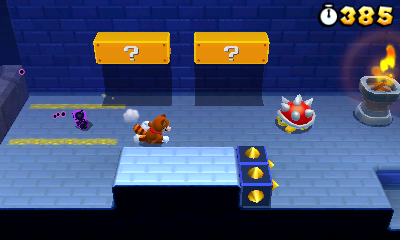
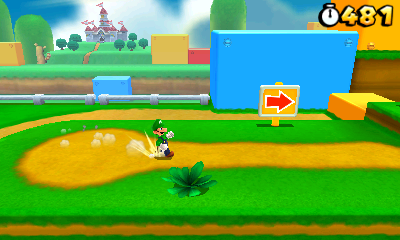
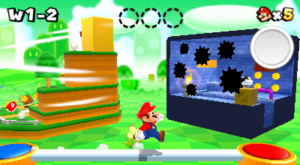 World 15 courses · Tail Bowser (a Goomba in disguise)Grassy fields in front of Peach’s Castle, the first Super Leaf and the first tailed enemies. 1-2 is the first underground course and hides a Warp Zone; 1-4 (3) is the first gate. Ends at World 1-Castle.
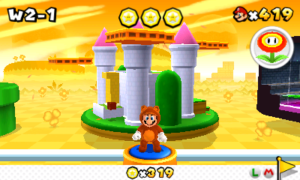 World 25 courses · Boom Boom (airship)High-wire platforming on Flip Panels and Red-Blue Panels, the first Propeller Box, and Bowser’s first airship. The only world with no medal gate.
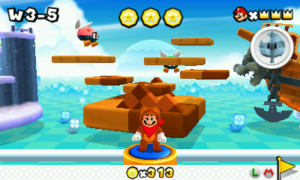 World 36 courses · Boom Boom (airship)Desert ruins full of Wallops and Sandmaarghs, an underwater course, snow, and the first auto-scrolling course away from an airship. 3-5 (15). The blue album Toad House is here.
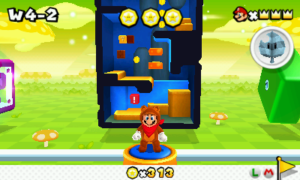 World 46 courses · Pom Pom (airship)Giant spiralling trees, face blocks and the first Ghost House. A hidden pipe in 4-2 warps straight to World 5. 4-3 (30).
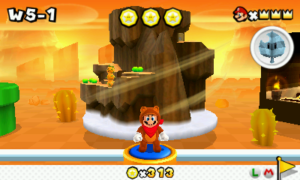 World 56 courses · Tail Bowser (a Magikoopa in disguise)A cactus desert with the Boomerang Flower, the overhead Zelda tribute of 5-2, Monty Mole burrows and clouds above wind turbines. 5-3 (40); World 5-Castle (50).
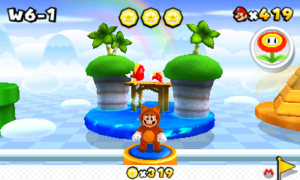 World 66 courses · Pom Pom (airship)A seaside boardwalk, a pyramid of rising platforms and the first Beep Blocks, which blink in and out in time with the music. 6-5 (60).
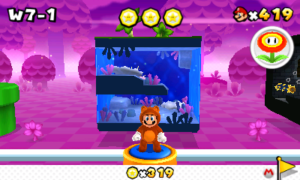 World 76 courses · Boom Boom and Pom Pom together (airship)Spike Eels in underwater caves, a forest of Fuzzies on tightropes, the first clock-tower course and wooden walkways being sawn up by Grinders. 7-3 (70).
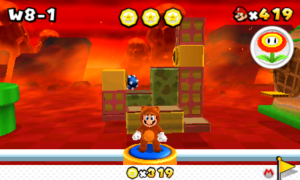 World 88 courses · Bowser, twiceBowser’s domain: fortresses in seas of lava, with no Toad Houses or Mystery Boxes. 8-3 (80), World 8-Bowser: Part 1 (90) and World 8-Bowser: Part 2 (100).
 Special 15 courses · Dry Bowser (castle) · unlocks LuigiA mirror of the Mushroom Kingdom. Introduces the Statue Leaf, the Poison Mushroom and the Small Cosmic Clone. Special 1-Castle (110).
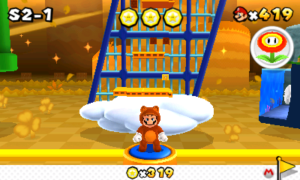 Special 26 courses · airship with no bossOpens with an auto-scrolling course of Note Blocks and rising lifts. One of two Special Worlds with no Cosmic Clone course. Special 2-Airship (120).
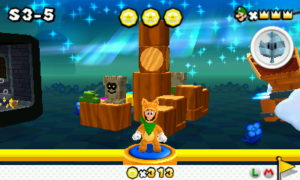 Special 36 courses · airship finalePendulum platforms, rotating blocks and Beep Blocks; the other clone-free world. Special 3-Airship (140).
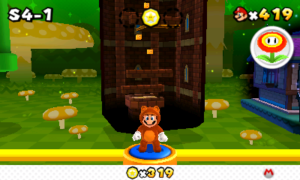 Special 46 courses · Boom Boom and Pom Pom (airship)A clock course, a Ghost House and a boardwalk under a barrage of Bullet Bills. Special 4-Airship (160).
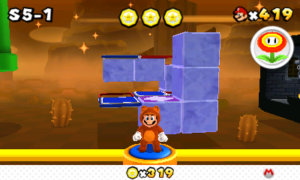 Special 56 courses · Dry Bowser (castle)Red-Blue Panels, Switchboards and lifts shaped like cakes and biscuits. Special 5-Castle (180).
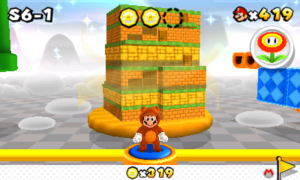 Special 66 courses · Boom Boom (airship, optional)Propeller Boxes, fiddly Flip Panel routes and thick fog. The Boom Boom fight on its airship is the only boss battle in the game that can be skipped. Special 6-Airship (200).
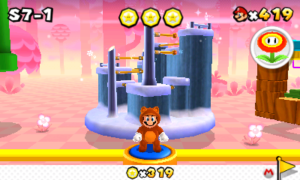 Special 76 courses · castle finaleSnow and a crowd of Boomerang Bros., then more Beep Blocks. The Big Cosmic Clone arrives in 7-4 and returns in the castle. Special 7-Castle (220).
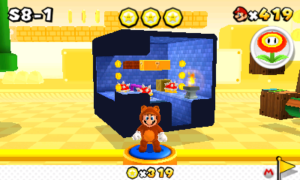 Special 87 courses · Dry Bowser · Special 8-CrownMostly rearranged lava courses from the main game, every one of them gated: 8-1 (230), 8-2 (240), 8-3 (250), 8-4 (260), 8-5 (270) and Special 8-Bowser (290). Special 8-Crown needs five save-file stars instead.
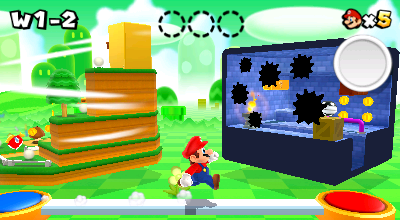
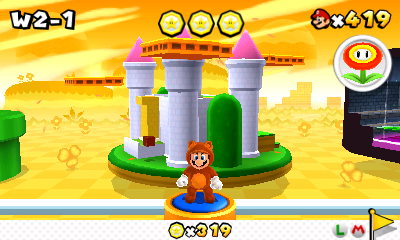
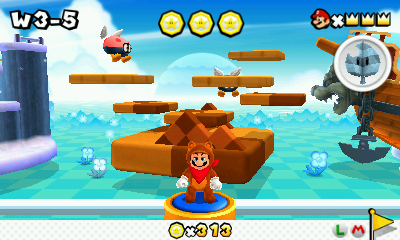
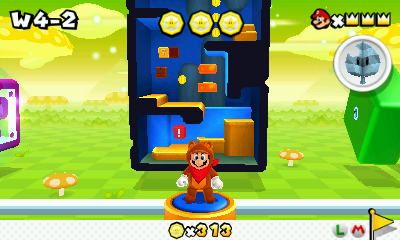
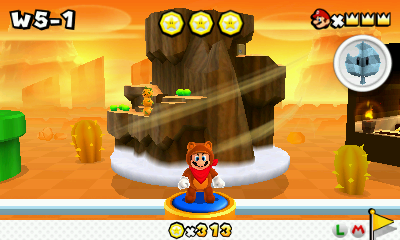
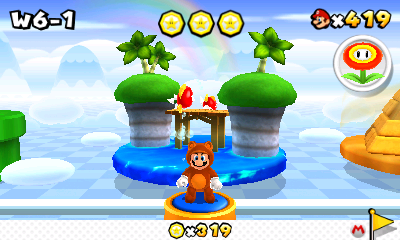
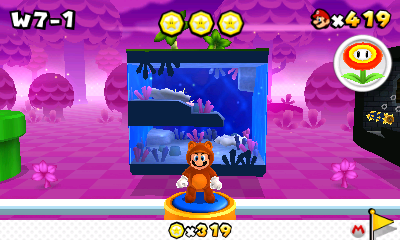
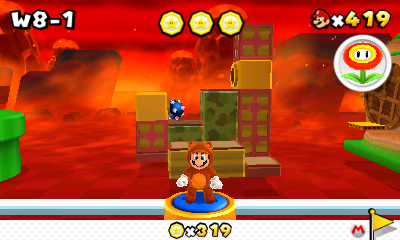
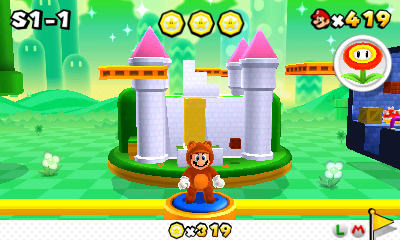
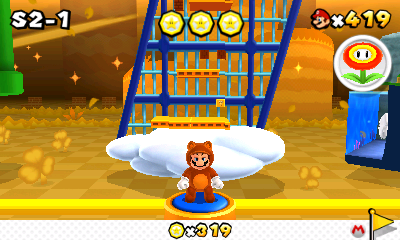
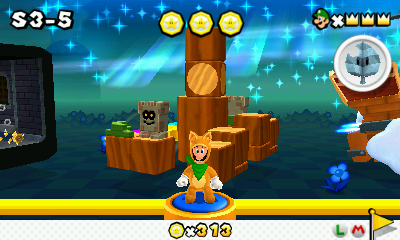
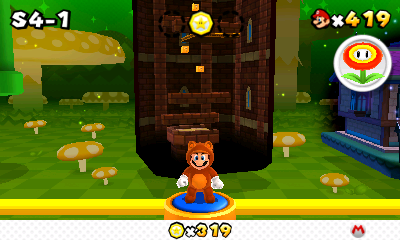
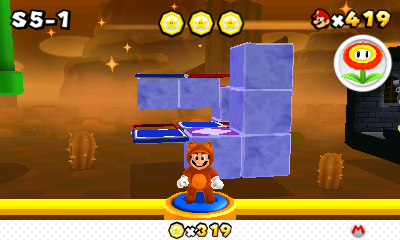
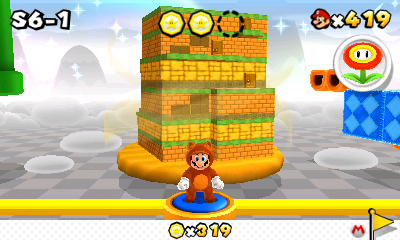
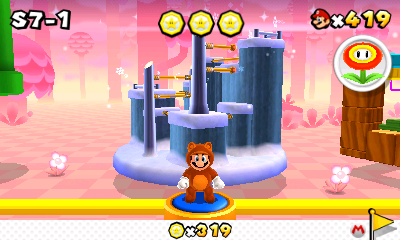
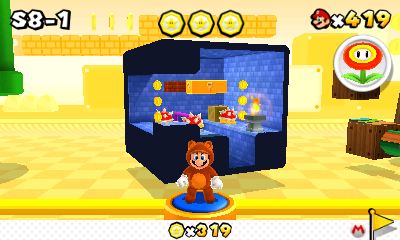
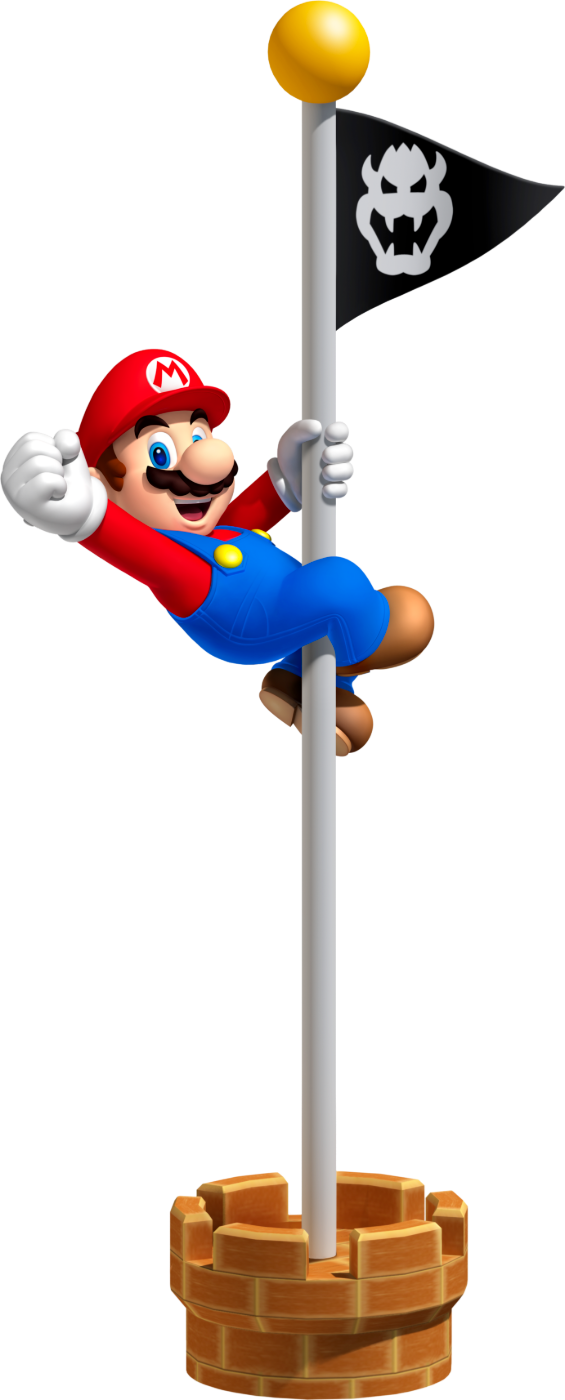
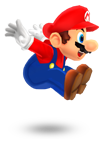
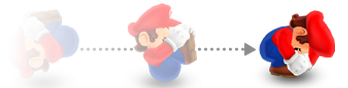
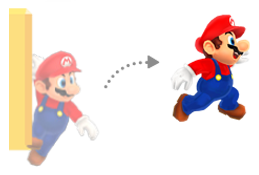
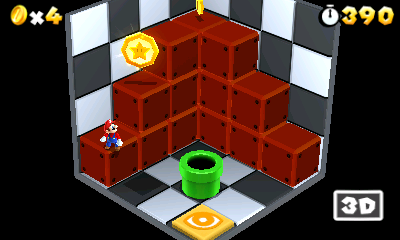
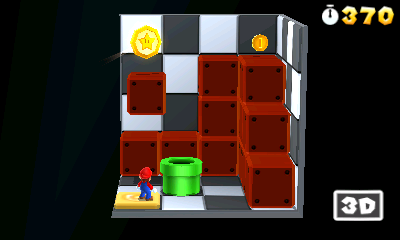
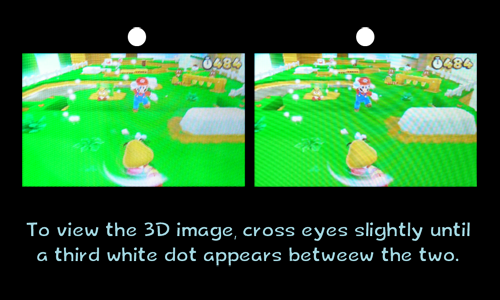
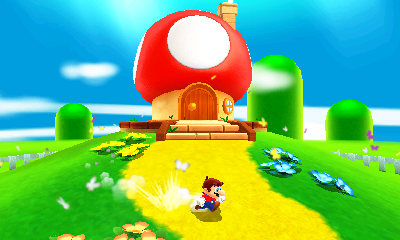
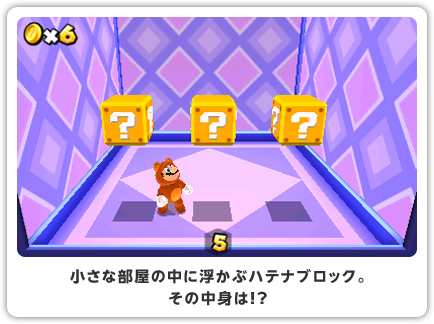
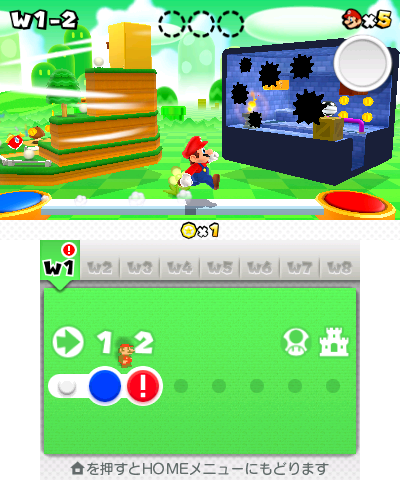
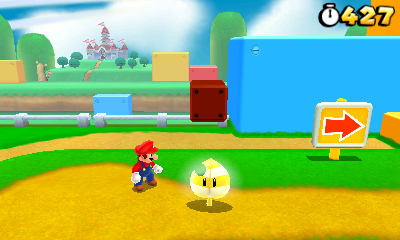
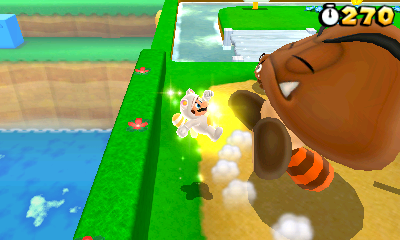
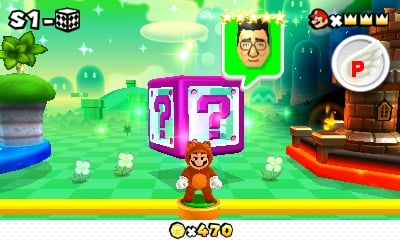
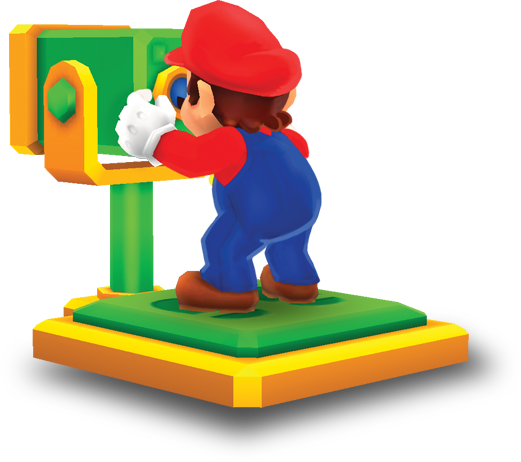
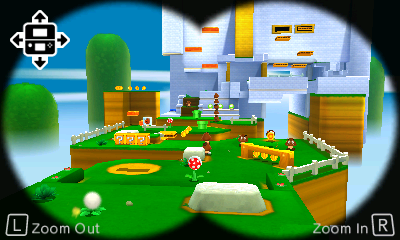
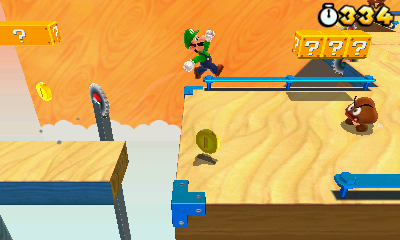
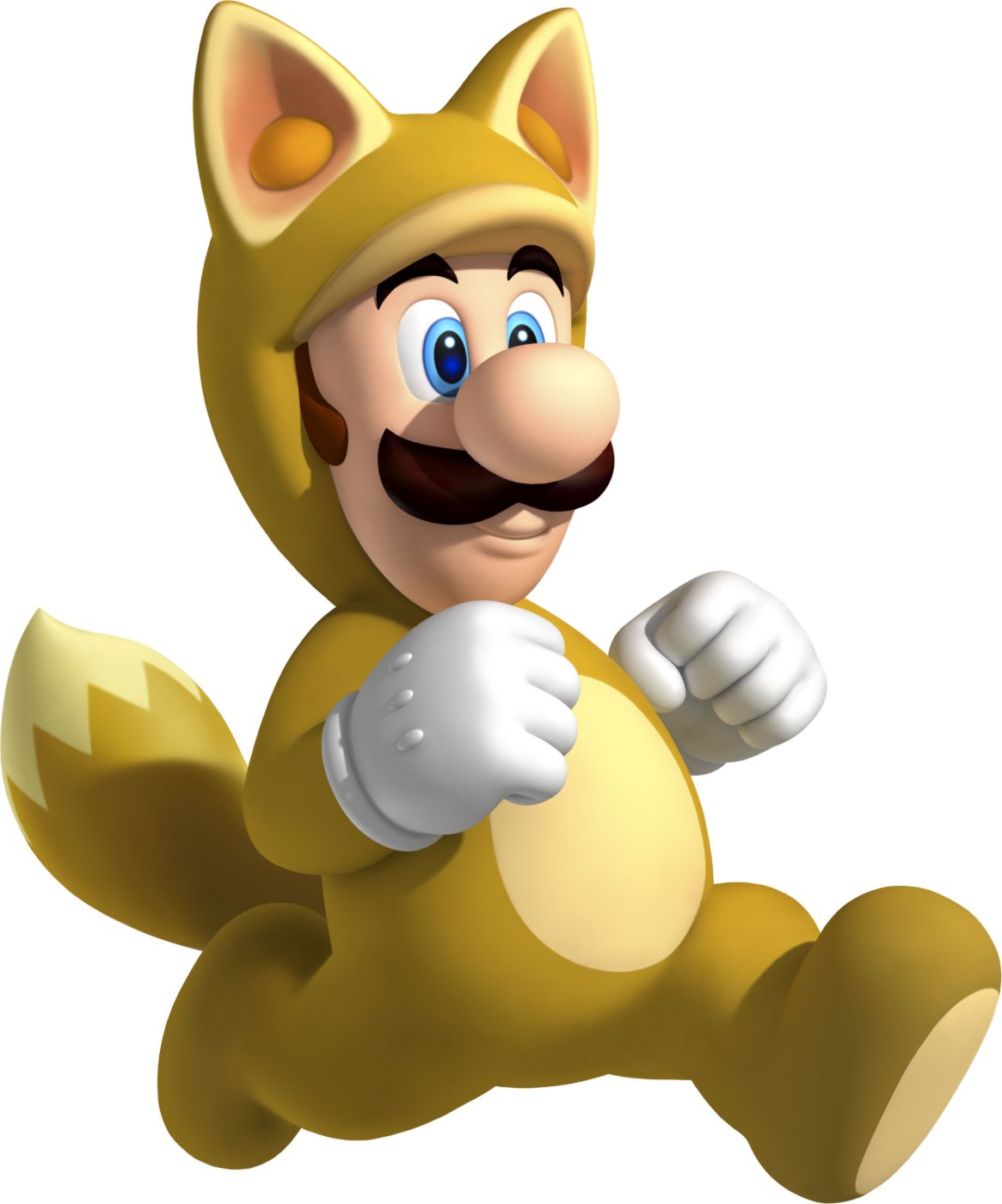
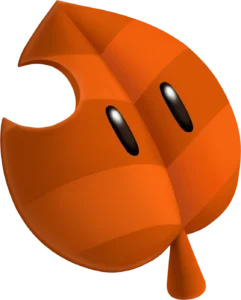 Super LeafTanooki Mario swings his tail at enemies and blocks and drifts slowly down if you hold jump. He cannot fly. Luigi becomes Kitsune Luigi.
 Boomerang Flower (new)Boomerang Mario throws one boomerang at a time. It passes through enemies, comes back, and can fetch coins and Star Medals from out of reach.
 Fire FlowerBouncing fireballs that defeat enemies and light torches. Each one fizzles out after about two seconds.
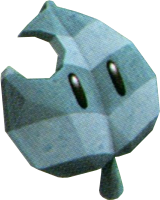 Statue Leaf (new)Special Worlds and StreetPass gifts only. Statue Mario wears a red scarf and turns to invulnerable stone when he Ground Pounds; enemies lose interest in him.
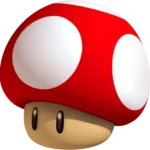 Super MushroomRestores Small Mario to Super Mario, who can break Brick Blocks.
 Super StarA short burst of invincibility. Run into five or more enemies in one go and the 1-Ups start.
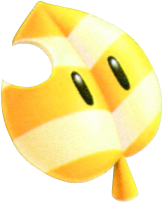 Invincibility Leaf (new)From an Assist Block after five lost lives on a course. White Tanooki Mario has every Tanooki power and is invincible until the flagpole.
 P-WingFrom an Assist Block after ten lost lives, or from certain Mystery Boxes. Touch it and Mario is carried directly to the Goal Pole.
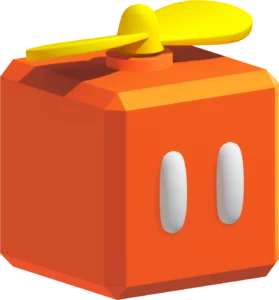 Propeller BoxA box worn over the head. Hold jump to shoot upwards, then float down. Carry it to the Goal Pole for a 1-Up.
 ? BoxAnother wearable box, which sheds coins for as long as you keep running and jumping. Also worth a 1-Up at the flagpole.
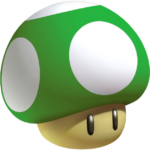 1-Up MushroomAn extra life. The counter runs all the way to 1,110.
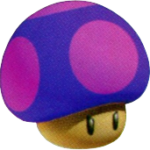 Poison MushroomSpecial Worlds only. A purple mushroom that pops out of certain ? Blocks and chases you; touching it counts as a hit.
 Star MedalThree per course, and more in Mystery Boxes. They unlock gated courses.
 + ClockAdds 10 or 100 seconds to the timer.
 CoinA hundred make a 1-Up, as ever.
 Red CoinsPass through a Red Ring and five appear for a few seconds. Collect them all for a power-up or a 1-Up.
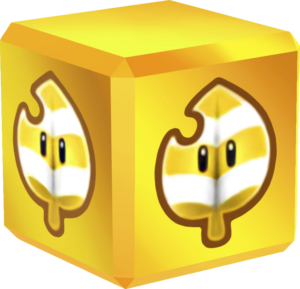 Assist BlockThe golden block that delivers the Invincibility Leaf or the P-Wing.
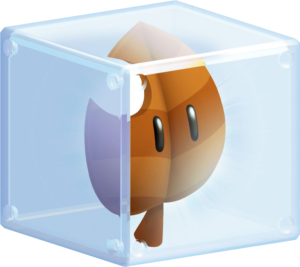 Roulette BlockCycles through the power-ups; hit it to take the one showing.
 Mystery BoxA bonus room on the map or inside a course, played against a short clock.
 Warp BoxAn orange box that carries Mario to another part of the course.
 Note BlockBounce on it. The rare Super Note Block goes further and launches you into Coin Heaven.
 Flip PanelsSet them off and a temporary path of panels unfolds ahead of you.
 Checkpoint FlagRestart from here after losing a life.
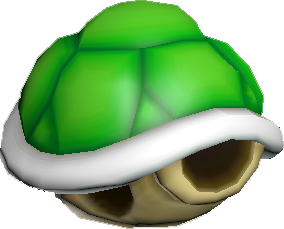 Green ShellKick it into enemies and blocks. It cannot be picked up.
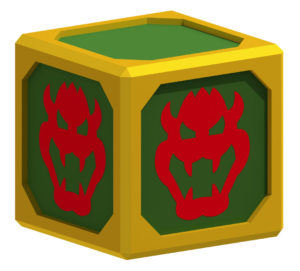 Baddie BoxFound in World 2-4, World 5-Castle and Special 1-3. An invincible Mario can burst one with a Ground Pound.
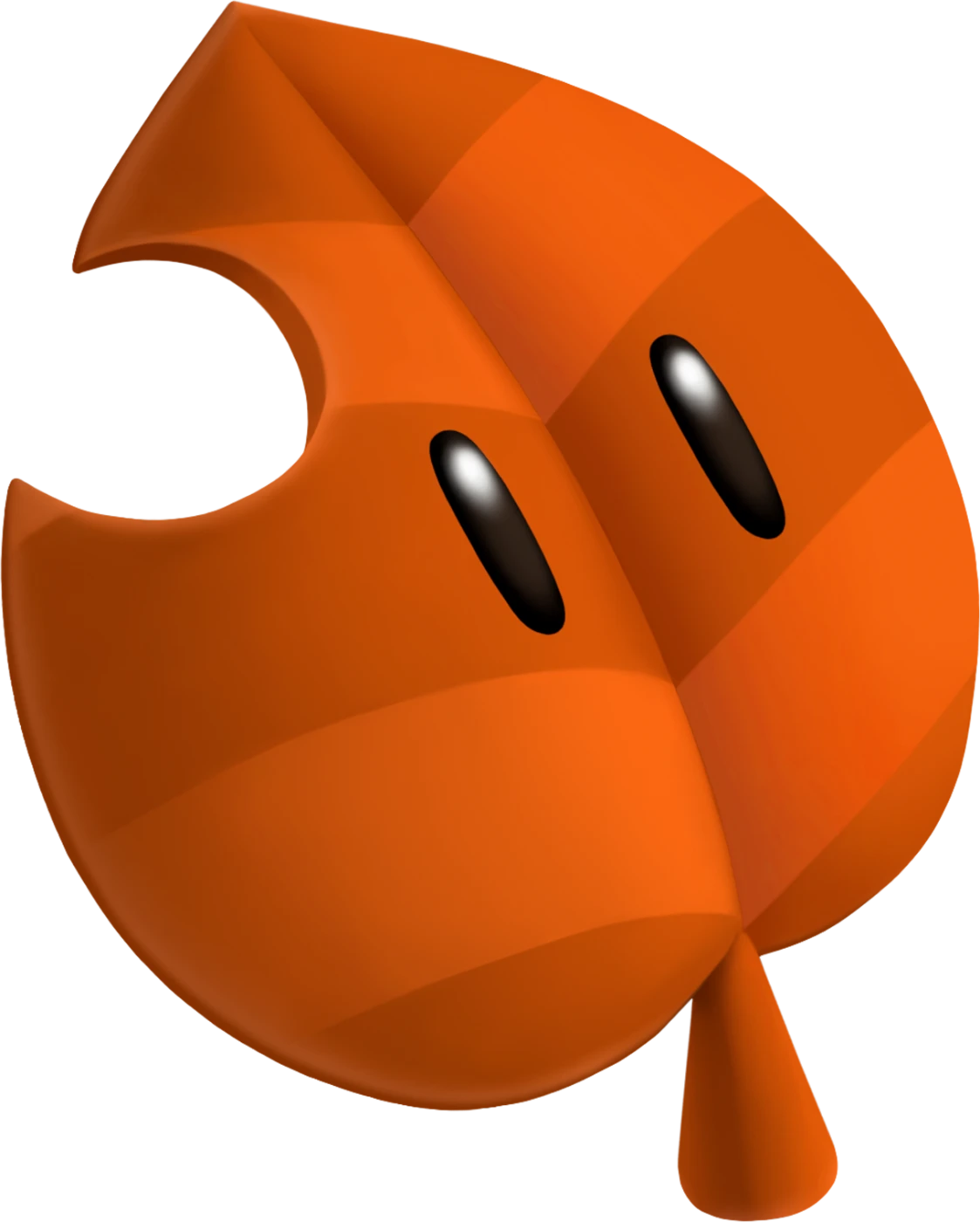

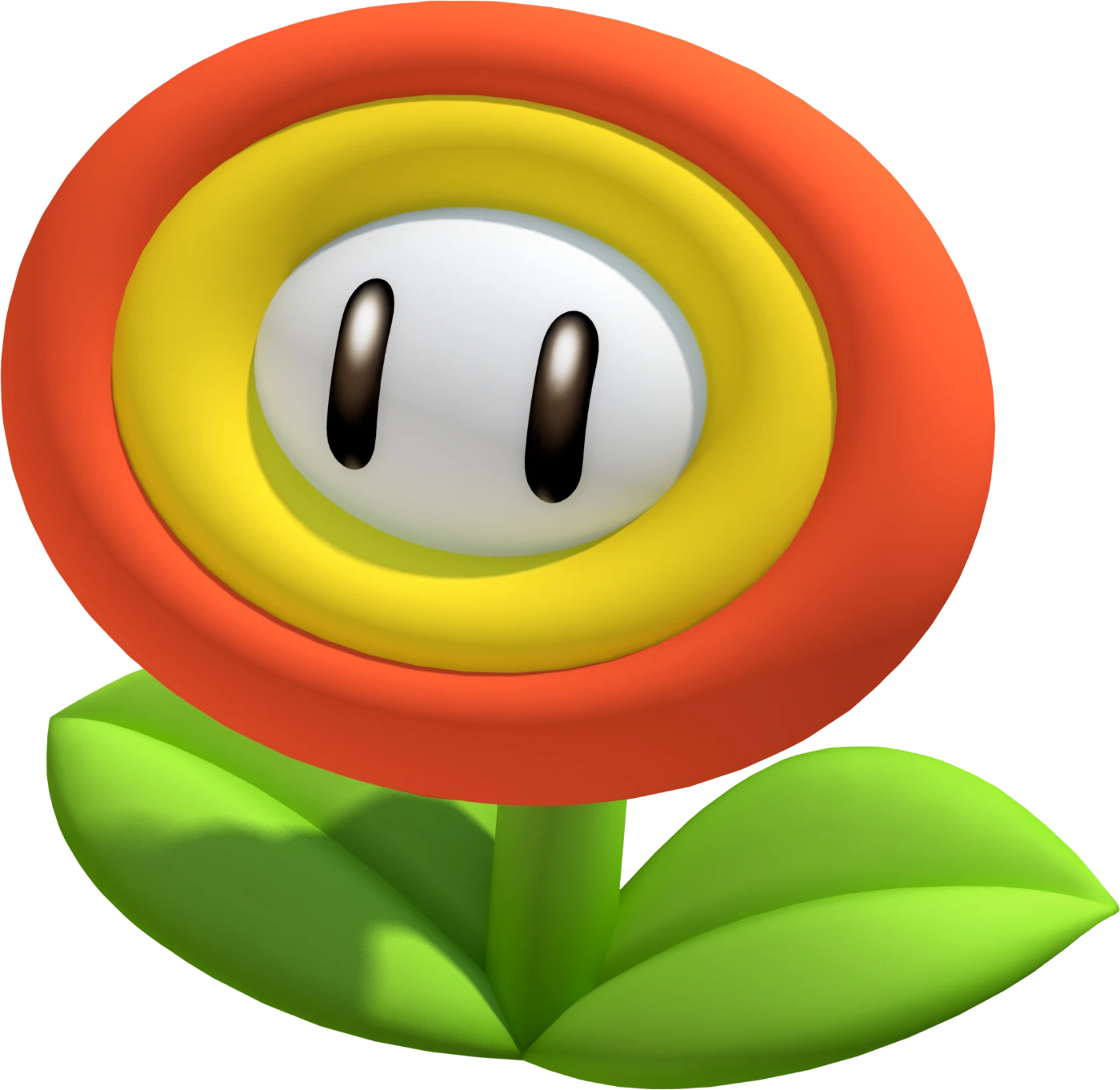
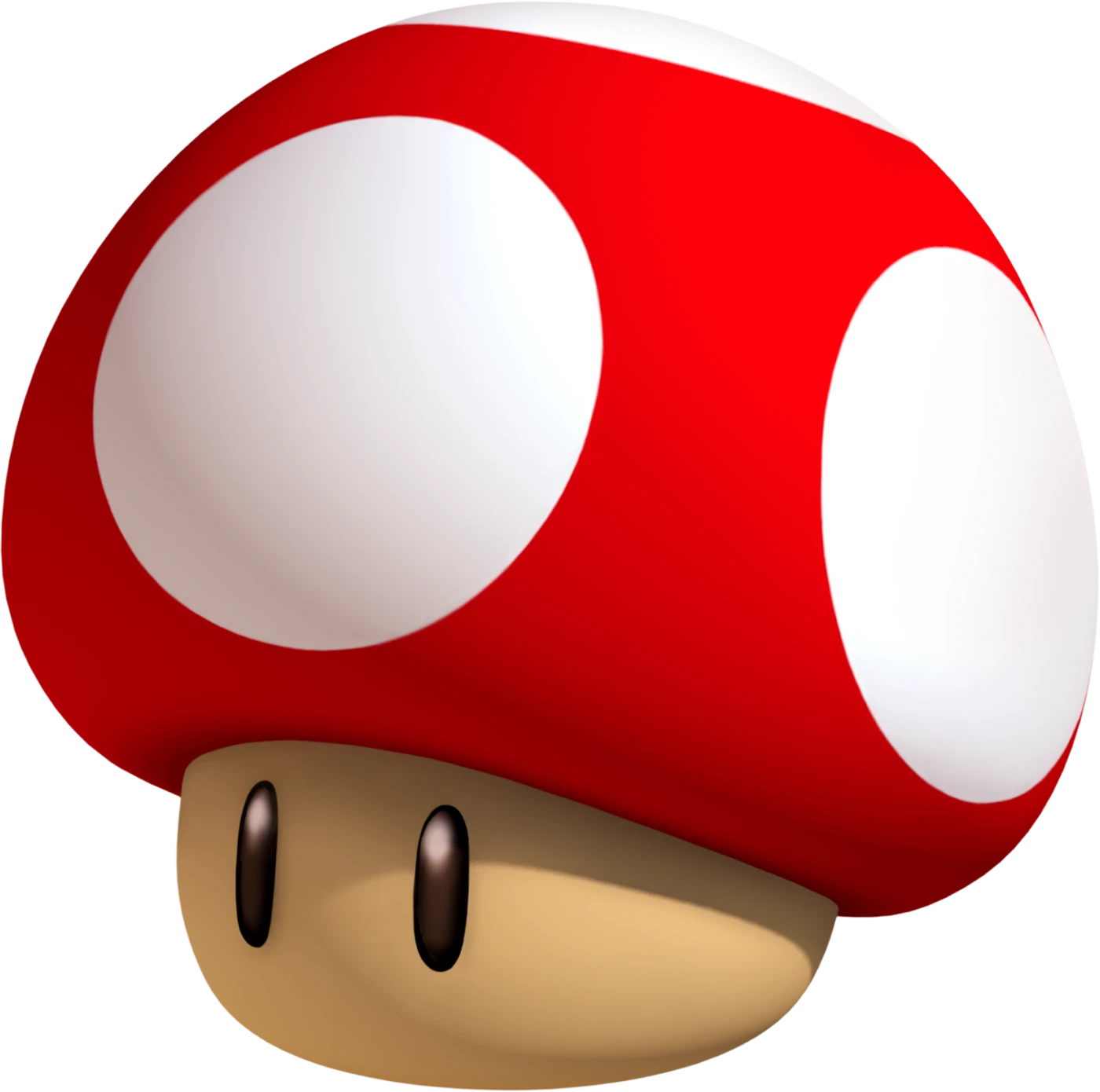

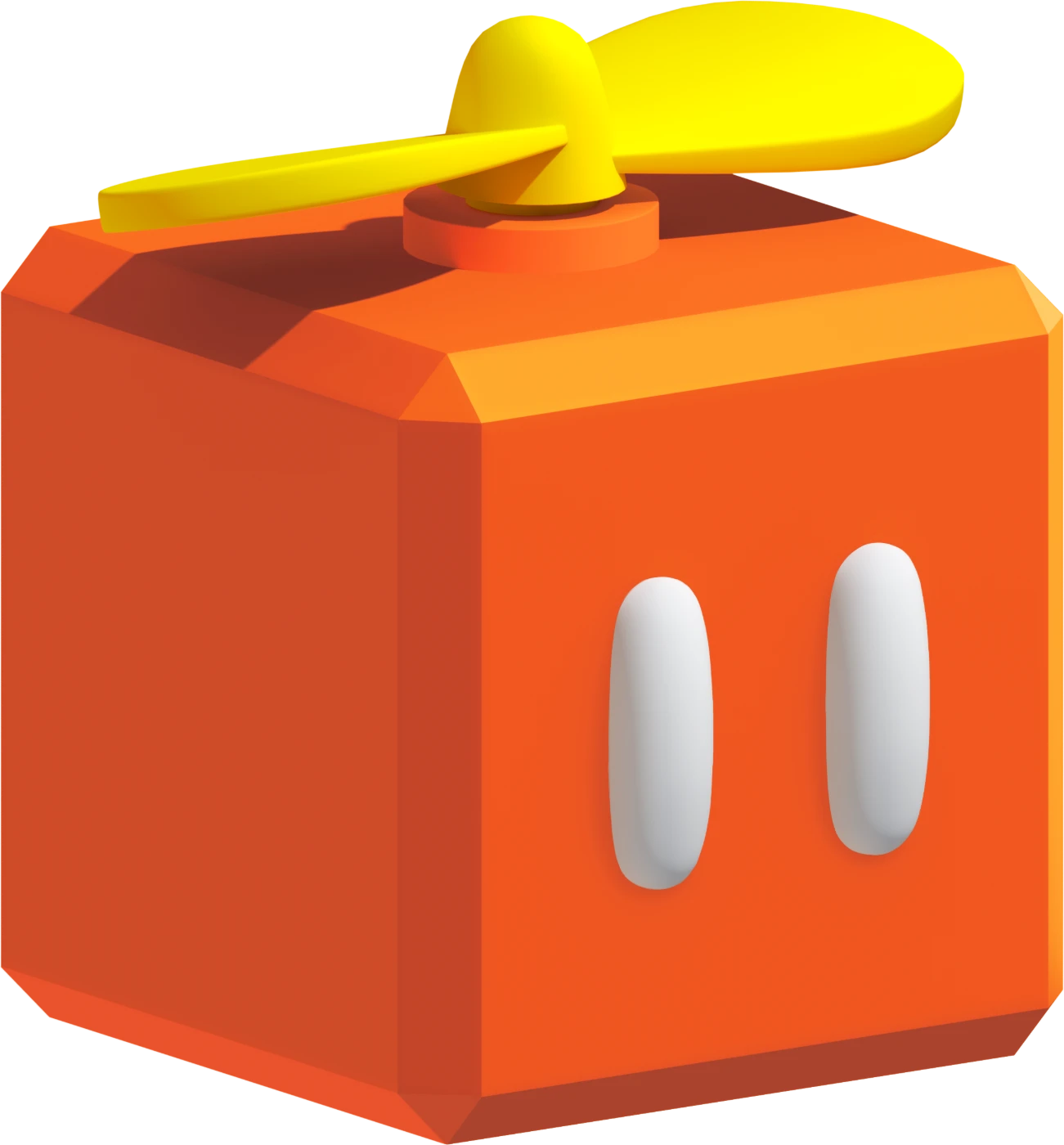
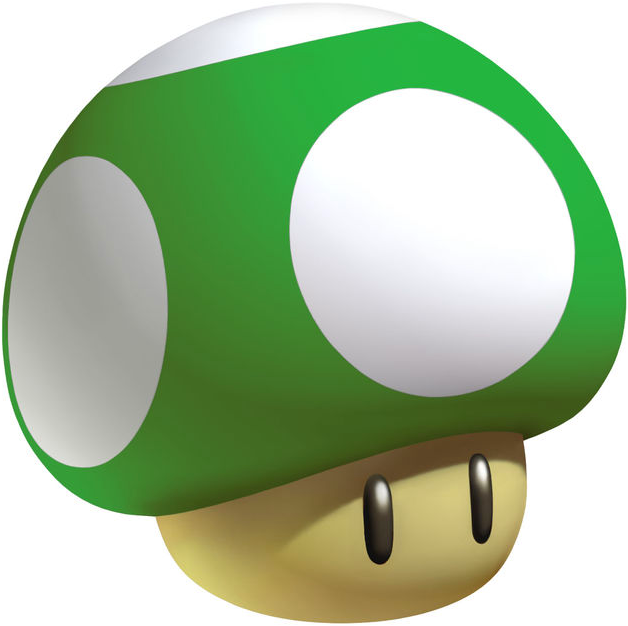
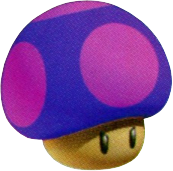


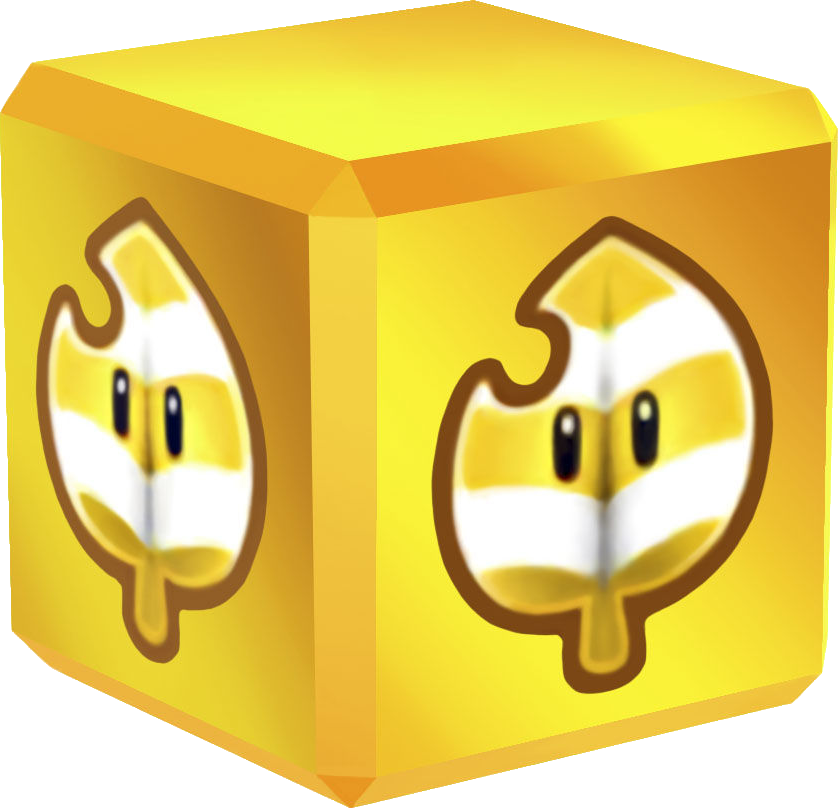
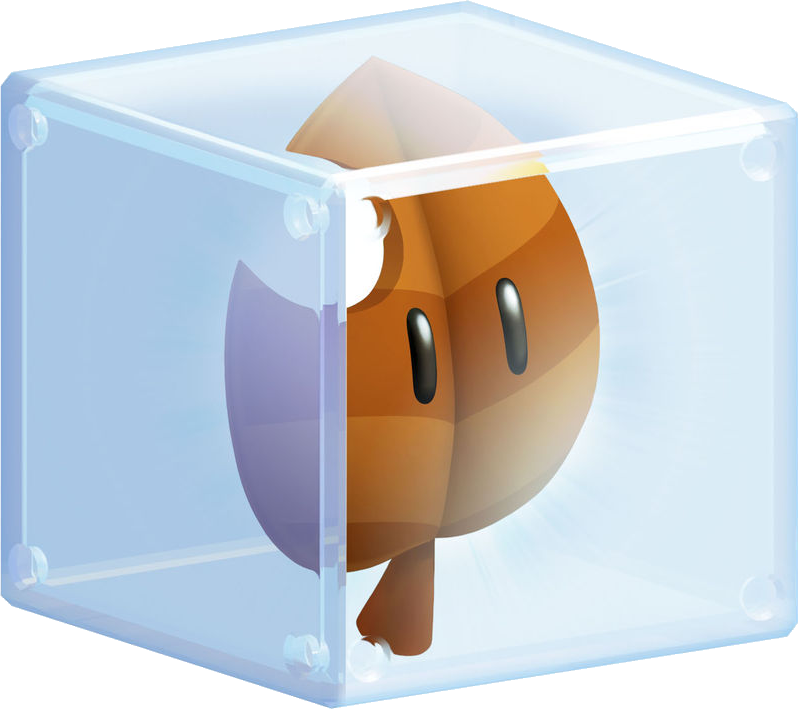


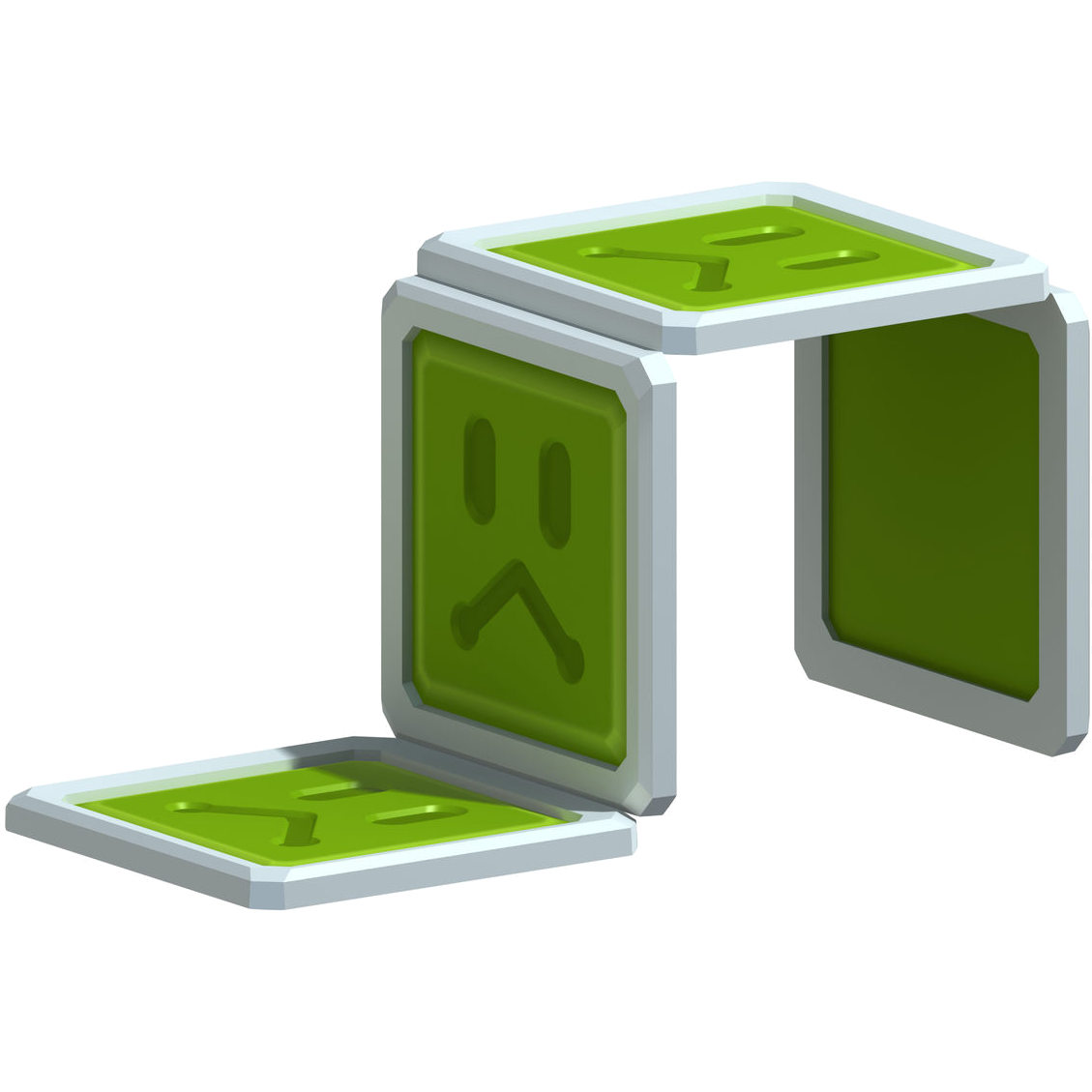
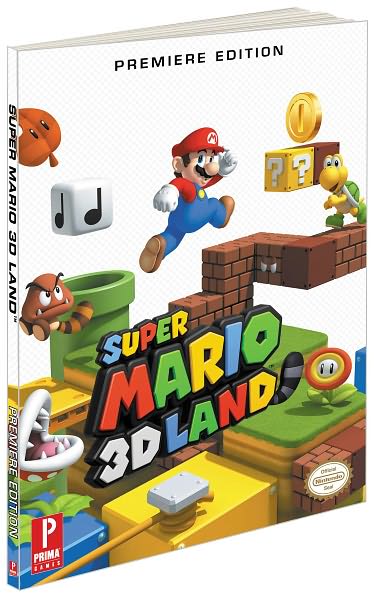 Prima Official Game GuidePrima Games · 2011The licensed strategy guide to the game.
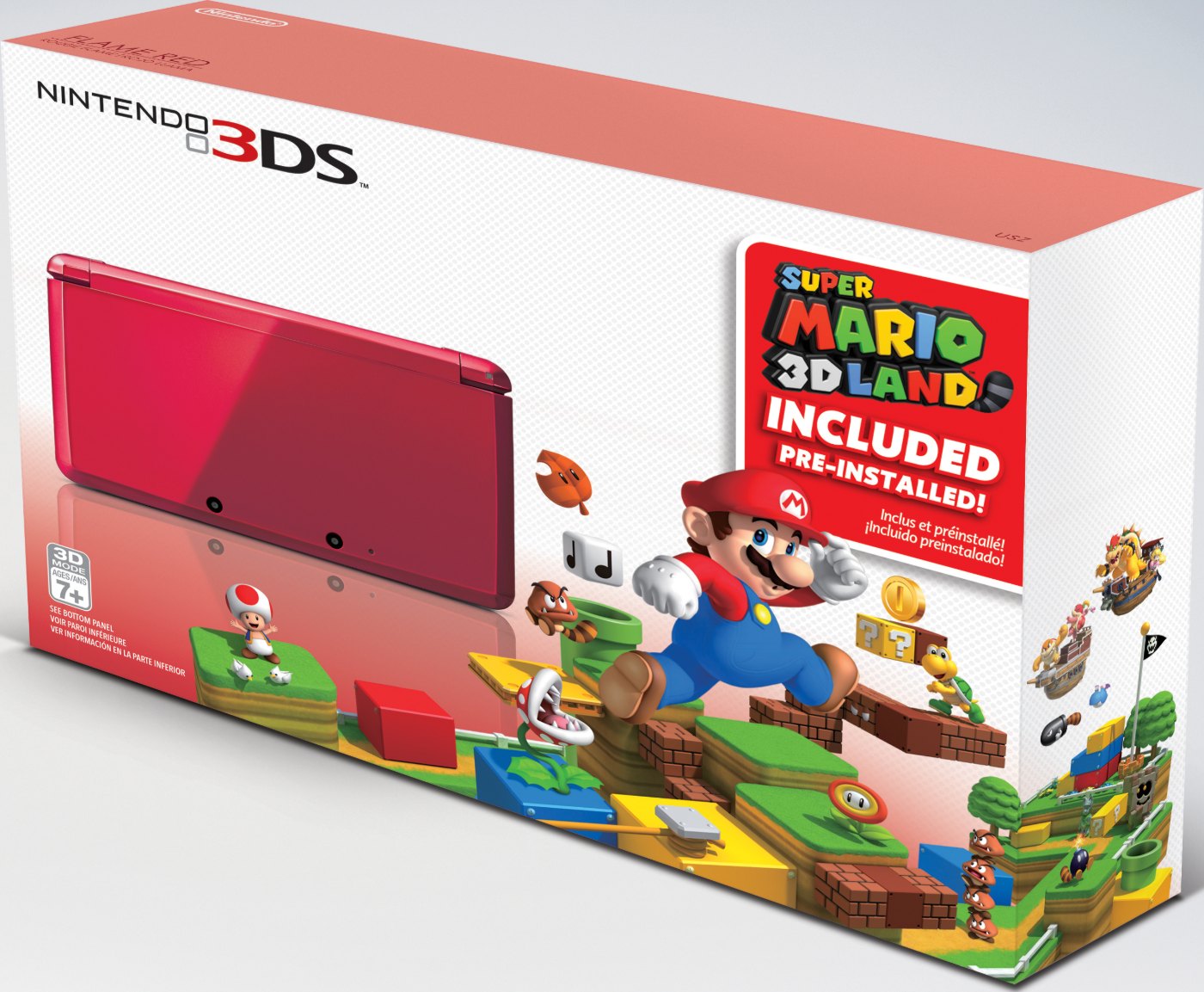 Nintendo 3DS hardware bundlesNintendo · North America, Europe, Japan and the Middle EastThe game was packed in with a Flame Red 3DS in North America and an Ice White one in Europe. Japan had Pearl Pink and Ice White consoles with 3D Land and the original Super Mario Bros. pre-installed, and a red 3DS XL bundle was sold in the Middle East.
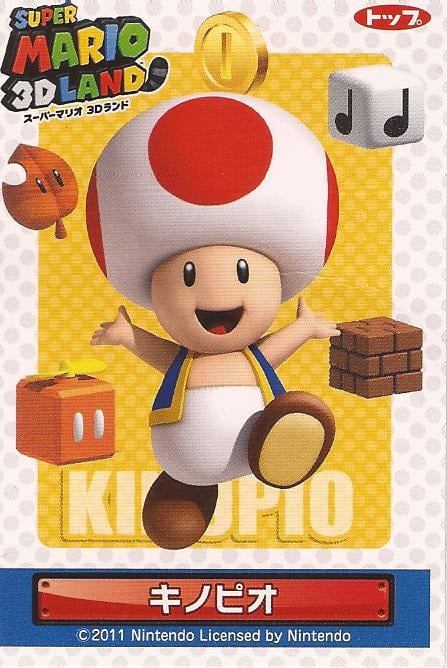 Trading cards and stationeryPromotional itemsA set of character trading cards whose backs join up into one large picture, and a 3D Land writing paper for the 3DS messaging app Swapnote.
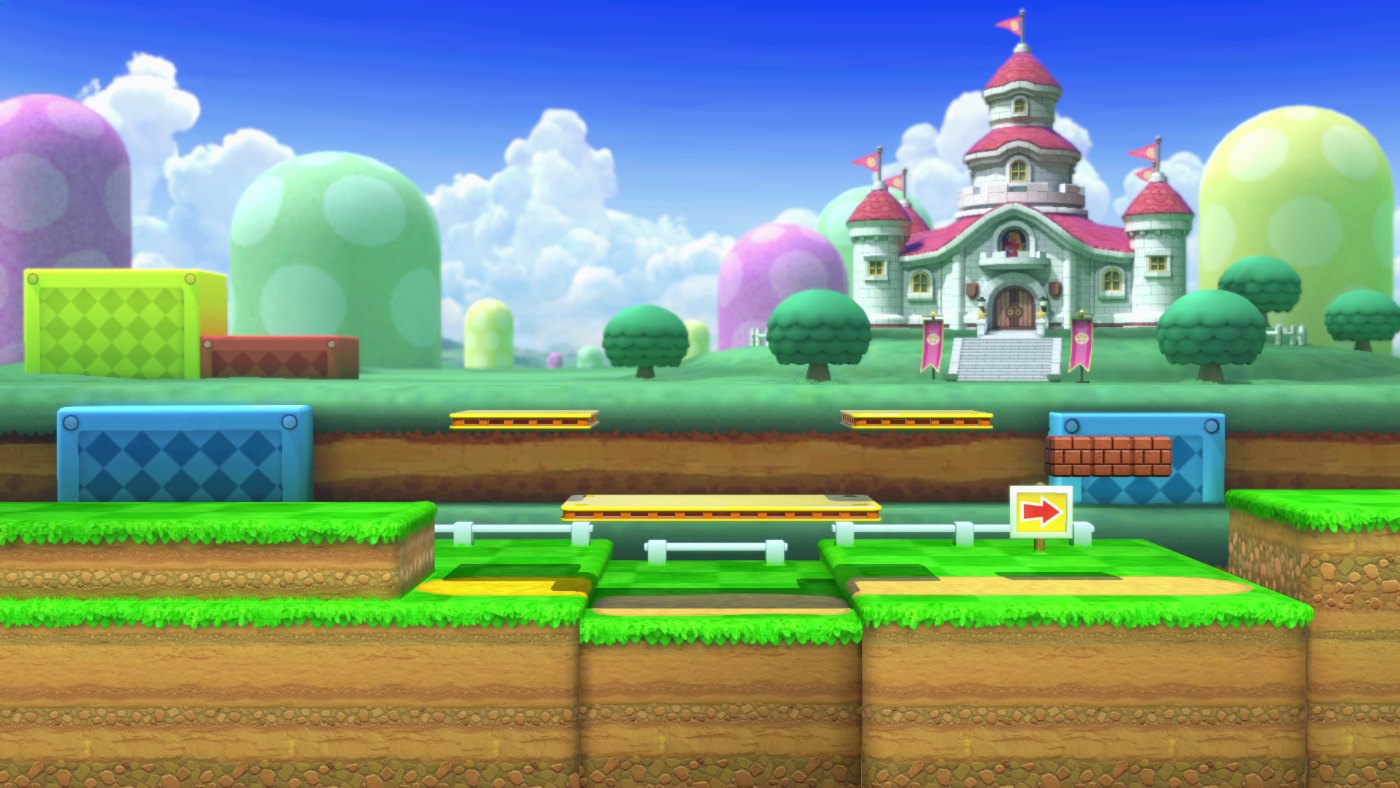 Super Smash Bros.Nintendo · 3DS 2014 · Switch 2018Super Smash Bros. for Nintendo 3DS has a stage called 3D Land, which returns in Ultimate. Boom Boom and Pom Pom share a spirit there, using their artwork from this game.
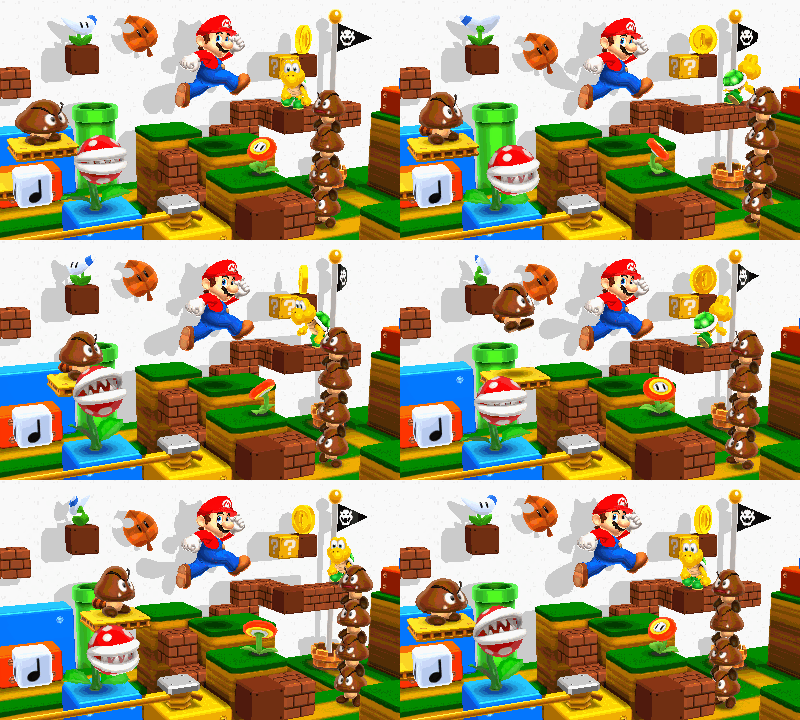 StreetPass Mii PlazaNintendo · 3DSOne of the Puzzle Swap panels is a Super Mario 3D Land scene, pieced together from other players’ consoles.
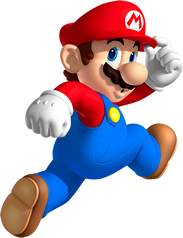 MarioThe hero
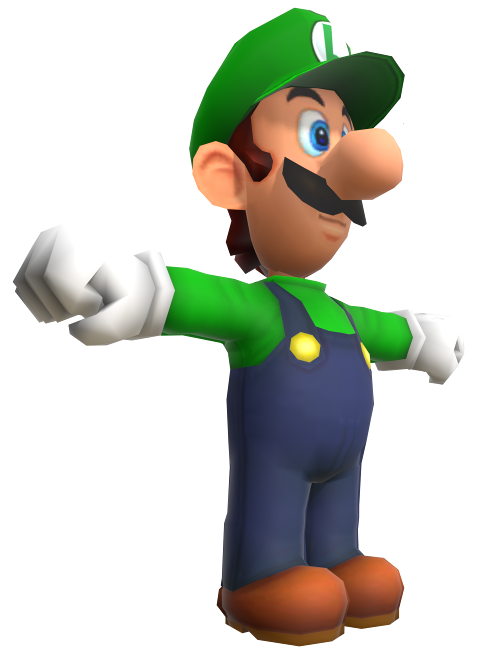 LuigiThe unlockable brother
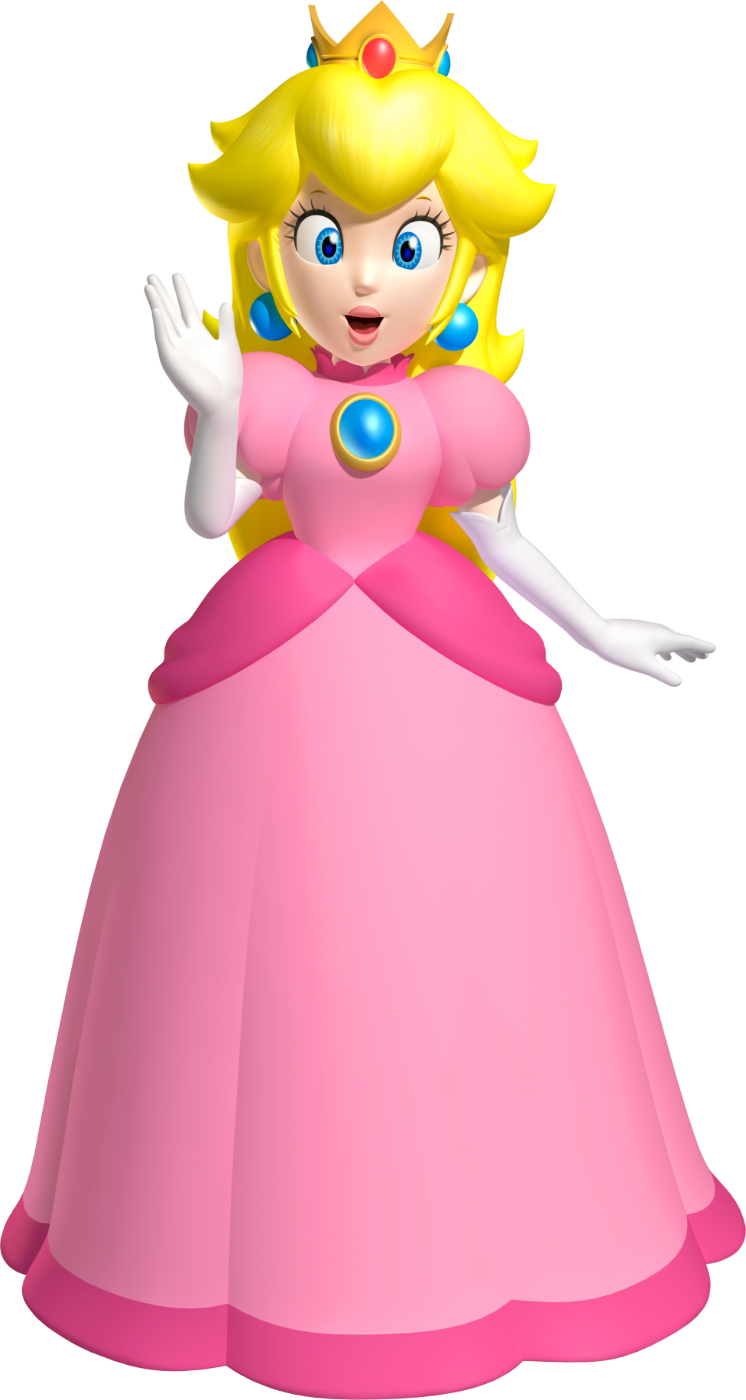 Princess PeachThe princess, with parasol
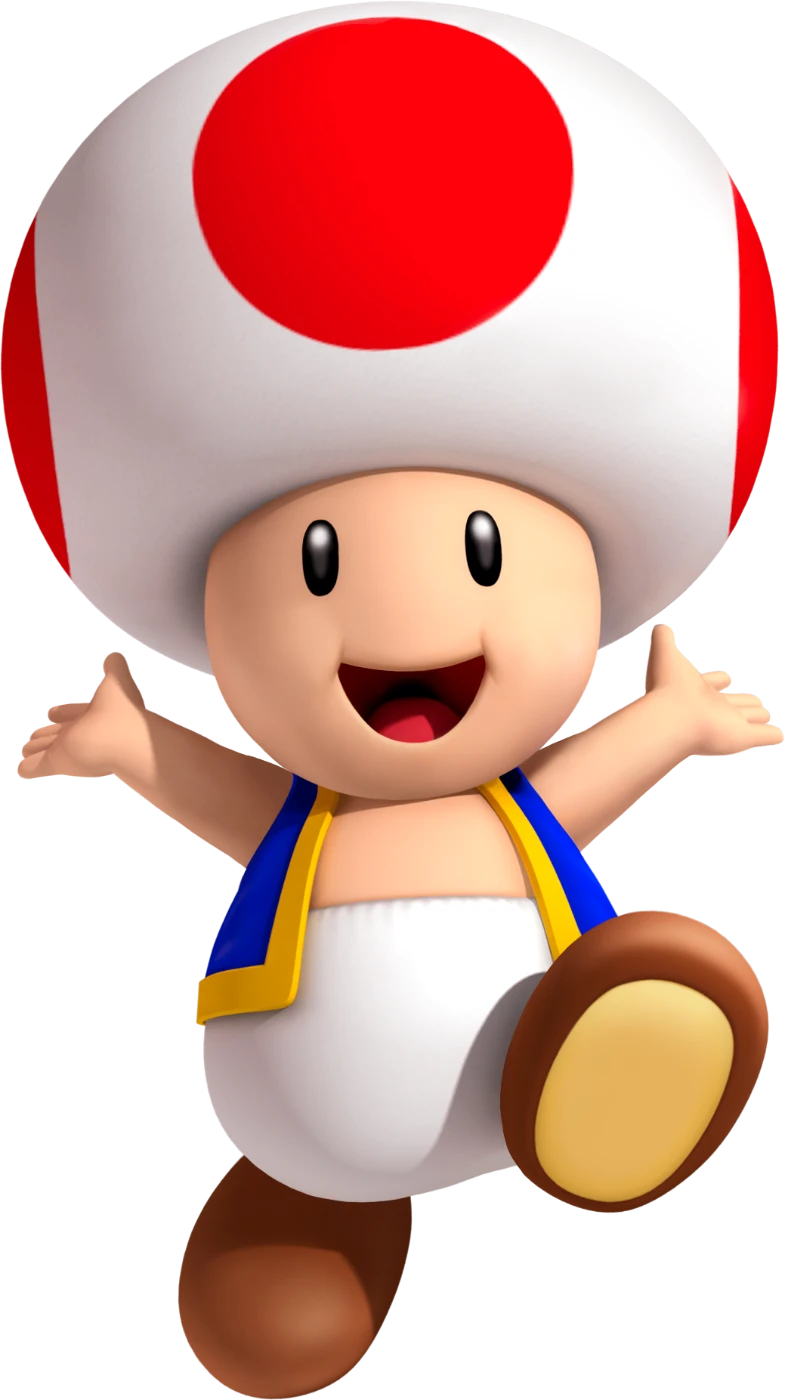 The ToadsRed, yellow and blue
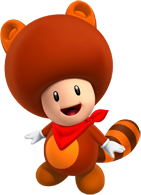 Tanooki ToadsToads in the family suit
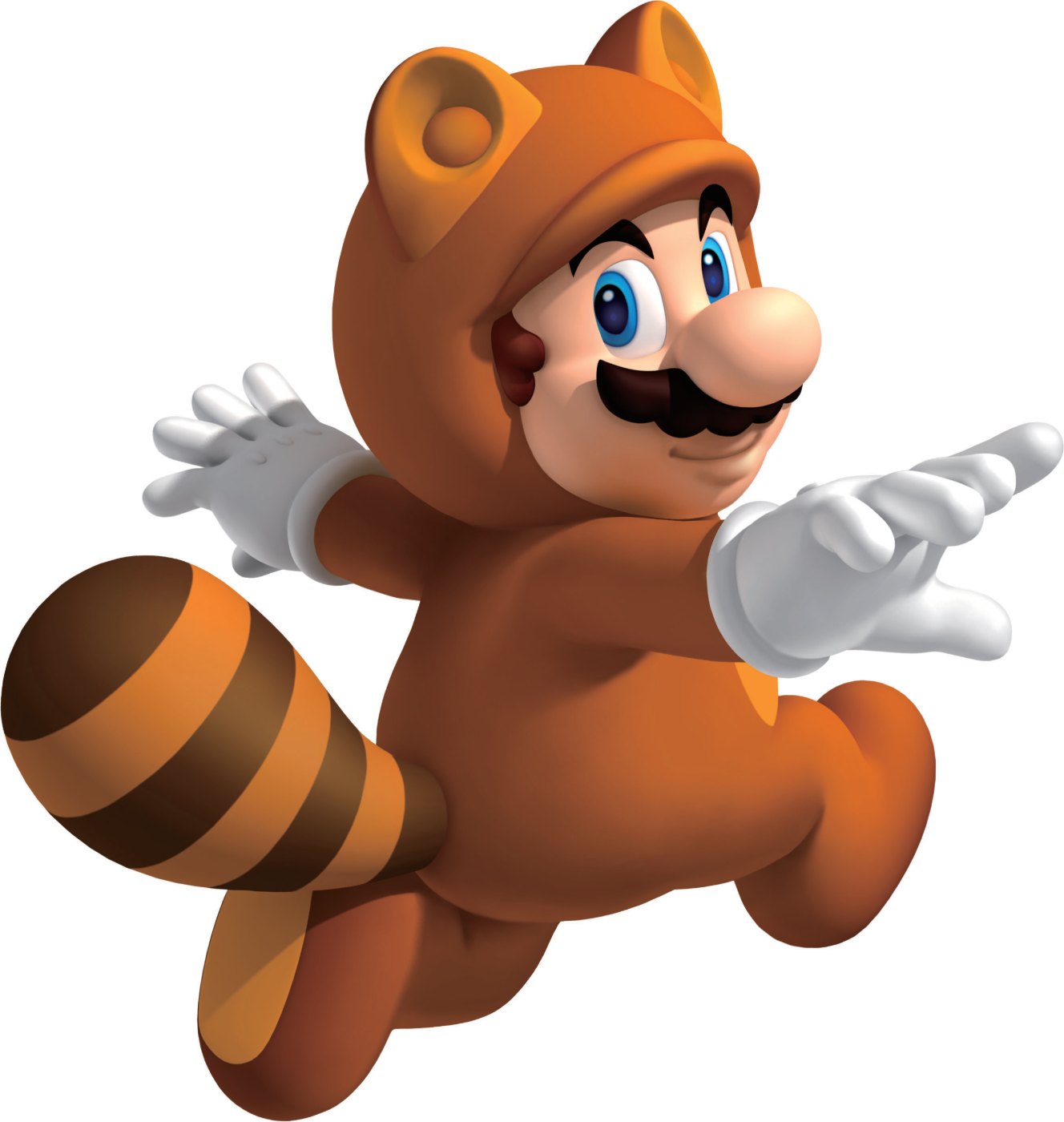 Tanooki MarioSuper Leaf form
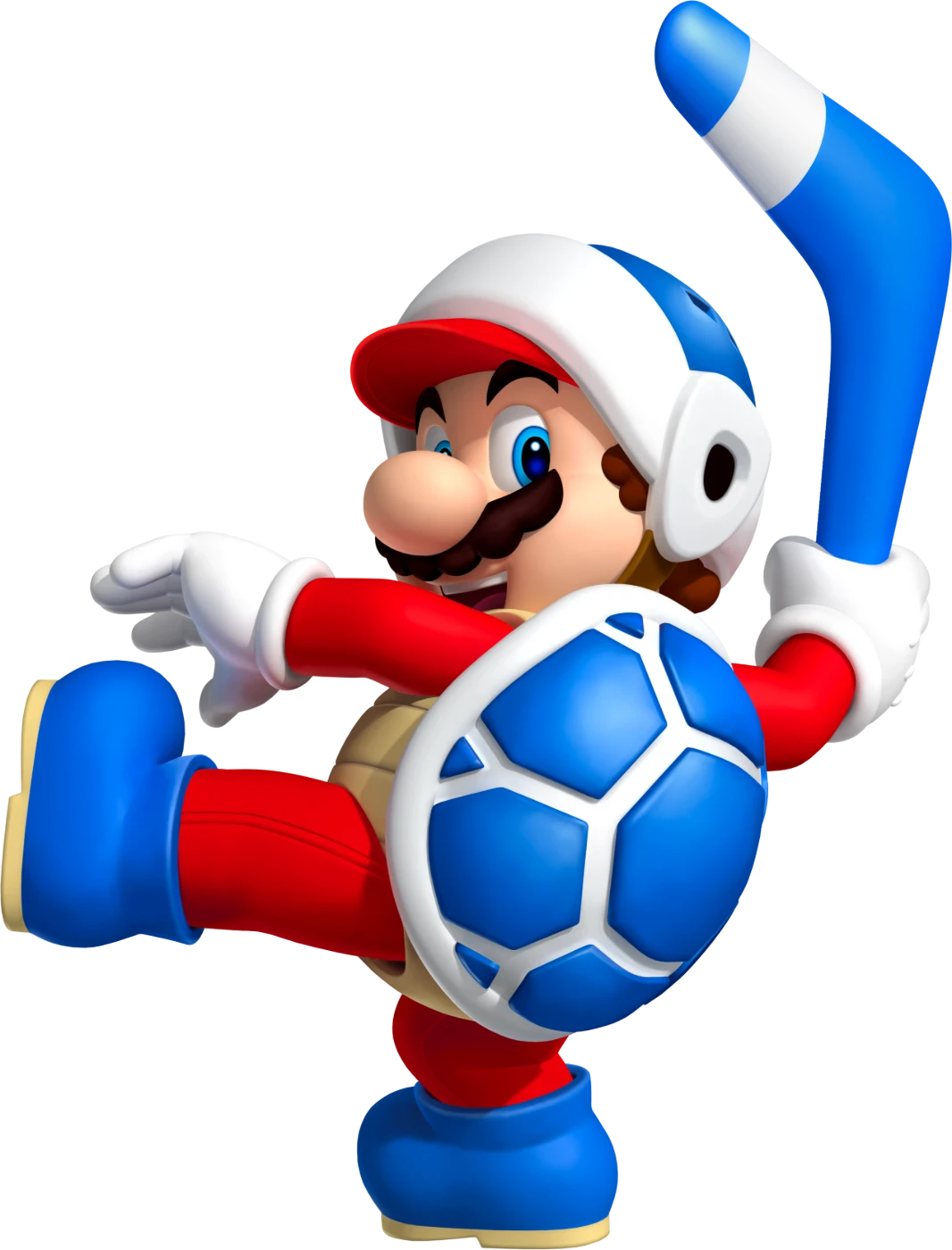 Boomerang MarioBoomerang Flower form
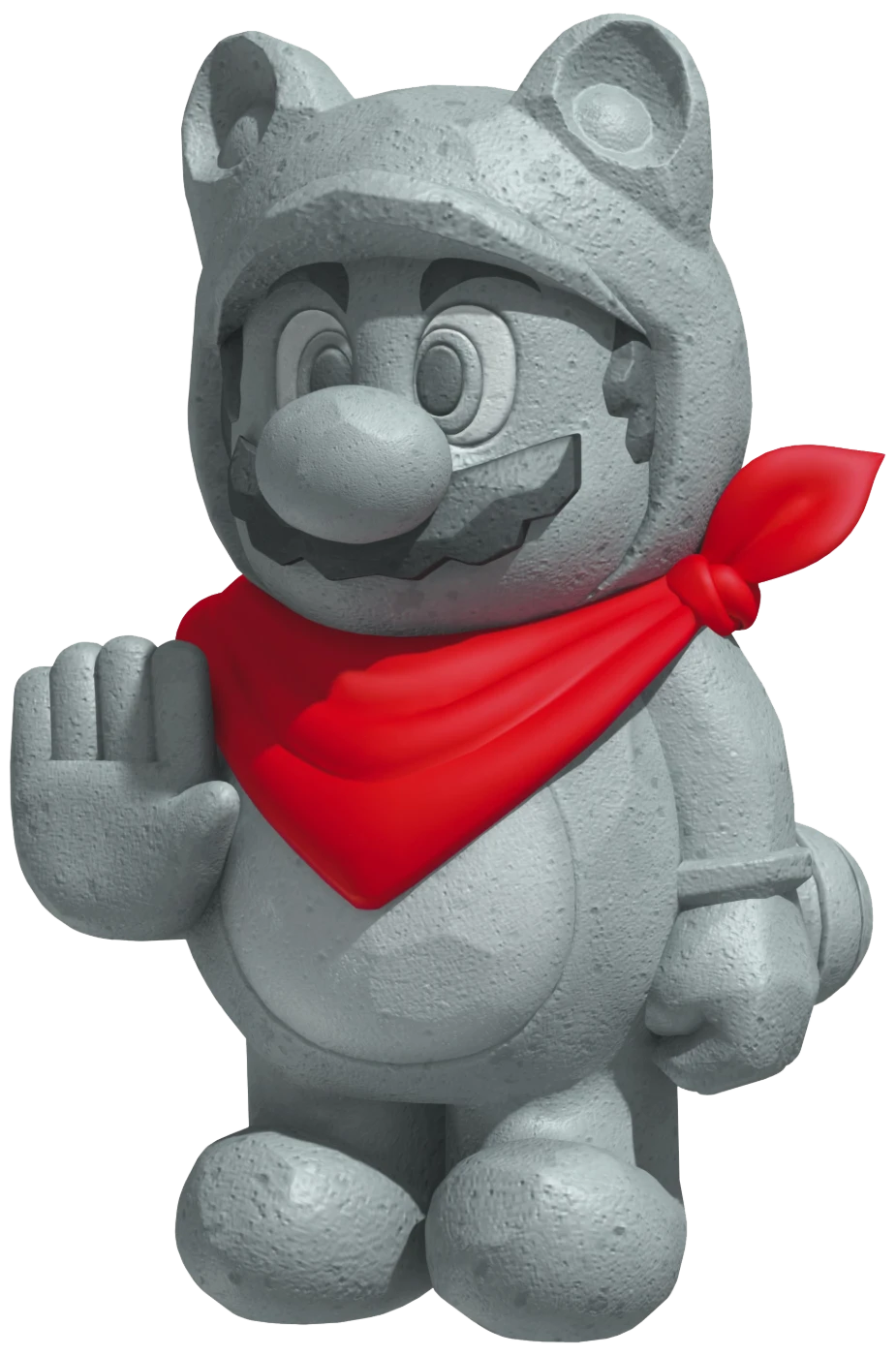 Statue MarioStatue Leaf form
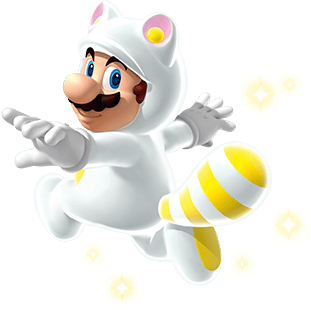 White Tanooki MarioInvincibility Leaf form
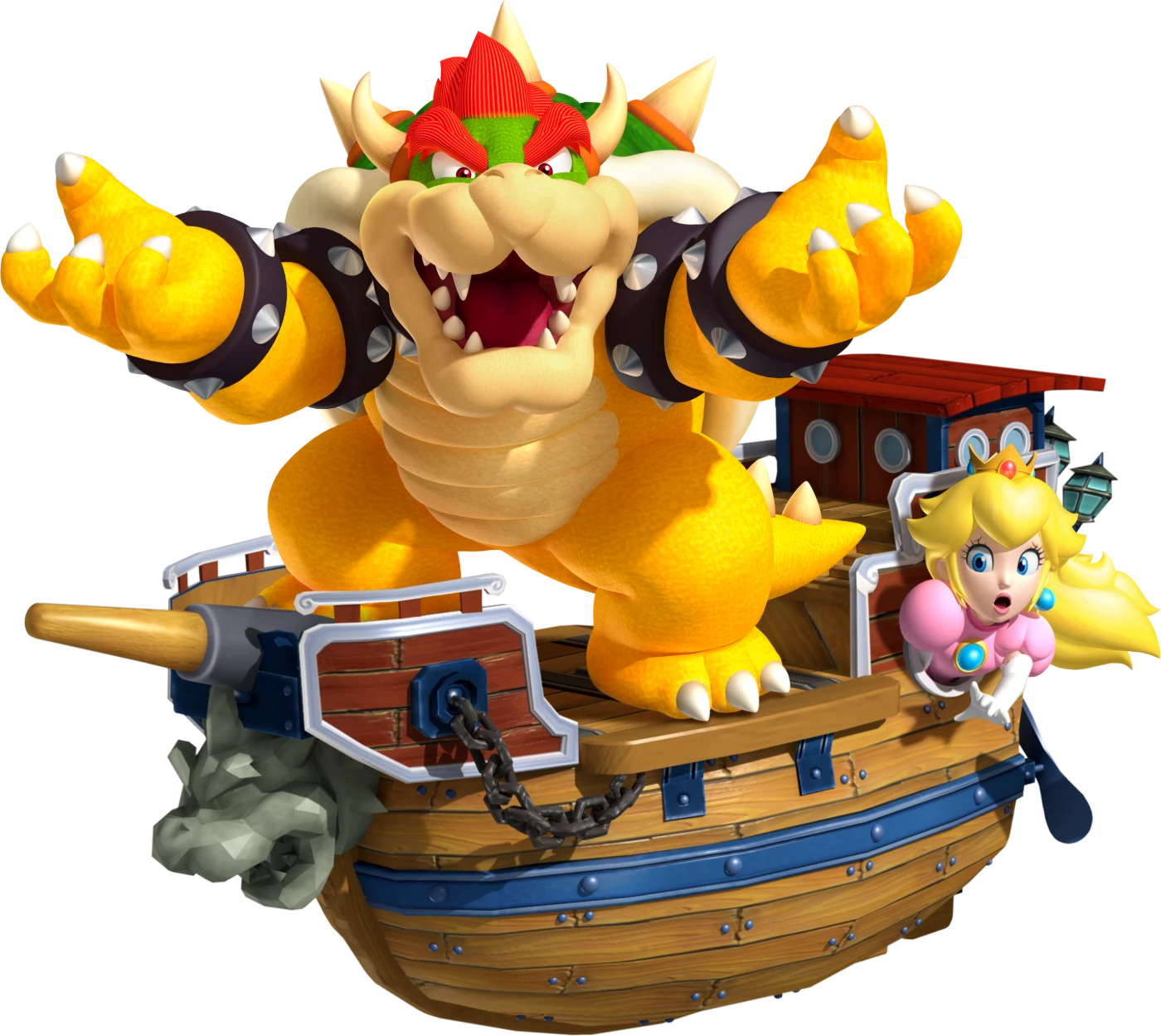 BowserKing of the Koopas
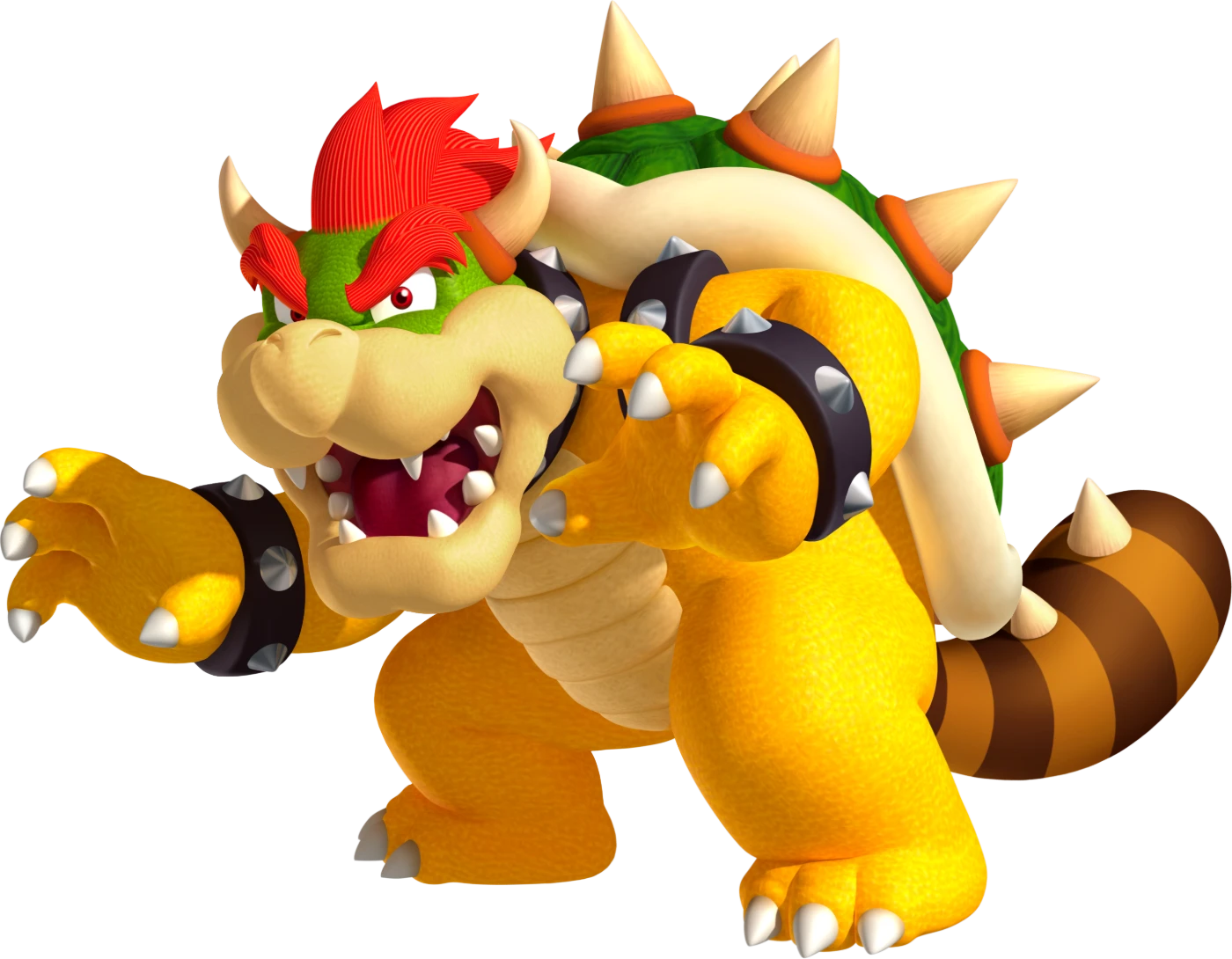 Tail BowsersImpostors with tails
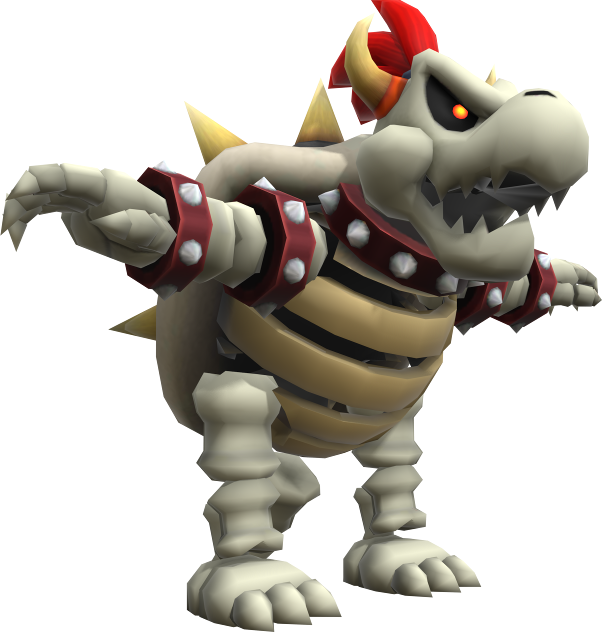 Dry BowserBowser, in bones
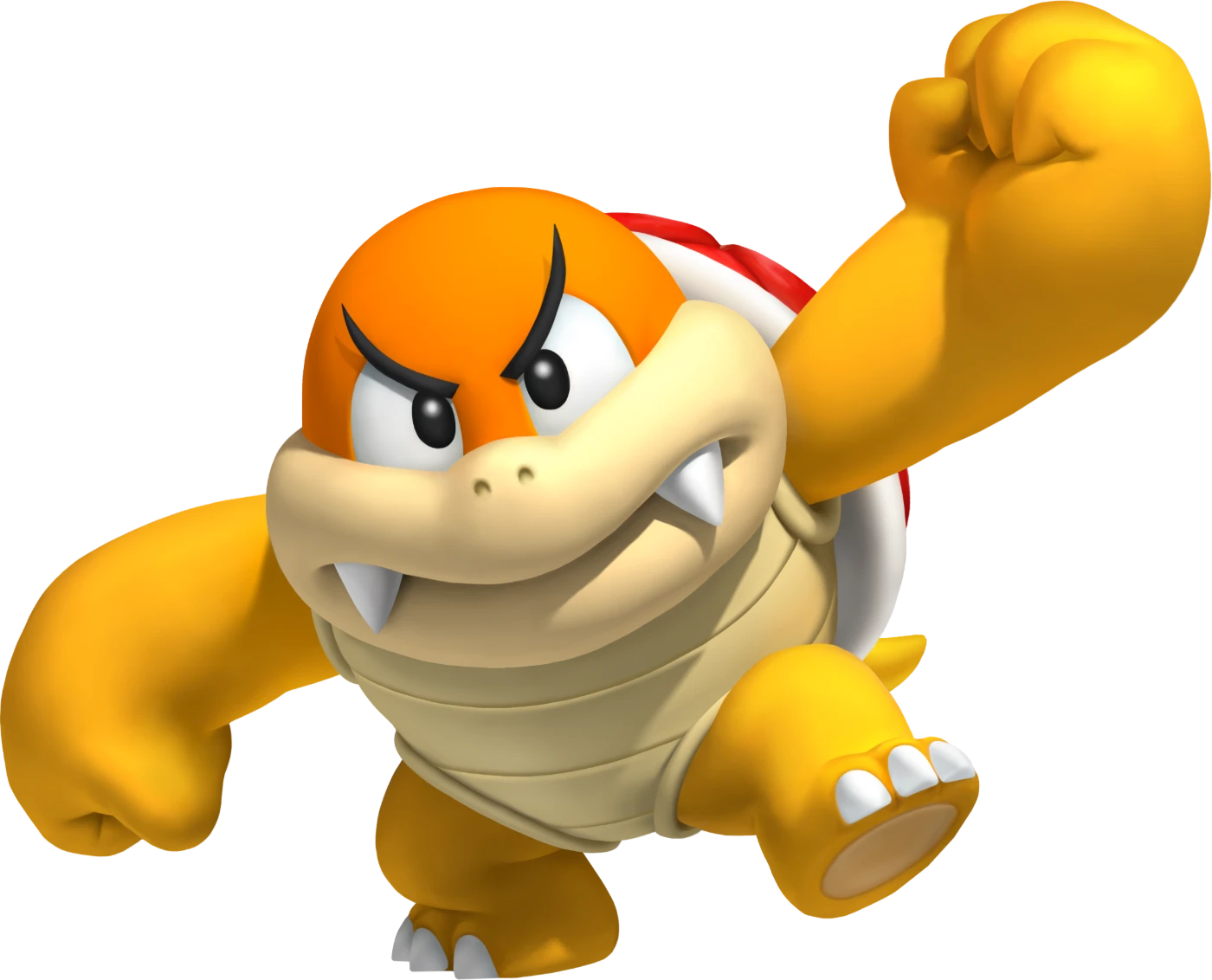 Boom BoomAirship bruiser
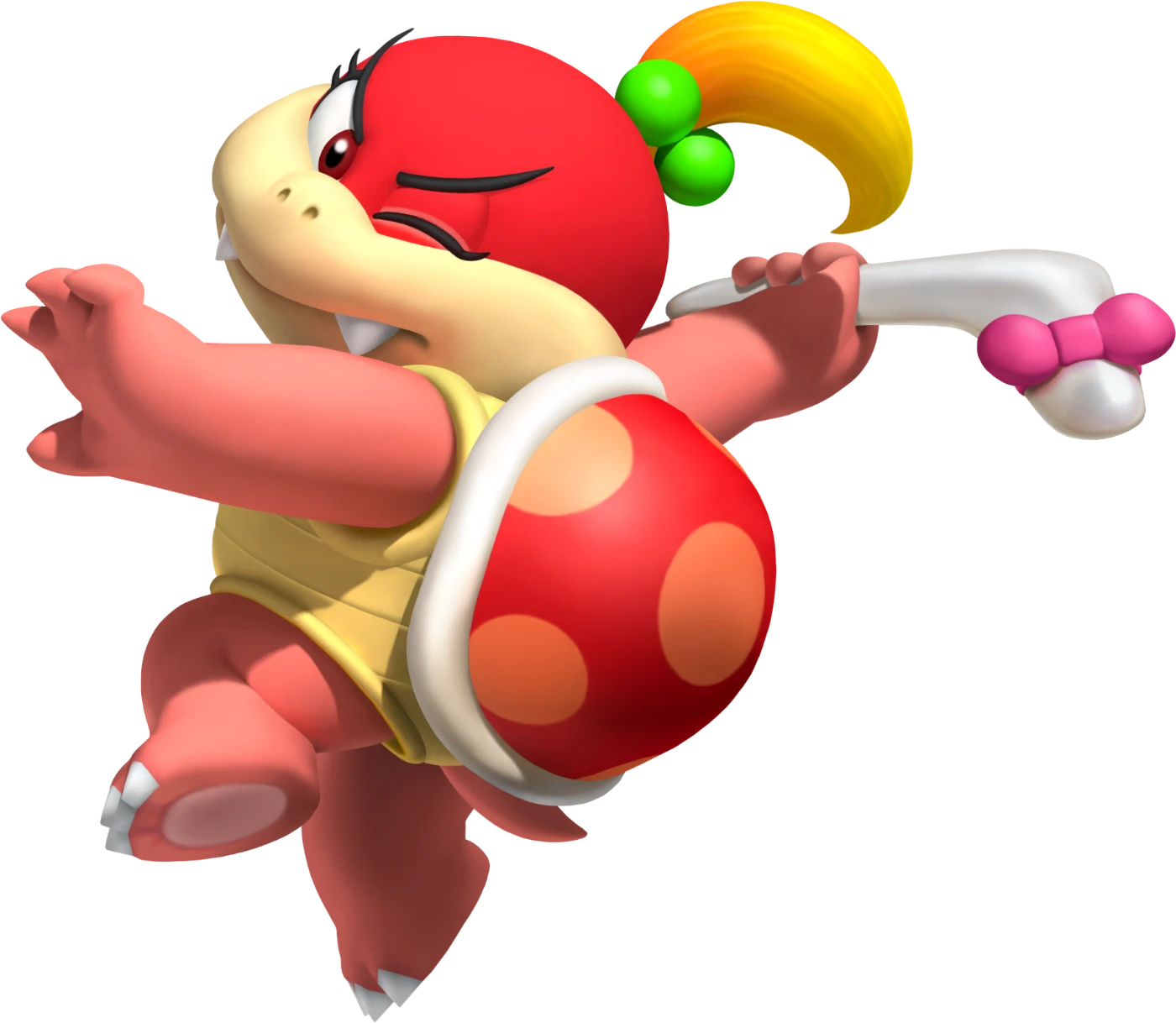 Pom PomBoom Boom’s partner
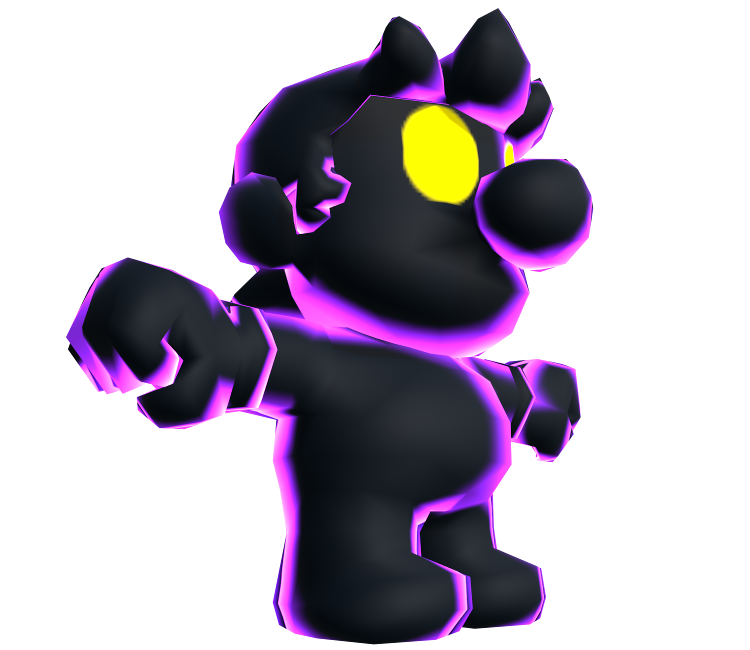 Cosmic ClonesShadow Marios
 GoombaWorld 1-1Now gives chase when it sees Mario. One stomp.
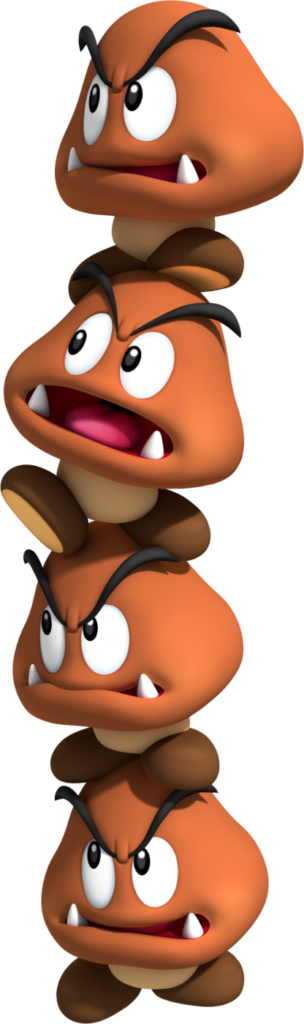 Goomba Tower (new)World 1-2A stack of Goombas; the one at the bottom does the walking.
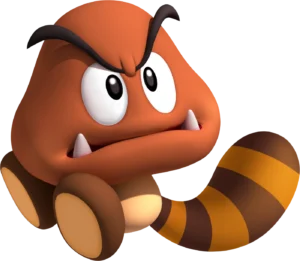 Tail Goomba (new)World 1-1Jumps, floats down and swings its tail as it lands.
 Big Tail Goomba (new)World 1-1A giant version with a much longer reach.
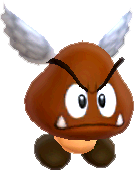 ParagoombaWorld 1-4Flies back and forth or up and down on a fixed route.
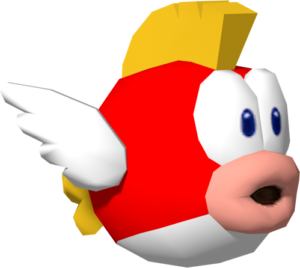 Cheep CheepWorld 1-1Swims set paths; some leap over bridges.
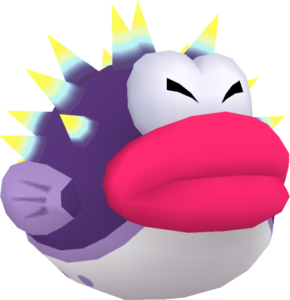 PorcupufferWorld 3-2A spiny purple fish. The leaping ones smash the bridge above.
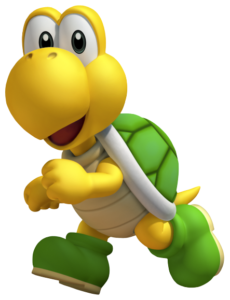 Koopa TroopaWorld 1-2A green-shelled Koopa. Stomp it and kick the shell.
 Dry BonesWorld 1-CastleCollapses when hit and rebuilds itself. Only invincibility finishes it.
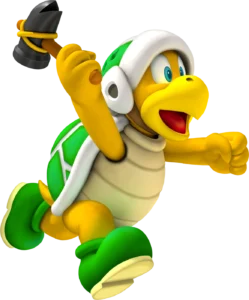 Hammer BroWorld 1-CastleA helmeted Koopa that throws hammers.
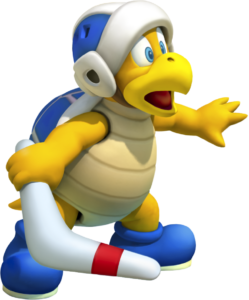 Boomerang BroWorld 4-5Jumps and throws boomerangs. Some drop a Boomerang Flower.
 SpinyWorld 5-2Charges at Mario on sight.
 MagikoopaWorld 7-AirshipTeleports about and fires magic from its wand.
 Inky Piranha Plant (new)World 1-2Spits ink that splatters across the screen and hides the view.
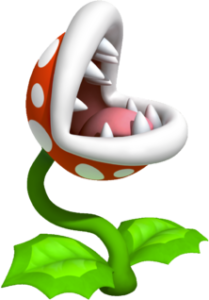 Piranha PlantWorld 1-3Lunges when Mario comes close.
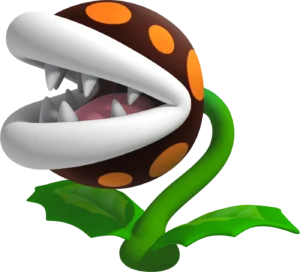 Fire Piranha PlantWorld 1-3The fireball-spitting kind.
 Biddybud (new)World 1-3Beetle-like bugs that march in single file, in several colours.
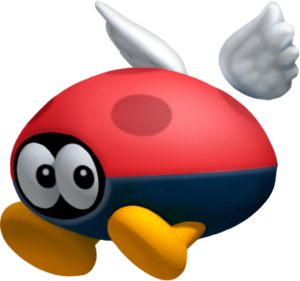 Para-Biddybud (new)World 1-3Winged Biddybuds flying in formation.
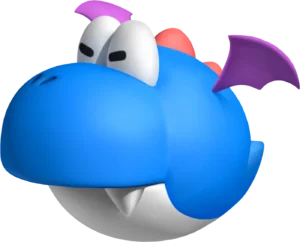 Draglet (new)World 1-CastleA small dragon that spits fireballs.
 Lava BubbleWorld 1-CastleLeaps out of the lava between platforms, usually in groups.
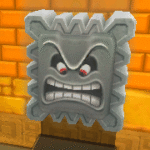 ThwompWorld 1-CastleSlams down at intervals. Its top and sides can be used as platforms and walls.
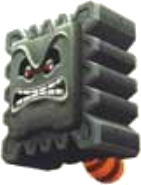 Tail Thwomp (new)World 5-1A Thwomp with a tail that hops along a route. Appears in one course only.
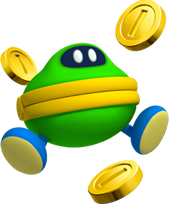 Coin Coffer (new)World 2-3A purse on legs, usually invisible. Flush it out and hit it for a pile of coins.
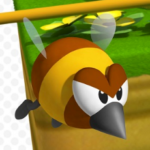 Stingby (new)World 2-4A bee that chases Mario on sight.
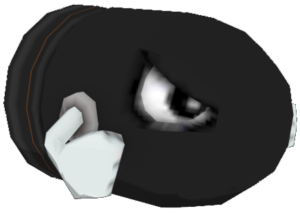 Bullet BillWorld 2-AirshipFired in straight lines from Bill Blasters.
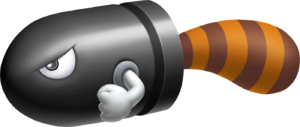 Tail Bullet Bill (new)World 2-AirshipFlies a little way, then lashes out with its tail.
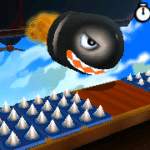 Banzai BillWorld 8-5A huge, slow missile that flies in one fixed direction.
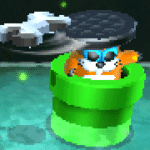 Rocky WrenchWorld 2-AirshipPops out of a hatch to throw wrenches, Bob-ombs or, now and then, coins.
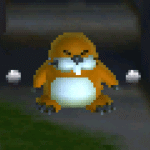 Monty MoleWorld 5-4Bursts out of the ground and patrols.
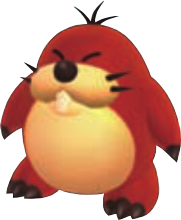 Morty Mole (new)World 5-4A big mole that takes two stomps; the first only flattens it.
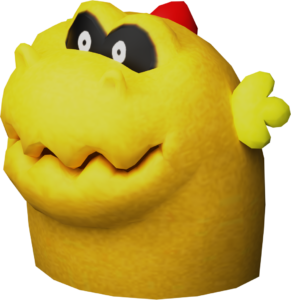 Sandmaargh (new)World 3-1Hides under the sand and surges up to bite when Mario is overhead.
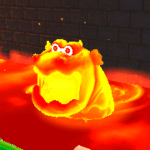 MagmaarghWorld 8-Bowser: Part 1Its bigger, lava-dwelling relative, which rises up through the platforms and shuffles along.
 PokeyWorld 3-1Knock out segments one at a time or hit the head to finish it at once.
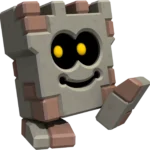 Wallop (new)World 3-1A grinning stone that sidesteps to block narrow corridors.
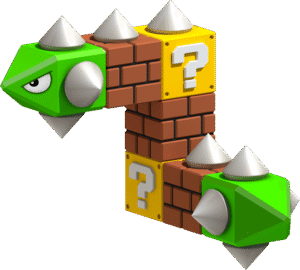 Blokkablok (new)World 3-1A snake of spiked blocks. Break every block to beat it.
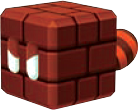 Fake Block (new)World 3-1Poses as a Brick Block, then sprouts a tail and gives chase.
 BlooperWorld 3-2Jerks through the water towards Mario.
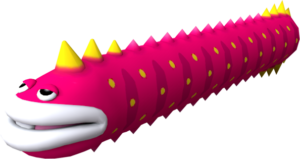 Spike Eel (new)World 3-2A giant eel that shoots out of its hole into your path.
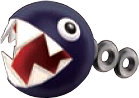 Chain ChompWorld 3-3Tethered to a stump. Lunges when Mario is in range.
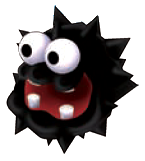 FuzzyWorld 3-4Slides along tightropes in gangs.
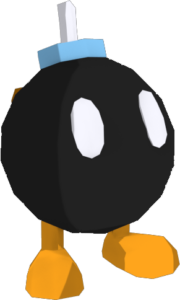 Bob-ombWorld 3-AirshipChases Mario until it blows.
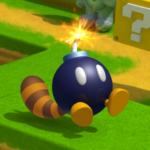 Tail Bob-omb (new)World 7-4Floats down on its tail and explodes shortly after landing.
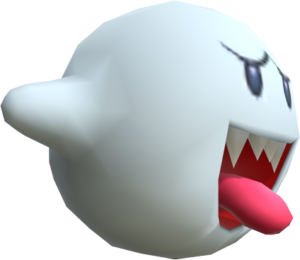 BooWorld 4-4Creeps up when Mario’s back is turned and hides its face when he looks.
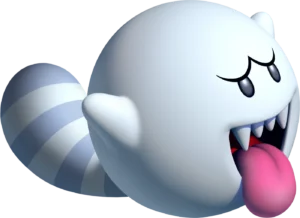 Tail Boo (new)World 4-4Looking at this one does not help: it swats with its tail instead.
 Big BooWorld 4-4Found in a few Ghost Houses.
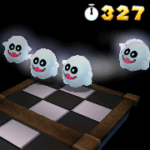 Peepa (new)World 4-4A smiling ghost that stays put or drifts round a set area.
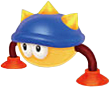 Flophopper (new)World 5-3Flips between a spiky side and a soft one, and clings to rotating platforms.
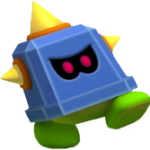 Prongo (new)World 6-4Dives horn-first. If it misses it sticks in the ground, belly up.
 GrinderWorld 7-5A circular saw from Super Mario World that cuts up the wooden floor. One course only.
 Small Cosmic Clone (new)Special 1-2A dark Small Mario that copies your route.
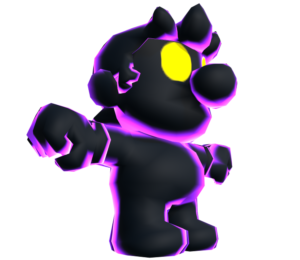 Big Cosmic Clone (new)Special 7-4Larger, and able to break Brick Blocks.
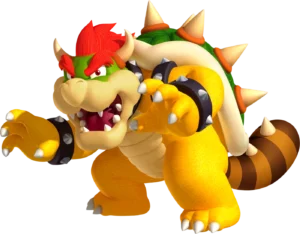 Tail Bowser (boss)World 1-Castle; World 5-CastleGet past him to the switch at the end of the bridge.
 Boom Boom (boss)World 2, 3 and 7 airships; Special 4, 6 and 8Swinging fists and a spinning-top charge.
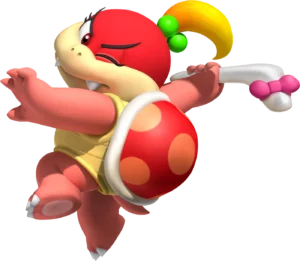 Pom Pom (boss, new)World 4, 6 and 7 airships; Special 4 and 8Boomerangs and big jumps.
 Bowser (boss)World 8-Bowser: Part 1 and Part 2A bridge fight, then a long chase.
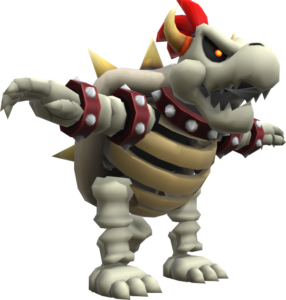 Dry Bowser (boss)Special 1-Castle; Special 5-Castle; Special 8-BowserBlue fire, same switch.