Game Boy Advance2004NintendoPuzzleEmulated NES originalFamicom Mini No. 15Single-cartridge wireless versus248,045 sold in Japan (Famitsu)Metacritic 66
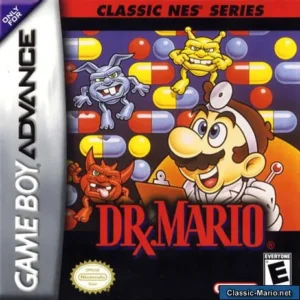
Classic NES Series: Dr. Mario (Game Boy Advance)
The 1990 NES Dr. Mario, emulated whole on a Game Boy Advance cartridge. It was Famicom Mini No. 15 in Japan, released on 21 May 2004 in the second volume of the series, and followed as part of the second wave of the Classic NES Series in North America on 25 October 2004 and of NES Classics in Europe on 7 January 2005, at around £15. The viruses, capsules, Fever and Chill and the little intermission films are all present and correct. What the Game Boy Advance adds is head-to-head play from a single cartridge, over the Game Link Cable or the Wireless Adapter, plus saved high scores; what it costs is the top and bottom of the picture, which is heavily cropped. Critics liked the wireless link more than the price, and Metacritic settled on 66. Famitsu data counts 248,045 copies sold in Japan.
Publisher:Nintendo
Original game:Dr. Mario (Famicom/NES, 1990), Nintendo R&D1
Platform:Game Boy Advance
Genre:Falling-piece puzzle
Japan:21 May 2004 (Famicom Mini No. 15, second volume)
N. America:25 October 2004 (Classic NES Series, second wave)
Europe:7 January 2005 (NES Classics)
Players:1–2 (two-player over the Game Link Cable or Wireless Adapter, one cartridge)
Price:About £15 in the UK (Nintendo of Europe’s estimate)
Virus levels:0–20 to pick from (4 to 84 viruses)
Speeds:Low, Med, Hi
Music:Fever, Chill or off (Hirokazu Tanaka)
New features:High-score save, single-cartridge link and wireless play
Serial codes:AGB-FDMJ-JPN, AGB-FDME-USA, AGB-FDMP-EUR
Sales:248,045 in Japan (Famitsu data, via Wikipedia)
Metacritic:66 (10 reviews)
Advertisement
Overview
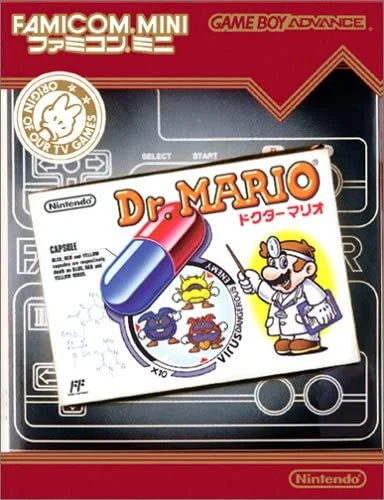
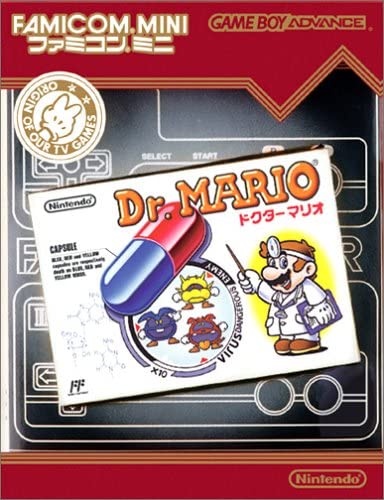
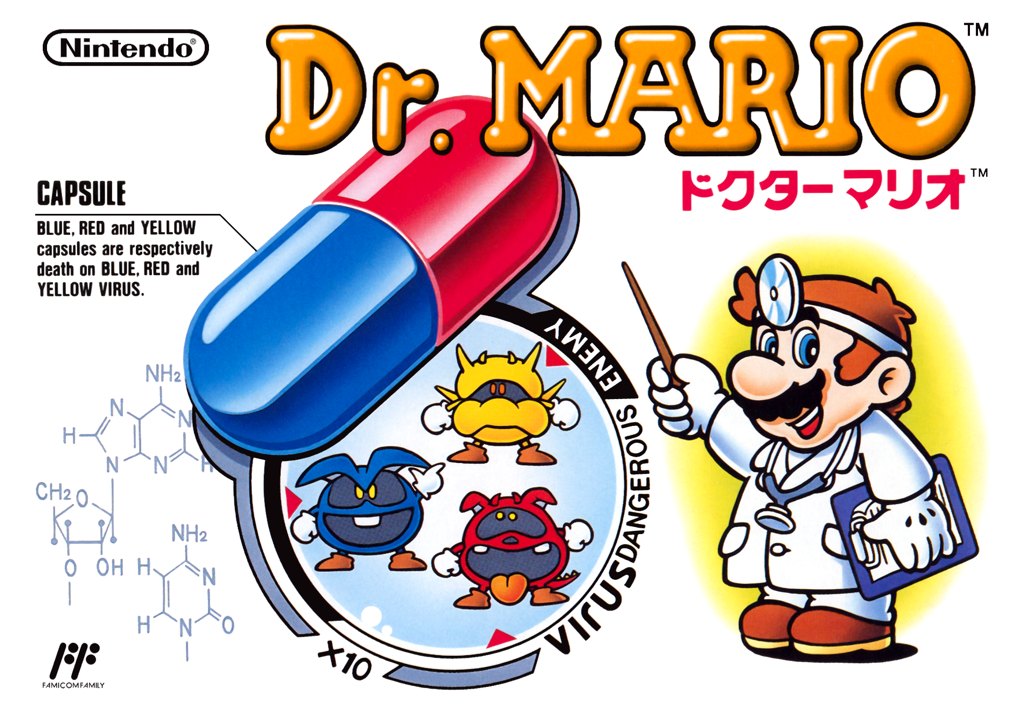
The Famicom Mini sleeve copies the 1990 Famicom box in miniature.
Classic NES Series: Dr. Mario puts Nintendo’s 1990 pill-dropping puzzler on to a Game Boy Advance cartridge exactly as the NES ran it. Mario, in a white coat, tosses two-tone vitamin capsules into a medicine bottle full of red, blue and yellow viruses, and you line up four of a colour to wipe them out. It is not a remake: the program inside is the NES original running in an emulator, with a few handheld extras around it.
It belongs to the Famicom Mini line that Nintendo launched in 2004 to celebrate twenty years of the Famicom. Dr. Mario came in the second Japanese volume, as number 15 of 30, and in the West it was one of the four games added to the range in its second wave, alongside Metroid, Castlevania and Zelda II. It was the third Mario-universe game in the Western line, after Super Mario Bros. and Donkey Kong.
This page is about the Game Boy Advance release. The rules, the music, the history and the 1990 reviews are on our Dr. Mario page; the enhanced Game Boy Advance remake that followed a year later has its own page, Dr. Mario & Puzzle League.
Mario goes medical! With several nasty viruses on the loose, the multi-talented plumber takes immediate action to wipe them out in this remarkable puzzler. Throw your capsules at the nasty viral critters – matching up four capsule halves or viruses of the same colour in a column or a row causes them to vanish, providing the ever beleaguered Mario with some brief respite from the ever advancing viral villains. Eradicate the viruses by yourself, or play against a friend in two player mode – that’s just what the doctor ordered!
— Official description (Nintendo UK, 2005)
Why it matters to Mario fansThis cartridge made the NES Dr. Mario a portable two-player game with nothing but one cartridge and two Game Boy Advance systems, and no cable at all if you had the Wireless Adapter. It is also the middle step of a busy three years in which the original reached the Game Boy Advance by GameCube link-up, on its own cartridge and, finally, as a remake.
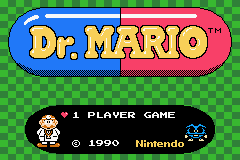
The title screen on the Game Boy Advance.Dr. Mario and a bottle of trouble.
Quick Answers
Quick answers about the Game Boy Advance re-release of Dr. Mario.
Is it the same as the NES Dr. Mario?
Yes, as far as the game goes: it is an emulation of the NES program, so levels, speeds, scoring, music and intermission films are unchanged. The picture is cropped at the top and bottom, high scores are saved, and two-player is reached through a link menu rather than from the title screen. More →
When was it released?
Japan on 21 May 2004 as Famicom Mini: Dr. Mario, North America on 25 October 2004 in the Classic NES Series, and Europe on 7 January 2005 as NES Classics: Dr. Mario. More →
Can two people play with one cartridge?
Yes. The second player’s Game Boy Advance receives the game from the first player’s cartridge, and Nintendo’s European announcement says the two can connect with the Game Link Cable or the Wireless Adapter. More →
How many levels does it have?
You pick a virus level from 0 to 20 at one of three speeds; level 0 has four viruses and level 20 has 84. Clear a bottle and the next level follows. More →
How well did it sell?
Famitsu’s figures, as quoted by Wikipedia, put Japanese sales at 248,045. No Western figure has been published. More →
What did reviewers think?
Mixed. Most enjoyed the game and praised the wireless two-player, but many thought one NES puzzle game was poor value at full price. Metacritic averages 66 from ten reviews. More →
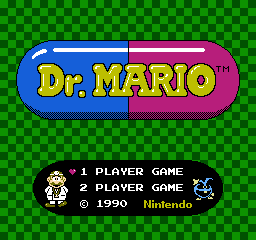
The NES title screen that the Game Boy Advance version reproduces.
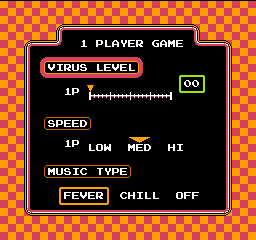
There is no plot on screen, only a doctor, a bottle and a virus outbreak. Before each game you choose a virus level from 0 to 20, a speed and one of two tunes; the bottle fills with four times the level plus four viruses, and every bottle you clear moves you up a level with your score carried forward.
Level, speed and music
Speed sets how fast the capsules fall and what each virus is worth: 100 points on Low, 200 on Med and 300 on Hi, with bonuses for destroying several at once. The music choice is Fever, Chill or silence, both tunes by Hirokazu Tanaka.
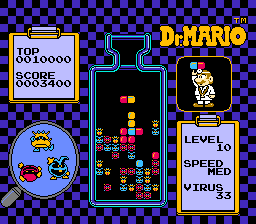
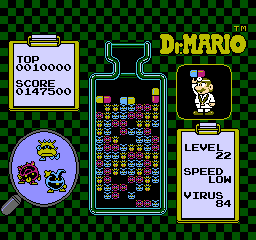
The options screen.Level 10: 44 viruses.Past level 20 the count stays at 84.
The intermission films
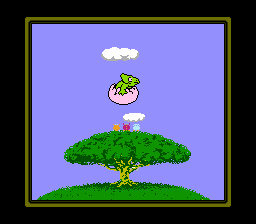
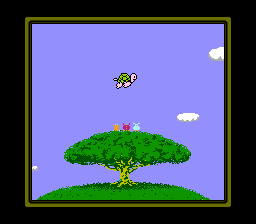
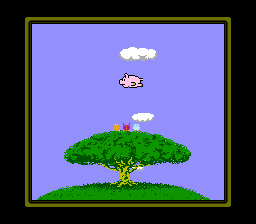
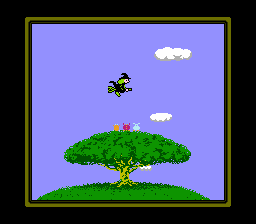
Clear certain levels and the game plays a short film, watched by the three big viruses, with a different guest each time, from a rooster to a witch to a UFO. As an emulation of the NES program, the Game Boy Advance version keeps them.
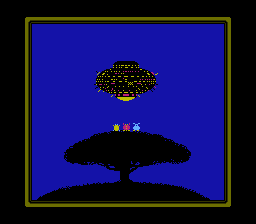
Level 5, Med.Level 10, Med.Level 20, Hi: the UFO.
Every intermission film
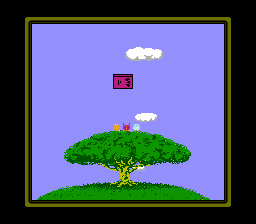
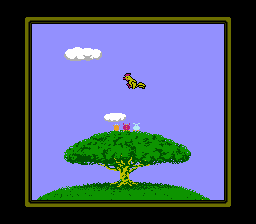
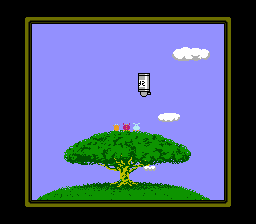
Reached by clearing the level shown. Screens are from the NES original.
Level 5, MedFilmA book.
Level 10, MedFilmA rooster.
Level 15, MedFilmAn aerosol can.
Level 20, MedFilmA dinosaur in an egg.
Level 5, HiFilmA tortoise.
Level 10, HiFilmA pig.
Level 15, HiFilmA witch.
Level 20, HiFilmA UFO.
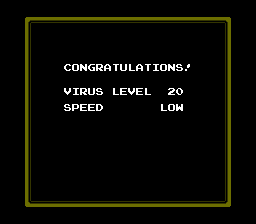
Level 20, LowFilmNo film as such: a brief Congratulations! message on black for finishing level 20 on the slowest speed.
Advertisement
Gameplay & Controls
Dr. Mario is a falling-piece puzzle. Capsules made of two coloured halves drop into an eight-by-sixteen bottle; line up four or more of one colour, across or down, and they vanish along with any virus caught in the line. Clear every virus to finish the level, and do not let the pile block the neck of the bottle. Our Dr. Mario page explains the rules, scoring and two-player attacks in depth. Here is what the Game Boy Advance version changes.
A cropped bottle
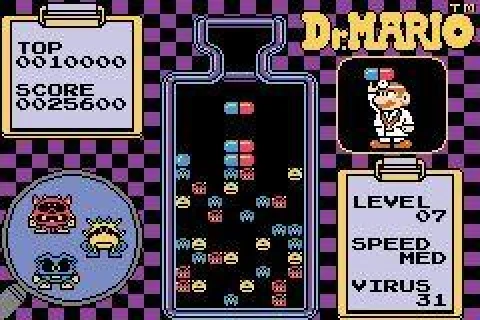
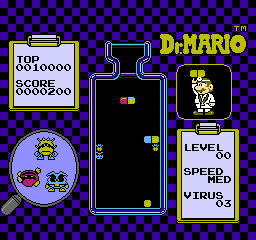
Every Classic NES Series game had to fit an NES picture on to a much shorter Game Boy Advance screen. With Dr. Mario the edges are heavily cropped, above all at the top and the bottom, losing some of the frame that surrounds the play area on a television.
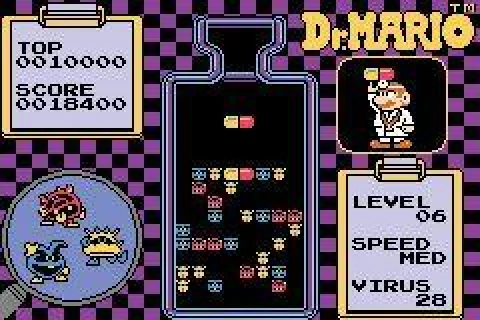
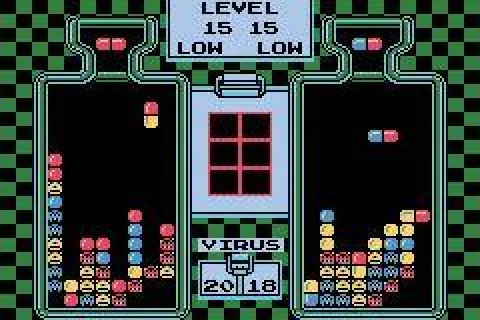
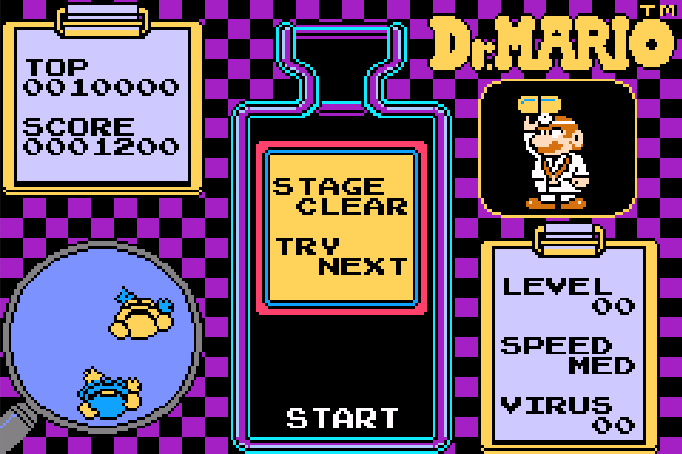
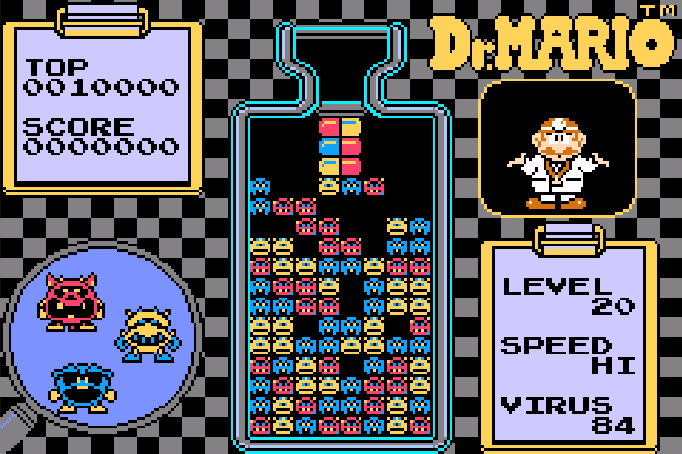
A bottle cleared on the Game Boy Advance.The same scene on the NES, with its full frame.
Two players, one cartridge
The NES Dr. Mario had a two-player mode on its title screen. On the Game Boy Advance that option has gone from the title screen; instead, two players connect their systems and reach the versus game through a link menu. Only one cartridge is needed, because the second machine receives the game from the first, and Nintendo’s European announcement for the range singled out Dr. Mario as the game that two people could play using either the Wireless Adapter or the Game Link Cable.
Reviewers liked this a lot. GameSpot’s Bob Colayco called the wireless networking a really nice feature, Nintendojo rated the game mainly for its wireless multiplayer, and IGN noted how quickly a two-player game gets going.
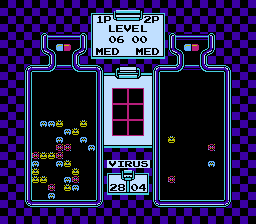
Two-player Dr. Mario as the NES drew it; on the Game Boy Advance each player has a screen of their own.
Saved high scores
The NES cartridge forgot your best score when you switched off. Like the rest of the series, this cartridge can save data, so the top score is kept, a small addition Play Magazine was glad to see. The emulator also offers a sleep mode to suspend play.
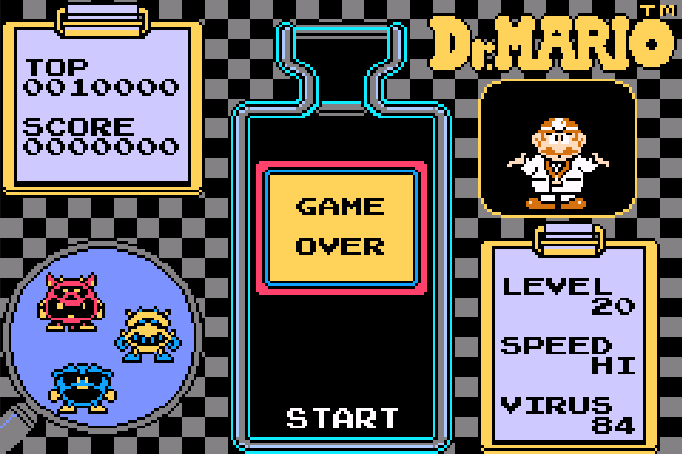
Game over on the Game Boy Advance.
Controls
The NES pad translates directly: left and right on the Control Pad move the falling capsule, down drops it faster, A rotates it clockwise and B anticlockwise, and Start begins and pauses the game.
A round lost on the Game Boy Advance.
Viruses and capsules
Unchanged from 1990.
Red virusCleared by red capsule halves.
Blue virusCleared by blue capsule halves.
Yellow virusCleared by yellow capsule halves.
Vitamin capsuleTwo halves in any mix of the three colours; A and B turn it.
Characters
The tiny cast of the 1990 game. More on our Dr. Mario page.
Character
Who they are
In this game
Abilities & notes
Dr. MarioThe doctor
Mario in a white coat and head mirror.
Stands beside the bottle and throws in each capsule.
The only character on screen
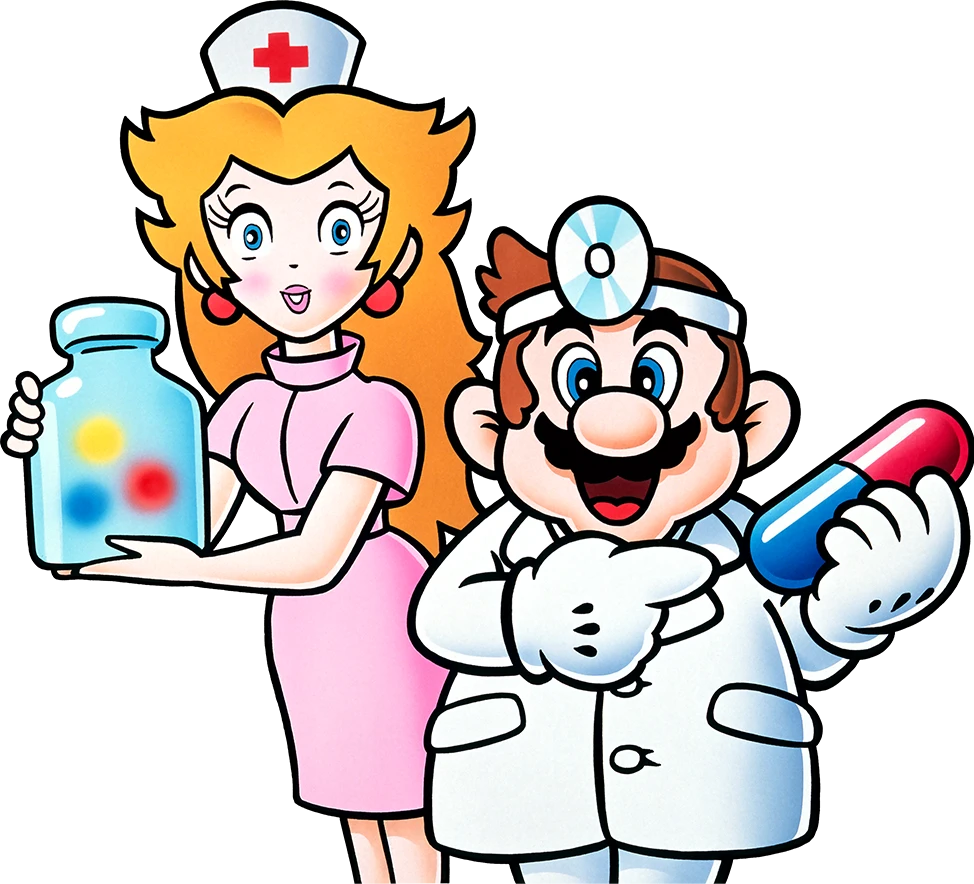
Nurse ToadstoolArtwork only
Princess Toadstool as a nurse.
Appears in Nintendo’s artwork for the game, not in the game itself.
Not playable
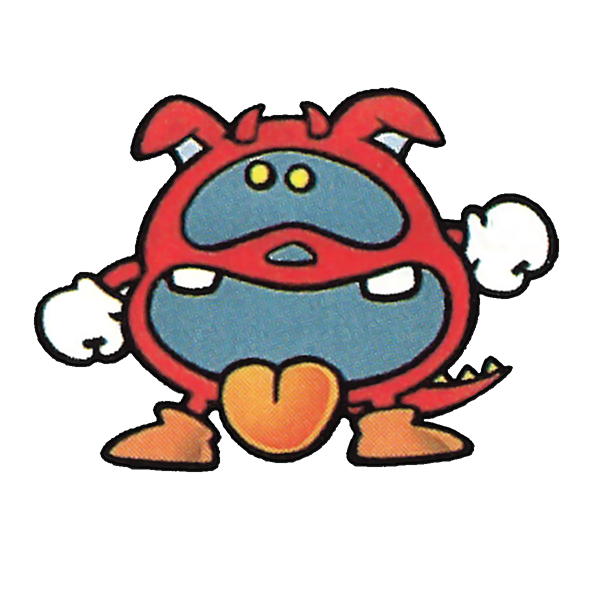
Red virusGerm
One of the three germs.
Cleared by red capsule halves.
Worth 100/200/300 by speed
Blue virusGerm
One of the three germs.
Cleared by blue capsule halves.
Worth 100/200/300 by speed
Yellow virusGerm
One of the three germs.
Cleared by yellow capsule halves.
Worth 100/200/300 by speed
The viruses in motion
The NES animations, carried over unchanged.
Dancing virusesDuring playThe three germs’ NES animation.
Laughing virusesGame overThey laugh when the bottle fills.
Dr. MarioBeside the bottleThe doctor’s NES sprite.
Original staff
The cartridge carries the 1990 game; we found no credit for the emulation.
Takahiro HaradaMain programmerNintendo R&D1.
Gunpei YokoiProducerHead of Nintendo R&D1.
Hirokazu TanakaMusic and soundComposer of Fever and Chill.
How It Was Made
Famicom Mini, volume two
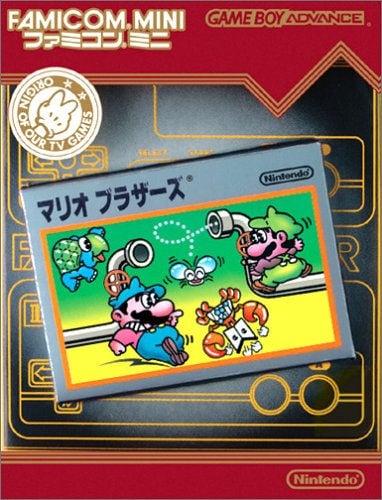
Famicom Mini: Mario Bros., released the same day as Dr. Mario.
Nintendo’s Famicom Mini series began on 14 February 2004 with ten games, Super Mario Bros. among them, and a second set of ten followed on 21 May. That second volume was the Mario-heavy one: Dr. Mario (No. 15) arrived with Mario Bros. (No. 11) and Wrecking Crew (No. 14). The first ten had been priced at ¥2,000 before tax, and like them the second volume came in sleeves modelled on the Famicom boxes, with red-and-white cartridges.
The second Western wave
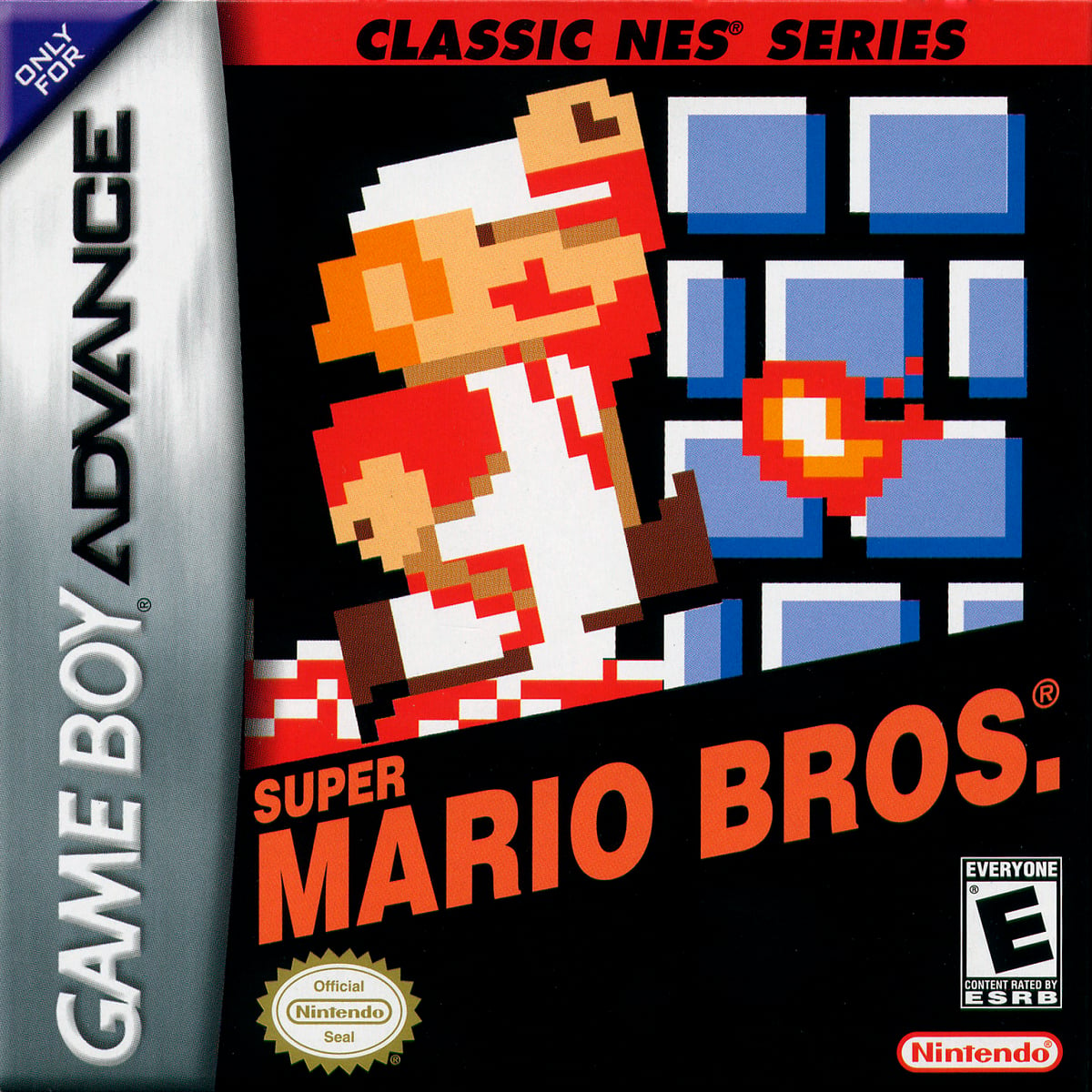
Classic NES Series: Super Mario Bros., from the first Western wave.
North America and Europe launched their versions of the range with eight games in mid-2004, Super Mario Bros. and Donkey Kong included, and then added four more: Dr. Mario, Metroid, Castlevania and Zelda II: The Adventure of Link. Nintendo of Europe announced the European set in late November 2004 for release on 7 January 2005, at an estimated £15 each, and picked out Dr. Mario’s wireless and link-cable two-player in its description.
Advertisement
Videos
Two third-party videos: a review of this cartridge and a demonstration of its single-cartridge link play.
Third-party video review.
Third-party demonstration of two-player play from one cartridge.
Trivia & Interesting Facts
The Game Boy Advance had already run this exact game once before the cartridge: in Japan the 2003 GameCube compilation Nintendo Puzzle Collection could send the Famicom Dr. Mario to a linked Game Boy Advance.
Within three years the original reached the Game Boy Advance three ways: by GameCube link-up (2003), on this cartridge (2004) and as a remake in Dr. Mario & Puzzle League (2005).
In the West, Dr. Mario was the only Mario-universe game in the second wave of the range.
GamerFeed’s review reminded readers that WarioWare on the Game Boy Advance already contained a Dr. Mario variant, Dr. Wario.
The NES viruses’ laugh.The viruses still laugh at you when you lose, just as they did in 1990.
Japan’s cartridge is red and white like a Famicom; the American and European ones are light grey like an NES game pak.
Regional Box Art
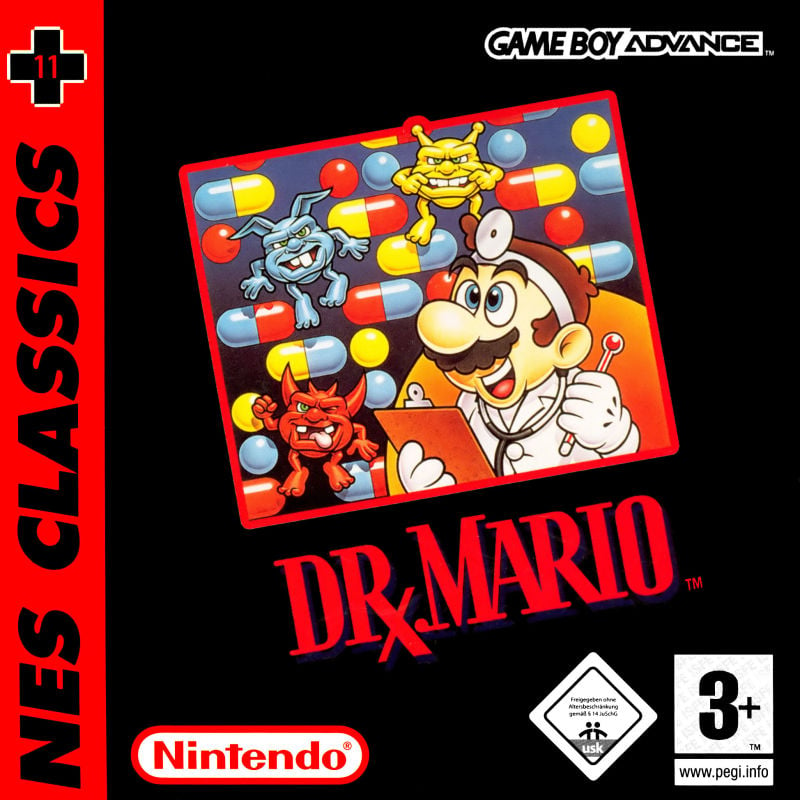
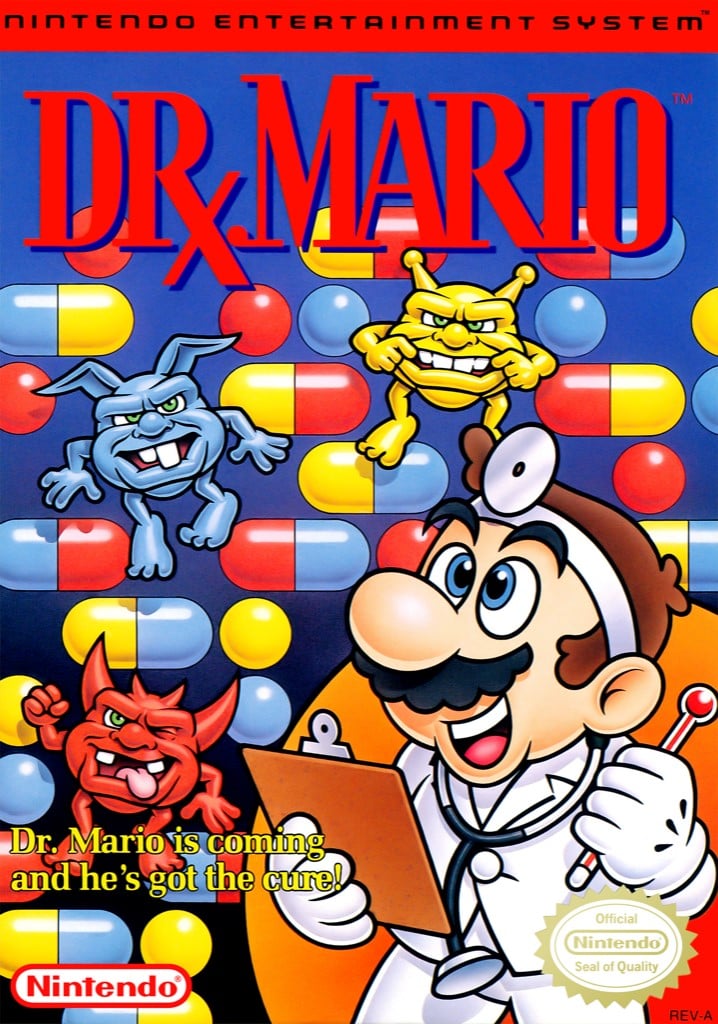
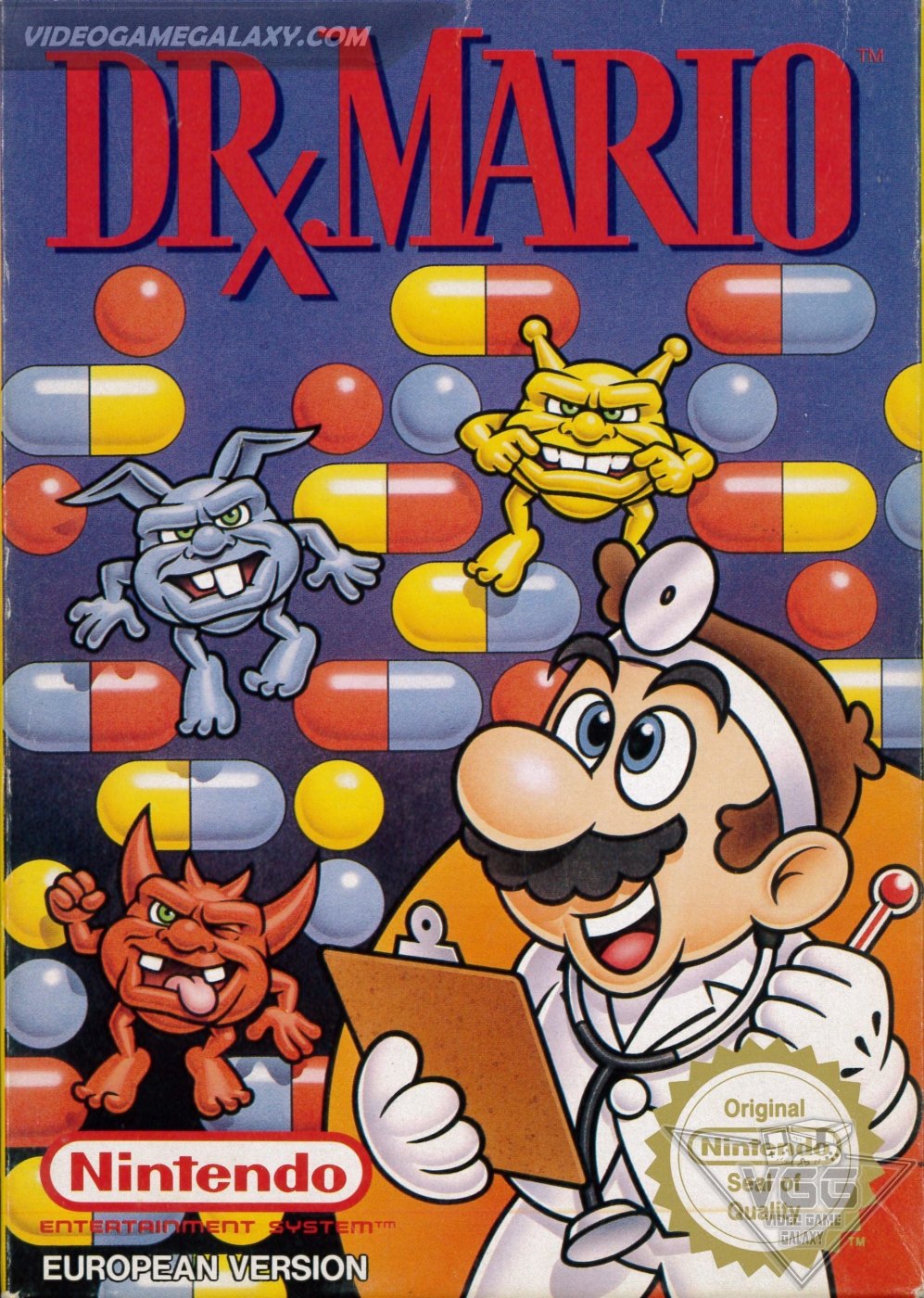
Three covers for the cartridge, with the 1990 boxes they echo.
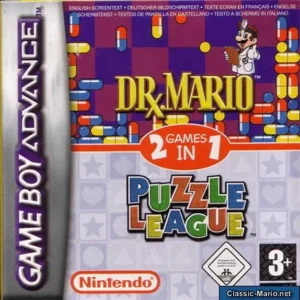
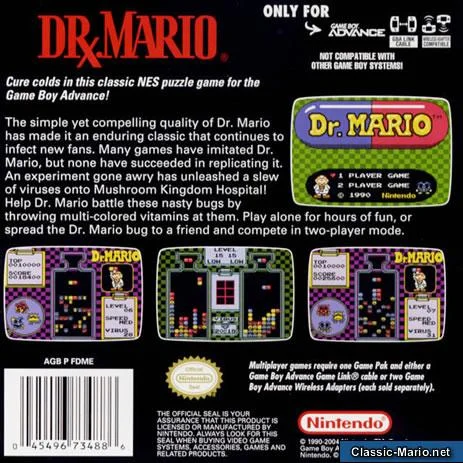
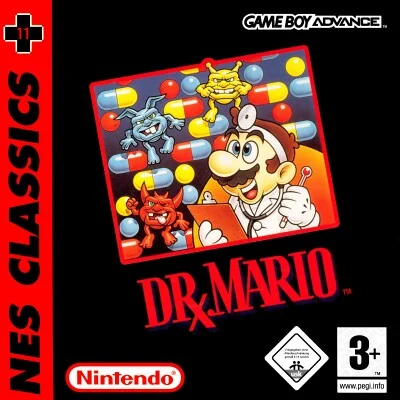
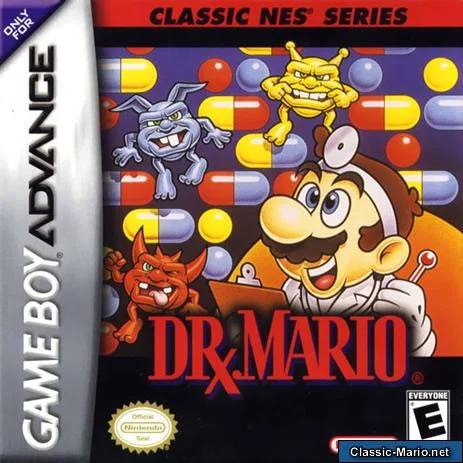
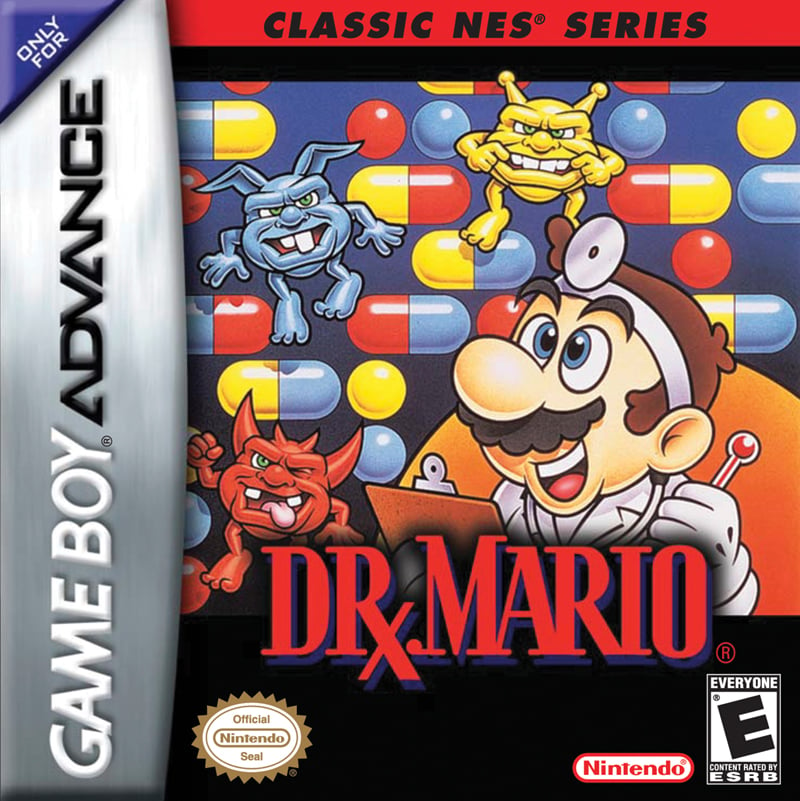
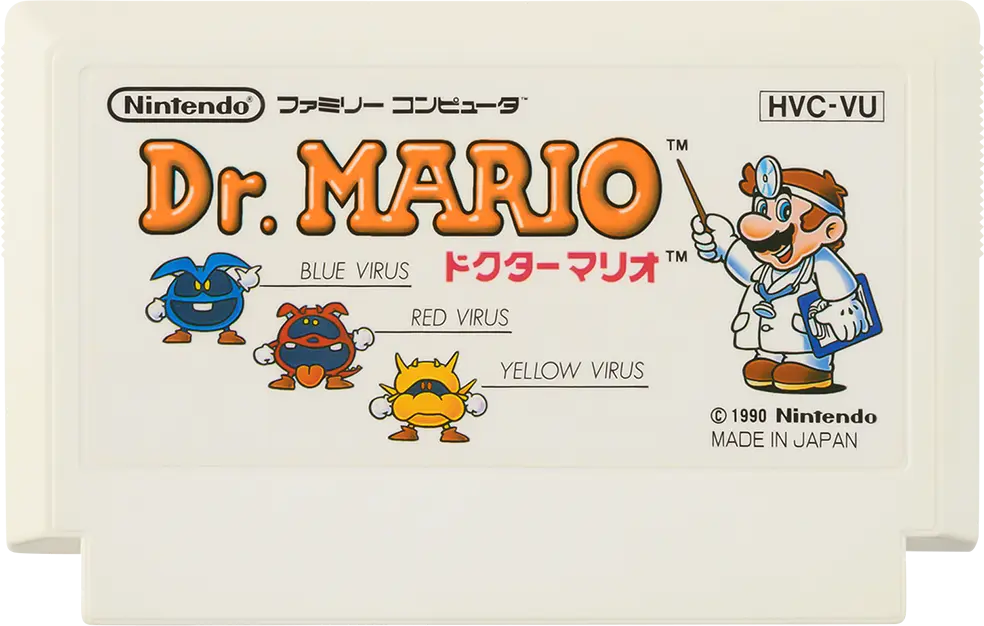
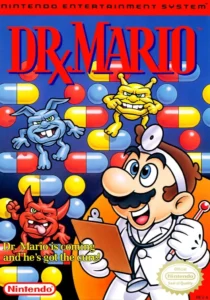
North America (Classic NES Series, 2004)Europe (NES Classics, 2005)Japan (Famicom Mini No. 15, 2004)For comparison: Famicom, 1990For comparison: NES, North America, 1990For comparison: NES, Europe, 1991
Screenshots
More from the game the cartridge emulates (NES screens).
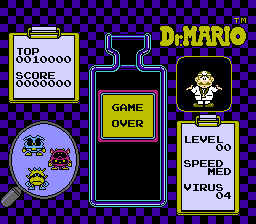
Game over on the NES.
Artwork & Media Gallery
Artwork, logos and the rest of the Mario family in the range.
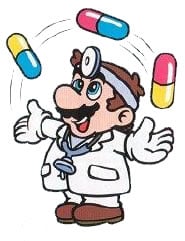
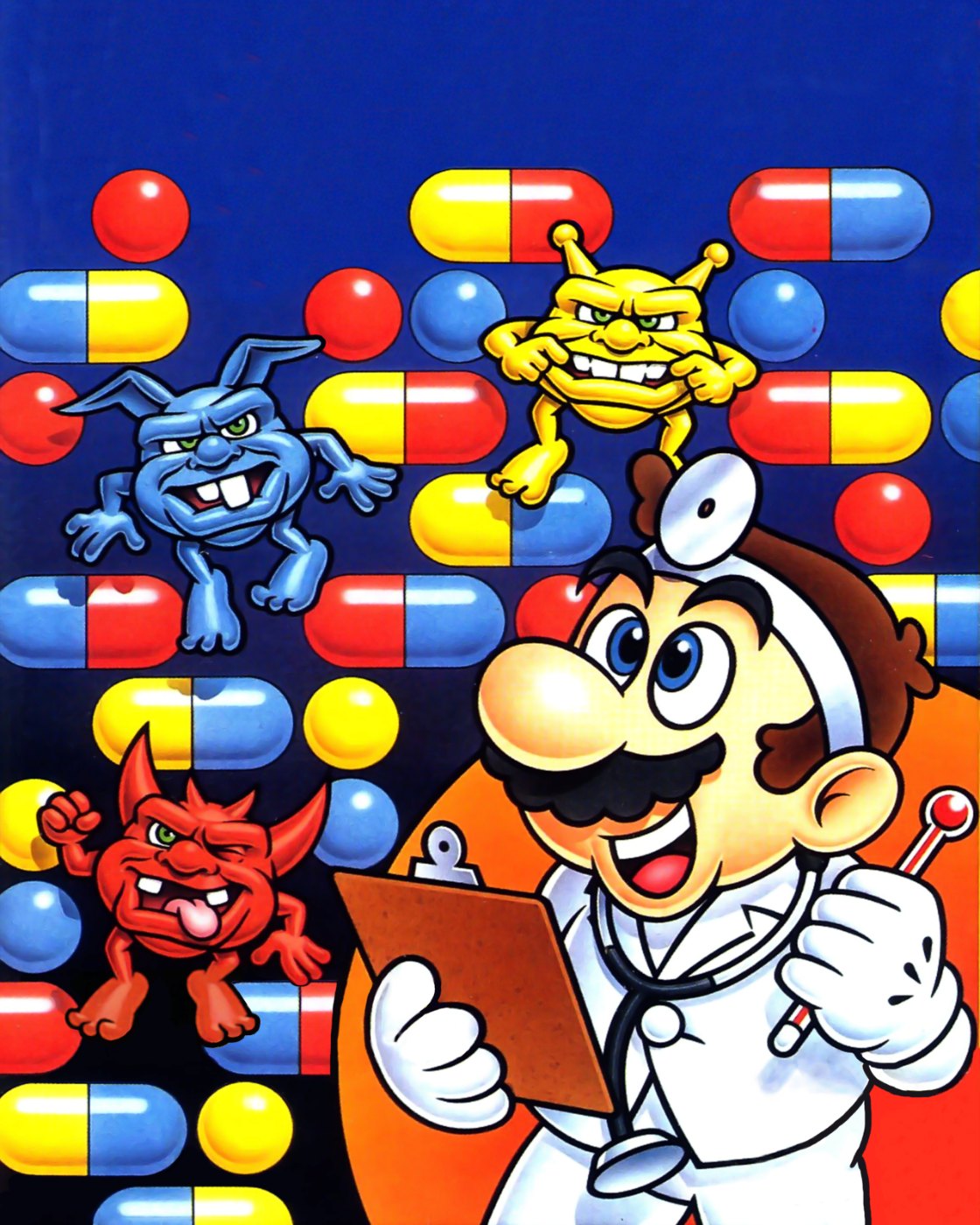
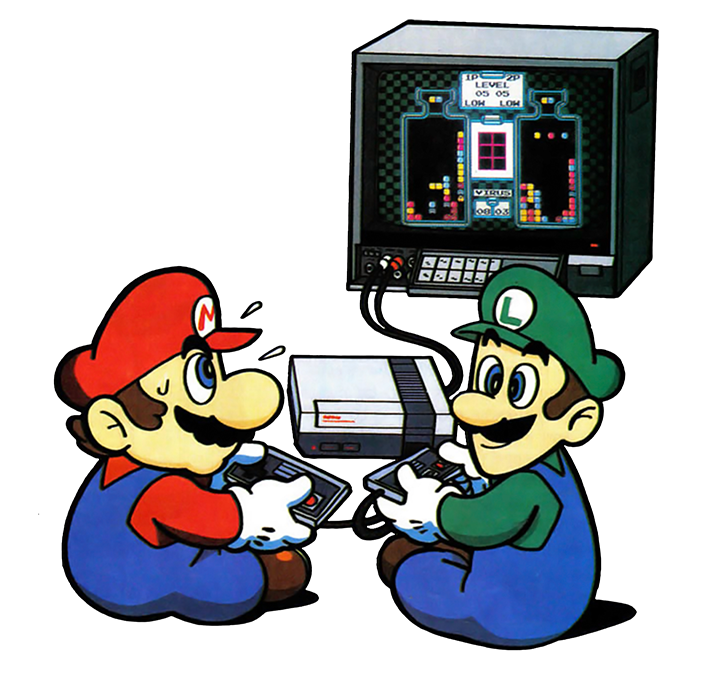
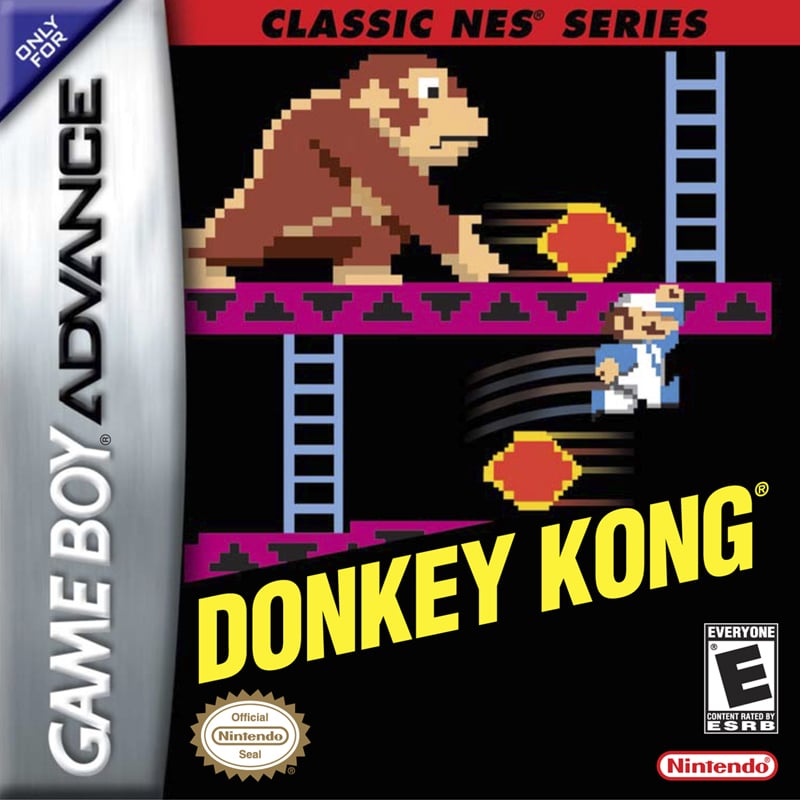
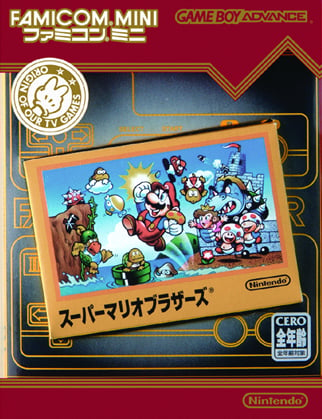
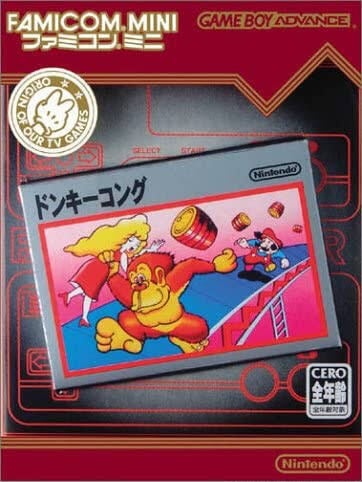
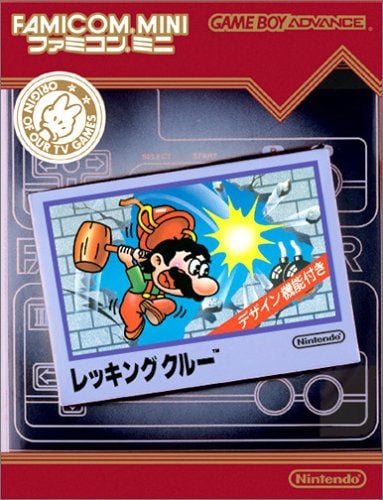
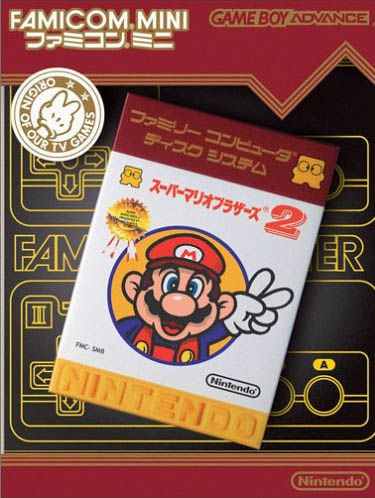
Dr. Mario juggling capsules.The international cover artwork.Mario and Luigi playing Dr. Mario, from Nintendo Power.The in-game logo.The original Famicom cartridge.Classic NES Series: Donkey Kong, from the first Western wave.Famicom Mini: Super Mario Bros. (No. 1).Famicom Mini: Donkey Kong (No. 2).Famicom Mini: Wrecking Crew (No. 14).Famicom Mini: Super Mario Bros. 2 (No. 21).
Legacy & Re-releases
Where this cartridge fits in Dr. Mario’s long run of re-releases.
Dr. Mario on the Game Boy Advance and after
Nintendo Puzzle Collection7 February 2003GameCube, Japan: the Famicom game can be sent to a Game Boy Advance by link cable.
Famicom Mini, Japan21 May 2004No. 15, in the second volume.
Classic NES Series, North America25 October 2004Second wave, with Metroid, Castlevania and Zelda II.
NES Classics, Europe7 January 2005About £15.
Dr. Mario & Puzzle League2005A remade Dr. Mario on Game Boy Advance, paired with Puzzle League.
Later2014 onwardsThe NES game on the Wii U Virtual Console (2014), the NES Classic Edition (2016) and Nintendo Switch Online (2018).
What came next
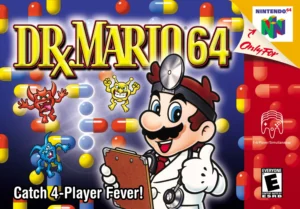
The Game Boy Advance itself got a fuller Dr. Mario a year later in Dr. Mario & Puzzle League, which remade the game in the style of Dr. Mario 64 and added new modes. On home consoles the series carried on with Dr. Luigi on Wii U in 2013. For the history of the original and every version, see our Dr. Mario page.
Reviews & Sales
Sales
Nintendo has not released a figure. Famitsu’s sales data, compiled by the Game Data Library and quoted on Wikipedia, puts the Japanese Famicom Mini release at 248,045 copies, on top of roughly 3.6 million for the original Famicom and Game Boy games in Japan. No Western figure has been published.
248,045Japan, Famicom Mini (Famitsu data)
What the critics said
Metacritic shows 66 from ten reviews. Scores as listed by Metacritic unless noted.
Hardly anyone knocked the game itself: GameSpot found its addictive play had aged well, and Nintendo Power called it simple but endlessly fun. The doubts were about value and timing. Critics of the series felt Dr. Mario on its own did not justify the price of a cartridge; GamerFeed pointed out that owners of the Game Boy Advance WarioWare already had a version of it as Dr. Wario; and 1UP judged the Famicom Mini release out of date on the day it came out. The wireless two-player was the feature that most often lifted the score.
SLB User Reviews
Super Luigi Bros readers have reviewed Classic NES Series: Dr. Mario (Game Boy Advance) over the years. Their write-ups are kept exactly as they were sent in:
Played it? If you’d like to add your own review, please get in touch.
More from the Super Luigi Bros Guide
These picture lists come from the earlier Super Luigi Bros guide to Classic NES Series: Dr. Mario (Game Boy Advance) and are kept here in full.
Dr. Mario through the years
The Dr. Mario games covered on Super Luigi Bros, with the year each first came out. The SNES remake in Tetris & Dr. Mario (1994) is covered on the Dr. Mario series page.
To provide the best experiences, we use technologies like cookies to store and/or access device information. Consenting to these technologies will allow us to process data such as browsing behavior or unique IDs on this site. Not consenting or withdrawing consent, may adversely affect certain features and functions.
Functional
Always active
The technical storage or access is strictly necessary for the legitimate purpose of enabling the use of a specific service explicitly requested by the subscriber or user, or for the sole purpose of carrying out the transmission of a communication over an electronic communications network.
Preferences
The technical storage or access is necessary for the legitimate purpose of storing preferences that are not requested by the subscriber or user.
Statistics
The technical storage or access that is used exclusively for statistical purposes.The technical storage or access that is used exclusively for anonymous statistical purposes. Without a subpoena, voluntary compliance on the part of your Internet Service Provider, or additional records from a third party, information stored or retrieved for this purpose alone cannot usually be used to identify you.
Marketing
The technical storage or access is required to create user profiles to send advertising, or to track the user on a website or across several websites for similar marketing purposes.


 Level 15, MedFilmAn aerosol can.
 Level 20, MedFilmA dinosaur in an egg.
 Level 5, HiFilmA tortoise.
 Level 10, HiFilmA pig.
 Level 15, HiFilmA witch.
 Level 20, LowFilmNo film as such: a brief Congratulations! message on black for finishing level 20 on the slowest speed.
 Red virusCleared by red capsule halves.
 Blue virusCleared by blue capsule halves.
 Yellow virusCleared by yellow capsule halves.
 Vitamin capsuleTwo halves in any mix of the three colours; A and B turn it.
 Dr. MarioThe doctor
 Nurse ToadstoolArtwork only
 Red virusGerm
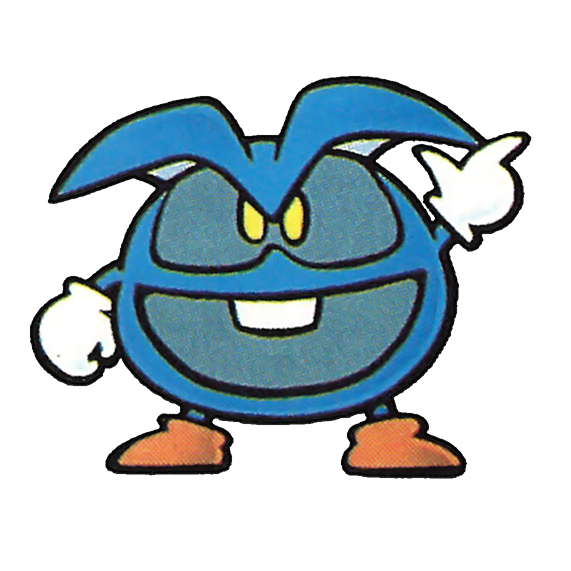 Blue virusGerm
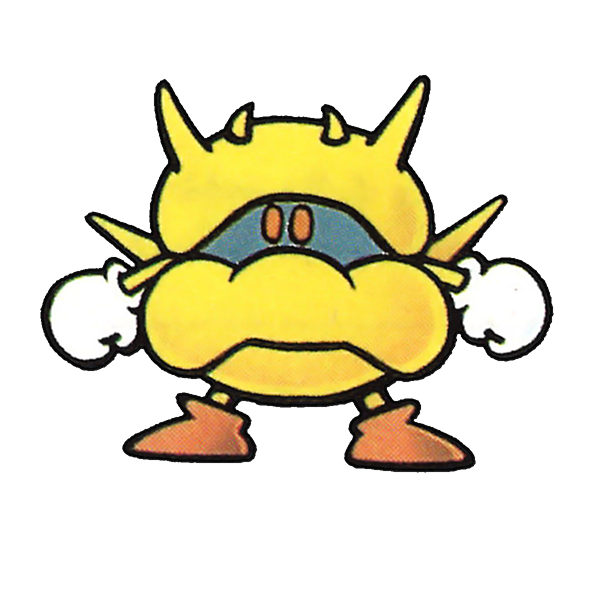 Yellow virusGerm
 Dancing virusesDuring playThe three germs’ NES animation.
 Laughing virusesGame overThey laugh when the bottle fills.
 Dr. MarioBeside the bottleThe doctor’s NES sprite.

 Classic NES Series: Dr. Mario2004 · Game Boy Advance