
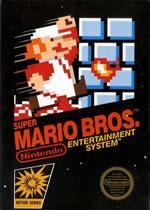
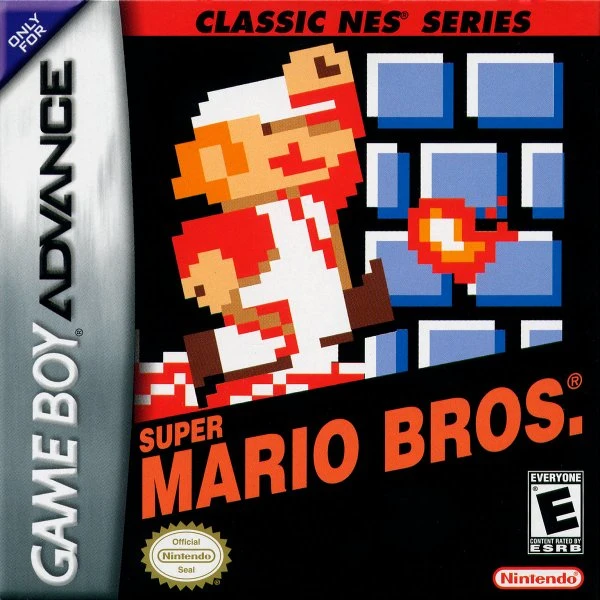
Classic NES Series: Super Mario Bros.
Overview
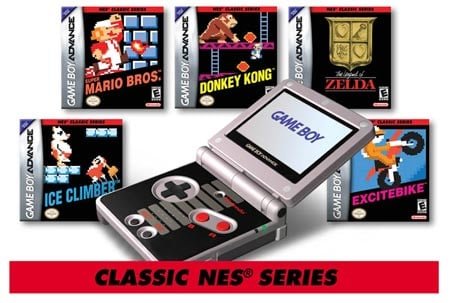
Classic NES Series: Super Mario Bros. is a 2004 Game Boy Advance re-release of the 1985 Nintendo Entertainment System launch title. Published by Nintendo as part of a broader Classic NES Series portable-rereleases line, it puts the original Super Mario Bros. in your pocket without modification to the underlying game.
This is not a remake, an enhanced version, or a port from a newer codebase. The Classic NES Series version is an emulated copy of the original NES ROM, running on the GBA hardware. The 8 worlds are the same. The 32 levels are the same. Mario’s moveset, the enemies, the music, the physics, the warp pipes, the secret coin rooms — everything is the original Super Mario Bros. as it shipped in 1985.
The Classic NES Series ran from 2004 to 2005 and ultimately included six Mario-universe titles among its release schedule. Super Mario Bros. was a launch title for the series in February 2004 (Japan), making it one of the first NES games to receive the portable treatment.
The Classic NES Series
The Classic NES Series (called NES Classics in Europe and Australia, and Famicom Mini in Japan) is a series of GBA cartridges releasing classic Famicom/NES games in their original emulated form on Nintendo’s 2001 handheld platform.
Regional Differences in the Series
- Japan (Famicom Mini): 30 games released across three series. Packaging was designed to closely mimic the original Famicom cartridge boxes. The Famicom Mini name is a deliberate callback to the size of the original 1980s console
- North America (Classic NES Series): 12 games released in two series. NES-styled box art with retro red-and-grey colour schemes
- Europe (NES Classics): Same 12-game lineup as North America. Identical box art aside from regional branding
- Additional NA-only: several NES games were also released on e-Reader cards as separate re-releases outside this series
Common Modifications Across All Series Titles
- Games are mostly unchanged from their originals — they run as direct emulation of the underlying ROMs
- The resolution is altered to fit the GBA’s 240×160 screen (vs the NES’s 256×240). This makes the graphics look slightly “squished” vertically
- Where the original supported multiplayer, the GBA release uses the Link Cable or wireless adapter for two-player linking
- Save functions for high scores were added where appropriate — you no longer lose your record when the power goes off
- Certain games received added custom levels or features, though the SMB release stuck to the original game
Differences from the Original
The Classic NES Series version of Super Mario Bros. is largely faithful to the 1985 original, but there are a few small but interesting changes specific to this GBA release.
Visual Changes
| Element | Original NES (1985) | Classic NES GBA (2004) |
|---|---|---|
| Screen Resolution | 256×240 pixels (NES) | 240×160 pixels (GBA) — game graphics are vertically squished to fit the wider GBA aspect ratio |
| HUD Position | HUD counters (score, coins, time, world) at the top of the play area | HUD counters moved to the very upper edge of the screen to maximise play area visibility on the smaller GBA screen |
| HUD Font | Standard NES font (each character takes more pixels) | Smaller font requiring fewer pixels per character — fits the tighter screen real estate |
| Aspect Ratio | 4:3 CRT television | 3:2 GBA LCD screen — unavoidable compression in the vertical axis |
| Cropping | Full NES output | Edges slightly cropped, though less so than in many other Classic NES Series titles |
Gameplay Changes
| Feature | Original NES | Classic NES GBA |
|---|---|---|
| Saving | None — high scores reset when power-off | High score save function added via the GBA cartridge save battery |
| Multiplayer | Two-player alternating on one TV | Two-player via GBA Link Cable (each player on their own handheld) |
| Sleep mode | N/A | Standard GBA sleep / power-off works as expected |
| Game content | 8 worlds, 32 levels, 4 castle bosses, Mario+Luigi, Bowser final boss | Identical — every level, every enemy, every glitch (including Minus World) |
What’s NOT Changed
- Mario’s sprite design — same 8-bit Mario as 1985
- Goomba, Koopa Troopa, Piranha Plant, Hammer Bros, Lakitu — unchanged designs
- The music, including the famous Overworld theme by Koji Kondo — unchanged
- Physics, momentum, jump arcs, sliding behaviour — 100% identical to the original
- The Minus World glitch and other famous bugs — still present and triggerable
- The flagpole bonus point system, the World 1-2 warp zone, the World 4-2 / 8-2 warp pipes — all intact
- Princess Toadstool’s rescue — still the original ending
Side-by-Side Visual Comparison
The most visible difference between the original NES game and the Classic NES Series GBA release is the HUD position and visual presentation. The gameplay sprites are identical; only the borders and counters move.
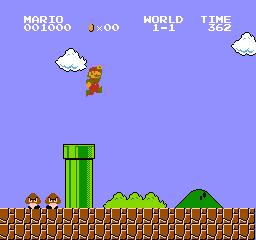
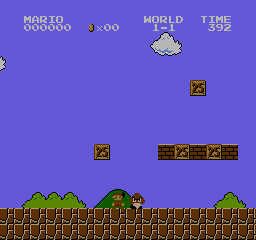
The gameplay sprites — Mario, Goombas, blocks, pipes — are bit-for-bit identical to the NES original. Only the HUD layout and the slight aspect-ratio compression visually distinguish the two presentations.
Aspect Ratio Maths
- NES native: 256×240 pixels (1.067:1 aspect ratio)
- GBA native: 240×160 pixels (1.5:1 aspect ratio)
- Result: the game is fit into a wider, shorter container. Without modification, every NES pixel would be stretched horizontally. Nintendo instead chose to keep the original 1:1 pixel mapping where possible and crop slightly to fit — the practical result is the “squished” look mentioned in collector reviews
Regional Box Art Variants
The Super Mario Bros. Classic NES Series release shipped under three different regional names and packaging styles, plus a Japan-exclusive 20th Anniversary variant.
7 June 2004
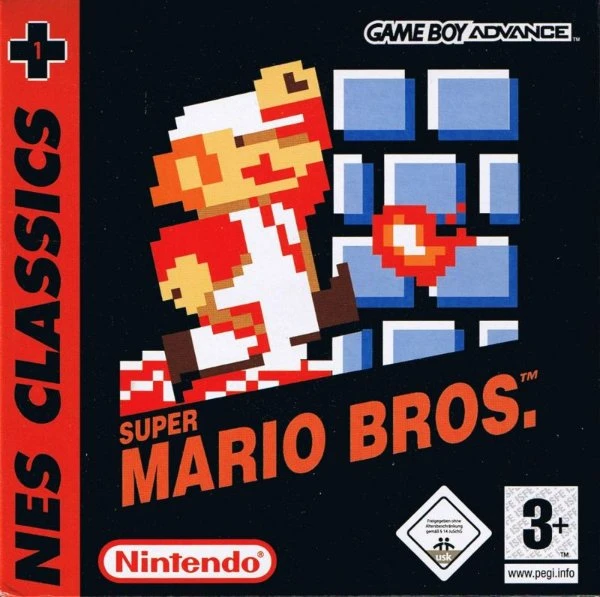
9 July 2004
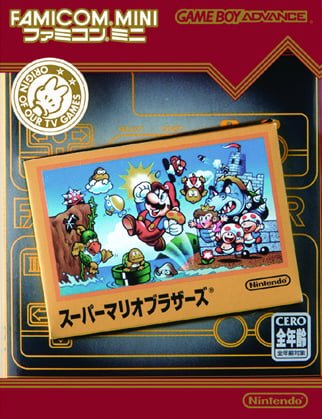
14 February 2004
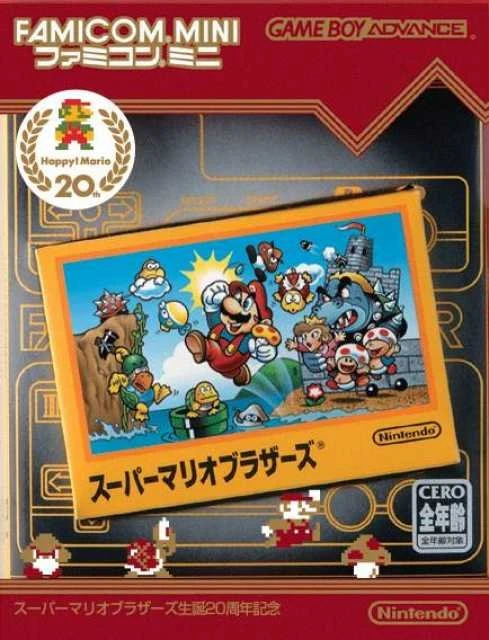
limited variant
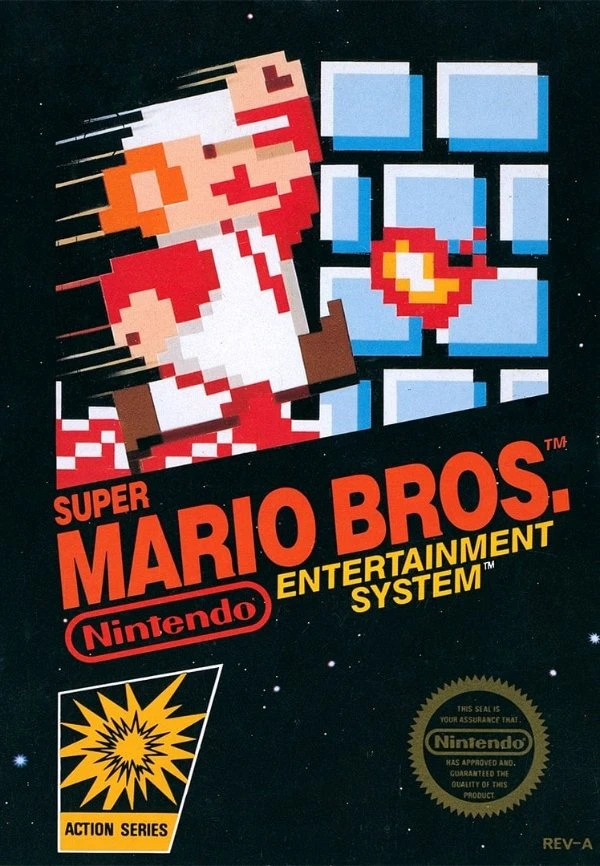
NES launch title
Packaging Notes
- The NA & EU boxes use the modern GBA-era Nintendo trade dress with red-and-grey NES throwback accents
- The Japanese Famicom Mini box is deliberately designed to mimic the original 1985 Famicom packaging — same colour scheme, similar typography, same arrangement of elements. A nostalgia play for Japanese collectors who remembered the original
- The 20th Anniversary edition was released on 13 September 2005 as a limited-run Famicom Mini variant celebrating 20 years since the original 1985 release. Distinct cover art with anniversary branding
- All four releases play identically — the differences are purely cosmetic packaging
The Hot Mario! Campaign (Japan)
One of the more curious entries in the Classic NES Series story is the Hot Mario! Campaign — a Japan-exclusive promotional drawing that took place in late 2003 and early 2004.
The Campaign
- Nintendo Japan ran a promotional drawing with an entry deadline of 15 January 2004
- 3,000 contest winners received a special edition cartridge of the Famicom Mini Super Mario Bros. release
- The Hot Mario! version is almost identical to the standard Famicom Mini Super Mario Bros. release that shipped on 14 February 2004 — just three weeks after the drawing deadline
- The main difference: the Hot Mario! Campaign cartridges cannot connect with the GBA wireless adapter. The standard retail release supports wireless link-cable play; the Hot Mario! version does not
- The cartridges and packaging include Hot Mario! Campaign branding that distinguishes them from retail versions
Why It Matters
The Hot Mario! Campaign cartridges are now significant collector items in Japan and abroad. Original retail releases ship to international markets, but the 3,000 Hot Mario! variants are essentially region-locked promotional prizes that only ever existed in Japan. Their relative rarity makes them valuable to Famicom/NES re-release collectors, and the cartridge-wireless-adapter incompatibility makes them functionally distinct from regular Famicom Mini stock.
20th Anniversary Edition (Japan)
The 20th Anniversary Edition of Famicom Mini Super Mario Bros. is a Japan-exclusive limited variant released on 13 September 2005, exactly 20 years after the original Super Mario Bros. shipped on Famicom in Japan (13 September 1985).
Key Facts
- Release date: 13 September 2005 — the precise 20-year anniversary of the original Famicom release
- Region: Japan-only (no NA or EU equivalent)
- Run size: Limited — not a standard retail product, more akin to a commemorative special edition
- Game content: identical to the standard Famicom Mini release. The novelty is in the packaging and commemorative status
- Box art: Distinct anniversary cover featuring branded 20th Anniversary callouts not present on the standard Famicom Mini box
- Cartridge: Standard Famicom Mini cartridge form factor, retaining the original 1985 Famicom packaging mimicry
This anniversary release is one of the more sentimentally meaningful Nintendo Japan re-releases of the GBA era — marking exactly two decades since the most successful platform game in history first appeared in homes across Japan.
Other SMB Re-Releases Through the Years
Super Mario Bros. is one of the most-re-released video games of all time. The Classic NES Series GBA release is one of dozens of ways to play the 1985 original across the past forty years of Nintendo hardware.
Timeline of Super Mario Bros. Re-Releases
| Year | Platform / Release | Notes |
|---|---|---|
| 1985 | Famicom (Japan) / NES (NA) | The original. NES launch title in Japan and North America |
| 1986 | Famicom Disk System (Japan) | Re-released on the FDS as a launch title |
| 1986 | Arcade VS. System | Released as VS. Super Mario Bros. in arcades |
| 1986 | Game & Watch | A standalone Game & Watch handheld titled Super Mario Bros. (different gameplay) |
| 1986 | Nintendo PlayChoice-10 | Arcade machine port |
| 1986 | FDS — All Night Nippon Super Mario Bros. | Special FDS variant with Lost Levels physics and reused levels |
| 1987 | NES (Europe / Australia) | Original PAL release |
| 1988 | NES — Super Mario Bros. / Duck Hunt | NA-exclusive 2-in-1 cartridge bundled with consoles |
| 1993 | Super Mario All-Stars (SNES) | 16-bit graphical remake on Super NES |
| 1999 | Super Mario Bros. Deluxe (Game Boy Color) | GBC port with added levels and save functionality |
| 2003 | Nintendo e-Reader | NA-only card-based re-release |
| 2004 | Classic NES Series (GBA) — this release | The page you’re reading. JP Feb 14, NA June 7, EU July 9 |
| 2005 | Famicom Mini 20th Anniversary (JP) | Japan-only commemorative variant |
| 2006 | Wii Virtual Console | Wii Shop Channel download (later moved to Wii U & 3DS) |
| 2010 | 25th Anniversary SUPER MARIO BROS. (Wii) | Bundled with special Wii hardware. The ? Blocks were redesigned with “25” markings |
| 2018 | Nintendo Switch Online (NES) | Standard Switch Online subscription benefit |
| 2020 | Super Mario Bros. 35 (Switch) | Battle royale variant of the original. Time-limited release |
| 2020 | Game & Watch: Super Mario Bros. Anniversary Edition | Limited 35th-anniversary handheld with SMB built in |
| 2025+ | Nintendo Switch 2 — Classic NES Series | Includes Super Mario Bros. with online play features |
The Classic NES Series GBA release sits at a unique point in this timeline — the first portable, faithful, emulation-based re-release of the unmodified original, predating Virtual Console and Switch Online by several years. For many GBA owners in 2004, this was their first opportunity to play the original Super Mario Bros. on the go.
Other Mario Titles in the Series
Across the Classic NES Series’ Japan, NA and EU lineups, six different Mario-universe titles were released. SMB is the centrepiece, but the others are worth knowing about.
All 6 Mario-Universe Titles in the Series
| Title | JP Release | NA Release | Notes |
|---|---|---|---|
| Donkey Kong | 14 February 2004 | 7 June 2004 | Launch title alongside SMB. Includes Mario as the original Jumpman |
| Dr. Mario | 21 May 2004 | 25 October 2004 | Two-player option removed from title screen; accessible via hidden Select+L menu. Cropped edges |
| Mario Bros. | 21 May 2004 | N/A (Japan-only) | The 1983 arcade game. Japan-exclusive in the Famicom Mini lineup |
| Super Mario Bros. | 14 February 2004 / 13 September 2005 | 7 June 2004 | This release — includes the 20th Anniversary variant |
| Super Mario Bros. 2 (Lost Levels) | 10 August 2004 | N/A (Japan-only) | The Japanese sequel — not the NA “Super Mario Bros. 2” (Doki Doki Panic remake). Includes hidden FDS-style content via L+R button-hold |
| Wrecking Crew | Japan only | N/A | Mario & Foreman Spike’s 1985 demolition puzzle title. Japan-only in the Famicom Mini |
Notably, Super Mario Bros. 3 and Super Mario Bros. 2 (USA) were not included in the Classic NES Series lineup despite being among the most-loved NES Mario titles. Nintendo appears to have prioritised compatibility, technical simplicity and Japan-Famicom heritage in the title selection rather than international fan favourites.
Reference / Information
Sub-pages, guides, and related content for the Classic NES Series: Super Mario Bros.
Media / Downloads
Box art gallery and screenshots for the Classic NES Series: Super Mario Bros.