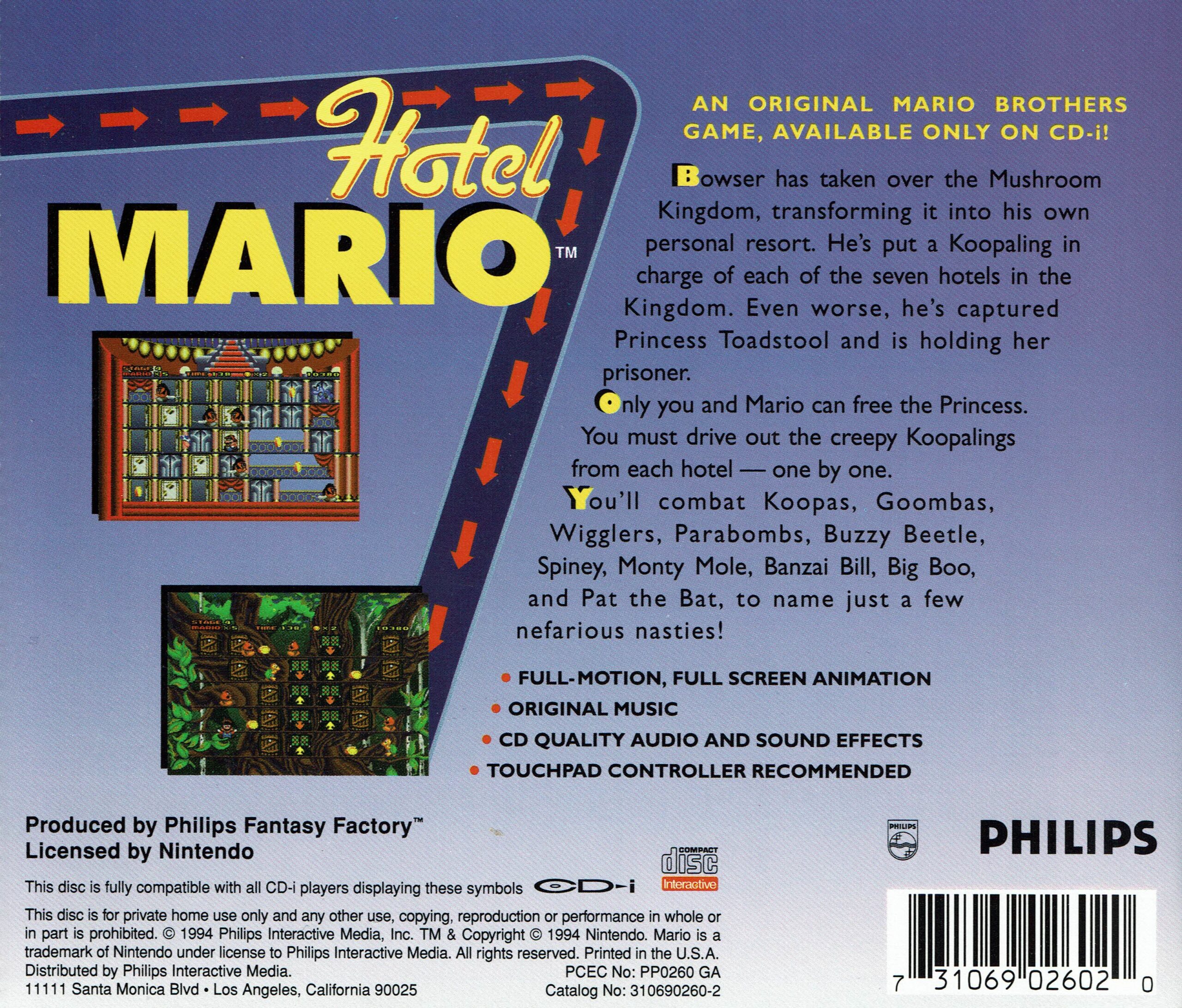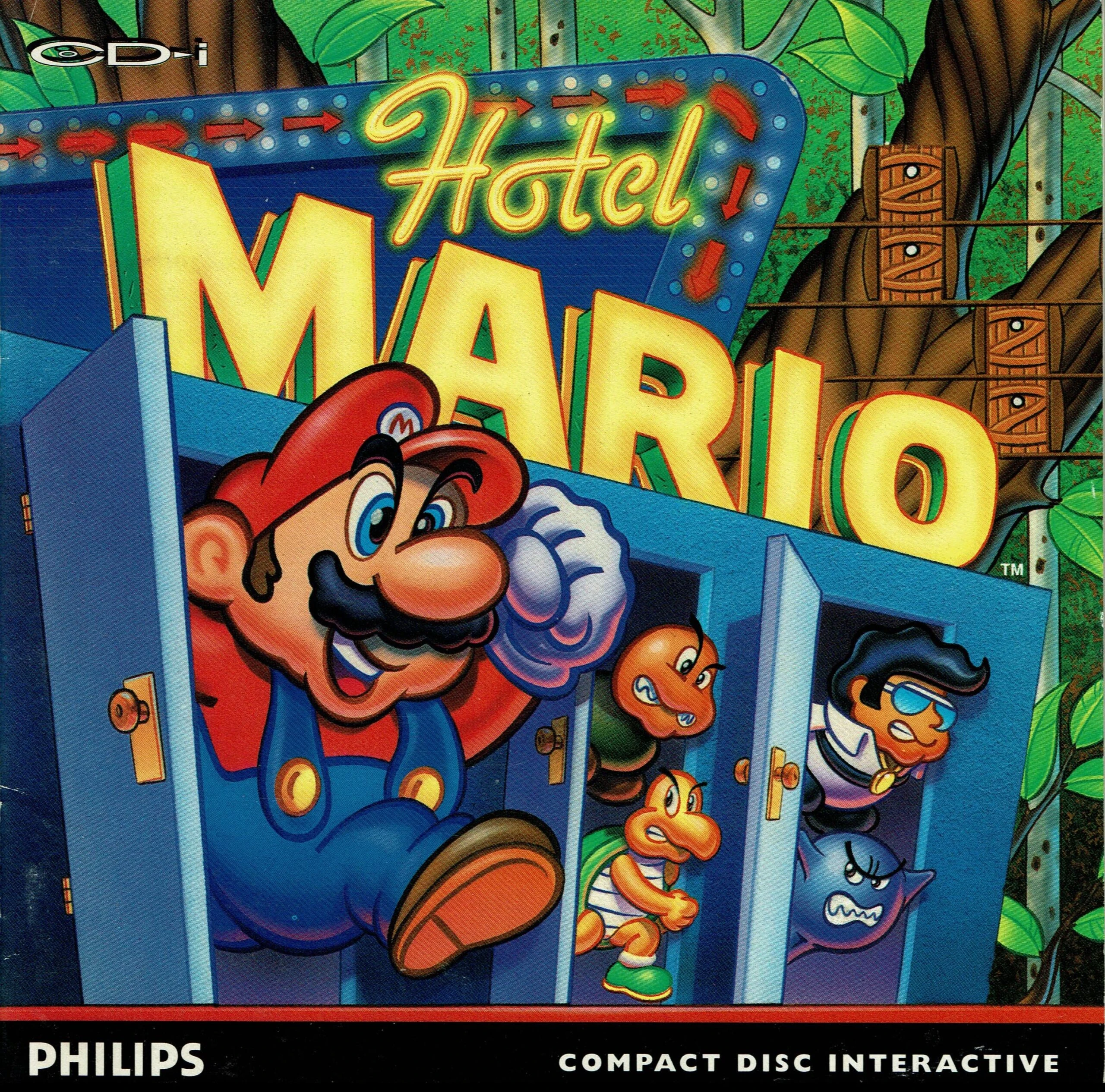
Hotel Mario (Philips CD-i, 1994)
The one where Bowser turns the Mushroom Kingdom into a hotel resort and Mario has to close all the doors. A genuinely unique piece of Mario history — infamous for its FMV cutscenes, its origin story, and the accidental internet meme legacy that kept it alive long after the CD-i was forgotten.
Overview

Hotel Mario is a 1994 puzzle game for the Philips CD-i — the only Mario game ever released on that platform, and one of the most unusual entries in the franchise’s history. It was developed by Fantasy Factory and published by Philips Interactive Media, with Nintendo licensing the characters but having virtually no involvement in the game’s actual development.
The premise is simple and weird: Bowser has taken over the Mushroom Kingdom and turned it into “Klub Koopa Resort,” a chain of seven hotels each run by a different Koopaling. Princess Toadstool has been kidnapped and hidden in one of them. Mario’s mission is to work through all seven hotels, floor by floor, closing every door on every stage.
The game is a single-screen puzzle platformer — closer in spirit to Donkey Kong or Mario Bros. than to Super Mario World. Mario navigates elevator systems between floors, stomps enemies, collects power-ups found behind doors, and works his way toward each hotel’s Koopaling boss. It’s not without its charms, but it’s also not a particularly good game.
What Hotel Mario IS, unambiguously, is culturally significant. Its FMV animated cutscenes — produced on a shoestring budget and animated with cheerful incompetence — became some of the most remixed and parodied video game content on the early internet. “Nice of the Princess to invite us over for a picnic, eh Luigi?” is a quote that outlived the CD-i itself by decades.
The CD-i Deal — How This Game Came to Exist
To understand why Hotel Mario exists, you need to understand one of the stranger business deals in gaming history. In 1989, Nintendo and Sony were collaborating on a CD-ROM add-on for the Super NES — a device that would have expanded the console’s capabilities dramatically. At the last minute, Nintendo pulled out of the deal with Sony and instead signed with Philips to develop a similar add-on. Sony, left holding a contract and a half-built console, redesigned their hardware and launched it independently. That console became the PlayStation.
By 1993, Nintendo had abandoned the Philips add-on too, leaving both companies with an awkward situation. As part of dissolving the agreement, Nintendo licensed Philips to use some of their most famous characters on the CD-i console. The result was four games: three The Legend of Zelda titles (Link: The Faces of Evil, Zelda: The Wand of Gamelon, and Zelda’s Adventure) and Hotel Mario.
Two further Mario games were planned — Super Mario’s Wacky Worlds (a port of Super Mario World with CD-i exclusive world themes, developed by NovaLogic) and Mario Takes America (an educational FMV game) — but both were cancelled before release. Only Hotel Mario made it out. Nintendo’s involvement was minimal throughout: according to designer Stephen Radosh, Nintendo only reviewed the game to ensure the characters looked faithful to their source material.
“Nintendo was reported to be pleased with the finished project and Radosh stated that there were rumors that Nintendo considered bringing the game to their own platforms.” — Wikipedia
Story
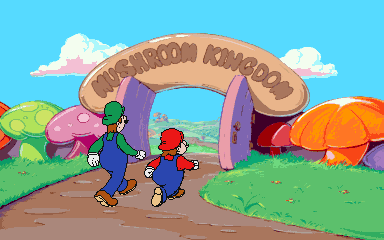 The opening — Mario and Luigi arrive for a picnic
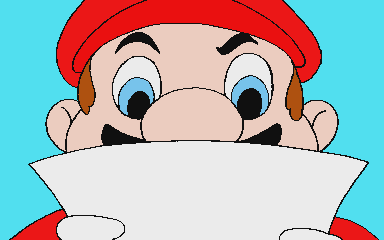 Mario reads Bowser’s letter: “Dear Pesky Plumbers…”
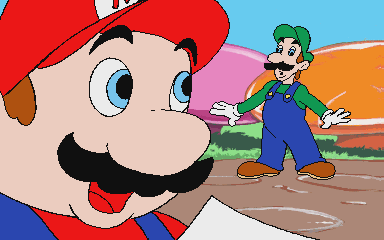 “We gotta save the Princess!”
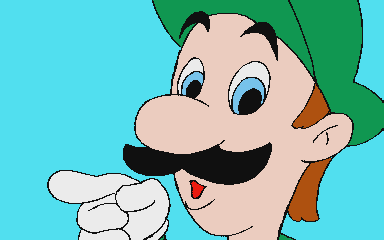 Luigi tells the player: “YOU GOTTA HELP US!”
From the Official Game Manual:
“It’s a dark day in the Mushroom Kingdom. Mario and Luigi have come to visit their friend Princess Toadstool, only to discover that the Princess has been kidnapped by Bowser, King of the evil Koopaling clan!
Bowser has turned the beautiful Mushroom Kingdom into a personal resort for himself and his seven Koopaling children. Each Koopaling has taken over a hotel in the Kingdom. To top it off, Bowser has challenged Mario and Luigi to save the princess from the Koopaling’s clutches.
Beware of the Koopalings and their nasty pals as they try to stop Mario and Luigi from searching the seven hotels. Mario and Luigi have to use their ability to jump and stomp — and throw fireballs — to avoid or defeat these enemies. It’s up to Mario and Luigi to outsmart the Koopalings’ clever traps.
Are you ready to check in to Hotel Mario?”
Mario and Luigi have been invited by Princess Toadstool to a picnic in the Mushroom Kingdom. When they arrive, they find a letter from Bowser — “Dear Pesky Plumbers” — informing them that he and his seven Koopaling children have turned the entire Mushroom Kingdom into their personal vacation resort, which they’ve renamed Klub Koopa Resort. Princess Toadstool has been made a “permanent guest” at one of the seven Koopa Hotels, and the brothers will have to work through all of them to find her.
The twist is that they keep finding her — and losing her. After defeating each Koopaling and destroying their hotel, the Princess appears briefly, only to immediately vanish to the next hotel. It’s only after battling through all six Koopaling hotels and then storming Bowser’s own Seizures Palace Hotel (where Iggy is also stationed, having been refused his own building) that Mario finally defeats Bowser for good.
With the hotel destroyed, the Princess is freed for real. She kisses Mario and Luigi, the three of them thank the player directly, and walk off into the sunset. Then the credits roll over what appears to be a completely unrelated stock image of a Swiss hotel.
“Nice of the Princess to invite us over for a picnic, eh Luigi?” / “I hope she made lotsa spaghetti!” — Mario and Luigi, opening cutscene
Gameplay
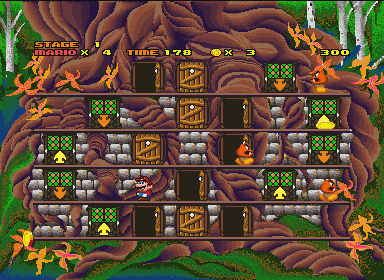
Hotel Mario is a single-screen puzzle platformer. Each stage takes place in a cross-section view of a hotel floor layout, with multiple floors connected by elevators. Mario’s only goal is to close every open door on the stage. Doors start open; enemies walk through them and reopen them if you’re not careful.
Mario can stomp most enemies in the classic Mario style, and can use elevators to move between floors. Opening a door sometimes reveals a power-up — a Super Mushroom lets Mario take an extra hit, a Fire Flower lets him throw fireballs, and a Star Man makes him temporarily invincible. Collecting 30 coins earns an extra life. Mario loses a life if he touches an enemy, runs out of time, falls off a floor, or if every door is opened simultaneously.
Each hotel has around ten stages. The last stage of each hotel is a boss fight against the Koopaling running that hotel — doors still need closing, but now there’s an actively attacking boss to deal with too. Each Koopaling has different attack patterns. Defeat the boss and that hotel collapses, triggering a cutscene, and Mario moves on to the next one.
There’s a two-player mode where the second player controls Luigi. The players take turns rather than playing simultaneously. A password system lets players save progress between sessions.
The Toasters — Hotel 2’s Secret
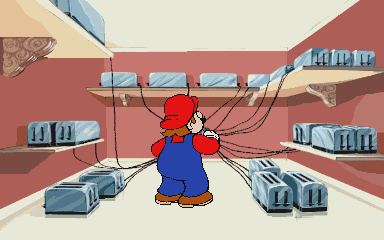
Roy’s HardBrick Hotel contains a secret room accessible through a specific door. In it, Mario encounters a room full of toasters — a bizarre non-sequitur that became one of the game’s most memorable moments. “You know what they say — all toasters toast toast!” is one of the cutscene lines associated with this room, delivered with the same confusing enthusiasm as the rest of the game’s voice acting. The toaster room has its own unique unused music track, discovered via The Cutting Room Floor.
The 7 Koopa Hotels
Each hotel has a distinct visual theme, designed by background artist Trici Venola, who took inspiration from Disney and J.R.R. Tolkien to give each building its own character. Here’s every hotel, its Koopaling, and what to expect:
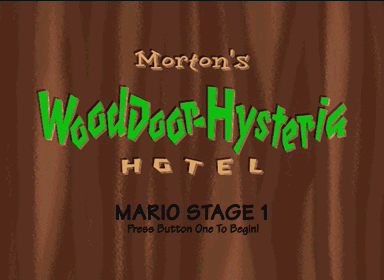
Hotel 1 — Morton’s Wood Door Hysteria Hotel
A woodland-themed hotel. The first hotel and the easiest introduction to the game’s mechanics. Morton charges across the screen and must be stomped to defeat.

Hotel 2 — Roy’s HardBrick Hotel
A stone-brick hotel with a mine-like aesthetic. Contains the secret Toasters room — find the right door and you’ll discover Mario’s inexplicable encounter with a room full of appliances.

Hotel 3 — Larry’s Chillton Hotel
An icy, snow-themed hotel — a riff on “The Hilton.” Features Buzzy Beetles hidden beneath snowpiles as a unique enemy variant found only in this hotel.
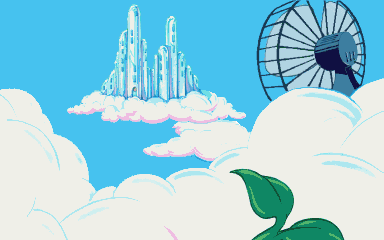
Hotel 4 — Lemmy’s High-ate Regency Hotel
A sky/cloud hotel — “High-ate” being a pun on Hyatt. Lemmy bounces on a ball across the stage. One of the more challenging boss fights due to his unpredictable movement.
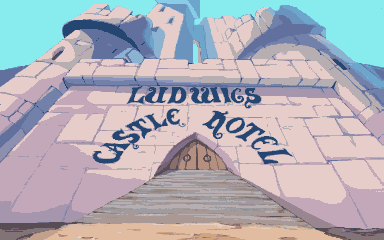
Hotel 5 — Ludwig’s Thump Castle Hotel
A gothic castle-style hotel, the most visually striking of the set. Ludwig fires magic blasts and is considered one of the tougher bosses in the game.
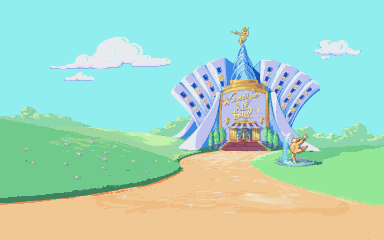
Hotel 6 — Wendy’s Blitz Snarlton Hotel
A glamorous Art Deco-style hotel — a portmanteau of “Blitz” and “Carlton.” Mario faces Wendy, who summons rings. Defeating her triggers the penultimate cutscene where the princess vanishes yet again.

Hotel 7 — Bowser’s Seizures Palace Hotel
The final hotel — a gothic palace. Iggy appears here rather than running his own hotel (the data for a separate “Hotel 8” exists in the game’s files, suggesting he was originally meant to). Bowser himself is the final boss, fought on the roof as the hotel crumbles.
Gameplay Screenshots — All Seven Hotels
Hotel 1 — Morton’s Wood Door Hysteria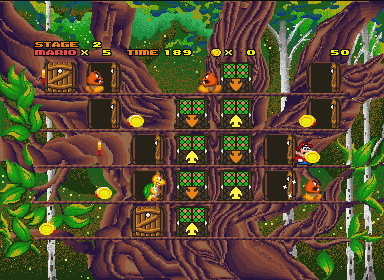 Hotel 1 — Stage 2
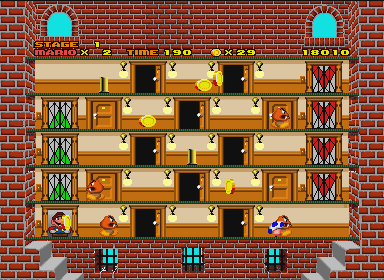 Hotel 2 — Roy’s HardBrick Hotel
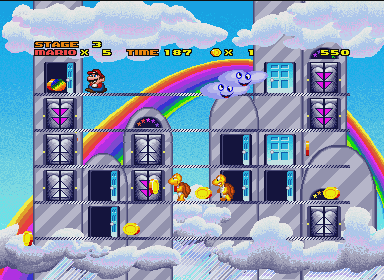 Hotel 4 — Lemmy’s High-ate Regency
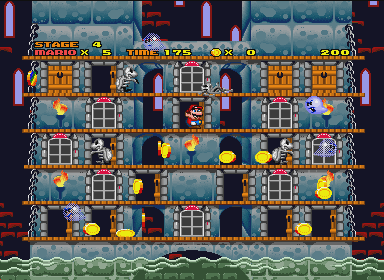 Hotel 5 — Ludwig’s Thump Castle
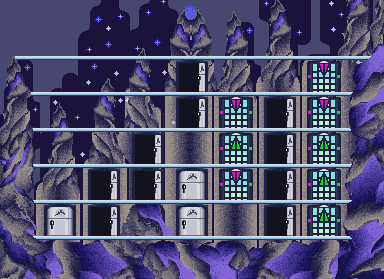 Hotel 3 — Larry’s Chillton Hotel
 Hotel 6 — Wendy’s Blitz Snarlton
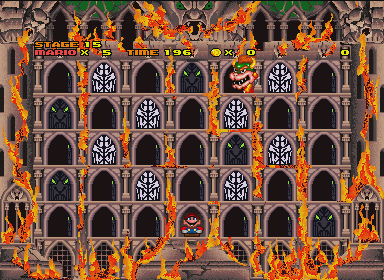 Hotel 7 — Bowser’s Seizures Palace (Iggy boss)
The Cutscenes — “If you need instructions on how to get through the hotels, check out the enclosed instruction book.”
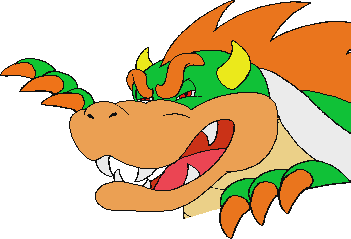 Bowser in the FMV cutscenes — animated by Ocatillo Pictures
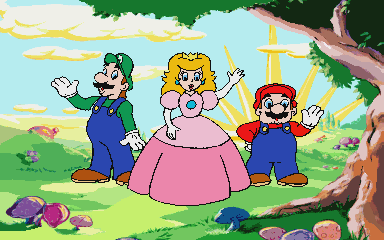 The ending — Mario, Luigi and Peach thank the player directly
Hotel Mario contains 14 FMV cutscenes, outsourced to California-based video production company Ocatillo Pictures. They were animated by Terry O’Brien, Kathleen Swain and Bonita Versh. An early version of the animation was described by background artist Trici Venola as “mechanical” and “visually no fun” — she and art director Jeff Zoern reworked the visual style, drawing on Disney animation and J.R.R. Tolkien’s illustration style to give the cutscenes more life.
The voice cast was hired through a talent agency. Marc Graue provided the voices of Mario, Luigi and Bowser. Princess Toadstool was voiced by Jocelyn Benford, who was recommended by a Philips employee and later married producer Michael Ahn. The voices were widely criticised at the time — IGN described Mario’s voice as sounding like “someone’s ex-smoker grandpa trying to imitate a Mafia hit man.” 1UP.com’s Danny Cowan wrote that “the dialogue is meant to sound playful, but the character voices imply acts of menace and hate.”
The cutscenes are full of non-sequiturs and inexplicably confident dialogue. Among the most quoted lines:
- “Nice of the Princess to invite us over for a picnic, eh Luigi?” / “I hope she made lotsa spaghetti!” — Mario and Luigi, opening
- “Dear Pesky Plumbers: The Koopalings and I have taken over the Mushroom Kingdom! The Princess is now a permanent guest at one of my seven Koopa Hotels!” — Bowser’s letter, read by Mario
- “YOU GOTTA HELP US!” — Luigi, addressing the player directly
- “If you need instructions on how to get through the hotels, check out the enclosed instruction book.” — Mario, mid-cutscene
- “When you pinch Wendy’s pennies, they pinch back.” — Mario, before Hotel 6
- “You know what they say — all toasters toast toast!” — Mario, in the secret Toasters room
- “Gee, it’s kinda dark in here.” / “No.” — Mario and Luigi
Development
Hotel Mario was developed by Fantasy Factory, a small California studio. Designer Stephen Radosh had conceived the hotel concept independently — a game set across floors of a building with a door-closing mechanic — before it was adapted to use the Nintendo characters. The development team skewed older than typical game developers of the era; background artist Trici Venola noted that one playtester was “well past retirement age.”
Because the target audience was children with faster reflexes than the older playtesters, the game was deliberately designed to play smoothly for the testers and then sped up for the final release. This decision contributed to the game’s reputation for unresponsive controls — what felt right to a retiree did not necessarily feel right to a seven-year-old.
One notable piece of development history: jumping was not originally planned as a feature. Hollie Lohff, the daughter of engineer Thomas Lohff, played an early build and pointed out that it felt wrong to play a Mario game where Mario couldn’t jump. Jumping was added to the game as a direct result. Hollie’s birthday (February 17) is still encoded into the game — if you set the CD-i’s clock to that date, a special message reading “ITS HOLLIES BIRTHDAY!” replaces the normal “HERE WE GO” screen.
Unused Content (via The Cutting Room Floor)
- The game’s file structure suggests Hotel Mario was originally planned to have 8 hotels — one for each Koopaling plus Bowser — following the Super Mario Bros. 3 / Super Mario World formula. The missing “L6_” files suggest Iggy’s hotel was cut, leaving him to appear in Bowser’s hotel instead. An early version of the opening cutscene even mentions “eight Koopa Hotels” before it was corrected to seven.
- Every “stage clear” theme has an unused alternate variation. Hotels 2, 3 and 5 have slightly extended versions of their stage clear themes that go unheard in normal play.
- A prototype (version 0.09) was discovered at a Goodwill store in February 2024 by Alex of Game Pak Rat, then dumped and released publicly on Mario Day (March 10, 2024). The prototype has no background music in cutscenes, different voice performances, and references eight hotels in the intro cutscene.
- A “cheese hotel” was proposed during concept development and had artwork created, but the entire development team rejected it. Venola called it “awful” and the responsible artist was let go.
Reception
| Publication | Score |
|---|---|
| Electronic Gaming Monthly | 8/10, 6/10, 6/10, 6/10, 7/10 |
| GamePro | 2.5/5 |
| Video Games: The Ultimate Gaming Magazine | 7/10 |
| Computer and Video Games | 67/100 |
| Superjuegos (Spain) | 87/100 |
| CDi magazine (UK) | 90% |
| Joystick (France) | 65/100 |
Hotel Mario received mixed reviews on release. Electronic Gaming Monthly described its gameplay as “simple yet addictive.” GamePro found it “fun but quickly boring,” noting that “the only intriguing aspects of this game are the well-fashioned animated sequences.” Video Games: The Ultimate Gaming Magazine gave it 7/10 and acknowledged its difficulty. Spanish magazine Superjuegos was enthusiastic, praising its simple mechanics and recommending it to CD-i owners. The UK’s CDi magazine gave it 90%.
The game’s reputation has soured considerably in retrospect. IGN’s Levi Buchanan acknowledged that Hotel Mario was superior to the Zelda CD-i games, but argued that door-closing was “not a strong enough hook for an entire game.” GamesRadar described it as “craptastic.” Eurogamer called it “little more than a really rubbish version of Elevator Action.” The controls have been widely criticised as unresponsive. In 2008, IGN named it one of the ten worst Mario games; in 2017, GamesRadar ranked it 48th on their “50 Worst Games of All Time” list.
J.C. Fletcher of Joystiq offered what may be the most pointed summary of the game’s premise: “Apparently Bowser has nefariously plotted to have his underlings open doors in his own hotels, thus wasting air conditioning and increasing his own electric bill. Mario and Luigi must heroically latch all the doors and save their archenemy from having his hallways get too cold.”
Legacy & Internet Meme Culture
Hotel Mario sold poorly on release — the CD-i itself was an expensive, niche platform that never found a mainstream audience. The game faded quickly into obscurity alongside the system. Then came YouTube.
In the mid-to-late 2000s, Hotel Mario’s cutscenes became one of the foundational sources for YouTube Poop — a genre of deliberately absurdist video remixes built from the distorted, looped and re-edited footage of low-quality video sources. The game’s combination of stilted animation, off-model character design, nonsensical dialogue and enthusiastically bad voice acting made it perfect material. “I hope she made lotsa spaghetti,” “YOU GOTTA HELP US!” and “all toasters toast toast” became cultural touchstones for a generation of early internet users who had never seen a CD-i in their lives.
Marc Graue, who voiced Mario and Luigi, reprised his roles in a parody dub in 2012, leaning into the game’s meme status. In 2024, a fan remake titled Hotel Mario ReBooked was announced, promising quality-of-life improvements while preserving the original’s spirit.
Hotel Mario also holds an accidental historical footnote: the Nintendo-Sony deal that fell apart and led to this game existing is the same deal that created the PlayStation. Every time someone watches a Hotel Mario YouTube Poop, they are in some small way looking at the ripple effects of one of the most consequential moments in gaming history.
Trivia & Facts
- Hotel Mario is the only Mario game ever released for the Philips CD-i, and one of only four Nintendo-character games on the platform (alongside three Zelda titles).
- Jumping was added to the game at the suggestion of a playtest from Hollie Lohff, daughter of engineer Thomas Lohff. Her birthday (February 17) is commemorated in the game’s code — setting the CD-i clock to that date triggers a special “ITS HOLLIES BIRTHDAY!” message.
- The Nintendo-Sony deal that led to Hotel Mario’s existence is the same agreement that, when it fell through, gave Sony the foundation to develop the PlayStation independently.
- Two other Mario games were planned for the CD-i: Super Mario’s Wacky Worlds (a Super Mario World port with exclusive levels, developed by NovaLogic to 30% completion before cancellation) and Mario Takes America (an educational FMV game). Neither was released.
- The game was designed to work well for older playtesters and then sped up for the final version — contributing to the widely criticised unresponsive controls.
- A “cheese hotel” was designed and rejected during development. The artist responsible for it was fired.
- Hotel Mario contains 14 cutscenes. A secret 15th cutscene (the Toasters room) is accessible by finding a hidden door in Roy’s HardBrick Hotel.
- The game’s file structure reveals that eight hotels were originally planned — one for each Koopaling — before Iggy’s hotel was cut, leaving him as a mini-boss in Bowser’s Seizures Palace instead.
- A prototype (v0.09) was found at a Goodwill store in February 2024 and publicly released on Mario Day (March 10, 2024). It features different voice performances, no cutscene music, and references “eight Koopa Hotels” in the intro.
- Art director Jeff Zoern later went on to work as the lead technical character artist on Luigi’s Mansion 3 — another game whose plot involves Luigi rescuing Princess Peach from a haunted hotel.
- Marc Graue, who voiced Mario, Luigi and Bowser, reprised his Hotel Mario voice roles in a parody dub in 2012, embracing the game’s meme status.
Videos
Box Art Gallery