Game Boy Advance2004Pinball adventureFuse GamesMario is the ball35 Stars and Super Mario 64-style doorsSuper Mario Ball in Japan and EuropeWii U Virtual Console, 2014
Mario Pinball Land
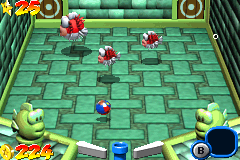
Mario does not jump once in this game, because Mario is the ball. Mario Pinball Land, known as Super Mario Ball in Japan and Europe, came out for the Game Boy Advance in Japan on 26 August 2004, in North America on 4 October, in Australia on 28 October and in Europe on 26 November 2004. A day at the Fun Fair goes wrong when two Goombas re-aim the new Sky Cannon and fire Princess Peach into Bowser’s castle; Mario has himself squashed into a ball by the Pinballer and follows. Five stages of linked pinball tables stand between him and Peach, with 35 Stars to win, numbered Star doors straight out of Super Mario 64, four Star Keys held by Big Boo, Petey Piranha, Porcupuffer and King Tut, and Bowser waiting at the end. It was the first game by Fuse Games, a studio set up by the makers of the Pro Pinball series, whose five-person team made the whole game, with Shigeru Miyamoto as producer. Critics praised the pre-rendered graphics and cursed the difficulty; it returned on the Wii U Virtual Console in 2014.
Developer:Fuse Games (later Silverball Studios), Burford, Oxfordshire
Publisher:Nintendo
Platform:Game Boy Advance
Genre:Pinball adventure
Japan:26 August 2004 (as Super Mario Ball)
N. America:4 October 2004
Australia:28 October 2004
Europe:26 November 2004 (as Super Mario Ball)
Players:1
Producer:Shigeru Miyamoto
Executive producer:Satoru Iwata
Fuse Games team:Adrian Barritt, Richard Horrocks, Kevin Ayre, Cai Remrod, Keith Ainslie
Music:Nimrod Productions (as credited)
Voices:Charles Martinet (Mario); Jen Taylor (Peach and Toad, uncredited)
Stages:Five: the Fun Fair, Grassy Greens, Frosty Frontier, Shifting Sands and the Fiery Stage
Stars:35
Metacritic:62/100
Re-releases:Wii U Virtual Console (September–November 2014)
Advertisement
Overview
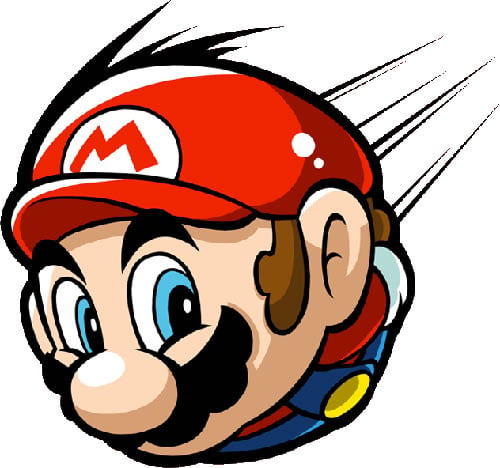
Pinball Mario, from the official artwork.
Plenty of Mario games have a pinball table hidden somewhere in them. Mario Pinball Land turns the idea inside out: Mario himself is curled into a ball, and the Mushroom Kingdom is the table. You never steer him directly. Everything happens through the two flippers at the bottom of the screen, and a Mario who slips between them loses a life.
Underneath the pinball is a Super Mario 64-shaped adventure. Each of the five stages is a chain of single-screen tables joined by doors, and the doors are marked with how many Stars it takes to open them. Stars come from clearing a table of enemies, from collecting its Red Coins or from minigames in Toad’s tent, and there are 35 in all. Four of the bosses guard Star Keys, and only with all four can Mario reach Bowser.
The game was the debut of Fuse Games, a small studio near Oxford set up by Adrian Barritt and Richard Horrocks in 2002, the pair behind the Pro Pinball series for computers. They pitched a demo to Nintendo of America in Seattle and five of them made the whole game, with Shigeru Miyamoto credited as producer and Nintendo staff supervising.
It looked superb for a Game Boy Advance cartridge, with chunky pre-rendered characters, and most reviewers said so. They were less happy about the difficulty and about the way a lost ball drops Mario back to the previous table with all its enemies restored. The game scored 62 on Metacritic, and in 2014 it was re-released on the Wii U Virtual Console.
Roll up, roll up! See Mario in his most unique guise ever: a pinball! In Super Mario Ball, a visit to a fairground sees Princess Peach turned into a ball and kidnapped by Bowser, so the perky hero clambers into a cannon and shoots after her.
Ricochet around the themed levels, consisting of deviously designed pinball tables, and defeat enemies to collect coins and stars. Rack up enough stars to unlock doors to new areas — but you won’t be able to progress until you defeat each boss. So what are you waiting for? Roll to it!
— Official description (Nintendo UK, 2004)
Why Mario Pinball Land matters to Mario fans
Here the Mushroom Kingdom becomes a pinball machine, built by a small British studio under Shigeru Miyamoto’s eye. It borrows Super Mario 64’s numbered Star doors, brings in Petey Piranha, Big Boo, Porcupuffer and a statue boss from a buried pyramid, King Tut, and features Charles Martinet as Mario. Two decades later, WarioWare: Move It! gave it a microgame of its own.
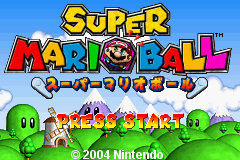
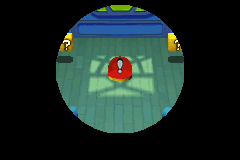
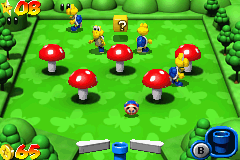
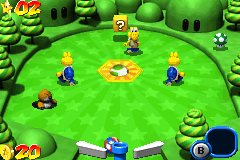
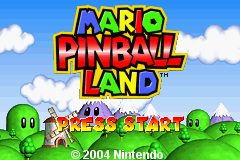
The North American title screen.The Fun Fair in the opening scene.Mario in the Grassy Greens Stage.
“This is incredibly well put together.”
Satoru Iwata, as recalled by Nintendo supervisor Hiro Yamada in Nintendo UK’s Metroid Prime Pinball interview (2007)
Yamada was describing Iwata’s reaction to Fuse Games’ prototype pinball software for the Game Boy Advance. What came out of it, he said, was Super Mario Ball.
Quick Answers
Short answers to what people most often ask about Mario Pinball Land. The full detail is further down.
When did Mario Pinball Land come out?
Japan: 26 August 2004. North America: 4 October 2004. Australia: 28 October 2004. Europe: 26 November 2004. More →
Is Super Mario Ball the same game?
Yes. It is called Super Mario Ball in Japan and Europe and Mario Pinball Land in North America and Australia. During development it was simply Mario Pinball. More →
How many Stars are there?
Thirty-five. They open the numbered Star doors between tables; the last door in Bowser’s castle needs all 35. More →
Who are the bosses?
Big Boo in the Fun Fair, Petey Piranha in Grassy Greens, Porcupuffer in Frosty Frontier, King Tut in Shifting Sands and Bowser in the Fiery Stage. The first four each drop a Star Key. More →
Why do I keep going back a table?
If Mario drains in any table after the first, he drops back to the previous table, whose enemies and objects reset. A few drains send him back two tables. More →
Who made Mario Pinball Land?
Fuse Games, a five-person team in Oxfordshire led by Adrian Barritt and Richard Horrocks of Pro Pinball fame, with Shigeru Miyamoto as producer and Nintendo supervisors. More →
It was re-released on the Wii U Virtual Console in 2014 (11 September in Europe and Australia, 17 September in Japan, 27 November in North America). More →
Was it well reviewed?
Mixed: 62 on Metacritic. Scores ran from 4/10 (Edge, EGM) to 8/10 (GameZone), with the visuals praised and the difficulty criticised. More →
Story & Stages
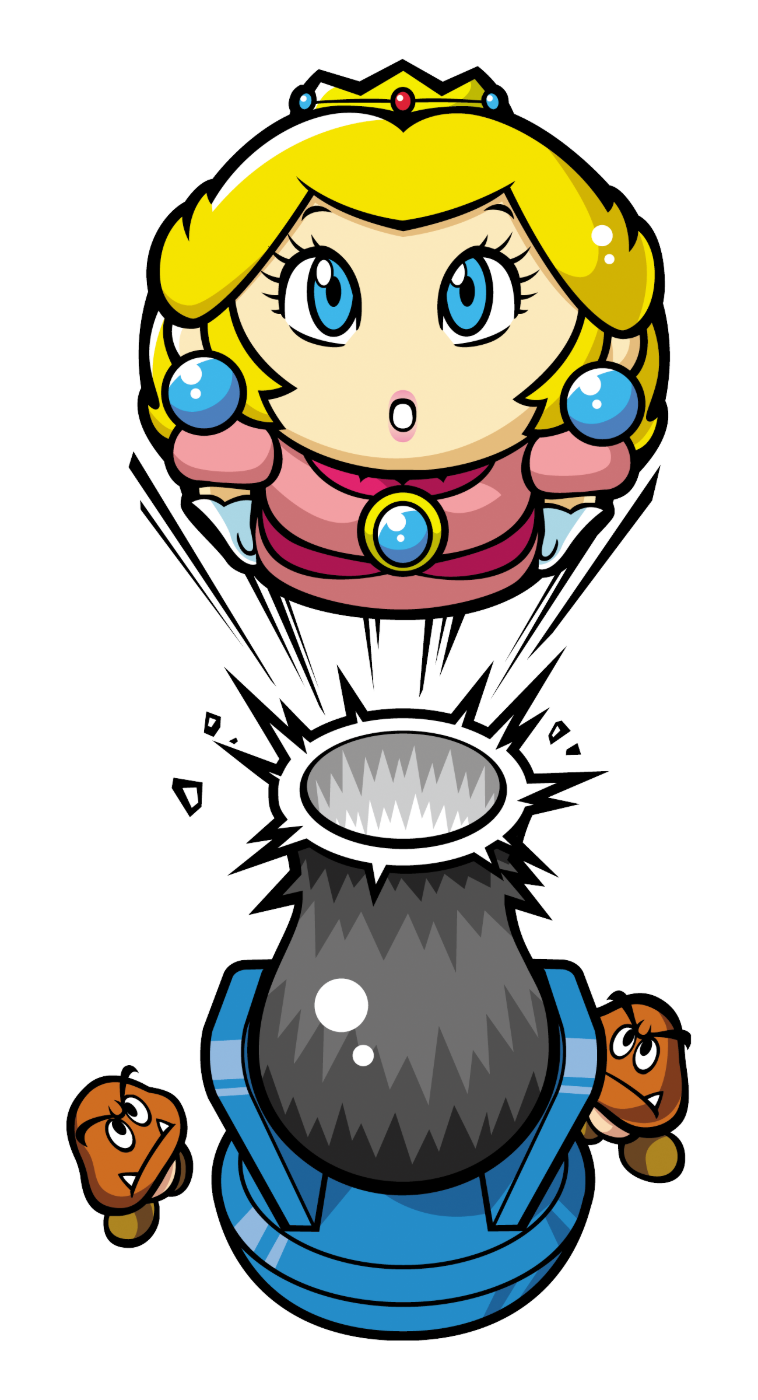
Peach takes an unplanned flight from the Sky Cannon.
The instruction booklet sets the scene at the Fun Fair, where the new Sky Cannon is being unveiled. Before you can ride it you go through the Pinballer, a machine that squeezes you into a ball small enough for the barrel and rubbery enough to bounce when you land. Mario, Peach and a queue of Toads are waiting their turn.
A Toad goes first and loves it. Then, as Peach climbs in, two shady Goombas swing the barrel round to point at Bowser’s castle, and she is fired straight into it; the Goombas lock the gates behind her. Mario jumps into the Pinballer and the cannon after her. To open the castle he will need four Star Keys, each held by a boss.
The Fun Fair
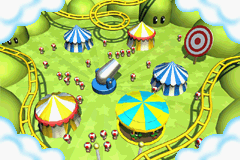
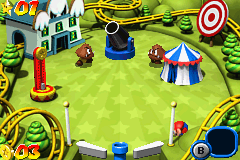
The Fun Fair is the hub and the first stage, a fairground with a haunted house and a roller coaster. Its first table holds the Sky Cannon, guarded by two Goombas, a high striker that pays out coins or Blue Coins if Mario hits it hard enough, and Toad’s blue tent with its three Star minigames.
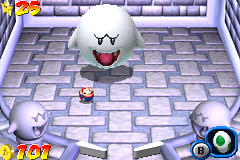
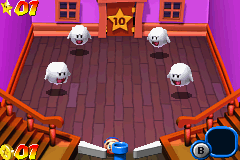
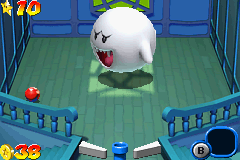
The Haunted House opens once Mario has a Star. Inside, four Boos are worth a Star, and a 10-Star door leads on to Big Boo. Beat him for a Star Key; a ? Block appears on each side of the room, with an Invincibility Star on the left and Lightning on the right.
Mario in the Fun Fair.Inside the Haunted House.Mario fights Big Boo.
Grassy Greens Stage
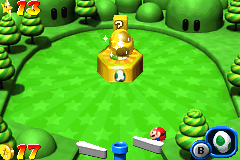
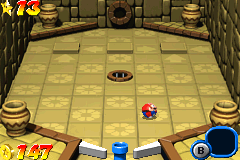
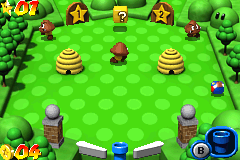
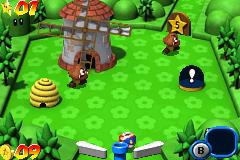
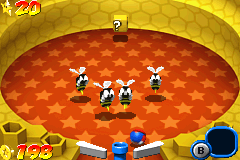
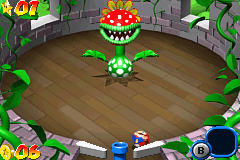
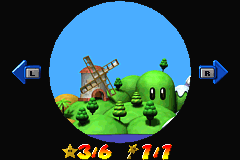
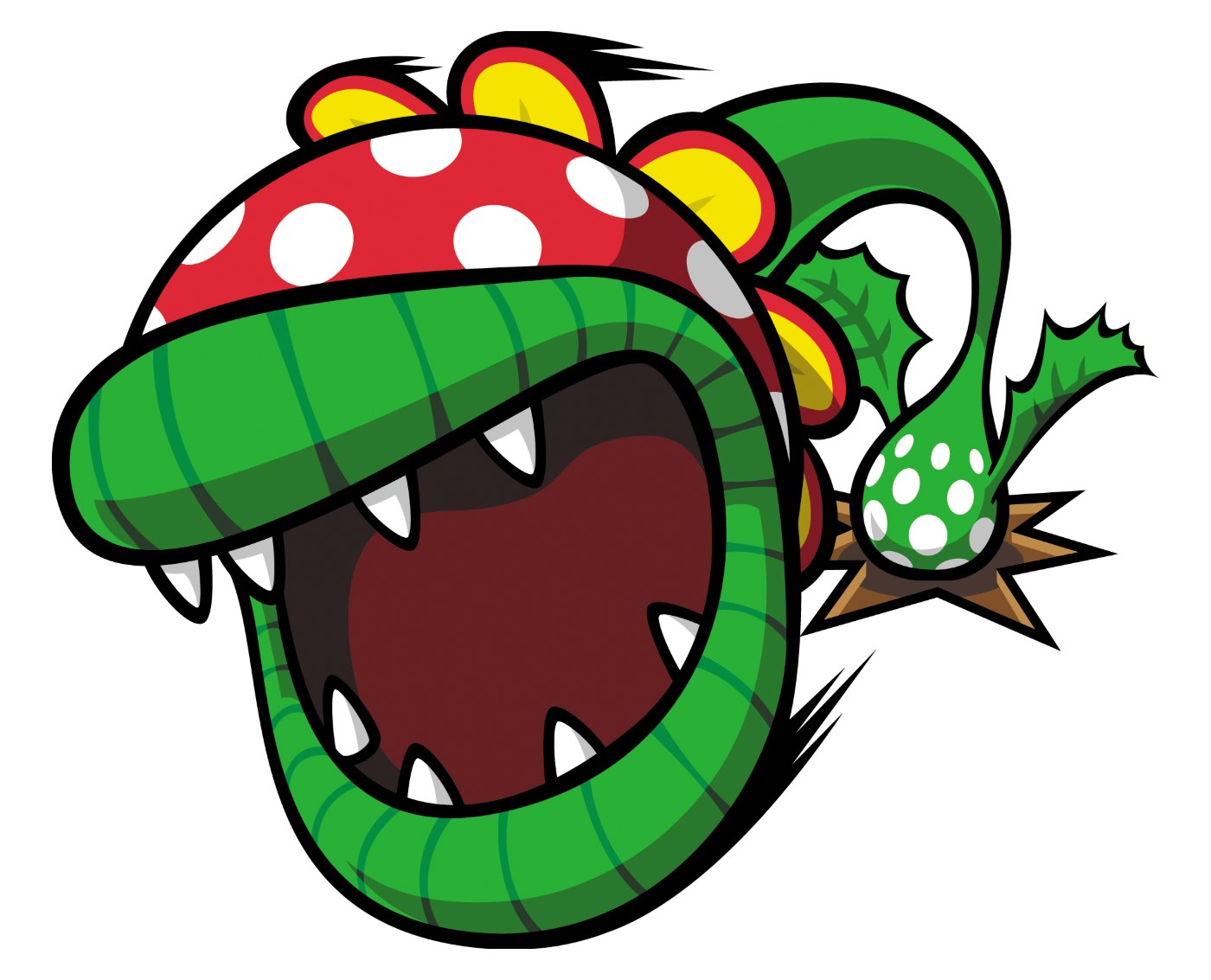
Rolling hills, Goombas, blue Koopas and beehives full of Bumblers. Clear the three Goombas of the first table for a Star, then take the 1-Star door to a windmill, where a Blue Switch stops the blades and a shaking hive releases three Bumblers. A 2-Star door from the start leads to three Koopas and a Monty Mole, and a 5-Star door from the windmill leads to a table of bouncy mushrooms and four more Koopas. With a Mini Mushroom Mario can squeeze into a beehive for one more Star.
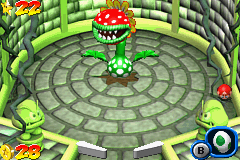
The boss lives inside the windmill. Petey Piranha needs three hits, and leaves behind a Star Key.
The second table in Grassy Greens.Inside a beehive.Mario’s battle with Petey Piranha.
Frosty Frontier Stage
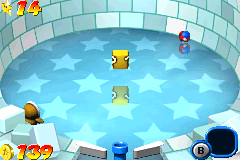
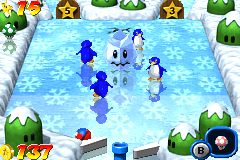
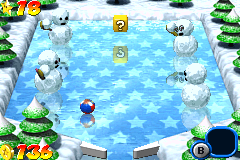
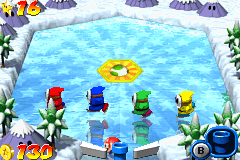
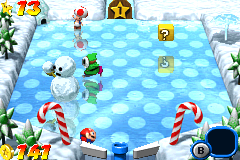
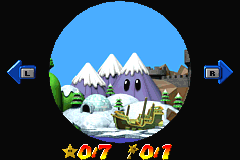
Snow, pine trees and mountains. On the first table Shy Guys on Skates take turns skating round the table, and a tiny igloo hides a Monty Mole in a parka, reachable only as Mini Mario. Beyond the 1-Star door, four penguins circle a giant Freezie; push the Freezie onto the crack in the ice and it sinks, opening a hole to the waters below. A 3-Star door leads to four snowball-throwing Mr. Blizzards and a 5-Star door to an ice rink of colour-changing Shy Guys.
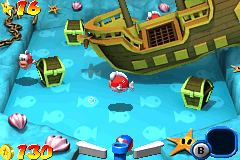
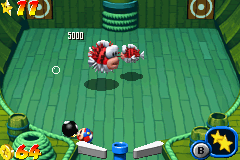
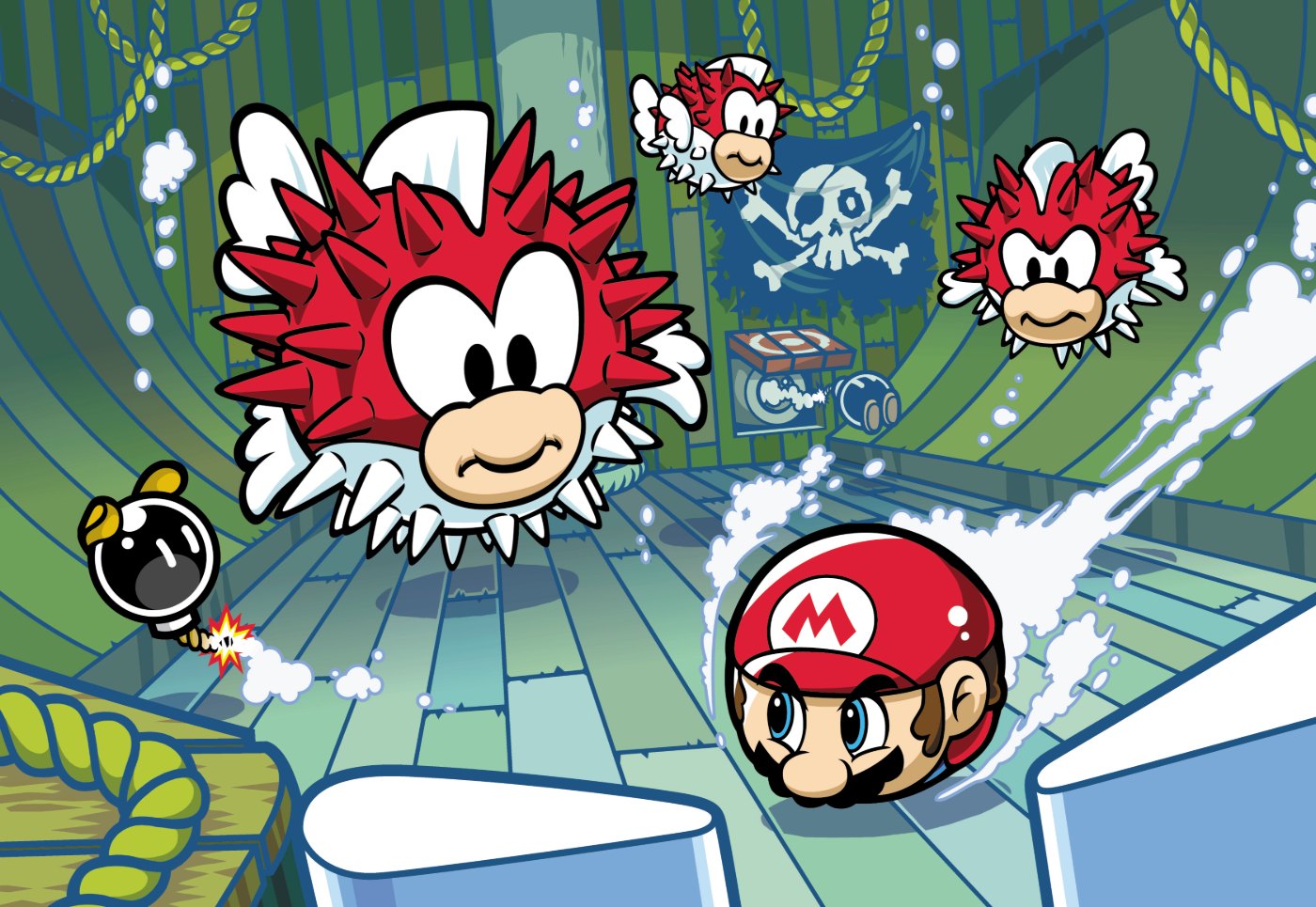
Under the ice lie three treasure chests, three Cheep Cheeps and a sunken ship. Hit all the chests and the ship shifts enough to let Mario in, where Porcupuffer is waiting. Trapdoors in the ship drop cannonball bombs; use them to stun the fish, then strike.
The first table in Frosty Frontier.The first underwater table.Mario fights Porcupuffer.
Shifting Sands Stage
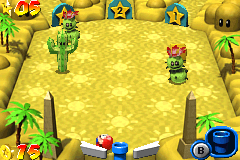
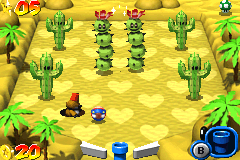
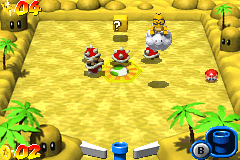
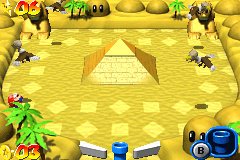
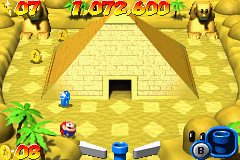
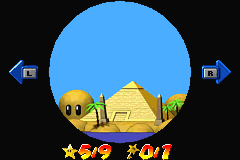
A desert of cacti and ruins. Pokeys guard the start and the table behind the 1-Star door, a Lakitu throws Spinies behind the 4-Star door, and behind the 2-Star door four Kleptos circle a buried pyramid. Hit the two sphinxes four times in quick succession and the pyramid rises out of the sand.
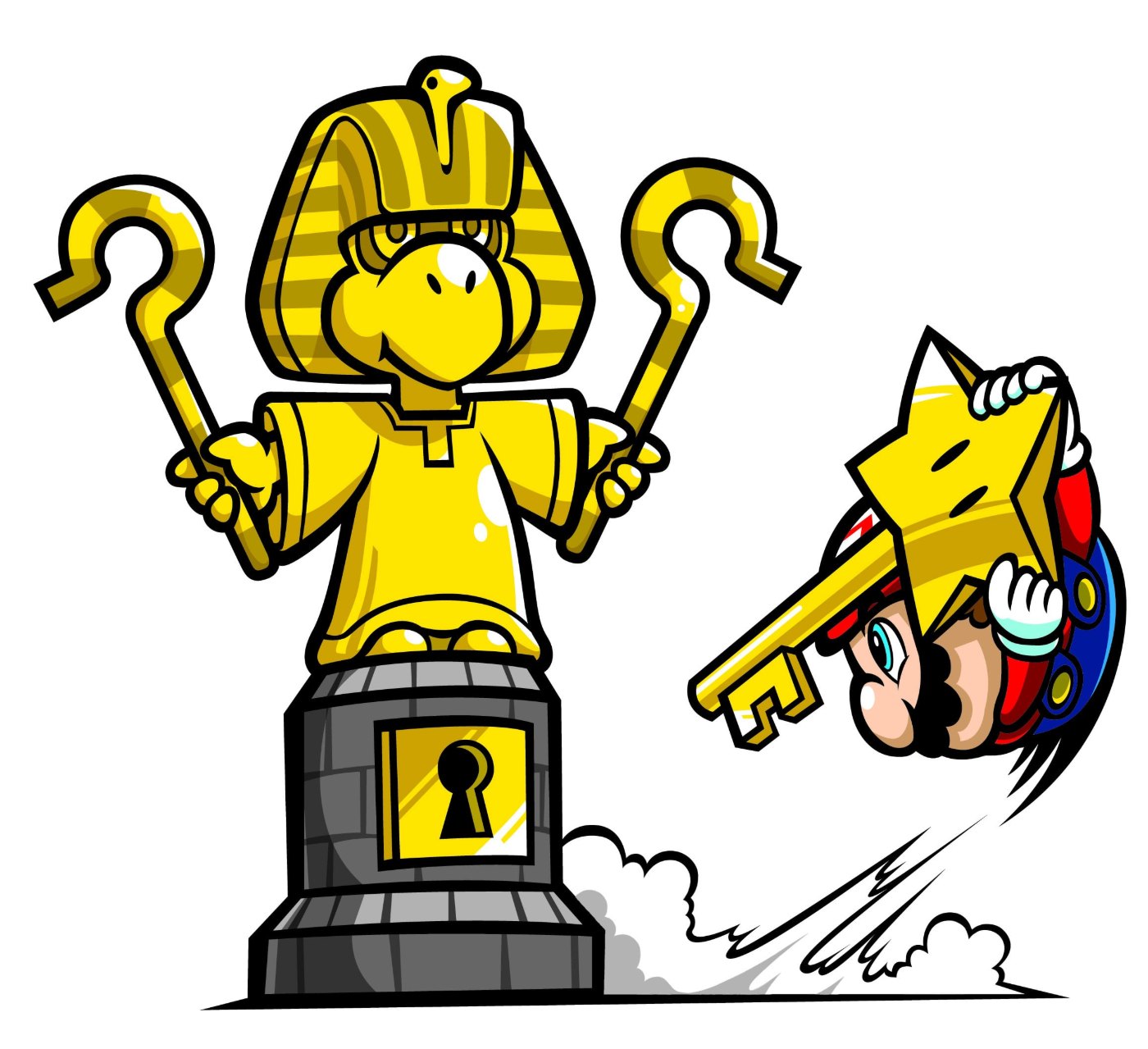
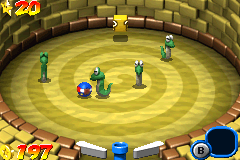
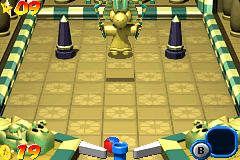
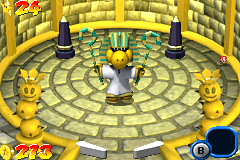
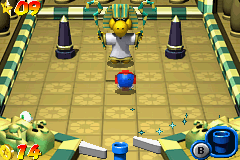
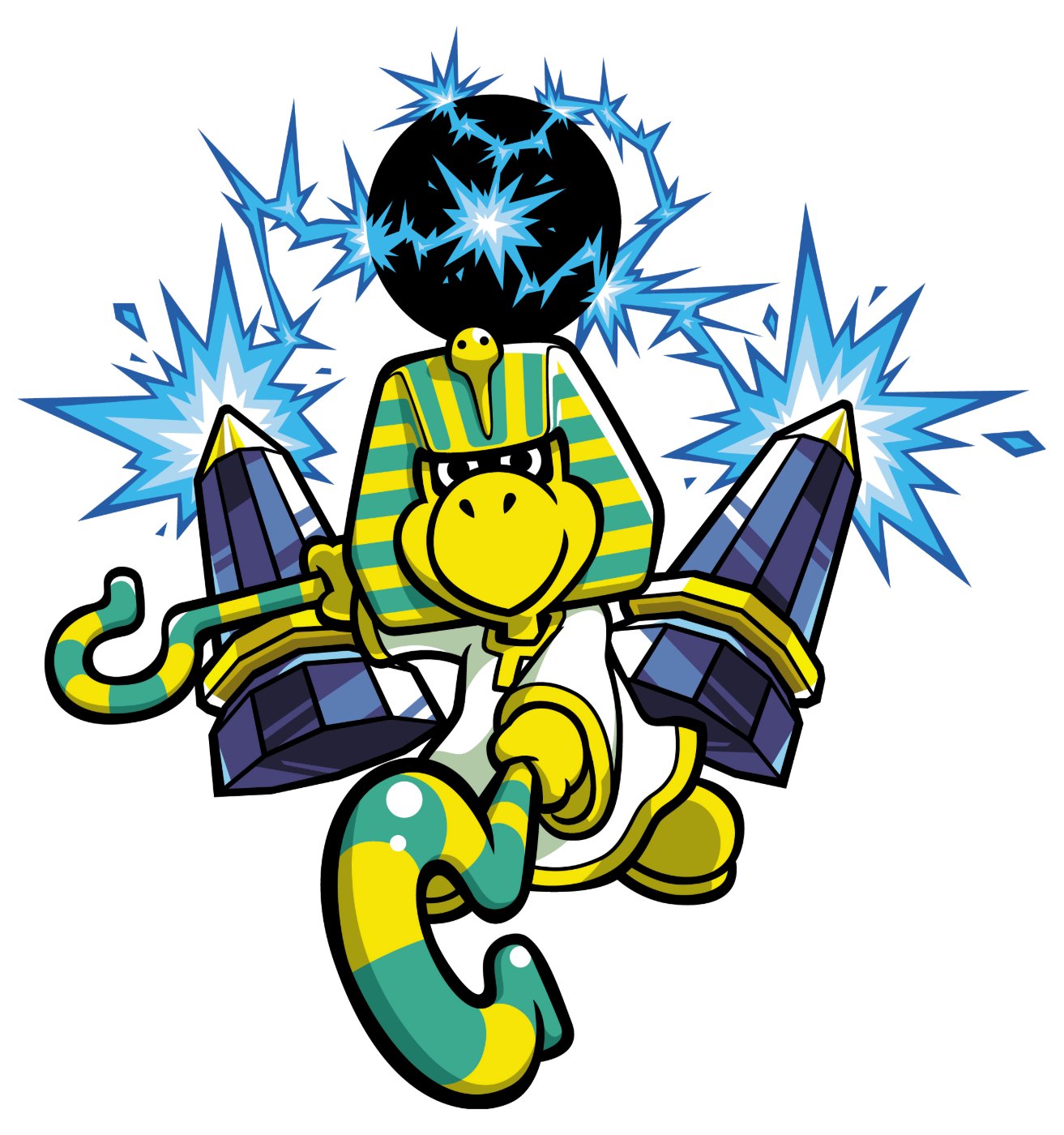
Inside, floor panels open passages and release jars of Snakes, a vent leads Mini Mario to a room where 32 of them appear in turn, and two rooms of Shy Guys lead to the burial chamber. Press the panel in front of the great statue and King Tut wakes up and comes for Mario. He holds a Star Key too.
The buried pyramid.The pyramid unearthed.Mario fighting King Tut.
The Fiery Stage: Bowser’s castle
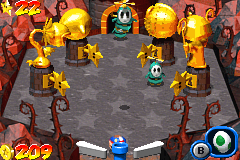
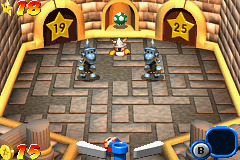
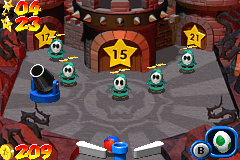
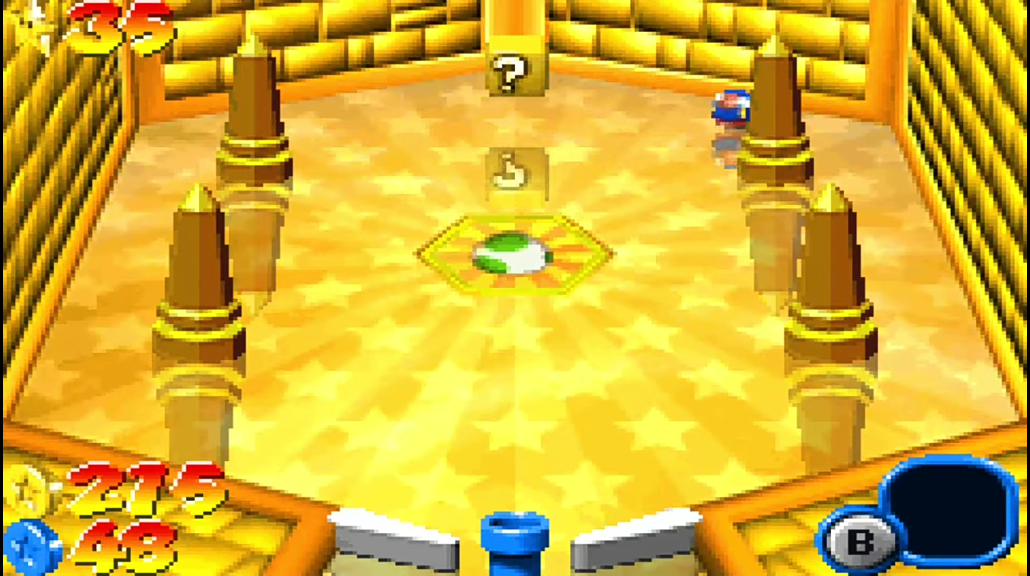
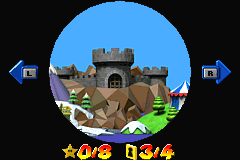
The castle’s entrance hall holds four boss statues, one each for Petey Piranha, King Tut, Porcupuffer and Big Boo. Each Star Key unlocks its statue, and back in the boss’s old arena a Red Switch appears. Flying Shy Guys and Armored Koopas defend the castle, and the deeper rooms, behind doors from 17 to 25 Stars and one reached through a hole in the floor, bring back every earlier boss for a rematch, each worth a Star. A golden room behind the 35-Star door pays out more points and coins than anywhere else.
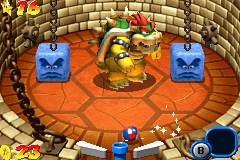
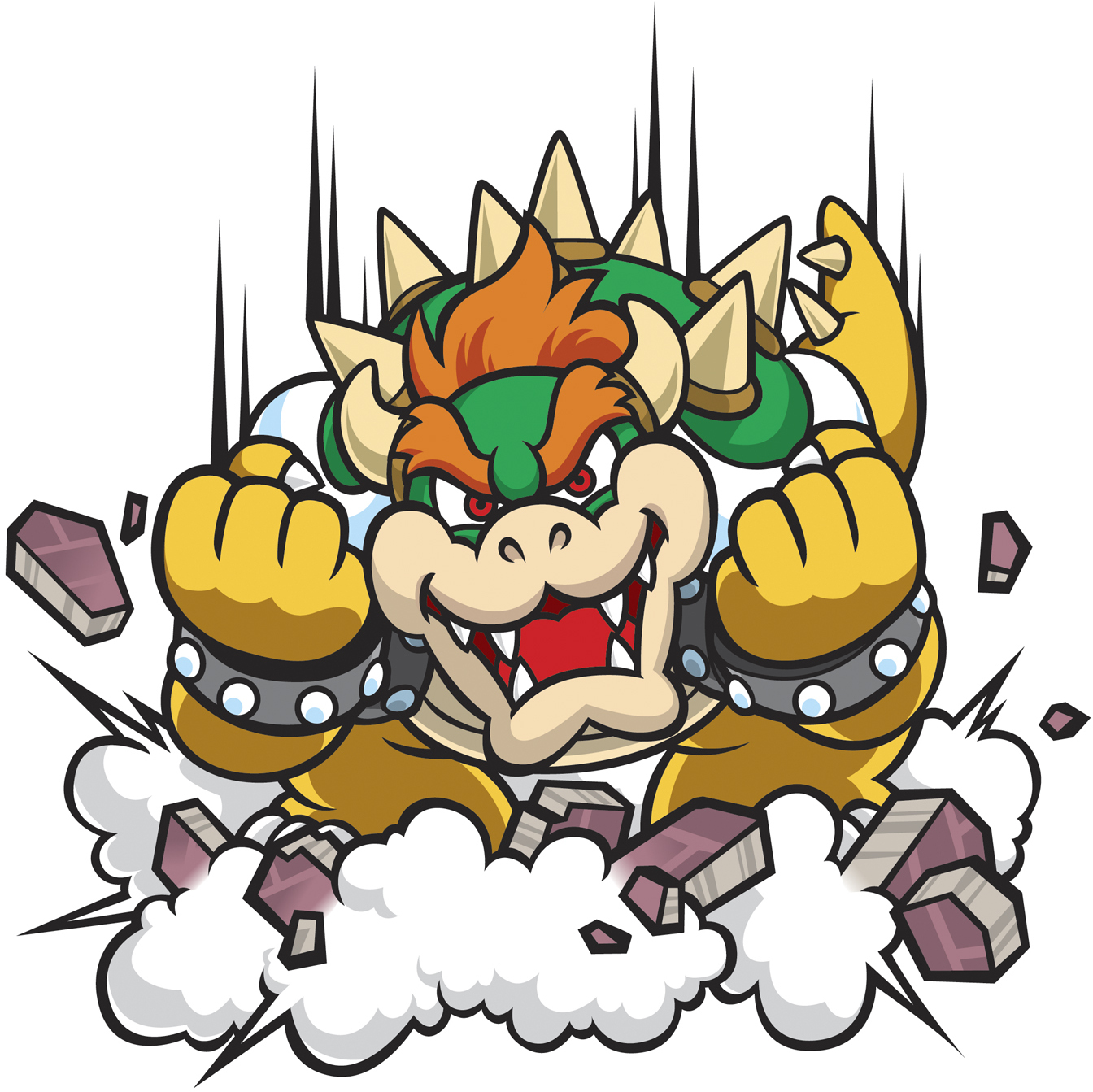
Bowser is behind the 15-Star door. Two Thwomps hang on chains from cogs: hit the cogs to raise them, then hit the Blue Switch to drop them and stun Bowser, who otherwise walks about and jumps hard enough to knock out the flippers. Three hits and he curls into a ball, and now it is pinball against pinball: bat him into the side walls until he is flung out of his own castle, while keeping Mario in the room.
The main hall of Bowser’s castle.The battle against Bowser.The golden room.
Ending
With Bowser launched into the distance, Mario and Peach are back to their normal shapes and head home to the Fun Fair, where the last screen shows them enjoying the roller coaster. If you got there without a Game Over, the Bob-omb bonus game is waiting for you at the start.
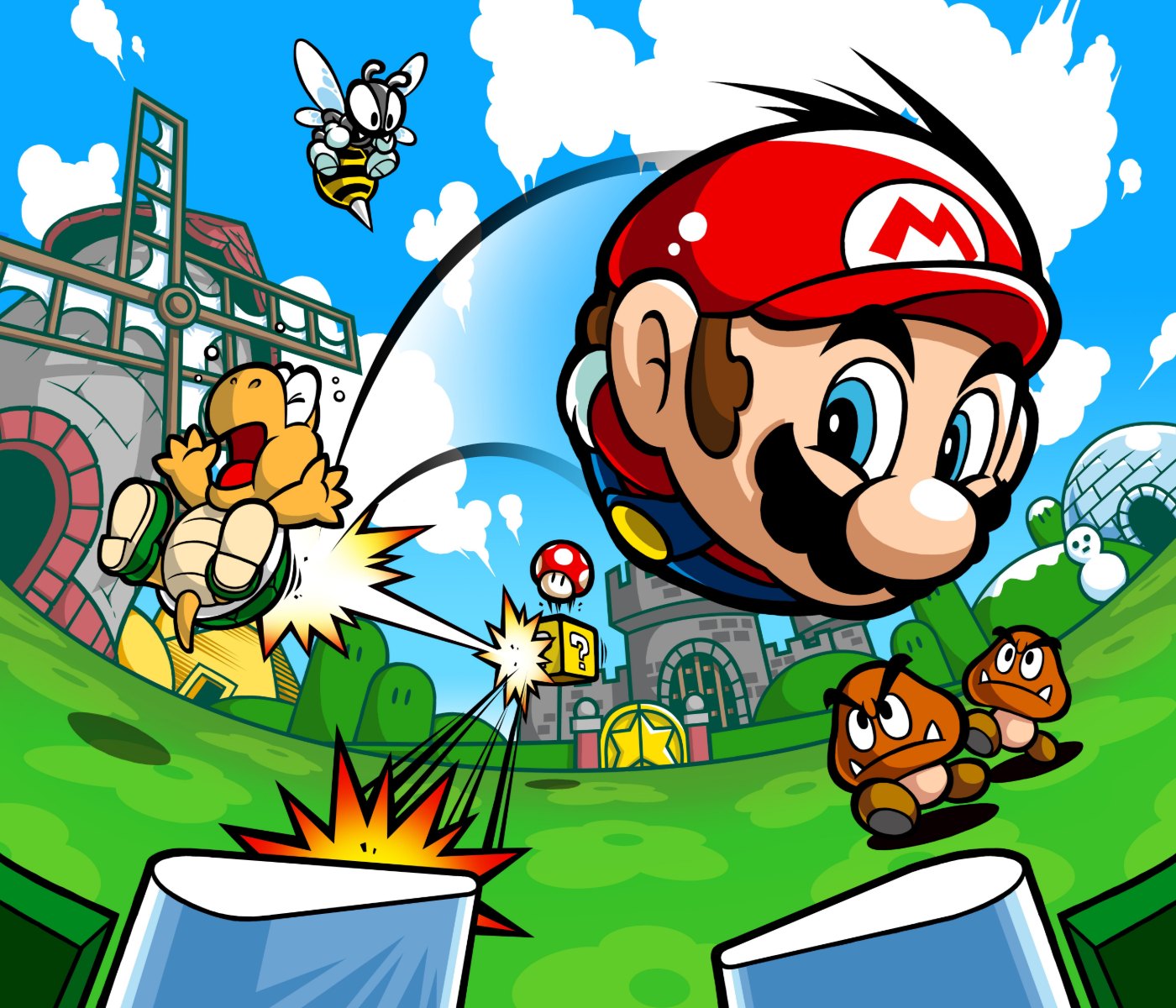
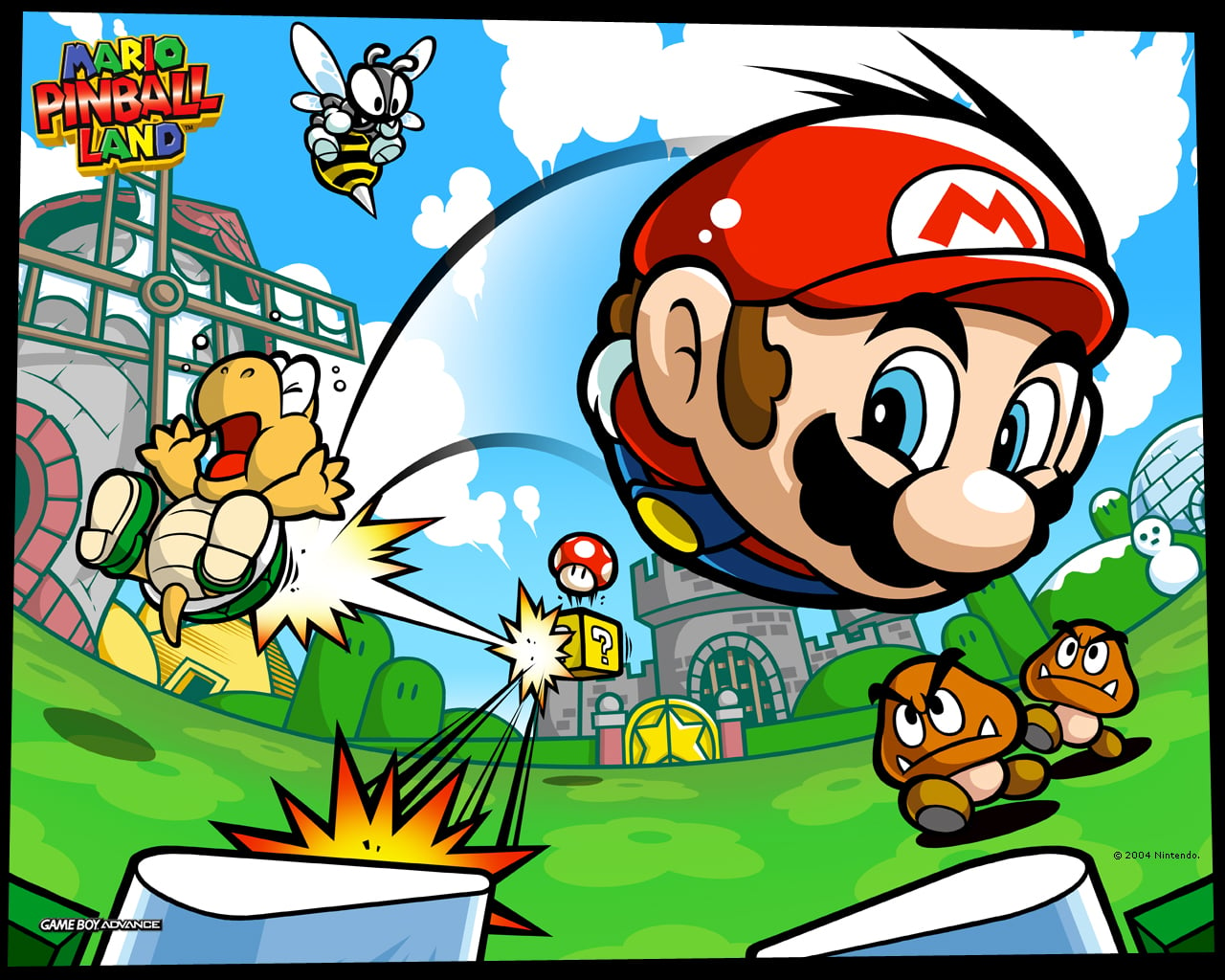
Promotional artwork.
Every stage in Mario Pinball Land
Five stages, entered by Sky Cannon from the Fun Fair. Star counts are the numbers on each stage’s doors.
The Fun FairHub · doors: Haunted House (1 Star), 10 Stars · boss: Big BooSky Cannon, high striker, Toad’s tent minigames and a haunted house.
Frosty Frontier Stage7 tables · doors: 1, 3, 5 Stars · boss: PorcupufferSkating Shy Guys, a sinkable Freezie and a sunken ship.
Shifting Sands Stage9 tables · doors: 1, 2, 4 Stars · boss: King TutPokeys, Kleptos and a pyramid you have to dig up first.
Fiery Stage10 tables · doors: 15 to 35 Stars · boss: BowserFour boss statues, four rematches and Bowser.
Each of the four stages beyond the Fun Fair hides an Egg Mark; the golden egg in Grassy Greens is worth at least 250,000 points.
Advertisement
Gameplay & Controls
Mario Pinball Land plays like a pinball machine with a map. Each table fits on one screen, with the flippers at the bottom and enemies, bumpers and doors above. Hitting things scores points; clearing a table earns a Star; Stars open doors to new tables.
Controls
L (or Left on the Control Pad): left flipper; also picks left on target screens and in the shop.
R (or A): right flipper; also picks right.
A: launch the ball and confirm.
B: use your stored item, or cancel.
Up / Down: move through menus.
Start: pause.
That is the whole of it. Mario cannot be moved or made to jump: where he goes depends on how and when you flip.
The flippers.Mario taking a hit from the flippers.
The drain and the playfield reset
Losing Mario between the flippers costs a life. To give you a fair start, a blue Pipe blocks the drain for a short time whenever you enter a table, and a Pipe can also be stored as an item and used later.
The rule everybody remembers is the reset. Drain in any table after a stage’s first, and Mario does not just lose a life: he falls back to the previous table, which has repopulated with enemies and reset its objects. Now and then he drops back two. IGN found it maddening, and most reviews complained about it.
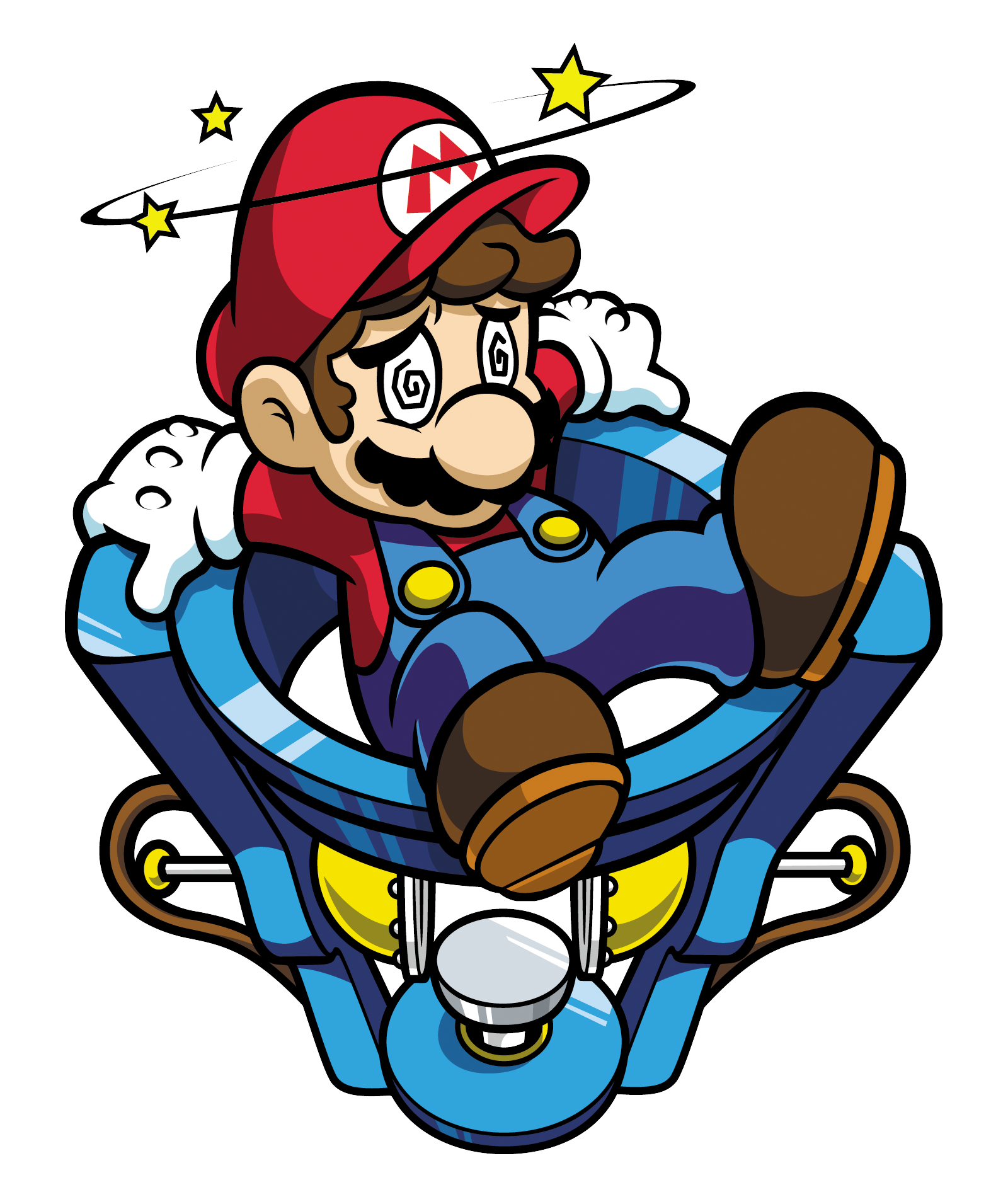
The blue Pipe that guards the drain.A dazed Mario on top of the Pinballer.
Stars, doors and Star Keys
Every stage except the Fun Fair branches through doors marked with a Star number, just as in Super Mario 64. Stars are earned by defeating every enemy on a table, by collecting every Red Coin on a table, or by winning a challenge in Toad’s tent at the Fun Fair. There are 35 in total. Clear a table whose Star you already have and a question mark appears instead; touch it to spin a roulette for an item.
Each boss drops a Star Key and some coins. There are four keys, one for each boss statue at the entrance of Bowser’s castle, and Bowser himself waits behind a 15-Star door once the statues are unlocked.
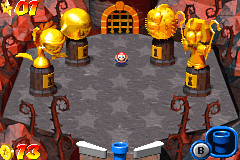
The question mark that spins the item roulette.The four boss statues before any Star Keys are delivered.
Coins, Blue Coins and Toad’s tent
Defeated enemies drop a coin. Defeat several in a row before Mario touches the bottom of the screen and they drop Blue Coins instead. Coins buy items: hit Toad and his tent opens, letting you buy one item, which waits in the bottom right corner of the screen until you press B. ? Blocks hold items too.
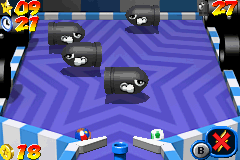
Blue Coins can be spent only in the Fun Fair’s blue tent, which opens once you have at least one. There they buy items or entry to three 30-second minigames, each worth a Star: knock back four Chain Chomps, hit 30 Bullet Bills, or blow up ten Bob-ombs with a Blue Switch and cannons. You get two Yoshi Eggs as backup balls, and draining ends the game.
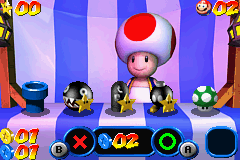
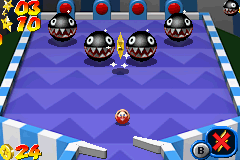
Toad and his tent.The Chain Chomp minigame.The Bullet Bill minigame.
Modes
Adventure is the main game and is open from the start. Time Attack appears once you have beaten at least one boss and asks you to clear a stage as fast as you can. Beat Bowser without a Game Over and a Bob-omb shooting bonus game appears in the Fun Fair’s first table, its point values set by how many Stars you have.
There is no multiplayer of any kind.
The Bob-omb minigame in Toad’s tent.
Items
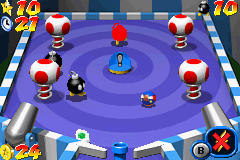
The ten items, plus the blocks that hold them. Items can come from ? Blocks, Toad’s tent or the question-mark roulette.
CoinThe currency for Toad’s tent. Dropped by every defeated enemy.
Blue CoinEarned by defeating enemies in a streak; spent in the Fun Fair’s blue tent on Star minigames.
1-UP MushroomAn extra ball. Hitting a Monty Mole in every position on its table also gives one.
PipePlugs the drain with a blue pipe for a while.
Yoshi EggA second ball in play.
Mega MushroomMakes Mario huge for a short time.
Invincibility StarDefeats any enemy Mario touches while it lasts.
Mini MushroomShrinks Mario so he fits through small openings, such as the beehives, the igloo and the pyramid vent.
LightningStrikes every enemy on the screen.
Special EggThe rarest item, with only four in the game: Mega Mushroom, Invincibility Star, Yoshi Egg and Pipe in one.
? BlockHolds an item, a Pipe or, once a boss is beaten, a Sky Cannon.
Cartoons, Comics & Other Media
Mario Pinball Land was a one-off, but it left a few traces: in adverts, on hotel televisions, in Fuse Games’ next project and in a WarioWare microgame.
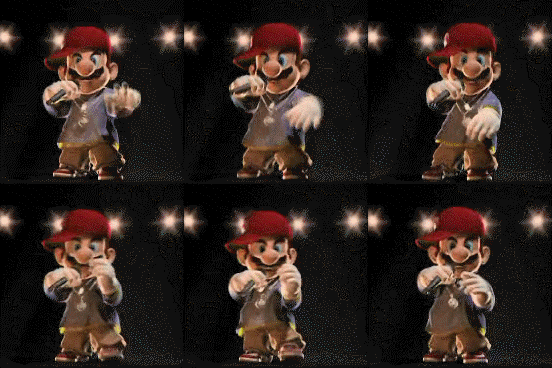
The rapping Mario advertJapan and France, 2004The Japanese and French television adverts featured a rapping Mario.
Nintendo PowerVol. 186, December 2004Nintendo Power reviewed it at 3.8 out of 5.
Metroid Prime PinballNintendo DS, 2005Fuse Games’ follow-up for Nintendo. Adrian Barritt later said the team had tried to make it friendlier to pinball beginners than Mario Pinball Land had been.
WarioWare: Move It!Nintendo Switch, 2023Includes a Mario Pinball Land microgame in which you have to hit a boss three times.
Mario.nintendo.comWallpaperNintendo’s Mario site offered a Mario Pinball Land desktop wallpaper.
LodgeNetHotel game serviceLodgeNet, the in-room hotel service, is sometimes listed among the game’s platforms.
Characters
A small cast for a small cartridge: the rescuers and the rescued, four bosses and Bowser. Mario is voiced by Charles Martinet.
Character
Who they are
In this game
Abilities & notes
MarioThe ball
The hero, turned into a pinball by the Pinballer.
Rides the Sky Cannon after Peach and bounces through five stages to rescue her. He cannot move himself; the flippers do everything.
Voiced by Charles Martinet. Lives are lost only by draining.
Princess PeachFired into Bowser’s castle
The princess, at the Fun Fair for the Sky Cannon’s unveiling.
Launched into Bowser’s castle when the Goombas re-aim the cannon; rescued at the end.
Voiced by Jen Taylor (uncredited).
ToadShopkeeper
The first rider of the Sky Cannon, who loves every second.
Runs the item tent that pops up on tables, and the blue tent of minigames at the Fun Fair.
Voiced by Jen Taylor (uncredited).
The two GoombasSaboteurs
A pair of shady Goombas.
Turn the Sky Cannon towards Bowser’s castle and lock Peach in. Two Goombas also guard the cannon on the Fun Fair’s first table.
Goombas are the Fun Fair’s only regular enemy apart from Boos.
Big BooBoss of the Fun Fair
The giant ghost of the Haunted House, flanked by four Boos.
Waits behind the 10-Star door and holds a Star Key.
Rematch in the Fiery Stage’s Boo room (25-Star door).
Petey PiranhaBoss of Grassy Greens
The giant Piranha Plant, here living inside a windmill.
Guards a Star Key.
Three hits. Rematch in the Fiery Stage’s Goomba room (19-Star door).
PorcupufferBoss of Frosty Frontier
A spiky giant fish in a sunken ship beneath the ice.
Swims and chases Mario; stun it with cannonball bombs from the trapdoors before hitting it.
Rematch in the Fiery Stage’s Cheep Cheep room.
King TutBoss of Shifting Sands
A giant statue in the pyramid’s burial chamber; its sprite is sometimes labelled an Egyptian Koopa.
Wakes when Mario presses the panel in front of it.
Rematch in the Fiery Stage’s Pokey room (23-Star door).
BowserFinal boss
The King of the Koopas, master of the Fiery Stage.
Fought behind the 15-Star door with two Thwomps and a Blue Switch; after three hits he becomes a ball himself.
Knocked out of his castle to win.
Bosses & enemies
The five bosses, then all 23 regular enemy types, by most counts. Most give a Star when every one on a table is defeated.
Big Boo (boss)The Fun Fair, behind the 10-Star doorDrops a Star Key and two ? Blocks.
Petey Piranha (boss)Grassy Greens, inside the windmillNeeds three hits.
Porcupuffer (boss)Frosty Frontier, sunken shipStun it with bombs from the trapdoors first.
King Tut (boss)Shifting Sands, burial chamberA statue woken by a floor panel.
Bowser (boss)Fiery Stage, behind the 15-Star doorDrop the Thwomps on him; three hits, then bat him out of the castle.
Monty Mole (1-up Mole)Grassy Greens, Frosty Frontier, Shifting Sands, Fiery StagePops up in set positions; hit it in each one for a 1-UP Mushroom.
Armored KoopaFiery StageKnock them into the walls. Known elsewhere as Koopatrols, from Paper Mario.
Bob-ombFun Fair minigameBlow up ten for a Star.
BooFun Fair; Fiery StageFour in the Haunted House.
Bullet BillFun Fair minigameFired from both sides; hit 30.
BumblerGrassy GreensBees that pour out of the hives.
Chain ChompFun Fair minigameKnock back all four for a Star.
Cheep CheepFrosty Frontier; Fiery StageSwim round the treasure chests and the castle’s water room.
Flying Shy GuyFiery StageThe castle’s first line of defence.
FreezieFrosty FrontierA giant block of ice to push into the crack.
GoombaFun Fair; Grassy Greens; Fiery StageThe first enemies you meet.
KleptoShifting SandsFour circle the buried pyramid.
Koopa TroopaGrassy GreensBlue-shelled Koopas fill two tables.
LakituShifting SandsThrows Spinies, up to four at a time.
Mr. BlizzardFrosty FrontierThrows snowballs; stun all four at once for a Star.
PenguinFrosty FrontierKnock one down, then hit it again while it is down.
PokeyShifting Sands; Fiery StageTwo- and four-segment cacti.
Shy GuyShifting SandsGuard the rooms before the burial chamber.
Shy Guy on SkatesFrosty FrontierChange colour when hit; match all four colours on the rink for a Star.
Snake (Cobrat)Shifting SandsBurst out of jars; borrowed from Super Mario Bros. 2.
Spiny (Spiky)Shifting SandsThrown by Lakitu.
Spiny Cheep CheepA spiky variety of Cheep Cheep.
ThwompFiery StageHang over Bowser’s arena, waiting to be dropped on him.
Key staff
From the game’s credits (some names from the Japanese manual).
Adrian BarrittFuse Games co-founderOne of the five developers. Earlier made the Pro Pinball series with Richard Horrocks.
Richard HorrocksFuse Games co-founderOne of the five developers.
Kevin Ayre, Cai Remrod, Keith AinslieFuse GamesThe rest of the five-person team.
Shigeru MiyamotoProducerCredited as producer.
Satoru IwataExecutive producerNintendo’s president, who was impressed by Fuse’s prototype.
Brett Gow, Keisuke Terasaki, Hiro YamadaSupervisorsNintendo’s supervisors on the project; Terasaki and Yamada also supervised Metroid Prime Pinball.
Yoichi Kotabe and teamArtworkWith Shigehisa Nakaue, Yoshitomo Kitamura and Hisayo Osanai.
Charles MartinetVoice of MarioJen Taylor voiced Peach and Toad, uncredited.
Advertisement
How It Was Made
Most of what is known about the making of Mario Pinball Land comes from a 2004 IGN interview with Fuse Games (via Wikipedia) and Nintendo UK’s 2007 interview about Fuse’s next game.
From Pro Pinball to Fuse Games
The preliminary logo from when the game was called Mario Pinball.
Adrian Barritt and Richard Horrocks had made their names with the Pro Pinball series of computer games. In 2002 they set up Fuse Games in Burford, Oxfordshire, and wanted to pitch Nintendo a pinball game. To make an impression they built a demo of what they planned as the first and last parts of the game, the opening table and a showdown with Bowser, and took it to Nintendo of America in Seattle, which said yes.
Nintendo’s own version of the story, told by supervisor Hiro Yamada in 2007, is that Satoru Iwata saw Fuse’s prototype pinball software for the Game Boy Advance and was struck by how well made it was. Super Mario Ball was the result.
Five people, one handheld
Mario rolling, from the official artwork.
Fuse chose the Game Boy Advance over the GameCube. They had limited resources, and the handheld was close to the Super NES the founders knew well; Barritt called it an ideal platform for pinball. Even though the company took on more staff, the game itself was made by five people: Barritt, Horrocks, Kevin Ayre, Cai Remrod and Keith Ainslie. Development reportedly took about 18 months, ending in June 2004.
Nintendo provided the rest. Shigeru Miyamoto is credited as producer and Satoru Iwata as executive producer, with Brett Gow, Keisuke Terasaki and Hiro Yamada supervising, Nintendo’s own sound-effects team, artwork from Yoichi Kotabe’s group, testing by NOA Product Testing and NCL’s Super Mario Club, and music credited to Nimrod Productions.
From Mario Pinball to Super Mario Ball
The Japanese Super Mario Ball logo.
Nintendo put the game on its release schedule on 1 April 2004, then still called Mario Pinball and pencilled in for 24 May. It was playable at E3 in May with a 4 October date for North America, and in June the final names were announced: Mario Pinball Land for North America and Australia, Super Mario Ball for Japan and Europe. Japan got it first, on 26 August.
Hindsight and Metroid Prime Pinball
Mario about to wake King Tut’s statue.
Once the Nintendo DS had come out, Nintendo asked Fuse to think about pinball on it, whose two screens could show a tall table, and the result was Metroid Prime Pinball in 2005. In a 2013 interview with Cubed3, Barritt admitted that Mario Pinball Land had not been made easy enough for people new to pinball, and said the team made a point of avoiding that mistake the second time. The studio later became Silverball Studios and went back to Pro Pinball.
Cheats & Secrets
There are no button codes in Mario Pinball Land; its secrets are unlocks and scoring tricks. Super Luigi Bros has a separate page of Mario Pinball Land cheats, unlockables and hints.
Time Attack
Beat any one boss and Time Attack appears on the main menu: clear a stage as quickly as you can.
The Bob-omb bonus game
Defeat Bowser without seeing a Game Over and a Bob-omb shooting game appears on the Fun Fair’s first table. The more Stars you have, the more each target is worth.
Free lives from Monty Mole
Wherever a Monty Mole pops up (in Grassy Greens, Frosty Frontier, Shifting Sands and Bowser’s castle), hit it in every position it appears in, four or in the castle six, for a 1-UP Mushroom.
Golden eggs
Each stage after the Fun Fair hides an Egg Mark: in Grassy Greens on the blue Koopa table, in Frosty Frontier on the Shy Guy rink, in Shifting Sands on the Lakitu table and in Bowser’s castle in the golden room. The Grassy Greens egg pays out 250,000 points or more, and the golden room pays more points and coins than any other room in the castle.
Roulette for items
Clear a table whose Star you have already taken and a question mark appears. Touch it to spin a roulette and win an item.
Rematch Stars
Four of the castle’s Stars come from beating the earlier bosses again: Petey Piranha after the Goomba room, Big Boo after the Boo room, King Tut after the Pokey room and Porcupuffer after the Cheep Cheep room. Each rematch also leaves a ? Block with a double helping of an item.
Videos
Nintendo has not put a trailer for the game on YouTube, so both videos are fan uploads: a full playthrough collecting all 35 Stars, and every boss fight with the ending.
Third-party longplay of the whole game, all 35 Stars collected.
Third-party video of all five boss battles and the ending.
Trivia & Interesting Facts
The game was called Mario Pinball until June 2004, when Nintendo announced the two final names.
Nintendo first scheduled it for 24 May 2004, more than three months before the Japanese release.
The rapping Mario of the adverts.Japanese and French television adverts featured a rapping Mario.
Jen Taylor voices Peach and Toad, though she is not named in the credits; Charles Martinet is Mario.
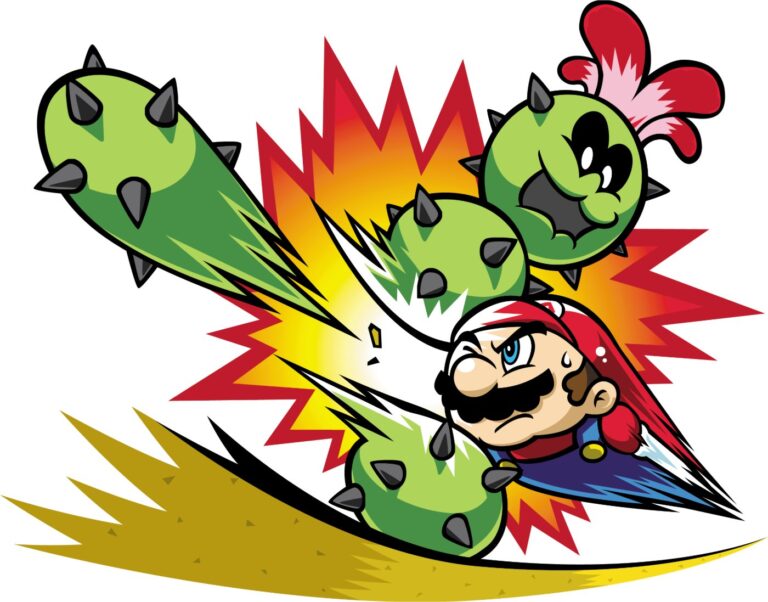
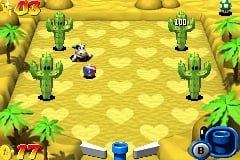
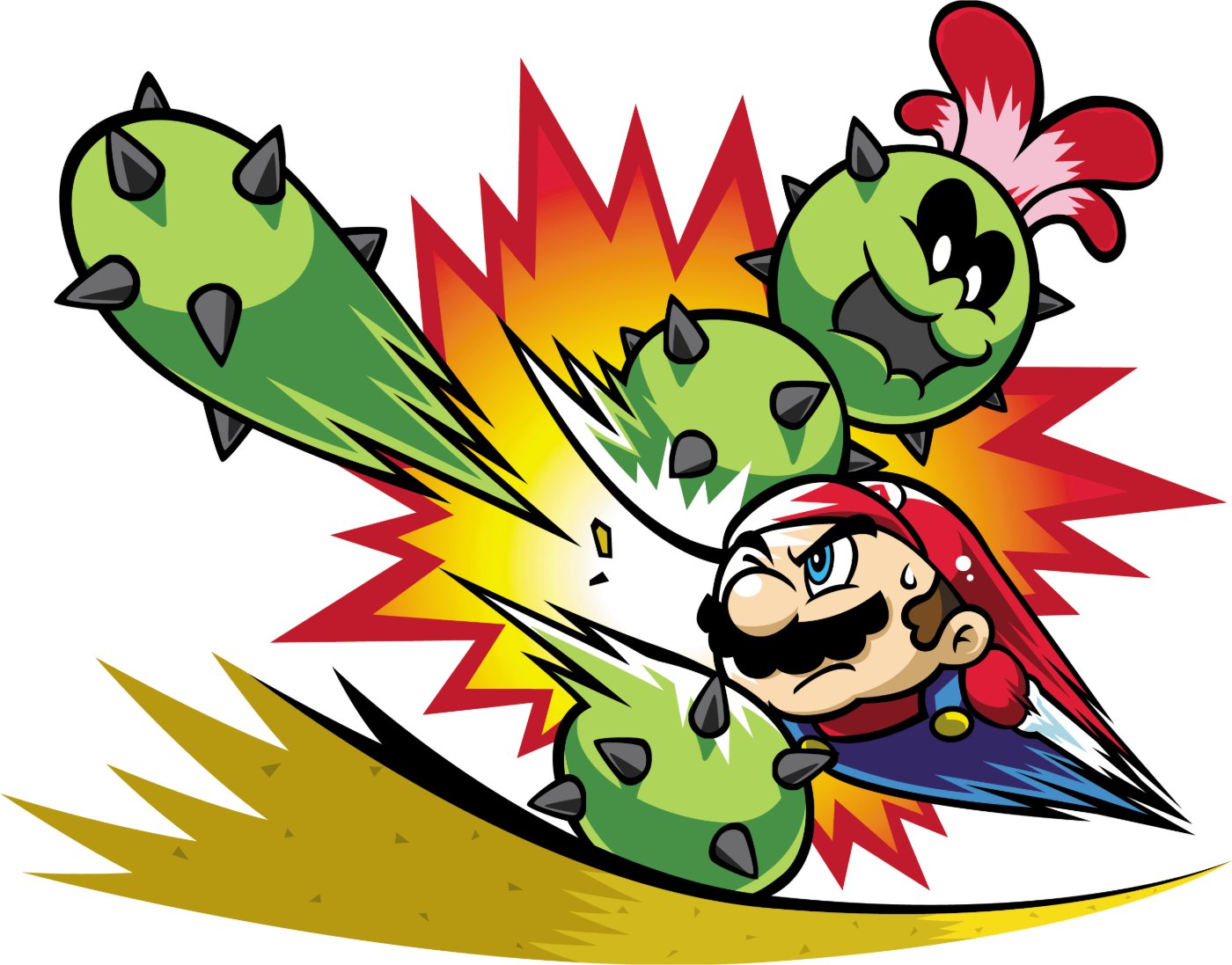
Mario breaking up a Pokey.The Snakes in the pyramid are Cobrats, an enemy first seen in Super Mario Bros. 2, and the castle’s Armored Koopas are Paper Mario’s Koopatrols.
The Mini Mushroom’s design is taken from Mario Party 4.
The numbered Star doors recall the Star doors of Super Mario 64.
A Moo Moo.A cow, a Moo Moo, can be spotted in the game.
Monty Mole is sometimes called the 1-up Mole, because hitting it in every position earns an extra life.
Nintendo UK described Fuse Games in 2007 as based near Oxford.
Fuse Games went on to make Active Health with Carol Vorderman, which Wikipedia says made it the only studio outside Japan to make a Touch! Generations game.
One of Mario’s sprites.Mario, Peach and Toad each have their own pinball sprite, and there are six more sprites of Mario alone.
Regional Box Art
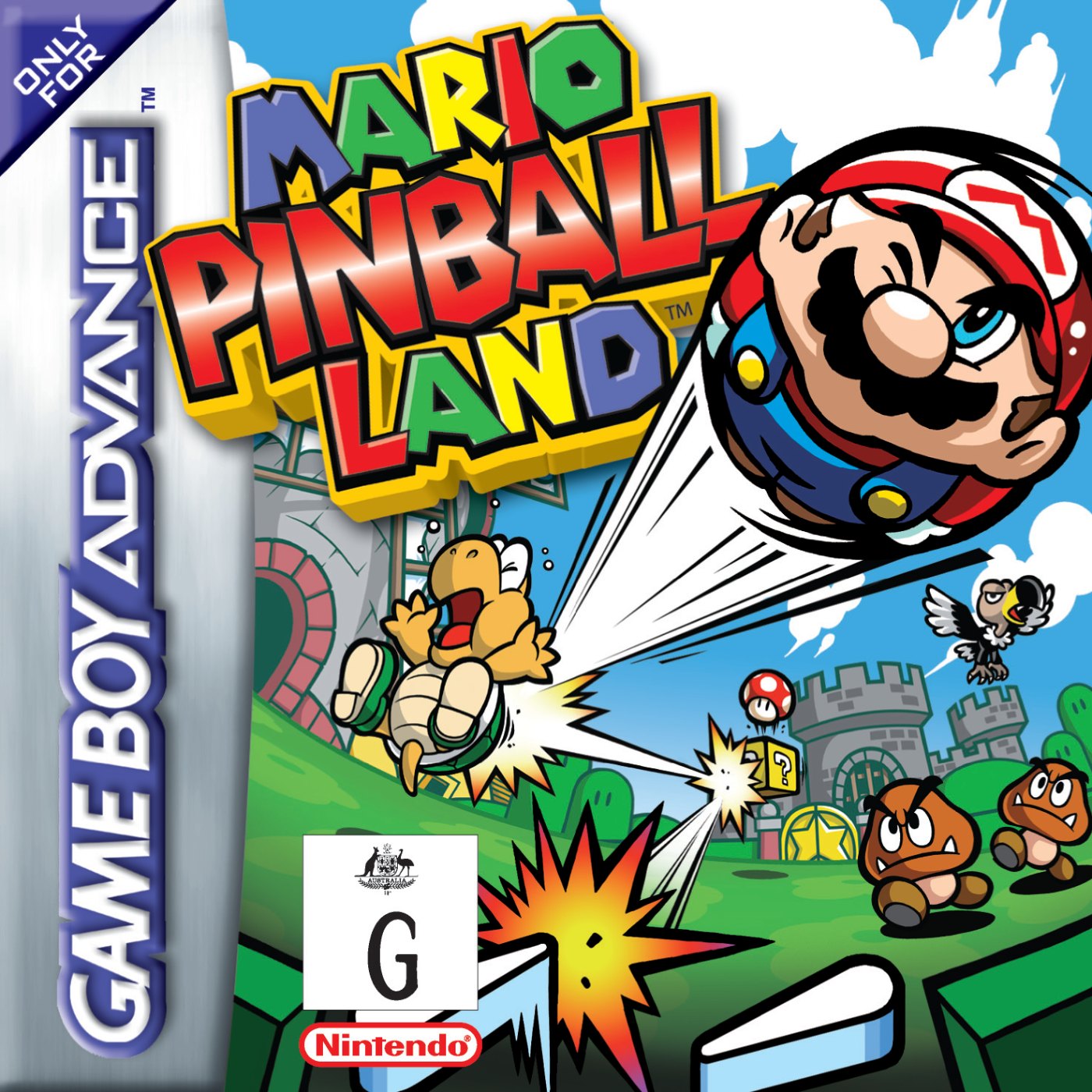
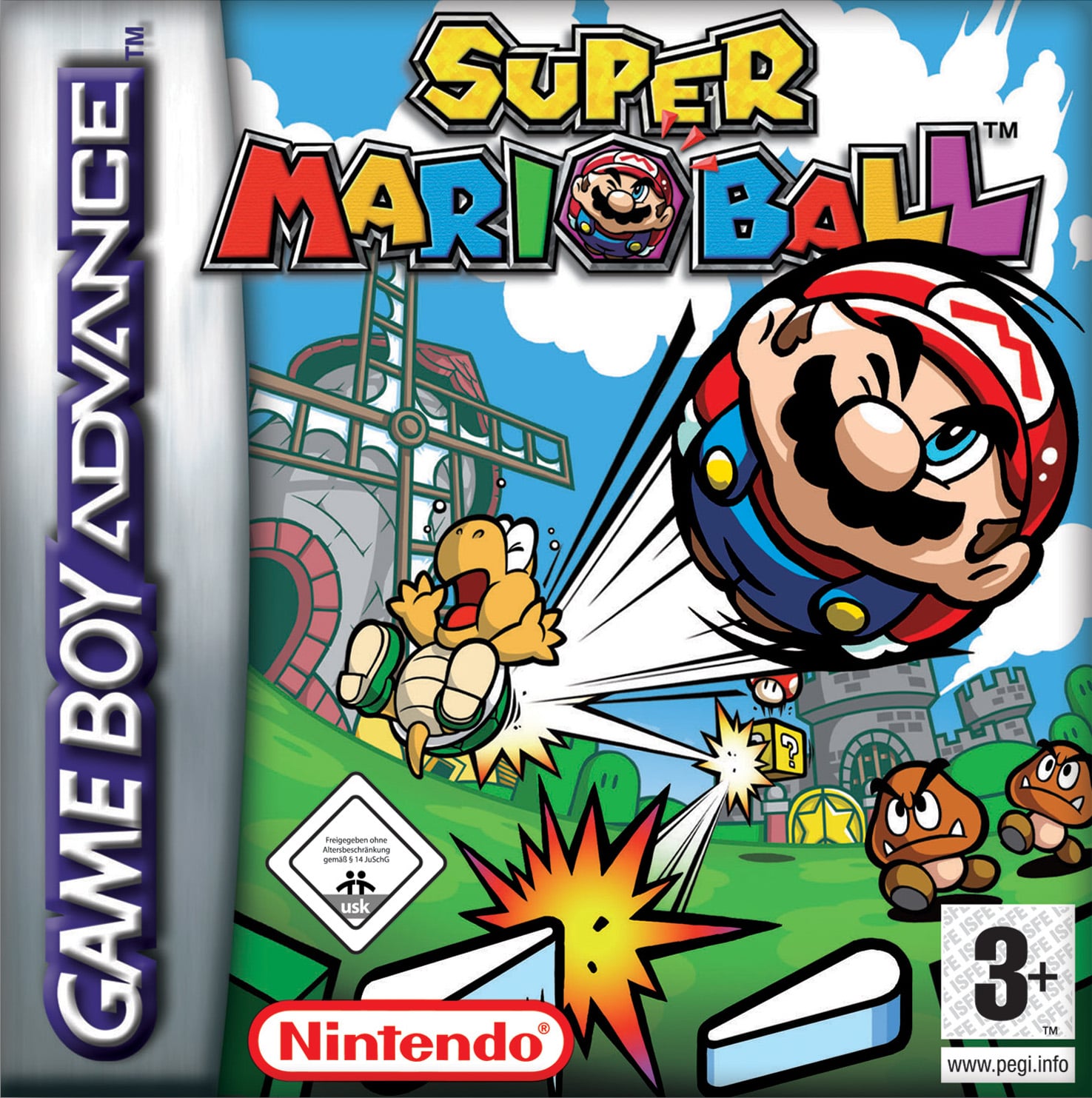
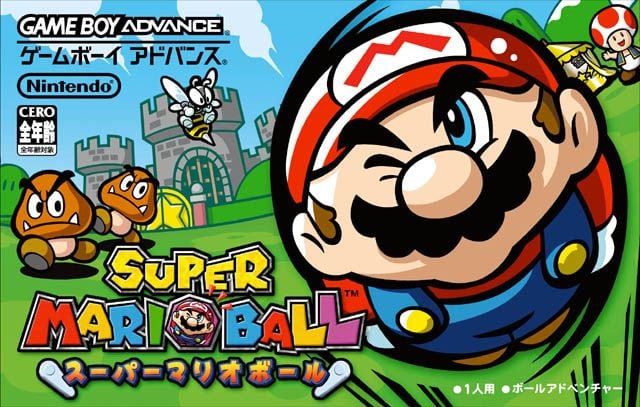
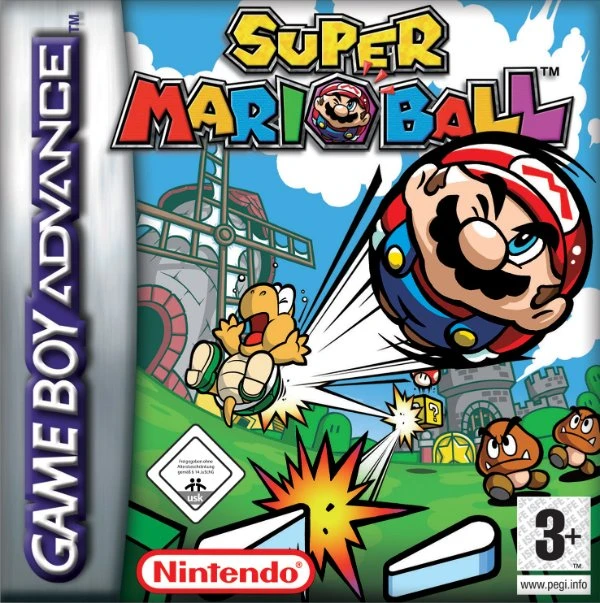
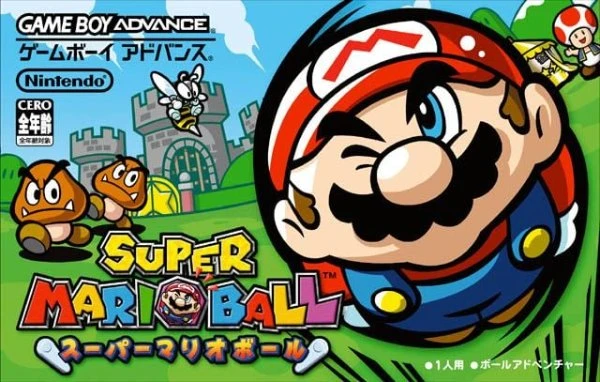
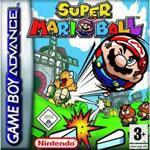
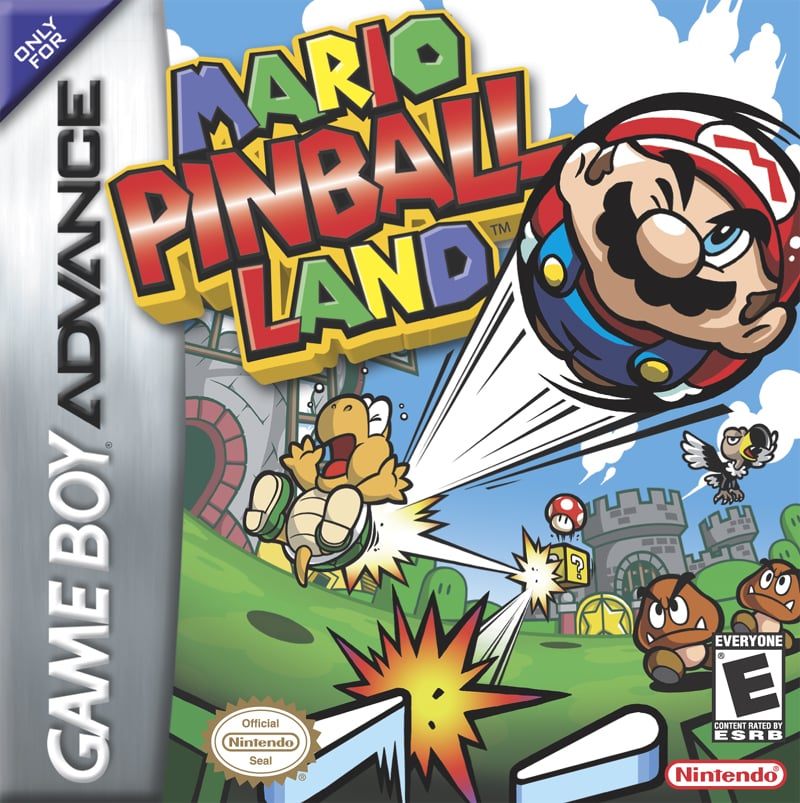
Two names, four boxes. North America and Australia say Mario Pinball Land; Japan and Europe say Super Mario Ball.
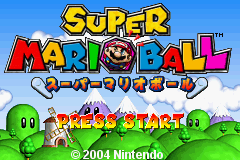
North AmericaMario Pinball LandAustraliaMario Pinball LandEuropeSuper Mario BallJapanSuper Mario BallLogoNorth America and AustraliaLogoEuropeTitle screenEuropeTitle screenJapan
Screenshots
More tables from the five stages.
A Red Switch appears in Big Boo’s room once his Star Key is delivered.The fourth table in Grassy Greens.The third table in Grassy Greens.The golden egg, worth at least 250,000 points.Inside the igloo.The second table in Frosty Frontier.The third table in Frosty Frontier.The fourth table in Frosty Frontier.The first table in Shifting Sands.The second table in Shifting Sands.The third table in Shifting Sands.The first room inside the pyramid.Inside the vent.King Tut’s statue, still dormant.The boss statues unlocked.The first Armored Koopa room.Petey Piranha, round two.Big Boo, round two.King Tut, round two.Porcupuffer, round two.
Artwork & Media Gallery
Official artwork and sprites.
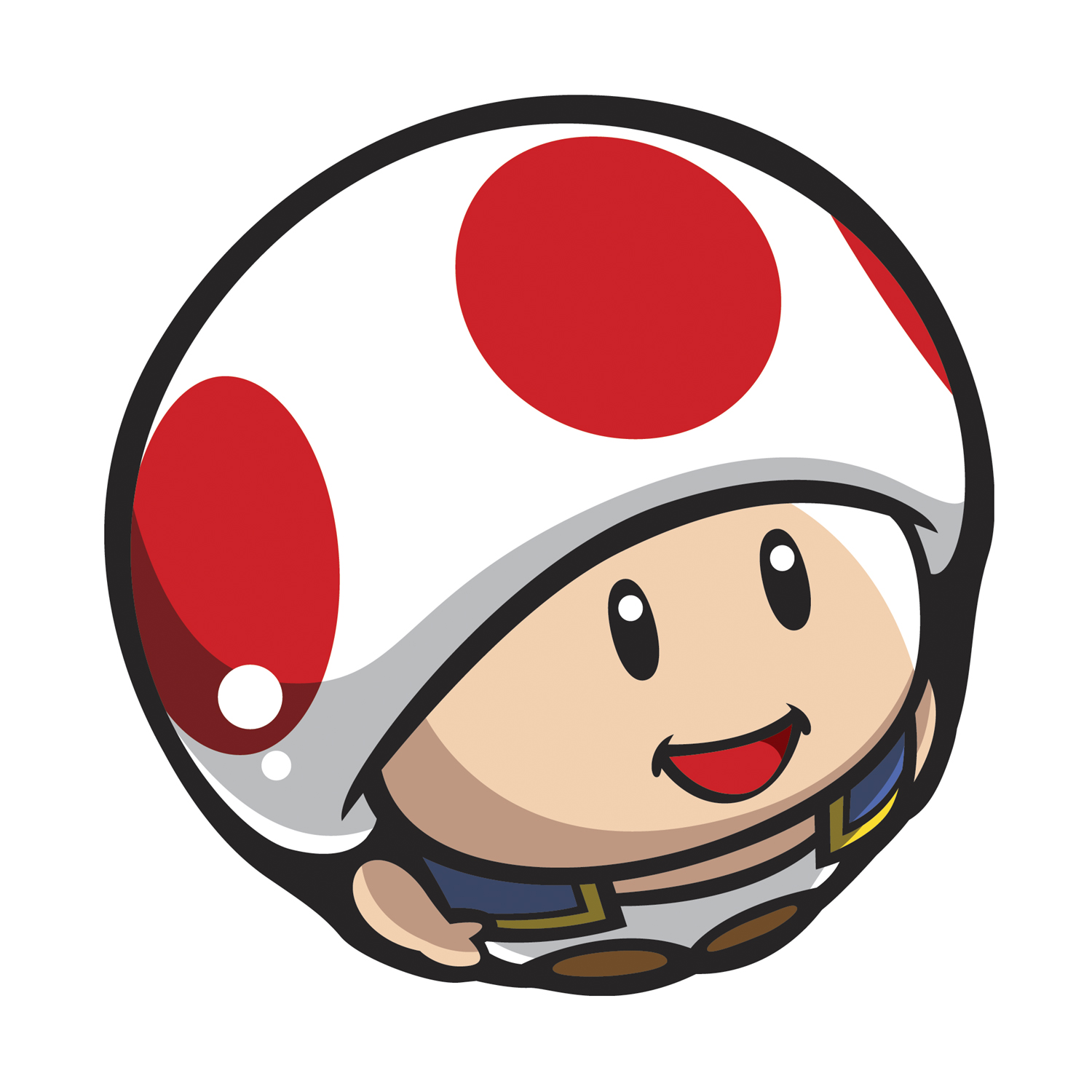
Toad as a ball.A Boo.A Bumbler.A Shy Guy on skates.Mr. Blizzard.Koopa Troopa.Mario’s pinball sprite.Toad’s sprite.Toad’s pinball.The early Mario Pinball logo.
Legacy & Re-releases
Mario Pinball Land never had a sequel, but it was re-released once and is remembered in a WarioWare microgame.
Re-releases
Game Boy Advance26 August 2004 (Japan)Released as Super Mario Ball.
Game Boy Advance4 October 2004 (North America)Released as Mario Pinball Land.
Game Boy Advance28 October 2004 (Australia)Mario Pinball Land.
Game Boy Advance26 November 2004 (Europe)Super Mario Ball.
Wii U Virtual Console11 September 2014 (Europe, Australia)Japan followed on 17 September and North America on 27 November 2014.
Fuse Games after Mario
Fuse made Metroid Prime Pinball for the Nintendo DS in 2005, reformed as Silverball Studios in 2009 and later folded into Barnstorm Games, returning to its roots with Pro Pinball: Timeshock! The Ultra Edition in 2014.
Back in WarioWare
WarioWare: Move It! (2023) includes a microgame based on Mario Pinball Land, in which you have to hit a boss three times.
Reviews & Sales
Sales
Nintendo has not published a sales figure for Mario Pinball Land, and none of the sources consulted for this page gives one, so we do not quote a number.
62Metacritic score
64.75%GameRankings
29/40Famitsu
35Stars to collect
Reviews
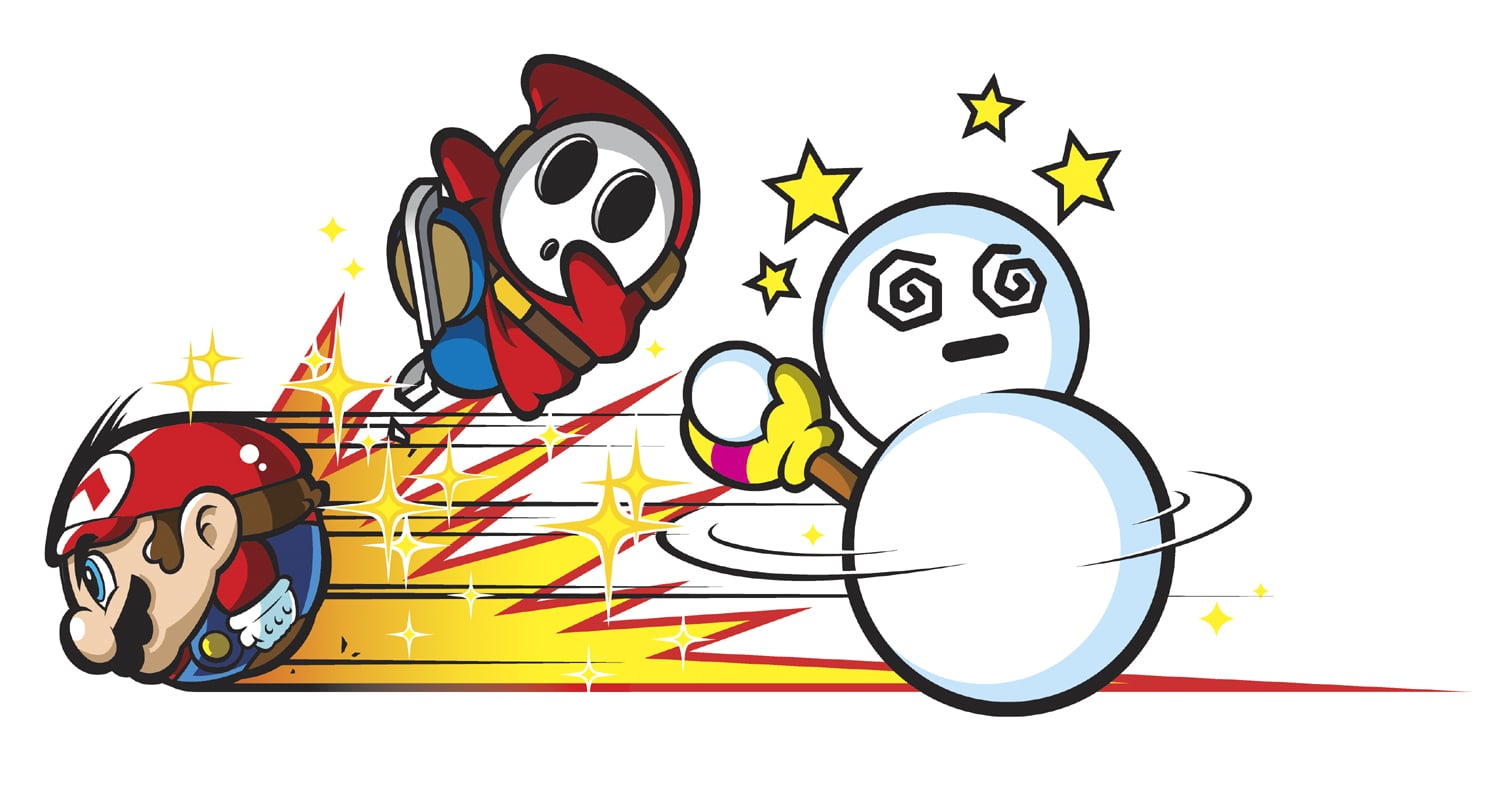
Invincible Mario takes on a Shy Guy and a Mr. Blizzard.
Scores from Wikipedia’s review table, with outlet, reviewer and date.
GameZoneLouis Bedigian, 2 October 2004
8/10
GameProNovember 2004
4/5
Nintendo PowerVol. 186, December 2004
3.8/5
GameSpotFrank Provo, 4 October 2004
7.5/10
Game InformerMatt Helgeson, October 2004
7.5/10
Nintendo World Reportreview
7.5/10
FamitsuVol. 820, 3 September 2004
29/40
Nintendo LifeWii U Virtual Console, 16 September 2014
7/10
Metacriticaggregate
62/100
EurogamerTom Bramwell, 2 December 2004
5/10
IGNCraig Harris, 4 October 2004
5/10
GameSpyPhil Theobald, 1 October 2004
2.5/5
EdgeNo. 143, December 2004
4/10
Electronic Gaming MonthlyNo. 184, November 2004
4/10
Most reviewers praised the looks: the pre-rendered Mario and his enemies stood out on the Game Boy Advance. Beyond that, opinion split. IGN’s Craig Harris gave it 5/10, attacking the table layouts and the playfield reset and calling it a step back from Pokémon Pinball: Ruby & Sapphire; Eurogamer’s Tom Bramwell also gave 5, finding too much working against it and the adventure on the short side.
The more generous reviews came from GameSpot, whose Frank Provo found it fun if short, and GameZone at 8/10. Famitsu’s panel gave three 7s and an 8. When it reached the Wii U Virtual Console in 2014, Nintendo Life called it an oddball among Mario spin-offs with lovely visuals, worth a look at a fraction of its original price.
SLB User Reviews
Mario Pinball Land has yet to receive a community review on Super Luigi Bros.
If you’ve played Mario Pinball Land and would like to submit a review, please get in touch.
More from the Super Luigi Bros Guide
These picture lists come from the earlier Super Luigi Bros guide to Mario Pinball Land and are kept here in full.
Regional Titles & Box Art
The game shipped under two different regional titles: Mario Pinball Land in North America and Australia, and Super Mario Ball in Europe and Japan. The titles, logos, and box art were significantly redesigned for each market.
Title Comparison
Region
Title
Release Date
Notes
Japan
Super Mario Ball (スーパーマリオボール)
26 August 2004
First worldwide release. Slim cursive logo design
North America
Mario Pinball Land
4 October 2004
Renamed for the western market. Bolder, more arcade-styled logo
Europe
Super Mario Ball
26 November 2004
Uses the Japanese name. Different box art treatment from Japanese release
Australia
Mario Pinball Land
26 November 2004
Uses the North American name. Distinct AU box art variant
Regional Logos
North America“Mario Pinball Land”Europe“Super Mario Ball”Japanスーパーマリオボール
Regional Box Art
North AmericaMario in flippersEuropeSuper Mario BallJapanSuper Mario BallAustraliaMario Pinball Land
Regional Title Screens
North America“Mario Pinball Land”Europe“Super Mario Ball”Japan“Super Mario Ball”
Reference / Information
Sub-pages, guides, and walkthroughs for Mario Pinball Land / Super Mario Ball.
To provide the best experiences, we use technologies like cookies to store and/or access device information. Consenting to these technologies will allow us to process data such as browsing behavior or unique IDs on this site. Not consenting or withdrawing consent, may adversely affect certain features and functions.
Functional
Always active
The technical storage or access is strictly necessary for the legitimate purpose of enabling the use of a specific service explicitly requested by the subscriber or user, or for the sole purpose of carrying out the transmission of a communication over an electronic communications network.
Preferences
The technical storage or access is necessary for the legitimate purpose of storing preferences that are not requested by the subscriber or user.
Statistics
The technical storage or access that is used exclusively for statistical purposes.The technical storage or access that is used exclusively for anonymous statistical purposes. Without a subpoena, voluntary compliance on the part of your Internet Service Provider, or additional records from a third party, information stored or retrieved for this purpose alone cannot usually be used to identify you.
Marketing
The technical storage or access is required to create user profiles to send advertising, or to track the user on a website or across several websites for similar marketing purposes.

 The Fun FairHub · doors: Haunted House (1 Star), 10 Stars · boss: Big BooSky Cannon, high striker, Toad’s tent minigames and a haunted house.
 Grassy Greens Stage6 tables · doors: 1, 2, 5 Stars · boss: Petey PiranhaA windmill, beehives and bouncy mushrooms.
 Frosty Frontier Stage7 tables · doors: 1, 3, 5 Stars · boss: PorcupufferSkating Shy Guys, a sinkable Freezie and a sunken ship.
 Shifting Sands Stage9 tables · doors: 1, 2, 4 Stars · boss: King TutPokeys, Kleptos and a pyramid you have to dig up first.
 Fiery Stage10 tables · doors: 15 to 35 Stars · boss: BowserFour boss statues, four rematches and Bowser.




 1-UP MushroomAn extra ball. Hitting a Monty Mole in every position on its table also gives one.
 Yoshi EggA second ball in play.
 Mega MushroomMakes Mario huge for a short time.
 Invincibility StarDefeats any enemy Mario touches while it lasts.
 Mini MushroomShrinks Mario so he fits through small openings, such as the beehives, the igloo and the pyramid vent.
 LightningStrikes every enemy on the screen.
 ? BlockHolds an item, a Pipe or, once a boss is beaten, a Sky Cannon.
 The rapping Mario advertJapan and France, 2004The Japanese and French television adverts featured a rapping Mario.
 Mario.nintendo.comWallpaperNintendo’s Mario site offered a Mario Pinball Land desktop wallpaper.
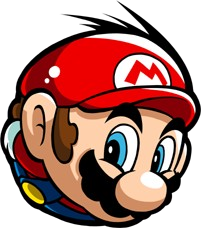 MarioThe ball
 Princess PeachFired into Bowser’s castle
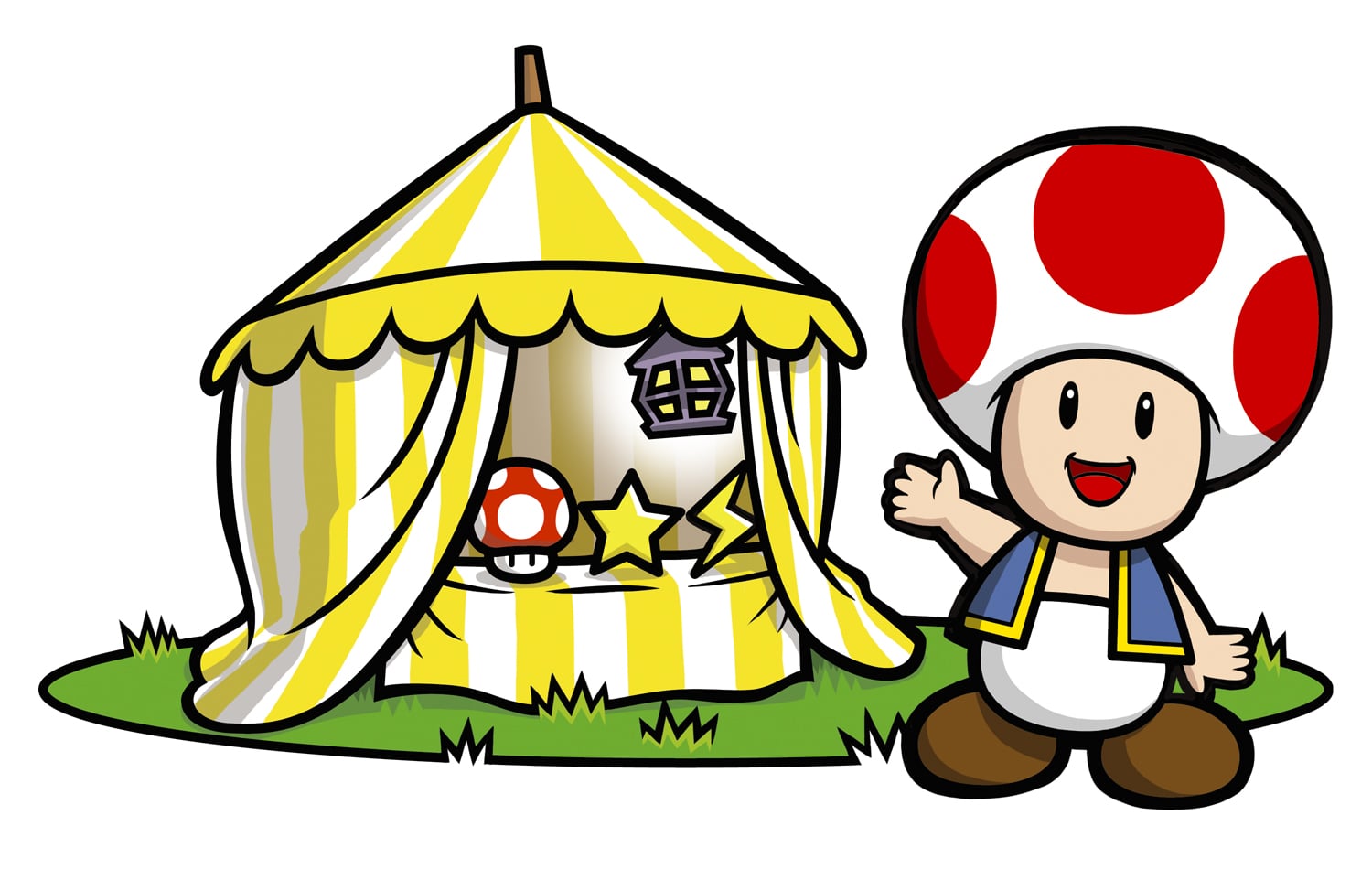 ToadShopkeeper
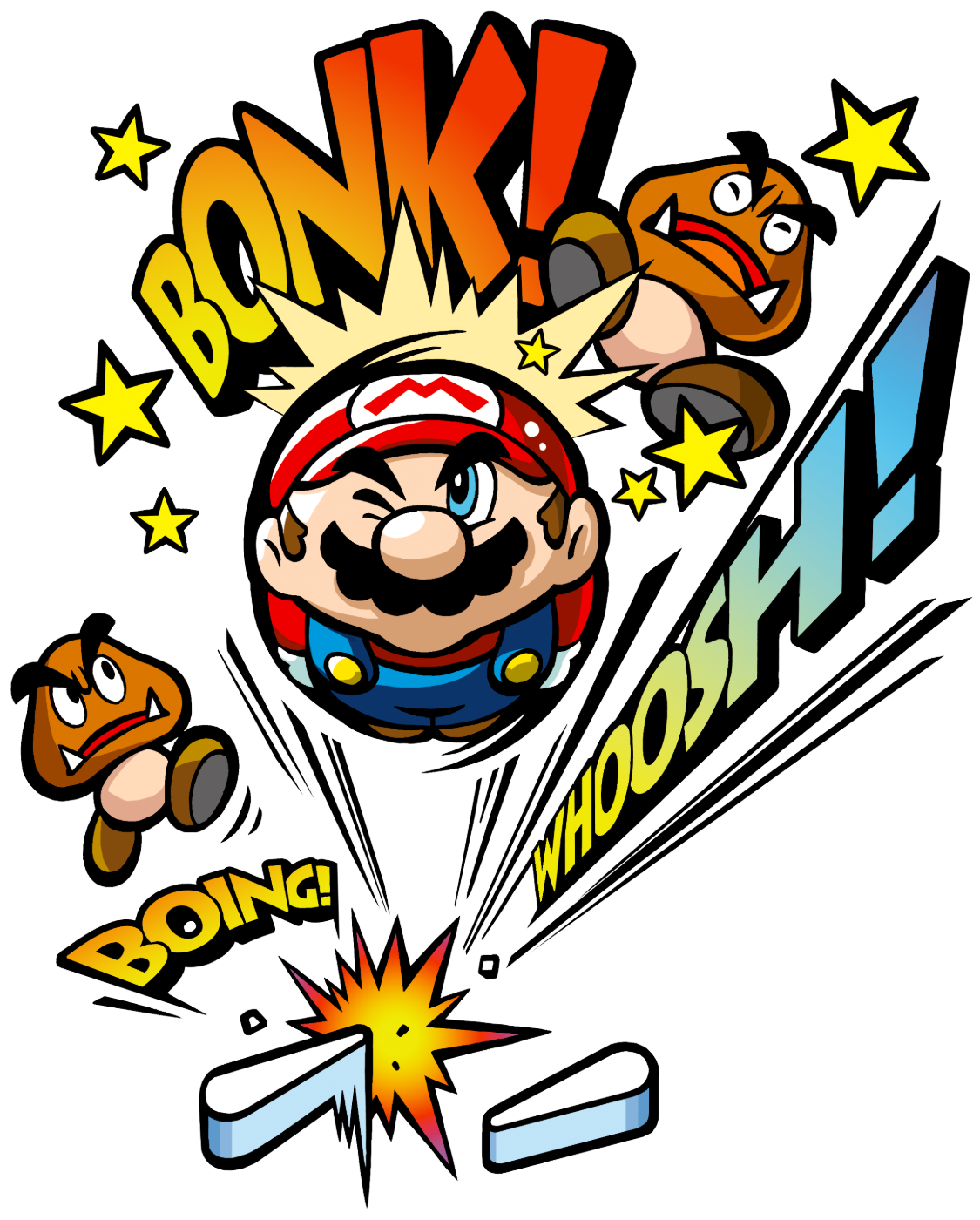 The two GoombasSaboteurs
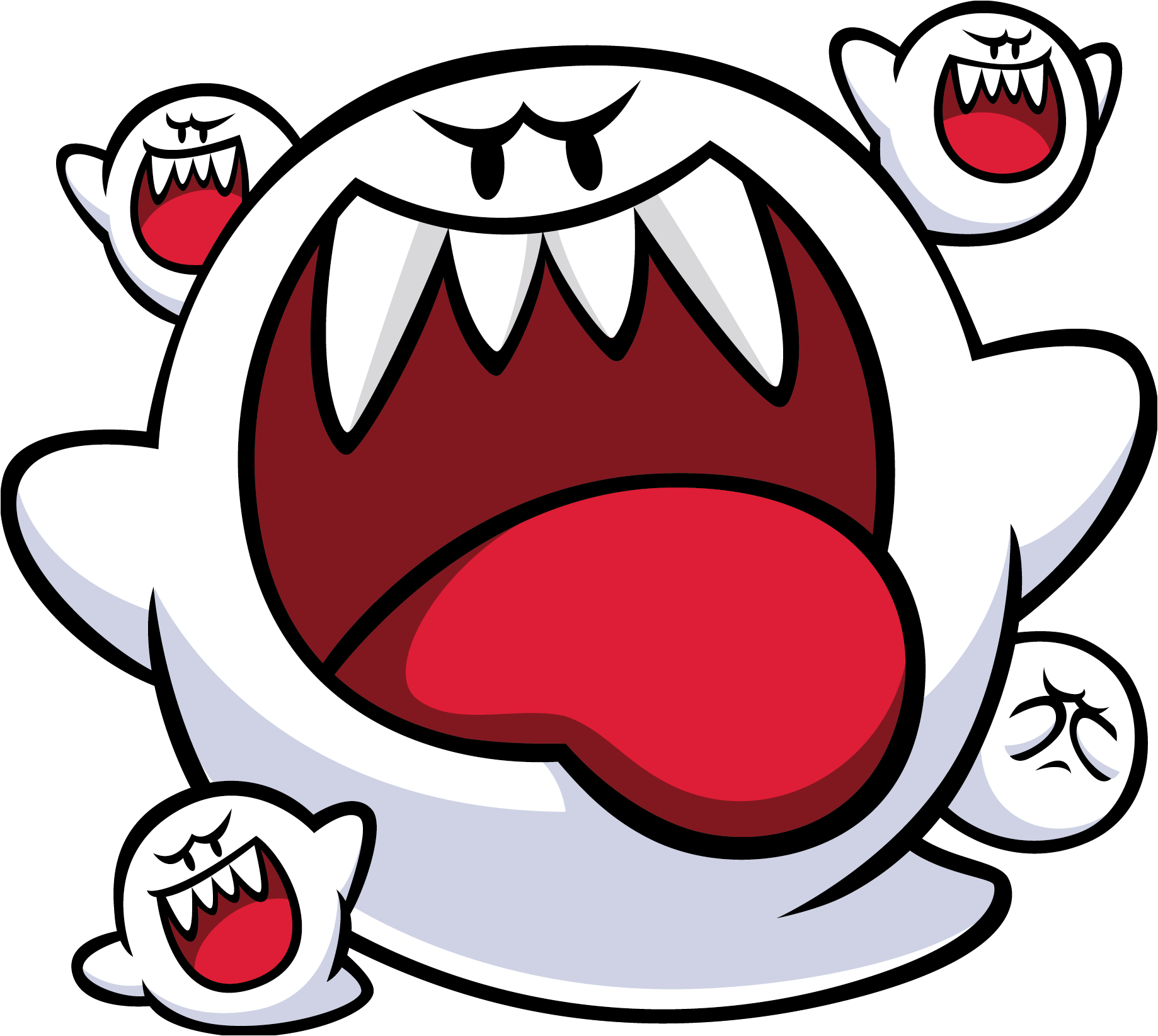 Big BooBoss of the Fun Fair
 Petey PiranhaBoss of Grassy Greens
 PorcupufferBoss of Frosty Frontier
 King TutBoss of Shifting Sands
 BowserFinal boss
 Big Boo (boss)The Fun Fair, behind the 10-Star doorDrops a Star Key and two ? Blocks.
 Petey Piranha (boss)Grassy Greens, inside the windmillNeeds three hits.
 Porcupuffer (boss)Frosty Frontier, sunken shipStun it with bombs from the trapdoors first.
 King Tut (boss)Shifting Sands, burial chamberA statue woken by a floor panel.
 Bowser (boss)Fiery Stage, behind the 15-Star doorDrop the Thwomps on him; three hits, then bat him out of the castle.
 Monty Mole (1-up Mole)Grassy Greens, Frosty Frontier, Shifting Sands, Fiery StagePops up in set positions; hit it in each one for a 1-UP Mushroom.
 Armored KoopaFiery StageKnock them into the walls. Known elsewhere as Koopatrols, from Paper Mario.
 Bob-ombFun Fair minigameBlow up ten for a Star.
 BooFun Fair; Fiery StageFour in the Haunted House.
 Bullet BillFun Fair minigameFired from both sides; hit 30.
 BumblerGrassy GreensBees that pour out of the hives.
 Chain ChompFun Fair minigameKnock back all four for a Star.
 Cheep CheepFrosty Frontier; Fiery StageSwim round the treasure chests and the castle’s water room.
 Flying Shy GuyFiery StageThe castle’s first line of defence.
 FreezieFrosty FrontierA giant block of ice to push into the crack.
 GoombaFun Fair; Grassy Greens; Fiery StageThe first enemies you meet.
 KleptoShifting SandsFour circle the buried pyramid.
 Koopa TroopaGrassy GreensBlue-shelled Koopas fill two tables.
 LakituShifting SandsThrows Spinies, up to four at a time.
 Mr. BlizzardFrosty FrontierThrows snowballs; stun all four at once for a Star.
 PenguinFrosty FrontierKnock one down, then hit it again while it is down.
 PokeyShifting Sands; Fiery StageTwo- and four-segment cacti.
 Shy GuyShifting SandsGuard the rooms before the burial chamber.
 Shy Guy on SkatesFrosty FrontierChange colour when hit; match all four colours on the rink for a Star.
 Snake (Cobrat)Shifting SandsBurst out of jars; borrowed from Super Mario Bros. 2.
 Spiny (Spiky)Shifting SandsThrown by Lakitu.
 Spiny Cheep CheepA spiky variety of Cheep Cheep.
 ThwompFiery StageHang over Bowser’s arena, waiting to be dropped on him.