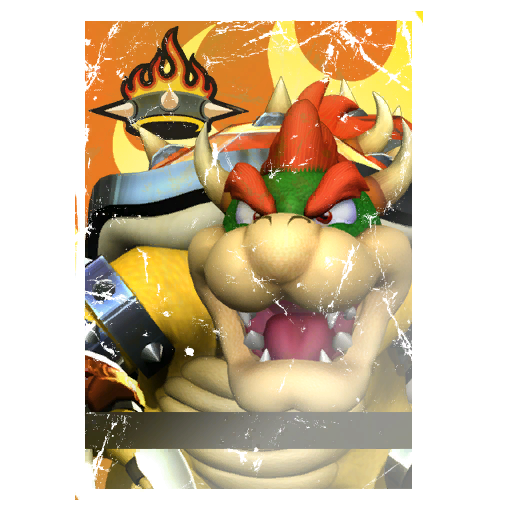
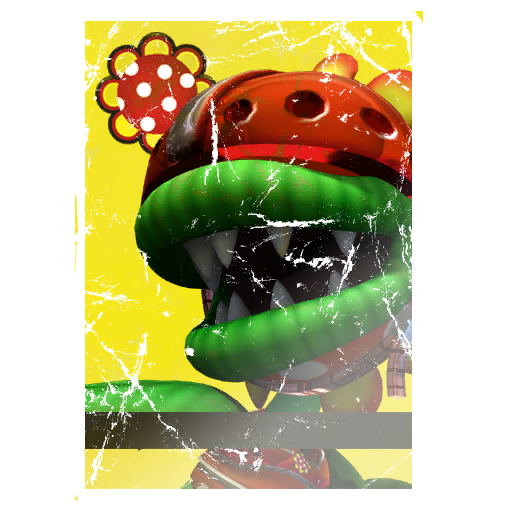
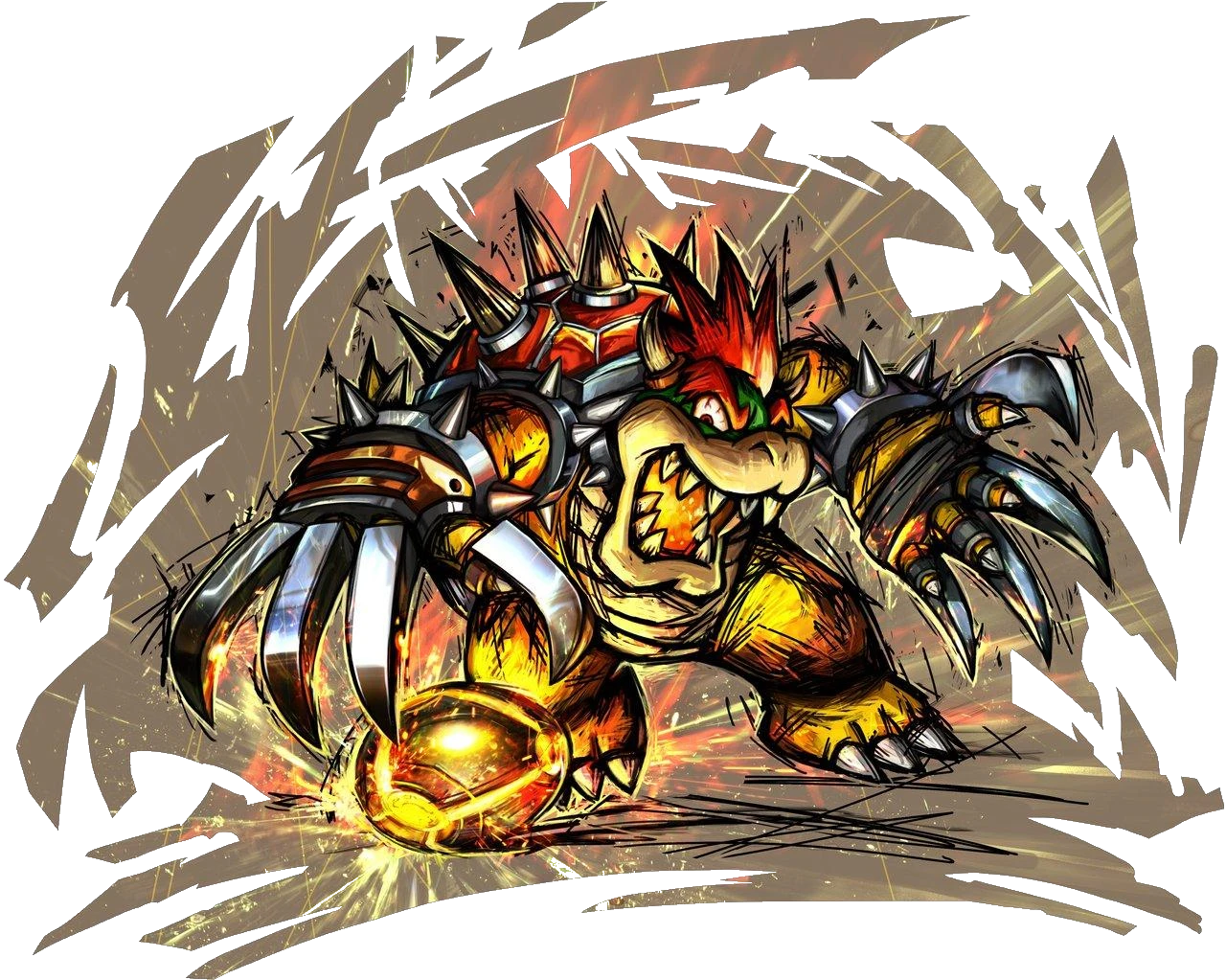
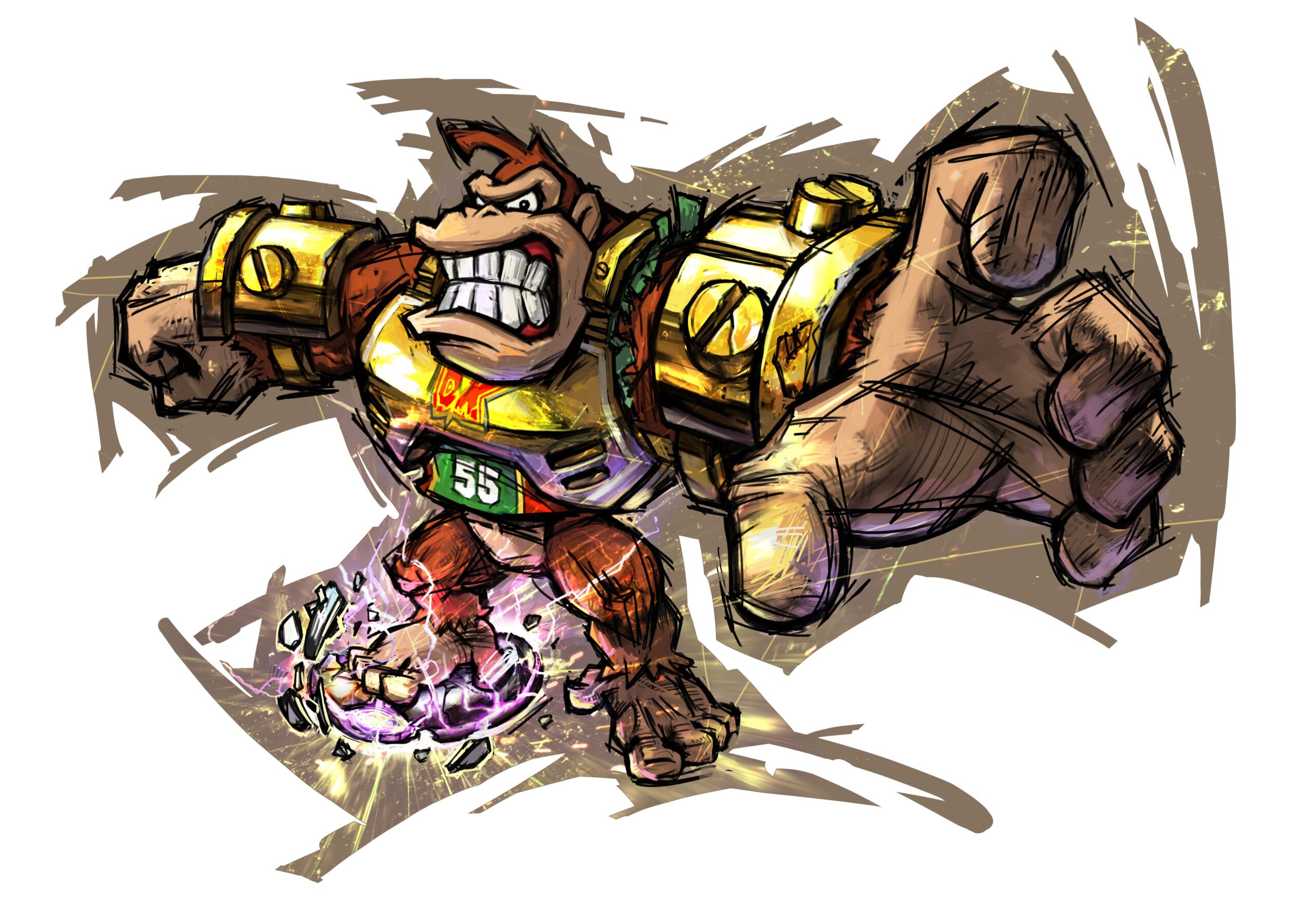
Wii2007Five-a-side footballNext Level Games12 captains, 8 sidekicksSix-ball Mega StrikesOnline over Nintendo Wi-Fi Connection1.77 million sold by March 2008Bowser’s debut as a captain
Mario Strikers Charged (Wii)
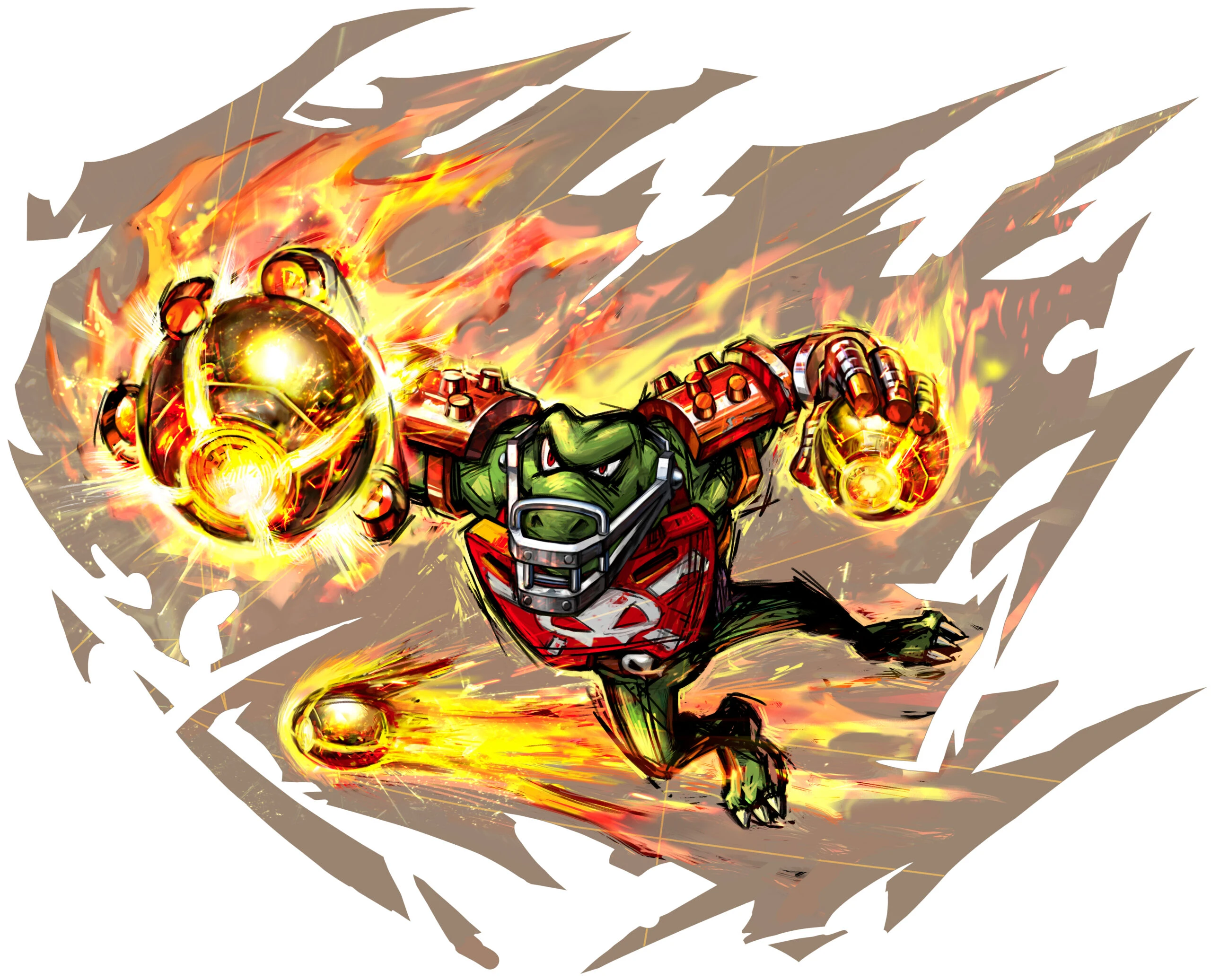
No referee, no rules, no mercy. Mario Strikers Charged (Mario Strikers Charged Football in Europe and Australia) took the rough-and-tumble five-a-side of the GameCube’s Mario Smash Football to the Wii, where it kicked off in Europe on 25 May 2007, two months before North America. Vancouver studio Next Level Games gave it a darker, armour-plated look and a cast of 12 captains (Bowser, Bowser Jr., Diddy Kong and Petey Piranha all new to the series) backed by 8 kinds of sidekick and a Kritter in goal. The headline move is the Mega Strike: hold the shot, set a swinging meter, and the captain fires up to six balls at once while the other player fights them off with the Wii Remote pointer. Add a Super Ability for every captain, 17 stadiums full of lightning, lava and Thwomps, three cups, 12 Striker Challenges and online matches over Nintendo Wi-Fi Connection, and you have one of the loudest Mario sports games ever made. Nintendo counted 1.77 million sales by March 2008.
Developer:Next Level Games (Vancouver, Canada), with Nintendo SPD Group No. 3
Publisher:Nintendo
Platform:Wii; Wii U download (2016)
Genre:Football (five-a-side, anything goes)
Europe:25 May 2007, as Mario Strikers Charged Football
Australia:7 June 2007
N. America:30 July 2007
Japan:20 September 2007
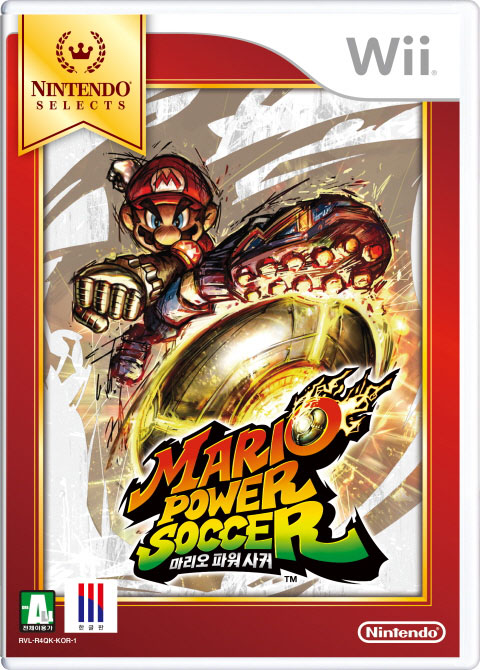
South Korea:18 March 2010, as Mario Power Soccer
Players:1–4 on one Wii; online 1–4 (up to two per console) until 20 May 2014
Sales:1.77 million by 31 March 2008 (Nintendo); 2.6 million by the end of 2019 (CESA, via Wikipedia)
Re-releases:Nintendo Selects (Europe 2011, N. America 2011); Wii U eShop (2016)
Advertisement
Overview
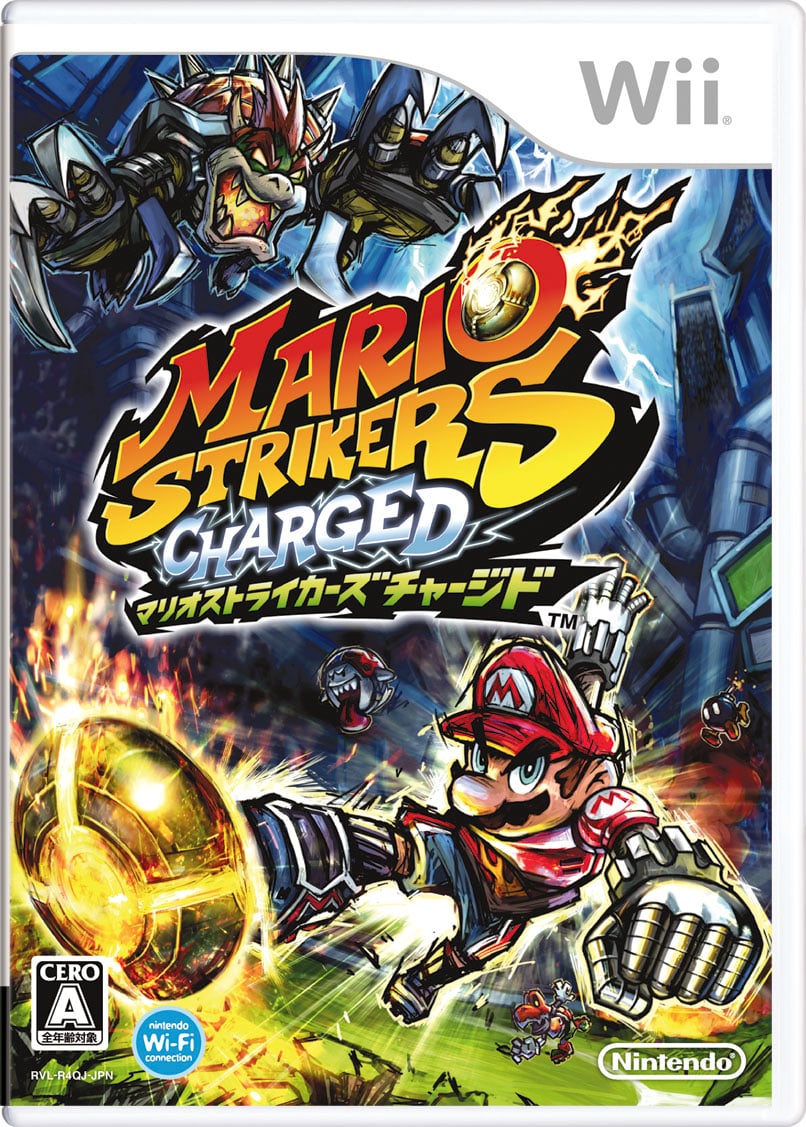
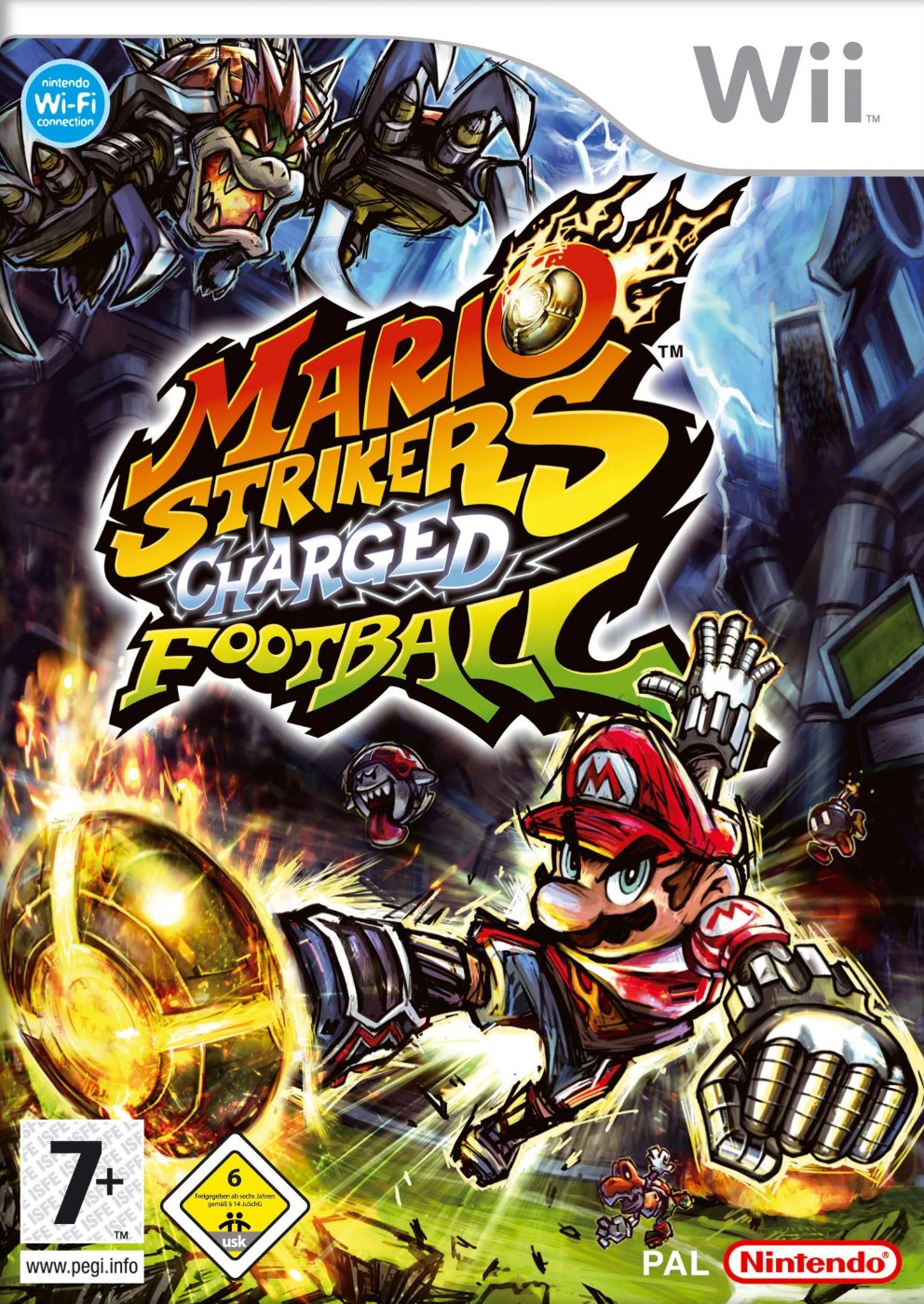
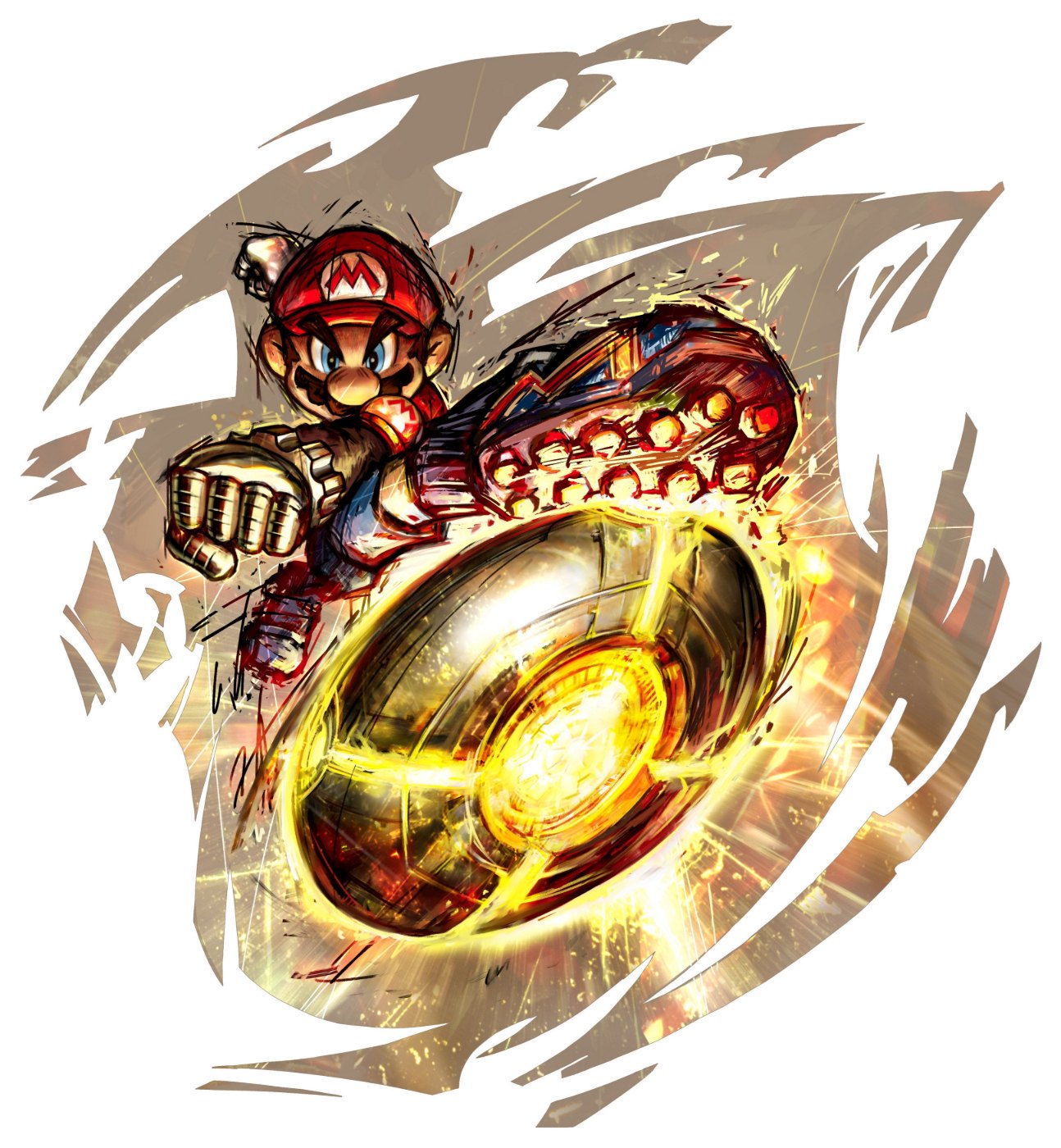
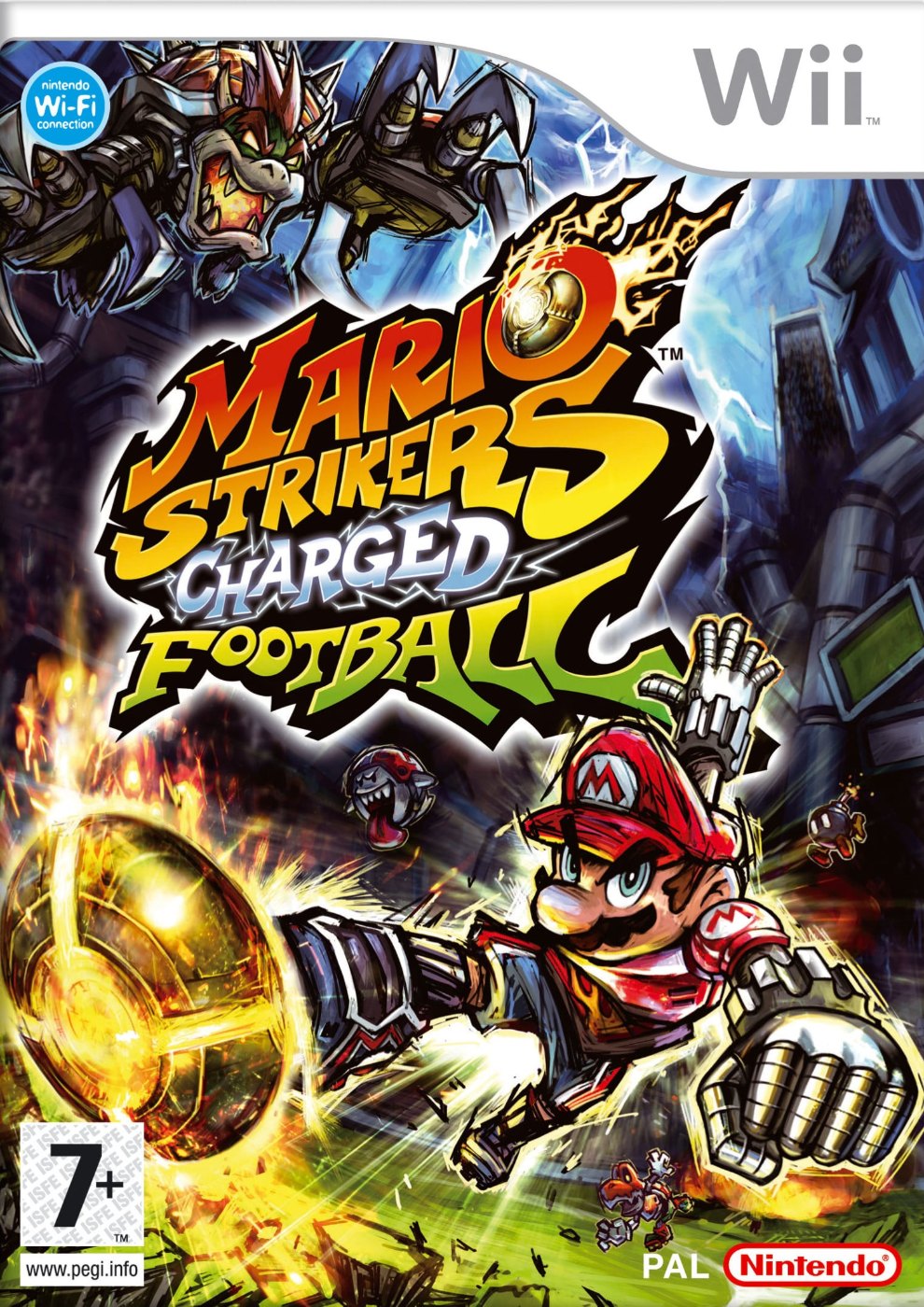
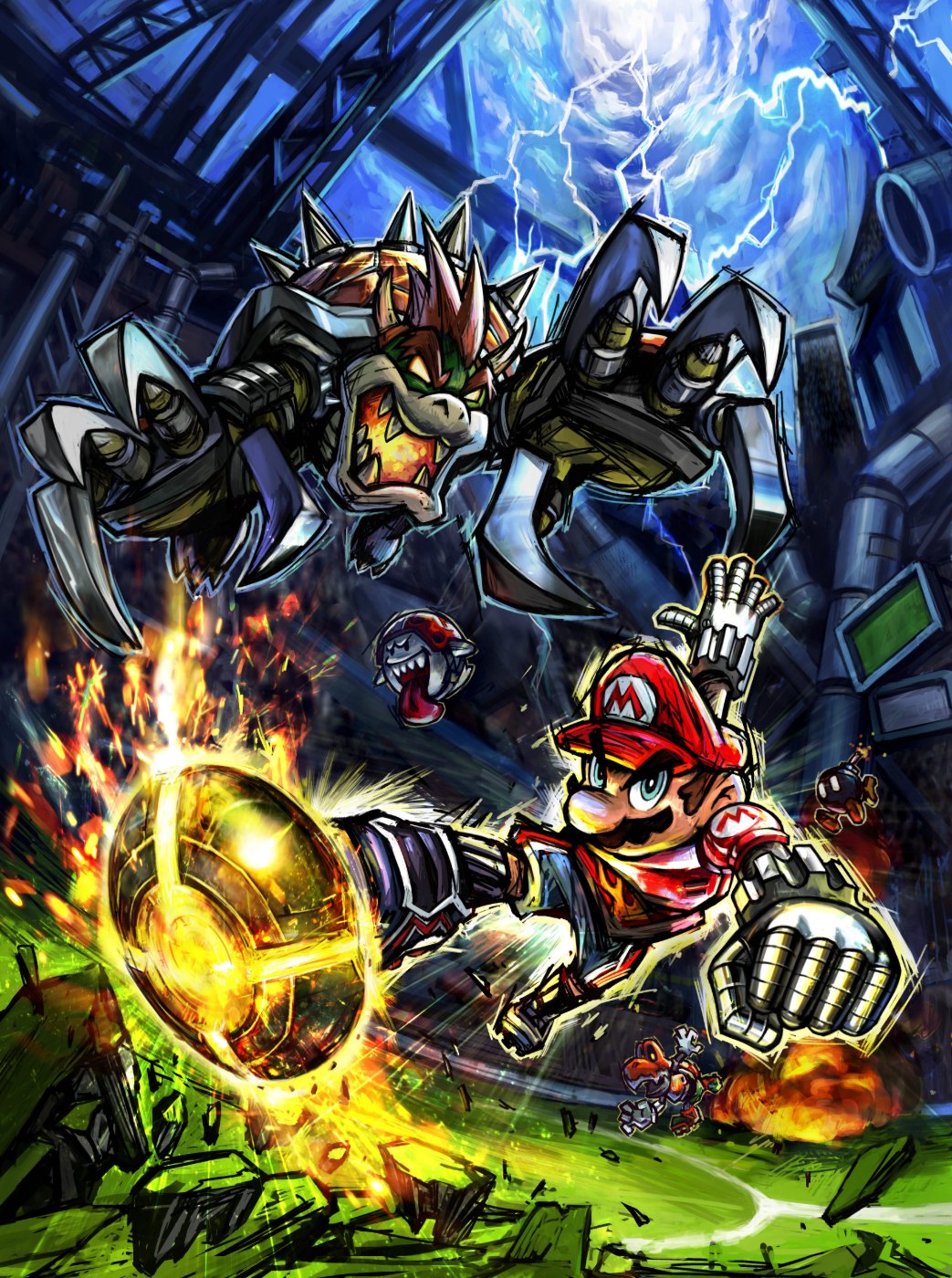
The key artwork used on the European and Japanese covers: the captains square up.
The first Mario Strikers had already decided that football in the Mushroom Kingdom would be a contact sport. Charged turns the volume up. The pitch is ringed by an electric fence, the players wear armour, the stadiums are hung with chains and floodlights, and the matches are played in storms, on lava fields and on the deck of an airship. The tone is closer to a heavy-metal album cover than to a picnic on the Mushroom Kingdom lawn.
Underneath the noise is a smart little game of five-a-side. Each team is a captain, three sidekicks and a Kritter keeper. You pass to build up the charge on a metal ball that glows hotter with every touch, you shove opponents into the fence, you dodge tackles with a flick of the D-Pad, and when the moment is right your captain winds up a Mega Strike: up to six balls at once, which the defending player has to swat away one by one with the Wii Remote. Sidekicks have their own charged Skillshots, captains have a personal Super Ability, and Mario Kart-style shells and Bob-ombs fly about whenever someone is flattened without the ball.
There is plenty to play through on your own: the three cups of the Road to the Strikers Cup, which unlock Bowser Jr., Diddy Kong and Petey Piranha, and twelve Striker Challenges that set up tricky situations and reward you with cheats. But Charged was built for company, on the sofa and online. It shipped with online matches from day one, and until Nintendo Wi-Fi Connection closed in May 2014 you could play ranked games against strangers in your region or friendly ones against anyone on your friend list.
Critics liked it rather than loved it (Metacritic settled on 79), praising the style, the multiplayer and the online play and grumbling that the single-player side was thin. Players kept it going for years. It sold 1.77 million copies in its first year on sale, according to Nintendo, and fifteen years later its cup music and armoured kit were echoed in its Switch sequel, Mario Strikers: Battle League.
In this follow-up to Mario Smash Football, you use the skill provided by the Wii Remote and Nunchuk Controller to win the ball, score unstoppable goals and take control of the goalkeeper to perform spectacular saves. Mario is joined by other famous Nintendo characters who take on the role of captain. Then select a host of popular team-mates to make up the rest of the team, before competing in one of the game’s many modes.
Anything goes in Mario Strikers Charged Football as you can utilise a variety of special techniques to clinch goals. Each captain has their own set of skills and Super Abilities as well as being able to perform special shots called MegaStrikes, where the ball splits into six and flies at the goal. The defending player must use the Wii Remote to aim at and shoot these balls out of the air before they concede a goal. You can also charge the ball with energy, making it more likely to find its target.
Each of the stadiums in Mario Strikers Charged Football have various characteristics and contraptions, which you must learn to use to your advantage to truly dominate the pitch.
— Official description (Nintendo UK, 2007)
Why Charged matters to Mario fans
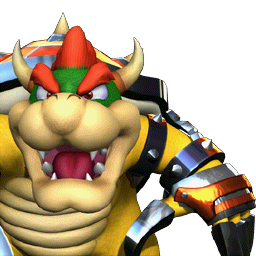
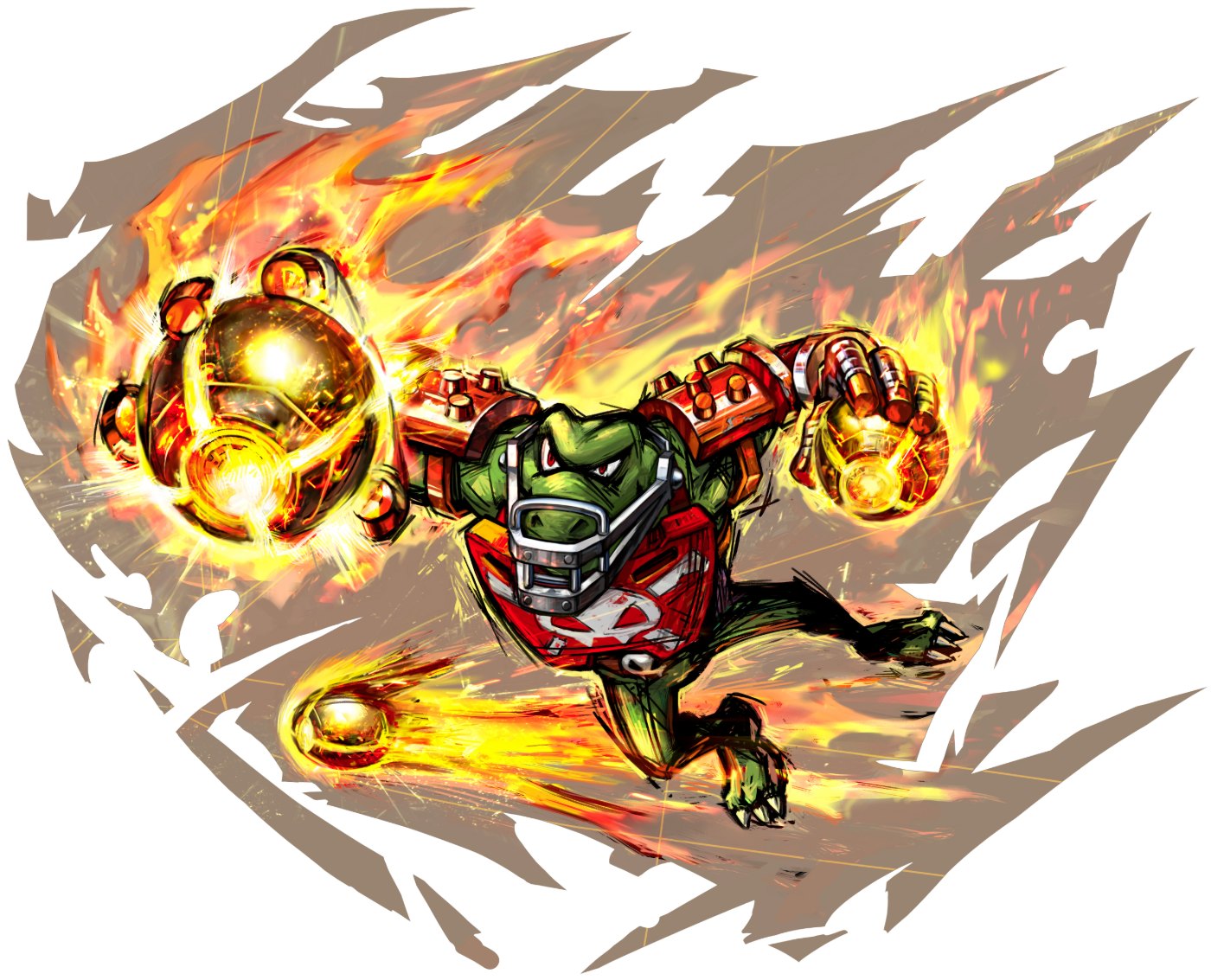
It is the game that gave the Mario cast a mean streak. Bowser stops being a hazard and pulls on a shirt as a captain for the first time in the series, Bowser Jr., Diddy Kong and Petey Piranha join him, and Boo, Dry Bones, Monty Mole and Shy Guy become sidekicks. Every captain gets a flamboyant Mega Strike and a Super Ability of their own, which makes this one of the most characterful line-ups in any Mario sports game, and its Mega Strike poses even turned up as posters on the walls of Luigi’s Mansion 3, made by the same studio.
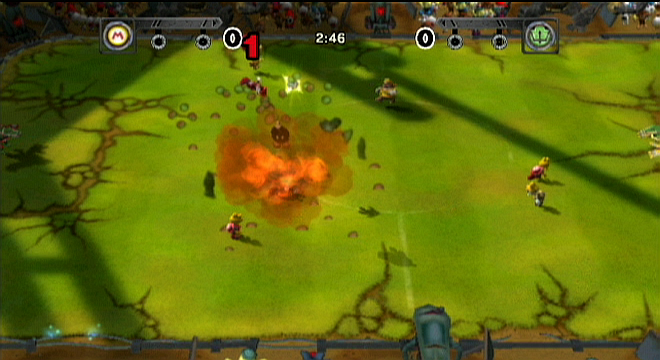
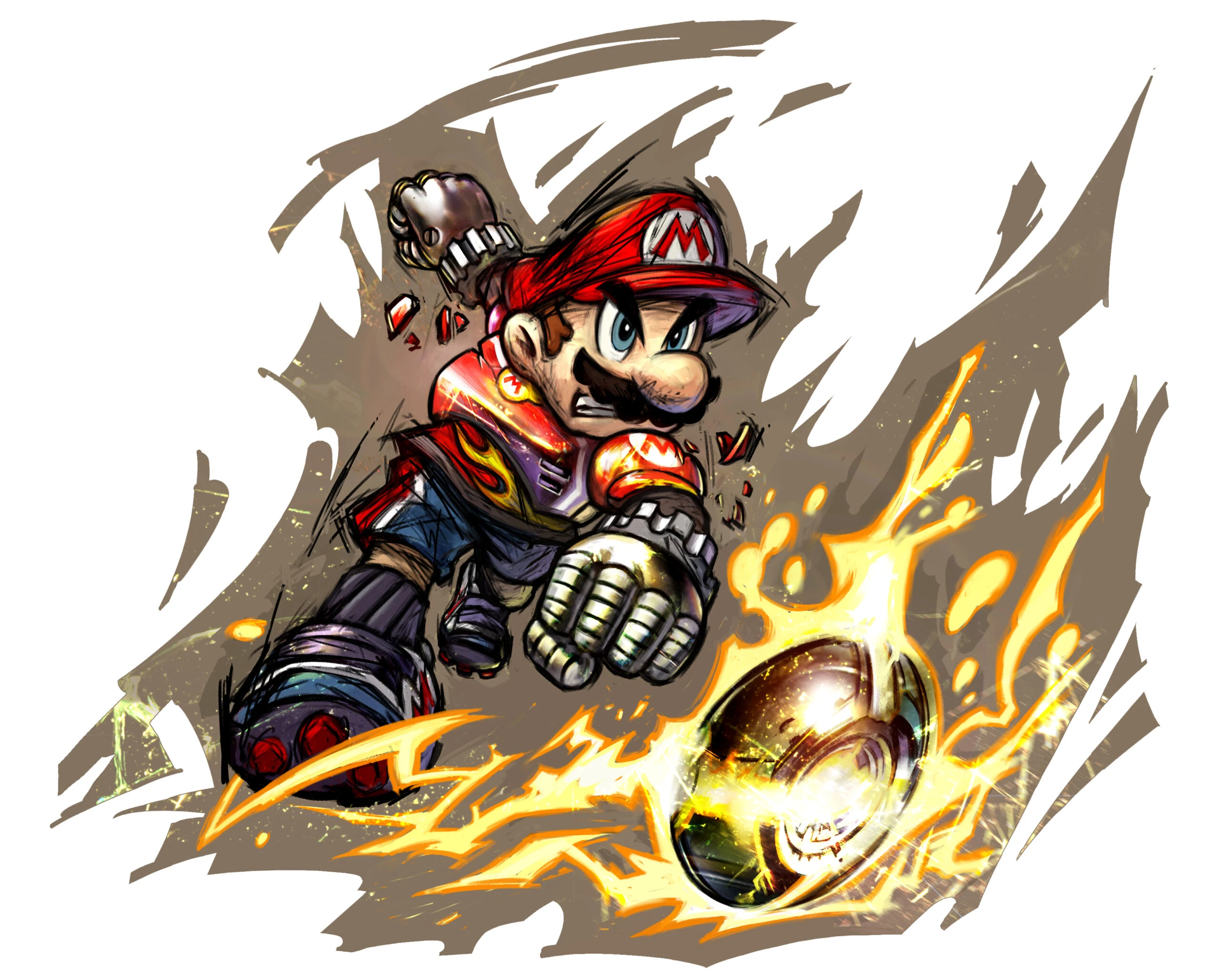
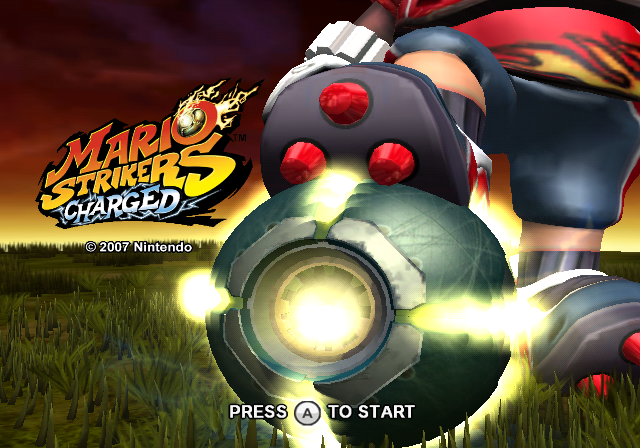
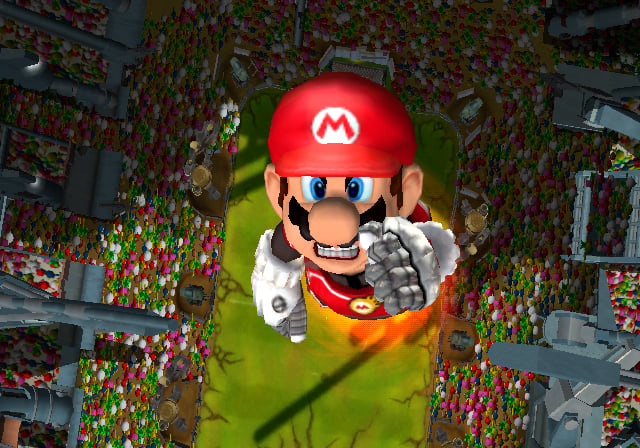
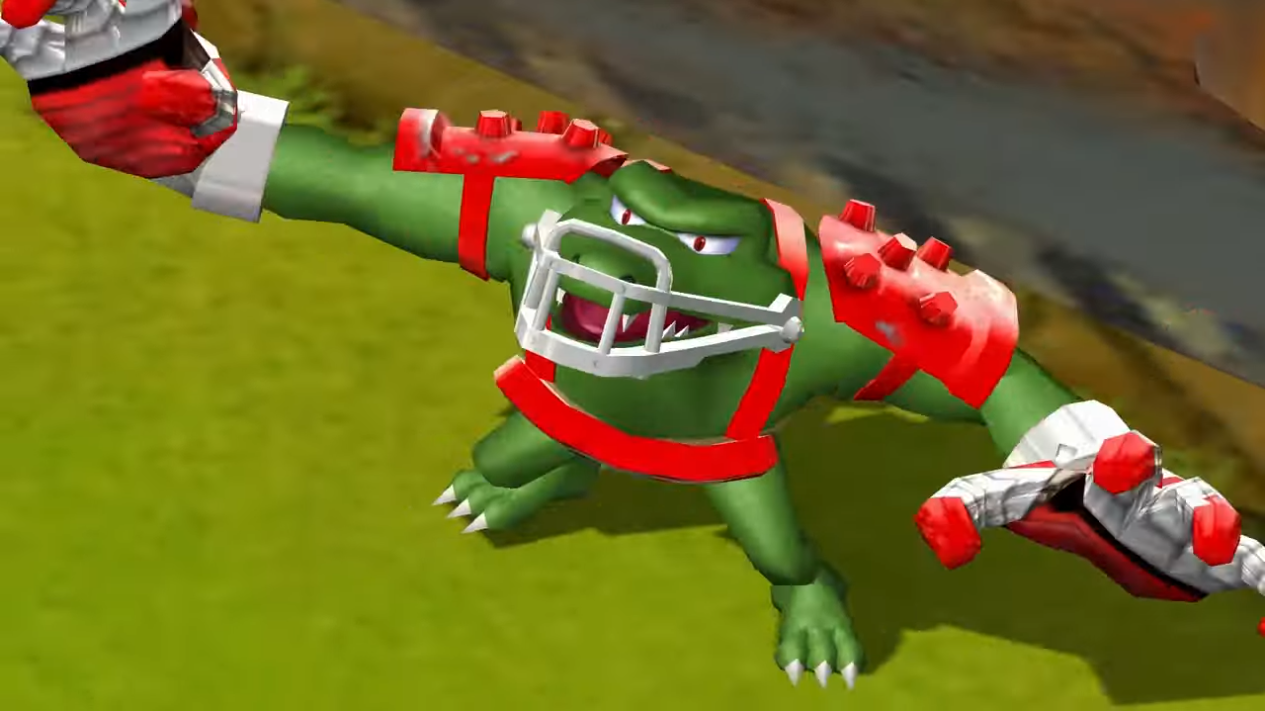
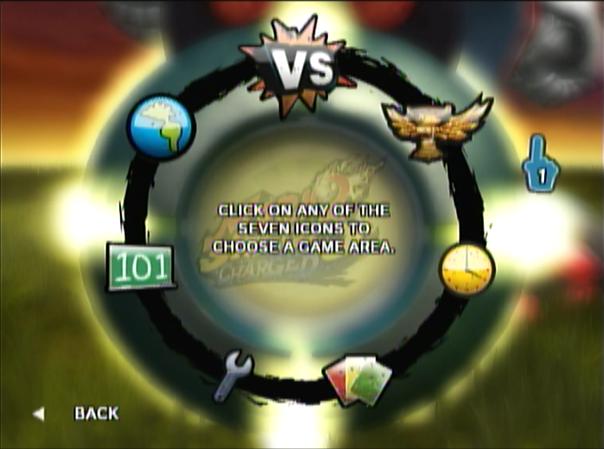
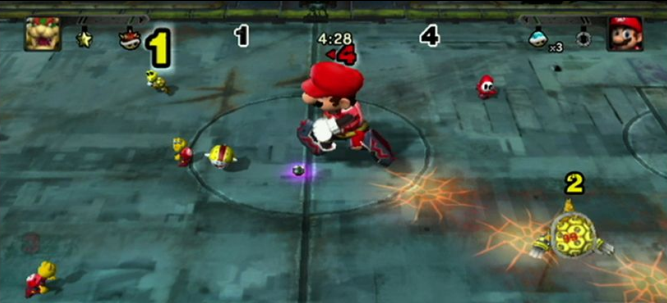
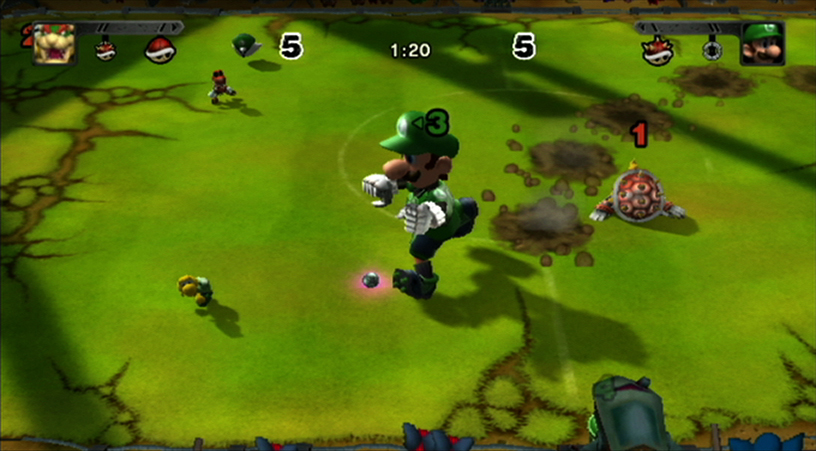
The North American title screen.Mario lines up a Mega Strike.A Kritter keeper waits on his line.The main menu.
Quick Answers
The questions people most often ask about Mario Strikers Charged, answered in a line or two.
Who made Mario Strikers Charged?
Next Level Games of Vancouver, the Canadian studio behind the GameCube original, working with Nintendo SPD Group No. 3. Mike Inglehart directed; Kensuke Tanabe produced for Nintendo. Nintendo published it. More →
How many characters are there?
Twelve captains (nine from the start, plus Bowser Jr., Diddy Kong and Petey Piranha to unlock), eight sidekicks to fill the other three outfield places, and a Kritter who keeps goal for every team. More →
How do I unlock Bowser Jr., Diddy Kong and Petey Piranha?
Win the cups of the Road to the Strikers Cup: the Fire Cup brings Bowser Jr., the Crystal Cup Diddy Kong and the Striker Cup Petey Piranha. Each was the defending champion of the cup that unlocks them. More →
How does a Mega Strike work?
Hold the shoot button with your captain until a meter appears. The first stop sets how many balls fly (three to six), the second sets how fast. The defending player then sees through the keeper’s eyes and points the Wii Remote to knock each ball away. Every ball that gets through is a goal. More →
How many stadiums are there?
Seventeen: ten new Arenas, most of them with hazards such as lightning, lava, Thwomps or a tilting floor, and seven Classics carried over from Super Mario Strikers. More →
Can you still play Mario Strikers Charged online?
Not officially. Its online modes ran on Nintendo Wi-Fi Connection, which Nintendo switched off on 20 May 2014. Local multiplayer for up to four players still works as it always did. More →
Why is it called Mario Strikers Charged Football in Europe?
That is simply its European and Australian title. The GameCube game before it was called Mario Smash Football in Europe and Super Mario Strikers in North America; in South Korea Charged was released in 2010 as Mario Power Soccer. More →
How many copies did it sell?
Nintendo reported 1.77 million worldwide by 31 March 2008, 240,000 of them in Japan. Wikipedia, citing the CESA Games White Paper, gives 2.6 million by the end of 2019. More →
Was it re-released?
Yes: as a Nintendo Selects budget title in Europe and North America in 2011, and as a download on the Wii U eShop in 2016. That download stopped being sold when the Wii U eShop closed to purchases on 27 March 2023. More →
Is there a sequel?
Yes. Next Level Games returned with Mario Strikers: Battle League on Nintendo Switch in June 2022, which reworks the Road to the Strikers Cup theme for its own cup mode. More →
Modes & Stadiums
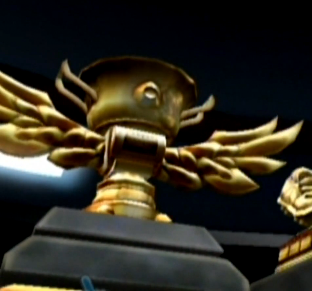
The Striker Cup, the biggest prize in the Road to the Strikers Cup.
Charged has no story mode as such, just a famous opening movie and a season of football. A match is won by the side with more goals when the clock runs out (or by whoever gets to the target first), and everything else in the game hangs off that: three cups to win, twelve challenges to beat, a Domination Mode for friends, and a Nintendo Wi-Fi Connection mode that took the whole thing online.
Progress unlocks the rest of the cast and six of the ten new stadiums. Winning a cup brings in its defending champion as a playable captain and opens a new Arena, and winning the cup’s two individual awards as well opens another.
The opening movie
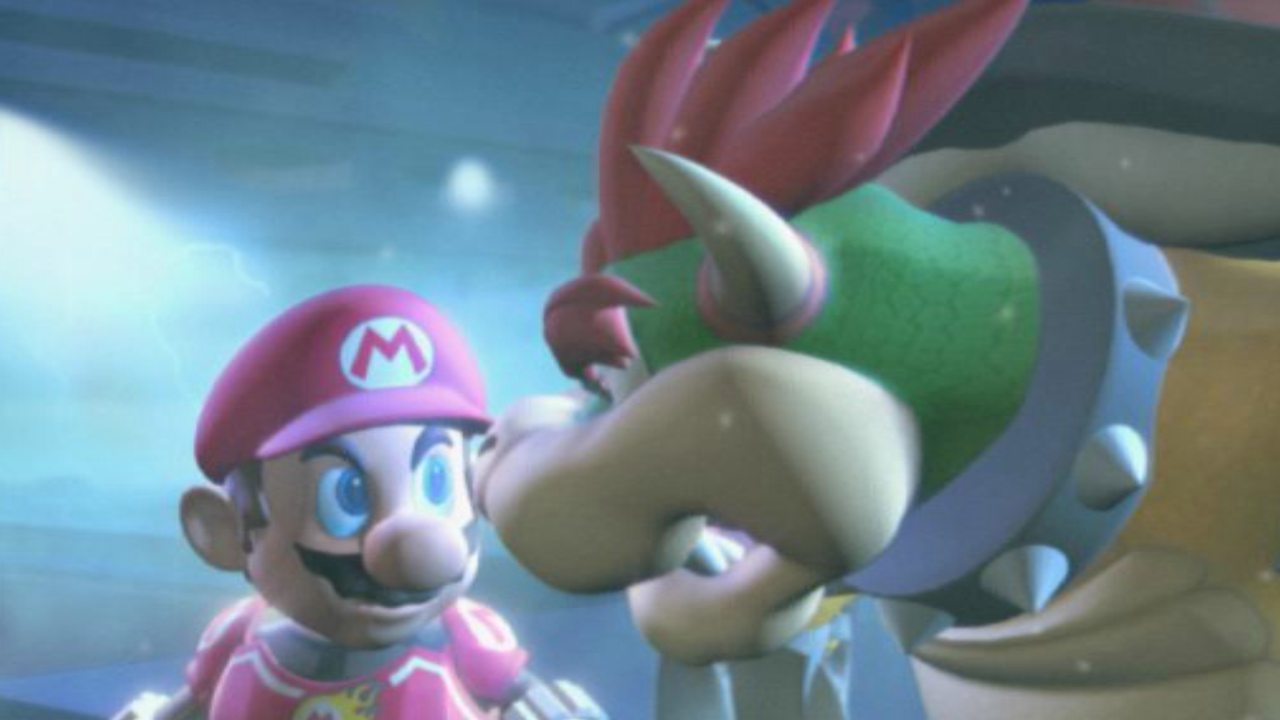
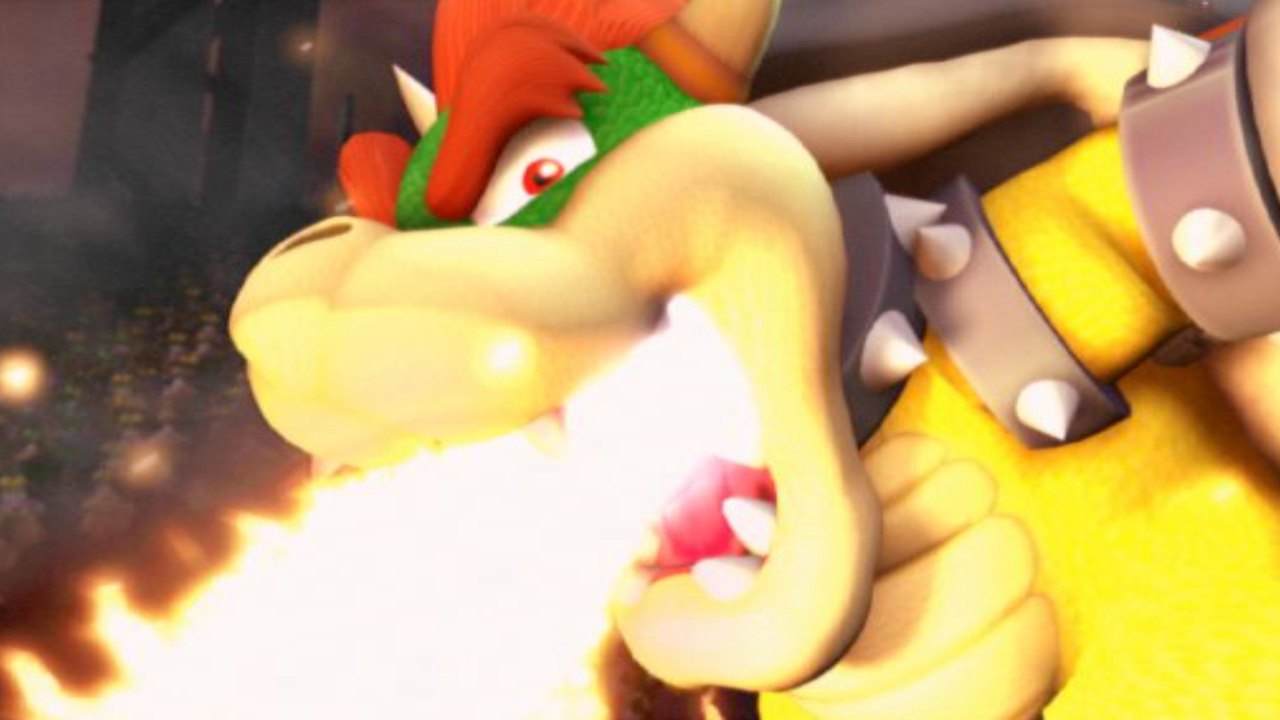
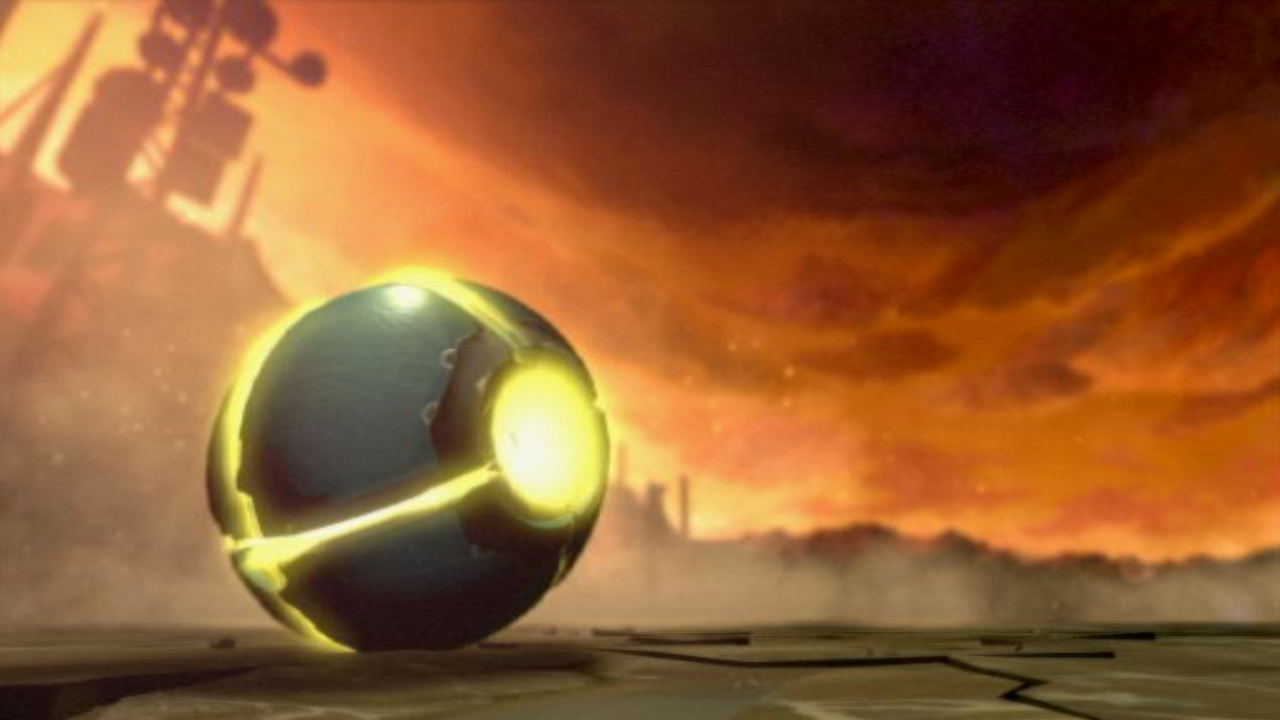
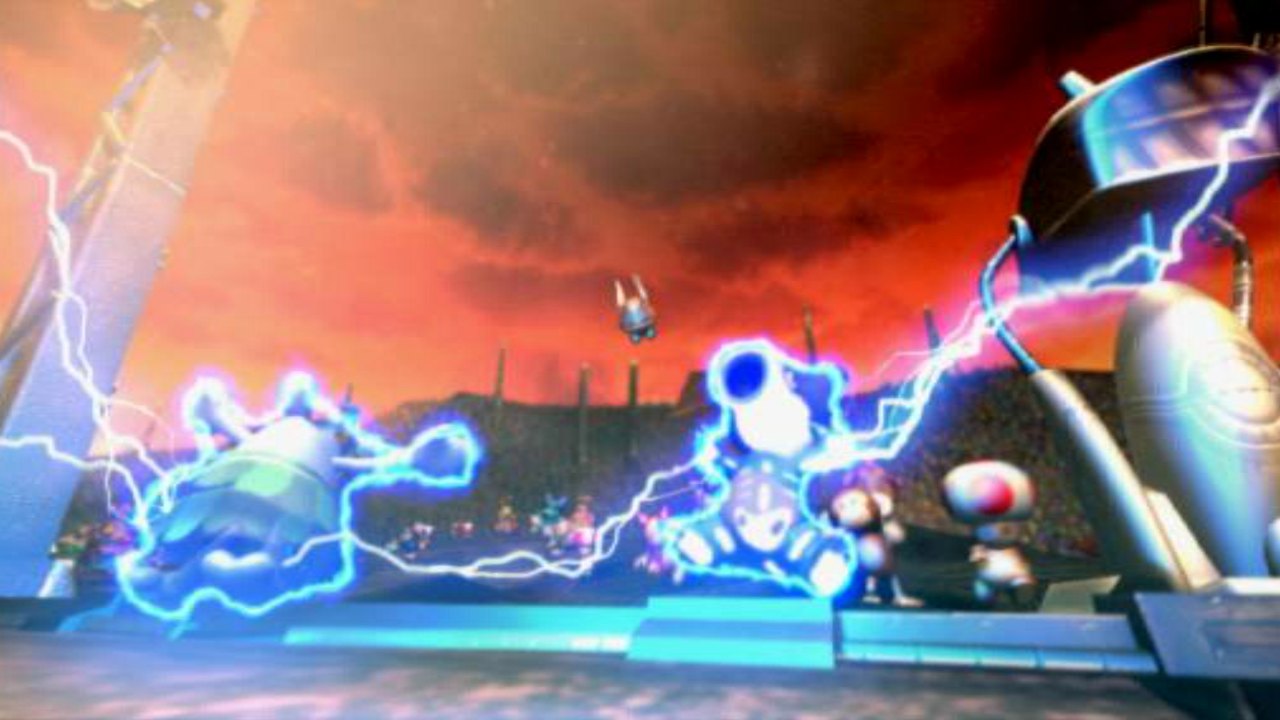
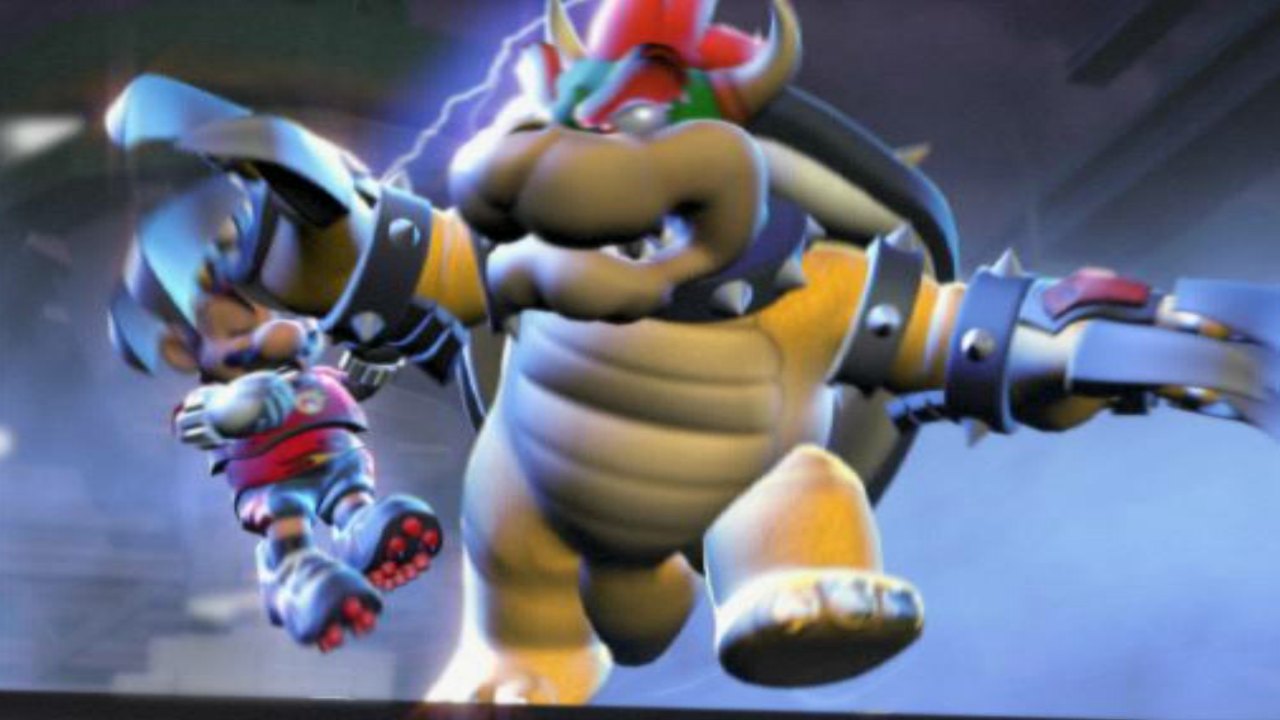
The game opens with one of Nintendo’s most extravagant intros. Mario and Bowser stand inside a blimp (the interior of Stormship Stadium) high above a storm-lashed, war-torn pitch in the Wastelands, where spectators who get too close are zapped by the fence. Bowser barges Mario aside and dives out; Mario jumps after him, and Bowser lands breathing fire.
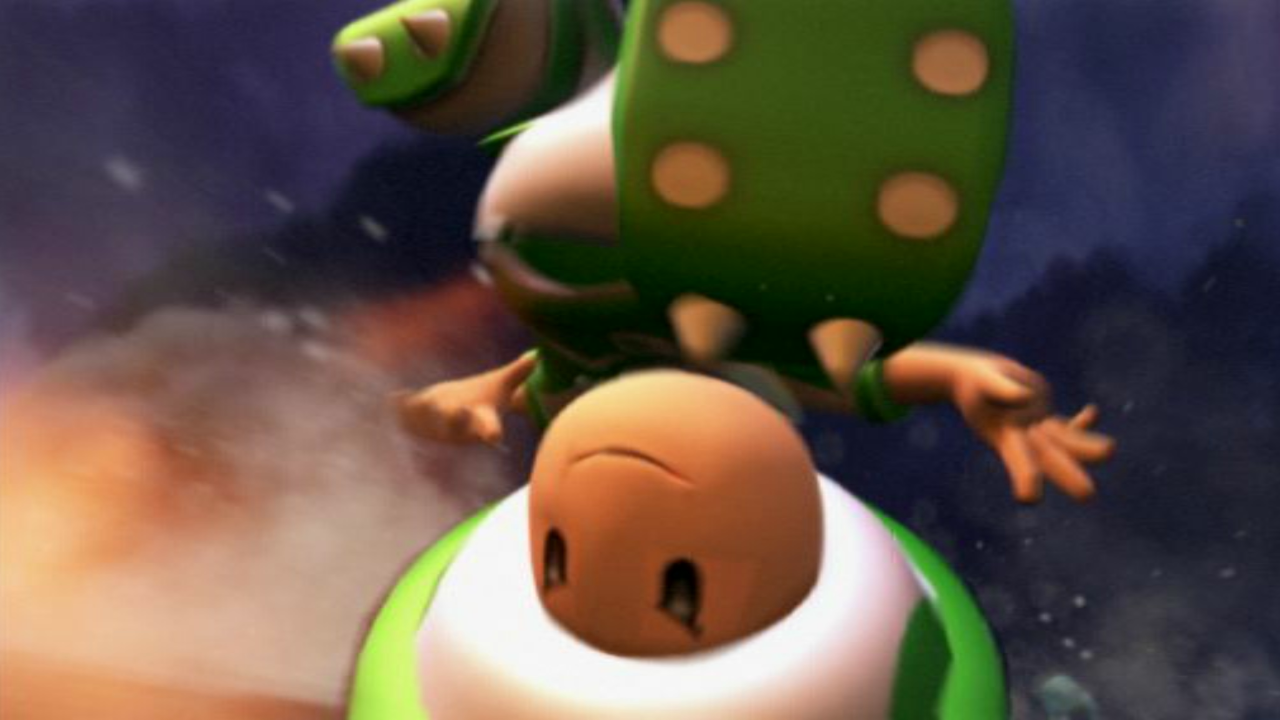
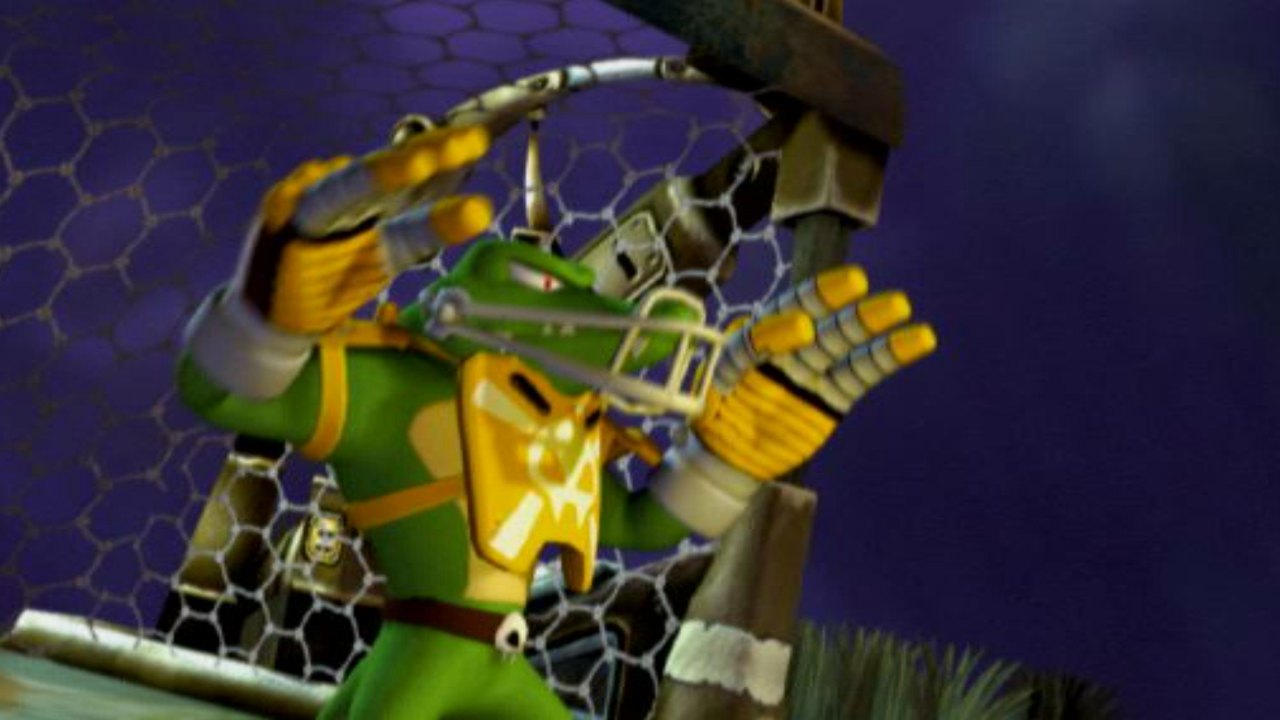
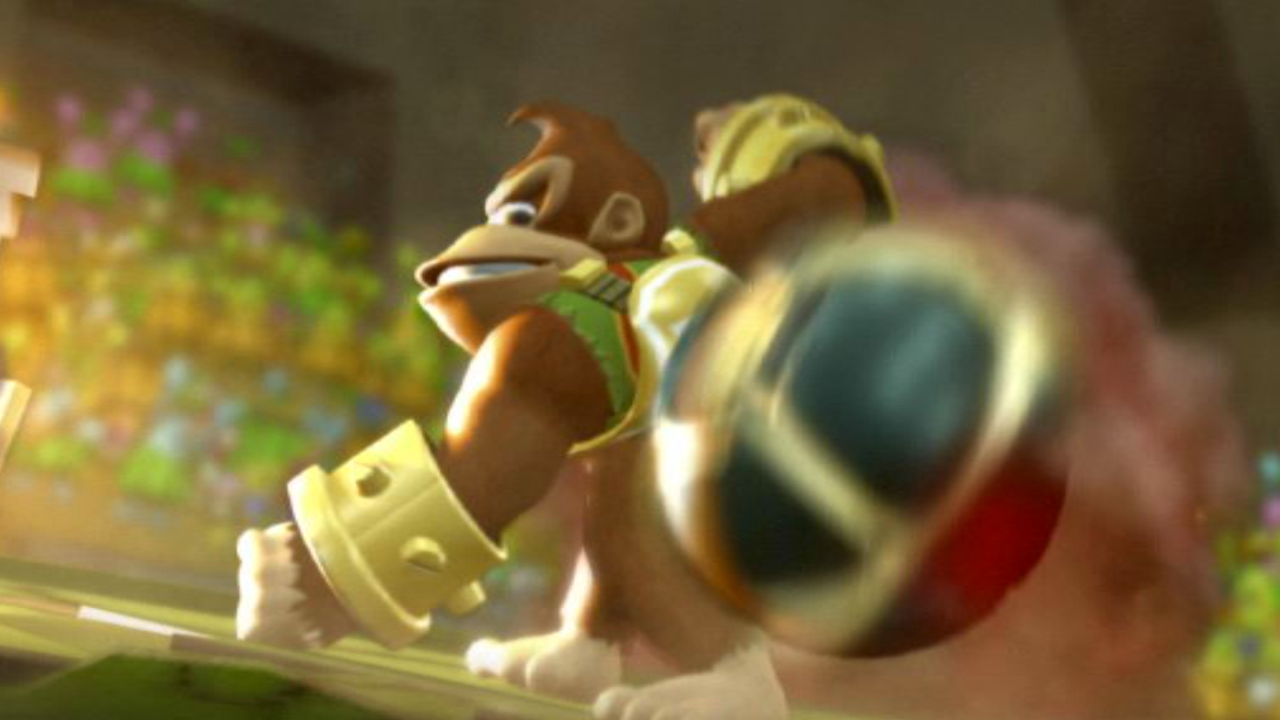
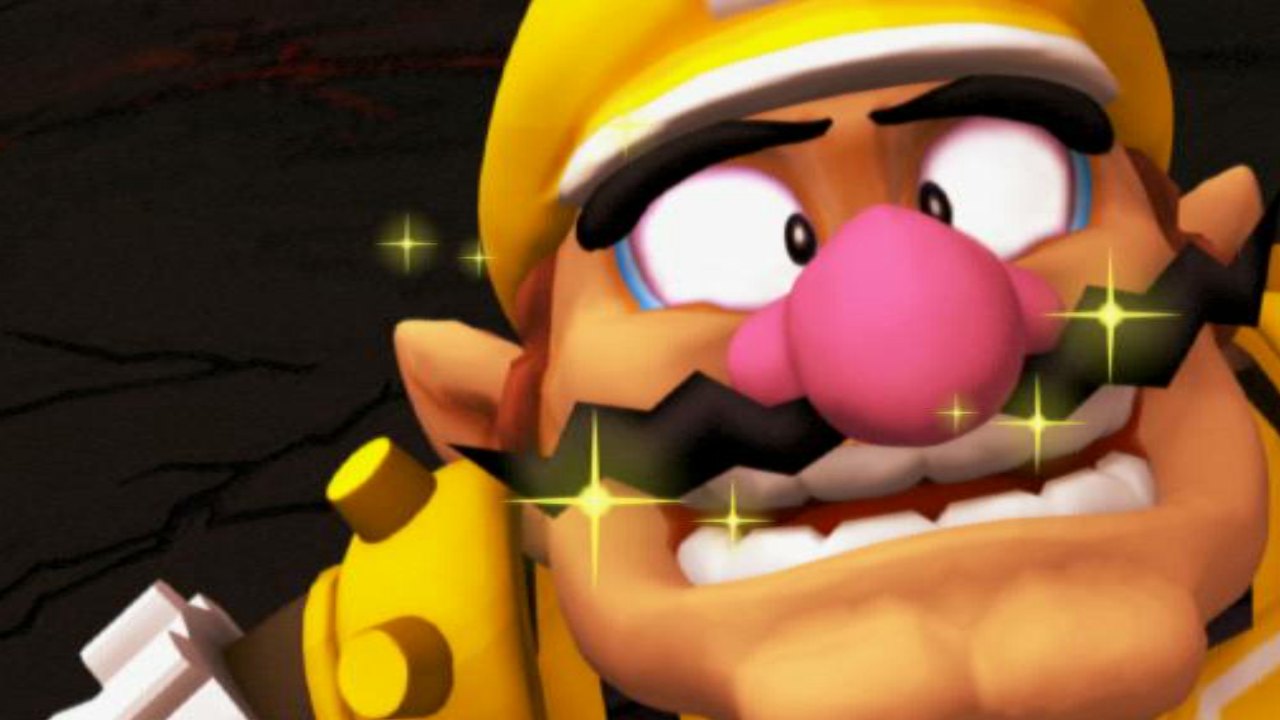
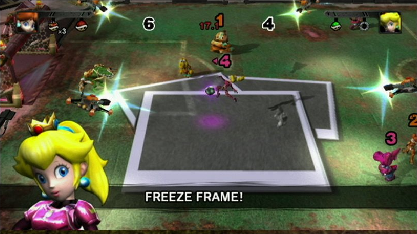
What follows is a highlights reel. Peach traps Wario in a comical snapshot with Freeze Frame! at the Lava Pit; on Thunder Island Yoshi feeds a green Toad whose bicycle kick sets the ball alight, only for the Kritter to catch it with flaming gloves; Donkey Kong scatters Daisy’s team with Thunder Wham! at the Vice; Wall-Luigi! goes up at the Dump; Bowser goes on a Fire Storm! rampage; and a Boo possesses the ball to slip past Donkey Kong. It ends with Mario launching his Mega Strike, a montage of every captain’s Mega Strike bar Petey Piranha’s, and Mario with his foot on the ball as the title appears.
A lone ball lies in the dust as the movie begins.A Pianta and a Birdo in the crowd get too close to the fence.Bowser shoves Mario aside and leaps from the blimp.Wario, caught by Peach’s Freeze Frame!.
Road to the Strikers Cup
The main single-player mode, for one to four players on the same team, is a run through three tournaments in order: the Fire Cup, the Crystal Cup and the Striker Cup. Each starts with a round-robin qualifying table (three points for a win, one for losing in sudden death, none for a defeat) and ends in knockout rounds played as best-of-three series. Lose a knockout series and you start the cup again.
The Fire Cup is four teams playing each other twice (six games), with the top two going through to the final; the holder is Bowser Jr., and beating him in the final opens the Lava Pit. The Crystal Cup grows to six teams and ten qualifying games, with semi-finals before the final against Diddy Kong. The Striker Cup is the full thing: ten teams playing each other once, quarter-finals for the top eight, and a final against the holder, Petey Piranha.
Each cup also has two awards for the qualifying stage: the Golden Foot for scoring the most goals and the Brick Wall for conceding the fewest. Win both in the same cup and a new stadium opens. Every cup can be played on Normal, where the opposition gets harder as you go, or Extreme, where it is hard from the first whistle.
The Lava Pit, opened by beating Bowser Jr. in the Fire Cup final.Crystal Canyon, opened by beating Diddy Kong in the Crystal Cup final.Stormship Stadium, the reward for beating Petey Piranha in the Striker Cup final.
Domination Mode
Domination Mode is the exhibition match, for up to four players. It replaces the grudge matches of the GameCube game: build two teams from any captains and sidekicks you like, pick a stadium, decide who plays on which side, and set the rules. Those rules grow as you beat the Striker Challenges, each of which adds a cheat to the Domination menu (see Cheats & secrets).
Striker Challenges
Twelve Striker Challenges, each introduced by a mock front page of the Striker Times, drop a captain into a sticky situation and ask you to finish the job. They run from two Novice and two Professional challenges through three Superstar and three Legend to two MegaStriker ones, and they play a little like the missions of Mario Kart DS. Every one you beat unlocks a cheat for Domination Mode and a card of that captain’s artwork.
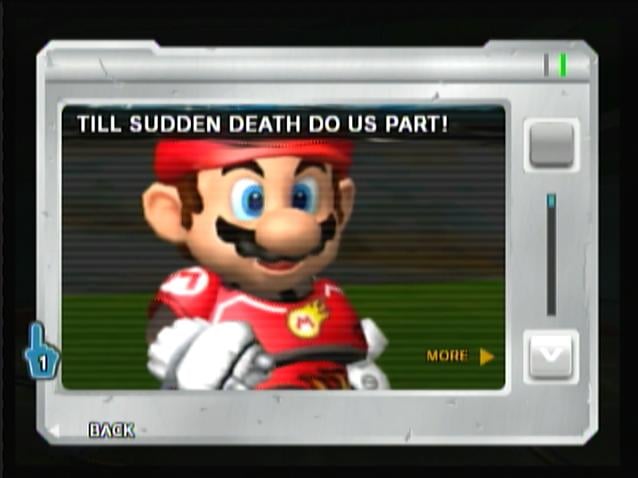
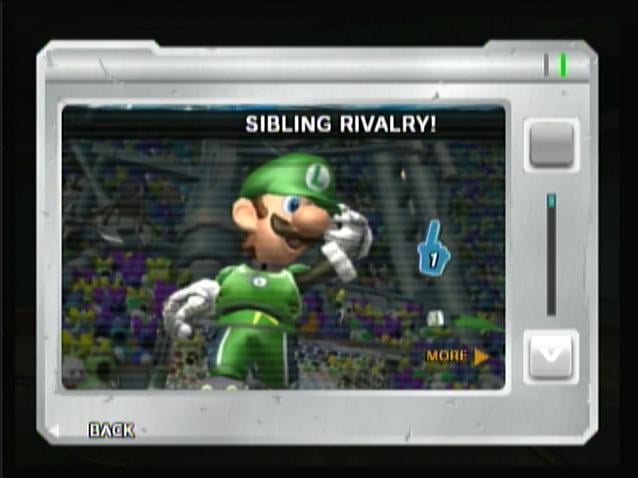
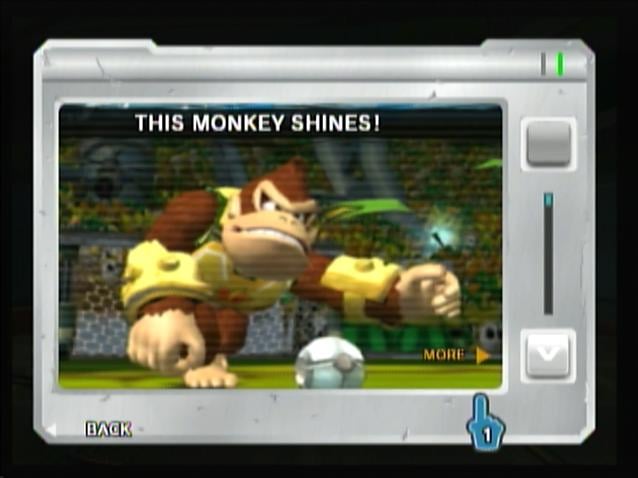
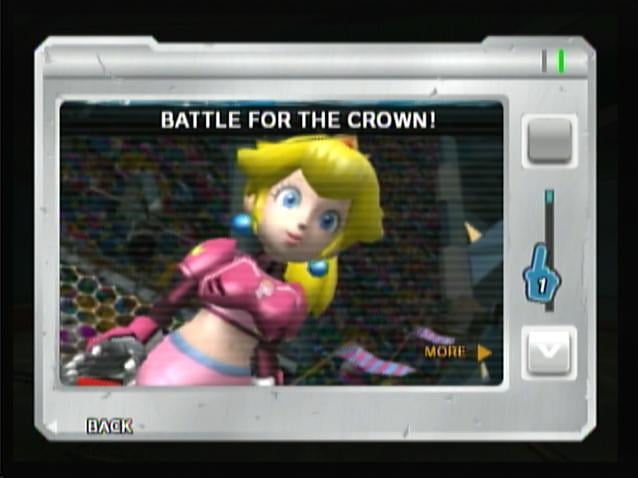
Till Sudden Death Do Us Part! (Novice): Mario against Donkey Kong at the Vice, out to dethrone the champion. Sibling Rivalry! (Novice): Luigi and Mario at the Wastelands, fighting for the last place in the next round. This Monkey Shines! (Professional): Donkey Kong, three goals down after a Mega Strike, against Petey Piranha on the Stormship. Battle For The Crown! (Professional): Peach must beat Daisy at the Palace by five clear goals to knock her out.
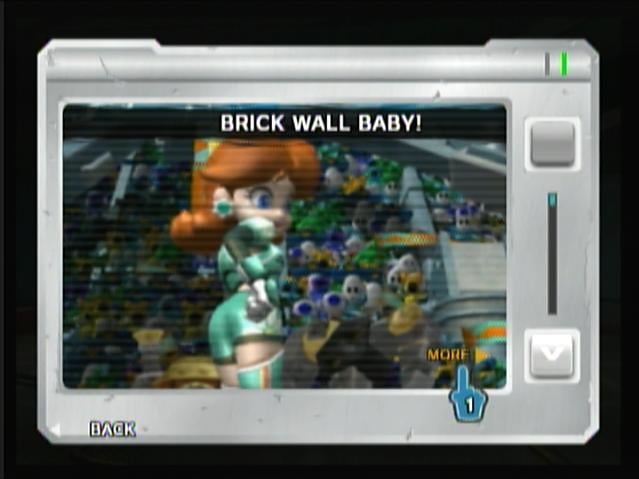
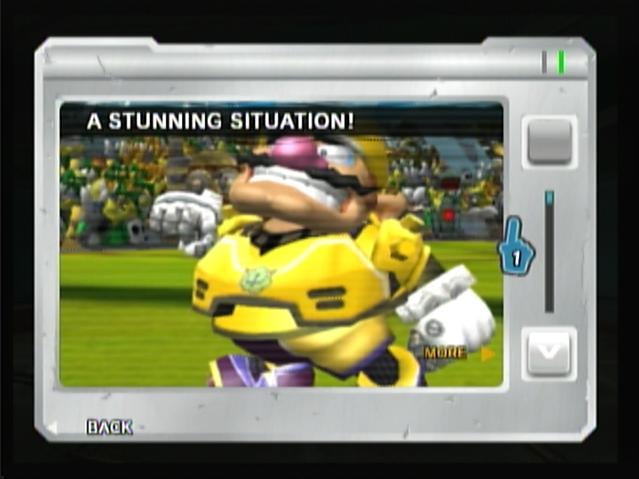
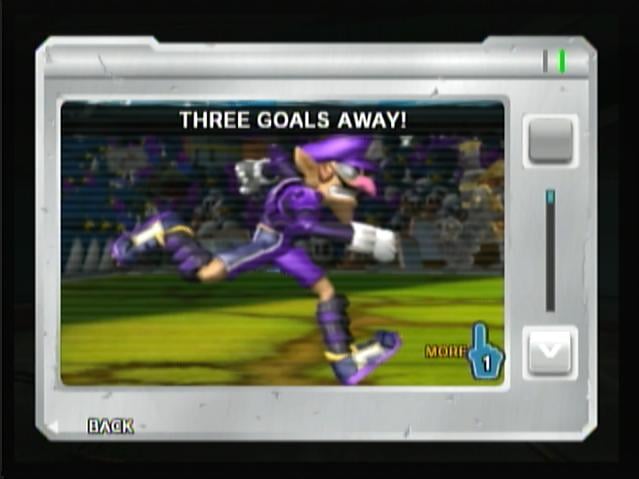
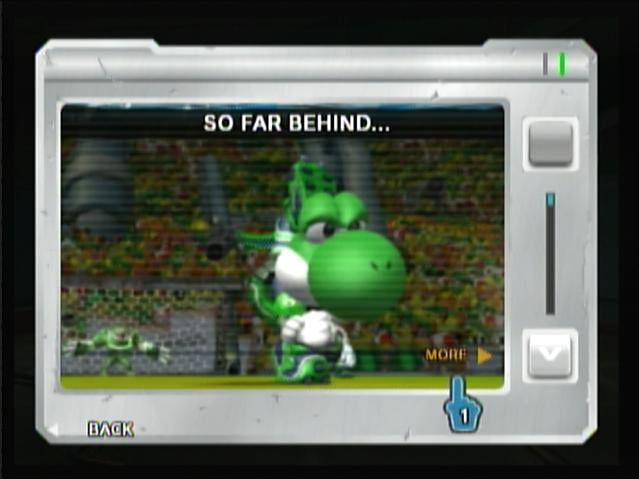
Brick Wall Baby! (Superstar): Daisy needs a win without conceding against Waluigi at the Lava Pit to take the trophy for a fifth year running. A Stunning Situation! (Superstar): Wario and Diddy Kong are level at one game each in the Underground. Three Goals Away! (Superstar): Waluigi has to beat Luigi on Thunder Island by three or more. So Far Behind… (Legend): Yoshi is five goals behind Wario late in a semi-final at the Sand Tomb.
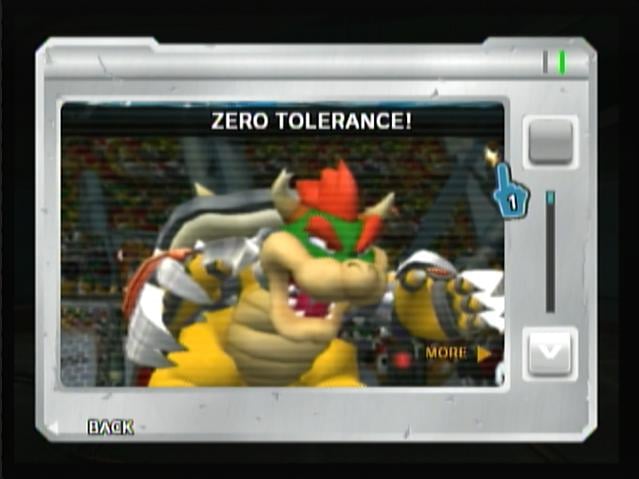
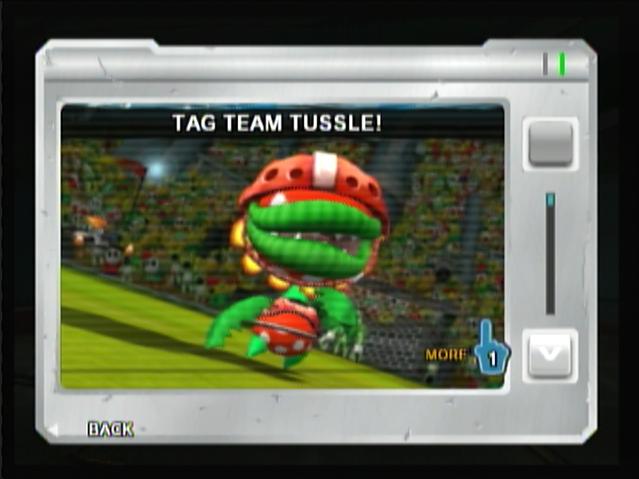
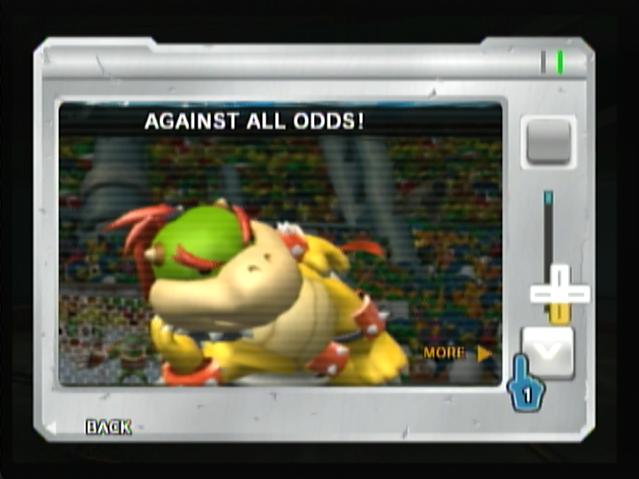
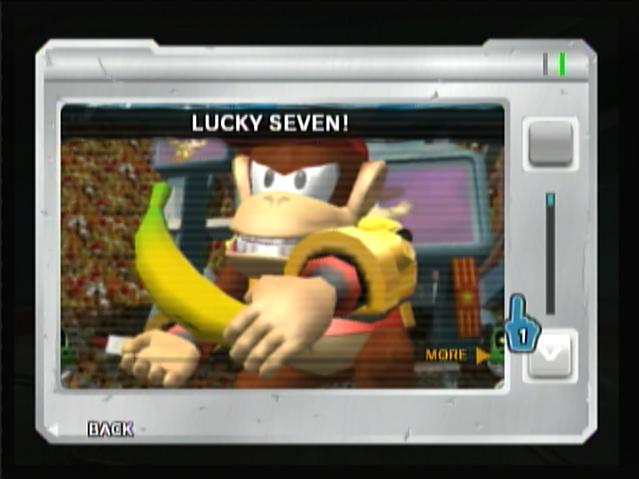
Zero Tolerance! (Legend): Bowser is chasing a record eighth clean sheet in a row against Peach at Konga Coliseum. Tag Team Tussle! (Legend): Petey Piranha and Donkey Kong are each down to a captain and one sidekick at Pipeline Central. Against All Odds! (MegaStriker): Bowser Jr. faces his father in the Battle Dome without items, banned for sabotaging them in the semi-final. Lucky Seven! (MegaStriker): Diddy Kong must beat Yoshi at Crystal Canyon and score seven to set a record.
Till Sudden Death Do Us Part!Sibling Rivalry!This Monkey Shines!Battle For The Crown!Brick Wall Baby!A Stunning Situation!Three Goals Away!So Far Behind…Zero Tolerance!Tag Team Tussle!Against All Odds!Lucky Seven!
Nintendo Wi-Fi Connection
Charged went online through Nintendo Wi-Fi Connection, in four formats: one against one, two against one, one against three and two against two, with no more than two players on any one Wii. Each player was represented by a Mii. Ranked matches paired you with a random opponent from your own region (players in other regions could not be added), while unranked matches were played against friends registered with their Wii codes, using the same options as Domination Mode. Every captain was available online, unlocked or not.
The ranking system rewarded finishing as much as winning: ten points for a win, a point per goal up to ten, and a point just for seeing a defeat through to the end, while players who disconnected lost points. The leading points-scorers were crowned Striker of the Day. The service closed on 20 May 2014, and with it the game’s online modes.
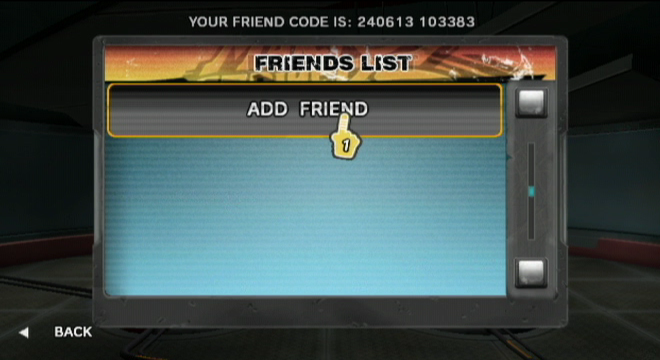
Registering friends for unranked online matches.
Every stadium in Mario Strikers Charged
Seventeen stadiums: ten new Arenas, most with a hazard that can change a match, and seven Classics carried over from Super Mario Strikers, where the electric fence is the only trap. Six Arenas are earned in the Road to the Strikers Cup, as noted below.
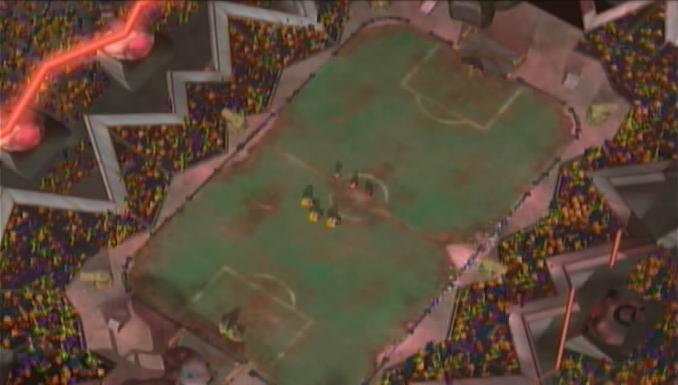
The ViceArena · newMetal stands and pipe-like towers; the electric fence leaves anyone knocked into it twitching. Mario’s challenge stadium.
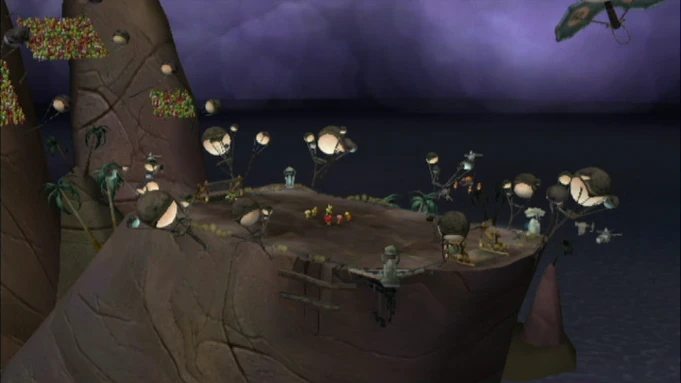
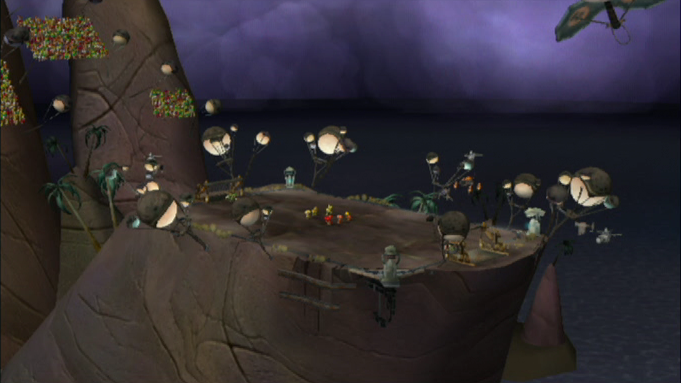
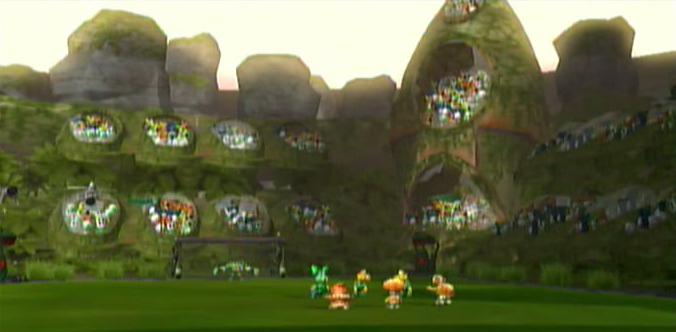
Thunder IslandArena · newA clifftop pitch in a storm, where the wind speeds you up or holds you back and Cheep Cheeps, cows and even tractors blow across. No fence: fall off the edge and you reappear in midfield.
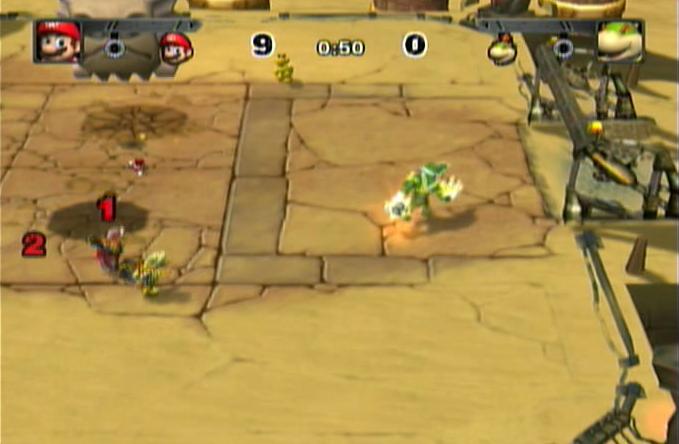
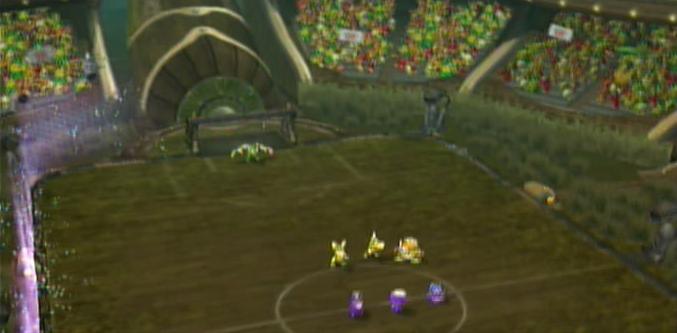
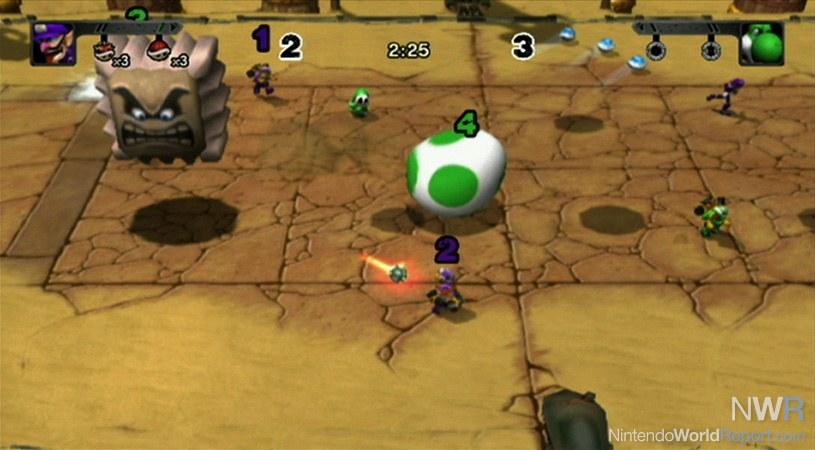
The Sand TombArena · newAncient ruins with no crowd. Thwomps crash down near the centre circle (and can knock the ball in), and sand at the sides slows you down.
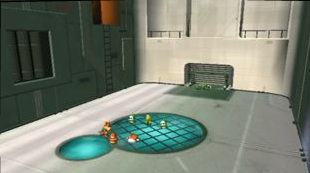
The ClassroomArena · newA bare, lab-like practice pitch with just the fence, used to teach the basics in the tutorial.
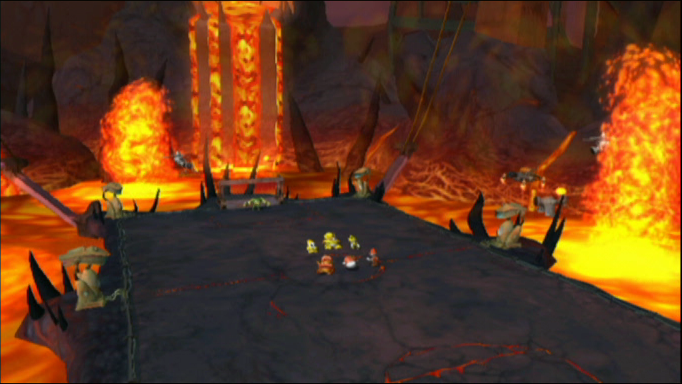
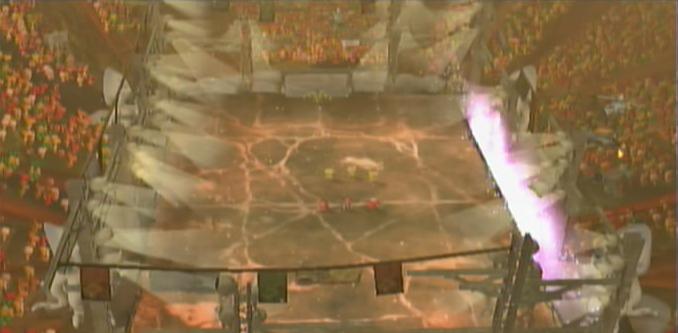
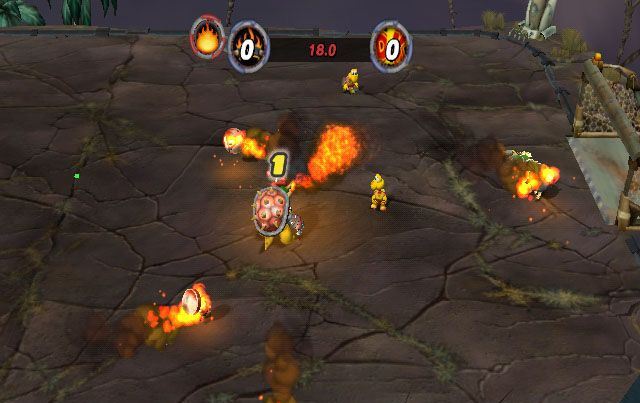
The Lava PitArena · new · beat Bowser Jr. in the Fire Cup finalBlack rock edged with glowing lava. Fireballs erupt and leave burning rings that stun anyone inside.
The WastelandsArena · new · Golden Foot and Brick Wall in the Fire CupSlippery snow, wind and lightning that strikes near the ball; the third bolt stops the ball dead and charges it.
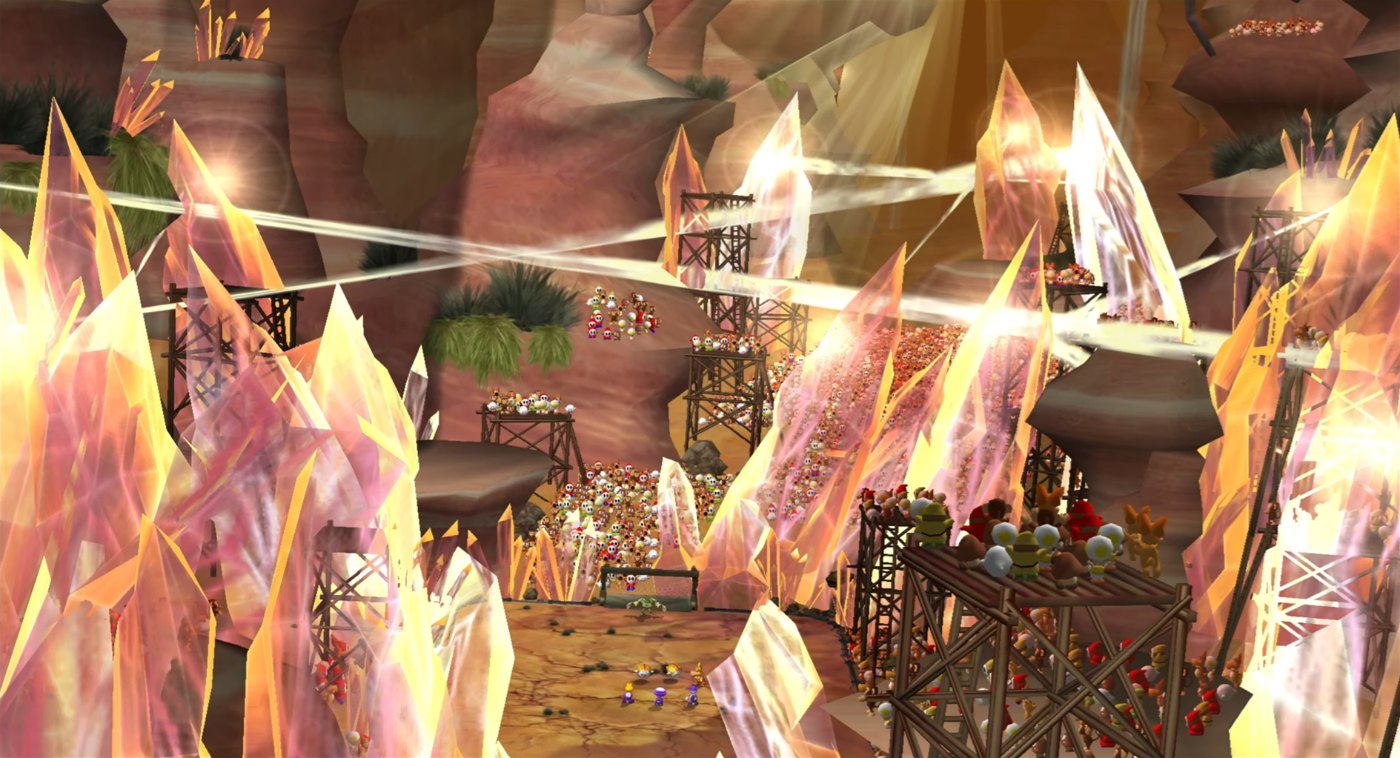
Crystal CanyonArena · new · beat Diddy Kong in the Crystal Cup finalAfter each goal, sunlight through the crystals freezes one or two players per side, captains included, until the next goal.
The DumpArena · new · Golden Foot and Brick Wall in the Crystal CupA mud bath that slows everyone, drags players towards a central drain and can stop the ball in its tracks.
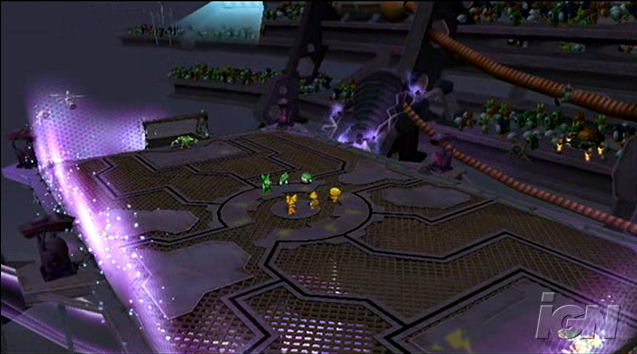
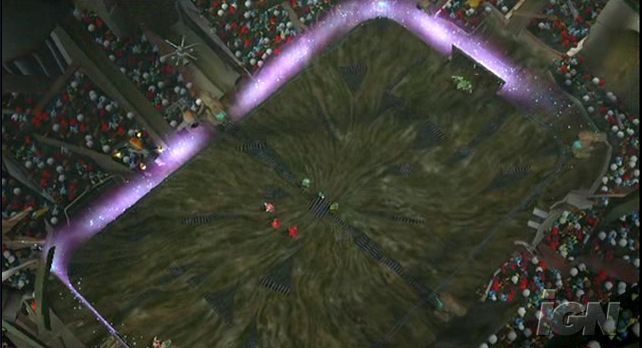
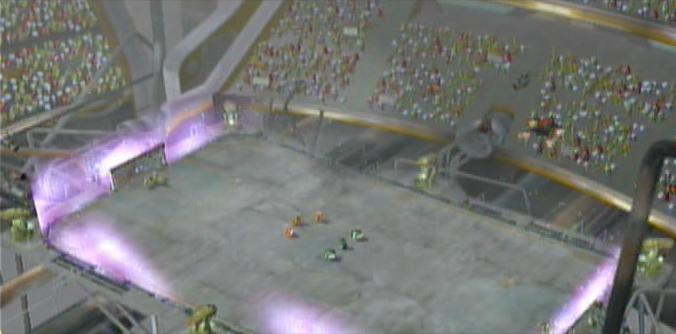
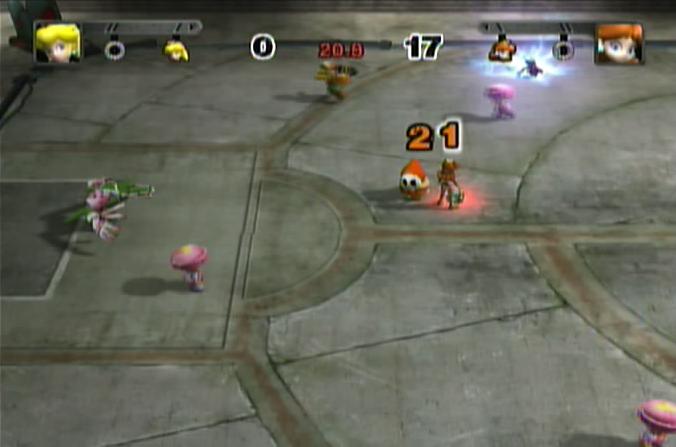
Stormship StadiumArena · new · beat Petey Piranha in the Striker Cup finalA metal deck inside an airship. Lightning runs along slits in the floor after each thunderclap, and the deck tilts towards whichever side has more players.
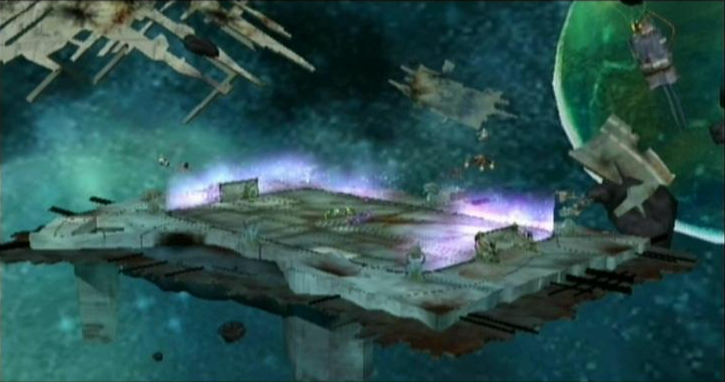
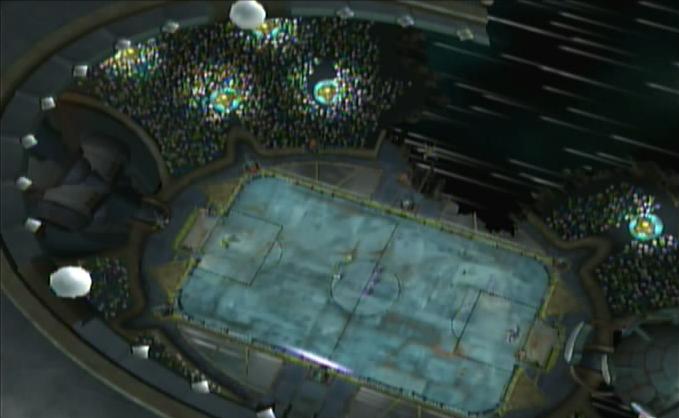
Galactic StadiumArena · new · Golden Foot and Brick Wall in the Striker CupA floating platform in outer space with no crowd and nothing but the fence: pure football for the hardest-won pitch in the game.
The PalaceClassic · from Super Mario StrikersGrass in the Mushroom Kingdom, home ground of Peach and Daisy.
Pipeline CentralClassic · from Super Mario StrikersA rooftop pitch among Mushroom Kingdom skyscrapers, home of Mario and Luigi.
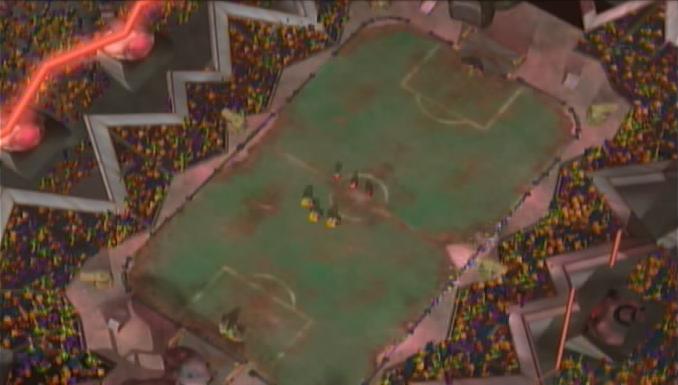
The UndergroundClassic · from Super Mario StrikersWario and Waluigi’s subterranean ground, its seating split by W-shaped girders.
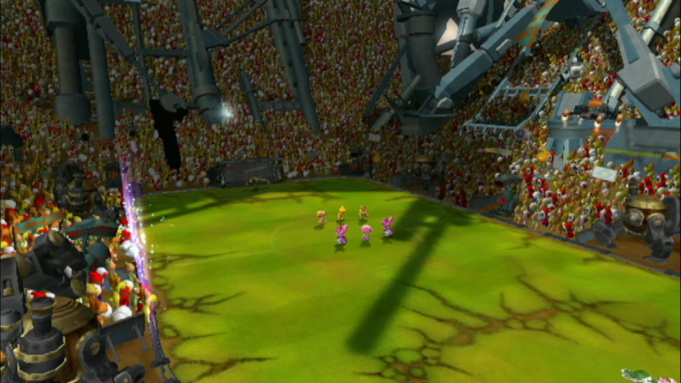
Crater FieldClassic · from Super Mario StrikersA huge crater on Yoshi’s Island with egg-shaped glass stands.
Konga ColiseumClassic · from Super Mario StrikersDonkey Kong’s jungle home, with a wooden floor and little ponds.
The Battle DomeClassic · from Super Mario StrikersA metal pitch under a glass dome inside Bowser’s Castle.
Bowser StadiumClassic · from Super Mario StrikersA blue rubber pitch out in deep space.
Advertisement
Gameplay & Controls
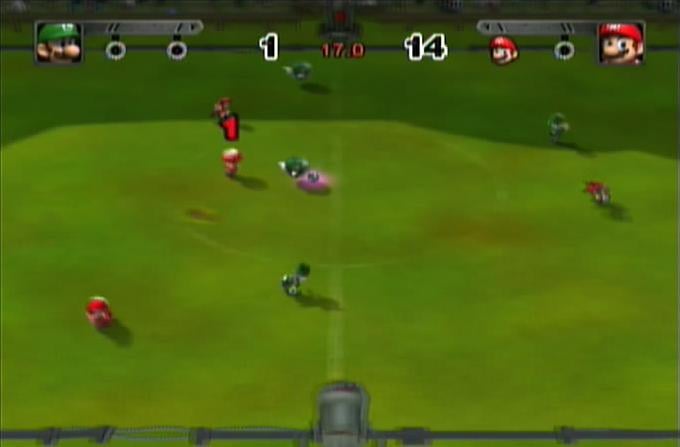
A match is five against five on an enclosed pitch: a captain, three sidekicks and a Kritter in goal on each side. The clock can be set from two to five minutes (three is the default), or you can play first to a target number of goals. A draw at full time goes to sudden death: the music changes, a siren sounds, and the next goal wins.
There are no fouls in the usual sense, but there is a cost to rough play. Knock down an opponent who has not got the ball and his team is handed an item to use against you, so the bruisers have to pick their moments.
Controls: Wii Remote and Nunchuk
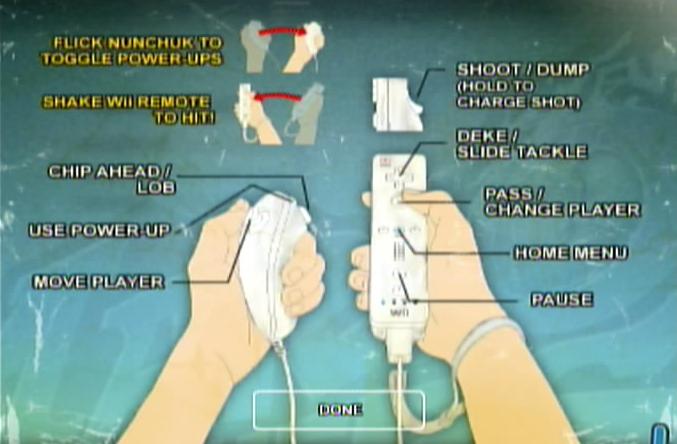
The control layout for the Wii Remote and Nunchuk.
Charged is played with the Wii Remote and Nunchuk together. The Nunchuk stick runs and dribbles. A passes (and switches player when you are defending), B shoots, with a long hold charging the shot, and a tap of B in your own half clears the ball upfield. Z chips the ball forward, giving it up but adding charge. C fires whatever item you are holding. The D-Pad does double duty: with the ball it is a deke, a dummy in that direction that slips past a tackle without losing the charge; without the ball it is a sliding tackle.
Only two things use motion. A shake of the Wii Remote throws a Big Hit, a crunching body check that sends a player flying but does not win you the ball outright, and when the other side is lining up a Mega Strike, shaking the Nunchuk jostles their meter. According to IGN’s review, Next Level Games kept motion to these few moments on purpose, because most actions simply felt better on a button.
The charged ball
The ball in Charged is metal, and it changes colour as you pass it about: purple at its weakest, then red, orange, yellow and finally white-hot. The hotter it glows, the harder your shot will be to stop. An interception or a broken passing move knocks it back down the scale. Holding the shot button before you pass charges it in the same way, so the quickest route to a white ball is to wind up a shot, pass instead, and shoot from the return.
Even an ordinary shot is aimed automatically at the goal, so the skill lies in the build-up: getting the ball hot, finding space, and choosing between a quick strike and a fully charged one that leaves you open to a tackle.
Mega Strikes and the keeper’s reply
Only a captain can attempt a Mega Strike. Hold B without being tackled and a curved meter appears. As the marker swings one way you stop it to choose how many balls will be fired, from three up to six; as it swings back you stop it again to set the speed, with a small orange zone giving the fastest possible shot. The captain then leaps, powers up and smashes a volley of balls at the goal.
The defending player now takes over the Kritter, seen from the keeper’s point of view, and points the Wii Remote to move two hand markers across the goal, pressing A to punch each ball away. Faster shots give you less time per ball. Any ball that gets through counts as a goal, which is why a six-ball Mega Strike can swing a match on its own. The captain’s type shapes the meter: playmakers and defenders get a big fast-shot zone and a small six-ball zone, power and offensive captains the reverse.
Each Mega Strike has its own animation, shown in the opening movie for every captain except Petey Piranha. The English versions never name them; the names below come from Nintendo’s Japanese manual and website.
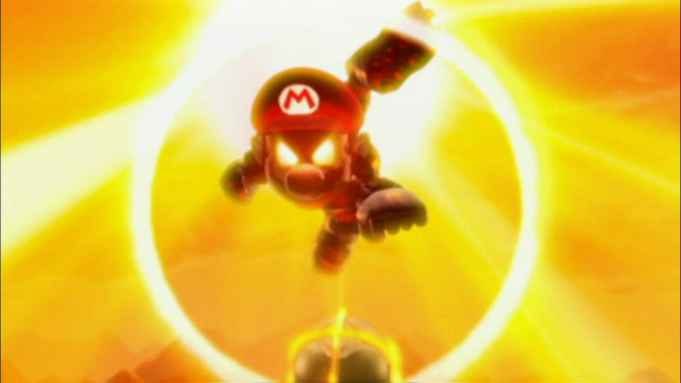
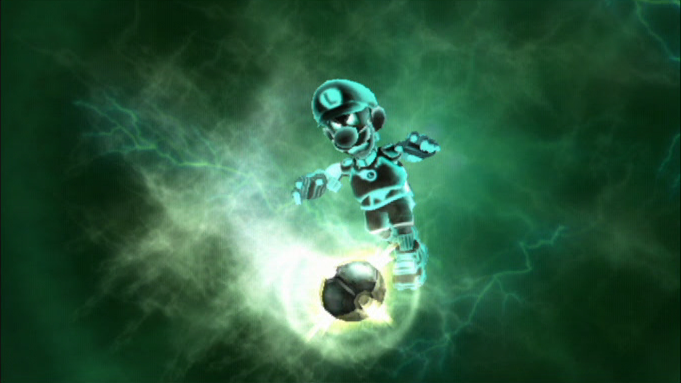
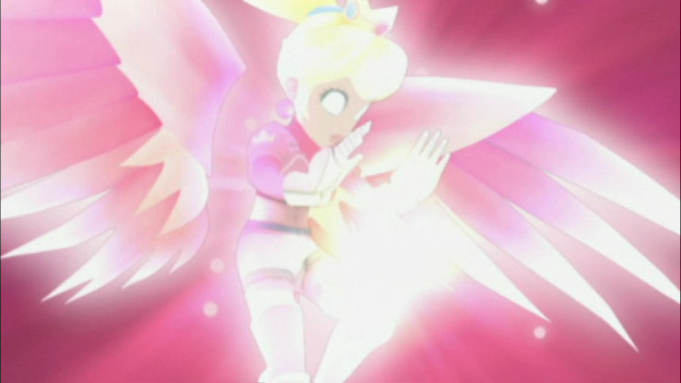
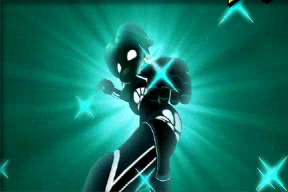
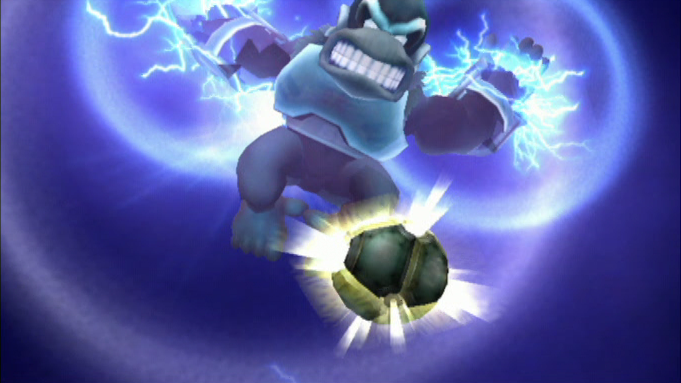
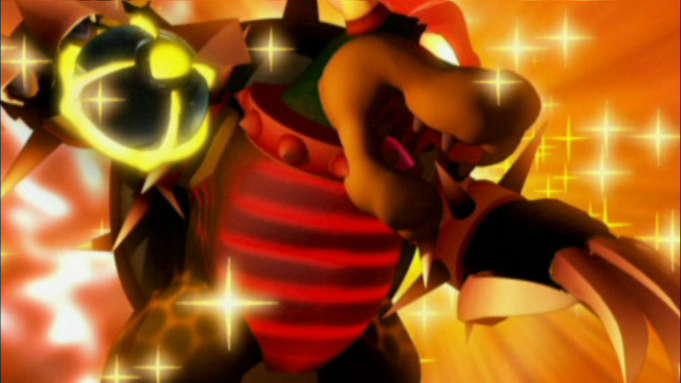
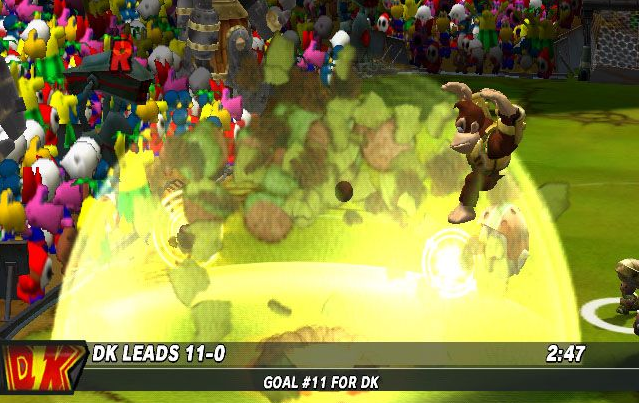
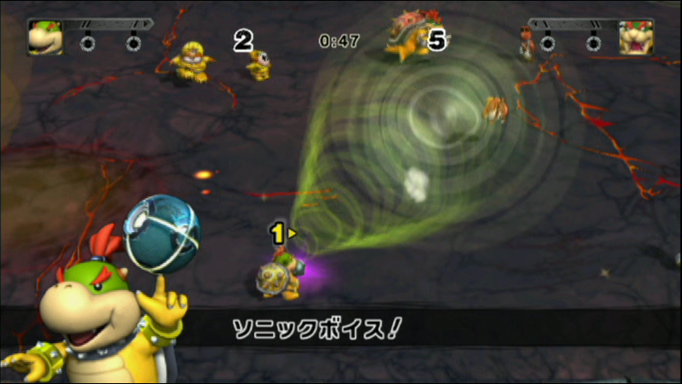
Mario: Mega Fire.Luigi: Green Typhoon.Peach: Princess Kiss.Daisy: Crystal Smash.Yoshi: Hyper Breath.Wario: Balloon Burst.Waluigi: Purple Spike.Donkey Kong: Thunder Blast.Bowser: Heat Cannon.Bowser Jr.: Sonic Scream.Diddy Kong: Solar Aura.Petey Piranha: Plant Power.
Skillshots and Super Abilities
Sidekicks cannot Mega Strike, but hold B with one long enough and the charge completes into a Skillshot: a shot combined with an attack on the keeper that either stuns him or goes round him. Each species has its own, from Toad’s flaming overhead kick to a Boo that possesses the ball and slips through bodies.
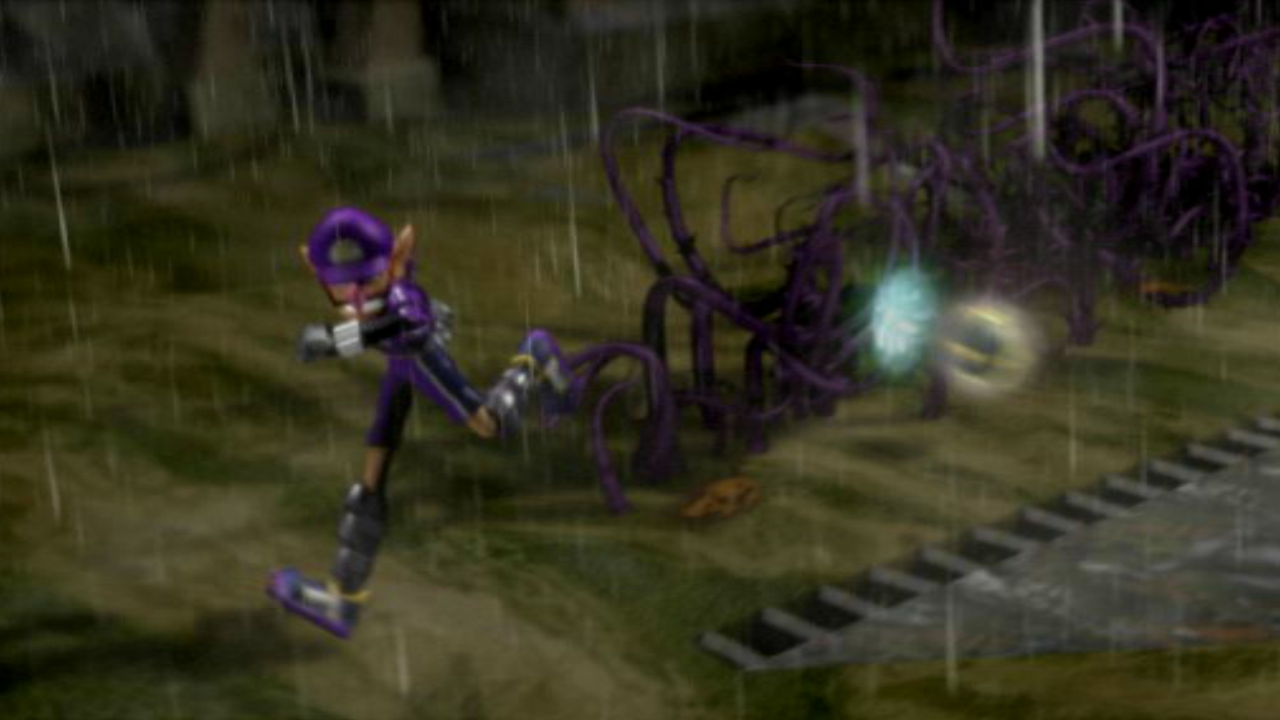
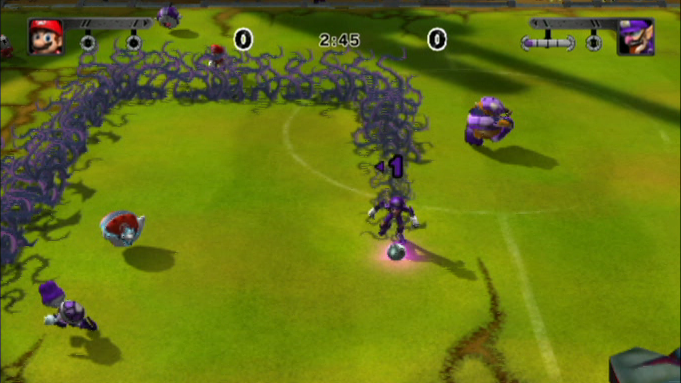
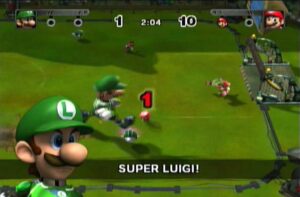
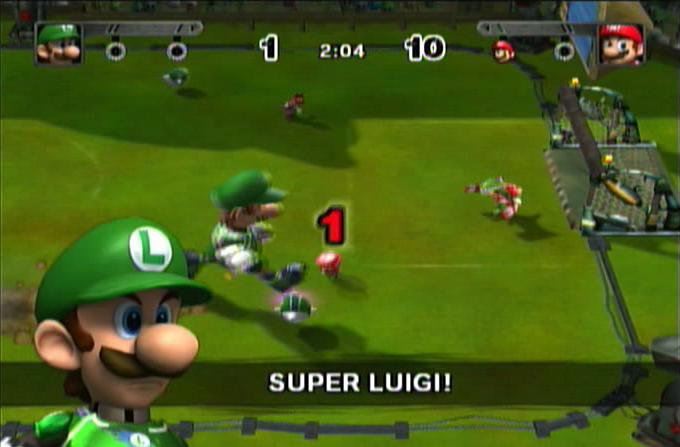
Captains also have a Super Ability, a personal item marked with the captain’s face and fired with C like any other. Mario and Luigi turn giant, Peach freezes rivals with a camera flash, Waluigi lays a trail of thorny walls, Diddy Kong beams opponents off the pitch altogether. Most of them are best used to clear a path before a Mega Strike, and when Mario or Luigi use theirs, even the background music changes.
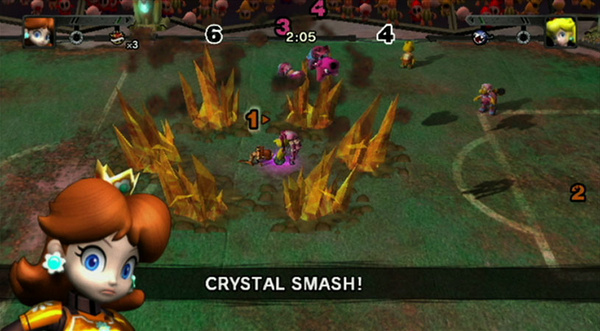
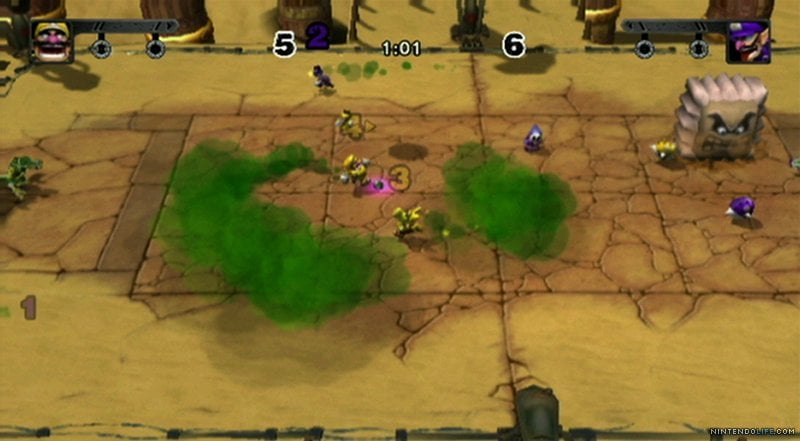
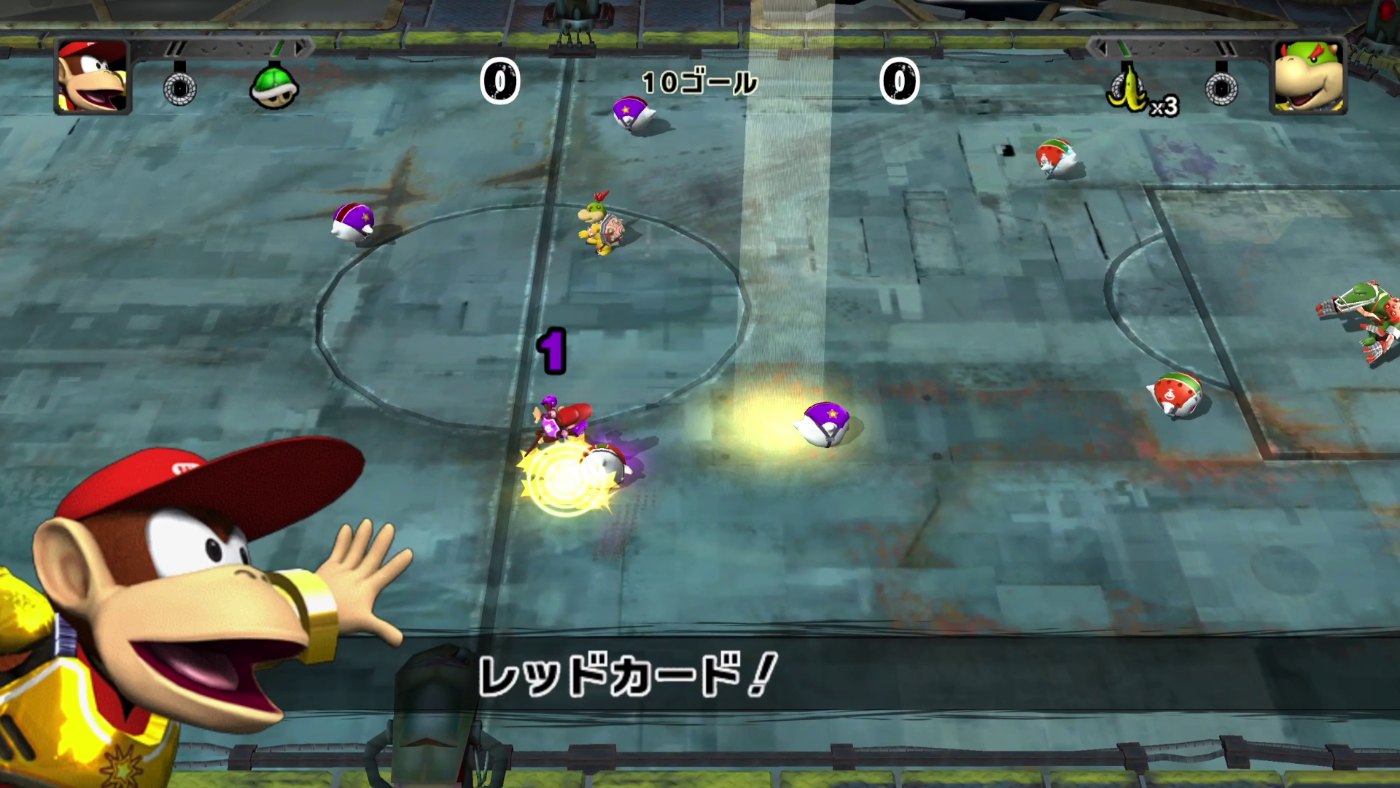
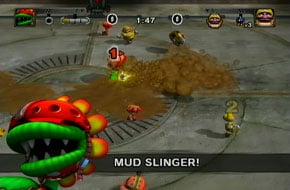
Super Mario!: Mario grows giant and flattens everyone, teammates included.Super Luigi!: the same trick in green.Freeze Frame!: Peach’s camera freezes anyone nearby.Crystal Smash!: a ring of crystals knocks rivals down.Egg Roll!: Yoshi bowls through opponents inside a giant egg.Gas Mask!: Wario’s gas reverses nearby players’ controls.Wall-Luigi!: Waluigi speeds off, leaving thorny walls behind him.Thunder Wham!: a shockwave that also tips the pitch.Fire Storm!: Bowser sprays fire until he runs dry (pre-release shot).Sonic Roar!: sound waves shrink anyone they touch.Red Card!: a beam of light sends players off for about 15 seconds.Mud Slinger!: globs of goop, three at a time, that stun and slow.
Kritter in goal
Kritter in his armoured kit.
Every team’s keeper is a Kritter. He is computer-controlled for ordinary shots, which he blocks with his hands or, more often, whatever part of his body gets there first. Once he has the ball he can roll it out to a teammate or punt it long when the opposition has crowded his area, and he does not like company: hang around in his box for too long, or bump him while he is holding the ball, and he will kick or thump you out of it.
The five player types
Every captain and sidekick belongs to one of five types. Balanced players are average at everything. Playmakers are quick and pass beautifully but shoot and tackle weakly. Power players are slow and pass poorly but shoot and defend hard. Offensive players shoot and pass well at the cost of speed and defence, and Defensive players run fast and tackle hard but cannot shoot or pass for toffee.
The stats put numbers on it (movement, shooting, passing, defence, out of ten): Balanced 6/6/6/6, Playmaker 10/3/10/3, Power 3/10/3/10, Offensive 3/10/10/3 and Defensive 10/3/3/10. Sidekicks use the stats of their type; a captain’s type also changes the shape of the Mega Strike meter.
Every item
Items arrive when one of your players is knocked down without the ball, and are fired with C. The Super Ability is the captain’s own; everything else can turn up for anyone.
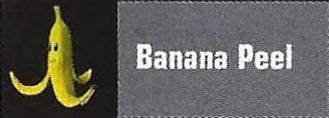
Banana PeelComes in threes or fives; anyone who treads on one goes over and loses the ball. The single Giant Banana leaves no small peels behind.
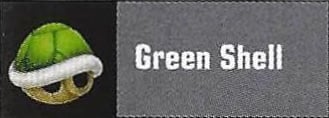
Green ShellA set of three. They fly straight, bounce off walls and knock over the first player they hit.
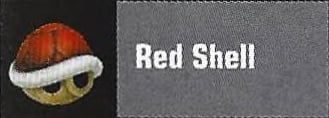
Red ShellThree shells that home in on the nearest opponent, unless a wall gets in the way.
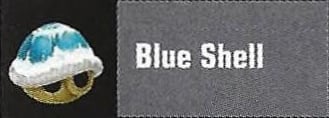
Blue ShellThree bouncing shells that freeze whoever they hit in a block of ice for a few seconds.
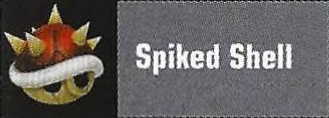
Spiked ShellLike a Green Shell but tougher: it bounces for longer and can floor the same player more than once.
Giant ShellsSingle, oversized versions of the green, red, blue and spiked shells, each with a longer-lasting version of the small shell’s effect.
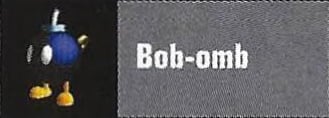
Bob-ombThree or five are dropped in front of the ball carrier. The blast catches everyone but the thrower, teammates included.
Mega Bob-ombOne huge bomb with a far bigger blast than a single Bob-omb.
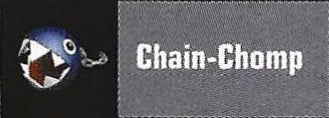
Chain ChompVery rare and mostly given to a team that is losing badly. It rampages through the other side, and anyone else in its way.
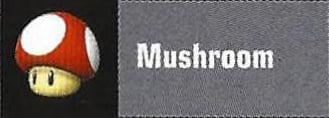
MushroomA burst of speed for the player who uses it, handy for escaping a crowd.
StarBrief invincibility: nobody can tackle you, which makes it perfect for a run on goal.
Super AbilityShown by the captain’s face. It triggers that captain’s personal ability (see above).
Cartoons, Comics & Other Media
Charged left marks on several later games, most of them made by the same studio, Next Level Games.
Luigi’s Mansion 3Nintendo Switch · 2019 · Next Level GamesFramed posters in the Entrance Hall of Paranormal Productions show Charged’s captains in silhouette and Luigi, in Mario’s colours, striking Mario’s Mega Strike pose.
The captains posterLuigi’s Mansion 3 · 2019The second of the two Paranormal Productions posters: a top-down silhouette of several team captains.
Luigi’s Mansion: Dark MoonNintendo 3DS · 2013 · Next Level GamesAn arrangement of Charged’s pause-screen music plays in the Gloomy Manor lift, moments before it breaks down in the mission Confront the Source.
Mario Strikers: Battle LeagueNintendo Switch · 2022The sequel rearranges the Road to the Strikers Cup theme for its Cup Battles, remixes Yoshi’s and Birdo’s themes, and its Cannon gear echoes the armour and gloves Charged’s captains wear.
Super Mario Party JamboreeNintendo Switch · 2024Luigi’s turn jingle is close to his theme from Charged.
Retro reliefs in the Sand TombIn this gameThe pillars of the Sand Tomb are carved with sprites from older games: Donkey Kong, Super Mario Bros. (Mario, bricks, clouds, Fire Flowers), Super Mario World (Wigglers, Banzai Bills, Koopa shells in all four colours, Mega Moles) and Yoshi’s Island (Shy Guys, Stilt Guys, Incoming Chomps and more).
The Roster
Twelve captains lead the teams; you choose one, then three sidekicks to fill the outfield. Each captain has a Mega Strike and a Super Ability of their own. Types and Mega Strike names are as given by Nintendo’s Japanese manual; several voice actors are uncredited in the game but widely attributed.
Character
Who they are
In this game
Abilities & notes
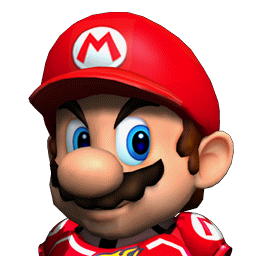
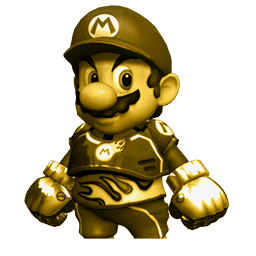
MarioCaptain · Balanced · from the start
The face of the game and its opening movie, voiced by Charles Martinet, who also voices Luigi, Wario and Waluigi here.
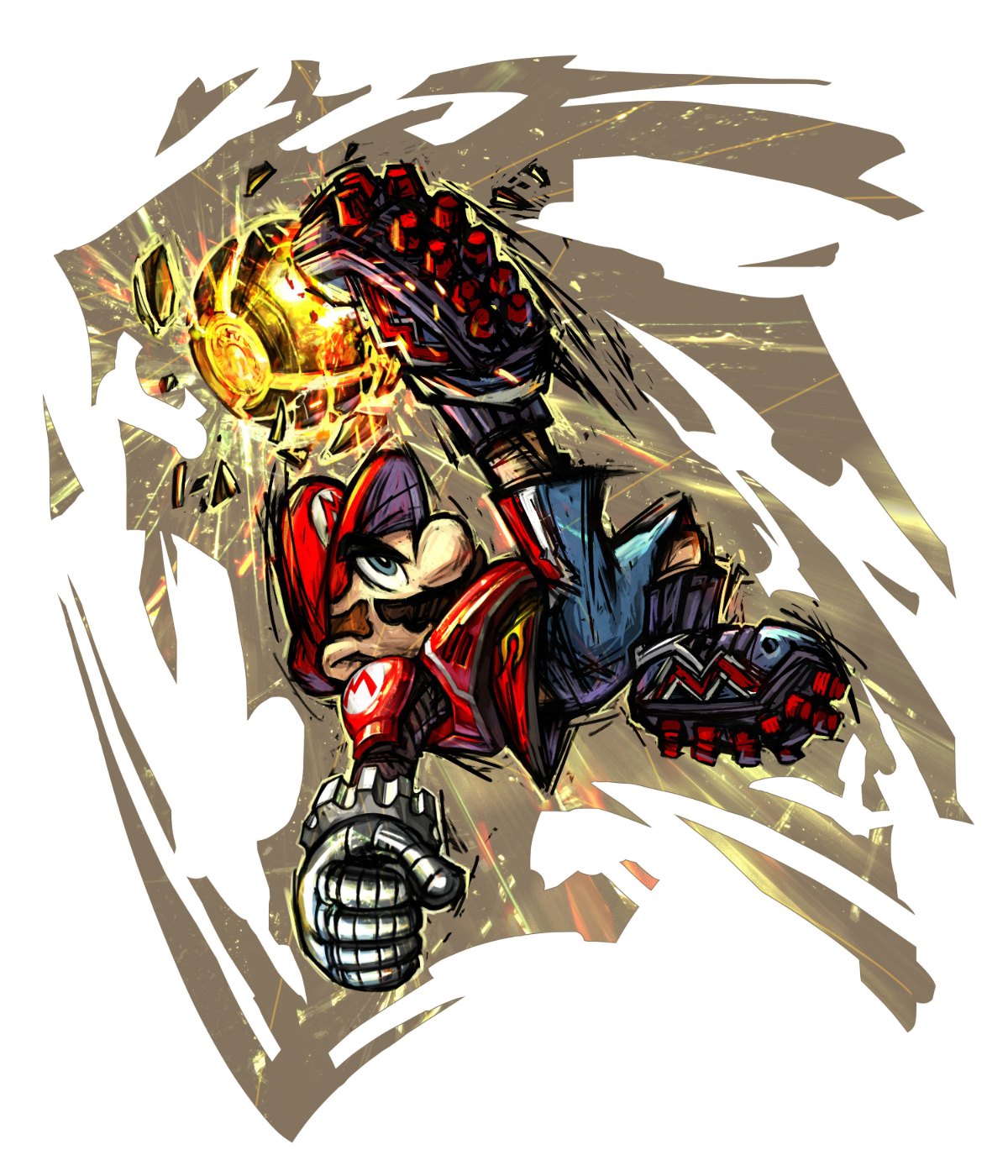
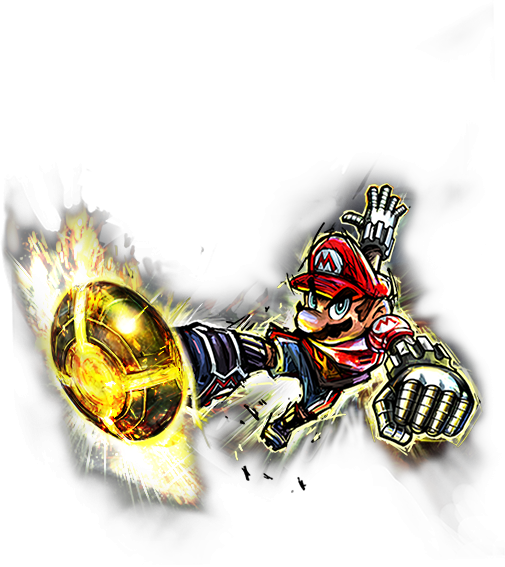
His home ground is Pipeline Central. Mega Strike: Mega Fire, a blazing kick with his leg swung up behind his head.
Super Ability: Super Mario! (turns giant and near-invincible, flattening anyone, teammates too)
Challenge: Till Sudden Death Do Us Part!
LuigiCaptain · Balanced · from the start
Mario’s brother, just as solid an all-rounder.
Mega Strike: Green Typhoon: he turns dark green and launches an electrified ball that trails plasma.
Super Ability: Super Luigi! (the same giant stomp as Mario’s)
Challenge: Sibling Rivalry!
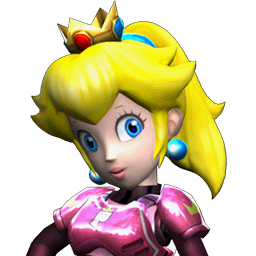
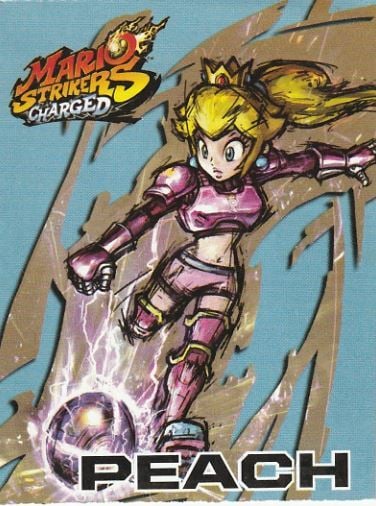
Princess PeachCaptain · Playmaker · from the start
Fast and a superb passer, if weak in the tackle. Voiced by Sam Kelly and Nicole Mills.
Mega Strike: Princess Kiss: she sprouts wings and a crown and sends the ball off in a flash of light.
Super Ability: Freeze Frame! (a camera that freezes nearby players)
Challenge: Battle For The Crown!
Princess DaisyCaptain · Defensive · from the start
Quick and tough in defence. Voiced by Deanna Mustard.
Mega Strike: Crystal Smash: crystals gather around her fist and she punches the ball goalwards.
Super Ability: Crystal Smash! (a ring of crystals that floors anyone close and shields her)
Challenge: Brick Wall Baby!
YoshiCaptain · Balanced · from the start
The friendly dinosaur, voiced by Kazumi Totaka.
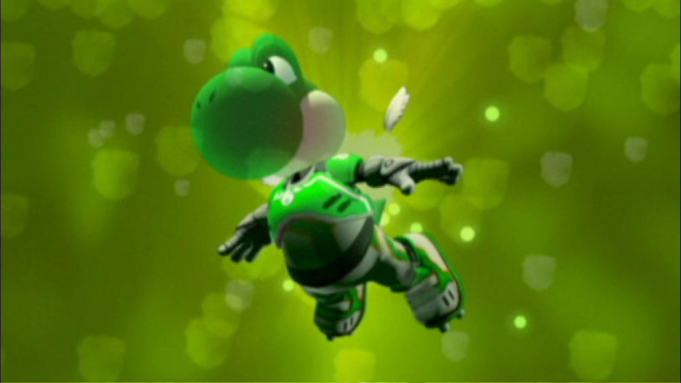
Mega Strike: Hyper Breath: a flutter jump, a pair of wings and a blast of air into the ball.
Super Ability: Egg Roll! (rolls through opponents in a giant egg; B cancels it)
Challenge: So Far Behind…
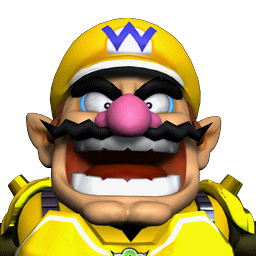
WarioCaptain · Offensive · from the start
A heavy hitter who can pass, but slow on his feet. Shares the Underground with Waluigi.
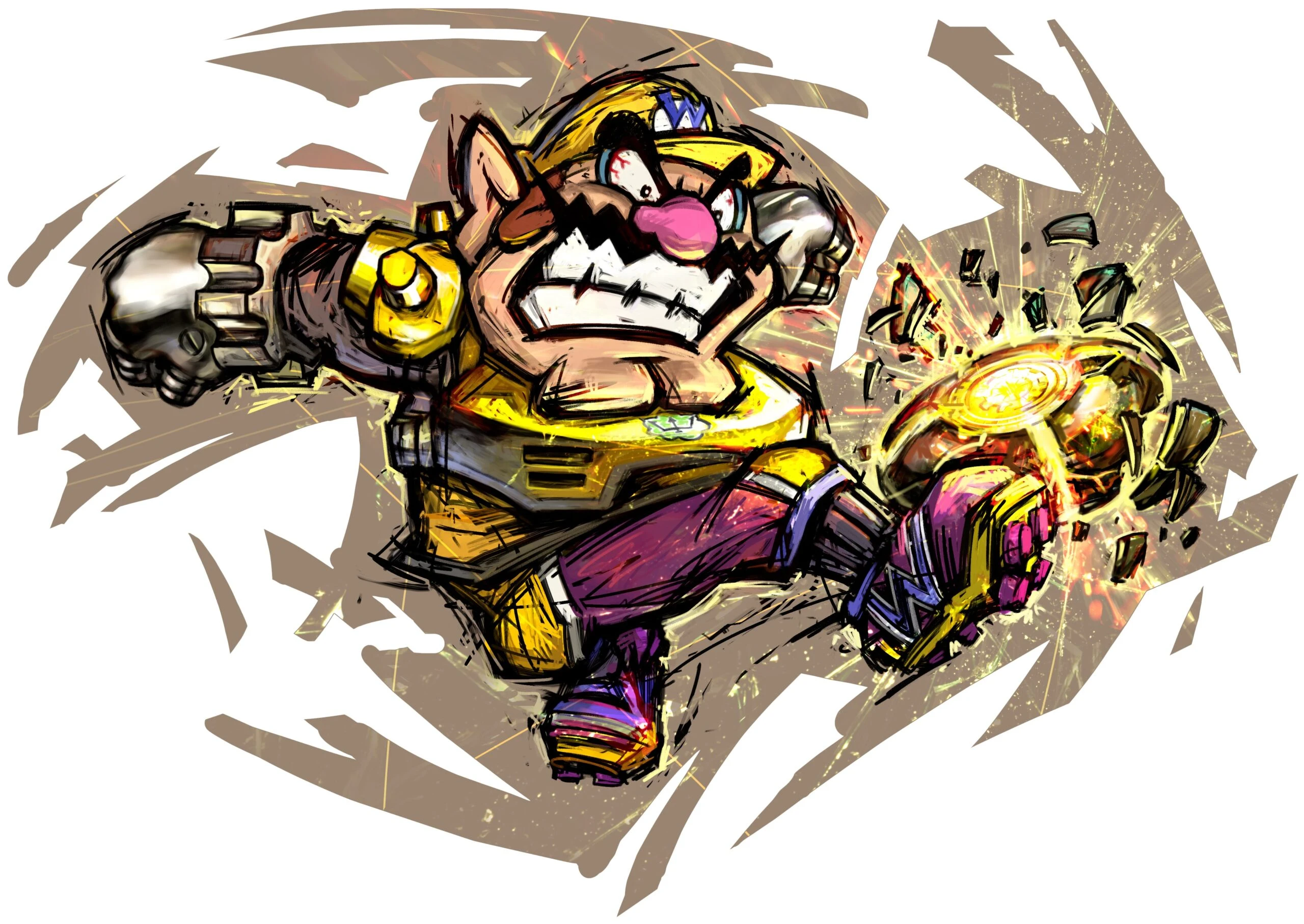
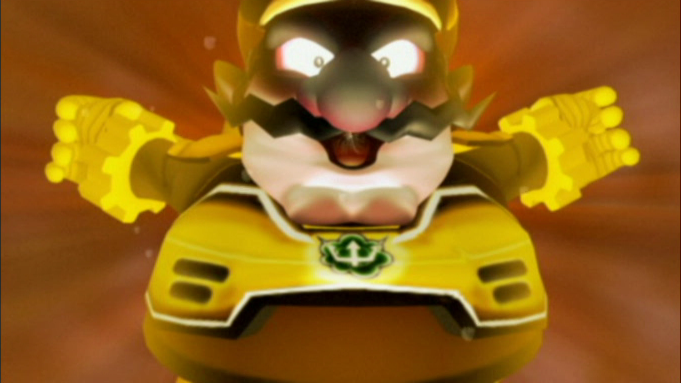
Mega Strike: Balloon Burst: he puffs up like a balloon and blows the ball away in a fiery explosion.
Super Ability: Gas Mask! (a cloud of gas that reverses nearby players’ controls)
Challenge: A Stunning Situation!
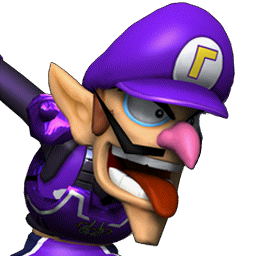
WaluigiCaptain · Defensive · from the start
Lanky, fast and hard to get past.
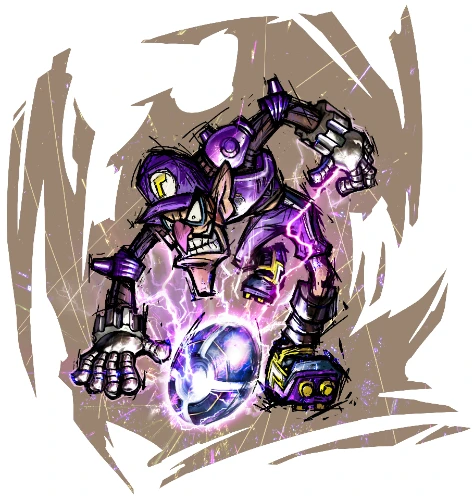
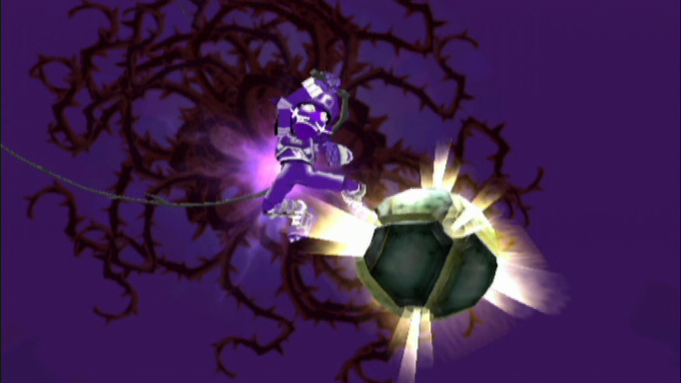
Mega Strike: Purple Spike: inside a red vortex he lashes the ball with a thorny vine.
Super Ability: Wall-Luigi! (doubles his speed and leaves a line of thorn walls behind him)
Challenge: Three Goals Away!
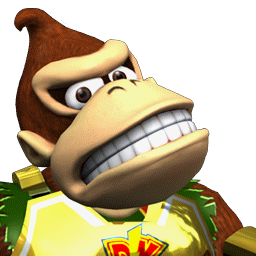
Donkey KongCaptain · Power · from the start
Slow but crushing, voiced by Takashi Nagasako. Konga Coliseum is his home.
Mega Strike: Thunder Blast: his fur turns dark blue and he claps the ball away with a crack of electricity.
Super Ability: Thunder Wham! (a ground-pound shockwave that stuns and briefly tilts the pitch)
Challenge: This Monkey Shines!
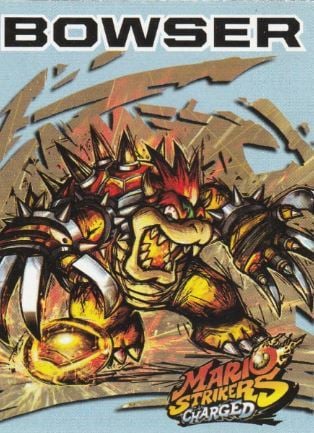
BowserCaptain · Power · from the start · new
In the first game he was part of the scenery; here he is a playable captain for the first time in the series, voiced by Scott Burns.
Mega Strike: Heat Cannon: he spins with the ball, his spikes growing and his hair turning to flame, and hurls it.
Super Ability: Fire Storm! (sprays fire until it runs out; burnt players run about helplessly)
Challenge: Zero Tolerance!
Bowser Jr.Captain · Offensive · unlock: win the Fire Cup · new
The Fire Cup holder, voiced by Caety Sagoian.
Mega Strike: Sonic Scream: he turns green and blasts the ball with sound waves.
Super Ability: Sonic Roar! (sound waves shrink and slow anyone they touch; a Mushroom restores them)
Challenge: Against All Odds!
Diddy KongCaptain · Playmaker · unlock: win the Crystal Cup · new
The Crystal Cup holder, voiced by Katsumi Suzuki.
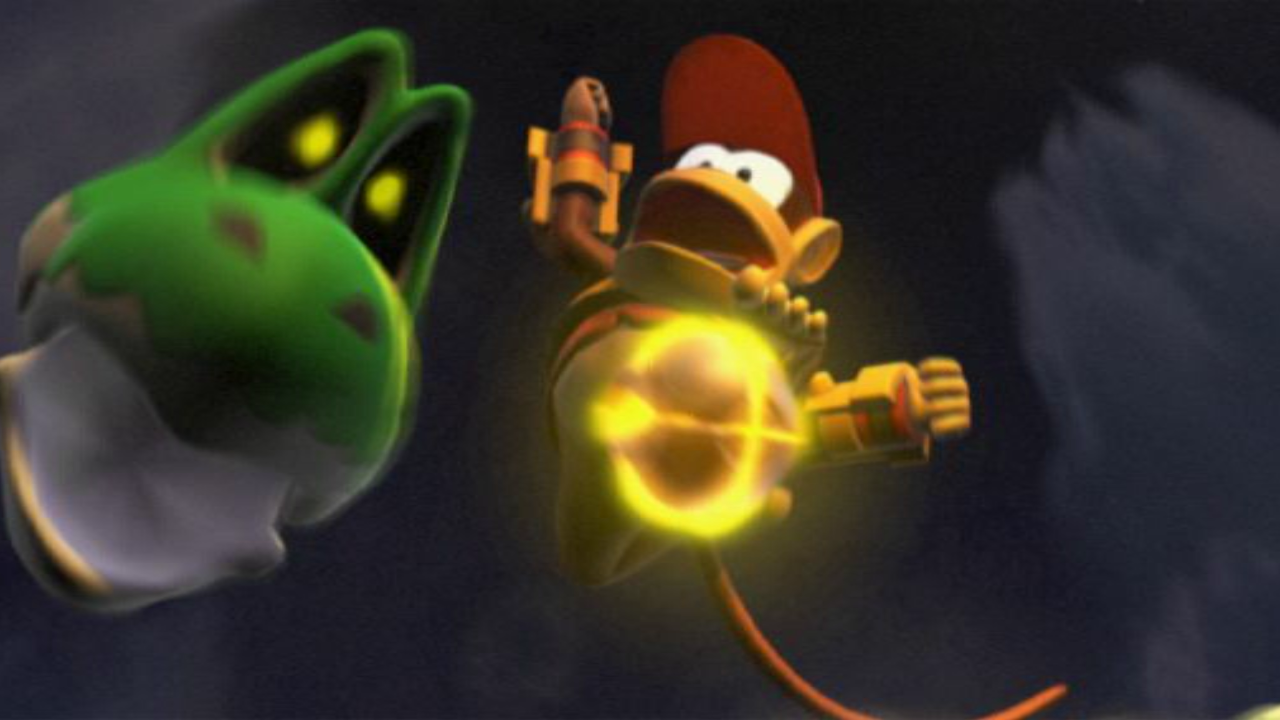
Mega Strike: Solar Aura: he chants with his hands together and the ball shoots off without his touching it.
Super Ability: Red Card! (a beam of light sends anyone caught in it off the pitch for about 15 seconds)
Challenge: Lucky Seven!
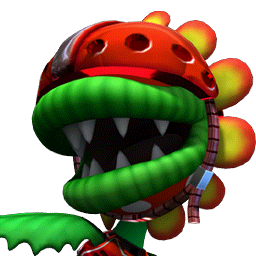
Petey PiranhaCaptain · Power · unlock: win the Striker Cup · new
The Striker Cup holder and the last captain to unlock, voiced by Toru Minegishi.
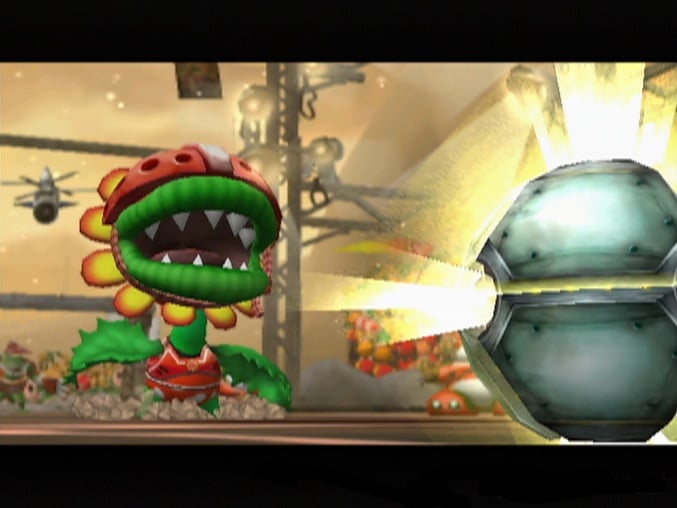
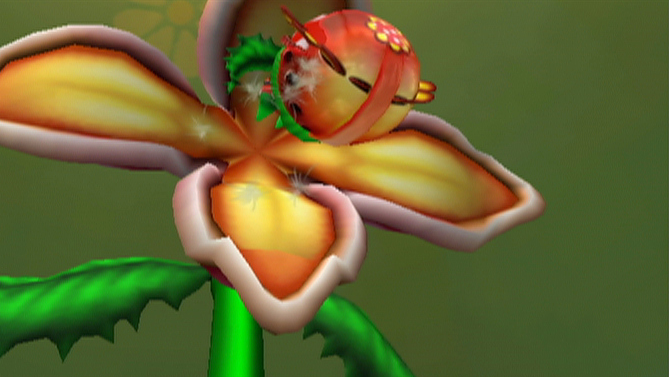
Mega Strike: Plant Power: a giant flower closes round him, grows, bursts open and he spits the ball out. It is the only Mega Strike missing from the opening movie.
Super Ability: Mud Slinger! (spits three globs of goop at a time, up to four times; they stun and slow)
Challenge: Tag Team Tussle!
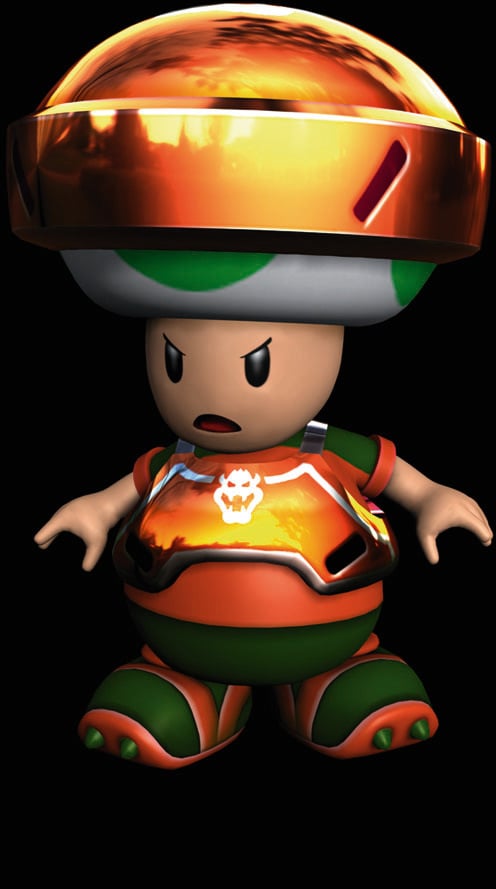
ToadSidekick · Playmaker
A speedy passer, voiced by Kelsey Hutchison.
Skillshot: Fire Meteor. In the opening movie a green Toad sets the ball alight with an overhead kick.
Returning sidekick
BooSidekick · Playmaker · new
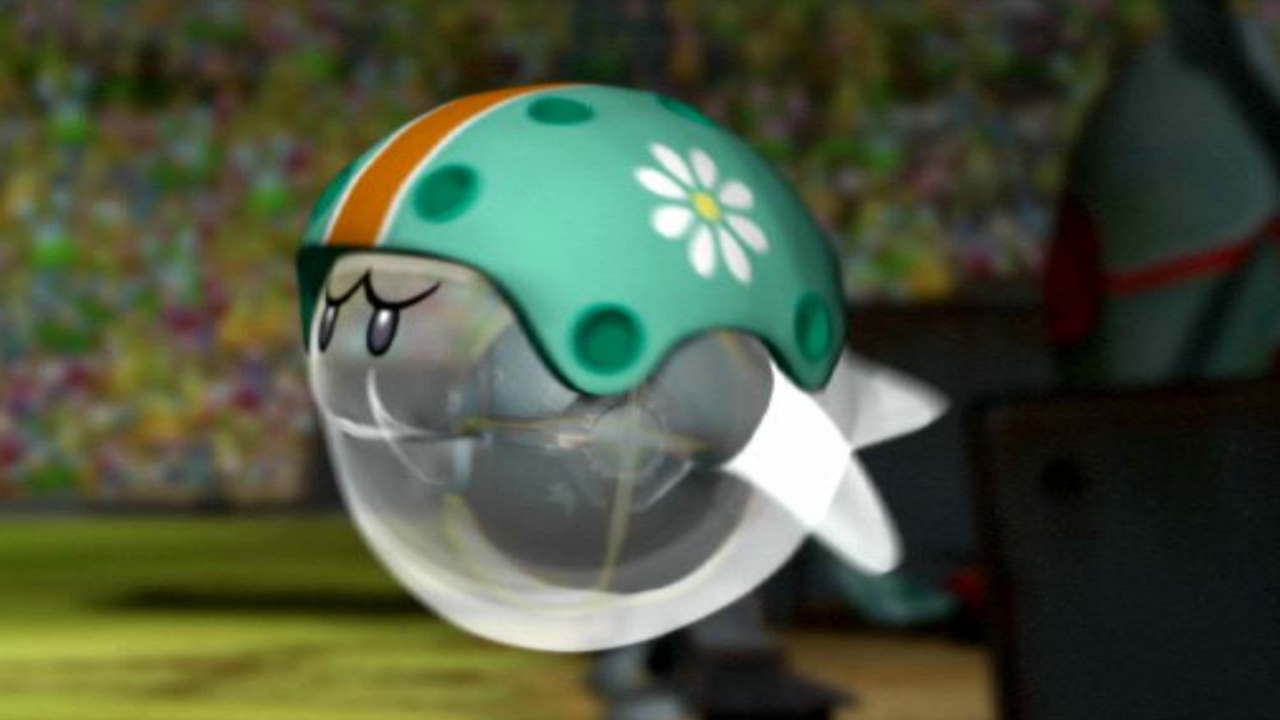
The shy ghost, here in a helmet, voiced by Sanae Susaki.
Skillshot: Possess. The opening movie shows a Boo using it to drift straight through Donkey Kong.
New sidekick in Charged
Dry BonesSidekick · Defensive · new
Bowser’s skeletal Koopa, a quick and tough defender.
Skillshot: Shocker.
New sidekick in Charged
Monty MoleSidekick · Power · new
A burrowing mole with a hard shot.
Skillshot: Dirt Drill.
New sidekick in Charged
Koopa TroopaSidekick · Balanced
The dependable all-rounder.
Skillshot: Shell Smash.
Returning sidekick
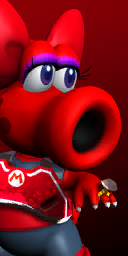
BirdoSidekick · Power
Voiced, like Yoshi, by Kazumi Totaka.
Skillshot: Extreme Egg.
Returning sidekick
Hammer Bro.Sidekick · Offensive
Voiced by Motoki Takagi.
Skillshot: Hammer Throw.
Returning sidekick
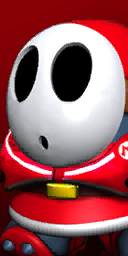
Shy GuySidekick · Balanced · new
The masked minion, voiced by Nate Bihldorff of Nintendo of America.
Skillshot: Bullet Bill Blast.
New sidekick in Charged
KritterGoalkeeper for every team
The keeper for every side, voiced by Toshihide Tsuchiya.
Computer-controlled for ordinary shots, player-controlled with the Wii Remote pointer against Mega Strikes. Rolls or punts the ball out, and body-checks anyone who loiters in his area.
No player type
Key staff
Credits from the game’s staff roll.
Mike InglehartGame director (Next Level Games)Led the game for the Vancouver studio.
Justin Dowdeswell and Ken YeeloyProducers (Next Level Games)Ran the project on the studio side.
David CatlinTechnical directorOne of Next Level Games’ four founders in 2002.
Kalvin LyleArt directorLed the art team.
Matt McTavishGame designCredited for the game’s design.
Chad YorkAudio director and composerWrote the music with Mike Peacock and Darren Radtke; Scott McFadyen and Davor Vulama added more.
Kensuke TanabeProducer (Nintendo)Nintendo’s producer on the game.
Satoru IwataExecutive producerCredited as executive producer for Nintendo.
Shigeru MiyamotoSupervisorCredited as supervisor on the Nintendo side; Koji Kondo appears in the special thanks.
Charles MartinetVoice of Mario, Luigi, Wario and WaluigiLeads a voice cast that also includes Scott Burns (Bowser), Deanna Mustard (Daisy) and Caety Sagoian (Bowser Jr.).
Advertisement
How It Was Made
Charged was the second football game Nintendo trusted to a small Canadian studio, and it arrived on the Wii only eighteen months after the first.
Next Level Games and the first Strikers
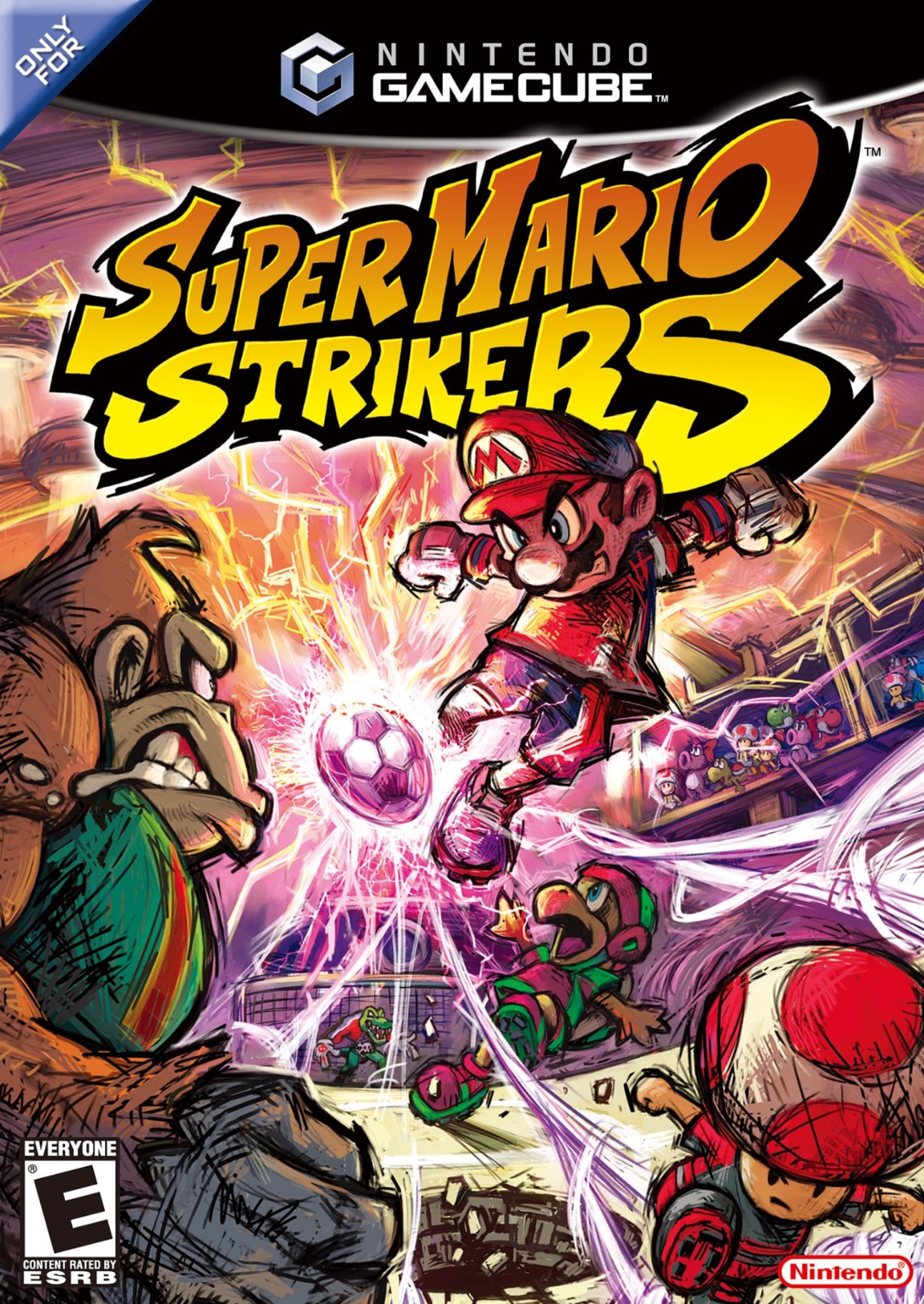
Super Mario Strikers, the GameCube original (North American box).
Next Level Games was founded in Vancouver on 22 August 2002 by four former members of EA Black Box, among them David Catlin, who would be the technical director on Charged. Nintendo approached the young studio to make a Mario football game, and the result, Super Mario Strikers (Mario Smash Football in Europe), reached the GameCube in Europe on 18 November 2005, North America on 5 December 2005 and Japan in January 2006.
That first game set the template: five-a-side with no rules, Mario Kart-style items, captains with a Super Strike worth two goals and Bowser lurking as a hazard. Its seven stadiums were purely cosmetic. Charged kept the template and all seven of those grounds, but added a new type of Arena in which the pitch itself fights back.
Building it for the Wii
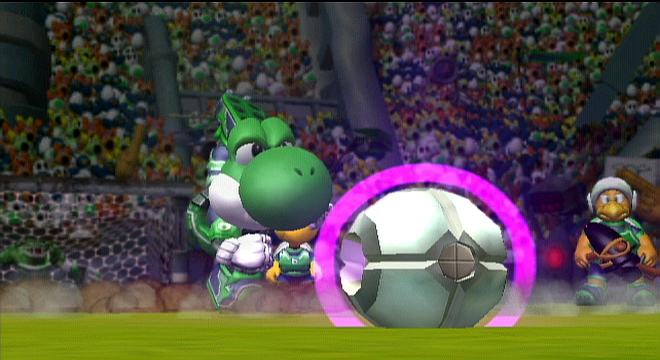
Yoshi about to strike: the darker, metallic style was new for the series.
The studio was careful about motion control. As IGN’s review pointed out, waggle was used for very little (a shake for the Big Hit, a shake of the Nunchuk to disrupt a Mega Strike) because most actions were simply more comfortable on a button. The pointer earned its place in one inspired idea: the first-person Mega Strike block, which turns the other player into the keeper.
The bigger change was online play. Charged supported Nintendo Wi-Fi Connection from launch, with ranked and friend matches for up to four players on two consoles. The European version, released on 25 May 2007, was the first to reach the shops; North America followed on 30 July and Japan on 20 September.
The data on the disc preserves a few traces of the final weeks. Two build stamps in the files are dated 13 and 20 April 2007, about five weeks before the European release; one note mentions a fix for a corrupt save banner. There is also an unused night-time version of the Vice, a low-detail test stadium, and a character file for a “Super Team” with Mario’s stats, a name shared with the robot side Bowser fielded in the first game.
The team and the cast
Mike Inglehart directed for Next Level Games, with Justin Dowdeswell and Ken Yeeloy producing, Kalvin Lyle as art director and Chad York heading the audio. On the Nintendo side Kensuke Tanabe produced, Satoru Iwata was executive producer and Shigeru Miyamoto is credited as supervisor.
The voice cast mixes Nintendo regulars with Nintendo of America voices. Charles Martinet plays Mario, Luigi, Wario and Waluigi; Scott Burns is Bowser, Deanna Mustard is Daisy and Caety Sagoian is Bowser Jr.; Sam Kelly and Nicole Mills share Peach. Takashi Nagasako (Donkey Kong), Katsumi Suzuki (Diddy Kong) and Kazumi Totaka (Yoshi and Birdo) came from Japan, and Nintendo of America’s Nate Bihldorff is the uncredited voice of Shy Guy.
Release and re-release
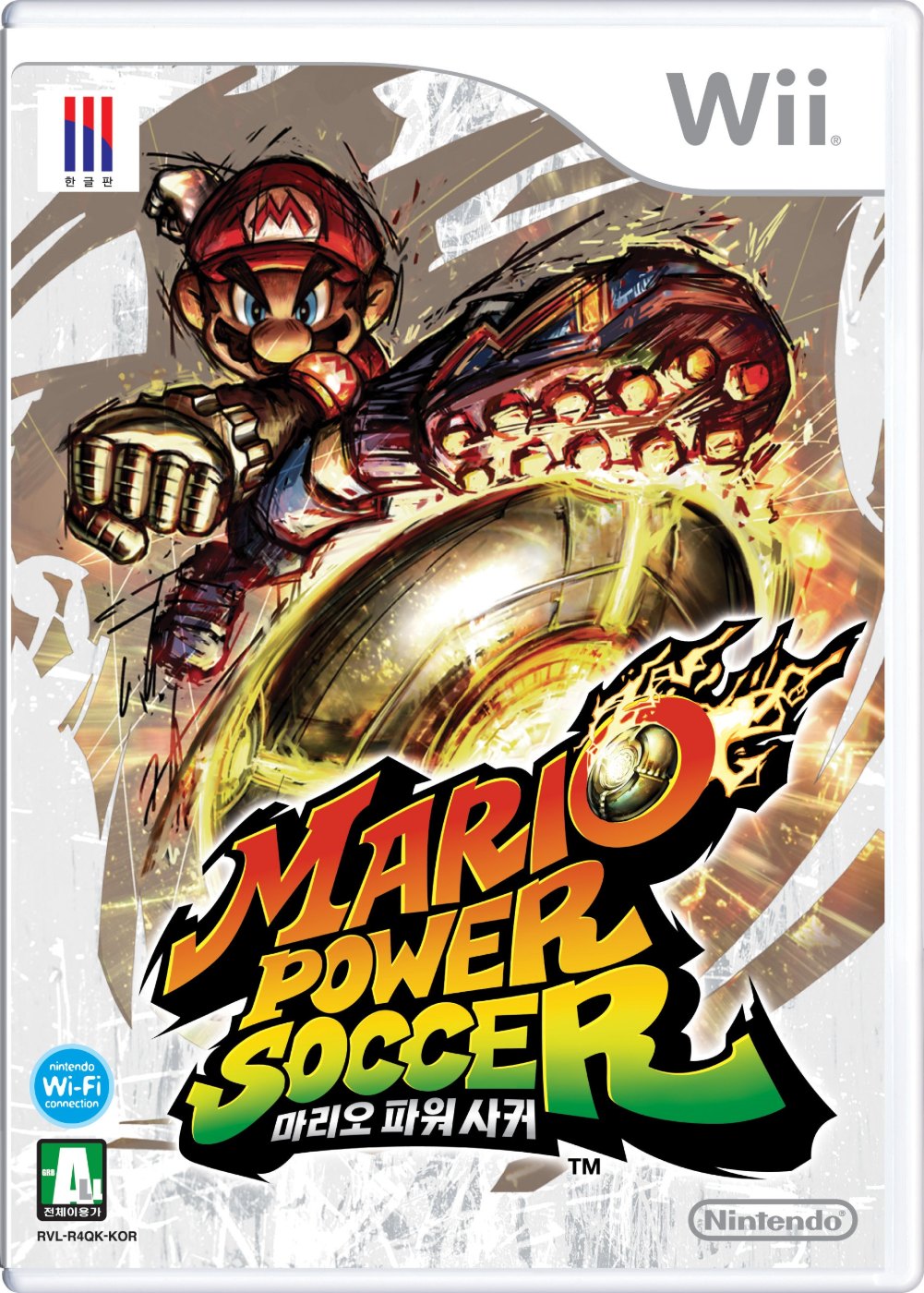
Mario Power Soccer, the South Korean release of 2010.
After its 2007 launches in Europe, Australia, North America and Japan, Charged reached Taiwan in 2008 and South Korea on 18 March 2010, where it was retitled Mario Power Soccer. It joined the budget Nintendo Selects range in Europe on 20 May 2011 and in North America in August 2011.
Its online modes ended with Nintendo Wi-Fi Connection on 20 May 2014. Two years later it came back as a download for Wii U, on 12 May 2016 in Europe and Australia, 17 August in Japan and 8 September in North America, and stayed on sale until the Wii U eShop stopped taking purchases on 27 March 2023.
Series Firsts
What Charged added to the Strikers series, checked against Super Mario Strikers.
1Bowser on the team sheetBowser was a pitch hazard and the boss of a robot team in the GameCube game. Charged makes him a playable captain for the first time, alongside newcomers Bowser Jr., Diddy Kong and Petey Piranha.
2Four new sidekicksBoo, Dry Bones, Monty Mole and Shy Guy join Toad, Koopa Troopa, Birdo and Hammer Bro., doubling the sidekick list to eight.
3The Mega StrikeThe first game’s Super Strike was one shot worth two goals. The Mega Strike fires three to six balls at once and hands the defence to the other player, who blocks with the Wii Remote pointer.
4Skillshots and Super AbilitiesSidekicks get charged Skillshots of their own, and every captain a personal Super Ability item.
5Pitches with hazardsThe first game’s stadiums were cosmetic. Charged’s Arenas add lightning, lava, Thwomps, mud, wind and tilting floors.
6Online playRanked and friend matches over Nintendo Wi-Fi Connection, with Miis as player icons and a weekly Striker of the Day.
7Striker ChallengesTwelve scenario challenges, each with a cheat to unlock for Domination Mode.
Cheats & Secrets
Charged has no button codes. Everything is unlocked by playing: captains and stadiums through the Road to the Strikers Cup, and Domination Mode cheats through the Striker Challenges.
Unlocking the captains
Win the Fire Cup to unlock Bowser Jr., the Crystal Cup for Diddy Kong and the Striker Cup for Petey Piranha. Online, every captain could be used from the start, unlocked or not.
Unlocking the stadiums
Beat each cup’s holder in the final to open its stadium (Lava Pit, Crystal Canyon, Stormship Stadium), and take both the Golden Foot (most goals) and the Brick Wall (fewest conceded) in its qualifying stage for another (the Wastelands, the Dump, Galactic Stadium).
Domination Mode cheats
Each Striker Challenge unlocks one: Classic Mode (no Mega Strikes or Skillshots), Safe Mega Strike (only the keeper can stop a Mega Strike once started), Super Captains (Super Ability items only), High Voltage (the fence electrifies players), Devastating Hits (maximum tackle power for all), No Power Ups, Secure Stadium (no stadium hazards), Power Shortage (fences off), Field Tilt (the pitch tilts towards the losing side), Always White Ball, Always Sidekick Skillshot and Custom Power Ups (choose item sets such as shells or explosives).
Extreme Mode
Every cup can be played on Extreme, where the computer is at full strength from the first match. A cup has to be finished in the mode it was started in.
Tip: build the charge
Hold B for a moment and then pass instead of shooting: the charge carries over to the ball, so a quick wind-up and pass turns it white far sooner than passing alone.
Tip: clear the way
Super Abilities such as Freeze Frame!, Thunder Wham! or Red Card! are at their best used just before a Mega Strike, so nobody can interrupt the wind-up.
Videos
Nintendo UK’s trailer from the 2007 launch, and the game’s opening movie in full.
Official trailer for the European release, uploaded by Nintendo UK.
The opening movie described above, uploaded by the third-party channel NintendoMovies.
Trivia & Interesting Facts
The English versions never name the Mega Strikes. Names such as Mega Fire and Green Typhoon come from the Japanese manual and website, where they are written in katakana as English words.
Only four captains are heard during their Mega Strikes: Mario, Luigi, Wario and Bowser Jr.
The Sand Tomb, with its carved pillars.The pillars of the Sand Tomb are carved with pixel-art reliefs from Donkey Kong, Super Mario Bros., Super Mario World and Yoshi’s Island, from Fire Flowers and Banzai Bills to Stilt Guys.
The Striker Challenge “So Far Behind…” is set late in a “Sand Cup” semi-final, a cup that is not one of the three in the Road to the Strikers Cup.
Daisy’s challenge, Brick Wall Baby!, has her chasing the trophy for a fifth straight year, and Bowser’s, Zero Tolerance!, an eighth clean sheet in a row.
Bowser Jr. is banned from using items in his challenge because, according to the Striker Times, he had been convicted of sabotaging them in the semi-final.
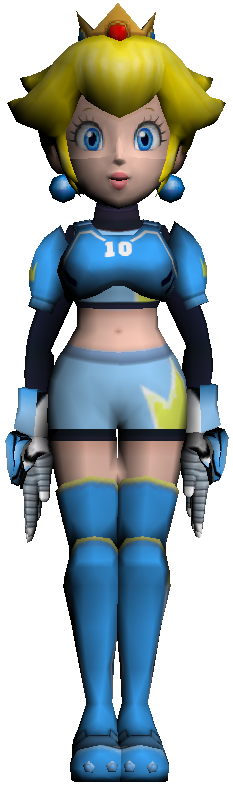
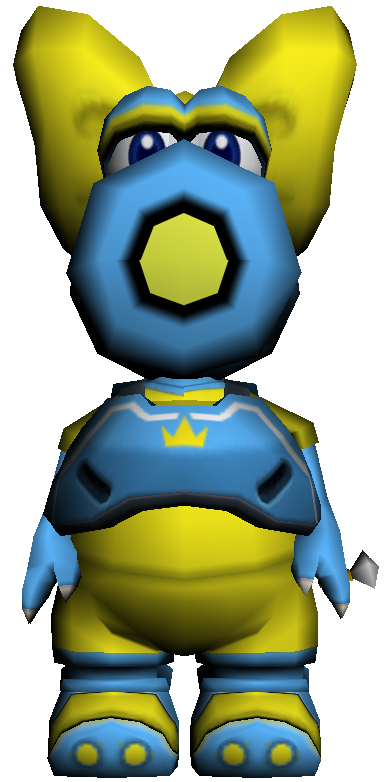
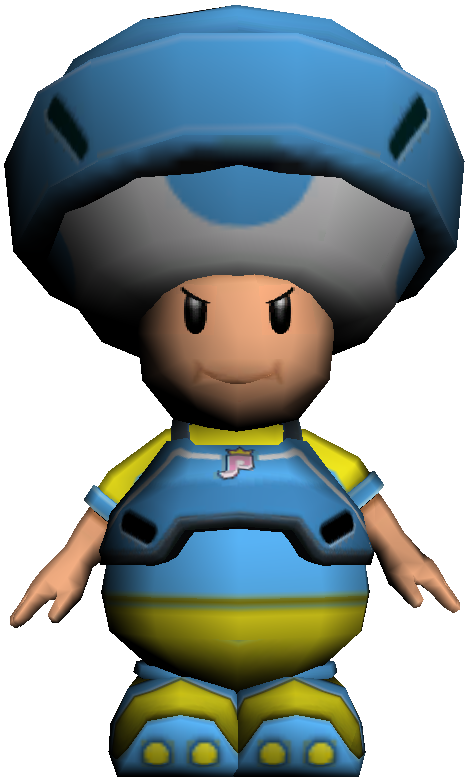
Peach in her unused light-blue kit.The game files contain unused light-blue and yellow alternate colours for Peach’s team, with textures for Peach, Birdo and Toad.
Also left on the disc: a night-time version of the Vice with floodlights, a low-detail test stadium inside a textured sphere, and a character file for a “Super Team” player with Mario’s stats.
A settings file carried over from the GameCube game still has comments about Bowser’s random attacks on the pitch, which were dropped once he became a playable captain.
The North American pre-match loading screen shows each captain’s full portrait; the European one shows only the head.
Save data could be copied to an SD card, but the Nintendo Wi-Fi Connection data could not.
When Mario or Luigi trigger their Super Ability, the background music changes.
In South Korea the game is Mario Power Soccer; the Traditional Chinese title translates as “Mario Football Forward Charged”.
Peach is voiced by two actresses, Sam Kelly and Nicole Mills; Kelsey Hutchison is the uncredited voice of Toad.
The Mega Strike poster in Luigi’s Mansion 3.Next Level Games remembered the game in Luigi’s Mansion 3, where a poster in Paranormal Productions shows Luigi in Mario’s clothes striking Mario’s Mega Strike pose.
Mario Strikers: Battle League’s Cannon Plate and Cannon Gloves are modelled on the armour and gloves that Charged’s captains wear.
Regional Box Art
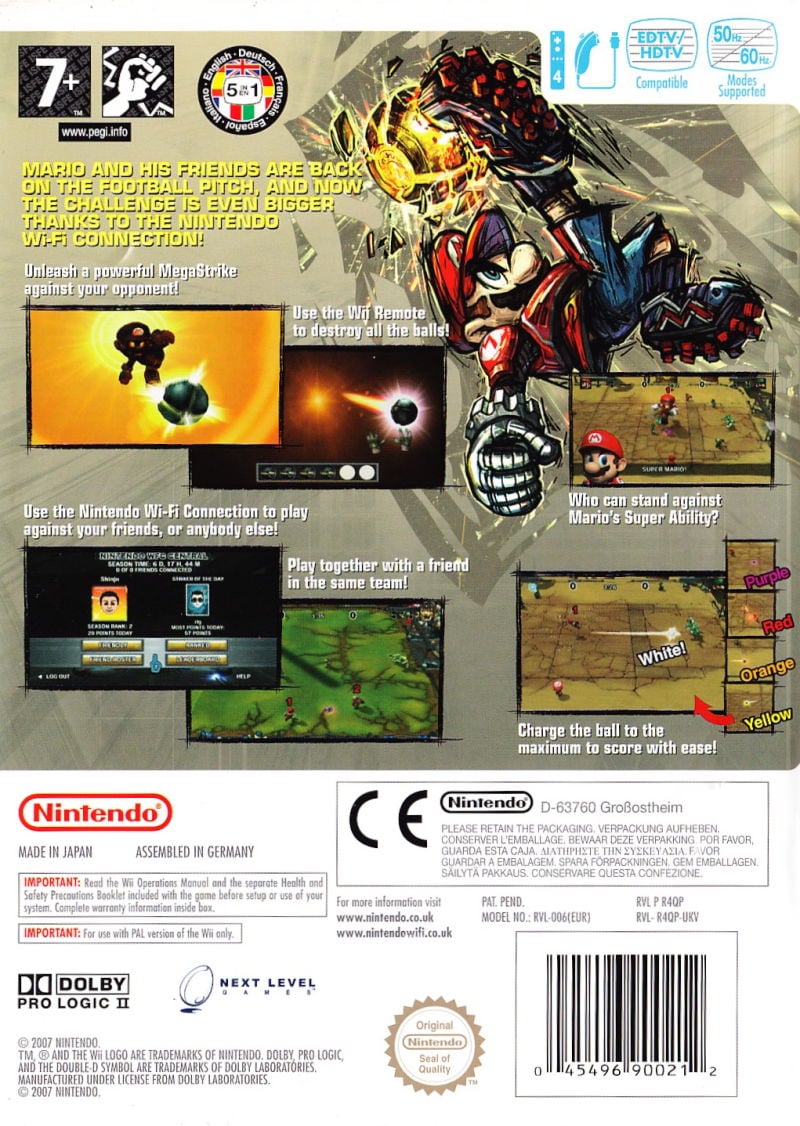
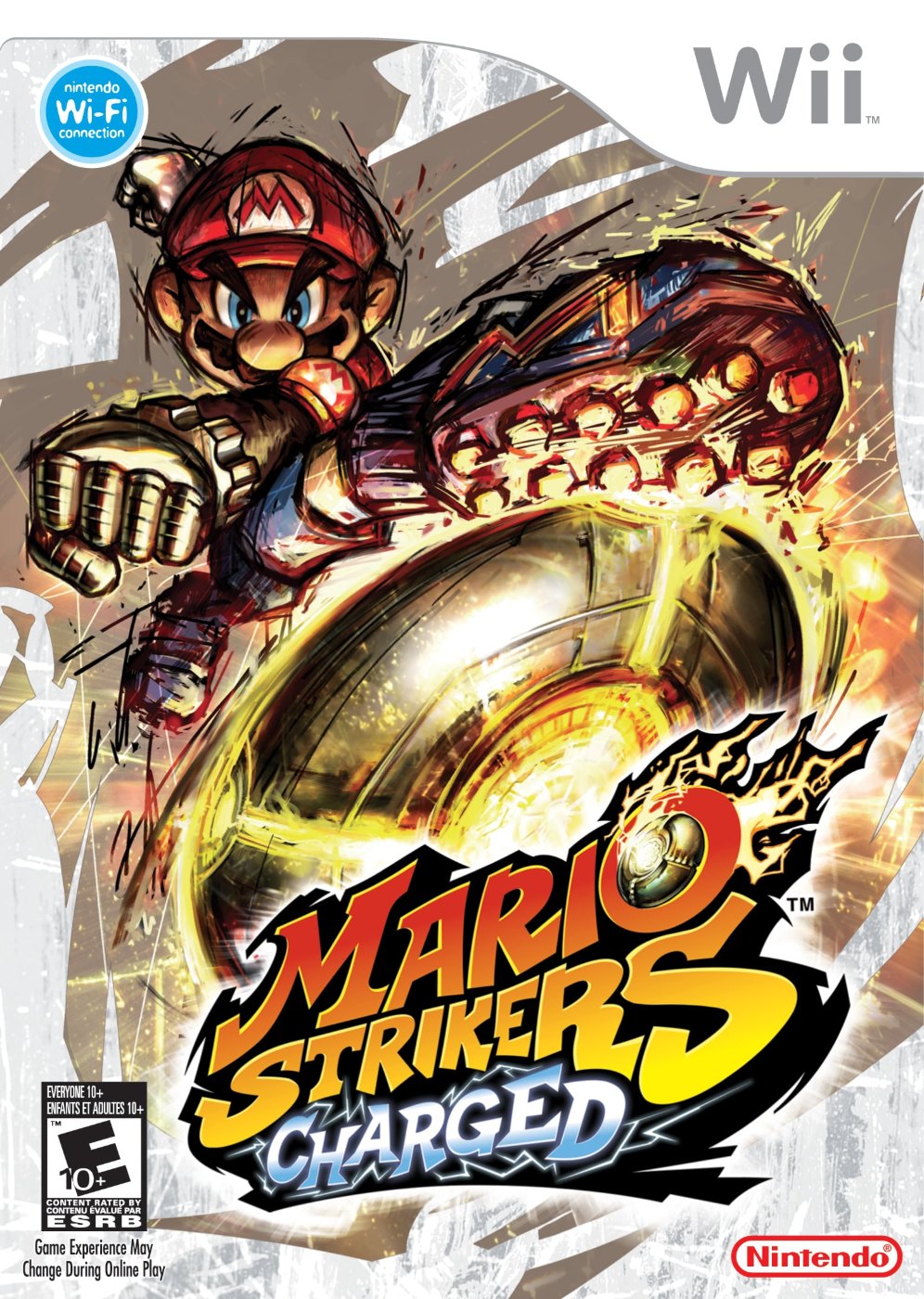
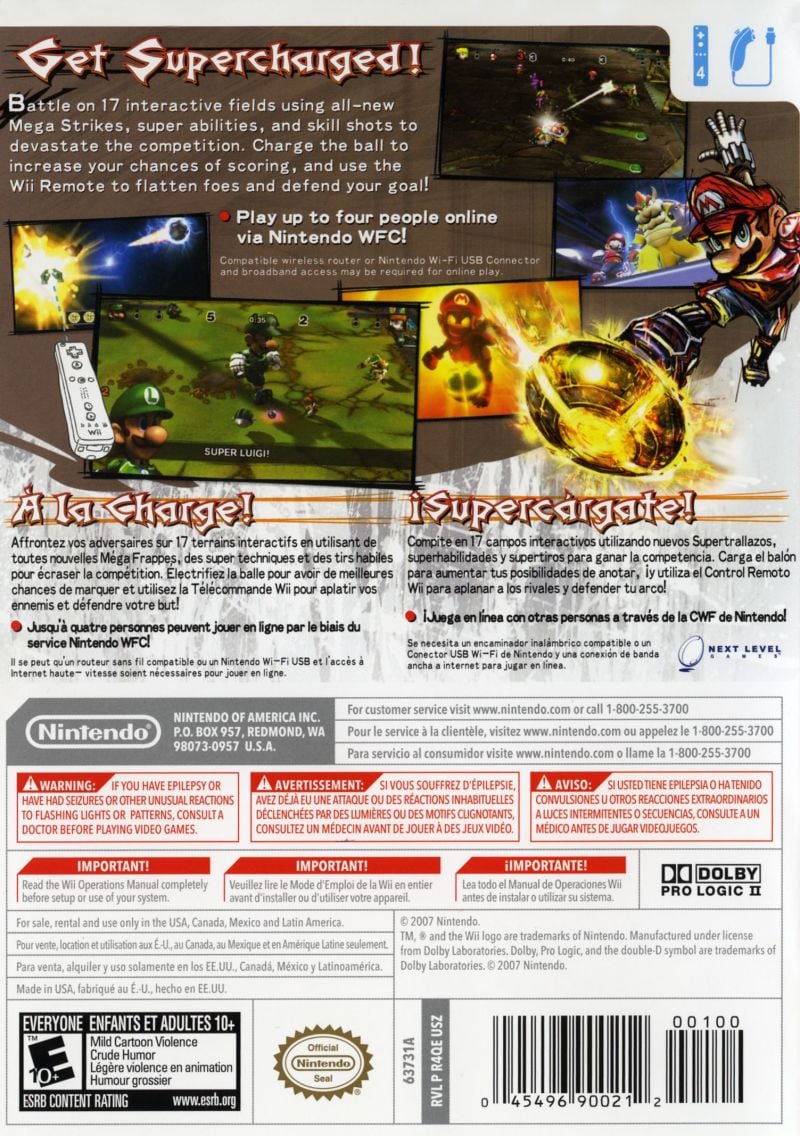
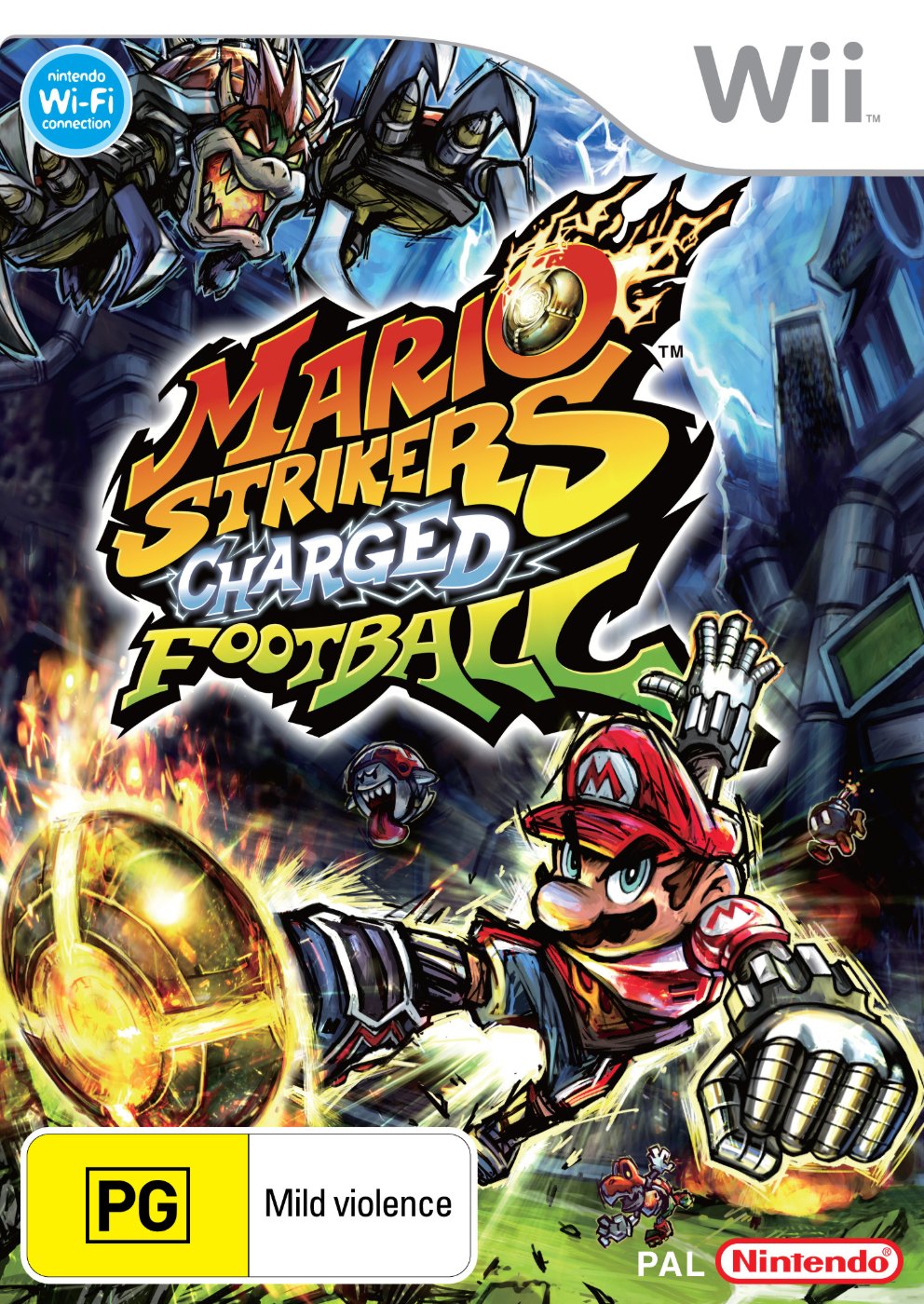
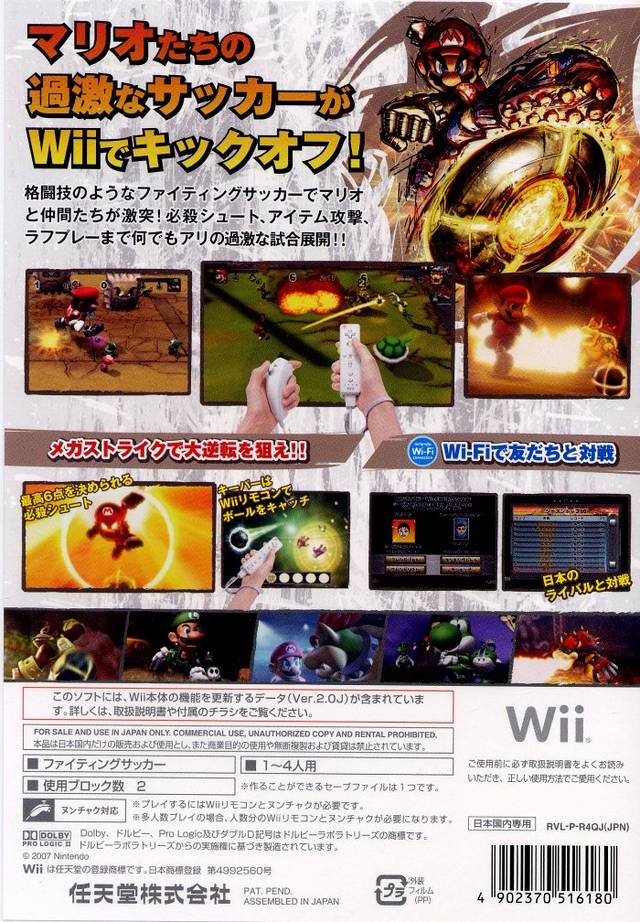
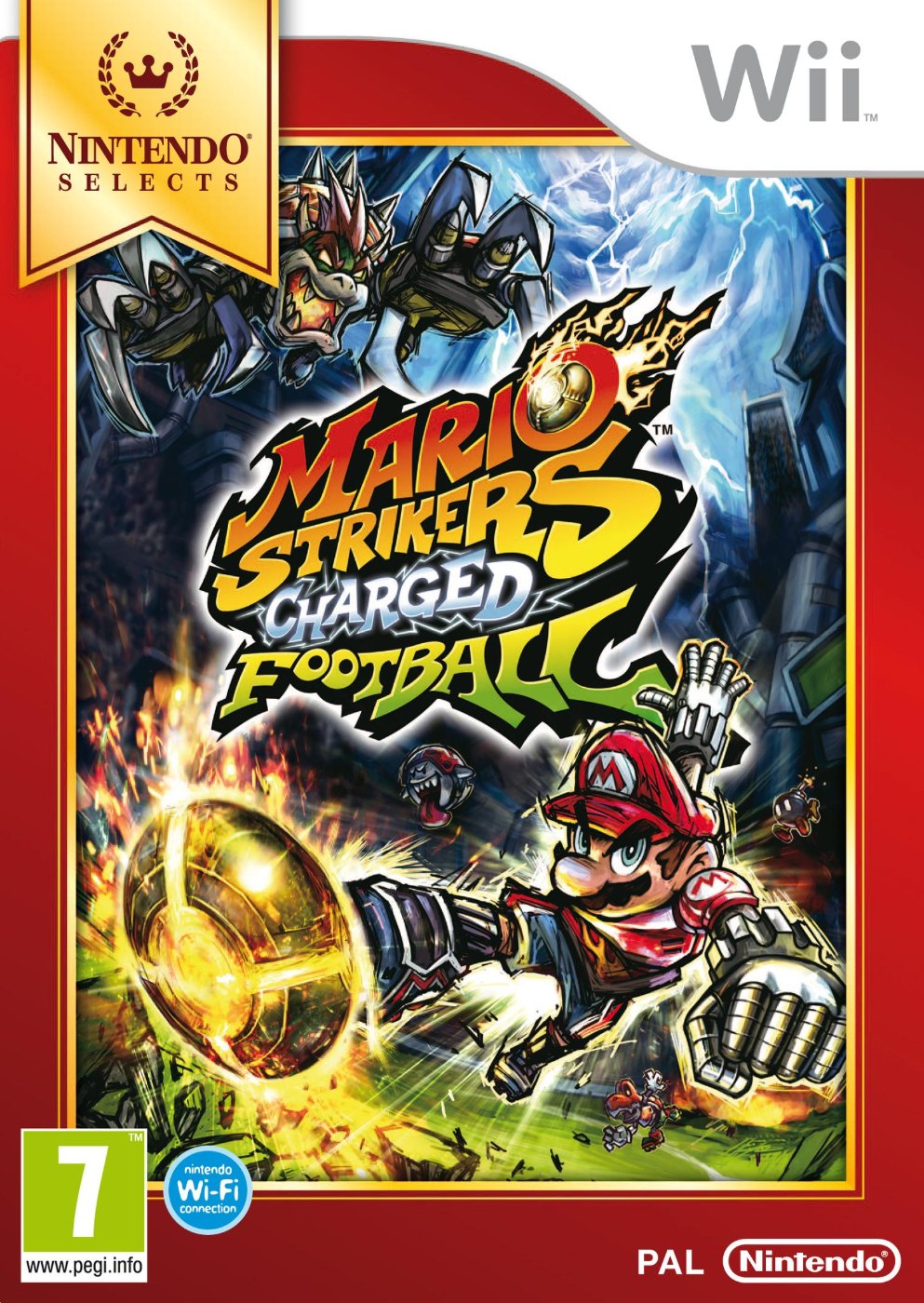
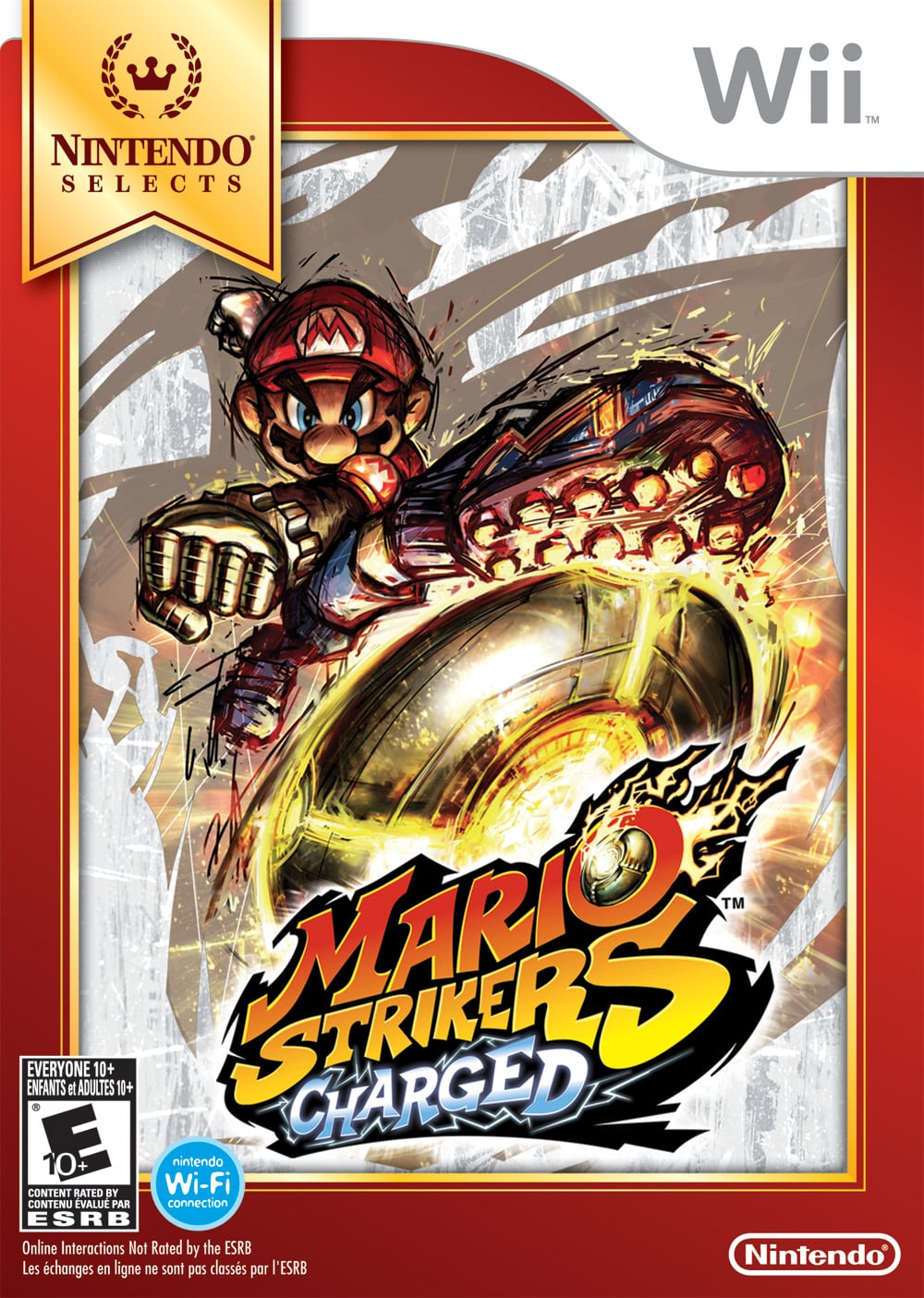
Europe and Japan used the same group shot of the captains; North America had its own cover. Nintendo Selects reissues followed in 2011.
EuropeMario Strikers Charged FootballEurope (back)North AmericaNorth America (back)AustraliaJapanJapan (back)GermanySouth KoreaMario Power Soccer, 2010Europe (later print)Europe (Nintendo Selects)Germany (Nintendo Selects)Portugal (Nintendo Selects)North America (Nintendo Selects)South Korea (Nintendo Selects)Wii U download (Europe)HOME Menu icon
Screenshots
More from the opening movie and from the pitch.
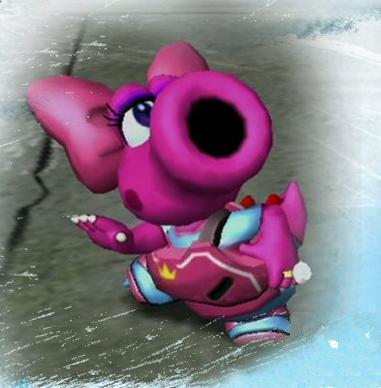
Mario and Bowser face off inside the airship.Mario dives after Bowser towards the pitch.Bowser lands breathing fire.A green Toad’s bicycle kick on Thunder Island.The Kritter waits for the flaming shot.Donkey Kong takes on Daisy’s team at the Vice.Wall-Luigi! goes up at the Dump.A helmeted Boo on Daisy’s team.Diddy Kong flattens a Dry Bones on his way to goal.Petey Piranha makes his entrance.Birdo looks up at the action.
Artwork & Media Gallery
Official artwork, logos, character-select portraits and challenge cards from Mario Strikers Charged. Select any image to see it full size; SLB’s artwork and box art galleries have more.
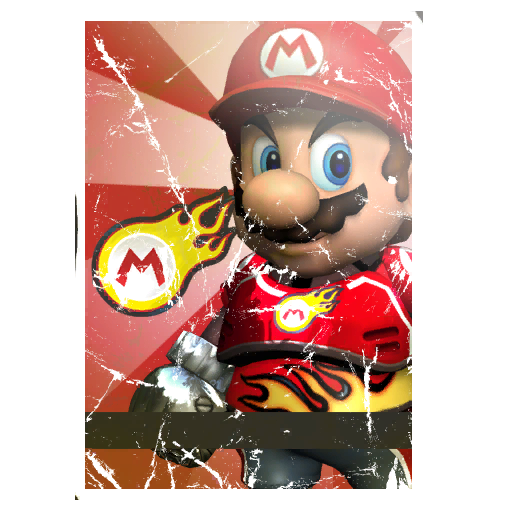
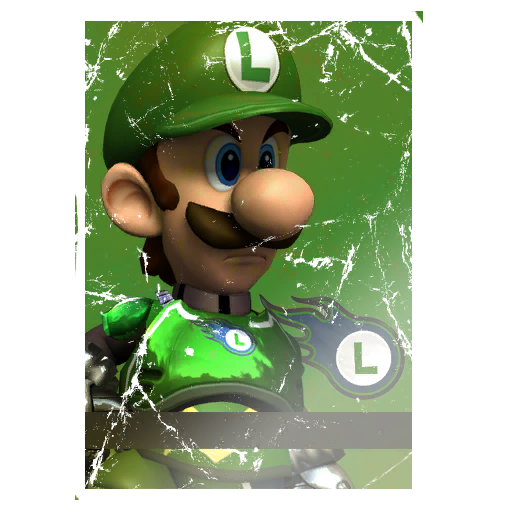
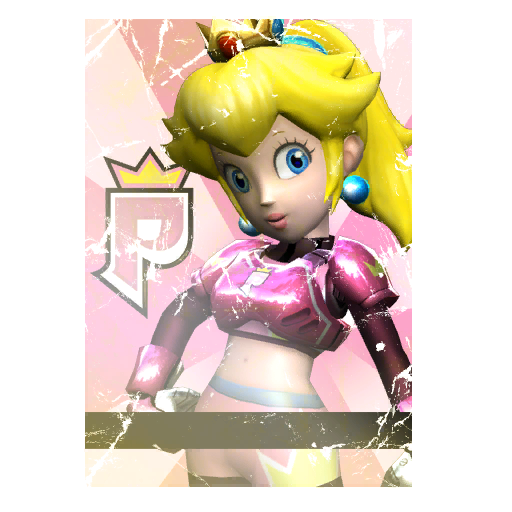
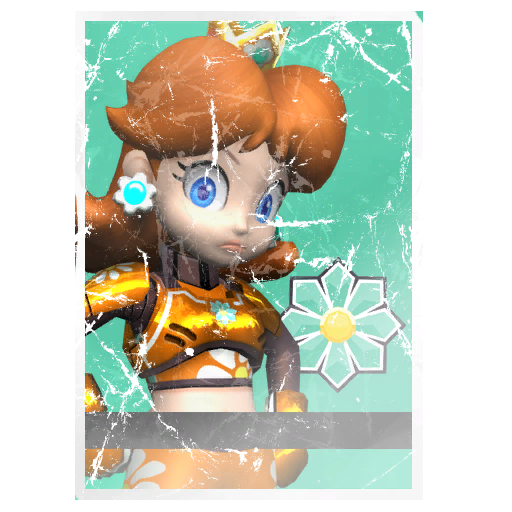
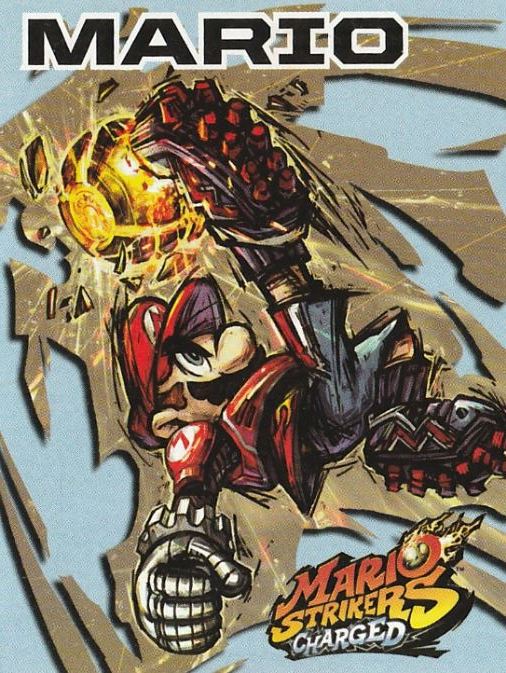
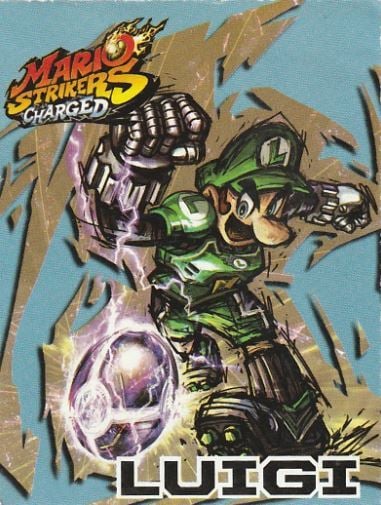
Mario, mid-strike.Mario in full armour.Another Mario render.A Boo sidekick.A Dry Bones sidekick.The North American logo.The European logo, with Football added.The Japanese logo.The Korean logo for Mario Power Soccer.Character select: Mario.Character select: Peach.Character select: Bowser.Character select: Donkey Kong.Character select: Wario.Character select: Waluigi.Character select: Petey Piranha.The gold Mario portrait from the Records screen.Mario’s challenge card.Luigi’s challenge card.Peach’s challenge card.Daisy’s challenge card.Bowser’s challenge card.Petey Piranha’s challenge card.Mario’s trading card (front).Luigi’s trading card (front).Peach’s trading card (front).Bowser’s trading card (front).Birdo in the red of Mario’s team.Shy Guy in Mario’s red.Unused: Birdo in Peach’s light-blue kit.Unused: Toad in Peach’s light-blue kit.A Bob-omb in play.
Legacy & Re-releases
Charged sat between a GameCube original and a Switch sequel fifteen years later, and was re-released twice along the way.
Re-releases
Super Mario Strikers (GameCube)18 November 2005The first game reaches Europe as Mario Smash Football; North America follows on 5 December.
Wii (Europe)25 May 2007Charged launches first in Europe, as Mario Strikers Charged Football.
Wii (Australia)7 June 2007Australian release.
Wii (North America)30 July 2007North American release.
Wii (Japan)20 September 2007Japanese release.
Wii (South Korea)18 March 2010Released as Mario Power Soccer.
Nintendo Selects20 May 2011Budget reissue in Europe; North America follows on 28 August 2011.
Nintendo Wi-Fi Connection20 May 2014The online service closes, ending online play.
Wii U eShop12 May 2016Download release in Europe and Australia; Japan on 17 August and North America on 8 September.
Mario Strikers: Battle League (Switch)10 June 2022Next Level Games’ sequel.
Wii U eShop27 March 2023Purchases end on the Wii U eShop, taking the download off sale.
Nintendo GameCube – Nintendo Classics2 July 2025The GameCube original returns on Nintendo Switch 2 for Nintendo Switch Online + Expansion Pack members (3 July outside North America).
Fifteen years to a sequel
After Charged, Next Level Games turned to Punch-Out!! on Wii and then to Luigi’s Mansion: Dark Moon and Luigi’s Mansion 3. Nintendo bought the studio outright in 2021, and the Strikers series returned with Mario Strikers: Battle League on Nintendo Switch in June 2022, a sequel that borrows Charged’s cup-mode music and dresses its players in gear inspired by Charged’s armour.
In its supplementary information for the year to 31 March 2008, Nintendo listed Charged among its million-sellers with 1.77 million copies sold worldwide: 240,000 in Japan and 1.53 million overseas, all within its first ten months on sale.
Later totals come second-hand. Wikipedia, citing the CESA Games White Paper for 2020, gives 2.6 million by the end of 2019, and records that the game earned a Gold award from ELSPA, the British trade body, which meant at least 200,000 copies sold in the UK.
1.77msold by 31 March 2008 (Nintendo)
240,000of those in Japan
2.6mby end of 2019 (CESA, via Wikipedia)
79Metacritic
Reviews
Scores as collected by Wikipedia from the original reviews; Metacritic’s average is 79 and GameRankings’ was 79.43%.
GameProUS
5/5
Official Nintendo MagazineUK
91%
IGNUK edition
8.7/10
Nintendo PowerUS
8.5/10
Nintendo World ReportUS
8.5/10
IGNUS edition · Matt Casamassina
8.3/10
GameSpyUS · Sterling McGarvey
4/5
EurogamerUK · Richard Melville
8/10
Nintendo LifeUK
8/10
Electronic Gaming MonthlyUS
7.5/10
GameSpotUS · Alex Navarro
7.5/10
GameTrailersUS
7.4/10
Game InformerUS
7.25/10
Game RevolutionUS
C+
EdgeUK
6/10
The critics agreed about what Charged did well. The art direction, the noise and spectacle of the Mega Strikes, the four-player matches and, above all, the online play were widely praised; GameSpot’s Alex Navarro counted working online play on the Wii as a major bonus, and Eurogamer’s Richard Melville thought it a gem that would appeal to just about anyone.
The complaints were about depth. Several reviewers found the single-player modes thin once the three cups were won, and GameSpy’s Sterling McGarvey felt that the new features evened out the field so much that skill counted for less than in the GameCube game. Edge’s 6/10 is the lowest score in Wikipedia’s table, while GamePro and Official Nintendo Magazine were the warmest.
Honours
ELSPA (UK)Gold sales awardAwarded for 200,000 or more copies sold in the UK (via Wikipedia).
SLB User Reviews
Super Luigi Bros readers have reviewed Mario Strikers Charged (Wii) over the years. Their write-ups are kept exactly as they were sent in:
Played it? If you’d like to add your own review, please get in touch.
More from the Super Luigi Bros Guide
These picture lists come from the earlier Super Luigi Bros guide to Mario Strikers Charged (Wii) and are kept here in full.
Captains
There are 12 captains in Mario Strikers Charged — 11 standard captains available from the start, plus Petey Piranha who is unlocked by completing the Striker Cup. Each captain has a unique type (Balanced, Power, Speed, Playmaker, Defensive, Tricky or Special), a unique Mega Strike, and a unique Super Ability that can completely change the shape of a match:
Mario
Balanced
Mega StrikeMega FireSuper AbilitySuper Mario!
A mix of fitness, speed and power — Mario brings heart and determination to every match. His Super ability transforms him into Giant Mario, trampling opponents underfoot.
Luigi
Balanced
Mega StrikeGreen TyphoonSuper AbilitySuper Luigi!
A well-balanced leader who harnesses his Super ability to grow and crush the competition. Also uses his Poltergust to create the Wall-Luigi! barrier that redirects opponents.
Peach
Playmaker
Mega StrikePrincess KissSuper AbilityFreeze Frame!
Peach’s passing skills are second to none and she is extremely quick. Her Super ability takes a photograph that instantly freezes the entire opposing team on the spot.
Daisy
Defensive
Mega StrikeCrystal SmashSuper AbilityCrystal Smash!
A defensive powerhouse — fast and physical. Her Crystal Smash Super ability creates a crystal shield that simultaneously protects her team and devastates opponents.
Yoshi
Balanced
Mega StrikeHyper BreathSuper AbilityEgg Roll!
Yoshi is quick, agile and reliable. His Egg Roll Super ability sends him spinning across the pitch in a giant egg, bowling over any opponent in his path.
Waluigi
Tricky
Mega StrikeWall-Luigi!Super AbilityWall-Luigi!
The master of deception. Waluigi creates the Wall-Luigi — a barrier of his own face that blocks opponents and channels the ball in unexpected directions.
Wario
Power
Mega StrikeWall-Wario!Super AbilityWall-Wario!
Pure brute force. Wario’s Super ability releases a toxic cloud of gas that stuns and pushes back every opponent on the pitch. Brutal and crowd-pleasing.
Bowser
Power
Mega StrikeFire Storm!Super AbilityFire Storm!
The King of Koopas dominates through sheer power. His Fire Storm Super ability sends him on a fire-breathing rampage across the pitch, sending anyone in his way flying.
Donkey Kong
Power
Mega StrikeThunder Wham!Super AbilityThunder Wham!
Thunderous and unstoppable. DK’s Super ability slams the ground with both fists, sending a shockwave that launches every opposing player off their feet.
Bowser Jr.
Tricky
Mega StrikeSonic Roar!Super AbilitySonic Roar!
The young heir to Bowser’s throne — fast and cunning. His Sonic Roar Super ability screams at the opposition, dazing them and clearing space for a Mega Strike.
Diddy Kong
Speed
Mega StrikeBanana Peel!Super AbilityBanana Peel!
The fastest captain in the game. Diddy’s Super ability scatters bananas across the pitch that trip and stun opponents — chaotic and highly effective.
Petey PiranhaUnlockable
Power
Mega StrikeDino Piranha!Super AbilityMud Slinger!
A Power-type captain like Bowser and Donkey Kong — Petey is uniquely powerful and terrifying. His Super Ability is Mud Slinger!. Unlocked by completing the Striker Cup.
Sidekicks & goalkeeper
Each team is built around the captain, supported by three sidekicks. Unlike Super Mario Strikers, Charged allows you to mix different sidekick types — you don’t need a uniform team. Each sidekick type has its own skill shots and stats. A Shy Guy‘s finesse shot differs entirely from a Hammer Bro’s heavy slam.
ToadSpeed
The fastest sidekick — great for counter-attacks and reaching the ball first. Weak in physical duels but excellent at getting into scoring positions.
Koopa TroopaBalanced
A reliable all-rounder. Competent across all areas without any major weakness — a safe pick for any team.
BooTricky
Unpredictable and deceptive. Boo’s skill shots curve and bend in unexpected ways, making him difficult to defend against.
Dry BonesDefensive
Strong defensive presence. Hard to knock off the ball and difficult to bypass. Excellent for protecting leads.
Hammer BroPower
Heavy-hitting physical sidekick. His hammer-based skill shots pack maximum power. Slow but devastating in contact.
Kritter — the goalkeeper
Every team is defended by Kritter — the goalkeeper. Kritter is not a player you control during normal play; he acts automatically, throwing himself at shots with his body and fists. Linger too long in his box, however, and he’ll attack you.
During a Mega Strike, the game shifts to a first-person view from Kritter’s perspective. You move the Wii Remote cursor to position Kritter’s hands and press a button to swat each incoming ball. Miss a ball and it scores. Block them all and Kritter roars in triumph.
Stadiums
Mario Strikers Charged features 17 stadiums — ten brand new Arenas and seven returning Classic courses from Super Mario Strikers, each graphically updated. The new Arenas each have unique dynamic hazards that make every venue feel entirely different:
The Arenas — 10 new stadiums
Stormship StadiumArena
Inside a massive blimp hangar. The setting for the game’s opening cutscene — a war-zone aesthetic with thunderstorms and electric fencing surrounding the pitch.
The WastelandsArena
A dusty, desolate outdoor arena surrounded by electric fences. The pitch itself buckles and shifts during play.
The DumpArena
Set in a refuse site — puddles of mud slow players down and scattered debris adds chaos to movement.
The ViceArena
A mechanical industrial arena. Crushers periodically slam down onto sections of the pitch — get caught beneath one and you’re done.
Thunder IslandArena
A tropical island setting with a cyclone circling the pitch. Players can get caught in the cyclone and launched skyward.
Pipeline CentralArena
A pipe-lined underground facility. Warp pipes transport players across the pitch unexpectedly.
The Lava PitArena
Set above an active volcano. Lava geysers erupt through the pitch floor, launching players skyward and disrupting play.
The PalaceArena
Peach’s royal court transformed into a football arena. A refined aesthetic hiding brutal hazards beneath the surface.
The Battle DomeArena
A futuristic enclosed dome — the most prestigious venue in the game and the final setting for the Striker Cup.
Konga ColiseumArena
DK’s jungle arena — massive bongo drums on the sidelines and terrain that shifts with the beat.
The Classics — 7 returning stadiums
Crystal CanyonClassic
A canyon setting with crystal formations on the pitch boundaries.
Galactic StadiumClassic
A space station arena — low gravity and star field backdrop.
The ClassroomClassic
An oversized classroom arena with chalk-drawn pitch markings.
The Sand TombClassic
Desert ruins with sinking sand patches that slow players down.
Bowser StadiumClassic
Bowser’s personal arena — volcanic, intimidating and designed to favour power teams.
Crater FieldClassic
A meteor-impact crater converted into a football pitch.
To provide the best experiences, we use technologies like cookies to store and/or access device information. Consenting to these technologies will allow us to process data such as browsing behavior or unique IDs on this site. Not consenting or withdrawing consent, may adversely affect certain features and functions.
Functional
Always active
The technical storage or access is strictly necessary for the legitimate purpose of enabling the use of a specific service explicitly requested by the subscriber or user, or for the sole purpose of carrying out the transmission of a communication over an electronic communications network.
Preferences
The technical storage or access is necessary for the legitimate purpose of storing preferences that are not requested by the subscriber or user.
Statistics
The technical storage or access that is used exclusively for statistical purposes.The technical storage or access that is used exclusively for anonymous statistical purposes. Without a subpoena, voluntary compliance on the part of your Internet Service Provider, or additional records from a third party, information stored or retrieved for this purpose alone cannot usually be used to identify you.
Marketing
The technical storage or access is required to create user profiles to send advertising, or to track the user on a website or across several websites for similar marketing purposes.

 The ViceArena · newMetal stands and pipe-like towers; the electric fence leaves anyone knocked into it twitching. Mario’s challenge stadium.
 Thunder IslandArena · newA clifftop pitch in a storm, where the wind speeds you up or holds you back and Cheep Cheeps, cows and even tractors blow across. No fence: fall off the edge and you reappear in midfield.
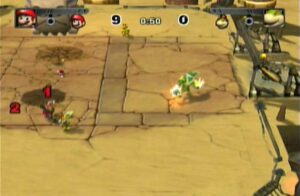 The Sand TombArena · newAncient ruins with no crowd. Thwomps crash down near the centre circle (and can knock the ball in), and sand at the sides slows you down.
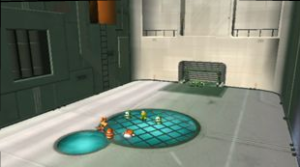 The ClassroomArena · newA bare, lab-like practice pitch with just the fence, used to teach the basics in the tutorial.
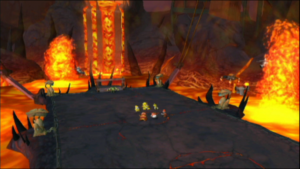 The Lava PitArena · new · beat Bowser Jr. in the Fire Cup finalBlack rock edged with glowing lava. Fireballs erupt and leave burning rings that stun anyone inside.
 The WastelandsArena · new · Golden Foot and Brick Wall in the Fire CupSlippery snow, wind and lightning that strikes near the ball; the third bolt stops the ball dead and charges it.
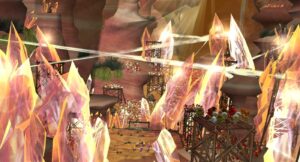 Crystal CanyonArena · new · beat Diddy Kong in the Crystal Cup finalAfter each goal, sunlight through the crystals freezes one or two players per side, captains included, until the next goal.
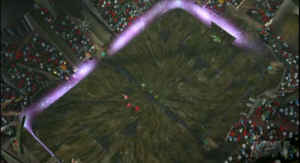 The DumpArena · new · Golden Foot and Brick Wall in the Crystal CupA mud bath that slows everyone, drags players towards a central drain and can stop the ball in its tracks.
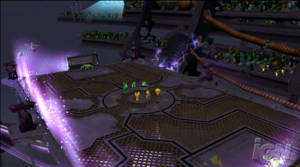 Stormship StadiumArena · new · beat Petey Piranha in the Striker Cup finalA metal deck inside an airship. Lightning runs along slits in the floor after each thunderclap, and the deck tilts towards whichever side has more players.
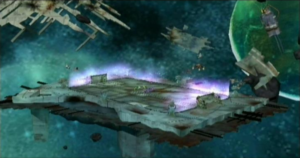 Galactic StadiumArena · new · Golden Foot and Brick Wall in the Striker CupA floating platform in outer space with no crowd and nothing but the fence: pure football for the hardest-won pitch in the game.
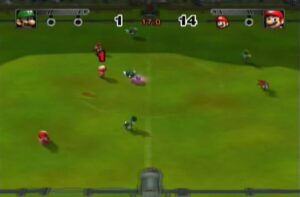 The PalaceClassic · from Super Mario StrikersGrass in the Mushroom Kingdom, home ground of Peach and Daisy.
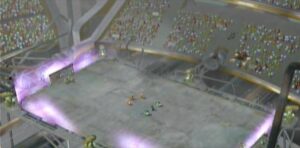 Pipeline CentralClassic · from Super Mario StrikersA rooftop pitch among Mushroom Kingdom skyscrapers, home of Mario and Luigi.
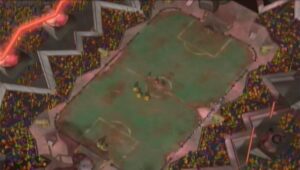 The UndergroundClassic · from Super Mario StrikersWario and Waluigi’s subterranean ground, its seating split by W-shaped girders.
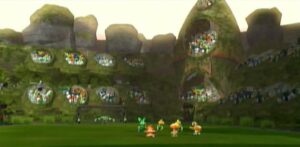 Crater FieldClassic · from Super Mario StrikersA huge crater on Yoshi’s Island with egg-shaped glass stands.
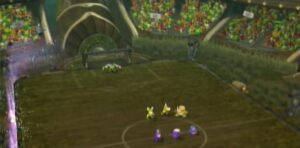 Konga ColiseumClassic · from Super Mario StrikersDonkey Kong’s jungle home, with a wooden floor and little ponds.
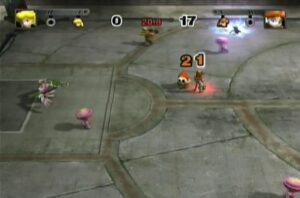 The Battle DomeClassic · from Super Mario StrikersA metal pitch under a glass dome inside Bowser’s Castle.
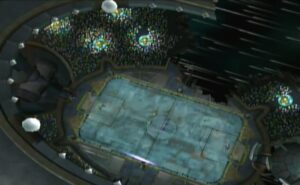 Bowser StadiumClassic · from Super Mario StrikersA blue rubber pitch out in deep space.
 Banana PeelComes in threes or fives; anyone who treads on one goes over and loses the ball. The single Giant Banana leaves no small peels behind.
 Green ShellA set of three. They fly straight, bounce off walls and knock over the first player they hit.
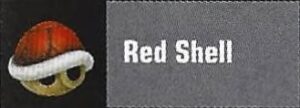 Red ShellThree shells that home in on the nearest opponent, unless a wall gets in the way.
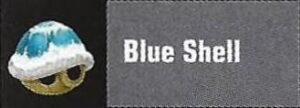 Blue ShellThree bouncing shells that freeze whoever they hit in a block of ice for a few seconds.
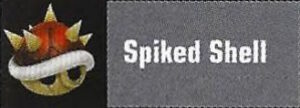 Spiked ShellLike a Green Shell but tougher: it bounces for longer and can floor the same player more than once.
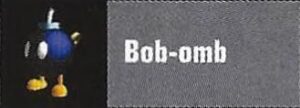 Bob-ombThree or five are dropped in front of the ball carrier. The blast catches everyone but the thrower, teammates included.
 Chain ChompVery rare and mostly given to a team that is losing badly. It rampages through the other side, and anyone else in its way.
 MushroomA burst of speed for the player who uses it, handy for escaping a crowd.
 StarBrief invincibility: nobody can tackle you, which makes it perfect for a run on goal.
 Super AbilityShown by the captain’s face. It triggers that captain’s personal ability (see above).
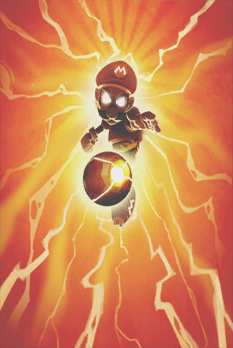 Luigi’s Mansion 3Nintendo Switch · 2019 · Next Level GamesFramed posters in the Entrance Hall of Paranormal Productions show Charged’s captains in silhouette and Luigi, in Mario’s colours, striking Mario’s Mega Strike pose.
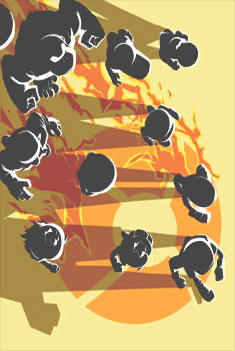 The captains posterLuigi’s Mansion 3 · 2019The second of the two Paranormal Productions posters: a top-down silhouette of several team captains.
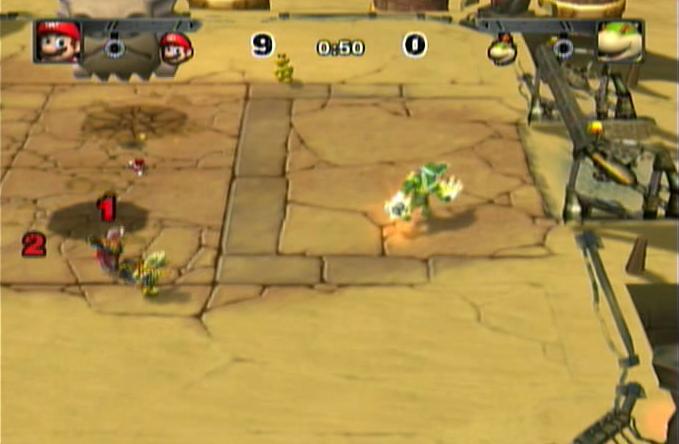 Retro reliefs in the Sand TombIn this gameThe pillars of the Sand Tomb are carved with sprites from older games: Donkey Kong, Super Mario Bros. (Mario, bricks, clouds, Fire Flowers), Super Mario World (Wigglers, Banzai Bills, Koopa shells in all four colours, Mega Moles) and Yoshi’s Island (Shy Guys, Stilt Guys, Incoming Chomps and more).
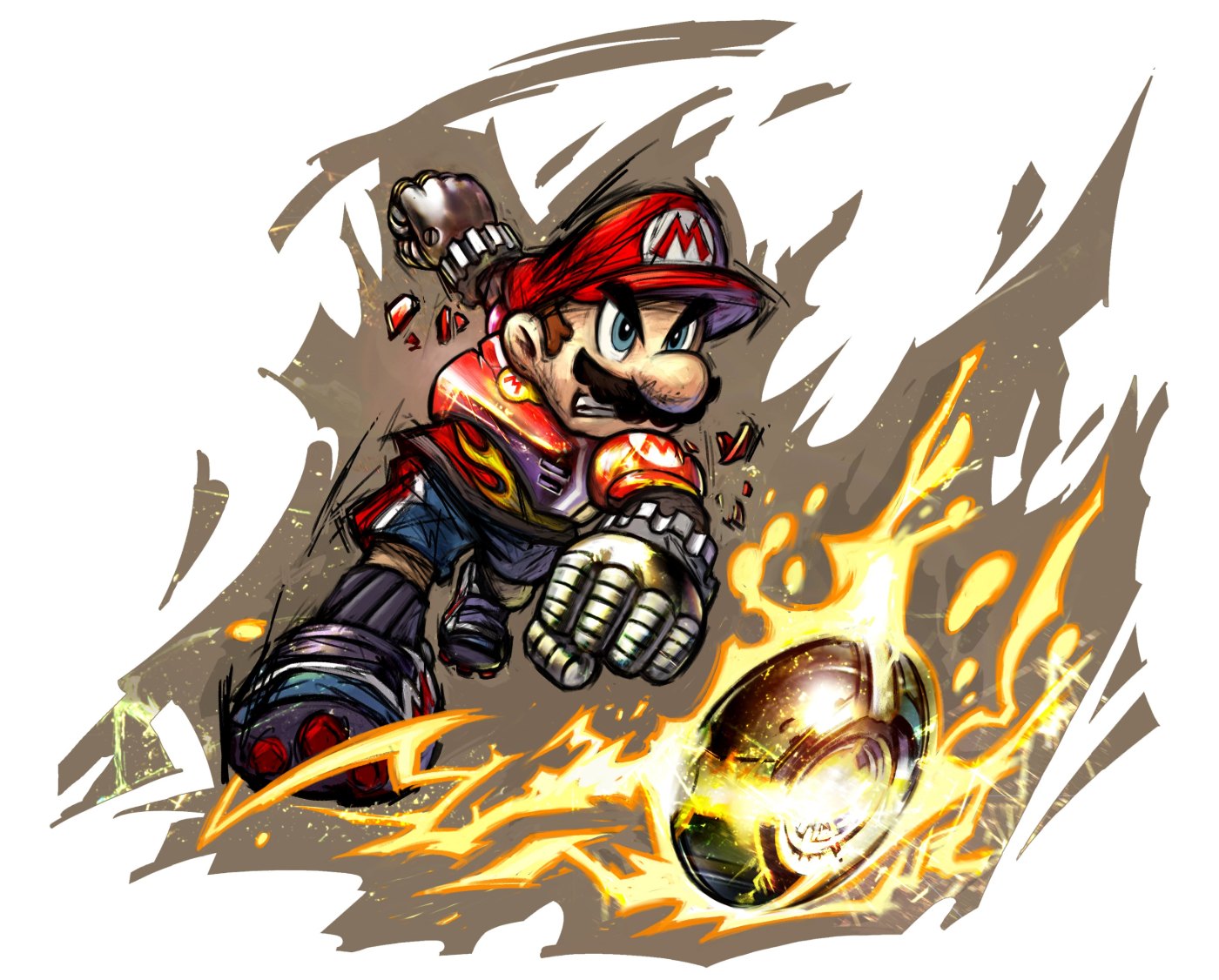 MarioCaptain · Balanced · from the start
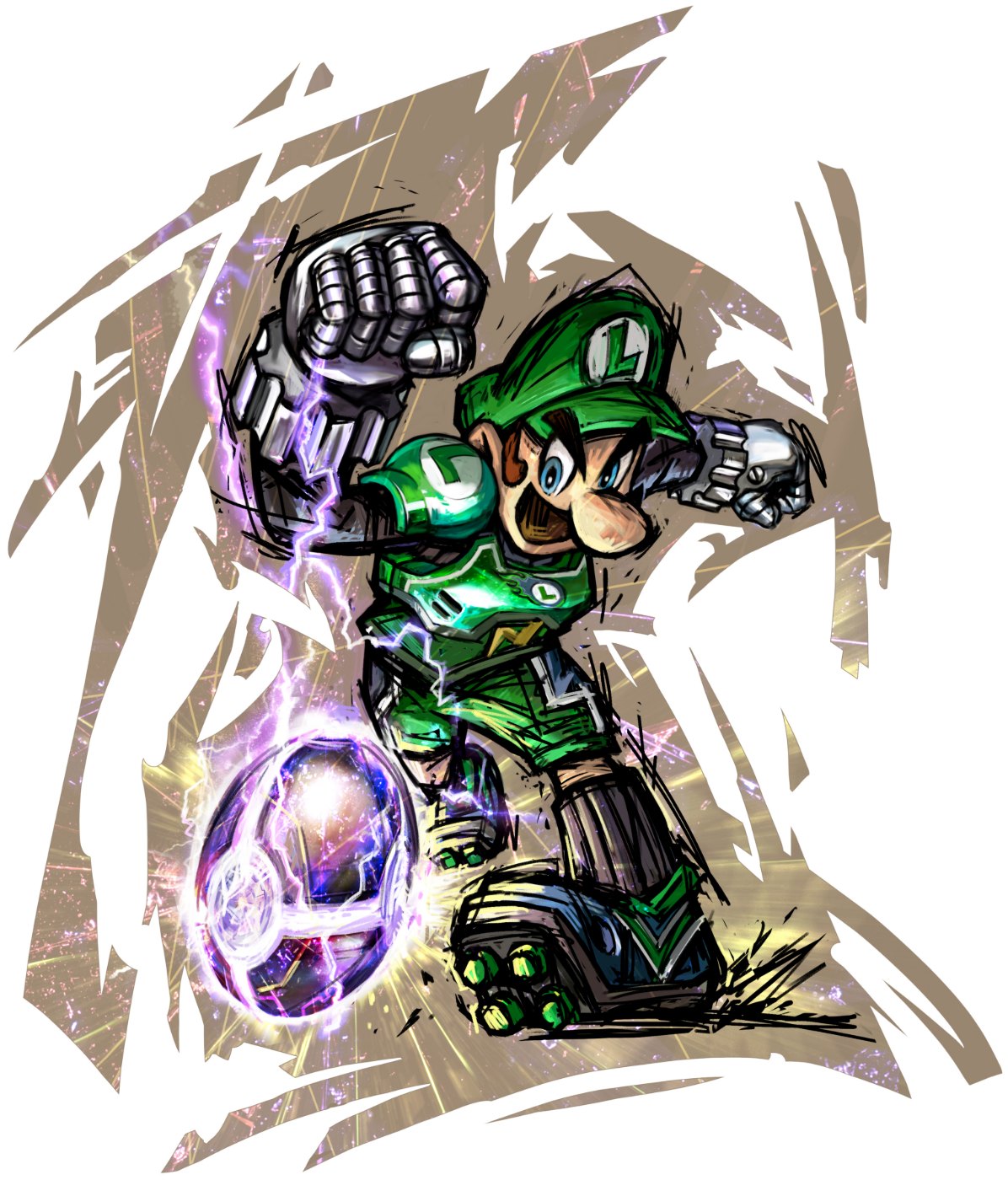 LuigiCaptain · Balanced · from the start
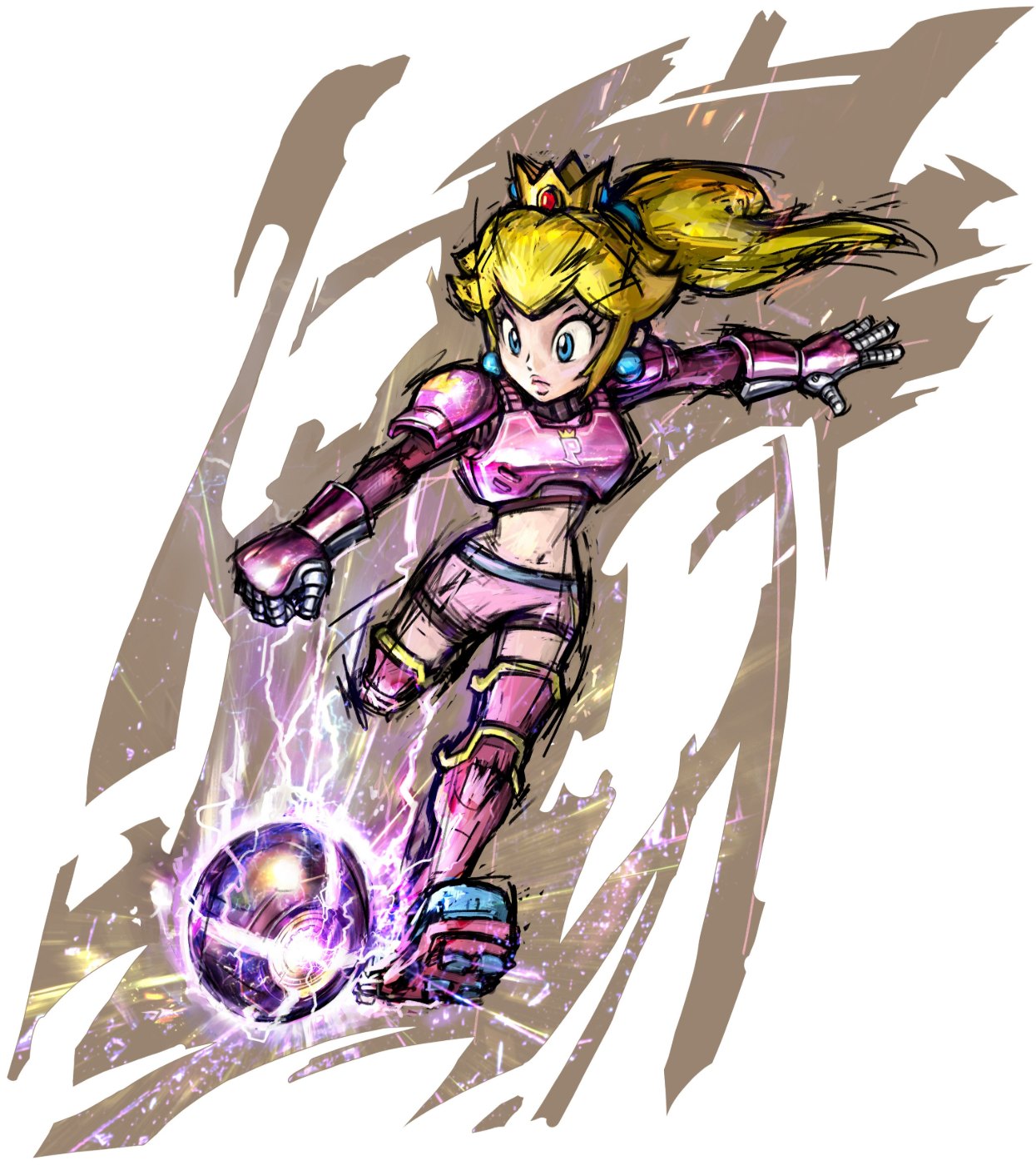 Princess PeachCaptain · Playmaker · from the start
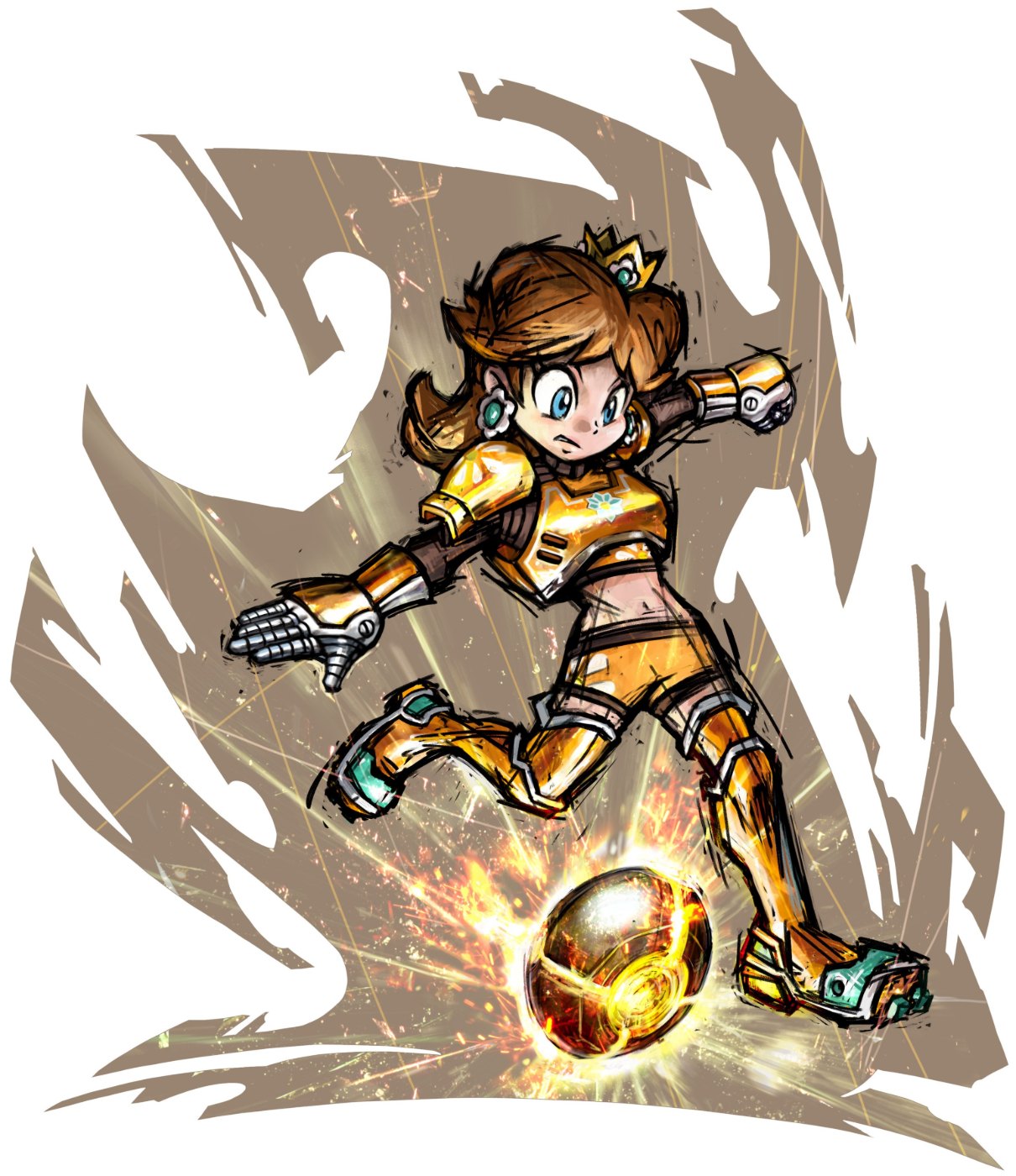 Princess DaisyCaptain · Defensive · from the start
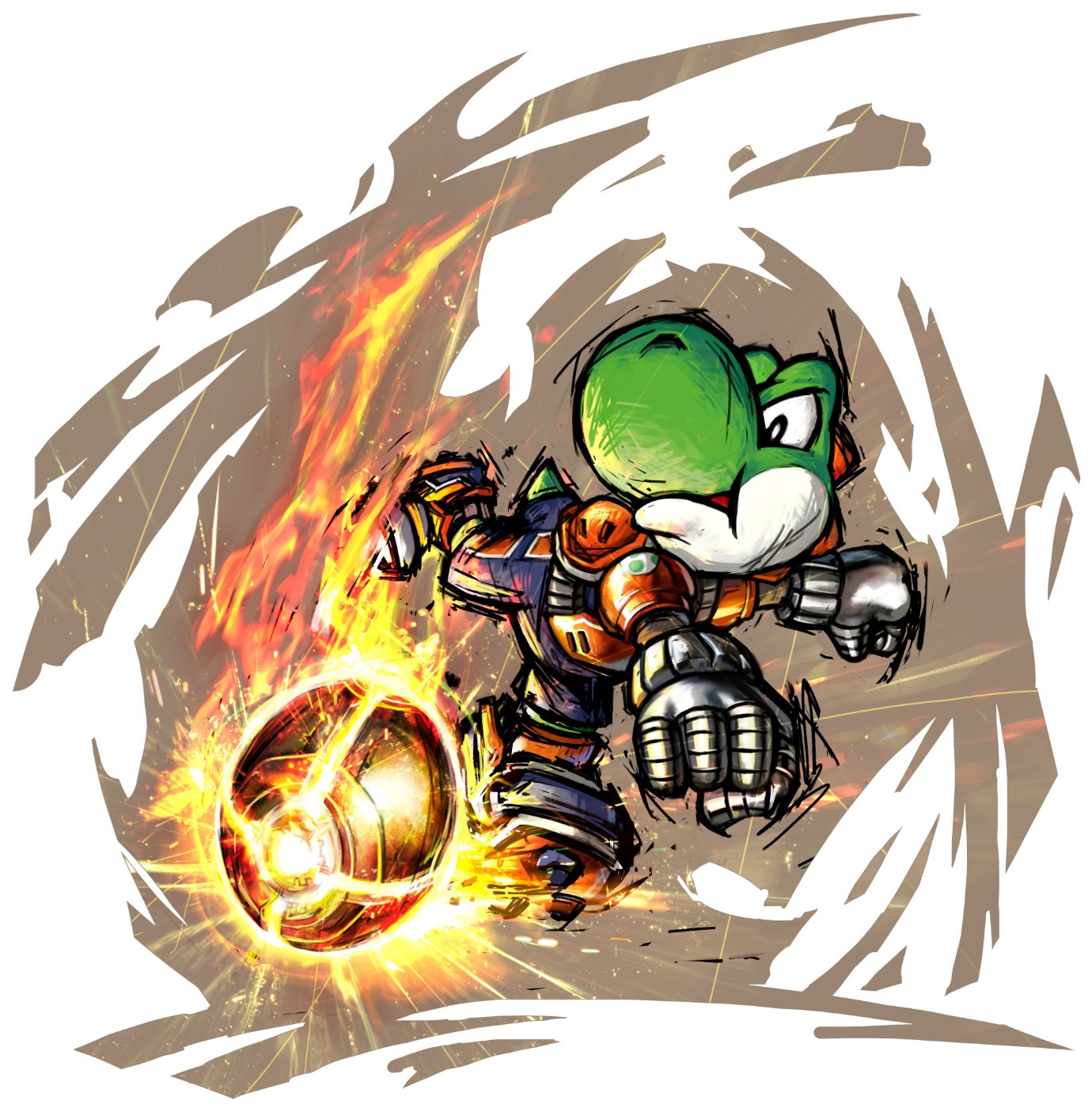 YoshiCaptain · Balanced · from the start
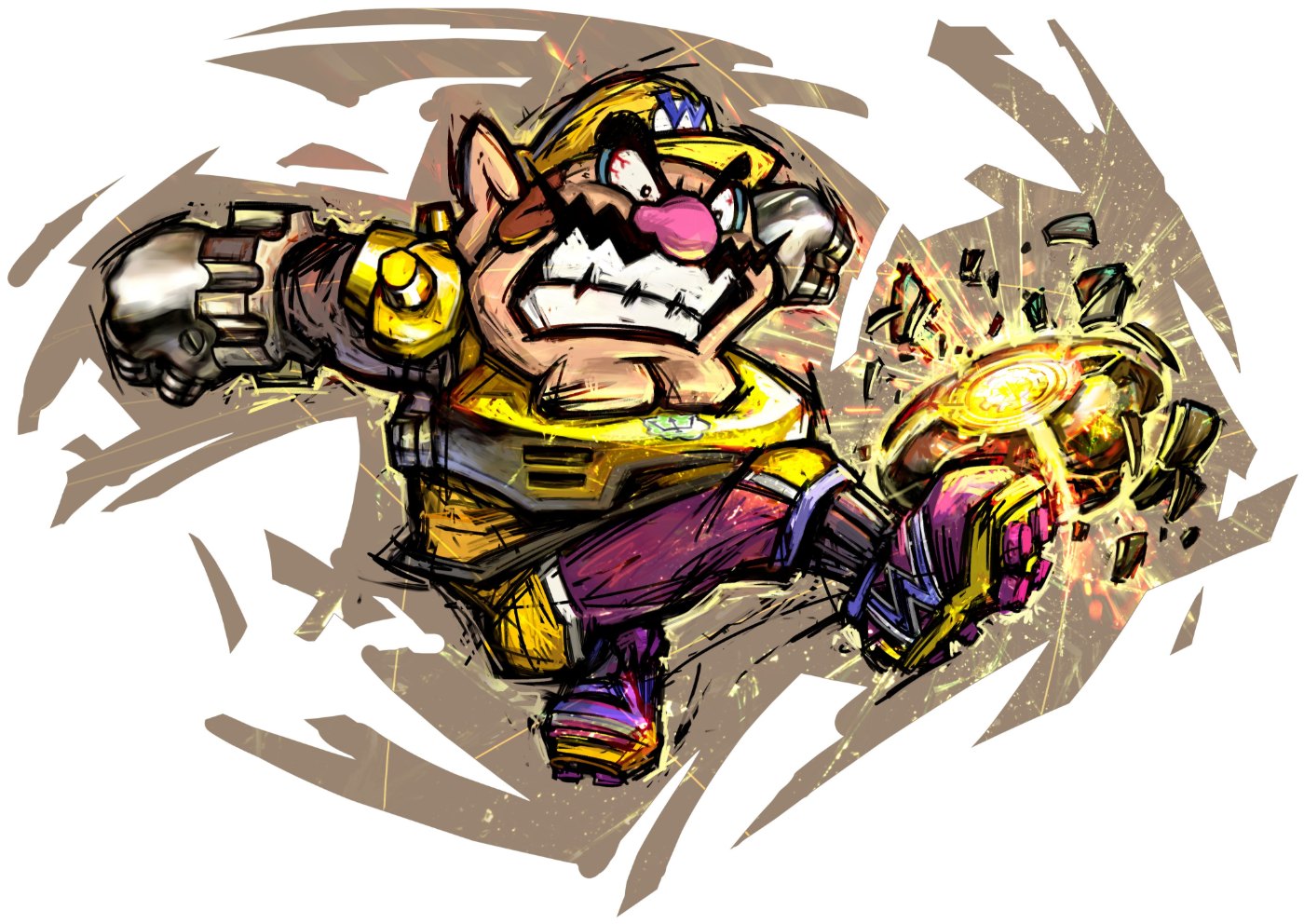 WarioCaptain · Offensive · from the start
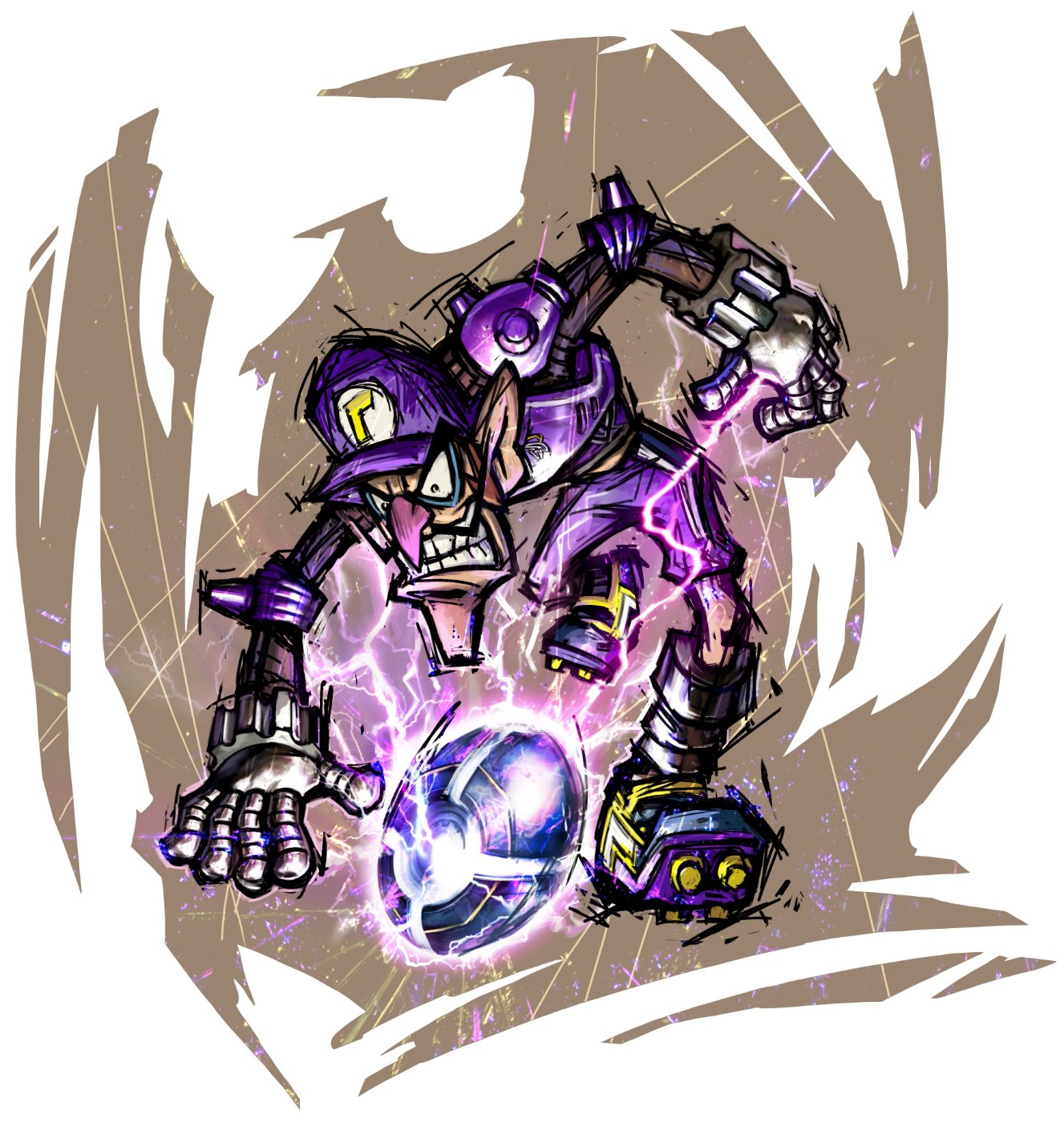 WaluigiCaptain · Defensive · from the start
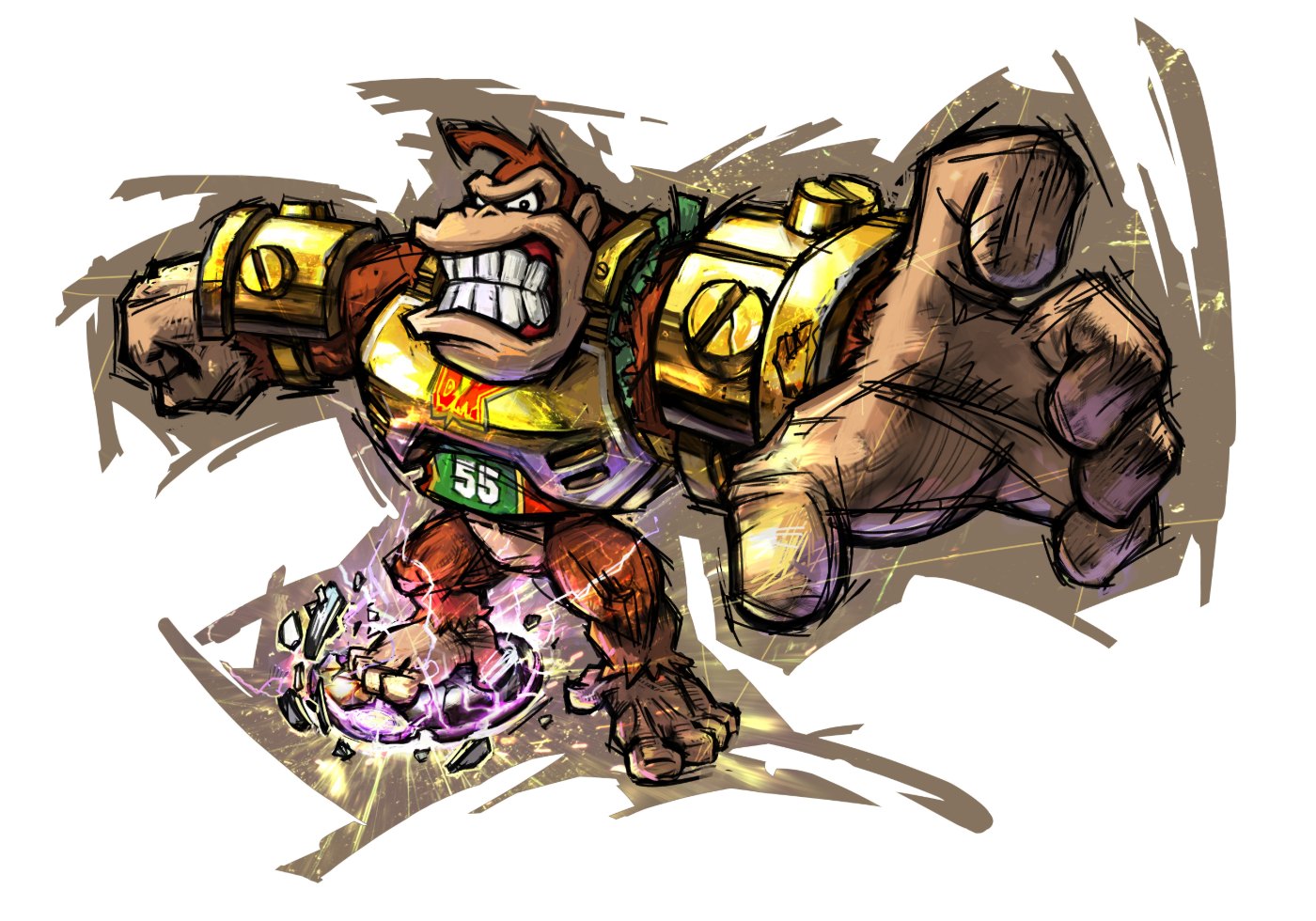 Donkey KongCaptain · Power · from the start
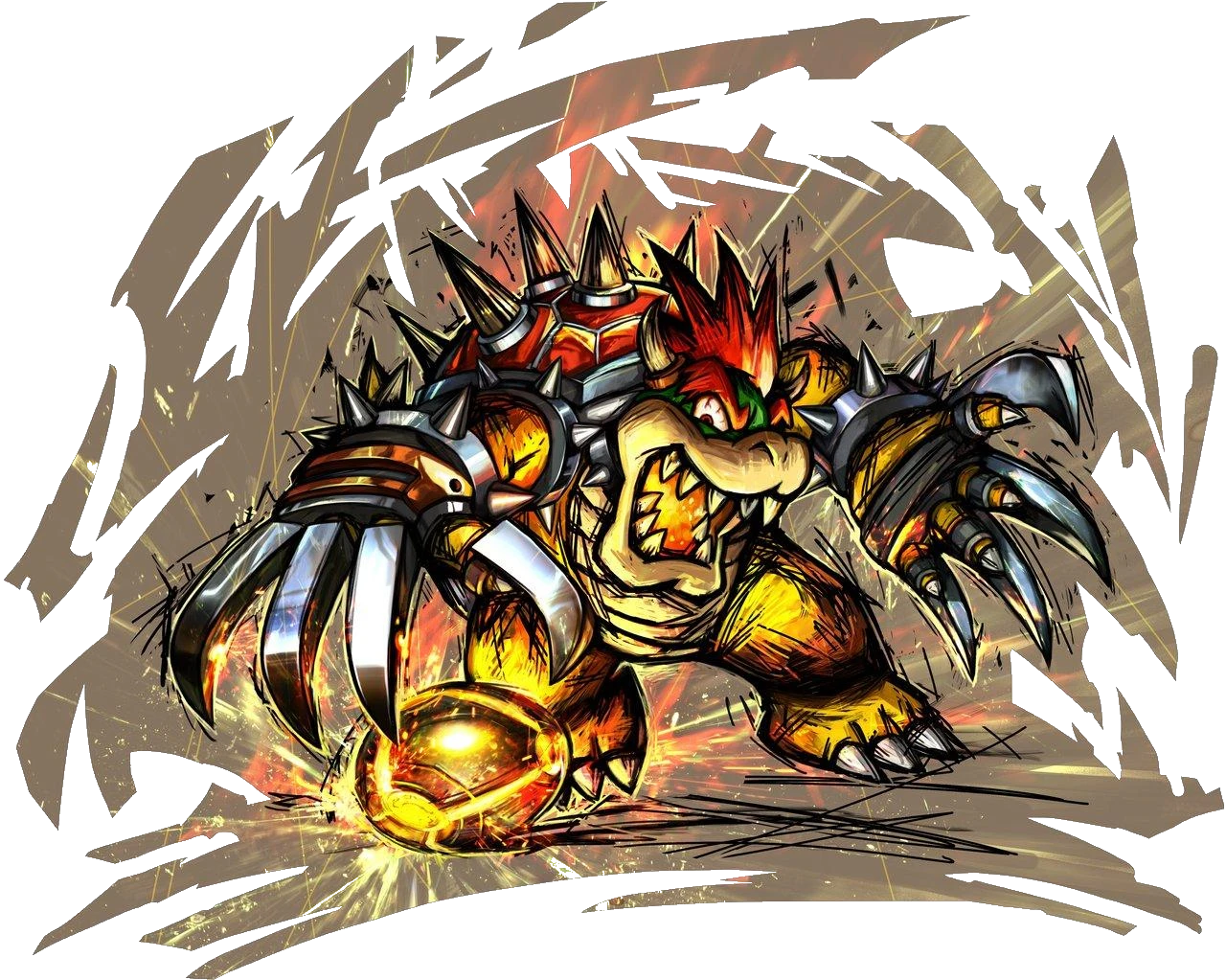 BowserCaptain · Power · from the start · new
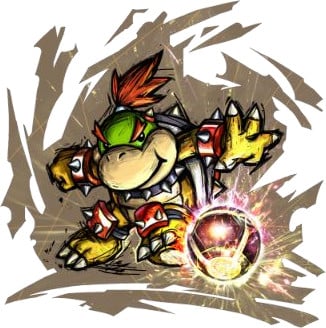 Bowser Jr.Captain · Offensive · unlock: win the Fire Cup · new
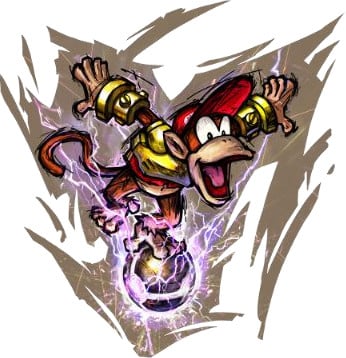 Diddy KongCaptain · Playmaker · unlock: win the Crystal Cup · new
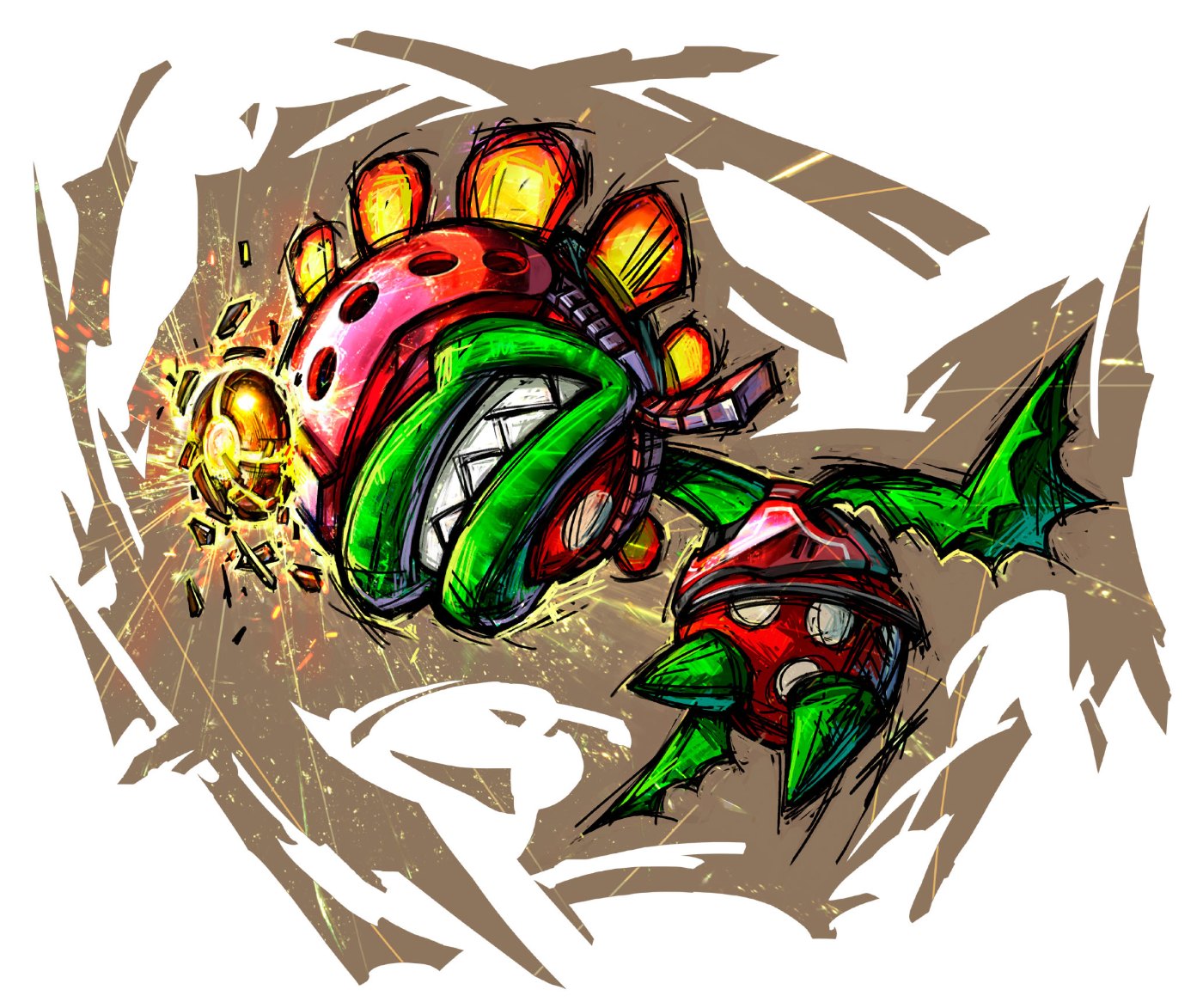 Petey PiranhaCaptain · Power · unlock: win the Striker Cup · new
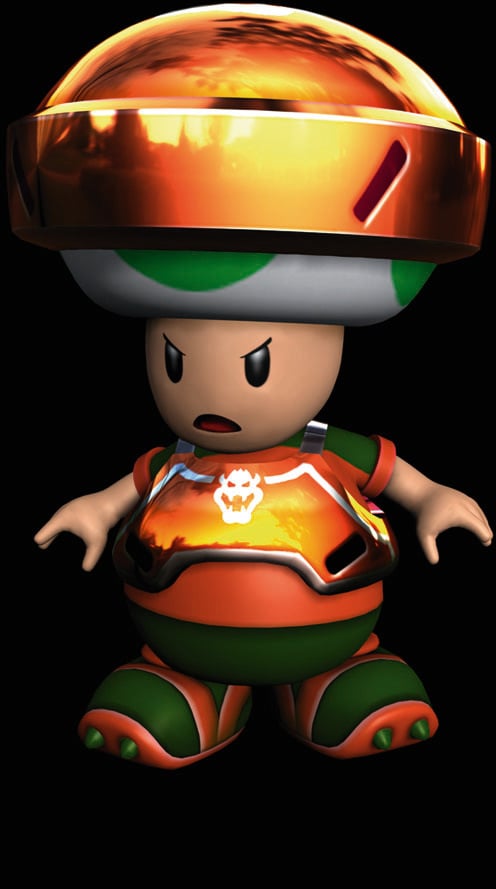 ToadSidekick · Playmaker
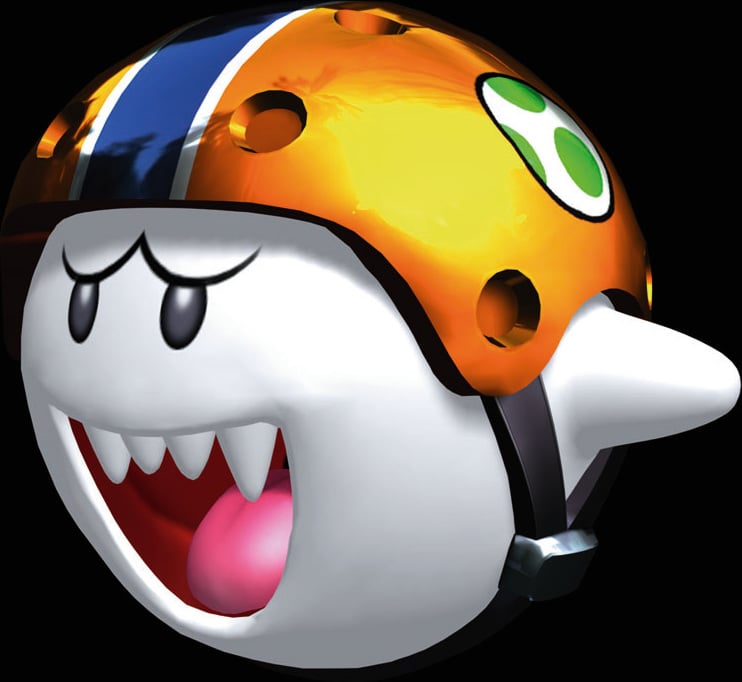 BooSidekick · Playmaker · new
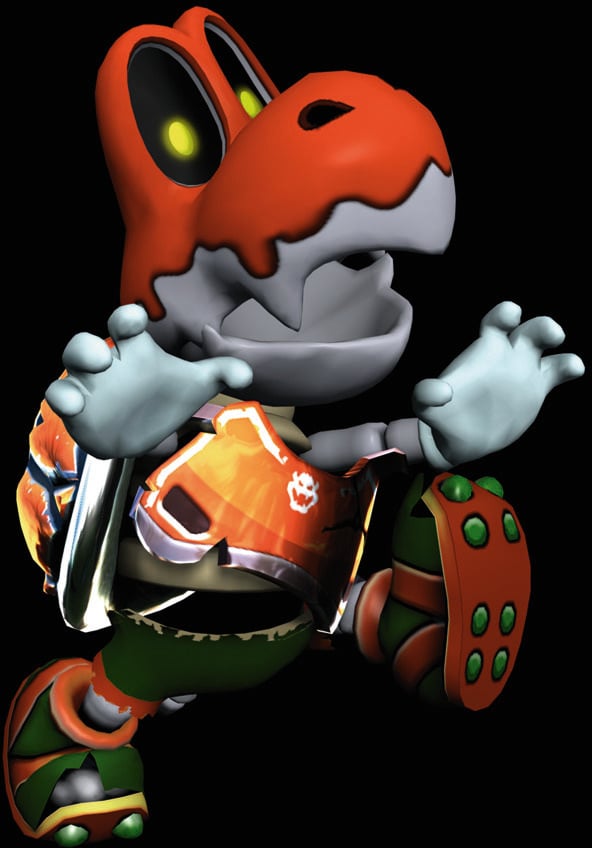 Dry BonesSidekick · Defensive · new
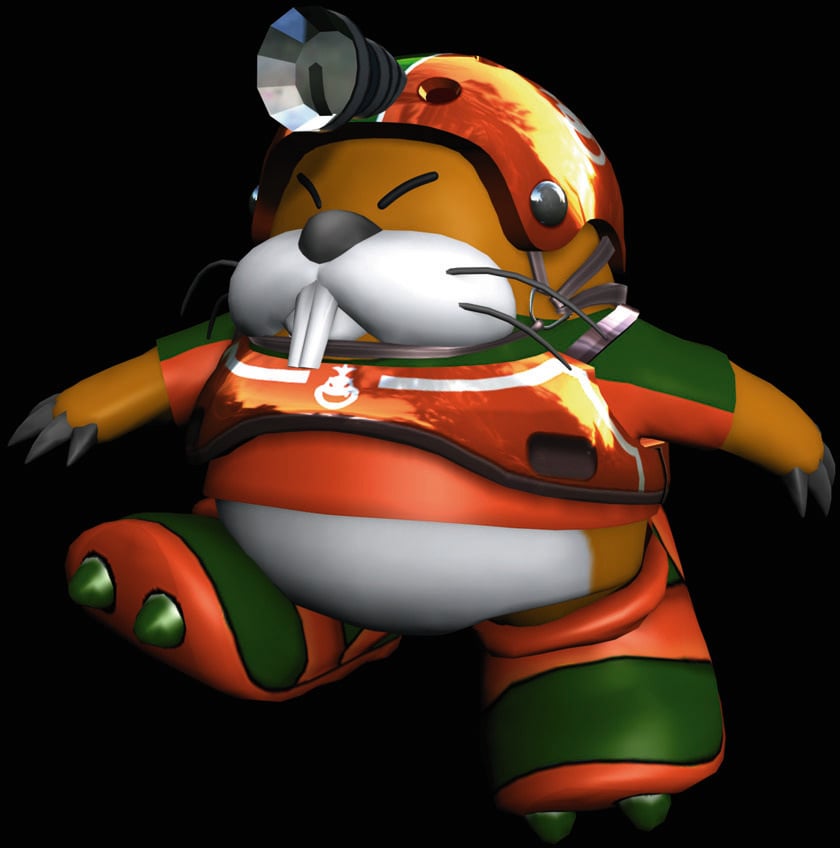 Monty MoleSidekick · Power · new
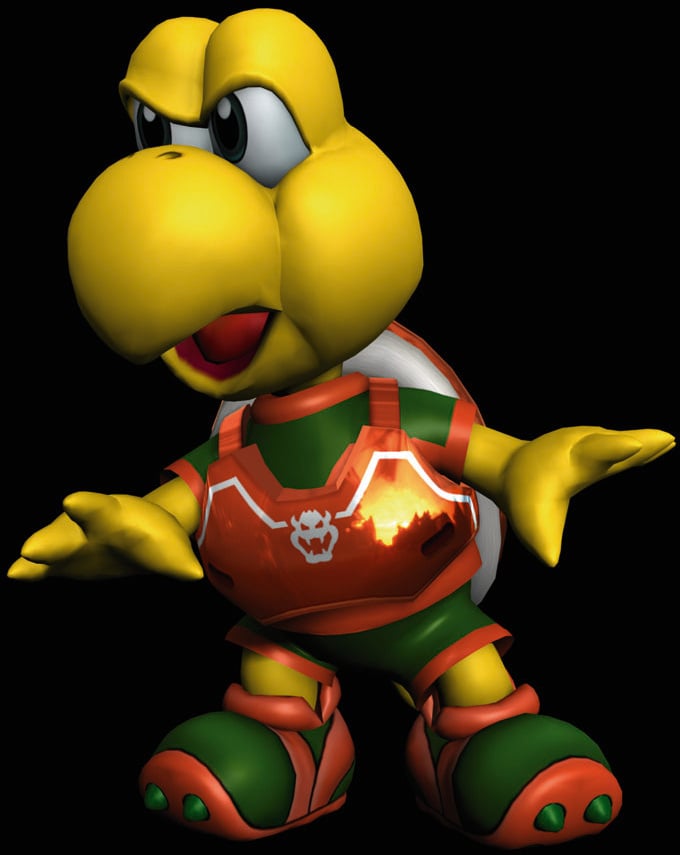 Koopa TroopaSidekick · Balanced
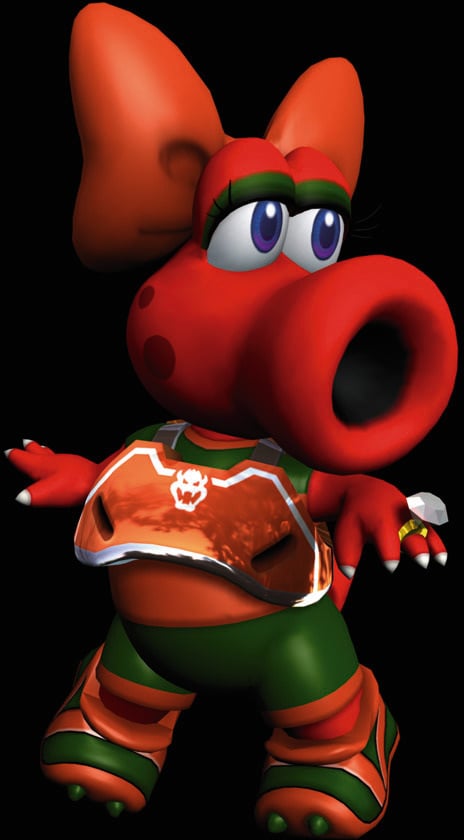 BirdoSidekick · Power
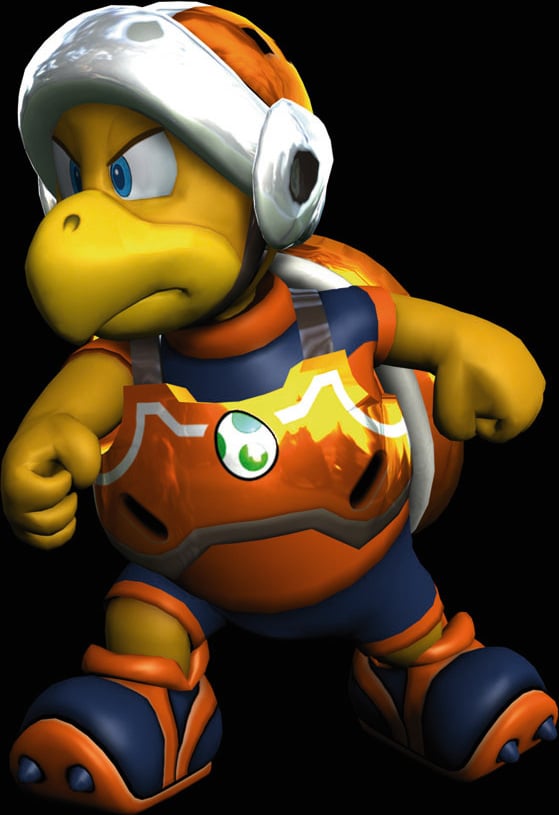 Hammer Bro.Sidekick · Offensive
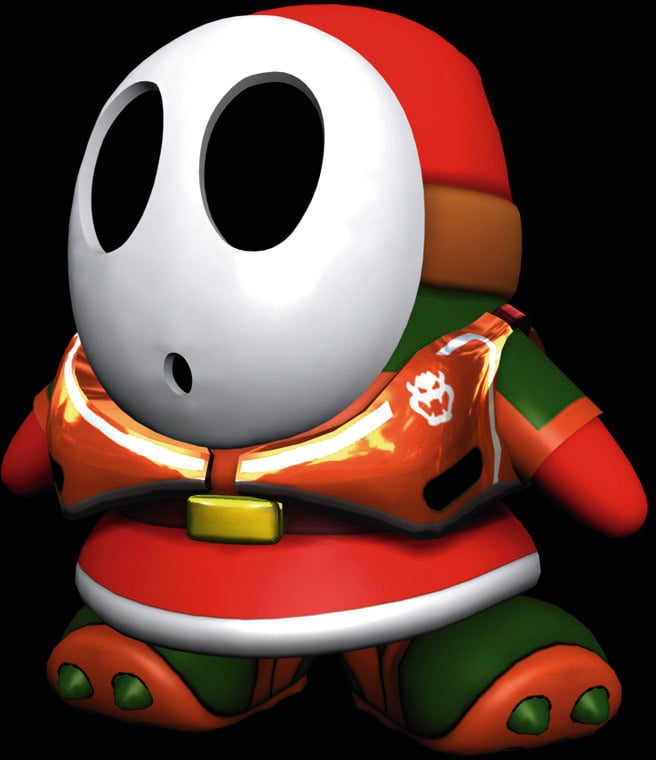 Shy GuySidekick · Balanced · new