
Mario Tennis: Power Tour
Overview
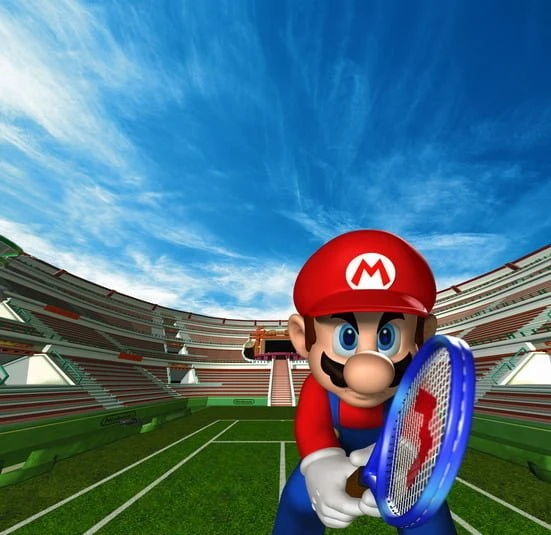
Mario Tennis: Power Tour is a follow-up to the Mario Tennis series and the only Game Boy Advance entry in the franchise. Developed by Camelot Software Planning (the long-standing Mario Tennis developer) and published by Nintendo, it released worldwide in late 2005 with an Australian launch in December 2006.
The game is extremely similar to the earlier Mario Tennis on Game Boy Color in its core structure, but greatly expanded: it’s the first portable Mario Tennis to include Power Shots, and famously incorporates RPG elements into a tennis title. Rather than just playing matches, players begin as a student at the Royal Tennis Academy and climb the academy’s ranks from Junior to Senior to Varsity, ultimately reaching the prestigious Island Open and finally the Peach Tournament. Players choose between two protagonists: Clay (male) or Ace (female).
Critically the game was warmly received: Metacritic 81/100, IGN 9/10, Nintendo World Report perfect 10/10, Eurogamer called it “a fantastic title” and “the best GBA tennis title by a mile.” The common criticism was the lack of GameCube connectivity with Mario Power Tennis (which Mario Golf: Advance Tour had with its console counterpart). Re-released on the Wii U Virtual Console in 2014.
The Story
The Royal Tennis Academy
The player — either Clay or Ace (Max/Tina in Europe, Norty/Tabby in Japan) — is a new student at the prestigious Royal Tennis Academy, training to become a pro tennis player. The academy is divided into three ranks: Junior, Senior, and Varsity, with the player working through each in turn.
The Masked Challengers
The plot kicks off when masked challengers arrive at the academy and defeat its reigning champions. The shock is significant — the academy’s champions had never lost before. The player joins the Junior class, defeats everyone in it, then progresses to Senior, then Varsity. Throughout, the question of the masked players’ identities hangs in the air.
The Island Open
At Varsity level, the top two ranking players or teams qualify to advance to the Island Open, an inter-school tournament featuring top students from the three other tennis schools. Clay and Ace eventually secure entry. Rumour has it that the victors of the Open get a chance to play against Mario himself.
The Peach Tournament
After winning the Open, the masked players’ identities are still a mystery. The very next day, Mario comes to the Academy and gives Clay/Ace the honor of playing alongside him. This kicks off the Peach Tournament, with the player teaming with Mario in doubles. The whole party travels to the Mushroom Kingdom via the Toad Express, where matches are played at the Peach Dome owned by Princess Peach. The audience consists of Piantas, Toads, and Nokis.
The Twist
During the Peach Tournament, Clay and Ace learn that Mario and his friends were the masked players at the academy, and that they were the ones who introduced the concept of Power Shots to Earth. Defeating the game unlocks Technical Difficulty, which raises the skill of all characters in story mode. Beating that as well rewards the player with a recap screen showing every character defeated on the journey.
Gameplay
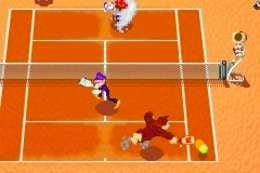
Power Tour combines traditional tennis with RPG-style progression. The core gameplay loop involves attending classes at the Royal Tennis Academy, playing matches against fellow students, training in minigames to gain EXP and PS Points, and unlocking Power Shots through accumulated points.
Tennis Fundamentals
- Topspin shot: press A for a powerful forward shot with bounce
- Slice shot: press B for a low, skidding shot
- Lob: press both A and B together for a high arc over the opponent
- Drop shot: press B near the net for a soft drop into the opponent’s court
- Smash: automatic when timing a high ball perfectly near the net
- Match formats: singles or doubles, customizable game count
The RPG Layer
- Player level: match wins and minigame completions award EXP. Higher levels unlock stronger Power Shots and improved baseline stats
- PS Points: earned from Power Shot training minigames; spend on Power Shot unlocks
- Character development: Clay and Ace start out as Power and Technique players respectively, and their stats grow throughout the story
- Story progression: defeat fellow students to unlock them as playable characters in non-story modes
- Save files: 3 separate story save slots
Modes Beyond Story
- Quick Play: jump straight into matches with any unlocked character
- Tournament: single-elimination bracket modes
- Multiplayer: up to 4 players via Link Cable (1 GBA per player, 1 cartridge minimum)
- Minigames: all training minigames playable as standalone activities
Controls
Power Tour uses three distinct control modes depending on context.
Tennis Match Controls
| Input | Action |
|---|---|
| D-Pad | Move character around the court |
| A button | Topspin shot / Smash |
| B button | Slice shot / Drop shot |
| A + B together | Lob shot (high arc) |
| L trigger | Hold for Defensive Power Shot |
| R trigger | Hold for Offensive Power Shot |
| Start | Pause |
| Select | View score / replay options |
Story Mode & Menu Controls
- D-Pad: navigate menus / move character around the academy grounds
- A button: confirm / interact with NPCs / enter areas
- B button: cancel / back out of menus
- L/R: page through inventory / status screens
Clay & Ace

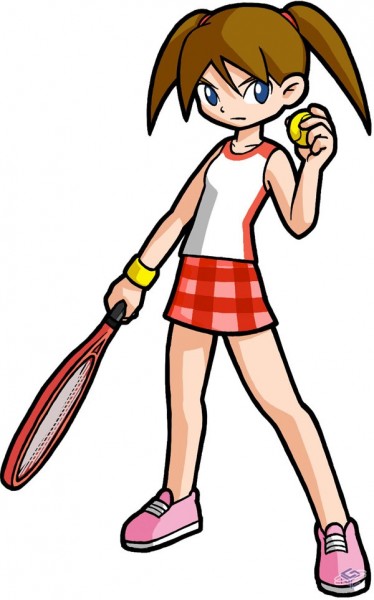
Clay (Default Male Protagonist)
The default male main character. A Power-type player who relies on heavy topspin shots and aggressive playstyle. His default name varies by region: Clay in North America, Max in Europe, Norty in Japan. Players can rename him.
Ace (Default Female Protagonist)
The default female main character. A Technique-type player who relies on accuracy, ball placement, and well-controlled rallies. Her default name also varies by region: Ace in North America, Tina in Europe, Tabby in Japan. Players can rename her.
Playing the Story
Players choose either Clay or Ace at the start of a new save file. The story is identical for both — same masked challengers, same Junior/Senior/Varsity progression, same Island Open and Peach Tournament — but the dialogue and team dynamics adjust slightly based on the chosen character. Both protagonists eventually team with Mario in doubles for the Peach Tournament.
Playable Characters (38)
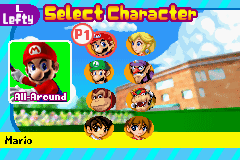
Mario Tennis: Power Tour features 38 playable characters, tied with Mario Tennis Fever for the largest cast in any Mario Tennis game. Six are pre-existing Mario series characters; the other 32 are original characters introduced for this game. Of the originals, Clay and Ace are the protagonists; the remaining 30 serve as opponents in the story mode and become unlockable for use in non-story modes.
Mario Series Characters (6)


Notably, this is the only Mario Tennis game where Yoshi is not playable, and the only Mario series title where Waluigi appears without Wario (although Wario’s voice is heard in the opening sequence).
Royal Tennis Academy Protagonists (2)


Royal Tennis Academy Students (30 unlockable)
All become playable in non-story modes after being defeated in the story:


Additional students include: Meg, Chad, Sylvia, Jet, Kyoko, Micki, Emi, Roy, Flit, Tori, Barb, Chas, Mel, Dweezil, Mynx, Willy, and Sheri.
Star variants of the unlockable characters can be unlocked separately, providing upgraded stats versions of the same characters. None of the unlockable characters debuted in prior games — they are unique to Power Tour.
The 6 Play Styles
All six play styles from Mario Power Tennis return, though the Tricky type has been renamed to Tactical. Each style provides distinct strengths and weaknesses.
| Style | Focus | Strengths | Trade-offs |
|---|---|---|---|
| All-Around | Balanced | Well-rounded stats across speed, power, and control | No outstanding strength |
| Speedy | Agility | Highest movement speed; can reach difficult balls; quick recovery | Weaker shot power |
| Technique | Accuracy & control | Better aim, ball placement, and shot consistency | Lower raw power |
| Defense | Reach | Increased reach for retrieving balls; tougher to lob over | Slower movement speed |
| Power | Raw strength | Hits the fastest balls; strongest topspin shots | Less control, weaker placement |
| Tactical | Power + a bit of control | Slightly more power than Technique with similar accuracy | Less control than Technique, less power than Power |
The 44 Power Shots
Mario Tennis: Power Tour features 44 Power Shots in total: 22 Offensive and 22 Defensive, with 12 of these being exclusive to Mario series characters. The story characters (including Clay and Ace) can learn the remaining 32 Power Shots, while Mario, Luigi, Peach, Bowser, DK, and Waluigi keep their own series-specific shots.
How They Work
- Power Shots become available once players reach Senior level in story mode
- Only Varsity and Island Open opponents actually use them, providing a difficulty ramp
- To use a Power Shot, the Power Shot meter must be fully charged
- When charged, a yellow-orange ring appears around the player’s character
- Hold L and press a shot button for a Defensive Power Shot
- Hold R and press a shot button for an Offensive Power Shot
- Each Power Shot is unlocked by reaching certain levels in the PS Minigames (Muscle for power, Spin for curve, etc.)
Notable Power Shots
A powerful straight shot that sends opponents flying. The basic Offensive Power Shot, learned first.
An intense Power Shot with added oomph. The upgraded version of the basic Power Shot.
A curving shot that sends the ball on an unpredictable trajectory. Hard for opponents to anticipate.
An incredibly fast shot that’s hard to react to. Excellent for finishing points.
The Defensive 22 are designed to save shots that would otherwise be unreturnable — lobs, deep returns, drop-shot counters, recovery shots. Equally important strategically as the Offensive set.
Each Power Shot has its own animation, with the most distinctive ones reserved for the Mario series characters (e.g., Bowser’s flame-infused shots, Peach’s heart-shaped curve, Donkey Kong’s banana-themed serves).
The 5 Courts
Power Tour has 5 distinct courts, each with its own ball-speed and bounce characteristics that fundamentally change how rallies play out.
Hard Court
Location: Royal Tennis Academy — Junior Courts — Ball Speed: Normal — Ball Bounce: Strong — Unlocked: Initially Unlocked
The standard Junior Court where new academy students begin their training. Average ball speed combined with strong bounce makes this a court suited for fundamentals — topspin shots, baseline rallies, and learning shot control.
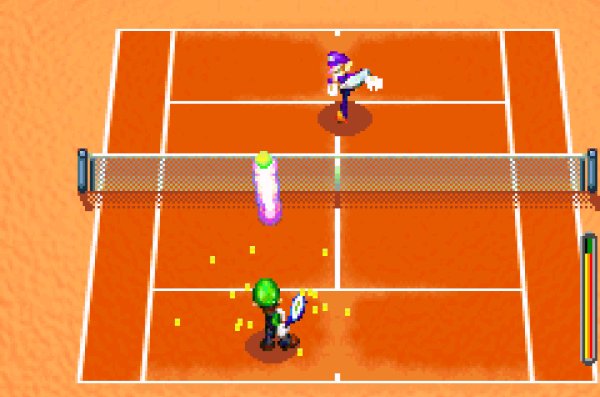
Clay Court
Location: Royal Tennis Academy — Senior Courts — Ball Speed: Slow — Ball Bounce: Weak — Unlocked: Initially Unlocked
The Senior Courts, where ball speed is reduced and bounce is weaker. Slow play favors patient, control-focused styles — making this a haven for Technique and Tactical players, and a challenge for raw Power styles who lose some of their advantage.
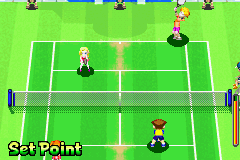
Grass Court
Location: Island Open — Ball Speed: Fast — Ball Bounce: Weak — Unlocked: Initially Unlocked
The Island Open’s tournament grass. Fast ball speed punishes slow movement; weak bounce keeps the ball low and skidding. Rewards quick reactions and aggressive net play. Speedy and All-Around characters thrive here.

Composition Court
Location: Royal Tennis Academy — Varsity Building — Ball Speed: Fastest — Ball Bounce: Normal — Unlocked: Initially Unlocked
The fastest court in the game, where the Royal Tennis Academy’s Varsity team trains. Ball speed is the highest of any court while bounce remains normal. The combination demands sharp reaction speeds — Power shots fly past you, technique shots arrive too quickly to track. The toughest standard court.

Peach Dome
Location: Mushroom Kingdom — owned by Princess Peach — Ball Speed: Normal — Ball Bounce: Normal — Unlocked: Beat the Peach Tournament
The legendary final court — located in the Mushroom Kingdom and owned by Princess Peach herself. Reached only after beating the Peach Tournament, with an audience of Piantas, Toads, and Nokis. Standard ball speed and bounce make it a fair finals stage — no court bias either way. The post-game testbed where players can finally compete on equal footing against the unlocked Mario series characters.
Training Minigames
The training minigames are central to Power Tour’s RPG progression. Each one trains different player attributes and awards either EXP (general level progression) or PS Points (Power Shot unlocks).
EXP Training Games


Both minigames have 4 difficulty levels: Beginner, Standard, Expert, Master. Available from the start of the story; the only way to grind EXP outside of matches.
PS Point Training Games
Each PS minigame has 3 standard levels and 1 challenge level. The standard levels award fixed PS Points; the challenge level rewards bonus points based on completion time or score.


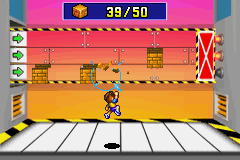


Additional training minigames include Duck Walk, Rope Climb, Tightrope Tennis, Tacklebot, and Instinct Drill, each training specific PS attributes. Completing these unlocks new Power Shots and increases the stats of the character used.
Regional Differences
Power Tour shipped with several regional differences, most notably the default names of the two protagonists.
Protagonist Default Names
| Region | Male | Female |
|---|---|---|
| North America / Australia | Clay | Ace |
| Europe | Max | Tina |
| Japan | Norty | Tabby |
Players can rename their protagonist freely at the start of a new save — the default names are only the suggested choice.
Skipper & Sass Icon Differences
Skipper and Sass have different character-select-screen and scoreboard icons between the Japanese and Western versions of the game. The exact reason for this localisation difference is not officially documented, but it is one of the well-known regional quirks of the game.
Language Selection Screen
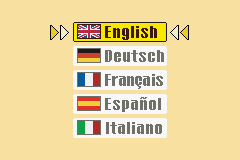
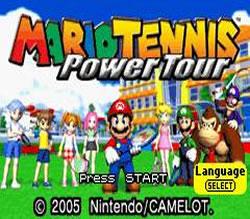
Power Tour is famously one of only a handful of Mario series titles where the USA version of the game lets players select European languages. Most NTSC-U Mario titles are English-only; Power Tour’s language selection screen offers multiple European options even on the North American cartridge.
Promotion & Videos
Two contemporary promotional videos capture Power Tour at its 2005 launch — an official intro/opening sequence from Nintendo and a thorough gameplay video.
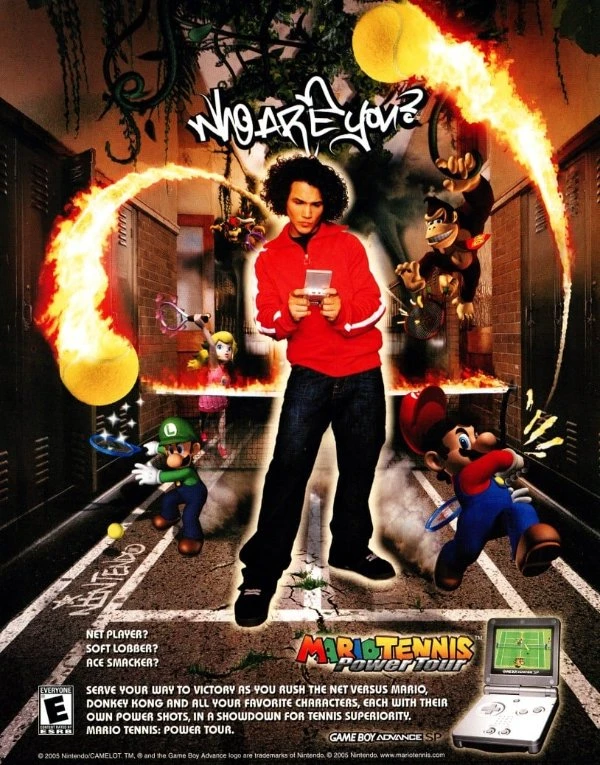
Print Advertising
Development Staff
Mario Tennis: Power Tour was developed by Camelot Software Planning — the long-time Mario Tennis developer dating back to 1995’s Mario’s Tennis on Virtual Boy — and published by Nintendo.
- Developer: Camelot Software Planning
- Publisher: Nintendo
- Producer: Hiroyuki Takahashi
- Director: Shugo Takahashi
- Platform: Game Boy Advance
- Genre: Tennis / RPG hybrid
- Series: 4th main Mario Tennis title, following Mario Power Tennis (GCN, 2004)
- Predecessor: Mario Tennis (Game Boy Color, 2000)
- Successor: Mario Tennis Open (3DS, 2012)
Reception & Legacy
Mario Tennis: Power Tour received generally positive reviews. Critics widely praised the in-depth story mode with RPG elements, the core gameplay, the large amount of content, and the polished minigames.
“A fantastic title — the best GBA tennis title by a mile.” — Eurogamer
Critical Scores
- Metacritic Aggregate: 81/100 from 21 reviews — strong critical consensus
- IGN: 9/10 — praised the gameplay, story mode, and adaptation from its GameCube predecessor Mario Power Tennis. Considered Power Shots to be carried over disruptively from the GameCube game, and criticised some recycled music
- Nintendo World Report: 10/10 (perfect score) — one of the highest scores ever awarded by NWR for a GBA title
- Eurogamer: Called it “a fantastic title” and “the best GBA tennis title by a mile,” highlighting its “mind-bogglingly addictive mini-games” and “excellent visuals”
- Kombo: 9.1/10
- Gamezone: 9/10
- Kawrence: 89/100
What Critics Praised
- The RPG-style story mode with its Junior→Senior→Varsity→Island Open→Peach Tournament progression
- The training minigames — widely cited as the most addictive part of the game
- The massive 38-character roster — the largest in any Mario Tennis game
- The 44 Power Shots giving each character meaningful differentiation
- Polished presentation, audio, and visuals by GBA standards
- The 5 distinct courts with meaningful ball physics differences
Common Criticisms
- Lack of GameCube connectivity with Mario Power Tennis — cited by nearly every reviewer as a missed opportunity. Mario Golf: Advance Tour had this kind of connectivity with its GameCube counterpart, raising expectations
- Recycled music from Mario Power Tennis
- Some critics found Power Shots disruptive to traditional tennis pacing (a complaint inherited from the GameCube game)
- The RPG progression could feel grindy in places
Legacy
- Re-released on Wii U Virtual Console in 2014
- Considered by many to be the best portable Mario Tennis game ever made
- Established the RPG-tennis hybrid formula that influenced later sports games
- The Royal Tennis Academy setting and characters became fan favourites within the Mario Tennis fandom
- Camelot would not return to portable Mario Tennis until Mario Tennis Open on 3DS (2012)
SLB User Reviews
Mario Tennis: Power Tour received a strong reception in the Super Luigi Bros community.
| Reviewer | Score | Verdict |
|---|---|---|
| WithTheDawn | 9/10 | A strong score reflecting the depth of the RPG-style story mode and the polish of the training minigames |
The SLB score of 9/10 aligns with the broader critical consensus, which placed Power Tour as one of the most-loved Mario sports titles on the Game Boy Advance.
Regional Logos & Box Art
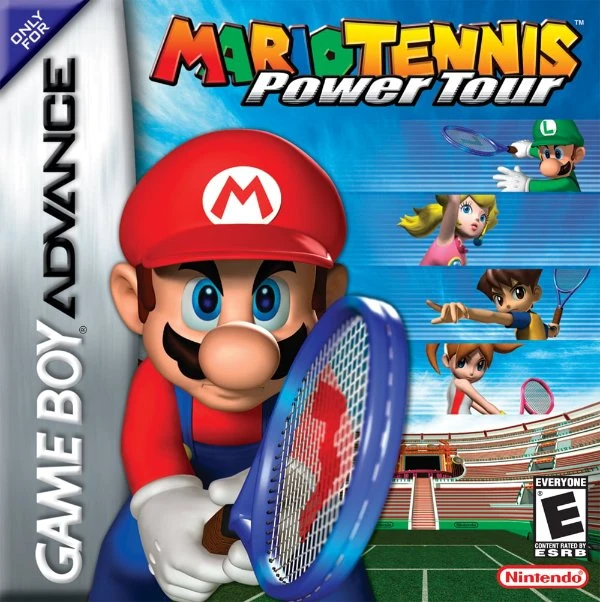
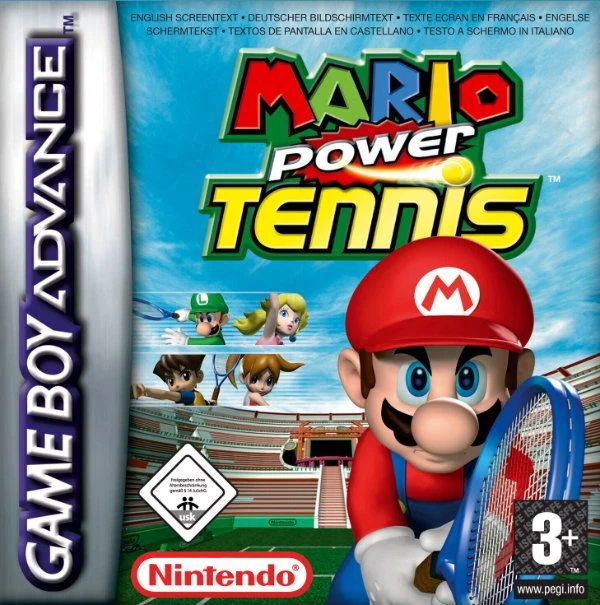
Mario Tennis: Power Tour shipped with distinct regional box art across all three regions.
Regional Logos


Box Art

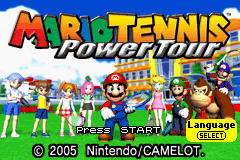
Iconic In-Game Screens

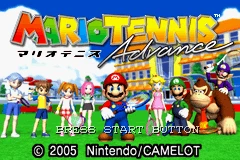
Trivia & Facts
- The only Game Boy Advance Mario Tennis game. Released between Mario Power Tennis (GCN, 2004) and Mario Tennis Open (3DS, 2012). Mario Tennis would not return to a handheld for 7 years
- The largest cast in any Mario Tennis game. 38 playable characters, tied with Mario Tennis Fever — a record that still stands today
- Waluigi without Wario. The only Mario series title where Waluigi appears as a playable character without Wario. Wario’s voice is heard once during the game’s opening sequence (saying “Nintendo”), but he is not a playable character
- No Yoshi. This is the only Mario Tennis game where Yoshi is not a playable character. A notable omission given Yoshi’s presence in every other entry in the series
- Star variants. All unlockable characters have Star variant versions, providing upgraded stats. None of the unlockable characters debuted in prior games — they are all unique to Power Tour
- Royal Tennis Academy is brand-new. The setting and 30+ original characters (Sophia, Mason, Sasha, Kate, etc.) are unique to Power Tour and don’t appear in any other Mario game
- Tricky type renamed Tactical. The Mario Power Tennis “Tricky” play style was renamed to Tactical for Power Tour. The mechanics are unchanged — just the name
- European-language USA version. One of only a handful of Mario series titles where the USA version of the game lets players select European languages from a dedicated screen. Most NTSC-U Mario titles are English-only
- The Toad Express. The transport that takes Clay/Ace from the Royal Tennis Academy to the Mushroom Kingdom is called the “Toad Express” — a Toad-themed train/bus that bridges the academy plot and the Mario plot
- The audience at the Peach Dome consists of Piantas, Toads, and Nokis — a clever nod to Super Mario Sunshine (Piantas/Nokis) blended with the wider Mario universe
- Skipper and Sass have different icons on the character select screen and scoreboard between the Japanese and Western versions. The reason was never officially documented
- The masked challengers twist. The reveal that Mario and his friends were the masked players is one of the most charming moments in any Mario sports game, and it explains the Power Shots origin as something Mario introduced to the academy
- 44 Power Shots, 12 Mario-exclusive. Mario characters keep series-signature shots; story characters can learn the other 32. This separation gives the cast more meaningful identity than typical sports rosters
- Technical Difficulty unlocks post-game. Beating the main story unlocks a harder difficulty mode that increases the skill level of all opponents in story mode — effectively a New Game Plus
- Camelot’s deepest sports game. Power Tour is widely regarded as the most RPG-flavored sports title Camelot ever made — even deeper than the simultaneous Mario Golf: Advance Tour, which had its own RPG mode
- Re-released on Wii U Virtual Console in 2014, making it accessible on modern Nintendo hardware
- Considered the best portable Mario Tennis. Among Mario Tennis fans, Power Tour is frequently ranked as the best handheld entry in the entire series
Reference / Information
Sub-pages and guides for Mario Tennis: Power Tour.
Media / Downloads
Galleries, wallpapers, and screenshots.