
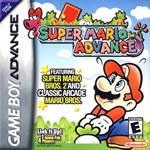

Super Mario Advance: Super Mario Bros. 2
Overview

Enter Yūme Kōjō: Doki Doki Panic, one of the best Mario games that had nothing to do with Mario — originally. Super Mario Advance reminds us of the great game that Super Mario Bros. 2 was, and how it allowed us to do things that, before that release, were crazy: playing as Princess Peach? Sure! Toad? Yup. Dash through levels and throw turnips like crazy. Jump on those enemies and do nothing to them. Time clocks, cherries, stars, mushrooms in hidden zones, all in the magical world of Subcon.
Join Mario and company on the best dream ever made into a game, now on your Game Boy Advance. In case it wasn’t enough, this Super Mario Advance includes the original Mario Bros. arcade game on it: with the link cable, you can duke it out against your friends in a good old stomping match!
The game launched the Game Boy Advance as its day-one Mario title on 21 March 2001 in Japan and 11 June 2001 in North America. Reviewers were broadly positive: Metacritic 84/100, GameSpot 8.2/10, GameSpy 90/100, with IGN calling it “one of the most polished and creative platformers of the era.” It later returned via the Wii U Virtual Console and Nintendo Switch Online — Game Boy Advance library.
The Story
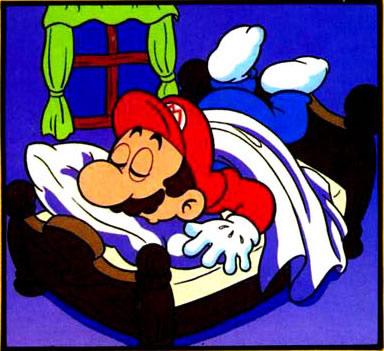
The story is preserved verbatim from the original 1988 NES manual:
The Dream
One night, Mario had a mysterious dream. He dreamed he was climbing a long stairway that led up and up to a closed door. When he reached the top and opened the door, he found himself gazing out at a world he had never seen, stretching out to the horizon. Then he heard a voice say, “This is Subcon, the land of dreams. The evil toad, Wart, has used his magic to lay a curse upon the land. Please defeat Wart and free us from his spell. Oh — and remember that Wart hates vegetables. Hurry! We need your help!” And then a bolt of lightning suddenly split the sky, and Mario woke up to find himself on the floor. He had fallen out of bed!
The Picnic
A few days later, Mario and his friends — Luigi, Princess Toadstool, and Toad — hiked to some nearby mountains for a picnic. Upon reaching their picnic spot, they looked around and found a small cave. When they entered the cave, they were amazed to discover the land Mario had seen in his dream.
Discovering Subcon
Inside the cave, a long stairway led up and up. They walked together and at the top found a door — exactly like the one in Mario’s dream. When Mario and his friends, in fear, opened the door, the world that he saw in his dream spreads out before them!
From here, the dream becomes reality. Mario, Luigi, Peach, and Toad must use vegetables, shells, mushrooms, and other items pulled from the ground to defeat Wart’s minions and free the land of Subcon. The journey ends in Wart’s lair, where he must be force-fed vegetables to defeat him — a classic, surreal finale.
Gameplay
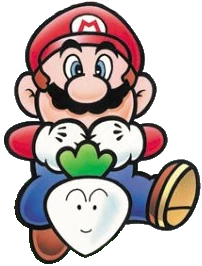
Super Mario Advance preserves the gameplay of the 1988 NES original with several Advance-era refinements. Unlike the other Mario platformers, players don’t stomp enemies into oblivion — they pluck vegetables and other objects from the ground and throw them as projectiles.
Core Mechanics
- Pluck Vegetables: stand over a vegetable patch (or pickable object) and press B + Down to pull it up
- Throw Projectiles: press B again to throw the held item forward
- Pick Up Enemies: jump on a Shy-Guy, Ninji, or similar enemy and stand on them; press B + Down to pick them up; throw with B
- Power Squat Jump: crouch and hold Down to charge a higher jump, then release for the boosted leap
- Float (Peach only): hold the jump button at the apex of a jump for a short float — unique to the Princess
- Climb: grab vines and ladders to climb vertical sections; press down to drop off any climbable
- Subspace: pluck a Magic Potion to summon a door that takes Mario to Subspace — a dark mirror of the level where mushrooms grow and coins can be collected
Health & Lives
- Each character has a life bar of up to 8 hearts, expanded by collecting Heart Radishes
- In the Advance version, all four characters now start small with 1 HP of the current maximum rather than starting Super with full health
- Mushroom power-ups in Subspace expand the heart maximum permanently for the level
- Game Over still kicks the player back to the world map; Continue is available via Subspace Continue Doors
The 7 Worlds (20 Levels)
- World 1: Standard plains — boss Birdo (multiple encounters) + Mouser
- World 2: Desert with quicksand — boss Birdo + Tryclyde
- World 3: Watery levels — boss Birdo + Robirdo (NEW boss replacing 2nd Mouser)
- World 4: Frozen lands — boss Birdo + Fryguy
- World 5: Sky / caves — boss Mouser + Clawgrip
- World 6: Sand and pyramids — boss Birdo + Mouser (returns)
- World 7: Wart’s palace — final boss Wart
Controls
The Advance version adjusts the SMB2 control scheme for the GBA’s button layout, taking advantage of L and R triggers for new functions.
| Input | Action |
|---|---|
| D-Pad | Move; Down to crouch / Power Squat charge; Up to climb |
| A button | Jump; hold to float (Peach only) |
| B button | Pull up vegetables / pick up enemies; throw held item; (cannot start running while holding) |
| R trigger | Additional Run button — lets you start running while holding an item (new to Advance) |
| L button | Pan camera vertically (in vertical sections) |
| Select | Show map / pause status |
| Start | Pause |
| Drop off Vines/Ladders | Press Down while climbing to drop off at any point (new to Advance) |
The 4 Playable Characters
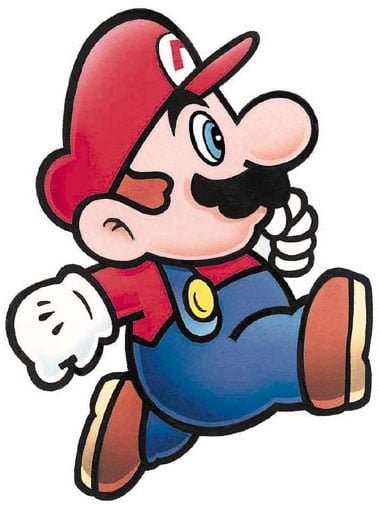

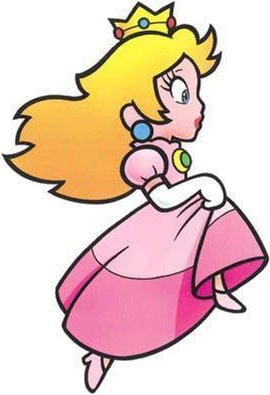
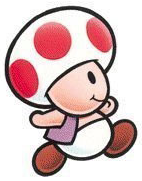
One of Super Mario Bros. 2’s defining features is that you choose between four playable characters, each with distinct stats. The Advance version preserves these differences and adds voice samples for each.
Mario — The Balanced One
Average jump height, average vegetable lift speed, average pickup time. Mario is the most balanced choice and good for most players. His running speed sits between Luigi’s (slower) and Toad’s (slowest).
Luigi — The Jumper
Highest jump in the game, with his signature midair scuttle animation. The trade-off is the slowest pickup time — Luigi is sluggish about plucking vegetables and pickup-and-throws. Best for levels with lots of vertical platforming.
Princess Peach — The Floater
The princess has a unique aerial float ability activated by holding the jump button at her apex. She drifts horizontally for a couple of seconds before falling. The trade-off: her base jump is the lowest of the four. Universally considered the easiest character for beginners because the float forgives platforming mistakes.
Toad — The Worker
Toad has the strongest grip — he can pluck vegetables and pick up items faster than anyone else. He also has the highest running speed. His trade-off is the weakest jump. Best for speedrun-style play where rapid pickup-throw chains matter more than air control.
Bosses (Including Robirdo)
Super Mario Advance features the classic SMB2 boss lineup with one important addition — Robirdo, the robotic Birdo, as the brand-new boss of World 3.
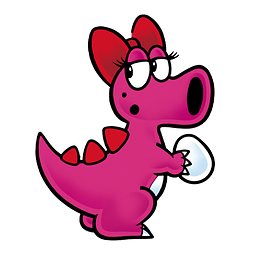
Birdo
Most worlds — mid-level guardian
The most prolific boss in the game. Birdo appears at the end of nearly every world. She fires eggs from her mouth that Mario can pick up and throw back at her. Three direct hits and she’s defeated. The Advance version added a yellow Birdo variant that fires fireballs instead of eggs, requiring Mario to use vegetables instead.
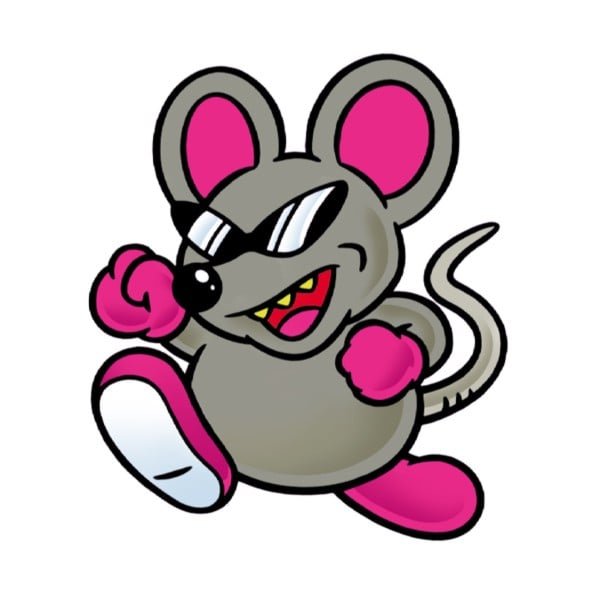
Mouser
Worlds 1 & 5 — fortress finale
A bomb-throwing mouse who fights from an elevated platform. Mario must pluck the bombs he throws and throw them back before they explode. Three hits to defeat. The Advance version moved the original second Mouser fight from World 3 to World 6, and replaced the World 3 encounter with Robirdo.

Robirdo (NEW)
World 3 — brand-new boss
The first all-new content added in any Super Mario Advance title: a robotic Birdo who replaces the second Mouser battle. Robirdo fires large mechanical eggs and stomps her platforms. Mario must pluck the same eggs and return fire. Recognizable by her metallic gray coloring versus the standard pink Birdo. A treasured Advance-era addition that became part of the wider Birdo character lore.
Tryclyde
World 2 — desert finale
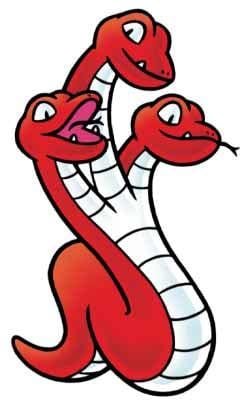
A three-headed dragon who breathes fireballs from each head. Fast attacks and tight room. Defeated by Mushroom Block throws. The Advance version did not change his attack pattern but did refresh his sprite work.

Fryguy
World 4 — ice cave
A fire-creature with a unique two-phase fight. In phase one, Fryguy fires shrinking fireballs from his head; in phase two, he splits into four smaller Fryguys after being hit, each which must be picked up and thrown.

Clawgrip
World 5 — mountain top
A massive crab who throws rocks at Mario from a platform on the right side of the screen. Mario must pluck the same rocks and throw them back. Three hits to defeat. Famously the only boss with this rock-throwing exchange mechanic.
Wart
World 7 — FINAL BOSS
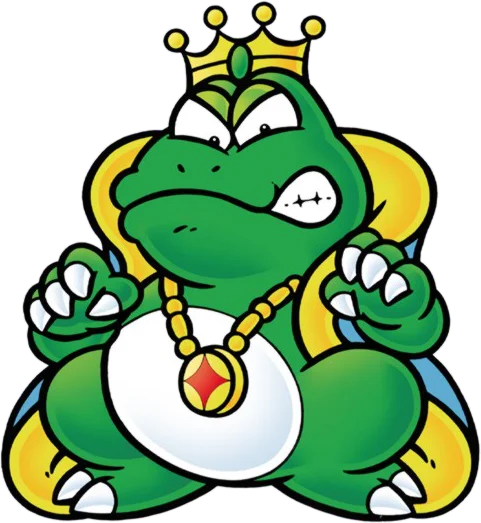
The evil toad king and final boss. Wart fires bubbles at Mario, who must dodge them while picking up vegetables from a Conveyor Belt and feeding them into Wart’s mouth. Six vegetables must be successfully fed to defeat him. Famously vulnerable to vegetables: “Wart hates vegetables.”
Enemies of Subcon
The enemies of Subcon are unique to this game — you won’t find Goombas or Koopas here. Instead, the dream world has its own cast of strange creatures.



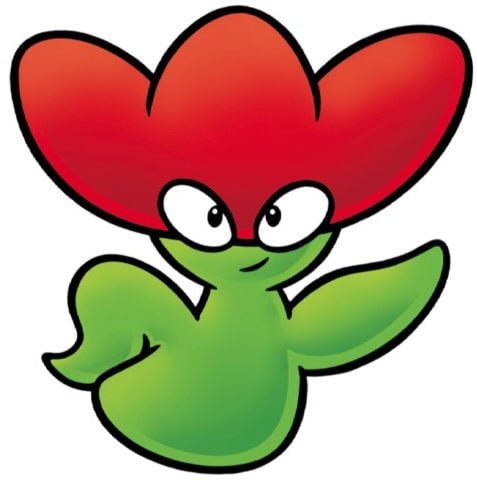

Iconic Subcon Cast
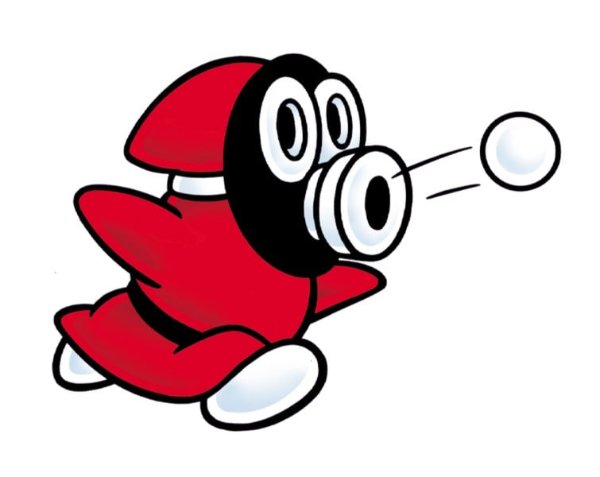
- Shy Guy — the masked mainstays of Subcon. SMB2 was their first appearance, and they’ve since become Mario series regulars across countless games
- Ninji — a small ninja who jumps in place. Pick up and throw, or just avoid
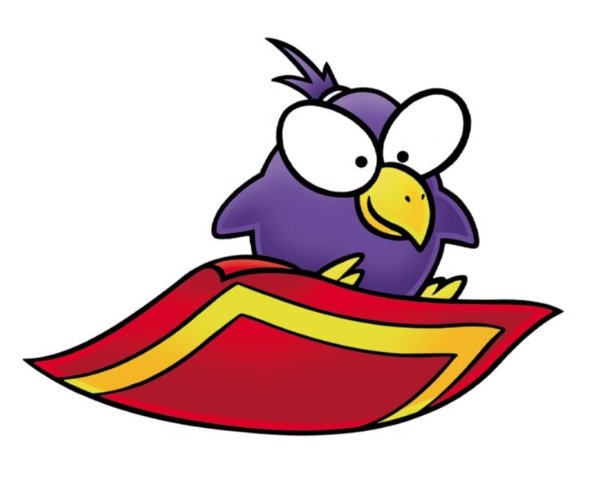
- Pidgit — a purple bird riding a flying carpet. Jump on the carpet to ride it yourself
- Snifit — a Shy Guy with a gun mask who fires bullets at Mario. Pick up and throw to defeat
- Beezo — a flying wasp-like enemy carrying a spear. Both red and yellow variants appear
- Panser — a flame-throwing plant rooted to the ground. Pick up only via Mushroom Block
- Phanto — a ghost mask that chases the player whenever they’re carrying a Key. Unbeatable; only escapable by dropping the key
- Albatoss — a flying bird that drops Bob-ombs from the sky
- Autobomb — a wheeled vehicle ridden by Shy Guys
- Pokey — a cactus made of segments; iconic SMB2 enemy
- Flurry — a snowman-like creature in icy levels
- Spark — an electricity that travels along platform edges
Changes from the NES Original
Super Mario Advance is more than a plain port — Nintendo made dozens of changes from the NES original and Super Mario All-Stars remaster.
Gameplay Changes
| Area | Change |
|---|---|
| Starting State | Mario/Luigi/Toad/Peach now start each life and level in Small form with 1 HP remaining, persisting between levels. Original/All-Stars always started Super with full health |
| Vine/Ladder Drop | Press Down on D-Pad while climbing to drop off at any point |
| R Run Button | R trigger acts as an additional Run button — lets you start running while holding an item (impossible in the original) |
| Camera Pan | L and R buttons can pan the camera vertically and horizontally in tall sections |
| Boss Order | The boss order is altered: Robirdo is the NEW boss of World 3; the second Mouser battle moves to World 6 to replace Tryclyde’s second appearance |
| Voice Samples | All four playable characters now have distinct voice clips for jumps, hits, throws, and pickups — famously sampled lines like Mario’s “Here we go!” |
| 100 Ace Coins | 5 large Ace Coins are hidden in each of the 20 levels (100 total) — collect all 100 to unlock a special title screen variant |
| Yoshi Egg Challenge | After completing the main game, a special challenge mode unlocks: find 2 Yoshi Eggs hidden in each level for a Yoshi-themed reward |
Graphical & Textual Changes
- Brightened color palettes to compensate for the original GBA’s lack of a backlight. Subspace lost its dark blue tint and is now only slightly darker than Subcon
- Title screen redesigned: the old curtain aesthetic was removed, replaced by a new menu with save files. Story explanation now lives in the manual only
- Pidgits recolored from black to purple; their carpets from yellow to red
- Hoopsters recolored from red-with-black-spots to yellow-with-red-spots
- Autobombs recolored from black to gray
- All red Beezos recolored yellow — yellow Beezos are now the standard variant
- Bombs and Bob-ombs pulsate when about to explode; explosion animations also pulsate
- Enemies rotate when thrown and/or defeated
- Birdo’s eggs rotate upon hitting a wall
- Cherries and Heart Radishes have refreshed artwork
Audio Changes
- Music was re-arranged for the GBA’s audio chip, retaining the Koji Kondo compositions but with new instrumentation
- Each playable character gained voice clips sampled from the original Nintendo voice actors
- Sound effects re-sampled at GBA quality
- The Mario Bros. arcade mini-game added music where the original was silent
The Mario Bros. Arcade Inclusion

Included as a bonus, the Mario Bros. arcade game (1983) returns in its first appearance on the Game Boy Advance. It became a staple of the entire Super Mario Advance series.
Two Game Modes
- Classic Mode — based on the original arcade’s co-op mode. Players defeat waves of Shellcreepers (replaced with Spinies in this version), Sidesteppers, and Fighter Flies. Knock enemies upside-down by hitting platforms from below, then kick them off the screen
- Battle Mode — similar to the All-Stars remake of Super Mario Bros. 3. Two players compete on the same playfield via Link Cable, trying to knock each other out
Changes from the Original
- Enhanced graphics with smoother animations
- Music added to stages where the original was silent
- An extra POW Block in every stage
- Addition of the Power Squat Jump mechanic (the same charge-up jump as SMB2)
- Shellcreepers replaced with Spinies as the basic enemy
The Mario Bros. inclusion is a major reason the Super Mario Advance series became known for multiplayer Link Cable functionality. It would appear in every subsequent Advance release (SMA2, SMA3, SMA4).
The Yoshi Egg Challenge

One of the most beloved Advance-exclusive additions is the Yoshi Egg Challenge mode, unlocked after completing the main game once.
How It Works
- After beating Wart and seeing the credits, return to any completed level
- Each level now has 2 hidden Yoshi Eggs tucked away in unexpected places
- 40 Yoshi Eggs total across the 20 levels
- Eggs are often hidden behind walls, inside vegetable patches, or in Subspace mirror areas
- Find all 40 to unlock the special Yoshi Challenge title screen and see baby Yoshis throughout the menus
The 100 Ace Coins
The Ace Coin system is one of Advance’s most clever additions. 5 large Ace Coins are hidden in each of the 20 levels — 100 total.
How They Work
- 5 Ace Coins per level, often hidden in unusual places — inside Subspace, behind walls, under vegetable patches, in skip-zones
- Coins are persistent across plays — collected coins stay collected even after death or quitting
- Visible counter in the pause menu shows your collection progress
- Collecting all 5 in a level shows a special completion icon on the world map
- Collecting all 100 Ace Coins unlocks the special “all coins collected” title screen variant alongside the Yoshi Challenge title
Why They Matter
The Ace Coin system was a precursor to the Red Coin / Star Coin systems that became standard in later Mario games (New Super Mario Bros., Super Mario 64 DS Red Coins). Super Mario Advance was effectively the proof-of-concept for hidden collectibles as a Mario series mainstay.
Promotion & Videos
Four contemporary promotional videos preserve Nintendo’s 2001 launch campaign and the Wii U Virtual Console re-release.
Print & Other Promotional Materials
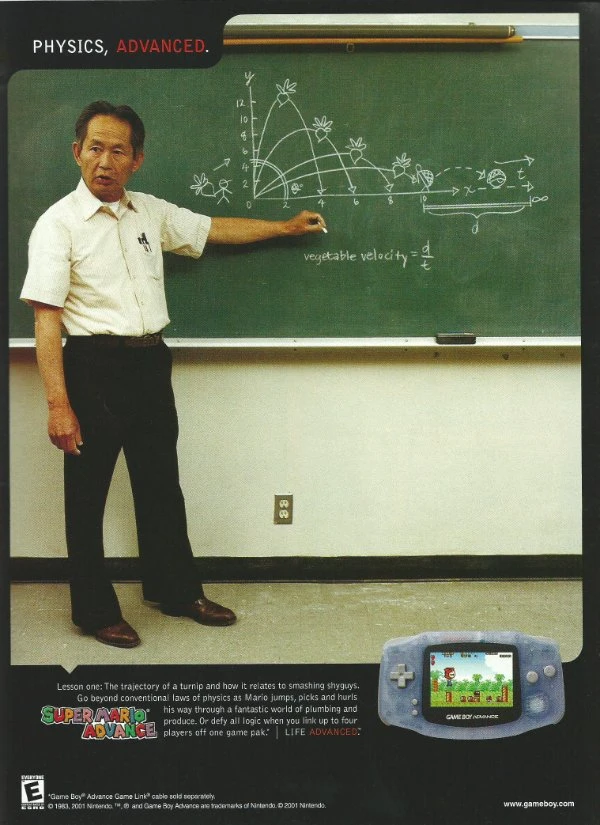
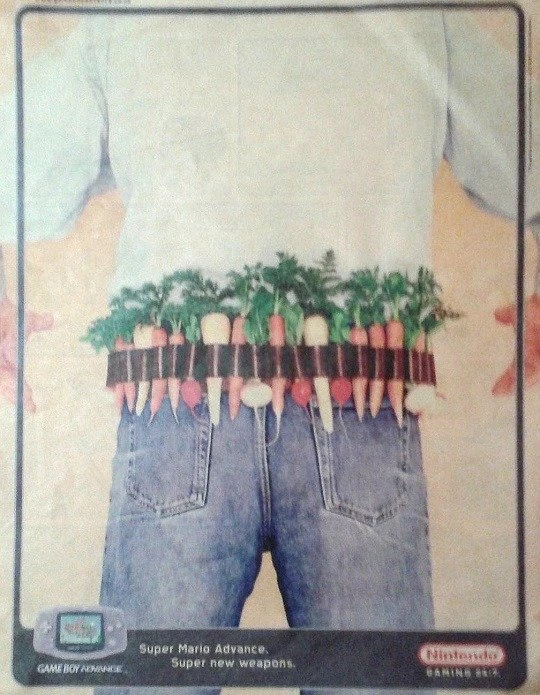
- International print advertising campaign across the US, UK, Brazil, and Japan
- A famous “Mario Vegetable” T-shirt based on the North American print ad was produced as merchandise
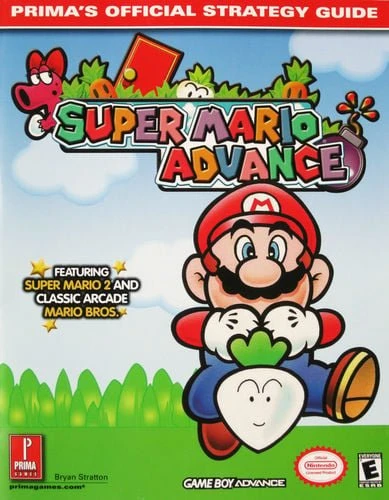
- Prima Games Official Guide published at launch with detailed walkthroughs of all 20 levels, Ace Coin locations, and the Yoshi Challenge
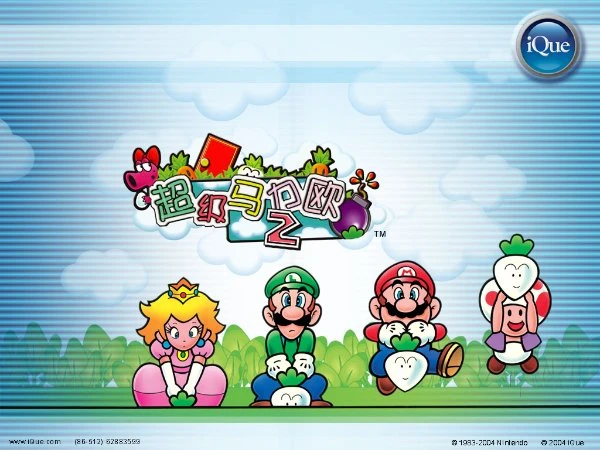
- iQue Club wallpaper distributed via the Chinese iQue subscription service
Development Staff
Super Mario Advance was developed by Nintendo R&D2 (the same team that handled most of the Advance series) and published by Nintendo.
- Developer: Nintendo R&D2
- Publisher: Nintendo
- Platform: Game Boy Advance (Launch Title)
- Original Game: Super Mario Bros. 2 / Yume Kōjō: Doki Doki Panic (NES / Famicom Disk System, 1987–1988)
- Original Director: Kensuke Tanabe
- Original Producer: Shigeru Miyamoto
- Original Score: Koji Kondo
- Original Character Design (Doki Doki Panic): Yoichi Kotabe
- Genre: 2D platformer
Reception & Legacy
Super Mario Advance received generally positive reviews for the launch of the GBA in 2001 — the system’s flagship Mario title.
“One of the most polished and creative platformers of the era.” — IGN
Critical Scores
- Metacritic Aggregate: 84/100 — strong critical consensus
- IGN: Praised the polish and the bold choice to bring SMB2 to the launch lineup, calling it “one of the most polished and creative platformers of the era.” A clear-headed evaluation that valued the unique vegetable-throwing gameplay above the wider familiarity of SMB3 or SMW
- GameSpy (Craig “Talon” Wessel): 90/100 — “It’s Mario, Luigi, Peach, and Toad — sound familiar? It should. This remake of the NES classic Super Mario Brothers 2 doesn’t break any new ground, but it’s still a good title to pick up for the GBA.”
- GameSpot (Shahed Ahmed): 8.2/10 — “Those interested in single-player platformer gameplay, albeit with relatively loose controls, will find Super Mario Bros. 2 both unique and highly challenging.” Noted that SMB3 or SMW might have been a more obvious launch choice
What Critics Praised
- The refreshed Super Mario All-Stars-style graphics brought beautifully to GBA
- The Robirdo boss as new content for fans of the original
- The 100 Ace Coins as a clever completionist hook
- The Yoshi Egg Challenge doubling effective playtime
- The included Mario Bros. arcade with 2-player Link Cable as a brilliant bonus
- The 4 distinct playable characters with different stats, especially Peach’s float
- Strong portable platforming showcase for the new GBA hardware
What Critics Criticised
- Some critics felt the SMB2 choice was unconventional versus the more famous SMB3 or SMW
- The loose controls inherent to SMB2’s pluck-and-throw mechanics
- The screen crunch from the GBA’s smaller resolution versus the original NES screen
- The removal of the title-screen story explanation in favor of a more efficient menu
Sales & Legacy
- One of the best-selling GBA launch titles at March/June 2001 release
- Re-released on Wii U Virtual Console in 2014
- Available on Nintendo Switch Online — Game Boy Advance library via Expansion Pack
- Established the entire Super Mario Advance series template — graphics refresh, included Mario Bros. multiplayer, hidden-collectible completionist mode, and post-game challenge mode all became standard Advance-series features
SLB User Reviews
The Super Luigi Bros community reviewed Super Mario Advance with mixed feelings — the game has both strong and lukewarm scores in the SLB user reviews.
| Reviewer | Score | Verdict |
|---|---|---|
| Chandlerbing | 6/10 | A middle-of-the-road score reflecting the divisive nature of Super Mario Bros. 2 as a Mario entry |
| Flying Omelette | 4.5/10 | A fairly brutal review citing the divisive gameplay and lack of traditional Mario power-ups |
The SLB user average of 5.25/10 stands in contrast to the professional critic average of 84/100. Super Mario Bros. 2’s divergent gameplay (pluck vegetables instead of stomp Goombas) has always been a love-it-or-hate-it experience for fans of the wider Mario series.
Regional Logos, Box Art & Marketing
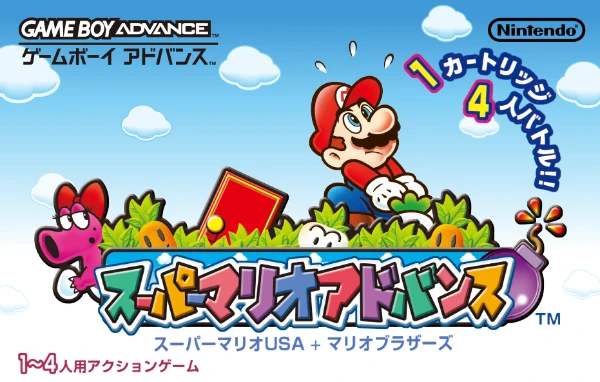
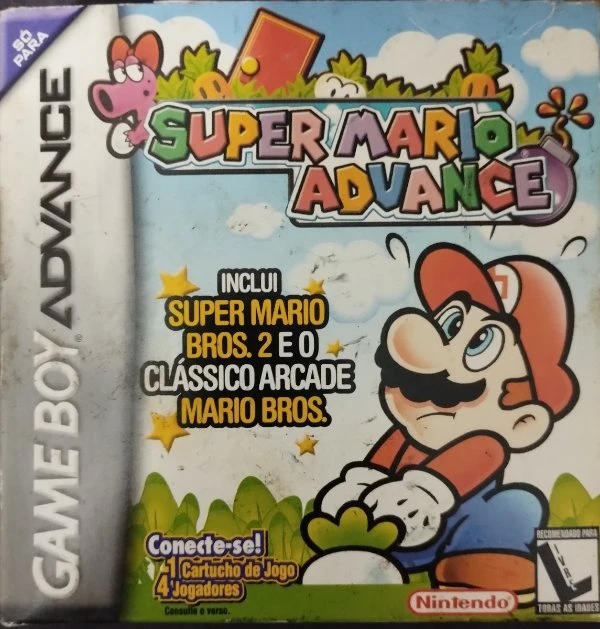
Super Mario Advance shipped with consistent worldwide naming and refreshed regional packaging.
Regional Logos



Box Art




Print Advertising


Strategy Guide
Iconic In-Game Screens


Trivia & Facts
- The GBA launch title. Super Mario Advance was the day-one Mario release for the Game Boy Advance. The choice was contentious — some critics felt SMB3 or SMW would have been more obvious launch picks, but Nintendo prioritized the Advance series progression
- Super Mario USA in Japan. The game is called Super Mario USA: Super Mario Advance in Japan. All audio in the game is in English in all regions — unique among GBA Mario titles
- Originally a Mario reskin. Super Mario Bros. 2 began life as Yūme Kōjō: Doki Doki Panic, a 1987 Famicom Disk System title developed by Nintendo R&D4. Nintendo reskinned it with Mario characters when the original Japanese SMB2 (later released as “Lost Levels”) was deemed too difficult for Western audiences
- Graphics are remade from Super Mario All-Stars. The Advance version uses the SNES All-Stars sprites refreshed for GBA. Leftover sprites from the All-Stars version are present in the game data — a sign of engine reuse
- Robirdo is the first all-new Advance-series boss. The robotic Birdo doesn’t exist in any prior SMB2 release. Her introduction here makes her a uniquely Advance-era character who has since become part of the wider Birdo lore
- 4 playable characters with real differences. Mario (balanced), Luigi (highest jump), Peach (only one who floats), Toad (strongest grip, fastest). Each plays meaningfully differently — a rarity in 2D Mario games
- 100 Ace Coins hidden 5-per-level across all 20 stages. The first Mario game to use this kind of collectible system, which later became Red Coins / Star Coins in newer titles
- Yoshi Egg Challenge unlocks after the first playthrough. 2 eggs per level (40 total) — collect all to see baby Yoshis on the title screen
- Distinct voice clips for all four characters. Mario’s “Here we go!”, Peach’s feminine voice samples, Luigi’s distinct “Oh yeah!” — a first for the playable cast
- Mario Bros. arcade included with 2-player Link Cable support. This established the Mario Bros. inclusion as a Super Mario Advance series tradition that ran through SMA2, SMA3, and SMA4
- Shy Guys returned. SMB2 was Shy Guys’ first Mario appearance (originally Doki Doki Panic enemies). After SMB2 they disappeared from the series for years, returning in Super Mario World 2: Yoshi’s Island and beyond. The Advance port brought them back to portable consoles
- Brightened palettes for the unlit GBA screen. Subspace lost its dark blue tint, making the dream-world subareas more readable
- The Mario Vegetable T-shirt was real merchandise. The North American print ad featured Mario holding vegetables; Nintendo produced an official T-shirt based on the ad as a promotional give-away
- The story was preserved verbatim from the 1988 NES manual. The dream / picnic / cave / stairs story is identical word-for-word — but moved from the title-screen text to the included paper manual
- Re-released on Wii U Virtual Console in 2014 and Nintendo Switch Online — Game Boy Advance in subsequent years, making the title easily accessible on modern Nintendo hardware
- First Super Mario Advance series entry. Established the template for SMA2 (Super Mario World), SMA3 (Yoshi’s Island), and SMA4 (Super Mario Bros. 3) — enhanced graphics, included Mario Bros. multiplayer, hidden collectibles, and post-game challenge mode
- The R trigger as additional run button was an Advance-port innovation. Allowed players to start running while holding an item — impossible in the original
- The Floating Pokey glitch is exclusive to the Advance version — a specific glitch where a Pokey can be made to hover above the ground due to a port-specific collision bug
Promotional Wallpaper
Official iQue Club wallpaper from the Chinese Super Mario Advance release.
Reference / Information
Sub-pages and guides for Super Mario Advance: Super Mario Bros. 2.
Media / Downloads
Box art gallery and screenshots for Super Mario Advance: Super Mario Bros. 2.