Game Boy Advance2005Party / adventureHudson SoftA Mario Party for one50 quests50 minigames61 GaddgetsPaper Bonus Board in the box
Mario Party Advance
The odd one out of the whole series. Mario Party Advance reached Japan on 13 January 2005, North America on 28 March and Europe on 10 June, and it is barely a party at all. Its main mode, Shroom City, is a single-player adventure in which Mario, Luigi, Peach or Yoshi drives round one large board, spending Mushrooms to roll the dice and running errands for the locals. Bowser and Koopa Kid have crash-landed on Toad and scattered Party World’s minigames and Gaddgets across the city, and 50 quests stand between you and getting them back. Along the way you collect 50 minigames and 61 Gaddgets, Professor E. Gadd’s pocket toys, to play again in Play Land, Party Land and Challenge Land. Playing with friends needed Game Link cables or a shared console, so a paper Bonus Board came in the box, with the Game Boy Advance standing in for the dice. Critics were unkind, and its Metacritic score of 54 is the lowest in the series, but there is nothing else in Mario Party quite like it.
Developer:Hudson Soft (Wikipedia adds the studio A.I for the minigames; some sources also list Nintendo SPD Group No. 4)
Publisher:Nintendo
Platform:Game Boy Advance
Genre:Party / adventure
Japan:13 January 2005
N. America:28 March 2005
Europe:10 June 2005
Australia:15 September 2005 (some sources give 16 September)
Japanese sales:97,596 by 23 January 2005 (Media Create, via Inside Games)
Re-release:Wii U Virtual Console: 25 December 2014 (Japan: 28 October 2015)
Advertisement
Overview
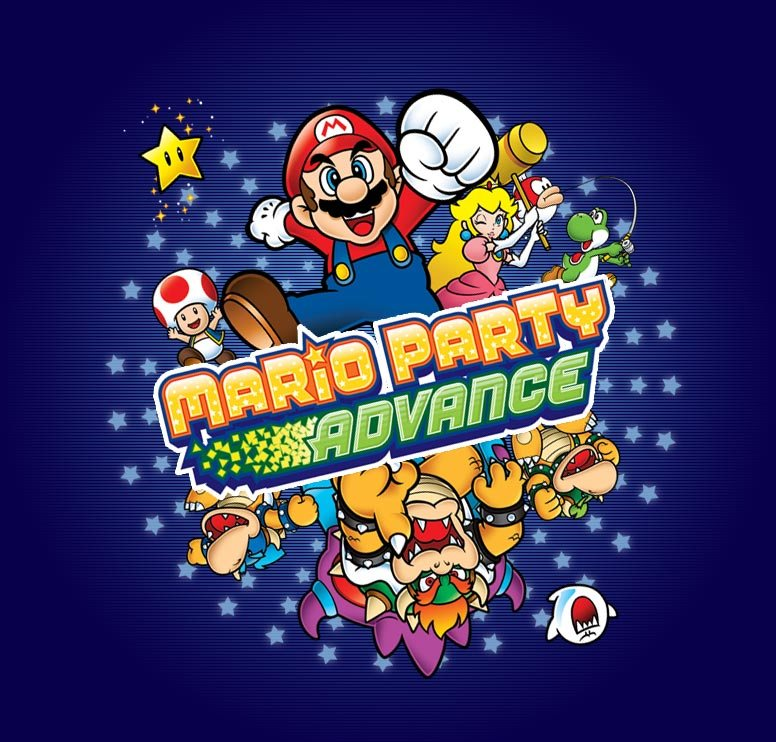
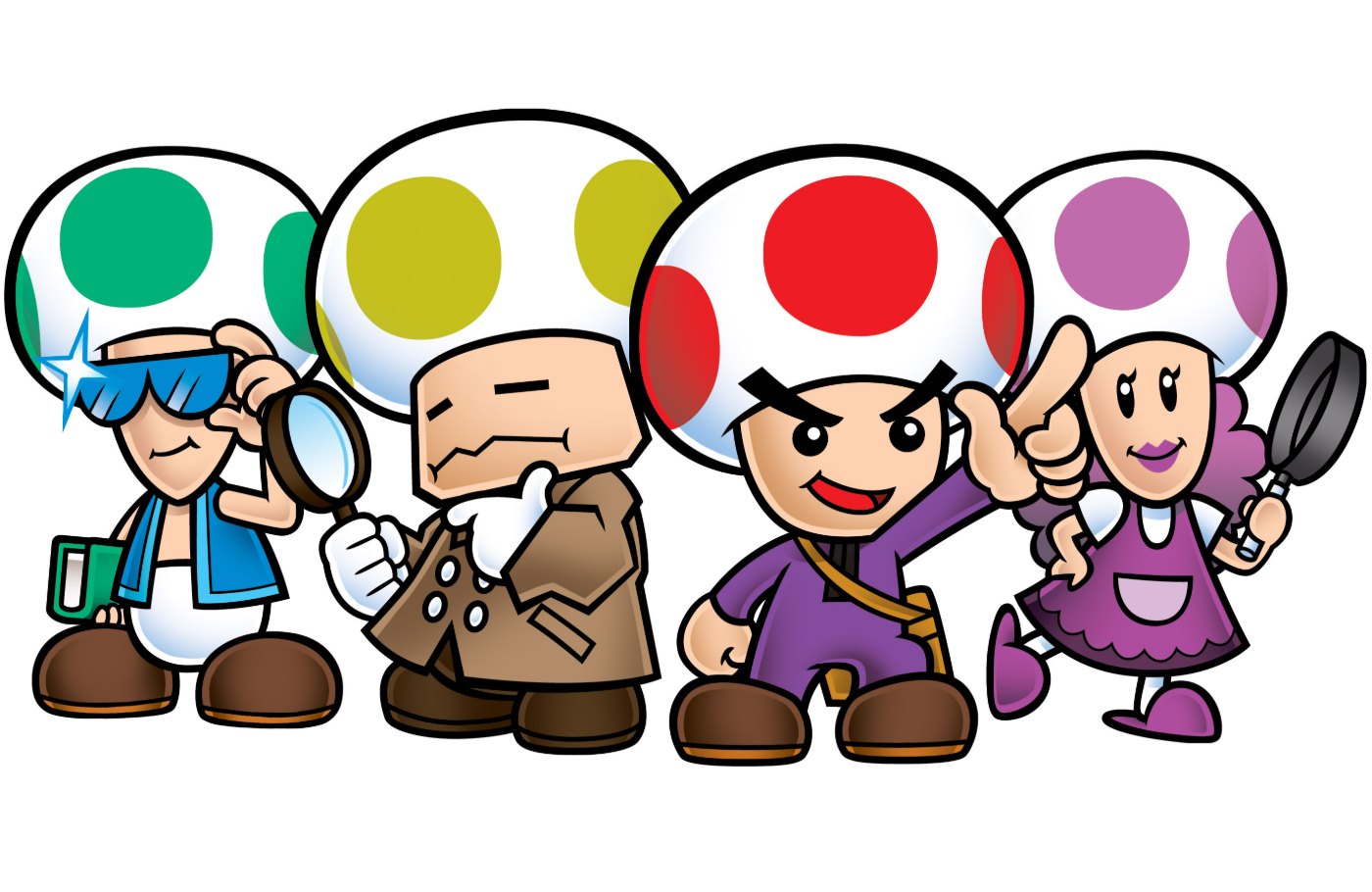
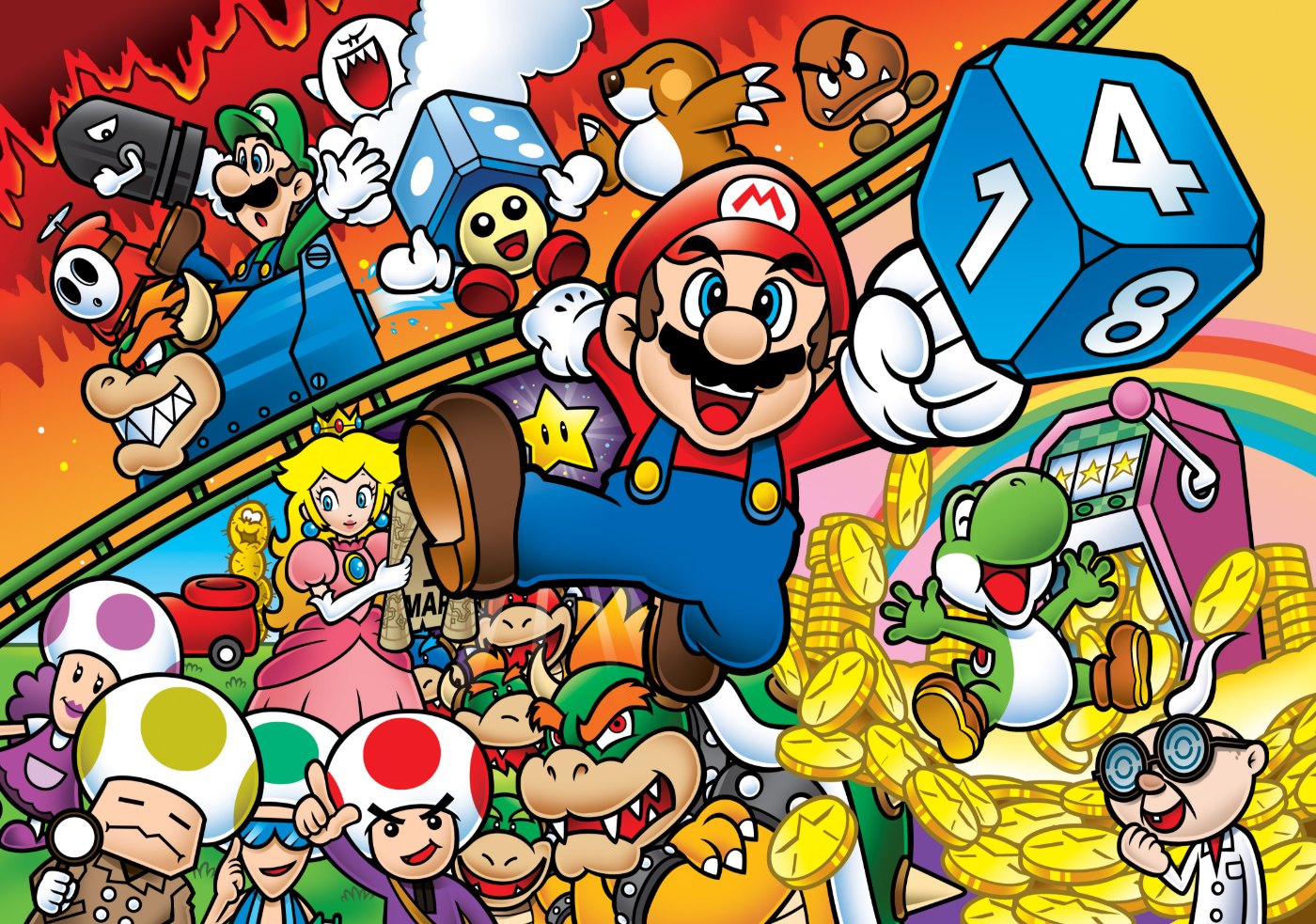
The official group artwork, with most of the cast.
By 2005 Mario Party meant one thing: four players round a television, a board, and a minigame at the end of every round. Mario Party Advance, the seventh game in the series, is something else. Put plainly, apart from a few minigames, some of the Gaddgets and a paper board that came in the box, the game is aimed at one player, and its main mode cannot be played by more than one at all.
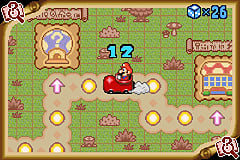
That mode is Shroom City. The set-up takes a minute: Toad is showing you round Party World when Bowser and Koopa Kid drop out of the sky on top of him, and every minigame and Gaddget in the place is scattered over the city below. You choose Mario, Luigi, Peach or Yoshi, climb into a car and set off to collect them. The city is a single board of more than 300 spaces, divided into Town, Desert, Seaside, Horror, Snow and Jungle areas, and you cross it by rolling dice. But each roll costs a Mushroom, you start with only a handful, and when they run out the game is over. Minigames are how you earn more.
What you are really there for is the people. Almost every resident of Shroom City has a problem, and solving it is a quest: a Goomba who cannot afford a train ticket, a detective called Shroomlock with a bank robbery on his hands, a rap act that needs a venue, a Cheep Cheep too nervous to win a swimming race. There are 50 quests in all, nine of them set by Bowser, who lets you into his hideouts through the city’s pipes as your tally grows and plays the last game against you himself.
Everything you win is kept in the other three modes. Play Land is for replaying minigames and tinkering with the Gaddgets, which range from a compatibility tester to a Morse code machine. Challenge Land turns minigames into coins and coins into more Gaddgets. Party Land holds what multiplayer there is. And for anyone without a link cable there was the Bonus Board: a fold-out paper board with cardboard pieces, for which the Game Boy Advance rolls the dice.
It was not well received. Reviewers who wanted a party found a solo board game with too few minigames on the road, and the game holds a Guinness World Records entry it would rather not have. It came back once, on the Wii U Virtual Console at Christmas 2014, where the link features do not work and the game is officially for one player: which, for this Mario Party, is very nearly right.
Mario and friends bring the party to Game Boy Advance with a dizzying range of activities for single players plus their pals. Mario Party Advance also introduces Professor E. Gadd’s Gaddgets: wacky toys and tricks that bring the fun outside of the game.
Bowser has crashed the party and scattered all the minigames around Shroom City. Collect them all by completing the single-player game boards. Once unlocked, minigames can be played as often as you like. Earn coins to unlock Gaddgets such as the Compatibility Meter which lets you see how strong your friendships really are!
— Official description (Nintendo UK, 2014)
Why Mario Party Advance matters to Mario fans
It is the series’ great experiment: a Mario Party built round quests and characters instead of Stars and coins. It gave Shroom City a cast of its own, from Shroomlock the detective to the fans of the television show Toad Force V; it brought Tumble back from Mario Party 3 as a host; it introduced Professor E. Gadd’s Gaddgets; and it came with a real board game in the box. Mario Party: The Top 100, which drew on the home console games, took nothing from it.
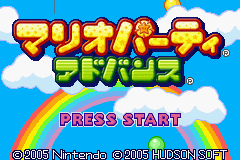
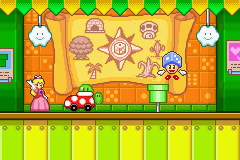
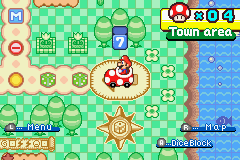
The international title screen.Choosing Princess Peach as the player character.Mario at his starting point in the town area.The Gaddget menu.
“Who needs a real dog when you’ve got this virtual best friend by your side?”
In-game description of the Poochy Pal Gaddget
Quick Answers
The questions people ask most about Mario Party Advance, answered briefly here and in depth further down the page.
When did Mario Party Advance come out?
Japan: 13 January 2005. North America: 28 March 2005. Europe: 10 June 2005. Australia: 15 September 2005 according to Wikipedia (some sources have 16 September). More →
Who made it?
Hudson Soft, the studio behind the first eight numbered Mario Party games, for Nintendo. Wikipedia adds that a company called A.I was responsible for the minigames. Shinichi Nakata is credited as director and Yukinori Goto as game director. More →
Is it a multiplayer game?
Mostly not. Shroom City, the main mode, is for one player. Party Land has duels and battles over Game Link cables and two pass-the-console contests, about a dozen Gaddgets can be shared on one console, and the paper Bonus Board is for up to four. More →
Who is playable?
Mario, Luigi, Princess Peach and Yoshi. They play alike; what changes is where in Shroom City each one starts: Mario in the Town, Luigi at the Seaside, Peach in the Jungle and Yoshi in the Horror area. More →
How does Shroom City work?
You drive round one big board by rolling dice. Each roll uses up a Mushroom, minigames win you more, and the game ends if you run out. Residents give you quests, and finishing a quest earns a Gaddget or a minigame. More →
What are the areas of Shroom City?
Six: Town, Desert, Seaside, Horror, Snow and Jungle. Bowser’s nine quests are held in hideouts reached through the Pipe Houses, the last of them behind the Bowser Gate once the other 49 quests are done. More →
How many minigames are there?
Fifty: 30 single-player games, 8 Duel games, 6 Bowser games and 6 Gambling games. Reviews that speak of more than 120 are counting the Gaddgets as well. More →
What are Gaddgets?
Sixty-one small toys invented by Professor E. Gadd: fortune-tellers, desk games, posters, a Morse code machine, a virtual dog. They have no time limit and usually no goal. You earn them from quests and Bowser’s minigames or buy them with coins; one, Toad Force V, is a secret. More →
What is the Bonus Board?
A paper board game packed with the cartridge. Up to four players move cut-out pieces round it, the Game Boy Advance rolls the dice and supplies Gaddgets to play, and the first player to find the Star wins. More →
Can you play it on a modern console?
Only on Wii U, where it was released on the Virtual Console on 25 December 2014 in North America, Europe and Australia and on 28 October 2015 in Japan. Nintendo’s page notes that purchases on the Wii U eShop ended on 27 March 2023. More →
Shroom City & Modes
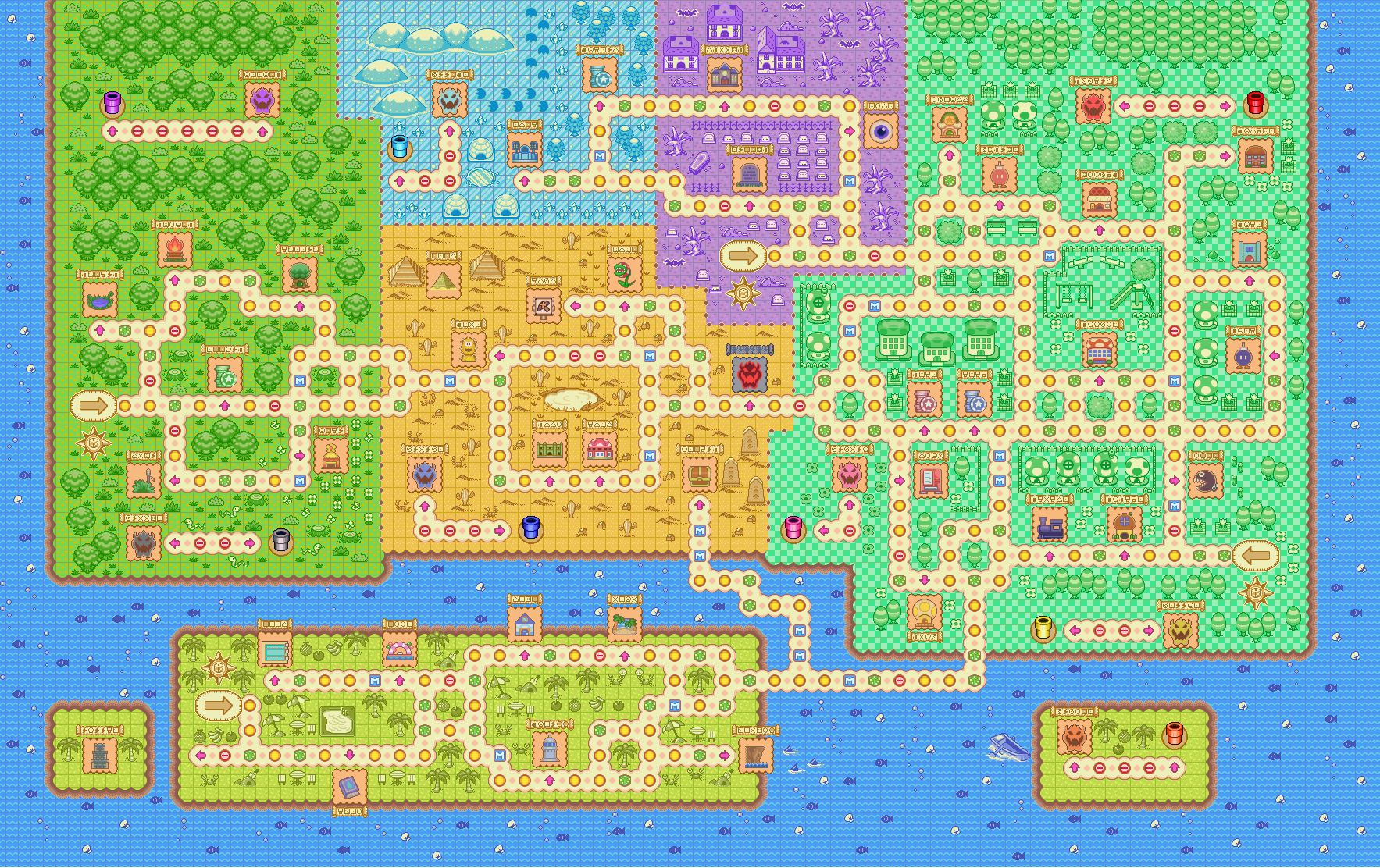
A map of Shroom City.
The story is over almost before it starts. You fill in a passport and arrive in Party World, where Toad begins to explain what there is to do. He does not get far. Bowser and Koopa Kid come down on top of him, the minigames and Gaddgets are knocked out of Party World and rain down on Shroom City, and the two of them make off. When Toad has picked himself up he asks you to go down to the city, find everything and bring it back.
Shroom City is a large island with a few smaller ones round it, in six districts. Which one you see first depends on your character. From there the whole map opens up as you complete quests, and your tally of finished quests is what brings Bowser out: at set totals he opens another of the pipes that lead to his hideouts and waits there with a challenge and one of his six minigames. Finish every other quest and the Bowser Gate itself opens for the Final Showdown.
Town area
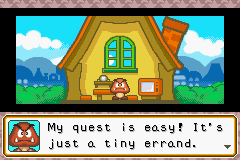
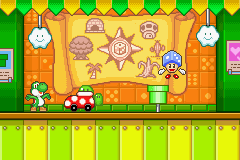
The centre of the city and Mario’s starting point, an ordinary-looking town on the eastern side of the map and the busiest of the six areas, with 14 quests. Mario begins at Goomba House, where the first job in the game is an act of kindness: buying the Goomba a train ticket. The Train Station has troubles of its own, since Shy Guy has run out of coal.
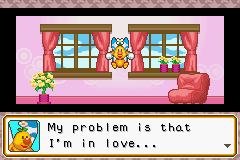
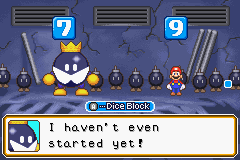
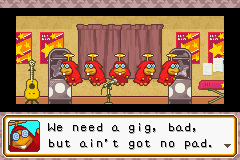
Mushroom Condo is a quest on every floor. Big Bob-omb, boss of a shadowy gang, plays dice in the basement; Toady’s rap act, the Kamek Krew, needs somewhere to perform; Flutter on the third floor is too shy to speak to her crush; and Fly Guy on the roof is trying to call down a UFO, which is exactly the sort of thing that brings Mr. E running. Elsewhere a Bob-omb on Bob-omb Avenue wants a password before he will let you into his group, Bob-omba wants a healthy flower, and the young Goombob of Goombob Manor needs a lovely seashell delivered to Goombetty.
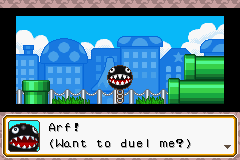
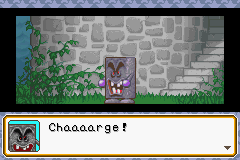
There is a robbery at the Koopa Bank, which brings out Shroomlock the detective, and another at Thwomp House, which has left its owner in tears. Chain Chomp settles things with a duel, in Chain Saw. And the two Town Game Rooms have a gambler each in need of rescue: Amp, who cannot stop losing at Match ’Em, and Monty Mole, whose quest is won with a single round of Scratch ’Em. Three of Bowser’s hideouts, his Mansion, his Toy Shop and his Pad, are reached from here.
Big Boss Bob-omb: dice in the basement of Mushroom Condo.Kamek Krew Live!Kind Goomba, Mario’s first quest.
Desert area
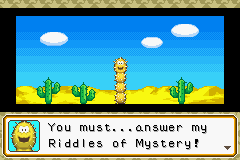
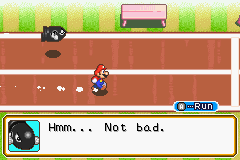
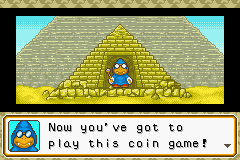
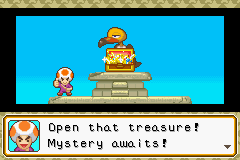
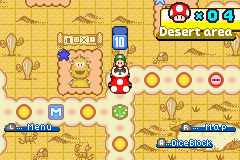
West of the town lies the desert, where the daily business is sport and mystery. Nobody starts here. There are five quests. At Mushroom Stadium the sprinter Bullet Bill wants a race, and on Mushroom Field Hammer Bro, the world-champion hammer thrower, wants a contest. Pokey, guardian of the desert, asks three riddles. Kamek, who calls himself the Game Mage, plays the card game Pair ’Em for stakes at a place called The Hammer, which leads to the Pyramid. And at the Klepto Ruins Mr. E turns up again, to help search for the treasure Klepto guards.
A thirsty Piranha Plant grows here too, and the desert has the Pipe House that leads to Bowser Stadium, the first of Bowser’s hideouts to open.
A Speeding Bill: the race at Mushroom Stadium.Game Mage: Kamek at The Hammer.Treasure of Mystery! at the Klepto Ruins.
Seaside area
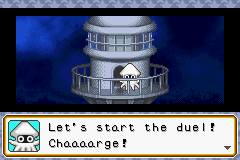
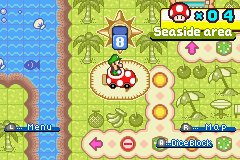
The southern shore, populated mostly by sea creatures, is where Luigi begins, at Mushroom Library. Its nine quests are dominated by Duel Tower, three floors with a champion on each: Whomp, beaten at Stair Scare; Salvo, beaten at Volleybomb; and Mouser, the hardest of them, who plays Chicken! under a falling Thwomp. Blooper, who trains at the lighthouse called Mushroom Beacon, offers a fourth duel, at Hammergeddon.
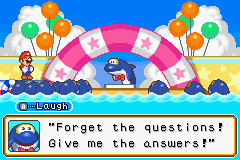
The rest are gentler. Mechakoopa at the library sets a string of sums. A Dolphin who performs at Mario Vaudeville needs convincing that he is funny. The Coach at Mushroom Pool asks you to lose a swimming race on purpose so that his Cheep Cheep can find some confidence. Lakitu wants a famous line from episode 28 of Toad Force V. And at Sushi Cliff somebody has dragged Shroomlock off the cliff, a case he has to solve with the help of Sushi the shark. Bowser Game Hall is reached from this area.
Duel Tower, first floor: Whomp.Blooper Battle at Mushroom Beacon.Comedy Bomb: the show at Mario Vaudeville.
Horror area
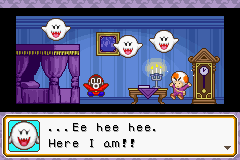
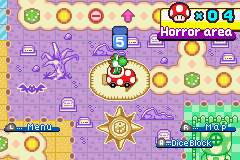
A purple-tinted graveyard district of dead trees and headstones in the north of the map, and Yoshi’s starting point, at Boo Cemetery. It has only three places to visit but five quests. At the cemetery someone has stolen a golden Boo statue, and you have to work out which of four Boos is the impostor. Mr. I, a reclusive gentleman, would very much like to meet Princess Peach.
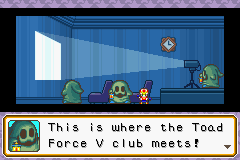
Horror Condo holds the other three. Snifit, on the second floor, is disappointed that his flat is not haunted and wants that put right. Ninji, on the ground floor, is after a limited-edition Toad Force V DVD. And in the basement Lantern Ghost runs the Toad Force V fan club, which you can join for the price of a Toad Force V figure.
Choosing Yoshi puts you in the horror area.Condo of Mystery!Nerd Force V: the fan club in the basement.
Snow area
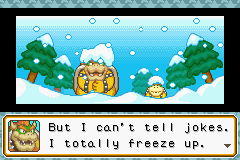
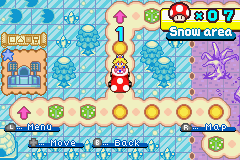
The smallest area, a frozen corner between the horror area and the jungle. Nobody starts here and there are only two residents’ quests. At Ice Stadium Mr. Blizzard pitches and you have to hit a home run off him. In the Ice Game Room a Penguin has gambled away his coins and you must win them back; the credits add that he still cannot afford a ring for Pengwen. The third place on the map is Mt. Frostbite, one of Bowser’s, reached by pipe.
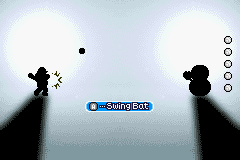
Cool as Ice: batting against Mr. Blizzard.Engaging Game, in the Ice Game Room.
Jungle area
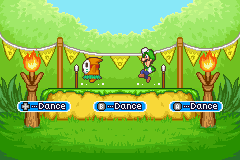
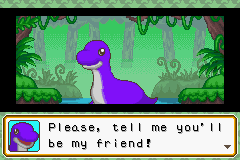
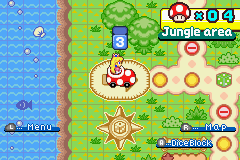
The largest area fills the west of the island and is where Peach begins, at the Jungle Game Hut. Its owl, Hoot, is in debt, and the first of six quests is to clear it by winning at Stop ’Em. Petal Guy, a lovesick poet, needs a poem of love delivered. Hulu teaches dancing at the Dance Stage. Dorrie, alone in Loch Dorrie, needs a friend. Spear Guy lurks in Spear Thicket, waiting to duel somebody with a moustache at Tank-Down.
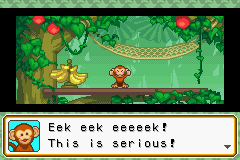
The best of them is a mystery. Akiki, niece of Ukiki, the jungle’s mayor, is sure her uncle has been kidnapped and calls in Shroomlock. He has not: Ukiki staged the whole thing as a prank and is hiding by the lake. Bowser Hideout and Bowser Lab are reached from the jungle.
Jungle Jive: a dancing lesson from Hulu.Monkeynapping!?Dino of Mystery! at Loch Dorrie.
Bowser’s nine quests
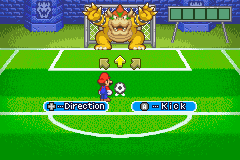
Bowser is the only character with more than one quest, and each of his opens when you have finished a certain number of others. Most come in two halves: something silly, then a minigame. After 3 quests he is at Bowser Stadium for Goal Tenderizer, where you put three goals past him and then win Splatterball. After 10, at Mt. Frostbite, Chillin’ Villain makes you sit through his jokes before Crushed Ice. After 15, Bowser: Accused! has you prove to Shroomlock that Bowser stole some paintings, then play Mush Rush in his mansion. After 20, Bowser’s Toys is a Toad Force V quiz in his toy shop followed by a duel at Slammer.
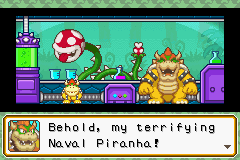
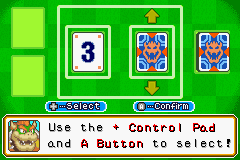
After 25 comes Boss Bowser, a card game and then Koopa Kappa at the Bowser Hideout. After 30, in Bestest Buds, you buy him a present and then creep past his Koopa Kids in Peek-n-Sneak. After 35, Game King is a gambling session on Watch ’Em in his Game Hall. After 40, Bowserstein! sends you to his lab to duel Naval Piranha at Koopa Kurl.
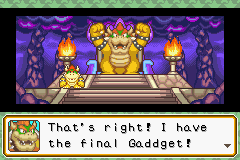
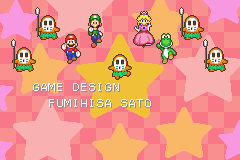
The ninth, Final Showdown, needs all 49 other quests. Behind the great wall with Bowser’s emblem on it, he offers you the chance to win the last Gaddget. If you ask what he is talking about, he and Koopa Kid are crestfallen, because they wanted a fight. Accept, and the game is Trap Floor. Lose and he sends you back to the door, though it costs no Mushroom. Win and he is delighted to have found a worthy rival, gives you the Bowser Print and says he would like to do it again some time. Then the credits roll past every resident of the city in turn, each with a line about what became of them, and Bowser comes last.
Goal Tenderizer at Bowser Stadium.Boss Bowser: a game of cards.Final Showdown: the last challenge.The credits, with a note on each resident.
Play Land
Toad and Professor E. Gadd run the free-play mode. Any minigame you have earned can be played here as often as you like, for a best score or a best time, and every Gaddget you own is on the shelf. Play Land is also where you can give a minigame or a Gaddget to somebody else.
Challenge Land
Toadette’s mode is about coins, which buy Gaddgets from the professor. There are four ways to earn them. In Mini-Game Attack you try to win 15 minigames in a row, choosing each from three on offer, under tougher conditions than usual. Five wins are worth 1,000 coins, ten are worth 10,000 and all fifteen 100,000, and you can stop and keep what you have, because one defeat loses the lot. Three items help: Practice, which you have from the start, lets you try a game first; Change, earned after five games, swaps the three on offer; Replay, earned after ten, lets you repeat games you have already beaten.
The Game Room is a casino for the six Gambling games, and if you walk in penniless Toad gives you ten coins. Duel Dash is a series of random minigames against a computer opponent: three on Easy for 1,000 coins, five on Normal for 10,000, eight on Hard for 50,000. And Bowser Land is a roller-coaster ride towards Bowser and Koopa Kid, stopping at checkpoints for Bowser minigames. The length of the track and the number of Koopa Kids are random, Bowser may call the whole thing off if he thinks you are dawdling, and arriving earlier or later than he likes reduces the prize.
Challenge Land.
Every area of Shroom City
The six areas, with who starts in each, how many residents’ quests it holds and which of Bowser’s hideouts are reached from it.
Town areaMario starts here, at Goomba House · 14 quests · Bowser Mansion, Bowser Toy Shop, Bowser PadThe city centre: Mushroom Condo, the Koopa Bank, the Train Station, two game rooms and a gang of Bob-ombs.
Desert areaNo starting character · 5 quests · Bowser StadiumSport and mystery: a sprint against Bullet Bill, Hammer Bro’s throwing contest, Pokey’s riddles and the Klepto Ruins.
Seaside areaLuigi starts here, at Mushroom Library · 9 quests · Bowser Game HallHome of Duel Tower and its three champions, Whomp, Salvo and Mouser.
Horror areaYoshi starts here, at Boo Cemetery · 5 questsGravestones, a condo that is not haunted enough and the Toad Force V fan club.
Snow areaNo starting character · 2 quests · Mt. FrostbiteThe smallest area: baseball against Mr. Blizzard and a Penguin with a gambling problem.
Jungle areaPeach starts here, at the Jungle Game Hut · 6 quests · Bowser Hideout, Bowser LabThe largest area, with Dorrie’s loch, Hulu’s Dance Stage and the case of the missing mayor.
Bowser’s nine quests bring the total to 50. The last, Final Showdown, is held behind the Bowser Gate once the other 49 are complete.
Advertisement
Gameplay & Controls
Mario Party Advance has four modes, but only Shroom City is open when you first switch on. Everything else is filled by what you bring back from it. Here is how the city, its quests and its two kinds of game work.
Mushrooms, dice and the road
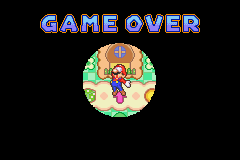
Shroom City is a board, though not one any other Mario Party would recognise. You are alone on it, in a car, and there are no Stars or coins to collect. The currency is the Mushroom: each one is a turn, spent when you roll the dice. Wikipedia’s account, drawn from the GameSpot and IGN reviews, is that you set out with four, that a minigame comes round every three turns to win you more, and that the adventure ends when the last Mushroom is gone.
The map is usually counted at 319 spaces, of four kinds. The plain Yellow Space does nothing. A Dice Space puts a Dice Block over your head for a free move that costs no Mushroom, and if that move ends on another Dice Space you go again. A Minus Space takes a Mushroom away. A Minigame Space is the way to stock up: finish the game Tumble sets and he hands over two Mushrooms, while a challenge from Koopa Kid pays one if you win and costs one if you do not. By colour the tally is 179 yellow, 78 green, 40 red and 22 marked M; Nintendo Life’s review describes the green ones as granting extra rolls and the red ones as costing a turn.
Tumble, the talking dice who hosts the mode, explains all this as you go and suggests places to visit. He also keeps you on a lead at first: until its quest is done you may not leave your starting location, which is Goomba House for Mario, Mushroom Library for Luigi, the Jungle Game Hut for Peach and Boo Cemetery for Yoshi.
Yellow Space.Dice Space.Minus Space.Minigame Space.Out of Mushrooms: the Game Over screen.
Fifty quests and a passport
Before anything else you make a passport; the cartridge holds more of them once you own the Passport+ Gaddget. Quests come from talking to the residents. Nearly everybody has exactly one, a few lead into each other, and Mrs. Shroomlock has none: she is there to tell you what to try next. Each quest is filed under one of nine types, each with its own icon: Love, Bomb, Duel, Adventure, Mystery, Gambling, Sports, TFV (for Toad Force V, the city’s favourite television show) and Misc.
A quest might be a conversation with the right answers, an errand between two characters, a minigame to win or a bit of each. Finishing one earns either a Gaddget or a minigame. Bowser is the exception to the one-quest rule: he has nine, each unlocked by the number of quests you have already completed, and each is held somewhere only a Pipe House can take you.
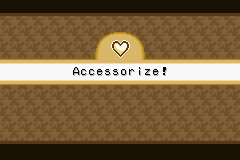
A quest title card: Accessorize!Find the Password, on Bob-omb Avenue.A filled-in passport, from the Passport+ Gaddget.
Four kinds of minigame
The 50 minigames come in four types. Thirty are single-player games. Eight are Duel games, fought in Shroom City against a resident such as Whomp, Blooper or Spear Guy. Six are Bowser games, every one of them about getting rid of a crowd of Koopa Kids. And six are Gambling games, played for coins.
The same game behaves differently depending on where you meet it. In Shroom City it has a set goal and a strict time limit. In Play Land you are trying to beat a score you set yourself or to finish as fast as you can, and some games simply carry on until you make a mistake. In Challenge Land’s Mini-Game Attack the targets are stiffer or the computer opponent sharper: Grabbit, for example, asks for seven rabbits in a minute in Shroom City but five in half the time in Mini-Game Attack.
Koopa Krunch, a single-player puzzle game.Hammergeddon, a Duel game.Mush Rush, a Bowser game.Match ’Em, a Gambling game.
Gaddgets
Gaddgets are the game’s other collectable, and Nintendo’s own description makes them the headline: toys and tricks, it says, that bring the fun outside of the game. They are smaller and looser than minigames. There is no clock and usually no goal, and apart from a few of the multiplayer ones they cannot be lost, or can simply be reset. Some are desk toys, some are party tricks to try on whoever is sitting next to you, some are simply pictures.
By most counts thirteen of the 61 are for more than one person, and these are how the game manages multiplayer on a single console: as GameSpot’s review explains, each player takes a different button or side of the machine. Several ask you to turn the Game Boy Advance on its side. The full list is below.
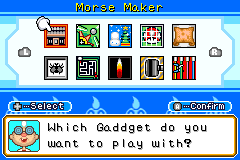
Compat-I-Com.4-P Pinball.Morse Maker.
Playing with friends
Party Land, whose hosts are Toad and Toadette, is where other people come in. There are five things to do there: Duel minigames, a Secret Battle, a Koopa Kid Battle, the 100-Player Battle and the 100-Player Attack. GameSpot’s Frank Provo, reviewing the game in 2005, counted only about a dozen minigames that could truly be played by several people at once, all of them over a Game Link cable, some from one cartridge and some needing a cartridge each. The two 100-player modes are pass-the-console contests on the single-player games, with one person playing at a time.
In the 100-Player Attack one player sets a record and up to a hundred challengers try to beat it. There is a reason to see it through: if the record survives all hundred attempts, Toadette reveals the secret Gaddget, Toad Force V.
On Wii U none of the link features exist. Nintendo’s page for that version says the Multi-Pak and Single-Pak link modes are unavailable and lists the game as one-player; Nintendo Life found that the pass-and-play modes and the four-player Gaddgets still work, with everyone crowded round the GamePad.
Party Land.The secret Gaddget, Toad Force V.
The Bonus Board
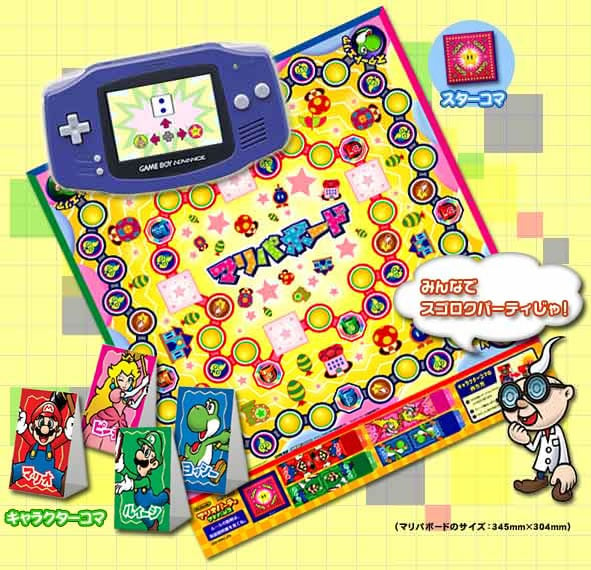
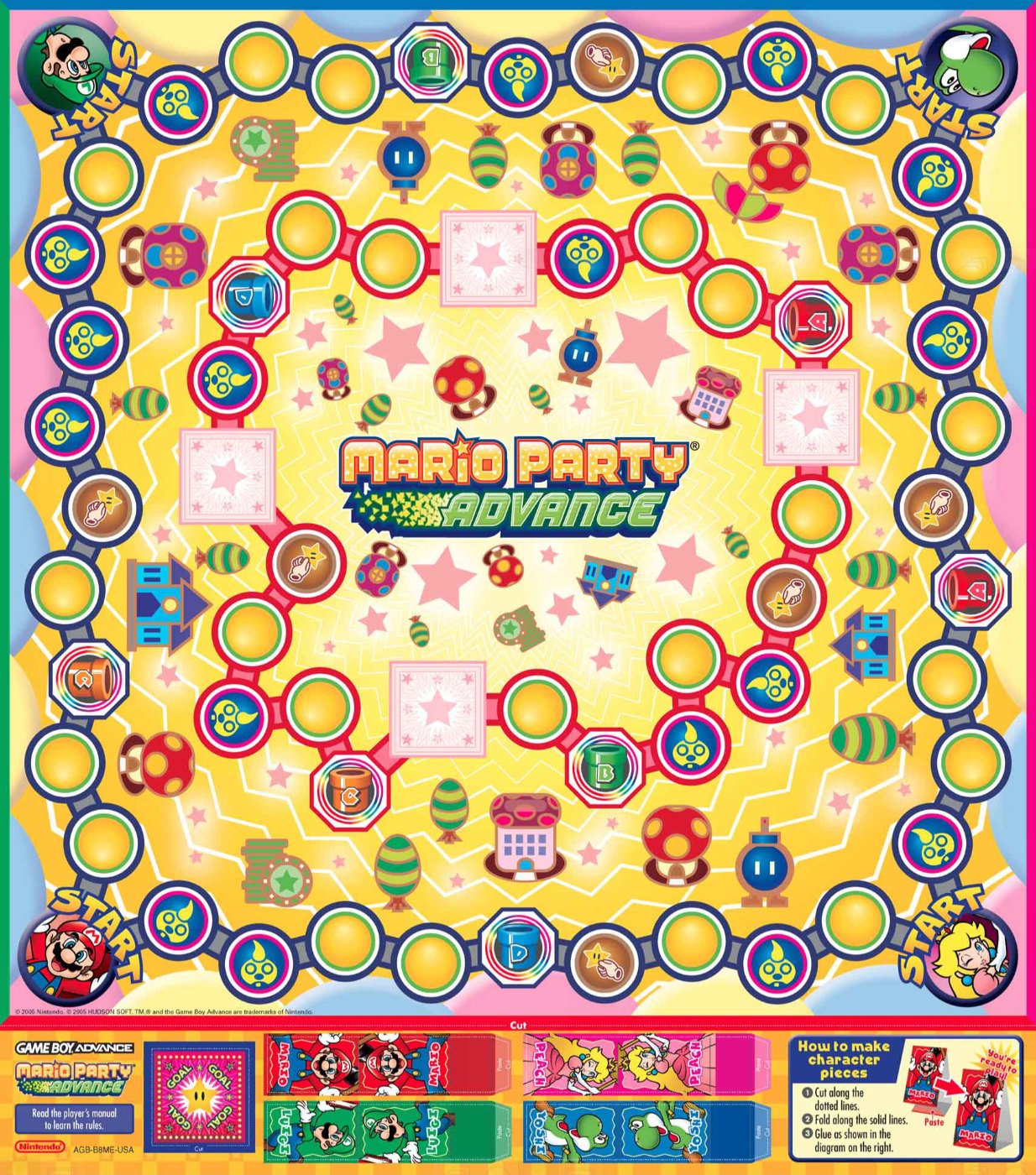
The answer to the link cable problem was made of paper. Every boxed copy, in every region, included the Bonus Board: a printed board of 60 spaces, with character pieces for Mario, Luigi, Peach and Yoshi and a Star Piece to cut out. Up to four people play, and the Game Boy Advance is passed round as the dice.
The board has an outer path and an inner one. The four Star Spaces are on the inside, and the way in is to land on a lettered Pipe Space, which sends you to its twin. The Star Piece sits on one Star Space. Reach it and the game offers you six boxes on screen; pick the one with the Star in it and you have won, pick an empty one and your turn is over. A Star Warp Space moves the Star Piece to a different Star Space, an E. Gadd Space calls up the Gaddget selection screen for one of ten Gaddgets to be played, with the manual suggesting what should hang on the result, and a Yellow Space does nothing. The manual encourages players to make up rules of their own.
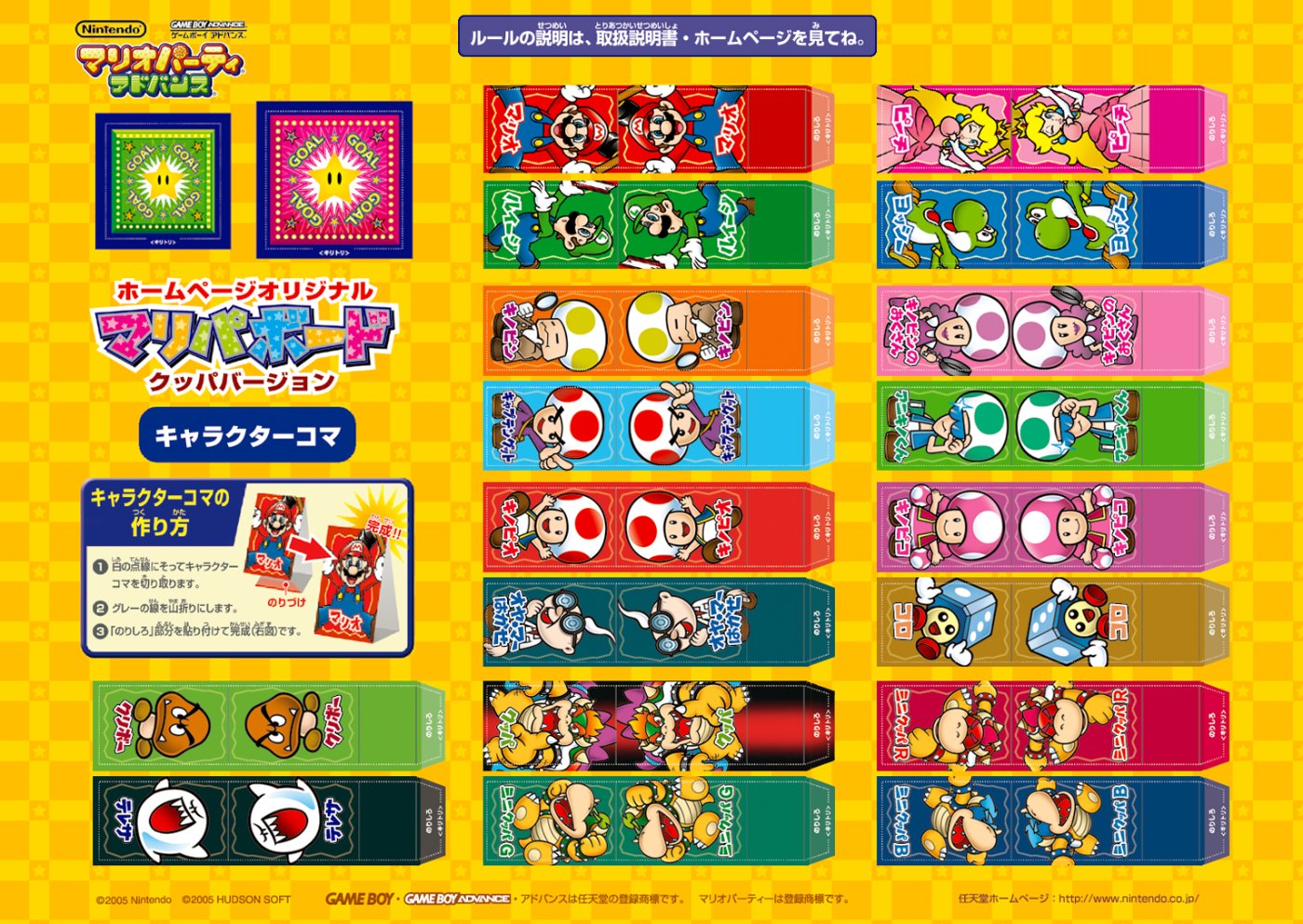
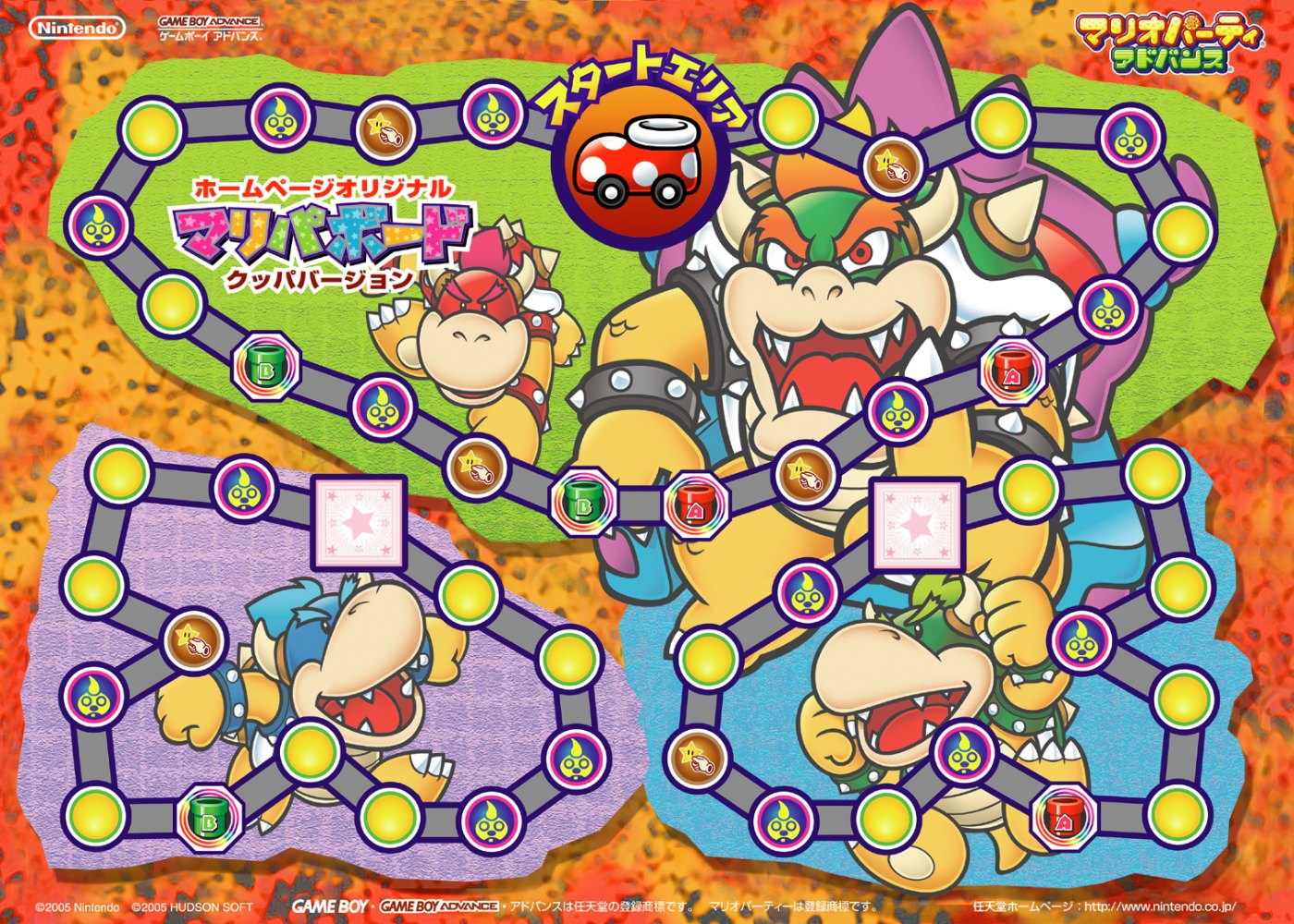
Two more boards were offered as printable files on the Japanese website. The Kuppa Version has 48 spaces on three paths, with Bowser and the Koopa Kids on it and a sheet of fourteen extra pieces, among them Shroomlock, Tumble, Bowser, a Goomba and a Boo. The Wide Version, printed as four sheets that can be joined in any order, has 128. GameSpot noted in 2005 that the standard board could also be downloaded and printed.
The Bonus Board.The standard board: 60 spaces.The character pieces and Star Piece.The downloadable Kuppa Version.E. Gadd Space.Star Warp Space.Pipe Space.Star Space.
Every Gaddget
All 61, in the usual order, with what each one does. They are earned from quests and from Bowser’s minigames or bought with coins in Challenge Land; it is not generally recorded which is which, apart from Passport+ (1,000 coins), Bowser Print (the prize for the last quest) and Toad Force V (the secret one).
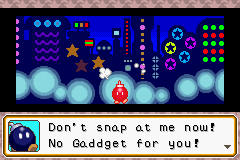
Snooze EwesCount sheep until you nod off. The game recommends it to insomniacs.
Porta-GustA pocket ghost-catcher: watch the sensor, work the Control Pad and strike when a Boo shows itself.
Magic LampRub it the right way and a genie may turn up to grant a wish.
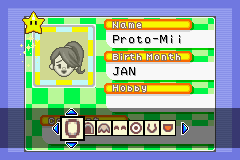
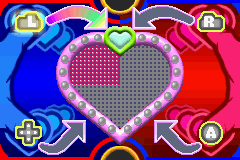
Compat-I-ComTwo people press their buttons and it rates how well suited they are. Nintendo’s page calls it the Compatibility Meter.
Power StarA Power Star to keep on the screen and show off.
Desktop GolfA putting toy. Aim for a hole in one.
Shroom SlideA lottery for a group: set how many are playing and how many slots win, then everyone guesses.
Stick to ItFor the indecisive: put your options on the choice spot and let it settle the matter.
Bait ’n WaitFishing. Watch the float and wait for a bite.
DigitizerPut a finger on the screen and it pretends to show you what is inside.
Lip SyncA joke built round talking mouths; screenshots show Mario’s, a Goomba’s and a Boo’s.
Shroom BloomRaise a mushroom by keeping its moisture in balance.
Poochy PalA virtual pet dog.
Bull’s-eyeDarts: eight throws, with the power set by how long you hold A.
Soil SonarClaims to probe thousands of feet underground, no shovel required.
Eye ExamAn eye chart. Stand about seven feet back, then try it on your friends.
Mini SluggerBaseball for two, one pitching and one batting.
Tap-Tap SumoButton-tapping sumo against a friend.
Egg RollAn egg. See whether you can stand it on its end.
Shroom DropPlayed with the console held sideways: players take turns sliding plates.
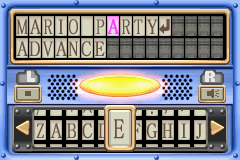
Morse MakerTurns a typed message into Morse code; the R Button lets you tap out your own.
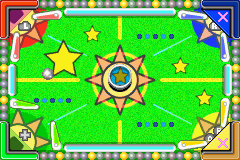
4-P PinballPinball for up to four players on one console.
Snow GlobeA calm winter scene to tilt and watch.
Tile TrialA sliding-tile puzzle against the clock.
Map MakerDraw a treasure map and send your friends hunting.
Attack FrogUp to four frogs compete to snap up bugs.
Mini MazeA small labyrinth to find your way through.
Faux FlameA flame no wind can blow out. It gives no heat either.
Stress PressSomething squashy to squeeze when it all gets too much.
Bomb GameTake turns cutting wires and hope the bomb is not yours.
Card TrickPick a card, and the Game Boy Advance names it.
HourglassThree sand-timers of different lengths. Turn the console over to flip them.
RochambeauRock, paper, scissors against the machine.
Egg PanicCram eggs into bags with your friends without splitting them.
Block PunchUp to four players take turns hitting a block. Whoever lands the last blow wins.
Dart AttackHold to aim, let go to loose an arrow at the target.
Breeze BuddyA picture of a fan. Looking at it is supposed to cool you down.
Chicken RacePick a car and stop it as close to the cliff edge as you dare.
Love Me NotPluck the petals to tell a fortune.
Mini BowlingA few quick frames with friends, console on its side.
Mini B-BallBasketball, also played sideways.
Screen CleanPromises to leave the screen sparkling.
PredictotronStudies an opponent’s habits and tries to predict the next move.
Cake MakerDecorate a cake.
Mini SoccerFootball for two.
Dessert MenuA menu of puddings to choose from.
Bead MachineThread beads into a picture on a grid of 24 by 18.
Jewelry CaseA case of jewels to look at but not touch.
Castle NightWish on a shooting star, without blinking.
Hope ChestMake a wish, shut the lid and give it to someone you like to open.
Pretty PosterA poster to look at.
Sun PosterA poster to look at.
Moon PosterA poster to look at.
Coin PosterA poster to look at.
Heart PosterA poster to look at.
Bowser PosterA poster to look at.
Bowser PrintBowser’s parting gift, handed over when you beat him in the last quest, Final Showdown.
Bonus Track
Passport+Lets the cartridge hold up to 30 passports. It costs 1,000 coins at Professor E. Gadd’s Gaddget shop.
Credits
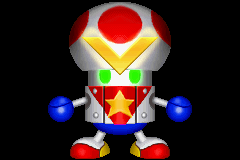
Toad Force VThe secret one: a Toad Force V figure whose beams light up with L and R. It is shown only when a record survives the 100-Player Attack, and cannot be bought.
Cartoons, Comics & Other Media
Mario Party Advance borrows music and faces from earlier games, and left a small paper trail of its own: boards to print, adverts and one unwanted world record.
Mario Party 3Nintendo 64 · 2000Tumble, the living dice who hosts Shroom City, was the guide in Mario Party 3. Several minigames also play arrangements of that game’s music, among them “Let’s Get a Move On”, “Don’t Hurry”, “Big Trouble!” and the Game Guy theme.
Mario Party 4GameCube · 2002Three more minigame tunes are arranged from Mario Party 4, the music for making and viewing a passport is a version of its menu theme, and the Cheep Cheep uses the design that game introduced.
Super Mario 64Nintendo 64 · 1996Big Bob-omb (still under that name), Dorrie, Hoot, Ukiki, Mr. Blizzard, Whomp, Thwomp, Amp and the Piranha Plant all keep their looks from the original Super Mario 64, although the game came out after the Nintendo DS remake.
The Super Mario Bros. gamesMusic and sceneryOne minigame theme is an arrangement of the underground music from Super Mario Bros., the backdrop of Drop ’Em is based on a level from Super Mario Bros. 3, and a version of the ground theme from Super Mario World plays on the Shroom City results screen.
Boards to print at homeOfficial Japanese website · 2005Nintendo’s Japanese site offered two extra Bonus Boards as files to print: the 48-space Kuppa Version, with fourteen new playing pieces, and the 128-space Wide Version in four sheets.
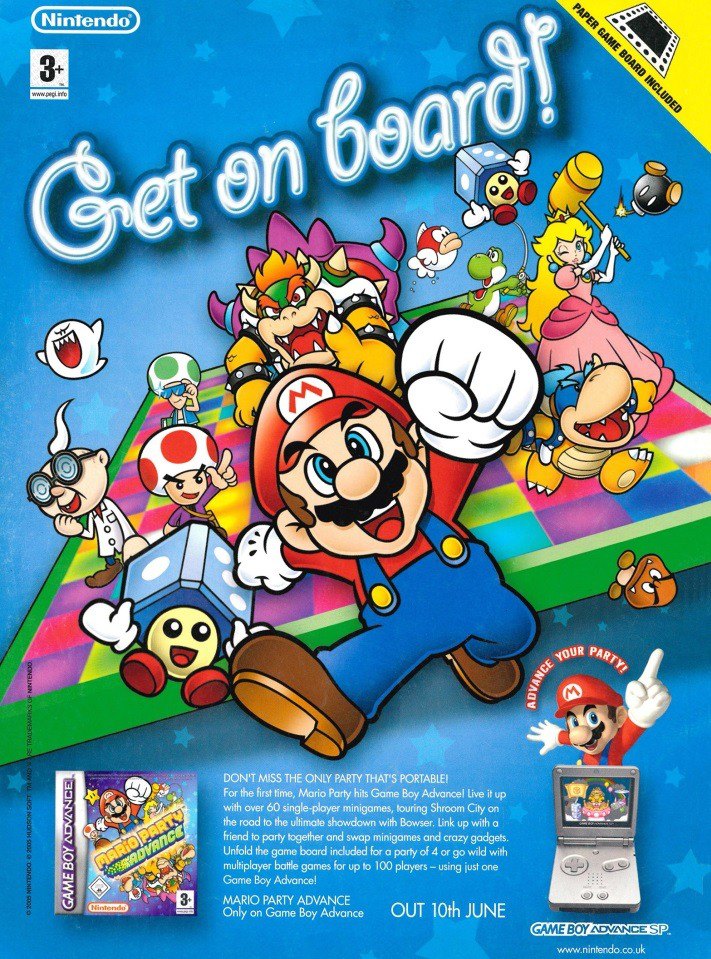
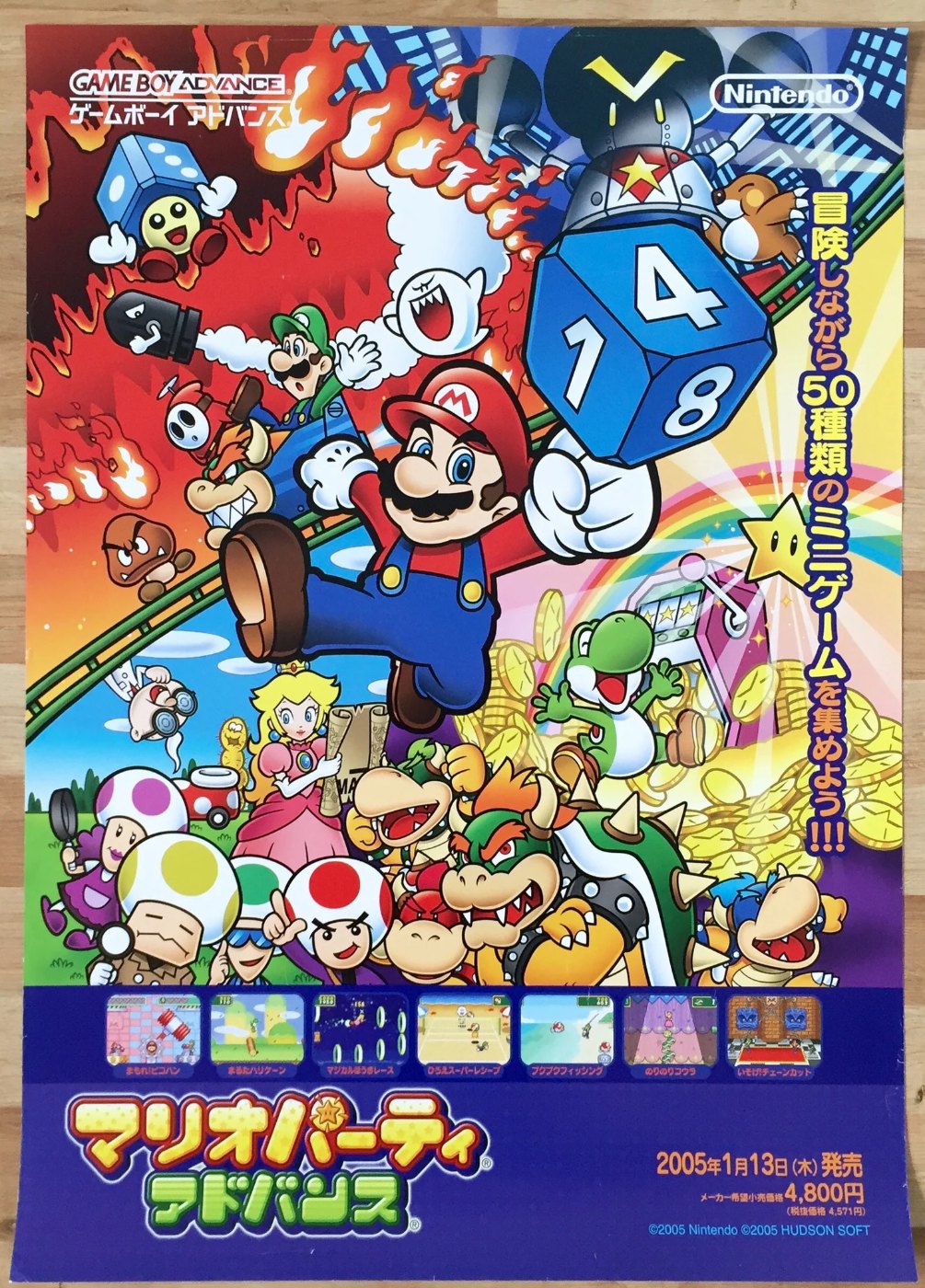
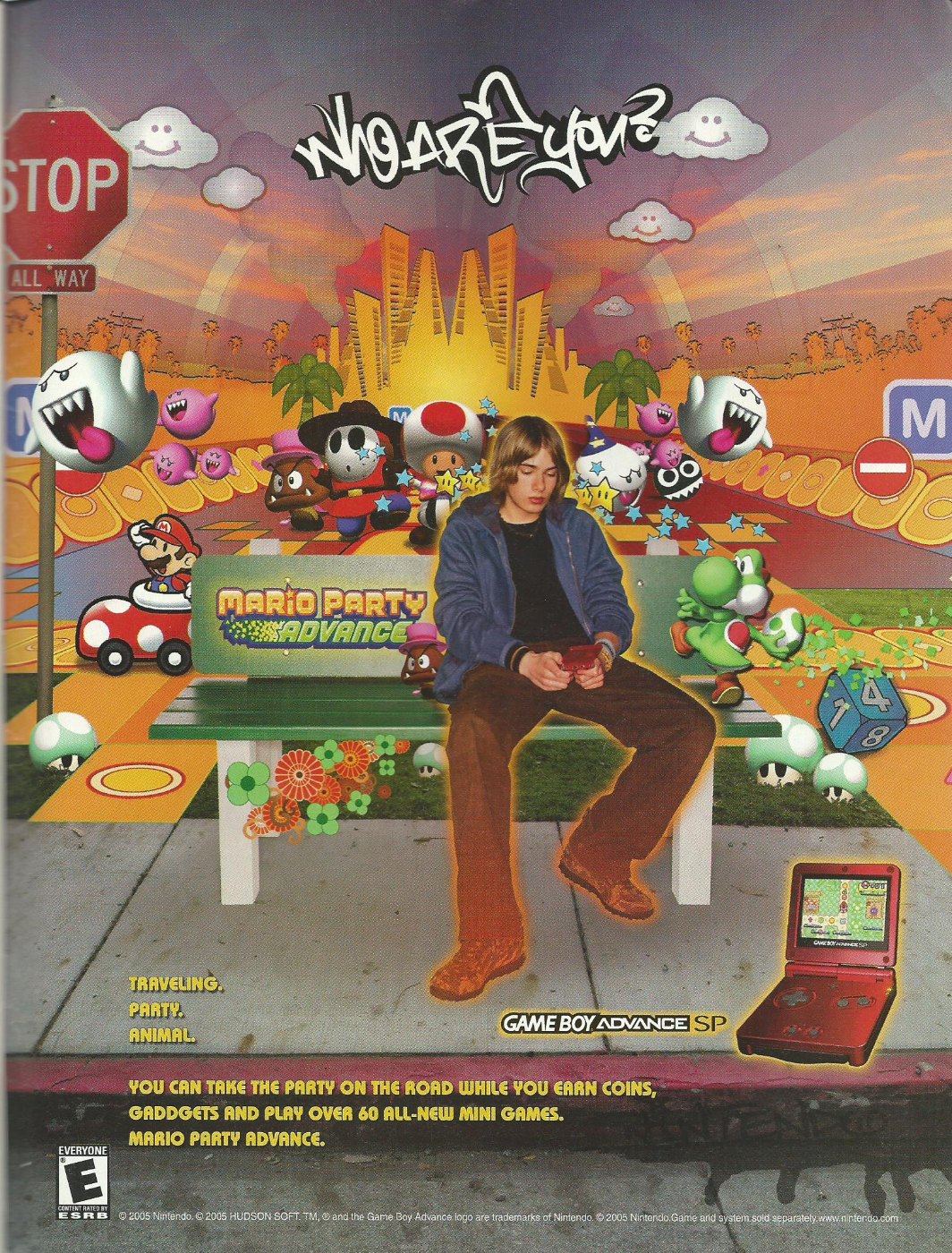
Print advertsNorth America, United Kingdom, France and Japan · 2005The game was advertised in magazines in four countries, and there were three official desktop wallpapers.
Guinness World RecordsRecord dated 28 July 2014The game holds the record for “Worst-rated Mario videogame”, on the strength of a GameRankings average of 56.53% from 32 reviews.
Mario Party: The Top 100Nintendo 3DS · 2017The anniversary compilation was drawn from the home console games, so none of these minigames is in it. Tumble does make a cameo there, with a profile recalling how the Millennium Star brought a humble die to life.
Advertisement
Characters
Four playable characters, four hosts, two villains and a city full of people with problems. The playable four handle identically; the difference between them is where their adventure begins. Residents are listed with what the credits say became of them.
Character
Who they are
In this game
Abilities & notes
MarioPlayable
Drawn for this game swinging a hammer.
Starts in the town area, at Goomba House, and cannot leave it until the quest there is done.
Start: Town area.
LuigiPlayable
Mario’s brother.
Starts in the seaside area, at Mushroom Library, among Duel Tower’s fighters and the sea creatures.
Start: Seaside area.
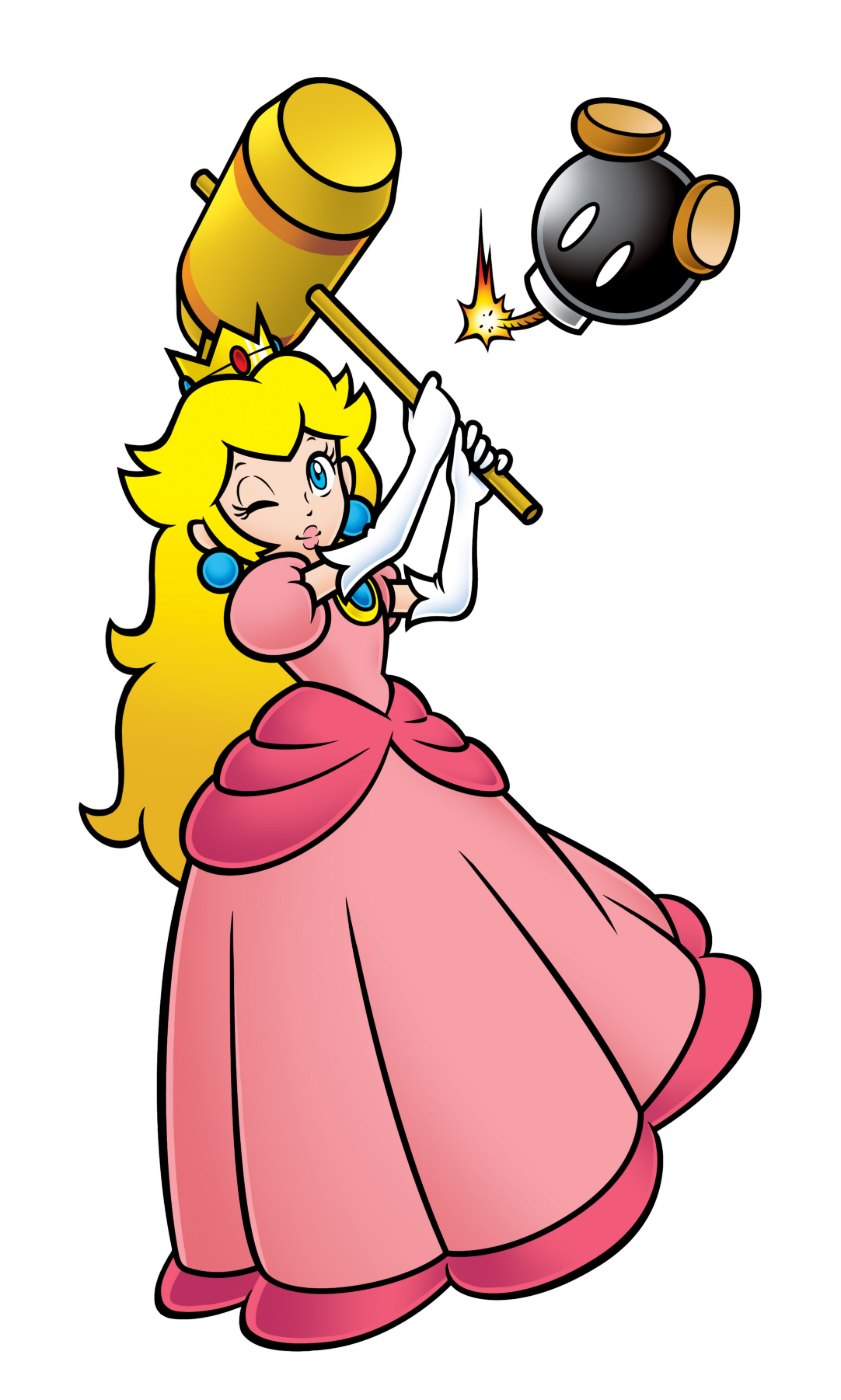
Princess PeachPlayable
The princess, and the object of Mr. I’s admiration; even Bowser, his profile says, has feelings for her.
Starts in the jungle area, the largest, at the Jungle Game Hut.
Start: Jungle area.
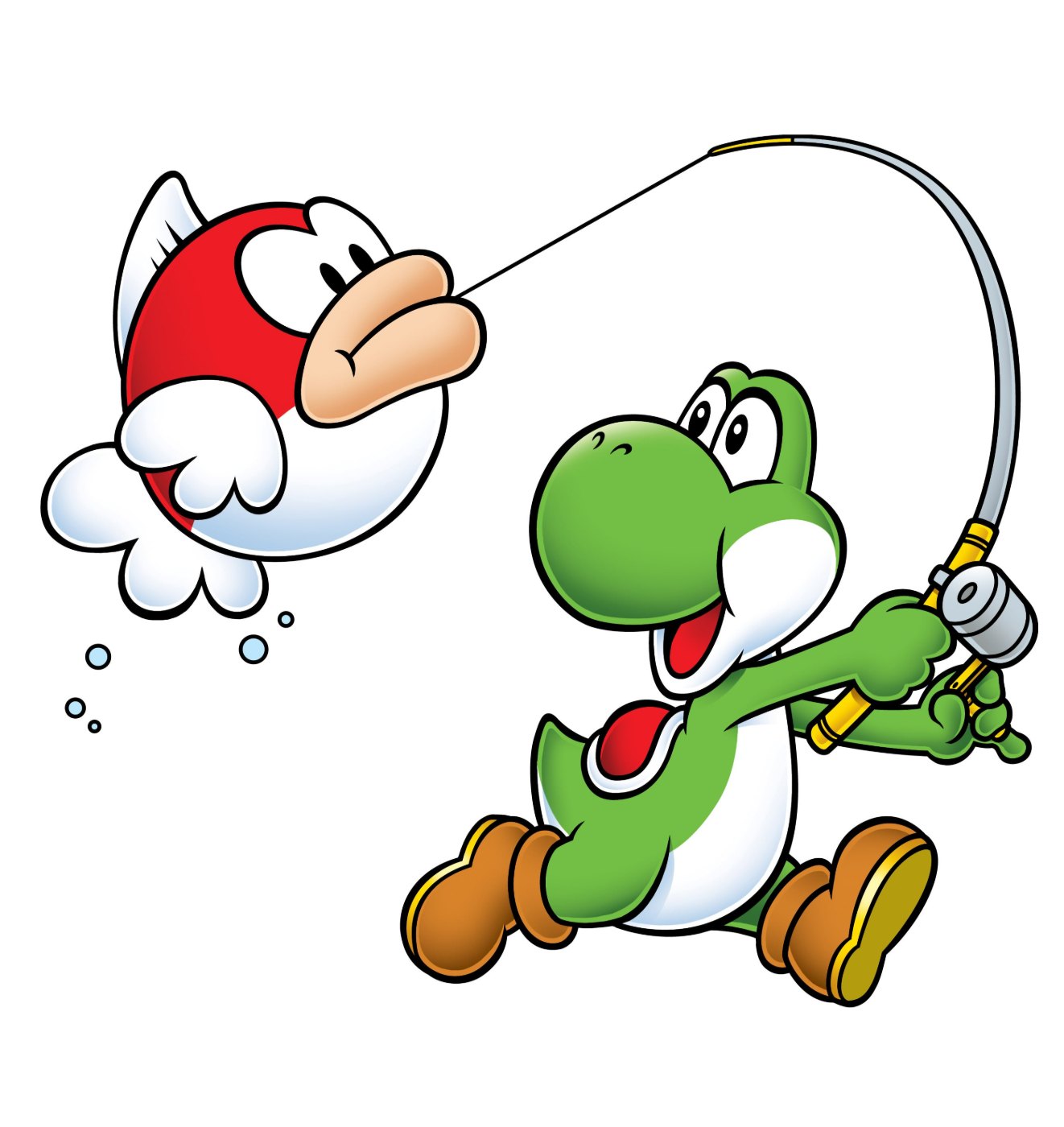
YoshiPlayable
Drawn for this game with a fishing rod.
Starts in the horror area, at Boo Cemetery. The credits note that Dorrie has not seen him in ages.
Start: Horror area.
TumbleHost of Shroom City
A walking, talking dice with a blue cube for a hat, first seen as the guide in Mario Party 3.
Explains the rules, repeats your objective when asked, announces the chances to win Mushrooms and suggests places to go. In the Japanese version he also closes each day after a quest and prompts your character to write a diary.
The credits say he still works as a much-loved guide.
ToadHost of Play Land and Party Land
Your guide to Party World, for the few seconds before Bowser lands on him.
Sends you to Shroom City, hosts Mini-Game Attack and hands ten coins to anyone who enters the Game Room with none.
Also a playing piece on the downloadable Kuppa Version board.
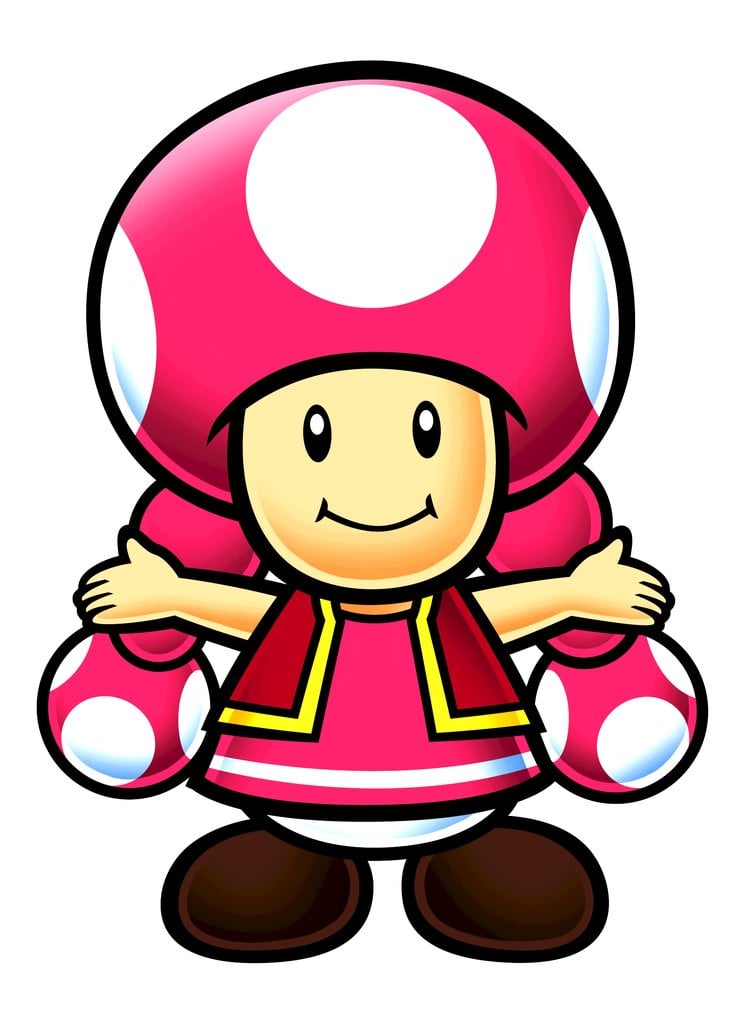
ToadetteHost of Party Land and Challenge Land
Toad’s co-host.
Runs Challenge Land and Duel Dash, and reveals the secret Gaddget to anyone whose record survives the 100-Player Attack.
Hosts with Toad in Party Land.
Professor E. GaddHost of Play Land · inventor
Professor Elvin Gadd, the inventor.
Creator of all 61 Gaddgets and keeper of the shop where coins are exchanged for them. On the paper Bonus Board the spaces that call for a Gaddget carry his name.
Gaddgets: 61.
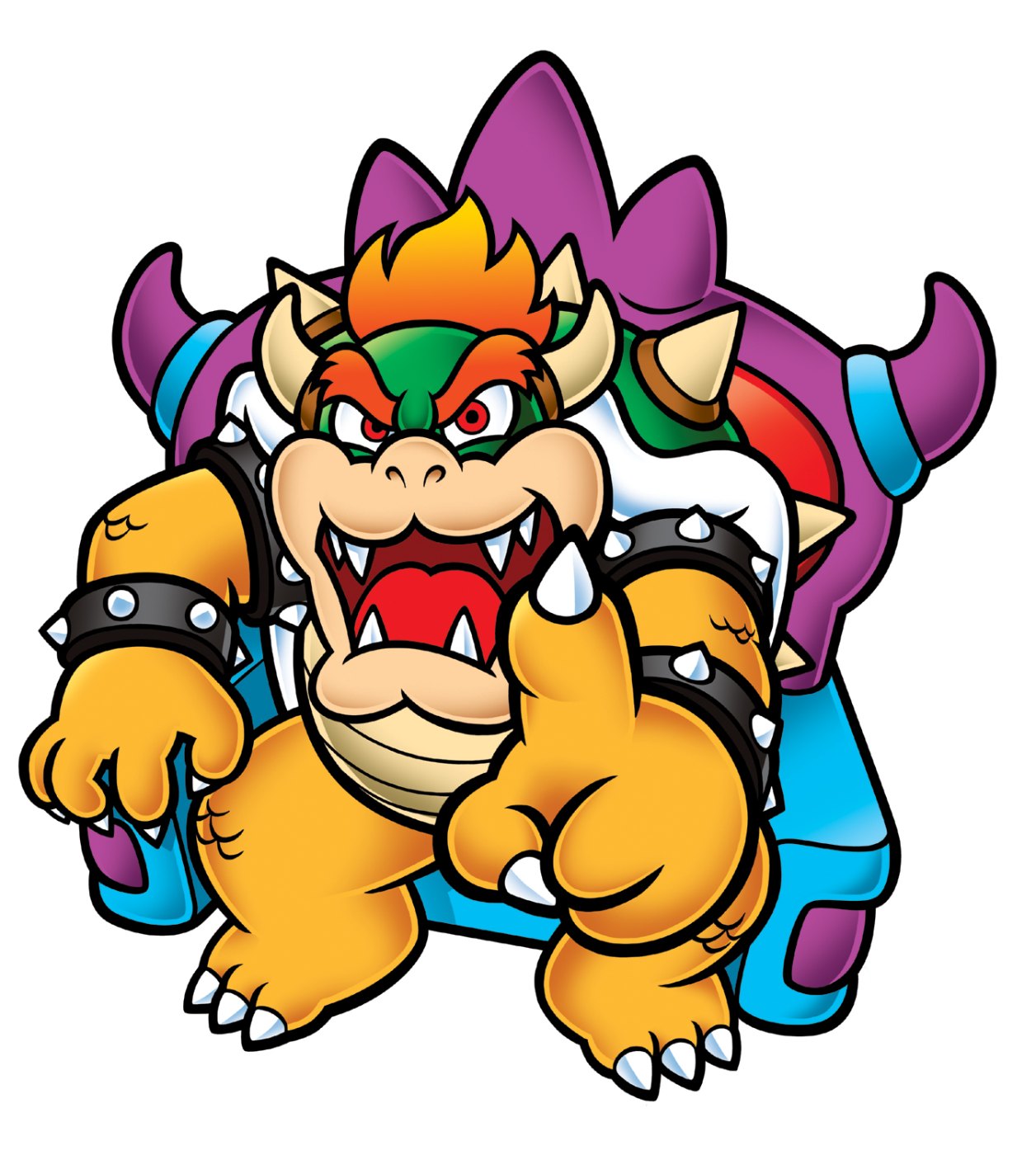
BowserVillain · nine quests
Turns up all over the city, his profile says, and has feelings for Peach.
Scatters the minigames and Gaddgets, then sets nine quests from his hideouts and plays Slammer and the final game, Trap Floor, in person. He also co-hosts Bowser Land.
Afterwards: wants a clean start at beating Mario.
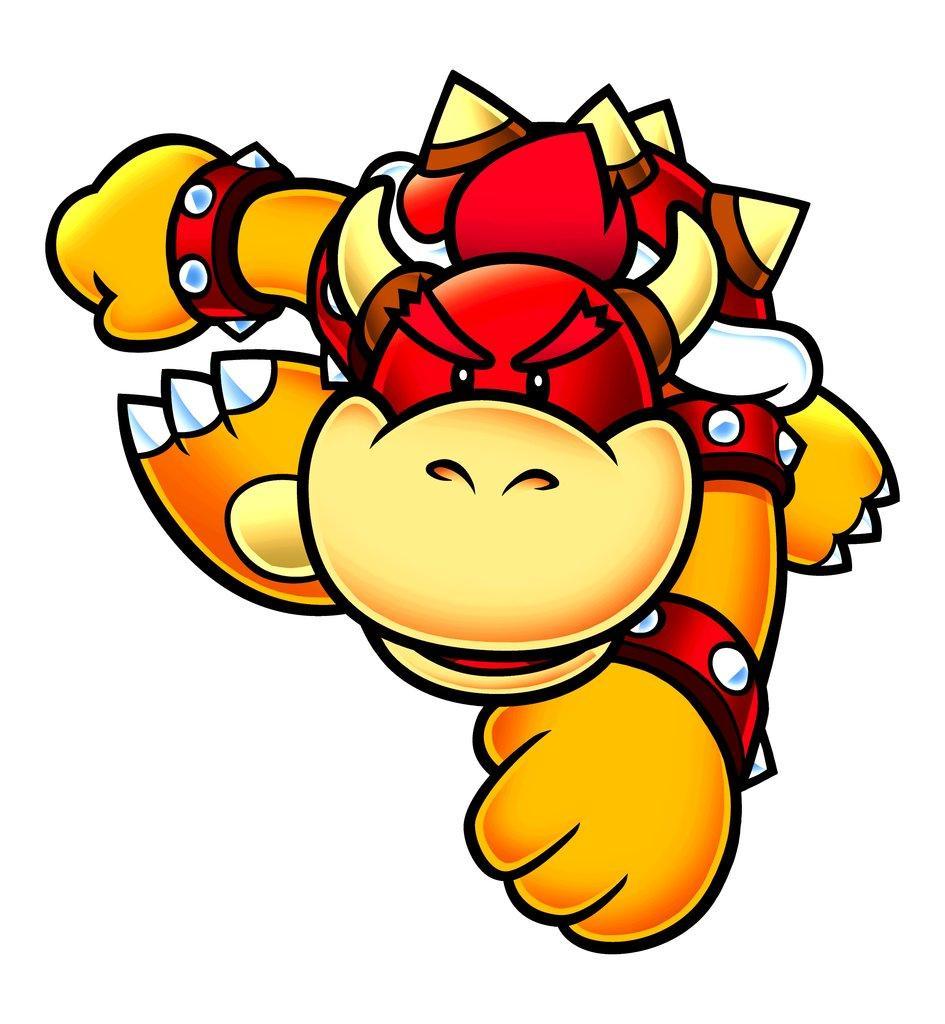
Koopa KidBowser’s sidekick
Bowser’s small admirer, who idolises him before the adventure and still does after it.
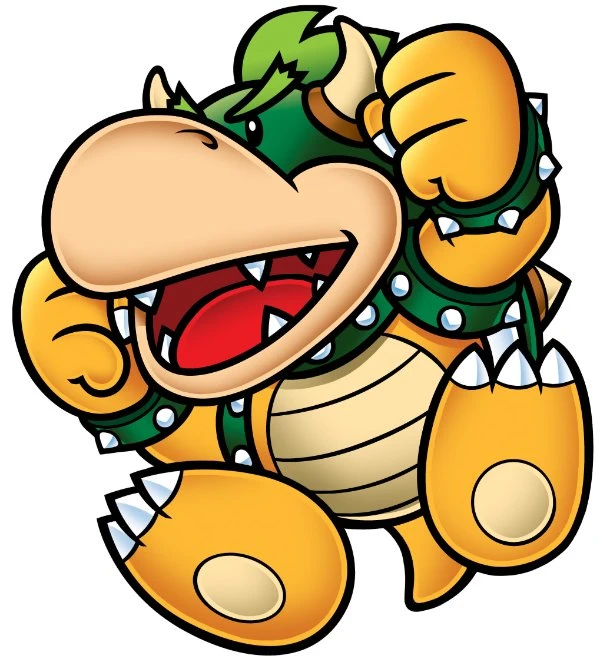
Falls on Toad alongside Bowser, interrupts you on the road with challenges worth a Mushroom either way, and appears in crowds, with red, green and blue Koopa Kids among them, in all six Bowser minigames.
Win his challenge: +1 Mushroom. Lose: −1.
ShroomlockResident · detective
The detective of Toadland Yard, who appears at every crime scene and loves ice cream.
Works with you on the bank robbery, the missing mayor, the stolen paintings and his own fall from Sushi Cliff.
Afterwards: went on holiday and solved a crime there.
Mrs. ShroomlockResident · adviser
Shroomlock’s wife, a lover of gossip, known in the game as Mrs. S.
The one resident with no quest. Visit Shroomlock House and she tells you what to do next.
Afterwards: hooked on infomercials.
Mr. EResident · mystery hunter
A Toad who loves a mystery and arrives whenever you find something strange.
Involved in the UFO on the condo roof and the treasure of the Klepto Ruins.
Afterwards: nobody knows where he went.
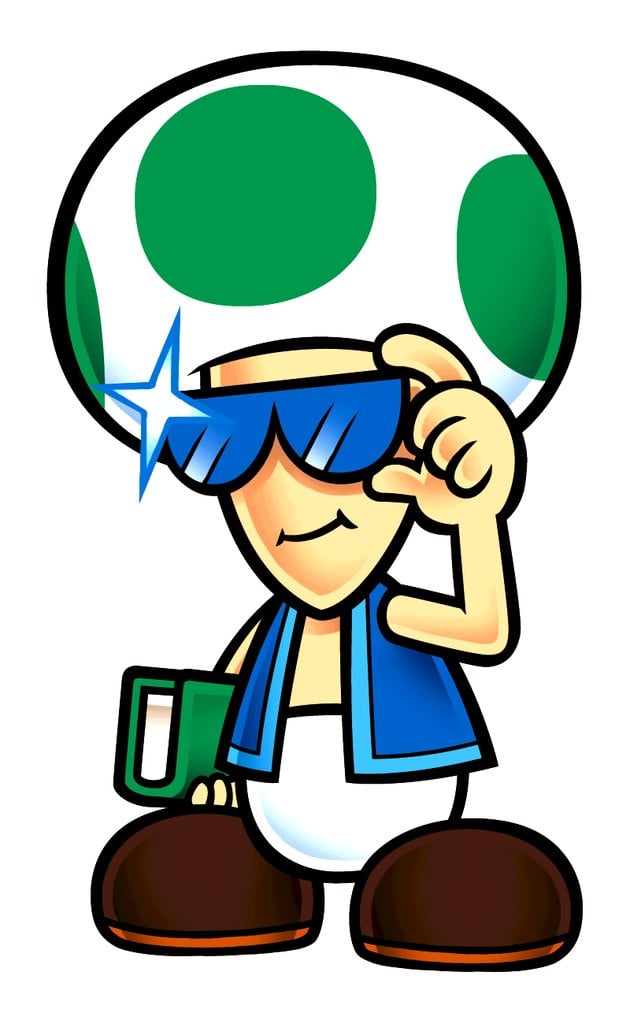
MushbertResident · superfan
A Toad from Mushroom Condo and a devoted fan of Toad Force V.
The man to see for rare Toad Force V merchandise.
Afterwards: outgrew the show and took up Koopa Quest.
Big Bob-ombResident · Town
King Bob-omb under his old name, living in a secret room in town.
Plays you at dice in the basement of Mushroom Condo in the quest Big Boss Bob-omb.
Afterwards: retired to the jungle, and a Bob-omb filled his shoes.
Goombob and GoombettyResidents · Town
The rich kid of Goombob Manor and the girl he goes to school with.
Accessorize! has you carry a lovely seashell from one to the other.
Afterwards: she collects seashells, and he may move to the beach with her.
KamekResident · Desert
The self-styled Game Mage.
Challenges you to the gambling game Pair ’Em at The Hammer.
Afterwards: forgave Bowser and went back to his side.
Whomp, Salvo and MouserResidents · Duel Tower
The three champions of Duel Tower in the seaside area.
Whomp fights at Stair Scare on the first floor, Salvo at Volleybomb on the second, and Mouser, the most challenging, at Chicken! on the third.
Afterwards: Whomp left and befriended Thwomp; Salvo guards the second floor.
DorrieResident · Jungle
The gentle sea creature of Loch Dorrie, who looks lonely.
Dino of Mystery! is about finding Dorrie a friend.
Afterwards: has not seen Yoshi in ages.
Ukiki and AkikiResidents · Jungle
The mayor of the jungle and his tomboy niece, who looks up to him.
In Monkeynapping!? Akiki reports her uncle kidnapped; he has staged it as a prank. He also needs rescuing ten times over in the minigame See Monkey?
Afterwards: Ukiki gave up being mayor, and the two are still pals.
Naval PiranhaBowser’s lab
A monstrous Piranha Plant kept in Bowser Lab.
Your opponent at Koopa Kurl in the quest Bowserstein!
Afterwards: growing well in the dry desert.
BooResident · Horror
The mischievous Boo of Boo Cemetery.
True-Blue Boo asks you to pick the fake out of four Boos. Boos also star in Boo-Bye, Spooky Spike and the Porta-Gust Gaddget.
Afterwards: every Boo now haunts Horror Condo.
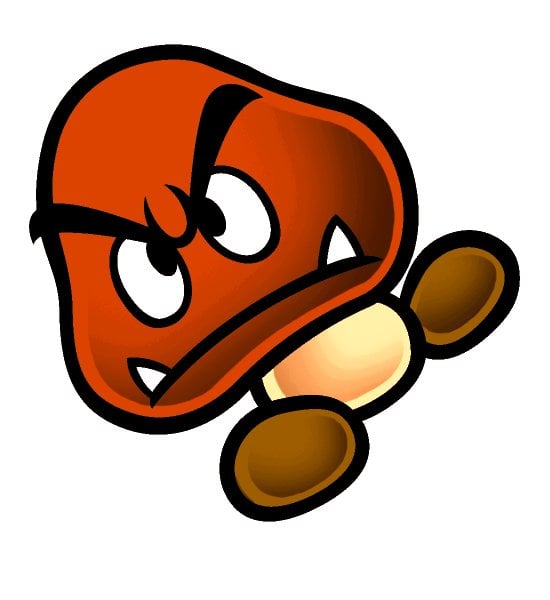
GoombaResident · Town
Lives at Goomba House and enjoys dancing.
Kind Goomba, in which you buy him a train ticket, is where Mario’s game begins.
Afterwards: officially Shroom City’s guide.
Monty MoleResident · Town
A games fanatic found in Town Game Room A.
Winners Keepers is won with one round of Scratch ’Em.
Afterwards: gave up games and got married.
Every minigame in Mario Party Advance
All 50, in the usual order: 30 single-player, 8 Duel, 6 Bowser and 6 Gambling. Targets quoted are for Shroom City unless stated. For the Duel games the opponent named is the one you face in the city.
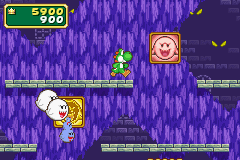
Boo-ByeSingle-playerLure coloured Boos into portraits of the same colour. Looking at a Boo freezes it; touching one ends the game. The target is 1,000 points.
GrabbitSingle-playerCreep up on rabbits and dive on them before they bolt: seven in a minute.
Chomp WalkerSingle-playerWalk a Chain Chomp to the goal. Bones distract it and meat makes it sprint, but let it spot you and it charges.
Cloud ClimbSingle-playerBounce from cloud to cloud, using springboards and avoiding Amps, and reach the top before time is up.
Barrel PerilSingle-playerShuffle to the goal inside a barrel, past Chain Chomps. The fewer knocks the better.
Big PopperSingle-playerUse a fan to blow bubbles on to spikes. Each one that reaches the ground costs ten points; 70 points wins.
Forest JumpSingle-playerJump or duck rolling logs on a cliff top while the wind pushes you towards the edge.
Switch Way?Single-playerHit moving blocks to change their direction and reach the goal inside 99 seconds.
AmplifriedSingle-playerStand on a small platform between Amps and stay as close to their lightning as you dare without touching it.
FlingshotSingle-playerHammer A and B to stretch a catapult, then steer through the updraughts. Distance scores, and 5,000 points wins.
Spooky SpikeSingle-playerVolleyball against a Boo: dive to keep ten of its spikes off the floor in 30 seconds.
Bob-OOOM!Single-playerDrop Bob-ombs at the right moment to blow up Bowser Statues for 1,500 points. Hold one too long and it stuns you.
Reel CheepSingle-playerLand a Cheep Cheep by pressing buttons in the order shown. Heavier fish need longer sequences.
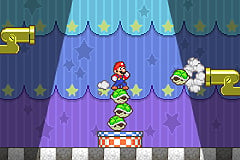
Shell StackSingle-playerJump on Koopa Shells fired from moving pipes to build a stack of ten.
Bill BounceSingle-playerStomp Bullet Bills for points, chaining the bounces for a bigger score.
Bunny BeltSingle-playerPress the Control Pad and A in the order shown to assemble ten toy rabbits. B scraps a spoiled one.
Pest AsideSingle-playerTend four sunflowers, watering or spraying each as its speech bubble asks, for 500 points in 30 seconds.
Melon FolleySingle-playerHop across rafts that sink behind you, collecting melons and watermelon slices. The British version swaps the melon for a pear.
Sort StackSingle-playerPut a muddle of library books back on shelves of the right colour, two at a time.
On the SpotSingle-playerPoke a Whomp’s back in the order it shows you. A wrong poke costs five seconds; five Whomps in 30 seconds wins.
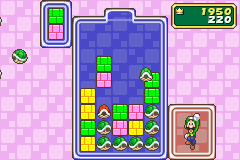
Koopa KrunchSingle-playerA falling-block puzzle: line up three Brick Blocks of one colour and use Red Shells to clear the Green ones. 300 points wins.
Floor It!Single-playerWork a lift, taking Boos, Koopa Troopas, Shy Guys and Goombas to their own floors within a minute.
DreadmillSingle-playerSprint to the goal over conveyor belts that keep changing direction, dodging spikes.
Stompbot XLSingle-playerPilot a walking robot past rocks and over bridges, ahead of a wave of lava.
Go-go PogoSingle-playerPogo-stick to the goal over lava, Piranha Plants and Podoboos. One touch and it is over.
Sled SlideSingle-playerRace a sled round a track without spinning out: one lap in 30 seconds.
Flippin’ OutSingle-playerSwing and leap from peg to peg above the lava to reach the last one.
See Monkey?Single-playerTake a speedboat round a lake and rescue all ten Ukikis, steering clear of the rocks.
Outta My WaySingle-playerRun an obstacle course, getting Thwomps, Whomps and Pokeys out of your path.
Broom ZoomSingle-playerFly a broom through rings, each one in a row doubling the reward. Brick Blocks and Amps break the run; 5,000 points wins.
Tank-DownDuelA tank battle in the dark. Missiles knock out the other side’s hearts and a held shot hits harder. Opponent: Spear Guy.
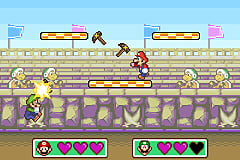
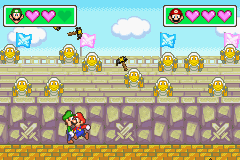
HammergeddonDuelThrow hammers and dodge them, your own included. Three hearts each. Opponent: Blooper.
Stair ScareDuelTap A to race up a crumbling staircase to the hot-air balloon at the top. Opponent: Whomp, on the first floor of Duel Tower.
Chicken!DuelStand under a falling Thwomp and be the last to get out of the way without being flattened. Opponent: Mouser.
Chain SawDuelAlternate L and R to saw through the chain holding a Thwomp above your rival. Played at Chain Chomp’s.
VolleybombDuelBat a Bob-omb to and fro with hammers. Miss it, or let it blow, and you lose one of three lives. Opponent: Salvo.
Koopa KurlDuelCurling with Koopa Shells over two rounds, with yellow bars that double the score. Opponent: Naval Piranha.
SlammerDuelTake turns to swing a hammer or raise a shield. First to five hits. Opponent: Bowser himself.
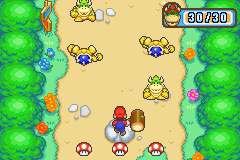
Mush RushBowserGuard three Mushrooms by hammering Koopa Kids out of their lanes until none is left.
Crushed IceBowserRam every Koopa Kid off the ice in an ice-crusher inside 99 seconds.
Peek-n-SneakBowserCreep past the Koopa Kids, hiding behind pillars. Be seen once and you lose.
SplatterballBowserPaintball: hit every Koopa Kid in 99 seconds. Shooting a picture of Toad cuts your ammunition; a stopwatch adds 20 seconds.
Trap FloorBowserOpen the blue and red trapdoors with A and B to drop every Koopa Kid to the bottom before one reaches you. The last game of the story.
Koopa KappaBowserDrop lids on Koopa Kids as they ride the conveyor belts. Cap 40 to win.
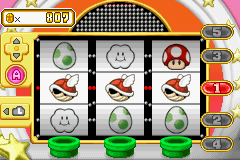
Match ’EmGamblingA slot machine. A bet of one to five coins decides how many lines count.
Watch ’EmGamblingFollow the Koopa hidden in one of three pipes as they swap. Each right answer doubles the stake, up to five times.
Drop ’EmGamblingDrop a coin through a field of pegs towards a ? Block, for a spin worth 5 to 50 coins.
Stop ’EmGamblingRoulette, with stakes of up to 99 coins.
Pair ’EmGamblingTurn over cards and remove them in pairs. Super Stars pay best.
Scratch ’EmGamblingA scratch card: uncover five panels and match Green Shells, Mushrooms or Stars.
The people who made it
Names and roles from the staff roll.
Shinichi NakataDirectorCredited first in the staff roll.
Yukinori GotoGame directorListed with Nakata as a director by Wikipedia.
Fumihisa SatoGame designSeven planners are credited after him, among them Daisuke Yokoo and Hiroshi Yokoyama.
Tetsuharu TakashimaProgramming directorLed a programming team of twelve.
Ichiro Shimakura and Yoshimasa IkedaMusicWith Keita Hoshi as sound director, Hiroyuki Tsuboguchi on sound design and Koji Kondo credited for sound support.
Shigeru Miyamoto and Hiroji KiyotakeCharacter designCredited for character design.
Shigehisa Nakaue, Aya Oyama and Yoshitomo KitamuraArtworkThe illustrators of the official art. Nakaue is also credited for graphic support, with Yoichi Kotabe and Masanori Sato.
Rich Amtower, Nate Bihldorff, Thomas Connery and Erik PetersonLocalisationThe four names credited for localisation, with Jeff Miller, Leslie Swan and Bill Trinen under localisation management.
Kenji KikuchiSenior directorListed near the end of the roll, just before the supervisors and producers.
Shigeru Miyamoto, Takashi Tezuka and Hidetoshi EndoSupervisorsThe three credited as supervisors.
Atsushi Ikeda and Hiroshi SatoProducersWith Shinji Hatano as senior producer.
Satoru Iwata and Hiroshi KudoExecutive producersThe last names in the roll.
How It Was Made
Nintendo published no developer interview for Mario Party Advance that we could find. What follows comes from the credits, the announcement trail recorded by Wikipedia and early screenshots.
Hudson Soft and A.I
The game was made by Hudson Soft, developer of the series since the first Mario Party, and published by Nintendo. Wikipedia names a second studio, A.I, citing that company’s own Japanese website, which describes its part as the minigames only. Some sources also list Nintendo SPD Group No. 4.
The staff roll puts Shinichi Nakata first as director, with Yukinori Goto as game director and Fumihisa Sato in charge of game design. Kenji Kikuchi is senior director, Atsushi Ikeda and Hiroshi Sato are the producers, and Shigeru Miyamoto, Takashi Tezuka and Hidetoshi Endo supervise. The music is by Ichiro Shimakura and Yoshimasa Ikeda. The English text, whose wit Nintendo Life’s review singled out, is the work of the four people credited for localisation: Rich Amtower, Nate Bihldorff, Thomas Connery and Erik Peterson.
Announced, shown and delayed
The preliminary logo shown at E3 2004, which has been compared to that of Mario Party 5.
According to Wikipedia’s account of the coverage at the time, the game was revealed in April 2004 alongside Mario Pinball Land and shown at E3 that May with a release date of 6 December 2004. That was also the date of Mario Party 6 on GameCube, which led GameSpot’s Chris Kohler to wonder in print whether the two games would link up. They did not, and by January 2005 the handheld game had slipped to 28 March. Japan got it first, on 13 January.
The early version
An early screenshot of Shroom City.
Screenshots from before release show a Shroom City that looked very different. The most telling change is in the turn counter: the early game showed a die where the finished one shows a Mushroom. Several minigames were altered too. Shell Stack fired its shells from cannons before pipes replaced them, and many backgrounds were redrawn. One early picture has Bowser flanked by two Koopa Kids, where the finished game gives him one.
The cartridge still holds a few unused icons for minigames and Gaddgets. Two sit beside the Gambling icons and the rest are crossed out, including one for Toad Force V, the Gaddget that exists in the game but is never opened from the ordinary menu.
Differences between versions
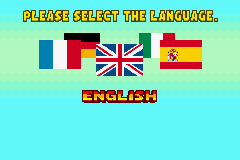
The language selection screen of the European version.
In the Japanese version Tumble marks the end of each day’s adventure when a quest is finished and prompts your character to write up a diary, a touch missing elsewhere. The European cartridge opens with a language menu offering English, French, German, Spanish and Italian. And in British English the melon of Melon Folley became a pear.
Series Firsts
What Mario Party Advance did differently, with the source for each claim.
1A Mario Party without Party ModeShroom City takes the place of the multiplayer board game that every earlier entry was built round, as Wikipedia’s summary of the reviews puts it. There is one board, one player and no Stars to buy.
2GaddgetsNintendo’s own description says the game “introduces Professor E. Gadd’s Gaddgets”: 61 toys with no time limit and usually no goal, a kind of plaything the series had not offered before.
3The second handheld Mario PartyIt is usually counted as the seventh game in the series and the second handheld entry, following Mario Party-e for the e-Reader. Set that one aside, as most counts do in calling Island Tour the third handheld instalment, and this is the first, with Mario Party DS next.
4Bowser on the board, on paperThe downloadable Kuppa Version of the Bonus Board includes playing pieces for Bowser and a Goomba. If printed extras count, they were playable on a Mario Party board here long before Mario Party 10 and Super Mario Party.
Cheats & Secrets
Mario Party Advance has no button codes that we could verify. Its secrets are a matter of knowing the thresholds, where the coins are and how not to run out of Mushrooms.
When Bowser’s quests open
Each of Bowser’s quests needs a number of other quests finished first: Goal Tenderizer 3, Chillin’ Villain 10, Bowser: Accused! 15, Bowser’s Toys 20, Boss Bowser 25, Bestest Buds 30, Game King 35, Bowserstein! 40 and Final Showdown 49. Losing the last minigame, Trap Floor, sends you back to the door without costing a Mushroom, so you can try again at once.
Making Mushrooms last
A move from a Dice Space is free, and landing on another Dice Space gives another, so a chain of them covers ground for nothing. Contributors to the fan site Mario Party Legacy add three pieces of advice: visit Minigame Spaces early to build a reserve; use the map to see where a roll will put you; and stock up before heading for one of Bowser’s quests, because the paths that lead to them have only Minus Spaces. They also report that Koopa Kid interrupts more often as more of Bowser’s pipes are opened.
Where the coins are
Mini-Game Attack pays 1,000 coins for five wins in a row, 10,000 for ten and 100,000 for all fifteen, and you may stop at any point and keep what you have earned; a single loss forfeits it. Duel Dash pays 1,000 coins on Easy (three games), 10,000 on Normal (five) and 50,000 on Hard (eight). In the Game Room, Toad will always give a player with nothing ten coins to start again. Mario Party Legacy rates the card game Pair ’Em as the most dependable earner of the six Gambling games.
The secret Gaddget
Toad Force V is not on the Gaddget menu in Play Land and cannot be bought. To see it, set a record in the 100-Player Attack in Party Land and have it stand through all hundred attempts to beat it. Toadette then shows you the “treasure”: a Toad Force V figure with the show’s theme playing, whose beams you fire with L and R. Leave it, and you must win the 100-Player Attack again to bring it back.
More passports
The Passport+ Gaddget, 1,000 coins from Professor E. Gadd’s shop, raises the number of passports the cartridge can hold to 30.
A different start
The only thing your choice of character changes is where you begin: Mario at Goomba House in the town, Luigi at Mushroom Library by the sea, Peach at the Jungle Game Hut and Yoshi at Boo Cemetery. Tumble keeps you there until that location’s quest is finished.
Minigame tips
From Mario Party Legacy’s contributors: crouch in Forest Jump to resist the wind; let go of A on the big bends of Sled Slide; follow the darker water in See Monkey?; throw a hammer straight up in Hammergeddon as a shield; in Bunny Belt, wait for the pattern, because anything pressed early counts as a mistake; and in Trap Floor open the traps in sequence as each Koopa Kid falls so that he does not bounce off.
Videos
We could not find an upload of the game on an official Nintendo channel. These are two third-party uploads: a Japanese television commercial from 2005 and a complete playthrough.
A Japanese television commercial for the game, preserved by the YouTube user 83Chrisaaron. A third-party upload, not an official one.
A full playthrough of the American version from the archive channel World-of-Longplays, without commentary.
Trivia & Interesting Facts
The credits double as an epilogue. Each resident scrolls past with a note on what happened next: Monty Mole gave up games and got married, Big Bob-omb retired to the jungle, Kamek forgave Bowser and went back to work for him, and Huffin Puffin vanished so completely that even Bowser does not know where he is.
Junk, the item shop run by Paratroopa.Shroom City is obsessed with a television show called Toad Force V. Mushbert, Lakitu, Ninji and Lantern Ghost are all fans, three quests turn on its merchandise or its script, Bowser sets a quiz on it and the game’s secret Gaddget is one of its action figures. The credits reveal that Mushbert has since moved on to something called Koopa Quest, and that Paratroopa, who runs the item shop Junk, made a fortune selling Toxic Toad Z figures.
Shroomlock is described in the game as the detective of Toadland Yard, with a weakness for ice cream.
The Shroom City map is usually counted at 319 spaces: 179 yellow, 78 green, 40 red and 22 marked M.
Tumble had been the guide of Mario Party 3 in 2000. By most accounts his only appearance since this game is a cameo in Mario Party: The Top 100. His name in Japanese is Koro, from the sound of something rolling.
In the Japanese version each finished quest ends the day, and your character is asked to write in a diary.
The melon in Melon Folley is a pear in the British English version.
The early screenshot with two Koopa Kids.An early screenshot shows Bowser with two Koopa Kids at his side. In the finished game only one falls on Toad with him, although red, green and blue ones fill his minigames.
The preliminary logo shown at E3 2004 resembled the logo of Mario Party 5.
Characters taken from Super Mario 64, among them Dorrie, Hoot, Ukiki and Big Bob-omb, use their Nintendo 64 designs and names even though the DS remake had already been released.
Shroom City is Kinoko City (Mushroom City) in Japanese, Champiville in French, Pilz-City in German, Fungolandia in Italian and Urbiñón in Spanish.
The last quest, Final Showdown, is called “VS Bowser! Final battle!!” in Japanese and “L’apothéose” in French.
The secret Gaddget is called Toad Force V Deluxe in Japanese, and in Spanish the show is shortened to FTV.
Guinness World Records lists the game as the worst-rated Mario game, using a GameRankings average recorded on 28 July 2014.
It was the second of three Mario Party games released on the Wii U Virtual Console, after Mario Party 2 and before Mario Party DS.
Before release, GameSpot’s Chris Kohler speculated that the game might connect to Mario Party 6, since the two were due on the same day. The date moved and no link feature appeared.
The Bonus Board has to be cut out before it can be played: the board itself, the four character pieces and the Star Piece.
Regional Box Art
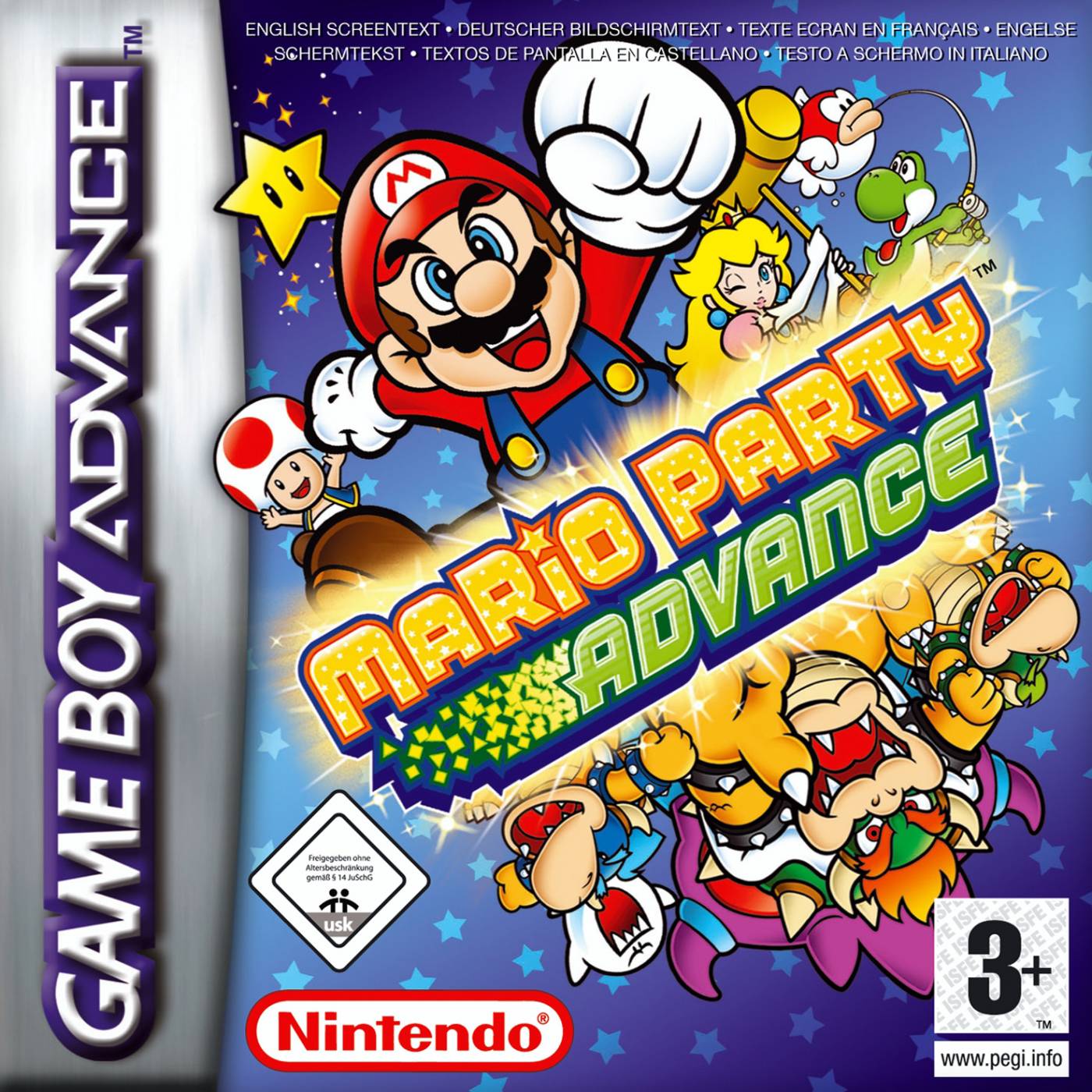
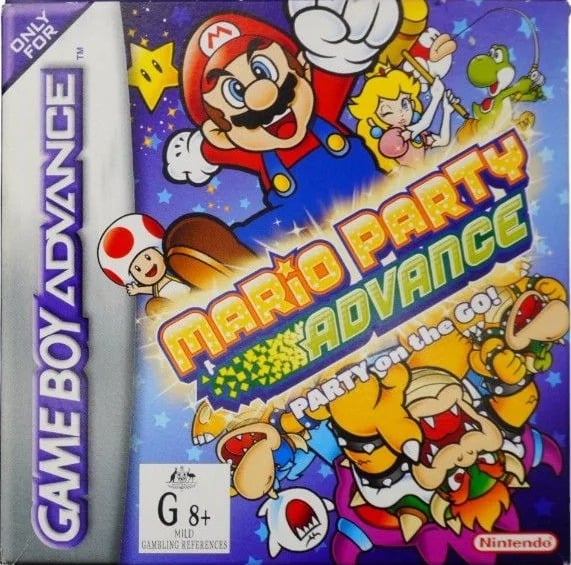
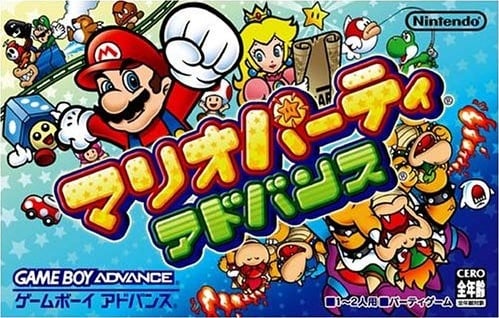
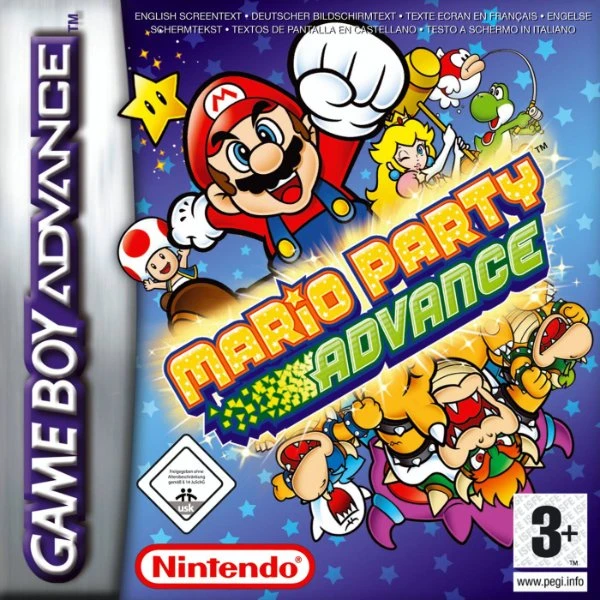
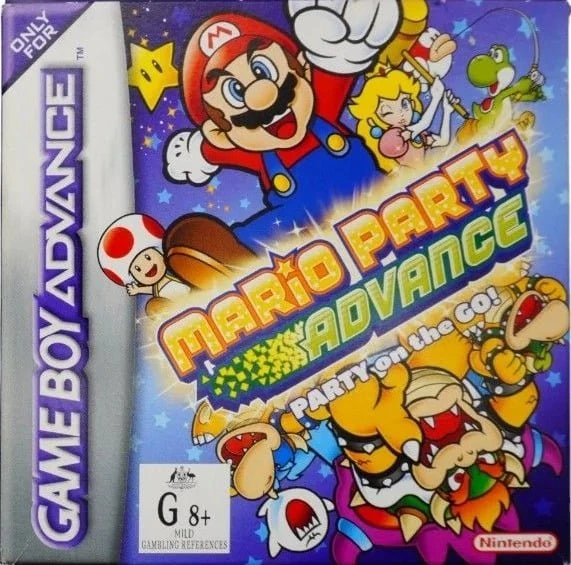
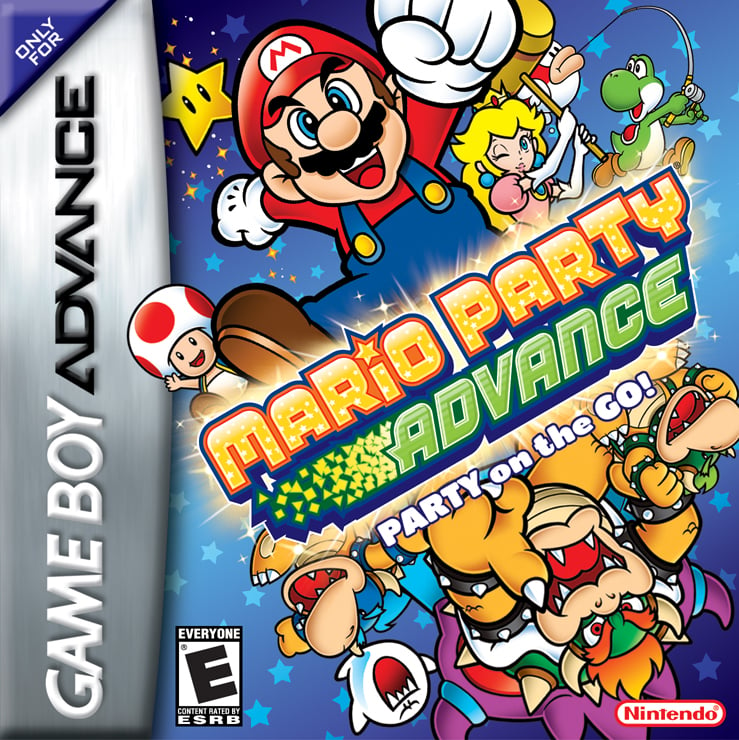
The four regional covers.
North America28 March 2005Europe10 June 2005AustralasiaSeptember 2005Japan13 January 2005
Screenshots
More scenes from the quests of Shroom City.
Chomper Stomper: Chain Chomp issues his challenge.Hearts A-Flutter, on the third floor of Mushroom Condo.Mysterious Riddles: Pokey in the desert.Duel Tower, third floor: Mouser.Chillin’ Villain on Mt. Frostbite.Bowserstein! in Bowser Lab.
Artwork & Media Gallery
Logos, official artwork, adverts and screenshots from before release.
The international logo.The Japanese logo.The preliminary logo from E3 2004.The cover artwork.The Toad characters.Mario and Peach with a Compat-I-Com.Mario.Yoshi at a slot machine.Bowser.Green Koopa Kid.Blue Koopa Kid.The Japanese title screen.North American print advert.UK print advert.Japanese print advert.Hammergeddon before release.Shell Stack before release, with cannons where the pipes now are.
Legacy & Re-releases
Mario Party Advance had one release and one re-release, and the series did not try anything like it again.
Every release
Game Boy Advance (Japan)13 January 2005The first release. It topped the Media Create chart in its first week, according to Inside Games.
Game Boy Advance (North America)28 March 2005Originally announced for 6 December 2004.
Game Boy Advance (Europe)10 June 2005With English, French, German, Spanish and Italian text.
Game Boy Advance (Australia)15 September 2005Wikipedia’s date; some sources give 16 September.
Wii U Virtual Console (North America, Europe, Australia)25 December 2014One player only, with the link features removed. Nintendo’s European page lists it as a 154.5 MB download with Off-TV Play.
Wii U Virtual Console (Japan)28 October 2015The last release to date. Purchases on the Wii U eShop ended on 27 March 2023.
What came next
The series went straight back to what it knew: Wikipedia notes that Mario Party 7 followed on GameCube later the same year. Mario Party did not return to a handheld until Mario Party DS in 2007. Shroom City, its residents and the Gaddgets have not been revisited, and the 2017 compilation Mario Party: The Top 100 took its minigames from the home console games only.
A reputation, of sorts
Rankings of the series reliably put it at or near the bottom: last of twelve at IGN in 2015, sixteenth of eighteen at Digital Trends in 2022, one place above Mario Party-e at TheGamer. But the same lists tend to concede the point its defenders make. As a party game it fails, since for most of its length there is nobody else at the party. As a strange little adventure about helping a detective, a rap group and a lovesick poet, it has no real equivalent among the other Mario Party games.
Reviews & Sales
Sales
We found no lifetime sales figure: Wikipedia gives no total, and we could not trace one to Nintendo. What can be traced is its start in Japan. The Japanese site Inside Games, reporting Media Create’s chart for the week of 17 to 23 January 2005, has it in fifth place with 29,669 copies sold that week, down from first place the week before, and a running total of 97,596 ten days after release.
97,596copies sold in Japan by 23 January 2005 (Media Create, via Inside Games)
No. 1in the Japanese chart in its first week, according to the same report
54Metacritic score
56.53%GameRankings average from 32 reviews (Guinness World Records)
Reviews
Scores as listed by Wikipedia from the original reviews, best to worst, with the two aggregates last.
Nintendo LifeWii U Virtual Console version
7/10
FamitsuJapan · four reviewers
27/40
GameSpotFrank Provo · 31 March 2005
6.5/10
Nintendo PowerUS
3.2/5
IGNCraig Harris · 25 March 2005
6/10
GameSpyUS
3/5
X-PlayUS television
3/5
Detroit Free PressUS newspaper
2/4
1UP.comKaren Chu · 5 April 2005
C
Pocket GamerJoao Diniz Sanches · 21 October 2005
4/10
Nintendo World ReportUS
4/10
NGC MagazineUK
2/5
PALGNAustralia
1.5/10
EurogamerKristan Reed · July 2005
1/10
MetacriticAggregate
54/100
GameRankingsAggregate of 32 reviews
56.53%
The fairest summary came from GameSpot’s Frank Provo. “Mario Party Advance isn’t much of a party when multiple players are involved,” he wrote, before adding that its single-player side “is very nicely organized and offers a great deal of variety.” He liked the way Mario’s cast had been worked into the board and found some of the minigames clever, but thought the multiplayer limited and badly arranged and the presentation plain.
Others were harsher. IGN’s Craig Harris, as Wikipedia relays it, found the graphics and sound rudimentary, the story mode slow and wordy and most of the minigames bland. Karen Chu of 1UP.com said it made her want to go back to the console games, and found it dispiriting to be the only human at something sold as a party. Eurogamer’s Kristan Reed gave it one out of ten, suggested it might be the worst game Nintendo had published and told readers to avoid it altogether.
Time has softened that only a little. Wikipedia notes that its Metacritic score of 54 is the lowest of any Mario Party on the site. IGN’s 2015 ranking of the series put it last of twelve and called it the black sheep of the family. But Nintendo Life, reviewing the Wii U release, gave it seven out of ten, praising the wit of the quest writing, the pixel art and puzzle games such as Koopa Krunch while warning that Mushrooms run short and luck decides too much; and TheGamer’s ranking, placing it just above Mario Party-e, allowed that it is not a bad game, only one that falters at being a party.
Honours
Guinness World Records · as of 28 July 2014Worst-rated Mario videogameAwarded on a GameRankings average of 56.53% from 32 reviews. Guinness notes that Mario & Sonic at the Sochi 2014 Olympic Winter Games scored lower, 54.95% from 22 reviews, but was ruled out as a crossover.
SLB User Reviews
Mario Party Advance has yet to receive a community review on Super Luigi Bros.
If you’ve played Mario Party Advance and would like to submit a review, please get in touch.
More from the Super Luigi Bros Guide
These picture lists come from the earlier Super Luigi Bros guide to Mario Party Advance and are kept here in full.
Bowser & the Koopa Kids
Mario Party Advance’s antagonists are Bowser and the three Koopa Kids — the same trio of mischief-makers from earlier home-console Mario Party games.
Bowser
Throughout Shroom City — Main Antagonist
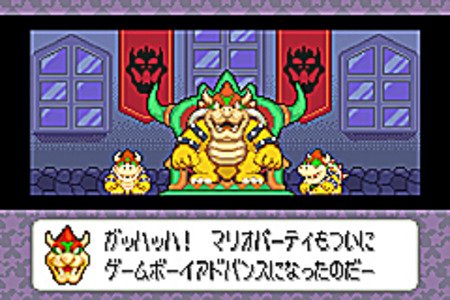
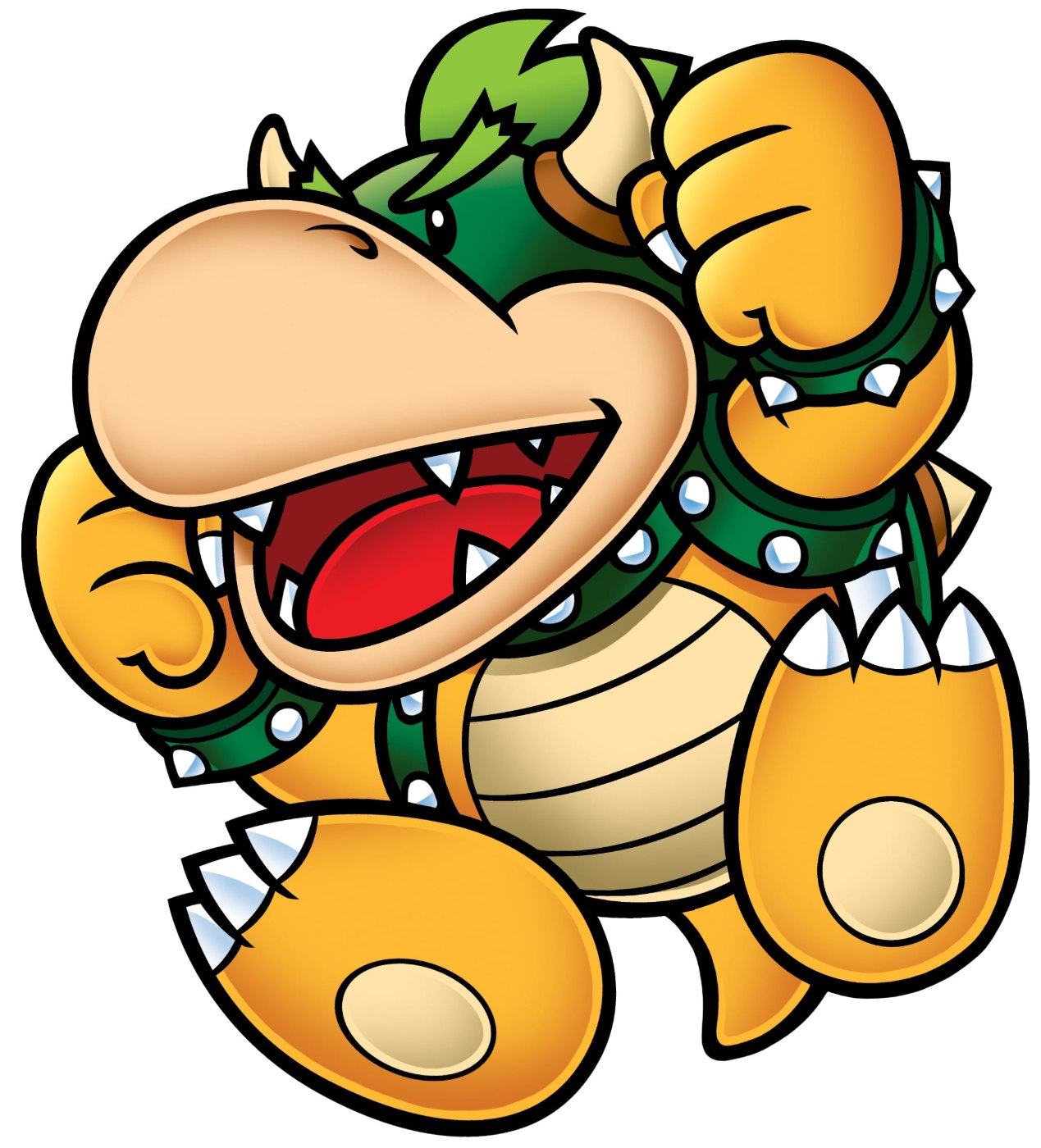
The king of the Koopas himself is the chief troublemaker. The story opens with Bowser falling out of the sky and landing on Toad before scattering all the minigames and Gaddgets across Shroom City. He stays involved throughout the adventure, with the Bowser Quests region serving as the final showdown zone. The throne artwork shows him in his usual menacing fashion.
Bowser (Throne Pose)
Bowser Quests region
A second piece of Bowser artwork showing him in his throne pose. Used in the Bowser Quests region and Challenge Land’s Bowser Land sub-mode — the most challenging coin-grinding gauntlet in the game.
Green Koopa Kid
Various Shroom City minigames — Sidekick
The green-shelled Koopa Kid serves as one of Bowser’s three sidekicks. Appears in various minigames trying to throw off the player. Distinguished from his siblings by his green shell colour.
Blue Koopa Kid
Various Shroom City minigames — Sidekick
The blue-shelled Koopa Kid is the second of the trio. Also appears in various minigames to make them harder. The blue Koopa Kid is the most commonly seen in the intro alongside Bowser when they fall on Toad.
Red Koopa Kid
Various Shroom City minigames — Sidekick
The red-shelled Koopa Kid completes the trio. Together, the three Koopa Kids represent the recurring Mario Party Advance antagonists alongside Bowser himself. The trio of green/blue/red Koopa Kids is a Mario Party series tradition.
Regional Logos, Box Art & Title Screens
Mario Party Advance shipped with distinct regional box art across all four regions.
Regional Logos
InternationalWestern markets logoJapanJP-market logoPre-releaseE3 2004 preliminary logo
Box Art
North AmericaReleased 28 Mar 2005Europe (UK)Released 10 Jun 2005AustralasiaReleased 15 Sep 2005JapanReleased 13 Jan 2005
Iconic In-Game Screens
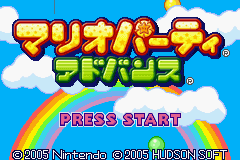
International title screenJapanese title screenLanguage selection (Europe only)Character select — Princess Peach chosen
To provide the best experiences, we use technologies like cookies to store and/or access device information. Consenting to these technologies will allow us to process data such as browsing behavior or unique IDs on this site. Not consenting or withdrawing consent, may adversely affect certain features and functions.
Functional
Always active
The technical storage or access is strictly necessary for the legitimate purpose of enabling the use of a specific service explicitly requested by the subscriber or user, or for the sole purpose of carrying out the transmission of a communication over an electronic communications network.
Preferences
The technical storage or access is necessary for the legitimate purpose of storing preferences that are not requested by the subscriber or user.
Statistics
The technical storage or access that is used exclusively for statistical purposes.The technical storage or access that is used exclusively for anonymous statistical purposes. Without a subpoena, voluntary compliance on the part of your Internet Service Provider, or additional records from a third party, information stored or retrieved for this purpose alone cannot usually be used to identify you.
Marketing
The technical storage or access is required to create user profiles to send advertising, or to track the user on a website or across several websites for similar marketing purposes.


 Desert areaNo starting character · 5 quests · Bowser StadiumSport and mystery: a sprint against Bullet Bill, Hammer Bro’s throwing contest, Pokey’s riddles and the Klepto Ruins.
 Seaside areaLuigi starts here, at Mushroom Library · 9 quests · Bowser Game HallHome of Duel Tower and its three champions, Whomp, Salvo and Mouser.
 Horror areaYoshi starts here, at Boo Cemetery · 5 questsGravestones, a condo that is not haunted enough and the Toad Force V fan club.
 Snow areaNo starting character · 2 quests · Mt. FrostbiteThe smallest area: baseball against Mr. Blizzard and a Penguin with a gambling problem.
 Jungle areaPeach starts here, at the Jungle Game Hut · 6 quests · Bowser Hideout, Bowser LabThe largest area, with Dorrie’s loch, Hulu’s Dance Stage and the case of the missing mayor.






 Snooze EwesCount sheep until you nod off. The game recommends it to insomniacs.
 Porta-GustA pocket ghost-catcher: watch the sensor, work the Control Pad and strike when a Boo shows itself.
 Magic LampRub it the right way and a genie may turn up to grant a wish.
 Compat-I-ComTwo people press their buttons and it rates how well suited they are. Nintendo’s page calls it the Compatibility Meter.
 Power StarA Power Star to keep on the screen and show off.
 Desktop GolfA putting toy. Aim for a hole in one.
 Shroom SlideA lottery for a group: set how many are playing and how many slots win, then everyone guesses.
 Stick to ItFor the indecisive: put your options on the choice spot and let it settle the matter.
 Bait ’n WaitFishing. Watch the float and wait for a bite.
 DigitizerPut a finger on the screen and it pretends to show you what is inside.
 Lip SyncA joke built round talking mouths; screenshots show Mario’s, a Goomba’s and a Boo’s.
 Shroom BloomRaise a mushroom by keeping its moisture in balance.
 Poochy PalA virtual pet dog.
 Bull’s-eyeDarts: eight throws, with the power set by how long you hold A.
 Soil SonarClaims to probe thousands of feet underground, no shovel required.
 Eye ExamAn eye chart. Stand about seven feet back, then try it on your friends.
 Mini SluggerBaseball for two, one pitching and one batting.
 Tap-Tap SumoButton-tapping sumo against a friend.
 Egg RollAn egg. See whether you can stand it on its end.
 Shroom DropPlayed with the console held sideways: players take turns sliding plates.
 Morse MakerTurns a typed message into Morse code; the R Button lets you tap out your own.
 4-P PinballPinball for up to four players on one console.
 Snow GlobeA calm winter scene to tilt and watch.
 Tile TrialA sliding-tile puzzle against the clock.
 Map MakerDraw a treasure map and send your friends hunting.
 Attack FrogUp to four frogs compete to snap up bugs.
 Mini MazeA small labyrinth to find your way through.
 Faux FlameA flame no wind can blow out. It gives no heat either.
 Stress PressSomething squashy to squeeze when it all gets too much.
 Bomb GameTake turns cutting wires and hope the bomb is not yours.
 Card TrickPick a card, and the Game Boy Advance names it.
 HourglassThree sand-timers of different lengths. Turn the console over to flip them.
 RochambeauRock, paper, scissors against the machine.
 Egg PanicCram eggs into bags with your friends without splitting them.
 Block PunchUp to four players take turns hitting a block. Whoever lands the last blow wins.
 Dart AttackHold to aim, let go to loose an arrow at the target.
 Breeze BuddyA picture of a fan. Looking at it is supposed to cool you down.
 Chicken RacePick a car and stop it as close to the cliff edge as you dare.
 Love Me NotPluck the petals to tell a fortune.
 Mini BowlingA few quick frames with friends, console on its side.
 Mini B-BallBasketball, also played sideways.
 Screen CleanPromises to leave the screen sparkling.
 PredictotronStudies an opponent’s habits and tries to predict the next move.
 Cake MakerDecorate a cake.
 Mini SoccerFootball for two.
 Dessert MenuA menu of puddings to choose from.
 Bead MachineThread beads into a picture on a grid of 24 by 18.
 Jewelry CaseA case of jewels to look at but not touch.
 Castle NightWish on a shooting star, without blinking.
 Hope ChestMake a wish, shut the lid and give it to someone you like to open.
 Pretty PosterA poster to look at.
 Sun PosterA poster to look at.
 Moon PosterA poster to look at.
 Coin PosterA poster to look at.
 Heart PosterA poster to look at.
 Bowser PosterA poster to look at.
 Bowser PrintBowser’s parting gift, handed over when you beat him in the last quest, Final Showdown.
 Bonus Track
 Passport+Lets the cartridge hold up to 30 passports. It costs 1,000 coins at Professor E. Gadd’s Gaddget shop.
 Credits
 Toad Force VThe secret one: a Toad Force V figure whose beams light up with L and R. It is shown only when a record survives the 100-Player Attack, and cannot be bought.
 Print advertsNorth America, United Kingdom, France and Japan · 2005The game was advertised in magazines in four countries, and there were three official desktop wallpapers.
 MarioPlayable
 LuigiPlayable
 Princess PeachPlayable
 YoshiPlayable
 TumbleHost of Shroom City
 ToadHost of Play Land and Party Land
 ToadetteHost of Party Land and Challenge Land
 Professor E. GaddHost of Play Land · inventor
 BowserVillain · nine quests
 Koopa KidBowser’s sidekick
 ShroomlockResident · detective
 Mrs. ShroomlockResident · adviser
 Mr. EResident · mystery hunter
 MushbertResident · superfan
 Big Bob-ombResident · Town
 Goombob and GoombettyResidents · Town
 KamekResident · Desert
 Whomp, Salvo and MouserResidents · Duel Tower
 DorrieResident · Jungle
 Ukiki and AkikiResidents · Jungle
 Naval PiranhaBowser’s lab
 BooResident · Horror
 GoombaResident · Town
 Monty MoleResident · Town
 Boo-ByeSingle-playerLure coloured Boos into portraits of the same colour. Looking at a Boo freezes it; touching one ends the game. The target is 1,000 points.
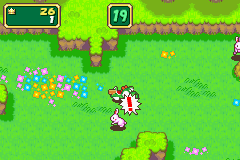 GrabbitSingle-playerCreep up on rabbits and dive on them before they bolt: seven in a minute.
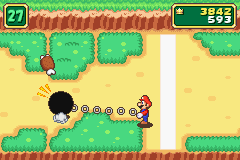 Chomp WalkerSingle-playerWalk a Chain Chomp to the goal. Bones distract it and meat makes it sprint, but let it spot you and it charges.
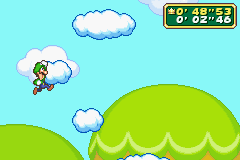 Cloud ClimbSingle-playerBounce from cloud to cloud, using springboards and avoiding Amps, and reach the top before time is up.
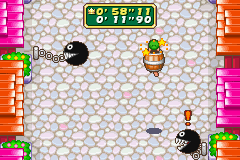 Barrel PerilSingle-playerShuffle to the goal inside a barrel, past Chain Chomps. The fewer knocks the better.
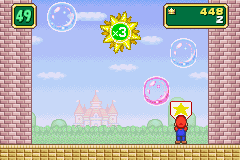 Big PopperSingle-playerUse a fan to blow bubbles on to spikes. Each one that reaches the ground costs ten points; 70 points wins.
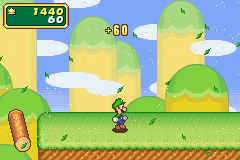 Forest JumpSingle-playerJump or duck rolling logs on a cliff top while the wind pushes you towards the edge.
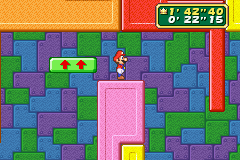 Switch Way?Single-playerHit moving blocks to change their direction and reach the goal inside 99 seconds.
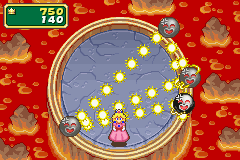 AmplifriedSingle-playerStand on a small platform between Amps and stay as close to their lightning as you dare without touching it.
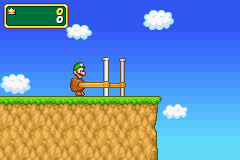 FlingshotSingle-playerHammer A and B to stretch a catapult, then steer through the updraughts. Distance scores, and 5,000 points wins.
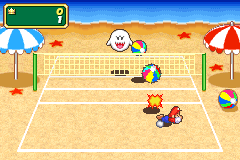 Spooky SpikeSingle-playerVolleyball against a Boo: dive to keep ten of its spikes off the floor in 30 seconds.
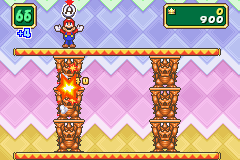 Bob-OOOM!Single-playerDrop Bob-ombs at the right moment to blow up Bowser Statues for 1,500 points. Hold one too long and it stuns you.
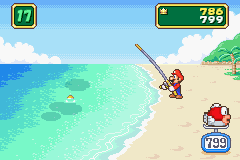 Reel CheepSingle-playerLand a Cheep Cheep by pressing buttons in the order shown. Heavier fish need longer sequences.
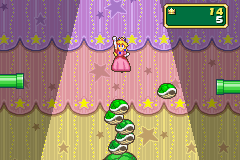 Shell StackSingle-playerJump on Koopa Shells fired from moving pipes to build a stack of ten.
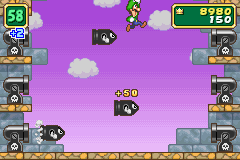 Bill BounceSingle-playerStomp Bullet Bills for points, chaining the bounces for a bigger score.
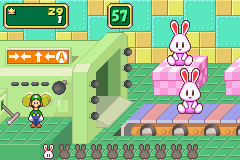 Bunny BeltSingle-playerPress the Control Pad and A in the order shown to assemble ten toy rabbits. B scraps a spoiled one.
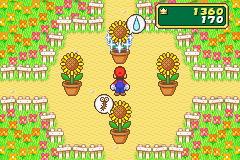 Pest AsideSingle-playerTend four sunflowers, watering or spraying each as its speech bubble asks, for 500 points in 30 seconds.
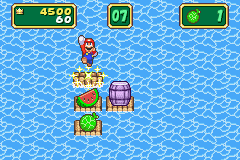 Melon FolleySingle-playerHop across rafts that sink behind you, collecting melons and watermelon slices. The British version swaps the melon for a pear.
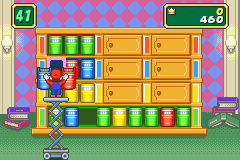 Sort StackSingle-playerPut a muddle of library books back on shelves of the right colour, two at a time.
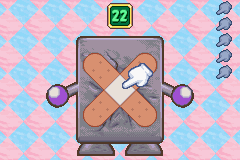 On the SpotSingle-playerPoke a Whomp’s back in the order it shows you. A wrong poke costs five seconds; five Whomps in 30 seconds wins.
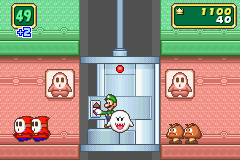 Floor It!Single-playerWork a lift, taking Boos, Koopa Troopas, Shy Guys and Goombas to their own floors within a minute.
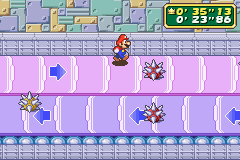 DreadmillSingle-playerSprint to the goal over conveyor belts that keep changing direction, dodging spikes.
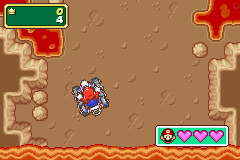 Stompbot XLSingle-playerPilot a walking robot past rocks and over bridges, ahead of a wave of lava.
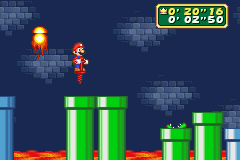 Go-go PogoSingle-playerPogo-stick to the goal over lava, Piranha Plants and Podoboos. One touch and it is over.
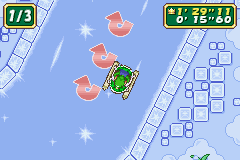 Sled SlideSingle-playerRace a sled round a track without spinning out: one lap in 30 seconds.
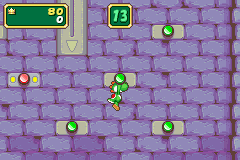 Flippin’ OutSingle-playerSwing and leap from peg to peg above the lava to reach the last one.
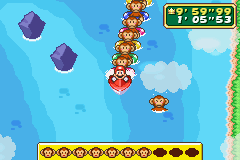 See Monkey?Single-playerTake a speedboat round a lake and rescue all ten Ukikis, steering clear of the rocks.
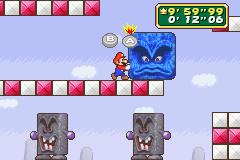 Outta My WaySingle-playerRun an obstacle course, getting Thwomps, Whomps and Pokeys out of your path.
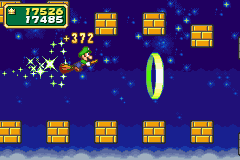 Broom ZoomSingle-playerFly a broom through rings, each one in a row doubling the reward. Brick Blocks and Amps break the run; 5,000 points wins.
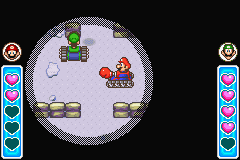 Tank-DownDuelA tank battle in the dark. Missiles knock out the other side’s hearts and a held shot hits harder. Opponent: Spear Guy.
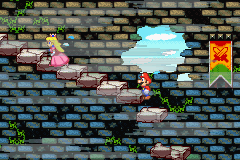 Stair ScareDuelTap A to race up a crumbling staircase to the hot-air balloon at the top. Opponent: Whomp, on the first floor of Duel Tower.
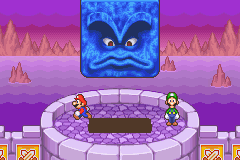 Chicken!DuelStand under a falling Thwomp and be the last to get out of the way without being flattened. Opponent: Mouser.
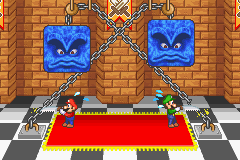 Chain SawDuelAlternate L and R to saw through the chain holding a Thwomp above your rival. Played at Chain Chomp’s.
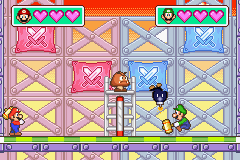 VolleybombDuelBat a Bob-omb to and fro with hammers. Miss it, or let it blow, and you lose one of three lives. Opponent: Salvo.
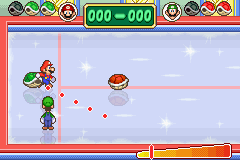 Koopa KurlDuelCurling with Koopa Shells over two rounds, with yellow bars that double the score. Opponent: Naval Piranha.
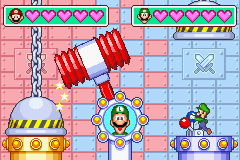 SlammerDuelTake turns to swing a hammer or raise a shield. First to five hits. Opponent: Bowser himself.
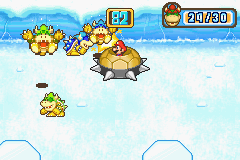 Crushed IceBowserRam every Koopa Kid off the ice in an ice-crusher inside 99 seconds.
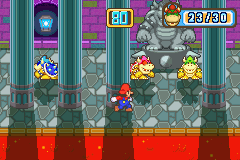 Peek-n-SneakBowserCreep past the Koopa Kids, hiding behind pillars. Be seen once and you lose.
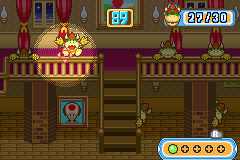 SplatterballBowserPaintball: hit every Koopa Kid in 99 seconds. Shooting a picture of Toad cuts your ammunition; a stopwatch adds 20 seconds.
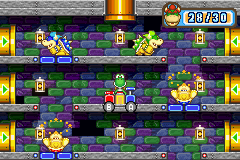 Trap FloorBowserOpen the blue and red trapdoors with A and B to drop every Koopa Kid to the bottom before one reaches you. The last game of the story.
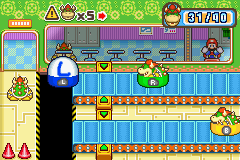 Koopa KappaBowserDrop lids on Koopa Kids as they ride the conveyor belts. Cap 40 to win.
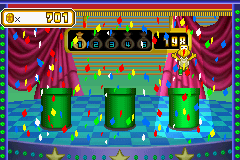 Watch ’EmGamblingFollow the Koopa hidden in one of three pipes as they swap. Each right answer doubles the stake, up to five times.
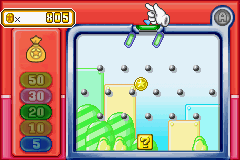 Drop ’EmGamblingDrop a coin through a field of pegs towards a ? Block, for a spin worth 5 to 50 coins.
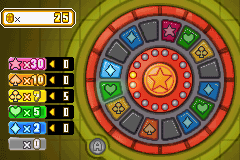 Stop ’EmGamblingRoulette, with stakes of up to 99 coins.
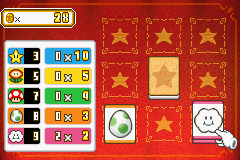 Pair ’EmGamblingTurn over cards and remove them in pairs. Super Stars pay best.
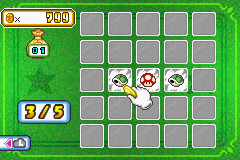 Scratch ’EmGamblingA scratch card: uncover five panels and match Green Shells, Mushrooms or Stars.