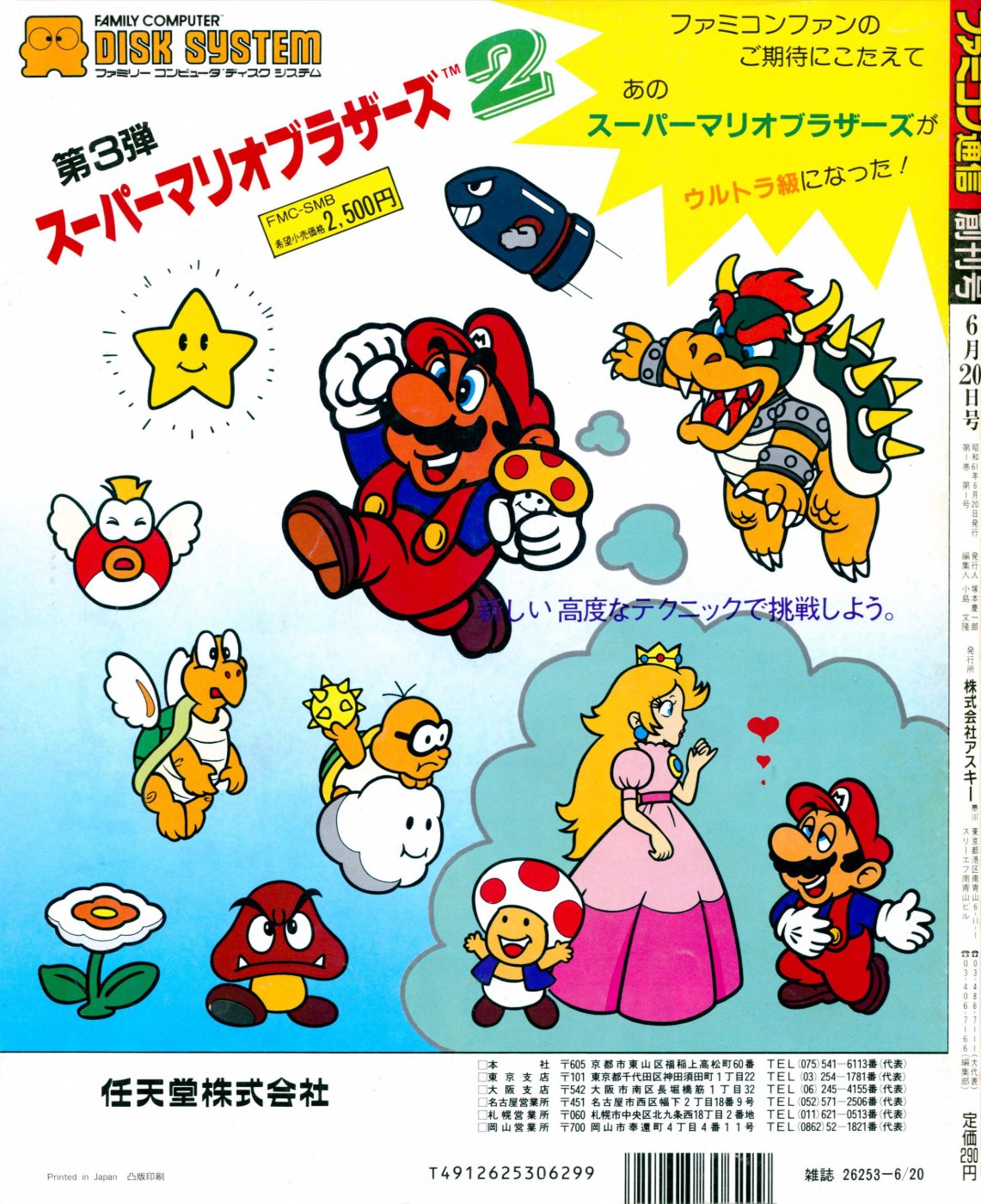
Famicom Disk System1986PlatformerNintendo R&D4For Super PlayersPoison Mushroom debut13 worlds, 52 coursesJapan only until 1993Best-selling Disk System game
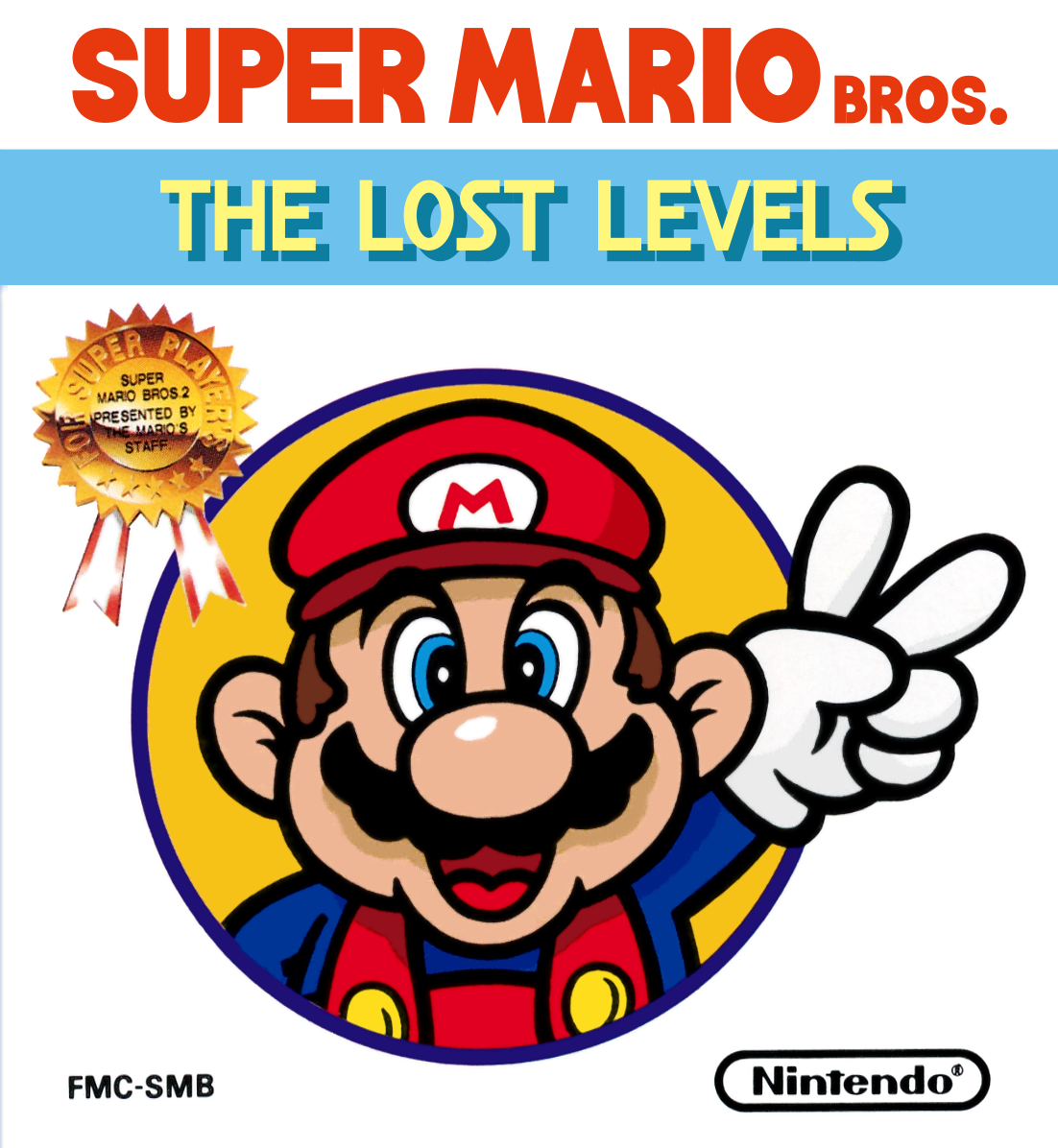
Super Mario Bros.: The Lost Levels
Before the West ever saw Subcon, Japan had a very different Super Mario Bros. 2. Released for the Famicom Disk System on 3 June 1986 with “For Super Players” on the box, it is the original game’s engine turned against the player: Poison Mushrooms that look like power-ups, wind that shoves you towards pits, Warp Zones that send you backwards, red Piranha Plants that bite when you stand beside them, and a Luigi who jumps higher but slides like he is on ice.
Made by Nintendo R&D4 as Takashi Tezuka’s first game as director, it hides a secret World 9 for anyone who never warps and four more worlds, A to D, for anyone who finishes it eight times. Nintendo of America’s tester Howard Phillips judged it unfairly punishing, so the West got a reworked Doki Doki Panic instead, and English speakers waited until Super Mario All-Stars in 1993 to meet it as The Lost Levels.
Sales:About 2.5 million (Wikipedia, citing Atari HQ) or 2.65 million (Install Base), all in Japan
Re-releases:Super Mario All-Stars (1993) · Super Mario Bros. Deluxe (1999) · Famicom Mini (2004) · Virtual Console (Wii 2007, 3DS 2012, Wii U 2013–14) · Nintendo Switch Online (2019) · Game & Watch: Super Mario Bros. (2020)
Advertisement
Overview
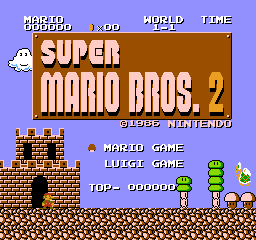
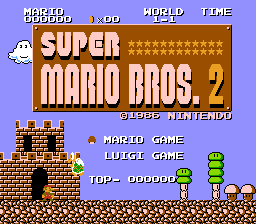
The Disk System title screen. Each star marks one time you have beaten the game.
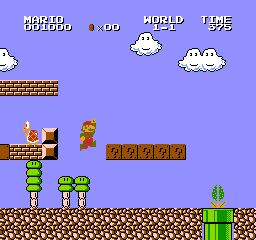
The first sequel to Super Mario Bros. looks, at first glance, like a level pack. Same Mario, same Goombas, same flagpoles, same eight worlds of four courses, same rescue at the end of World 8. Then you hit a ? Block in World 1-1, a mushroom slides out, you run to grab it, and you die. That mushroom with eyes, coloured like a Goomba, tells you everything about the game Nintendo released on the Famicom Disk System in June 1986 as Super Mario Bros. 2: it was built for people who had already beaten the first one and wanted to be tested properly.
The roots were in the arcade. While working on The Legend of Zelda in late 1985, the Super Mario Bros. team made a VS. System version of their game with new and harder courses, enjoyed it, and carried six of those designs into the sequel. Shigeru Miyamoto handed the project to his assistant director on the original, Takashi Tezuka, who directed for the first time; the music came from Koji Kondo, and the programming from Toshihiko Nakago and Kazuaki Morita.
In Japan it sold millions and became the best-selling Disk System game. In America, Nintendo’s product analyst Howard Phillips played it and found it more punishing than fun, so president Minoru Arakawa declined it and asked Kyoto to turn Yume Kōjō: Doki Doki Panic into a Mario game instead. That became the Super Mario Bros. 2 the rest of the world knows, and the original had to wait seven years for an English release, remade in 16-bit on Super Mario All-Stars with a new name: The Lost Levels.
Today it is easy to play, on Nintendo Switch Online among others, and still divides opinion. Some critics call it fiendishly clever, others pointlessly cruel. Nobody calls it easy, and its spirit of devious, player-baiting design lives on in every fan-made “Kaizo” level.
Known as Super Mario Bros. 2 in Japan, Super Mario Bros.: The Lost Levels is a true video game treasure. Originally released only in Japan, this sequel to the smash hit platformer was never brought to the West in its original NES format. Now you can experience this rare classic in all its 8-bit glory on Nintendo 3DS!
The Lost Levels expands on Super Mario Bros. with tough new level designs, trickier enemies, and new features like fierce winds that blow Mario away.
It’s the ultimate challenge for any Mario fan. Are you up to the task?
— Official description (Nintendo UK, 2008)
Why The Lost Levels Matters to Mario Fans
This is the missing link of the Mario series: the true Japanese sequel, the debut of the Poison Mushroom, red Piranha Plants and backwards Warp Zones, and the first game to give Luigi his own personality in the way he moves, higher-jumping and slippery, a trait later Mario games kept. Its rejection in America is why the West’s Super Mario Bros. 2 is a dream about vegetables, and its belated arrival on Super Mario All-Stars is why most of us know it by a name it was never given in Japan.
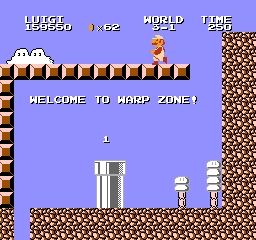
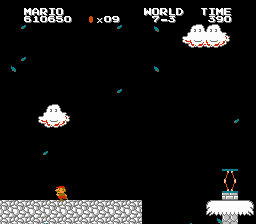
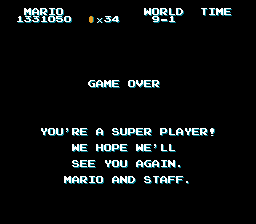
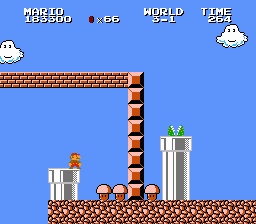
World 1-1, and already something is different: the bushes and clouds have faces.The backwards Warp Zone in World 3-1. One of these pipes leads back to World 1.World 7-3: Super Springs that fling you clean off the screen.The special Game Over message that ends World 9.
“You’re a super player! We hope we’ll see you again. Mario and staff.”
Game Over screen after World 9, Super Mario Bros. 2 (Famicom Disk System, 1986)
The developers’ message to anyone who reached the secret Fantasy World without warping.
Quick Answers
Quick answers about Japan’s original Super Mario Bros. 2.
What is Super Mario Bros.: The Lost Levels?
The Western name for the Japanese Super Mario Bros. 2, a harder sequel to Super Mario Bros. released on the Famicom Disk System on 3 June 1986. It reached the West for the first time in 1993, remade inside Super Mario All-Stars. More →
Why was The Lost Levels not released in America?
Nintendo of America’s product analyst Howard Phillips tested it and found it unfairly punishing. On his recommendation president Minoru Arakawa declined it and asked for Doki Doki Panic to be reworked into a Mario sequel instead, which became the Western Super Mario Bros. 2 in October 1988. More →
How do you get to World 9?
Clear all 32 courses of Worlds 1 to 8 in one game without using a Warp Zone. You get a single life there, and the four courses loop until you get a Game Over. (Warping backwards and then playing on also counts in the original.) More →
How do you unlock Worlds A to D?
Beat the game eight times: each clear adds a star to the title screen. With eight stars showing, keep A held down on the title screen and press Start. In Super Mario All-Stars a single clear is enough. More →
What does the Poison Mushroom do?
It hurts you exactly as an enemy would: Super Mario shrinks and small Mario loses a life. It comes out of ? Blocks and hidden blocks, and is coloured to match the Goombas of the course it is in. More →
Is Luigi different from Mario?
Yes. Chosen on the title screen, he jumps higher and further but has far less grip, so he skids when you stop or turn. It was the first time the brothers handled differently. There is no two-player mode. More →
How many worlds are there?
Thirteen, each with four courses: Worlds 1 to 8, the secret World 9 and the bonus Worlds A, B, C and D. More →
Who made The Lost Levels?
Nintendo R&D4, directed by Takashi Tezuka (his first game as director) with Shigeru Miyamoto producing, Koji Kondo on music and Toshihiko Nakago and Kazuaki Morita programming. More →
How many copies did it sell?
About 2.5 million in Japan according to the figure Wikipedia cites, or 2.65 million by another count; either way it was the Disk System’s best seller. Nintendo has not published an official total. More →
Where can I play it now?
On Nintendo Switch Online’s NES library (since April 2019), and in its 16-bit form in the Super NES version of Super Mario All-Stars on the same service. More →
Story & Worlds
The manual tells the same tale as the first game, set this time in what is sometimes called a parallel world. The Koopa, a tribe of turtles skilled in magic, have invaded the Mushroom Kingdom and turned its people into rocks, bricks and horsetail plants. Only the princess can undo the spell, and King Koopa has her. Mario (or Luigi) must fight through to rescue her, freeing a Toad from each castle on the way with the famous news that the princess is in another castle.
There is no more plot than that: the story is the 52 courses. Here is the journey, world by world, with screenshots from the 1986 Disk System original.
Worlds 1 and 2: a rude welcome
World 1-1 looks like home until its first ? Block coughs up a Poison Mushroom, and a crowd of Koopa Troopas makes it clear that this game expects you to know your shells. The underground 1-2 hides several secrets and the first Warp Zones, 1-3 is a climb across tall platforms and scale lifts, and 1-4 is a castle that came from VS. Super Mario Bros.
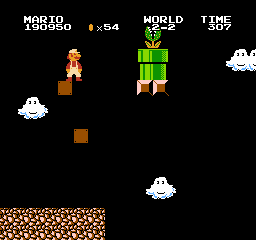
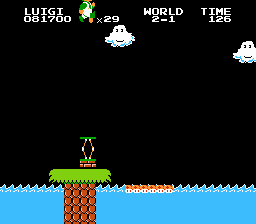
World 2 adds platforms over pools of water, a long and crowded 2-2 (another VS. design), Cheep-Cheeps to avoid rather than stomp in 2-3, and a castle packed with lava pits. The first green Super Springs appear in this world.
World 1-2, the first underground course and home of the first Warp Zones.World 1-3: tall platforms and scale lifts.World 2-2, one of the courses carried over from VS. Super Mario Bros.
Worlds 3 and 4: going backwards
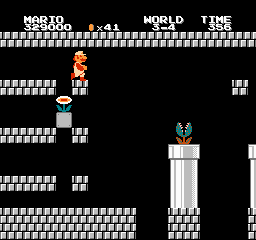
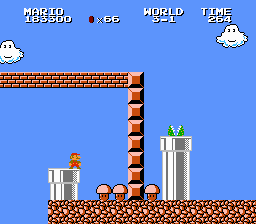
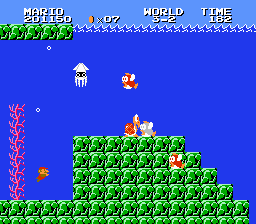
World 3-1 introduces the Hammer Brothers and the game’s nastiest joke: a Warp Zone whose pipe sends you back to World 1. The underwater 3-2 puts Koopa Troopas and Paratroopas beneath the waves, where they cannot be stomped, and 3-4 is a maze of a castle.
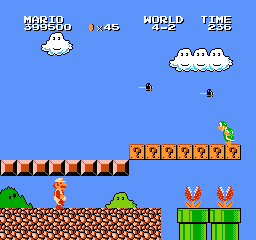
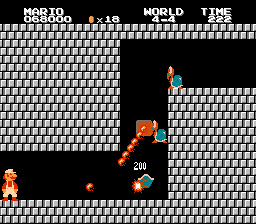
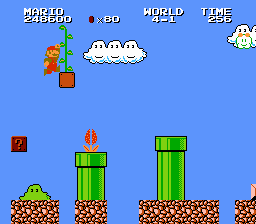
World 4 is where the red Piranha Plants take over from the green ones. Lakitu patrols 4-1, a mixed bag of enemies fills 4-2, and Bullet Bills fire from off the screen across the platforms of 4-3, a course borrowed from VS. Super Mario Bros.
World 3-2: Koopa Troopas under water.World 4-1, with Lakitu overhead.World 4-3, where Bullet Bills fly in from off the screen.
Worlds 5 and 6: wind and puzzles
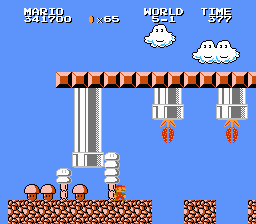
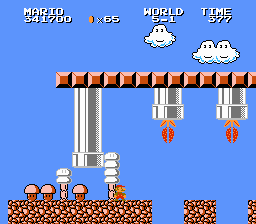
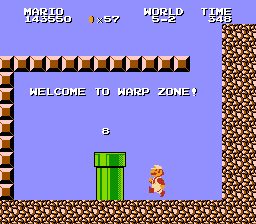
World 5-1 is long and blustery, with tall platforms, hanging pipes and a wind at your back. 5-2 is underground with a Warp Zone of its own, 5-3 is a puzzle course that loops until you choose the right route, and 5-4 is a lava-filled castle lifted from the VS. game.
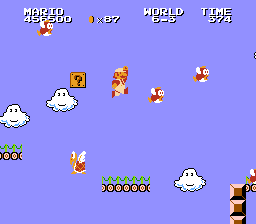
World 6 keeps up the pressure with a busy 6-1, an underwater 6-2 and leaping Cheep-Cheeps over tiny platforms in 6-3 (both from VS. Super Mario Bros.), before a castle full of puzzling paths.
World 5-1: wind, tall platforms and hanging pipes.World 6-3, with Cheep-Cheeps leaping across tiny platforms.
Worlds 7 and 8: the real Bowser
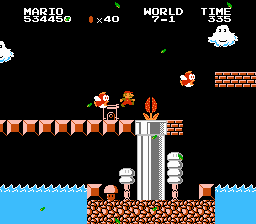
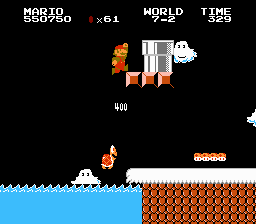
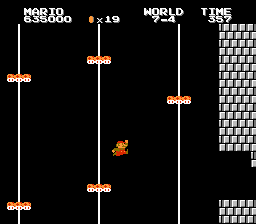
From World 7 the Hammer Brothers charge instead of pacing. 7-1 is short but windy, 7-2 opens with a looping puzzle and Lakitu overhead, 7-3 is a field of Super Springs and widely spaced platforms, and the fake Bowser of 7-4 stands between you and the last world.
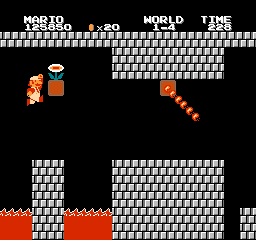
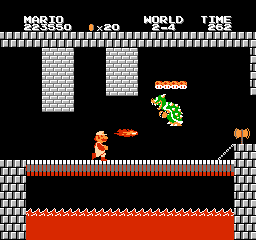
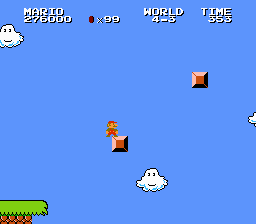
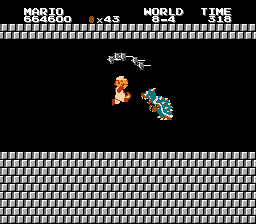
World 8-1 has the second backwards Warp Zone (to World 5), 8-3 takes place on cloud platforms in the sky, and 8-4 is Bowser’s own puzzle castle, where his darker double, Bowser’s Brother, lurks in a corridor before the real king waits on his bridge. Beat him and the princess is free at last.
World 7-2, which loops until you find the way.World 7-4, the last castle before World 8.Bowser’s Brother waits in the corridors of 8-4.
World 9: the Fantasy World
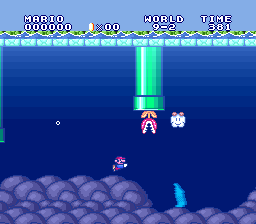
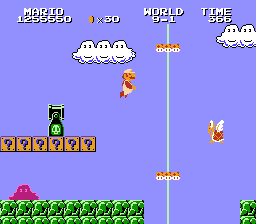
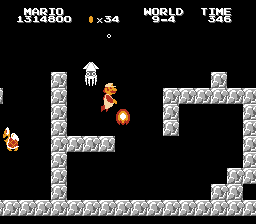
Play every course without a single warp and the game invites you to its secret world. It is a strange place: Lakitu and a Hammer Brother underwater in 9-1, a vast chasm of pipe platforms in 9-2, an open-air castle in 9-3 guarded by a lone blue Bowser’s Brother, and a final underwater course, 9-4, with almost no enemies, whose coral spells out “Arigatō!” (thank you). You have one life; clear 9-4 and it starts again, until a Game Over brings the developers’ message of congratulation.
World 9-1: a Hammer Brother under water.World 9-4, where the coral says thank you.
Worlds A to D: the super player’s reward
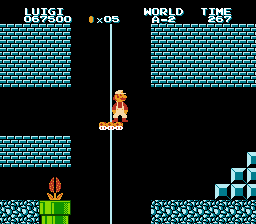
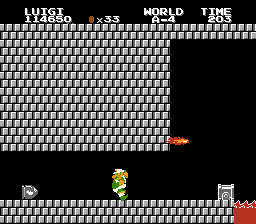
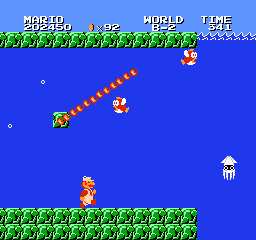
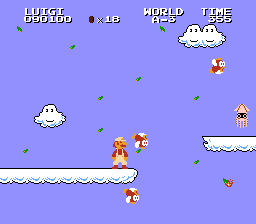
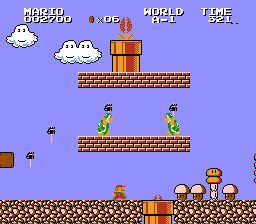
Eight clears earn the bonus worlds. World A brings Hammer Brothers and Paratroopas in A-1, a cramped underground A-2 and a sky course full of leaping Cheep-Cheeps in A-3. World B mixes a Super Spring and a Coin Heaven in B-1, a long Fire Bar underwater in B-2, enormous pits in B-3 and a castle whose pipes send you back to the start.
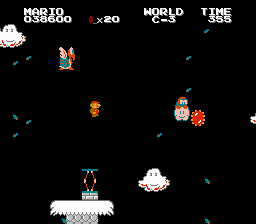
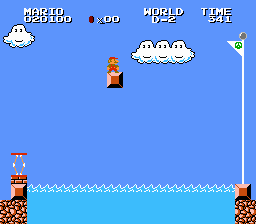
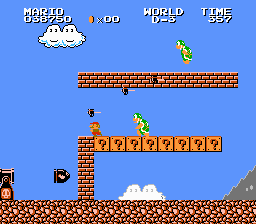
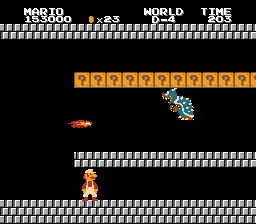
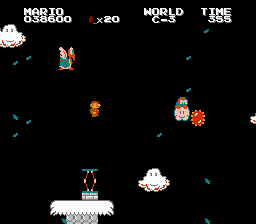
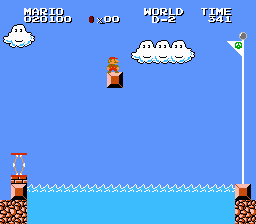
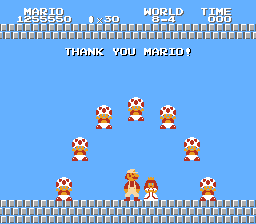
World C remixes ideas from World 7, with wind and Lakitu in C-3, and World D ends it all with Bill Blasters and Hammer Brothers in D-3 and a final castle where even Bowser’s Brother is a fake. Only three Toads come out to celebrate.
World A-3 in the sky.World D-3: Bill Blasters and Hammer Brothers.The fake Bowser’s Brother of World D-4.
Every world in The Lost Levels
Thirteen worlds of four courses each. Six courses (1-4, 2-2, 4-3, 5-4, 6-2 and 6-3) were reused from VS. Super Mario Bros.
World 11-1 ground · 1-2 underground · 1-3 athletic · 1-4 castlePoison Mushrooms from the first course, Koopas everywhere and Warp Zones under 1-2.
World 22-1 ground · 2-2 ground · 2-3 athletic · 2-4 castlePlatforms over water, the first Super Springs and a lava-filled castle.
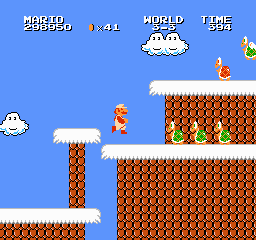
World 33-1 ground · 3-2 underwater · 3-3 athletic · 3-4 castleHammer Brothers arrive, and the wrong pipe in 3-1 sends you back to World 1.
World 44-1 ground · 4-2 ground · 4-3 athletic · 4-4 castleRed Piranha Plants take over; Lakitu and off-screen Bullet Bills.
World 55-1 ground · 5-2 underground · 5-3 athletic · 5-4 castleWind, upside-down pipes and a looping puzzle course.
World 66-1 ground · 6-2 underwater · 6-3 athletic · 6-4 castleTwo VS. courses back to back, then a castle of puzzling paths.
World 77-1 ground · 7-2 athletic · 7-3 athletic · 7-4 castleWind, a looping start, Super Springs, and Hammer Brothers who charge.
World 88-1 ground · 8-2 ground · 8-3 athletic · 8-4 castleA backwards warp to World 5, clouds in 8-3, and Bowser’s Brother before the real Bowser.
World 99-1 underwater · 9-2 underwater · 9-3 castle · 9-4 underwaterThe Fantasy World: no warps allowed, one life, loops until Game Over.
World AA-1 ground · A-2 underground · A-3 athletic · A-4 castleUnlocked after eight clears; Hammer Brothers from the very first course.
World BB-1 ground · B-2 underwater · B-3 athletic · B-4 castleA Super Spring, a long underwater Fire Bar and very long pits.
World CC-1 ground · C-2 athletic · C-3 athletic · C-4 castleHanging Piranha pipes and a remix of World 7 with extra Fire Bars.
World DD-1 ground · D-2 ground · D-3 ground · D-4 castleThree ground courses, then a castle where even the bosses are fakes.
Advertisement
Gameplay & Controls
The Lost Levels plays exactly like Super Mario Bros.: run with B, jump with A, grab a Super Mushroom to grow, a Fire Flower to throw fireballs and a Starman for a few seconds of invincibility, then reach the flagpole before the clock runs out. Most worlds end in a castle, with a Bowser waiting on a bridge over the lava. What changed is how much the game wants you to fail.
Mario or Luigi, one at a time
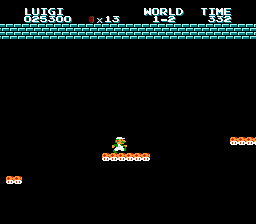
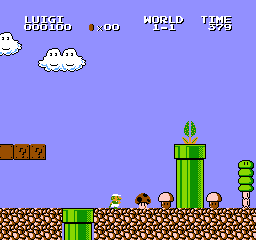
The two-player mode of the first game is gone. Instead the title screen lets you choose your brother, and for the first time the choice matters. Luigi jumps noticeably higher and further, but his feet have almost no grip: he skids when he stops and drifts when he turns, which makes narrow ledges a nightmare. Mario is the steadier choice. That higher, floatier Luigi would become a series tradition.
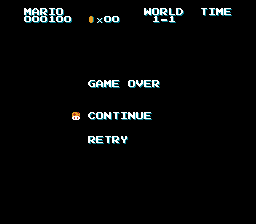
Stomping an enemy now bounces you higher than before, Luigi higher still, and with the right angle the bounce can send you off the top of the screen. Lives work as before, but the old trick of holding A and pressing Start to continue from the last world is gone; the Game Over screen offers a continue, and leaving to the title screen sends you back to World 1-1.
Small Luigi in World 1-1, about to discover how little grip he has.The Game Over screen offers a continue.
Poison Mushrooms and other dirty tricks
The Poison Mushroom is the signature cruelty: it pops out of a ? Block or an invisible block like a Super Mushroom, slides along like one and hurts like an enemy. Its colours match the Goombas of each course, so it never looks quite as wrong as it should. Hidden blocks are placed with malice too: some reward explorers, others sit exactly where a careless jump will hit them and drop a Poison Mushroom into your path.
Even good things turn against you. A Super Mushroom can make Mario too tall for a tight castle jump, and a Starman can spoil a chain of stomps across flying Koopa Paratroopas. Red Piranha Plants, new from World 4, keep biting when you stand beside their pipe and only hide when you are directly above it; from World 5 they also hang from upside-down pipes, where nothing makes them hide. Some pipes sit flush with the floor so you do not see them coming.
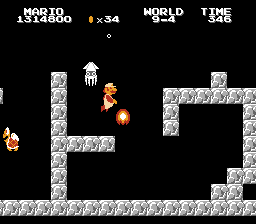
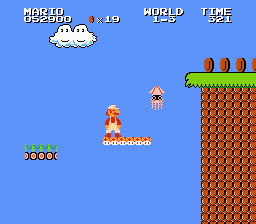
The enemies wander where they should not. Bloopers float through the air (and can be stomped there for 1,000 points), Koopa Troopas and even Hammer Brothers turn up underwater where only fire or a Starman will beat them, Lakitu drops lower or follows you below the waves, and from World 7 the Hammer Brothers stop pacing and charge at you.
The Poison Mushroom, introduced in this game.A red Piranha Plant, which bites even when you stand next to its pipe.A Blooper coloured for dry land: here they swim through the air.
Wind, springs and backwards warps
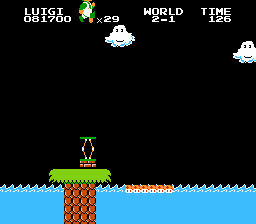
On some courses, among them 5-1, 7-1 and C-3, a strong wind blows from behind, carrying you further on every jump. That sounds helpful until you need to land on a single block. Green Super Springs in Worlds 2, 3, 7, B and C fling Mario so high he vanishes off the screen for several seconds, leaving you to guess where he will come down.
There are eleven Warp Zones, each with only one destination, and two are traps: the pipes in 3-1 and 8-1 take you backwards, to World 1 and World 5. Some courses, such as 5-3 and 7-2, loop like the old maze castles until you find the right way through. On the plus side, vines can lead to Coin Heaven, a Warp Zone or even straight to the flagpole, and Luigi can leap over the flagpole altogether, sometimes landing in a Warp Zone beyond it.
Fire Mario reaches the Warp Zone in World 5-2.The green Super Spring.
World 9 and Worlds A to D
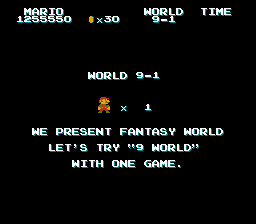
Clear all 32 courses of Worlds 1 to 8 in one sitting without warping and, after the princess is rescued, a message invites you to “9 World”, the Fantasy World. You play it with one life, keeping your score, coins and power-up from 8-4; three of its four courses are under water, Lakitu and the Hammer Brothers come along, and 9-4 loops back to 9-1 until you lose that life. Because the backwards warps in 3-1 and 8-1 do not skip any course, a player who used them and then played on could still reach it.
Each time you beat World 8-4 a star is added to the title screen and saved to the disk, up to 24. Once eight are showing, keep A held down and press Start to begin World A. Worlds A to D are the hardest courses in the game, and the ending after D-4 is the same celebration with only three Toads.
The invitation to World 9, the Fantasy World.World A-1, earned after eight clears.
A sharper look and a longer ending
The graphics were redrawn rather than reused. Mountains have jagged slopes, clouds and bushes have faces, the horsehair plants are segmented, fences and lifts look like mushrooms, the ground is rockier and bricks are shaded. Mushrooms (good, poisonous and 1-Up) gained eyes, the text gained shadows, and a skidding sound was added that Super Mario Bros. 3 would later reuse.
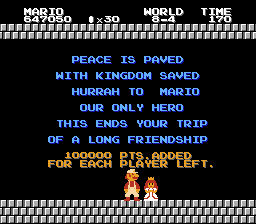
The ending is new too, borrowed from VS. Super Mario Bros.: the princess appears in her own room and recites a short poem, the sky turns blue and the rescued Toads return. Its music has a second verse and a drum beat, using the Disk System’s richer sound hardware; it was first written for the original game and cut down for space.
The princess is rescued at the end of World 8-4.Her poem, the new ending borrowed from VS. Super Mario Bros.
Items and objects
The power-ups of Super Mario Bros., plus one that hurts.
Super MushroomMakes Mario Super Mario, able to take a hit; now with eyes.
Poison MushroomNew: touching it is the same as touching an enemy. Coloured like the Goombas of each course.
Poison Mushroom (underground)The darker underground version, just as nasty.
Fire FlowerFire Mario throws fireballs; the only way to beat many underwater enemies.
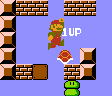
1-Up MushroomAn extra life, as are 100 coins.
StarmanBrief invincibility; the rarest item, found only in bricks.
Brick BlockNow shaded; may hide coins, power-ups or a Starman.
Jumping BoardThe familiar red springboard for higher jumps.
Super SpringNew green spring in Worlds 2, 3, 7, B and C that launches you off the screen.
VineMay lead to Coin Heaven, a Warp Zone or the flagpole.
Cartoons, Comics & Other Media
Where The Lost Levels went next, and the odd places it turned up.
All Night Nippon Super Mario Bros.Famicom Disk System · 1986A promotional disk made for the radio show All Night Nippon, reusing some of The Lost Levels’ content with altered graphics. In its ending the Toads become caricatures of celebrities and the princess is dressed as a geisha.
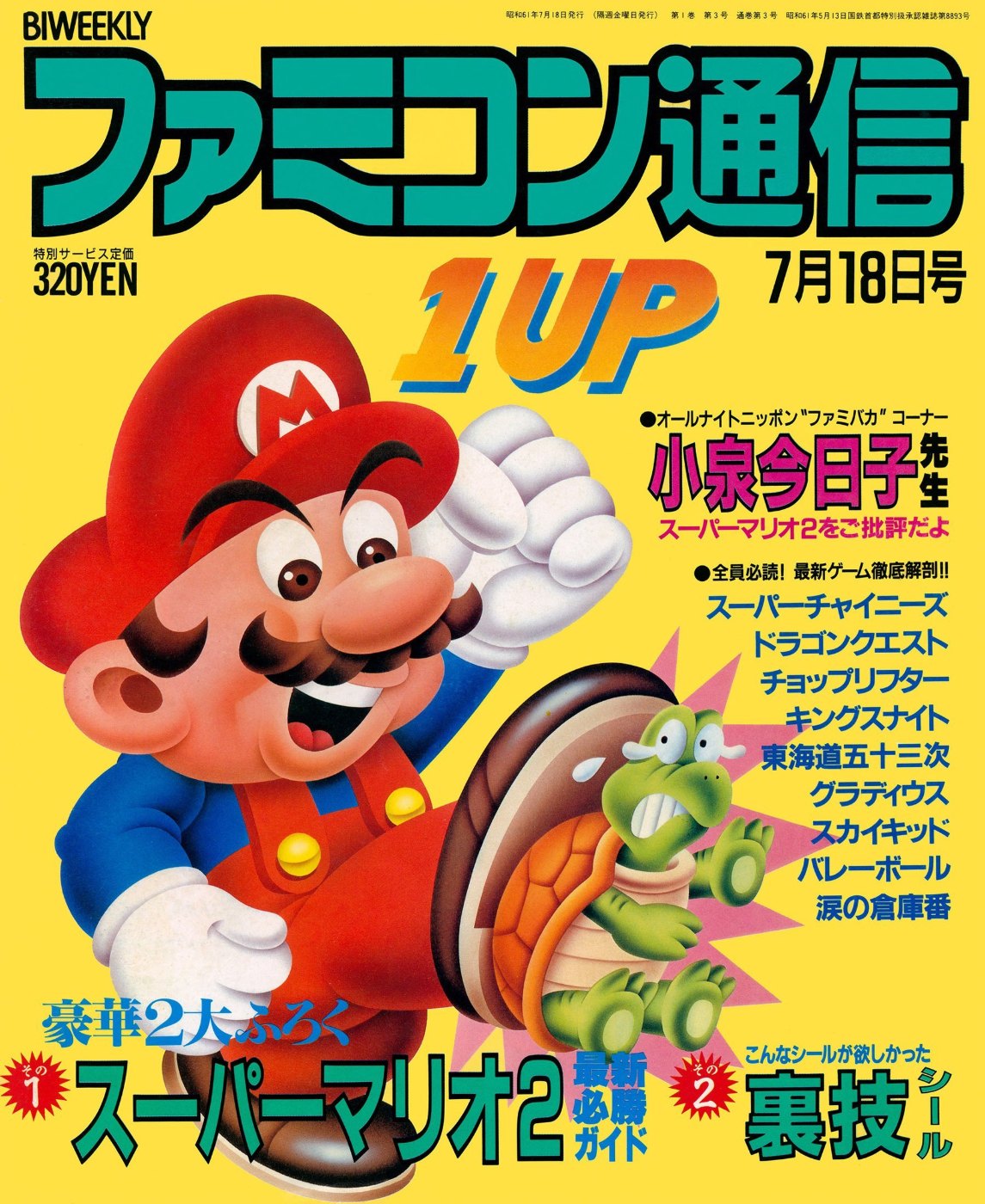
Famitsu’s first lookFamicom Tsūshin · July 1986The Japanese magazine featured the new Super Mario Bros. 2 in its July 1986 issue, the month after release.
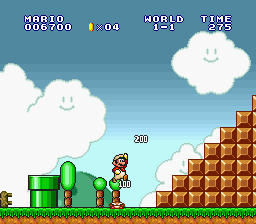
Super Mario All-StarsSuper NES · 1993Its first release outside Japan, remade in 16-bit with saves after every course and the new name The Lost Levels. See our Super Mario All-Stars page.
Super Mario Bros. DeluxeGame Boy Color · 1999Score 300,000 points and a Luigi head unlocks “Super Mario Bros. for Super Players”, a cut-down version without wind, World 9, Worlds A to D or Luigi’s special handling. See our Super Mario Bros. Deluxe page.
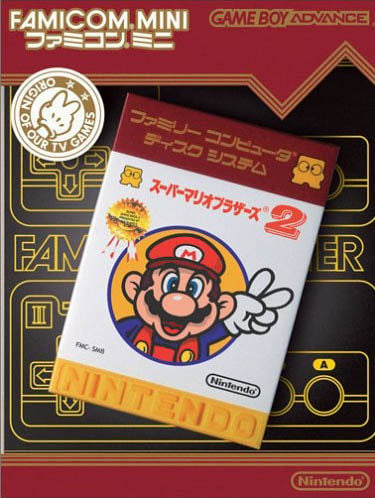
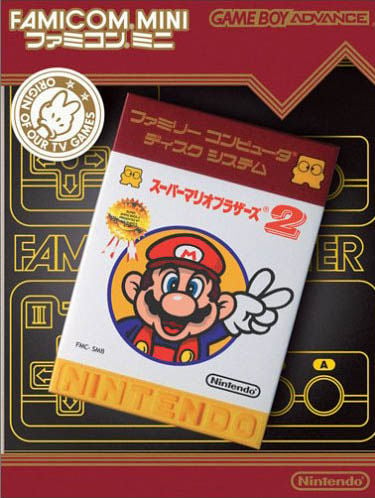
Famicom MiniGame Boy Advance · 2004A Japan-only Game Boy Advance release of the Disk System game, which brought back a continue from the title screen.
NES Remix 2 and Ultimate NES RemixWii U and Nintendo 3DS · 2014Challenges built from The Lost Levels appear in both Remix compilations.
Game & Watch: Super Mario Bros.Nintendo · 2020The 35th-anniversary handheld includes The Lost Levels alongside the first game, with a world select for worlds already reached.
The Poison Mushroom lives onLater Mario gamesThe item invented here returned in Super Mario Kart (1992), Super Mario 3D Land (2011) and other games.
The Kaizo connectionFan cultureWith its bait-and-switch blocks and deliberately unfair jumps, The Lost Levels is often called the ancestor of the “Kaizo” style of brutally difficult fan-made Mario hacks.
Characters
A small cast, as in the first game. Who you meet, and what is different this time.
Character
Who they are
In this game
Abilities & notes
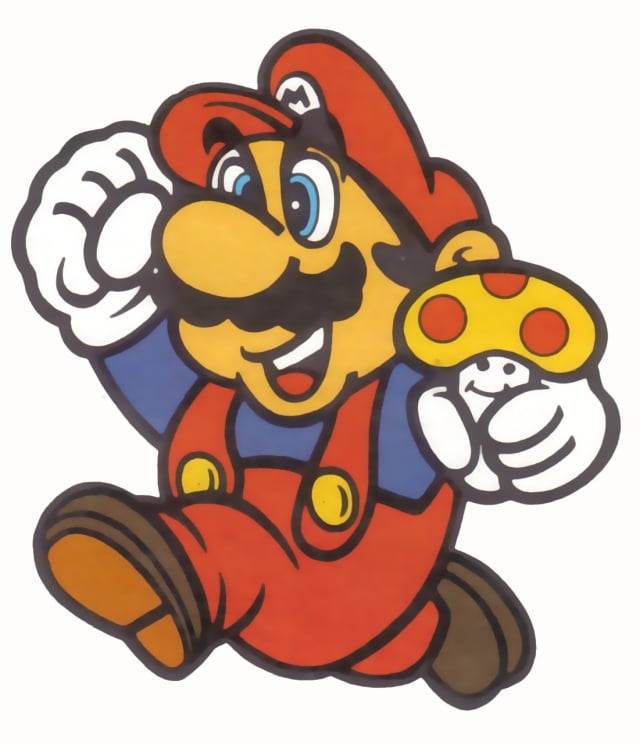
MarioHero
The plumber hero of the Mushroom Kingdom.
The default choice on the title screen and the steadier of the two brothers.
Normal jump and normal grip; bounces higher off enemies than in the first game.
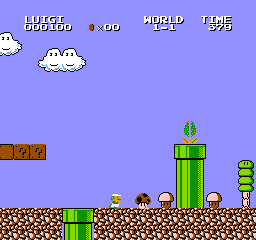
LuigiHero, now with his own handling
Mario’s brother, still drawn as a green Mario.
Chosen on the title screen in place of Mario; there is no two-player mode.
Jumps higher and further, but has much less traction, so he skids and slides. Can sometimes clear the flagpole.
Princess ToadstoolPrincess of the Mushroom Kingdom
The princess who alone can undo the Koopa’s spell.
Held by King Koopa in World 8-4 (and World D-4). Has a new sprite and a new ending scene, in which she recites a poem to her rescuer.
Rescued at the end of Worlds 8 and D.
ToadMushroom retainer
The princess’s attendants.
One is freed in every castle up to World 7, there to tell you the princess is elsewhere; all of them return for the ending.
Only three greet you after World D.
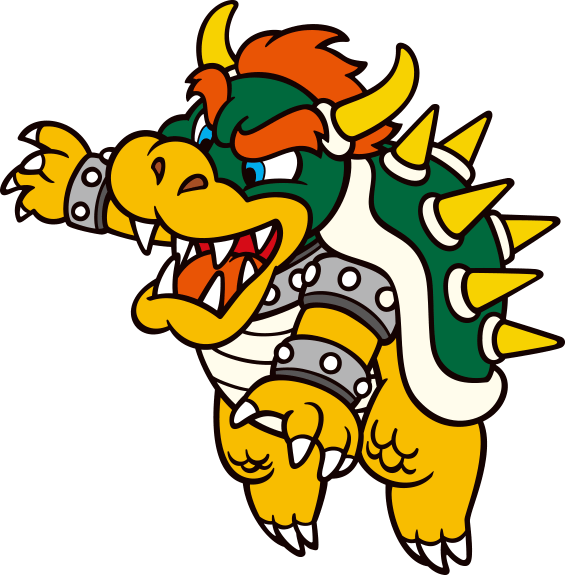
BowserKing of the Koopas
King Koopa, ruler of the turtle tribe.
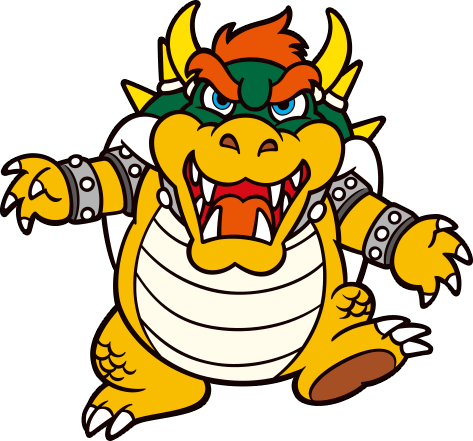
Waits on the bridge at the end of World 8-4. As before, touch the axe to drop him into the lava or burn him with fireballs.
Breathes fire, and throws hammers from World 6 on.
Bowser’s BrotherBowser’s dark double
A dark greenish-blue Bowser who lurks in the corridors of two castles.
Not on a bridge and avoidable; burning him with five fireballs does not reveal another enemy underneath.
In World 8-4 and World 9-3; World D-4 has a fake one.
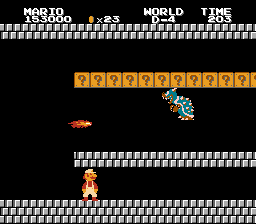
The fake BowsersImpostor bosses
Ordinary enemies disguised as Bowser.
Guard the castles of Worlds 1 to 7 and the bonus worlds. Five fireballs reveal the true form.
Every world except Worlds 8 and 9 ends with one.
Hammer BrothersThe toughest regulars
Helmeted Koopas who throw hammers in pairs.
First met in World 3-1, and from World 7 onwards they charge at you instead of pacing; they even turn up underwater.
Turn round and behave normally once you get past them.
Enemies and bosses
The Super Mario Bros. bestiary, with new colours, new habitats and a few new habits.
Little GoombaMost worldsIts colours also give away each course’s Poison Mushrooms.
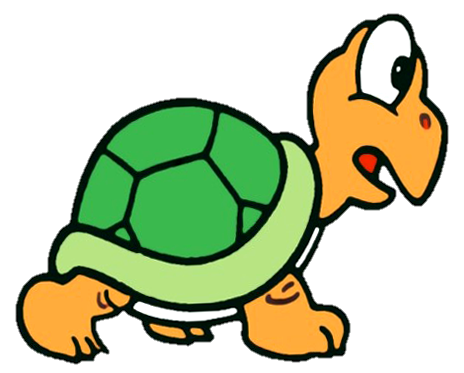
Koopa Troopa (green)Most worldsFaster than before; kick its shell to clear a path or bounce for 1-Ups.
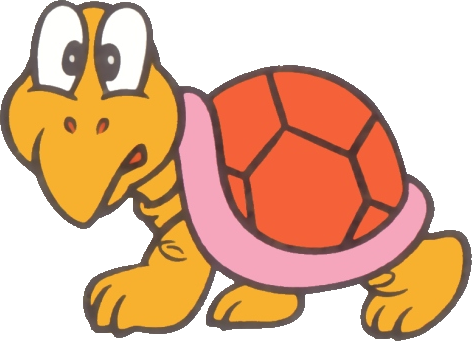
Koopa Troopa (red)Most worldsThe cautious kind that turns at ledges.
Koopa ParatroopaMost worlds, even underwaterLoses its wings when stomped; under water it cannot be stomped at all.
Underwater Koopa TroopaWorld 3-2 and othersSlower, unstompable, beaten only by fire or a Starman.
Buzzy BeetleVariousFireproof shell; under water it is effectively invincible.
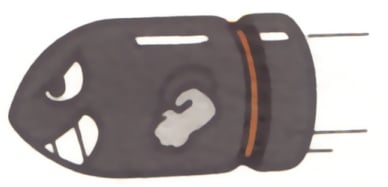
Bullet BillWorlds 4, C, D and othersFired from Bill Blasters, sometimes from off the screen.
Bill BlasterWorld D-3 and othersFires Bullet Bills, even from under water.
Hammer BrotherFrom World 3Charges at you in Worlds 7 to 9; turns up underwater in World 9.
LakituWorlds 4, 7, 9, C and othersFlies lower on some courses and follows you underwater in World 9.
Lakitu (underwater)World 9-1Dropping Spinies under the sea.
SpinyWherever Lakitu fliesHatches from the eggs Lakitu throws; cannot be stomped.
BlooperUnderwater and in the airFloats through the sky on some courses; worth 1,000 points stomped.
Blooper (castle colours)CastlesDrawn in the grey castle palette.
Cheep-CheepWorlds 2, 6, A, C and othersLeaps across the athletic courses; in 2-3 you are meant to avoid it.
Piranha Plant (green)Worlds 1–3Hides when you stand next to its pipe.
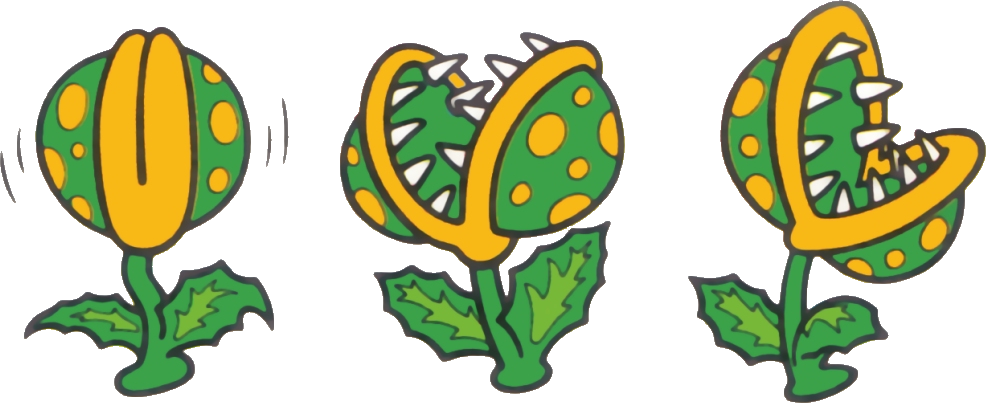
Red Piranha PlantFrom World 4New and more aggressive: bites unless you stand directly above its pipe.
Piranha Plant (underwater)Underwater coursesUpside-down pipes put Piranha Plants in the sea too.
Lava BubbleCastlesLeaps out of the lava pits.
Fire BarCastles, World B-2Rotating chains of fire, one of them very long under water in B-2.
Fake Bowser (boss)End of Worlds 1–7 and A–DFive fireballs reveal the enemy underneath.
Bowser’s Brother (boss)Worlds 8-4 and 9-3Dark double of the king; no true form to reveal.
Bowser (boss)World 8-4The real King Koopa, with fire and hammers.
Key staff
The game has no staff roll. These credits come from Wikipedia’s infobox and, for Tezuka, Nintendo’s NES Classic Edition developer interview.
Takashi TezukaDirectorAssistant director on Super Mario Bros.; this was his first game as director.
Shigeru MiyamotoProducer and designerHead of the team; Wikipedia also lists him as a director.
Toshihiko NakagoProgrammerSRD’s lead programmer on the 2D Mario games.
Kazuaki MoritaProgrammerCo-programmer.
Koji KondoComposerReused his Super Mario Bros. themes and extended the ending music.
Howard PhillipsProduct analyst, Nintendo of AmericaTested the game for America and recommended against releasing it.
Minoru ArakawaPresident, Nintendo of AmericaDeclined it and asked for a different sequel.
Gail TildenMarketing, Nintendo of AmericaProposed giving it away to Nintendo Power subscribers.
Advertisement
How It Was Made
Very little has been written about how The Lost Levels was made, and the game has no credits. What is known comes from later Nintendo interviews, contemporary trade press and Jon Irwin’s 2014 Boss Fight Books study of Super Mario Bros. 2.
Born in the arcade
In late 1985, while much of the team was busy with The Legend of Zelda, the Super Mario Bros. developers built a version of their hit for Nintendo’s VS. System arcade cabinets with new, harder courses. In a 2010 interview for the 25th anniversary Shigeru Miyamoto explained that they had enjoyed making those difficult levels so much that they wanted to make a whole game of them. Six VS. courses went straight into the sequel: 1-4, 2-2, 4-3, 5-4, 6-2 and 6-3.
Tezuka takes the director’s chair
Miyamoto ran the R&D4 division but had no time to design every game himself, so the sequel went to Takashi Tezuka, his assistant director on Super Mario Bros., as his first game as director. According to the trade magazine Play Meter, development began in January 1986 and took about four months, built on the same technology as the original.
The new game went out on the Famicom Disk System; Wikipedia counts it as the ninth disk release, coming after The Legend of Zelda. Disks were roomier and cheaper than cartridges, and the box warned buyers what they were in for with a simple label: “For Super Players”. It arrived on 3 June 1986.
Too hard for America
Nintendo of America had the Japanese sequel tested by its product analyst, Howard Phillips, the man who reviewed games for president Minoru Arakawa. Phillips found it so punishing that it stopped being fun, and expected it to sell poorly, and he later described it as undeserved punishment. On his advice Arakawa turned it down.
America still wanted a Mario sequel, so Arakawa asked Kyoto to rework Fujisankei’s platformer Yume Kōjō: Doki Doki Panic, released in Japan in July 1987, into one. It reached North America in October 1988 as Super Mario Bros. 2, and was sold in Japan from 1992 under the name Super Mario USA.
The giveaway that never happened
An advert for the Western release that never happened.
There was one more chance. According to Irwin, Nintendo of America’s marketing chief Gail Tilden suggested an NES version as a free bonus for Nintendo Power subscribers, and a cartridge was actually produced, but the idea was dropped over concerns about brand confusion. The West’s first official look would come in 1993, on Super Mario All-Stars.
Series Firsts
What The Lost Levels introduced to the Mario series, checked against Super Mario Bros.
1The Poison MushroomA power-up that hurts you, new in this game and later a regular, from Super Mario Kart to Super Mario 3D Land.
2Luigi plays differentlyThe first game in which Luigi jumps higher and grips less than Mario, the handling later Mario games adopted.
3Red Piranha PlantsA new, more aggressive Piranha Plant that bites even when you stand next to its pipe; red Piranha Plants became the standard in later games.
4Upside-down pipesPipes hanging from above, with Piranha Plants that never stop attacking.
5Wind and backwards warpsCourses with a gale at your back, and Warp Zones that send you to an earlier world.
6Tezuka’s first game as directorTakashi Tezuka, assistant director on Super Mario Bros., directed a game for the first time here, according to Nintendo’s own NES Classic Edition interview.
Cheats & Secrets
The Lost Levels hides more than it gives away. Super Luigi Bros’ own maps and strategy guide for the game are linked at the end of the page.
Reaching World 9
Clear all 32 courses of Worlds 1 to 8 in one game without using a Warp Zone. Because the game only checks that you played every course, taking a backwards warp (3-1 to World 1, or 8-1 to World 5) and then playing on also qualifies in the original. In Super Mario All-Stars any warp at all rules it out.
Unlocking Worlds A to D
Beat World 8-4 eight times. The stars on the title screen keep count, and they are saved to the disk. Once eight are showing, keep A held down and press Start (B on the Famicom Mini).
Infinite lives
The Koopa shell trick from the first game still works in The Lost Levels, and can be set up in several places for a steady stream of 1-Ups.
Fireworks and a free life
Fireworks at the end of a course go off when the last digit of the timer matches the last digit of your coin count. If both digits of the coin count match it, you get a 1-Up as well.
Luigi over the flagpole
Luigi’s big jump can carry him clean over some flagpoles, occasionally into a Warp Zone beyond. If not, the screen stops scrolling, so you can no longer get stuck behind the pole.
Continue from where you were (Famicom Mini)
The 1986 disk dropped the A + Start continue code, but the 2004 Game Boy Advance release restored it for Worlds 1 to 8, saving it with the high score and letting you switch brothers without restarting.
Glitches & Oddities
Built on the Super Mario Bros. engine, The Lost Levels inherits some of its quirks.
Infinite 1-Up trick
Racking up lives with a Koopa shell.
The endless-lives trick of the first game, done with a Koopa shell, survives in The Lost Levels and can be performed in several different ways, so your stock of lives need never run out.
Axe timer glitch
Touch the axe at the end of a castle at the exact moment the timer reaches zero and the clock loops round to 999 instead of costing you a life.
Underwater palette slip
The original’s underwater palette makes green enemies look grey. Super Mario All-Stars fixed it.
Videos
The story of how two different games became Super Mario Bros. 2, and Miyamoto on why The Lost Levels was made.
Gaming Historian’s documentary on how Super Mario Bros. 2 came to be, including Howard Phillips’ later comments. Third-party upload.
A 2010 Nintendo Channel interview in which Miyamoto talks about the VS. levels behind The Lost Levels. Third-party archive upload.
Trivia & Interesting Facts
In Japan the game is simply Super Mario Bros. 2. The name The Lost Levels was given to it for its first Western release in Super Mario All-Stars.
The box carries the label “For Super Players”, and Super Mario Bros. Deluxe later borrowed the phrase for its cut-down version.
Each completion adds a star to the title screen, saved to the disk; the screen can show up to 24.
World 9-4.World 9 is announced as “Fantasy World”, and the coral of its final course spells out “Arigatō!”, Japanese for thank you.
The princess’s poem in the ending begins “Peace is paved with kingdom saved”.
The skidding sound added for this game was reused in Super Mario Bros. 3.
Its ending tune has a second verse that was written for the original Super Mario Bros. and cut for space.
The font with shadowed text and an O-shaped zero was shared with VS. Super Mario Bros. and All Night Nippon Super Mario Bros.; Hudson’s Super Mario Bros. Special kept the original font.
Of the 13 worlds, only World D has three ground courses in a row before its castle.
There are eleven Warp Zones in the game, and each one has only a single destination pipe.
Nintendo of America actually made a cartridge for a planned Nintendo Power subscriber giveaway before the idea was dropped.
The Nintendo UK page for the Virtual Console release lists it as a game for one or two players, although the original has no two-player mode.
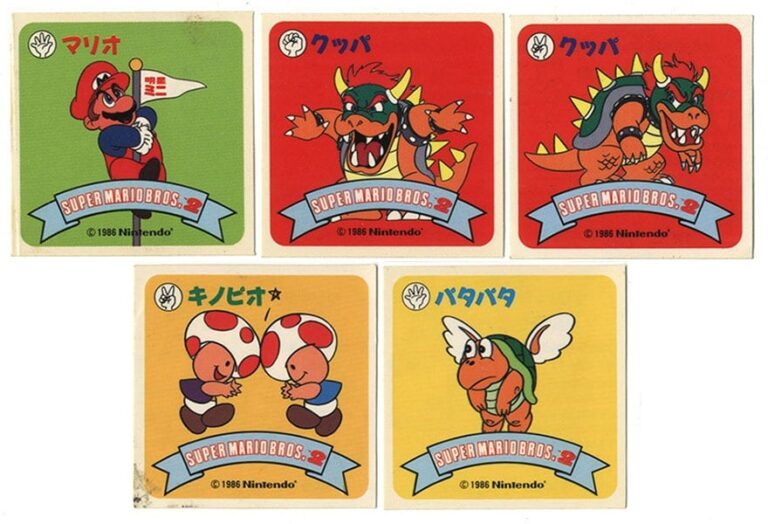
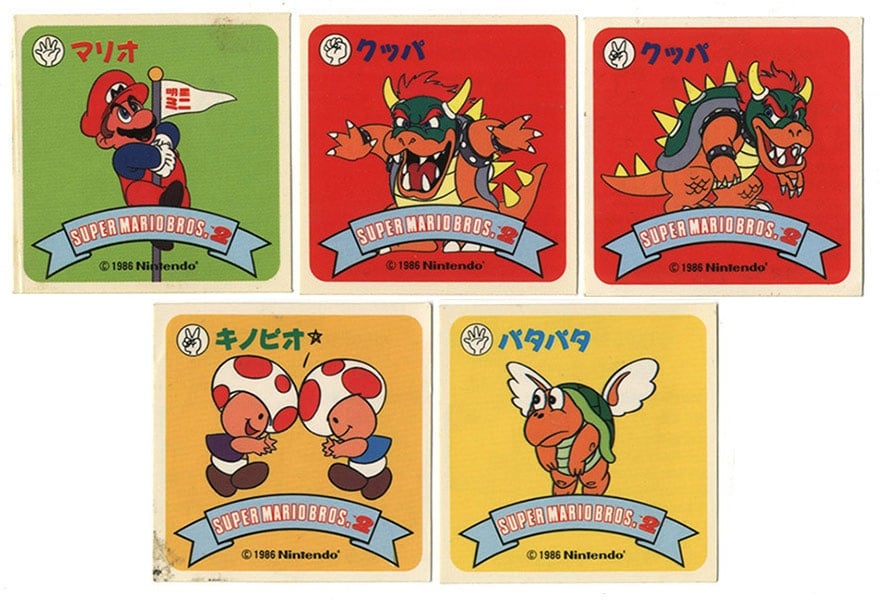
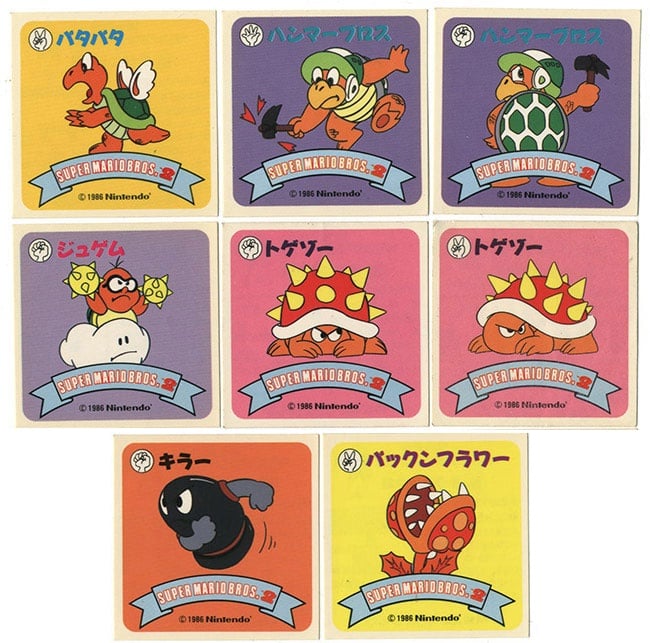
Lost Levels stickers.A sticker sheet of the game’s characters and enemies was produced in Japan.
Nintendo’s NES Classic Edition developer interview describes the game as Takashi Tezuka’s directorial debut.
Regional Box Art
The Disk System packaging and the later covers.
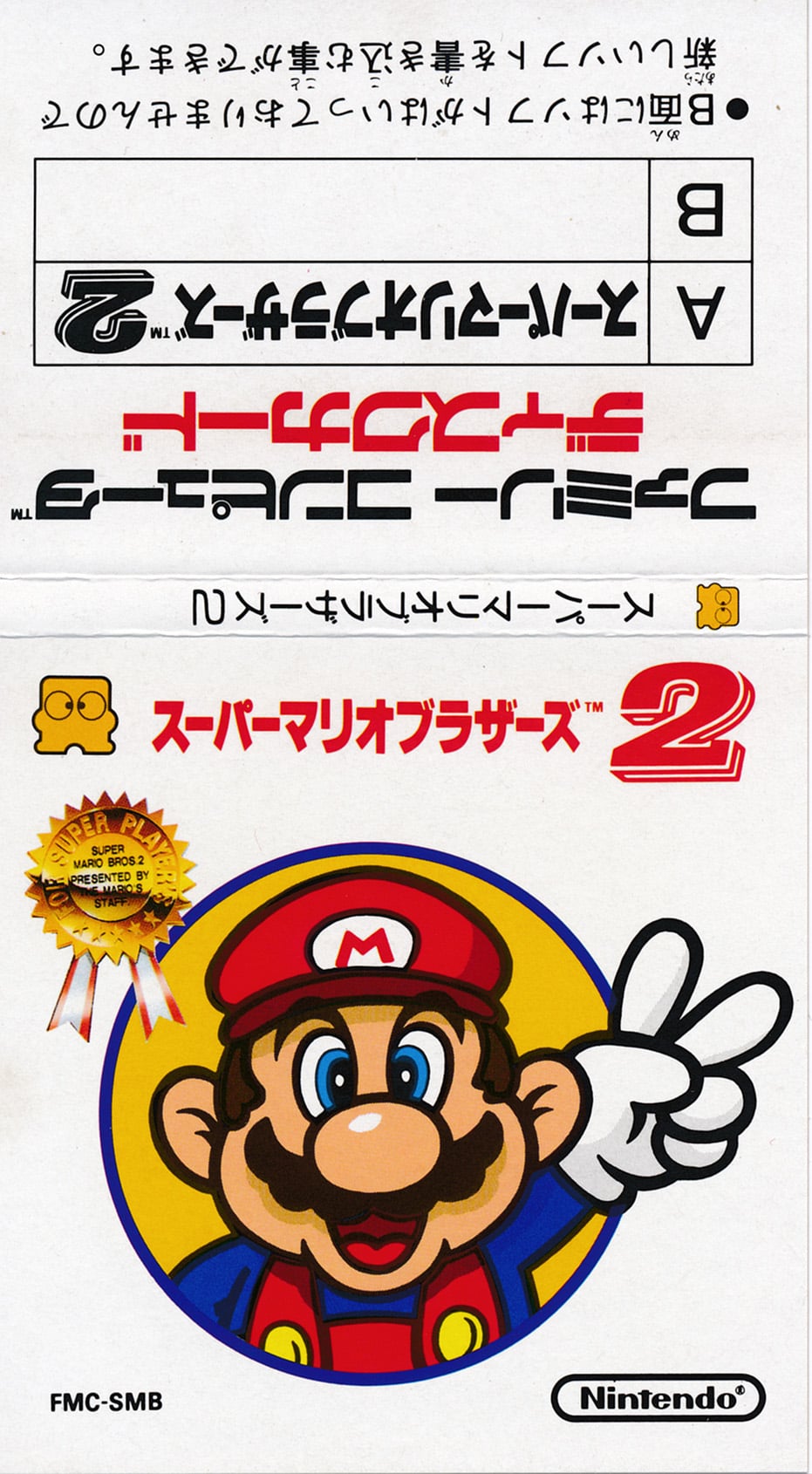
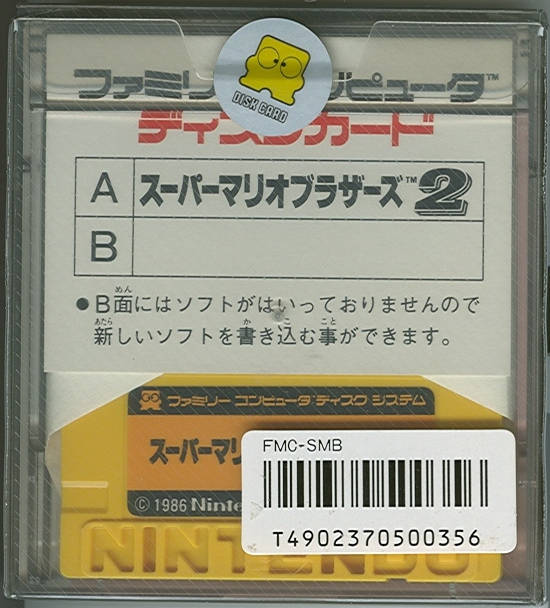
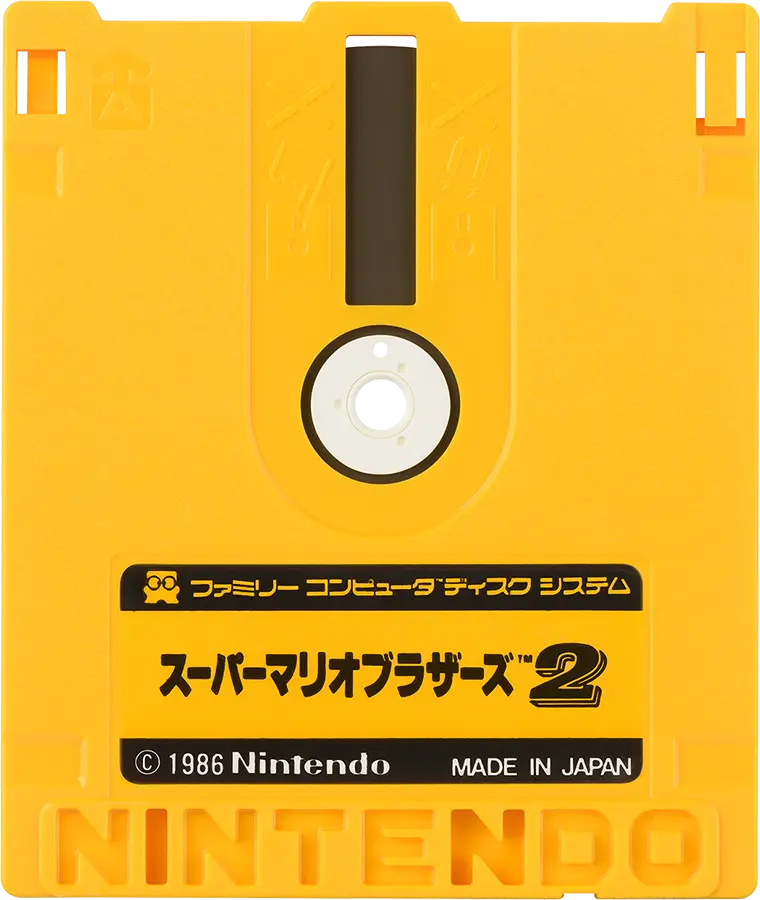
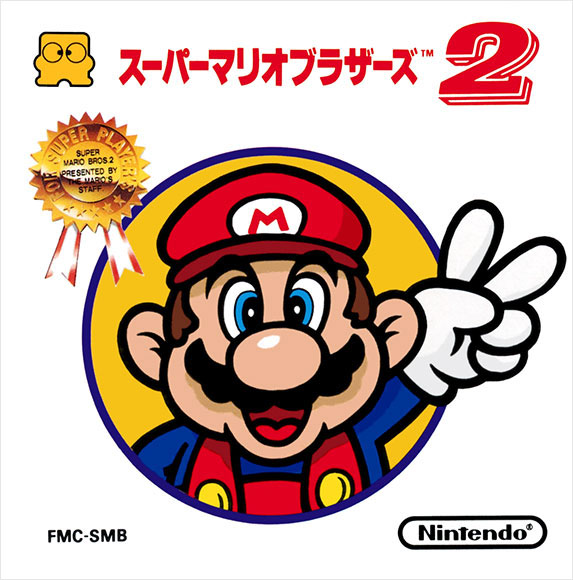
JapanFamicom Disk System, 1986Japan (full cover)Japan (back)Disk cardJapan (pre-release cover)Pre-release disk cardJapanFamicom Mini, Game Boy Advance, 2004InternationalNintendo Classics coverNintendo 3DSVirtual Console iconWii UVirtual Console icon
Screenshots
More from the 1986 original.
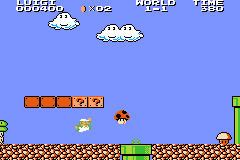
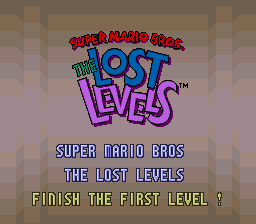
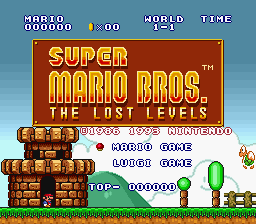
The Super Mario Bros. 2 title screen before any stars are earned.World 1-4, a castle first built for VS. Super Mario Bros.World 2-4: lava pits everywhere.World 3-3.World 3-4, a maze castle.World 4-2.World A-2: narrow passages underground.World A-4, a castle of small platforms.World 1-1 on the Game Boy Advance Famicom Mini.The Nintendo PowerFest ’94 title screen.The Lost Levels title screen in Super Mario All-Stars (1993).World 9-2 as redrawn for Super Mario All-Stars.
Artwork & Media Gallery
Logos, box and manual artwork, sprites and promotional material.
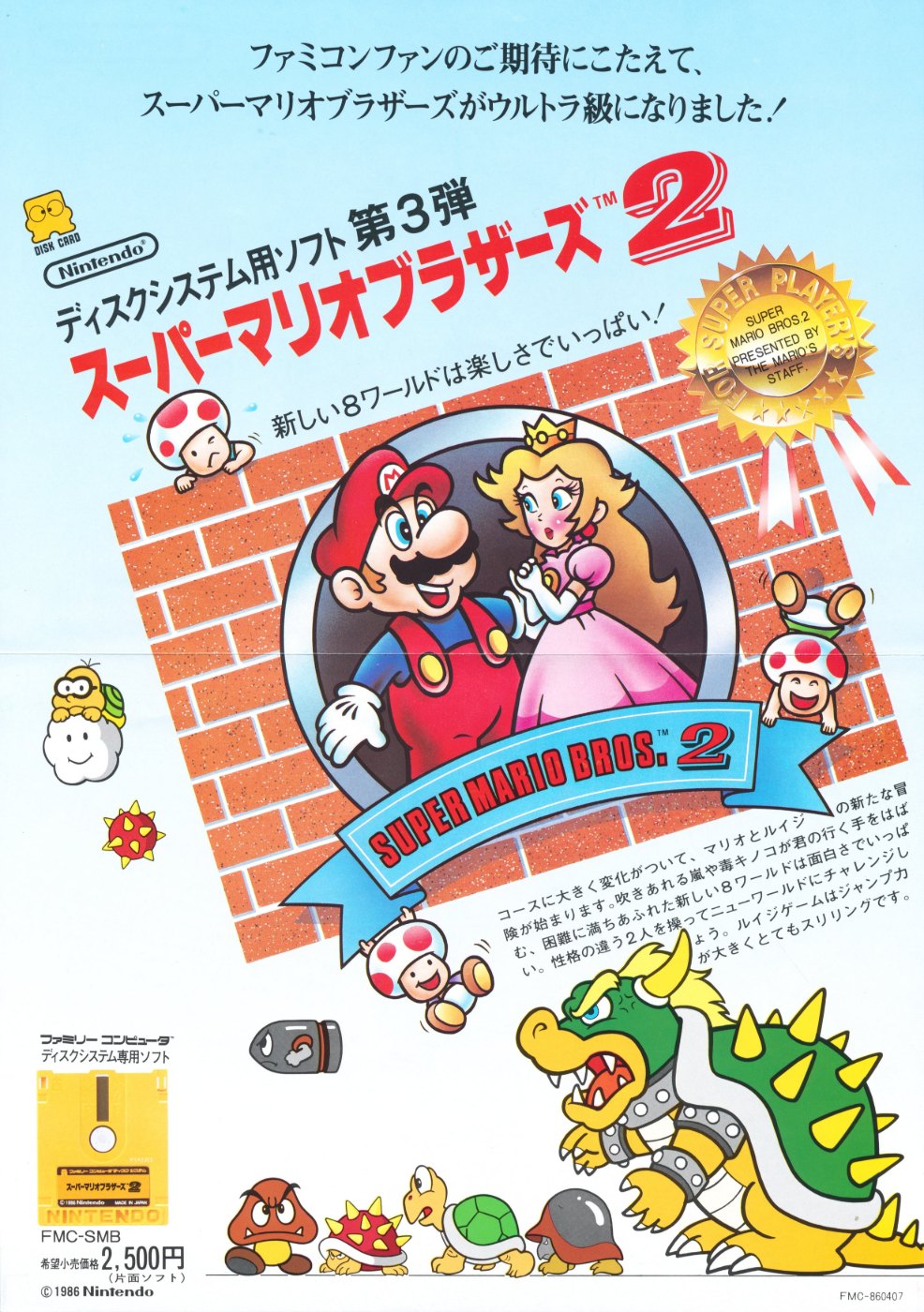
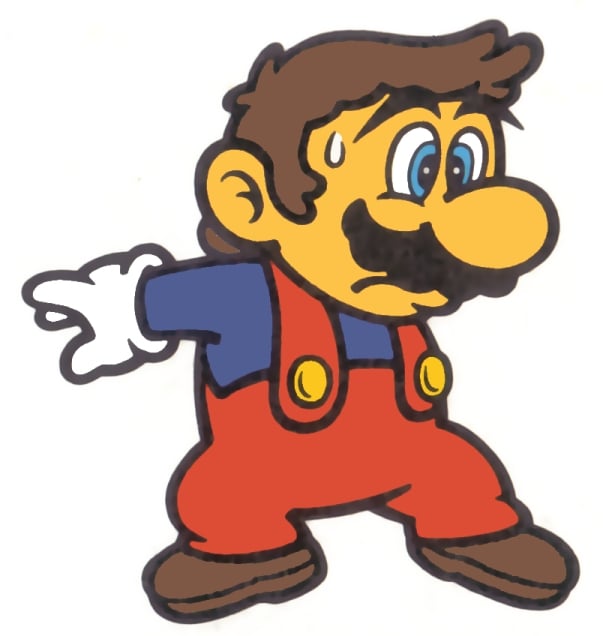
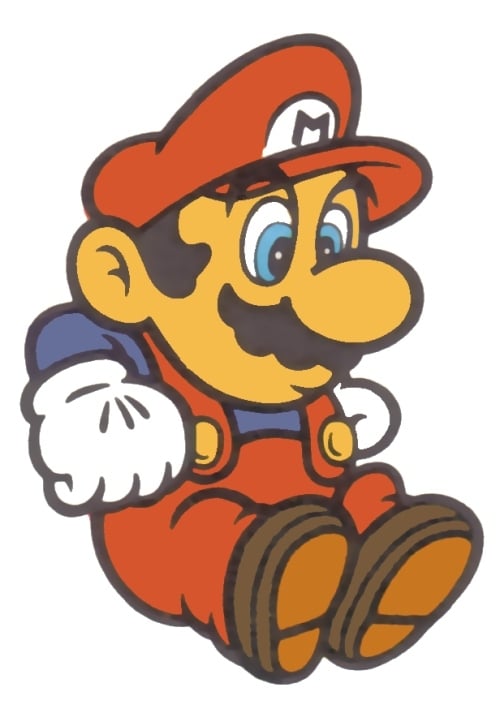
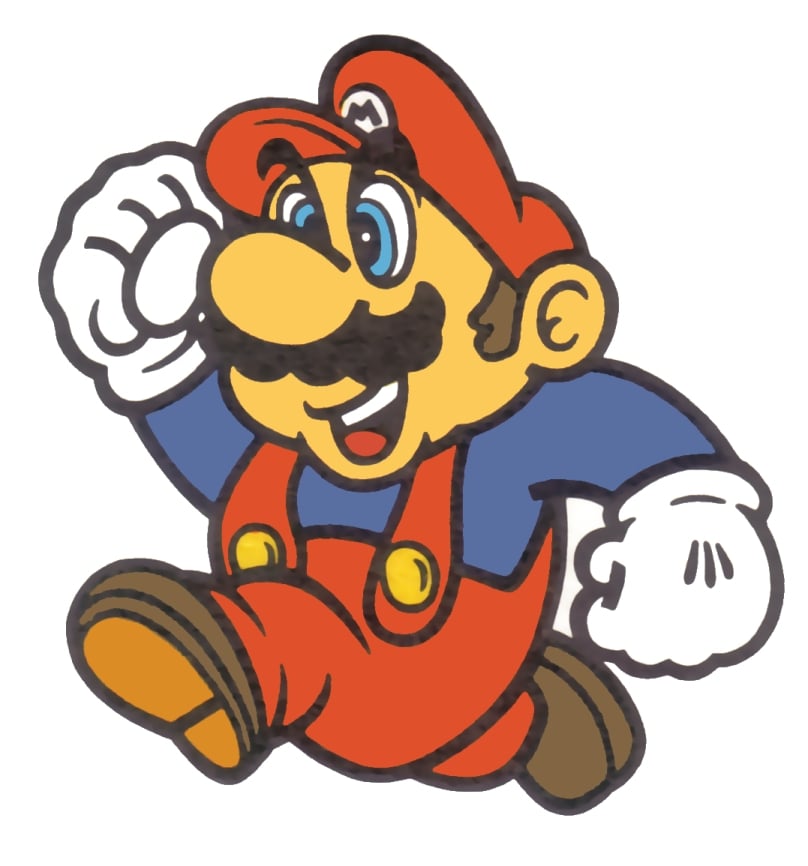
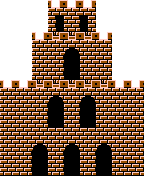
The Japanese logo.The international logo.The Nintendo Switch Online logo.The in-game Super Mario Bros. 2 logo.The Nintendo PowerFest ’94 logo.Cover artwork with most of the cast.A promotional flyer.Mario from the cover.Mario bowing.Mario looking worried.Mario sitting down.Mario pointing.Mario jumping.A green Koopa shell.Lakitu throwing a Spiny egg.The new princess sprite.The Poison Mushroom in castle colours.The 1-Up Mushroom, underground colours.The castle.Lakitu in cave and castle colours.A sheet of enemy stickers.World 2-1.World 3-1, home of the first backwards warp.World 4-4.World 5-1.World 7-1.World B-2.World C-3.World D-2.
Legacy & Re-releases
Japan-only for seven years, The Lost Levels has since been re-released more often than most Mario games.
Release and re-release timeline
Famicom Disk System3 June 1986Released in Japan as Super Mario Bros. 2.
Super Famicom / Super NES1993Remade in Super Mario All-Stars (Super Mario Collection in Japan); the first release outside Japan.
Game Boy Color1999Unlockable “For Super Players” mode in Super Mario Bros. Deluxe, without wind or the bonus worlds.
Game Boy Advance10 August 2004Famicom Mini release, Japan only.
Virtual Console (Wii)2007Japan 1 May, Europe and Australia 14 September, North America 1 October.
Virtual Console (3DS)2012Japan 25 July; North America, Europe and Australia 27 December.
Virtual Console (Wii U)2013–14Japan 8 August 2013; Europe and Australia 23 January 2014; North America 13 March 2014.
NES Remix 2 / Ultimate NES Remix2014Challenges on Wii U and Nintendo 3DS.
Nintendo Switch Online10 April 2019Added to the NES library in Japan, North America, Europe and Australia.
Game & Watch: Super Mario Bros.2020Included on the 35th-anniversary handheld.
The Lost Levels in Super Mario All-Stars
The 1993 remake is how most of the world first played it. It redrew everything in Super NES style, made the Poison Mushroom easier to spot, let you save after every course, and made one clear enough to open Worlds A to D. It also tightened the World 9 rule (any warp, backwards or not, rules it out), replaced the fake Bowsers of the bonus worlds with true forms or the real thing, and added Buzzy Beetles in place of Goombas in Worlds A to D. Our Super Mario All-Stars page has the full list of changes.
Luigi’s legacy
The Lost Levels was the first game to make Luigi more than a palette swap in the way he plays. The higher, slipperier Luigi became part of his character, from the Western Super Mario Bros. 2 to Super Mario Galaxy, Super Mario 3D Land and Super Mario 3D World.
Reviews & Sales
Sales
Nintendo has never published an official total, but both figures in circulation make it the best-selling game on the Famicom Disk System. Wikipedia gives about 2.5 million copies, citing a 1999 Atari HQ article; a compilation of Nintendo’s sales data posted on the Install Base forum gives 2.65 million. Jon Irwin’s book notes that it also topped the Famicom Tsūshin (Famitsu) charts. Every copy was sold in Japan.
2.5mWikipedia (Atari HQ, 1999)
2.65mInstall Base
No. 1Disk System best seller
3 June 1986Japanese release
Reviews
There are few period reviews; most scores come from the Virtual Console releases.
IGNLucas M. Thomas, Wii Virtual Console, October 2007
8.5/10
Nintendo LifeMarcel van Duyn, Wii Virtual Console, 2007
8/10
Nintendo LifeRobert Hughes, Wii U Virtual Console
8/10
EurogamerWii Virtual Console
8/10
GameSpotFrank Provo, Wii Virtual Console
6.5/10
Famicom HisshoubonSeptember 1986, three reviewers
3, 2, 2 out of 5
Japanese reviewers in 1986 were lukewarm. Famicom Hisshoubon’s panel liked the way Mario and Luigi now played differently but wished for new characters and felt the game lacked freshness, and some critics reportedly saw it as an expansion rather than a true sequel.
The Virtual Console release in 2007 let Western critics judge the original for themselves. IGN compared its deliberately unfair designs to the tough fan-made levels players dare each other to beat, Nintendo Life thought the new levels, visuals and Luigi made it more than an update, and GameSpot recommended it only to players who want punishment. Retrospectives remain split: Nintendo Life has praised it as fiendishly clever, GamesRadar called its difficulty pointlessly cruel, and Eurogamer argued it was technically a better game than the Doki Doki Panic-based Super Mario Bros. 2 the West got instead.
To provide the best experiences, we use technologies like cookies to store and/or access device information. Consenting to these technologies will allow us to process data such as browsing behavior or unique IDs on this site. Not consenting or withdrawing consent, may adversely affect certain features and functions.
Functional
Always active
The technical storage or access is strictly necessary for the legitimate purpose of enabling the use of a specific service explicitly requested by the subscriber or user, or for the sole purpose of carrying out the transmission of a communication over an electronic communications network.
Preferences
The technical storage or access is necessary for the legitimate purpose of storing preferences that are not requested by the subscriber or user.
Statistics
The technical storage or access that is used exclusively for statistical purposes.The technical storage or access that is used exclusively for anonymous statistical purposes. Without a subpoena, voluntary compliance on the part of your Internet Service Provider, or additional records from a third party, information stored or retrieved for this purpose alone cannot usually be used to identify you.
Marketing
The technical storage or access is required to create user profiles to send advertising, or to track the user on a website or across several websites for similar marketing purposes.

 World 22-1 ground · 2-2 ground · 2-3 athletic · 2-4 castlePlatforms over water, the first Super Springs and a lava-filled castle.
 World 33-1 ground · 3-2 underwater · 3-3 athletic · 3-4 castleHammer Brothers arrive, and the wrong pipe in 3-1 sends you back to World 1.
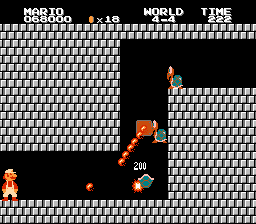 World 44-1 ground · 4-2 ground · 4-3 athletic · 4-4 castleRed Piranha Plants take over; Lakitu and off-screen Bullet Bills.
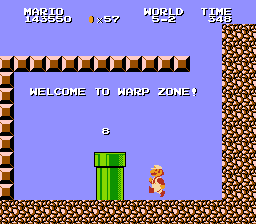 World 55-1 ground · 5-2 underground · 5-3 athletic · 5-4 castleWind, upside-down pipes and a looping puzzle course.
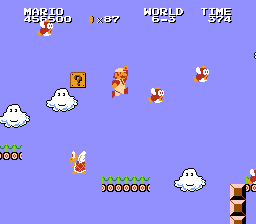 World 66-1 ground · 6-2 underwater · 6-3 athletic · 6-4 castleTwo VS. courses back to back, then a castle of puzzling paths.
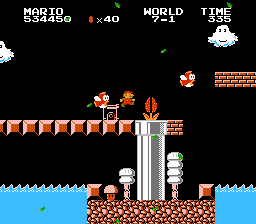 World 77-1 ground · 7-2 athletic · 7-3 athletic · 7-4 castleWind, a looping start, Super Springs, and Hammer Brothers who charge.
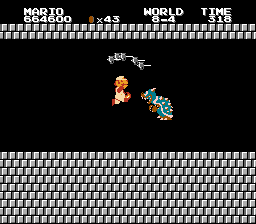 World 88-1 ground · 8-2 ground · 8-3 athletic · 8-4 castleA backwards warp to World 5, clouds in 8-3, and Bowser’s Brother before the real Bowser.
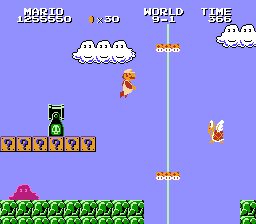 World 99-1 underwater · 9-2 underwater · 9-3 castle · 9-4 underwaterThe Fantasy World: no warps allowed, one life, loops until Game Over.
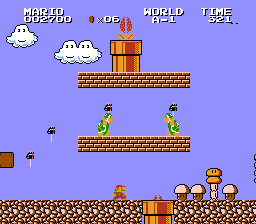 World AA-1 ground · A-2 underground · A-3 athletic · A-4 castleUnlocked after eight clears; Hammer Brothers from the very first course.
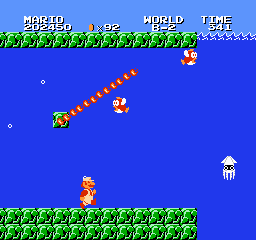 World BB-1 ground · B-2 underwater · B-3 athletic · B-4 castleA Super Spring, a long underwater Fire Bar and very long pits.
 World CC-1 ground · C-2 athletic · C-3 athletic · C-4 castleHanging Piranha pipes and a remix of World 7 with extra Fire Bars.
 World DD-1 ground · D-2 ground · D-3 ground · D-4 castleThree ground courses, then a castle where even the bosses are fakes.




 Super MushroomMakes Mario Super Mario, able to take a hit; now with eyes.
 Poison MushroomNew: touching it is the same as touching an enemy. Coloured like the Goombas of each course.
 Poison Mushroom (underground)The darker underground version, just as nasty.
 1-Up MushroomAn extra life, as are 100 coins.
 Brick BlockNow shaded; may hide coins, power-ups or a Starman.
 Jumping BoardThe familiar red springboard for higher jumps.
 Super SpringNew green spring in Worlds 2, 3, 7, B and C that launches you off the screen.
 Famitsu’s first lookFamicom Tsūshin · July 1986The Japanese magazine featured the new Super Mario Bros. 2 in its July 1986 issue, the month after release.
 Super Mario All-StarsSuper NES · 1993Its first release outside Japan, remade in 16-bit with saves after every course and the new name The Lost Levels. See our Super Mario All-Stars page.
 Famicom MiniGame Boy Advance · 2004A Japan-only Game Boy Advance release of the Disk System game, which brought back a continue from the title screen.
 The Poison Mushroom lives onLater Mario gamesThe item invented here returned in Super Mario Kart (1992), Super Mario 3D Land (2011) and other games.
 MarioHero
 LuigiHero, now with his own handling
 Princess ToadstoolPrincess of the Mushroom Kingdom
 ToadMushroom retainer
 BowserKing of the Koopas
 Bowser’s BrotherBowser’s dark double
 The fake BowsersImpostor bosses
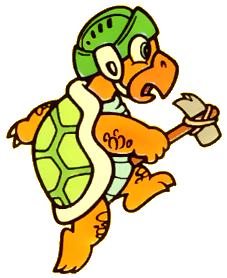 Hammer BrothersThe toughest regulars
 Little GoombaMost worldsIts colours also give away each course’s Poison Mushrooms.
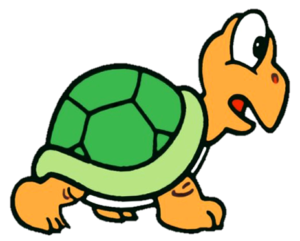 Koopa Troopa (green)Most worldsFaster than before; kick its shell to clear a path or bounce for 1-Ups.
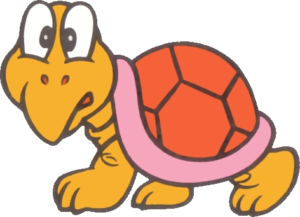 Koopa Troopa (red)Most worldsThe cautious kind that turns at ledges.
 Koopa ParatroopaMost worlds, even underwaterLoses its wings when stomped; under water it cannot be stomped at all.
 Underwater Koopa TroopaWorld 3-2 and othersSlower, unstompable, beaten only by fire or a Starman.
 Buzzy BeetleVariousFireproof shell; under water it is effectively invincible.
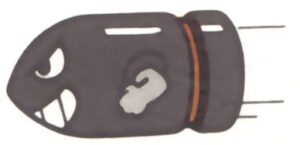 Bullet BillWorlds 4, C, D and othersFired from Bill Blasters, sometimes from off the screen.
 Bill BlasterWorld D-3 and othersFires Bullet Bills, even from under water.
 Hammer BrotherFrom World 3Charges at you in Worlds 7 to 9; turns up underwater in World 9.
 LakituWorlds 4, 7, 9, C and othersFlies lower on some courses and follows you underwater in World 9.
 Lakitu (underwater)World 9-1Dropping Spinies under the sea.
 SpinyWherever Lakitu fliesHatches from the eggs Lakitu throws; cannot be stomped.
 BlooperUnderwater and in the airFloats through the sky on some courses; worth 1,000 points stomped.
 Blooper (castle colours)CastlesDrawn in the grey castle palette.
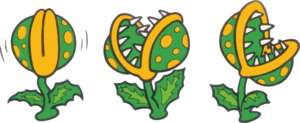 Piranha Plant (green)Worlds 1–3Hides when you stand next to its pipe.
 Red Piranha PlantFrom World 4New and more aggressive: bites unless you stand directly above its pipe.
 Piranha Plant (underwater)Underwater coursesUpside-down pipes put Piranha Plants in the sea too.
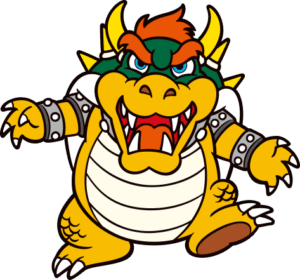 Fake Bowser (boss)End of Worlds 1–7 and A–DFive fireballs reveal the enemy underneath.
 Bowser’s Brother (boss)Worlds 8-4 and 9-3Dark double of the king; no true form to reveal.
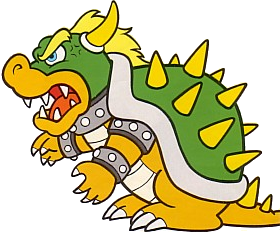 Bowser (boss)World 8-4The real King Koopa, with fire and hammers.