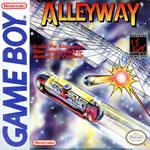
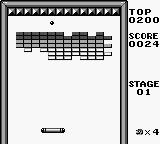
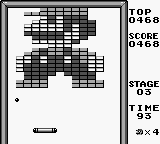
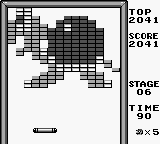
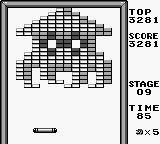
Game Boy1989Block breakerNintendo R&D1 · Intelligent SystemsJapanese launch title32 stagesMario at the controls8 Mario bonus roundsOn Nintendo Switch Online
Alleyway
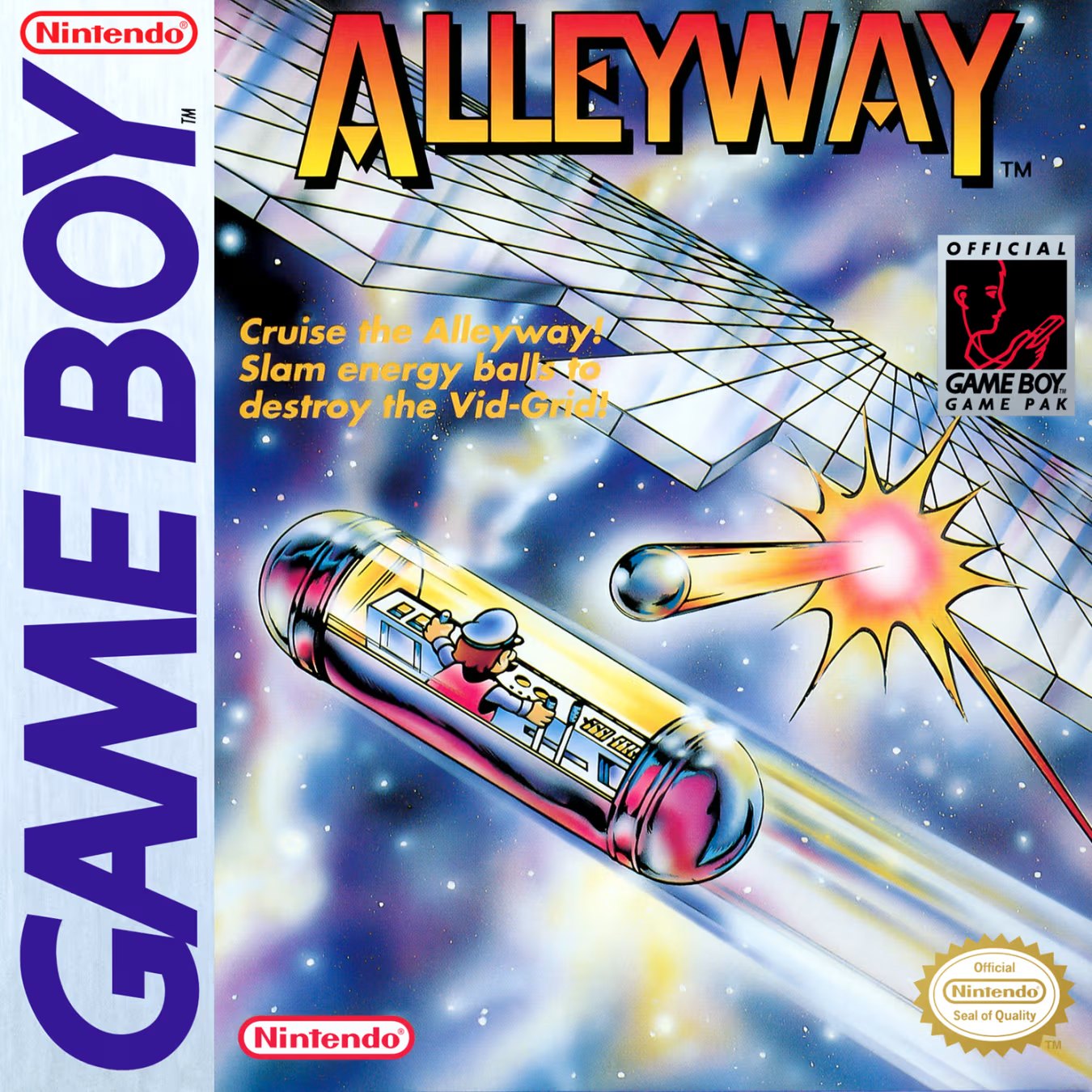
On the Game Boy’s very first day, Mario was not only stomping Goombas in Super Mario Land: he was also here, in the cockpit of a paddle. Alleyway went on sale in Japan on 21 April 1989, the very day the Game Boy launched, alongside Super Mario Land, Baseball and Yakuman, and reached North America that August and Europe on 28 September 1990. It is Breakout in your pocket: bounce a ball off your paddle, smash every breakable brick and never let the ball drop past you. There are 32 stages: 24 regular screens, built from eight brick patterns that come in still, scrolling and advancing versions, plus eight timed bonus rounds whose bricks form pixel portraits of Mario, a Koopa Troopa, a Blooper, a Piranha Plant, a Bullet Bill, a Goomba, a Cheep Cheep and Bowser. Stages 16 to 18 are even shaped like Mario’s head. Made by Nintendo R&D1 with Intelligent Systems, it divided reviewers, but it has since returned on the 3DS Virtual Console (2011) and Nintendo Switch Online (2024).
Developer:Nintendo R&D1, with Intelligent Systems
Publisher:Nintendo
Platform:Game Boy
Genre:Block breaker
Japan:21 April 1989 (Game Boy launch day)
N. America:August 1989 (Wikipedia gives 1 August)
Europe:28 September 1990
Players:1
Designer:Gunpei Yokoi (per Wikipedia)
Stages:32: 24 regular stages and 8 bonus rounds
Lives:5 paddles to start; an extra one every 1,000 points up to 10,000, nine at most
Saving:None: no continues, passwords or battery save
Ratings:ESRB E · PEGI 3 · CERO A · USK 0 · ACB G
3DS Virtual Console:North America 6 June 2011; Europe and Australia 7 June 2011; Japan 3 August 2011
Nintendo Switch Online:North America 14 May 2024; Japan, Europe and Australia 15 May 2024
Budget reissue:Never a Player’s Choice title
Advertisement
Overview
The intro: Mario jumps into the paddle.
Every console launch needs something you can pick up and play in seconds, and on the Game Boy’s first day in Japan that job fell partly to Alleyway. It is a block breaker in the tradition of Breakout: a paddle at the bottom of the screen, a ball, and a wall of bricks to chip away. Angle the ball off the paddle, clear every breakable brick and you move on. Miss it and you lose a paddle.
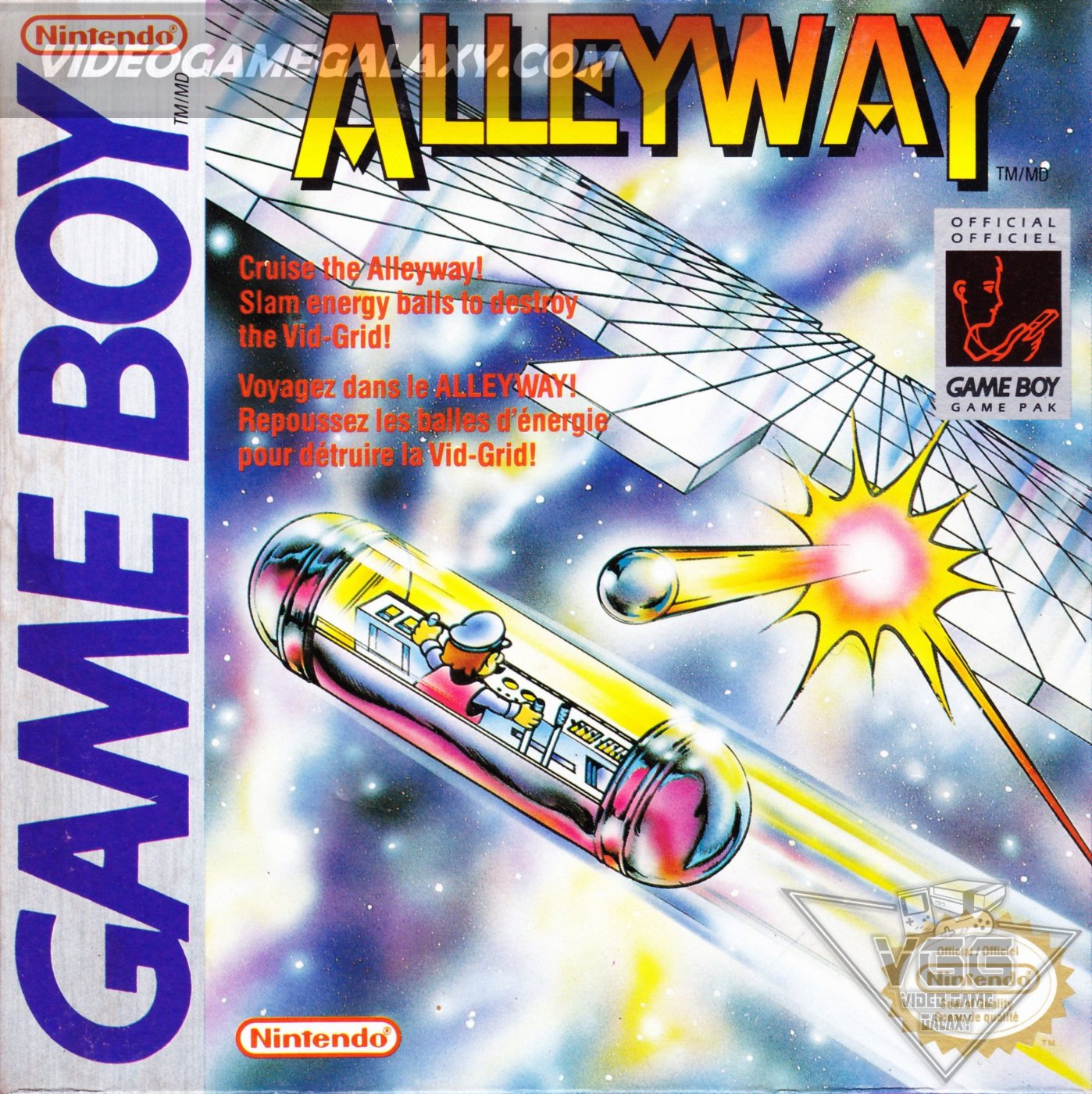
What makes it a Mario game is the pilot. Start a game and Mario leaps into the paddle, and on the Western boxes he is shown at the controls. Nintendo’s more recent eShop description plays up the science fiction, calling the paddle a vessel that deflects an energy ball towards grids in space. The bonus rounds are pure Super Mario Bros., with bricks arranged into the enemies and heroes of the 1985 game.
Alleyway was one of the first games from Nintendo R&D1’s Game Boy era, built with Intelligent Systems. Reviewers in 1989 and 1990 found it competent but thin next to Arkanoid, with no power-ups and a lot of repetition, and the scores have stayed lukewarm since. It still sold well enough, and Nintendo has twice brought it back: on the 3DS Virtual Console in 2011 and for Nintendo Switch Online members in May 2024.
Originally released at the launch of the Game Boy, Alleyway is a fondly remembered update to the classic ‘bat and ball’ style of games.
The aim is simple: survive and rack up a huge high score! Take control of the paddle and deflect the ball to break the blocks, but don’t let it drop. Break all the blocks to move onto the next of 32 challenging stages.
It starts out simple but later levels introduce walls of blocks that move horizontally or vertically. You can also enjoy bonus stages where the aim is to break as many blocks as possible within the time limit.
— Official description (Nintendo UK, 2011)
Why Alleyway matters to Mario fans
Mario was there from the Game Boy’s first day: Super Mario Land and Alleyway both launched with the console in Japan on 21 April 1989. Alleyway is the odd one, a Breakout game rather than a platformer, but its eight bonus rounds are a little gallery of Super Mario Bros. sprites in brick form, and the paddle-ship pilot gave Mario one of his strangest early jobs.
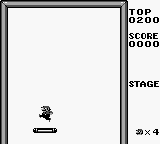
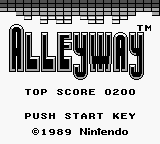
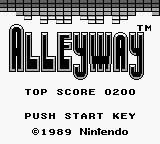
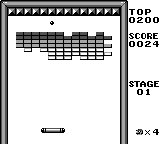
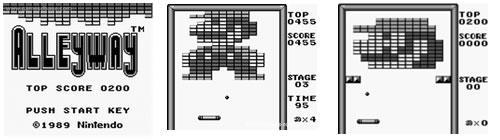
The title screen.Stage 01, the first wall of bricks.The first bonus round: Mario, in bricks.
Quick Answers
Quick answers about Alleyway. The detail is further down the page.
When did Alleyway come out?
In Japan on 21 April 1989, the day the Game Boy launched. North America followed in August 1989 and Europe on 28 September 1990. More →
Is Mario in Alleyway?
Yes. He jumps into the paddle in the intro and is shown piloting it on the Western box art, and the first bonus round is a picture of him made of bricks. The instruction manual and the back of the box never mention him, though. More →
How many stages are there?
Thirty-two: 24 regular stages, built from eight brick patterns in groups of three, and a bonus round after every third stage. More →
What are the bonus rounds?
Timed rounds with 99 seconds on the clock in which the bricks form Super Mario Bros. characters: Mario, Koopa Troopa, Blooper, Piranha Plant, Bullet Bill, Goomba, Cheep Cheep and Bowser. Clear them all in time for extra points. More →
Who made Alleyway?
Nintendo R&D1 with Intelligent Systems, published by Nintendo. Wikipedia credits Gunpei Yokoi as designer. More →
Can you save or continue?
No. The Game Boy original has no continues, passwords or battery save, so every game starts from stage 1. The 3DS Virtual Console version adds a save state. More →
Where can I play Alleyway today?
On Nintendo Switch Online’s Game Boy app since May 2024. It was also on the 3DS Virtual Console from June 2011, until the 3DS eShop closed for purchases on 27 March 2023. More →
Was Alleyway well reviewed?
Not really. EGM’s four reviewers gave it 6, 6, 5 and 3 out of 10, Famitsu 19 out of 40 and Mean Machines 33%; most critics wanted power-ups and more variety. More →
Stages & Bonus Rounds
Mario takes the controls.
Alleyway has no plot to speak of. The intro shows Mario jumping into the paddle, and that is the whole set-up; the instruction manual and the back of the box do not even mention him. According to Wikipedia’s research, Nintendo Power’s preview in late 1989 noticed only a Mario-shaped brick pattern in the first bonus round, and it was Club Nintendo in the UK, in a May 1990 Game Boy special, that first confirmed Mario as the pilot. Nintendo’s later eShop description has fun with the idea, casting the paddle as a ship, the ball as energy and the bricks as grids in space.
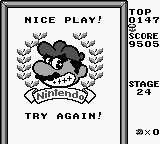
The structure is neat. Eight brick patterns each get three stages, one still, one scrolling and one advancing, for 24 regular stages. After every third stage comes a bonus round, eight in all, making 32 stages. Clear the lot and the game rewards you with an ending screen and a winking Mario.
Stages 01 to 03: learning the angles
The opening pattern is a straightforward wall, and the first three stages walk you through the three screen types with it: still, then scrolling, then advancing. It is the gentlest stretch of the game, and the place to learn how the ball leaves the paddle depending on where it hits. The ceiling rule has not kicked in yet.
Stage 01.The title screen.
The bonus rounds: Super Mario Bros. in bricks
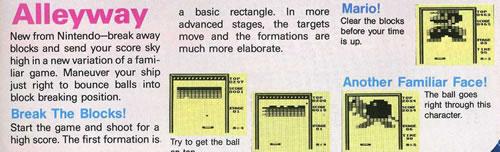
Every fourth round is a bonus. The bricks are arranged into a sprite from Super Mario Bros., music plays, and a 99-second timer counts down. The ball breaks bricks without rebounding around the field as it normally would, and the aim is to clear every brick before time runs out for a points bonus.
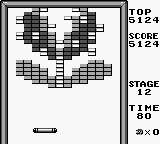
The first four portraits are Mario after stage 3, a Koopa Troopa after stage 6, a Blooper after stage 9 and a Piranha Plant after stage 12.
Bonus round 1: Mario.Bonus round 2: a Koopa Troopa.Bonus round 3: a Blooper.Bonus round 4: a Piranha Plant.
Stages 04 to 15: steel bricks and a shrinking paddle
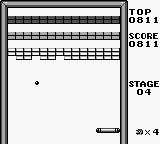
From stage 4 the ceiling becomes dangerous, halving your paddle whenever the ball reaches the top of the screen, and after the twelfth the patterns start mixing in indestructible bricks, while the advancing screens can uncover steel bricks as they creep down.
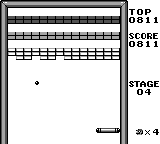
Stage 04, the second brick pattern.
Stages 16 to 18: Mario’s head
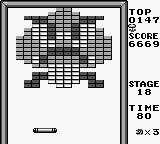
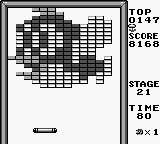
The sixth brick pattern is the one Mario fans remember: stages 16, 17 and 18 arrange the bricks into Mario’s head, first standing still, then scrolling and finally advancing towards you. Clear them and the next bonus round is a Goomba.
The bonus round after stage 18: a Goomba.
The later bonus rounds
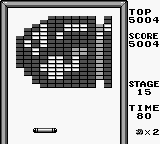
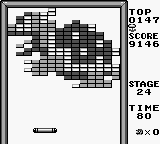
The second half of the bonus gallery runs Bullet Bill after stage 15, Goomba after stage 18, Cheep Cheep after stage 21 and, after the last regular stage, Bowser himself.
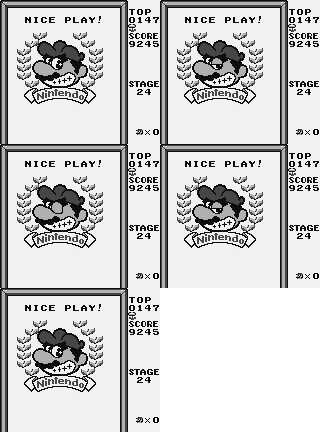
Survive all 32 stages on your stock of paddles, with no continues to fall back on, and Alleyway shows its ending screen, with a little animation of Mario winking at you.
The ending screen.Mario’s wink, from the ending.
Every stage group in Alleyway
Eight brick patterns, each played as a still, a scrolling and an advancing stage, each followed by a Super Mario Bros. bonus round.
Stages 22–24Pattern 8 · bonus: BowserThe last regular stages, then the King of the Koopas in brick form.
Advertisement
Gameplay & Controls
Alleyway is about as pure as a block breaker gets. There are no power-ups: just the paddle, the ball, the bricks and your reflexes.
Paddle, ball and bricks
You slide the paddle left and right along the bottom of the screen and bounce the ball up into the bricks. Clear every breakable brick to finish the stage. If the ball gets past the paddle, you lose a life.
There is one famous catch. From stage 4 onwards, if the ball touches the very top of the playfield your paddle shrinks to half its size. And after the twelfth stage, indestructible bricks start to appear, which you have to play around.
A full-sized paddle and a fresh wall in Stage 01.
Lives and scoring
You start with five paddles. Every 1,000 points earns another, up to 10,000 points, and you can hold no more than nine. Bricks are worth one to three points depending on their shade, and a cleared bonus round adds between 500 and 1,500 points.
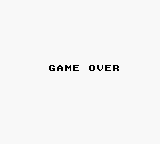
Out of paddles: the Game Over screen.
Three kinds of screen
The regular stages come in three types. On a normal screen the bricks sit still. On a scrolling screen the rows slide left or right, so your target keeps moving. On an advancing screen the rows creep down towards your paddle as you break bricks, and the space they leave at the top can reveal more bricks, or steel ones that cannot be broken. According to the manual, as summarised by Wikipedia, the second stage of each group of three scrolls and the third advances.
Stage 04 begins a new brick pattern.
No continues, no saves
The Game Boy original has no continue option, no passwords and no battery save: when the last paddle goes, it is back to Stage 01. The 3DS Virtual Console release eased this with a single save state.
Characters
Mario is the only character who actually does anything in Alleyway. The rest of the cast appear as giant brick portraits in the bonus rounds.
Character
Who they are
In this game
Abilities & notes
MarioPaddle pilot
Nintendo’s hero, in one of his first Game Boy roles.
Jumps into the paddle in the intro, appears on the Western box art, is the first bonus-round portrait and winks at you in the ending. Stages 16 to 18 are shaped like his head.
The only character you control (as the paddle).
Koopa TroopaBonus round 2
Bowser’s turtle foot soldier from Super Mario Bros.
The brick portrait after stage 6.
99-second bonus round.
BlooperBonus round 3
The squid of Super Mario Bros.’ underwater levels (sometimes captioned Bloober).
The brick portrait after stage 9.
99-second bonus round.
Piranha PlantBonus round 4
The pipe-dwelling plant from Super Mario Bros.
The brick portrait after stage 12.
99-second bonus round.
Bullet BillBonus round 5
The cannon-fired bullet from Super Mario Bros.
The brick portrait after stage 15.
99-second bonus round.
GoombaBonus round 6
The mushroom foot soldier from Super Mario Bros.
The brick portrait after stage 18.
99-second bonus round.
Cheep CheepBonus round 7
The fish from Super Mario Bros.
The brick portrait after stage 21.
99-second bonus round.
BowserBonus round 8
The King of the Koopas.
The final bonus portrait, after stage 24.
99-second bonus round.
Key staff and studios
Alleyway’s cartridge has no staff credits we could check; these are the names given by Wikipedia and other references.
Nintendo R&D1DeveloperNintendo’s Research & Development 1 team; N-Sider counted Alleyway among its first Game Boy titles, alongside Tetris and Radar Mission.
Intelligent SystemsCo-developerCredited alongside R&D1 by Wikipedia and other references.
Gunpei YokoiDesigner (per Wikipedia)Named as designer by Wikipedia, which also says, citing N-Sider, that he later reused much of Alleyway’s code in Kirby’s Block Ball.
How It Was Made
Sources on how Alleyway was made are thin. This is what the sources cited by Wikipedia say.
An R&D1 launch game
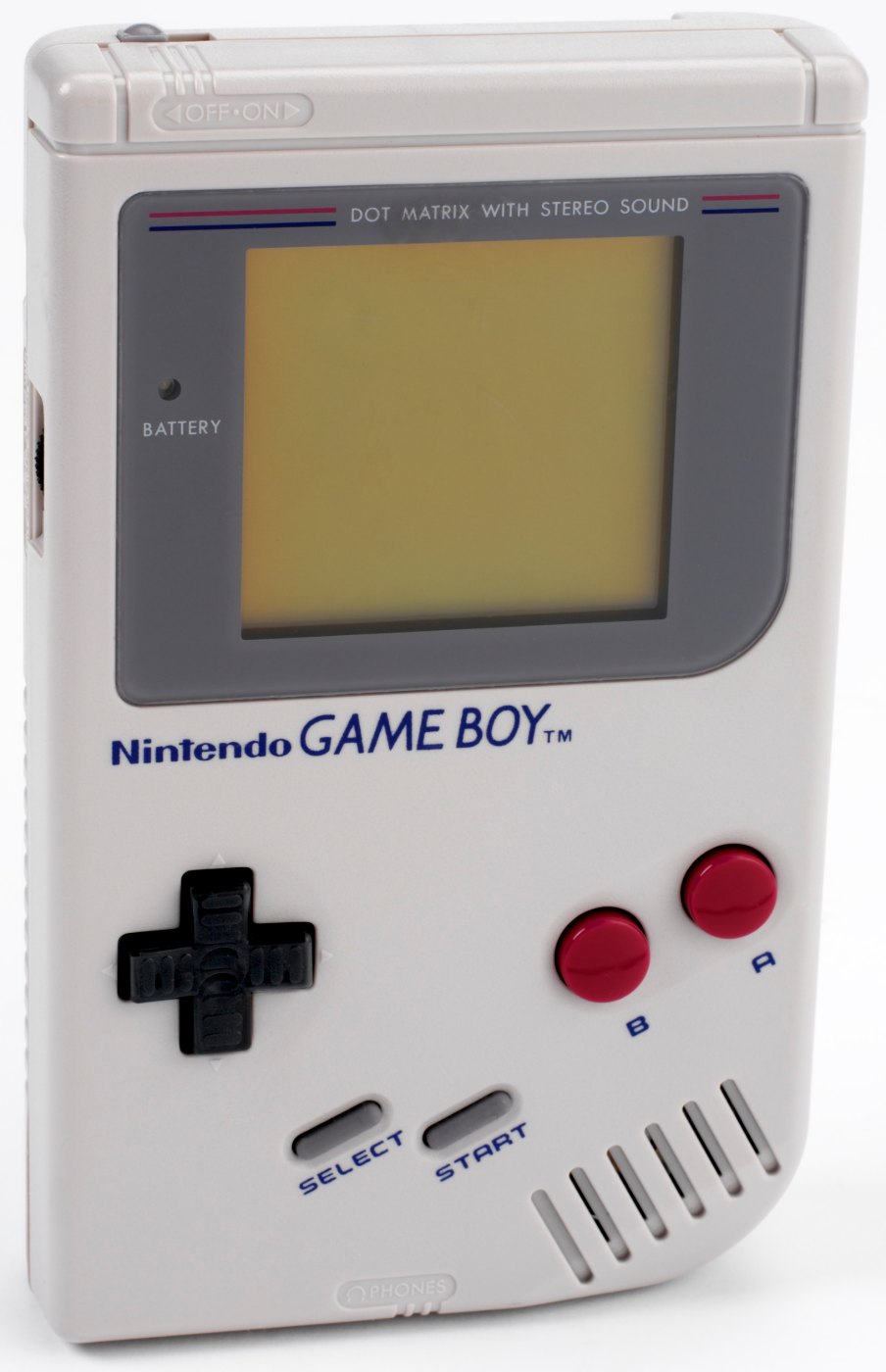
The original Game Boy, launched in Japan on 21 April 1989.
Wikipedia and other references credit Nintendo R&D1 with Intelligent Systems. A 2004 N-Sider profile of the team, cited by Wikipedia, lists Alleyway with Tetris and Radar Mission as among its first Game Boy titles, and Wikipedia names Gunpei Yokoi as its designer.
Launch day, 21 April 1989
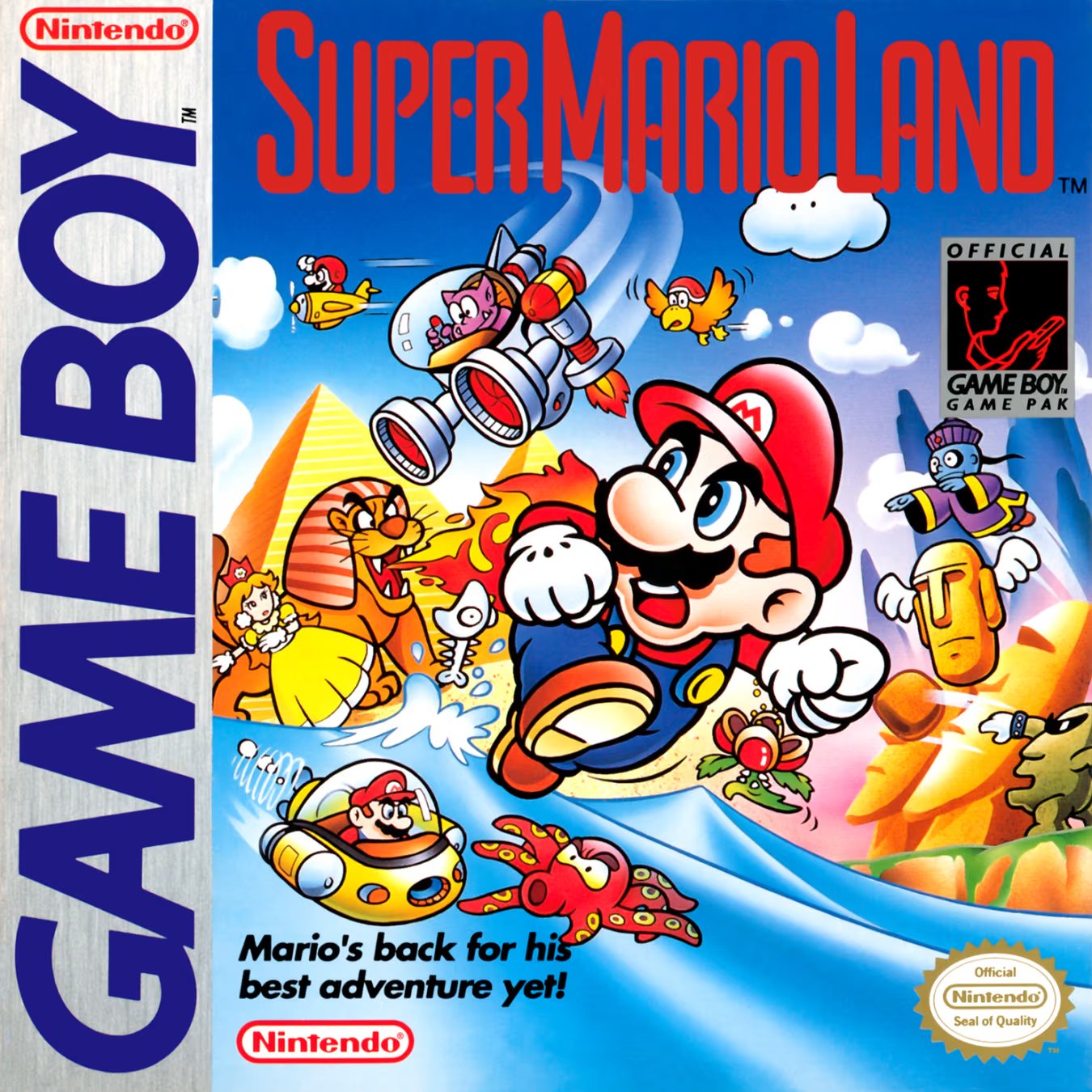
Super Mario Land, Alleyway’s launch-day stablemate.
The Game Boy reached Japanese shops on 21 April 1989 with four games: Alleyway, Baseball, Super Mario Land and Yakuman. Tetris followed about two months after Alleyway, according to Wikipedia. In North America Alleyway arrived in August 1989; Europe had to wait until 28 September 1990.
Where is Mario?
Mario’s role was surprisingly low-key at first. Wikipedia notes that the instruction manual and the back of the box never mention him, and that Nintendo Power’s preview (issue 9, November–December 1989) pointed out only the Mario-shaped bricks of the first bonus round. It credits Club Nintendo UK’s May 1990 Game Boy special as the first official word that Mario was flying the paddle, ahead of the European release.
From Alleyway to Kirby’s Block Ball
Alleyway’s engine had a second life. According to the N-Sider profile cited by Wikipedia, Yokoi reused much of its source code, including the paddle behaviour and an adapted physics engine, for Kirby’s Block Ball, a later Game Boy block breaker starring Kirby.
Cheats & Secrets
Alleyway has no codes or passwords, so getting to the end is down to technique. These tips follow the rules set out in the manual, as summarised by Wikipedia. Super Luigi Bros also has an older Alleyway cheats and tips page.
Bank your extra paddles
You get a new paddle for every 1,000 points, but only up to 10,000 points and never more than nine in stock. Bricks are worth one to three points depending on their shade, so clear walls fully early on, while the extra lives are still on offer.
Keep the ball off the ceiling
From the fourth stage, a ball that reaches the top of the playfield halves your paddle. Once a wall has a gap through to the top, aim your shots so the ball does not fly straight up through it.
Go for the full bonus
Each bonus round gives you 99 seconds. Clearing every brick in time is worth between 500 and 1,500 points, a big boost towards the next extra paddle.
Use the Virtual Console save
The original has no continues. On 3DS, the Virtual Console save state lets you keep your place before the tricky Mario-head stages.
Advertisement
Videos
Nintendo’s trailer for Alleyway’s arrival on Nintendo Switch Online, and Vooks playing it alongside the other launch-day games.
Official trailer from Nintendo of America for the May 2024 update that added Alleyway, Baseball and Super Mario Land.
Third-party gameplay video by the Australian site Vooks.
Trivia & Interesting Facts
Alleyway was one of only four games on sale when the Game Boy launched in Japan on 21 April 1989; the others were Baseball, Super Mario Land and Yakuman.
The instruction manual and the back of the box never mention Mario, even though he is on the Western cover.
Club Nintendo UK’s May 1990 Game Boy special is credited by Wikipedia as the first official confirmation that Mario pilots the paddle.
Nintendo’s original eShop description and its UK game page do not mention Mario either; a later eShop text names him and recasts the game in space, with a vessel, an energy ball and space grids.
Mario also gets a bonus round of his own.Stages 16, 17 and 18 are built in the shape of Mario’s head.
The eight bonus portraits, in order: Mario, Koopa Troopa, Blooper, Piranha Plant, Bullet Bill, Goomba, Cheep Cheep and Bowser.
Alleyway has no power-ups at all, the reviewers’ biggest complaint when they compared it with Arkanoid.
It was never reissued as a Player’s Choice title.
According to Wikipedia, Gunpei Yokoi reused much of Alleyway’s code for Kirby’s Block Ball.
Famitsu’s four reviewers totalled 19 out of 40; EGM’s four gave it 20 out of 40.
The academic game-design book Rules of Play discusses Alleyway as an example of a design that improves on a basic core mechanic.
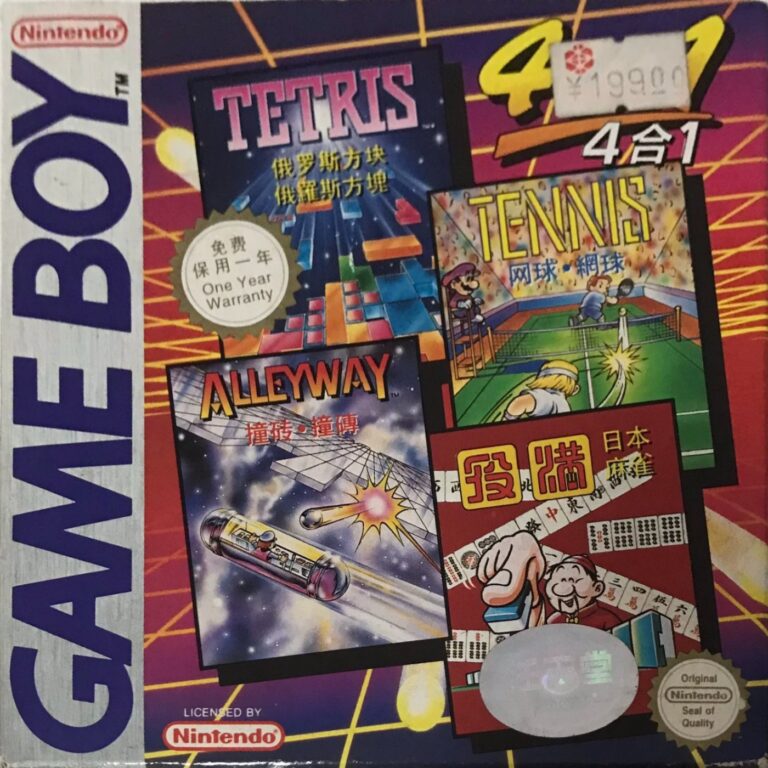
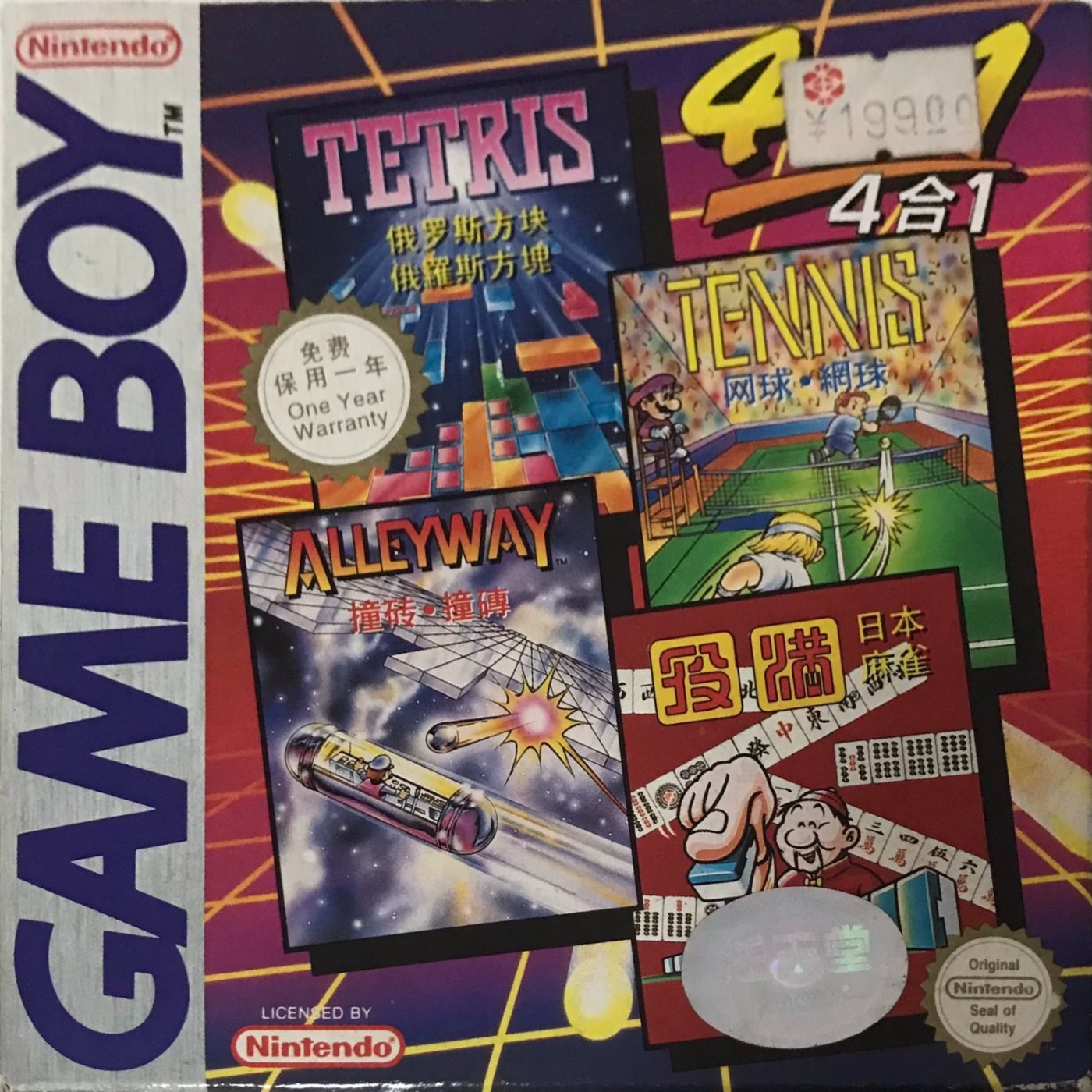
The Chinese Nintendo 4 in 1 cover.It turned up in China in a Nintendo 4 in 1 compilation.
Wikipedia, citing IGN, calls Alleyway a launch title for the 3DS Virtual Console in June 2011.
Its Nintendo Switch Online release in May 2024 came in the same update as Super Mario Land and Baseball, its launch-day companions from 1989.
Regional Box Art
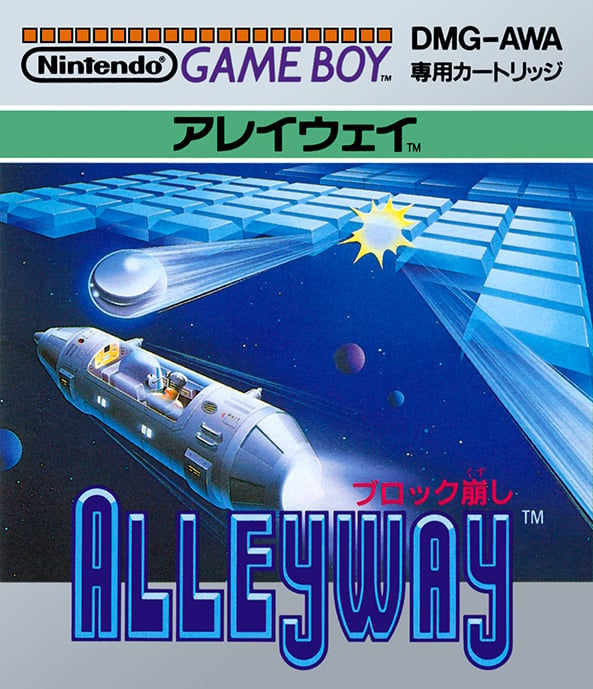
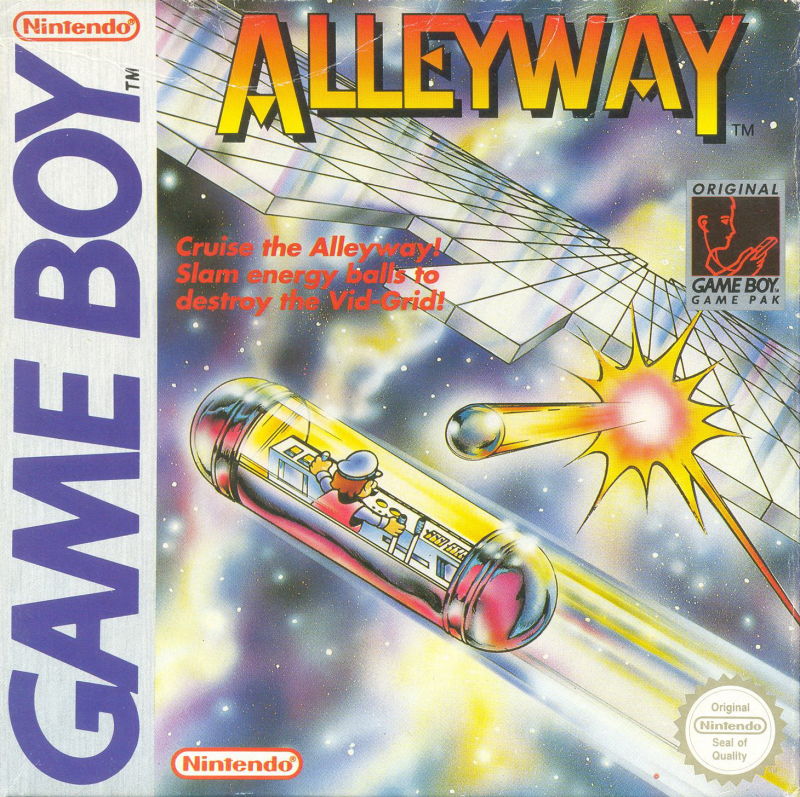
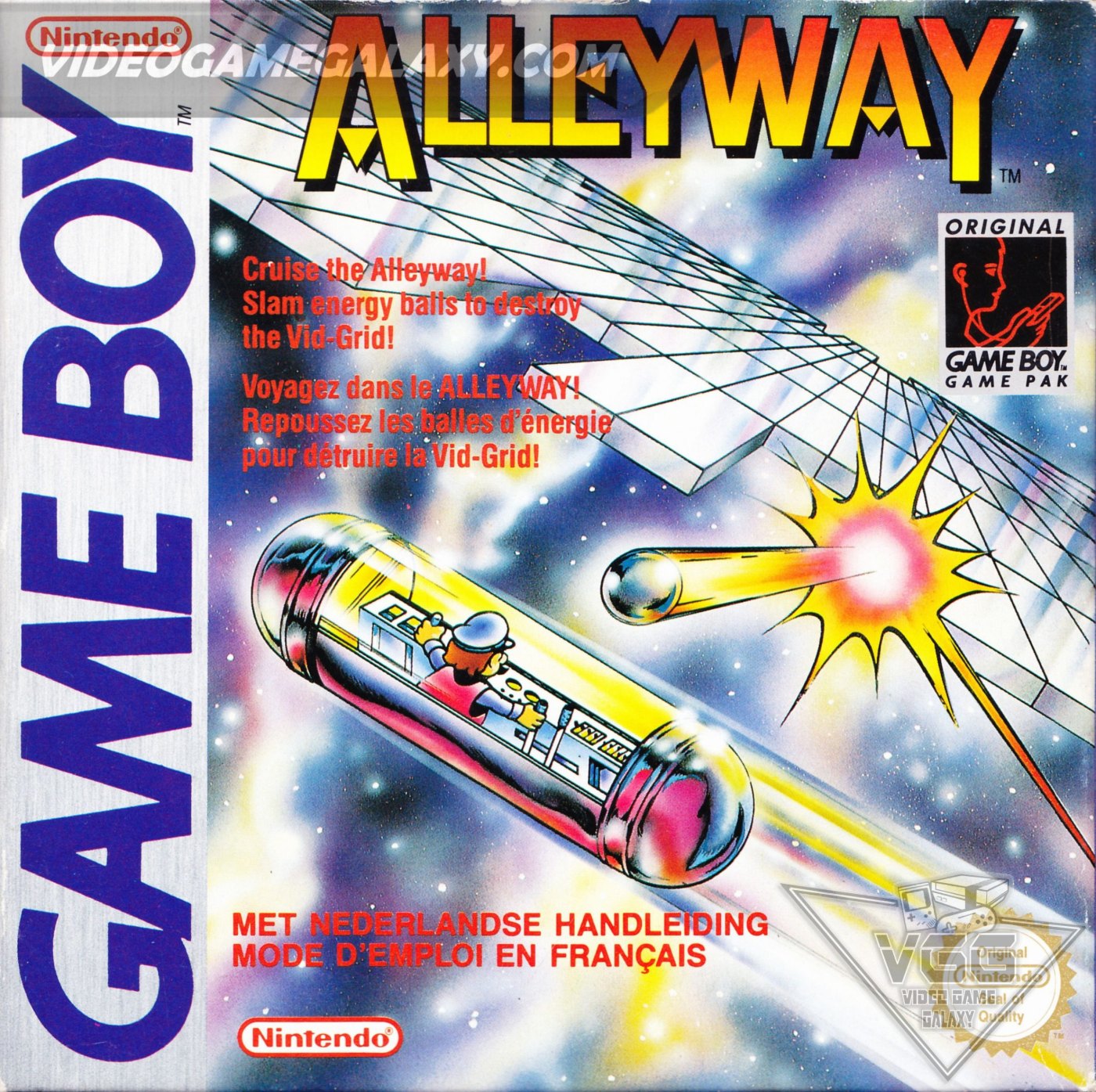
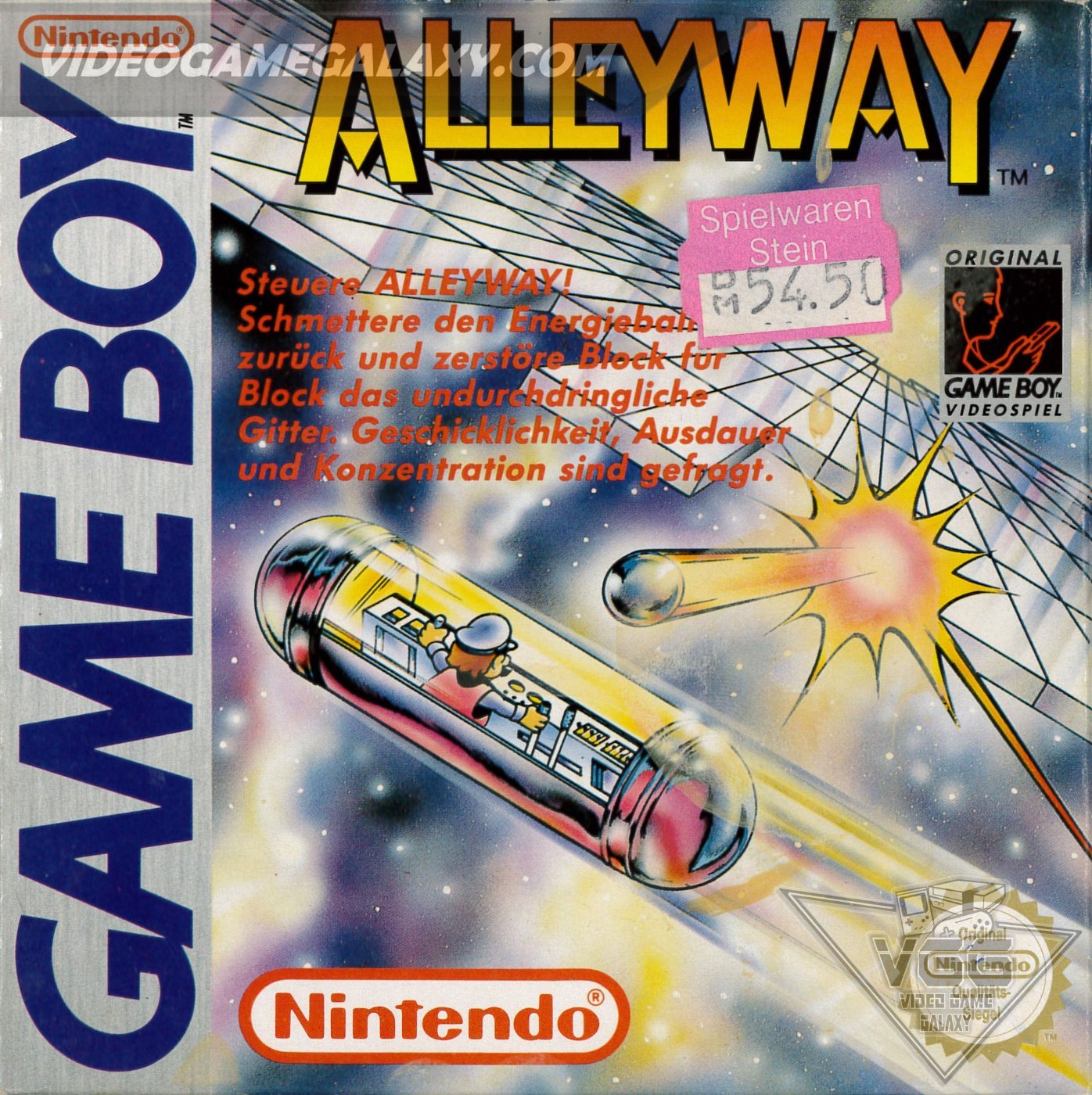
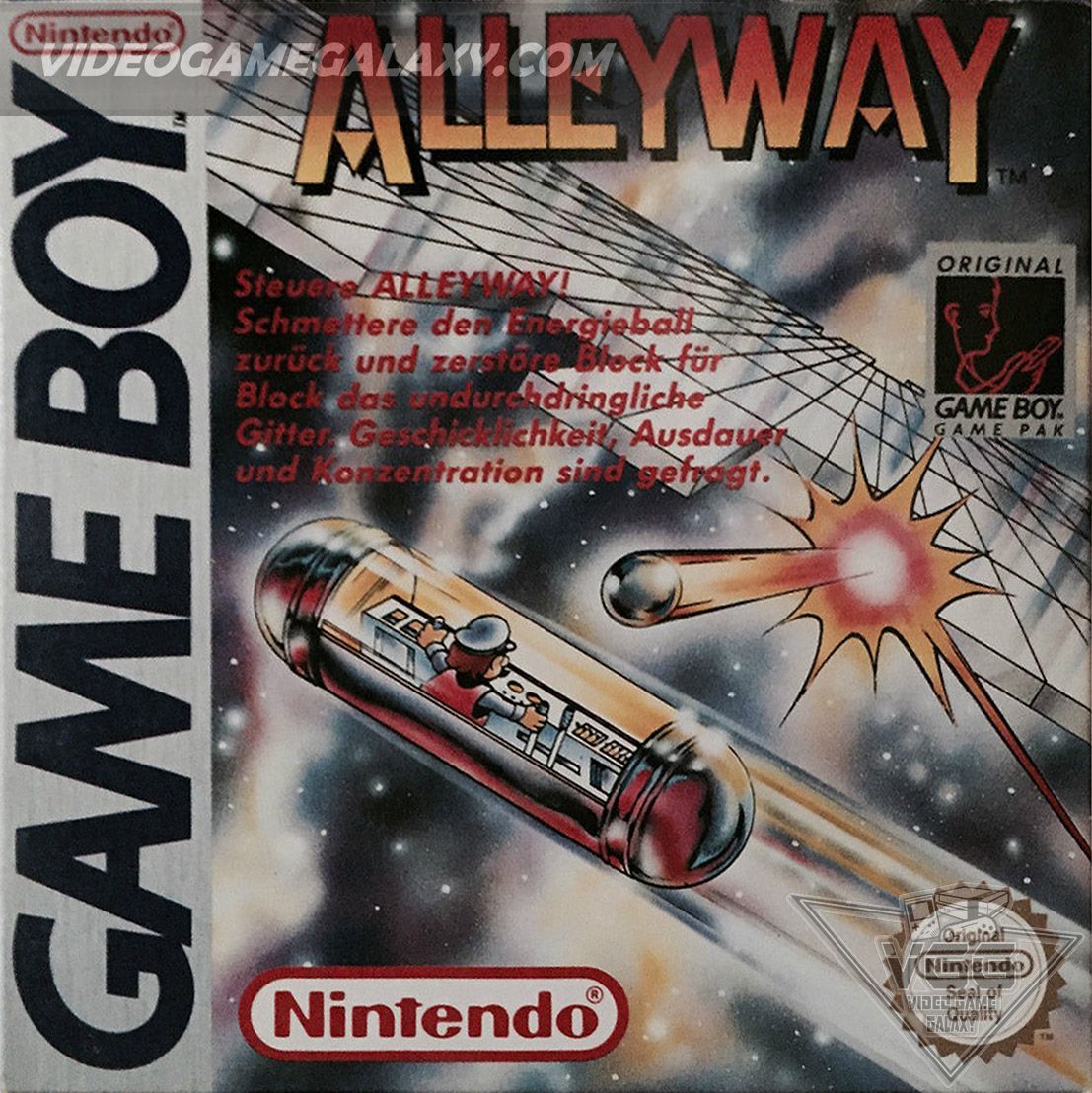
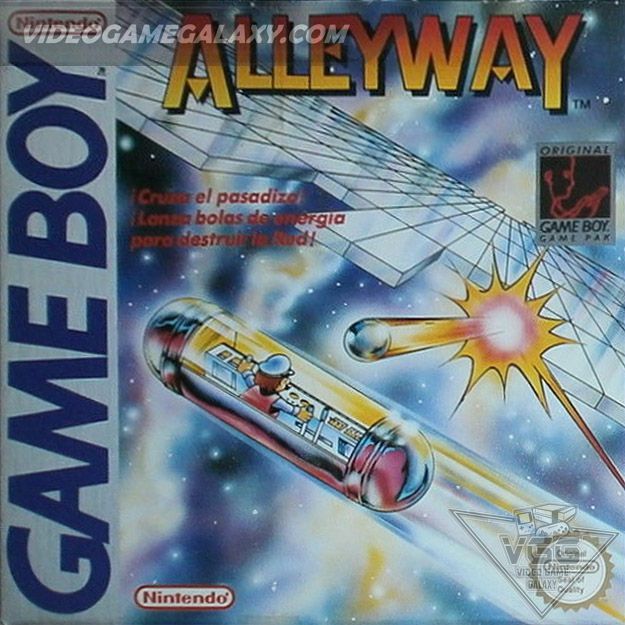
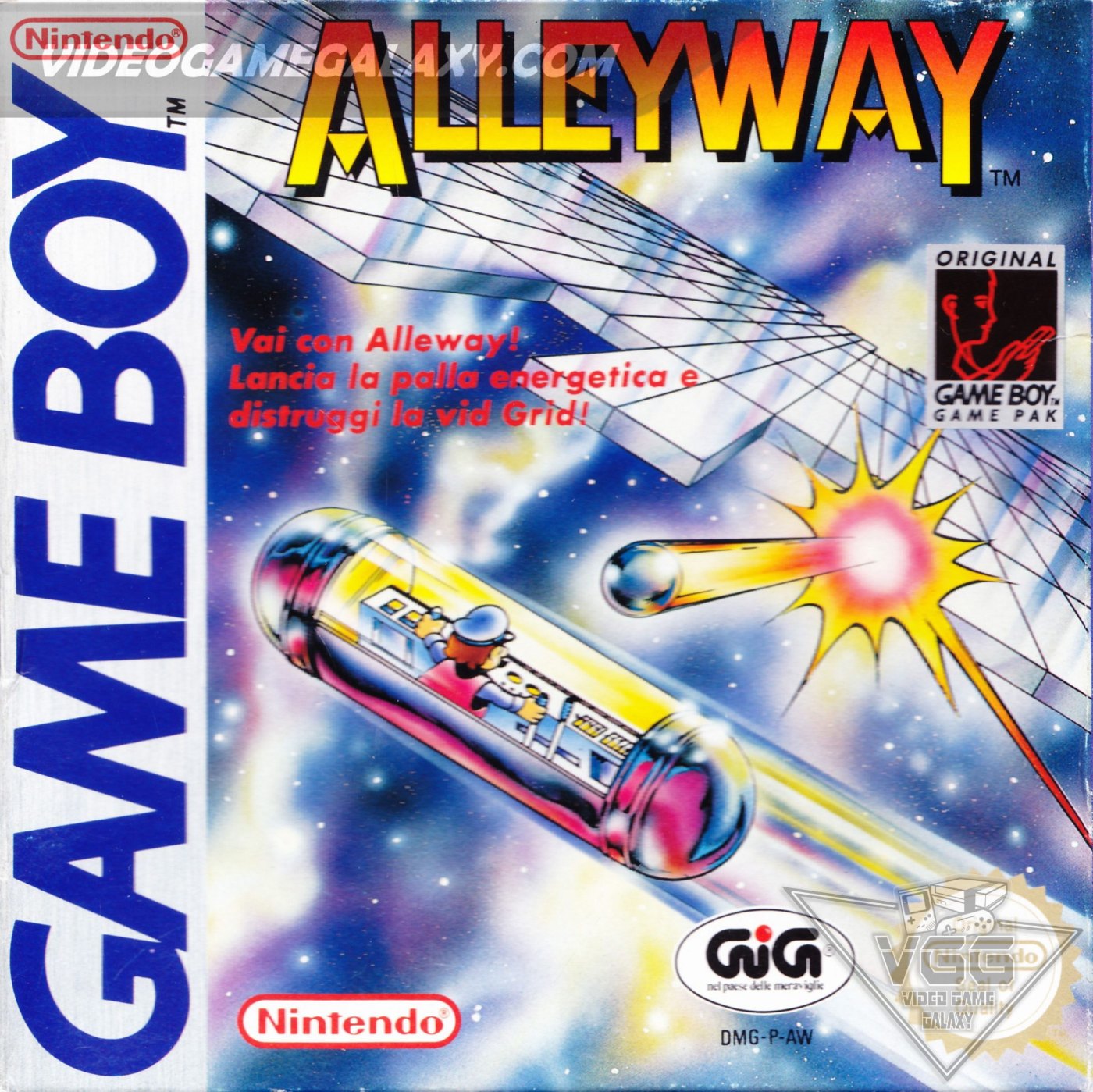
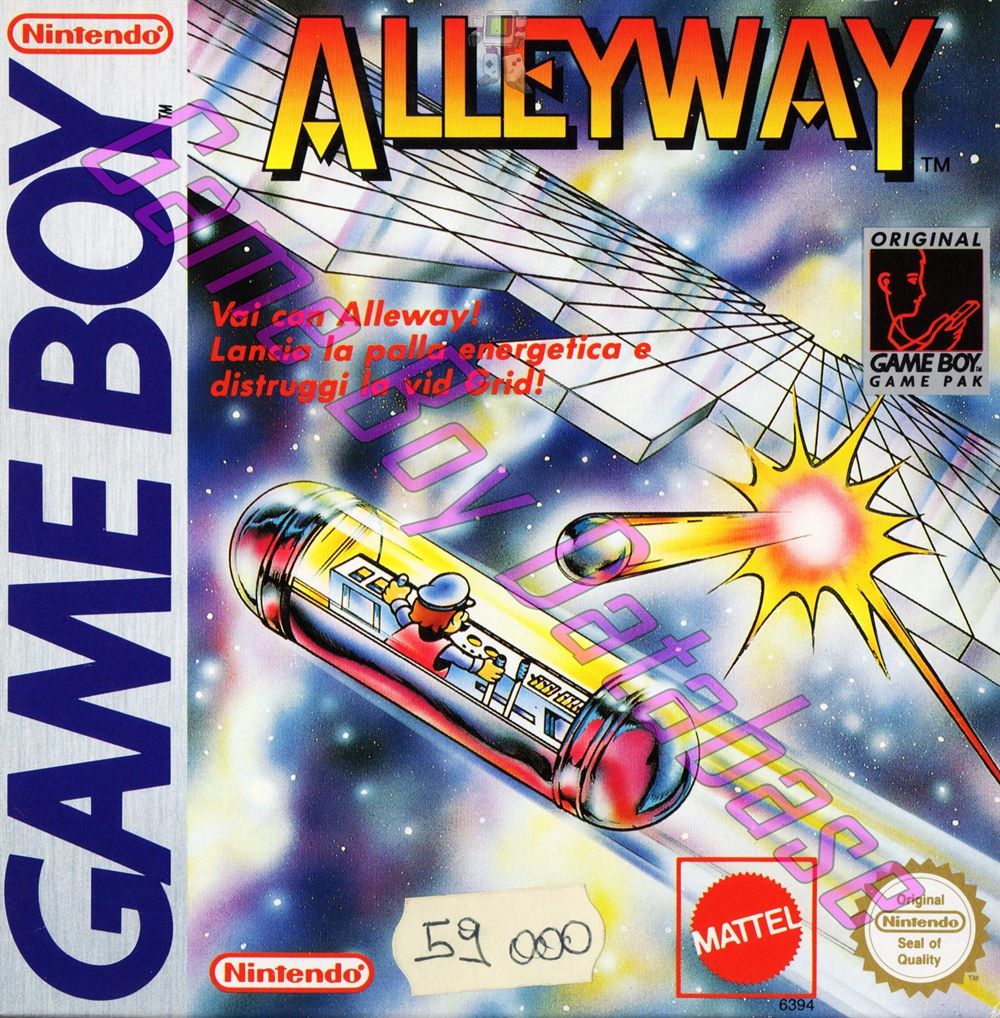
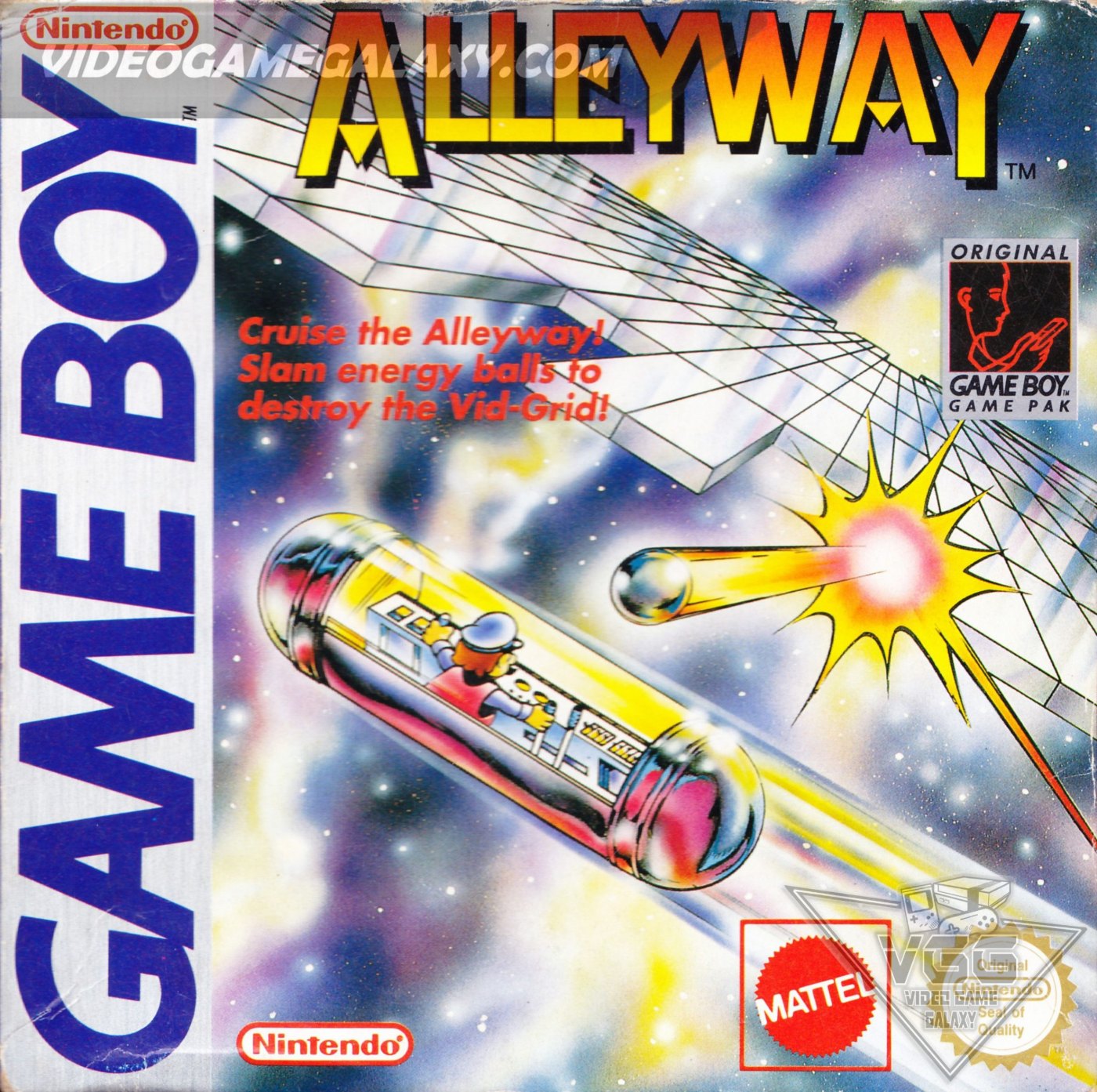
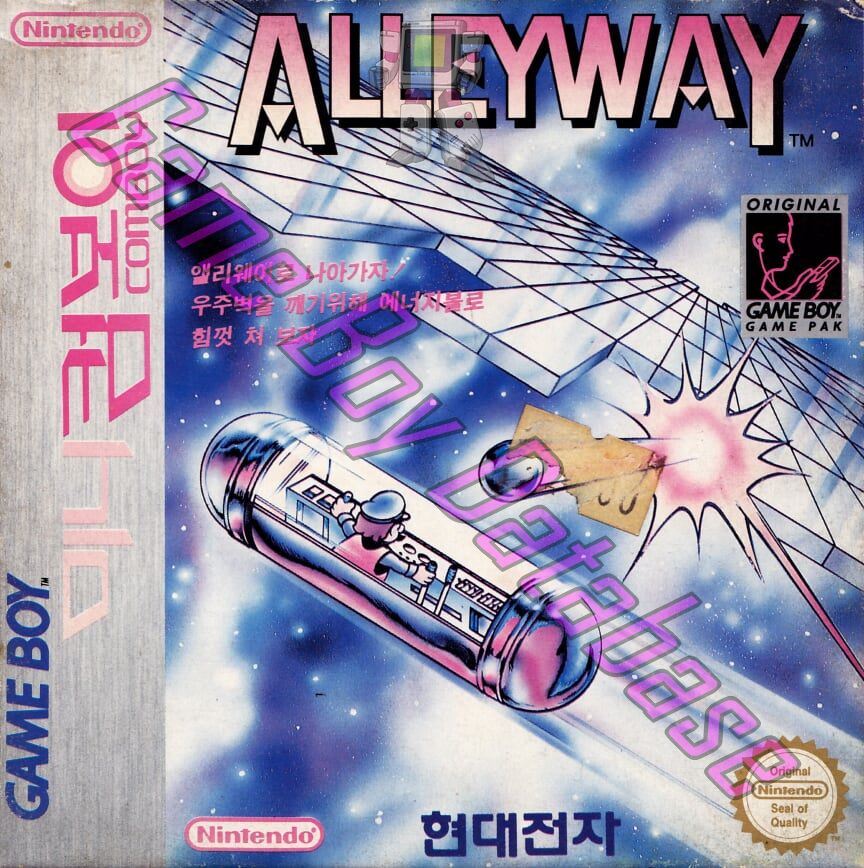
Western boxes show Mario at the controls. Europe had several language versions, including two different Italian boxes.
North AmericaCanadaJapanEurope / AsiaUK boxFrance and the NetherlandsGermanyGermanyAlternative boxSpainItalyGiG releaseItalyMattel releaseAustraliaSouth KoreaChinaNintendo 4 in 1 compilation
Screenshots
From the title screen to Game Over.
Title screen.Mario boards the paddle.Stage 01.Stage 04.The Mario bonus round.The ending.Game Over.
Artwork & Media Gallery
Alleyway’s few official images, and the hardware it launched with.
Mario’s ending wink.The ending screen.The original Game Boy.Super Mario Land, from the same launch day.The Japanese box.The Korean box.
Legacy & Re-releases
Alleyway has never had a sequel or remake, but it has been reissued twice.
Re-releases
Game Boy21 April 1989 (Japan)Launches with the Game Boy.
Game BoyAugust 1989 (North America)The Western release, with Mario on the box.
Game Boy28 September 1990 (Europe)European release in several language versions.
3DS Virtual Console6 June 2011 (North America)Europe and Australia 7 June 2011, Japan 3 August 2011, South Korea 1 June 2016. Adds a save point.
3DS eShop27 March 2023The 3DS eShop stops selling games, ending the Virtual Console release.
Nintendo Switch Online14 May 2024 (North America)Added to the Game Boy app with Super Mario Land and Baseball; Japan, Europe, Australia, South Korea and Hong Kong 15 May 2024.
Kirby’s Block Ball
The nearest thing to a sequel is Kirby’s Block Ball, a later Game Boy block breaker which, according to the N-Sider profile cited by Wikipedia, reused much of Alleyway’s code and physics.
Back on Switch
In May 2024 Nintendo added Alleyway, Baseball and Super Mario Land to the Game Boy library on Nintendo Switch Online, reuniting three of the four Japanese launch games 35 years on. See the games list for the rest of Mario’s Game Boy adventures.
Reviews & Sales
Sales
No sales figure has been published for Alleyway. Wikipedia, citing N-Sider, says it sold well enough during its production run, but it was never reissued as a Player’s Choice budget title.
Reviews
Scores as given by Wikipedia, with the issues it cites.
AllGameRetrospective review
3.5/5
FamitsuCross Review, 9 June 1989 (4, 6, 6, 3)
19/40
Electronic Gaming MonthlyNo. 3, 1989 (6, 6, 5, 3)
20/40
Power PlayGermany, April 1990
48%
Mean MachinesNo. 2, November 1990
33%
GamesRadarNathan Meunier, July 2011 (3DS)
5/10
Retro GamerDarran Jones, No. 92, August 2011
31%
Alleyway has never had an easy time with critics. In 1989 the four reviewers at Electronic Gaming Monthly compared it with Arkanoid and felt it added little to Breakout, though two of them, both giving 6 out of 10, thought it was well designed for the Game Boy. Two of Famitsu’s reviewers wanted more variety, while two felt it suited short sessions. In the UK, Mean Machines gave it 33% for its repetitiveness and lack of Arkanoid-style power-ups, and Germany’s Power Play liked some of the level design but thought Nintendo had not added enough.
The 2011 Virtual Console release did not change many minds: Retro Gamer scored it 31% and GamesRadar 5 out of 10. It has a more surprising admirer in game-design theory: Katie Salen and Eric Zimmerman’s textbook Rules of Play (2003) discusses it as an example of a design that improves on a basic core mechanic.
SLB User Reviews
Alleyway has yet to receive a community review on Super Luigi Bros.
If you’ve played Alleyway and would like to submit a review, please get in touch.
More from the Super Luigi Bros Guide
These picture lists come from the earlier Super Luigi Bros guide to Alleyway and are kept here in full.
Mario Character Cameos
The most distinctive Mario-fan feature of Alleyway: every third stage is a bonus stage where the breakable blocks are arranged into the silhouette of a classic Super Mario series character. As the player breaks the blocks, they’re effectively dismantling that character’s portrait. The pattern cycles through five characters, then repeats across the remaining bonus stages.
Mario
Bonus Stage — Stage 3 · The first cameo
Mario himself appears as the very first bonus-stage cameo. The blocks are arranged in the unmistakable silhouette of Mario in his classic NES sprite stance — cap, mustache, overalls, and stout proportions all rendered in the limited block format. A fitting first appearance, since Mario is also the paddle’s pilot. Players are essentially breaking up an image of Mario himself in this bonus round.
Koopa Troopa
Bonus Stage — Stage 6 · The classic foot-soldier
The Koopa Troopa — the most iconic Mario enemy after the Goomba — gets the second bonus stage. The shell-and-feet silhouette is recognizable to anyone who’s ever played Super Mario Bros. (1985). Breaking this stage feels like systematically defeating a long line of Koopas.
Bloober
Bonus Stage — Stage 9 · The aquatic enemy
Bloober (the squid-like underwater enemy from Super Mario Bros. — sometimes spelled “Blooper”) gets the third cameo. The distinctive tentacle-skirt silhouette is preserved in block form. An unusual choice from the deeper Mario enemy roster — this is the first cameo that signals Alleyway’s designers were tapping into the broader Mario universe, not just the Goomba/Koopa front-line.
Piranha Plant
Bonus Stage — Stage 12 · The deadly flora
The Piranha Plant emerges in the fourth bonus stage — the toothy flower-head silhouette intact in block form. Piranha Plants had been a Mario staple since the original Super Mario Bros., emerging from green Warp Pipes. Their appearance here cements Alleyway’s status as a tour through the Mario enemy roster.
Bullet Bill
Bonus Stage — Stage 15 · The final cameo before the cycle restarts
Bullet Bill rounds out the cycle as the fifth cameo. The unmistakable bullet-shaped, arms-out silhouette is preserved in block form. Bullet Bills were introduced in Super Mario Bros. (1985) as the speedy projectile fired from Bill Blasters. Their inclusion here completes a satisfying Greatest-Hits roster of early-Mario enemies.
Why This Matters to Mario HistoryAt the time of Alleyway’s release in April 1989, Mario’s character roster was relatively small — Super Mario Bros. (1985), Super Mario Bros. 2 (1988) and Super Mario Bros. 3 (released in Japan in October 1988, but not in North America until 1990). The selection of Mario, Koopa Troopa, Bloober, Piranha Plant, and Bullet Bill represents an early curation of Mario’s most iconic enemies — essentially the “starting lineup” of the Mario rogues’ gallery. By featuring these five together in block-art form, Alleyway became one of the first games to position these characters as a recognizable visual group — a kind of unofficial “Mario Enemies’ Greatest Hits” before such compilation acknowledgments would become commonplace.
Screenshots
In-game screenshots showcasing Alleyway’s minimalist Game Boy presentation.
Title screenThe intro — Mario jumps into the paddle shipStage 01 — the opening normal screenStage 04 — standard layoutGame Over screen
Legacy Screenshots from the Super Luigi Bros Archive
Alleyway paddle-ship in actionMario in AlleywayMultiple gameplay screensClassic gameplay screenshot
To provide the best experiences, we use technologies like cookies to store and/or access device information. Consenting to these technologies will allow us to process data such as browsing behavior or unique IDs on this site. Not consenting or withdrawing consent, may adversely affect certain features and functions.
Functional
Always active
The technical storage or access is strictly necessary for the legitimate purpose of enabling the use of a specific service explicitly requested by the subscriber or user, or for the sole purpose of carrying out the transmission of a communication over an electronic communications network.
Preferences
The technical storage or access is necessary for the legitimate purpose of storing preferences that are not requested by the subscriber or user.
Statistics
The technical storage or access that is used exclusively for statistical purposes.The technical storage or access that is used exclusively for anonymous statistical purposes. Without a subpoena, voluntary compliance on the part of your Internet Service Provider, or additional records from a third party, information stored or retrieved for this purpose alone cannot usually be used to identify you.
Marketing
The technical storage or access is required to create user profiles to send advertising, or to track the user on a website or across several websites for similar marketing purposes.