Nintendo DS2006CompilationNintendoClub Nintendo exclusiveNever sold in shops3 two-screen games800 Club Nintendo coins (N. America)
Game & Watch Collection
A gift for Nintendo’s most loyal customers. Game & Watch Collection was never sold in shops: it was a Club Nintendo reward, first in Japan on 28 July 2006, then in North America in December 2008 (for 800 coins) and Europe in December 2009. On it are three of the 1982 Multi Screen Game & Watch units, Oil Panic, Donkey Kong and Green House, reproduced as they were and, unlike in the single-screen Game Boy Galleries, spread across two real screens as on the original units. There are no Mario remakes here and no star counter: just Game A, Game B, the clock and a working alarm.
Developer:Nintendo
Publisher:Nintendo
Platform:Nintendo DS
Genre:Compilation of Game & Watch reproductions
Japan:28 July 2006 (Club Nintendo)
N. America:December 2008 (Club Nintendo, 800 coins)
Europe:December 2009 (Club Nintendo)
Availability:Club Nintendo reward only; never sold at retail
Players:1
Games:Oil Panic, Donkey Kong, Green House (all Multi Screen, 1982)
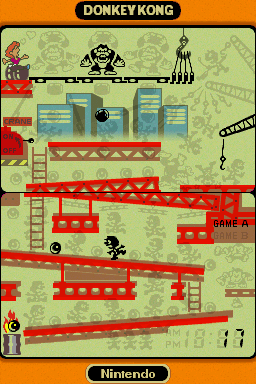
Donkey Kong on the DS, with both LCD screens intact.
The Game & Watch Gallery games on Game Boy had to squash Nintendo’s two-screen LCD games onto one screen, swapping views at the press of a button. The Nintendo DS had no such problem. Game & Watch Collection puts three of the Multi Screen units onto it whole: the top LCD on the top screen, the bottom one underneath, as Nintendo Life’s review pointed out.
The three are Oil Panic, the two-screen Donkey Kong and Green House, all from 1982. There are no Modern versions, no Mario cast and no unlockables. Each game offers Game A for newcomers and Game B for experts, saves your best score, and keeps the “watch” half of the old units with a Time mode that shows the clock over a demo and an alarm you can set from the menu.
You could not buy it. Nintendo made it a Club Nintendo reward, exchanged for points earned through Nintendo purchases: in Japan from July 2006, in North America from December 2008, where Nintendo Life reported a price of 800 coins, and in Europe from December 2009. A sequel, Game & Watch Collection 2, followed through Club Nintendo with Parachute and Octopus.
Why Game & Watch Collection matters to Mario fans
Its Donkey Kong is the 1982 Game & Watch that put Mario in your pocket for the first time, and, according to Iwata Asks, it was the first gaming hardware with a cross-shaped directional pad. Playing it on the dual-screen DS is as close to the original unit as an official release has come. For the arcade game behind it, see our Donkey Kong page.
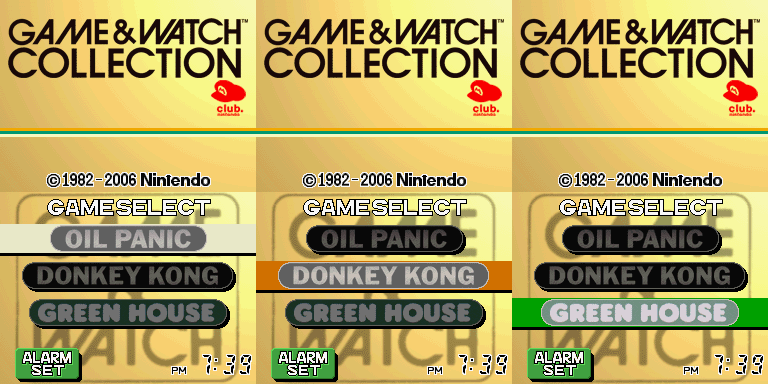
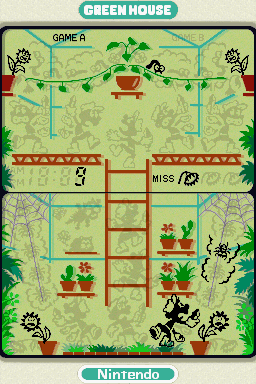
The title and game select screen.Green House on the DS.
Advertisement
Quick Answers
The questions people ask most about Game & Watch Collection, answered briefly here and in depth below.
What games are in Game & Watch Collection?
Three Multi Screen Game & Watch games from 1982: Oil Panic, Donkey Kong and Green House. More →
How did you get it?
Only through Club Nintendo, Nintendo’s loyalty programme. It was never sold in shops. In North America it cost 800 Club Nintendo coins. More →
When was it released?
Japan on 28 July 2006, North America in December 2008 and Europe in December 2009, each time through Club Nintendo. More →
Does it have Modern versions like the Game & Watch Gallery games?
No. These are straight reproductions of the LCD games, with Game A and Game B, high-score saving, a clock and an alarm. More →
Only as the rescuer in Donkey Kong, as in the original Game & Watch. None of Collection 2’s games belong to the Mario series. More →
Games
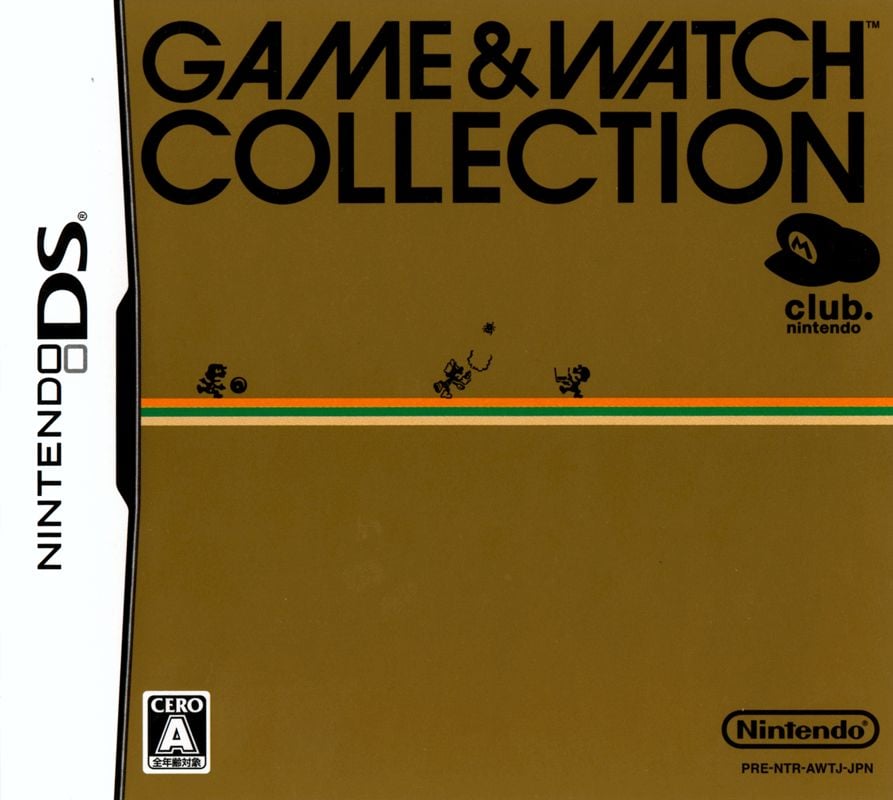
The Japanese box.
No story, just three units from the Multi Screen line, all released in 1982. Here they are in order of their original release.
Oil Panic
Released on 28 May 1982, this is the oldest of the three. A petrol-station attendant on the top screen catches dripping oil in a bucket that holds three drops; a fourth, or a missed drip, means a fire. He then tips the bucket from a balcony to his boss below, who holds a drum and moves from side to side. Tip it when the drum is not there and the oil lands on a customer. On the DS the +Control Pad moves him, and A and Y tip right and left.
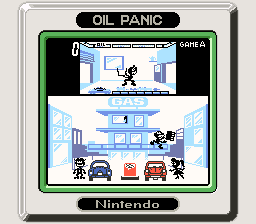
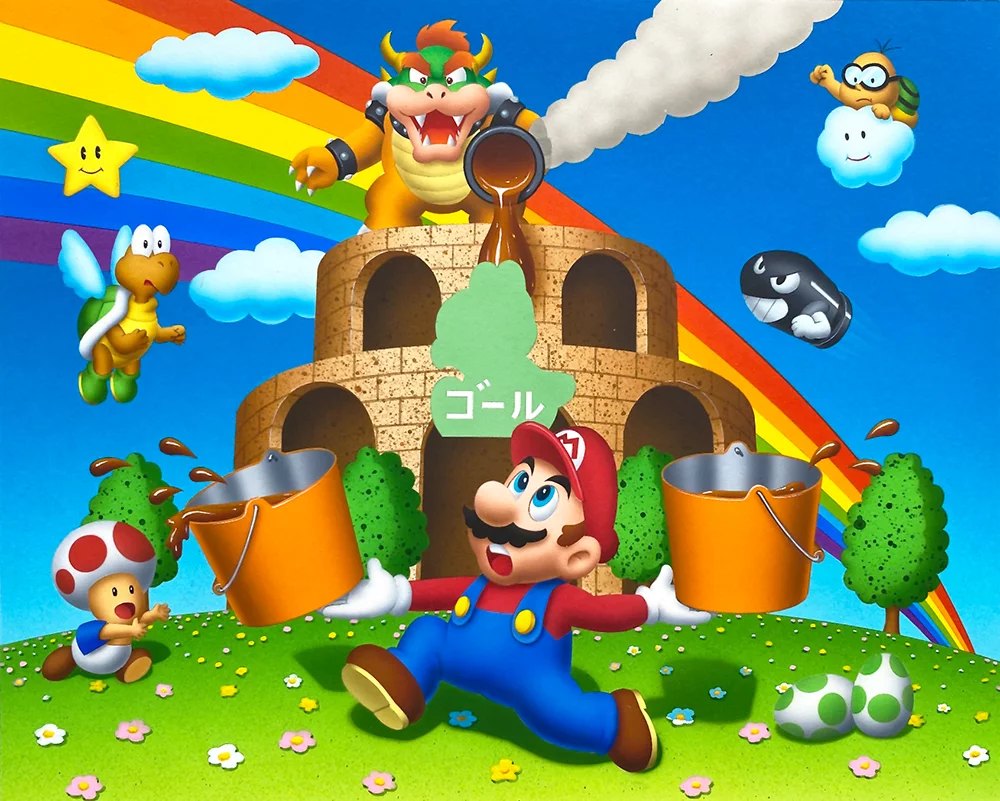
Nintendo Life’s reviewer found it well balanced and a joy to play. Mario fans may know it from the first Game & Watch Gallery, which included it in Classic and Modern forms, and from the Museum in Game & Watch Gallery 2.
Oil Panic as reproduced in the Classic mode of Game & Watch Gallery.The Oil Panic unit in the Museum of Game & Watch Gallery 2.
Donkey Kong
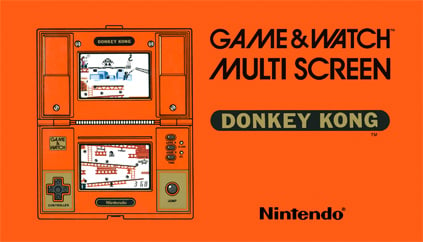
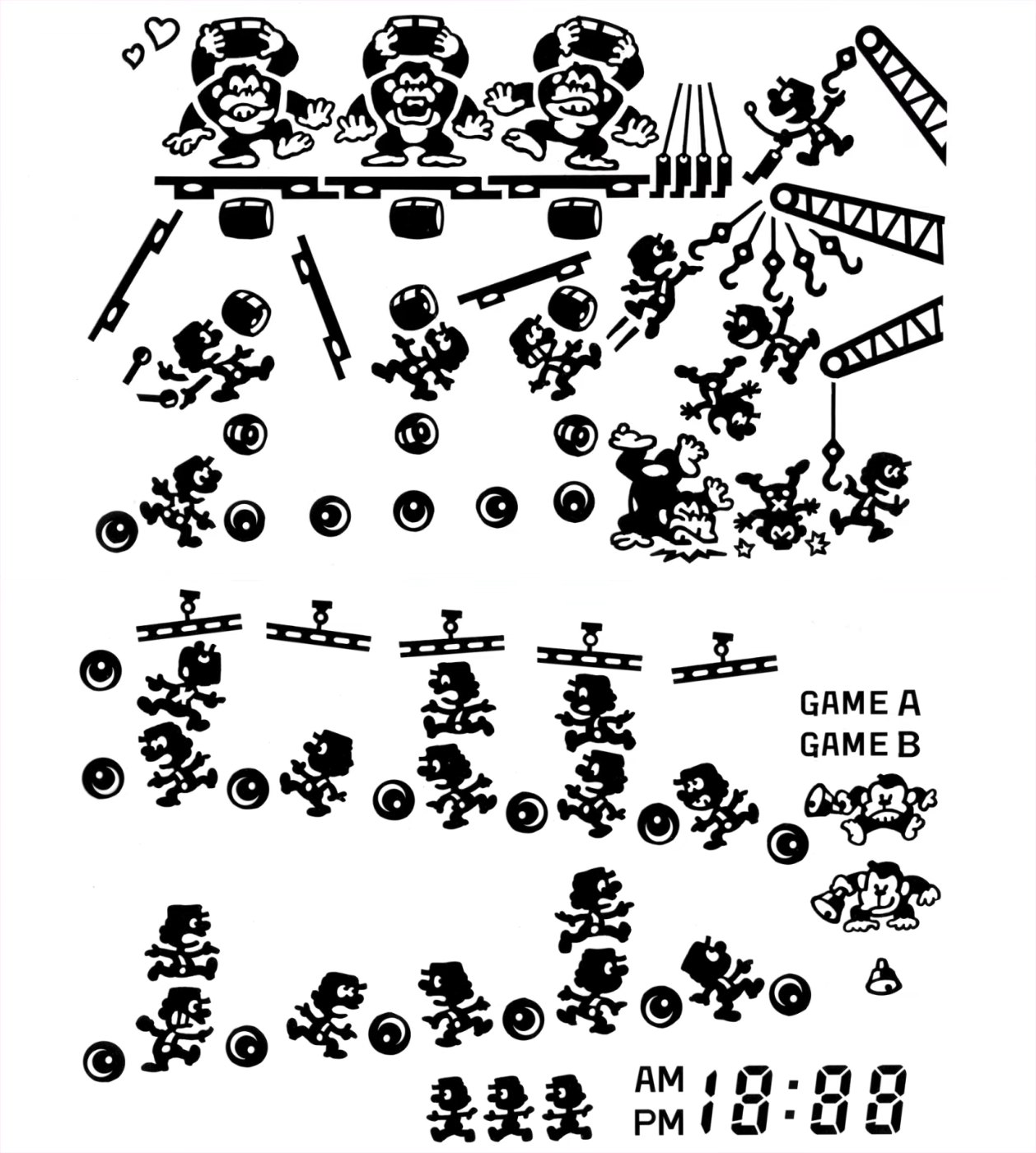
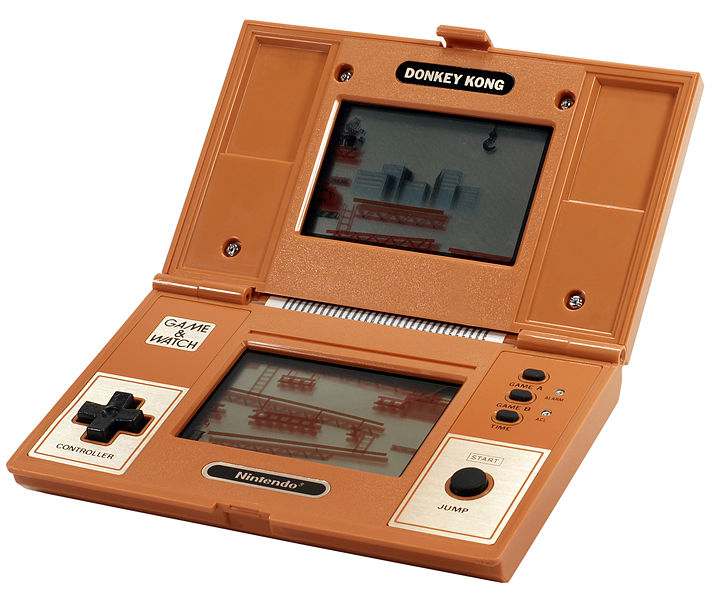
Released on 3 June 1982, model DK-52. Mario starts at the bottom of the lower screen, jumping barrels rolled by Donkey Kong, and climbs to the upper screen. There, he must leap for a crane hook when it swings to the left and pull away one of the four wires that hold up Donkey Kong’s perch; with all four gone, Kong falls. Barrels, low girders and missed leaps for the hook all cost a life.
The manual calls the hero simply the rescuer. Nintendo Life rated it the best of the three, nearly as much fun as the arcade game.
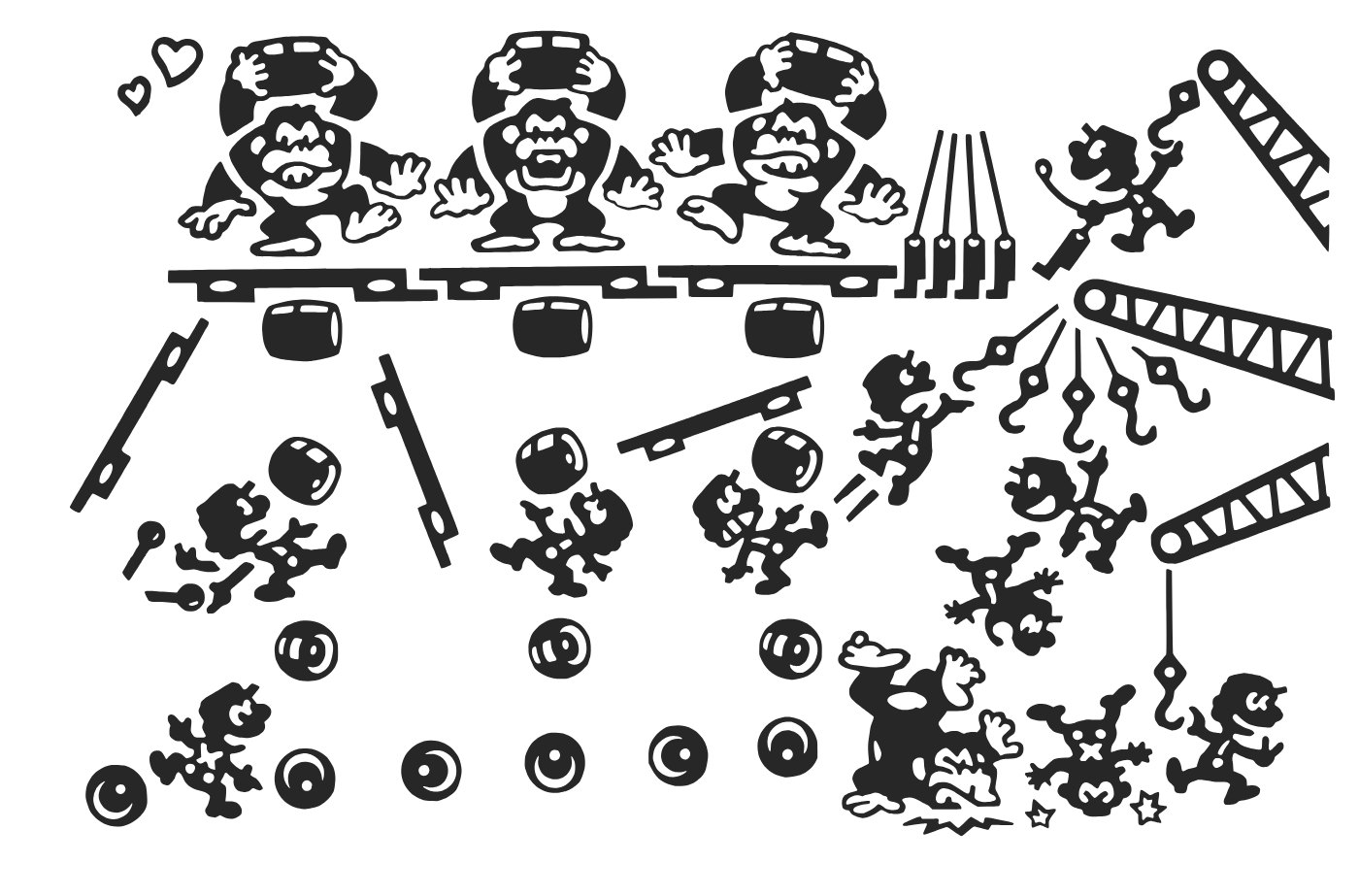
The LCD pattern of the original Donkey Kong unit.The original Multi Screen Donkey Kong.
Green House
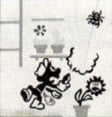
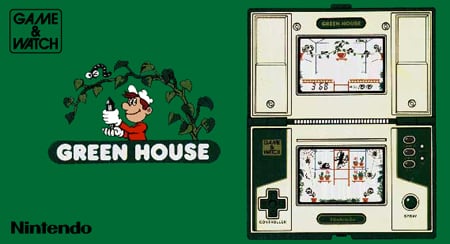
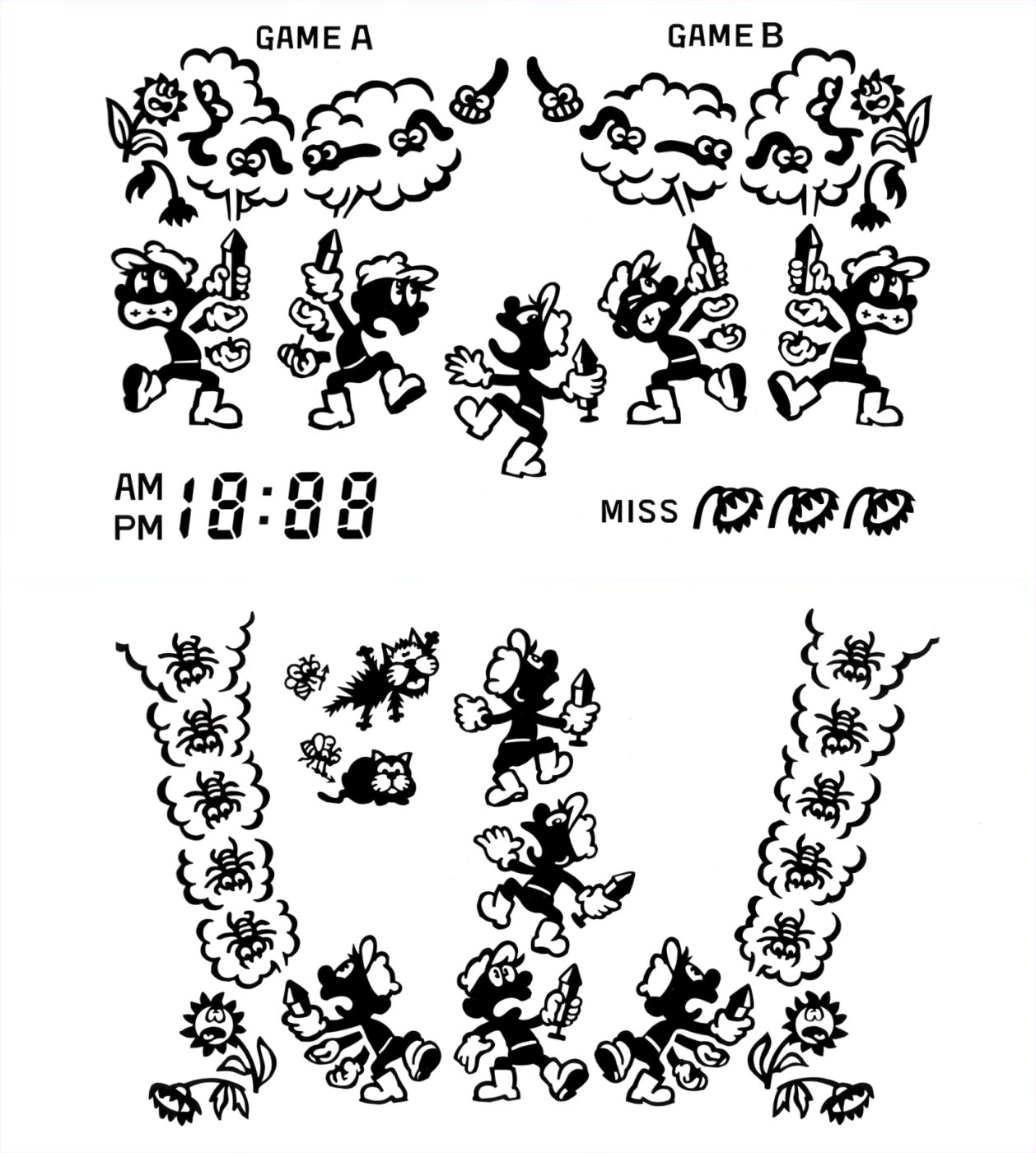
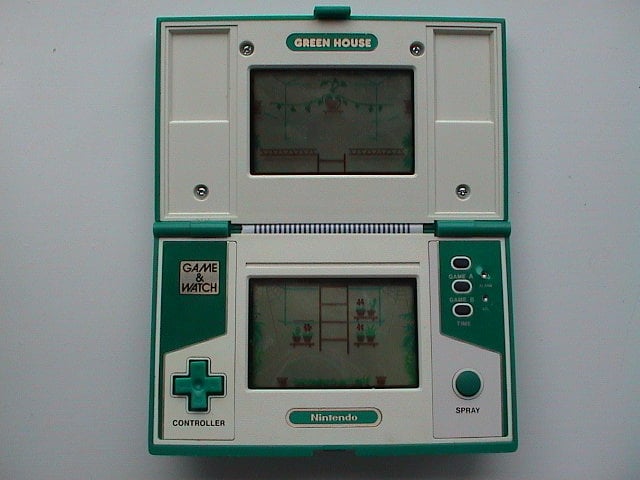
Released on 6 December 1982. A gardener runs up and down a ladder between the two screens with a spray can, driving inchworms away from the flowers upstairs and spiders away from those downstairs. Spray an inchworm right by the flower for 3 points, or push a spider all the way back for 3; let one reach a flower and it wilts.
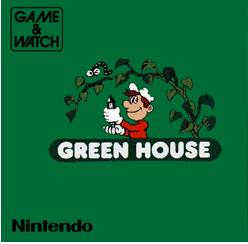
The gardener is Stanley, in his first game, and Green House’s setting became the basis for Donkey Kong 3. Nintendo Life thought it the easiest and dullest of the three, though not a bad game.
The LCD pattern of the original Green House.The original Green House unit.
Every game in Game & Watch Collection
Three Multi Screen games, each with Game A, Game B, Time and Alarm.
Oil PanicMulti Screen · 28 May 1982Catch the drips, tip the bucket, and mind the customers.
Donkey KongMulti Screen · 3 June 1982Jump barrels, grab the crane hook and pull four wires to drop Kong.
Green HouseMulti Screen · 6 December 1982Spray inchworms and spiders on two floors to save the flowers.
Gameplay & Controls
From the start menu, choose a game and press START or A for its title screen. Then pick Game A (for new players), Game B (for experts), Time or Alarm Set, using the +Control Pad or by touching the panel on the screen.
Two screens at last
All three games were Multi Screen units, with one LCD above the other. On the DS they keep exactly that layout. Nintendo Life’s Clay Anderson noted that this sets the collection apart from the single-screen Game Boy Color and Game Boy Advance Galleries; the animation still moves frame by frame in fixed positions, now in colour, and the sound is the original beeps.
Misses, bonuses and fever
According to the manual, three mistakes end a game. Reaching 300 points clears your miss marks (or, in Donkey Kong, earns an extra rescuer), and so does 1,300. Go long enough without a mistake and fever mode doubles your points for a while; Nintendo Life calls this chance time. The pace quickens as your score climbs.
The watch part
Like the original units, each game doubles as a clock. Select TIME on a title screen and press X to see the time over a demo of the game; open ALARM SET to set an alarm with the +Control Pad and A, or cancel it with X. An alarm stops itself after a minute, or at a press of SELECT, though not in the middle of a game. Nintendo Life found the alarm, played through the DS speakers, much louder than the original beeps. It cannot sound on a Nintendo 3DS.
High scores
Beat your best and the score is saved at game over, or when you pause with START. Holding A, B, X, Y, L and R together while the game starts erases the save.
Advertisement
Cartoons, Comics & Other Media
Where the three games turned up before and after.
Game & Watch Gallery 2Game Boy / Game Boy ColorA Classic and a Modern Donkey Kong, with Peach in place of Pauline, and Oil Panic in the Museum.
Game & Watch Gallery 3Game Boy Color, 1999A Classic and a Modern Green House, with an orange Yoshi spitting melon seeds.
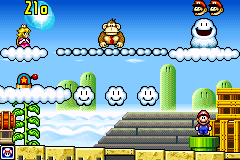
Game & Watch Gallery 4Game Boy Advance, 2002Remade Modern Donkey Kong again, with an airship stage.
Game & Watch GalleryGame BoyIncluded Oil Panic in Classic and Modern versions.
WarioWare: Touched!Nintendo DSIncludes a Game & Watch Oil Panic microgame and the similar Drop in a Bucket.
Mini Classics1998A 1998 Mini Classics version of Donkey Kong.
Characters
There is no Mario-series cast in the modern sense; only Donkey Kong uses Mario characters.
Character
Who they are
In this game
Abilities & notes
MarioDonkey Kong
The hero of the arcade Donkey Kong; the DS manual calls him the rescuer.
Jumps barrels and pulls the crane’s wires to topple Kong.
Playable
Donkey KongDonkey Kong
The ape from the 1981 arcade game.
Rolls barrels from the top screen until his perch gives way.
Falls after four wires are pulled
Hazards
What causes a miss in each game, according to the manual.
BarrelsDonkey KongJump them for 1–2 points; a hit costs a rescuer.
Low girdersDonkey KongJump under one and you bump your head.
InchwormsGreen HouseClimb toward the upstairs flowers.
SpidersGreen HouseDrop toward the downstairs flowers.
Oil dripsOil PanicMiss one, or overfill the bucket, and there is a fire.
CustomersOil PanicSpill oil on one and it counts as a mistake.
How It Was Made
A Club Nintendo exclusive
It was a limited-edition collection, offered first through Club Nintendo in Japan in 2006 and later through the club in North America, Europe and Australia. In North America the club had opened only that December, according to Nintendo Life, and the collection cost 800 coins, which its reviewer reckoned meant roughly $800 of Nintendo purchases. The North American manual carries a 1982–2008 copyright line.
Who made it
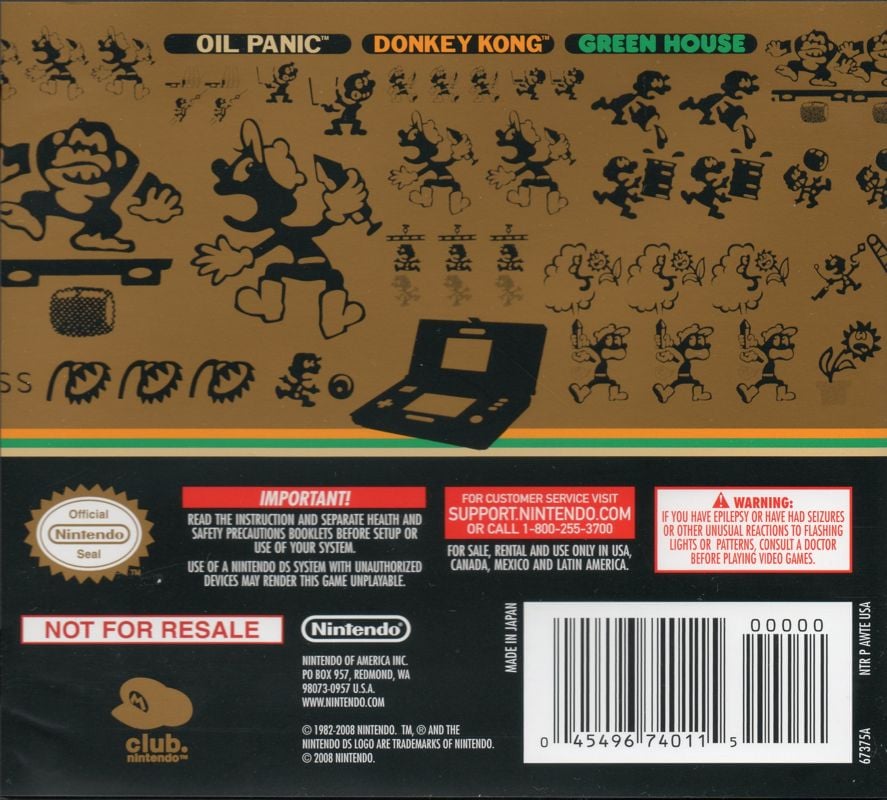
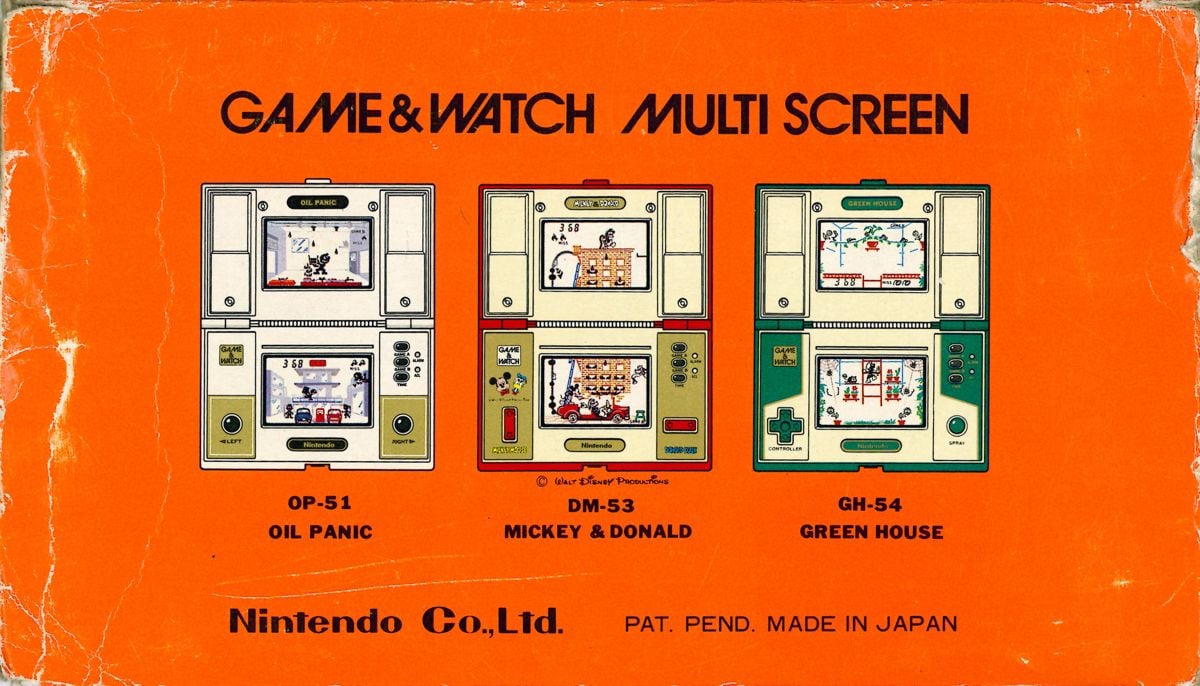
The back of the box.
Credits are scarce. Some sources list Nintendo EAD as developer, while Nintendo Life’s database names Nintendo SPD; both agree that Nintendo published it. Compared with the original units the colours are brighter and the shadows of the moving figures easier to see, and each game’s mode menu gains an explanation of the controls; otherwise nothing was added.
Cheats & Secrets
There are no unlockables. These tips come from the manual.
Fever mode
Play cleanly for long enough and points double for a while: in Oil Panic for oil dumped within 30 seconds, in the other two until your next mistake.
Clear your misses
Miss marks are wiped at 300 and 1,300 points (in Green House at every further 1,000 too). In Donkey Kong those scores give an extra rescuer instead.
Big points in Donkey Kong
Each wire is worth 5 to 20 points and toppling Kong 20 more, against 1 or 2 for a barrel.
Reset your scores
Hold A, B, X, Y, L and R as the game starts to erase all saved data.
Our separate cheats page has more.
Videos
A full longplay of the North American release, and a third-party review.
Third-party longplay of all three games.
Third-party video review.
Trivia & Interesting Facts
It was one of Club Nintendo Japan’s rewards in 2006 and reached North America two years later, when the club launched there.
Its Donkey Kong is the Game & Watch that, according to Iwata Asks, was the first gaming hardware with a cross-shaped directional pad.
In the manual, the Donkey Kong hero is never named: he is just the rescuer.
Green House artwork.Green House is the first game to feature Stanley, later the hero of Donkey Kong 3.
Nintendo Life’s reviewer reckoned the 800-coin price meant roughly $800 spent on Nintendo products.
The alarm uses the DS’s own clock and plays through its speakers, which Nintendo Life found far louder than the original units’ beeps.
Of the three, Oil Panic is the oldest (28 May 1982), Donkey Kong next (3 June) and Green House the youngest (6 December).
Its sequel is not a Mario game at all: none of Collection 2’s games belong to the series.
Advertisement
Regional Box Art
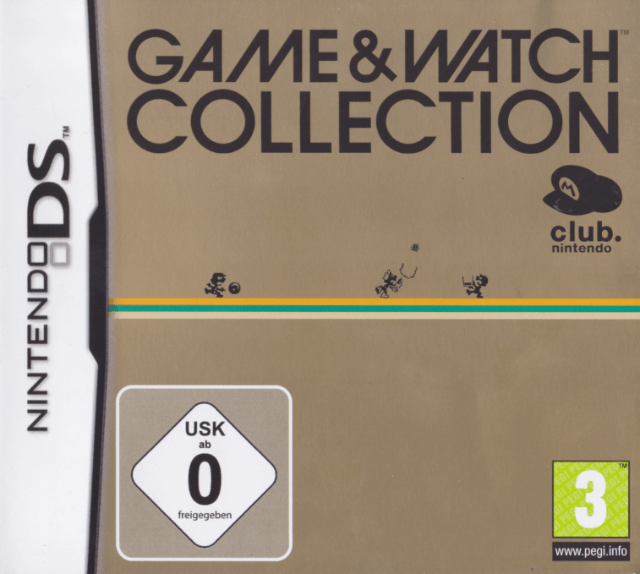
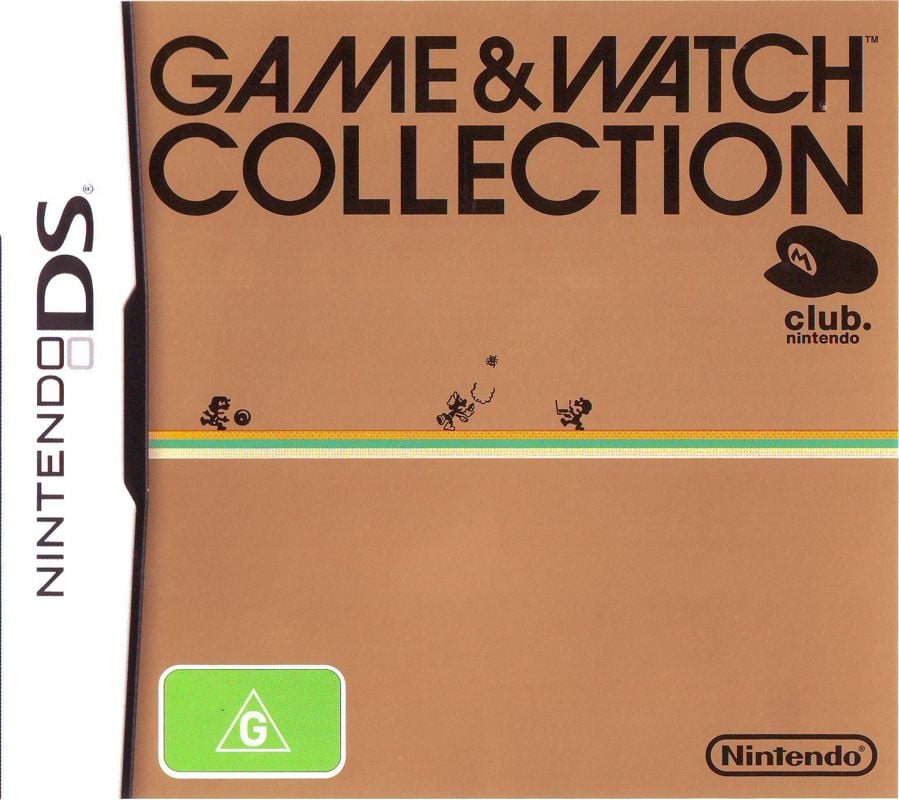
A small box for a members-only game.
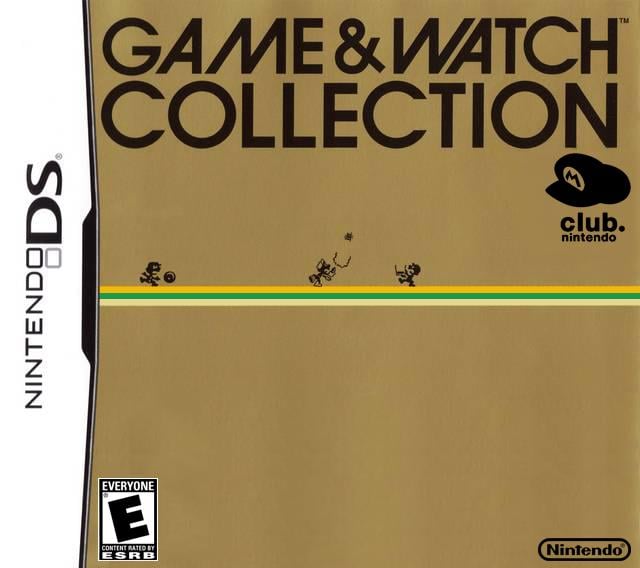
North AmericaEuropeAustraliaJapan
Screenshots
The original units the collection reproduces.
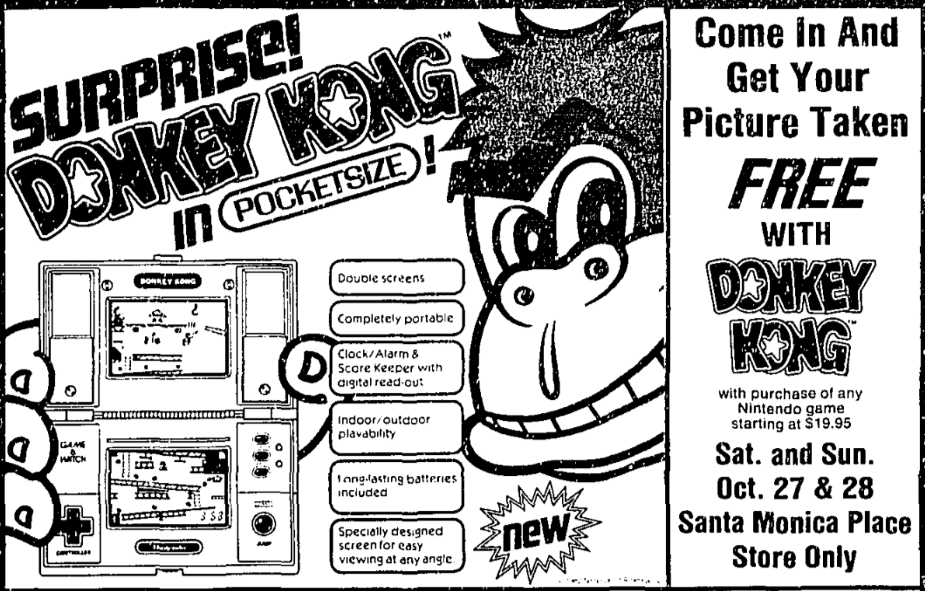
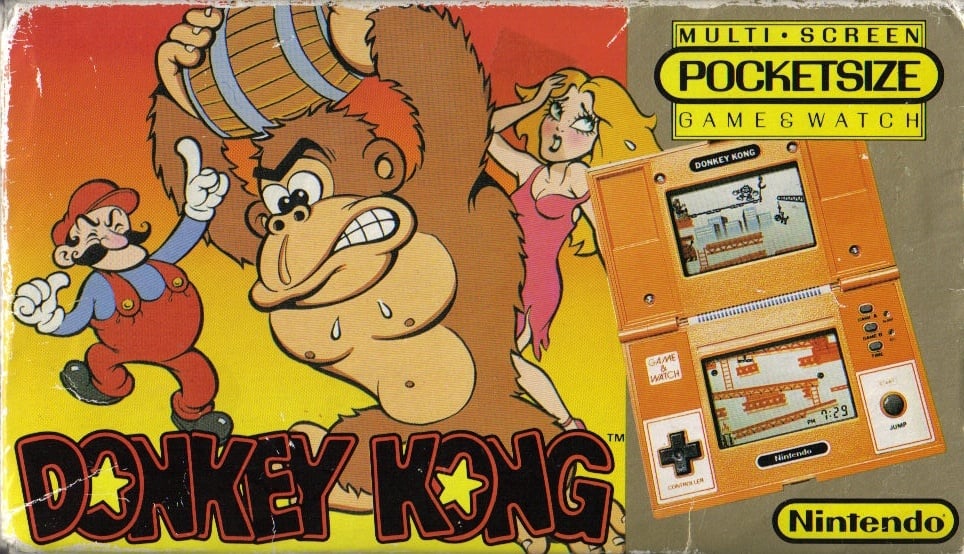
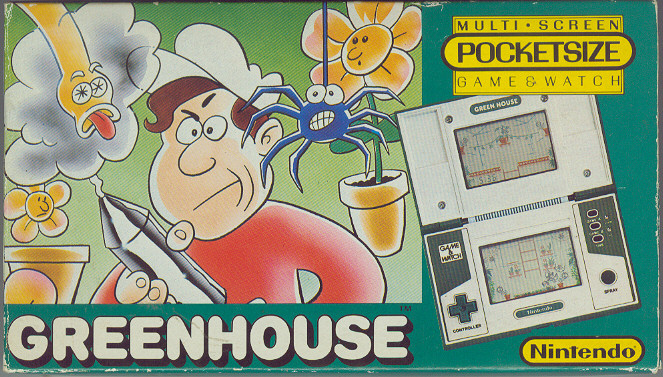
An original Green House unit in play.The original Donkey Kong Game & Watch box.The original Green House box.A print advert for the Donkey Kong Game & Watch.
Artwork & Media Gallery
Logos, icons and the original hardware.
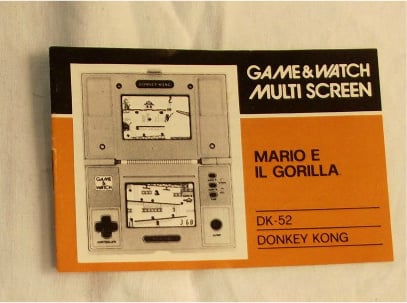
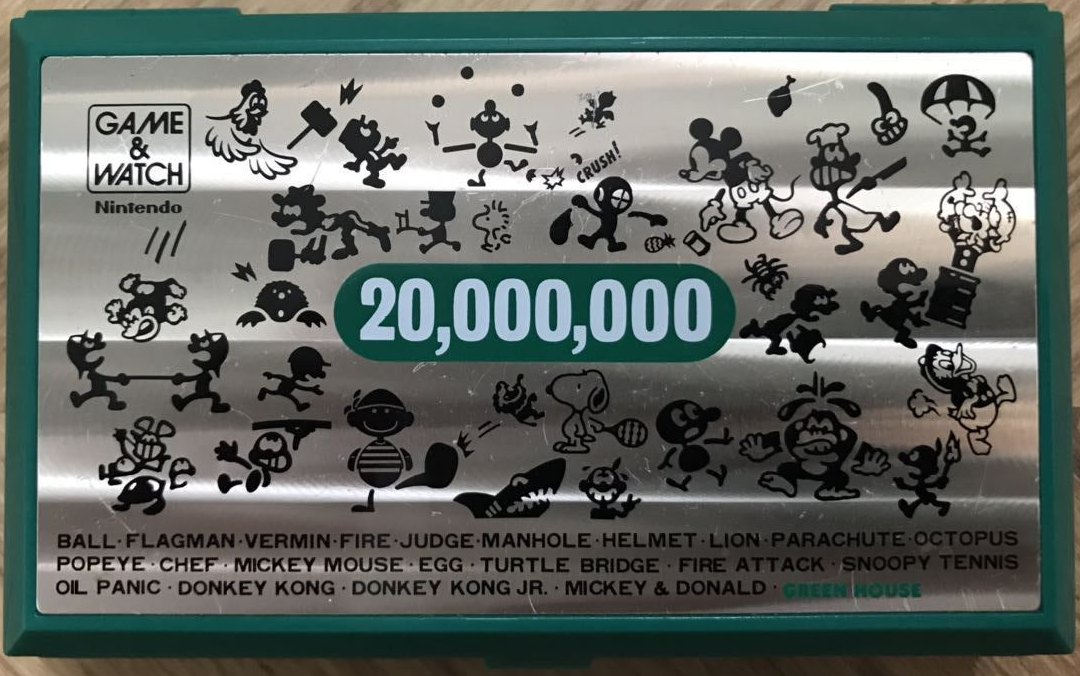
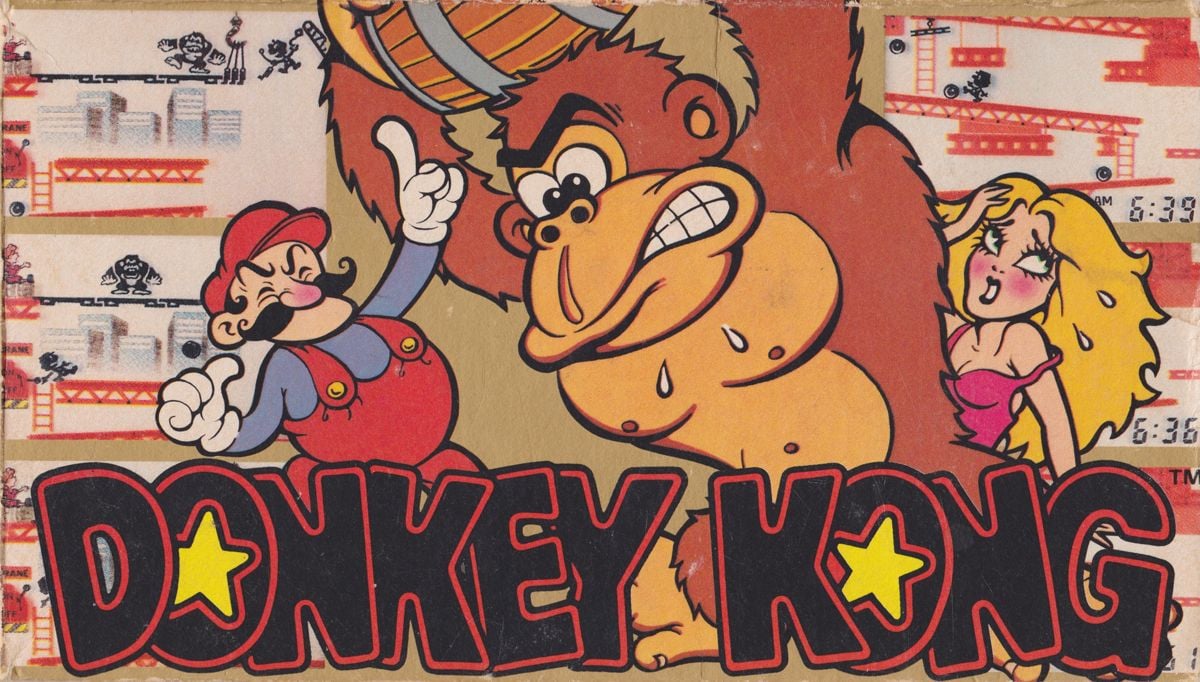
The Game & Watch Collection logo.The DS menu icon.An alternative Donkey Kong Game & Watch box.The Italian Donkey Kong Game & Watch box.An alternative Green House box.A commemorative Green House unit.The Green House logo.The back of the Donkey Kong Game & Watch box.Another Donkey Kong Game & Watch box variant.The top-screen LCD pattern of Donkey Kong.The alarm bell graphic from the Green House unit (GH-54).
Legacy & Re-releases
The collection was only ever a Club Nintendo reward.
Availability
Club Nintendo (Japan)28 July 2006First offered as a reward.
Club Nintendo (North America)December 2008Offered for 800 coins after the club launched there.
Club Nintendo (Europe)December 2009Offered to European members.
The sequel
Game & Watch Collection 2 followed through Club Nintendo with Parachute and Octopus, plus a two-screen mode combining the two. For the Mario-cast versions of these games, see Game & Watch Gallery 2, 3 and 4, and for everything else our games list.
Reviews & Sales
Availability
As a Club Nintendo reward it was never sold, and Nintendo has published no figures for how many were given out.
Reviews
Few outlets reviewed a game that could not be bought.
Nintendo Life’s Clay Anderson enjoyed all three games and praised how faithfully they were reproduced, ranking Donkey Kong top and Green House bottom. His complaint was value: three short games for 800 coins’ worth of purchases, a price he called a massive deterrent.
SLB User Reviews
Game & Watch Collection has yet to receive a community review on Super Luigi Bros.
If you’ve played Game & Watch Collection and would like to submit a review, please get in touch.
To provide the best experiences, we use technologies like cookies to store and/or access device information. Consenting to these technologies will allow us to process data such as browsing behavior or unique IDs on this site. Not consenting or withdrawing consent, may adversely affect certain features and functions.
Functional
Always active
The technical storage or access is strictly necessary for the legitimate purpose of enabling the use of a specific service explicitly requested by the subscriber or user, or for the sole purpose of carrying out the transmission of a communication over an electronic communications network.
Preferences
The technical storage or access is necessary for the legitimate purpose of storing preferences that are not requested by the subscriber or user.
Statistics
The technical storage or access that is used exclusively for statistical purposes.The technical storage or access that is used exclusively for anonymous statistical purposes. Without a subpoena, voluntary compliance on the part of your Internet Service Provider, or additional records from a third party, information stored or retrieved for this purpose alone cannot usually be used to identify you.
Marketing
The technical storage or access is required to create user profiles to send advertising, or to track the user on a website or across several websites for similar marketing purposes.


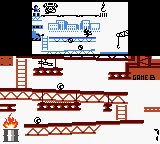 Game & Watch Gallery 2Game Boy / Game Boy ColorA Classic and a Modern Donkey Kong, with Peach in place of Pauline, and Oil Panic in the Museum.
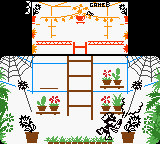 Game & Watch Gallery 3Game Boy Color, 1999A Classic and a Modern Green House, with an orange Yoshi spitting melon seeds.
 Game & Watch GalleryGame BoyIncluded Oil Panic in Classic and Modern versions.
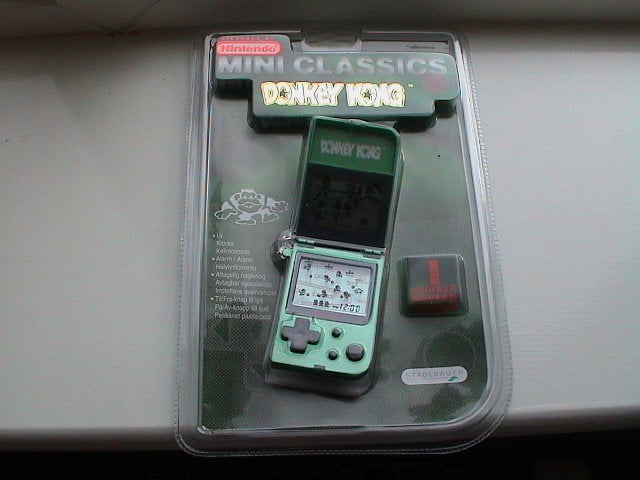 Mini Classics1998A 1998 Mini Classics version of Donkey Kong.
 MarioDonkey Kong
 Donkey KongDonkey Kong