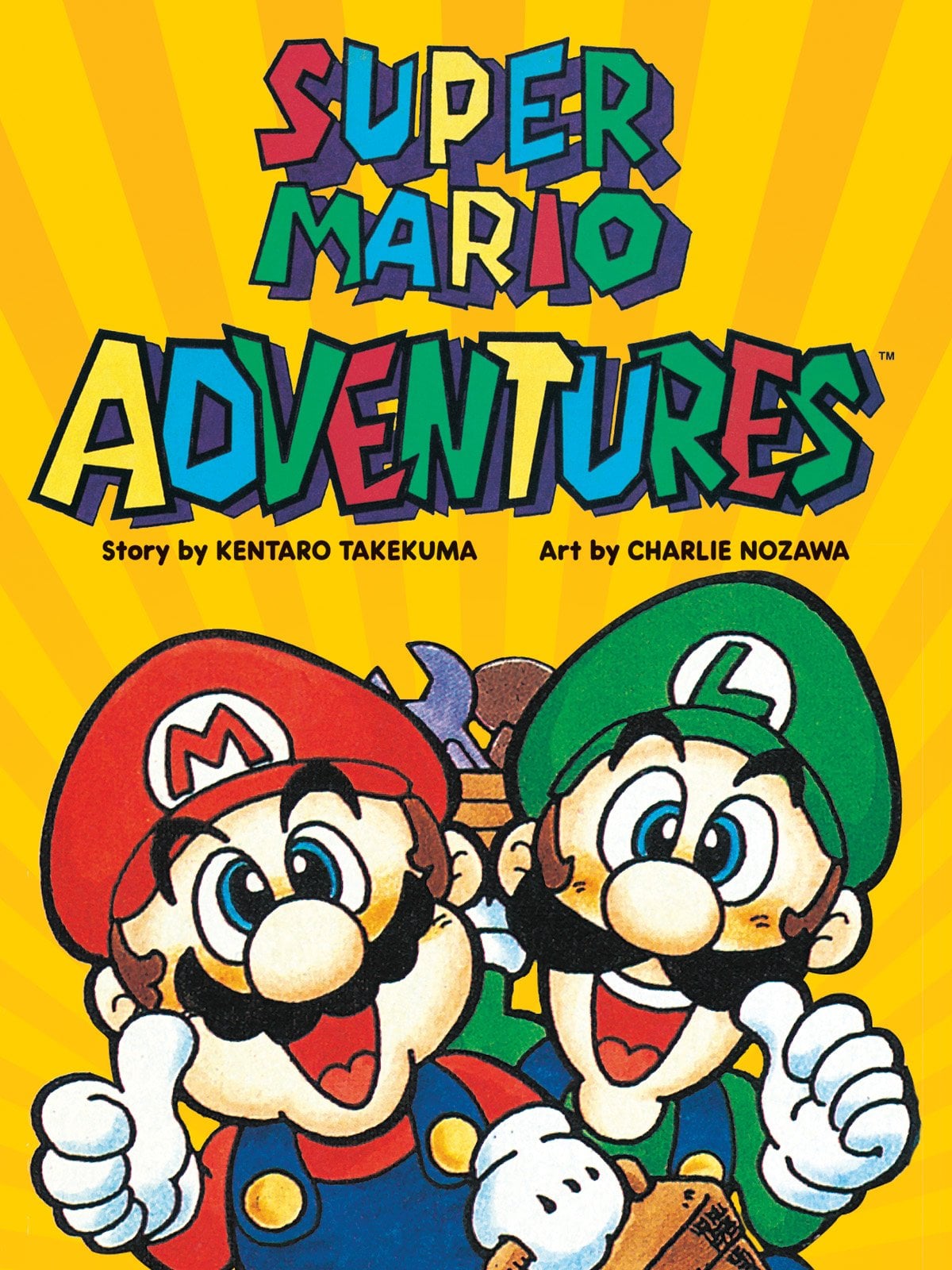
14 issues115 pages1992–1994Nintendo Power Vols 32–56Story: Kentaro TakekumaArt: Charlie Nozawa
Super Mario Adventures Comics
All twelve parts of the 1992 Super Mario Adventures strip from Nintendo Power magazine, plus both issues of the Mario vs. Wario special. Bowser wants a wedding, Princess Toadstool wants none of it, and Mario, Luigi and a freshly hatched Yoshi spend a whole year of monthly instalments trying to stop the ceremony – told in a bouncy manga style with puns to spare.
In the archive:14 issues, 115 scanned pages: the twelve parts of Super Mario Adventures and both Mario vs. Wario specials
Years covered:January 1992 to January 1994
Scanned from:Nintendo Power Vols 32–43 (1992), Vol. 44 (January 1993) and Vol. 56 (January 1994)
How it is organised:One gallery per issue, in publishing order, with a search box and a switch between the two series
Instalment length:Part 1 runs 9 pages and Parts 2–12 run 8 each; the two Mario vs. Wario comics run 10 and 8
Story:Kentaro Takekuma
Art:Charlie Nozawa, the manga artist better known as Tamakichi Sakura
Welcome to the Super Mario Adventures comics section. Here you will find all the old Mario comics which were featured in the Nintendo Power magazines of the early 90’s. There’s nothing like this around these days, so we thought we’d give people who weren’t buying Nintendo Power magazines back then a chance to see what kind of things they were missing.
The comics are beautifully illustrated in an anime style by Charlie Nozawa, with Kentaro Takekuma taking credit for the great stories. The copywriting for these was done by Leslie Swan of Nintendo of America.
The first issue was published in January 1992, and the 12th and final Mario Adventure Comic was published that December. We’ve also included both issues of the special edition Mario vs. Wario Comics in this section. They’re a great read and I hope you enjoy them.
Early-nineties Mario on the page meant a handful of licensed American comic books and a lot of imagination. Super Mario Adventures was different: it was made for Nintendo Power itself, drawn and plotted by Japanese creators and polished into English by one of the magazine’s own editors, and it ran as a single continuous story from the January 1992 issue to the December one. The cast comes straight out of Super Mario World – Yoshi, the seven Koopalings, Mechakoopas, Boos and a fleet of airships – but the jokes, the rubber-faced reactions and the sudden switches of drawing style are pure manga. Luigi gets a disguise, Bowser ends up in his own wedding cake, and nobody escapes a pun.
The archive below has one gallery for every instalment, scanned page by page from the magazine and arranged in publishing order, so you can read the whole saga the way subscribers did, a month at a time, or binge all twelve parts in one go. The two Mario vs. Wario comics sit in their own row: the first, from January 1993, is a ten-page epilogue that sends Mario through the bosses of Super Mario Land 2, and the second, a year later, is a birthday-party farce that has never been reprinted anywhere else.
Where to start
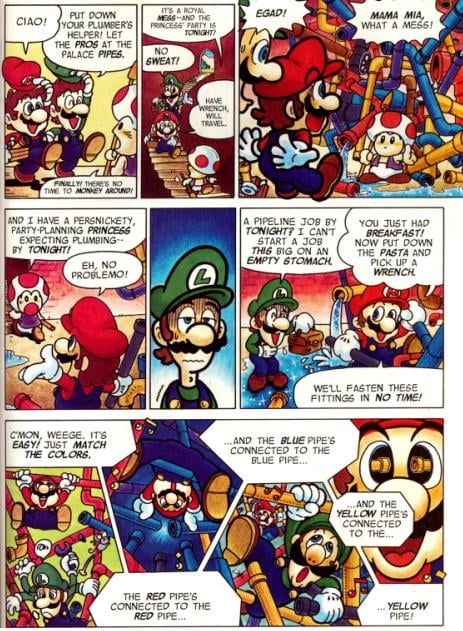
Part 1 – pipes start bursting through the castle floors, and the plumbers are called in.
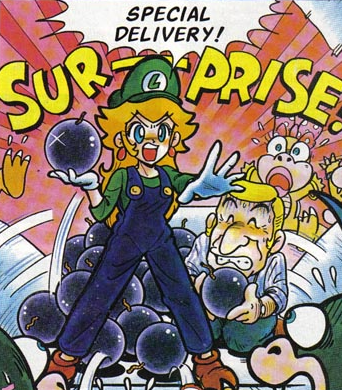
Part 6 – Luigi’s disguise and the most suspicious pizza delivery in the Mushroom Kingdom.
Part 10 – the brothers try a spot of psychiatry on a Big Boo.
Part 12 – a stampede of Yoshis gatecrashes Bowser’s wedding.
Mario vs. Wario – Wario’s childhood grudge, finally explained.
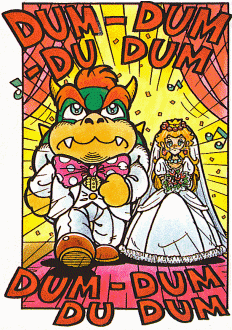
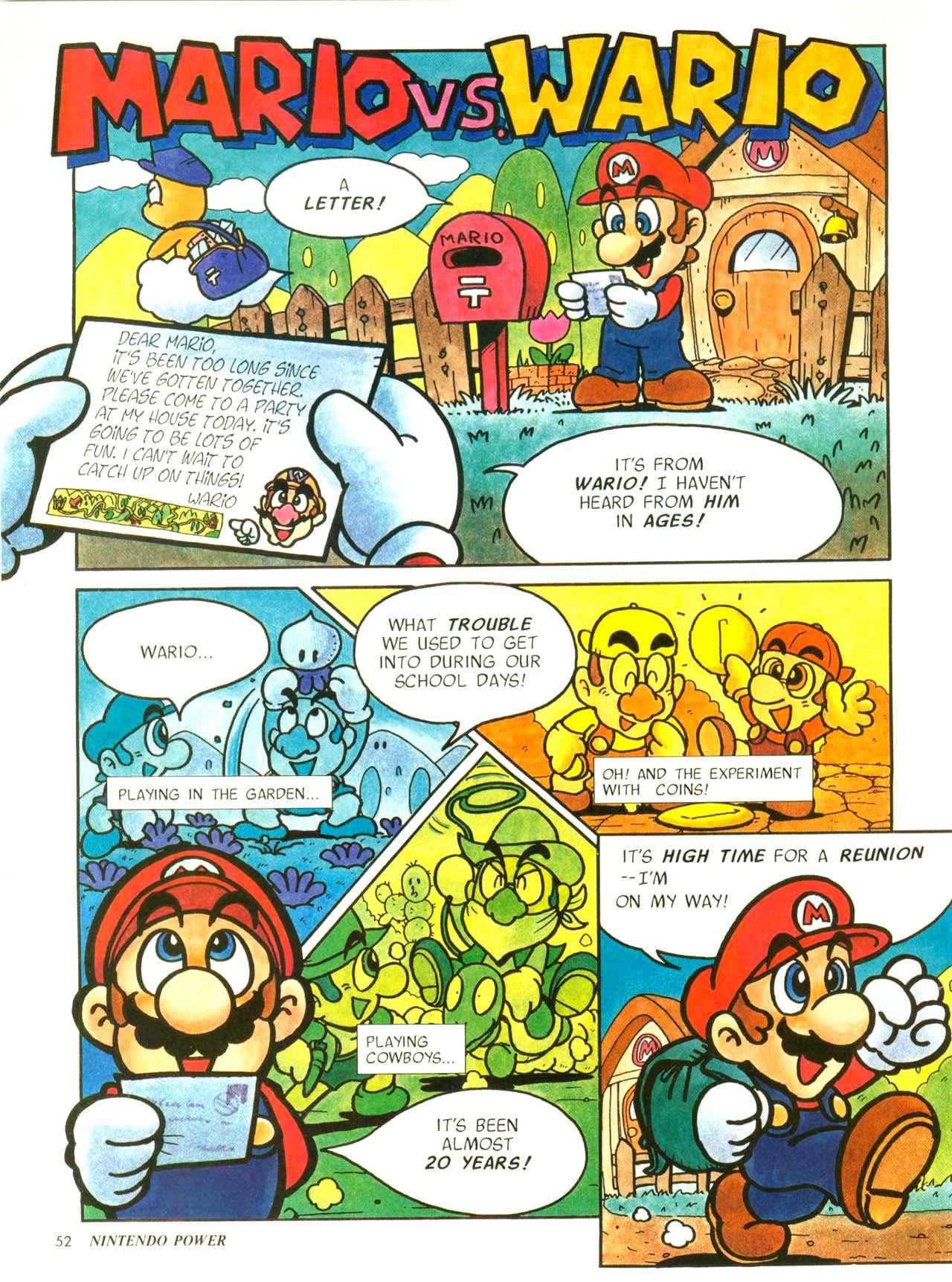
The opening page of Part 1, from Nintendo Power Vol. 32 (January 1992)Part 6 opens the wedding-and-pizza chapter (Vol. 37, June 1992)The first page of Part 12, the December 1992 finale (Vol. 43)The first page of Mario vs. Wario (Vol. 44, January 1993)
Quick Answers
The questions people most often ask about Nintendo Power’s Mario comic, answered in a sentence or two.
Who created Super Mario Adventures?
Kentaro Takekuma wrote the story and Charlie Nozawa (the pen name of manga artist Tamakichi Sakura) drew it. Leslie Swan of Nintendo of America, who also served as a senior editor of Nintendo Power, was credited as copywriter for the English text. More →
When did Super Mario Adventures appear in Nintendo Power?
Every month of 1992, from Vol. 32 (January) to Vol. 43 (December), in twelve parts of eight or nine pages each. More →
What is the story of Super Mario Adventures?
Bowser is determined to marry Princess Toadstool. Mario and Luigi, helped by a newly hatched Yoshi, chase the Koopa King across jungles, a Koopaling tower, a haunted house and finally his own castle, where they wreck the wedding. More →
Is Super Mario Adventures based on a game?
Not directly. It tells its own story, but its world, enemies and Koopaling cast are borrowed from Super Mario World. More →
Can you still buy Super Mario Adventures?
Yes. VIZ Media reissued the collected comic as a 112-page full-colour paperback on 11 October 2016 (ISBN 978-1-4215-8864-3), and translated editions followed in France, Germany, Italy and Spain. More →
Was Super Mario Adventures published in Japan?
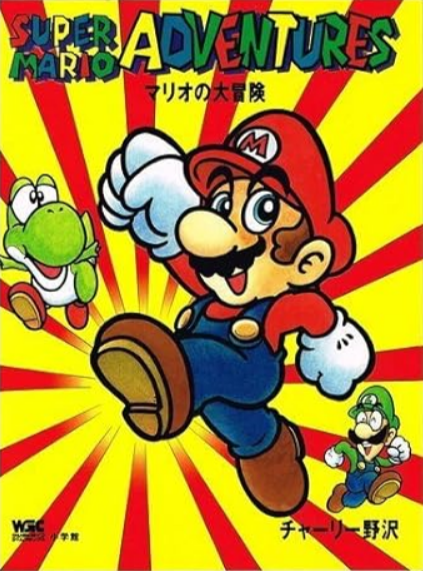
Yes, in 1993, when Shogakukan’s CoroCoro Comic ran it as Mario no Daibōken (“Mario’s Big Adventure”), with a few extra drawings that the American version never had. More →
What is Mario vs. Wario?
A ten-page follow-up in Nintendo Power Vol. 44 (January 1993) by the same artist, in which Mario fights through the bosses of Super Mario Land 2 to reach a grudge-holding Wario. A second, unrelated story, The Birthday Bash, ran in Vol. 56 a year later. More →
Was The Birthday Bash ever reprinted?
Not as far as published records show: unlike the first Mario vs. Wario, it was left out of the collected book, which makes the magazine pages in this archive one of the few places to read it. More →
How a Japanese manga team ended up writing Mario’s longest comic story for an American magazine, what happens in it, and where it went after 1992.
The team: Takekuma, Nozawa and Swan
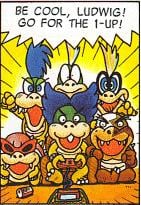
Ludwig von Koopa killing time with a video game, one of the strip’s many background gags
The strip carries two Japanese names. The plot came from Kentaro Takekuma, a manga writer who is also one of the authors of the book Even a Monkey Can Draw Manga. The art was by Charlie Nozawa, a pen name used by Tamakichi Sakura, a manga artist born in 1961 whose other credits include Dungeon Land and Pikiinya!. Their partnership explains the tone: rather than a straight adventure, the pages are crammed with comic timing, exaggerated faces and panels where the drawing style suddenly lurches into something wilder for a single joke.
The English voice belonged to Leslie Swan, credited as copywriter. Swan was a senior editor on Nintendo Power, had worked on the localisation of A Link to the Past, and went on to write the English script for Super Mario 64 and to voice Princess Peach in its international release. The puns are a big part of why the comic is remembered so fondly: Destructoid’s 2016 review singled out the wordplay as the perfect partner for the visual gags.
Bowser’s wedding: the plot in twelve parts
It begins with a plumbing emergency. Pipes are sprouting all over Princess Toadstool’s palace, the Mario brothers are summoned to deal with them, and the trouble turns out to be Bowser, who arrives in his flying Clown Car with a proposal of marriage. When the princess refuses, he turns Mario to stone. Restored to health, the brothers follow him down a pipe into a jungle, where a giant egg hatches into Yoshi, the newest member of the team.
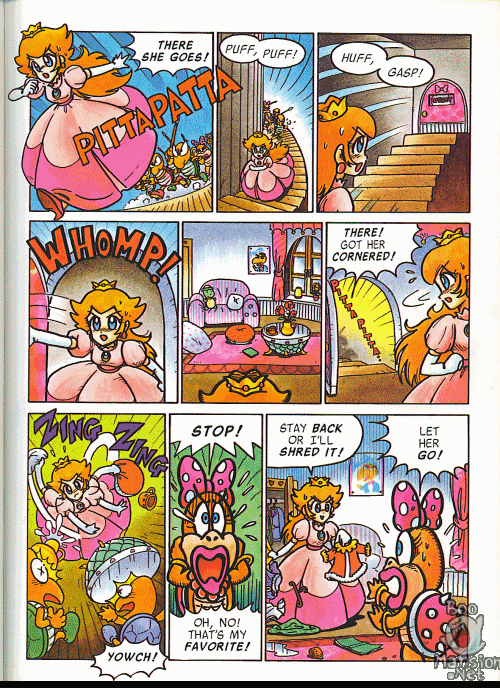
The middle chapters are a run of escapes. Toadstool sets out on her own rescue mission, is ambushed by Lakitus in the desert and ends up locked in a tower guarded by the Koopalings. She makes a break for it, floats to safety with her cape, and in Part 6 Luigi puts on a dress and arranges a pizza delivery with the princess hidden inside the order. By Part 7 she is threatening to blow the whole tower up, and a Reznor obligingly lights the fuse.
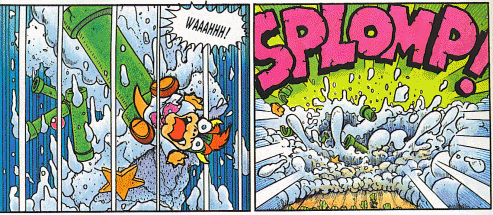
Bowser is not done. Disguised as a rescue party, he whisks the princess off to his airship, while Yoshi eats a Paratroopa and sprouts wings. Parts 9 and 10 trap the brothers in a haunted house full of Boos, which they talk their way out of by posing as a doctor and nurse and counselling a Big Boo. The last two parts storm Bowser’s Castle: the Yoshis have been hypnotised and sealed back into eggs, Toadstool has been hypnotised into saying yes, and it takes a freed herd of Yoshis, a tied-up Clown Car and a wedding cake to end the ceremony, with a kiss for Mario on the final page.
Part 1: the Mario brothers tackle the pipes bursting through the palaceWendy O. Koopa, one of the princess’s Koopaling jailersPart 6’s “special delivery”Bowser and the princess at the altarBowser, foiled again
A year in Nintendo Power
Super Mario World supplied the comic’s Yoshis, Koopalings and Mechakoopas
Nintendo Power gave the strip a slot in every issue of 1992, starting with Vol. 32 in January. It shared the magazine with a second serial, an adaptation of The Legend of Zelda: A Link to the Past, so for a year subscribers got two comics with their tips and maps. The Mario instalments were short – nine pages for the opener and eight for each part after that.
Although the creators were Japanese, the comic was made for the American magazine first, with English as its original language. It does not retell any single game. Instead it borrows the cast and scenery of Super Mario World: Yoshi and his village, the Koopalings, Mechakoopas, Reznor, Boos, Lakitu and the Koopa airships all turn up. The same issues carried plenty of real game coverage too; the April 1992 issue that ran Part 4 also had a four-page Yoshi feature, which you can find in our Nintendo Power archive.
The strip travelled quickly. From February 1993 it ran in the Nordic Nintendo-Magasinet (Denmark, Norway and Sweden) and the Finnish Nintendo-lehti, though those readers never saw the ending: the magazines closed after their July–August 1994 issue with only ten parts printed.
The first page of Part 4 (Vol. 35, April 1992)The first page of Part 7 (Vol. 38, July 1992), the chapter that brings the tower down
Mario vs. Wario and The Birthday Bash
The title page of Mario vs. Wario, January 1993
One month after the finale, Vol. 44 (January 1993) printed a ten-page coda drawn by Nozawa. Mario vs. Wario starts with a letter from an old friend and a pair of very different memories. Mario remembers happy childhood games of picking turnips and playing cowboys; Wario remembers being tricked into pulling up Piranha plants, getting flattened by a Thwomp and always having to play the cattle rustler. Hence the grudge, and hence Wario’s takeover of Mario’s castle in Super Mario Land 2.
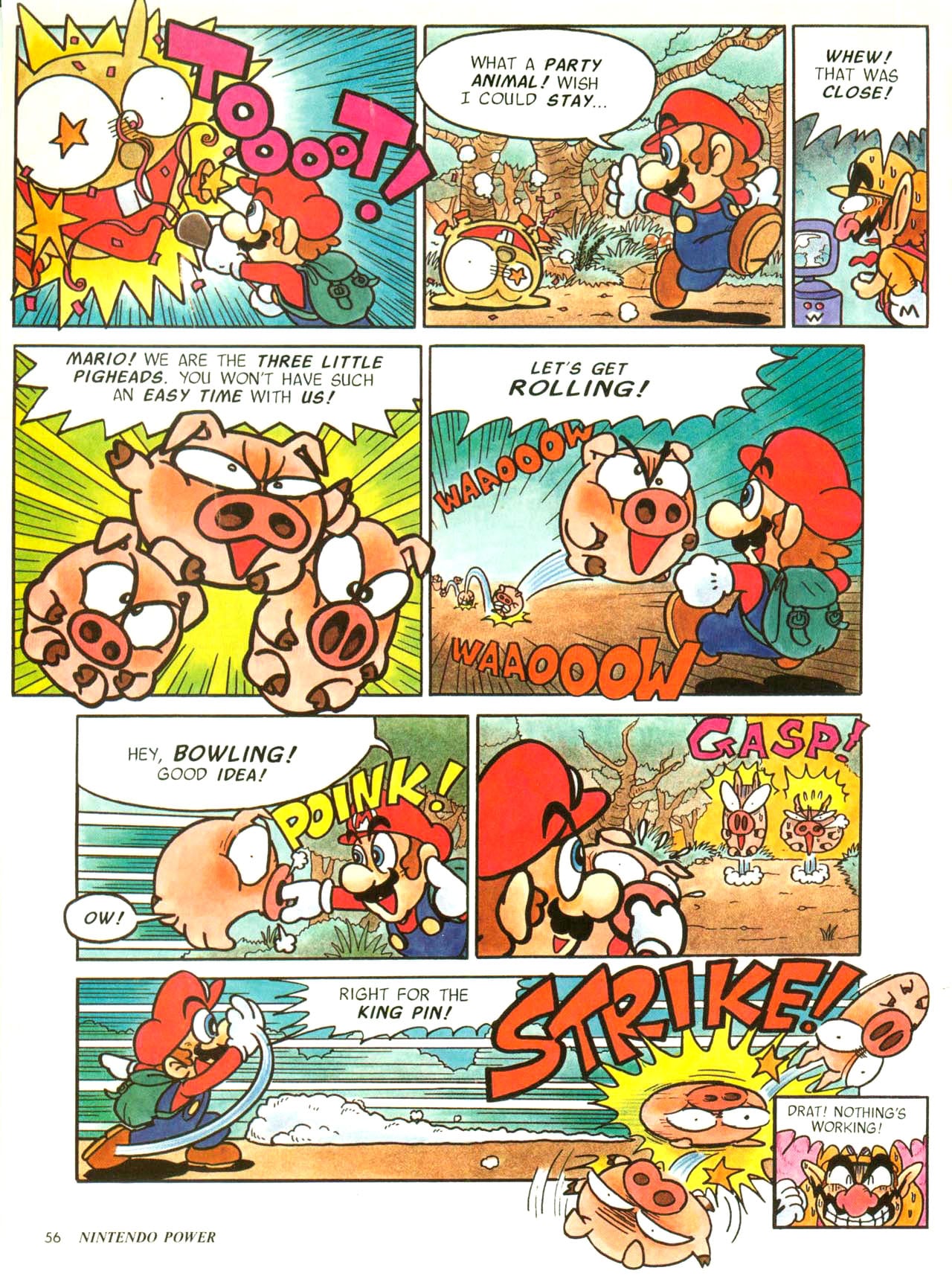
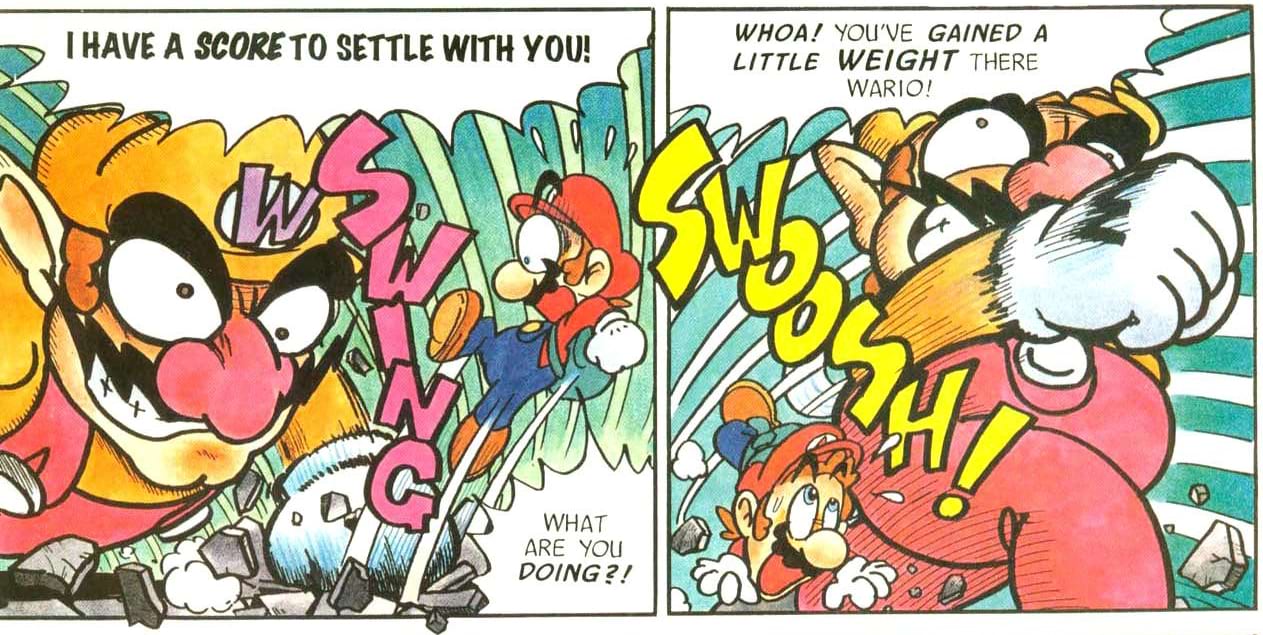
The journey to that castle is a parade of the Game Boy game’s bosses – the Sewer Rat, the Three Little Pigheads (which Mario mistakes for a bowling alley), a Witch and an Octopus – each dispatched by accident or misunderstanding. Inside, a giant Wario is beaten when Mario pulls a plug on his overalls and lets the air out, and the pair end up playing cowboys again, with Mario as the sheriff.
A year later, Vol. 56 (January 1994) ran a second, unconnected story after a Star Fox comic. In The Birthday Bash Mario and Wario both want to buy Princess Toadstool the Samus doll she has spotted in a toy shop, Wario swaps the presents, two jack-in-the-boxes spring out at the princess, and it is Luigi who turns up with the doll and collects the kiss. It is an original story tied to no game, and the only instalment of the whole run that has never been reprinted.
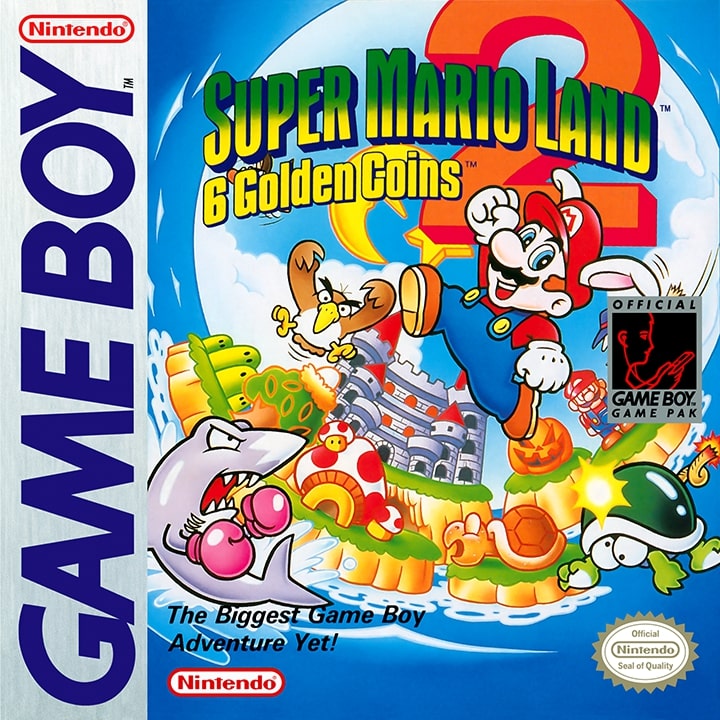
The Three Little Pigheads, one of the Super Mario Land 2 bosses Mario meets on the wayGiant Wario, shortly before Mario finds the plugSuper Mario Land 2: 6 Golden Coins, the Game Boy game behind the first Mario vs. WarioThe first page of The Birthday Bash (Vol. 56, January 1994)
From magazine to bookshelf: 1993, 2016 and beyond
VIZ Media’s 2016 reprint of the collected comic
Readers who wanted the whole thing in one place got their chance in Nintendo Power Vol. 50 (July 1993), the magazine’s fiftieth issue and fifth-anniversary edition, which offered the strip as a graphic novel. The book added the first Mario vs. Wario as a bonus and quietly rewrote a handful of lines: “Onto plan B!” in Part 6 became “We have a delivery to make!”, and in Mario vs. Wario Wario’s relieved “Phew! That was close!” turned into the more villainous “Blast! He got away!”.
Japanese readers met the story the same year, when Shogakukan’s CoroCoro Comic serialised it as Mario no Daibōken. That version had a few extras of its own, including schematics of the Koopa Clown Car where Part 2’s recap box had been, and a final panel in which a moping Bowser rewatches footage of his hypnotised bride while the Koopalings urge him to move on.
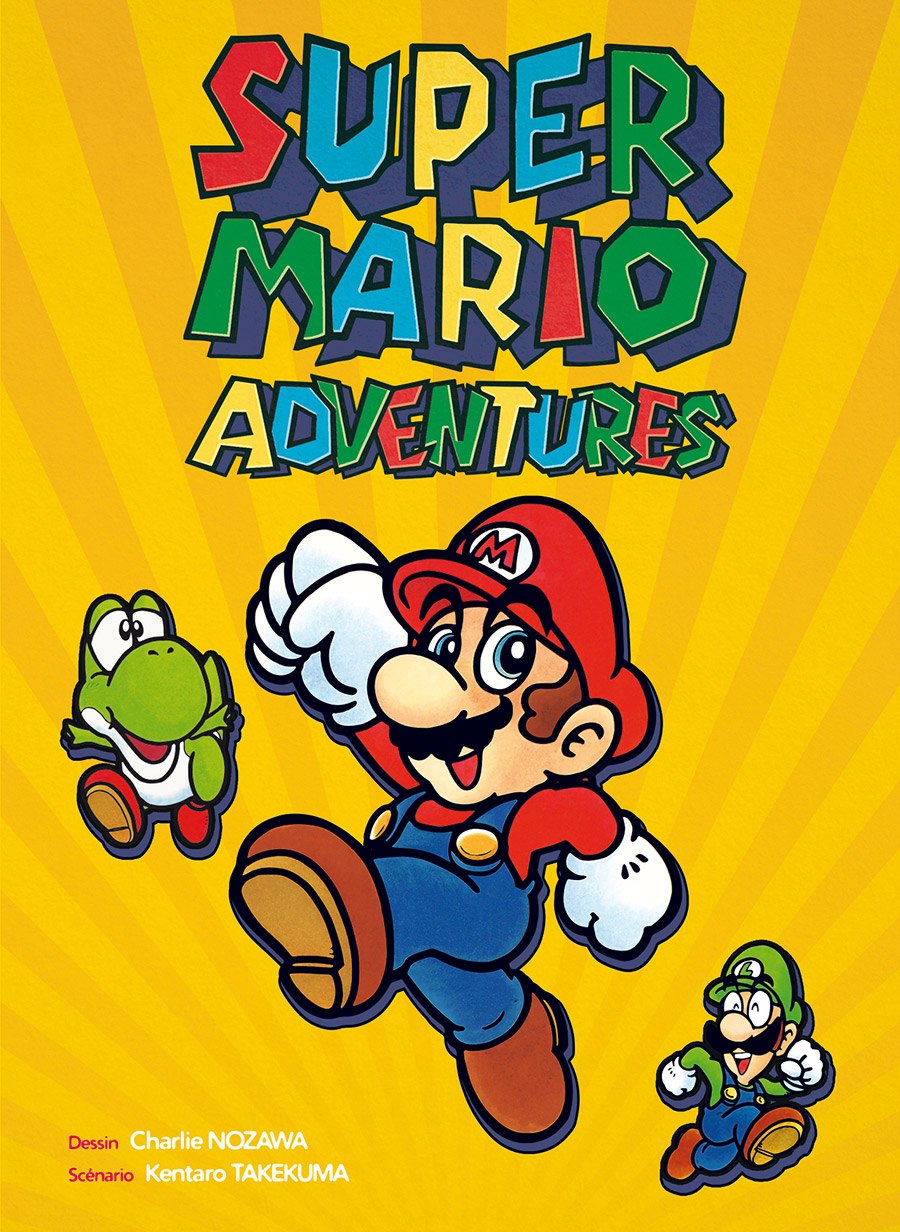
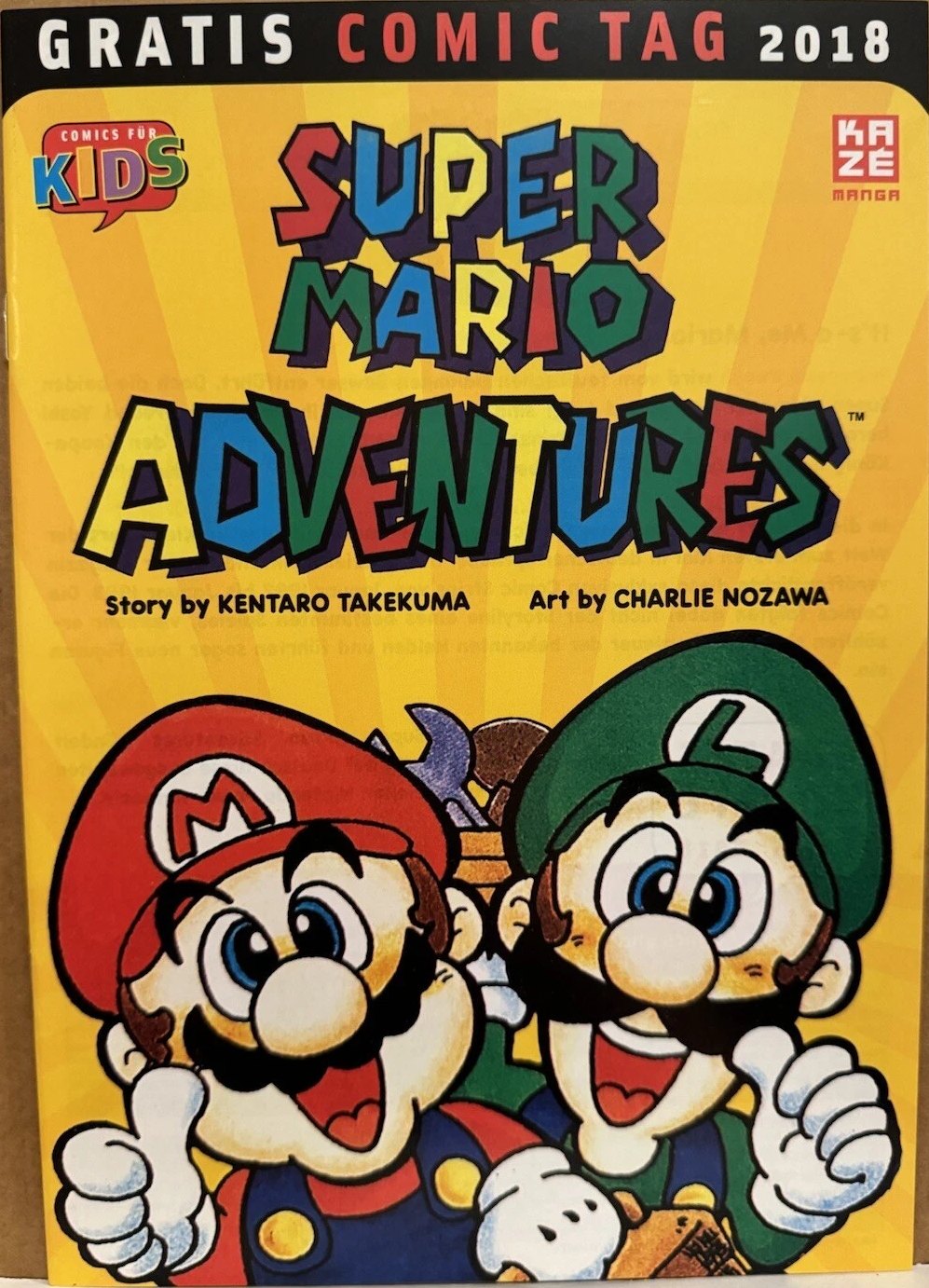
After years out of print, the book came back in 2016. VIZ Media confirmed the reprint in August and published it on 11 October 2016 as a 112-page full-colour paperback (ISBN 978-1-4215-8864-3), crediting story to Takekuma and art to Nozawa. Translations followed: Soleil in France (29 November 2017), Kazé in Germany (2018), J-Pop in Italy and Planeta Cómic in Spain (10 November 2020).
The Japanese edition, Mario no Daibōken
Mario’s other comics
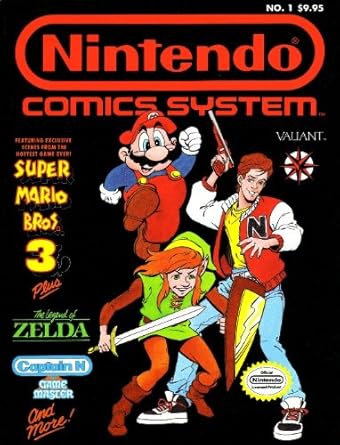
The first issue of Valiant’s Nintendo Comics System
Super Mario Adventures was not Mario’s first comic. Before it came Valiant Comics’ Nintendo Comics System (1990–1991), a licensed line in which Mario was the most prolific star, alongside Valiant’s own Super Mario Bros. and Adventures of the Super Mario Bros. books; the latter ran nine issues between February and October 1991.
In Japan the comic everyone knows is Super Mario-kun, Yukio Sawada’s gag manga for CoroCoro Comic, which began in November 1990, has reached 61 volumes and is still going. English readers finally got a taste of it in December 2020, when VIZ published Super Mario Manga Mania, a best-of collection. Set beside those, Super Mario Adventures stands out as a one-off: a single, finished story with a beginning, a middle and a wedding cake at the end.
Advertisement
Timeline
Every instalment in the order it appeared, with the specials, the collected editions and the translations that followed.
Super Mario Adventures, part by part
Part 1Vol. 32 · Jan 1992Pipes burst through the palace, the plumbers arrive and Bowser drops in uninvited.
Part 2Vol. 33 · Feb 1992Bowser demands the princess’s hand and turns Mario to stone; the brothers follow Bowser down a pipe and a jungle egg hatches Yoshi.
Part 3Vol. 34 · Mar 1992A Lakitu ambush in the desert, a visit to Yoshi’s village and the princess is captured.
Part 4Vol. 35 · Apr 1992The Koopalings guard their prisoner; Toadstool escapes and falls from the tower.
Part 5Vol. 36 · May 1992Her cape saves her, and Mario is fired from a cannon straight into captivity.
Part 6Vol. 37 · Jun 1992A wedding nightmare, Luigi in disguise and a pizza delivery with a princess inside.
Part 7Vol. 38 · Jul 1992Luigi frees Mario, a Reznor lights the fuse and the tower goes up.
Part 8Vol. 39 · Aug 1992A fake rescue party carries the princess off to Bowser’s airship; Yoshi grows wings.
Part 9Vol. 40 · Sep 1992Trapped in a haunted house with a houseful of Boos.
Part 10Vol. 41 · Oct 1992Doctor Mario and Nurse Luigi counsel a Big Boo, then set off for Bowser’s Castle.
Part 11Vol. 42 · Nov 1992Hypnotised Yoshis are sealed in eggs and the princess is hypnotised into saying yes.
Part 12Vol. 43 · Dec 1992The Yoshis storm the wedding, Bowser lands in the cake and Mario gets his kiss.
Mario vs. WarioVol. 44 · Jan 1993Ten-page epilogue set among the bosses of Super Mario Land 2.
Nordic runFeb 1993Translated parts begin in Nintendo-Magasinet and Nintendo-lehti; only ten appear before the magazines close in 1994.
Graphic novelVol. 50 · Jul 1993The fiftieth issue offers the collected strip, with Mario vs. Wario as a bonus.
CoroCoro Comic1993Serialised in Japan as Mario no Daibōken, with extra art.
The Birthday BashVol. 56 · Jan 1994Mario and Wario fight over a birthday present; Luigi wins the day. Never reprinted.
VIZ Media reprint11 Oct 2016112-page full-colour paperback, back in print after more than twenty years.
Translations2017–2020France (Soleil, Nov 2017), Germany (Kazé, 2018), Italy (J-Pop) and Spain (Planeta Cómic, Nov 2020).
Trivia & Interesting Facts
The artist’s credit, Charlie Nozawa, is a pen name: in Japan he is better known as the manga artist Tamakichi Sakura.
Leslie Swan, who wrote the comic’s English copy, later became the voice of Princess Peach in the international versions of Super Mario 64 and Mario Kart 64.
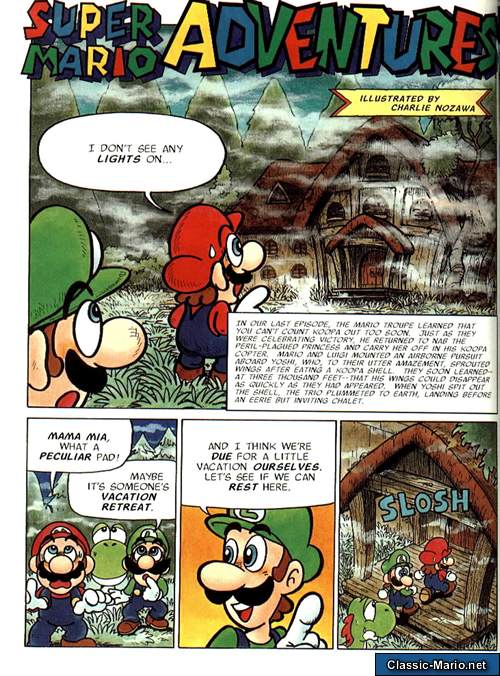
The first page of Part 9 (Vol. 40, September 1992), set in the haunted houseLuigi’s nerves in the haunted-house chapters came years before Luigi’s Mansion, and his dress-up act in Part 6 has an echo in Mario & Luigi: Superstar Saga, where he again disguises himself as the princess.
Bowser’s adviser in the comic is a Magikoopa, three years before Yoshi’s Island introduced Kamek.
The artists took a few liberties with the game designs: Spike Tops are coloured brown, an angry Wiggler turns orange, and Luigi at one point calls a group of Paratroopas “Mecha-Koopas”.
The Nordic and Finnish editions stop at Part 10. Their magazines folded after the July–August 1994 issue, so those readers never saw the wedding.
The 1993 book tidied up some jokes: in Part 2, “Tell my stomach that!” became “Tell your stomach that!”, and Mario’s arrival at Wario’s door in Mario vs. Wario was rewritten as “Wario! Long time no see!”.
For a while the first Mario vs. Wario comic was a free PDF on Nintendo of America’s Wario Land 4 website.
The present everyone is fighting over in The Birthday Bash is a Samus doll, a nod to Nintendo’s Metroid.
Wikipedia’s article on the comic cites this very archive as its source for The Birthday Bash.
Super Mario Adventures Around the World
Since its Nintendo Power run the comic has been published in Japan, across Europe and back in North America. Here are some of its covers, plus a favourite pairing from inside.
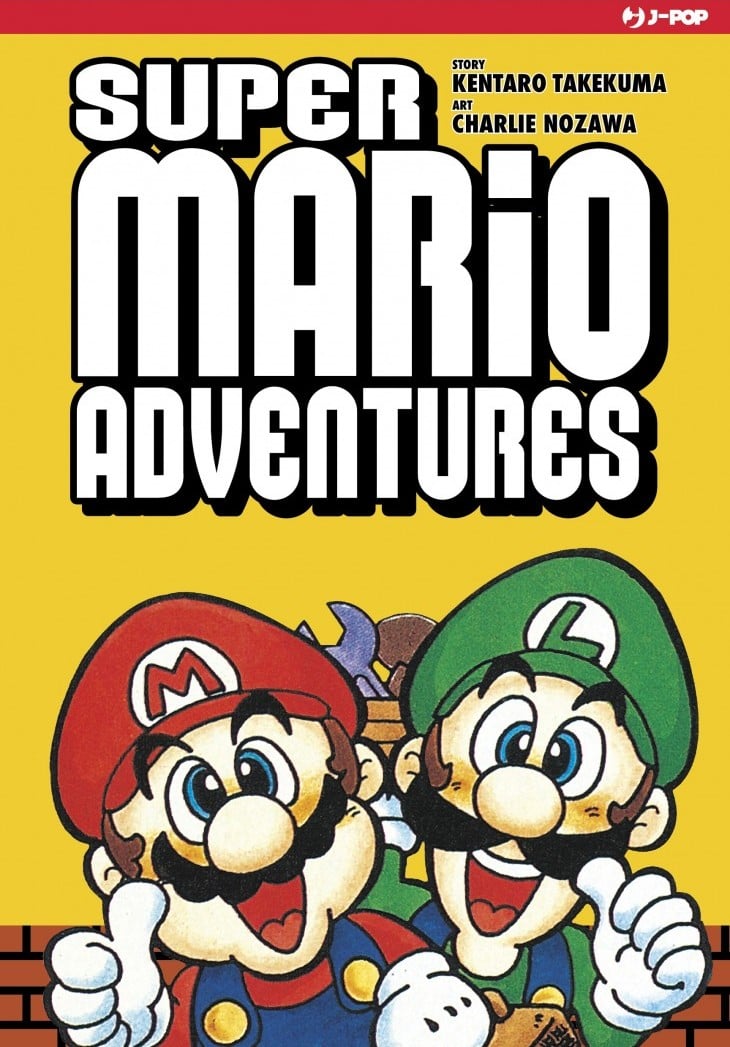
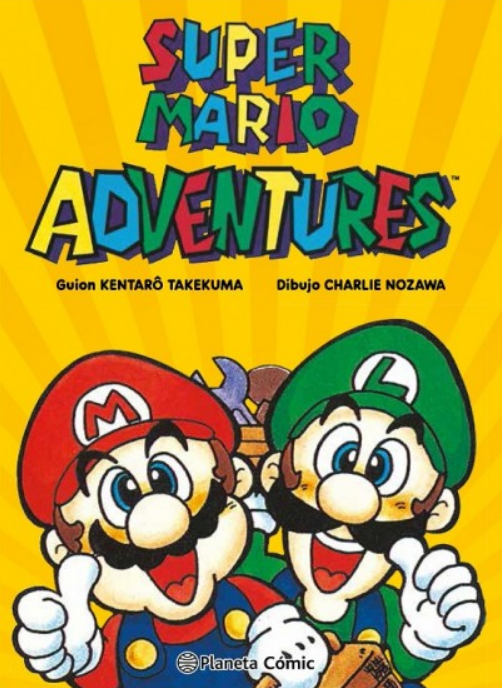
VIZ Media, 2016 (North America)Soleil Manga, 2017 (France)Kazé, 2018 (Germany)J-Pop (Italy)Planeta Cómic, 2020 (Spain)Toad and Yoshi, as drawn by Charlie Nozawa
Sources
Every fact on this page was checked against the 15 sources listed here.
To provide the best experiences, we use technologies like cookies to store and/or access device information. Consenting to these technologies will allow us to process data such as browsing behavior or unique IDs on this site. Not consenting or withdrawing consent, may adversely affect certain features and functions.
Functional
Always active
The technical storage or access is strictly necessary for the legitimate purpose of enabling the use of a specific service explicitly requested by the subscriber or user, or for the sole purpose of carrying out the transmission of a communication over an electronic communications network.
Preferences
The technical storage or access is necessary for the legitimate purpose of storing preferences that are not requested by the subscriber or user.
Statistics
The technical storage or access that is used exclusively for statistical purposes.The technical storage or access that is used exclusively for anonymous statistical purposes. Without a subpoena, voluntary compliance on the part of your Internet Service Provider, or additional records from a third party, information stored or retrieved for this purpose alone cannot usually be used to identify you.
Marketing
The technical storage or access is required to create user profiles to send advertising, or to track the user on a website or across several websites for similar marketing purposes.


 Issue 2Nintendo Power Vol. 33 · Feb 19928 pages
 Issue 3Nintendo Power Vol. 34 · Mar 19928 pages
 Issue 4Nintendo Power Vol. 35 · Apr 19928 pages
 Issue 5Nintendo Power Vol. 36 · May 19928 pages
 Issue 7Nintendo Power Vol. 38 · Jul 19928 pages
 Issue 8Nintendo Power Vol. 39 · Aug 19928 pages
 Issue 9Nintendo Power Vol. 40 · Sep 19928 pages
 Issue 10Nintendo Power Vol. 41 · Oct 19928 pages
 Issue 11Nintendo Power Vol. 42 · Nov 19928 pages