
Wario's Woods
Overview
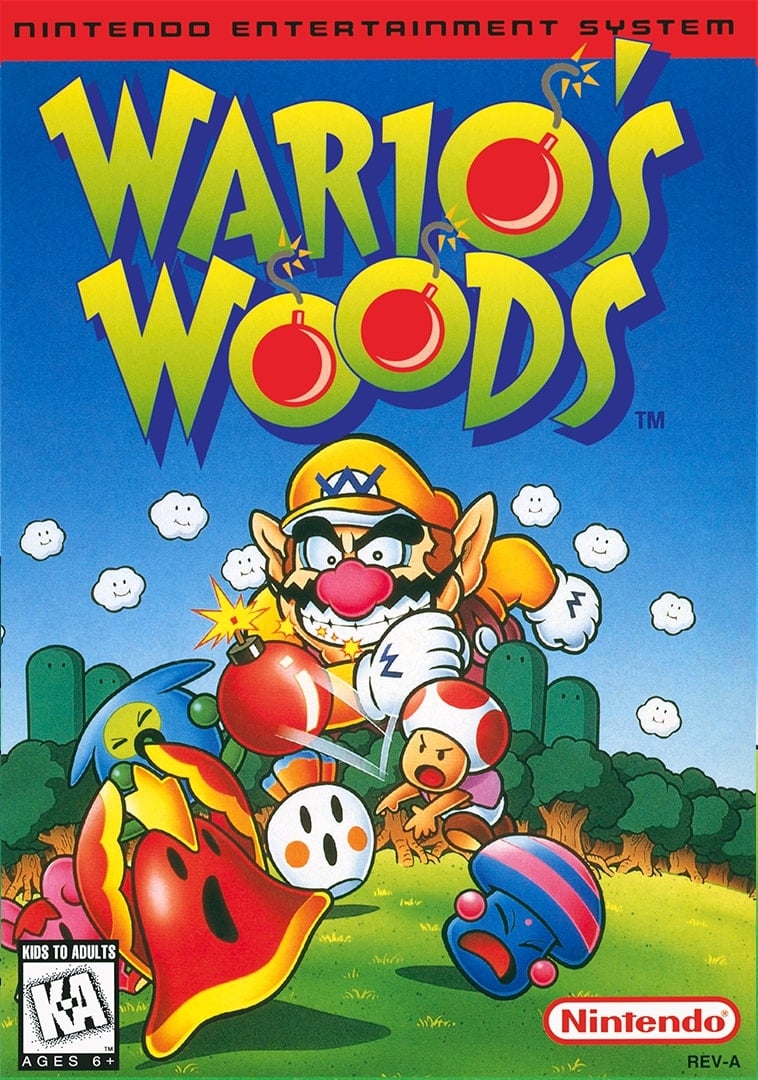
Wario's Woods (ワリオの森, Wario no Mori) is a falling-blocks puzzle game co-developed by Nintendo R&D1 and Intelligent Systems — the studio that would later create the Fire Emblem, Paper Mario, and Advance Wars series. The Famicom version released in Japan on 19 February 1994, with the NES version following in North America on 10 December 1994 and reaching Europe in 1995.
The game is a Tetris-style stacking puzzler with several novel twists: instead of falling blocks, the player controls Toad directly, walking and climbing around a 7-column wide field. Toad picks up bombs from a fairy Sprite at the top of the screen and lines them up with falling monsters — horizontally, vertically, or diagonally — to clear them. A timer at the bottom counts down; if it fills, Wario himself appears, replacing the helpful Sprite and Birdo with the hostile Pidgit and Thwomp, who actively make life harder.
The Last Officially Licensed NES Game
The end of an era.
December 1994 was the twilight of the NES in North America. The SNES was already three years old, the PlayStation was launching in Japan that month, and the Nintendo 64 was on the horizon. Wario's Woods arrived as the final game ever released for the NES in North America with Nintendo's official seal of quality — nine years and two months after the system's launch in October 1985.
Two consequences of that late release: the game became the only NES title ever to ship with an official ESRB rating (K-A, “Kids to Adults” — the predecessor of today's E rating). The ESRB had only existed for two months at launch, and every NES game before it pre-dated the ratings system entirely. Re-releases on Wii U Virtual Console and NES Switch Online have since shifted it to the modern E rating.
In Japan, the Famicom version released alongside a cartridge port of The Legend of Zelda — the two final first-party releases for the Famicom. Hudson Soft's Adventure Island IV followed a few months later as the system's overall final game.
Toad as the Sole Protagonist
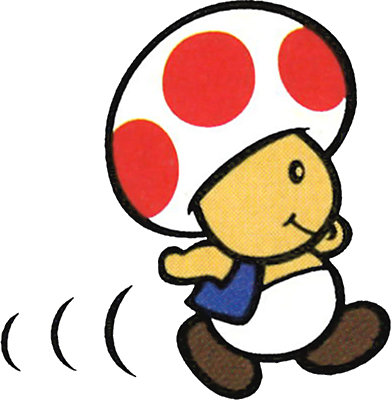
Wario's Woods is only the second game in Mario history where Toad is the sole starring protagonist. The first was Kinopio Live, an obscure Satellaview broadcast title. The lineage would continue much later with Captain Toad: Treasure Tracker (2014), though that stars Captain Toad — a similar but distinct character.
For 1994, this was a remarkable choice. Toad had been a supporting character in almost every Mario game since the original Super Mario Bros. in 1985 — a damsel-in-distress in SMB (“Thank you Mario, but our princess is in another castle”), a playable character in SMB2, and a perpetual NPC. Wario's Woods is the moment Nintendo finally gave him a game of his own.
Birdo's big comeback.
The game also marks Birdo's first reappearance in the Super Mario franchise since Super Mario Bros. 2 six years earlier. She plays a supporting role from inside a window at the top of the screen, providing encouragement and occasionally swapping bombs with the Sprite. After this game, Birdo would become a permanent fixture of the spin-off Mario titles (Mario Kart, Mario Party, Mario Tennis, etc.).
Story
From the instruction booklet:
“The Peaceful Woods were once a friendly home for sprites and gentle creatures. Since the invasion of Wario and his band of monsters, though, this quiet community has been turned upside-down. Now, it is Wario's Woods and peaceful creatures are not welcome.”
“Toad, the Mushroom Kingdom hero, has made his way to Wario's Woods in order to quiet the sinister lout and win the woods back for the sprites. The sprites can create bombs. It's Toad's job to take the bombs and line them up with the enemies of the woods so that the enemies go down in defeat.”
“If Toad clears enough monster-packed sections of the forest, he'll go up against the mighty Wario himself.”
Gameplay
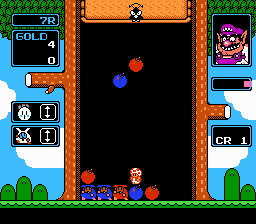
The play field is a vertical column of grid squares. The Sprite drops bombs from above; the player controls Toad to walk, climb, and carry bombs and monsters around to set up matches. A line of three or more of the same colour (bombs + matching monsters) triggers the clear — horizontally, vertically, or diagonally.
The key tension is the two timer system. A Sprite/Birdo timer fills up over time; if it reaches the top, Wario kicks Birdo out and turns the Sprite into a hostile Pidgit who throws extra monsters at Toad, while a Thwomp ceiling descends, threatening to crush him. Wario then has his own timer; clearing chains and combos brings him down faster, returning the friendly Sprite and Birdo.
Key Mechanics
- Chain reactions affect both timers — clear multiple groups in one drop and Wario leaves early.
- Diamonds appear after clearing 5+ bombs/monsters in a chain. Used as a super-bomb to wipe all monsters of one colour.
- Two-bomb monsters (Dovo, Spook) need to be hit twice to clear — Dovo changes colour after one hit, Spook flashes for a limited window.
- Diagonal-only monsters (Beaker, Scram) can only be cleared by diagonal chains — the trickiest mechanic.
- Thwomp descent — Wario can body-slam the screen, dropping the ceiling Thwomp lower; specific match patterns push it back up.
- Toad's carry move echoes Super Mario Bros. 2 — he picks up bombs and monsters the same way he picks up enemies in SMB2.
Game Modes
The main menu offers five options: Round Game (Types A & B), Time Race, VS, Lesson Mode, and Options. Luke's original page lists the modes verbatim, but here's the detailed breakdown:
Round Game (Type A & B)
Solo mode on a 7-column field. Each round offers a Gold Coin bonus that's only earned in full if Wario never appears — every Wario entry/exit reduces it by 20%, with three appearances forfeiting it entirely. Collect 30 coins for a Continue token.
Round Game B adds boss battles every 10th round (specifically the 9th of each set of 10). Bosses have health bars where Birdo/Wario normally sit, and no timer pressure — you defeat them by chaining attacks that include the boss in your match lines.
Time Race
Speed-running solo mode on the same 7-column field, with Easy/Normal/Hard difficulty options and sets of 2-5 rounds per course. New best times go into the Player Records; completing all sets enters your time into the All-Time Records leaderboard, with rankings from Gold/Silver/Bronze down to 7th place.
Birdo and Wario can both appear without penalty here — the only thing that matters is total clear time.
VS Mode (Two Player)
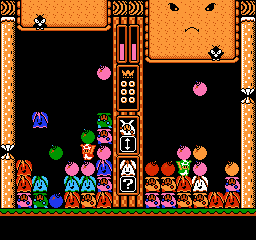
Two-human only on side-by-side 6-column fields. Wario does not appear. Each player picks their own difficulty. Clearing 4+ bombs/monsters in a row forces the opponent's Thwomp to descend; chain reactions fill an entire column on the opponent's field with monsters. Diamonds turn all the opponent's bombs into monsters — brutal.
First player to clear their field wins the round. First to 3 round wins takes the match.
Lesson Mode
Tutorial system. Learn Moves teaches controls — A/B button grabs, climbing, the down+A kick attack. Practice mode is 12 rounds, each focused on a single monster type, so the player can learn each clear pattern.
In Practice, the Sprite paces bomb drops so the field never fills up — a forgiving training environment.
Cutscenes & Wario's Inflation Gag
Round 10 Cutscene
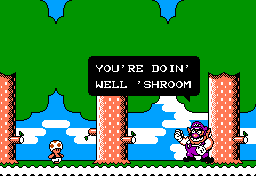
Late-Game Cutscene
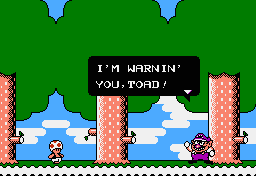
In Round Game mode, a cutscene plays before every 10th round (the boss rounds in Type B), featuring Wario taunting Toad as the hero gets closer to defeating him. The dialogue differs between Mode A and Mode B but the events are the same. Wario calls Toad insulting names like “Shroom” throughout, trying to discourage him.
The inflation joke.
Over the course of the cutscenes, Wario appears to grow progressively larger, suggesting his power is increasing as Toad nears the end. In the final round, he reaches gargantuan size — only for it to be revealed that he was inflating himself with an air pump. Classic Wario greed-pride humor, well before WarioWare made it the character's entire personality. In the ending, Toad chases the deflating Wario out of the woods.
Protagonists

Toad

Green Toad

Sprite

Birdo
Antagonists

Wario
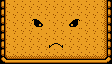
Thwomp

Pidgit
Bosses
Round Game Type B features boss battles every 10 rounds. Each boss has a unique mechanic to disrupt Toad's rhythm. The full lineup (with Boom and Seizer appearing twice):

Round 9
Fauster
A jester-like devil. Can eliminate all bombs on-screen.

Round 19, 79
Boom
A horned anthropomorphic pig. Meditates to spawn enemies rapidly.

Round 29
Mad
A mermaid. Can temporarily freeze Toad's Sprite helper.

Round 39
Goro
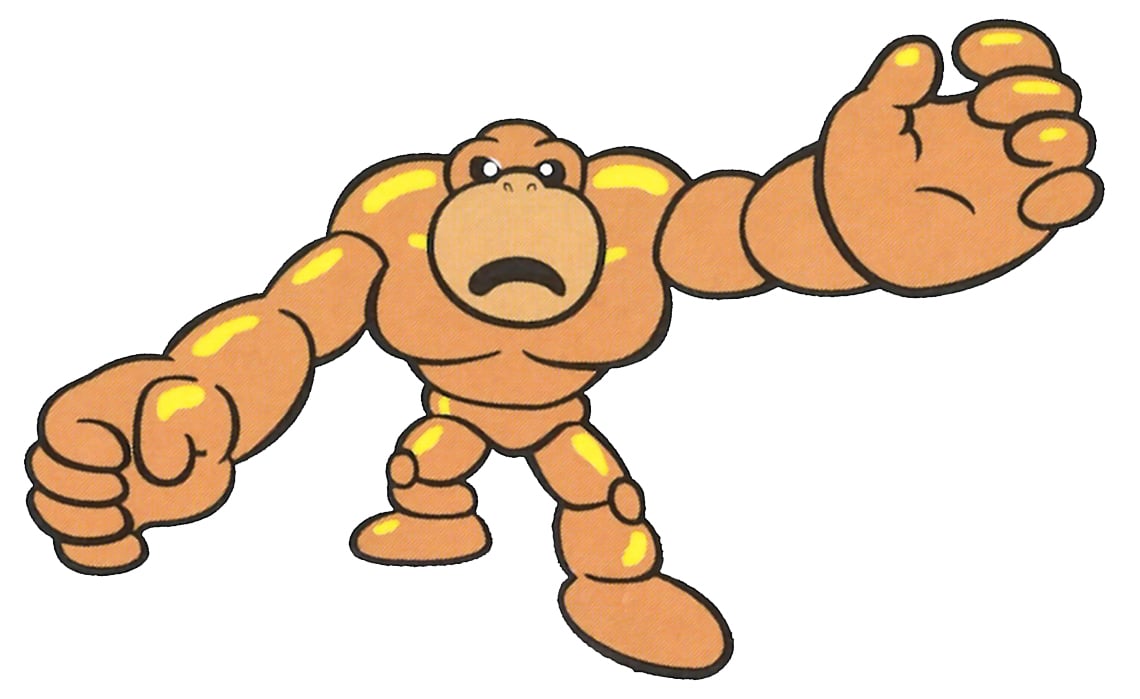
A gorilla-like golem. Stomps to bring the Thwomp lower.

Round 49, 89
Seizer
A hooded skeleton. Causes two full rows of enemies to fall at once.

Round 59
Drago
A dragon. Turns all on-screen bombs into enemies with fire breath.

Round 69
Fake Wario
A Wario impostor. Drops an entire mixed row of monster types.
Round 99
Wario (true)
The final boss. The real deal — if Toad survives the inflation gag.
Enemies (Monsters)
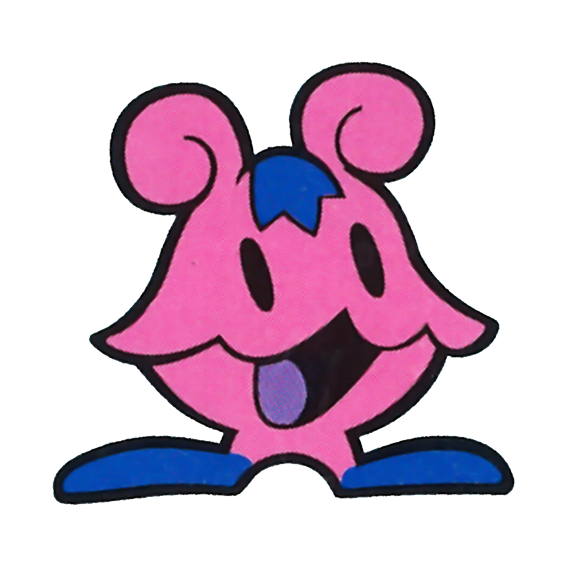
Seven monster types appear, each with its own clear conditions. The first three (Fuzz, Spud, Squeak) clear with any bomb chain; Beakers and Scrams require diagonal-only chains; Dovos and Spooks need two bombs each.

Fuzz

Spud

Squeak

Beaker

Scram

Spook

Dovo
Development Staff
Wario's Woods is one of the earliest co-developments between Nintendo R&D1 and Intelligent Systems — the latter studio still relatively new in 1994, with Fire Emblem and Famicom Wars under its belt but Paper Mario and Advance Wars still years away. Producer-director Kenji Miki, who oversaw the project, would go on to work on later Mario puzzle and party titles.
Producer / Director
Kenji Miki
(Nintendo R&D1)
Programming
Hiroyuki Yukami
Hironobu Suzuki
Makoto Katayama
(Intelligent Systems)
Graphics
Soichiro Tomita
Masahiro Iimura
Naotaka Ohnishi
Music (NTSC)
Shinobu Amayake
Soyo Oka
Music (PAL)
Hiroaki Suga
Tadashi Ikegami
(reused from SNES version)
Studios
Nintendo R&D1
Intelligent Systems
The PAL soundtrack swap.
One of the quirks of Wario's Woods: the NTSC and PAL versions have different soundtracks. The NTSC NES/Famicom release used Shinobu Amayake and Soyo Oka's compositions; the European PAL release replaced most of those tracks with new ones by Hiroaki Suga and Tadashi Ikegami — the composers from the SNES version of the same game, which had launched earlier in 1994. The themes that survived intact in both regions: Wario's turn, Time Race, VS Mode, cutscene dialogue, the round/boss victory jingles, the “round clear” theme, and the Game Over theme.
Re-Releases
Despite its late launch, Wario's Woods has been comprehensively re-released across every Nintendo digital platform since the Wii era:
Animal Crossing (GameCube)
Wii Virtual Console
Nintendo 3DS Virtual Console
Wii U Virtual Console
NES — Nintendo Switch Online
Manga Adaptations
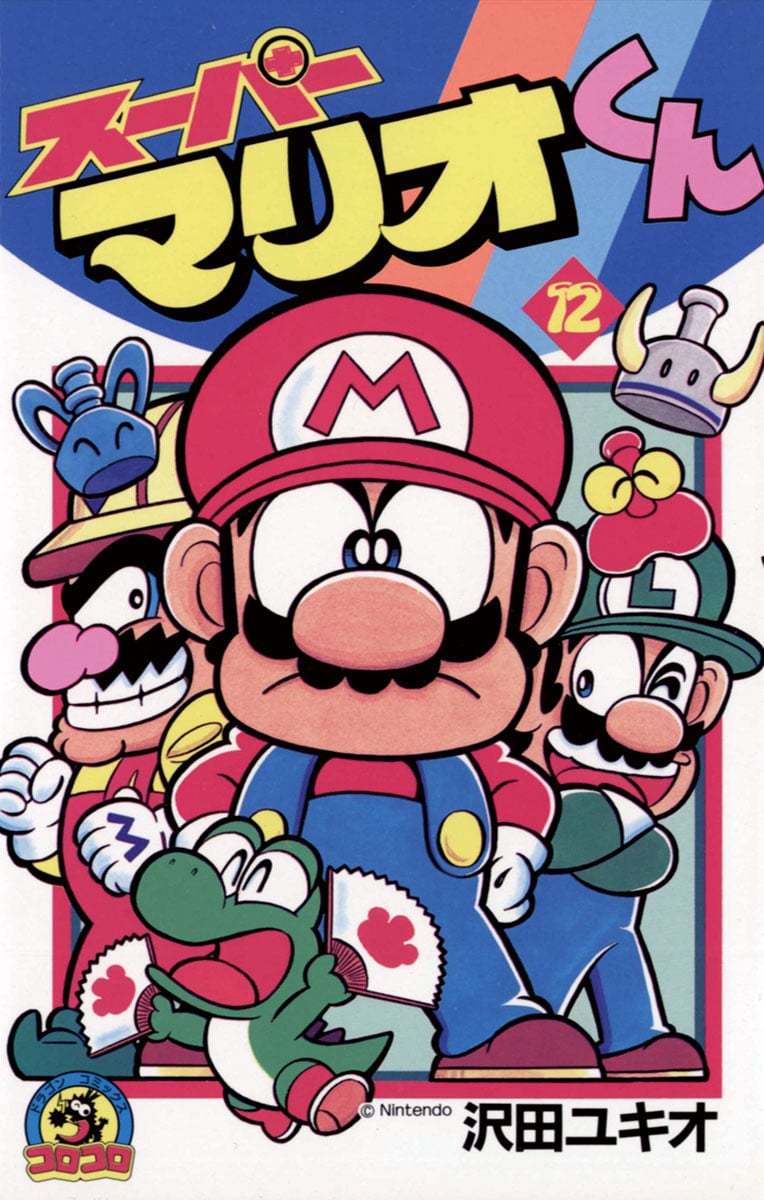
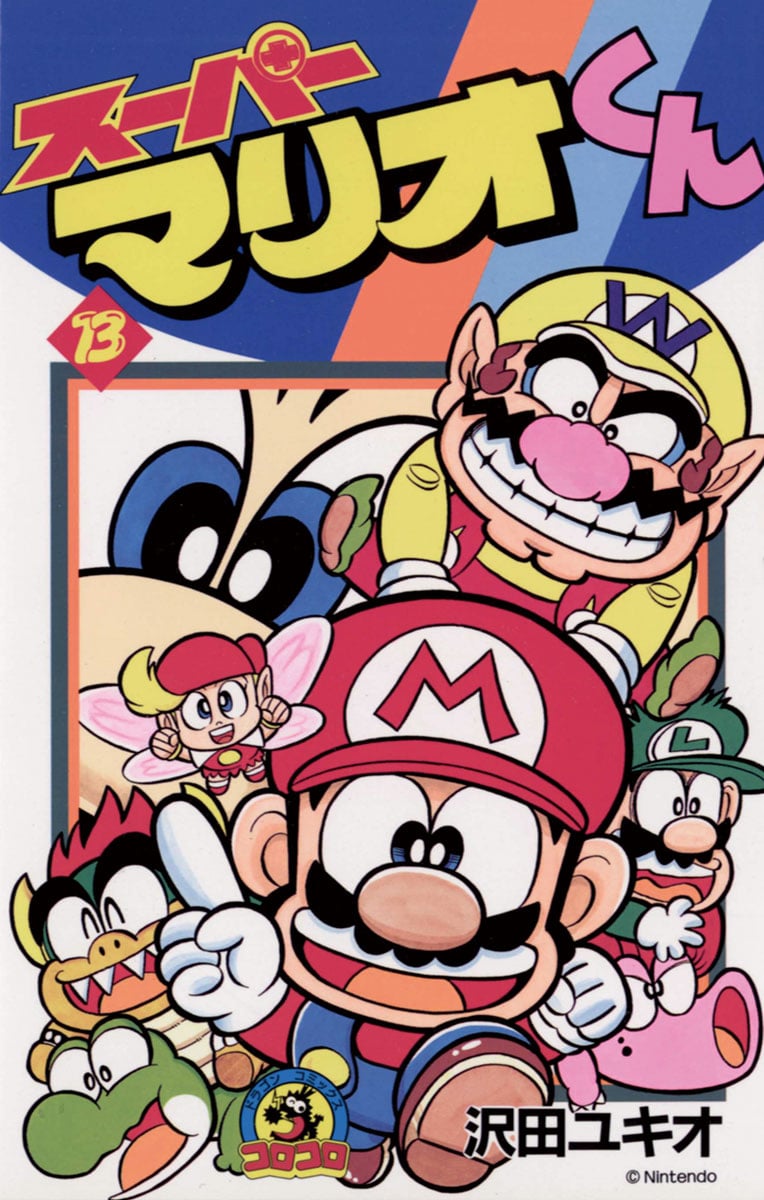
Curiously, the NES version of Wario's Woods received two major manga adaptations — both of which heavily rewrite the original premise, swapping the Sprite character for Wanda (the fairy from Mario & Wario) and giving Mario a central role despite his complete absence from the game itself.
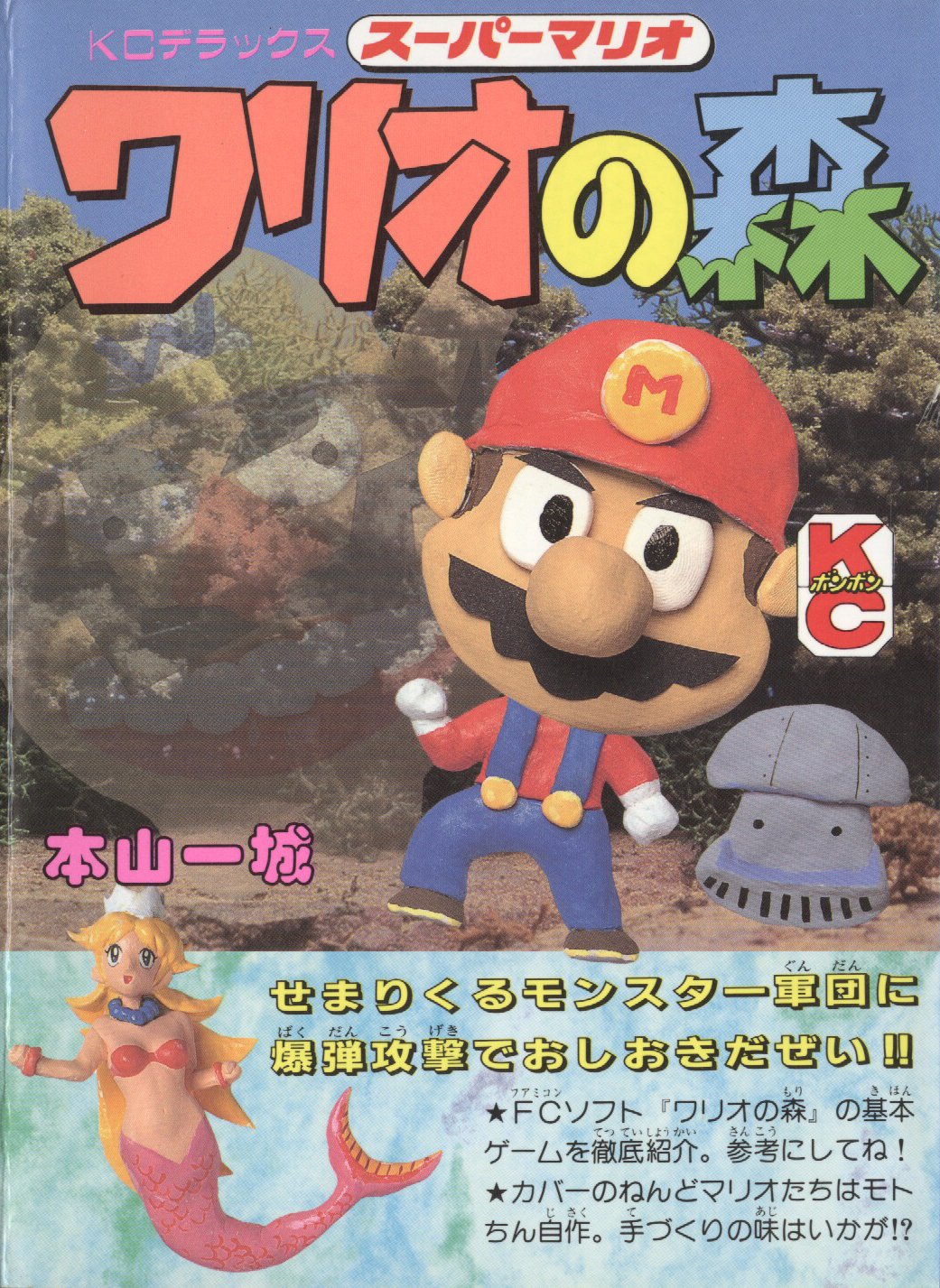
Super Mario: Wario no Mori (Kodansha “KC Deluxe” series) is a single-volume adaptation set in a different timeline. A young Wario makes a pact with the demon Fauster to marry Princess Peach. Donning a Toad helmet and aided by Wanda, Mario rescues Peach and stops the dark alliance. Years later — after Mario and Peach are married and have just had baby Luigi delivered — Wario returns to resurrect Fauster by sacrificing Luigi. Mario, Peach, Wanda, Birdo, and a Toad reunite to save him. A wild reimagining.
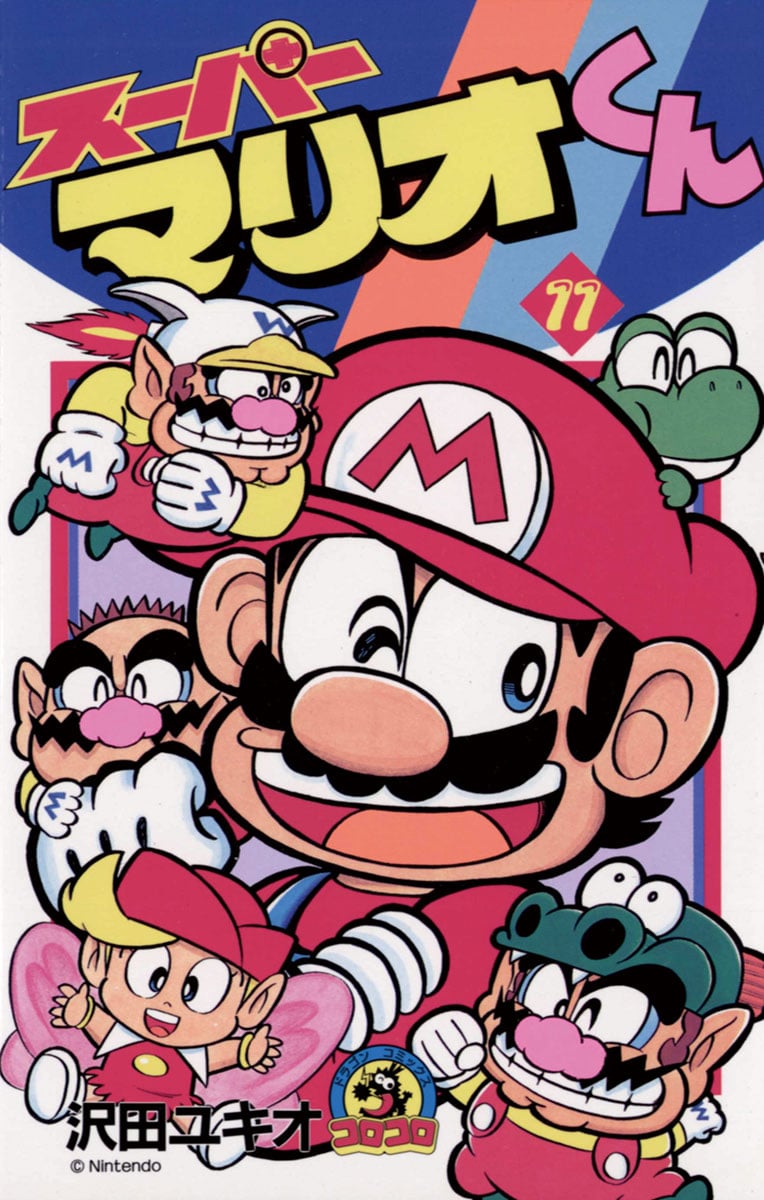
Super Mario-kun covers the game across three volumes (11, 12, 13). Wanda asks Mario, Luigi, Yoshi, Toad, and later Birdo to help free the Peaceful Woods from Wario. Each chapter pits the heroes against a different boss, culminating in a final battle against Wariki — Wario fused to a tree. Notable continuity oddity: Birdo's death in the Super Mario Bros. 2 arc and her reincarnation as a fairy in the Yoshi's Safari arc are simply ignored here.
Volume 11
Volume 12
Volume 13
References to / from Other Games
References Backwards
Super Mario Bros. 2 (1988)
Toad's pick-up-and-throw mechanic is directly lifted from SMB2. The Spud enemy resembles SMB2's vegetable items. And critically, this is Birdo's first reappearance in the Super Mario franchise since SMB2.
Mario & Wario (1993)
The Sprites of the Peaceful Woods may be a reference to the fairy Wanda from Yōsei no Mori (the Japanese title of Mario & Wario). The two manga adaptations explicitly retcon Wanda into the Sprite role.
References Forwards
Mario Superstar Baseball (2005)
Toad and Wario have explicit bad chemistry in this game — an in-game stat reference traceable directly to the events of Wario's Woods.
NES Remix 2 (2014)
Several “remix” challenges are based on this game's phases — Nintendo's way of reintroducing the late-NES title to a new audience.
Brain Age: Concentration Training
A mode called “Blob Blast” uses Wario's Woods-style bombs and stylus controls — a clear homage similar to how the “Virus Buster” mode in earlier Brain Age games echoed Dr. Mario.
Animal Crossing (2002)
The full game is playable inside Animal Crossing on GameCube — obtainable through Animal Island interactions via a GBA link. Genuinely a full NES emulation, not a demake.
Gallery
Official Artwork
Toad
Squeak
Goro
In-Game Screenshots
2P Mode
Single Player
Gameplay Video
A gameplay demonstration of Wario's Woods showing the falling-bomb mechanics, Wario's timer system, and boss encounters in action.
Trivia
- The last NES game. Wario's Woods is the final game ever released for the NES in North America under Nintendo's official seal of quality — 10 December 1994, more than nine years after the system's launch.
- It is the only NES game ever to ship with an ESRB rating (K-A “Kids to Adults”, the predecessor of E for Everyone). The ESRB had only existed for two months by the time of release.
- In Japan, the Famicom release of Wario's Woods was simultaneous with a cartridge port of The Legend of Zelda — together, the final first-party Famicom games.
- Toad's second starring role. The first was Kinopio Live (Satellaview, 1996), an obscure Japanese broadcast title. Captain Toad doesn't count — he's a separate character.
- This is Birdo's first reappearance in the Super Mario franchise since SMB2 (1988) — six years between appearances. She'd become a permanent Mario spinoff fixture from here onwards.
- Wario's purple-and-white outfit in his in-game sprites is a palette limitation — the NES couldn't render his correct yellow-and-purple costume. The box art shows him in the correct colours.
- The NTSC and PAL versions have almost entirely different soundtracks — the PAL version reuses music from the SNES Wario's Woods, which released the same year.
- Released in Japan as «ワリオの森» (Wario no Mori, literally “Wario's Forest”).
- Intelligent Systems' involvement here predates their hits — this was during the early period of the studio before Paper Mario (2000) and the Advance Wars revival.
- The game features in Animal Crossing on GameCube as a fully playable in-game NES title — one of the rarest hidden items, obtained only by giving the right gift to an Animal Island villager via GBA link.
- Wario's self-inflation gag in the late-game cutscenes is one of the earliest uses of the “Wario is a fraud” comedic angle that WarioWare would later make central to the character.
- The NES Switch Online release on 12 December 2018 launched the game alongside Ninja Gaiden and Adventures of Lolo — finally making it widely accessible to modern audiences.
- The game cycles through 99 rounds in total, with bosses at every 10th round milestone (the “9 of every 10”).
- Ratings: ESRB K-A (original) / E (re-releases), PEGI 3. CERO did not exist when the Japanese version released.