

Fortune Street
Also known as Boom Street in Europe — Mario meets Monopoly, Dragon Quest edition
Overview
Fortune Street (Boom Street in Europe and Australia) is a Wii board game that brings together two of gaming’s most beloved universes — the Mushroom Kingdom and the world of Dragon Quest — for a Monopoly-style property trading game. Up to four players race around beautifully illustrated game boards buying shops, investing in the stock market and collecting suits to bank their earnings, all in a race to hit a target wealth value before everyone else.
It’s the first entry in Square Enix’s long-running Itadaki Street series to be released outside Japan, making it the Western debut of a franchise that had been popular in Japan since 1991. The Mario characters appear as fully voiced playable characters alongside Dragon Quest favourites, and six of the game’s boards are based entirely on Mario locations — from Mario Stadium to Peach’s Castle.

Gameplay screenshot from E3 2011
The game supports online play via the Nintendo Wi-Fi Connection, letting you compete against others globally. There’s a beginner-friendly “Easy Rules” mode that strips out the stock market to keep things accessible, and a full “Standard Rules” mode for players who want the complete strategic experience.
You can play as Mario, Bowser, Yoshi, Luigi, Peach, Donkey Kong, Wario, Waluigi, Birdo and Daisy on the Mario side — or as iconic Dragon Quest characters like Slime and the Dragonlord. Mii characters are also fully supported.
How to play
The core loop will feel familiar if you’ve ever played Monopoly. Players take turns rolling dice and moving around the board. Landing on an empty plot lets you buy a shop. Landing on an opponent’s shop means you pay them a shopping fee — the more developed their property, the more you pay. The goal is to be the first player to reach the target value and make it back to the bank.
What separates Fortune Street from Monopoly is the depth of its systems. Property values grow when you own adjacent shops in the same colour district — both shops level up simultaneously, creating powerful hotspots on the board. Every time you collect all four suit symbols (♠♥♦♣) scattered around the board and bank them at the bank square, you get a significant gold bonus based on how many shops you own. This suit-collecting mechanic is the strategic heart of the game.
 Shop SquareBuy and develop
 Bank SquareCash in suits here
 Venture SquareDraw a card
 CheckpointCollect salary
 Spade suitCollect all 4
 Heart suitCollect all 4
 Diamond suitCollect all 4
 Club suitCollect all 4
 1-Star ShopBasic shop level
 3-Star ShopMax shop level
Easy rules vs Standard rules
Two rule sets cater to different audiences:
- No stock market
- Simpler shop purchasing
- No districts
- Great for beginners and families
- Shorter games
- Full stock market
- Colour-coded districts
- Adjacent shops level up together
- Deep investment strategy
- Longer, more competitive games
Standard Rules adds a stock market where players can buy and sell shares in each colour district. If a district’s shop values rise, your stocks appreciate. Owning all shops in a district forces a buyout of any opponent’s shares in that district at a premium — a devastating offensive move.
The boards — Mario tour
Fortune Street features over 15 boards split between the Super Mario and Dragon Quest universes. The six Mario boards are available from the start. Four more special boards unlock after completing the Tour modes. Here are the six Mario boards:


Dragon Quest boards include Alefgard, Slimenia, Robbin’ Hood Ruins, Alltrades Abbey and The Colossus. The two special tour boards — Bowser’s Castle and The Observatory — unlock after completing both the Super Mario and Dragon Quest tours.
Mario playable characters
Twelve characters from the Mario universe are playable, each with an official rank (A/B/C/D) and unique personality reflected in their in-game dialogue. Ten are available from the start; Peach requires beating the Peach’s Castle board:

The universal hero. Dashes and jumps his way around the world. His red cap and overalls are known to all — and he plays to win.

Normally quiet and unassuming, but a shrewd and powerful businessman when it matters. Don’t let the gentle manner fool you.

Mario’s trusty adventuring partner. His long tongue is perfect for slurping up fruit — and for licking up other players’ profits.

Head of the Koopa Troop and a dangerous business rival. He won’t hesitate to buy your property from right under you.

Never far from Princess Peach’s side. A thoroughly nice fellow who’s rooting for everyone — in theory.

Soft-hearted but hard as nails. Is he only here for the banana-selling fruit stalls?

Playable after beating Peach’s Castle in Tour mode. The princess brings grace, strategy and a surprisingly sharp financial mind.
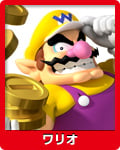
Greedy, loud and absolutely in his element on a property-trading board game. Genuinely dangerous to play against.

Wario’s lanky partner in crime. Scheming and unscrupulous — perfect for this kind of game.
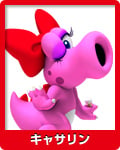
The pink bow-wearing character brings her own flair to the board. A consistent, solid player.

The young Koopa prince shows off in his dad’s shadow — impulsive but occasionally brilliant.

Princess of Sarasaland brings boundless energy and sharp competitive instincts to every game.
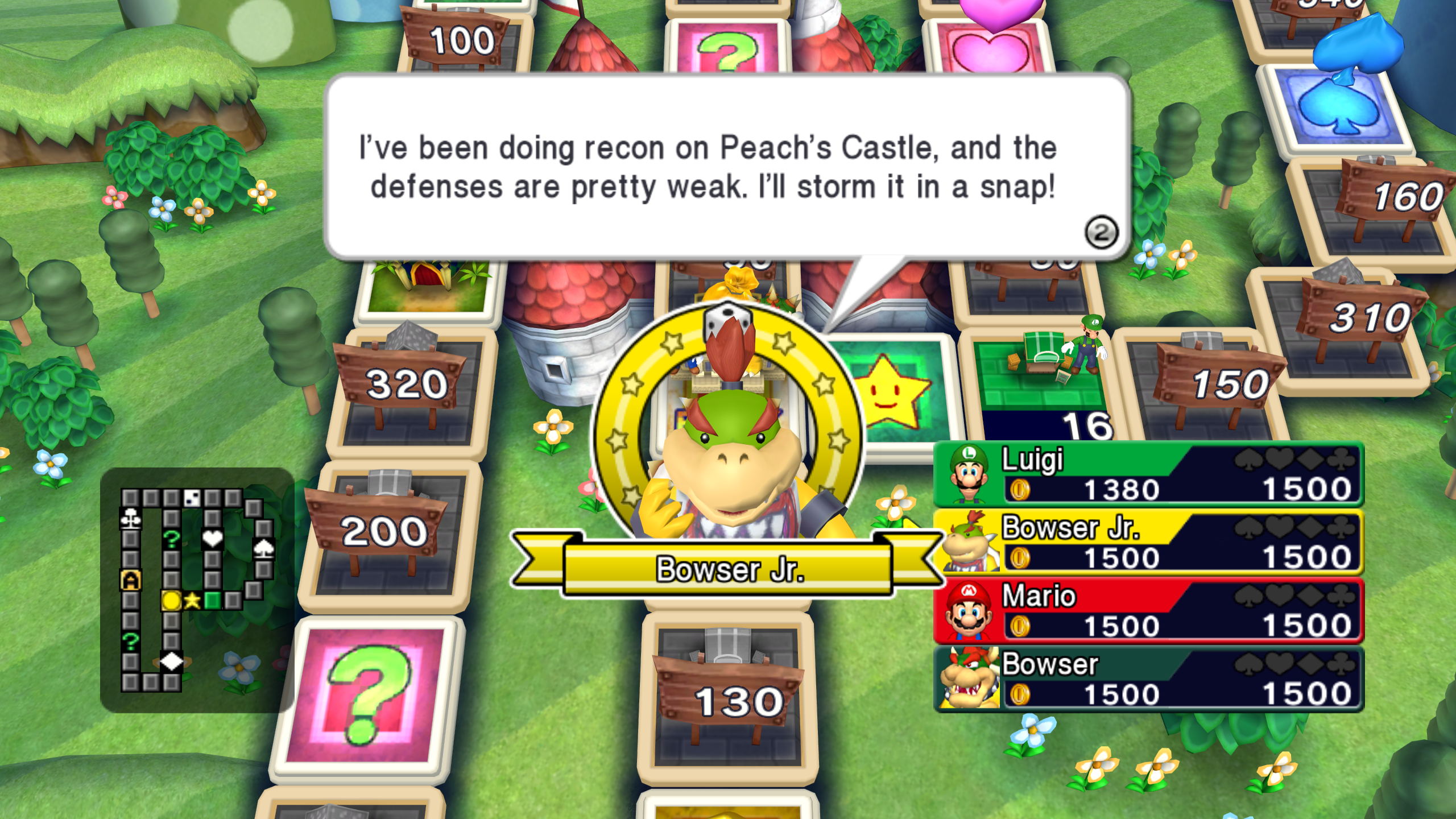
Bowser Jr. shows off his business instincts in Fortune Street
Non-playable Mario characters
A wealth of familiar Mario faces appear on the boards and in cutscenes as non-playable characters, giving the game real Mushroom Kingdom atmosphere:
Boo · Bob-omb · Bullet Bill · Chain Chomp · Dry Bones · Lakitu · Luma · Noki · Pianta · Shy Guy · Thwomp · Toads · Yoshis · 8-bit Buzzy Beetle · 8-bit Goomba · 8-bit Koopa · 8-bit Piranha Plant
These characters populate the boards, run shops, host venues and appear in various board-specific events. Seeing Bullet Bills streak across the board on Mario Stadium or Yoshis lazing around Yoshi’s Island adds real character to each game.
Venture cards
When a player lands on a Venture square, they draw a Venture card at random. These are the wild cards of Fortune Street — they can help you, hurt you or cause chaos for everyone at the table. They’re analogous to Chance Cards in Monopoly.
There are 128 Venture cards in total. 105 of them appear in both Easy and Standard Rules. The remaining 23 involve districts or stocks and are exclusive to Standard Rules. Effects range from receiving gold, moving to specific squares, forcing shop sales, investing automatically in stocks, gaining or losing percentage values on shops, and much more. No two games play out the same because of Venture cards.
“Landing on a Venture square late in the game when you’re close to the target value is one of the most heart-in-mouth moments in the whole game — it could rocket you to victory or set you back 20 turns.”
Example Venture card effects include:
- Move to any square of your choice
- All players move to the Bank square
- Shop values in one district increase or decrease by a percentage
- Receive gold equal to the number shown on a dice roll
- Force another player to sell a shop back to you
- Automatically invest gold into a stock
- Lose a flat amount of gold to another player
Minigames
Four minigames break up the board action and give players a chance to earn bonus gold. They trigger via certain squares or events during play:



Videos
Two videos from our original coverage — the US TV commercial and the E3 2011 reveal trailer:
US TV commercial
E3 2011 reveal trailer
Trivia and interesting facts
- Fortune Street is the first game in the Itadaki Street series to be released outside Japan — the series had been running in Japan since 1991
- Known as Boom Street in Europe and Australia — the name change was to avoid any unintended association with financial street addresses in certain markets
- The crossover with Dragon Quest was arranged between Nintendo and Square Enix, who co-published the game — an unusual partnership given Nintendo and Square Enix’s historically competitive relationship
- Princess Peach is the only base-roster Mario character locked behind progress — you must finish second or better on the Peach’s Castle board in Tour mode to unlock her
- The game supports Mii characters as fully playable with their own dialogue, making it one of the few board games where your actual Wii avatar competes against Mario and Bowser
- All six Mario boards are available from the start — the special boards (Bowser’s Castle and The Observatory) only unlock after completing both the Mario and Dragon Quest tours
- The game includes 128 Venture cards — 105 in all modes, 23 exclusive to Standard Rules involving stocks and districts
- Playing with Standard Rules adds a full real-time stock market — share prices fluctuate as players buy and sell, and owning a full district forces opponents to sell their shares
- The game was developed primarily by Marvelous AQL rather than in-house at Nintendo or Square Enix — an unusual arrangement for a major Mario title
- Fortune Street features online multiplayer via Nintendo Wi-Fi Connection — one of the more fully-featured online Wii board games of its era