Wii2010Nintendo EAD Tokyo3D platformerMetacritic 98242 starsYoshi in spaceEdge 10/10Switch 2025
Super Mario Galaxy 2
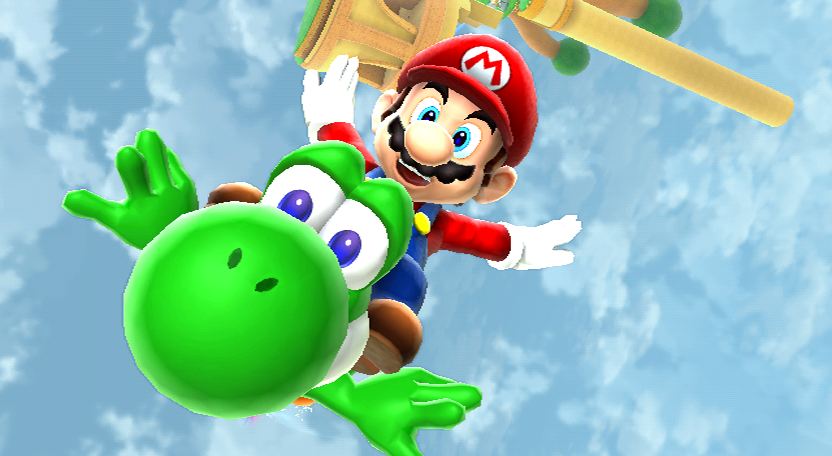
The sequel Nintendo never planned to make, and one of the best-reviewed games in history. Super Mario Galaxy 2 began life as “Galaxy 1.5”, a modest set of new planets for the 2007 original, and grew into a full second adventure in which Yoshi finally flies into space, Mario turns into a cloud and a boulder, and a planet shaped like Mario’s head carries you between 49 galaxies. Director Koichi Hayashida and producer Yoshiaki Koizumi stripped away most of the first game’s story, doubled the collectible count to 242 stars and finished with Grandmaster Galaxy’s Perfect Run, still spoken of in hushed tones. Released in May 2010, it scored a perfect 10 from Edge, IGN, GameSpot and Eurogamer, sold 7.41 million copies, and returned in October 2025 as part of Super Mario Galaxy + Super Mario Galaxy 2 on Nintendo Switch.
Developer:Nintendo EAD Tokyo (Software Development Group No. 2)
Publisher:Nintendo
Platform:Wii; Wii U eShop (2015); Nintendo Switch (2025)
Genre:3D platformer
N. America:23 May 2010
Japan:27 May 2010
Europe:11 June 2010
Australia:1 July 2010
South Korea:20 January 2011 (as Super Mario Wii 2)
Players:1–2 (Co-Star Mode)
Director:Koichi Hayashida
Producers:Yoshiaki Koizumi, Takashi Tezuka; general producer Shigeru Miyamoto
Music:Mahito Yokota, Ryō Nagamatsu, Koji Kondo; performed by the Mario Galaxy Orchestra
Galaxies:49 across Worlds 1–6 and World S; 242 stars
Ratings:ESRB E · PEGI 3 · CERO A · ACB G
Sales:7.41 million worldwide (Nintendo)
Re-releases:Nintendo Selects (2014–2016); Wii U eShop (January 2015); Super Mario Galaxy + Super Mario Galaxy 2 (Switch, 2 October 2025)
Advertisement
Overview
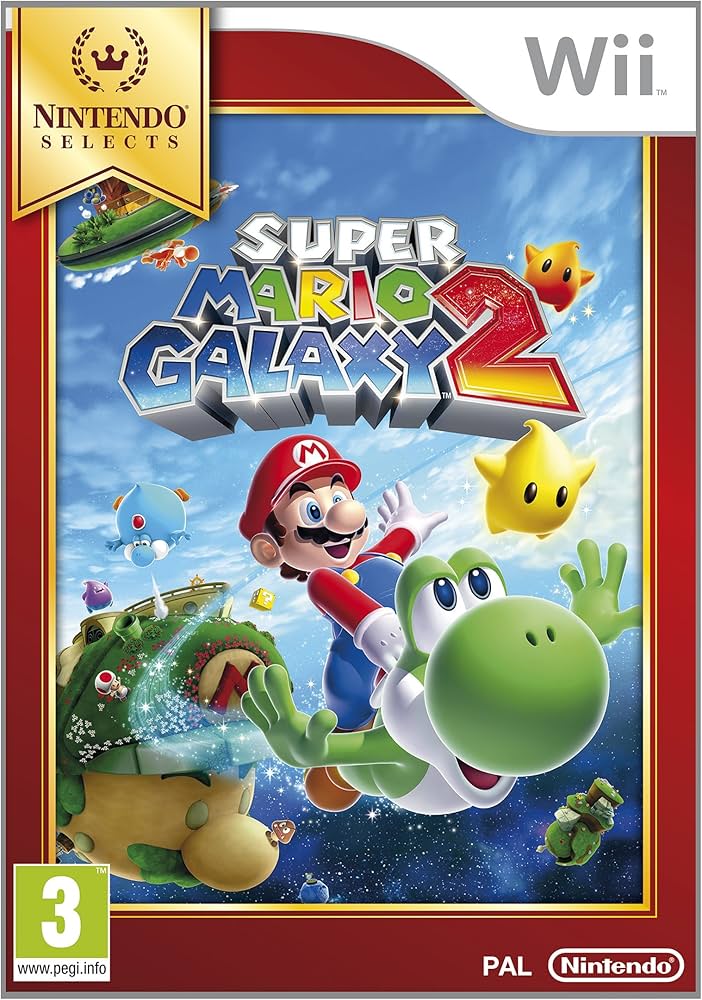
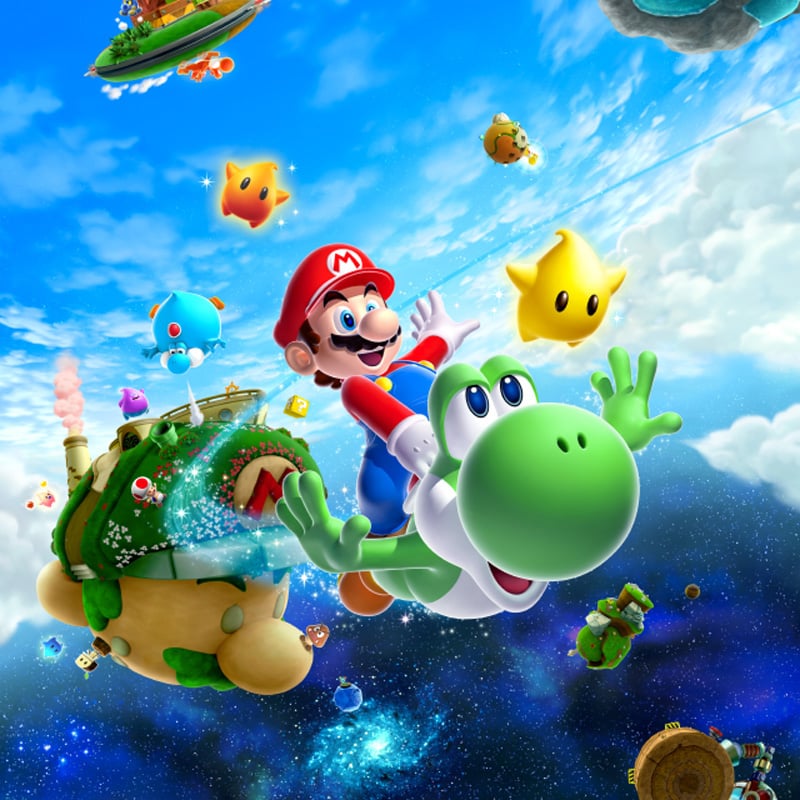
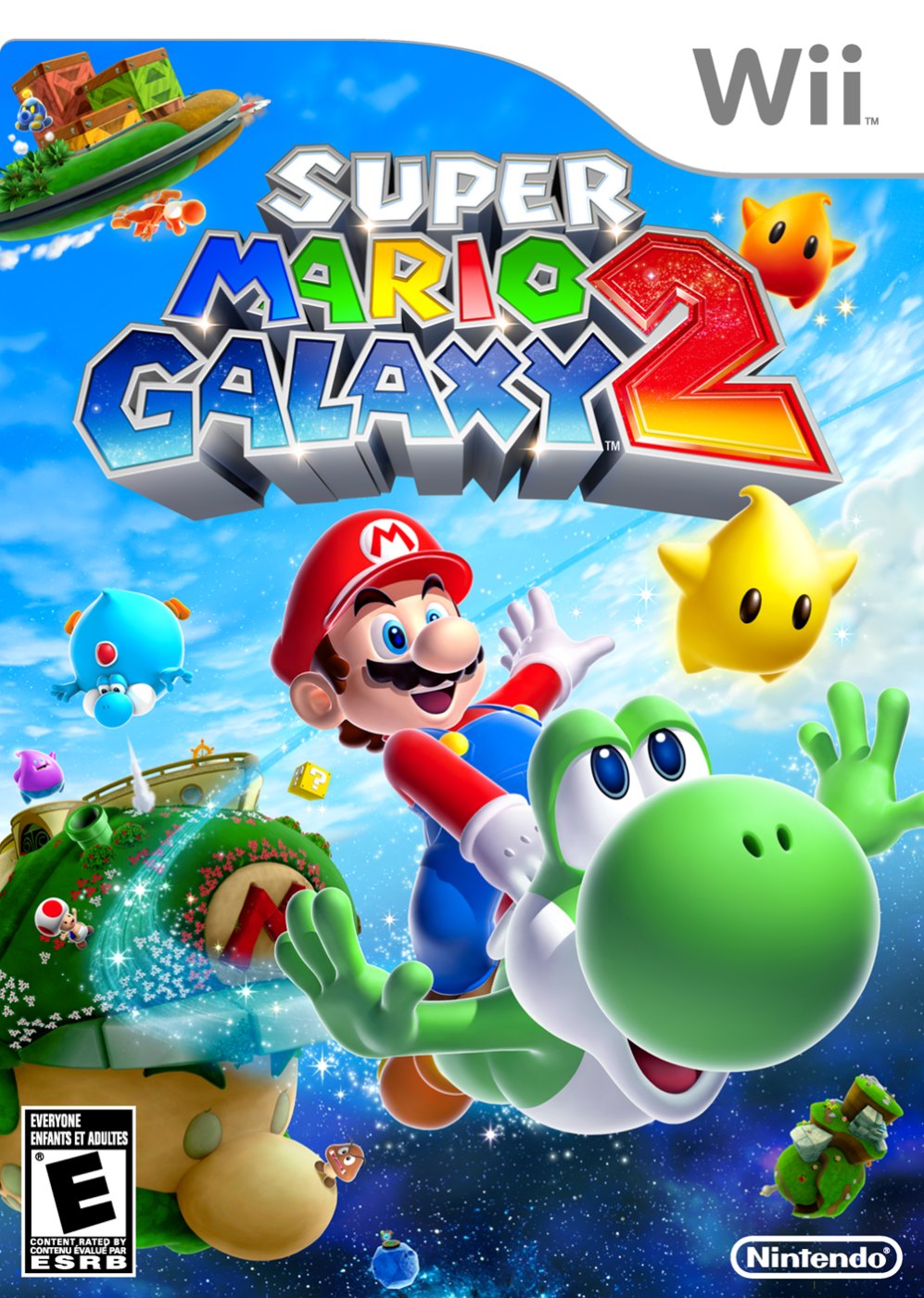
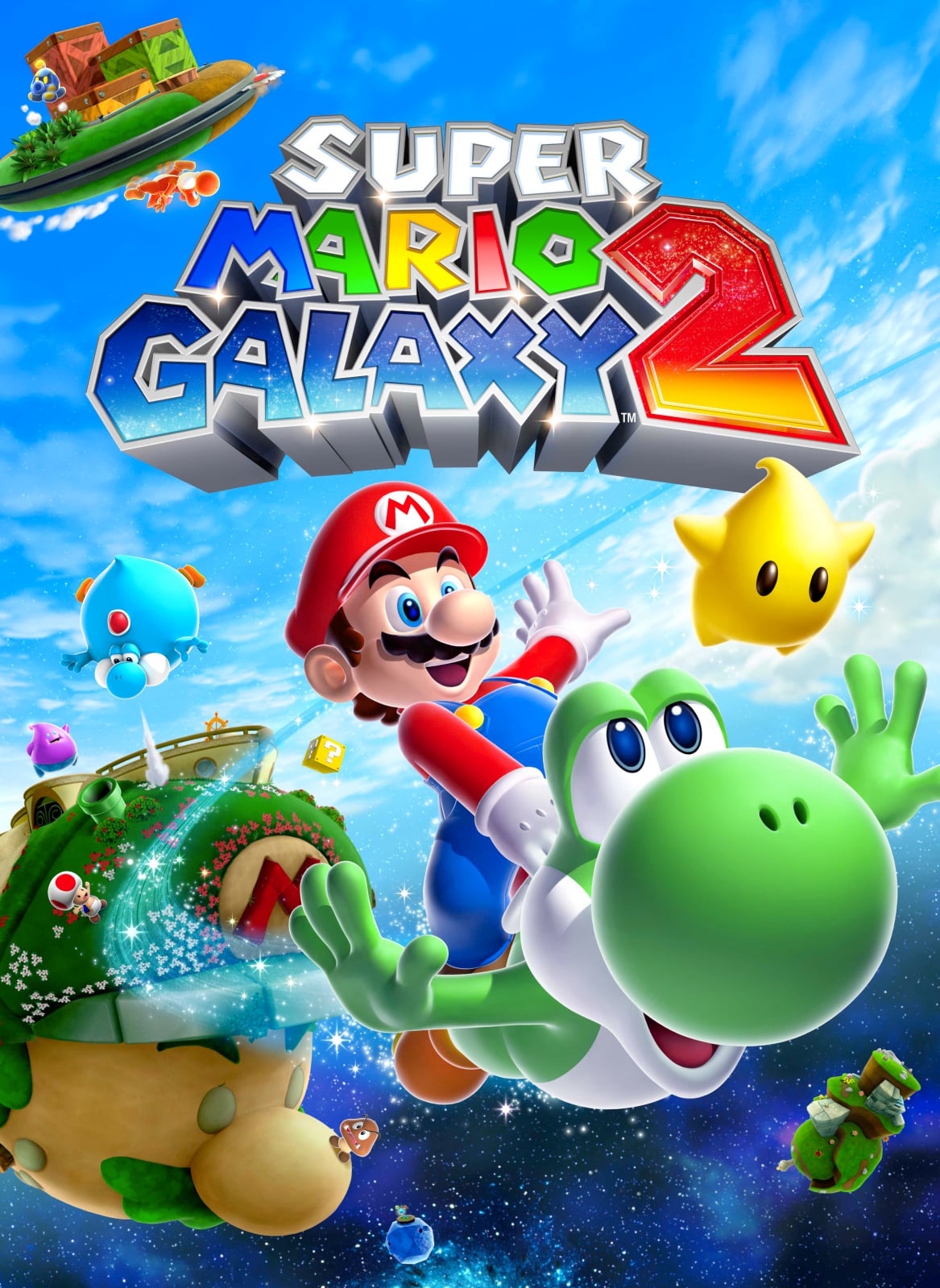
Mario and Yoshi in the box artwork.
When Super Mario Galaxy shipped in 2007, its Tokyo team thought they were done with gravity. Shigeru Miyamoto thought otherwise. He suggested a quick follow-up built on the same engine, a “1.5” of new planets, and within a year the thing had so many fresh ideas in it that Nintendo started over and made a real sequel. Super Mario Galaxy 2 arrived in May 2010, two and a half years after the first game, and, as Super Mario Wiki points out, it remains the only full 3D Mario sequel to land on the same console as the game before it.
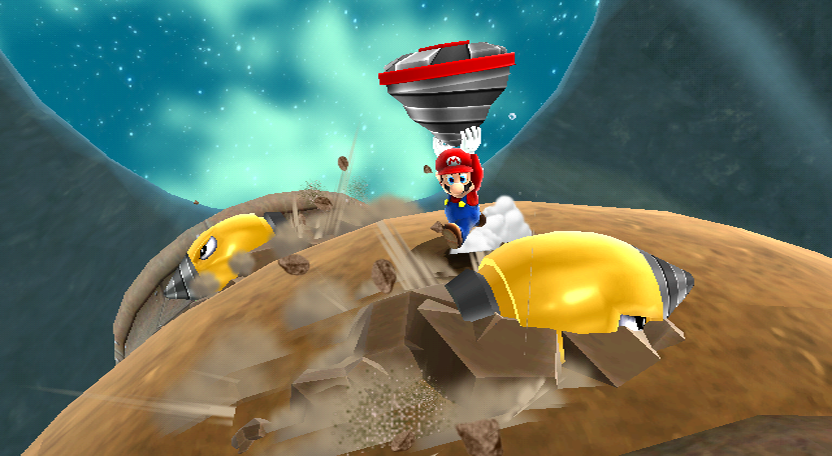
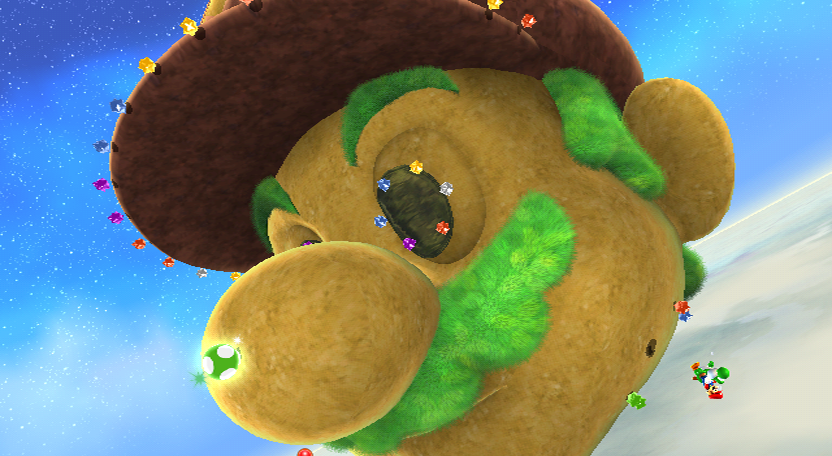
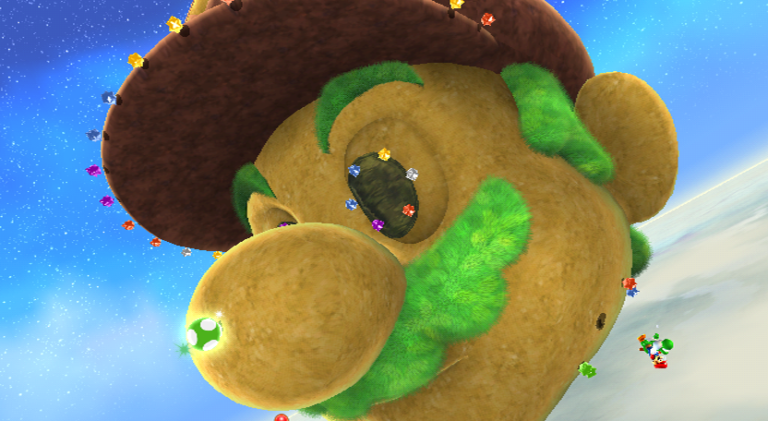
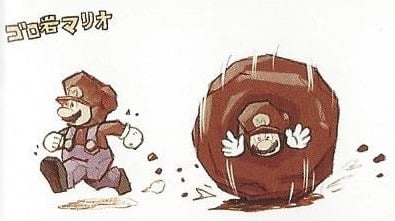
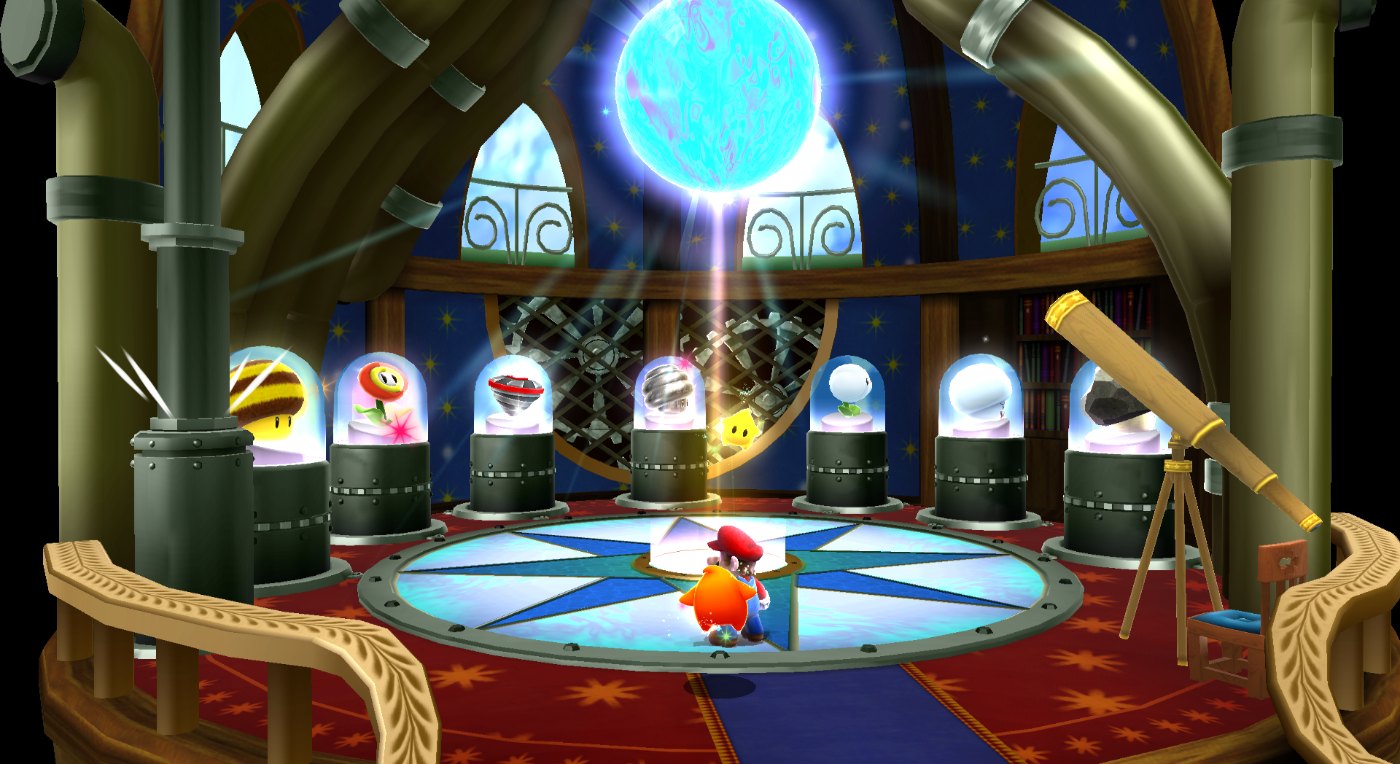
It plays like the original: Mario runs around tiny spherical planets, flings himself between them with Launch Stars, spins to attack and hunts Power Stars across galaxies. What changed is almost everything around that. Yoshi, cut from the first game for being one idea too many, is here with a tongue you aim with the Wii Remote and three fruits that turn him into a sprinter, a blimp and a lantern. Mario gains a Cloud Flower that conjures platforms from nothing, a Rock Mushroom that turns him into a rolling boulder and a Spin Drill that bores straight through a planet. The Comet Observatory hub is gone, replaced by Starship Mario, a flying planetoid carved into Mario’s face, and the open map of the first game becomes a Super Mario World-style path through six worlds and a secret seventh.
The story was deliberately thinned out: Rosalina’s melancholy storybook gives way to a wisecracking purple Luma called Lubba and a Bowser who has eaten enough Power Stars to loom over Peach’s Castle. In its place came density. No galaxy has more than three missions, so there is no padding, and once you hold all 120 Power Stars and have beaten Bowser again a second set of 120 Green Stars appears, hidden in the corners of every level you thought you knew. Finish all 240 and Grandmaster Galaxy opens, with a final “Perfect Run” that many consider the hardest thing Nintendo has ever asked of a Mario player.
Critics ran out of superlatives. Edge, IGN, GameSpot, Eurogamer, Destructoid and Nintendo Life all gave it full marks; Metacritic’s average is 98, among the highest ever recorded; and Official Nintendo Magazine later voted it the greatest Nintendo game of all time. It sold 7.41 million copies, became the first Wii game to be re-released on the Wii U eShop, and in October 2025 was remastered for Nintendo Switch alongside the original for Mario’s 40th anniversary.
Why Super Mario Galaxy 2 matters to Mario fans
It is the purest expression of the Mario design philosophy Nintendo had yet put on a disc: an idea per planet, a planet per minute, and nothing kept that was not fun. It brought Yoshi back to a mainline 3D Mario for the first time since Super Mario Sunshine, invented the Cloud Flower, gave us Starship Mario and Lubba, and set the template of the brutal post-game gauntlet that every 3D Mario since has copied, from 3D Land’s Special 8-Crown to Odyssey’s Darker Side. And it is, by the numbers, the best-reviewed Mario game ever made.
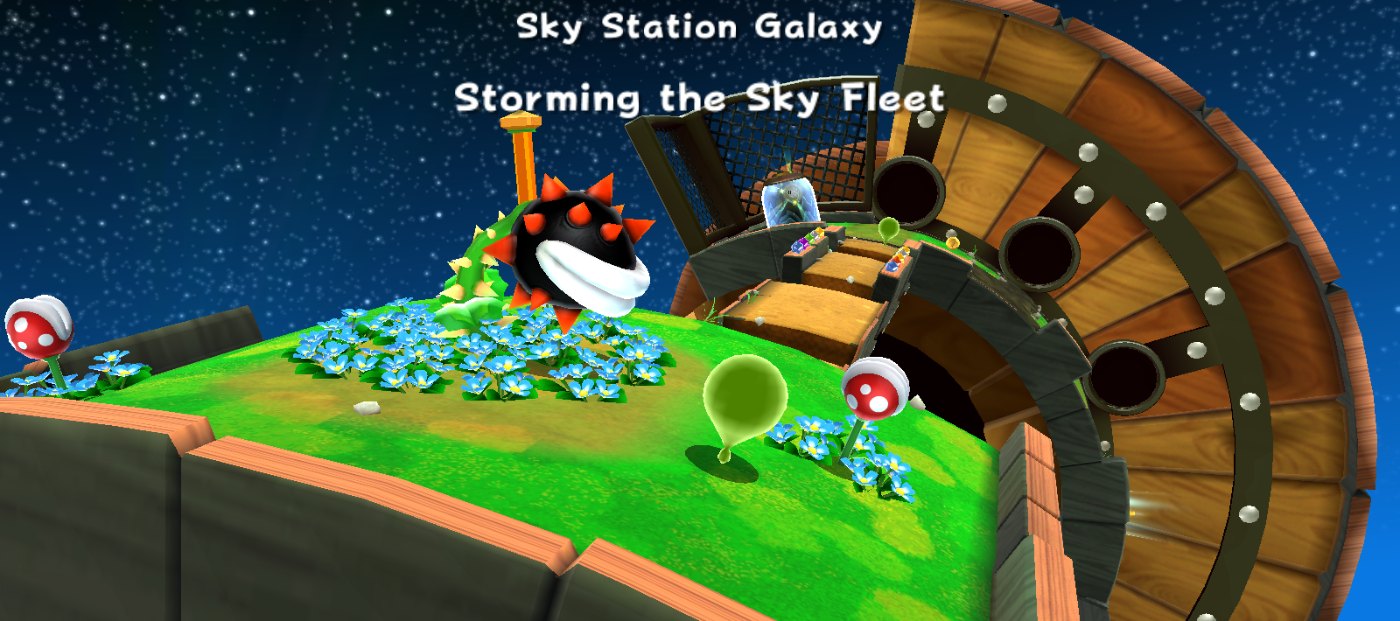
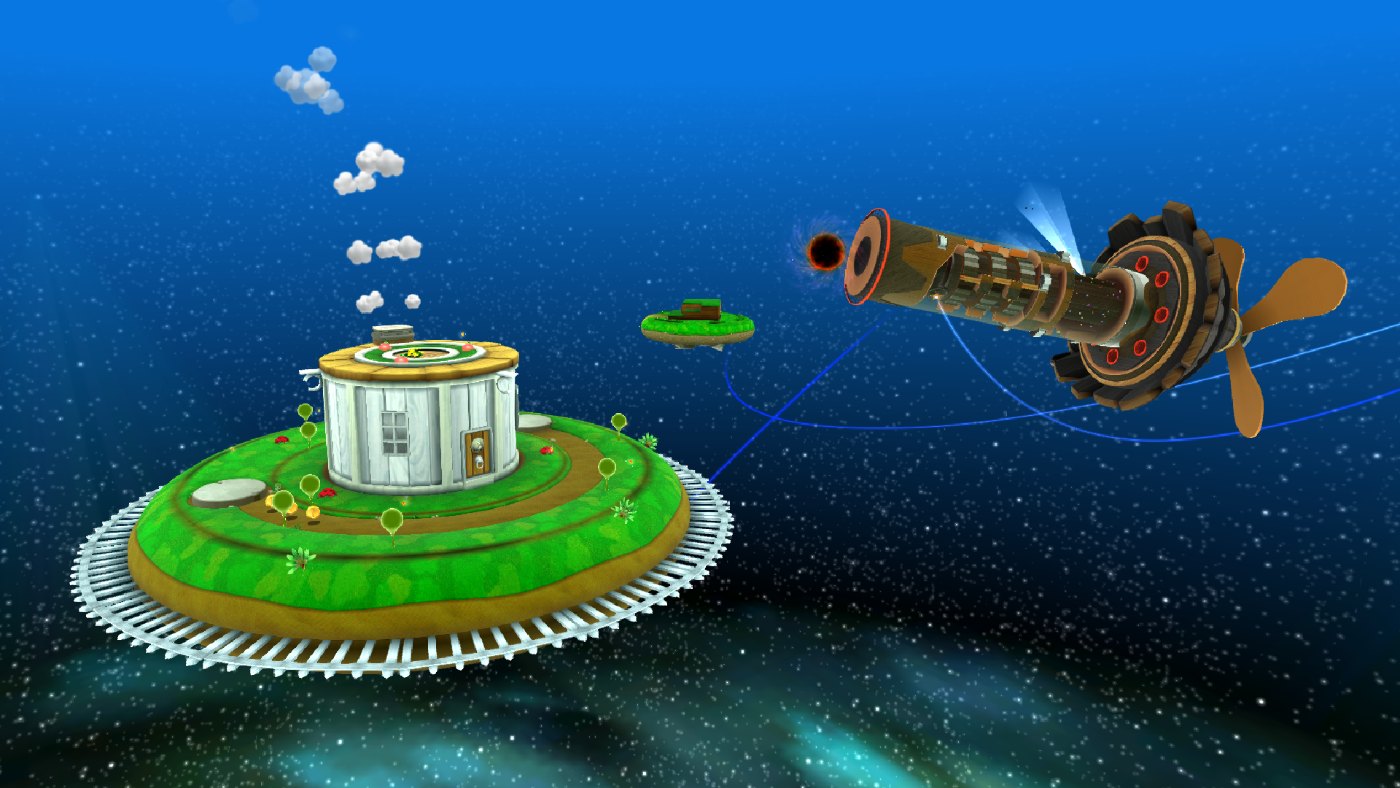
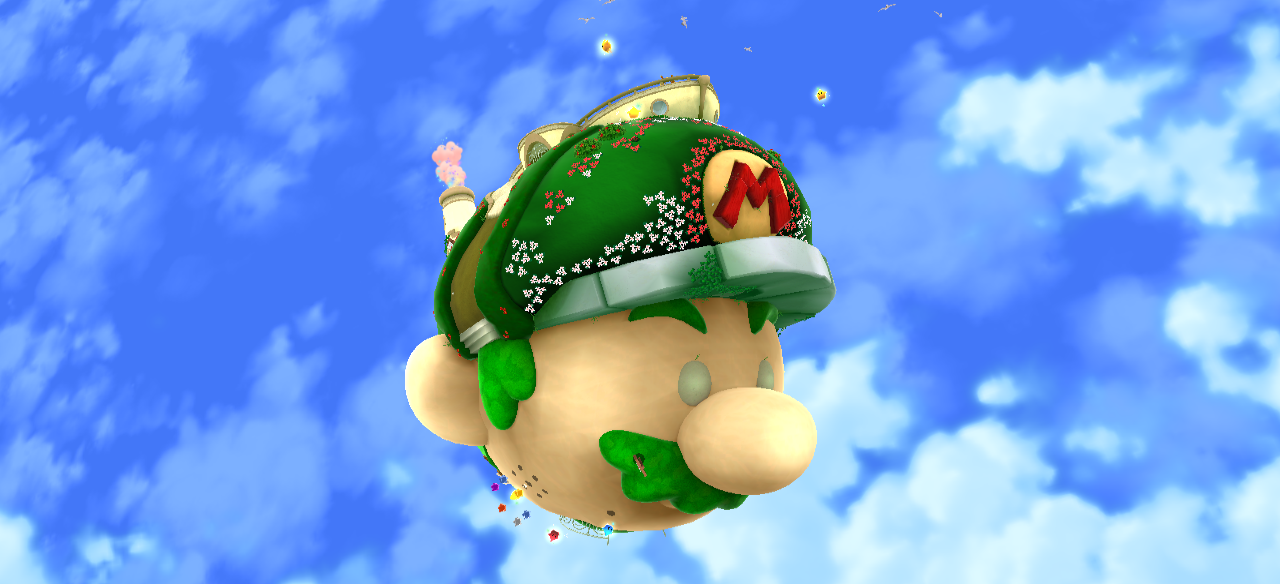
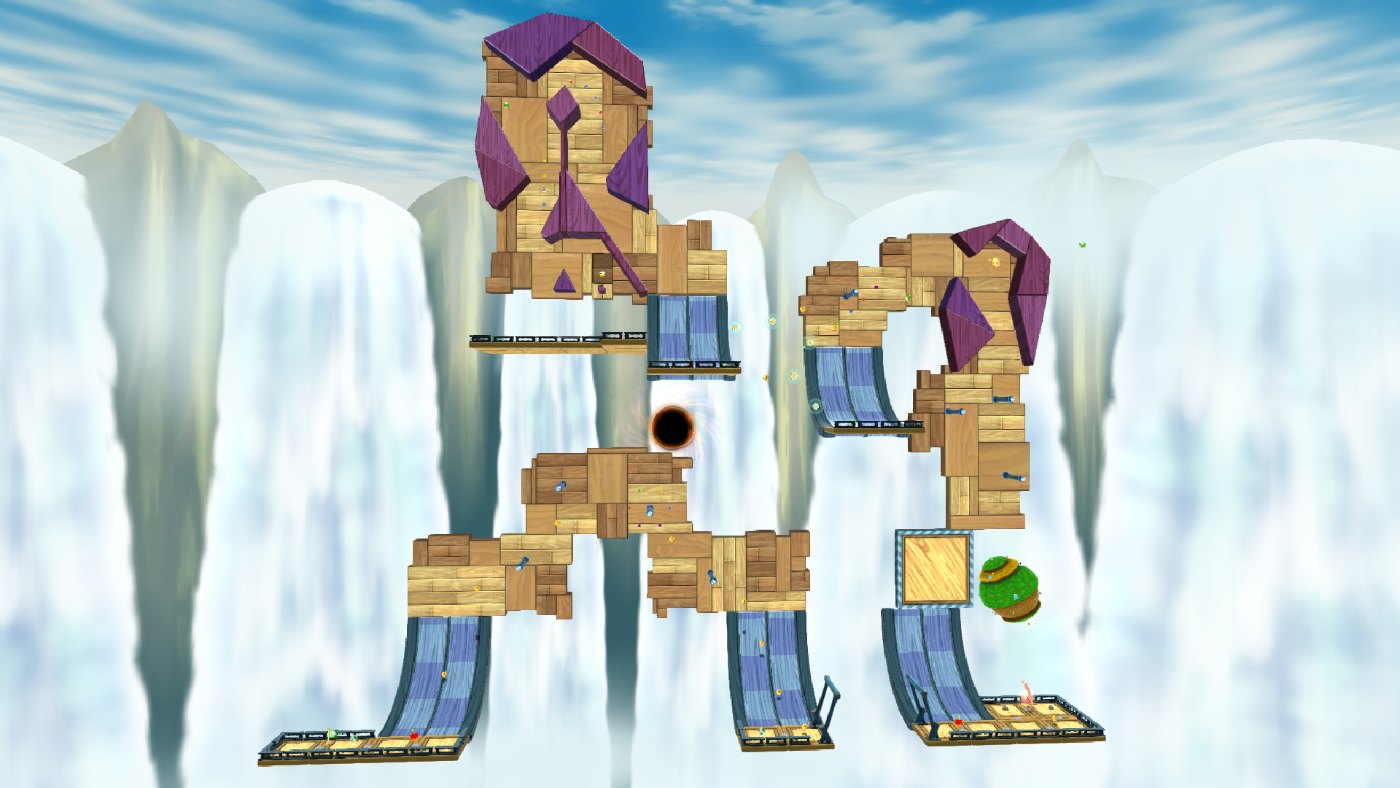
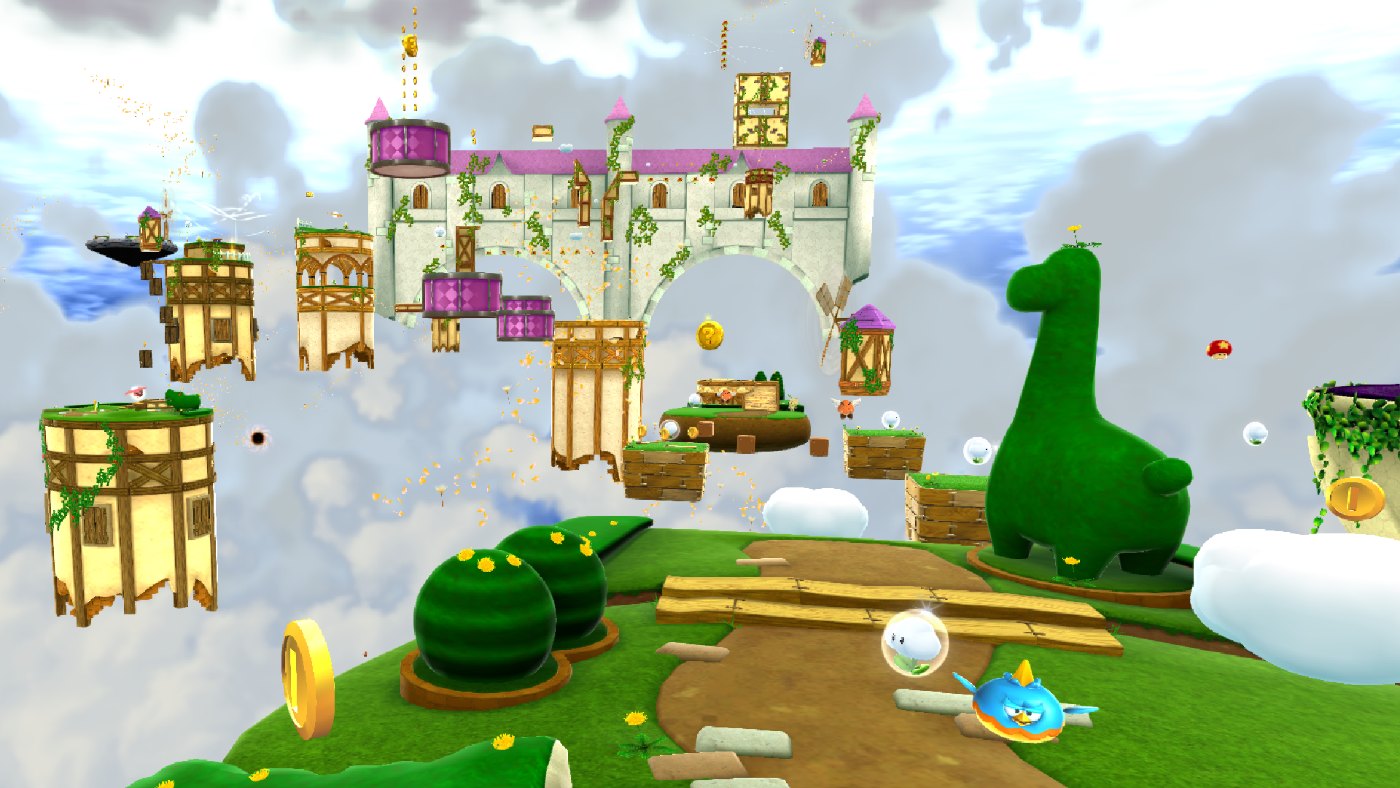
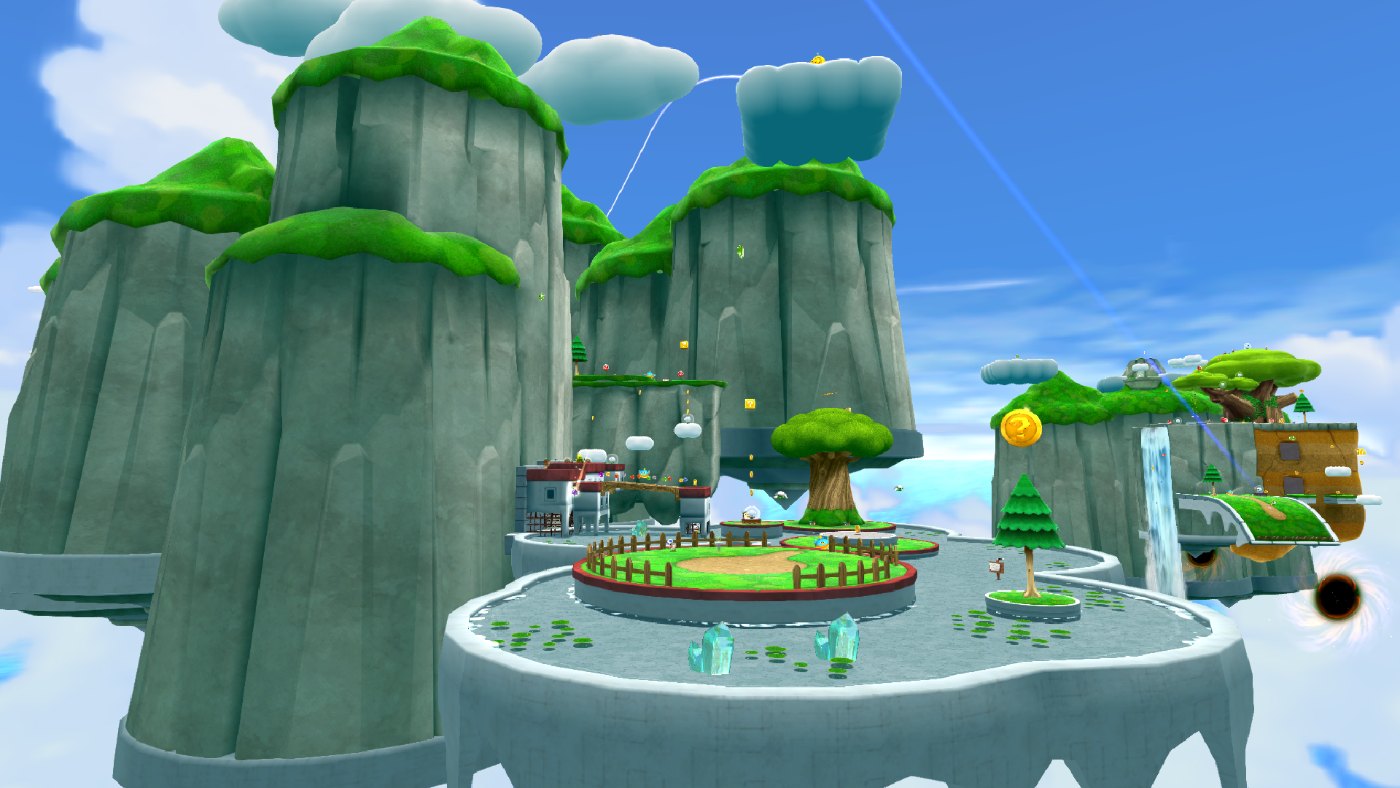
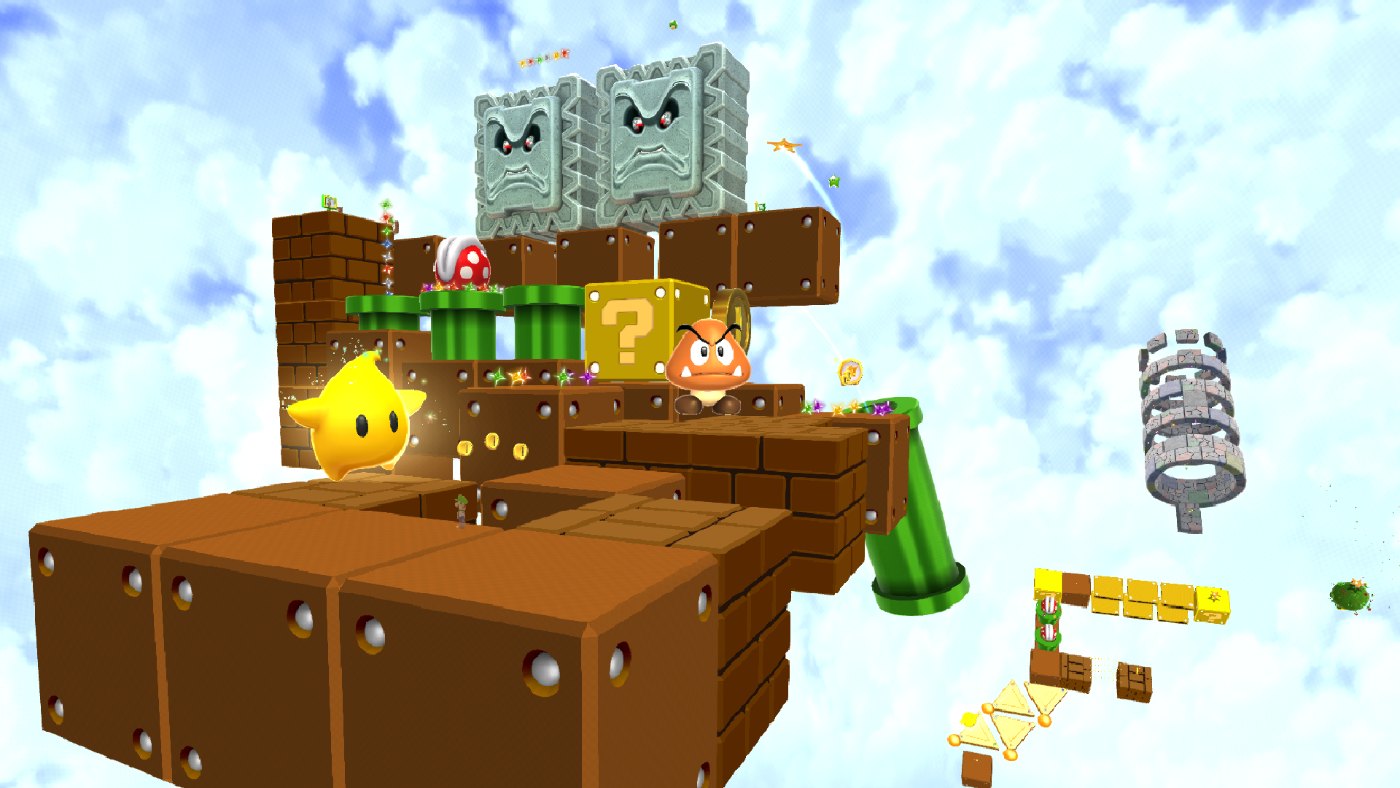
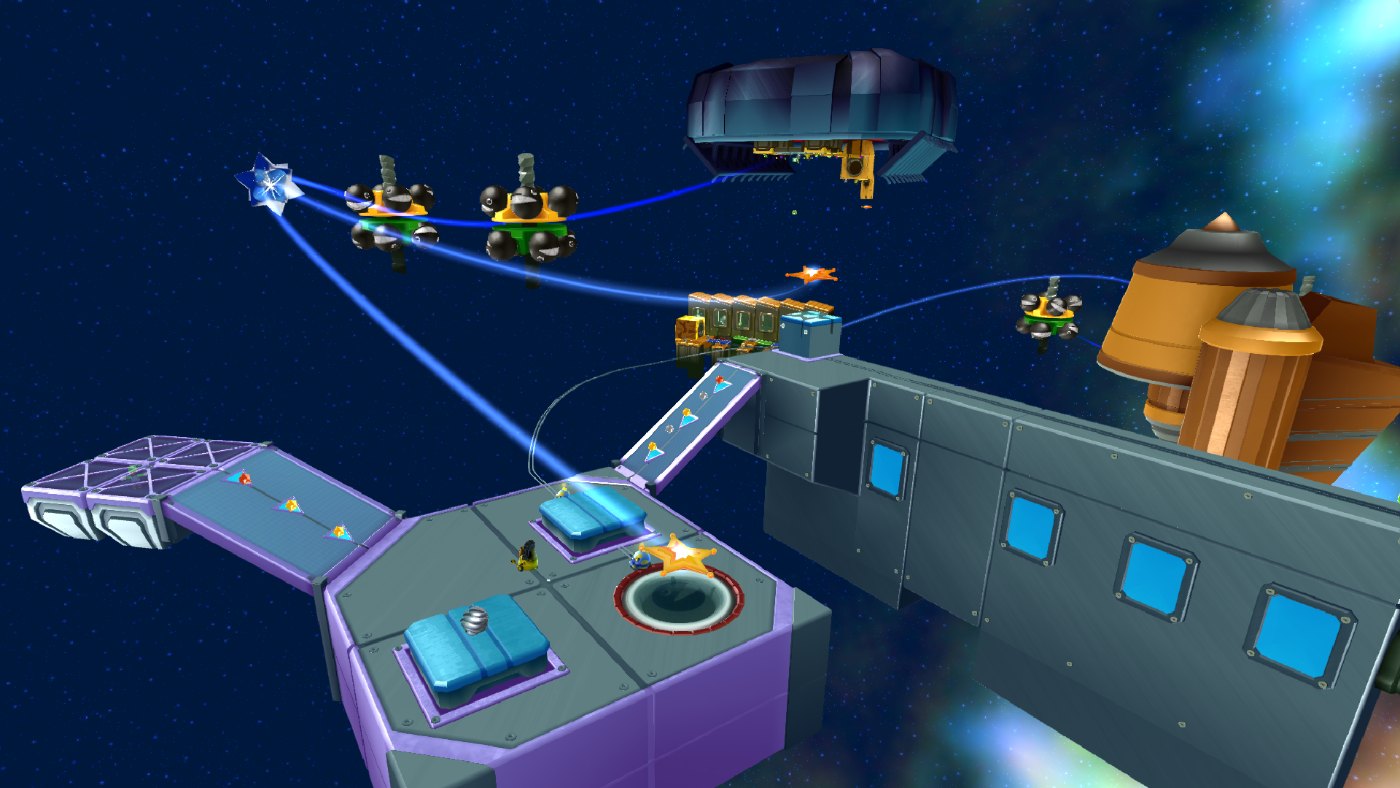
Sky Station Galaxy, the first stop.Starship Mario, a hub world with a moustache.Dash Yoshi sprints up a waterfall in Hightail Falls.Cloud Mario builds his own path in Cloudy Court Galaxy.
“It is time once again for the Stardust Festival, held once every hundred years, when the Mushroom Kingdom is showered in shining stardust.”
Official description: Nintendo of Europe, Super Mario Galaxy 2 game page (nintendo.com/en-gb). One sentence quoted; the rest summarised.
Nintendo of Europe’s official description opens with the festival and the invitation from Peach, introduces the “stray star child” Mario finds on the way, and promises mind-blowing planets with all-new perils. It highlights Yoshi’s return, Cloud Mario and Rock Mario, and a Co-Star Mode that is “more accessible than ever”.
Quick Answers
The questions people ask most about Super Mario Galaxy 2, answered briefly here and in depth further down the page.
When did Super Mario Galaxy 2 come out?
On 23 May 2010 in North America, 27 May in Japan, 11 June in Europe and 1 July 2010 in Australia, for Wii. It returned on the Wii U eShop in January 2015 and on Nintendo Switch on 2 October 2025. More →
How many stars are there?
242: 120 Power Stars in the main game, 120 Green Stars that appear afterwards, and two more in Grandmaster Galaxy, which only opens once you have the other 240. More →
How many galaxies are there?
49, spread across six worlds and the secret World S. The 24 main galaxies have three Power Stars each; the smaller galaxies (Hungry Luma ones included), the boss galaxies and all seven in World S, Grandmaster Galaxy among them, have two. More →
Is Yoshi in Super Mario Galaxy 2?
Yes, for the first time in the Galaxy series. He hatches from eggs in twelve galaxies, eats enemies with a tongue you aim with the pointer, and transforms with three fruits: the Dash Pepper, the Blimp Fruit and the Bulb Berry. More →
What are the new power-ups?
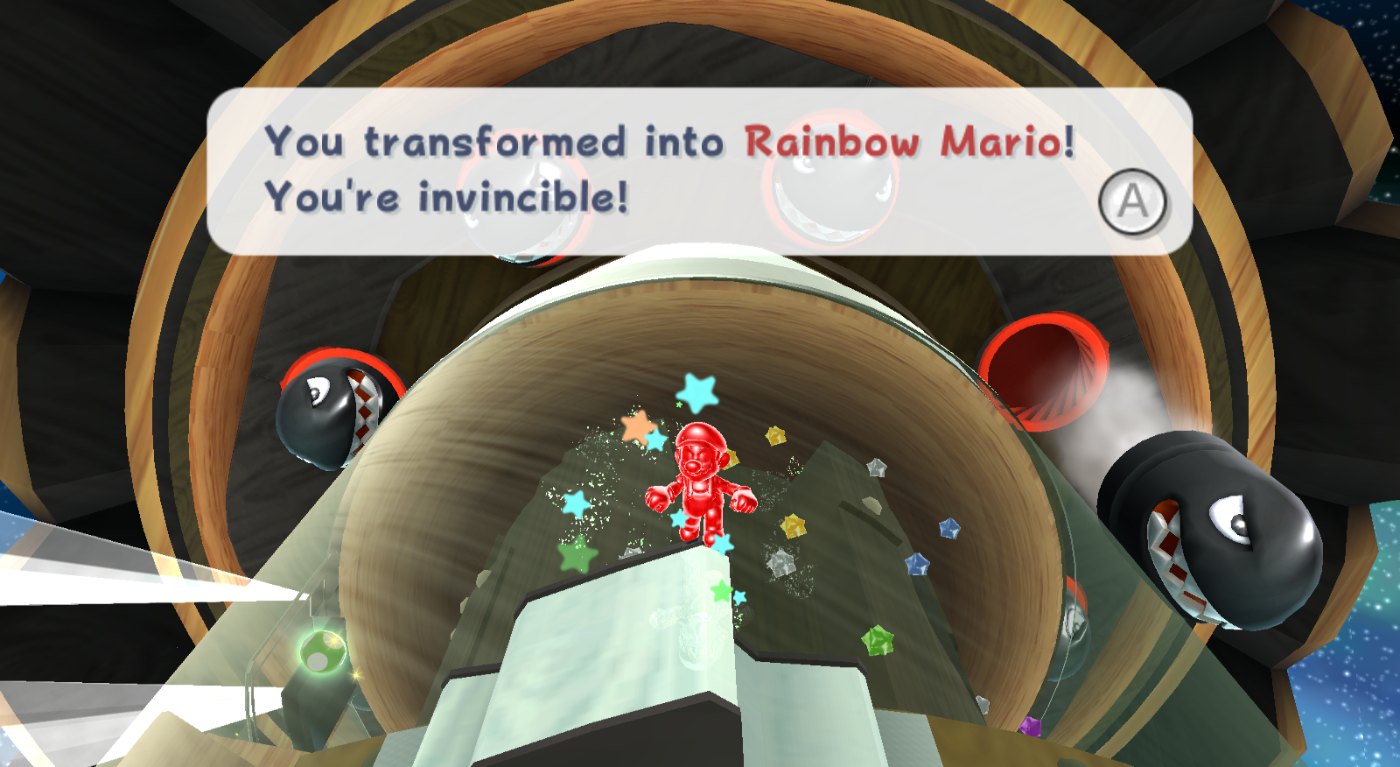
The Cloud Flower (three cloud platforms per power-up), the Rock Mushroom (Mario becomes a rolling boulder) and the Spin Drill (bore through a planet). Bee, Boo, Spring, Fire and Rainbow Mario return; Ice Mario and the Red Star were dropped. More →
Can I play as Luigi?
Yes. He turns up at the start of some missions once you have beaten Bowser’s Lava Lair and taken three stars in World 3, and after you finish Bowser’s Galaxy Generator you can swap to him any time at a small door on the back of Starship Mario. He jumps higher but slides more. More →
What is the Cosmic Guide?
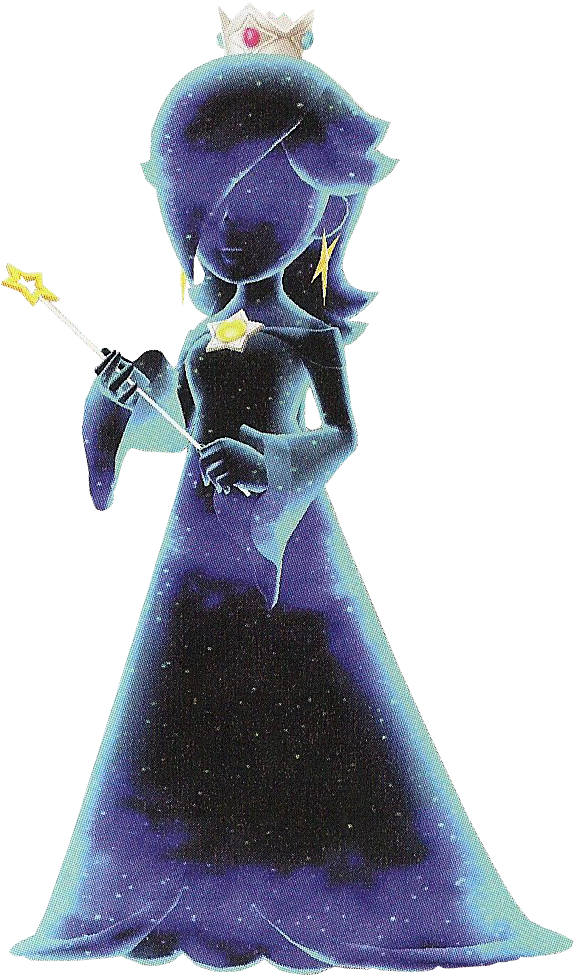
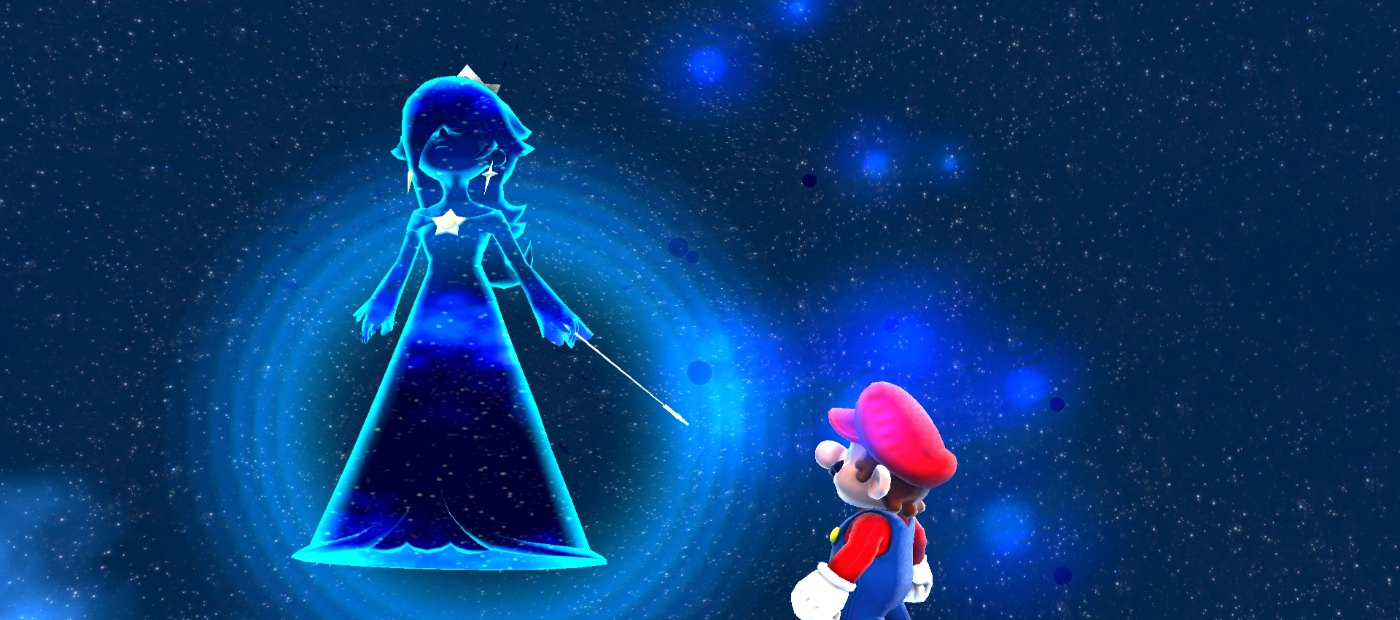
A ghostly, Rosalina-like Cosmic Spirit who appears if you keep dying and offers to play the section for you. Accept and the mission’s star turns bronze; it counts towards your total, but you cannot unlock Grandmaster Galaxy while you own any Bronze Stars. More →
What does the second player do?
In Co-Star Mode a second Wii Remote controls an orange Luma that collects Star Bits, coins and 1-Ups, freezes enemies with the pointer and can now spin to defeat them outright. More →
How do I unlock Grandmaster Galaxy and the Perfect Run?
Collect all 240 Power and Green Stars with no Bronze Stars. For the Perfect Run, finish The Ultimate Test, grab its Comet Medal and bank 9,999 Star Bits with Banktoad; then survive the whole gauntlet with one point of health and no checkpoints. More →
Is Rosalina in it?
Barely, and that is deliberate. The Cosmic Spirit resembles her, she appears with the Comet Observatory in the ending, reads the Lumas a story after 120 stars and hands over the very last star in Grandmaster Galaxy, but the guide this time is Lubba. More →
Story
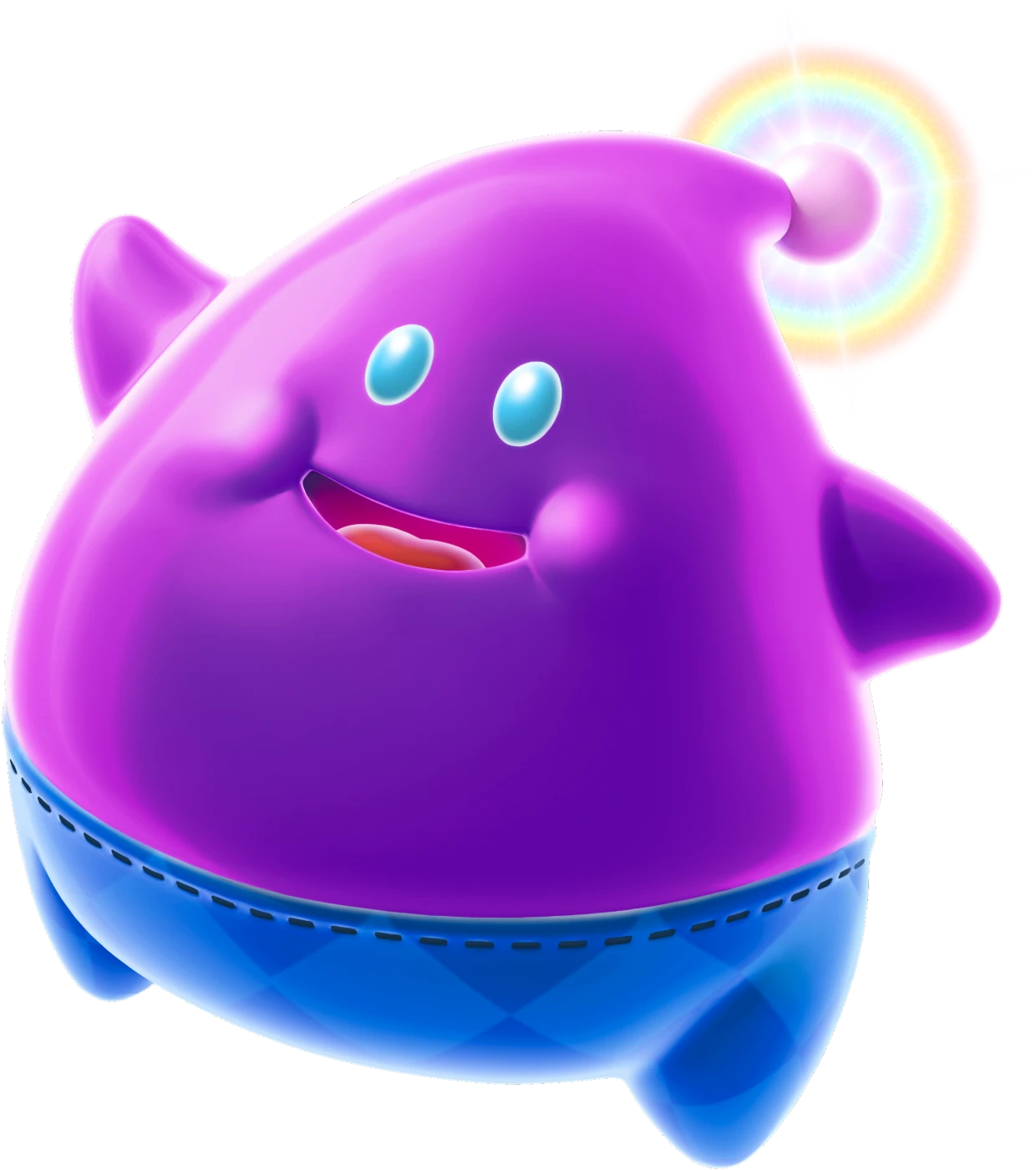
Lubba, captain of Starship Mario and the game’s chief talker.
Miyamoto asked for as little story as possible, and he got it: a festival, a kidnapping, a new friend and a long chase. But the beats are told with real charm, and the ending lands a small emotional punch that the first game would have been proud of.
The Star Festival, again
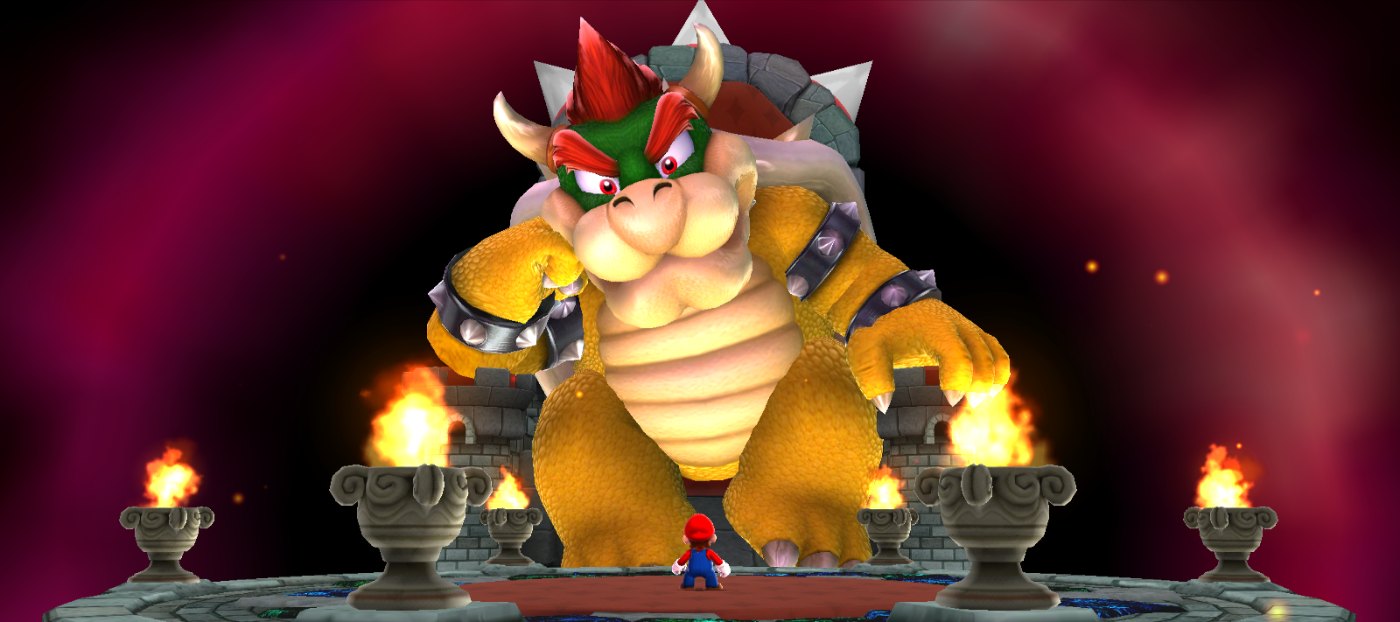
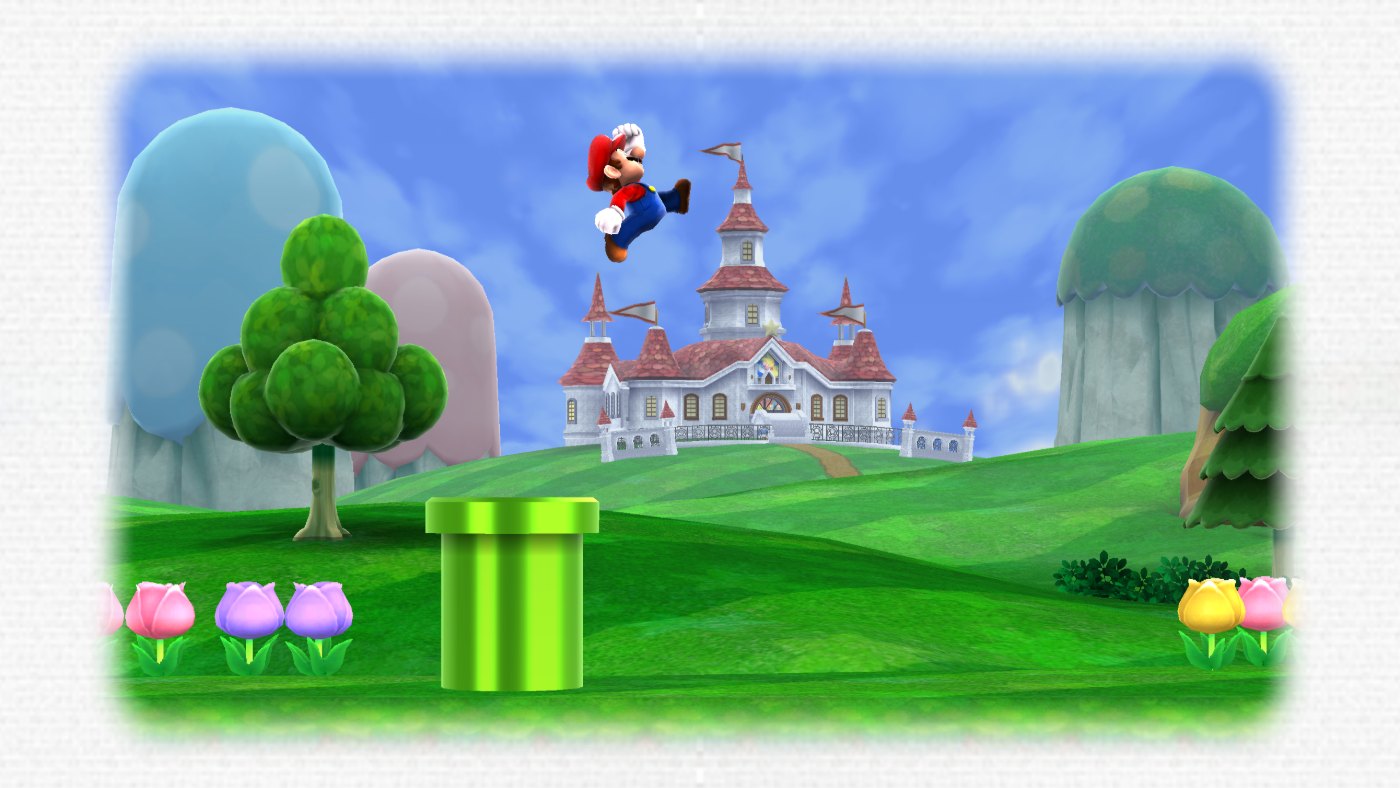
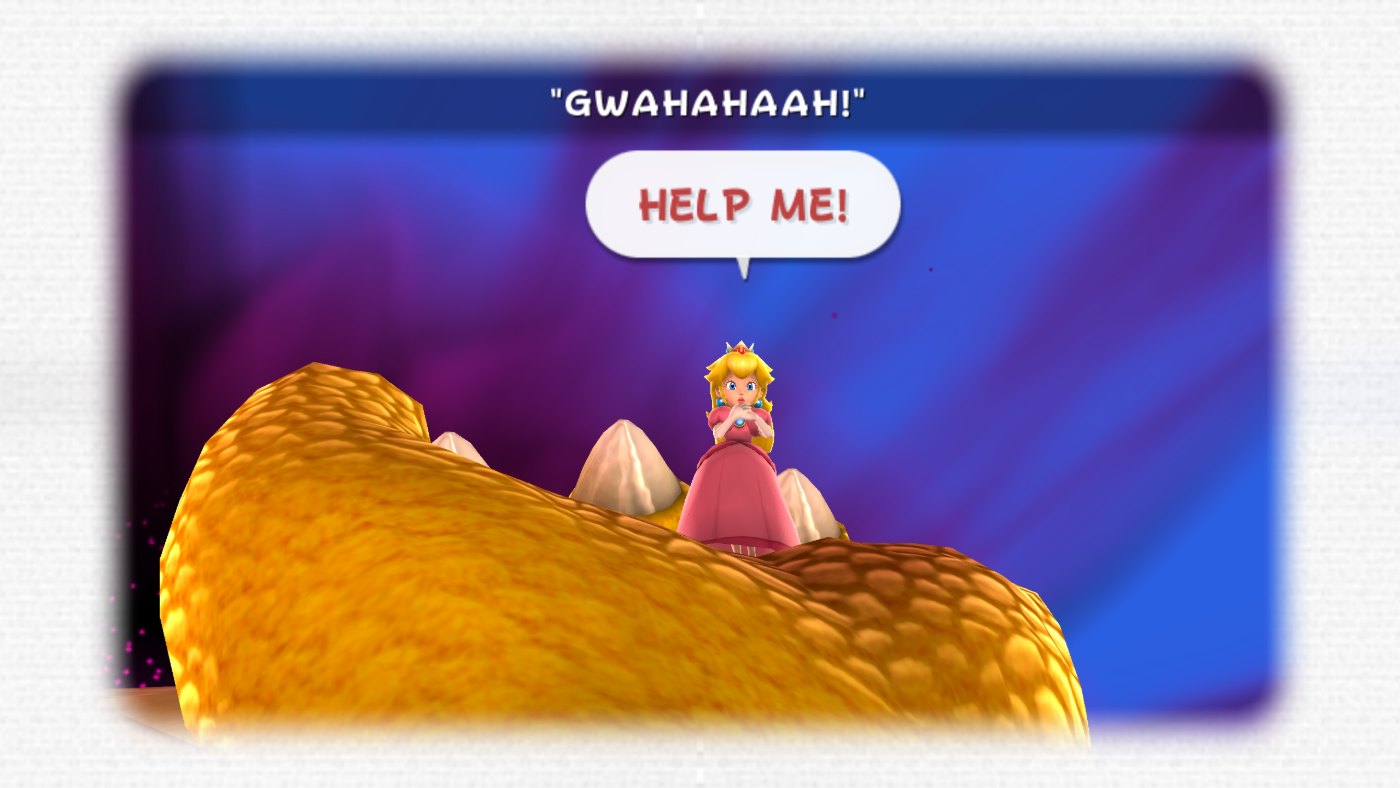
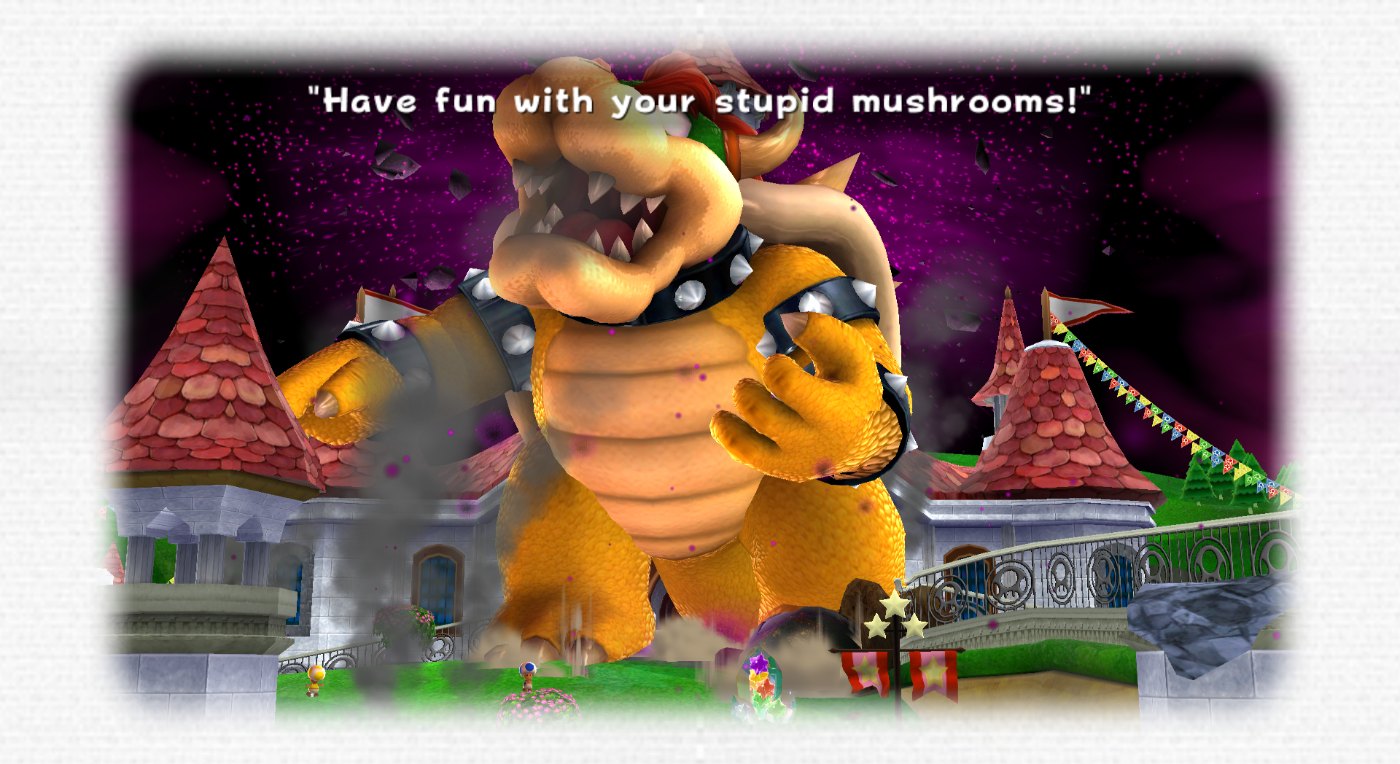
Once every hundred years stardust rains on the Mushroom Kingdom, and Peach writes to Mario to invite him to share cake and watch it fall. On the path to the castle he finds a lost Baby Luma in the grass; it nestles under his cap and lends him the power to spin. He arrives to find the party already ruined. Bowser, swollen to the size of a building by the Power Stars he has been eating, is stamping through Toad Town. He plucks Peach from her castle, announces that he is off to build an empire at the centre of the universe, and leaves. Lumas who crashed to earth nearby form a Launch Star, and Mario is shot into space after him.
Mario arrives to find a giant Bowser at the castle.Peach calls for help.Bowser departs for the centre of the universe.
Lubba and the ship with a face
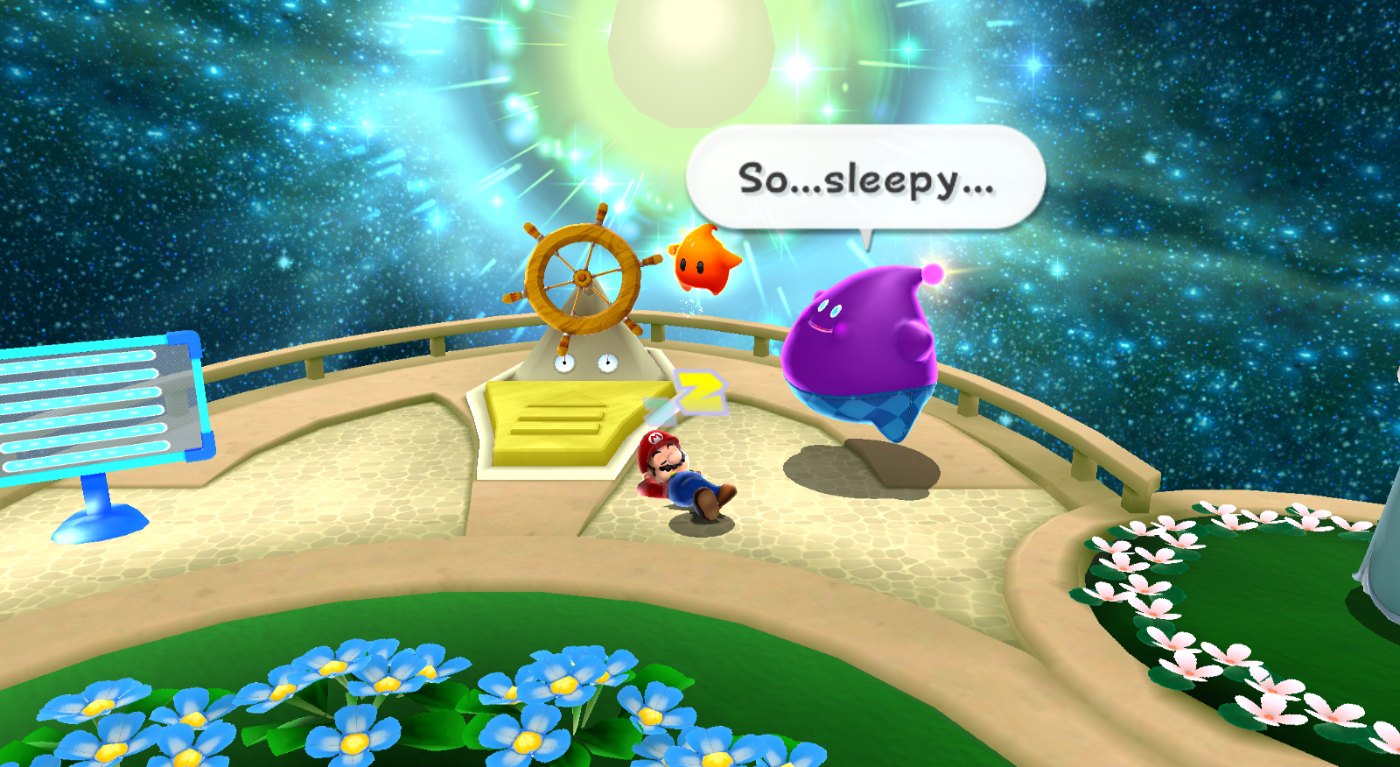
After his first Power Star, Mario lands on a battered planetoid and meets Lubba, a large purple Luma with a crew of young Lumas and no ship worth the name: Bowser’s forces have knocked the stars out of it. The two strike a deal. Mario will gather Power Stars; Lubba will use them to get the ship moving and take him wherever Bowser has gone. Lubba repairs the vessel, then remodels it in honour of the new captain, which is how a planet with Mario’s face, hat and moustache comes to be flying around the cosmos. The Toad Brigade turn up in their Starshroom, Yoshi is freed from a Magikoopa’s egg, and Luigi, never one to be left out, starts appearing at the start of missions asking for a turn.
Starship Mario under way.Lubba takes a nap on deck.Spin-Dig Galaxy and the first Spin Drill.
Sky stations, flotillas and lava lairs
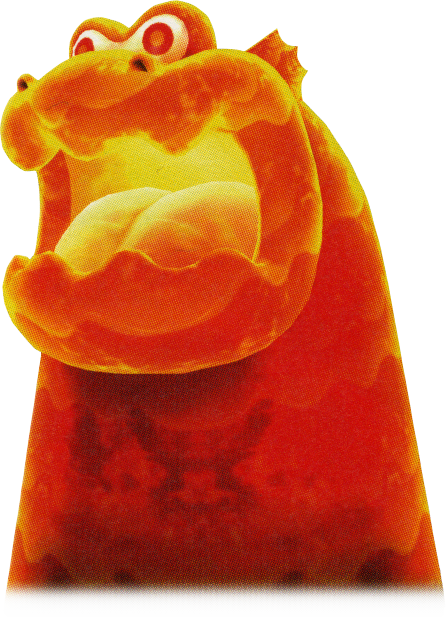
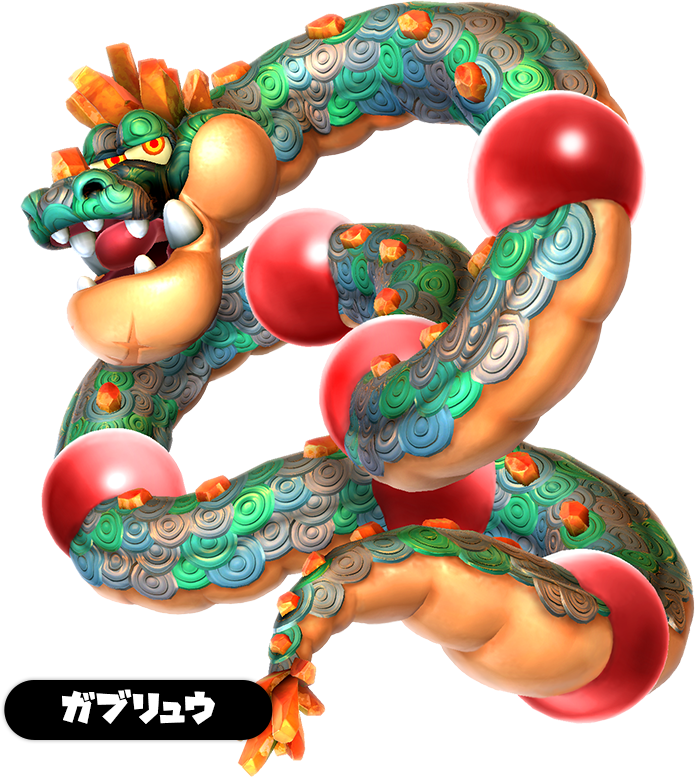
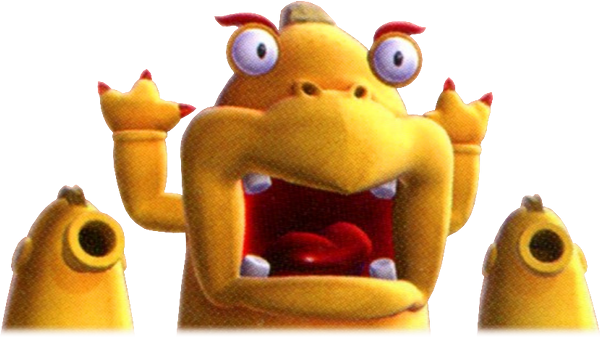
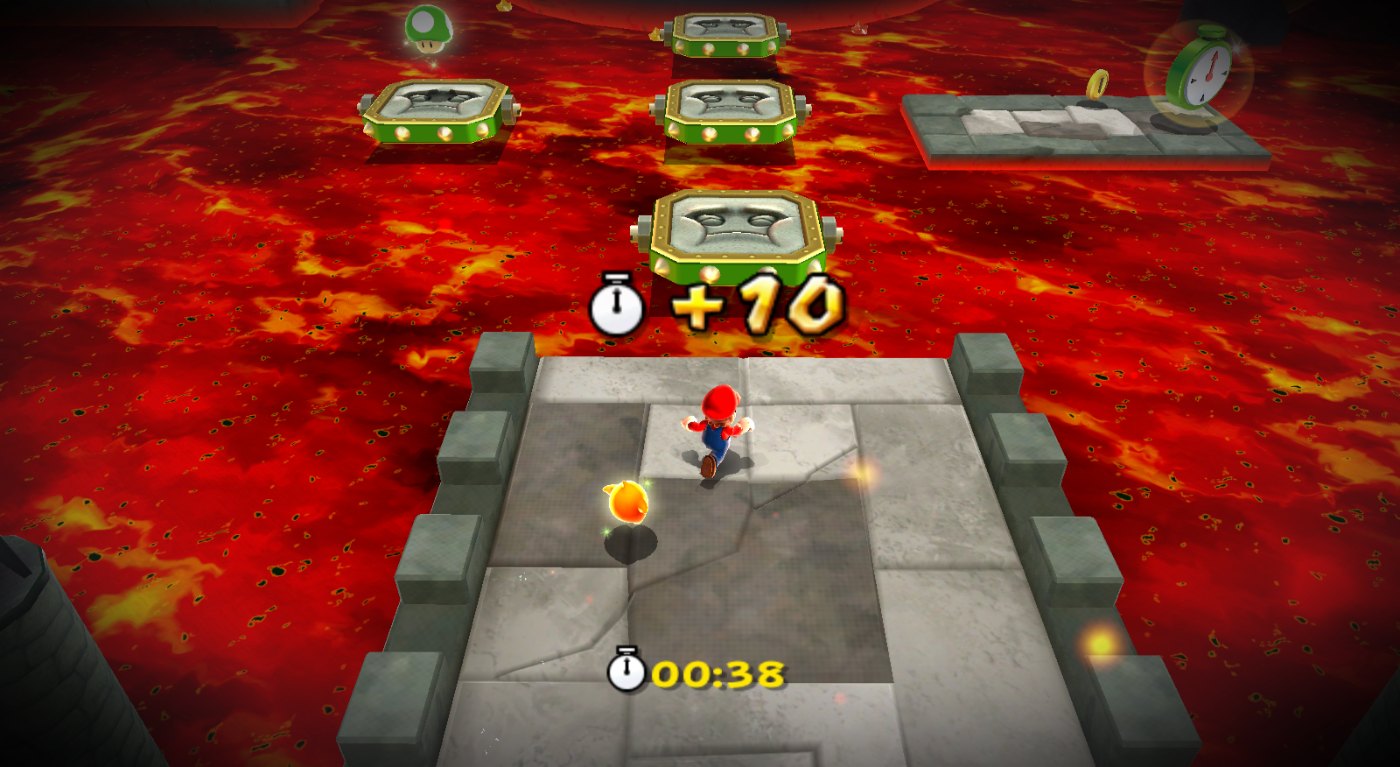
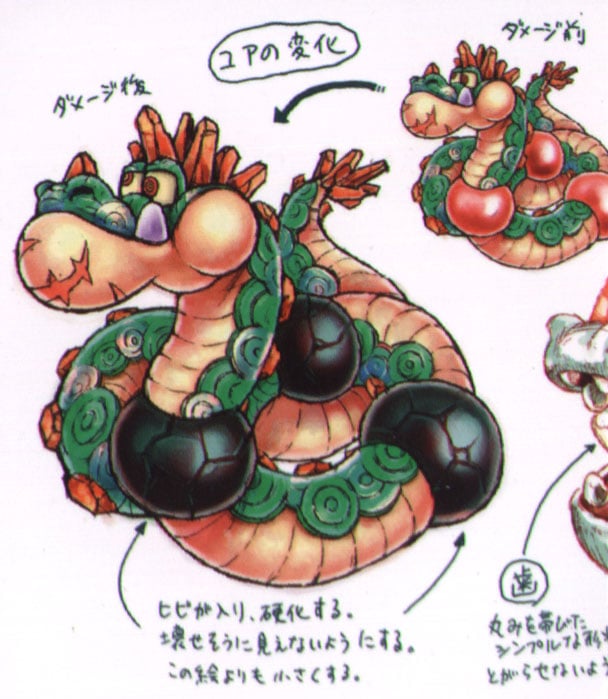
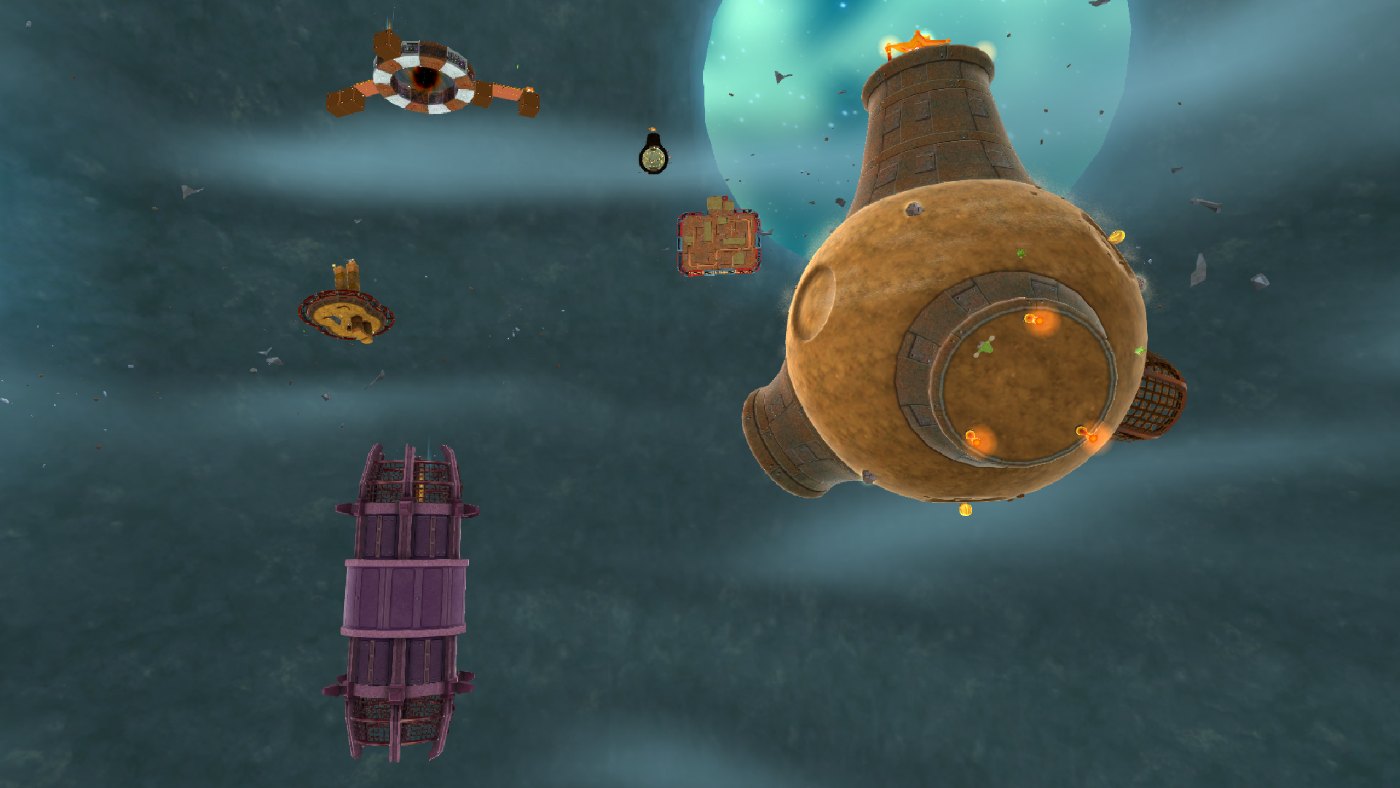
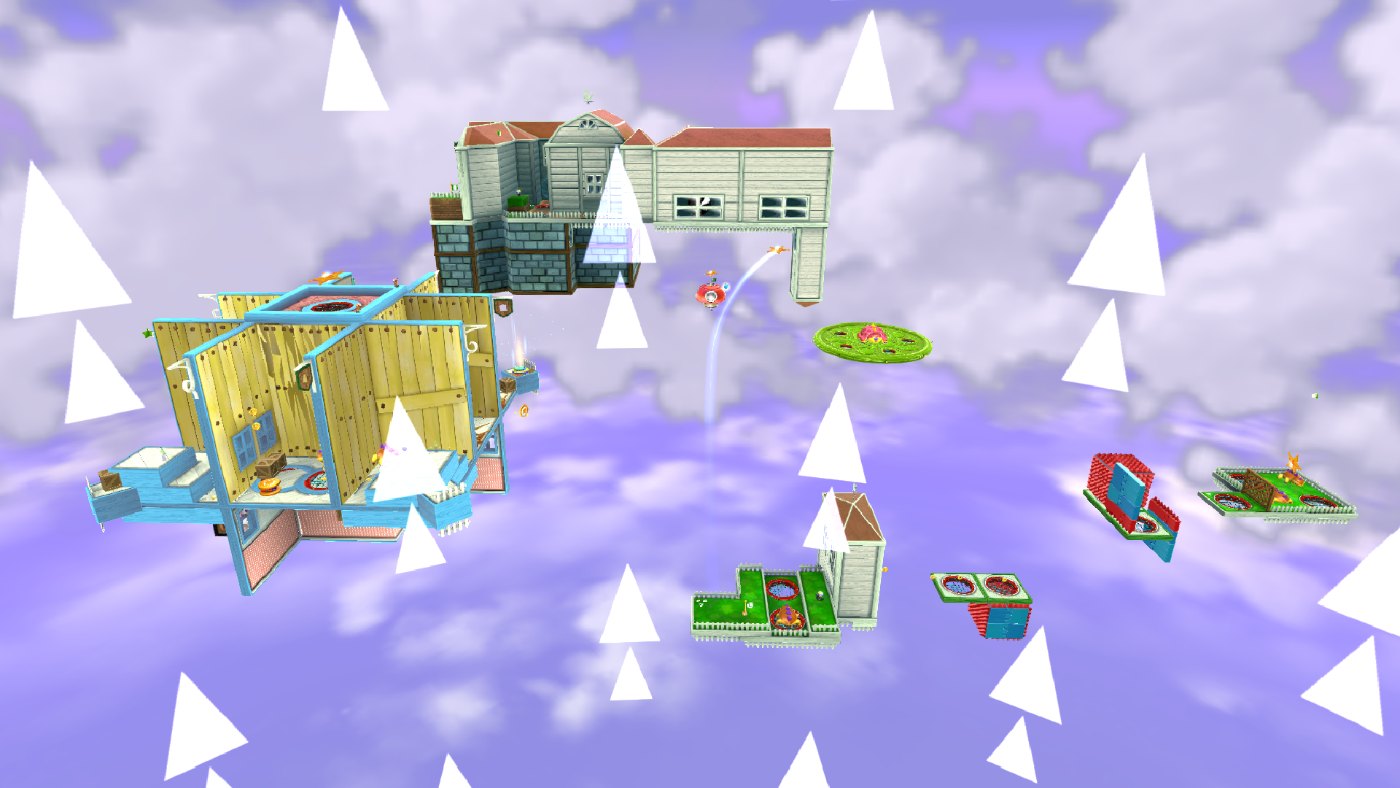
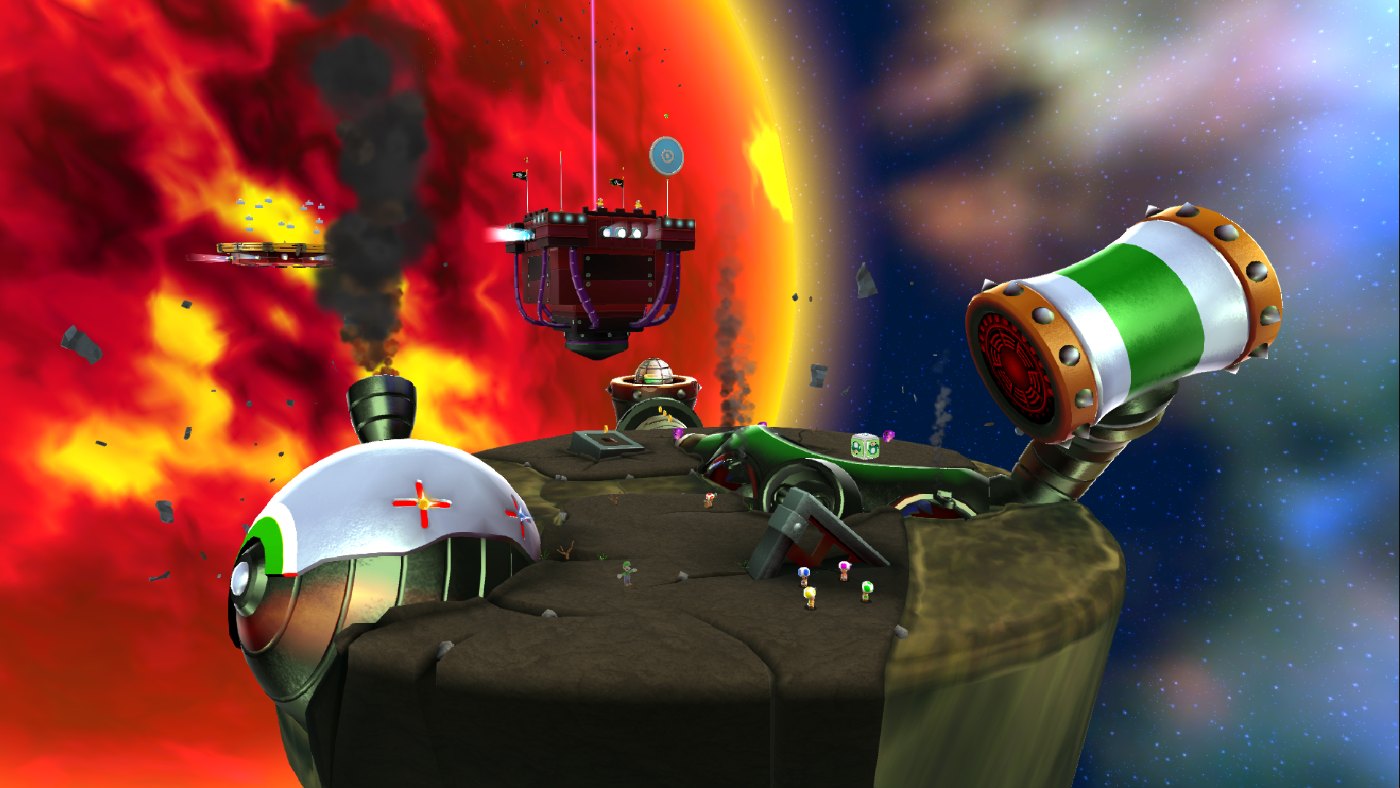
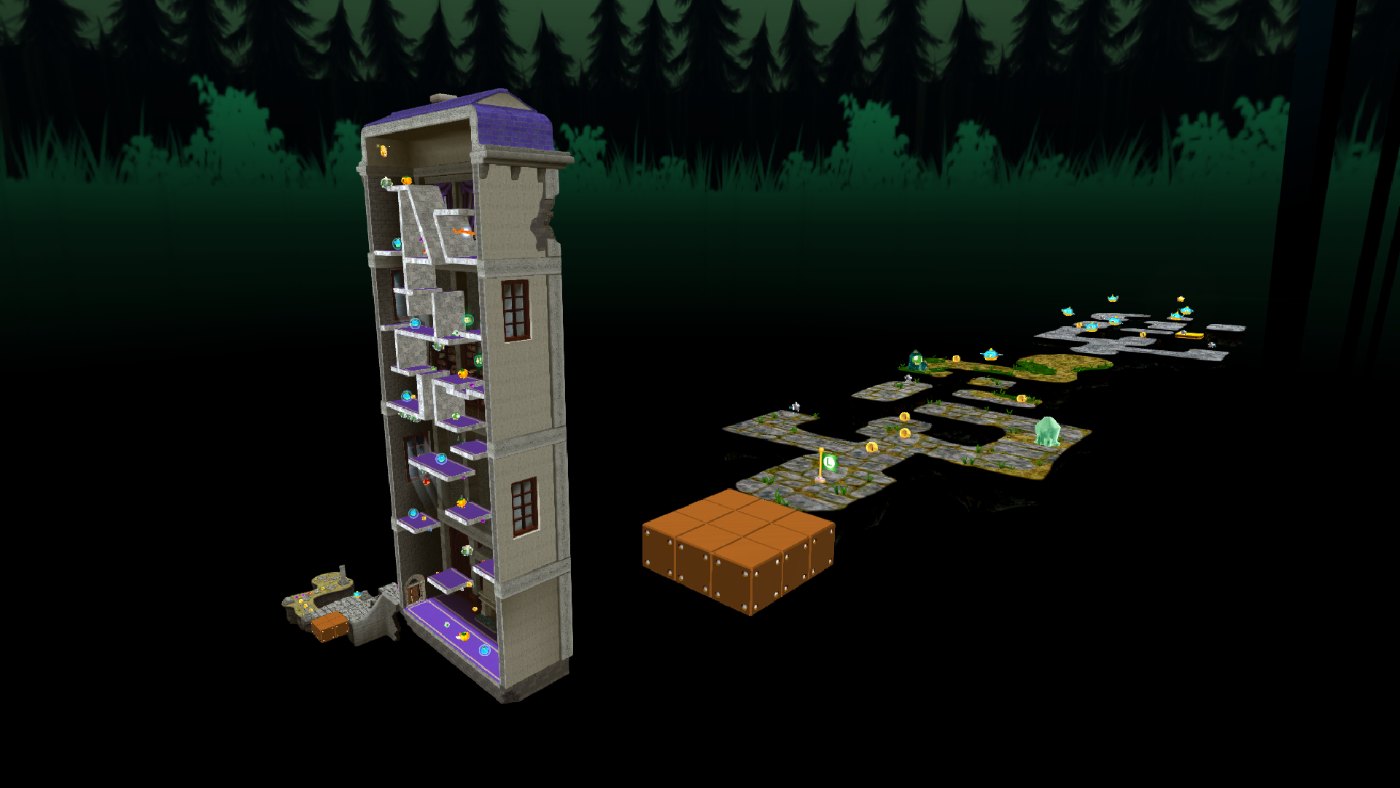
World 1 is a tour of the new toys: Yoshi in Yoshi Star Galaxy, the Spin Drill in Spin-Dig, the Cloud Flower in Fluffy Bluff, flipping panels in Flip-Swap and upside-down gravity in Rightside Down, before Bowser Jr. turns up aboard his Fiery Flotilla with Gobblegut, a dragon that tunnels through its planet until you pop the bulges on its belly. Its Grand Star opens World 2, where the Dash Pepper arrives in Hightail Falls, Rock Mario in Boulder Bowl, Fluzzard the glider in Wild Glide and the Bee Mushroom in Honeybloom. The world ends at Bowser’s Lava Lair, where the giant Koopa fights on a small planet and you ground-pound meteorites to send them crashing into him.
Gobblegut tunnels through Bowser Jr.’s Fiery Flotilla.Rock Mario versus Rollodillo in Boulder Bowl Galaxy.Bowser’s Lava Lair.
The far reaches and the many mysteries
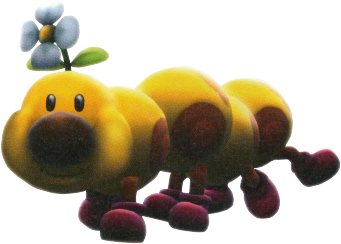
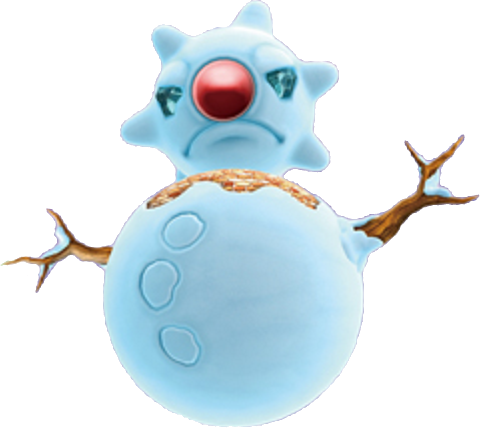
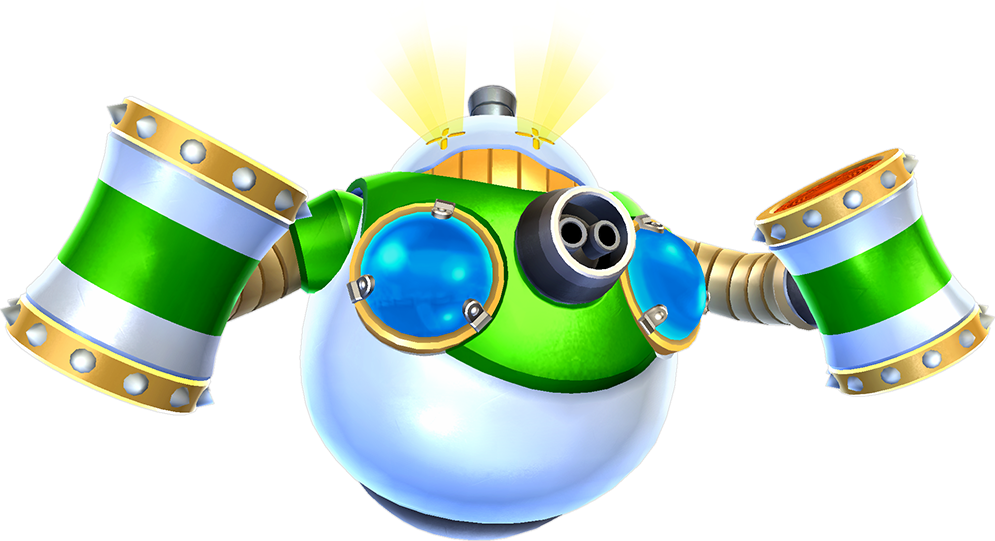
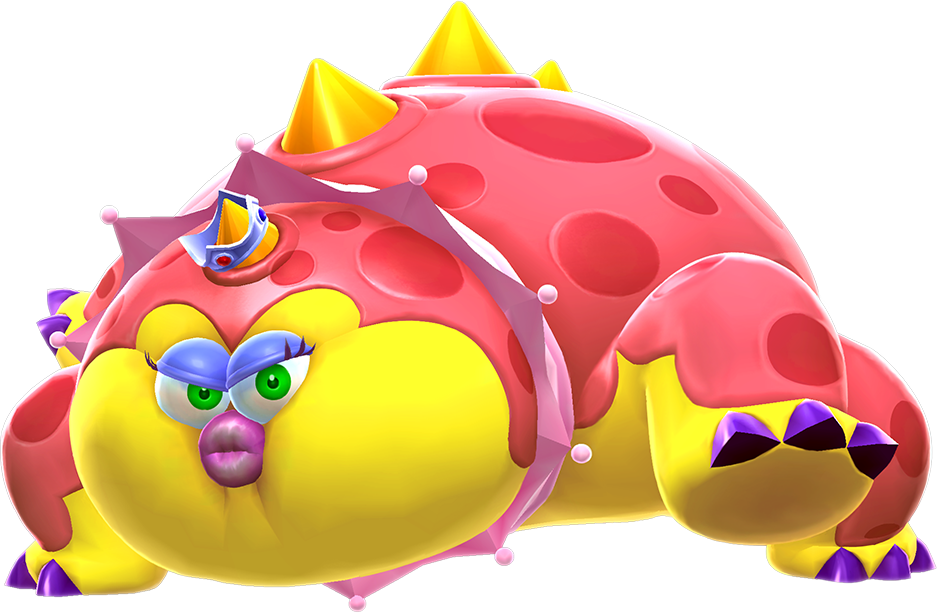
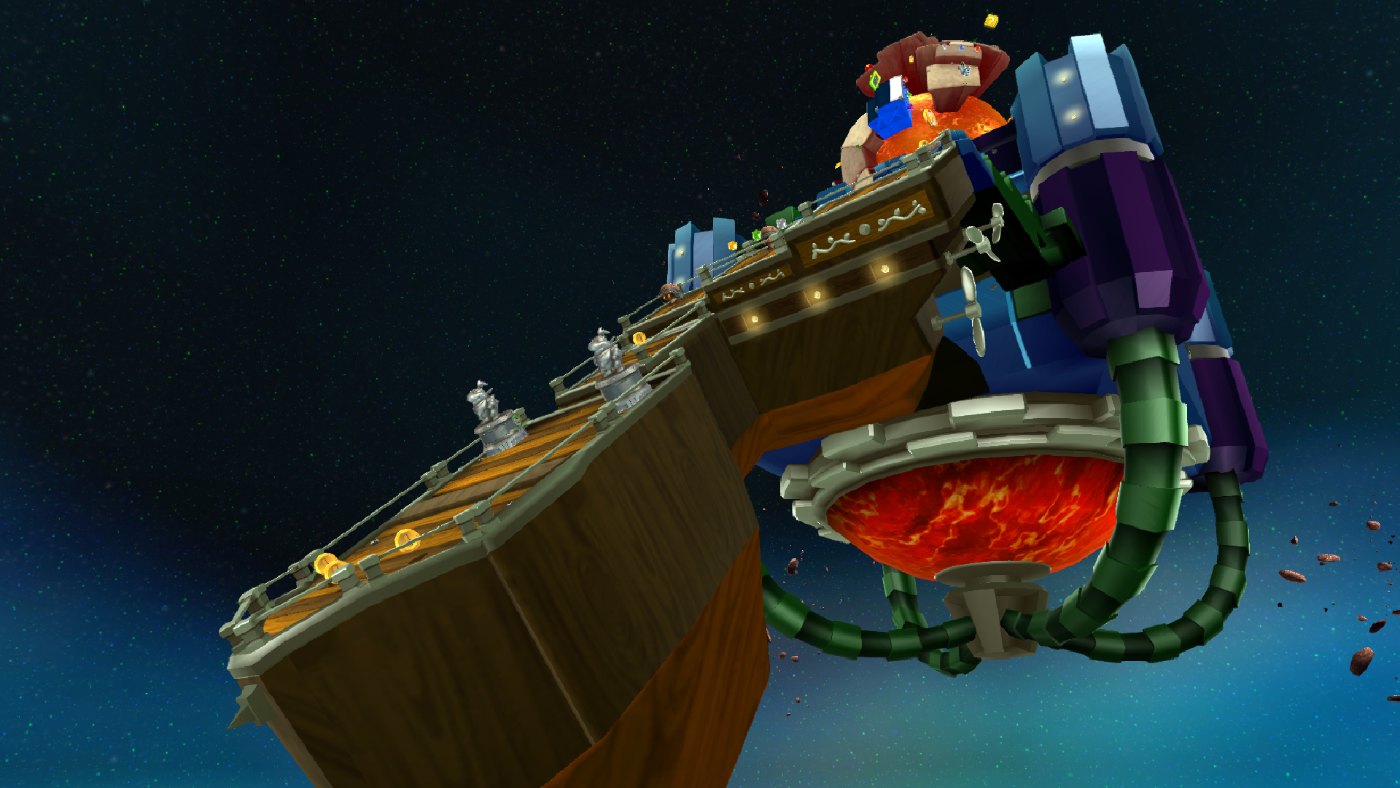
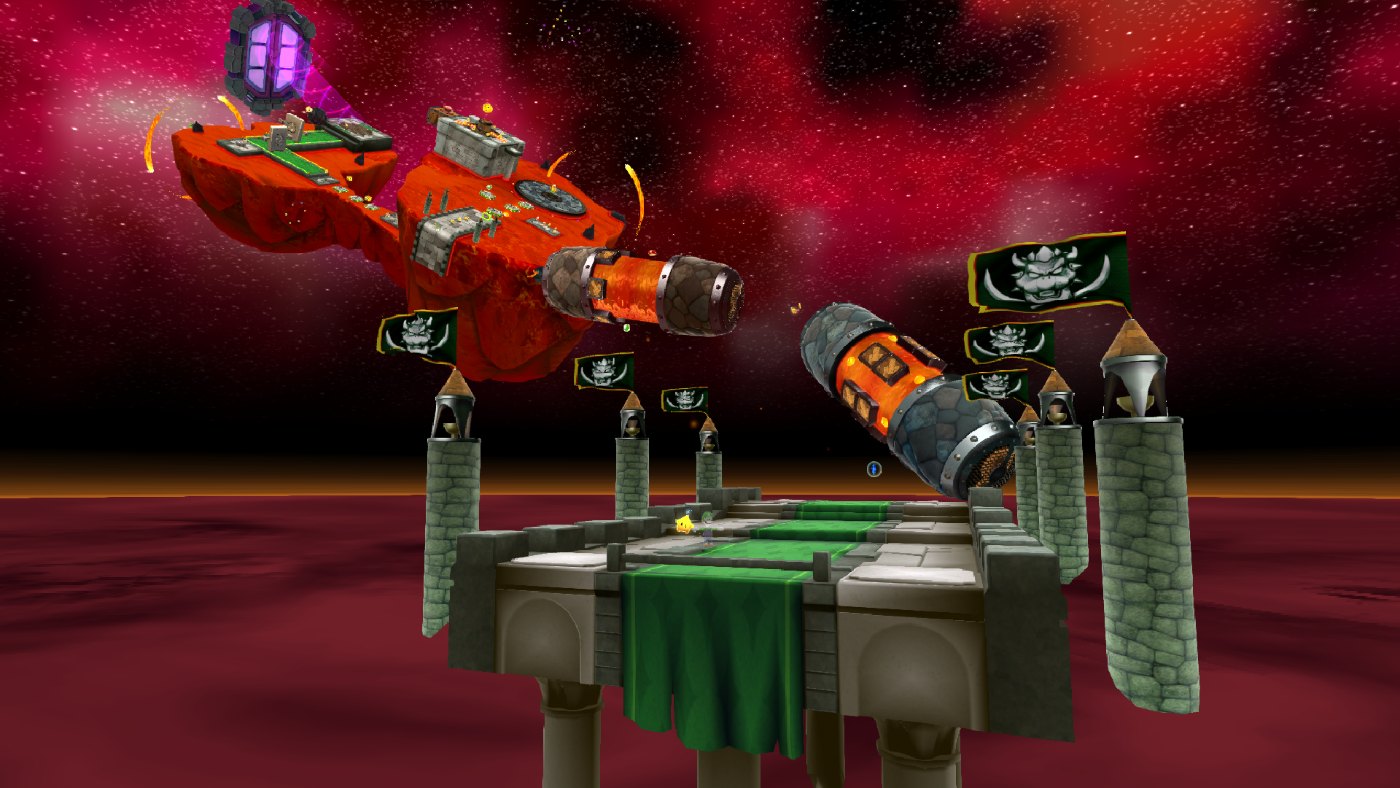
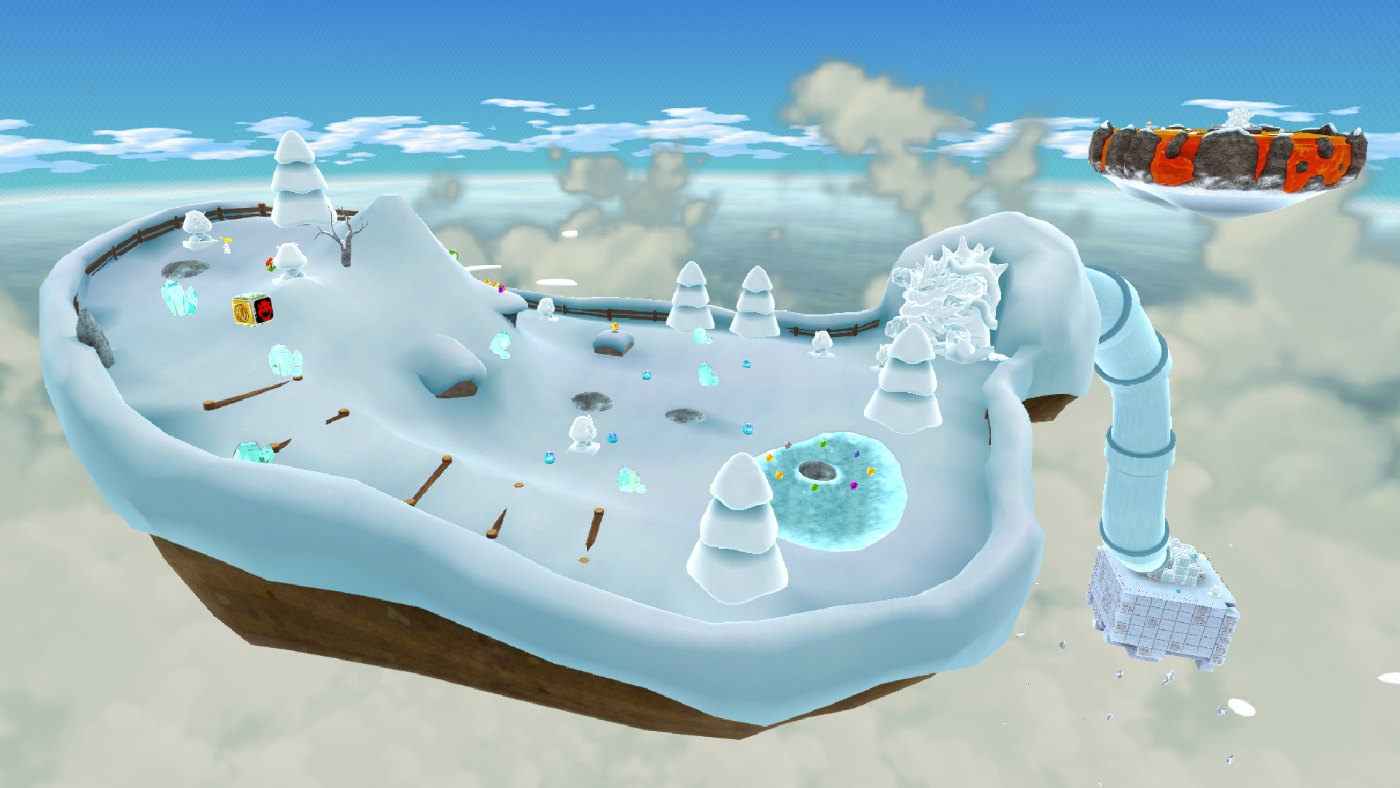
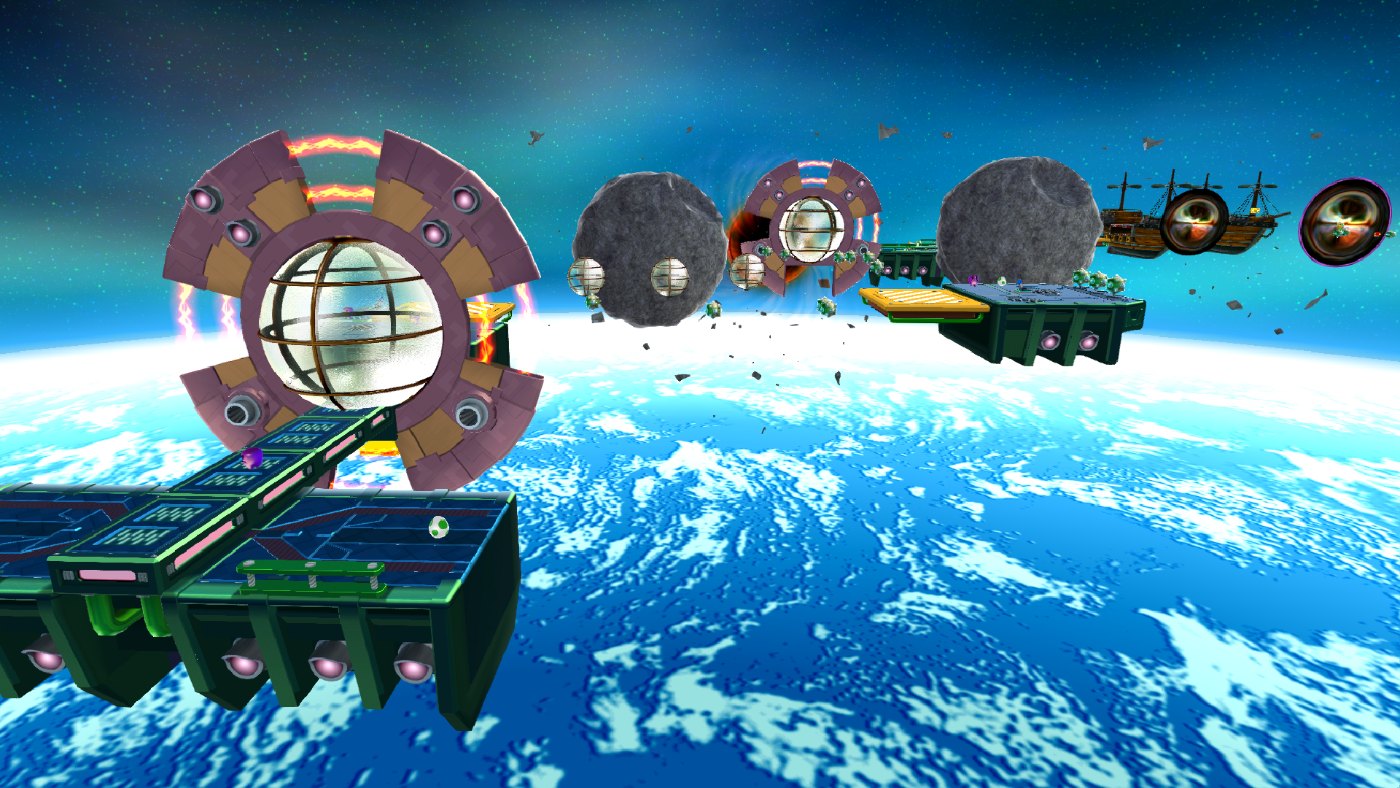
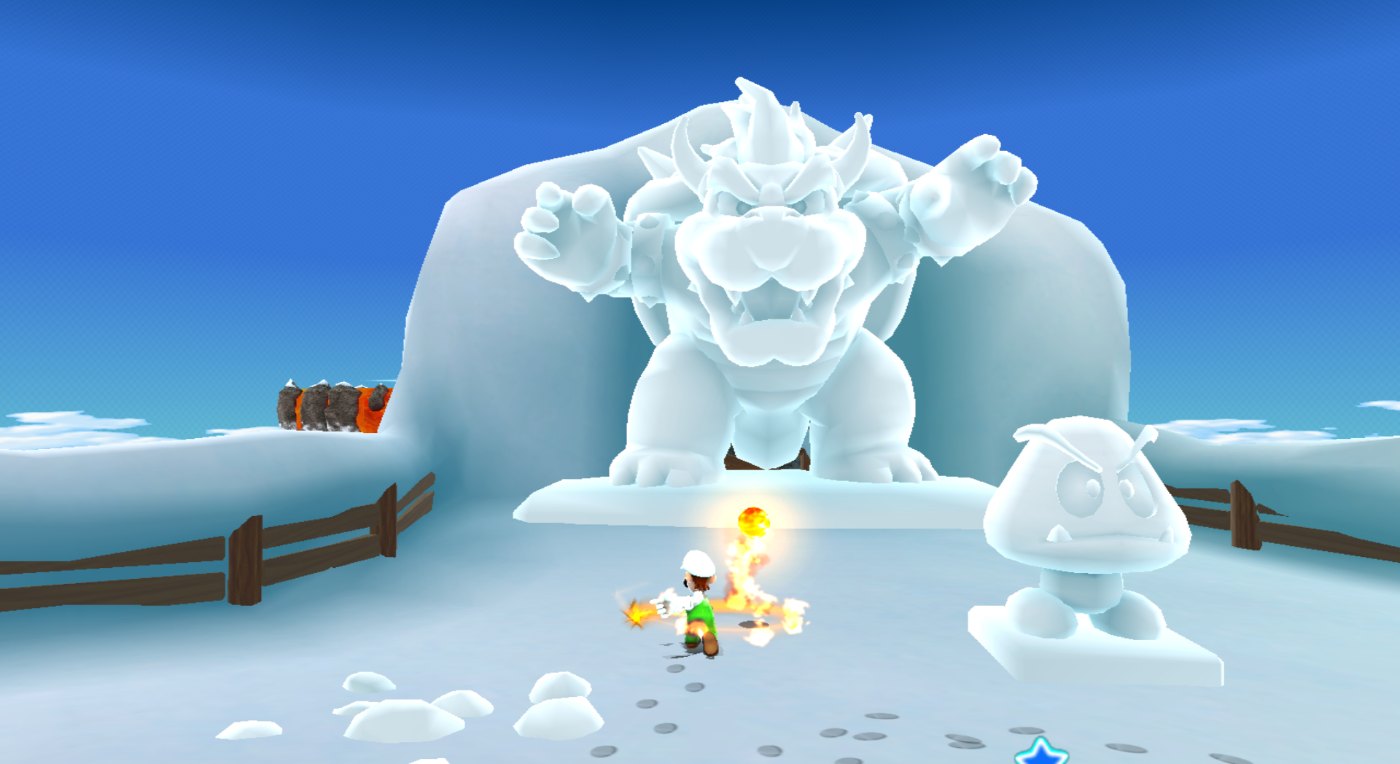
World 3 gives Yoshi the Blimp Fruit in Tall Trunk and the Bulb Berry in Haunty Halls, builds a level to a metronome in Beat Block, and puts a Bowser statue made of snow in Freezy Flake alongside Sorbetti, a snowman boss with a glowing red nose. Bowser Jr.’s Fearsome Fleet is guarded by Megahammer, a Bowser-shaped mech whose glass domes you shatter with Bullet Bills swallowed and spat by Yoshi. World 4 goes big and strange: giant Goombas and Wigglers in Supermassive, a town where you flip through the floor in Flipsville (and a glittering grub called Glamdozer underneath it), a Sunshine-flavoured island in Starshine Beach and a factory of golden Chain Chomps in Chompworks. Bowser’s Gravity Gauntlet, a castle whose gravity switches direction as you climb, ends with a second meteorite duel.
Bowser on Ice: Freezy Flake’s snow statue.Megahammer aboard Bowser Jr.’s Fearsome Fleet.Flipsville Galaxy, where the floor is also the ceiling.Bowser’s Gravity Gauntlet.
Trials and the generator
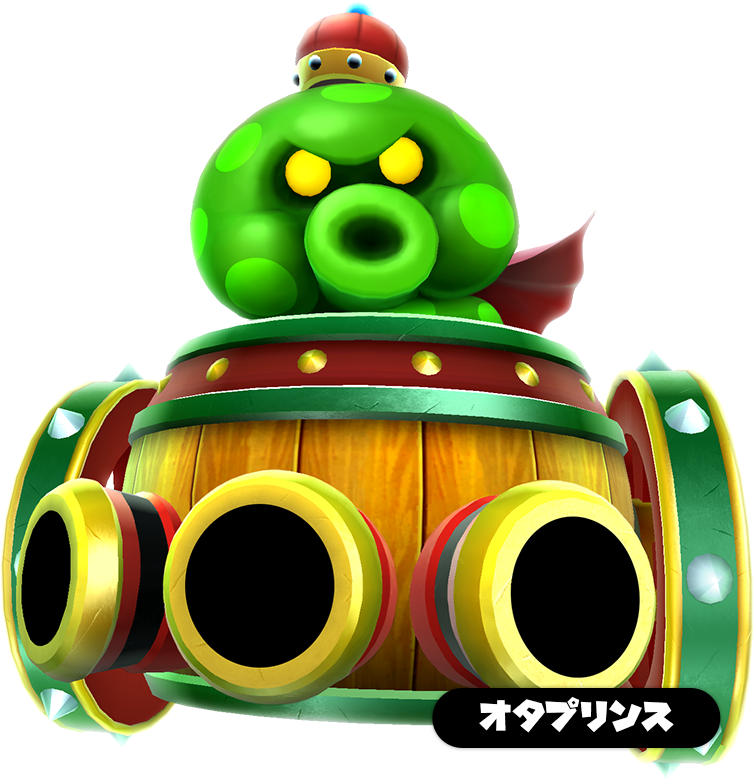
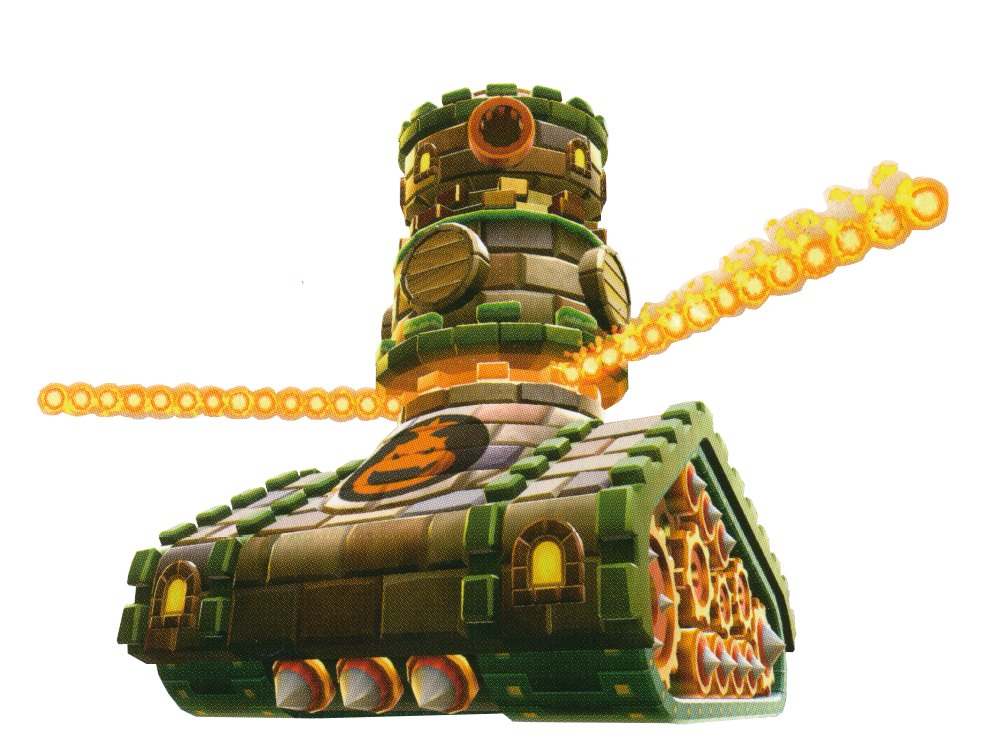
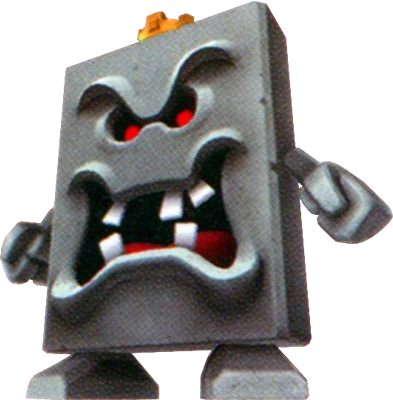
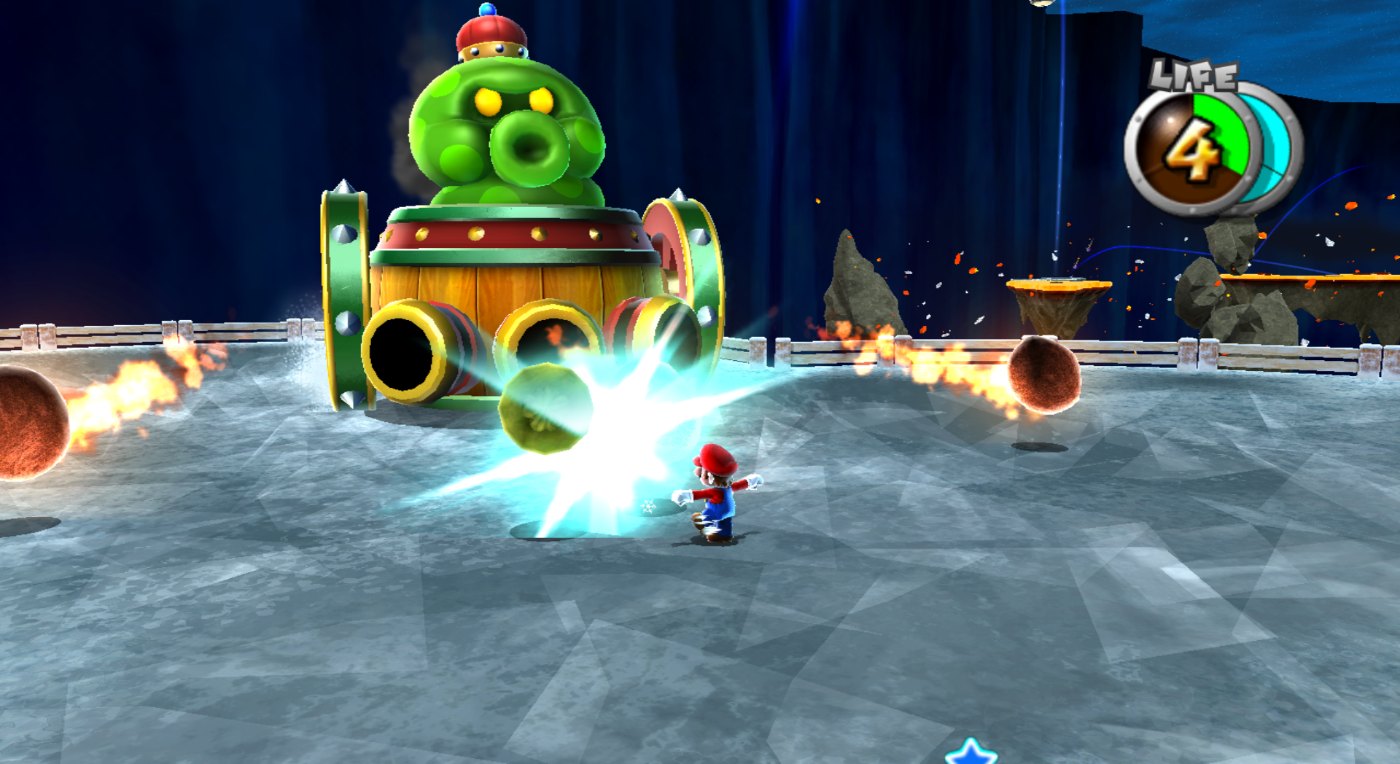
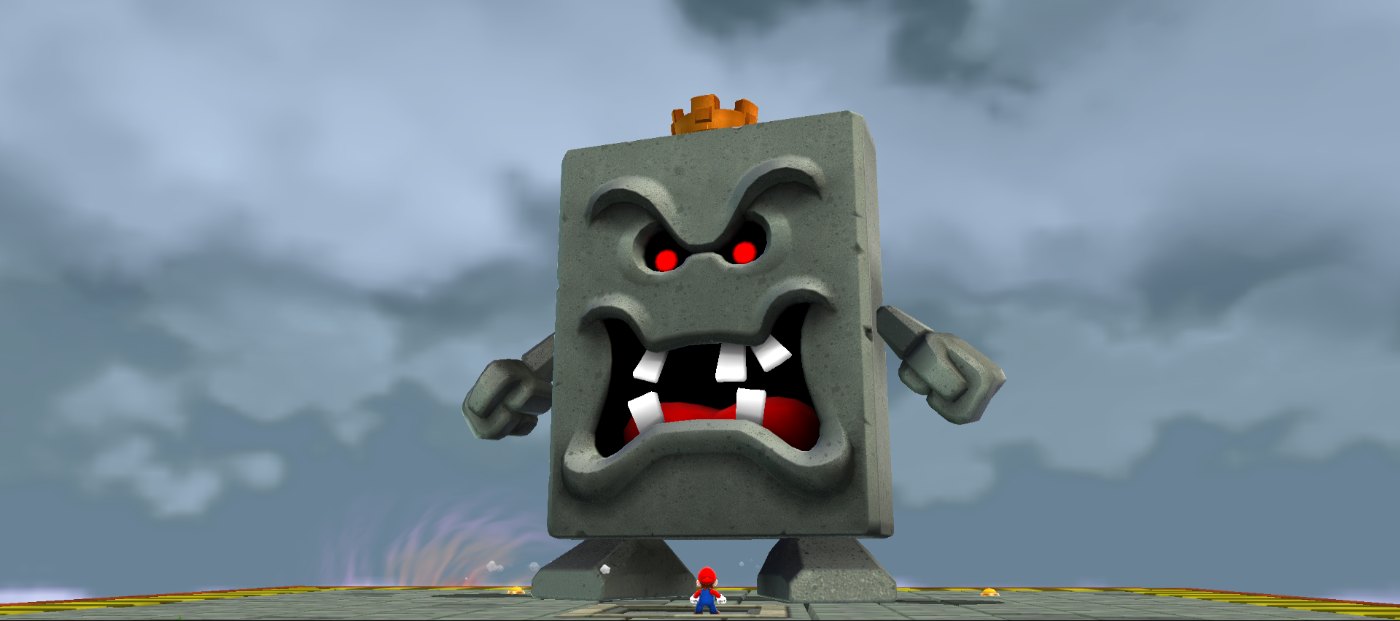
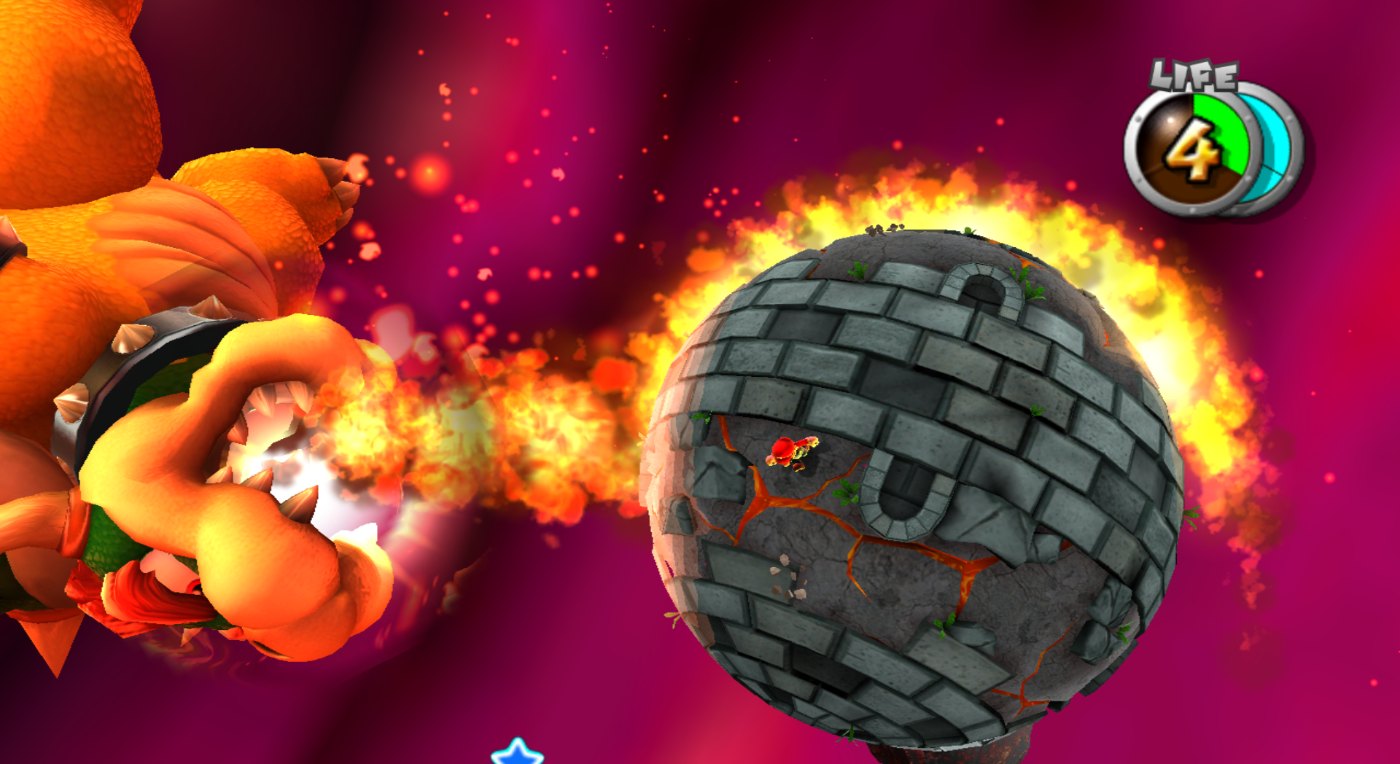
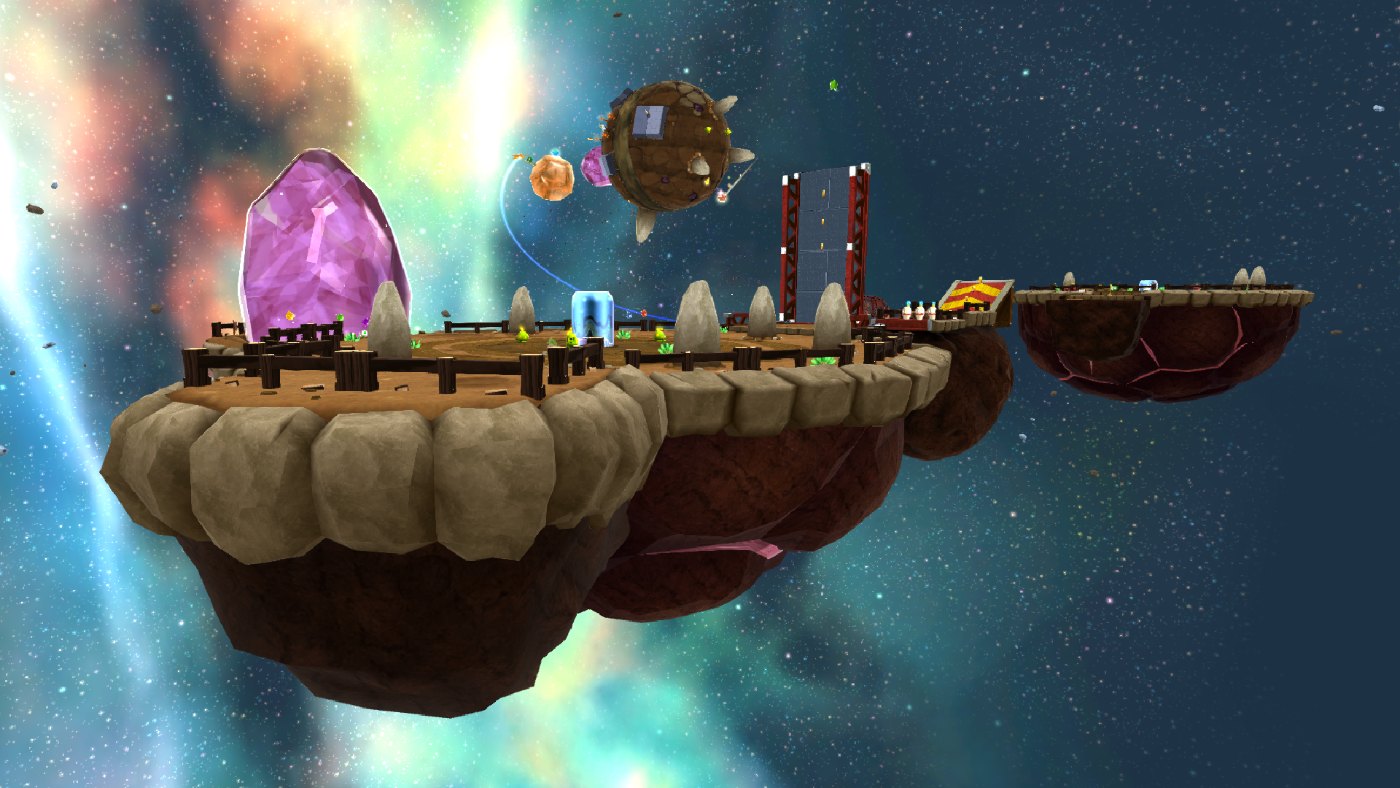
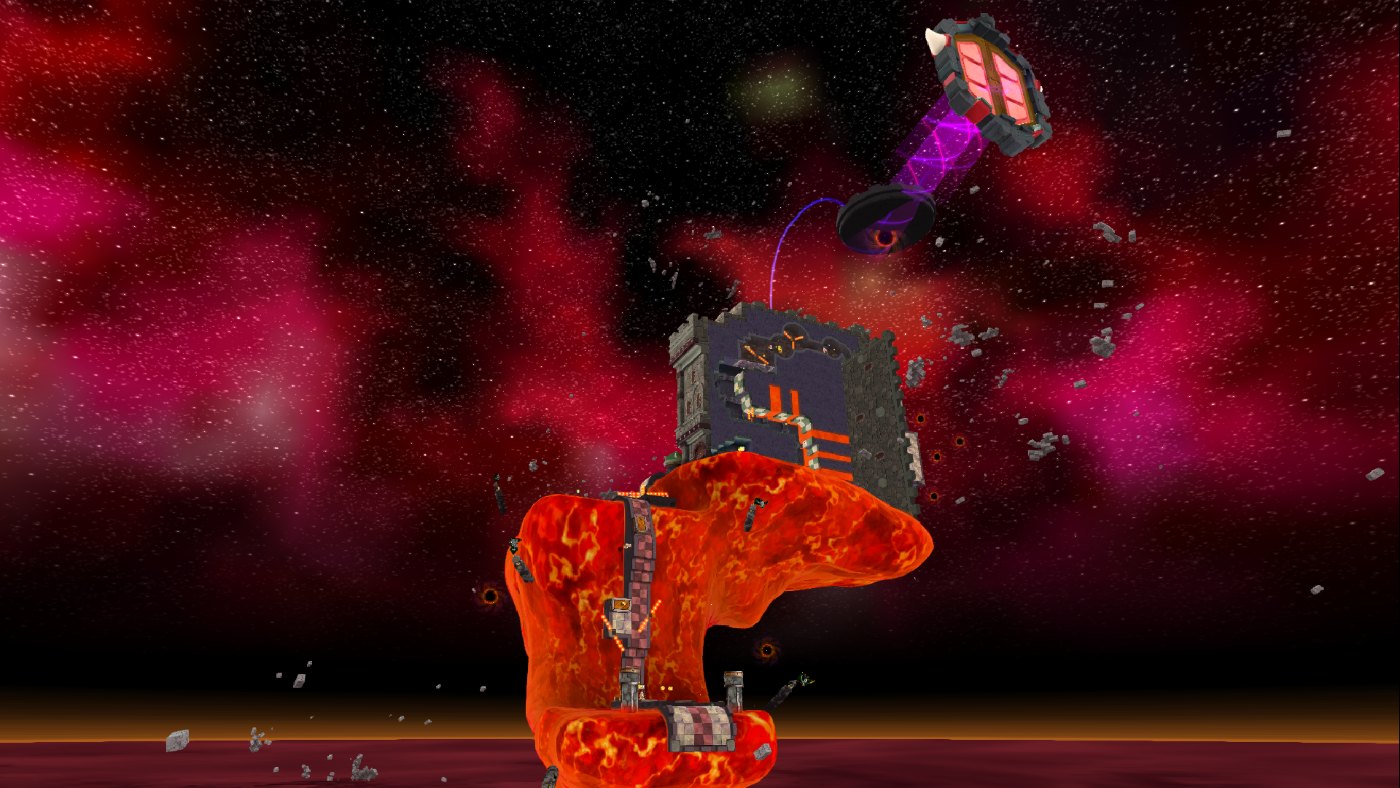
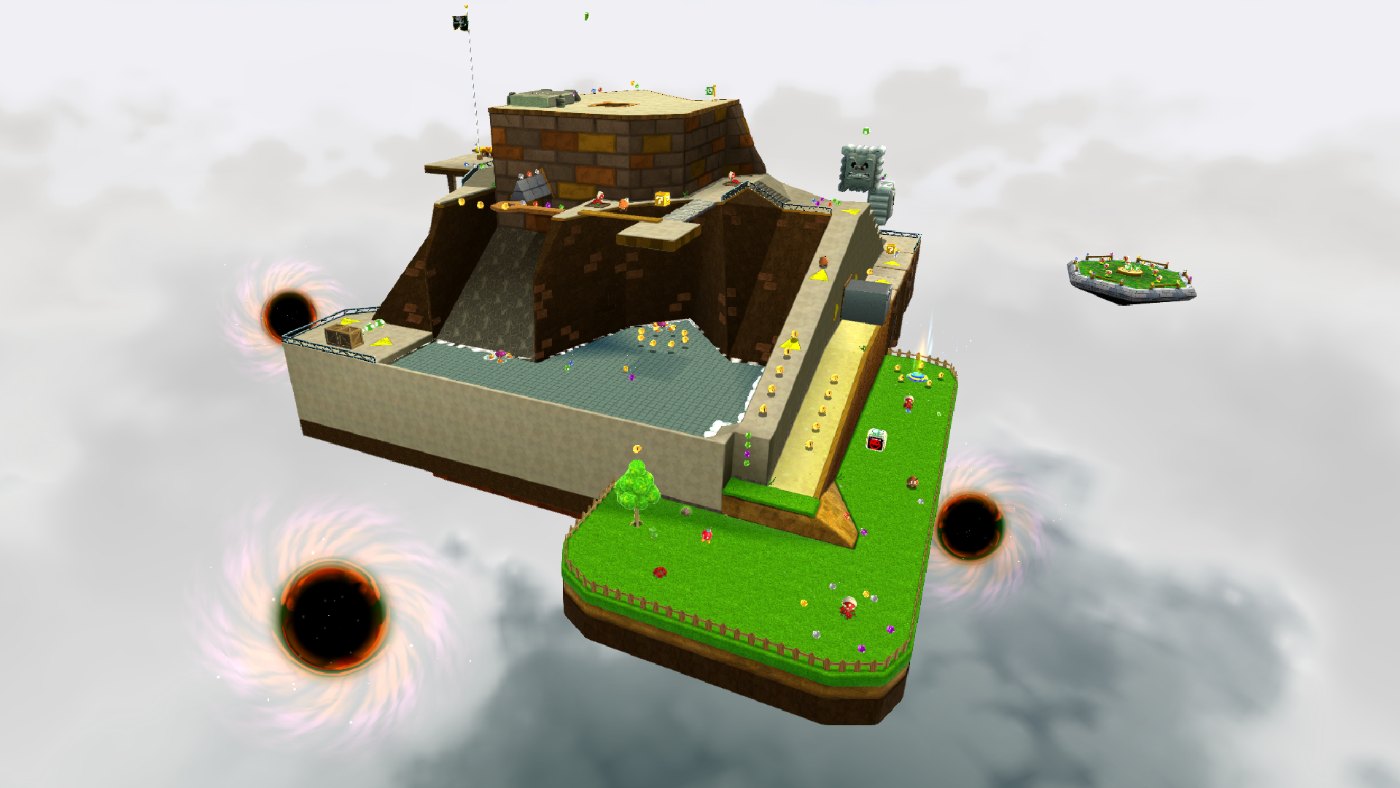
World 5 is the test: Pull Stars over nothing in Space Storm, Squizzard’s sinkhole and rolling Rhomps in Slipsand, a planet of fire and ice in Shiverburn, the Boo Mushroom in Boo Moon and gravity that flips on a timer in Upside Dizzy, before Bowser Jr. climbs into his Boomsday Machine, a tank you attack from above with Cloud Mario. World 6 is Bowser’s doorstep. Melty Monster’s magma seas and Clockwork Ruins’ grinding cogs lead to Throwback Galaxy, a rebuilt Whomp’s Fortress from Super Mario 64 where the Whomp King wants his old job back, and Battle Belt, where Fiery Gobblegut returns. At Bowser’s Galaxy Generator the Koopa’s fortress has snared a passing comet. Mario beats him a third time; Bowser swallows the last Grand Star, grows larger still, and is finally brought down by a hail of his own meteorites.
Following a Bob-omb through Space Storm Galaxy.The Boomsday Machine.Throwback Galaxy: Whomp’s Fortress, fourteen years on.Bowser’s Galaxy Generator.
A comet, a cap and a tiny Bowser
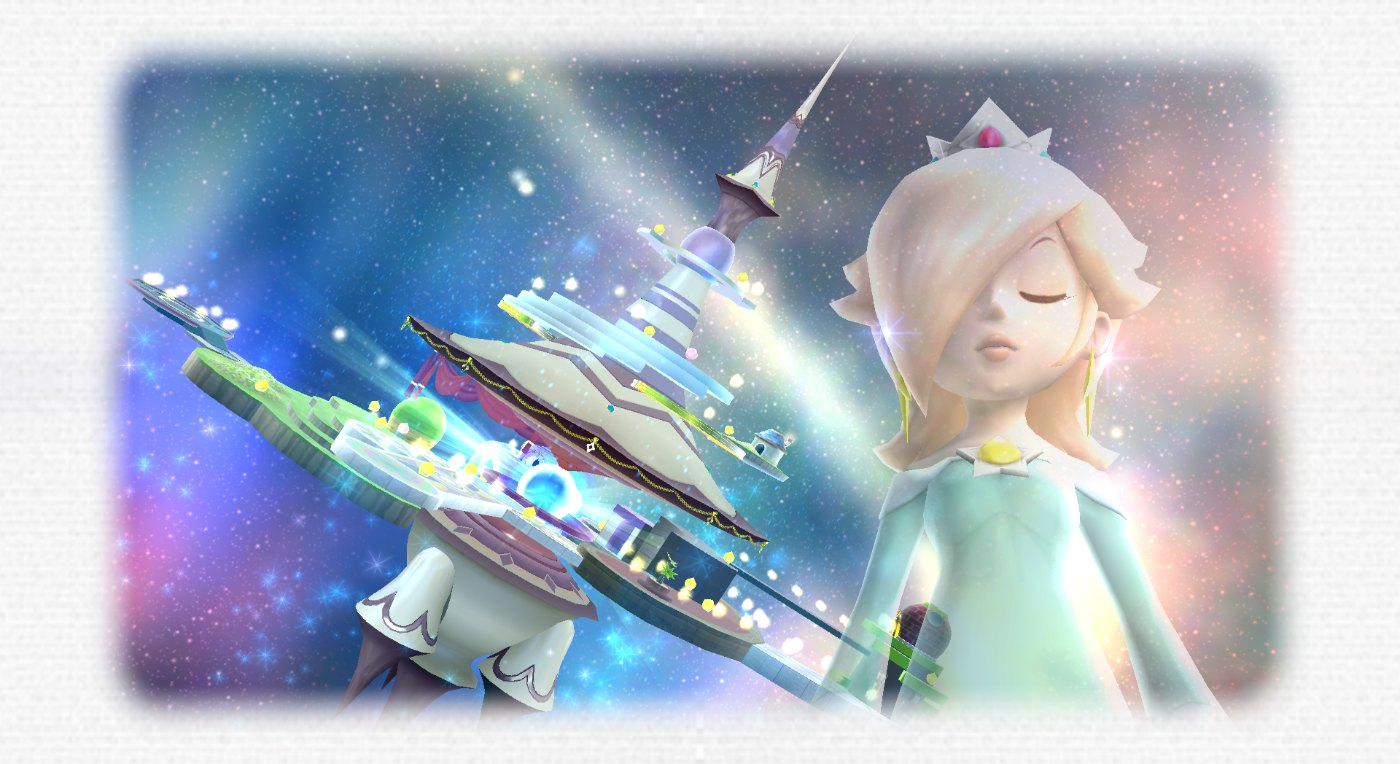
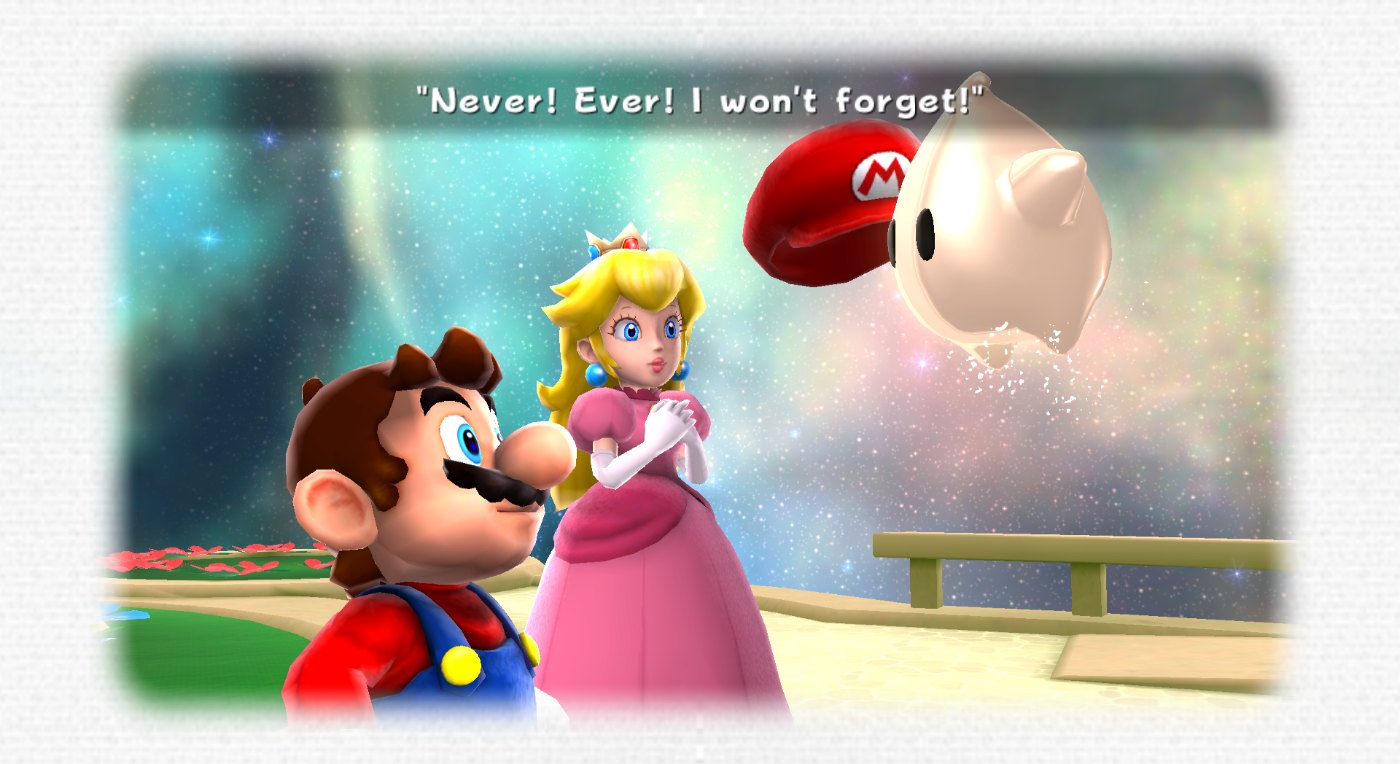
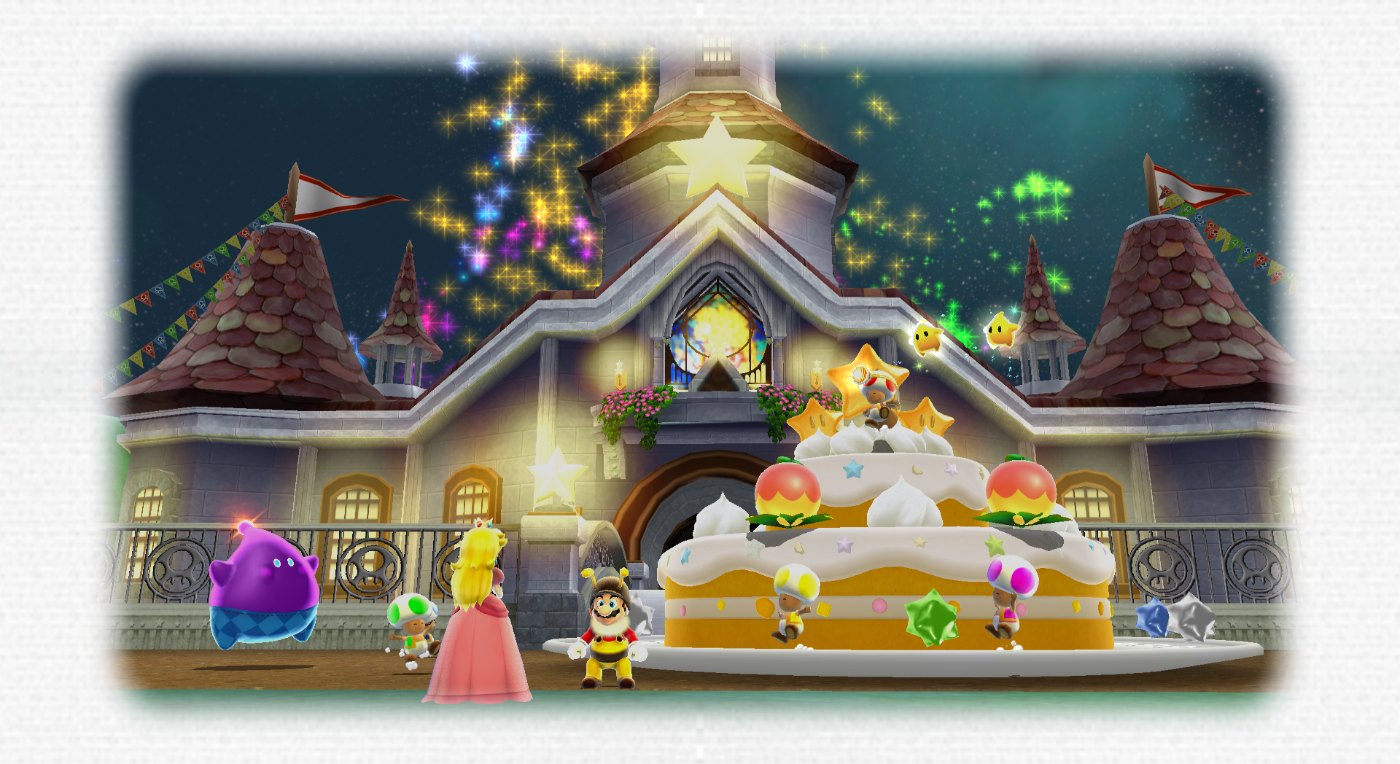
With Bowser beaten his empire crumbles and Peach is freed. The comet he had trapped breaks loose and turns out to be the Comet Observatory, and Rosalina steps out of it, relieved to see Baby Luma safe. The little star says goodbye to Mario and goes home to his “mama”, taking Mario’s cap with him as a keepsake. Mario and Peach sail home aboard Starship Mario for cake, and a very small, very cross Bowser is seen stamping about near the castle. That is where the credits roll, but not where the game ends.
Collect 120 Power Stars and defeat Bowser a second time and a scene plays in the Observatory’s library: Rosalina, revealed as the storyteller who has been narrating the whole adventure, has just finished reading the Lumas a tale, and promises them a new one about Green Stars. Green Comets appear everywhere. Find all 120 Green Stars and World S opens its last gate to Grandmaster Galaxy; survive The Ultimate Test and then The Perfect Run and Rosalina herself waits at the end with the 242nd star, before boarding Starship Mario as its final passenger.
Rosalina and the Comet Observatory appear.Baby Luma says farewell.Cake at last.The post-credits scene in the Observatory library.
Every galaxy in Super Mario Galaxy 2
Forty-nine galaxies in seven worlds. The 24 main galaxies have three missions; the two smaller galaxies in each world (one of them a Hungry Luma galaxy), the boss galaxies and all of World S have two; and every one hides a Comet Medal. World titles are the ones shown on the map.
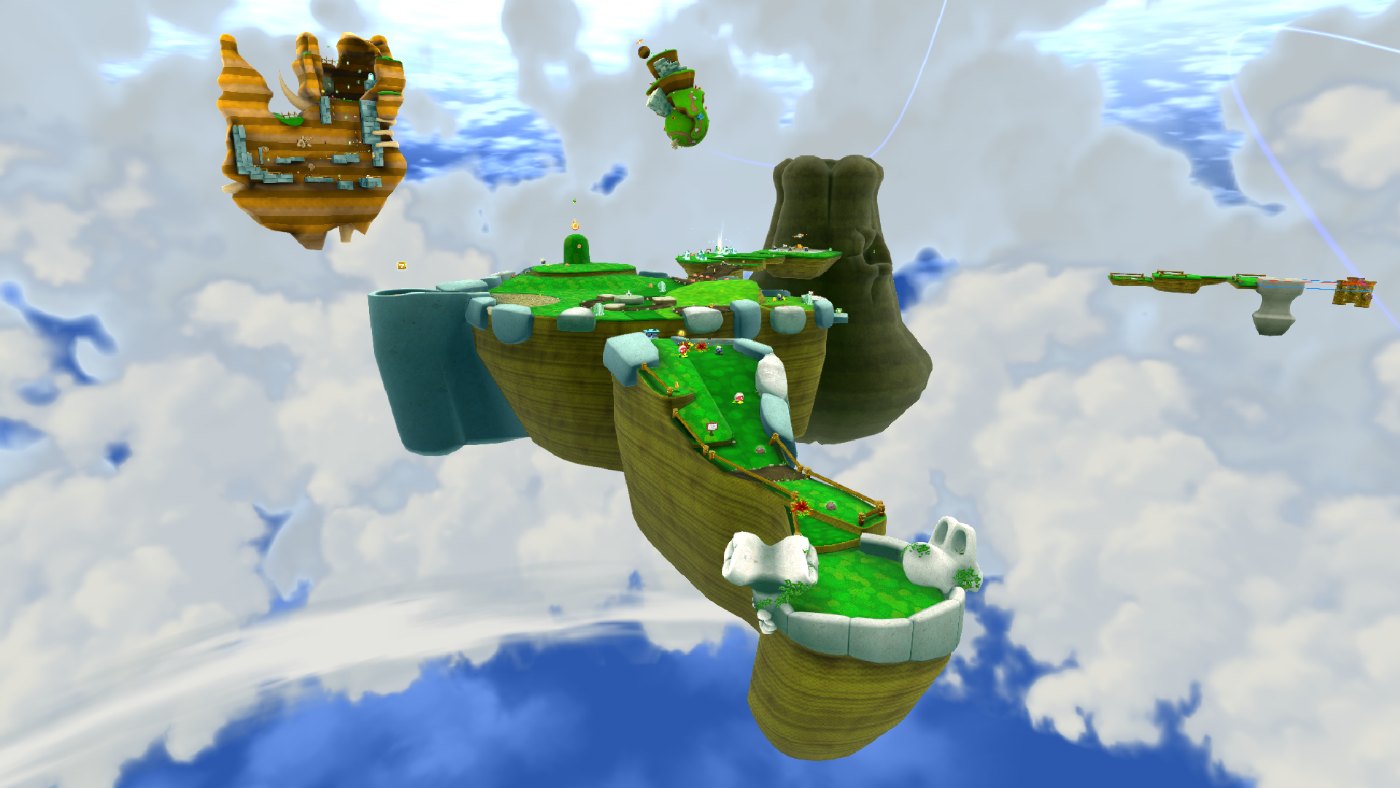
Sky Station GalaxyWorld 1: The Great Space Journey Begins · 3 missions · Peewee PiranhaLaunch Stars, tiny planets and a baby Dino Piranha with a temper.
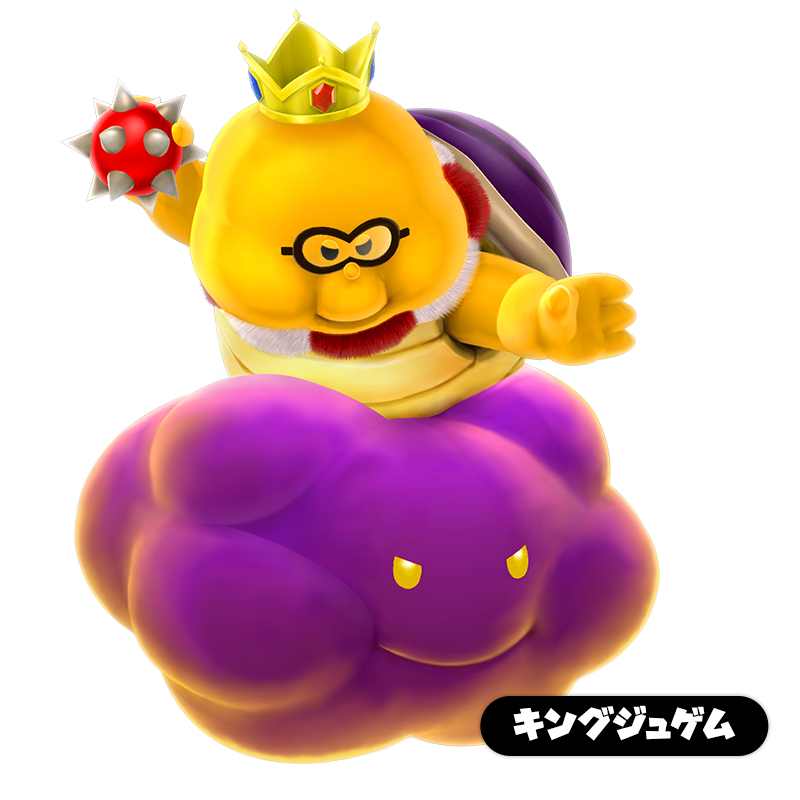
Yoshi Star GalaxyWorld 1 · 3 missions · King LakituYoshi’s home, and the first ride.
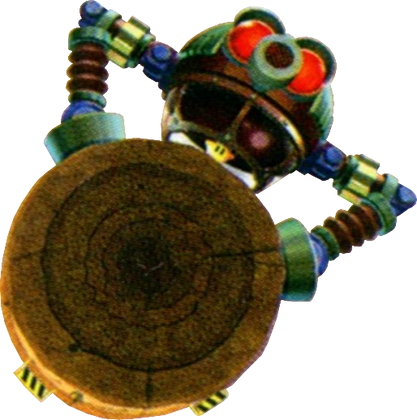
Spin-Dig GalaxyWorld 1 · 3 missions · Digga-LegDrill through the planets to reach a two-legged robot with a glass belly.
Fluffy Bluff GalaxyWorld 1 · 3 missionsThe Cloud Flower debuts; The Chimp sets his first stomp challenge.
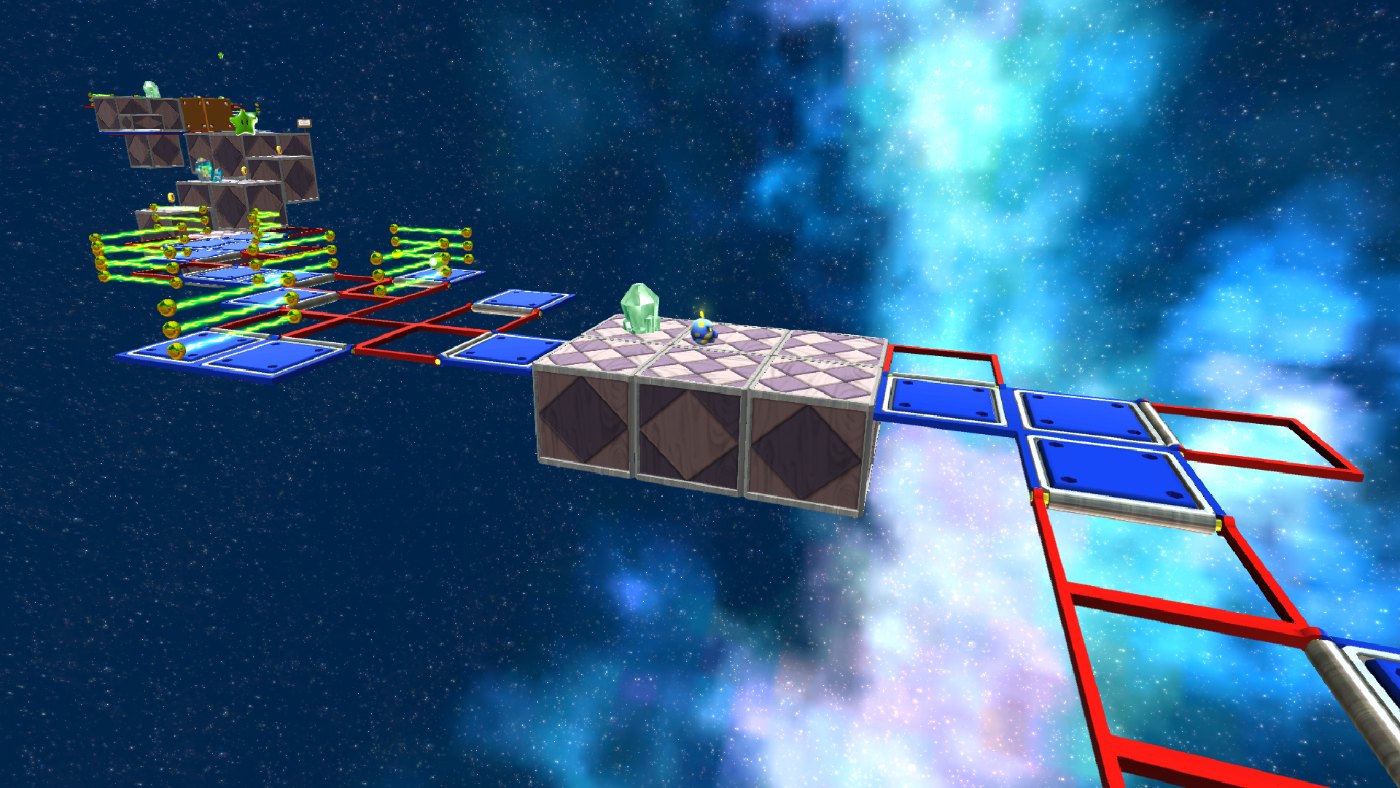
Flip-Swap GalaxyWorld 1 · Hungry Luma (300 Star Bits) · 2 missionsSpin to flip the red and blue panels under your feet.
Rightside Down GalaxyWorld 1 · 2 missionsA 2D stage where gravity arrows point every which way.
Bowser Jr.’s Fiery FlotillaWorld 1 boss · Gobblegut · Grand StarPop the dragon’s belly bulges as he burrows.
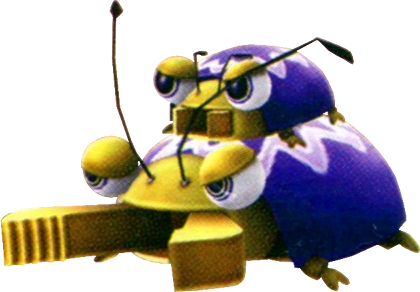
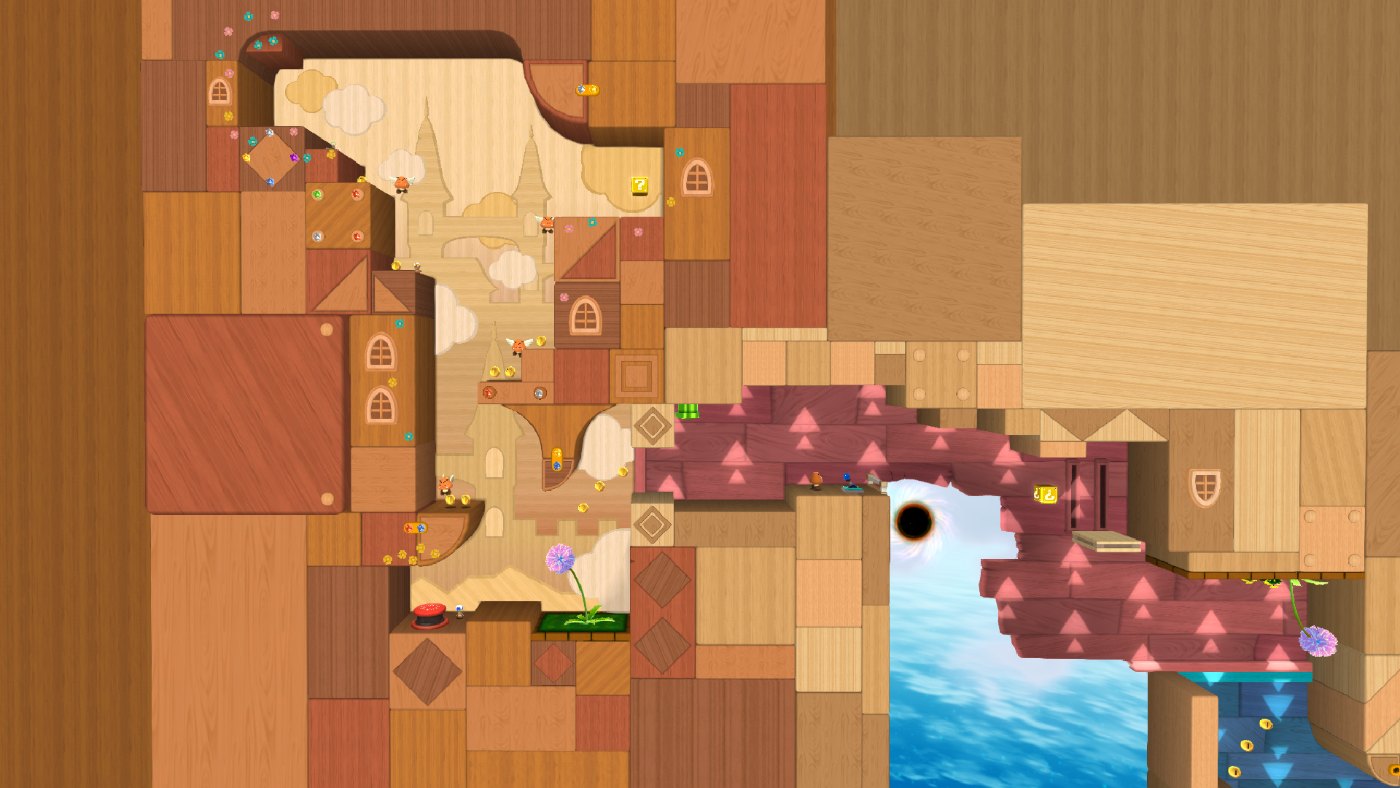
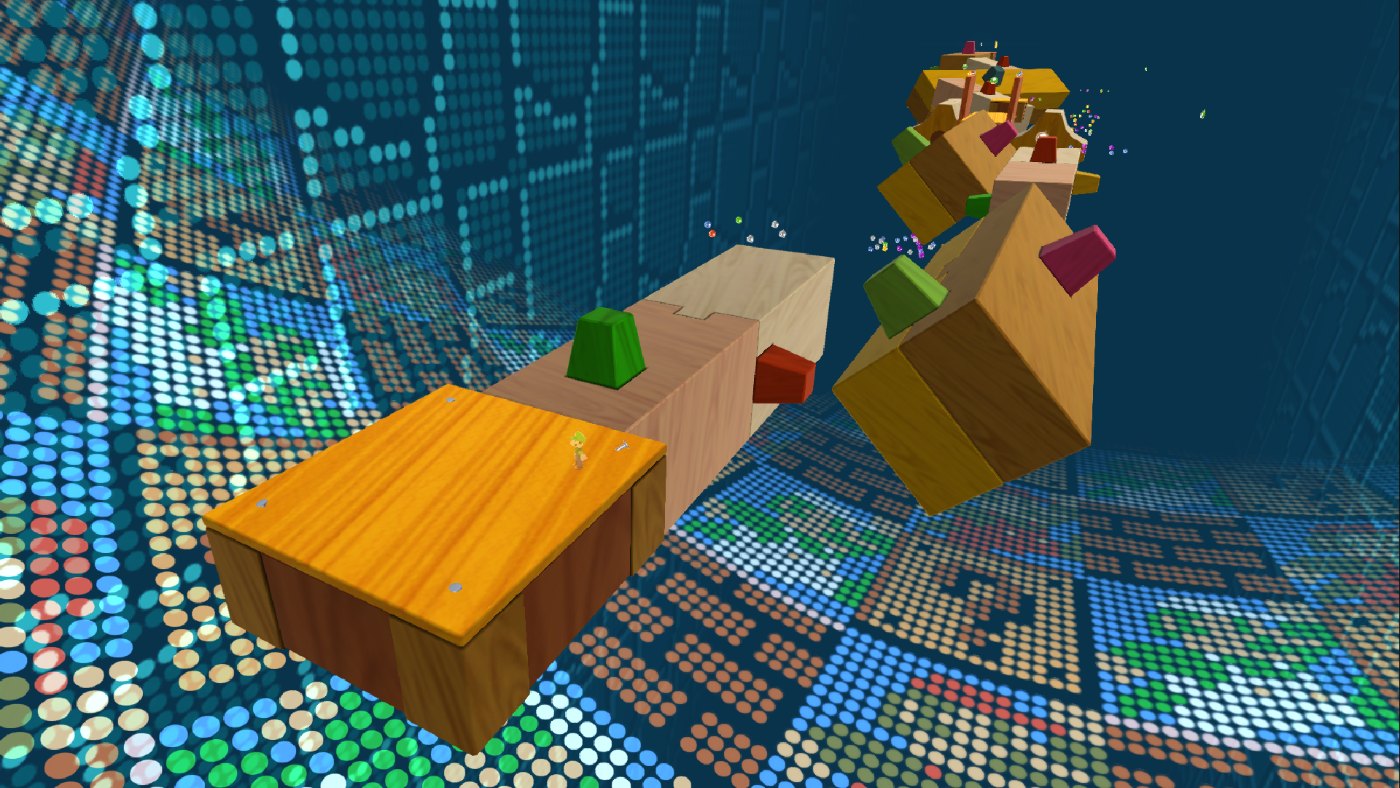
Puzzle Plank GalaxyWorld 2: Shooting Through the Stars · 3 missions · Mandibug Stack, BugaboomWooden planets, buzz saws and a giant picture puzzle.
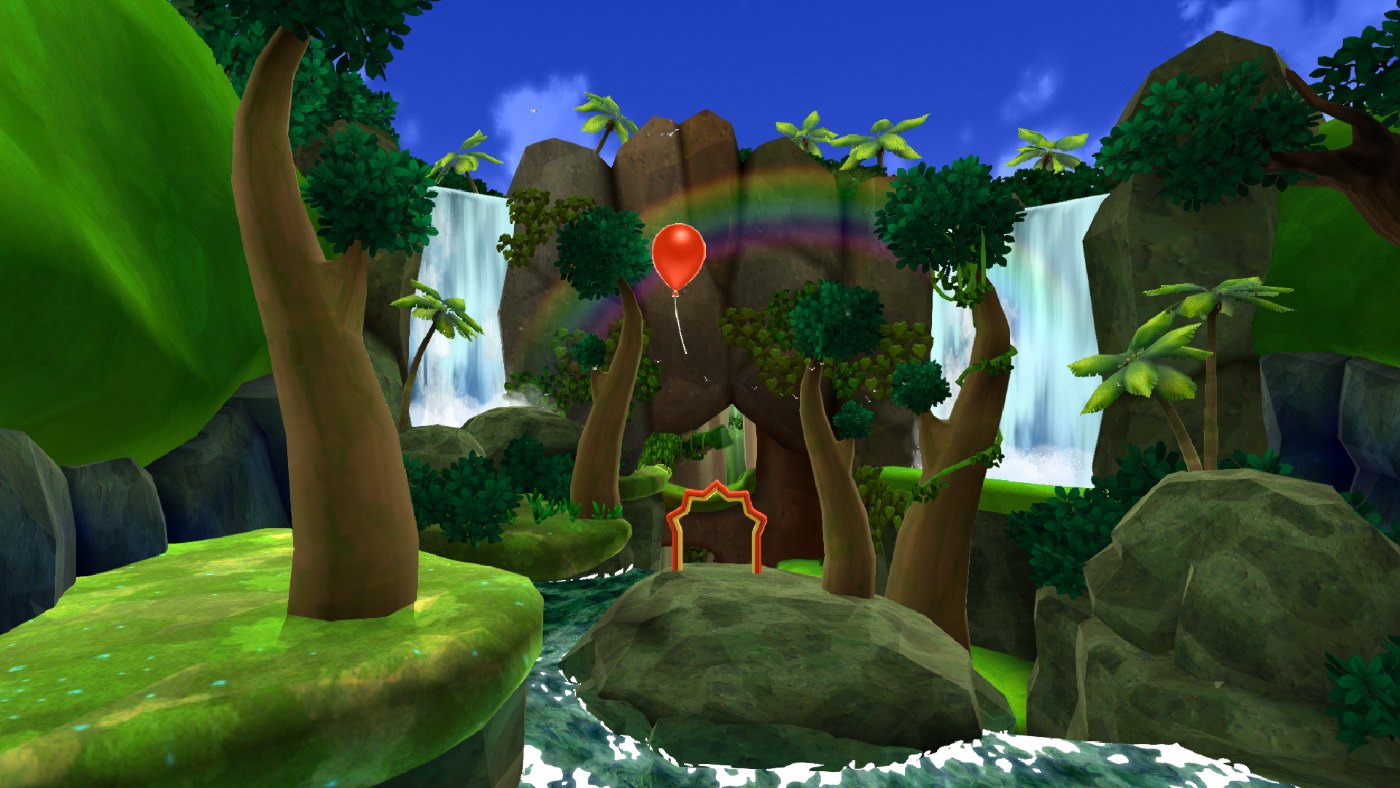
Hightail Falls GalaxyWorld 2 · 3 missionsDash Yoshi runs straight up the waterfalls; Kleptoads steal Silver Stars.
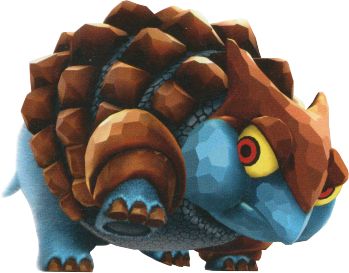
Boulder Bowl GalaxyWorld 2 · 3 missions · RollodilloRock Mario bowls through Pinheads and an armoured armadillo.
Cosmic Cove GalaxyWorld 2 · 3 missionsPenguins, a freezable lake and a Star Bunny chase.
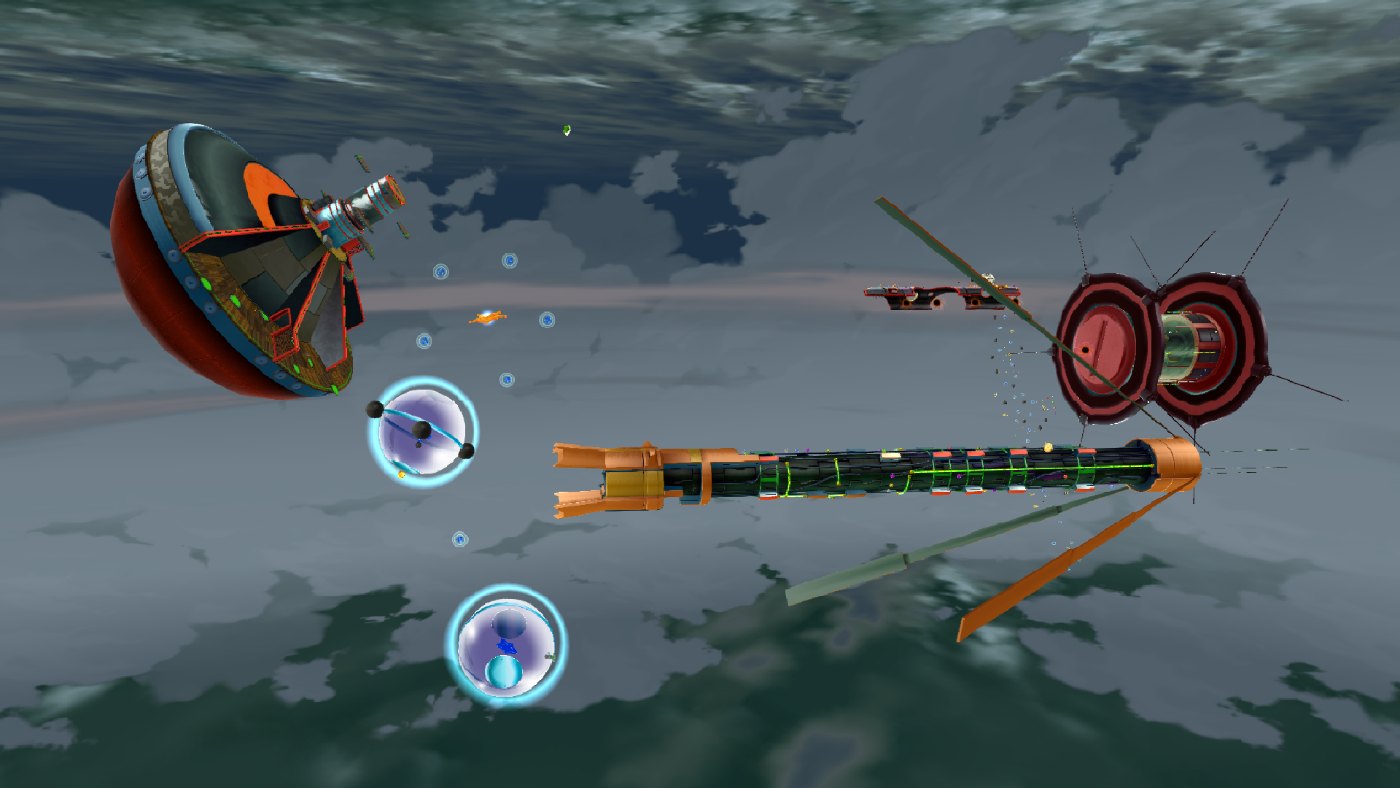
Wild Glide GalaxyWorld 2 · 2 missionsFluzzard’s first flight, steered by tilting the Remote.
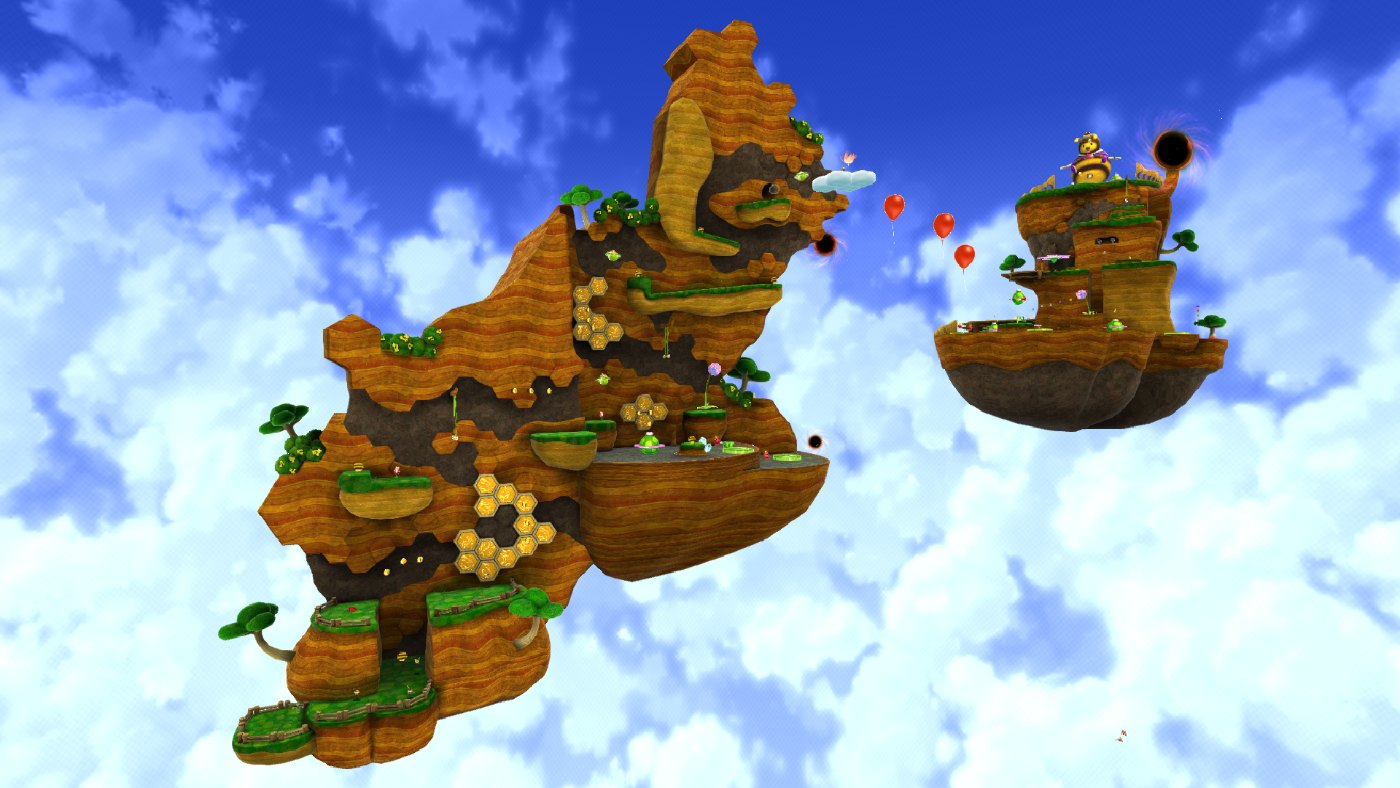
Honeybloom GalaxyWorld 2 · Hungry Luma (700) · 2 missionsBee Mario among giant flowers.
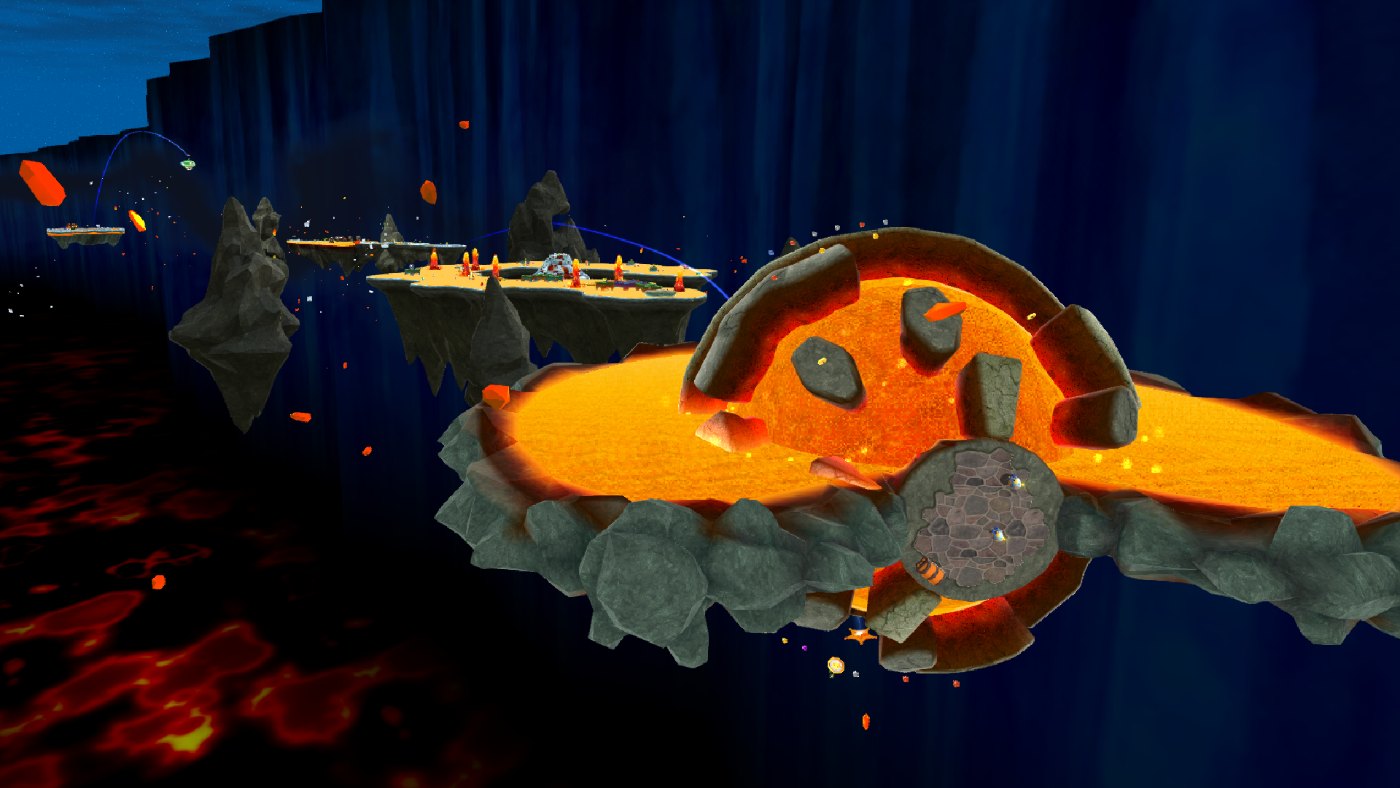
Bowser’s Lava LairWorld 2 boss · Bowser · Grand StarThe first meteorite duel with the giant Koopa.
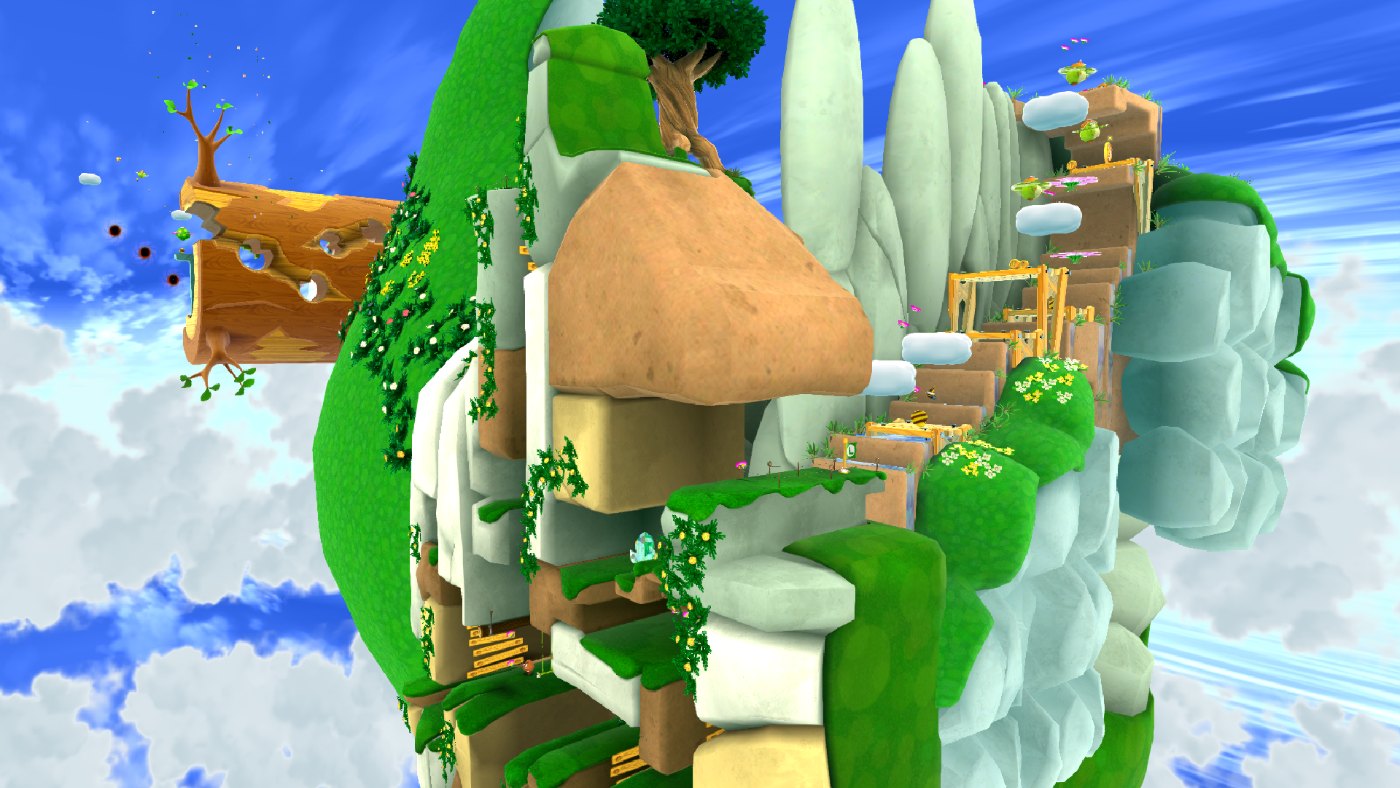
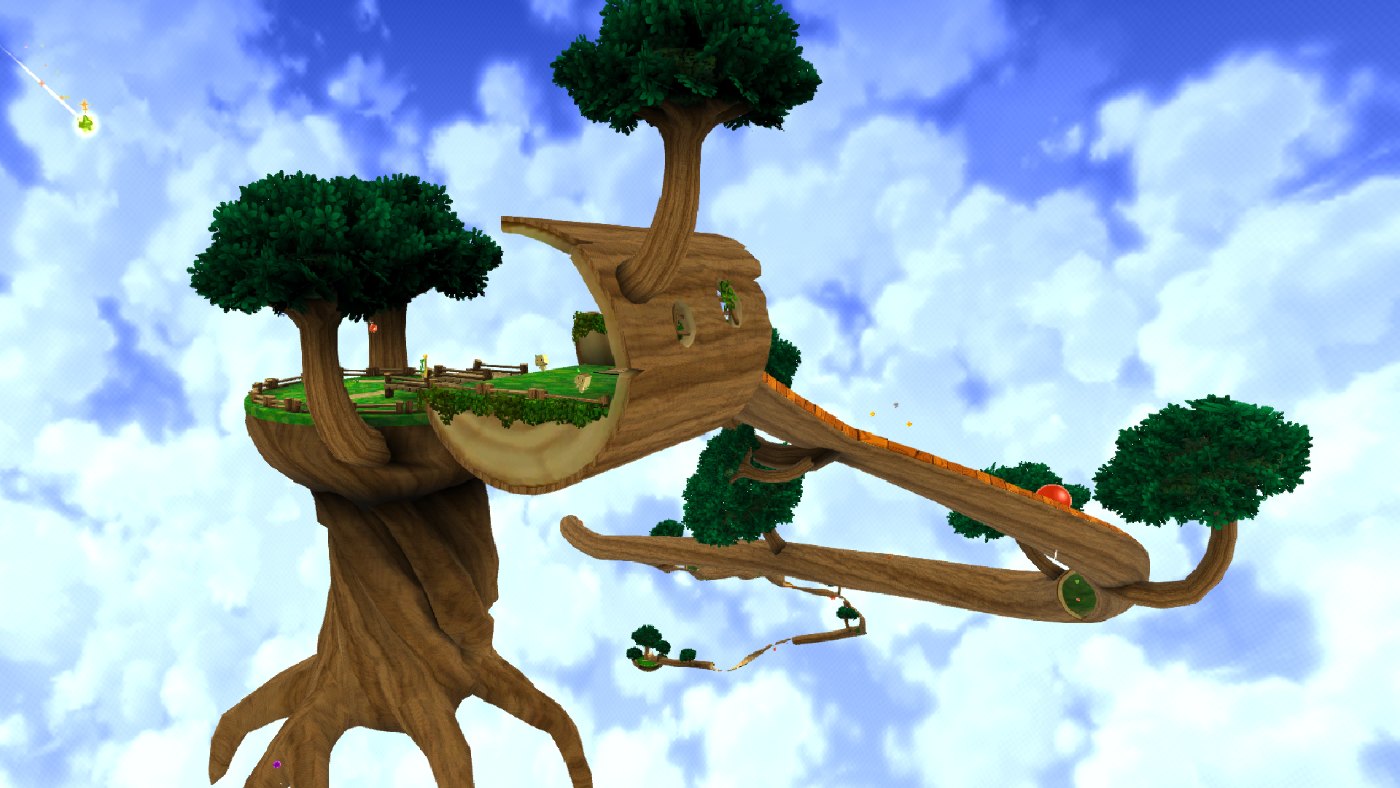
Tall Trunk GalaxyWorld 3: The Far Reaches of the Universe · 3 missionsBlimp Yoshi up the tree, then the great slide down it.
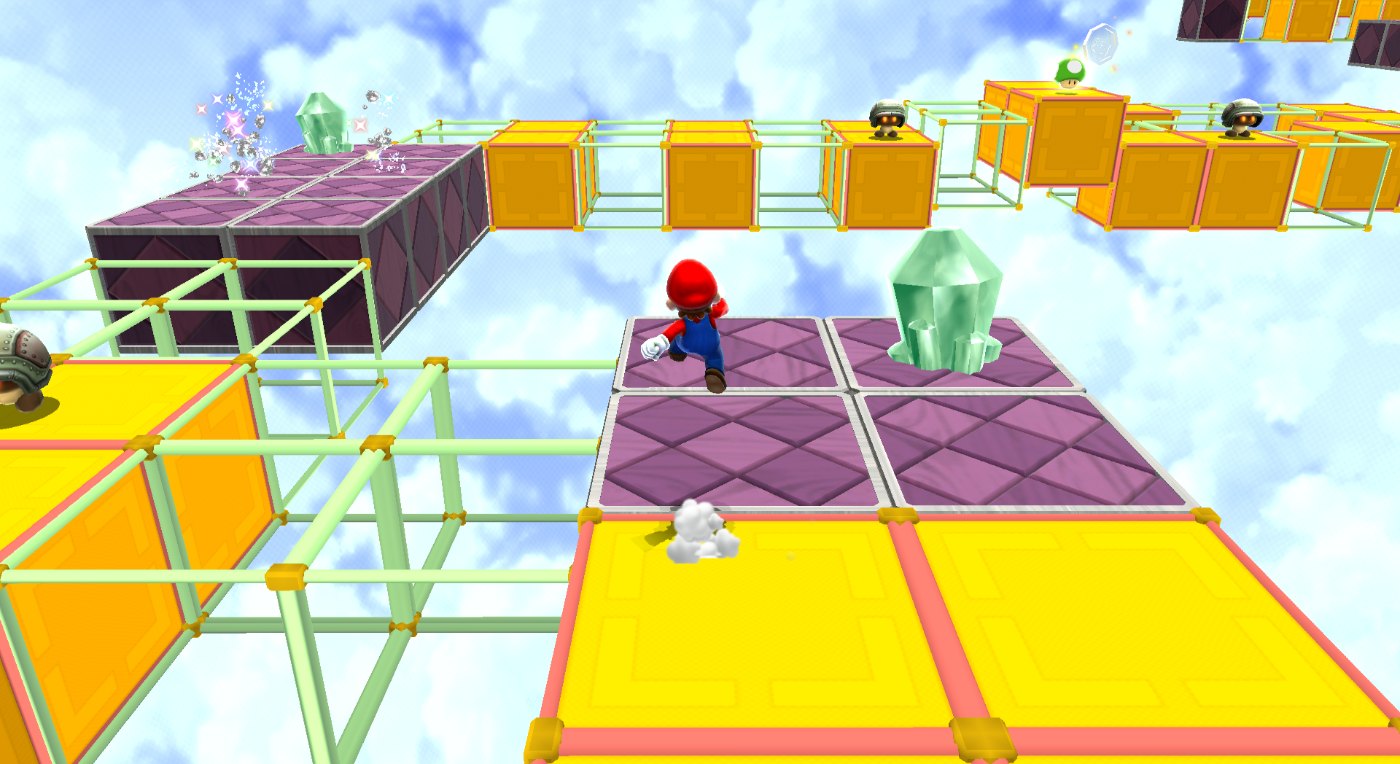
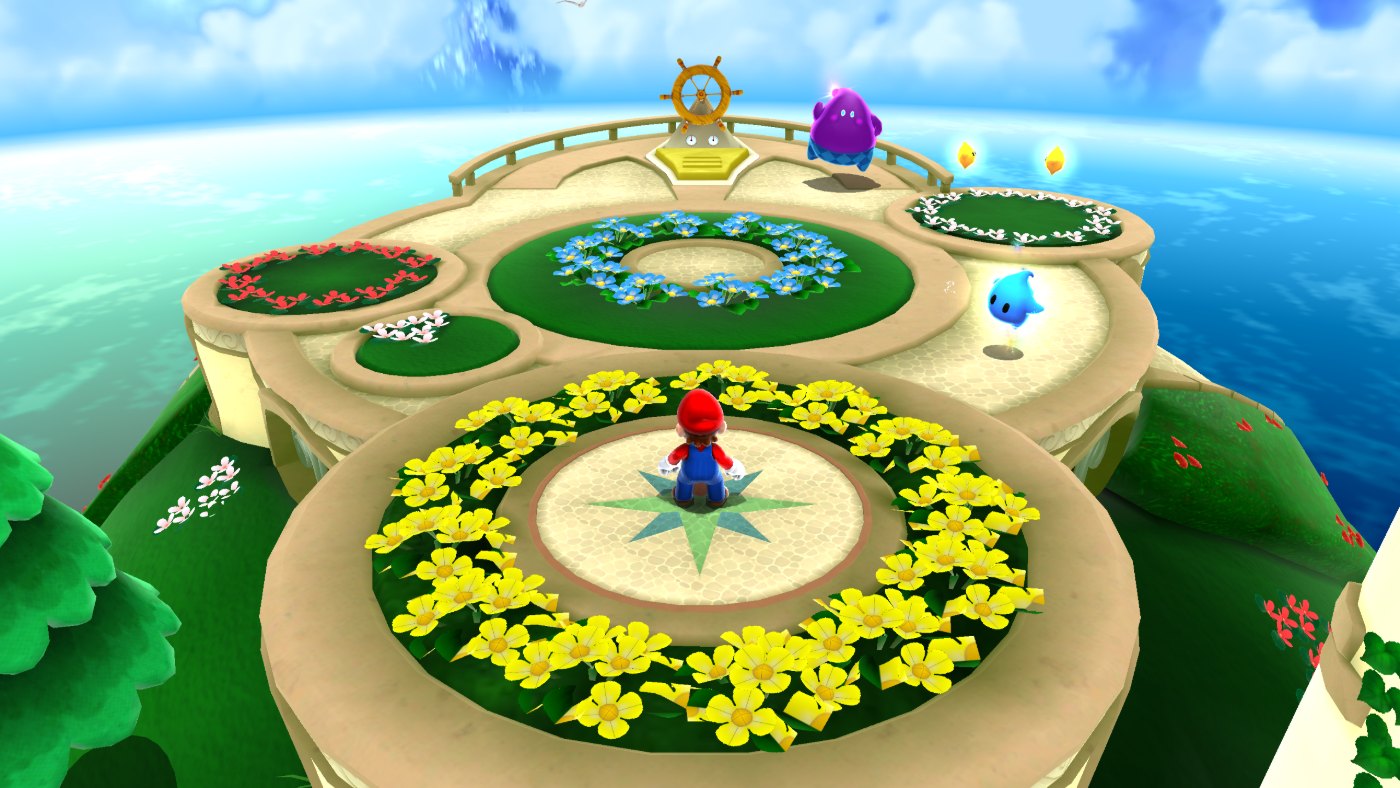
Cloudy Court GalaxyWorld 3 · 3 missionsCloud platforms, fans and cymbals in the sky.
Haunty Halls GalaxyWorld 3 · 3 missionsBulb Yoshi lights the way past Mega Boos and Octoboos.
Freezy Flake GalaxyWorld 3 · 3 missions · SorbettiSnow, a frozen Bowser statue and a snowman with a nose problem.
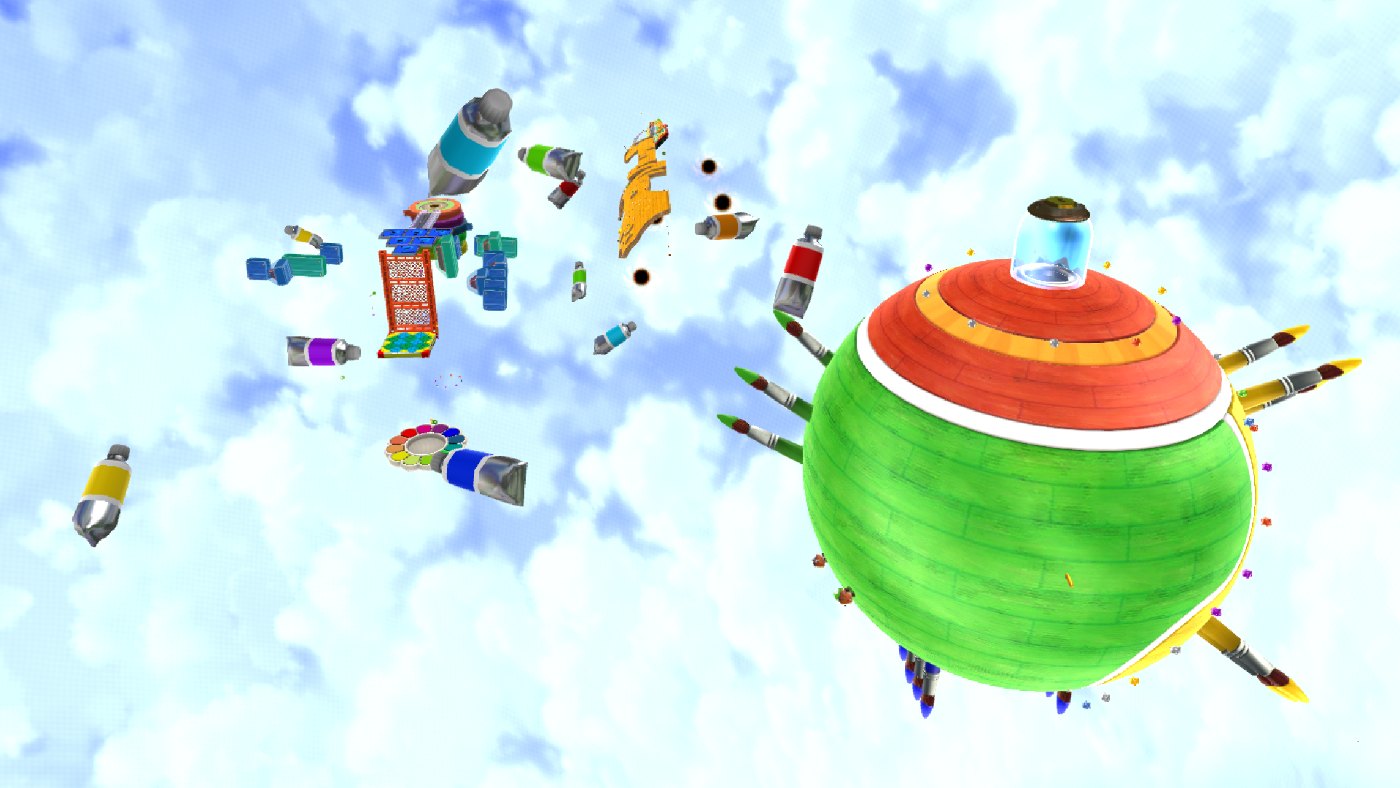
Rolling Masterpiece GalaxyWorld 3 · 2 missionsStar Ball rolling over giant paintbrushes, chased by a Homing Chomp.
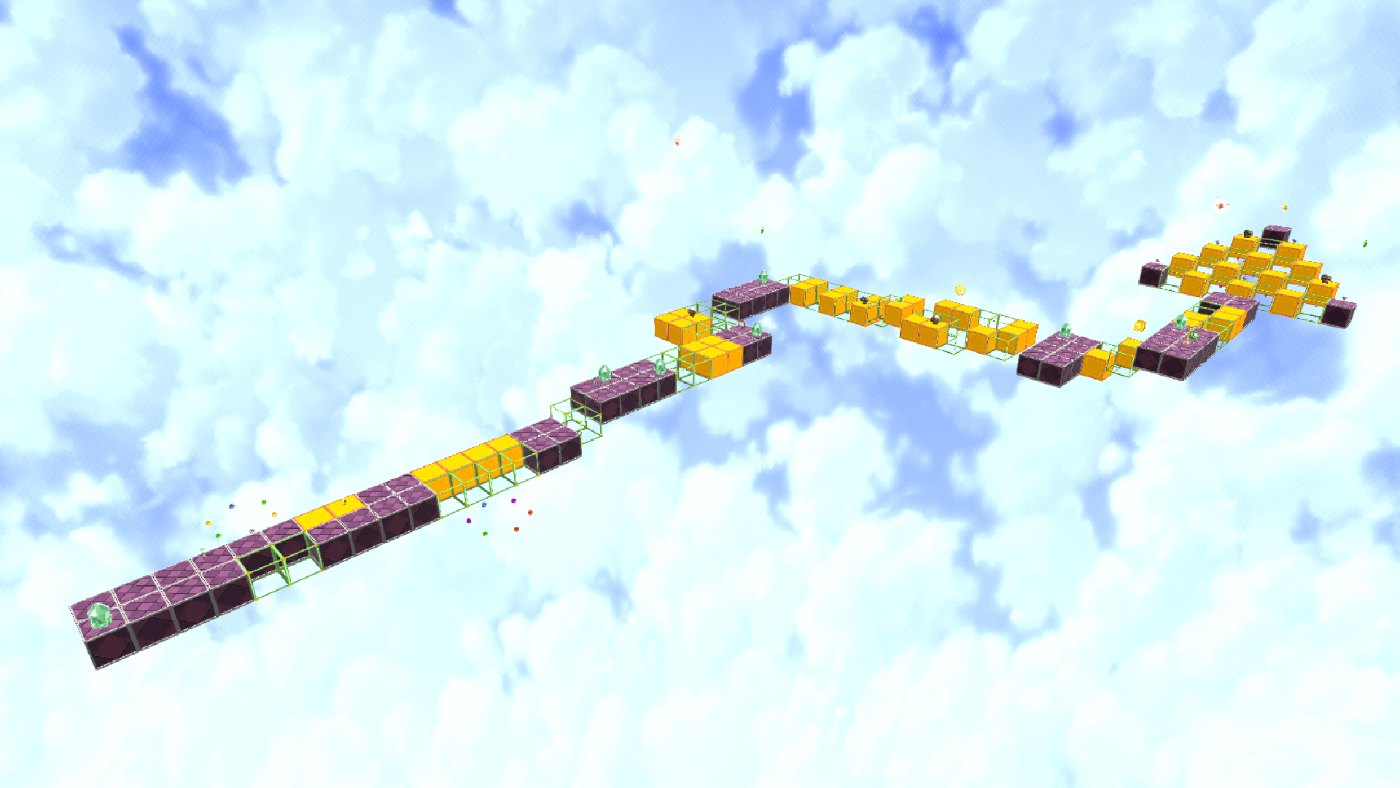
Beat Block GalaxyWorld 3 · Hungry Luma (1,000) · 2 missionsPlatforms appear and vanish to the beat of the music.
Bowser Jr.’s Fearsome FleetWorld 3 boss · Megahammer · Grand StarYoshi spits Bullet Bills at the mech’s glass domes.
Supermassive GalaxyWorld 4: The Many Mysteries of the Cosmos · 3 missionsEverything is enormous: Goombas, Koopas, Wigglers, pipes.
Flipsville GalaxyWorld 4 · 3 missions · GlamdozerGround pound the grates to swap between the top and bottom of the town.
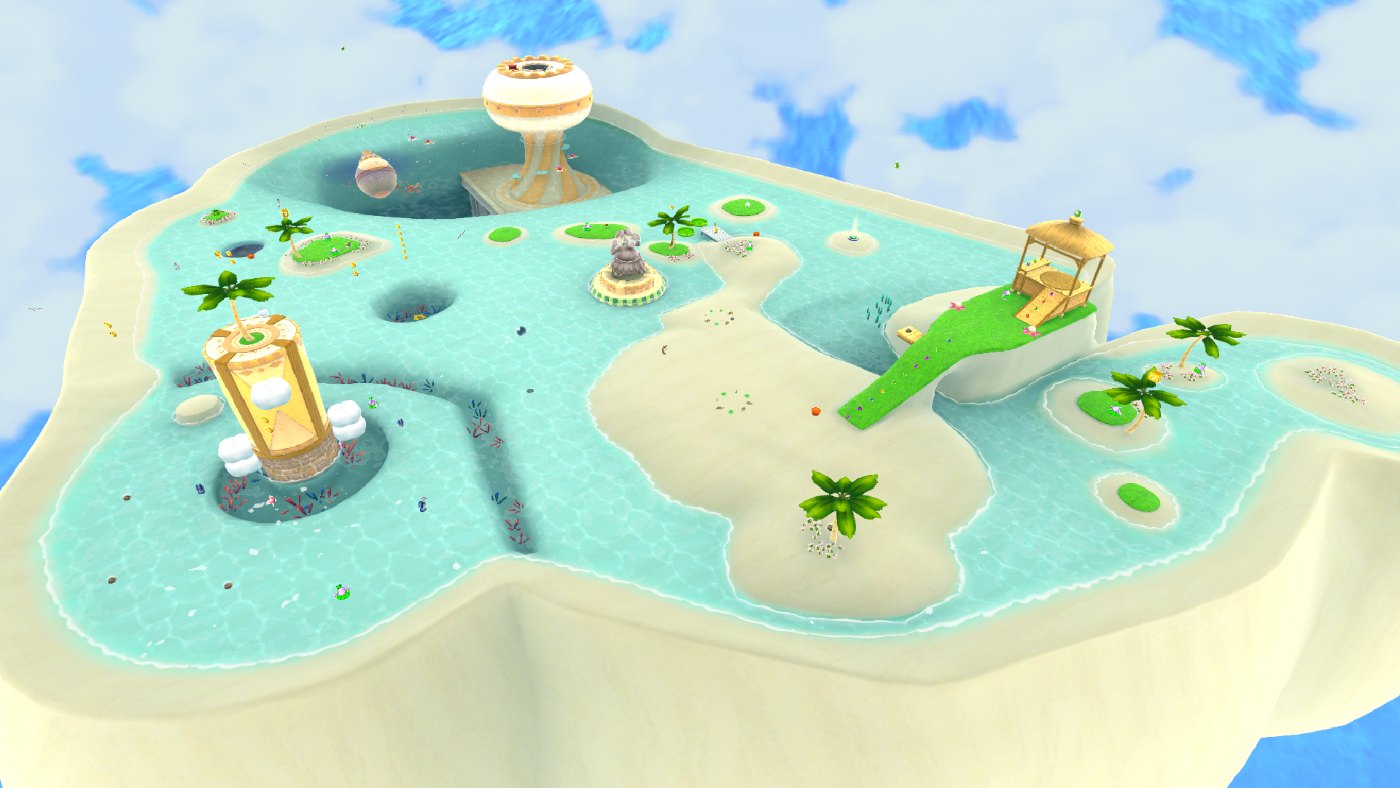
Starshine Beach GalaxyWorld 4 · 3 missionsPiantas, surf and a cloudy tower; Yoshi required.
Chompworks GalaxyWorld 4 · 3 missionsA Gearmo-run factory making Chain Chomps, with a Spring Mushroom.
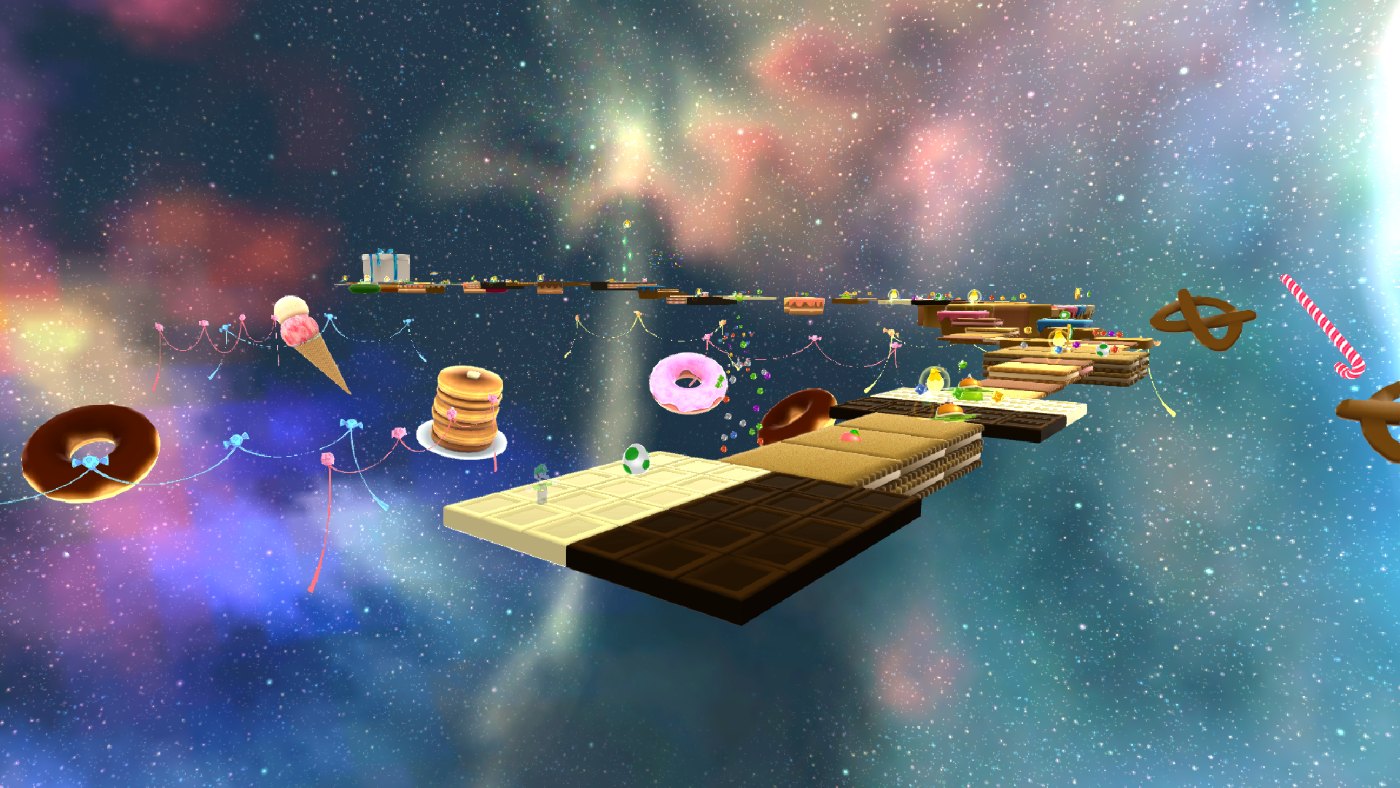
Sweet Mystery GalaxyWorld 4 · Hungry Luma (1,200) · 2 missionsCakes and biscuits, invisible until Bulb Yoshi shines.
Honeyhop GalaxyWorld 4 · 2 missionsThe Queen Bee’s court, back from the first game.
Bowser’s Gravity GauntletWorld 4 boss · Bowser · Grand StarA castle where up keeps changing its mind.
Space Storm GalaxyWorld 5: Trial of the Galaxies · 3 missionsPull Stars, slow-motion switches and Topman’s tower.
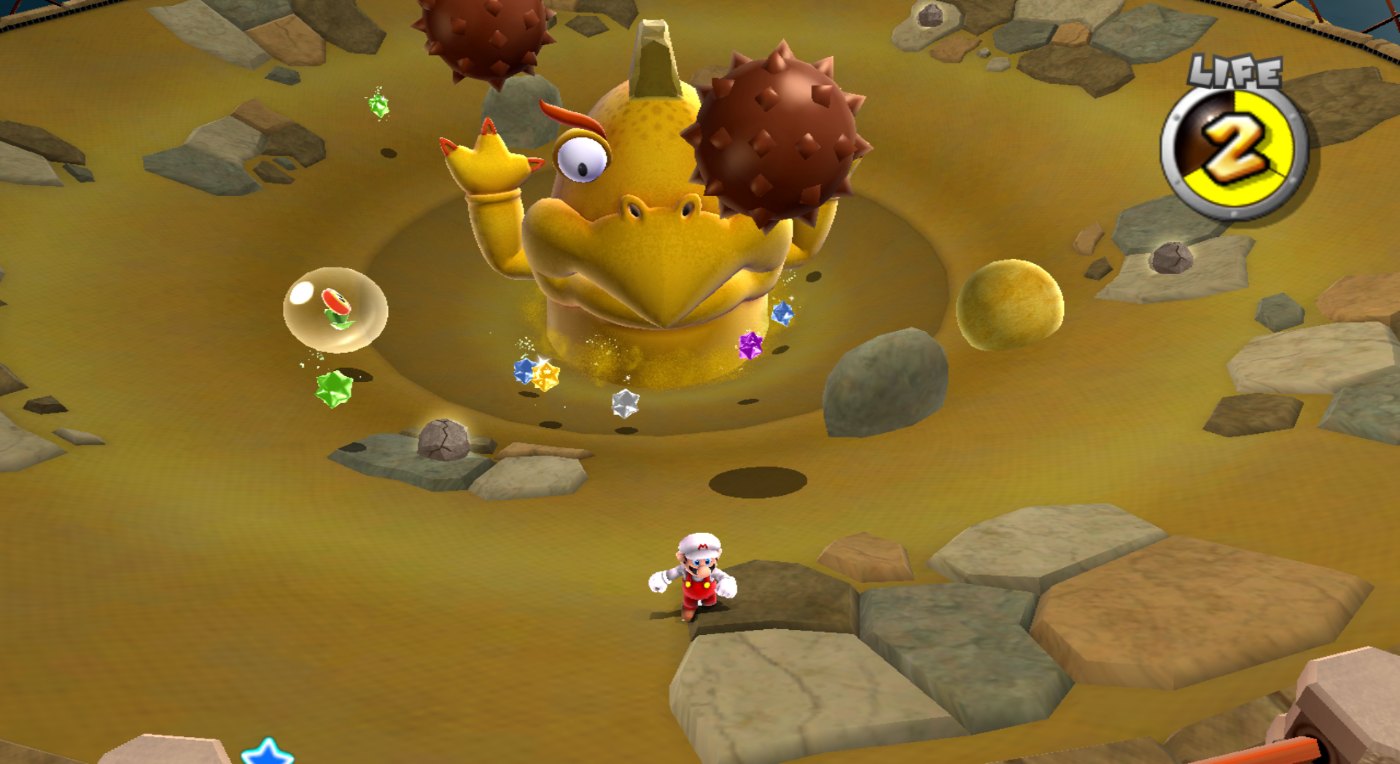
Slipsand GalaxyWorld 5 · 3 missions · SquizzardSand slides, Rhomps and a Fire Flower boss fight.
Shiverburn GalaxyWorld 5 · 3 missions · Prince PikanteLava and ice side by side; watch the figures on the horizon.
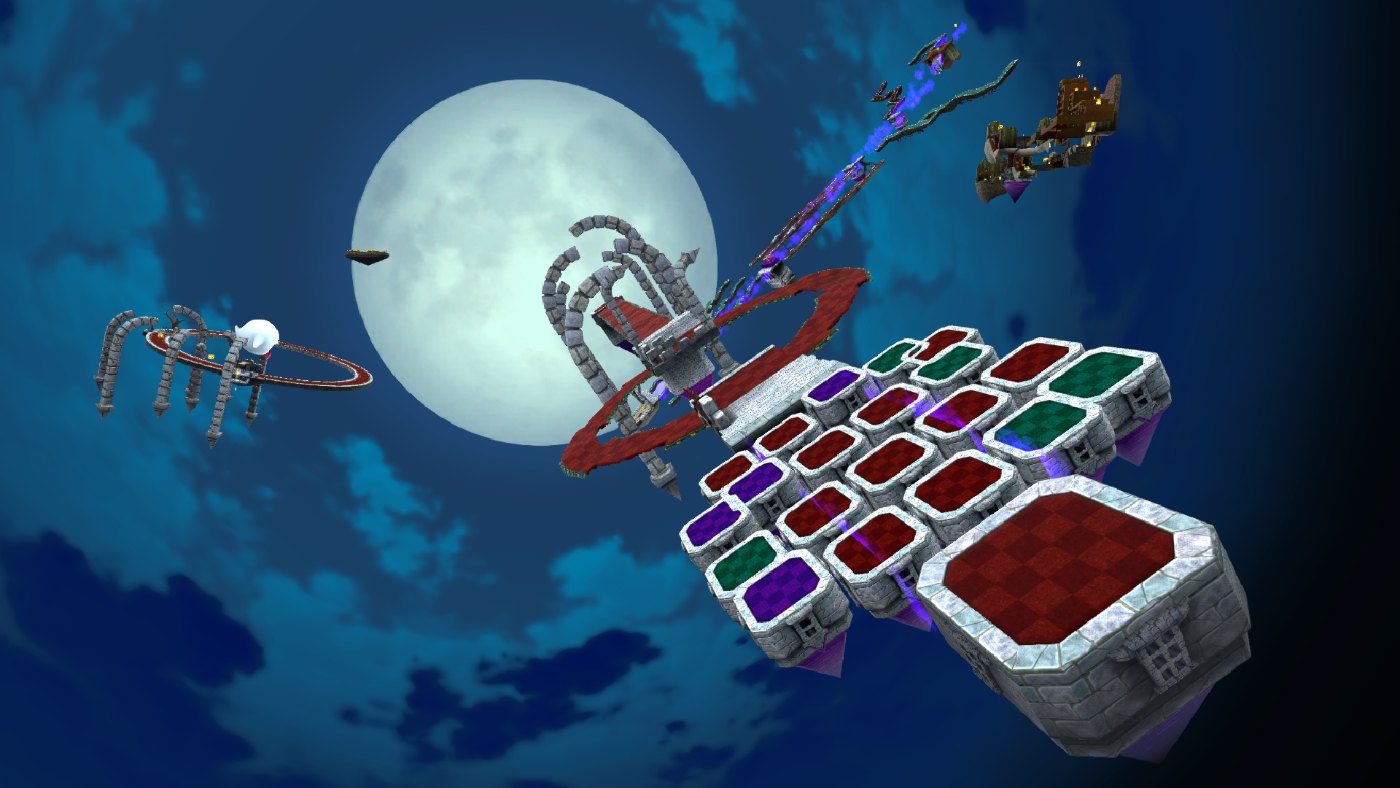
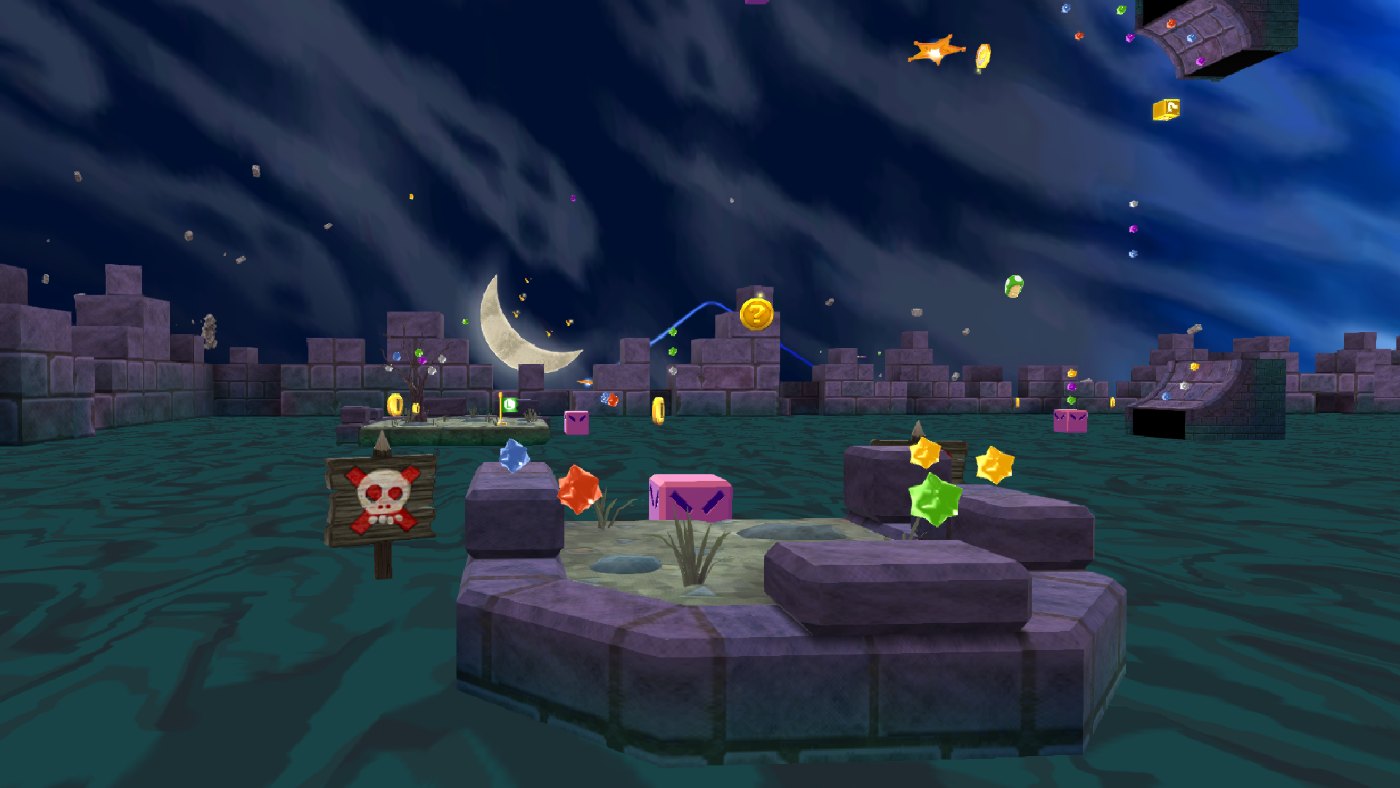
Boo Moon GalaxyWorld 5 · 3 missionsBoo Mario’s home, with a howling tower and a sinking swamp.
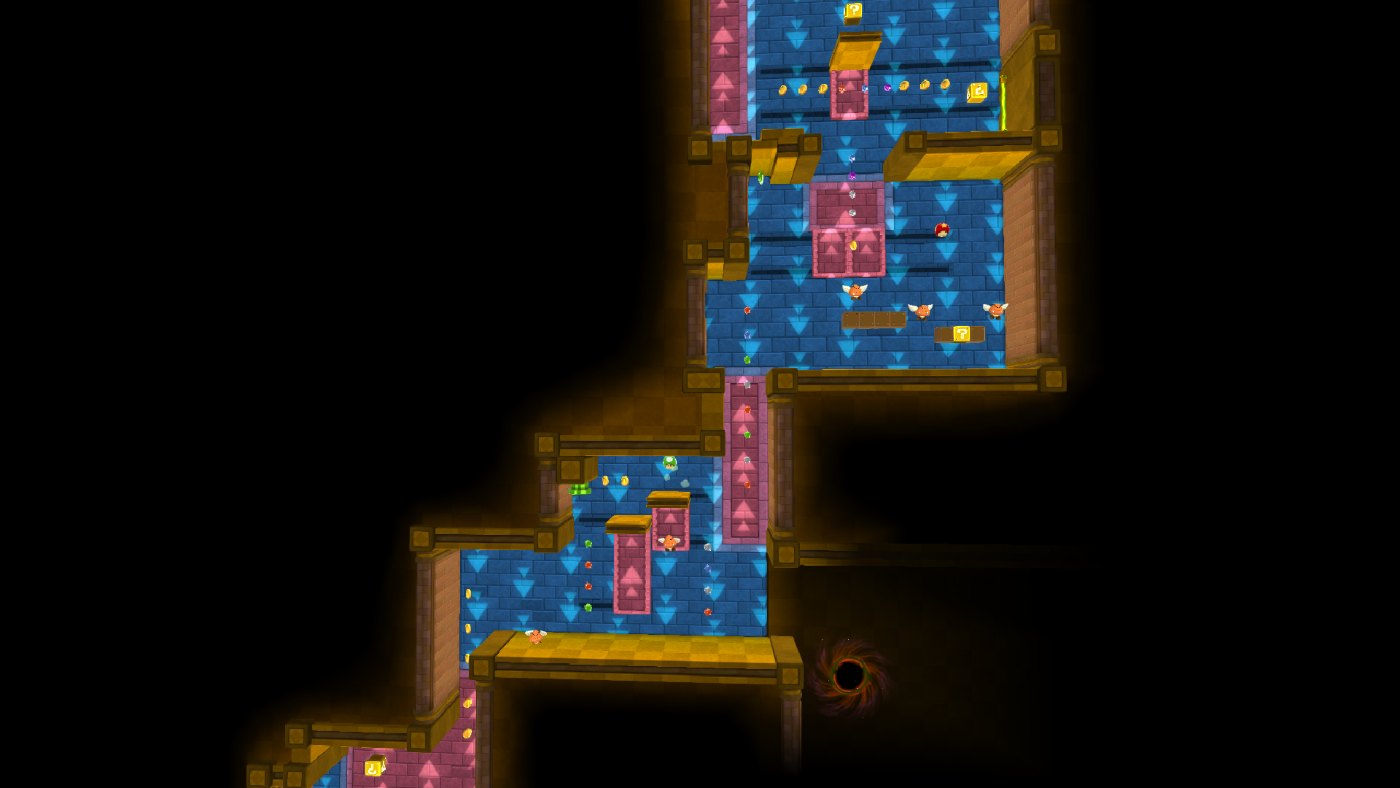
Upside Dizzy GalaxyWorld 5 · 2 missionsGravity reverses every few seconds in a 2D maze.
Fleet Glide GalaxyWorld 5 · Hungry Luma (1,500) · 2 missionsFluzzard glides through a Bowser battle station.
Bowser Jr.’s Boom BunkerWorld 5 boss · Boomsday Machine · Grand StarCloud Mario versus a tank.
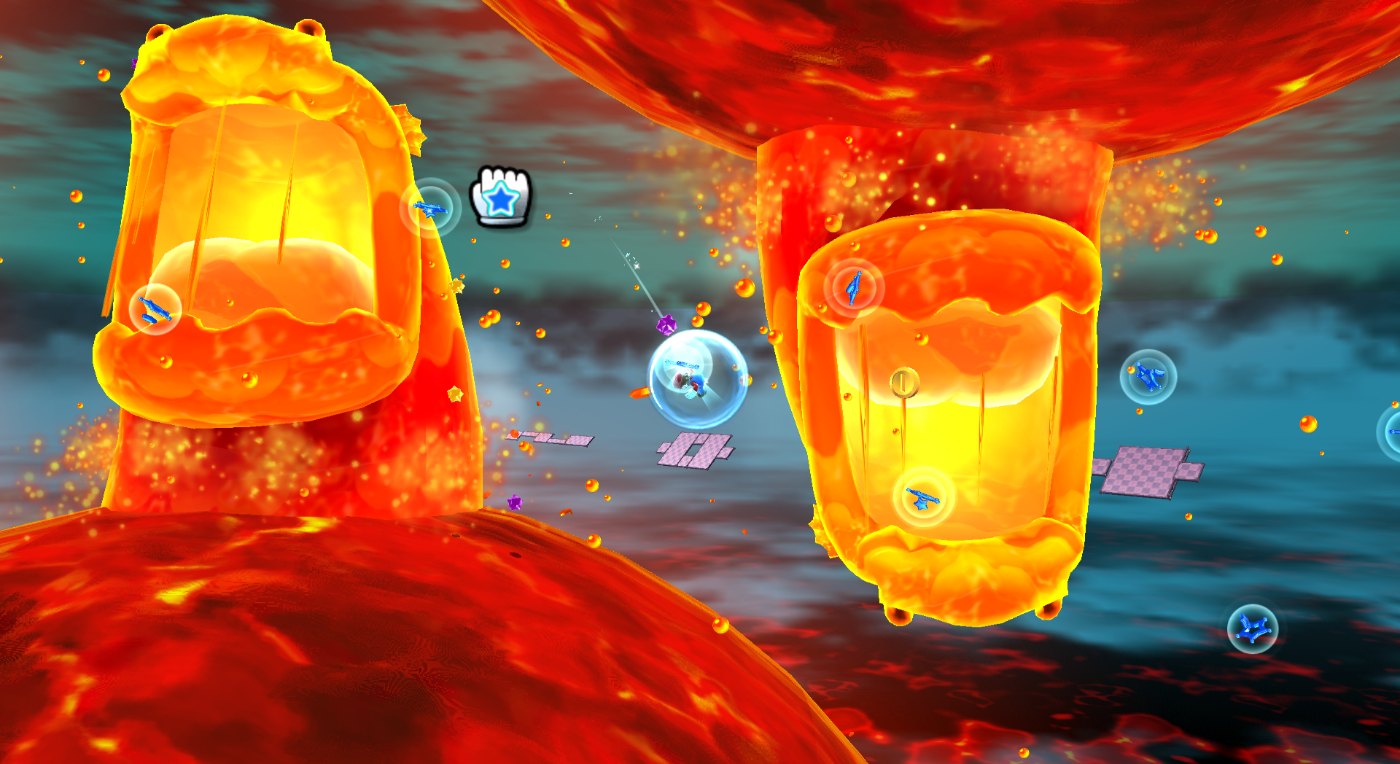
Melty Monster GalaxyWorld 6: Bowser in Your Sights · 3 missionsMagmaarghs and Magmaws in a sea of lava, plus a bowling challenge.
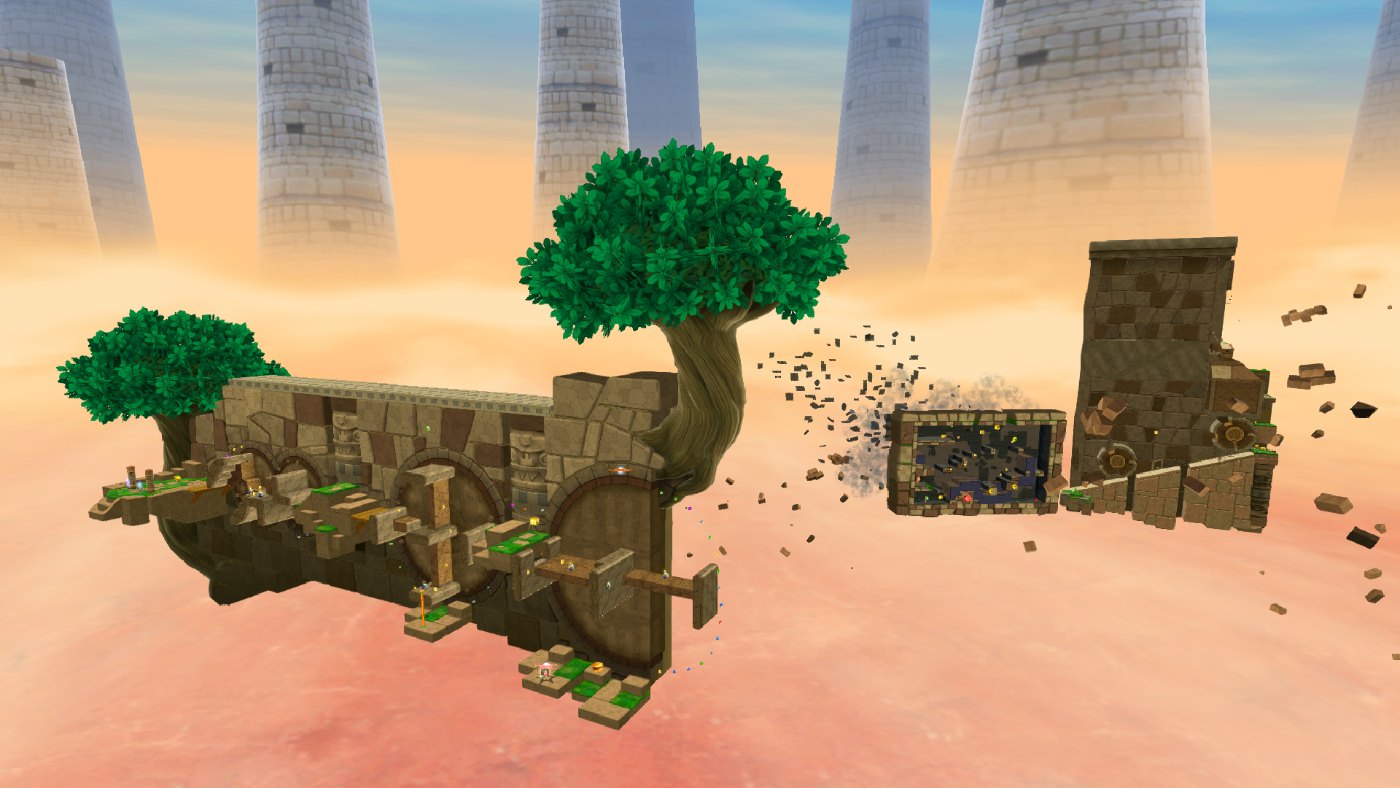
Clockwork Ruins GalaxyWorld 6 · 3 missionsCogs, stone wheels and a very large hammer.
Throwback GalaxyWorld 6 · 3 missions · Whomp KingWhomp’s Fortress from Super Mario 64, rebuilt in orbit.
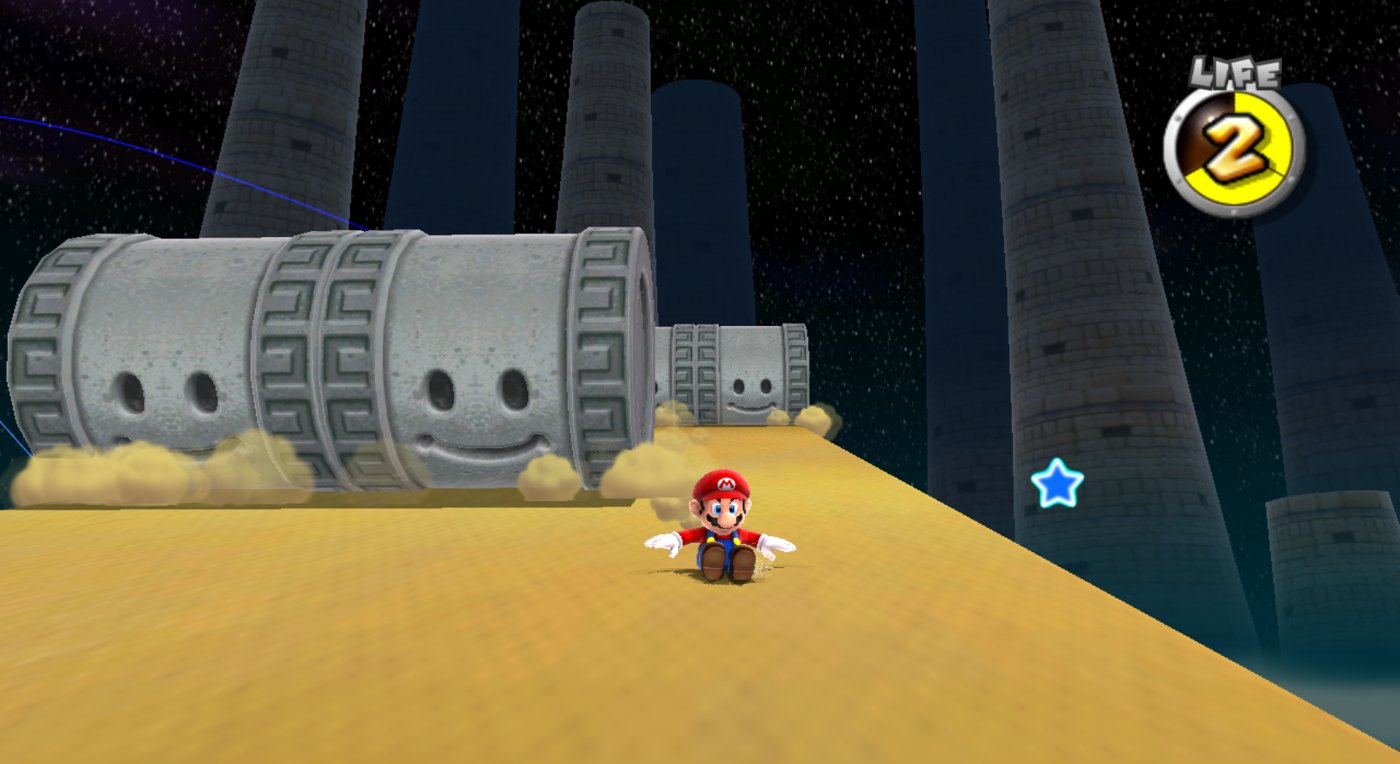
Battle Belt GalaxyWorld 6 · 3 missions · Fiery GobblegutA chain of tiny planets full of old enemies, ending with Gobblegut on fire.
Flash Black GalaxyWorld 6 · Hungry Luma (1,800) · 2 missionsPitch dark, lit only by lightning.
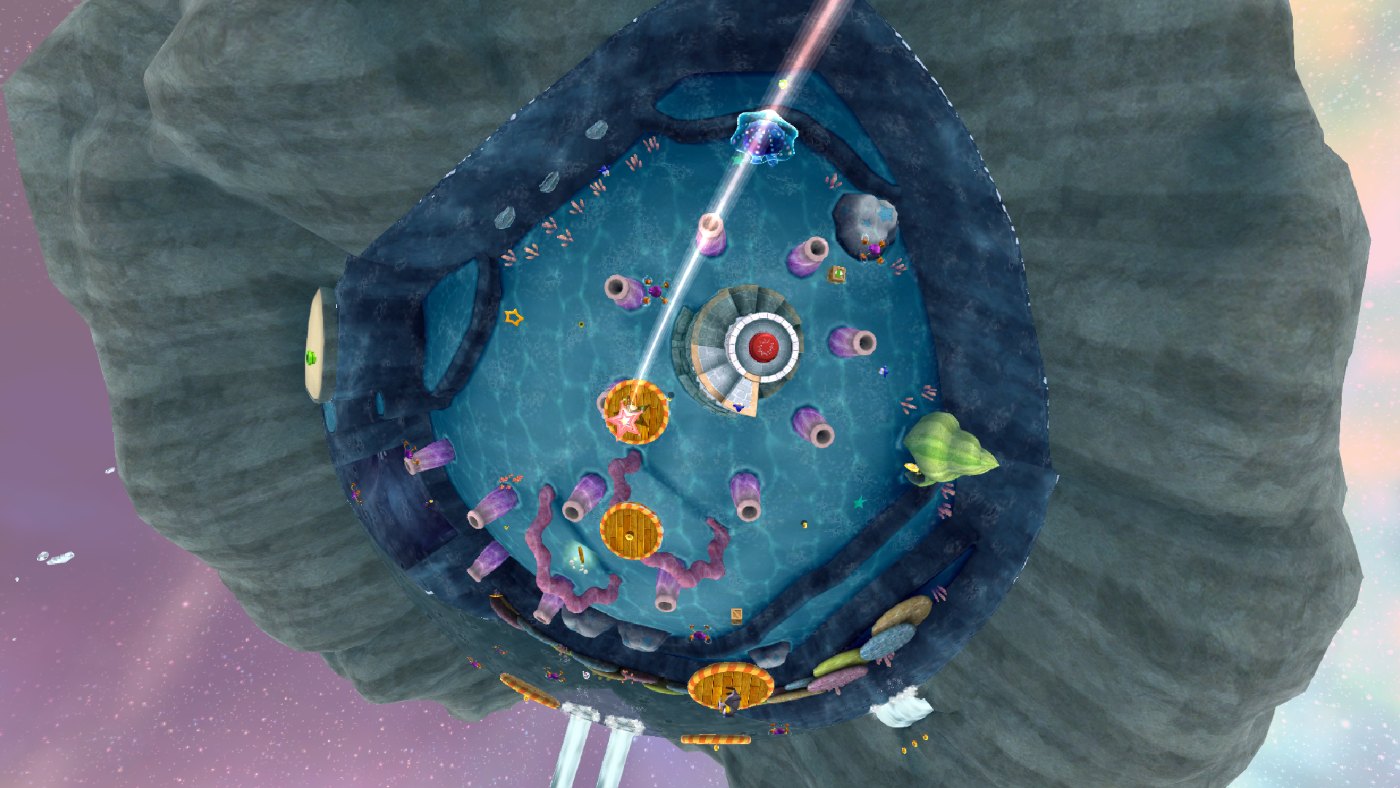
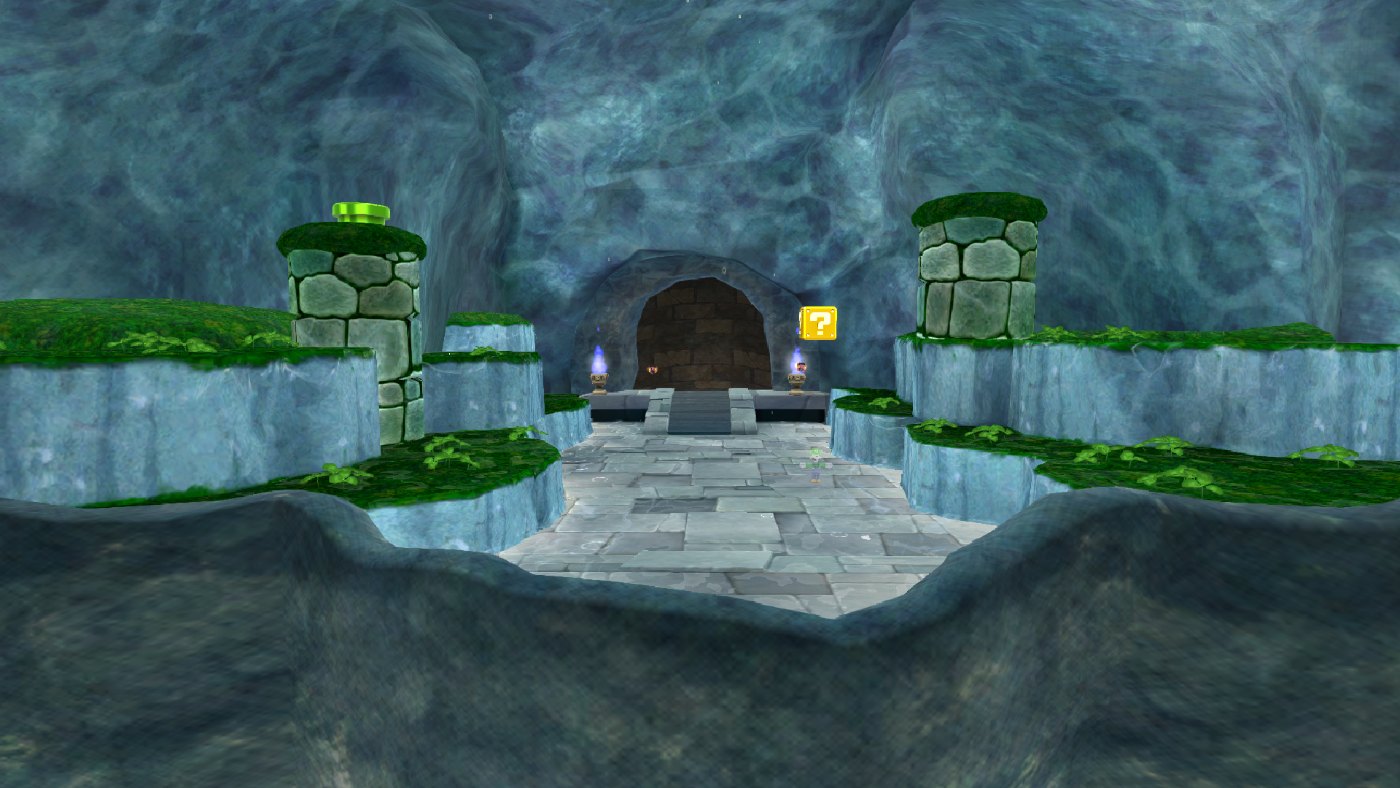
Slimy Spring GalaxyWorld 6 · 2 missionsA long underwater swim through a shell-lit cave.
Bowser’s Galaxy GeneratorWorld 6 boss · Bowser · Grand StarThe final fortress and the last two Bowser fights.
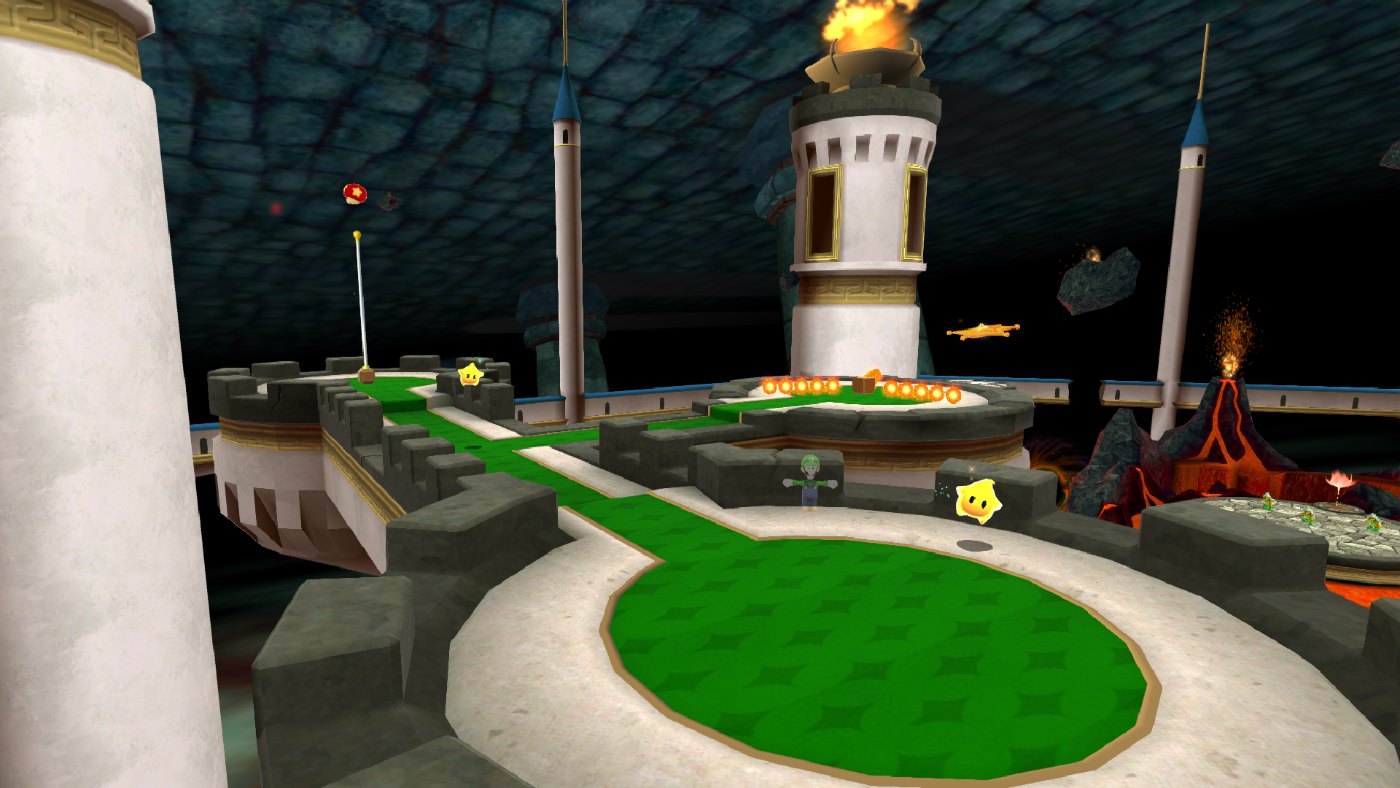
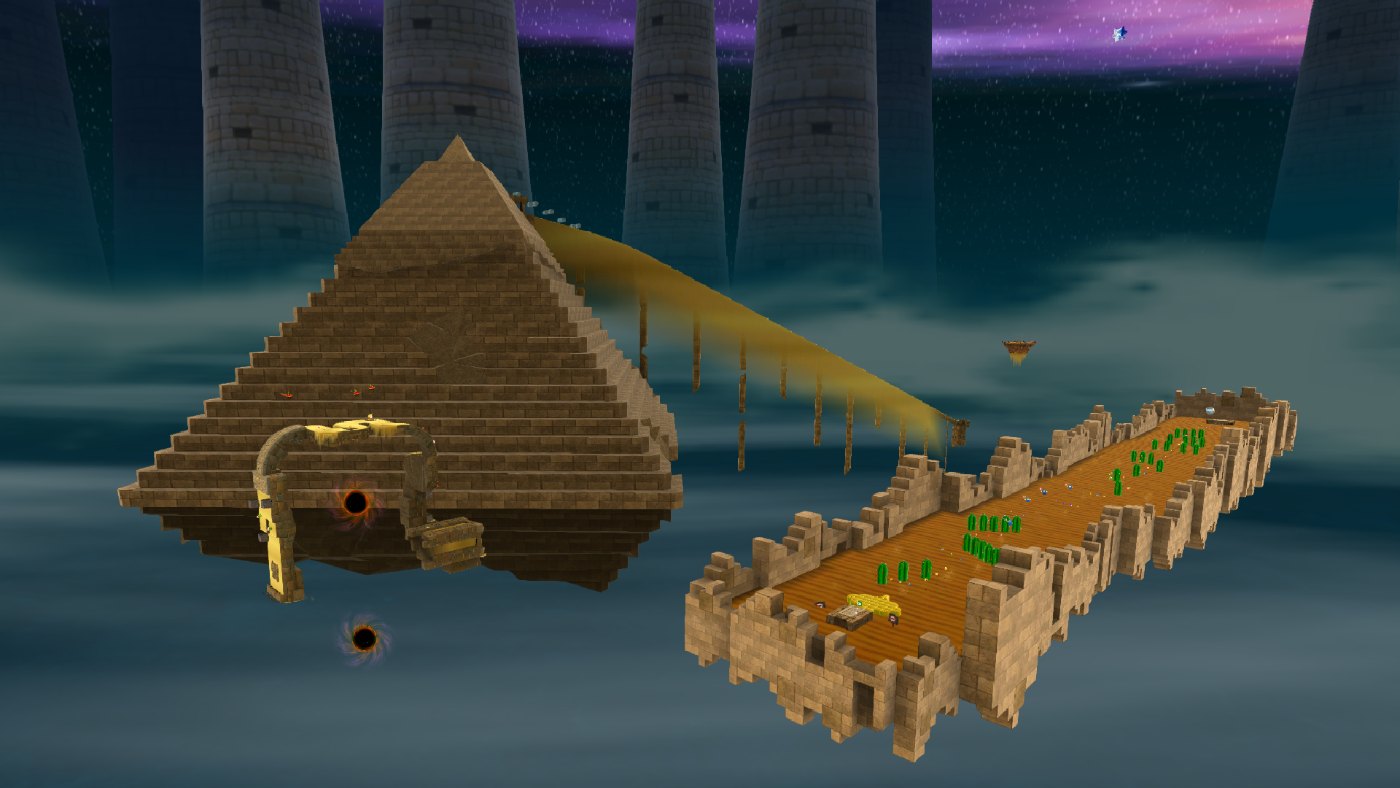
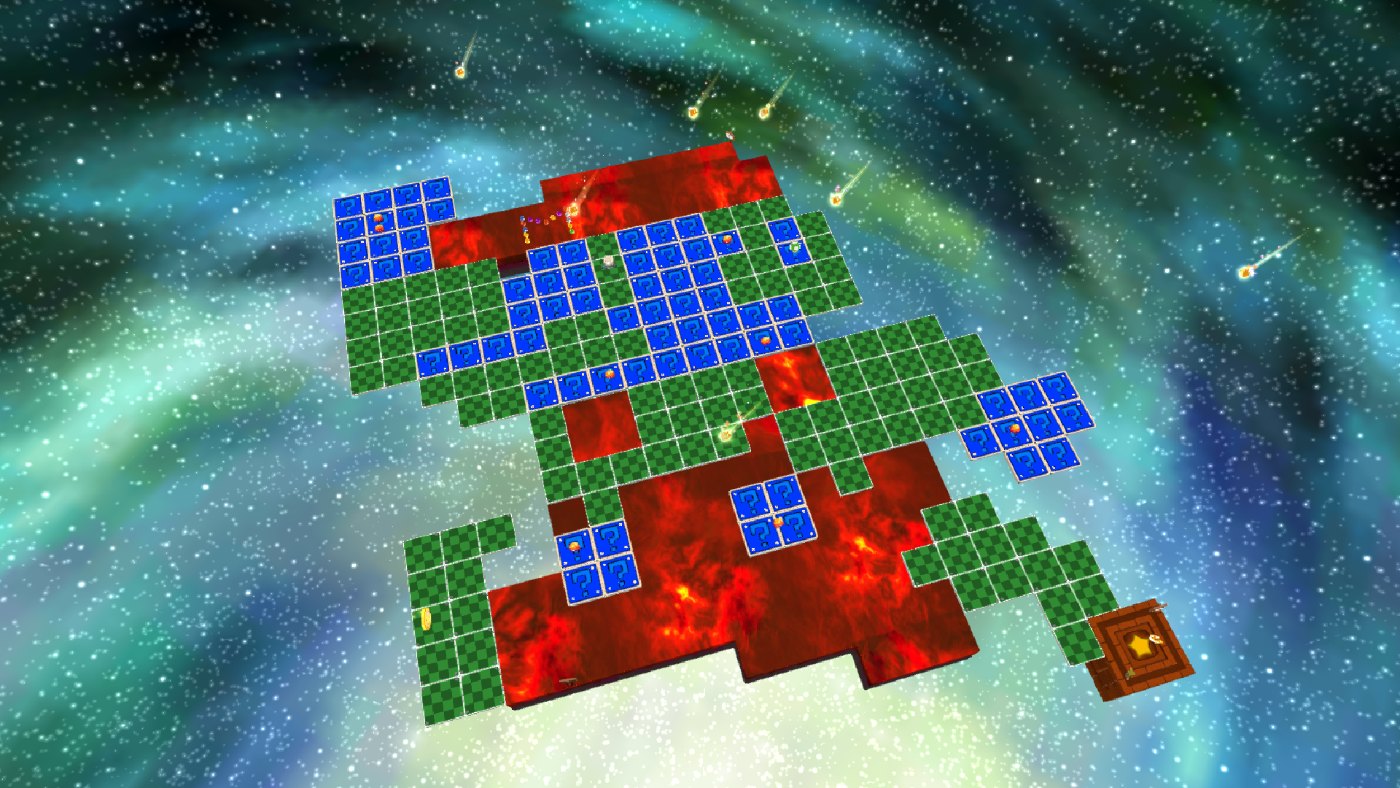
Mario Squared GalaxyWorld S: Here We Go! · 2 missionsA flat planet shaped like 8-bit Mario (and Luigi), with Cosmic Clones.
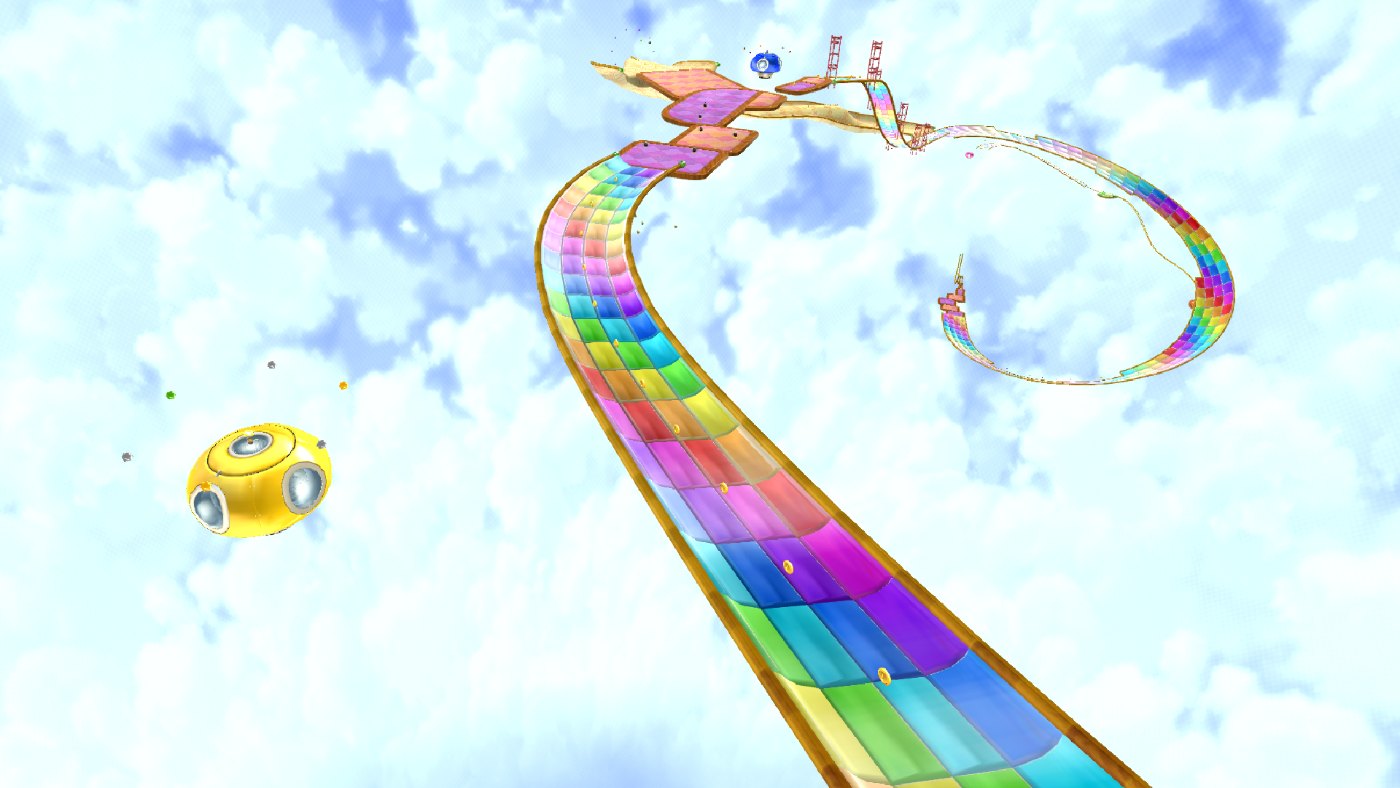
Rolling Coaster GalaxyWorld S · 75 stars · 2 missionsStar Ball down a Rainbow Road.
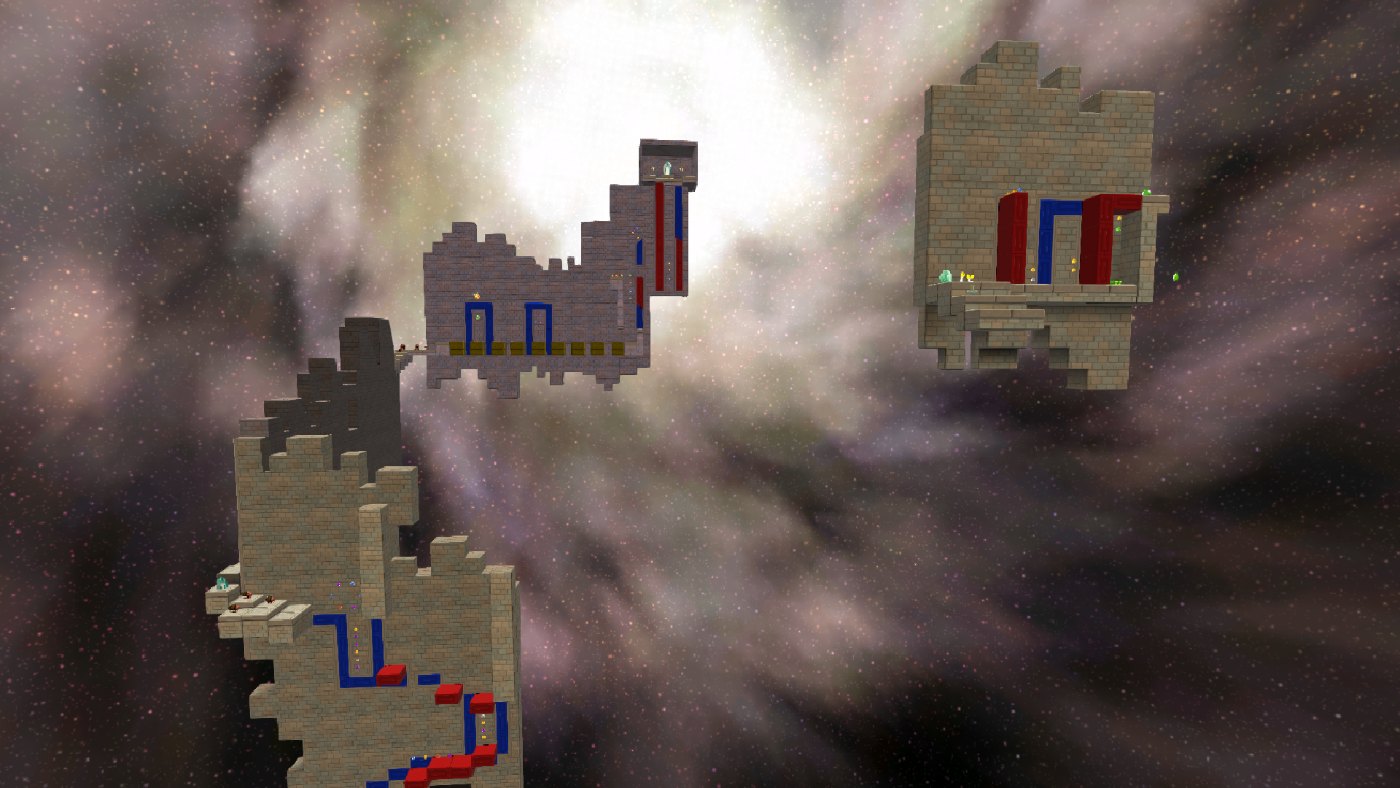
Twisty Trials GalaxyWorld S · 80 stars · 2 missionsSpinning blocks from Super Mario Sunshine, with Yoshi.
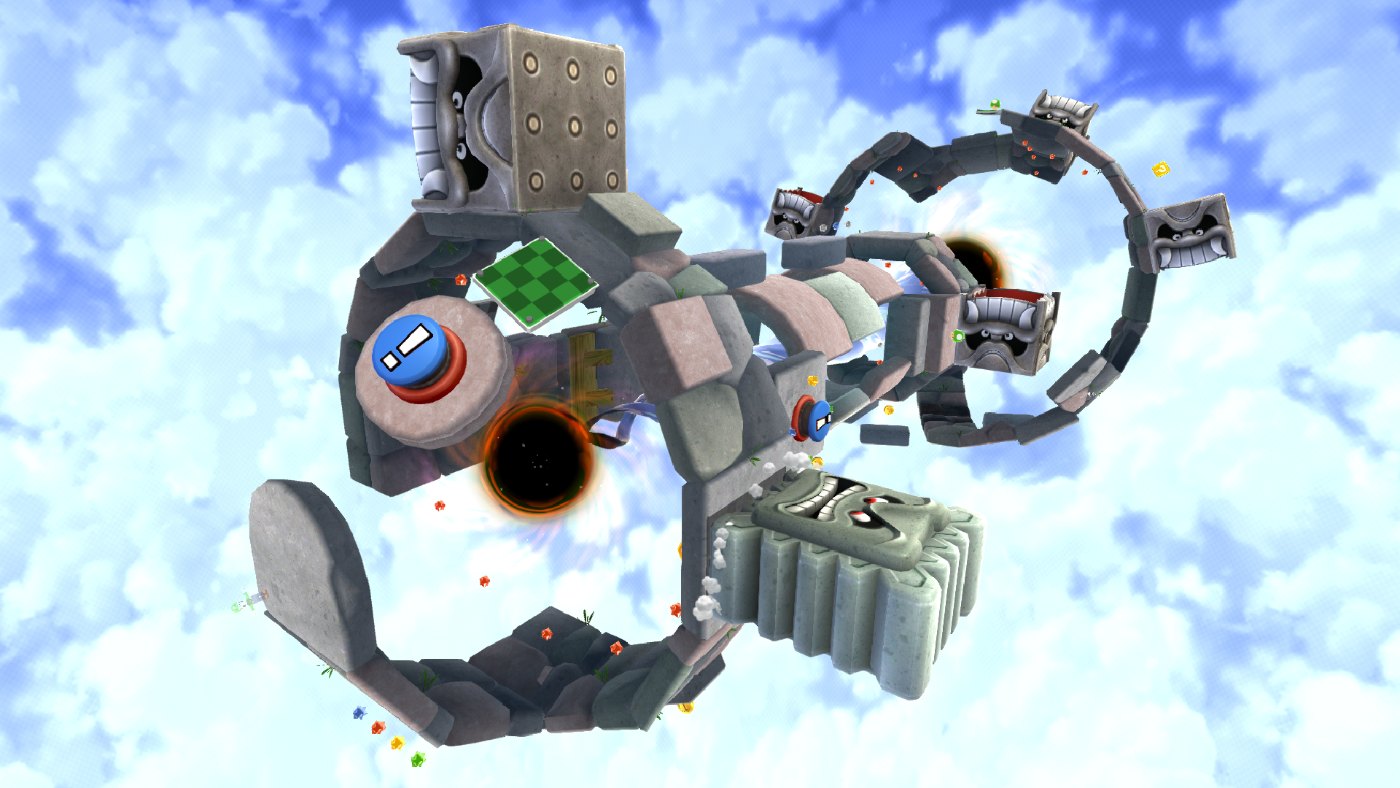
Stone Cyclone GalaxyWorld S · 90 stars · 2 missionsTox Boxes and slow-motion switches on a planet from the first game.
Boss Blitz GalaxyWorld S · 100 stars · 2 missions · five bossesDino Piranha, King Kaliente, Major Burrows, Bouldergeist and Fiery Dino Piranha, back to back.
Flip-Out GalaxyWorld S · Hungry Luma (2,000) · 110 stars · 2 missionsSpin to swap walls in and out of existence mid wall-jump.
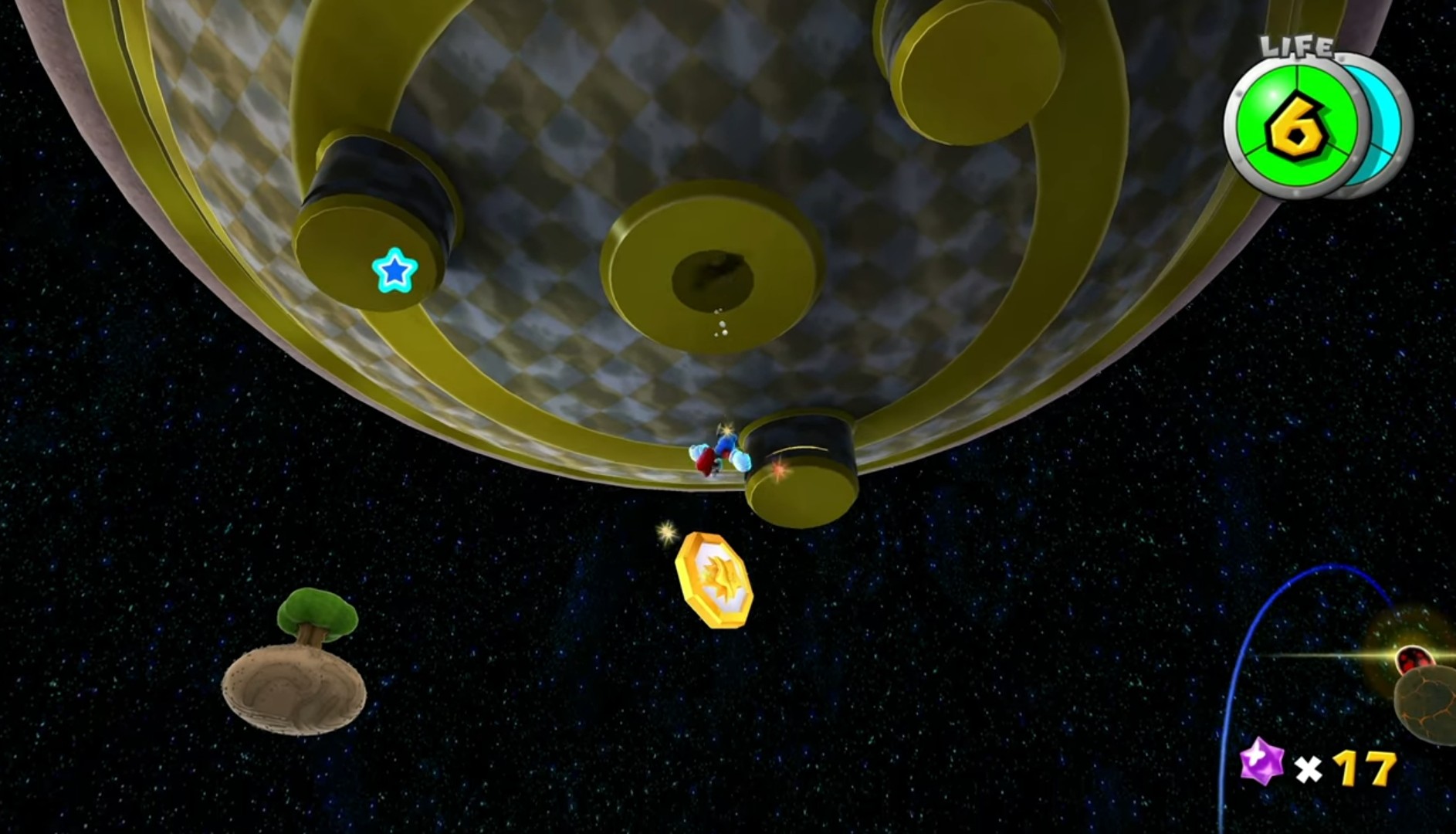
Grandmaster GalaxyWorld S · 240 stars · The Ultimate Test, The Perfect RunThe hardest thing in any Mario game to that point, and Rosalina at the end of it.
Hungry Luma galaxies grow out of a Luma on each world map once it has been fed enough Star Bits. Bowser is fought in Worlds 2, 4 and 6; Bowser Jr. in Worlds 1, 3 and 5.
Advertisement
Gameplay & Controls
If you played the first Galaxy, you already know the controls: Nunchuk stick to run, A to jump, Z to crouch and ground pound, a flick of the Wii Remote to spin, and the pointer to hoover up Star Bits and fire them at enemies. Everything else was rebuilt around a single word the team kept repeating in meetings: “more”.
Controls and moves
Rolling the Star Ball down Rolling Coaster Galaxy’s Rainbow Road.
Mario has his full repertoire from the first frame: double and triple jumps, long jumps, backward somersaults, side flips, wall kicks, ground pounds and the Spin, which attacks, stalls a fall and opens Launch Stars. Hold Z and shake for a sweep kick. The pointer collects Star Bits anywhere on screen and shoots them with B, and holding A over a Pull Star drags Mario across space. Tilting the Remote steers the Star Ball in the rolling levels and Fluzzard the glider in the two racing galaxies. The camera was overhauled: Koizumi says the planners hand-placed several hundred camera set-ups so that players almost never need to touch the D-pad.
Stars, Comet Medals and Green Stars
A Comet Medal: one per galaxy, and the key to the Prankster Comets.
Power Stars unlock galaxies and open the gates between worlds; Grand Stars, won from the six boss galaxies, power up Starship Mario and open the next world. Every galaxy also hides one Comet Medal, and the more medals you hold the more Prankster Comets arrive to orbit galaxies you have cleared, adding speed runs, Daredevil runs on one point of health, Purple Coin hunts, races against your own Cosmic Clones, 30-enemy Romps and sped-up obstacle courses. Unlike the first game, comets stay put once they arrive, so you can play their missions whenever you like.
Collect all 120 Power Stars and beat Bowser again and Green Comets appear over every galaxy except Grandmaster, revealing 120 Green Stars tucked into hard-to-reach corners of missions you have already finished, usually requiring a precise long jump, a cloud or a leap of faith to collect. All 240, with no Bronze Stars among them, open Grandmaster Galaxy and the last two stars.
Yoshi in space
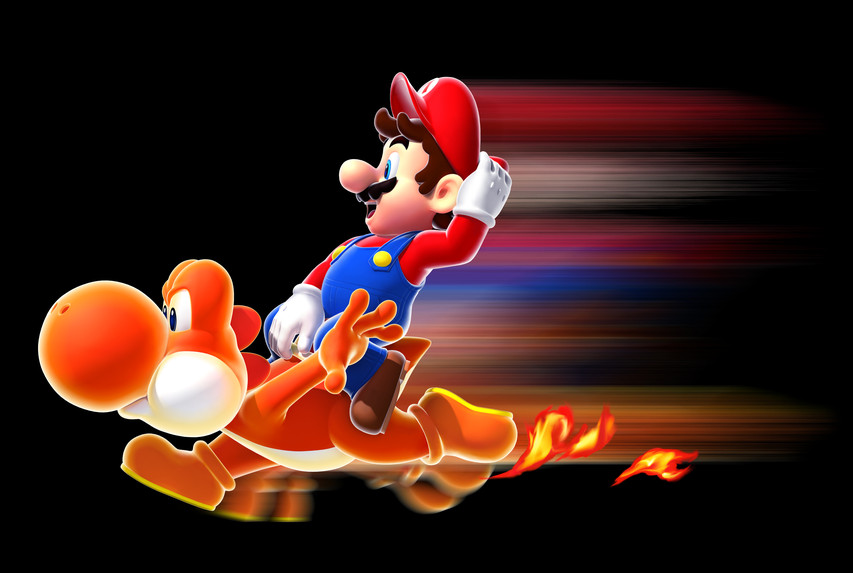
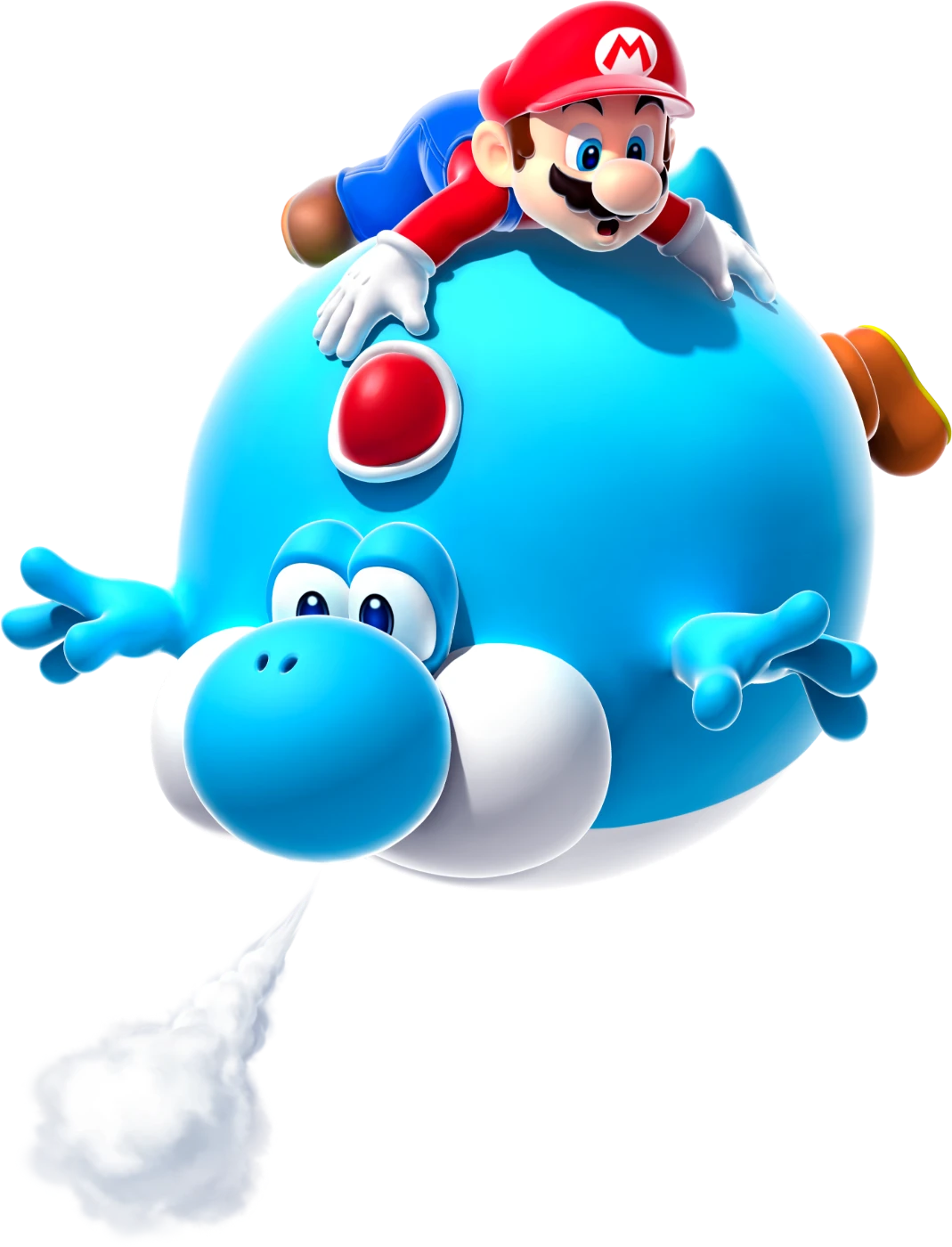
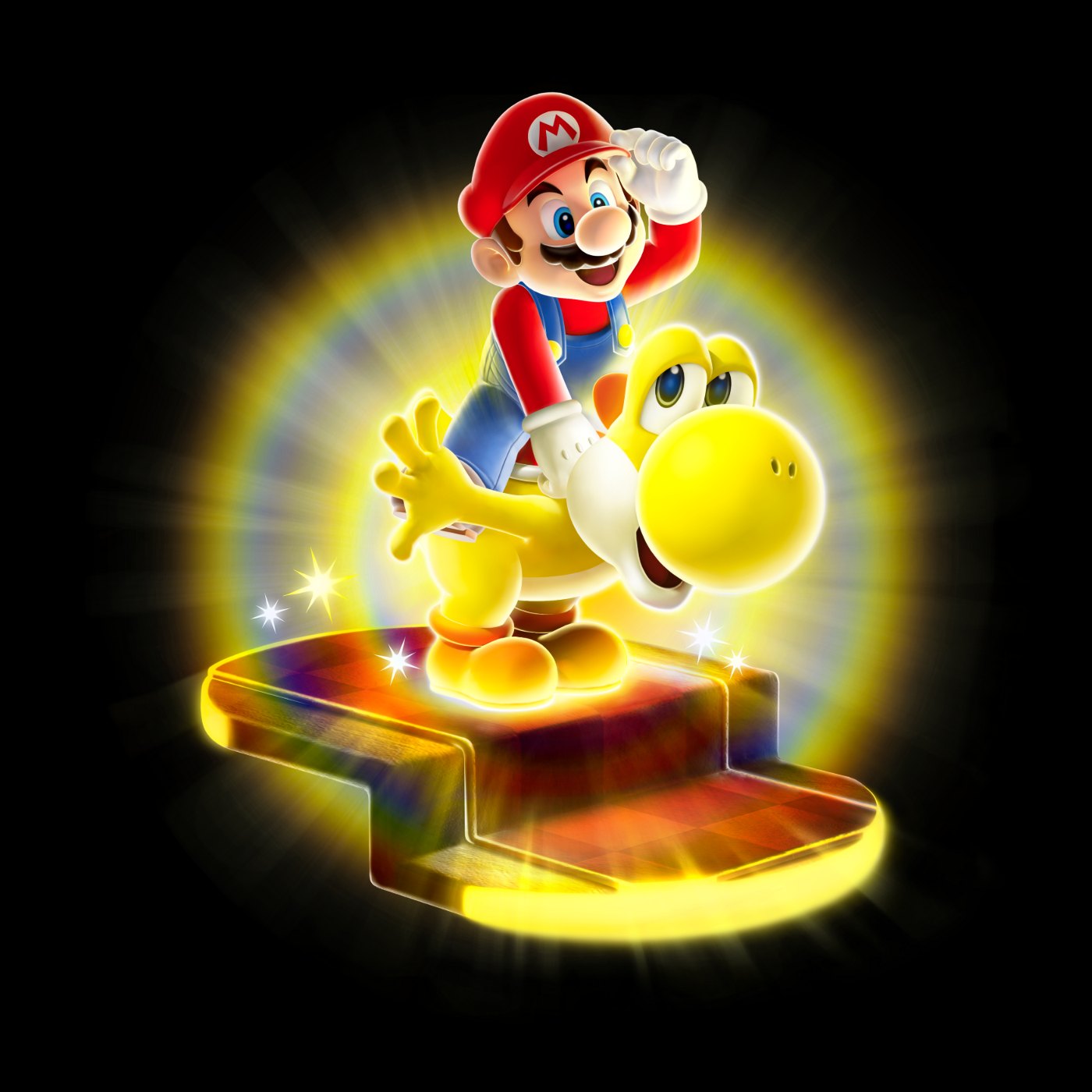
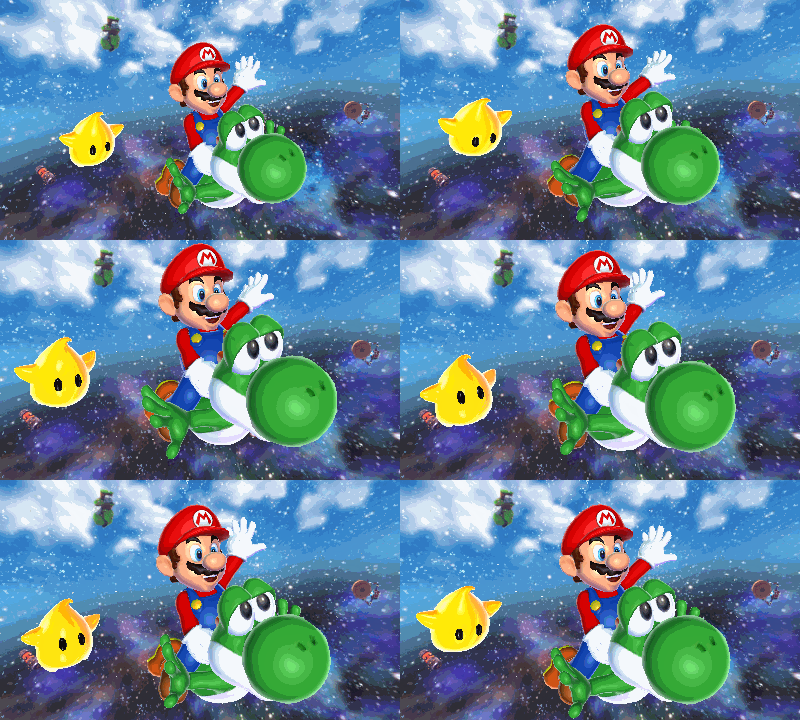
Yoshi hatches from eggs in twelve galaxies and a Magikoopa’s spell explains why he is in one: the Lumas recruited him to help find stars and he got himself sealed in. On his back the pointer becomes a red target for his tongue; point and press B to eat an enemy, swing from a grapple flower or pull a lever, and spit swallowed foes at others. He Flutter Jumps for distance and shares Mario’s spins and flips. Take a hit and Mario tumbles off while Yoshi scarpers, retreating into an egg if you do not catch him. Three fruits transform him for a few seconds: the Dash Pepper makes him a turbo-charged sprinter who runs up walls and over water for eight seconds, the Blimp Fruit inflates him so he floats upward until his air runs out, and the Bulb Berry lights him up for ten seconds, revealing invisible platforms that vanish when the glow fades.
Yoshi Star Galaxy, where you first saddle up.Dash Yoshi skims the water of Starshine Beach.Tall Trunk Galaxy and its enormous slide.
Starship Mario and the world map
The hub is a planetoid that Lubba and the Lumas rebuilt in the shape of Mario’s head, complete with a ship’s prow, a chimney, seagulls and a brook. A wheel at the bow opens the World Map, where you steer the ship between galaxies along Super Mario World-style paths past Star Barriers that demand a minimum star count. Each world has one Hungry Luma who swells into a new galaxy when fed Star Bits, from 300 for Flip-Swap to 2,000 for Flip-Out. The Engine Room fills up with the power-ups you have found, and the ship fills up with passengers: the Toad Brigade’s Starshroom docks alongside, Yoshi’s fruit garden starts orbiting, penguins, Whittles and Gearmos come aboard, and Rosalina is the final guest. Banktoad will hold up to 9,999 Star Bits for you across save files; Mailtoad delivers Peach’s letters, each with five 1-Ups; a warp pipe in the ship’s left ear leads to two Lumalee shopkeepers who sell Lucky Cubes.
The deck of Starship Mario.The Engine Room, where found power-ups go on display.
Cosmic Guide, Tip Network and Co-Star Mode
Nintendo’s answer to the Super Guide from New Super Mario Bros. Wii is the Cosmic Spirit, a translucent figure who drifts in after repeated failures and offers to take Mario the rest of the way. Accept and the star you earn is bronze. Bronze Stars count towards your total and open doors like any other, but Grandmaster Galaxy stays shut until every one has been replaced by a proper gold star. The Tip Network, a set of televisions dotted through levels and aboard the ship, plays short demonstrations of moves and power-ups for anyone who skipped the first game.
Co-Star Mode gives a second Wii Remote control of an orange Luma that tags along with Mario. It can grab Star Bits, coins, Purple Coins and 1-Ups from across the screen, hold enemies still with the pointer and, new this time, shake to spin and defeat them, as well as flip switches and stop the Star Ball. It was designed so a parent could help a child, or a child help a parent, without ever taking the pad.
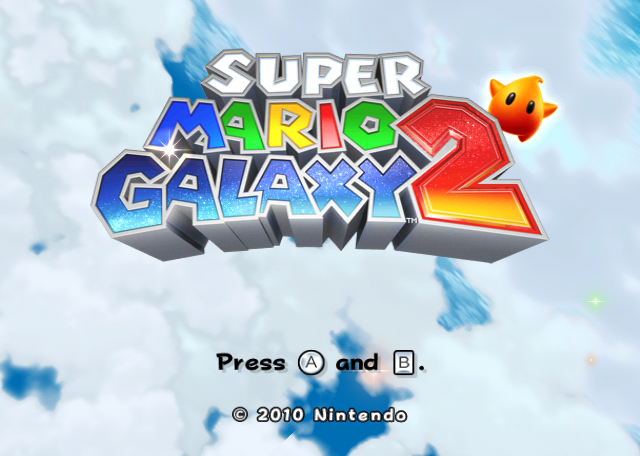
The Cosmic Spirit offers a hand in Flip-Swap Galaxy.The title screen, with the Co-Star Luma waiting for player two.
Playing as Luigi
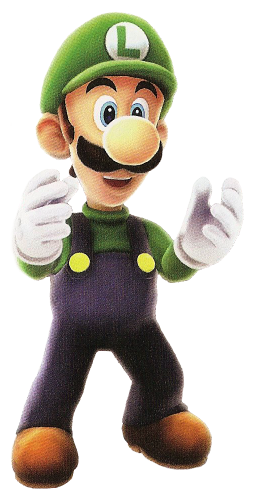
Luigi, available far earlier than in the first game.
Luigi is no longer a 120-star reward. Once you have beaten Bowser’s Lava Lair and taken three stars in World 3 he waits at the start of certain missions and offers to swap in; clear Bowser’s Galaxy Generator and a small door at the back of the ship lets you switch between the brothers at will. Luigi jumps higher and runs faster but takes longer to get going and skids when he stops, which makes the narrow planets of World S a particular adventure. Each time Luigi clears a mission a friendly Ghost appears at its start, jogging ahead to show a shortcut to the star; build the ship’s coin collection up to 9,999 coins and a Ghost appears in every mission, Luigi or not.
Power-ups and items
Three new transformations, three fruits for Yoshi and most of the first game’s wardrobe. Ice Mario and the Red Star did not make the cut, though Ice Mario’s music is still on the disc.
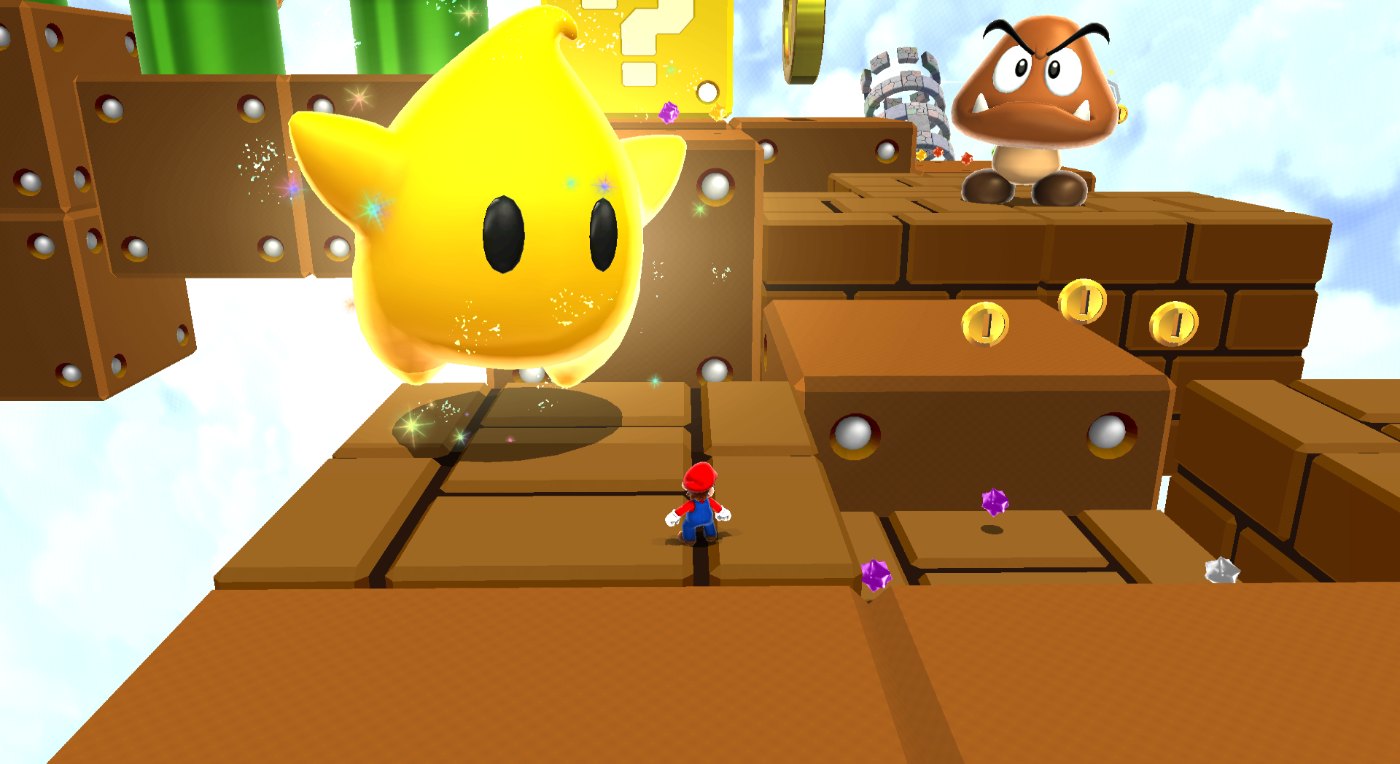
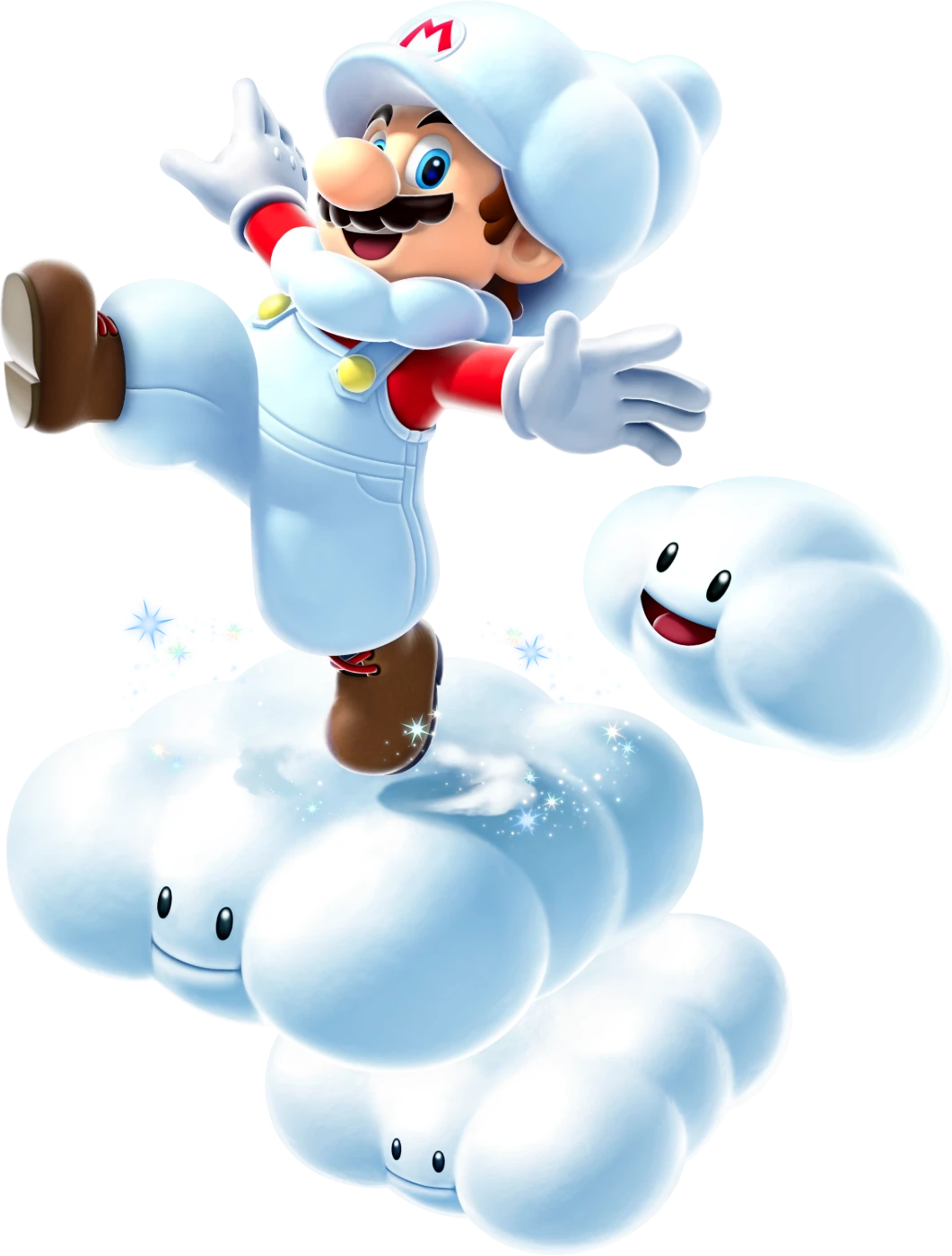
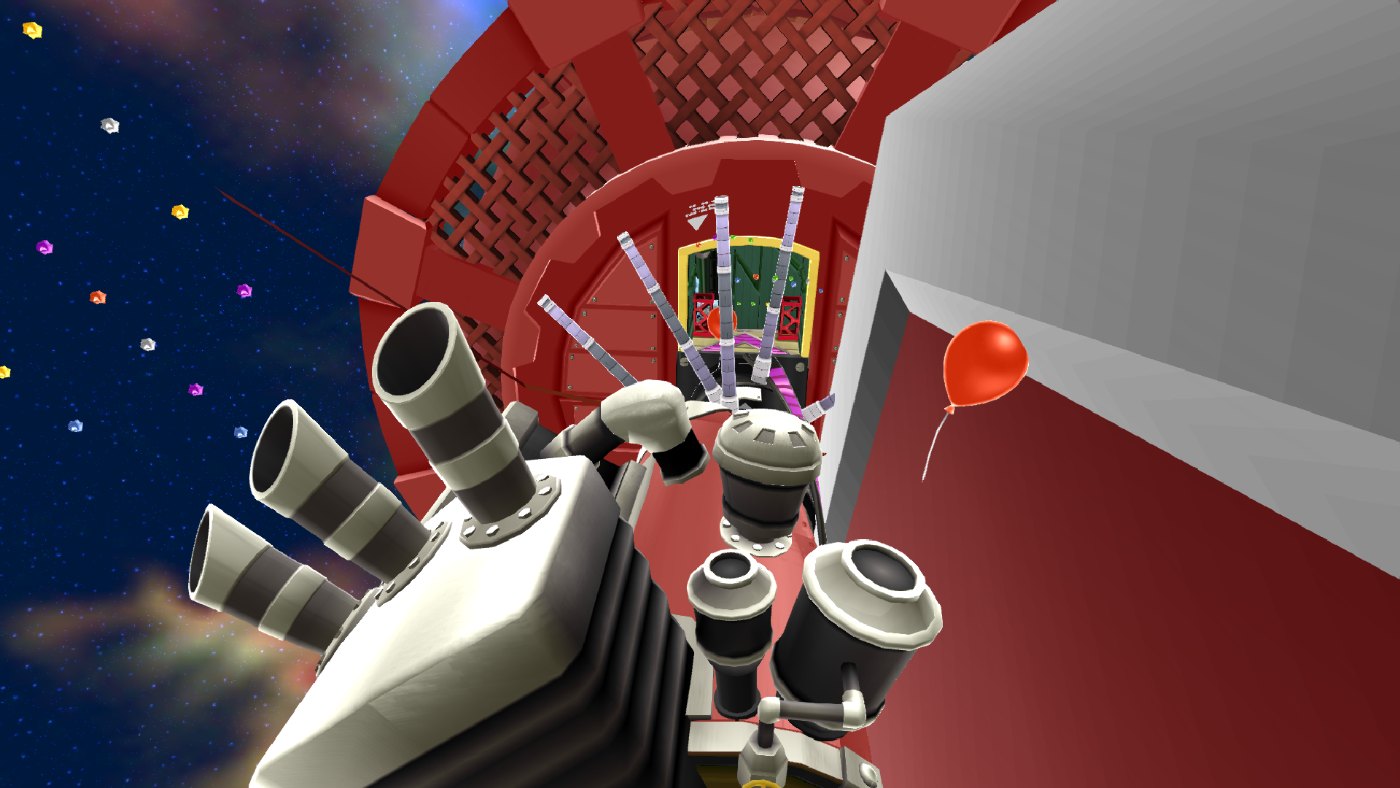
Cloud Flower (new)Cloud Mario can spin to create up to three cloud platforms per flower, then ride them, stand on them or stack them. Water washes the suit away.
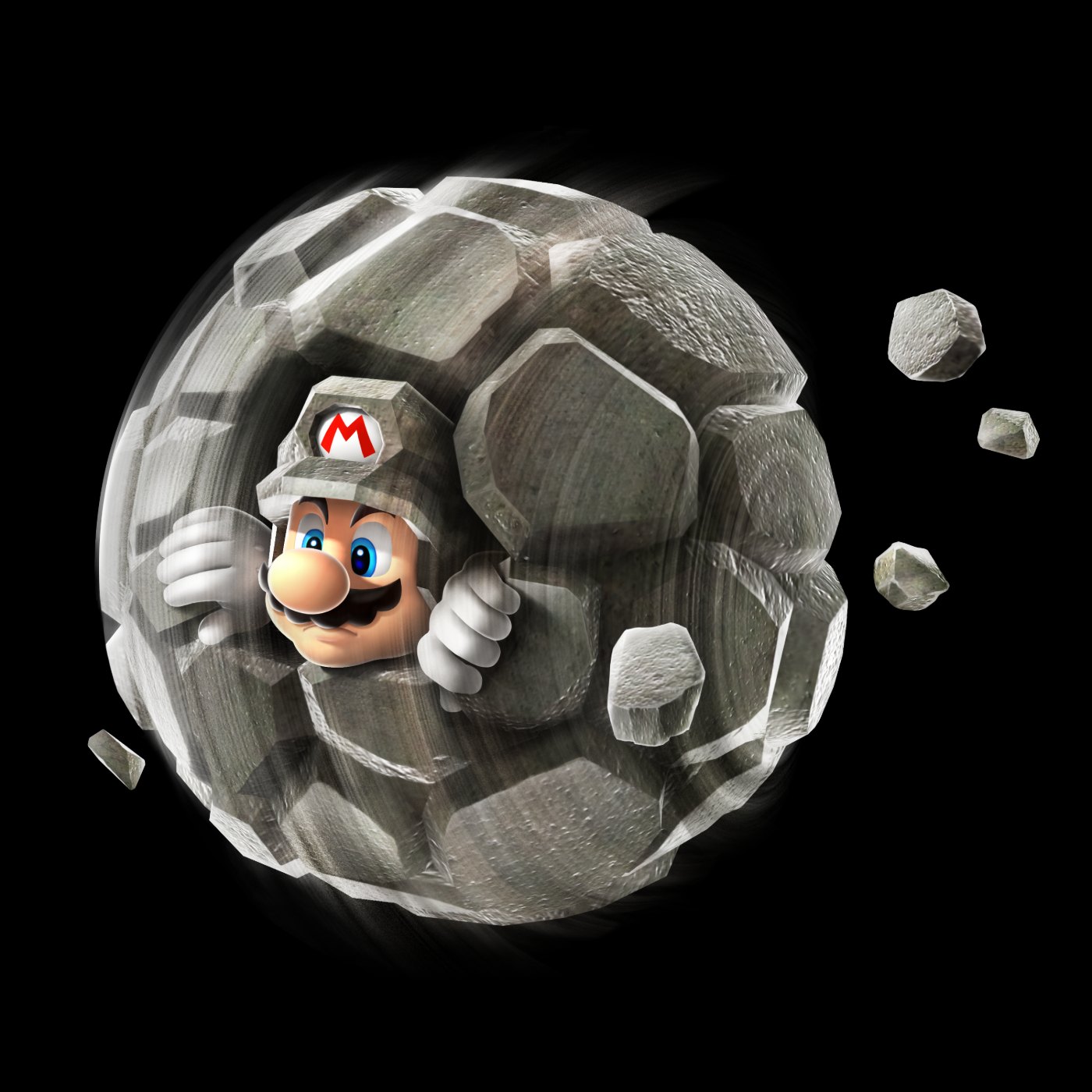
Rock Mushroom (new)Shake to curl into a boulder that smashes crystals, Pinheads and enemies and bowls through Rollodillo. Koizumi tuned the controls using lessons from Goron Link.
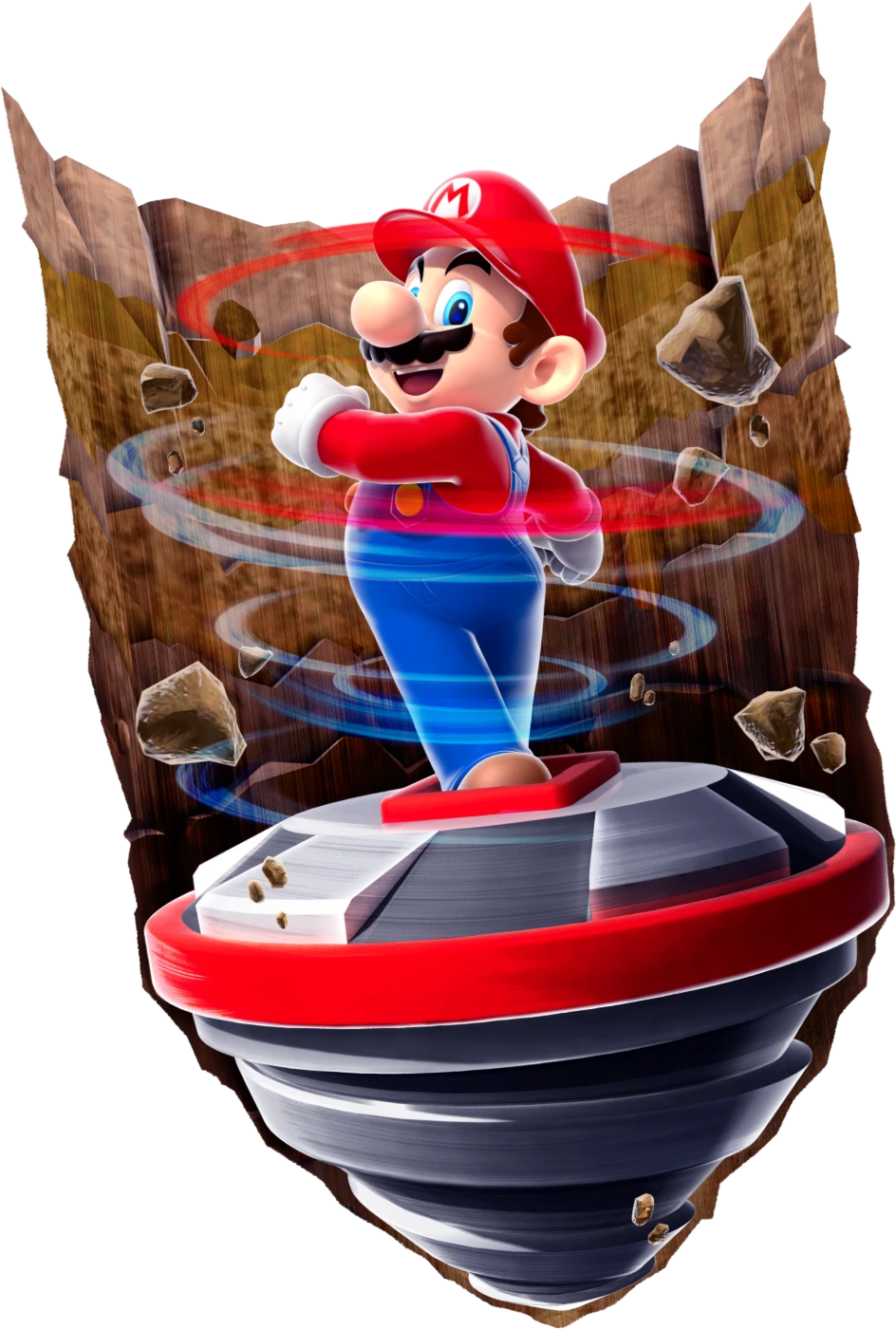
Spin Drill (new)A carried item rather than a suit: spin to drill through a planet and pop out the other side, or into Digga-Leg’s glass belly.
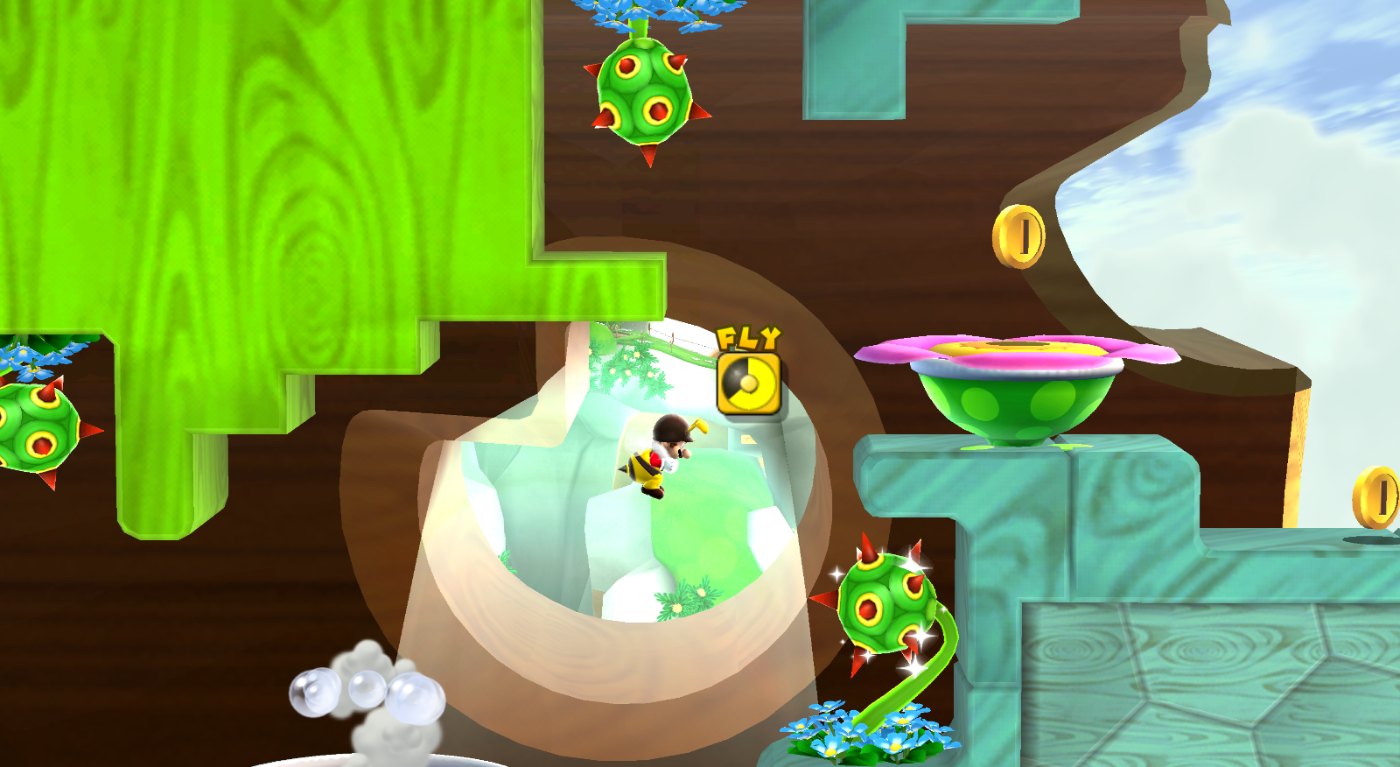
Bee MushroomHover, cling to honeycomb and walk on flowers. Lose it in water.
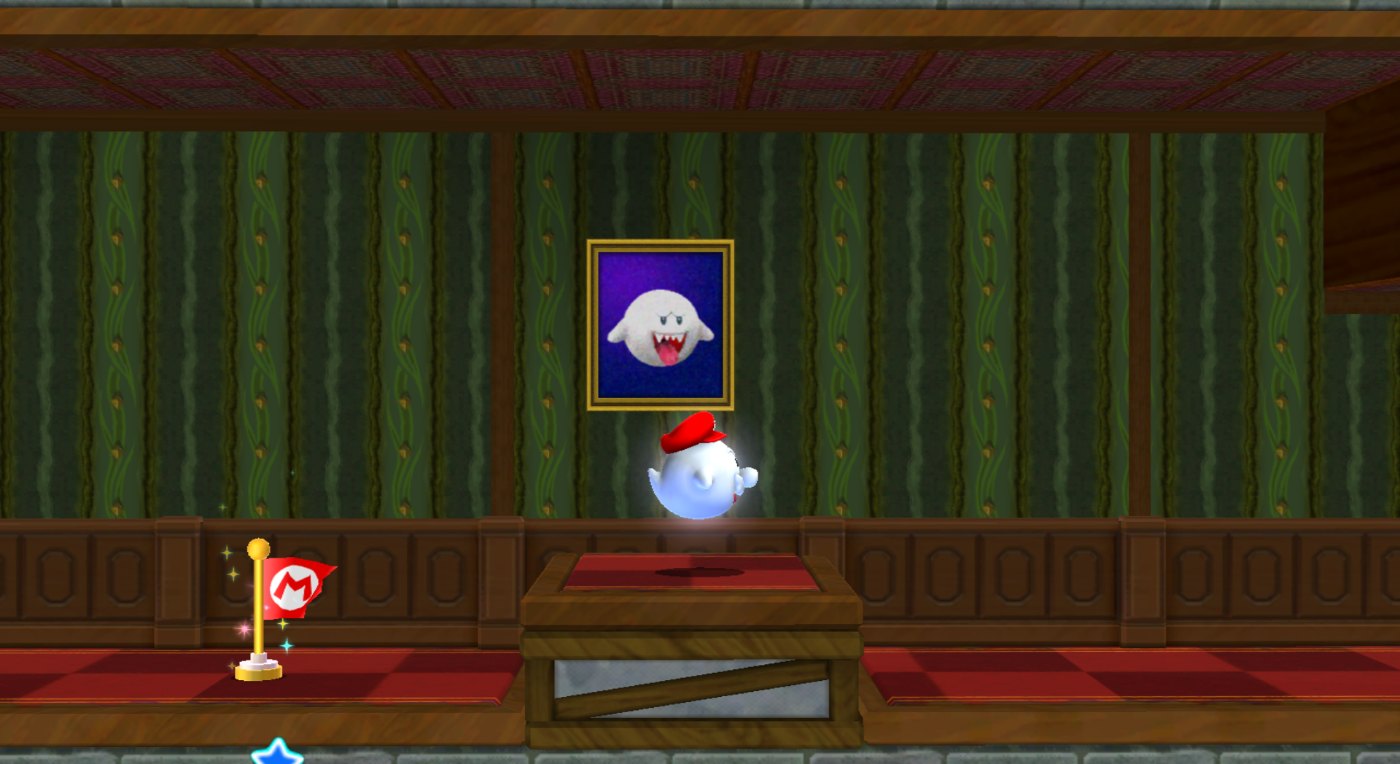
Boo MushroomFloat and pass through grates and walls; introduced here in Boo Moon Galaxy.
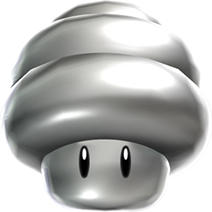
Spring MushroomBounce to great heights, awkwardly. Taught by the Gearmos in Chompworks.
Fire FlowerTime-limited fireballs for torches, crates and snowmen; the only thing that hurts Squizzard.
Rainbow StarInvincibility and a charge that flattens everything.
Dash PepperDash Yoshi: eight seconds of uncontrollable speed, up walls and across water.
Blimp FruitBlimp Yoshi inflates and rises; hold A to slow the leak.
Bulb BerryBulb Yoshi glows for ten seconds, revealing hidden platforms that disappear when the light goes out.
Power Star120 in the main game. Each one powers Starship Mario a little more.
Green Star120 more, hidden in finished missions once Green Comets arrive.
Bronze StarWhat you get for letting the Cosmic Spirit finish a mission. Replace them all before Grandmaster Galaxy.
Grand StarSix of them, one per boss galaxy; each opens the way to the next world.
Comet MedalOne per galaxy, 49 in all. They summon the Prankster Comets.
Star BitsAmmunition, Luma food and currency: 9,999 in the bank unlocks the Perfect Run.
Silver StarsFive make a Power Star; carried off by Kleptoads in Hightail Falls.
Life MushroomSix health instead of three. A Lumalee sells one for 30 Star Bits before some bosses.
Yoshi’s EggSpin to hatch Yoshi. Eggs also appear on Starship Mario once he has joined the crew.
Cartoons, Comics & Other Media
Super Mario Galaxy 2 came with a DVD in the box, a symphony orchestra on the soundtrack and, fifteen years later, a Switch remaster and a feature film named after the series.
The bundled instructional DVDNintendo · Japan, Europe and Australia · 2010Japanese, European and Australian copies shipped with a second disc, a DVD-Video that walks newcomers through the basics and shows off advanced techniques. North American copies did without it.
Super Mario Galaxy 2 Original SoundtrackNintendo / Club Nintendo · 10 July 2010A Japanese Club Nintendo reward: a two-disc, 70-track set recorded with the Mario Galaxy Orchestra, with Mahito Yokota and Ryō Nagamatsu’s new pieces alongside Koji Kondo’s contributions and arrangements of themes from Galaxy, Super Mario World and Super Mario 64.
Prima Official Game GuidePrima Games · 2010Standard and collector’s editions covering all 242 stars and every Comet Medal.
Official Japanese artwork bookletNintendo · 2010A Japanese art book collecting the game’s key art and character designs.
Iwata Asks: Super Mario Galaxy 2Nintendo · May 2010Three volumes of interviews: Satoru Iwata with Miyamoto, with the EAD Tokyo leads (Koizumi, Hayashida, Hayakawa and Motokura) and with the sound team (Yokota, Kondo and Nagamatsu). Most of what we know about how the game was made comes from them.
Toys and merchandiseTakara Tomy, Ensky and others · 2010–2011Gashapon enemy mascot straps and danglers, a mini-figure set, 3D cards and magnets from Ensky and a collector’s jigsaw puzzle all carried the game’s art.
Super Mario Galaxy + Super Mario Galaxy 2Nintendo Switch · 2 October 2025The 40th-anniversary remaster, sold as a two-game bundle and separately on the eShop, with higher resolution, a new Assist Mode, a brand-new storybook for this game, gyro pointer controls and amiibo support, plus a free update for 4K on Nintendo Switch 2 and Joy-Con 2 mouse controls for the Co-Star Luma.
The Super Mario Galaxy MovieIllumination / Nintendo · April 2026The sequel to The Super Mario Bros. Movie borrowed the Galaxy name for the films’ trip into space. Nintendo released Mario and Rosalina amiibo on 2 April 2026 to coincide with it, which unlock a Life Mushroom and a 1-Up in the Switch versions.
Later gamesNintendo · 2011 onwardsThe post-game gauntlet idea became Super Mario 3D Land’s Special 8-Crown, 3D World’s Champion’s Road and Odyssey’s Darker Side. Rosalina went on to Super Smash Bros., Cosmic Clones returned in Super Mario 3D Land and the Beat Blocks became 3D World’s Beep Blocks.
Characters
A smaller cast than the first game by design, but a livelier one: a purple captain, a baby star, a monkey with an ego and a rogues’ gallery of brand-new bosses.
Character
Who they are
In this game
Abilities & notes
MarioCaptain of Starship Mario
The hero, back in space with the same feel and physics as the first game and an apricot-coloured Luma under his cap.
Invited to Peach’s party, finds Baby Luma on the way, is blasted into space after Bowser, becomes honorary captain of Lubba’s ship and collects every star in the universe.
Spin, triple jump, long jump, wall kick, ground pound, backflip, side somersault from the first frame
Forms: Cloud, Rock, Bee, Boo, Spring, Fire, Rainbow, plus the Spin Drill
Three health, six with a Life Mushroom
LuigiThe volunteer
Mario’s younger brother, who no longer needs 120 stars to show up.
Appears at the start of some missions after Bowser’s Lava Lair and three World 3 stars, offering to take over; permanently selectable at a door on the back of the ship once Bowser’s Galaxy Generator is done. World S’s Mario Squared Galaxy has a planet shaped like his 8-bit sprite.
Higher jumps and more speed, slower acceleration and less traction; a Ghost shows shortcuts in missions he has cleared.
YoshiThe space dragon
Mario’s dinosaur, voiced by Kazumi Totaka in his first new recording for the character in a decade. He calls himself a space dragon and lives in Yoshi Star Galaxy.
Recruited by the Lumas, sealed in an egg by a Magikoopa, freed by Mario and rideable in twelve galaxies and on the ship.
Tongue aimed with the pointer: eat, spit, grapple, pull
Flutter Jump
Dash, Blimp and Bulb forms from fruit
LubbaCaptain of the Lumas
A portly, wisecracking purple Luma in charge of a crew of youngsters, voiced by Scott Burns. The first game’s melancholy is replaced by Lubba’s cheerful patter.
Loses the ship’s Power Stars to Bowser, strikes a deal with Mario, rebuilds the vessel in Mario’s image, calls him captain and cheers you through the hard bits.
Stands to the right of the helm; adds a totals sign at 16 stars.
Baby LumaThe star under the cap
A young Luma who considers Rosalina his mother and has wandered off.
Found by Mario in the grass, grants the Spin, travels in his cap through every galaxy and goes home at the end with the cap as a keepsake.
Receives letters from Rosalina containing 50 Star Bits.
Princess PeachThe guest of honour
Ruler of the Mushroom Kingdom, hosting a cake party for the Star Festival when Bowser gatecrashes.
Snatched from her castle, carried to the centre of the universe and rescued after the third Bowser fight. Her letters to Mario each carry five 1-Up Mushrooms, even when Luigi is playing.
Not playable. Voiced by Samantha Kelly.
RosalinaThe storyteller
Guardian of the cosmos and Baby Luma’s adoptive mother, kept almost entirely off stage this time.
Revealed as the narrator; arrives with the Comet Observatory in the ending, reads the Lumas a story after 120 stars, presents the final star in Grandmaster Galaxy and becomes Starship Mario’s last passenger. The Cosmic Spirit is modelled on her.
Not playable.
Co-Star LumaPlayer two
An orange Luma controlled by a second Wii Remote.
Follows Mario, collects Star Bits, coins and 1-Ups, freezes enemies with the pointer and spins to defeat them.
Cannot move on his own; no Nunchuk needed.
The Toad BrigadeFive Toads and a Starshroom
The Captain in red, know-it-all Blue, sleepy Yellow, Banktoad in green and Mailtoad in purple, flying mushroom-shaped Starshrooms.
Dock alongside Starship Mario after Spin-Dig; the Captain gets lost in Fluffy Bluff, Banktoad runs the Star Bit bank and Mailtoad brings the post.
Banktoad’s outfit upgrades as his balance grows, from glasses at 1,000 Star Bits to a mining helmet at 8,000.
The ChimpBest in the universe (self-declared)
A boastful monkey who challenges Mario by post.
Hosts the stomp, skating, bowling, coin and score challenges in Fluffy Bluff, Freezy Flake, Melty Monster, Slimy Spring, Honeyhop and Shiverburn, handing over a Power Star when you beat his score.
Not playable.
Fluzzard and the JibberjaysThe gliding team
A shy, oversized bird you hang beneath, and the chatty birds who race him.
Fluzzard carries Mario through Wild Glide and Fleet Glide; a black Jibberjay challenges you to races and accepts you as leader if you win.
Steered by tilting the Wii Remote.
Whittles, Gearmos, penguins and PiantasFriends in the galaxies
Kodama-like wooden Whittles, tidy Gearmo robots, swimming penguins (with elderly Penguru and the fatherly Coach) and the grass-skirted Piantas of Starshine Beach.
Whittles teach Cloud Mario and Yoshi’s fruit; Gearmos run Chompworks and teach the Spring Mushroom; a Gold and a Silver Gearmo trade Power Stars for a Goomba and a Topman; the penguins teach swimming; Piantas launch you skyward.
Most of them come aboard Starship Mario as passengers.
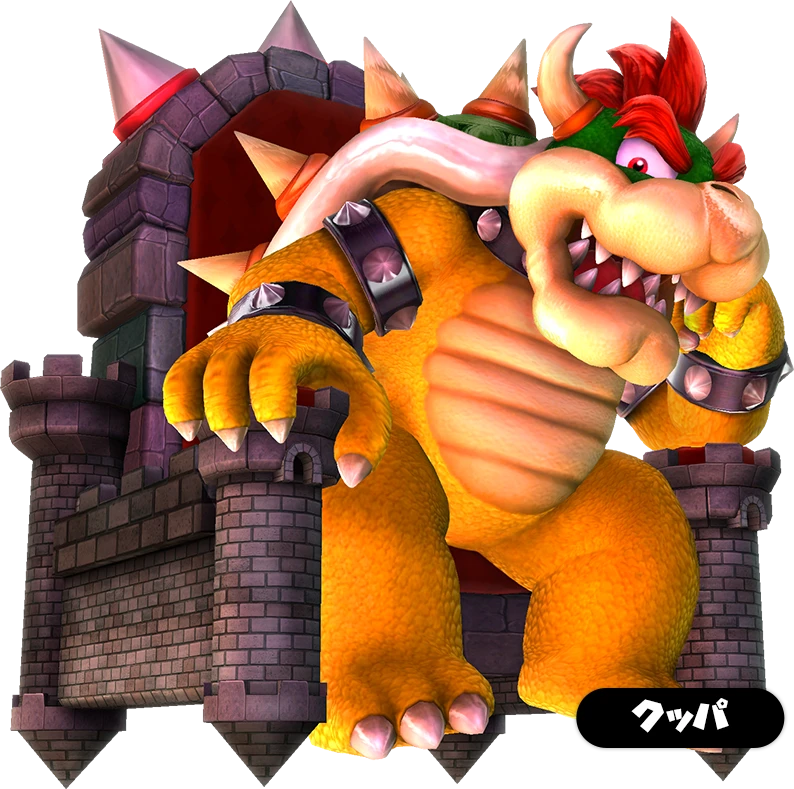
BowserGiant of the cosmos
The Koopa King, swollen to monstrous size by the Power Stars he has swallowed, voiced by Kenny James and Scott Burns.
Kidnaps Peach in person, builds an empire at the centre of the universe and fights Mario four times across Lava Lair, Gravity Gauntlet and the Galaxy Generator, growing larger still after eating a Grand Star. Ends the game pocket-sized.
Hurt only by meteorites ground-pounded back at him.
Bowser Jr.The mech pilot
Bowser’s son, who fights from machines this time rather than in person.
Sends Gobblegut after Mario in World 1, pilots Megahammer in World 3 and the Boomsday Machine in World 5.
Three Grand Stars guarded; voiced by Caety Sagoian.
GobblegutBoss of Bowser Jr.’s Fiery Flotilla
A serpentine dragon with glowing bulges along its body.
Burrows in and out of its planet; pop every bulge. Returns in Battle Belt Galaxy as Fiery Gobblegut, raining fire.
Six bulges; the fiery version adds falling fireballs.
MegahammerBoss of Bowser Jr.’s Fearsome Fleet
A giant Bowser-shaped mech, called Mallettoid in pre-release footage.
Swings hammers and fires Bullet Bills; Yoshi swallows the Bills and spits them at its glass domes, then at the cockpit on its back.
Three domes plus the rear cockpit.
Boomsday MachineBoss of Bowser Jr.’s Boom Bunker
A tank with a glass cockpit, a fan and a lot of cannons.
Fought with Cloud Mario, who climbs above the blast zone to ground-pound the cockpit.
Three hits.
Digga-Leg and the restThe new boss roster
Peewee Piranha, King Lakitu, Digga-Leg, Mandibug Stack, Rollodillo, Sorbetti, Glamdozer, Squizzard, Prince Pikante and the Whomp King, plus Bugaboom and the five first-game bosses of Boss Blitz.
One per galaxy, each a puzzle built around a power-up: the Spin Drill for Digga-Leg, Rock Mario for Rollodillo, the Fire Flower for Squizzard, flipping grates for Glamdozer.
See the enemies and bosses list below.
Enemies and bosses
Every enemy in the game, with the galaxy where you first meet it; new creatures are marked. Bosses follow.
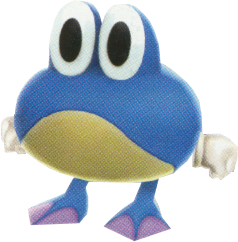
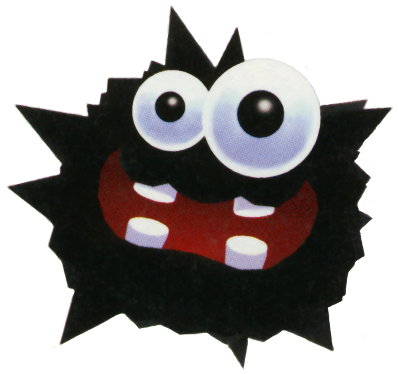
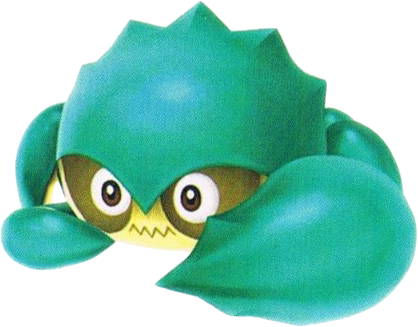
Goomba, Mini Goomba, Giant GoombaSky Station; SupermassiveThe giant ones must be spun, then kicked.
Paragoomba and Big Paragoomba (new)Sky Station; SupermassiveWinged Goombas on set paths.
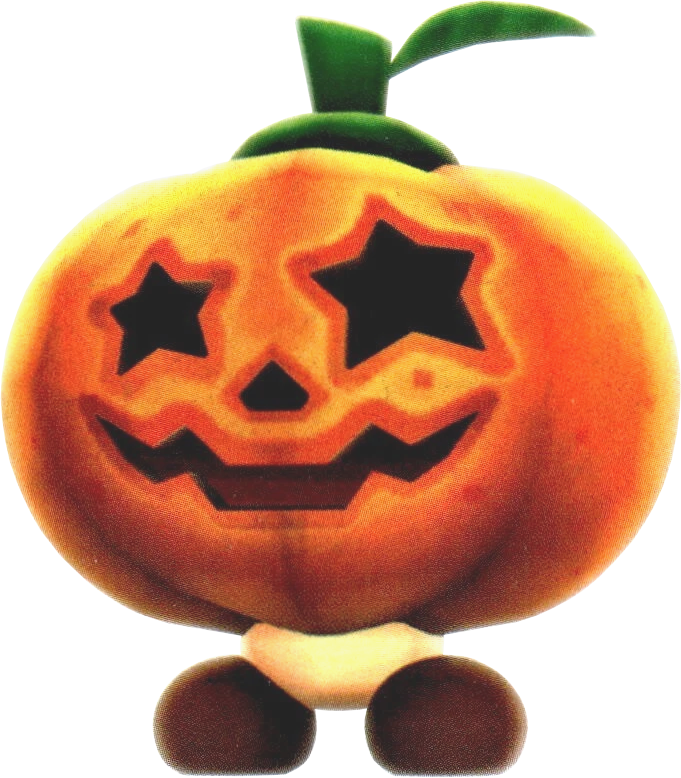
Jack O’GoombaHaunty HallsPumpkin-headed; leaves blue flames.
GoombeetleBowser Jr.’s Fiery FlotillaHelmeted; spin to flip it.
Octoomba and Elite Octoomba (new)Sky StationRock-spitting octopuses; the elite fires twice.
Octoguy and RoctoBoulder Bowl; ShiverburnRoctos lob coconuts you must knock back.
SlurplePuzzle PlankLatches on and drains health.
Chomp, Small Chomp, Gold Chomp, Homing Chomp (new)Sky Station onwardsThe gold one guards a star in Chompworks; the homing one chases you in Rolling Masterpiece.
Bullet Bill and Banzai BillFearsome Fleet; Sky StationYoshi’s ammunition against Megahammer.
Amp and Zap BallSky Station; Space StormElectric orbs, large and small.
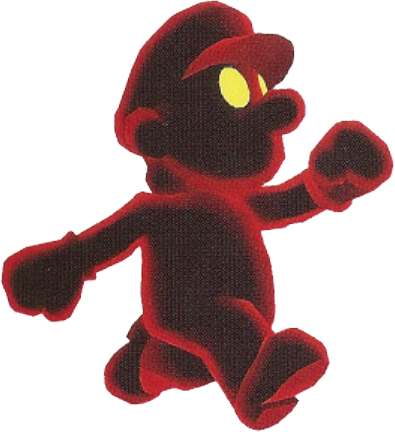
Cosmic Clone (new)Sky StationShadow copies that repeat your every move a second behind you.
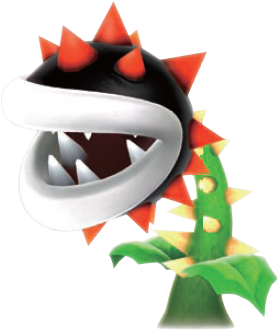
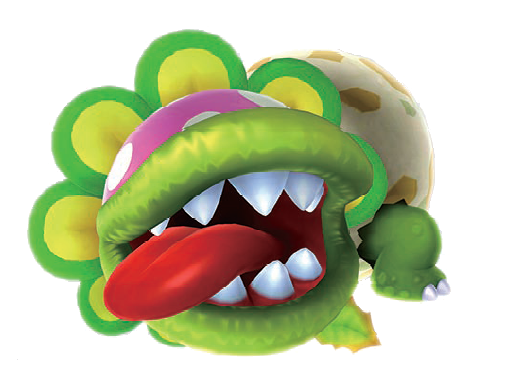
Piranha Plant familySky Station onwardsIncluding the one-of-a-kind Prickly Piranha Plant (new) and the slamming Spiny Piranha Plant.
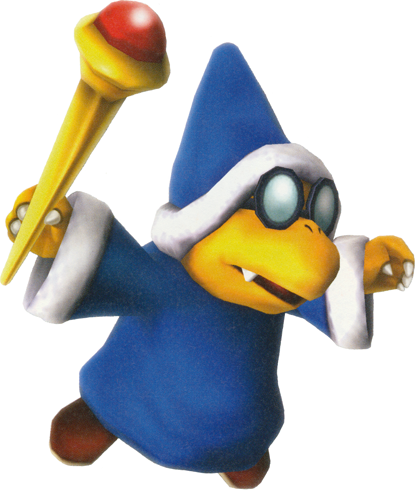
MagikoopaYoshi StarTeleports and fires magic; one sealed Yoshi in his egg.
Lakitu, Spiny and Spiny EggYoshi StarYoshi can eat Spiny Eggs.
Koopa Troopa and Giant KoopaCosmic Cove; SupermassiveShells light the Deep Shell Well.
Dry BonesFiery FlotillaReassembles after a stomp.
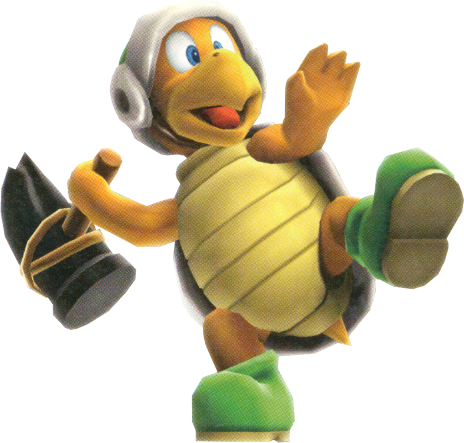
Hammer Bro and Boomerang BroLava Lair; Boom BunkerThree Boomerang Bros guard the Perfect Run’s finale.
Topman, Spring Topman, Topmini, Spring VaultSpace StormSpinning tops; the Silver Gearmo wants a Spiky Topman.
Pokey Head and CluckboomSlipsandDesert pests; the Cluckboom lays bombs.
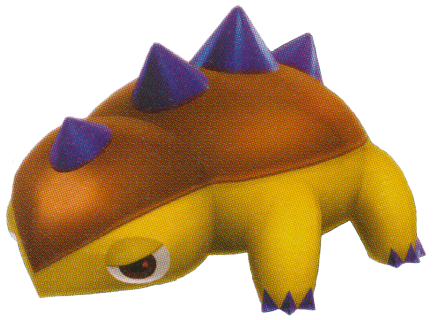
Rhomp (new)SlipsandRolling stone cylinders.
Pulse Beam and Sentry BeamShiverburn; Mario SquaredShockwave emitters.
Magmaargh (new) and Magmaw (new)Fleet Glide; Melty MonsterLava monsters, enormous and small.
Bat and Tox BoxFleet Glide; Stone CycloneCave bats and rolling stone boxes from the first game.
Peewee Piranha (boss)Sky StationA baby Dino Piranha; hit the egg on its rear.
King Lakitu (boss)Yoshi StarSpit his Spiny Eggs back at him.
Digga-Leg (boss)Spin-DigDrill into the glass case beneath it.
Gobblegut (boss)Fiery Flotilla; Fiery version in Battle BeltPop the belly bulges.
Mandibug Stack and Bugaboom (bosses)Puzzle PlankGround pound the stack; take the Cloud Flower up to Bugaboom.
Rollodillo (boss)Boulder BowlRock Mario into its exposed rear.
Sorbetti (boss)Freezy FlakeSpin his red nose.
Megahammer (boss)Fearsome FleetBullet Bills to the domes.
Glamdozer (boss)FlipsvilleFlip the grates and pound her from below.
Squizzard (boss)SlipsandFireballs into the open mouth.
Prince Pikante (boss)ShiverburnSpin coconuts back at the Rocto prince.
Boomsday Machine (boss)Boom BunkerCloud Mario above the cockpit.
Whomp King (boss)ThrowbackGround pound his back when he falls.
Bowser (boss)Lava Lair; Gravity Gauntlet; Galaxy GeneratorMeteorites, four times over.
Boss Blitz (bosses)Boss BlitzDino Piranha, King Kaliente, Major Burrows, Bouldergeist and Fiery Dino Piranha from the first game.
The people who made it
Nintendo EAD Tokyo, the team formed for Donkey Kong Jungle Beat that made the first Galaxy, with Kyoto’s sound veterans.
Koichi HayashidaDirectorPromoted from planning lead on the first game; his first big project as director since Joy Mech Fight in 1993. He later directed Super Mario 3D Land and 3D World.
Yoshiaki KoizumiProducerDirector of Galaxy and Sunshine, now producing from one step back; pushed for the Mario-head ship and tuned Rock Mario.
Takashi TezukaProducerEAD’s general manager and co-creator of the series.
Shigeru MiyamotoGeneral producerProposed the sequel, vetoed Pikmin and Donkey Kong cameos, asked for less story and insisted on blue skies.
Takeshi HayakawaLead programmerBuilt the level-design tool that let artists and sound staff prototype stages without programmers; kept the game at 60 frames per second.
Kenta MotokuraDesign leadOversaw the art direction, including the lighter blue skies; later directed Super Mario Odyssey.
Mahito YokotaSound director and composerLed the music on both Galaxy games and decided the new mechanics needed new music.
Ryō NagamatsuComposerNine pieces; fresh from New Super Mario Bros. Wii.
Koji KondoComposer and supervisorFive pieces, and the final word on whether everything sounded like Mario.
Charles Martinet, Samantha Kelly, Scott Burns, Dex Manley, Kazumi TotakaVoicesMario and Luigi; Peach; Bowser (shared with Kenny James), Lubba and King Lakitu; Lakitu; Yoshi.
Advertisement
How It Was Made
Three volumes of Iwata Asks, Miyamoto’s E3 interviews and the team’s own retrospectives make this one of the best-documented Mario games. The short version: nobody at EAD Tokyo wanted to make it, and then they could not stop.
Galaxy 1.5
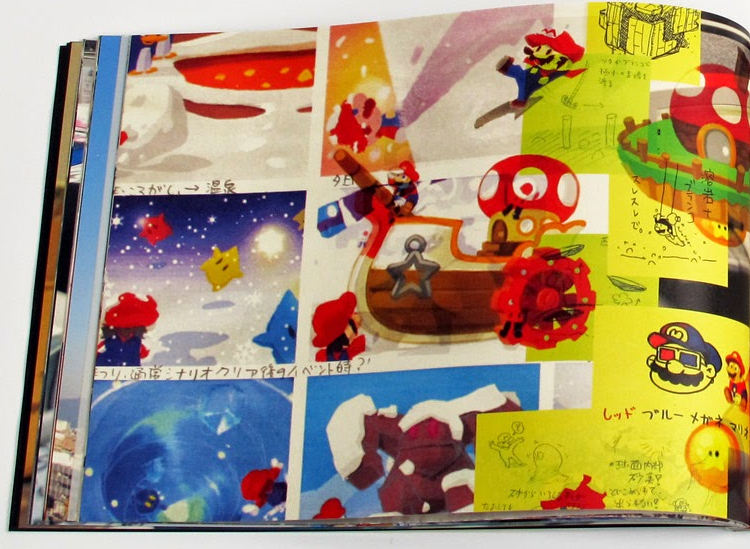
Concept art of Mario, the Lumas and Starship Mario. Artwork: Nintendo, via Super Mario Wiki
When the first Galaxy wrapped in the autumn of 2007, Yoshiaki Koizumi held a post-mortem and the team felt finished with spheres. Shigeru Miyamoto saw an engine that could carry another game and suggested a “1.5”: keep the planets, add new elements, be done in about a year. Koizumi relayed it to the team as “More Super Mario Galaxy”. Lead programmer Takeshi Hayakawa was keen from the start, but Koichi Hayashida, who had never directed anything bigger than Joy Mech Fight in 1993, and design lead Kenta Motokura both felt they had used up their ideas. The first things built were the ones cut from the original, Yoshi and a planet shaped like Mario’s head, both of which appear in a planning document drawn up during the first game.
A year in, the “more” had got out of hand. Staff kept proposing new environments, and Miyamoto, reviewing the build, found that more than ninety per cent of the courses were new and he could not tell what had been kept. The 1.5 became a 2, the team started over on that basis, and development ran to about two and a half years in all. Miyamoto compared it to Majora’s Mask following Ocarina of Time: the same engine, a different game.
The search for a hook
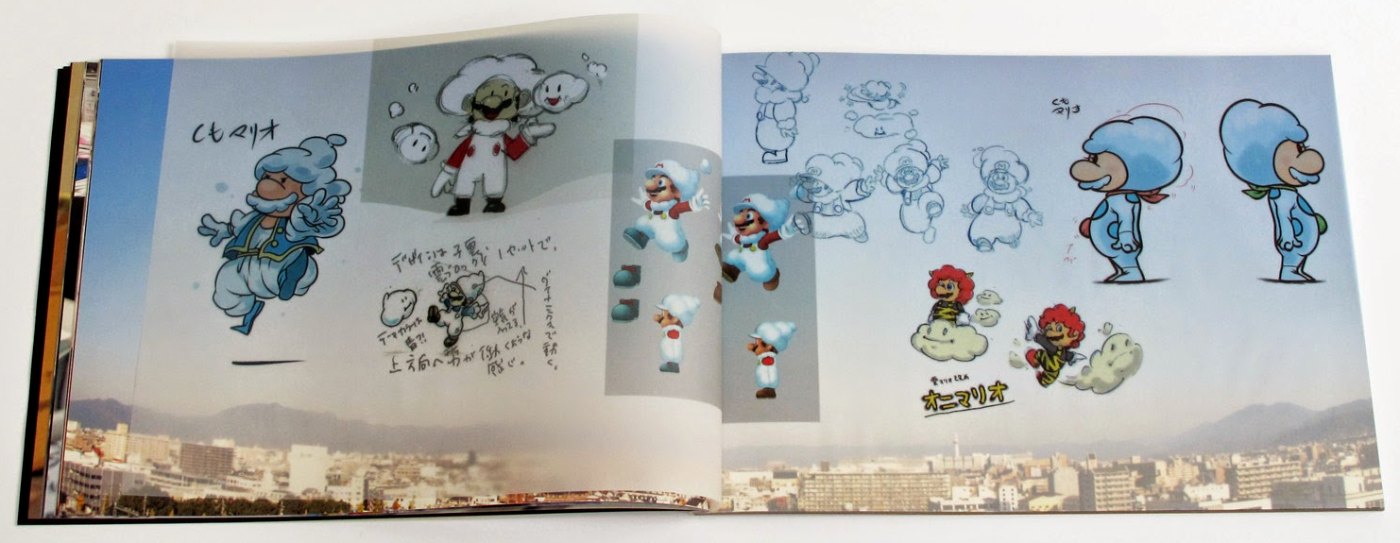
Early concept art for Cloud Mario. Artwork: Nintendo, via Super Mario Wiki
A full sequel needed a new central idea, and the team’s first candidate was “switching”: press a button and the whole world changes, in the spirit of Majora’s three-day cycle. Koizumi, who had lived through that Zelda, warned how hard it is to make every element fit a single gimmick, and advised Hayashida to stop looking for one axis and simply fill the game with interesting things. Switching survived in pieces: the red and blue panels of Flip-Swap, the slow-motion buttons, the metronome blocks of Beat Block, ponds that freeze and lava that turns to ice.
The drill came from Miyamoto’s wish, dating back to the first game, to pass right through a planet. Drilling alone was not a game, so the team spent a month or two inventing puzzles around it, such as tunnelling into a mountain from the far side, and decided it worked better as a held item than as a “Drill Mario” suit. Rock Mario’s handling was tuned by Koizumi, who had designed Goron Link’s rolling a decade earlier. Cloud Mario grew out of experiments with making platforms by spinning; the three-cloud limit exists because unlimited clouds would let you climb to any height, and the designers were startled by where players still managed to get with three.
That’s not my Yoshi!
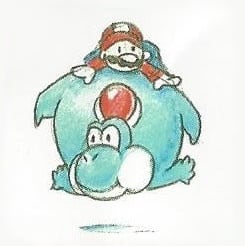
Concept art of Blimp Yoshi. Artwork: Nintendo, via Super Mario Wiki
Yoshi was in the plan from day one; he had been left out of the first game only because spherical planets and shifting gravity were already a lot to introduce, and he might have ended up in a single stage. Hayashida liked how naturally the pointer suited his tongue, and the specifications for eating, spitting and grappling were written early and barely changed. The pull action was a late addition that Miyamoto enjoyed so much it spread into boss fights. Blimp Yoshi started as an offhand example Koizumi gave of what eating might lead to. Feedback from Mario Club and Nintendo of America showed that every tester had a different Yoshi in their head from earlier games (one complaint was simply “That’s not my Yoshi!”), so the team made him more capable without letting him trivialise the levels. Kazumi Totaka recorded new Yoshi vocals for the first time in ten years.
A new continent with mountains of ideas
A pre-release Spin-Dig Galaxy, when Star Chips were planned instead of Silver Stars. Screenshot: Nintendo, via Super Mario Wiki
Because the engine was inherited, almost all of the schedule went on ideas, and Hayakawa made sure anyone could try one: he built a level-design tool with which designers and even sound staff could shape terrain, place enemies and play their stage without waiting for a programmer. Prototypes arrived almost daily; a rolling-column stage made by a designer in his first week on the team survived into the finished game. Brainstorming sessions were open to all and reviewed by Hayashida, who at one point asked Miyamoto whether he should keep generating ideas and was told the game was already overflowing. Koizumi says the planners hand-tuned several hundred camera set-ups so that the player would rarely need to touch the camera at all. Miyamoto turned down proposals for Donkey Kong and Pikmin cameos (Pikmin, he felt, were the wrong shape to jump on), as well as a “Bone Mario” power-up.
Less story, more sky
Starship Mario as shown at E3 2009. Screenshot: Nintendo, via Super Mario Wiki
Miyamoto asked for as little narrative as possible after the first game’s storybook, which is why Rosalina barely appears and a chatty purple Luma does the talking. Koizumi summed up the lesson for Iwata: the team’s job was not to tell a story but to make an instrument that anyone could learn to play. The art direction brightened accordingly, from the first game’s deep-space blue to a lighter sky, because, in Miyamoto’s words relayed by Iwata, when you think of Mario you think of blue sky. Koizumi also asked for a kinder game than the first, whose 3D asked a lot of newcomers; the Cosmic Guide, the Tip Network and the DVD packed into Japanese, European and Australian boxes all came from that, while Grandmaster Galaxy and the Green Stars were there for everyone else. Motokura reckoned New Super Mario Bros. Wii was the harder game.
The Mario Galaxy Orchestra
The Mario Galaxy Orchestra in session. Photo: Nintendo, via Super Mario Wiki
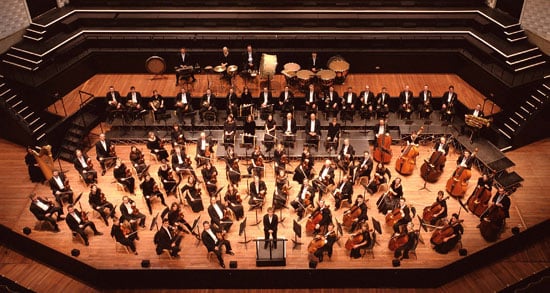
The music was not supposed to change either. Sound director Mahito Yokota, who had been terrified on the first game, decided the new mechanics needed new themes, and Miyamoto approved an orchestra on the spot, reasoning that players now expected one, while asking that favourites from the first game be kept. Koji Kondo wrote five pieces and acted as supervisor, listening to every track to judge whether it sounded like Mario; Ryō Nagamatsu, fresh from New Super Mario Bros. Wii, wrote nine. The recording used around seventy musicians, sixty orchestral players plus a ten-piece big band, conducted by Taizo Takemoto. The two-disc Original Soundtrack went to Japanese Club Nintendo members on 10 July 2010.
E3 2009 to launch
Pre-release footage of Yoshi in Cloudy Court Galaxy. Screenshot: Nintendo, via Super Mario Wiki
Nintendo unveiled the game at its E3 press conference on 2 June 2009, the same day as New Super Mario Bros. Wii, and Miyamoto explained that although it was well along it would wait until 2010 so the two Marios did not collide at Christmas. He put the proportion of new content at 95 to 99 per cent. The playable debut and the 23 May 2010 North American date came at Nintendo’s Media Summit on 24 February 2010, where Bill Trinen confirmed that the promised Super Guide equivalent would be a Rosalina-like spirit. Pre-release footage shows Megahammer as “Mallettoid”, Digga-Leg as “Digg-Leg”, Comet Medals without eyes and a Yoshi in Cloudy Court Galaxy, where he does not appear in the finished game. On the disc itself, hackers later found Flying Mario intact and Ice Mario’s theme, the remains of two power-ups cut from the sequel.
Series Firsts
What Super Mario Galaxy 2 brought to the series, as far as we could confirm.
1Yoshi in a 3D Mario since SunshineHis first ride in a mainline 3D Mario since 2002, and his first with a pointer-aimed tongue and fruit transformations.
2Cloud Mario, Rock Mario and the Spin DrillThree new power-ups, one of them a held item rather than a suit.
3Starship Mario and LubbaA new hub, the first in a 3D Mario that moves with you across the map, and a new character to run it.
4Green StarsThe first Mario with a full second set of collectibles hidden inside completed missions, doubling the count to 242.
5The post-game gauntletGrandmaster Galaxy and the Perfect Run began the tradition of a final super-hard level, continued by Special 8-Crown, Champion’s Road and the Darker Side.
6Cosmic Clones and Cosmic SpiritShadow copies that replay your movements, and a help system that leaves a bronze mark on your record.
7Metacritic 98The highest Metacritic average of any Mario game, one point above the first Galaxy and Odyssey.
9First Wii game on the Wii U eShopIts January 2015 digital release opened the Wii download library on Wii U.
10Same console as its predecessorThe only full 3D Mario sequel released on the same system as the game before it.
Cheats & Secrets
No codes, but a universe of unlocks, shortcuts and exploits, most of them Nintendo’s own.
Unlocking Luigi
Beat Bowser’s Lava Lair and collect three Power Stars in World 3 and Luigi starts waiting at the beginning of certain missions. Clear Bowser’s Fortified Fortress in World 6 and a small door opens at the back of Starship Mario where you can swap brothers whenever you like.
World S and Grandmaster Galaxy
World S opens as soon as Bowser falls. Its galaxies need 75, 80, 90, 100 and 110 stars in turn, plus 2,000 Star Bits for Flip-Out’s Hungry Luma. Grandmaster Galaxy needs all 120 Power Stars and all 120 Green Stars, with no Bronze Stars among them.
The Perfect Run
Finish The Ultimate Test and take its Comet Medal, then deposit 9,999 Star Bits with Banktoad. A Prankster Comet appears over Grandmaster Galaxy with the game’s final mission: the whole gauntlet on one unit of health, with no checkpoints and the Comet Medal replaced by a 1-Up. Rosalina hands you star 242 at the end.
Green Stars
Once you have 120 Power Stars, defeat Bowser again at the Galaxy Generator and Green Comets settle over every galaxy. Each Green Star is in a mission you have already cleared, often visible from the start; listen for the chime that grows louder as you approach.
Hungry Lumas
One per world map, each a hidden galaxy for a Star Bit fee: 300 (Flip-Swap), 700 (Honeybloom), 1,000 (Beat Block), 1,200 (Sweet Mystery), 1,500 (Fleet Glide), 1,800 (Flash Black) and 2,000 (Flip-Out). Coin-eating Hungry Lumas inside galaxies grow into small planets that always hold a star.
The Chimp’s challenges
Six Power Stars come from beating The Chimp’s high scores: 10,000 points of stomping in Fluffy Bluff, skating in Freezy Flake and Shiverburn, scoring in Honeyhop, bowling in Melty Monster and coin-collecting in Slimy Spring. Combos and consecutive stomps are the key.
Gearmo bounties
After the main mission in Boulder Bowl, a Gold Gearmo offers a Power Star for a Goomba: lure one over without squashing it. In Space Storm a Silver Gearmo wants a Spiky Topman delivered the same way.
Free 1-Ups and Life Mushrooms
Every letter from Peach via Mailtoad carries five 1-Up Mushrooms, and a Lumalee sells a Life Mushroom for 30 Star Bits outside several boss fights. On the Switch version, a Mario amiibo gives a Life Mushroom and a Rosalina amiibo a 1-Up.
The Ghost
Clear a mission as Luigi and a friendly Ghost appears at its start next time, jogging ahead along a shortcut to the star. Reach 9,999 coins in the ship’s coin collection and he turns up in every mission of every galaxy, whoever you play as.
Shiverburn’s watchers
Look up at the glacier cliffs on Shiverburn Galaxy’s horizon (first-person view helps) and three dark silhouettes stare back, with a fourth half-hidden. They are a background texture whose file is called “HellValleySkyTree”, probably kodama tree spirits; the same backdrop appears in Grandmaster Galaxy, and they have fuelled creepypasta ever since a hacker reported them in 2010.
Compiled from Super Mario Wiki’s galaxy, character and item pages.
Glitches & Oddities
A famously polished game with one famous hole in it, discovered within days of release.
Infinite Fluttering
Grandmaster Galaxy, where Infinite Fluttering is most tempting.
Ride Yoshi, Flutter Jump, and just as the flutter runs out release A, tap Z, release Z and hold A again. Repeat and Yoshi climbs forever. Fans found it within weeks of launch; it lets you carry Yoshi into the final Bowser fight and breeze through the Perfect Run, and it led speedrunners to most of the game’s other tricks.
The Flip-Swap superjump
Stand on a fixed platform in Flip-Swap Galaxy, run towards a space a flipping panel is about to occupy, spin so the panel rises under you and long jump just as it stops. Timed right, the panel’s momentum launches Mario an absurd distance. Cloud Mario can do something similar by jumping the instant a cloud forms.
Ghosts of cut power-ups
Flying Mario from the first game is complete and functional on the disc and can be activated by hacking, with music adjusted to match the other forms; Ice Mario survives only as a music track, which suggests Flying Mario was cut late and Ice Mario early.
Unused music and zones
The files hold an unplayed “Galaxy Song 25”, a synthesised track that was cut before the orchestral sessions, unused World 1 and World 2 map themes, angry-phase music for four bosses that never triggers, and three abandoned zones.
Videos
Nintendo’s launch trailer for the 2025 Switch collection, which shows both Galaxy games side by side, and GameXplain’s tenth-anniversary discussion of why the sequel still holds up.
Nintendo’s official launch trailer for the October 2025 Switch release.
GameXplain’s 2020 retrospective on the game at ten years old.
Trivia & Interesting Facts
The working titles were Super Mario Galaxy 1.5 and More Super Mario Galaxy, and the Media Summit trailers of February 2010 used a logo without the Co-Star Luma.
Starship Mario in the E3 2009 build.Starship Mario had been on Yoshiaki Koizumi’s wish list since the first game; the clinching argument was that the engine let you walk across Mario’s face. A wooden Yoshi-head planet had already sneaked into the first Galaxy’s Space Junk Galaxy.
Yoshi calls himself a “space dragon”, and the Lumas recruited him before Mario arrived; a Magikoopa sealed him in his egg.
In South Korea the game was sold as Super Mario Wii 2 in January 2011; the 2025 Switch release finally gave it the Galaxy name there.
There are three save files instead of the first game’s six, and they cannot be copied. Each can show a Mii as its icon.
No galaxy has more than three missions, against six in the biggest galaxies of the first game, so the sequel has more galaxies but shorter stays.
World S is shaped like a letter S on the map, has no Hidden Stars and the most Prankster Comets of any world; Boss Blitz Galaxy alone contains ten boss fights.
Grandmaster Galaxy’s German name, Hüpfheld-Galaxie (“hop hero”), is a tribute to Mario, and its Daredevil mission is the only one in the game without “daredevil” in the title.
The Wii Message Board award for beating Bowser’s Fortified Fortress.Finish the Perfect Run on Wii and the console sends a congratulatory message to the Wii Message Board; on Switch, Mailtoad reads it out instead and a picture is saved to the album.
Look up at Shiverburn Galaxy’s cliffs and three (nearly four) dark figures look back. The texture is called HellValleySkyTree and reappears in Grandmaster Galaxy.
Flying Mario from the first game is fully functional on the disc and reachable by hacking; Ice Mario left behind only his theme tune.
Pre-release footage called Megahammer “Mallettoid” and Digga-Leg “Digg-Leg”, showed Comet Medals without eyes, and put Yoshi in Cloudy Court Galaxy.
Scott Burns voices Lubba and King Lakitu as well as sharing Bowser with Kenny James, while Dex Manley is Lakitu; Kazumi Totaka recorded Yoshi’s first new lines in a decade.
Peach’s letters each contain five 1-Up Mushrooms, and they keep arriving even when Luigi is the one playing.
The giant Goomba of Supermassive Galaxy was modelled on the oversized enemies of Super Mario Bros. 3 and Super Mario 64, and Throwback Galaxy rebuilds that game’s Whomp’s Fortress planet by planet.
Mario Squared Galaxy is a flat planet shaped like Mario’s NES sprite; its second mission takes place on a Luigi-shaped one.
Hungry Lumas on the world maps charge 300, 700, 1,000, 1,200, 1,500, 1,800 and 2,000 Star Bits, so a full set costs 8,500.
The Japanese Club Nintendo soundtrack ran to 70 tracks on two discs; the orchestra numbered about seventy, with a ten-piece big band inside it.
It was the first Wii game sold on the Wii U eShop, announced by Satoru Iwata in a January 2015 Nintendo Direct alongside Punch-Out!! and Metroid Prime Trilogy.
Official Nintendo Magazine readers and staff voted it the greatest Nintendo game ever made in March 2012.
The 2025 Switch version adds an Assist Mode that starts you with six health, heals you when you stand still and fishes you out of the void, and a second brand-new storybook; a 2026 update added an epilogue chapter.
Bowser ends the game shrunk to the size of a Toad, hopping mad outside Peach’s Castle.
Regional Box Art
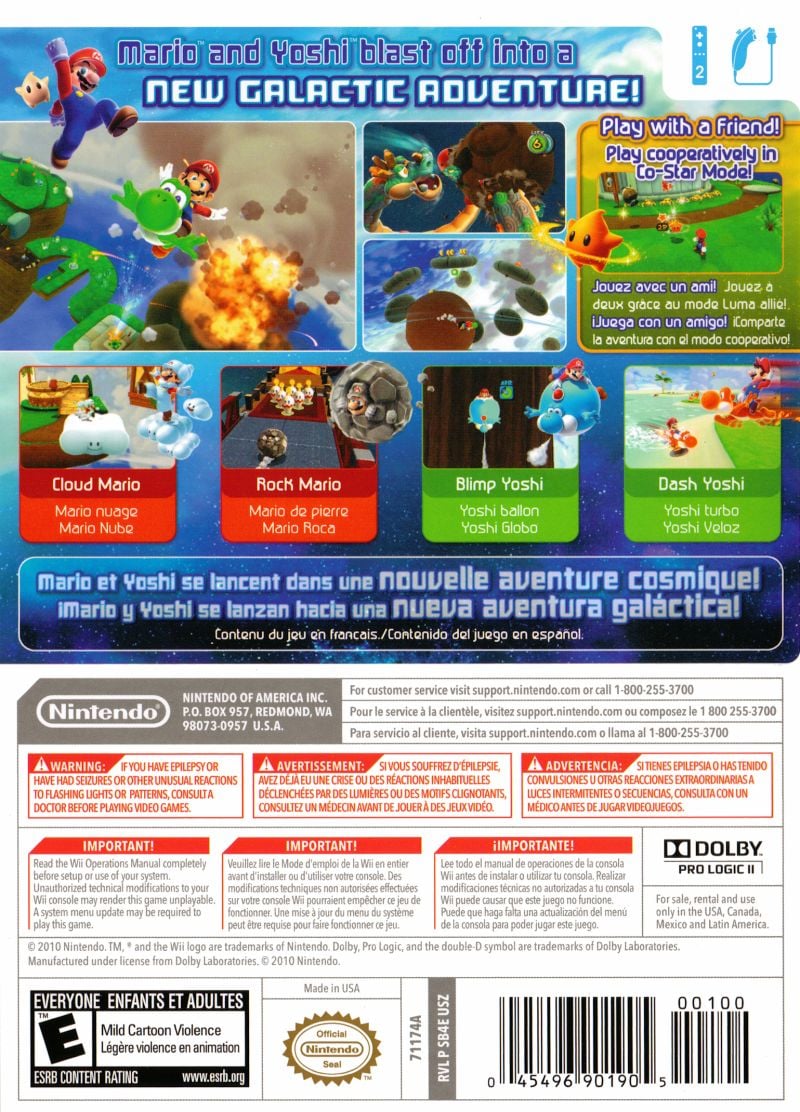
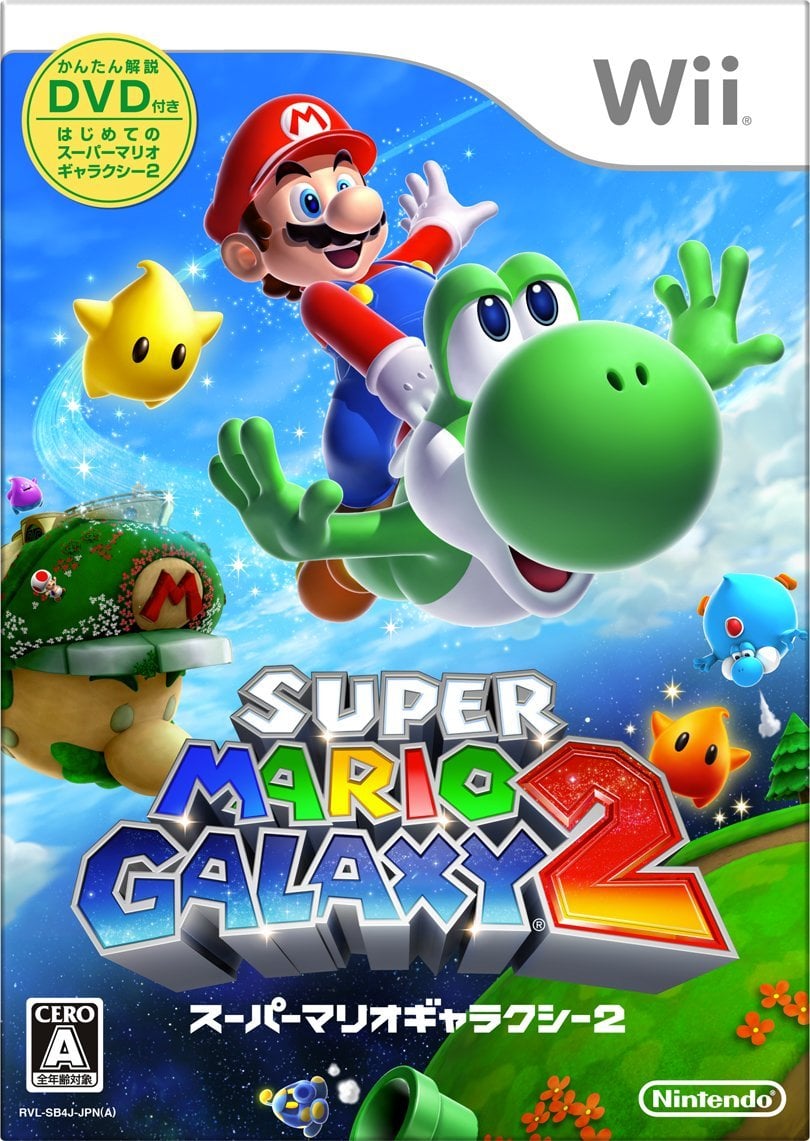
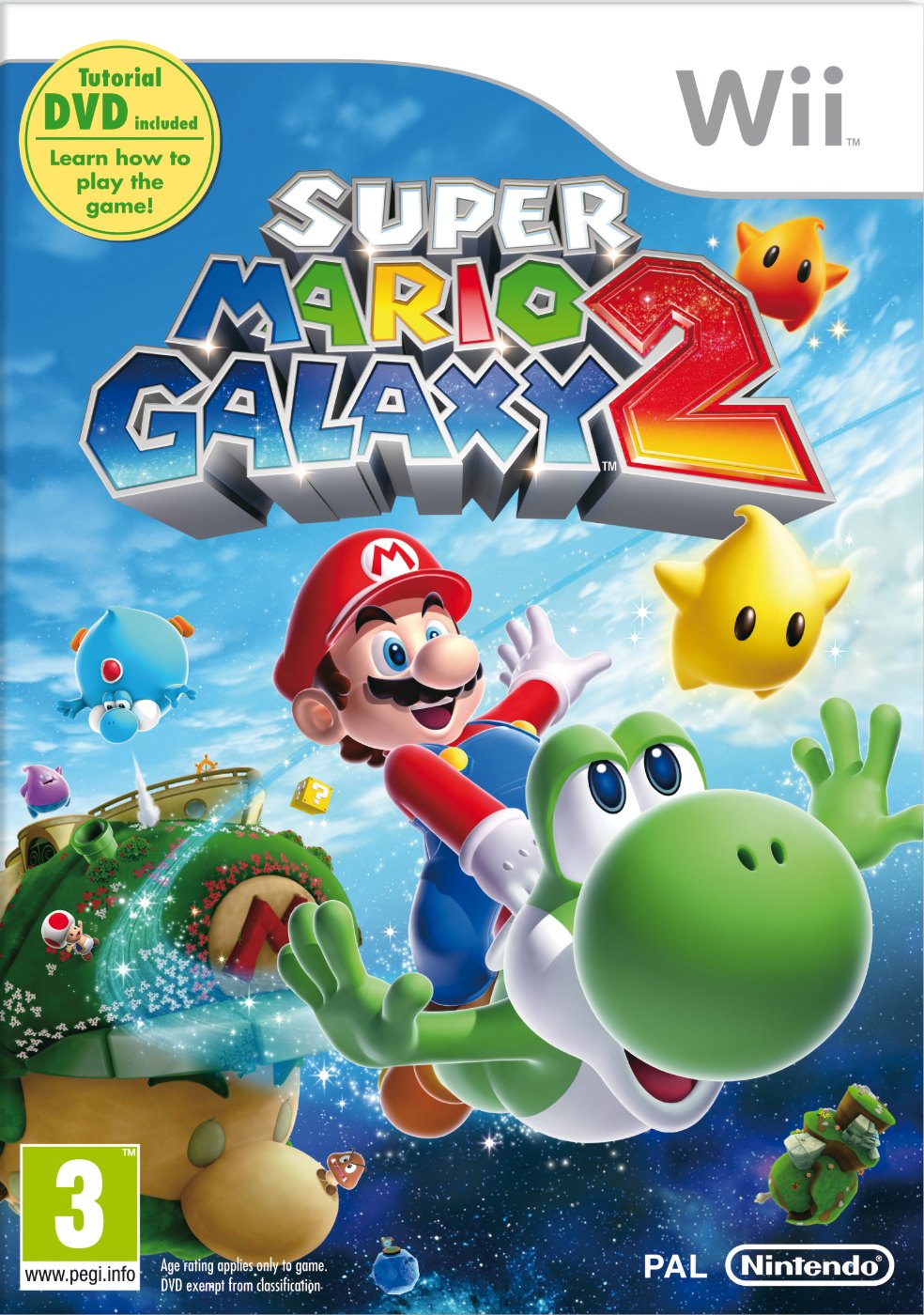
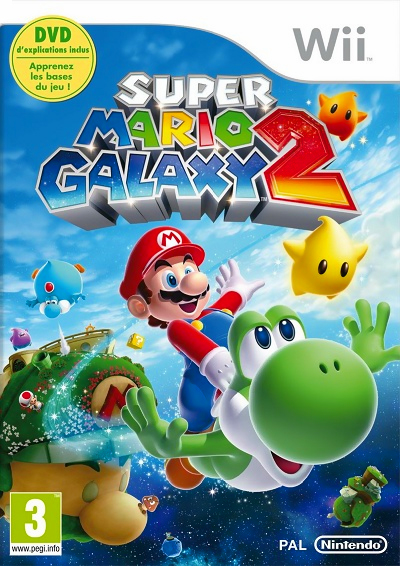
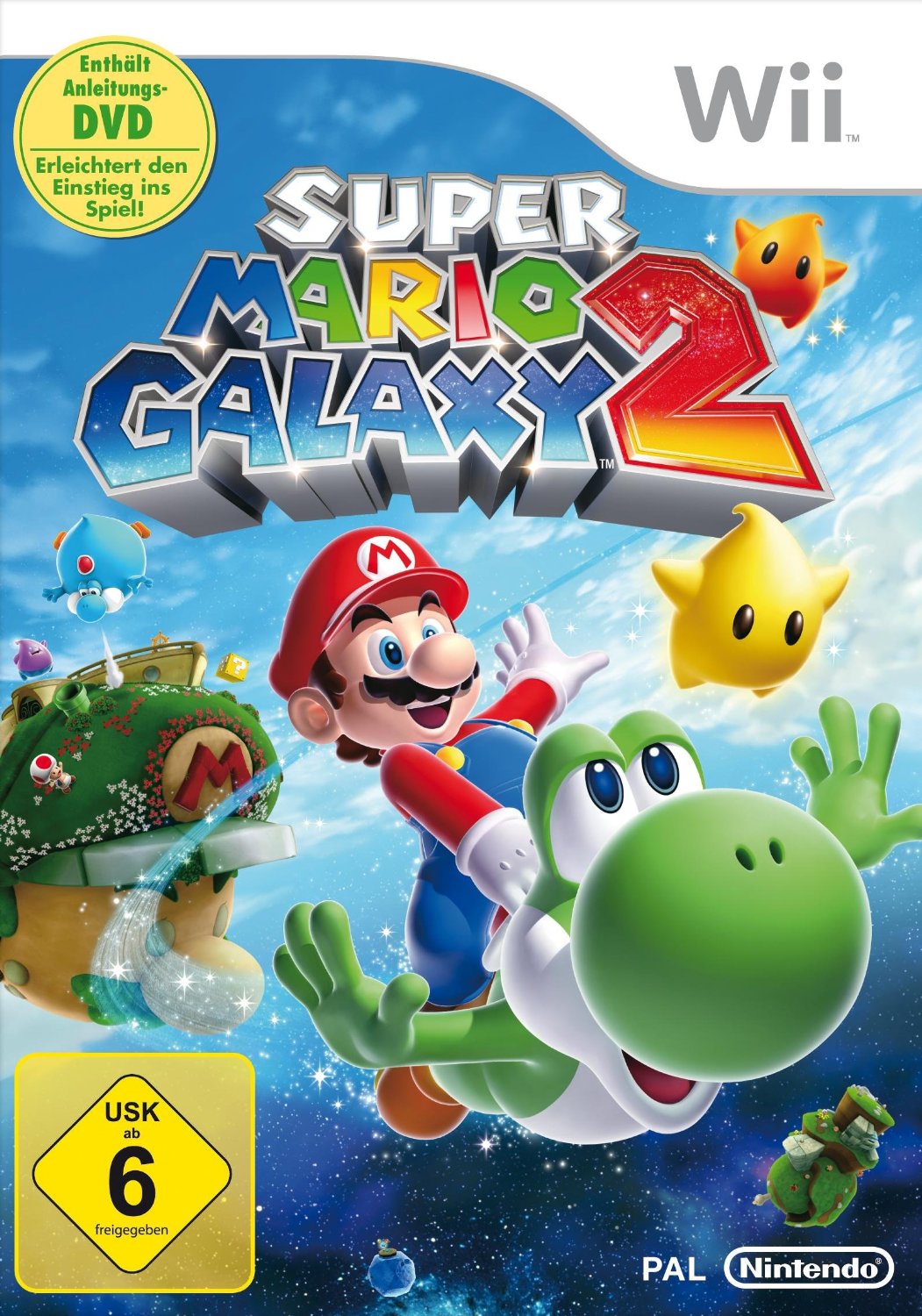
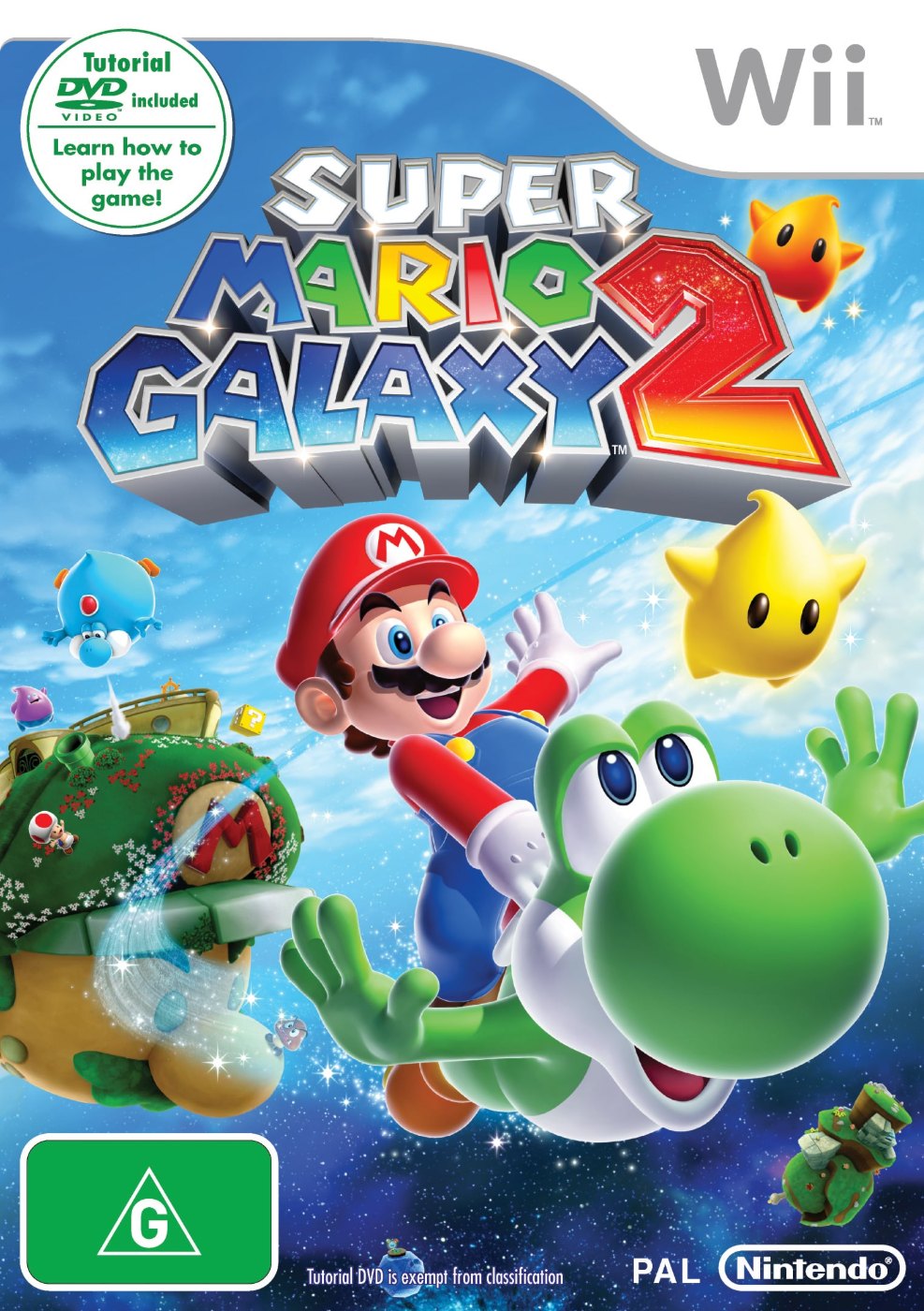
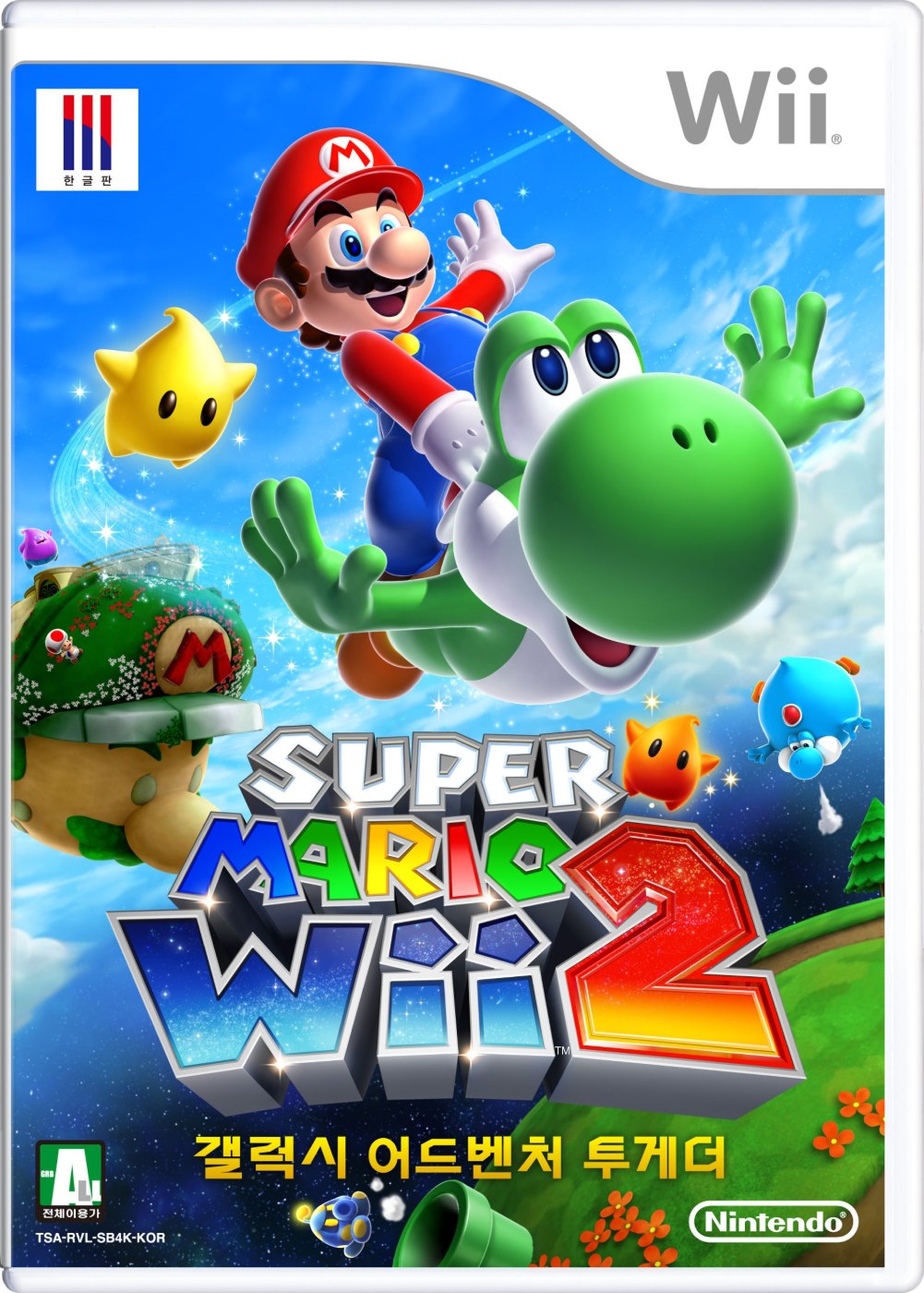
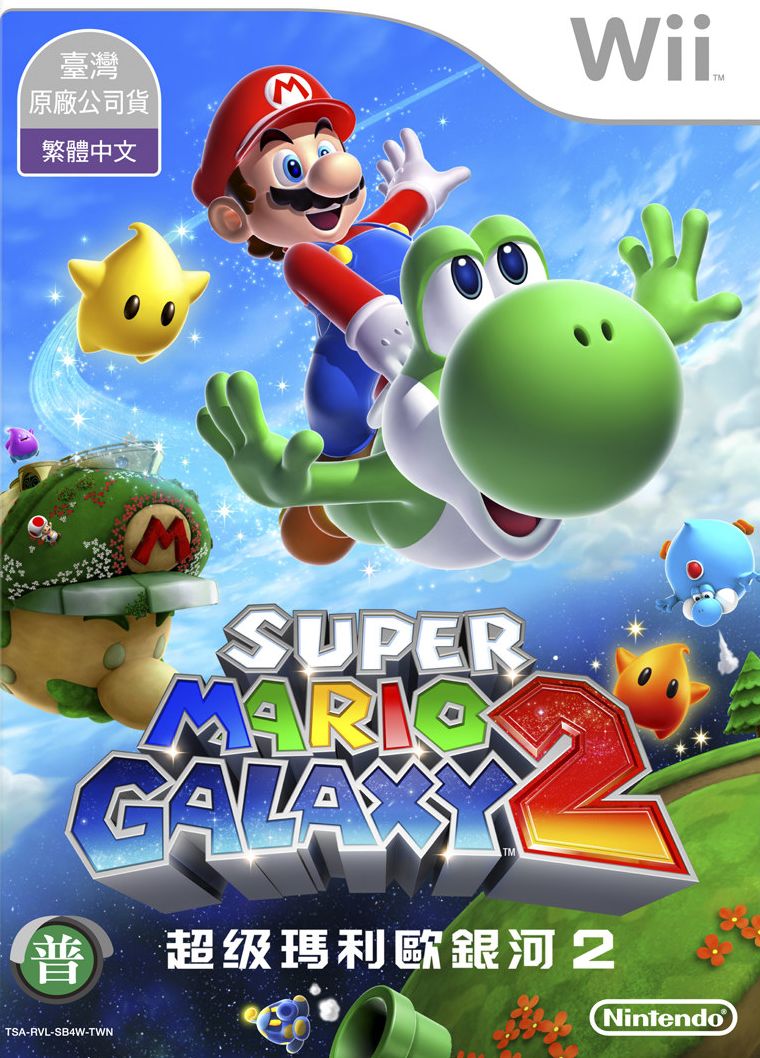
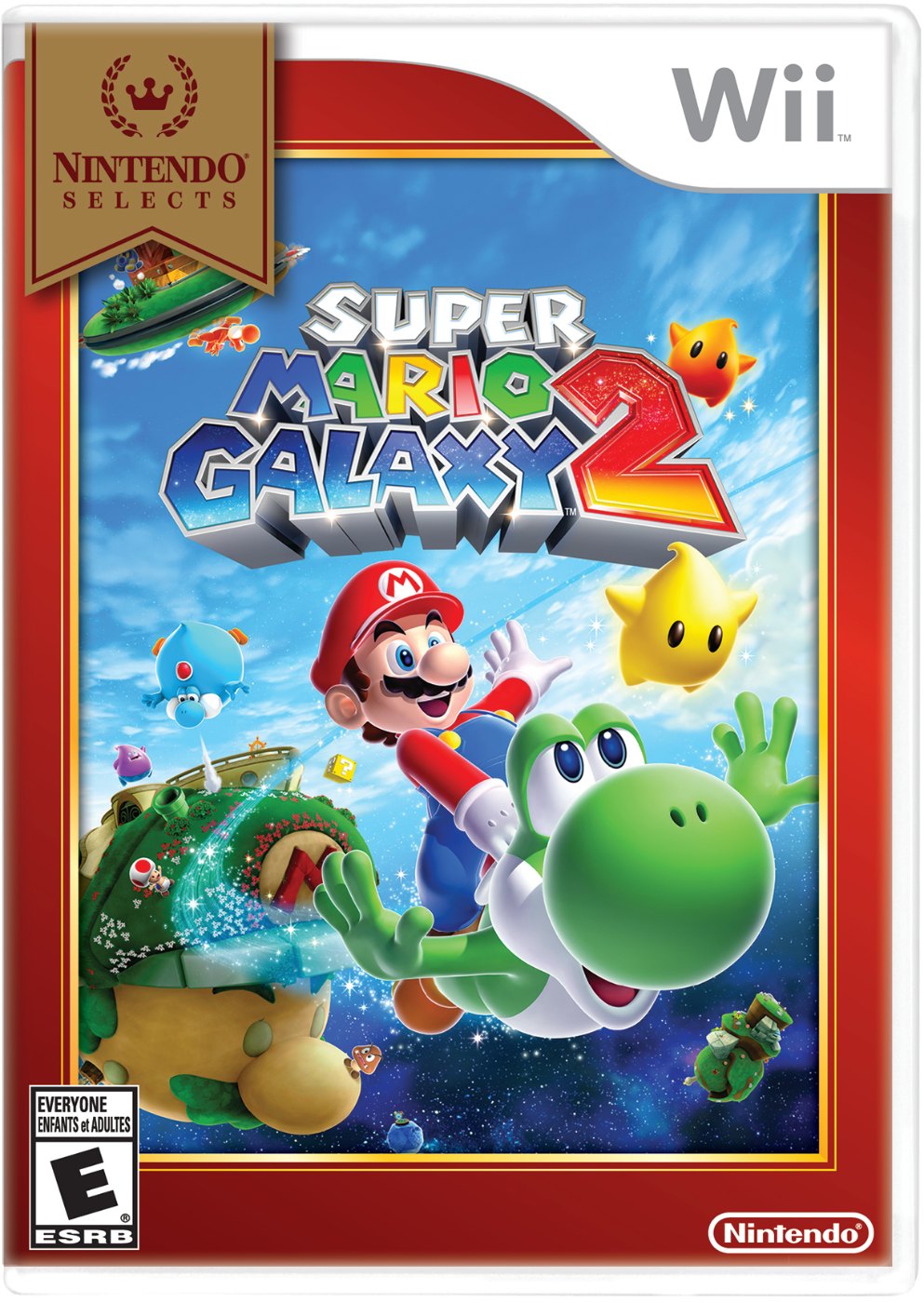
Mario and Yoshi leap from a green planet on every regional cover; Japan, Europe and Australia also carried a sticker for the bundled DVD. Korea renamed the game Super Mario Wii 2, and the 2025 Switch collection gave both Galaxy games one box.
North America23 May 2010.North America (back)Yoshi, Cloud Mario and Co-Star Mode on the back.Japan27 May 2010, with the instructional DVD.Europe11 June 2010.FranceFrench-language cover.GermanyUSK 6.Australia1 July 2010.South KoreaSold as Super Mario Wii 2, 20 January 2011.Taiwan4 December 2010.North America (Nintendo Selects)The 2016 budget reissue.Europe (Nintendo Selects)The 2014 budget reissue.Japan (DVD case)The second disc that came with Japanese, European and Australian copies.Nintendo Switch (Super Mario Galaxy + Super Mario Galaxy 2)The 2 October 2025 collection.
Screenshots
More from across the universe, from the Prickly Piranha Plant to the pipe room in Mario’s ear.
The one and only Prickly Piranha Plant, Sky Station Galaxy.A Giant Luma in Supermassive Galaxy.Beat Block Galaxy: step to the beep.Dodging Rhomps in Slipsand Galaxy.Squizzard, the Fire Flower boss.Prince Pikante in Shiverburn Galaxy.The Whomp King wants a word.Bowser waits on his battle planet.Meteorites versus Bowser in Bowser’s Gravity Gauntlet.A Comet Medal in Boss Blitz Galaxy.The Lava Lair Speed Run against the clock.The pipe room in Starship Mario’s left ear, home of the Lumalee shop.
Artwork & Media Gallery
Artwork, concept sketches, logos and merchandise from Super Mario Galaxy 2. Select any image to view it larger.
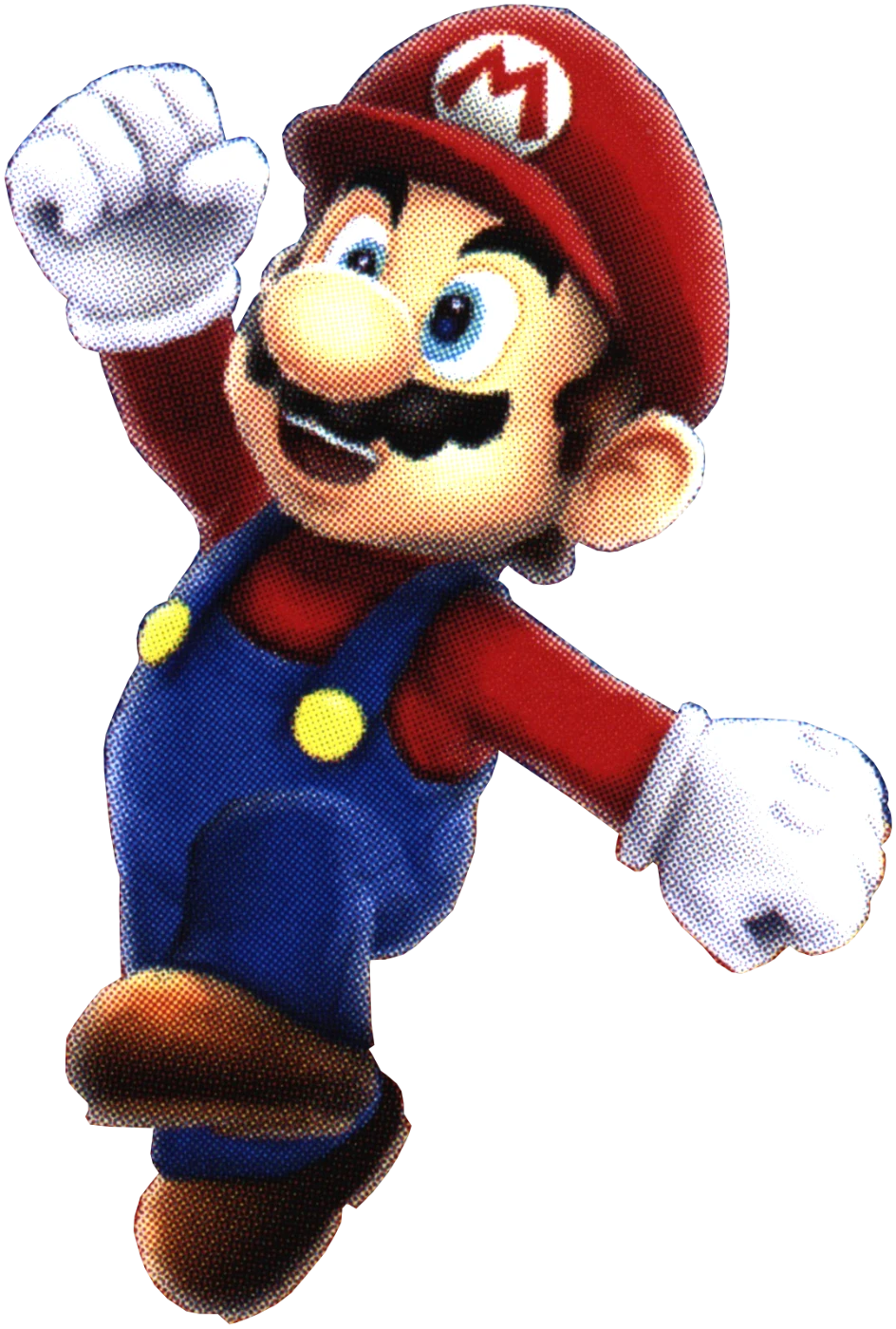
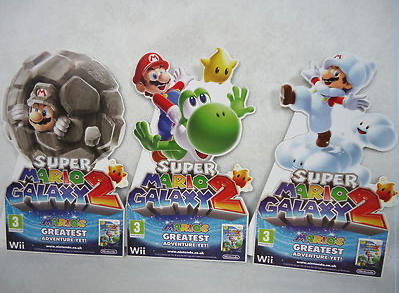
The international logo, Co-Star Luma included.The preliminary logo used at E3 2009.Group artwork of the cast.Mario mid-jump.Cloud Mario.Rock Mario.Mario with the Spin Drill.Dash Yoshi.Blimp Yoshi.Bulb Yoshi.A yellow Luma.A Hungry Luma, waiting for Star Bits.The Cosmic Spirit.Concept art for Rock Mario.Concept art for Gobblegut.The Galaxy panel in StreetPass Mii Plaza’s Puzzle Swap.UK shop standees.Nintendo’s 35th-anniversary asset for the game.
Legacy & Re-releases
Super Mario Galaxy 2 was never patched, remade or expanded on Wii; it simply stayed in print, moved to the Wii U eShop first of all Wii games, and came back in high definition for Mario’s fortieth birthday.
Releases and re-releases
WiiMay–July 2010North America 23 May, Japan 27 May, Europe 11 June, Australia 1 July 2010. Taiwan and Hong Kong followed on 4 December 2010 and South Korea on 20 January 2011.
Nintendo Selects2014–2016Budget reissues in Europe (13 June 2014), Australia (27 August 2015) and North America (11 March 2016).
Wii U eShopJanuary 2015Announced by Satoru Iwata in a Nintendo Direct and released the same week (14 January in Europe), the first Wii disc game offered as a Wii U download, with Off-TV Play.
Super Mario Galaxy + Super Mario Galaxy 22 October 2025Nintendo Switch collection for the Super Mario Bros. 40th anniversary, also sold separately on the eShop: higher resolution, Assist Mode, gyro pointer, a new storybook and amiibo support, with a free Switch 2 update for 4K and Joy-Con 2 mouse controls in Co-Star Mode.
Switch update and amiiboApril 2026An epilogue chapter for the storybook, and Mario and Rosalina amiibo released on 2 April 2026 alongside The Super Mario Galaxy Movie.
What it left behind
Director Koichi Hayashida took the lessons straight to Super Mario 3D Land in 2011, with Cosmic Clones, Beat Block-style timing and a brutal final Special World, and then to Super Mario 3D World; Kenta Motokura went on to direct Super Mario Odyssey, whose Darker Side of the Moon is Grandmaster Galaxy’s direct descendant. Green Stars became 3D World’s main collectible. Rosalina, kept to a cameo here, became a Super Smash Bros. fighter in 2014. When Super Mario 3D All-Stars left the game out in 2020 the outcry was loud enough that its eventual return, alongside the original in 2025, was one of the headlines of a Nintendo Direct.
Its standing today
Fifteen years on it still tops many lists of the best Mario games, and no Mario game has matched its Metacritic score. Super Mario Galaxy gets the credit for inventing the spherical universe; the sequel is where the ideas came at a rate of one per planet, and where the argument about which Galaxy is better was born. Fans have never settled it.
Reviews & Sales
Sales figures
Big, but not New Super Mario Bros. Wii big. In Japan it sold about 143,000 copies on its first day and 340,000 in its first week, roughly 90,000 more than the original Galaxy managed in its opening week. In North America, NPD counted around 650,000 in its first nine days of May 2010 and GameSpot reported a million in the US by 16 July. In the UK it was the best-selling single-platform release in the week ending 26 June. Nintendo’s financial results put worldwide sales at 6.36 million by the end of March 2011, and the company’s final figure is 7.41 million, a little over half of what the first game sold and a reminder that even a 98 on Metacritic cannot beat a four-player sofa. The 2025 Switch collection gave it a second commercial life alongside its predecessor.
7.41mworldwide, Nintendo
6.36mby March 2011
1mUS by July 2010
340kJapan, first week
98Metacritic, 87 reviews
Reception and review scores
The European box, with its Nintendo Selects reissue to follow.
One of the best-reviewed games ever made. Metacritic’s average is 98 from 87 critic reviews (long quoted as 97 before the site’s recalculation) and GameRankings finished on 97.35 per cent. Scores below are as reported by the outlets and by Wikipedia’s and Super Mario Wiki’s reception tables.
EdgeUK · the third Mario to score ten
10/10
IGNUS · Craig Harris
10/10
GameSpotTom McShea
10/10
EurogamerOli Welsh
10/10
DestructoidUS
10/10
Nintendo LifeUK/US
10/10
Giant BombRyan Davis
5/5
X-PlayUS
5/5
GameTrailersUS
9.7/10
Official Nintendo MagazineUK
97%
Nintendo PowerUS
9.5/10
Nintendo World ReportUS
9.5/10
FamitsuJapan · 10, 9, 9, 9
37/40
Game InformerUS
9.25/10
GameProUS
4.5/5
GameSpyUS
4.5/5
WiredChris Kohler
9/10
The reviews read like a victory lap. GameSpot’s Tom McShea called it a new standard for the genre and admired how it kept producing fresh objectives and mechanics; Giant Bomb’s Ryan Davis thought the level design bolder than the first game’s; Edge decided that rather than redefining platforming it simply perfected it and put the genre away; and Wired’s Chris Kohler reckoned some of the single-planet ideas could have carried whole games. Famitsu was the relative sceptic at 37, and even Official Nintendo Magazine, while naming it the new best game on Wii, admitted it could not match the original’s impact.
The quibbles were consistent. Several critics missed the first game’s storybook and Rosalina, Kohler calling the thinner plot a waste of the team’s talent; Game Informer and GamePro found the late worlds frustratingly hard, though others praised the difficulty as fair; and the motion-controlled Fluzzard flights and Star Ball levels drew complaints about precision. None of it dented the consensus, and in December 2010 IGN moved it above the original as the best game on the Wii.
Honours
2010Game of the YearFrom Nintendo Power, GamesMaster, Official Nintendo Magazine, Edge, GamesTM, Destructoid and Metacritic.
2010Wii Game of the YearIGN, GameTrailers, GameSpot and 1UP.com; GameSpot also gave it Best Platformer.
Guinness World Records Gamer’s Edition · 2011Game of the Year and Best Game on WiiIn the annual records book.
Official Nintendo Magazine · March 2012Greatest Nintendo Game Ever MadeNumber one of 100 in the UK magazine’s poll.
IGN · December 2010Best Wii gameReplacing the original Galaxy at the top of IGN’s Wii list; later fourth on its Top Modern Games.
Nominations · 2010–2011Spike VGA, Kids’ Choice, D.I.C.E.Best Wii Game at the Spike Video Game Awards, Favorite Video Game at the Kids’ Choice Awards (lost to Just Dance 2) and Outstanding Achievement in Gameplay Engineering at the 14th Interactive Achievement Awards.
SLB User Reviews
Super Luigi Bros readers have reviewed Super Mario Galaxy 2 over the years. Their write-ups are kept exactly as they were sent in:
To provide the best experiences, we use technologies like cookies to store and/or access device information. Consenting to these technologies will allow us to process data such as browsing behavior or unique IDs on this site. Not consenting or withdrawing consent, may adversely affect certain features and functions.
Functional
Always active
The technical storage or access is strictly necessary for the legitimate purpose of enabling the use of a specific service explicitly requested by the subscriber or user, or for the sole purpose of carrying out the transmission of a communication over an electronic communications network.
Preferences
The technical storage or access is necessary for the legitimate purpose of storing preferences that are not requested by the subscriber or user.
Statistics
The technical storage or access that is used exclusively for statistical purposes.The technical storage or access that is used exclusively for anonymous statistical purposes. Without a subpoena, voluntary compliance on the part of your Internet Service Provider, or additional records from a third party, information stored or retrieved for this purpose alone cannot usually be used to identify you.
Marketing
The technical storage or access is required to create user profiles to send advertising, or to track the user on a website or across several websites for similar marketing purposes.

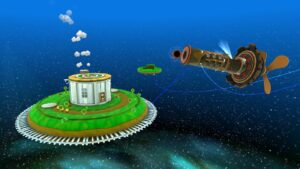 Sky Station GalaxyWorld 1: The Great Space Journey Begins · 3 missions · Peewee PiranhaLaunch Stars, tiny planets and a baby Dino Piranha with a temper.
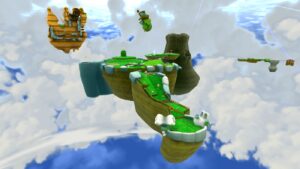 Yoshi Star GalaxyWorld 1 · 3 missions · King LakituYoshi’s home, and the first ride.
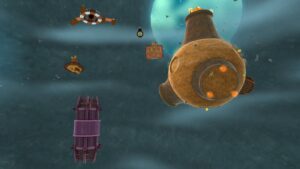 Spin-Dig GalaxyWorld 1 · 3 missions · Digga-LegDrill through the planets to reach a two-legged robot with a glass belly.
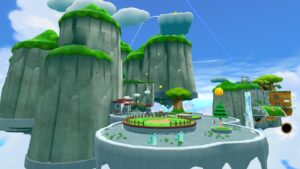 Fluffy Bluff GalaxyWorld 1 · 3 missionsThe Cloud Flower debuts; The Chimp sets his first stomp challenge.
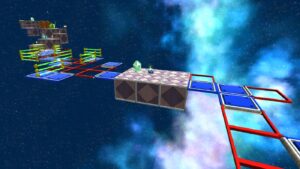 Flip-Swap GalaxyWorld 1 · Hungry Luma (300 Star Bits) · 2 missionsSpin to flip the red and blue panels under your feet.
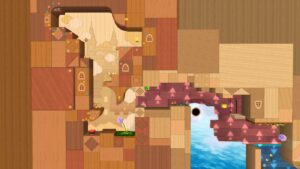 Rightside Down GalaxyWorld 1 · 2 missionsA 2D stage where gravity arrows point every which way.
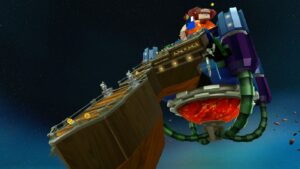 Bowser Jr.’s Fiery FlotillaWorld 1 boss · Gobblegut · Grand StarPop the dragon’s belly bulges as he burrows.
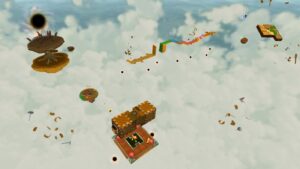 Puzzle Plank GalaxyWorld 2: Shooting Through the Stars · 3 missions · Mandibug Stack, BugaboomWooden planets, buzz saws and a giant picture puzzle.
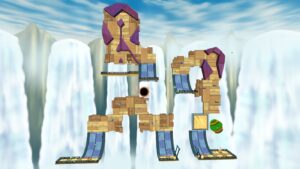 Hightail Falls GalaxyWorld 2 · 3 missionsDash Yoshi runs straight up the waterfalls; Kleptoads steal Silver Stars.
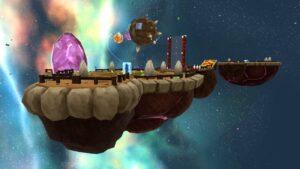 Boulder Bowl GalaxyWorld 2 · 3 missions · RollodilloRock Mario bowls through Pinheads and an armoured armadillo.
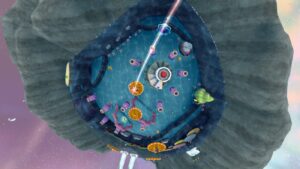 Cosmic Cove GalaxyWorld 2 · 3 missionsPenguins, a freezable lake and a Star Bunny chase.
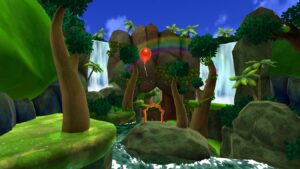 Wild Glide GalaxyWorld 2 · 2 missionsFluzzard’s first flight, steered by tilting the Remote.
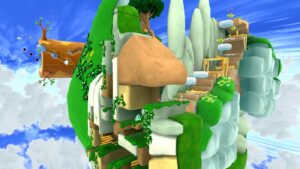 Honeybloom GalaxyWorld 2 · Hungry Luma (700) · 2 missionsBee Mario among giant flowers.
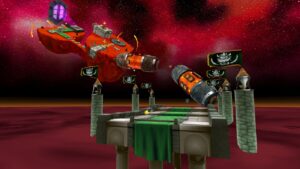 Bowser’s Lava LairWorld 2 boss · Bowser · Grand StarThe first meteorite duel with the giant Koopa.
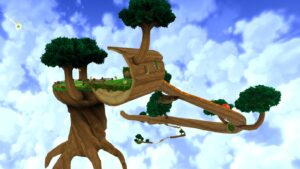 Tall Trunk GalaxyWorld 3: The Far Reaches of the Universe · 3 missionsBlimp Yoshi up the tree, then the great slide down it.
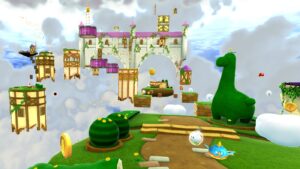 Cloudy Court GalaxyWorld 3 · 3 missionsCloud platforms, fans and cymbals in the sky.
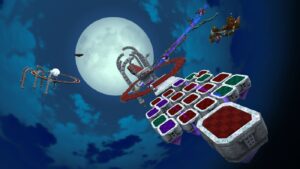 Haunty Halls GalaxyWorld 3 · 3 missionsBulb Yoshi lights the way past Mega Boos and Octoboos.
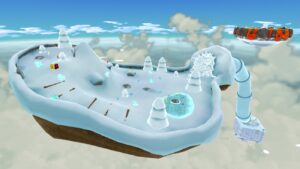 Freezy Flake GalaxyWorld 3 · 3 missions · SorbettiSnow, a frozen Bowser statue and a snowman with a nose problem.
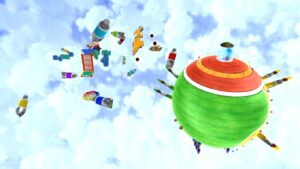 Rolling Masterpiece GalaxyWorld 3 · 2 missionsStar Ball rolling over giant paintbrushes, chased by a Homing Chomp.
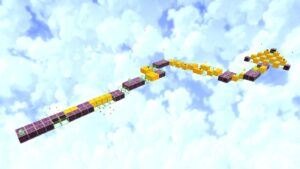 Beat Block GalaxyWorld 3 · Hungry Luma (1,000) · 2 missionsPlatforms appear and vanish to the beat of the music.
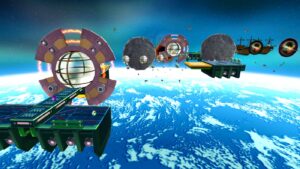 Bowser Jr.’s Fearsome FleetWorld 3 boss · Megahammer · Grand StarYoshi spits Bullet Bills at the mech’s glass domes.
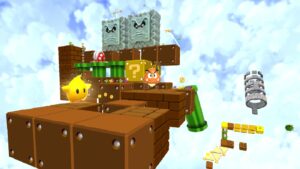 Supermassive GalaxyWorld 4: The Many Mysteries of the Cosmos · 3 missionsEverything is enormous: Goombas, Koopas, Wigglers, pipes.
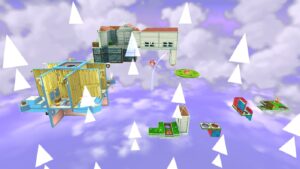 Flipsville GalaxyWorld 4 · 3 missions · GlamdozerGround pound the grates to swap between the top and bottom of the town.
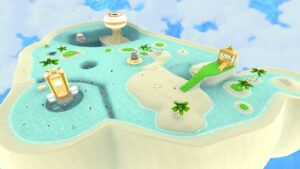 Starshine Beach GalaxyWorld 4 · 3 missionsPiantas, surf and a cloudy tower; Yoshi required.
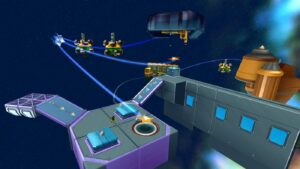 Chompworks GalaxyWorld 4 · 3 missionsA Gearmo-run factory making Chain Chomps, with a Spring Mushroom.
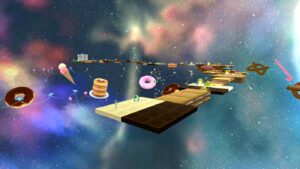 Sweet Mystery GalaxyWorld 4 · Hungry Luma (1,200) · 2 missionsCakes and biscuits, invisible until Bulb Yoshi shines.
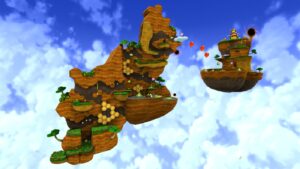 Honeyhop GalaxyWorld 4 · 2 missionsThe Queen Bee’s court, back from the first game.
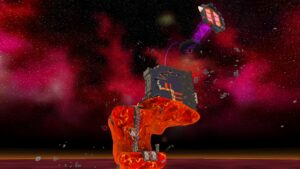 Bowser’s Gravity GauntletWorld 4 boss · Bowser · Grand StarA castle where up keeps changing its mind.
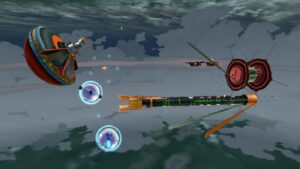 Space Storm GalaxyWorld 5: Trial of the Galaxies · 3 missionsPull Stars, slow-motion switches and Topman’s tower.
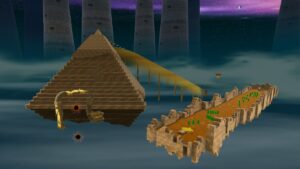 Slipsand GalaxyWorld 5 · 3 missions · SquizzardSand slides, Rhomps and a Fire Flower boss fight.
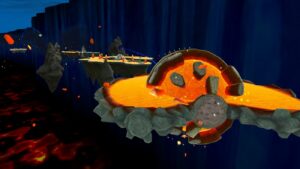 Shiverburn GalaxyWorld 5 · 3 missions · Prince PikanteLava and ice side by side; watch the figures on the horizon.
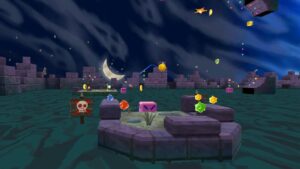 Boo Moon GalaxyWorld 5 · 3 missionsBoo Mario’s home, with a howling tower and a sinking swamp.
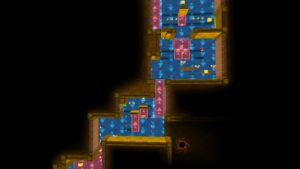 Upside Dizzy GalaxyWorld 5 · 2 missionsGravity reverses every few seconds in a 2D maze.
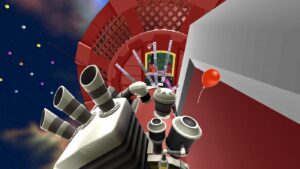 Fleet Glide GalaxyWorld 5 · Hungry Luma (1,500) · 2 missionsFluzzard glides through a Bowser battle station.
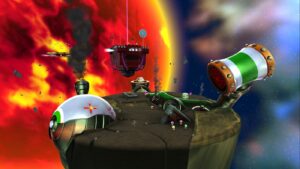 Bowser Jr.’s Boom BunkerWorld 5 boss · Boomsday Machine · Grand StarCloud Mario versus a tank.
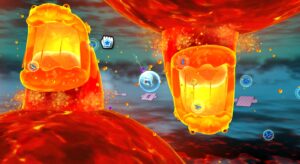 Melty Monster GalaxyWorld 6: Bowser in Your Sights · 3 missionsMagmaarghs and Magmaws in a sea of lava, plus a bowling challenge.
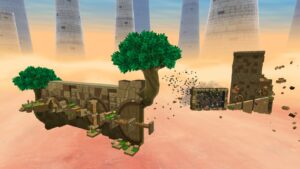 Clockwork Ruins GalaxyWorld 6 · 3 missionsCogs, stone wheels and a very large hammer.
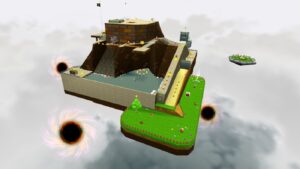 Throwback GalaxyWorld 6 · 3 missions · Whomp KingWhomp’s Fortress from Super Mario 64, rebuilt in orbit.
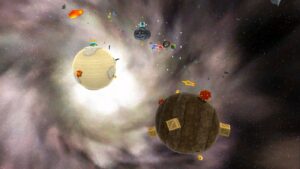 Battle Belt GalaxyWorld 6 · 3 missions · Fiery GobblegutA chain of tiny planets full of old enemies, ending with Gobblegut on fire.
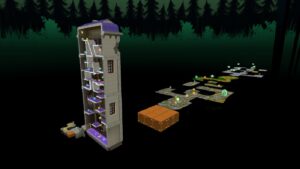 Flash Black GalaxyWorld 6 · Hungry Luma (1,800) · 2 missionsPitch dark, lit only by lightning.
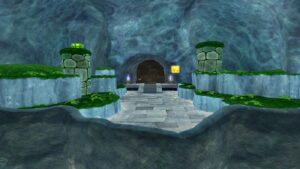 Slimy Spring GalaxyWorld 6 · 2 missionsA long underwater swim through a shell-lit cave.
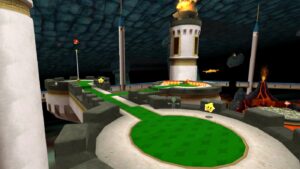 Bowser’s Galaxy GeneratorWorld 6 boss · Bowser · Grand StarThe final fortress and the last two Bowser fights.
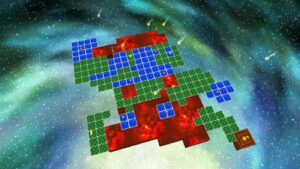 Mario Squared GalaxyWorld S: Here We Go! · 2 missionsA flat planet shaped like 8-bit Mario (and Luigi), with Cosmic Clones.
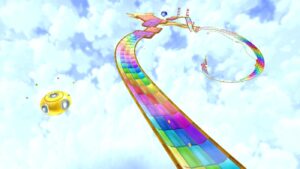 Rolling Coaster GalaxyWorld S · 75 stars · 2 missionsStar Ball down a Rainbow Road.
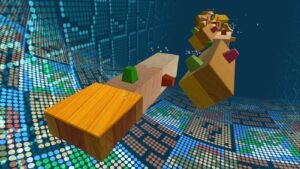 Twisty Trials GalaxyWorld S · 80 stars · 2 missionsSpinning blocks from Super Mario Sunshine, with Yoshi.
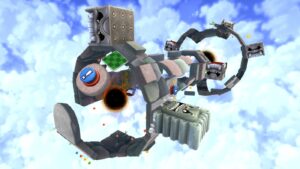 Stone Cyclone GalaxyWorld S · 90 stars · 2 missionsTox Boxes and slow-motion switches on a planet from the first game.
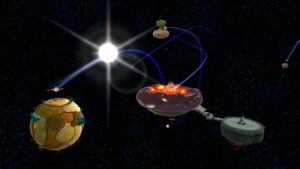 Boss Blitz GalaxyWorld S · 100 stars · 2 missions · five bossesDino Piranha, King Kaliente, Major Burrows, Bouldergeist and Fiery Dino Piranha, back to back.
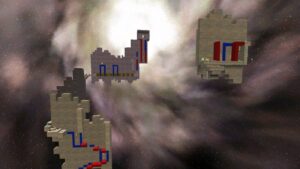 Flip-Out GalaxyWorld S · Hungry Luma (2,000) · 110 stars · 2 missionsSpin to swap walls in and out of existence mid wall-jump.
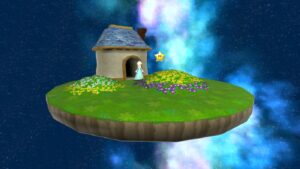 Grandmaster GalaxyWorld S · 240 stars · The Ultimate Test, The Perfect RunThe hardest thing in any Mario game to that point, and Rosalina at the end of it.
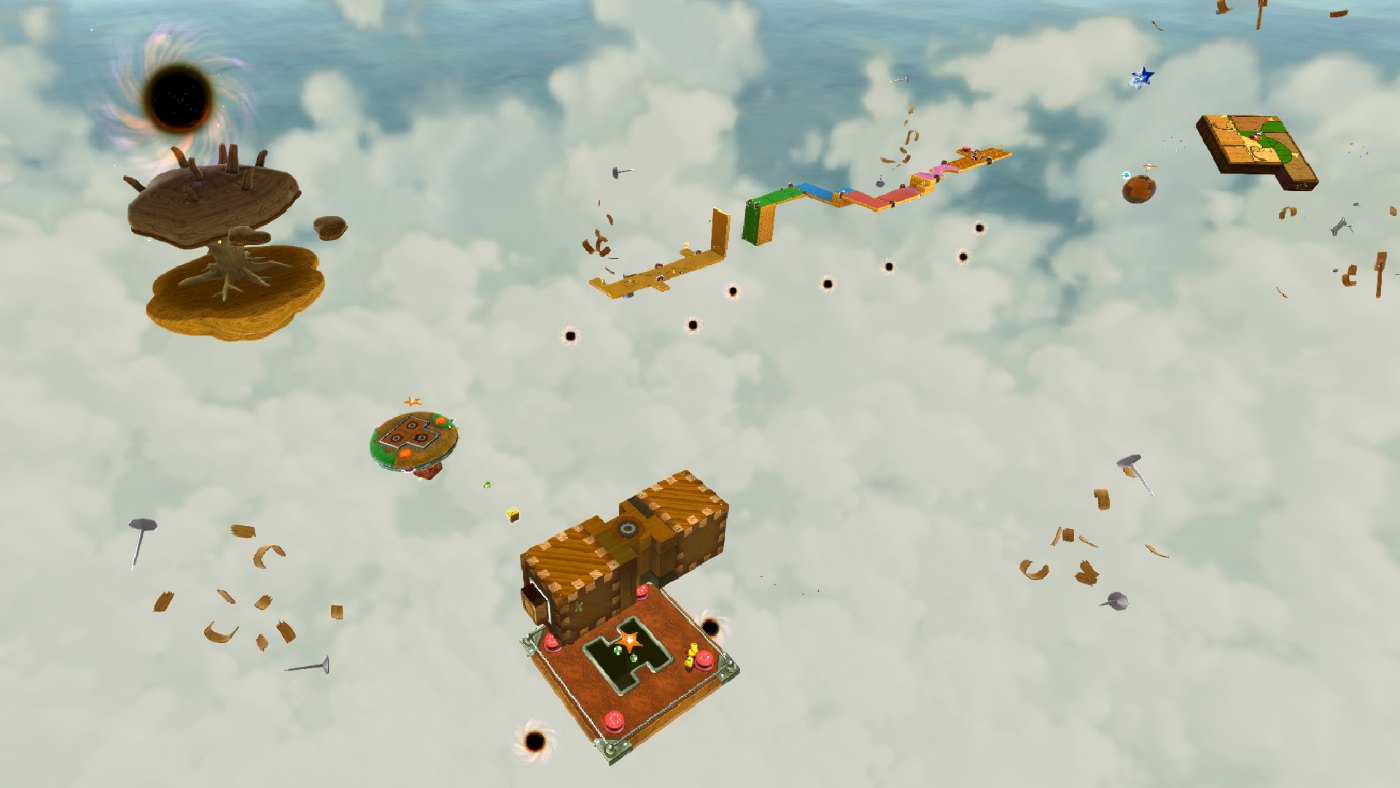

 Cloud Flower (new)Cloud Mario can spin to create up to three cloud platforms per flower, then ride them, stand on them or stack them. Water washes the suit away.
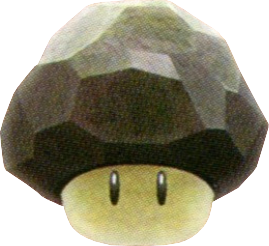 Rock Mushroom (new)Shake to curl into a boulder that smashes crystals, Pinheads and enemies and bowls through Rollodillo. Koizumi tuned the controls using lessons from Goron Link.
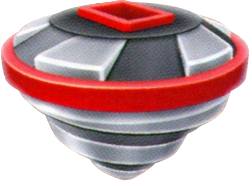 Spin Drill (new)A carried item rather than a suit: spin to drill through a planet and pop out the other side, or into Digga-Leg’s glass belly.
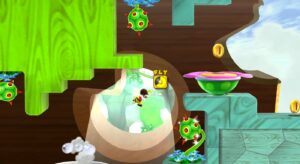 Bee MushroomHover, cling to honeycomb and walk on flowers. Lose it in water.
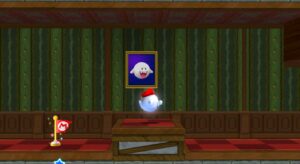 Boo MushroomFloat and pass through grates and walls; introduced here in Boo Moon Galaxy.
 Spring MushroomBounce to great heights, awkwardly. Taught by the Gearmos in Chompworks.
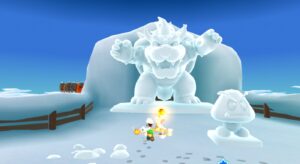 Fire FlowerTime-limited fireballs for torches, crates and snowmen; the only thing that hurts Squizzard.
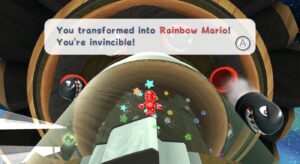 Rainbow StarInvincibility and a charge that flattens everything.
 Dash PepperDash Yoshi: eight seconds of uncontrollable speed, up walls and across water.
 Blimp FruitBlimp Yoshi inflates and rises; hold A to slow the leak.
 Bulb BerryBulb Yoshi glows for ten seconds, revealing hidden platforms that disappear when the light goes out.
 Power Star120 in the main game. Each one powers Starship Mario a little more.
 Green Star120 more, hidden in finished missions once Green Comets arrive.
 Bronze StarWhat you get for letting the Cosmic Spirit finish a mission. Replace them all before Grandmaster Galaxy.
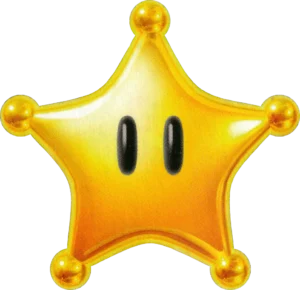 Grand StarSix of them, one per boss galaxy; each opens the way to the next world.
 Star BitsAmmunition, Luma food and currency: 9,999 in the bank unlocks the Perfect Run.
 Silver StarsFive make a Power Star; carried off by Kleptoads in Hightail Falls.
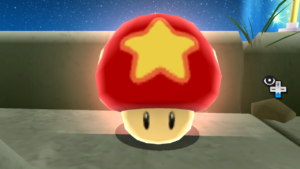 Life MushroomSix health instead of three. A Lumalee sells one for 30 Star Bits before some bosses.
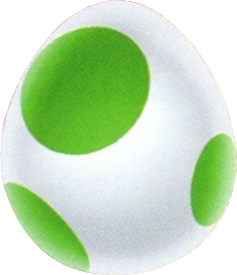 Yoshi’s EggSpin to hatch Yoshi. Eggs also appear on Starship Mario once he has joined the crew.

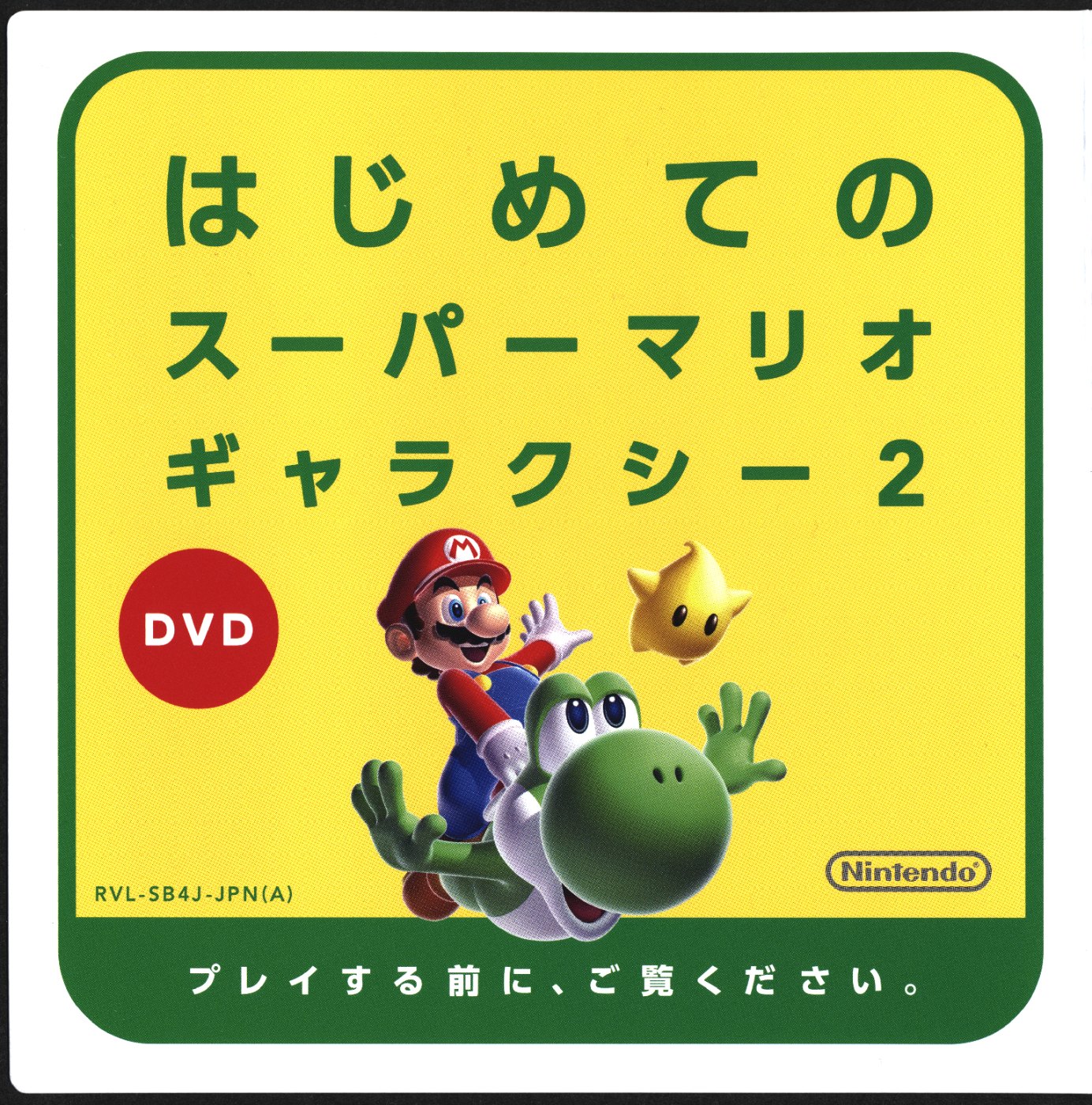 The bundled instructional DVDNintendo · Japan, Europe and Australia · 2010Japanese, European and Australian copies shipped with a second disc, a DVD-Video that walks newcomers through the basics and shows off advanced techniques. North American copies did without it.
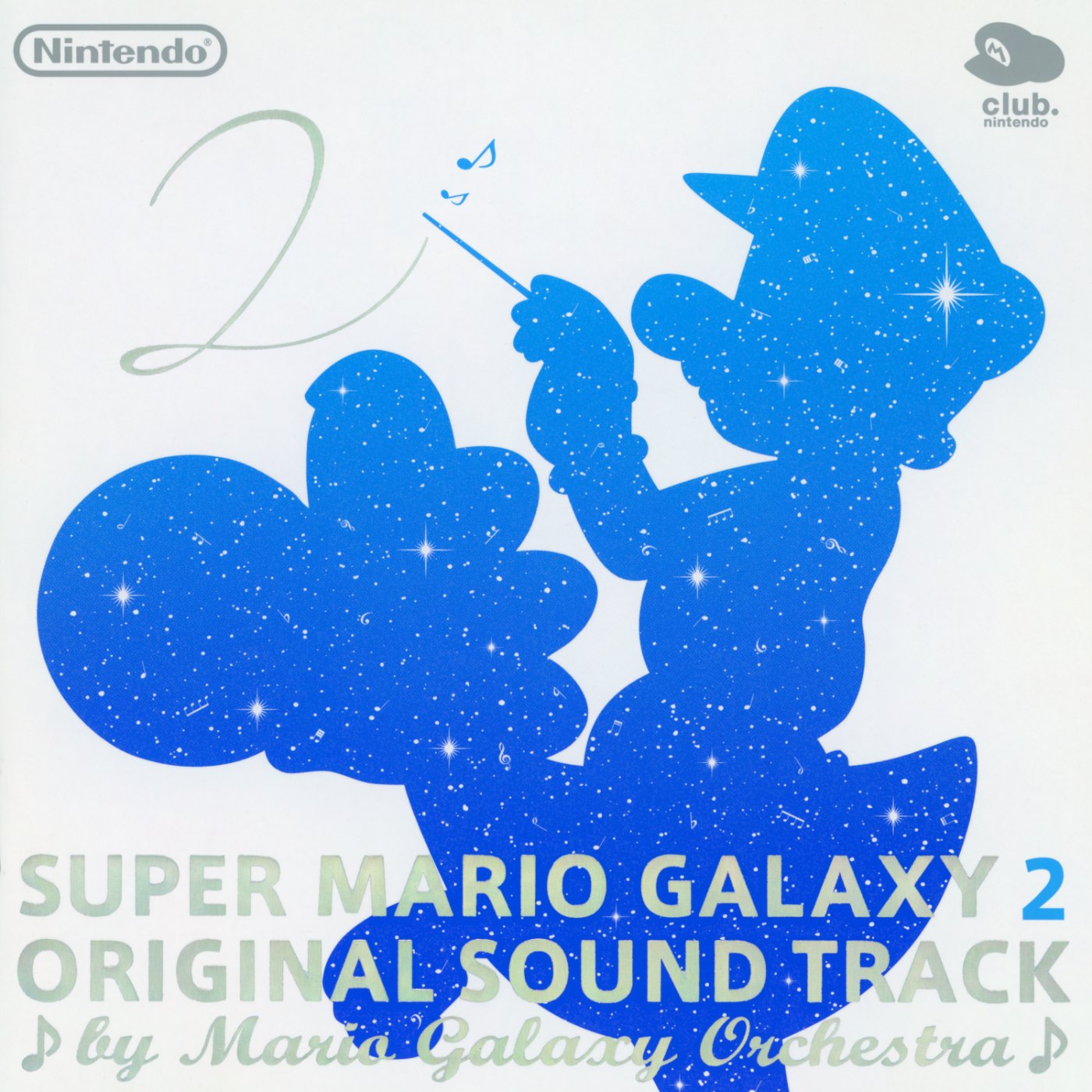 Super Mario Galaxy 2 Original SoundtrackNintendo / Club Nintendo · 10 July 2010A Japanese Club Nintendo reward: a two-disc, 70-track set recorded with the Mario Galaxy Orchestra, with Mahito Yokota and Ryō Nagamatsu’s new pieces alongside Koji Kondo’s contributions and arrangements of themes from Galaxy, Super Mario World and Super Mario 64.
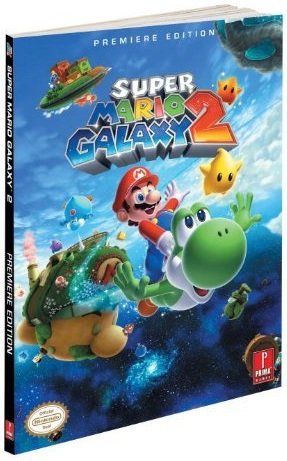 Prima Official Game GuidePrima Games · 2010Standard and collector’s editions covering all 242 stars and every Comet Medal.
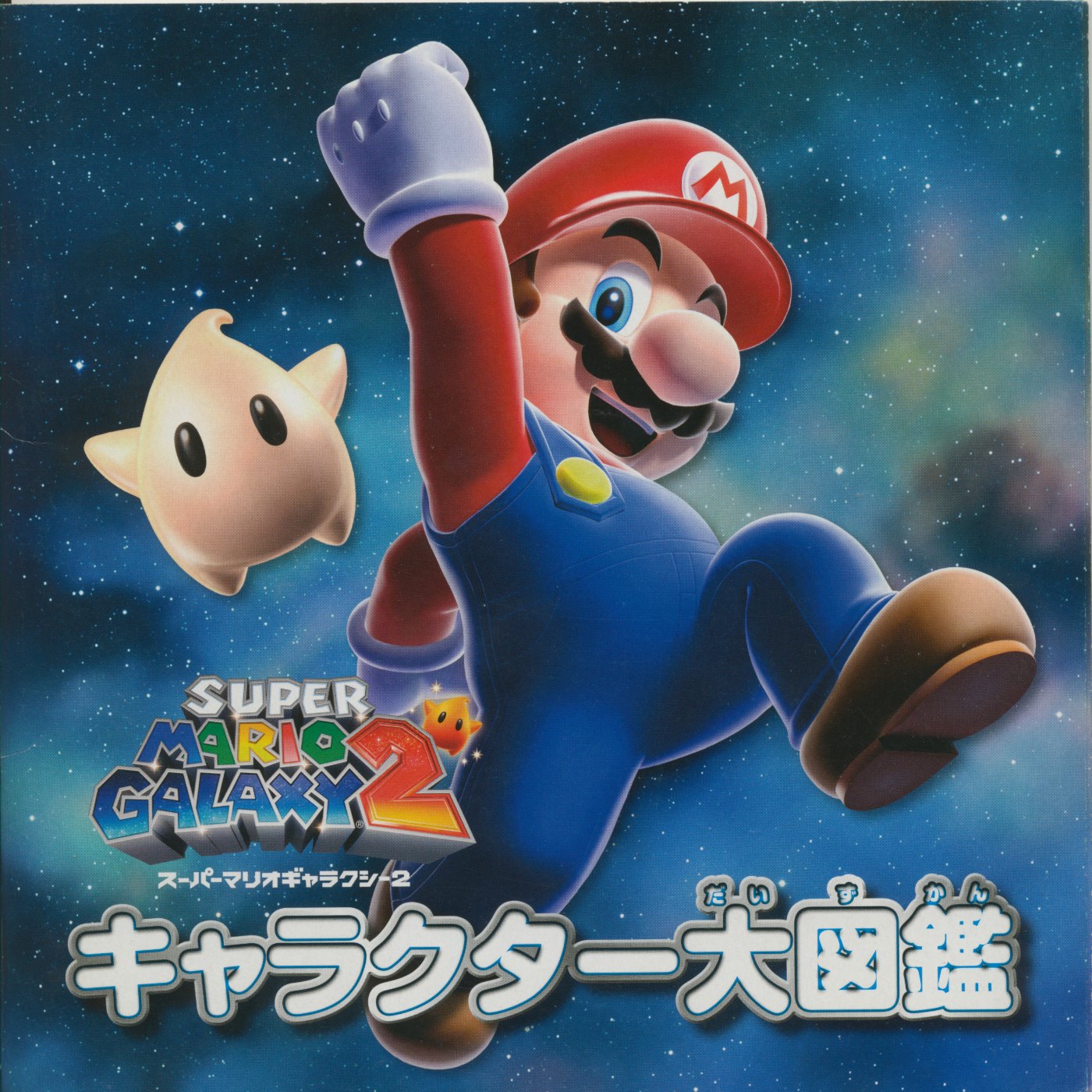 Official Japanese artwork bookletNintendo · 2010A Japanese art book collecting the game’s key art and character designs.
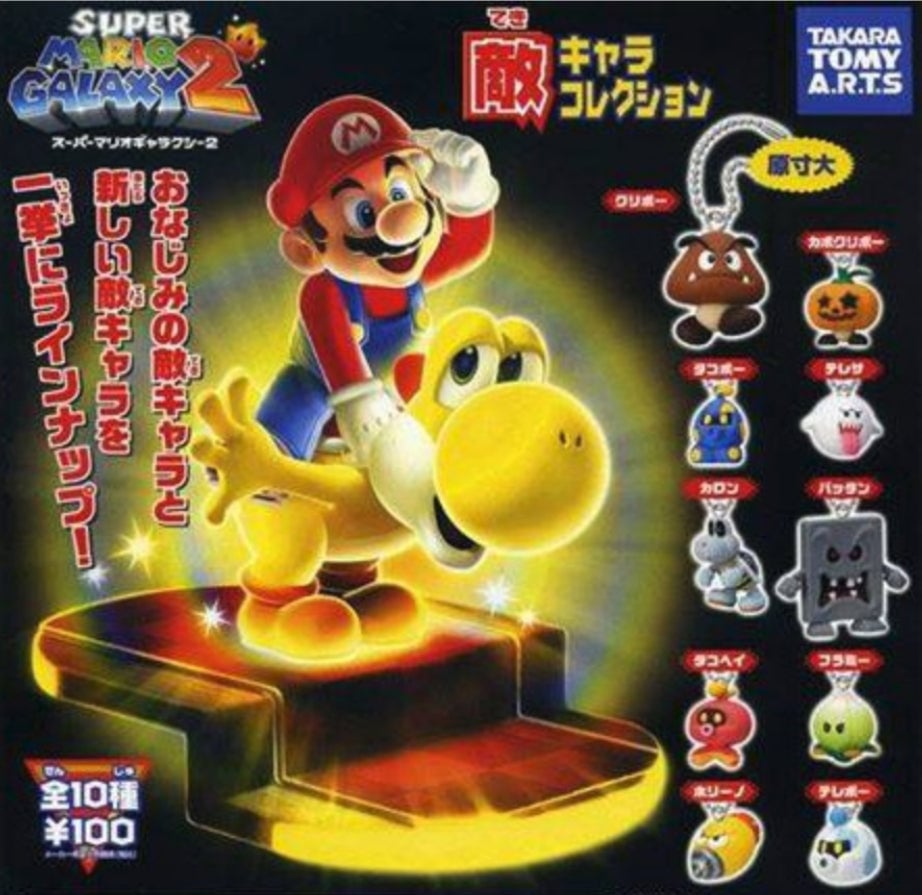 Toys and merchandiseTakara Tomy, Ensky and others · 2010–2011Gashapon enemy mascot straps and danglers, a mini-figure set, 3D cards and magnets from Ensky and a collector’s jigsaw puzzle all carried the game’s art.
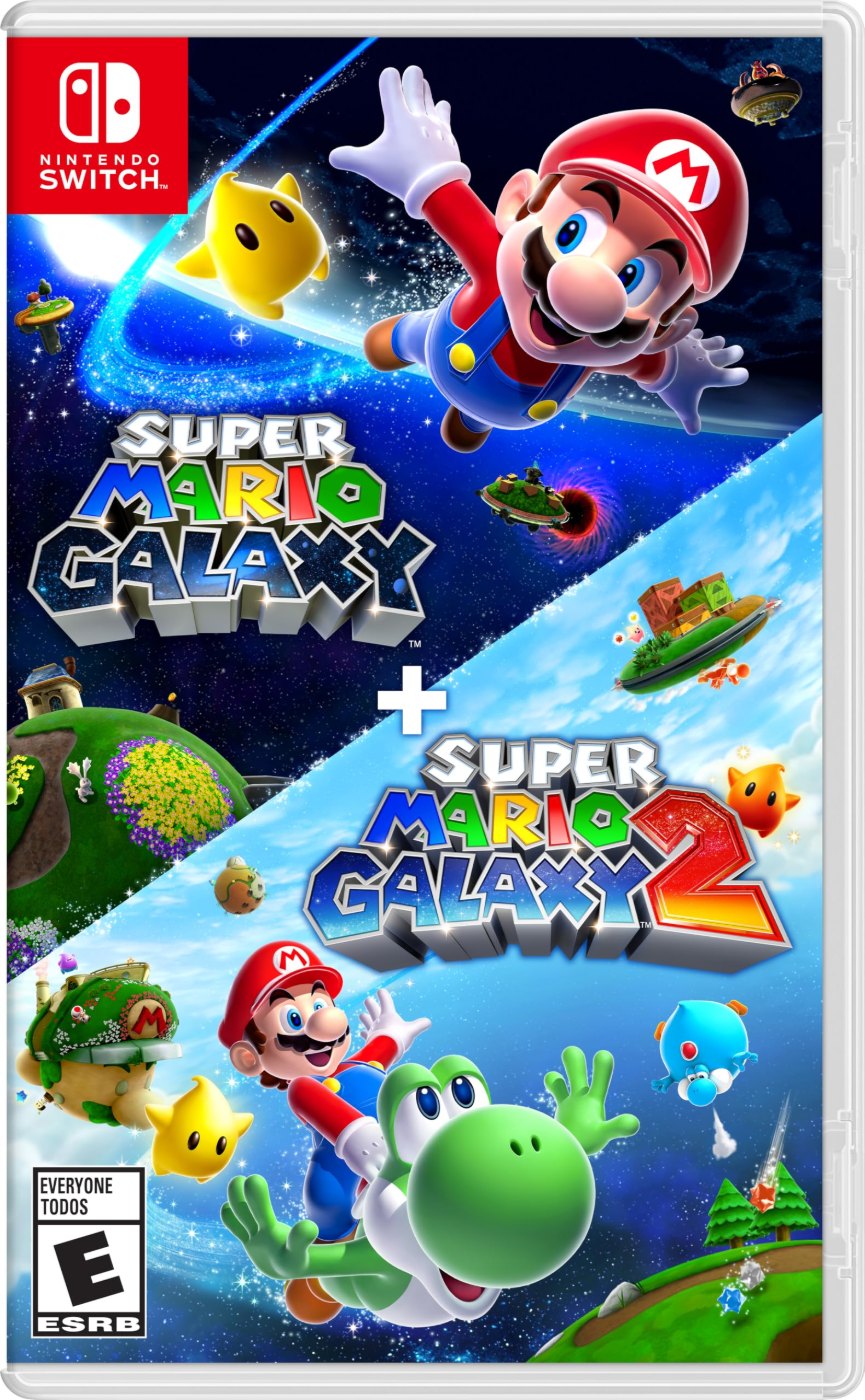 Super Mario Galaxy + Super Mario Galaxy 2Nintendo Switch · 2 October 2025The 40th-anniversary remaster, sold as a two-game bundle and separately on the eShop, with higher resolution, a new Assist Mode, a brand-new storybook for this game, gyro pointer controls and amiibo support, plus a free update for 4K on Nintendo Switch 2 and Joy-Con 2 mouse controls for the Co-Star Luma.
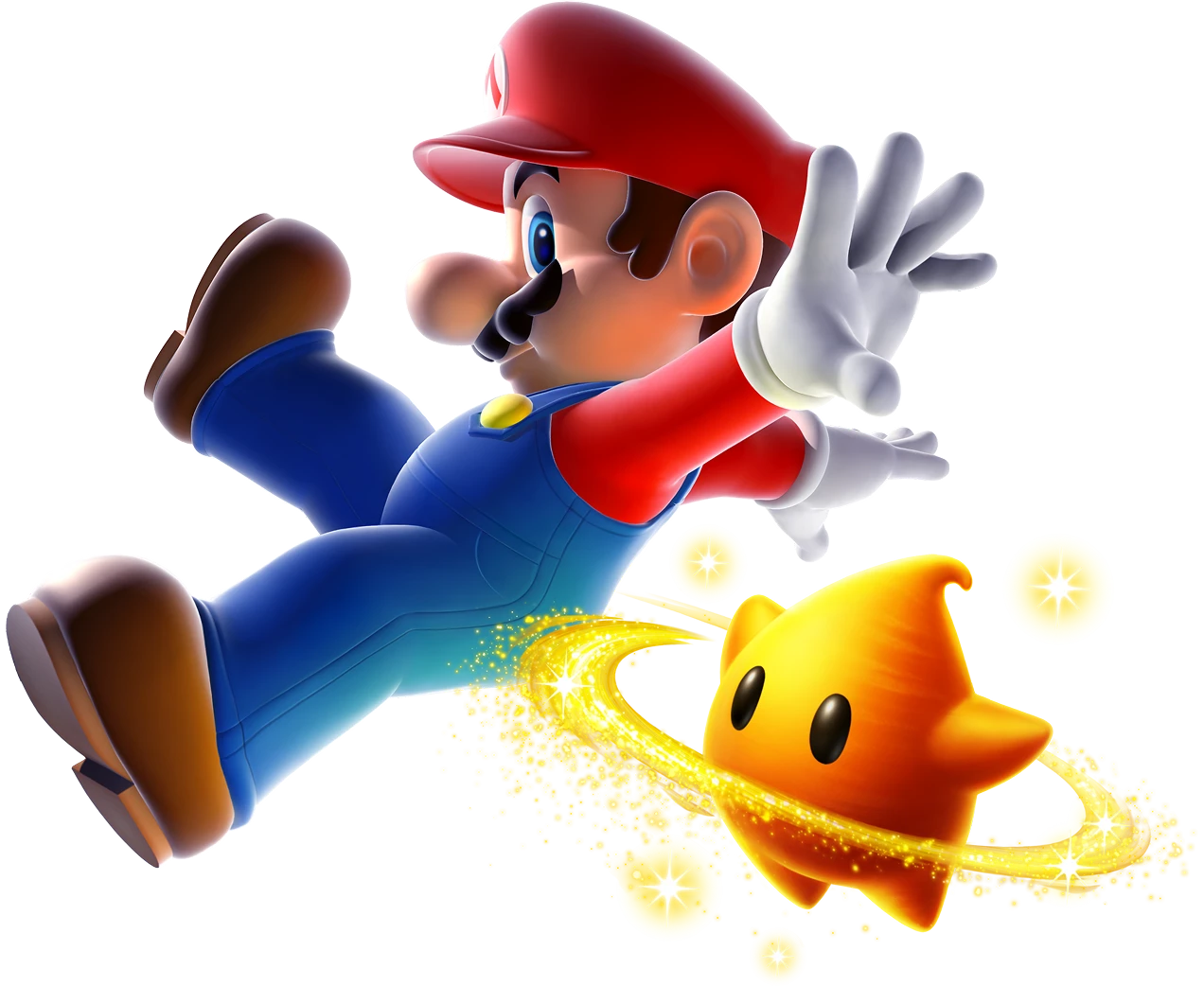 MarioCaptain of Starship Mario
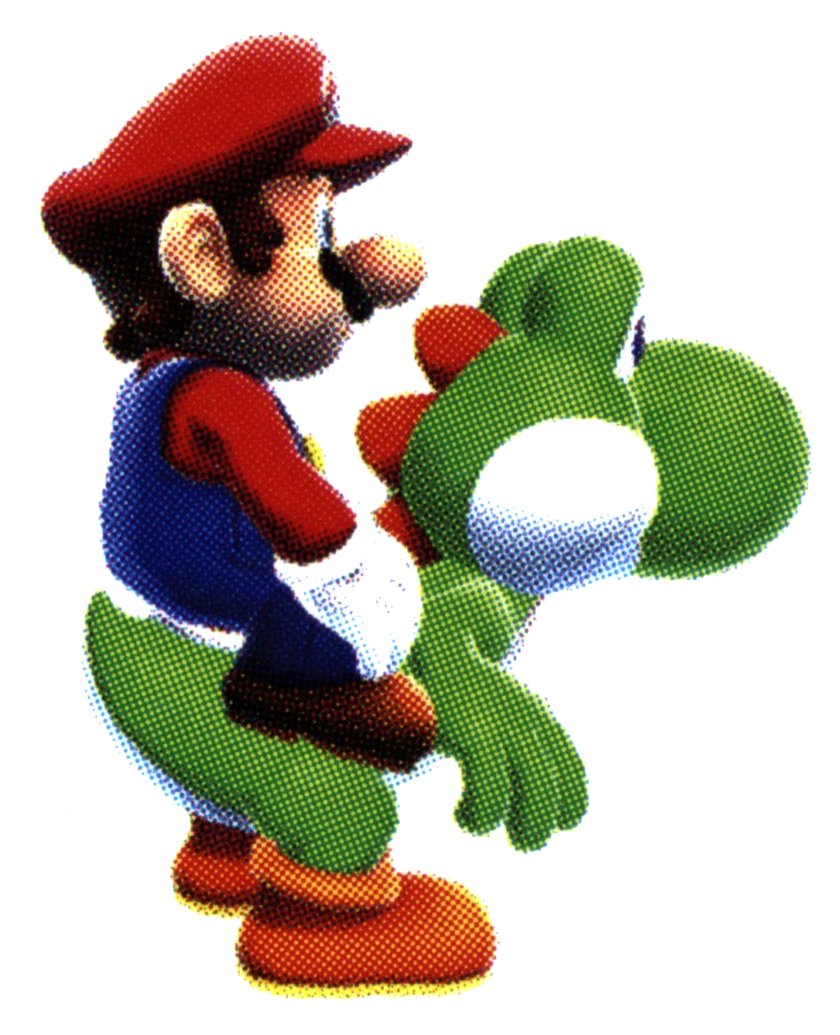 YoshiThe space dragon
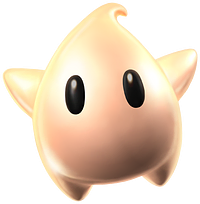 Baby LumaThe star under the cap
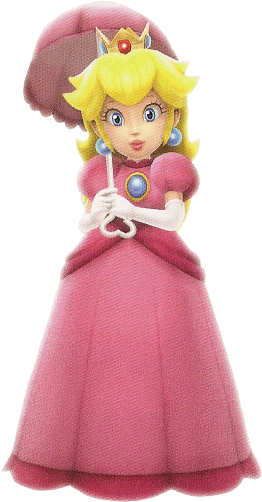 Princess PeachThe guest of honour
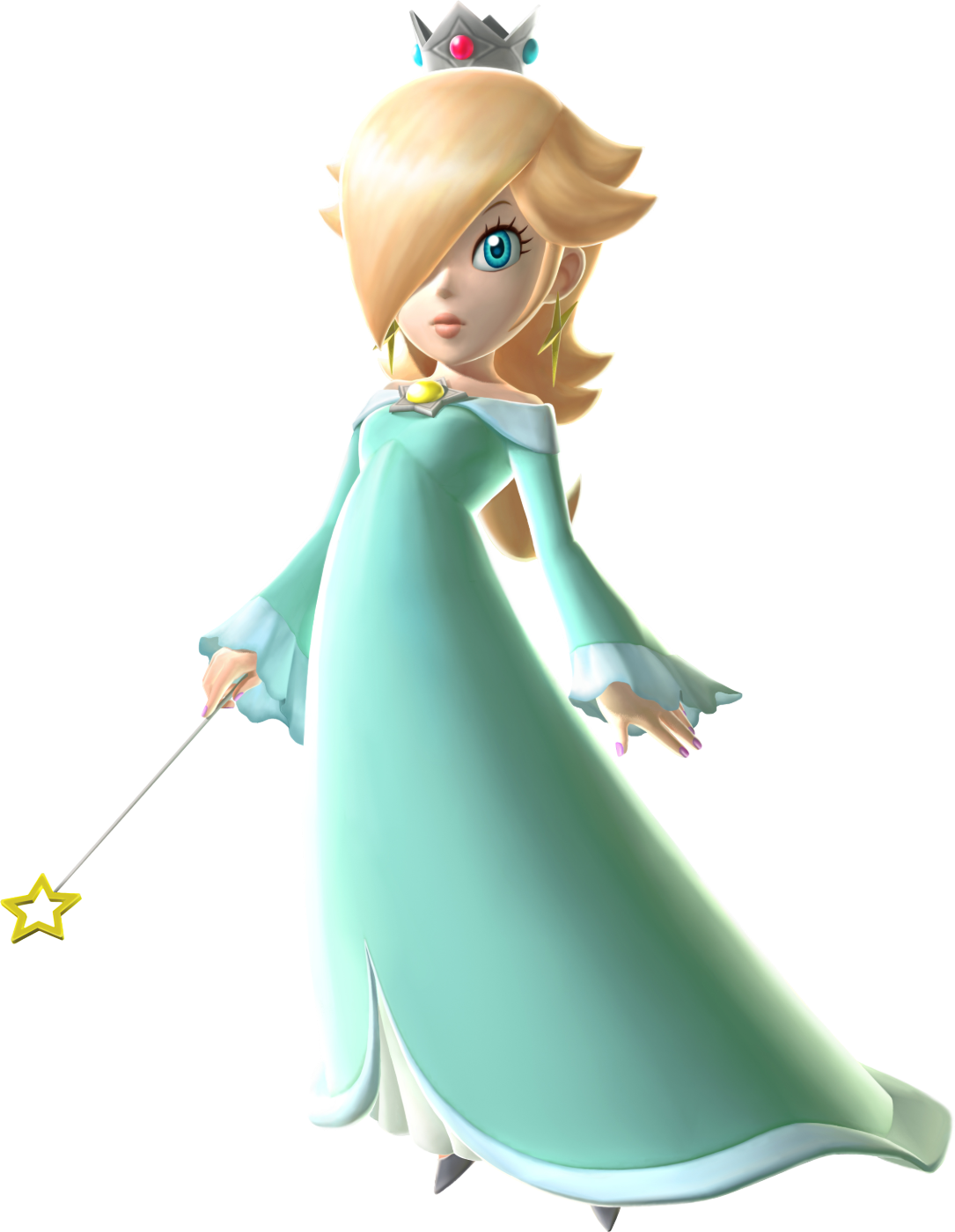 RosalinaThe storyteller
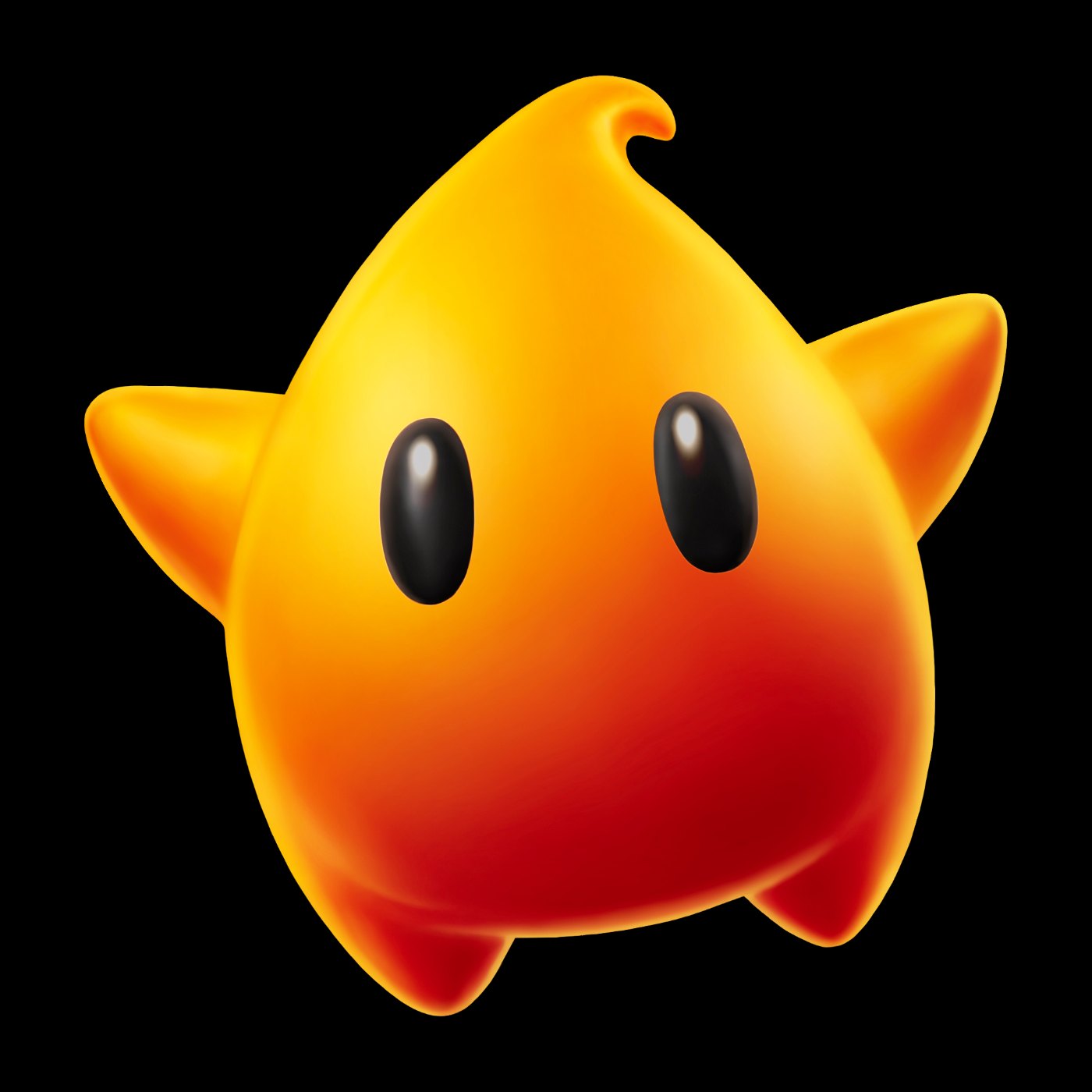 Co-Star LumaPlayer two
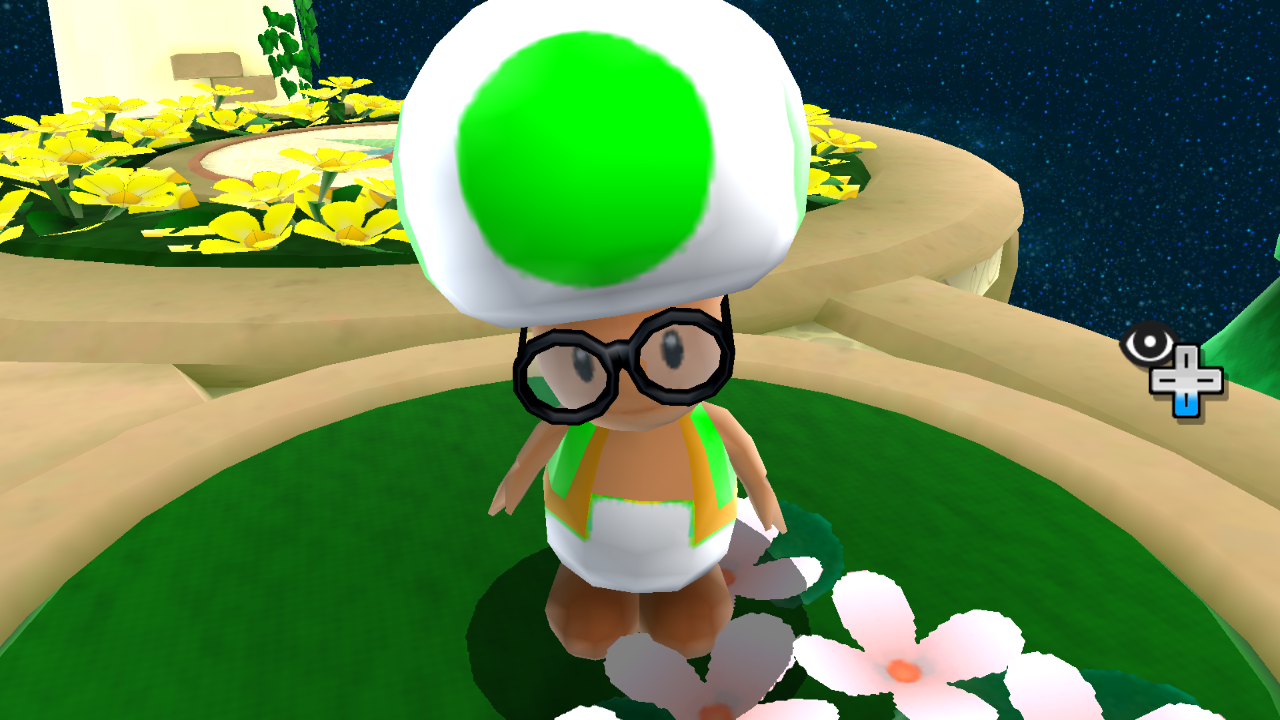 The Toad BrigadeFive Toads and a Starshroom
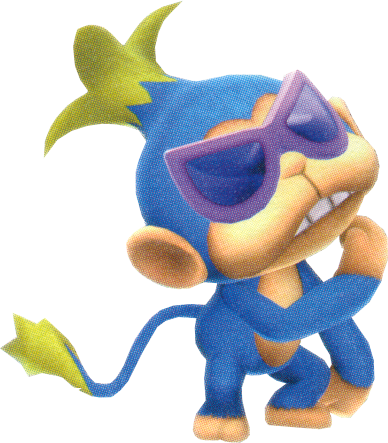 The ChimpBest in the universe (self-declared)
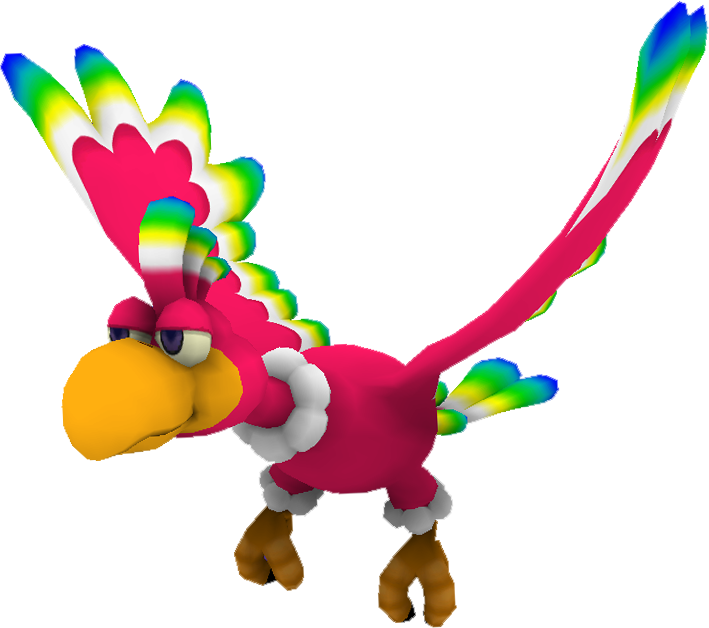 Fluzzard and the JibberjaysThe gliding team
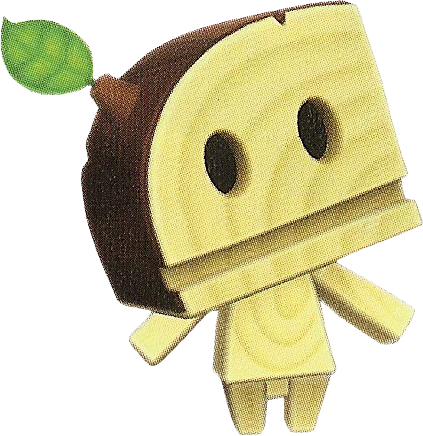 Whittles, Gearmos, penguins and PiantasFriends in the galaxies
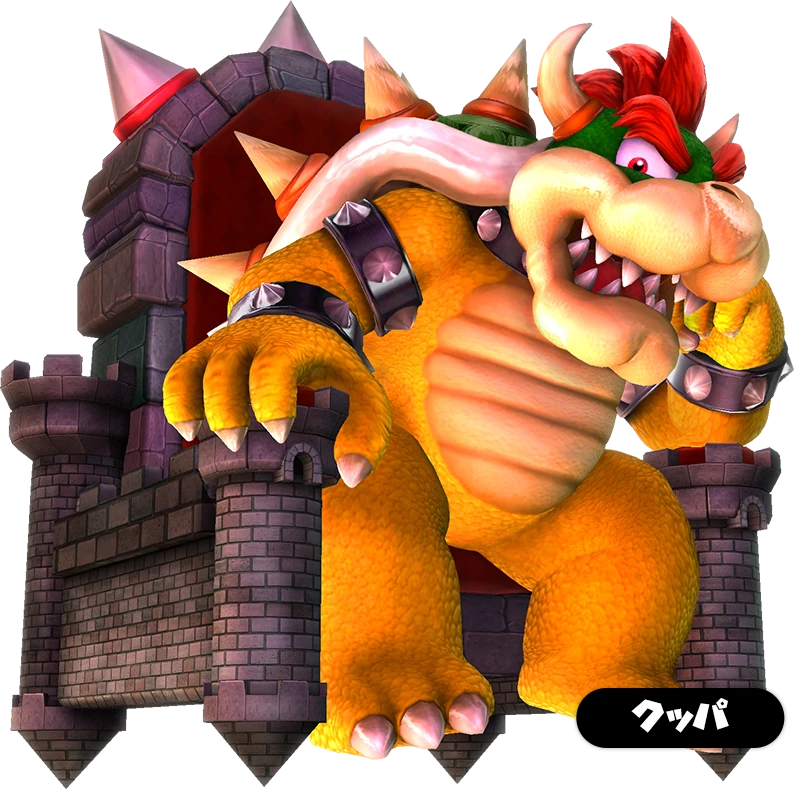 BowserGiant of the cosmos
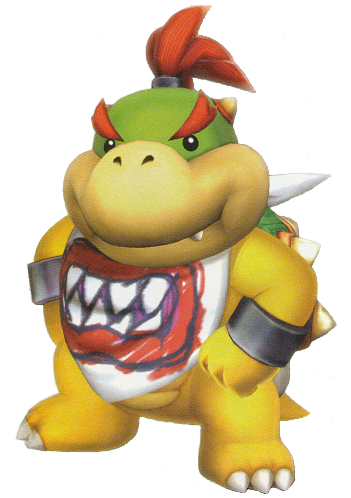 Bowser Jr.The mech pilot
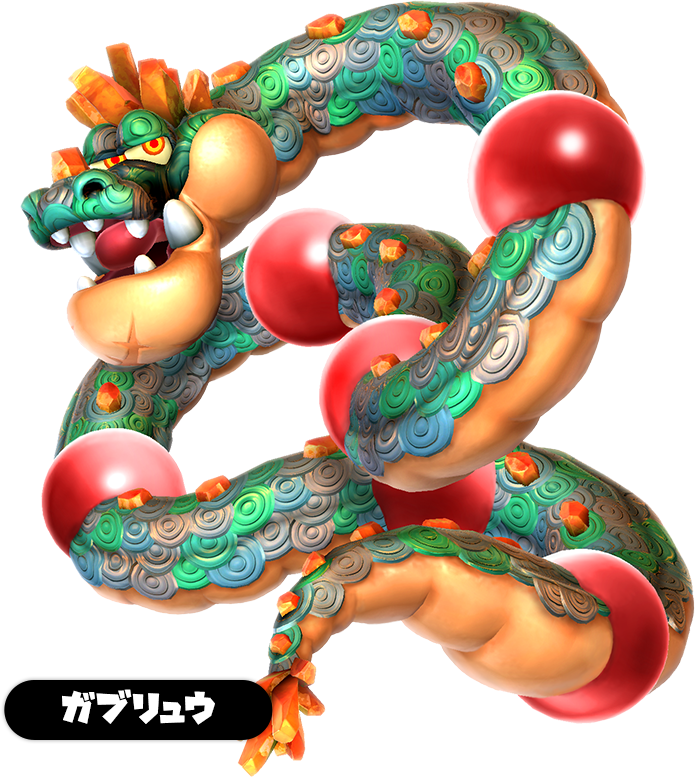 GobblegutBoss of Bowser Jr.’s Fiery Flotilla
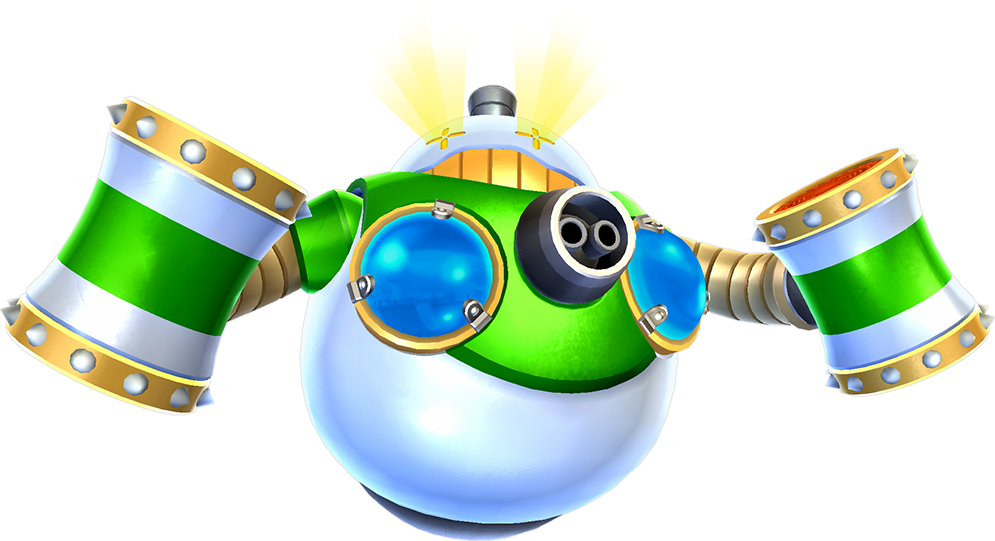 MegahammerBoss of Bowser Jr.’s Fearsome Fleet
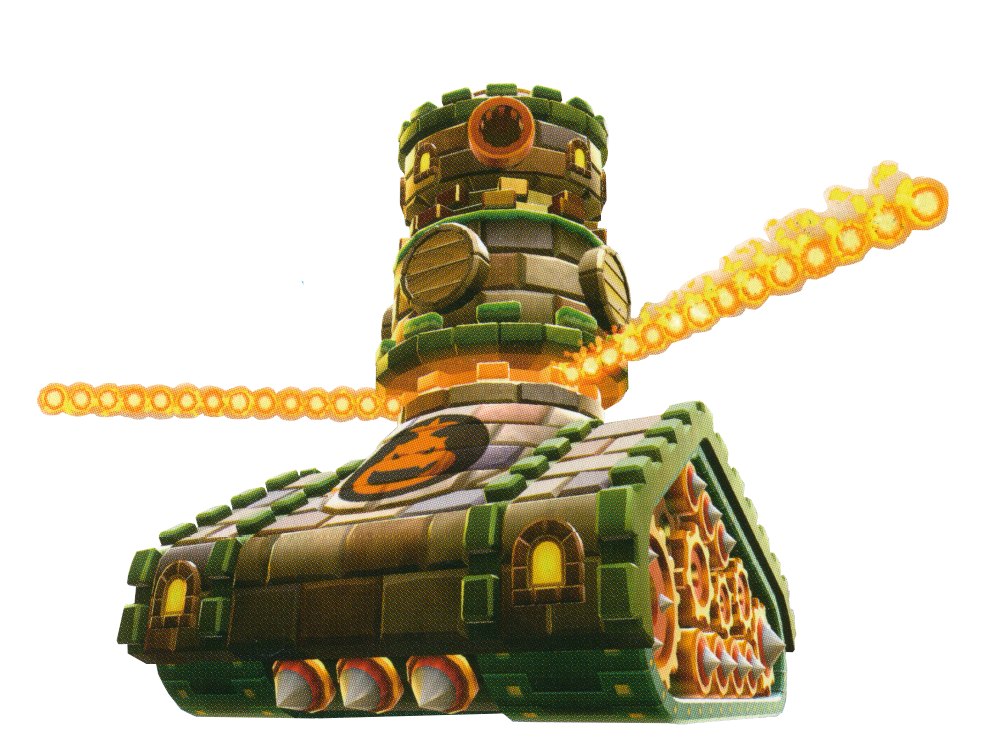 Boomsday MachineBoss of Bowser Jr.’s Boom Bunker
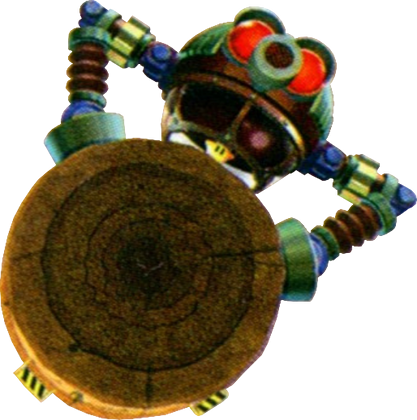 Digga-Leg and the restThe new boss roster
 Goomba, Mini Goomba, Giant GoombaSky Station; SupermassiveThe giant ones must be spun, then kicked.
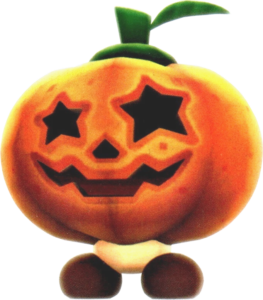 Jack O’GoombaHaunty HallsPumpkin-headed; leaves blue flames.
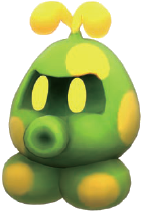 Octoomba and Elite Octoomba (new)Sky StationRock-spitting octopuses; the elite fires twice.
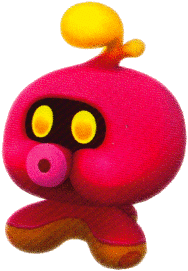 Octoguy and RoctoBoulder Bowl; ShiverburnRoctos lob coconuts you must knock back.
 SlurplePuzzle PlankLatches on and drains health.
 Chomp, Small Chomp, Gold Chomp, Homing Chomp (new)Sky Station onwardsThe gold one guards a star in Chompworks; the homing one chases you in Rolling Masterpiece.
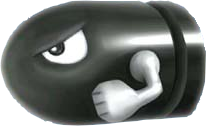 Bullet Bill and Banzai BillFearsome Fleet; Sky StationYoshi’s ammunition against Megahammer.
 Amp and Zap BallSky Station; Space StormElectric orbs, large and small.
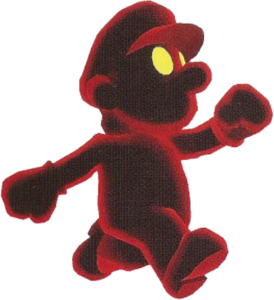 Cosmic Clone (new)Sky StationShadow copies that repeat your every move a second behind you.
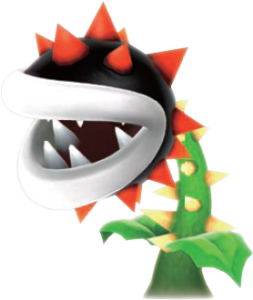 Piranha Plant familySky Station onwardsIncluding the one-of-a-kind Prickly Piranha Plant (new) and the slamming Spiny Piranha Plant.
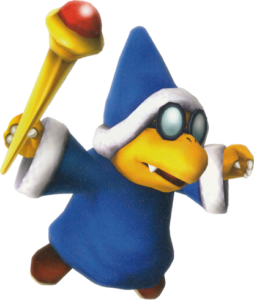 MagikoopaYoshi StarTeleports and fires magic; one sealed Yoshi in his egg.
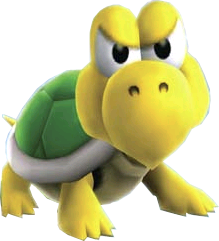 Koopa Troopa and Giant KoopaCosmic Cove; SupermassiveShells light the Deep Shell Well.
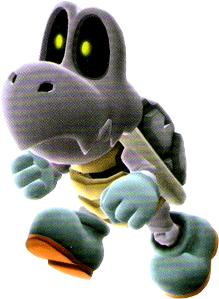 Dry BonesFiery FlotillaReassembles after a stomp.
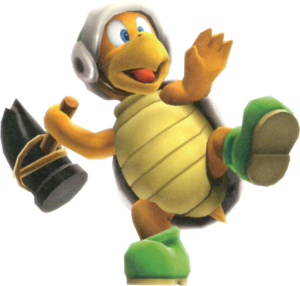 Hammer Bro and Boomerang BroLava Lair; Boom BunkerThree Boomerang Bros guard the Perfect Run’s finale.
 Flipbug, Mandibug and Smeech (new)Yoshi Star; Puzzle PlankSmeeches clamp onto Yoshi’s mouth.
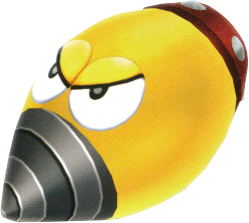 Digga (new)Spin-DigDrill-nosed tunnellers.
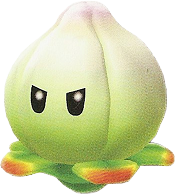 Twirlip (new)Spin-DigSpinning flowers you can only stomp mid-twirl.
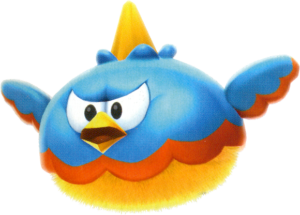 Flaptack (new)Fluffy BluffDive-bombs from above; watch its shadow.
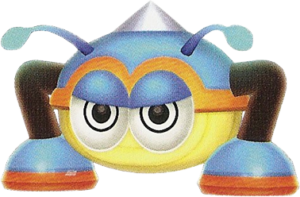 Swaphopper (new)Rightside DownFlip gravity to expose its underside.
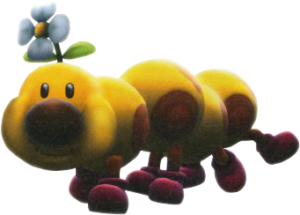 Wiggler and Big WigglerPuzzle Plank; SupermassiveFlip the small ones; the big ones are terrain.
 Kleptoad (new)Hightail FallsFrogs that run off with coins and Silver Stars.
 Pinhead (new) and Ruby RockBoulder BowlBowling pins only Rock Mario can topple.
 Cheep Cheep and Spiny Cheep CheepCosmic CoveCharging fish.
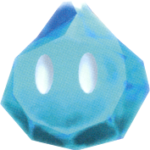 Li’l Brr and Li’l CinderCosmic Cove; Lava LairSpin them, or they freeze or burn you.
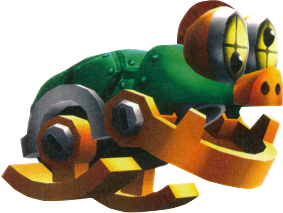 Micro Mecha-Bowser and Space MineCosmic Cove; Fearsome FleetBowser’s mechanical rank and file.
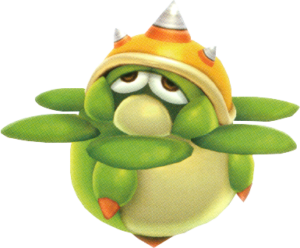 Choppah (new), Spindleburr (new), Trapdragon (new)HoneybloomHelicopter bugs, flying thorns and snapping flowers.
 FuzzyHoneybloomOn rails, as ever.
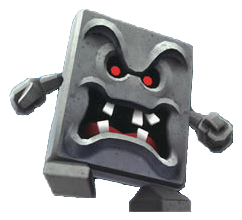 Whomp and Whimp (new)Lava Lair; ThrowbackThe Whimps are the Whomp King’s tiny followers.
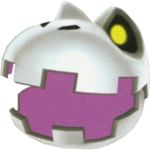 Mattermouth (new)Lava LairA skull that eats the floor as it goes.
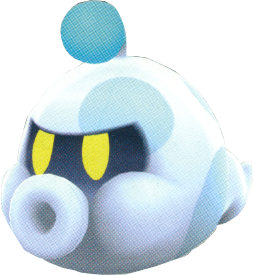 Boo, Octoboo (new), Mega Boo (new), Bomb BooHaunty Halls; Boss BlitzThe Mega Boo cannot be beaten, only avoided.
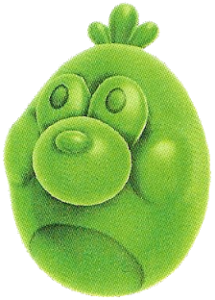 Gummit, Spiky Gummit, Golden Gummit (all new)Freezy FlakeMoles for The Chimp’s skating challenge.
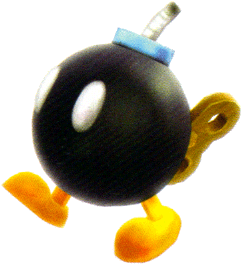 Bob-ombRolling MasterpieceFollow one in Space Storm to open a path.
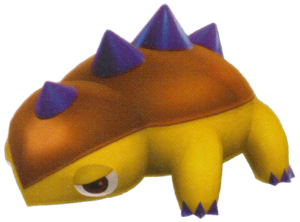 Pupdozer (new)FlipsvilleArmoured dinosaurs, soft underneath.
 Water Shooter, Fire Shooter and Zap Nozzle (new)Starshine Beach; Galaxy Generator; Space StormTurrets.
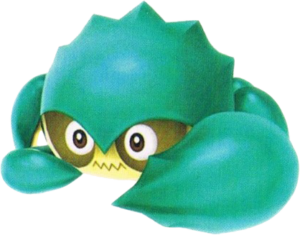 Red and Blue CrabberBoulder BowlAttack from behind.
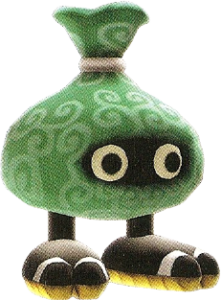 TracksStarshine BeachInvisible; follow the footprints.
 Blooper, Urchin, Hot Urchin, Clampy, Spinecone (new)Starshine Beach; Battle BeltThe seaside set.
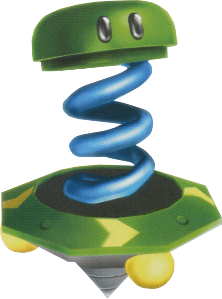 Topman, Spring Topman, Topmini, Spring VaultSpace StormSpinning tops; the Silver Gearmo wants a Spiky Topman.
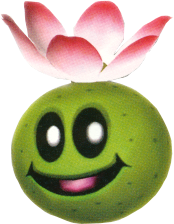 Pokey Head and CluckboomSlipsandDesert pests; the Cluckboom lays bombs.
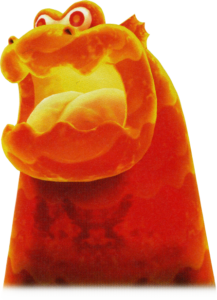 Magmaargh (new) and Magmaw (new)Fleet Glide; Melty MonsterLava monsters, enormous and small.
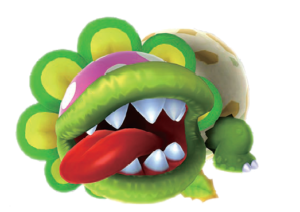 Peewee Piranha (boss)Sky StationA baby Dino Piranha; hit the egg on its rear.
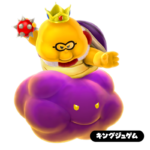 King Lakitu (boss)Yoshi StarSpit his Spiny Eggs back at him.
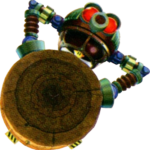 Digga-Leg (boss)Spin-DigDrill into the glass case beneath it.
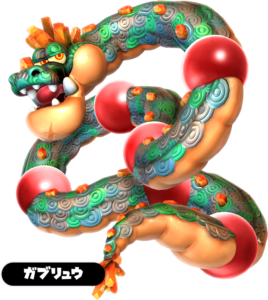 Gobblegut (boss)Fiery Flotilla; Fiery version in Battle BeltPop the belly bulges.
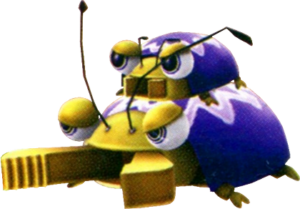 Mandibug Stack and Bugaboom (bosses)Puzzle PlankGround pound the stack; take the Cloud Flower up to Bugaboom.
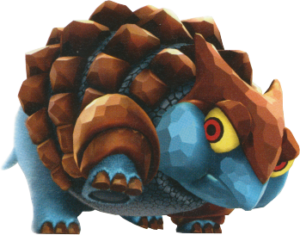 Rollodillo (boss)Boulder BowlRock Mario into its exposed rear.
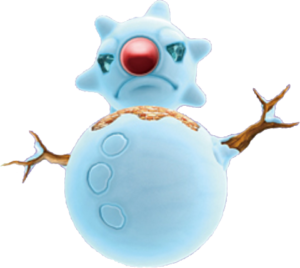 Sorbetti (boss)Freezy FlakeSpin his red nose.
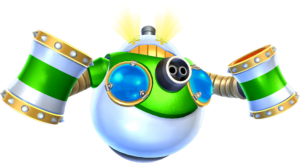 Megahammer (boss)Fearsome FleetBullet Bills to the domes.
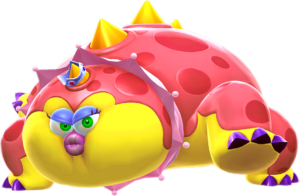 Glamdozer (boss)FlipsvilleFlip the grates and pound her from below.
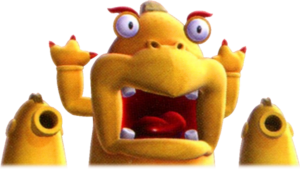 Squizzard (boss)SlipsandFireballs into the open mouth.
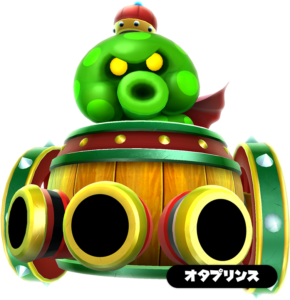 Prince Pikante (boss)ShiverburnSpin coconuts back at the Rocto prince.
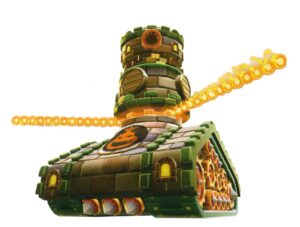 Boomsday Machine (boss)Boom BunkerCloud Mario above the cockpit.
 Whomp King (boss)ThrowbackGround pound his back when he falls.
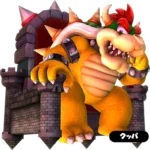 Bowser (boss)Lava Lair; Gravity Gauntlet; Galaxy GeneratorMeteorites, four times over.
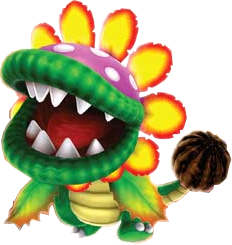 Boss Blitz (bosses)Boss BlitzDino Piranha, King Kaliente, Major Burrows, Bouldergeist and Fiery Dino Piranha from the first game.