Nintendo GameCube2005BaseballNamcoFirst dedicated Mario baseball game12 captains, 40-plus playersChemistry between charactersSix stadiums, five with hazardsMetacritic 76
Mario Superstar Baseball (GameCube)
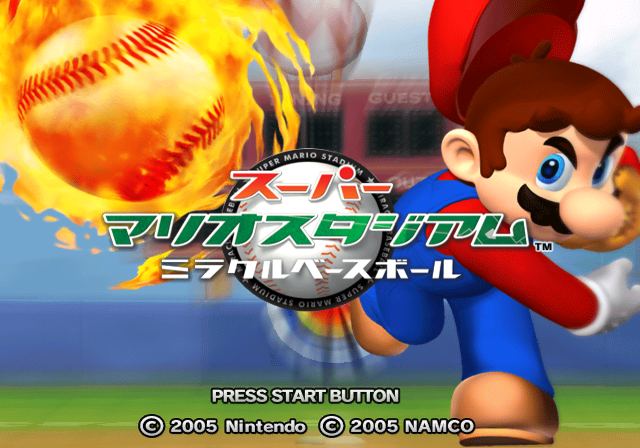
Mario had played tennis and golf; in 2005 he finally got a baseball game of his own. Mario Superstar Baseball is the first game built entirely around Mario-style baseball, made for Nintendo by Namco and released on the GameCube in Japan on 21 July 2005 (as Super Mario Stadium Miracle Baseball), North America on 29 August and Europe on 11 November 2005. Twelve captains, from Mario and Peach to Wario, Waluigi and Bowser Jr., lead teams filled out from a cast of Toads, Koopas, Piantas, Nokis, Magikoopas and more. Every captain has a Star Skill pitch and swing, every pair of characters has a Chemistry rating that speeds up (or wrecks) their throws, and the six stadiums come with Chain Chomps, Piranha Plants, Klaptraps and Thwomps. The single-player Challenge Mode sends you round the kingdom scouting recruits for a showdown with Bowser, while Toy Field and six minigames take up to four players. Its Wii sequel, Mario Super Sluggers, followed in 2008.
Developer:Namco, with Nintendo SPD Group No. 4
Publisher:Nintendo
Platform:Nintendo GameCube
Genre:Baseball
Japan:21 July 2005, as Super Mario Stadium Miracle Baseball
N. America:29 August 2005
Australia:3 November 2005
Europe:11 November 2005 (English only)
Players:1–2 in Exhibition; up to 4 in Toy Field and the minigames
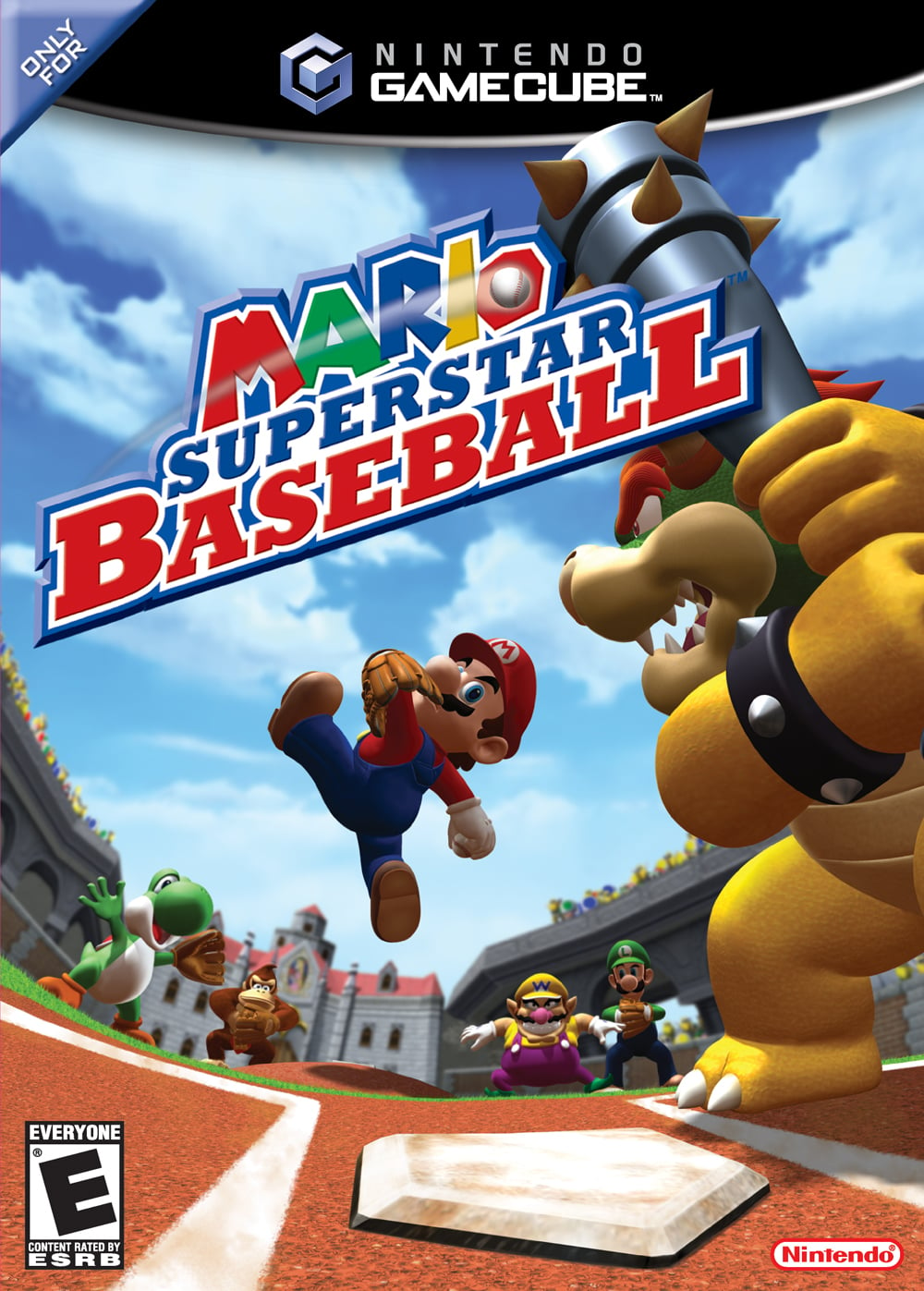
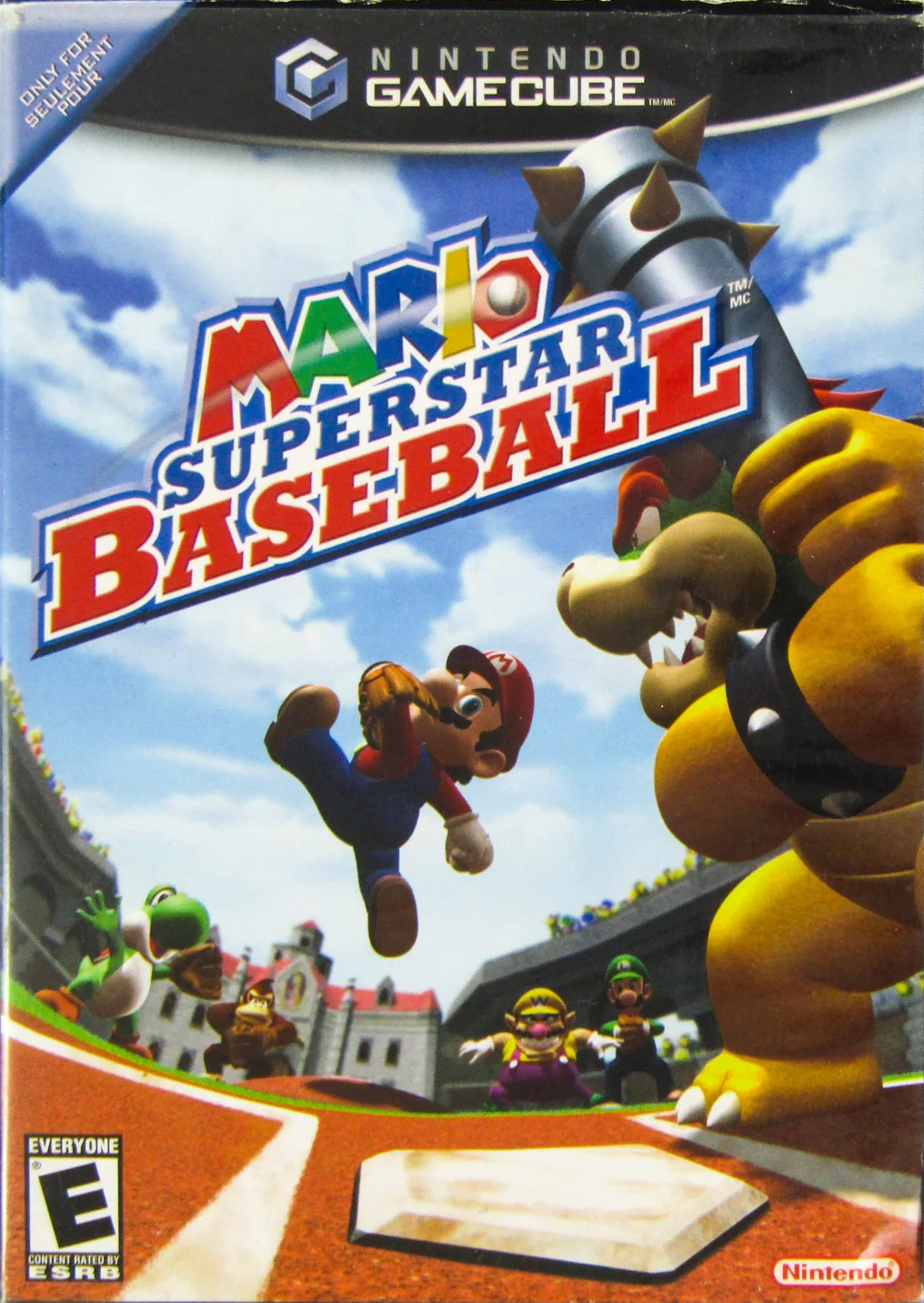
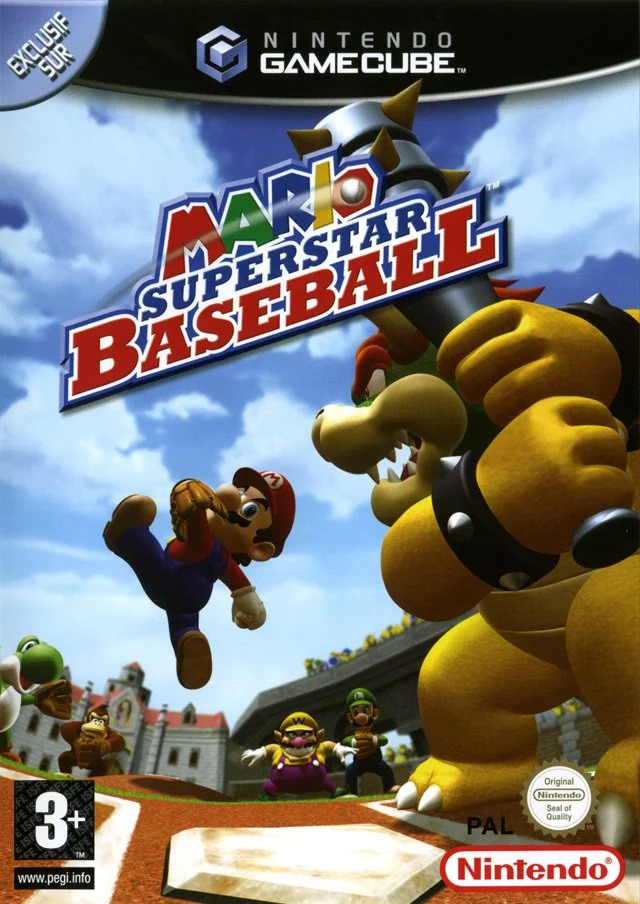
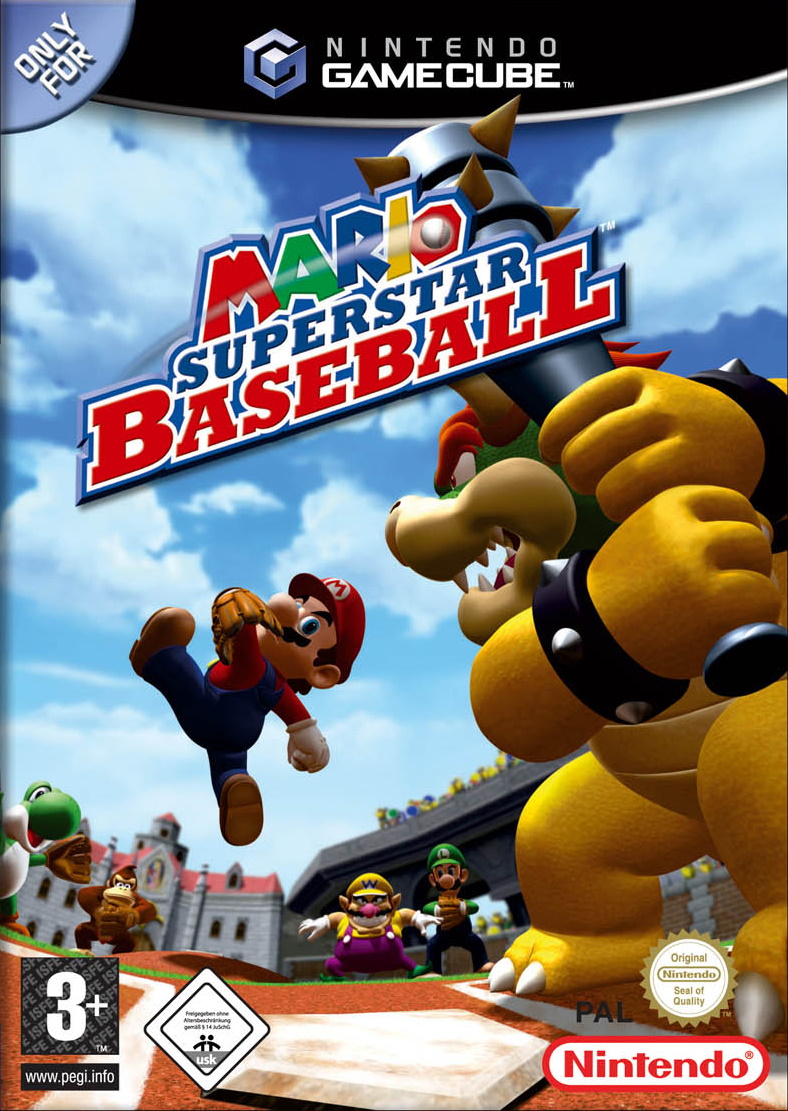
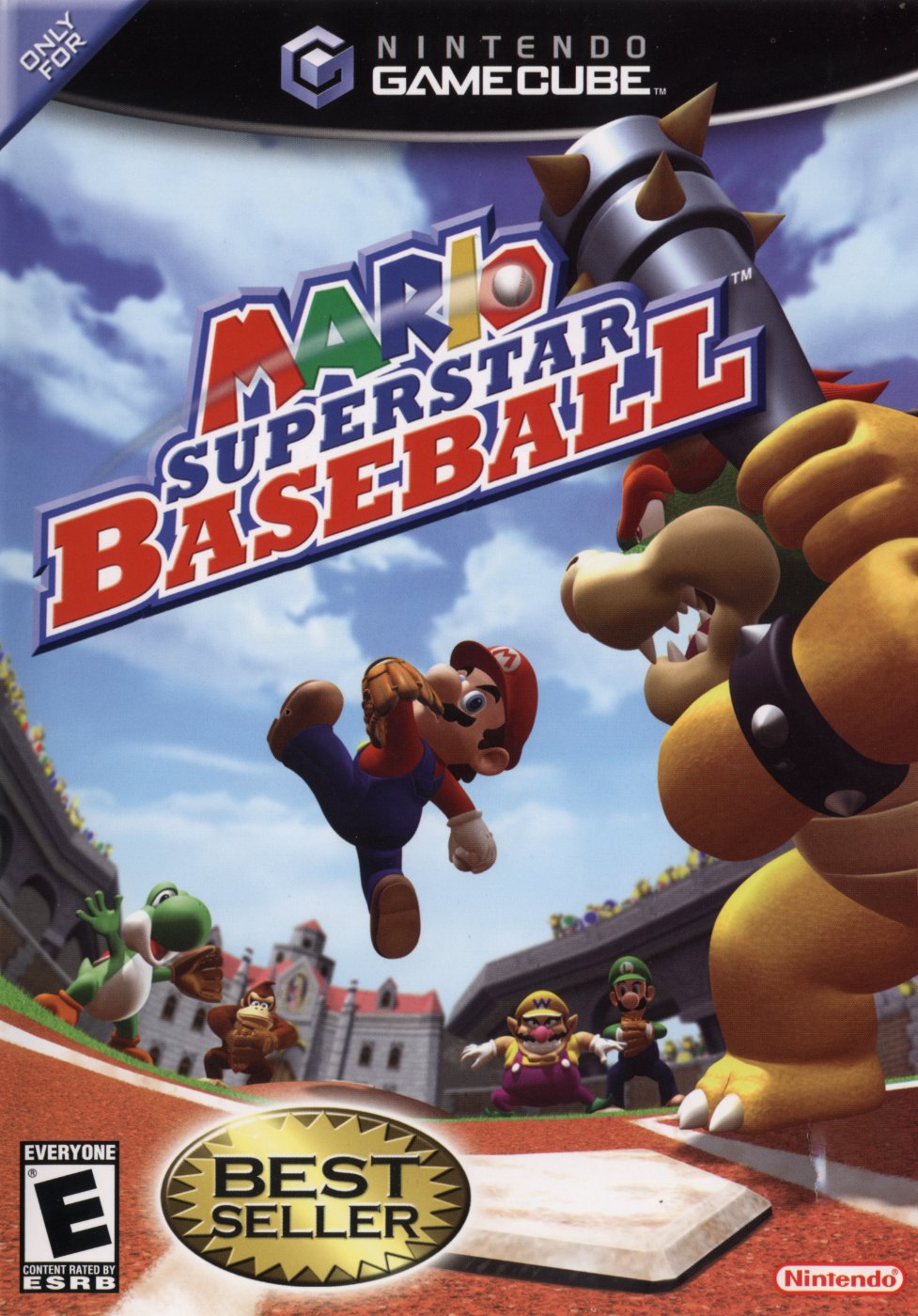
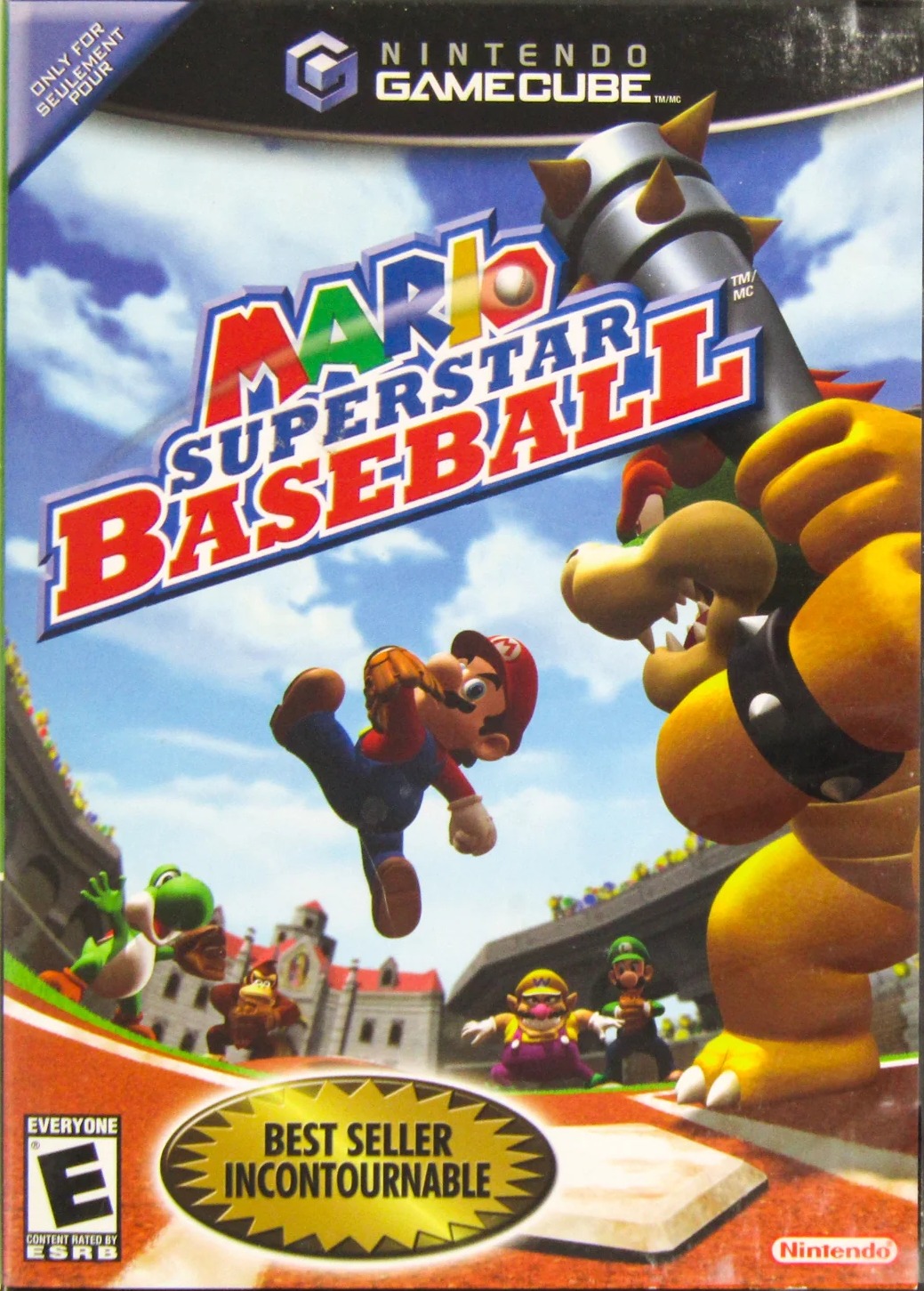
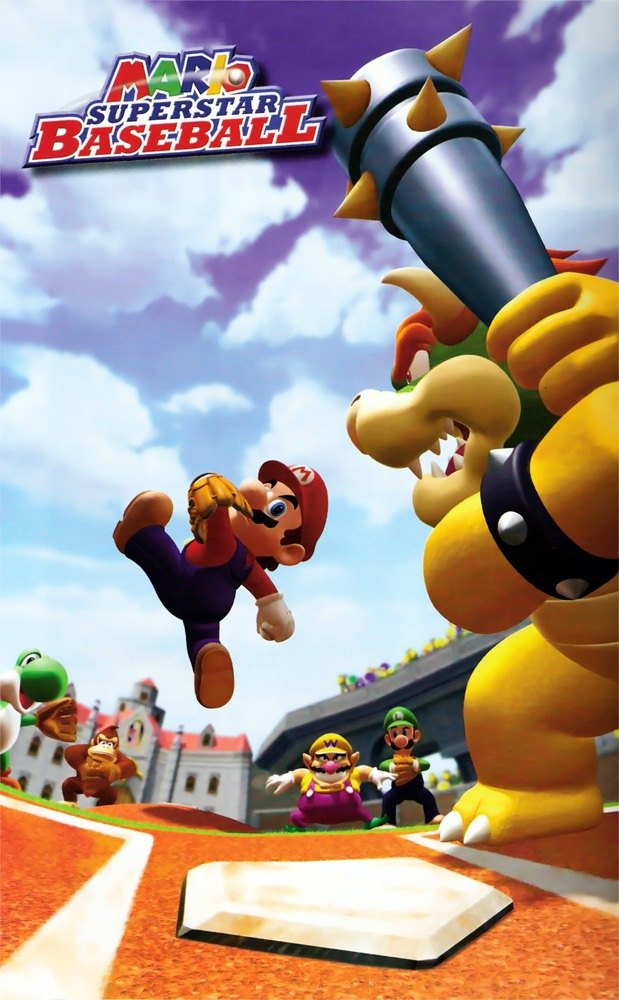
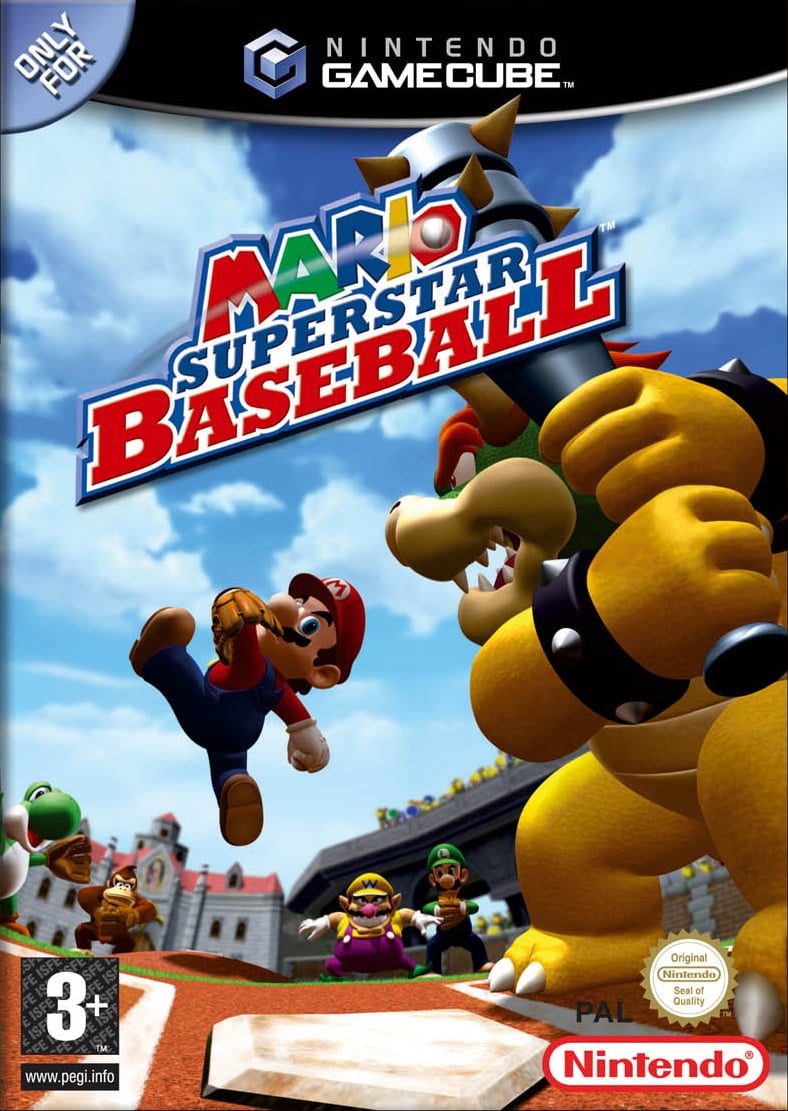
The main visual used on the North American and European covers.
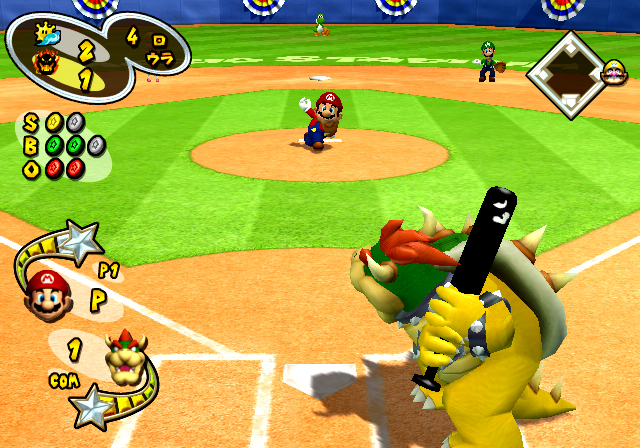
For Mario’s first dedicated baseball game Nintendo turned to Namco, working alongside Nintendo’s own SPD Group No. 4. The result plays proper baseball, with three outs an inning, bunts, steals and pick-offs, and then piles Mushroom Kingdom mischief on top.
The mischief comes in layers. Each of the twelve captains has a Star Skill, a special pitch and swing such as Mario’s Fireball, Peach’s Heart Ball or Bowser’s Killer Ball, paid for from a shared pool of Team Stars. Characters bring fielding abilities such as Yoshi’s Tongue Catch, Donkey Kong’s wall-climbing Clamber or Luigi’s Super Jump. And every pairing on the field has a Chemistry rating: friends throw to each other faster, while sworn enemies sometimes sling the ball wide.
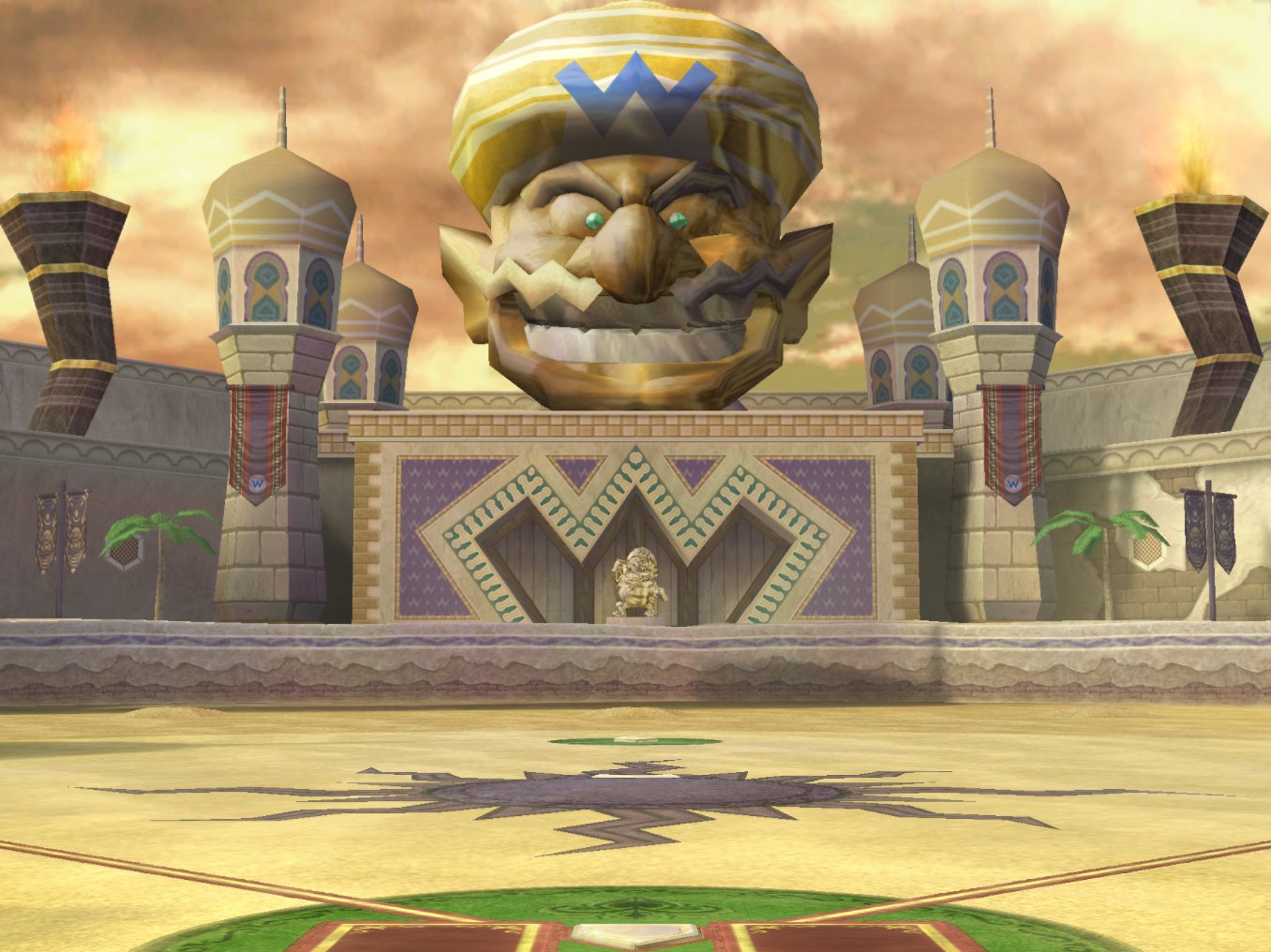
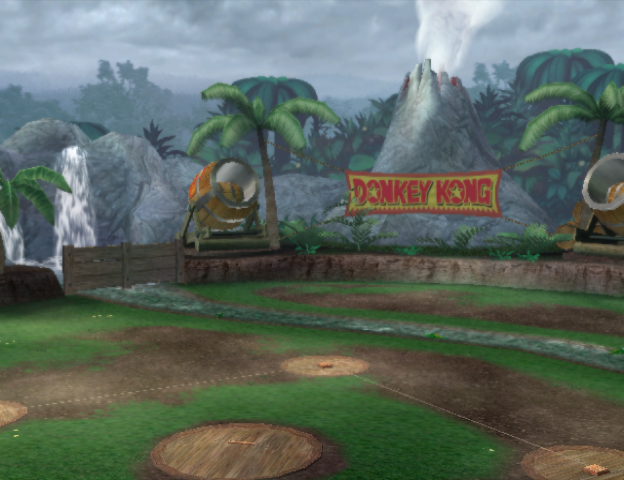
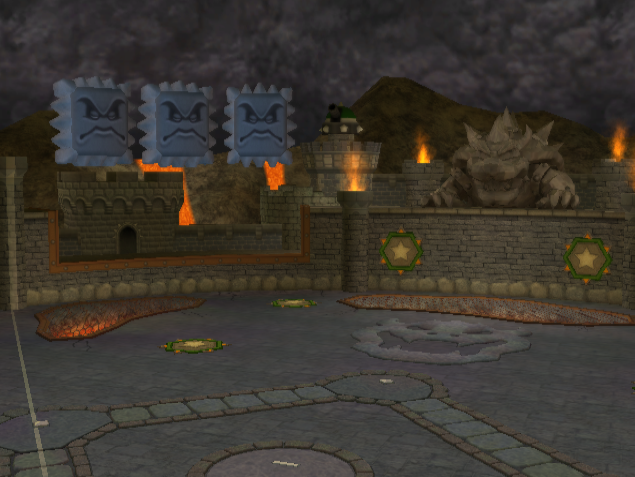
The six stadiums are hazards in their own right. Peach Garden’s floating blocks ping fly balls in random directions, Wario Palace has Chain Chomps in foul territory and sandstorm generators, Yoshi Park has Piranha Plants, Donkey Kong Jungle has Klaptraps and barrel cannons, and Bowser Castle has lava and Thwomps that stamp on would-be home runs. Only Mario Stadium is plain baseball.
Alone, you play Challenge Mode: pick one of five captains, roam a map of the kingdom, beat the other captains on their home grounds and complete scouting missions to win over their players, then take your hand-picked team to Bowser Castle. With friends there is Exhibition for two, the board-game-like Toy Field and six minigames for four. Critics called it fun in short bursts and great with friends (Metacritic settled on 76), and its formula carried straight over to the Wii sequel, Mario Super Sluggers.
Let’s play ball! With the girth of Babe Ruth and slugging power to match, Mario’s a natural when it comes to playing a little hardball. Mario Baseball features gameplay that’s incredibly easy to pick up and play yet surprisingly rewarding; whether you’re pitching, fielding or swinging that bat, you’ll be having a ball. Up to four players can take part in a multiplayer game, and if you get tired of the main game you can try your hand at various baseball related trials in the Challenge mode. With more than 50 characters from the Mario universe making an appearance, and an ample selection of character specific power shots to pull off, even if you’re already familiar with the sport this is a whole new ballgame. And trust us, Mario’s hit another homerun…
— Official description (Nintendo UK, 2005)
Why Superstar Baseball matters to Mario fans
It is the game that started the Mario baseball series, and the template Mario Super Sluggers kept. Its Chemistry system turned the Mushroom Kingdom’s friendships and feuds into game mechanics, so Mario and Luigi field like brothers and Luigi and King Boo still cannot get along, and its team names (the Mario Sunshines, the Luigi Mansioneers, the Yoshi Islanders) are a love letter to the GameCube era and the games before it.
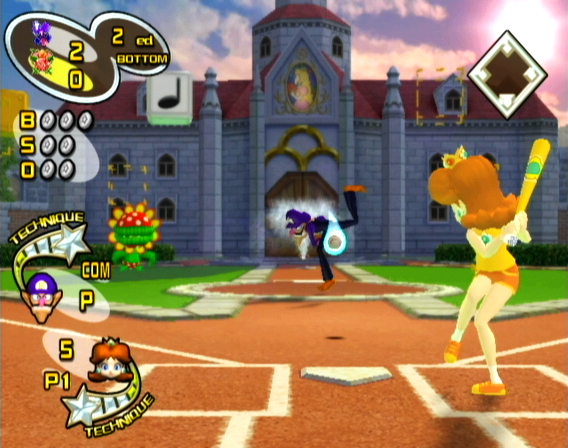
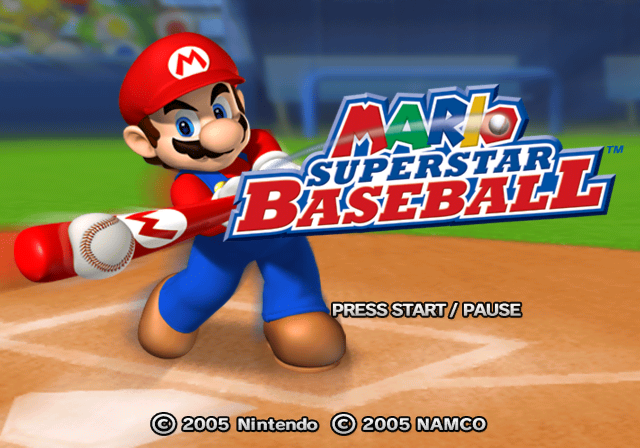
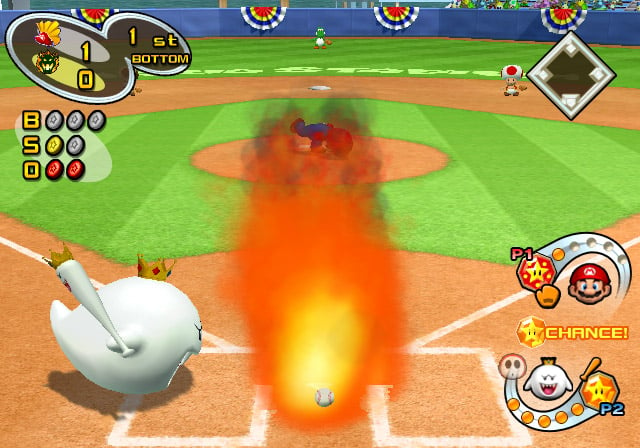
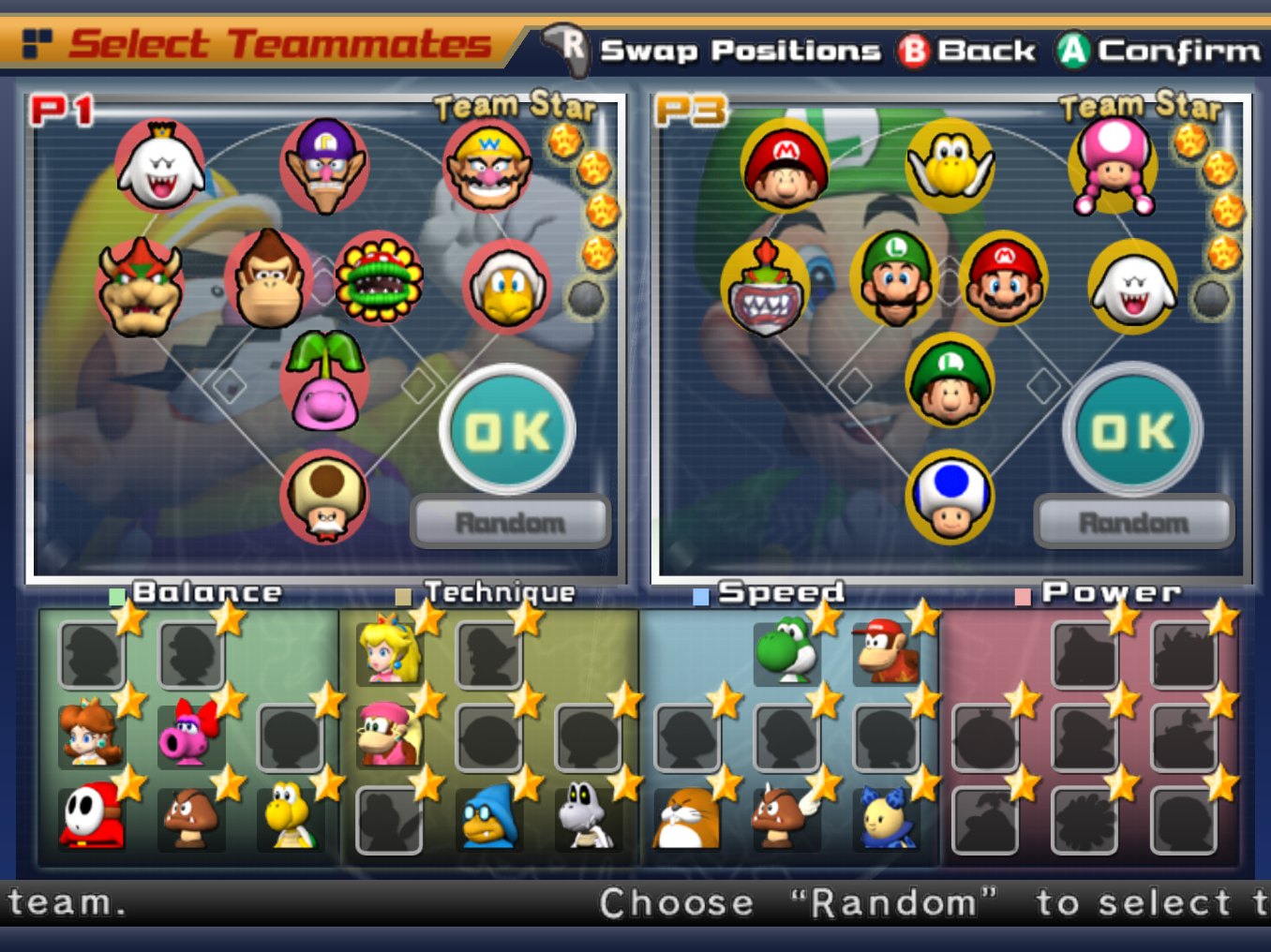
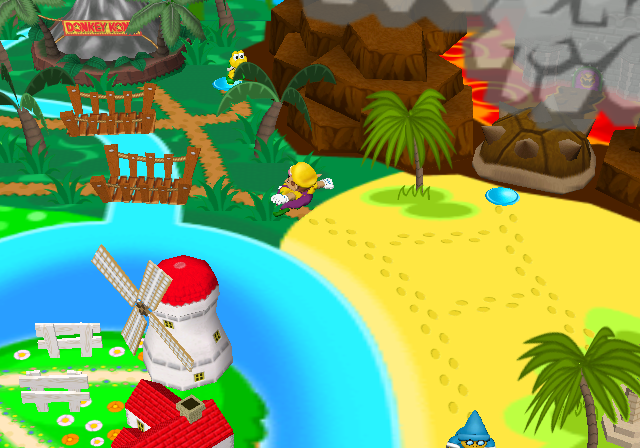
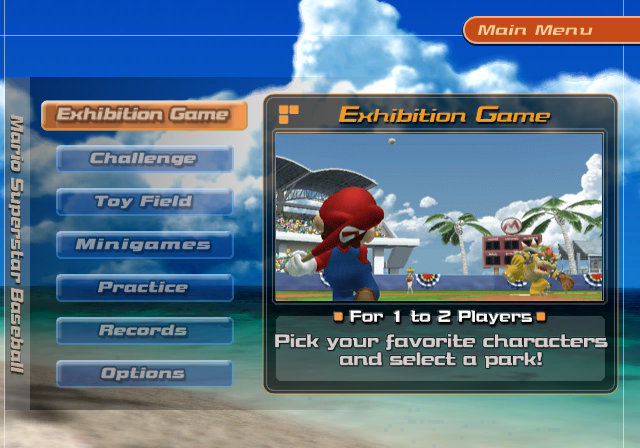
The title screen.Mario’s Fireball Star Skill in action.Choosing players for an Exhibition game.Wario on the Challenge Mode map.
“This easy-to-learn, hard-to-master ballgame features all your favorite characters in absurd rivalries.”
George Harrison, Nintendo of America senior vice president of marketing and corporate communications, launch press release, 29 August 2005
From Nintendo of America’s announcement that the game was in shops, as republished by Nintendo World Report.
Quick Answers
The questions people most often ask about Mario Superstar Baseball, answered in a line or two.
Who made Mario Superstar Baseball?
Namco developed it with Nintendo SPD Group No. 4, and Nintendo published it. Hideki Tomida directed; Yasushi Ono and Toyokazu Nonaka produced. (Nintendo’s UK website lists Camelot, but Wikipedia and other references credit Namco.) More →
How many characters are there?
Twelve captains and 22 other characters, several of them (Toads, Shy Guys, Koopas, Dry Bones, Magikoopas, Piantas, Nokis) in multiple colours. Nintendo’s UK page counts more than 50 characters in all. More →
How do I unlock Bowser Castle?
Clear Challenge Mode once. Clearing it on the Special level also lets you play Challenge Mode as Bowser. More →
How do I unlock Toadette, Dixie Kong, Petey Piranha and the others?
Clear Challenge Mode with each captain: Mario unlocks Monty Mole, Peach Toadette, Yoshi Baby Luigi, Donkey Kong Dixie Kong, Wario Petey Piranha, and Bowser the Hammer, Fire and Boomerang Bros. More →
What is Chemistry?
A hidden friendship score from 0 to 100 between every pair of characters. At 90 or more, throws between them are faster and batting improves with a friend on base; at 15 or less, throws are slower and can go astray. Chemistry with the captain also sets your starting Team Stars. More →
How do Star Skills work?
Press A with R held as you pitch or swing to spend Team Stars on a special pitch or hit. You start with up to five depending on Chemistry and earn more from stadium features and Star Chances. More →
Is there a guaranteed home run?
Nearly. With all five Team Stars, a charged Star Swing that makes perfect contact becomes a monster home run, though it uses up the whole stock and can still go foul. More →
How many players can play?
One or two in Exhibition and one in Challenge Mode; Toy Field and the minigames take up to four. More →
Is there a sequel?
Yes: Mario Super Sluggers on Wii (2008), made by the same director and producers and built on the same mechanics. More →
What is it called in Japan?
Super Mario Stadium Miracle Baseball. The Japanese version also has a dictionary of baseball terms that the English versions leave out. More →
Modes & Stadiums
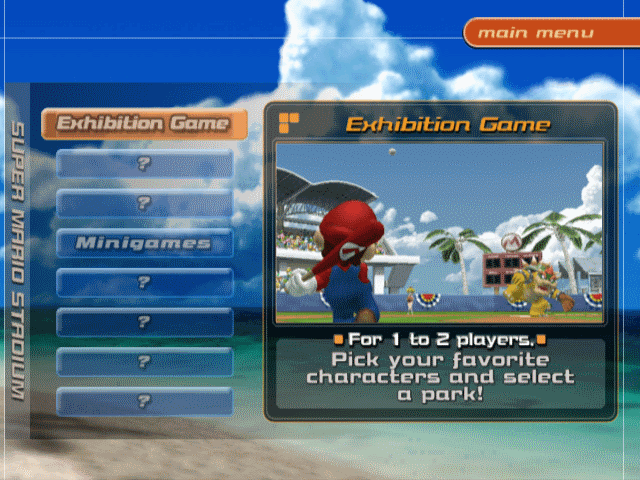
The main menu.
There is no story mode in the usual sense; the plot, such as it is, is told in the opening movie and in Challenge Mode, where Bowser waits at the end of the road. Exhibition is the place for one-off games, Toy Field and the minigames are the party side, and Practice teaches the basics.
Most of the game’s unlockables, from extra players to Bowser Castle and the minigame Grand Prix, are earned in Challenge Mode and the minigames.
The opening movie
Mario and Luigi are warming up at Mario Stadium when a wanted poster of Bowser drifts down from the sky; Peach, Yoshi, Donkey Kong and Wario each get one too, and everyone decides to play ball. Peach’s hit bounces off a Note Block for a home run past a crestfallen Yoshi, Donkey Kong is bitten by a Chain Chomp mid-catch, and Lakitu rules Diddy’s bunt fair despite Wario’s best efforts to blow it foul.
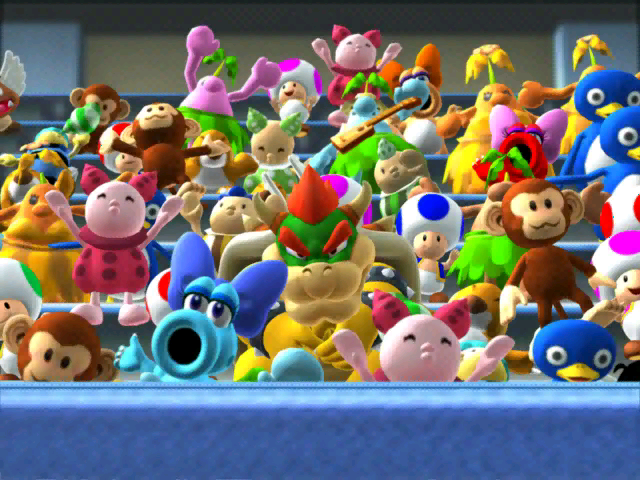
The main event is Mario’s side against Wario’s. Mario leaps over Donkey Kong to score, Wario answers with a home run, Waluigi is thrown out at a base, Luigi leaps off the top of the outfield wall to rob Donkey Kong, and Mario’s flaming fastball strikes Wario out so fast that it breaks the speed gun. In the bottom of the ninth, at 3–3 with Luigi on first, Mario points to the stands, Babe Ruth-style, and hits the next pitch exactly there. In the crowd, Bowser chuckles.
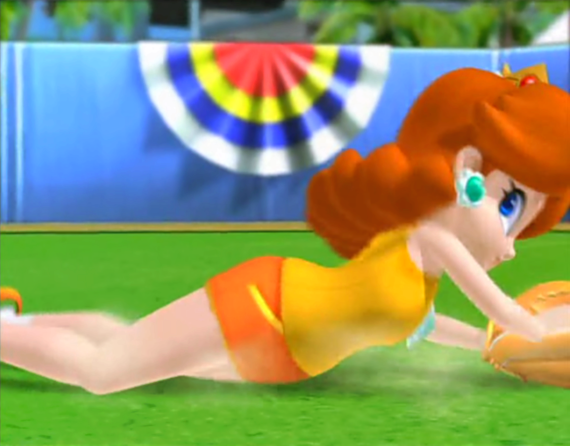
Peach gets ready to throw to Yoshi.Daisy makes a catch.Bowser watches from the stands.
Challenge Mode
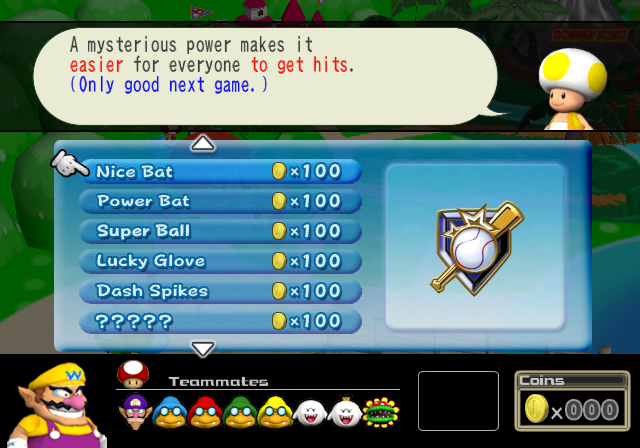
Challenge Mode is the single-player campaign. You pick one of five captains (Mario, Peach, Donkey Kong, Wario or Yoshi), start with a ready-made team and wander a map of the Mushroom Kingdom. The aim is to beat the other four captains, each on their own ground, and then take on Bowser’s side at Bowser Castle. Minigames dotted around the map earn coins to spend in the shop on one-game boosts and on the permanent items that unlock each captain’s special ball.
The clever part is recruitment. Every match comes with scout missions (get a hit, strike someone out, score a run), and completing them earns Scout Flags beside the faces of the opposing players. Collect enough and the player joins you. Captains need the most: three flags on the Mushroom level, four on Flower and Star, five on Special; minor characters need as few as one. Once you have signed a rival captain you cannot sign the rest of his team, unless you beat Bowser Jr., who roams the map and challenges you to short half-inning games defending a one-run lead or chasing a comeback.
There are four levels of difficulty, Mushroom, Flower, Star and Special. Beat Bowser’s team on Special and you can play Challenge Mode as Bowser, beating the five captains and then an all-star side of nine of the other captains and sub-captains led by Mario.
Wario on the Challenge Mode map.The shop.Mushroom level emblem.Special level emblem.
The ending and the Superstar Challenge
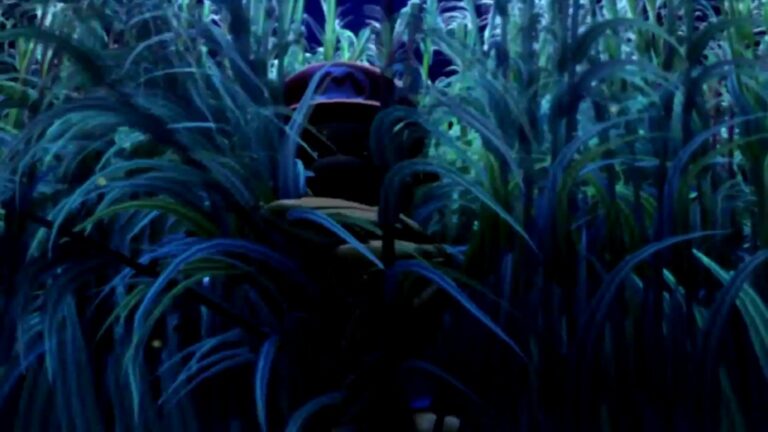
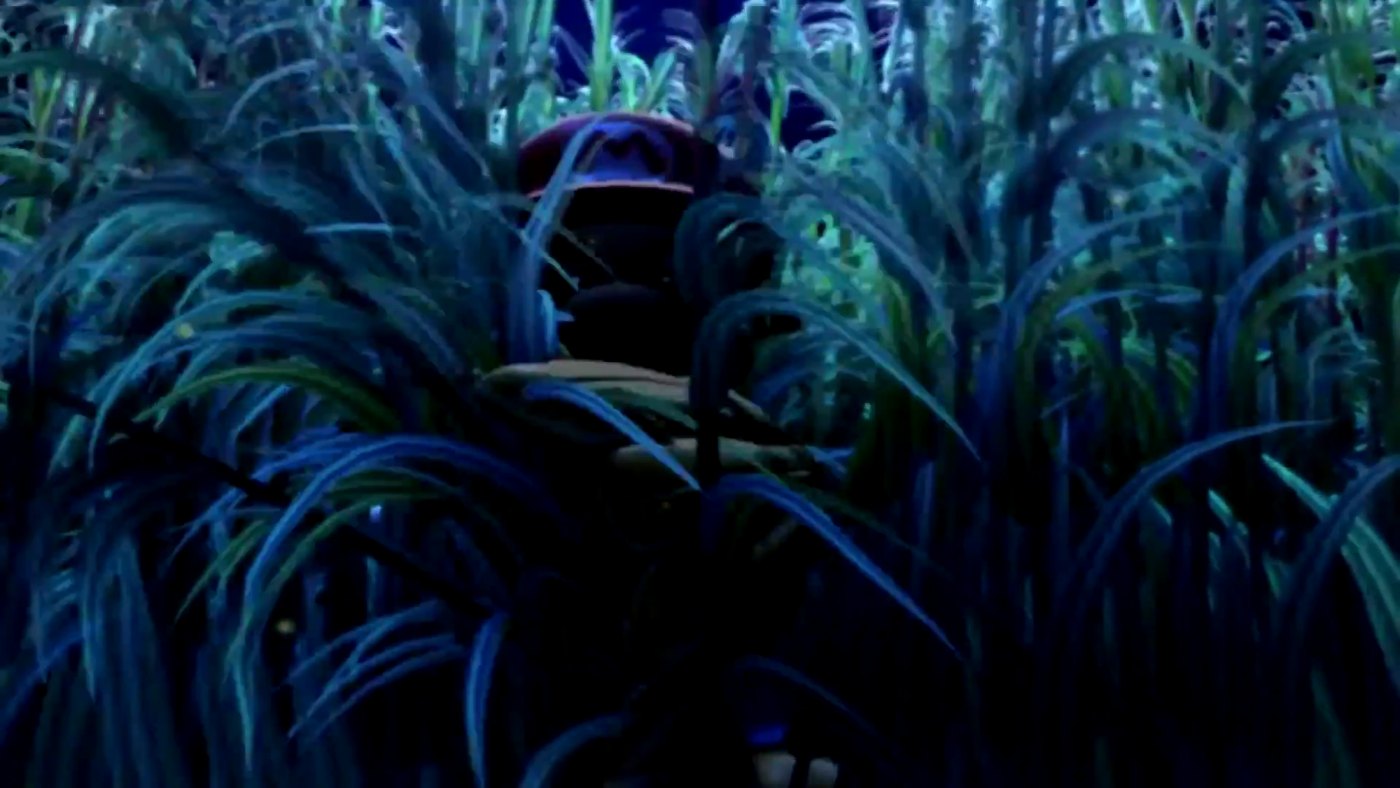
Beat Bowser on the Special level and the ending plays: Mario walks through a cornfield at night into a ballpark whose floodlights flick on, Luigi, Peach, a Toad and Diddy Kong are waiting, and Bowser strolls in with Wario and Waluigi for a rematch. Mario throws the first pitch, and as the camera follows the ball the words “WE LOVE BASEBALL!” appear on it before the credits.
For completists there is the Superstar Challenge: optional Star Missions for each character in Challenge Mode. Finish a character’s set and they become a Superstar with boosted stats, picking up new titles on the way; captains have more missions than everyone else, and some can only be done on Special.
The ending: a ballpark in a cornfield.Mario’s Superstar clear pose.
Exhibition
The standard game for one or two players: pick captains, fill the roster, choose one of the six stadiums and set the rules, including the number of innings, a mercy rule, who bats first, Star Skills on or off, and helpers such as batting cursors and drop-spot markers. Each captain’s team takes a name from its line-up: mostly players of one type, mostly of others, or one of two named sets of teammates, such as the Mario Sunshines (Luigi, Monty Mole, Pianta and Noki).
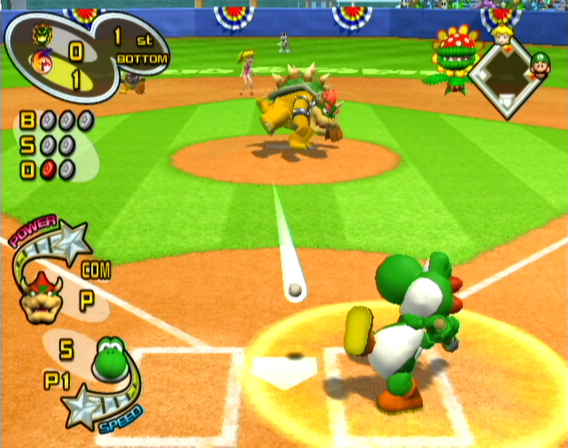
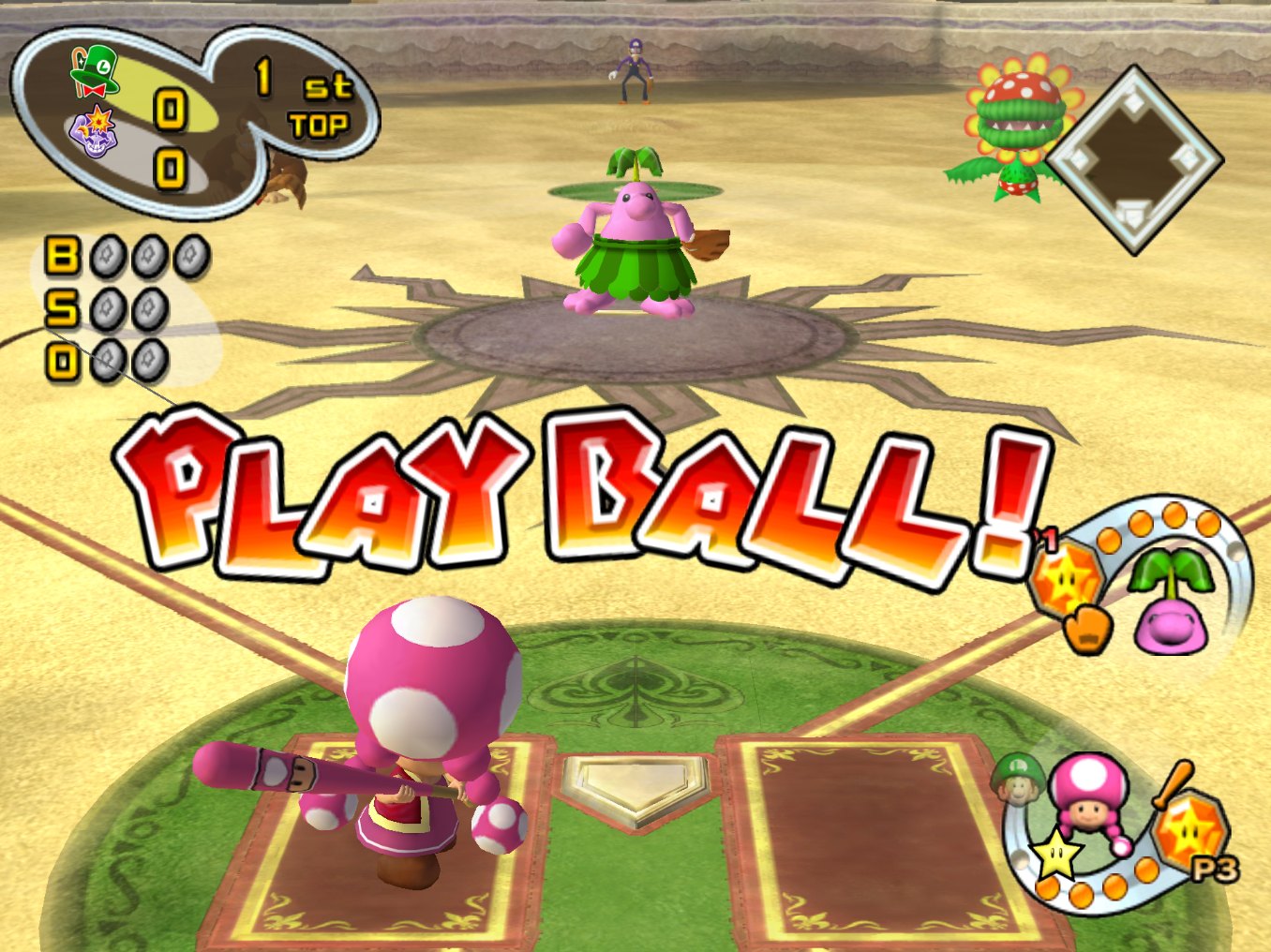
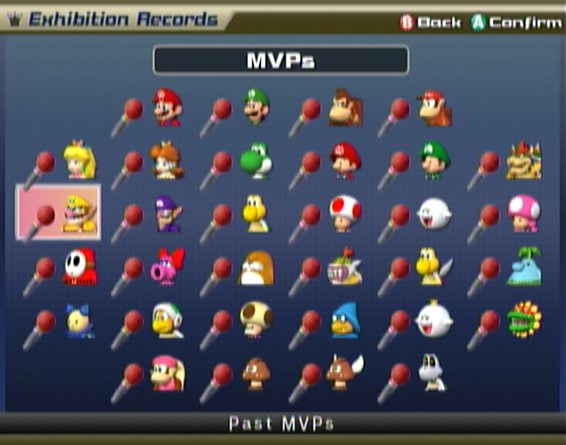
A game about to start.The MVP screen in Records.
Toy Field
Toy Field is a party game for up to four. Players take turns at bat, hitting pitched balls on to a field divided into spaces; where the ball lands decides the coins you win, and the fielders earn coins for strikeouts and caught fly balls. Land on a ? panel and you trigger an item that can help or hurt. Most coins wins. Pre-release material shows it was first themed on World 1-1 of Super Mario Bros., with ? Blocks, bricks and a Warp Pipe.
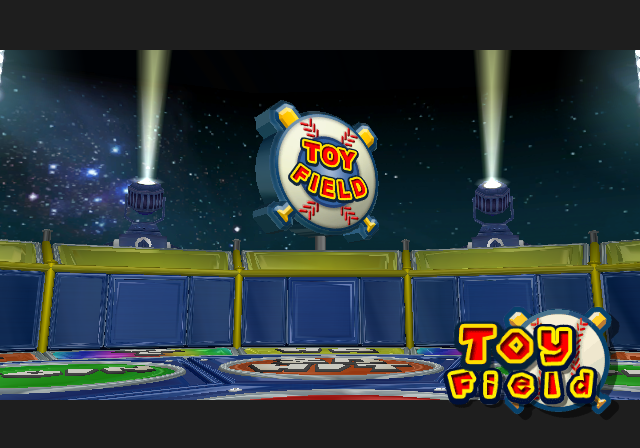
Toy Field.
The six minigames
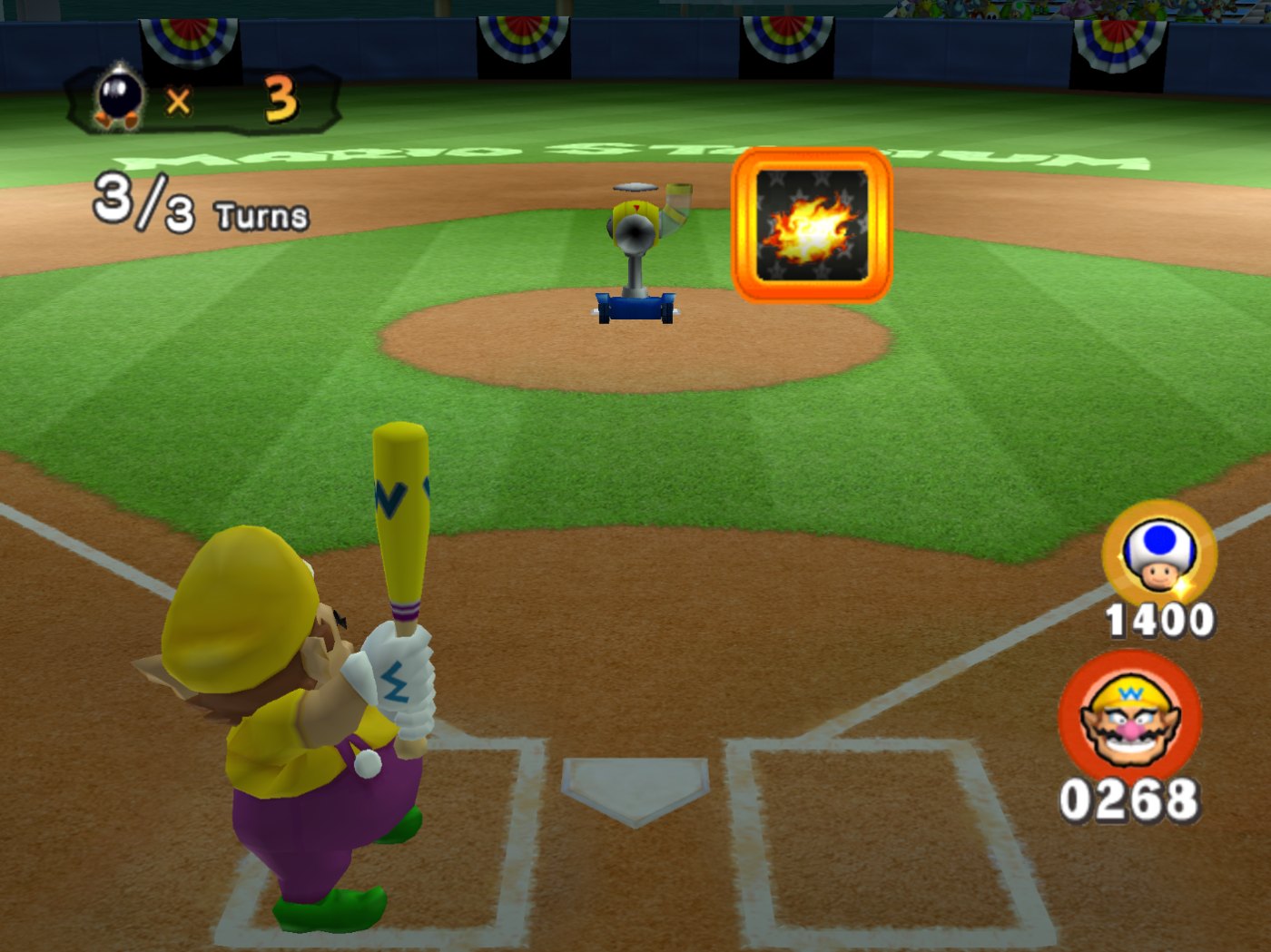
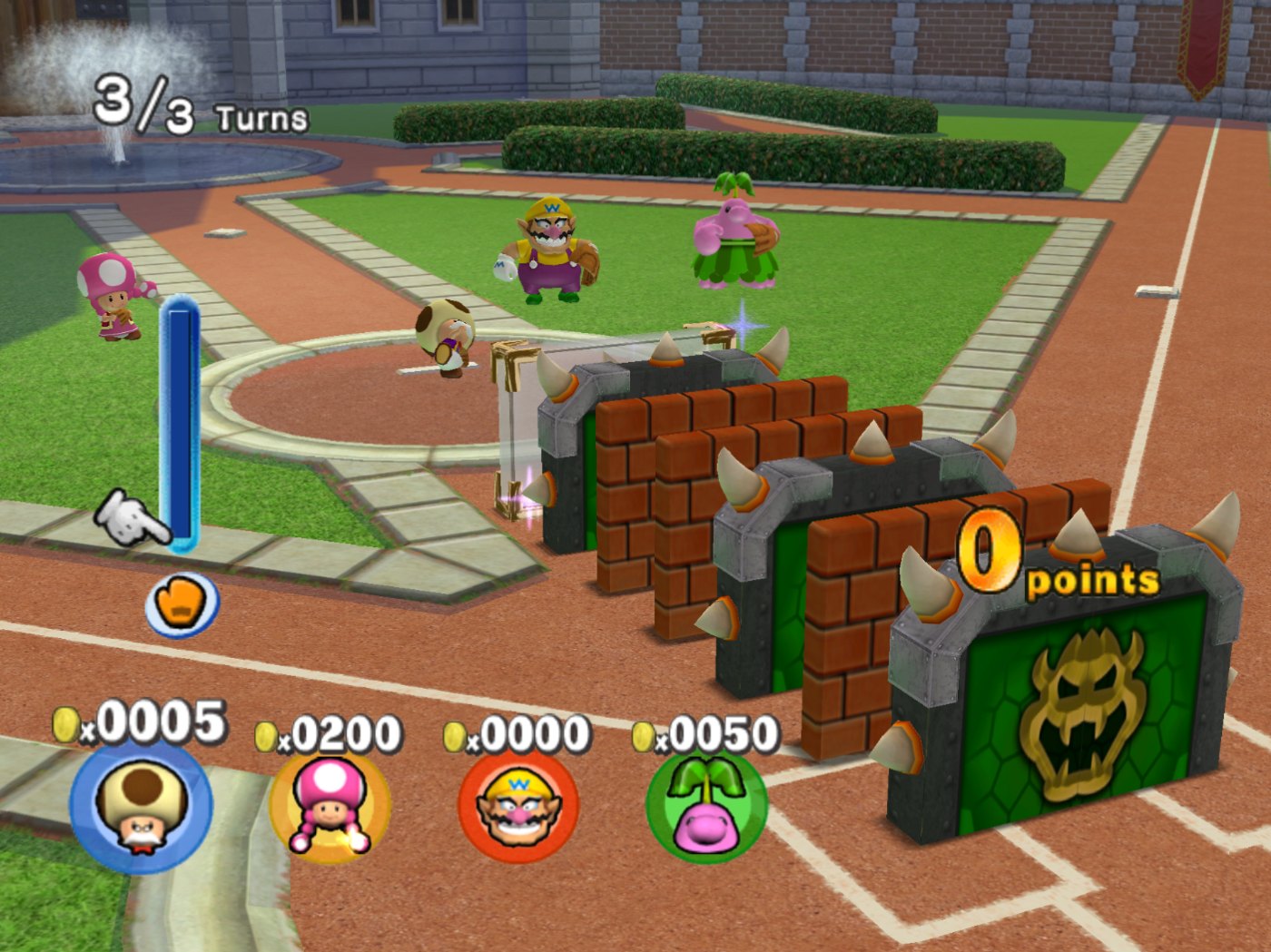
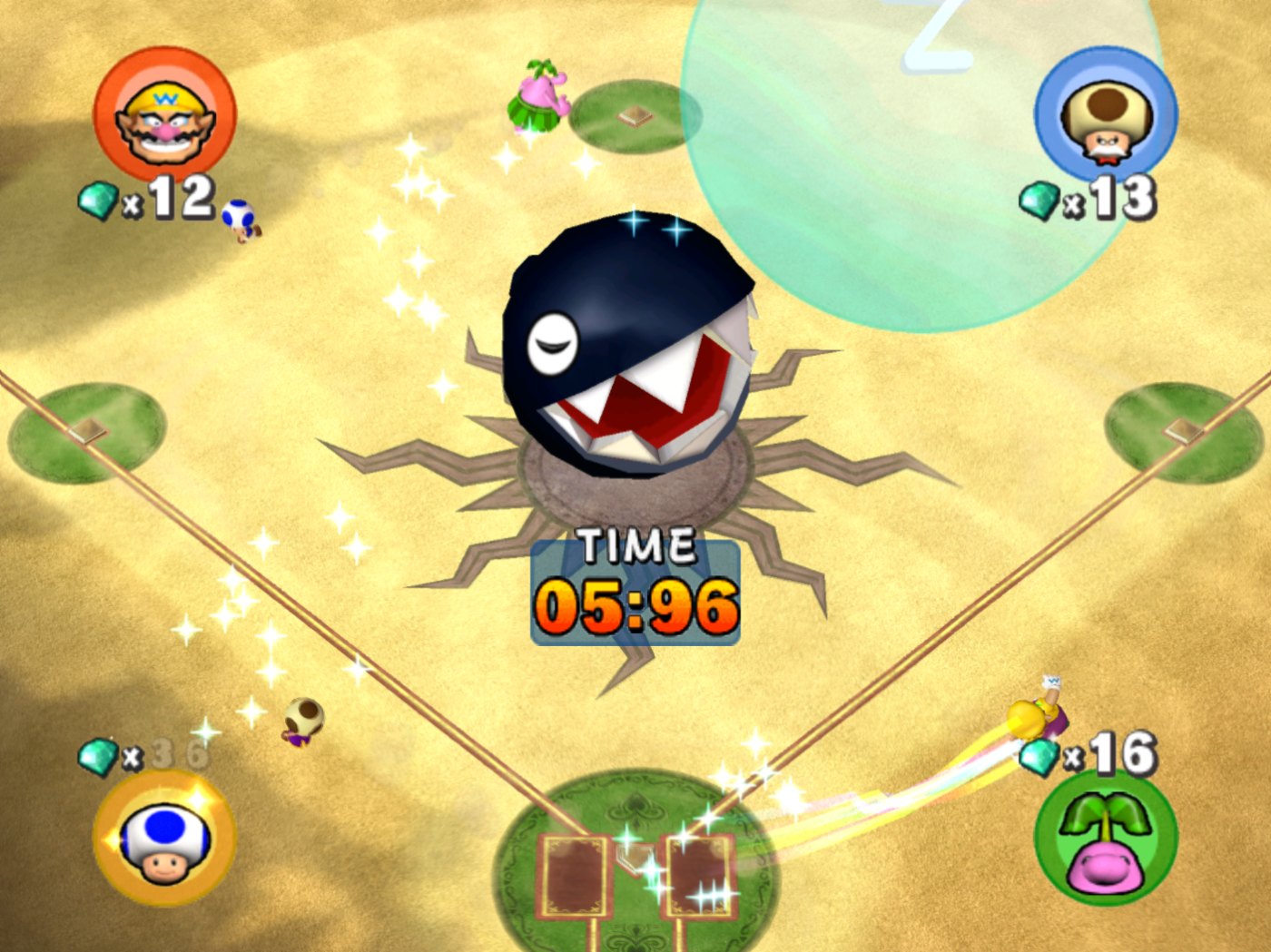
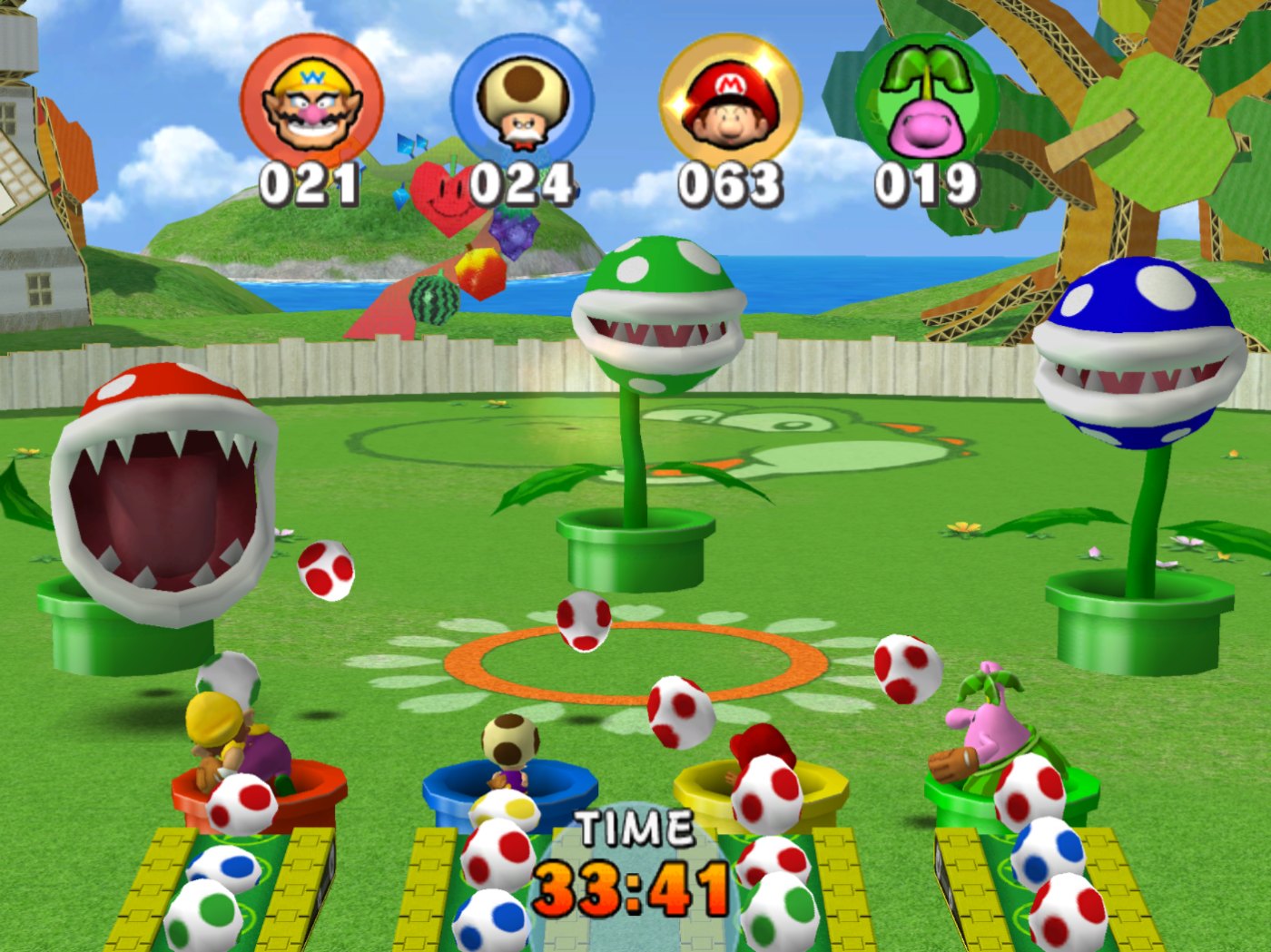
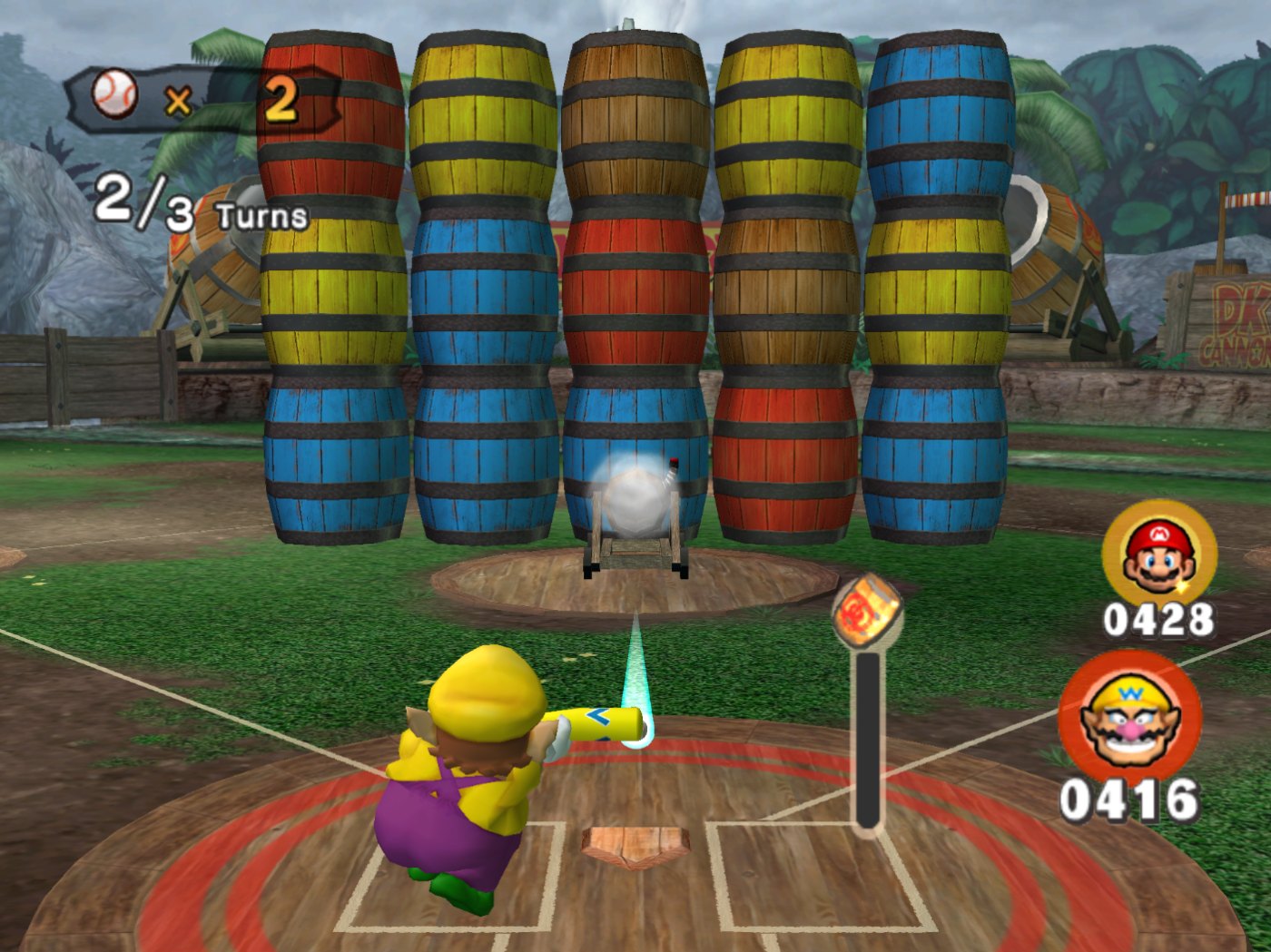
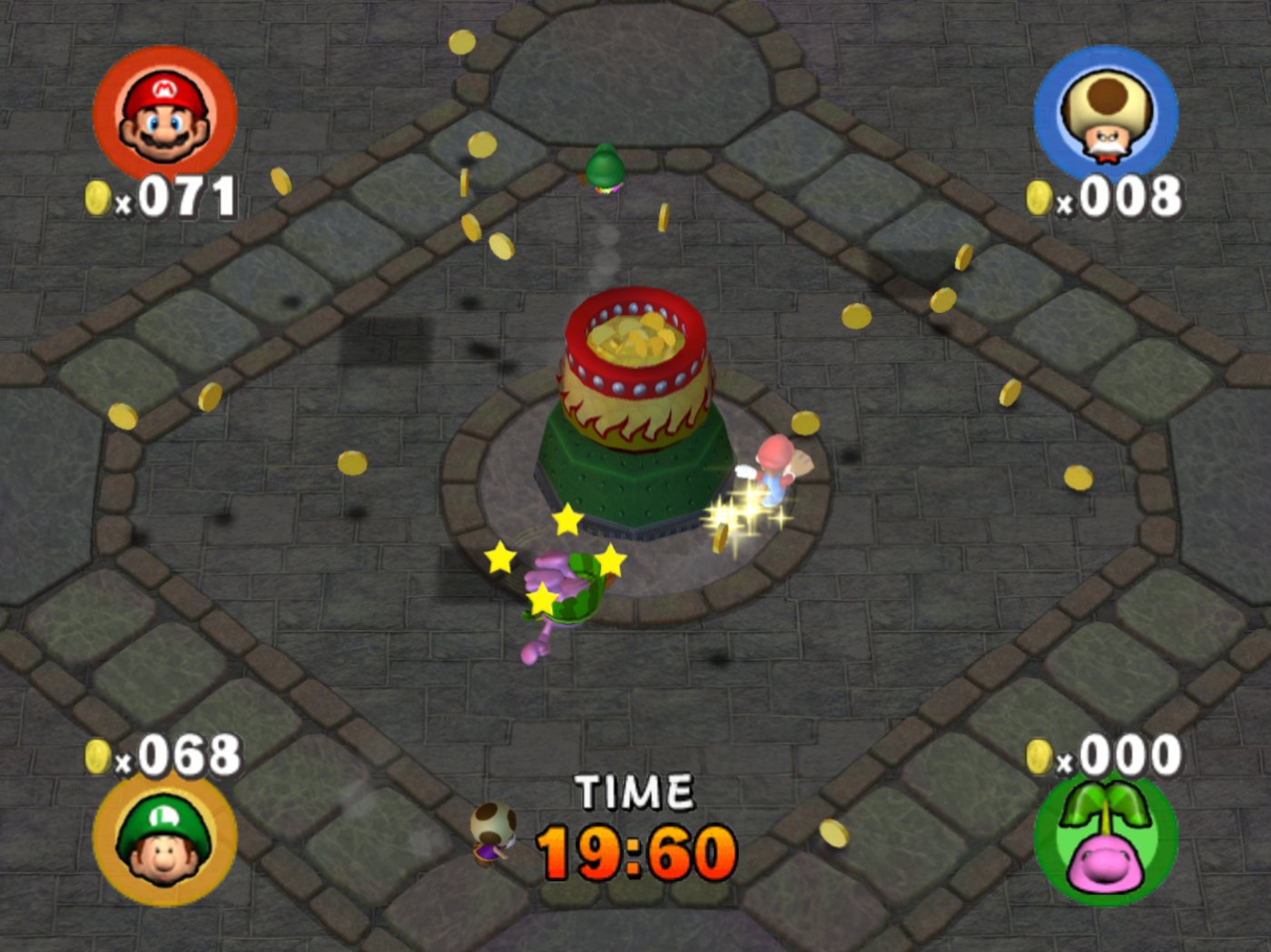
Each stadium has a minigame for up to four players, playable on Mushroom, Flower, Star and Special difficulties (only Mushroom at first; Special sets records). Bob-omb Derby (Mario Stadium) is a home-run derby with Bob-ombs fired from a cannon, scored with combos and a King Bob-omb bonus; Wall Ball (Peach Garden) has you pitching through a series of brick walls, where ending on the ♪ Wall earns a bonus and ending on the Bowser Wall costs half your points; Chain Chomp Sprint (Wario Palace) is a dash round the bases collecting jewels, freezing whenever the Chain Chomp wakes; Piranha Panic (Yoshi Park) is about throwing coloured eggs into matching Piranha Plants; Barrel Batter (Donkey Kong Jungle) is played in turns; and Star Dash (Bowser Castle) is a scramble for coins with Stars, Poison Mushrooms and falling Thwomps.
Beat all six on Star difficulty and the Grand Prix opens: every minigame on Special, back to back, for a Grand Prix medal in Records.
Practice walks you through batting, pitching, running and fielding with Mario as your coach, and Free Play lets any character practise any skill against the computer for as long as you like. Records keeps past MVPs, Challenge trophies, Grand Prix medals, Superstar status and high scores; Options covers music, mono, stereo or surround sound, and rumble.
Every stadium in Mario Superstar Baseball
Six stadiums, five of them with hazards and features that can earn Team Stars. Bowser Castle is unlocked by clearing Challenge Mode once.
Mario StadiumNo hazardsA classic ballpark with palm trees beyond the outfield: the place for pure baseball. It later became a board in Itadaki Street DS and Fortune Street.
Peach GardenFloating blocksBrick Blocks (breakable) and Note Blocks (not) float over the field, bouncing fly balls in random directions; hit them for Team Stars.
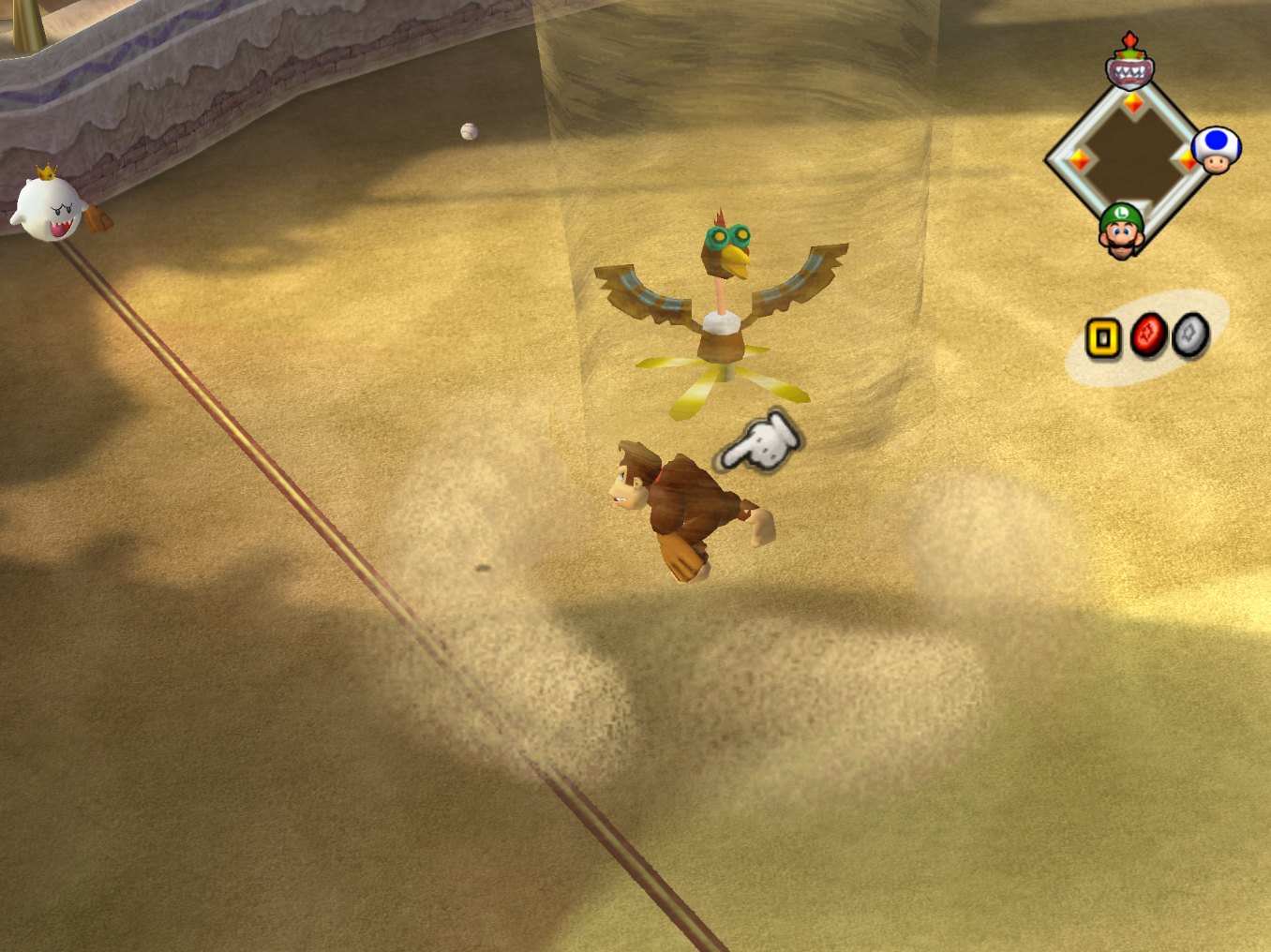
Wario PalaceChain Chomps · sandstormsChain Chomps guard foul territory and bite balls and players, cyclone generators from Wario World blow the ball off course, and star-shaped dunes give Team Stars.
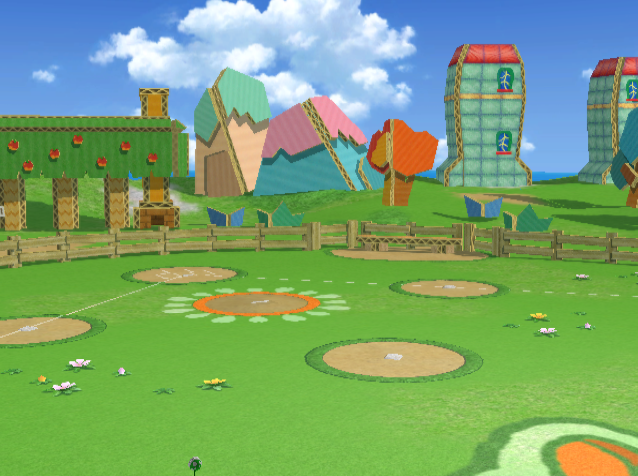
Yoshi ParkPiranha PlantsPiranha Plants snap at anyone chasing a stray ball; the yellow ones are friendly and give a Team Star when hit. Yoshi’s House from Super Mario World sits behind home plate.
Donkey Kong JungleBarrels · KlaptrapsCannons fire barrels at the players, and Klaptraps lurk in a stream; hit a Klaptrap with the ball for a Team Star.
Bowser CastleLava · Thwomps · unlocked by clearing Challenge ModeFireballs leap from lava pits, Thwomps crash down to block home runs, and star panels give Team Stars.
Advertisement
Gameplay & Controls
Underneath the Star Skills it is straight baseball: teams take turns to bat and field, a runner who touches home scores a run, three outs end the half-inning, and the side with more runs wins. A team is a captain and eight more players, and you set the batting order and fielding positions yourself.
Batting, pitching, fielding and running
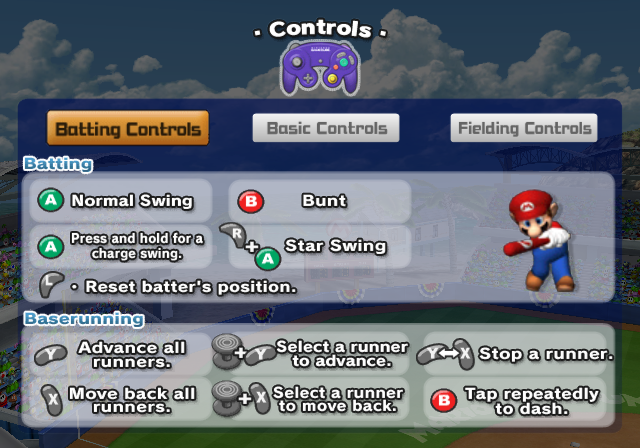
The batting controls screen.
Batting: A swings (hold to charge a power swing), B bunts, the stick moves the batter in the box and L puts him back; A with R is a Star Swing, and Y sends runners to steal. Pitching: A pitches (hold to charge), the stick moves the pitcher and steers the ball in flight, B attempts a pick-off, and A with R throws a Star Pitch.
Fielding: the stick runs and picks the base to throw to, A jumps or throws (or uses a character’s fielding ability), the stick with A dives, and tapping B sprints. Running: Y advances every runner and X sends them back. In the menus, L swaps a character’s colour, X changes batting hand and Z shows a profile.
Star Skills and Team Stars
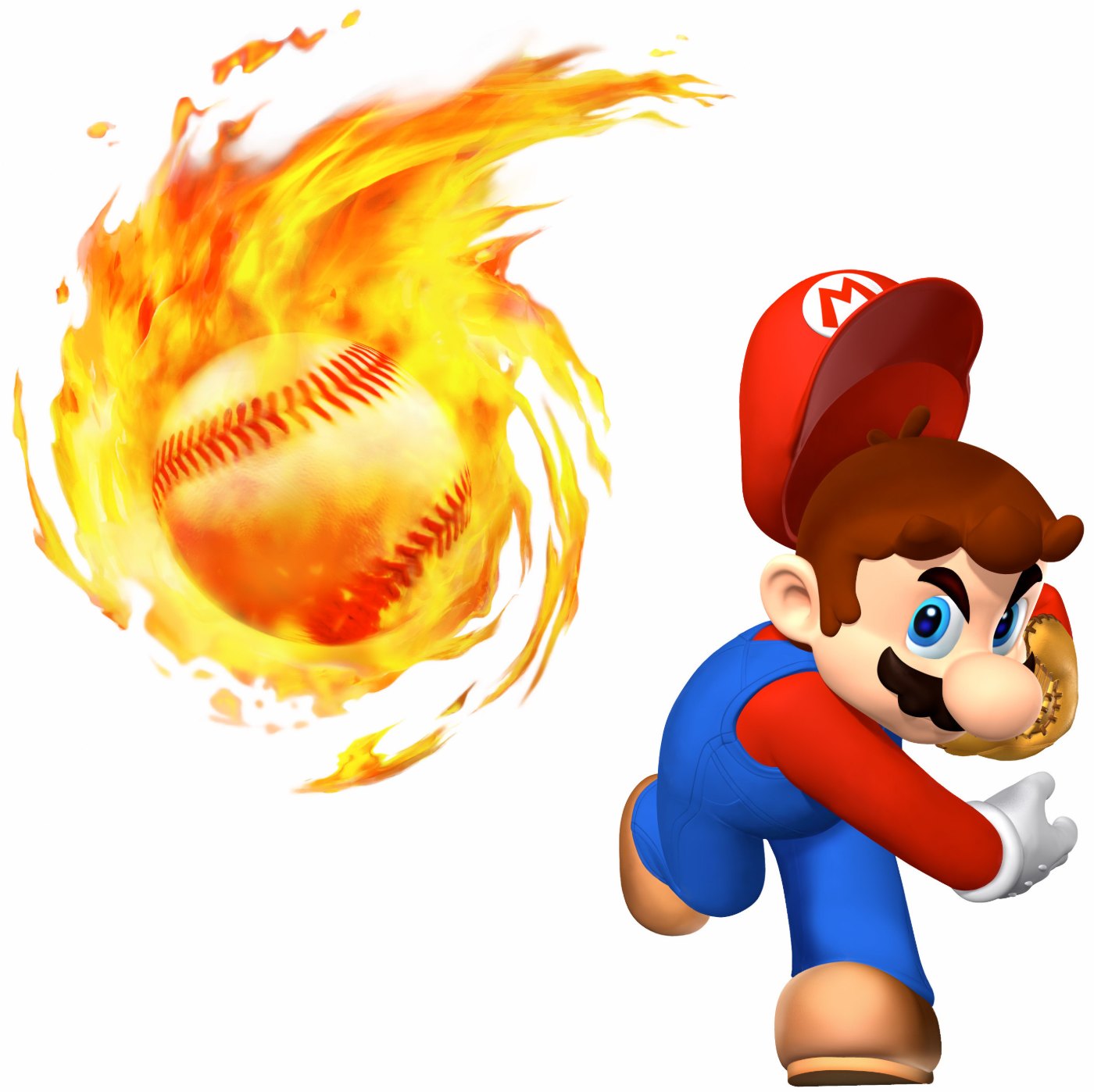
Mario’s Fireball.
Star Skills run on Team Stars, held in a meter of up to five. How full it starts depends on the Chemistry between the captain and the rest of the side. More come from hitting the stadium’s features (a star dune in Wario Palace, a yellow Piranha Plant in Yoshi Park) or from getting a hit, or an out, when “Star Chance!” flashes up.
Each captain has a signature special ball used for both pitching and hitting, and the main captain and ordinary players spend one star per use while any other captain in the side spends two. Ordinary players get generic Star Skills: a ground ball, fly ball or line drive when batting, and a fastball, change-up or breaking ball when pitching. Captains who usually come as a pair, such as Mario and Luigi or Peach and Daisy, have similar skills. The game’s secret weapon is the charged Star Swing: with five stars, perfect contact sends the ball an enormous distance for an all-but-certain home run.
Chemistry
Every pair of characters has a hidden Chemistry value from 0 to 100. Pairs at 90 or above are friends, marked with a musical note: throws between them travel faster, and a batter hits better with a friend on base. Pairs at 15 or below are rivals, shown by a zigzag: throws to a rival are slower and now and then go off line, though only in the field and not every time. Mario and Luigi, and Diddy and Dixie Kong, are friends; Mario and Bowser, and Luigi and King Boo, are not.
Before each game the average Chemistry between the captain and his teammates is turned into starting Team Stars: five for an average of 70 or more, four from 55, three from 35, two from 15 and one below that. A team with zero stars is only possible with cheats, by fielding nine copies of the same character. The Buddy Emblem item can also soften rivalries for a game.
Fielding abilities
Twelve abilities are shown on the character screens. Wall Jump (Mario, Luigi, the babies, Toadette, Bowser Jr.) springs off the outfield wall to steal home runs; Clamber (Donkey Kong, Diddy, Dixie, Yoshi) climbs it; Super Jump (Luigi, Waluigi, Boo, King Boo, Paratroopa, Paragoomba) leaps high. Sliding Catch, Super Catch, Tongue Catch (Yoshi), Suction (Birdo) and Magical Catch (Magikoopa) all widen or secure catches; Quick Throw (Peach, Daisy) skips the wind-up; Laser Beam (Donkey Kong, Bowser, Waluigi, Pianta) fires the ball home with a runner on third; Ball Dash (Monty Mole, Goomba) runs faster with the ball; and Body Check (Bowser, Wario, Birdo, Toad and others) barges a fielder into dropping the ball on a close play.
There are hidden abilities too: Boo, King Boo and the Boomerang Bro put a big sideways curve on their hits, and heavy characters such as Bowser, Wario and Petey Piranha stick to the wall for a moment when they jump into it.
Player types and stats
Each character is one of four types: Balance, Technique, Speed or Power. The captains are rated for batting, pitching, fielding and running on a scale of one to ten, and the spread is wide: Bowser bats and pitches at 9 but fields and runs at 1, while Yoshi runs at 9 and pitches at 4. Each character also bats and throws left- or right-handed, and the batting hand can be switched in the menus.
Star Skills and shop items
The twelve captains’ special balls (in Challenge Mode each must first be bought as a permanent item for 200 coins), then the one-game items sold in the Challenge Mode shop.
FireballMario (item: Red Fireball). A flaming line drive that burns fielders who try to catch it.
Green FireballLuigi (item: Green Fireball). A short, burning grounder.
Heart BallPeach (item: Lovely Heart).
Flower BallDaisy (item: Pretty Flowers).
Egg BallYoshi (item: Egg).
Weird BallBirdo (item: Pink Egg).
Phony BallWario (item: Gnarly Garlic).
Liar BallWaluigi (item: Whiskered Eggplant).
Banana BallDonkey Kong (item: King Banana).
Boomerang BallDiddy Kong (item: Chimp Banana).
Killer BallBowser (item: Bullet Bill).
Killer Jr. BallBowser Jr. (item: Jr. Mask).
Nice BatOne game: easier to get hits.
Power BatOne game: more power in the swing.
Super BallOne game: faster pitches.
Lucky GloveOne game: better fielding.
Dash SpikesOne game: faster movement.
Buddy EmblemOne game: friendlier Chemistry, even between rivals.
SuperstarOne game: all stats and friendship up. Appears only after every other item has been bought at least once.
Secret MapPermanent: opens Toy Field on the Challenge Mode map, so its coins count. Appears once every minigame on the map is beaten.
Cartoons, Comics & Other Media
Superstar Baseball is full of nods to Nintendo’s back catalogue, and some of it lived on in later games.
Mario Super SluggersWii · 2008The sequel, from the same director and producers, built on this game’s mechanics and kept its untranslated baseball jargon in English.
Itadaki Street DS and Fortune StreetBoard gamesMario Stadium became a board in Itadaki Street DS, and returned in Fortune Street on Wii.
Team namesNods to older gamesThe Mario Sunshines (Super Mario Sunshine), Luigi Mansioneers and Luigi Vacuums (Luigi’s Mansion), Yoshi Islanders (Yoshi’s Island) and Mario All-Stars (Super Mario All-Stars) all borrow their names from earlier games. In Japan the Birdo Bows are “Catherine USA”, after Super Mario USA, Japan’s name for Super Mario Bros. 2.
Super Mario Bros.Loading screensWhile loading, an 8-bit Mario may appear, either punching a ? Block or strolling off to the right.
Wario’s WoodsBad chemistryToad and Wario have bad Chemistry, perhaps a memory of their battle in Wario’s Woods.
The TV advertsUnited States · 2005Three American commercials featured costumed characters at a real ballpark: Bowser floored by a pitching machine, Mario hit by a ball while playing the stadium organ, and a car in the car park blown up by a Peach home run. The costumes were made by KCL Productions.
The Roster
Twelve captains, each with a Star Skill, two fielding abilities and four themed team names. Ratings run from one to ten; some voice actors are uncredited in the English versions but widely attributed.
Character
Who they are
In this game
Abilities & notes
MarioCaptain · Balance
The all-rounder, voiced by Charles Martinet (who also plays Luigi, Wario, Waluigi and the babies).
One of the five Challenge Mode captains, and the hero of the opening movie’s called shot. Clear Challenge Mode with him to unlock Monty Mole.
Bat 6 · Pitch 6 · Field 6 · Run 5
Bats right, throws right
Abilities: Wall Jump, Sliding Catch
Star Skill: Fireball
Signature team: Mario Sunshines
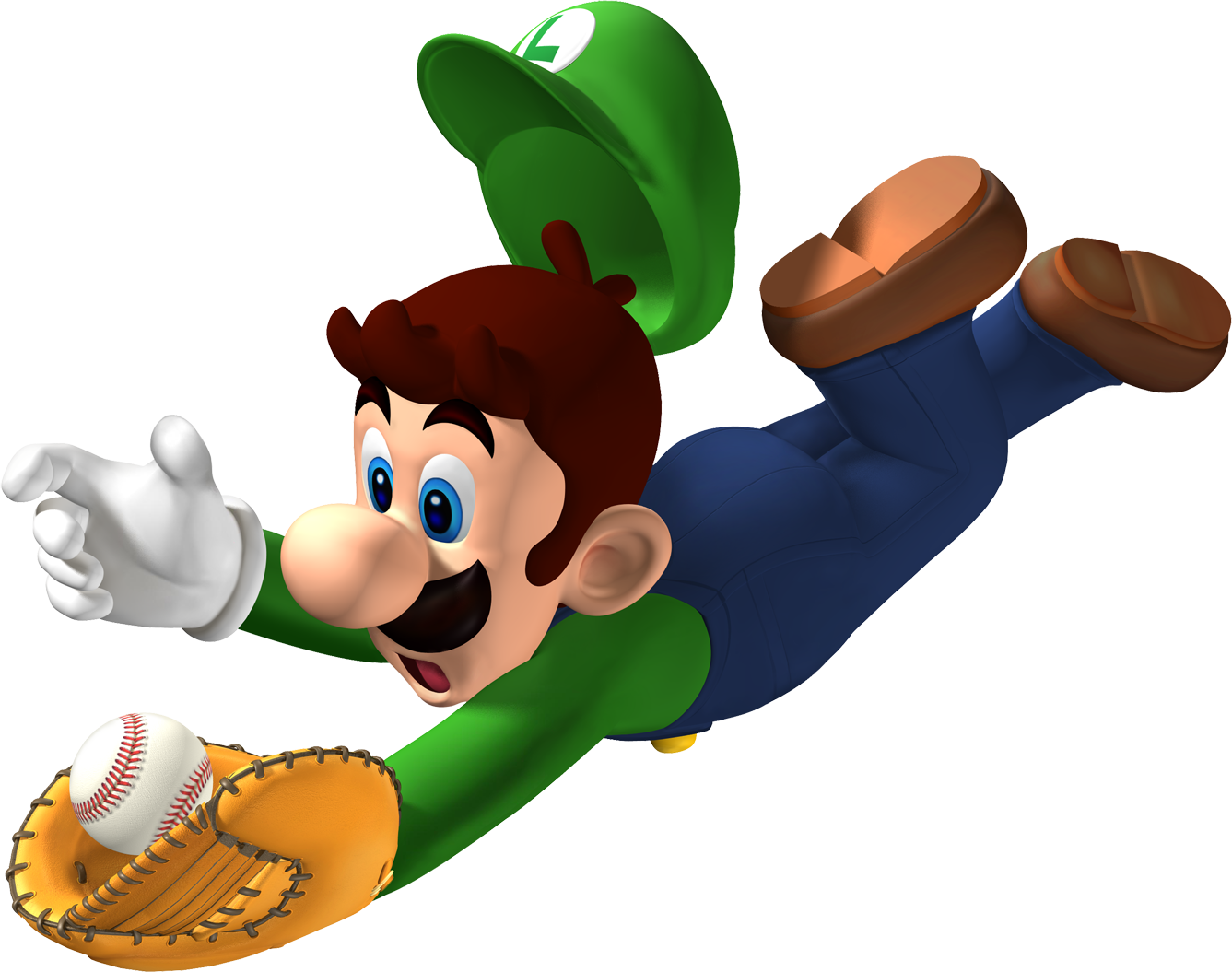
LuigiCaptain · Balance
Mario’s brother and a great leaper.
His Green Fireball is a burning grounder. Mario and Luigi have good Chemistry; Luigi and King Boo very much do not.
Bat 5 · Pitch 6 · Field 6 · Run 6
Bats left, throws right
Abilities: Wall Jump, Super Jump
Star Skill: Green Fireball
Signature team: Luigi Mansioneers
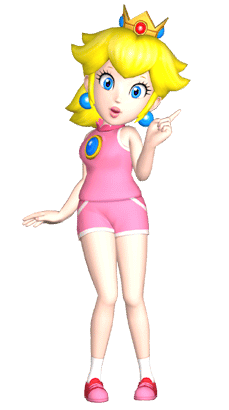
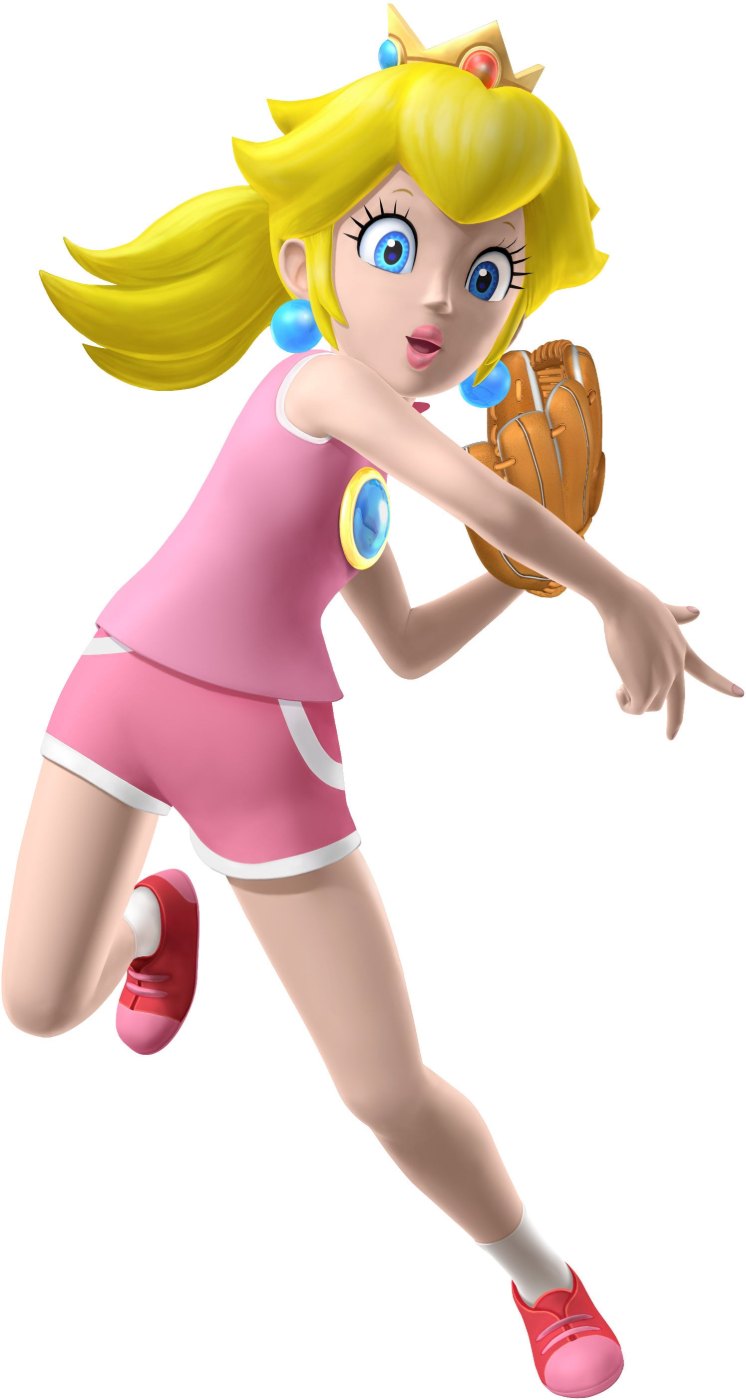
Princess PeachCaptain · Technique
Voiced by Jen Taylor, who also voices the Toads and Toadette.
A Challenge Mode captain and a fine pitcher. Clear Challenge Mode with her to unlock Toadette.
Bat 4 · Pitch 8 · Field 7 · Run 5
Bats right, throws right
Abilities: Quick Throw, Super Catch
Star Skill: Heart Ball
Signature team: Peach Monarchs
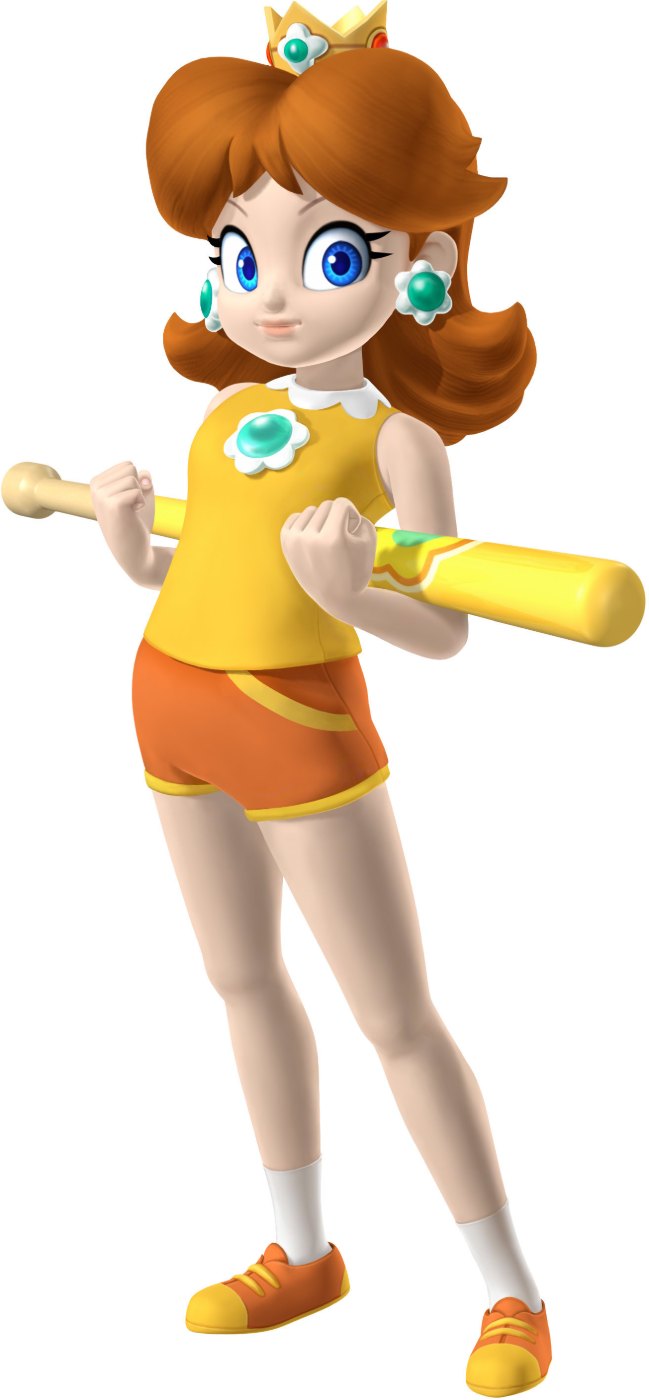
Princess DaisyCaptain · Balance
Sarasaland’s princess, voiced by Deanna Mustard.
A strong pitcher and batter whose Flower Ball scatters petals.
Bat 6 · Pitch 7 · Field 5 · Run 4
Bats left, throws right
Abilities: Quick Throw, Sliding Catch
Star Skill: Flower Ball
Signature team: Daisy Queen Bees
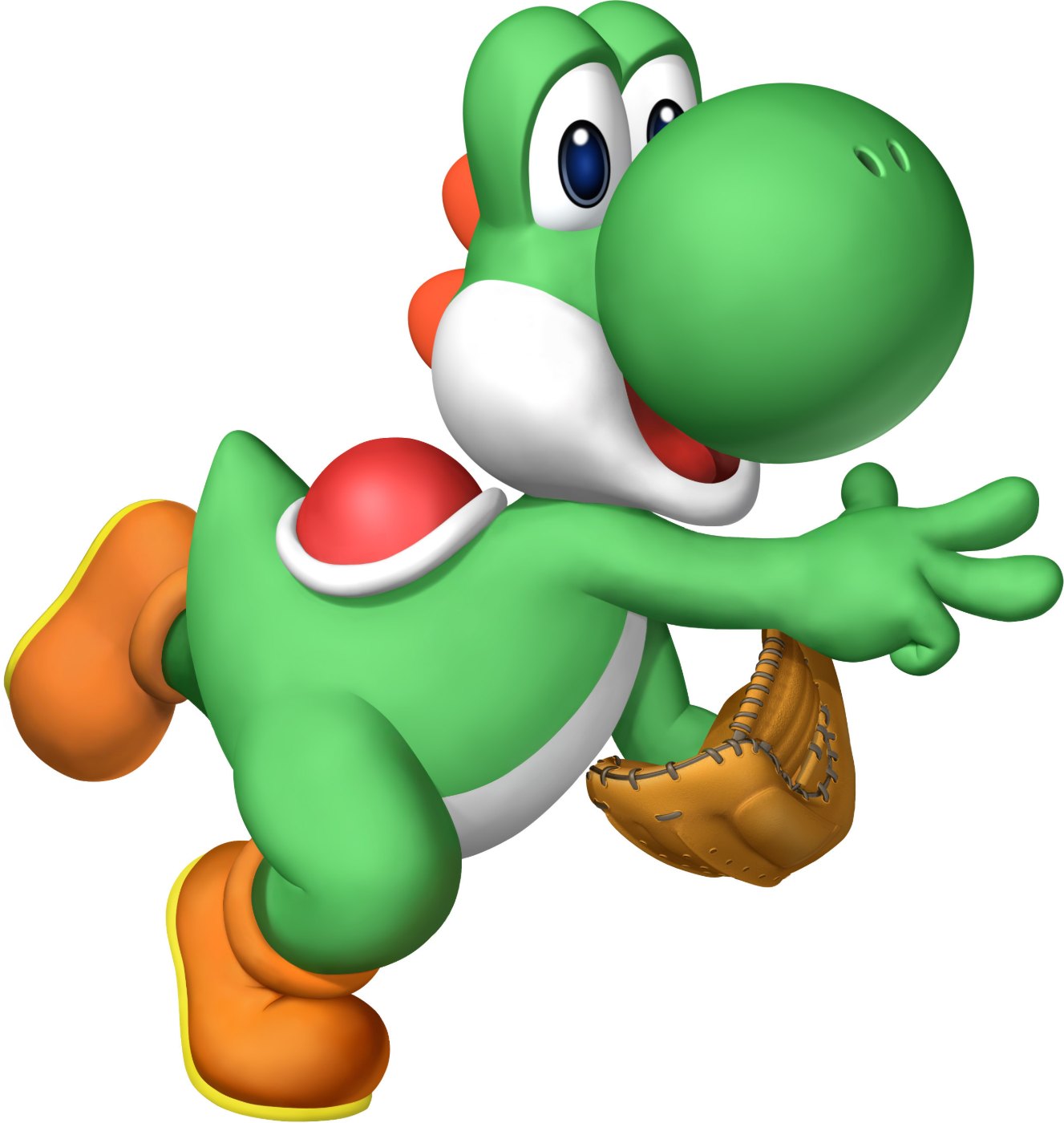
YoshiCaptain · Speed
Voiced by Kazumi Totaka, who also voices Birdo.
A Challenge Mode captain and the fastest runner of the captains. Clear Challenge Mode with him to unlock Baby Luigi.
Bat 5 · Pitch 4 · Field 6 · Run 9
Bats left, throws right
Abilities: Tongue Catch, Clamber
Star Skill: Egg Ball
Signature team: Yoshi Islanders
BirdoCaptain · Balance
Voiced, like Yoshi, by Kazumi Totaka.
Her Suction gives her a huge catching range. In Japan her signature team is “Catherine USA”.
Bat 6 · Pitch 4 · Field 4 · Run 4
Bats right, throws right
Abilities: Suction, Body Check
Star Skill: Weird Ball
Signature team: Birdo Bows
WarioCaptain · Power
The opening movie’s villain on the pitch.
A Challenge Mode captain and a big hitter. Clear Challenge Mode with him to unlock Petey Piranha.
Bat 8 · Pitch 3 · Field 4 · Run 3
Bats right, throws right
Abilities: Sliding Catch, Body Check
Star Skill: Phony Ball
Signature team: Wario Greats
WaluigiCaptain · Technique
Described in the game as Luigi’s rival.
The joint-best pitcher among the captains, level with Bowser, and the only captain who bats and throws left-handed.
Bat 4 · Pitch 9 · Field 4 · Run 4
Bats left, throws left
Abilities: Laser Beam, Super Jump
Star Skill: Liar Ball
Signature team: Waluigi Flankers
Donkey KongCaptain · Power
Voiced by Takashi Nagasako.
A Challenge Mode captain who hits and pitches hard. Clear Challenge Mode with him to unlock Dixie Kong.
Bat 8 · Pitch 7 · Field 4 · Run 4
Bats left, throws right
Abilities: Clamber, Laser Beam
Star Skill: Banana Ball
Signature team: DK Kongs
Diddy KongCaptain · Speed
Voiced by Katsumi Suzuki.
A nimble, reliable fielder with good running.
Bat 3 · Pitch 6 · Field 7 · Run 7
Bats left, throws right
Abilities: Super Catch, Clamber
Star Skill: Boomerang Ball
Signature team: Diddy Tails
BowserCaptain · Power
Voiced by Scott Burns, who also plays Toadsworth and Piantas.
The final opponent of Challenge Mode, and a playable Challenge captain once it is cleared on Special. Batting and pitching 9, fielding and running 1. Clear Challenge Mode as Bowser to unlock the Hammer, Fire and Boomerang Bros.
Bat 9 · Pitch 9 · Field 1 · Run 1
Bats left, throws right
Abilities: Body Check, Laser Beam
Star Skill: Killer Ball
Signature team: Bowser Monsters
Bowser Jr.Captain · Power
Voiced by Delores Rogers.
Roams the Challenge Mode map offering half-inning challenges that can win you extra recruits. He bats right and throws left.
Bat 8 · Pitch 5 · Field 3 · Run 4
Bats right, throws left
Abilities: Body Check, Wall Jump
Star Skill: Killer Jr. Ball
Signature team: Jr. Pixies
The rest of the roster
The 22 other characters, each with a type and a home team; colour variants (Toads, Shy Guys, Koopas, Paratroopas, Dry Bones, Magikoopas, Piantas, Nokis) are picked with L on the select screen. The last eight are unlocked by clearing Challenge Mode.
Baby MarioSpeed · Yoshi IslandersWall Jump.
ToadBalance · Peach MonarchsRed, blue, yellow, green and purple versions; Body Check.
ToadsworthTechnique · Peach MonarchsSuper Catch; voiced by Scott Burns.
GoombaBalance · DK KongsBall Dash.
ParagoombaSpeed · DK KongsSuper Jump.
Koopa TroopaBalance · DK KongsGreen and red; Sliding Catch.
ParatroopaTechnique · DK KongsRed and green; Super Jump.
Shy GuyBalance · Yoshi IslandersRed, blue, yellow, green and black; Sliding Catch.
BooTechnique · Wario GreatsSuper Jump and a hidden curve on its hits.
King BooPower · Wario GreatsSuper Jump, curving hits, and bad Chemistry with Luigi.
MagikoopaTechnique · Wario GreatsFour colours; the only Magical Catch.
PiantaPower · Mario SunshinesBlue, red and yellow; Laser Beam.
NokiSpeed · Mario SunshinesBlue, red and green; Sliding Catch.
Baby LuigiSpeed · unlock: clear Challenge as YoshiWall Jump.
ToadetteSpeed · unlock: clear Challenge as PeachWall Jump and Sliding Catch.
Monty MoleSpeed · unlock: clear Challenge as MarioBall Dash.
Dixie KongTechnique · unlock: clear Challenge as Donkey KongClamber; good Chemistry with Diddy.
Petey PiranhaPower · unlock: clear Challenge as WarioBody Check; hits with his arms.
Hammer BroPower · unlock: clear Challenge as BowserBody Check.
Fire BroPower · unlock: clear Challenge as BowserUnlocked with the Hammer and Boomerang Bros.
Boomerang BroPower · unlock: clear Challenge as BowserA hidden curve on its hits.
Key staff
Credits from the game.
Hideki TomidaDirectorReturned to direct Mario Super Sluggers.
Yasushi Ono and Toyokazu NonakaProducersBoth produced Mario Super Sluggers too; Nonaka later produced Mario Hoops 3-on-3 and Mario Sports Superstars.
Satoru IwataExecutive producerCredited as executive producer.
Takashi Tezuka and Takahiro HaradaSupervisorsNintendo’s supervisors on the project.
Kazuhiko TsukadaOpening movie directorDirected the openings of the other GameCube Mario sports games too.
Ayako Yamaguchi and teamSoundWith Masasi Sugiyama, Nobuhiro Ohuchi, Kenichi Takahara and Toshio Kajino; Koji Kondo is credited for sound support.
Shinsuke Kimura and othersConceptWith Tatsuhiro Kataoka, Sakon Kanayama, Shoji Terai and Hiroki Nishigaki.
Charles MartinetVoice of Mario, Luigi, Wario, Waluigi and the babiesWith Jen Taylor (Peach, Toads, Toadette), Scott Burns (Bowser), Deanna Mustard (Daisy) and Dexter Manley as the umpire, Lakitu.
Advertisement
How It Was Made
Nintendo’s first dedicated Mario baseball game came from an outside studio with baseball in its blood.
Namco at the plate
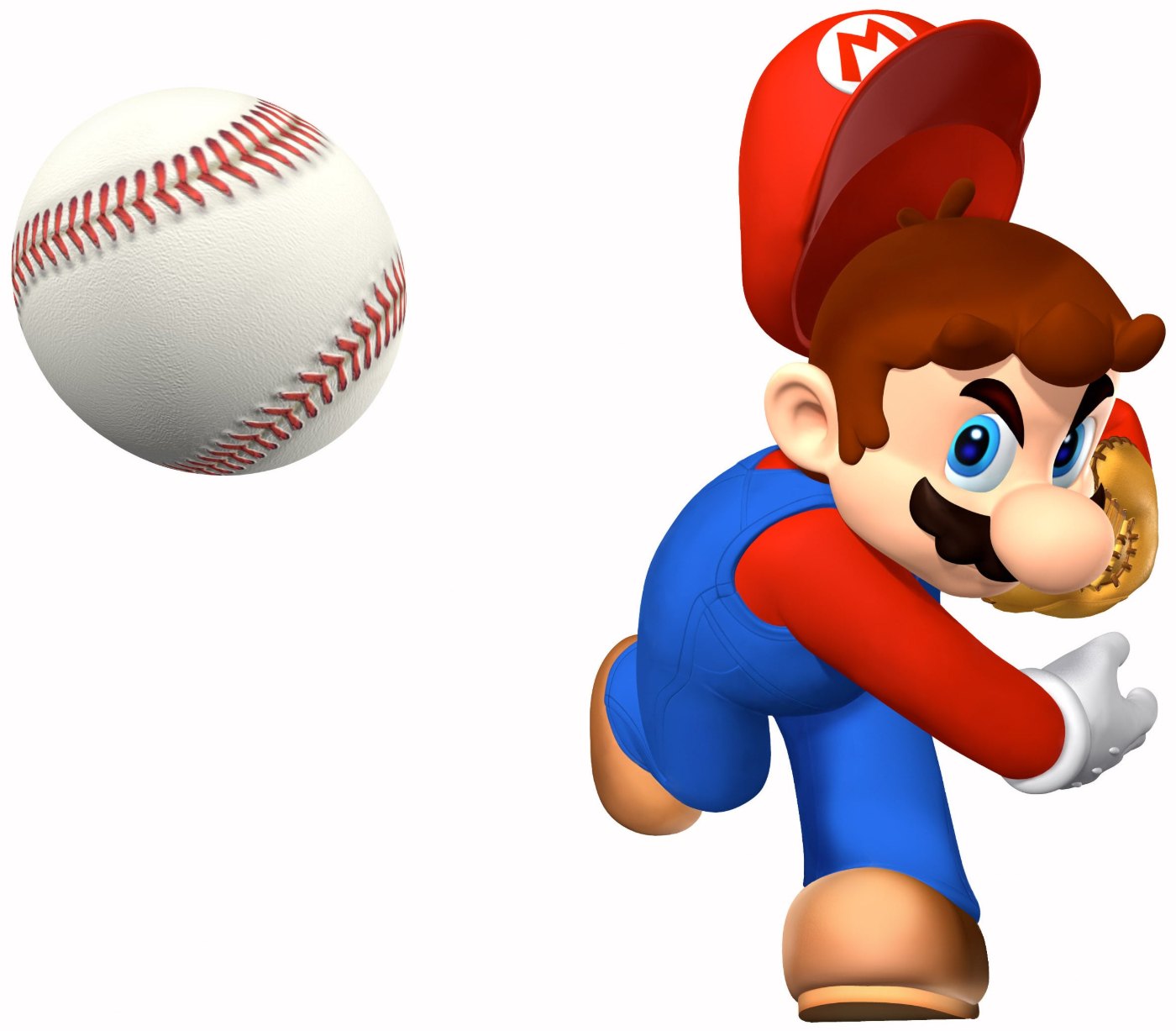
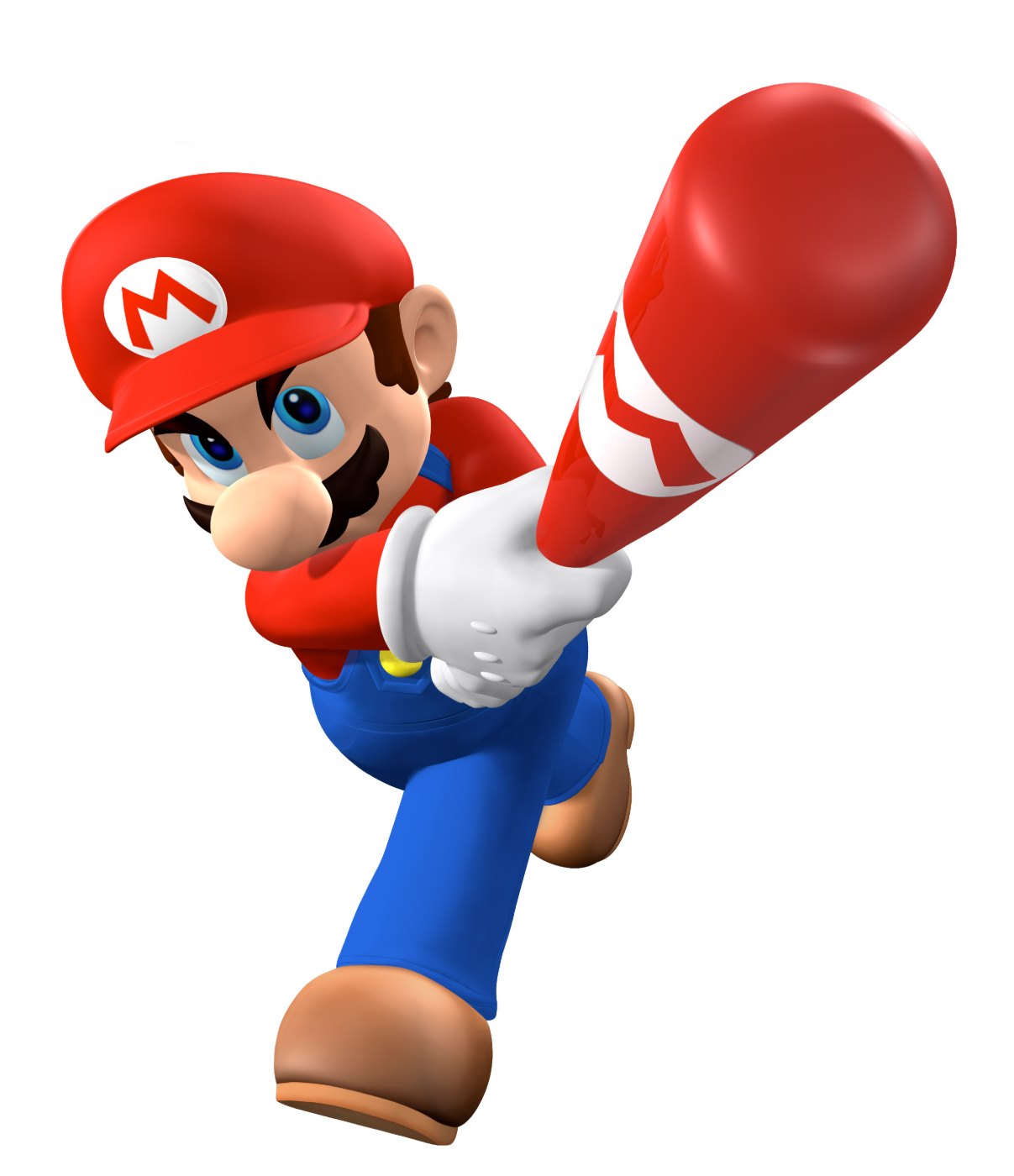
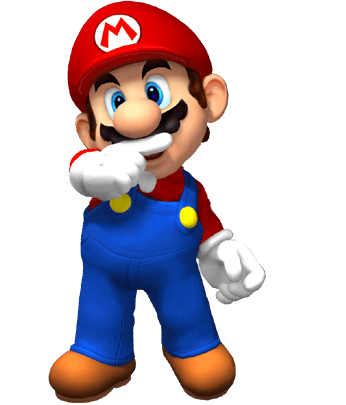
Mario winds up: one of several Mario artworks made for the game.
Nintendo gave the game to Namco, with Nintendo’s SPD Group No. 4 working alongside; Wikipedia’s credits also note extra work by Now Production. Hideki Tomida directed and Yasushi Ono and Toyokazu Nonaka produced, with Takashi Tezuka and Takahiro Harada supervising for Nintendo and Satoru Iwata as executive producer. Wikipedia describes the game as made in the same vein as Mario Golf: Toadstool Tour and Mario Power Tennis, and Kazuhiko Tsukada, who directed the opening movies of the other GameCube Mario sports games, directed this one too.
The music came from a five-strong sound team led in the credits by Ayako Yamaguchi, with Koji Kondo credited for sound support, and the voice cast mixes Nintendo regulars (Charles Martinet, Jen Taylor, Scott Burns, Kazumi Totaka) and Dexter Manley as Lakitu the umpire.
From Mario Baseball to Superstar
An early screenshot from before the game’s release.
The game was shown at E3 2005 under the working title Mario Baseball, with a different logo. Early screenshots show a different Star Chance meter, a brighter Mario Stadium without its palm trees, and Peach Garden seen from a lower camera angle.
A demo on Nintendo’s Interactive Multi-Game Demo Disc (volumes 27 to 30) preserves more of the earlier version: the old logo on its title screen, a main menu laid out like the Japanese release’s, early versions of several music tracks, and a Toy Field preview themed on World 1-1 of Super Mario Bros. Inside the finished game, Petey Piranha’s files still contain a baseball bat (he hits with his arms in the end), and early Challenge Mode level icons borrow rough artwork from Mario Kart: Double Dash!! and, for the Flower level, Super Smash Bros. Melee.
Release
The early logo shown at E3 2005.
Japan got the game first, on 21 July 2005, as Super Mario Stadium Miracle Baseball, with an extra dictionary of baseball terms. Nintendo of America announced it was in American shops on 29 August 2005, and it reached Australia on 3 November and Europe on 11 November. The European release is in English only, which makes it the only GameCube Super Mario game released in Europe without other languages.
In the United States Nintendo ran three television adverts filmed at a real ballpark with costumed characters, and the game was later reissued in North America and Canada in “Best Seller” packaging.
Series Firsts
Verified firsts for Mario sport.
1The first dedicated Mario baseball gameIt is usually described as the first dedicated baseball game starring Super Mario characters, and the first in what Japan calls the Super Mario Stadium series.
2ChemistryFriendship and rivalry between characters as a game mechanic, affecting throws, hitting and starting Team Stars. Mario Super Sluggers kept it.
3Scouting your own teamChallenge Mode builds your side match by match through scout missions and Scout Flags.
4Toy FieldA four-player batting party game played on a field of spaces, with coins for where the ball lands.
Cheats & Secrets
There are no button codes; everything is unlocked by playing Challenge Mode and the minigames.
Unlockable players
Clear Challenge Mode with each captain: Mario unlocks Monty Mole, Peach Toadette, Yoshi Baby Luigi, Donkey Kong Dixie Kong, Wario Petey Piranha, and Bowser the Hammer Bro, Fire Bro and Boomerang Bro.
Bowser as a Challenge captain
Clear Challenge Mode on the Special level. As Bowser you beat the five captains, then a team of nine captains and sub-captains led by Mario; Bowser Jr. does not roam the map in this mode.
Bowser Castle
Clear Challenge Mode once to unlock the sixth stadium.
Minigame Grand Prix
Beat every minigame on Star difficulty to open the Grand Prix, all six minigames in a row on Special, for a medal in Records.
Superstar item and Secret Map
The Superstar item appears in the shop only once every other item has been bought at least once. The Secret Map, which puts Toy Field on the Challenge map, appears after every minigame on the map has been beaten.
Signing rival teams
Once you have recruited a rival captain, his teammates are off limits, unless you beat Bowser Jr. in one of his half-inning challenges.
The five-star home run
Save up all five Team Stars, then charge a Star Swing and make perfect contact: the ball flies for an almost certain home run, though it costs every star and can still go foul.
Videos
The American TV adverts and the E3 2005 trailer, both preserved by fans.
Nintendo of America’s 2005 television adverts, uploaded by a third-party channel.
The E3 2005 trailer from a press DVD, upscaled and uploaded by a third-party channel.
Trivia & Interesting Facts
Only the Japanese version has a dictionary mode for looking up baseball terms; the English versions have no equivalent, and Mario Super Sluggers later used terms such as “Hit a sacrifice fly!” in English with no dictionary at all.
The count display reads Strike, Ball, Out in Japan but Ball, Strike, Out elsewhere. Mario Super Sluggers uses Strike, Ball, Out everywhere.
The European release is English-only, the only GameCube Super Mario game in Europe without other languages.
One of the stadium-select previews of Mario Stadium is a pre-release IGN screenshot, complete with IGN’s watermark in the corner.
Mario’s game-winning hit in the opening movie, after pointing to the stands, is a nod to Babe Ruth’s called shot.
The ending cinematic.The Challenge Mode ending zooms in on Mario’s first pitch to reveal the words “WE LOVE BASEBALL!” on the ball.
Mario’s flaming fastball in the opening movie overloads the stadium speed gun.
Petey Piranha’s data includes a baseball bat he never uses: in the finished game he hits with his arms.
Bowser Jr. is the only captain who bats right-handed and throws left-handed, and Waluigi the only one who does both left-handed.
A team with zero Team Stars can only be made with cheats, by fielding nine copies of one character.
Yoshi Park.Yoshi’s House from Super Mario World sits behind home plate in Yoshi Park.
The Birdo Bows are called “Catherine USA” in Japan, and their logo has stars and stripes, after Super Mario USA.
Lakitu the umpire is voiced by Dexter Manley.
Nintendo’s UK website lists Camelot as the developer; Wikipedia and other references name Namco.
Nintendo of America’s launch press release promised “absurd rivalries”; the game’s Chemistry system builds them in, from Mario and Bowser to Toad and Wario.
Regional Box Art
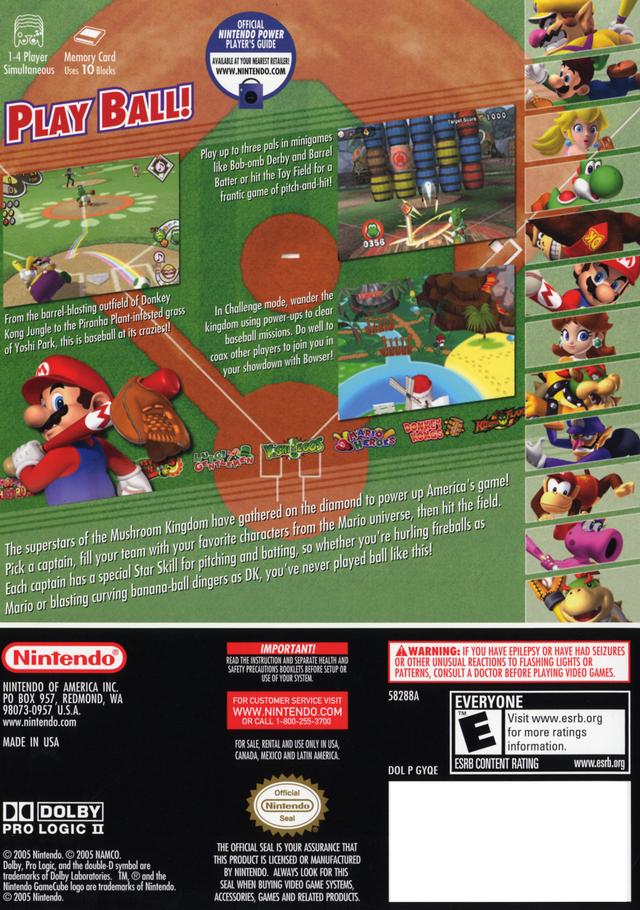
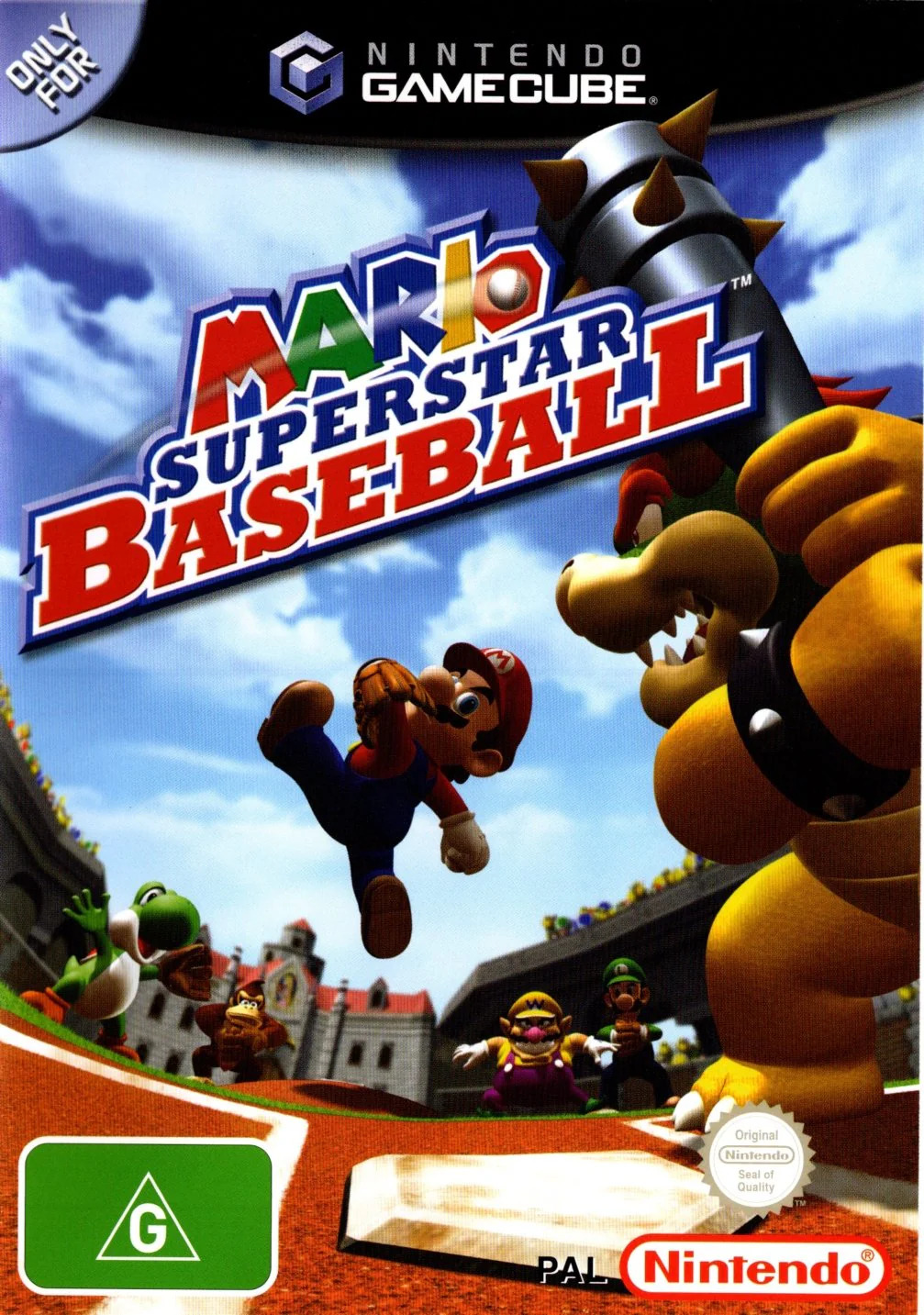
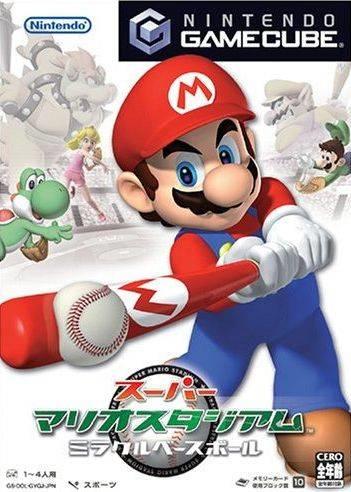
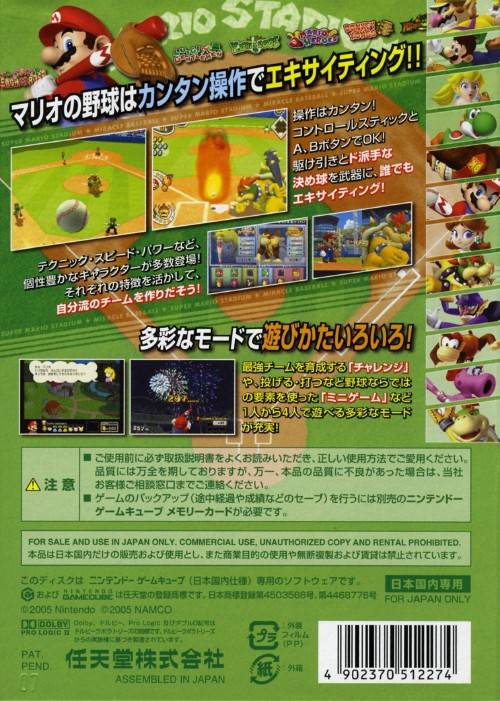
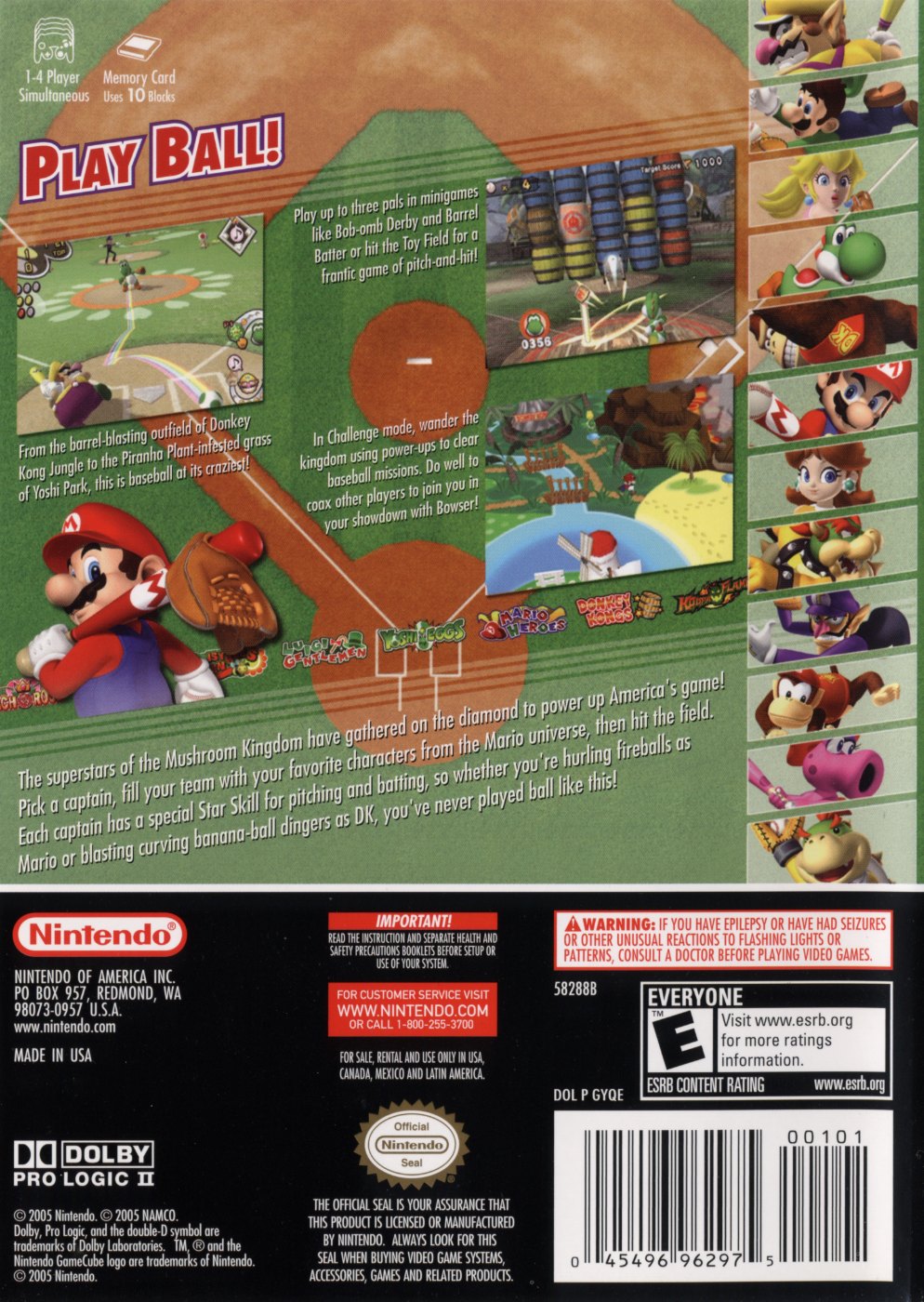
North America and Europe share the main visual of the captains; Japan has its own cover for Super Mario Stadium Miracle Baseball.
EuropeNorth AmericaNorth America (back)CanadaFranceGermanyAustraliaJapanJapan (back)North America (Best Seller)North America (Best Seller, back)Canada (Best Seller)
Screenshots
Menus, the Japanese title screen and pre-release shots.
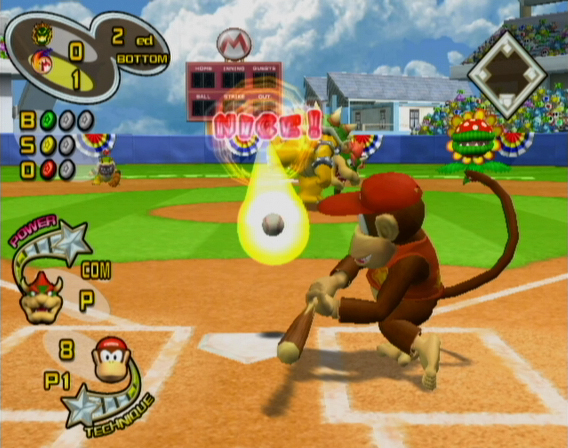
The Japanese title screen: Super Mario Stadium Miracle Baseball.A sandstorm generator at work in Wario Palace.Pre-release: a nice pitch.Pre-release: Peach Garden from a lower camera angle.Pre-release main menu.Pre-release image under the Mario Baseball name.Peach’s Challenge Mode clear pose.
Artwork & Media Gallery
Official artwork, logos, team crests and Star Skill icons from Mario Superstar Baseball. Select any image to see it full size; SLB’s box art and screenshot galleries have more.
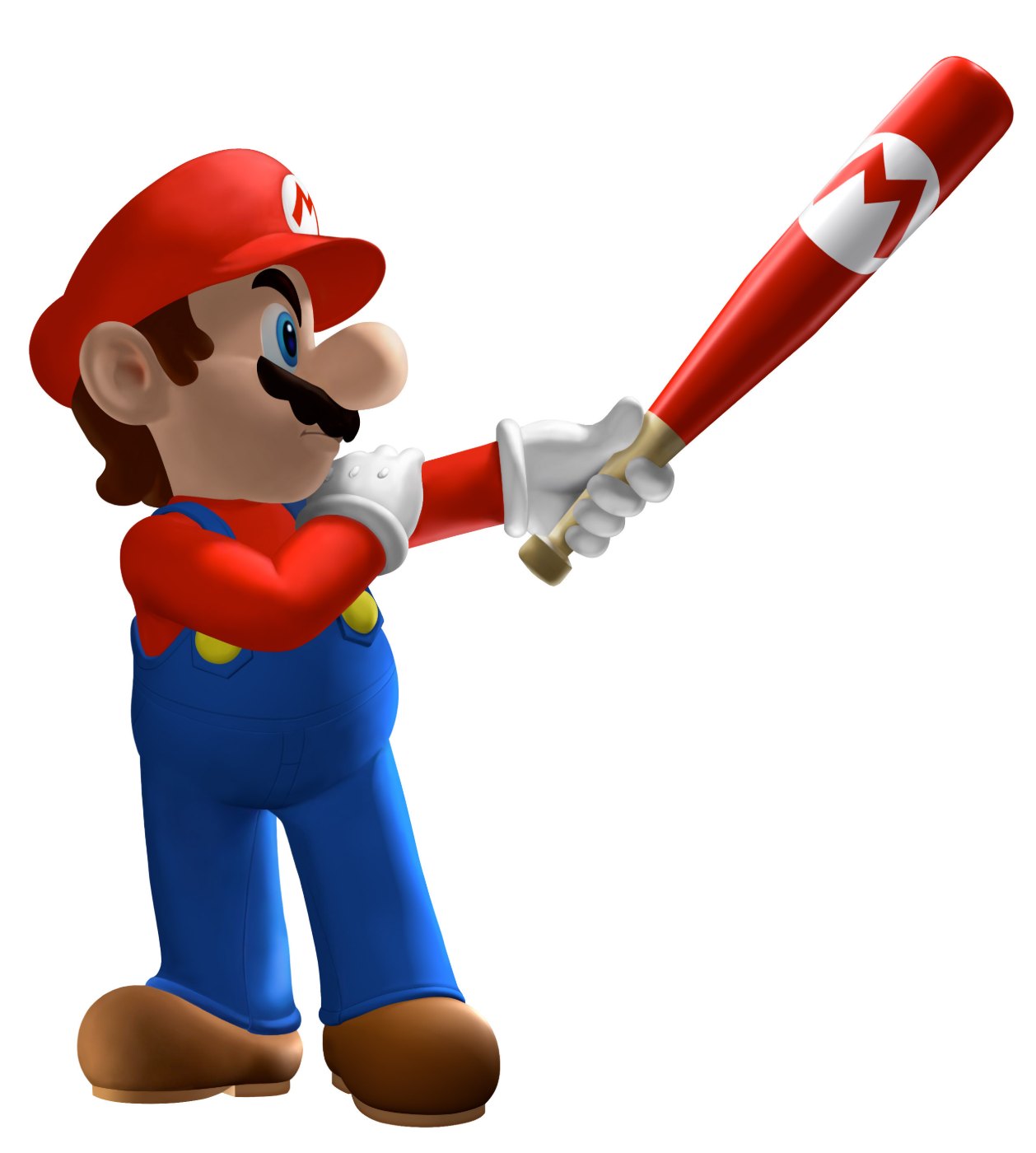
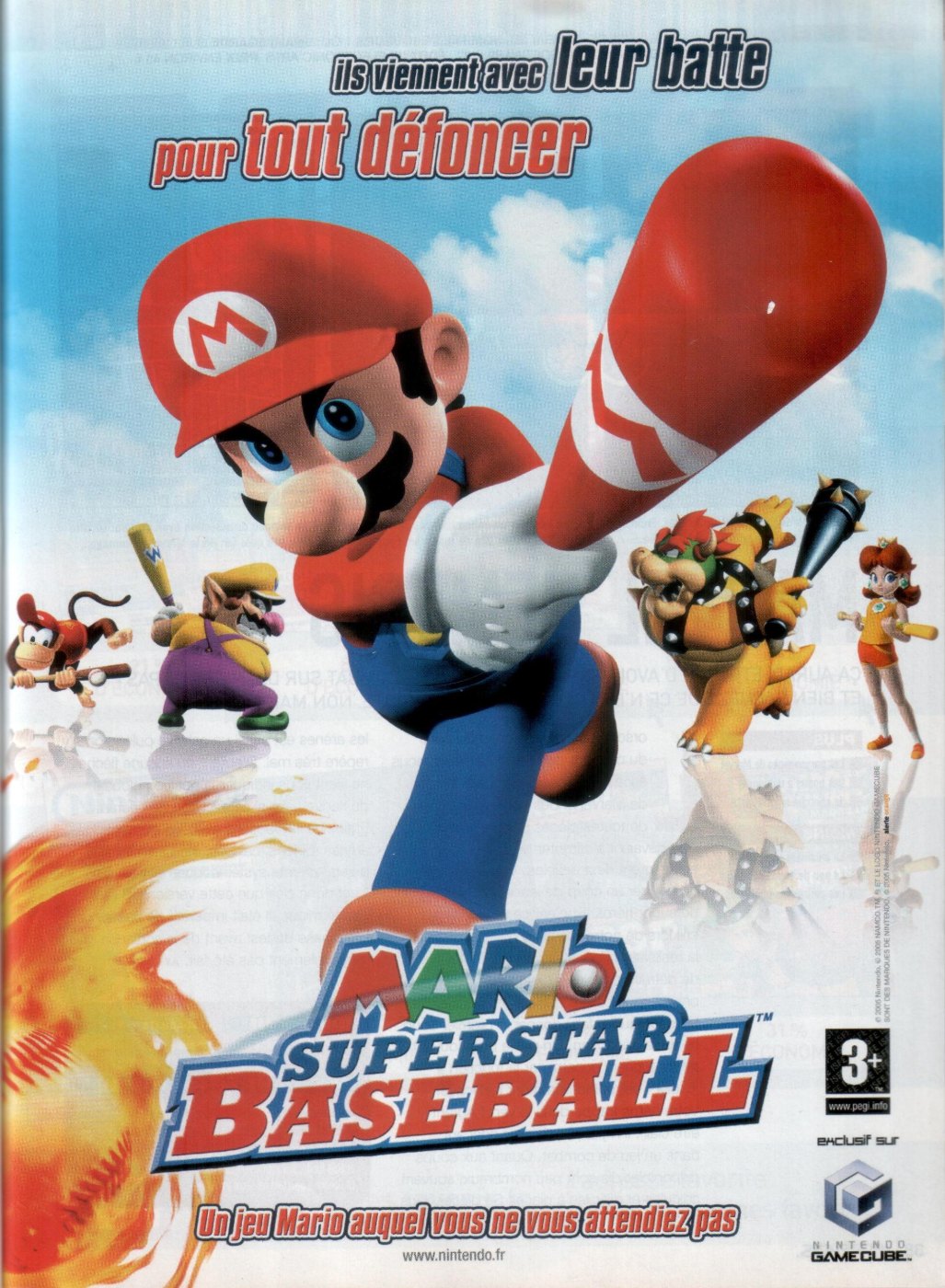
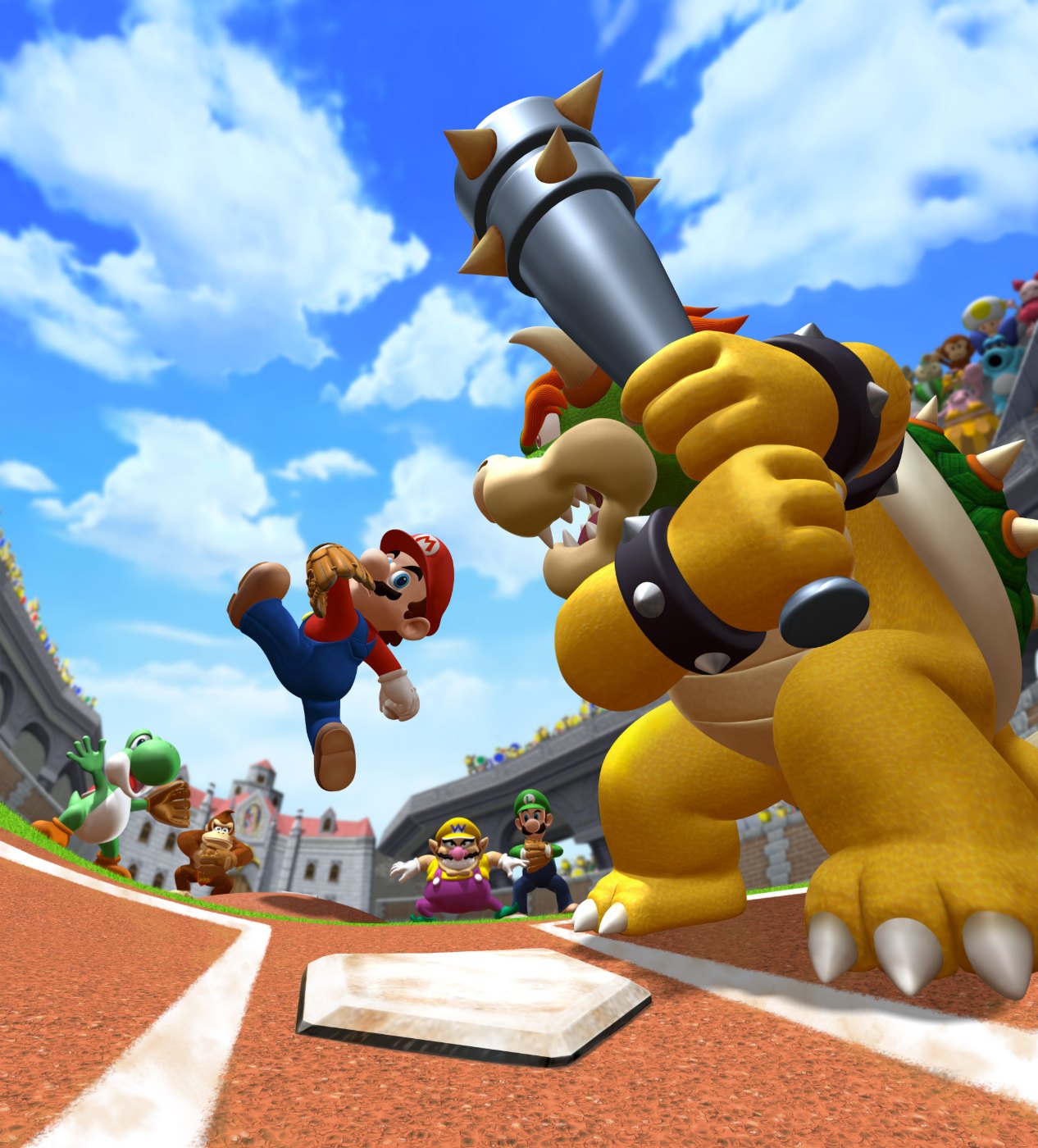
An alternate version of the main cover visual.Mario with bat and glove.Mario’s follow-through.Mario holding his bat.Mario powering up.The international logo.The in-game logo.The Japanese logo.Luigi Mansioneers crest.Peach Monarchs crest.Daisy Queen Bees crest.Yoshi Islanders crest.Birdo Bows crest, with its stars and stripes.Wario Greats crest.Waluigi Flankers crest.DK Kongs crest.Diddy Tails crest.Bowser Monsters crest.Jr. Pixies crest.Flower level emblem.Star level emblem.A French magazine advert.
Legacy & Re-releases
Superstar Baseball started a two-game series and lent Mario Stadium to Nintendo’s board games.
Re-releases
E3 2005May 2005Shown as Mario Baseball.
GameCube (Japan)21 July 2005Released as Super Mario Stadium Miracle Baseball.
GameCube (North America)29 August 2005Nintendo of America announces the game in shops.
GameCube (Australia)3 November 2005Australian release.
GameCube (Europe)11 November 2005English-only European release.
G-Phoria2006Best Alternative Sports Game.
Mario Super Sluggers (Wii)2008The sequel, built on this game’s mechanics.
Mario Super Sluggers
Director Hideki Tomida and producers Yasushi Ono and Toyokazu Nonaka returned for Mario Super Sluggers on Wii in 2008, which took its mechanics from this game. Nonaka went on to produce Mario Hoops 3-on-3 and Mario Sports Superstars.
We have not found an official Nintendo sales figure for Mario Superstar Baseball, so none is given here. It was reissued in North America and Canada in “Best Seller” packaging, and it won the G-Phoria award for Best Alternative Sports Game in 2006.
76Metacritic
76.7%GameRankings
9/10Nintendo Power
2006G-Phoria Best Alternative Sports Game
Reviews
Scores as listed by Wikipedia. Metacritic’s average is 76 and GameRankings’ was 76.70%.
Nintendo PowerUS
9/10
GameTrailersUS
8.5/10
GameProUS
4/5
GameSpotUS
8/10
GameSpyUS · Raymond M. Padilla
4/5
GameZoneUS
8/10
IGNUS · Matt Casamassina
7.9/10
Detroit Free PressUS newspaper
3/4
1UP.comUS · Andrew Pfister
7.5/10
Electronic Gaming MonthlyUS
7/10
Game InformerUS
7/10
EdgeUK
6/10
EurogamerUK
6/10
The Sydney Morning HeraldAustralia
3/5
Most critics enjoyed it with friends more than alone. GameSpy’s Raymond M. Padilla rated it highly as a multiplayer game, and 1UP’s Andrew Pfister felt it was designed for short bursts rather than long sessions. IGN’s Matt Casamassina liked it but pointed out that it was far from a perfect baseball game and that its production values were uneven, and GameDaily’s Robert Workman found it grew on him.
The British press was cooler: Edge and Eurogamer both gave it 6/10, while Nintendo Power in America gave it 9.
Honours
G-Phoria · 2006Best Alternative Sports GameWon at the G4 television awards (via Wikipedia).
SLB User Reviews
Mario Superstar Baseball (GameCube) has yet to receive a community review on Super Luigi Bros.
If you’ve played Mario Superstar Baseball (GameCube) and would like to submit a review, please get in touch.
More from the Super Luigi Bros Guide
These picture lists come from the earlier Super Luigi Bros guide to Mario Superstar Baseball (GameCube) and are kept here in full.
Stadiums
Six themed stadiums, each tied to a captain and each with unique gimmicks that affect baseball play.
To provide the best experiences, we use technologies like cookies to store and/or access device information. Consenting to these technologies will allow us to process data such as browsing behavior or unique IDs on this site. Not consenting or withdrawing consent, may adversely affect certain features and functions.
Functional
Always active
The technical storage or access is strictly necessary for the legitimate purpose of enabling the use of a specific service explicitly requested by the subscriber or user, or for the sole purpose of carrying out the transmission of a communication over an electronic communications network.
Preferences
The technical storage or access is necessary for the legitimate purpose of storing preferences that are not requested by the subscriber or user.
Statistics
The technical storage or access that is used exclusively for statistical purposes.The technical storage or access that is used exclusively for anonymous statistical purposes. Without a subpoena, voluntary compliance on the part of your Internet Service Provider, or additional records from a third party, information stored or retrieved for this purpose alone cannot usually be used to identify you.
Marketing
The technical storage or access is required to create user profiles to send advertising, or to track the user on a website or across several websites for similar marketing purposes.




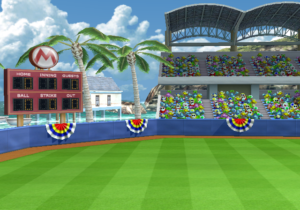 Mario StadiumNo hazardsA classic ballpark with palm trees beyond the outfield: the place for pure baseball. It later became a board in Itadaki Street DS and Fortune Street.
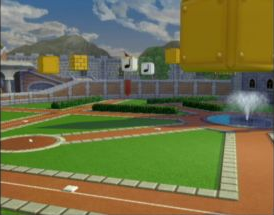 Peach GardenFloating blocksBrick Blocks (breakable) and Note Blocks (not) float over the field, bouncing fly balls in random directions; hit them for Team Stars.
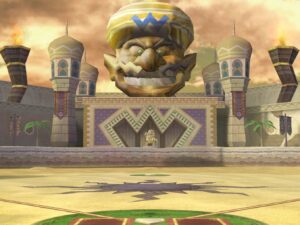 Wario PalaceChain Chomps · sandstormsChain Chomps guard foul territory and bite balls and players, cyclone generators from Wario World blow the ball off course, and star-shaped dunes give Team Stars.
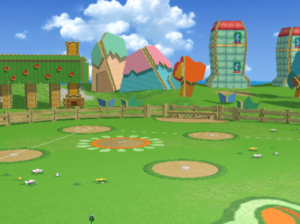 Yoshi ParkPiranha PlantsPiranha Plants snap at anyone chasing a stray ball; the yellow ones are friendly and give a Team Star when hit. Yoshi’s House from Super Mario World sits behind home plate.
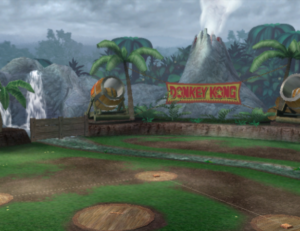 Donkey Kong JungleBarrels · KlaptrapsCannons fire barrels at the players, and Klaptraps lurk in a stream; hit a Klaptrap with the ball for a Team Star.
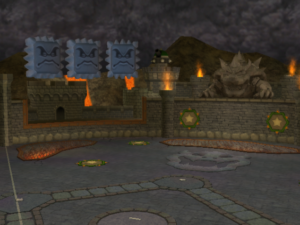 Bowser CastleLava · Thwomps · unlocked by clearing Challenge ModeFireballs leap from lava pits, Thwomps crash down to block home runs, and star panels give Team Stars.
 FireballMario (item: Red Fireball). A flaming line drive that burns fielders who try to catch it.
 Green FireballLuigi (item: Green Fireball). A short, burning grounder.
 Heart BallPeach (item: Lovely Heart).
 Flower BallDaisy (item: Pretty Flowers).
 Egg BallYoshi (item: Egg).
 Weird BallBirdo (item: Pink Egg).
 Phony BallWario (item: Gnarly Garlic).
 Liar BallWaluigi (item: Whiskered Eggplant).
 Banana BallDonkey Kong (item: King Banana).
 Boomerang BallDiddy Kong (item: Chimp Banana).
 Killer BallBowser (item: Bullet Bill).
 Killer Jr. BallBowser Jr. (item: Jr. Mask).
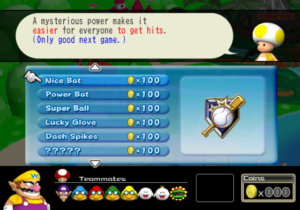 Secret MapPermanent: opens Toy Field on the Challenge Mode map, so its coins count. Appears once every minigame on the map is beaten.
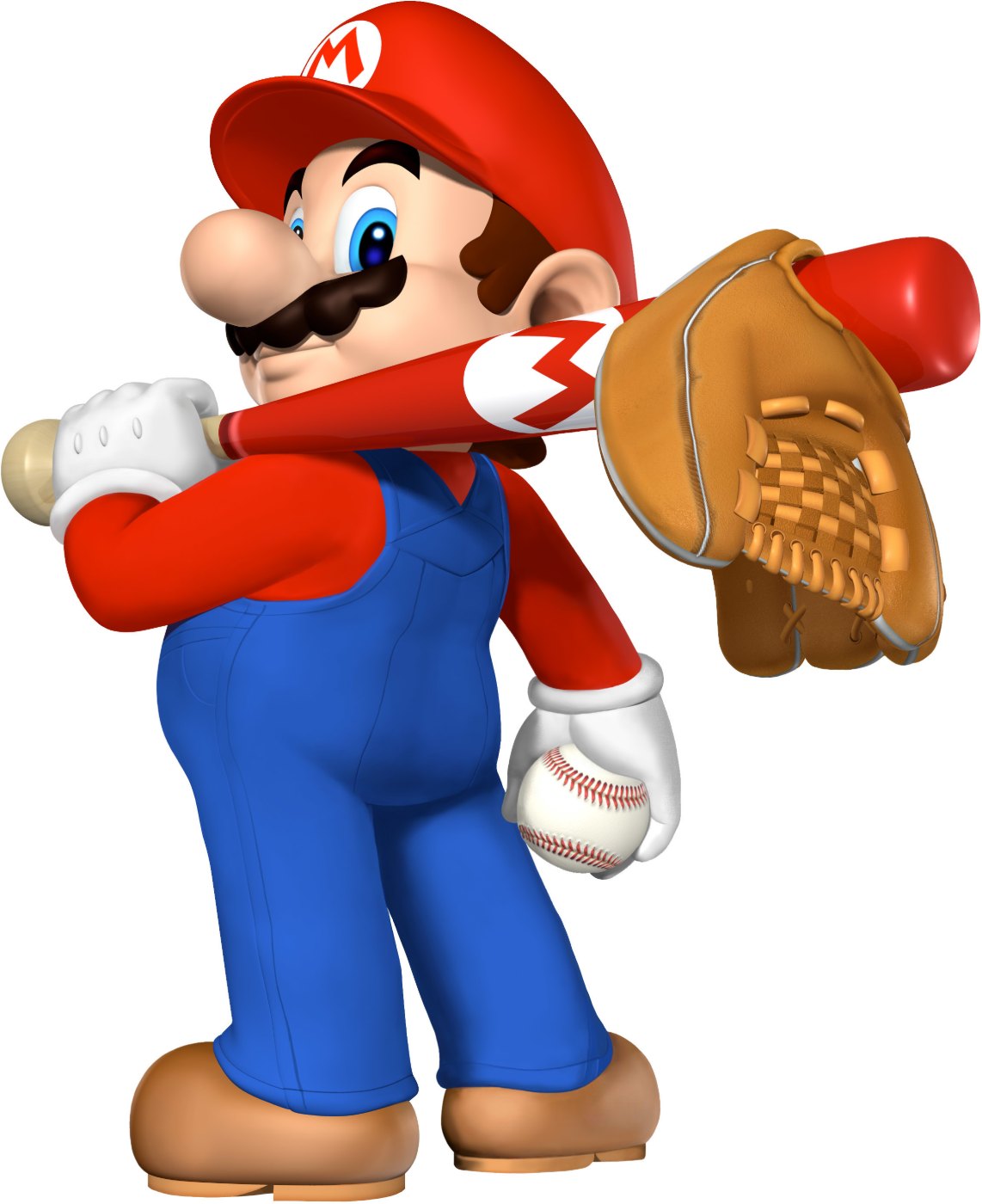 Mario Super SluggersWii · 2008The sequel, from the same director and producers, built on this game’s mechanics and kept its untranslated baseball jargon in English.
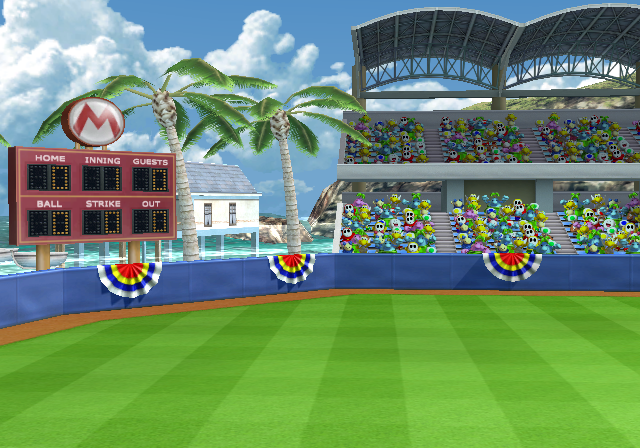 Itadaki Street DS and Fortune StreetBoard gamesMario Stadium became a board in Itadaki Street DS, and returned in Fortune Street on Wii.
 Team namesNods to older gamesThe Mario Sunshines (Super Mario Sunshine), Luigi Mansioneers and Luigi Vacuums (Luigi’s Mansion), Yoshi Islanders (Yoshi’s Island) and Mario All-Stars (Super Mario All-Stars) all borrow their names from earlier games. In Japan the Birdo Bows are “Catherine USA”, after Super Mario USA, Japan’s name for Super Mario Bros. 2.
 Wario’s WoodsBad chemistryToad and Wario have bad Chemistry, perhaps a memory of their battle in Wario’s Woods.
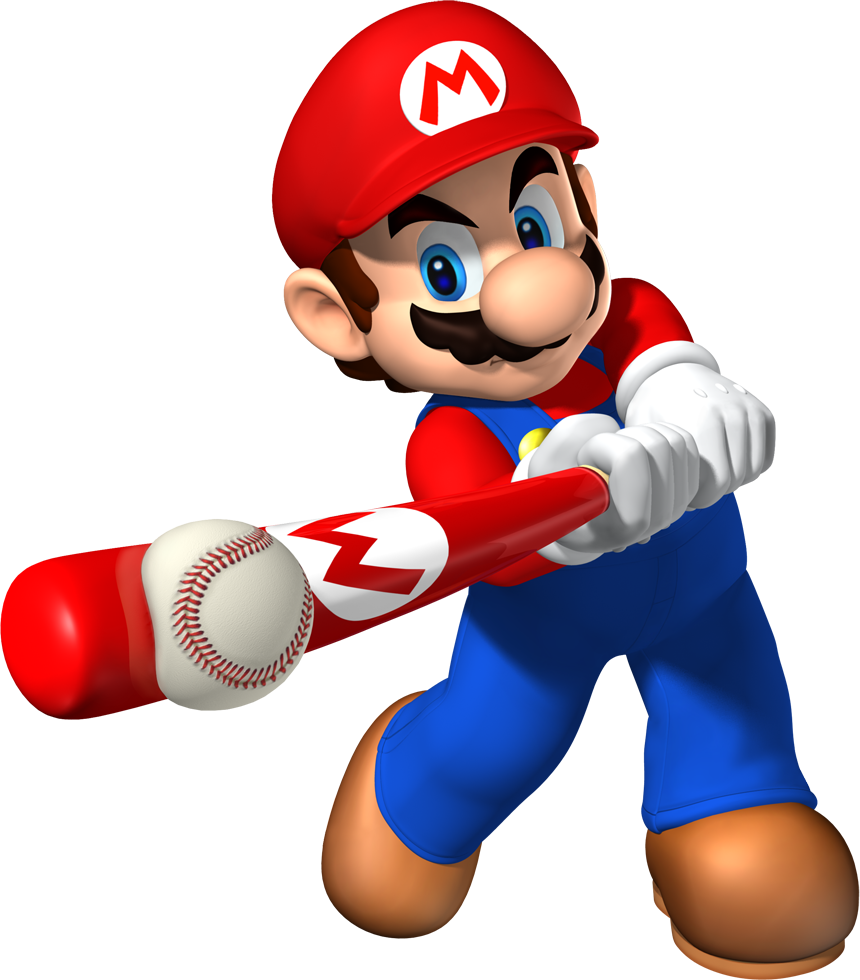 MarioCaptain · Balance
 LuigiCaptain · Balance
 Princess PeachCaptain · Technique
 Princess DaisyCaptain · Balance
 YoshiCaptain · Speed
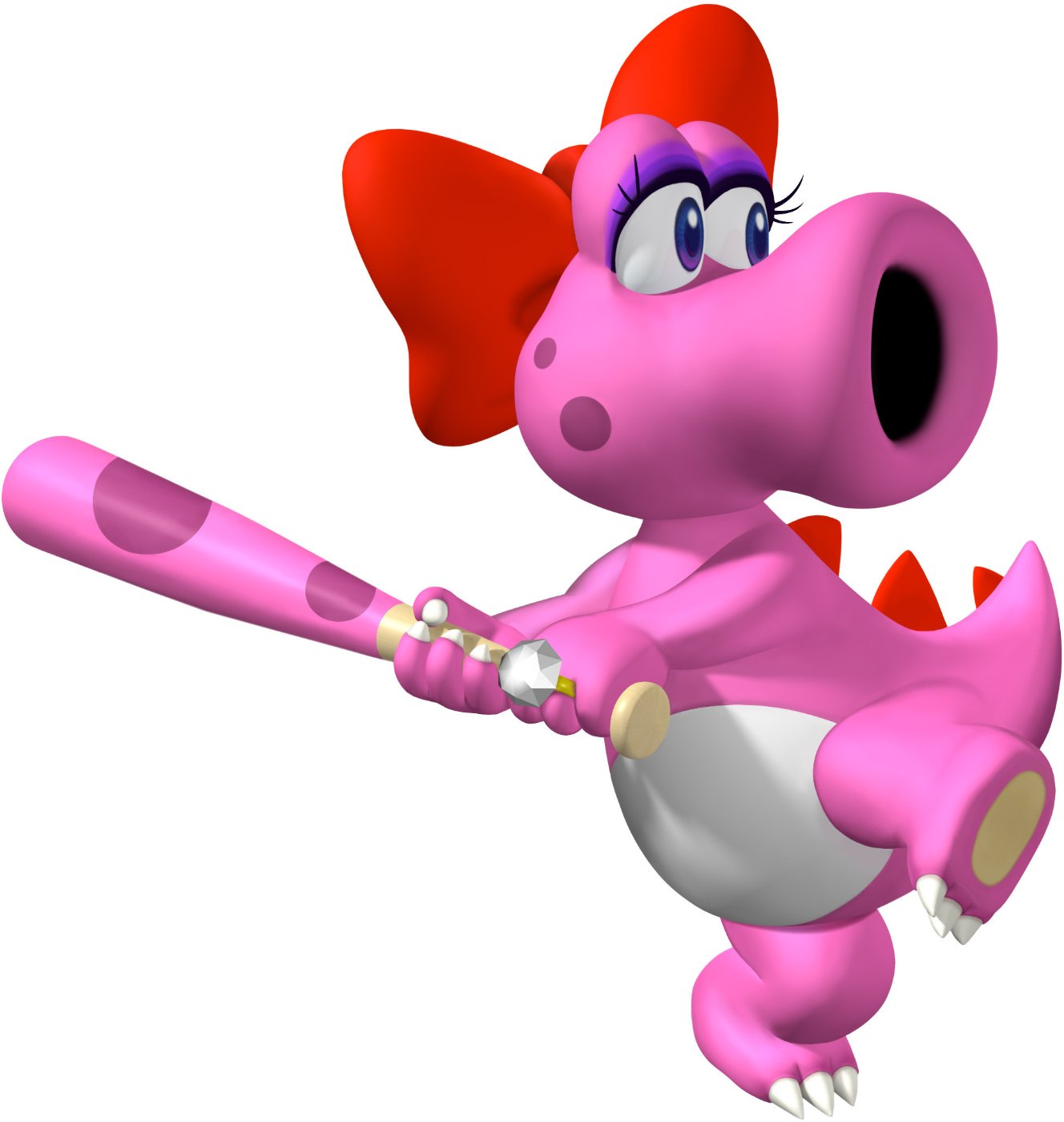 BirdoCaptain · Balance
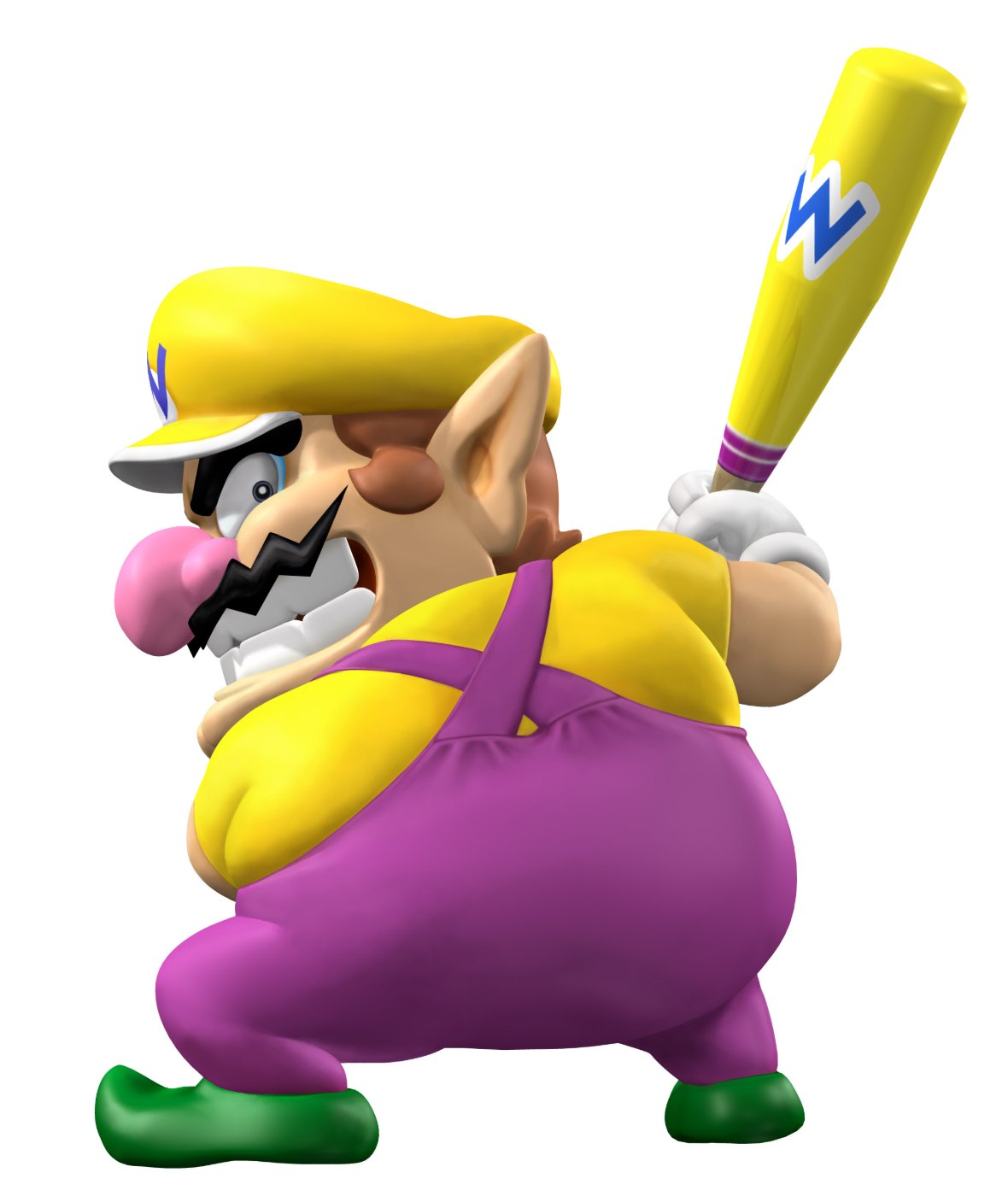 WarioCaptain · Power
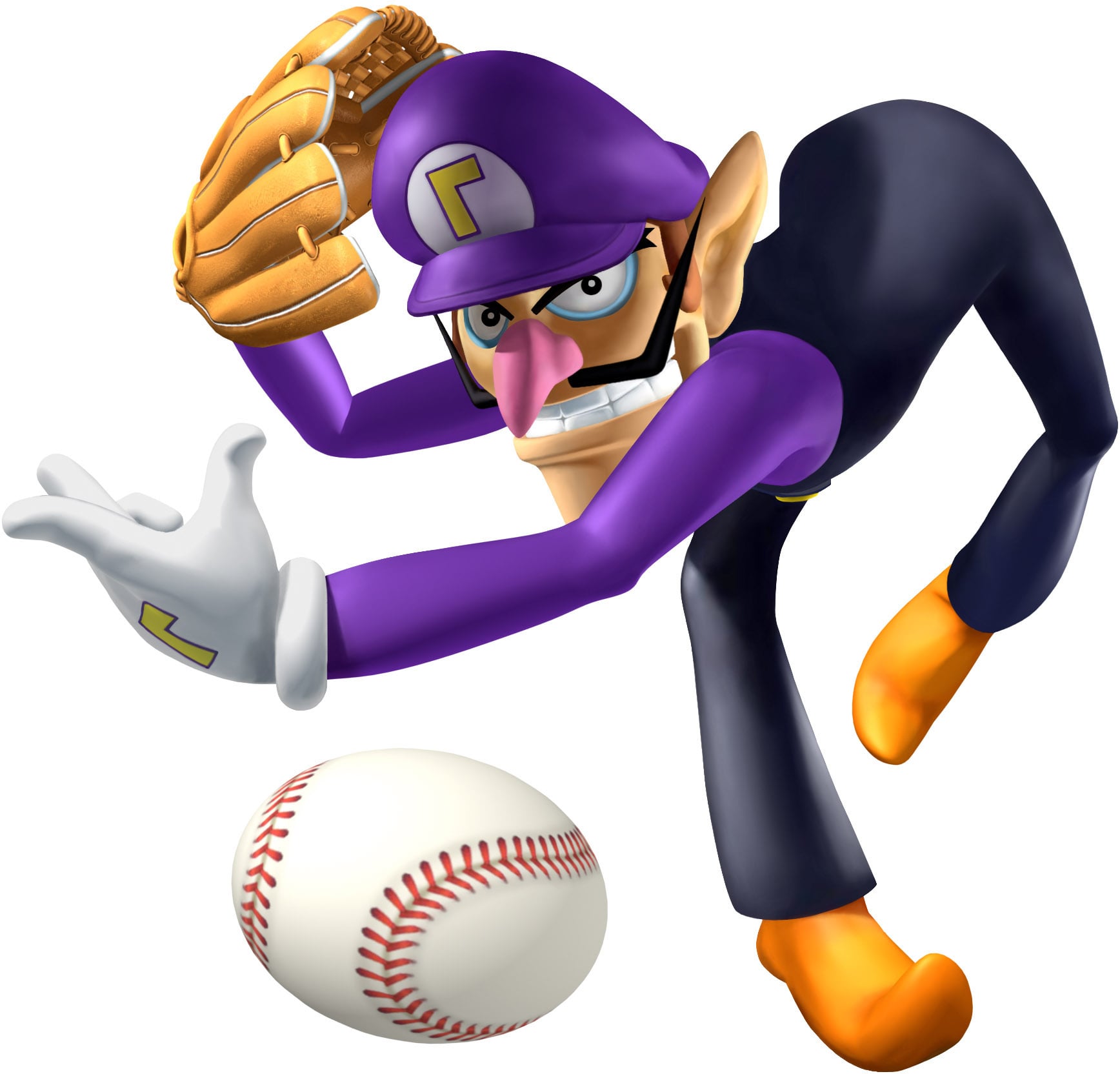 WaluigiCaptain · Technique
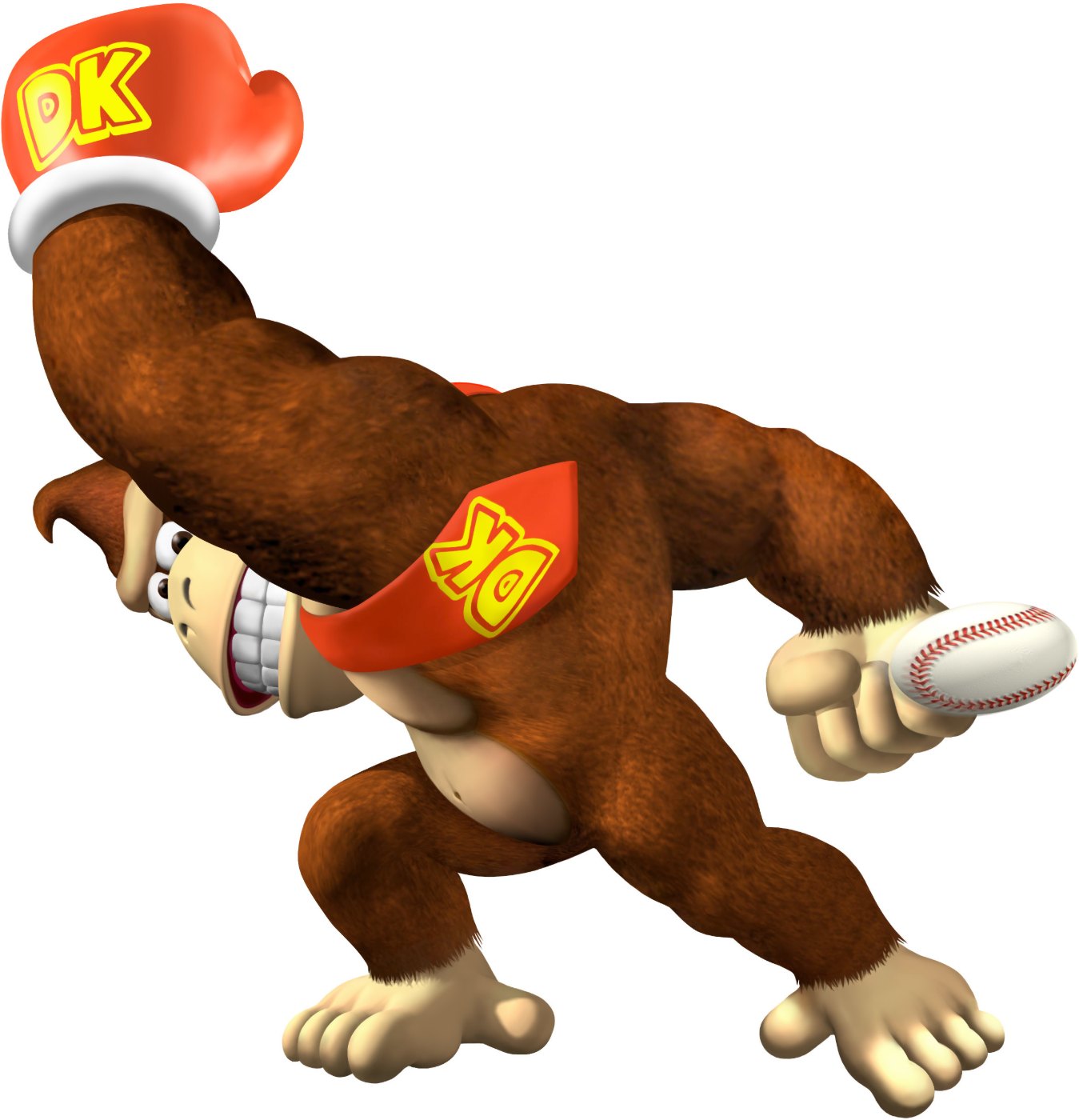 Donkey KongCaptain · Power
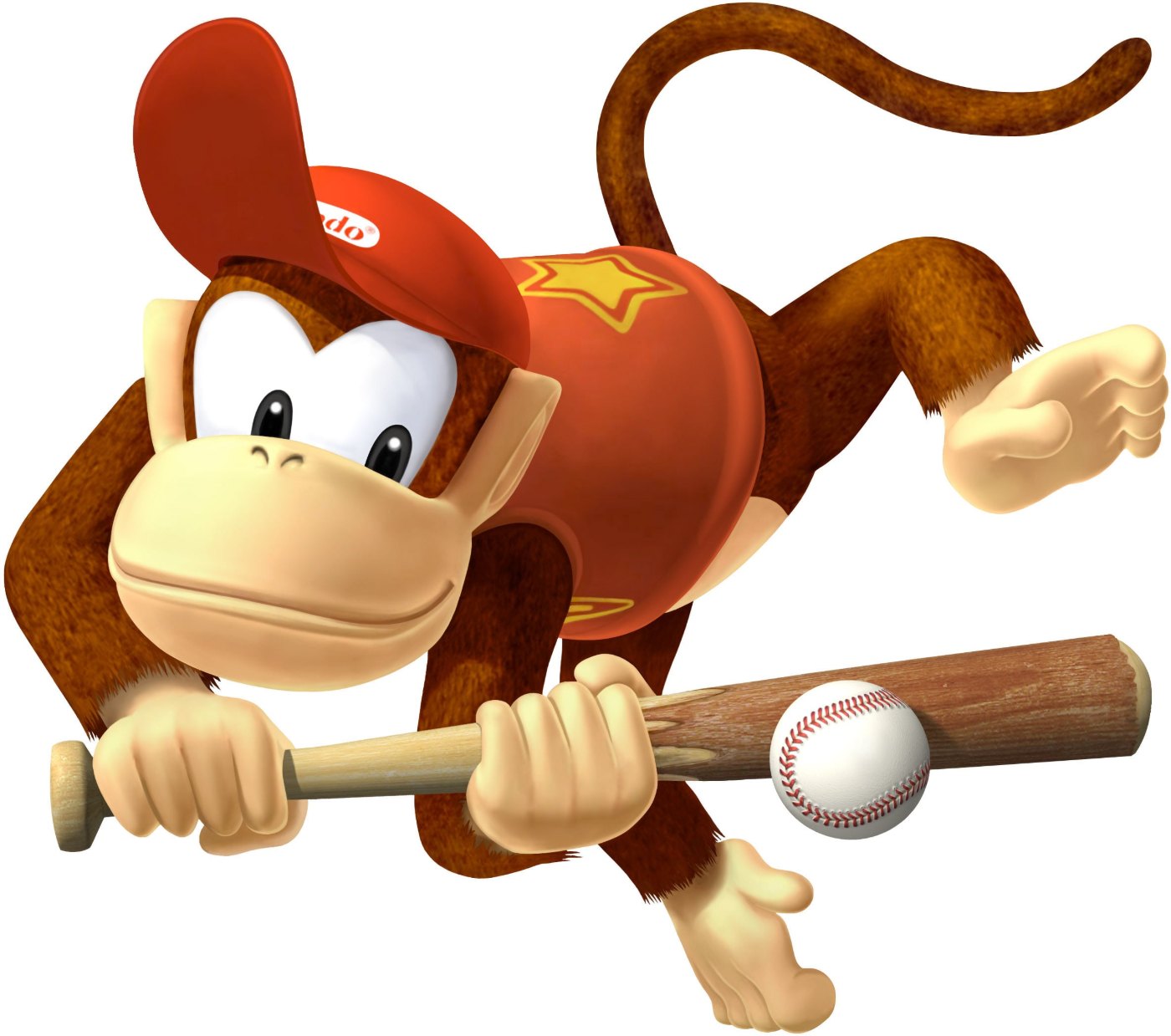 Diddy KongCaptain · Speed
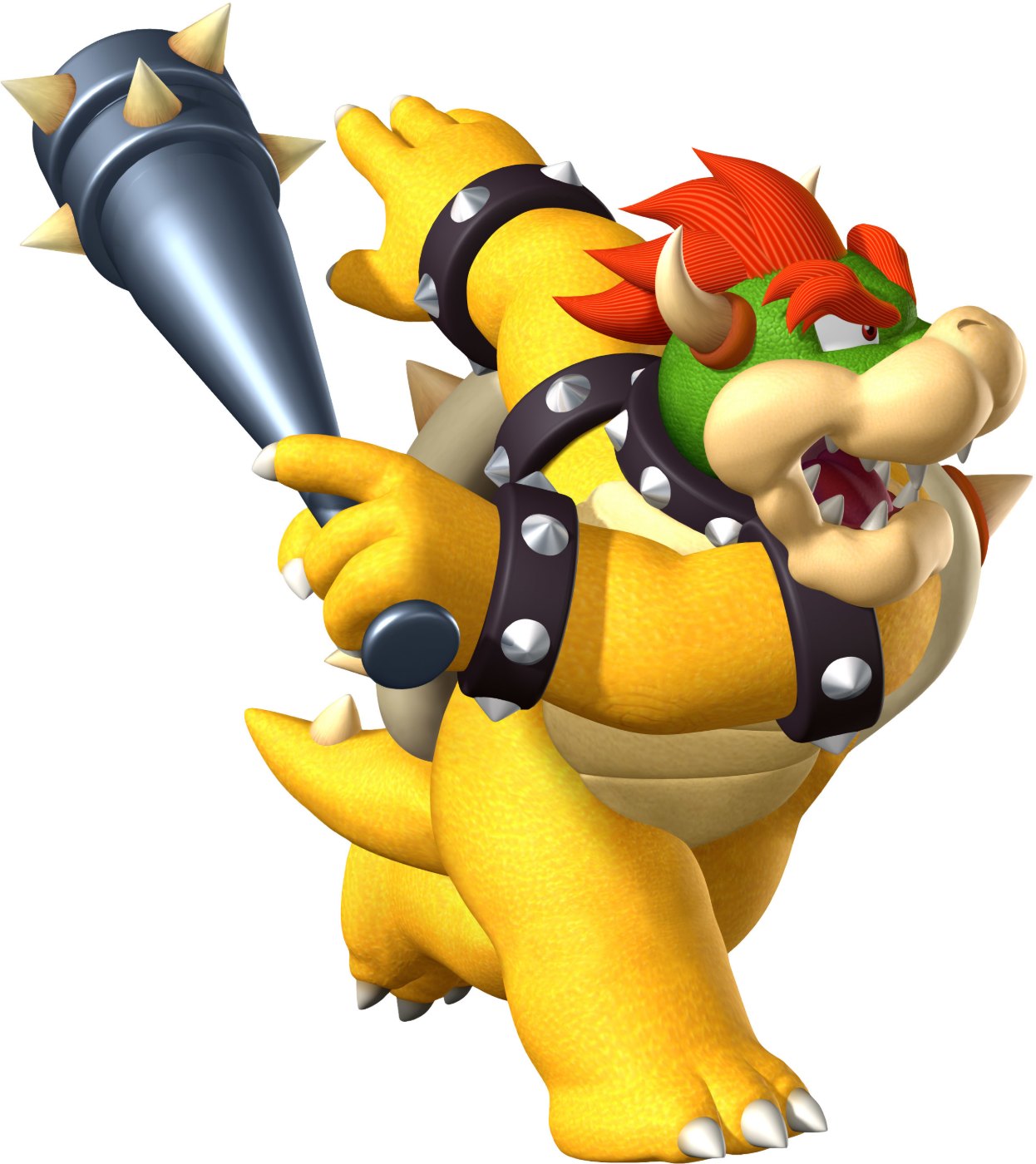 BowserCaptain · Power
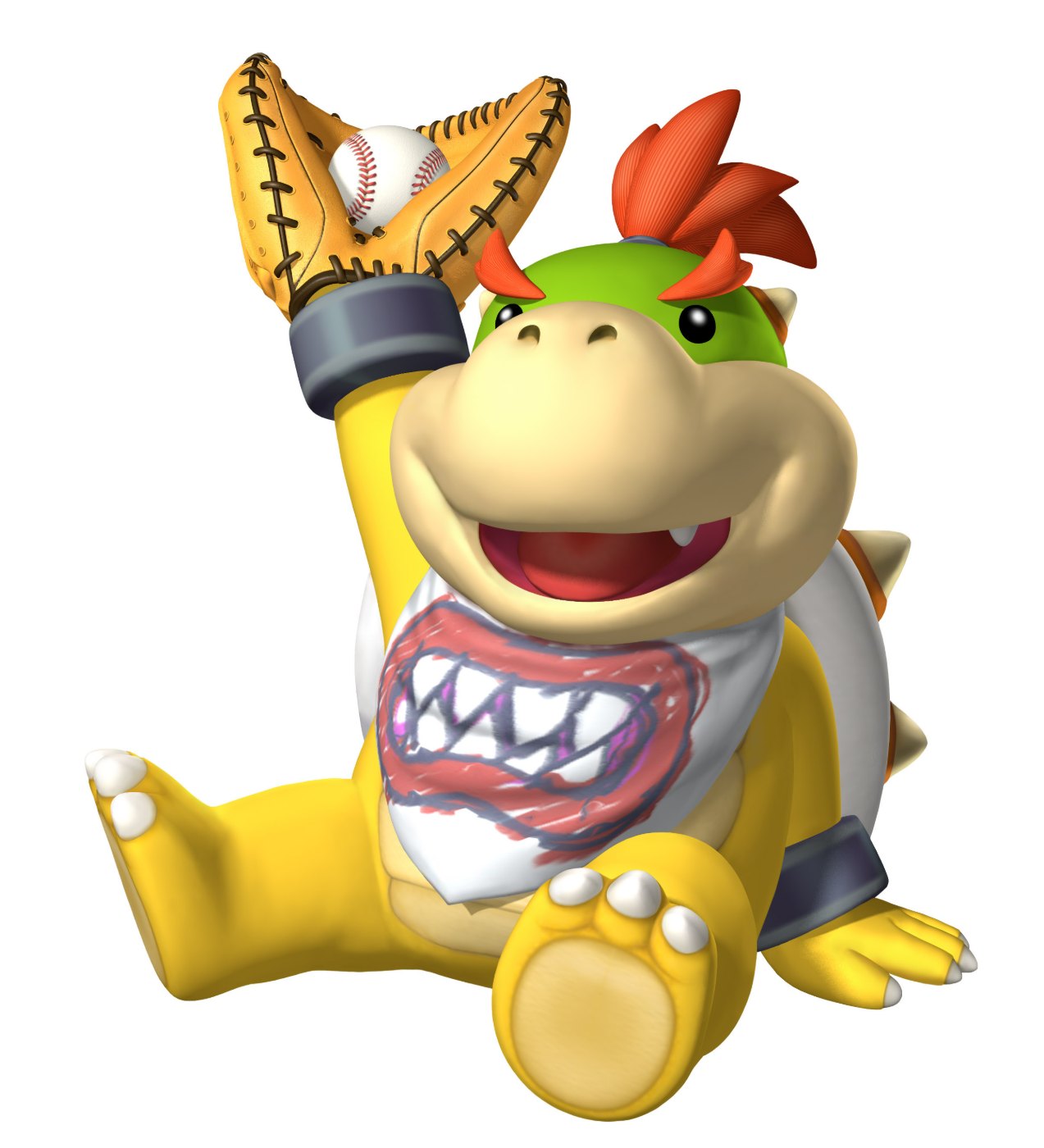 Bowser Jr.Captain · Power
 Baby MarioSpeed · Yoshi IslandersWall Jump.
 ToadsworthTechnique · Peach MonarchsSuper Catch; voiced by Scott Burns.
 GoombaBalance · DK KongsBall Dash.
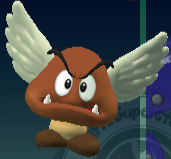 ParagoombaSpeed · DK KongsSuper Jump.
 Koopa TroopaBalance · DK KongsGreen and red; Sliding Catch.
 ParatroopaTechnique · DK KongsRed and green; Super Jump.
 Dry BonesTechnique · Bowser MonstersFour colours; Sliding Catch.
 Shy GuyBalance · Yoshi IslandersRed, blue, yellow, green and black; Sliding Catch.
 BooTechnique · Wario GreatsSuper Jump and a hidden curve on its hits.
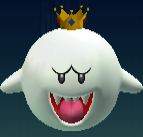 King BooPower · Wario GreatsSuper Jump, curving hits, and bad Chemistry with Luigi.
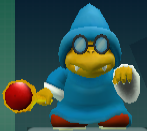 MagikoopaTechnique · Wario GreatsFour colours; the only Magical Catch.
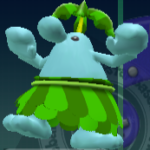 PiantaPower · Mario SunshinesBlue, red and yellow; Laser Beam.
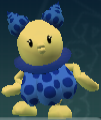 NokiSpeed · Mario SunshinesBlue, red and green; Sliding Catch.
 Baby LuigiSpeed · unlock: clear Challenge as YoshiWall Jump.
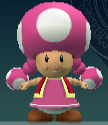 ToadetteSpeed · unlock: clear Challenge as PeachWall Jump and Sliding Catch.
 Monty MoleSpeed · unlock: clear Challenge as MarioBall Dash.
 Dixie KongTechnique · unlock: clear Challenge as Donkey KongClamber; good Chemistry with Diddy.
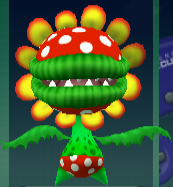 Petey PiranhaPower · unlock: clear Challenge as WarioBody Check; hits with his arms.
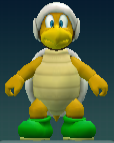 Hammer BroPower · unlock: clear Challenge as BowserBody Check.
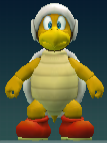 Fire BroPower · unlock: clear Challenge as BowserUnlocked with the Hammer and Boomerang Bros.
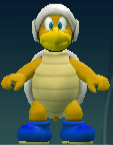 Boomerang BroPower · unlock: clear Challenge as BowserA hidden curve on its hits.