Wii U2016Action-adventureIntelligent Systems6 Big Paint Stars7 Koopalings28 Things32 levelsMetacritic 76
Paper Mario: Color Splash
A letter arrives at Mario’s house, and the letter is a Toad: folded flat, drained of every drop of colour and postmarked Prism Island. Released for Wii U in North America and Europe on 7 October 2016, Paper Mario: Color Splash is the fifth Paper Mario and the series’ only outing on that console. Somebody is sucking the paint out of the island through drinking straws, the six Big Paint Stars that feed the fountain at Port Prisma are gone, and each has ended up in the hands of one of Bowser’s Koopalings. Mario teams up with Huey, a talking paint can, who loads his hammer with red, yellow and blue. On the map he repaints the world one white patch at a time; in battle he picks Battle Cards on the Wii U GamePad, daubs them with paint and flicks them at the television. It is the sequel to Sticker Star in every way that matters, with no experience points and no party, and it was greeted with a petition for its cancellation before anyone had played it. What they got was the funniest script in the series and one of its most handsome games.
Developer:Intelligent Systems
Publisher:Nintendo
Platform:Wii U (disc and Nintendo eShop download)
Genre:Action-adventure with turn-based card battles
Producers:Kensuke Tanabe (producer) and Risa Tabata (assistant producer), both Nintendo; Toshiyuki Nakamura and four others are credited as general producers
Structure:32 levels on one world map, plus eight Roshambo Temples
Ratings:PEGI 3 · ESRB E · CERO A · ACB G · USK 0
Sales:20,894 in its first week in Japan (Media Create); no worldwide figure on Nintendo’s investor-relations pages
Re-releases:None
Advertisement
Overview
Mario and Huey.
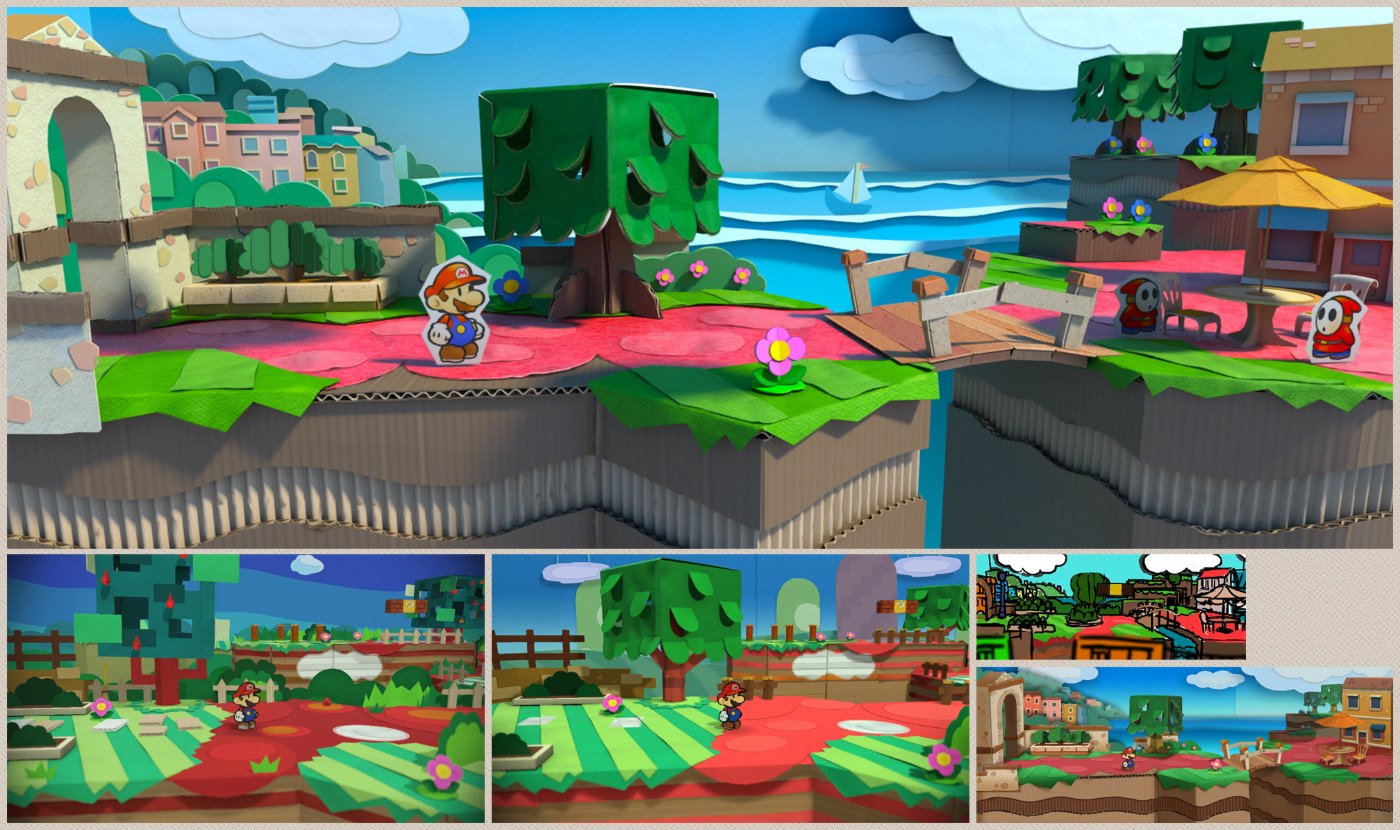
Four years after Sticker Star, Color Splash took that game’s blueprint and rebuilt it for a television. The frame is the same: courses on a world map, each ending at a star; attacks that are objects to be collected and used up; household Things that turn the tide; a chatty companion who is not a fighter; and Toads, Toads, Toads. What changed is nearly everything a player touches. The courses are bigger and are revisited as the story doubles back through them. The stickers became cards, carried as a whole deck. The companion has a sense of humour. And over all of it lies a new idea, which is that the world has lost its colour and Mario can put it back.
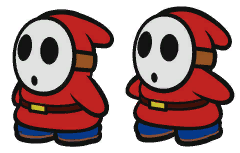
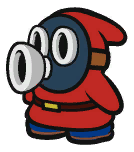
The Paint Hammer is the heart of the game. Prism Island is pocked with white holes where Bowser’s Shy Guys have slurped the colour out through straws, and a wallop of the hammer fills each one in, at a cost in red, yellow or blue paint from three gauges at the top of the screen. Paint comes spurting out of every flower, barrel and fence post that Mario hits, so the rhythm of exploring is hit, splash, spend. Filling in every last spot in a level is the game’s gentlest and most compulsive pastime.
Battles keep the turn-based stomping and hammering of the older games, with Action Commands and blocks on the A Button, but everything Mario does is a card from his deck and every card works better painted. There are no experience points. Enemies drop Hammer Scraps, which make the paint gauges bigger, and that is the only levelling there is. Producer Kensuke Tanabe was frank about it afterwards: fights are an obstacle on the way to the puzzles, and the puzzles are the point.
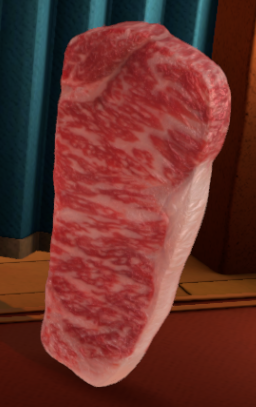
So is the comedy. The cast is almost entirely Toads, because the developers had been asked to stick to the Mario family, and the script, by Taro Kudo and Nintendo’s English localisers, wrings an astonishing amount out of them: a hotel haunted by six ghosts who want their tea, a train enthusiast in despair, a gang of five beach entertainers, a steak that has to be fought. Critics who had no patience with the card battles still tended to admit they had laughed all the way through.
Solve the mystery behind the colourless Toads and save Prism Island in Paper Mario: Color Splash, a hilarious action-adventure only on Wii U!
When a blank Toad is mysteriously mailed to Princess Peach, our hero Mario sets sail for Prism Island, a papery paradise that’s losing its colour and needs your help. With the help of a new sidekick named Huey and a nifty new tool called the paint hammer, splash colour back into the world and track down the culprit behind this curious colour crime.
— Official description (Nintendo UK, 2016)
Why Color Splash matters to Mario fans
It is the only Paper Mario with all seven Koopalings, each a boss with a gimmick and a fatal weakness for some item of hardware. It gave the series Huey, the first companion since Tippi with an ending people remember. It arrived in the Wii U’s final months, and it shows what that console’s GamePad could do in sympathetic hands. And it is where the argument over what Paper Mario is supposed to be came into the open, with Nintendo saying in so many words that this was no longer an RPG series.
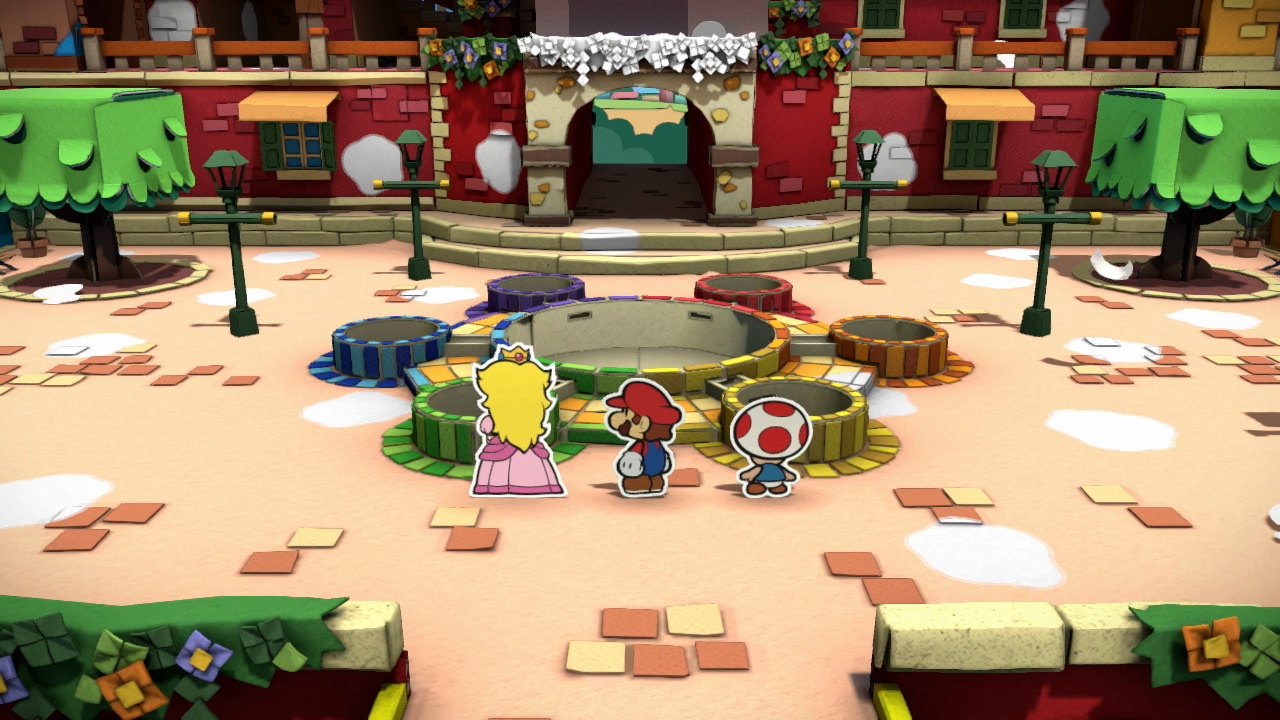
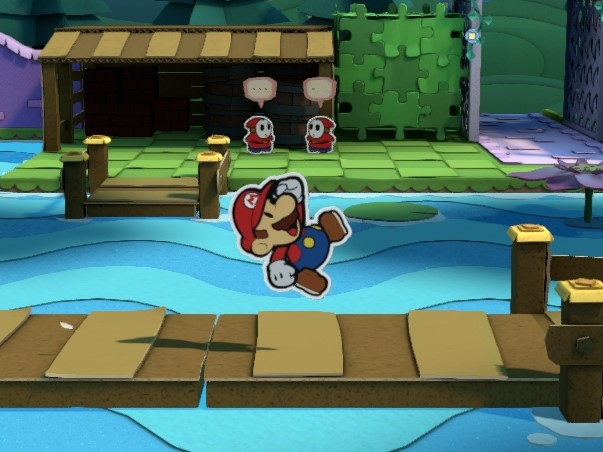
A drained Toad in Port Prisma gets his colour back.A battle, with painted cards lined up to play.Cutout: snipping a piece out of the scenery.The title screen.
“could you make a game with only characters from the Mario family?”
Kensuke Tanabe, interviewed by Ben Reeves, Game Informer, 28 December 2016.
Shigeru Miyamoto’s request to the Paper Mario team, as recalled by producer Kensuke Tanabe when Game Informer asked why the island was populated by Toads. Tanabe added that the team was not thinking of bringing the old supporting characters back.
Quick Answers
The questions people ask most about Paper Mario: Color Splash, answered briefly here and in depth further down the page.
When did Paper Mario: Color Splash come out?
On Wii U in North America and Europe on 7 October 2016, Australia on 8 October 2016 and Japan on 13 October 2016. It has not been released on any other system. More →
Is Color Splash an RPG?
Nintendo calls it an action-adventure. Battles are turn-based, but there are no experience points, no levels and no partners. Beating enemies earns coins, paint and Hammer Scraps, which raise the amount of paint Mario can carry, and each Big Paint Star adds 25 HP. More →
How do Battle Cards work?
Every attack is a card. On the GamePad you choose cards from your deck, fill each with paint (more paint, more damage) and flick them up to the TV. Mario starts with one card a turn and can earn up to four. Cards are used up when played. More →
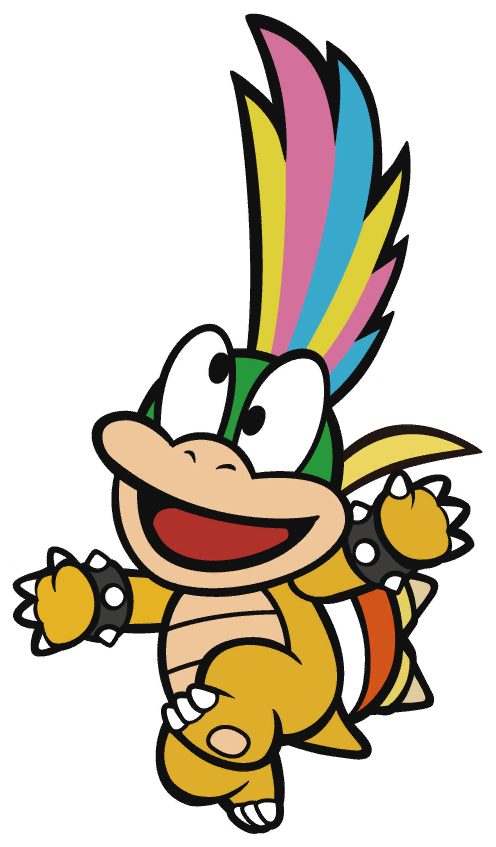
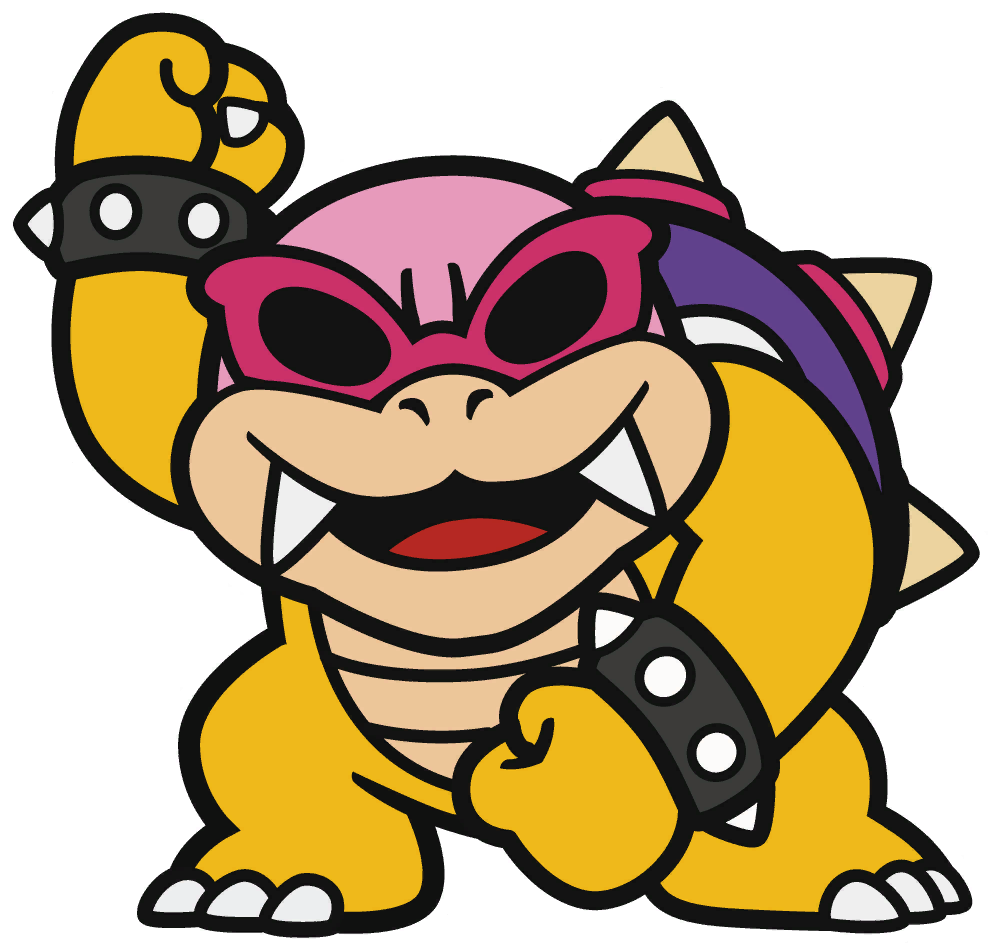
Who are the bosses?
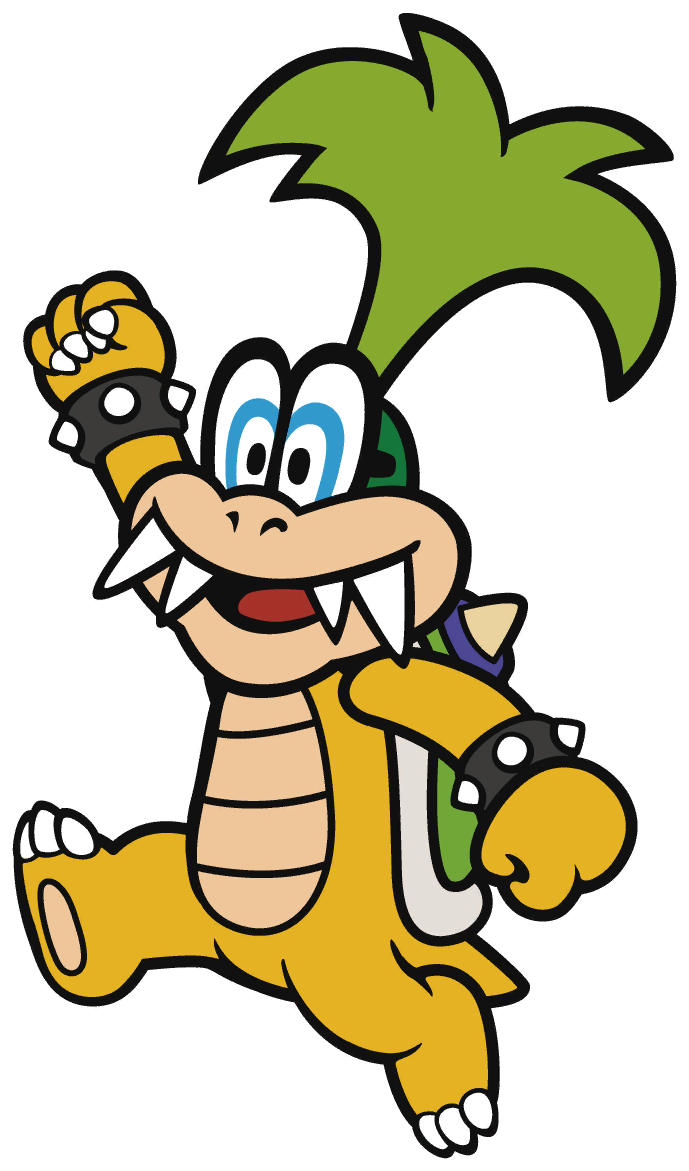
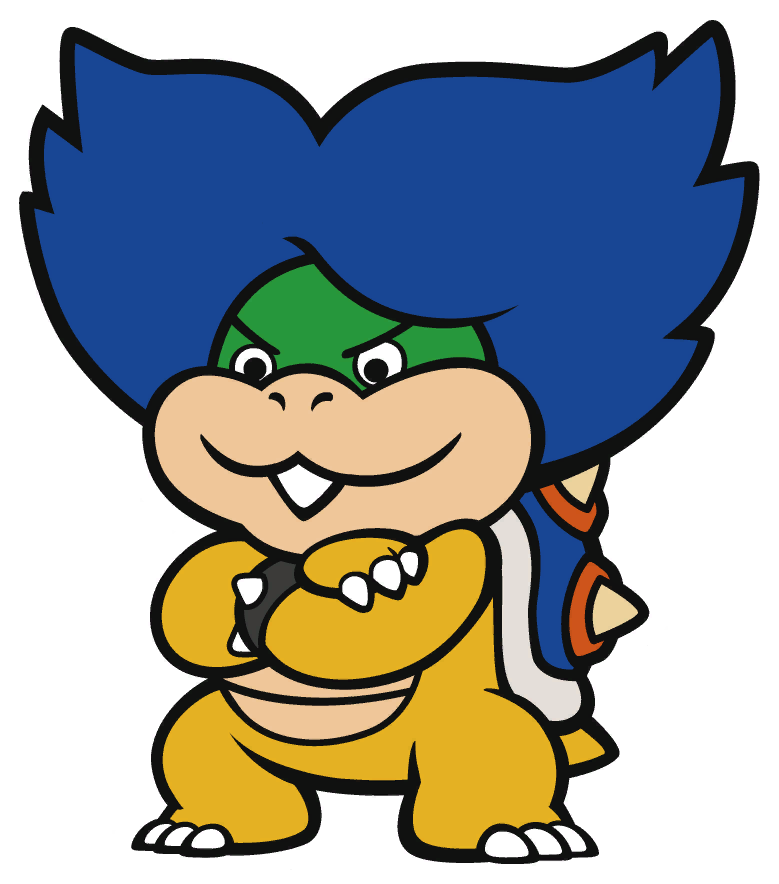
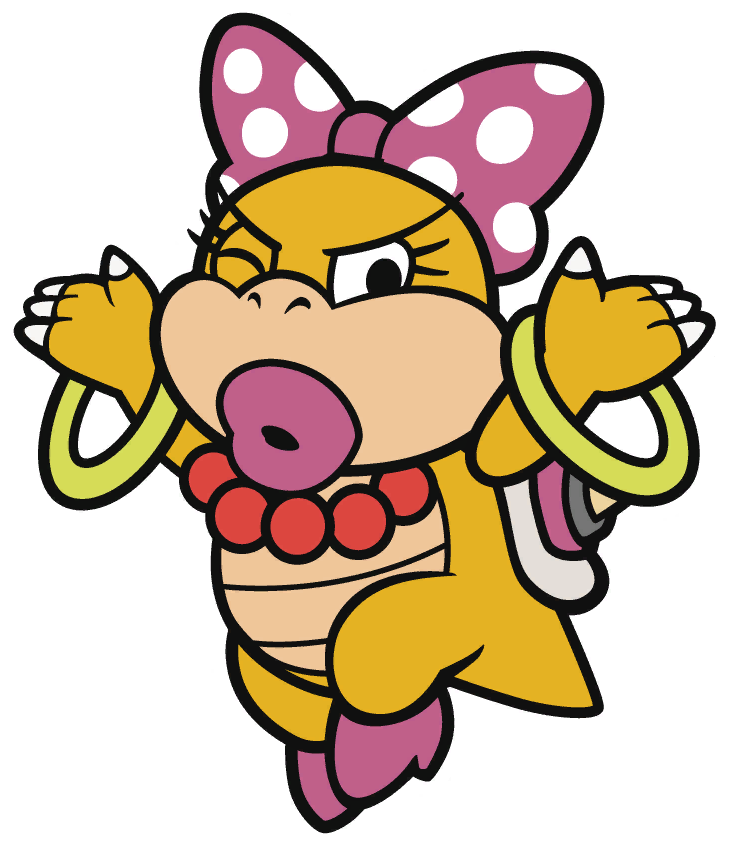
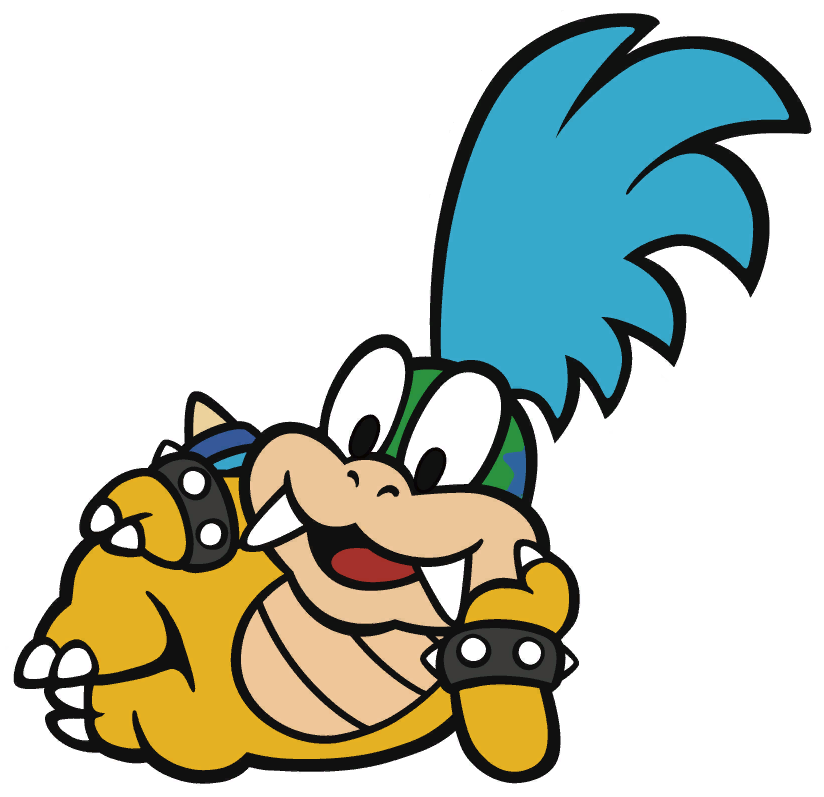
Six Koopalings hold the Big Paint Stars: Morton (150 HP), Iggy (180), Ludwig (150), Wendy (300), Larry (350) and Lemmy (350). Roy (420 HP) waits inside Black Bowser’s Castle, and the final boss is Black Bowser (700 HP). HP figures are from StrategyWiki’s table. More →
Which Thing beats which boss?
Morton: Fire Extinguisher. Iggy: Bone. Ludwig: Balloons (after a Tail card for the cannonballs). Wendy: Instant Camera. Larry: Cork. Lemmy: Disco Ball, then Ice Pick. Roy: Washing Machine. Black Bowser: Huey himself. More →
How many Things are there?
Twenty-eight, counting Huey. Each is squeezed into a Thing Card the moment Mario picks it up, and only one of each can be held. Lost ones can be bought back from the Wringer in Port Prisma. More →
Who is Huey?
A talking paint can who lives in Prisma Fountain. He is Mario’s guide for the whole game, gives the hammer its paint, teaches Cutout, and at the end squeezes Black Bowser’s Castle into himself and carries the black paint away into the sky. More →
Is there a secret ending?
Yes. Earn all six Super Flags and a short extra scene plays after the credits, in which Huey drops back into Prisma Fountain. More →
Where is Luigi hiding?
In six places: Bloo Bay Beach, Marmalade Valley, The Golden Coliseum, Plum Park, Redpepper Crater and the Green Energy Plant. Use Cutout on each to flush him out for 300 coins. Find all six and he opens the credits parade. More →
How well did it sell?
Modestly. Media Create counted 20,894 copies in its first week in Japan. Nintendo’s investor-relations pages give no worldwide figure, and the game is not on its list of the ten best-selling Wii U titles, where the lowest entry stands at 2.27 million. More →
Story
Mario, Huey and the people of Prism Island.
Color Splash has no chapters, but it has six acts, one for each Big Paint Star, and a finale. Each act is a chain of three or four levels with a running story of its own: a tower with a locked gate, a missing dog, a haunted hotel, a pirate voyage, a broken-down train, a circus. The acts overlap, and levels from one are forever being revisited in another with some new Thing in hand.
This is the whole of it, with every ending given away.
Prism Island and Port Prisma
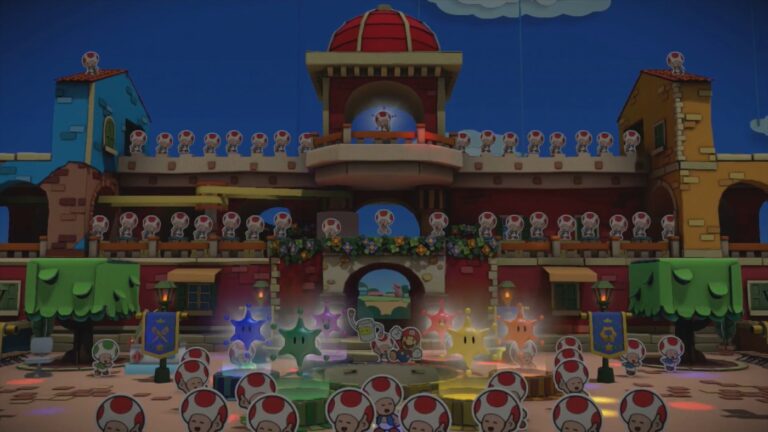
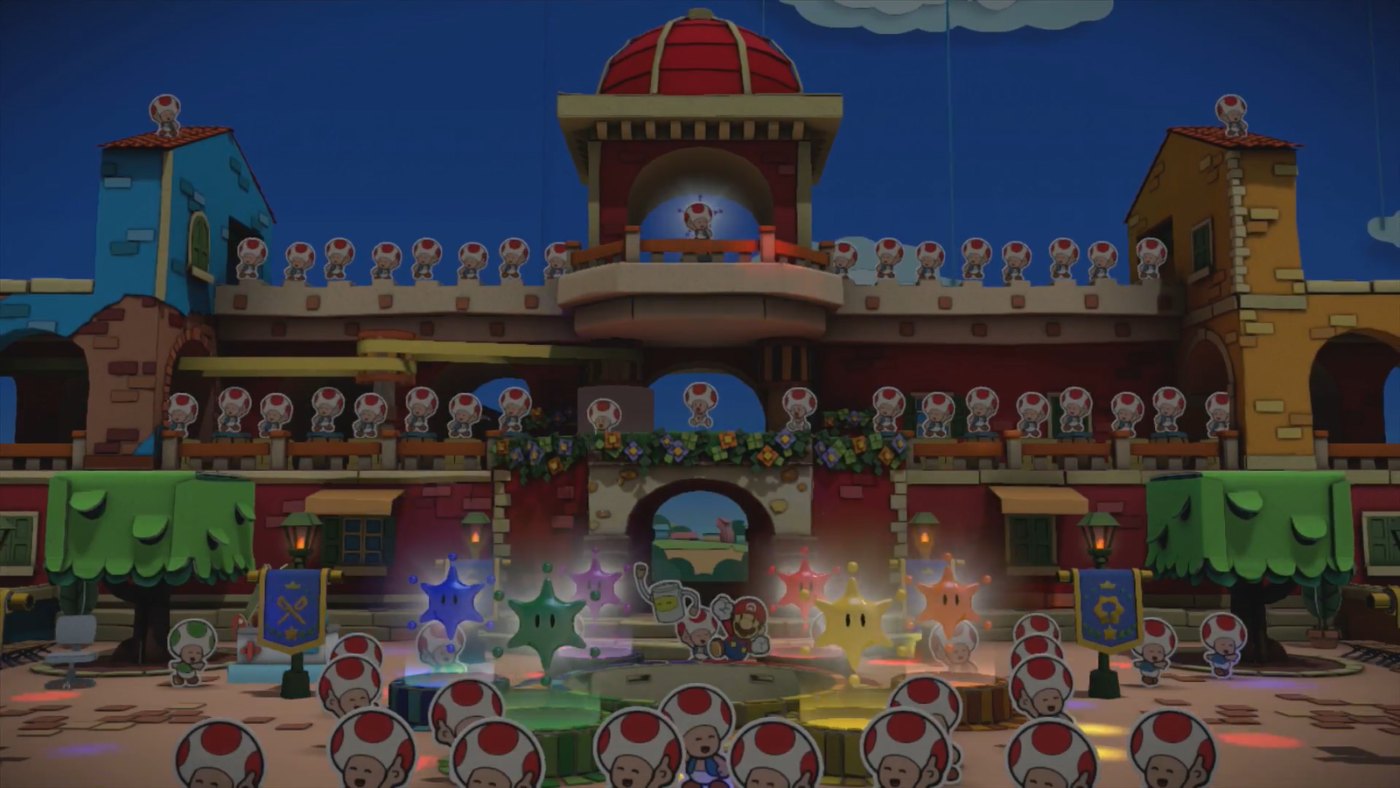
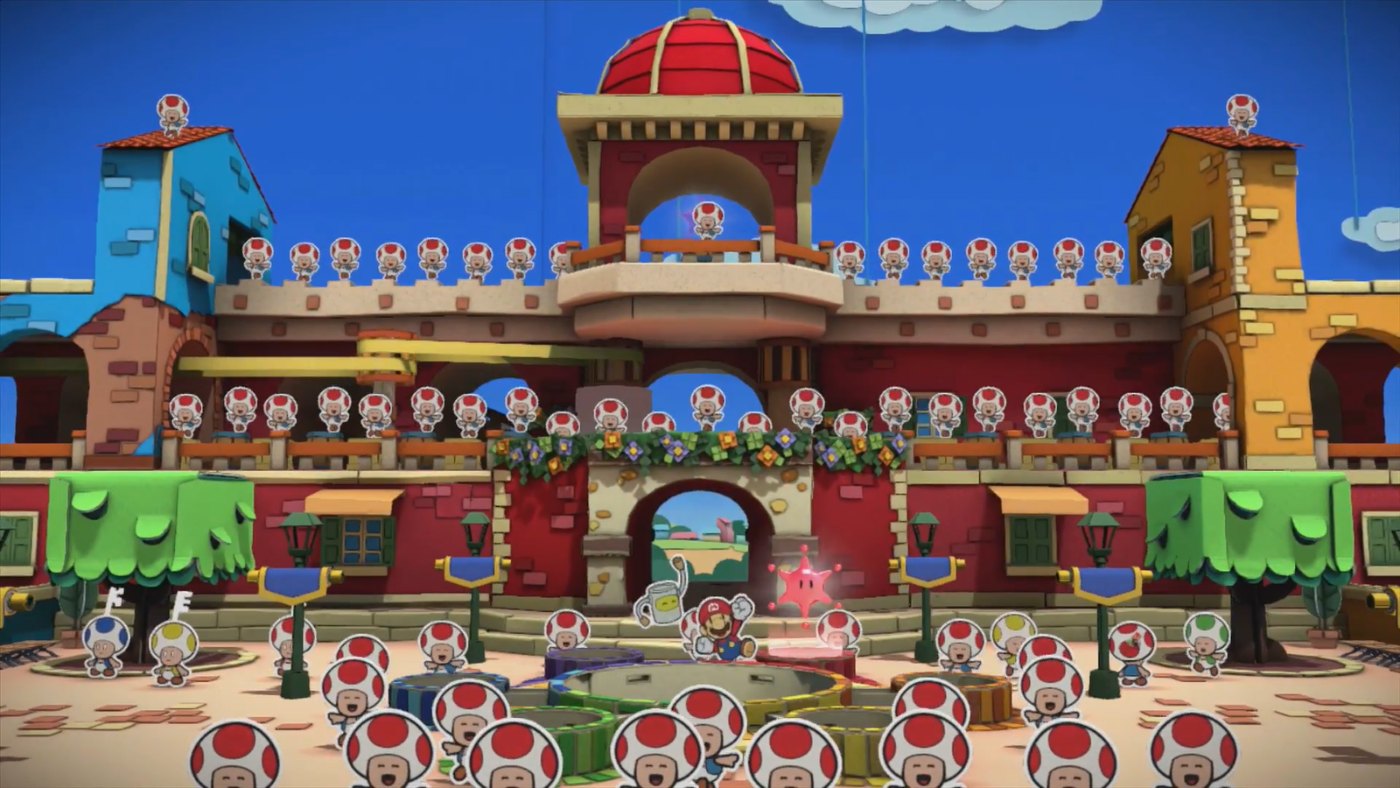
It started, the Big Paint Stars’ memories later reveal, with Bowser on a rooftop in Port Prisma, watching Toads play in the paint of Prisma Fountain and deciding that what he wanted was a rainbow-coloured shell. He jumped in and span. The six colours churned together into black paint, and the black paint took him over. Airships followed. Shy Guys with drinking straws, the Slurp Guys, sucked the red, the blue and the yellow out of the town into a bucket on each ship. The six Big Paint Stars were hurled to the corners of the island. And the postmaster, the Toadmaster General, was drained white, folded into an envelope and handed to Kamek to post.
He is delivered to Mario’s house by Princess Peach and Toad. The stamp says Prism Island, so the three of them sail there, and find Port Prisma empty, its fountain dry and its walls blotched with white.
Peach brings the letter to Mario’s house.The letter: one Toad, drained and folded.Arriving at Port Prisma.How it began: Bowser lands in the fountain.
Huey
Mario gets the fountain working, and out of it pops a paint can: not a paper one but a solid, three-dimensional tin. He hits it with a hammer, as one does. This is Huey, who is cross about it for a moment and then calms down.
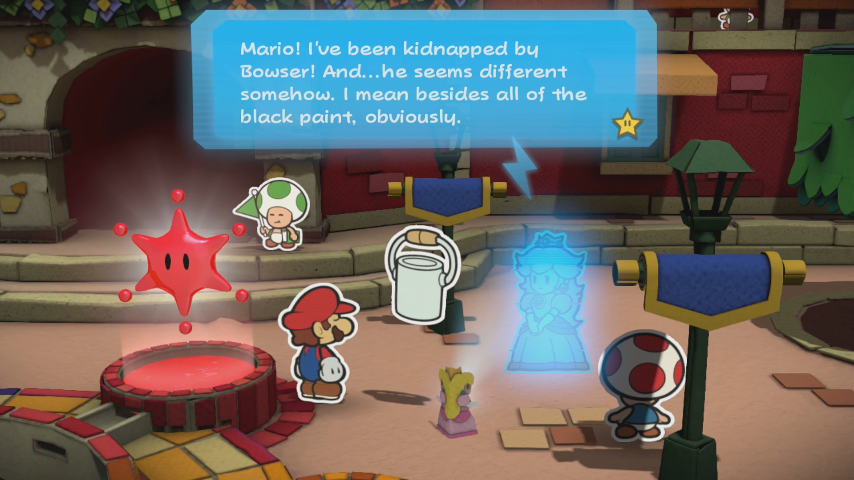
A scream sends them to the Yellow District, where a Slurp Guy has Toad on the end of a straw. Toad manages to press a handful of Battle Cards on Mario before he goes white. There is no paint to fight with, so Huey makes the offer that defines the partnership: he lets Mario wring him out. It flattens him into paper like everyone else and fills the hammer with colour. From here on he floats at Mario’s shoulder, explaining, complaining and making jokes at the scenery’s expense.
The Big Paint Stars are gone from the fountain. Huey spots a star on a rooftop and they climb for it, unwinding a roll of the building on the way, but it is only a Mini Paint Star. It flies out over the island and paints in the first road.
Huey introduces himself.A star on the roof, but a small one.Huey has a word with the audience.
The red star: Morton and the Chosen Toads
On Ruddy Road a Mini Paint Star has gone grey and has to be repainted before it will work, and at Cherry Lake Huey teaches Cutout. The road leads to The Crimson Tower, whose gate has three Toad-shaped hollows in it. Three Chosen Toads must be found to fill them.
Justice Toad has fallen out of a Bowser airship over Cherry Lake and lost his vest, shoes, pants and diary, the last of which a Pry Guy reads out to its friends. Shipwrecked Toad is at Bloo Bay Beach, about to sail for the end of the world; Mario wins the key to Blissful Beach from five show-offs called the Five Fun Guys at the island’s Oceanfest, then turns the Fan on the sea, and the Toad comes back riding a plank on the wave it raises. The Mountain Sage, on top of Daffodil Peak, has forgotten who he is and thinks he is the gatekeeper; a dab of paint on the blank patch on his head puts him right, and the park ranger is demoted to gatekeeper in his place.
The tower itself turns out to have been drained into an enormous bucket slung under an airship. Mario climbs the anchor chain, beats the crew and brings the ship down so that the paint pours back. At the top is Morton, with the red Big Paint Star and a hammer, which he sets on fire. The Fire Extinguisher deals with that. Back in Port Prisma there is bad news: while Mario was climbing, Bowser took Peach.
The three Chosen Toads at the gate.Shipwrecked Toad remembers what he is.The airship that holds the tower’s paint.Morton lights his hammer.
The yellow star: Iggy, a professor and his dog
The red star opens the Scarlet Gate at Sunglow Ridge, where a black missile bursts and coats the hillside in black paint, which Huey mops up on condition that Mario does not look. The dig at Marmalade Valley needs a permit from Professor Kinopio of Château Chanterelle, and the professor is out, searching Mondo Woods, a forest where everything is giant, for his lost pet Princess. Princess is a Chain Chomp. Kamek has made her enormous, and she bursts through the walls of the dig twice before a Toad digs up a Bone that will tempt her back to her kennel.
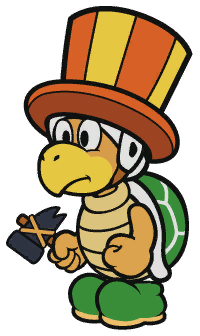
The professor’s thanks is the Sharp Spike, the key to Kiwano Temple, where Mario carelessly knocks a column on to a railway line, and beyond it The Golden Coliseum. Iggy is running a Battle Royal there with the yellow Big Paint Star as the trophy, and takes part himself in a chariot. Mario throws the Bone, Princess arrives at speed, and the chariot does not survive.
The black paint bomb over Sunglow Ridge.Princess comes through the wall.Iggy issues his challenge.The Bone, thrown.
The blue star: Ludwig, six ghosts and a teapot
The yellow star repaints a coin the size of a house in Mondo Woods, which Huey is disgusted to learn is worth almost nothing. Behind it is Dark Bloo Inn, a hotel stuck in a loop with six ghostly Toads who cannot rest until they have had the tea party they were promised. Each wants something: a recipe book, clean sheets, a caged bird (a Koopa Paratroopa will do), an invisible pet called “It”, who is Yoshi. The Teapot is in Plum Park, whose water is poison, and Petea Piranha (Petey, under a new name) is living in it. With tea served, the six rise through the ceiling.
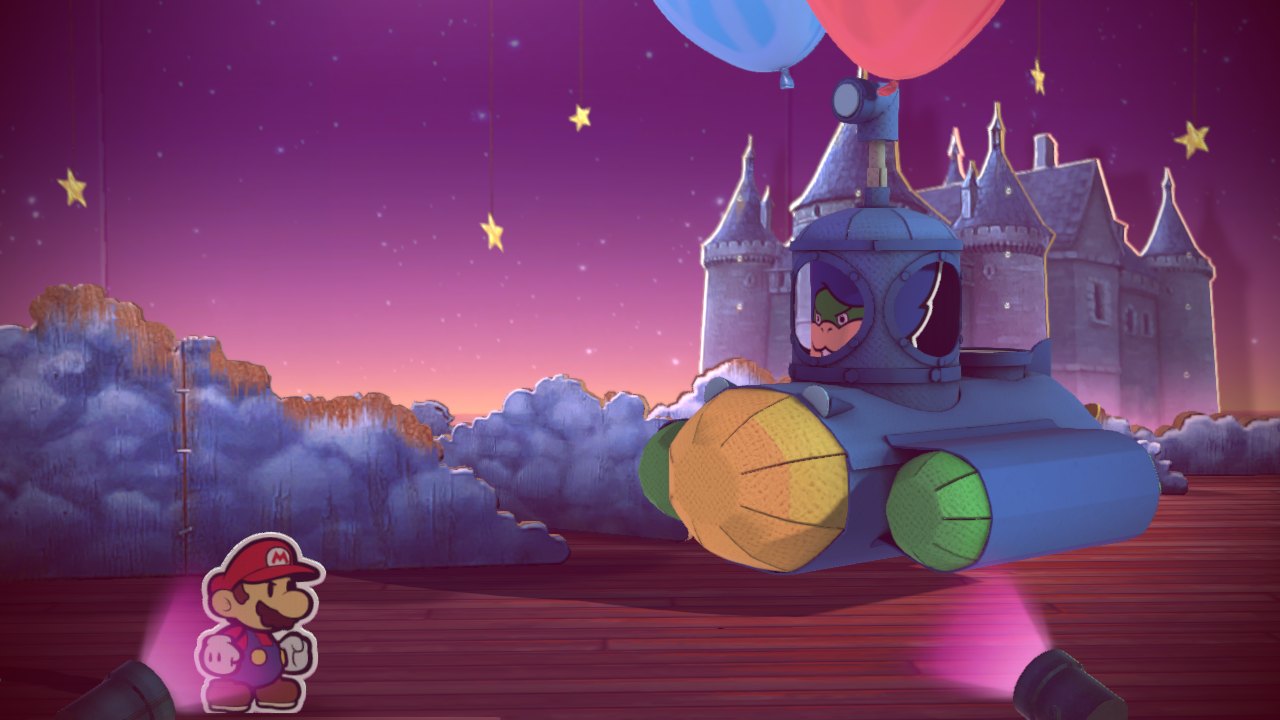
At Violet Passage the yellow Rescue Squad is rescued from a ship and a Shy Guy in black delivers threats in haiku. The Sacred Forest is a forest in miniature. Cobalt Base hosts a round of Snifit or Whiffit at the bottom of the sea. And Fort Cobalt is Ludwig’s naval base. He fights from the bridge of the Super Ludship until a Tail card sends its cannonballs back, then dives in the Super Ludsub, which Mario hoists out of the water on a bunch of Balloons.
The Tea Party Toads raise their cups.Petea Piranha climbs out of the Teapot.Snifit or Whiffit, seabed edition.Ludwig aboard the Super Ludship.
The purple star: Wendy and the pirates
The blue star paints the sea back in at Violet Passage, and Mario ships out with a crew of Toad pirates for Fortune Island, following the journal of a legendary captain who got there first. The route crosses the Lost Sea, a series of trials by cannon and compass, and is then blocked twice. At Vortex Island there is a whirlpool, and the game shows its strangest idea: a parallel world, a drained, twilit mirror of the island peopled by the dead, where the cause of the whirlpool proves to be a Washing Machine on spin. At Lighthouse Island there is a wall of darkness, because the lamp has no bulb; the parallel lighthouse has one.
On Fortune Island, inside a skull-shaped cave, the legendary captain is found in the parallel world barbecuing on a Charcoal Grill, which Mario confiscates. The old pirate follows him back to the land of the living in a fury and is mollified only by meeting his admirer, the present captain. In the treasure chamber a giant clam opens and Wendy steps out. Her wand turns into golden rings, and the trick is the Instant Camera: she wastes her best attack on a photograph.
Under sail from Violet Passage.The parallel world of Vortex Island.The legendary captain and his Charcoal Grill.The battle with Wendy.
The orange star: Larry and the Sunset Express
The purple star repaints a patch of desert at Mustard Café, which turns out to be a hole, and the café’s chef falls down it. So do Mario and Huey. Below is the Snifit Undersand Hideout, where everyone is locked up and has to break out with a stolen key card.
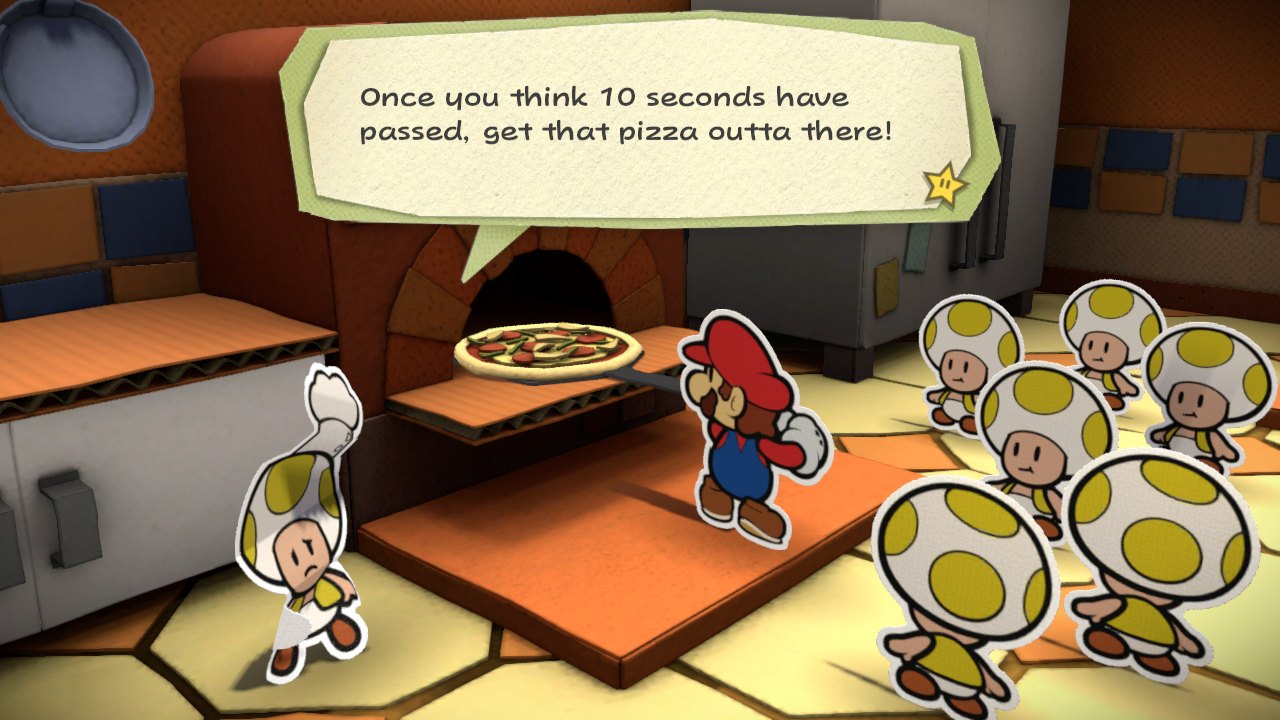
The rest of the act is about a train. The Sunset Express is stranded at Kiwano Temple because of the column Mario toppled; the blue Rescue Squad fold themselves into rails to mend the line; a Thwomp promptly flattens the engine; and the passengers push the wreck to Toad Trainworks to be rebuilt. It then calls at Tangerino Grill, where the chef is injured and Mario has to cook: a Mamma Mia Pizza for a dining room of ravenous Toads, and for a guest in the VIP room a Steak, which is prepared by fighting it with Lemon, Salt and Pepper and Charcoal Grill.
The VIP is Larry, who hijacks the train. Mario gives chase on a handcar, works his way up the carriages, frees red Rescue Toads along the way, and beats Larry once a Cork has plugged the engine’s smoking funnel. Larry admits he only wanted the star to keep Bowser in a good mood. The line ends at Starlight Cape, at sunset.
Mario in the cells of the Snifit Undersand Hideout.The blue Rescue Squad as a railway line.The Steak, done to a turn.Larry rides the Sunset Express.
The green star: Lemmy and the circus
The orange star brings the fossil in Marmalade Valley to life, and Draggadon, the lava dragon from Captain Toad: Treasure Tracker, flies off to Redpepper Volcano. A Basin dropped on his head and a Magma Burger on a Fishing Pole turn him into a mount for crossing the lava. A string of errands follows: the Hair Dryer from the hot springs of Redpepper Crater thaws a freezer at Tangerino Grill, the Magnifying Glass inside enlarges a pipe in the Sacred Forest, and Kamek is waiting behind it for a proper fight. The Green Energy Plant sends Mario into an 8-bit world built from Super Mario Bros. 3, where he can flip into the third dimension as he did in Super Paper Mario.
Past the fog of Mossrock Theater is The Emerald Circus. Lemmy, ringmaster and conjuror, shows the audience the green Big Paint Star and makes it and himself vanish, and Mario and Huey are hauled on stage to entertain instead. Huey’s impressions die. Mario’s trick goes over, the circus acts attack, and a trampoline act provides the way up to the roof of the tent, where Lemmy is balancing on his Wonder Ball. A Disco Ball holds his attention and an Ice Pick does the rest. The star shoots away; somewhere off-screen, Luigi yells.
Riding Draggadon through Redpepper Volcano.The 8-bit world inside the Green Energy Plant.Lemmy and his vanishing star.Lemmy on the Wonder Ball.
The Rescue Squads
Running through all six acts is a hunt for lost Toads. The island has five Rescue Squads, colour-coded and commanded by Rescue Red, Blue, Green, Yellow and Purple, and all five were scattered in the invasion. Their members are found one at a time, crumpled behind scenery, shut in chests and trunks or stuck in pipes, and the Rescue Squad Chief in Port Prisma keeps count of how many are still missing.
A squad that is complete does one big job by folding itself into a piece of engineering. The purple squad become a staircase on Ruddy Road, up to a Mini Paint Star and the Fire Extinguisher. The green squad bridge a chasm in Indigo Underground. The yellow squad, rescued from the ship at Violet Passage, help pull a giant Turnip out of a pipe. The blue squad lie down as railway track at Kiwano Temple. The red squad, the largest, with members in a trunk on the Sunset Express, a hot spring in Redpepper Crater, the Green Energy Plant and Mossrock Theater, have the least dignified task: they are needed to make up the audience at the circus.
Nintendo’s publicity made stars of them. A seven-part web series, Rescue V: Fearless Color Defenders, had the squads insist that they were the real heroes of the game, and ended with the Chief sacking their leaders.
The purple Rescue Squad form a staircase.All together on the Turnip.The red Rescue Squad file into the circus.
Black Bowser’s Castle
With six stars back in the fountain, a Rainbow Road arches up from Port Prisma to a black castle in the sky. It is too slippery to walk. Luigi turns up in the kart that the green star has just repainted and drives Mario and Huey to the top, to the music of Mario Kart.
Inside, a colourless Peach is hanging on a wall like a painting, and reaching for her drops Mario through a trapdoor to Roy. Roy has a cannon that sucks the paint out of Mario’s gauges and fires it back, and when that fails he mixes the lot into black and floods the room. The Washing Machine cleans up. Deeper in is a factory filling Banzai Bills with black paint for use on the island below, which Mario and Huey blow up with Mega Bob-ombs, outrunning the flood. At the door of the throne room Huey stops to say that whatever happens he is glad to have had a friend.
Black Bowser fights with the paint itself. To stop it, Huey turns back into a solid tin and swallows every wave he throws, and at last joins the deck as a card and drinks the blackness out of him. What is left is ordinary Bowser, who remembers nothing and is under the impression that a kart race is due.
Rainbow Road appears over Port Prisma.Luigi, with transport.Roy’s black paint fills the room.Bowser while under the black paint’s influence.
The ending
Mario paints Peach back to life, and the castle begins to come down. At the gate, with Luigi revving the kart, Huey says he is staying. The black paint is still in the building, and if it falls it will poison the island. Tapping into the Big Paint Stars’ power, he squeezes the whole castle into himself, as Mario has been squeezing Things all game, and carries it up and away until he is out of sight.
Port Prisma has its party round the mended fountain and the credits roll as a parade. Mario is not in a party mood; Peach tells him that Huey is surely still watching over the island. Assistant producer Risa Tabata said that some of the people who tested the game cried at this.
There is a postscript for the thorough. Collect all six Super Flags, and after the credits one more scene plays: a small tin falls out of the sky and lands with a splash in Prisma Fountain.
Peach, repainted.Huey squeezes the castle.Far, far away.The extra scene: Huey comes home.
Every level in Paper Mario: Color Splash
All 32 levels, roughly in the order they open. The colour is the level’s own on the map; “Big Paint Star” marks the six Koopaling levels, and Things are listed where they are found.
Port PrismaHub · red Mini Paint Star on the rooftops · Thing: PlungerThe harbour town round Prisma Fountain: card shop, café, dojo, museum, post office, the Wringer and the Rescue Squad Chief.
Ruddy RoadRed · Mini Paint Stars · purple Rescue Squad · Thing: Fire ExtinguisherA country lane with a Toad house and a café, where Slurp Guys are caught in the act.
Cherry LakeRed · Justice Toad · Card Max Up · Thing: FanA waterwheel, an airship overhead, and a hero who has lost his trousers. Cutout is learned here.
Indigo UndergroundBlue · green Rescue Squad · Thing: LemonA cavern where Rescue Green is stuck in a pipe and his squad end up as a bridge.
Bloo Bay BeachBlue · Shipwrecked Toad · LuigiA resort holding its Oceanfest, with minigames run by the Five Fun Guys and a juice bar on the sand.
Daffodil PeakYellow · Mountain Sage · Spinning-DoorA mountain that needs a climbing permit. Unfurl is learned at the ranger’s cabin.
The Crimson TowerRed · red Big Paint Star · Morton (150 HP) · Thing: Cat-o-LuckA tower of conveyor belts, drained by an airship and guarded by a gate only the Chosen Toads can open.
Sunglow RidgeYellow · opened by the red starA sawmill in the hills behind the Scarlet Gate, hit by a black paint bomb.
Château ChanterelleYellow · Thing: Piggy BankProfessor Kinopio’s house, with an empty kennel and a wall of baby pictures of Princess.
Mondo WoodsGreen · Mega Goomba (116 HP)A forest where Kamek has made everything huge, including the Goombas and one very large coin.
Marmalade ValleyOrange · Luigi · Thing: BoneA fossil dig on scaffolding, terrorised by a giant Chain Chomp. The fossil is Draggadon.
Kiwano TempleOrange · Big Spiny (130 HP) · blue Rescue SquadA temple of spikes crossed on rolling tubes, with a railway running past it.
The Golden ColiseumYellow · yellow Big Paint Star · Iggy (180 HP) · Luigi · Things: Bone, Bottle Opener, Ice PickAn arena with dressing rooms and storerooms behind it, and a Battle Royal in front.
Dark Bloo InnBlue · Mini Paint Star · Card Max UpA haunted hotel with six ghost guests and a staff who would like the tea party over with.
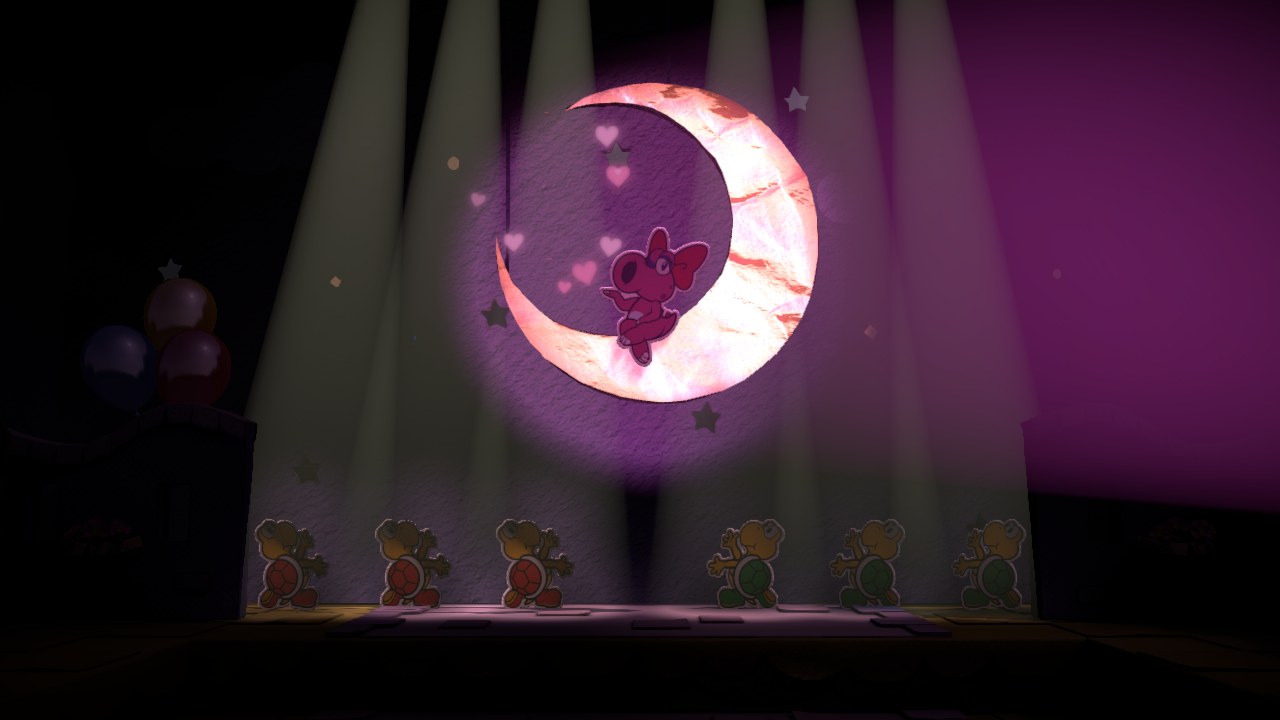
Plum ParkPurple · Petea Piranha (320 HP) · Luigi · Things: Teapot, BalloonsGardens over poisoned water, crossed in a bucket. Birdo is giving a concert.
Sacred ForestGreen · two Mini Paint Stars · Kamek (120 HP) · Card Max Up · Thing: TurnipA forest shrunk to miniature, where gangs of Small Goombas have torn a Mini Paint Star into five.
Cobalt BaseBlue · Snifit or Whiffit · Thing: Instant CameraA seaside military base and the studio of a quiz show held underwater.
Fort CobaltBlue · blue Big Paint Star · Ludwig (150 HP) · Thing: BasinA Shy Guy training camp. Its branch of the Prisma Café is the only one that sells Magma Burgers.
Violet PassagePurple · opened by the blue star · yellow Rescue Squad · Black Shy Guy (16 HP) · Things: Battery, CompassA pirate ship in port, and later the Lost Sea, with its cannon trials.
Vortex IslandPurple · Things: Cork, Washing MachineA whirlpool, and the first door into the parallel world.
Lighthouse IslandPurple · Thing: LightbulbA dark lighthouse and a despondent keeper, who dances for the rest of the game once the lamp is lit.
Fortune IslandPurple · purple Big Paint Star · Wendy (300 HP) · Things: Salt and Pepper, Charcoal GrillA skull-faced island with a volcano, a treasure chamber and a dead pirate cooking lunch.
Mustard CaféYellow · opened by the purple star · Mini Paint StarA desert café over a sinkhole. Battles here are fought in quicksand, against the clock.
Toad TrainworksOrange · Mini Paint Star · Thing: MegaphoneThe railway works, under attack, where the Sunset Express is put back together.
Tangerino GrillOrange · Steak (40 HP) · Mini Paint Star · Thing: Magnifying GlassA restaurant where Mario does the cooking, first with a hammer and then with a deck of cards.
Sunset ExpressOrange · orange Big Paint Star · Larry (350 HP) · red Rescue SquadA runaway train, fought through carriage by carriage to Starlight Cape.
Redpepper VolcanoRed · opened by the orange star · Draggadon · red Mini Paint StarLava rivers ridden on dragon-back, steering with a burger on a fishing line.
Redpepper CraterRed · Big Lava Bubble (170 HP) · orange Mini Paint Star · Luigi · Thing: Hair DryerHot springs deep in the volcano, popular with Toads and enemies alike.
Green Energy PlantGreen · Mini Paint Star · Luigi · Things: Claw Hammer, RecorderA laboratory whose experiment is a playable slice of Super Mario Bros. 3, flipping included.
Mossrock TheaterGreen · red Rescue SquadA misty wood where circus performers rehearse: Juggler Bros, Roller Guys and Dino Rhinos.
The Emerald CircusGreen · green Big Paint Star · Lemmy (350 HP) · Wild Dino Rhino (300 HP) · Thing: Disco BallA big top with caged Yoshis out the back and a Koopaling on the roof.
Black Bowser’s CastleBlack · Roy (420 HP), Black Bowser (700 HP)The final level, at the far end of Rainbow Road: a trap, a paint factory and a throne room.
Besides these there are eight Roshambo Temples, unlocked by medallions and containing only the Super Roshambo tournament, and Starlight Cape, the end of the railway line, where the orange Big Paint Star is collected.
Advertisement
Gameplay & Controls
Like Sticker Star, Color Splash alternates between exploring flat-pack levels and fighting turn-based battles, and like Sticker Star it has no levelling to speak of. The difference is in how much there is to do between the fights. Every level is a little farce with its own plot, and nearly all of them are visited more than once as new Things and new abilities open old doors.
The Wii U GamePad is used throughout. The deck of cards lives on its screen, Cutout is drawn on it with a finger, and with the television off the whole game can be played on it.
The Paint Hammer and the three gauges
Mario has two hammers. The ordinary one (B) hits things. The Paint Hammer (X), which Huey charges for him in the first minutes of the game, hits things and colours them in. Its ammunition is shown as three gauges at the top left of the screen, red, yellow and blue, and every swing spends a little even when there is nothing to paint.
The targets are colourless spots: white patches left on scenery, objects and unlucky Toads wherever a Slurp Guy has been at work. Filling one in pays a few coins, and a flag on the map marks each level whose spots have all been found. Paint is everywhere. Hammering trees, flowers, crates and almost any other bit of scenery knocks out globs of it in the colour of the thing hit, enemies bleed it when beaten, Prisma Juice from any branch of the Prisma Café tops the gauges up, and a sit in Prisma Fountain refills the lot.
Mario starts with room for 100 units of paint. The limit is 600, and how he gets there is described below.
The three paint gauges.The Paint Hammer.Mario swinging it.
Battle Cards and the flick
There are 160 kinds of Battle Card: 60 basic cards, 72 Enemy Cards and 28 Thing Cards. Basic cards are the old sticker families carried over from the 3DS, among them Jump, Hopslipper, Line Jump, Iron Jump and Spin Jump; Hammer, KO Hammer, Eekhammer, Hurlhammer and Blazehammer; Fire Flower and Ice Flower; POW Block; Mushrooms for healing; and the Tail, Spike Helmet and Frog Suit for defence. Most come in worn-out, normal, big and huge grades, and in multi-packs that play two, three or five attacks from one card. They are found in ? Blocks, dropped by enemies and sold at Prisma Cardware in Port Prisma, the only shop in the game, whose stock improves as the story goes on.
A turn has three steps, all on the GamePad. First, choose the cards to play from the deck. Second, paint: most cards arrive as black-and-white outlines, and are filled in with colour from the gauges. A fully painted card hits hardest; an unpainted one is cheaper in the shop and weaker in the fight. Third, flick: sweep the cards up off the top of the pad and they fly on to the television. The basic control scheme asks for confirmation at each step, which Tanabe said was deliberate: testers kept making mistakes, and the team had players of seven to ten in mind. An advanced scheme drops the extra button presses.
Mario plays one card a turn to begin with. Three Card Max Ups raise that to four: one for helping a Soggy Guy in Cherry Lake, one for delivering the Teapot to Dark Bloo Inn, and one for beating Kamek in the Sacred Forest.
A Jump card before painting……and after.
How battles work
Bump into an enemy and the fight begins. Jump on it or hammer it first and Mario gets a free opening attack, announced with a starry “Nice!”; if the enemy lands the first touch, the screen flashes red and it goes first. Timing A as a jump or hammer blow connects adds damage, and timing it as an enemy strikes blocks. The Action Command Dojo in Port Prisma’s Yellow District, run by Action Toad and a cardboard Goomba, exists to practise both.
Enemies have no health bars and damage is not shown as numbers. An enemy’s colour is its health: every hit drains paint from it, and when it is white it is finished. Mario’s own HP is an ordinary figure. Winning brings coins, paint, Hammer Scraps and, now and then, the loser’s own card; winning without taking a scratch adds a Perfect Bonus. A foe that is hopelessly outclassed can be flattened on the field with a single blow, with no battle at all.
Two things interrupt. If the deck is looking thin, the Battle Spin (L or R) lets Mario buy cards with coins in the middle of a fight. And from time to time Kamek flies across the battlefield and hexes the deck, turning every card face down, turning them all into the same card, or whisking away all but six. Win anyway and the cards come back, with 300 coins for the trouble.
The Action Command Dojo.Kamek meddles with the deck.A fight with the Shy Bandit.
Things, the Wringer and Replicas
The Things of Sticker Star are back: real-world objects, modelled in glossy 3D, sitting about the island where no such object should be. There are 28. This time there is no stand to carry them to. Mario squeezes each one on the spot, which wrings it flat into a Thing Card and, as a bonus, refills his paint. A Thing Card needs five units of each colour to work at full power and can be played in battle for a screen-filling attack, or placed in the scenery, often by way of a Cutout, to change it.
Only one of each can be held, and each puzzle wants one particular Thing, where the earlier game would often take any of three. When a Thing has been used up, the Wringer, a shifty Toad in the harbour district of Port Prisma, will sell another for between 150 and 300 coins; Things not yet discovered are listed as “Coming Soon”. For those who do not know what to buy, the Know-it-All Toad, who lives in a dustbin by the Red District, gives a riddling hint about the next Thing the story needs.
Once a Thing has been found, Replica cards of it start turning up in the levels, on the Battle Spin and as minigame prizes. A Replica has “REPLICA” stamped across it and does the same job with less force. It will not do for a Koopaling: play the copy of the Thing a boss fears and the boss simply cancels it.
The Wringer sells Mario a Plunger.The Plunger in battle.A Replica card of the Fire Extinguisher.
Cutout and Unfurl
Cutout is Huey’s party trick, taught at Cherry Lake. Press Y in the right spot and the picture on the television freezes into a flat sheet; trace the dotted line on the GamePad and a pair of scissors cuts a piece clean out of it. Mario can then walk across the cut-out to a flag on the far side, or drop a Thing Card into the hole. Finding where to cut is the game’s least-loved puzzle, and a Toad in the Yellow District sells hints about uncut Cutouts at 50 coins a time.
The other paper trick is Unfurl. Hitting a red Unfurl Block gives Mario a foil sheen for 20 seconds, during which a hammer blow on anything bearing an Unfurl mark makes it unroll or unfold into a bridge, a staircase or a pipe, and a first strike on any enemy finishes it outright.
Mario and Huey with the Cutout scissors.A pipe unfurled on Daffodil Peak.An Unfurl Block.
Hammer Scraps: the levelling that is left
Beaten enemies drop Hammer Scraps, little cardboard hammers worth 1, 5, 10 or 20 points according to how brightly they shine. They fill a bar, and each time it fills, the paint gauges grow, by a smaller amount each time, from 100 units up to a ceiling of 600. Nothing else about Mario improves through fighting.
His health and strength are tied to the story. He begins with 50 HP, and each Big Paint Star brought home earns an HP-Up Heart worth 25 more, to a final 200. The same six steps raise the damage of a first strike on the field from 3 to 15. Asked by Game Informer why there was no conventional experience system, Tanabe answered that “the concept of levels does not directly relate to puzzle-solving”, and that painting, which serves both battles and puzzles, was the thing to reward.
A Hammer Scrap.A Big Paint Star: 25 more HP.
The world map and Paint Stars
Prism Island is one map with 32 levels on it and no chapters. Each level is cleared by reaching a Mini Paint Star, which then sails across the map and paints in a blank stretch of it, opening a road to somewhere new. Many levels hold more than one, the extras opening side roads and short cuts, and one in the Sacred Forest has been torn into five pieces that must be gathered first. Clearing a level can also leave a Roshambo medallion, which unlocks one of the eight temples.
The six Big Paint Stars are a different matter. Each is held by a Koopaling, each repaints some large obstacle that the story has been walking round (a gate, a giant coin, a whole sea), and each then returns to Prisma Fountain, where Mario can hit it for paint or watch its memories of the day Bowser came. Now and then a Shy Bandit appears on the map and sets off to slurp a finished level dry again; Mario has to intercept him or repaint it.
Prism Island.A red Mini Paint Star.The first Mini Paint Star, on a rooftop in Port Prisma.
Roshambo Temples and Enemy Cards
The eight Roshambo Temples have nothing in them to paint, cut or rescue. They are arenas for Super Roshambo, a three-round knockout of rock, paper, scissors played with special cards against a queue of the island’s enemies, for coins. If the Koopaling of that part of the island has already been beaten, the third opponent is the Rock Paper Wizard, and beating him wins a card of a Koopaling or of Kamek.
Those are the rarest of the 72 Enemy Cards. The rest are dropped now and then by the enemies themselves. Play one and the creature on it fights at Mario’s side, attacking each turn and soaking up blows meant for him until it is beaten. Only one can be out at a time, and none will stay to face a boss.
A Roshambo Temple.The Rock Paper Wizard.
The Prisma Museum and other diversions
Behind the Action Command Dojo is the Prisma Museum, kept by the Card Connoisseur Toad. Donate a card of each kind and its frame is filled; each donation also unlocks a piece of the developers’ concept art in the gallery, and every level painted to 100 per cent adds its music to the sound room. When every card has been given, the lights come on and the public starts to arrive.
There is more. Three-part Spinning-Doors, hammered until their colours line up, lead to four minigames: Blockstopper!, Flippin’ Cards!, Prize Pipe Paths and, behind a rainbow door, Paint Hunter!. Snifit or Whiffit returns from Sticker Star as a seabed quiz at Cobalt Base, with a Big Urchin standing by to pop the bubble of anyone who fails. A long errand reunites five grown-up Toads with their childhood friend Piper. Luigi is hiding in six levels. And six Super Flags reward the long hauls, with a prize for collecting the set.
Inside the Prisma Museum.The Super Flags in the credits parade.
Controls
Mario.
On the field: the Left Stick moves, A jumps, B swings the ordinary hammer, X swings the Paint Hammer, Y starts a Cutout, the +Control Pad asks Huey for a hint, and Plus or Minus opens the world map. In battle: the Left Stick moves along the deck, A confirms a card and paints it, B cancels, X shows a card’s details, Y sorts the deck, the +Control Pad moves to the next step, L or R calls the Battle Spin and ZL runs away. When playing on the GamePad alone, ZR switches the view to the enemies.
Regional differences
The Washing Machine is a different model in Europe and Australia from the one in Japan and North America, both on its card and in the laundry room on Vortex Island where it is found. There are also Shy Guys on Vortex Island in the European and Australian versions only.
The scripts differ more than the pictures. Tanabe told Game Informer that jokes which would not translate were rewritten for each market, as they had been for his Donkey Kong Country games, and that some were written fresh in English: Huey’s crack on Ruddy Road about the faded Mini Paint Star and The Lost Levels is one that, in his words, Japanese players will not get.
The laundry room in the Japanese and American versions……and in the European and Australian ones.
Big Paint Stars, Battle Cards and all 28 Things
The six stars, the card families worth knowing, and every Thing in the game with where it is found and what it is for.
Red Big Paint StarHeld by Morton at The Crimson Tower. Repaints the Scarlet Gate at Sunglow Ridge.
Yellow Big Paint StarFirst prize in Iggy’s Battle Royal at The Golden Coliseum. Repaints the giant coin in Mondo Woods.
Blue Big Paint StarHeld by Ludwig at Fort Cobalt. Repaints the sea at Violet Passage.
Purple Big Paint StarHeld by Wendy on Fortune Island. Repaints the great hole in the desert at Mustard Café.
Orange Big Paint StarHeld by Larry on the Sunset Express. Brings the Draggadon fossil in Marmalade Valley to life.
Green Big Paint StarHeld by Lemmy at The Emerald Circus. Repaints Luigi’s kart.
Jump cardsJump, Hopslipper, Line Jump, Iron Jump and Spin Jump, in worn-out to huge grades and in packs of two, three and five.
Hammer cardsHammer, Eekhammer, Hurlhammer and Blazehammer. A hammer blow spills on to the next enemy and cannot reach fliers.
KO HammerThe heavy hammer. Knocks Morton’s pedestal out from under him.
Fire Flower and Ice FlowerMario throws fireballs or ice balls. Ice is what the Big Lava Bubble cannot stand.
POW BlockCrumples and stuns. Sold ready-painted.
MushroomHealing, with Big, Mega and 1-Up versions. Sold ready-painted.
TailSwats projectiles back. The answer to the cannonballs of Ludwig’s Super Ludship.
Spike Helmet and Frog SuitDefensive cards. The helmet guards against attacks from above.
Fire ExtinguisherOn a clifftop in Ruddy Road, reached by the purple Rescue Squad’s staircase. Puts out Morton’s burning hammer.
FanA beauty spot in Cherry Lake. Blows Shipwrecked Toad’s boat back to Bloo Bay Beach and, later, fills the pirate ship’s sails.
PlungerPrisma Harbor, Port Prisma. Unblocks the pipe that has Rescue Green stuck in it in Indigo Underground.
LemonA hill in Indigo Underground, across the green Rescue Squad’s bridge. An ingredient in the Steak battle.
Cat-o-LuckTop floor of The Crimson Tower. Back from Sticker Star.
Piggy BankA shed at Château Chanterelle.
BoneThe boardwalk in Marmalade Valley, and again in a dressing room at The Golden Coliseum. Lures Princess home, then sets her on Iggy’s chariots.
Bottle OpenerA storeroom at The Golden Coliseum. Opens a giant bottle in Redpepper Volcano.
Ice PickA storeroom at The Golden Coliseum. Bursts Lemmy’s Wonder Ball.
BalloonsThe stage at Plum Park. Lifts Ludwig’s Super Ludsub up out of the water. In battle, Birdo blows kisses and the enemies float away.
TeapotSerenity Fountain, Plum Park, with Petea Piranha inside it. Lets the six ghosts of Dark Bloo Inn have their tea party.
TurnipThe entrance to the Sacred Forest, where the yellow Rescue Squad helps haul it out of a pipe.
Instant CameraA prize on Snifit or Whiffit at Cobalt Base. Makes Wendy waste her golden ring on a photograph.
BasinOn the fences of Fort Cobalt. Dropped on Draggadon’s head in Redpepper Volcano.
BatteryA cabin on the ship at Violet Passage. Powers the house at the Green Energy Plant.
CompassA cabin on the ship at Violet Passage. Clears the fog in the fifth trial of the Lost Sea.
CorkA pipe on Vortex Island. Plugs the smokestack of the Sunset Express in the fight with Larry.
Washing MachineThe parallel world of Vortex Island, where it is causing the whirlpool. Washes Roy’s black paint away.
LightbulbThe top of the parallel lighthouse on Lighthouse Island. Relights the real one.
Salt and PepperA smoky room on Fortune Island. Seasoning for the Steak.
Charcoal GrillThe volcano on Fortune Island, where the legendary captain is cooking on it. Grills the Steak.
MegaphoneThe locker room at Toad Trainworks. Wakes the Thwomp asleep on the Sunset Express line.
Hair DryerThe spa in Redpepper Crater. Thaws the freezer at Tangerino Grill.
Magnifying GlassThe freezer at Tangerino Grill. Enlarges a tiny pipe in the Sacred Forest and a tiny Toad in Port Prisma.
Claw HammerThe pipe room in the Green Energy Plant.
RecorderThe goal of the Green Energy Plant, as an 8-bit sprite. Plays its original notes from Super Mario Bros. 3 and raises a whirlwind.
Disco BallBackstage at The Emerald Circus. Distracts Lemmy long enough to get at his ball.
HueyAppears in the deck during the last battle. Sucks the black paint out of Bowser. Needs only one unit of each colour.
Cartoons, Comics & Other Media
Color Splash was promoted with its own web series, and it is stuffed with nods to older Mario games. A few later games have returned the compliment.
Rescue V: Fearless Color DefendersNintendo web series · 2016Seven short episodes in which the Rescue Squads claim to be the game’s true protagonists. It ends with the Chief firing all five leaders.
Play Nintendo trivia quizNintendo of America · 2016A quiz about events on Prism Island on Nintendo’s site for younger players. In Germany the site ntower ran a contest, closing on 14 October 2016, for scenes built from the game’s map icons.
Super Mario Bros. 3The game it loves mostThe Green Energy Plant recreates it in 8-bit, music and all. Mario boards the airship by its anchor, Peach sends a message after each Koopaling falls, and the Recorder plays the warp whistle.
Mario KartRainbow RoadThe road to the castle is Rainbow Road, to an arrangement of the Mario Kart 64 tune; Luigi’s kart is the Standard Kart of Mario Kart 8, whose title music plays as he arrives; and the script works in the famous Luigi death stare.
Captain Toad: Treasure TrackerWii U · 2014Draggadon makes his first appearance in paper, lump on the head and all, and a Rescue Toad mentions tracing a stolen bone with treasure-tracking technology.
The Thousand-Year DoorGameCube · 2004Port Prisma is laid out almost as a mirror image of Rogueport, Peach’s messages recall her e-mails, and the never-seen soldier called Johnson is back, now a Shy Guy.
Sticker StarNintendo 3DS · 2012Photographs of the Yoshi Sphinx and Hither Thither Hill hang in the lobby of Dark Bloo Inn, Snifit or Whiffit returns, and much of the music is rearranged from the earlier game.
Super Smash Bros. UltimateNintendo Switch · 2018The battle theme is on the soundtrack, Huey is a spirit, and Petea Piranha gets a mention when Palutena briefs Pit on Piranha Plant.
Bowser Jr.’s JourneyNintendo 3DS · 2018Put Morton in charge of a squad in the Bowser’s Inside Story remake and it is named “More Tons”, his catchphrase from this game.
Paper Mario: The Origami KingNintendo Switch · 2020Built on similar technology, with many of the same character drawings. The Fortune Island music plays when Mario meets Captain T. Ode, the Steak makes a cameo, and Bonehead Island is a close relation of Fortune Island.
Advertisement
Characters
Mario and Huey, the royal party, Bowser’s household, and then the Toads: dozens of them, told apart by a hat, a job or a neurosis.
Character
Who they are
In this game
Abilities & notes
MarioThe only playable character
Summoned to Prism Island by a letter that turns out to be a person.
Repaints the island with the Paint Hammer, fights with Battle Cards, and ends the game missing a friend.
50 HP, rising by 25 with each Big Paint Star to 200
Paint capacity 100 to 600
1 to 4 cards a turn
First strike 3 to 15
HueyPaint can · Mario’s companion
The paint can of Prisma Fountain: a three-dimensional tin until Mario wrings him flat.
Powers the Paint Hammer, teaches Cutout, gives hints on the +Control Pad, mops up black paint and never stops talking. In the last battle he becomes a Thing Card, and afterwards he carries Black Bowser’s Castle off into the sky.
The 28th Thing
Returns in the secret ending
A spirit in Super Smash Bros. Ultimate
Princess PeachCaptured after the first star
Arrives with Mario and Toad, and is taken while Mario is in The Crimson Tower.
Sends a Holo-Peach message about Bowser’s plans after each Koopaling is beaten, until the last one is cut off. Found drained and framed in the castle.
Holo-Peach messages mark the map
LuigiDriver
Mario’s brother, who writes letters and turns up when needed.
Hides in six levels for anyone with a pair of Cutout scissors, and in the finale drives Mario and Huey up Rainbow Road in his kart and back down again with Peach.
300 coins per sighting
Leads the credits parade if found six times
ToadPeach’s attendant
The third member of the landing party.
Drained by a Slurp Guy within minutes, but not before giving Mario his first Battle Cards. Can be found later in a hotel in Port Prisma.
Source of the starting deck
Black BowserVillain
Bowser, possessed by the black paint he made by accident.
Drains the island, kidnaps Peach and plans to rain black paint on what is left. Freed of it, he has no memory of any of this.
700 HP (StrategyWiki)
Resists Jump cards; weak to Hammers
Beaten with the Huey card
KamekBowser’s magician
The Magikoopa who posted the Toadmaster General to Peach.
Makes Princess and the Goombas of Mondo Woods enormous, shrinks Mario in the Sacred Forest, and drops into ordinary battles to scramble the deck. Fought properly in the Sacred Forest.
120 HP (StrategyWiki)
Beating him earns a Card Max Up
The KoopalingsSeven bosses
Morton, Iggy, Ludwig, Wendy, Larry, Lemmy and Roy: Bowser’s lieutenants, in a Paper Mario game together for the first time.
Six hold a Big Paint Star apiece and Roy guards the castle. Each has a wand that becomes a weapon (a burning hammer, golden rings, a spiked ball) and each can only be finished with the right Thing.
150 to 420 HP
Their Enemy Cards are won from the Rock Paper Wizard
Rescue Red, Blue, Green, Yellow and PurpleRescue Squad leaders
Captains of the five colour-coded squads of rescue Toads.
Each has to be rescued himself, then helps round up his squad for a feat of formation: staircase, bridge, turnip-pull, railway line, circus audience.
Red is the biggest squad
Stars of the Rescue V web series
Rescue Squad ChiefPort Prisma
Commander of all five squads.
Reports how many Rescue Toads are still to be found.
Fires his captains in Rescue V
The Chosen ToadsJustice Toad, Shipwrecked Toad, the Mountain Sage
Three Toads with powers, needed to open the gate of The Crimson Tower.
Found in Cherry Lake, Bloo Bay Beach and Daffodil Peak, each in some embarrassment. Once roused they leap to the tower in a single bound and stand guard there.
Red, blue and yellow
Can be found in any order
Professor KinopioChâteau Chanterelle
A scholar with a Chain Chomp called Princess.
Issues the Excavation Site Permit for Marmalade Valley and, when his pet is home, the Sharp Spike that opens Kiwano Temple. Later points Mario after Draggadon.
Gives two key items
PrincessChain Chomp
The professor’s pet, grown gigantic by Kamek’s magic.
Rampages through the dig until bribed with a Bone, and answers the same summons in the Golden Coliseum, where she flattens Iggy’s chariots.
Summoned by the Bone Thing
DraggadonLava dragon
A fossil in Marmalade Valley until the orange star colours him in.
Fought off with the Basin in Redpepper Volcano, then led across the lava by a Magma Burger on a Fishing Pole.
First appeared in Captain Toad: Treasure Tracker
Yoshi“It”
The invisible pet of one of the Dark Bloo Inn ghosts.
Kidnapped by a Shady Sledge Bro and his gang; visible only once repainted. He thanks Mario and flutters off to the circus, where more Yoshis are kept in a cage.
Key item of the Dark Bloo Inn
BirdoSinger
Giving a concert in Plum Park, with a lyric about her début in Doki Doki Panic.
The Teapot is behind her stage. She reappears whenever the Balloons card is played, blowing kisses.
Luigi hides in her tree
The Tea Party ToadsSix ghosts
Ghostly guests of Dark Bloo Inn, still waiting for a tea party.
Each has a grievance to settle before they will sit down. Tea, when it comes, sends them up through the ceiling and into a painting.
Need the Teapot from Plum Park
The two captainsViolet Passage and Fortune Island
A Toad pirate who dreams of Fortune Island, and the long-dead legend who found it.
The first carries Mario across the Lost Sea. The second is discovered grilling in the parallel world and ends up tutoring the first.
Five journal entries to collect on the ship
Rock Paper WizardRoshambo Temples
A masked master of Super Roshambo, later revealed to be eight Toad wizards.
Final opponent in a temple once the local Koopaling is beaten. Pays out in Koopaling and Kamek cards.
Eight temples
Beating all eight earns a Super Flag
Toadmaster GeneralPostmaster
Head of the Port Prisma post office.
The letter that starts the story. Repainted, he goes back to work and delivers Mario’s post.
Mail from Luigi, Peach and the wizards
PiperPtooie
A friendly walking Piranha Plant, childhood friend of five Toads called Purp, Redd, Greenie, Bloo and Yella.
The subject of the game’s longest errand. His friends believe him dead; he sprouts again from a seed in the Yellow District.
Starts at the waterwheel in Port Prisma
The Five Fun GuysBloo Bay Beach
Quintuplet entertainers who run the games at Oceanfest.
Hand over the Blissful Beach Key, and dance through Mario’s dreams when he naps there. The name is borrowed from a team in Mario Party 8.
Toad Shuffle and Toad and Go Seek
Bosses & enemies
The Koopalings in order, Black Bowser, the mini-bosses, then a selection of the regular enemies, of which there are more than eighty counting stacks and gangs. The game never shows a number, but the HP is there: the boss figures other than those for Morton, Iggy, Black Bowser, Petea Piranha and Big Spiny are from StrategyWiki. “Attack” is the damage of the enemy’s basic move.
Morton Koopa Jr. (boss)The Crimson Tower · red star150 HP. Stamps for 4, 6 or 8 from his pedestal, swings a hammer for 8, and once it is alight for 48. Knock the pedestal away with a KO Hammer; put the fire out with the Fire Extinguisher.
Iggy Koopa (boss)The Golden Coliseum · yellow star180 HP. Rides a chariot drawn by a Chariot Bro or Chariot Snifit (100 HP each) and fires magic for 16; the bestiary also lists a Thwomp attack worth 999. The Bone brings Princess to wreck the chariot.
Ludwig von Koopa (boss)Fort Cobalt · blue star150 HP. Shells Mario from the Super Ludship for 20 to 25 a shot; a Tail card returns them. The Super Ludsub then fires missiles for 35 and can only be reached once Balloons lift it.
Wendy O. Koopa (boss)Fortune Island · purple star300 HP. A fight set to music, like Gooper Blooper’s in Sticker Star. Her wand becomes golden rings; the Instant Camera makes her waste the big attack.
Larry Koopa (boss)Sunset Express · orange star350 HP. Fought at the front of the hijacked train. The Cork plugs its smokestack.
Lemmy Koopa (boss)The Emerald Circus · green star350 HP. Rolls about on a Wonder Ball that shrugs off hammers and turns his wand into a spiked ball. Disco Ball to distract, Ice Pick to puncture.
Roy Koopa (boss)Black Bowser’s Castle420 HP. Steals Mario’s paint with a cannon and fires it back, then mixes it black. The Washing Machine clears the room.
Black Bowser (boss)Black Bowser’s Castle700 HP. Two phases. Strong against Jumps, weak to Hammers. Huey blocks his black-paint attacks until he can be played as a card.
Kamek (boss)Sacred Forest120 HP. Shrinks Mario, changes his cards or empties the deck. Reached with the Magnifying Glass.
Petea Piranha (boss)Plum Park320 HP; bite 13, body-slam 33. Lives in the Teapot and poisons the park. Jumps do little to him.
Big Spiny (boss)Kiwano Temple130 HP; charge 50. A Spiny the size of a room.
Black Shy Guy (boss)Violet Passage, Fort Cobalt16 HP; attack 9. A cloaked assassin who announces himself in haiku.
Steak (boss)Tangerino Grill40 HP. Not so much beaten as cooked, with Lemon, Salt and Pepper and Charcoal Grill.
Big Lava Bubble (boss)Redpepper Crater170 HP. Resists Jumps, Hammers and fire; weak to ice. Speaks through a Shy Guy interpreter.
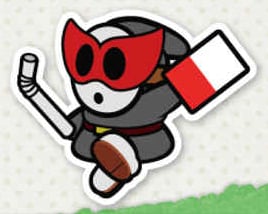
The Shy Bandit (boss)World map26 HP; attack 5. Roams the map draining finished levels and blinds Mario in battle. Drops his own card.
Draggadon (boss)Redpepper VolcanoNo HP given in our sources. Blocks the lava crossing until the Basin lands on his head.
Wild Dino Rhino (boss)The Emerald Circus300 HP. The star turn of Lemmy’s show.
Mega GoombaHP 116 · attack 33Mondo Woods. A Goomba enlarged by Kamek.
Buzzy Beetle TowerHP 150The Emerald Circus. A balancing act with a Shy Guy on top.
Shy GuyHP 8 · attack 3Almost everywhere, in several colours. The 4-Stack and 5-Stack have 4 and 5 HP.
Slurp GuyHP 14 · attack 5Port Prisma, Ruddy Road and wherever colour is being stolen. The Shy Guy with the straw.
Spike GuyHP 16 · attack 3 (spike 9)Ruddy Road to Mossrock Theater. Do not jump on the spike.
Dino RhinoHP 56 · attack 16 (fire 32)Mossrock Theater. Back from Super Mario World.
Lava BubbleHP 16 · attack 8Redpepper Volcano and Crater. Black Lava Bubbles (24 HP) are in the castle.
Key staff
The Sticker Star team, largely intact. Names are from the list given by Wikipedia.
Kensuke TanabeProducer (Nintendo)Producer of the series since Super Paper Mario, and the man who took the colouring-in idea to Intelligent Systems.
Risa TabataAssistant producer (Nintendo)Spoke for the game at E3 2016 and in the interviews before launch, including the statement that Paper Mario was now an action-adventure series.
Naohiko AoyamaDirector (concept)Director of Sticker Star and the originator of the Paper Mario look in 1997.
Taro KudoDirector (writing)Wrote the script, as he had for Sticker Star. Tabata singled out his jokes and his ending.
Atsushi IkunoDirector of production, Intelligent SystemsHad the idea of a painting game after watching his children colouring in.
Jun’ya KadonoProgrammerLead programmer, as on Sticker Star.
Masahiko Nagaya and Hidemi YamaguchiArtistsCredited by Wikipedia as the game’s artists. The art team bought and compared many kinds of real paper.
Takeru Kanazaki, Fumihiro Isobe, Shigemitsu GotoMusicA soundtrack with a different dance number for each Big Paint Star: a samba, a waltz, a country hoedown, a disco.
Toshiyuki Nakamura, Toshio Sengoku, Naoki Nakano, Shinya Takahashi, Keisuke TerasakiGeneral producersCredited as general producers; Tanabe alone has the producer credit. Satoru Iwata and Tatsumi Kimishima are both credited as executives.
How It Was Made
There was no Iwata Asks for this one, but producer Kensuke Tanabe and assistant producer Risa Tabata talked to the press before and after release, and between them they were unusually plain about what Paper Mario had become.
A father watches his children colouring
Concept art from the Prisma Museum: establishing the art style.
The game began with Atsushi Ikuno, director of production at Intelligent Systems. About four years before release, Tanabe told Game Informer, Ikuno watched how absorbed his children were in colouring in and wondered whether that could be a game: “maybe we can do some coloring in the next title.” Tanabe made it the theme of the next Paper Mario. Development started as soon as Sticker Star was finished.
Getting it to feel right took, he said, a long spell of trial and error over what it should be like to paint by hitting things with a hammer. The art team had its own research project. Tabata explained that the Wii U could show paper far more convincingly than the 3DS, so the artists bought many kinds of real paper and studied them. Tanabe added that the shoreline was the hardest thing to get right: too many layers of paper and it looked like a cliff, too few and it did not look like a shore.
Cards for a touch screen
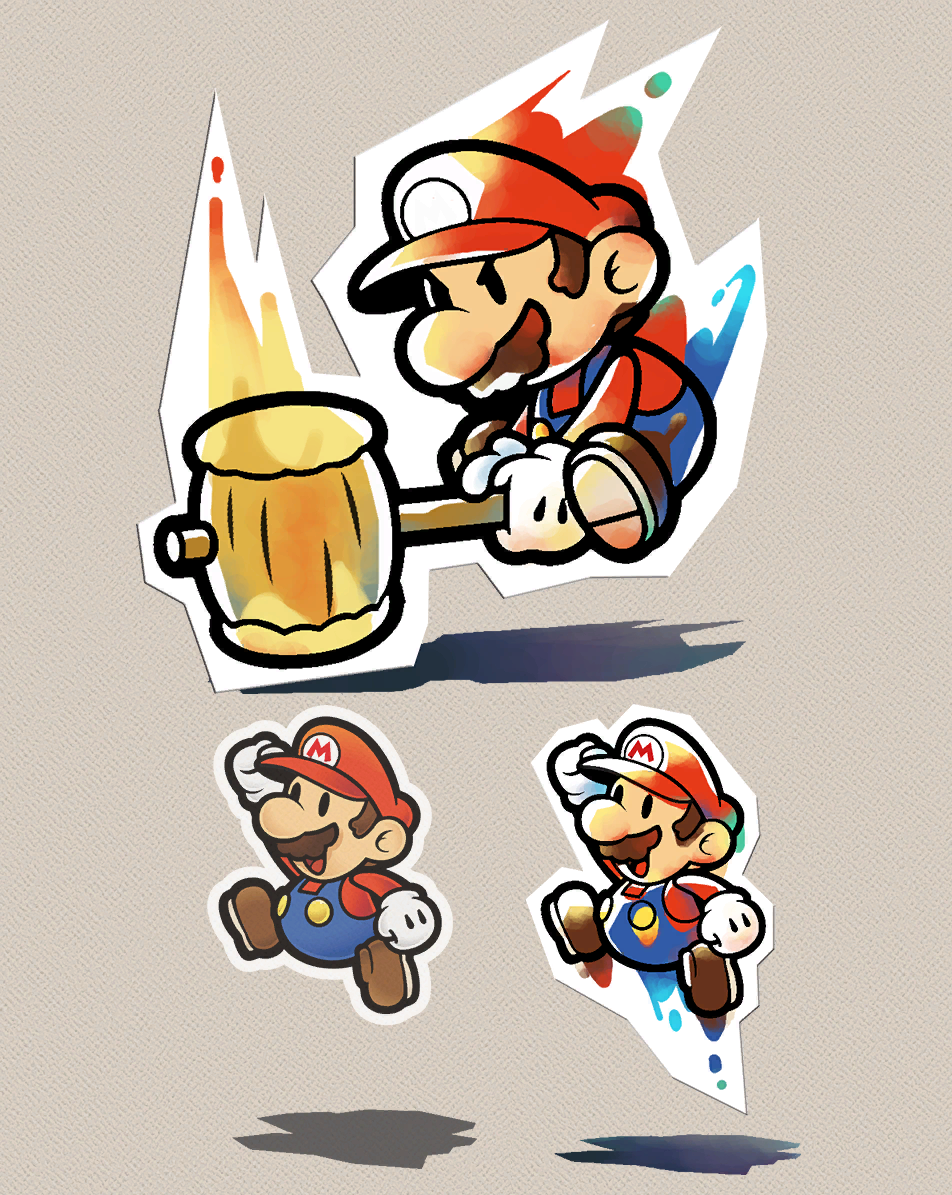
Concept art: early designs for Mario.
The card system was designed around the Wii U GamePad. Wikipedia’s account, from the Game Informer and USgamer interviews, is that the team wanted battles run entirely from the touch screen, something they felt the 3DS’s smaller one had not allowed in Sticker Star, and that the idea of glancing down at a hand of cards and flicking them up at the television came out of office discussions about what only this console could do.
The slower default controls were a concession to the audience. Watching people test the game, Tanabe said, “control mistakes were made frequently”, and the team had players of seven to ten in mind. The limit on how many cards can be carried was there, according to Tabata, to make players think. Multiplayer and Miiverse features were never considered.
“A hurdle that must be cleared”
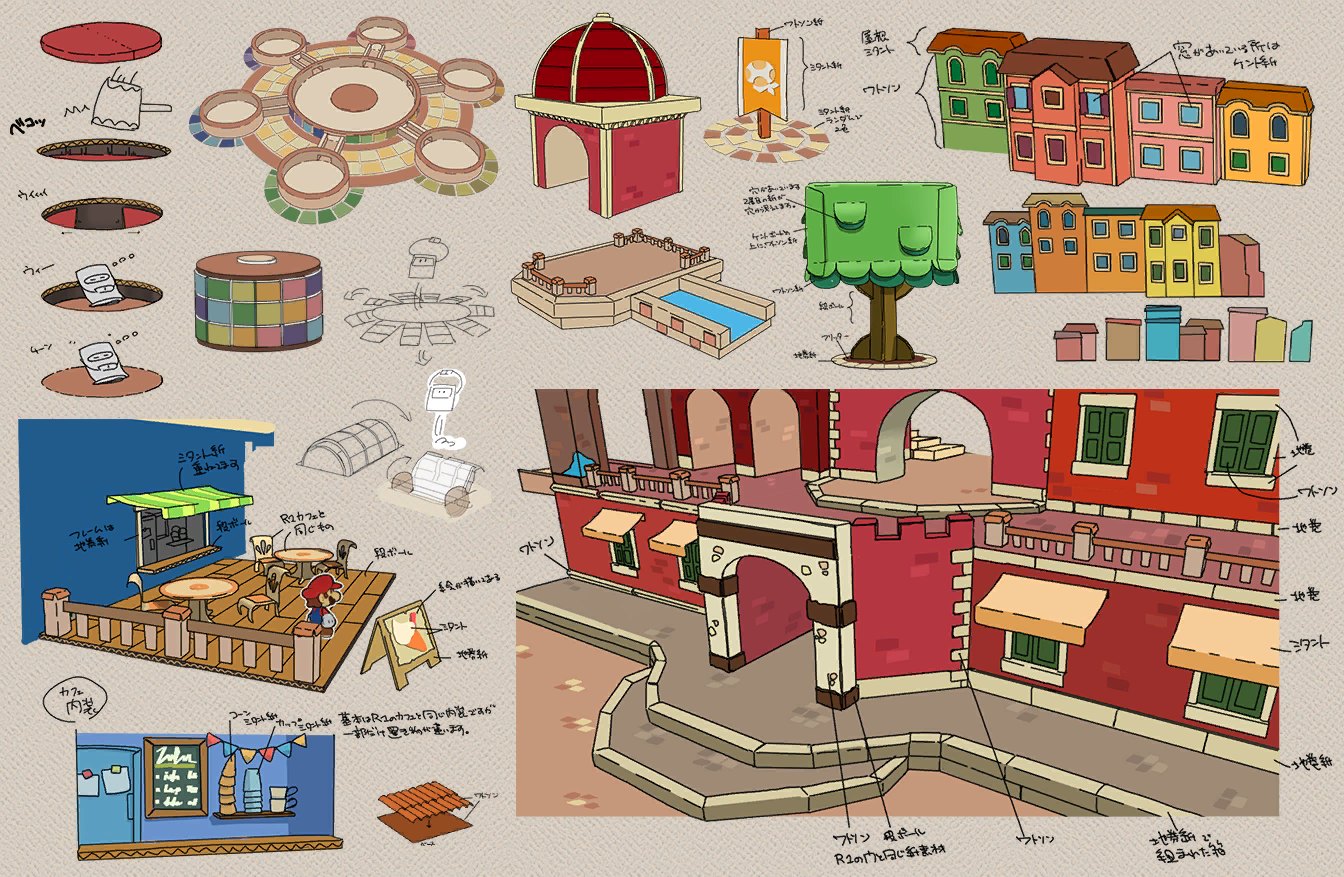
Concept art: Port Prisma.
On the question fans cared about most, the producers did not hedge. There was no experience system, Tanabe told Game Informer, because “the concept of levels does not directly relate to puzzle-solving”. Removing battles altogether was never on the table, since enemies in Mario’s way are part of what a Mario game is, but “we decided to handle combat merely as a hurdle that must be cleared to beat the game”. Boss fights were meant to be about bringing the right cards, not about being strong enough.
Tabata drew the line between Nintendo’s two Mario role-playing series at E3 2016, speaking to Kotaku’s Stephen Totilo in an interview that Wikipedia summarises: Mario & Luigi would be the RPG, and Paper Mario would concentrate on puzzles and humour. She put it more gently to USgamer that September, saying of the early Paper Mario games that “They were full of solving puzzles, solving mysteries”, and that this was the side the series now meant to develop.
Only the Mario family
A colourless Toad.
The cast was a matter of instruction. Asked why nearly everyone on Prism Island is a Toad, Tanabe said that Mario is not the Paper Mario team’s property and that they are guided by respect for the man who created him; Shigeru Miyamoto’s request had been, in Tanabe’s words, “could you make a game with only characters from the Mario family?” He added: “we are not currently thinking about returning to old NPCs.” Wikipedia records, from a USgamer interview of June 2016, that it was Satoru Iwata who suggested treating the restriction as a spur, which is where the idea of Toads in many colours with many jobs came from.
The answer the team found was writing. Tabata argued that a character’s personality counts for more than its design so long as the dialogue carries it, and praised Taro Kudo’s script. The jokes were then largely rewritten, not translated, for English.
The reveal, the petition and the leak
From the reveal in March 2016: the empty Prisma Fountain.
Color Splash was announced in the Nintendo Direct of 3 March 2016, and the reaction was instant and hostile. What viewers saw was Sticker Star again: cards for stickers, Things, a companion, Toads. Within hours there was a Change.org petition asking Nintendo to cancel the game, bracketing it with Metroid Prime: Federation Force. TechRadar’s Nick Pino wrote that day that the petition was “a frightening example of how quickly, and harshly, we judge games we know next to nothing about.”
Nintendo showed the game again at E3 in June 2016, with a story trailer and the release date, and followed it with the “Adventure Unfolds” trailer on 13 September and the Rescue V shorts. Then it gave the game away. When pre-orders opened on the North American eShop on 22 September, the download that buyers received was not a placeholder but the finished game, playable two weeks early. The option was withdrawn the next day, Polygon and Nintendo Life reported, but those who already had it kept it.
The end of the Wii U
Concept art of Decalburg and an unused location.
The timing was unkind. The game came out on 7 October 2016; Nintendo unveiled the Switch on 20 October; and Wii U production ended on 31 January 2017, with 13.56 million consoles sold. Color Splash was a big single-player adventure launched into the last four months of a console that had sold fewer than fourteen million.
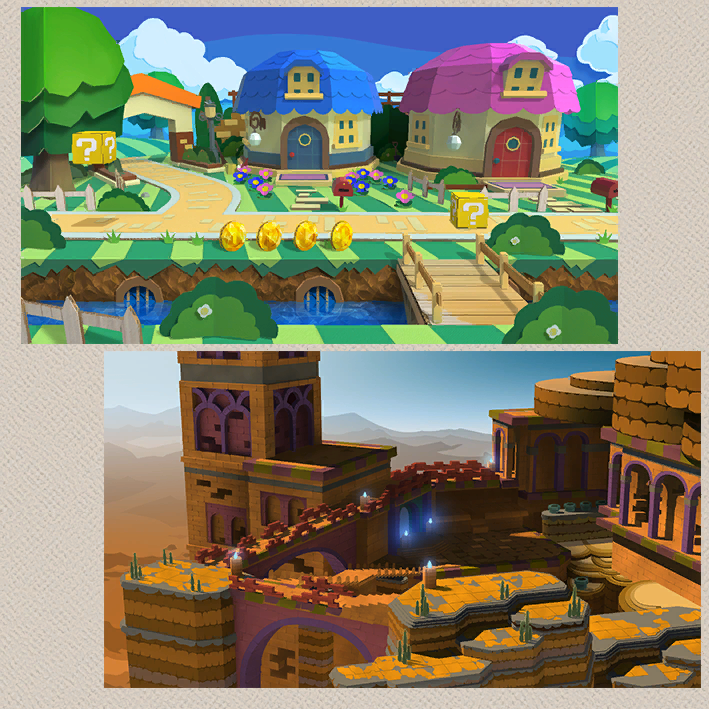
Two cut places survive as concept art in the Prisma Museum: the east side of Decalburg from Sticker Star, redrawn with a river and a bridge to somewhere new, and a temple in a rocky desert, lit by blue torches, which looks like an early Kiwano Temple.
Late in his Game Informer interview Tanabe made a remark that reads differently now. Both the systems and the play of Color Splash, he said, still felt unfinished to him, but “I do feel as though we reached the end of where Color Splash is headed”. If there were another Paper Mario, he wanted a different system. There was, and it had one.
Series Firsts
What Color Splash did first, checked against the earlier Paper Mario games.
1The Koopalings in Paper MarioAll seven appear as bosses, their first time in the series proper. They had been in the crossover Mario & Luigi: Paper Jam a year earlier, but only as their ordinary selves: that game gave them no paper counterparts.
2Paper Mario on Wii UThe only game in the series for the console, with a battle system built around its GamePad.
3PaintingThe Paint Hammer, colourless spots and paint as both ammunition and score are new, as is showing an enemy’s health by how much colour it has left.
4A scene after the creditsIt is usually counted as the first Paper Mario with an unlockable post-credits scene: Huey’s return, for holders of all six Super Flags.
5One shopThe only Paper Mario with a single shop for battle items, Prisma Cardware, restocked as the story advances.
6No save filesThere is one save, not a choice of files, and a Save Block saves without asking.
7Draggadon on paperThe dragon of Captain Toad: Treasure Tracker makes his paper debut, and Dino Rhinos come back from Super Mario World.
8No giant BlooperThe first four games each had one as a boss. This one does not.
9Twenty-five at a timeMaximum HP rises in steps of 25, where every earlier game dealt in fives.
Cheats & Secrets
No codes, but a great deal that the game leaves you to work out: which Thing each Koopaling needs, where Luigi is, and how to bring Huey back.
What to bring to each boss
Morton: a KO Hammer for his pedestal and the Fire Extinguisher for his hammer. Iggy: the Bone. Ludwig: a Tail card for the Ludship, Balloons for the Ludsub. Wendy: the Instant Camera. Larry: the Cork. Lemmy: the Disco Ball, then the Ice Pick. Roy: the Washing Machine. Draggadon: the Basin. Big Lava Bubble: Ice Flowers. A Replica will not do for a Koopaling; it has to be the real card.
The secret ending
Earn all six Super Flags: Excellence Embodied (200 Excellent attacks), Sizzlin’ Scissors (every Cutout performed), Gold Bug (10,000 coins collected), Card Champion (200 cards bought at Prisma Cardware), Honorary Paint Can (every colourless spot repainted) and The One and Roshambonly (the Rock Paper Wizard beaten in all eight temples). After the credits, Huey falls back into Prisma Fountain.
Six Luigis
Bloo Bay Beach: the outdoor shower behind the juice bar. Marmalade Valley: by the Save Block on the second level of the dig. The Golden Coliseum: the top of a stand in the arena. Plum Park: the tree where Birdo is met. Redpepper Crater: behind a waterfall at the hot springs. Green Energy Plant: on a monitor outside the green Toad House. Use Cutout on each: 300 coins a time, and he opens the credits parade if all six are found.
Three Card Max Ups
Help the Soggy Guy at Cherry Lake, bring the Teapot to Dark Bloo Inn, and beat Kamek in the Sacred Forest. Each adds a card to every turn, up to four.
Koopaling cards
Beat a Koopaling, then go to a Roshambo Temple and win through to the Rock Paper Wizard. His prize is an Enemy Card of a Koopaling or Kamek. Played in an ordinary battle, a Koopaling card makes the enemies run away. The Black Bowser’s Castle card is the reward for the final battle.
Paint for nothing
Squeezing a Thing refills all three gauges. So does sitting in Prisma Fountain. The Big Paint Stars at the fountain can be hammered for paint as well.
Ask the dustbin
The Know-it-All Toad lives in a bin near the entrance to the Red District and will hint at whichever Thing is needed next. Once Black Bowser is beaten he also says where the optional Things are. The Wringer, in the harbour district, sells any Thing already found for 150 to 300 coins.
Cutout hints
The “Deep Cuts” Toad in the Yellow District sells the whereabouts of Cutouts not yet made, at 50 coins each, which is the easy way to the Sizzlin’ Scissors flag.
Fill the museum
The Prisma Museum is inside the Action Command Dojo and opens after a letter from the Card Connoisseur Toad. Each card donated unlocks concept art; each level fully repainted unlocks its music. There are 160 cards to give.
Spinning-Doors
Hammer a Spinning-Door to set it turning and again to stop its three parts on one colour: red for Blockstopper!, blue for Flippin’ Cards!, yellow for Prize Pipe Paths, and rainbow for Paint Hunter!.
Perfect scores at sea
The two cannon games on the pirate ship need 70 points or 25 coins to pass. A perfect score is 100 points or 80 coins, and earns a spotlit banner below decks. Talk to the Toad at the helm to try again.
Piper
The errand starts when the waterwheel in Port Prisma repaints a Toad called Purp. Find Redd, Greenie, Bloo and Yella across the island, watch the tree in the Yellow District, and do not hit the Ptooie that grows out of it.
Watch the credits again
After the game is finished, the Toad who reads the Prisma Times aloud in the Blue District for 10 coins will replay the credits parade. Before that his headlines are hints at what to do next.
A Perfect Bonus here means taking no damage in the whole battle, however many turns it lasts.
Glitches & Oddities
Three small collision bugs are known, none of which will trouble a normal game.
Angled Mario
Mario jumping at an angle.
In Plum Park, park a barrel raft against a ledge that faces north, stand between the two and keep hammering the raft. Mario slips inside it, and when he jumps out his paper body is tilted at a strange angle for as long as he keeps moving.
Through the wall on a flower pot
A flower pot stays squashed for a few seconds after it is hammered. Stand on its rim and run at a nearby wall before it springs back, and Mario can pass through. He can also fall out of the level this way, which is a Game Over.
Standing in trees
The corners of the treetops in Port Prisma and Ruddy Road are not quite solid. Jump into one and Mario can stand inside the leaves.
An unused copy of Huey
Every Thing has a Replica card, and the files include one for Huey that cannot be obtained in play.
Videos
Nintendo of America’s two main trailers: the story trailer from E3 2016 and the longer overview released three weeks before launch.
Nintendo of America’s E3 2016 trailer, which sets up the story and announced the release date.
Nintendo of America’s “The Adventure Unfolds” trailer of 13 September 2016, covering painting, Cutout and card battles.
Trivia & Interesting Facts
The Washing Machine was redrawn for Europe and Australia, and so was the laundry room it stands in.
Enemies taunt Mario during battles, which is usually listed among the things new to the series.
An unseen soldier called Johnson is mentioned in The Thousand-Year Door (an X-Naut) and Super Paper Mario (a Koopa Troopa). Sticker Star left him out. Here he is a Shy Guy.
Port Prisma.Port Prisma is close to a mirror image of Rogueport, the hub of The Thousand-Year Door, down to the staircase that leads to the square where the story’s treasures are gathered.
Larry explains, when cornered, that he stole a train and a star only to keep Bowser happy. That is his character note in the Japanese manual of Super Mario Bros. 3.
Morton’s weapon is a hammer modelled on Mario’s, and Roy’s is a Bill Blaster, as in New Super Mario Bros. U. Iggy still taunts by slapping his backside, as he did in New Super Mario Bros. Wii.
A Junior Clown Car is parked in a back room of The Emerald Circus. Bowser Jr. himself is not usually listed in the game’s cast.
Lakitus are absent as well, though Luigi warns on Rainbow Road that no Lakitu will be fishing them out this time.
The Five Fun Guys take their name from the team name of Mario and Toad in Mario Party 8.
Huey’s joke on Ruddy Road about the washed-out Mini Paint Star and The Lost Levels exists only in English. Tanabe said Japanese players would not understand it.
A Toad at the Green Energy Plant talks about playing with power, the old Nintendo Entertainment System slogan, and the music in its 8-bit world is the NES original until Mario flips, when an orchestral version takes over.
The jingle for collecting a Big Paint Star is built from the first notes of the opening theme of the original Paper Mario.
The music in the Roshambo Temples is an arrangement of the credits theme of Super Mario Land.
Paint the Dance Floor, for the green star.Each Big Paint Star’s return is marked by the locals dancing to a different tune: Prism Samba, Prisma Prance Trance, Color Waltz, Prismatic Rhapsody, This Here’s Paint Country! and Paint the Dance Floor.
A yellow Toad at Sunglow Ridge mentions Wart, and vases from Super Mario Bros. 2 stand about Château Chanterelle.
Before helping an injured Rescue Toad on Daffodil Peak, ask Huey for advice: he brings up Mario’s part-time job as a doctor.
The game mixes its sound in 5.1 surround, though very little reaches the rear speakers.
Thing Cards and their Replicas want five units of each colour. The Huey card wants one.
Among the cut ideas shown in the Prisma Museum is a return to Decalburg, the town of Sticker Star.
The Shy Bandit never gives up. He can reappear on the map throughout the game to undo a level’s paintwork.
Regional Box Art
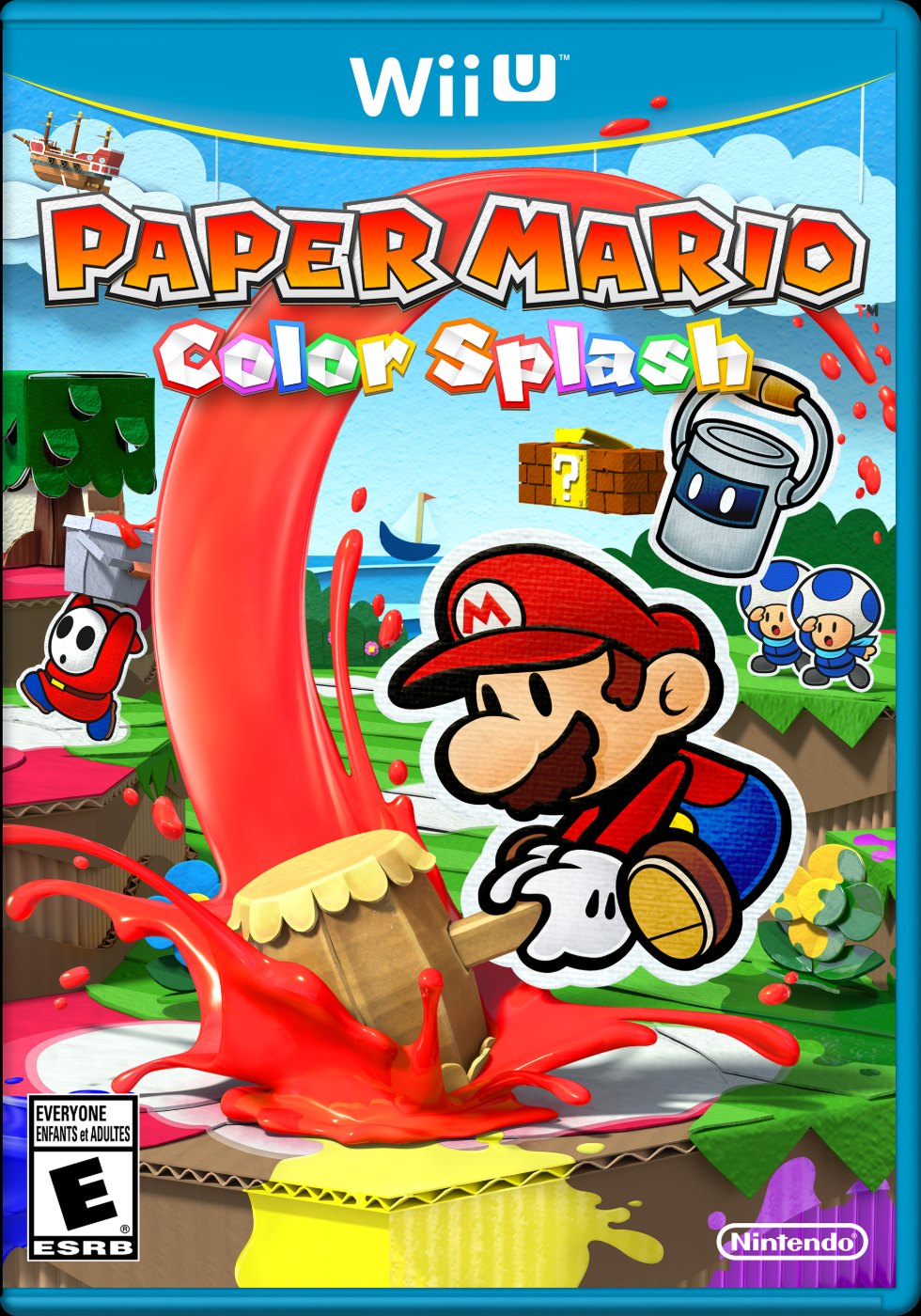
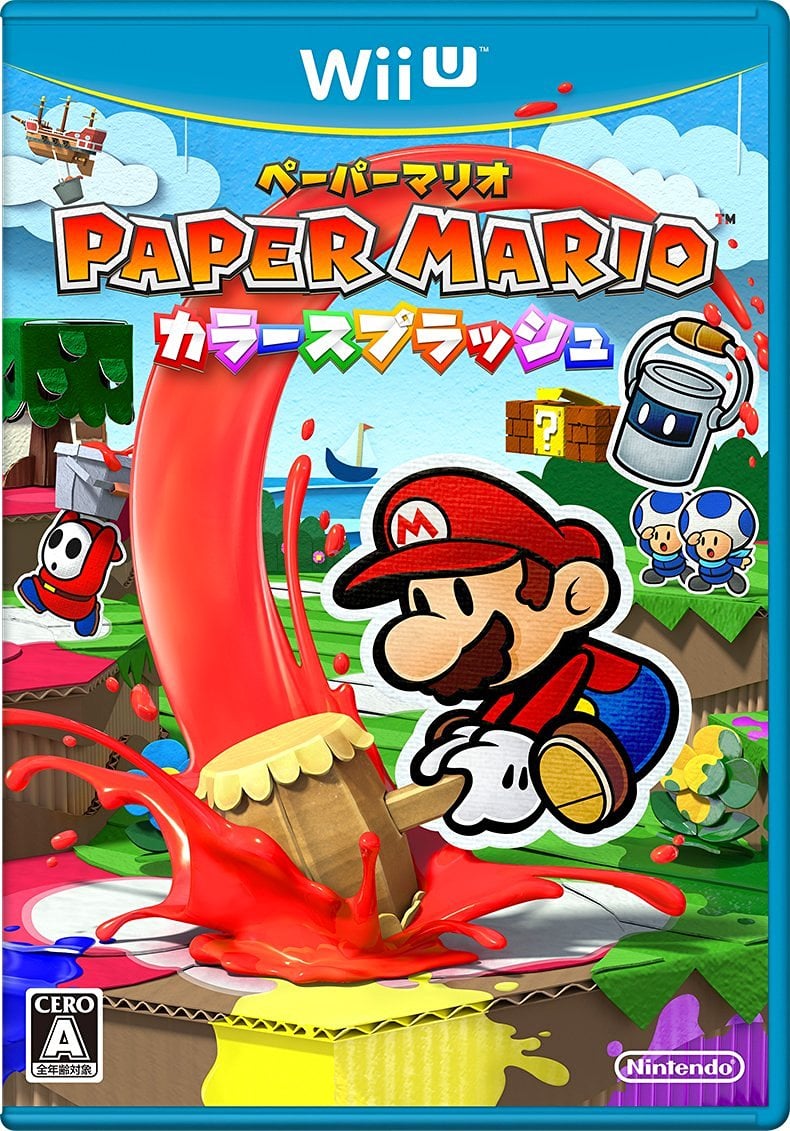
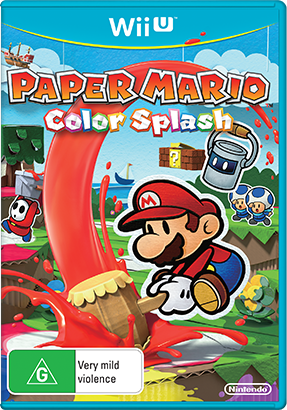
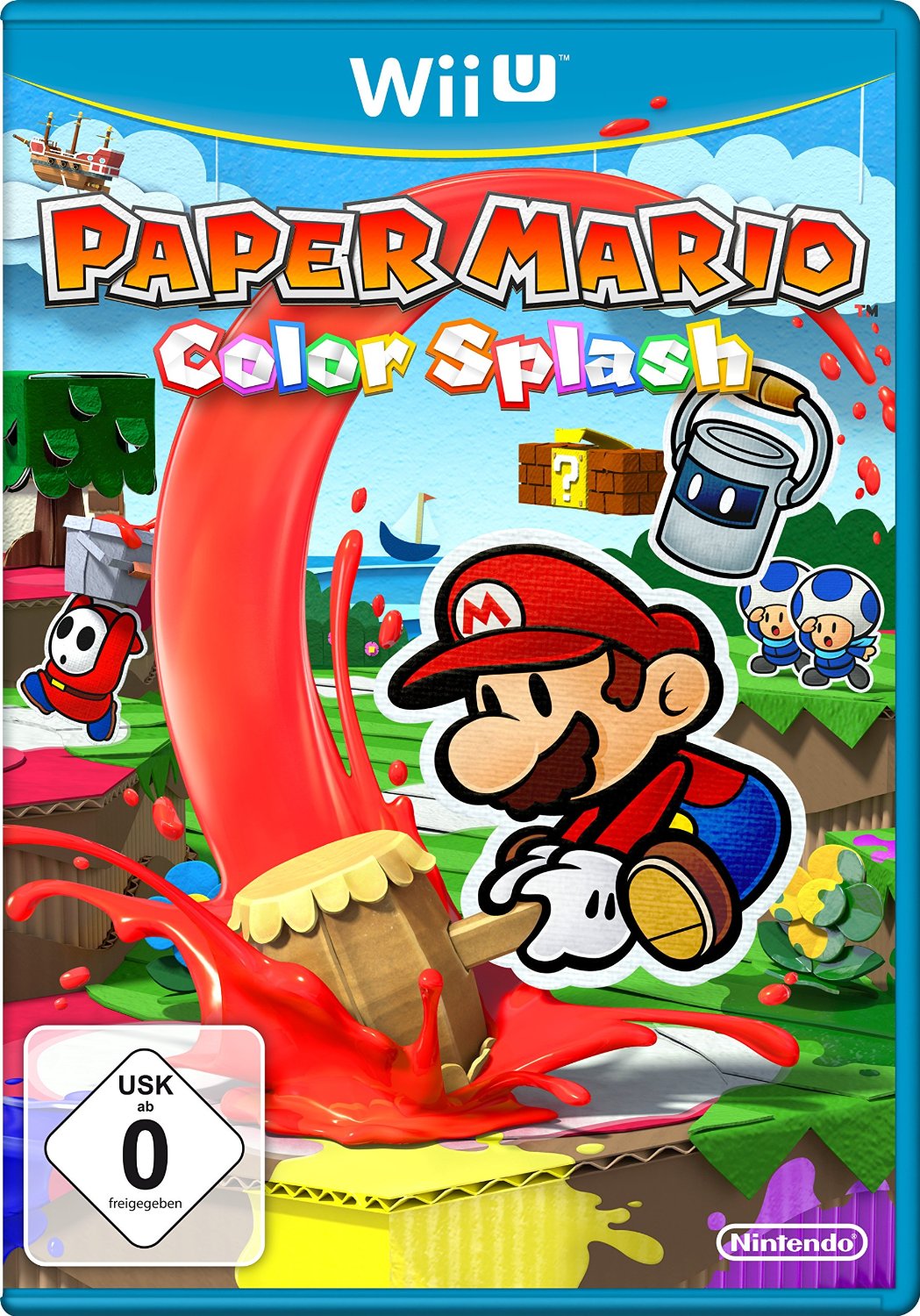
One piece of key art, Mario mid-swing with paint flying, served every region. Six covers are shown.
EuropeNorth AmericaJapanAustraliaGermanyRussia
Screenshots
Five more views of Prism Island.
Every Big Paint Star is celebrated with a dance. The red one gets a samba.A Holo-Peach message.Birdo in concert at Plum Park.The Super Ludsub goes up on Balloons.A Mamma Mia Pizza, ready for the oven at Tangerino Grill.
Artwork & Media Gallery
Official artwork, the Big Paint Stars, concept art from the in-game museum and a few screenshots from before release.
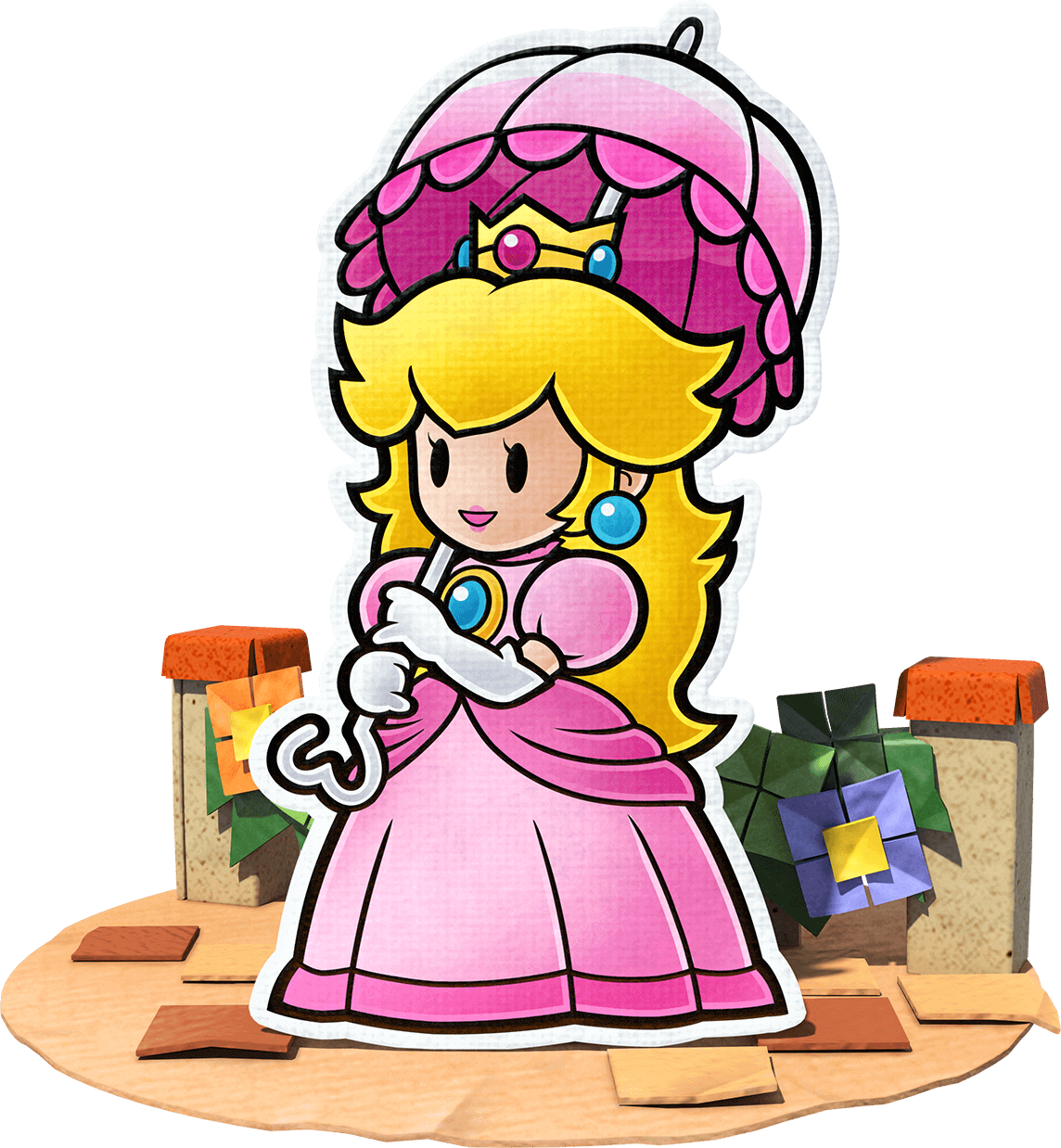
Group artwork.Mario and Huey.Mario.Mario with the Paint Hammer.Huey.Mario and Huey using Cutout.Princess Peach.Black Bowser.A colourless Toad.Princess.The Shy Bandit.Prism Island.Port Prisma.Red Big Paint Star.Orange Big Paint Star.Yellow Big Paint Star.Green Big Paint Star.Blue Big Paint Star.Purple Big Paint Star.The Paint Hammer.Unfurl Block.Hammer Scrap.Logo.Japanese logo.Concept art: art style.Concept art: Mario.Concept art: Port Prisma.Concept art: Decalburg and a cut location.Nintendo Direct, March 2016.Title card of Rescue V.
Legacy & Re-releases
Color Splash has not been re-released, and with the Wii U gone it is one of the harder Paper Mario games to play. Its reputation has risen as its audience has shrunk.
Announcements and releases
The ideaAbout 2012Atsushi Ikuno proposes a game about colouring; development follows Sticker Star.
Nintendo Direct3 March 2016Revealed for Wii U. A petition for its cancellation appears within hours.
E3 2016June 2016Story trailer and release date. Risa Tabata describes it as an action-adventure.
The Adventure Unfolds13 September 2016Overview trailer.
Accidental early release22 September 2016North American eShop pre-orders deliver the complete game two weeks early.
Wii U (North America, Europe)7 October 2016Release on disc and eShop.
Wii U (Australia)8 October 2016Australian release.
Wii U (Japan)13 October 201620,894 copies in the first week. 35/40 in Famitsu.
Nintendo Switch revealed20 October 2016The Wii U’s successor is announced a fortnight after launch.
Wii U discontinued31 January 2017Production of the console ends.
Kids’ Choice AwardsMarch 2017Nominated for Favorite Video Game.
Re-releases
There are none. Wii U is the game’s only platform, on disc and as a download.
The series after it
Paper Mario: The Origami King followed on Switch in 2020 with, as Tanabe had promised, a different battle system. It reuses a great deal of Color Splash, from the look of the characters to individual tunes, and keeps its rules: no experience points, no original Mario-family characters, Toads to rescue everywhere. In that sense this is the middle game of a trilogy that began with Sticker Star.
The older style had its day again in 2024 with the Switch remake of The Thousand-Year Door.
Where its cast went next
Huey’s one later appearance in our sources is as a spirit in Super Smash Bros. Ultimate. The Rescue Toads’ job of being found behind the scenery is carried on by the hidden Toads of The Origami King, 416 of them, and Morton’s catchphrase lives on as a team name in Bowser Jr.’s Journey.
Reviews & Sales
Sales figures
Nintendo’s investor-relations pages have never listed a sales total for Color Splash. Its investor-relations list of top-selling Wii U software shows ten games, from Mario Kart 8 on 8.46 million down to Mario Party 10 on 2.27 million as of 31 March 2026, and Color Splash is not one of them, so its worldwide sales are somewhere below that.
The Japanese figures are known and small. Media Create, as reported by Gematsu on 19 October 2016, counted 20,894 copies in the first week, and the game had left the top twenty by the first week of November with 37,093 sold. Famitsu’s data gives a lifetime Japanese total of 65,316, which by most accounts makes it one of the lowest-selling boxed Mario games in the country; Wikipedia, from Media Create figures posted on a forum, gives about 86,000 by the end of 2017.
20,894first week in Japan (Media Create)
65,316Japan, lifetime (Famitsu)
under 2.27mworldwide: not in Nintendo’s Wii U top ten
76Metacritic
35/40Famitsu
58%of critics recommend (OpenCritic)
Reception and review scores
Metacritic’s average is 76 and GameRankings closed on 76.25 per cent, a point above Sticker Star. The scores below are as listed by Wikipedia.
Nintendo World ReportMatt West · 5 October 2016
9/10
VentureBeatUS
90/100
FamitsuJapan · four reviewers
35/40
Game InformerBen Reeves · 5 October 2016
8.5/10
DestructoidCJ Andriessen · 7 October 2016
8.5/10
Electronic Gaming MonthlyEmma Schaefer
8/10
Nintendo LifeUK
8/10
IGNTerri Schwartz · 5 October 2016
7.3/10
GameSpotMiguel Concepcion · 5 October 2016
7/10
GamesRadar+Alex Jones · 7 October 2016
3.5/5
USgamerUS
3.5/5
PolygonUS
6.5/10
Giant BombDan Ryckert
2/5
The reviews were kinder than the reveal had been. Nearly everyone praised the look of the thing and nearly everyone praised the script. Game Informer’s Ben Reeves reported “belly-laugh moments”; GamesRadar’s Alex Jones called it “one of the most heartwarming games you’ll play this year” and the visuals “the purest distillation of the original Paper Mario style yet”; GameSpot’s Miguel Concepcion thought the dialogue a great advance on earlier Mario RPGs. Nintendo World Report’s Matt West, the most enthusiastic, liked the way the paint supply made battles a matter of budgeting, and dismissed the sameness of the Toads as among the “minor complaints in an otherwise excellent package”.
The battles were where it lost marks. Reeves found them too simple and the game “almost unrecognizable as an RPG”. IGN’s Terri Schwartz wanted more than one card shop and more Save Blocks. Concepcion and Jones both disliked Cutout, which Concepcion said “can leave one stumped, disrupting the game’s pacing and enjoyment of levels considerably.” Polygon saw little reason to go on fighting after the first five hours.
And Giant Bomb’s Dan Ryckert, with the lowest score, asked the question the design never quite answers: “with that system in place, why would anyone ever want to encounter an enemy in the field?” He wrote that he “never once felt like any of the standard fights were doing anything to progress the story or my character’s abilities.” Kotaku’s Stephen Totilo had put the wider point at E3: this was a series “in the midst of an identity crisis.”
Honours
Nickelodeon Kids’ Choice Awards · March 2017Favorite Video GameNominated. The award went to Just Dance 2017.
SLB User Reviews
Paper Mario: Color Splash has yet to receive a community review on Super Luigi Bros.
If you’ve played Paper Mario: Color Splash and would like to submit a review, please get in touch.
To provide the best experiences, we use technologies like cookies to store and/or access device information. Consenting to these technologies will allow us to process data such as browsing behavior or unique IDs on this site. Not consenting or withdrawing consent, may adversely affect certain features and functions.
Functional
Always active
The technical storage or access is strictly necessary for the legitimate purpose of enabling the use of a specific service explicitly requested by the subscriber or user, or for the sole purpose of carrying out the transmission of a communication over an electronic communications network.
Preferences
The technical storage or access is necessary for the legitimate purpose of storing preferences that are not requested by the subscriber or user.
Statistics
The technical storage or access that is used exclusively for statistical purposes.The technical storage or access that is used exclusively for anonymous statistical purposes. Without a subpoena, voluntary compliance on the part of your Internet Service Provider, or additional records from a third party, information stored or retrieved for this purpose alone cannot usually be used to identify you.
Marketing
The technical storage or access is required to create user profiles to send advertising, or to track the user on a website or across several websites for similar marketing purposes.

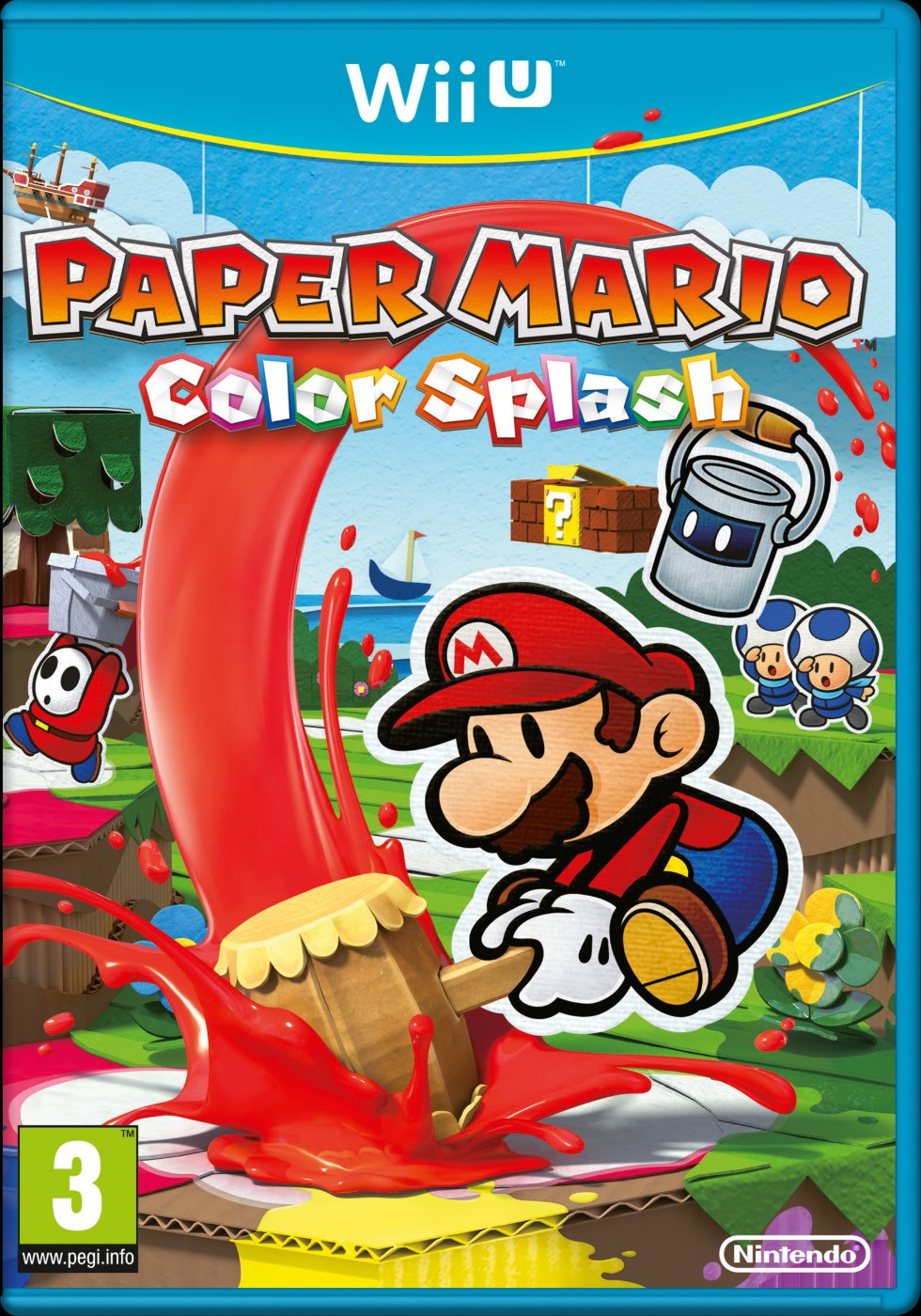
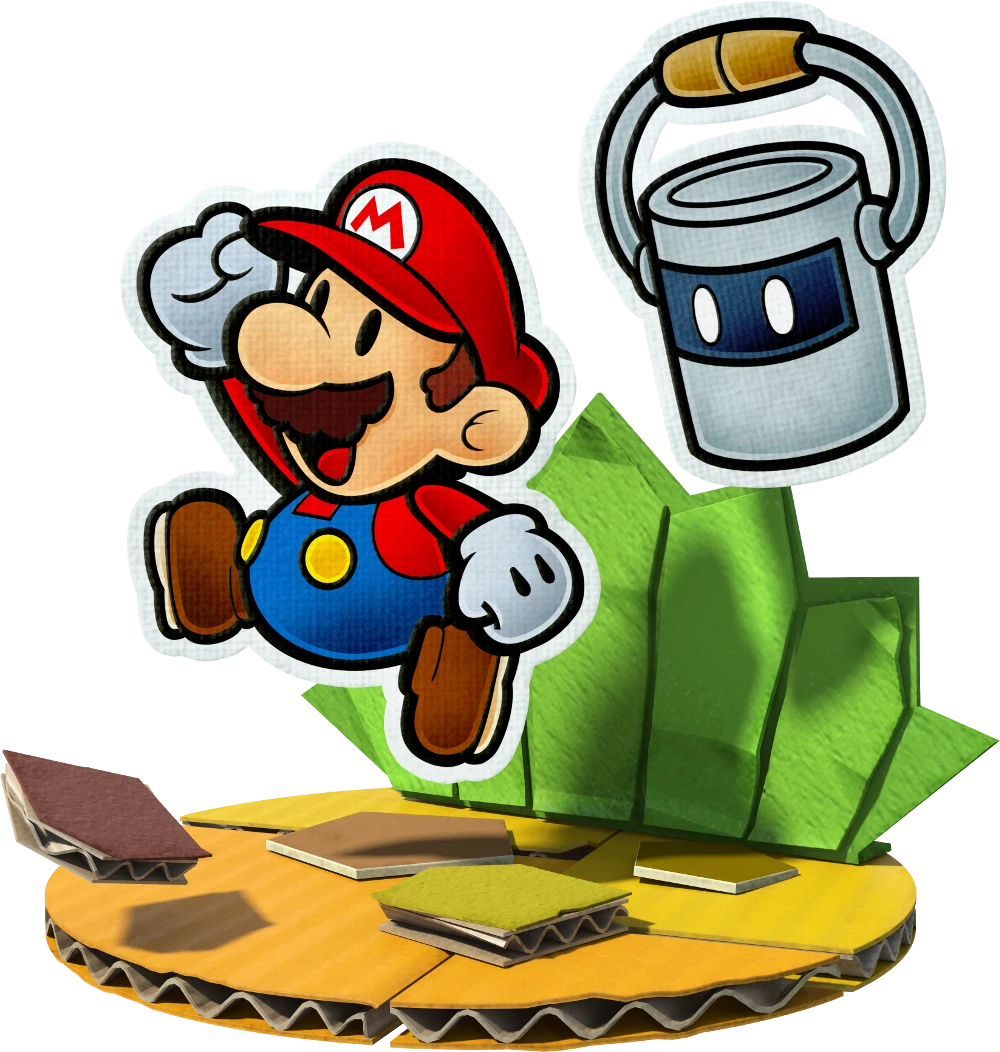
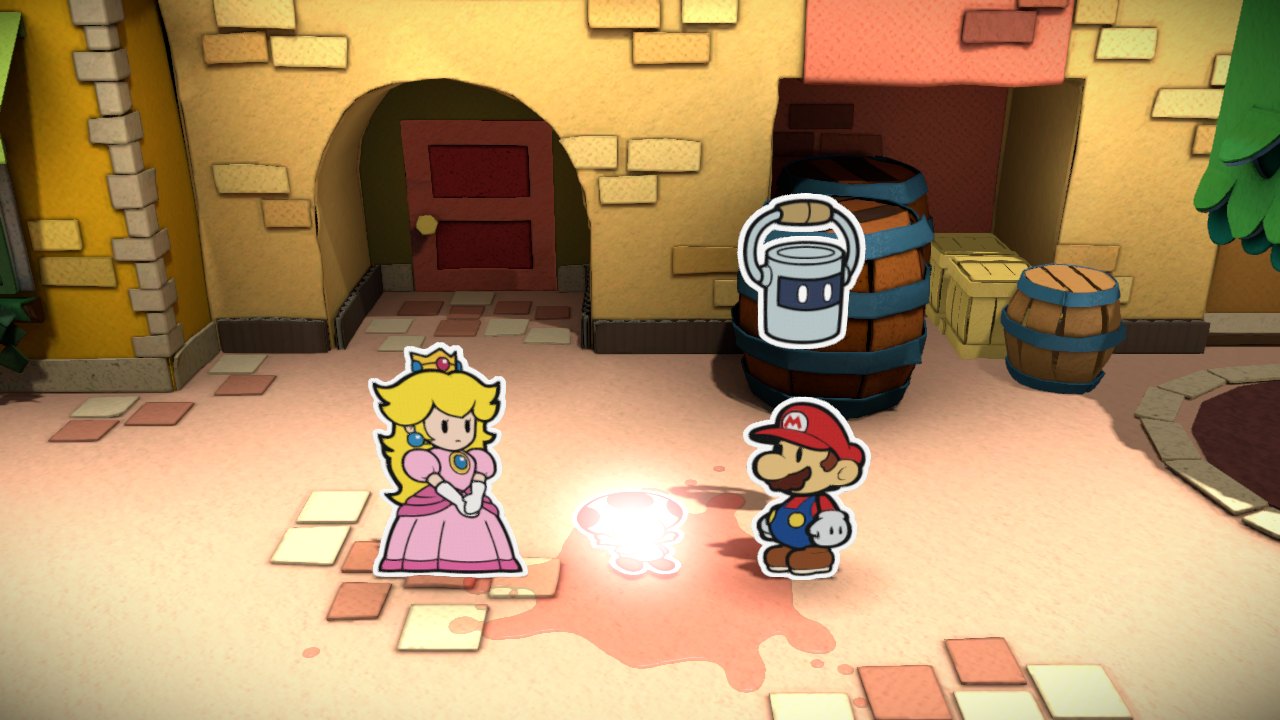
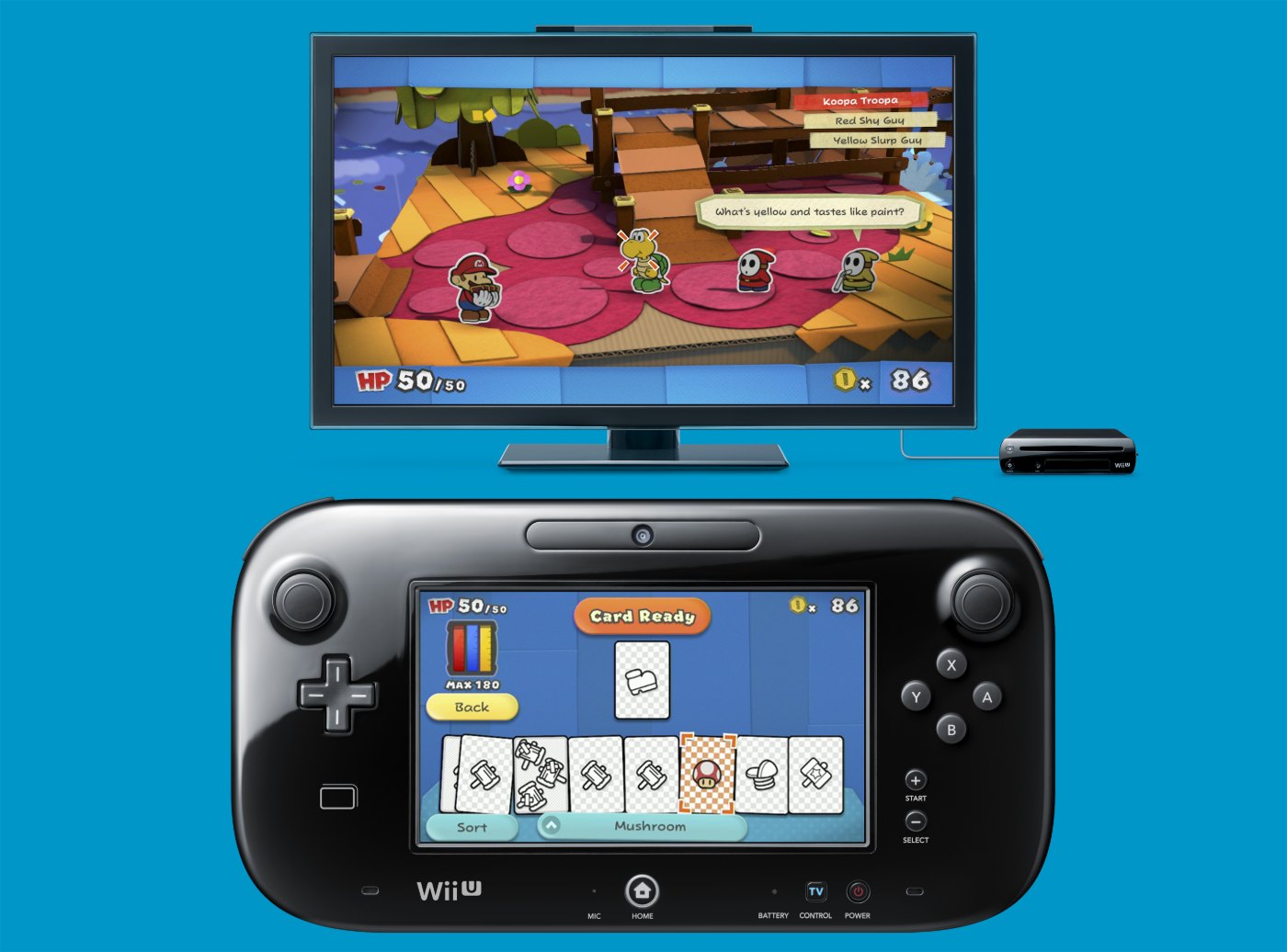
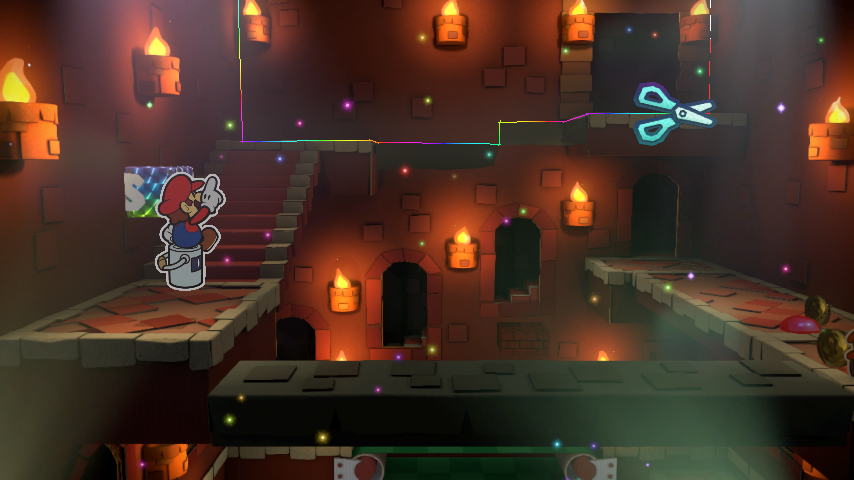
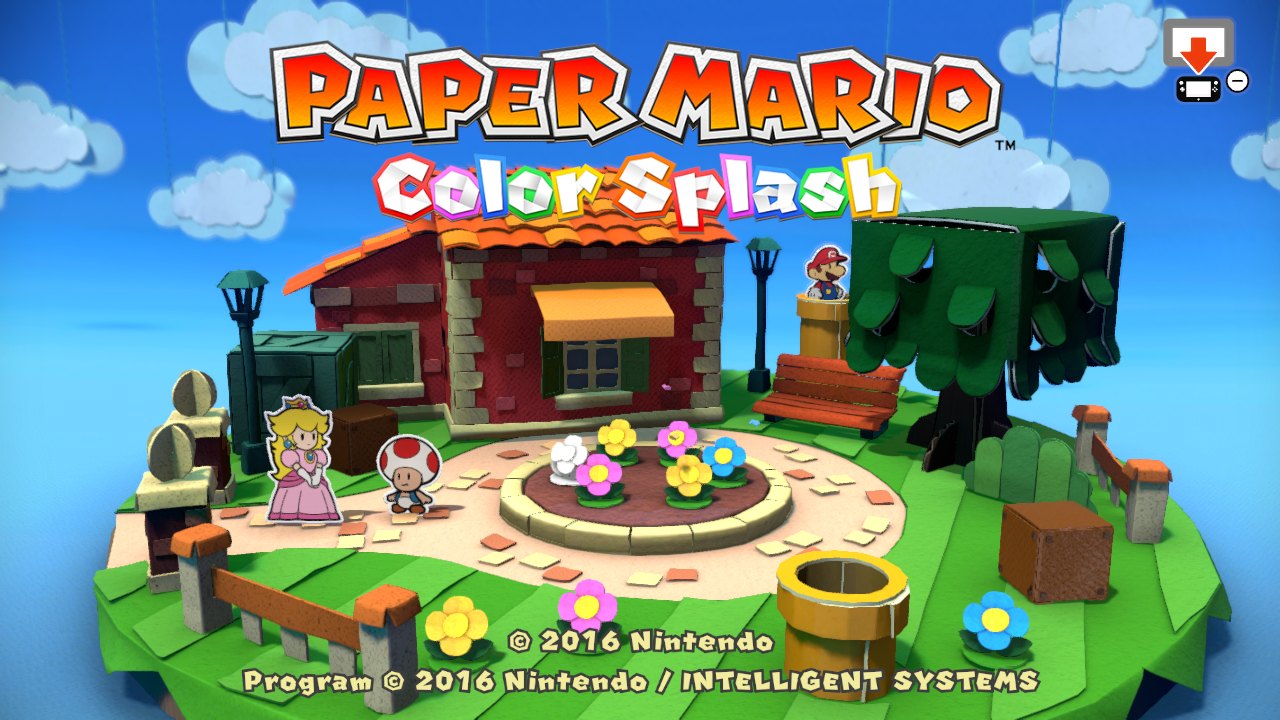
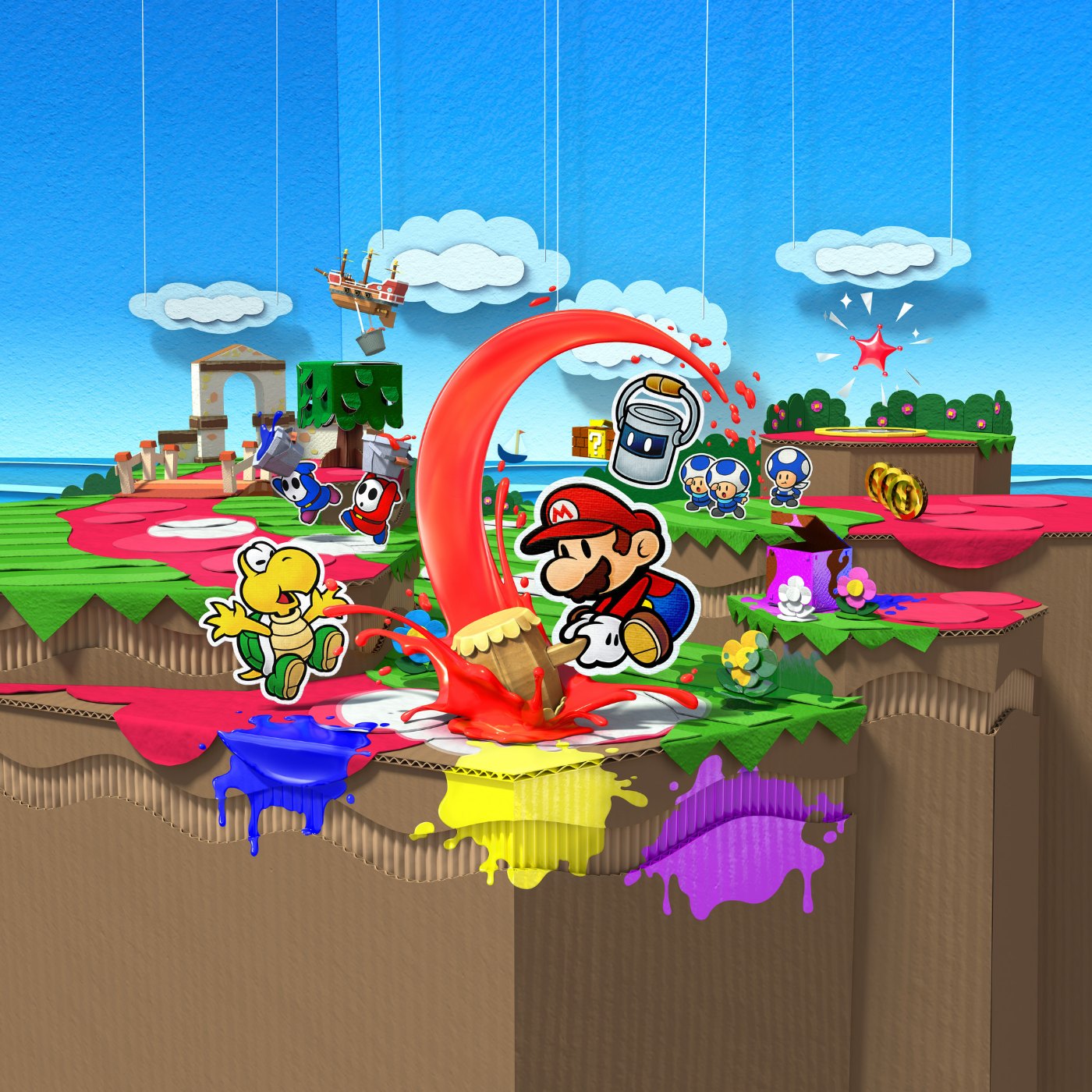
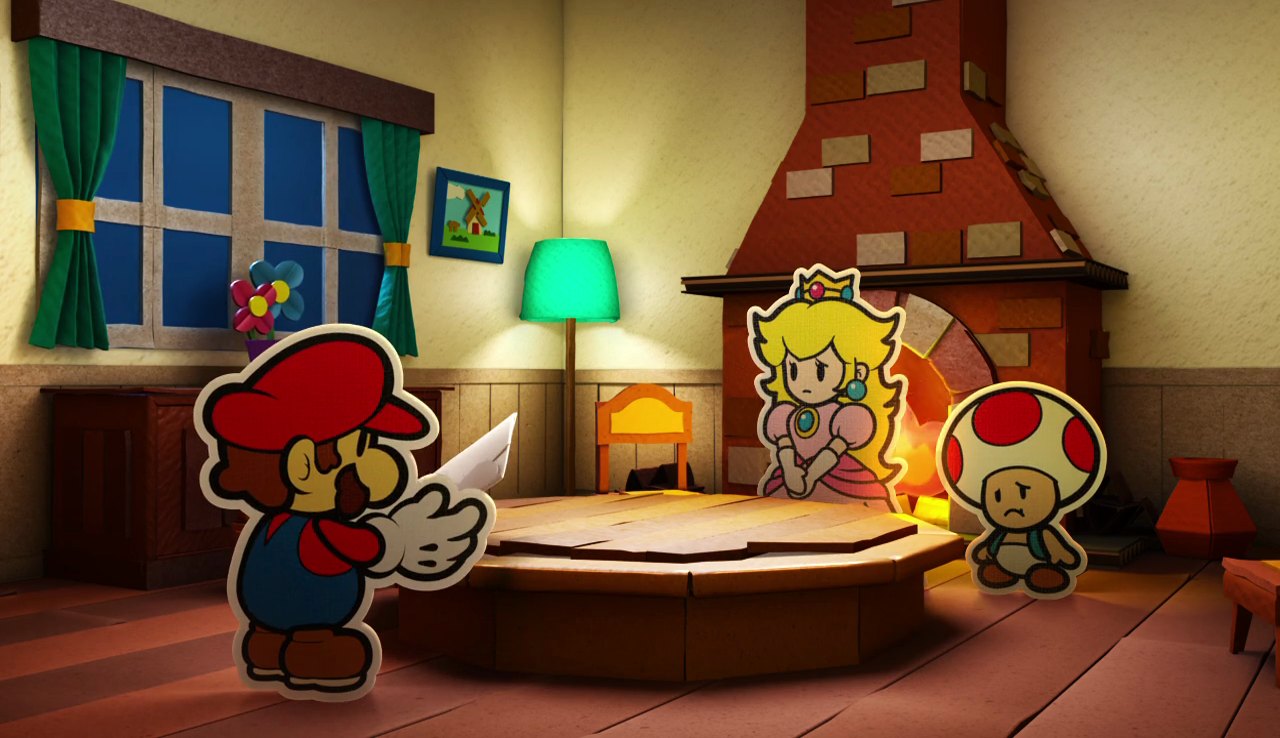
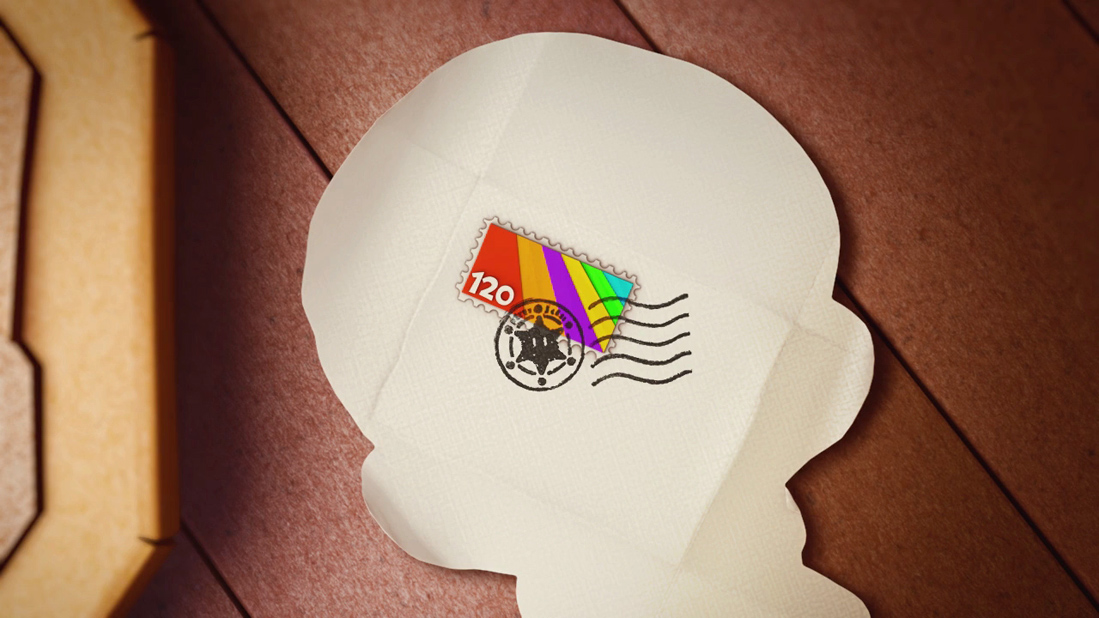
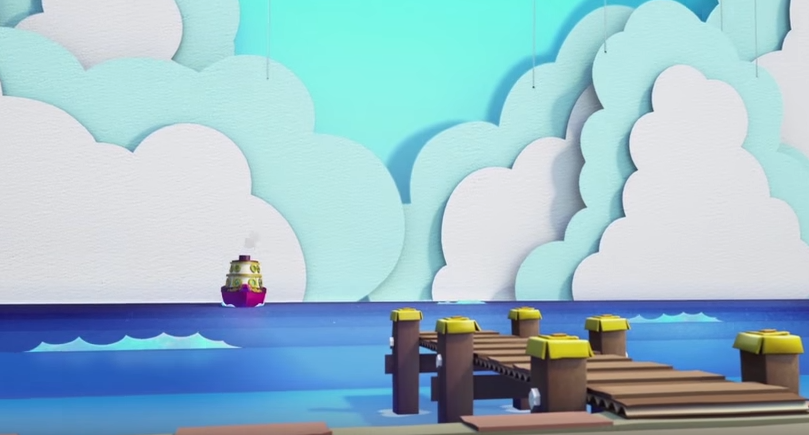
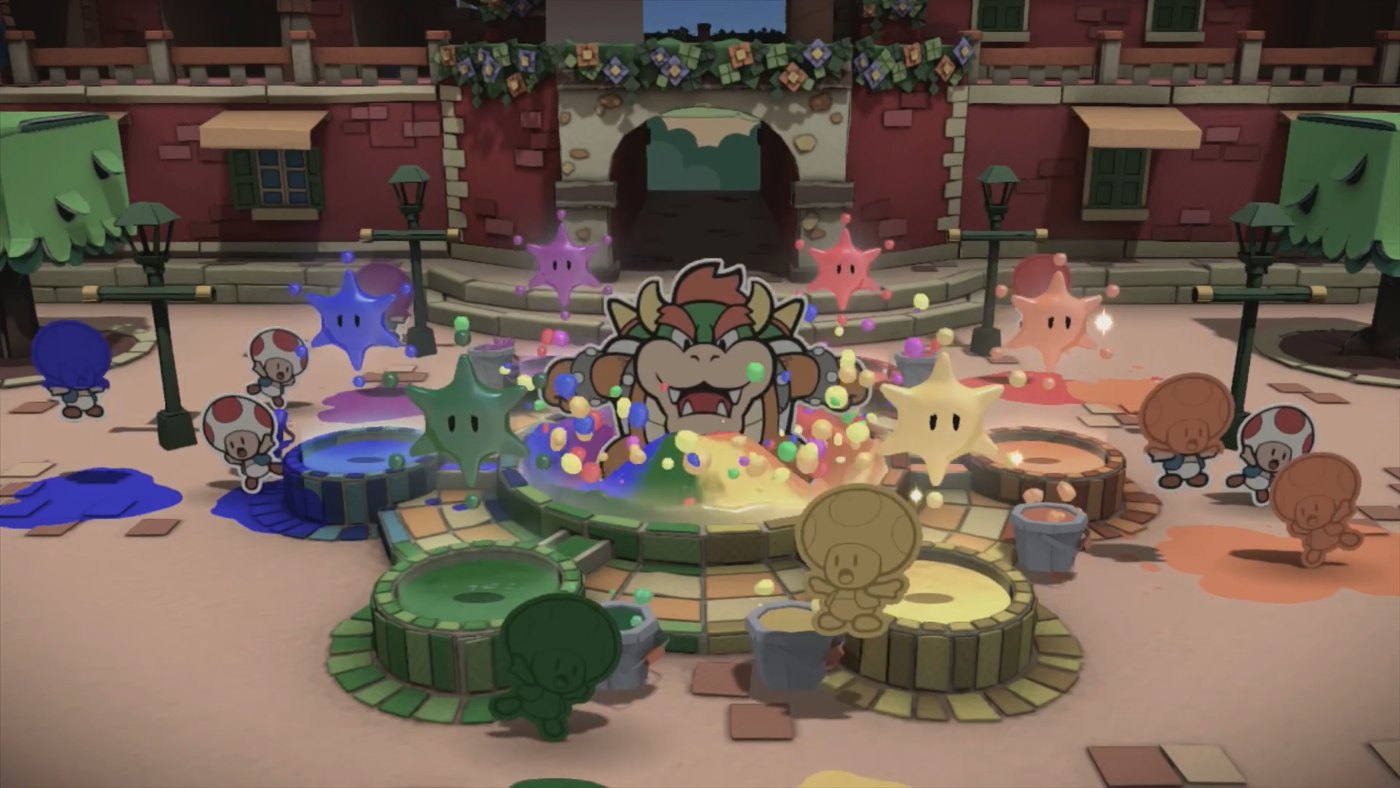
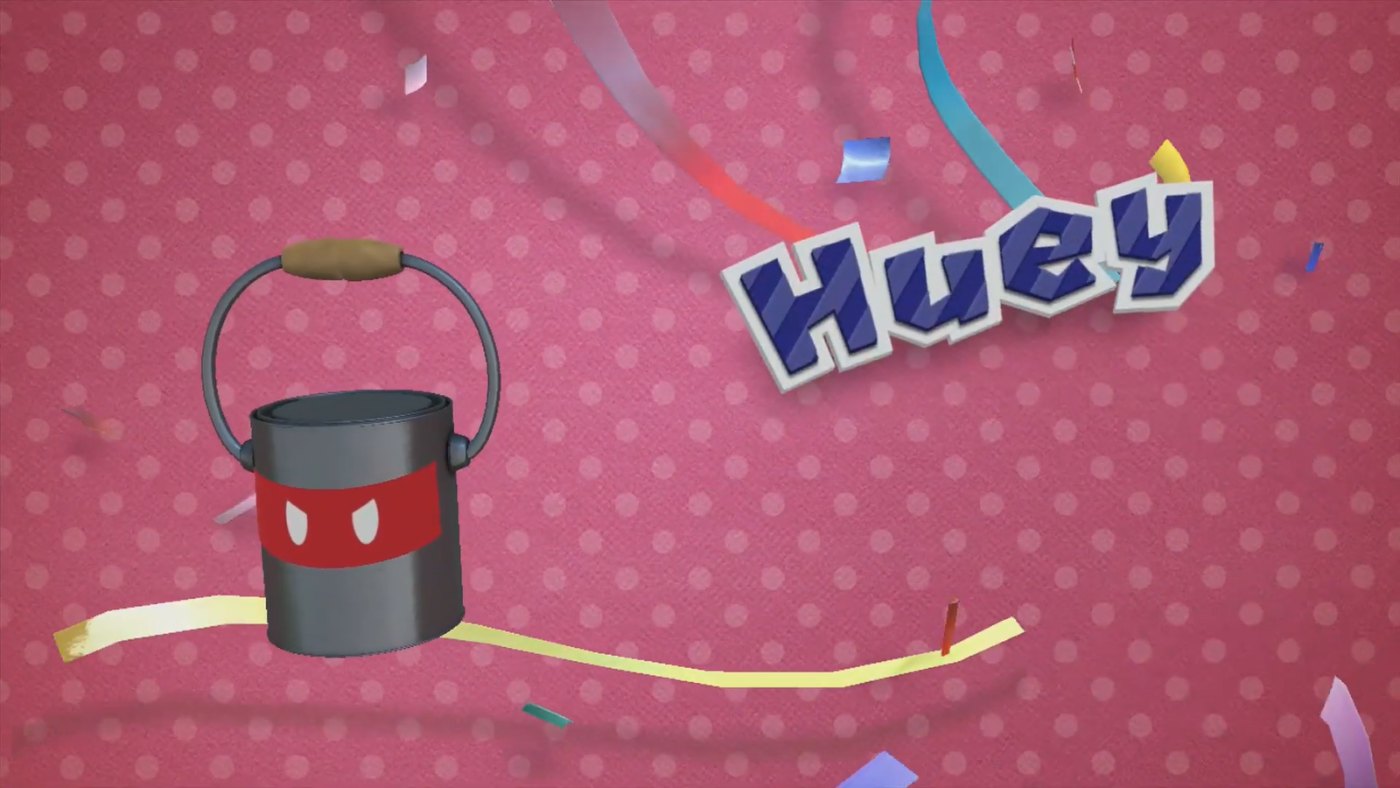
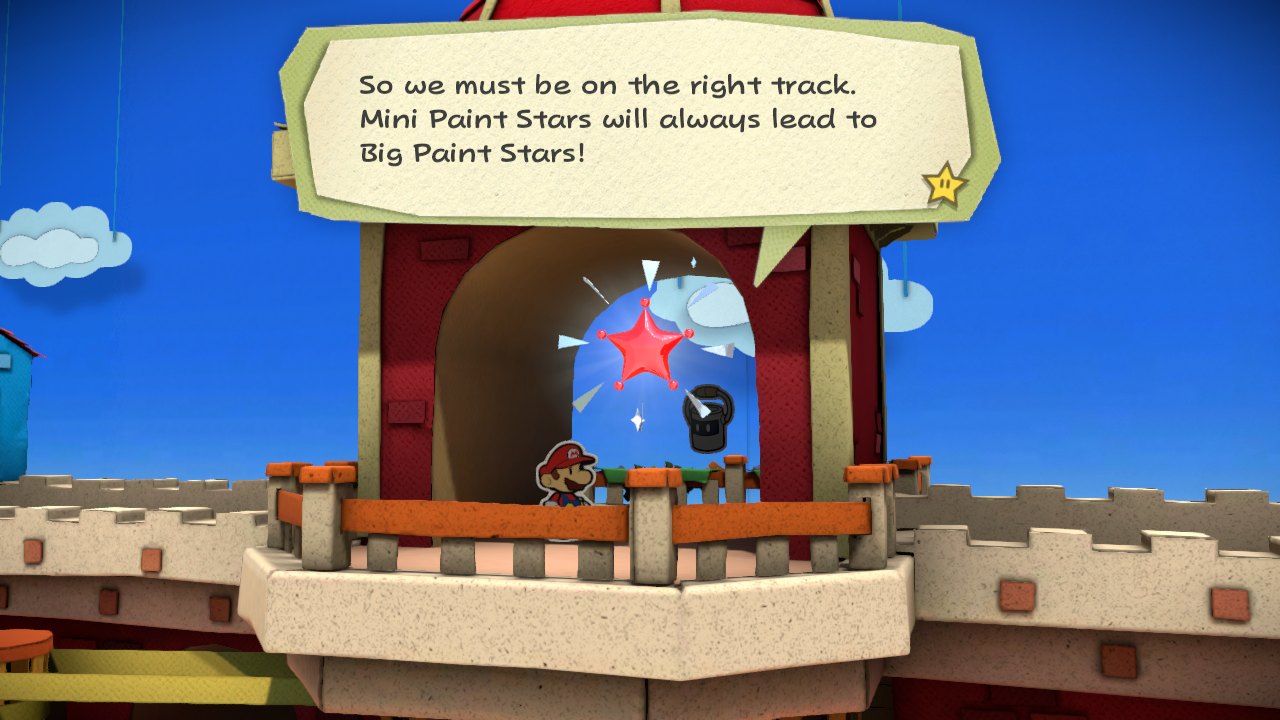
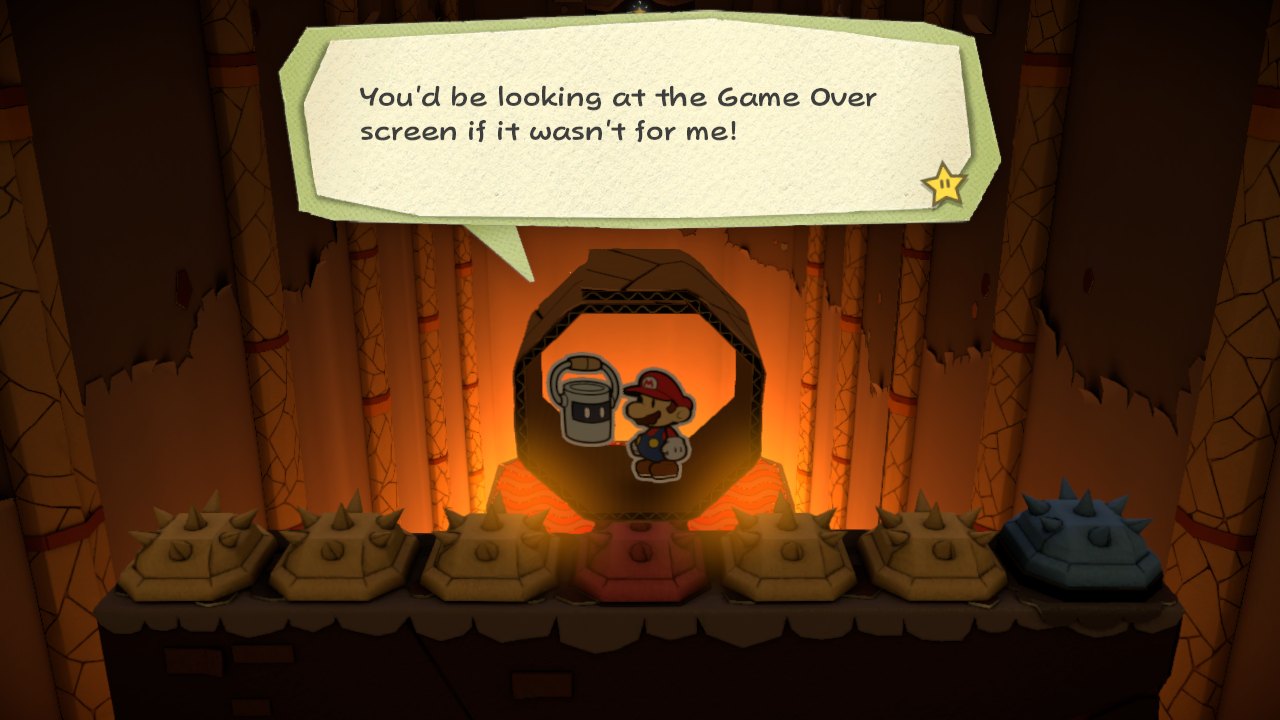
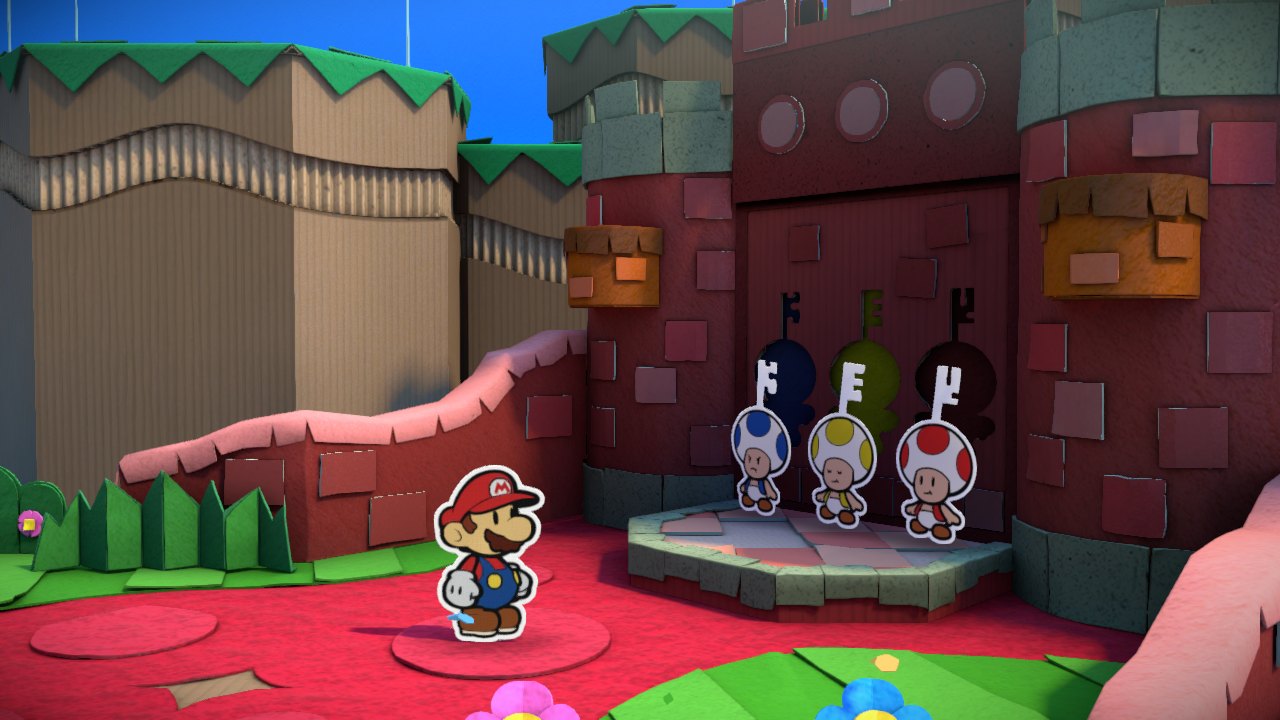
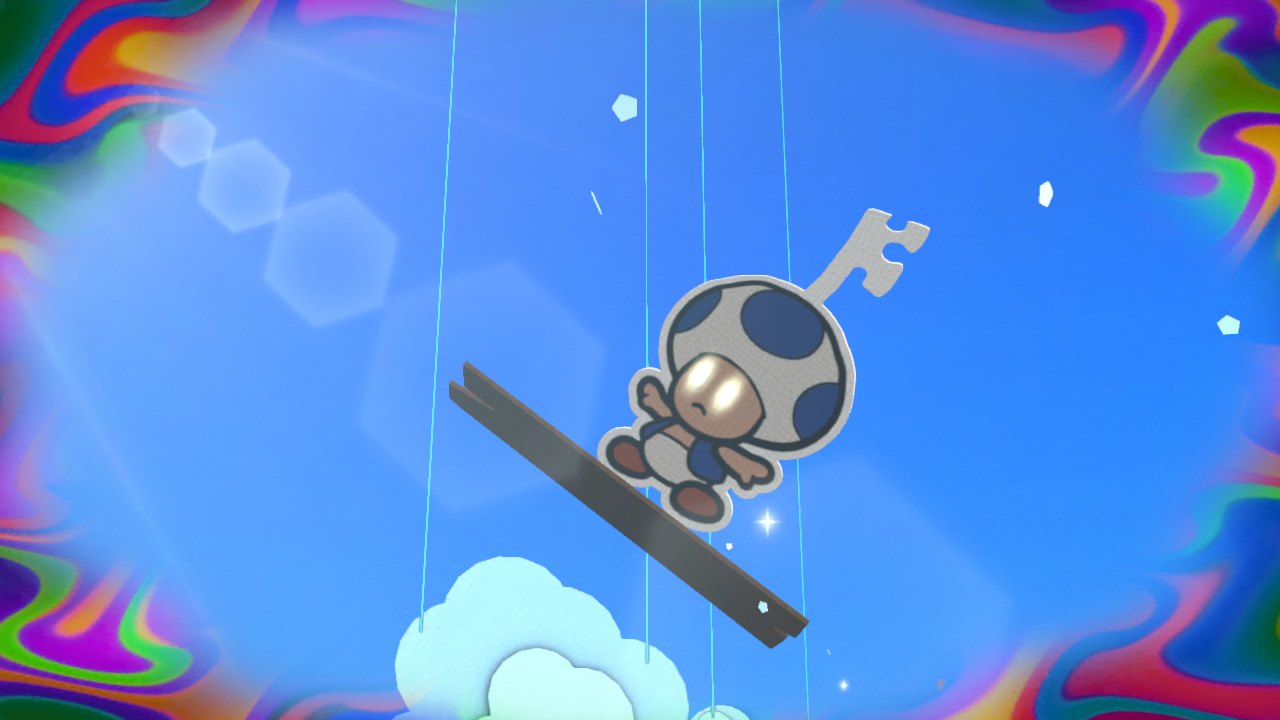
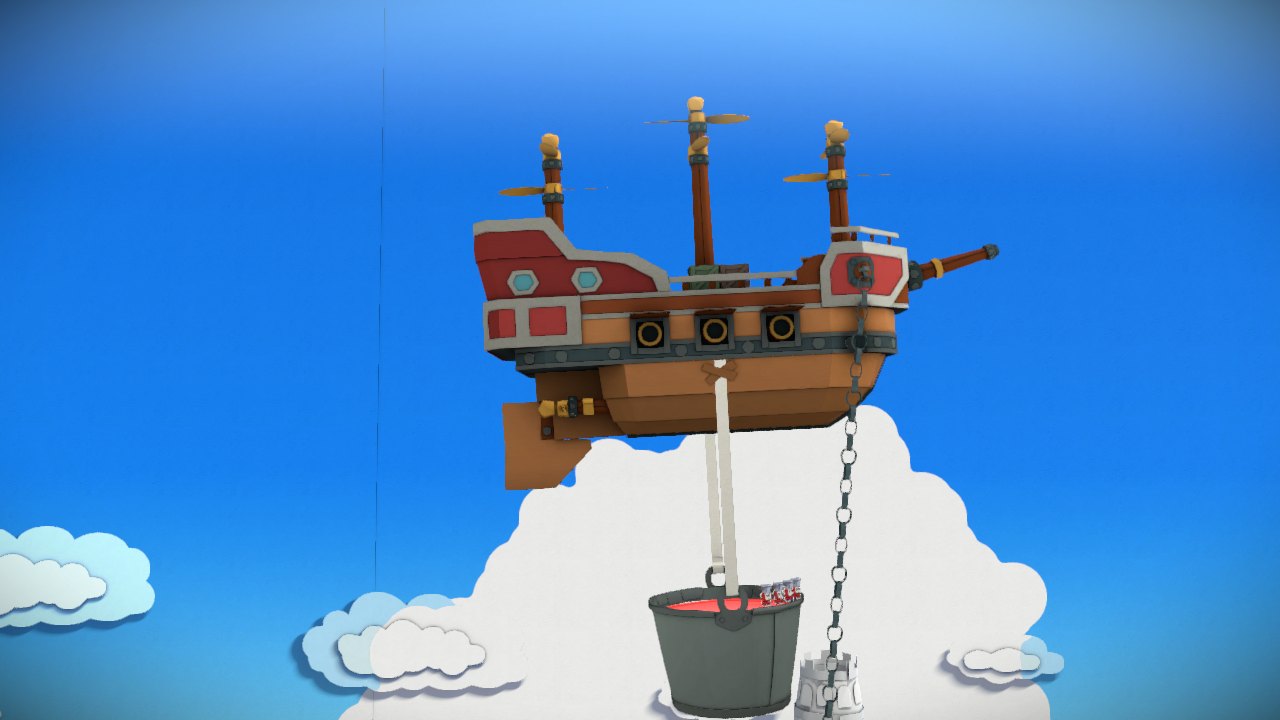
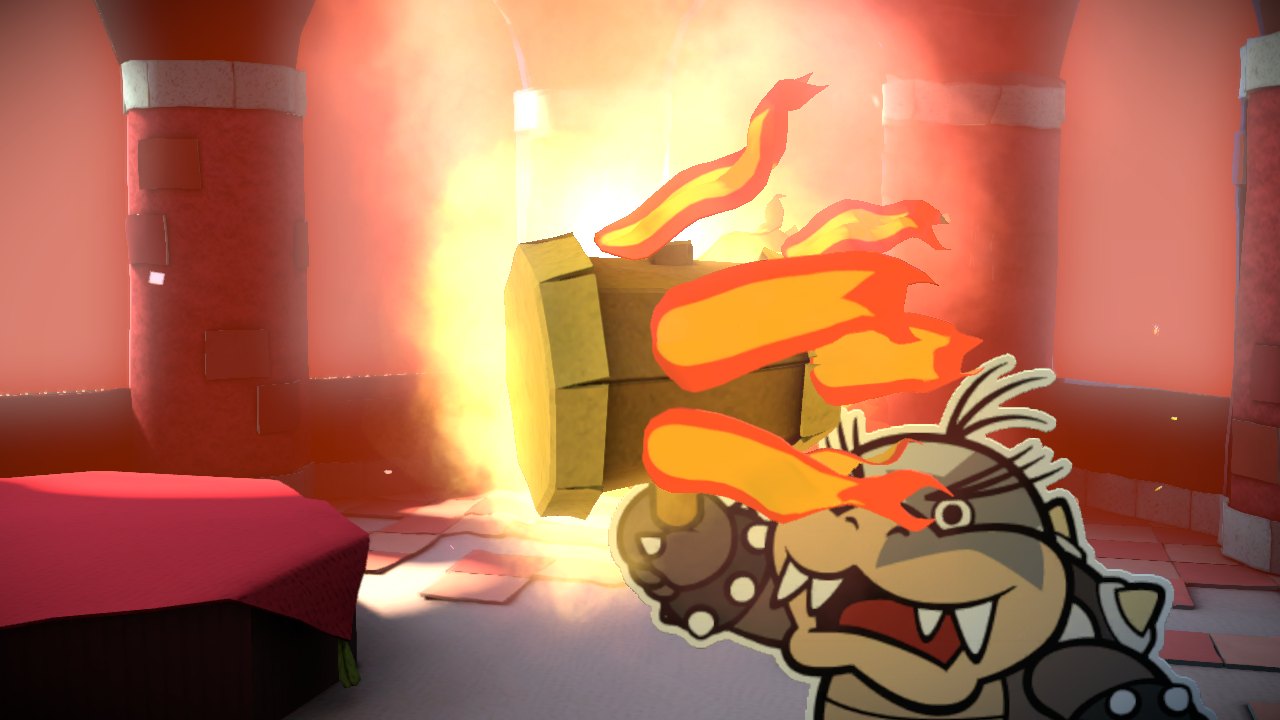
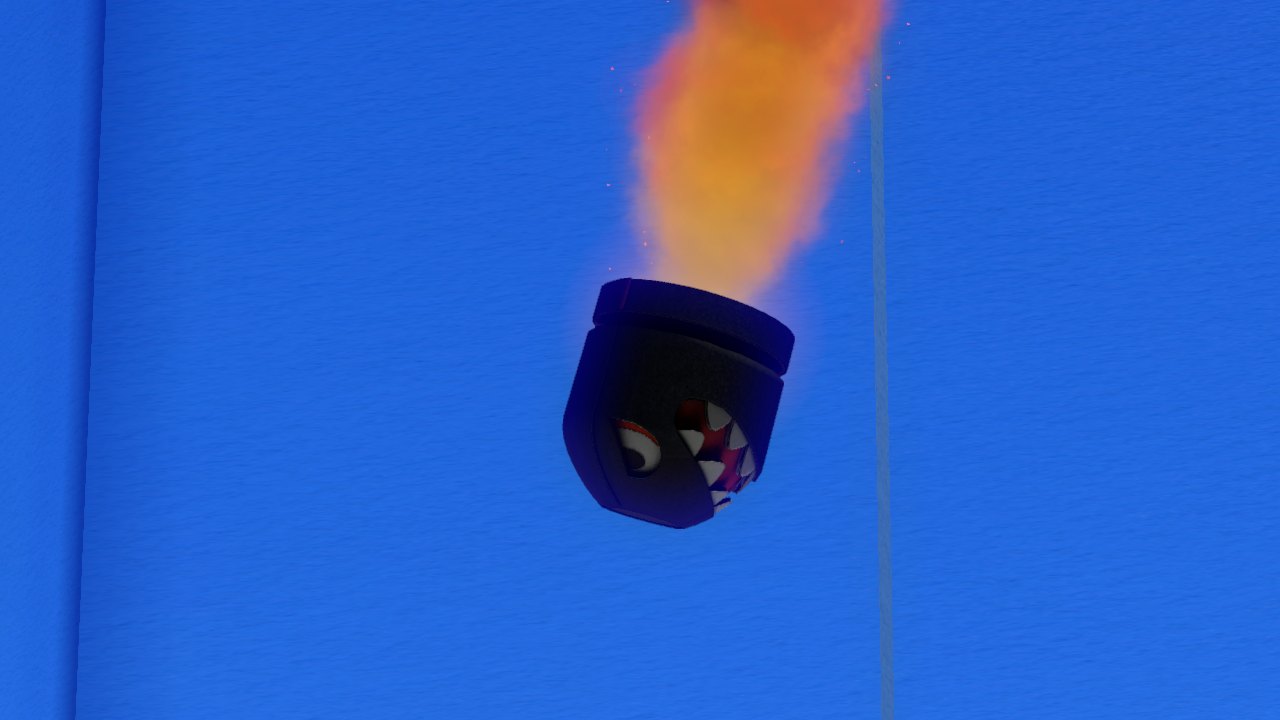
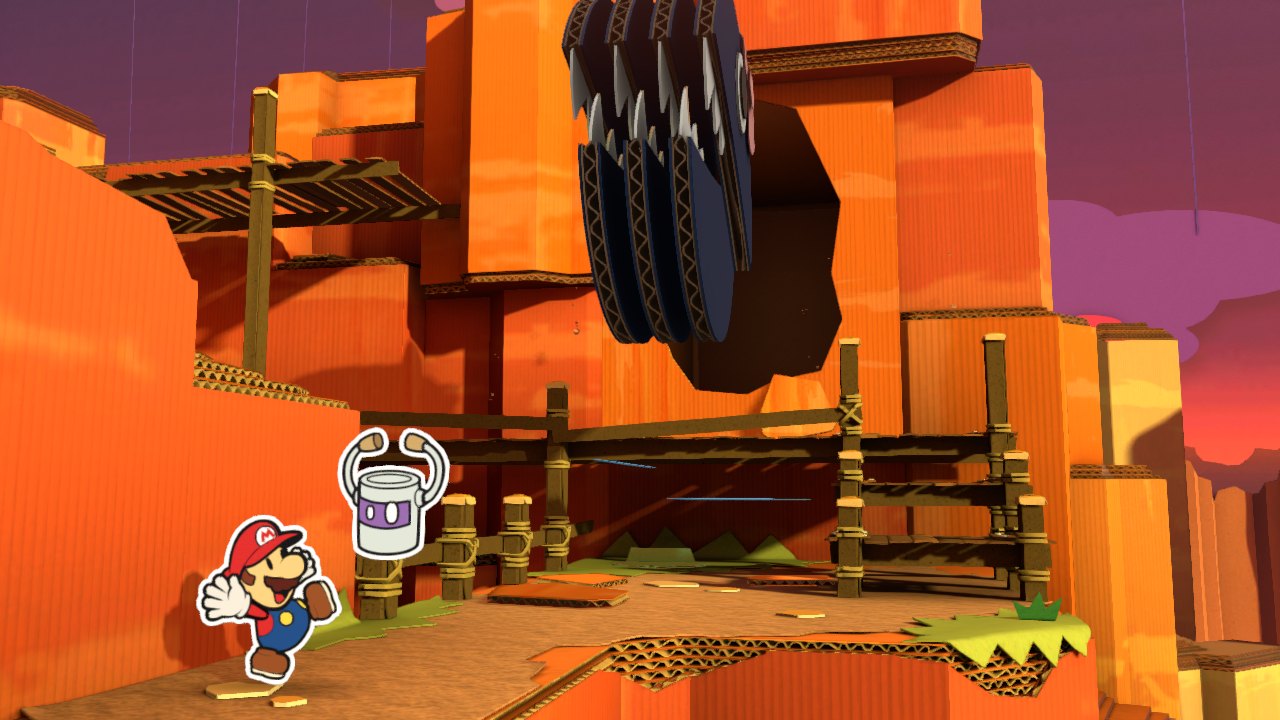
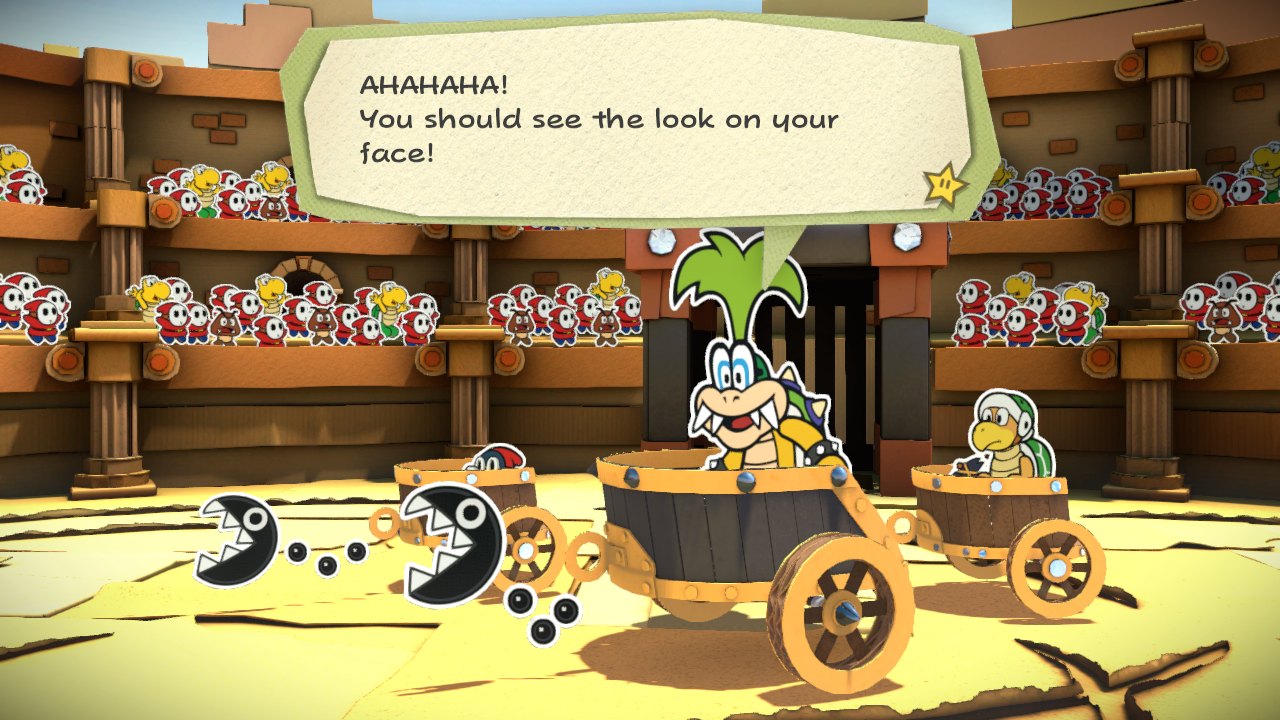
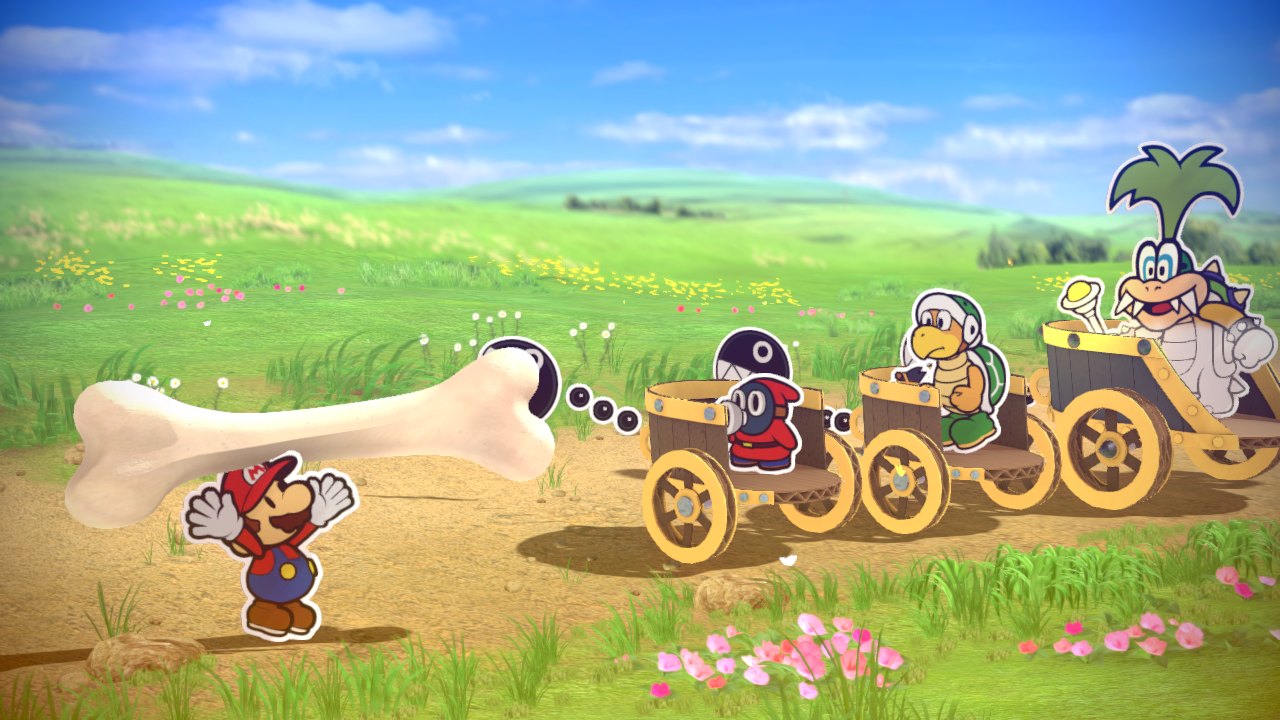
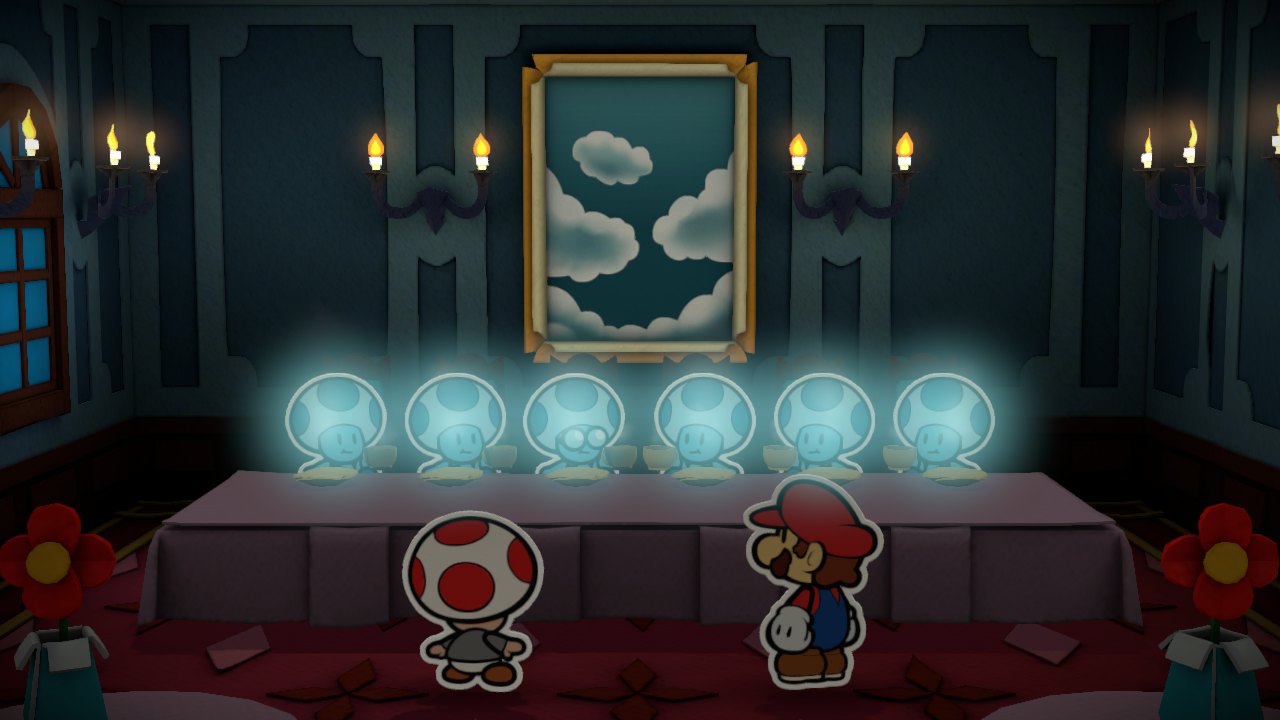
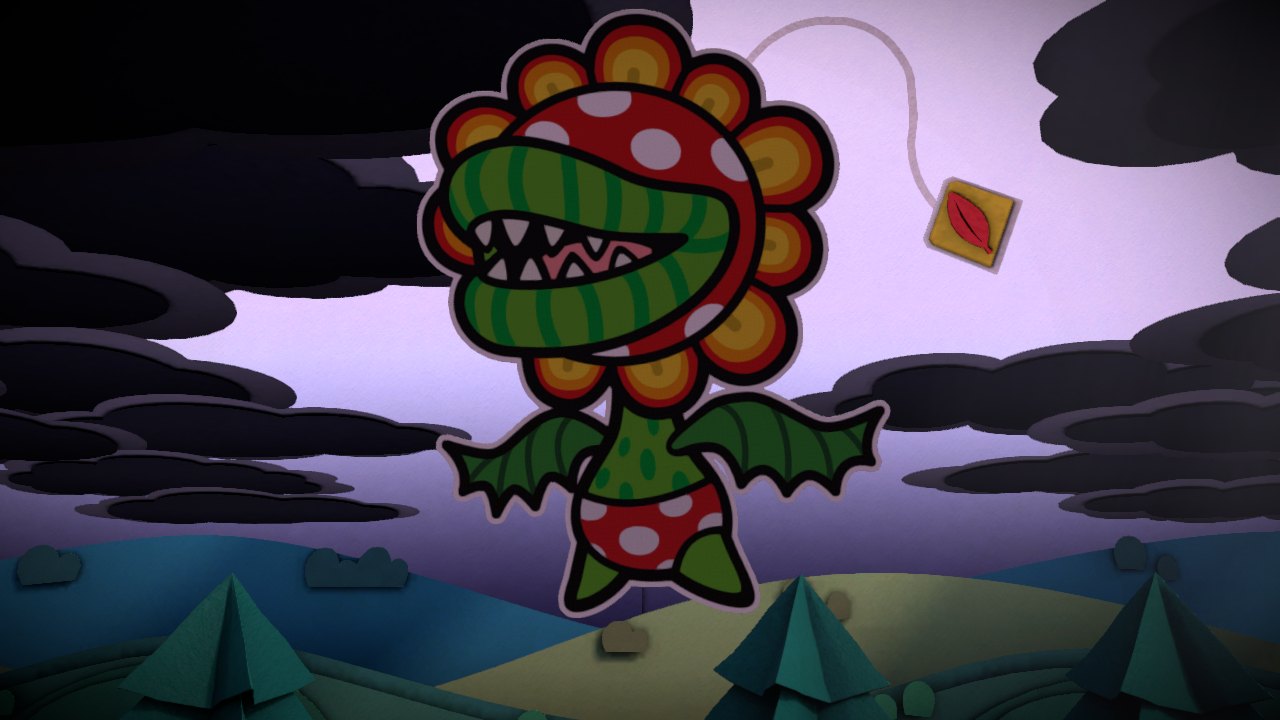
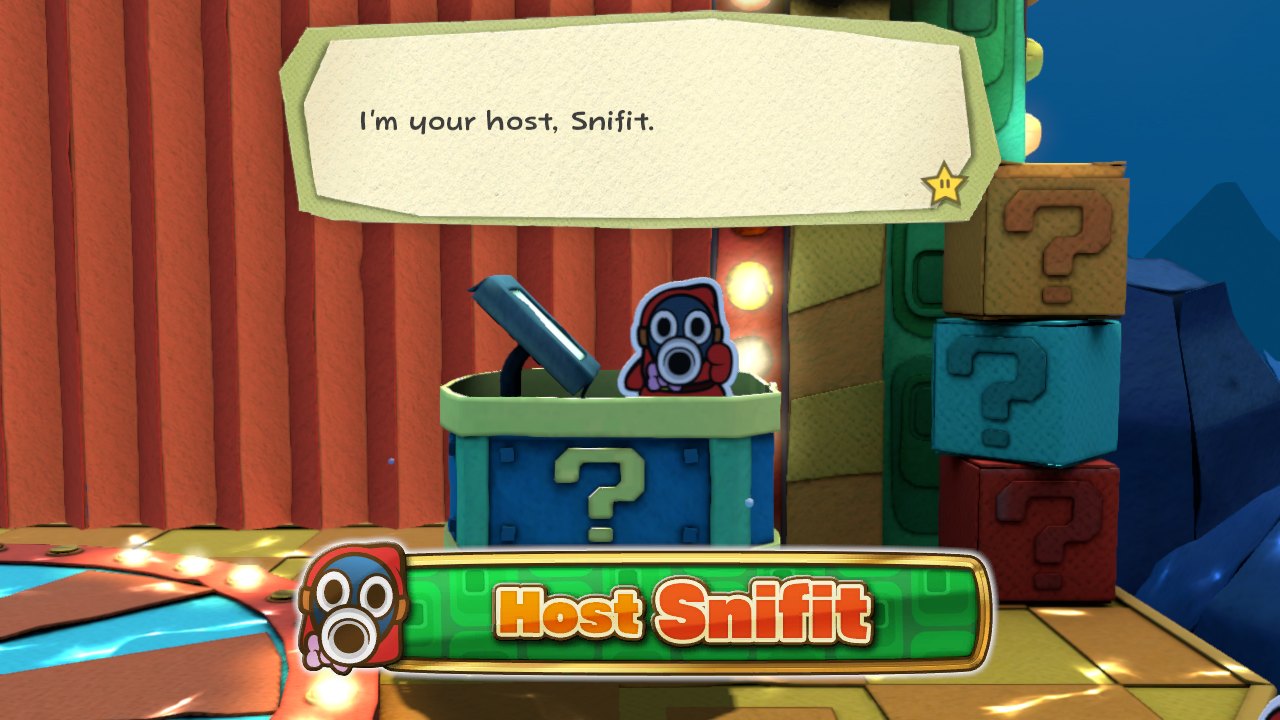
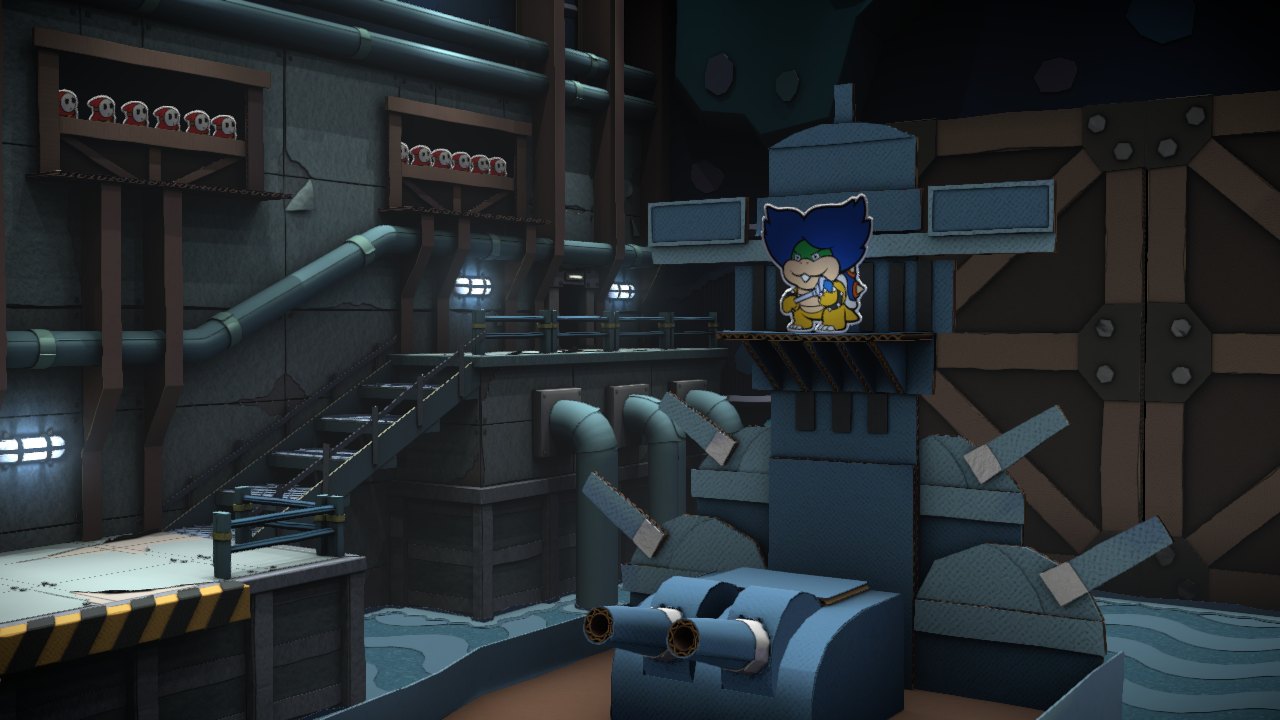
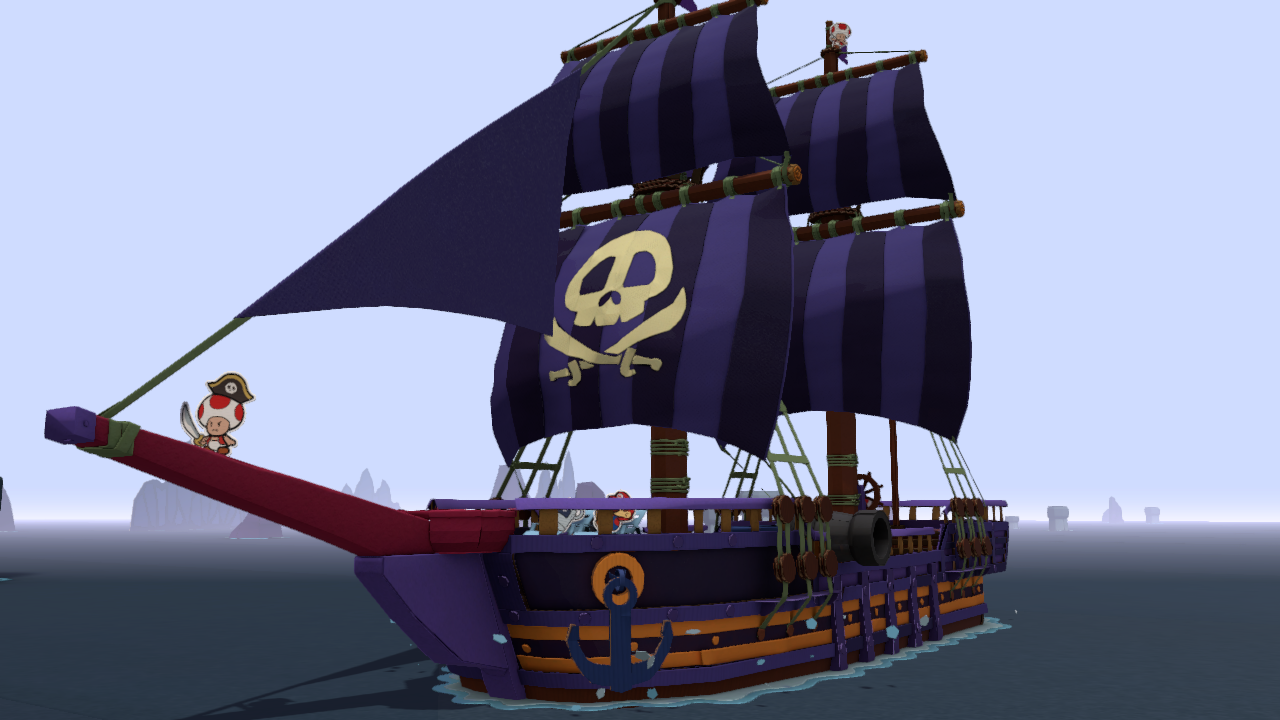
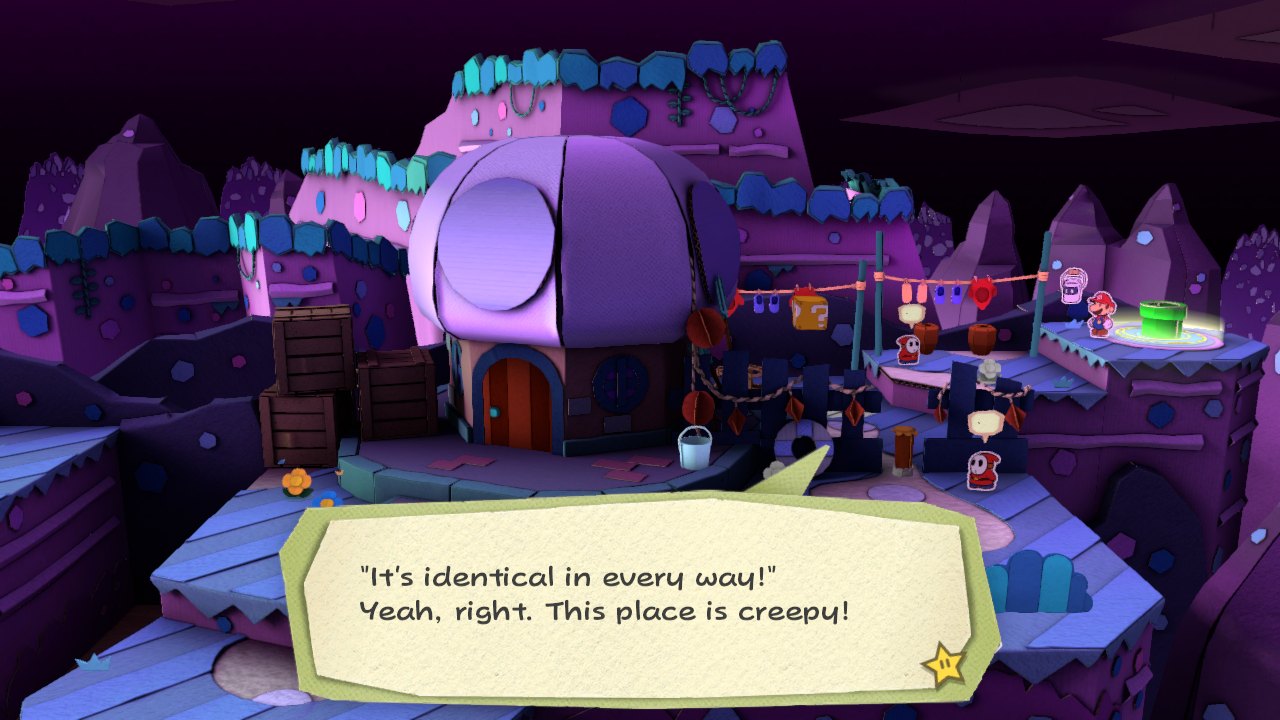
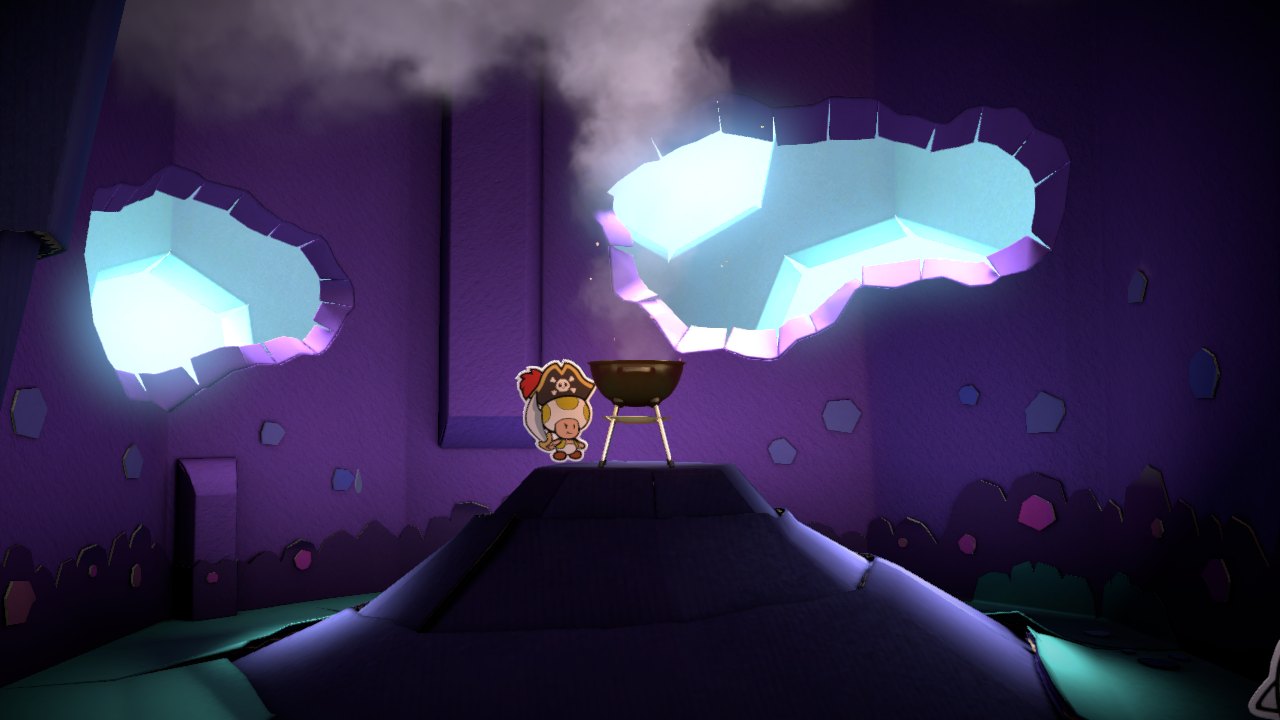
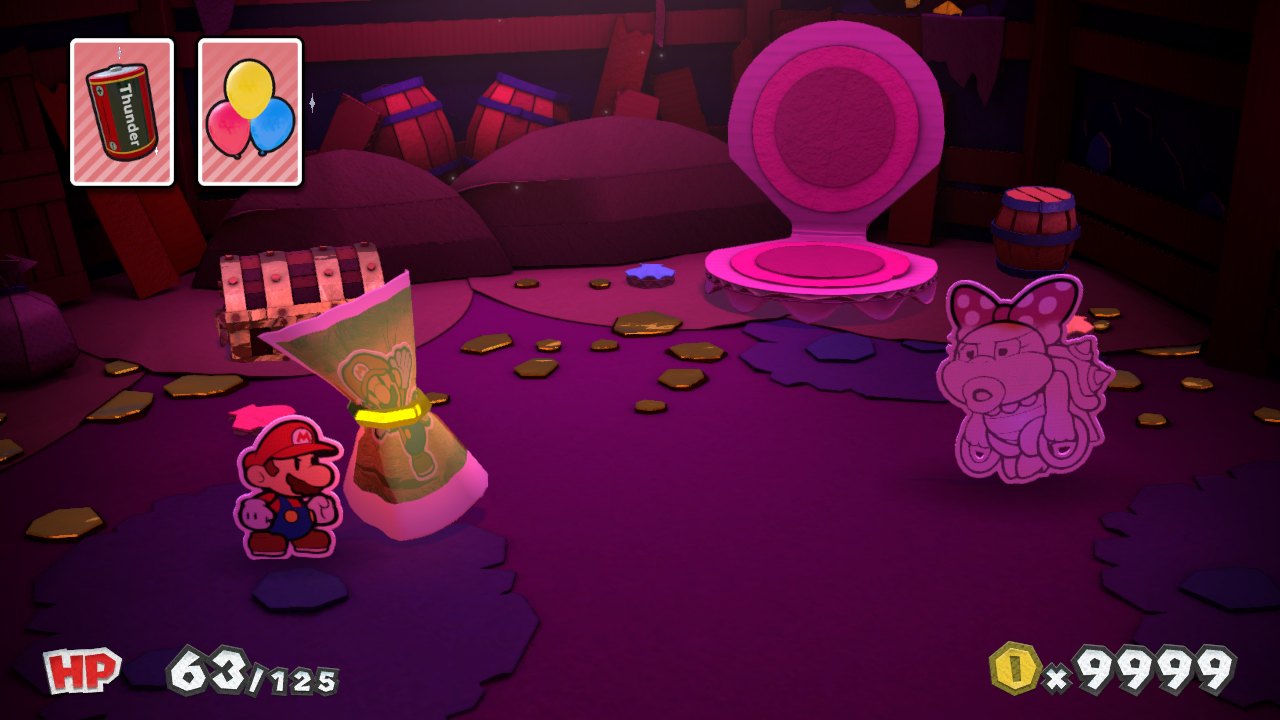
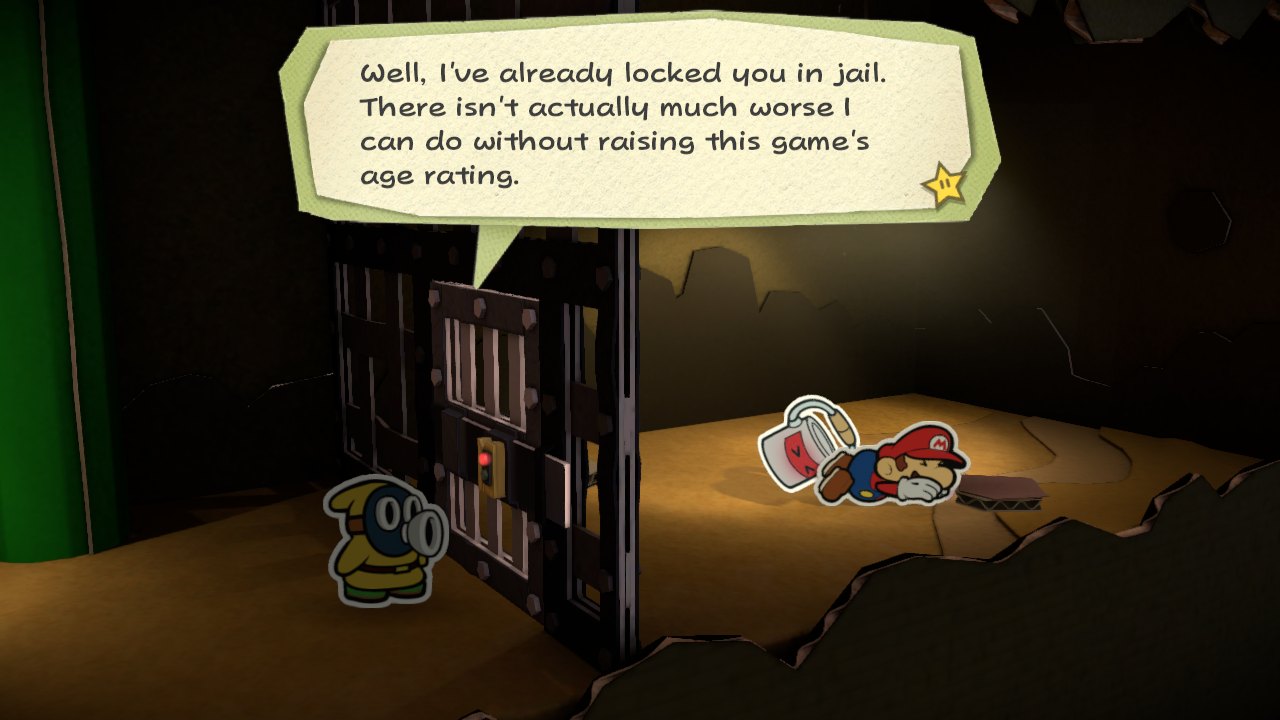
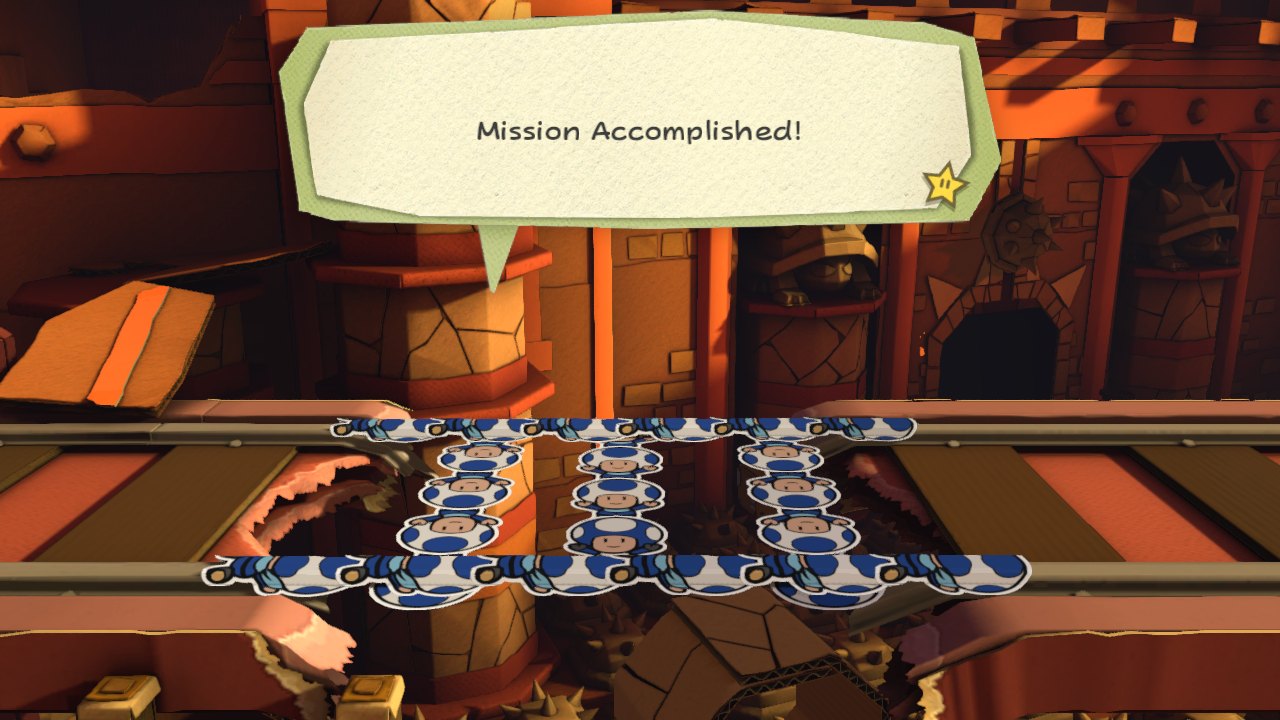
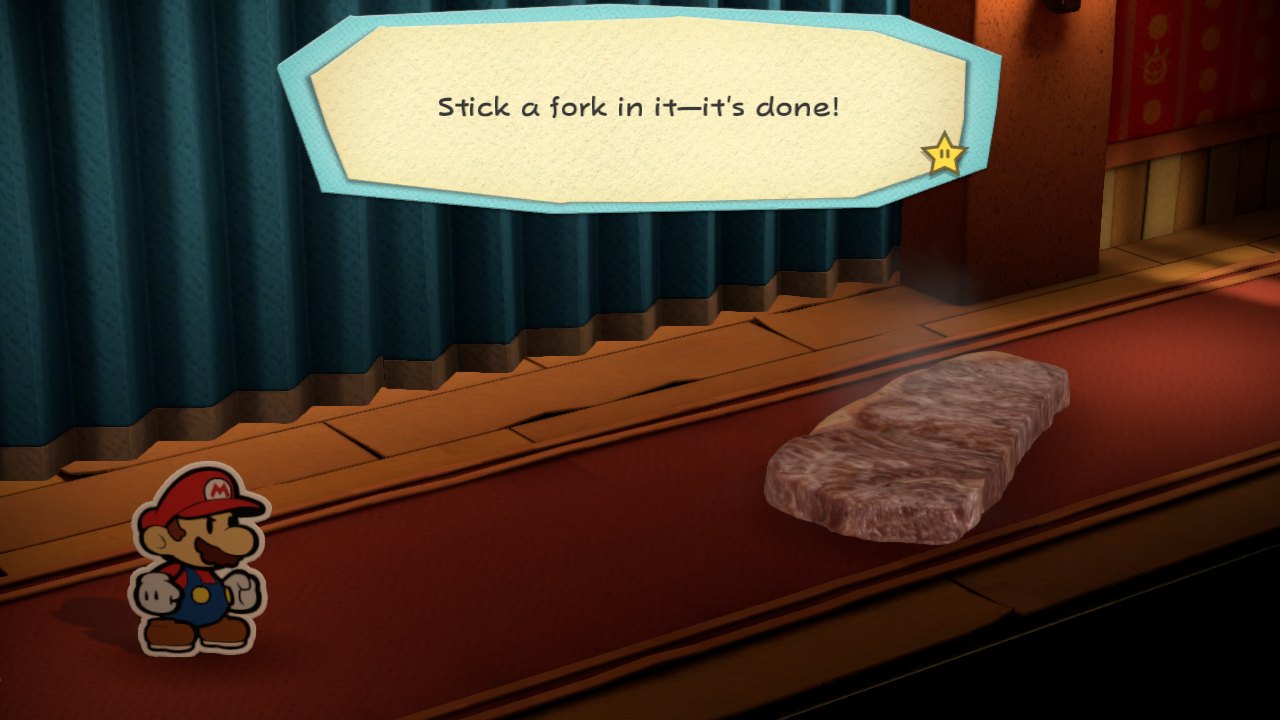
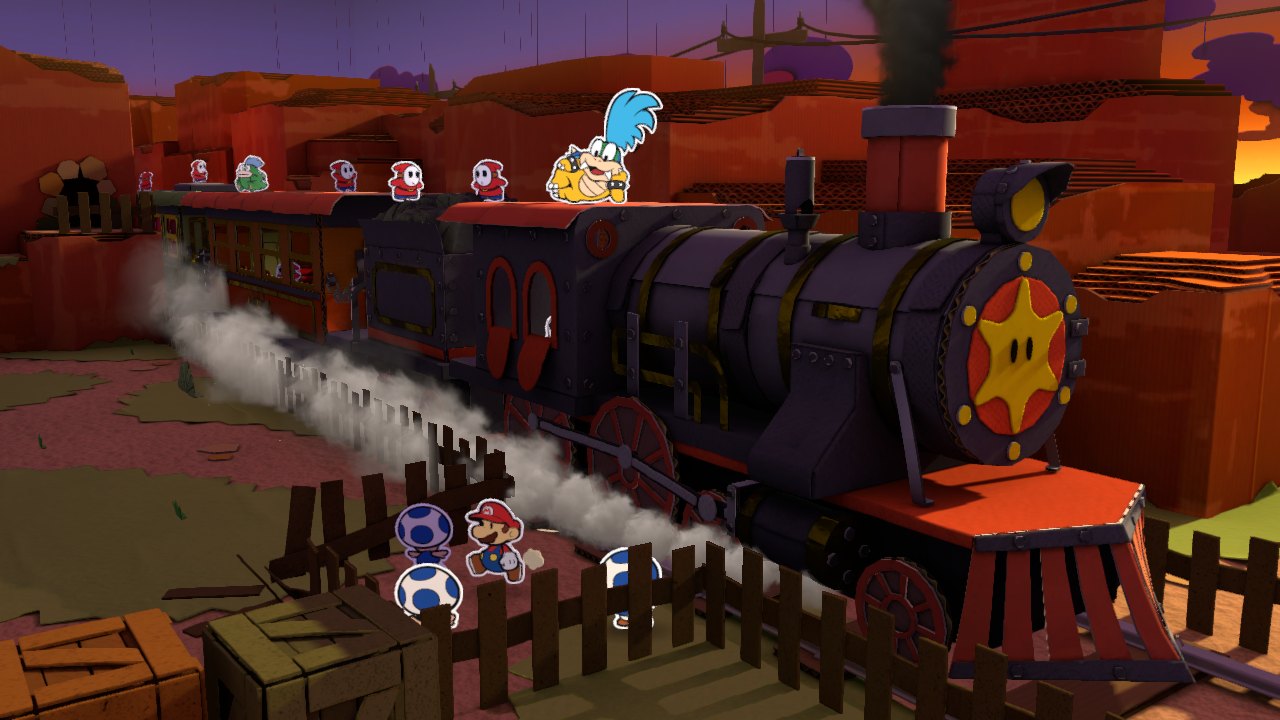
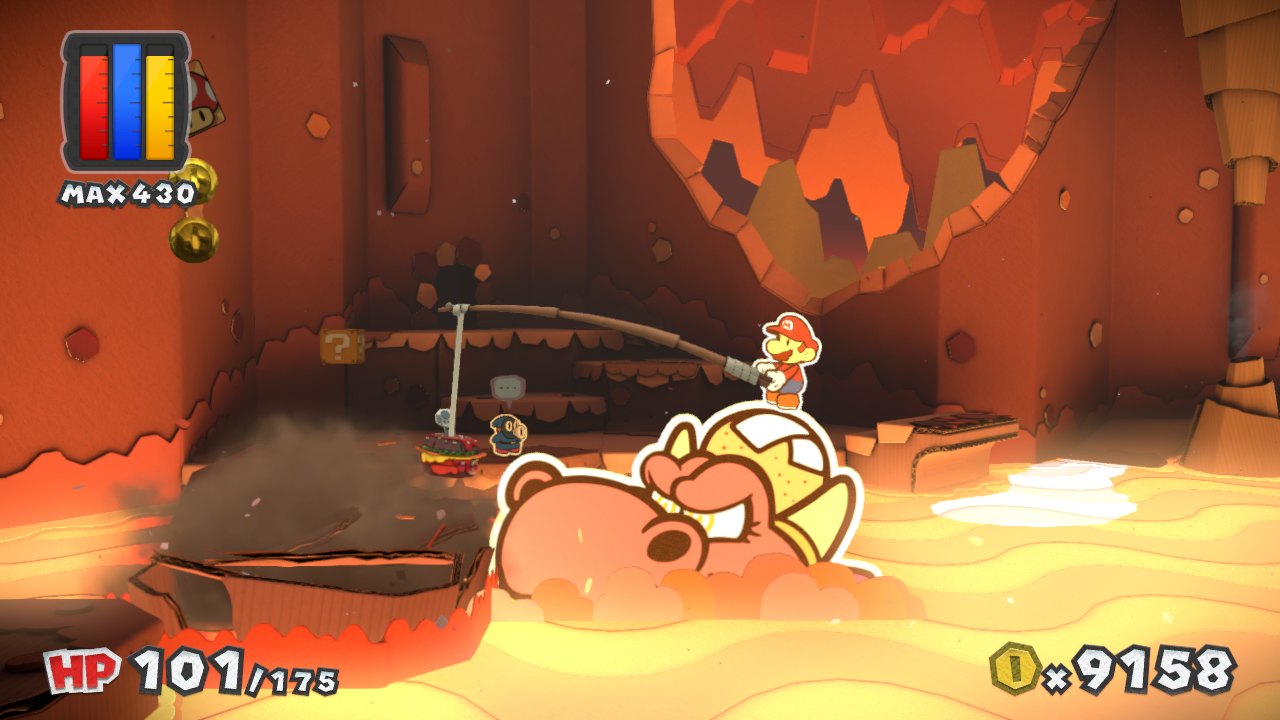
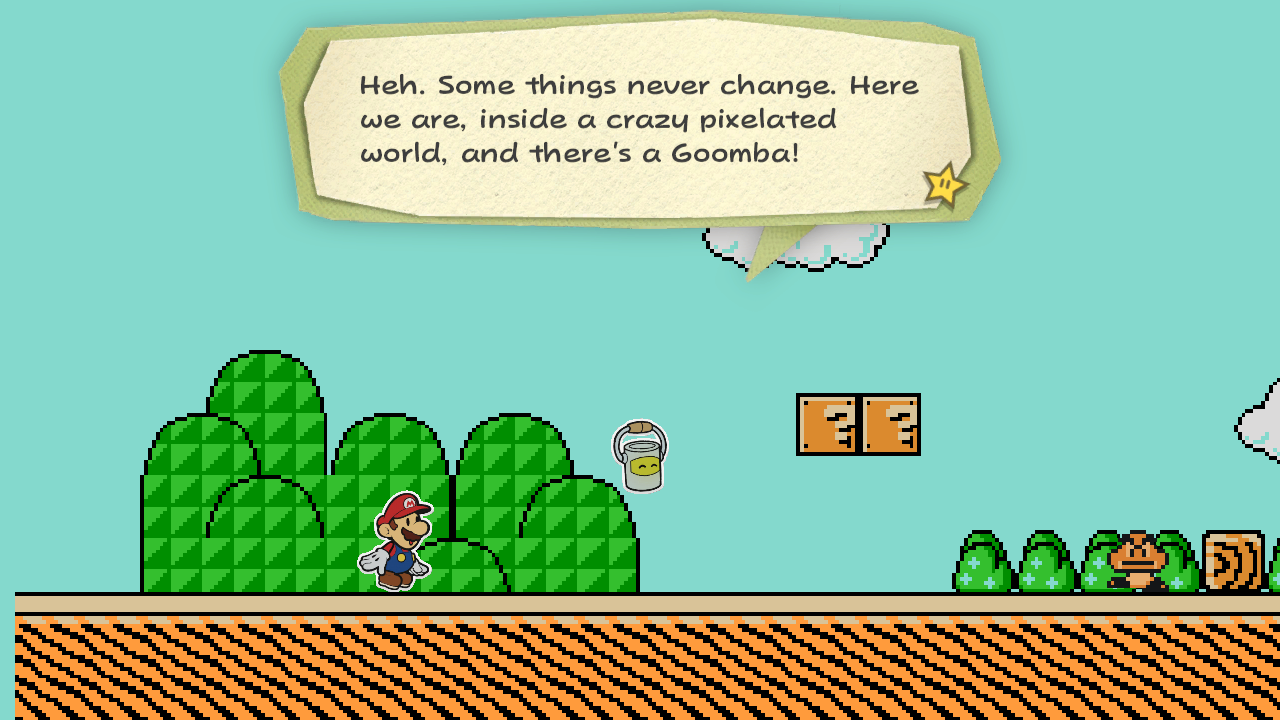
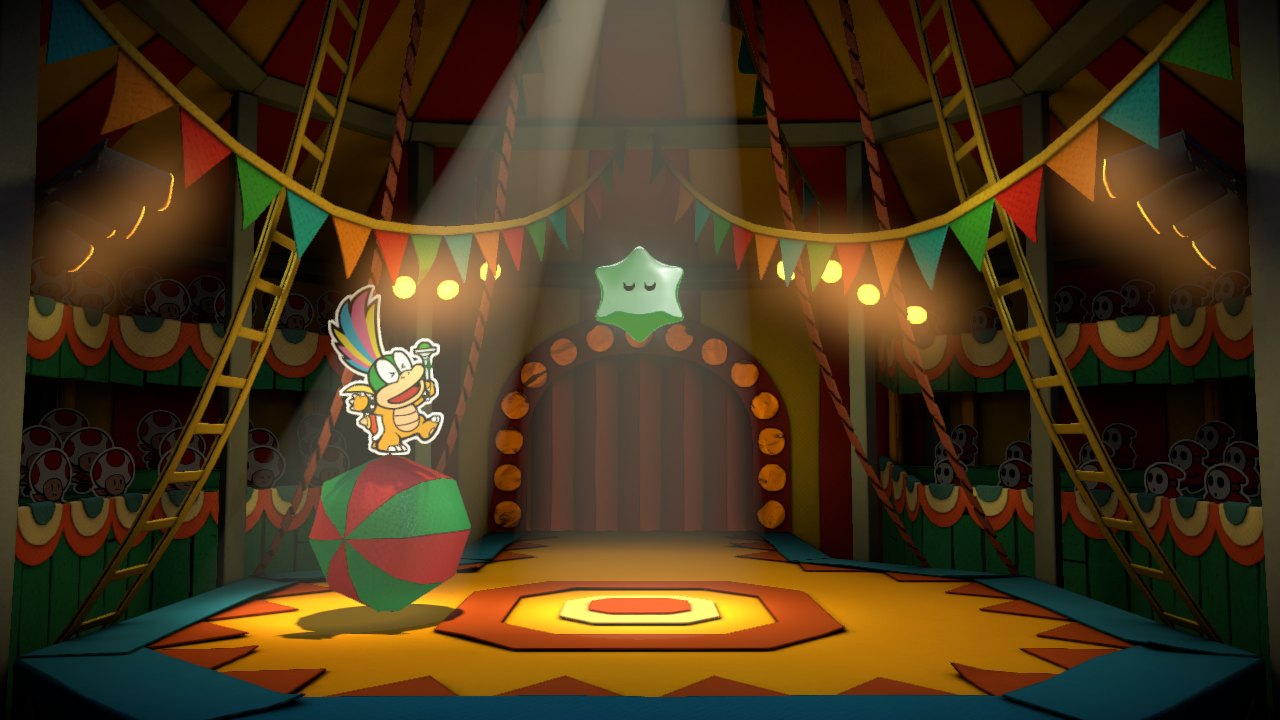
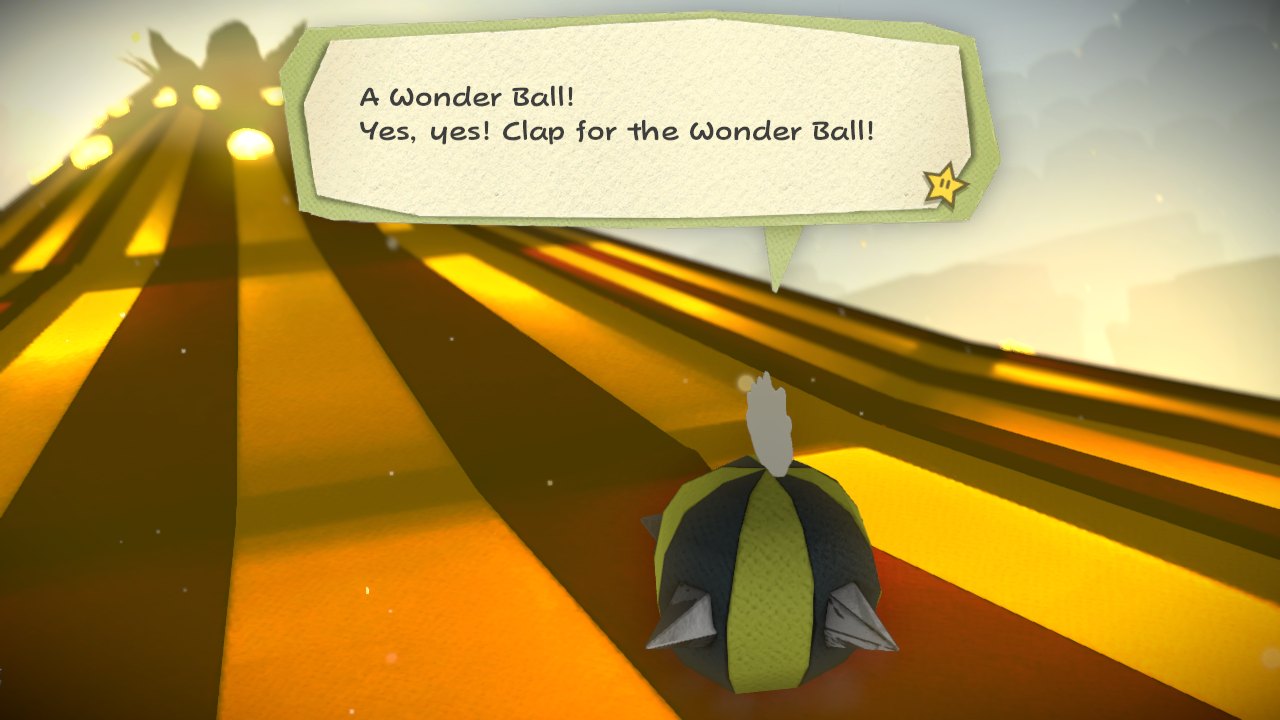
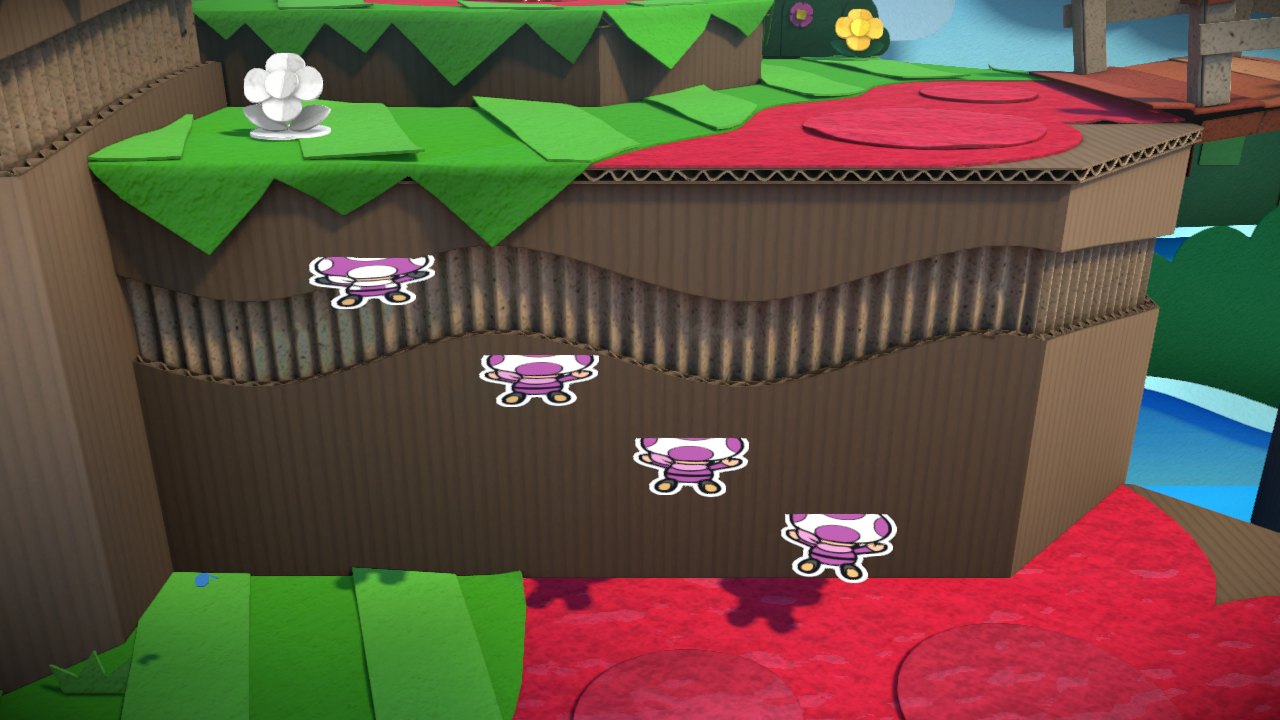
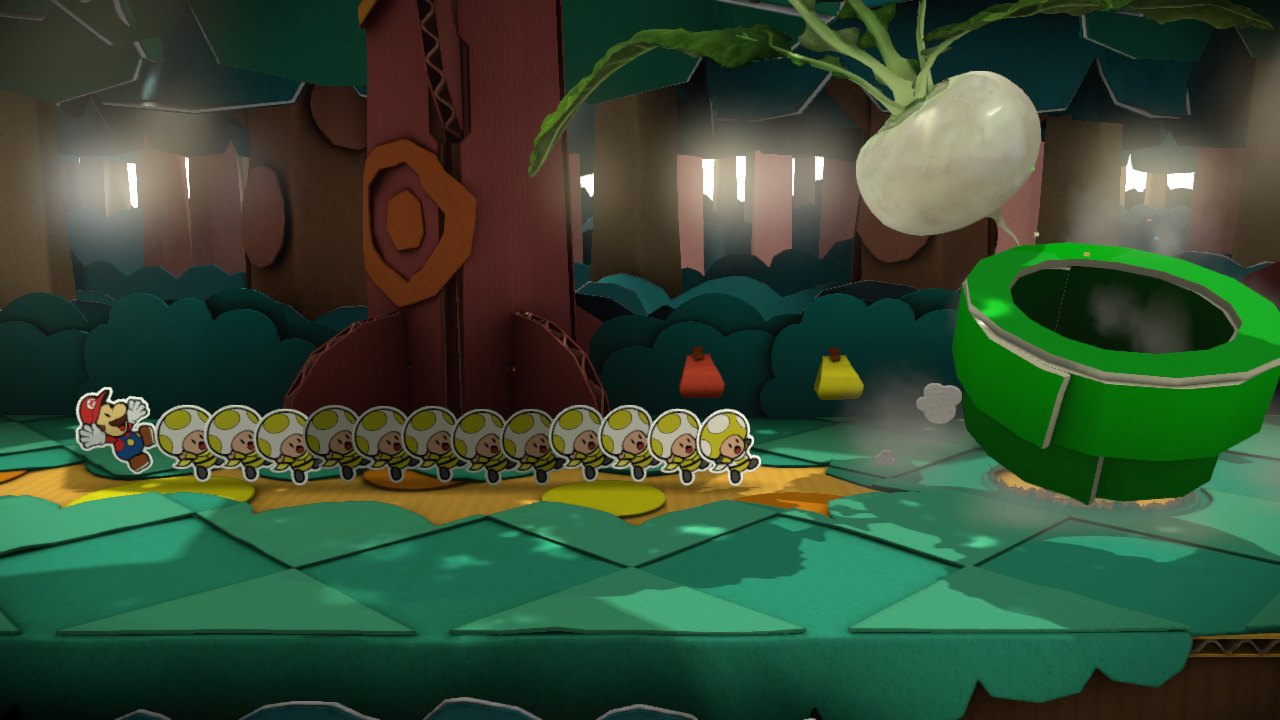
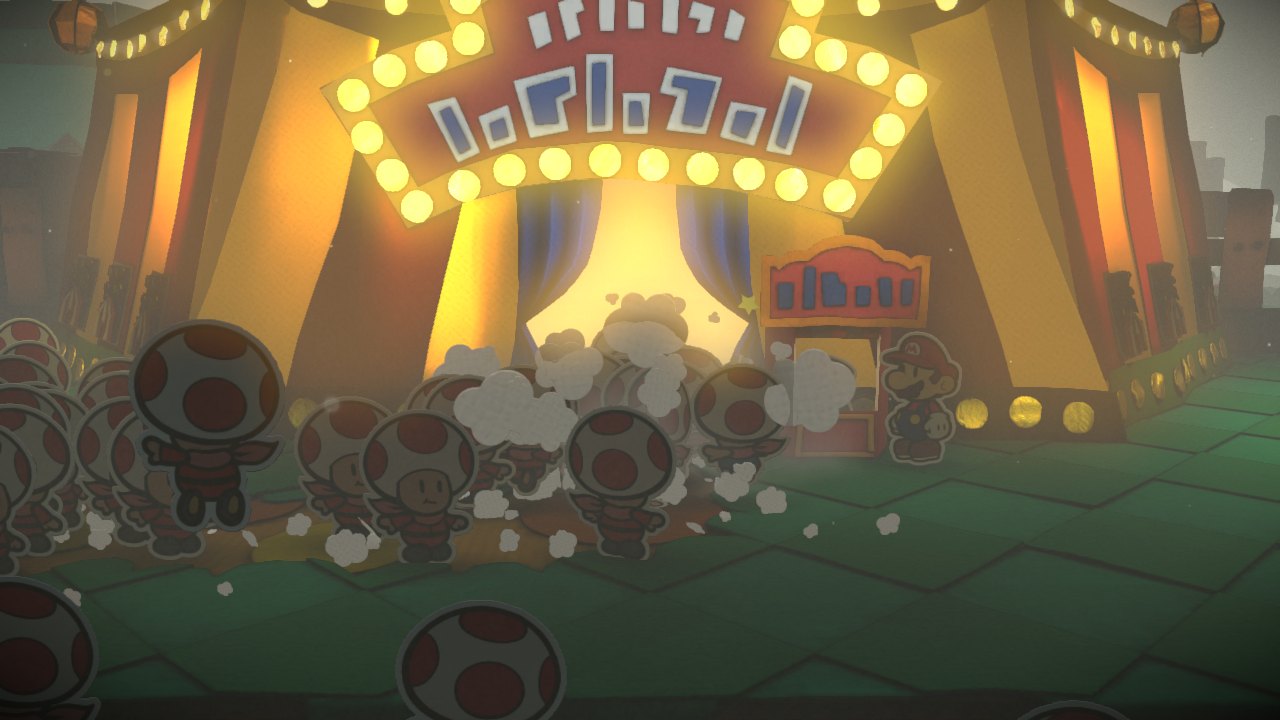
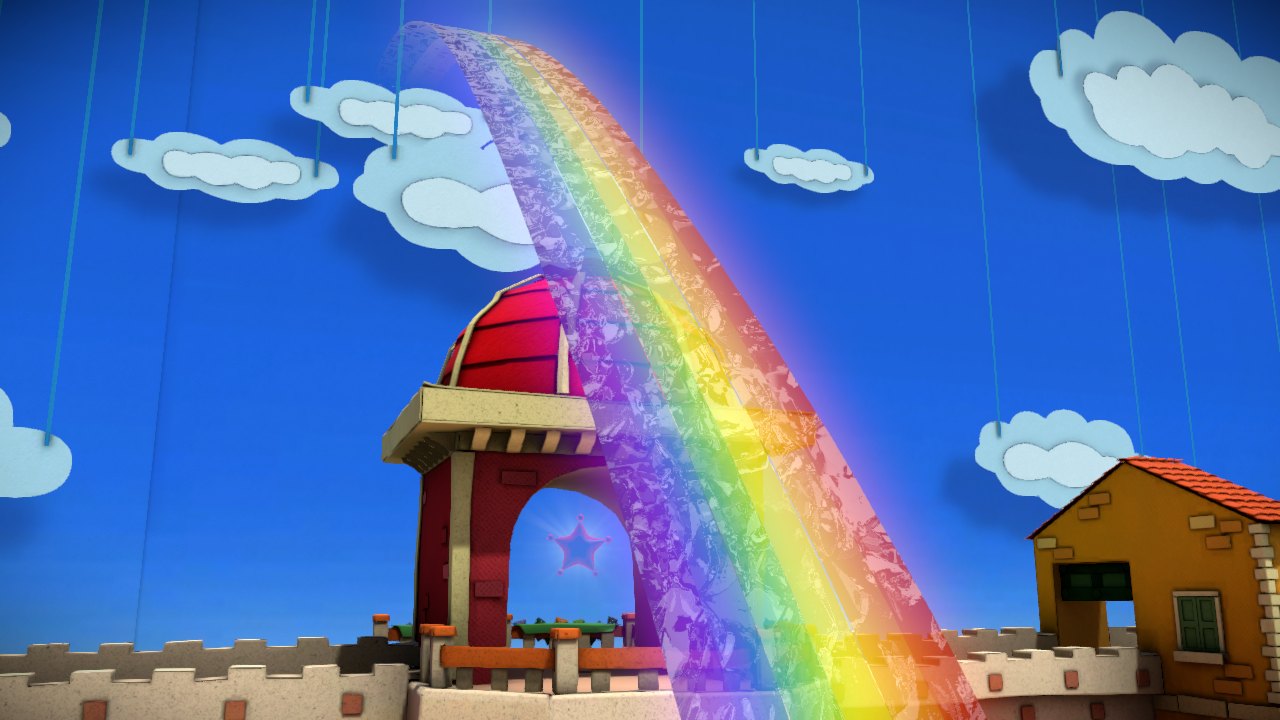
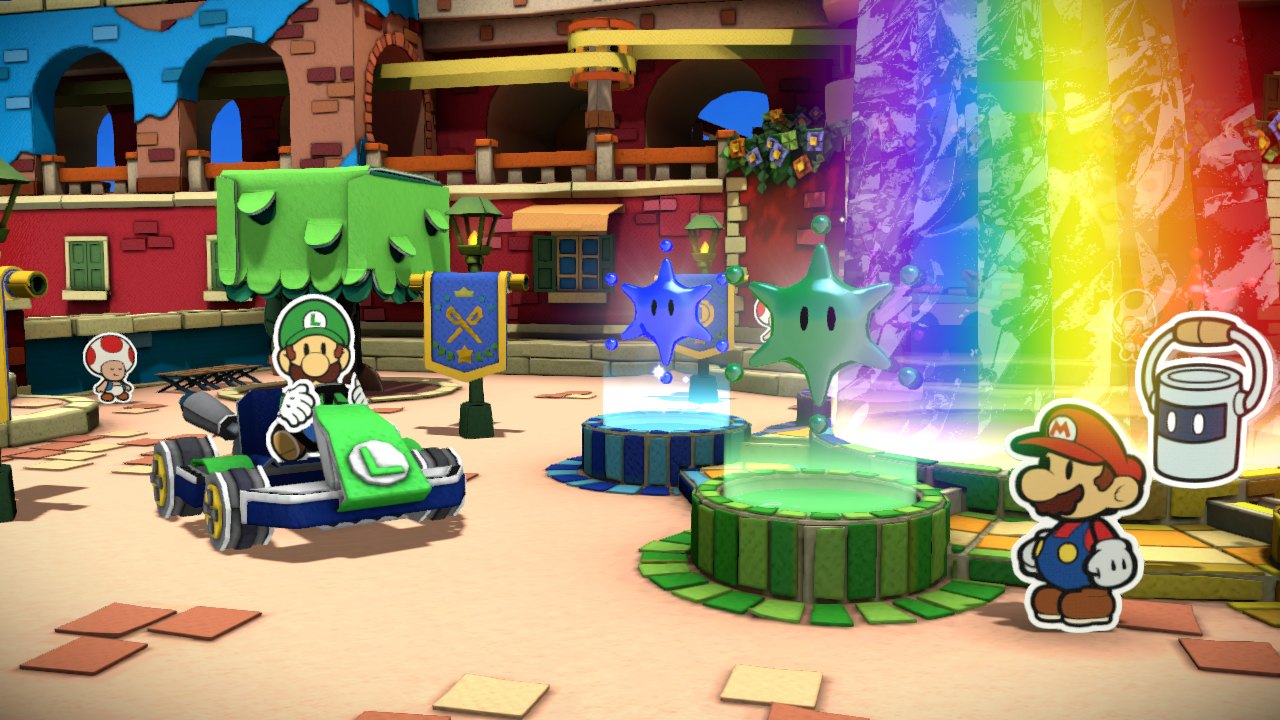
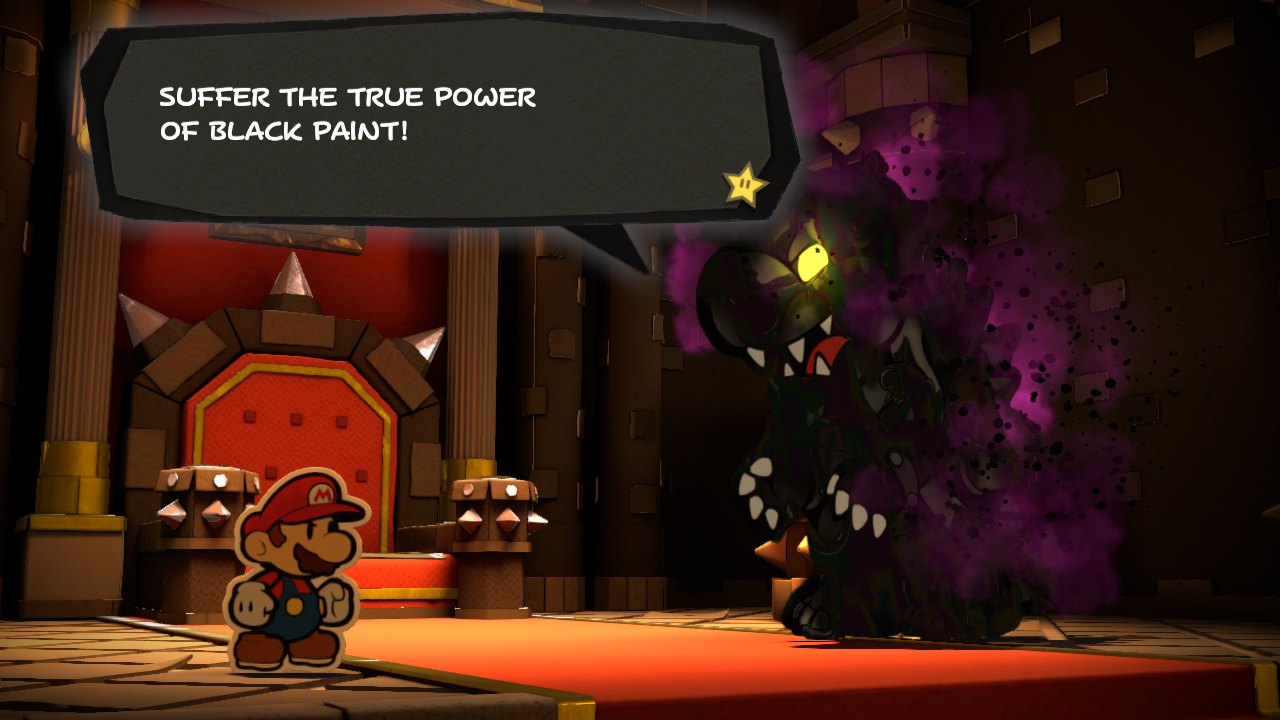
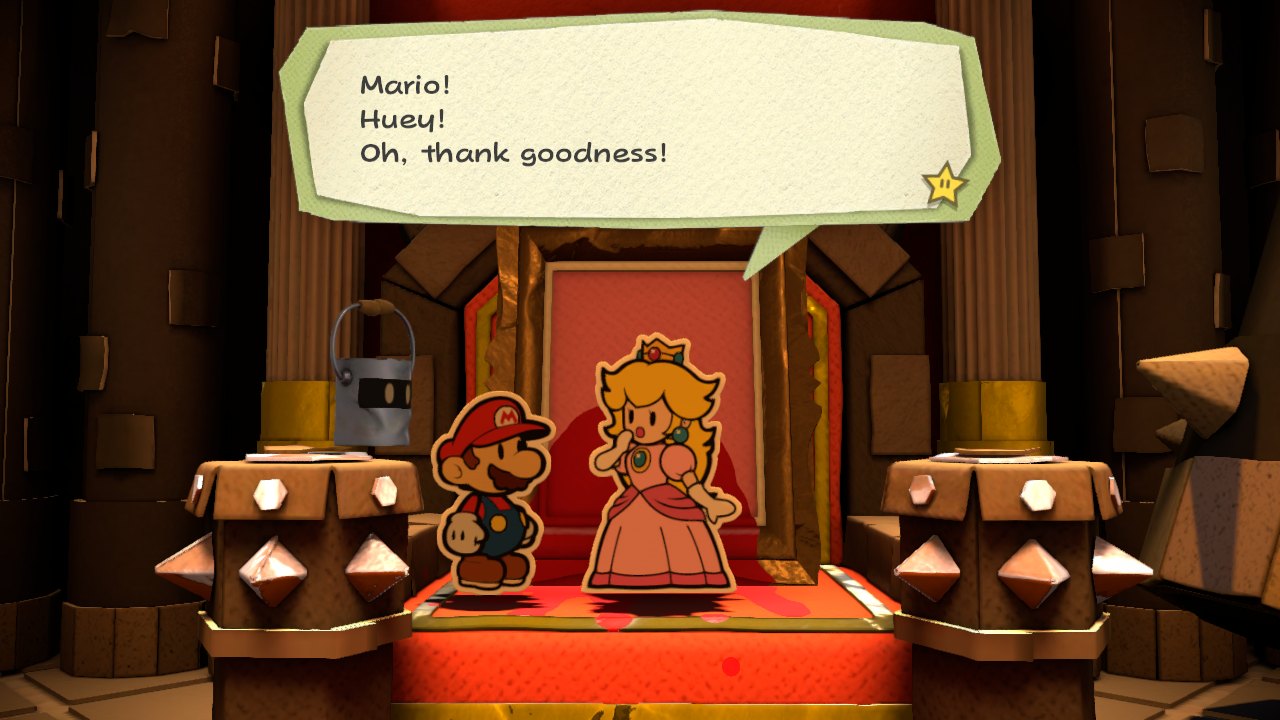
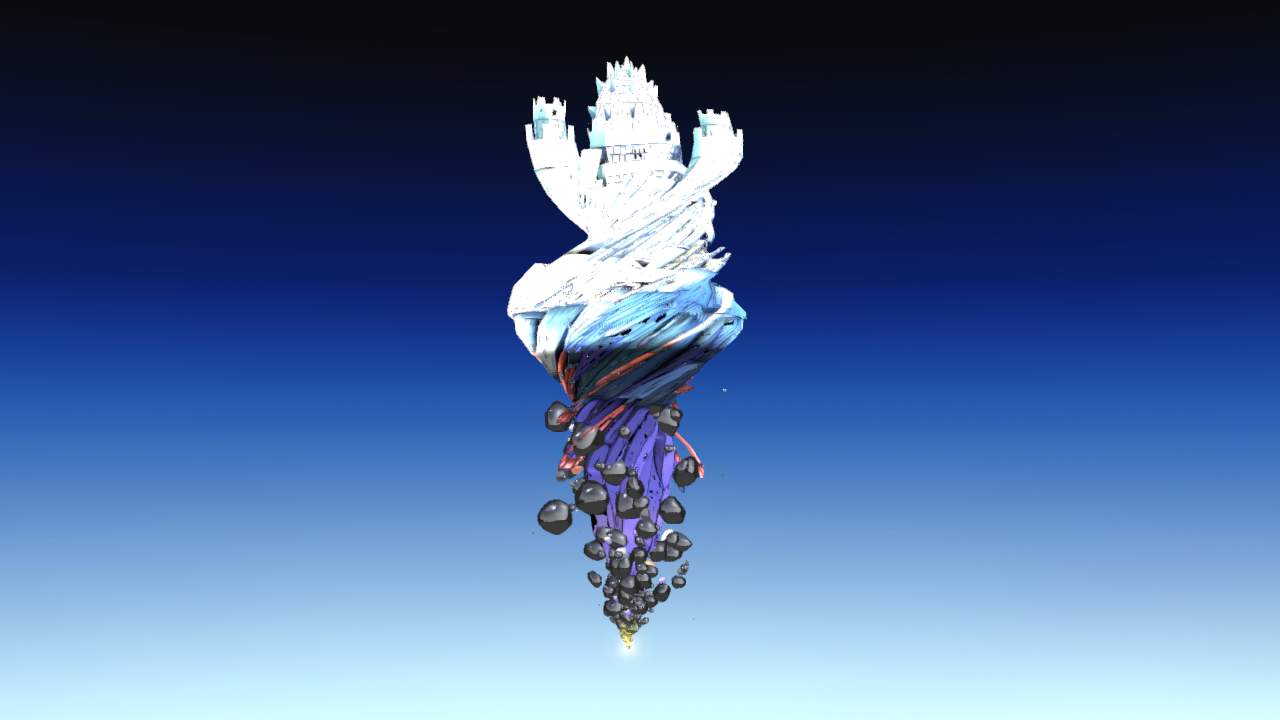
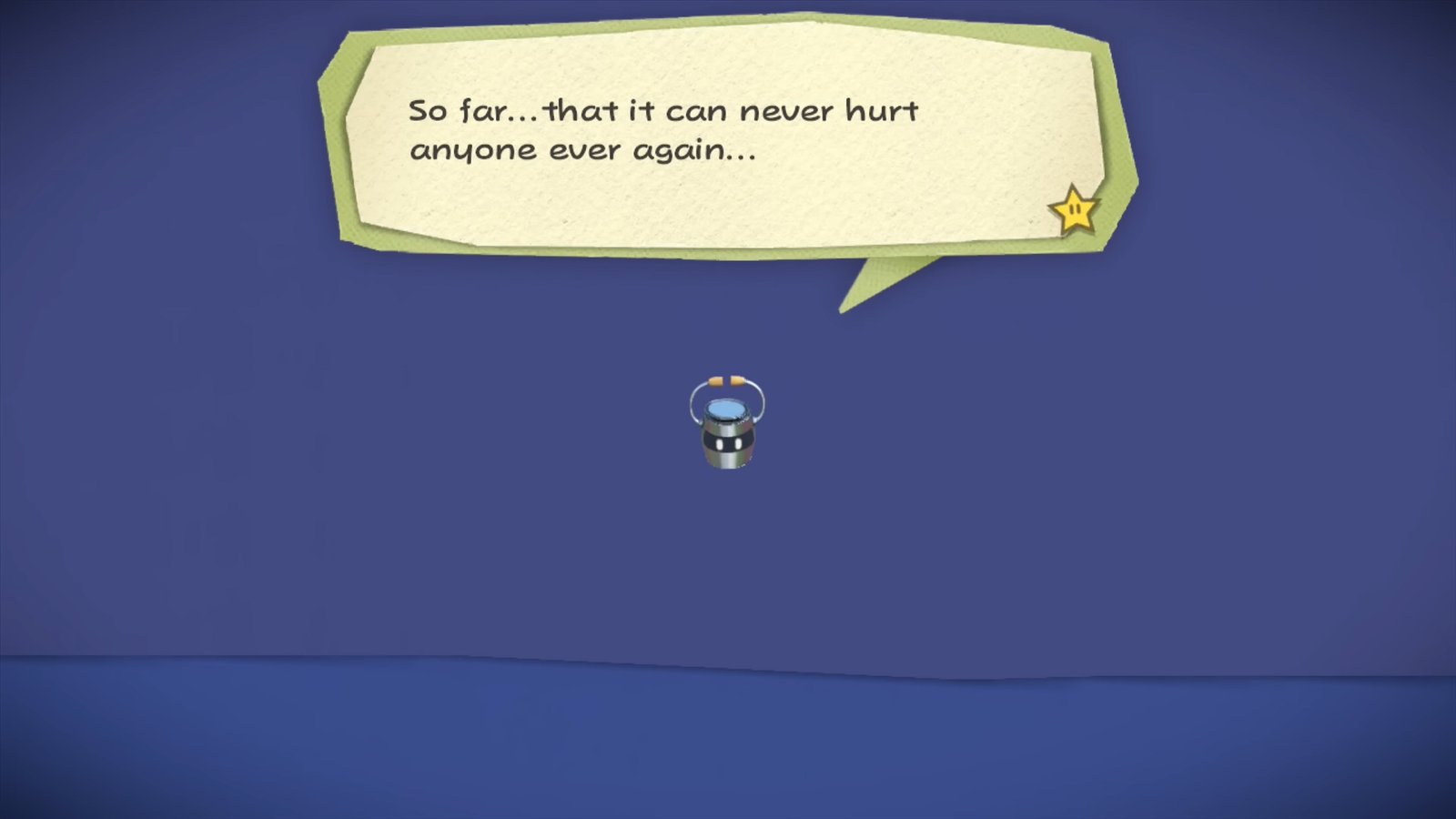
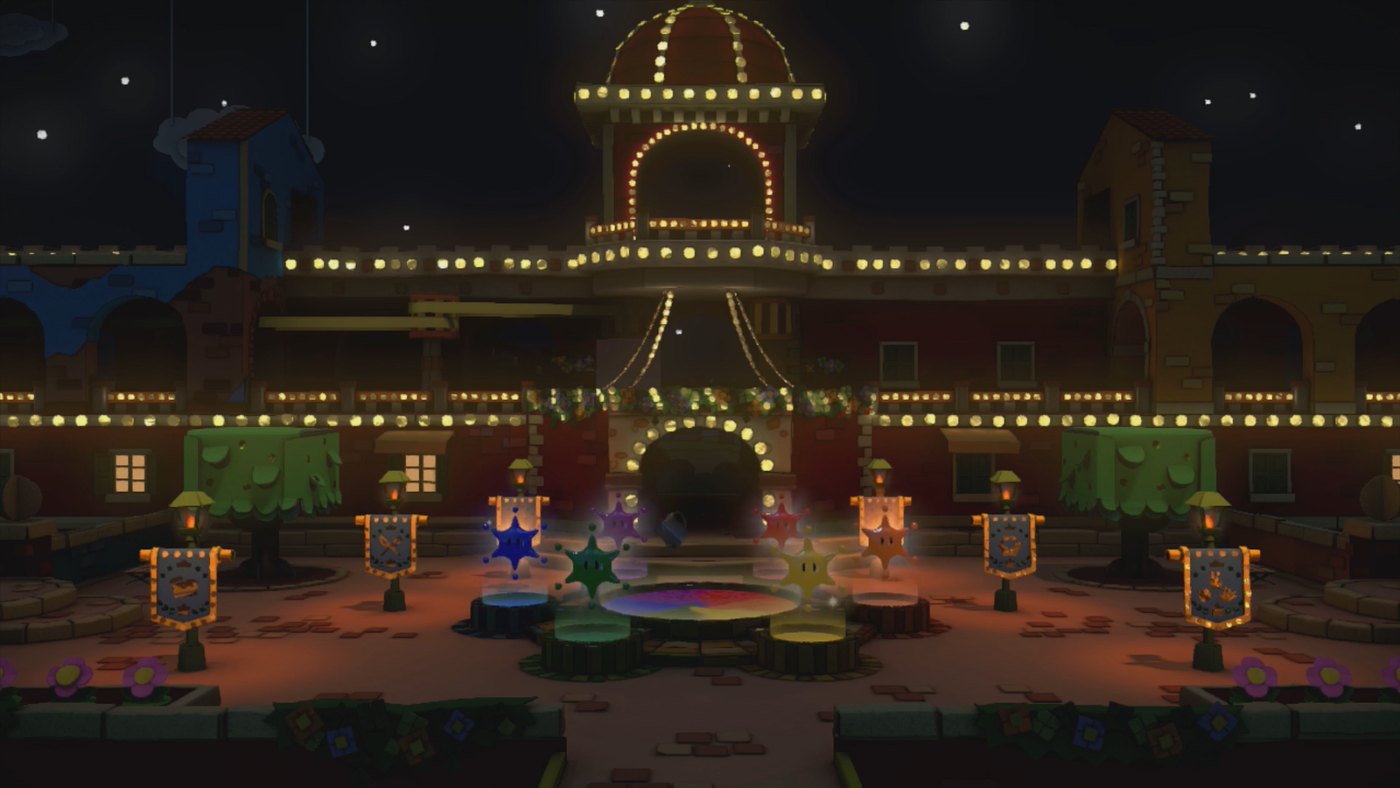
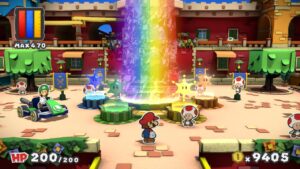 Port PrismaHub · red Mini Paint Star on the rooftops · Thing: PlungerThe harbour town round Prisma Fountain: card shop, café, dojo, museum, post office, the Wringer and the Rescue Squad Chief.
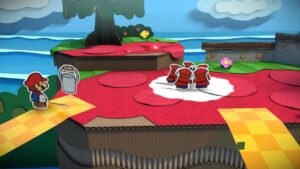 Ruddy RoadRed · Mini Paint Stars · purple Rescue Squad · Thing: Fire ExtinguisherA country lane with a Toad house and a café, where Slurp Guys are caught in the act.
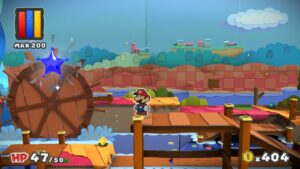 Cherry LakeRed · Justice Toad · Card Max Up · Thing: FanA waterwheel, an airship overhead, and a hero who has lost his trousers. Cutout is learned here.
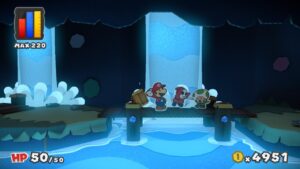 Indigo UndergroundBlue · green Rescue Squad · Thing: LemonA cavern where Rescue Green is stuck in a pipe and his squad end up as a bridge.
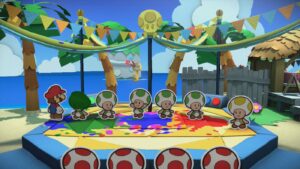 Bloo Bay BeachBlue · Shipwrecked Toad · LuigiA resort holding its Oceanfest, with minigames run by the Five Fun Guys and a juice bar on the sand.
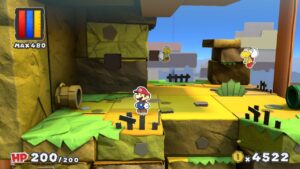 Daffodil PeakYellow · Mountain Sage · Spinning-DoorA mountain that needs a climbing permit. Unfurl is learned at the ranger’s cabin.
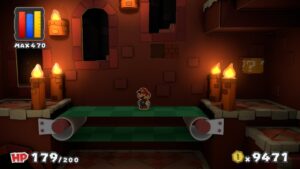 The Crimson TowerRed · red Big Paint Star · Morton (150 HP) · Thing: Cat-o-LuckA tower of conveyor belts, drained by an airship and guarded by a gate only the Chosen Toads can open.
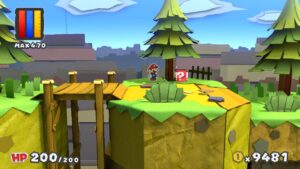 Sunglow RidgeYellow · opened by the red starA sawmill in the hills behind the Scarlet Gate, hit by a black paint bomb.
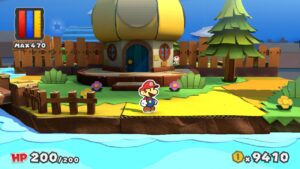 Château ChanterelleYellow · Thing: Piggy BankProfessor Kinopio’s house, with an empty kennel and a wall of baby pictures of Princess.
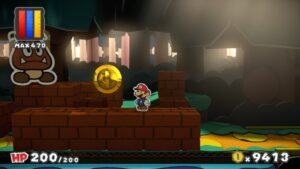 Mondo WoodsGreen · Mega Goomba (116 HP)A forest where Kamek has made everything huge, including the Goombas and one very large coin.
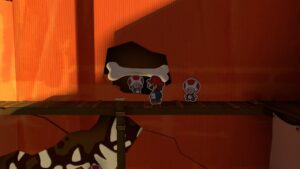 Marmalade ValleyOrange · Luigi · Thing: BoneA fossil dig on scaffolding, terrorised by a giant Chain Chomp. The fossil is Draggadon.
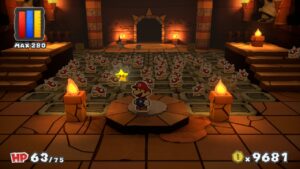 Kiwano TempleOrange · Big Spiny (130 HP) · blue Rescue SquadA temple of spikes crossed on rolling tubes, with a railway running past it.
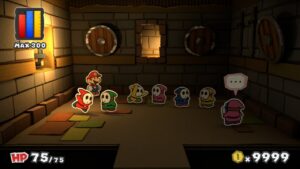 The Golden ColiseumYellow · yellow Big Paint Star · Iggy (180 HP) · Luigi · Things: Bone, Bottle Opener, Ice PickAn arena with dressing rooms and storerooms behind it, and a Battle Royal in front.
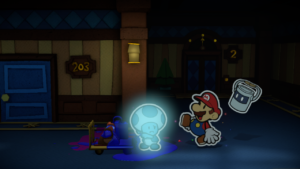 Dark Bloo InnBlue · Mini Paint Star · Card Max UpA haunted hotel with six ghost guests and a staff who would like the tea party over with.
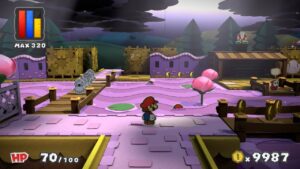 Plum ParkPurple · Petea Piranha (320 HP) · Luigi · Things: Teapot, BalloonsGardens over poisoned water, crossed in a bucket. Birdo is giving a concert.
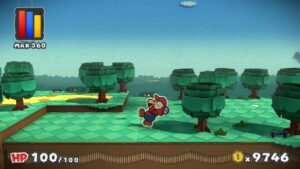 Sacred ForestGreen · two Mini Paint Stars · Kamek (120 HP) · Card Max Up · Thing: TurnipA forest shrunk to miniature, where gangs of Small Goombas have torn a Mini Paint Star into five.
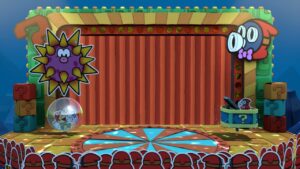 Cobalt BaseBlue · Snifit or Whiffit · Thing: Instant CameraA seaside military base and the studio of a quiz show held underwater.
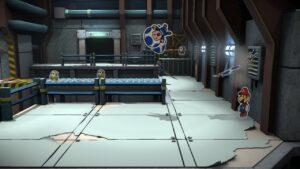 Fort CobaltBlue · blue Big Paint Star · Ludwig (150 HP) · Thing: BasinA Shy Guy training camp. Its branch of the Prisma Café is the only one that sells Magma Burgers.
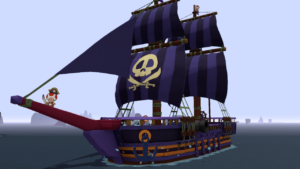 Violet PassagePurple · opened by the blue star · yellow Rescue Squad · Black Shy Guy (16 HP) · Things: Battery, CompassA pirate ship in port, and later the Lost Sea, with its cannon trials.
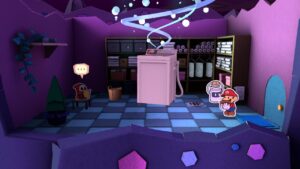 Vortex IslandPurple · Things: Cork, Washing MachineA whirlpool, and the first door into the parallel world.
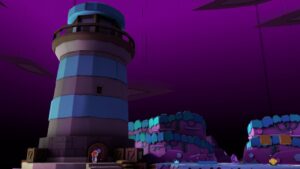 Lighthouse IslandPurple · Thing: LightbulbA dark lighthouse and a despondent keeper, who dances for the rest of the game once the lamp is lit.
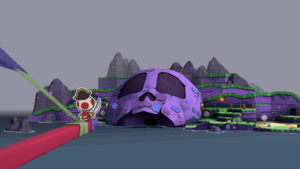 Fortune IslandPurple · purple Big Paint Star · Wendy (300 HP) · Things: Salt and Pepper, Charcoal GrillA skull-faced island with a volcano, a treasure chamber and a dead pirate cooking lunch.
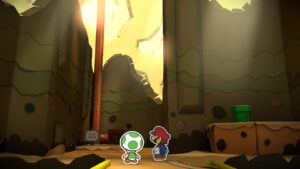 Mustard CaféYellow · opened by the purple star · Mini Paint StarA desert café over a sinkhole. Battles here are fought in quicksand, against the clock.
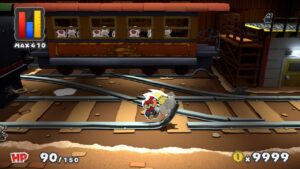 Toad TrainworksOrange · Mini Paint Star · Thing: MegaphoneThe railway works, under attack, where the Sunset Express is put back together.
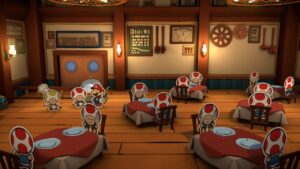 Tangerino GrillOrange · Steak (40 HP) · Mini Paint Star · Thing: Magnifying GlassA restaurant where Mario does the cooking, first with a hammer and then with a deck of cards.
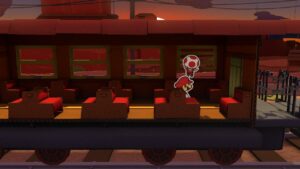 Sunset ExpressOrange · orange Big Paint Star · Larry (350 HP) · red Rescue SquadA runaway train, fought through carriage by carriage to Starlight Cape.
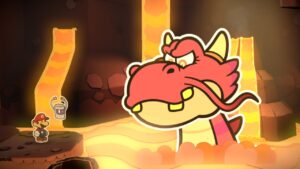 Redpepper VolcanoRed · opened by the orange star · Draggadon · red Mini Paint StarLava rivers ridden on dragon-back, steering with a burger on a fishing line.
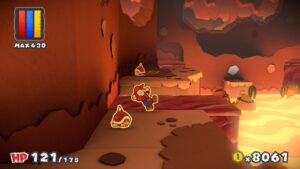 Redpepper CraterRed · Big Lava Bubble (170 HP) · orange Mini Paint Star · Luigi · Thing: Hair DryerHot springs deep in the volcano, popular with Toads and enemies alike.
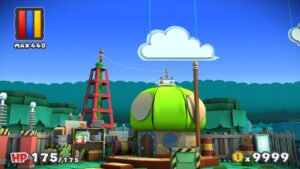 Green Energy PlantGreen · Mini Paint Star · Luigi · Things: Claw Hammer, RecorderA laboratory whose experiment is a playable slice of Super Mario Bros. 3, flipping included.
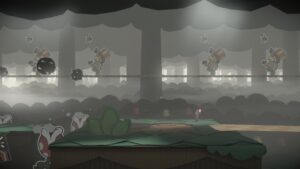 Mossrock TheaterGreen · red Rescue SquadA misty wood where circus performers rehearse: Juggler Bros, Roller Guys and Dino Rhinos.
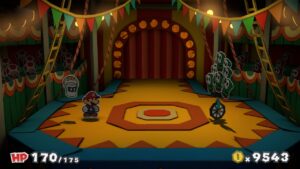 The Emerald CircusGreen · green Big Paint Star · Lemmy (350 HP) · Wild Dino Rhino (300 HP) · Thing: Disco BallA big top with caged Yoshis out the back and a Koopaling on the roof.
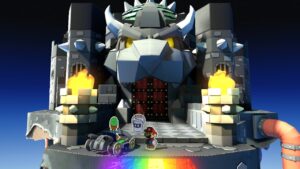 Black Bowser’s CastleBlack · Roy (420 HP), Black Bowser (700 HP)The final level, at the far end of Rainbow Road: a trap, a paint factory and a throne room.
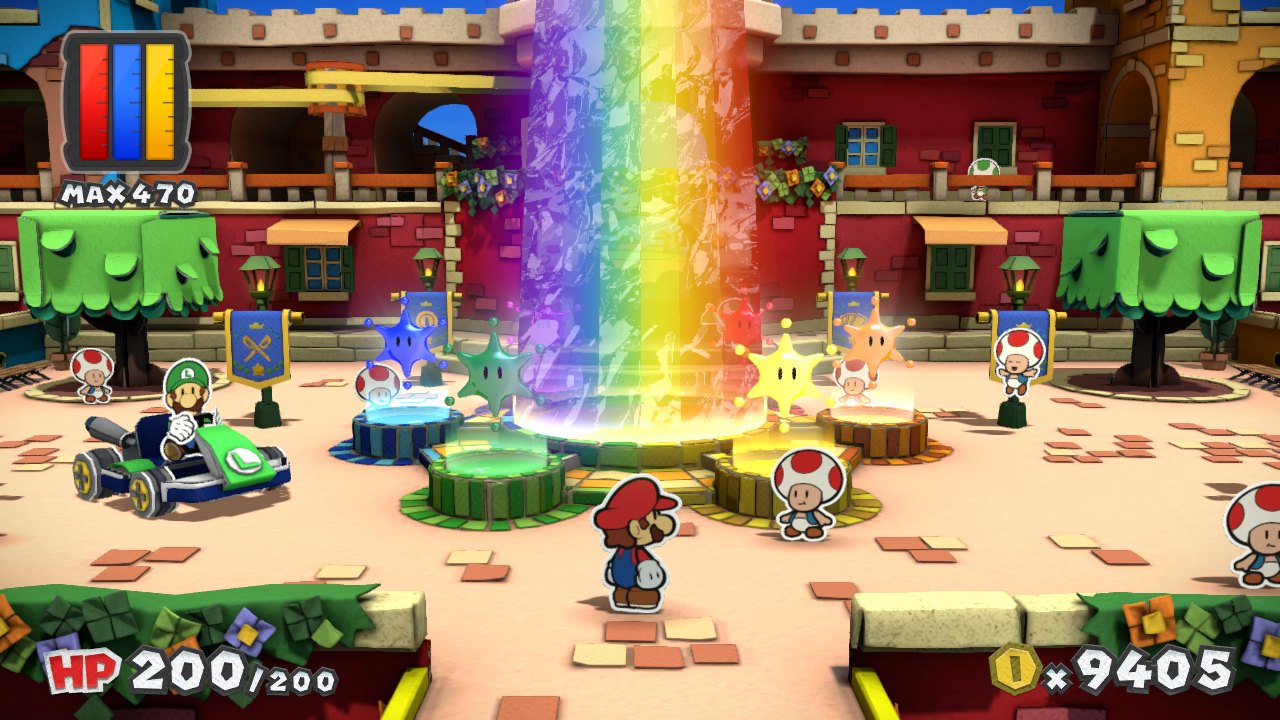
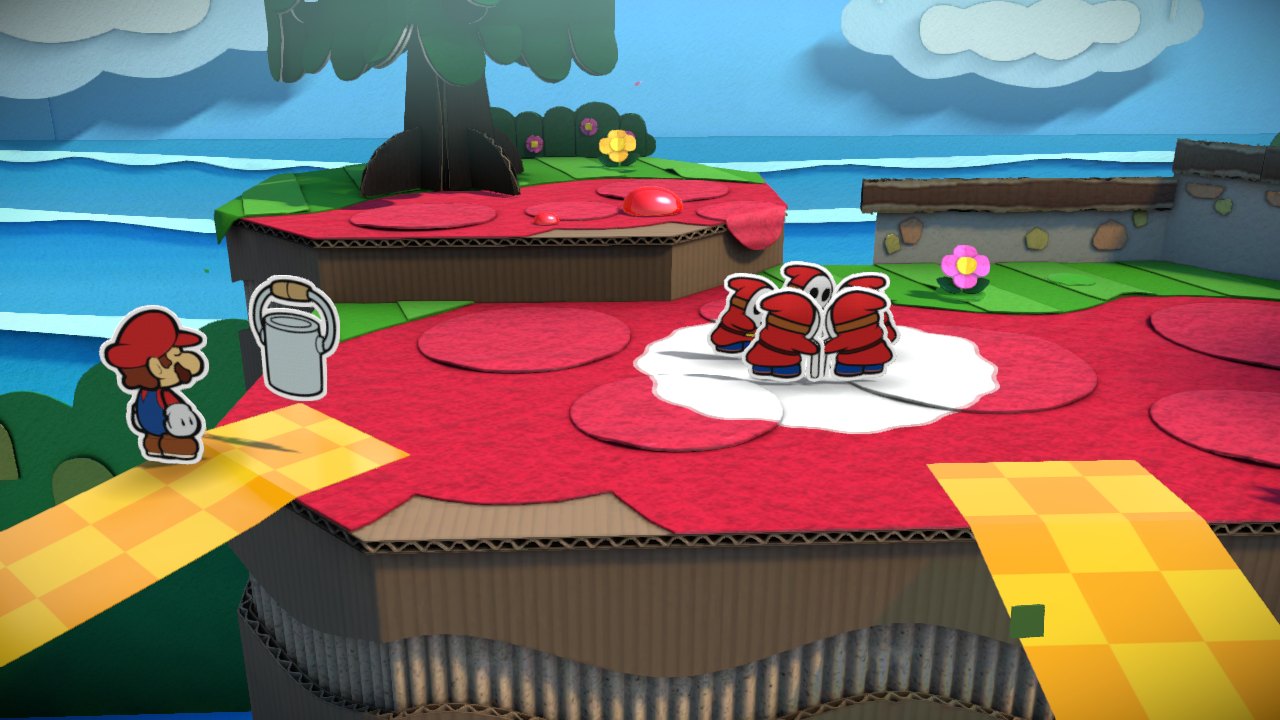
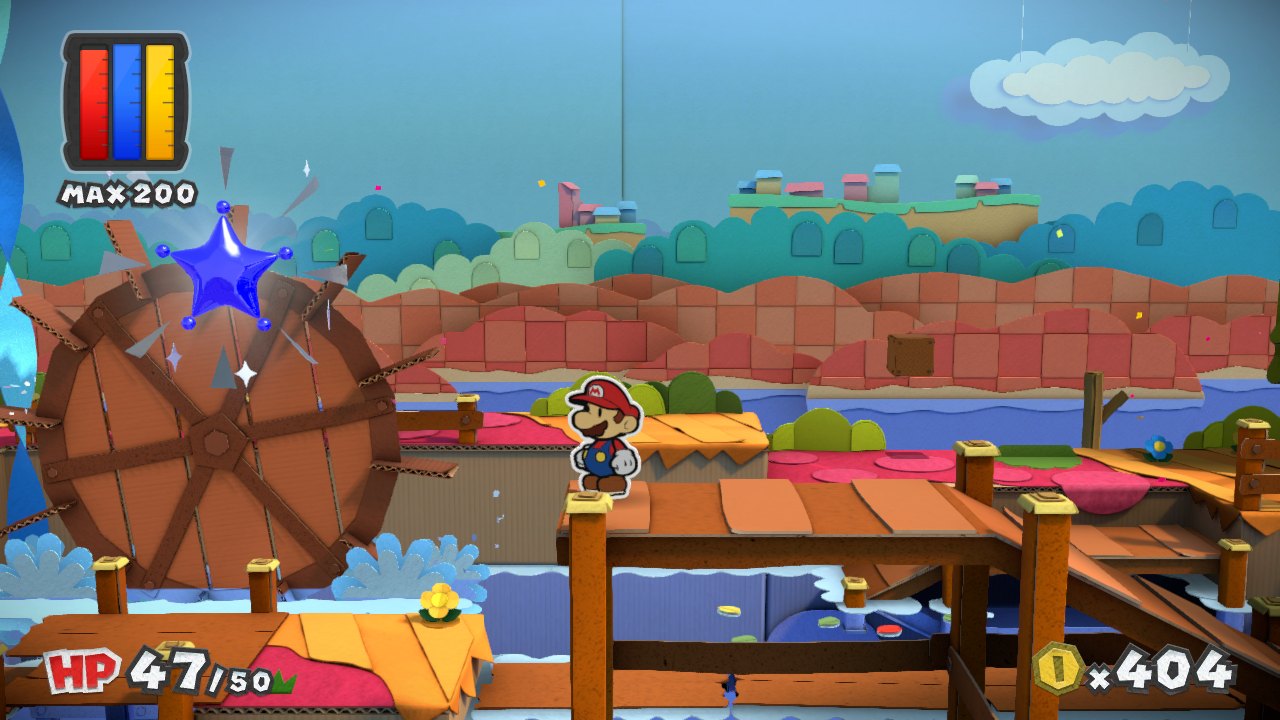
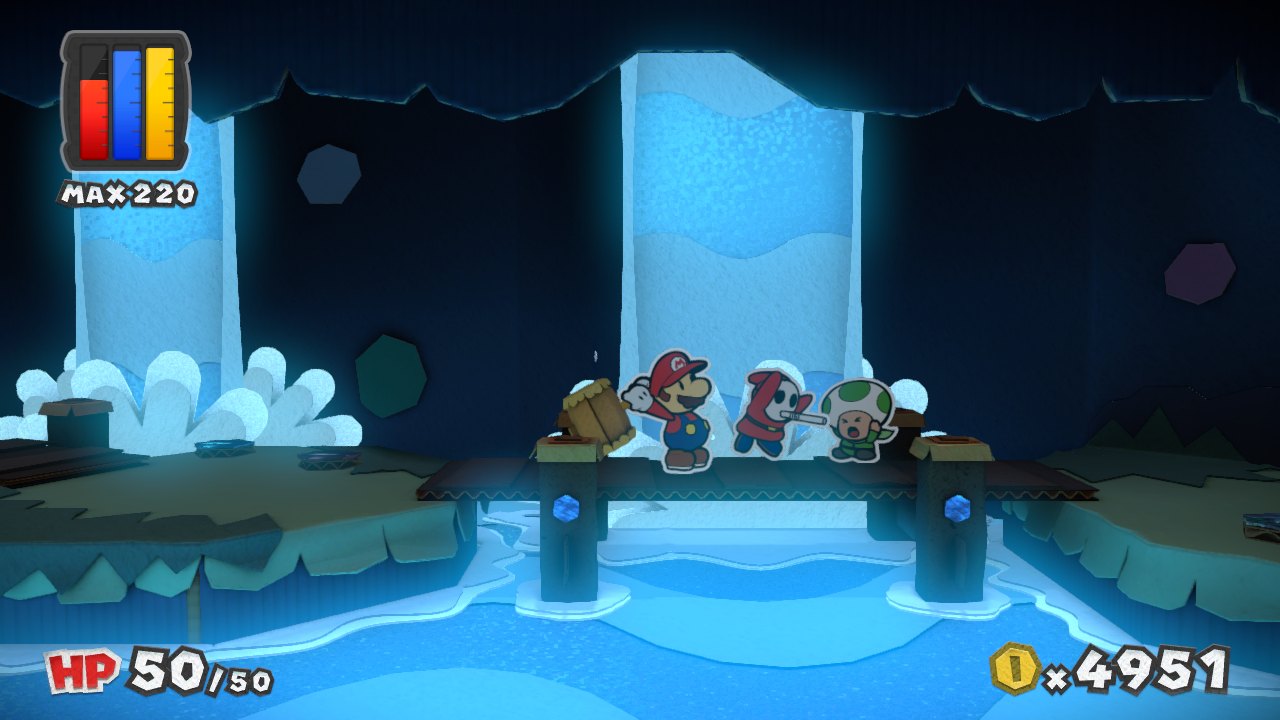
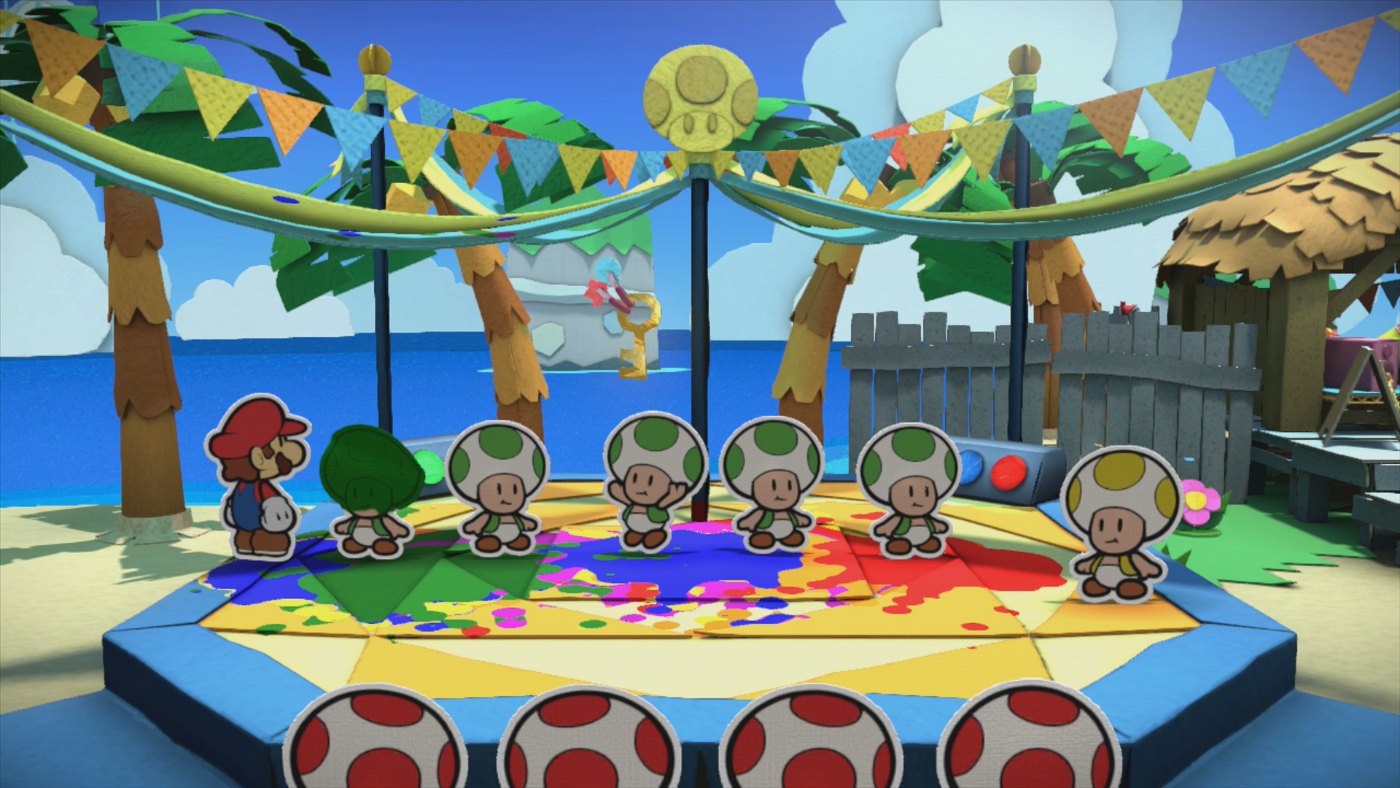
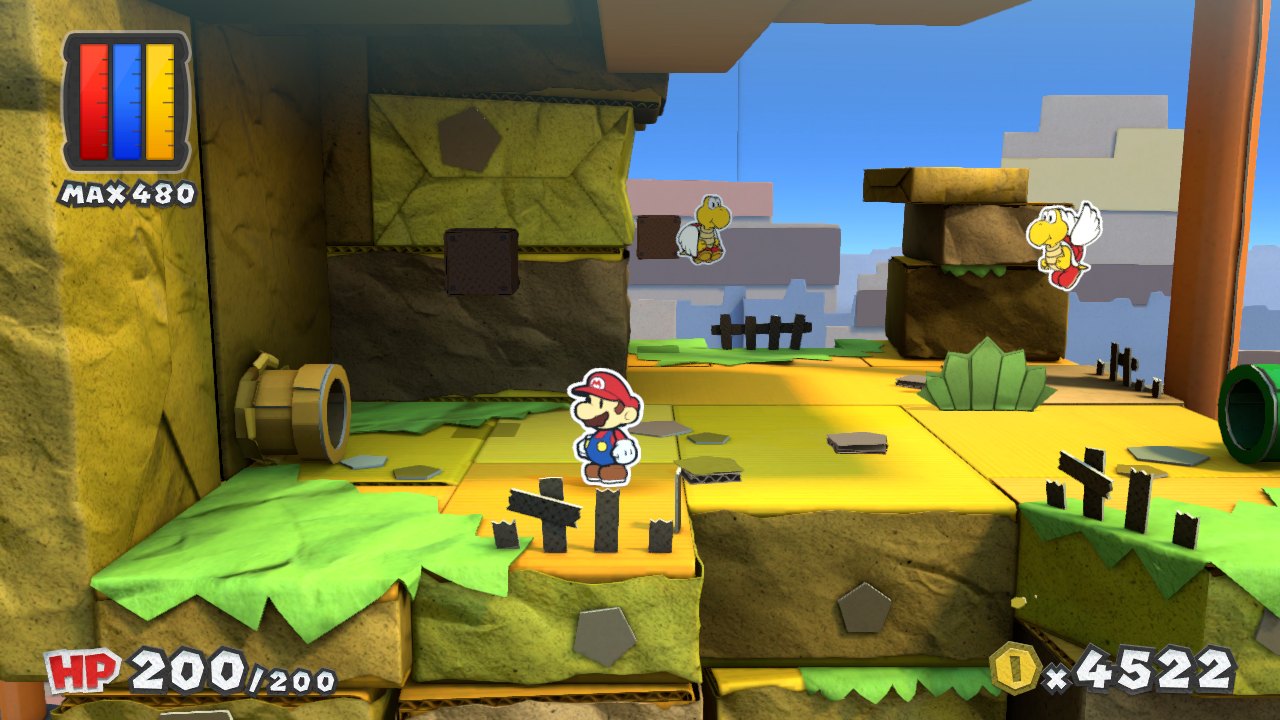
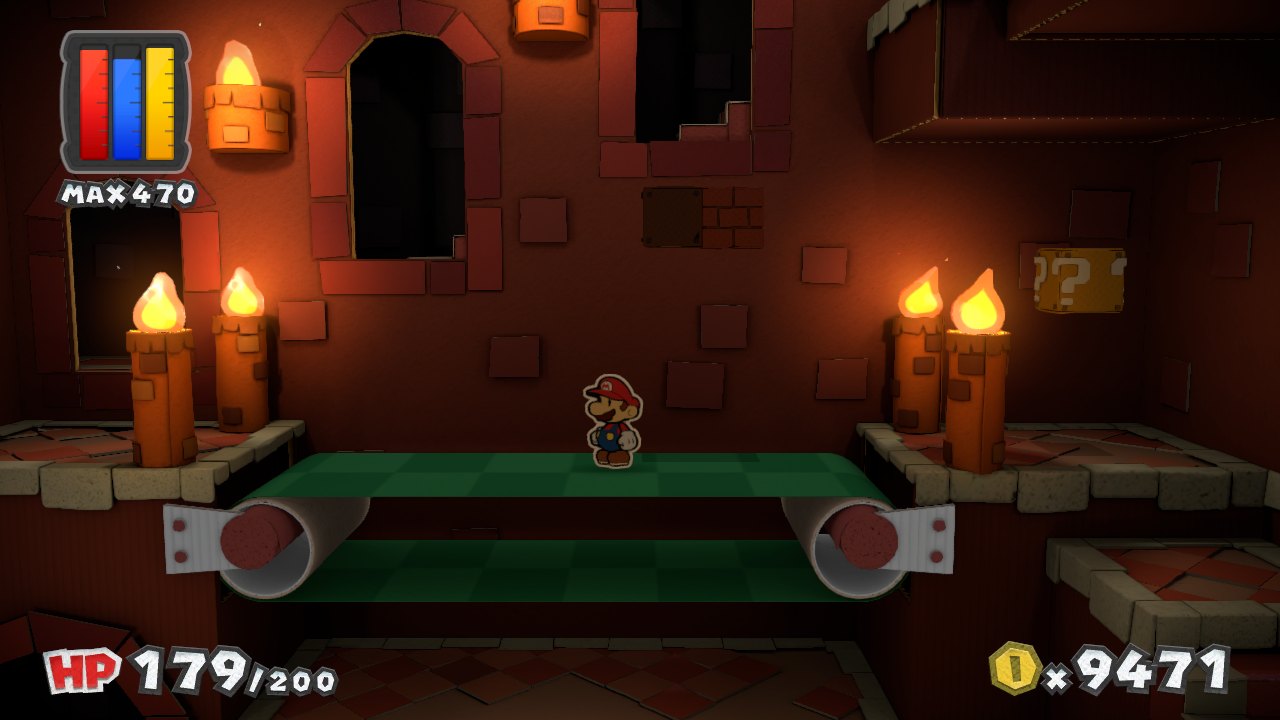
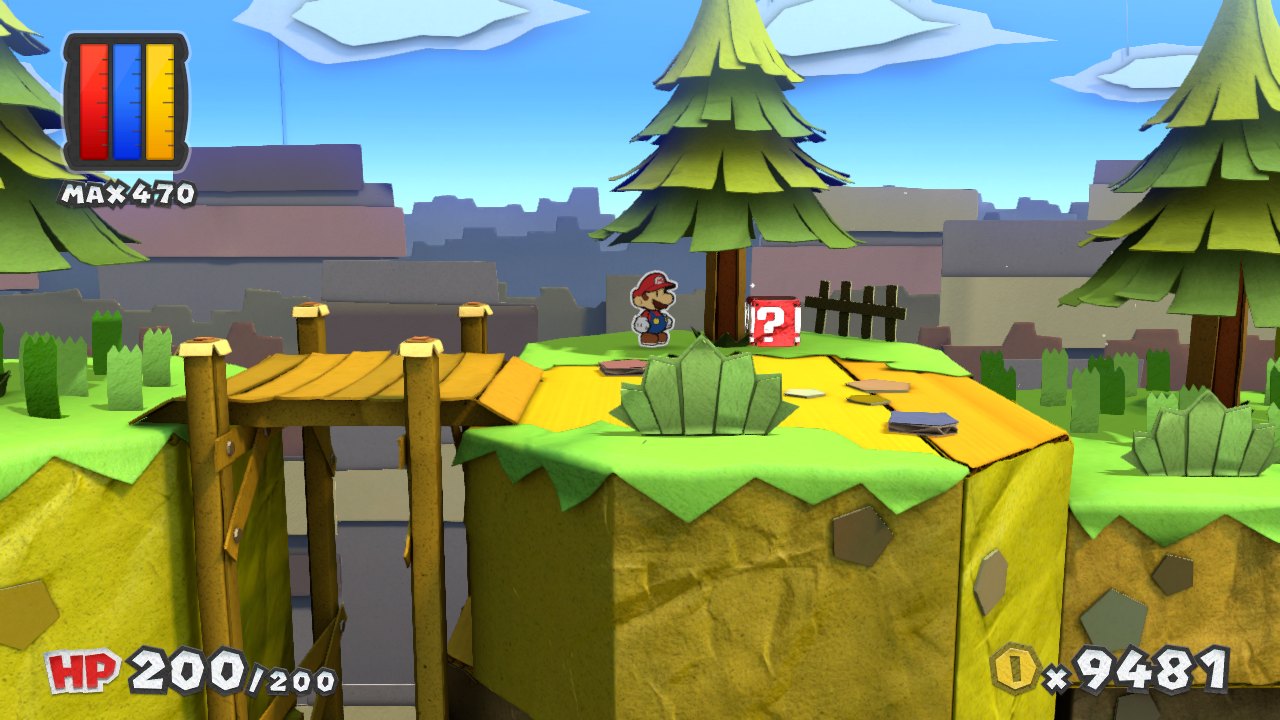
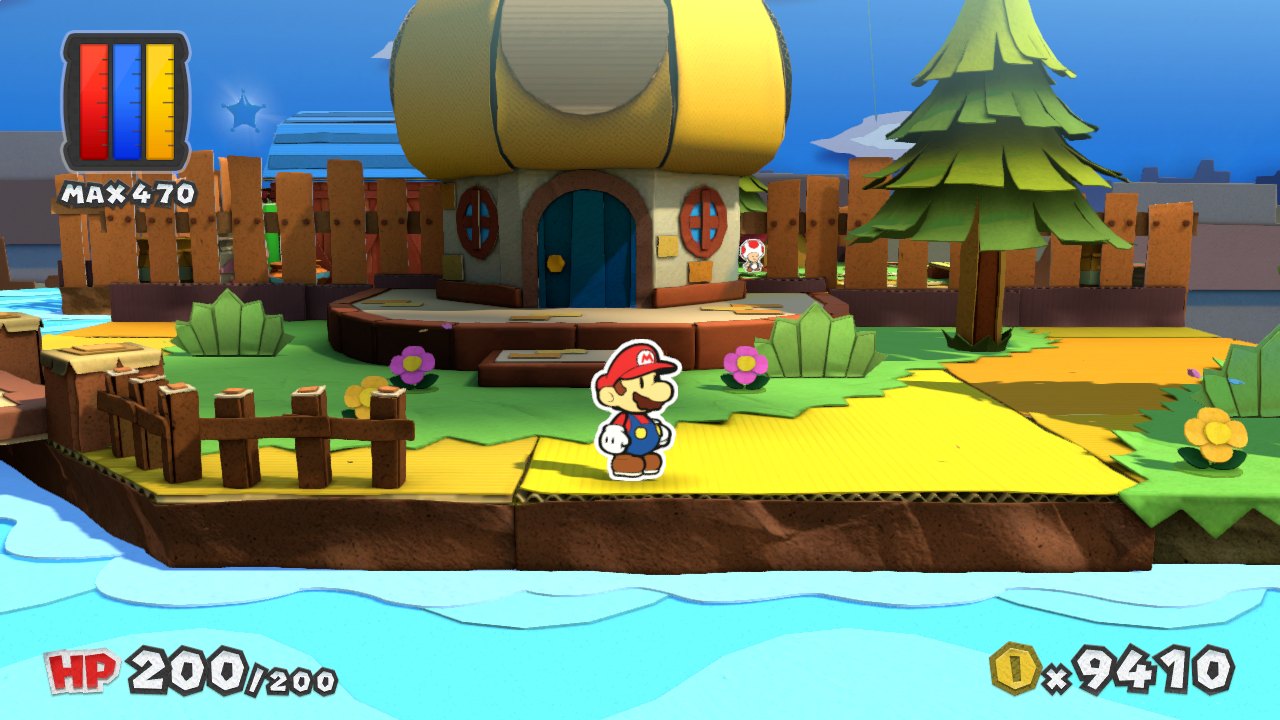
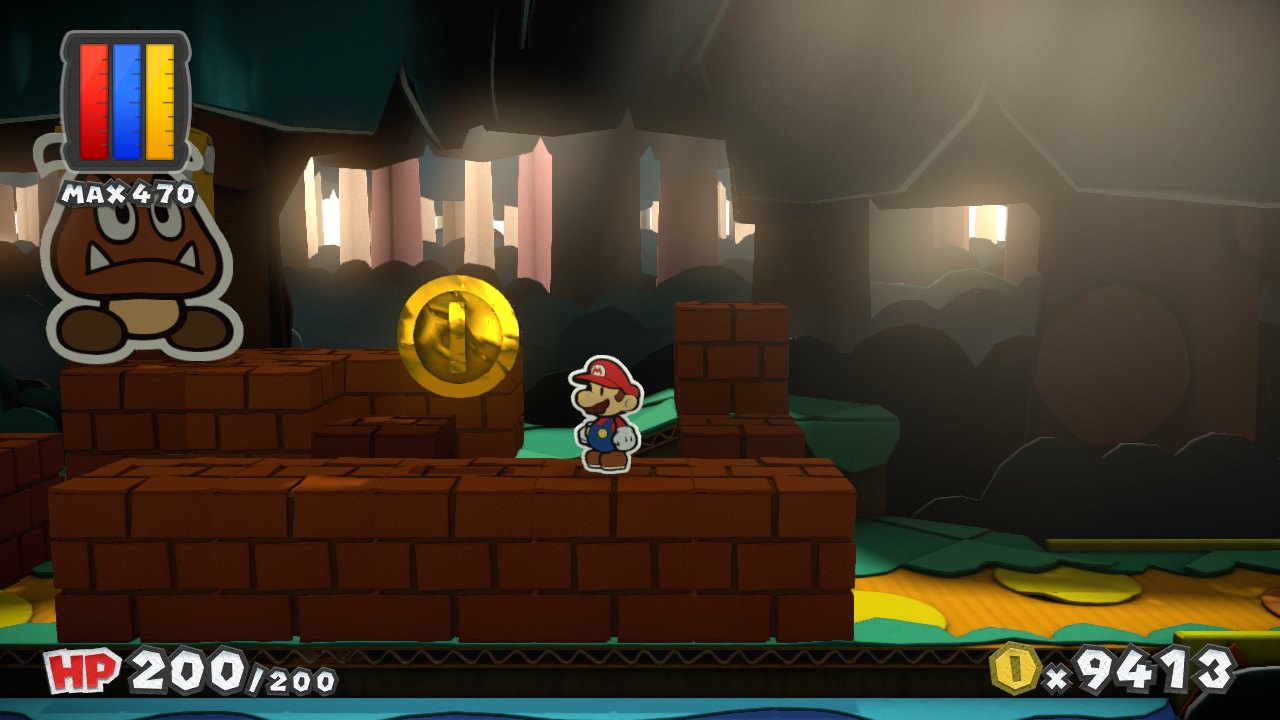
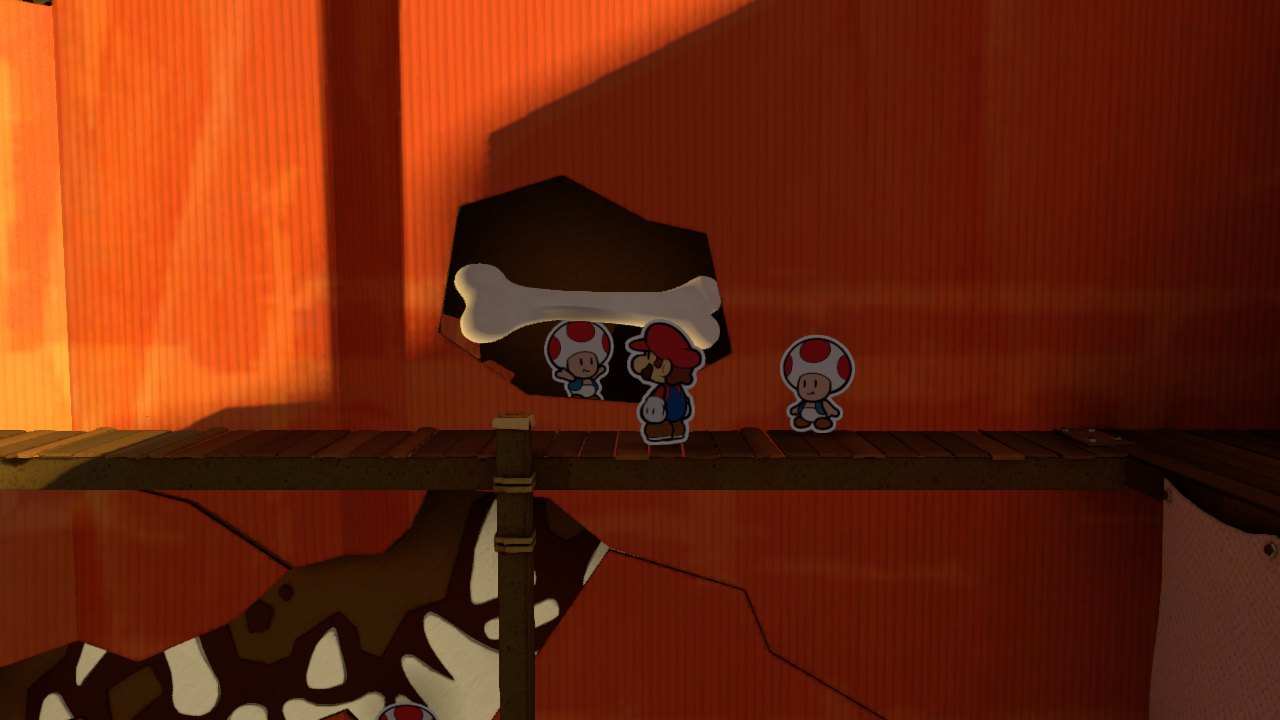
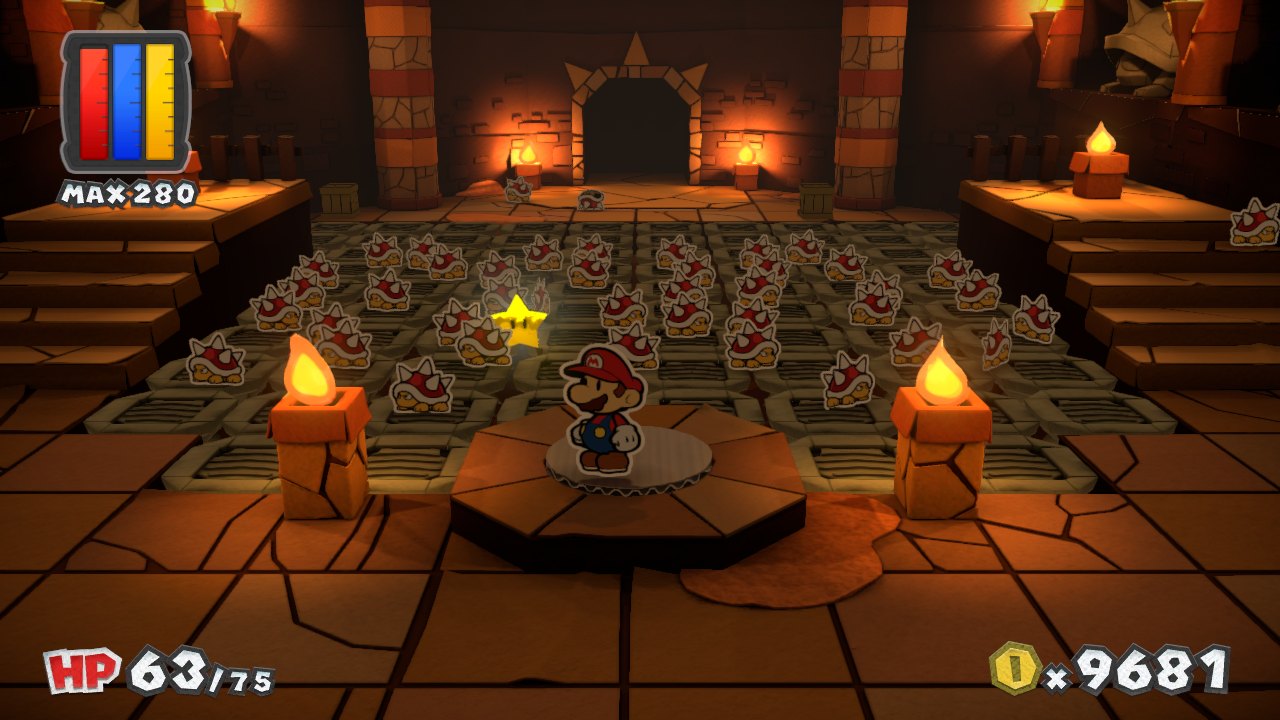
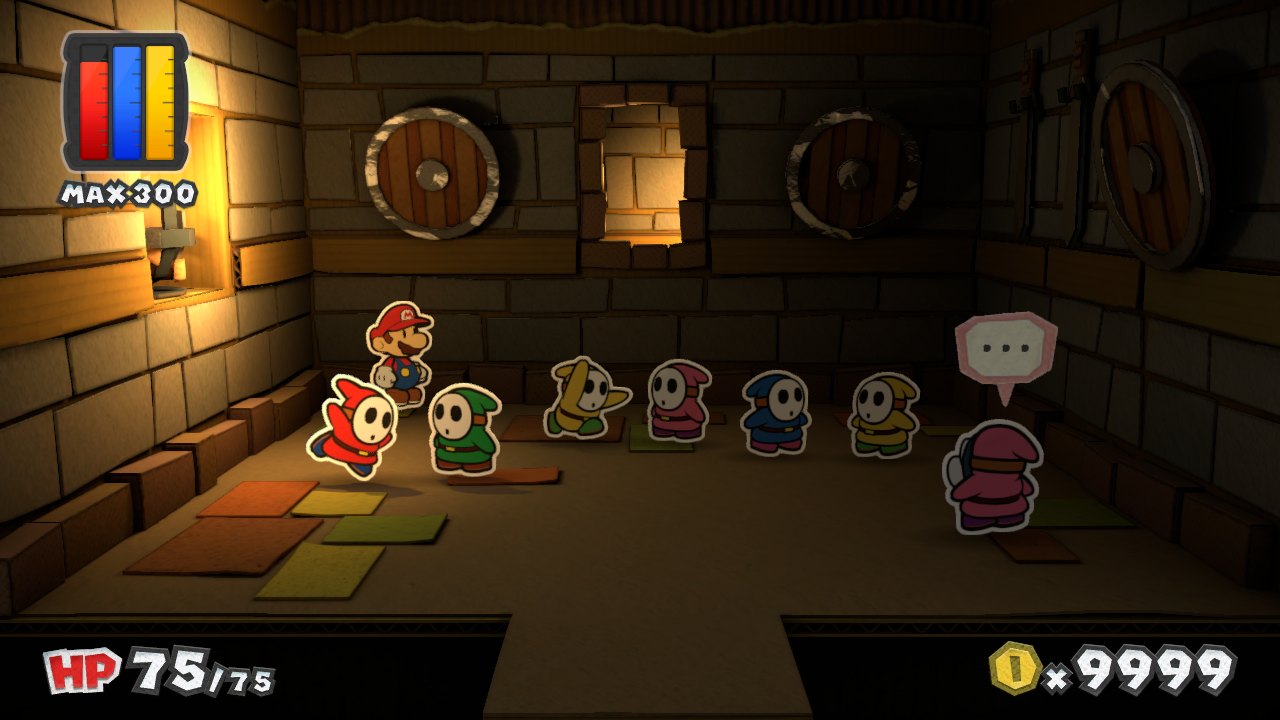
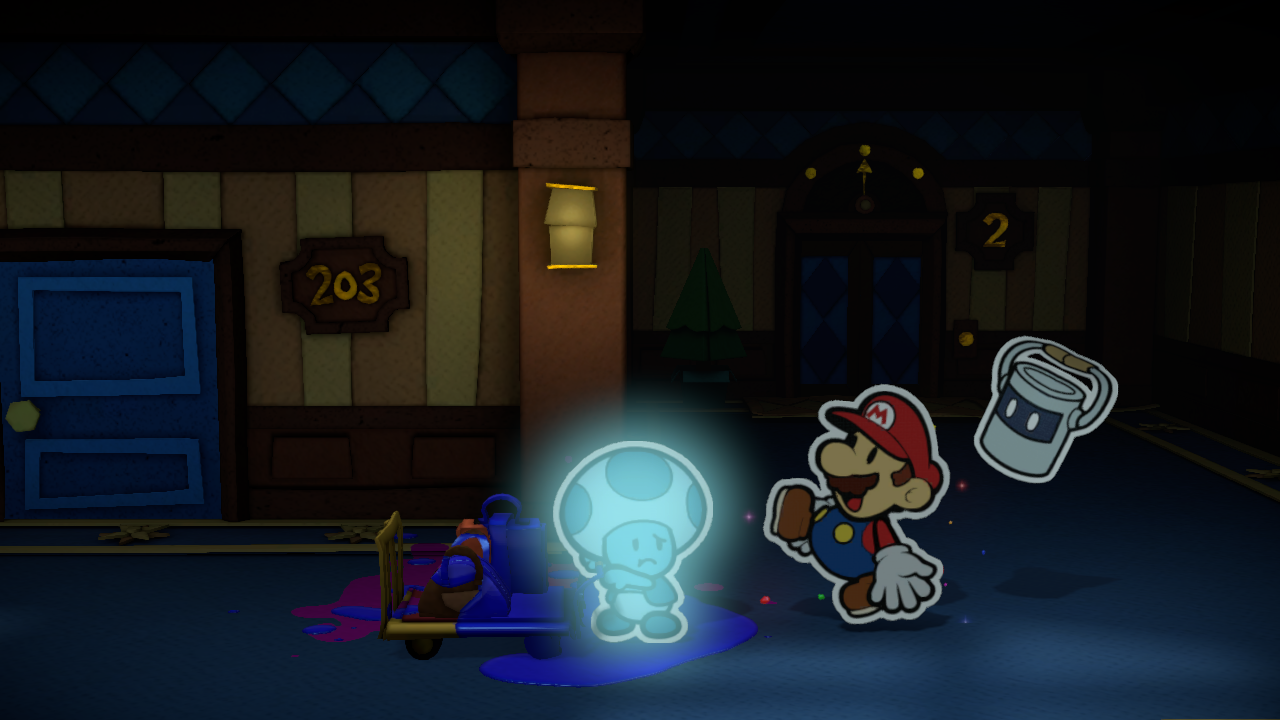
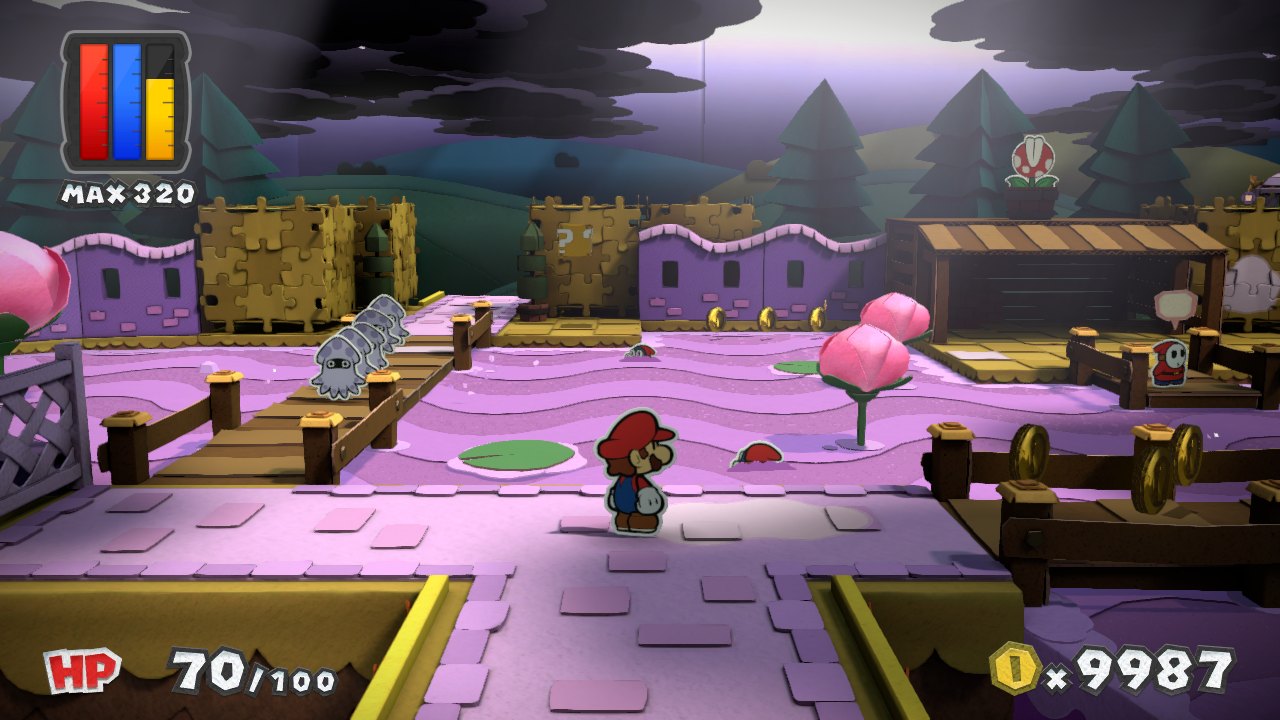
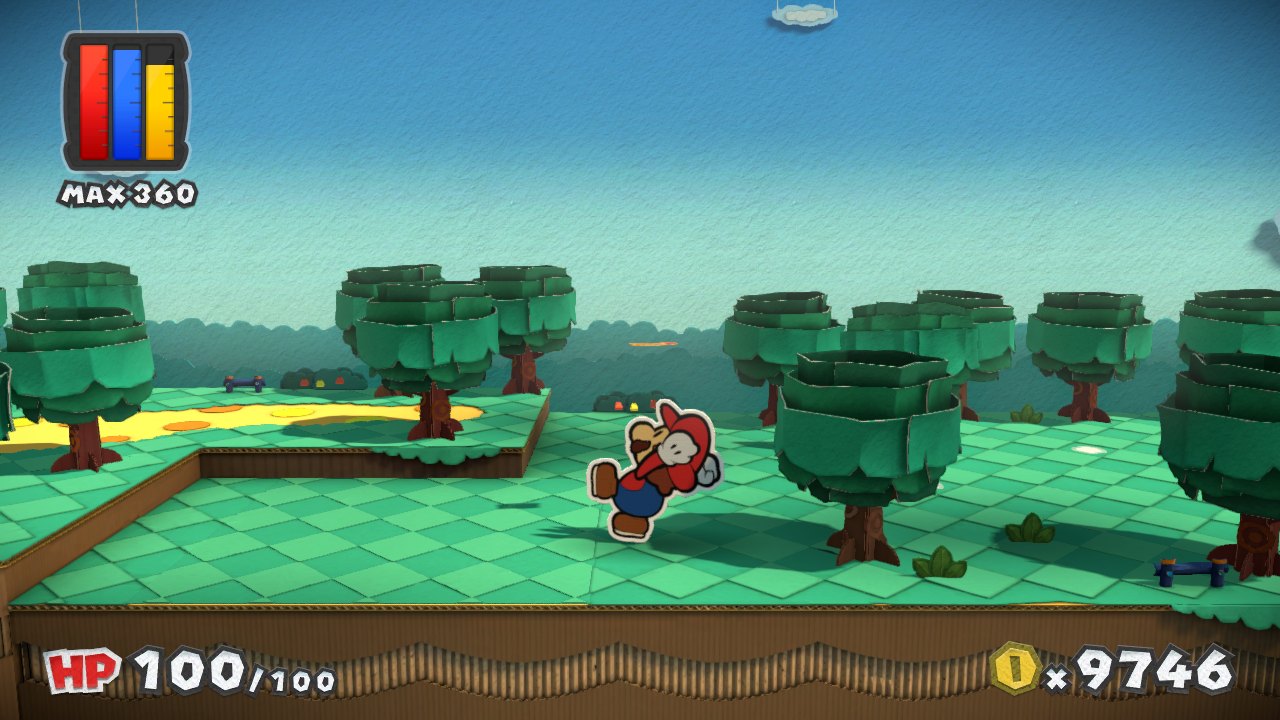
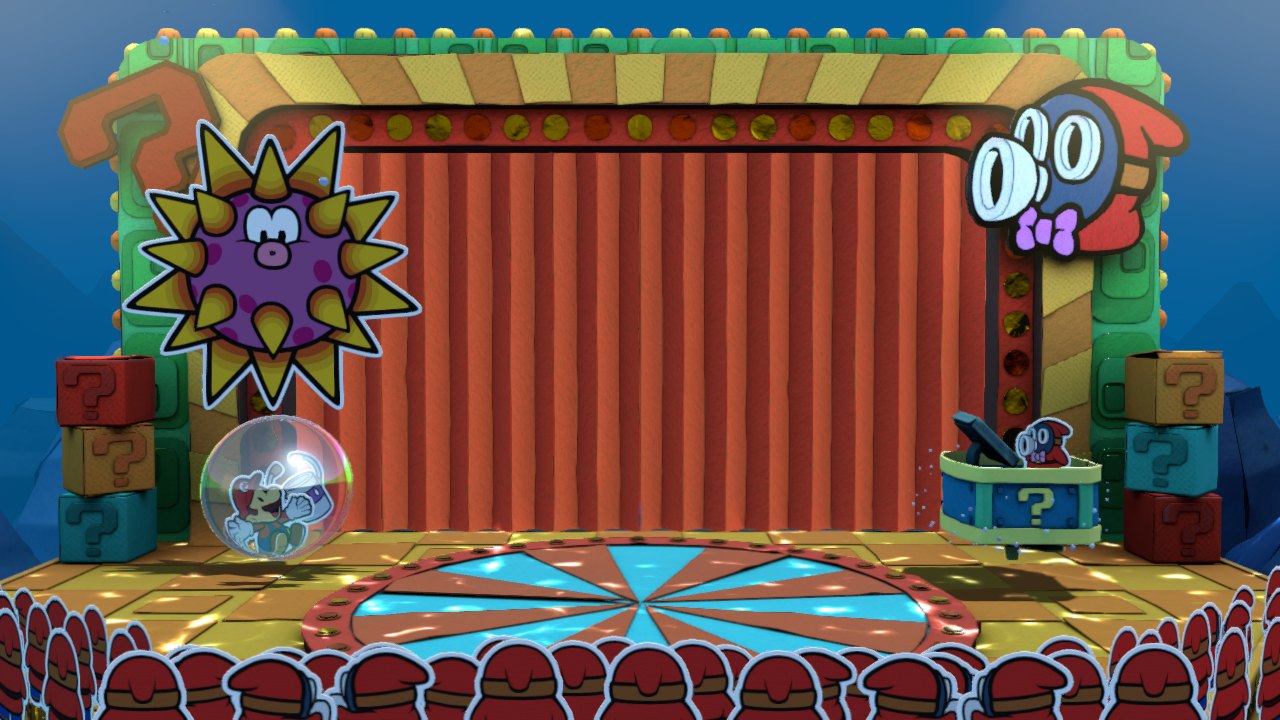
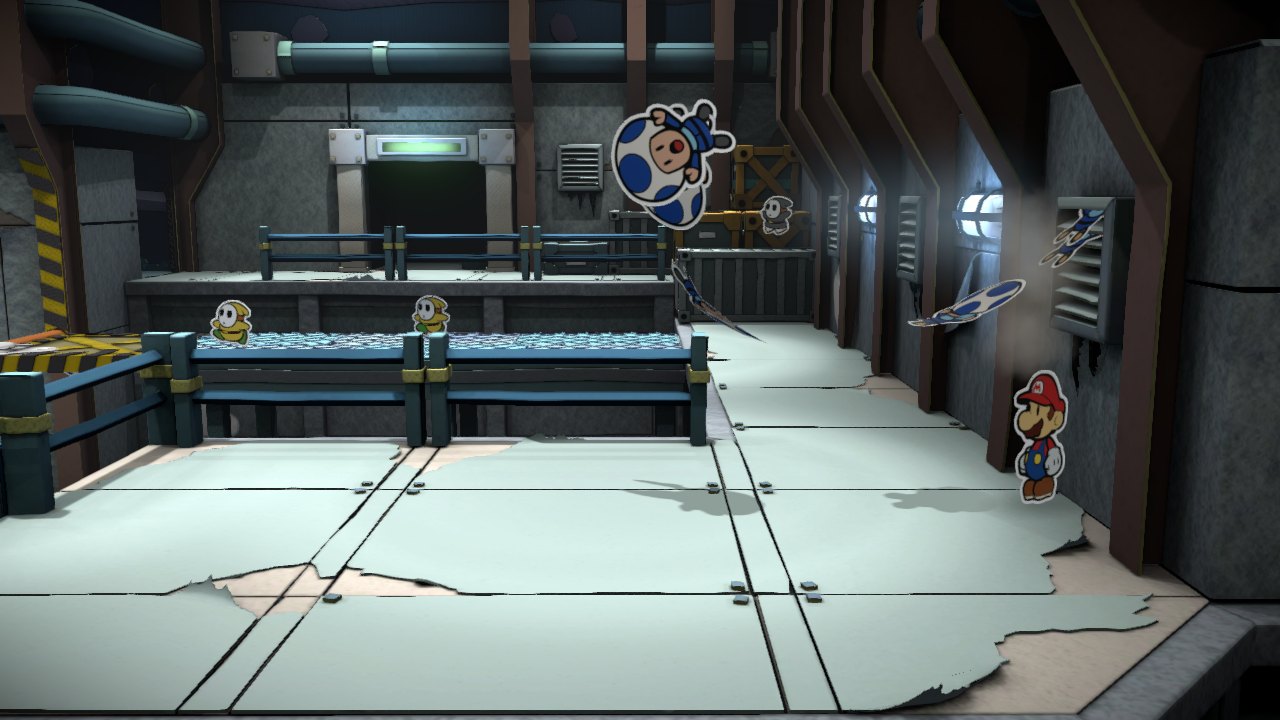
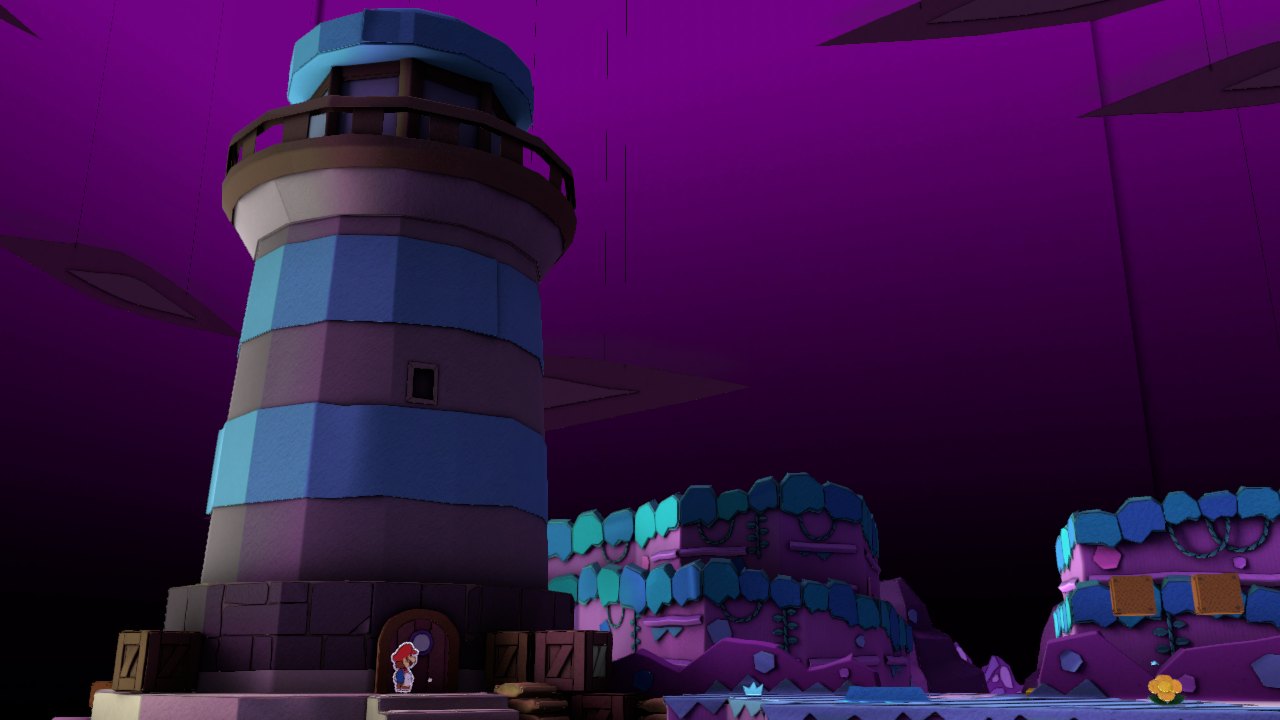
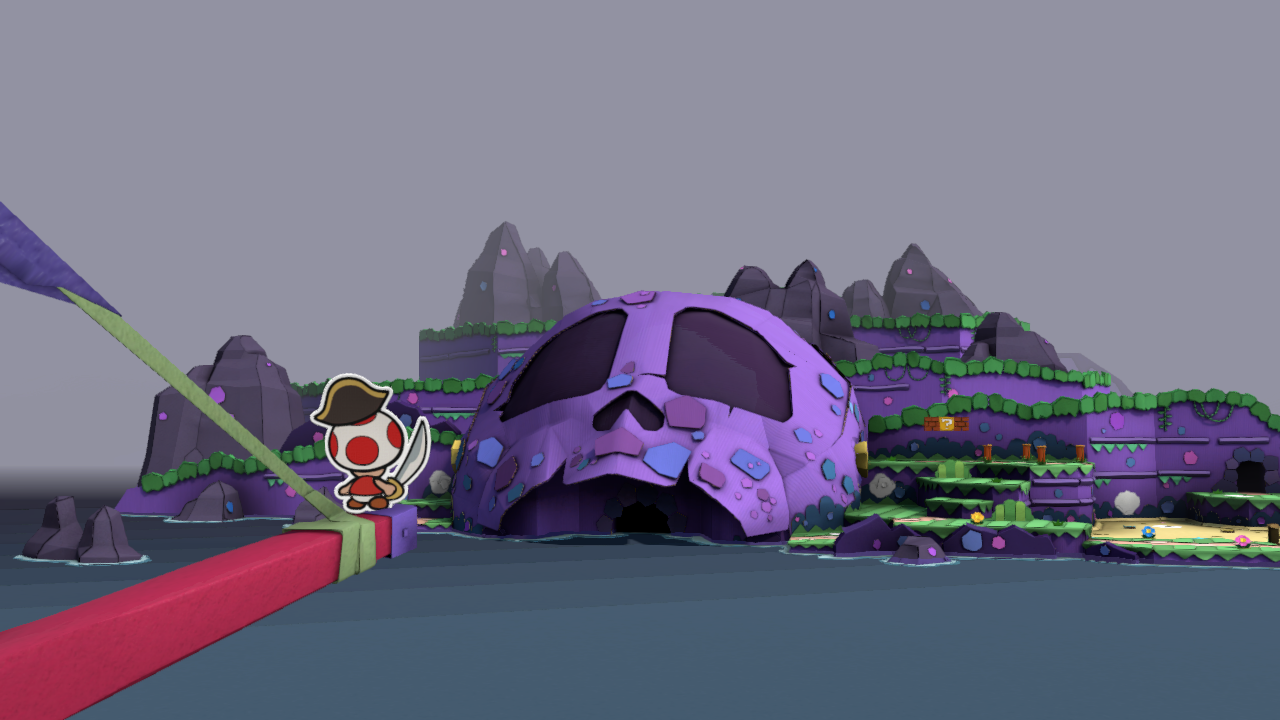
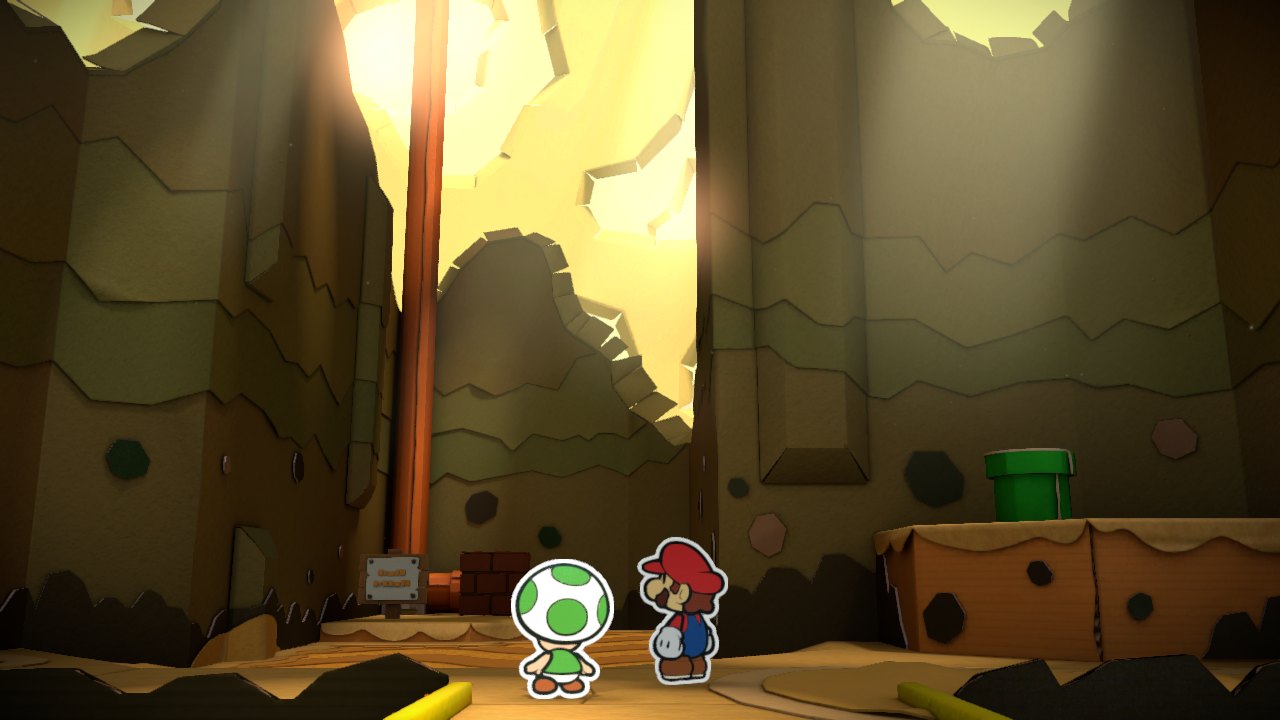
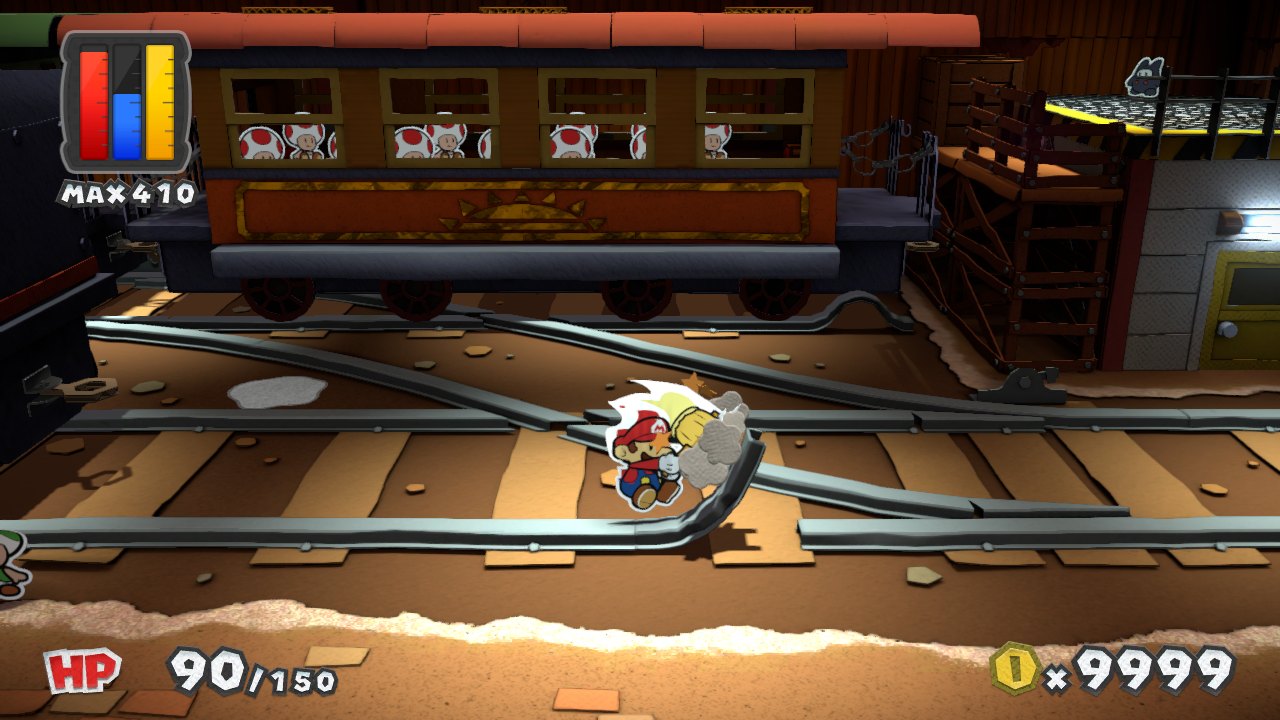
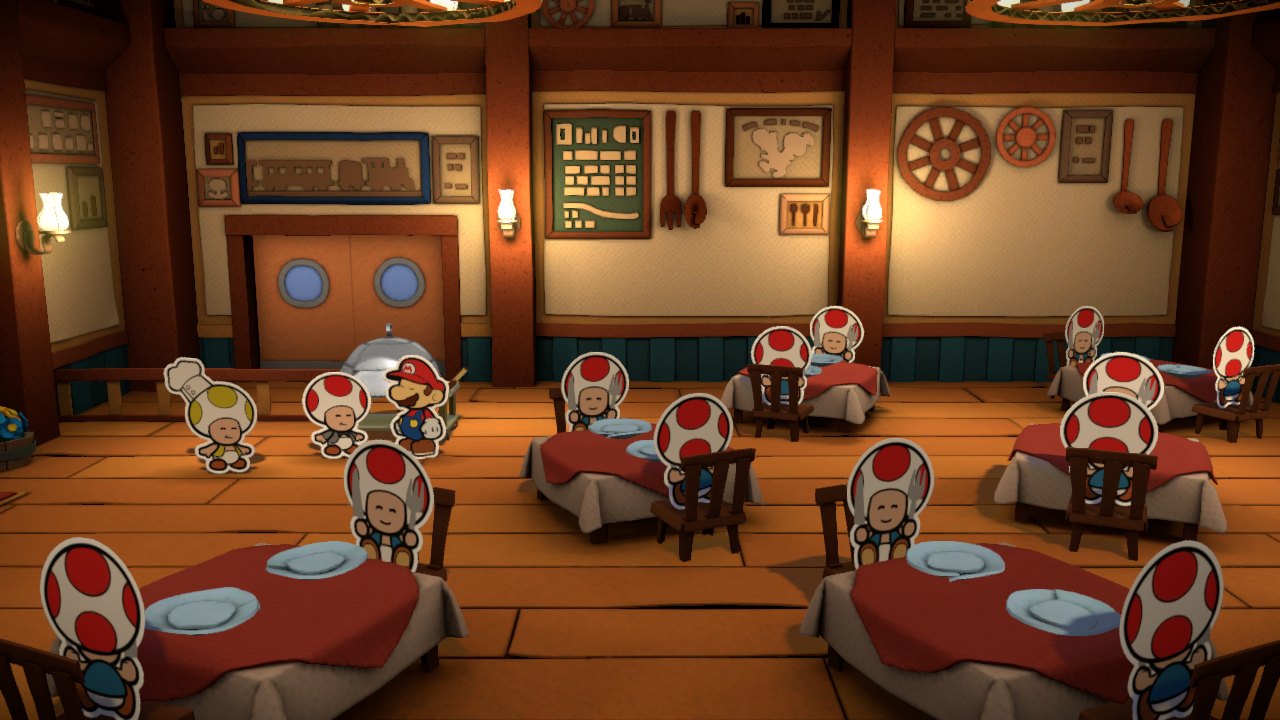
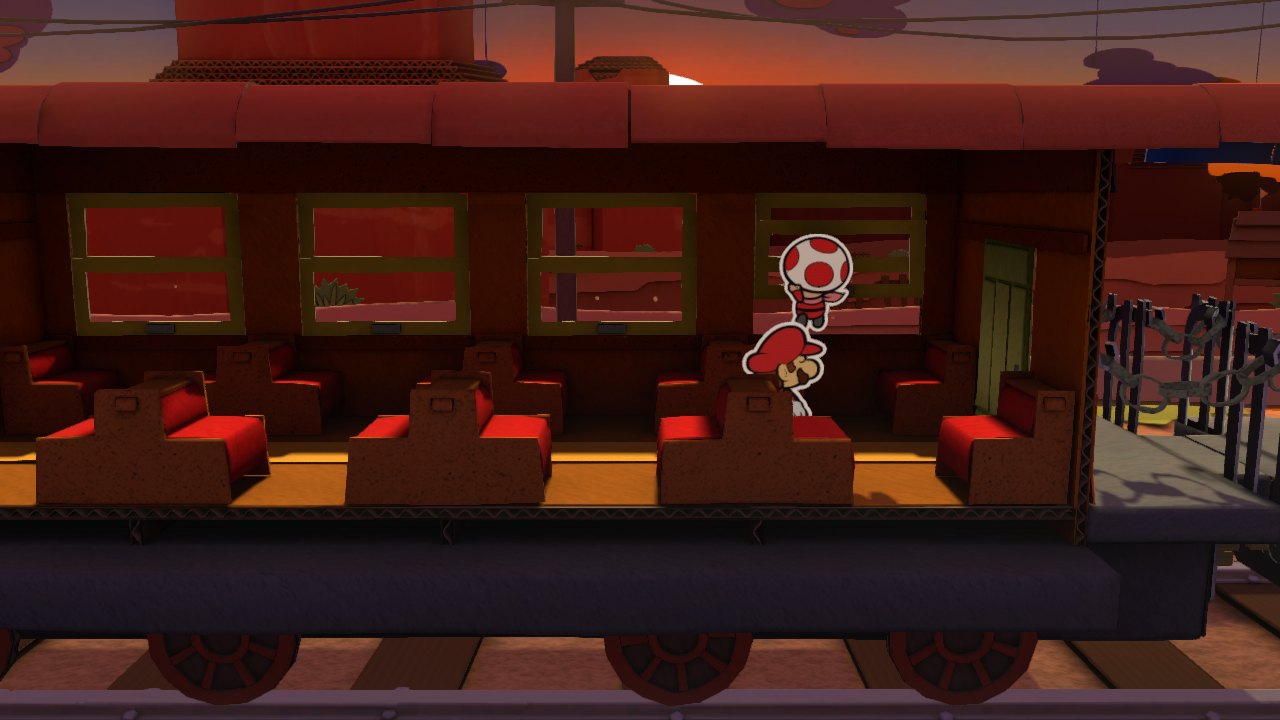
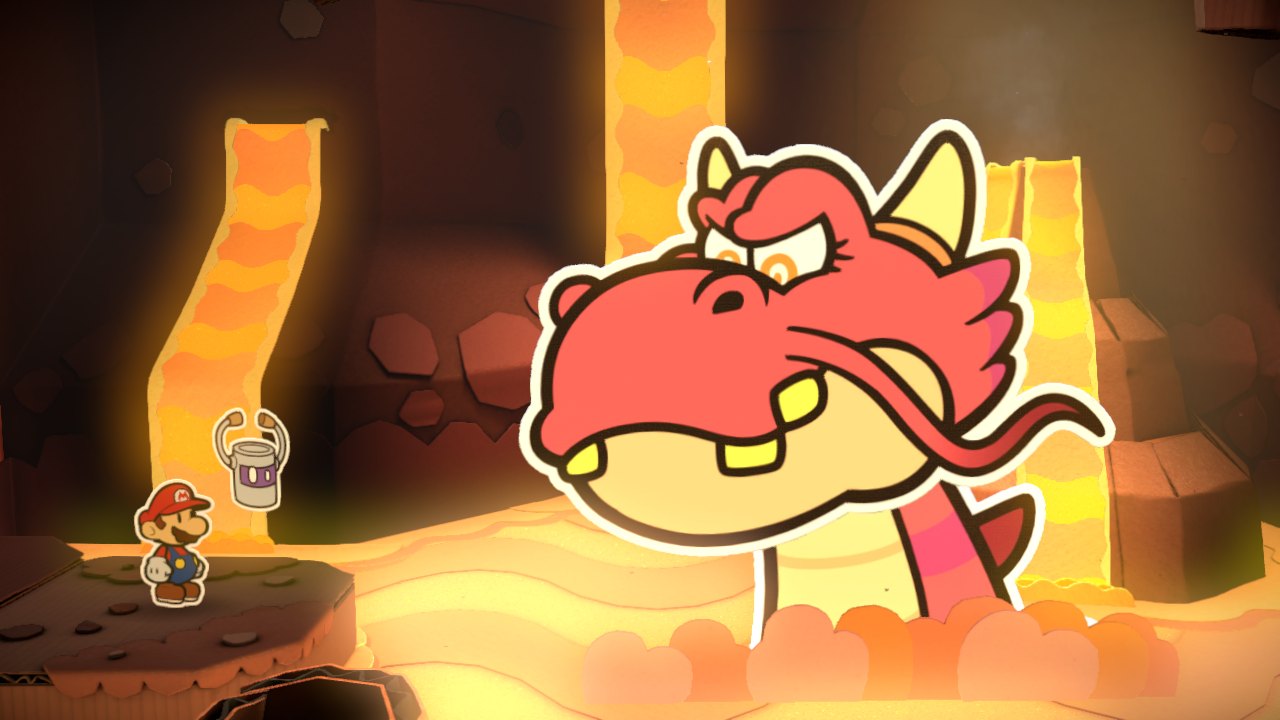
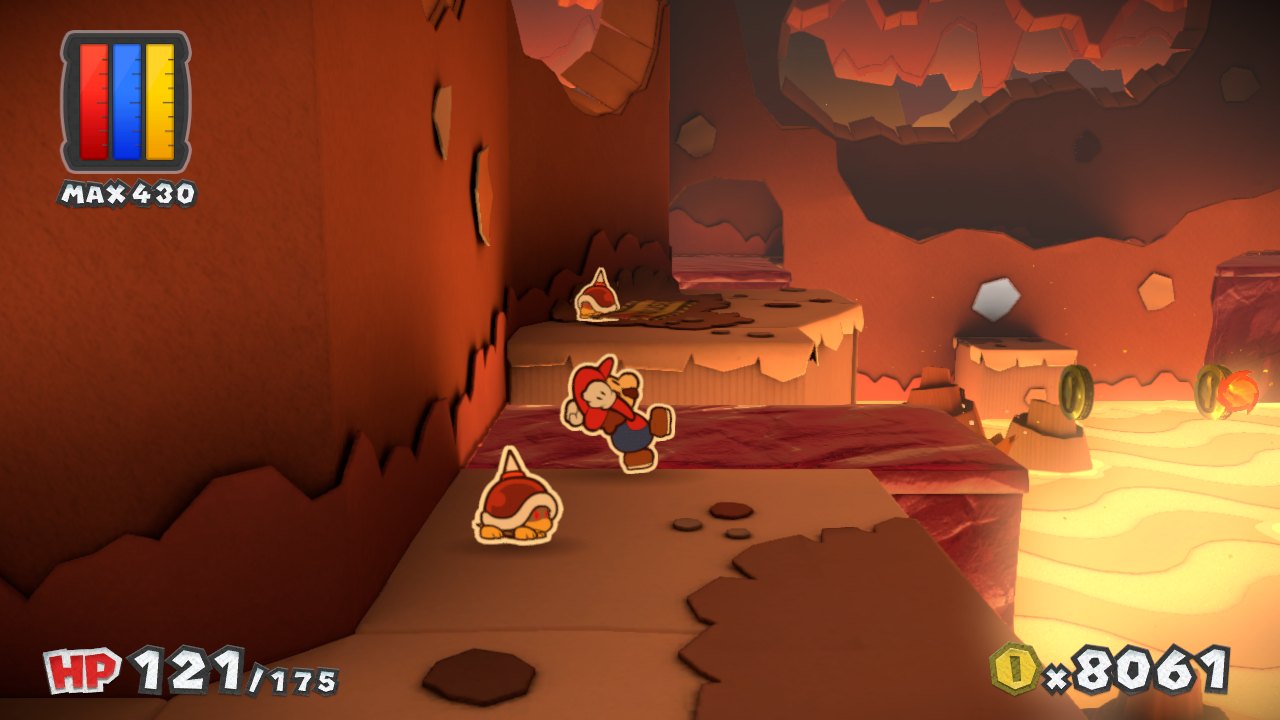
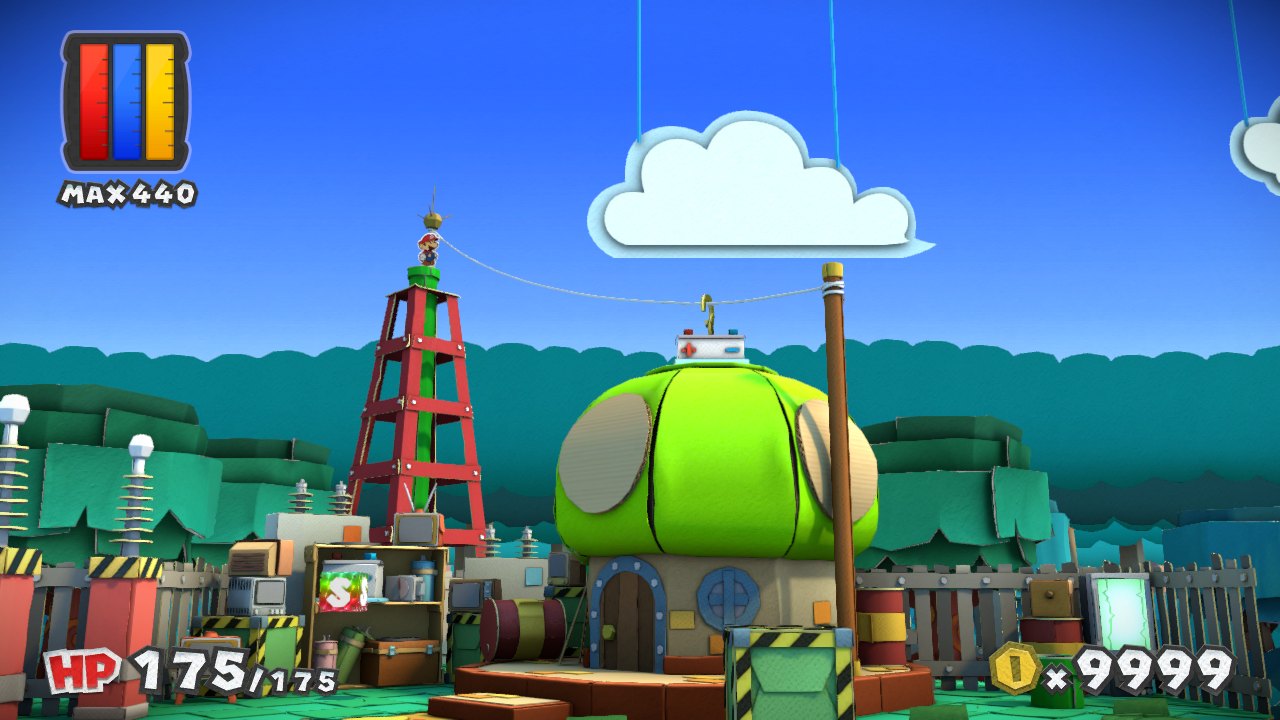
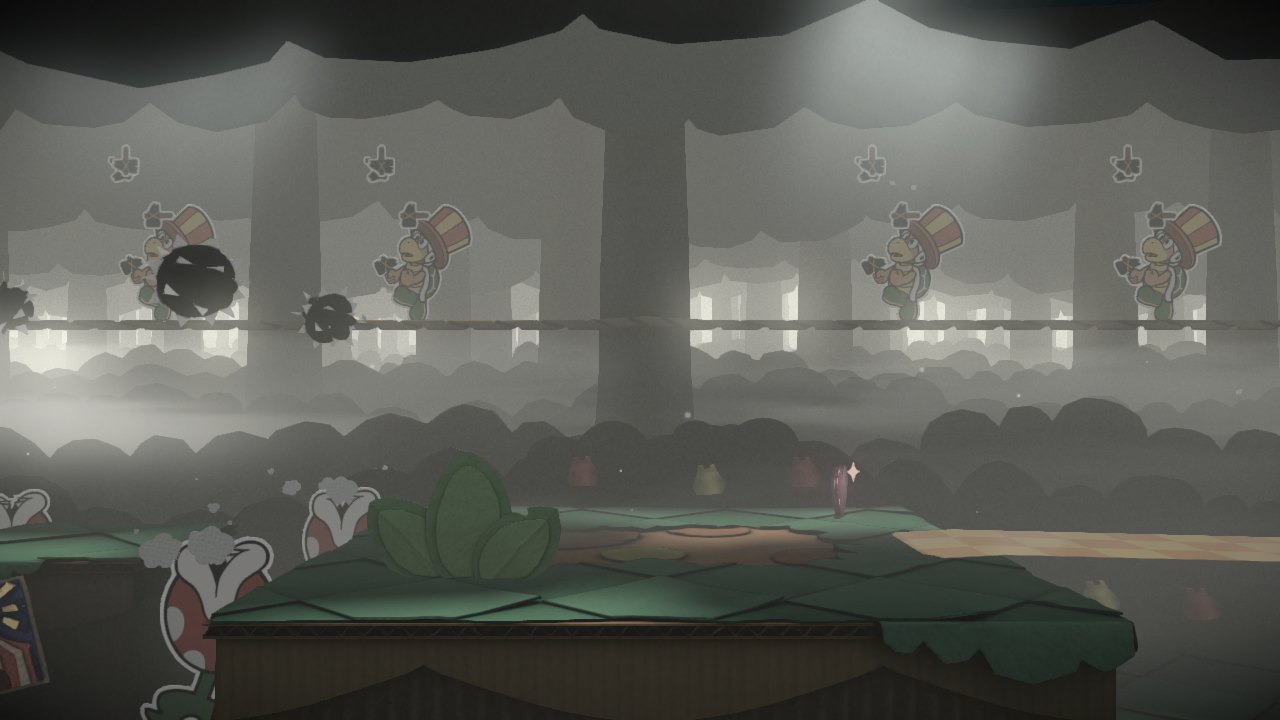
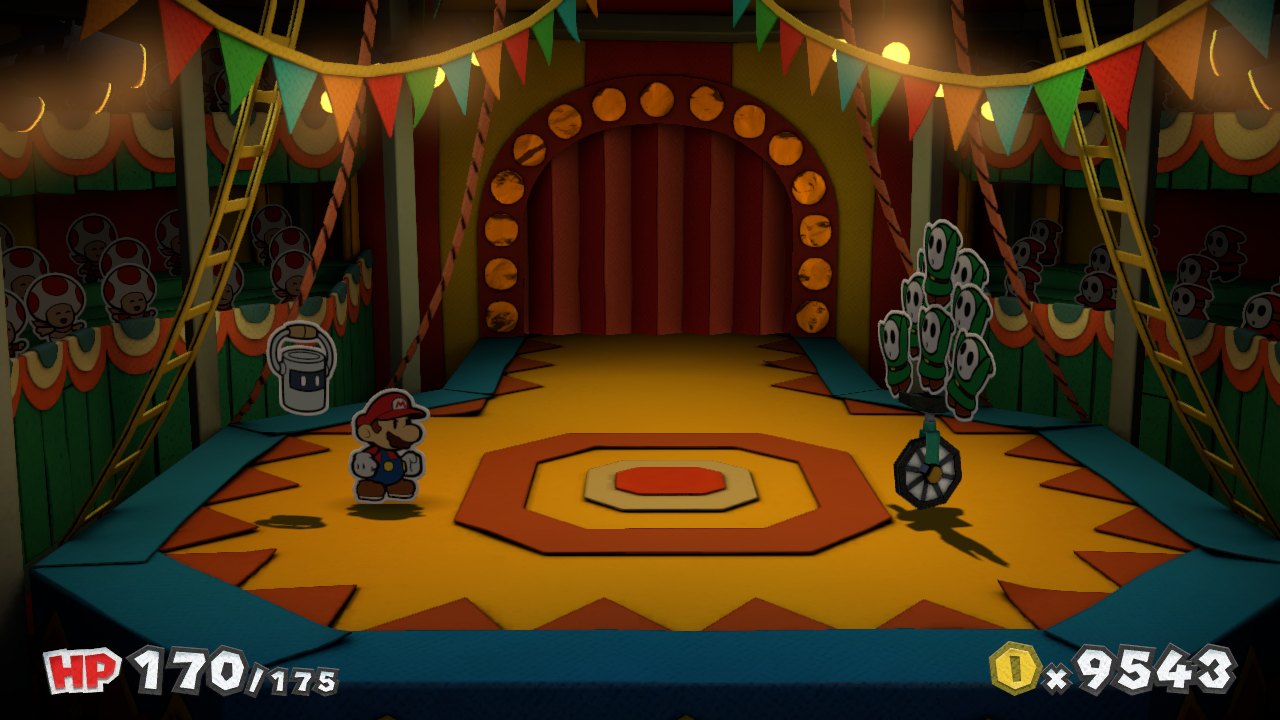
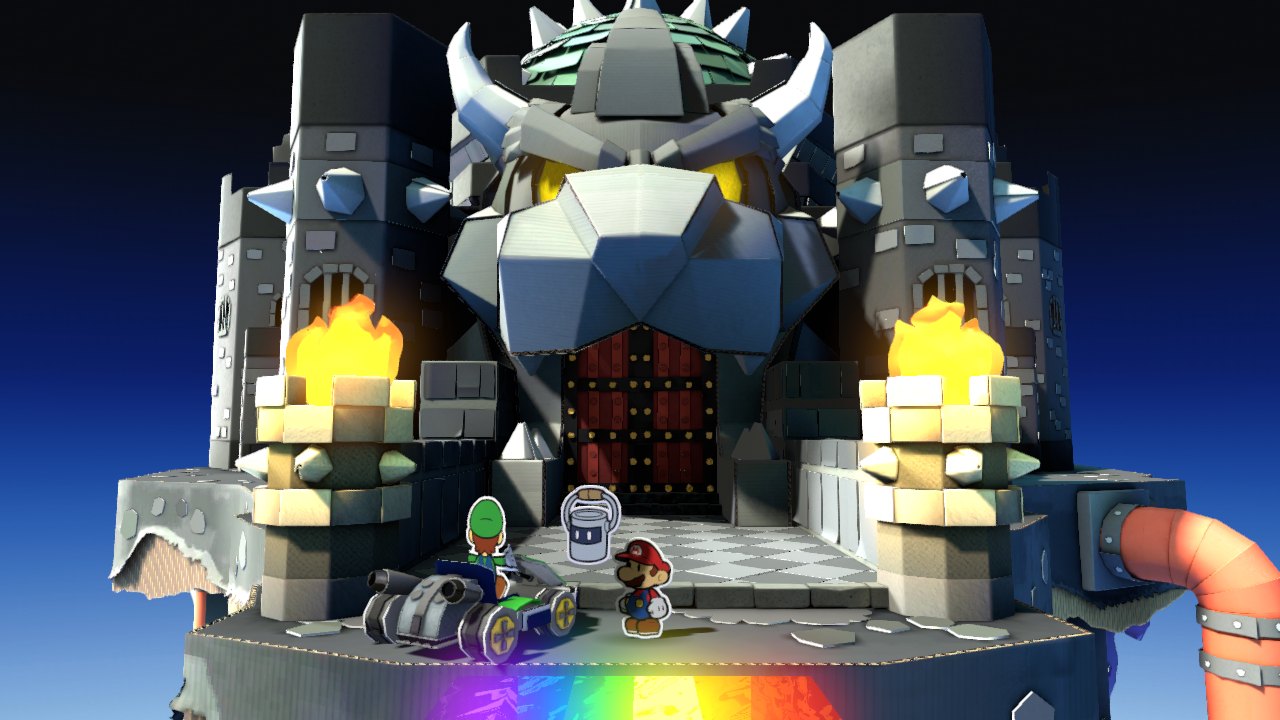
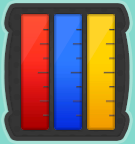
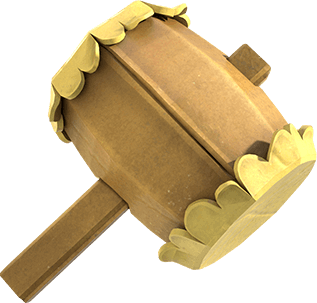
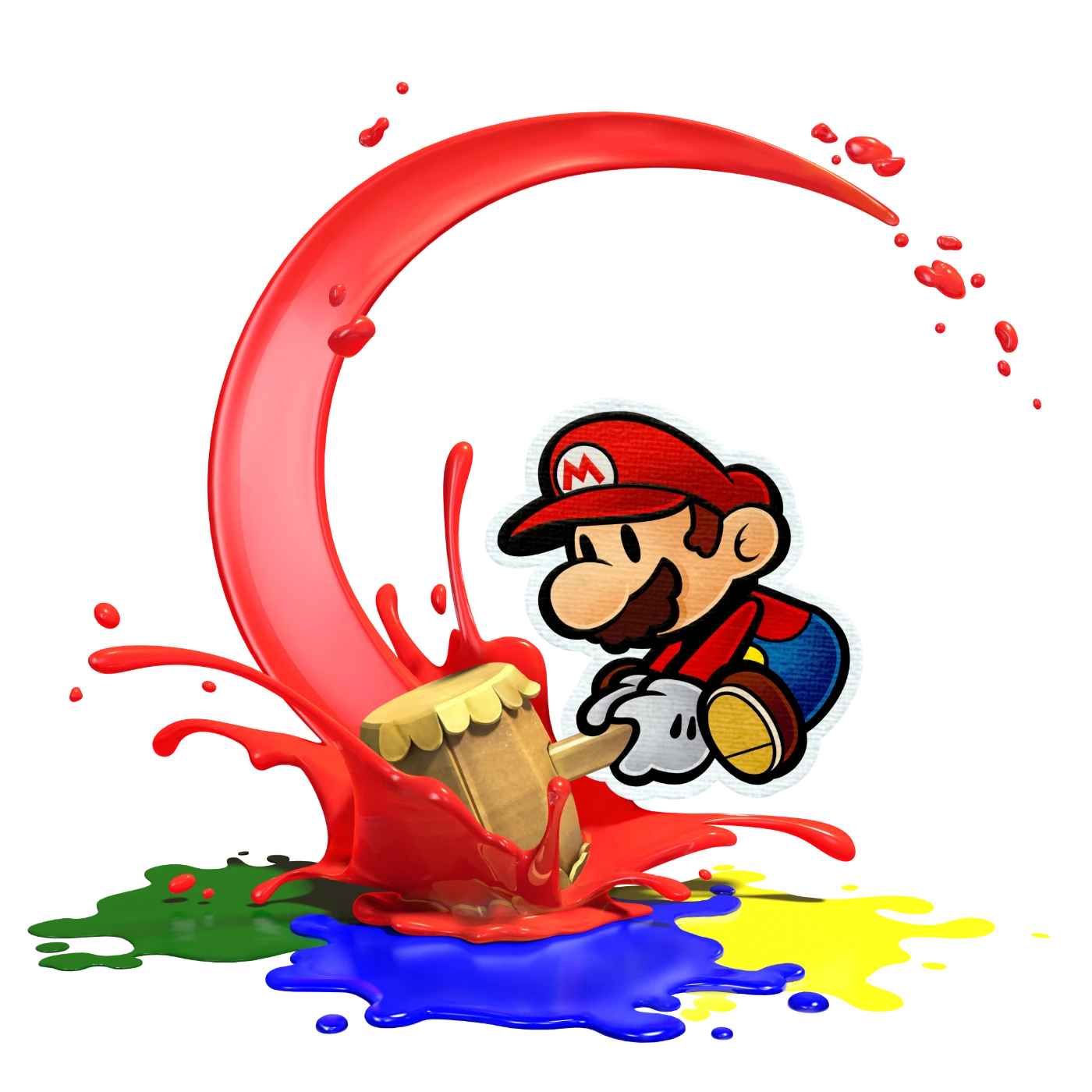
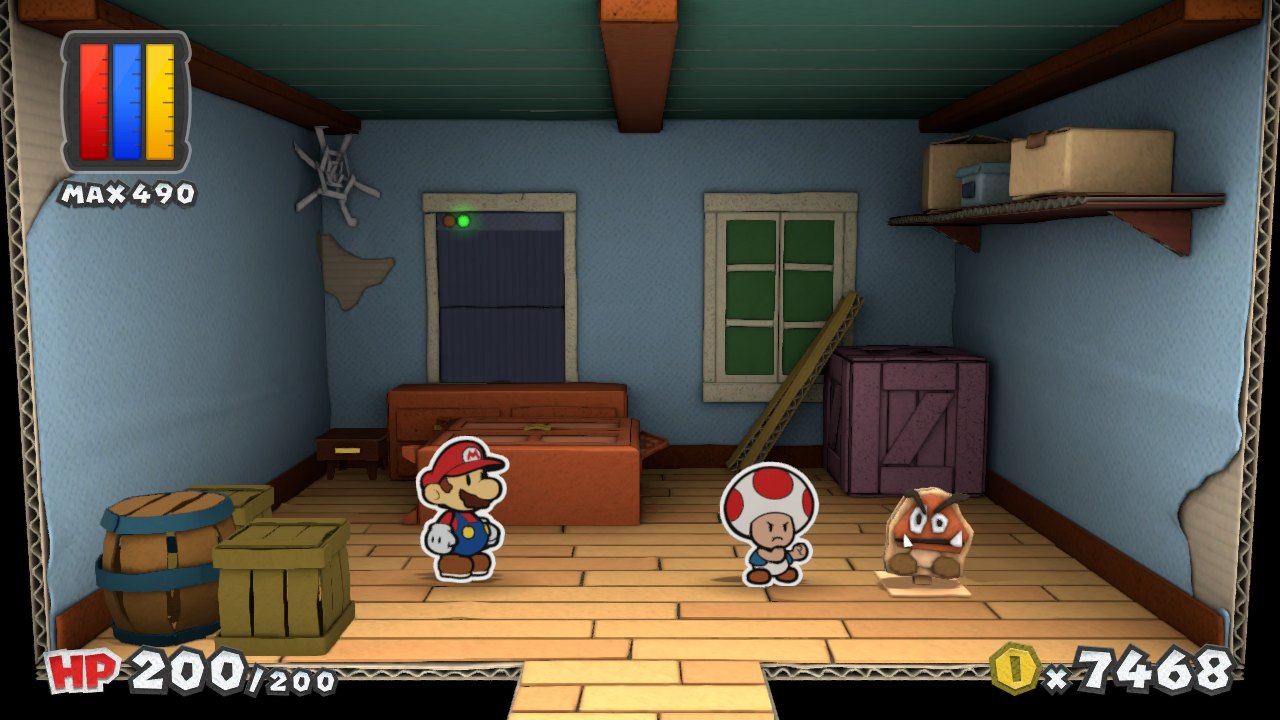
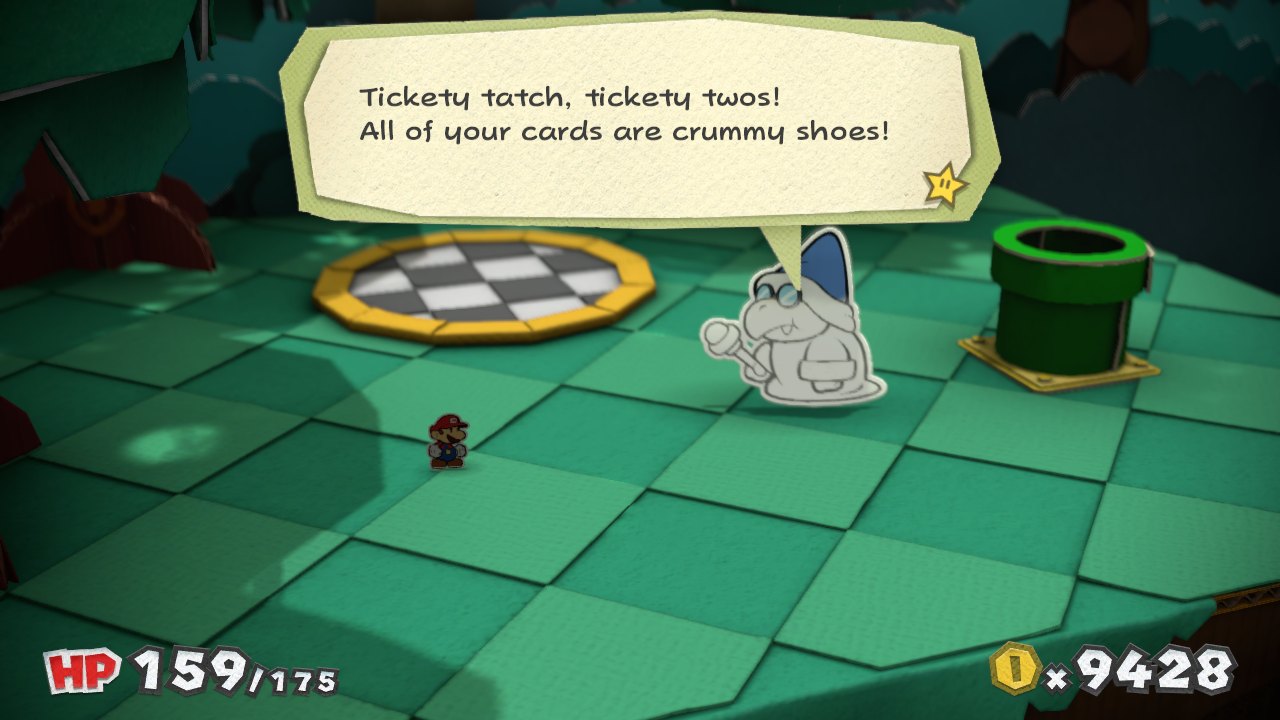
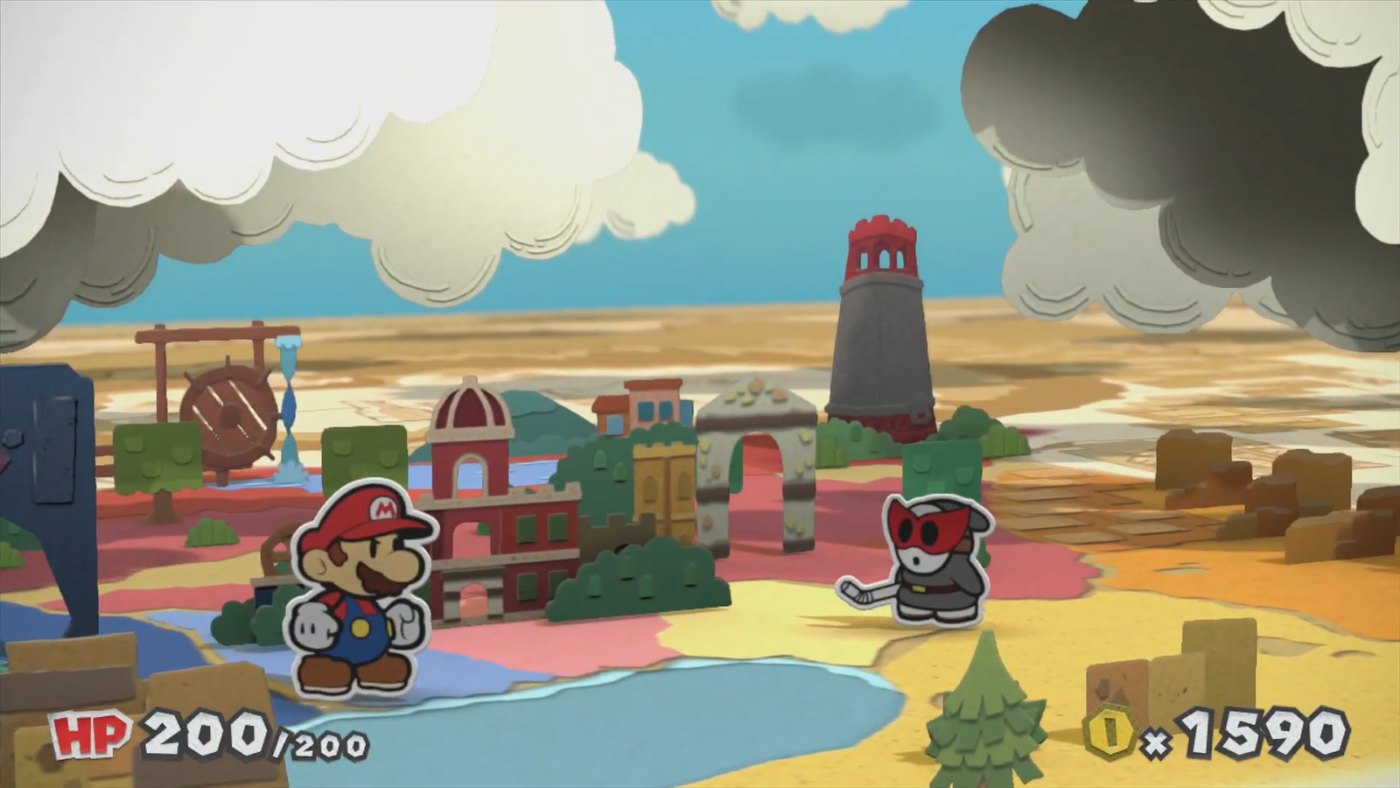
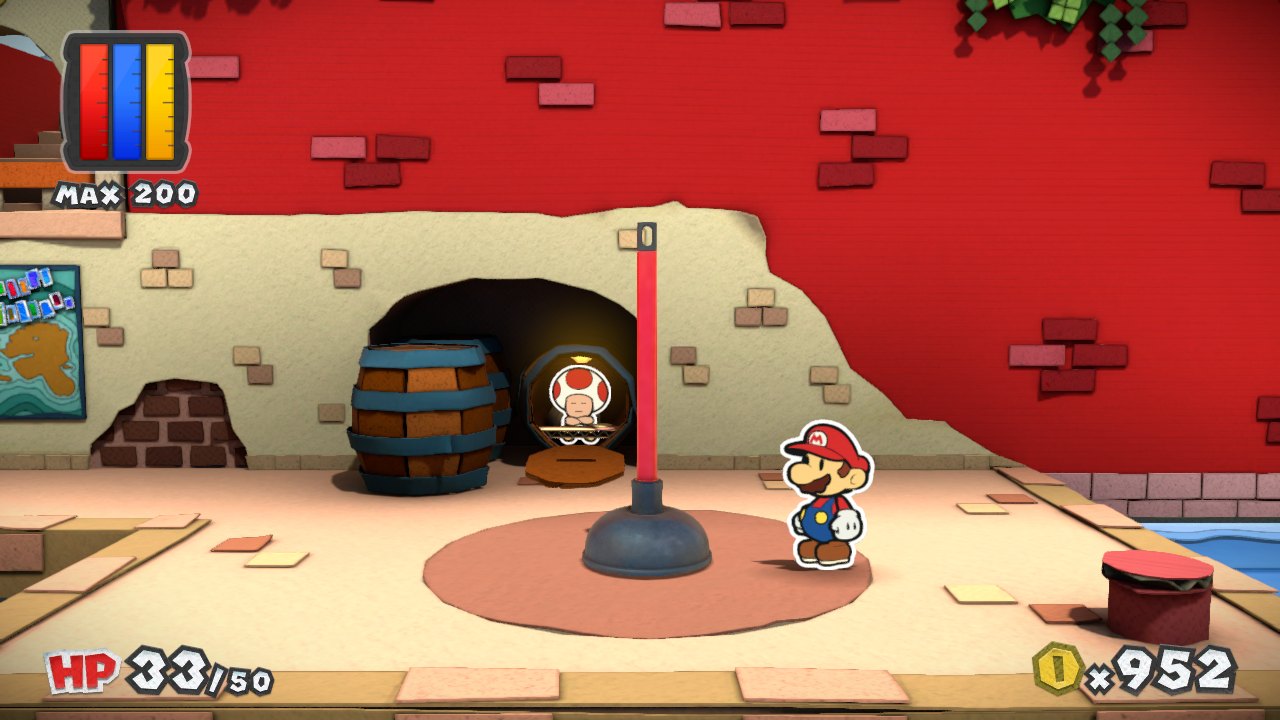
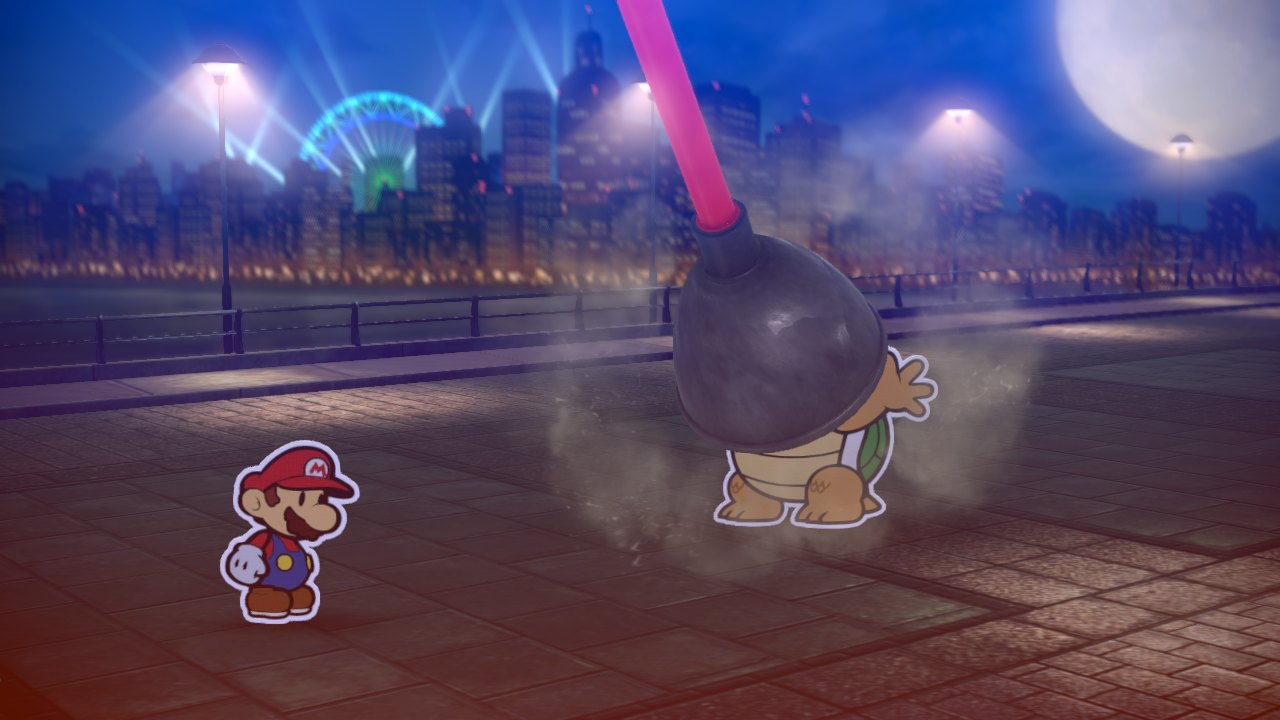
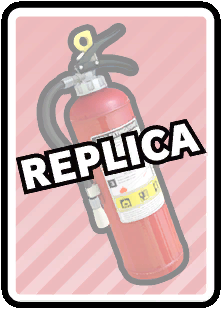
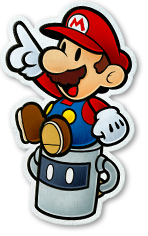
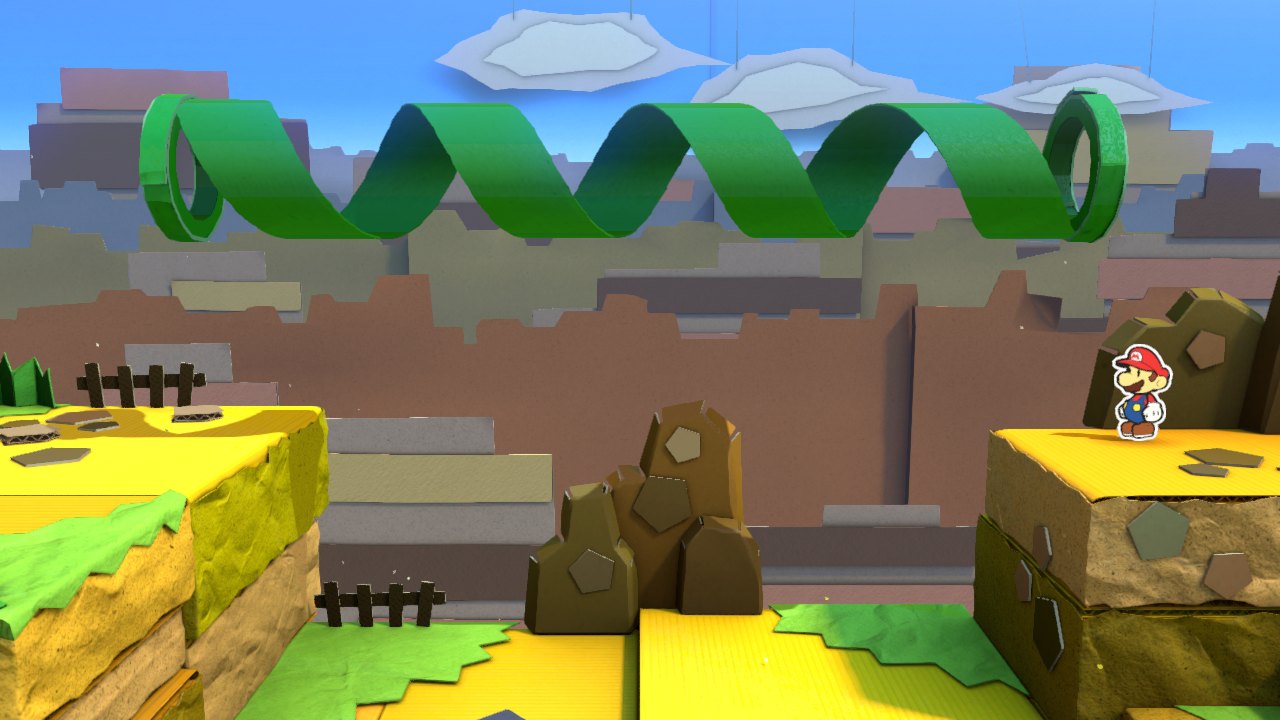
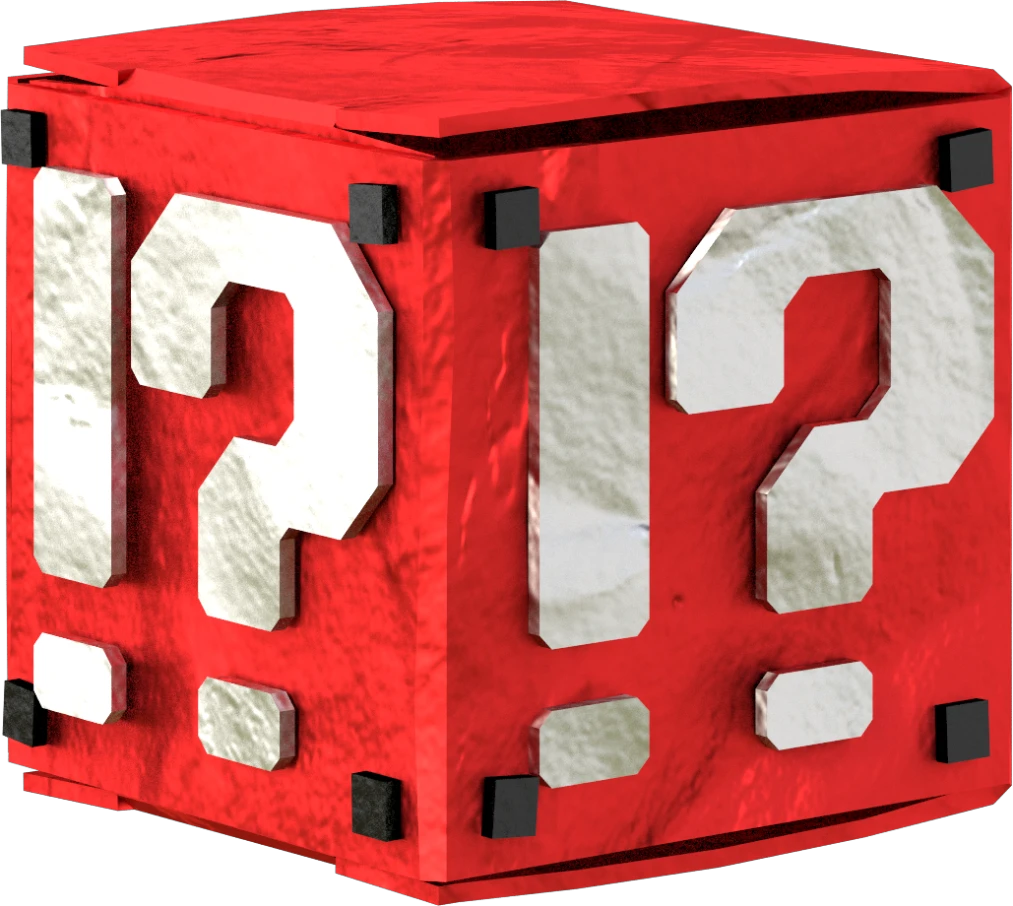
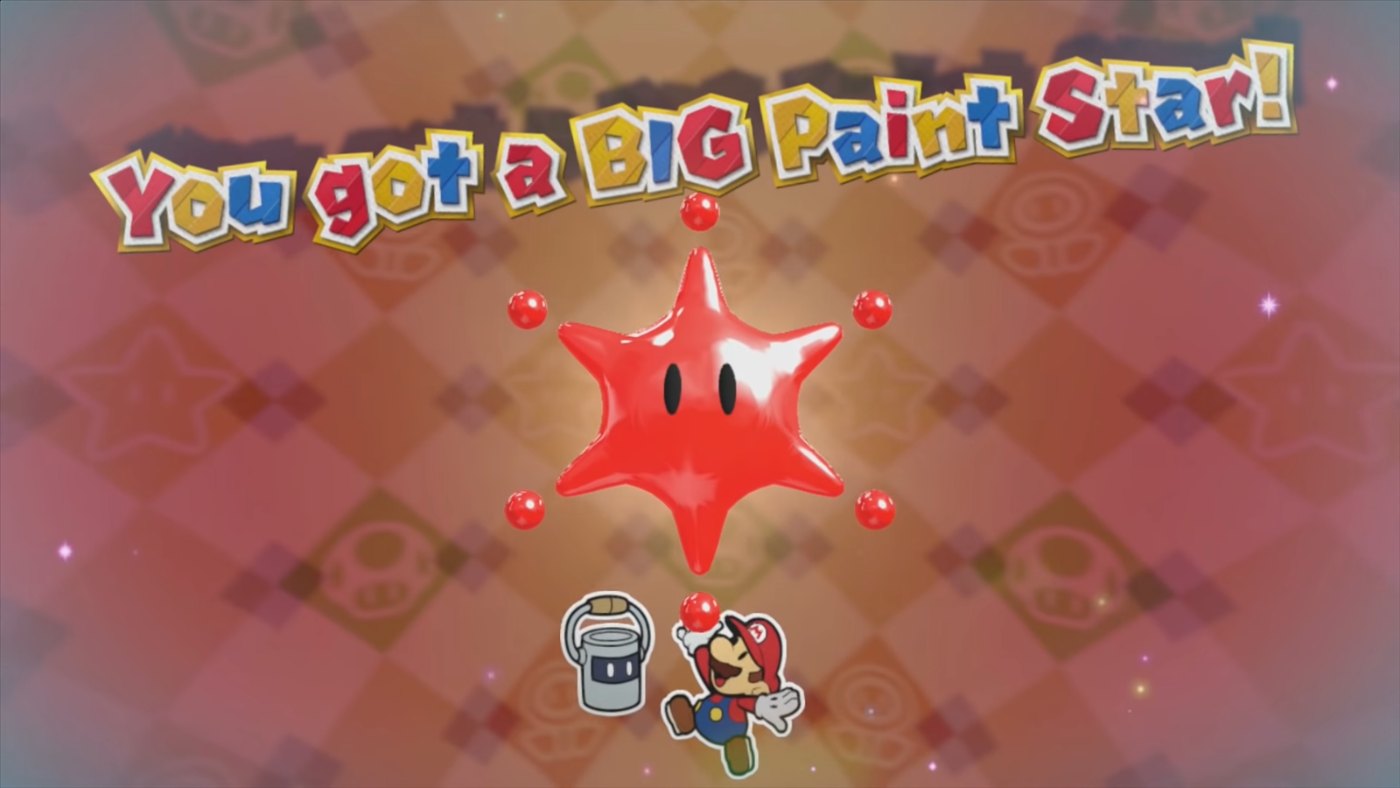
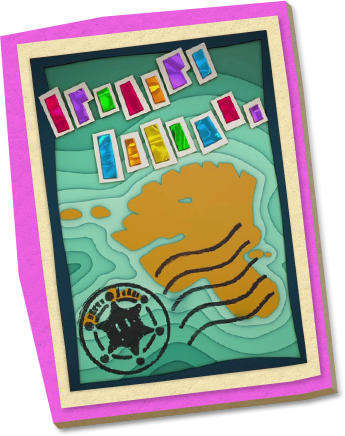

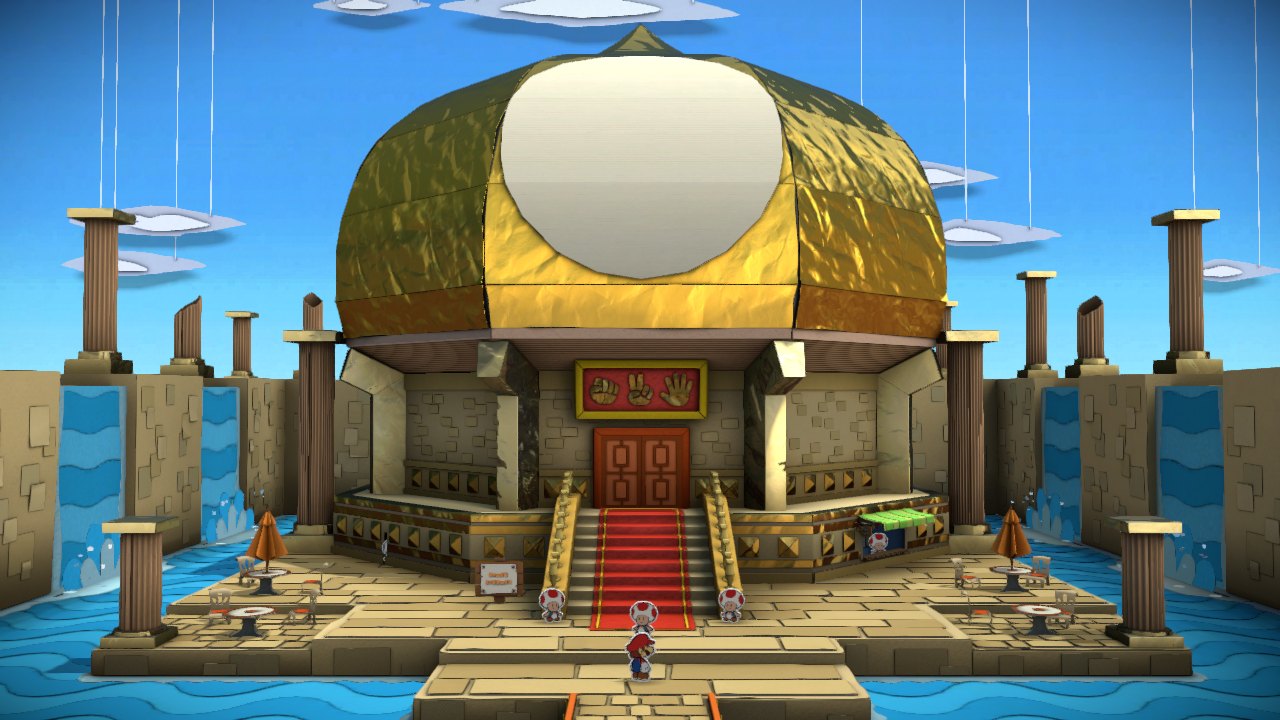
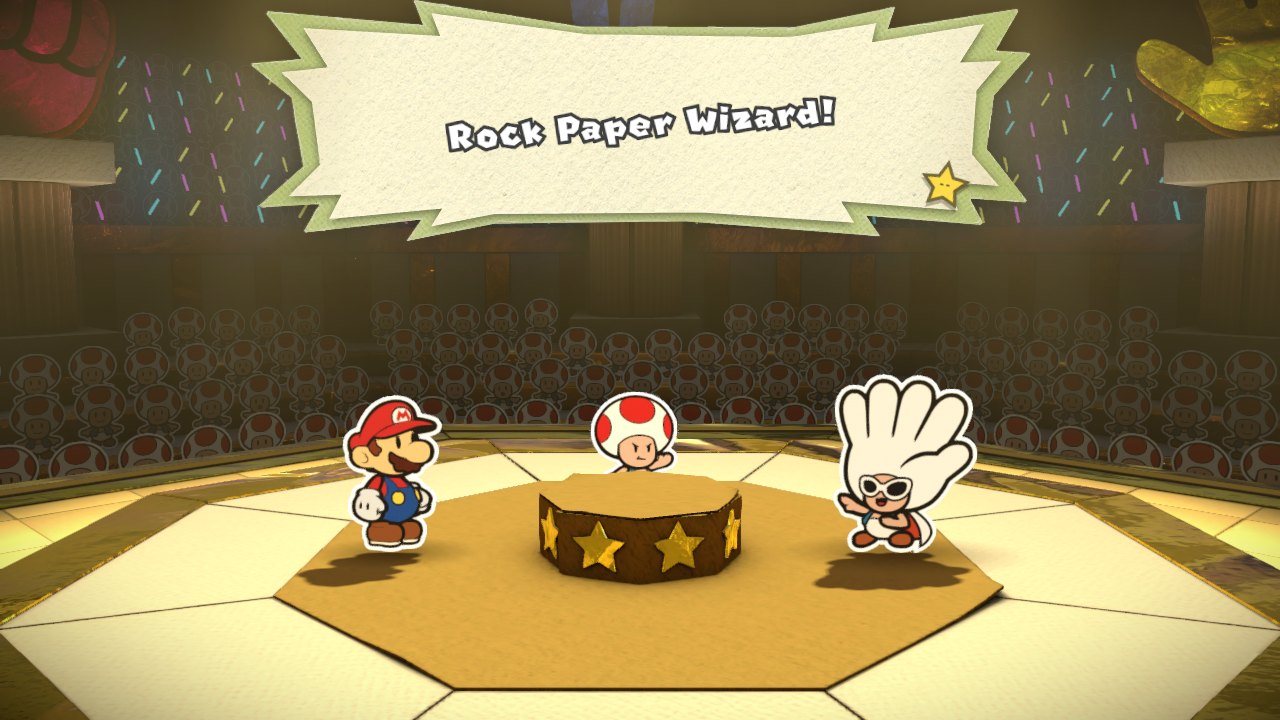
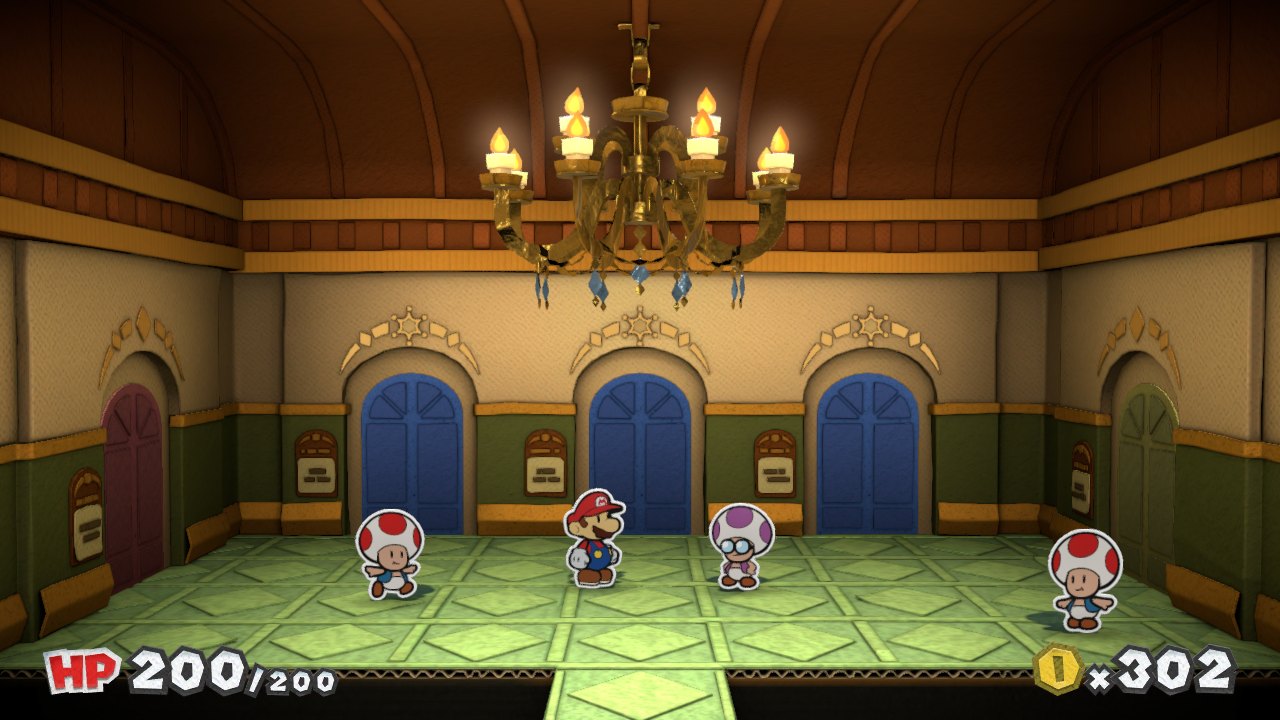
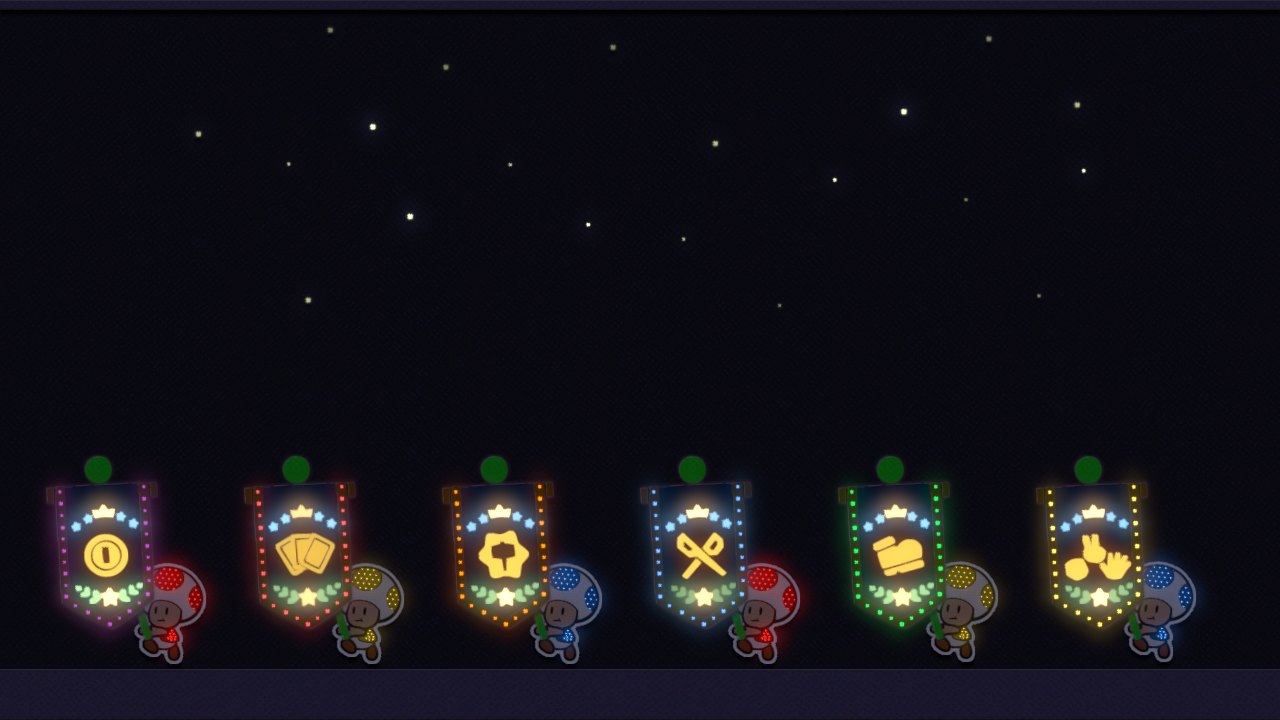
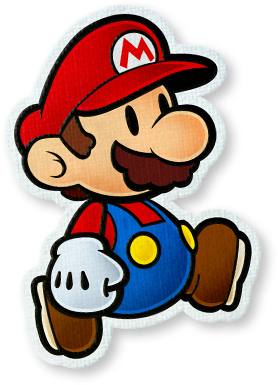
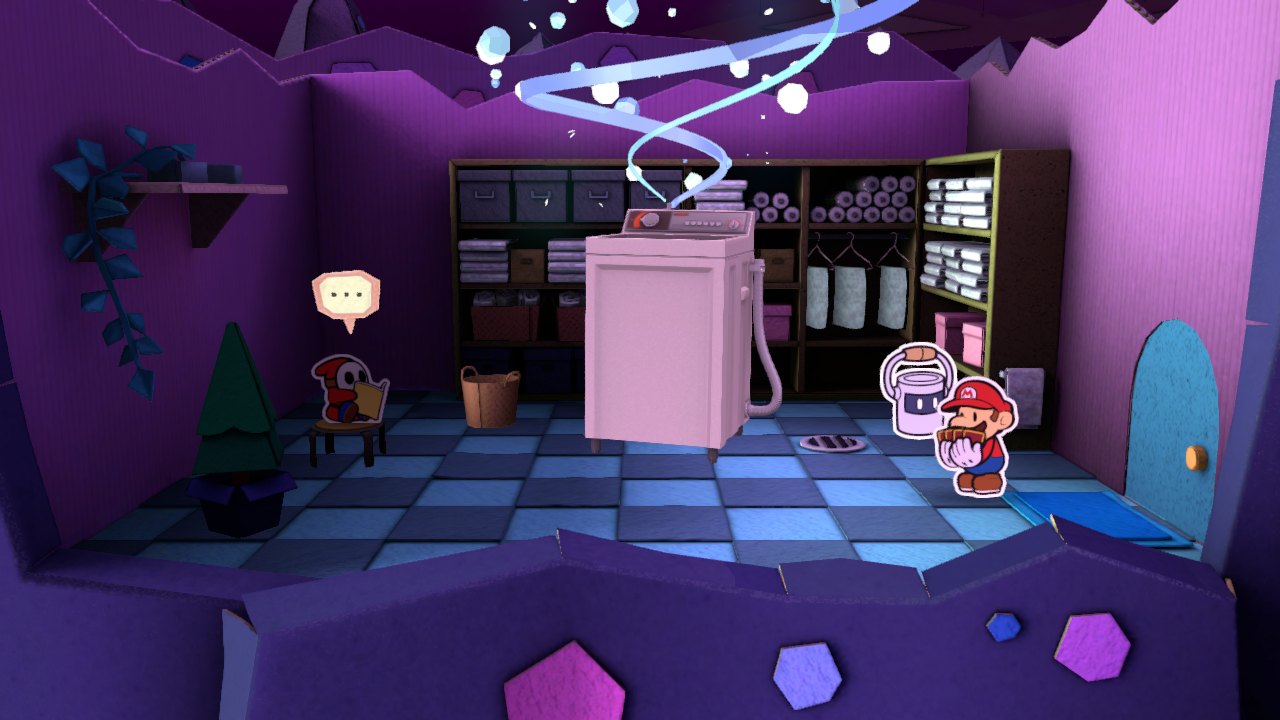
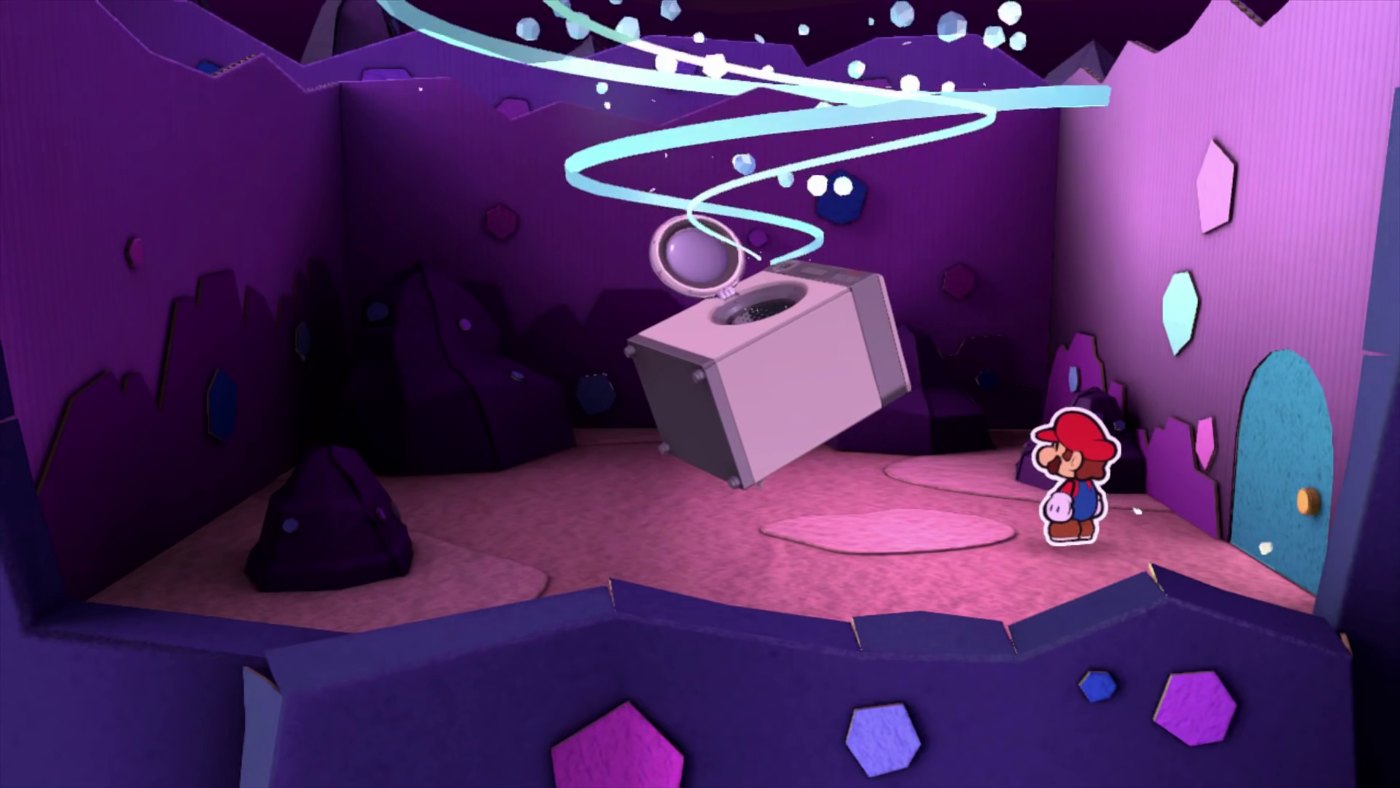
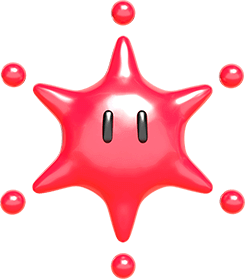 Red Big Paint StarHeld by Morton at The Crimson Tower. Repaints the Scarlet Gate at Sunglow Ridge.
 Yellow Big Paint StarFirst prize in Iggy’s Battle Royal at The Golden Coliseum. Repaints the giant coin in Mondo Woods.
 Blue Big Paint StarHeld by Ludwig at Fort Cobalt. Repaints the sea at Violet Passage.
 Purple Big Paint StarHeld by Wendy on Fortune Island. Repaints the great hole in the desert at Mustard Café.
 Orange Big Paint StarHeld by Larry on the Sunset Express. Brings the Draggadon fossil in Marmalade Valley to life.
 Green Big Paint StarHeld by Lemmy at The Emerald Circus. Repaints Luigi’s kart.
 Jump cardsJump, Hopslipper, Line Jump, Iron Jump and Spin Jump, in worn-out to huge grades and in packs of two, three and five.
 Hammer cardsHammer, Eekhammer, Hurlhammer and Blazehammer. A hammer blow spills on to the next enemy and cannot reach fliers.
 Fire Flower and Ice FlowerMario throws fireballs or ice balls. Ice is what the Big Lava Bubble cannot stand.
 POW BlockCrumples and stuns. Sold ready-painted.
 MushroomHealing, with Big, Mega and 1-Up versions. Sold ready-painted.
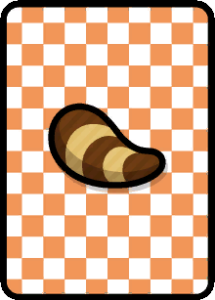 TailSwats projectiles back. The answer to the cannonballs of Ludwig’s Super Ludship.
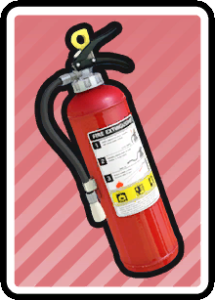 Fire ExtinguisherOn a clifftop in Ruddy Road, reached by the purple Rescue Squad’s staircase. Puts out Morton’s burning hammer.
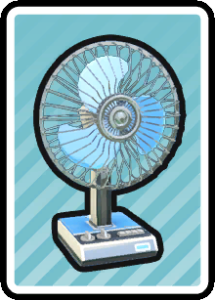 FanA beauty spot in Cherry Lake. Blows Shipwrecked Toad’s boat back to Bloo Bay Beach and, later, fills the pirate ship’s sails.
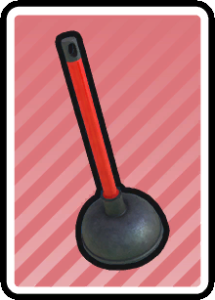 PlungerPrisma Harbor, Port Prisma. Unblocks the pipe that has Rescue Green stuck in it in Indigo Underground.
 LemonA hill in Indigo Underground, across the green Rescue Squad’s bridge. An ingredient in the Steak battle.
 Cat-o-LuckTop floor of The Crimson Tower. Back from Sticker Star.
 Piggy BankA shed at Château Chanterelle.
 BoneThe boardwalk in Marmalade Valley, and again in a dressing room at The Golden Coliseum. Lures Princess home, then sets her on Iggy’s chariots.
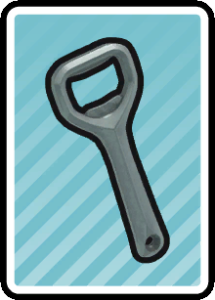 Bottle OpenerA storeroom at The Golden Coliseum. Opens a giant bottle in Redpepper Volcano.
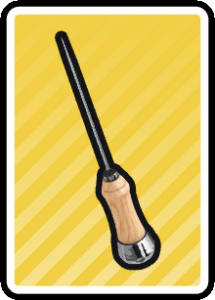 Ice PickA storeroom at The Golden Coliseum. Bursts Lemmy’s Wonder Ball.
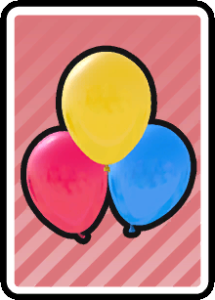 BalloonsThe stage at Plum Park. Lifts Ludwig’s Super Ludsub up out of the water. In battle, Birdo blows kisses and the enemies float away.
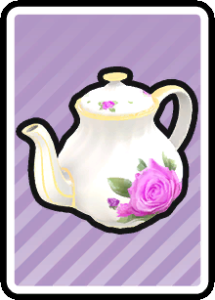 TeapotSerenity Fountain, Plum Park, with Petea Piranha inside it. Lets the six ghosts of Dark Bloo Inn have their tea party.
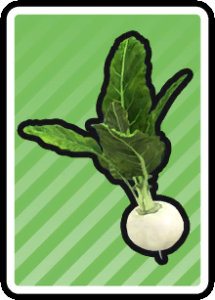 TurnipThe entrance to the Sacred Forest, where the yellow Rescue Squad helps haul it out of a pipe.
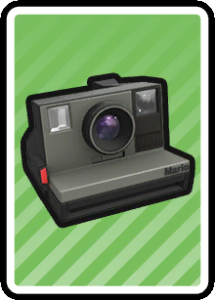 Instant CameraA prize on Snifit or Whiffit at Cobalt Base. Makes Wendy waste her golden ring on a photograph.
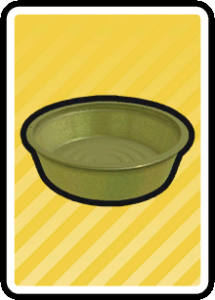 BasinOn the fences of Fort Cobalt. Dropped on Draggadon’s head in Redpepper Volcano.
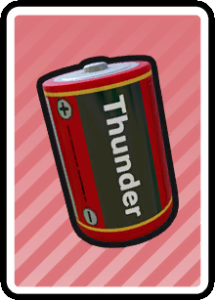 BatteryA cabin on the ship at Violet Passage. Powers the house at the Green Energy Plant.
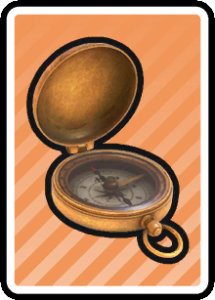 CompassA cabin on the ship at Violet Passage. Clears the fog in the fifth trial of the Lost Sea.
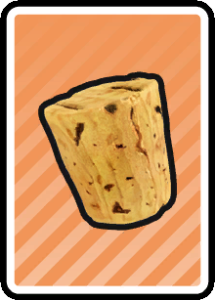 CorkA pipe on Vortex Island. Plugs the smokestack of the Sunset Express in the fight with Larry.
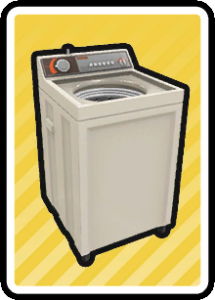 Washing MachineThe parallel world of Vortex Island, where it is causing the whirlpool. Washes Roy’s black paint away.
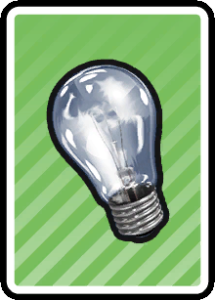 LightbulbThe top of the parallel lighthouse on Lighthouse Island. Relights the real one.
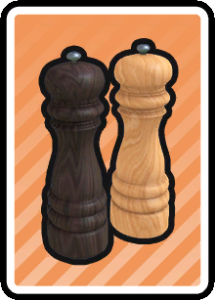 Salt and PepperA smoky room on Fortune Island. Seasoning for the Steak.
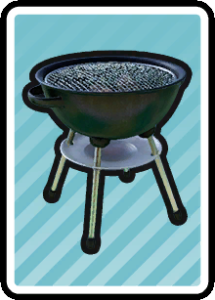 Charcoal GrillThe volcano on Fortune Island, where the legendary captain is cooking on it. Grills the Steak.
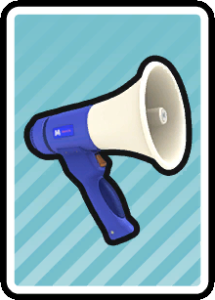 MegaphoneThe locker room at Toad Trainworks. Wakes the Thwomp asleep on the Sunset Express line.
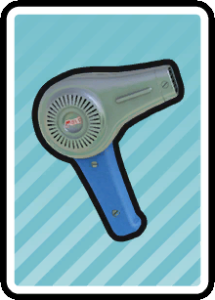 Hair DryerThe spa in Redpepper Crater. Thaws the freezer at Tangerino Grill.
 Magnifying GlassThe freezer at Tangerino Grill. Enlarges a tiny pipe in the Sacred Forest and a tiny Toad in Port Prisma.
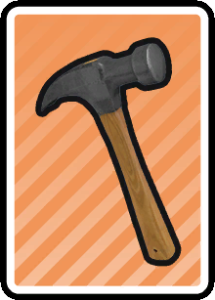 Claw HammerThe pipe room in the Green Energy Plant.
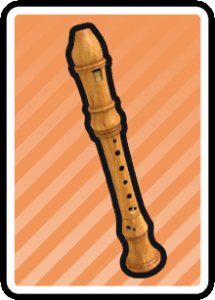 RecorderThe goal of the Green Energy Plant, as an 8-bit sprite. Plays its original notes from Super Mario Bros. 3 and raises a whirlwind.
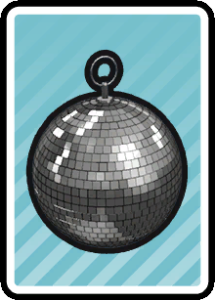 Disco BallBackstage at The Emerald Circus. Distracts Lemmy long enough to get at his ball.
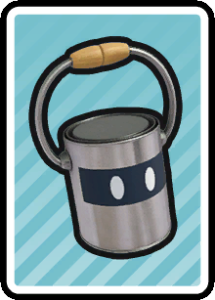 HueyAppears in the deck during the last battle. Sucks the black paint out of Bowser. Needs only one unit of each colour.
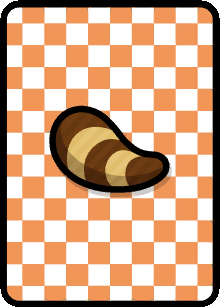
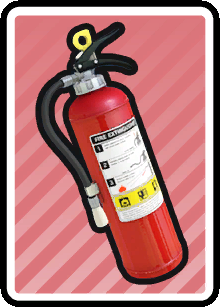
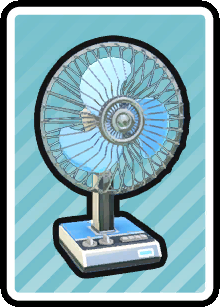
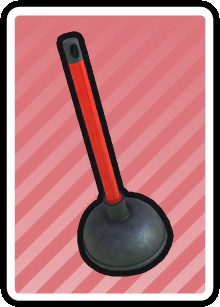
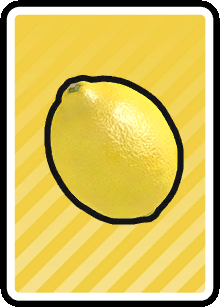
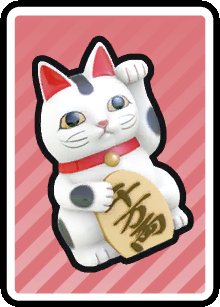
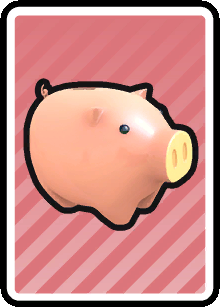
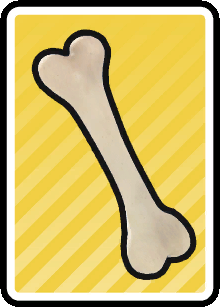
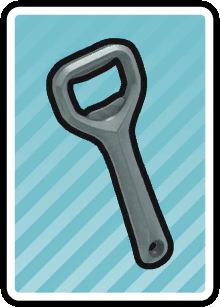
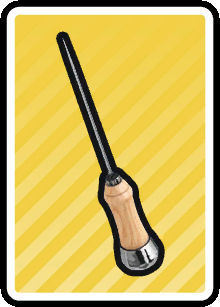
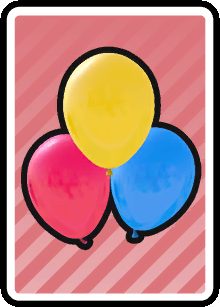
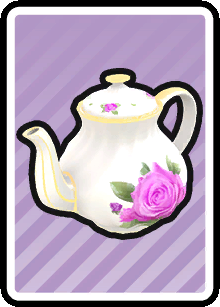
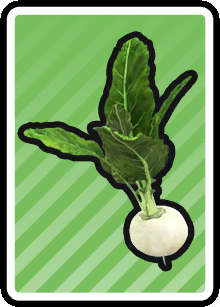
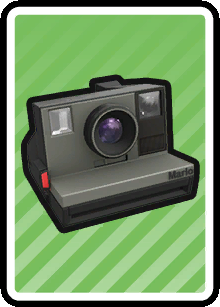
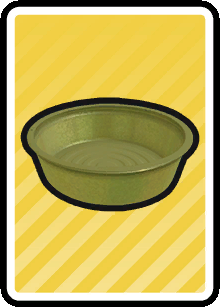
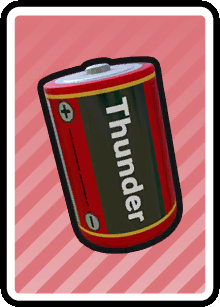
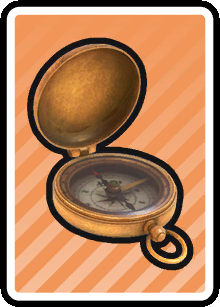
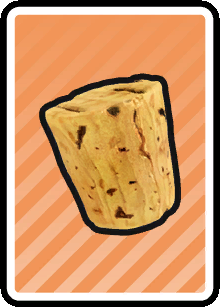
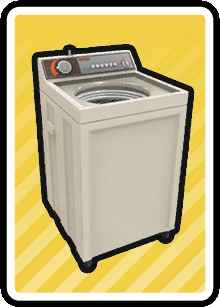
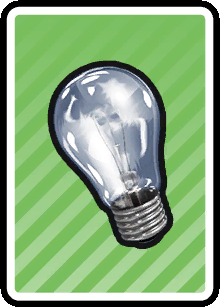
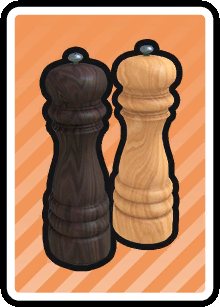
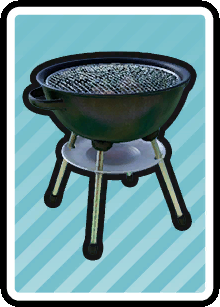
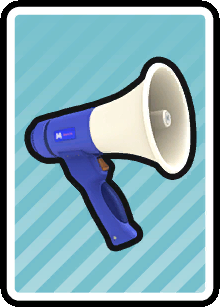
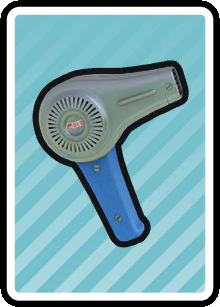
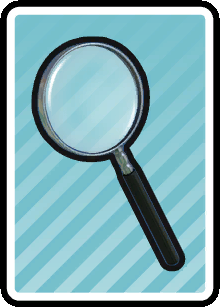
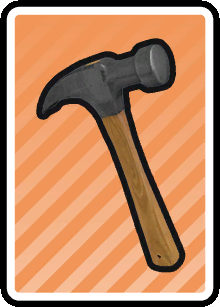
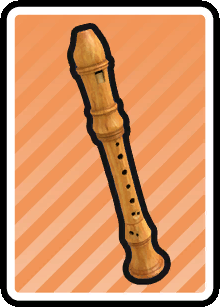
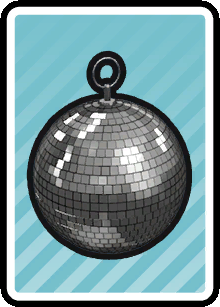
 Rescue V: Fearless Color DefendersNintendo web series · 2016Seven short episodes in which the Rescue Squads claim to be the game’s true protagonists. It ends with the Chief firing all five leaders.
 MarioThe only playable character
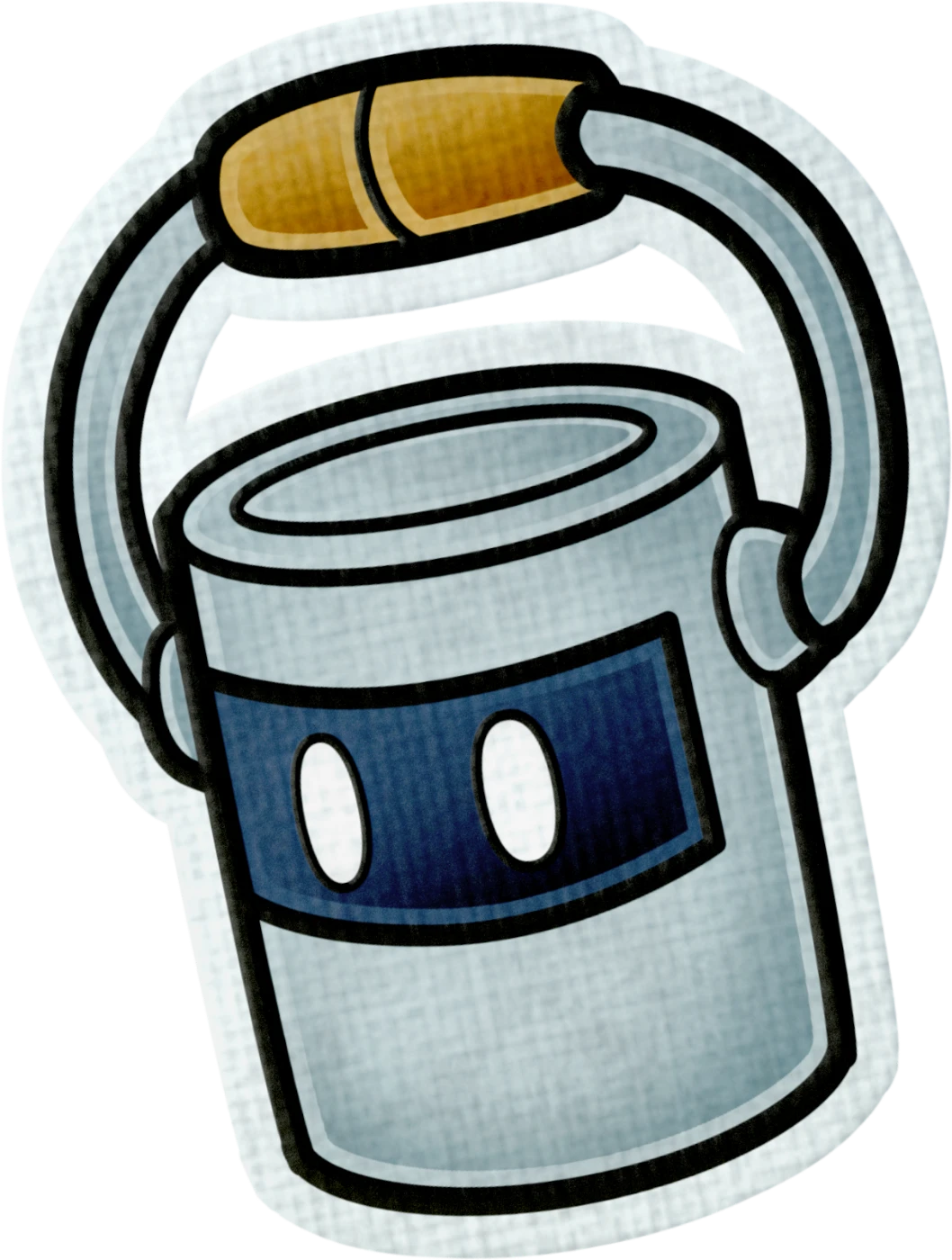 HueyPaint can · Mario’s companion
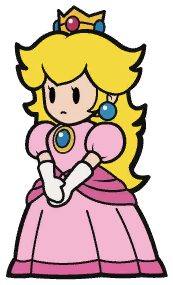 Princess PeachCaptured after the first star
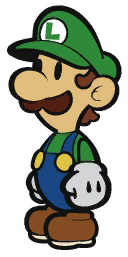 LuigiDriver
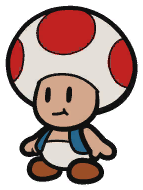 ToadPeach’s attendant
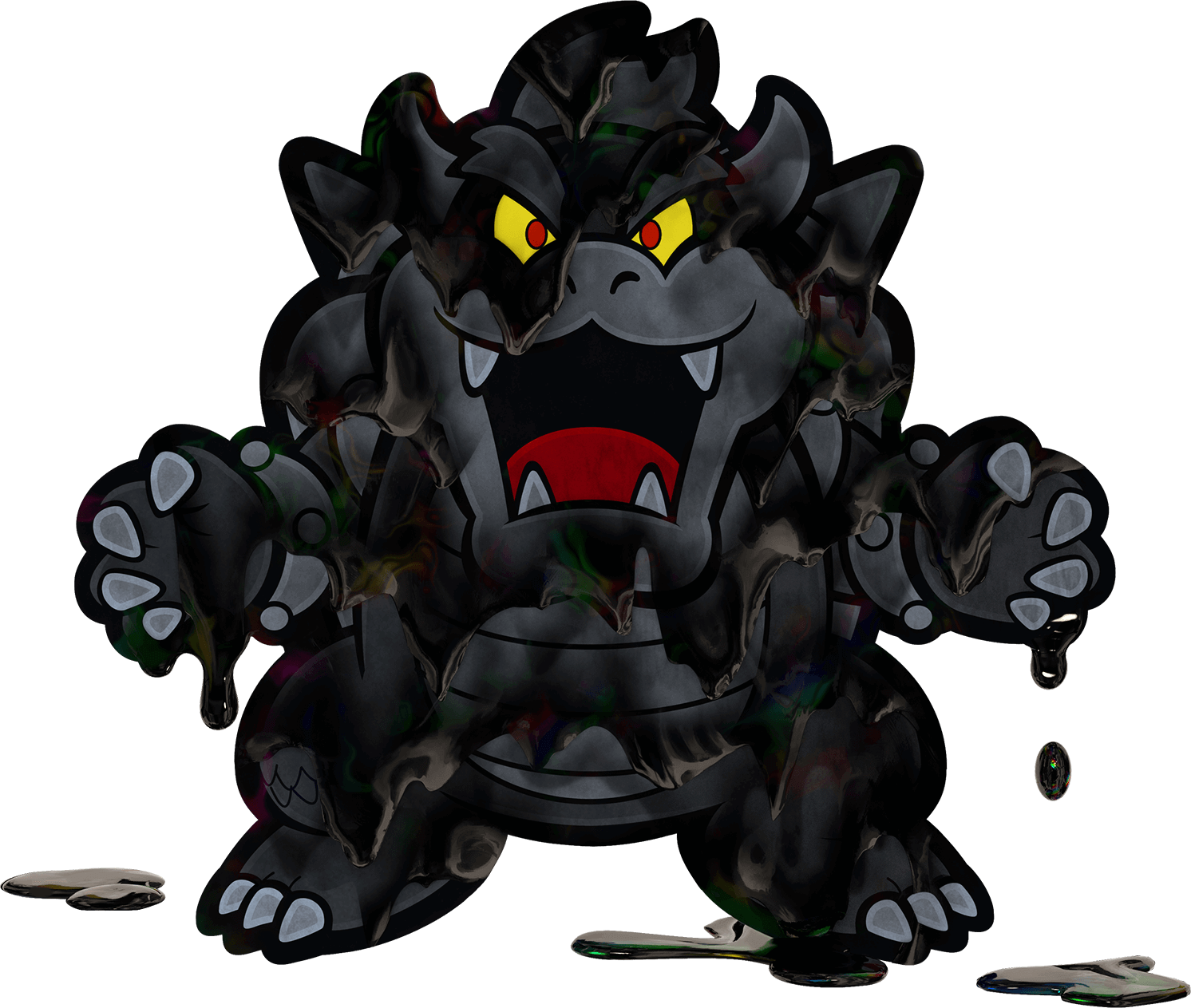 Black BowserVillain
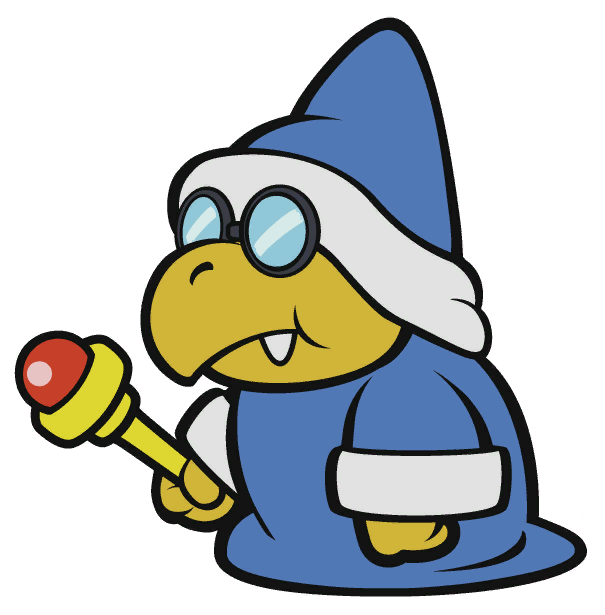 KamekBowser’s magician
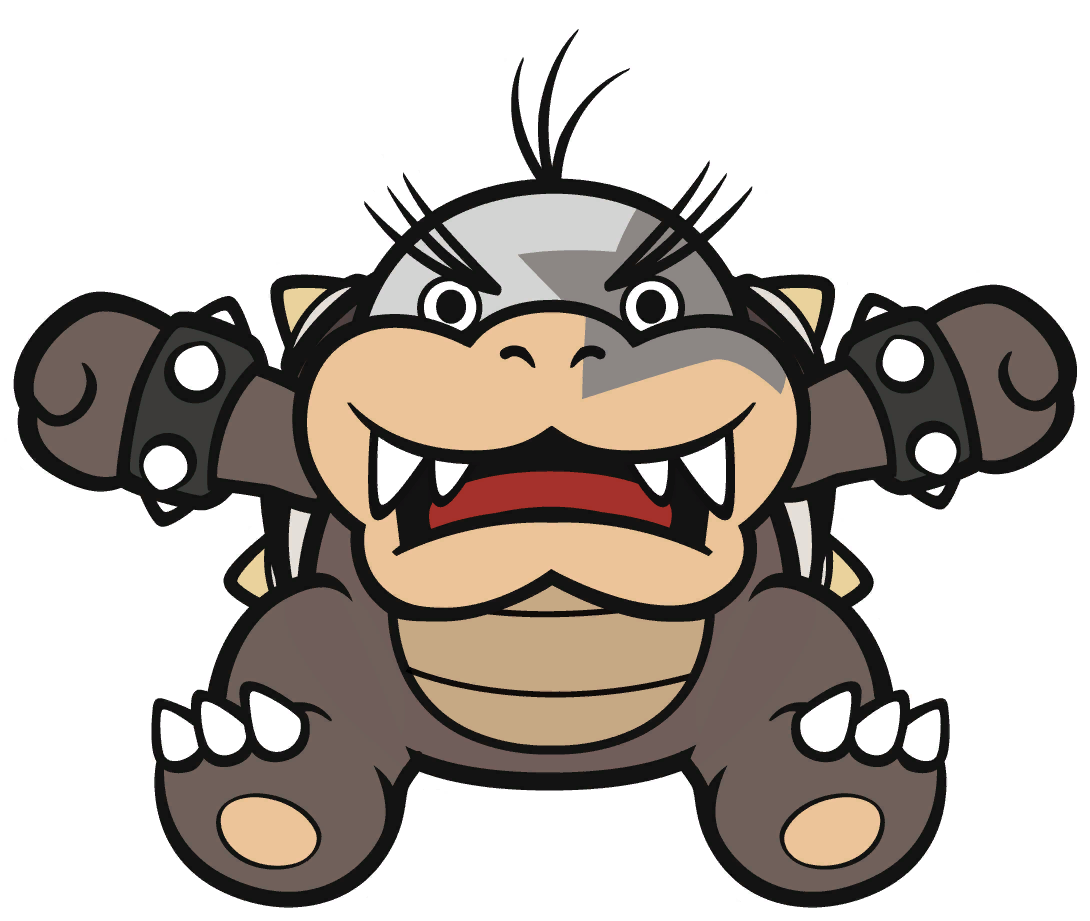 The KoopalingsSeven bosses
 Rescue Red, Blue, Green, Yellow and PurpleRescue Squad leaders
 Rescue Squad ChiefPort Prisma
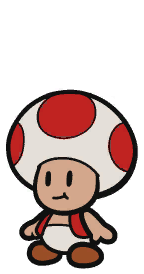 The Chosen ToadsJustice Toad, Shipwrecked Toad, the Mountain Sage
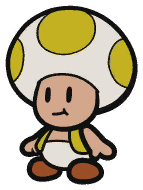 Professor KinopioChâteau Chanterelle
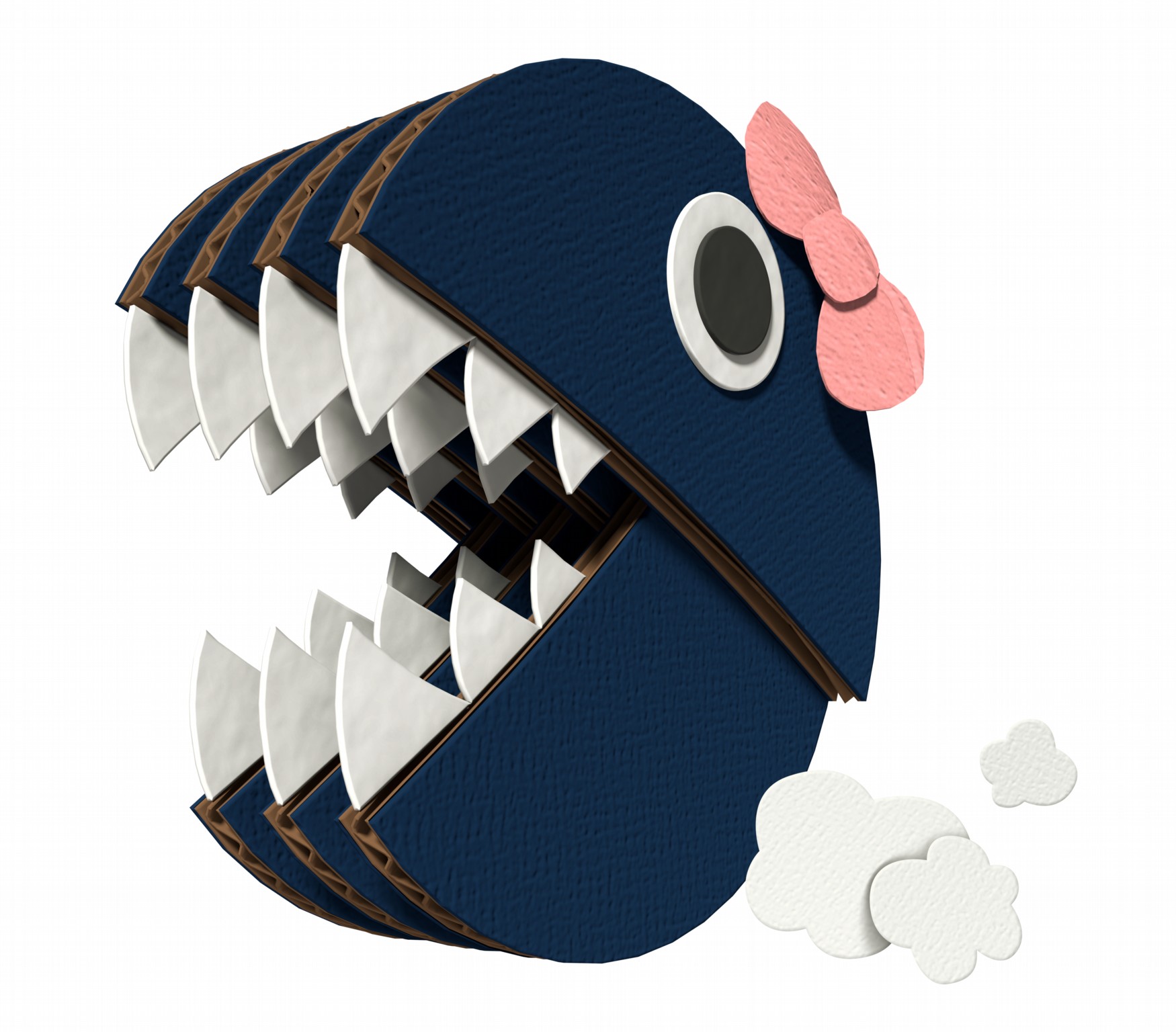 PrincessChain Chomp
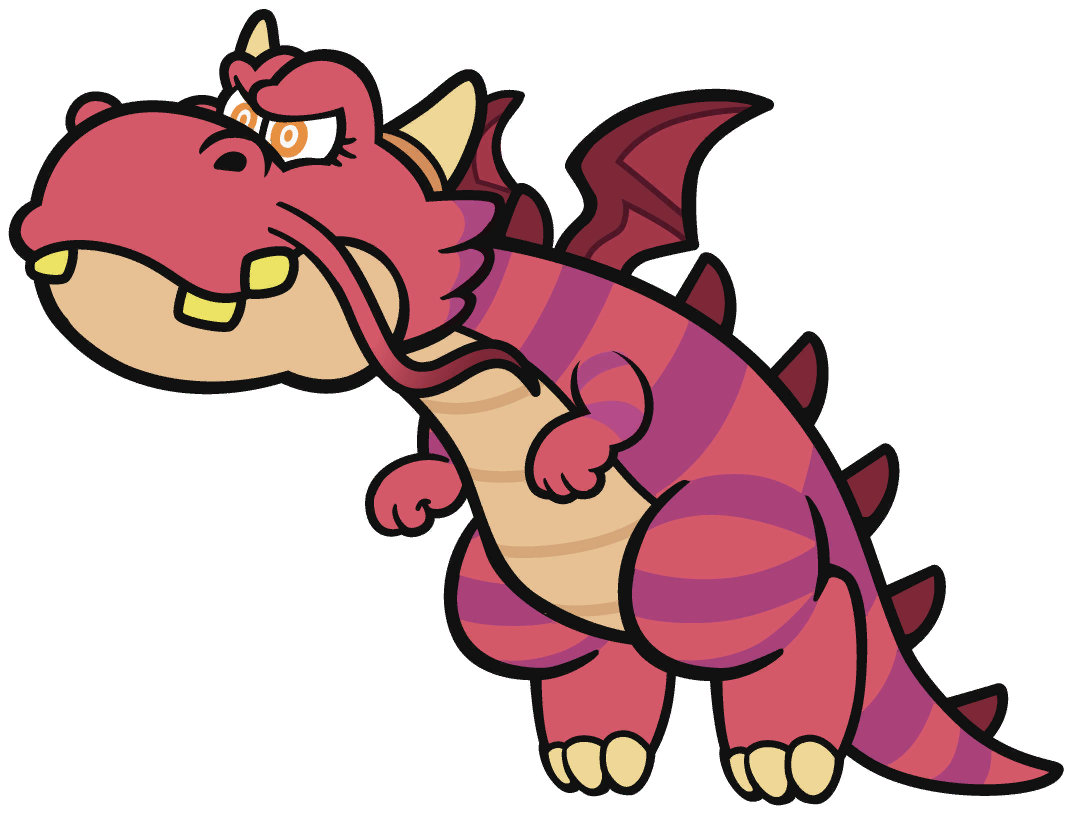 DraggadonLava dragon
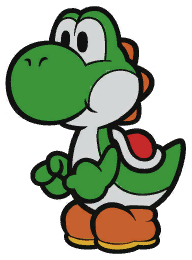 Yoshi“It”
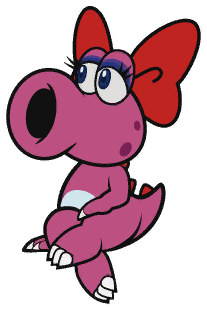 BirdoSinger
 The Tea Party ToadsSix ghosts
 The two captainsViolet Passage and Fortune Island
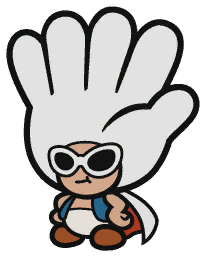 Rock Paper WizardRoshambo Temples
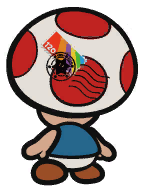 Toadmaster GeneralPostmaster
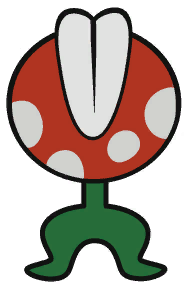 PiperPtooie
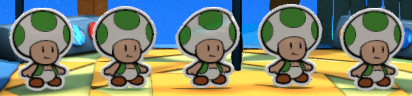 The Five Fun GuysBloo Bay Beach
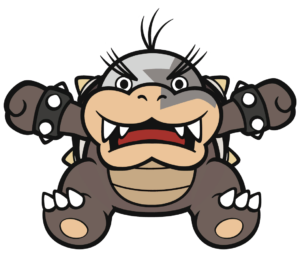 Morton Koopa Jr. (boss)The Crimson Tower · red star150 HP. Stamps for 4, 6 or 8 from his pedestal, swings a hammer for 8, and once it is alight for 48. Knock the pedestal away with a KO Hammer; put the fire out with the Fire Extinguisher.
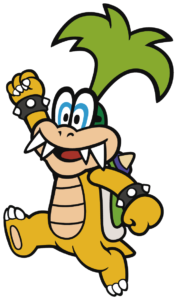 Iggy Koopa (boss)The Golden Coliseum · yellow star180 HP. Rides a chariot drawn by a Chariot Bro or Chariot Snifit (100 HP each) and fires magic for 16; the bestiary also lists a Thwomp attack worth 999. The Bone brings Princess to wreck the chariot.
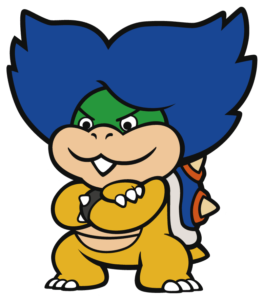 Ludwig von Koopa (boss)Fort Cobalt · blue star150 HP. Shells Mario from the Super Ludship for 20 to 25 a shot; a Tail card returns them. The Super Ludsub then fires missiles for 35 and can only be reached once Balloons lift it.
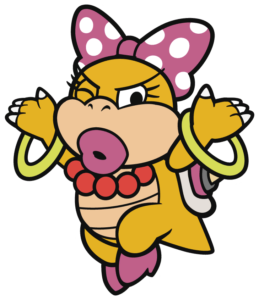 Wendy O. Koopa (boss)Fortune Island · purple star300 HP. A fight set to music, like Gooper Blooper’s in Sticker Star. Her wand becomes golden rings; the Instant Camera makes her waste the big attack.
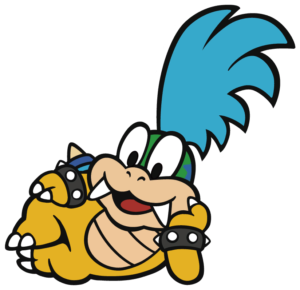 Larry Koopa (boss)Sunset Express · orange star350 HP. Fought at the front of the hijacked train. The Cork plugs its smokestack.
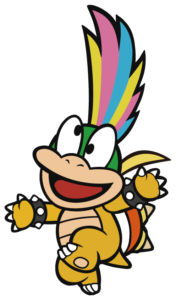 Lemmy Koopa (boss)The Emerald Circus · green star350 HP. Rolls about on a Wonder Ball that shrugs off hammers and turns his wand into a spiked ball. Disco Ball to distract, Ice Pick to puncture.
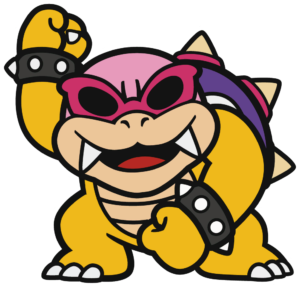 Roy Koopa (boss)Black Bowser’s Castle420 HP. Steals Mario’s paint with a cannon and fires it back, then mixes it black. The Washing Machine clears the room.
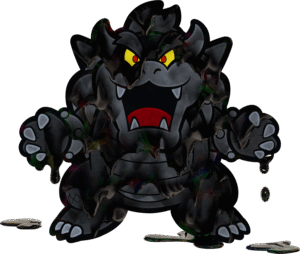 Black Bowser (boss)Black Bowser’s Castle700 HP. Two phases. Strong against Jumps, weak to Hammers. Huey blocks his black-paint attacks until he can be played as a card.
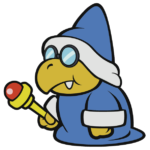 Kamek (boss)Sacred Forest120 HP. Shrinks Mario, changes his cards or empties the deck. Reached with the Magnifying Glass.
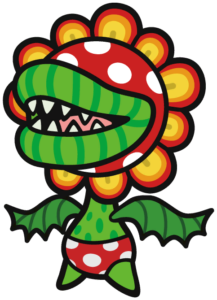 Petea Piranha (boss)Plum Park320 HP; bite 13, body-slam 33. Lives in the Teapot and poisons the park. Jumps do little to him.
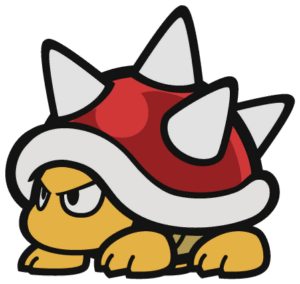 Big Spiny (boss)Kiwano Temple130 HP; charge 50. A Spiny the size of a room.
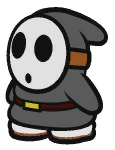 Black Shy Guy (boss)Violet Passage, Fort Cobalt16 HP; attack 9. A cloaked assassin who announces himself in haiku.
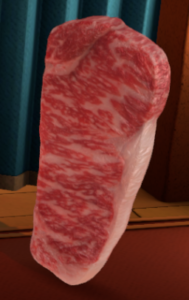 Steak (boss)Tangerino Grill40 HP. Not so much beaten as cooked, with Lemon, Salt and Pepper and Charcoal Grill.
 Big Lava Bubble (boss)Redpepper Crater170 HP. Resists Jumps, Hammers and fire; weak to ice. Speaks through a Shy Guy interpreter.
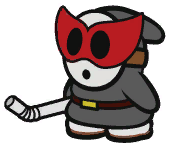 The Shy Bandit (boss)World map26 HP; attack 5. Roams the map draining finished levels and blinds Mario in battle. Drops his own card.
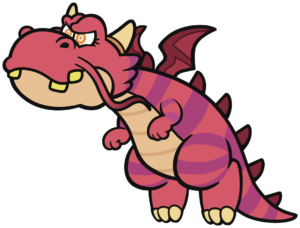 Draggadon (boss)Redpepper VolcanoNo HP given in our sources. Blocks the lava crossing until the Basin lands on his head.
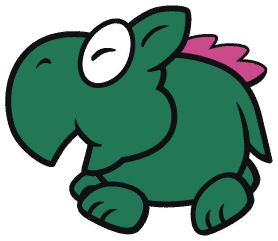 Wild Dino Rhino (boss)The Emerald Circus300 HP. The star turn of Lemmy’s show.
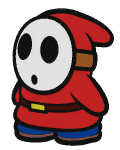 Shy GuyHP 8 · attack 3Almost everywhere, in several colours. The 4-Stack and 5-Stack have 4 and 5 HP.
 Slurp GuyHP 14 · attack 5Port Prisma, Ruddy Road and wherever colour is being stolen. The Shy Guy with the straw.
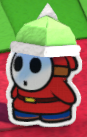 Spike GuyHP 16 · attack 3 (spike 9)Ruddy Road to Mossrock Theater. Do not jump on the spike.
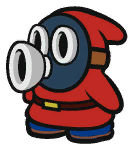 SnifitHP 24 · attack 5Sunglow Ridge, The Golden Coliseum, Plum Park, Fort Cobalt, Sunset Express.
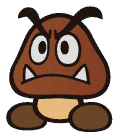 GoombaHP 6 · attack 3Port Prisma, Daffodil Peak, Mondo Woods and others. Small Goombas (3 HP) swarm the Sacred Forest.
 Koopa TroopaHP 21 · attack 7Ruddy Road, Bloo Bay Beach, the purple islands, Green Energy Plant.
 Hammer BroHP 64 · attack 32The Golden Coliseum, Fort Cobalt, Mustard Café, the castle.
 Fire BroHP 68 · attack 32Fort Cobalt, Fortune Island, the volcano, the castle.
 Juggler Bro and Circus BroHP 50 · attack 24 / 12 twiceMossrock Theater, The Emerald Circus.
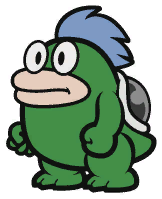 SpikeHP 25 · attack 9 (ball 12)Kiwano Temple, The Golden Coliseum, Fort Cobalt, Mustard Café, Sunset Express.
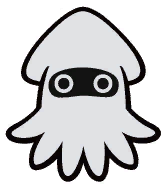 BlooperHP 26 · attack 7 (ink 13)Plum Park and the purple islands. Poison Bloopers are in Plum Park.
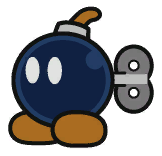 Bob-ombHP 25 · attack 8 (bomb 16)Fort Cobalt, Redpepper Crater, the castle.
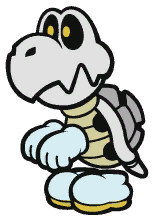 Dry BonesHP 10 · attack 12Marmalade Valley, the purple islands, Redpepper Crater.
 BooHP 33 · attack 6Vortex Island, Lighthouse Island, Fortune Island.
 Fire Piranha PlantHP 64 · attack 15Plum Park, Redpepper Crater. Ordinary Piranha Plants (64 HP, attack 9) are in the crater and Mossrock Theater.
 Dino RhinoHP 56 · attack 16 (fire 32)Mossrock Theater. Back from Super Mario World.