
Super Mario Kart
The original karting masterpiece — the game that started it all
Overview
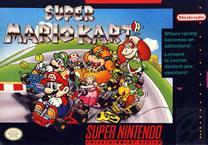
Super Mario Kart is the game that created the kart racing genre. Released for SNES in Japan in August 1992 and worldwide shortly after, it was developed by the same Nintendo EAD team that had made F-Zero — who wanted to follow it up with a fun, multiplayer-oriented racer aimed at being enjoyed “with family and friends”. Nobody could have predicted how profoundly this would reshape gaming.
Using Mode 7 — a SNES technique that rotates and scales a flat floor texture to simulate a 3D racing surface — it delivered a surprisingly immersive racing experience entirely unlike anything before it. The combination of recognisable Mario characters, inventive item-based combat, and tight kart handling made it an immediate smash hit. IGN described it as “the original karting masterpiece”. It sits as the 4th best-selling SNES game of all time with 8.76 million copies sold worldwide.

Lakitu — track steward, safety officer, and general dogsbody — holds the starting lights for yet another race.
From the manual — Lakitu speaks
“Hi everybody! Thanks for dropping by the Super Mario Kart race track. My name is Lakitu, I run this track. If you need my help, I’ll be around. We race one-seater, metal pipe frame go karts here. There are two engine sizes to choose from: 50cc or 100cc. All of the go karts are more or less the same, it’s the individual drivers that make the difference when it comes to winning. Each driver has their strengths and weaknesses. Try using different drivers until you find the best one for you.” — from the official Super Mario Kart SNES manual
Gameplay & modes
Players select one of eight characters and race or battle against opponents depending on mode. Every track is scattered with Question Blocks, and driving through them awards a random item — the item system is central to how the game plays, adding chaos and comebacks in equal measure.
Mario Kart GP — The main single-player championship. Race against seven CPU opponents across a five-race trophy in one of four cups. Points are awarded to the top four finishers: 9 for 1st, 6 for 2nd, 4 for 3rd, 3 for 4th. Three difficulty classes are available — 50cc, 100cc and the brutal 150cc. Two-player GP uses six CPU opponents instead of seven.
Time Trial — Race alone against the clock with no opponents. The fastest character on each track is selected automatically. Best five times are saved in the mini Hall of Fame.
Match Race (2P) — Two-player head-to-head on any track with no CPU racers. Choose your course, choose your driver, and settle old scores without anyone else getting in the way.
Battle Mode (2P) — Each player starts with three balloons. Hit your opponent and they lose one; last balloon standing wins. Four dedicated squared arena tracks — they look like Pac-Man fields. No balloons recovered once popped.

Battle Mode: three balloons each, no mercy given.
Playable characters
Eight characters are available, split into four pairs with identical stats within each pair. Character choice matters — each pair has genuinely different performance characteristics, different engine sounds, and unique rival AI behaviour.
| Classification | Driver | Acceleration | Top Speed | Weight | Handling | CPU Item |
|---|---|---|---|---|---|---|
| The Bros. Standard Performance |
Mario | Average | Very Good | Average | Average | ⭐ Star |
| Luigi | Average | Very Good | Average | Average | ⭐ Star | |
| The Dragon & The Lady Fast Acceleration |
Princess Peach | 🏆 Best | Average | Average | Not so hot | 🍄 Poison Mushroom |
| Yoshi | 🏆 Best | Average | Average | Not so hot | 🥚 Egg | |
| The Showdown High Top Speed |
Bowser | Not so hot | 🏆 Best | Very Good | Average | 🔥 Fireball |
| Donkey Kong Jr. | Not so hot | 🏆 Best | Very Good | Average | 🍌 Banana | |
| The Small Guys High Handling (Best for beginners) |
Koopa Troopa | Very Good | Not so hot | Lightest | 🏆 Best | 🐢 Green Shell |
| Toad | Very Good | Not so hot | Lightest | 🏆 Best | 🍄 Poison Mushroom |
The manual’s descriptions bring each pairing to life. The Bros are described as having “a friendly rivalry that goes back to their childhood” and will “try to block your path” when CPU-controlled. The Princess and Yoshi pair are noted as having “very fast acceleration” with “nothing in common except their fondness for Mario” — which is very sweet. Bowser and DK Jr. are “The Showdown” — big, heavy, and fastest in a straight line. Koopa Troopa and Toad are recommended for beginners for their excellent handling.

Mario

Luigi

Peach

Yoshi

Toad

Koopa Troopa

Bowser

DK Jr.
Speed chart — 100cc maximum speeds (km/h)
This table shows maximum speeds at 100cc across different terrain types — from the Mario Wiki. It explains why Koopa Troopa and Toad feel so quick on Koopa Beach water, and why Bowser and DK Jr. are kings of the straight.
| Driver | Normal road | Sand | Rock | Mud | Grass | Water | Snow |
|---|---|---|---|---|---|---|---|
| Mario / Luigi | 130 | 84 | 40 | 90 | 82 | 82 | 76 |
| Princess / Yoshi | 125 | 88 | 44 | 94 | 86 | 86 | 70 |
| Bowser / DK Jr. | 135 🏆 | 86 | 42 | 92 | 80 | 88 | 74 |
| Koopa / Toad | 120 | 90 🏆 | 46 🏆 | 96 🏆 | 84 | 84 | 72 |
The small guys (Koopa/Toad) are the slowest on normal tarmac but actually fastest on every off-road surface — mud, sand, rock, you name it. Bowser and DK Jr. top out highest on normal road at 135km/h. Mario and Luigi are the true all-rounders, never best and never worst.
Cups & tracks

The whole gang in action — Mario Kart has always been about controlled chaos.
20 race tracks are organised into four cups of five tracks each. All courses are numbered (Mario Circuit 1, 2, 3, 4 etc.) except one — Rainbow Road, the legendary finale, which stands alone. Four battle arenas are also available for Battle Mode.
🍄 Mushroom Cup
- Mario Circuit 1
- Donut Plains 1
- Ghost Valley 1
- Bowser Castle 1
- Mario Circuit 2
🌸 Flower Cup
- Choco Island 1
- Ghost Valley 2
- Donut Plains 2
- Bowser Castle 2
- Mario Circuit 3
⭐ Star Cup
- Koopa Beach 1
- Choco Island 2
- Vanilla Lake 1
- Bowser Castle 3
- Mario Circuit 4
👑 Special Cup
- Donut Plains 3
- Koopa Beach 2
- Ghost Valley 3
- Vanilla Lake 2
- Rainbow Road 🌈
Terrain varies wildly — sandy Mario Circuits, grassy Donut Plains, the icy Vanilla Lakes, chocolate-brown Choco Island, ocean-side Koopa Beach, the spooky Ghost Valleys and, of course, Bowser’s Castle. Rainbow Road caps the Special Cup as the longest and most technically demanding track in the game. Battle Mode uses four dedicated square arenas, two of which have elevated sections.
Items & power-ups
Items are collected by driving through Question Blocks scattered across every track. The item you receive depends on your current position — players in the lead tend to get weaker items, while those at the back get the dangerous stuff. Here’s the full roster:
- 🍌 Banana Peel — Drop it behind you or throw it forward. Any kart that hits it spins out. Koopa Troopa and DK Jr. specialise in these when CPU-controlled.
- 🐢 Green Shell — Throw it and it bounces around the track. Koopa Troopa’s trademark weapon as a CPU racer.
- 🔴 Red Shell — Homes in on the kart in front of you. Can only be thrown forward — but it will find its target.
- 🍄 Poison Mushroom — Thrown at opponents to shrink them, making them vulnerable to being squashed. Princess Peach and Toad use these when CPU-controlled.
- 🍄 Dash Mushroom — Gives you a burst of speed. Also lets you drive over off-road terrain at a much reduced speed penalty — useful for shortcuts.
- 🔥 Fireball — Rolls along the track in a straight line, spinning out any kart it hits. Bowser’s CPU weapon of choice.
- 🥚 Yoshi Egg — Yoshi’s version of the Green Shell. CPU Yoshi throws plenty of these.
- ⚡ Lightning Bolt — Shrinks every other racer on the track simultaneously. Temporarily makes you huge relative to other karts, and they can be squashed. Doesn’t appear in Battle Mode.
- 🪶 Feather — Lets you make enormous jumps, enabling track shortcuts inaccessible by normal driving. Exclusive to this game — never appeared in a later Mario Kart.
- 👻 Ghost (Boo) — Makes you temporarily invisible and invulnerable, and steals an item from another racer for you. Only appears in Battle Mode.
- 🪙 Coin — Adds coins to your total. More coins = higher top speed. Also Battle Mode only.
- ⭐ Star — Temporary invincibility and speed boost combined. The best item in the game. Mario and Luigi tend to get Stars when CPU-controlled.
Koopa Troopa discovers the hard way that Donkey Kong Jr. has excellent aim with a banana peel.
Videos — commercials & gameplay
Three videos from the original Joomla page — the Japanese TV commercial, the North American TV commercial, and a Star Cup 150cc playthrough:
🎌 Japanese TV commercial
🇺🇸 North American TV commercial
🎮 Star Cup playthrough at 150cc
Reception
Super Mario Kart received overwhelmingly positive reviews on release. GameRankings gave it an aggregate score of 93.60% based on 10 reviews. MobyGames concurred with a similar 90+ score. Praise centred on its bright graphics, the item system that separated it from the comparatively clinical F-Zero, intuitive controls, and Mario franchise appeal.
It is the 4th best-selling SNES game of all time with 8.76 million copies worldwide. IGN called it “the original karting masterpiece”. Nintendo Power’s 100th edition (1997) rated it 32nd in the Top 100 Best Nintendo games of all time. GameInformer placed it 33rd in their 200th issue. Guinness World Records named it No. 1 video game of all time in the Gamers Edition 2009, based on initial impact and lasting intensity.

The familiar sight of Lakitu dangling a fishing hook — someone’s gone off-track again.
Development
Super Mario Kart grew out of the same Nintendo EAD team that made F-Zero. That game was single-player only, and producer Hideki Konno wanted something multiplayer-oriented, aimed at being enjoyed “with family and friends”. The prototype started with no characters — just a generic “guy in overalls” driving a kart around.
Three to four months into development, a developer added Mario to one of the karts to see how it looked. The team immediately felt it looked better, and the decision was made to build everything around Super Mario characters. Before Banana Peels existed, oil cans that spilled across the track were the spin-out obstacle. Battle Mode was implemented because the developers enjoyed playing it themselves during internal testing.
Character proportions were deliberately different to F-Zero — three heads tall instead of seven, to suit kart scale. The Mode 7 floor-rotation technique was pushed to its technical limits to create the illusion of a 3D track from a single sprite layer.
Regional differences & censorship
The Japanese version features victory animations where Bowser and Princess Peach drink champagne — Peach visibly becomes tipsy. This fell foul of Nintendo of America’s policies on depicting alcohol as suitable for young audiences. In Western releases, Bowser agitates the bottle happily without drinking, and Peach tosses and catches it.
“Uncensored Japanese version had animated champagne drinking scenes for Peach and Bowser. The American version had to censor the animated scenes to suit younger audiences.” — original Joomla page
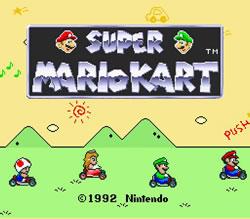
The title screen logo also differs between regions — international versions have an enlarged “O” and “E” in “Super Mario Kart”, with a larger overall title box and the trademark symbol in a different position.
References in other games
Super Mario Kart’s influence on the wider Mario universe:
- CPU-controlled Toad and Peach in Super Mario Bros. 3 throw Poison Mushrooms — behaviour directly inspired by their SMK CPU item
- Bowser’s Castle music in Super Mario Kart mirrors the final stage themes from Super Mario World
- Lakitu’s sprite closely resembles his Super Mario World appearance
- A level in Super Mario 3D World is designed after Super Mario Kart’s race courses
- Rainbow Road appears as a location in Paper Mario: Color Splash
- Item-based battles appear throughout multiple later Mario sports games
- The Super Mario Bros. Movie features a full Mario Kart scene
- The Mario Kart manual has a picture of Mario Circuit printed upside down — a well-known error
Trivia & interesting facts
- The only Mario Kart game with five courses per cup — all sequels cap at four
- Donkey Kong Jr. appears as a playable character — his only Mario Kart appearance ever
- Rainbow Road is introduced here and has appeared in every Mario Kart since
- The Feather item is exclusive to this game — never appeared in a later Mario Kart
- Ghost (Boo) and Coin items only appear in Battle Mode
- Lightning Bolt is absent from Battle Mode
- Guinness World Records Gamers Edition 2009: No. 1 Video Game of All Time
- Nintendo Power 100th edition (1997): 32nd Best Nintendo Game of All Time
- GameInformer 200th issue: 33rd on their all-time list
- GameRankings aggregate: 93.60% | 4th best-selling SNES game: 8.76 million copies
- Mario was only added to the prototype 3-4 months into development — the original driver was unnamed
- Banana Peels replaced oil cans as the spin-out obstacle during development
- Battle Mode was added because the dev team loved playing it themselves during testing
- Japanese victory animations show Peach getting drunk on champagne — censored in Western releases
- The Flower Cup’s fire flower symbol is replaced by “Fire Cup” in later games like Mario Power Tennis
- Music inside Bowser’s Castle mirrors the final stage themes from Super Mario World
- Re-released on Wii Virtual Console (2009), Wii U (2013) and Nintendo Switch Online
Release information
Also available on: Wii Virtual Console (2009), Wii U Virtual Console (2013), Nintendo Switch Online (SNES library).
Reference & downloads
Guides & info
Media