Super NES1996SquareRole-playing gameThe first Mario RPGBowser joins the partySeven Star PiecesTimed hitsSA-1 chip
Super Mario RPG: Legend of the Seven Stars
A giant sword drops out of the sky, skewers Bowser’s castle and flings Mario, the Princess and the Koopa King to three corners of the map. So begins Super Mario RPG: Legend of the Seven Stars, released for the Super Famicom on 9 March 1996 and for the Super NES in North America on 13 May 1996. It is the first Mario role-playing game, built by Square, the house of Final Fantasy, with Shigeru Miyamoto producing. Mario hunts seven Star Pieces across a chunky, pre-rendered isometric world, and for the first time Bowser fights at his side, along with Princess Toadstool and two newcomers: Mallow, a cloud who thinks he is a frog, and Geno, a star living in a wooden doll. The battles are turn-based but never passive, thanks to timed hits, the well-judged button press that every Mario RPG since has borrowed. Europe and Australia had to wait for the Wii Virtual Console in 2008 to play it officially, and a full Nintendo Switch remake followed in 2023.
Developer:Square
Publisher:Nintendo
Platform:Super NES / Super Famicom
Genre:Role-playing game
Japan:9 March 1996 (as Super Mario RPG)
North America:13 May 1996
Europe & Australia:Not released on Super NES; first sold on the Wii Virtual Console, 22 August 2008
South Korea:1996
Players:1
Directors:Chihiro Fujioka, Yoshihiko Maekawa
Producer:Shigeru Miyamoto
Composer:Yoko Shimomura
Party:Mario, Mallow, Geno, Bowser and Princess Toadstool (three fight at a time)
Goal:Seven Star Pieces, to repair the Star Road
Level cap:30
Cartridge:Uses Nintendo’s SA-1 co-processor
Re-releases:Wii Virtual Console (2008), Wii U Virtual Console (2015–16), Super NES Classic Edition (2017)
Mario, Mallow and Geno face Bowyer and his Aeros in the Forest Maze.
Super Mario RPG: Legend of the Seven Stars is what happened when Nintendo lent its mascot to the best-known role-playing studio in Japan. Square developed it, Nintendo published it, Shigeru Miyamoto produced it, and two Square directors, Chihiro Fujioka and Yoshihiko Maekawa, ran it day to day. It reached Japan in March 1996 and North America two months later, right at the end of the 16-bit era, and it turned out to be the last Mario game released for the Super NES in North America.
The story starts like any other Mario game and then swerves. Bowser has carried off Princess Toadstool, Mario storms the Keep, and the two are trading blows among the chandeliers when a colossal sword called Exor crashes through the roof. Exor belongs to Smithy, a king from another world who makes weapons and wants a world full of them. On the way down it has smashed the Star Road, the place where wishes are granted, into seven Star Pieces. Mario has to find them all, and he will need help from some unlikely people, the Koopa King included.
What Square built around that is a proper RPG with a Mario accent. Towns, shops, equipment, levels and turn-based fights are all present, but Mario still runs and jumps around an isometric world full of floating treasure boxes and moving platforms, enemies are visible before you bump into them, and every attack can be improved by pressing a button at the right instant. The script is funnier than anything Mario had been given before, and it is told without a word from the hero, who explains himself entirely in mime.
It sold strongly in Japan and was among the best-selling games of 1996 in the United States, but it was never released in Europe or Australia on the Super NES, and within a year Square had left Nintendo’s consoles for the PlayStation. No direct sequel followed. Instead the idea split in two: Paper Mario, which began life as Super Mario RPG 2, and Mario & Luigi: Superstar Saga, made by a studio that both directors later joined. The original finally got its due in 2023 with a full remake for Nintendo Switch, which has its own page here.
The Mushroom Kingdom faces a new threat when a giant sword falls from the sky and lays chaos upon the land. Mario must gather a crew of unexpected allies to take on the nefarious Smithy Gang!
Before Paper Mario and Mario & Luigi, the first role-playing game featuring Mario was this celebrated collaboration between Nintendo and the makers of Final Fantasy, Squaresoft (now Square Enix). Many players hold fond memories of the witty dialogue and colourful characters such as Mallow and Geno.
— Official description (Nintendo UK, 2008)
Why Super Mario RPG matters to Mario fans
Every Mario RPG starts here. Timed button presses in battle, Flower Points, a silent Mario surrounded by talkative friends, Bowser as a reluctant ally, a seven-star quest and a closing parade led by Luigi all appear first in this game, and Paper Mario and Mario & Luigi both grew out of it. It was also, for twenty-seven years, the only game in which Geno and Mallow had more than a walk-on part, which goes some way to explaining how loudly they have been asked for ever since.
The title screen.It begins as usual: Mario against Bowser, with Toadstool tied up above.Then Exor arrives. Mario looks across at the Keep from Vista Hill.A battle in full swing, against the Axem Rangers.
“A froggie who was raised by the sage, Frogfucius. He doesn’t look like a frog to me!”
Super Mario RPG: Legend of the Seven Stars instruction booklet, Nintendo of America, 1996.
The instruction booklet is hosted by Luigi, who otherwise sits this adventure out. His notes run through the whole manual, and this is his verdict on Mallow in the cast list.
Quick Answers
The questions people ask most about Super Mario RPG, answered briefly here and in depth further down the page.
When did Super Mario RPG come out?
On 9 March 1996 in Japan and 13 May 1996 in North America, for the Super Famicom and Super NES. It was also sold in South Korea in 1996. The Switch remake arrived on 17 November 2023. More →
Was Super Mario RPG released in Europe?
Not on the Super NES. Nintendo said at the time that the game would have needed reworking for PAL televisions and translating into several languages. Europe and Australia first got it on the Wii Virtual Console on 22 August 2008, in its American form. More →
Who made Super Mario RPG?
Square, the studio behind Final Fantasy, developed it for Nintendo. Chihiro Fujioka and Yoshihiko Maekawa directed, Shigeru Miyamoto produced and Yoko Shimomura wrote the music. More →
Who is in the party?
Five characters: Mario, Mallow, Geno, Bowser and Princess Toadstool, joining in that order. Mario is always in the fight, with any two of the others beside him. More →
How do timed hits work?
Press a button at the right moment during an attack and it hits harder: one and a half times the damage for good timing, double for the best. The same trick on defence halves a blow or cancels it entirely. Special moves have their own timing or button-mashing prompts. More →
Where are the seven Star Pieces?
Mushroom Castle (Mack), the Forest Maze (Bowyer), the Coal Mines at Moleville (Punchinello), Star Hill (unguarded), the Sunken Ship and Seaside Town (Johnny, then Yaridovich), Barrel Volcano (the Axem Rangers) and the Factory (Smithy). More →
How do you fight Culex?
Buy Fireworks in Moleville for 500 coins, swap them with the little mole girl for a Shiny Stone, and use the stone on the sealed door in Monstro Town. Culex has 4,096 HP and four Crystals to back him up, and beating him earns the Quartz Charm. More →
How do you get the Lazy Shell?
Take the Seed dropped by Megasmilax in Bean Valley and the Fertilizer from a Shy Away in a hidden corner of Nimbus Land to the gardener in Rose Town. The beanstalk that grows leads to two Lazy Shells: Mario’s strongest weapon and the toughest armour in the game. More →
Does Nintendo own Geno and Mallow?
Not outright. When Geno made a cameo in Mario & Luigi: Superstar Saga in 2003, the credits stated that copyright in the character was reserved by Square Enix, and his Super Smash Bros. costume has been released alongside Final Fantasy content both times. More →
Is the Switch version the same game?
It is a faithful remake by ArtePiazza with new 3D graphics, a rearranged soundtrack and a few new battle mechanics, and it renames a good many characters. This page covers the 1996 original; the remake has a page of its own. More →
Story
The Star Road in pieces: seven stars, freshly scattered by Exor.
Above Mario’s world lies the Star Road, where the wishes people make are turned into shooting stars and granted. When Exor, a living sword the size of a tower, plunges out of the sky towards Bowser’s Keep, it goes straight through the Star Road on the way and breaks it into seven Star Pieces, which fall all over the map. Until they are gathered up again, nobody’s wishes will come true.
Exor is the advance guard of the Smithy Gang, a crew of living weapons led by a bearded mechanical king, who want the pieces for themselves. The game is the race to collect them: seven stars across six regions and a factory in another dimension, with a party that grows from one plumber to five very different heroes. What follows is the whole story, star by star, ending and all.
Prologue and the first star: Bowser’s Keep, the Mushroom Kingdom and Mack
Princess Toadstool is picking flowers on the hill by Mario’s Pad when Bowser swoops down in the Koopa Clown Car and carries her off. Mario gives chase to Bowser’s Keep, climbs through the castle and catches up with him among the chandeliers. Bowser cannot be worn down by ordinary means (his 320 HP never run out), so the trick is to attack Kinklink, the chain holding his chandelier up. Down he goes. Mario is reaching for the Princess when the whole castle shakes and Exor comes through the ceiling.
The impact throws all three out of the Keep in different directions. Mario lands back at his own house, where Toad has come looking for the Princess, and hurries back, only for Exor to announce that the castle now belongs to the Smithy Gang and to knock out the bridge at Vista Hill. With the Keep cut off, Toad suggests telling the Chancellor. The road to the Mushroom Kingdom, Mushroom Way, is held by a pair of Hammer Bros., who leave Mario their hammer.
At the castle the Chancellor asks Mario to find the Princess, and in the town he meets Mallow, a small, tearful, fluffy creature who introduces himself as a frog from Tadpole Pond. He has just been robbed of a rare Frog Coin by a purple crocodile called Croco. The two of them run the thief down in Bandit’s Way and beat the coin out of him, and Mallow stays for the rest of the game.
They get back to find the town overrun by Shysters, Shy Guys bouncing about on pogo sticks. In the throne room is their boss, Mack, a round, red-armoured figure riding a giant sword like a pogo stick, with four Bodyguards and a taste for fire magic. Beating him wins a glowing star. Nobody yet knows what it is. Mallow suggests asking his grandfather.
Princess Toadstool in the flower garden, seconds before Bowser arrives.Bowser gloats from his chandelier. Kinklink, the chain, is the real target.Bandit’s Way, where Croco is finally cornered.The first Star Piece, won in the throne room of Mushroom Castle.
The second star: Kero Sewers, Tadpole Pond, Rose Town and Bowyer
The way to Tadpole Pond runs through the Kero Sewers, a maze of pipes and flooded chambers under the kingdom, and past Belome, a great hungry beast who turns people into scarecrows. Once he is beaten the sewers flood, and Mario and Mallow are swept out over a waterfall and down the Midas River to the pond.
Mallow’s grandfather is Frogfucius, an ancient frog sage. He tells Mario that the Princess is no longer in the Keep and that a villain called Smithy is behind the trouble. Then he has something to tell Mallow, who has just cried up a rainstorm: he is not a frog and never was. Frogfucius found him as a baby, floating into the pond in a basket, and raised him as a tadpole. His real parents are out there somewhere, and he should go with Mario and look for them.
On Rose Way the pair spot Bowser rallying what is left of the Koopa Troop to win back the castle. Rose Town itself is under bombardment. Arrows are raining out of the sky and anyone they hit is frozen stiff. Mario shelters at the inn, where the innkeeper’s little boy, Gaz, ropes him into a game with his dolls, the favourite being a caped wooden hero called Geno. That night a small star drifts into the inn, looks the four toys over, picks the strongest-looking and steps inside it. The doll gets up and walks out towards the forest.
Gaz saw it happen, and in the morning Mario and Mallow follow the doll into the Forest Maze. At the far end they find the archer: Bowyer, a giant living bow who talks backwards, fires his arrow minions, the Aeros, at the town for sport and has a Star Piece. The doll is already squaring up to him. The three fight together, with Bowyer locking out one button on the controller at a time, and win the second star. Then the stranger introduces himself. He comes from the Star Road and serves “a higher authority”, his real name is ♡♪!?, and since nobody can pronounce that he will go by the doll’s. He explains what the stars are and why all seven must be found. One surviving Aero flies off to tell Smithy.
Frogfucius receives Mario at Tadpole Pond.Rose Way: Bowser and the remains of the Koopa Troop.Gaz’s dolls at the Rose Town inn. Geno is the one in the cape.Geno explains himself to Mario and Mallow.
The third star: Moleville and Punchinello
A side road from the pond, the Pipe Vault, leads to Yo’ster Isle and its races, but the trail of the stars goes up into the mountains to Moleville, a mining town of moles. Bowser is glimpsed there too, with noticeably fewer followers than last time. The town has its own emergency. Something fell out of the sky into the Coal Mines, and two children, Dyna and Mite, are trapped behind the rockfall.
Mario goes in after them and immediately loses his wallet: he bangs his head on the ceiling from a trampoline, and Croco and three Crooks help themselves to his coins while he is seeing stars. The chase through the tunnels ends in a second fight, in which Croco steals the party’s items halfway through for good measure. Beaten, he leaves behind a bomb, which a mole uses to blast open the way forward.
In the deepest chamber waits Punchinello, a small bomber with large ambitions. He is no part of the Smithy Gang. He simply found a star and thinks beating Mario will make him famous. He throws out wave after wave of walking bombs, each bigger than the last, and when all else fails calls down a King Bomb so huge that it lands on him. The blast brings the third Star Piece down from the rafters. Dyna and Mite are found safe, and everybody leaves by mine cart at high speed.
Back in town, some passing Snifits are overheard talking about their boss, Booster, who is entertaining a princess who fell from the sky.
Bowser in Moleville, short of troops.The Coal Mines.The third Star Piece, shaken loose by the King Bomb.
Booster Tower and Marrymore: a wedding to stop
There is no star in this chapter, only a rescue. Toadstool landed at Booster Tower, the home of Booster, a bearded eccentric in a helmet, seventh of his line, who lives among toys and trains and has decided to marry her without being at all sure what a wedding involves. At the foot of the tower Mario finds Bowser, alone and sorry for himself now that his army has melted away. He will not ask for help. He announces that Mario may join the Koopa Troop, breaks down the front door and comes along.
The tower is a funhouse. Portraits of Booster’s ancestors hang in the hall, Mario steps behind a curtain and comes out as his 8-bit self, and near the top he has to hide behind more curtains while Booster and his Snifits hunt for a lost Mario doll (get caught three times and Booster fights). Booster then bolts with the Princess, leaving his clowns, Knife Guy and Grate Guy, to hold the balcony.
The chase goes up Booster Hill, over barrels and Snifits, to Marrymore, a village that exists for weddings. Booster has thrown a pair of Toads out of their own ceremony and locked the chapel. Mario and Bowser barge the doors down between them, and in the collision the Princess’s crown, shoes, ring and brooch are scattered across the floor. Gather them up quickly and she rewards Mario with a kiss. Dawdle, and the kiss comes from Bowser or Booster instead.
Then the caterers arrive. Chef Torte and his apprentice have a wedding cake to deliver and are in no mood for interruptions, and when they attack Mario the cake, Bundt, comes to life and joins in. It has to be fought tier by tier until Booster wanders over and eats what is left, weeping at how good it is. Then he goes home. The Princess is escorted back to Mushroom Castle, lasts about a minute there, and slips out to join the party while her grandmotherly maid sits in for her in a spare dress. The team of five is complete.
Found: Booster discovers Mario behind the curtains.The chase up Booster Hill.The chapel at Marrymore.Booster settles the matter of the cake.
The fourth and fifth stars: Star Hill, Seaside Town and the Sunken Ship
Frogfucius has news of another star, on Star Hill. This is a quiet hillside where wishes land as fallen stars, and Mario can walk about reading them, familiar names among them. The fourth Star Piece is lying at the top with nobody guarding it at all.
The fifth is harder. Seaside Town is full of townsfolk who are not quite right, and their elder is very keen for Mario to fetch a star that has fallen into the sea. The trail leads through an undersea tunnel to the Sunken Ship, a haunted wreck full of ghosts, puzzles and a sealed door, behind which lurks King Calamari, a giant squid who fights tentacles first.
In the hold below lives the ship’s present owner, Jonathan “Johnny” Jones, a shark pirate with a trident and a crew of bandana-wearing sharks. He has the star and sees no reason to part with it. Once his crew are down he sends the others away and settles it with Mario alone, one against one. He loses, takes it well, and hands the star over.
Back on land the elder wants it at once, and drops the act when Mario hesitates. The whole town was a fraud: every citizen was Yaridovich, a spear-headed officer of the Smithy Gang who can copy himself and take any shape, and the real townspeople are locked in a shed. He grabs the star and makes for the shore, meaning to swim for it, and finds Johnny waiting in the water. Cornered, he fights, splitting in two as he does, and the fifth Star Piece is won on the sand. The grateful, and genuine, elder mentions that a star was seen falling near Monstro Town, out beyond Land’s End.
The fourth Star Piece, simply lying on Star Hill.Seaside Town, where nobody is quite themselves.The Sunken Ship.The fifth Star Piece, taken back from Yaridovich.
Land’s End, Monstro Town and Nimbus Land
Land’s End is the wild country at the edge of the map: cliffs crossed by cannon, then a desert where the way on is down a whirlpool of sand. Underneath is Belome Temple, where masked fortune-tellers decide what Mario finds and Belome himself is waiting for a second round, this time spitting out copies of Mario’s own party.
A pipe beyond the temple opens into Monstro Town, a cliffside village of monsters who have given up being monsters. Goombas, a Thwomp and the Three Musty Fears are among the residents, a tiny martial artist called Jinx runs a dojo, and one door is sealed shut with something muttering behind it. The town’s matriarch, Monstermama, knows where the star went: up. She whistles for Sergeant Flutter, whose Sky Troopas form a living ladder up the cliff.
At the top is Bean Valley, a field of pipes and Piranha Plants. The pipe that matters is plugged by Megasmilax, a monstrous plant being watered into ever larger forms by a Shy Away on the orders of someone called Valentina. With it uprooted, the beanstalks behind it can be climbed into the clouds.
Nimbus Land is a kingdom built on cloud, and everyone in it looks like Mallow. The king is said to be ill and has not been seen, and the royal aide, Valentina, is about to marry the long-lost prince, who has just turned up. The prince is Dodo, a very large and not very bright bird. A royal sculptor, Garro, takes one look at Mallow and knows the truth. He disguises Mario as a golden statue and delivers him to the castle. Inside, Mario cracks open a giant egg to fight the Birdo within and chases Valentina out to the plaza, where Dodo carries one of the party off to fight alone while she takes on the others. Beaten, the pair flap away over the horizon and come down, eventually, on Booster Tower. The king and queen are let out of the room where she had locked them, and Mallow meets his parents at last. They have news, too: a star fell into the volcano next door.
Monstro Town, a retirement village for monsters.Nimbus Land, the kingdom in the clouds.Valentina presents Dodo as the missing prince.Mario catches up with Valentina.
The sixth star: Barrel Volcano and the Axem Rangers
Barrel Volcano heats Nimbus Land’s royal hot spring, and the next star is somewhere inside it. It is a long descent through lava caves, with a shop run by a Toad called Hinopio as the only comfort. At the bottom the Star Piece is guarded by the Czar Dragon, which, once beaten, rises again in undead form as Zombone.
Mario has the star in his hands for about a second. Then five figures in coloured armour drop in, announce themselves as the Axem Rangers (“We fight for evil!”), snatch it and run. They are Smithy’s elite squad, each one a twisted mirror of a member of Mario’s party, and they have an escape vehicle: the Blade, a flying battleship moored at the volcano’s rim. The party jumps aboard. The fight on deck takes the Rangers out one by one, after which the ship itself opens up with its main gun, the Breaker Beam. When that is silenced the sixth Star Piece is Mario’s again.
Six stars are in hand and there is only one place the seventh can be. Nimbus Land’s royal bus flies the party to the gates of Bowser’s Keep.
Inside Barrel Volcano.The sixth Star Piece, briefly in Mario’s hands.The Blade waits at the crater.
The seventh star: Bowser’s Keep, the Gate and the Factory
Bowser comes home to find his castle full of strangers. The route to the top runs through six doors, of which any four must be cleared: rooms of platforming, rooms of back-to-back battles and rooms of puzzles and quizzes set by Dr. Topper. Beyond them a Magikoopa attacks under Smithy’s control, recovers, recognises his king and conjures a treasure box of unlimited coins by way of apology. Croco, of all people, has set up a shop nearby.
On the chandeliers where the game began stands Boomer, the last of Smithy’s guards in the castle. When he is beaten the Chandeli-hos haul the party up to the roof and to Exor itself. The sword has eyes and a mouth, and at least one of them must be put out of action before the pommel can be hurt. Beaten, it opens wide and swallows everybody.
Exor is a doorway. On the other side is the Gate, a black void full of drifting machinery, and here the game shows its hand: grey, mass-produced copies of Mack, Bowyer, Yaridovich and the Axem Rangers come trundling out of the dark. Past a clock called Count Down with its two bells, and the duo Cloaker and Domino, each with a giant snake in reserve, lies the Factory, where the Smithy Gang is manufactured on an assembly line, staffed by a Clerk, a Manager, a Director and a Factory Chief with his cannon-on-legs, Gunyolk.
At the bottom of it all is the forge, and Smithy, hammering out new soldiers while his Smelter pours the metal. He wears the seventh star. He fights first as a bearded king with a sledgehammer, loses his temper, and brings the hammer down so hard that the floor gives way. In the darkness below he is something else: a bare metal body that beats its own head into new shapes. A tank that hits like one. A wizard with the strongest magic in the game. An armoured mask that shrugs off blows and heals itself. A treasure chest that spits out curses. All of it has to be outlasted, and then he overheats and comes apart.
Exor on the roof of the Keep, taking 9,999 from a Geno Whirl.Down the hatch: the party falls into Smithy’s world.Face to face with Smithy at the forge.The seventh and last Star Piece.
The ending: wishes restored
With all seven stars together, Geno’s work is finished. He thanks his friends, and the little star rises out of the doll and floats away to mend the Star Road. Exor crumbles off the roof of the Keep, and the doll is left sitting quietly on Vista Hill.
The seven Star Pieces then show what became of everyone. Mallow takes his place as prince of Nimbus Land. Bowser sets about rebuilding his castle. Johnny watches the sun go down over the sea. Croco races Yoshi on Yo’ster Isle, loses, and walks off with Boshi. Frogfucius and his student attend a concert conducted by Toadofsky. In Marrymore, Valentina and Booster are married with Dodo officiating, at least until Booster runs out of the chapel. Mario and the Princess go home.
Then comes the parade. Luigi, who has not been seen all game, marches at the head of it, followed by float after float of the cast, and the night ends with fireworks.
Geno as he really is.All seven Star Pieces together.The End.
Every location in Super Mario RPG
All thirty-eight locations in the order the game introduces them, with what is found or fought there. Those marked “inside” are entered through another location and do not have their own spot on the world map.
Mario’s PadMushroom Kingdom · startMario’s pipe-roofed house. The bed is free, and Toad gives the first lesson in timed hits outside.
Vista HillBowser’s Keep regionThe clifftop between the Pad and the Keep. Exor destroys its bridge in the opening minutes.
Bowser’s KeepBowser’s Keep region · Bosses: Bowser; later Magikoopa, Boomer and ExorVisited twice: for the prologue, and as the last castle once the Smithy Gang has moved in.
Mushroom WayMushroom Kingdom · Boss: Hammer Bros.The short road to town, and the source of Mario’s hammer.
Mushroom KingdomMushroom Kingdom · townThe Toads’ capital, with a shop, an inn and the castle. Mallow joins here.
Mushroom CastleInside the Mushroom Kingdom · Star Piece 1 · Boss: MackThe Princess’s castle, where the Chancellor holds court and Mack briefly takes the throne.
Bandit’s WayMushroom Kingdom · Boss: CrocoA long dead-end road where Croco is chased down, and where an invincibility Star is first found.
Kero SewersPond to Pipes · Boss: BelomePipe-linked sewers above the Midas River. A back entrance from Land’s End hides the Cricket Jam.
Midas RiverPond to Pipes · minigameA waterfall and a barrel run, with coins all the way down.
Tadpole PondPond to PipesHome of Frogfucius. Tadpoles run the Juice Bar and the Frog Coin emporium.
Melody BayInside Tadpole Pond · minigameToadofsky’s open-air composing room, where tunes are played on tadpoles.
Rose WayPond to PipesA swampy road, where Bowser and his dwindling army are spotted making plans.
Rose TownPond to Pipes · townPinned down by Bowyer’s arrows. Geno comes to life at its inn, and Link later sleeps there.
Forest MazePond to Pipes · Star Piece 2 · Boss: BowyerA winding wood in which Mario trails Geno to Bowyer. Its theme has been Geno’s signature tune in Smash Bros. trailers.
Pipe VaultPond to Pipes · optionalA lava-floored tunnel of pipes and Piranha Plants that leads to Yo’ster Isle. Goomba thumping is played here.
Yo’ster IsleYo’ster Isle · optional · Rival: BoshiThe Yoshis’ island and racetrack, home of the Mushroom Derby and an egg that hatches into Baby Fat.
MolevilleMole Mountains · townA mountain mining town with a swap shop and a little girl who trades in shiny things.
Coal MinesInside Moleville · Star Piece 3 · Bosses: Croco, PunchinelloWhere Dyna and Mite are trapped. The mine-cart ride is the way out.
Booster PassMole MountainsThe rocky road to the tower, thick with Spikesters and Artichokers.
Booster TowerMole Mountains · Bosses: Knife Guy and Grate Guy; Booster (optional)Booster’s toy-filled tower. Bowser joins at its door, and 8-bit Mario appears behind a curtain.
Booster HillMole Mountains · minigameAn uphill sprint over barrels after Booster, and later the Beetle Race course.
MarrymoreMole Mountains · town · Boss: Bundt and RaspberryA wedding resort with a chapel and a hotel whose suite is dear enough to land Mario a job as a bellhop.
Star HillSeaside · Star Piece 4Where wishes fall to earth. The only Star Piece with no guardian.
Seaside TownSeaside · town · Star Piece 5 · Boss: YaridovichA harbour town impersonated wholesale by Yaridovich. Its shops change their stock once the real owners are let out.
SeaSeasideA flooded tunnel leading out to the wreck, with a shop at the entrance.
Sunken ShipSeaside · Bosses: King Calamari, JohnnyA ghost-ridden wreck with a puzzle on every deck and a pirate crew of sharks in the hold.
Land’s EndLand’s End · optional boss: MokuraCliffs, pot cannons, a desert of sand whirlpools and the Sky Bridge challenge.
Belome TempleInside Land’s End · Boss: BelomeA temple under the sand where fortune-tellers decide whether Mario gets treasure, a fight or Belome.
Monstro TownLand’s End · town · optional bosses: Jinx, CulexA town of reformed monsters. The dojo, the sealed door and the Super Jump prizes are all here.
Bean ValleyLand’s End · Boss: MegasmilaxA valley of pipes with a hidden way through to the casino.
The VineryInside Bean ValleyMulticoloured beanstalks climbing through the clouds to Nimbus Land.
Grate Guy’s CasinoLand’s End · optional · needs the Bright CardBlackjack, a slot machine and Look the Other Way with Grate Guy himself.
Nimbus LandNimbus Land · town · Bosses: Dodo and ValentinaThe cloud kingdom of Mallow’s people, with a hot spring reserved for royalty.
Nimbus CastleInside Nimbus Land · Bosses: Shelly and Birdo; Dodo (optional)The palace of King and Queen Nimbus, held by Valentina until Mario arrives disguised as a statue.
Barrel VolcanoNimbus Land · Star Piece 6 · Bosses: Czar Dragon, Zombone, Axem RangersA live volcano with Hinopio’s shop in the middle of it and the Blade parked at the top.
The Trial CourseInside Bowser’s KeepSix doors of action, battle and puzzle rooms. Four must be completed to go on.
GateThrough Exor · Bosses: Count Down, Cloaker and DominoThe dark, machine-strewn void on the far side of Exor’s mouth, patrolled by Machine Made copies of old bosses.
FactoryBeyond the Gate · Star Piece 7 · Bosses: Clerk, Manager, Director, Factory Chief and Gunyolk, SmithySmithy’s weapon works, and the end of the road.
These locations are usually grouped into seven main areas of the world map: the Mushroom Kingdom, Pond to Pipes (with Yo’ster Isle reached from it), Mole Mountains, Seaside, Land’s End, Nimbus Land and the Bowser’s Keep region.
Advertisement
Gameplay & Controls
Square’s brief to itself was to avoid making an ordinary RPG with Mario characters dropped in. Co-director Chihiro Fujioka told Family Computer Magazine in 1995 that the team wanted a game “where the player is always engaged with the controls”, and almost every system in it follows from that.
A Mario game seen from the corner
The world is drawn in a three-quarter isometric view, built from pre-rendered 3D models, and Mario moves through it like Mario. The Control Pad runs him in eight directions, B jumps, holding Y makes him dash, A talks to people and examines things, and X opens the menu. Treasure boxes hang in the air waiting to be bopped from below, Donut Blocks drop away under his boots, Spinning Flowers and smiling trampolines throw him upwards, and pot cannons fire him across gaps.
There are no random encounters. Enemies wander the screen in plain sight and a fight begins only when Mario touches one, so a careful jumper can skip a good many of them. Each of the world map’s regions is a string of separate areas, and the next one usually opens only when something has been done in the last: a boss beaten, an item found, a favour performed. Progress is saved by jumping into a Save Block, with four files on the cartridge.
Mario leads on the field at all times. Whoever else has joined simply appears when a fight starts, and the line-up of two partners can be changed from the menu whenever Mario is not in battle.
Mario’s Pad, where the adventure starts and Toad explains timed hits.A Save Block.A treasure box, hit from underneath in the proper Mario manner.
Battles and timed hits
Fights are turn-based, with Mario and two partners against whatever he bumped into. Each of the four face buttons is a command, laid out on screen as they are on the pad: A attacks with the equipped weapon, Y opens the list of special moves, X uses an item, and B covers defending and running away. Speed decides who acts first.
The twist is the timed hit. Press a button at the right moment in an attack animation and the blow lands harder, one and a half times the normal damage for decent timing and twice for perfect. The same applies in reverse: a well-timed press as an enemy strikes halves the damage, and a perfect one blocks it altogether. Not everything can be blocked (enemy magic never can), and each weapon has its own rhythm to learn, so a new hammer means a few fluffed swings.
Co-director Yoshihiko Maekawa has said the idea came from a Japanese children’s music toy that asked for button presses in time. It solved the problem the team had set itself, since even a routine battle now keeps the player’s thumb busy.
Defeated enemies sometimes leave a Bonus Flower for whoever struck the last blow. There are five: HP Max!, Attack Up!, Defense Up!, Once Again! (an extra turn) and Lucky!, which earns a go at Yoshi’s guessing game once the fight is over. Six status ailments complicate matters: fear, poison, sleep, mute, being turned into a mushroom and, courtesy of Belome, being turned into a scarecrow.
A battle in Bean Valley. The four commands sit round the active character like the buttons on the pad.Geno picks up a Bonus Flower from a beaten enemy.Mallow’s Psychopath reads Mack’s mind, and his HP.
Flower Points and special moves
Special moves are paid for with Flower Points, and the whole party draws on a single pool of them. Levelling up does not add any. The maximum grows only when Mario finds a Flower in a treasure box (one extra point) or uses a Flower Tab, Flower Jar or Flower Box (one, three and five), which makes every flower in the game worth going out of the way for.
Each character learns new moves at set levels, 27 in all, and nearly every one has its own input. Mario’s Jump wants a press just before he lands; Super Flame wants Y hammered; Geno Beam is charged by holding Y and letting go as the stars appear. Mallow’s Psychopath costs a single point and, timed properly, shows an enemy’s remaining HP together with whatever it happens to be thinking, which is often the funniest line on the screen.
Enemies have FP too, and the game will cheerfully announce when a monster has run dry.
HP Rain, Mallow’s healing shower.Super Jump: keep the timing and Mario keeps bouncing.
Levels, stats and the bonus
Everyone has six statistics: HP, Speed, Attack, Defense, Magic Attack and Magic Defense. All five characters need the same experience to reach each level, the cap is level 30, and those left on the bench still earn their share. Speed is the one figure that levelling never raises.
After each level-up comes a choice of bonus: a little extra Attack and Defense, extra HP, or extra Magic Attack and Magic Defense. The three are not equal. At every level one of them is worth more than the others, and from level 2 the generous one rotates in a fixed order of magic, then HP, then physical. Players who notice can squeeze noticeably better numbers out of the same thirty levels.
Mario’s status screen at level 20.The physical bonus.The HP bonus.The magic bonus.
Equipment, coins and Frog Coins
Each character carries one weapon, one piece of armour and one accessory. Weapons and armour are personal: hammers, Koopa shells and gloves for Mario, sticks and cymbals for Mallow, guns built into Geno’s arms, Chain Chomps and claws for Bowser, and parasols, fans and a frying pan for the Princess. Mario wears shirts, Mallow pants, Geno capes, Bowser spare shells and Toadstool dresses. Accessories are mostly shared and are where the interesting effects live.
Ordinary coins pay for shops and inns. Frog Coins are the rare second currency, found in out-of-the-way boxes and won in minigames, and they are spent with the frogs and tadpoles of Tadpole Pond and with Frogfucius’s student in Seaside Town, who sells some of the best accessories in the game. Square originally planned for everybody to carry weapons in the usual RPG way and dropped most of that as un-Mario-like. The hammer stayed because Miyamoto insisted.
The inventory, with the Exp. Booster selected.A Frog Coin.
Minigames
The plot regularly stops for something completely different, and most of these set pieces can be replayed for prizes. The first is the Midas River: Mario is washed out of the Kero Sewers, swims down a waterfall picking up coins and ducking into caves, then hops from barrel to barrel down the rapids. A Toad at the bottom changes the coins collected into Frog Coins, and another go costs 30 coins. After the third Star Piece comes the Moleville Mountain mine-cart ride, with B to jump gaps, A or Y to brake for corners, X to burn a collected mushroom for speed and L or R to sound the horn, which does nothing useful at all. The moles later charge 10 coins a ride, or take a 30-coin wager against the record for a 50-coin payout.
On Yo’ster Isle there is the Mushroom Derby. Mario rides Yoshi against the local bully, Boshi, by tapping A and B alternately in time with the music, and Y feeds Yoshi a cookie for a burst of speed. Win, and the other Yoshis are allowed to race again and cookies can be bet on the outcome. In the Pipe Vault, 10 coins buys thirty seconds of Goomba thumping, stamping on Goombas, gold ones included, as they pop from pipes and avoiding the Spikeys that pop up with them.
A Beetle Box bought from Beetles Are Us in Seaside Town unlocks the Beetle Race back on Booster Hill, where Mario bounds up the slope off barrels and Snifits catching beetles to sell. Beetle Mania is a game within the game: pester the child playing a handheld in the Mushroom Kingdom inn and he will sell it for 500 coins. It is a small shooter in which a beetle fires stars at Koopa shells, and bursting shells set off chain reactions.
At Melody Bay beside Tadpole Pond, Mario composes for the frog conductor Toadofsky by jumping on tadpoles strung along a musical stave. There is a cliff-climbing time trial on the backs of Sergeant Flutter’s Sky Troopas at Land’s End, a game of chance with Knife Guy in Booster Tower, and, for those who find the door, Grate Guy’s Casino. Fujioka built several of these scripted sequences himself, including Booster Hill, Midas River and the Sky Troopa climb.
Over the falls on the Midas River.Mario and Yoshi race Boshi in the Mushroom Derby.Melody Bay: the tadpoles are the notes.Grate Guy’s Casino.
Hidden treasure
Thirty-nine invisible treasure boxes are scattered around the world, and the only way to find one is to jump in exactly the right patch of empty air. An elderly Toad in the basement of the Mushroom Kingdom item shop explains the idea, the Signal Ring accessory gives a signal when one is close, and Chester in Monstro Town will say how many are still out there. They hold rarer things than the visible boxes do: the Goodie Bag, which adds coins to a battle’s takings each time it is used, is in one in Booster Tower.
A hidden treasure revealed in the Rose Town item shop.
Weapons, armour and accessories worth knowing
A selection of the gear players ask about most, from more than a hundred pieces of equipment and items. Figures are the bonuses listed for the Super NES original.
HammerMario’s first weapon (Attack +10), taken from the Hammer Bros. on Mushroom Way. The Super Hammer and Ultra Hammer (+70) follow.
Lazy Shell (weapon)Mario’s best weapon: Attack +90, with a wide swing either side of that. Grown from the Seed and Fertilizer.
Lazy Shell (armour)Defense and Magic Defense +127, immunity to every ailment and to elemental damage, but Attack, Magic Attack and Speed all drop by 50. Anyone can wear it.
MasherA hammer with Attack +50 and an enormous random spread of 30 either way.
Froggie StickMallow’s first weapon (+20), made by Frogfucius and given in return for a Cricket Pie.
Sonic CymbalMallow’s strongest weapon, Attack +70.
Star GunGeno’s last and best arm cannon, Attack +57.
ChompBowser swings a live Chain Chomp by its chain. It waits behind a locked door in Booster Tower that needs the Elder Key.
Drill ClawBowser’s strongest weapon, Attack +40.
Frying PanToadstool’s finest, Attack +90, and at 300 coins the dearest weapon in any shop. It is sold in Moleville under the name Metal Plate.
Super SlapA glove for the Princess, Attack +70.
Super SuitThe most generous armour of all: +50 to Attack, Magic Attack, Defense and Magic Defense, +30 Speed and immunity to ailments. The prize for 100 Super Jumps in a row.
Attack ScarfMario only. +30 to all five statistics and protection from instant death, for 30 consecutive Super Jumps.
Quartz CharmCulex’s parting gift. The wearer deals half as much damage again, takes half, and cannot be killed outright.
Jinx BeltAttack and Defense +27, Speed +12 and no instant death. Awarded for beating Jinx three times at his dojo.
Ghost MedalHalves the damage the wearer takes. The reward for finding the three flags of the 3 Musty Fears.
Safety RingBlocks every ailment, instant death and all elemental damage, with +5 to both defences and Speed.
Safety BadgeBlocks every status ailment, though not instant death.
Troopa PinSpeed +20 and half as much damage again on attacks.
Signal RingSignals when a hidden treasure box is near. Speed +10.
Exp. BoosterDoubles the wearer’s experience, even on the bench. 22 Frog Coins from Frogfucius’s student.
Coin TrickDoubles the coins won in battle when Mario wears it. 36 Frog Coins.
Scrooge RingHalves the Flower Points the wearer spends. At 50 Frog Coins, the most expensive thing the student sells.
Zoom ShoesSpeed +10 and +5 to both defences. Locked in a Booster Tower room that needs the Room Key.
Jump ShoesMario only: lets his Jump moves hurt enemies that normally shrug them off.
Amulet+7 to attack and defence figures and half damage from elements, at the cost of 5 Speed. A present from Booster if Mario gets through the curtain game undetected.
FeatherSpeed +20 and a little defence.
B’tub RingFor the Princess. Halves elemental damage, and she must be wearing it to hatch the Mystery Egg.
Work PantsArmour anyone can wear, with a little of everything: Attack and Magic Attack +10, Defense +15.
Star EggHits every enemy for 100 and never runs out. The prize for winning Look the Other Way 100 times at the casino.
Sheep AttackTurns every enemy into a sheep that wanders off. Earned by using the Lamb’s Lure 48 times.
Red EssenceMakes one character untouchable for three turns.
Kerokero ColaRestores everyone’s HP and all FP. 200 coins at the Juice Bar once Mario has the Soprano Card.
Rock CandyA sweet that damages every enemy on screen.
Yoshi CookieCalls Yoshi into battle to swallow an enemy and lay it as an item. If he fails he leaves a Yoshi Candy instead.
Bright CardMembership of Grate Guy’s Casino. Knife Guy hands it over after twelve straight wins at his game in Booster Tower.
Cartoons, Comics & Other Media
For a game with no sequel, Super Mario RPG has left fingerprints all over the Mario series, and a fair amount of paper and plastic besides.
Nintendo PowerNintendo of America · 1995–97The magazine previewed the game at length in volume 77 (October 1995), when Square put it at roughly 70 per cent complete, followed it through its Epic Center column, reviewed it in volume 84 (May 1996) and ranked it 21st of the 100 best Nintendo games in volume 100. Its early screenshots show things that never shipped, including a bearded Chancellor and a Lakitu ferrying Mario around Booster Tower. Super Luigi Bros has scans of several of these features, linked at the foot of the page.
Nintendo Player’s GuideNintendo of America · 1996Nintendo’s official guide book, illustrated with Square’s rendered artwork. Like some of Nintendo Power’s coverage it labels Exor as Smithy.
Super Mario RPG Original Sound VersionNTT Publishing · Japan, March 1996Yoko Shimomura’s complete score on two discs, sold only in Japan, with a sheet of stickers in the case.
Trading cards and a jigsawTop Sun, Bandai and others · 1995–96Merchandise included a set of Top Sun trading cards in 1995, a Bandai set in 1996 and a 1,000-piece jigsaw illustrated by Takahiro Kanie.
Super Mario-kunYukio Sawada / ShogakukanYukio Sawada’s long-running gag manga retold the adventure in its own style, with Geno, Booster and Smithy all appearing.
Paper MarioNintendo 64 · 2000Announced as Super Mario RPG 2. The finished game keeps timed button presses, Flower Points, a seven-star quest, its own Star Hill and Chancellor (renamed in English), a martial artist who can be fought three times and a closing parade led by Luigi.
Mario & Luigi: Superstar SagaGame Boy Advance · 2003A Geno doll hosts the Star ’Stache Smash game in Little Fungitown, with a line in the credits reserving his copyright for Square Enix. The 3DS remake replaced him with speech bubbles. The music at the Mario Bros.’ house is a short arrangement of the tune from Mario’s Pad.
Mario & Luigi: Bowser’s Inside StoryNintendo DS · 2009Bowser loses his castle and his army to an invader all over again, and at one point stands looking across at it from a distance, much as Mario does at Vista Hill.
Super Smash Bros.Nintendo · 2015 and 2020A Geno costume for the Mii Gunner was sold as add-on content for the 3DS and Wii U games in December 2015, alongside Cloud Strife, and came back for Super Smash Bros. Ultimate in December 2020 with Sephiroth. Masahiro Sakurai told Nintendo Dream in 2016 that he had wanted Geno as a playable fighter. Ultimate also has Geno and Mallow as spirits, and Peach has swung a frying pan since Melee.
Mario and the Incredible RescueScholastic · 2006Tracey West’s children’s book sends Mario, Luigi and Toad through the Kero Sewers to Tadpole Pond, where they meet Frogfucius and Toadofsky.
Echoes in later gamesMario Party to Mario Kart WorldPart of the Bowser’s Keep theme turns up in Mario Party; the Mushroom Kingdom tune is rearranged for the Peach’s Castle board in Itadaki Street DS and Fortune Street; Birdo’s exploding eggs reappear in her Mario Tennis ending; Super Paper Mario names a Sammer Guy the Star of Seven Shards; and Yoshi’s biker outfit in Mario Kart World has a spiked red collar very like Boshi’s.
Tetris 99Nintendo Switch · November 2023A themed event from 9 to 13 November 2023, timed for the remake, put Mario, Peach, Bowser, Mallow and Geno in the background of the playfield.
Japanese magazine advertsNintendo / Square · 1995–96The Japanese print campaign began with a teaser advert and continued with a full one in the Super Famicom magazines.
Characters
Square’s great gift to Mario was a supporting cast. The five heroes come first, then Smithy and his officers, then the scene-stealers who work for nobody but themselves, and finally the friends along the road. Names are those of the 1996 English version; the Switch remake changed a good many of them.
Character
Who they are
In this game
Abilities & notes
MarioThe hero, and a gifted mime
The hero of the Mushroom Kingdom. He does not speak a word all game: everything he has to say is acted out in mime.
Always leads on the field and can never be taken out of the fighting three, though the others can win a battle without him if he falls. A good all-rounder who attacks with hammers, kicked Koopa shells and his fists, and whose special moves are all jumps and fireballs.
Weapons: Hammer, NokNok Shell, Punch Glove, Super Hammer, Masher, Troopa Shell, Lucky Hammer, Mega Glove, Ultra Hammer, Lazy Shell
Jump (3 FP), Fire Orb (5, level 3), Super Jump (7, level 6), Super Flame (9, level 10), Ultra Jump (11, level 14), Ultra Flame (14, level 18)
Armour: shirts, up to the Hero Shirt
MallowPrince of Nimbus Land (though he does not know it)
A fluffy white cloud-person who believes he is a tadpole, because the frog sage Frogfucius found him adrift in a basket and brought him up as one. He is tender-hearted, and when he cries it rains. His name is short for marshmallow; in Japan he is Maro.
The first to join, in the Mushroom Kingdom, after Croco steals his Frog Coin. He is the party’s weather wizard, with lightning and snow that strike every enemy at once, a healing shower, and Psychopath for reading minds. In Nimbus Land he finds out who he really is, and chooses to finish the quest before going home.
A warrior from the Star Road, sent by “a higher authority” to gather the Star Pieces. His true form is a small star and his true name is ♡♪!?, so he borrows both body and name from a wooden doll belonging to a boy in Rose Town. Calm, formal and faintly otherworldly. Yuka Miyamoto and Hideo Minaba designed the character from concepts by Kazuyuki Kurashima.
Joins in the Forest Maze during the fight with Bowyer. The fastest member of the party and a hard hitter, firing bullets, fists and beams from his arms. Geno Whirl, timed perfectly, does 9,999 damage to any ordinary enemy. He leaves the doll behind at the end and goes home to repair the Star Road.
Joins at level 6 with 45 HP and the highest Speed in the party
Weapons: Finger Shot, Hand Gun, Double Punch, Hand Cannon, Star Gun
Mario’s oldest enemy, and the boss of the opening five minutes. Exor then takes his castle, his army deserts him in stages, and by Booster Tower he is alone and quietly miserable about it.
Joins at the door of Booster Tower, on the strict understanding that Mario is joining him. He is the bruiser of the group, with the fewest special moves but enormous physical strength, and he fights with a Chain Chomp on a chain and a set of claws. It is the first time in the series that he fights on Mario’s side.
The Princess, still Toadstool in the English script of 1996 (she is Peach in Japan and in the remake). Kidnapped twice before the game is a third over, by Bowser and then by Booster.
The last to join. Returned to her castle after Marrymore, she leaves her elderly maid in her place and climbs out to join the party. She is the healer, with two restoring moves from the start and later the power to revive the fallen, send enemies to sleep and silence their magic. Her weapons are slaps, parasols, fans and a frying pan.
Weapons: Slap Glove, Parasol, War Fan, Super Slap, Frying Pan
Therapy (2 FP), Group Hug (4), Sleepy Time (4, level 11), Come Back (2, level 13), Mute (3, level 15), Psych Bomb (15, level 18)
Armour: dresses, up to the Royal Dress
SmithyKing of the Smithy Gang
A bearded mechanical blacksmith-king from another world, who forges his own army and means to replace wishes with weapons. His Japanese name, Kajio, means roughly “Smith King”.
The final boss, found at his forge in the Factory with the seventh Star Piece. He fights twice: first with a sledgehammer while his Smelter turns out Shypers, then as a shape-shifting metal body with four alternative heads. He came third for Best Villain at the 1996 Nintendo Power Awards.
First form: 2,000 HP
Second form: 8,000 HP (head), 1,000 HP (body)
Heads: Tank (weak to thunder), Magic, Mask (heals; weak to ice), Treasure (ailments; weak to fire)
ExorThe sword in the castle
A gigantic living sword with a face on its hilt, and the gateway between Mario’s world and Smithy’s. Its Japanese name is Calibur, from Excalibur.
Shatters the Star Road, lodges itself in Bowser’s Keep and stays there for the whole game, visible from Vista Hill. Fought on the roof near the end; when beaten it swallows the party and delivers them to the Gate. Nintendo Power and the Player’s Guide both mistook it for Smithy.
Exor 1,800 HP; Right Eye 500; Left Eye 300; Neosquid (the mouth) 800
Cannot be hurt until an eye is closed
MackSmithy Gang · first star
A round, red-armoured creature fused to a huge sword that he rides like a pogo stick. In Japan he is Kenzoru, from ken, a sword.
Takes over the throne room of Mushroom Castle with a troop of Shysters. He hops out of reach if his Bodyguards are left standing, and favours Flame and Flame Wall.
480 HP, with four Bodyguards (30 HP each)
BowyerSmithy Gang · second star
A living bow who shoots his own minions, the Aeros, and speaks his sentences back to front with a “nya!” on the end. Yuminpa in Japan, from yumi, a bow.
Turns the people of Rose Town into statues from his hideout in the Forest Maze. In battle he fires an arrow at one of three giant buttons to lock A, X or Y, shutting off attacks, items or special moves until he changes his mind.
720 HP
YaridovichSmithy Gang · fifth star
A spear-headed robot who can change shape and multiply himself. The name is yari, a spear, with a Russian ending.
Locks up the population of Seaside Town and plays every one of them, so as to get Mario to fetch a Star Piece for him. Stopped on the beach when Johnny cuts off his escape. He has the highest attack and defence of any boss in the story, hates thunder, and conjures a double of himself in mid-fight.
1,500 HP; the double has 500
Water Blast, Flame Stone, Will-O-Wisp, Mirage Attack
The Axem RangersSmithy Gang · sixth star
Five axe-carrying warriors in coloured armour with a team pose and a battle cry: Smithy’s answer to a Japanese superhero squad. Each is modelled on one of Mario’s party. Red is the all-round leader, Black the fast one, Green the frail magician, Pink the healer and Yellow the heavyweight, who admits on defeat that he is hungry.
Steal the Star Piece in Barrel Volcano and are fought on the deck of their battleship, the Blade. When all five are down they fire the Breaker Beam. The English Super NES version mislabels the ship itself as “Axem Rangers”.
Red 800 HP, Yellow 600, Black 550, Green 450, Pink 400
The Blade: 999 HP
BoosterSeventh in the line of Boosters
The lord of Booster Tower: a bearded man-child in a helmet who keeps Snifits as staff and rides a toy train. He belongs to no gang. Bukki in Japan.
Finds the Princess at his tower and resolves to marry her. He is fought only if Mario is caught three times behind the curtains; otherwise he is chased up Booster Hill to Marrymore and defeated by dessert. In the epilogue he very nearly marries Valentina.
800 HP (optional fight)
Spritz Bomb, Loco Express
Valentina and DodoUsurpers of Nimbus Land
Valentina is the royal aide of Nimbus Land, vain, scheming and never without a cocktail glass; she is Margarita in Japan. The parrot on her head is, according to monster designer Kazuyuki Kurashima, a tribute to Squawks from Donkey Kong Country. Dodo is her dim, loyal henchbird.
She locks away the king and queen and passes Dodo off as the lost prince so that she can marry him and take the throne. In the final fight Dodo snatches the middle member of the party for a duel while she unleashes nine different spells, more than any other boss.
Valentina 2,000 HP
Dodo 800 HP (optional first fight), 1,000 HP
CrocoThief
A purple crocodile bandit who peppers his speech with foreign words and steals from anyone slower than he is. Kuroko in Japan.
Robs Mallow in the Mushroom Kingdom and Mario in the Coal Mines and is beaten both times; the first time his tail catches light if he is hit with fire. He turns up again in Bowser’s Keep, selling supplies, and in the epilogue he loses a race to Yoshi.
320 HP at Bandit’s Way; 750 HP in the Coal Mines
Jonathan “Johnny” JonesPirate captain of the Sunken Ship
A shark pirate with a trident, and a man of his word: he is loyal to anyone who can beat him.
Holds the fifth Star Piece. After his four Bandana Blues are beaten he fights Mario alone, toughening up when his HP is half gone. Later he blocks Yaridovich’s escape by sea, and he is last seen watching the sunset from the cliff.
820 HP; each Bandana Blue 150 HP
PunchinelloBomber of the Coal Mines
A little self-publicist who has found a star and wants to be famous. Not a member of the Smithy Gang, whatever he may wish: no copy of him comes off the Factory line. Pepatto in Japan, an anagram of “puppet”.
Guards the third Star Piece with Microbombs, Bob-ombs and Mezzo Bombs, and finishes himself off with a King Bomb.
1,200 HP
Gives no experience, so Super Jumps against him do not count towards the prizes
JinxMaster of the Monstro Town dojo
A tiny martial artist of enormous strength. His Japanese name, Jacky, is taken from Jacky Bryant of Virtua Fighter.
An optional challenge. Beat his pupil Jagger and he will fight, three times, getting stronger each time. Win all three and he hands over the Jinx Belt, declares Mario the master and renames the place the Mario Style Dojo. He set the pattern for the Master in Paper Mario.
600, 800 and 1,000 HP
Quicksilver (second match), Bombs Away (third)
CulexDark Knight of Vanda
A winged, horned visitor from another dimension, drawn as flat pixel art in the manner of a Super NES Final Fantasy boss rather than rendered like everything else in the game. Crystaller in Japan.
The hidden superboss, behind the sealed door in Monstro Town. He fights with Fire, Water, Earth and Wind Crystals to rearranged Final Fantasy IV battle music, and leaves on friendly terms.
4,096 HP
Fire Crystal 2,500; Water 1,800; Earth 3,200; Wind 800
Reward: Quartz Charm
FrogfuciusSage of Tadpole Pond
A venerable frog who appears to hover over his island (a Lakitu with a fishing rod is holding him up). Frog plus Confucius; in Japan simply the Frog Sage.
Mallow’s adoptive grandfather and the party’s adviser. He explains Smithy, tells Mallow the truth about himself and points the way to Star Hill. A Cricket Pie buys the Froggie Stick from him, and Cricket Jam is worth ten Frog Coins. His student grows from tadpole to frog during the game and sets up shop in Seaside Town.
Likes: Cricket Pie, Cricket Jam
ToadofskyComposer
A conductor with a severe case of composer’s block. The name is Toad plus Tchaikovsky.
Waits at Melody Bay for inspiration. Play him the right tunes on the tadpoles and he hands over the Alto, Tenor and Soprano Cards, which open up the Juice Bar’s menu.
Alto Card: Frogfucius’ Suite No. 18
Tenor Card: Moleville Blues
Soprano Card: Monstro Town Star Song
Yoshi and BoshiRacers of Yo’ster Isle
Yoshi is at home on his island. Boshi is a blue Yoshi in sunglasses and a spiked collar who has taken over the racetrack and races only one-on-one.
Entirely optional. Beat Boshi in the Mushroom Derby with Yoshi and the races are open to all again. A Yoshi Cookie then summons Yoshi into battle to swallow an enemy and turn it into an item.
Also on the island: Baby Fat, who hatches from an egg and hands out Yoshi-Ade and Red Essence
Toad and the ChancellorThe Mushroom Kingdom’s staff
Toad is the Princess’s attendant. The Chancellor governs the kingdom in her absence; early screenshots show him as an old man with a beard.
Toad teaches timed hits at Mario’s Pad and reappears with supplies as late as the Factory. The Chancellor sets Mario on his quest.
Toad sells Max Mushrooms for 39 coins at the Factory
King and Queen NimbusMallow’s parents
The rulers of Nimbus Land, who lost their baby son years ago.
Shut away by Valentina while she tells the kingdom the king is ill. Once freed they recognise Mallow, tell the party where the sixth star fell and lend the royal bus for the trip to Bowser’s Keep. The sculptor Garro, who knows the prince when he sees him, is the one who gets Mario into the castle.
Their hot spring is fed by Barrel Volcano
LuigiHost of the manual, leader of the parade
Mario’s brother has no part in the adventure, which makes him easy to miss.
He hosts the instruction booklet, chipping in with notes and tips while remarking that Mario does not need his help this time. A wish of his can be read among the stars on Star Hill, and he finally appears in person in the credits, leading the closing parade. Square’s concept sketches include both him and Wario, and one pre-release magazine screenshot shows him standing in Nimbus Castle.
Appears: manual, Star Hill wish, ending parade
Bosses & enemies
Every boss first, in story order with the optional ones where they fall, then a selection of about fifty of the 127 regular enemies the game lists. HP figures are for the Super NES version.
Bowser (boss)Bowser’s Keep, prologueHas 320 HP that never run out. Attack Kinklink (60 HP), the chain above him, to bring the chandelier down.
Hammer Bros. (boss)Mushroom WayTwo of them with 50 HP apiece. They leave the Hammer behind.
Croco (boss)Bandit’s Way; Coal Mines320 HP, then 750. Fire sets his tail alight in the first fight; in the second he pinches the party’s items halfway through.
Mack (boss)Mushroom Castle480 HP and four Bodyguards. Leaves the screen if they are not dealt with, then returns with Flame Wall.
Belome (boss)Kero Sewers; Belome Temple500 HP in the sewers, where he makes scarecrows; 1,200 in his temple, where he spits out clones of the party.
Bowyer (boss)Forest Maze720 HP. Locks one of the A, X and Y buttons at a time.
Punchinello (boss)Coal Mines1,200 HP. Sends in Microbombs, Bob-ombs and Mezzo Bombs, then drops a King Bomb on his own head.
Booster (boss)Booster Tower (optional)800 HP, hiding behind his Snifits. Below 500 he brings out Spritz Bomb and Loco Express.
Knife Guy (boss)Booster Tower balcony700 HP. A juggling clown, fought alongside Grate Guy.
Grate Guy (boss)Booster Tower balcony900 HP. The other clown. He later runs the casino.
Bundt (boss)MarrymoreThe top of the wedding cake, 900 HP that cannot be emptied in the usual way. Chef Torte and his apprentice open the fight.
Raspberry (boss)MarrymoreThe bottom tier, 600 HP. Booster eats it.
King Calamari (boss)Sunken Ship800 HP, reached only after his tentacles (260 and 200 HP) have been fought off.
Johnny (boss)Sunken Ship820 HP and four Bandana Blues. Finishes as a one-on-one duel with Mario.
Yaridovich (boss)Seaside Town1,500 HP. Opens with Water Blast and splits off a 500 HP double. Weak to thunder.
Mokura (boss)Land’s End; Belome Temple (optional)A drifting cloud of gas. It starts the fight as Formless (10 HP) and then shows itself, with 620.
Jinx (boss)Monstro Town (optional)Three matches at 600, 800 and 1,000 HP, after his pupil Jagger.
Culex (boss)Monstro Town (optional)4,096 HP plus four Crystals: 12,396 in all, more than both forms of Smithy put together.
Megasmilax (boss)Bean Valley1,000 HP. A Shy Away waters ordinary Smilaxes (200 HP) until this appears.
Shelly (boss)Nimbus CastleA giant egg with 500 HP. Crack it and Birdo is inside.
Birdo (boss)Nimbus Castle777 HP, firing explosive eggs called Eggberts. She gives up Castle Key 2.
Dodo (boss)Nimbus Castle (optional); Nimbus Land800 HP in the castle, 1,000 beside Valentina, when he carries off the middle member of the party.
Valentina (boss)Nimbus Land2,000 HP and nine spells, with little defence to back them up.
Czar Dragon (boss)Barrel Volcano1,400 HP. Calls up fiery Helios to help.
Zombone (boss)Barrel Volcano1,800 HP. The Czar Dragon again, as a skeleton.
Axem Rangers (boss)Barrel Volcano, aboard the BladePink 400, Black 550, Red 800, Yellow 600 and Green 450 HP, then the Blade’s Breaker Beam with 999.
Magikoopa (boss)Bowser’s Keep1,600 HP. Summons a Jinx Clone, a King Bomb or a Bahamutt to fight for him.
Boomer (boss)Bowser’s Keep2,000 HP. Fought on the chandeliers, where the game began.
Exor (boss)Bowser’s Keep, roof1,800 HP, protected by two eyes that reopen a few turns after being shut. Thanks to an oversight a timed Geno Whirl finishes it instantly.
Count Down (boss)GateA clock face with 2,400 HP, flanked by two bell-shaped Ding-A-Lings with 1,200 each.
Cloaker (boss)Gate1,200 HP. If Domino falls first, Cloaker mounts the serpent Earth Link (2,500).
Domino (boss)Gate900 HP. If Cloaker falls first, Domino mounts the snake Mad Adder (1,500).
Clerk (boss)Factory500 HP. The first of the Factory’s management, reading out a roll of the fallen.
Manager (boss)Factory800 HP, with a production line of minions that are replaced as fast as they fall.
Director (boss)Factory1,000 HP. As the Manager, only more so.
Factory Chief (boss)Factory1,000 HP. Fights alongside his walking cannon.
Gunyolk (boss)Factory1,500 HP. The Factory Chief’s gun, and the last thing between the party and Smithy.
Smithy (boss)Factory2,000 HP with his Smelter (1,500) casting Shypers (400), then 8,000 as a head that keeps changing shape.
GoombaMushroom Way, Bandit’s Way, Pipe VaultAs low on the ladder as ever. Gold ones appear in Goomba thumping.
TerrapinBowser’s Keep (first visit)Armoured Koopa guards of the Keep. Jagger of Monstro Town is one of them.
Sky TroopaMushroom Way, Bandit’s Way, Booster PassWinged Koopas. Sergeant Flutter’s squad are the friendly sort.
SpikeyMushroom Way, Bandit’s Way, Pipe Vault, Booster PassSpiked shells that punish a careless jump. They also spoil a round of Goomba thumping.
ShysterMushroom Kingdom, Mushroom CastleMack’s troops: Shy Guys on sword pogo sticks. His Bodyguards are the same creature.
Rat FunkKero Sewers, Forest MazeA sewer rat with attitude.
The Big BooKero Sewers, The Trial CourseThe ghosts of the sewers. Pure Water finishes any ghost at once.
HobgoblinKero SewersHaunts the same sewers.
PandoriteKero SewersA treasure box that bites back, the first of several chest monsters.
StarslapRose WayA starfish. Its relative under the sea is the Zeostar.
SnapdragonRose WayA flower with teeth.
ArachneRose WayA large spider.
Shy GuyRose WayThe plain masked original.
CrookRose Way, Coal MinesHooded thieves. Three of them help Croco rob Mario in the mines.
AmanitaForest Maze, The Trial CourseA mushroom monster of the forest.
BuzzerForest MazeA giant bee. Early builds had swarms of them on the first road.
WigglerForest MazeThe caterpillar from Super Mario World.
GuerrillaForest MazeA Donkey Kong look-alike, modelled on his Donkey Kong Country redesign. One throws barrels in Bowser’s Keep; the Chained Kong of Barrel Volcano is its big brother.
SparkyPipe Vault, Coal MinesA living flame. The Pyrosphere of Barrel Volcano is a hotter relative.
Piranha PlantPipe VaultIn the pipes, where else. One in Monstro Town complains about the noise from next door.
Bob-ombCoal MinesWalking bombs, also thrown by Punchinello.
ClusterCoal MinesA cluster of living rock from the mines.
LakituBooster Pass, The Trial CourseCloud-riding Koopas. A friendly one holds Frogfucius aloft on a fishing line.
SpookumBooster TowerBooster’s masked guards. The Apprentices met on Booster Pass look just the same.
SnifitBooster TowerBooster’s three personal attendants, who search the curtains for him.
ChompBooster TowerChain Chomps. One becomes a weapon for Bowser, and a golden Chomp Chomp lives in Bean Valley.
JesterBooster TowerA clown in the tower’s employ.
BlasterBooster TowerA cannon that fires Bullet Bills. Its relative in the Keep is Big Bertha.
MukumukuStar HillFound only among the fallen wishes.
MastadoomStar HillA mammoth of a monster, as the name suggests.
BlooberSea, Sunken Ship, The Trial CourseThe squid from the original Super Mario Bros., under its old English name.
Dry BonesSunken ShipSkeleton Koopas. The Vomers of Barrel Volcano are the same idea.
GreaperSunken Ship, The Trial CourseA grim reaper of a ghost.
Bandana RedSunken ShipJohnny’s shark deckhands. The Bandana Blues are his officers.
HidonSunken ShipA chest monster that shares its English name with a Final Fantasy VI boss.
ShogunLand’s End, Belome TempleA warrior in armour, as the name suggests.
ChewyLand’s End, Belome Temple, Bean Valley, The Trial CourseA chewing plant, grown in a ring in Bean Valley.
OctovaderLand’s End, Belome Temple, Bean ValleyA purple octopus, some way from the sea.
Shy AwayLand’s End, Belome Temple, Bean Valley, The Trial CourseA flying Shy Guy with a watering can. One waters Megasmilax; another has the Fertilizer.
Box BoyBean ValleyAnother chest monster, sometimes with a ghost inside.
Heavy TroopaThe Vinery, Nimbus CastleA very large Paratroopa.
JawfulNimbus CastleA walking set of jaws.
MagmusBarrel Volcano, The Trial CourseA creature of the lava caves.
StumpetBarrel VolcanoFound deep in the volcano. An unused blue version, Lumbler, is still in the game’s code.
CorkpediteBarrel VolcanoA stack of rock segments. Its Body is counted as a separate enemy.
BahamuttThe Trial Course, Bowser’s KeepA dragon whose English name is a pun on Final Fantasy’s Bahamut.
NinjaGateOne of the Smithy Gang’s own.
Mad MalletGate, FactoryFactory hands, along with the Pounders and Poundettes.
Machine MadeGateGrey production-line copies of Mack, Bowyer, Yaridovich, the Axem Rangers, Shysters and Drill Bits.
Key staff
From the game’s closing credits. Square built the game; Nintendo’s people advised on its characters and story.
Chihiro FujiokaDirectorHead of the Square team that made the game, having worked on Final Fantasy Legend III and Final Fantasy Mystic Quest. He built several of the scripted minigames himself, later joined AlphaDream, and has called this the best game he ever made.
Yoshihiko MaekawaDirectorCo-director, and the source of the timed hit. He went on to AlphaDream and the Mario & Luigi series.
Shigeru MiyamotoProducerMario’s creator, representing Nintendo. He held regular review meetings, checked that everything felt like Mario, asked for Mario’s arms to be lengthened and insisted that the hammer stay.
Yoko ShimomuraMusicComposed the whole score, weaving in themes by Koji Kondo and Nobuo Uematsu. She has called it a turning point in her career, and returned to arrange it for the 2023 remake.
Hideo MinabaGraphic coordinatorA Final Fantasy artist who described the job as a complete change of direction, and co-designed Geno.
Kazuyuki KurashimaMonster design and character supervisorDesigned the enemies and bosses, among them Valentina, and drew concepts for Geno.
Kiyofumi Kato and Yuko HataeMain character designCredited with the design of the main characters.
Fumiaki FukayaMain programmerLed programming, with Ryo Muto and Aoy on battles and Mitsuo Yoshioka on menus.
Shinya TakahashiC.G. model designerBuilt computer-graphics models for Nintendo. He later became head of Nintendo’s development divisions.
Kensuke Tanabe and Atsushi TejimaScreenplay advisorsNintendo’s advisers on the script.
Yoichi KotabeCharacter advisorCredited as character advisor on the Nintendo side.
Hironobu SakaguchiProduction supervisorThe creator of Final Fantasy, overseeing for Square.
Ted WoolseyTranslation supervisorSquare’s best-known translator of the 16-bit years. This was his last project at the company.
Hiroshi Yamauchi and Tetsuo MizunoExecutive producersYamauchi was Nintendo’s president. Mizuno is credited alongside him for Square.
Nobuo Uematsu, Hiroyuki Itou, Tetsuya Nomura and Koji KondoSpecial thanksThanked in the credits. Uematsu’s and Kondo’s music is quoted in the score.
Advertisement
How It Was Made
There is no Iwata Asks for this one, but the people who made it talked freely to Japanese magazines in 1995, and those interviews have since been translated by Shmuplations. Together with Nintendo Power’s running reports and a few later conversations, they tell the story of an odd couple finding out what a Mario RPG ought to be.
Nintendo has Mario, Square has RPGs
Cover art from a proposal document for the game.
The project grew out of a business meeting between the two companies around the start of 1994. Shigeru Miyamoto said he had long talked to his staff about an RPG starring Mario; Square, for its part, wanted a role-playing game that would travel better outside Japan than its others had. Nintendo’s Yoshio Hongo gave the British magazine Maximum the same two reasons in 1995. Chihiro Fujioka, who led the Square team, admitted that some of his colleagues wondered whether the idea would work at all.
It took most of 1994 just to settle the basic system, and about three more months to get Mario moving properly in an isometric playfield. Programming, story events and graphics filled 1995. Miyamoto and Fujioka unveiled the game at the V-Jump Festival that year, and by October Square was telling Nintendo Power it was about 70 per cent finished. Miyamoto reckoned the whole thing took around two years, and that Nintendo working alone would have needed three or four. “Square has so many talented artists,” he said, “it’s amazing they could create something like Mario RPG in just 2 years.”
Hammers, not swords
Development renders of Mario, Bowser and Toadstool, as printed in V-Jump in 1995.
Square arrived with what Fujioka called a preconception: RPGs meant weapons. The first plans armed everybody, enemies included. Talking it through with Miyamoto, the team came to see that swords and Mario did not belong together, and weapons were dropped as a central idea. One survived on Miyamoto’s insistence, and Fujioka could see the funny side: “Personally, I think getting hit with a hammer is more painful than being cut by a sword.” Miyamoto’s own summary of the aim was “an RPG where no blood is shed”. The weapons, of course, did not go to waste. They became the villains.
What replaced them was movement. Fujioka thought “the essence of Mario lies in his movement”, so the game was built around running and jumping, with eight-way control to answer the usual complaint about isometric games, and battles were given a moment of action for players who wanted it without punishing those who did not. One Mario staple did not make it. The team tried having Mario grow and shrink with Super Mushrooms, with some dungeons open only to Small Mario, and gave up partly because of the hardware and partly because a Mario who kept changing size on the map looked wrong.
Miyamoto, as producer, met the team at intervals. He tended to suggest rather than veto, and kept an eye on whether things felt like Mario, down to asking for the hero’s arms to be made longer. Nintendo was just as particular about how its characters looked, and assets were redone again and again. “Our graphics team cried a lot,” Fujioka recalled.
Rendered worlds and an extra chip
An early render of Mario.
The look was built from computer models: characters and scenery were made in 3D and then turned into sprites and backgrounds, with lighting calculated to throw shadows and reflections. Nintendo Power reported that teams at both companies had spent more than a year on the graphics. Shinya Takahashi, who would one day run Nintendo’s game development, is credited with the CG models on the Nintendo side. For Square’s graphic coordinator Hideo Minaba, fresh from Final Fantasy, the cheerful subject was “a 180 degree change”, and the isometric view and the limits of the console were the hard part.
To make it all run, the cartridge carries Nintendo’s SA-1 co-processor, which gives the Super NES a faster processor, quicker memory access and data compression. Only a handful of games released outside Japan used it; Wikipedia counts seven.
Yoko Shimomura’s score
The sticker sheet packed with the Japanese soundtrack album.
The music was written by Yoko Shimomura. She told Game-on! that she wanted pieces to suit Mario walking round a town or going to bed, everyday life as well as adventure. The score folds in arrangements of Koji Kondo’s Mario themes (the Super Mario Bros. overworld tune appears in several disguises, and the Bowser battle reworks his theme from Super Mario Bros. 3) and three pieces by Nobuo Uematsu from Final Fantasy IV, heard in and around the fight with Culex. Shimomura has called the game a turning point in her career. She went on to score the Mario & Luigi series and came back to rearrange this soundtrack for the 2023 remake.
Into English
Geno gives his real name in the Japanese version.
Nintendo of America received a build that was about 60 per cent complete in November 1995, and reported that further changes in Japan were holding up the translation. The American release slipped from winter to spring. The English script was supervised by Ted Woolsey, Square’s best-known translator, in his last job for the company.
The localisation followed Nintendo of America’s names of the day: King Koopa and Princess Peach in the Japanese text became Bowser and Toadstool, and the subtitle Legend of the Seven Stars was added to the title screen. Bowser’s victory pose, a gesture that reads as rude in the West, was redrawn. Many of the thoughts revealed by Psychopath were rewritten, since the Japanese ones lean on local pop culture, and two answers in Dr. Topper’s quiz that name Final Fantasy villains in Japanese, Exdeath and Kefka, were swapped for Chompweed and Goomba. A hidden button code that plays a short scene with Toad was removed altogether; the 2023 remake put it back.
Why Europe missed out
Moleville on the Virtual Console, with its darker palette.
The game was never released for the Super NES in Europe or Australia. Nintendo’s explanation at the time, reported by Maximum, was practical: it would have had to be reworked for PAL televisions and translated into several languages.
European players finally got it on 22 August 2008, when it came to the Wii Virtual Console as part of that summer’s Hanabi Festival promotion. It was the American version, untranslated, with small edits. Croco’s early insult “bugger”, harmless in America, became “pest”. The Virtual Console releases everywhere also dim two flashing spell effects, Static E! and Flame Wall, and darken the ground in Moleville.
The end of the affair
Super Mario RPG was the last game Square released for the Super NES in North America (in Japan, Treasure of the Rudras and Treasure Hunter G followed it). The partnership was already ending by the time the game shipped. Square judged that the cartridges of the coming Nintendo 64 could not hold the games it wanted to make and took its next project to Sony. Final Fantasy VII appeared on three PlayStation CDs in Japan on 31 January 1997, less than eleven months after Mario’s RPG.
Accounts of the parting differ. In Polygon’s oral history of Final Fantasy VII, Hironobu Sakaguchi remembered Nintendo’s president Hiroshi Yamauchi giving Square’s leaders dinner and wishing them well. Programmer Hiroshi Kawai had heard something frostier: “What I heard was Nintendo said, ‘If you’re leaving us, never come back.’” Either way, the two companies did not work together again until the Game Boy Advance. Fujioka later felt that the game had been rather neglected once Square’s attention moved to PlayStation, and added: “Of all the things I worked on, I still think it’s the best game I ever made.”
Who owns Geno?
Original concept art of Geno.
The split left an awkward question. Mario, Bowser and the Princess were Nintendo’s, but Geno, Mallow, Smithy and the rest had been invented at Square. The clearest statement on the matter is tucked into the credits of Mario & Luigi: Superstar Saga (2003), where Geno has a walk-on part: “Regardless of the above-mentioned, the copyright of Character “Geno”, reserved by SQUARE ENIX CO., LTD.” When that game was remade for 3DS, he was taken out.
It also explains the company he keeps in Super Smash Bros. His Mii Gunner costume was released in December 2015 in the same batch as Cloud Strife, and again in December 2020 with Sephiroth. Masahiro Sakurai has said he would have liked to go further: “I wanted Geno to be a playable character. He has a gun for a hand…” Both Geno and Mallow appear as spirits in Ultimate, and both returned in full, with everybody else, when Nintendo published the remake in 2023.
Series Firsts
What this game did before any other Mario game, checked against the series up to 1996.
1The first Mario RPGNintendo’s own Virtual Console blurb for Europe calls it “the first Role-Playing Game featuring Mario”, ahead of Paper Mario and Mario & Luigi. Levels, equipment, a party and turn-based battles all enter the series here.
2Bowser on Mario’s sideThe Koopa King had been driven in Super Mario Kart, but this is the first story in which he fights alongside Mario. Nintendo’s description of the Virtual Console release makes the same point: Smithy forces the two to team up “for the first time”.
3Timed hitsThe first Mario game with action commands: button presses during a turn-based attack or defence that change the result. Paper Mario and every Mario & Luigi game are built on the idea.
4Flower PointsFP as the currency for special moves, shared by the whole party, begins here and carries straight on into Paper Mario.
5Geno, Mallow and a new rogues’ galleryThe first and, until the 2023 remake, only full appearance of Geno, Mallow, Smithy and his gang, Croco, Booster, Valentina, Johnny, Jinx and Culex.
6The paradeThe credits roll over a parade of the whole cast with Luigi at the front. Paper Mario ends the same way, and Paper Mario: Sticker Star brought the idea back.
7A seven-star questCollecting seven star-shaped treasures to put the world right became the template for Paper Mario’s seven Star Spirits.
8Europe’s first chance, twelve years lateIts Virtual Console release on 22 August 2008 was the first time the game had been sold in Europe or Australia. In North America it was the 250th Virtual Console title.
9Two lastsIt was the last Mario game released for the Super NES in North America, and the last game Square released for the console there.
Cheats & Secrets
Super Mario RPG has no cheat codes to speak of, but it hides its best fights, its best equipment and most of its jokes off the main road. These are the ones worth going back for.
Culex, the hidden superboss
A sealed door in Monstro Town will not open without a Shiny Stone, and the Piranha Plant next door grumbles about a neighbour muttering of crystals and evil. To get the stone, buy Fireworks from a mole in Moleville for 500 coins and swap them with the little girl who runs the pretend shop there. Behind the door waits Culex, Dark Knight of Vanda, a two-dimensional visitor from somewhere that looks a lot like Final Fantasy. He has 4,096 HP and four elemental Crystals (Fire 2,500, Water 1,800, Earth 3,200, Wind 800): 12,396 HP in all, more than both of Smithy’s forms put together. The Crystals shatter if Culex falls first. Victory plays the Final Fantasy fanfare and earns the Quartz Charm.
The two Lazy Shells
Beat Megasmilax in Bean Valley for the Seed. In Nimbus Land, hug the eastern edge of the main area to find a hidden spot where a Shy Away hands over the Fertilizer. Give both to the gardener in Rose Town and what grows there leads to both Lazy Shells. One is Mario’s strongest weapon. The other is armour so heavy that it wrecks the wearer’s attack and speed and makes them all but indestructible, which suits a healer very well.
Super Jump records
Super Jump (7 FP, learnt at level 6) keeps going for as long as the timed presses are kept up, to a limit of 100 bounces. A Chow in Monstro Town keeps count of Mario’s best run and pays out the Attack Scarf for 30 in a row and the Super Suit for all 100. The fight with Punchinello does not count, because it has no results screen.
Jinx’s dojo
Also in Monstro Town. Walk in and Jagger, a Terrapin, spots Bowser and asks for a match. Beat him and his teacher Jinx steps up. Jinx can be fought three times, with 600, 800 and 1,000 HP and nastier moves each round, and the third win brings the Jinx Belt and the dojo itself, which he renames after Mario.
The Three Musty Fears
Sleep in the ghosts’ bed in Monstro Town and the hunt for their three flags begins. The Big Boo Flag is on Yo’ster Isle, Dry Bones’ Flag is under the bed at Mario’s Pad, and the Greaper Flag is behind the wooden sign at the entrance to Rose Town. The prize is the Ghost Medal.
Grate Guy’s Casino
Win Knife Guy’s game in Booster Tower twelve times running and he parts with the Bright Card. The casino itself is reached by a hidden route in Bean Valley. Inside are blackjack, a slot machine and Look the Other Way, played against Grate Guy; win that 100 times and he gives up the Star Egg, an attack item that never runs out.
Toadofsky’s three tunes
Play the right melody on the tadpoles at Melody Bay and Toadofsky rewards Mario with a membership card for the Juice Bar at Tadpole Pond. Frogfucius’ Suite No. 18 earns the Alto Card, the Moleville Blues the Tenor Card (which adds Megalixirs to the menu) and the Monstro Town Star Song the Soprano Card, which adds Kerokero Cola. They have to be done in that order.
8-bit Mario
In Booster Tower, walk behind the curtained section of one room and Mario comes out as his sprite from Super Mario Bros., to the original overworld music. Try to leave the room and the hurry-up jingle plays while he scuttles back behind the curtain to change.
Link and Samus
After Bowyer is beaten, spend a night at the Rose Town inn and Link is asleep in the other bed; speak to him and the Zelda secret-found chime plays. After Yaridovich is beaten, Samus Aran can be found asleep in the guest room of Mushroom Castle until the party reaches Bean Valley. In English she says she is resting up for Mother Brain.
Booster’s toy box and Hinopio’s shelf
The toy chest at the top of Booster Tower holds a Samus figure, a R.O.B., the Famicom Disk System mascot Diskun and a racing car from Stunt Race FX, and a Magitek Armor from Final Fantasy VI sits on the desk at the entrance. In Barrel Volcano, Hinopio displays models of an Arwing and of the F-Zero machines of Captain Falcon and Samurai Goroh.
Choose the right bonus
One of the three level-up bonuses is always bigger than the other two. From level 2 the larger one cycles through magic, HP and physical in that order, level after level.
Geno Whirl for 9,999
Press the button just before Geno Whirl connects and it does 9,999 damage to any normal enemy. Bosses are immune, with two exceptions that slipped through: Yaridovich’s double, and Exor.
Eggs and sheep
Buy the Mystery Egg in Moleville for 200 coins and have the Princess use it ten times in battle while wearing the B’tub Ring. It becomes the Lamb’s Lure, which turns one enemy into a sheep. Use that 48 times and it becomes the Sheep Attack, which does the same to all of them. Sheep leave no coins or experience behind.
Fireworks, stones and cookies
The 500-coin Fireworks from Moleville change the display at the very end of the game if they are kept. Traded to the mole girl they become the Shiny Stone, and the stone can be traded on for a Carbo Cookie, which another mole girl will swap for a Frog Coin or a short cut to the Midas River.
Presents for Frogfucius
The rare Frog Coin recovered from Croco buys a Cricket Pie at the Mushroom Kingdom shop, and Frogfucius gives the Froggie Stick in return for it. Much later, a jar of Cricket Jam hidden in a part of the Kero Sewers that can only be entered from Land’s End is worth ten Frog Coins to him.
The Temple Key
Speak to the Thwomp in Monstro Town seven times and it drops the Temple Key, which opens a treasure room in Belome Temple.
Living it up in Marrymore
The suite at the Marrymore hotel costs 200 coins for the first night and 100 for each after that. Stay longer than Mario can pay for and he has to work off the bill as a bellhop, carrying guests’ bags for tips.
For tinkerers
The Cutting Room Floor documents several developer menus left in the cartridge. With a Pro Action Replay, code C106AF80 opens a battle debug menu (press Start on your turn) that can load any enemy formation, play any piece of music and jump to key events.
On the file-select screen, L switches the sound to stereo and R to mono.
Glitches & Oddities
Eleven glitches are commonly listed for the Super NES game. Most are harmless curiosities, though one skips a boss and another rewrites who learns what.
Mack skip
Mack and his Shysters look on while the Chancellor thanks Mario for getting rid of them.
In the throne room, jump on to the Shysters at the left and walk carefully across their heads. If Mario drops down without setting off the cutscene, he can wander over and talk to the Chancellor in the corner, and the game carries on as though Mack had been beaten. The boss is still standing there, and the Star Pieces entry never appears in the menu.
Skill swapping
Change the party line-up while an invincibility Star is running (the menu can be forced open by pressing X just before hitting the Star’s treasure box) and then gain a level. The character who levels up permanently learns the move that the swapped-out character would have learnt at that level.
Through the Chancellor
Mario walks through the Chancellor.
On a new game, climb on a Toad’s head in the Chancellor’s room to get past the two rows of courtiers without triggering the scene. Talk to the Chancellor from behind and Mario walks straight through him.
Frozen Mallow
Mallow: on his feet, but not really with us.
In the second fight with Croco, let Mallow be knocked out before Croco steals the party’s items. Croco always goes for Mallow, who stands up for the scene and then stays upright, unable to act.
Headless Bowser
Bowser loses his head on the beach.
Put Bowser in the middle of the line-up against Yaridovich. When the upper Yaridovich attacks the third party member there are too many sprites on one row, and Bowser’s head briefly disappears.
Go, World!
Go, World!
Use the Lamb’s Lure or Sheep Attack on the minions of a boss that replaces them endlessly, such as the Manager or Director. When the game tries to bring a sheep-shifted enemy back, the attack name on screen reads “Go, World!”.
Mario in a Chewy
Mario inside a Chewy.
In Bean Valley, jump on to a Chewy before the Shy Away has finished watering the ring of them and Mario ends up standing inside the plant, which wanders about and cannot start a fight until he moves.
Yo’ster Isle oddities
Mario arrives in the next area without having got off Yoshi.
Three glitches involve riding Yoshi. Hop from Yoshi on to the moving yellow Yoshi near the exit and Mario is carried into the next area still mounted, unable to jump, dash or open the menu. Talk to Baby Fat a few frames after jumping near the nest and the Yoshis stop animating. Dismount in the path of a racing Yoshi and mount that one instead, and the pair stick fast until Mario jumps.
Standing on a Spikey
Mario stands on a Spikey to chat with an Apprentice.
After pressing the switch in Booster Tower, start the fight with the Apprentice on Booster Pass while Mario is on top of a Spikey. Afterwards he can ride it about unharmed until he jumps or falls off.
Videos
A trailer for the Virtual Console release of the Super NES original, as uploaded by a third-party channel, and a long conversation with one of the two men who directed it.
The Virtual Console trailer for the original game, as uploaded by the channel planetnintendoit.
MinnMax talks to co-director Chihiro Fujioka about the making of the game and his wish to make another.
Trivia & Interesting Facts
In Japan the game is plain Super Mario RPG. The banner on the title screen was lengthened for the West to make room for Legend of the Seven Stars.
Geno’s real name is written ♡♪!?. Nintendo Power’s first preview, in October 1995, passed on Square’s own one-word description of the character: “Pinocchio”.
Samus Aran, asleep in Mushroom Castle.Samus is not the only Metroid joke. In the Japanese version she mumbles “Omoroido” in her sleep, a pun from the Japanese advertising for Metroid II. In English she is saving her strength for Mother Brain.
Link, asleep at the Rose Town inn.Link says nothing when spoken to at the Rose Town inn except “…..”, in keeping with his habits.
The battle music for Culex is an arrangement of the boss theme from Final Fantasy IV, his victory jingle is the Final Fantasy fanfare, and the series’ Prelude plays as he says goodbye. His English name is a genus of mosquito, apparently by analogy with Final Fantasy IV’s Golbez, who is named after a fly.
Several enemies carry Final Fantasy names. Bahamutt is a pun on Bahamut, Hidon shares its English name with a Final Fantasy VI boss, and the Czar Dragon shares its name with the Kaiser Dragon, a boss cut from that game. The track “Here Are Some Weapons!” closely resembles Final Fantasy VI’s “Slam Shuffle”.
The Magikoopa in Bowser’s Keep is implied to be Kamek from Yoshi’s Island. Read his mind in Japanese and he recognises Mario as “the baby from that time”. The English line, “That’s…my child?”, points at Bowser instead.
In Japan, Valentina’s Psychopath thought is a reference to Ritsuko Akagi of Neon Genesis Evangelion, and her name is Margarita, although the artwork gives her a cherry in a martini glass.
Jinx’s Japanese name is Jacky, after Jacky Bryant of Sega’s Virtua Fighter.
Exor is the sword; Smithy is the king. Nintendo Power and the official Player’s Guide both got them the wrong way round, and the English game itself calls the Axem Rangers’ battleship “Axem Rangers” instead of the Blade.
Apart from Exor, the Axem Rangers are the only leading members of the Smithy Gang missing from the closing parade. Smithy is in it, riding on the Blade and hammering his own minions.
A pre-release magazine screenshot with Luigi in Nimbus Castle.Luigi was at least considered for a bigger part. Square drew concept art of him, and of Wario, and a screenshot printed in an American magazine before release shows him standing in Nimbus Castle.
A Lakitu gives Mario a lift through an early Booster Tower.Early screenshots in Nintendo Power show a Fishin’ Lakitu carrying Mario about inside Booster Tower, a bearded Chancellor, Buzzers on Mushroom Way and a different approach to Frogfucius’s island.
Sabon, the cactus boss that was cut.Among the unused material in the cartridge is a cactus boss called Sabon, an enemy version of Yaridovich’s Drill Bit, a blue Mastadoom named Mastablasta whose only thought is “Life is tough, ain’t it?”, and more than forty spare colour schemes for existing enemies.
The debug room.A debug room survives in the code: a patch of grass where Toads warp the tester to the late-game areas and Bowser sends them to his Keep.
Leftover code hints that a sixth party member was once allowed for: there are placeholder “Dummy” special moves and an extra set of button positions for the battle menu.
The cartridge contains an unused status ailment that makes a character attack friends and foes at random. The Cutting Room Floor notes that Paper Mario later used the same idea.
A message from menu programmer Mitsuo Yoshioka is hidden in the game’s data, in both the Japanese and American versions.
Mallow is the only party member who cannot reach 255 HP. He tops out at 254.
If Mario stands on Frogfucius’s table, the sage addresses him as “grasshopper”. The remake changed the line.
The file-select music is two older tunes joined together: the name-entry theme from the arcade game VS. Super Mario Bros., then the Super Mario Bros. overworld theme.
Booster’s Japanese name is Bukki, Mack’s is Kenzoru, Bowyer’s is Yuminpa and Smithy’s is Kajio. Frogfucius is simply the Frog Sage, the name the remake went back to.
Monster designer Kazuyuki Kurashima confirmed in 2023 that the parrot on Valentina’s head was drawn as a homage to Squawks from Donkey Kong Country. The game’s Guerrillas are a nod to the same series.
Co-director Yoshihiko Maekawa told Kotaku in 2013 that he had no wish to revisit the game’s world, because it had done what he set out to do. Chihiro Fujioka told MinnMax in 2022 that he would love to make a sequel, and would like it to be his last game.
Regional Box Art
Box art from the countries where the Super NES game was sold, and the icons used for its Virtual Console re-releases. There is no European box, because there was no European release.
North AmericaNorth America (back)Japan (Super Famicom)Japan (back)South KoreaBrazilWii Virtual ConsoleMenu icon, 2008Wii U Virtual ConsoleMenu icon, 2015–16
Screenshots
More scenes from the Super NES game.
Mario with the Princess’s elderly maid at Mushroom Castle.The second Star Piece, won from Bowyer in the Forest Maze.The optional battle with Booster and his Snifits.Booster lets off a Spritz Bomb.Booster uses Loco Express.8-bit Mario in Booster Tower.Culex introduces himself.Mario, Toadstool and Geno against Culex and his Crystals.Smithy’s Tank Head in battle.
Artwork & Media Gallery
Rendered artwork made by Square for the game and its guides, Japanese concept sketches, the world map, sprites and printed odds and ends.
English logo.Japanese logo.The logo as it appears in the English game.The logo as it appears in the Japanese game.Group artwork: Mario with his hammer.Mario.Mario, from the side.Exor looms over Bowser’s Keep.Boshi.Baby Fat, fully grown.The Chancellor.Gaz, owner of the Geno doll.Dyna and Mite.Frogfucius’s student.Sergeant Flutter.Monstermama.Hinopio.Belome.Knife Guy.Grate Guy.Chef Torte.The wedding cake.King Calamari.Megasmilax and Smilaxes.Birdo.Dodo.Czar Dragon.Zombone.The Blade.Boomer.Count Down.Cloaker.Domino.Gunyolk.Smithy, alternative render.Concept art: Mario.Concept art: Luigi.Concept art: Wario.Concept art: Toadstool.Concept art: Bowser.Concept art: Mallow.Concept art: Culex.An early sketch of Smithy.World map: Mushroom Kingdom.World map: Pond to Pipes.World map: Mole Mountains.World map: Seaside.World map: Land’s End.World map: Nimbus Land.Sprite: Mario.Sprite: Mallow.Sprite: Geno.Sprite: Princess Toadstool.Smithy’s Tank Head.Smithy’s Magic Head.Smithy’s Mask Head.Smithy’s Treasure Head.An early Tadpole Pond, from Nintendo Power.An early, larger Yo’ster Isle with no racetrack.Japanese magazine teaser advert.A 1995 Top Sun trading card.A 1996 Bandai trading card.
Legacy & Re-releases
For most of its life Super Mario RPG was a game people had heard about more often than played, at least outside Japan and North America. Its re-releases have been few and well spaced.
Every release of Super Mario RPG
Super Famicom9 March 1996Japan, as Super Mario RPG.
Super NES13 May 1996North America. A South Korean release followed in the same year, and a Brazilian box exists. There was no European or Australian release.
Wii Virtual Console24 June 2008 (Japan)Europe and Australia on 22 August 2008, their first official release; North America on 1 September 2008, as the region’s 250th Virtual Console game, for 800 Wii Points.
Wii U Virtual Console5 August 2015 (Japan)Europe and Australia on 24 December 2015; North America on 30 June 2016. Wii owners who transferred their purchase paid a reduced price.
Super NES Classic Edition29 September 2017One of 21 games built into the miniature console in North America and Europe (Australia a day later), and into Japan’s Classic Mini Super Famicom on 5 October 2017.
Super Mario RPG (Nintendo Switch)17 November 2023A complete remake by ArtePiazza, published worldwide by Nintendo. See its own page.
The 2023 remake
Announced in June 2023 and released that November, the Switch game rebuilds everything in full 3D while keeping the camera, the map and the script’s shape. Yoko Shimomura rearranged her own soundtrack, with the 1996 versions selectable. New to the battles are the ability to swap partners mid-fight, splash damage from perfectly timed hits and a gauge that charges up three-person Triple Moves. There is an easier difficulty, a monster list, and tougher rematches with bosses after the credits.
It also renames a good deal. Toadstool is Peach, Frogfucius is the Frog Sage, Mack is Claymorton, Yaridovich is Speardovich, Shysters are Shymores and Booster’s Snifits are Snifsters. By the end of March 2024 Nintendo had counted 3.31 million copies sold. The full story is on our page for the remake.
Two families of successors
No sequel was ever made. Nintendo had announced a Super Mario RPG 2 for its 64DD add-on, but with Square gone it was developed by Intelligent Systems and came out in 2000 as Paper Mario, with timed button presses, Flower Points and seven stars to rescue. That series continued with The Thousand-Year Door and beyond.
The other branch came from the original team. Fujioka and Maekawa both joined AlphaDream, whose Mario & Luigi: Superstar Saga (2003) took timed hits somewhere new, and Shimomura wrote the music for almost the whole of that series, through Partners in Time and Bowser’s Inside Story onwards. Nintendo itself described both Paper Mario and Superstar Saga in 2023 as “spiritual successors to the original Super NES game”.
Where the cast went
Mario, Bowser and the Princess carried on as before, although the idea of Bowser as a grumbling ally whose castle keeps being stolen has been reused many times since, most directly in Bowser’s Inside Story. The characters Square created mostly stayed where they were. Geno’s cameo in Superstar Saga, his two outings as a Smash Bros. costume and the spirits of Geno and Mallow in Super Smash Bros. Ultimate were the whole of it until the remake.
It was not for want of interest. Masahiro Sakurai has said that Geno was considered for the roster as far back as Super Smash Bros. Brawl.
Reviews & Sales
Sales figures
In Japan the game had sold about 1.47 million copies by the end of 1999, according to Famitsu’s all-time chart as reproduced by Samurai Nintendo (Wikipedia cites the same figure from The Magic Box). Dengeki’s chart for the calendar year, as reproduced by Creative Uncut, puts it third among the best-selling games of 1996 there, with 995,898 copies sold by the end of that year. The American figures are those Wikipedia cites from the trade press of the day: Nintendo shipped 300,000 copies to shops for launch (Videogame Advisor, June 1996) and more than 200,000 were bought within a month (Next Generation, 20 June 1996). Next Generation reported in June 1996 that Nintendo of America had been surprised by the demand and now expected to beat its target of half a million.
Next Generation reported in August 1996 that it had been America’s most-rented game for fourteen weeks running, and NPD’s figures, as published in the World Almanac and Book of Facts 1998 and cited by Wikipedia, rank it the sixth best-selling video game of 1996 in the United States. We have not found a worldwide total from Nintendo for the Super NES version. The 2023 remake, at 3.31 million copies by March 2024 on Nintendo’s count, has passed it.
1.47mJapan, to the end of 1999 (Famitsu)
No. 3best-selling game of 1996 in Japan
300,000shipped for the US launch
No. 6best-selling game of 1996 in the US (NPD)
14 weeksas America’s most-rented game
Reception and review scores
Scores from 1996 first, then verdicts on the Virtual Console release and later retrospectives. GameRankings’ average for the Super NES version was 89.12 per cent.
The graphics got the headlines in 1996. Electronic Gaming Monthly’s four reviewers called them the best yet seen on the Super NES, and GamePro’s Scary Larry gave full marks in every category and thought the game would please “diehard RPG fans as well as novice players”. Nintendo Power, where four of six editors made it their pick of the month, argued that the name sold it short (“it’s charming, it’s fun and it’s truly a Mario game”). Next Generation liked the way the battle system broke with tradition and found the whole thing “held together by the strength of its characters and well-developed world”.
Not everyone was won over by the tone. Some of EGM’s panel thought it looked too childish, and Sushi X, who felt Mario was being overused, still ended on a warning: “Mario fanatics don’t bypass this title, it could possibly be the last of the 16-Bit RPGs.” Later critics have picked at the battle music, which AllGame found monotonous, and at what RPGamer called the “lack of a unified storyline”.
Time has been kind. Reviewing the Virtual Console release, IGN’s Lucas Thomas judged it well worth its 800 Wii Points, and Nintendo Life’s Corbie Dillard wrote that “the game only seems to have gotten even better over time”. AllGame called its visuals “the high watermark for 3D graphics on any 16-bit system”. GameSpot’s Michael Higham, in 2021, argued that it remains the best Mario experience of all, for the personality it gives the regular cast and for Shimomura’s music.
Honours
Nintendo Power · Vol. 100, September 1997100 Best Nintendo Games of All TimeRanked 21st.
Electronic Gaming Monthly · No. 100, November 1997100 Best Games of All TimeRanked 26th.
Electronic Gaming Monthly · The Best of ’96Runner-up twiceSecond to Tetris Attack for Super NES Game of the Year and to Blood Omen: Legacy of Kain for Role-Playing Game of the Year.
Nintendo Power Awards · 1996NominationsNominated in several categories, Best Graphics among them (Super Mario 64 won it). Smithy placed third as Best Villain.
IGN · 2006Readers’ Choice Top 100 Games EverRanked 30th.
Official Nintendo Magazine · 2009100 Best Nintendo GamesRanked 34th.
Complex · 2018The Best Super Nintendo Games of All TimeRanked 8th.
SLB User Reviews
Super Mario RPG: Legend of the Seven Stars has yet to receive a community review on Super Luigi Bros.
If you’ve played Super Mario RPG: Legend of the Seven Stars and would like to submit a review, please get in touch.
More from the Super Luigi Bros Guide
These reference lists and tables come from the earlier Super Luigi Bros guide to Super Mario RPG: Legend of the Seven Stars and are kept here in full.
Bosses
The boss roster in Super Mario RPG is one of the most memorable in any RPG — each one has a unique personality, gimmick and battle theme. Required bosses each guard a Star Piece; optional bosses are off the beaten path and entirely avoidable.
Required bosses
Bowser (1st fight)Bowser’s Keep
The opening boss — Mario’s eternal rival, fought in his own keep before Smithy’s arrival changes everything.
HP: 320 (∞)
EXP: 0
Coins: 0
Hammer BroMushroom Way
A standard Hammer Bro guarding Mushroom Way early in the game.
HP: 50
EXP: 3
Coins: 10
Croco (1st fight)Bandit’s Way
A crocodile thief who steals Mario’s coins and must be chased down.
HP: 320
EXP: 16
Coins: 10
MackMushroom Castle
A sword on a spring flanked by Shysters. Guards the first Star Piece.
HP: 480
EXP: 24
Coins: 20
Belome (1st fight)Kero Sewers
A multi-mouthed creature who devours party members. Fought twice.
HP: 500
EXP: 30
Coins: 40
Croco (2nd fight)Coal Mines
Returns with bombs and a grudge in the Moleville mines.
HP: 750
EXP: 30
Coins: 50
BowyerForest Maze
An arrow-firing automaton who locks party buttons. Geno joins to fight him.
HP: 720
EXP: 60
Coins: 50
PunchinelloCoal Mines
A boastful villain whose bomb plan backfires spectacularly.
HP: 1200
EXP: 0
Coins: 0
Knife GuyBooster Tower
A juggling knife-thrower — one half of the Booster Tower duo.
HP: 700
EXP: 40
Coins: 15
Grate GuyBooster Tower
A jester partner to Knife Guy. Defeat them both to pass.
HP: 900
EXP: 50
Coins: 10
BundtMarrymore
A sentient wedding cake. Yes, really. Two phases.
HP: 900 (∞)
EXP: 25
Coins: 0
RaspberryMarrymore
The cake’s second form after Bundt is defeated.
HP: 600
EXP: 50
Coins: 0
King CalamariSunken Ship
A giant squid guarding the Sunken Ship’s Star Piece. Uses tentacle helpers.
HP: 800
EXP: 100
Coins: 100
Johnny JonesSunken Ship
A shark pirate who demands a honourable 1v1 duel with Mario.
HP: 820
EXP: 90
Coins: 50
YaridovichSeaside Town
A shapeshifter who impersonates the entire town to steal a Star Piece.
HP: 1500
EXP: 120
Coins: 150
Belome (2nd fight)Belome Temple
Returns stronger and can clone your party members as enemies.
HP: 1200
EXP: 80
Coins: 20
MegasmilaxBean Valley
An enormous plant boss with Smilax helpers.
HP: 1000
EXP: 120
Coins: 0
ShellyNimbus Castle
An egg that must be fought as part of recovering the Nimbus throne.
HP: 500
EXP: 0
Coins: 0
BirdoNimbus Castle
Guards the path in Nimbus Castle. Fires eggs as projectiles.
HP: 777
EXP: 60
Coins: 30
Dodo (2nd fight)Nimbus Land
Valentina’s pet ostrich, fought again in Nimbus Land.
HP: 1000
EXP: 40
Coins: 0
ValentinaNimbus Land
The usurper queen of Nimbus Land. High HP and powerful magic.
HP: 2000
EXP: 120
Coins: 200
Czar DragonBarrel Volcano
A fire dragon. Transforms into Zombone upon defeat.
HP: 1400
EXP: 100
Coins: 0
ZomboneBarrel Volcano
Czar Dragon’s undead second form. Harder than the first.
HP: 1800
EXP: 50
Coins: 0
Axem PinkBarrel Volcano — Blade
The pink Axem Ranger, weakest but fastest.
HP: 400
EXP: 10
Coins: 0
Axem BlackBarrel Volcano — Blade
The black Axem Ranger, high attack.
HP: 550
EXP: 40
Coins: 0
Axem RedBarrel Volcano — Blade
The red leader of the Axem Rangers.
HP: 800
EXP: 40
Coins: 0
Axem YellowBarrel Volcano — Blade
The yellow Axem Ranger, physically powerful.
HP: 600
EXP: 20
Coins: 0
Axem GreenBarrel Volcano — Blade
The green Axem Ranger, spell-focused.
HP: 450
EXP: 30
Coins: 0
SmithySmithy’s Factory
The final boss. A master blacksmith whose head transforms between weapon types.
HP: 8000
EXP: 300
Coins: 0
Optional & secret bosses
BoosterBooster Tower
The eccentric master of Booster Tower. Optional fight if you collect all coins in his chase sequence.
HP: 800
EXP: 60
Coins: 100
Dodo (1st fight)Nimbus Castle
Valentina’s pet ostrich, first encounter in Nimbus Castle. Optional.
HP: 800
EXP: 70
Coins: 0
FormlessLand’s End / Belome Temple
A mysterious shapeless enemy found in optional areas.
HP: 10
EXP: 0
Coins: 0
MokuraLand’s End / Belome Temple
A floating creature found in optional areas. Rewards EXP.
HP: 620
EXP: 90
Coins: 0
Jinx (1st match)Monstro Town
A martial arts master. First of three increasingly difficult rematches.
HP: 600
EXP: 0
Coins: 0
Jinx (2nd match)Monstro Town
The second match — harder and faster.
HP: 800
EXP: 0
Coins: 0
Jinx (3rd match)Monstro Town
The hardest match. Rewards the Jinx Belt accessory upon victory.
HP: 1000
EXP: 0
Coins: 0
CulexMonstro Town (secret door)
The ultimate secret boss. A dark knight from another dimension wielding 4 elemental crystals. Uses the Final Fantasy IV boss theme. Massively harder than any required boss.
HP: 4096
EXP: 600
Coins: 0
Normal enemies
Super Mario RPG features a large enemy roster across all areas. Each enemy has distinct stats, weaknesses and drop patterns. Below is the full enemy list, grouped by area they first appear:
Mushroom Way & early areas
TerrapinHP: 10Bowser’s Keep
GoombaHP: 16Mushroom Way
Sky TroopaHP: 10Mushroom Way
SpikeyHP: 20Mushroom Way
K-9HP: 30Bandit’s Way
FrogogHP: 80Bandit’s Way
ShysterHP: 30Mushroom Kingdom
Kero Sewers & Rose Way
Rat FunkHP: 32Kero Sewers
GobyHP: 40Kero Sewers
The Big BooHP: 43Kero Sewers
HobgoblinHP: 50Kero Sewers
ShadowHP: 85Kero Sewers
StarslapHP: 62Rose Way
SnapdragonHP: 90Rose Way
ArachneHP: 82Rose Way
Shy GuyHP: 78Rose Way
CrookHP: 38Rose Way
Forest Maze & Pipe Vault
AmanitaHP: 52Forest Maze
BuzzerHP: 43Forest Maze
OctolotHP: 99Forest Maze
WigglerHP: 120Forest Maze
GuerrillaHP: 135Forest Maze
SparkyHP: 120Pipe Vault
Piranha PlantHP: 168Pipe Vault
Later areas
Cheep CheepHP: 100Sunken Ship
BluebirdHP: 60Land’s End
GaggerHP: 141Land’s End
JawfulHP: 278Land’s End
Straw HeadHP: 183Land’s End
SackitHP: 152Nimbus Land
ShogunHP: 150Bowser’s Keep
RibbiteHP: 152Land’s End
Amanita (2)HP: 52Bowser’s Keep
ClusterHP: 60Smithy’s Factory
PyrosphereHP: 148Smithy’s Factory
OctovaderHP: 84Smithy’s Factory
Boss helpers
Many bosses summon or arrive accompanied by helper enemies. These cannot always be defeated permanently and often respawn or are replaced. They are listed here with their HP for reference:
KinklinkBowser’s Keep (1st visit)
Chain-link enemies that accompany Bowser in the intro battle.
HP: 60
EXP: 0
Coins: 0
BodyguardMushroom Castle
Guards alongside Mack in the castle assault.
HP: 30
EXP: 0
Coins: 0
MicrobombCoal Mines
Tiny bombs that Punchinello summons during his fight.
HP: 30
EXP: 0
Coins: 0
Mezzo BombCoal Mines
Larger bombs summoned by Punchinello as his HP drops.
HP: 150
EXP: 0
Coins: 0
TorteMarrymore
The cake-decorator who assembles Bundt during the Marrymore fight.
HP: 100 (∞)
EXP: 0
Coins: 0
Tentacles (1st)Sunken Ship
King Calamari’s tentacles, blocking the path in the ship.
HP: 260
EXP: 0
Coins: 0
Tentacles (2nd)Sunken Ship
Second set of tentacles with lower HP.
HP: 200
EXP: 0
Coins: 0
Bandana BlueSunken Ship
Johnny’s lieutenant, fought before the main event.
HP: 150
EXP: 20
Coins: 0
Yaridovich DoubleSeaside Town
Yaridovich’s clone, created during the battle.
HP: 500
EXP: 0
Coins: 0
Mario CloneBelome Temple
Belome clones Mario as an enemy using Lick attack.
HP: 200
EXP: 10
Coins: 0
Mallow CloneBelome Temple
Belome’s clone of Mallow.
HP: 150
EXP: 60
Coins: 0
Geno CloneBelome Temple
Belome’s clone of Geno. Hits hard.
HP: 250
EXP: 40
Coins: 0
Bowser CloneBelome Temple
Belome’s clone of Bowser. Highest HP of the clones.
HP: 300
EXP: 100
Coins: 0
Toadstool CloneBelome Temple
Belome’s clone of Toadstool.
HP: 120
EXP: 1
Coins: 0
Fire CrystalMonstro Town
One of Culex’s four elemental crystals. Fire element.
HP: 2500
EXP: 40
Coins: 0
Water CrystalMonstro Town
Culex’s Water Crystal.
HP: 1800
EXP: 30
Coins: 0
Earth CrystalMonstro Town
Culex’s Earth Crystal — highest HP of the four.
HP: 3200
EXP: 50
Coins: 0
Wind CrystalMonstro Town
Culex’s Wind Crystal — lowest HP but still deadly.
HP: 800
EXP: 0
Coins: 0
King BombBowser’s Keep (2nd visit)
A massive bomb that appears in Bowser’s Keep’s trial rooms.
HP: 500
EXP: 0
Coins: 0
Right EyeBowser’s Keep (2nd visit)
Part of the Exor sword boss — one of two eyes.
HP: 500
EXP: 30
Coins: 0
Left EyeBowser’s Keep (2nd visit)
Exor’s other eye, with lower HP.
HP: 300
EXP: 30
Coins: 0
Items & equipment
Overworld items
These items are found freely in the environment and apply instantly when collected:
Item
Effect
Coin
Found everywhere
Adds 1 coin to your total for buying goods
10 Gold Coin
Found in chests/blocks
Adds 10 coins at once
Frog Coin
Hidden locations, tadpole shops
Rare currency for special shops run by frogs
Mushroom
Blocks, chests
Instantly restores all HP and FP
Flower
Chests, hidden
Adds 1 FP to your maximum total and fully restores FP
Star
Special locations
Turns Mario invincible briefly — defeats enemies on contact
Inventory items
Usable items carried in your inventory and used during or outside of battle:
Item
Where to get / Cost
Effect
Able Juice
Various shops — 4 coins
Cures all status ailments
Bad Mushroom
Seaside Town (before Yaridovich) — 30 coins
Poisons one enemy
Bracer
Tadpole Pond Frog Coin shop — 2 Frog Coins
Raises one ally’s Defense in battle
Bright Card
Win Knife Guy’s game 12 times in a row
Casino membership card for Grate Guy’s Casino
Carbo Cookie
Moleville girl (after Shiny Stone) — free
Restores 1 party member’s HP
Crystalline
Tadpole Pond Frog Coin shop — 4 Frog Coins
Raises party’s Defense in battle
Energizer
Tadpole Pond Frog Coin shop — 1 Frog Coin
Raises one ally’s Attack in battle
Freshen Up
Various shops — 50 coins
Cures all status ailments for all party members
Fright Bomb
Various shops — 10 coins
Attempts to scare all enemies
Honey Syrup
Various shops — 10 coins
Restores 10 FP
Ice Bomb
Various shops — 12 coins
Deals ice damage to all enemies
Kerokero Cola
Rare — Frog Coin shop
Fully restores all HP and FP for whole party
Maple Syrup
Various shops — 30 coins
Restores 40 FP
Max Mushroom
Various shops — 39 coins
Fully restores one ally’s HP
Mid Mushroom
Various shops — 20 coins
Restores ~80 HP
Mushroom
Various shops — 4 coins
Restores ~30 HP
Pick Me Up
Various shops — 5 coins
Revives one knocked-out ally with 10 HP
Pure Water
Seaside Town — 150 coins
KOs undead enemies instantly; heals undead allies
Rock Candy
Rare — 200 coins
Deals 200 damage to all enemies — the most powerful throwable item
Royal Syrup
Frog Coin shop — 45 coins
Fully restores FP
Sleepy Bomb
Various shops — 8 coins
Attempts to put all enemies to sleep
Yoshi Candy
Yoshi racing prize
Fully restores HP for all party members
Yoshi Cookie
Yoshi racing prize
Gives Yoshi a treat — summons Yoshi to devour an enemy
Special / key items
These items serve story or side-quest purposes and are not used directly in battle:
Item
Location
Purpose
Alto Card
Play Frogfucius’ Suite #18 in Tadpole Pond
Membership for the Juice Bar in Tadpole Pond
Bambino Bomb
Defeat Croco 2nd time in Coal Mines
Give to a mole to clear the path forward
Beetle Box
Buy from Beetles Are Us in Seaside Town
Cage for catching and selling beetles
Big Boo Flag
After 3 Musty Fears quest; Yo’ster Isle goal area
One of three flags for the Ghost Medal
Castle Key 1
Talk to a Nimbus in Nimbus Castle
Unlocks door to Shelly
Castle Key 2
Defeat Birdo in Nimbus Castle
Unlocks door behind Birdo
Cricket Jam
Kero Sewers (secret entrance via Land’s End)
Give to Frogfucius for 10 Frog Coins
Cricket Pie
Retrieve the Rare Frog Coin from Tadpole Pond area
Give to Frogfucius to help Mallow
Elder Key
Defeat Hidon (optional boss)
Unlocks a chest with the Shed Key
Fertilizer
Purchase in Nimbus Land
Give to a flower to access a hidden area
Fireworks
Buy from a mole in Moleville
Trade sequence item; leads to rare accessories
Goodie Bag
Rare drop from Shy Away
Gives coins every turn in battle — keep it!
Greaper Flag
3 Musty Fears quest
One of three flags for the Ghost Medal
Lamb’s Lure
Various
Attempts to tame an enemy; works on certain types
Lazy Shell (weapon)
Complete the Gardener side quest
Mario’s most powerful weapon — Attack +90
Lazy Shell (armor)
Complete the Gardener side quest
Toadstool’s best armor — massive Defense
Mystery Egg
Various
Hatches into Yoshi Cookie when Toadstool wears B’tub Ring
Shiny Stone
Trade the Fireworks (500 coins from a mole in Moleville) for it
Unlocks the secret door to Culex in Monstro Town
Soprano Card
Tadpole Pond music quest
Juice Bar membership upgrade
Star Egg
Rare, hidden chest
Deals 100 damage to all enemies; infinite use
Tenor Card
Tadpole Pond music quest
Final Juice Bar membership tier
Troopa Medal
Defeat 100 Sky Troopas in Pipe Vault
Allows purchase of the Troopa Pin accessory
Wallet
Found in Booster Tower
Triples coins won after battle when held
Zoom Shoes
Trade sequence
Increases Speed stat by 10 when worn
Weapons, armor & accessories
Weapons
Weapon
User
Attack
Buy
Sell
Notes
Hammer
Mario
+10
—
35
Starting weapon
NokNok Shell
Mario
+20
20
10
Punch Glove
Mario
+30
36
18
Knock out power!
Super Hammer
Mario
+40
70
35
Masher
Mario
+50 (±30)
—
80
High variance; makes monster mash!
Troopa Shell
Mario
+50
90
45
Lucky Hammer
Mario
+0
123
61
Timed hit always triggers LUCKY bonus
Mega Glove
Mario
+60
102
51
Ultra Hammer
Mario
+70
—
57
Found in Bowser’s Keep
Lazy Shell
Mario
+90 (±40)
—
90
Best weapon; found via Gardener quest
Froggie Stick
Mallow
+20
—
18
Made by Frogfucius
Cymbals
Mallow
+30
42
21
Chomp
Mallow
+40
72
36
Chomp Shell
Mallow
+50
98
49
Sonic Cymbal
Mallow
+60
150
75
Best for Mallow
Noknok Shell
Geno
+30
45
22
Hand Gun
Geno
+45
75
37
Double Punch
Geno
+60
90
45
Hand Cannon
Geno
+90
100
50
Star Gun
Geno
+100
—
75
Best for Geno
Chomp
Bowser
+10
—
1
Starting weapon
Chain Chomp
Bowser
+28 (±6)
—
27
Drill Claw
Bowser
+40 (±7)
—
59
Slap Glove
Toadstool
+40
100
50
Parasol
Toadstool
+50
84
42
War Fan
Toadstool
+60
100
50
Mysterious battle fan
Super Slap
Toadstool
+70
—
49
Found item
Frying Pan
Toadstool
+90 (±20)
300
150
Absurdly powerful frying pan
Armor
Armor
User
Defense
Mg.Def
Buy
Sell
Shirt
Mario
+6
+6
7
3
Thick Shirt
Mario
+12
+8
14
7
Mega Shirt
Mario
+18
+10
22
11
Happy Shirt
Mario
+24
+12
38
19
Sailor Shirt
Mario
+30
+15
50
25
Fuzzy Shirt
Mario
+36
+18
70
35
Fire Shirt
Mario
+42
+21
90
45
Hero Shirt
Mario
+48
+24
100
50
Pants
Mallow
+6
+3
7
3
Thick Pants
Mallow
+12
+6
14
7
Mega Pants
Mallow
+18
+9
22
11
Happy Pants
Mallow
+24
+12
38
19
Sailor Pants
Mallow
+30
+15
50
25
Fuzzy Pants
Mallow
+36
+18
70
35
Fire Pants
Mallow
+42
+21
90
45
Happy Cape
Mallow
+48
+24
100
50
Shirt
Geno
+6
+6
7
3
Thick Shirt (Geno)
Geno
+12
+6
14
7
Mega Cape
Geno
+18
+6
22
11
Happy Cape
Geno
+24
+8
38
19
Sailor Cape
Geno
+30
+10
50
25
Fuzzy Cape
Geno
+36
+12
70
35
Fire Cape
Geno
+42
+14
90
45
Star Cape
Geno
+48
+16
100
50
Thick Jacket
Bowser
+18
+6
—
3
Fired-Up Jacket
Bowser
+24
+8
38
19
Flashy Jacket
Bowser
+30
+10
50
25
Fuzzy Jacket
Bowser
+36
+12
70
35
Fire Jacket
Bowser
+42
+14
90
45
Heal Shell
Bowser
+48
+16
100
50
Thick Dress
Toadstool
+12
+15
14
7
Mega Dress
Toadstool
+18
+20
22
11
Happy Dress
Toadstool
+24
+25
38
19
Sailor Dress
Toadstool
+30
+30
50
25
Fuzzy Dress
Toadstool
+36
+35
70
35
Fire Dress
Toadstool
+42
+40
90
45
Royal Dress
Toadstool
+48
+45
100
50
Lazy Shell (armor)
Toadstool
+127
+127
—
100
Accessories
Accessory
Who
Buy
Sell
Stat bonus
Effect
Amulet
All
—
100
Atk+7, MgAtk+7, Def+7, MgDef+7, Spd-5
Halves elemental damage. Great item, bad smell!
Antidote Pin
All
28
14
Def+2, MgDef+2
Prevents poison
Attack Scarf
Mario
—
750
All stats +30
Prevents instant death
B’tub Ring
Toadstool
145
72
—
Halves elemental damage; needed to hatch Mystery Egg
Coin Trick
Mario
36 FC
18
—
Doubles coins won in battle
Exp. Booster
All
22 FC
11
—
Doubles EXP — even works when not fighting
Fearless Pin
All
130
65
Def+5, MgDef+5
Prevents Fear status
Feather
All
—
333
Def+5, MgDef+5, Spd+20
Massive Speed boost
Ghost Medal
All
—
150
Def+5, MgDef+5
Obtained from 3 Musty Fears quest; works differently vs undead
Jinx Belt
All
—
150
Atk+27, Def+27, MgDef+27
Reward for beating Jinx (3rd match)
Jump Shoes
All
30 FC
15
Def+5, MgDef+5, Spd+10
Allows jumping on spiky enemies
Lazy Shell (armor)
All
—
100
Def+127, MgDef+127
Best armor in game; Atk and MgAtk heavily reduced
Mega Cape
All
—
200
Atk+20, Def+20
Cape with massive stats
Quartz Charm
All
—
800
All stats +50%
One of the best accessories in the game
Safety Badge
All
78
39
Def+5, MgDef+5
Prevents instant-KO attacks
Safety Ring
All
—
500
Def+5, MgDef+5, Spd+5
Prevents elemental and status damage from enemies
Scrooge Ring
Mario
—
300
—
Reduces FP cost of special moves
Signal Ring
All
—
100
—
Plays a sound when a hidden treasure chest is nearby
Troopa Pin
Mario
—
50
Def+5, MgDef+5, Spd+20
Buy with Troopa Medal; high Speed boost
Trueform Pin
All
60
30
Def+3, MgDef+3
Prevents Mushroom and Scarecrow status effects
Zoom Shoes
All
—
50
Spd+10
Increases Speed by 10
Battle bonuses
Certain enemies drop Bonus Flowers upon defeat. Their effects are immediate and powerful:
Bonus
Effect
HP Max!
Completely refills the character’s HP
—
Attack Up!
Increases the character’s Attack power by half
—
Defense Up!
Increases the character’s Defense power by half
—
Once Again!
Grants the character an extra turn immediately
—
Lucky!
Triggers the bonus game at the end of battle for extra items
To provide the best experiences, we use technologies like cookies to store and/or access device information. Consenting to these technologies will allow us to process data such as browsing behavior or unique IDs on this site. Not consenting or withdrawing consent, may adversely affect certain features and functions.
Functional
Always active
The technical storage or access is strictly necessary for the legitimate purpose of enabling the use of a specific service explicitly requested by the subscriber or user, or for the sole purpose of carrying out the transmission of a communication over an electronic communications network.
Preferences
The technical storage or access is necessary for the legitimate purpose of storing preferences that are not requested by the subscriber or user.
Statistics
The technical storage or access that is used exclusively for statistical purposes.The technical storage or access that is used exclusively for anonymous statistical purposes. Without a subpoena, voluntary compliance on the part of your Internet Service Provider, or additional records from a third party, information stored or retrieved for this purpose alone cannot usually be used to identify you.
Marketing
The technical storage or access is required to create user profiles to send advertising, or to track the user on a website or across several websites for similar marketing purposes.

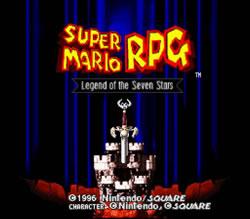
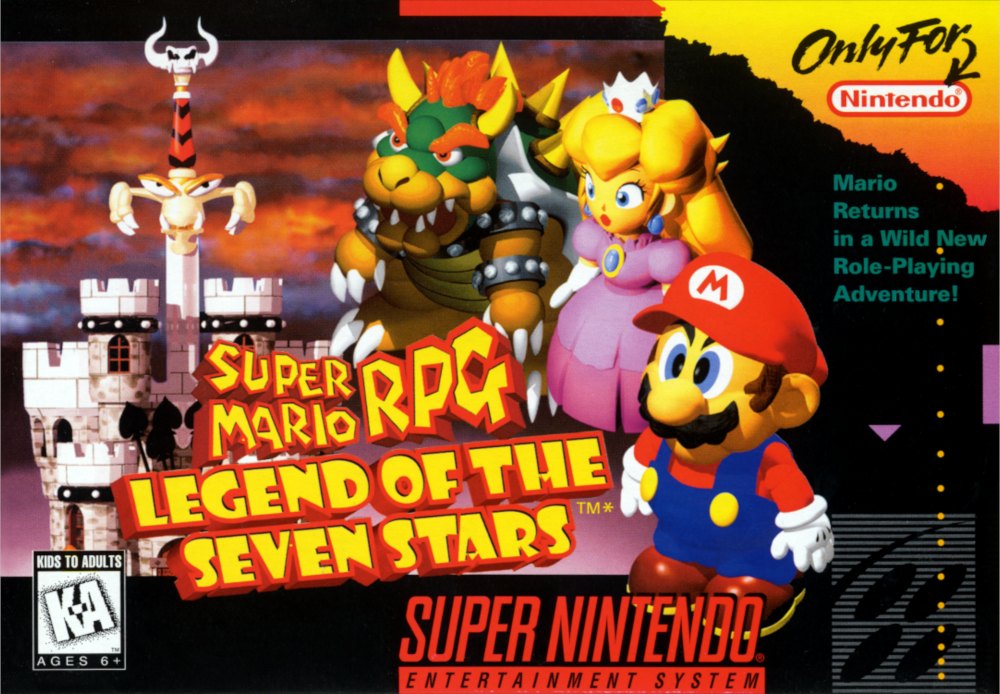
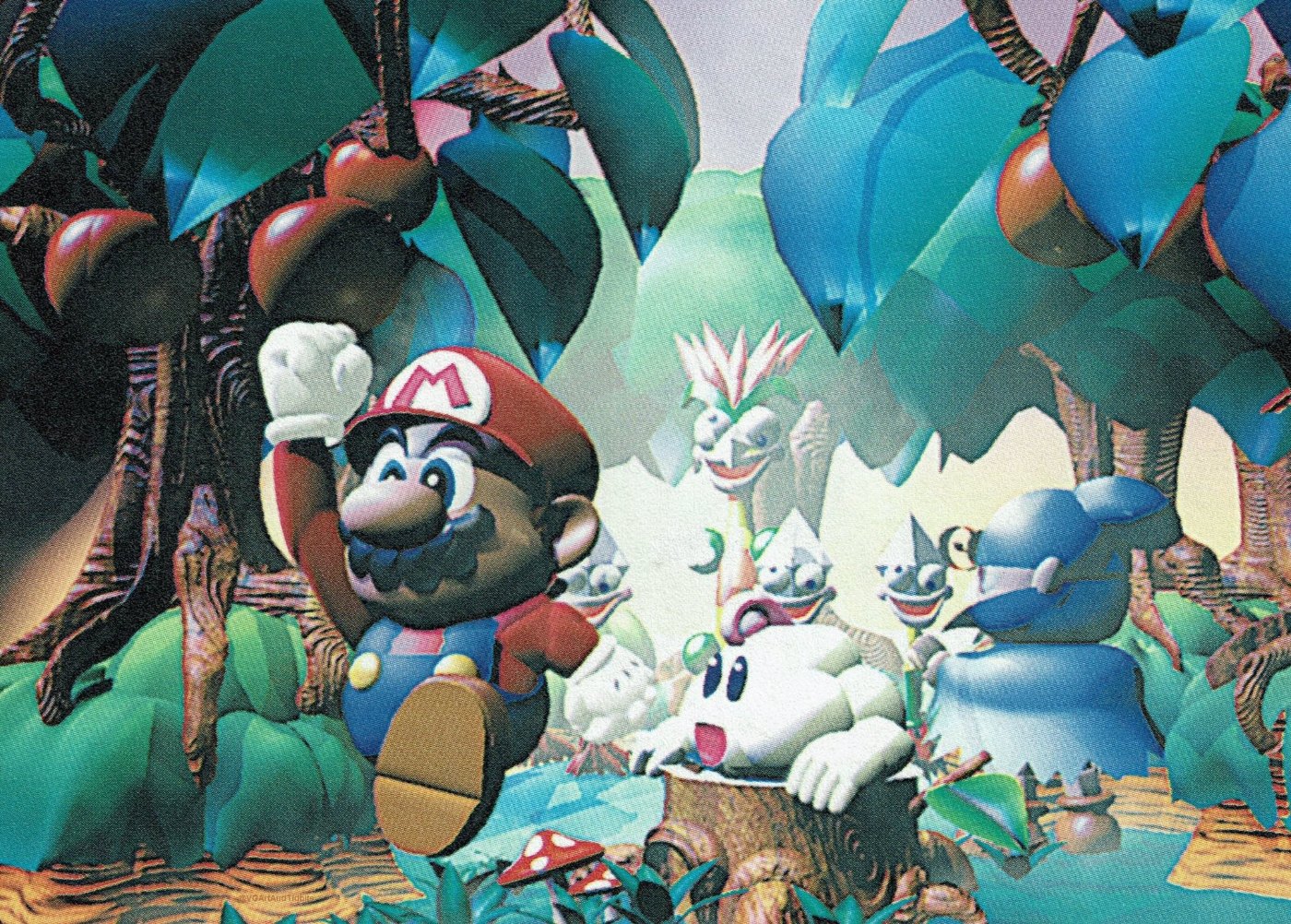
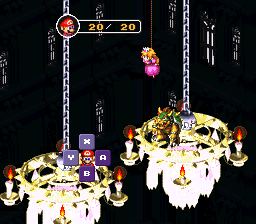
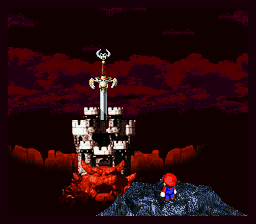
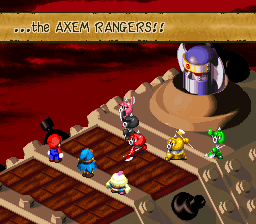
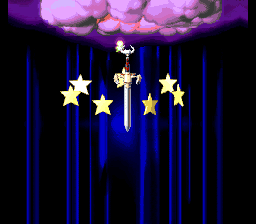
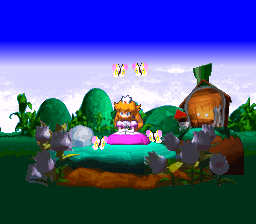
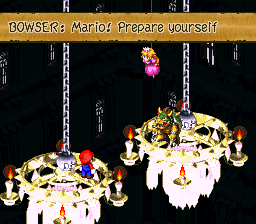
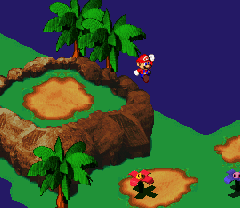
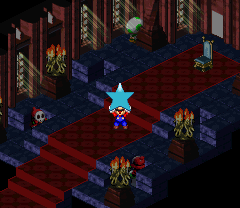
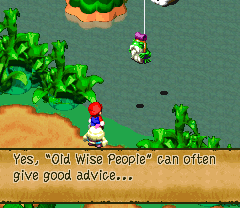
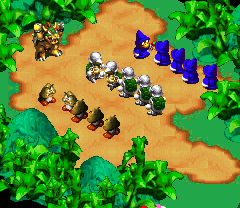
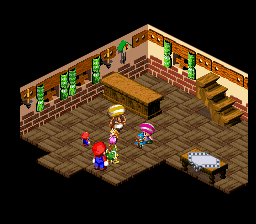
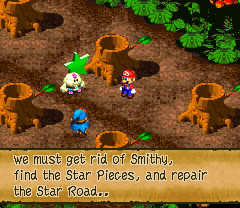
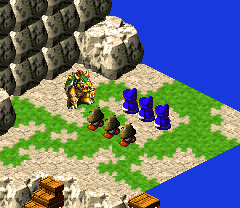
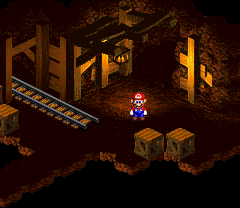
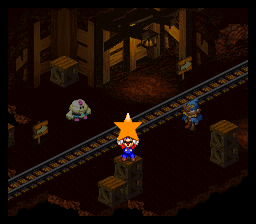
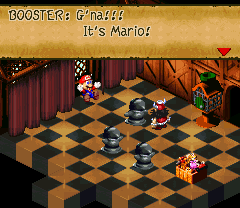
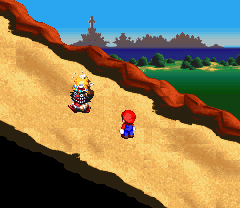
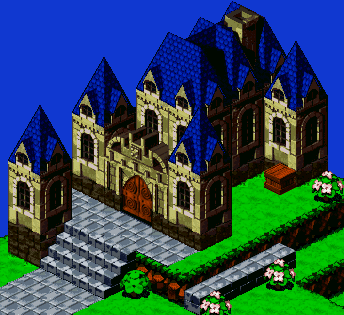
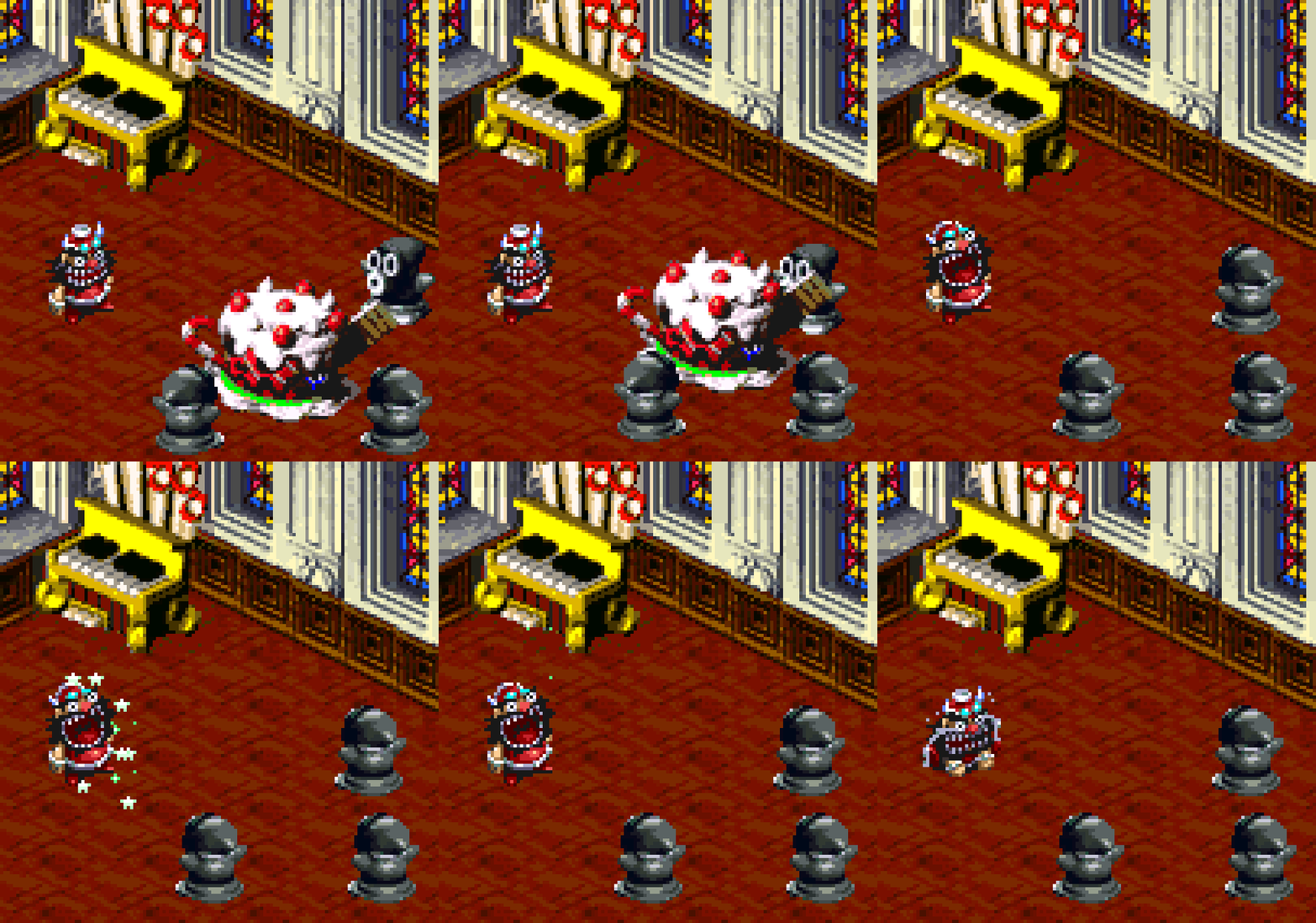
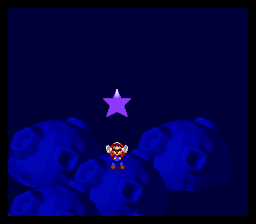
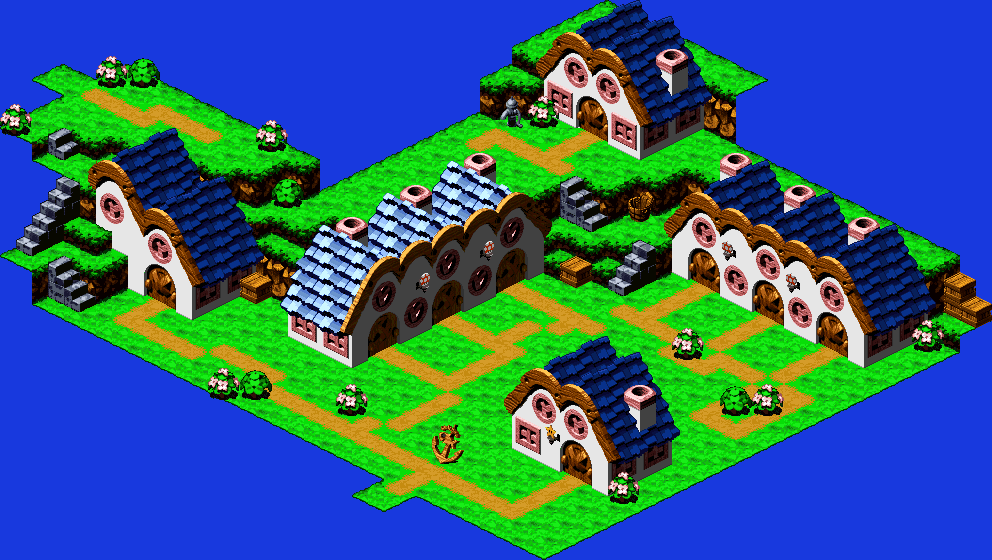
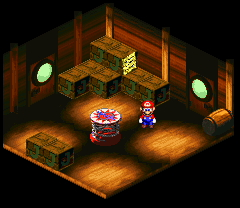
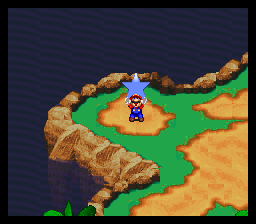
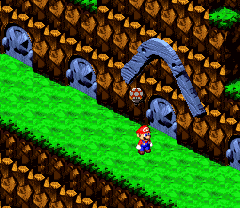
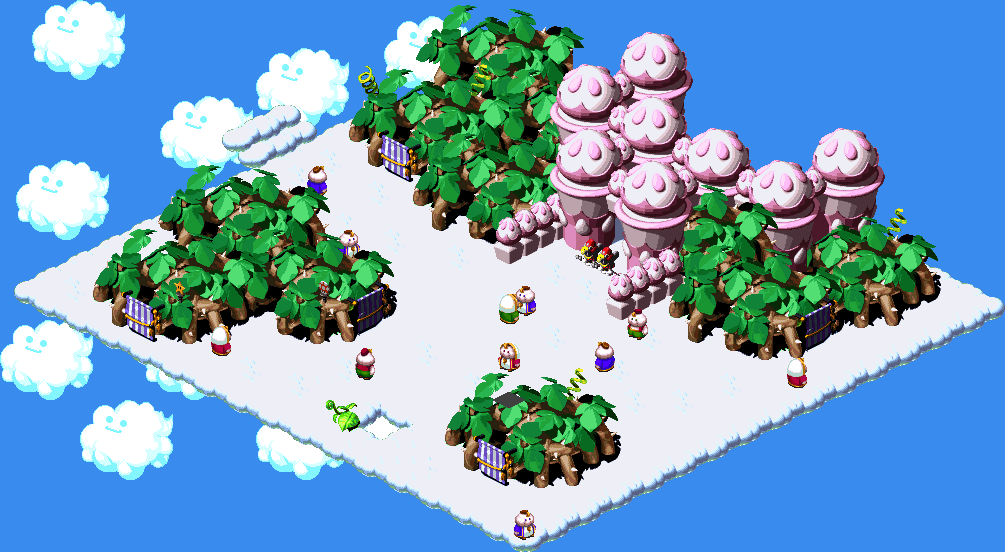
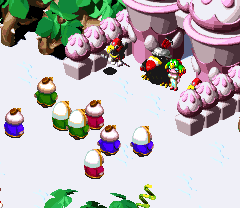
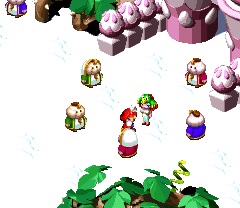
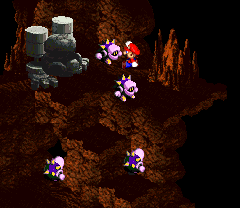
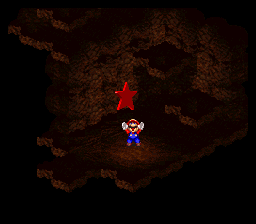
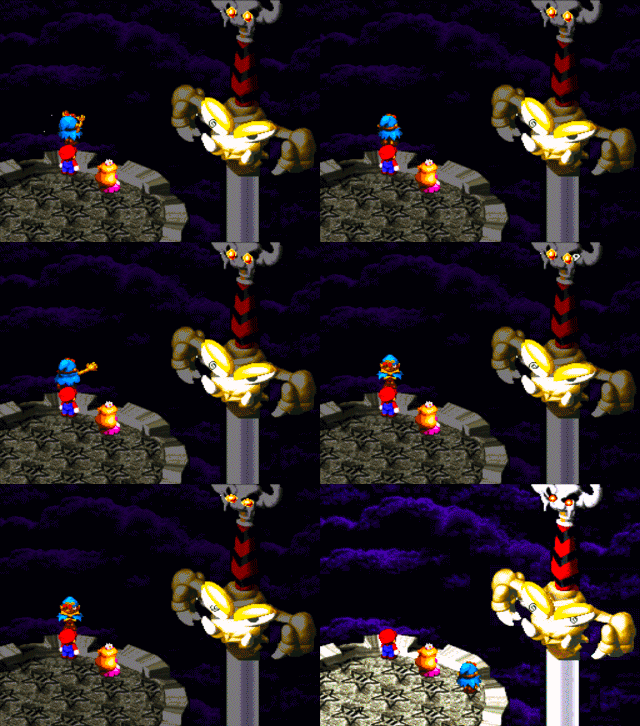
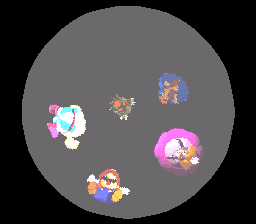
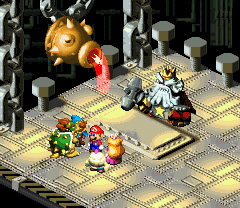
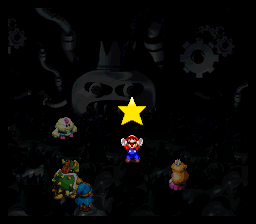

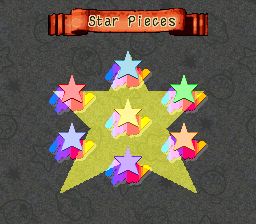
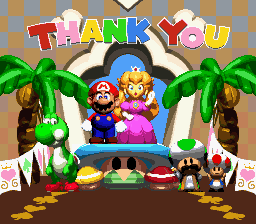
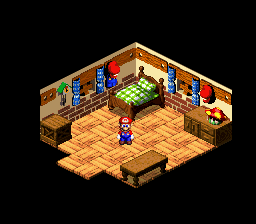 Mario’s PadMushroom Kingdom · startMario’s pipe-roofed house. The bed is free, and Toad gives the first lesson in timed hits outside.
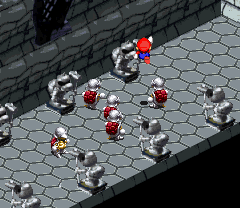 Bowser’s KeepBowser’s Keep region · Bosses: Bowser; later Magikoopa, Boomer and ExorVisited twice: for the prologue, and as the last castle once the Smithy Gang has moved in.
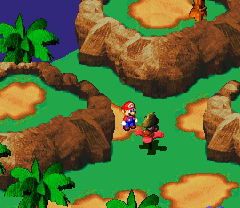 Mushroom WayMushroom Kingdom · Boss: Hammer Bros.The short road to town, and the source of Mario’s hammer.
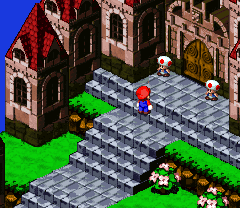 Mushroom KingdomMushroom Kingdom · townThe Toads’ capital, with a shop, an inn and the castle. Mallow joins here.
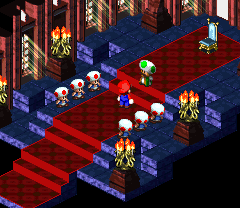 Mushroom CastleInside the Mushroom Kingdom · Star Piece 1 · Boss: MackThe Princess’s castle, where the Chancellor holds court and Mack briefly takes the throne.
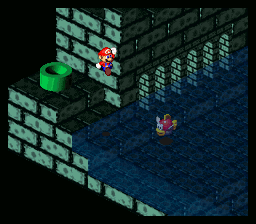 Kero SewersPond to Pipes · Boss: BelomePipe-linked sewers above the Midas River. A back entrance from Land’s End hides the Cricket Jam.
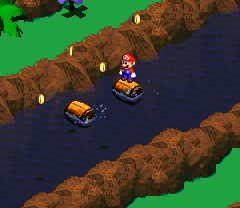 Midas RiverPond to Pipes · minigameA waterfall and a barrel run, with coins all the way down.
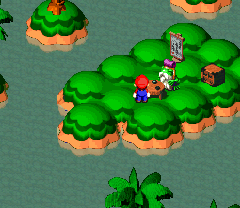 Tadpole PondPond to PipesHome of Frogfucius. Tadpoles run the Juice Bar and the Frog Coin emporium.
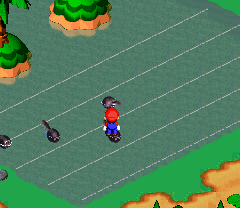 Melody BayInside Tadpole Pond · minigameToadofsky’s open-air composing room, where tunes are played on tadpoles.
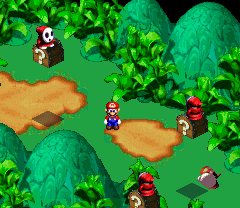 Rose WayPond to PipesA swampy road, where Bowser and his dwindling army are spotted making plans.
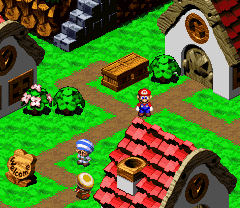 Rose TownPond to Pipes · townPinned down by Bowyer’s arrows. Geno comes to life at its inn, and Link later sleeps there.
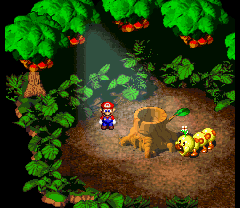 Forest MazePond to Pipes · Star Piece 2 · Boss: BowyerA winding wood in which Mario trails Geno to Bowyer. Its theme has been Geno’s signature tune in Smash Bros. trailers.
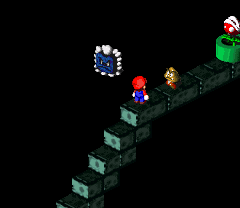 Pipe VaultPond to Pipes · optionalA lava-floored tunnel of pipes and Piranha Plants that leads to Yo’ster Isle. Goomba thumping is played here.
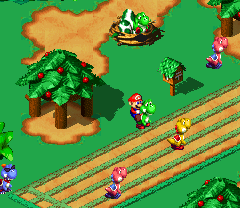 Yo’ster IsleYo’ster Isle · optional · Rival: BoshiThe Yoshis’ island and racetrack, home of the Mushroom Derby and an egg that hatches into Baby Fat.
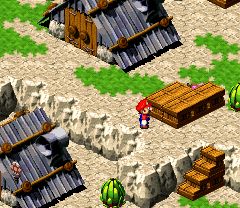 MolevilleMole Mountains · townA mountain mining town with a swap shop and a little girl who trades in shiny things.
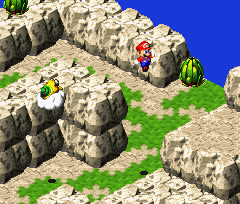 Booster PassMole MountainsThe rocky road to the tower, thick with Spikesters and Artichokers.
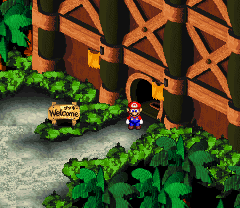 Booster TowerMole Mountains · Bosses: Knife Guy and Grate Guy; Booster (optional)Booster’s toy-filled tower. Bowser joins at its door, and 8-bit Mario appears behind a curtain.
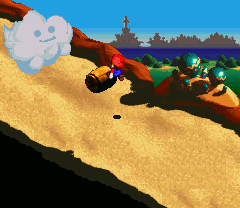 Booster HillMole Mountains · minigameAn uphill sprint over barrels after Booster, and later the Beetle Race course.
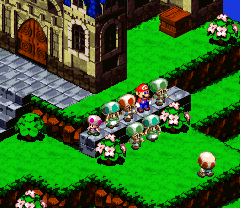 MarrymoreMole Mountains · town · Boss: Bundt and RaspberryA wedding resort with a chapel and a hotel whose suite is dear enough to land Mario a job as a bellhop.
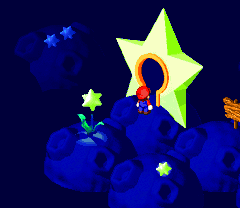 Star HillSeaside · Star Piece 4Where wishes fall to earth. The only Star Piece with no guardian.
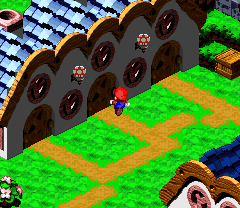 Seaside TownSeaside · town · Star Piece 5 · Boss: YaridovichA harbour town impersonated wholesale by Yaridovich. Its shops change their stock once the real owners are let out.
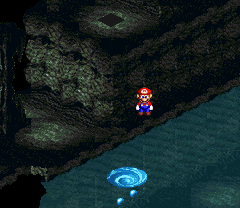 SeaSeasideA flooded tunnel leading out to the wreck, with a shop at the entrance.
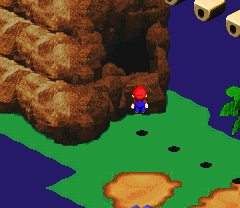 Land’s EndLand’s End · optional boss: MokuraCliffs, pot cannons, a desert of sand whirlpools and the Sky Bridge challenge.
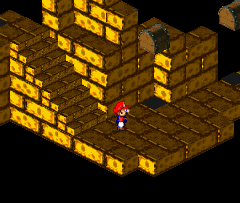 Belome TempleInside Land’s End · Boss: BelomeA temple under the sand where fortune-tellers decide whether Mario gets treasure, a fight or Belome.
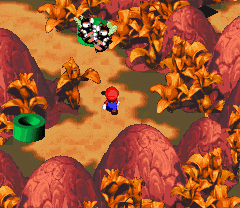 Bean ValleyLand’s End · Boss: MegasmilaxA valley of pipes with a hidden way through to the casino.
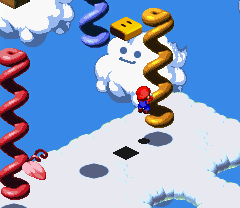 The VineryInside Bean ValleyMulticoloured beanstalks climbing through the clouds to Nimbus Land.
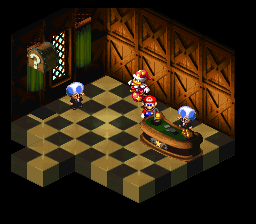 Grate Guy’s CasinoLand’s End · optional · needs the Bright CardBlackjack, a slot machine and Look the Other Way with Grate Guy himself.
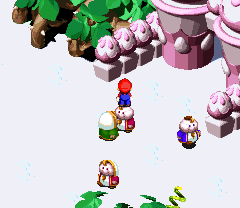 Nimbus LandNimbus Land · town · Bosses: Dodo and ValentinaThe cloud kingdom of Mallow’s people, with a hot spring reserved for royalty.
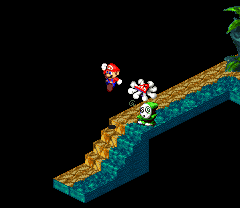 Nimbus CastleInside Nimbus Land · Bosses: Shelly and Birdo; Dodo (optional)The palace of King and Queen Nimbus, held by Valentina until Mario arrives disguised as a statue.
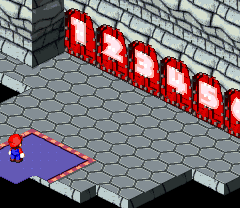 The Trial CourseInside Bowser’s KeepSix doors of action, battle and puzzle rooms. Four must be completed to go on.
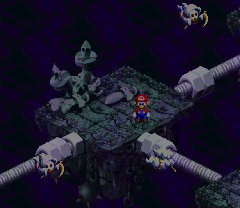 GateThrough Exor · Bosses: Count Down, Cloaker and DominoThe dark, machine-strewn void on the far side of Exor’s mouth, patrolled by Machine Made copies of old bosses.
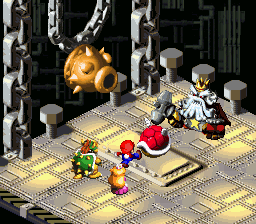 FactoryBeyond the Gate · Star Piece 7 · Bosses: Clerk, Manager, Director, Factory Chief and Gunyolk, SmithySmithy’s weapon works, and the end of the road.
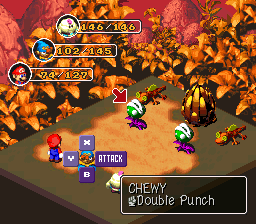
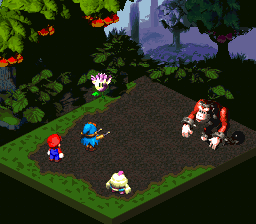
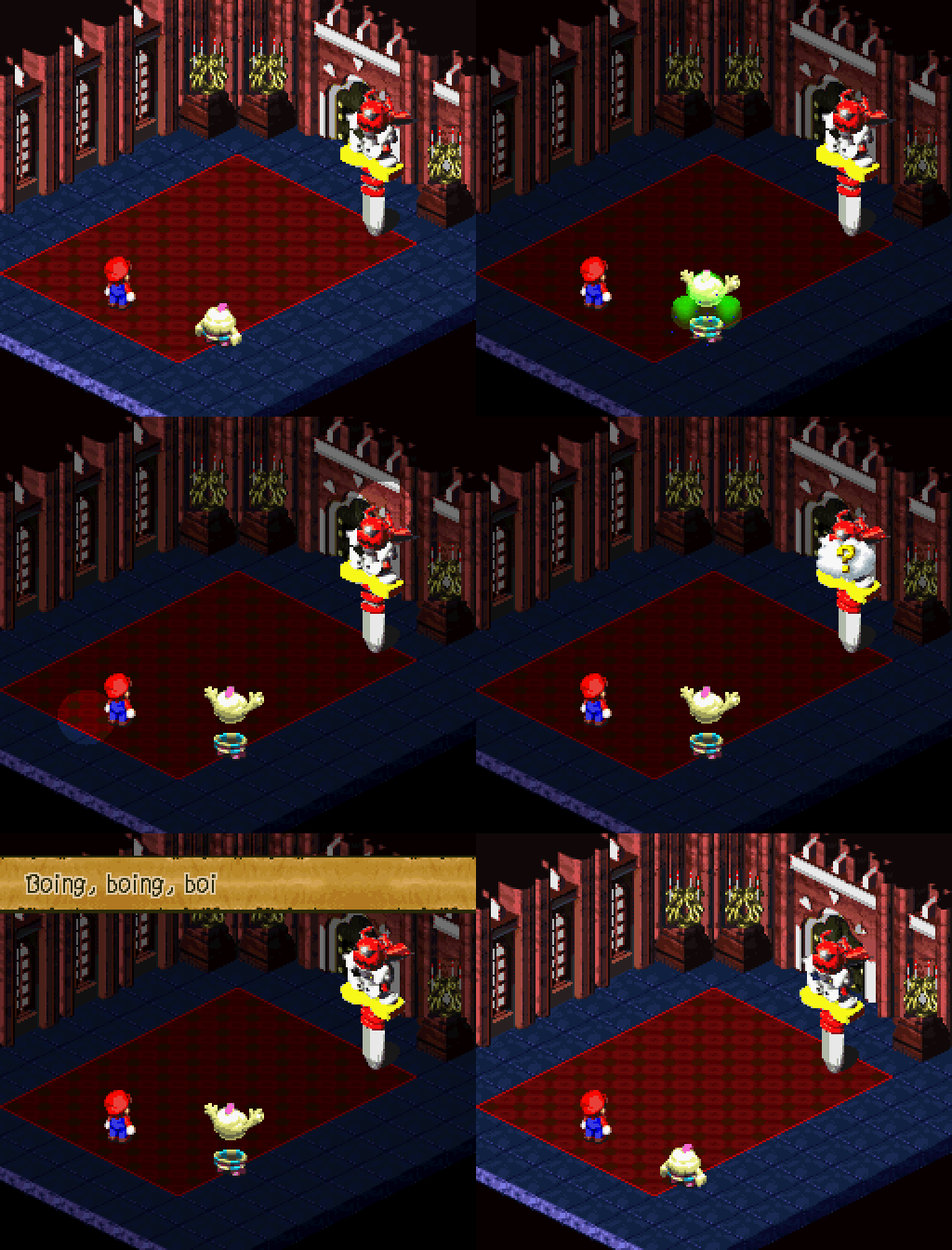
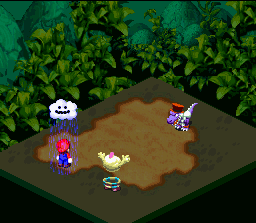
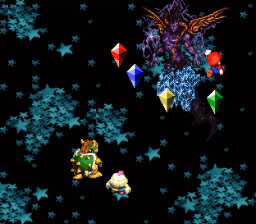
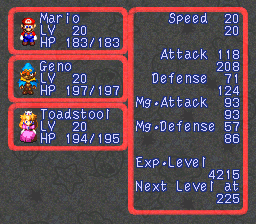


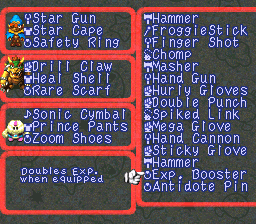
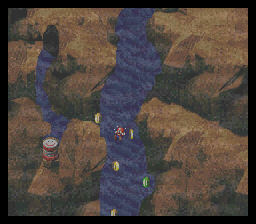
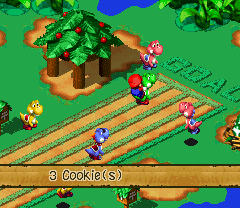
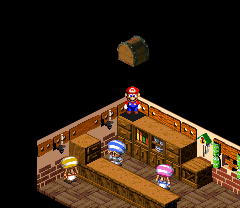
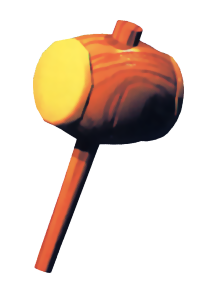 HammerMario’s first weapon (Attack +10), taken from the Hammer Bros. on Mushroom Way. The Super Hammer and Ultra Hammer (+70) follow.
 Lazy Shell (weapon)Mario’s best weapon: Attack +90, with a wide swing either side of that. Grown from the Seed and Fertilizer.
 Lazy Shell (armour)Defense and Magic Defense +127, immunity to every ailment and to elemental damage, but Attack, Magic Attack and Speed all drop by 50. Anyone can wear it.
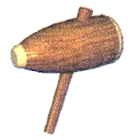 MasherA hammer with Attack +50 and an enormous random spread of 30 either way.
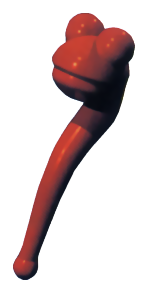 Froggie StickMallow’s first weapon (+20), made by Frogfucius and given in return for a Cricket Pie.
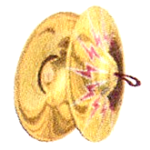 Sonic CymbalMallow’s strongest weapon, Attack +70.
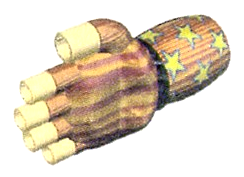 Star GunGeno’s last and best arm cannon, Attack +57.
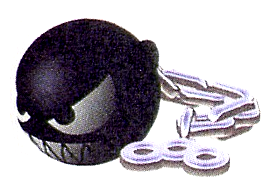 ChompBowser swings a live Chain Chomp by its chain. It waits behind a locked door in Booster Tower that needs the Elder Key.
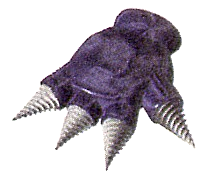 Drill ClawBowser’s strongest weapon, Attack +40.
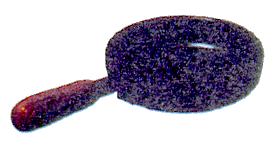 Frying PanToadstool’s finest, Attack +90, and at 300 coins the dearest weapon in any shop. It is sold in Moleville under the name Metal Plate.
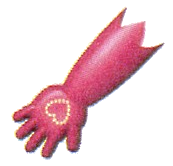 Super SlapA glove for the Princess, Attack +70.
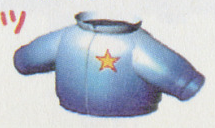 Super SuitThe most generous armour of all: +50 to Attack, Magic Attack, Defense and Magic Defense, +30 Speed and immunity to ailments. The prize for 100 Super Jumps in a row.
 Attack ScarfMario only. +30 to all five statistics and protection from instant death, for 30 consecutive Super Jumps.
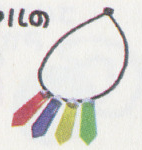 Quartz CharmCulex’s parting gift. The wearer deals half as much damage again, takes half, and cannot be killed outright.
 Jinx BeltAttack and Defense +27, Speed +12 and no instant death. Awarded for beating Jinx three times at his dojo.
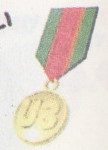 Ghost MedalHalves the damage the wearer takes. The reward for finding the three flags of the 3 Musty Fears.
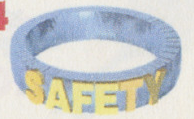 Safety RingBlocks every ailment, instant death and all elemental damage, with +5 to both defences and Speed.
 Safety BadgeBlocks every status ailment, though not instant death.
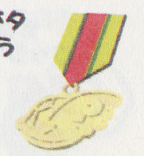 Troopa PinSpeed +20 and half as much damage again on attacks.
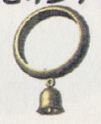 Signal RingSignals when a hidden treasure box is near. Speed +10.
 Exp. BoosterDoubles the wearer’s experience, even on the bench. 22 Frog Coins from Frogfucius’s student.
 Coin TrickDoubles the coins won in battle when Mario wears it. 36 Frog Coins.
 Scrooge RingHalves the Flower Points the wearer spends. At 50 Frog Coins, the most expensive thing the student sells.
 Zoom ShoesSpeed +10 and +5 to both defences. Locked in a Booster Tower room that needs the Room Key.
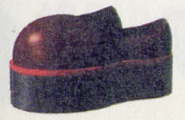 Jump ShoesMario only: lets his Jump moves hurt enemies that normally shrug them off.
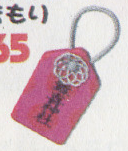 Amulet+7 to attack and defence figures and half damage from elements, at the cost of 5 Speed. A present from Booster if Mario gets through the curtain game undetected.
 FeatherSpeed +20 and a little defence.
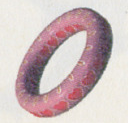 B’tub RingFor the Princess. Halves elemental damage, and she must be wearing it to hatch the Mystery Egg.
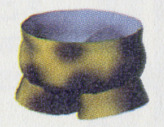 Work PantsArmour anyone can wear, with a little of everything: Attack and Magic Attack +10, Defense +15.
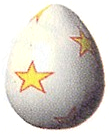 Star EggHits every enemy for 100 and never runs out. The prize for winning Look the Other Way 100 times at the casino.
 Sheep AttackTurns every enemy into a sheep that wanders off. Earned by using the Lamb’s Lure 48 times.
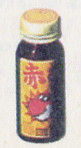 Red EssenceMakes one character untouchable for three turns.
 Kerokero ColaRestores everyone’s HP and all FP. 200 coins at the Juice Bar once Mario has the Soprano Card.
 Rock CandyA sweet that damages every enemy on screen.
 Yoshi CookieCalls Yoshi into battle to swallow an enemy and lay it as an item. If he fails he leaves a Yoshi Candy instead.
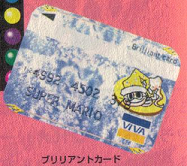 Bright CardMembership of Grate Guy’s Casino. Knife Guy hands it over after twelve straight wins at his game in Booster Tower.
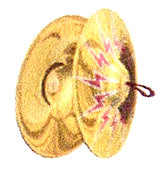
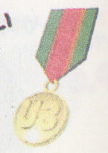
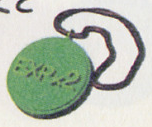


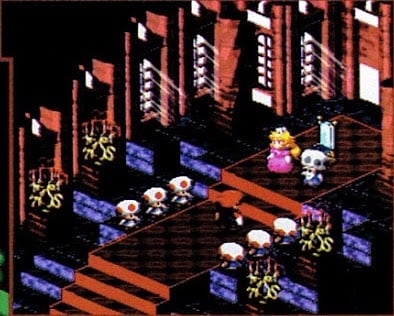 Nintendo PowerNintendo of America · 1995–97The magazine previewed the game at length in volume 77 (October 1995), when Square put it at roughly 70 per cent complete, followed it through its Epic Center column, reviewed it in volume 84 (May 1996) and ranked it 21st of the 100 best Nintendo games in volume 100. Its early screenshots show things that never shipped, including a bearded Chancellor and a Lakitu ferrying Mario around Booster Tower. Super Luigi Bros has scans of several of these features, linked at the foot of the page.
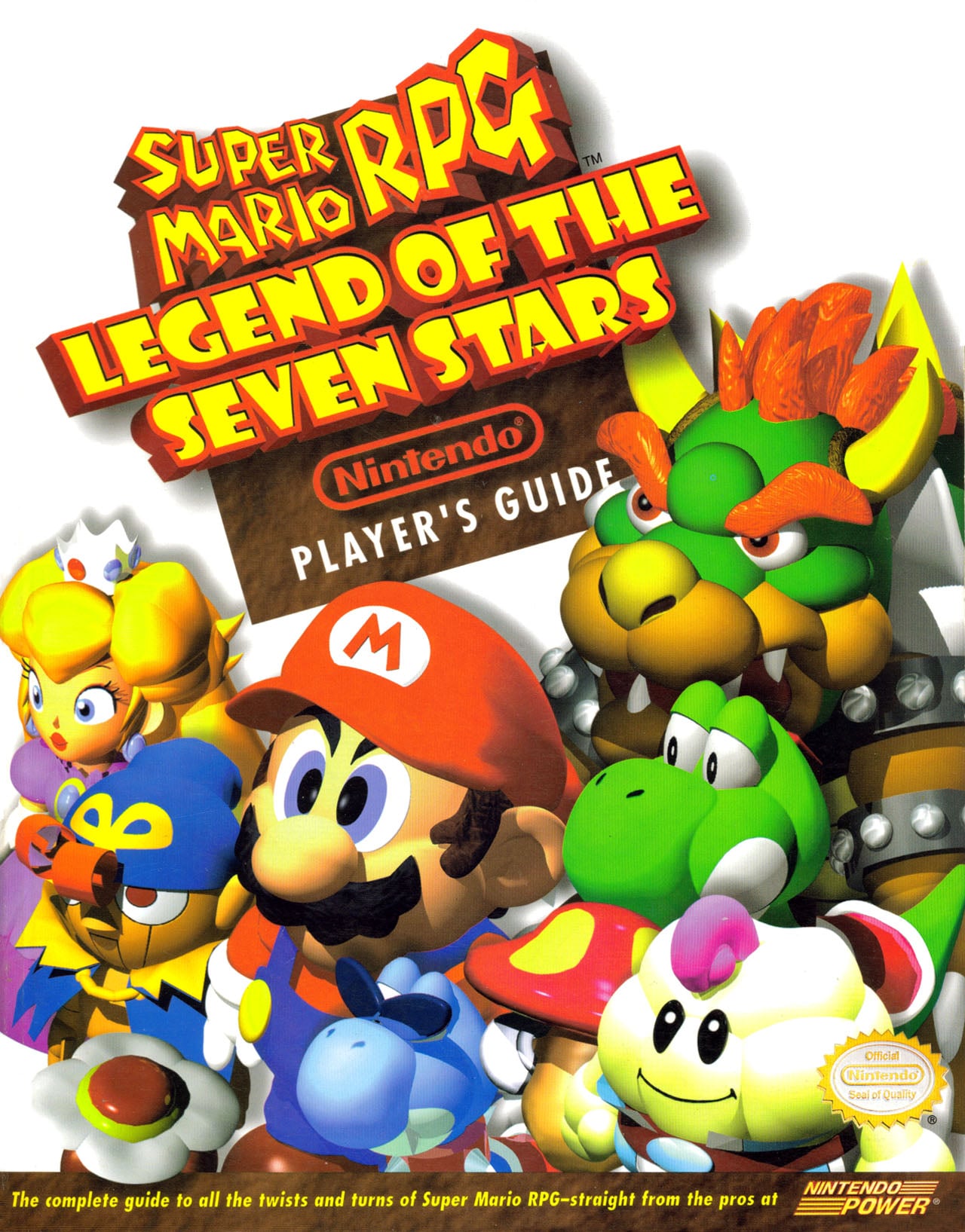 Nintendo Player’s GuideNintendo of America · 1996Nintendo’s official guide book, illustrated with Square’s rendered artwork. Like some of Nintendo Power’s coverage it labels Exor as Smithy.
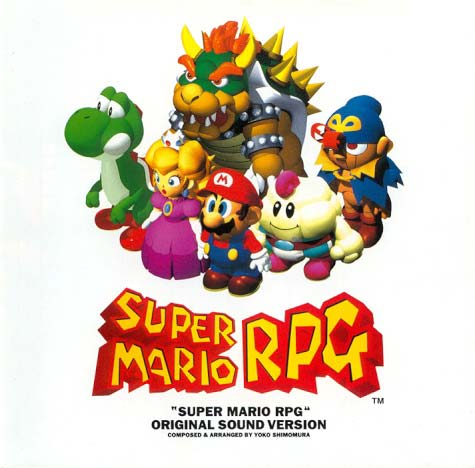 Super Mario RPG Original Sound VersionNTT Publishing · Japan, March 1996Yoko Shimomura’s complete score on two discs, sold only in Japan, with a sheet of stickers in the case.
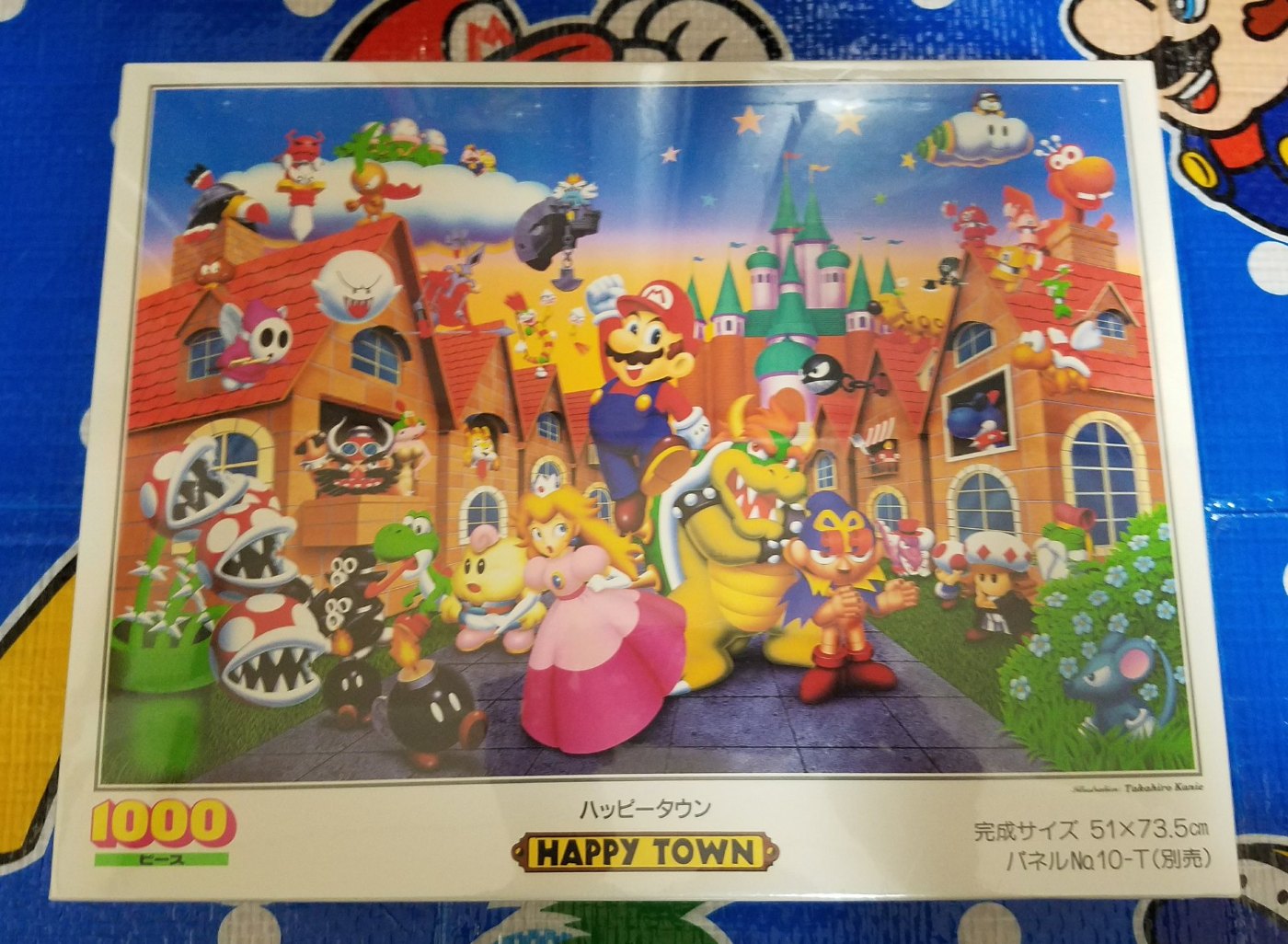 Trading cards and a jigsawTop Sun, Bandai and others · 1995–96Merchandise included a set of Top Sun trading cards in 1995, a Bandai set in 1996 and a 1,000-piece jigsaw illustrated by Takahiro Kanie.
 Mario & Luigi: Superstar SagaGame Boy Advance · 2003A Geno doll hosts the Star ’Stache Smash game in Little Fungitown, with a line in the credits reserving his copyright for Square Enix. The 3DS remake replaced him with speech bubbles. The music at the Mario Bros.’ house is a short arrangement of the tune from Mario’s Pad.
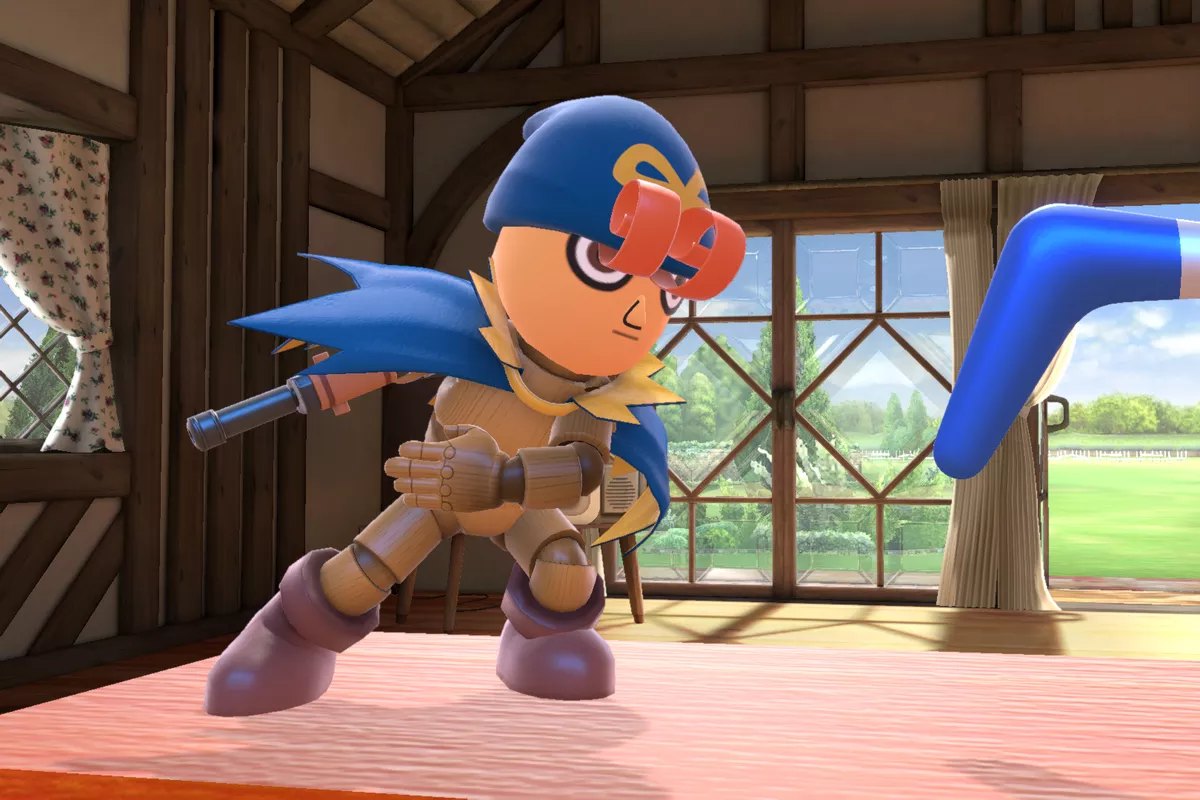 Super Smash Bros.Nintendo · 2015 and 2020A Geno costume for the Mii Gunner was sold as add-on content for the 3DS and Wii U games in December 2015, alongside Cloud Strife, and came back for Super Smash Bros. Ultimate in December 2020 with Sephiroth. Masahiro Sakurai told Nintendo Dream in 2016 that he had wanted Geno as a playable fighter. Ultimate also has Geno and Mallow as spirits, and Peach has swung a frying pan since Melee.
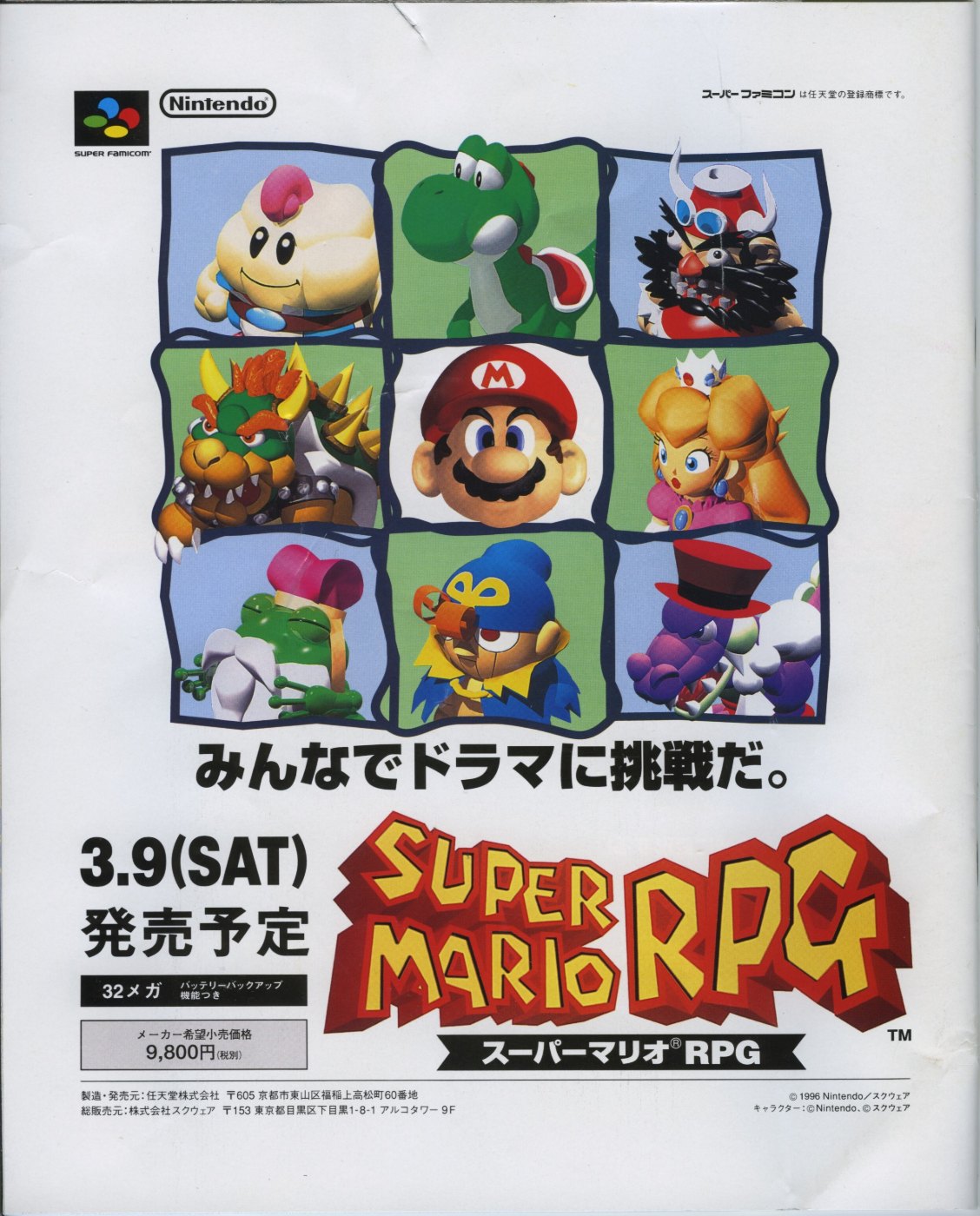 Japanese magazine advertsNintendo / Square · 1995–96The Japanese print campaign began with a teaser advert and continued with a full one in the Super Famicom magazines.
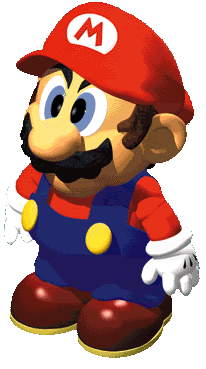 MarioThe hero, and a gifted mime
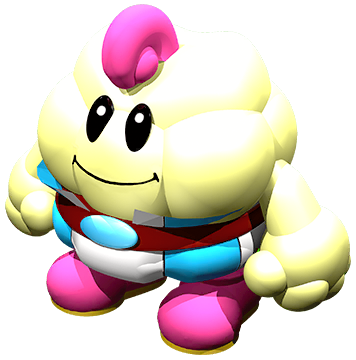 MallowPrince of Nimbus Land (though he does not know it)
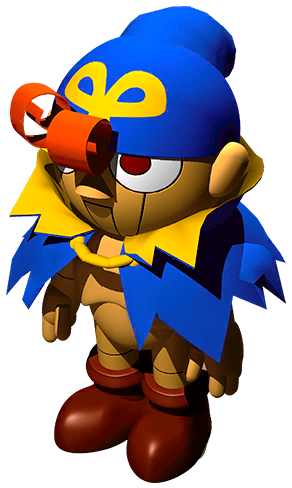 GenoA star in a borrowed body
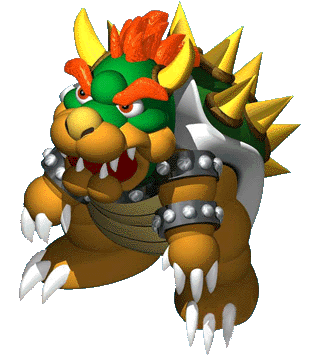 BowserKing of the Koopas, temporarily homeless
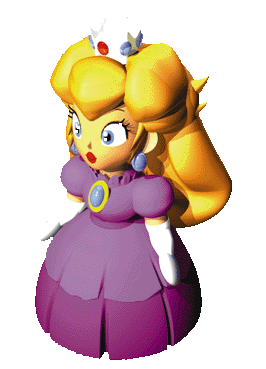 Princess ToadstoolRuler of the Mushroom Kingdom
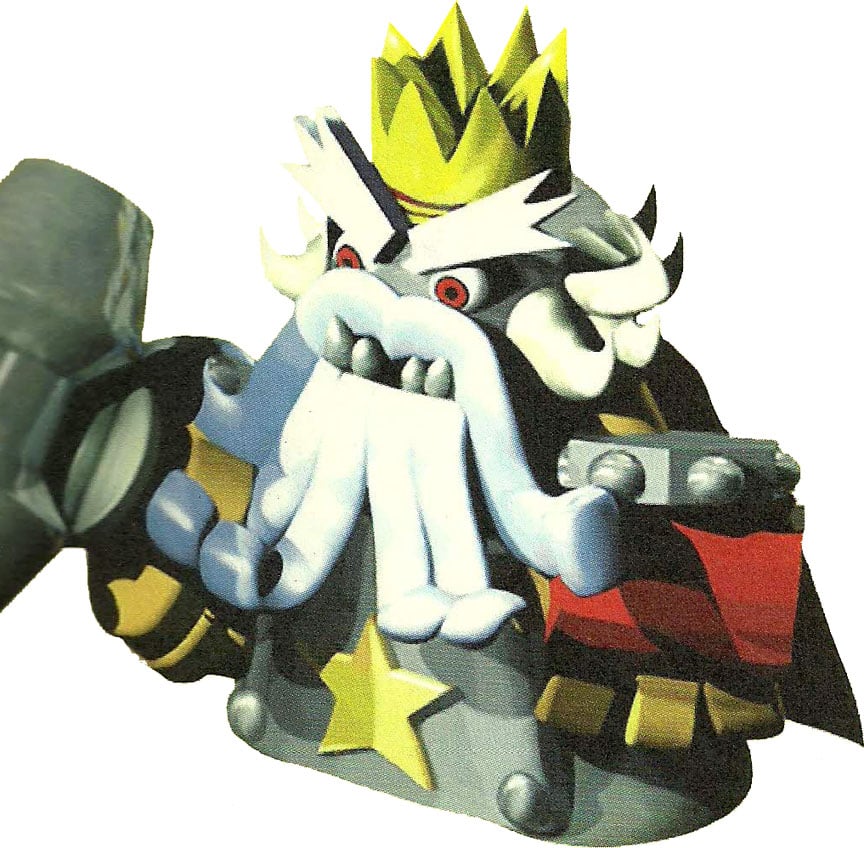 SmithyKing of the Smithy Gang
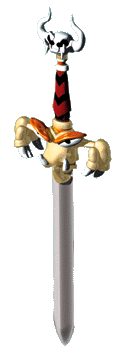 ExorThe sword in the castle
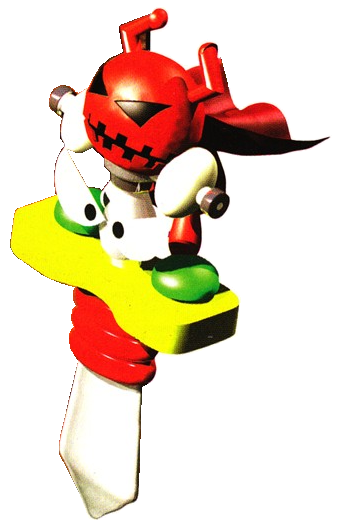 MackSmithy Gang · first star
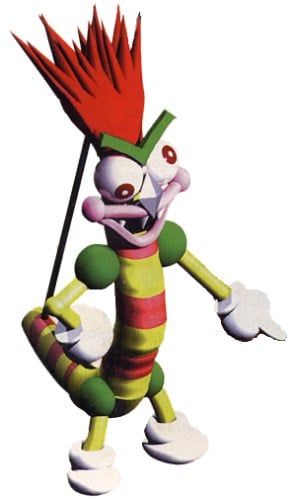 BowyerSmithy Gang · second star
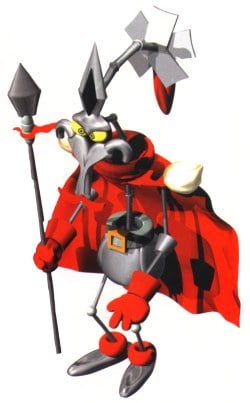 YaridovichSmithy Gang · fifth star
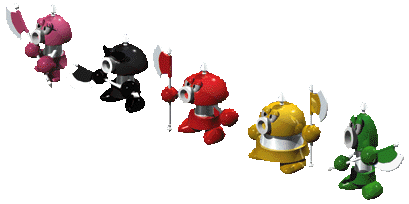 The Axem RangersSmithy Gang · sixth star
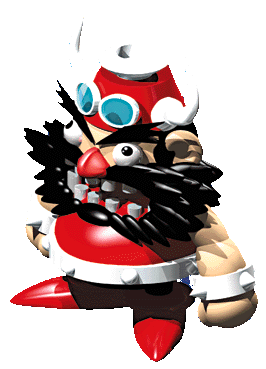 BoosterSeventh in the line of Boosters
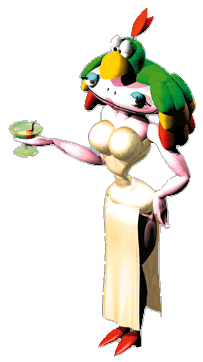 Valentina and DodoUsurpers of Nimbus Land
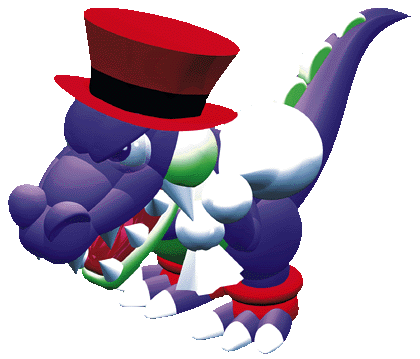 CrocoThief
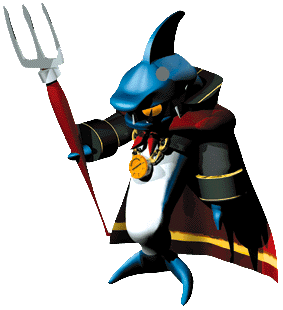 Jonathan “Johnny” JonesPirate captain of the Sunken Ship
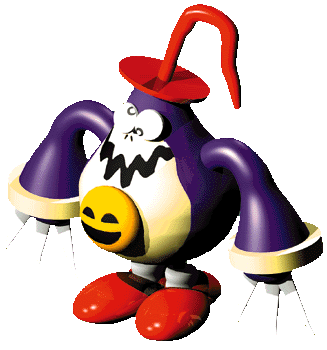 PunchinelloBomber of the Coal Mines
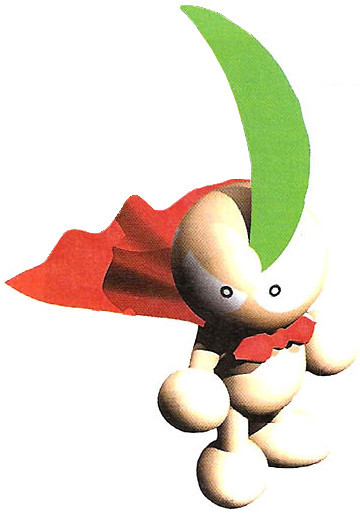 JinxMaster of the Monstro Town dojo
 CulexDark Knight of Vanda
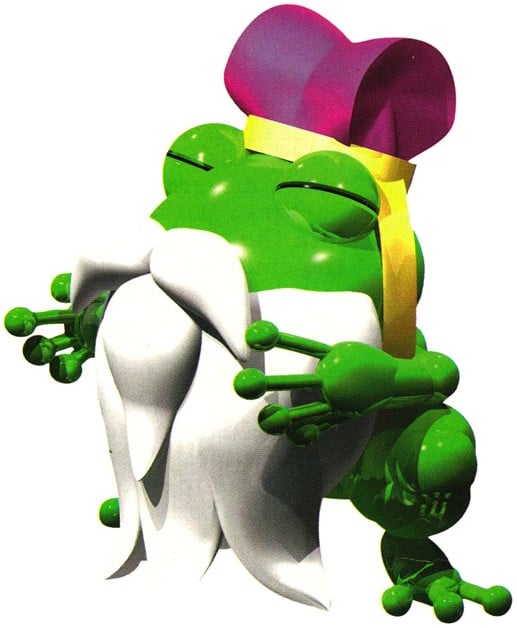 FrogfuciusSage of Tadpole Pond
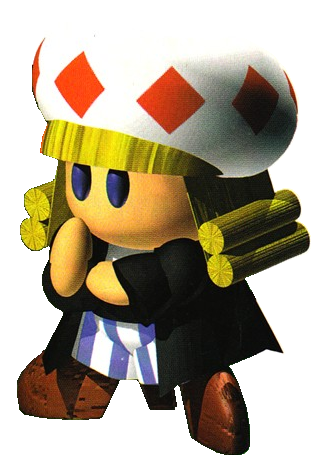 ToadofskyComposer
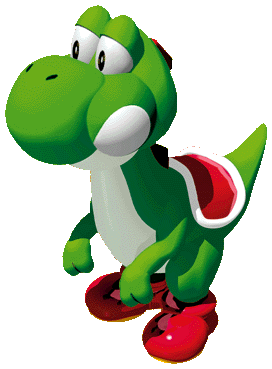 Yoshi and BoshiRacers of Yo’ster Isle
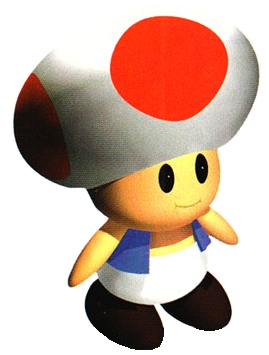 Toad and the ChancellorThe Mushroom Kingdom’s staff
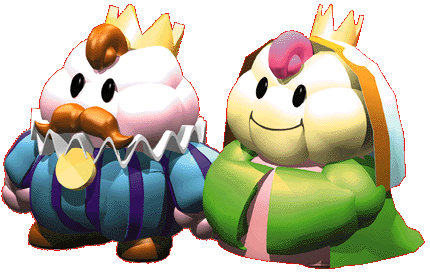 King and Queen NimbusMallow’s parents
 LuigiHost of the manual, leader of the parade
 Bowser (boss)Bowser’s Keep, prologueHas 320 HP that never run out. Attack Kinklink (60 HP), the chain above him, to bring the chandelier down.
 Hammer Bros. (boss)Mushroom WayTwo of them with 50 HP apiece. They leave the Hammer behind.
 Croco (boss)Bandit’s Way; Coal Mines320 HP, then 750. Fire sets his tail alight in the first fight; in the second he pinches the party’s items halfway through.
 Mack (boss)Mushroom Castle480 HP and four Bodyguards. Leaves the screen if they are not dealt with, then returns with Flame Wall.
 Belome (boss)Kero Sewers; Belome Temple500 HP in the sewers, where he makes scarecrows; 1,200 in his temple, where he spits out clones of the party.
 Bowyer (boss)Forest Maze720 HP. Locks one of the A, X and Y buttons at a time.
 Punchinello (boss)Coal Mines1,200 HP. Sends in Microbombs, Bob-ombs and Mezzo Bombs, then drops a King Bomb on his own head.
 Booster (boss)Booster Tower (optional)800 HP, hiding behind his Snifits. Below 500 he brings out Spritz Bomb and Loco Express.
 Knife Guy (boss)Booster Tower balcony700 HP. A juggling clown, fought alongside Grate Guy.
 Grate Guy (boss)Booster Tower balcony900 HP. The other clown. He later runs the casino.
 Bundt (boss)MarrymoreThe top of the wedding cake, 900 HP that cannot be emptied in the usual way. Chef Torte and his apprentice open the fight.
 Raspberry (boss)MarrymoreThe bottom tier, 600 HP. Booster eats it.
 King Calamari (boss)Sunken Ship800 HP, reached only after his tentacles (260 and 200 HP) have been fought off.
 Johnny (boss)Sunken Ship820 HP and four Bandana Blues. Finishes as a one-on-one duel with Mario.
 Yaridovich (boss)Seaside Town1,500 HP. Opens with Water Blast and splits off a 500 HP double. Weak to thunder.
 Mokura (boss)Land’s End; Belome Temple (optional)A drifting cloud of gas. It starts the fight as Formless (10 HP) and then shows itself, with 620.
 Jinx (boss)Monstro Town (optional)Three matches at 600, 800 and 1,000 HP, after his pupil Jagger.
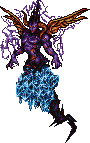 Culex (boss)Monstro Town (optional)4,096 HP plus four Crystals: 12,396 in all, more than both forms of Smithy put together.
 Megasmilax (boss)Bean Valley1,000 HP. A Shy Away waters ordinary Smilaxes (200 HP) until this appears.
 Shelly (boss)Nimbus CastleA giant egg with 500 HP. Crack it and Birdo is inside.
 Birdo (boss)Nimbus Castle777 HP, firing explosive eggs called Eggberts. She gives up Castle Key 2.
 Dodo (boss)Nimbus Castle (optional); Nimbus Land800 HP in the castle, 1,000 beside Valentina, when he carries off the middle member of the party.
 Valentina (boss)Nimbus Land2,000 HP and nine spells, with little defence to back them up.
 Czar Dragon (boss)Barrel Volcano1,400 HP. Calls up fiery Helios to help.
 Zombone (boss)Barrel Volcano1,800 HP. The Czar Dragon again, as a skeleton.
 Axem Rangers (boss)Barrel Volcano, aboard the BladePink 400, Black 550, Red 800, Yellow 600 and Green 450 HP, then the Blade’s Breaker Beam with 999.
 Magikoopa (boss)Bowser’s Keep1,600 HP. Summons a Jinx Clone, a King Bomb or a Bahamutt to fight for him.
 Boomer (boss)Bowser’s Keep2,000 HP. Fought on the chandeliers, where the game began.
 Exor (boss)Bowser’s Keep, roof1,800 HP, protected by two eyes that reopen a few turns after being shut. Thanks to an oversight a timed Geno Whirl finishes it instantly.
 Count Down (boss)GateA clock face with 2,400 HP, flanked by two bell-shaped Ding-A-Lings with 1,200 each.
 Cloaker (boss)Gate1,200 HP. If Domino falls first, Cloaker mounts the serpent Earth Link (2,500).
 Domino (boss)Gate900 HP. If Cloaker falls first, Domino mounts the snake Mad Adder (1,500).
 Clerk (boss)Factory500 HP. The first of the Factory’s management, reading out a roll of the fallen.
 Manager (boss)Factory800 HP, with a production line of minions that are replaced as fast as they fall.
 Director (boss)Factory1,000 HP. As the Manager, only more so.
 Factory Chief (boss)Factory1,000 HP. Fights alongside his walking cannon.
 Gunyolk (boss)Factory1,500 HP. The Factory Chief’s gun, and the last thing between the party and Smithy.
 Smithy (boss)Factory2,000 HP with his Smelter (1,500) casting Shypers (400), then 8,000 as a head that keeps changing shape.
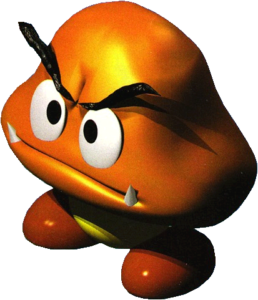 GoombaMushroom Way, Bandit’s Way, Pipe VaultAs low on the ladder as ever. Gold ones appear in Goomba thumping.
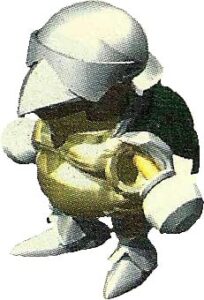 TerrapinBowser’s Keep (first visit)Armoured Koopa guards of the Keep. Jagger of Monstro Town is one of them.
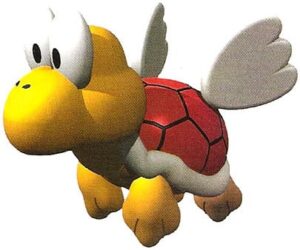 Sky TroopaMushroom Way, Bandit’s Way, Booster PassWinged Koopas. Sergeant Flutter’s squad are the friendly sort.
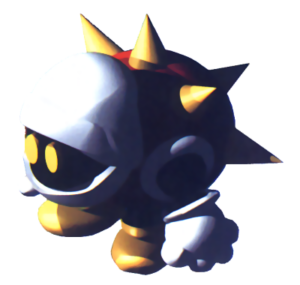 SpikeyMushroom Way, Bandit’s Way, Pipe Vault, Booster PassSpiked shells that punish a careless jump. They also spoil a round of Goomba thumping.
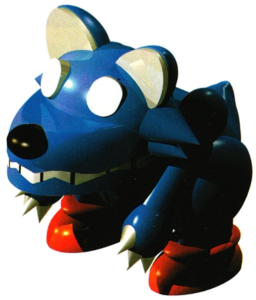 K-9Bandit’s WayA guard dog of the bandit road.
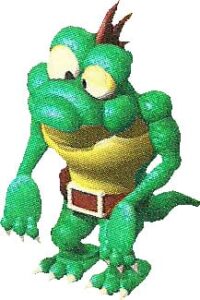 FrogogBandit’s Way, Pipe VaultA big, bad-tempered frog.
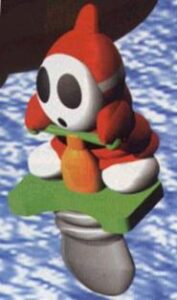 ShysterMushroom Kingdom, Mushroom CastleMack’s troops: Shy Guys on sword pogo sticks. His Bodyguards are the same creature.
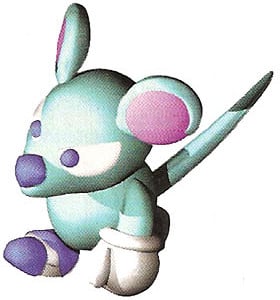 Rat FunkKero Sewers, Forest MazeA sewer rat with attitude.
 The Big BooKero Sewers, The Trial CourseThe ghosts of the sewers. Pure Water finishes any ghost at once.
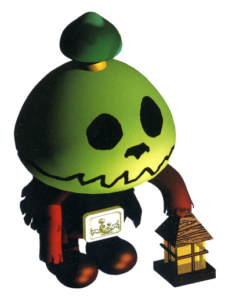 HobgoblinKero SewersHaunts the same sewers.
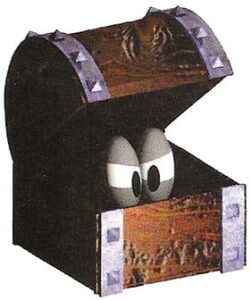 PandoriteKero SewersA treasure box that bites back, the first of several chest monsters.
 StarslapRose WayA starfish. Its relative under the sea is the Zeostar.
 SnapdragonRose WayA flower with teeth.
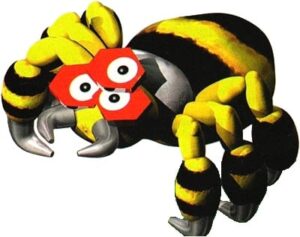 ArachneRose WayA large spider.
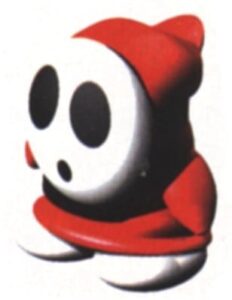 Shy GuyRose WayThe plain masked original.
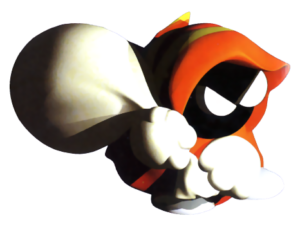 CrookRose Way, Coal MinesHooded thieves. Three of them help Croco rob Mario in the mines.
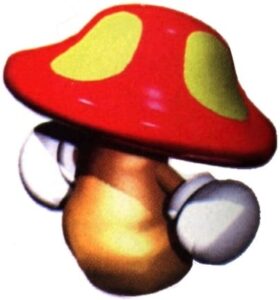 AmanitaForest Maze, The Trial CourseA mushroom monster of the forest.
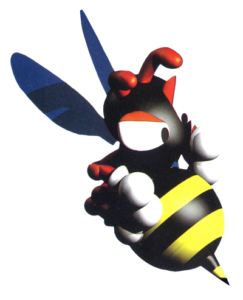 BuzzerForest MazeA giant bee. Early builds had swarms of them on the first road.
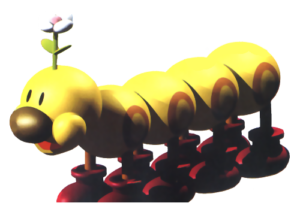 WigglerForest MazeThe caterpillar from Super Mario World.
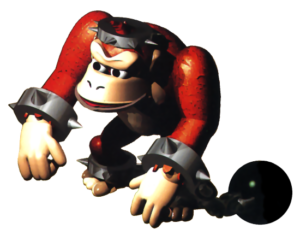 GuerrillaForest MazeA Donkey Kong look-alike, modelled on his Donkey Kong Country redesign. One throws barrels in Bowser’s Keep; the Chained Kong of Barrel Volcano is its big brother.
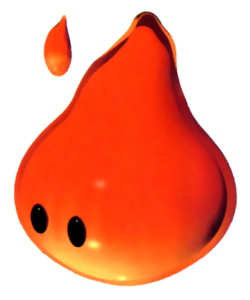 SparkyPipe Vault, Coal MinesA living flame. The Pyrosphere of Barrel Volcano is a hotter relative.
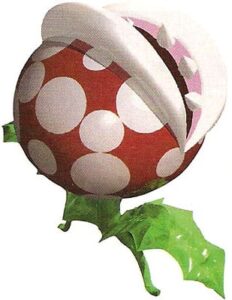 Piranha PlantPipe VaultIn the pipes, where else. One in Monstro Town complains about the noise from next door.
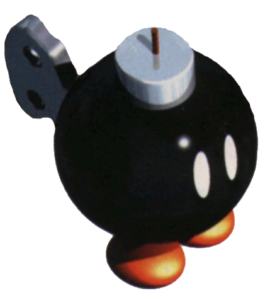 Bob-ombCoal MinesWalking bombs, also thrown by Punchinello.
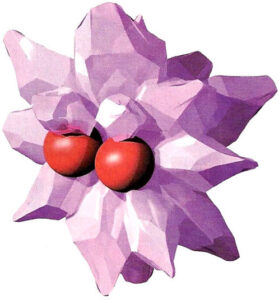 ClusterCoal MinesA cluster of living rock from the mines.
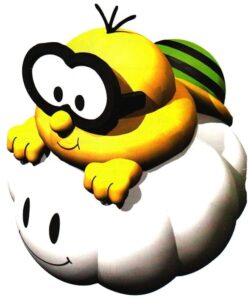 LakituBooster Pass, The Trial CourseCloud-riding Koopas. A friendly one holds Frogfucius aloft on a fishing line.
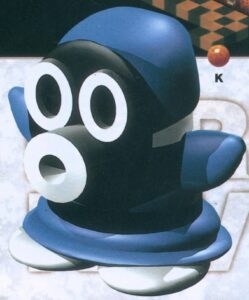 SpookumBooster TowerBooster’s masked guards. The Apprentices met on Booster Pass look just the same.
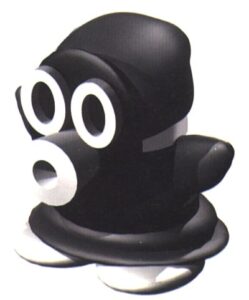 SnifitBooster TowerBooster’s three personal attendants, who search the curtains for him.
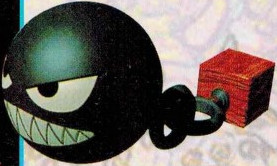 ChompBooster TowerChain Chomps. One becomes a weapon for Bowser, and a golden Chomp Chomp lives in Bean Valley.
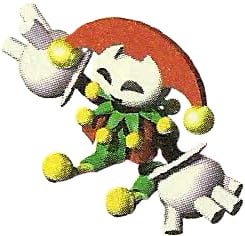 JesterBooster TowerA clown in the tower’s employ.
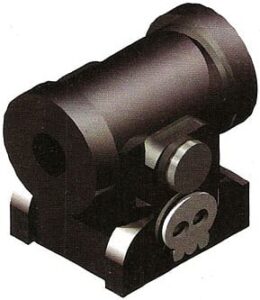 BlasterBooster TowerA cannon that fires Bullet Bills. Its relative in the Keep is Big Bertha.
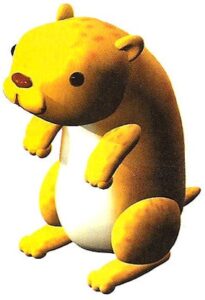 MukumukuStar HillFound only among the fallen wishes.
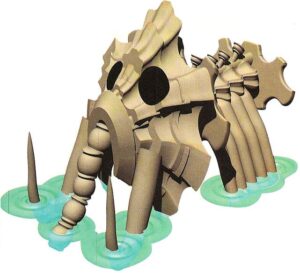 MastadoomStar HillA mammoth of a monster, as the name suggests.
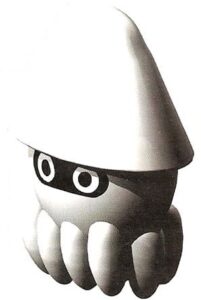 BlooberSea, Sunken Ship, The Trial CourseThe squid from the original Super Mario Bros., under its old English name.
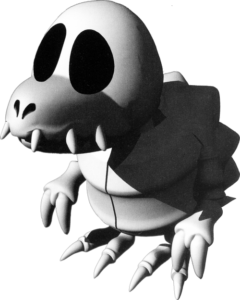 Dry BonesSunken ShipSkeleton Koopas. The Vomers of Barrel Volcano are the same idea.
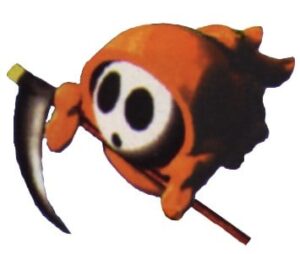 GreaperSunken Ship, The Trial CourseA grim reaper of a ghost.
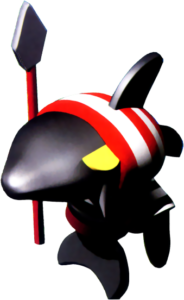 Bandana RedSunken ShipJohnny’s shark deckhands. The Bandana Blues are his officers.
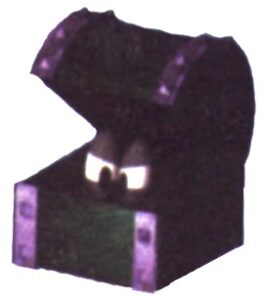 HidonSunken ShipA chest monster that shares its English name with a Final Fantasy VI boss.
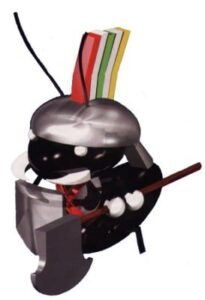 ShogunLand’s End, Belome TempleA warrior in armour, as the name suggests.
 ChewyLand’s End, Belome Temple, Bean Valley, The Trial CourseA chewing plant, grown in a ring in Bean Valley.
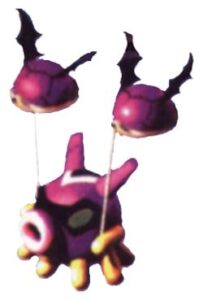 OctovaderLand’s End, Belome Temple, Bean ValleyA purple octopus, some way from the sea.
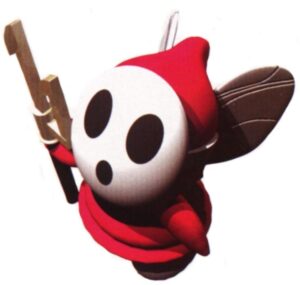 Shy AwayLand’s End, Belome Temple, Bean Valley, The Trial CourseA flying Shy Guy with a watering can. One waters Megasmilax; another has the Fertilizer.
 Box BoyBean ValleyAnother chest monster, sometimes with a ghost inside.
 BirdyThe Vinery, Nimbus CastleValentina’s bird soldiers.
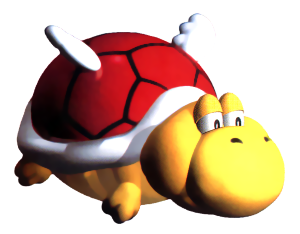 Heavy TroopaThe Vinery, Nimbus CastleA very large Paratroopa.
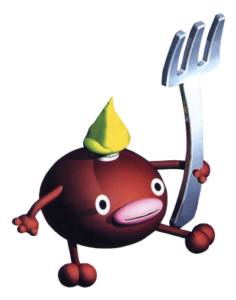 JawfulNimbus CastleA walking set of jaws.
 MagmusBarrel Volcano, The Trial CourseA creature of the lava caves.
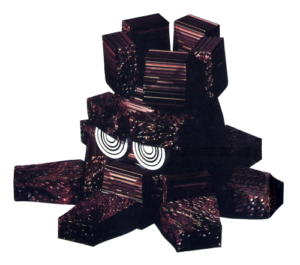 StumpetBarrel VolcanoFound deep in the volcano. An unused blue version, Lumbler, is still in the game’s code.
 CorkpediteBarrel VolcanoA stack of rock segments. Its Body is counted as a separate enemy.
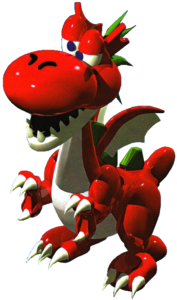 BahamuttThe Trial Course, Bowser’s KeepA dragon whose English name is a pun on Final Fantasy’s Bahamut.
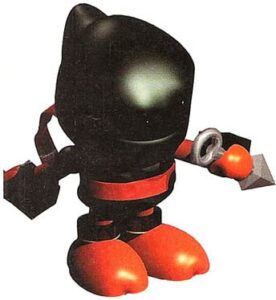 NinjaGateOne of the Smithy Gang’s own.
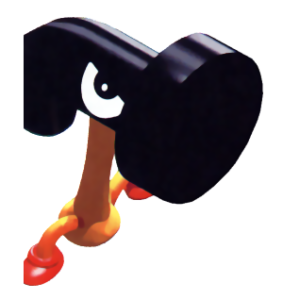 Mad MalletGate, FactoryFactory hands, along with the Pounders and Poundettes.
 Machine MadeGateGrey production-line copies of Mack, Bowyer, Yaridovich, the Axem Rangers, Shysters and Drill Bits.
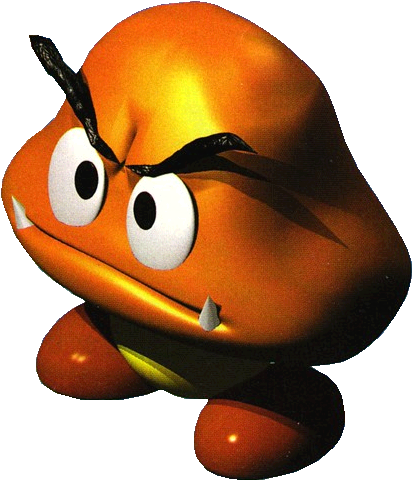
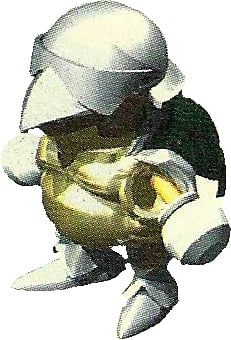
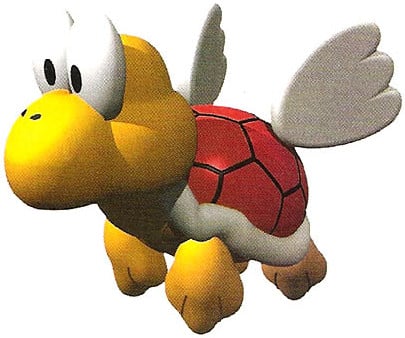
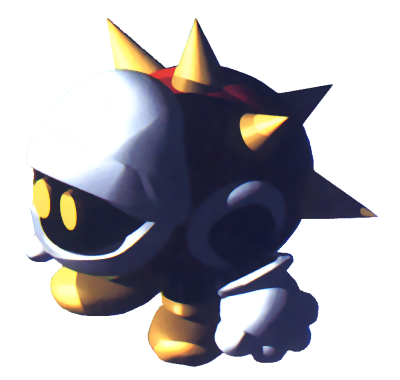
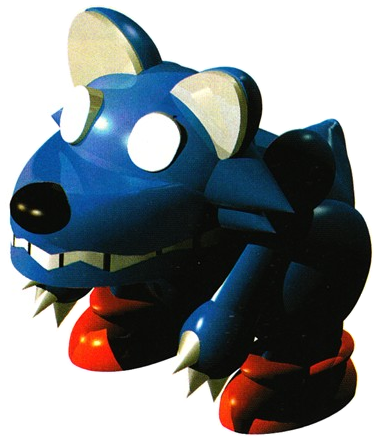
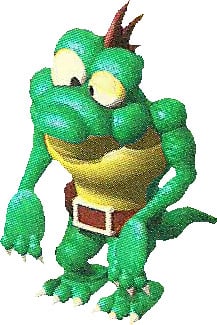
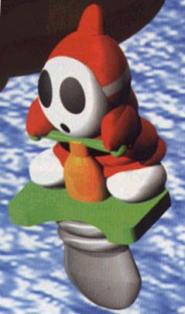

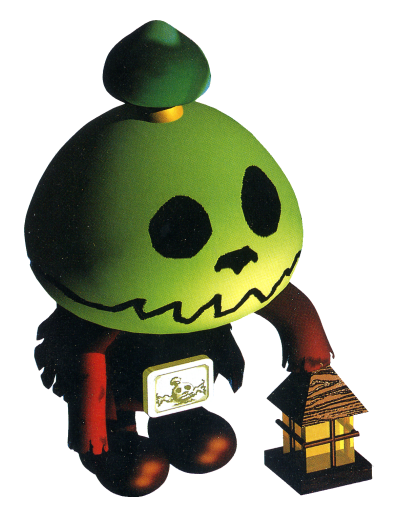
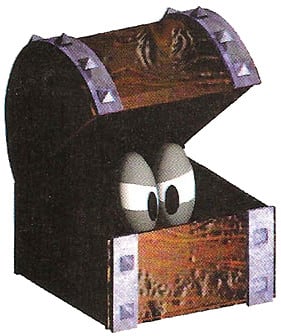
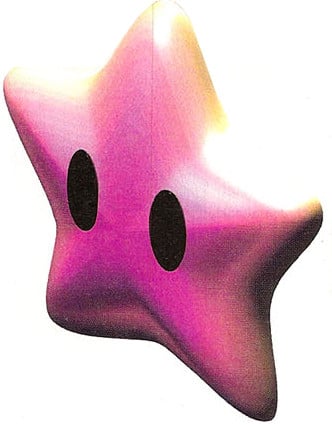
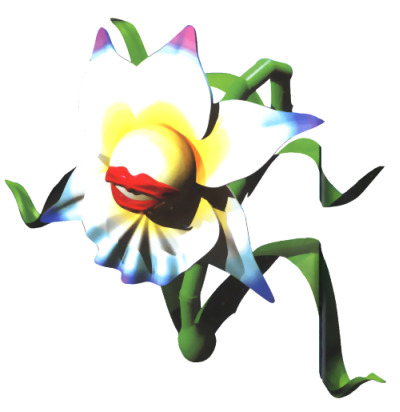
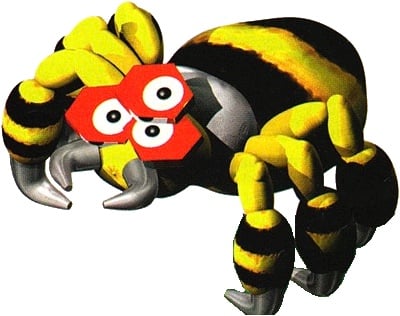
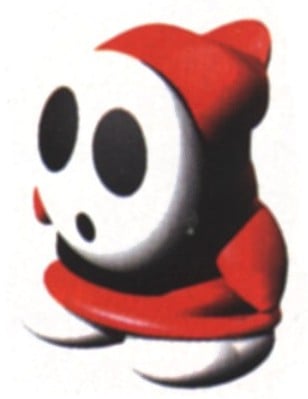
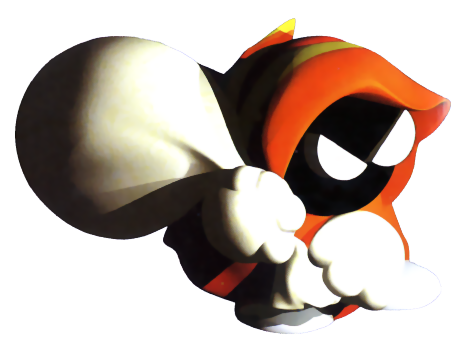
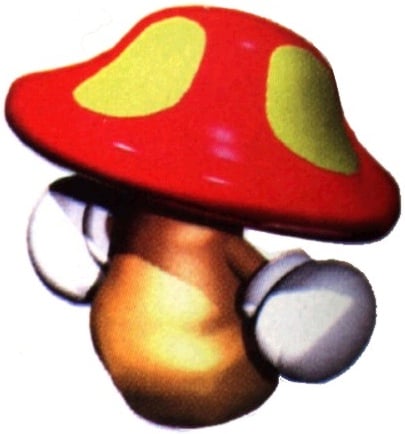
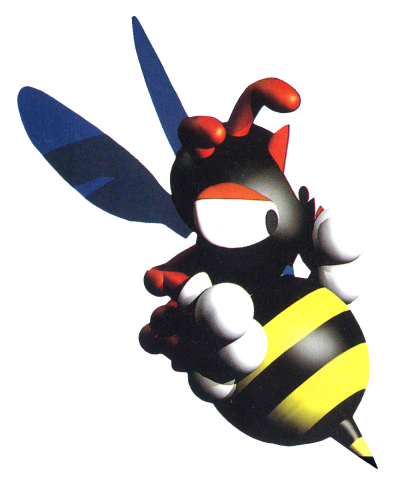
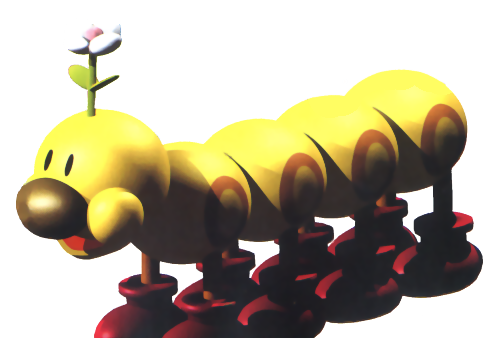
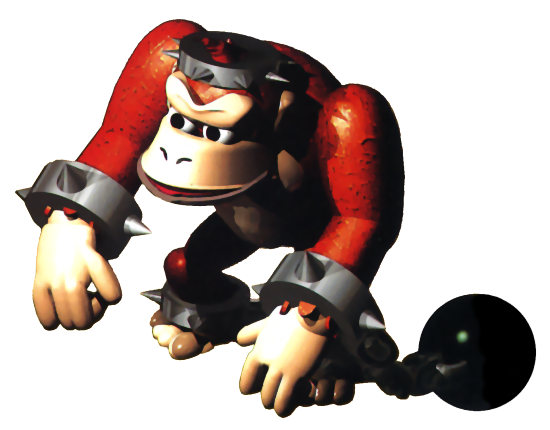
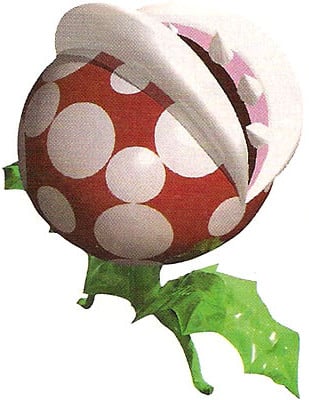
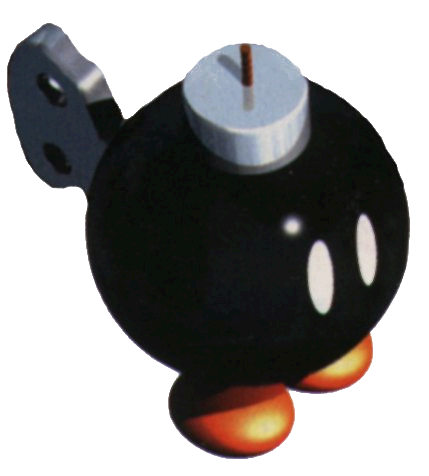
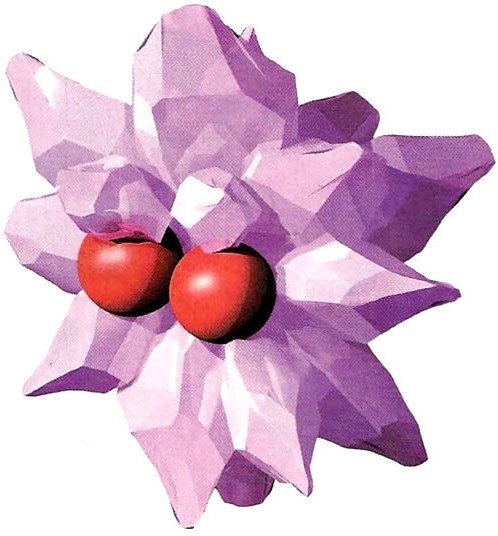
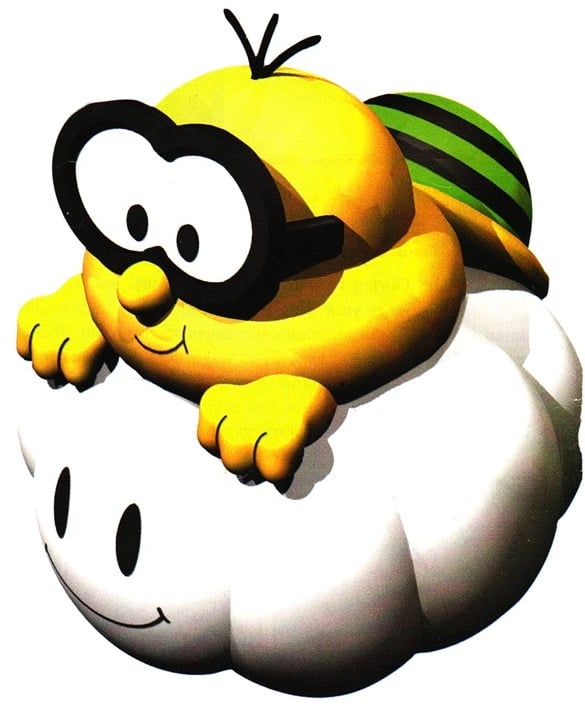
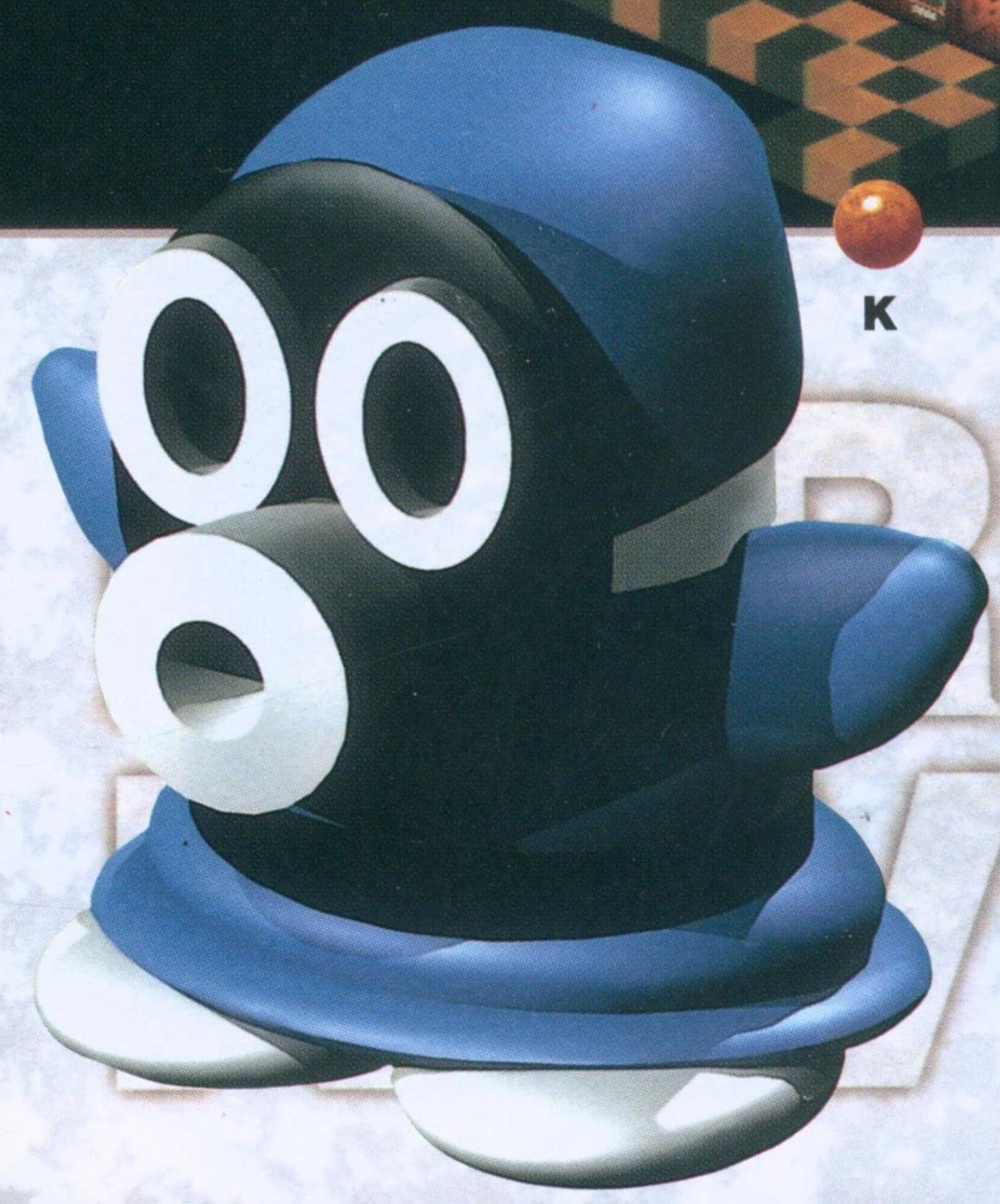
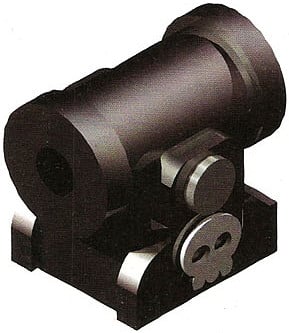
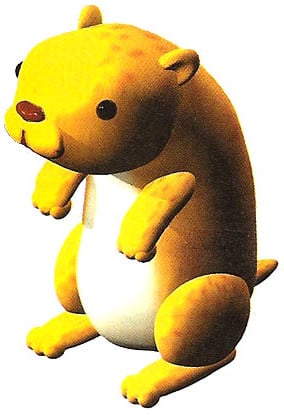
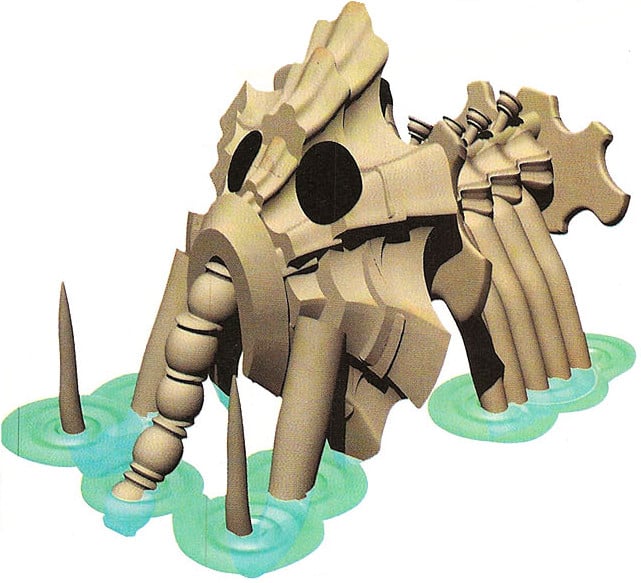
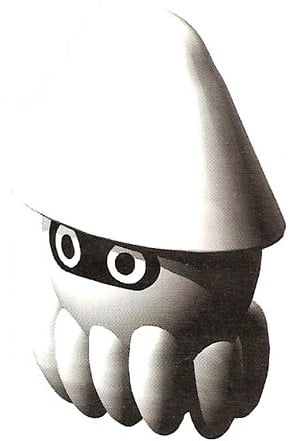
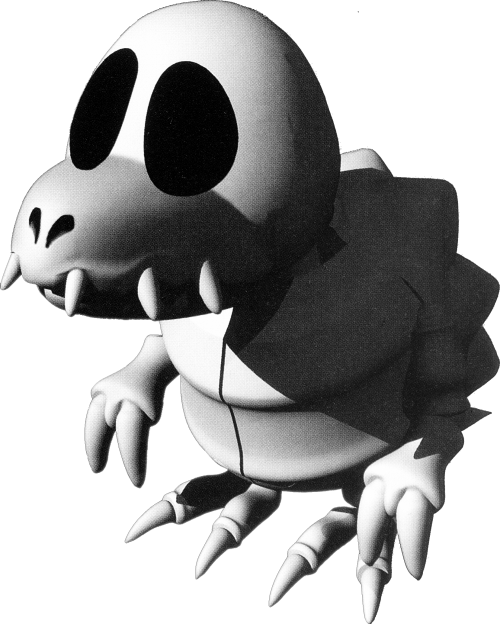
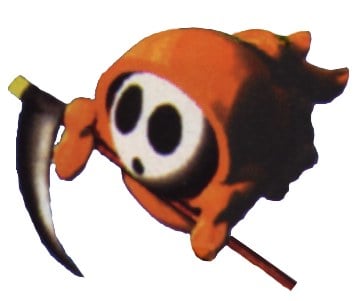
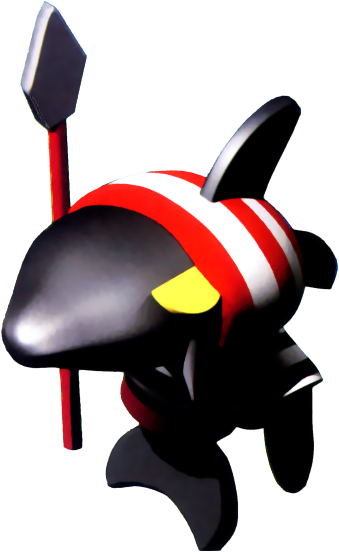
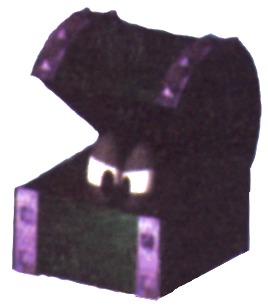
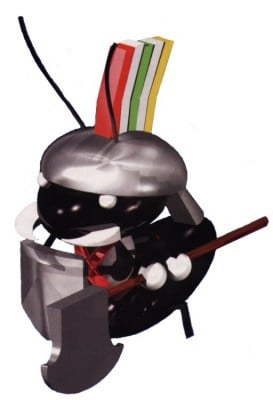
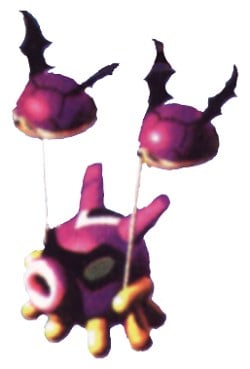
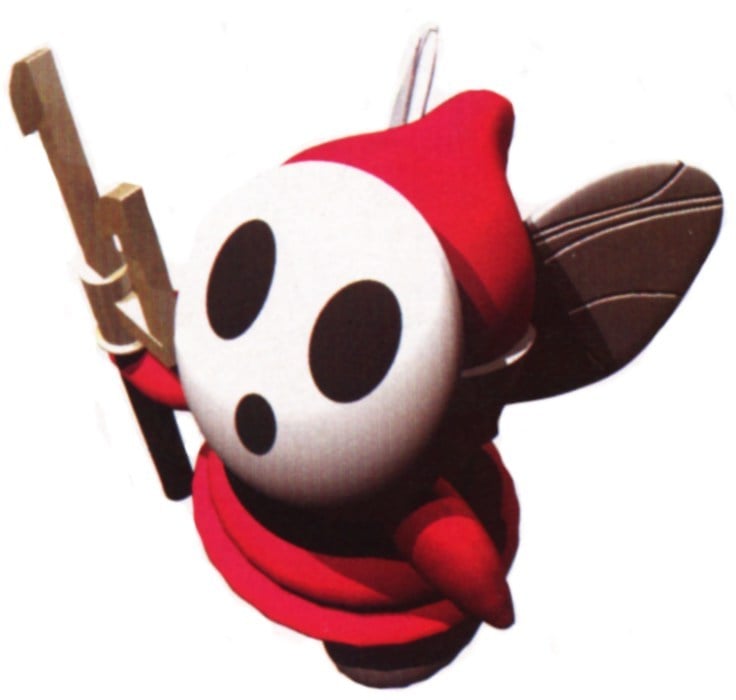
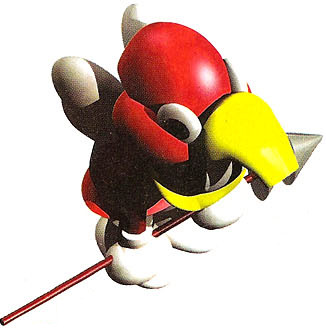
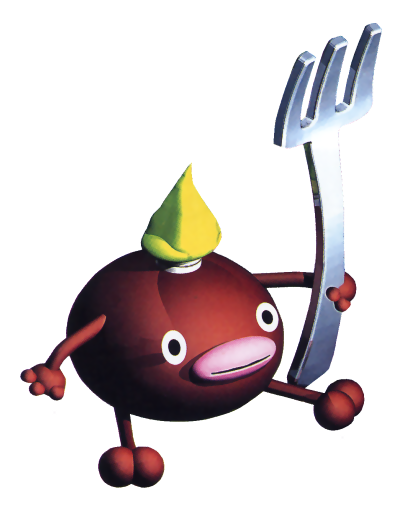
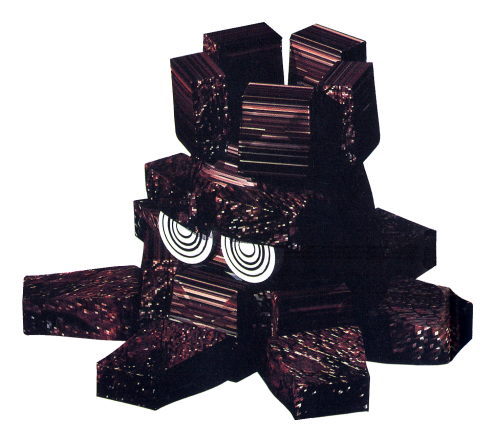
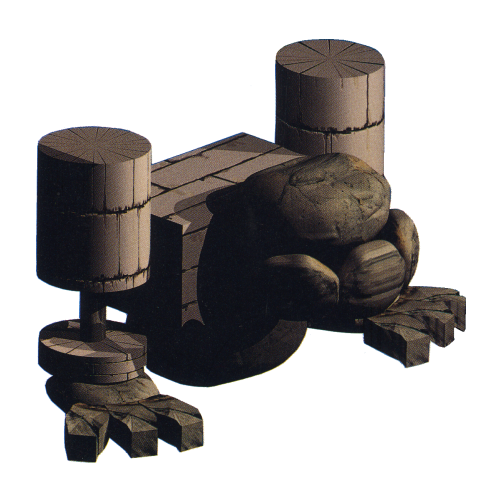
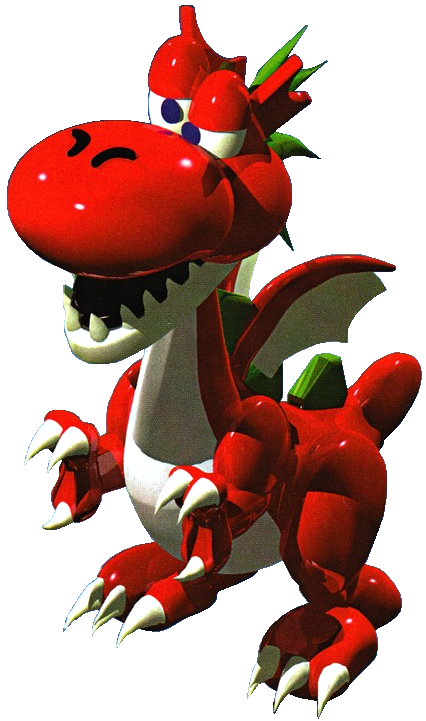
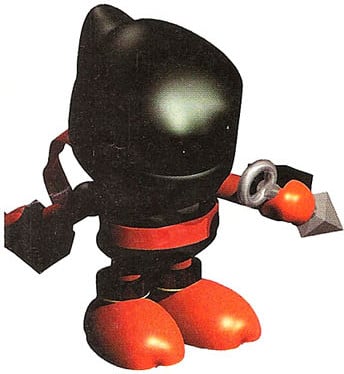
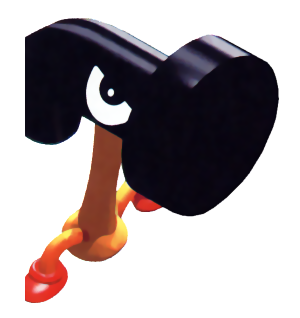
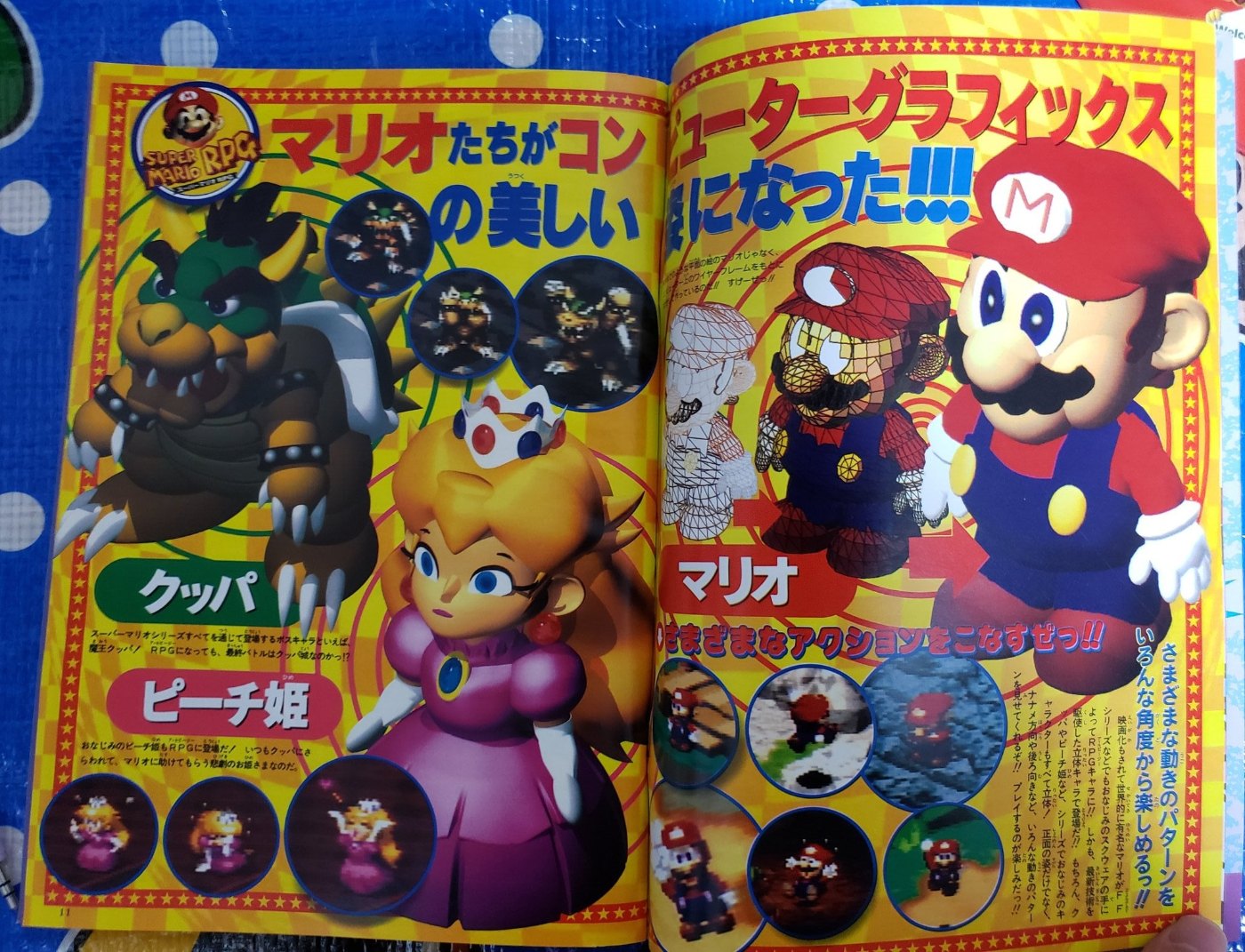
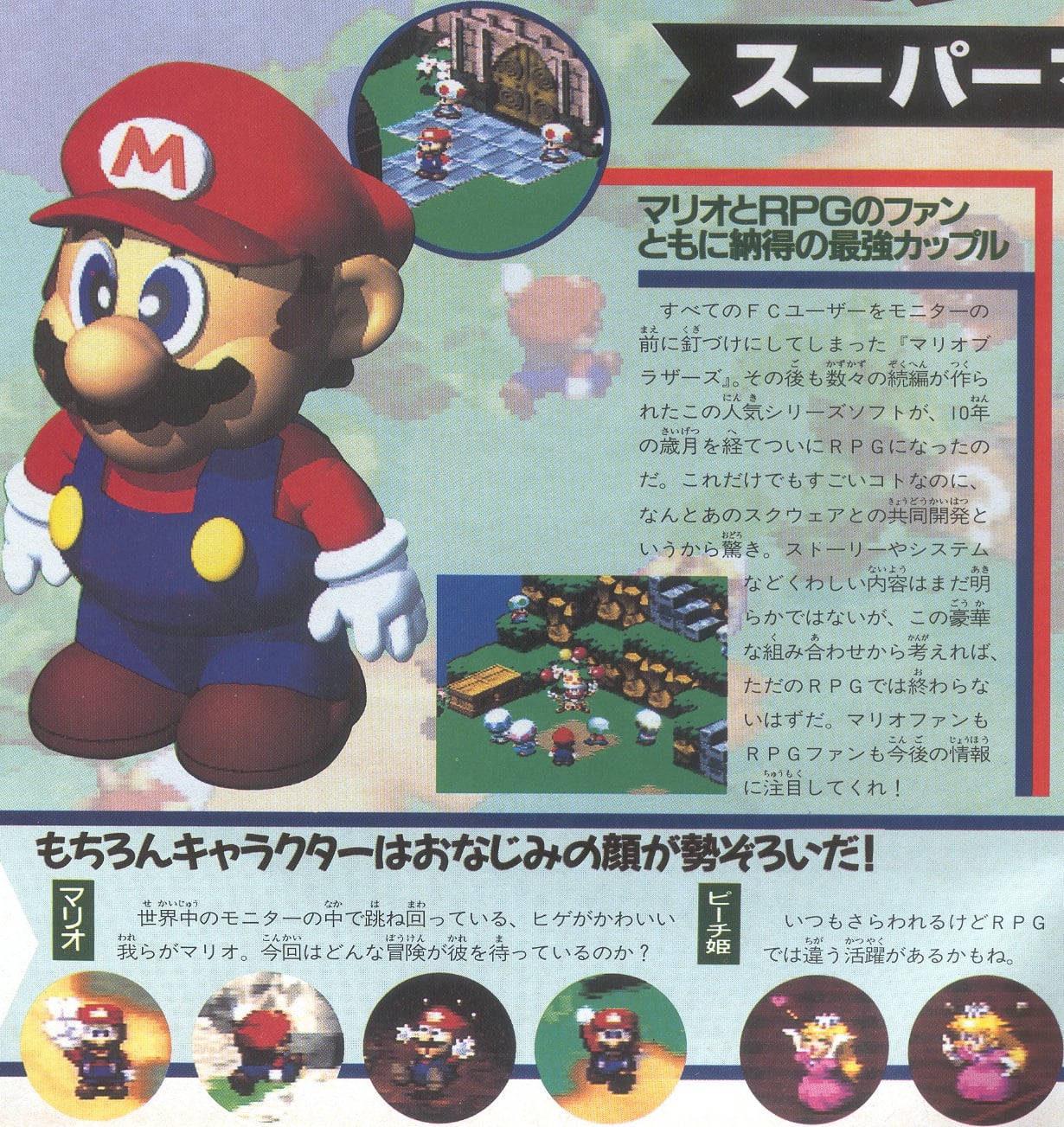
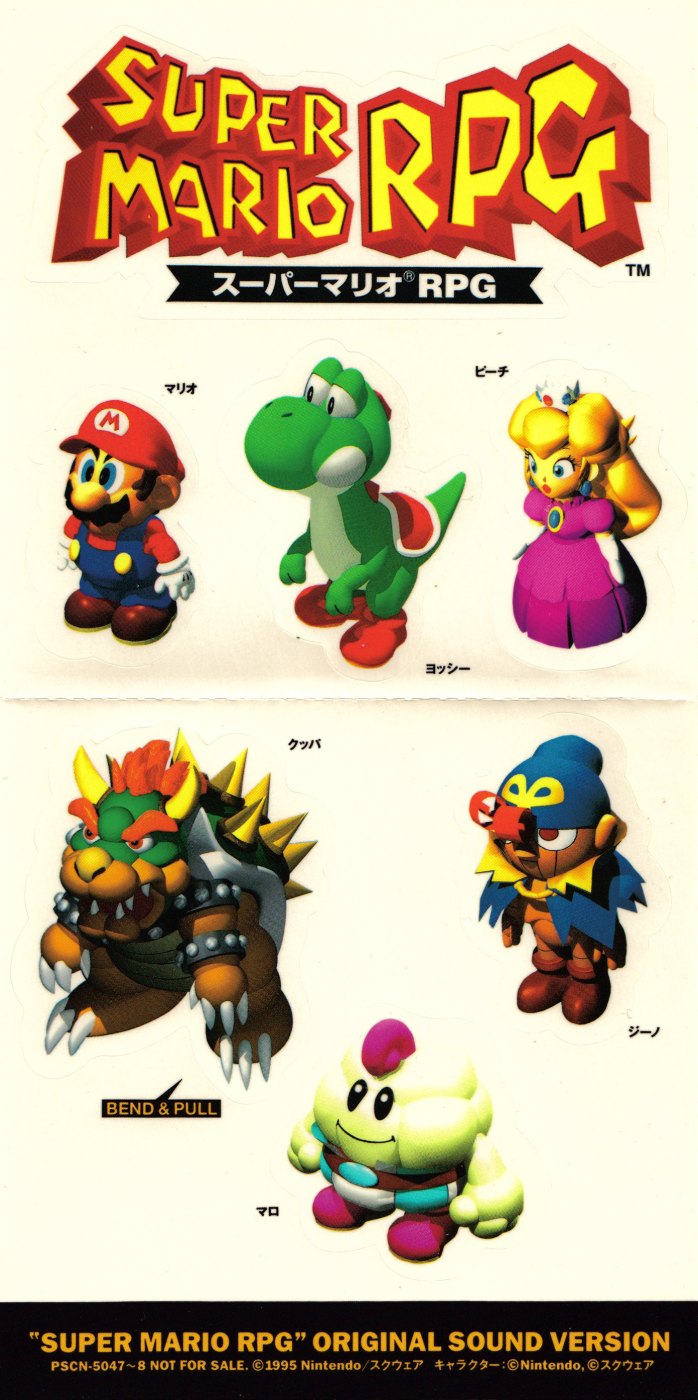
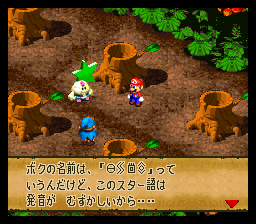
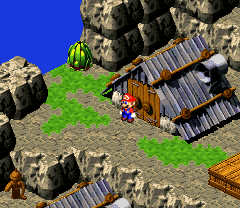
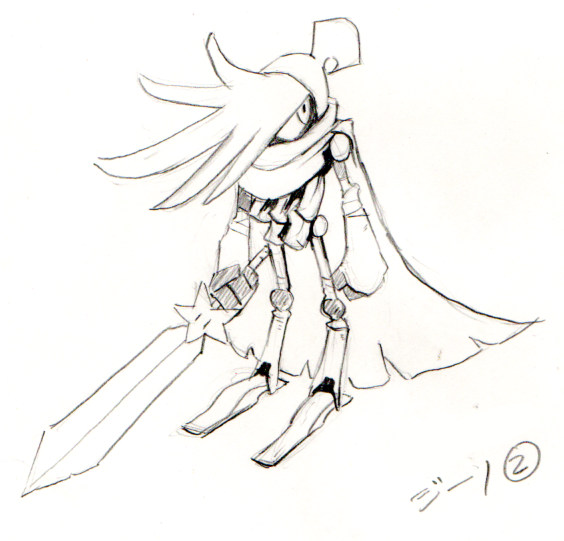
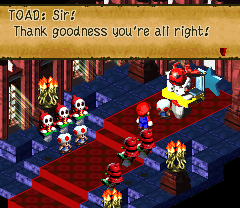
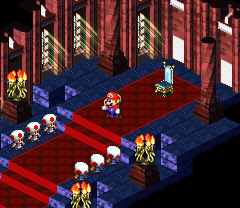
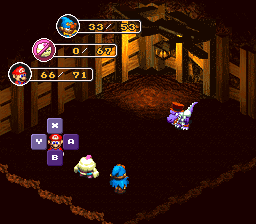
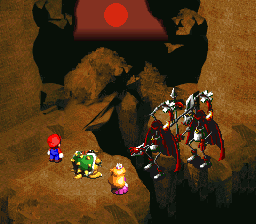
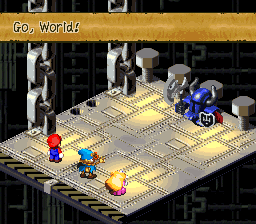
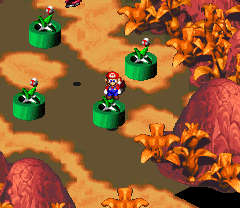
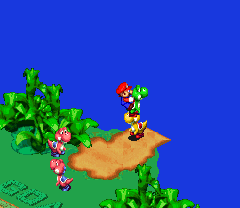
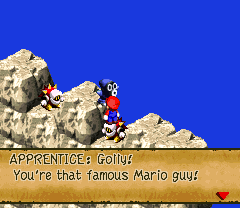


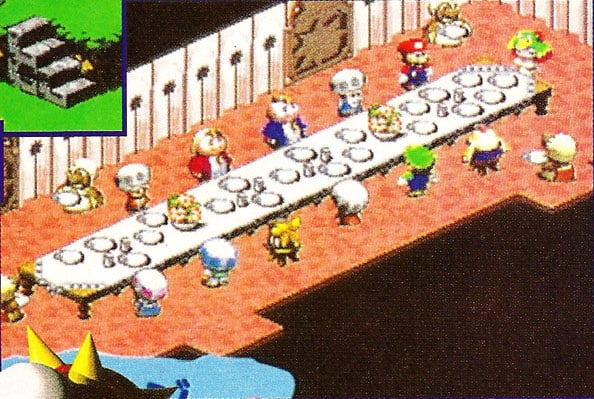
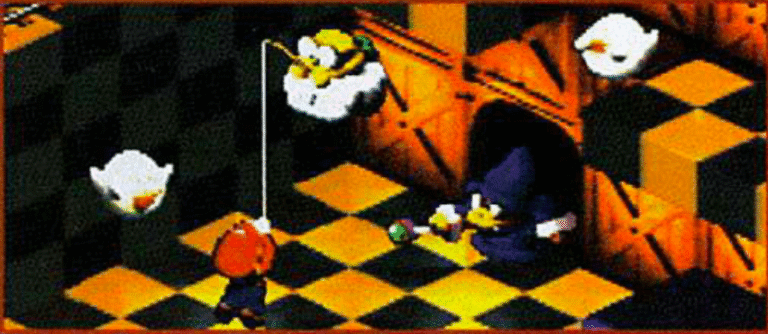
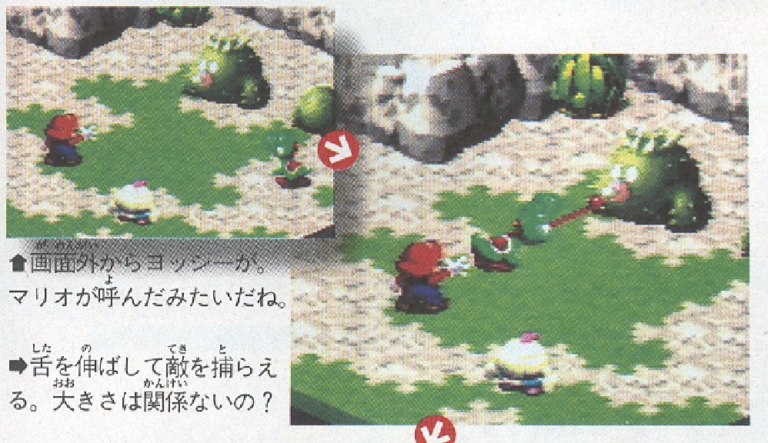
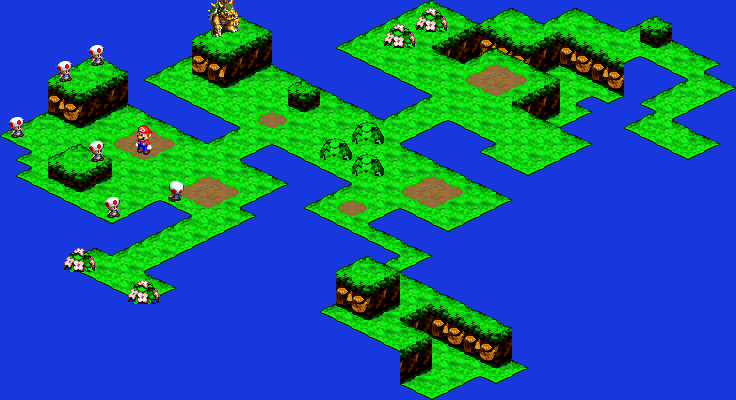
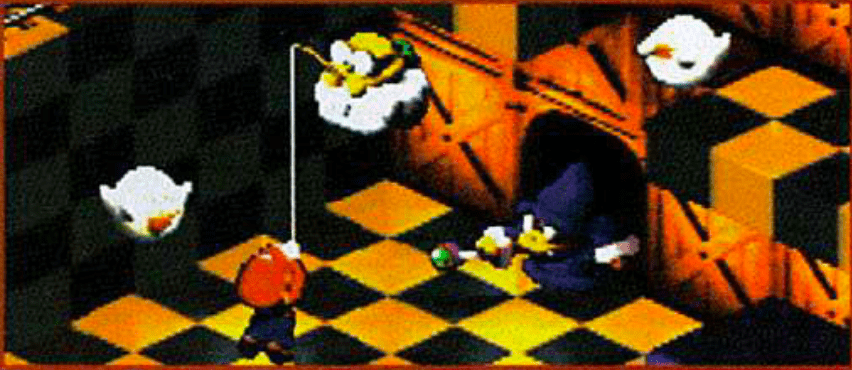
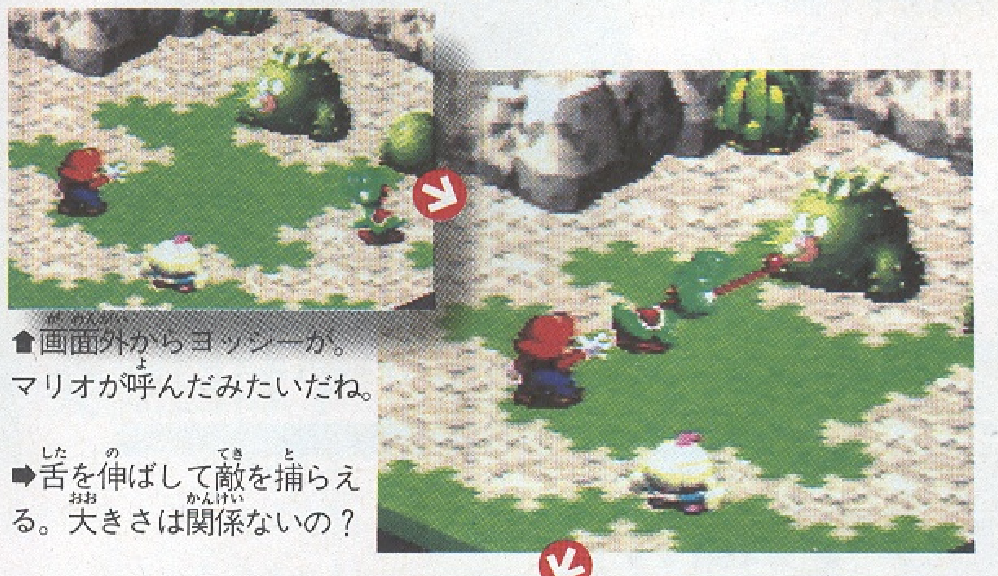
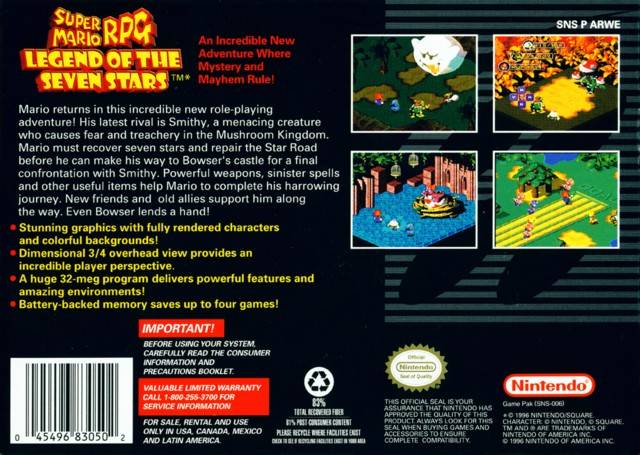
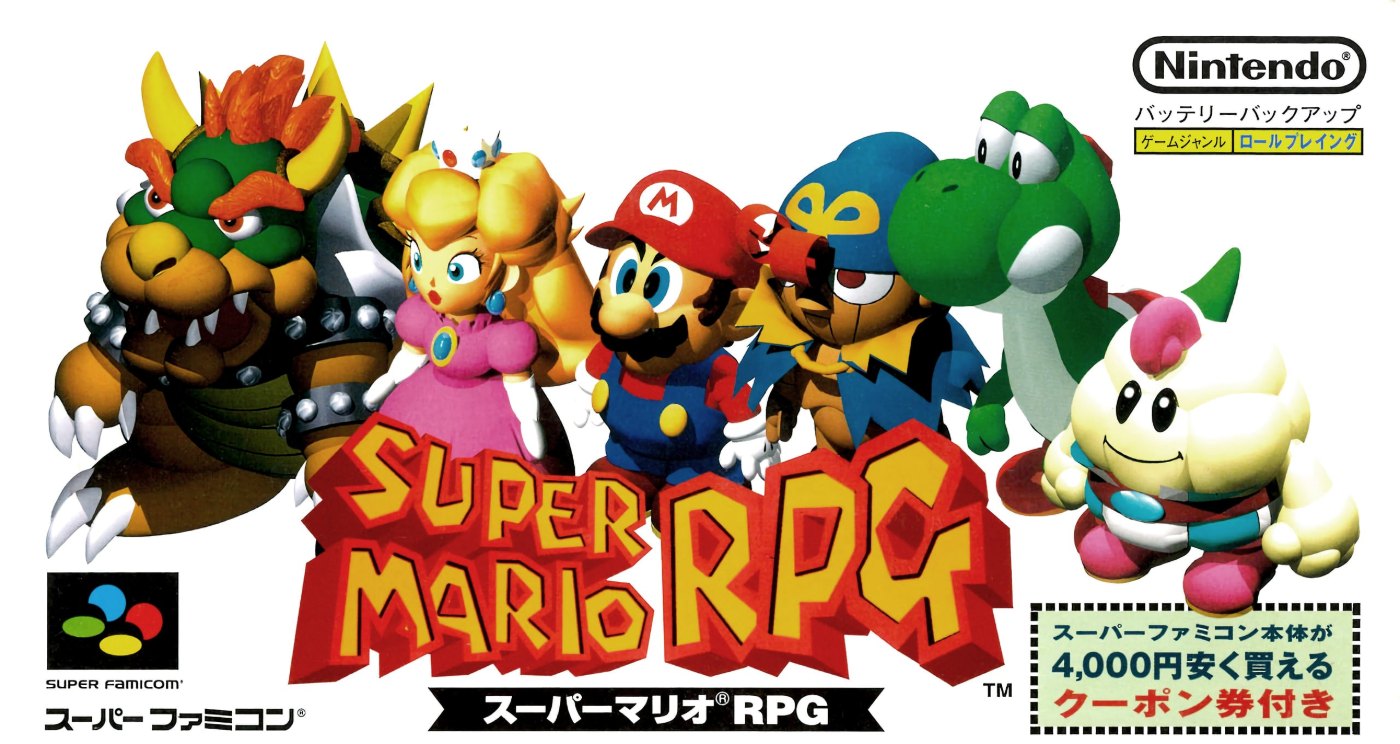
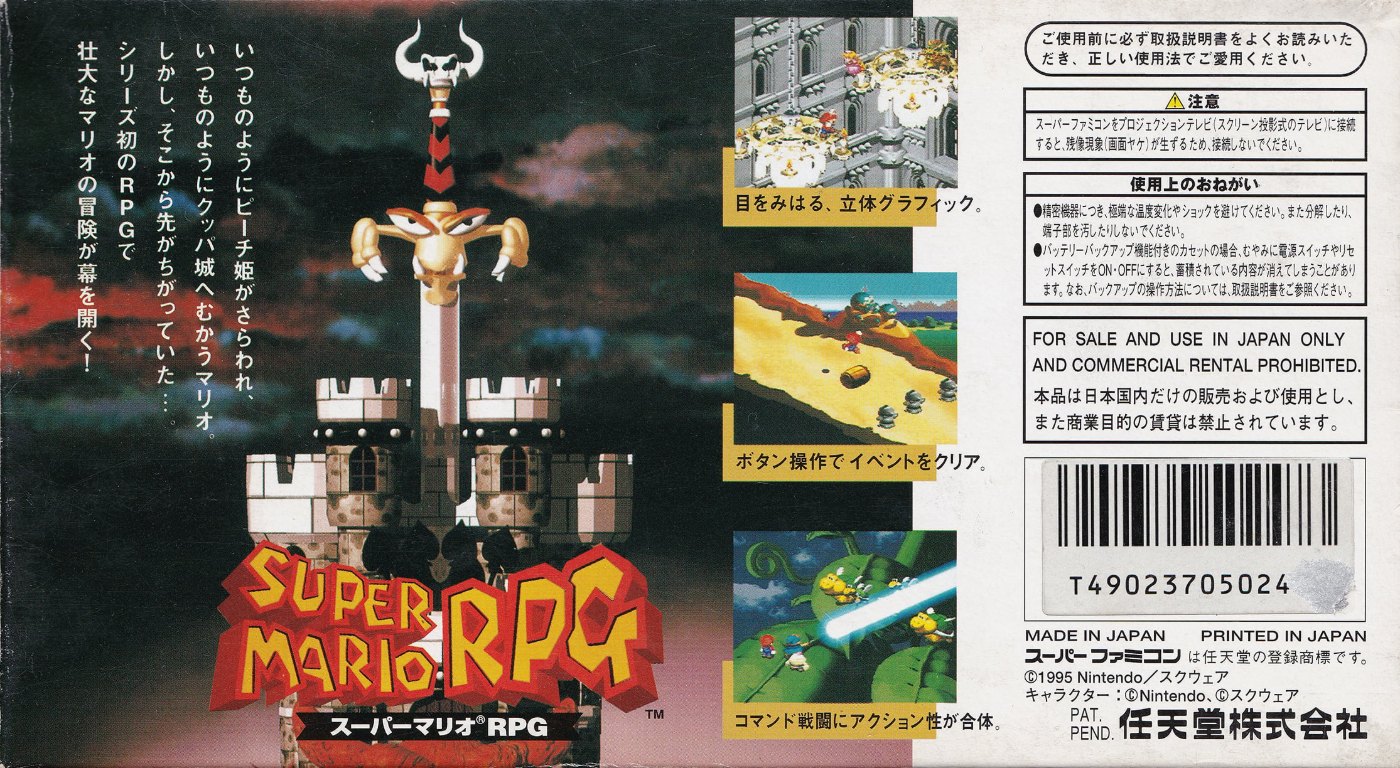
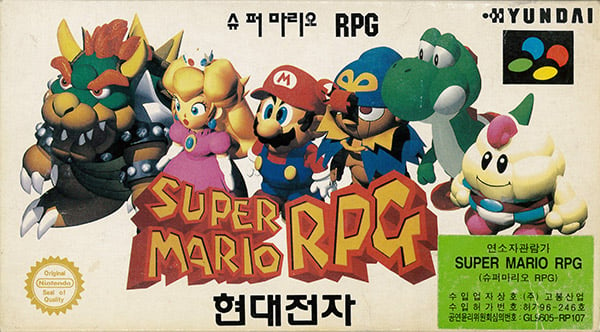
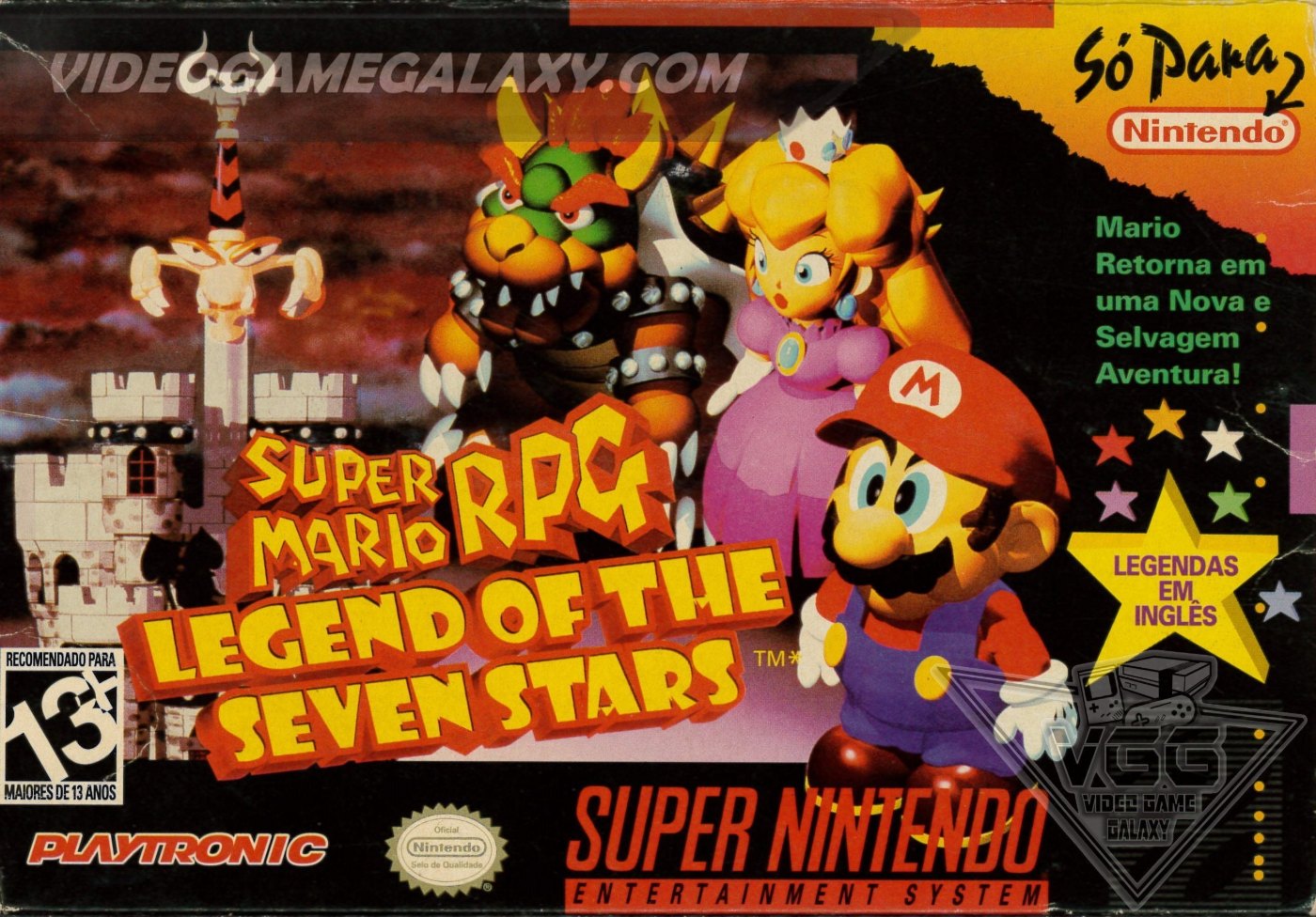


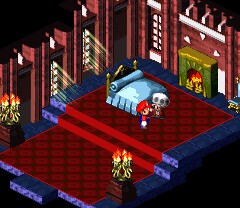
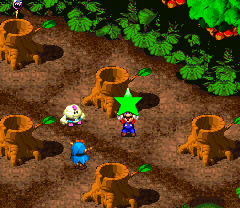
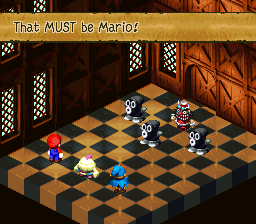
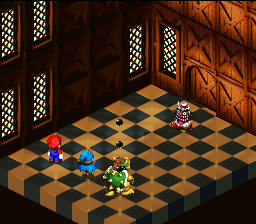
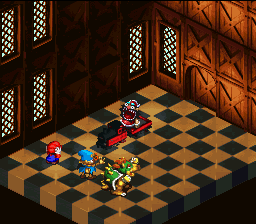
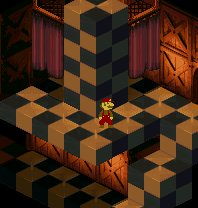
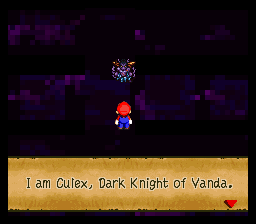
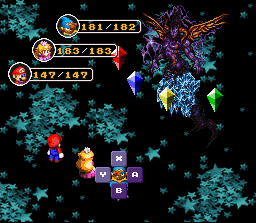
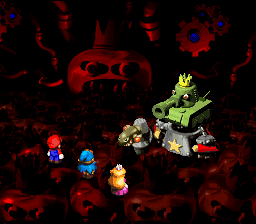


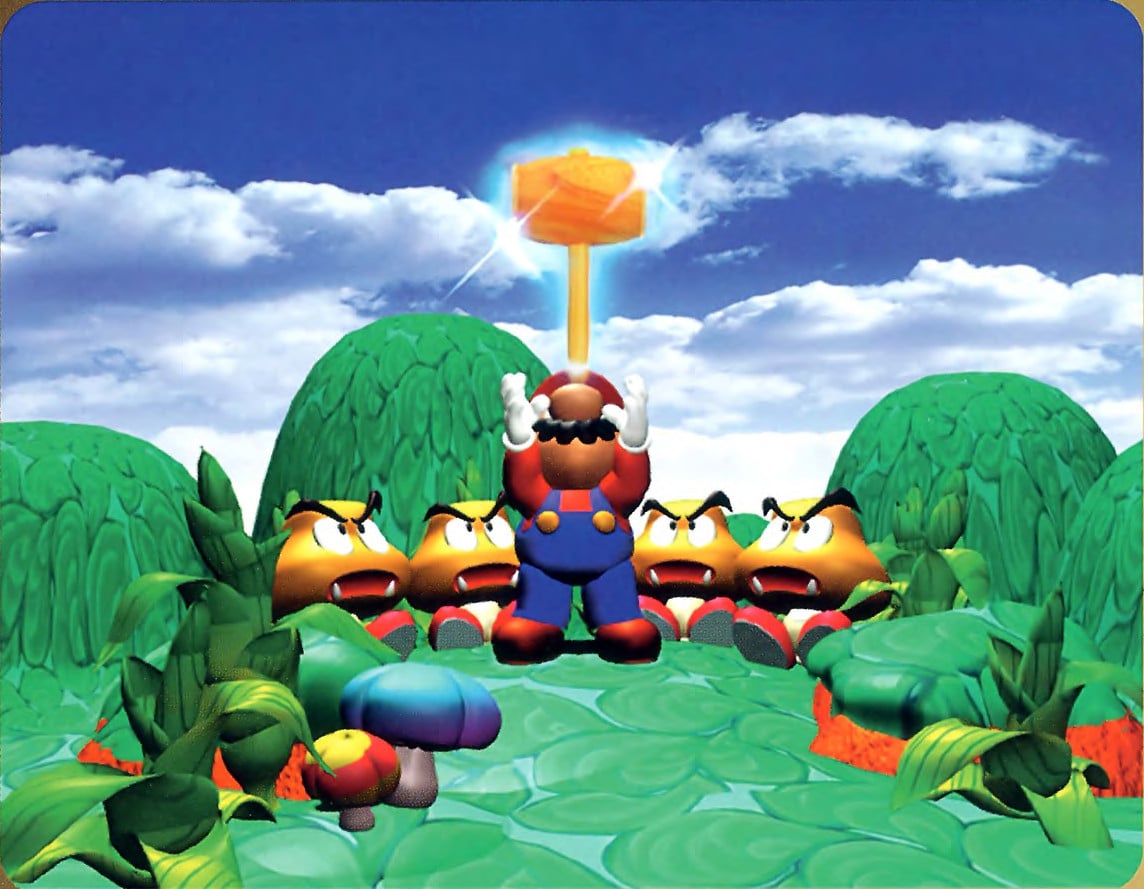
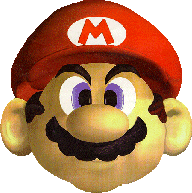
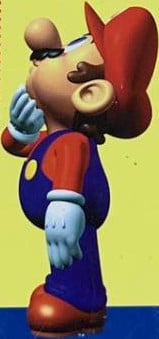
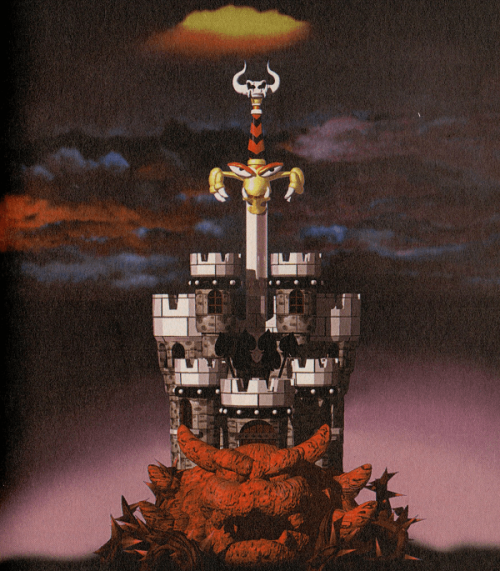
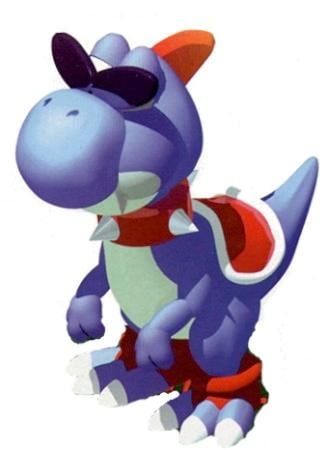
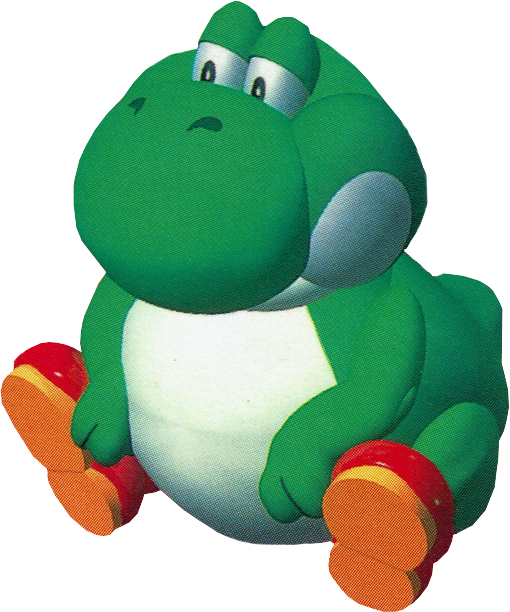
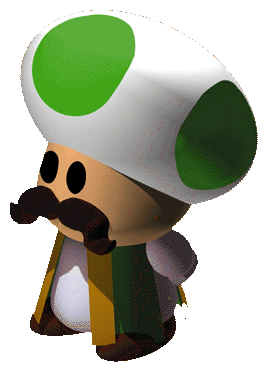
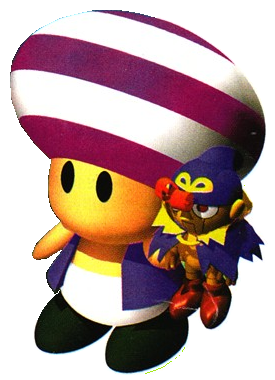
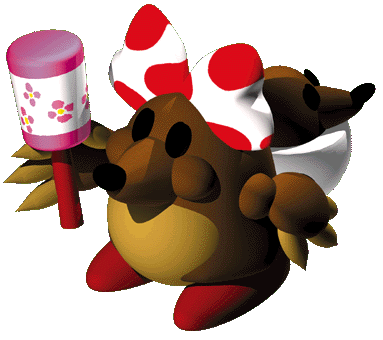
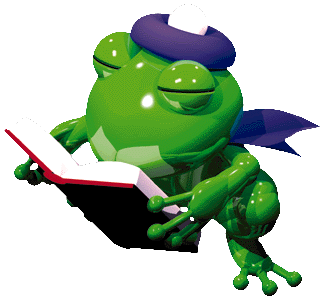
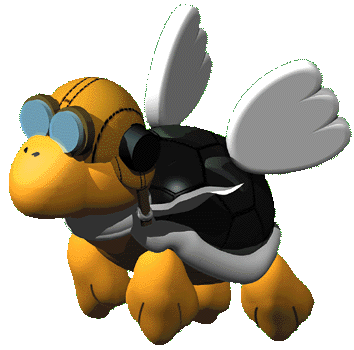
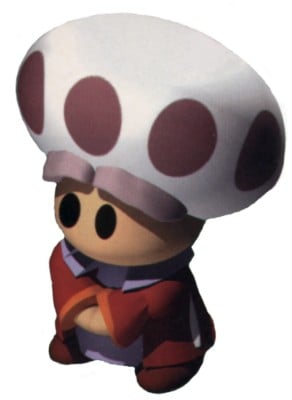
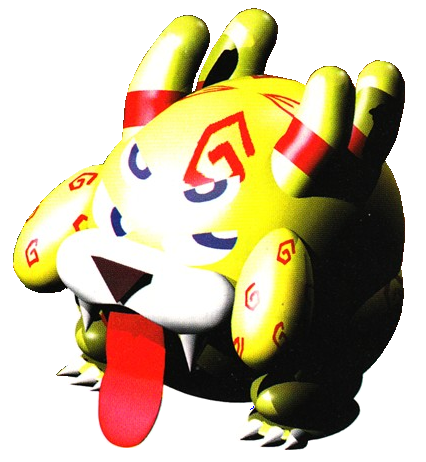
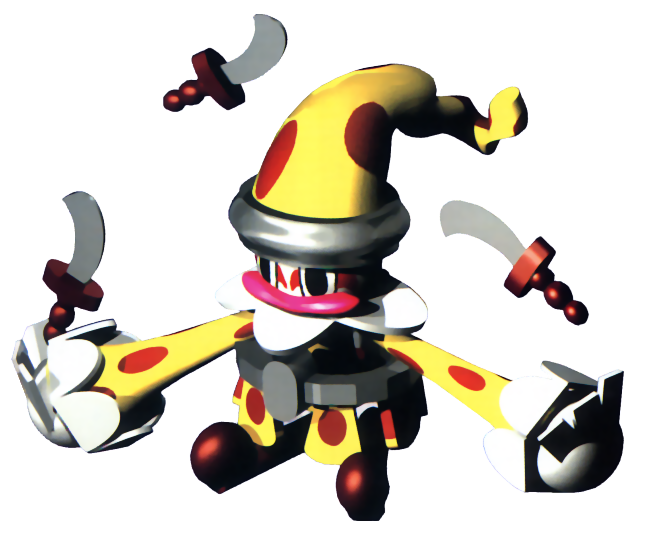
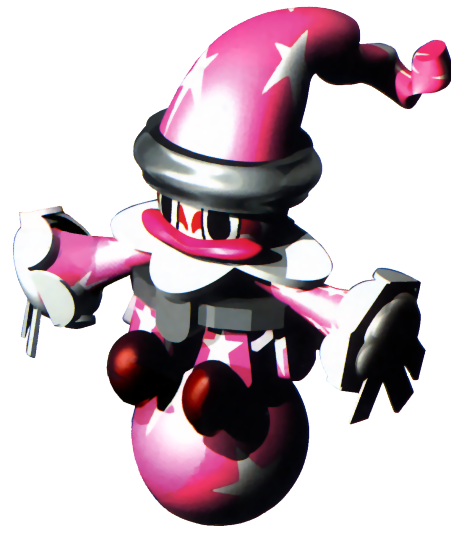
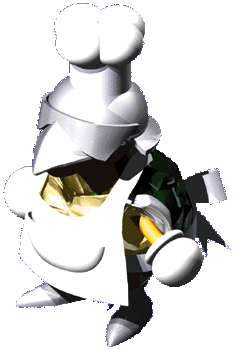
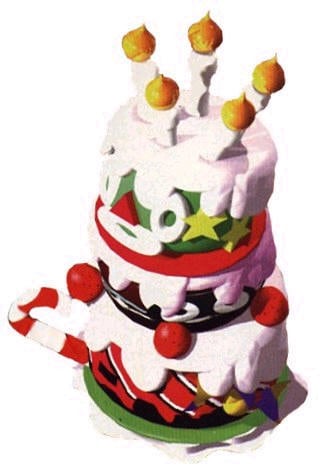
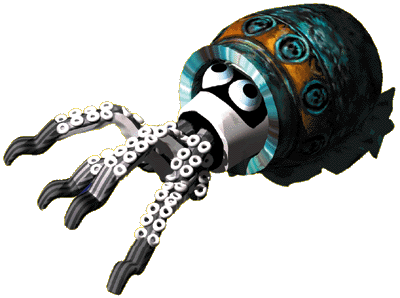
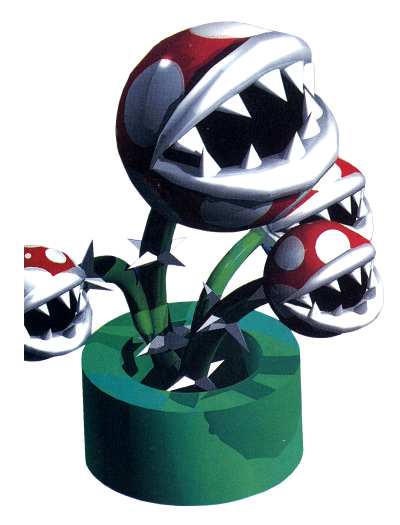
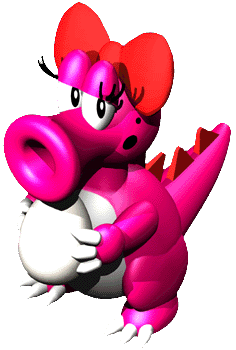
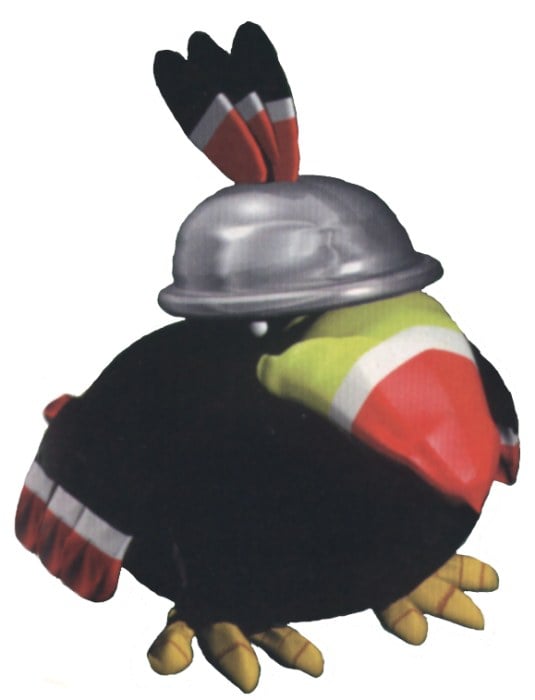
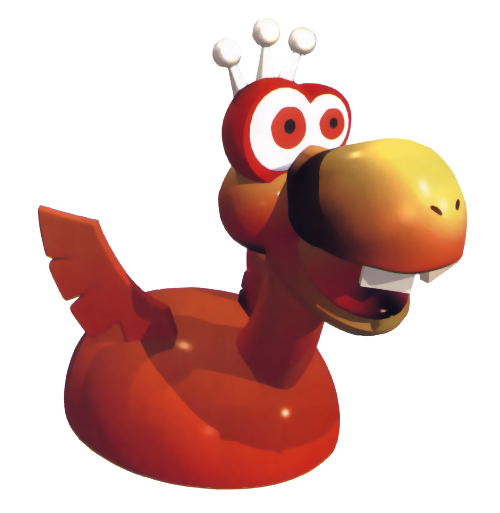
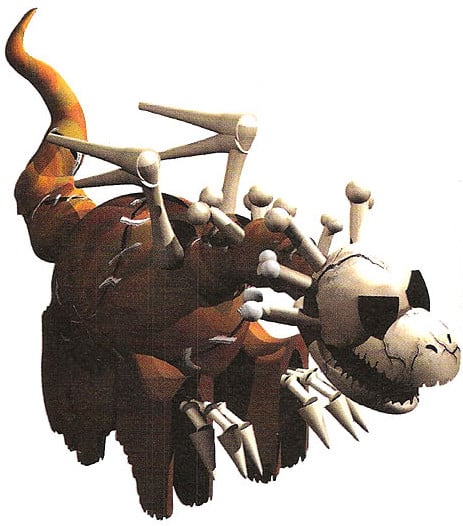
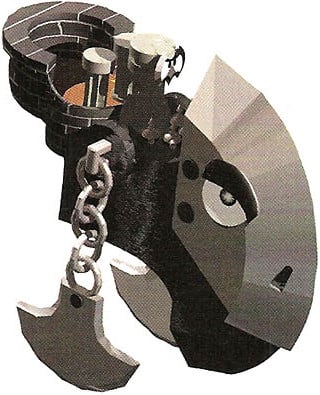
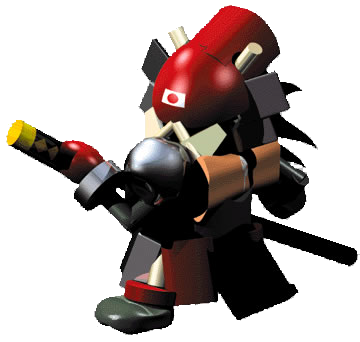
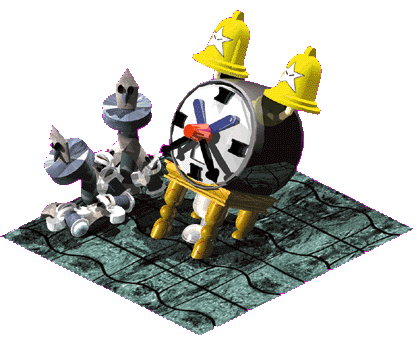
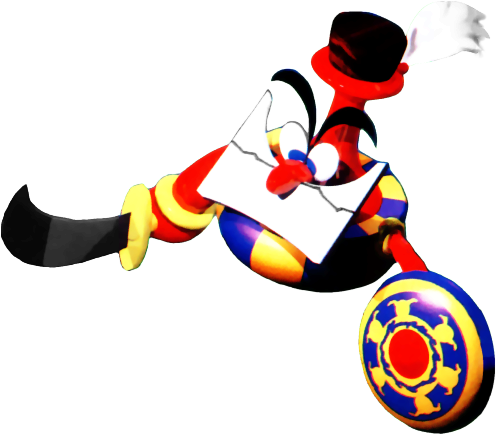
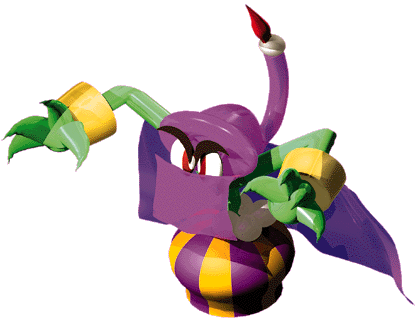
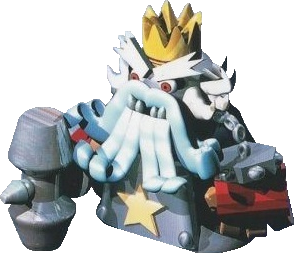
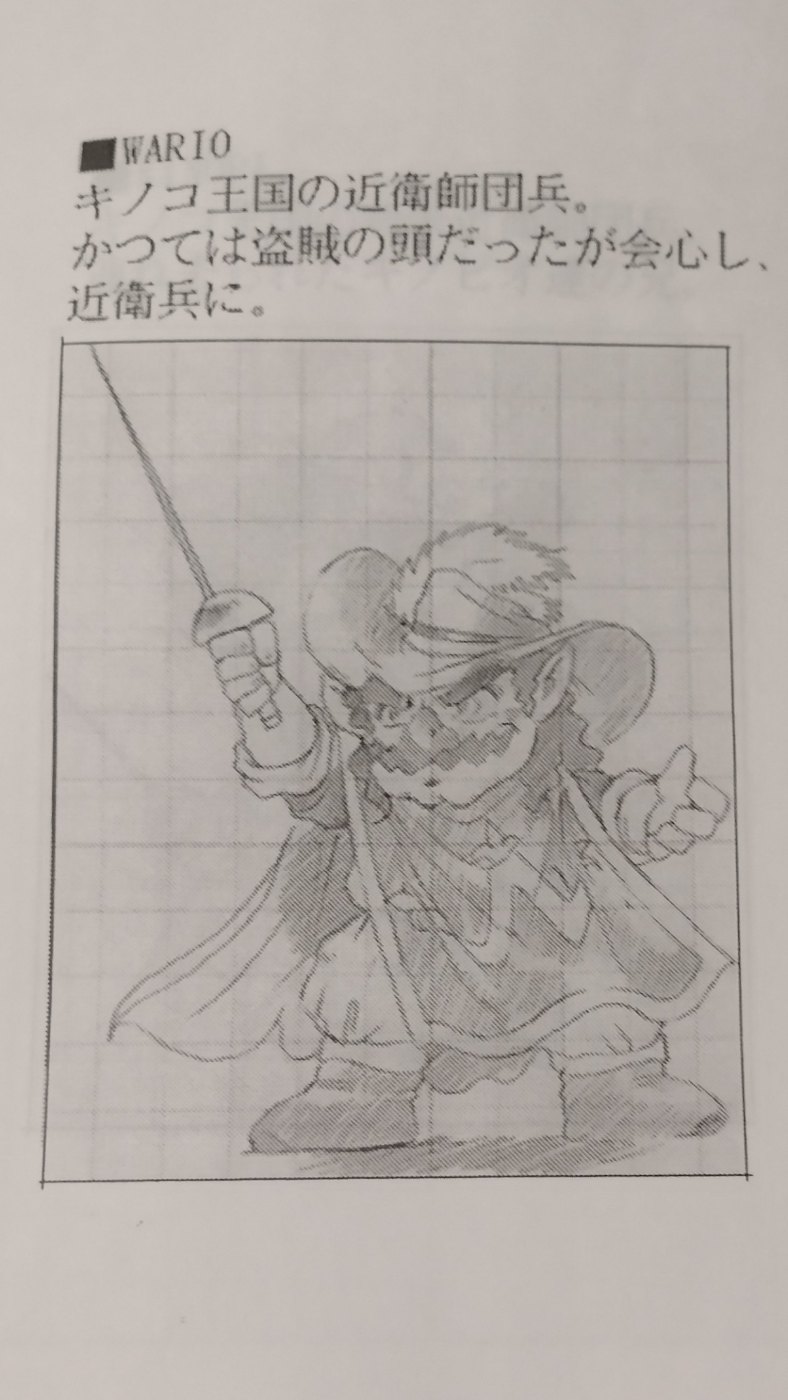
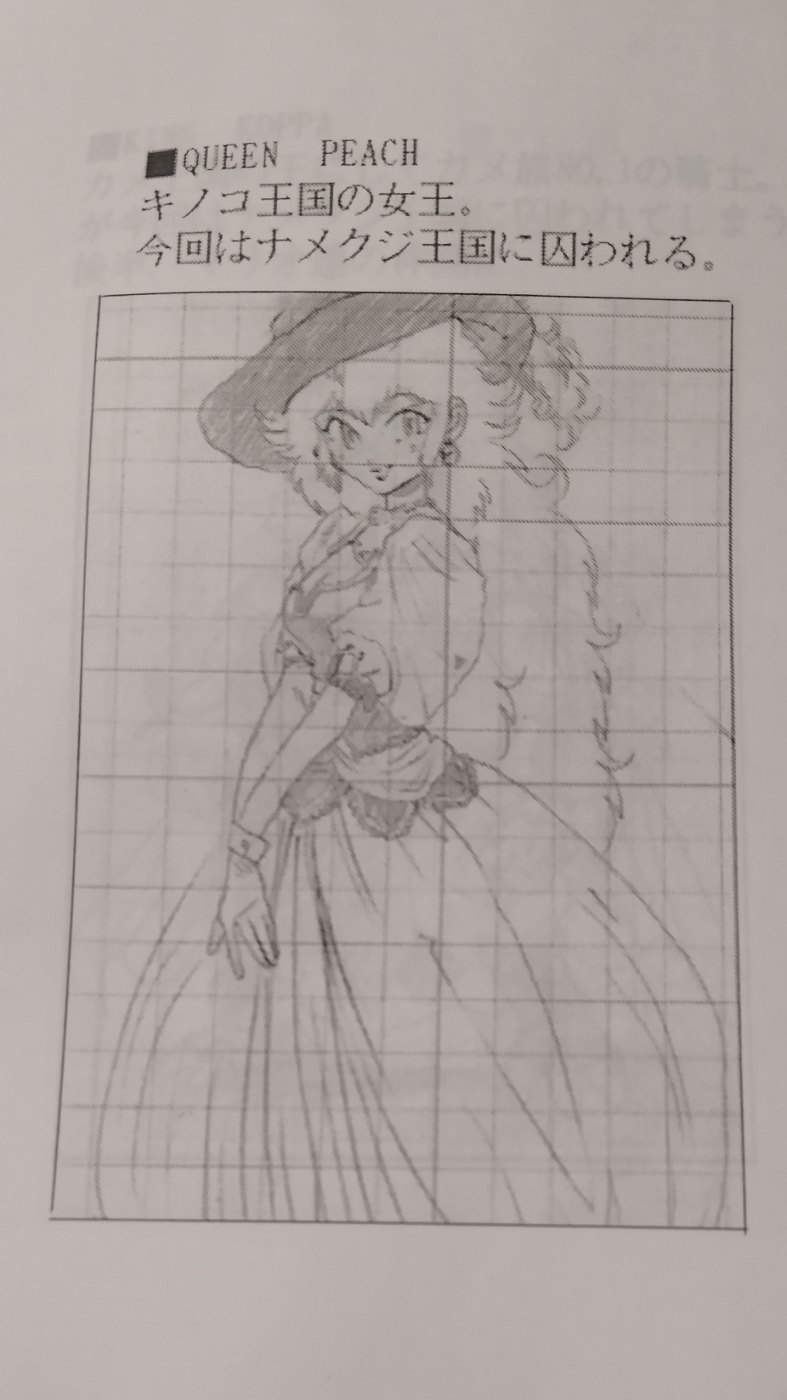
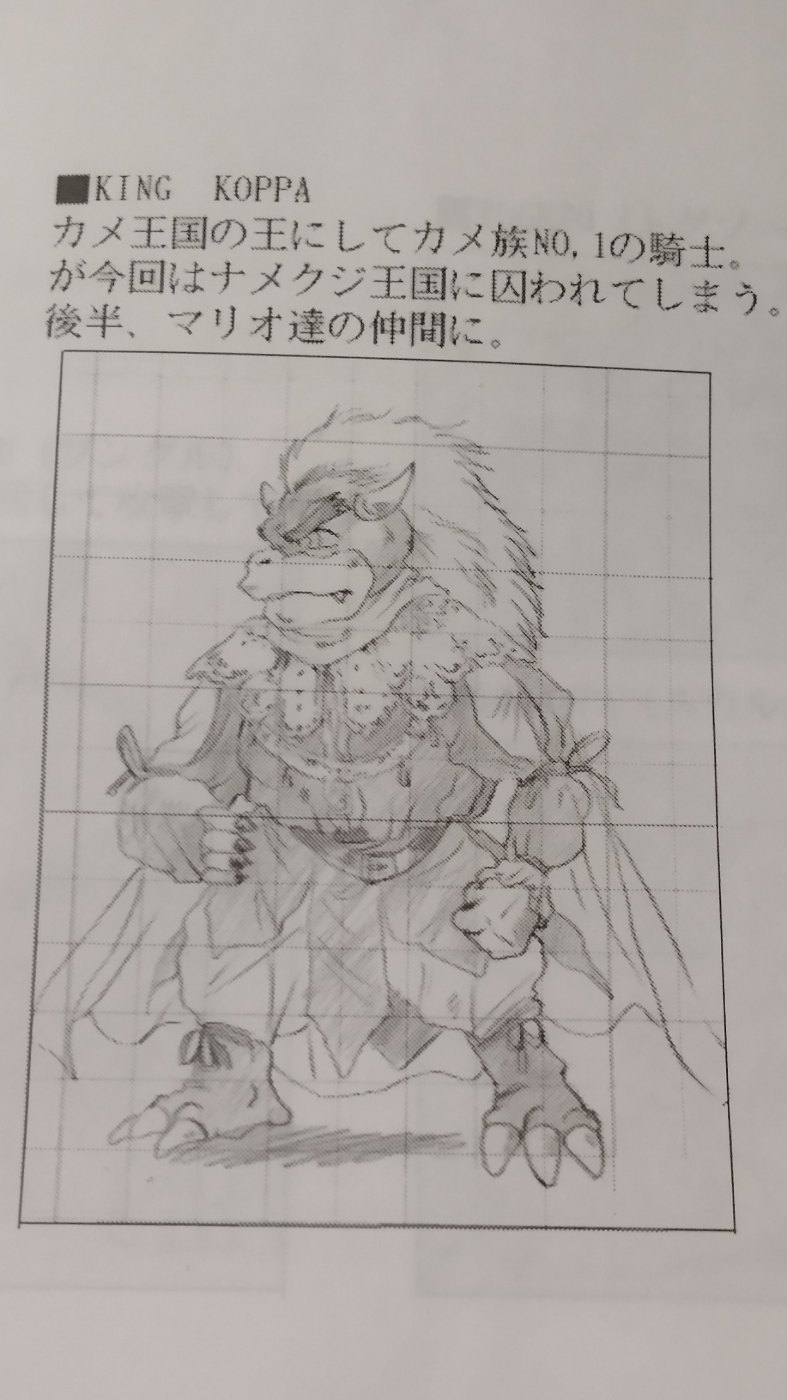
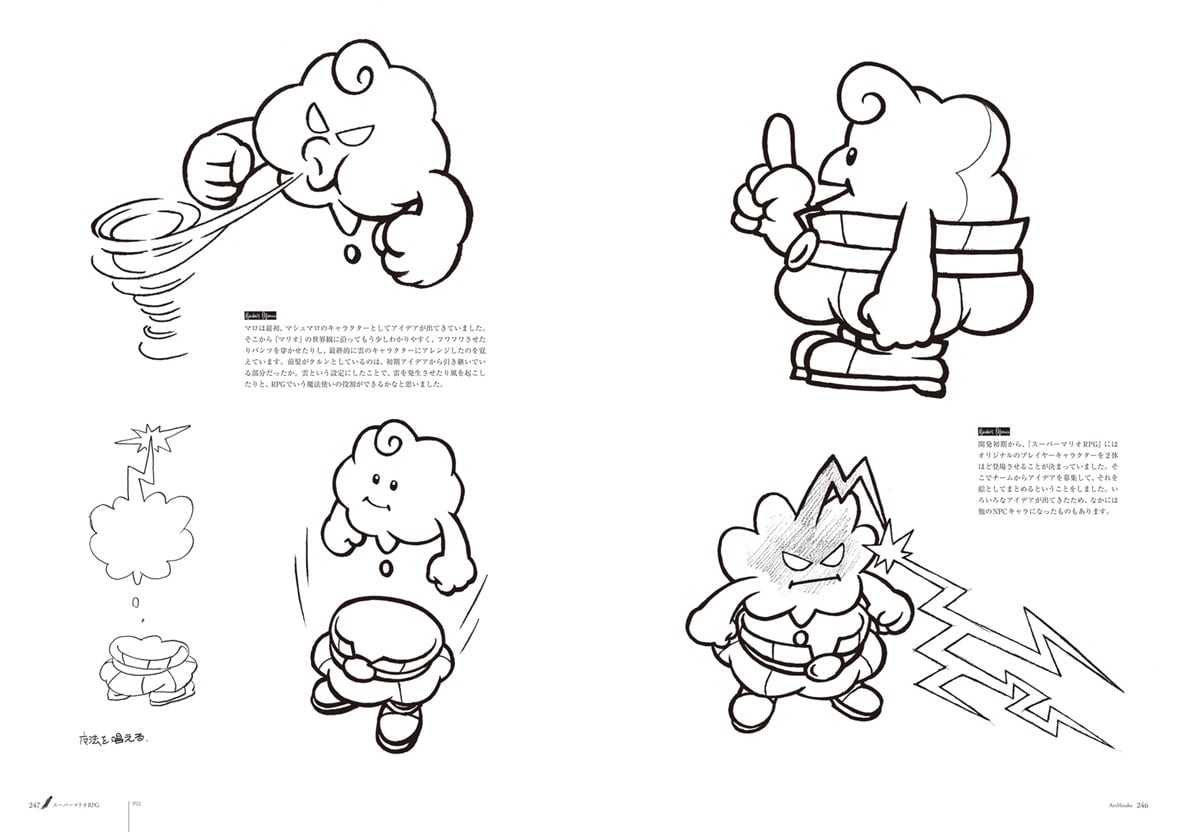
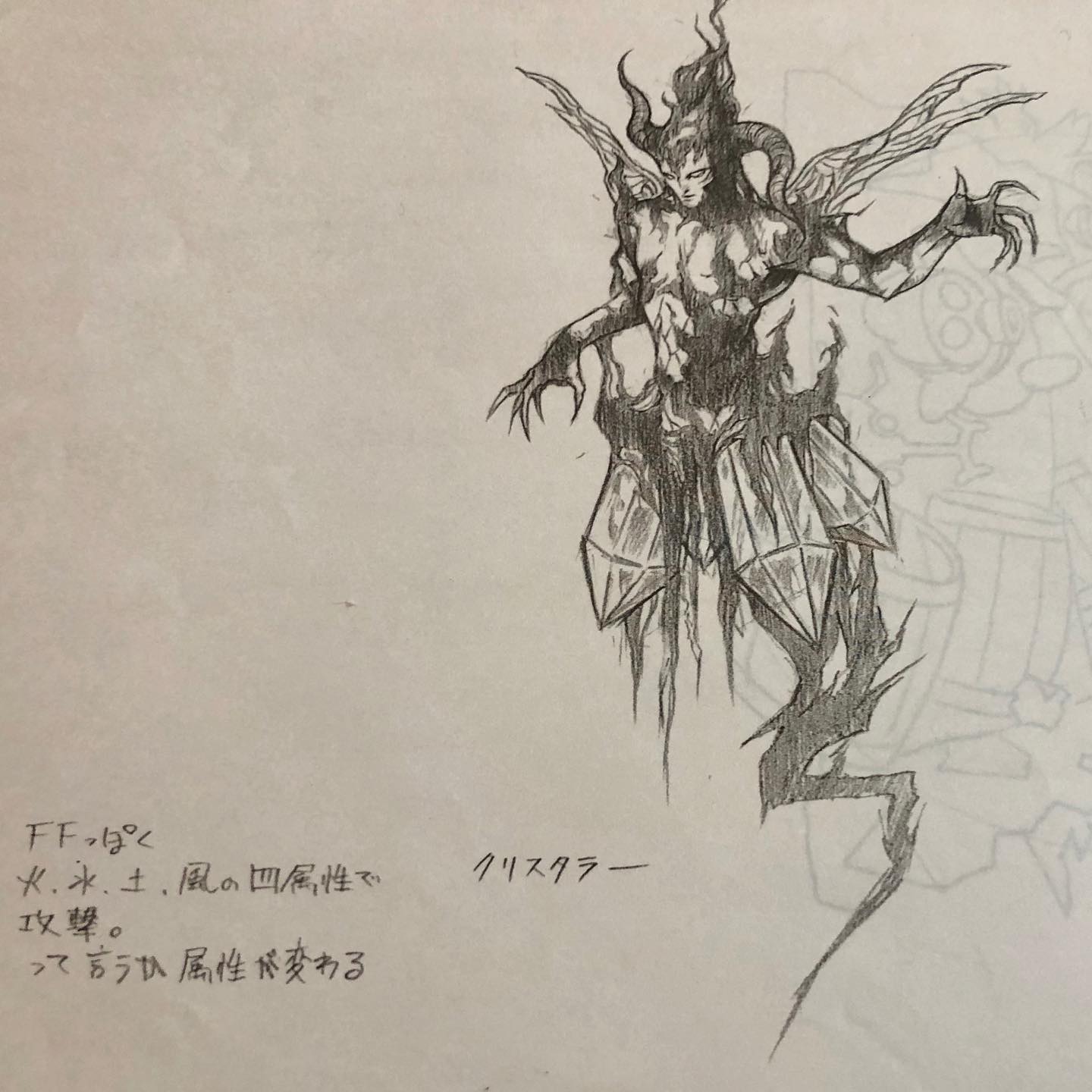
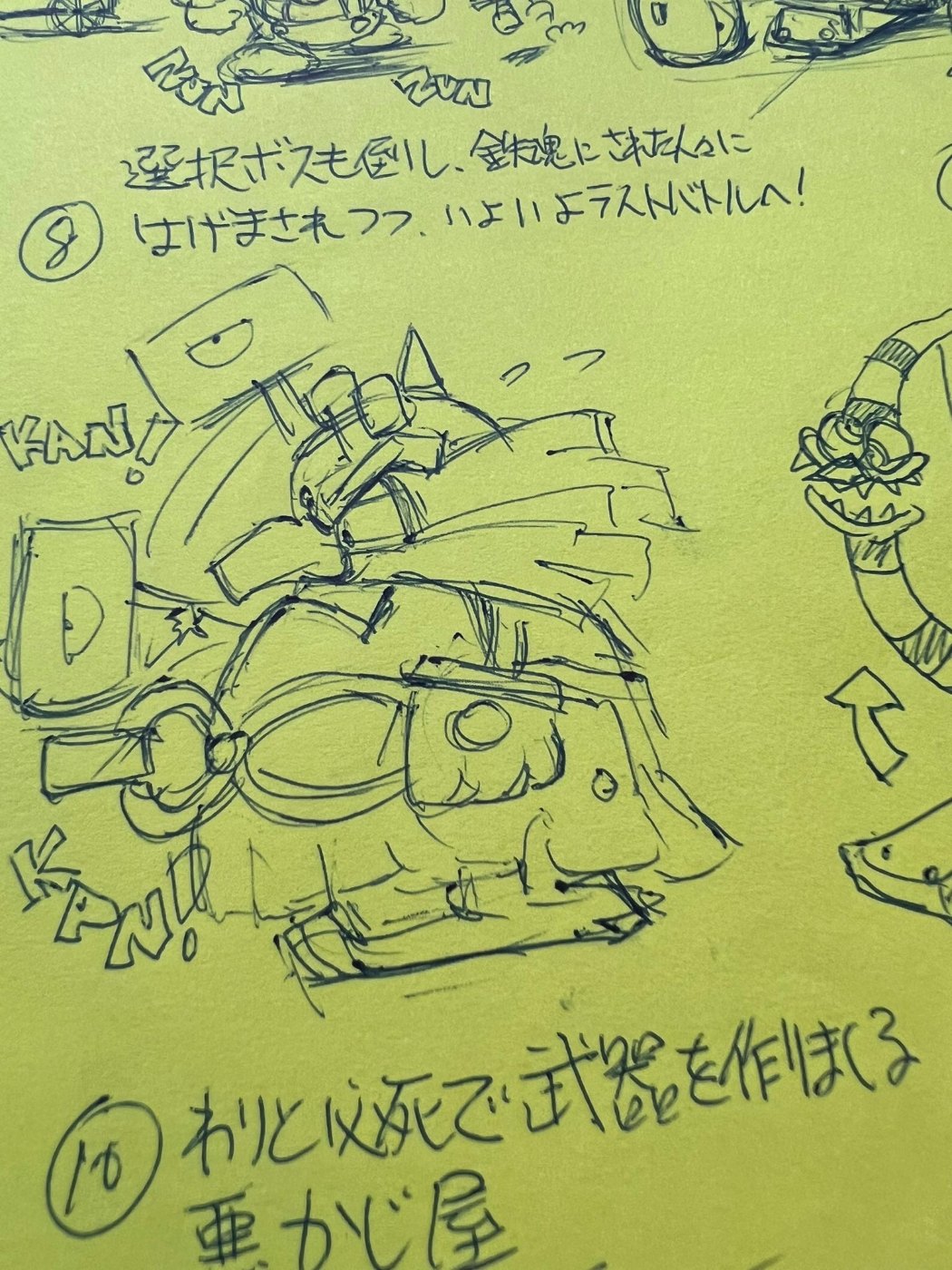
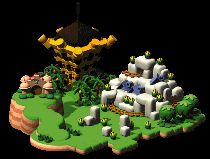
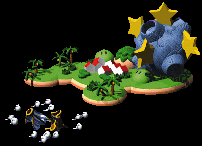



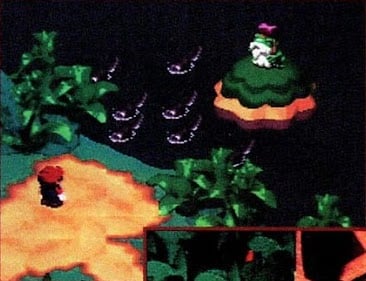
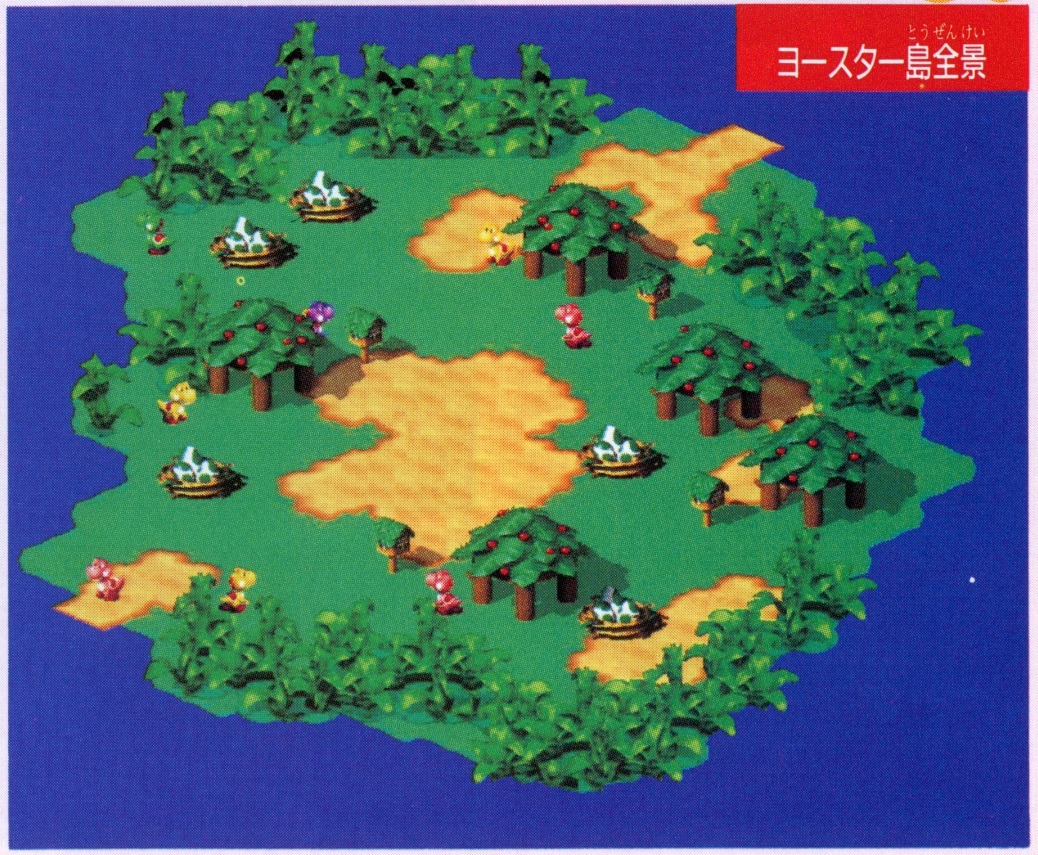
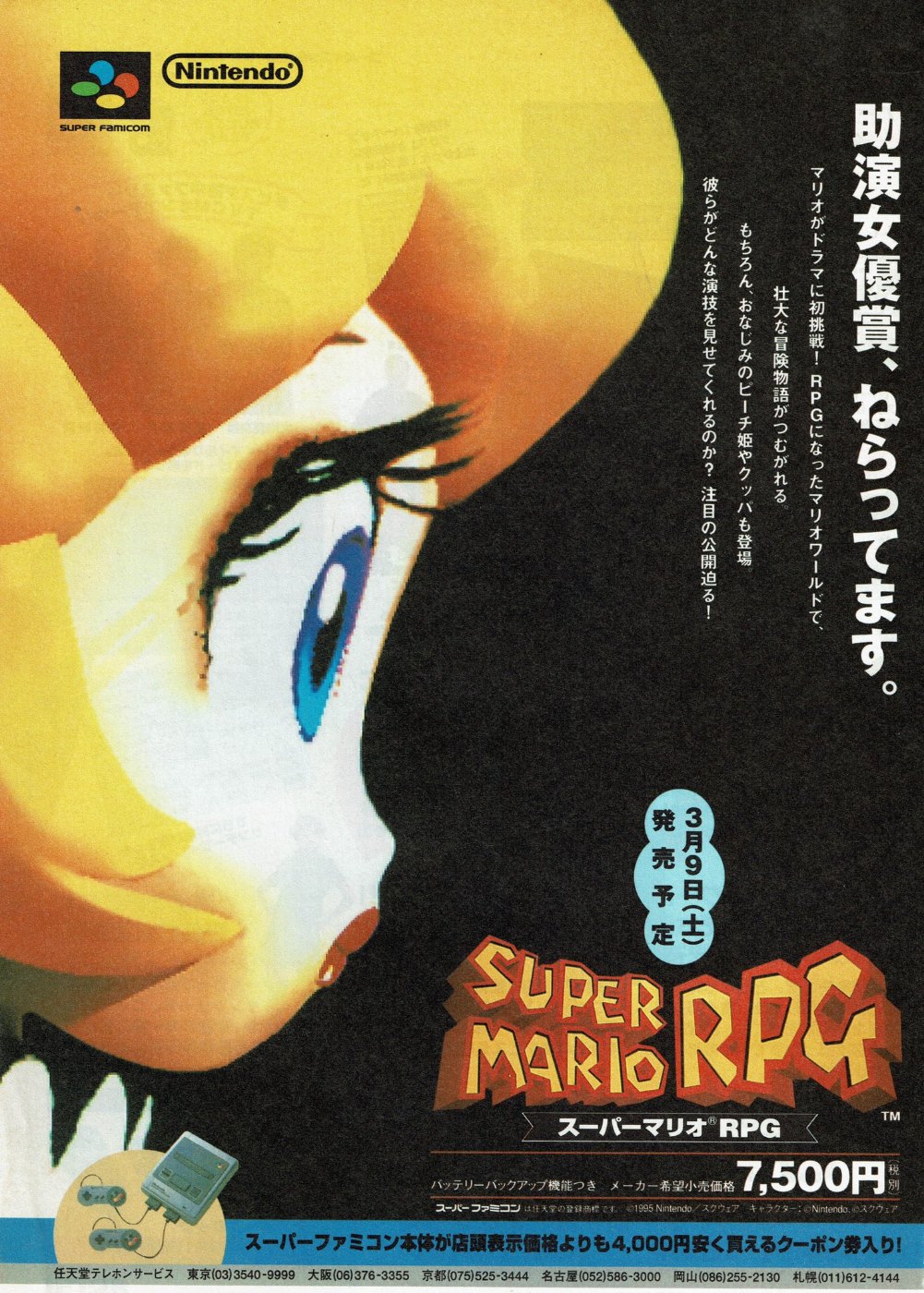
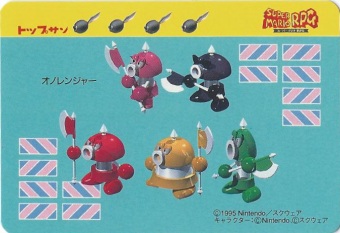
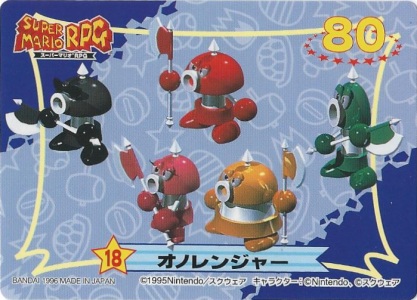


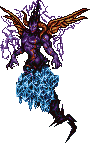
 TerrapinHP: 10
 GoombaHP: 16
 Sky TroopaHP: 10
 SpikeyHP: 20
 K-9HP: 30
 FrogogHP: 80
 ShysterHP: 30
 Rat FunkHP: 32
 GobyHP: 40
 The Big BooHP: 43
 HobgoblinHP: 50
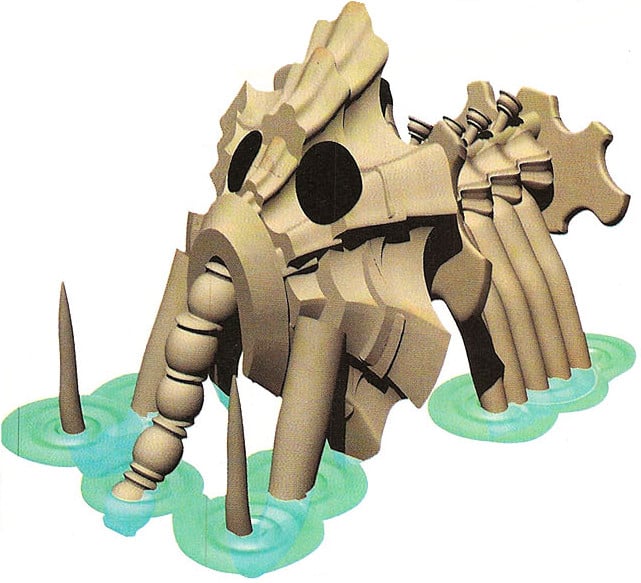 ShadowHP: 85
 StarslapHP: 62
 SnapdragonHP: 90
 ArachneHP: 82
 Shy GuyHP: 78
 CrookHP: 38
 AmanitaHP: 52
 BuzzerHP: 43
 OctolotHP: 99
 WigglerHP: 120
 GuerrillaHP: 135
 SparkyHP: 120
 Piranha PlantHP: 168
 Cheep CheepHP: 100
 BluebirdHP: 60
 GaggerHP: 141
 JawfulHP: 278
 Straw HeadHP: 183
 SackitHP: 152
 ShogunHP: 150
 RibbiteHP: 152
 ClusterHP: 60
 OctovaderHP: 84