MS-DOS · Super NES1993EducationalThe Software ToolworksSeven worlds on PC, six on Super NESTime World added on CD-ROMGoombas, Koopas and Lakitu as teachersUK title: Mario’s Playschool
Mario’s Early Years! Preschool Fun
The youngest of Mario’s learning games, for the youngest players. Mario’s Early Years! Preschool Fun is the third of The Software Toolworks’ licensed Early Years games: a point-and-click collection for under-sixes covering body parts, colours, counting, animal sounds, opposites and shapes. Mario (or Princess Toadstool) runs and jumps to whatever you click, bopping objects from below as if they were blocks, while a team of Fun Friends, from Goombas and Koopa Troopas to Lakitu and Bowser, explain each task and cheer you on. The MS-DOS original of 1993 has seven worlds, including a nursery-rhyme Sing Song World; the Super NES cartridge, the last of the trio on console in November 1994, has six and adds Yoshi; and the later CD-ROM editions add an eighth, Time World. British children knew it as Mario’s Playschool.
Developer:The Software Toolworks, under licence from Nintendo
Re-releases:Mario’s Early Years! CD-ROM Collection (MS-DOS, 1994, with Time World); Mud Pies bundle
Advertisement
Overview
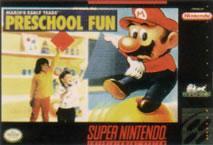
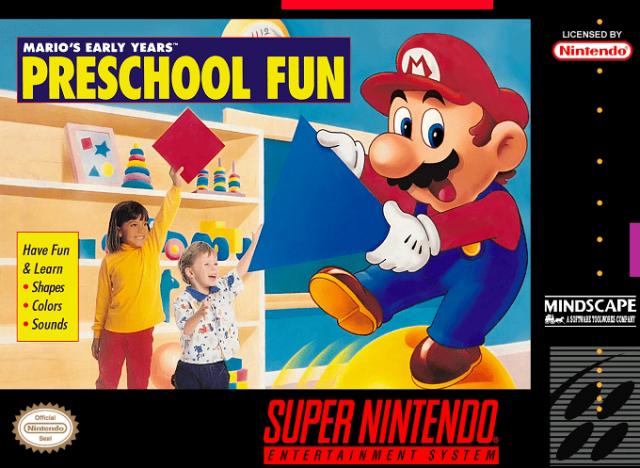
The Super NES box, released by Mindscape in November 1994.
Of the three Mario’s Early Years! games, Preschool Fun aims lowest and widest. Where Fun with Letters sticks to reading and Fun with Numbers to maths, this one is a sampler of everything a child might meet in their first year at school: naming parts of the body, learning colours, counting, telling animal noises apart, finding opposites and recognising shapes.
It is also the most Mario-like of the set. The look is taken straight from Super Mario World, the soundtrack remixes several of its tunes, and when you click an object Mario does not just stroll over: he runs, jumps and thumps it from below as if it were a block. Instead of a single narrator, a cast of “Fun Friends” drawn from the Mushroom Kingdom’s rank and file introduces each task and congratulates you, and Luigi is once again asleep and in need of waking in several of the worlds.
The PC original arrived in 1993 with seven worlds. The Super NES cartridge, published by Mindscape in November 1994 as the last of the three to reach the console, drops the Sing Song World, makes Yoshi a playable choice and swaps a few of the Fun Friends around. Later CD-ROM editions went the other way and added an eighth island, Time World, about seasons, months, day and night and the way living things grow.
Why Preschool Fun matters to Mario fans
It turns ordinary Mushroom Kingdom foot soldiers into friendly teachers: Goombas, Koopa Troopas, Piranha Plants and Lakitu all talk you through lessons here, along with Bowser on PC and a Koopa Troopa dressed up as Ludwig von Koopa. It is also the only Early Years game that grew after release, gaining a whole new world on CD-ROM, and its music is a little love letter to Super Mario World’s map themes.
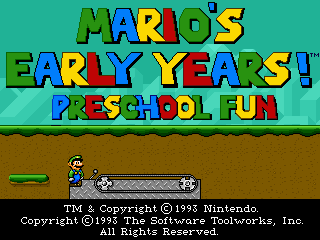
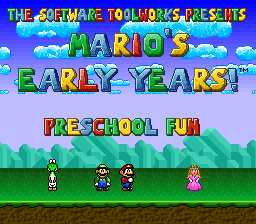
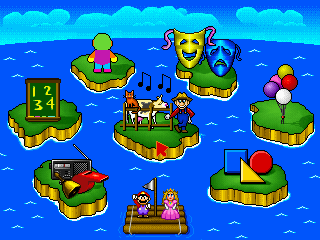
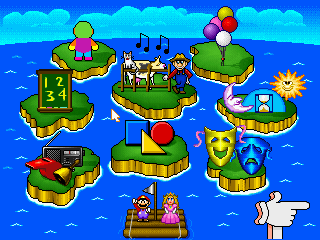
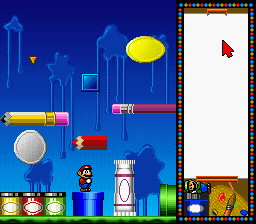
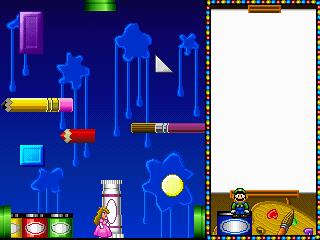
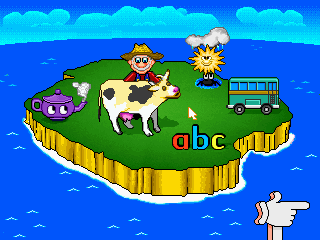
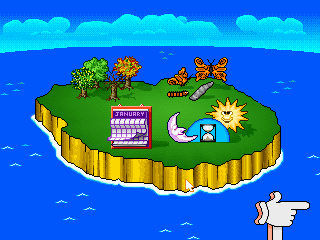
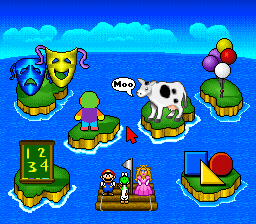
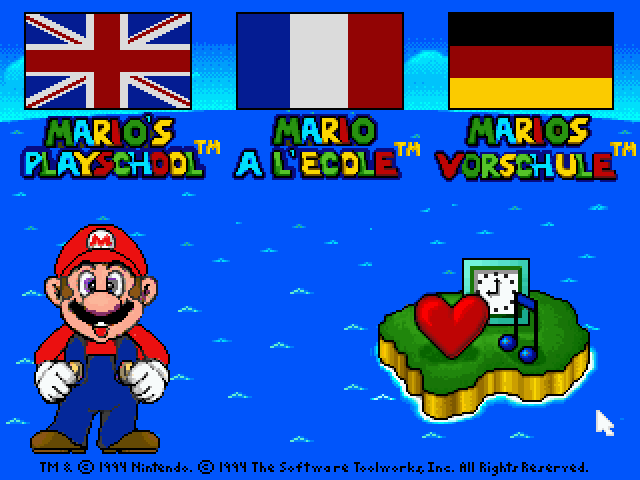
The MS-DOS title screen.The Super NES title screen, with Luigi helping arrange the letters.The PC island map.The CD-ROM Collection map, with Time World added.
Quick Answers
Short answers about the third Early Years game.
Who made Mario’s Early Years! Preschool Fun?
The Software Toolworks developed it under licence from Nintendo and published it on PC; Mindscape published the Super NES version. Nintendo did not make it. More →
When was it released?
On MS-DOS in 1993 and on Super NES in North America in November 1994, making it the last of the three Early Years games on the console. More →
What does it teach?
Body parts, colours, counting, listening to animal sounds, opposites and shapes; the PC version adds nursery rhymes and the CD-ROM editions add Time World, about seasons, months, day and night and life cycles. More →
How many worlds does it have?
Seven on the original PC release, six on Super NES and eight on the CD-ROM editions. More →
Who are the Fun Friends?
The characters who explain the activities and praise the player: a Goomba, a Piranha Plant and Lakitu in both versions, plus Bowser, two monkeys and a Koopa Troopa in Ludwig costume on PC, and a plain Koopa Troopa and Yoshi on Super NES. More →
Does Mario talk? Is it Charles Martinet?
The Fun Friends do the talking, in short recorded clips stitched together. No voice actors are credited, so there is no sourced link to Charles Martinet. More →
What is Mario’s Playschool?
The European name of the PC version. France had Mario à l’école and Germany Marios Vorschule, and the European CD-ROM lets you choose English, French or German. More →
Did Nintendo Power review it?
Yes, in December 1994: it liked how rewarding the activities were but thought they might soon wear thin, and it found the digitised voice annoying. More →
Lessons & Activities
There is no story; just a map of islands, each with a picture showing its subject, visited in any order. The PC version has seven, the Super NES six, and the CD-ROM editions eight.
Here is every world, with the PC-only and CD-only islands at the end.
Body World
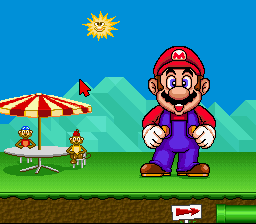
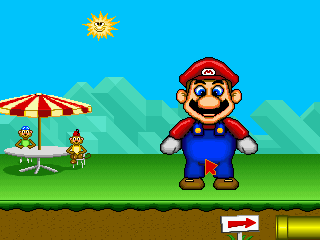
A grassy spot beneath the mountains where children learn the names of body parts by clicking them on Mario himself; how many parts there are depends on the version. There are extras to find as well: click the monkeys and they wave, click the sun and it raises its eyebrows. On Super NES, Mario’s pose here is borrowed from the language-select screen of the PC version of Mario is Missing!.
Body World on Super NES.Body World on PC.
Color World
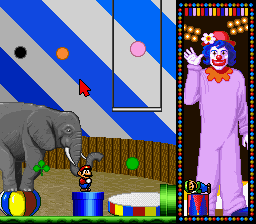
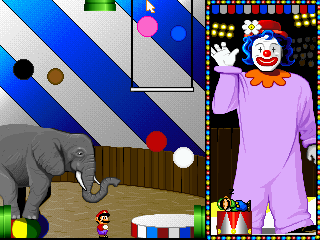
Balloons mark this island. First wake Luigi; then a colour is named and you send your hero to the object of that colour.
Color World on Super NES.Color World on PC.
Counting World
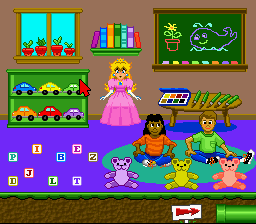
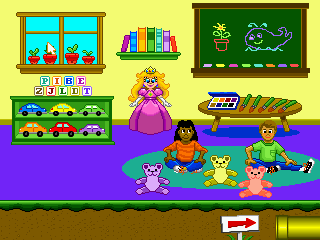
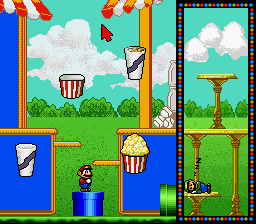
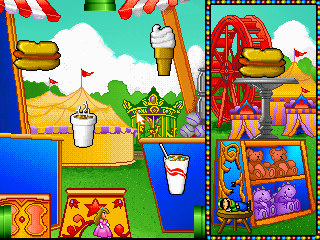
A playroom with a chalkboard. Click a group of objects and it is counted out loud while children hold up the number on their fingers. The CD-ROM Collection adds a second room, Mario’s Kitchen, brought over from Fun with Numbers.
Counting World on Super NES.Counting World on PC.
Listening World
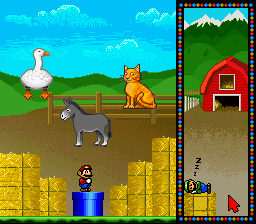
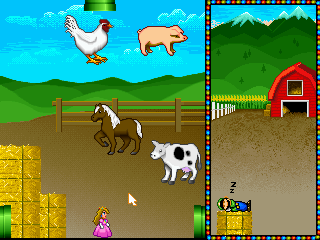
A farmyard. A sound plays and you pick the animal that made it. The PC version has three more stages here than the Super NES cartridge.
Listening World on Super NES.Listening World on PC.
Opposite World
Represented by a pair of theatre masks. An item is shown at the top of the screen and you click its opposite; there are three stages, each a little harder than the last.
Opposite World on Super NES.Opposite World on PC.
Shape World
An art studio. Click the shapes you are asked for and they are carried over to a canvas, slowly building up a picture.
Shape World on Super NES.Shape World on PC.
Sing Song World (PC only)
Marked on the map by Old MacDonald with cows, a cat and a wooden fence, this island has the Mario cast act out nursery rhymes: I’m a Little Teapot, an alphabet song, Old MacDonald Had a Farm, The Wheels on the Bus and Itsy Bitsy Spider, plus one extra song in the French and German editions.
Sing Song World on PC.
Time World (CD-ROM only)
The bonus island of the European CD-ROM and the Mario’s Early Years! CD-ROM Collection. It covers the seasons, the months of the year, day and night, and the life cycles of people, plants, butterflies and frogs.
Time World, added on CD-ROM.
Every world in Preschool Fun
The map icon for each island, as drawn in the game.
Body WorldPC, Super NES, CD-ROMName Mario’s body parts; wave at the monkeys.
Color WorldPC, Super NES, CD-ROMWake Luigi, then find the colour named.
Counting WorldPC, Super NES, CD-ROM (plus Mario’s Kitchen on CD)Count groups in a chalkboard playroom.
Listening WorldPC, Super NES, CD-ROM (3 extra stages on PC)Match farm animals to their sounds.
Opposite WorldPC, Super NES, CD-ROM · 3 stagesPick the opposite of the item shown.
Shape WorldPC, Super NES, CD-ROMChoose shapes to paint a picture.
Sing Song WorldPC and CD-ROM onlyFive nursery songs acted out by the Mario cast.
Time WorldCD-ROM onlySeasons, months, day and night, and life cycles.
Advertisement
Gameplay & Controls
Click an island on the map and a Fun Friend explains what to do. Click where you want to go and your hero runs there; click an object and they leap up and hit it from below, Super Mario style. On Super NES you can use the Super NES Mouse, or a joypad that imitates one.
Choosing a hero
Mario or Princess Toadstool on PC, with Yoshi as a third choice on Super NES, all picked from the main menu. As in the other Early Years games, the choice is only skin-deep.
Mario (MS-DOS sprite).Yoshi, playable on Super NES only.
Exit Pipes and Warp Pipes
Two kinds of pipe do the navigating. Exit Pipes lead on to the next part of a world, while Warp Pipes marked with an arrow take you straight back to the island map; the arrows are yellow on PC and green on Super NES. In several worlds Luigi is fast asleep and has to be woken before the activity can start.
The Fun Friends do the talking
Every instruction and every bit of praise comes from a Fun Friend, in short recorded phrases joined together, and the Super NES version shows subtitles under them. Which friends you meet depends on the version: Bowser, a pair of monkeys and a Koopa Troopa in Ludwig von Koopa fancy dress only turn up on PC, and Yoshi only on Super NES.
PC and Super NES compared
The cartridge loses Sing Song World and the parents’ options found on PC (separate switches for music, sounds and voices, random question order and on-screen text), along with the PC’s help screen of learning ideas. Some backgrounds are redrawn and the menu icons sit in slightly different places. The music changes too: on PC the main menu plays a medley built on Super Mario World’s Donut Plains map theme, with snatches of Twin Bridges and Chocolate Island, while the Super NES menu uses the game’s title theme instead.
The PC main menu.The Super NES main menu.
European CD-ROM
The European CD-ROM opens with a choice of English, French or German. The French version welcomes the player when it starts, and the French and German editions each add a song of their own to Sing Song World: Au clair de la lune in French and Alle meine Entchen in German.
The language menu of the European CD-ROM.
Cast & Credits
The heroes, the sleepy brother and the Fun Friends who do the teaching.
Character
Who they are
In this game
Abilities & notes
MarioPlayable
The star, in his Super Mario World look.
Runs, jumps and bumps objects when you click them, and is the model for the body-part lessons in Body World.
PC and Super NES
Princess ToadstoolPlayable
The Mushroom Kingdom’s princess.
The alternative hero on both systems.
PC and Super NES
YoshiPlayable on Super NES
Mario’s dinosaur friend.
A third hero on Super NES, where a Yoshi also appears among the Fun Friends.
Super NES only
LuigiHelper
Mario’s brother.
Asleep in most worlds until you wake him; also helps put the letters in place on the title screen.
PC and Super NES
BowserFun Friend (PC)
The Koopa King on his best behaviour.
One of the PC version’s Fun Friends, explaining tasks and praising the player.
PC only
The Fun Friends
The characters who give instructions and praise.
BowserPCThe Koopa King, cheering from the sidelines.
GoombaPCA friendly Goomba (the PC sprite is sometimes classed as a Galoomba).
GoombaSuper NESThe Super NES Goomba.
Koopa TroopaSuper NESA Koopa Troopa, here on the side of learning.
Koopa Troopa as LudwigPCA Koopa Troopa dressed up as Ludwig von Koopa.
Monkey (striped)PCOne of two monkeys on PC.
Monkey (purple)PCThe other monkey.
Piranha PlantPCA talking Piranha Plant.
Piranha PlantSuper NESThe Super NES version.
LakituPCLakitu in his cloud.
LakituSuper NESLakitu on Super NES.
YoshiSuper NESA Yoshi among the Fun Friends on Super NES.
Credits
From the Super NES credits. No voice actors or Nintendo staff are named.
Peter LipsonDirectorCredited as director, where the other two Early Years games name Andy Iverson and Henrik Markarian.
Brian Greenstone, Jeff Davies, Henrik MarkarianProgrammersThe same programming team as the other two games.
Duncan Knarr, John Root, Jan SleeperArtCredited for the art.
Erica BensonOriginal artCredited for the original art.
Paul Melmed, Ph.D.; Gaye Slocum, M.S., CCC, SLP; Marc Roegiers; Cassandra NordstrandOriginal program designThe educational design team.
Rob Wallace, Sam PowellOriginal music and soundIncluding the Super Mario World arrangements.
Buck Irving, Craig M. Brisgel, Scott van Schoik and othersQuality assuranceTesting.
Advertisement
How It Was Made
As with the other Early Years games, the record is thin, but the credits, the period press and the versions themselves say something about how it was put together.
Part of a planned trio
Electronic Games announced the three Early Years games together in October 1993, all due before the end of that year, and Wikipedia’s infobox lists Preschool Fun on MS-DOS, in the fourth quarter of 1993, as the series’ first release. Toolworks, already the maker of Mario is Missing! and Mario’s Time Machine, worked with child-development specialists, education researchers and speech and language teachers, and the same design team of Paul Melmed, Gaye Slocum, Marc Roegiers and Cassandra Nordstrand is credited on all three games.
A Super Mario World look and sound
Of the three games, this one leans hardest on Super Mario World: character graphics are taken from it, several of its tracks are rearranged for the soundtrack, and the PC main menu plays a medley of its map music. The Super NES version even recycles a piece of an earlier Toolworks game, using a pose of Mario from the PC version of Mario is Missing! in Body World.
Mario’s Playschool and the CD-ROM
For Europe the game became Mario’s Playschool; the German magazine PC Player, reporting from the autumn 1993 European Computer Trade Show, listed it for November. The European CD-ROM bundled English, French and German versions, and both it and the American CD-ROM Collection of 1994 added the new Time World, and the CD-ROM Collection also brought in Mario’s Kitchen from Fun with Numbers in Counting World.
Last to the Super NES
Mindscape released the Super NES version in November 1994, after Fun with Numbers in September and Fun with Letters in October. Sing Song World and the parent options were cut, Yoshi became playable, the Fun Friends line-up was reshuffled and subtitles were added to their speech. The Super NES credits name a different director, Peter Lipson.
Videos
No official trailer is online; these two fan uploads show both versions in full.
Third-party upload: a complete longplay of the Super NES version.
Third-party upload: the MS-DOS version played through.
Trivia & Interesting Facts
Body World on Super NES.On Super NES, Body World borrows Mario’s pose from the language-select screen of the PC version of Mario is Missing!.
Luigi helps arrange the letters on the title screen.
The Ludwig look-alike.One of the PC Fun Friends is a Koopa Troopa in a Ludwig von Koopa costume.
In Europe the game was Mario’s Playschool; in France Mario à l’école (“Mario at school”) and in Germany Marios Vorschule (“Mario’s pre-school”).
The French edition greets the player at start-up and sings Au clair de la lune; the German edition adds Alle meine Entchen.
Time World, added on CD-ROM, makes this the only Early Years game to gain a new world after its first release.
The CD-ROM Collection also slips Mario’s Kitchen from Fun with Numbers into this game’s Counting World.
The PC main menu music is an arrangement of the Donut Plains map theme from Super Mario World, with bits of Twin Bridges and Chocolate Island.
The Warp Pipes back to the map carry yellow arrows on PC and green ones on Super NES.
The British and French versions of the series use women’s voices where the American ones use children.
It was the last of the three Early Years games to reach the Super NES, in November 1994.
Regional Box Art
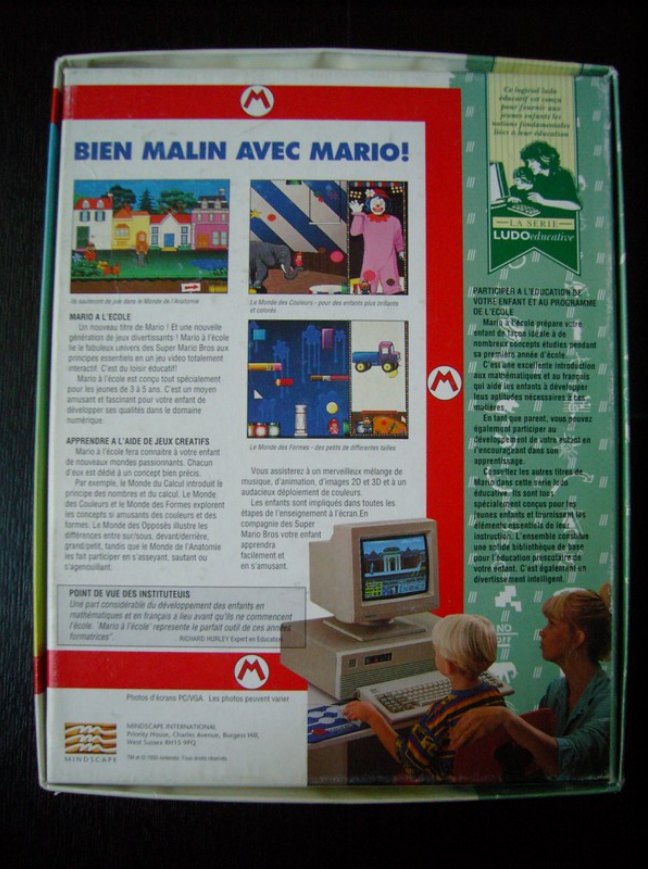
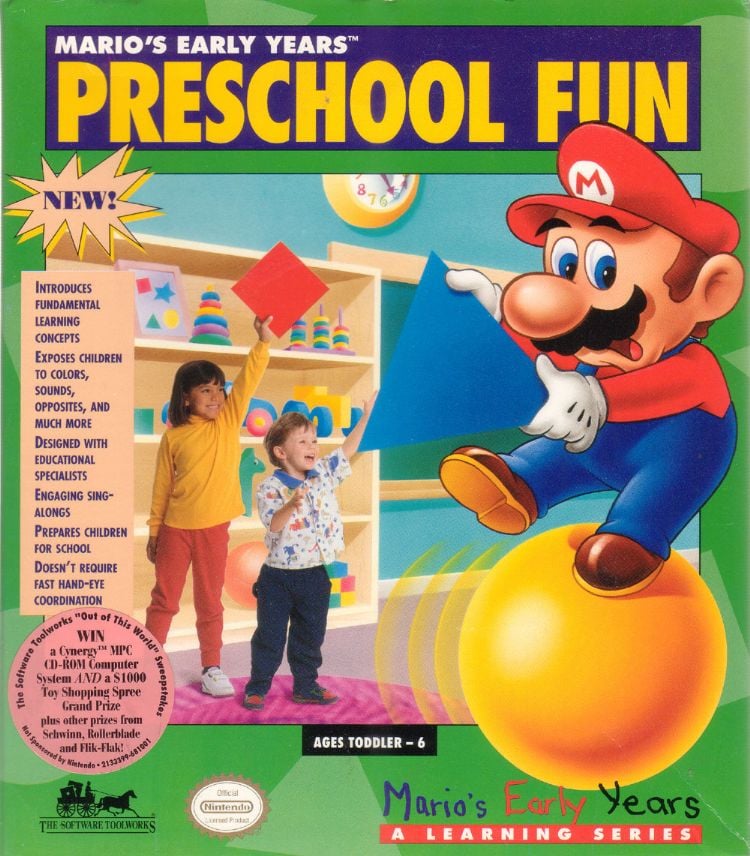
The American PC and Super NES boxes, the alternative PC cover, the French back cover and the CD-ROM Collection.
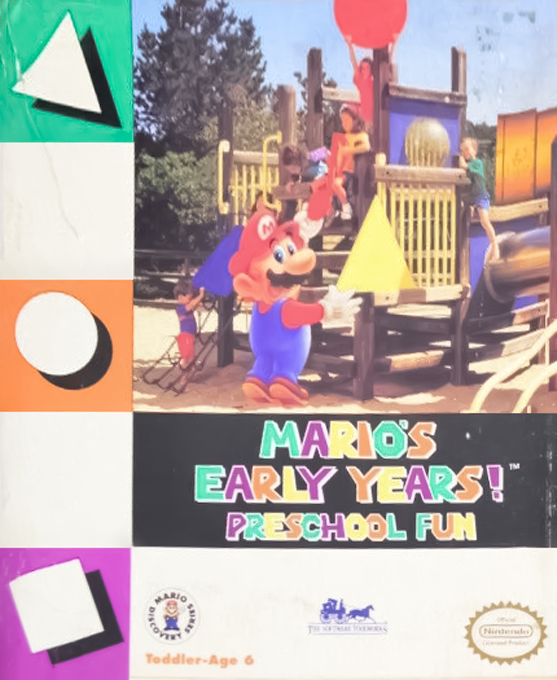
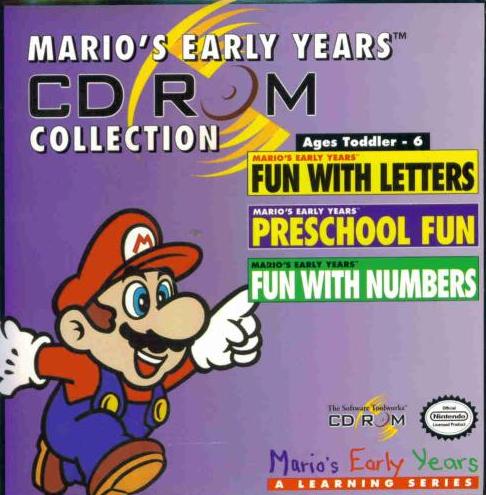
North America · MS-DOSThe Software Toolworks, 1993North America · MS-DOS, alternative coverNorth America · Super NESMindscape, November 1994France · MS-DOS, backMario à l’écoleNorth America · CD-ROM CollectionWith the new Time World
Screenshots
The two versions side by side, plus the sprite sheets of the heroes.
The Super NES main menu.Princess Toadstool (MS-DOS sprite).Luigi (Super NES sprite).A Koopa Troopa Fun Friend (Super NES).The Koopa Troopa dressed as Ludwig (MS-DOS).Time World, the CD-ROM bonus.
Artwork & Media Gallery
Logos and sprites.
The Mario’s Early Years! logo.The Mario Discovery Series logo.Mario (MS-DOS sprite).Mario (Super NES sprite).Luigi (MS-DOS sprite).Goomba (Super NES).
Legacy & Re-releases
Released on disk in 1993, on cartridge in 1994 and on CD-ROM with a new world the same year.
Release history
MS-DOS1993North American release by The Software Toolworks, seven worlds.
MS-DOS (Europe)1993Mario’s Playschool (UK), Mario à l’école and Marios Vorschule; the European CD-ROM has all three languages and Time World.
Super NESNovember 1994Mindscape’s cartridge, six worlds, Yoshi playable.
MS-DOS CD-ROM1994Mario’s Early Years! CD-ROM Collection, adding Time World and Mario’s Kitchen.
Mud PiesUndatedThe CD-ROM Collection bundled with two other children’s programs.
The end of the line
Preschool Fun closed out the Early Years series and, with it, the run of Mario learning games from The Software Toolworks that is sometimes called the Mario Discovery Series. Mario’s other teaching job was at the keyboard, in Interplay’s Mario Teaches Typing of 1992 and its later sequel Mario Teaches Typing 2. See the games list for the rest.
Reviews & Sales
Reviews
Preschool Fun is the Early Years game that Nintendo Power reviewed. No sales figures have been published.
CD-ROM TodayUS · MS-DOS · review of the Mario’s Early Years! series, June 1994
3/5
Nintendo Power covered the Super NES version in its Now Playing pages in Vol. 67 (December 1994). The reviewers felt that the simple activities give young players plenty of reward, but warned that without real game elements they could become tedious before long, and they found the digitised voice annoying.
On PC the series had already been featured by the parenting magazine Working Mother in December 1993, and CD-ROM Today gave the trio three out of five in June 1994.
SLB User Reviews
Mario’s Early Years! Preschool Fun has yet to receive a community review on Super Luigi Bros.
If you’ve played Mario’s Early Years! Preschool Fun and would like to submit a review, please get in touch.
To provide the best experiences, we use technologies like cookies to store and/or access device information. Consenting to these technologies will allow us to process data such as browsing behavior or unique IDs on this site. Not consenting or withdrawing consent, may adversely affect certain features and functions.
Functional
Always active
The technical storage or access is strictly necessary for the legitimate purpose of enabling the use of a specific service explicitly requested by the subscriber or user, or for the sole purpose of carrying out the transmission of a communication over an electronic communications network.
Preferences
The technical storage or access is necessary for the legitimate purpose of storing preferences that are not requested by the subscriber or user.
Statistics
The technical storage or access that is used exclusively for statistical purposes.The technical storage or access that is used exclusively for anonymous statistical purposes. Without a subpoena, voluntary compliance on the part of your Internet Service Provider, or additional records from a third party, information stored or retrieved for this purpose alone cannot usually be used to identify you.
Marketing
The technical storage or access is required to create user profiles to send advertising, or to track the user on a website or across several websites for similar marketing purposes.

 Body WorldPC, Super NES, CD-ROMName Mario’s body parts; wave at the monkeys.
 Color WorldPC, Super NES, CD-ROMWake Luigi, then find the colour named.
 Counting WorldPC, Super NES, CD-ROM (plus Mario’s Kitchen on CD)Count groups in a chalkboard playroom.
 Listening WorldPC, Super NES, CD-ROM (3 extra stages on PC)Match farm animals to their sounds.
 Opposite WorldPC, Super NES, CD-ROM · 3 stagesPick the opposite of the item shown.
 Shape WorldPC, Super NES, CD-ROMChoose shapes to paint a picture.
 Sing Song WorldPC and CD-ROM onlyFive nursery songs acted out by the Mario cast.
 Time WorldCD-ROM onlySeasons, months, day and night, and life cycles.


 MarioPlayable
 Princess ToadstoolPlayable
 LuigiHelper
 BowserFun Friend (PC)
 GoombaPCA friendly Goomba (the PC sprite is sometimes classed as a Galoomba).
 GoombaSuper NESThe Super NES Goomba.
 Koopa TroopaSuper NESA Koopa Troopa, here on the side of learning.
 Koopa Troopa as LudwigPCA Koopa Troopa dressed up as Ludwig von Koopa.
 Monkey (striped)PCOne of two monkeys on PC.
 Monkey (purple)PCThe other monkey.
 Piranha PlantPCA talking Piranha Plant.
 Piranha PlantSuper NESThe Super NES version.
 LakituPCLakitu in his cloud.
 LakituSuper NESLakitu on Super NES.
 YoshiSuper NESA Yoshi among the Fun Friends on Super NES.