
 |
Character fact sheetName: Tatanga (Tatanga in Japanese, same name across all regions) First Appearance: Super Mario Land (Game Boy, 1989) Home: Outer space (Sarasaland invader) / unknown alien homeworld Voiced by: Wordless alien-monster vocalizations across all appearances Associates: Pagosu (his spaceship and signature weapon), the various Sarasaland-region minions he commanded during the events of Super Mario Land |
General profile
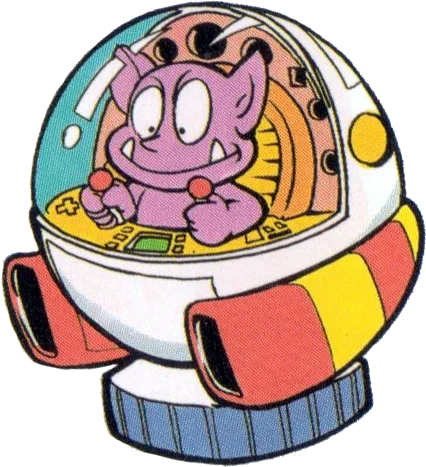
Tatanga is the principal antagonist of Super Mario Land (Game Boy, 1989), the first portable Mario series mainline platformer. An alien invader from outer space, Tatanga arrives at Sarasaland in a fleet of spaceships and rapidly conquers the kingdom’s four regions: Birabuto, Muda, Easton, and Chai. He kidnaps Princess Daisy, the ruler of Sarasaland, and plans to make her his bride, prompting Mario to undertake his first solo Game Boy adventure to rescue her. The character’s visual design is striking: a small, pink-purple alien creature with bulbous eyes, sharp teeth, and a perpetually-scowling expression, who pilots an oversized spaceship-mecha that dwarfs his actual body.
Tatanga’s defining gameplay role is as the final boss of Super Mario Land. The boss fight occurs in the Chai Kingdom’s atmosphere, with Mario piloting his Sky Pop airplane against Tatanga’s Pagosu spaceship. The encounter is one of the most distinctive Mario series boss fights, an aerial shoot-em-up sequence rather than the standard platformer-style ground combat. The fight’s unusual mechanics reflect Super Mario Land’s broader experimental nature, the game incorporated multiple unconventional level themes (Egyptian-themed, ocean-themed, Easter Island-themed, Chinese-themed) that set it apart from the standard Mario Bros. aesthetic.
Tatanga’s post-1989 Mario series presence has been remarkably limited. He returned in Super Mario Land 2: 6 Golden Coins (1992) as one of the six sub-bosses of the game, fought in the Space Zone for Mario to recover one of the six Golden Coins. After 1992, Tatanga has effectively disappeared from the mainline Mario series, his only post-1992 appearances have been in supplementary materials such as the 2024 LEGO Game Boy set and various Nintendo merchandise. The character’s alien-invader status and outer-space origin have made him difficult to integrate into the standard Mushroom Kingdom storytelling of subsequent Mario series entries.
Quotes
Enemies
Tatanga’s primary enemy is Mario, against whom he has fought in Super Mario Land (1989) and Super Mario Land 2: 6 Golden Coins (1992). He has also opposed Princess Daisy, whom he kidnapped in the original Super Mario Land. Beyond these two specific games, Tatanga has had no significant enemy interactions in the broader Mario series, his role as a recurring villain has not been developed in the way that Bowser, King Boo, or Cackletta have been. His alien-invader status has effectively kept him isolated from the standard Mushroom Kingdom villain coalition.
Friends
Tatanga has no friends in the conventional sense. His sole associates are the various Sarasaland-region minions he commanded during the events of Super Mario Land, but no canonical relationship between Tatanga and these minions has been established beyond their service to his invasion. He has no romantic interest (his abduction of Princess Daisy was a forced kidnapping rather than a relationship), no family, and no canonical alliance with Bowser or other Mario series villains. The character is portrayed as a solitary alien invader whose attachments are exclusively to his Pagosu spaceship and his conquest goals.
Appearances
Super Mario Land (Game Boy, 1989)
 Tatanga debuted in Super Mario Land for the Game Boy (April 1989), the first portable Mario series mainline platformer. The game was developed by Nintendo R&D1 under the direction of Gunpei Yokoi, who personally led the design of the Game Boy hardware itself. Tatanga serves as the principal antagonist of the game, invading Sarasaland from outer space and kidnapping Princess Daisy in the opening cutscene. The character was designed by Nintendo R&D1’s art team as a deliberately alien-looking villain to differentiate Super Mario Land from the standard Bowser-led Mario series mainline games.
The Pagosu Spaceship (1989)
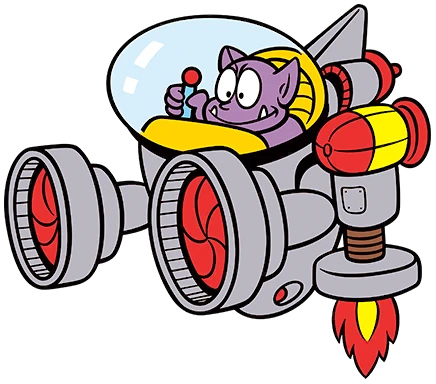 Tatanga’s signature weapon and transportation is the Pagosu, an oversized spaceship-mecha that dwarfs his actual diminutive body. The Pagosu features in the final boss fight of Super Mario Land, where Mario must pilot his Sky Pop airplane against Tatanga’s spaceship in an aerial shoot-em-up sequence. The Pagosu’s design has been preserved across both Super Mario Land and Super Mario Land 2: 6 Golden Coins, making it one of the most distinctive vehicles in early Mario series villainy.
Super Mario Land 2: 6 Golden Coins (Game Boy, 1992)
 Tatanga returned in Super Mario Land 2: 6 Golden Coins for the Game Boy (October 1992), the direct sequel to the 1989 original. He serves as one of the six sub-bosses of the game, fought in the Space Zone for Mario to recover one of the six Golden Coins needed to reclaim Mario’s castle from Wario. Tatanga’s appearance in SML2 is significantly more minor than his Super Mario Land role, he is no longer the principal antagonist (that role belongs to Wario), but a recurring secondary villain.
The Super Mario Land 2 Boss Fight (1992)
 The Space Zone boss fight against Tatanga in Super Mario Land 2 (1992) is similar in structure to the original Super Mario Land final boss fight, an aerial encounter with Mario piloting an air vehicle against Tatanga’s Pagosu spaceship. The fight’s mechanics have been preserved across both games and remain among the most distinctive boss-fight presentations in early Mario series history.
Post-1992 Absence (1992-present)
After Super Mario Land 2: 6 Golden Coins (1992), Tatanga has effectively disappeared from the mainline Mario series. He has not appeared as a playable character or boss in any subsequent Mario series mainline platformer, Mario Kart, Mario Party, Mario Tennis, Mario Strikers, or Super Smash Bros. entry. His alien-invader status and outer-space origin have made him difficult to integrate into the standard Mushroom Kingdom storytelling of subsequent Mario series entries.
LEGO Game Boy Set (2024)
 Tatanga appears as a buildable LEGO minifigure in the LEGO Group’s Game Boy Set (released October 2024), part of LEGO’s celebration of Nintendo’s Game Boy 35th anniversary. The LEGO set includes Super Mario Land-themed minifigures of Mario, Princess Daisy, and Tatanga. This 2024 LEGO appearance represented Tatanga’s first major merchandise inclusion in over a decade and renewed interest in the character among modern Mario series fans.
Trivia & Official Sources
- Tatanga was designed by Nintendo R&D1 led by Gunpei Yokoi for Super Mario Land (1989). The character’s alien-invader design was a deliberate creative choice to differentiate Super Mario Land from the standard Bowser-led Mario series mainline games.
- The Japanese name Tatanga has been preserved unchanged across all regions and releases. The name is believed to derive from “Tatanka,” the Lakota Sioux word for “buffalo,” though Nintendo has never officially confirmed this etymology.
- Super Mario Land (Game Boy, 1989) sold approximately 18.06 million copies worldwide, making it one of the best-selling Game Boy games of all time. Tatanga’s role as the final boss has nonetheless not translated into substantial post-1989 appearances in the Mario series.
- The Pix’n Love Encyclopedia Super Mario Bros. (2018) describes Tatanga as “the alien invader of Sarasaland, principal antagonist of Super Mario Land for Game Boy.”
- Princess Daisy was introduced in Super Mario Land (1989) specifically as Tatanga’s kidnap victim and rescue target. Following her rescue, Daisy became a recurring Mario series character while Tatanga effectively disappeared, an unusual asymmetry in the typical Mario series villain-and-rescued-princess dynamic.
- The Sarasaland setting of Super Mario Land (1989) is one of the most distinctive geographical settings in the Mario series. The kingdom’s four regions (Birabuto, Muda, Easton, Chai) each feature themed aesthetics drawn from different real-world cultural references (Egyptian, ocean-going, Easter Island, Chinese).
- Tatanga’s in-game height is canonically smaller than Mario’s, the character himself is only a few inches tall in his proportions to the standard Game Boy sprite scale. His Pagosu spaceship is what makes him an imposing threat rather than his actual physical size.
- Gunpei Yokoi, the designer of Super Mario Land and the Game Boy hardware, has been credited with the creative direction that produced Tatanga’s alien-invader concept. Yokoi’s preference for unconventional Mario series spinoffs (Game and Watch, Game Boy, Virtual Boy) helped shape Tatanga’s deliberately non-standard villain design.
- Super Mario Land 2: 6 Golden Coins (1992) sold approximately 11.18 million copies worldwide. Tatanga’s reduced role in this sequel, from principal antagonist to one of six sub-bosses, marked the beginning of his gradual fade from Mario series prominence.
- Tatanga has not appeared as a playable character or Mii Fighter costume in any Super Smash Bros. entry as of late 2025. He is one of the most-requested classic Mario series villains for inclusion as a future Smash Spirit addition.
- Tatanga amiibo figures have not been released as of late 2025. The character was not included in the 2017 Mario Sports Superstars amiibo line nor in subsequent Mario series amiibo waves.
- The 2024 LEGO Game Boy set (October 2024) represented Tatanga’s first major merchandise inclusion in over a decade. The set’s inclusion of Tatanga as a buildable minifigure renewed interest in the character among modern Mario series fans.
- Tatanga’s alien-invader status places him in a small subset of Mario series villains whose motivations are entirely separate from the standard Bowser-vs-Mario dynamic. Other comparable outliers include Smithy (Super Mario RPG, 1996), the Shroobs (Mario and Luigi: Partners in Time, 2005), and the Shadow Queen (Paper Mario: The Thousand-Year Door, 2004).
- The character has not been confirmed to appear in The Super Mario Galaxy Movie (April 2026) as of late 2025 pre-release marketing. Tatanga’s film-adaptation status remains one of the open questions for Illumination’s Super Mario film series.
- Tatanga’s post-1992 disappearance from the mainline Mario series is one of the most-discussed character-management decisions in Nintendo’s history. Fans have long speculated about a potential Tatanga revival, particularly given the success of similar deep-cut character revivals (Boom Boom in 2011, Mr. L acknowledgment in subsequent Paper Mario entries).
- The character has been continuously available through Nintendo’s digital re-release programs, the original Super Mario Land is available on Nintendo Switch Online’s Game Boy library as of late 2025.