Nintendo 641997Nintendo EAD2D platformer24 courses, six per storyEight YoshisYoshi’s voice debuts128-megabit cartridgeOn Nintendo Switch Online
Yoshi’s Story
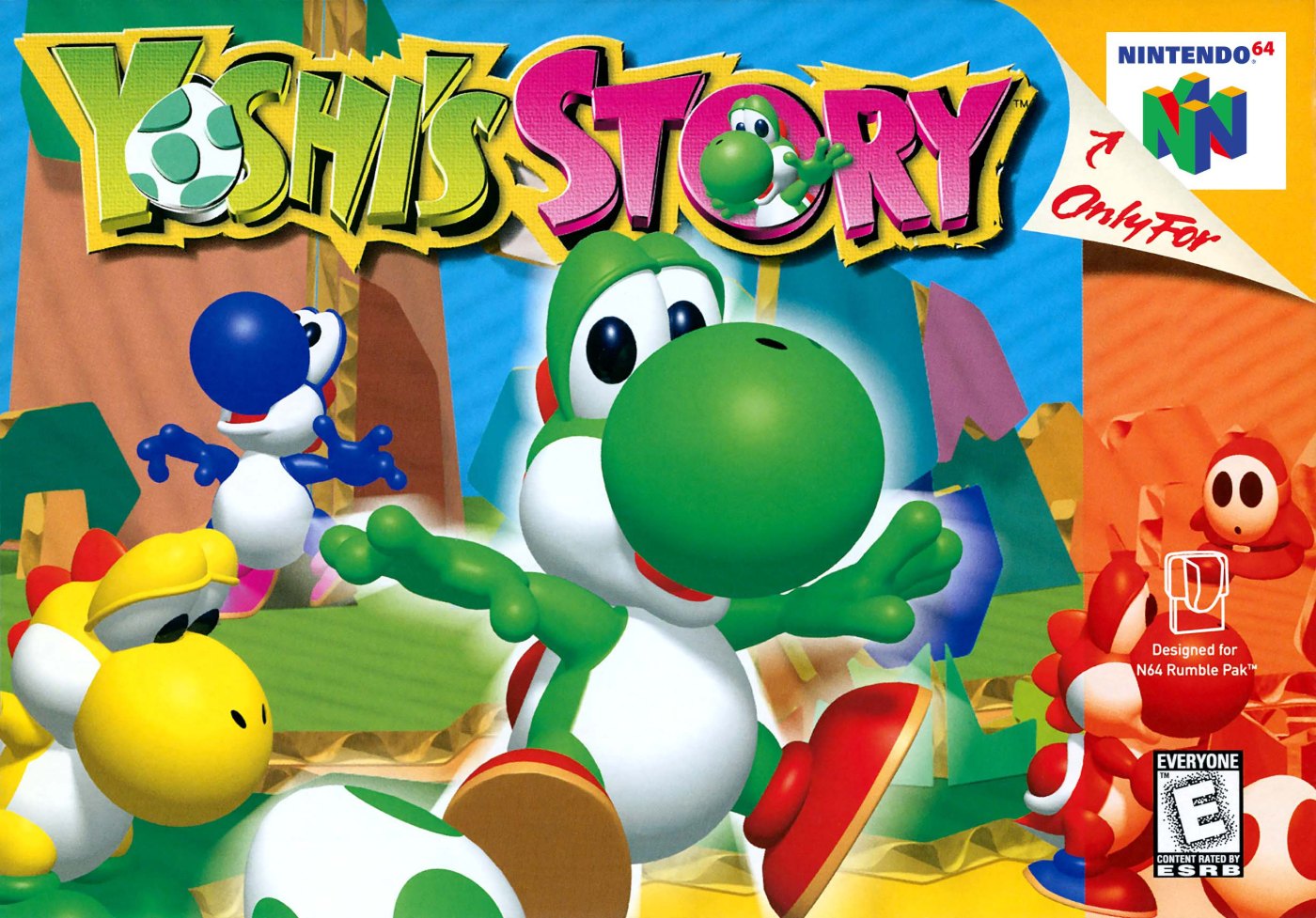
Baby Bowser has stolen the Super Happy Tree and squashed Yoshi’s Island flat into a pop-up storybook. The only Yoshis the spell missed are six hatchlings still in their eggs, and it falls to them to cheer the island up again by eating their way through it. Yoshi’s Story came out in Japan on 21 December 1997 and in North America on 9 March 1998, the Nintendo 64 follow-up to Yoshi’s Island from much of the same team, with Takashi Tezuka producing and Hideki Konno directing.
It is a platformer with no finishing post. Each course ends when your Yoshi has eaten 30 pieces of fruit; the book has six pages of four courses, you read one course per page, and the Special Hearts you find decide which courses you may pick next. There are hidden Black and White Yoshis, a melon-only score chase, a soundtrack by Kazumi Totaka and, for the first time, the Yoshi voice that Totaka recorded himself. Critics in 1998 found it short and gentle; fans have been arguing its case ever since.
Composer:Kazumi Totaka (also the voice of the Yoshis and Shy Guys)
Courses:24 on six pages (four per page, one played per page), plus a Practice course
Playable Yoshis:Green, Red, Yellow, Pink, Blue and Light Blue, plus hidden Black and White
Ratings:ESRB E · PEGI 3 · CERO A · ACB G · USK 0
Sales:618,789 in Japan and 679,219 in the US during 1998 (chart trackers; see Reception)
Re-releases:iQue Player (2004), Wii Virtual Console (2007), Wii U Virtual Console (2016), Nintendo Switch Online + Expansion Pack (2021)
Advertisement
Overview
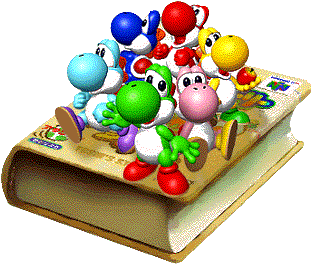
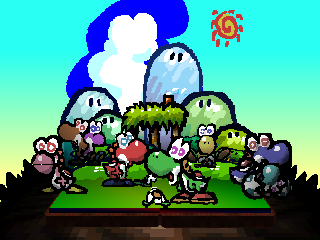
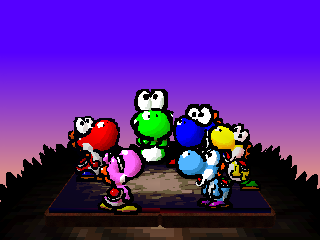
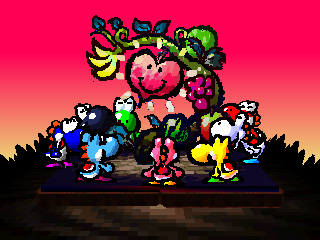
Six hatchlings and one very large book: the game’s key art.
Yoshi’s Story is a side-scrolling platformer for the Nintendo 64, made by Nintendo EAD and first shown in November 1996 under the name Yoshi’s Island 64. It reached Japanese shops on 21 December 1997, North America on 9 March 1998, Europe on 10 May and Australia a day later. Where Super Mario 64 had sent its hero into three dimensions, this stayed resolutely flat: a 2D game built from pre-rendered 3D models and dressed up to look like a pop-up picture book made of cardboard.
The set-up fits on a page. The Yoshis live happily on their island thanks to the Super Happy Tree, which grows every fruit there is. Baby Bowser, jealous, takes the tree and casts a spell that turns the whole island into a picture book. Six eggs escape the spell, six baby Yoshis hatch out of them, and they decide the only way to break the gloom is to become as happy as possible, which, for a Yoshi, means eating.
That idea is the whole game. There is no goal ring and no clock. A course ends the moment your Yoshi swallows its thirtieth piece of fruit, wherever that happens to be, so the levels loop around on themselves and the player decides how picky to be. Wolf down whatever is nearest and a page takes a few minutes; hold out for the melons hidden under the floorboards and it becomes a score-attack puzzle. The book has six pages with four courses each, but a single reading visits only one course per page, so seeing all 24 takes at least four trips through.
It was not the sequel people expected. Reviewers who had adored Yoshi’s Island called it too short and too easy, and its averages settled in the 60s. It still sold steadily, was later reissued as a Player’s Choice title in North America, gave Yoshi the voice he kept, and supplied Super Smash Bros. with two stages. It has been re-released on every Nintendo home console since Wii, and it was one of the launch games of the Nintendo 64 library on Nintendo Switch Online in October 2021.
From the brilliant mind of Super Mario 64 creator Shigeru Miyamoto comes a gorgeous game with a guaranteed storybook ending. Follow the adventures of six Yoshis as they search through sunny woods, dark caves, soaring mountains, steaming jungles, vast oceans and gloomy castles for the Super Happy Tree, which has been stolen by the dreaded Baby Bowser.
Loosely based on the Super NES classic Yoshi’s Island, Yoshi’s Story fully exploits the strengths of the N64. Yoshi can walk, run, swim, leap, flutter and fire his payload of eggs with unerring precision. The action takes place in storybook ’pages’ made up of papery materials and other familiar textures – so you’ll see wafer-thin forests, denim clouds and inflatable plastic islands.
— Official description (Nintendo UK, 2007)
Why it matters to Mario fansThis is where Yoshi found his voice. Kazumi Totaka recorded the squeaks, hums and that rising “Yoshi!” for this game, and the same recordings were carried into Super Smash Bros. and later Yoshi games. It is also the source of the Super Happy Tree, Smash’s Yoshi’s Story stage, Pak E. Derm, Don Bongo, and the storybook look that Nintendo returned to for Yoshi Topsy-Turvy and, in yarn, for Yoshi’s Woolly World.
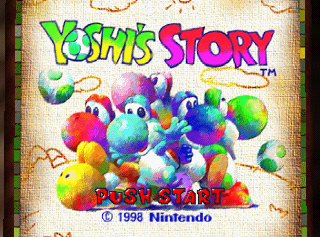
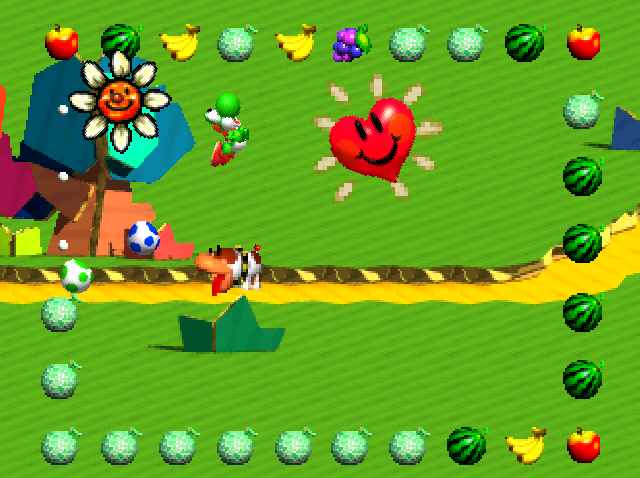
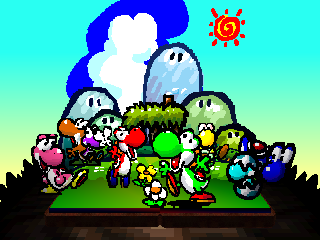
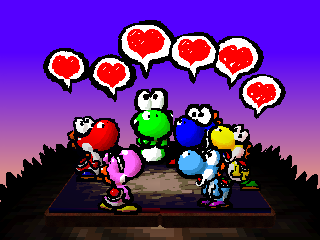
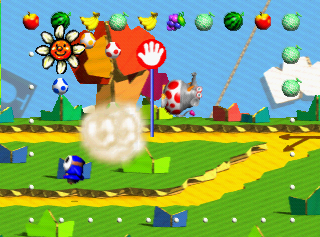
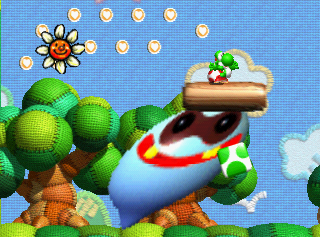
The title screen. Leave it alone for a few seconds and the storybook opens to tell the tale.Treasure Hunt, the first course on the first page.Rail Lift, patrolled by Shy Guys on stilts.The Fruit Frame round the edge of the screen fills as you eat. Thirty pieces and the page is done.
“The blink of an eye was all it took and the island became a storybook.”
Yoshi’s Story, opening narration (Nintendo, 1998)
From the rhyming narration that plays when the storybook opens on the title screen (English-language version).
Quick Answers
Short answers to the things people most often ask about Yoshi’s Story; each links to the fuller section below.
When did Yoshi’s Story come out?
Japan got it on 21 December 1997, North America on 9 March 1998, Europe on 10 May 1998 and Australia on 11 May 1998. A Chinese iQue Player edition followed on 25 March 2004. More →
How many levels are there in Yoshi’s Story?
There are 24 courses: six pages with four courses each, plus a one-off Practice course. A single play of Story Mode only visits six of them, one per page, so you need at least four playthroughs to see everything. More →
How do you unlock courses 2, 3 and 4 on a page?
With Special Hearts. Every course hides three large smiling hearts, and each one you collect opens one more course on the next page. Find none and you can only choose course 1; find all three and all four are open. Page 1 is fully open from the start. More →
How do you get Black Yoshi and White Yoshi?
Find a hidden Giant Egg in Story Mode and finish the course with it. The black-spotted egg is in Bone Dragon Pit (2-1) and Torrential Maze (2-4); the white egg is in The Tall Tower (3-2) and Poochy & Nippy (3-3). Both Yoshis like every fruit, can eat peppers, and are Story Mode only. More →
What is the Lucky Fruit?
Before each game a roulette picks one of the four ordinary fruits (apple, banana, watermelon or grapes). For that game it refills the whole Smile Meter for any Yoshi and is worth 8 hearts instead of the usual amount. Each course contains 12 of the Lucky Fruit. More →
Who are the bosses in Yoshi’s Story?
Only pages 3 and 6 have bosses. Page 3 ends with Cloud N. Candy (Cloud Cruising), Inviso (The Tall Tower), Cloudjin (Poochy & Nippy) or Don Bongo (Frustration), depending on the course you chose. All four page 6 castles end with Baby Bowser. More →
What happens when a Yoshi loses all its health?
Toadies carry it off to Baby Bowser’s castle and you carry on with one of the others; the six Yoshis are your lives. Finish a course with a White Shy Guy in tow and it will fetch a captured Yoshi back. Lose all of them and the game is over. More →
Who does Yoshi’s voice?
Kazumi Totaka, the game’s composer. Yoshi’s Story was the first time he voiced the character, and he also voiced the Shy Guys. More →
Can you play Yoshi’s Story on Nintendo Switch?
Yes. It was one of the launch games for the Nintendo 64 library in Nintendo Switch Online + Expansion Pack on 25 October 2021 (26 October in Japan, Europe and Australia). It was also sold on the Wii and Wii U Virtual Console. More →
Is Yoshi’s Story a sequel to Yoshi’s Island?
It began as one, under the working title Yoshi’s Island 64, and shares the egg-throwing and flutter jumps. But there is no Baby Mario, no countdown timer and no vehicle transformations, and the story stands alone. More →
Story
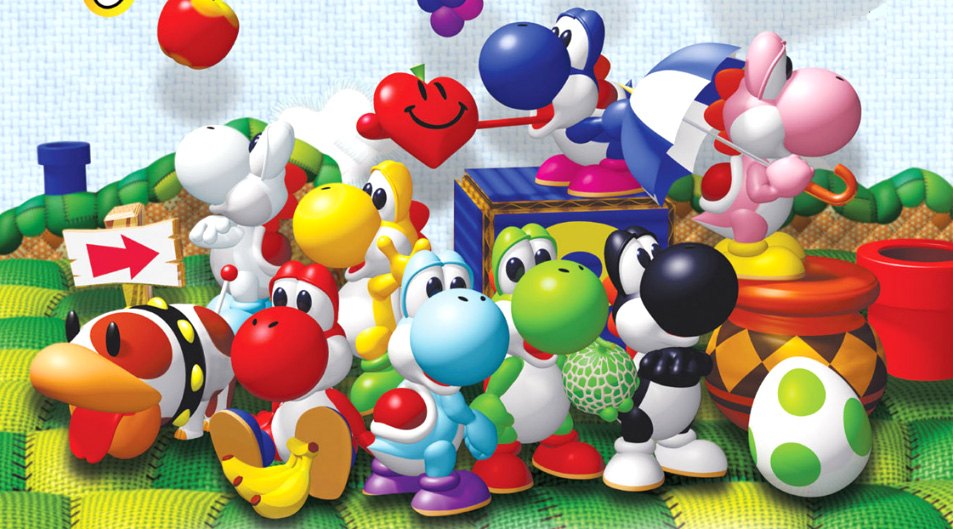
The whole cast: six hatchlings, the hidden Black and White Yoshis, and Poochy.
The plot of Yoshi’s Story is told as a rhyming picture book, narrated page by page, and the game itself is that book: every course is a spread of cut-out scenery and every chapter ends with the page turning. Because you choose one course per page, no two readings need be the same. Here is the tale in order, with what each page has in store.
Out of the blue
Yoshi’s Island is the happiest place there is, and the reason stands in the middle of it. The Super Happy Tree grows every kind of fruit, Heart Fruit included, and as long as it flourishes so do the Yoshis.
Baby Bowser cannot bear it. He takes the tree for himself and, for good measure, casts a spell over the whole island. In the time it takes to blink, hills, sea and sky are pressed flat between the covers of a pop-up storybook. Without the tree the Yoshis lose heart, and the colour drains out of the place.
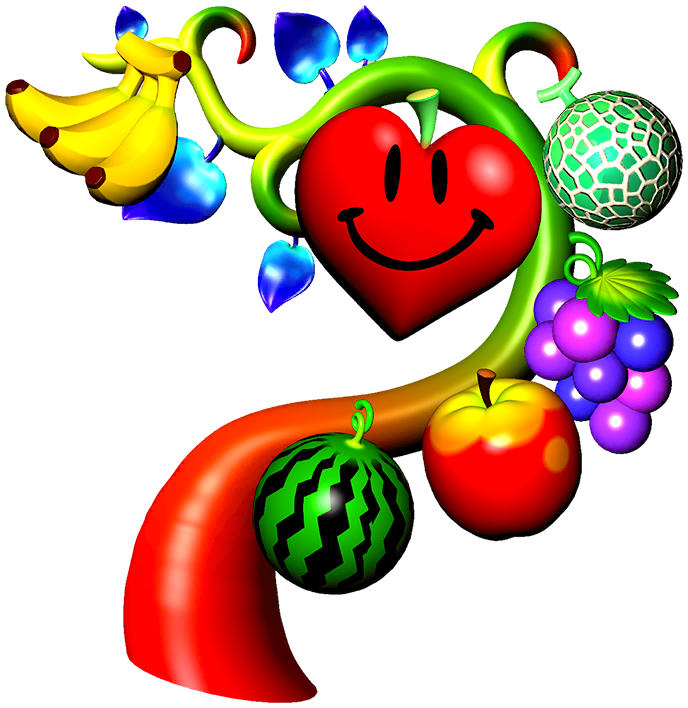
Yoshi’s Island as it was.The same view once the spell has fallen.The Super Happy Tree, source of all the fruit and all the trouble.
Six eggs
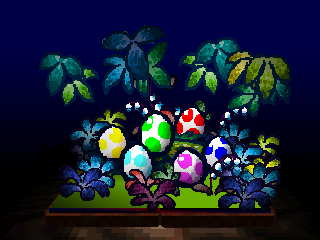
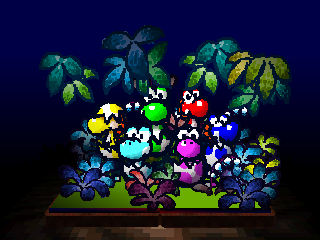
The spell misses one thing: a nest of eggs. Six of them hatch, and six baby Yoshis, green, red, yellow, pink, blue and light blue, tumble out into a world that has already gone wrong. They find the tree missing and their elders miserable.
Their answer is wonderfully simple. If gloom is the problem, they will fight it by being as happy as they possibly can, and Yoshis are happiest when they are full. So they set off along the trail of fruit that leads, page by page, towards Baby Bowser’s castle. As the narrator puts it, you just have to turn the page.
The nest the spell overlooked.Six hatchlings arrive.No tree. No happiness.The plan: stay cheerful and keep eating.
Page 1: Beginning
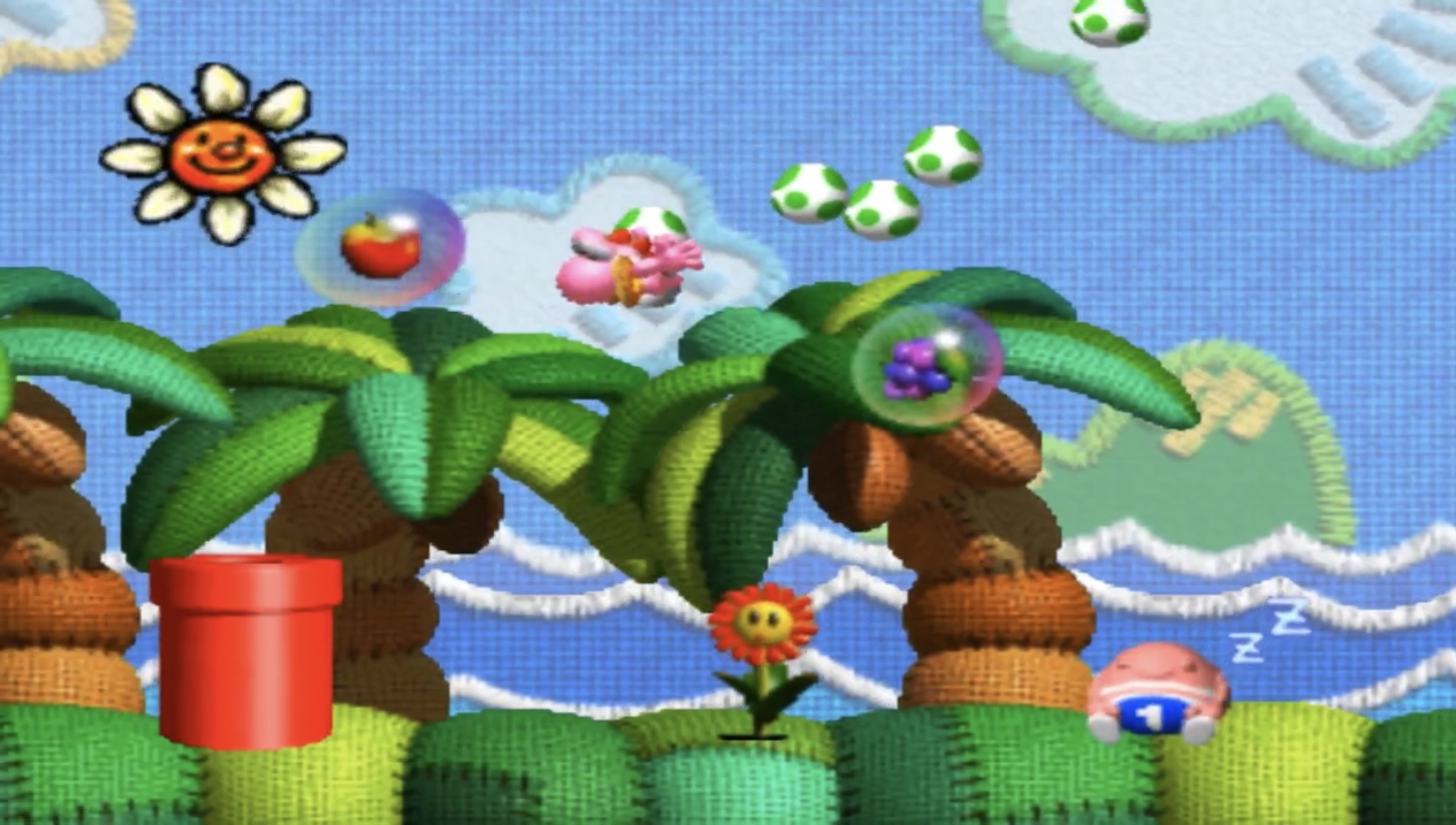
The first page is the island at its friendliest, and all four courses are open from the off. Treasure Hunt is a stroll through the woods that works as a gentle tutorial, with elephants called Pak E. Derm blocking the paths behind stop signs. Surprise!! hides Shy Guys in every tree and springs Air Bags out of crates. Rail Lift sends cloud platforms rattling along rails over empty sky, and Tower Climb is a night-time scramble up a tower with a Long Jump minigame along the way.
Whichever you pick, the lesson is the same: the course does not end until you have eaten your fill, and the hearts you find now decide what you may read next.
A Ground Pound nearby sends Pak E. Derm sprawling.Hitching a ride on a Balloon Bully in Surprise!!.Page 1 as it is remembered in the closing recap.
Page 2: Cavern
The book turns to somewhere darker. Bone Dragon Pit is a tunnel of skeletal dragons whose necks rear out of holes in the floor, with two full three-headed Bone Dragons to beat along the way. Blargg’s Boiler floods its cave with lava and leaves only bone bridges and rolling balls to stand on. Jelly Pipe and Torrential Maze go down into the sewers, one set in quivering jelly, the other a rush of water and spikes.
This is also where the game starts keeping secrets. Two of these courses each hide a black-spotted Giant Egg, and the Slug that lurks behind a vase in Jelly Pipe is an optional mini-boss with a Special Heart for a prize.
A Ghost Stream: a ghost you climb.Read the walls of Torrential Maze closely.Page 2 in the closing recap.
Page 3: Summit
Up into the sky, and to the first bosses. Each of the four Summit courses ends with a different guardian. Cloud Cruising, a ride on the backs of snakes and a dragon, finishes with Cloud N. Candy, a cloud of a boss whom Yoshi simply eats, mouthful by mouthful. The Tall Tower is topped by Inviso, a ghost who can barely be seen and who sends Peepers flapping about the room.
On Poochy & Nippy, the snow course, the wind genie Cloudjin can only be hurt in the moment he turns solid to attack. And Frustration, a night walk along a mountain ridge on rolling wheels, ends with Don Bongo, whose stamping shakes the floor and whose enormous lips are the target. Three well-aimed eggs settle each of the last three.
Fill the Fruit Frame and the boss appears: here, Inviso at the top of The Tall Tower.Poochy & Nippy, the snow course.Page 3 in the closing recap.
Page 4: Jungle
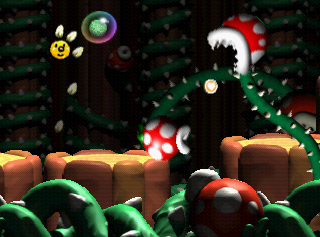
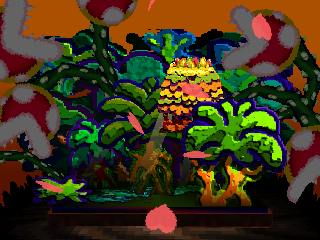
Down the far side of the mountain the pages turn green. Jungle Hut strings a walkway above a village where Gabons lob spiked balls. Jungle Puddle is a river with teeth: giant Blurps that leap out to swallow a Yoshi whole. Piranha Grove grows Piranha Plants as tall as trees, and Neuron Jungle is strung with squirming Neurons that are half bridge and half booby trap.
There is no boss here, only the jungle itself, and the chance to stock up on peppers if you happen to be travelling with a Yoshi who can eat them.
Jungle Puddle. Stay off the water.Piranha Grove, where the plants are the scenery.Page 4 in the closing recap.
Page 5: Ocean
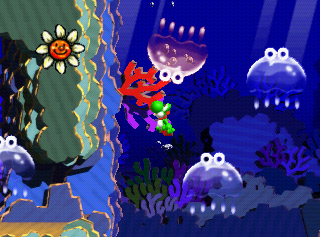
The fifth page reaches the sea. Two courses, Lots O’Jelly Fish and Lots O’Fish, are mostly underwater, where eggs are useless and the tongue does all the work; the first hides the Snorkel Snake, an eel far too big to fight, in a cross-shaped cave. Shy Guy Limbo is a seaside dance with bamboo poles, and Shy Guy’s Ship is a dash along a beach under fire from pirate galleons.
One page is left, and it belongs to Baby Bowser.
Jellyfish come in colours, and the colours behave differently.Miss Warp, fast asleep until Yoshi wakes her.Page 5 in the closing recap.
Page 6: Finale
The last page is Baby Bowser’s castle, and there are four ways through it: the clanking Mecha Castle, the windy Lift Castle, the haunted Ghost Castle and the molten Magma Castle. Each ends with Baby Bowser guarding the stolen tree, whose fruit is your only supply during the fight.
Baby Bowser begins the fight riding his pet Ghost, which soaks up eggs, while he pelts the Yoshi with parachuting bombs; catch them and send them back. After that he fights on foot, and a spike knocked loose from the ceiling can hurt him too. There are four versions of the battle, one per castle, and Magma Castle’s is the hardest, with more ghosts and a fireball after every jump. When he is beaten, the Toadies who spent the game carting off fallen Yoshis have to carry their own master home.
Lift Castle.Magma Castle, the hardest road to the final fight.Page 6 in the closing recap.
How happiness grows
With Baby Bowser gone the Super Happy Tree is the Yoshis’ again. The ending leafs back through the book, with an illustration for each of the six pages, and closes on the hatchlings gathered round the tree, as Super Happy as they set out to be. Baby Bowser has the last sulk: the fruit, he claims, tasted rotten anyway.
Then the back cover closes. The book, of course, can be read again by a different route.
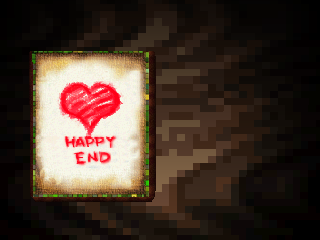
The tree is home and the Yoshis are Super Happy.The back cover.
Every course in Yoshi’s Story
All 24 courses, in book order. Page 1 is open from the start. On every later page, course 1 is always available and each Special Heart found on the course you have just finished opens one more. Once played in Story Mode, a course is unlocked for good in Trial Mode.
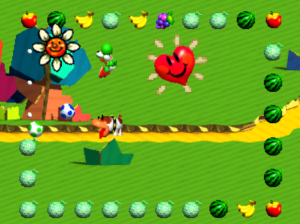
1-1 Treasure HuntPage 1: Beginning · course 1 · open from the startA sunny wood that doubles as the tutorial. Pak E. Derm elephants bar the junctions with stop signs until a Ground Pound tips them over, and Poochy leads the way to buried coins and melons in the second half.
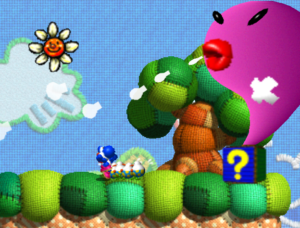
1-2 Surprise!!Page 1: Beginning · course 2 · open from the startShy Guys drop out of the trees, Air Bags burst from Mystery Crates and a Fuzzy Wiggler patrols. A Balloon Bully gives a lift to a Special Heart in the sky, and a vase leads to the first Special Delivery challenge.
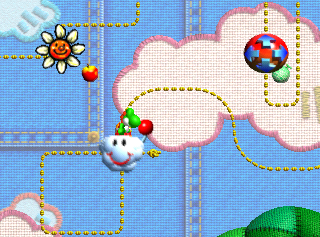
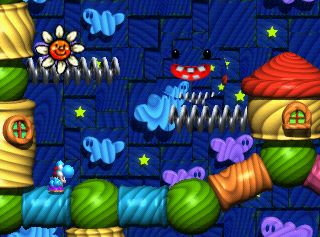
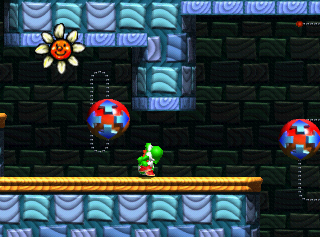
1-3 Rail LiftPage 1: Beginning · course 3 · open from the startCloud Blocks trundle along rails over bottomless drops; whack the levers to switch the points. Shy Guys on stilts, Bumper Balls and Surprise Balls everywhere.
1-4 Tower ClimbPage 1: Beginning · course 4 · open from the startA night-time ascent of a very tall tower, inside and out, dodging Bullet Bills. Home of the Long Jump minigame.
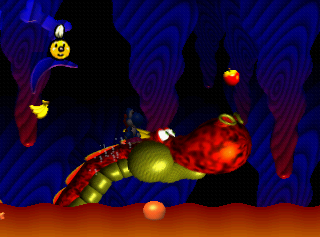
2-1 Bone Dragon PitPage 2: Cavern · course 1 · always openA cave of Spikes and Nipper Plants set to a sitar and distant roars. Two pits each hold a three-headed Bone Dragon mini-boss. A black Giant Egg is hidden here.
2-2 Blargg’s BoilerPage 2: Cavern · course 2 · needs 1 Special Heart from the course beforeA cavern flooded with lava, crossed on sagging bone bridges and rolling Bocci Balls while Blargg rears up five times. A blue pipe hides a Special Delivery challenge.
2-3 Jelly PipePage 2: Cavern · course 3 · needs 2 Special HeartsA sewer set in wobbling jelly, haunted by Jelly Ghosts and mirror-image Boos. A vase leads to the Slug mini-boss, and Poochy waits at the bottom of the big shaft.
2-4 Torrential MazePage 2: Cavern · course 4 · needs all 3 Special HeartsA flooded labyrinth of spikes and rushing water, crossed on Ghost Streams. The newspaper walls carry the words “Pikachu” and “Zelda”. The second black Giant Egg is here.
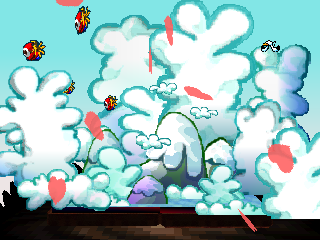
3-1 Cloud CruisingPage 3: Summit · course 1 · always openRide snakes and a friendly green dragon up through the clouds while Flying Shy Guys try to knock you off. Boss: Cloud N. Candy.
3-2 The Tall TowerPage 3: Summit · course 2 · needs 1 Special Heart from the course beforeSprings, swinging Ball ’N’ Chains, little planets full of Ravens and leaves you can surf across the gaps. A white Giant Egg is hidden near the leaves. Boss: Inviso.
3-3 Poochy & NippyPage 3: Summit · course 3 · needs 2 Special HeartsThe snow course: the only place Snow Guys appear, lobbing snowballs while Goonies drop bombs. The other white Giant Egg is underground. Boss: Cloudjin.
3-4 FrustrationPage 3: Summit · course 4 · needs all 3 Special HeartsA mountain-top at night, full of pits, Bumpties and centipedes, crossed by rolling inside wooden wheels. Two melon minigames. Boss: Don Bongo.
4-1 Jungle HutPage 4: Jungle · course 1 · always openA catwalk over a village of huts. Gabons hurl spiked balls below, Chomps and spiders guard the upper huts, and bees guard a lower one. Peppers grow here.
4-2 Jungle PuddlePage 4: Jungle · course 2 · needs 1 Special Heart from the course beforeA river through the jungle. Blue Blurps spit water to knock Yoshi off his perch and red ones leap up to swallow him whole, so keep to the high ground.
4-3 Piranha GrovePage 4: Jungle · course 3 · needs 2 Special HeartsThe trees are giant Piranha Plant stalks. Climb a ladder of Flatbed Ferries, ride boulders over the thorns and find the melon-crate challenge through a vase.
4-4 Neuron JunglePage 4: Jungle · course 4 · needs all 3 Special HeartsWriggling Neurons serve as both platforms and hazards, Ick Worms float down on leaves, and tubs ferry Yoshi over frog-filled water bristling with sea cacti.
5-1 Lots O’Jelly FishPage 5: Ocean · course 1 · always openA big underwater maze where some of the jellyfish carry fruit. An X-shaped cave is the lair of the Snorkel Snake mini-boss.
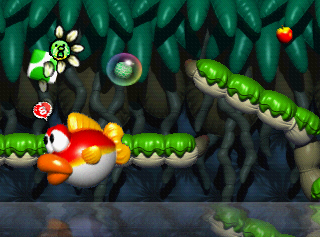
5-2 Lots O’FishPage 5: Ocean · course 2 · needs 1 Special Heart from the course beforeHalf in, half out of the water: anemones, clams, Spiny Fish and sea cacti below, a Power Flower and a Miss Warp above.
5-3 Shy Guy LimboPage 5: Ocean · course 3 · needs 2 Special HeartsPairs of Shy Guys hold bamboo poles across the path for you to jump. A hidden blue pipe leads to the Broad Jump, worth up to seven melons.
5-4 Shy Guy’s ShipPage 5: Ocean · course 4 · needs all 3 Special HeartsPirate galleons bombard the beach with Bob-ombs from the background, then Turtle Cannons take over with Bullet Bills. Goonies offer a lift.
6-1 Mecha CastlePage 6: Finale · course 1 · always openSprockets, spinning wheels, swords and pistons that crush on contact. Boss: Baby Bowser.
6-2 Lift CastlePage 6: Finale · course 2 · needs 1 Special Heart from the course beforeLifts on dotted tracks, a windswept balcony of machinery, buzz saws and Black Shy Guys dropping weights. Boss: Baby Bowser.
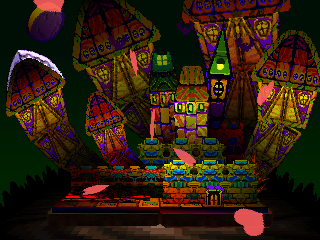
6-3 Ghost CastlePage 6: Finale · course 3 · needs 2 Special HeartsDark rooms linked by pipes and locked doors and packed with Boos, including the Blindfold Boos found nowhere else. Boss: Baby Bowser.
6-4 Magma CastlePage 6: Finale · course 4 · needs all 3 Special HeartsA red dragon ferries Yoshi over a lava sea, a Slug guards the tower, and the toughest version of Baby Bowser waits at the end.
There is also a Practice course, reached from the main menu: a short tutorial meadow, and the only course without 30 melons.
In the international versions, the hidden coin formations revealed by a Heart Fruit make one letter per course. Read in book order from 1-1 to 6-4 they spell a message from the developers: see Cheats & secrets.
Advertisement
Gameplay & Controls
Anyone who has played Yoshi’s Island will know the body language: the tongue, the eggs, the scrabbling flutter jump. What surrounds it is different. There is no baby to protect and no countdown when you are hit, Yoshi no longer turns into helicopters and trains, and nothing in a course tells you which way the exit lies, because there isn’t one.
Before each course you pick one of your surviving Yoshis. You are then dropped into a level that branches through pipes, vases and doors, and you stay there until 30 pieces of fruit have gone down the hatch. Everything else, the hearts, the melons, the coins, the hidden eggs, is optional, and it is in the optional things that the game keeps its depth.
Moves and controls
Press A to jump; press it again in mid-air and hold to flutter, and keep it held after Yoshi grunts to stretch the flutter out. Pushing Up on the Control Stick during a flutter gains extra height. Yoshi’s tongue can be aimed with the stick, and unlike in Yoshi’s Island anything it catches is swallowed straight away.
Swallowing an enemy makes an egg. Hold Z or a C Button to bring up the aiming cursor, release to throw, or press B to cancel. An egg bursts where the cursor is, which defeats enemies, pops bubbles and collects coins and Special Hearts; the happier the Yoshi, the bigger the burst. Eggs bounce off walls and cannot be thrown underwater. Jump and flick the stick Down for a Ground Pound, which shakes buried items out of the floor.
The new move is the Sniff. Press R and Yoshi puts his nose to the ground; an exclamation mark appears when something is hidden nearby, and he waves when he is standing right on top of it. Buried things come up with a Ground Pound, while secrets hanging in mid-air or sealed in rock need an egg. On some courses Poochy does the sniffing for you.
The Sniff, new to this game: press R and follow your nose.The flutter jump survives from Yoshi’s Island.Eggs are aimed with a cursor and burst where it points.
Thirty fruit, the Smile Meter and favourite fruit
Every course holds twice as much fruit as you need: twelve of the Lucky Fruit, six each of the other three ordinary kinds (apples, bananas, watermelons and grapes), and 30 melons, many of them buried, bubbled or held back as prizes. Each one eaten drops into the Fruit Frame around the screen. When the frame is full the course ends, the Yoshis sing, and the page turns.
Health is the Smile Meter, a flower in the corner whose petals fall as Yoshi takes damage and whose face goes from beaming to miserable. Fruit puts petals back. How many depends on taste: each colour of Yoshi has a Favourite Fruit that heals and scores more (watermelon for Green, apples for Red and Pink, bananas for Yellow, grapes for Blue and Light Blue), and melons do everyone good. Yoshis are fussy about Shy Guys in the same way, preferring ones of their own colour. Peppers are too hot for anybody except Black and White Yoshi, who will eat anything.
At the start of every game a roulette spins through the four ordinary fruits and stops on the Lucky Fruit. Until the credits roll, that fruit refills the entire Smile Meter for any Yoshi, even one who would normally turn his nose up at it, and every course is stocked with twelve of it against six each of the other three.
The Lucky Fruit roulette that opens every game.The Smile Meter. Petals are health.
Hearts, melons and the high-score game
Score is counted in hearts. A Favourite Fruit is worth 3, the Lucky Fruit 8, and a melon 100; each Special Heart adds another 100. The arithmetic makes the point for you: the best possible score on any course comes from eating nothing but its 30 melons, and the game marks the achievement at the end of the level. That means sniffing out every buried one, winning the melon minigames and refusing every apple that drifts into your mouth on the way.
Melons also arrive as rewards. Hit a ? Block eleven times and it turns into one; collect a set of five hopping coins before they vanish; knock down a quartet of Flying Shy Guys with a single egg; or win a challenge such as Special Delivery (carry a stack of seven melon crates to the flag without dropping any), the Melon Race, or the Long Jump and Broad Jump. A friendly Lakitu hands out the melons after certain minigames.
Eat the same fruit six times running and a Heart Fruit floats down on a parachute. It refills the meter and makes Yoshi Super Happy for a short while: invincible, with endless eggs, a longer tongue and extra flutter. A Ground Pound in that state pops every bubble on screen and turns every Shy Guy in sight into the Lucky Fruit.
The Melon Race on Frustration, one of several melon minigames.Up to six eggs follow Yoshi about.
Story Mode, Trial Mode and Practice
Story Mode is the book: six pages, one course from each. All four courses on page 1 are open. After that, the number of Special Hearts you found on the course you have just finished decides how many of the next page’s four courses you may choose from. Each heart opens one more, so three hearts open the lot. The Western versions let you save a story in progress; the Japanese original does not.
Trial Mode lets you replay any course you have completed in Story Mode on its own, for a high score that is saved. Filling in all 24 means at least four trips through the story, collecting hearts as you go. Black and White Yoshi cannot be used here. Press Z and Start together to leave a course.
Practice is a single tutorial course that explains the controls and techniques. It is the only course in the game that does not contain 30 melons.
Trial Mode with all 24 courses unlocked.
Six Yoshis, six lives
There are no extra lives to collect. Your stock is the Yoshis themselves. When one is defeated, Baby Bowser’s Toadies swoop in and carry him away to the castle, and that colour is gone. Lose all of them and it is Game Over.
The way to get one back is a White Shy Guy. A few courses hide one; find him, finish the course with him tagging along, and he rescues one of the kidnapped Yoshis. He cannot retrieve Black or White Yoshi, which makes those two both the most powerful Yoshis in the game and the ones you can least afford to lose.
A White Shy Guy brings a captured Yoshi home.
Japanese and international versions
The game Japan played at Christmas 1997 is not quite the one the West got the following spring. The international version added a Story Mode save, made Egg Blocks match the colour of the Yoshi you are playing (they are always green in Japan), gave the Yoshis different vocal ranges (in Japan they all share the one used by Green and Yellow), and hid a formation of coins in every course that only appears while Super Happy. Eating 30 of one fruit, melons included, earns its own picture on the Level Complete screen where the Japanese game just shows a heart.
Courses were touched up too. Blargg’s Boiler lost one of two bubbled melons above a bone bridge, climbable vines replaced some of the Ghost Stream sections of Torrential Maze, the Bamboo Dancer stretches of Shy Guy Limbo gained their own music, and the Yoshis start a little closer to Baby Bowser in the final fight. Cloudjin only flashes red when hurt in the Japanese game, and erasing your save plays an explosion there and a fanfare everywhere else. The NTSC cartridge can be switched between English and Japanese; the PAL one offers English, German and French and adds a sound effect to the Game Over screen.
Vines and Vine Slimes in Torrential Maze: an international-version addition.
Fruit, items and things to hit
What grows on the Super Happy Tree, and what else is lying about the pages.
AppleFavourite Fruit of Red and Pink Yoshi. One of the four fruits the Lucky Fruit roulette can land on.
BananasYellow Yoshi’s favourite.
WatermelonGreen Yoshi’s favourite, with its zigzag stripes.
GrapesFavourite of Blue and Light Blue Yoshi.
MelonThirty per course, 100 hearts each, loved by every Yoshi. An all-melon course is the perfect score.
Heart FruitFound in bubbles, or parachuted in after six identical fruit in a row. Full heal plus the invincible Super Happy state.
Special HeartThree per course. Each opens one more course on the next page, is worth 100 hearts and cheers up a wilting Smile Meter. Chimes ring when one is close.
PepperToo hot for anyone but Black and White Yoshi. Does not count towards the 30.
Bomb BerryA spiked, explosive fruit that grows back for ever. Most Yoshis cannot stomach it.
Power FlowerRestores health when eaten.
TulipEat it and Yoshi becomes an egg that can be fired up to high ledges.
Yoshi eggMade from swallowed enemies or knocked out of Egg Blocks. Black and White Yoshi’s black-spotted eggs burst with a bigger blast.
Egg BlockHit from below for up to six eggs. Spotted to match your Yoshi in the international versions.
Giant Egg (black)Hidden in Bone Dragon Pit and Torrential Maze. Carry it to the end of the course to hatch Black Yoshi.
Giant Egg (white)Hidden in The Tall Tower and Poochy & Nippy. Hatches White Yoshi.
CoinHeart Coins, collected for score. Clearing every coin in an area can produce melons.
Hopping coinsCoins with feet that appear in fives for a few seconds. Catch all five for a guaranteed melon.
KeyOpens one locked door. Carried by certain enemies or tucked inside a ? Bubble.
Bumber ’ChuteAn umbrella that lets a Yoshi glide.
? BubblePop it with an egg to find out what is inside: fruit, a switch, a key, a Giant Egg or an enemy.
? BlockA coin per hit, or the start of a melon minigame. The eleventh hit turns it into a melon.
? SwitchStamp on it to trigger a timed event, such as cloud steps to a Special Heart.
Message BlockBump it for a hint.
Mystery CrateA box with a surprise in it. Sometimes the surprise is an Air Bag.
Surprise BallLatch on with the tongue and it hauls Yoshi up to higher ground.
VaseA jar that works like a pipe, carrying Yoshi to another part of the course or into a minigame.
Melon crateStack seven and carry them to the flag in the Special Delivery challenge.
Cartoons, Comics & Other Media
A short game with a long tail: Yoshi’s storybook adventure turned up in manga, comics, soundtracks and, above all, in Super Smash Bros.
Super Smash Bros. (1999)Nintendo 64 · stageYoshi’s home stage, originally called Yoshi’s Island and later renamed Super Happy Tree, is built from this game’s card-and-paper scenery with the tree itself in the background. Several of Yoshi’s moves and animations come from Yoshi’s Story too, and the opening cinematic shows Yoshis guarding a nest in front of the tree.
Super Smash Bros. Melee and UltimateGameCube, 2001 · Switch, 2018 · stageThe Yoshi’s Story stage is based on Page 1: a small island with three floating platforms, a smiling cloud that drifts round the edge and sometimes catches falling fighters, Flying Shy Guys that carry food across, and a Pak E. Derm in the background. It returned in Ultimate, which also made spirits of Don Bongo, Pak E. Derm, Blargg and the Super Happy Tree.
Smash Bros. musicBrawl, 3DS, Wii UAn arrangement of the game’s theme, titled “Yoshi’s Tale” in the Mario Wiki listings, plays on the Yoshi’s Island stage in Brawl and the 3DS game; the Wii U game’s Woolly World stage offers those plus the Melee stage’s arrangement.
Super Mario-kun vols. 19 and 20Manga · Yukio Sawada, ShogakukanTwo volumes of the long-running gag manga are given over to the game.
Yoshi’s Story ComicClub Nintendo, GermanyThe German Club Nintendo magazine ran Yoshi’s Story comic strips, later collected in a standalone comic book.
Nintendo PowerVols. 100, 104, 105 and 106 · 1997–98Nintendo’s own magazine previewed the game in its 100th issue, ran an eight-page feature in Vol. 104 (January 1998) and printed a mini-guide in Vol. 106. Super Luigi Bros has the scans.
Three soundtrack albums1998 · Japan, Europe, North AmericaEach region got a different disc: Yoshi Story Original Soundtrack in Japan (Pony Canyon, 4 February 1998), Love, Peace & Happiness in Europe (28 tracks, released in Germany on 9 April 1998) and the promotional Music to Pound the Ground To in North America, a CD cut in the shape of Yoshi’s head. The full score joined the Nintendo Music app on 24 June 2025.
Mario Superstar Baseball and Mario Super SluggersGameCube, 2005 · Wii, 2008The Super Happy Tree stands in the background of the Yoshi Park ballpark, and the Sluggers version of the park plays arrangements of “Yoshi’s Song” and the game’s main theme.
Mario Tennis OpenNintendo 3DS, 2012Every colour of Yoshi from Yoshi’s Story is playable, the hidden Black and White Yoshis included.
Nintendo LandWii U, 2012The Yoshi’s Fruit Cart attraction is stocked with this game’s fruit (everything but the Bomb Berry) and scored with arrangements of “Yoshi’s Song” and “Yoshi’s Tale”.
Mario & Sonic at the London 2012 Olympic GamesWii, 2011The Dream Long Jump event is set on Rail Lift, to an arrangement of “Yoshi’s Song”.
Smaller nodsVariousThe Smile Meter is the centrepiece of the minigame Loves Me…? in Super Mario 64 DS; Yoshi Lake in Mario Golf: World Tour borrows the look and music; WarioWare: Get It Together! has a Yoshi’s Story microgame; and the wheel lifts roll again in Super Mario Bros. Wonder. Fruit crates and zigzag-striped watermelons in The Super Mario Bros. Movie resemble the game’s designs.
Characters
Eight Yoshis, one very small villain and a supporting cast of dogs, clouds and elephants. The six hatchlings play identically apart from their tastes; the two hidden Yoshis are in a class of their own.
Character
Who they are
In this game
Abilities & notes
Green YoshiHatchling · available from the start
The classic colour. The game’s Yoshi sprites follow the design used in Mario Kart 64.
One of the six babies who set out to win back the Super Happy Tree.
Favourite Fruit: watermelon
Likes green Shy Guys best
Red YoshiHatchling · available from the start
One of two apple lovers in the nest.
Playable from the first page.
Favourite Fruit: apple
Likes red Shy Guys best
Yellow YoshiHatchling · available from the start
The banana specialist.
Playable from the first page.
Favourite Fruit: bananas
Likes yellow Shy Guys best
Pink YoshiHatchling · available from the start
Shares Red Yoshi’s taste for apples. Early builds had Orange and Purple Yoshis; Pink and White replaced them.
Playable from the first page.
Favourite Fruit: apple
Blue YoshiHatchling · available from the start
A grape eater with an iron stomach.
Playable from the first page.
Favourite Fruit: grapes
One of the two hatchlings (with Light Blue Yoshi) who can eat Ick Worms unharmed
Light Blue YoshiHatchling · available from the start
The second grape lover.
Playable from the first page.
Favourite Fruit: grapes
Black YoshiHidden · Story Mode only
A secret seventh Yoshi hatched from a black-spotted Giant Egg.
Unlocked by finding the Giant Egg in Bone Dragon Pit or Torrential Maze and finishing the course with it. Cannot be rescued by a White Shy Guy if lost.
Every fruit is a favourite
Eats peppers, Bomb Berries and Nipper Spores safely
Black-spotted eggs with a bigger blast
Runs faster when Super Happy
White YoshiHidden · Story Mode only
The eighth Yoshi, with the same talents as Black Yoshi.
Unlocked with the white Giant Egg in The Tall Tower, or else in Poochy & Nippy.
Every fruit is a favourite
Eats peppers and Bomb Berries safely
Explosive black-spotted eggs
Not available in Trial Mode
Baby BowserThe villain
The spoiled infant Koopa king, final boss of Yoshi’s Island, back for a second go.
Steals the Super Happy Tree out of jealousy, turns the island into a storybook and waits at the end of every page 6 castle. Afterwards he insists the fruit tasted rotten.
Rides his pet Ghost
Throws parachute bombs
Four versions of the fight, one per castle
PoochyHelper
Yoshi’s faithful dog from Yoshi’s Island, now with a nose for treasure.
Turns up on certain courses, sometimes chained to a post until Yoshi Ground Pounds it, and sniffs out buried coins, melons and hearts from far away.
Follows Yoshi
Finds hidden items from far away
White Shy GuyHelper
The one Shy Guy on the Yoshis’ side.
Hidden on a handful of courses. Complete the course with him and he rescues one Yoshi the Toadies have taken.
Cannot bring back Black or White Yoshi
Miss WarpHelper
A sleepy, egg-shaped creature in four colours, with up to four on a course.
Wake her and she will warp Yoshi to another Miss Warp elsewhere on the course.
Four colours
Balloon BullyHelper
A balloon-like character with a log balanced on its head.
Stand on the log and it floats Yoshi up to places he could never jump to, such as the third Special Heart of Surprise!!.
Also rides the dotted tracks of Lift Castle
Power BeeHelper
A friendly insect that cannot hurt Yoshi.
Eat one to restore health.
Found on many courses
Huffin PuffinHelper
A mother bird trailed by a line of chicks, back from Yoshi’s Island.
The chicks can be picked up and thrown in place of eggs.
Seen in Surprise!!
Pak E. DermObstacle
A small elephant with a red stop sign and a firm sense of duty.
Blocks the path in Treasure Hunt until a Ground Pound nearby flips him on his back. Later a background fixture of Smash’s Yoshi’s Story stage.
A spirit in Super Smash Bros. Ultimate
ToadiesBaby Bowser’s henchmen
The propeller-hatted minions who snatched Baby Mario in Yoshi’s Island.
Carry off any Yoshi who faints, which is how the game takes a life, and at the very end carry off their beaten boss.
Appear at Game Over and after the final fight
Lakitu (referee)Helper
Not every Lakitu is hostile.
A friendly one pays out melons according to how well Yoshi does in certain minigames.
Hostile Lakitus also patrol several courses
Bosses, mini-bosses and enemies
Bosses first, then the three mini-bosses, then every enemy type in the book, and finally the creatures that give Yoshi a lift. Bosses appear only at the end of page 3 and page 6 courses.
Cloud N. Candy (boss)Cloud Cruising (3-1)An edible cloud. Yoshi eats her a bite at a time until she is gone.
Inviso (boss)The Tall Tower (3-2)A near-invisible ghost who releases Peepers. Three eggs while you can see him.
Cloudjin (boss)Poochy & Nippy (3-3)A huge floating genie who bends the wind. Three eggs to the stomach in the instant he turns solid to strike.
Don Bongo (boss)Frustration (3-4)A giant, Gabon-like creature whose footsteps cause earthquakes. Three eggs on the lips.
Baby Bowser (final boss)All four page 6 castlesRides his pet Ghost and throws bombs to be thrown back, then fights on foot. Hardest in Magma Castle.
Bone Dragon (mini-boss)Bone Dragon PitThree fire-breathing skulls on long necks. Each head takes two eggs or two Ground Pounds. Fought twice.
Slug (mini-boss)Jelly Pipe, Magma CastleA big, colourful slug that only flinches when an egg bursts beside its eyes. Beating the one in Jelly Pipe uncovers a Special Heart.
Snorkel Snake (mini-boss)Lots O’Jelly FishA giant eel that tries to coil round Yoshi. It cannot be hurt; clear the Cheep Cheeps from its lair instead.
Shy GuyAlmost everywhereRed, yellow, green and blue. Each Yoshi likes the taste of his own colour best.
Flying Shy GuyMany coursesPropeller-headed and often carrying fruit. Down a formation of four with one egg for a melon.
Black Shy GuyPoochy & Nippy to Ghost CastleA meaner flier that drops bombs and spiked weights.
Shy Guy On StiltsRail Lift, Jungle Hut, Shy Guy’s ShipShort, medium and tall, in four colours.
Shy Guy on a Pogo StickSurprise!!, Rail Lift, Jungle Hut, Shy Guy LimboBounces along the path.
Snow GuyPoochy & NippyA Shy Guy wrapped up for winter, throwing snowballs.
Bamboo dancersShy Guy LimboPairs of Shy Guys holding a pole across the path for Yoshi to jump.
Pirate GuysShy Guy’s ShipCrew the Shy Guy Galleons that shell the beach from the background.
Mini submarineLots O’Jelly FishA Shy Guy in a submarine, firing torpedoes at intruders.
Flaming pot-pushing Shy GuyMagma CastleShoves a burning urn whose flames box Yoshi in.
Air BagSurprise!!Pops out of a Mystery Crate and blows Yoshi backwards.
Attacky SackMagma CastleA bouncing, marble-like thing that charges.
BeesJungle Hut to Lots O’FishA swarm round a hive. Move slowly and they leave you be; hit them with an egg and they attack.
BumblebeeCloud CruisingBig bees flying straight across the screen from both sides.
Big & Little BooJelly PipeA line of Boos that mirrors Yoshi’s movements while clutching a melon.
BlarggBlargg’s BoilerA giant lava monster that surges up without warning.
Blindfold BooGhost CastleCannot see, so it hunts by sound.
BooGhost CastleFreezes when watched. Bounce an egg off a wall to catch it from behind.
Block BooGhost CastleDisguises itself as a block and shows its face when Yoshi looks away.
Little BooGhost CastleA tiny Boo that swoops when provoked.
Jelly GhostJelly Pipe, Torrential MazeLives in the jelly and lashes out as Yoshi passes.
Lava GhostBlargg’s BoilerA stretched-out fireball that arcs up from the lava.
Spark SpookBlargg’s Boiler, Magma CastleA fireball hopping in and out of the lava.
Blue BlurpJungle PuddleA giant fish that squirts water to knock Yoshi into its river, then eats him.
Red BlurpJungle PuddleA giant Cheep Cheep that leaps from the water, mouth open.
Bob-ombShy Guy’s ShipFired from the galleons. Lick one up and it can be thrown like an egg.
Para-bombPage 6 castlesThe parachuting bombs Baby Bowser drops in the final fight.
Bullet BillTower Climb to Shy Guy’s ShipFired in straight lines by Turtle Cannons.
BumptyFrustrationA penguin that barges Yoshi about near the pits.
CentipedeFrustrationSpiked and segmented, pacing the junctions.
Cheep CheepNeuron Jungle to Lots O’FishSwims in lines or set patterns.
Spiny FishLots O’Jelly Fish, Lots O’FishA Cheep Cheep with spines. Do not eat.
ChompJungle HutLunges forward over and over like a guard dog.
ClamLots O’FishBlows bubbles that lift Yoshi into ceilings and cacti.
ComBatThe Tall Tower to Magma CastleA hovering bat that only eggs will shift.
Do-DropJelly Pipe to Shy Guy LimboA water droplet that falls from a cloud.
FrogNeuron JungleHops about the swamp.
Fuzzy WigglerSurprise!!A caterpillar that never stops walking. Turn every segment purple to beat it.
GabonJungle HutA small Koopa that coughs up big spiked balls and throws them.
GhostPage 6 castlesBaby Bowser’s pet and mount, used as a shield against eggs.
GooniePoochy & Nippy to Shy Guy’s ShipA seabird Yoshi can ride. Some carry bombs.
Ick WormNeuron JungleDrifts down on a leaf. Only Blue and Light Blue Yoshi can eat one without regretting it.
JellyfishLots O’Jelly FishBlue, red and green; some give chase and some stay put, and some carry fruit.
LakituBone Dragon Pit to Shy Guy LimboFollows on a cloud dropping rocks, Spike Balls or rain. Evict him and the cloud is yours for a while.
Mr. EelJungle Puddle to Lots O’FishSwims in a straight line.
Nipper PlantBone Dragon PitSprouts wherever a Nipper Spore lands.
Nipper SporeBone Dragon PitA drifting seed. Eating it hurts everyone except Black and White Yoshi.
PeeperThe Tall Tower to FrustrationA bird that loses its feathers and drops when an egg hits it.
Piranha PlantPiranha GroveBends down from its vine to grab Yoshi.
Piranha PestPiranha GroveA sprout with a long tongue that swallows Yoshi and spits him out shrunk.
Piranha SproutPiranha GroveA low-growing little Piranha Plant.
PufferBlargg’s Boiler to Magma CastleAn elephant-like creature that puffs out balls of energy.
RavenThe Tall TowerBlack birds that wander the tower’s little planets.
Sea AnemoneLots O’FishReaches for Yoshi with long arms.
Sea cactusNeuron Jungle to Lots O’FishA spiked Neuron in a dozen colours, wriggling in or near the water.
SpiderSurprise!! to Jungle HutDangles on a thread.
SpikeBone Dragon Pit to Magma CastleA metal menace that hops along or jumps straight up.
Spiked Fun GuyJelly Pipe, Torrential MazeLeaps out of holes in the background and rolls downhill.
Tehee ButterflyRail Lift to Shy Guy LimboFlickers between pink and blue. Swallow it while it is blue and it costs you health.
WeightMecha Castle to Ghost CastleA Thwomp-like spiked stone dropped by Black Shy Guys.
Vine SlimeTorrential Maze (international versions)A slug that climbs the vines.
Dragon (helper)Cloud Cruising, Magma CastleA friendly serpent, green or red, that carries Yoshi through the air or over lava.
Snake (helper)Cloud CruisingA smaller version of the dragon; the lift service of the Summit.
Ghost Rider (helper)Ghost CastleA wisp that serves as a moving platform.
Ghost Stream (helper)Torrential MazeA squashy ghost Yoshi can climb.
NeuronNeuron JungleA slug-like creature whose colour (red, blue, yellow or purple) tells you how it moves. Platform and hazard in one.
Key staff
Much of the Yoshi’s Island team returned. Names and roles are as given in the game’s credits.
Takashi TezukaProducerCo-director of Yoshi’s Island. Miyamoto said at the time that Tezuka was handling most of the development.
Hideki KonnoSystem DirectorAnother of the four Yoshi’s Island directors, and the director of this game.
Shigeru MiyamotoSupervisorOversaw the project and explained its 2D look to the press, but did not direct or produce.
Katsuya EguchiCourse DesignerLaid out the 24 courses, assisted by Yoshihiro Nomoto.
Shigefumi HinoMain CG DesignerYoshi’s original designer, leading the art. Hisashi Nogami, Masanao Arimoto, Hideki Fujii and Tokihiko Toyoda are credited as CG designers.
Hiroyasu KuwabaraPicture Book CG DesignerDrew the storybook pages that frame the game.
Toshihiko NakagoProgramming DirectorNintendo’s veteran programming lead; Masaru Nii was main programmer.
Kazumi TotakaSound Composer; voice of the Yoshis and Shy GuysWrote the whole score and, uncredited, recorded the voices. It was his first time as Yoshi.
Yasushi Ida and Hajime WakaiSound EffectsWith Hideaki Shimizu as sound programmer.
Hiroshi YamauchiExecutive ProducerNintendo’s president.
Advertisement
How It Was Made
A sequel that changed its name, its format and its release date, made by the people who had just finished one of the best-loved platformers of the 16-bit years.
It began as Yoshi’s Island 64
The 1996 logo, when the game was still Yoshi’s Island 64.
The game was first shown at Nintendo’s Shoshinkai show in November 1996 as Yoshi’s Island 64, with a logo plainly modelled on the Super NES game’s. According to period reports cited by Wikipedia (IGN in May 1997 and Electronic Gaming Monthly that November), it was planned for the 64DD disk drive before moving to cartridge. In August 1997 Nintendo announced the new name, Yoshi’s Story; an early Japanese title screen had called it Yoshi’s Picture Book.
The cartridge grew along the way, from 96 megabits to 128, and the finished game was shown at Space World in November 1997, a month before it went on sale in Japan.
Why a 2D game on a 3D console?
Early artwork. The Yoshis look older than the hatchlings of the finished game.
A side-scroller was an odd thing to see on the machine that had launched with Super Mario 64, and Miyamoto was asked about it repeatedly. His answer, in interviews given at the 1996 show and published by Next Generation and Edge early in 1997, was twofold: the team wanted a cardboard-art style that only a 2D game could deliver, and a flat game would also be easier for newcomers to pick up. A third interview summarised in the same digest, from the Spanish magazine Hobby Consolas (February 1997), has him comparing the game to an animated film.
Nintendo’s word for the result was “2.5D”. Characters and scenery were built as 3D models and rendered into sprites and backdrops, with a cut-out, cardboard look, which is why the game resembles so little else on the system.
The Yoshi’s Island team, minus Miyamoto
The credits read like a reunion. Takashi Tezuka and Hideki Konno, two of the four directors of Yoshi’s Island, are producer and director; Shigefumi Hino, who drew Yoshi in the first place, is main CG designer; Toshihiko Nakago leads the programming. Katsuya Eguchi designed the courses and Hisashi Nogami is among the artists.
Miyamoto, who told interviewers during 1997 that he was occupied with Star Fox 64 and several other games, took the title of supervisor. He told Edge at Space World 1997 that Tezuka was handling most of the work, and described the game as very close to Yoshi’s Island in how it played, with new ideas on top.
Totaka’s score and Yoshi’s voice
Kazumi Totaka wrote the entire score, from the sing-song title theme to the sitar of Bone Dragon Pit. The music also reacts to play, changing with the state the Yoshi is in.
Totaka provided the voices as well. The Yoshis’ chirps and hums, and the Shy Guys’ mutterings, are him; it was his first time voicing Yoshi, and the recordings were reused in Super Smash Bros. the following year and in later Yoshi games, including the Game Boy Advance remake of Yoshi’s Island. The sound effects were by Yasushi Ida and Hajime Wakai. And, as in so many Totaka games, his 19-note signature tune is hidden away: see the secrets below.
A late arrival and a tougher Western version
The international release was first pencilled in for the last quarter of 1997 and then for February 1998. It slipped again: Japan got the game on 21 December and, by January 1998, Nintendo’s US schedule listed it for 9 March, the date Nintendo of America’s own site and Nintendo Power give. (Wikipedia, citing a News & Observer report and IGN’s “Yoshi a Little Late”, says storms held deliveries up by a day, which is why 10 March is also quoted.) Miyamoto later told GamePro that the delay to Yoshi’s Story had a knock-on effect on Ocarina of Time.
The extra weeks were used. Wikipedia says, without a citation for the request itself, that Nintendo of America had asked for more challenge, and the international version gained a save for Story Mode, colour-matched Egg Blocks, individual voices for each Yoshi, relocated items, the hidden coin letters and a special ending screen for an all-melon run. GameSpot’s reviewer felt the changes made little difference to the challenge, but they do make the Western game the fuller of the two.
What changed along the way
Orange and Purple Yoshi in an early build.
Early footage shows Orange and Purple Yoshis among the playable six; Pink and White took their places, though the two lost colours still appear in the storybook illustrations. The Special Flowers of Yoshi’s Island were in early builds and were dropped, as were Big Shy Guys. Bone Dragons started out purple and fleshy in a much brighter cave, the Slug had eyes on stalks, and Jungle Puddle was a grimmer place with giant bubbles and a Bone Dragon of its own.
The cartridge still holds leftovers. The Cutting Room Floor documents an unused piece of music in the style of the page-opening jingle and three developers’ test rooms: one for measuring Yoshi’s jump, one for the cogwheel platforms and one for the Cloudjin fight.
Series Firsts
What Yoshi’s Story introduced. Each of these is stated by a source we read, not assumed.
1Kazumi Totaka as YoshiThe first game in which Totaka voiced Yoshi, according to the staff notes on Super Mario Wiki. Super Mario Wiki adds, under a citation-needed tag, that early builds still used Yoshi’s older sound effects as placeholders.
2The SniffHolding R to nose out buried secrets is a move created for this game.
3The Super Happy TreeIntroduced here, and a Yoshi landmark afterwards: a Super Smash Bros. stage, a ballpark backdrop and a Legend-class spirit.
4Yoshi’s Island as a storybookThe pop-up book framing was new, and Yoshi Topsy-Turvy on Game Boy Advance later told its own story the same way.
5An “E” on the boxSuper Mario Wiki notes it as the first Mario or Yoshi game on Nintendo 64 to be released in North America with the ESRB’s E rating, which replaced K–A in 1998.
6A Long JumpTower Climb contains the game’s first Long Jump minigame, one of several melon challenges tucked inside the courses.
Cheats & Secrets
There are no button codes here. The secrets of Yoshi’s Story are things hidden in the pages themselves, and most of them reward the same habit: stop, sniff, and look up.
Black Yoshi’s egg
Two page 2 courses hide a black-spotted Giant Egg, and you only need one. In Bone Dragon Pit, eat the Tulip to the left of the fourth Miss Warp, let it fire Yoshi into the alcove above and pop the ? Bubble at the top. In Torrential Maze, reach the area with holes in the background wall, cross the vines (Ghost Streams in the Japanese version) to an alcove and pop the ? Bubble there. Finish the course with the egg and Black Yoshi joins the nest. Story Mode only.
White Yoshi’s egg
The white Giant Egg is on page 3. In The Tall Tower it is inside a ? Bubble to the left of the leaf-surfing area. In Poochy & Nippy, follow the route of vases and a red pipe down to an underground room and pop the ? Bubble there. As before, the egg must be carried to the end of the course.
The all-melon run
Every course contains exactly 30 melons, at 100 hearts apiece, so the perfect score means eating nothing else. Many are buried (sniff constantly), several are minigame prizes, and some only appear when a ? Block has been hit eleven times or a set of five hopping coins has been caught. In the international versions a course finished on melons alone shows a melon, not a heart, on the Level Complete screen.
Six in a row
Eat six of the same fruit consecutively and a Heart Fruit drifts down on a parachute. While Super Happy, a Ground Pound pops every bubble on screen and turns all visible Shy Guys into the Lucky Fruit, and any peppers into coins.
The message in the coins
In the international versions, eating a Heart Fruit makes an extra formation of coins appear somewhere in each course, arranged as a letter. Taken in order from 1-1 to 6-4, the 24 letters read YOU ARE YOSHI’S GREAT PARTNER. The message was properly documented by the fan site Supper Mario Broth in January 2019, about 21 years after the game first came out (the report’s headline says 22), although it seems to have been known to a few players since 1999.
Totaka’s Song
Composer Kazumi Totaka hides the same short tune in most of his games. Here it is on the Trial Mode course-select screen: leave the controller alone for about two minutes and ten seconds and it plays.
Getting a Yoshi back
A lost Yoshi is not necessarily lost for good. Look for a White Shy Guy (Jelly Pipe has one sealed in a rock high in its big shaft; Ground Pound beside Poochy at the bottom to raise the platforms that reach it), let him follow you, and finish the course. He will bring back one of the captured six.
Opening everything in Trial Mode
A course appears in Trial Mode once you have played it in the story. To fill the grid you must finish Story Mode at least four times, taking a different course on every page each time, which in turn means finding one, two and then all three Special Hearts on the way.
Lakitu’s cloud
Knock a Lakitu off his cloud and Yoshi can climb aboard and steer it for a short time: handy for melons in bubbles that are otherwise out of reach.
Super Luigi Bros also has a full Yoshi’s Story item list and Nintendo Power’s mini-guide; see the links at the end of the page.
Glitches & Oddities
This is a tidy game, and its documented oddities are mostly things the developers left behind. All of these come from The Cutting Room Floor.
The Japanese Practice Mode glitch
The page 1 course select, here in a pre-release build.
In the original Japanese release, once at least one Trial Mode course has been unlocked, Practice Mode can be used to get into any of the page 1 courses. The international versions fixed it by resetting the “Yoshi is alive” flags whenever Practice begins.
Three test rooms
With a cheat device, three developers’ levels can be loaded from the Trial Mode screen: a jump-height room with numbered platforms on a bone bridge (its pause screen complains, in a leftover debug message, that it tried to read data that does not exist), a room for testing the cogwheel lifts, and a Cloudjin arena with seesaws.
A crash screen shared with Zelda
The game contains the same crash-debugger screen as The Legend of Zelda: Ocarina of Time, opened with the same button sequence after a crash once a cheat-device code has switched it on. The Japanese ROM also has a debug menu of display registers and two stray fragments of uncompiled source code.
Mystery patches on Wii U
The Wii U Virtual Console release carries two patch files for the game. What they change has not been worked out.
Videos
Nintendo’s own trailer for the 2016 Wii U Virtual Console release, as archived by a Nintendo news channel, and a complete playthrough of the Nintendo 64 original.
Nintendo’s trailer for the Wii U Virtual Console release, re-uploaded by the news site Nintendo Everything (a third-party channel, not Nintendo’s own).
A third-party longplay of the Nintendo 64 game from the Mutch Games channel, with no commentary.
Trivia & Interesting Facts
An early Japanese title screen called the game Yoshi’s Picture Book.
Orange and Purple Yoshi, still in the storybook.Orange and Purple Yoshi were cut as playable characters but not from the book: both still appear in the storybook artwork.
Pikachu makes the papers.The newspaper-covered walls of Jelly Pipe and Torrential Maze include the words “Pikachu” and “Zelda”.
About 43 seconds into the track “Yoshi Games”, a snatch of “Flower Garden” from Yoshi’s Island can be heard.
The Yoshi sprites are based on Yoshi’s design from Mario Kart 64.
The Super Happy Tree had a different name before release: the Marvelous Tree of Mirth.
The Lucky Fruit is the “Fruit du jour” in the French version.
Blue Yoshi and Light Blue Yoshi are the only two of the six hatchlings who can swallow an Ick Worm without losing health.
Poochy & Nippy has a private weather system: eat a Heart Fruit in one part of the course and snowflakes fall for as long as you stay.
The North American promotional soundtrack CD, Music to Pound the Ground To, was cut in the shape of Yoshi’s head, which meant it would not play in most CD players other than portable ones.
The NTSC cartridge can be switched to Japanese text, and in that mode the “Start From P.” banner is fully translated in its own font. The title logo stays in English.
Frustration is unusual in having two minigames where most courses have one, and Shy Guy Limbo’s Broad Jump pays up to seven melons.
Miyamoto, discussing the game that became Paper Mario with Nintendo Power at Space World 1997, pointed to Yoshi’s Story as an example of the storybook look he wanted for it.
On 10 April 2000 Nintendo showed developers a Game Boy Advance technical demo based on the game’s cardboard world. Known as Yoshi Demo, it was never released.
Every one of the 24 courses can be finished without a boss fight except the eight on pages 3 and 6.
The Big Shy Guy that did not make it.A Big Shy Guy appears in pre-release screenshots but not in the finished game.
The Wii Virtual Console version does not support rumble, unlike the original cartridge with a Rumble Pak.
The Super Happy Tree is a Legend-class support spirit in Super Smash Bros. Ultimate that grants a moment of invincibility after eating food.
Regional Box Art
Packaging from around the world, including the Player’s Choice re-issue and the Chinese iQue Player edition.
North America (Nintendo 64, 1998)North America, back of boxNorth America, Player’s ChoiceThe budget re-issue.Japan (Nintendo 64, 1997)Japan, back of boxEurope (Nintendo 64, 1998)Europe, back of boxFrance and the NetherlandsSpain and ItalyGermanyAustralia and New ZealandBrazilChina (iQue Player, 2004)Packaging for the iQue Player edition.
Screenshots
More pages from the book.
Surprise!! (1-2).Tower Climb (1-4), the island by night.Bone Dragon Pit (2-1).Blargg’s Boiler (2-2).Cloud Cruising (3-1), on the back of a snake.Frustration (3-4).Neuron Jungle (4-4).Lots O’Jelly Fish (5-1).Shy Guy’s Ship (5-4).Ghost Castle (6-3).Shy Guys in all four flavours.The Super Happy Tree as drawn in the storybook.
Artwork & Media Gallery
Official artwork, logos, pre-release screenshots, adverts and packaging. More renders are in Super Luigi Bros’ own Yoshi’s Story artwork gallery, linked below.
Key art: the Yoshis on their storybook.All eight Yoshis with Poochy.The Super Happy Tree.The international logo.The Japanese logo.The six hatchlings.Green Yoshi with a Bumber ’Chute.Yellow Yoshi flattens a Shy Guy.The four Miss Warps.Promotional art with the Nintendo 64 wordmark.Holiday promotional artwork.Pre-release: a purple, fleshy Bone Dragon.Pre-release: Jungle Puddle with giant bubbles.Pre-release: the “Yoshi’s Picture Book” title screen.Japanese advertisement.“Hatching this Easter”: an English-language advert.Brazilian print advert.The North American cartridge.The Japanese cartridge.Super Mario-kun volume 20.A spread from the German Spieleberater guide.Illustration from the official Japanese guide.The Wii U Virtual Console icon.Attacky Sacks on the loose in Magma Castle.Shy Guys and their flaming pots.
Legacy & Re-releases
Never out of print for long: Yoshi’s Story has been re-released on four later systems, and its tree, its tune and its voice have outlived its mixed reviews.
Releases and re-releases
Nintendo 641997–98Japan 21 December 1997, North America 9 March 1998, Europe 10 May 1998, Australia 11 May 1998.
Player’s Choice1998 or 1999Budget re-issue in North America. Wikipedia says 23 August 1998, but the press release it cites is dated 16 August 1999, so the year is uncertain.
iQue Player25 March 2004Official Simplified Chinese release for Nintendo’s China-only console.
Wii Virtual Console2007North America 17 September, Australia 25 October, Europe 26 October, Japan 30 October. No rumble support.
Wii U Virtual Console2016Japan 17 February, North America 24 March, Europe and Australia 14 April.
Nintendo Switch Online + Expansion PackOctober 2021A launch title of the Nintendo 64 library: 25 October in North America, 26 October in Japan, Europe, Australia, Hong Kong and South Korea.
Nintendo Music24 June 2025The full soundtrack added to Nintendo’s music app.
Where the Yoshi series went next
The Game Boy Advance Yoshi Demo of April 2000 suggested a handheld follow-up in the same cardboard style, but it stayed a demo. The storybook idea resurfaced in Yoshi Topsy-Turvy, and when Yoshi returned to home consoles in Yoshi’s Woolly World it too starred Yoshi without Mario; Super Mario Wiki lists it as drawing on this game. Elsewhere on Super Luigi Bros you can follow the series through Yoshi Touch & Go and Yoshi’s New Island, or go back to where it started in Super Mario World. The full list is on the games hub.
The voice and the tree
The game’s most lasting contribution is audible. Totaka’s Yoshi recordings were reused in Super Smash Bros. in 1999 and went on being used in Yoshi’s later appearances, and both “Yoshi’s Song” and the main theme have been rearranged for Smash Bros., Mario sports games and Nintendo Land.
The Super Happy Tree, meanwhile, became Yoshi’s landmark. The original Smash stage built around it is now officially named after it, and the Melee stage called Yoshi’s Story, with its drifting cloud and food-carrying Shy Guys, came back for Ultimate.
Reviews & Sales
Sales figures
Nintendo has never published a lifetime total for Yoshi’s Story that we could find, so the reliable numbers are the ones chart trackers reported at the time. In Japan, Famitsu’s figures (relayed by IGN in January 1998) had it selling 53,428 copies on its first day, and the Japanese chart archive Geimin.net puts its 1998 total at 618,789, the 27th best-selling game of that year.
In the United States, PC Data counted 679,219 copies and $32.6 million in 1998, making it the eighth best-selling Nintendo 64 release of the year (reported by Feed Magazine in April 1999); Nintendo had shipped 800,000 for launch. The Financial Times nonetheless reported disappointing US sales that October, blaming the late date and distribution problems. In Germany the news magazine Focus recorded 150,000 sales between January and September 1998. All of these figures are quoted by Wikipedia with their original citations.
The game was later added to Nintendo’s budget Player’s Choice range in North America. Wikipedia dates this to 23 August 1998, but the Business Wire release it cites is dated 16 August 1999, so the year is uncertain. The worldwide figure usually repeated online is 2.85 million. It appears on Wikipedia’s list of best-selling Nintendo 64 games and on Super Mario Wiki (which adds 1.28 million for the Americas), but neither gives a source for it, so treat it as an estimate.
53,428Japan, first day (Famitsu, via IGN)
618,789Japan, 1998 (Geimin.net)
679,219United States, 1998 (PC Data)
150,000Germany, Jan–Sep 1998 (Focus)
Reception and review scores
Reviews were mixed in a way Nintendo’s own platformers rarely were. Scores are listed with outlet, reviewer and date where known; the magazine scores are as tabulated by Wikipedia from the original issues.
N64 MagazineUK · import review, issue 12 (Feb 1998) and UK review, issue 15 (May 1998)
GameSpot (Wii Virtual Console)Frank Provo · 24 September 2007
4.0/10
Almost everybody liked looking at it and listening to it. Famitsu’s panel enjoyed simply watching Yoshi move and praised the fairy-tale graphics; Game Informer admired the art direction, the branching progression and the secrets; IGN’s Peer Schneider thought the analogue control a step up from Yoshi’s Island.
The complaints were just as consistent: it was over too quickly and asked too little. one of Electronic Gaming Monthly’s reviewers wanted more levels, bosses and secrets; Edge found it too easy; GamePro thought the analogue stick oversensitive and wished for a D-pad option; Next Generation saw a missed chance to revive the side-scroller. GameSpot’s Joe Fielder was the harshest, concluding “Altogether, it’s just not a lot of fun” and calling it “good for a rental at best”, though even he allowed that hunting all three hearts on all 24 courses could keep a dedicated player busy for a week. Most reviews added that young children would probably love it.
Later verdicts have been kinder to the presentation than to the length. Reviewing it again for Nintendo Life, Jonathan Bee wrote that “The game is absolutely beautiful” and called the fruit-hunting structure “a really neat formula”, while warning that it would bore veterans and settling on 6/10.
SLB User Reviews
Yoshi’s Story has yet to receive a community review on Super Luigi Bros.
If you’ve played Yoshi’s Story and would like to submit a review, please get in touch.
References in Later Games
The Yoshi’s Story aesthetic has echoed through Mario’s history for nearly thirty years.
Super Smash Bros. (1999)
The Yoshi’s Island stage is based on Yoshi’s Story — the pastel storybook-edge stage shape with clouds and Flying Shy Guys. (The MarioWiki article for the stage is now titled “Super Happy Tree”.)
Some of Yoshi’s moves and animations in Super Smash Bros. originate from Yoshi’s Story.
Super Smash Bros. Melee (2001)
The Yoshi’s Island stage from the original SSB returns, AND a new stage called Yoshi’s Story is playable.
Super Mario Sunshine (2002)
The main way of keeping the Yoshis healthy in this game is by eating fruits — a direct callback to the 30-fruit mechanic of Yoshi’s Story.
Yoshi Topsy-Turvy (2004) / Yoshi’s Touch & Go
Yoshi’s Island is turned into a storybook again — the spiritual sequel that picked up where Yoshi’s Story left off.
Mario Superstar Baseball (2005) / Mario Super Sluggers (2008)
The Super Happy Tree appears in Yoshi Park.
In Super Sluggers, the park’s music is an arrangement of “Yoshi’s Song” and the “Yoshi’s Story” theme.
Super Mario 64 DS (2004)
The Yoshis’ Smile Meter reappears in the minigame Loves Me…? — the flower-petal life bar from Yoshi’s Story revived as a yes/no game.
Super Smash Bros. Brawl (2008) / SSB for 3DS (2014)
An arrangement of “Yoshi’s Tale” from Yoshi’s Story is a playable track on the Yoshi’s Island stage in both games.
Mario & Sonic at the London 2012 Olympic Games
Rail Lift (1-3) appears as the setting of the Dream Long Jump event.
An arrangement of “Yoshi’s Song” is used as background music for the event.
Mario Tennis Open (2012)
All eight Yoshis from Yoshi’s Story (including the unlockable Black and White Yoshis) are playable in the game.
Nintendo Land (2012)
The Yoshi’s Fruit Cart attraction requires the player to collect fruits — a direct nod to the 30-fruit mechanic.
All Yoshi’s Story fruits except the Bomb Berry appear.
An arrangement of “Yoshi’s Song” plays in the daytime stages, and “Yoshi’s Tale” plays in the nighttime stages.
“Yoshi’s Song” and “Yoshi’s Tale” are both included in the credits medley.
Mario Golf: World Tour (2014)
The Yoshi Lake course is inspired by Yoshi’s Story.
Its music is an arrangement of the “Yoshi’s Story” track.
Yoshi’s Woolly World (2015)
Some of the elements were borrowed from and inspired by Yoshi’s Story, and it also stars Yoshi without Mario similarly to that game.
Super Smash Bros. Ultimate (2018)
The Yoshi’s Story stage reappears, along with the Yoshi’s Island stage from Super Smash Bros. (renamed “Super Happy Tree”).
Don Bongo, Pak E. Derm, the Super Happy Tree, and Blargg all appear as spirits, using their Yoshi’s Story appearances.
WarioWare: Get It Together! (2021)
A microgame based on Yoshi’s Story is included.
The Super Mario Bros. Movie (2023)
At the construction site, crates have pictures of grapes and bananas that resemble their Yoshi’s Story depictions.
Watermelons with zigzag lines appear on a fruit stand later in the film, also resembling the Yoshi’s Story watermelons.
Super Mario Bros. Wonder (2023)
Wheel lifts (large rotating platforms) return from Yoshi’s Story.
More from the Super Luigi Bros Guide
These picture lists come from the earlier Super Luigi Bros guide to Yoshi’s Story and are kept here in full.
Playable Yoshis
All eight Yoshis are playable. Six default Yoshis hatch at the start of the game; two more — the Black Yoshi and White Yoshi — are unlocked by finding hidden Giant Eggs. The colour you pick functions like a life: each is a separate stock, and the order you select them in matters.
Each Yoshi has a Favourite Fruit that, when eaten, restores more health and scores more points than usual. Eating melons triggers the same bonus regardless of which Yoshi you’re playing.
The Default Six
Green Yoshi
Favourite fruit: Watermelon
Egg colour: Green
The classic. Average all-rounder, and the first Yoshi the game gives you when you start. Spotted green eggs with green markings.
Red Yoshi
Favourite fruit: Apple
Egg colour: Red
Loves apples. Throws red-spotted eggs.
Pink Yoshi
Favourite fruit: —
Egg colour: Pink
No specific favourite fruit listed — treats all fruits roughly equally. Pink-spotted eggs.
Yellow Yoshi
Favourite fruit: Banana
Egg colour: Yellow
Goes bananas for bananas. Yellow-spotted eggs.
Blue Yoshi
Favourite fruit: Grapes
Egg colour: Blue
Adores grapes. Also notably: Blue Yoshi is the only colour that can safely eat Ick Worms without losing health. Blue-spotted eggs.
Light Blue Yoshi
Favourite fruit: —
Egg colour: Light Blue
No specific favourite fruit listed — treats all fruits roughly equally. Light-blue-spotted eggs.
The Hidden Two
White Yoshi
Favourite fruit: All fruit
Egg colour: White
The White Yoshi is treated as a secret Yoshi above and beyond the standard six. Loves every fruit equally (including peppers and Bomb Berries, which would hurt the others). Throws white-spotted eggs with extra-large explosive radius. Black-spotted eggs detonate when the White Yoshi throws them. Story Mode only.
Unlock: Find the hidden white Giant Egg in The Tall Tower (3-2) or Poochy & Nippy (3-3).
Black Yoshi
Favourite fruit: All fruit
Egg colour: Black
Like the White Yoshi, the Black Yoshi loves every fruit equally and can safely eat the spicy and explosive fruits (peppers and Bomb Berries). Throws black-spotted eggs with extra-large explosive radius. Black-spotted eggs detonate when the Black Yoshi throws them. Story Mode only.
Unlock: Find the hidden black Giant Egg in Bone Dragon Pit (2-1) or Torrential Maze (2-4).
Reference / Information
Yoshi’s Story draws heavily on its predecessor, but its own design DNA can be felt across two decades of Yoshi and Mario games since.
Super Mario World 2: Yoshi’s Island (1995)
Yoshi’s Story was originally to be called Yoshi’s Island 64 when first announced at Shoshinkai 1996.
Many elements return: flutter jump, eggs, Shy Guys, Boos, Bumpties, fruit, Toadies. The two games share very similar gameplay DNA.
A small portion of the “Flower Garden” track can be heard 43 seconds into the “Games of Happiness” track in this game.
Mario Kart 64 (1996)
Yoshi’s sprites in Yoshi’s Story use Yoshi’s design from Mario Kart 64 — the same blocky-cute look.
To provide the best experiences, we use technologies like cookies to store and/or access device information. Consenting to these technologies will allow us to process data such as browsing behavior or unique IDs on this site. Not consenting or withdrawing consent, may adversely affect certain features and functions.
Functional
Always active
The technical storage or access is strictly necessary for the legitimate purpose of enabling the use of a specific service explicitly requested by the subscriber or user, or for the sole purpose of carrying out the transmission of a communication over an electronic communications network.
Preferences
The technical storage or access is necessary for the legitimate purpose of storing preferences that are not requested by the subscriber or user.
Statistics
The technical storage or access that is used exclusively for statistical purposes.The technical storage or access that is used exclusively for anonymous statistical purposes. Without a subpoena, voluntary compliance on the part of your Internet Service Provider, or additional records from a third party, information stored or retrieved for this purpose alone cannot usually be used to identify you.
Marketing
The technical storage or access is required to create user profiles to send advertising, or to track the user on a website or across several websites for similar marketing purposes.

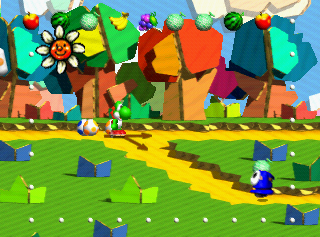
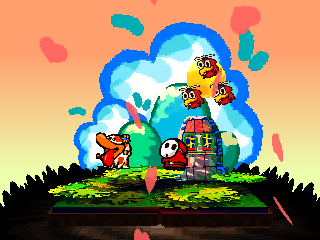
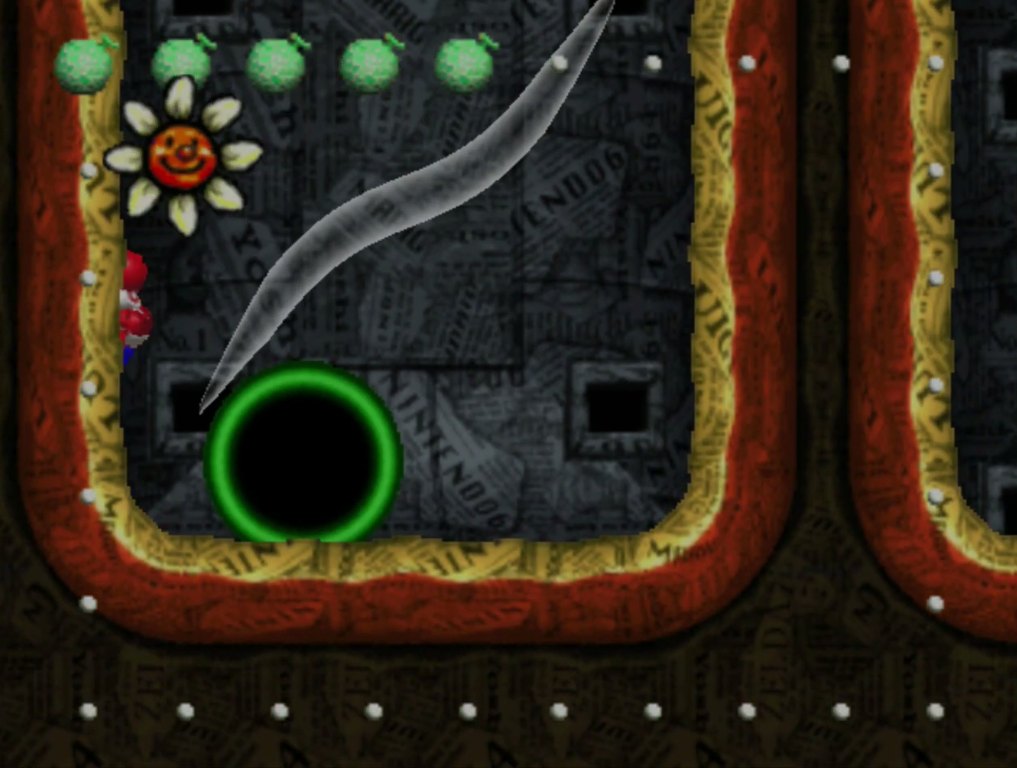
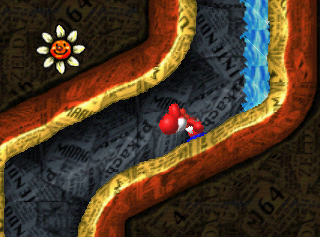
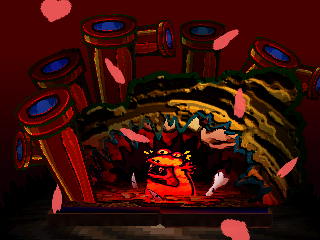
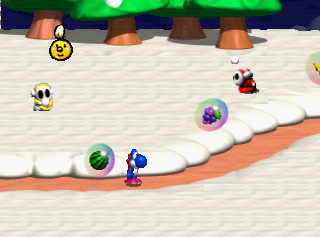
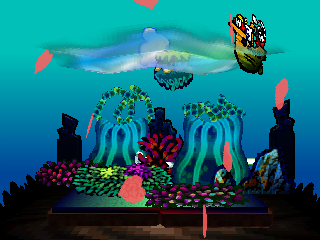
 1-1 Treasure HuntPage 1: Beginning · course 1 · open from the startA sunny wood that doubles as the tutorial. Pak E. Derm elephants bar the junctions with stop signs until a Ground Pound tips them over, and Poochy leads the way to buried coins and melons in the second half.
 1-2 Surprise!!Page 1: Beginning · course 2 · open from the startShy Guys drop out of the trees, Air Bags burst from Mystery Crates and a Fuzzy Wiggler patrols. A Balloon Bully gives a lift to a Special Heart in the sky, and a vase leads to the first Special Delivery challenge.
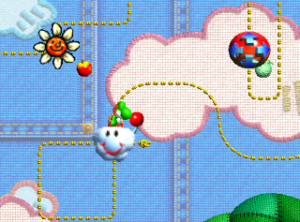 1-3 Rail LiftPage 1: Beginning · course 3 · open from the startCloud Blocks trundle along rails over bottomless drops; whack the levers to switch the points. Shy Guys on stilts, Bumper Balls and Surprise Balls everywhere.
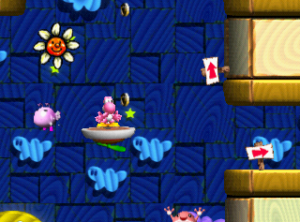 1-4 Tower ClimbPage 1: Beginning · course 4 · open from the startA night-time ascent of a very tall tower, inside and out, dodging Bullet Bills. Home of the Long Jump minigame.
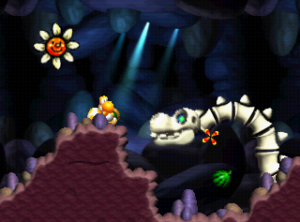 2-1 Bone Dragon PitPage 2: Cavern · course 1 · always openA cave of Spikes and Nipper Plants set to a sitar and distant roars. Two pits each hold a three-headed Bone Dragon mini-boss. A black Giant Egg is hidden here.
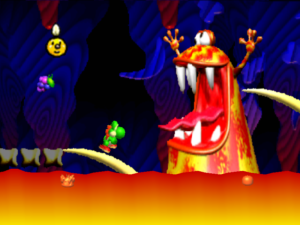 2-2 Blargg’s BoilerPage 2: Cavern · course 2 · needs 1 Special Heart from the course beforeA cavern flooded with lava, crossed on sagging bone bridges and rolling Bocci Balls while Blargg rears up five times. A blue pipe hides a Special Delivery challenge.
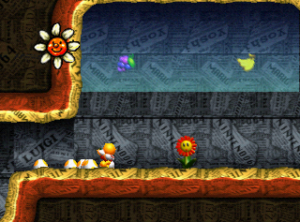 2-3 Jelly PipePage 2: Cavern · course 3 · needs 2 Special HeartsA sewer set in wobbling jelly, haunted by Jelly Ghosts and mirror-image Boos. A vase leads to the Slug mini-boss, and Poochy waits at the bottom of the big shaft.
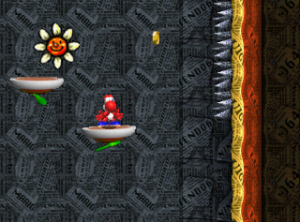 2-4 Torrential MazePage 2: Cavern · course 4 · needs all 3 Special HeartsA flooded labyrinth of spikes and rushing water, crossed on Ghost Streams. The newspaper walls carry the words “Pikachu” and “Zelda”. The second black Giant Egg is here.
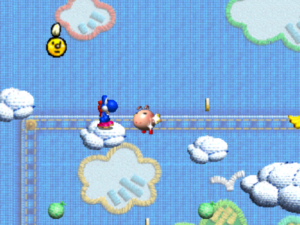 3-1 Cloud CruisingPage 3: Summit · course 1 · always openRide snakes and a friendly green dragon up through the clouds while Flying Shy Guys try to knock you off. Boss: Cloud N. Candy.
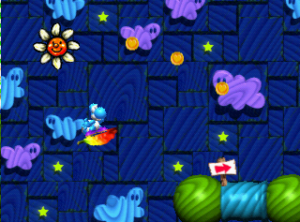 3-2 The Tall TowerPage 3: Summit · course 2 · needs 1 Special Heart from the course beforeSprings, swinging Ball ’N’ Chains, little planets full of Ravens and leaves you can surf across the gaps. A white Giant Egg is hidden near the leaves. Boss: Inviso.
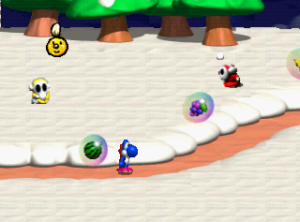 3-3 Poochy & NippyPage 3: Summit · course 3 · needs 2 Special HeartsThe snow course: the only place Snow Guys appear, lobbing snowballs while Goonies drop bombs. The other white Giant Egg is underground. Boss: Cloudjin.
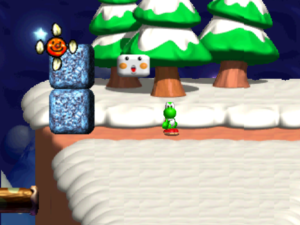 3-4 FrustrationPage 3: Summit · course 4 · needs all 3 Special HeartsA mountain-top at night, full of pits, Bumpties and centipedes, crossed by rolling inside wooden wheels. Two melon minigames. Boss: Don Bongo.
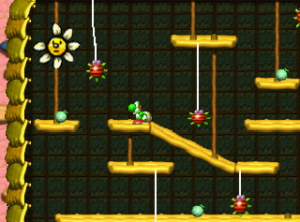 4-1 Jungle HutPage 4: Jungle · course 1 · always openA catwalk over a village of huts. Gabons hurl spiked balls below, Chomps and spiders guard the upper huts, and bees guard a lower one. Peppers grow here.
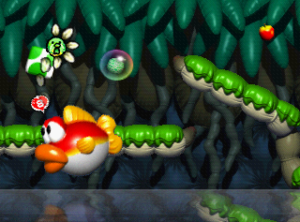 4-2 Jungle PuddlePage 4: Jungle · course 2 · needs 1 Special Heart from the course beforeA river through the jungle. Blue Blurps spit water to knock Yoshi off his perch and red ones leap up to swallow him whole, so keep to the high ground.
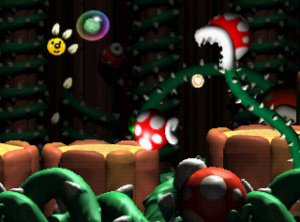 4-3 Piranha GrovePage 4: Jungle · course 3 · needs 2 Special HeartsThe trees are giant Piranha Plant stalks. Climb a ladder of Flatbed Ferries, ride boulders over the thorns and find the melon-crate challenge through a vase.
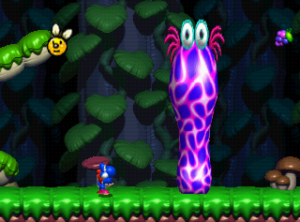 4-4 Neuron JunglePage 4: Jungle · course 4 · needs all 3 Special HeartsWriggling Neurons serve as both platforms and hazards, Ick Worms float down on leaves, and tubs ferry Yoshi over frog-filled water bristling with sea cacti.
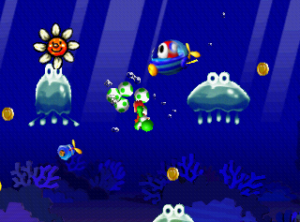 5-1 Lots O’Jelly FishPage 5: Ocean · course 1 · always openA big underwater maze where some of the jellyfish carry fruit. An X-shaped cave is the lair of the Snorkel Snake mini-boss.
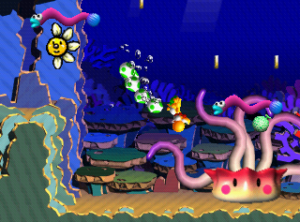 5-2 Lots O’FishPage 5: Ocean · course 2 · needs 1 Special Heart from the course beforeHalf in, half out of the water: anemones, clams, Spiny Fish and sea cacti below, a Power Flower and a Miss Warp above.
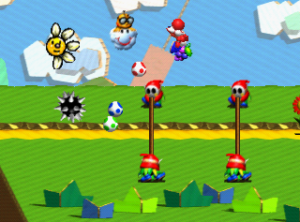 5-3 Shy Guy LimboPage 5: Ocean · course 3 · needs 2 Special HeartsPairs of Shy Guys hold bamboo poles across the path for you to jump. A hidden blue pipe leads to the Broad Jump, worth up to seven melons.
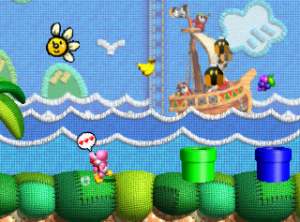 5-4 Shy Guy’s ShipPage 5: Ocean · course 4 · needs all 3 Special HeartsPirate galleons bombard the beach with Bob-ombs from the background, then Turtle Cannons take over with Bullet Bills. Goonies offer a lift.
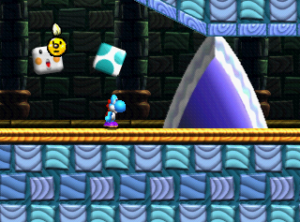 6-1 Mecha CastlePage 6: Finale · course 1 · always openSprockets, spinning wheels, swords and pistons that crush on contact. Boss: Baby Bowser.
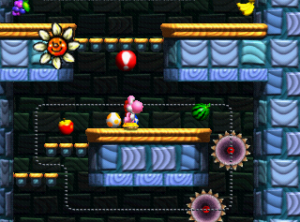 6-2 Lift CastlePage 6: Finale · course 2 · needs 1 Special Heart from the course beforeLifts on dotted tracks, a windswept balcony of machinery, buzz saws and Black Shy Guys dropping weights. Boss: Baby Bowser.
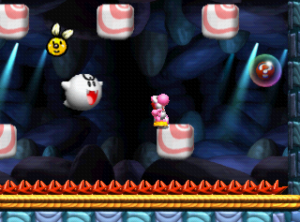 6-3 Ghost CastlePage 6: Finale · course 3 · needs 2 Special HeartsDark rooms linked by pipes and locked doors and packed with Boos, including the Blindfold Boos found nowhere else. Boss: Baby Bowser.
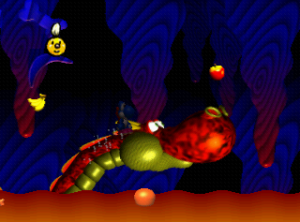 6-4 Magma CastlePage 6: Finale · course 4 · needs all 3 Special HeartsA red dragon ferries Yoshi over a lava sea, a Slug guards the tower, and the toughest version of Baby Bowser waits at the end.
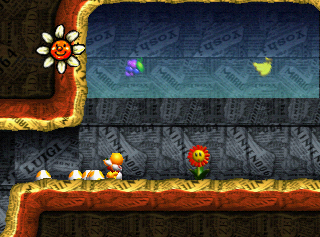
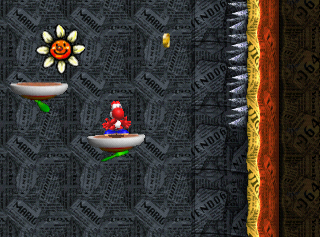
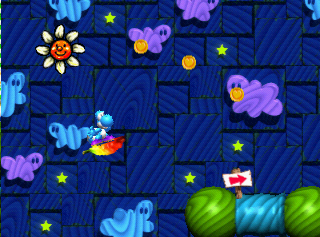
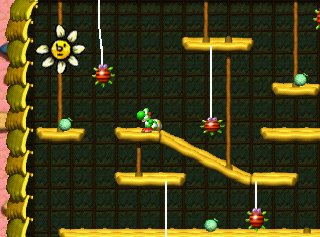
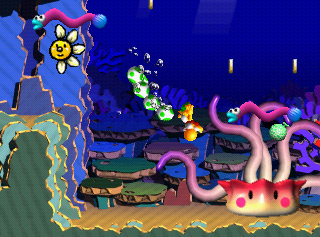
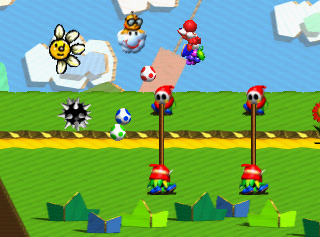
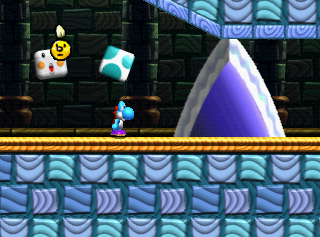
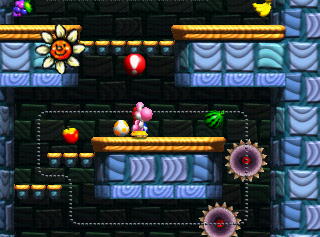
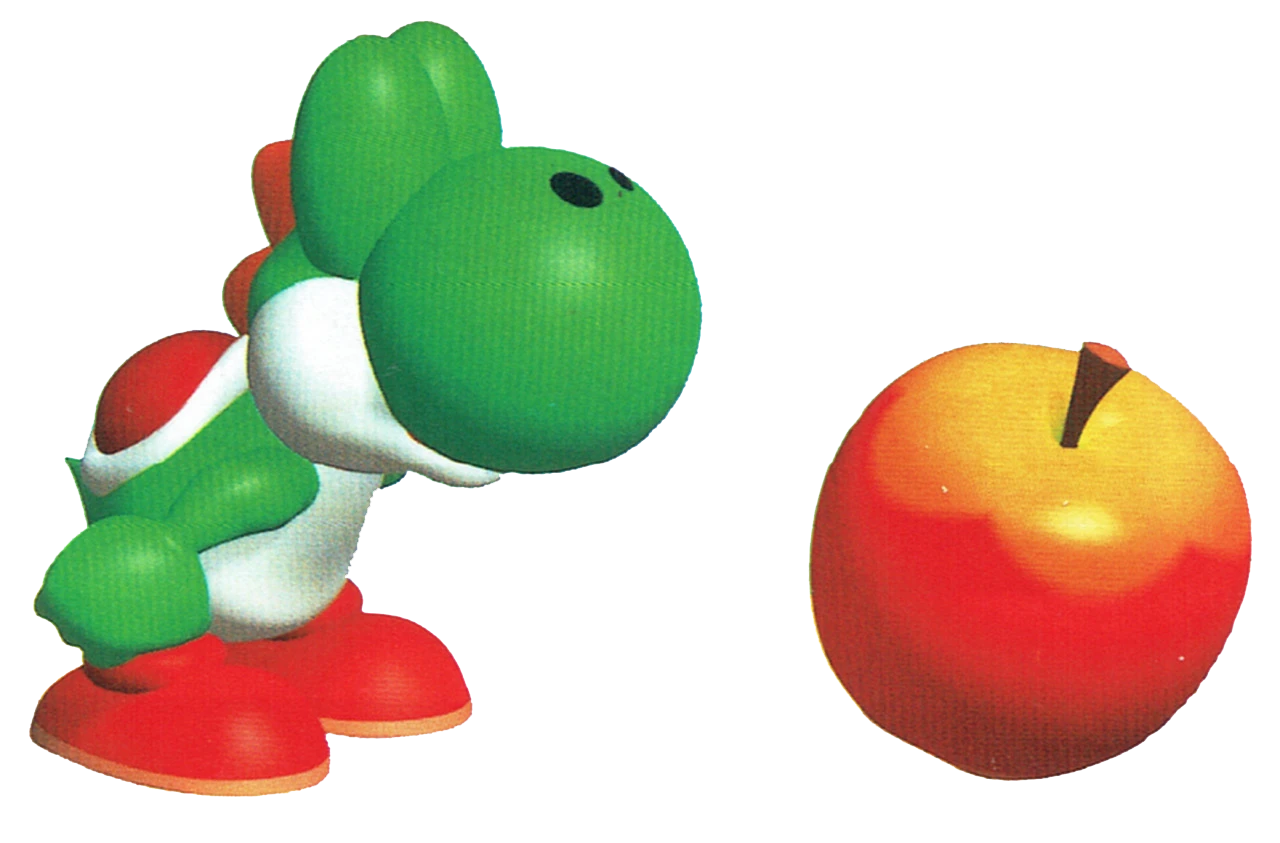
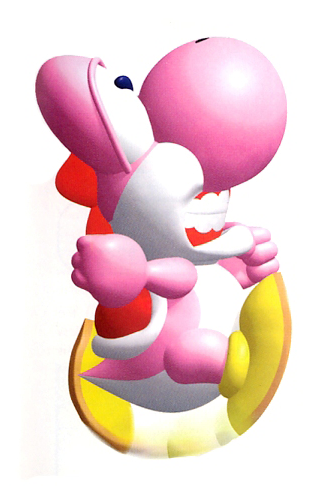
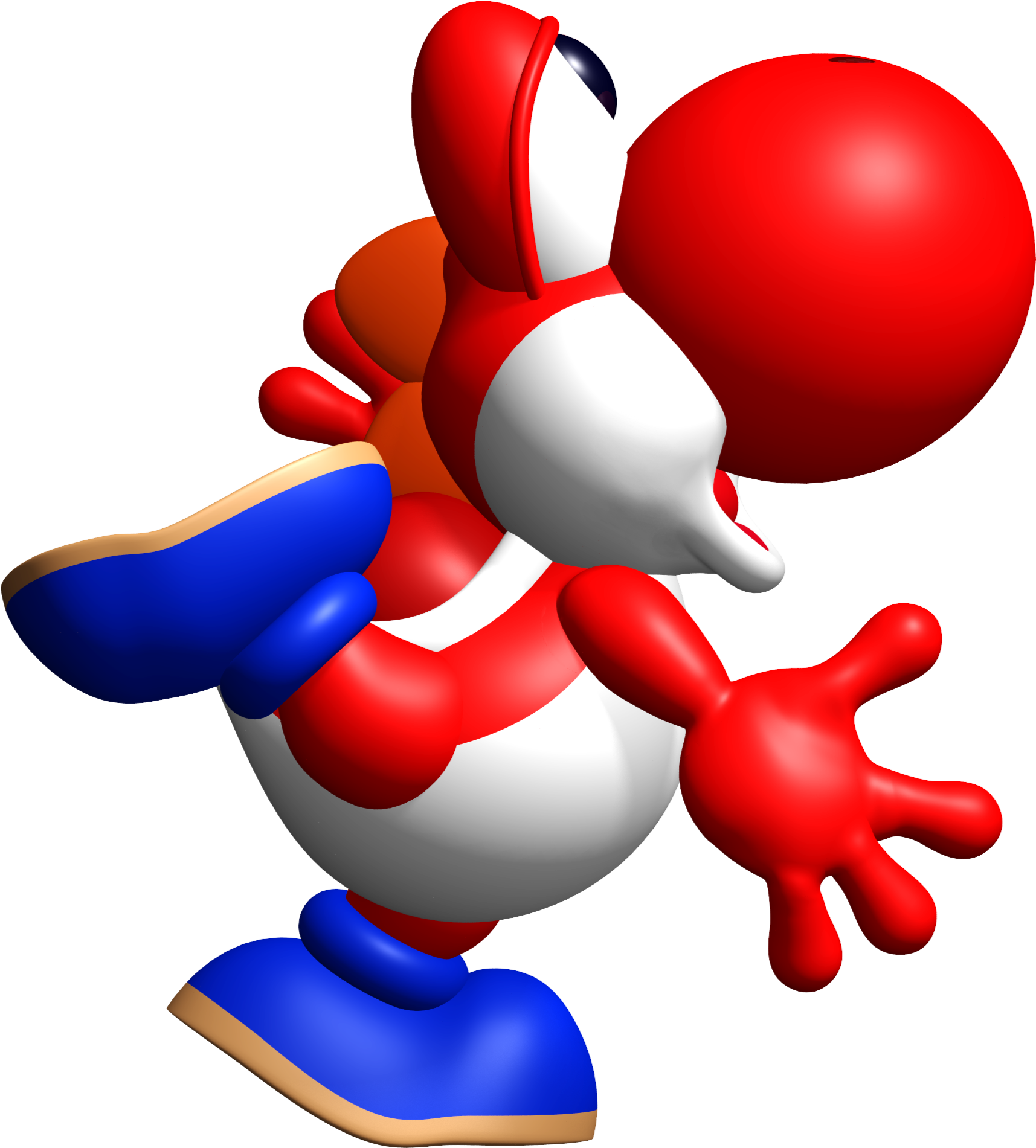
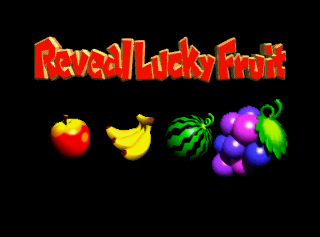
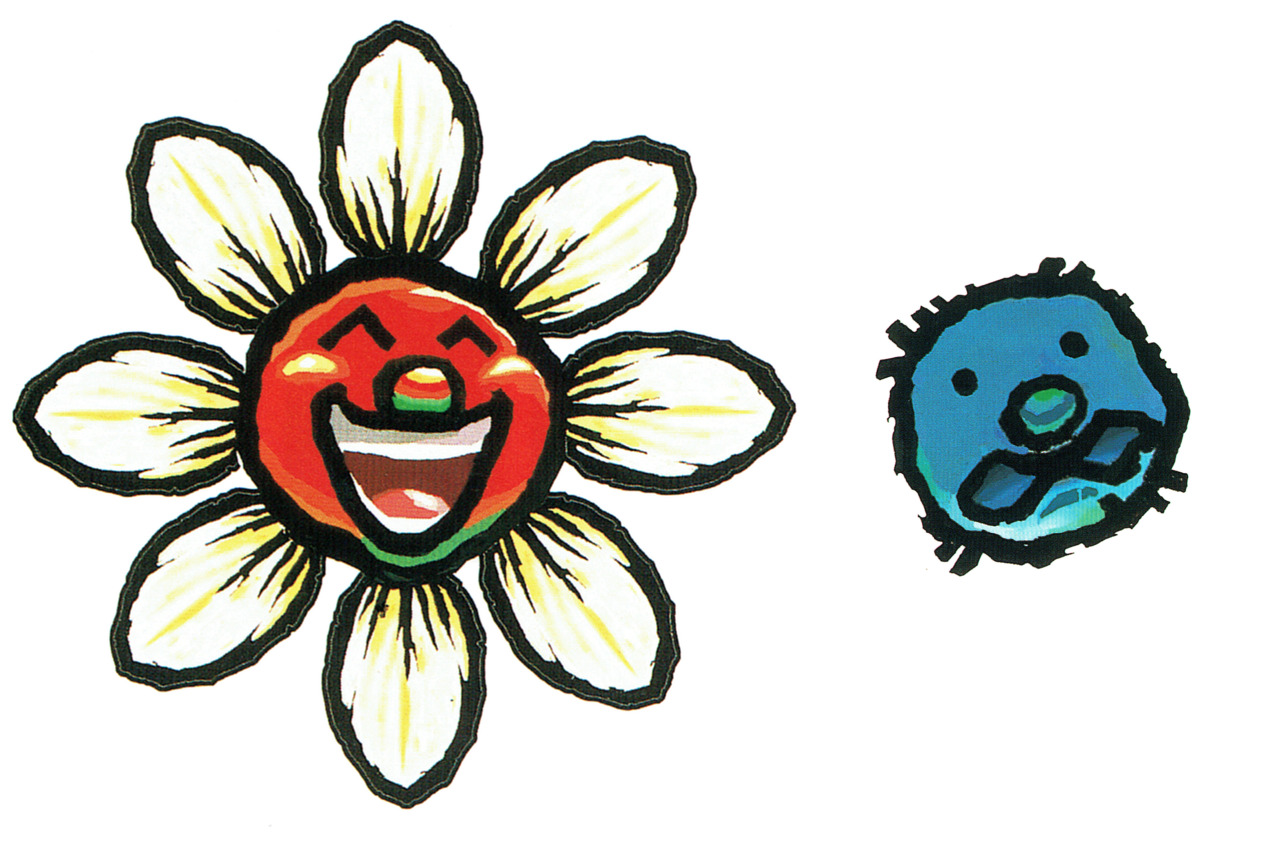
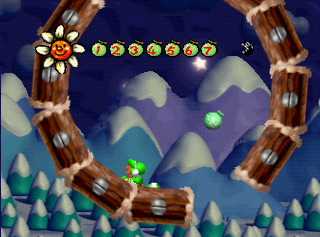
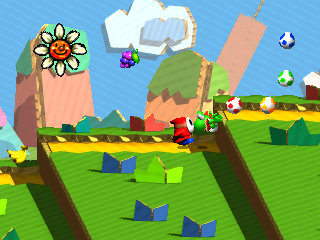
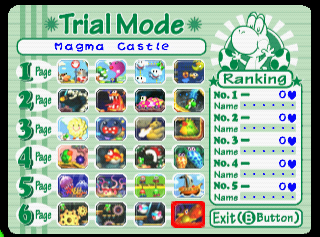
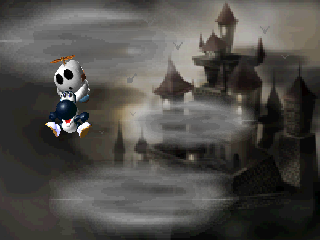
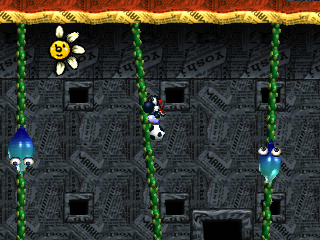
 AppleFavourite Fruit of Red and Pink Yoshi. One of the four fruits the Lucky Fruit roulette can land on.
 BananasYellow Yoshi’s favourite.
 WatermelonGreen Yoshi’s favourite, with its zigzag stripes.
 GrapesFavourite of Blue and Light Blue Yoshi.
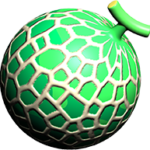 MelonThirty per course, 100 hearts each, loved by every Yoshi. An all-melon course is the perfect score.
 Heart FruitFound in bubbles, or parachuted in after six identical fruit in a row. Full heal plus the invincible Super Happy state.
 Special HeartThree per course. Each opens one more course on the next page, is worth 100 hearts and cheers up a wilting Smile Meter. Chimes ring when one is close.
 PepperToo hot for anyone but Black and White Yoshi. Does not count towards the 30.
 Bomb BerryA spiked, explosive fruit that grows back for ever. Most Yoshis cannot stomach it.
 Power FlowerRestores health when eaten.
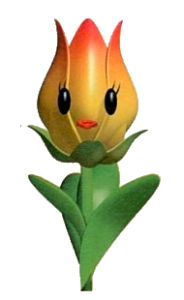 TulipEat it and Yoshi becomes an egg that can be fired up to high ledges.
 Yoshi eggMade from swallowed enemies or knocked out of Egg Blocks. Black and White Yoshi’s black-spotted eggs burst with a bigger blast.
 Egg BlockHit from below for up to six eggs. Spotted to match your Yoshi in the international versions.
 Giant Egg (black)Hidden in Bone Dragon Pit and Torrential Maze. Carry it to the end of the course to hatch Black Yoshi.
 Giant Egg (white)Hidden in The Tall Tower and Poochy & Nippy. Hatches White Yoshi.
 CoinHeart Coins, collected for score. Clearing every coin in an area can produce melons.
 Hopping coinsCoins with feet that appear in fives for a few seconds. Catch all five for a guaranteed melon.
 KeyOpens one locked door. Carried by certain enemies or tucked inside a ? Bubble.
 Bumber ’ChuteAn umbrella that lets a Yoshi glide.
 ? BubblePop it with an egg to find out what is inside: fruit, a switch, a key, a Giant Egg or an enemy.
 ? BlockA coin per hit, or the start of a melon minigame. The eleventh hit turns it into a melon.
 ? SwitchStamp on it to trigger a timed event, such as cloud steps to a Special Heart.
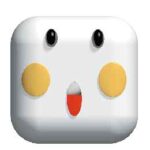 Message BlockBump it for a hint.
 Mystery CrateA box with a surprise in it. Sometimes the surprise is an Air Bag.
 Surprise BallLatch on with the tongue and it hauls Yoshi up to higher ground.
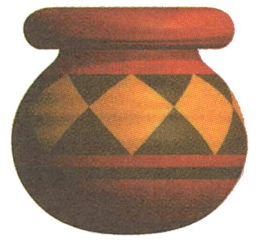 VaseA jar that works like a pipe, carrying Yoshi to another part of the course or into a minigame.
 Melon crateStack seven and carry them to the flag in the Special Delivery challenge.
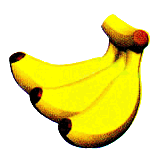
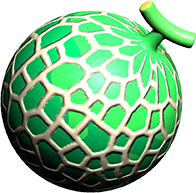
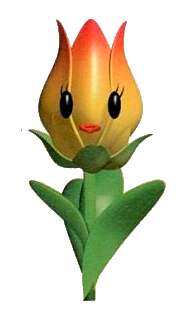






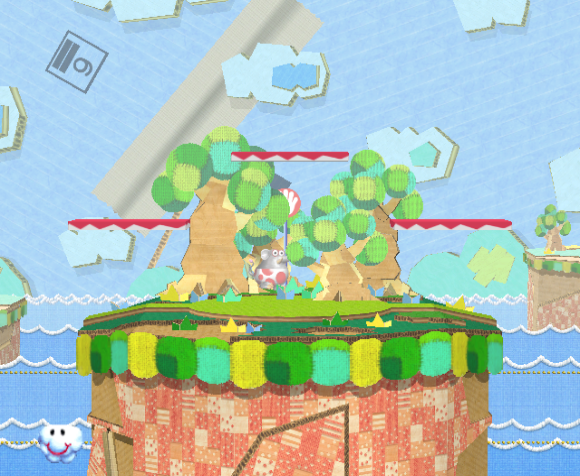 Super Smash Bros. Melee and UltimateGameCube, 2001 · Switch, 2018 · stageThe Yoshi’s Story stage is based on Page 1: a small island with three floating platforms, a smiling cloud that drifts round the edge and sometimes catches falling fighters, Flying Shy Guys that carry food across, and a Pak E. Derm in the background. It returned in Ultimate, which also made spirits of Don Bongo, Pak E. Derm, Blargg and the Super Happy Tree.
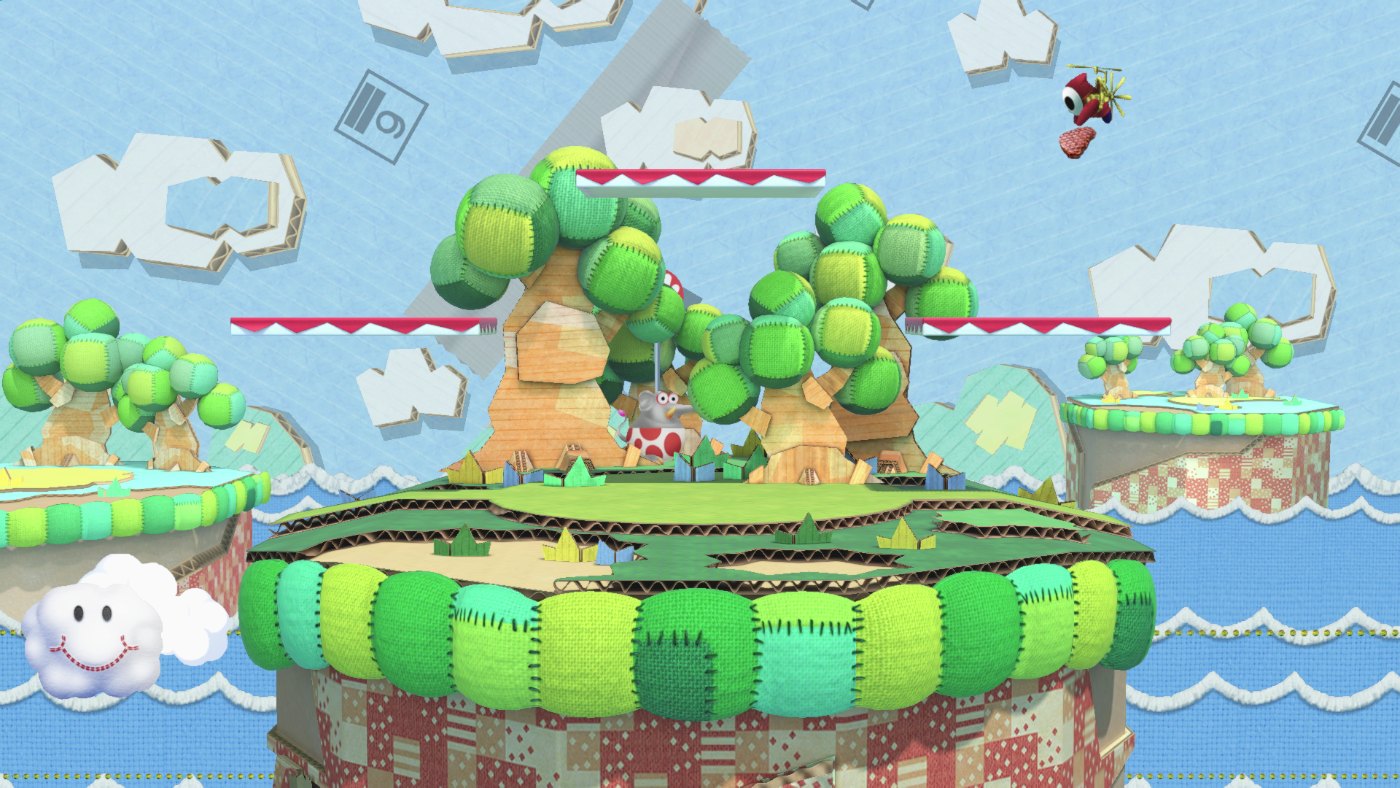 Smash Bros. musicBrawl, 3DS, Wii UAn arrangement of the game’s theme, titled “Yoshi’s Tale” in the Mario Wiki listings, plays on the Yoshi’s Island stage in Brawl and the 3DS game; the Wii U game’s Woolly World stage offers those plus the Melee stage’s arrangement.
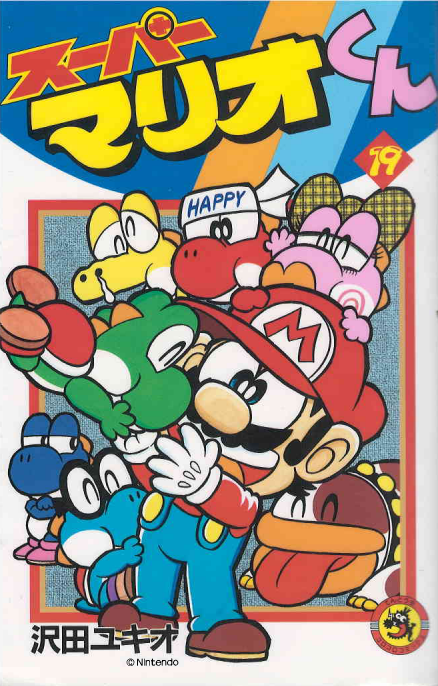 Super Mario-kun vols. 19 and 20Manga · Yukio Sawada, ShogakukanTwo volumes of the long-running gag manga are given over to the game.
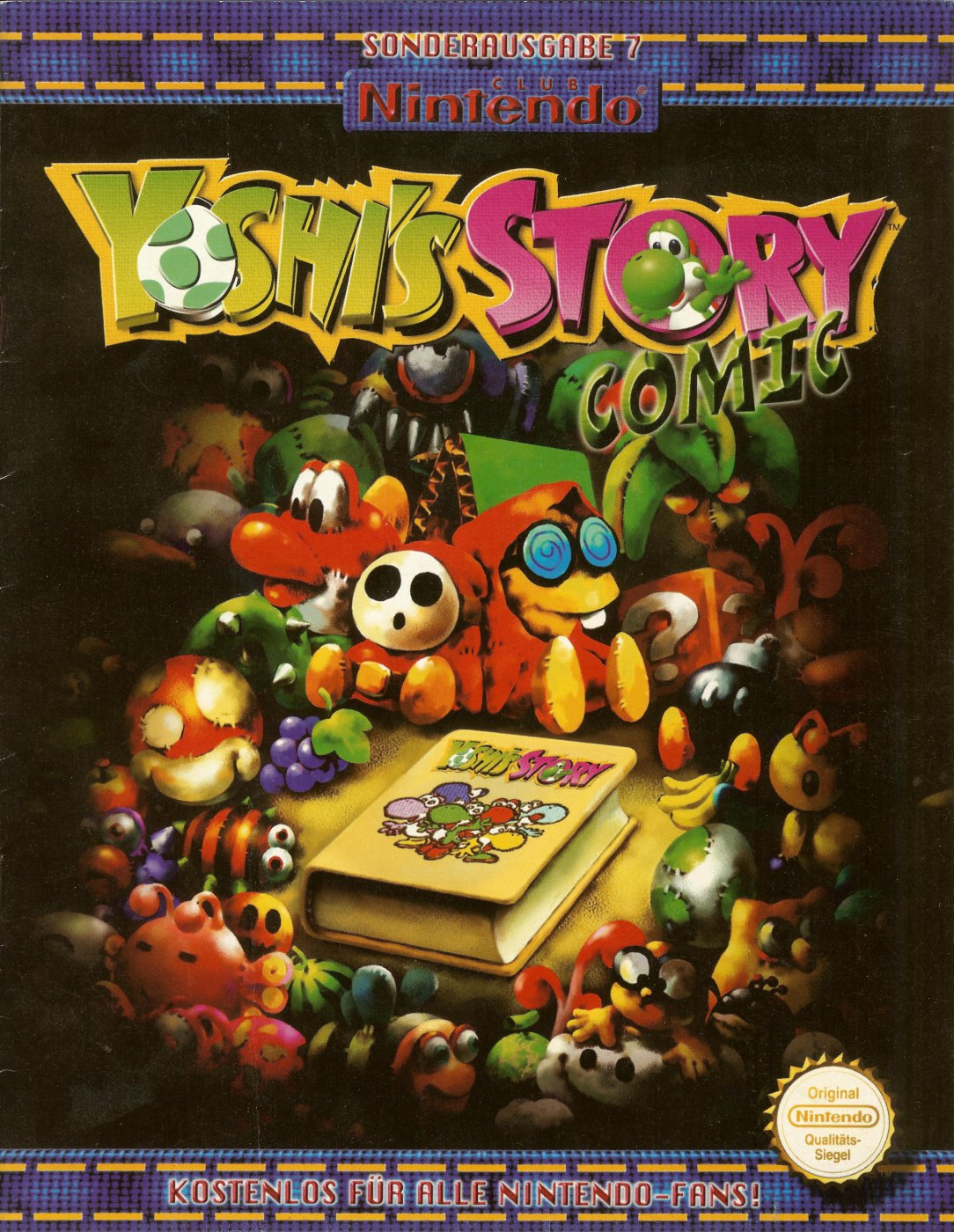 Yoshi’s Story ComicClub Nintendo, GermanyThe German Club Nintendo magazine ran Yoshi’s Story comic strips, later collected in a standalone comic book.
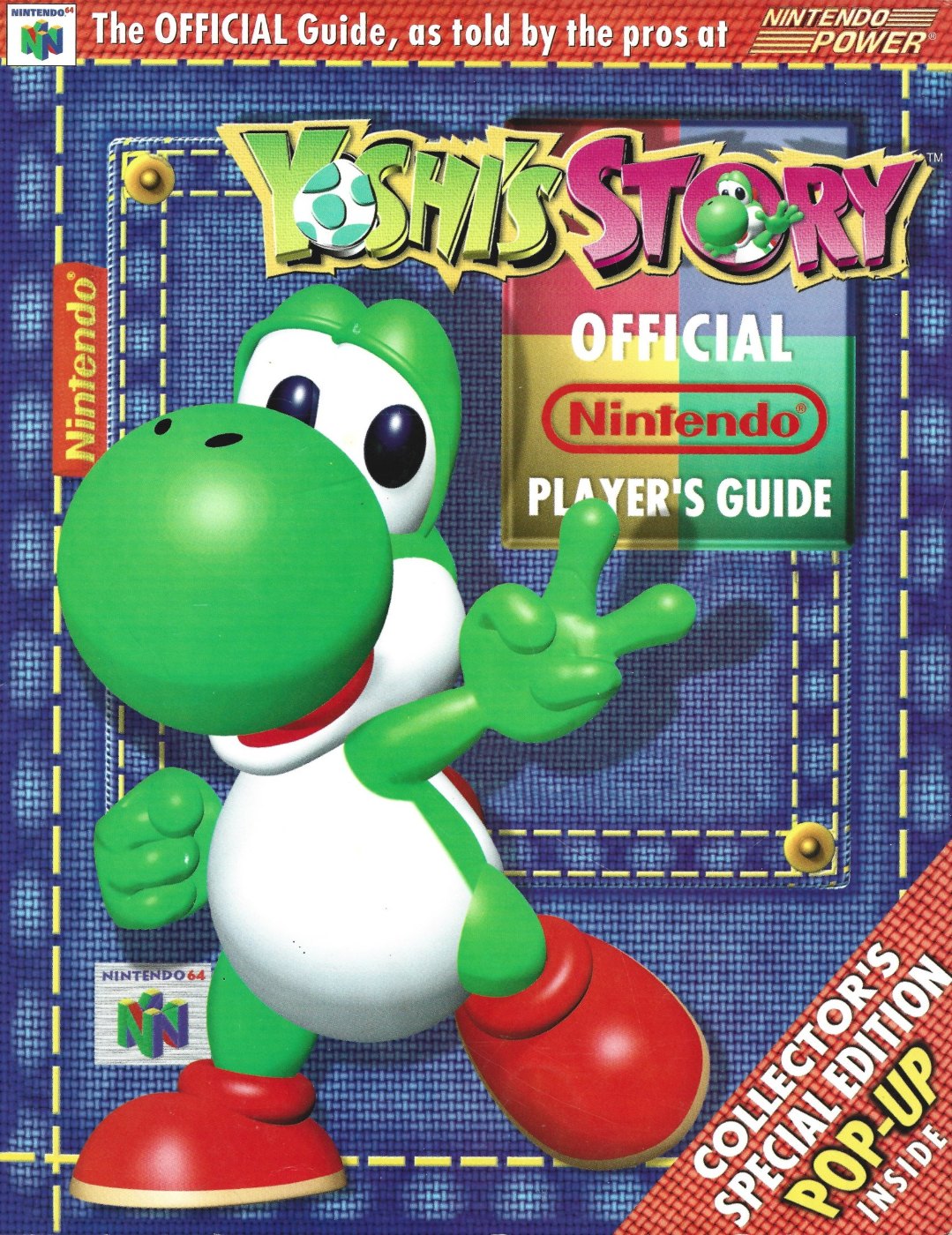 Nintendo PowerVols. 100, 104, 105 and 106 · 1997–98Nintendo’s own magazine previewed the game in its 100th issue, ran an eight-page feature in Vol. 104 (January 1998) and printed a mini-guide in Vol. 106. Super Luigi Bros has the scans.
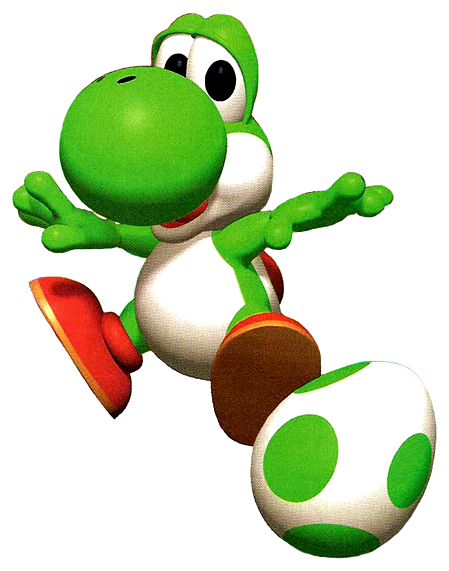 Green YoshiHatchling · available from the start
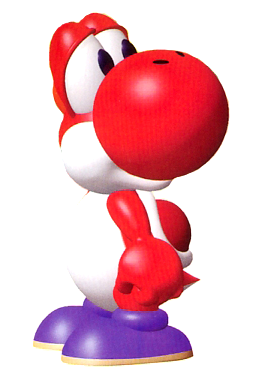 Red YoshiHatchling · available from the start
 Yellow YoshiHatchling · available from the start
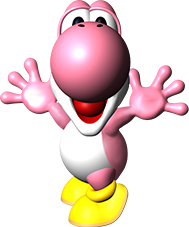 Pink YoshiHatchling · available from the start
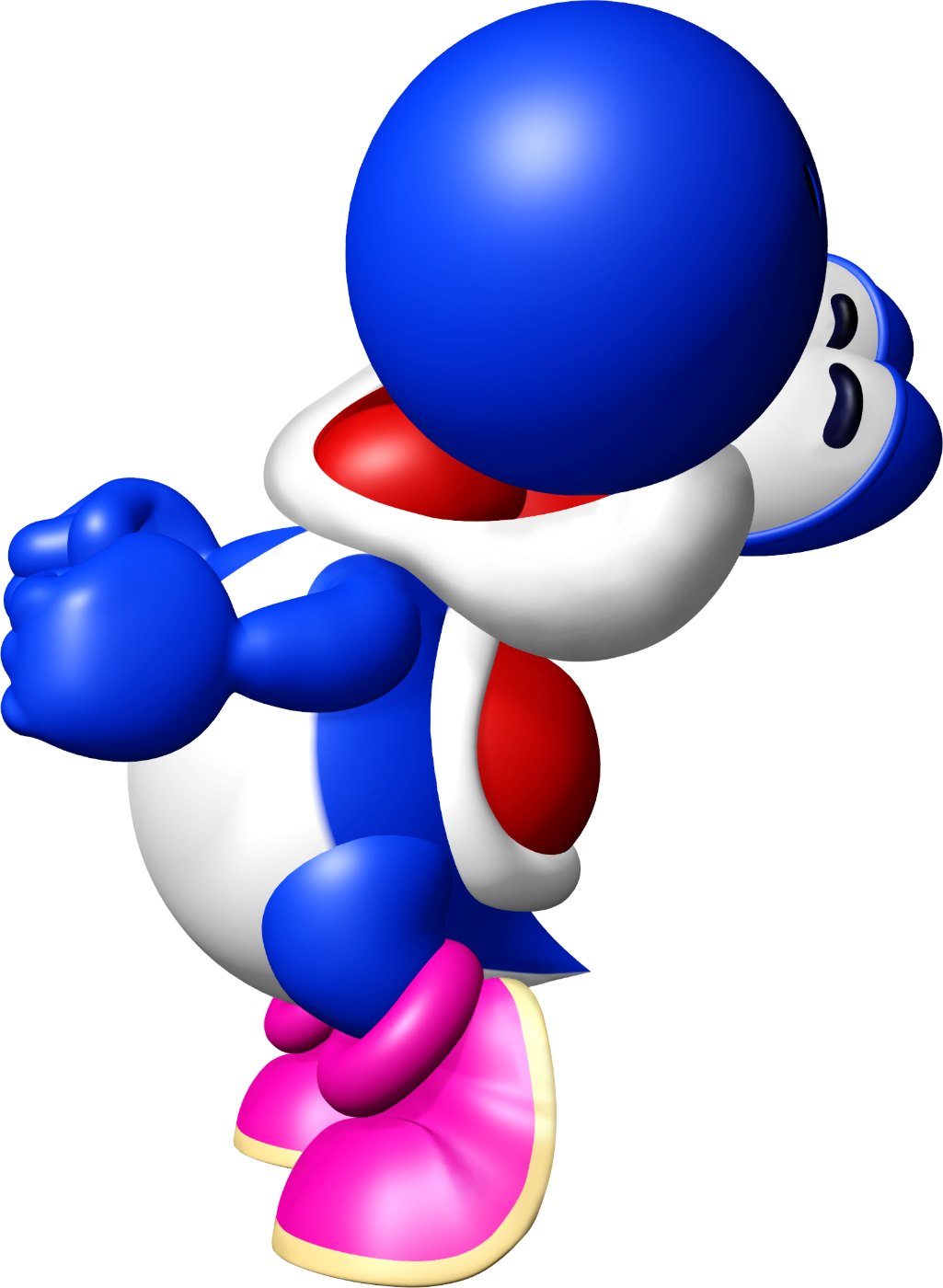 Blue YoshiHatchling · available from the start
 Light Blue YoshiHatchling · available from the start
 Black YoshiHidden · Story Mode only
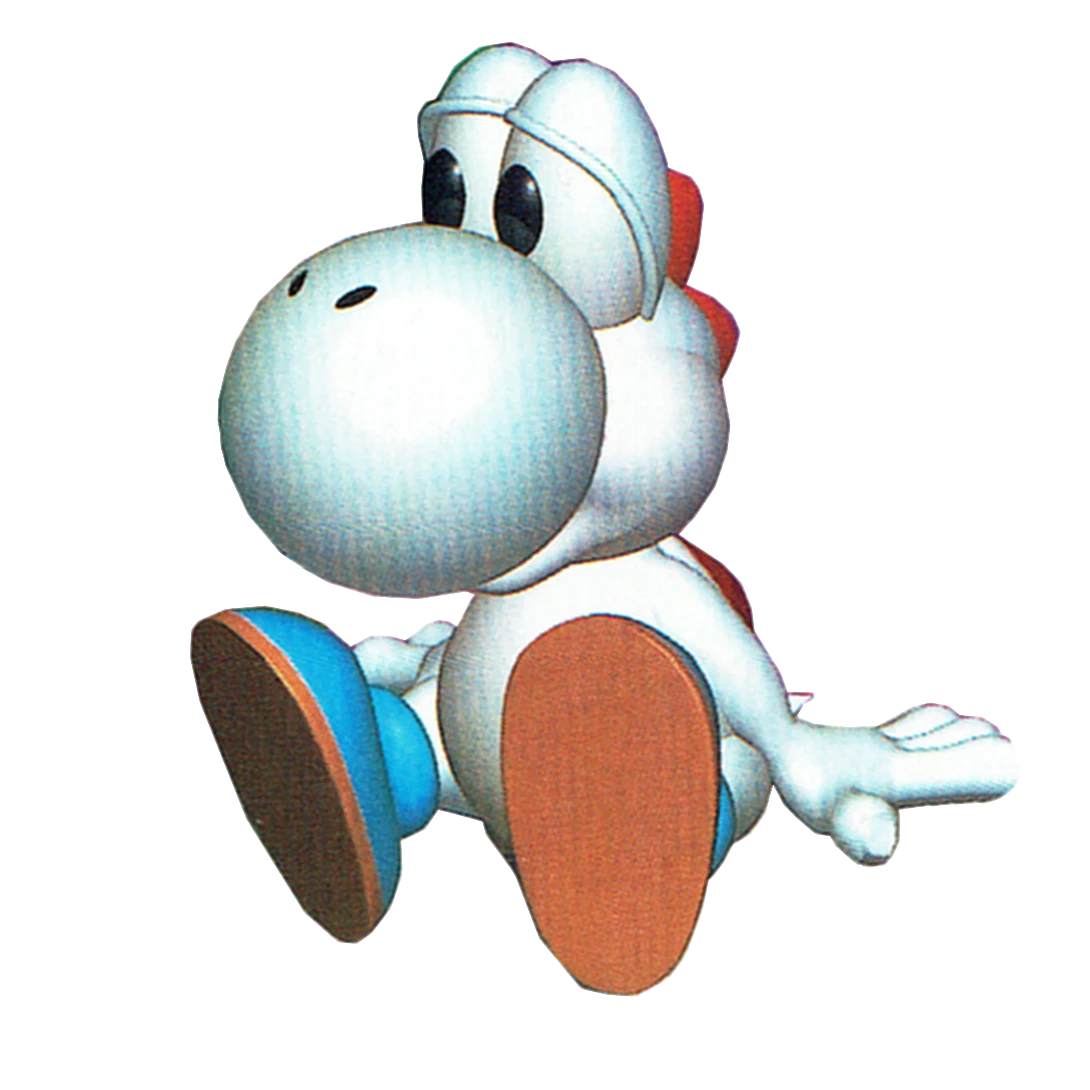 White YoshiHidden · Story Mode only
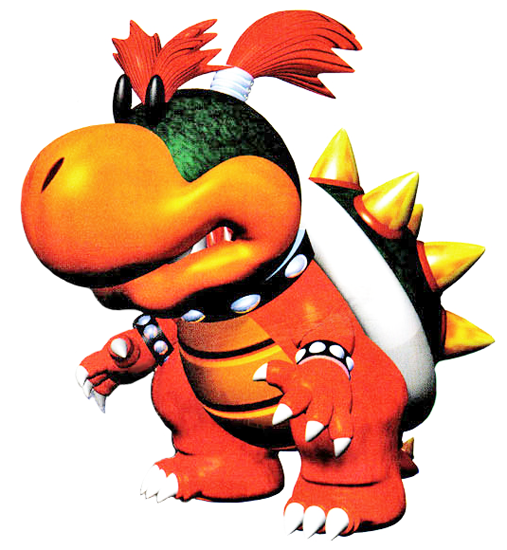 Baby BowserThe villain
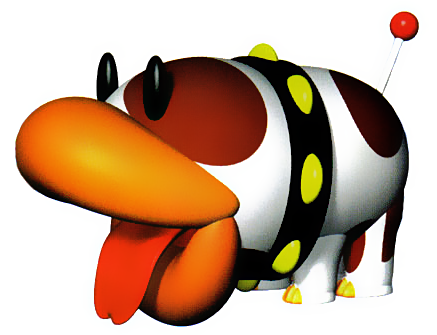 PoochyHelper
 White Shy GuyHelper
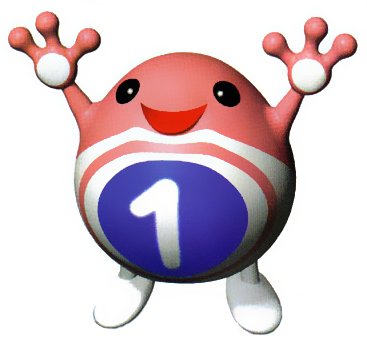 Miss WarpHelper
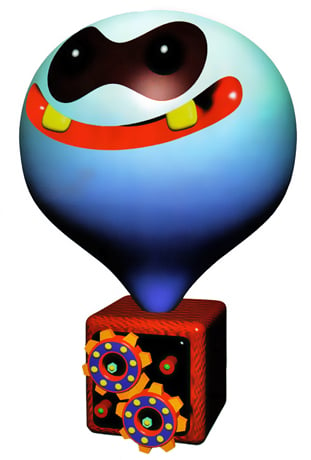 Balloon BullyHelper
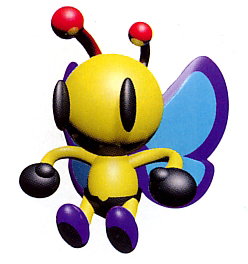 Power BeeHelper
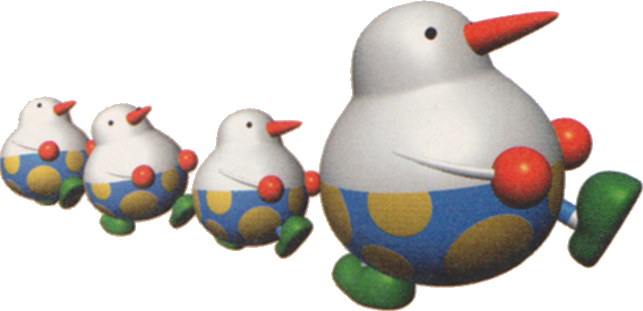 Huffin PuffinHelper
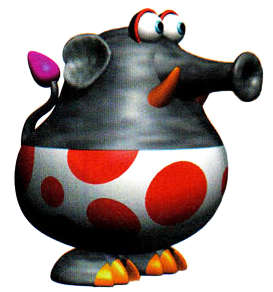 Pak E. DermObstacle
 ToadiesBaby Bowser’s henchmen
 Lakitu (referee)Helper
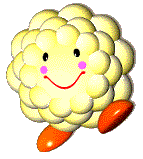 Cloud N. Candy (boss)Cloud Cruising (3-1)An edible cloud. Yoshi eats her a bite at a time until she is gone.
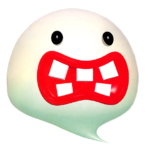 Inviso (boss)The Tall Tower (3-2)A near-invisible ghost who releases Peepers. Three eggs while you can see him.
 Cloudjin (boss)Poochy & Nippy (3-3)A huge floating genie who bends the wind. Three eggs to the stomach in the instant he turns solid to strike.
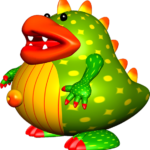 Don Bongo (boss)Frustration (3-4)A giant, Gabon-like creature whose footsteps cause earthquakes. Three eggs on the lips.
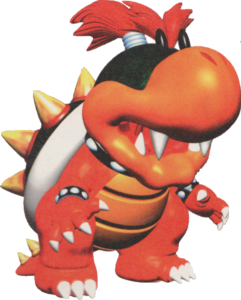 Baby Bowser (final boss)All four page 6 castlesRides his pet Ghost and throws bombs to be thrown back, then fights on foot. Hardest in Magma Castle.
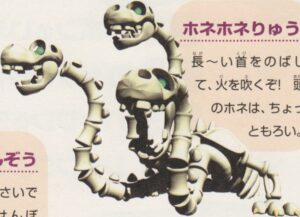 Bone Dragon (mini-boss)Bone Dragon PitThree fire-breathing skulls on long necks. Each head takes two eggs or two Ground Pounds. Fought twice.
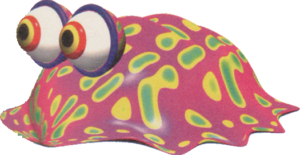 Slug (mini-boss)Jelly Pipe, Magma CastleA big, colourful slug that only flinches when an egg bursts beside its eyes. Beating the one in Jelly Pipe uncovers a Special Heart.
 Snorkel Snake (mini-boss)Lots O’Jelly FishA giant eel that tries to coil round Yoshi. It cannot be hurt; clear the Cheep Cheeps from its lair instead.
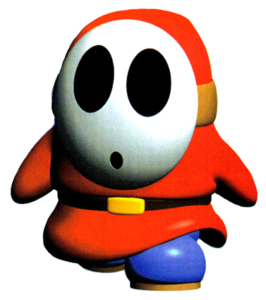 Shy GuyAlmost everywhereRed, yellow, green and blue. Each Yoshi likes the taste of his own colour best.
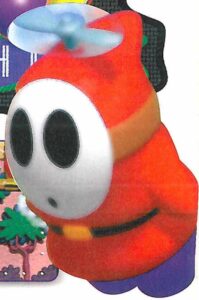 Flying Shy GuyMany coursesPropeller-headed and often carrying fruit. Down a formation of four with one egg for a melon.
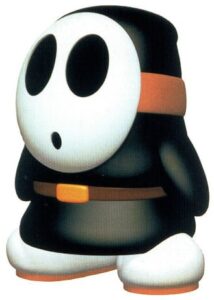 Black Shy GuyPoochy & Nippy to Ghost CastleA meaner flier that drops bombs and spiked weights.
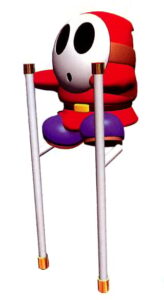 Shy Guy On StiltsRail Lift, Jungle Hut, Shy Guy’s ShipShort, medium and tall, in four colours.
 Shy Guy on a Pogo StickSurprise!!, Rail Lift, Jungle Hut, Shy Guy LimboBounces along the path.
 Snow GuyPoochy & NippyA Shy Guy wrapped up for winter, throwing snowballs.
 Bamboo dancersShy Guy LimboPairs of Shy Guys holding a pole across the path for Yoshi to jump.
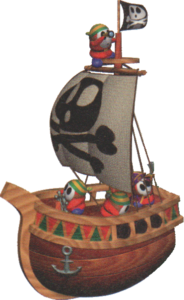 Pirate GuysShy Guy’s ShipCrew the Shy Guy Galleons that shell the beach from the background.
 Mini submarineLots O’Jelly FishA Shy Guy in a submarine, firing torpedoes at intruders.
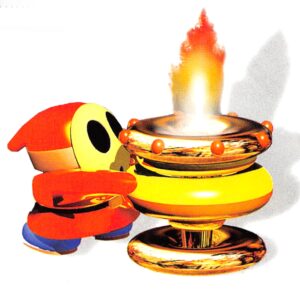 Flaming pot-pushing Shy GuyMagma CastleShoves a burning urn whose flames box Yoshi in.
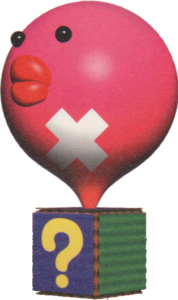 Air BagSurprise!!Pops out of a Mystery Crate and blows Yoshi backwards.
 Attacky SackMagma CastleA bouncing, marble-like thing that charges.
 BeesJungle Hut to Lots O’FishA swarm round a hive. Move slowly and they leave you be; hit them with an egg and they attack.
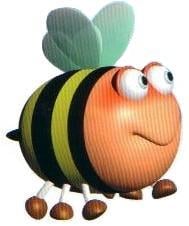 BumblebeeCloud CruisingBig bees flying straight across the screen from both sides.
 Big & Little BooJelly PipeA line of Boos that mirrors Yoshi’s movements while clutching a melon.
 BlarggBlargg’s BoilerA giant lava monster that surges up without warning.
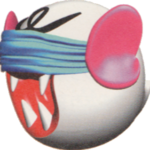 Blindfold BooGhost CastleCannot see, so it hunts by sound.
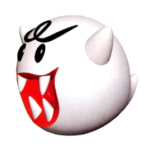 BooGhost CastleFreezes when watched. Bounce an egg off a wall to catch it from behind.
 Block BooGhost CastleDisguises itself as a block and shows its face when Yoshi looks away.
 Little BooGhost CastleA tiny Boo that swoops when provoked.
 Jelly GhostJelly Pipe, Torrential MazeLives in the jelly and lashes out as Yoshi passes.
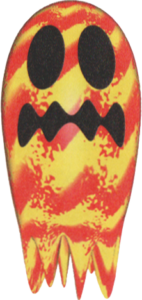 Lava GhostBlargg’s BoilerA stretched-out fireball that arcs up from the lava.
 Spark SpookBlargg’s Boiler, Magma CastleA fireball hopping in and out of the lava.
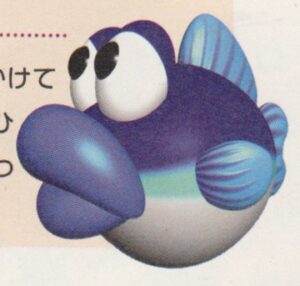 Blue BlurpJungle PuddleA giant fish that squirts water to knock Yoshi into its river, then eats him.
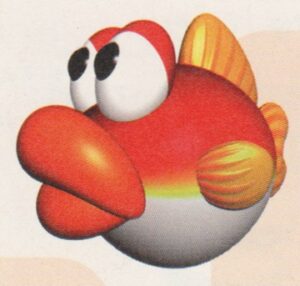 Red BlurpJungle PuddleA giant Cheep Cheep that leaps from the water, mouth open.
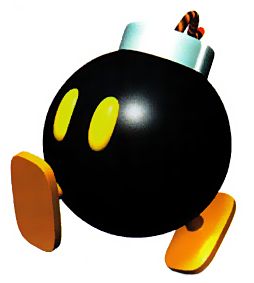 Bob-ombShy Guy’s ShipFired from the galleons. Lick one up and it can be thrown like an egg.
 Para-bombPage 6 castlesThe parachuting bombs Baby Bowser drops in the final fight.
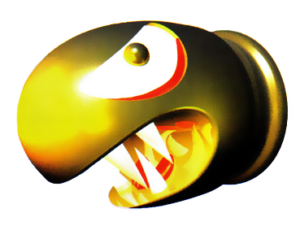 Bullet BillTower Climb to Shy Guy’s ShipFired in straight lines by Turtle Cannons.
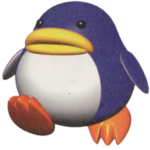 BumptyFrustrationA penguin that barges Yoshi about near the pits.
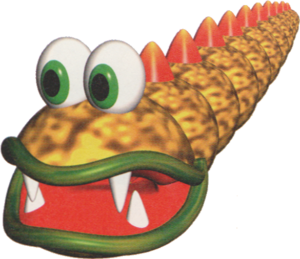 CentipedeFrustrationSpiked and segmented, pacing the junctions.
 Cheep CheepNeuron Jungle to Lots O’FishSwims in lines or set patterns.
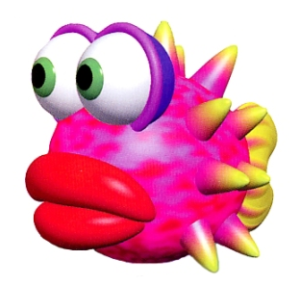 Spiny FishLots O’Jelly Fish, Lots O’FishA Cheep Cheep with spines. Do not eat.
 ChompJungle HutLunges forward over and over like a guard dog.
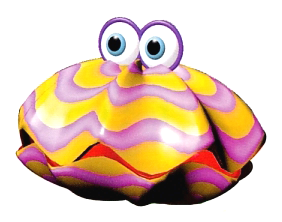 ClamLots O’FishBlows bubbles that lift Yoshi into ceilings and cacti.
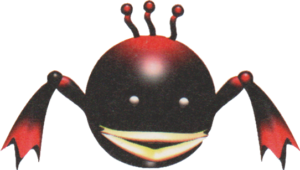 ComBatThe Tall Tower to Magma CastleA hovering bat that only eggs will shift.
 Do-DropJelly Pipe to Shy Guy LimboA water droplet that falls from a cloud.
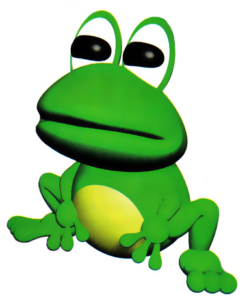 FrogNeuron JungleHops about the swamp.
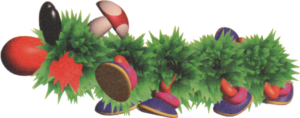 Fuzzy WigglerSurprise!!A caterpillar that never stops walking. Turn every segment purple to beat it.
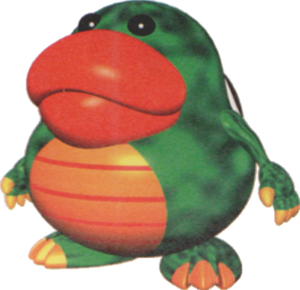 GabonJungle HutA small Koopa that coughs up big spiked balls and throws them.
 GhostPage 6 castlesBaby Bowser’s pet and mount, used as a shield against eggs.
 GooniePoochy & Nippy to Shy Guy’s ShipA seabird Yoshi can ride. Some carry bombs.
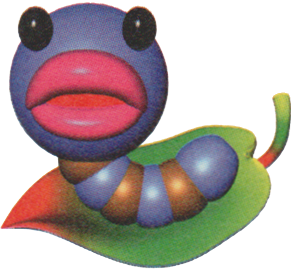 Ick WormNeuron JungleDrifts down on a leaf. Only Blue and Light Blue Yoshi can eat one without regretting it.
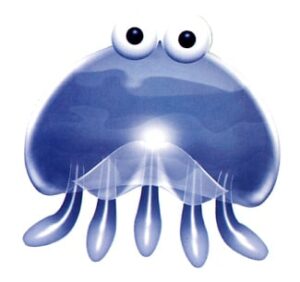 JellyfishLots O’Jelly FishBlue, red and green; some give chase and some stay put, and some carry fruit.
 LakituBone Dragon Pit to Shy Guy LimboFollows on a cloud dropping rocks, Spike Balls or rain. Evict him and the cloud is yours for a while.
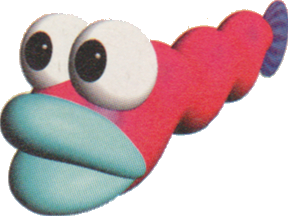 Mr. EelJungle Puddle to Lots O’FishSwims in a straight line.
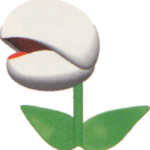 Nipper PlantBone Dragon PitSprouts wherever a Nipper Spore lands.
 Nipper SporeBone Dragon PitA drifting seed. Eating it hurts everyone except Black and White Yoshi.
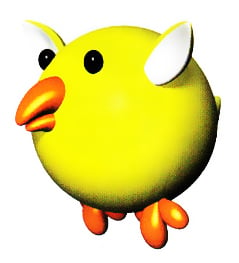 PeeperThe Tall Tower to FrustrationA bird that loses its feathers and drops when an egg hits it.
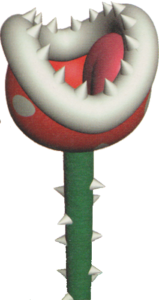 Piranha PlantPiranha GroveBends down from its vine to grab Yoshi.
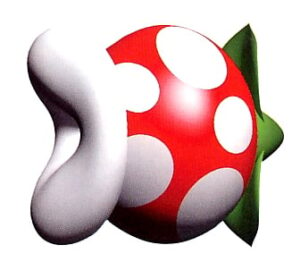 Piranha PestPiranha GroveA sprout with a long tongue that swallows Yoshi and spits him out shrunk.
 Piranha SproutPiranha GroveA low-growing little Piranha Plant.
 PufferBlargg’s Boiler to Magma CastleAn elephant-like creature that puffs out balls of energy.
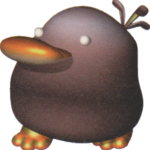 RavenThe Tall TowerBlack birds that wander the tower’s little planets.
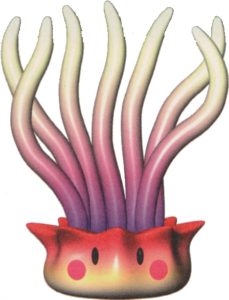 Sea AnemoneLots O’FishReaches for Yoshi with long arms.
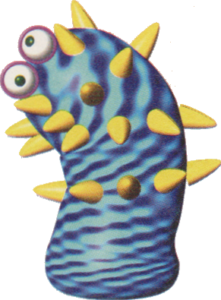 Sea cactusNeuron Jungle to Lots O’FishA spiked Neuron in a dozen colours, wriggling in or near the water.
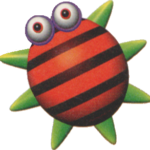 SpiderSurprise!! to Jungle HutDangles on a thread.
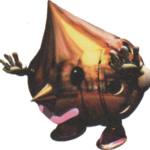 SpikeBone Dragon Pit to Magma CastleA metal menace that hops along or jumps straight up.
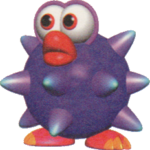 Spiked Fun GuyJelly Pipe, Torrential MazeLeaps out of holes in the background and rolls downhill.
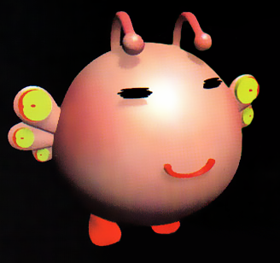 Tehee ButterflyRail Lift to Shy Guy LimboFlickers between pink and blue. Swallow it while it is blue and it costs you health.
 WeightMecha Castle to Ghost CastleA Thwomp-like spiked stone dropped by Black Shy Guys.
 Vine SlimeTorrential Maze (international versions)A slug that climbs the vines.
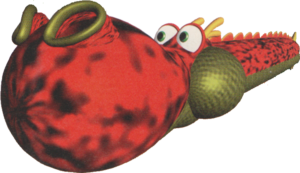 Dragon (helper)Cloud Cruising, Magma CastleA friendly serpent, green or red, that carries Yoshi through the air or over lava.
 Snake (helper)Cloud CruisingA smaller version of the dragon; the lift service of the Summit.
 Ghost Rider (helper)Ghost CastleA wisp that serves as a moving platform.
 Ghost Stream (helper)Torrential MazeA squashy ghost Yoshi can climb.
 NeuronNeuron JungleA slug-like creature whose colour (red, blue, yellow or purple) tells you how it moves. Platform and hazard in one.
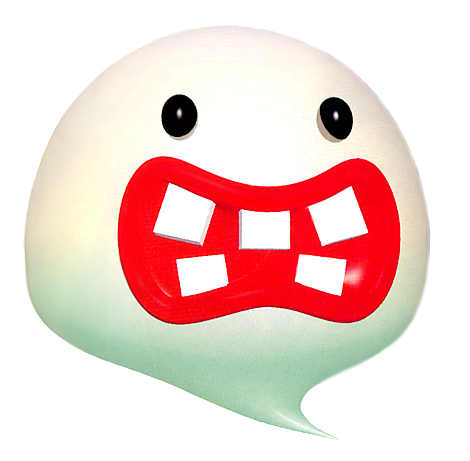
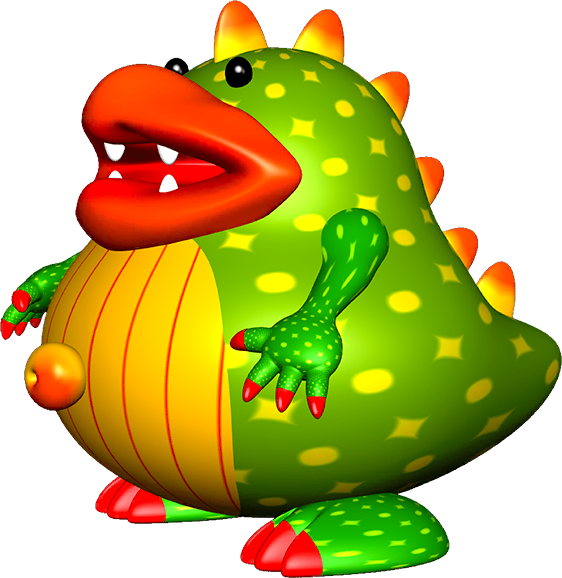
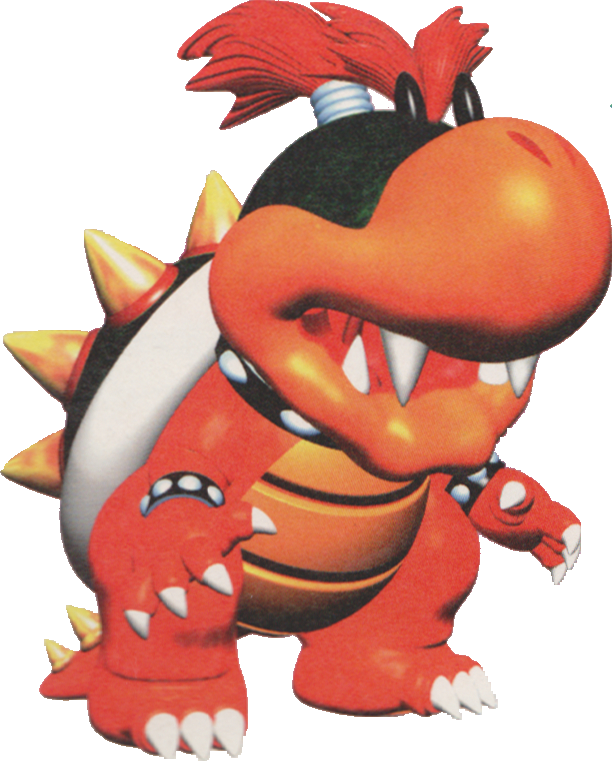
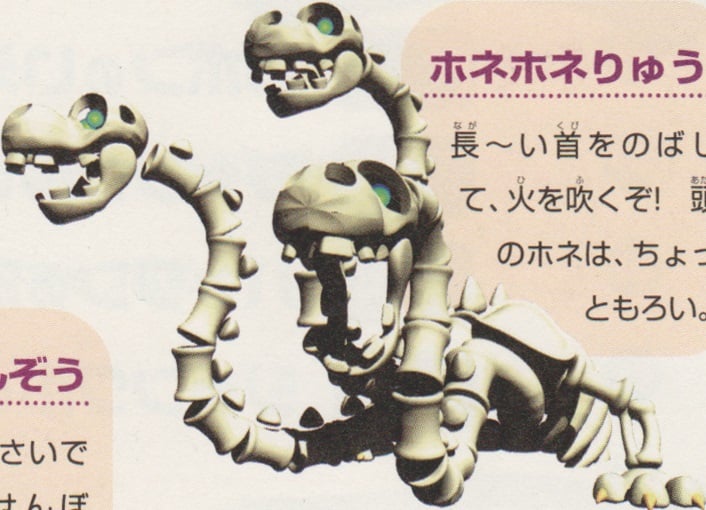
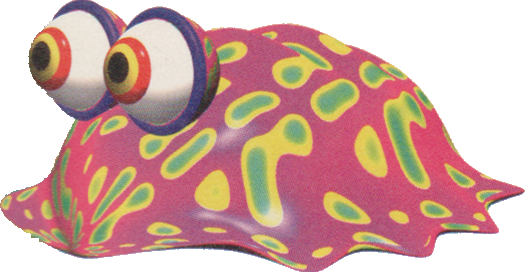

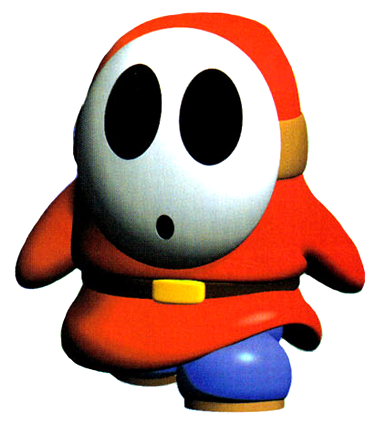
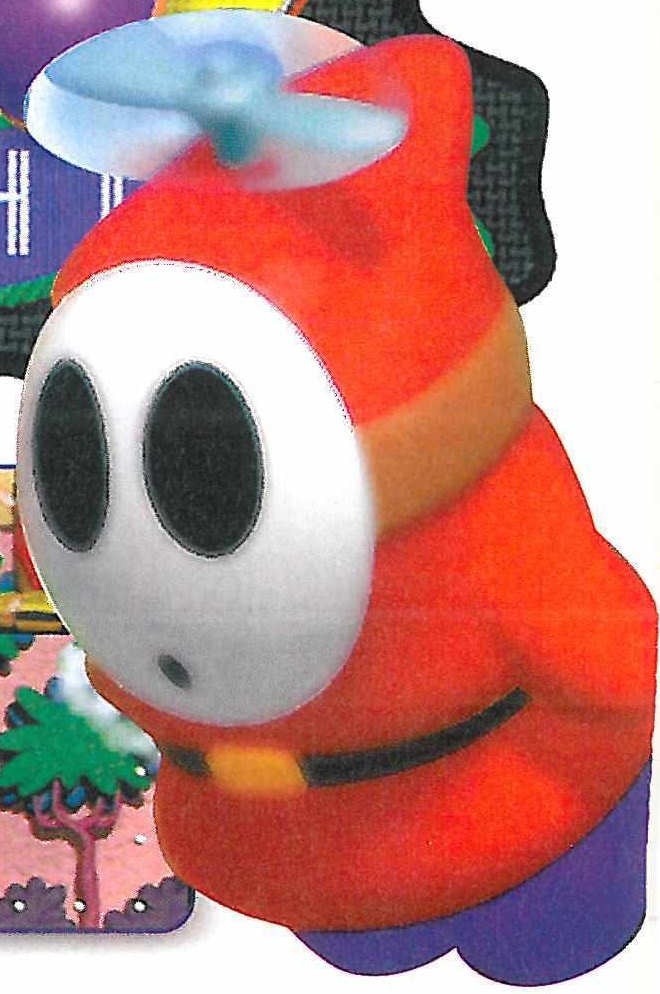
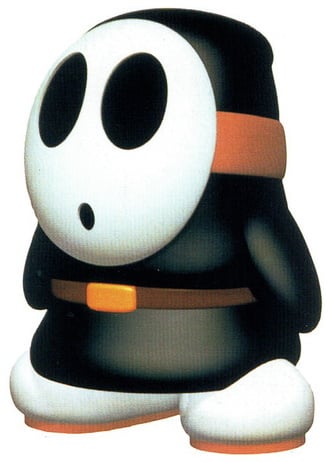
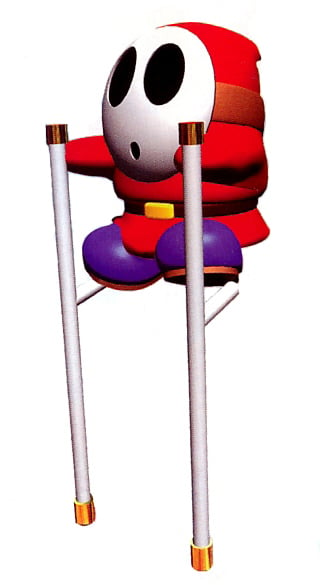
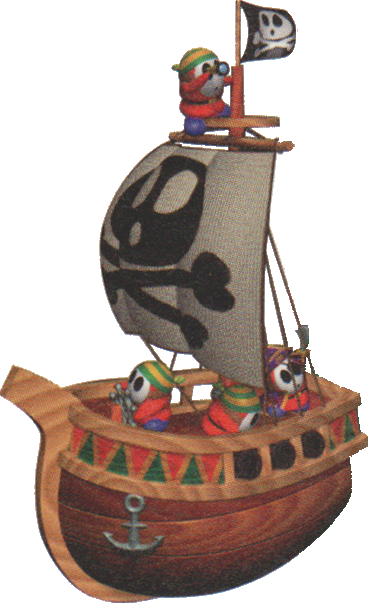
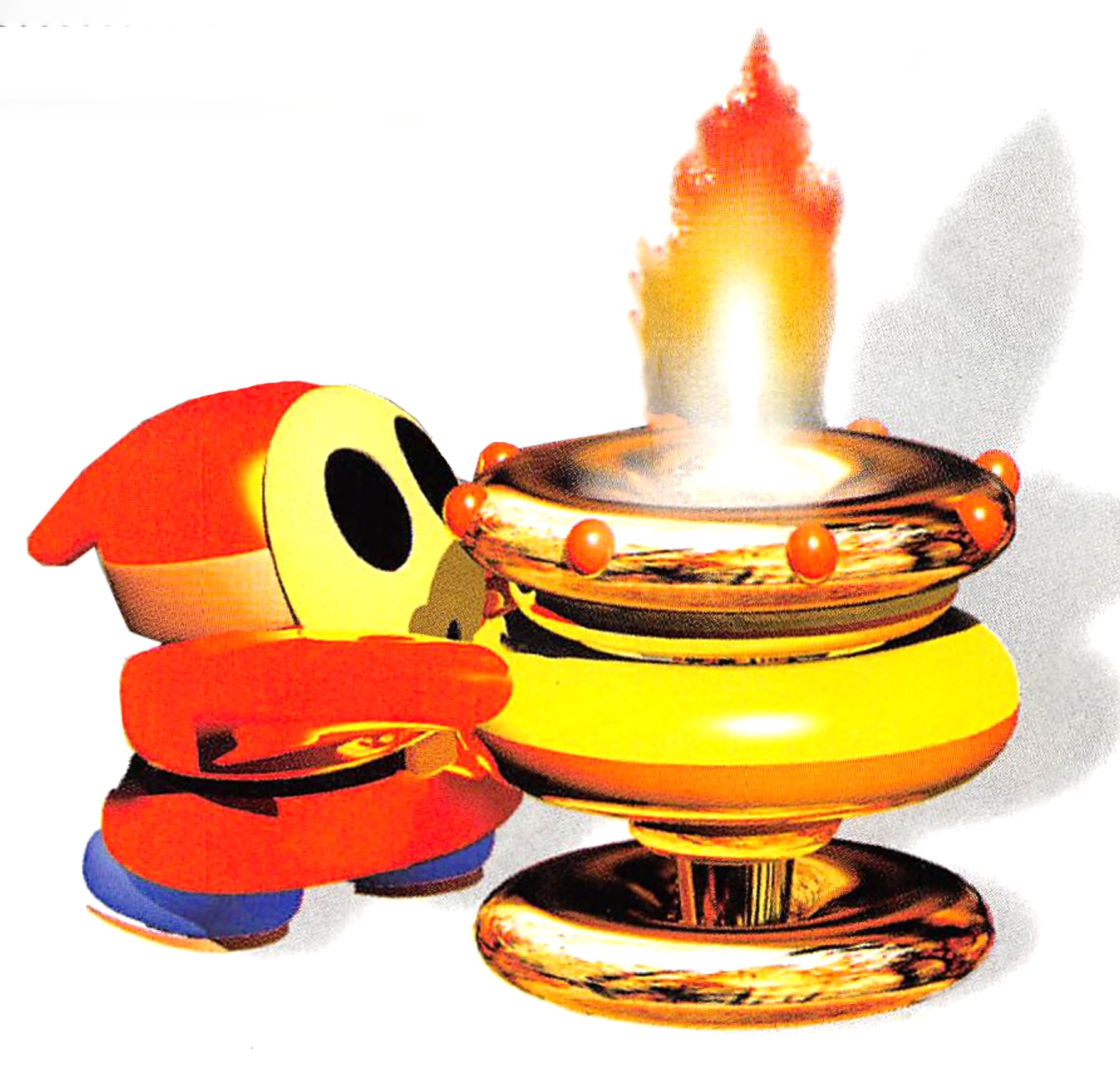
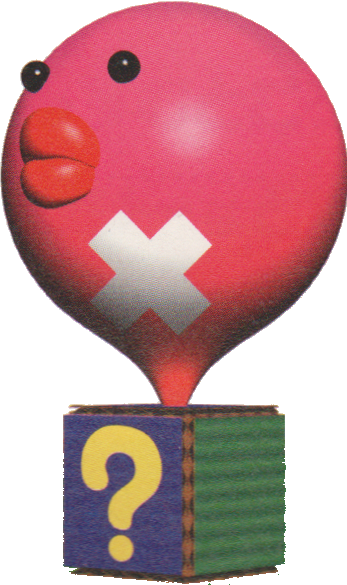
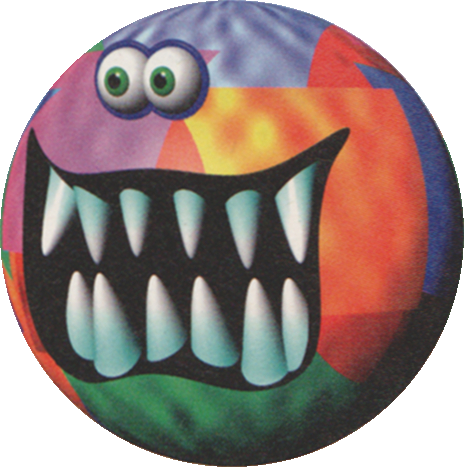

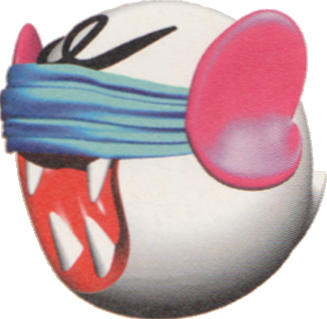
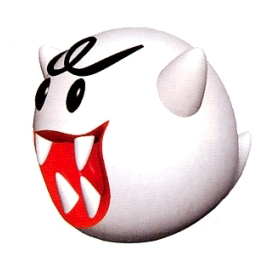
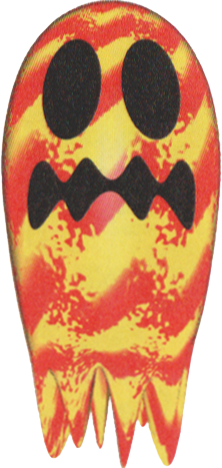
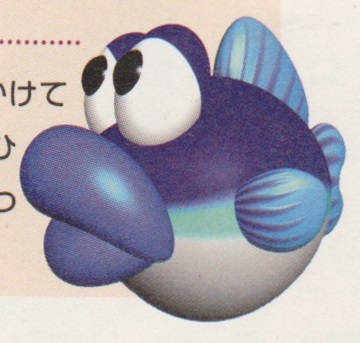
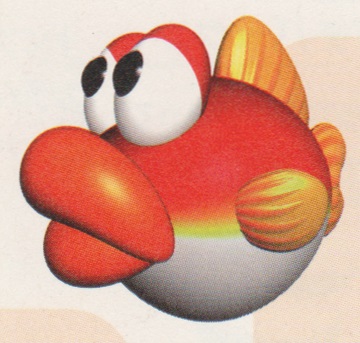
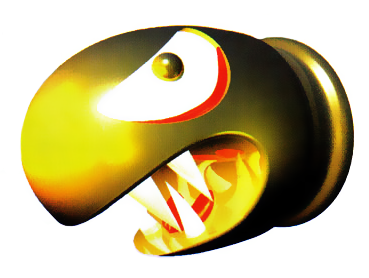
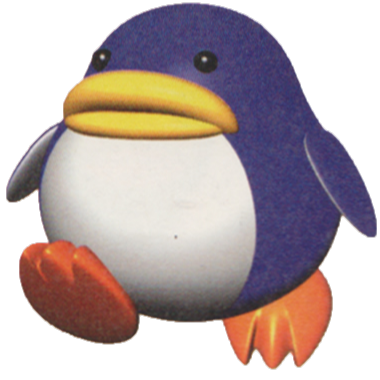
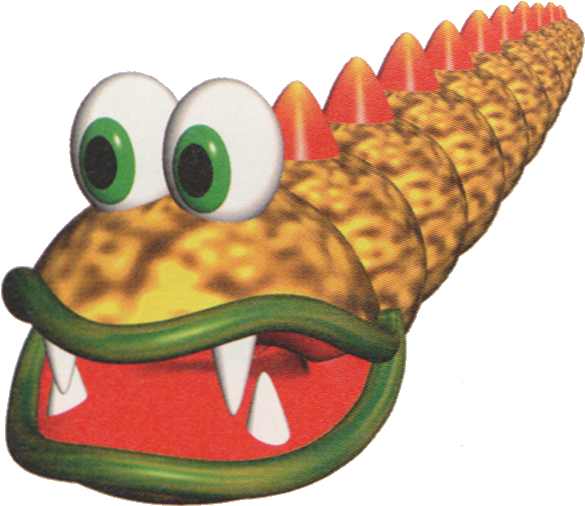
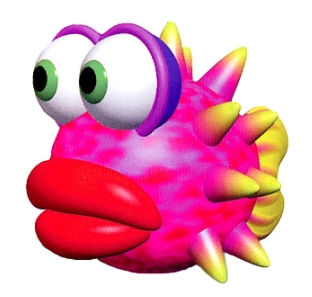

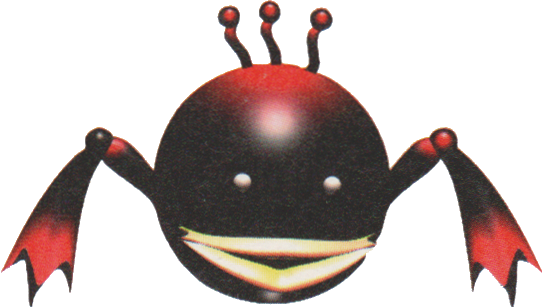

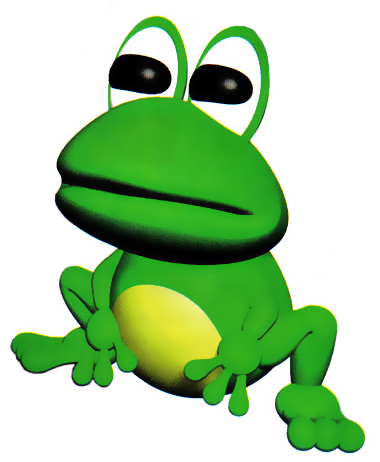
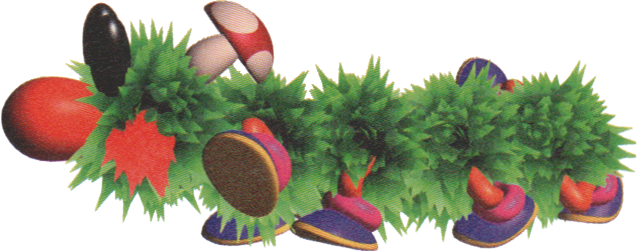
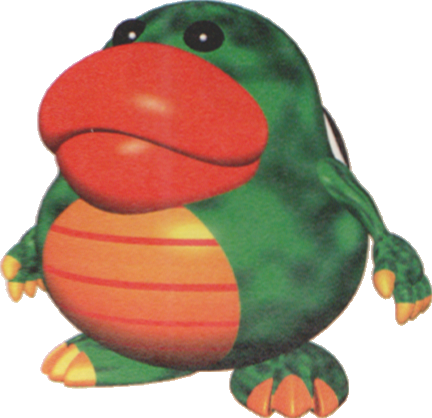
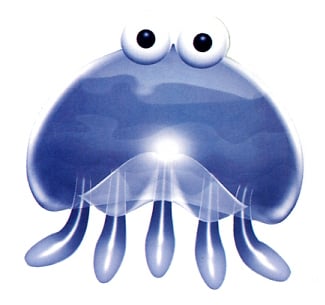
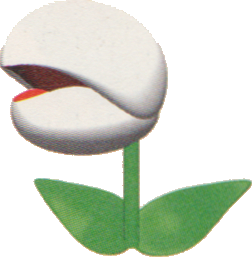
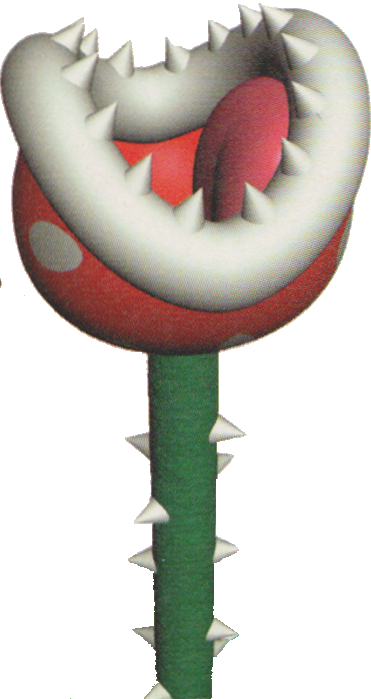
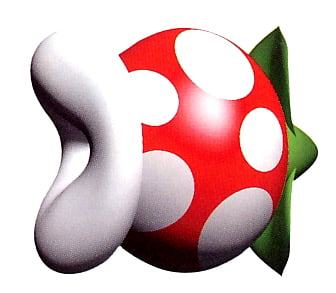
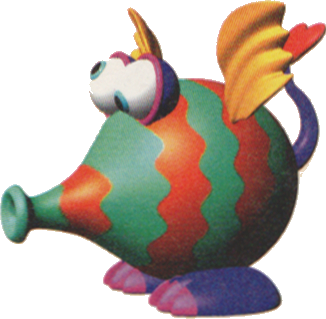
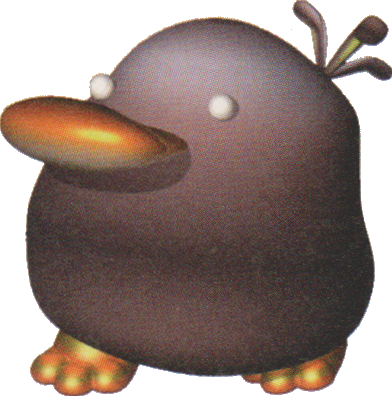
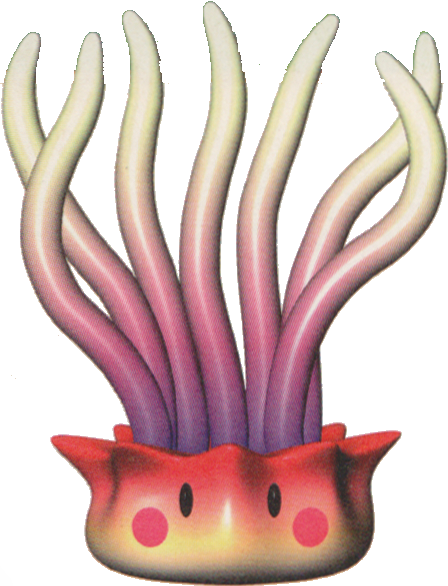
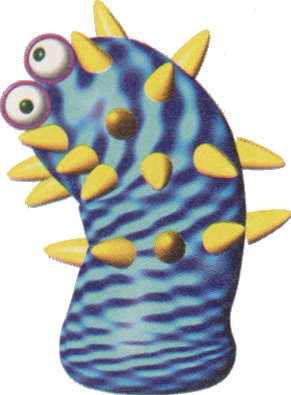
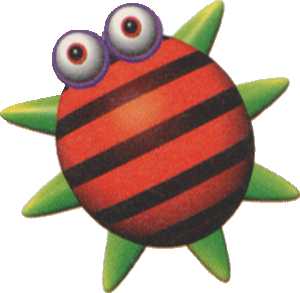
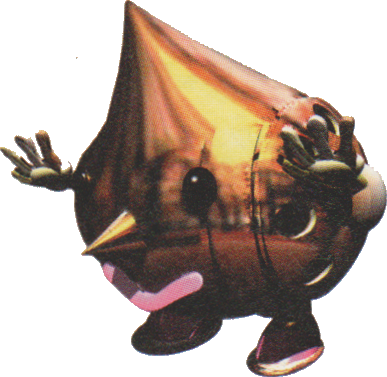
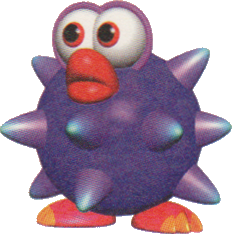
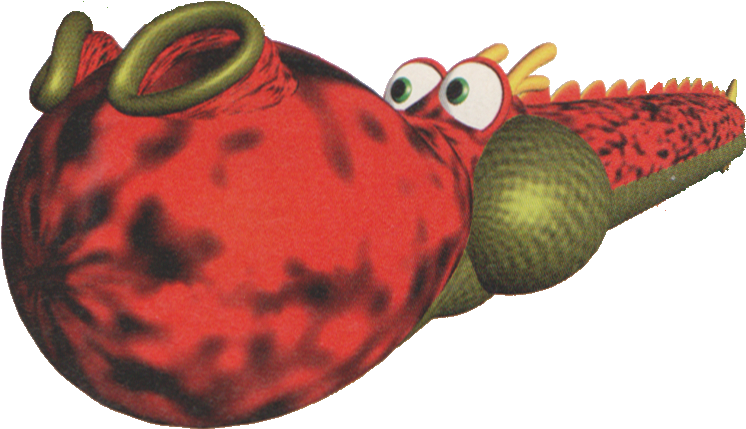
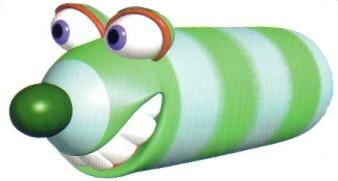

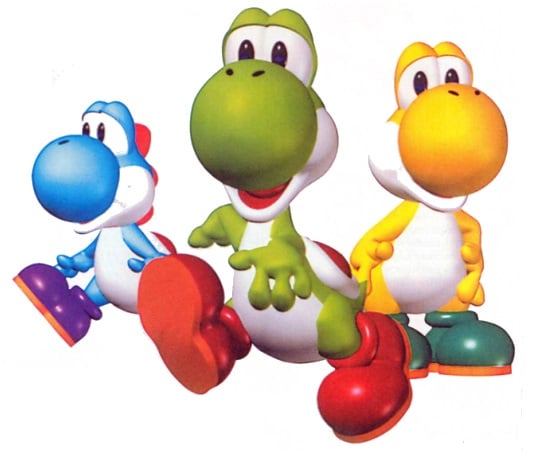
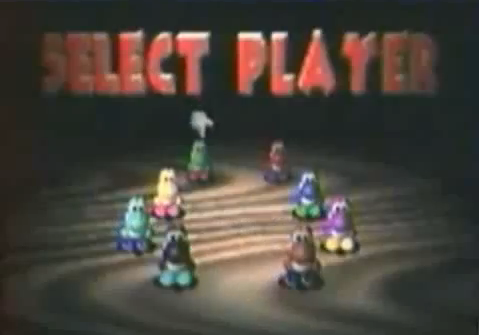
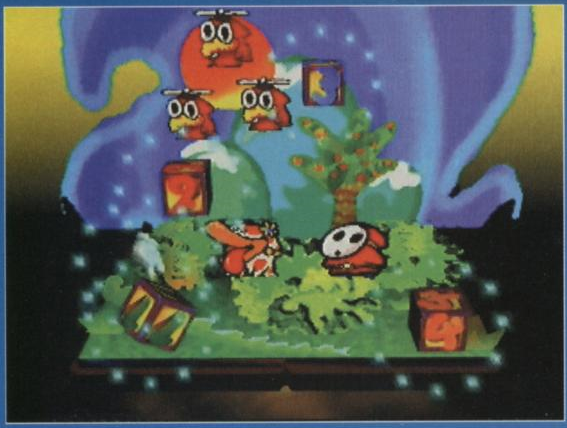

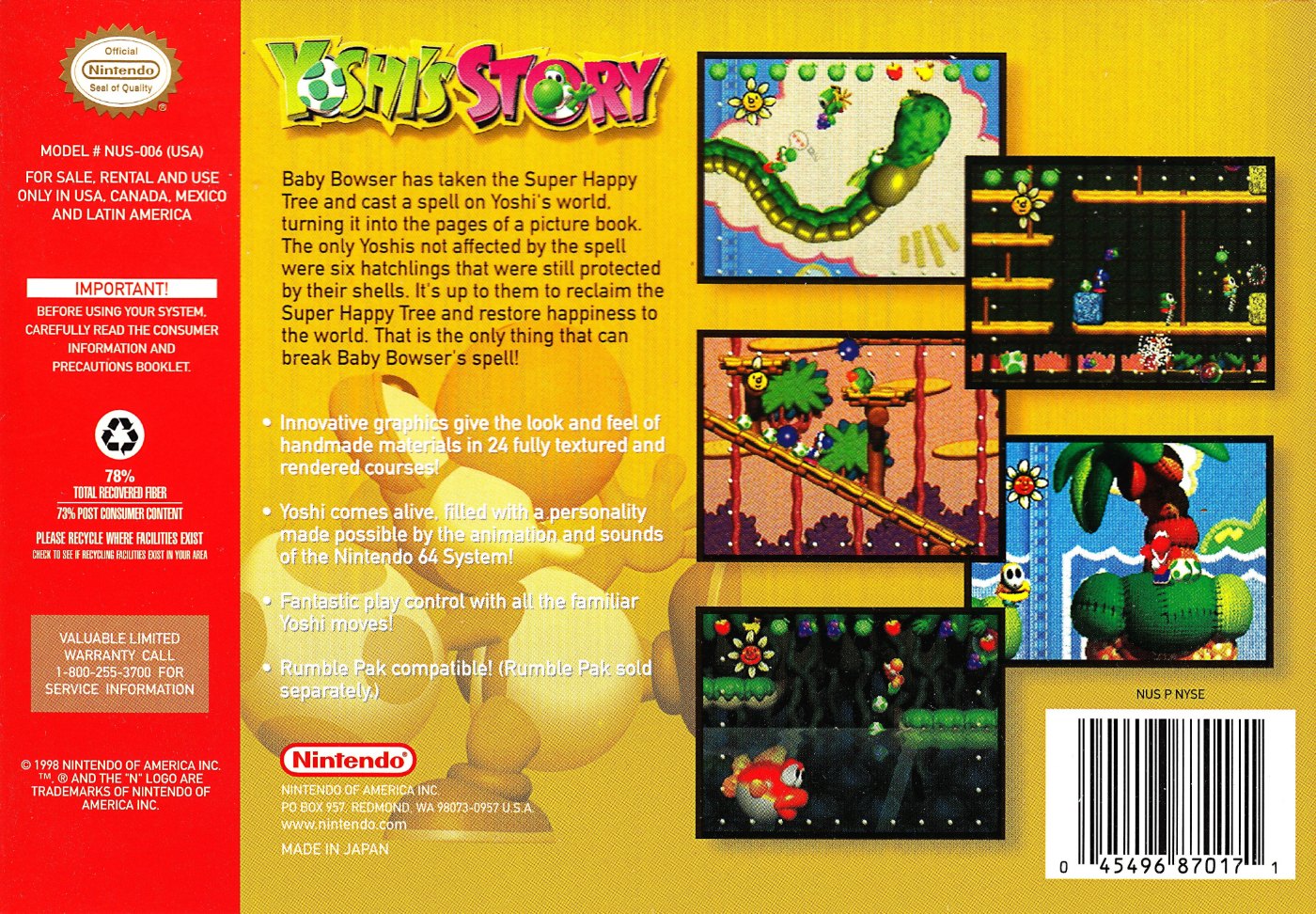
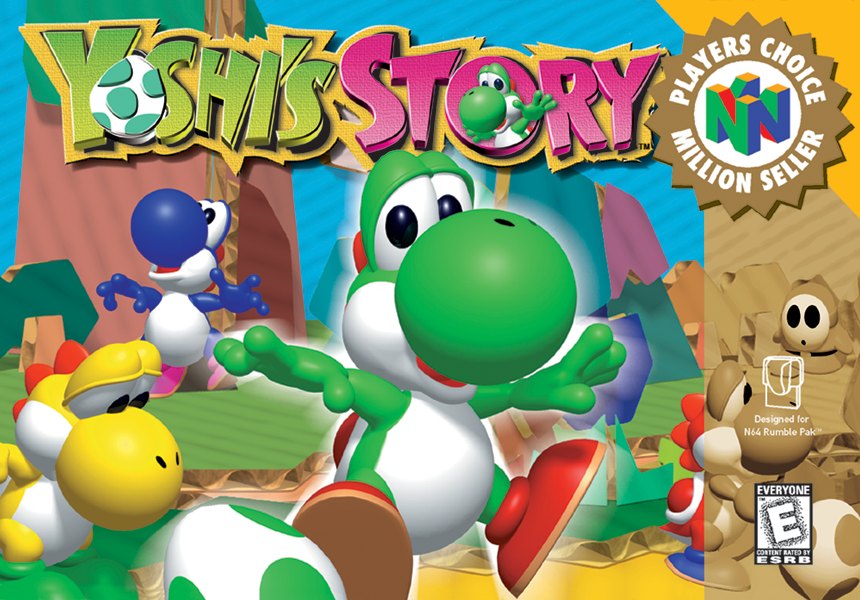
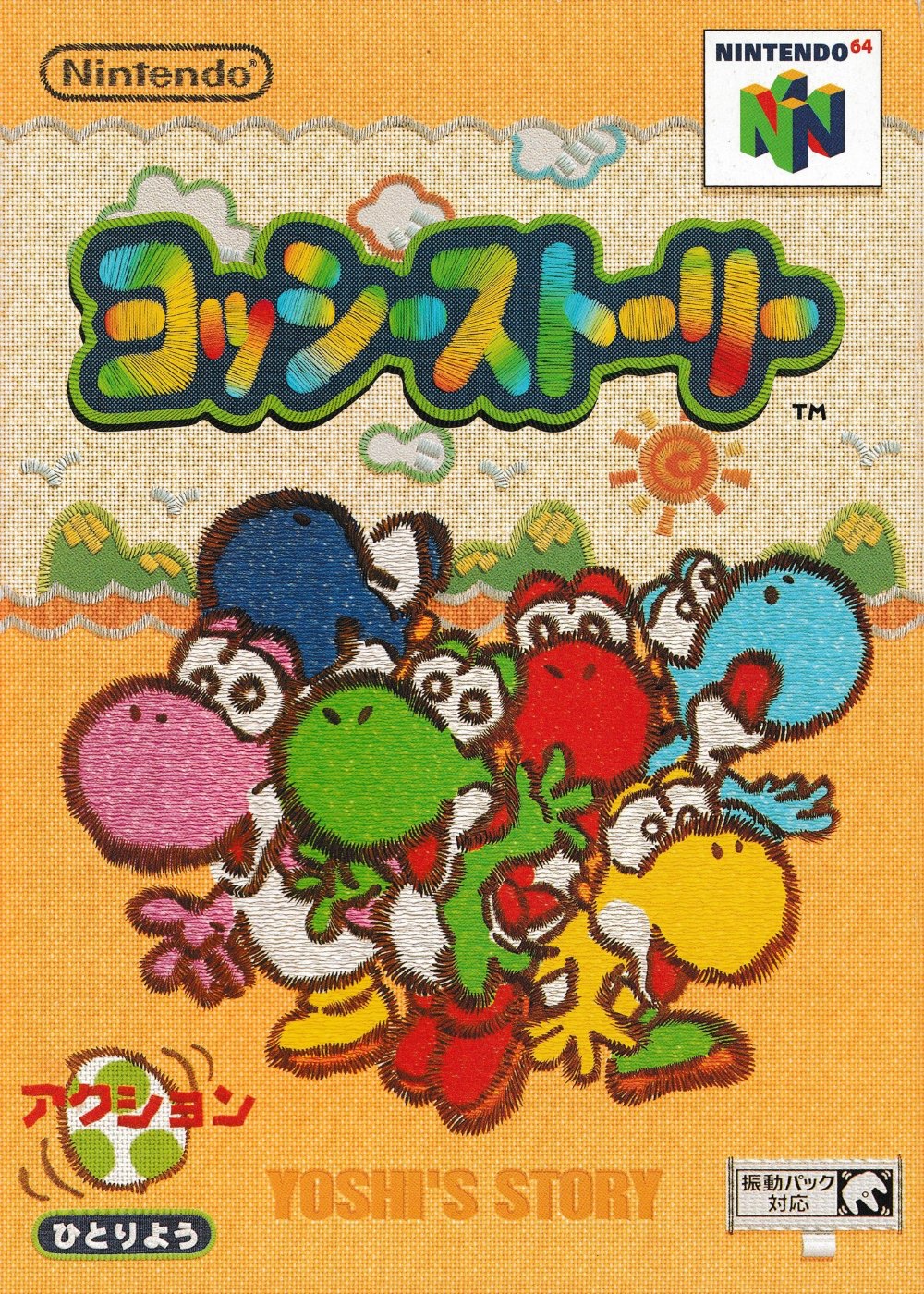
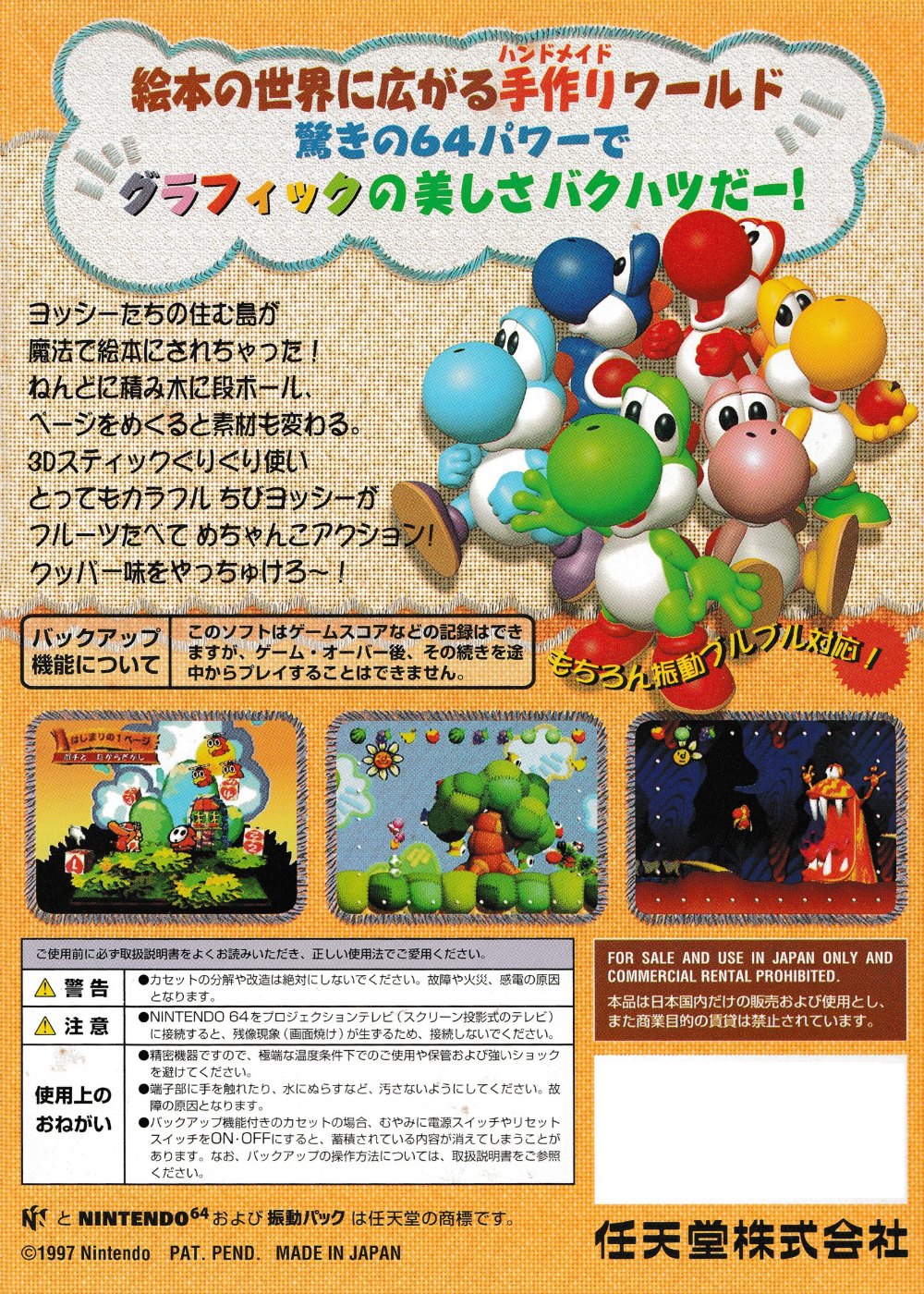
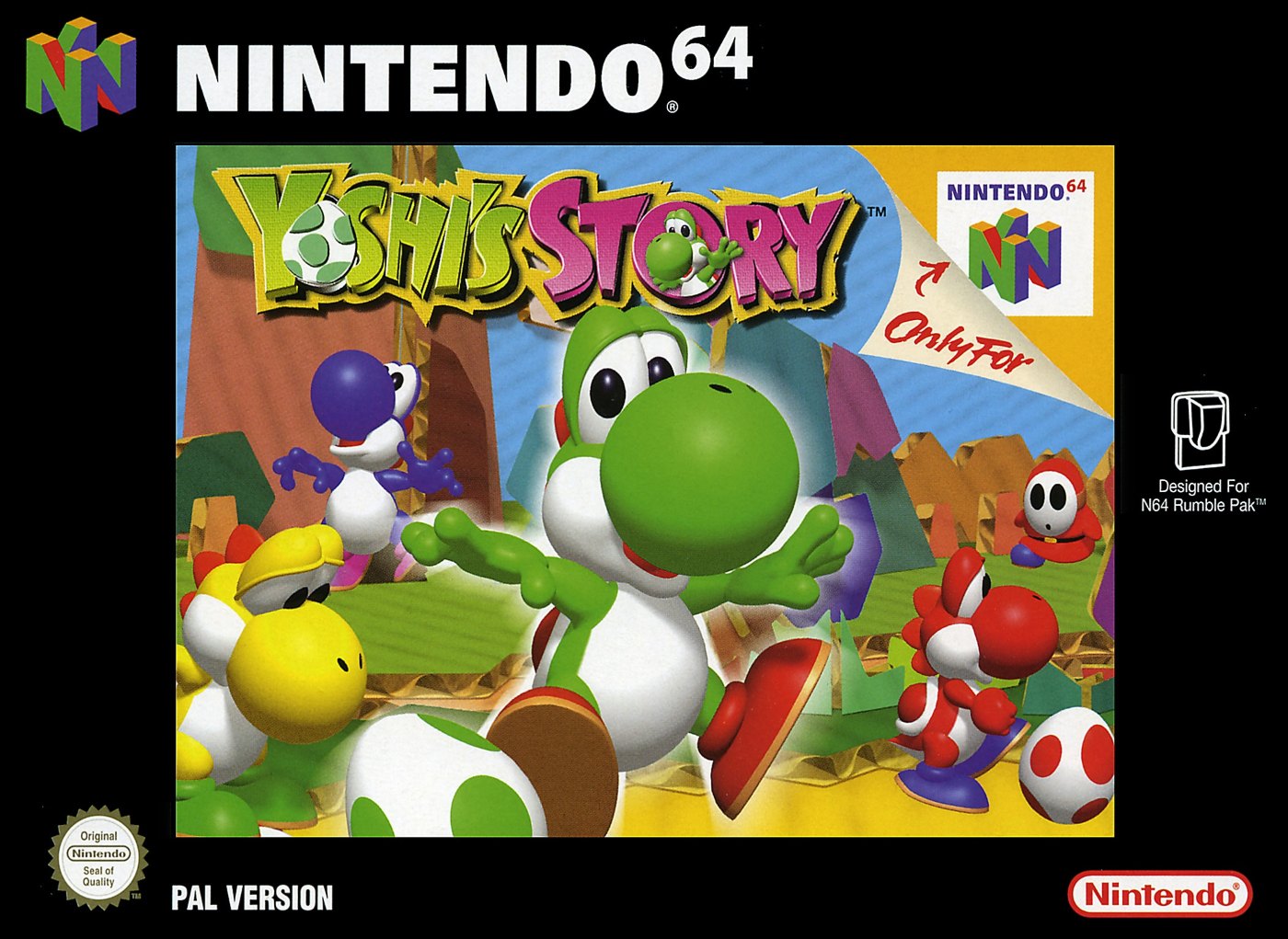
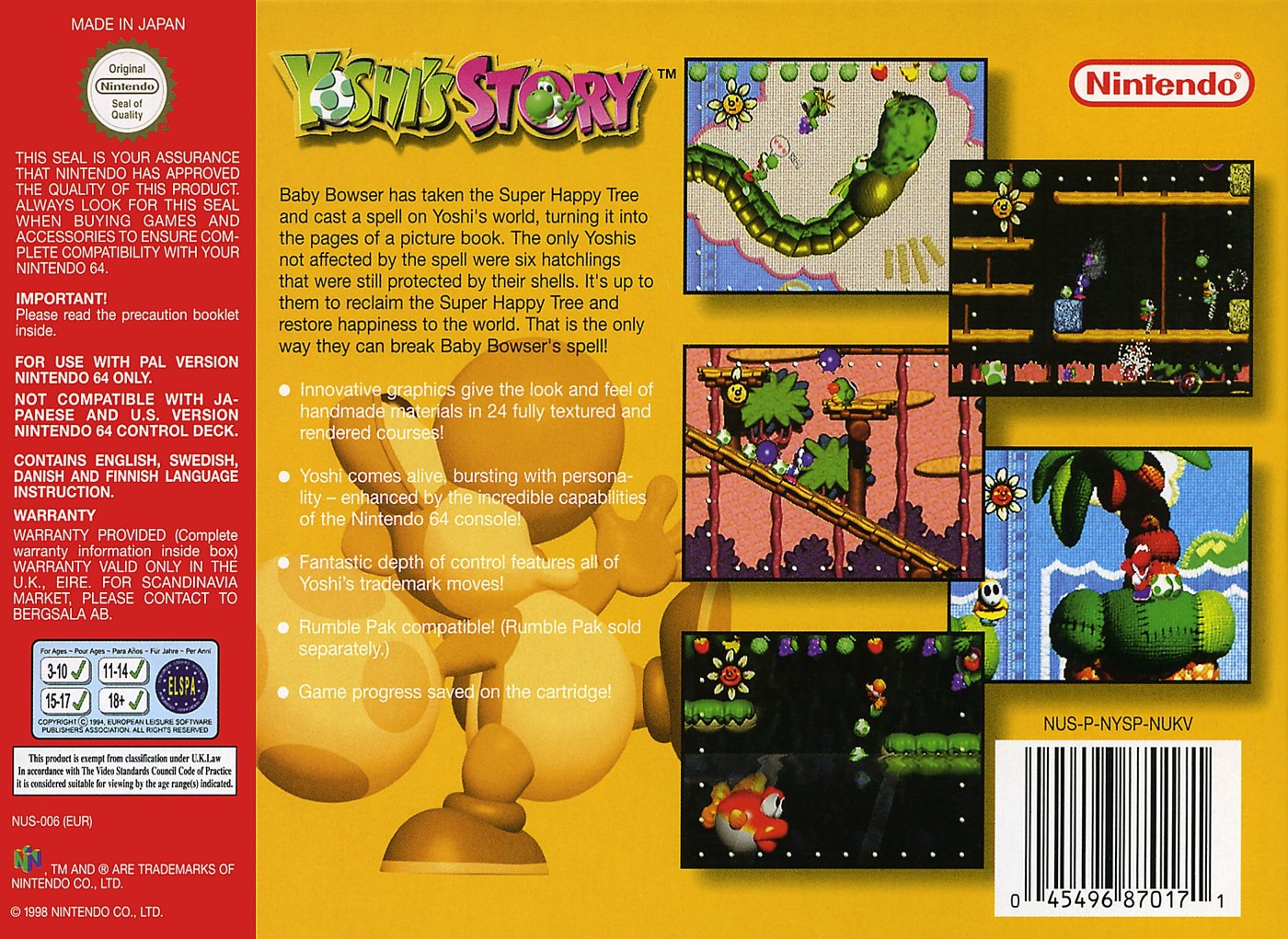
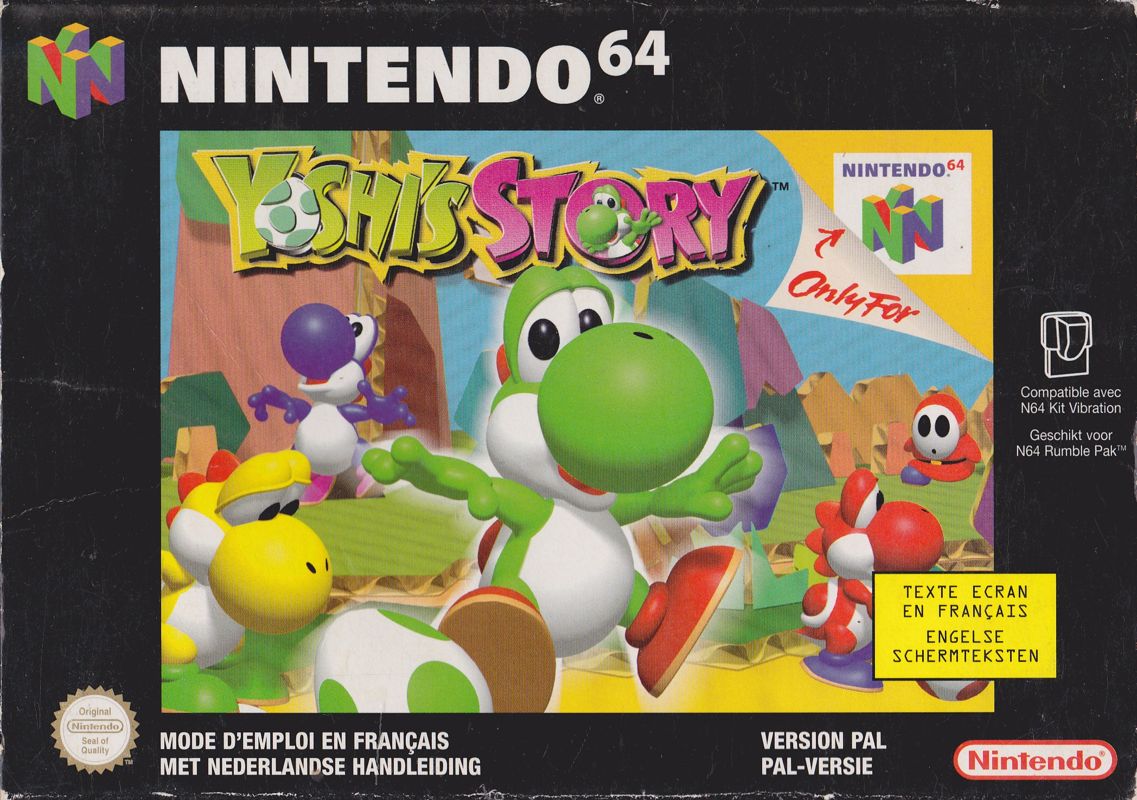
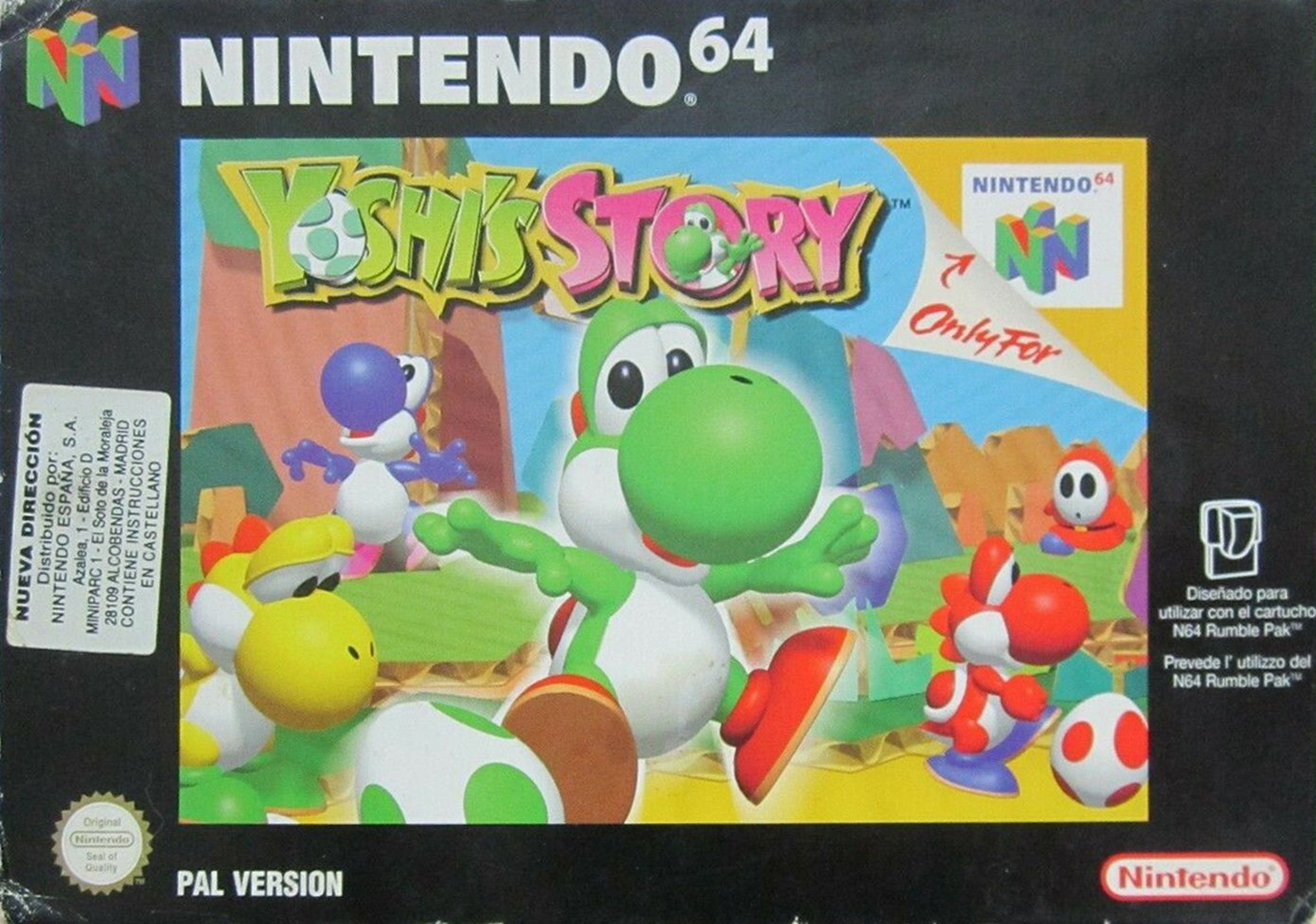
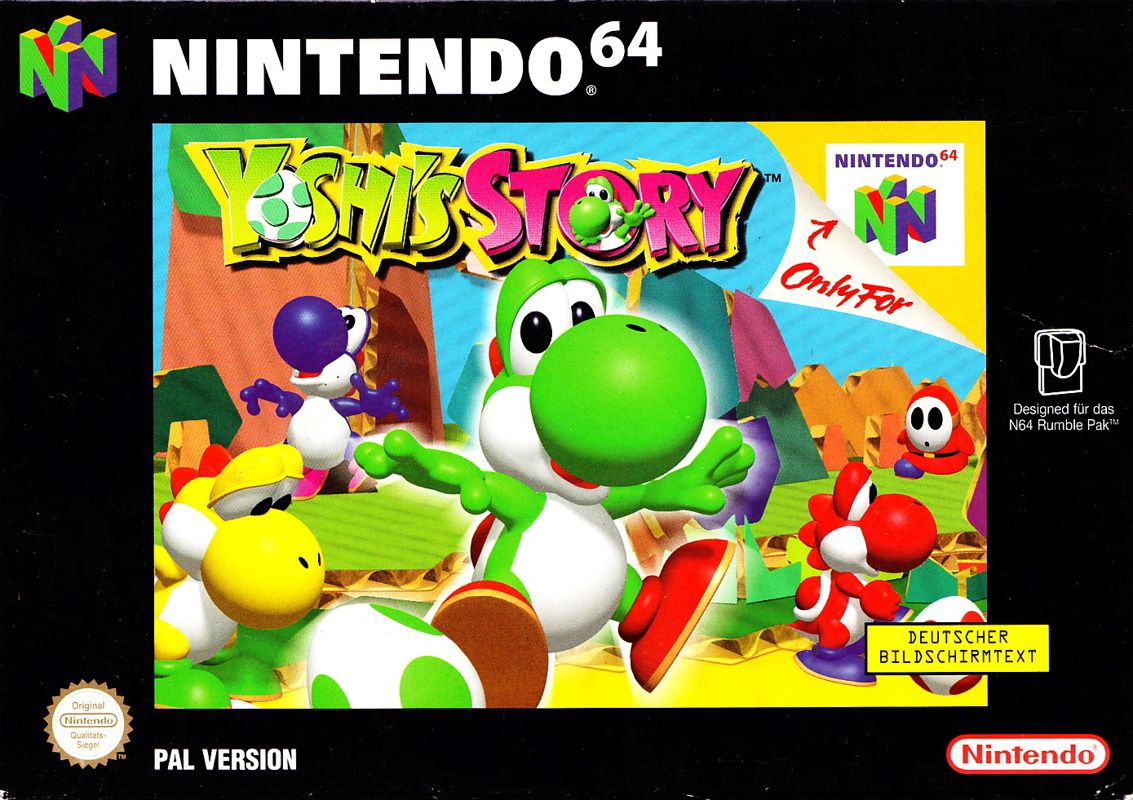
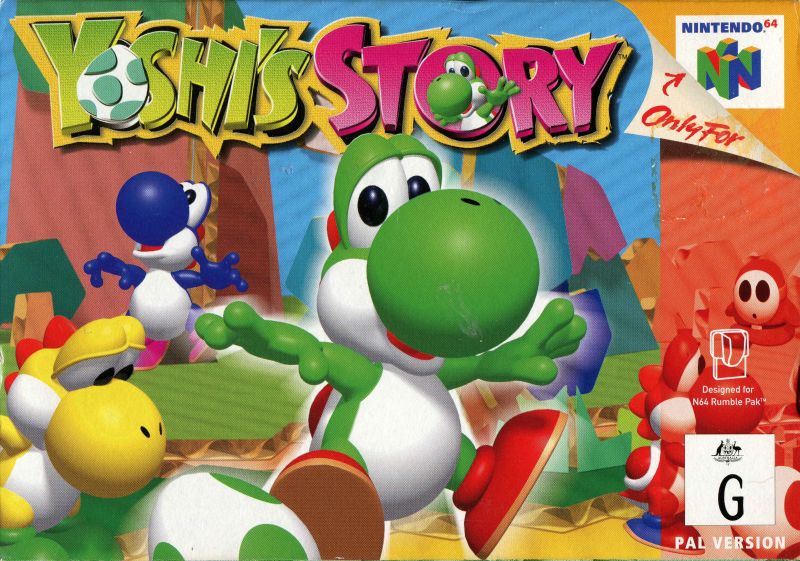
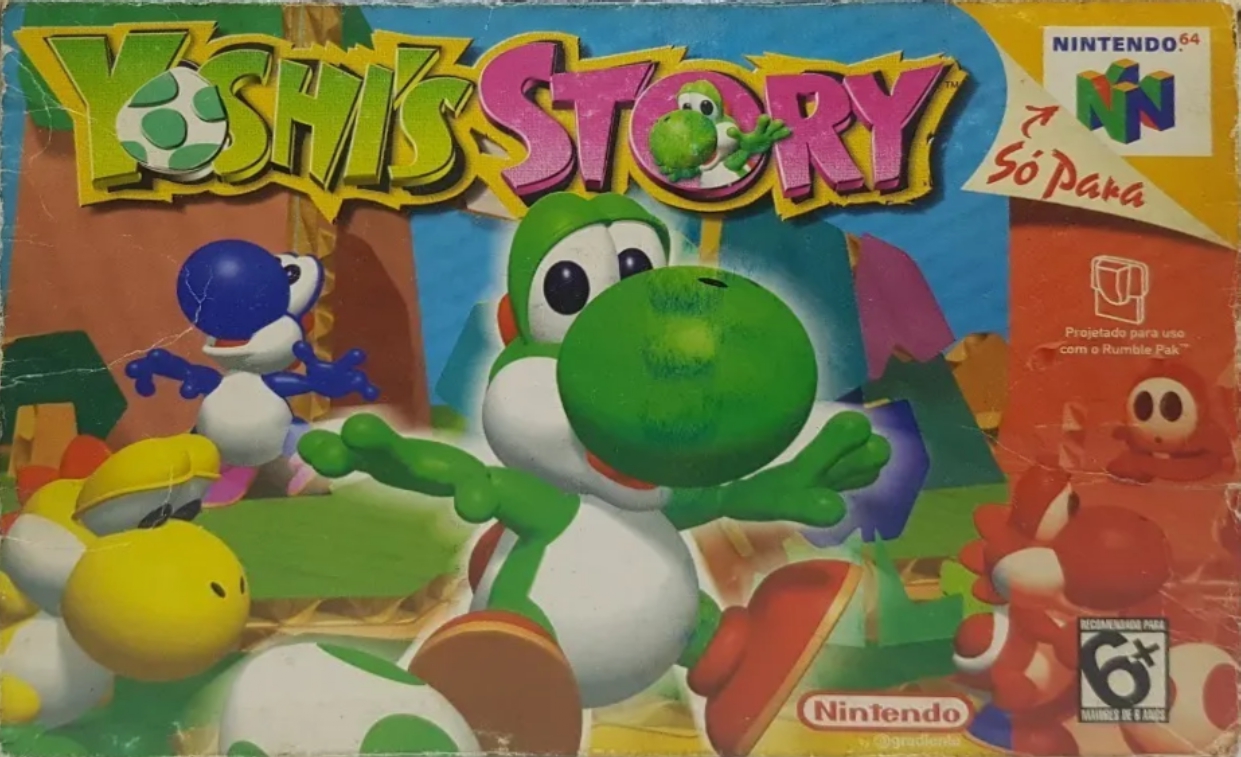
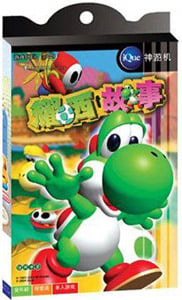
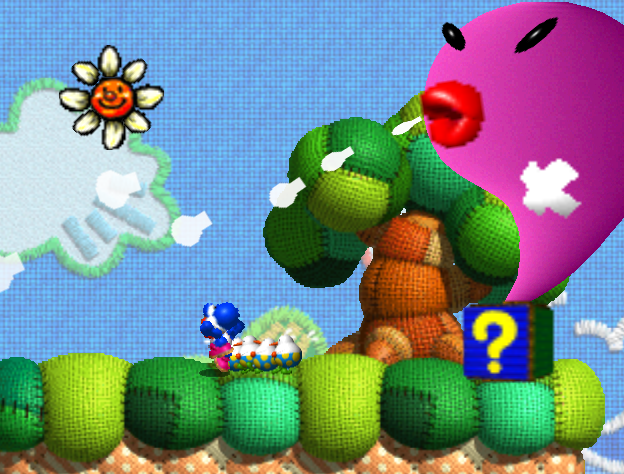
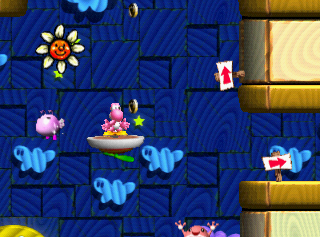
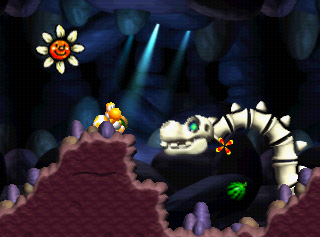
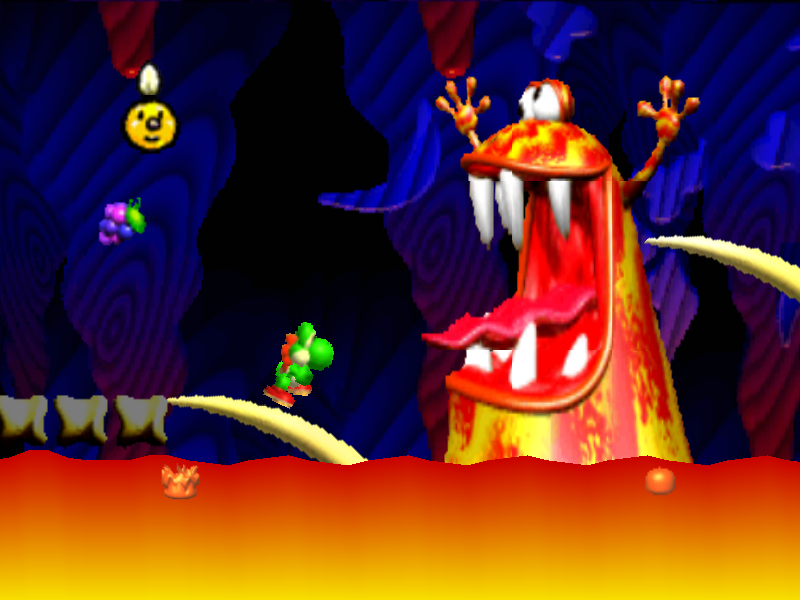
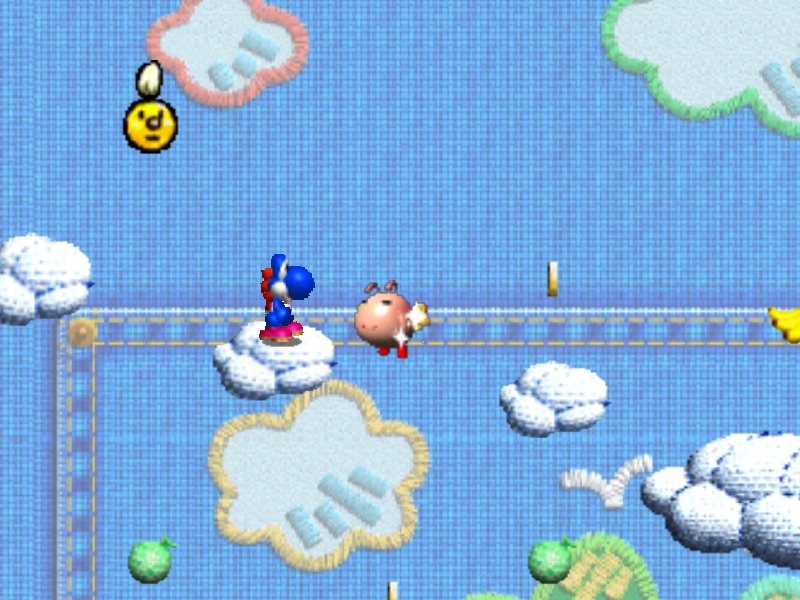
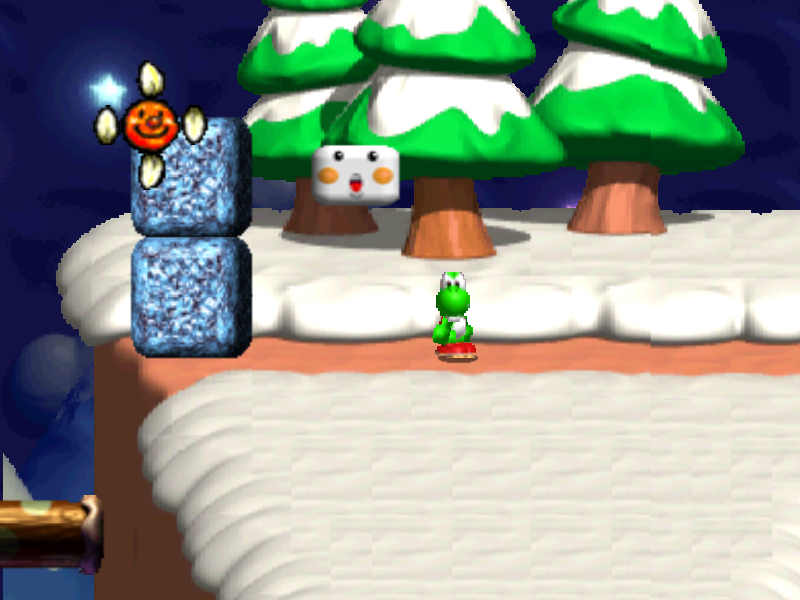
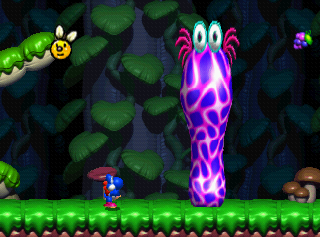
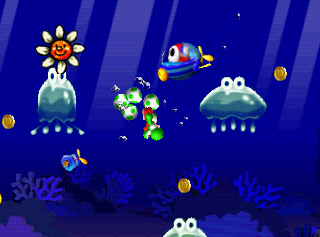
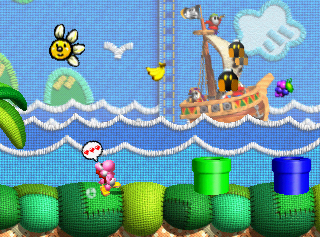
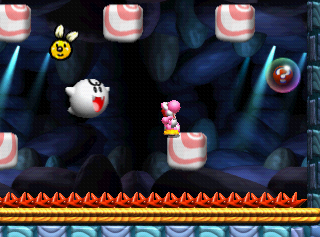
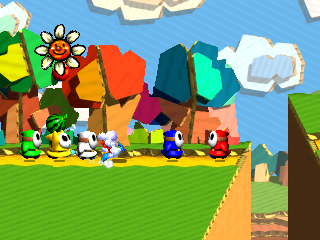
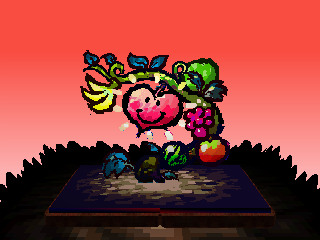
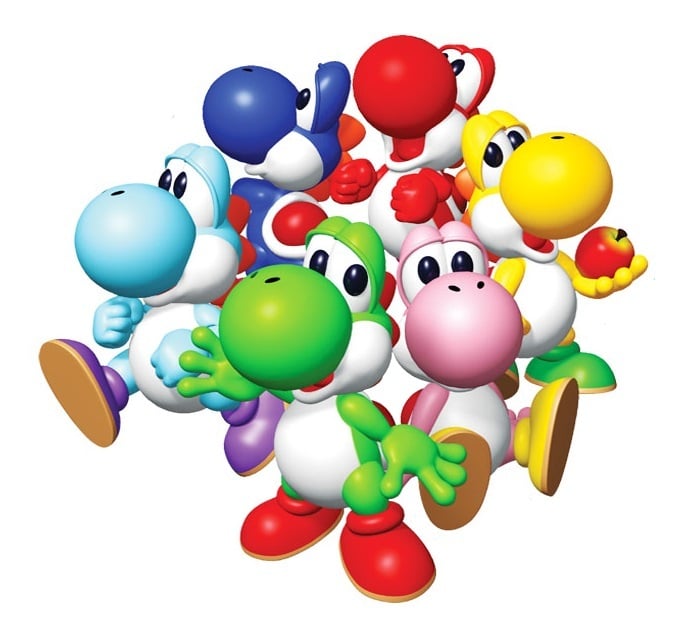
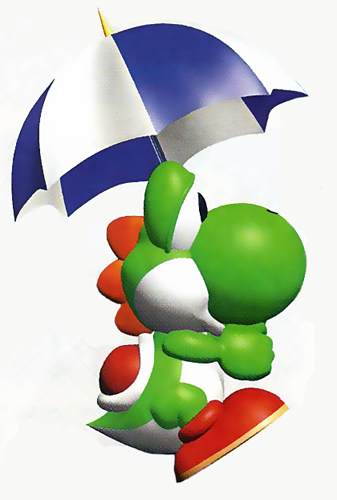
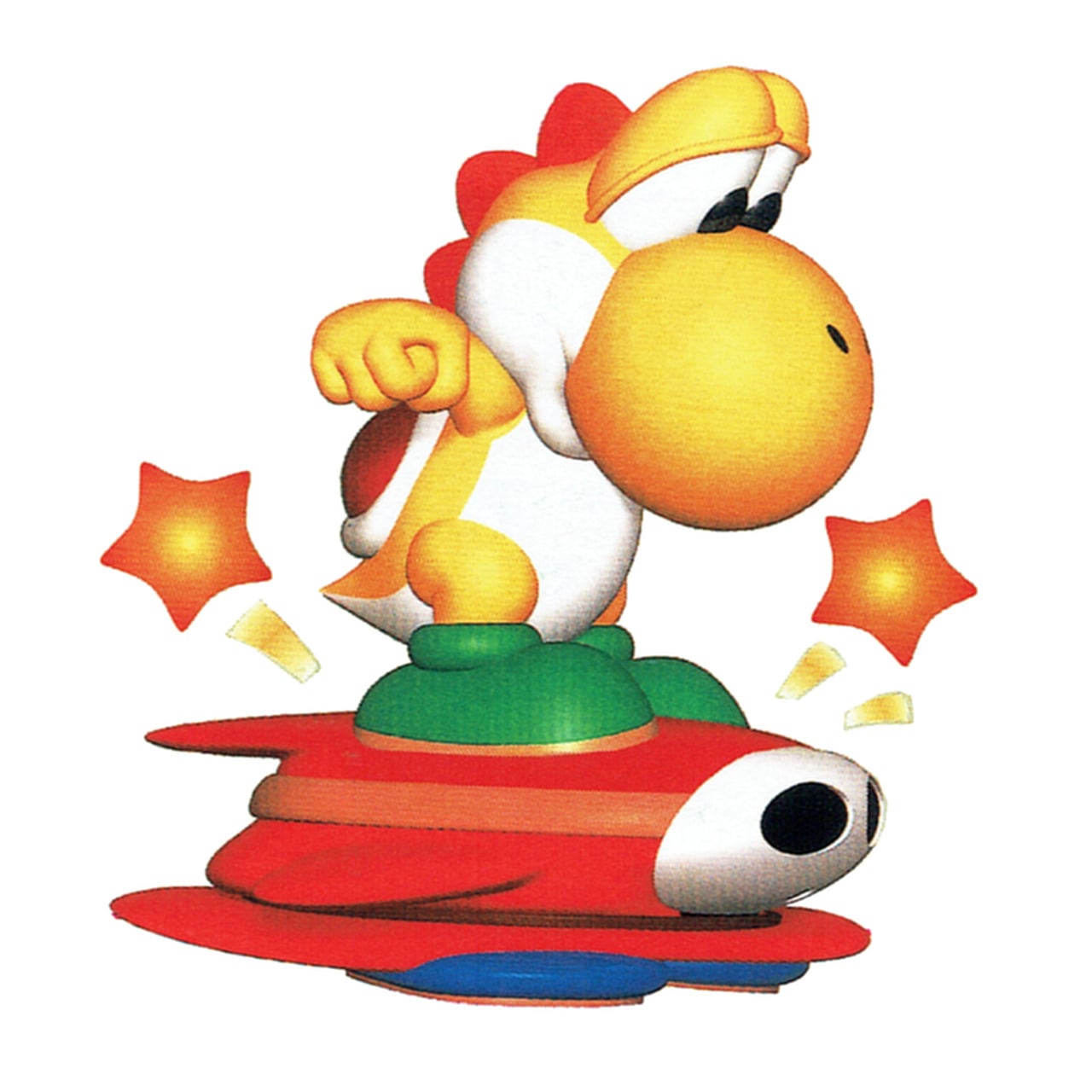
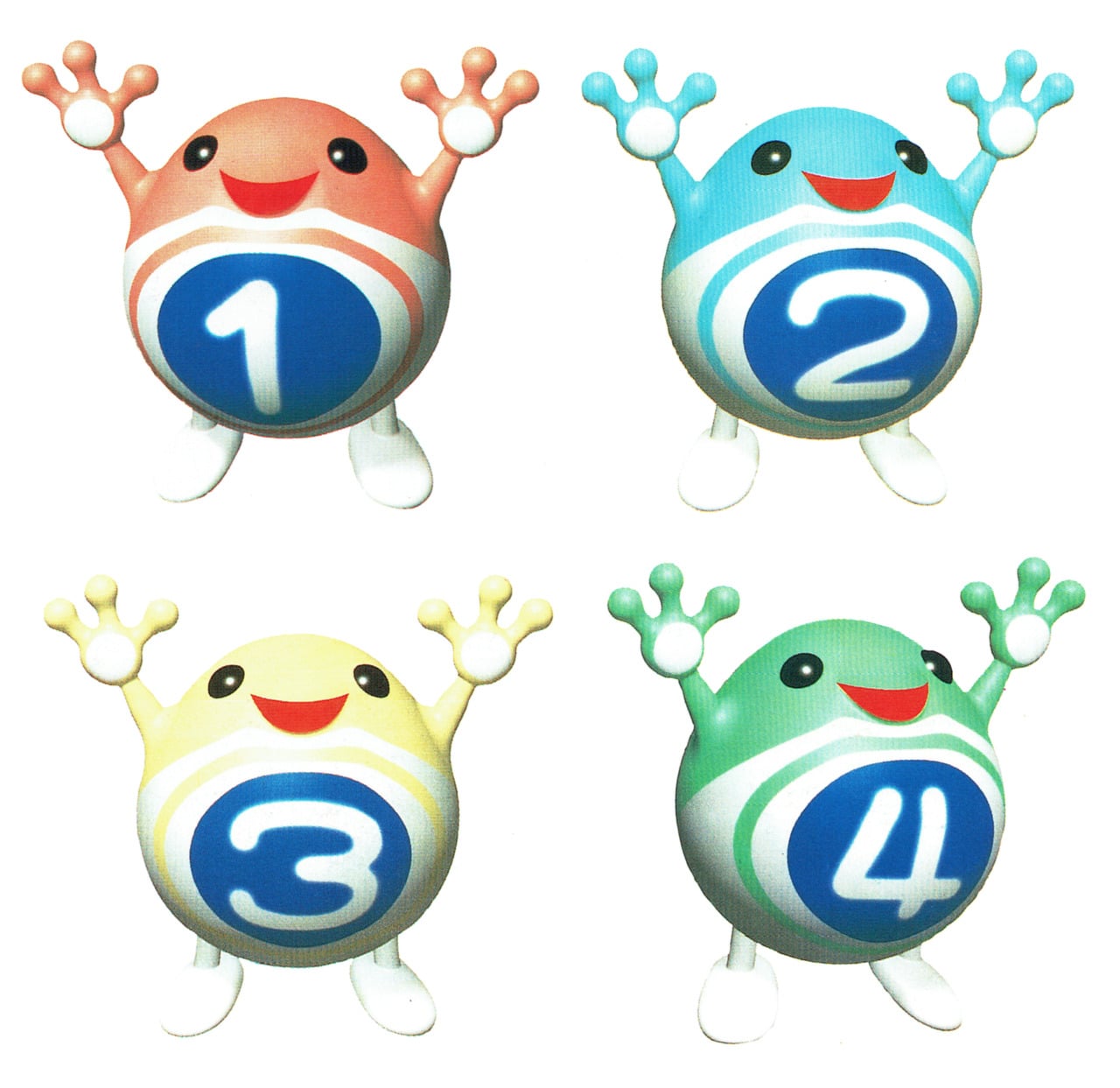
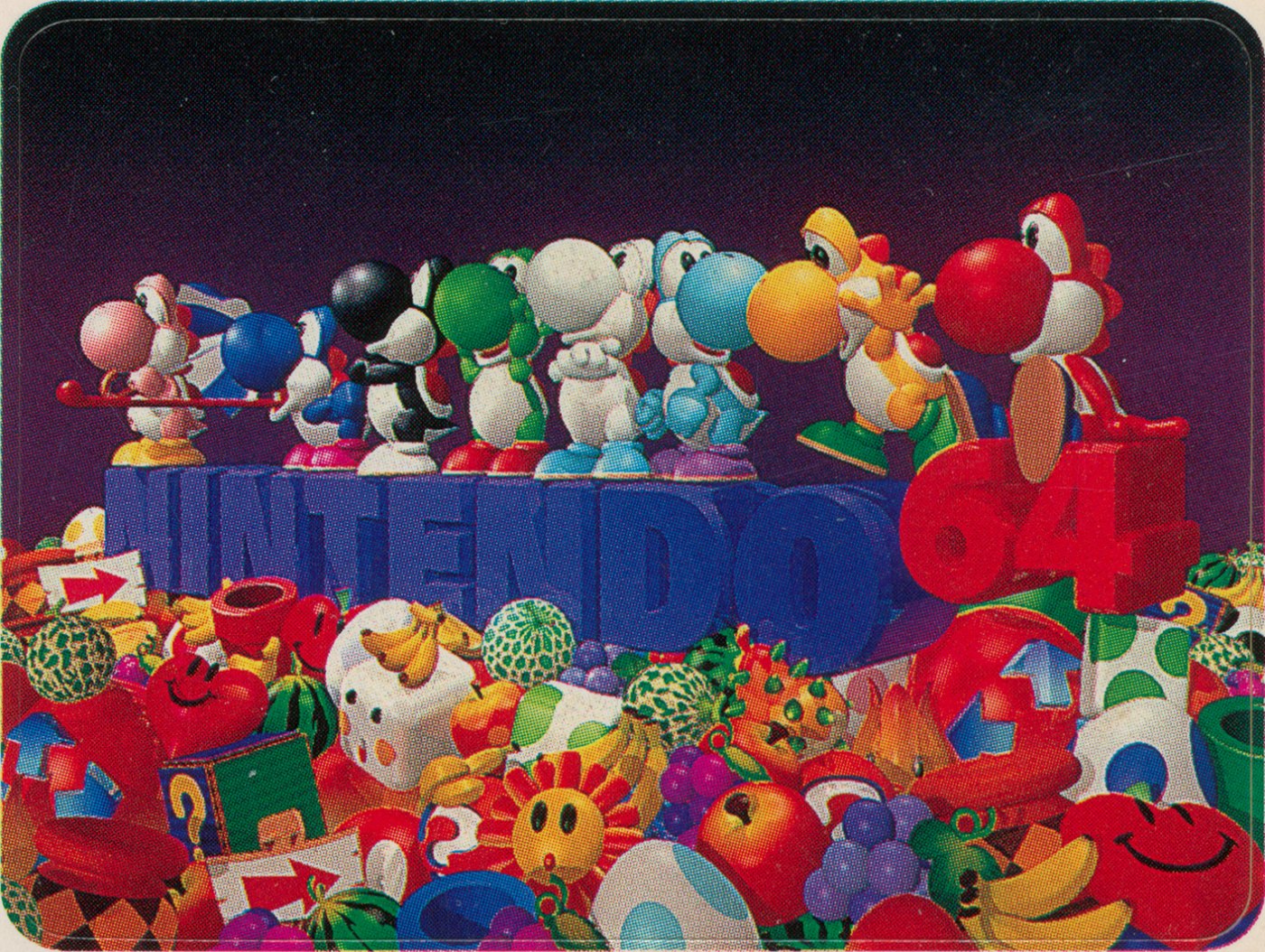
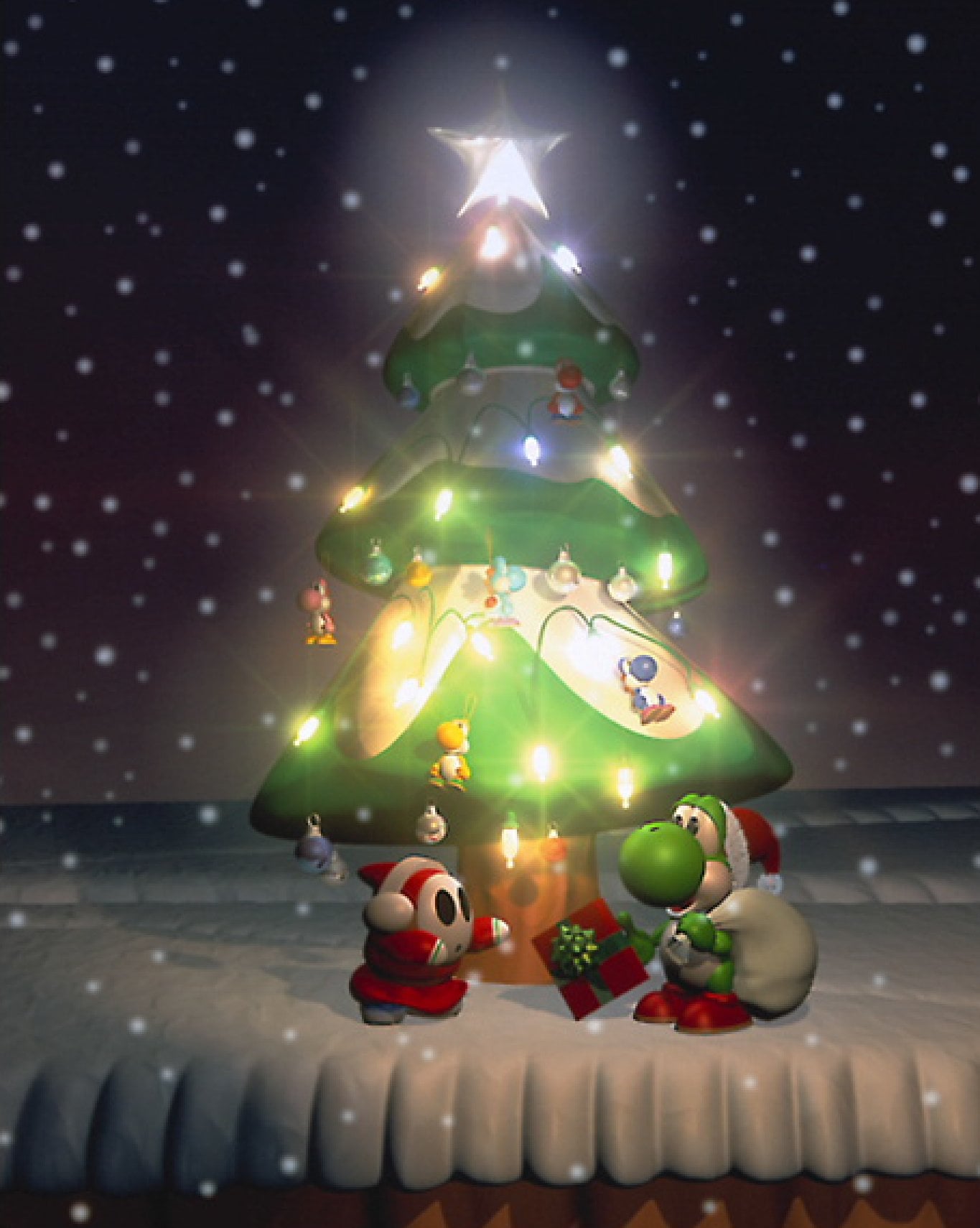
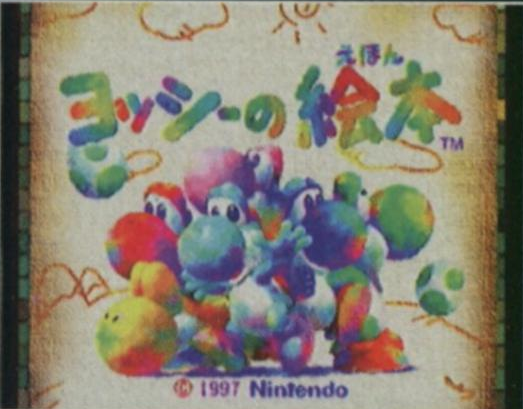
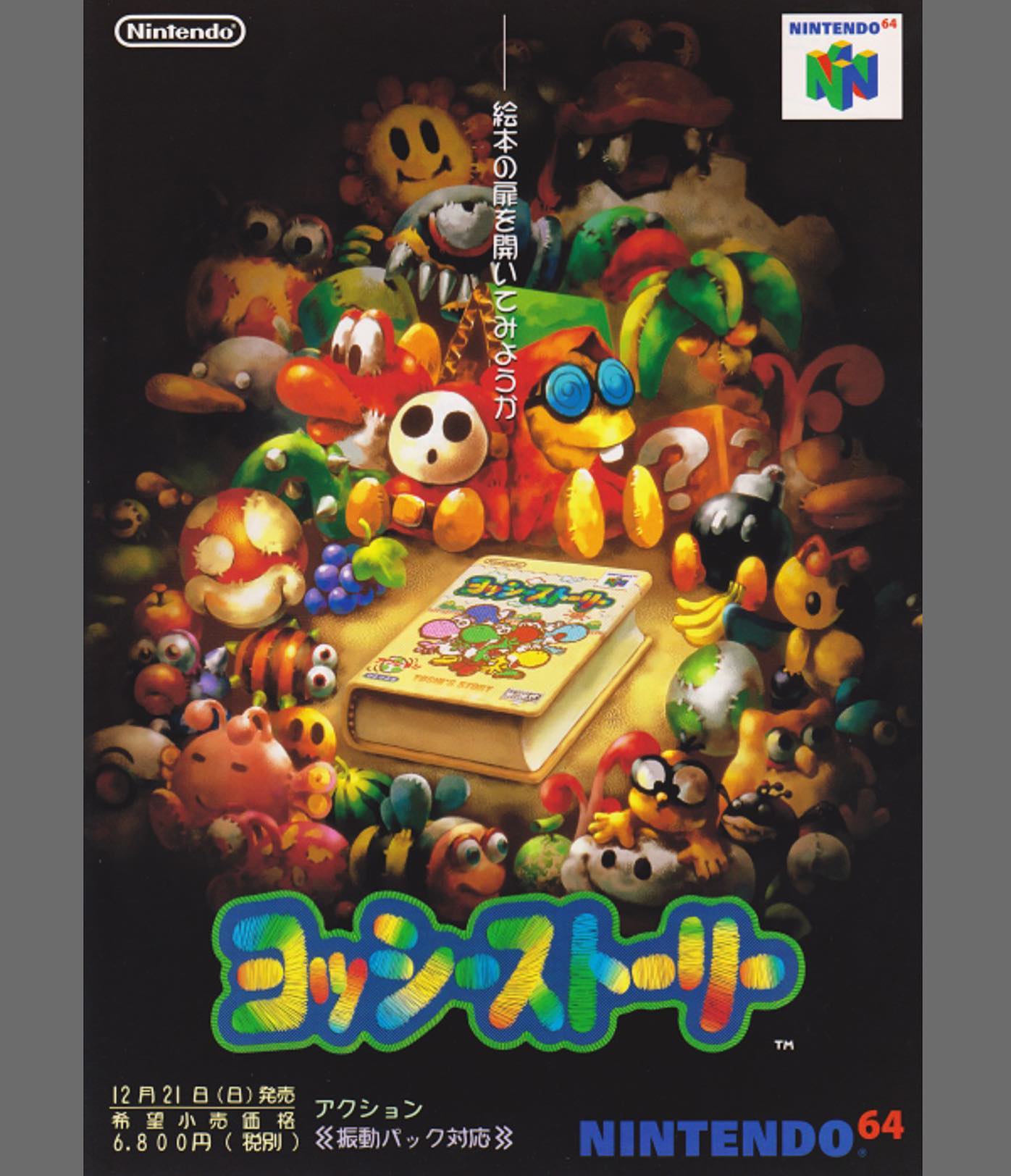
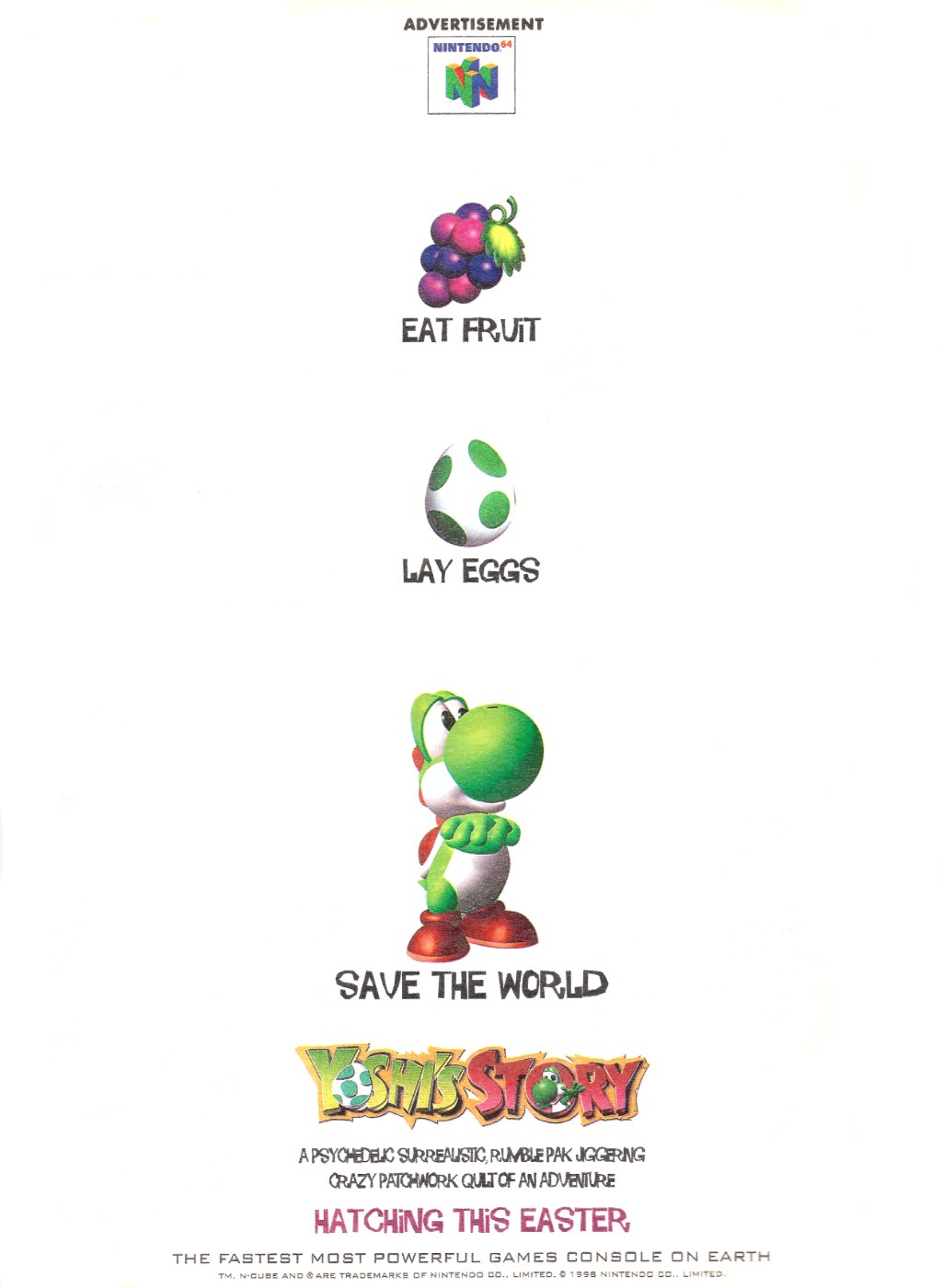
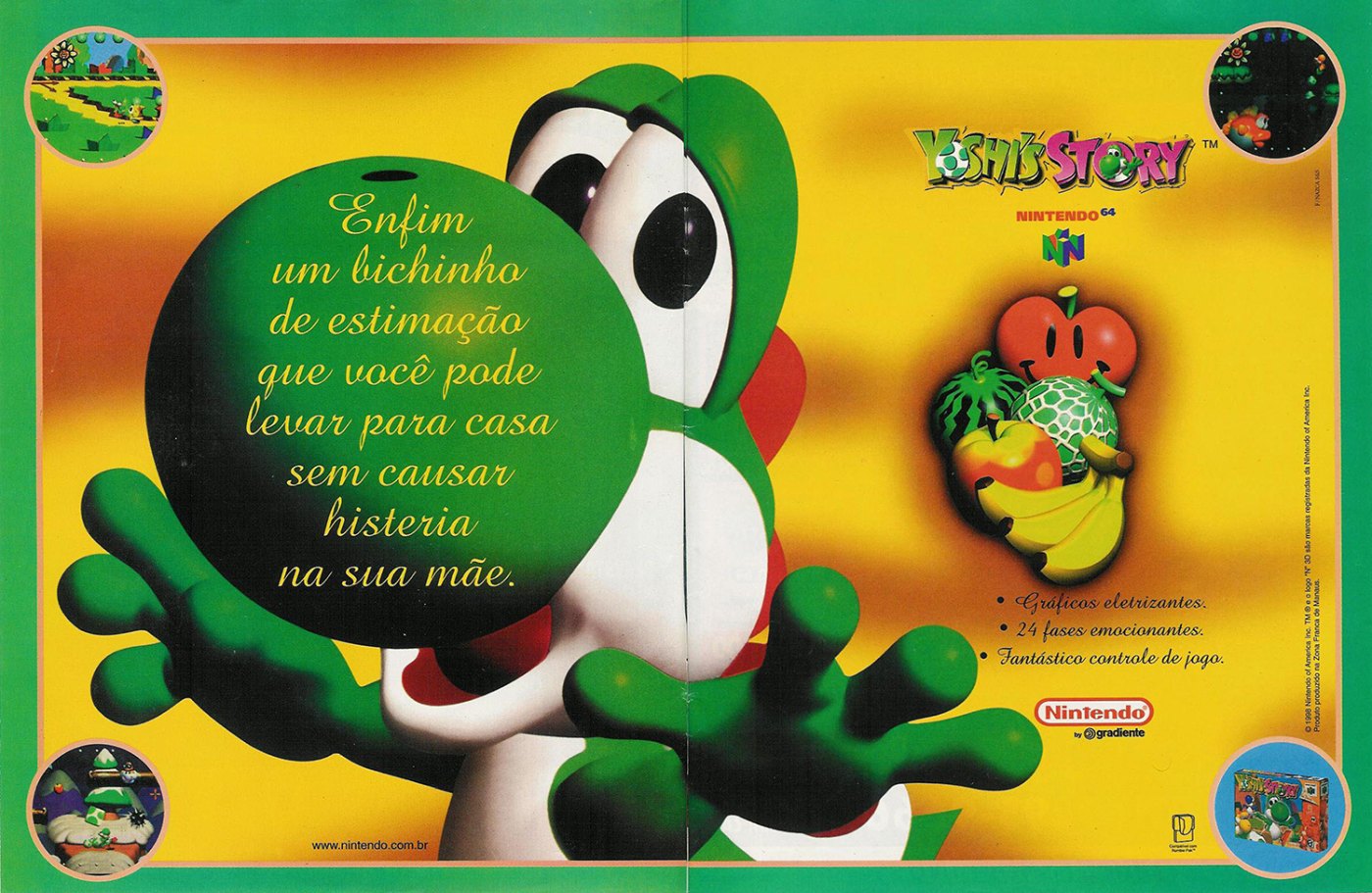
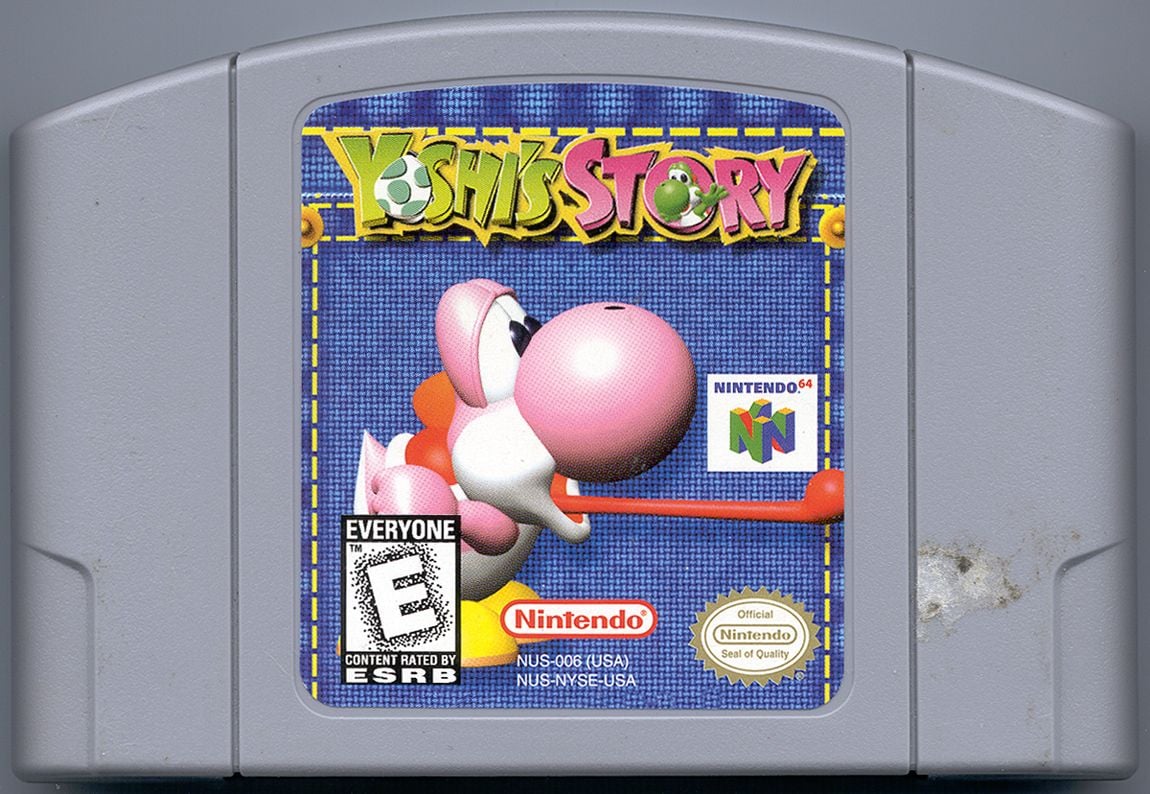
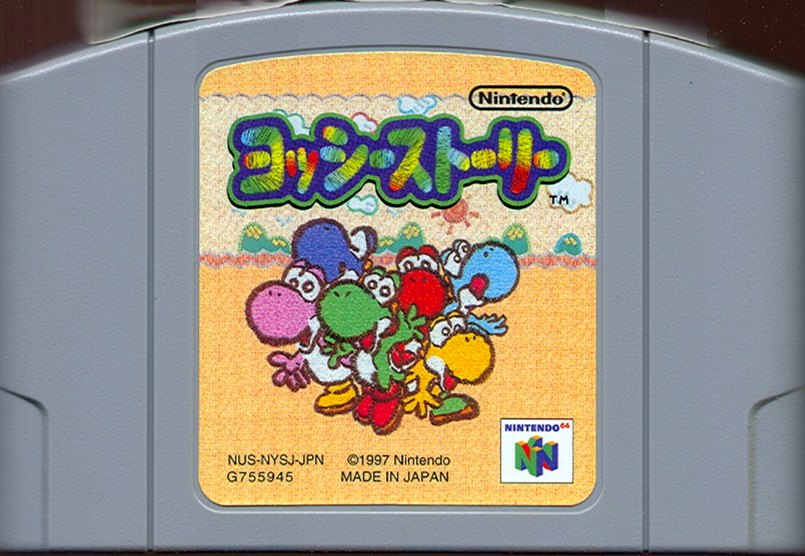
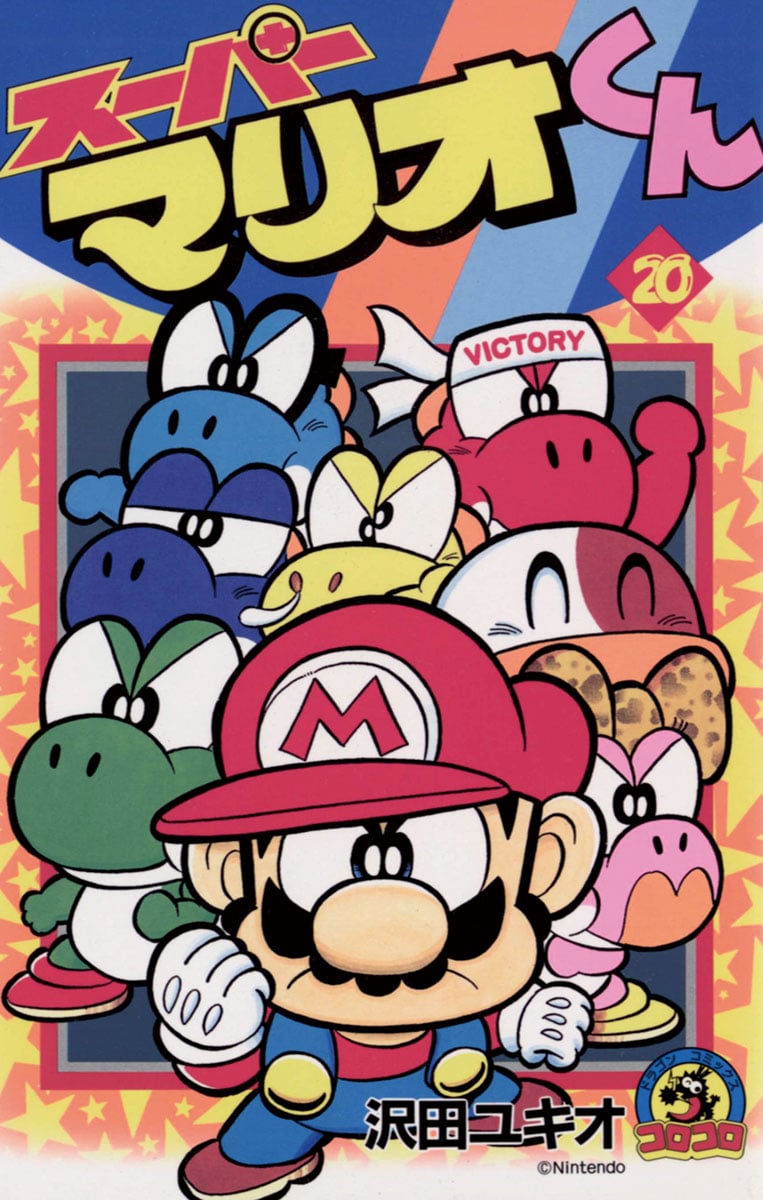
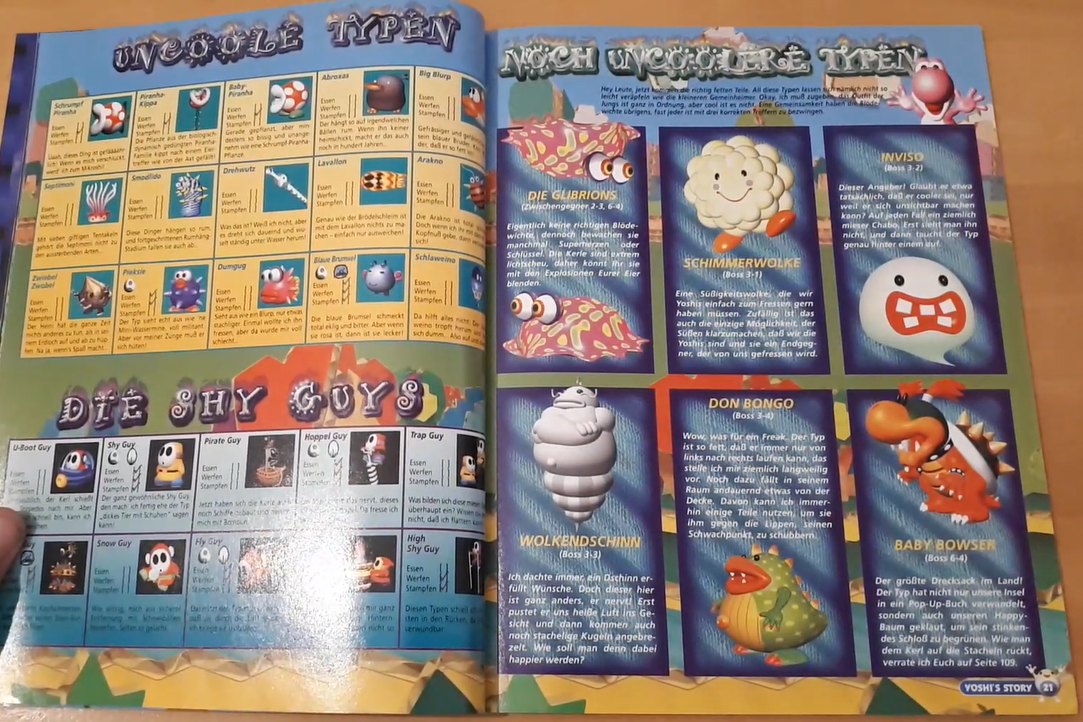
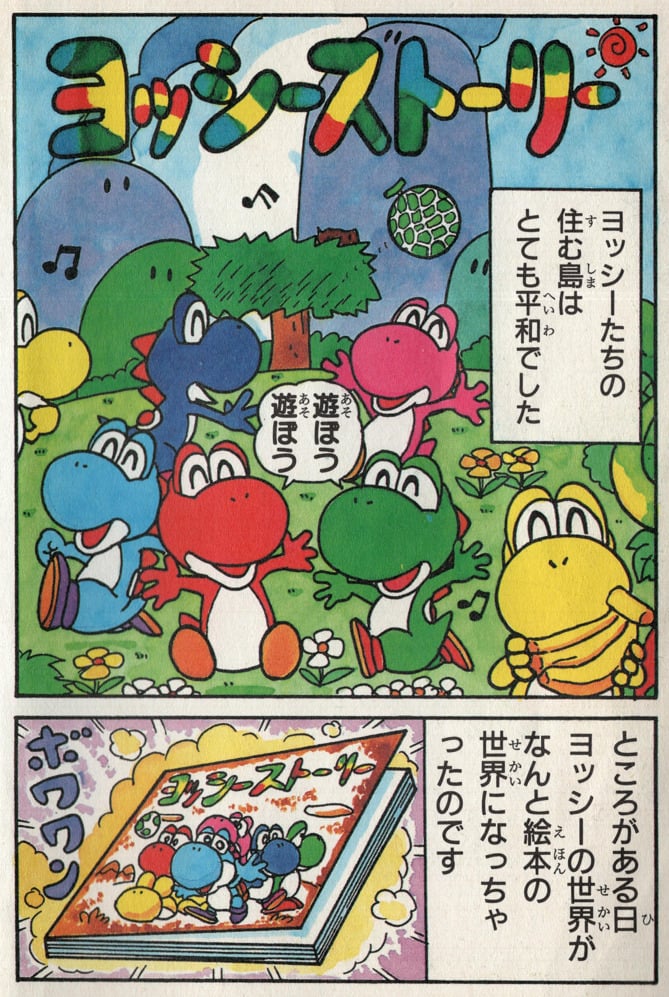

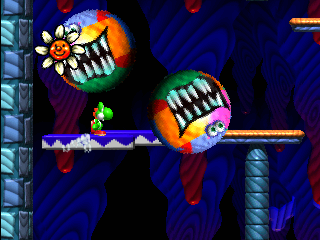
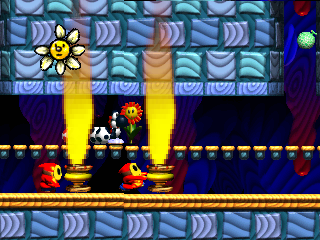

 Watermelon
 Green

 Apple
 Red

 Pink

 Banana
 Yellow

 Grapes
 Blue

 Light Blue

 All fruit
 White

 Black