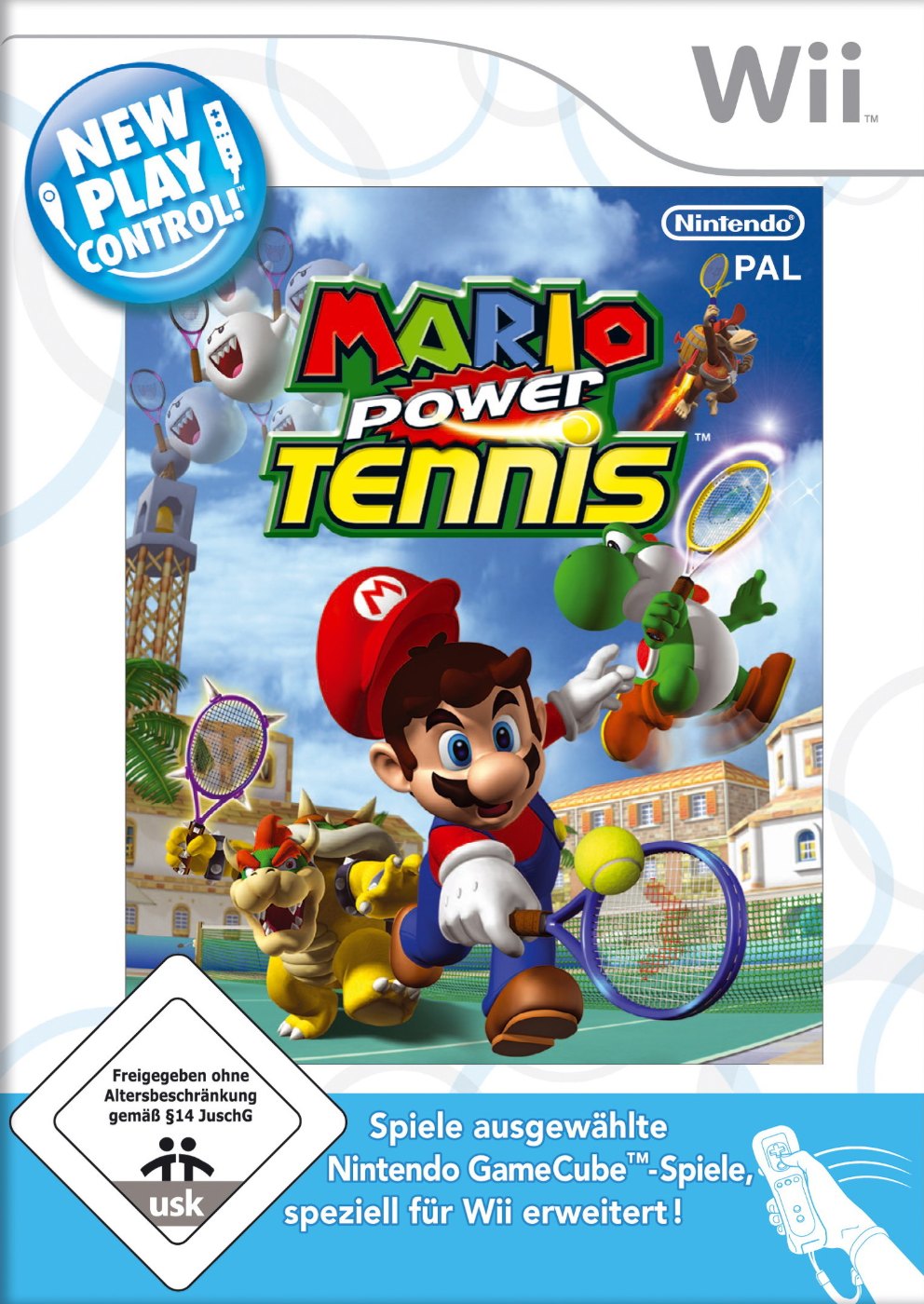
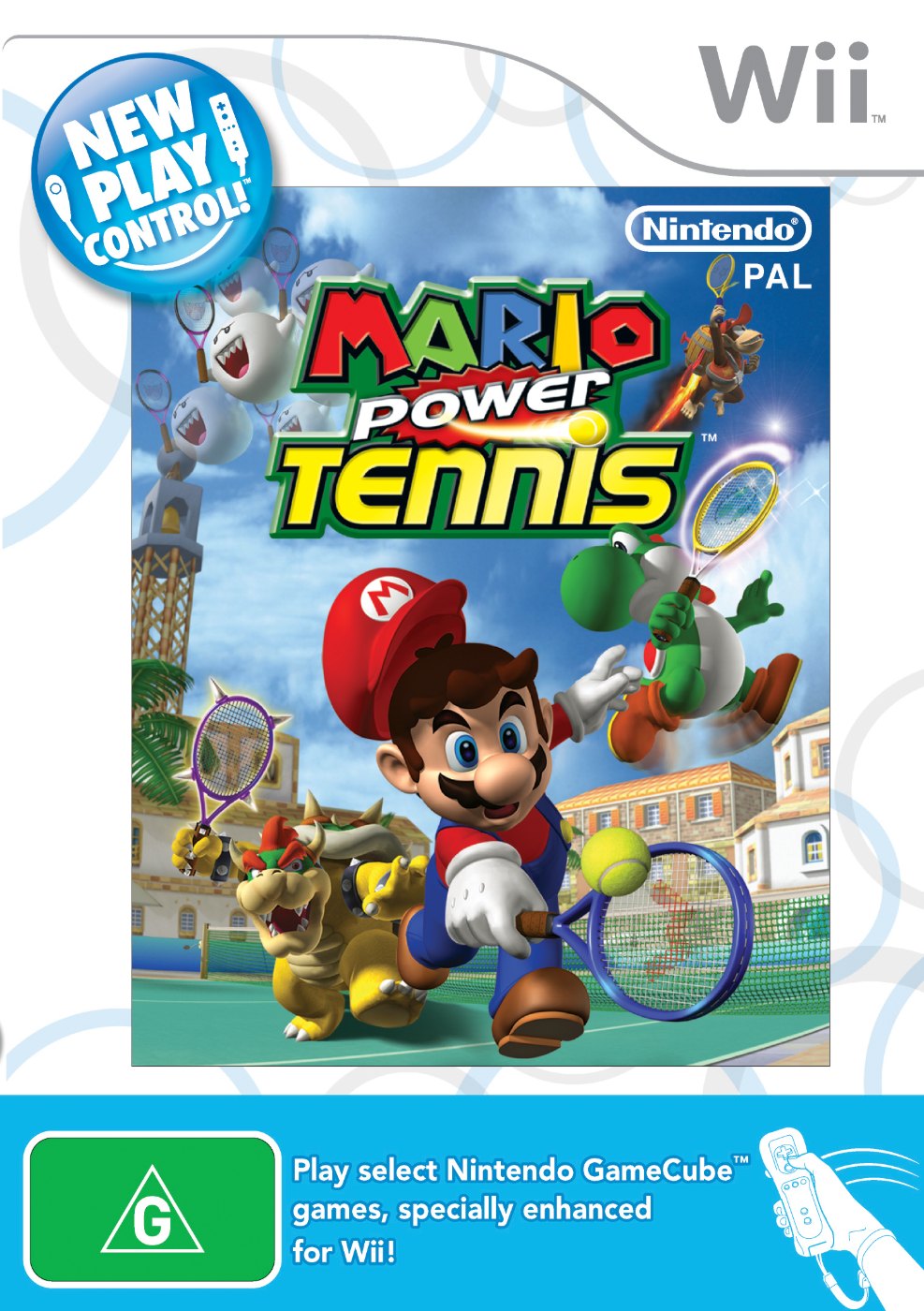
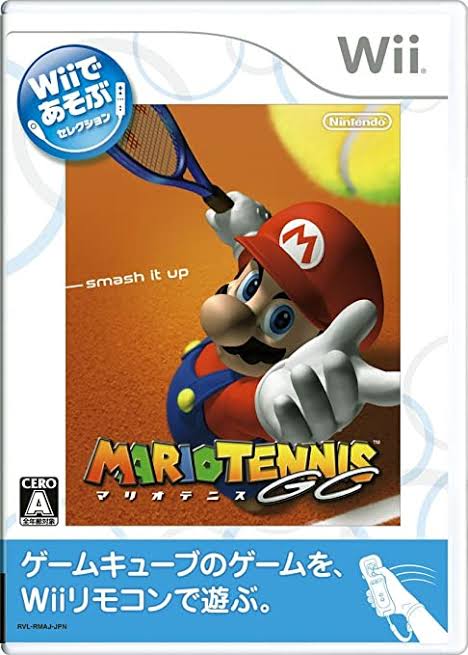
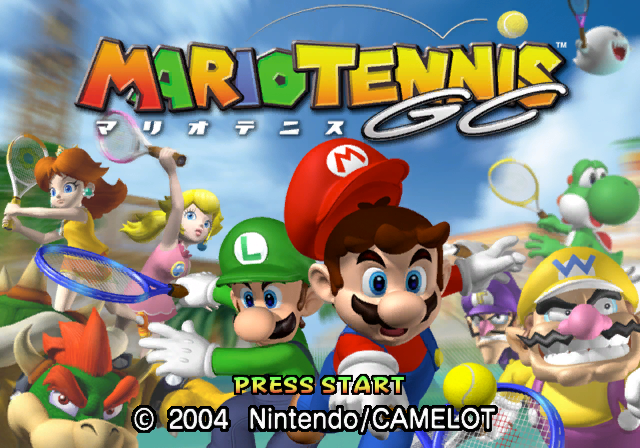
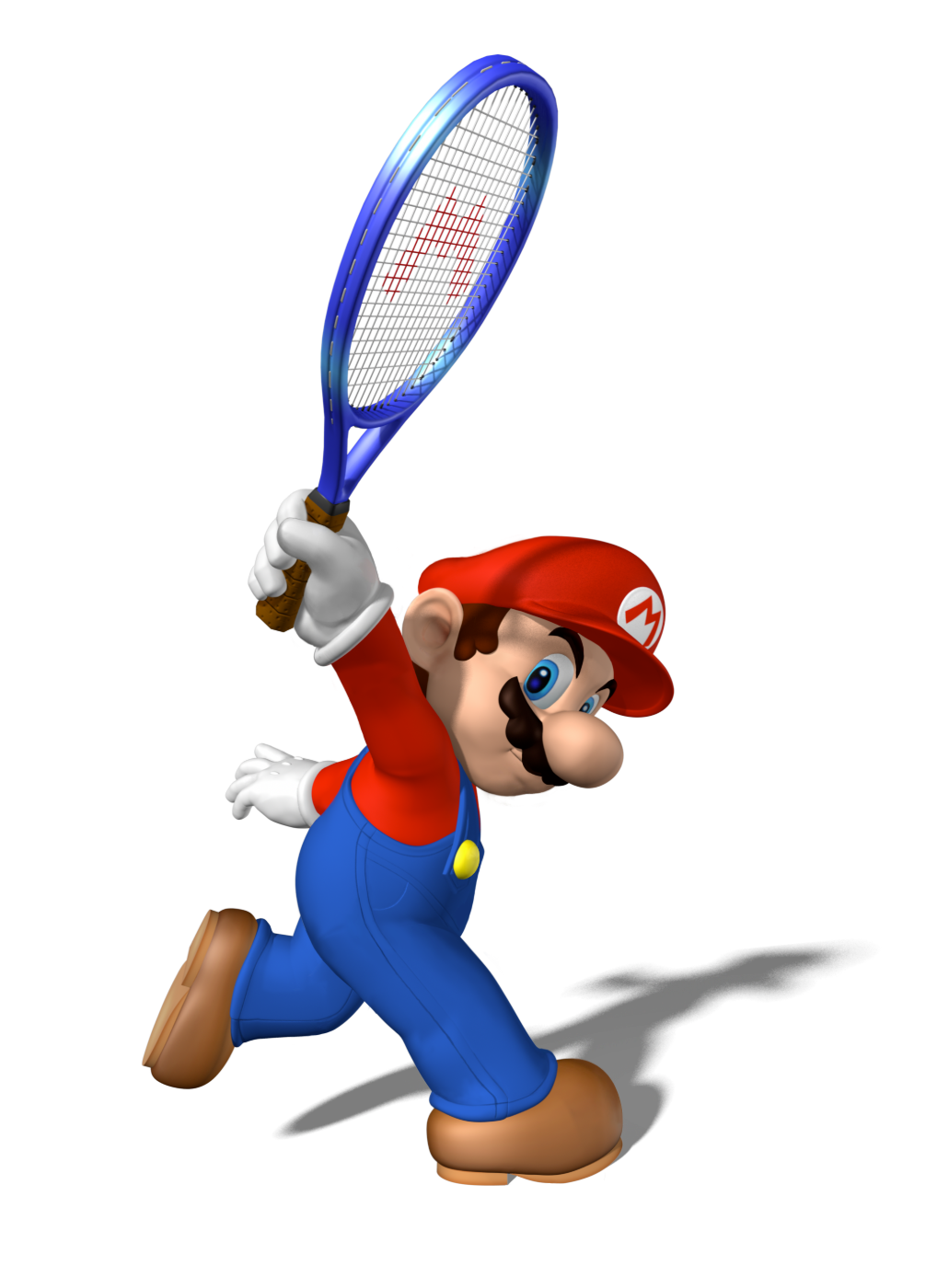
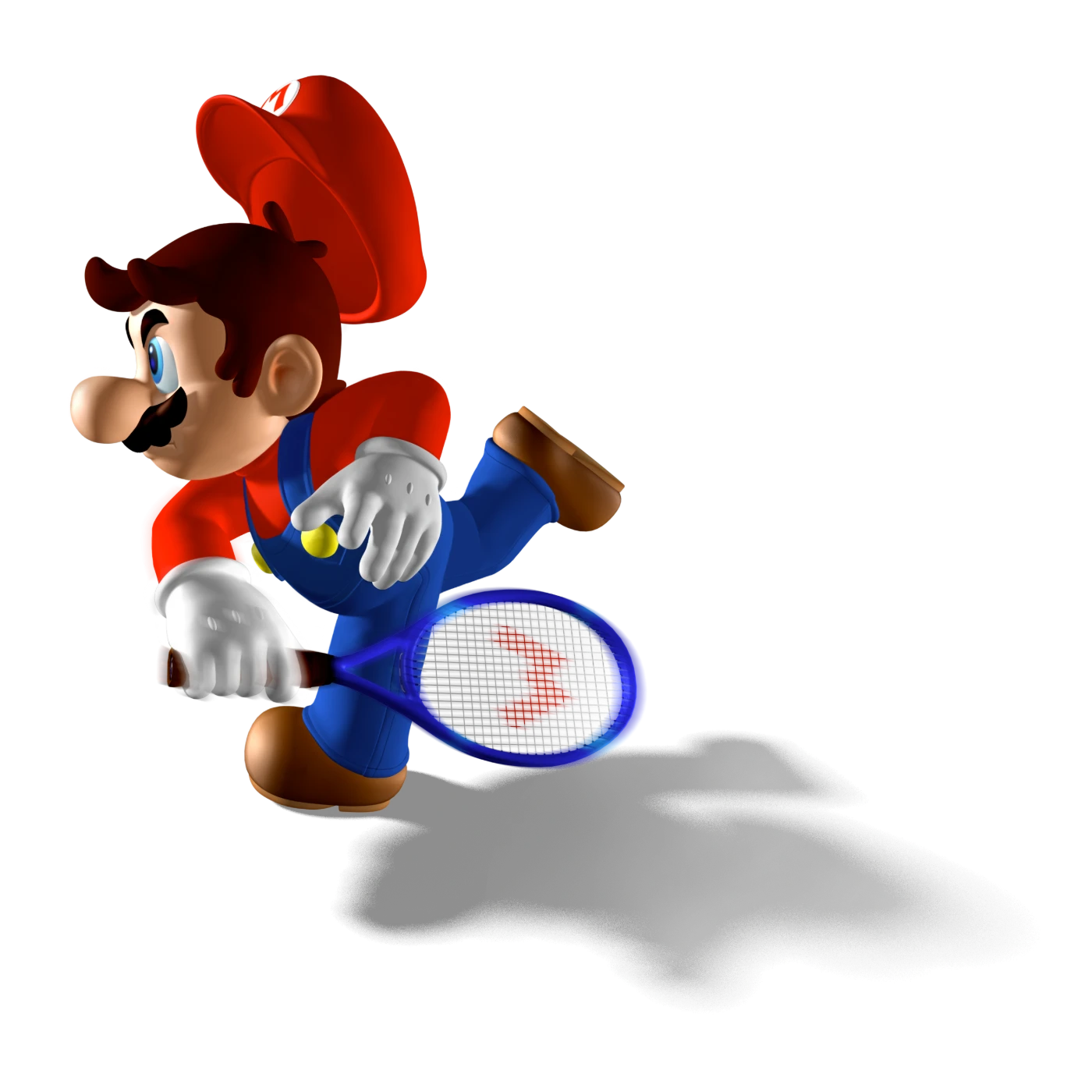
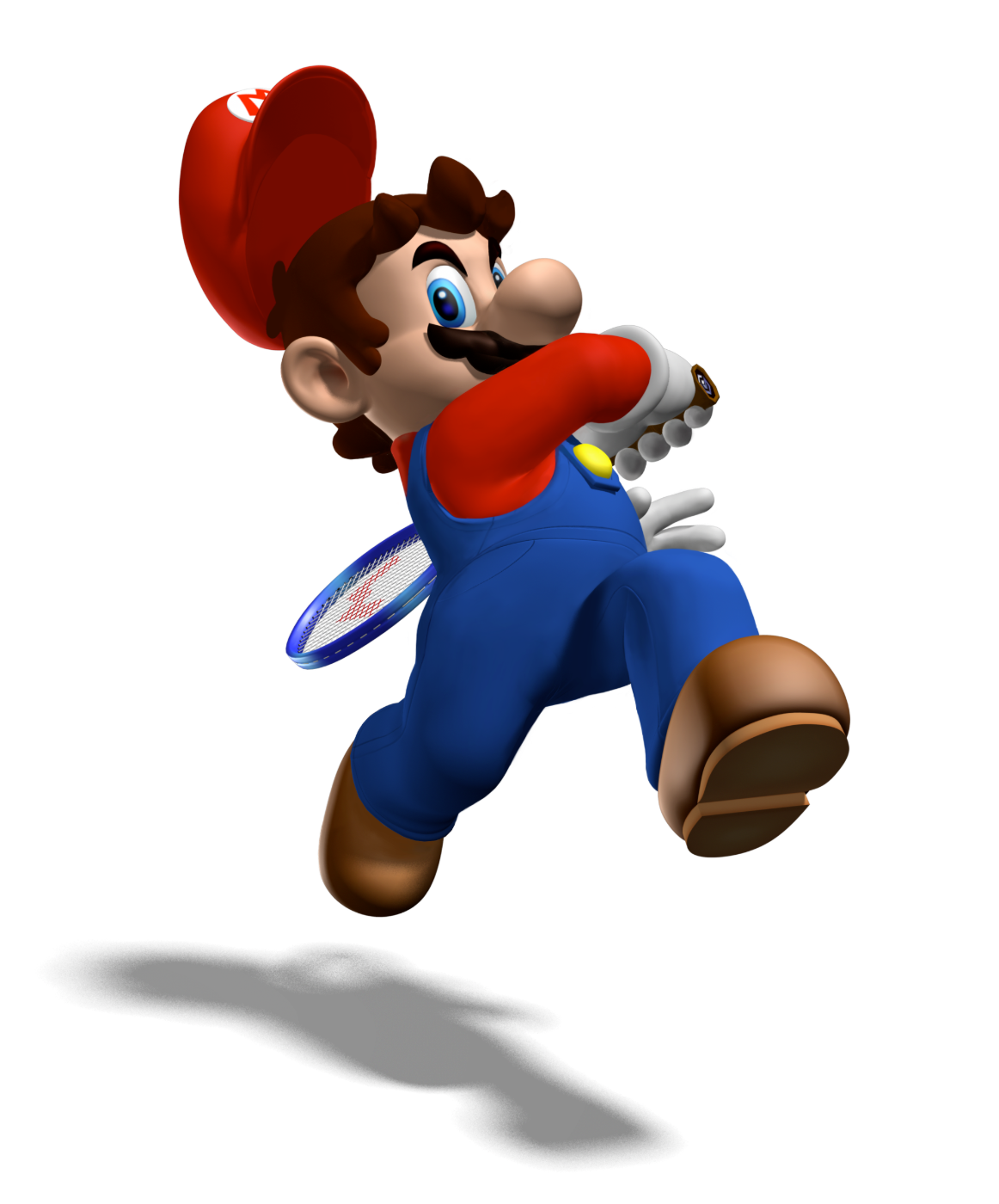
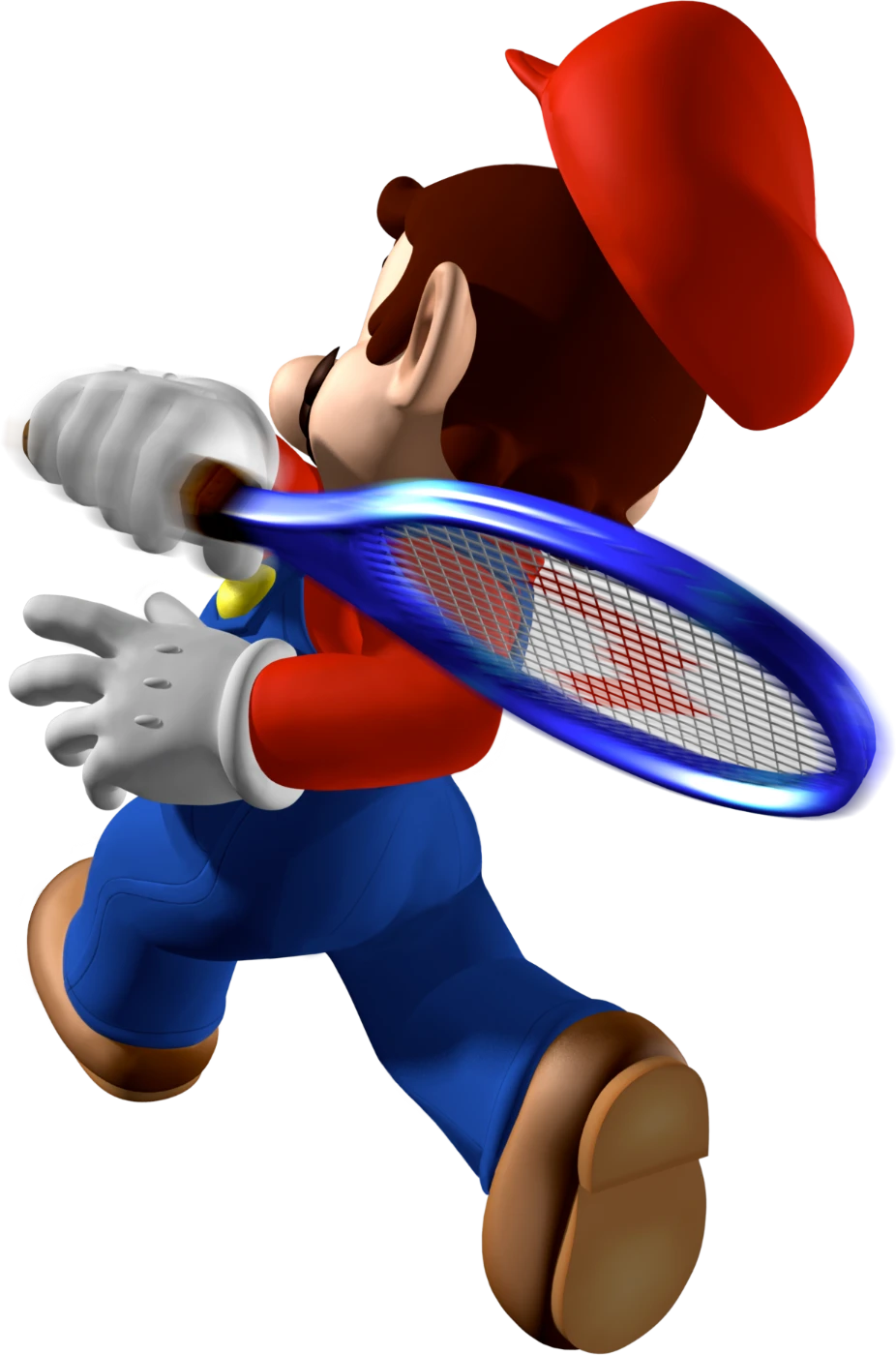
Nintendo GameCube2004TennisCamelot Software Planning36 Power Shots18 charactersSeven gimmick courtsNew Play Control! on Wii, 2009
Mario Power Tennis
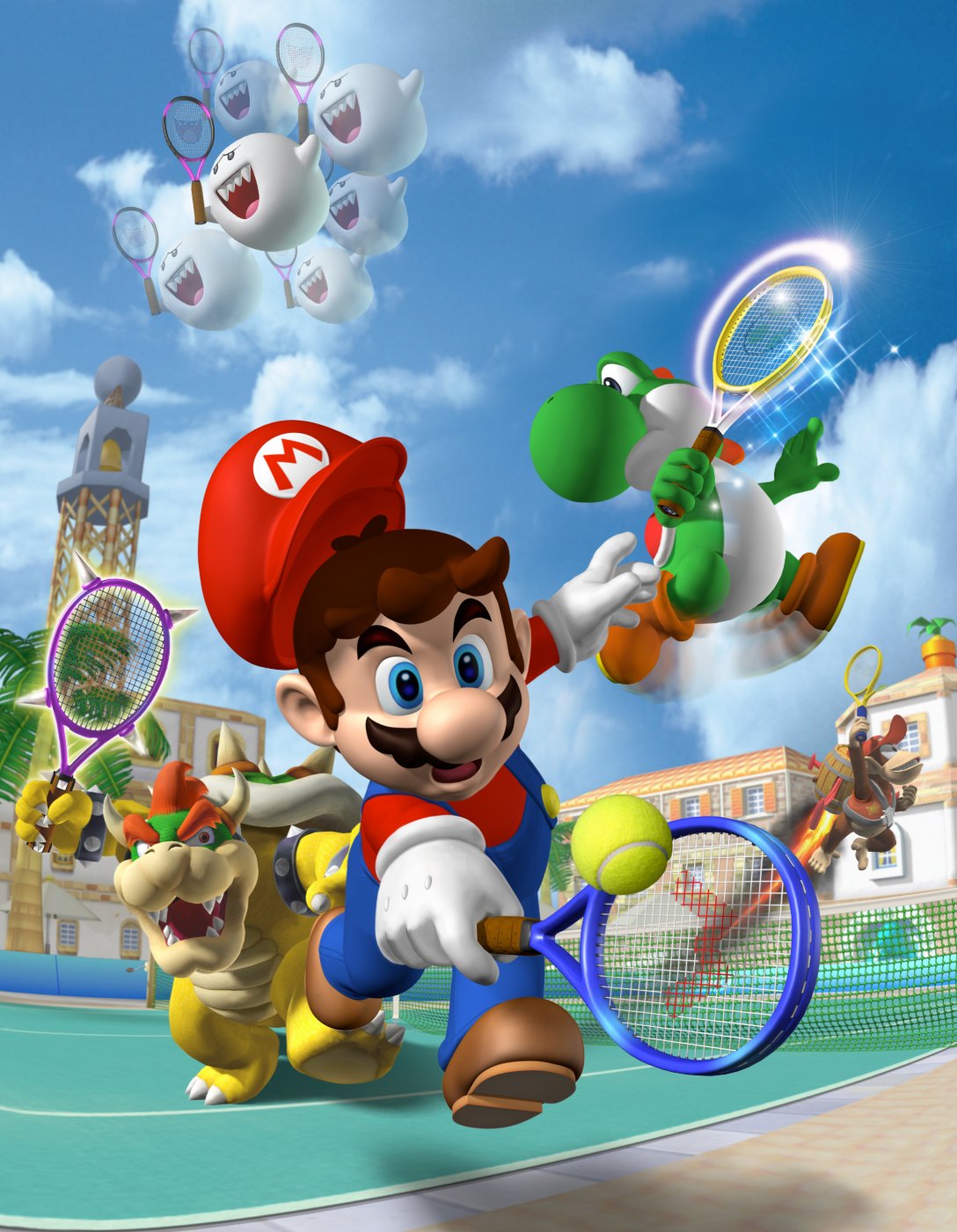
Tennis, but with hammers, Poltergusts and Bob-omb launchers. Mario Power Tennis (Mario Tennis GC in Japan) reached the Nintendo GameCube on 28 October 2004 in Japan and 8 November 2004 in North America, with Europe and Australia following in late February 2005. Camelot Software Planning’s sequel to the N64 Mario Tennis keeps the two-button shots and adds the feature in its name: Power Shots, two per character, one Offensive to knock an opponent flying and one Defensive to rescue a ball that should be gone. There are 18 characters, including Bowser Jr., Diddy Kong, Petey Piranha, Wiggler and Fly Guy, and gimmick courts set in Luigi’s Mansion, Delfino Plaza, a WarioWare factory and the original Mario Bros. arcade game, plus eight Special Games from ghost-busting to a duel with Mecha-Bowser. In 2009 it returned on Wii as New Play Control! Mario Power Tennis, swung with the Wii Remote.
Developer:Camelot Software Planning
Publisher:Nintendo
Platforms:Nintendo GameCube (2004); Wii as New Play Control! Mario Power Tennis (2009)
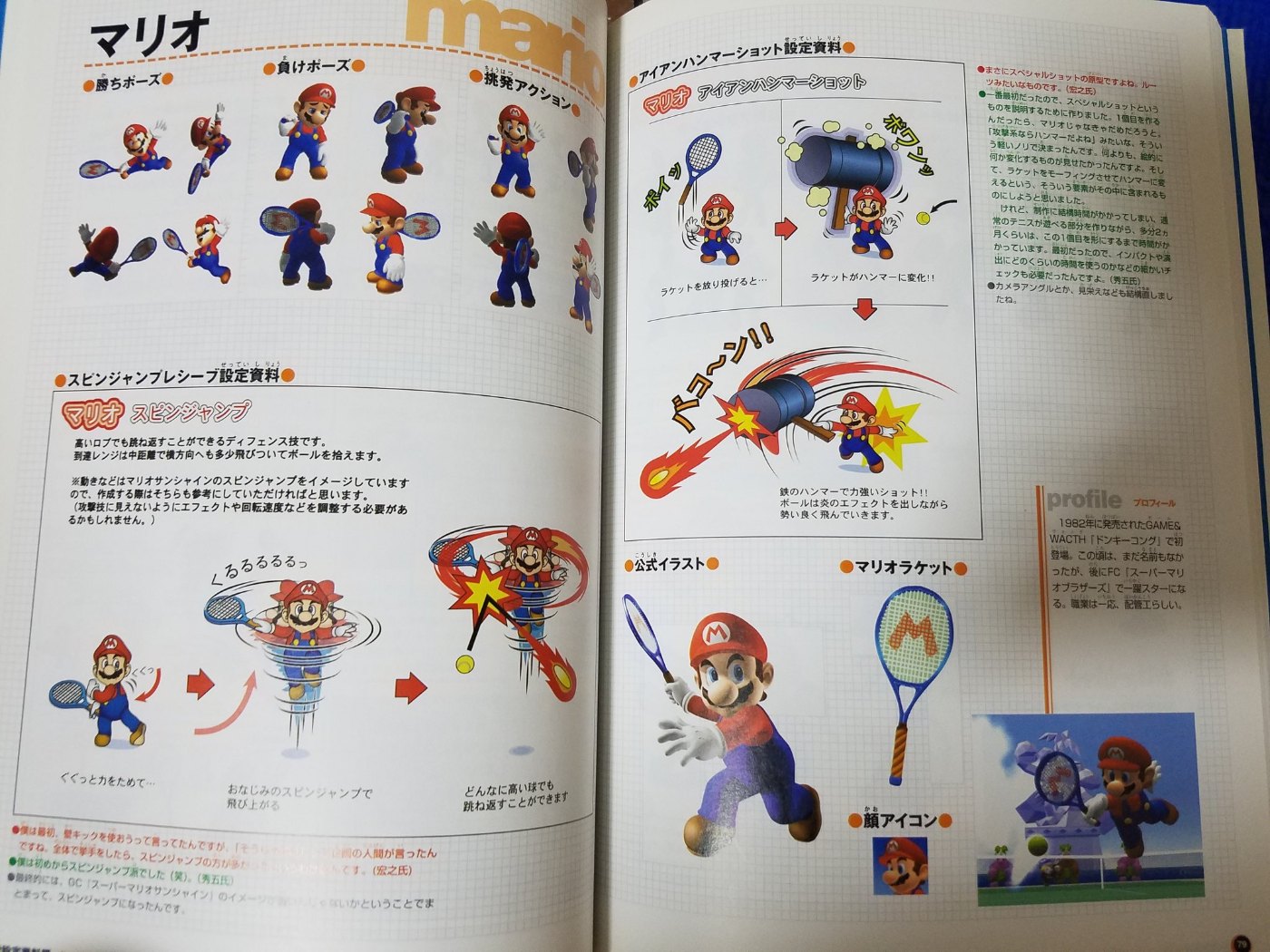
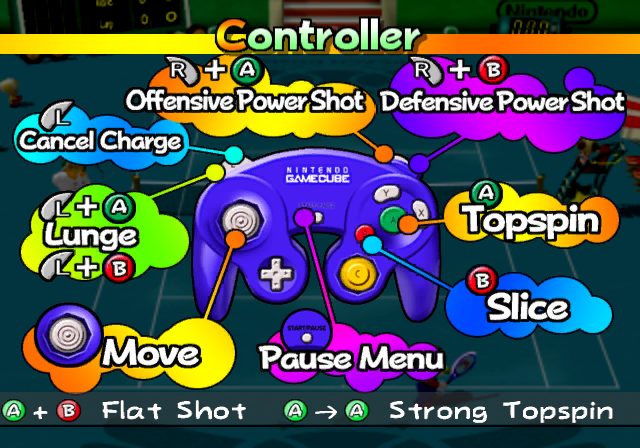
Four years after the N64 game, Camelot brought Mario Tennis to the GameCube with a simple promise: everything you liked, plus fireworks. The basic controls barely changed. A is topspin, B is slice, the two in sequence give lobs and drop shots, together a flat shot or a smash. What is new is what happens when your racket starts to glow. Hold R and press A for an Offensive Power Shot, a short, gleefully over-the-top cutscene (Mario swings a hammer, Donkey Kong fires himself from a barrel, Petey Piranha gargles his racket in sludge) that sends the ball back with an effect: the receiver is knocked back, spun round, slowed down or robbed of their own stored Power Shot. Hold R and press B for a Defensive Power Shot, which reaches a ball that was out of range and can cancel an Offensive one.
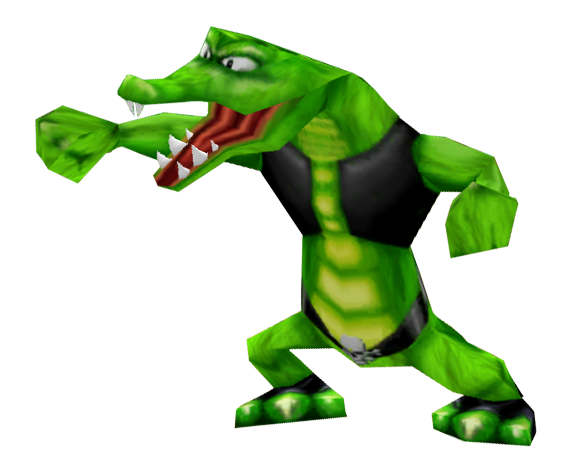
The second big idea is the gimmick court. Alongside the plain Peach Dome there are courts that fight back: ghosts in Luigi’s Mansion, Piranha Plant goop and F.L.U.D.D. nozzles in Delfino Plaza, conveyor belts in the Wario Factory, sliding floor panels on the Gooper Blooper Court, leg-biting Klaptraps in DK Jungle, a tilting deck in Bowser Castle and Shellcreepers on the Mario Classic Court. Each can also be played as a standard court once you have earned it.
The cast grew to eighteen, with Bowser Jr., Diddy Kong, Koopa Troopa, Fly Guy, Petey Piranha and Wiggler joining the regulars, with Nintendo helping on the voices and animation. The opening film, in which Wario and Waluigi team up with Bowser to sabotage the Mario brothers’ final, is a full-blown slapstick short, and the game keeps a reel of animated bloopers to go with it.
Reviews were good rather than glowing (Metacritic 80), with praise for the multiplayer and the cast and some grumbling about Power Shot animations that cannot be skipped. In 2009 the game was reissued on Wii as part of the New Play Control! range, with Wii Remote swings replacing the buttons; it sold well in Japan, but critics found the motion controls imprecise, and Camelot would later admit as much.
Play some explosive tennis with NEW PLAY CONTROL! Mario Power Tennis on Wii.
Choose your favourite Mario character and fight your way to the top of the circuit!
Use the Wii Remote as a tennis racket!
— Official description (Nintendo UK, 2009)
Why Mario Power Tennis matters to Mario fans
It is a love letter to the GameCube era: Luigi’s Mansion, Super Mario Sunshine, WarioWare and Donkey Kong Country all have courts, Bowser Jr. paints with his magic brush, Petey Piranha and the Gooper Blooper turn up, and Toadette has a cameo. Its Power Shots defined Camelot’s tennis for years, its title music lives on in the Super Smash Bros. series, and its Wii version’s shortcomings fed directly into the Swing Mode of Mario Tennis Aces.
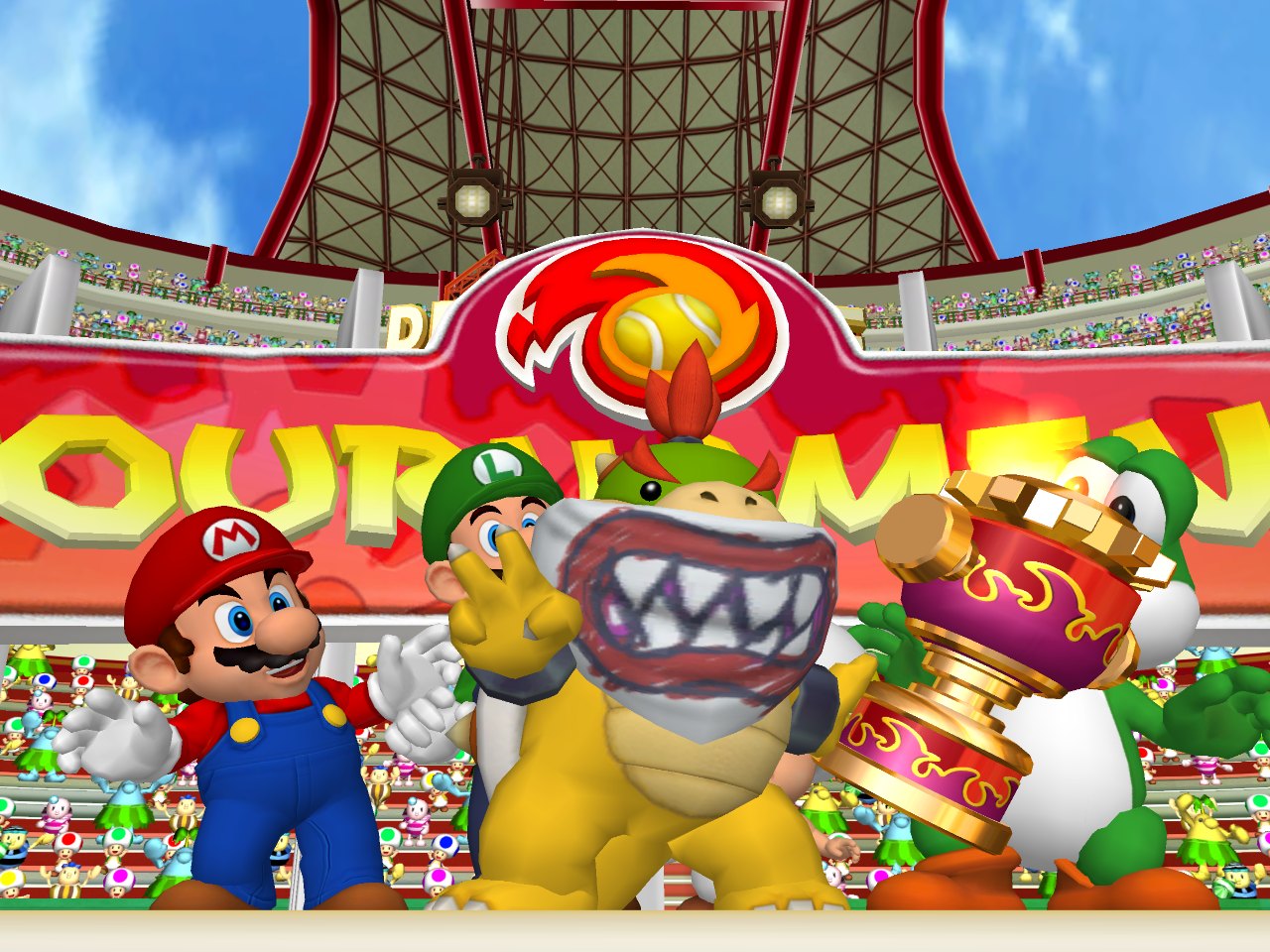
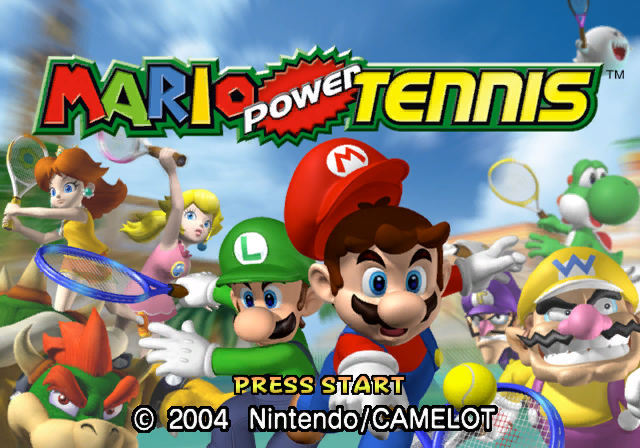
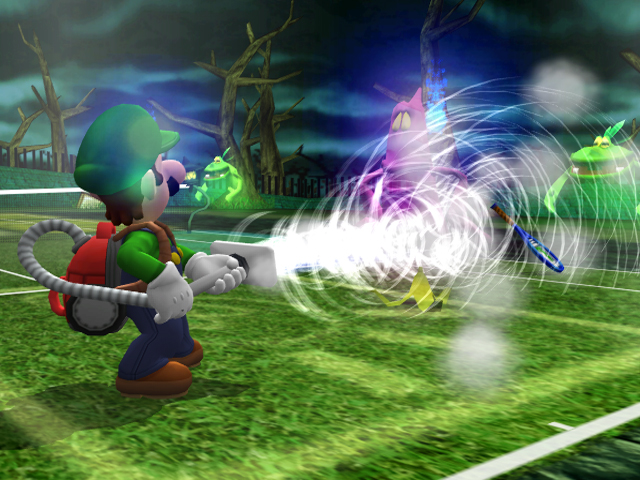
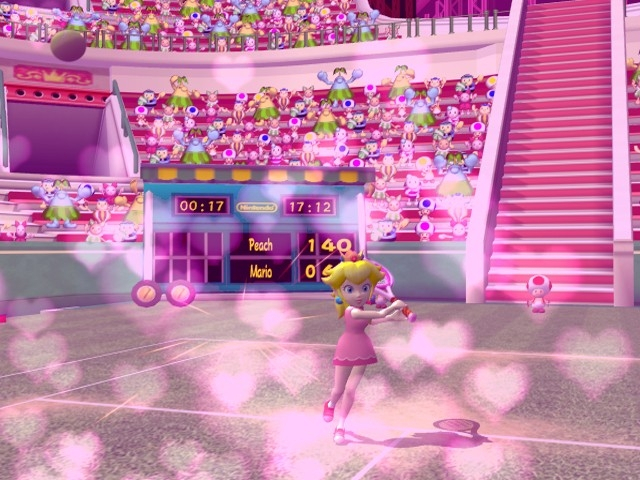
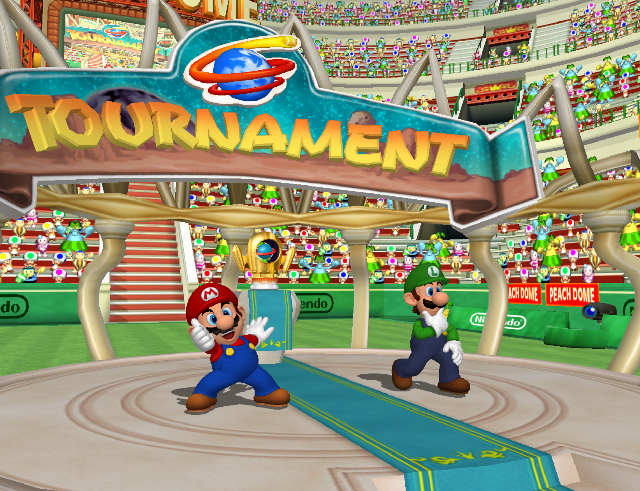
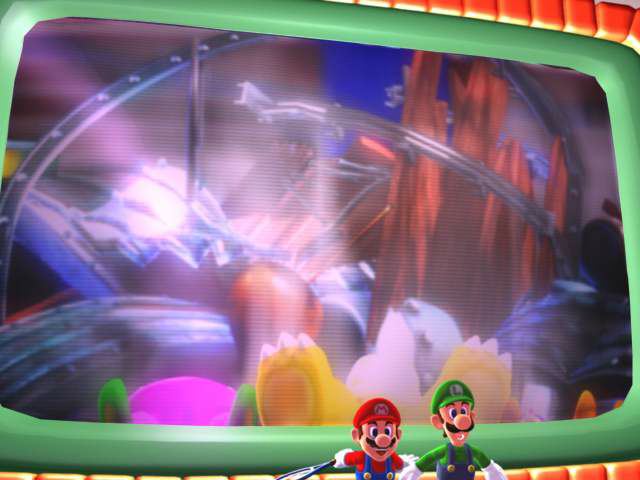
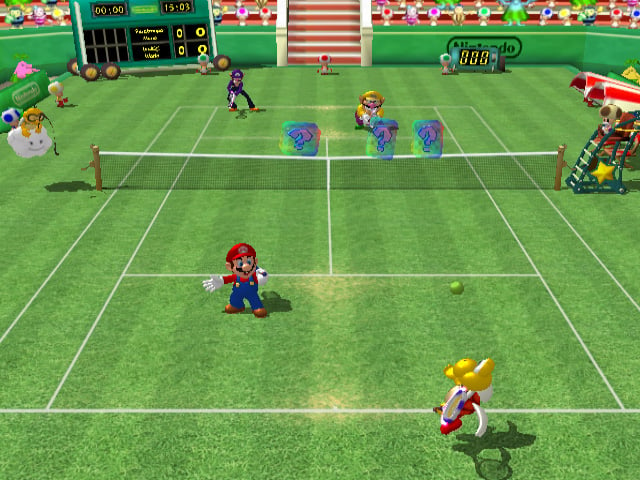
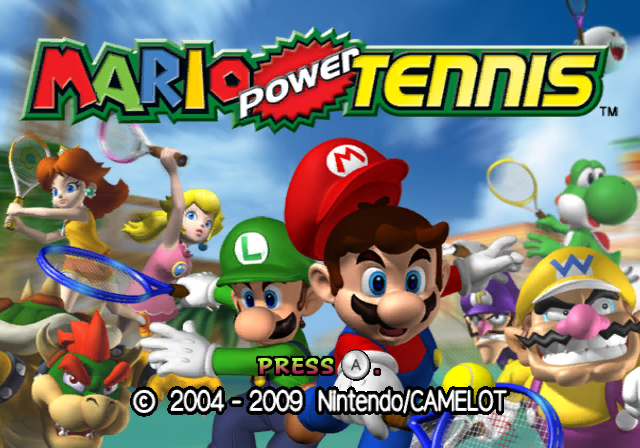
The title screen.Luigi’s Defensive Power Shot, the Poltergust Return.Peach’s Offensive Power Shot, the Super Peach Spin.Mario and Luigi win the Planet Cup in doubles.
Quick Answers
The questions people ask most about Mario Power Tennis, answered briefly here and in depth further down the page.
When did Mario Power Tennis come out?
GameCube: Japan 28 October 2004, North America 8 November 2004, Australia 24 February 2005, Europe 25 February 2005. The Wii version, New Play Control! Mario Power Tennis, followed in Japan on 15 January 2009, Europe on 6 March, North America on 9 March and Australia on 26 March 2009. More →
How do you do a Power Shot?
Turn Power Shots on and wait for your racket to glow. On GameCube, hold R and press A (or press X) for an Offensive Power Shot, hold R and press B (or press Y) for a Defensive one. On Wii, the Power Gauge fills and you hold A or B and flick the Remote (in Easy mode Power Shots fire automatically). More →
How do you unlock Fly Guy, Paratroopa, Wiggler and Petey Piranha?
Fly Guy: win all three World Open cups (Mushroom, Flower, Star) in singles. Paratroopa: the same in doubles. Wiggler: win both Gimmick Masters cups (Fire and Thunder) in singles. Petey Piranha: the same in doubles. More →
How do you unlock Bowser Castle and the Mario Classic Court?
Bowser Castle: win the Fire Cup in singles. Mario Classic Court: win the Fire Cup in doubles. More →
How many characters are in Mario Power Tennis?
Eighteen: fourteen from the start and four to unlock. Each has a type (All-Around, Technique, Power, Speed, Tricky or Defense) and two Power Shots of their own. More →
What are Event Games?
A hidden multiplayer tiebreak mode, played to 3, 5 or 7 points. Hold Z and press Start on the title screen to show it (on Wii, hold A and B for a few seconds). It has to be unlocked again every time the game is switched on. More →
What changed in the Wii version?
You swing the Wii Remote like a racket (with or without the Nunchuk), there is a Power Shot gauge, a 16:9 widescreen mode and a tutorial movie for the new controls. Everything else is the GameCube game. Critics, and later Camelot, found the motion controls imprecise. More →
Can I play Mario Power Tennis on Nintendo Switch?
Not as of November 2026. It is not part of Nintendo GameCube – Nintendo Classics on Switch 2, and no download version of either edition was found in the sources checked. More →
Who made Mario Power Tennis?
Camelot Software Planning, directed by Haruki Kodera and produced by Shinji Hatano with Hiroyuki and Shugo Takahashi, who also did the main game design. Satoru Iwata was executive producer and Motoi Sakuraba wrote the music. More →
Modes & Courts
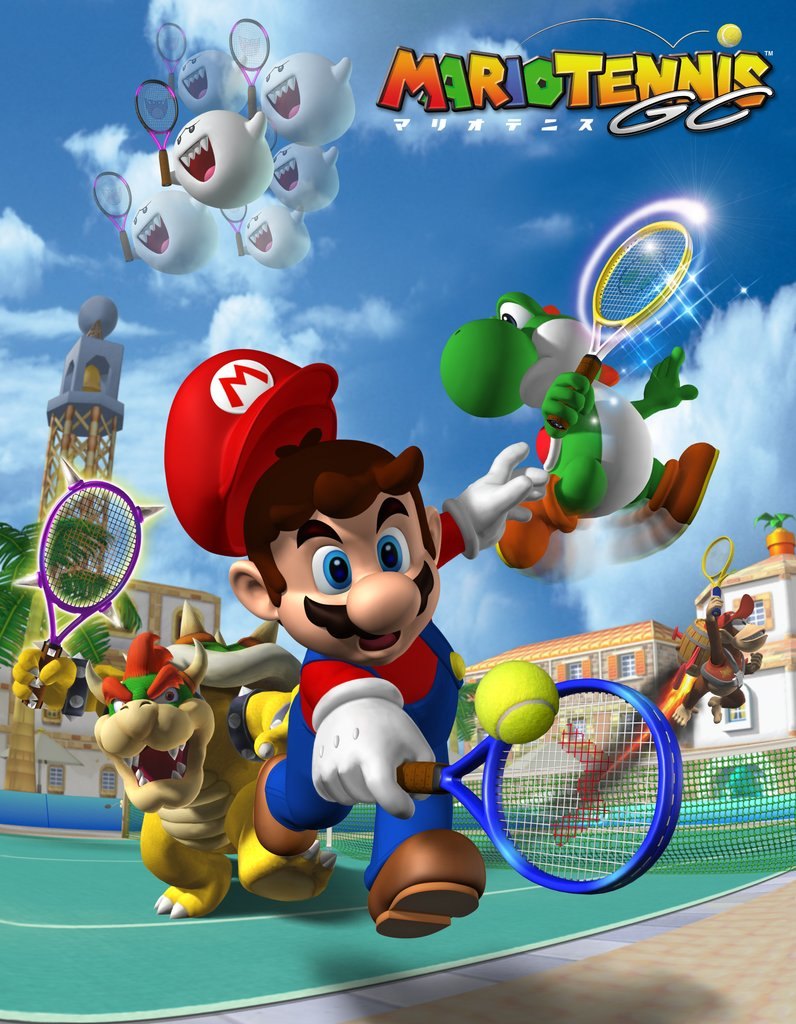
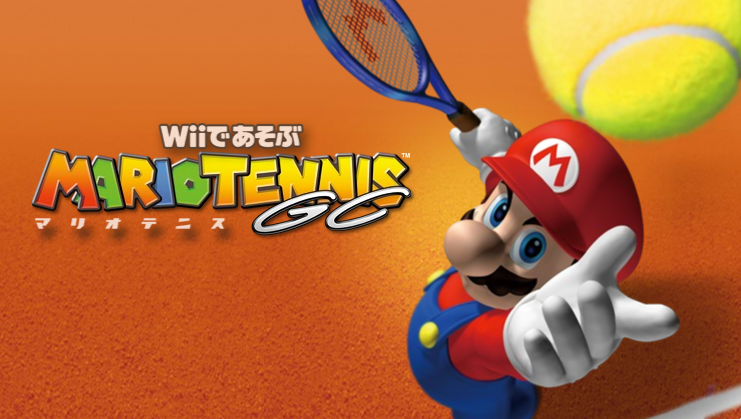
Group artwork with the Japanese logo.
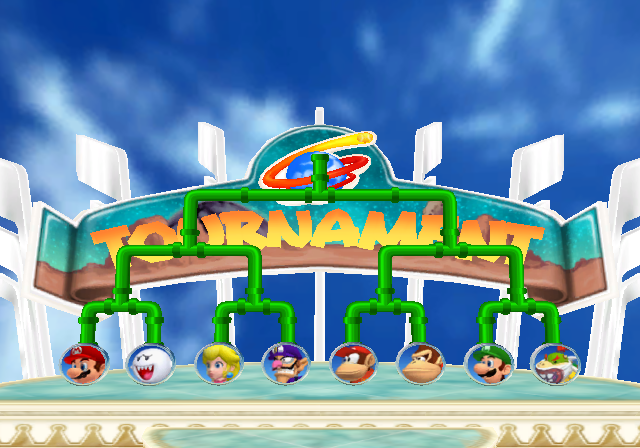
There is no adventure mode, but there is a plot of sorts: an opening film in which the Mario brothers’ winning run at the Peach Dome is very nearly blown up. After that, Mario Power Tennis is built from three kinds of mode. Exhibition is free play, in four flavours: Standard Court, Gimmick Court, Item Battle and Ring Shot. Tournament is the single-player campaign, split into the World Open, the Gimmick Masters and the Star Tournament. Special Games are eight minigames built on the courts’ gimmicks.
Tournaments unlock almost everything: the four extra characters, the two hidden courts, the standard versions of the gimmick courts and each character’s star rank.
The opening: sabotage at the Peach Dome
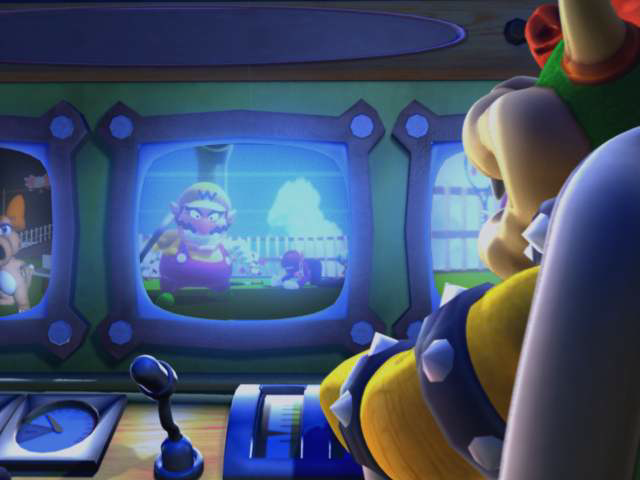
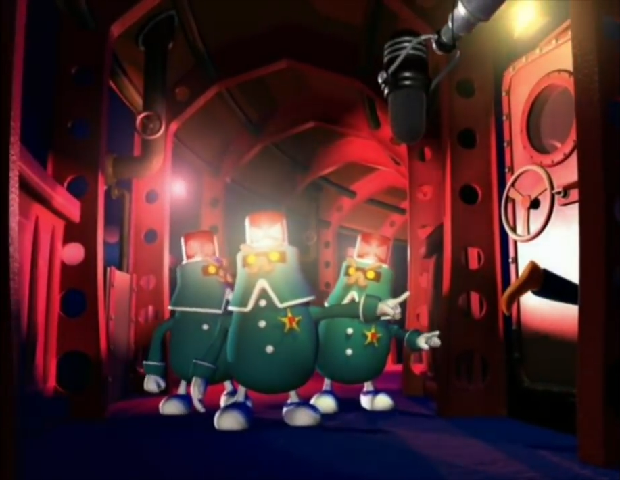
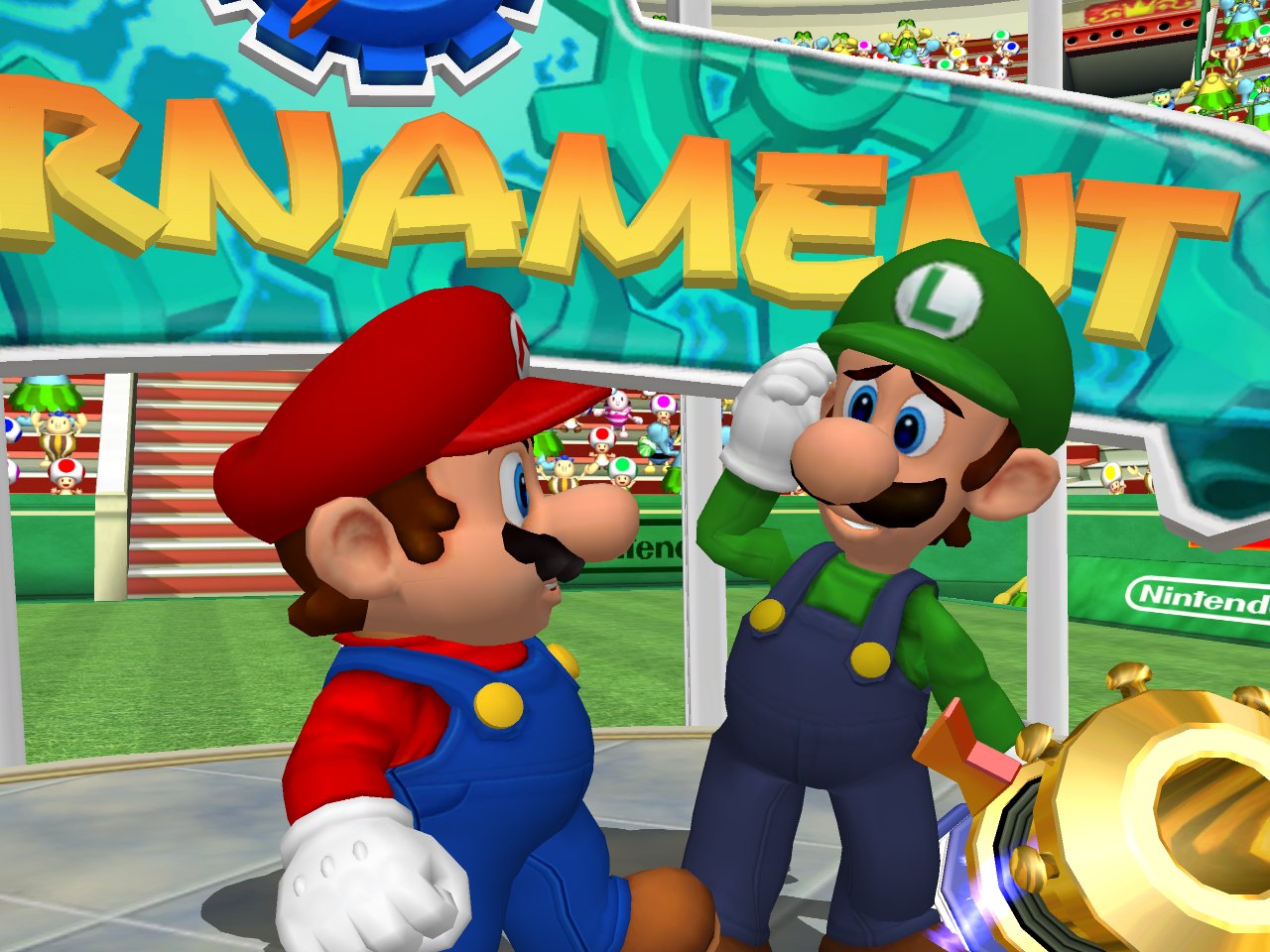
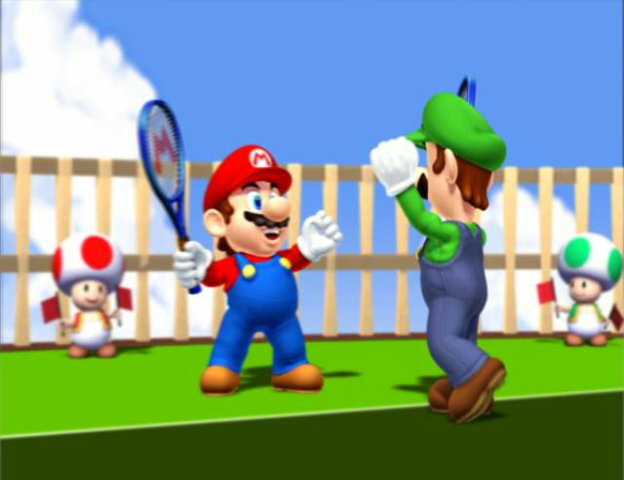
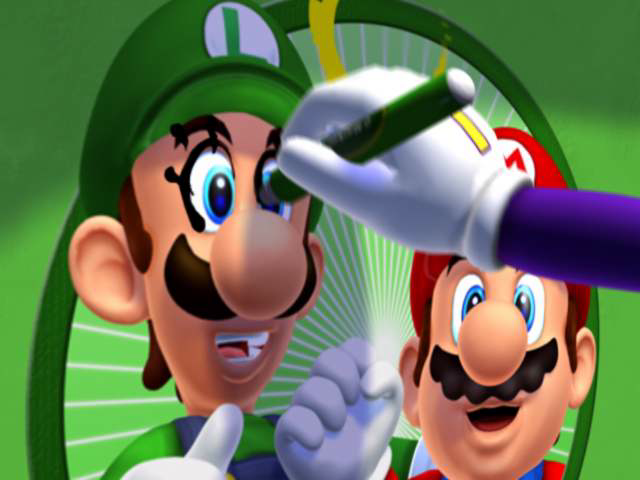
The film opens with Mario and Luigi beating Wario and Waluigi in doubles while Bowser spies on them through hidden cameras. Next morning Wario and Waluigi see their defeat recorded on the tournament board, deface the brothers’ picture and flee the police into a janitor’s cupboard, which turns out to have no floor. They drop into a training room where Bowser is waiting with an offer: join him and get even. Hours of training and plotting later, they are ready.
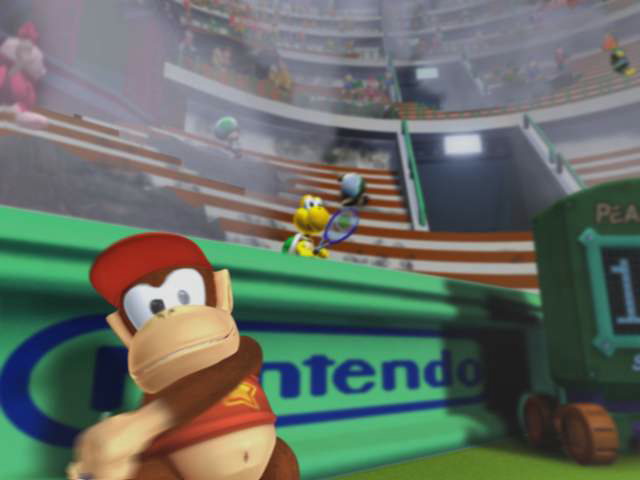
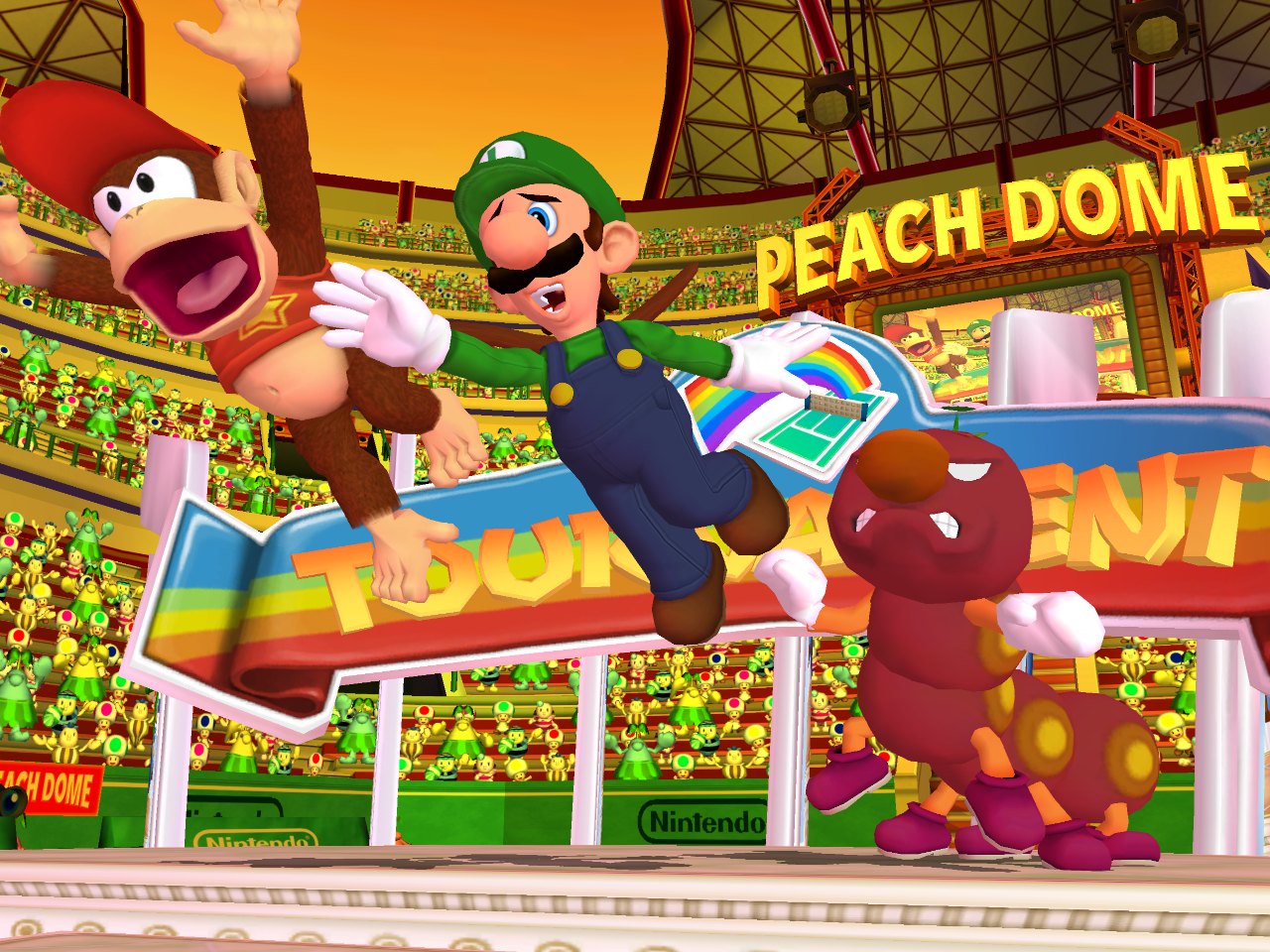
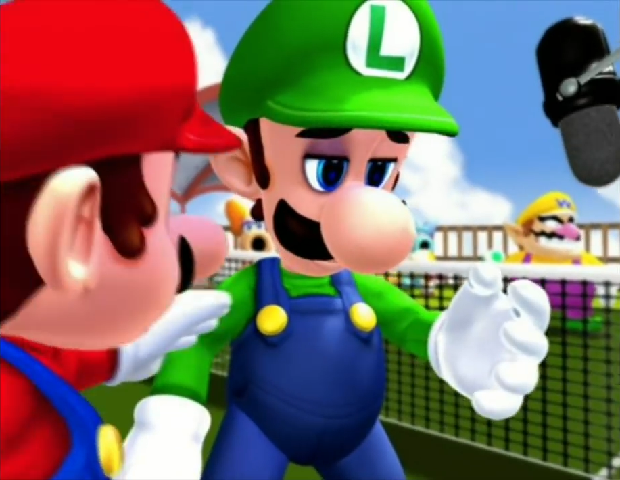
At the final, with Mario and Luigi about to face Yoshi and Donkey Kong in front of Peach and Toadsworth, Bowser arrives in an airship-shaped blimp and fixes the draw so that Wario and Waluigi get their rematch. What they really have in mind is a Bob-omb-firing machine aimed at the brothers, and Bowser chips in with more. Mario and Luigi bat them back, with a little help from Diddy Kong and Koopa Troopa, while the crowd runs for it. In desperation Bowser fires a Bullet Bill; Mario returns it into the Bob-omb launcher, Wario falls on Waluigi trying to save it, and the upturned launcher fires a Bob-omb into Bowser’s blimp, which comes down, Bob-omb stockpile and all, on top of the villains. The trio is left in a heap, the stadium is wrecked, the brothers are fine, and Mario turns to speak to the camera.
Mario and Luigi celebrate beating Wario and Waluigi.Waluigi defaces Luigi’s picture on the tournament board.Wario and Waluigi meet Bowser in the training room.Wario, Bowser and Waluigi, after the blimp comes down.
Tournament: the World Open
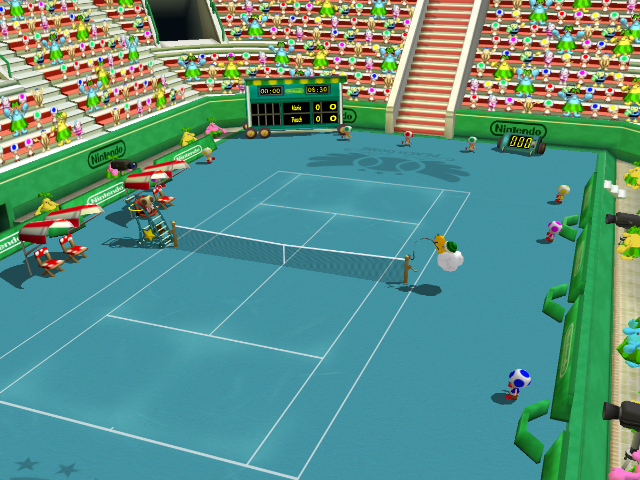
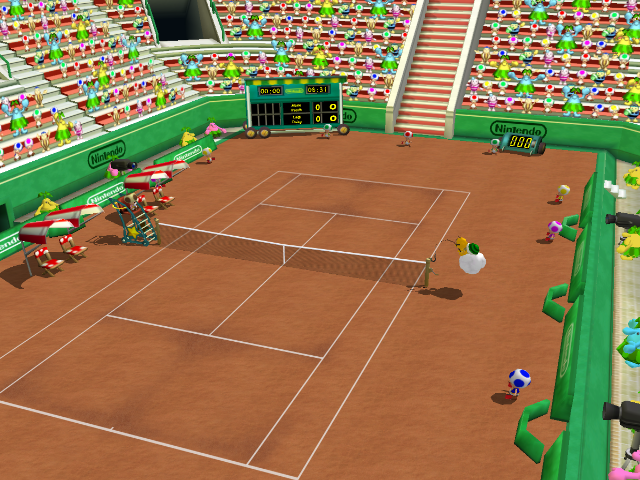
The World Open is played at the Peach Dome and opens on its three surfaces in turn. The Mushroom Cup on hard court has one-set early rounds and a three-set final; the Flower Cup on clay adds a three-set semi-final; the Star Cup on grass ends in a five-set final. In doubles a single human player picks a computer partner. Winning all three in singles unlocks Fly Guy, and in doubles Paratroopa, and a Star Cup win gives that character their star rank.
Mushroom Cup icon.Flower Cup icon.Star Cup icon.
Tournament: the Gimmick Masters
The Gimmick Masters moves the action onto the gimmick courts. The Fire Cup (one-set rounds and a three-set final) visits Luigi’s Mansion, the Gooper Blooper Court and DK Jungle in no fixed order; the Thunder Cup (up to a five-set final) visits Delfino Plaza, the Wario Factory and either Bowser Castle or the Mario Classic Court. The Thunder Cup takes its name from Mario Kart: Super Circuit’s Lightning Cup.
These cups are where the big unlocks are: Bowser Castle and the Mario Classic Court (Fire Cup in singles and doubles), Wiggler and Petey Piranha (both cups in singles and doubles), and the standard, gimmick-free versions of the themed courts for Exhibition.
Fire Cup icon.Thunder Cup icon.
Tournament: the Star Tournament
Every computer opponent in the Star Tournament is a starred character. The Rainbow Cup (hard court, three-set final), Moonlight Cup (clay, five-set final) and Planet Cup (grass, three-set matches from the first round and a five-set final) are all played at the Peach Dome. A character needs their own star from the Star Cup to enter, and the doubles Star Tournament opens only after the singles one.
Rainbow Cup icon.Moonlight Cup icon.Planet Cup icon.
Exhibition: Standard, Gimmick, Item Battle and Ring Shot
Exhibition lets up to four players set their own rules: Power Shots on or off, the number of games and sets, and a doubles partner. Standard Court is plain tennis (every court except the Peach Dome first has to be unlocked in the Gimmick Masters to play this way). Gimmick Court switches the hazards on. Item Battle hangs Item Boxes above the net, with a mix that changes by court: more Lightning in Luigi’s Mansion, more Mushrooms in Delfino Plaza, double the boxes in the Wario Factory, more shells on the Gooper Blooper Court, more Bananas in DK Jungle and more Stars on the Mario Classic Court. Ring Shot scores points for hitting rings, smaller rings scoring more; the winner of a rally also takes half the loser’s ring points, and games run to 100, 200 or 500.
Item Battle: Mario Kart items over the net.The Mario Classic Court.
Special Games: paint, ghosts, goop and Chain Chomps
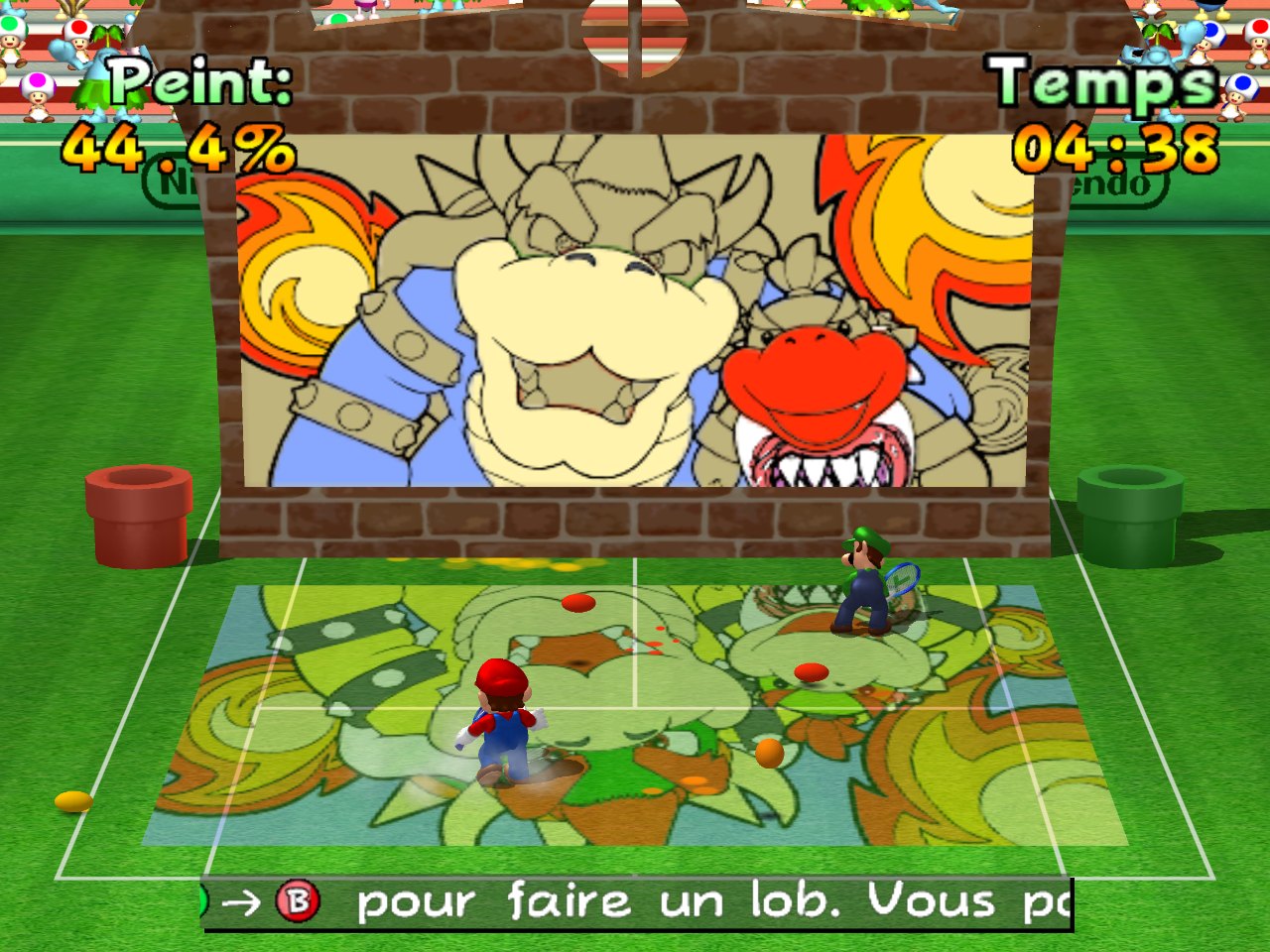
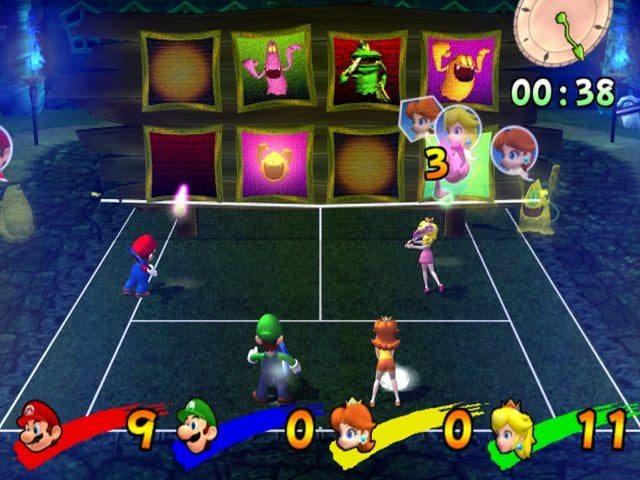
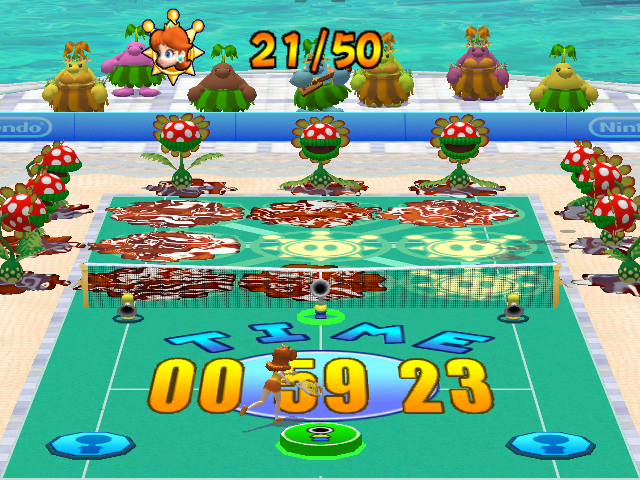
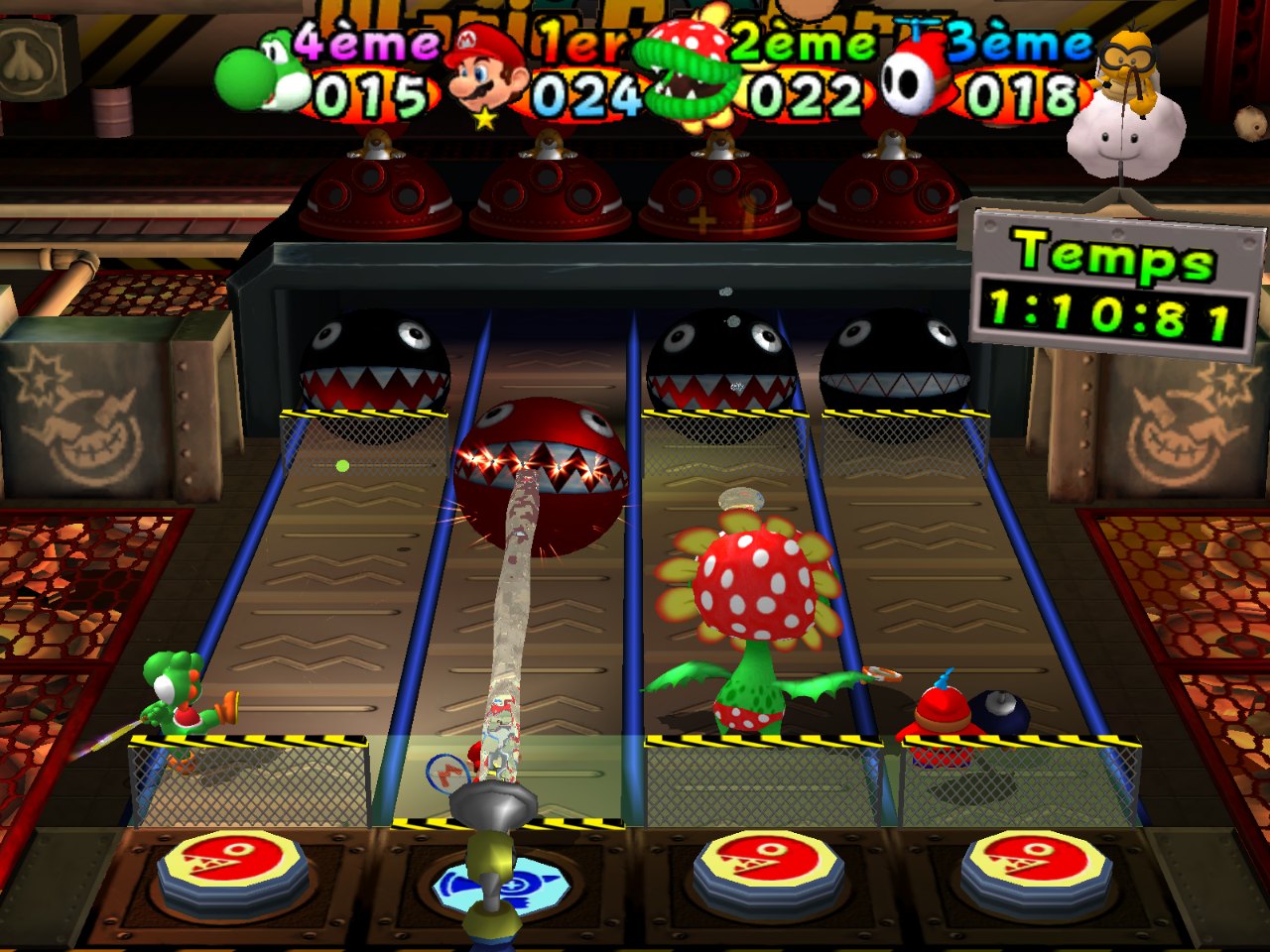
Most of the eight Special Games take one to four players. In Artist on the Court you fill in a picture on a wall by hitting paint balls at it against the clock, working up from Mario and Luigi through Diddy Kong and Bowser with Bowser Jr. to a crowd of Yoshis. Terror Tennis has you stop ghosts escaping from paintings, with bonus points for hitting one just as it emerges. Tic-Tac-Glow is noughts and crosses with Shine Sprites: light a row of three by hitting balls to the far side, while hitting F.L.U.D.D. icons to clear goop. In Chain-Chomp Challenge you feed balls to Chain Chomps; a Bob-omb turns one red and worth two points a ball, but a second sets it loose, and water balls calm angry ones down.
Artist on the Court: painting Bowser and Bowser Jr.Terror Tennis.Tic-Tac-Glow.Chain-Chomp Challenge.
Special Games: Gooper Blooper, balloons, Mecha-Bowser and coins
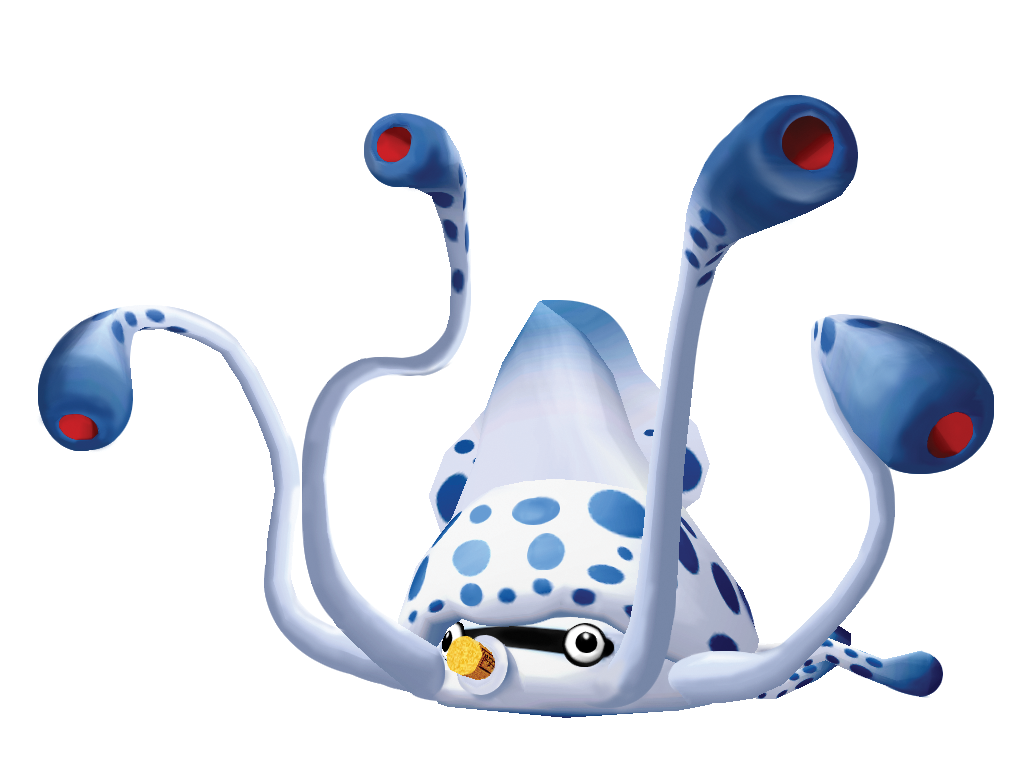
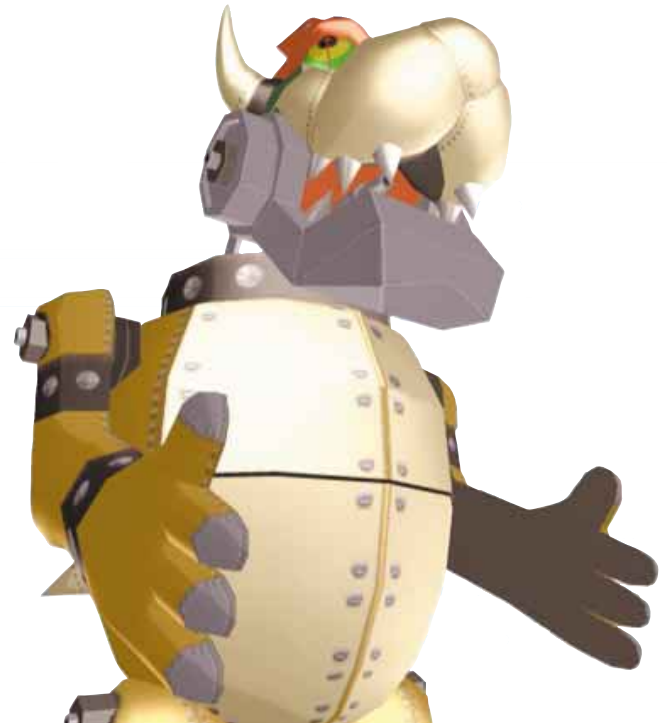
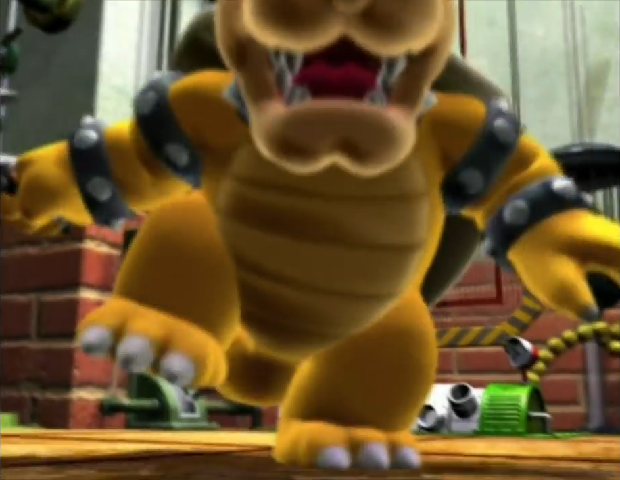
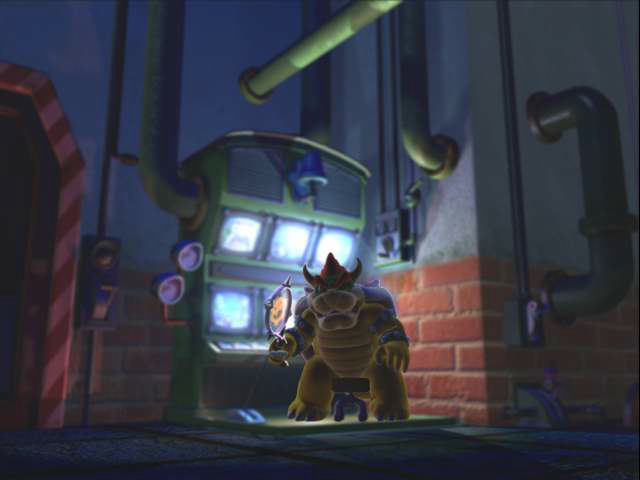
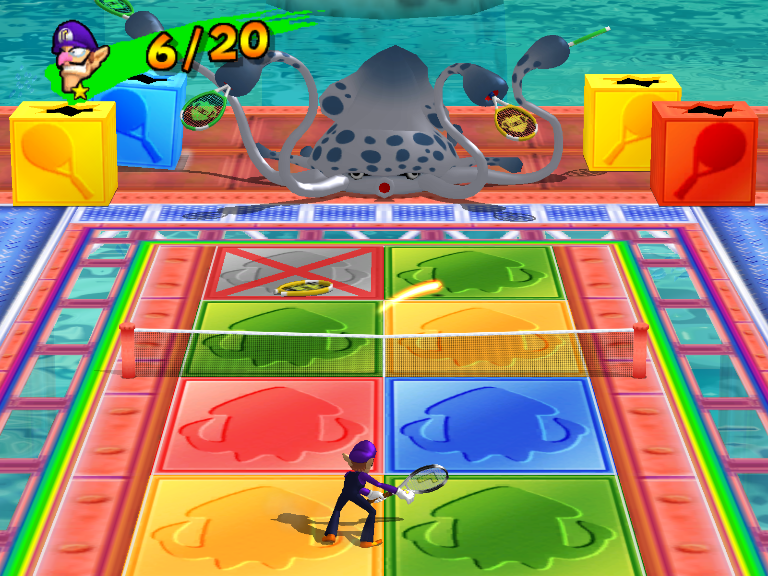
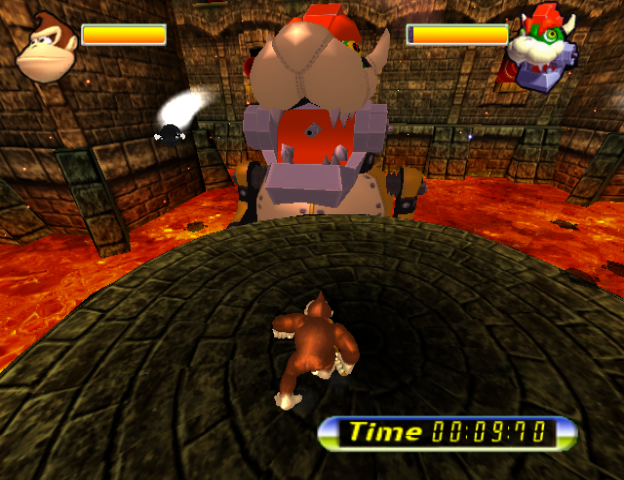
Two Special Games are single-player duels against Super Mario Sunshine bosses. Gooper Blooper Volley is a rally against a Gooper Blooper holding a racket in each of four tentacles, in which hitting into a shifting grey zone or out of court ends the game. Mecha-Bowser Mayhem is a battle with a Mecha-Bowser that fires light beams, flames, Bullet Bills and Bob-ombs, which you knock back at it until one of you is beaten.
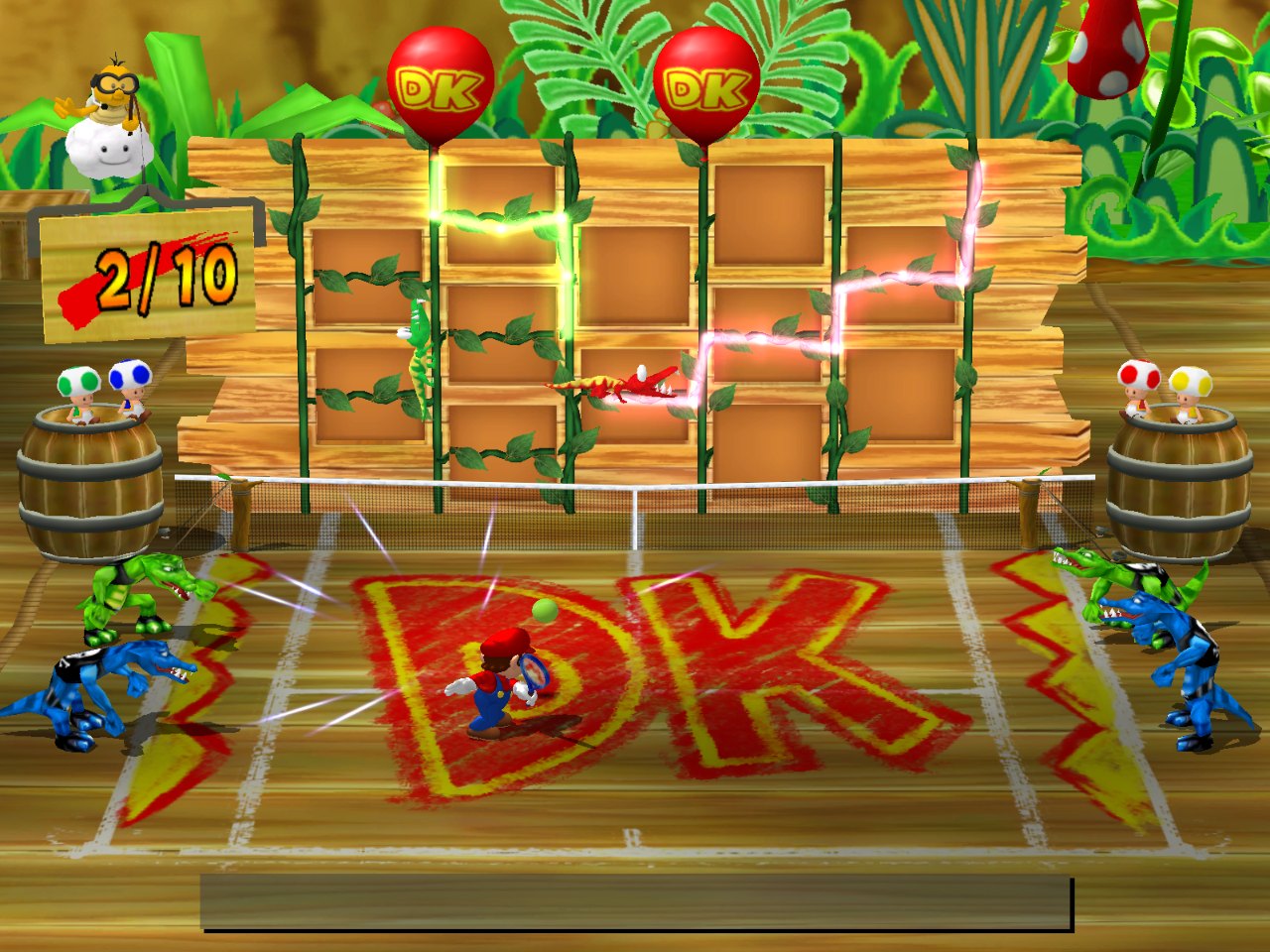
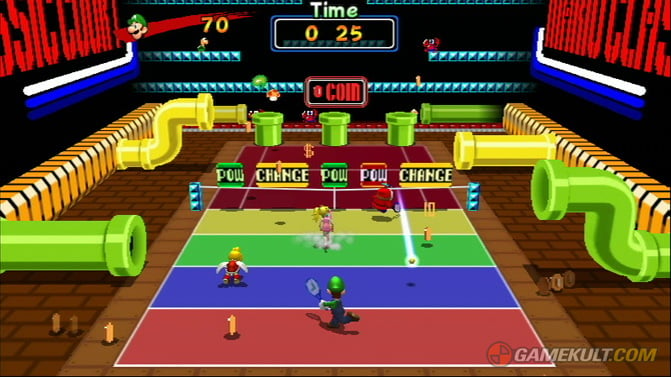
In Balloon Panic you hit panels to turn Klaptraps away from your balloons, and the game ends when one pops. Coin Collectors limits you to moving left and right while coins and fireballs rain down; hit the POW Block for extra coins or to destroy fireballs, and the player with most coins wins. The Mario Bros. game-over jingle plays when it ends.
Ten courts: the Peach Dome in three surfaces and seven themed courts, each with a gimmick version and (once unlocked) a standard one. Ball speed and bounce are the game’s own ratings.
Peach Dome (Hard)Hard · from the start · normal speed, strong bounceThe home of the World Open and the Mushroom and Rainbow Cups; like the other two Peach Dome surfaces, it has no gimmick at all.
Peach Dome (Clay)Clay · from the start · slow, weak bounceThe Flower and Moonlight Cups’ surface: long rallies, low bounces.
Peach Dome (Grass)Grass · from the start · fast, weak bounceHome of the Star and Planet Cups, and of five-set finals.
Luigi’s Mansion CourtGimmick · from the start · fast, normal bounceBalls that land on ghost zones summon ghosts; hit the light bulb switch to clear them. Gold Ghosts and Garbage Can Ghosts watch from the stands.
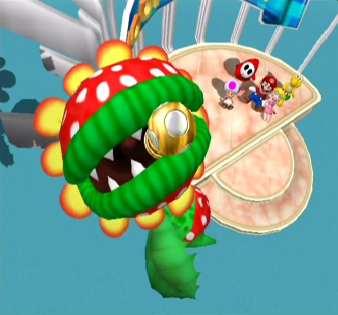
Delfino Plaza CourtGimmick · from the start · normal speed, weak bounceLand the ball on a Piranha Plant circle and a plant sprays slowing goop; stand on a F.L.U.D.D. panel to clean it.
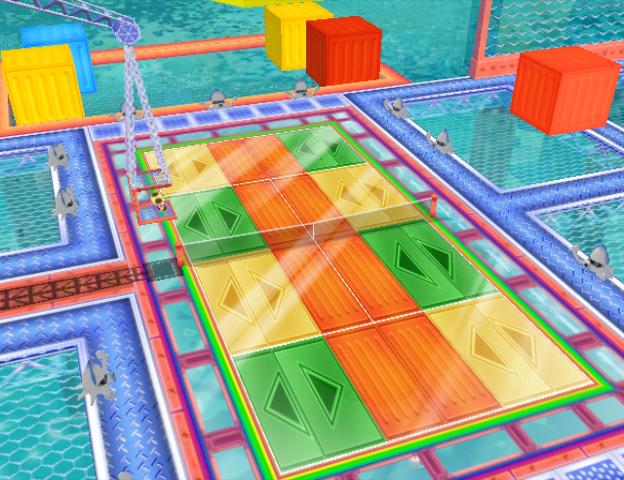
Wario Factory CourtGimmick · from the start · fast, strongest bounceArrow switches drive conveyor belts across the court, in a factory modelled on WarioWare, Inc.
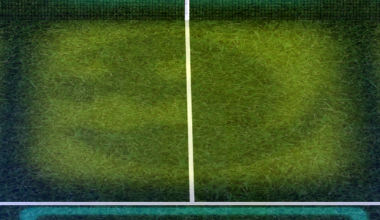
Gooper Blooper CourtGimmick · from the start · fastest, normal bounceSliding floor panels at Ricco Harbor; uncover the water and a ball landing in it is out.
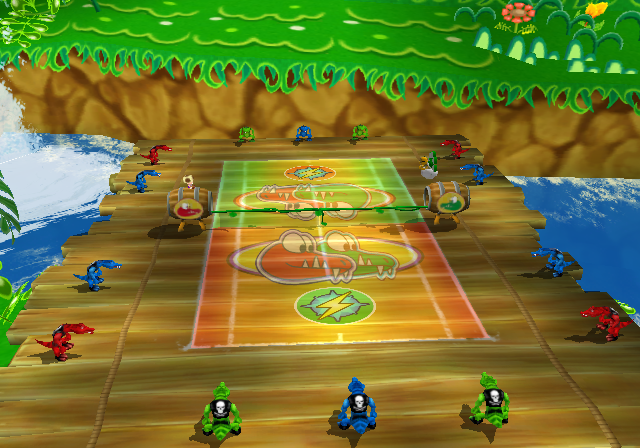
DK Jungle CourtGimmick · from the start · slow, normal bounceKlaptraps on the net bite at players’ legs until Thunder Lakitu zaps them, to a remix of DK Island Swing.
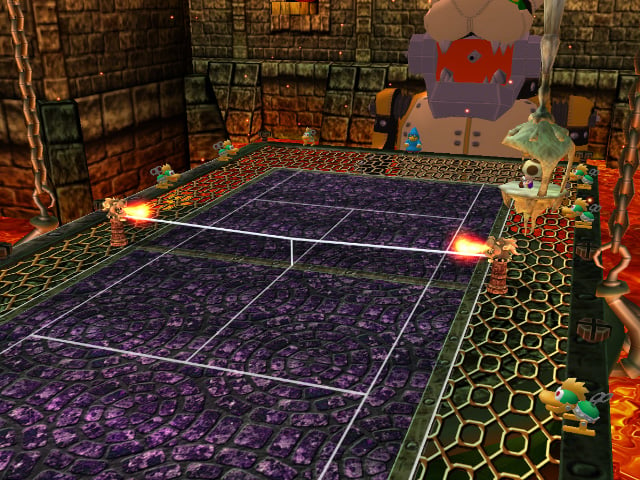
Bowser Castle CourtGimmick · win the Fire Cup in singles · fast, strong bounceThe deck tilts under the players’ weight, as on the N64 game’s Bowser Stage; Bowser’s Keep from Super Mario RPG appears in its intro.
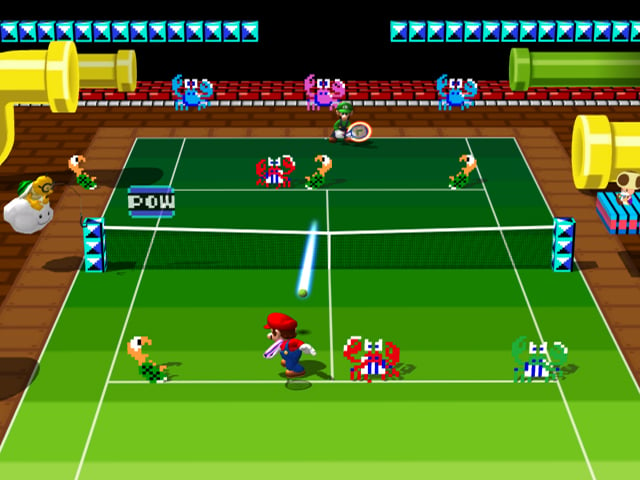
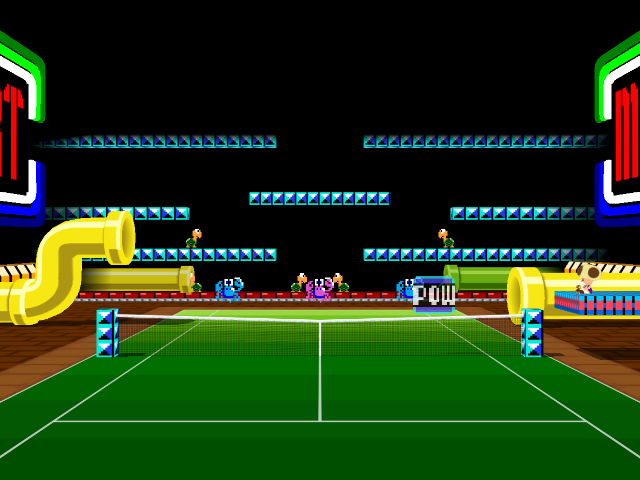
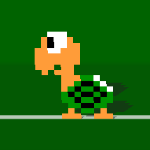
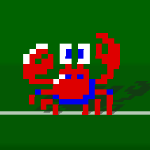
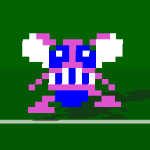
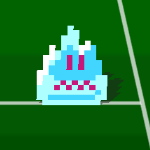
Mario Classic CourtGimmick · win the Fire Cup in doubles · slow, strongest bounceThe Mario Bros. arcade game come to life: Shellcreepers, Sidesteppers, Fighter Flies and Freezies, and a POW Block on the net.
Advertisement
Gameplay & Controls
Underneath the spectacle, Mario Power Tennis is the N64 game’s tennis engine refined: proper scoring with deuce and advantage, two shot buttons, charged shots and leaps. On top sit the Power Shots, the gimmick courts and the items, all of which can be switched off when you want a straight match.
Controls and the shots
On the GameCube controller the stick moves your player and aims, A hits topspin (faster and higher, with a red trail) and B slice (slower and lower, with a blue trail); press either twice for a stronger version. A then B is a lob, which clears an opponent at the net but hands them a smash if it falls short, and B then A a drop shot that barely creeps over. A and B together gives a flat shot with a green trail, or, when the ball is high or you are standing on a smash point, a purple-trailed smash. L cancels a charge (or, with A or B, makes your player dive for the ball) and Z changes the camera.
On the character select screen, L makes your player left-handed and R picks their star version once it is unlocked. The options offer Easy, Normal and Technical control styles. One quirk Camelot changed from other Mario Tennis games: in doubles the ball passes through your partner, so you can never lose a point by hitting your own team-mate.
The game’s control layout.Mario against the Planet Cup field.
Power Shots
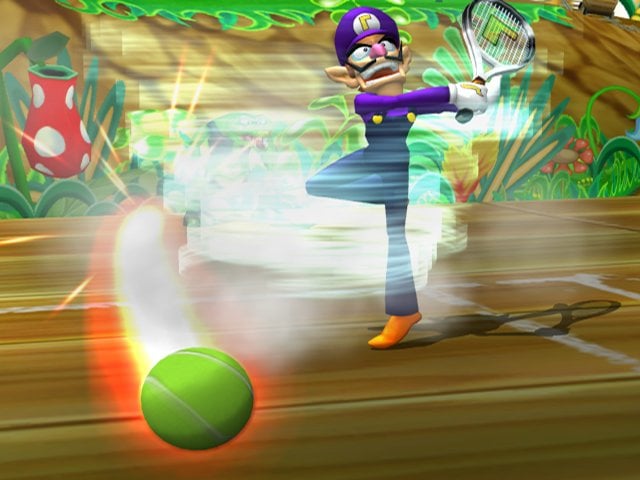
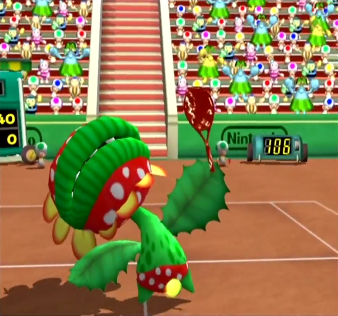
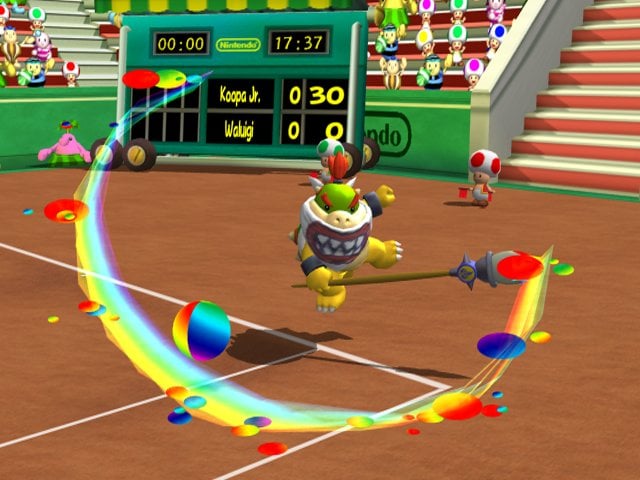
With Power Shots switched on, your racket begins to glow and makes a sound after a while: a Power Shot is ready. An Offensive Power Shot (R and A, or X) plays a short animation and sends back a ball loaded with an effect that disorients whoever receives it. Some knock the receiver backwards, Whirluigi spins them round and wipes out any Power Shot they had stored, Petey Piranha’s Sludge Racket slows down anyone who returns it, and Bowser Jr.’s Magic Paint sends three paint balls over the net, only one of them real.
A Defensive Power Shot (R and B, or Y) lets your player reach a ball far out of range, Luigi flinging his racket and reeling it back with the Poltergust 3000, for example, and it also blocks the extra effects of an incoming Offensive Power Shot. Returning an Offensive shot while your own racket is glowing costs you the glow. On the default control style an Offensive input from too far away turns into a Defensive one; on the automatic style, Offensive inputs always produce the Defensive version.
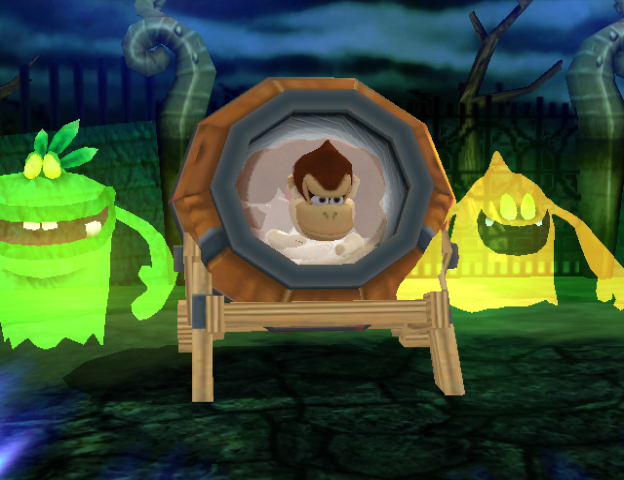
Whirluigi: Waluigi spins up a cyclone.Petey Piranha’s Sludge Racket.Bowser Jr.’s Magic Paint: only the middle ball is real.Donkey Kong’s Barrel Cannon Blast.
Character types
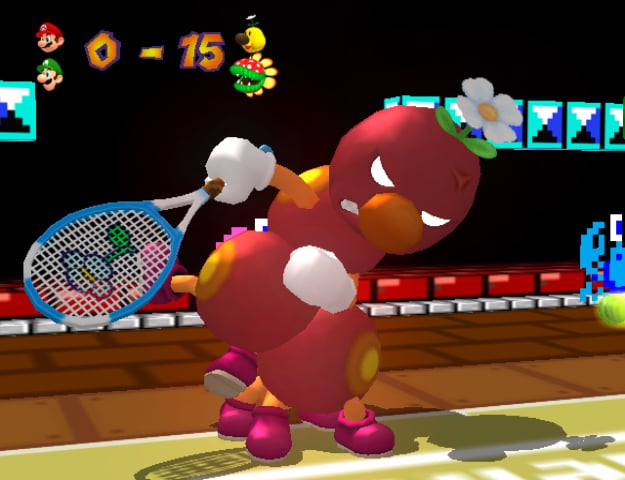
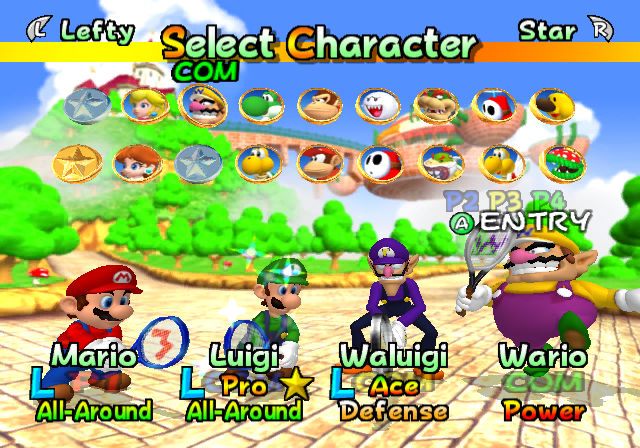
There are six types. All-Around: Mario and Luigi. Technique: Peach, Daisy, Shy Guy and Paratroopa, who place the ball precisely. Power: Wario, Donkey Kong, Bowser and Petey Piranha, the hardest hitters. Speed: Yoshi, Koopa Troopa and Diddy Kong, who cover the court fastest. Tricky: Boo, Bowser Jr. and Fly Guy, with unpredictable spin. Defense, new since the N64 game: Waluigi and Wiggler, who can get a racket to almost anything.
Win the Star Cup with a character and they earn a star rank, a stronger version with harder hitting, picked by pressing R on the character select screen.
The character select screen.Wiggler’s icon. He and Waluigi make up the new Defense type.
Difficulty, Records, Event Games and options
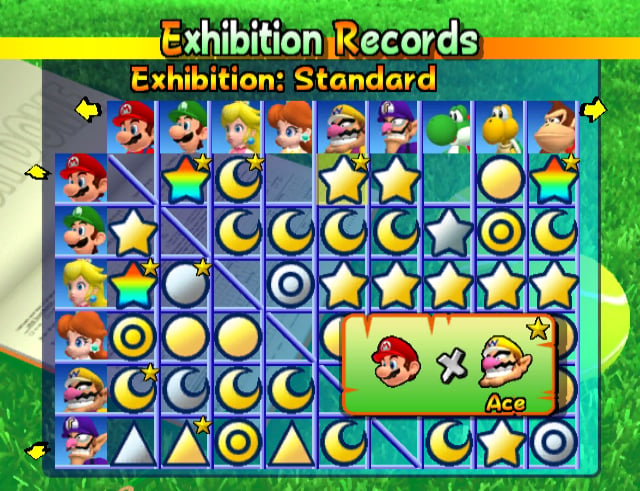
Computer opponents come in five levels: Novice, Intermediate, Expert, Pro and the unlockable Ace. The Exhibition Records mark every opponent you have beaten with a shape for the difficulty (triangle, circle, circle with a dot, moon, star) and a colour for how you did it: silver after resuming a save, gold without saving, and rainbow, on Ace only, for beating a starred computer player with an unstarred character without saving. Tournament records show every trophy won by every character, and Special Games keep best scores and times.
Event Games, a multiplayer tiebreak played to 3, 5 or 7 points, is hidden from the menu until you enter a button combination on the title screen (see Cheats & Secrets). Matches can be saved mid-way into one of three Continue files, although the score in the current game goes back to 0–0 when you resume. The options cover mono, stereo or surround sound, music, rumble and the control style.
The Exhibition records.
New Play Control! on Wii: swing to hit
The 2009 Wii version turns the Wii Remote into the racket. You can play with the Remote alone or add the Nunchuk for more precise control of your character. To serve, flick the Remote up to toss the ball and flick again to hit it. To return, flick as the ball arrives: the faster the flick, the stronger the shot. Diagonal flicks add topspin or slice, a straight upward flick gives a lob, a straight downward one a drop shot, and a downward flick on a smash star gives a smash. Nintendo’s own description adds that timing a swing late builds a Power Shot.
An on-screen Power Gauge under the character icons shows when a Power Shot is ready, and there are three Power Shot styles: Easy fires them automatically when the gauge is full, Normal has you hold A or B as you flick, and Technical uses A for Offensive and B for Defensive shots. The Wii version also adds 16:9 widescreen and a tutorial movie for the new controls; otherwise this is the GameCube game. Critics found the swings hard to control, and when Camelot came to design Swing Mode for Mario Tennis Aces, its developers acknowledged that this version had not been able to tell the shots apart properly.
The New Play Control! title screen.Japanese artwork for the Wii version.
Court gimmicks and Item Battle items
The gimmick courts’ hazards and helpers, followed by the six items of Item Battle, which float over the net in Item Boxes as in Mario Kart: Double Dash!! (the boxes, items and sounds are the same). How often each item appears depends on the court.
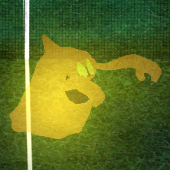
GhostsLuigi’s Mansion Court. Blue Twirlers, Bowling Ghosts, Gold Ghosts and Purple Punchers appear where balls vanish into ghost zones, and slow anyone they touch.
Garbage Can GhostLuigi’s Mansion Court. Now and then lobs a banana peel onto the court.
Ghost zoneLuigi’s Mansion Court. A ball landing here vanishes and summons a ghost above the tile.
Light bulb zoneLuigi’s Mansion Court. Hit your opponent’s to clear every ghost from your side.
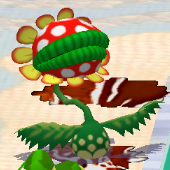
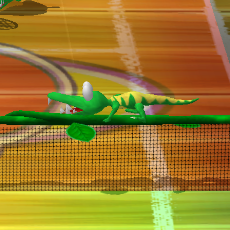
Piranha PlantDelfino Plaza Court. Pops out of a puddle to spit slowing goop.
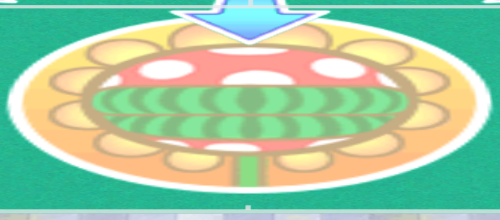
Piranha Plant iconDelfino Plaza Court. A ball landing on one sets a Piranha Plant spitting goop over it.
Water nozzle and switchDelfino Plaza Court. Step on the switch and the F.L.U.D.D.-style nozzle washes the goop away.
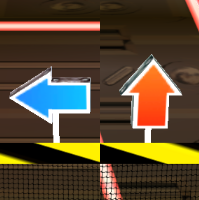
Direction arrowsWario Factory Court. Hit one to start or reverse the matching conveyor belt; hit it again to speed it up.
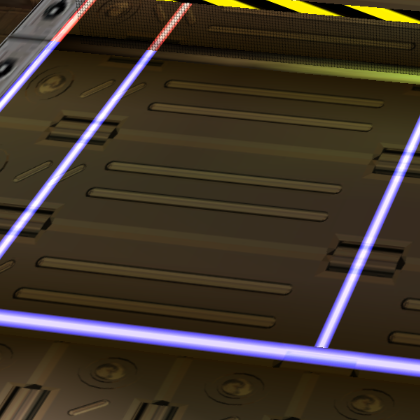
Conveyor beltWario Factory Court. Carries players across or along the court.
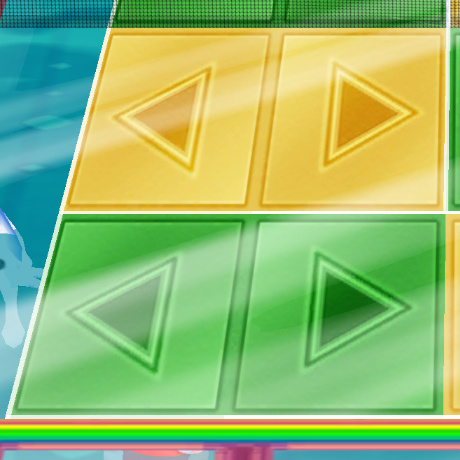
Sliding floor panelsGooper Blooper Court. A ball on an arrow slides the panel; uncover water and a ball landing in it is out.
KlaptrapsDK Jungle Court. Latch onto players’ legs, slowing them and shortening their dives.
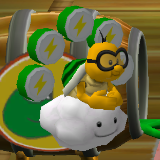
Thunder LakituDK Jungle Court. Zaps the Klaptraps off one side of the court.
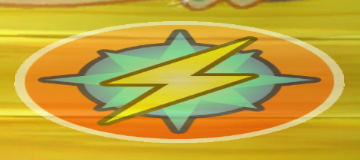
Lightning circleDK Jungle Court. Hit the opponent’s circle to call Thunder Lakitu to your side.
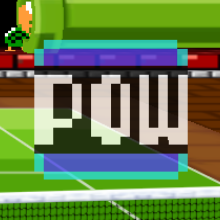
POW BlockMario Classic Court. Hit it to flip the enemies; it breaks after three hits and comes back.
ShellcreeperMario Classic Court. Walks back and forth in your way; one POW hit flips it.
SidestepperMario Classic Court. Needs two POW hits.
Fighter FlyMario Classic Court. Hops about from the second game onwards.
FreezieMario Classic Court. From the third game, turns one side to slippery ice.
Green ShellItem Battle. Fires three shells in straight lines.
Red ShellItem Battle. A homing shell.
MushroomItem Battle. A short burst of speed, and a quicker recovery from being shrunk.
BananaItem Battle. A slippery hazard left on the court.
StarItem Battle. Boosts your abilities and makes you invulnerable for a while.
LightningItem Battle. Shrinks your opponents, cutting their speed, reach and power.
Cartoons, Comics & Other Media
Mario Power Tennis borrows from half of Nintendo’s back catalogue, and a few of its own ideas have turned up elsewhere since.
The GameCube era on courtReferences to other gamesDelfino Plaza and Ricco Harbor from Super Mario Sunshine, with Bowser Jr.’s magic brush, Petey Piranha, the Gooper Blooper and Mecha-Bowser; Luigi’s Mansion and its Poltergust 3000; the Wario Factory from WarioWare, Inc. with music from Wario World; DK Jungle’s Klaptraps and Kritters from Donkey Kong Country and Donkey Kong 64. Item Battle uses the very item boxes, items and sound effects of Mario Kart: Double Dash!!, and Toadette cameos in the opening.
Older classicsReferences to other gamesThe Mario Classic Court is the Mario Bros. arcade game; Donkey Kong’s trophy scene plays the 1981 Donkey Kong title music, Yoshi’s uses Yoshi’s Song from Yoshi’s Story, Wario’s a tune from Wario Land 3 and Bowser’s part of his Super Mario 64 theme. Peach hums the Super Mario Bros. underground music while she waits.
Super Smash Bros.Brawl, for Wii U and UltimateSuper Smash Bros. Brawl’s Mario Circuit stage plays “Mario Tennis / Mario Golf”, an arrangement of the title themes of Mario Power Tennis and Mario Golf: Toadstool Tour, both by Motoi Sakuraba. It returned in Super Smash Bros. for Wii U and Ultimate.
Waluigi’s moves elsewhereMario Hoops 3-on-3 · Mario & SonicWaluigi’s Whirluigi cyclone and air-swimming Swimming Return were recycled in his Twist Dunk in Mario Hoops 3-on-3, and he swims through the air when boosting in several Mario & Sonic events.
Mario Sports Superstars amiibo cardsNintendo 3DSCharacter artwork from Mario Power Tennis was reused on the tennis amiibo cards made for Mario Sports Superstars.
Nintendo Dream New Year cardNintendo Dream · 2005The Japanese magazine Nintendo Dream made its 2005 nengajō (New Year greeting card) from the game’s artwork.
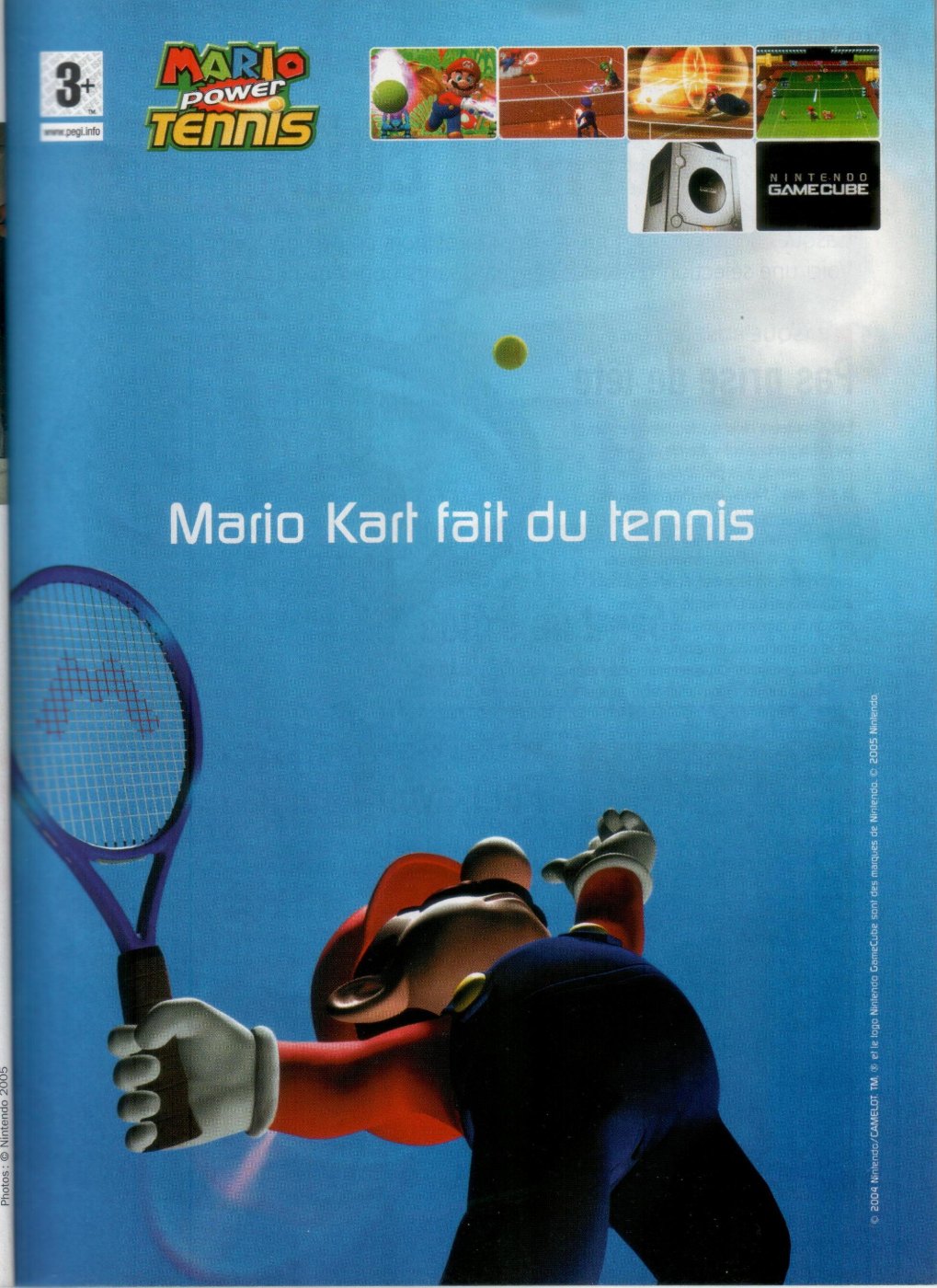
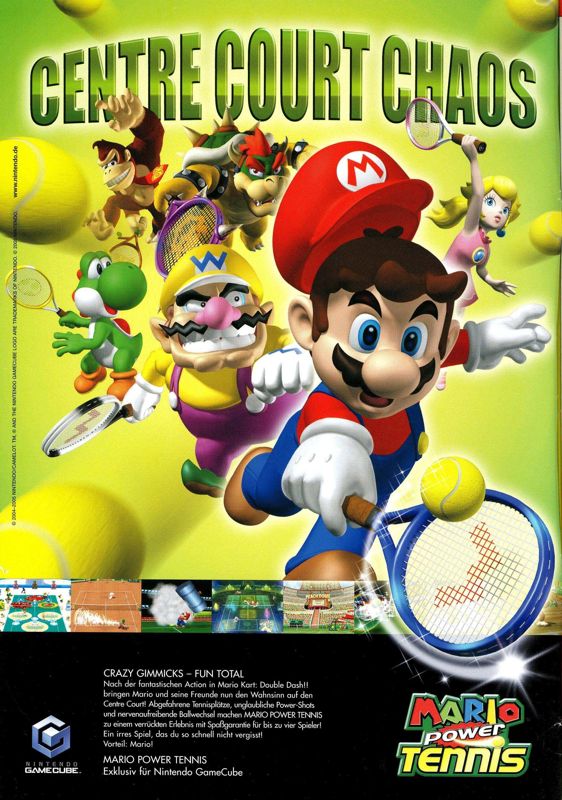
Print advertsUK, France, Germany · 2005European print adverts for the GameCube release are shown in the gallery.
Mario Tennis: Power TourGame Boy AdvanceCamelot’s handheld follow-up carried the Power Shots, including Mario’s Iron Hammer, over to the Game Boy Advance.
Advertisement
The Roster
Eighteen characters, fourteen of them available from the start. Types, unlock conditions and Power Shot names are from the game; voices are from the staff credits (Kazumi Totaka and Grant Kirkhope uncredited).
Character
Who they are
In this game
Abilities & notes
MarioAll-Around · from the start
The defending hero, who returns Bowser’s Bullet Bill to end the opening film. Voiced by Charles Martinet.
A balanced player with a Power Shot that also protects him: the Iron Hammer cancels the knockback from Power Shots he receives.
Offensive: Iron Hammer
Defensive: Spin Jump Return
LuigiAll-Around · from the start
Mario’s doubles partner and co-target of the villains’ plot. Voiced by Charles Martinet.
His Defensive shot borrows the Poltergust 3000 from Luigi’s Mansion to reel in a thrown racket and the ball.
Offensive: Squeaky Mallet
Defensive: Poltergust Return
PeachTechnique · from the start
The host of the Peach Dome, presiding over the final with Toadsworth. Voiced by Jen Taylor.
Her Offensive shot is a tornado spin that curves the ball, knocks the receiver back towards the net and can strip their stored Power Shot.
Offensive: Super Peach Spin
Defensive: Sweet Kiss Return
DaisyTechnique · from the start
Princess of Sarasaland. Voiced by Deanna Mustard.
Precise placement and flower-themed Power Shots.
Offensive: Wonder Flower
Defensive: Flowerbed Return
WarioPower · from the start
Half of the sore losers whose grudge drives the opening film. Voiced by Charles Martinet.
A heavy hitter.
Offensive: Thunder Cast Shot
Defensive: Ultra-Hand Return
WaluigiDefense · from the start
Wario’s partner in crime, in his second Mario Tennis. Voiced by Charles Martinet.
One of the two members of the new Defense type. Whirluigi curls the ball, spins the receiver round and wipes their stored Power Shot.
Offensive: Whirluigi
Defensive: Swimming Return
YoshiSpeed · from the start
One of the finalists the villains try to replace in the opening. Voiced by Kazumi Totaka.
Fast around the court; his Defensive roll resembles his Egg Roll from Super Smash Bros. Melee.
Offensive: Rainbow Flutter
Defensive: Rolling Egg Return
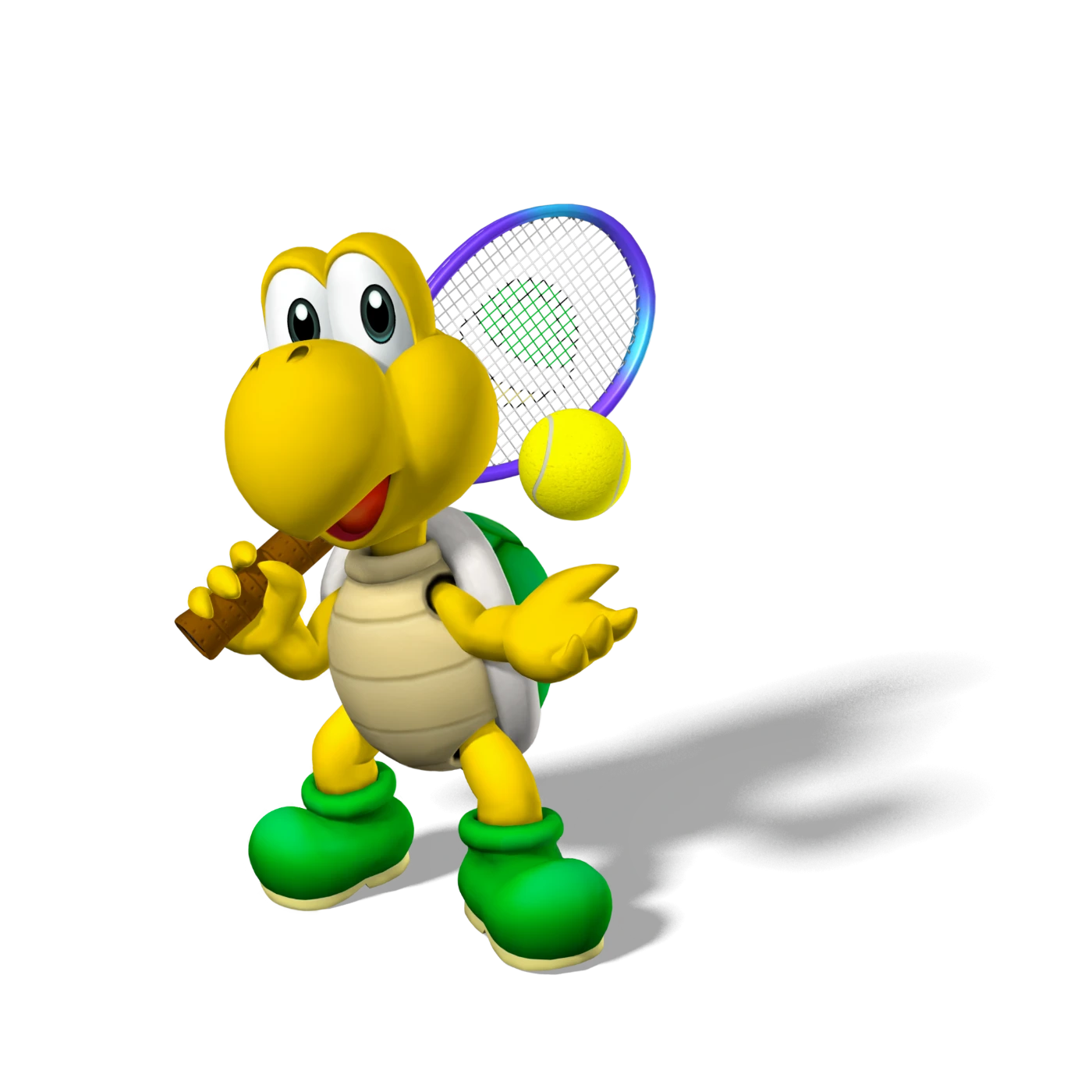
Koopa TroopaSpeed · from the start
Helps the brothers fend off the Bob-ombs in the opening.
Water-themed Power Shots for a quick, light player.
Offensive: Water Bomb
Defensive: Water Shell Dash
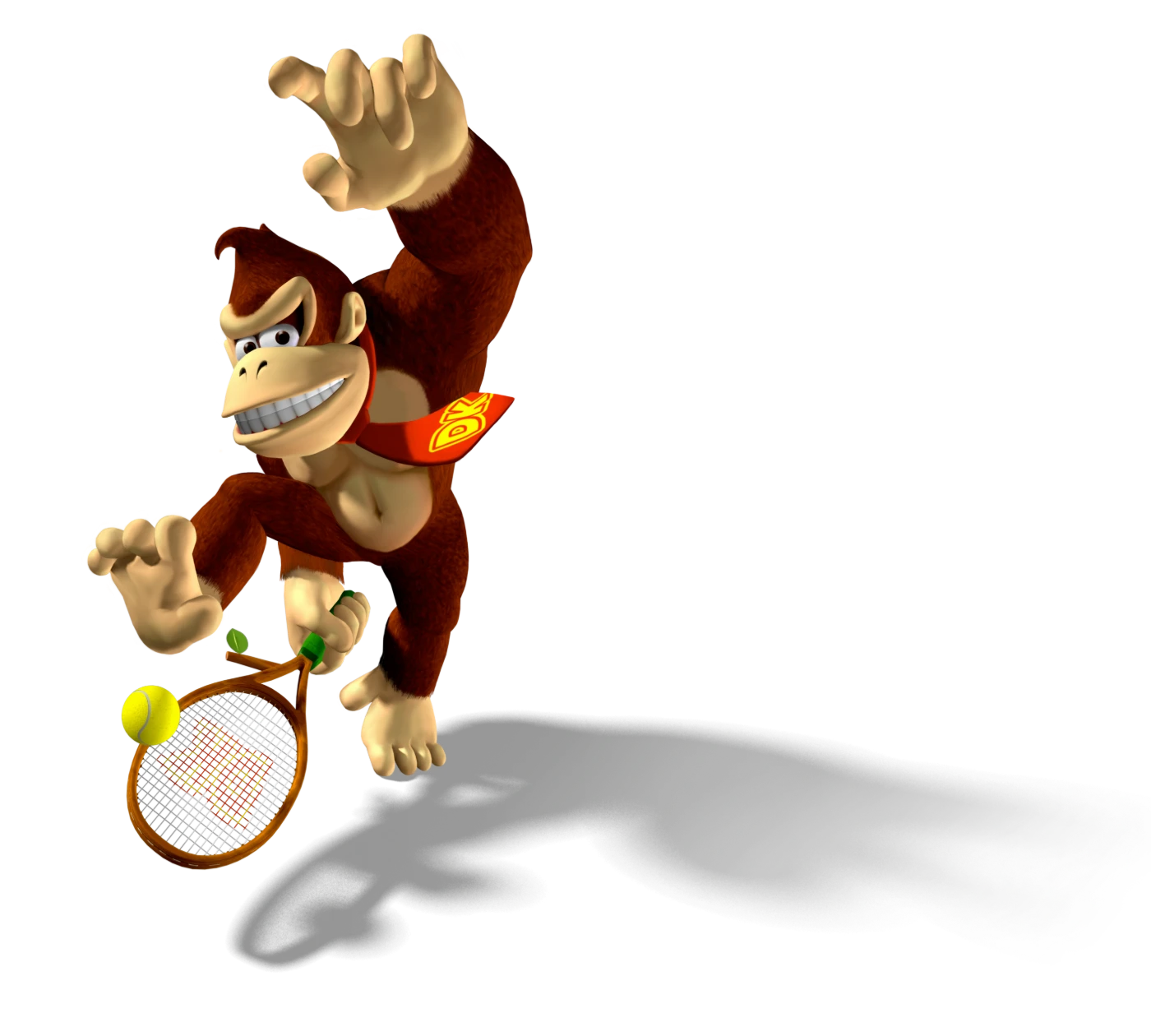
Donkey KongPower · from the start
The other half of the final’s opposing pair. Voiced by Takashi Nagasako (Grant Kirkhope in the intro and kiosk demo).
His Barrel Cannon Blast fires him and the ball from a barrel hard enough to knock the receiver backwards.
Offensive: Barrel Cannon Blast
Defensive: Boomerang Banana Return
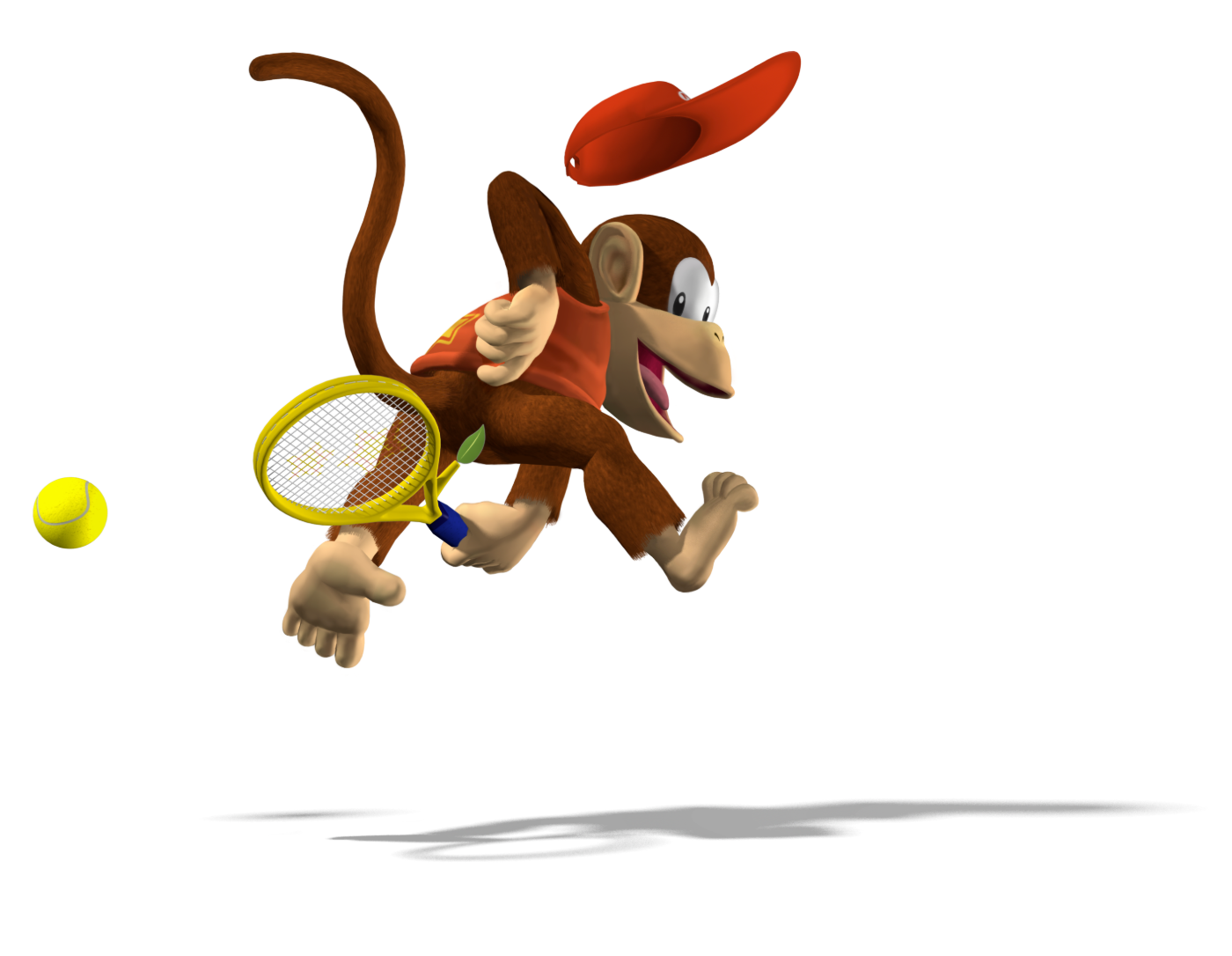
Diddy KongSpeed · from the start
Pitches in against the Bob-ombs in the opening. Voiced by Katsumi Suzuki.
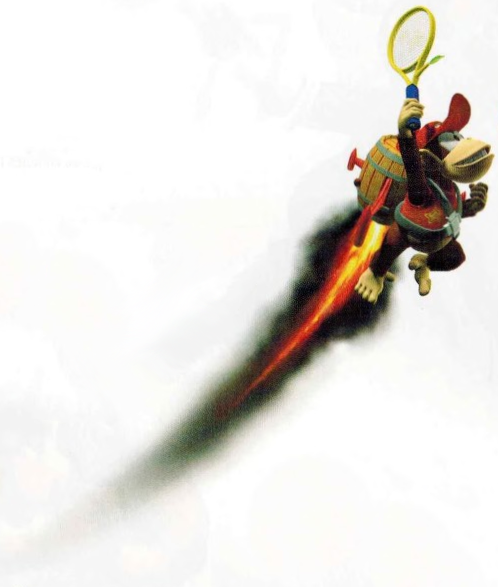
Speedy, with a jetpack barrel to rescue far-away balls.
Offensive: Acrobatic Banana
Defensive: Barrel Jet
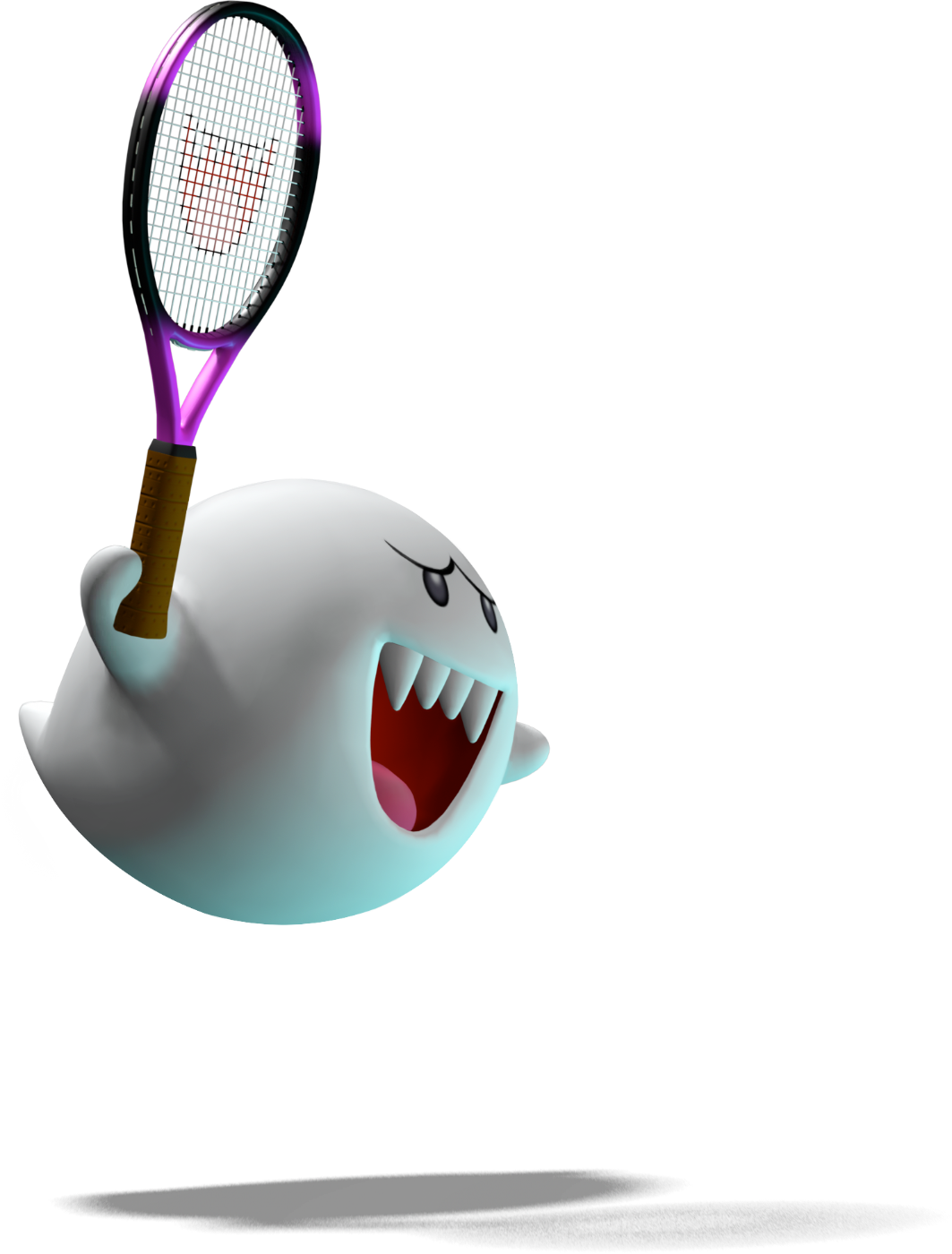
BooTricky · from the start
Voiced by Sanae Suzaki.
Unpredictable spin and ghostly Power Shots.
Offensive: Boo Blast
Defensive: Boo Brigade Return
Shy GuyTechnique · from the start
Voiced by Nate Bihldorff.
Armed with a spear for his Power Shots.
Offensive: Lightning Spear
Defensive: Spear Dance Return
BowserPower · from the start
The mastermind of the opening’s sabotage, who ends up flattened by his own blimp. Voiced by Scott Burns, who is also the announcer.
Power player whose Defensive shell spin recalls his Whirling Fortress in Super Smash Bros. Melee.
Offensive: Fire Breath
Defensive: Spinning Shell Dash
Bowser Jr.Tricky · from the start
Fresh from Super Mario Sunshine, and armed with the same magic brush. Voiced by Delores Rogers.
Magic Paint sends over three balls, only the middle one real, and slows anyone who returns it.
Offensive: Magic Paint
Defensive: Rolling Brush Return
Fly GuyTricky · unlockable
The propeller-powered Shy Guy, here as a player in his own right. Voiced by Nate Bihldorff.
Unlocked by winning the Mushroom, Flower and Star Cups in singles.
Offensive: Tornado Twist
Defensive: Tornado Return
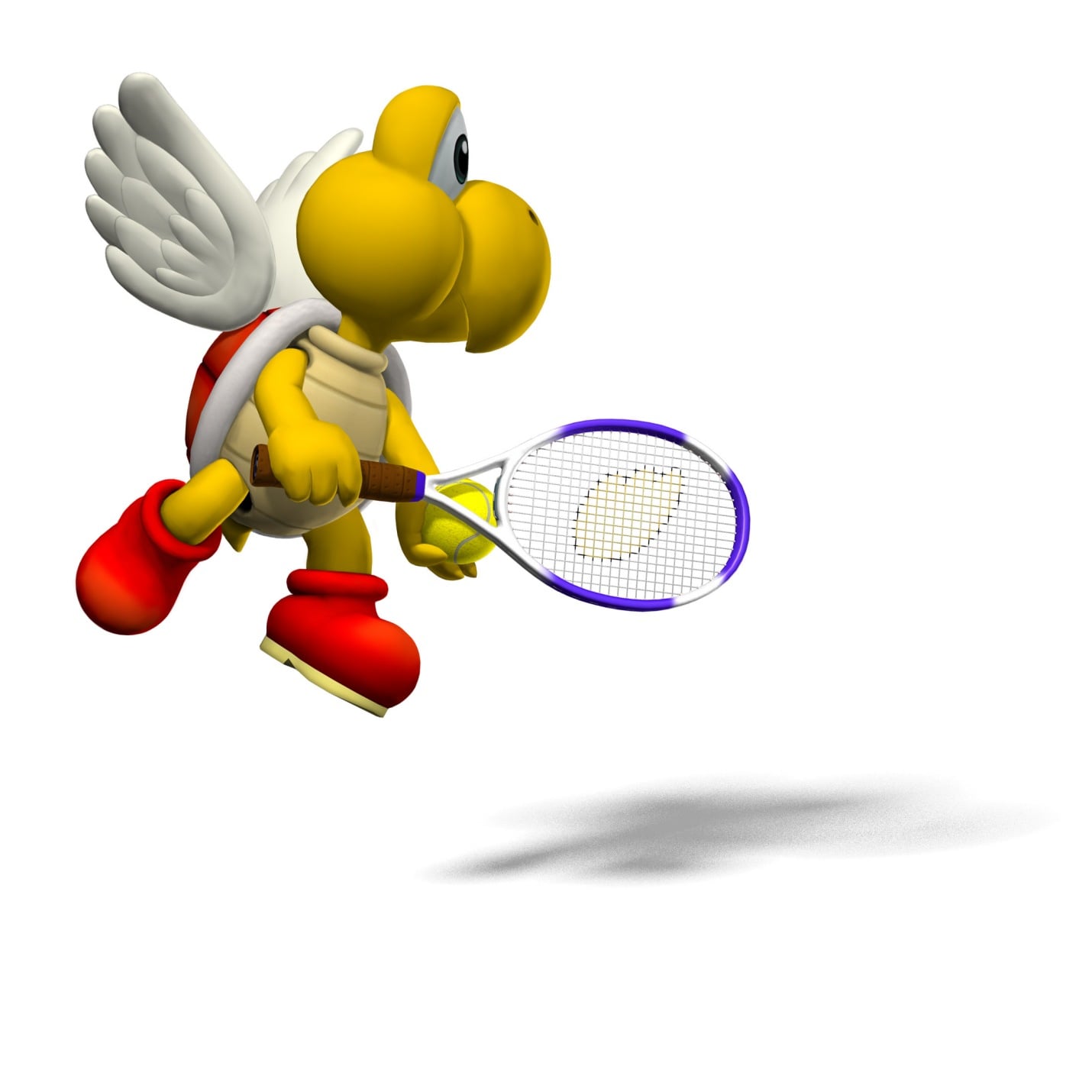
ParatroopaTechnique · unlockable
The winged Koopa, back from the N64 game.
Unlocked by winning the Mushroom, Flower and Star Cups in doubles.
Offensive: Energy Ball
Defensive: Sky Dive
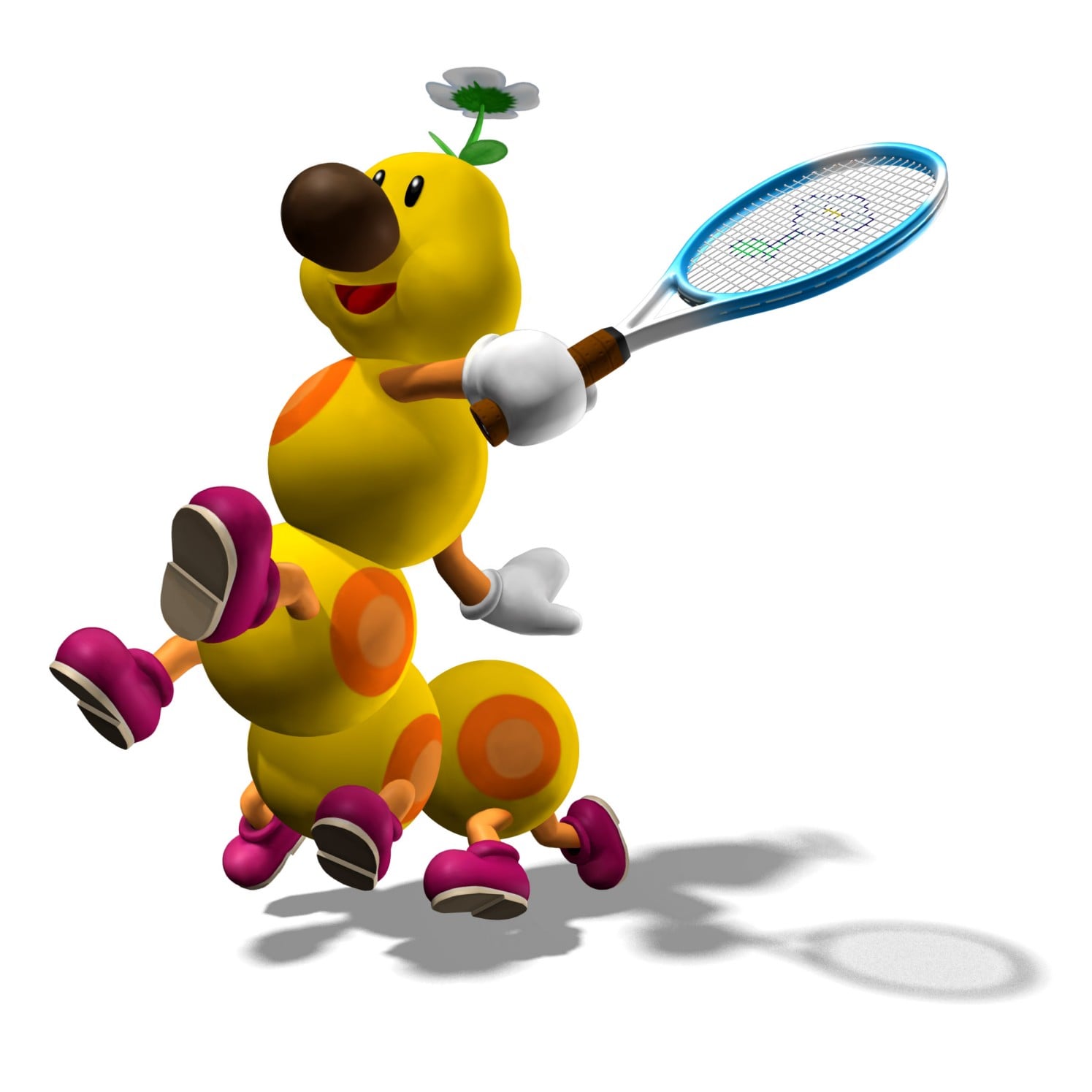
WigglerDefense · unlockable
The caterpillar with a famous temper, which powers his Offensive shot. Voiced by Delores Rogers.
Unlocked by winning the Fire and Thunder Cups in singles.
Offensive: Anger Management
Defensive: Flutter Return
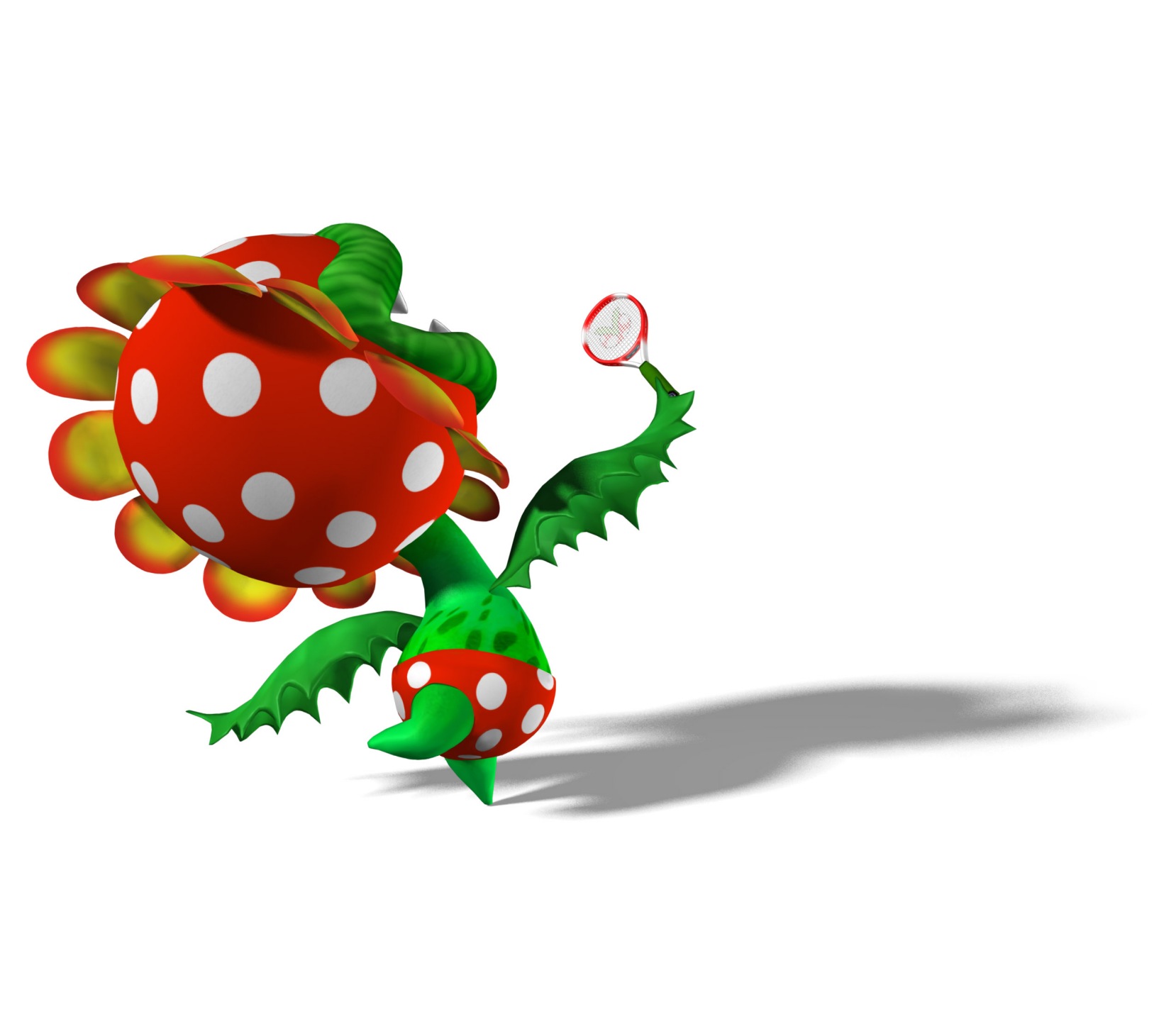
Petey PiranhaPower · unlockable
Super Mario Sunshine’s goop-spitting boss. Voiced by Toru Minegishi.
Unlocked by winning the Fire and Thunder Cups in doubles. His Sludge Racket slows down anyone who returns it.
Offensive: Sludge Racket
Defensive: Piranha Swingback
Rivals, cameos and crowds
The bosses of the single-player Special Games, and the faces in the opening film and the stands.
Gooper Blooper (boss)Gooper Blooper VolleyHolds a racket in each of four tentacles.
Mecha-Bowser (boss)Mecha-Bowser MayhemFires light beams, flames, Bullet Bills and Bob-ombs for you to send back.
Bullet BillOpening filmBowser’s last resort, returned by Mario into the Bob-omb launcher.
ToadsworthOpening filmPresides over the final with Peach.
ToadetteOpening filmA cameo by the Double Dash!! newcomer.
KritterDK Jungle CourtStand around the edge of the court, in their Donkey Kong 64 designs.
KlaptrapDK Jungle Court, Balloon PanicThe court’s leg-biters, in green and red.
ToadsCrowdRed, blue, yellow, green and purple Toads fill the stands.
Piantas and NokisCrowdIsle Delfino’s residents come to watch.
Key staff
Names and roles from the game’s staff credits.
Haruki KoderaDirector; programming leadDirector of the N64 Mario Tennis, back in the chair.
Hiroyuki TakahashiProducer; main game designSpoke to IGN after release about the themed courts, voice acting and the decision to leave out online play.
Shugo TakahashiProducer; main game design; textCredited for the game’s text with Yusuke Sugimoto and Kentaro Sakou; later co-directed the Wii version with Ayumu Shindo.
Shinji HatanoProducerCredited as producer with the Takahashi brothers.
Satoru IwataExecutive producerCredited as executive producer on both the GameCube and Wii versions.
Fumihide AokiGraphics director; character designCredited for character design with Shigeru Miyamoto and Hiroji Kiyotake.
Atsushi Fujimoto, Kazuhiko TsukadaMovie directionDirected the cutscenes; Ryo Inoguchi and Fujimoto planned them.
Motoi SakurabaMusicComposed the score, including the title theme later arranged for Super Smash Bros. Brawl.
Masaaki UnoSound directorWith Koji Kondo credited for sound support.
Charles MartinetVoicesMario, Luigi, Wario and Waluigi.
Shigeru Miyamoto, Takashi TezukaSupervisors (Nintendo)Nintendo’s supervisors on the project.
How It Was Made
Camelot talked about the game in some detail around its release, mostly through IGN and Famitsu, as summarised by Wikipedia.
A false start and a fresh one
The early logo, from before the “Power” was added.
The game was first unveiled in Famitsu in 2002; before the version that shipped, Camelot had worked on a different GameCube Mario Tennis and abandoned it. Shugo Takahashi later described it as more serious and deeper, with fewer of the Mario-style gimmicks the final game is full of. The team, around thirty people under the Takahashi brothers, started over, borrowing ideas and tech from Mario Golf: Toadstool Tour, which the same team was building in parallel. Hiroyuki Takahashi’s view was that simply updating the graphics, without new ideas, would not have been good enough for a Mario game, and the success of the N64 original made the team want something that looked different at a glance. The finished game was shown at E3 2004.
Courts, voices and no online play
Concept art for the game.
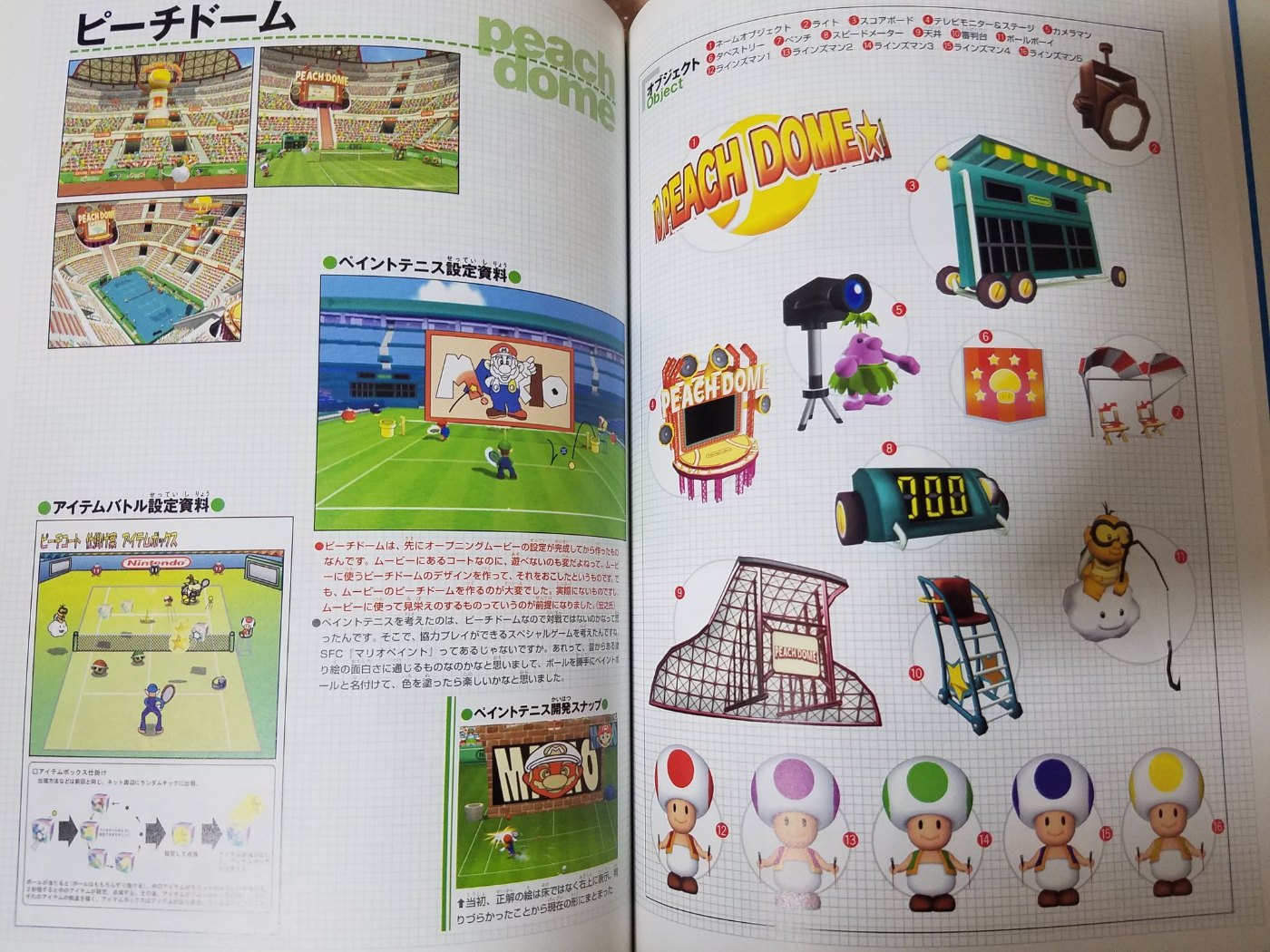
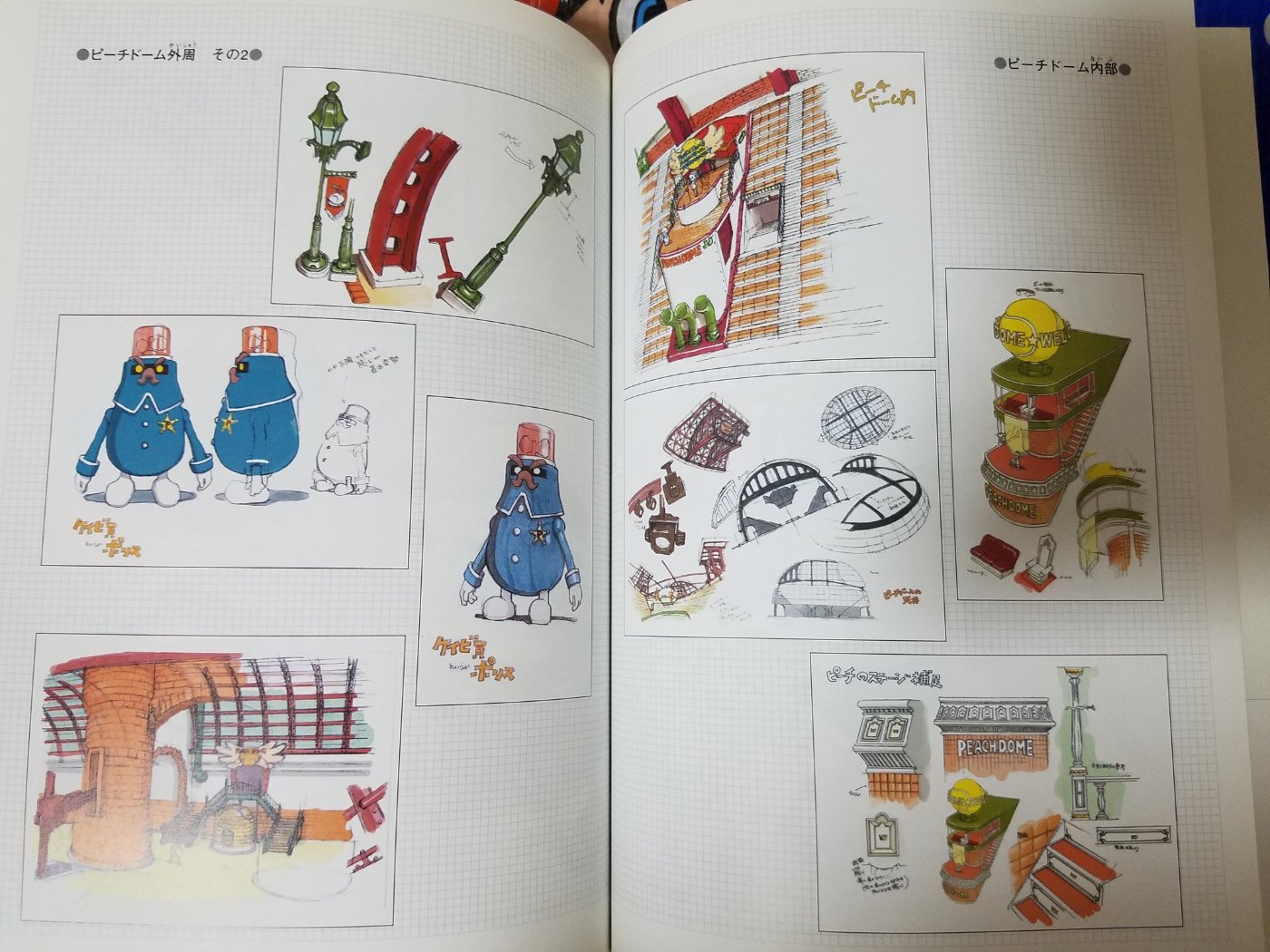
In an interview with IGN after release, Hiroyuki Takahashi explained that the themed courts came out of long brainstorming sessions, picked to remind players of older Mario games and to introduce newcomers to them. Nintendo helped with the voice acting and the animation. The role-playing elements of the handheld Mario Tennis were left out because he felt they suited a portable, single-player game. Online play was considered and rejected: he doubted a tennis game could feel right with the lag of the internet connections of the time. The opening film, the Special Games and the animations were the parts that gave the schedule the most trouble.
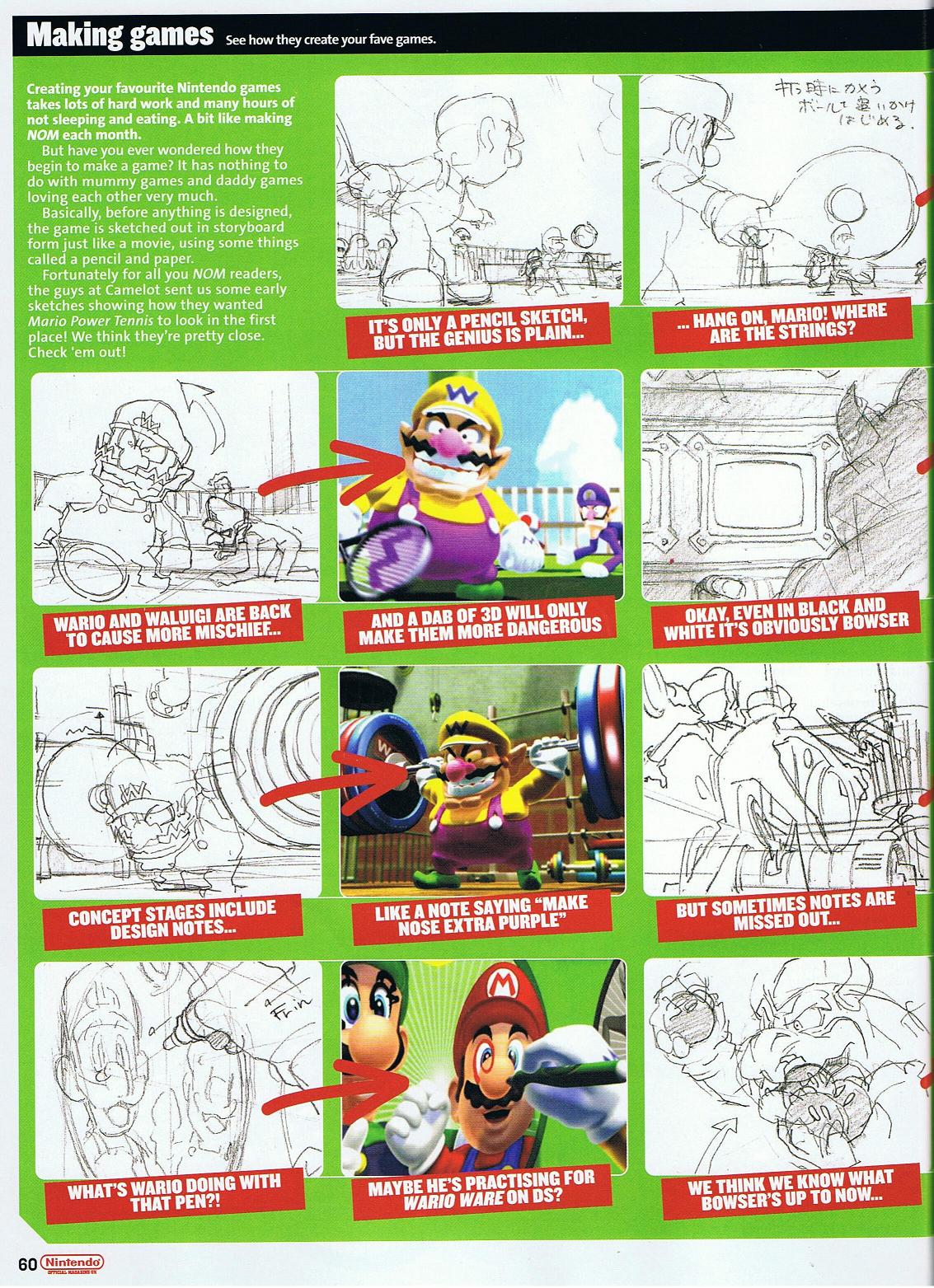
The opening film and the bloopers
Storyboard sketches for the opening film.
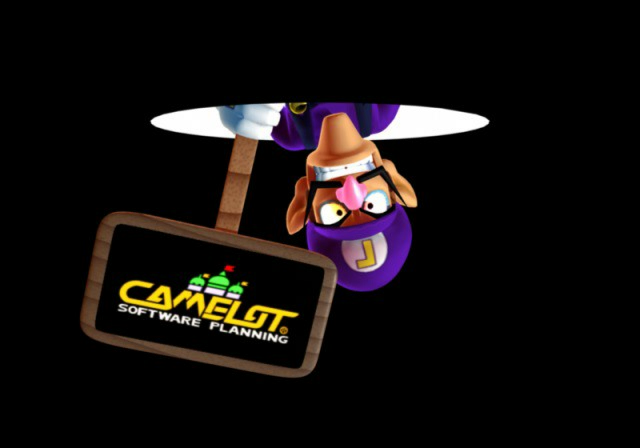
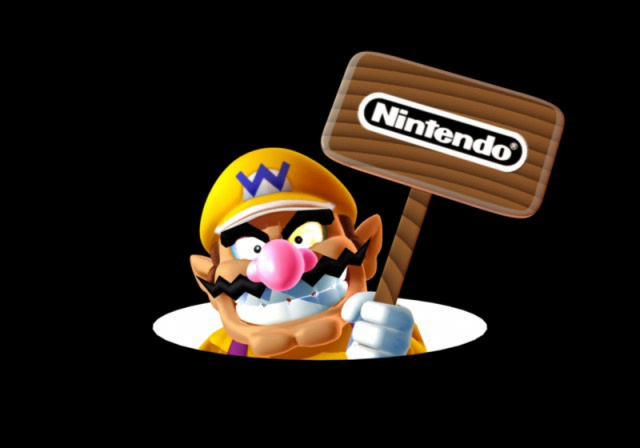
The opening was directed by Atsushi Fujimoto and Kazuhiko Tsukada, and storyboard sketches for it were printed in the Official Nintendo Magazine. Like Mario Golf: Toadstool Tour, the game opens with Wario and Waluigi holding up the Nintendo and Camelot logos, and the intro ends with the same head-scratch from Mario. A reel of outtakes — Mario giving Luigi a black eye, Waluigi’s leg stuck in a door, Bowser electrocuting himself on his own lever — plays the slapstick for even bigger laughs.
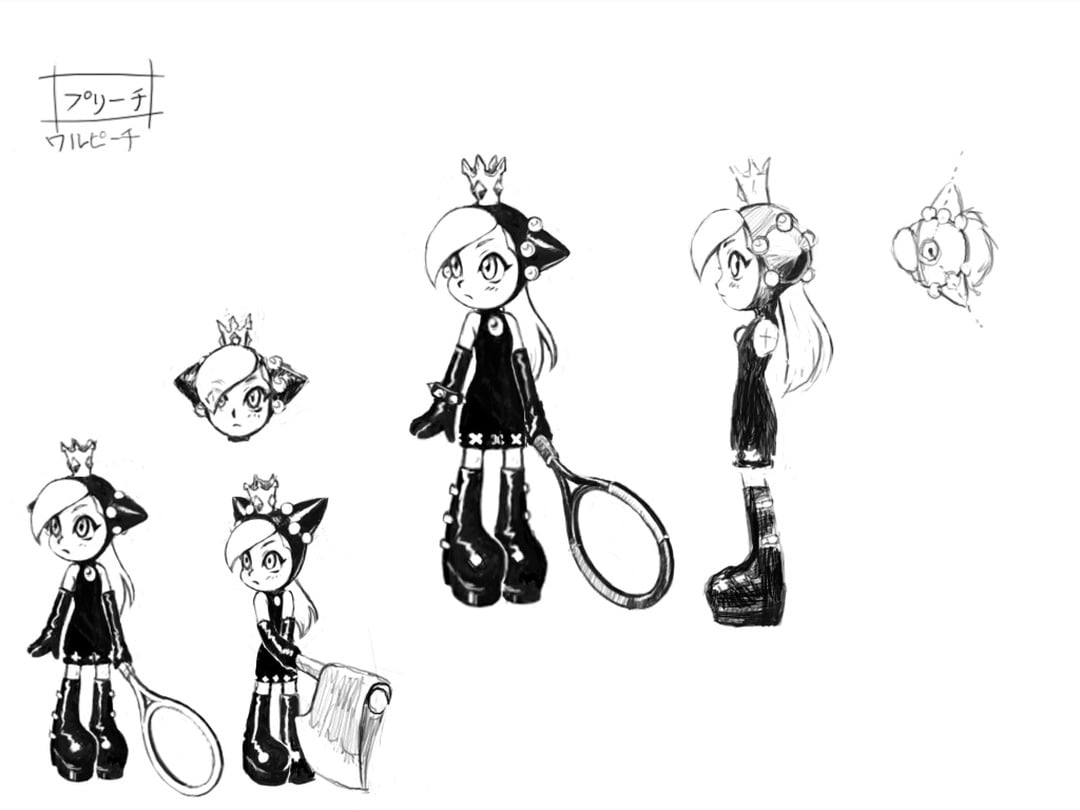
Potato and Walpeach
Walpeach, the rejected rival, as posted on Instagram.
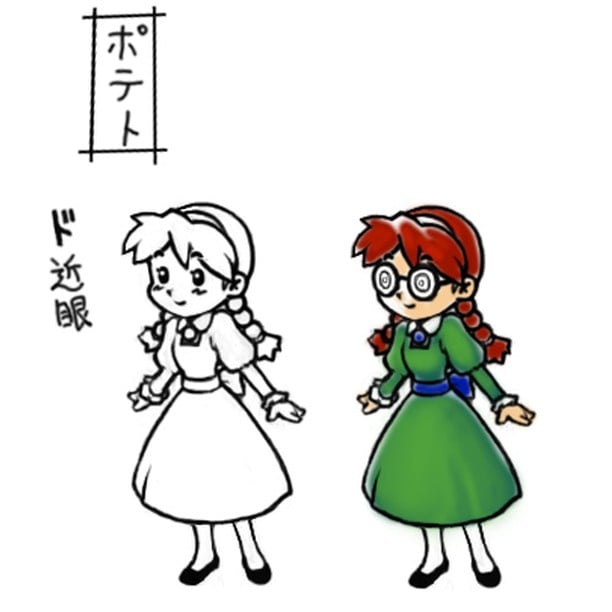
Two unused characters have since been shown in concept art posted on Instagram in 2023: a bespectacled girl in a green dress nicknamed Potato, and Walpeach, a youthful Peach-style rival intended as a boss for Wario and Waluigi. Walpeach had already been proposed and rejected for the N64 Mario Tennis.
New Play Control! (2009)
The New Play Control! logo.
Nintendo announced the Wii version in 2008 as part of New Play Control!, its range of GameCube games reworked with Wii controls. The Wii credits list Shugo Takahashi and Ayumu Shindo as directors, Hiroyuki Takahashi as producer and Satoru Iwata again as executive producer. Nintendo of Europe’s preview walked players through flicking the Remote for each shot and the three Power Shot styles. Years later, discussing Mario Tennis Aces’ Swing Mode, Camelot’s developers conceded that this version had not been able to distinguish the shots well and was far from what they had wanted.
Series Firsts
What Mario Power Tennis added to Mario Tennis, checked against the N64 game.
1Power ShotsThe first Mario Tennis with Power Shots, an Offensive and a Defensive one for every character. Mario Tennis: Power Tour on the Game Boy Advance used them next.
2The Defense typeWaluigi and Wiggler form a sixth character type, Defense, alongside the five of the N64 game.
3Six new faces on courtBowser Jr., Diddy Kong, Koopa Troopa, Fly Guy, Petey Piranha and Wiggler were not playable in the N64 Mario Tennis.
4Courts with gimmicksSeven themed courts each come in a gimmick version with hazards and a standard version, unlocked through the Gimmick Masters tournament.
Cheats & Secrets
Everything in Mario Power Tennis is unlocked by winning tournaments, apart from Event Games, which needs a button code every time the game is switched on.
Unlockable characters
Fly Guy: win the Mushroom, Flower and Star Cups of the World Open in singles. Paratroopa: the same in doubles. Wiggler: win the Fire and Thunder Cups of the Gimmick Masters in singles. Petey Piranha: the same in doubles.
Unlockable courts
Bowser Castle: win the Fire Cup in singles. Mario Classic Court: win the Fire Cup in doubles. Standard (gimmick-free) versions of the themed courts are unlocked by completing the Gimmick Masters.
Star characters and the Star Tournament
Win the Star Cup with a character to earn their star rank, then press R on the character select screen to use it. The Star Tournament (Rainbow, Moonlight and Planet Cups) needs a starred character, and its doubles version needs the singles one finished first.
Event Games
On the GameCube title screen, hold Z and press Start. On Wii, hold A and B for a few seconds. Event Games (multiplayer tiebreaks to 3, 5 or 7 points) appears on the menu until the console is switched off.
Left-handed players
Press L on the character select screen to make your character left-handed.
Rainbow records
For a rainbow mark in the Exhibition Records, beat a starred computer opponent on Ace difficulty with an unstarred character, without saving.
The previous version of this page gave a different Event Games code (hold L and press R); most references give Z and Start.
Glitches & Oddities
Mario Power Tennis has one well-documented quirk in its Power Shots.
Offensive Power Shot immunity
Mario standing firm against an Offensive Power Shot.
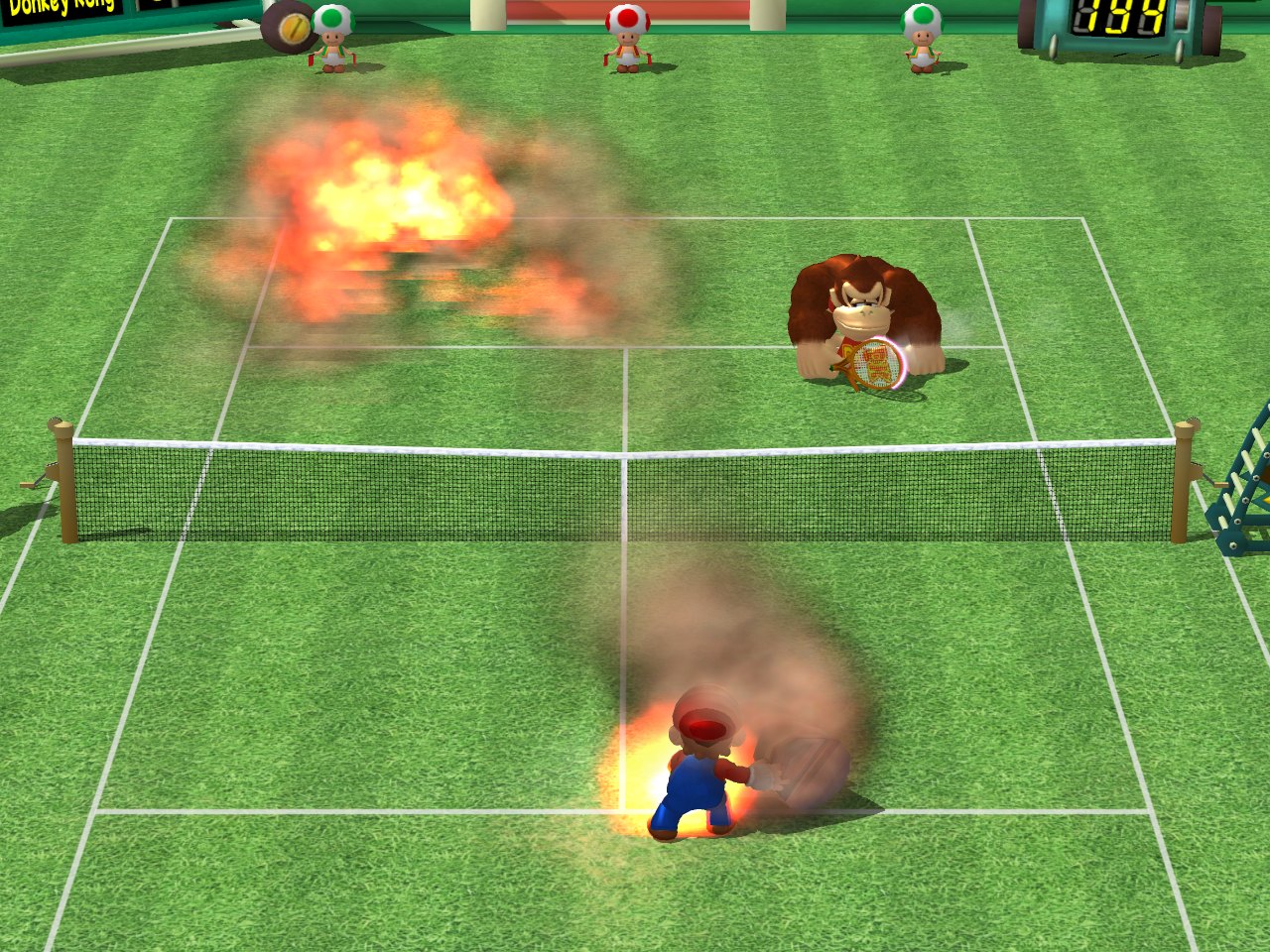
If Mario or Luigi returns an Offensive Power Shot with an Offensive Power Shot of his own, he is neither pushed back nor has his controls reversed. Shots that slow the receiver, such as Petey Piranha’s Sludge Racket, still slow him down.
Videos
A trailer for the GameCube original and Nintendo’s North American trailer for the Wii version’s Nintendo Selects reissue.
A trailer for the GameCube game, uploaded by a third-party trailer channel.
Nintendo’s trailer for the Wii version, uploaded by a fan channel (not an official Nintendo upload).
Trivia & Interesting Facts
Waluigi holds up the Camelot sign.The game opens, as Mario Golf: Toadstool Tour did, with Wario and Waluigi holding up the Nintendo and Camelot logos.
In Japan it is called Mario Tennis GC, and the Wii version Wii de Asobu Mario Tennis GC (“Play on Wii: Mario Tennis GC”).
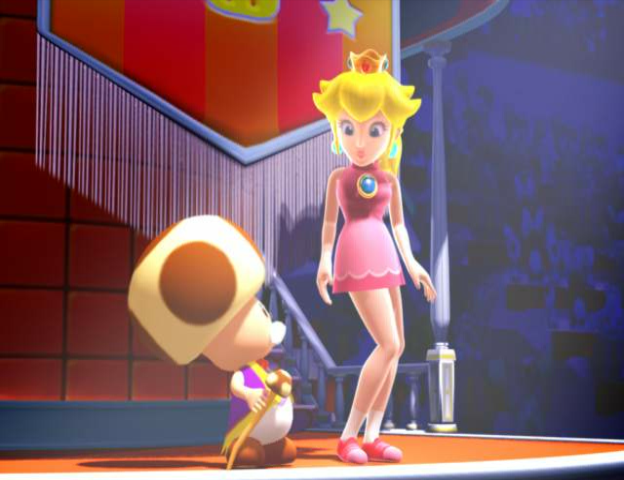
Leave Peach standing and she hums the underground music from Super Mario Bros.
The Thunder Cup is the Lightning Cup from Mario Kart: Super Circuit under another name.
Luigi’s Defensive Power Shot uses the Poltergust 3000 from Luigi’s Mansion, and Bowser Jr. fights with the magic brush from Super Mario Sunshine.
The Gooper Blooper Court is set in Ricco Harbor, and the Delfino Plaza Court in, of course, Delfino Plaza; both use arrangements of Sunshine’s music.
The Wario Factory Court is based on WarioWare, Inc.: Mega Microgame$!, but its music comes from Wario World.
Super Mario RPG’s Bowser’s Keep appears in the Bowser Castle Court’s introduction, and the final boss music from Super Mario Sunshine plays there.
The item boxes, items and their sounds are lifted straight from Mario Kart: Double Dash!!, and the Double Dash!! countdown sound starts each round of Artist on the Court.
Bowser’s and Yoshi’s Defensive Power Shots look a lot like their Whirling Fortress and Egg Roll moves from Super Smash Bros. Melee.
Grant Kirkhope, the Banjo-Kazooie composer, voiced Donkey Kong in the intro and the kiosk demo, uncredited.
Scott Burns voices both Bowser and the match announcer.
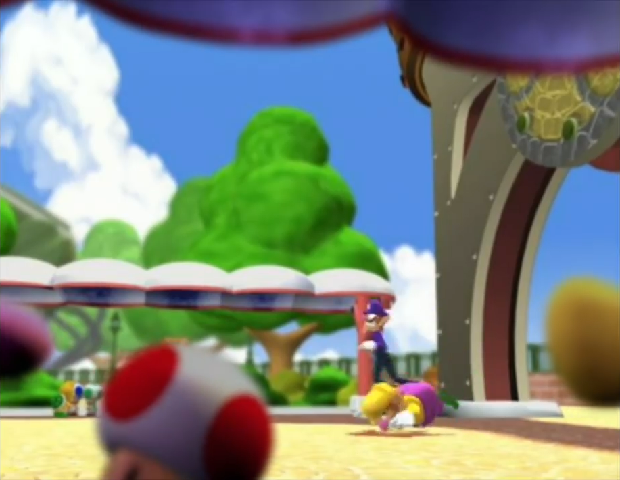
Blooper: Wario and Waluigi trip over.A reel of animated bloopers shows the opening film going wrong, from Wario answering his mobile phone mid-workout to a Bill Blaster exploding in Bowser’s face.
Unlike other Mario Tennis games, a doubles partner can never cost you a point by hitting you with the ball: it passes straight through.
The Mario Power Tennis and Mario Golf: Toadstool Tour title themes were combined into one track for Super Smash Bros. Brawl, which is still in Super Smash Bros. Ultimate.
Waluigi’s Whirluigi and Swimming Return reappear in his Twist Dunk in Mario Hoops 3-on-3.
On Nintendo’s E3 2004 website the game appeared under its pre-release title, plain Mario Tennis.
Regional Box Art
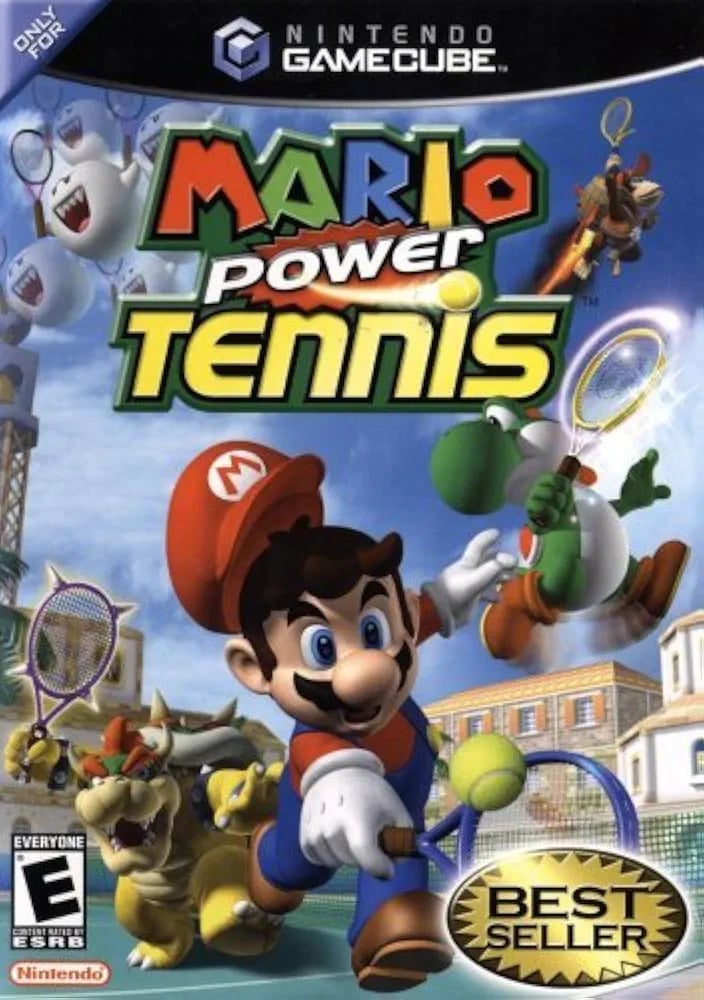
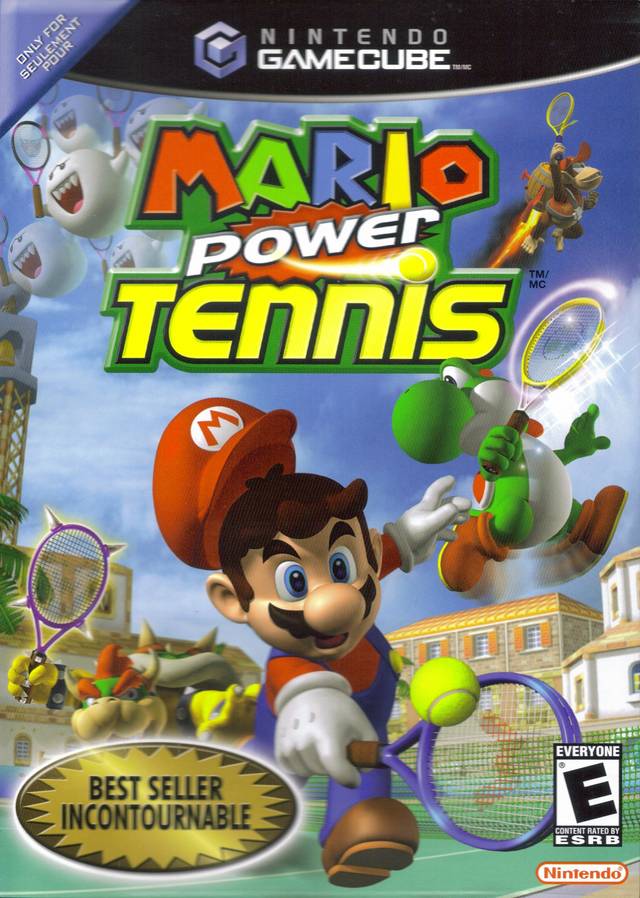
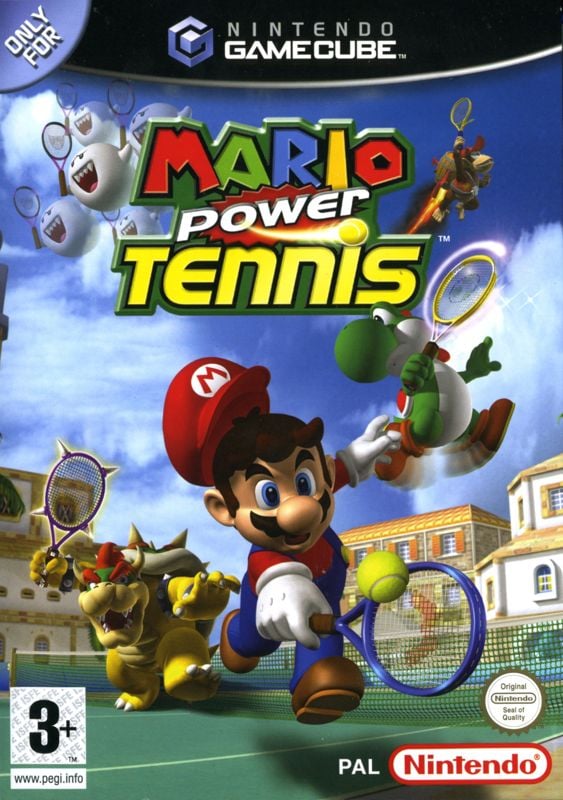
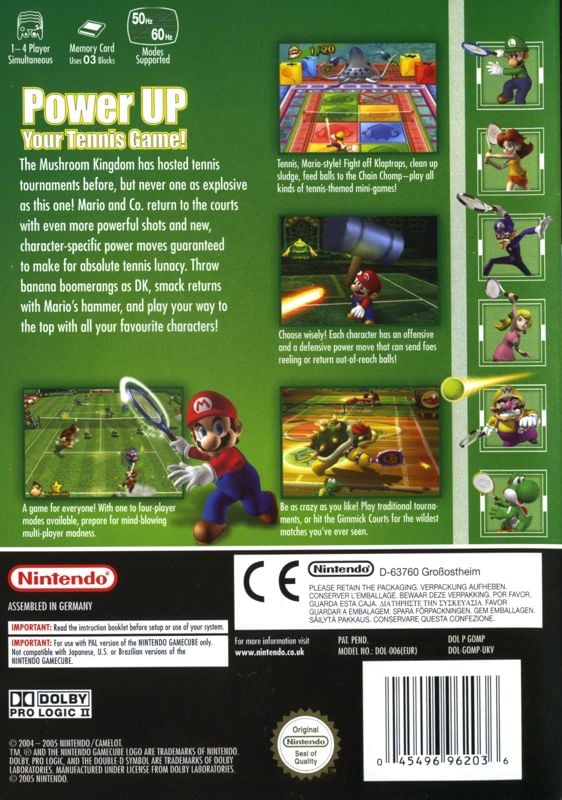
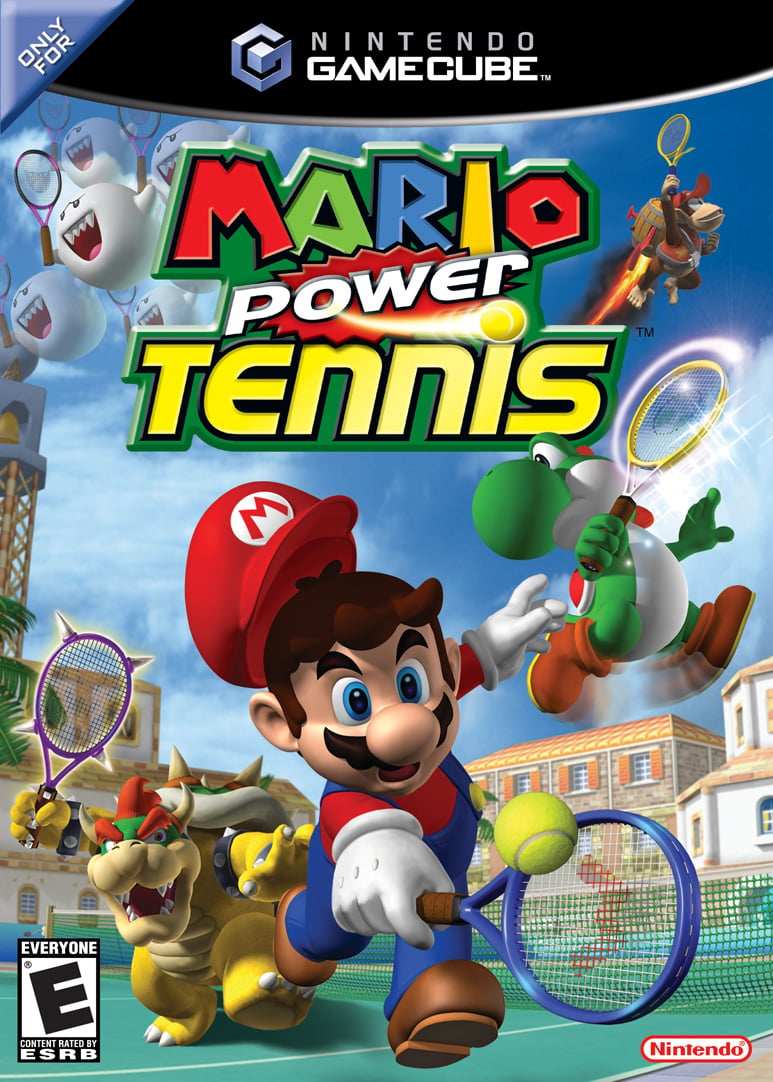
The GameCube covers share the key art of Mario serving; Japan used a different scene. The Wii covers, from 2009, came with reversible inlays in several regions.
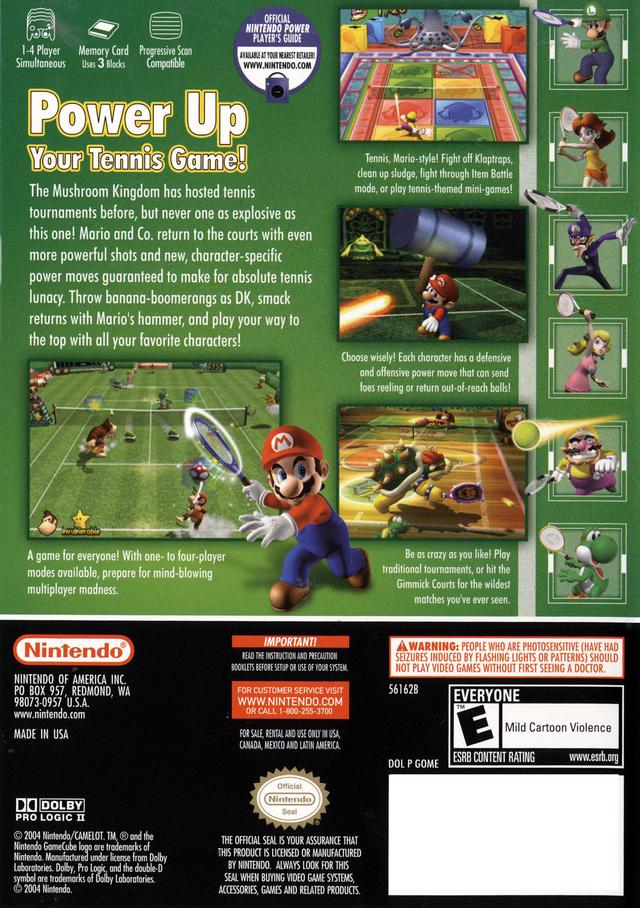
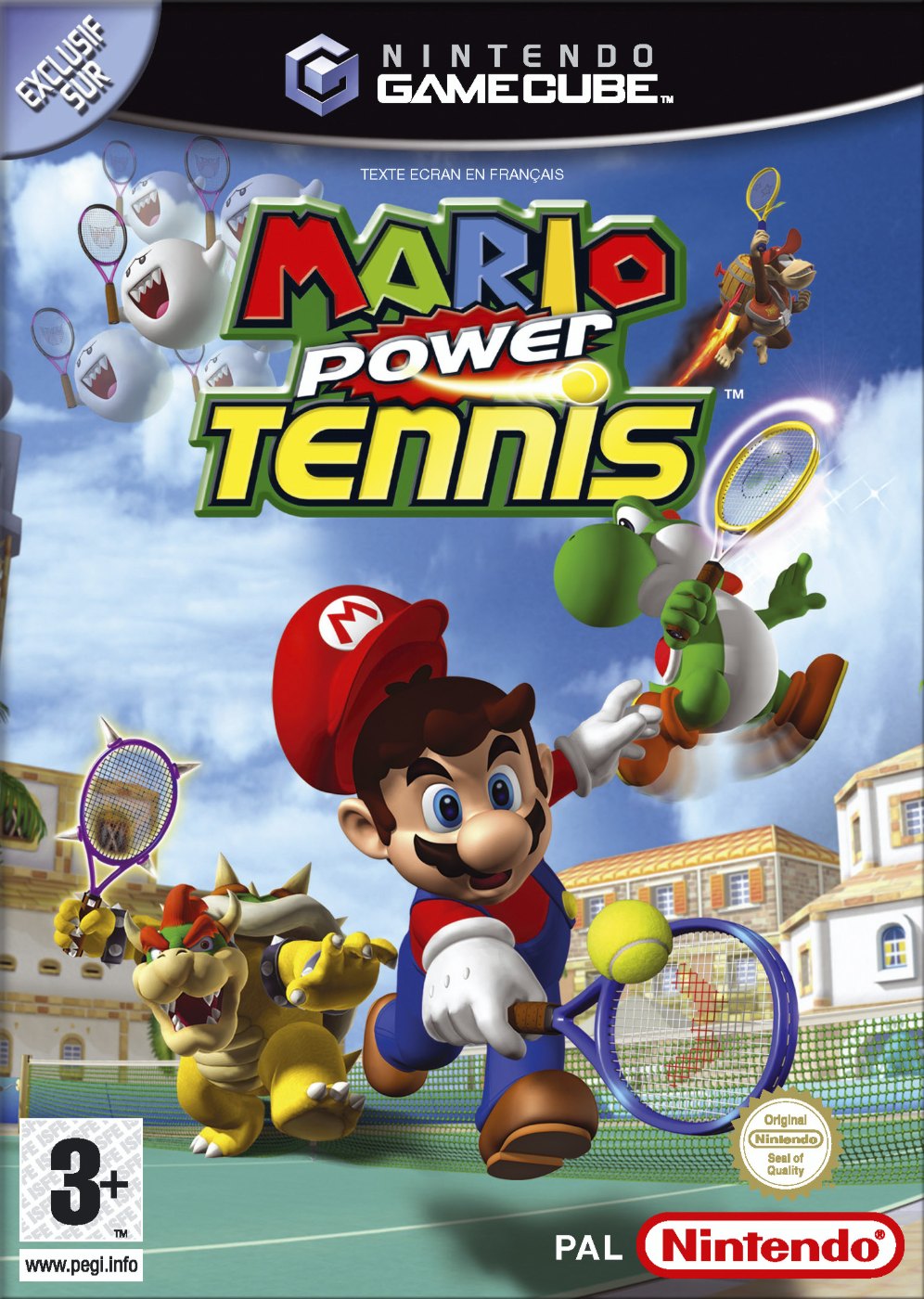
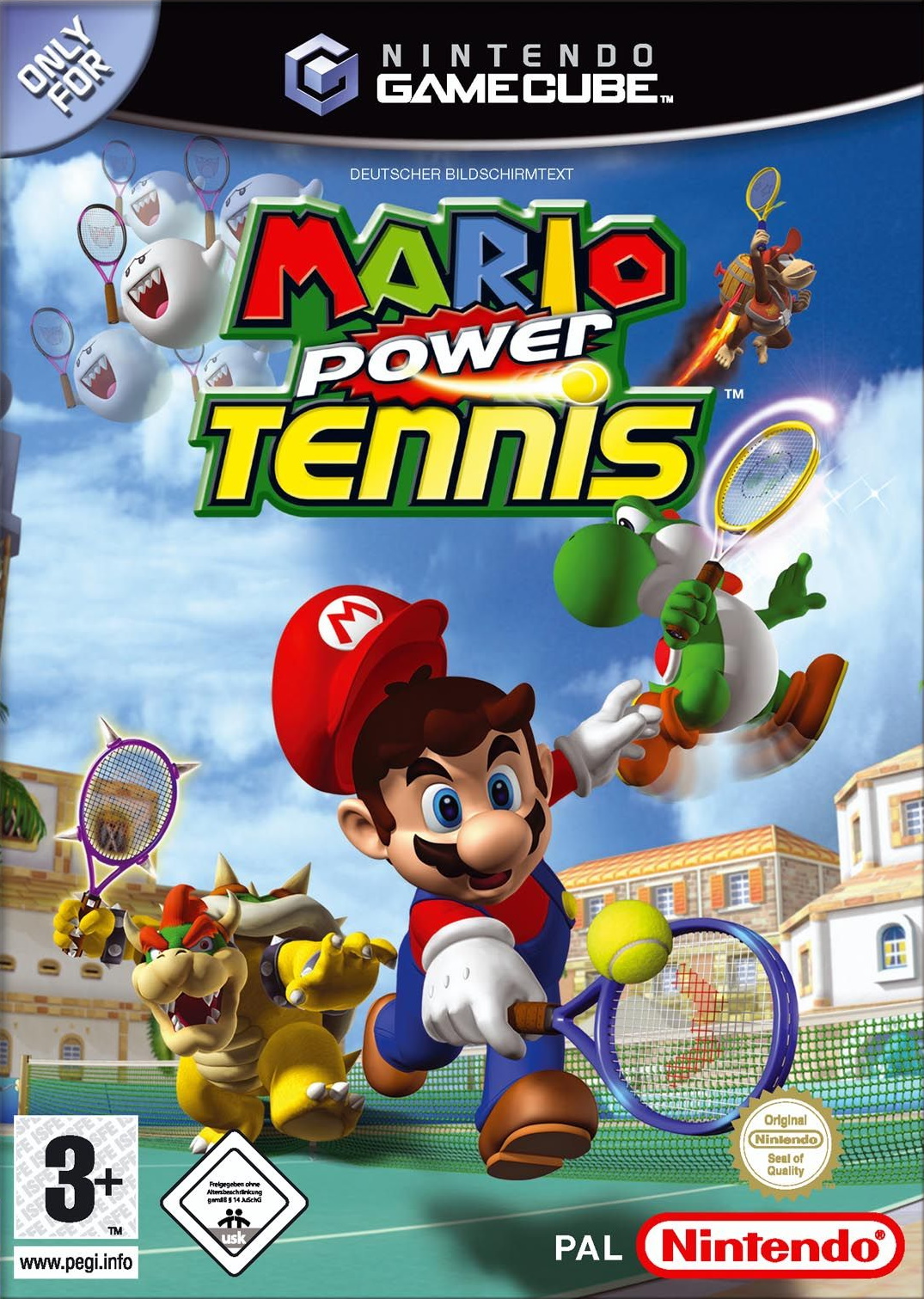
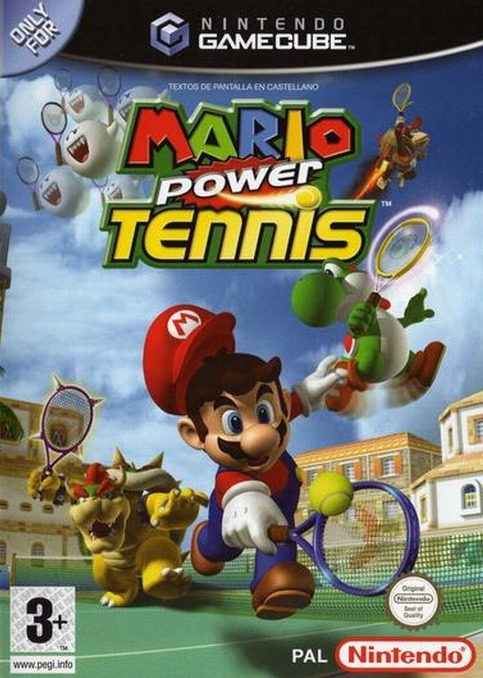
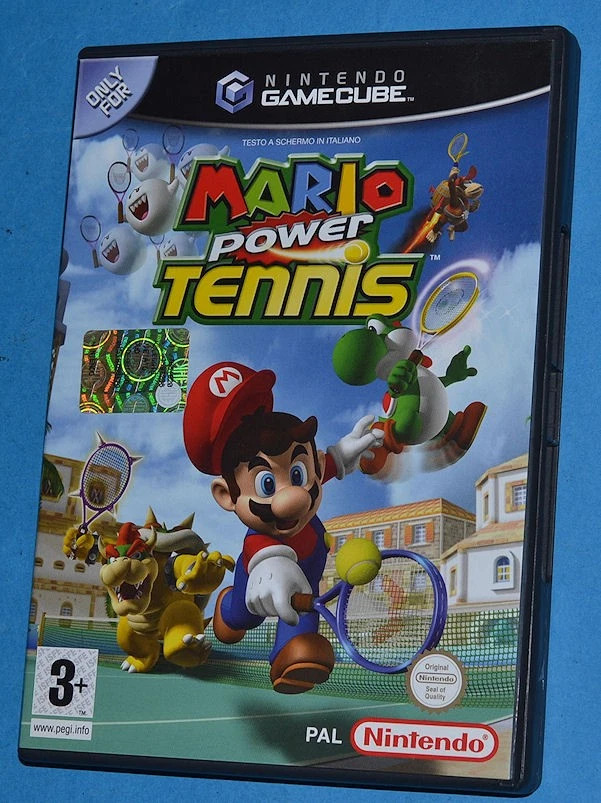
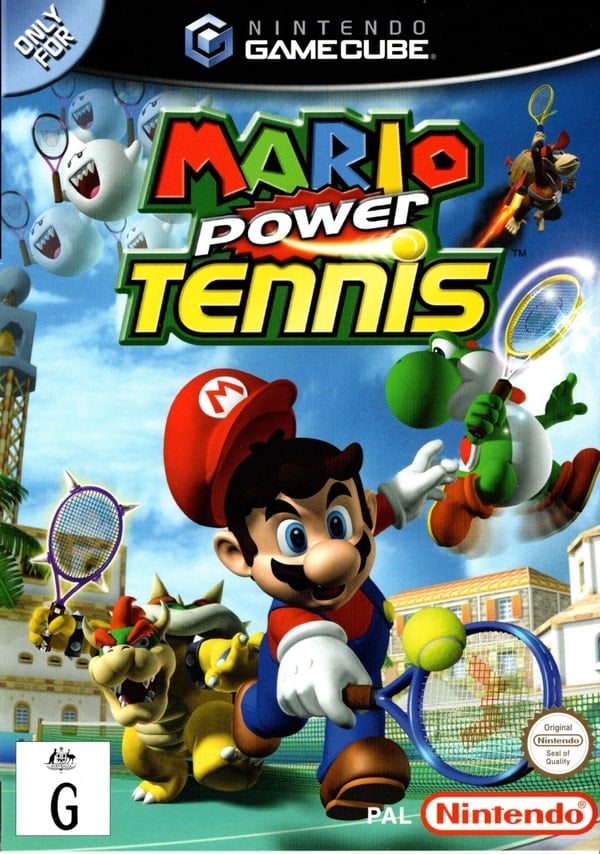
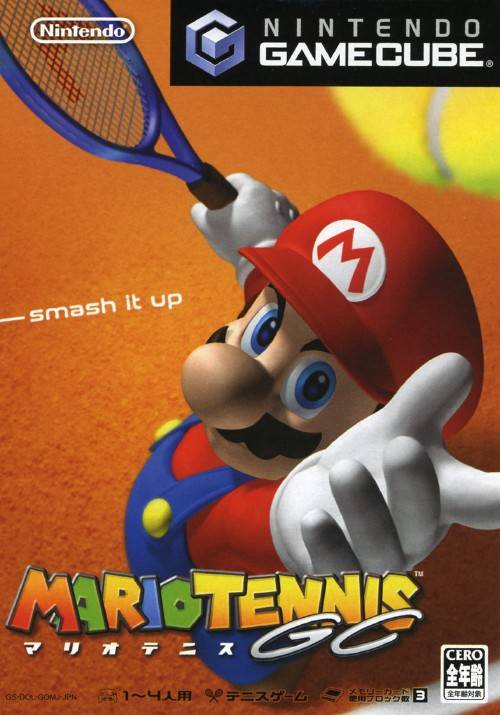
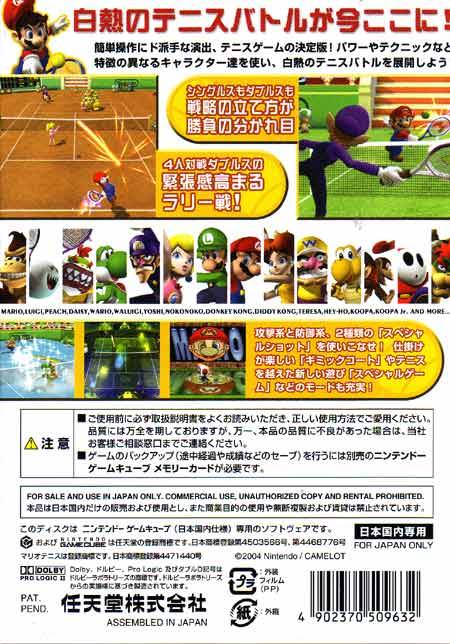
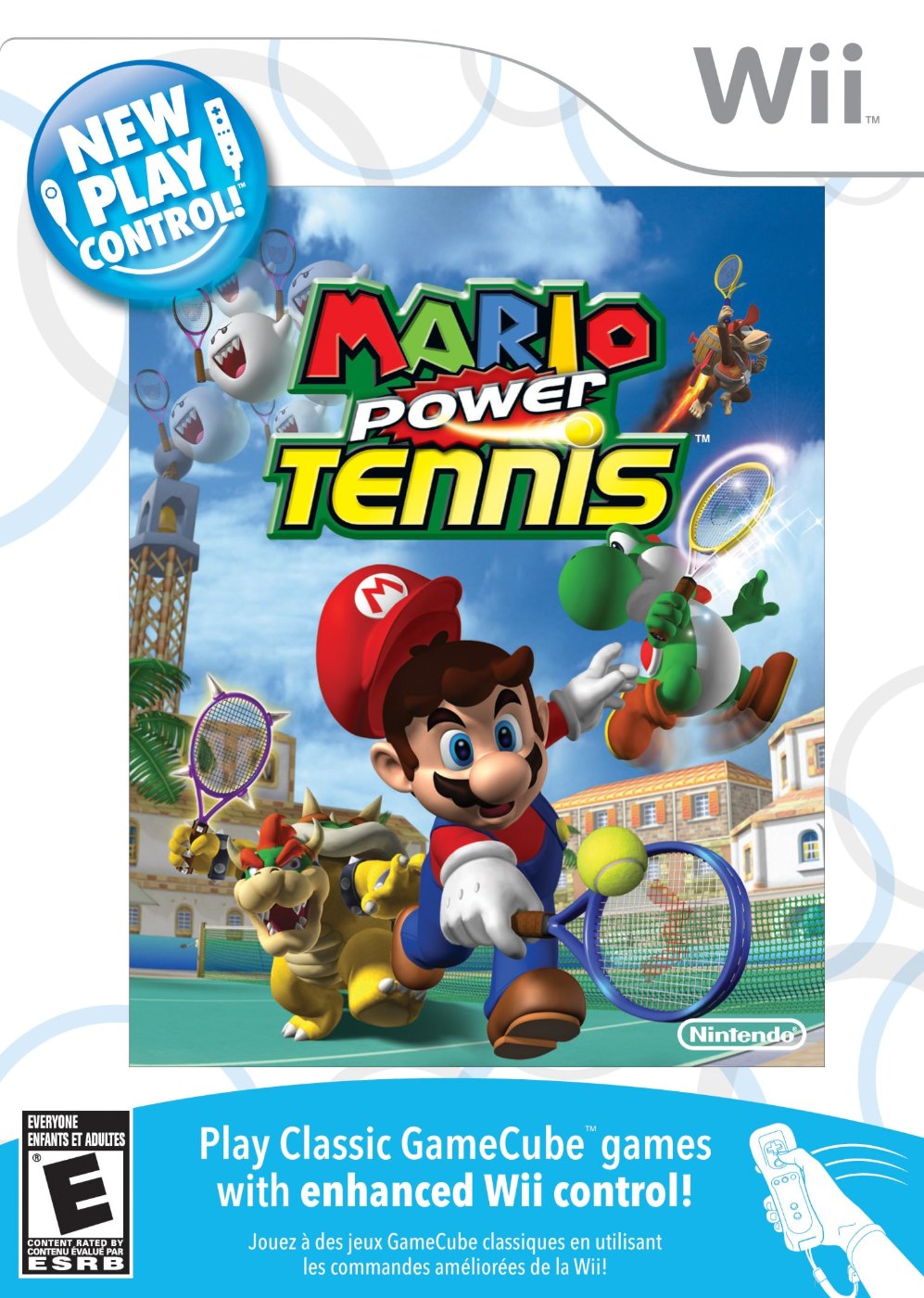
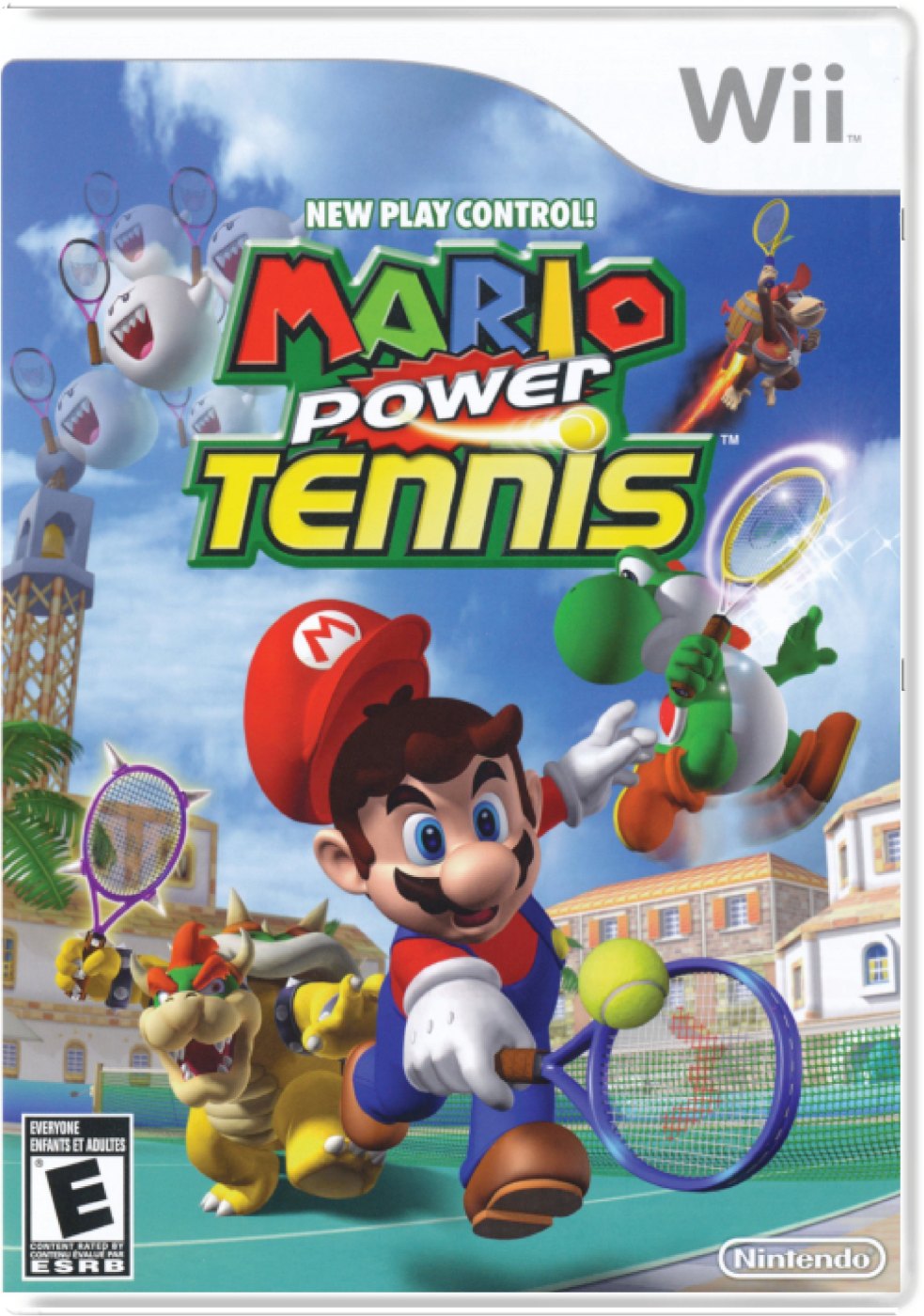
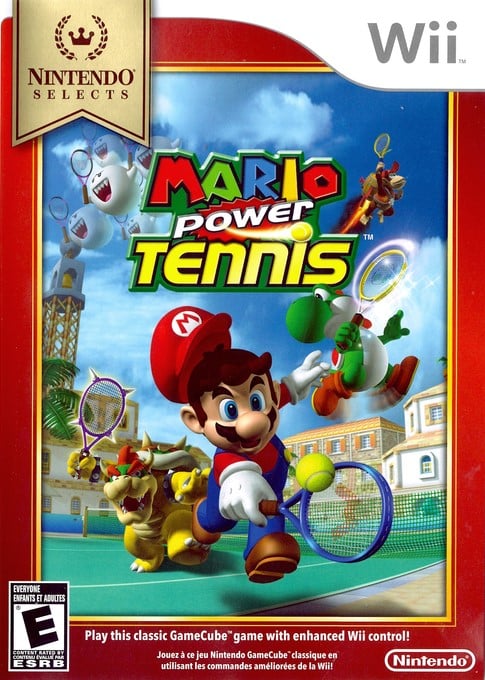
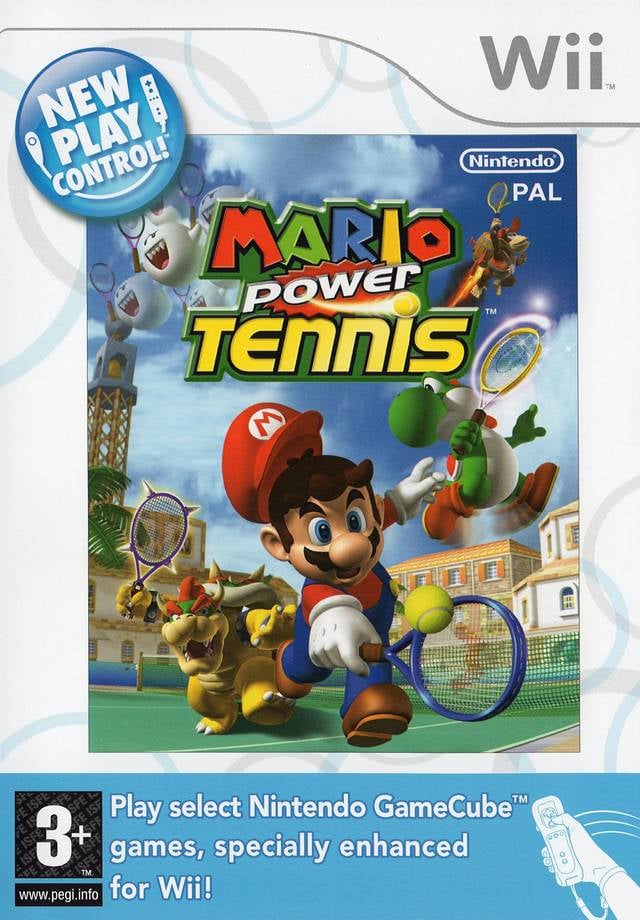
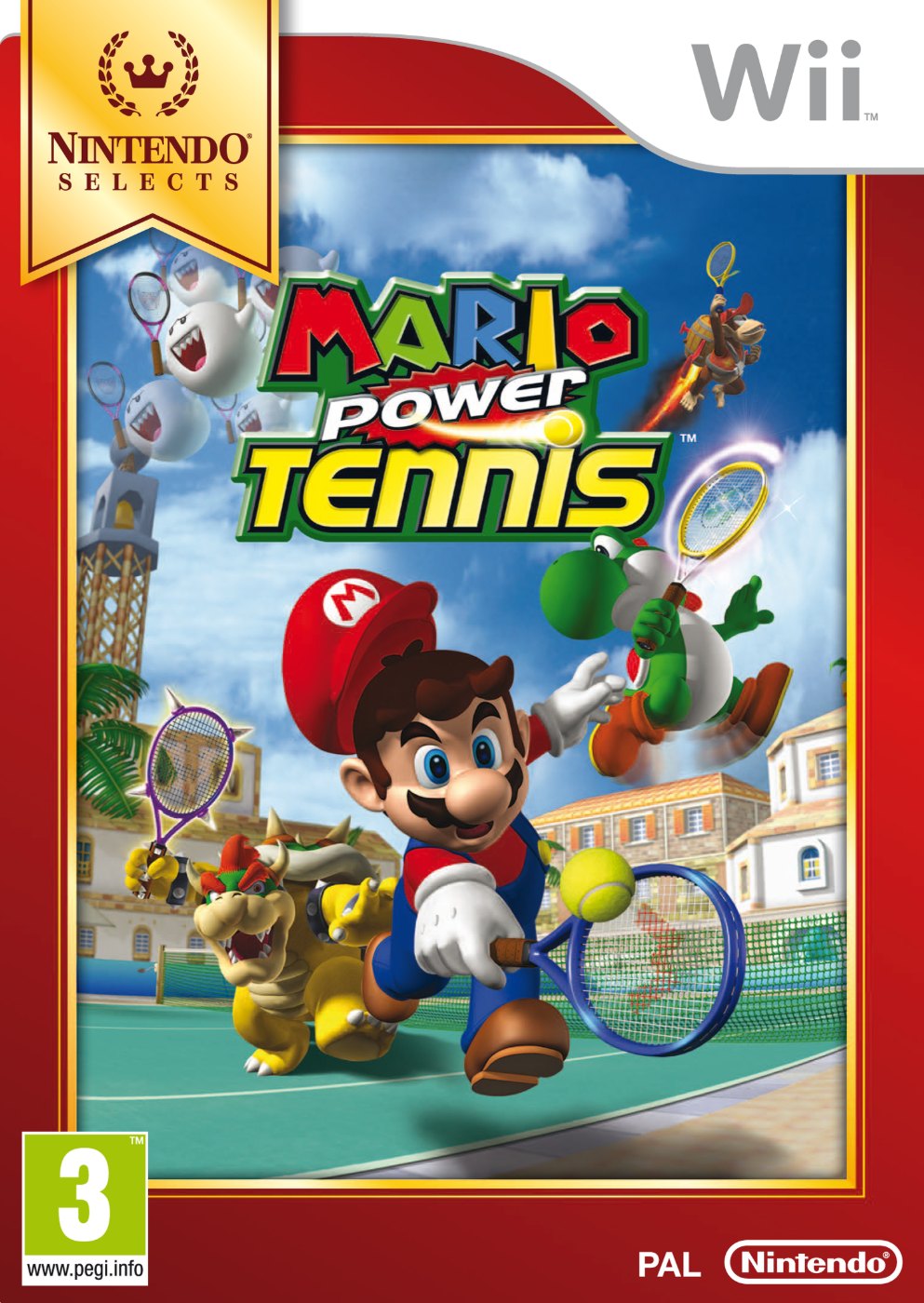
North America (GameCube, 2004)Front.North America (GameCube)Back.North America (GameCube)Best Seller reissue.Canada (GameCube)Best Seller reissue.Europe (GameCube, 2005)Front.Europe (GameCube)Back.France (GameCube)Front.Germany (GameCube)Front.Spain (GameCube)Front.Italy (GameCube)Front.Australia (GameCube, 2005)Front.Japan (GameCube, 2004)Mario Tennis GC.Japan (GameCube)Back.North America (Wii, 2009)New Play Control! edition.North America (Wii)Reversible cover.North America (Wii)Nintendo Selects, 2012.Europe (Wii, 2009)New Play Control! edition.Europe (Wii)Nintendo Selects, 2013.Germany (Wii)Front.Australia (Wii, 2009)Front.Japan (Wii, 2009)Wii de Asobu Mario Tennis GC.
Screenshots
More from the opening film, the trophy ceremonies and the blooper reel.
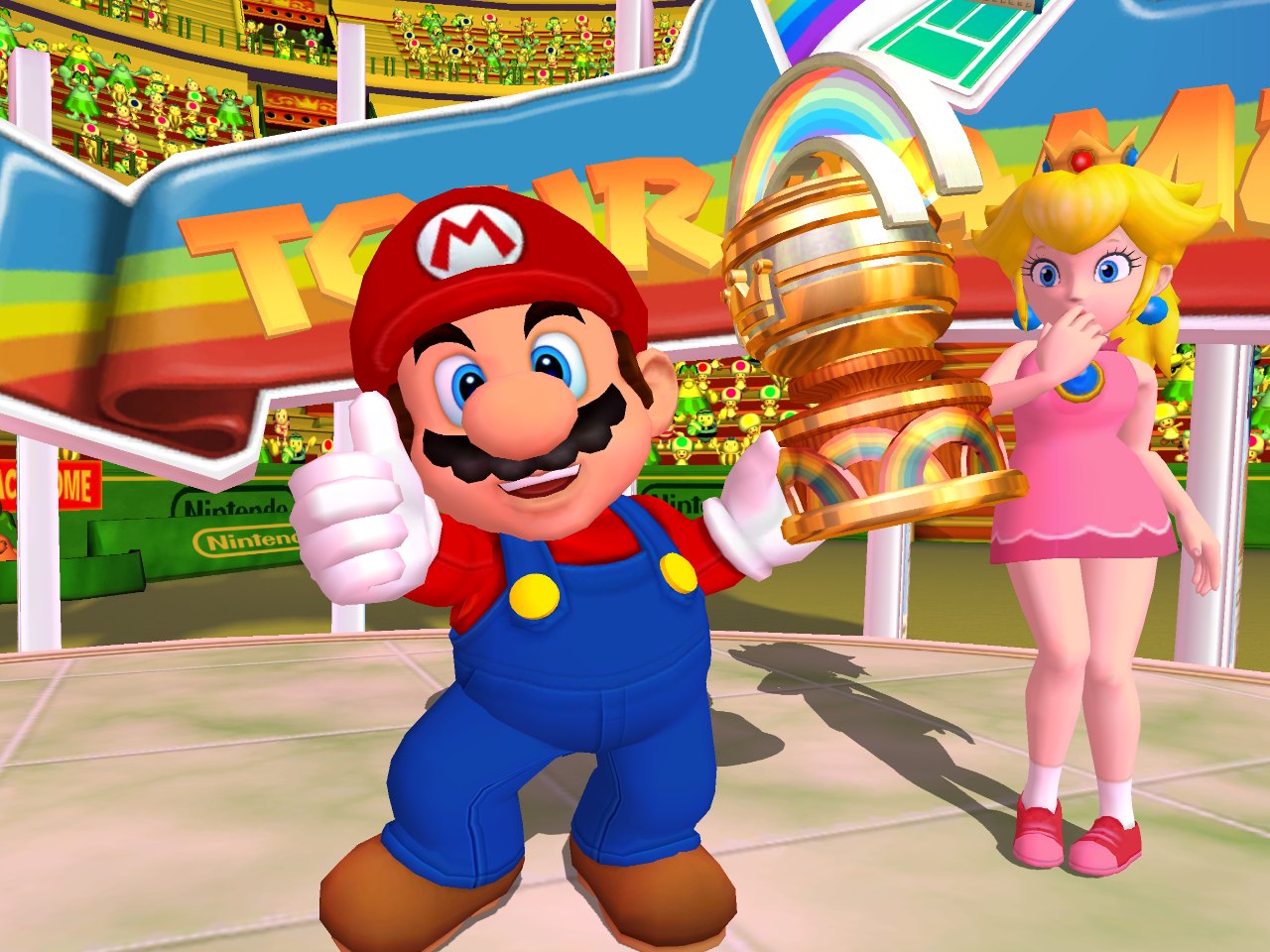
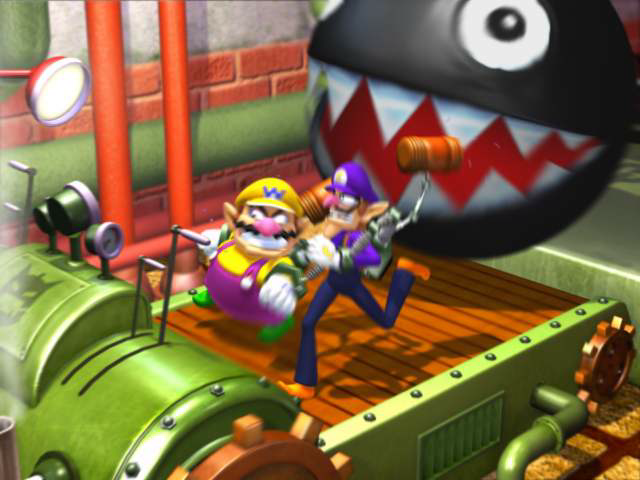
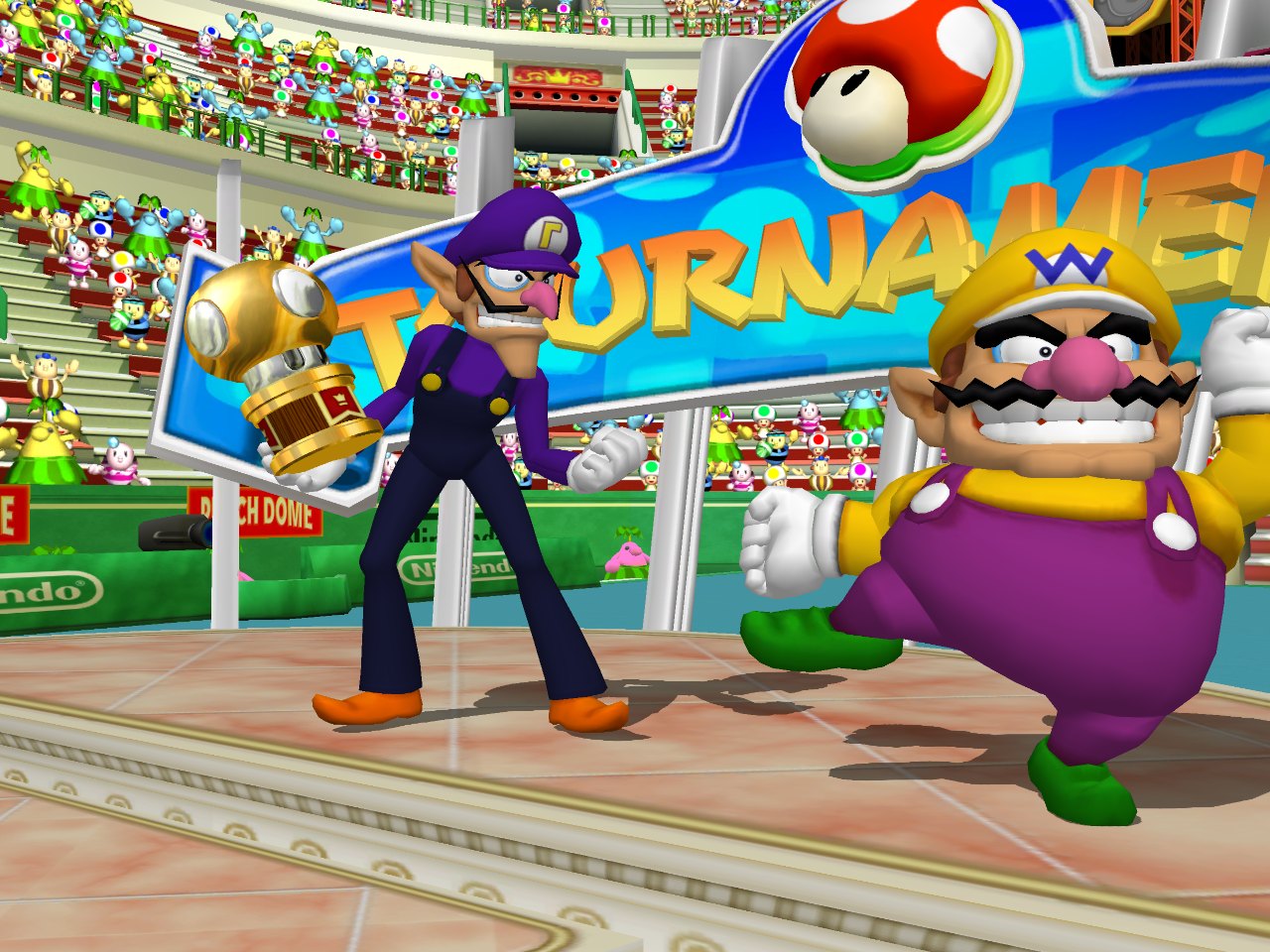
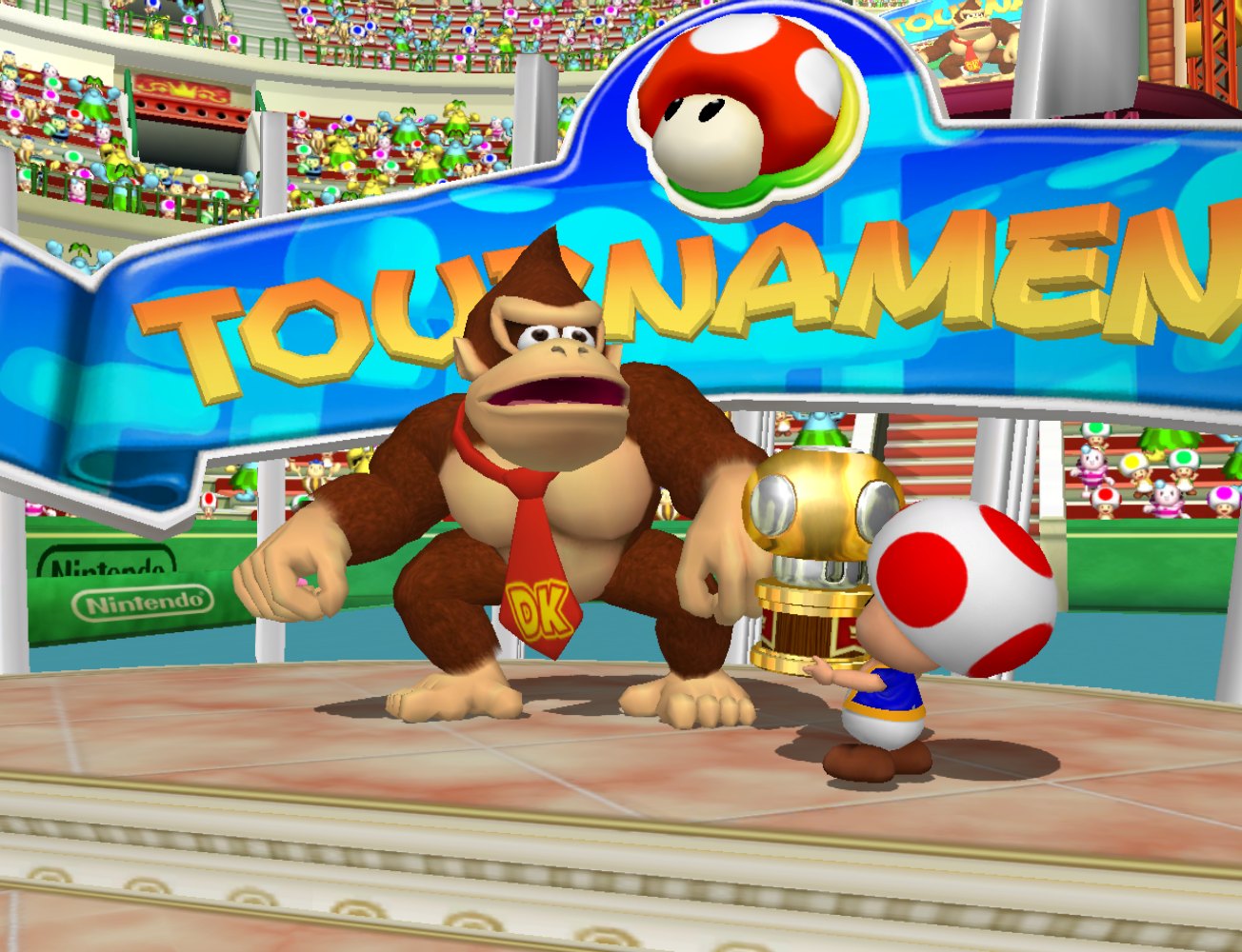
The Japanese title screen.Wario holds up the Nintendo sign.Wario and Waluigi check the tournament board.Mario’s trophy ceremony.Bowser watches the match on his hidden cameras.Training on a treadmill, with a Chain Chomp behind.Peach and Toadsworth preside over the final.Diddy Kong and Koopa Troopa help fend off the Bob-ombs.Waluigi wins the Mushroom Cup.Wiggler wins the Fire Cup.Blooper: Mario gives Luigi a black eye.Blooper: Waluigi’s leg gets caught in the door.Blooper: the ball machine goes haywire.
Artwork & Media Gallery
Official artwork, concept art, logos, banners and adverts.
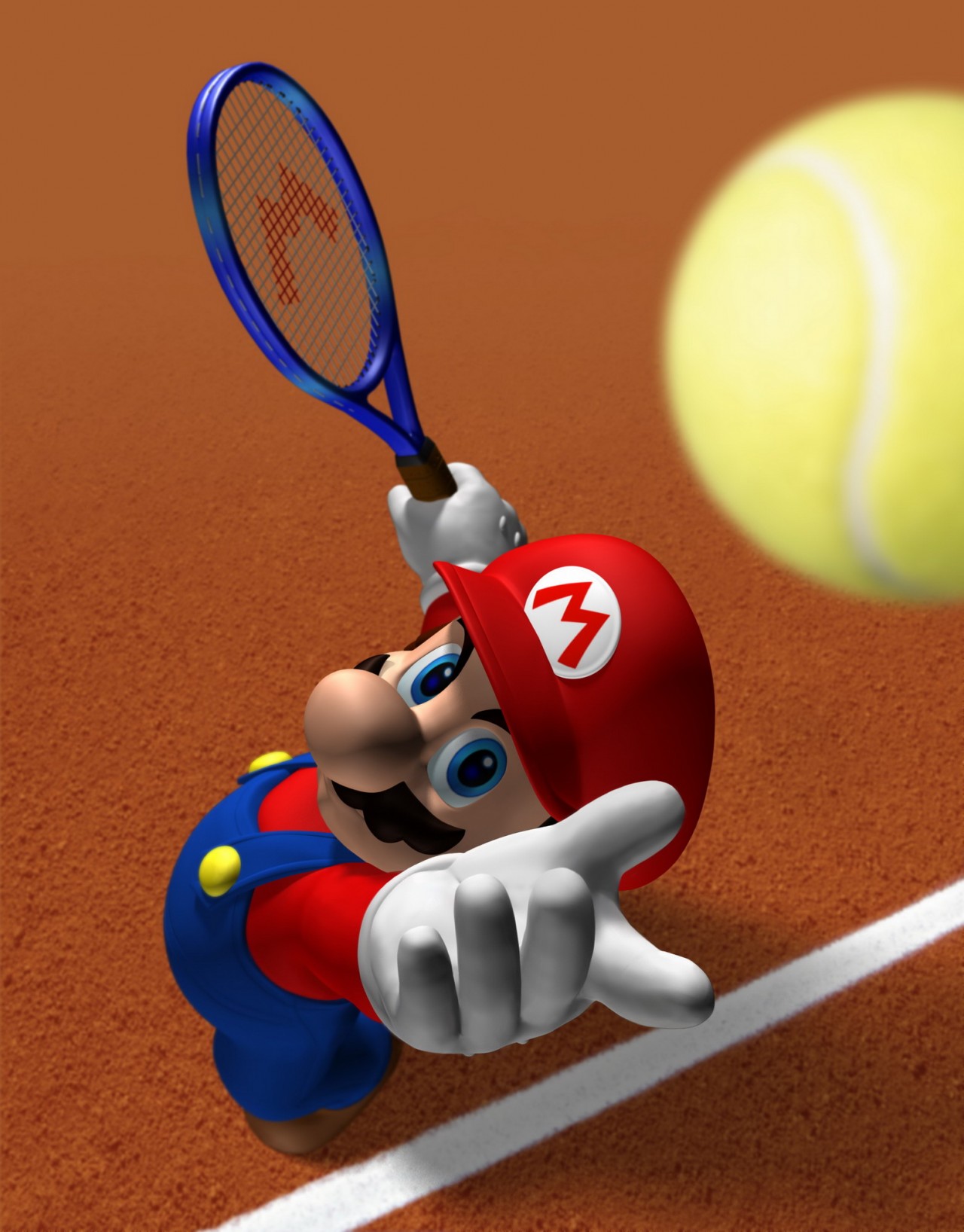
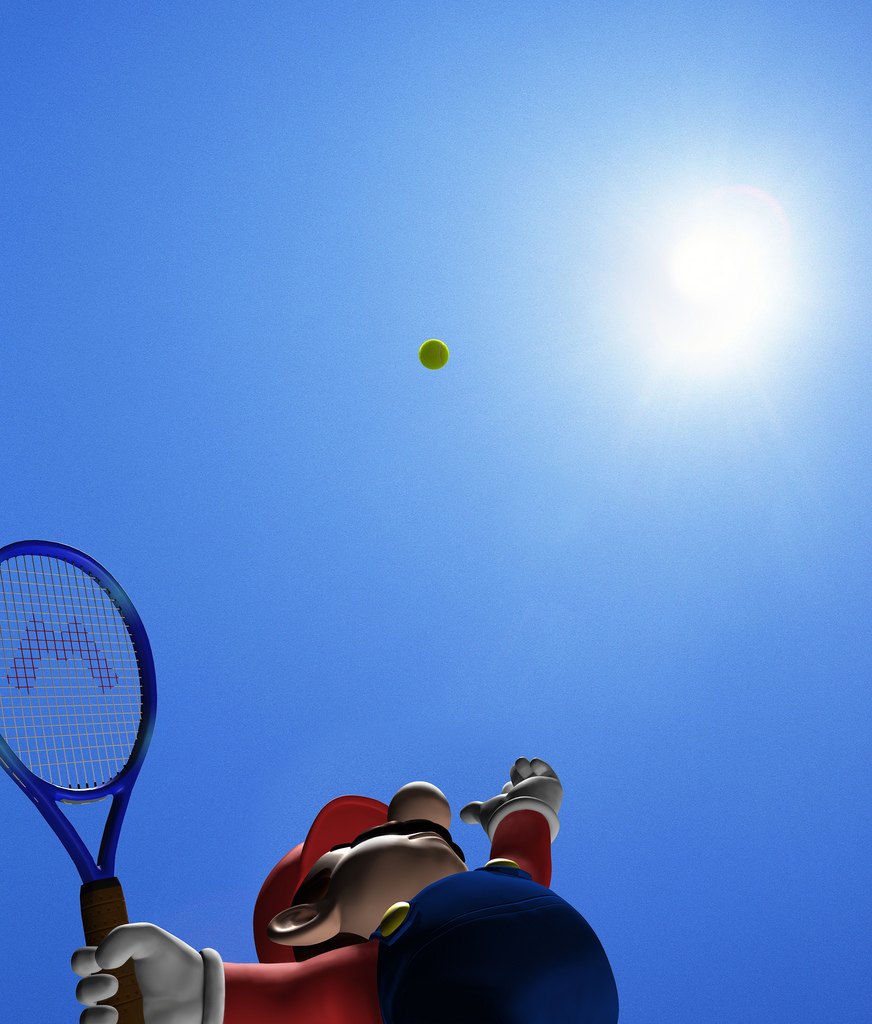
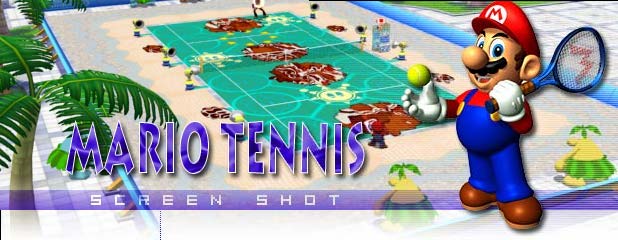
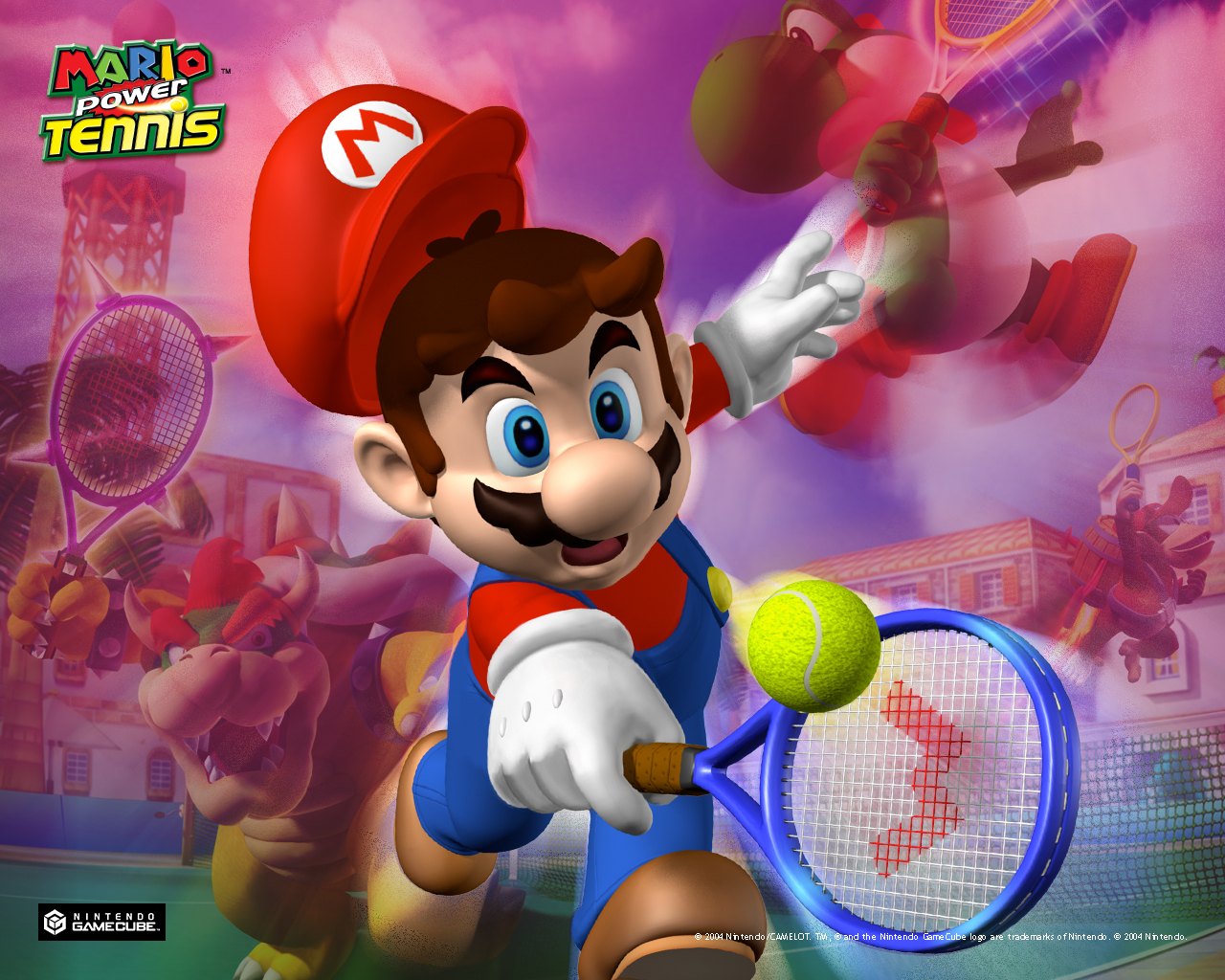
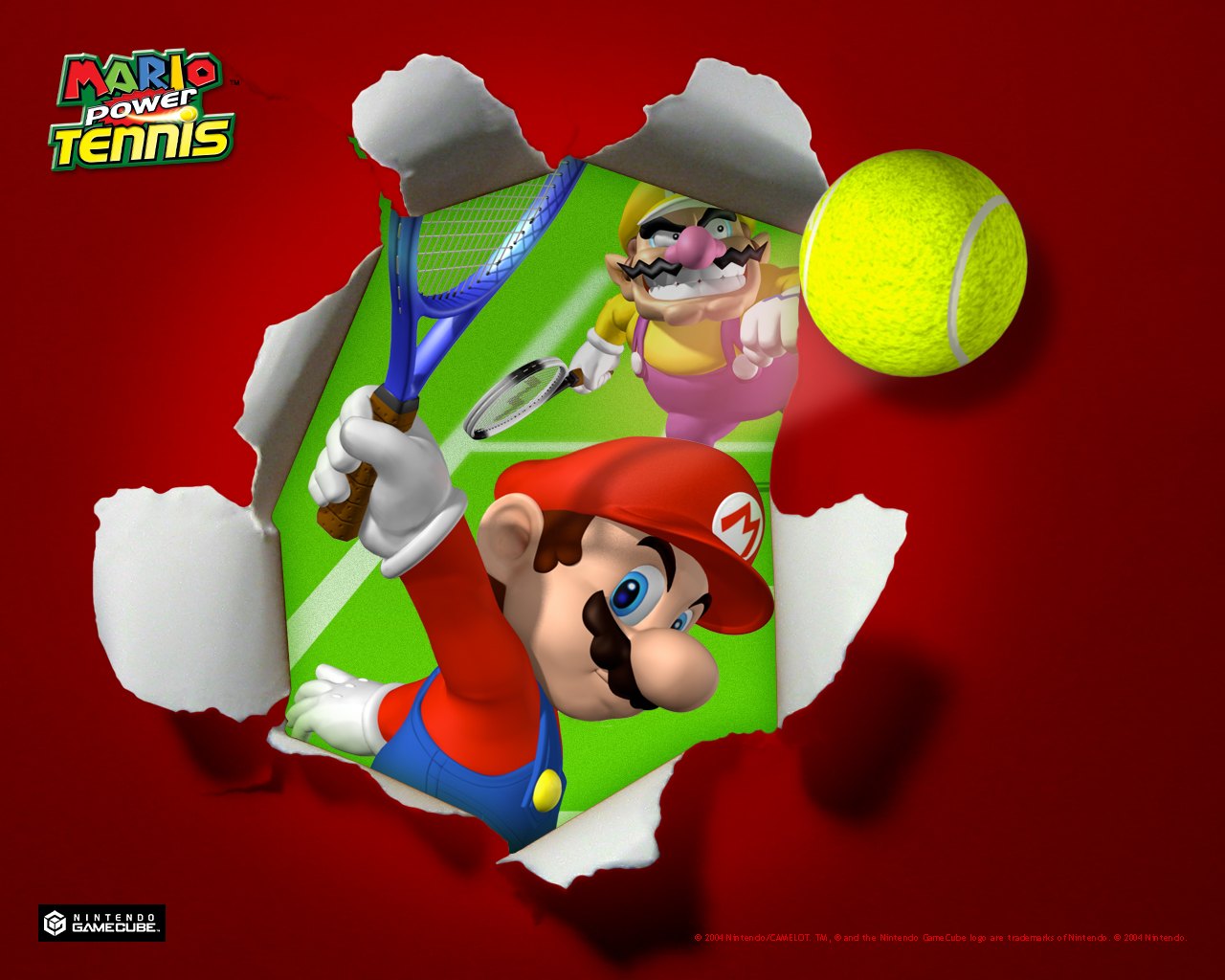
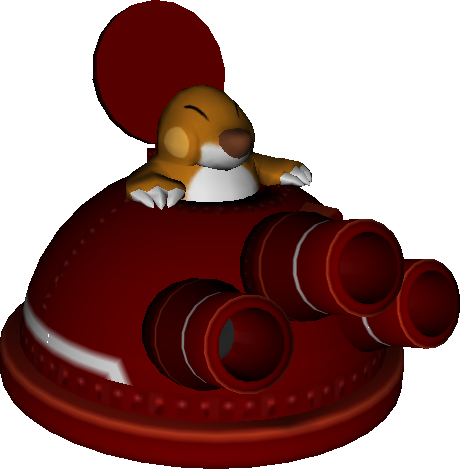
The international logo.The Japanese logo.The Japanese logo of the Wii version.Key artwork used on the Japanese cover.Mario preparing to serve.Mario.Mario.Mario.Mario.Diddy Kong.Potato, an unused character.Concept art.Concept art.Wiggler’s Anger Management.Luigi’s trophy ceremony.Petey Piranha’s trophy ceremony.Bowser Jr.’s trophy ceremony.Donkey Kong wins the Mushroom Cup.The GameCube menu banner.The Japanese GameCube banner.The Memory Card icon.The Wii save banner.Nintendo’s E3 2004 website banner, with the pre-release title.French print advert.German print advert.A wallpaper from mario.nintendo.com.Another mario.nintendo.com wallpaper.Mario’s racket emblem.Waluigi’s racket emblem.The Gooper Blooper’s racket emblem.Mecha-Bowser’s icon.A Monty Mole model from the game.A Noki from the crowd.
Legacy & Re-releases
Mario Power Tennis was reissued once, on Wii, and has not been re-released since. Its Power Shots carried on into the handheld series, and its Wii controls taught Camelot lessons it used a decade later.
Every release
GameCube (Japan)28 October 2004Released as Mario Tennis GC.
GameCube (North America)8 November 2004Later reissued in the Best Seller range in the USA and Canada.
GameCube (Australia, Europe)24–25 February 2005Australia on 24 February, Europe on 25 February.
New Play Control! (Wii, Japan)15 January 2009Wii de Asobu Mario Tennis GC; also Hong Kong and Taiwan the same day.
New Play Control! (Wii, Europe and North America)6–9 March 2009Europe 6 March, USA and Mexico 9 March; Australia 26 March.
Nintendo Selects (Wii)10 June 2012USA; Europe followed on 22 March 2013.
Power Shots after Power Tennis
The next Mario Tennis, Mario Tennis: Power Tour on the Game Boy Advance, kept Power Shots, several of them (Iron Hammer, Poltergust Return, Super Peach Spin, Whirluigi, Barrel Cannon Blast) under the same names. The series went on through Mario Tennis Open, Mario Tennis: Ultra Smash, Mario Tennis Aces (2018) and Mario Tennis Fever (2026). The energy gauge behind Aces’ Zone Shots and Special Shots resembles the glowing-racket charge of Power Tennis.
From New Play Control! to Swing Mode
The Wii version’s motion controls were its weak spot, and Camelot knew it. When Mario Tennis Aces introduced Swing Mode on Nintendo Switch in 2018, its developers cited New Play Control! Mario Power Tennis as the starting point and admitted that the Wii game had struggled to tell one swing from another.
Not on Nintendo Switch
As of November 2026 Mario Power Tennis is not in the Nintendo GameCube – Nintendo Classics library on Nintendo Switch 2, which so far offers Super Mario Strikers, Luigi’s Mansion, Wario World and Super Mario Sunshine among its Mario titles, and no digital release of either version was found.
Reviews & Sales
Sales
Nintendo has not published worldwide sales for Mario Power Tennis, so the figures that exist come from chart-trackers, as collected by Wikipedia. In Japan the GameCube version sold 139,000 copies in its first week and 377,000 by 31 December 2006 (Japan Game Charts). In North America it had sold 296,893 copies by 31 January 2005, less than three months after launch (Shrine of Data’s GameCube sales ranking, 11 February 2005).
The Wii version did well in Japan, selling 56,000 copies in its first days on sale (Media Create, via Chart Get) and 205,070 by 3 January 2010 (Media Create figures via Geimin.net). No figures for other regions were found.
377,000GameCube, Japan, to end of 2006 (Japan Game Charts)
296,893GameCube, North America, to January 2005 (Shrine of Data)
205,070Wii, Japan, to January 2010 (Media Create)
80Metacritic (GameCube)
Reviews
Scores as listed in Wikipedia’s review table; the Wii version’s scores are marked.
MetacriticGameCube
80/100
GameRankingsGameCube
81.03%
FamitsuJapan · GameCube
34/40
GameSpotUS · GameCube · Ryan Davis
8.9/10
IGNUS · GameCube · Matt Casamassina
8.5/10
Game InformerUS · GameCube
8.5/10
Electronic Gaming MonthlyUS · GameCube
8.17/10
GameSpyUS · GameCube · Raymond Padilla
4/5
GameProUS · GameCube
4/5
EurogamerUK · GameCube
8/10
Nintendo PowerUS · GameCube
3.7/5
The Sydney Morning HeraldAustralia · GameCube
4/5
EdgeUK · GameCube
5/10
MetacriticWii (2009)
65/100
Game InformerWii (2009)
8.25/10
EurogamerWii (2009) · Oli Welsh
6/10
IGNWii (2009) · Mark Bozon
5.8/10
GameProWii (2009) · Dave Rudden
2.5/5
On GameCube the verdict was warm. GameSpy’s Raymond Padilla liked the breadth of the cast, each character playing differently, and said the game came into its own with friends. Nintendo World Report’s Michael Cole thought the detail outdid even Mario Kart. The complaints were about the trimmings: IGN’s Matt Casamassina found the gimmick courts a distraction and the Special Games uneven, though not enough to spoil the game, and GameSpot’s Ryan Davis wished he could skip the Power Shot animations. Edge was the outlier at 5 out of 10.
The Wii version was received far less kindly. IGN’s Mark Bozon felt imprecise motion controls had spoiled a great game, Eurogamer’s Oli Welsh preferred Wii Sports, and GamePro’s Dave Rudden said the controls needed to be much more responsive.
Honours
GameSpot · Best and Worst of 2004Best Alternative Sports GameAcross all platforms.
Academy of Interactive Arts & Sciences · 2005Console Action Sports Game of the YearNominated at the 8th Annual Interactive Achievement Awards.
Book · 20101001 Video Games You Must Play Before You DieIncluded in the book.
SLB User Reviews
Mario Power Tennis has yet to receive a community review on Super Luigi Bros.
If you’ve played Mario Power Tennis and would like to submit a review, please get in touch.
Reference / Information
Sub-pages, guides and manual for Mario Power Tennis.
To provide the best experiences, we use technologies like cookies to store and/or access device information. Consenting to these technologies will allow us to process data such as browsing behavior or unique IDs on this site. Not consenting or withdrawing consent, may adversely affect certain features and functions.
Functional
Always active
The technical storage or access is strictly necessary for the legitimate purpose of enabling the use of a specific service explicitly requested by the subscriber or user, or for the sole purpose of carrying out the transmission of a communication over an electronic communications network.
Preferences
The technical storage or access is necessary for the legitimate purpose of storing preferences that are not requested by the subscriber or user.
Statistics
The technical storage or access that is used exclusively for statistical purposes.The technical storage or access that is used exclusively for anonymous statistical purposes. Without a subpoena, voluntary compliance on the part of your Internet Service Provider, or additional records from a third party, information stored or retrieved for this purpose alone cannot usually be used to identify you.
Marketing
The technical storage or access is required to create user profiles to send advertising, or to track the user on a website or across several websites for similar marketing purposes.



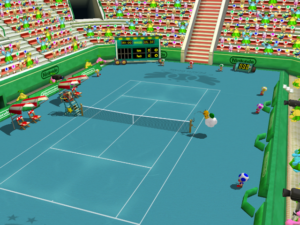 Peach Dome (Hard)Hard · from the start · normal speed, strong bounceThe home of the World Open and the Mushroom and Rainbow Cups; like the other two Peach Dome surfaces, it has no gimmick at all.
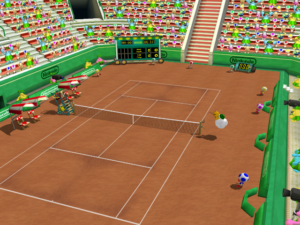 Peach Dome (Clay)Clay · from the start · slow, weak bounceThe Flower and Moonlight Cups’ surface: long rallies, low bounces.
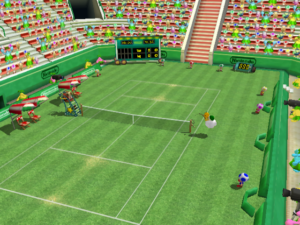 Peach Dome (Grass)Grass · from the start · fast, weak bounceHome of the Star and Planet Cups, and of five-set finals.
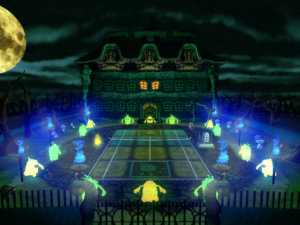 Luigi’s Mansion CourtGimmick · from the start · fast, normal bounceBalls that land on ghost zones summon ghosts; hit the light bulb switch to clear them. Gold Ghosts and Garbage Can Ghosts watch from the stands.
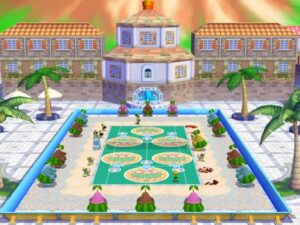 Delfino Plaza CourtGimmick · from the start · normal speed, weak bounceLand the ball on a Piranha Plant circle and a plant sprays slowing goop; stand on a F.L.U.D.D. panel to clean it.
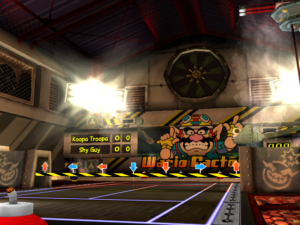 Wario Factory CourtGimmick · from the start · fast, strongest bounceArrow switches drive conveyor belts across the court, in a factory modelled on WarioWare, Inc.
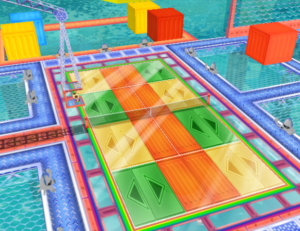 Gooper Blooper CourtGimmick · from the start · fastest, normal bounceSliding floor panels at Ricco Harbor; uncover the water and a ball landing in it is out.
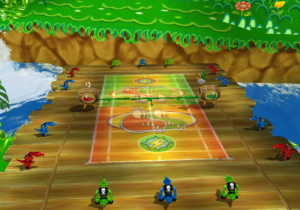 DK Jungle CourtGimmick · from the start · slow, normal bounceKlaptraps on the net bite at players’ legs until Thunder Lakitu zaps them, to a remix of DK Island Swing.
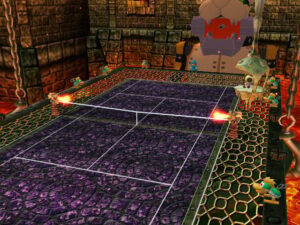 Bowser Castle CourtGimmick · win the Fire Cup in singles · fast, strong bounceThe deck tilts under the players’ weight, as on the N64 game’s Bowser Stage; Bowser’s Keep from Super Mario RPG appears in its intro.
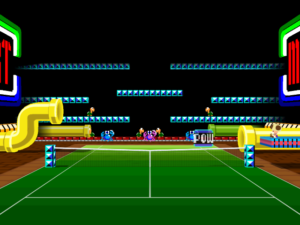 Mario Classic CourtGimmick · win the Fire Cup in doubles · slow, strongest bounceThe Mario Bros. arcade game come to life: Shellcreepers, Sidesteppers, Fighter Flies and Freezies, and a POW Block on the net.
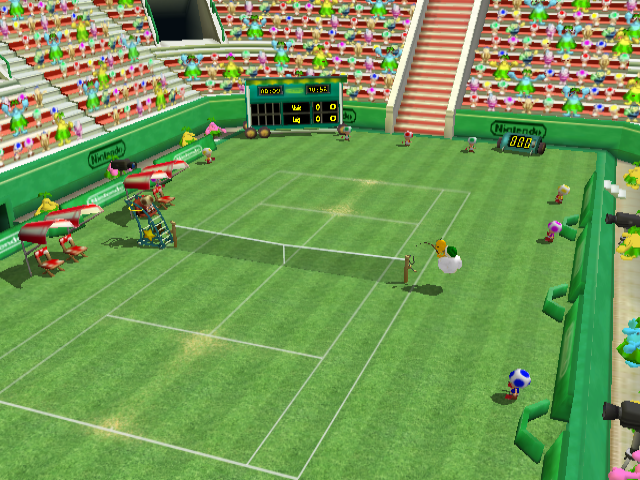
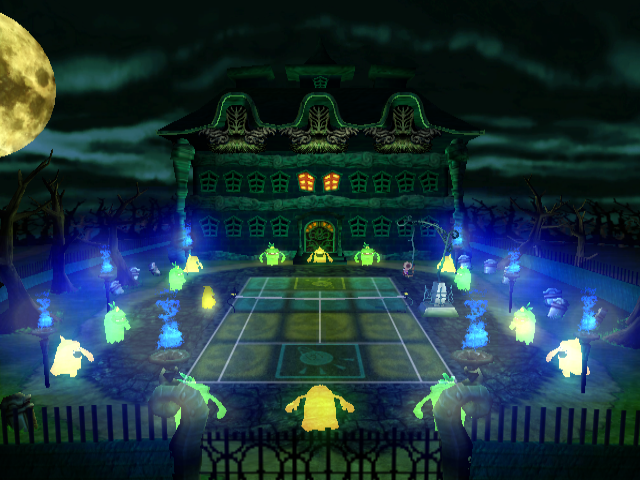
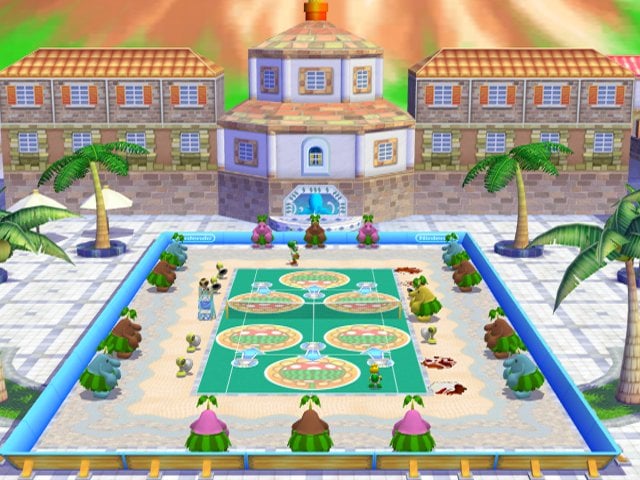
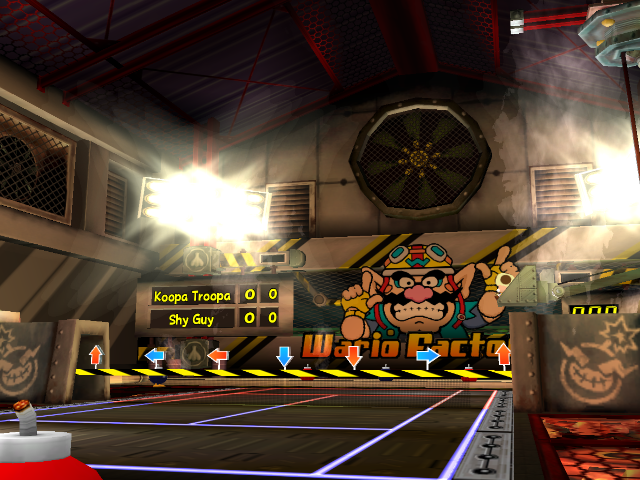

 GhostsLuigi’s Mansion Court. Blue Twirlers, Bowling Ghosts, Gold Ghosts and Purple Punchers appear where balls vanish into ghost zones, and slow anyone they touch.
 Garbage Can GhostLuigi’s Mansion Court. Now and then lobs a banana peel onto the court.
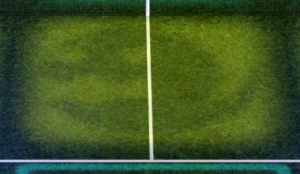 Ghost zoneLuigi’s Mansion Court. A ball landing here vanishes and summons a ghost above the tile.
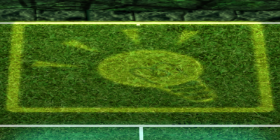 Light bulb zoneLuigi’s Mansion Court. Hit your opponent’s to clear every ghost from your side.
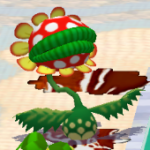 Piranha PlantDelfino Plaza Court. Pops out of a puddle to spit slowing goop.
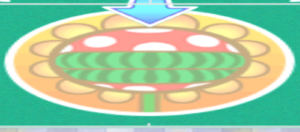 Piranha Plant iconDelfino Plaza Court. A ball landing on one sets a Piranha Plant spitting goop over it.
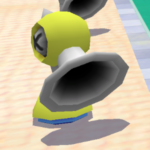 Water nozzle and switchDelfino Plaza Court. Step on the switch and the F.L.U.D.D.-style nozzle washes the goop away.
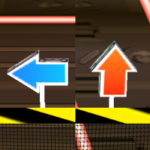 Direction arrowsWario Factory Court. Hit one to start or reverse the matching conveyor belt; hit it again to speed it up.
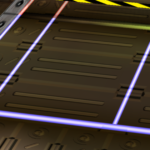 Conveyor beltWario Factory Court. Carries players across or along the court.
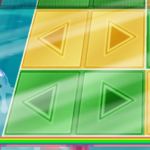 Sliding floor panelsGooper Blooper Court. A ball on an arrow slides the panel; uncover water and a ball landing in it is out.
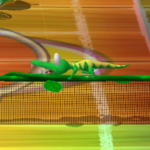 KlaptrapsDK Jungle Court. Latch onto players’ legs, slowing them and shortening their dives.
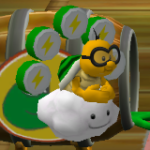 Thunder LakituDK Jungle Court. Zaps the Klaptraps off one side of the court.
 Lightning circleDK Jungle Court. Hit the opponent’s circle to call Thunder Lakitu to your side.
 POW BlockMario Classic Court. Hit it to flip the enemies; it breaks after three hits and comes back.
 ShellcreeperMario Classic Court. Walks back and forth in your way; one POW hit flips it.
 SidestepperMario Classic Court. Needs two POW hits.
 Fighter FlyMario Classic Court. Hops about from the second game onwards.
 FreezieMario Classic Court. From the third game, turns one side to slippery ice.
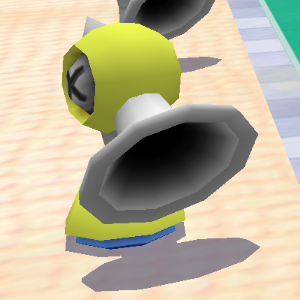
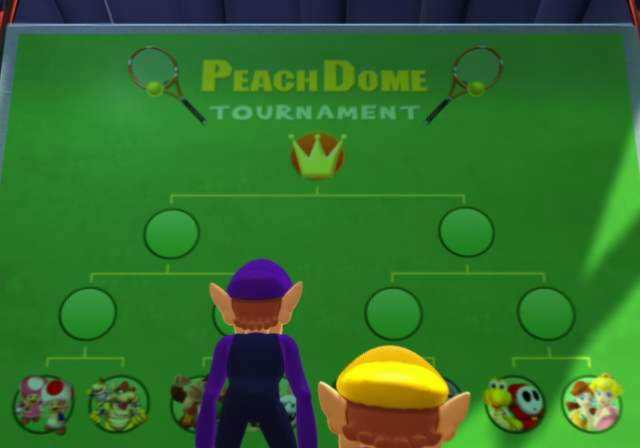 The GameCube era on courtReferences to other gamesDelfino Plaza and Ricco Harbor from Super Mario Sunshine, with Bowser Jr.’s magic brush, Petey Piranha, the Gooper Blooper and Mecha-Bowser; Luigi’s Mansion and its Poltergust 3000; the Wario Factory from WarioWare, Inc. with music from Wario World; DK Jungle’s Klaptraps and Kritters from Donkey Kong Country and Donkey Kong 64. Item Battle uses the very item boxes, items and sound effects of Mario Kart: Double Dash!!, and Toadette cameos in the opening.
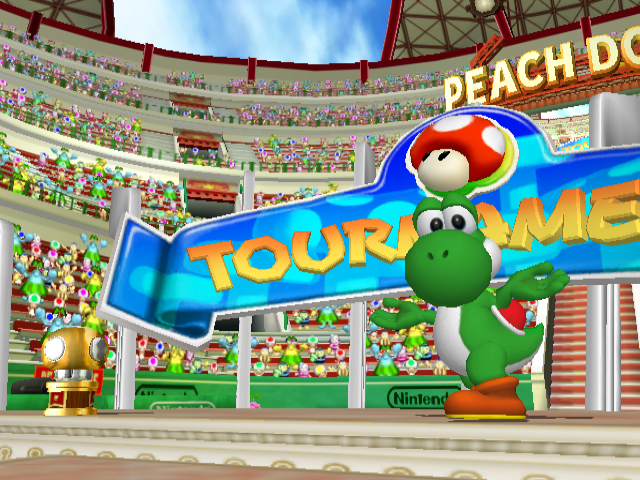 Older classicsReferences to other gamesThe Mario Classic Court is the Mario Bros. arcade game; Donkey Kong’s trophy scene plays the 1981 Donkey Kong title music, Yoshi’s uses Yoshi’s Song from Yoshi’s Story, Wario’s a tune from Wario Land 3 and Bowser’s part of his Super Mario 64 theme. Peach hums the Super Mario Bros. underground music while she waits.
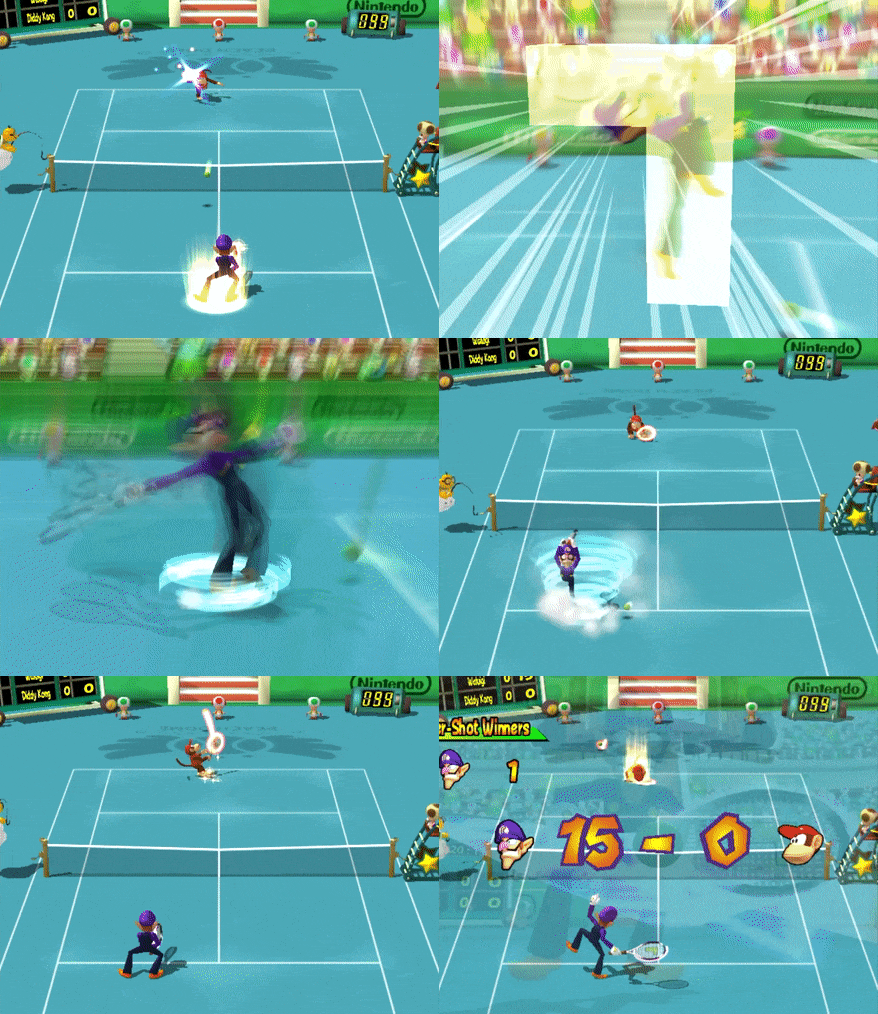 Waluigi’s moves elsewhereMario Hoops 3-on-3 · Mario & SonicWaluigi’s Whirluigi cyclone and air-swimming Swimming Return were recycled in his Twist Dunk in Mario Hoops 3-on-3, and he swims through the air when boosting in several Mario & Sonic events.
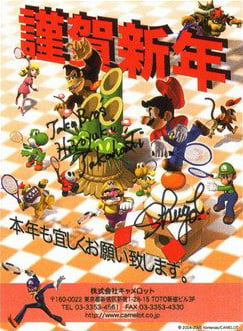 Nintendo Dream New Year cardNintendo Dream · 2005The Japanese magazine Nintendo Dream made its 2005 nengajō (New Year greeting card) from the game’s artwork.
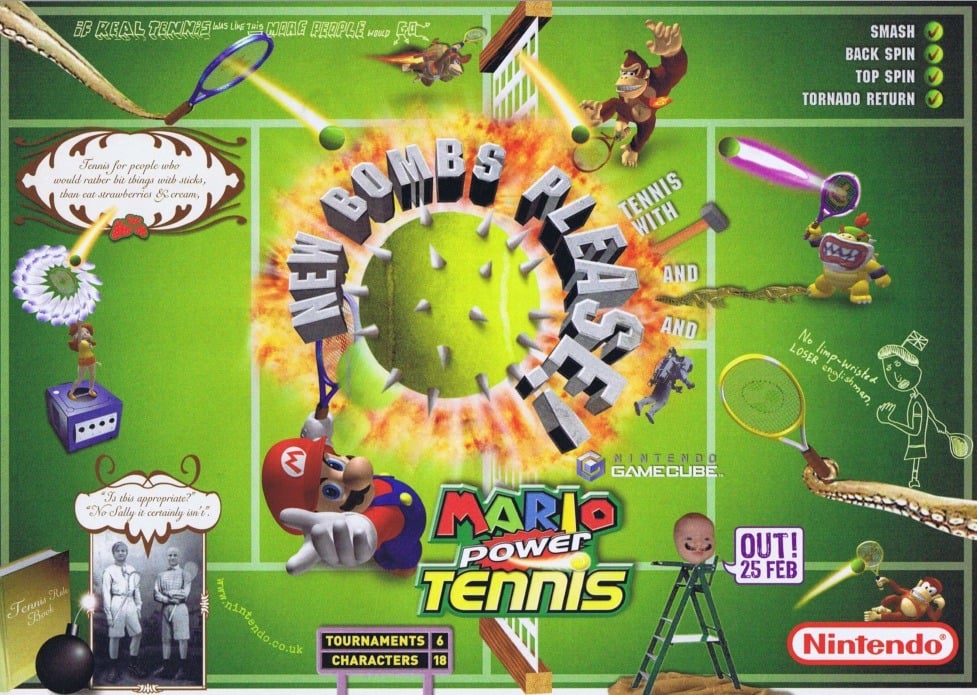 Print advertsUK, France, Germany · 2005European print adverts for the GameCube release are shown in the gallery.
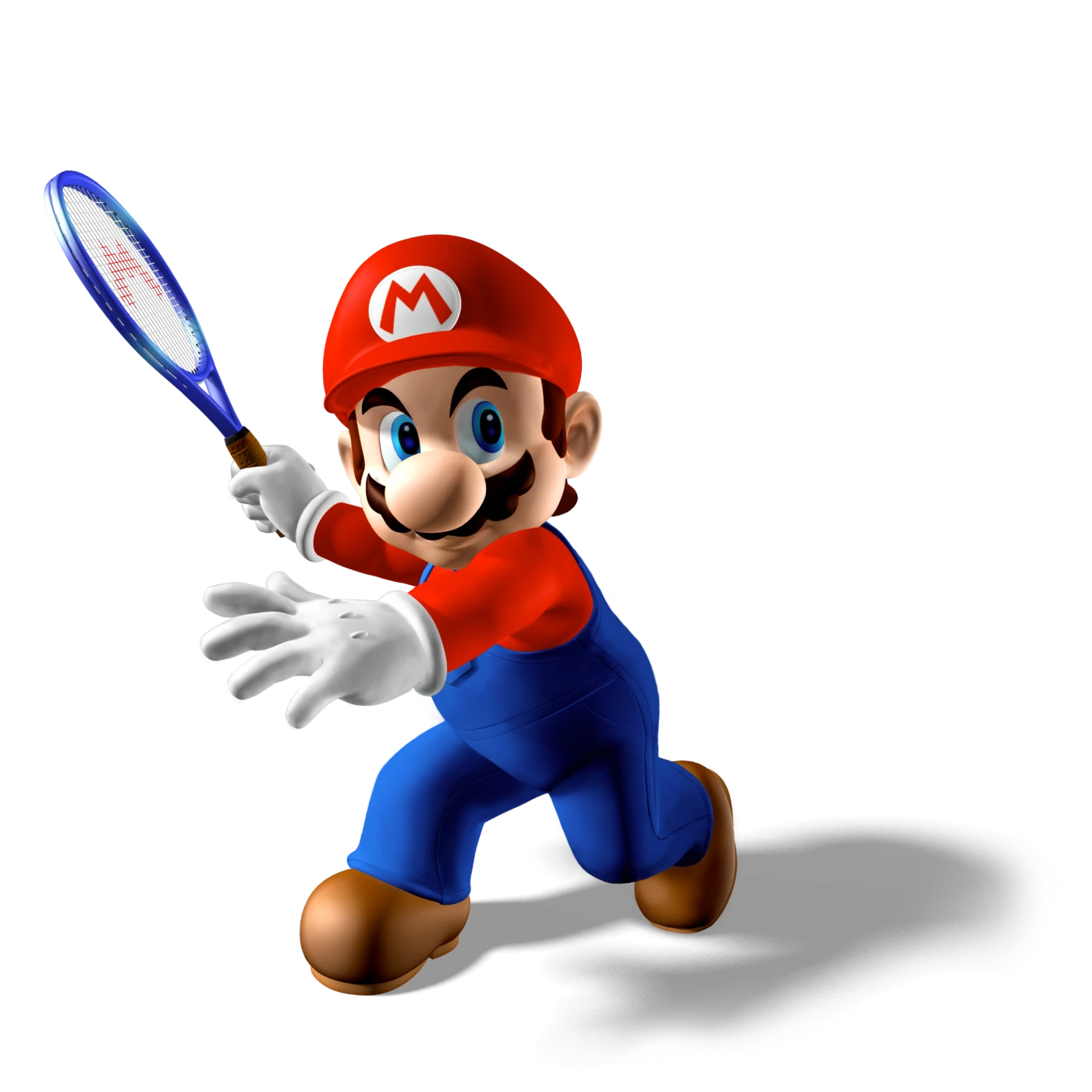 MarioAll-Around · from the start
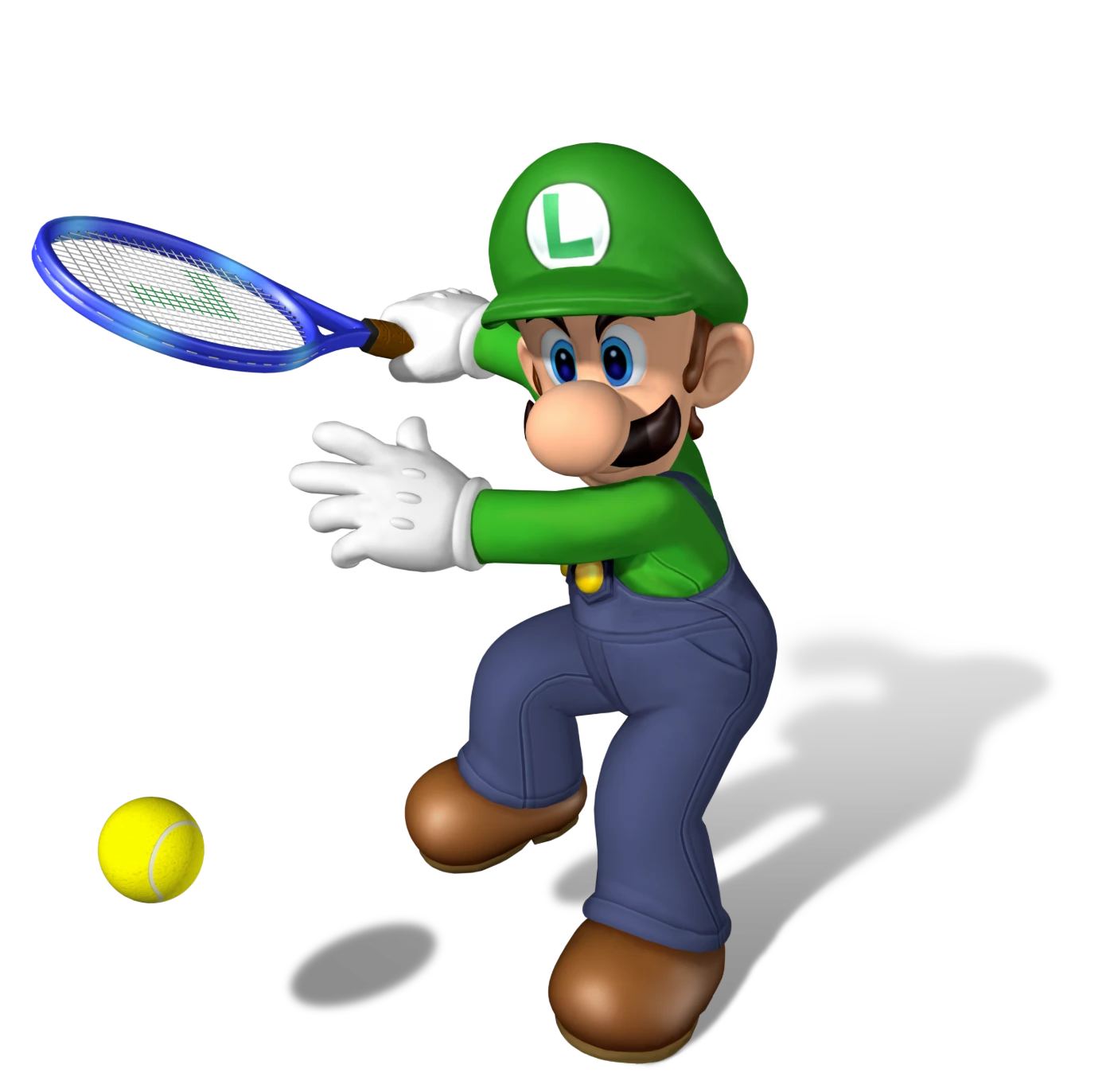 LuigiAll-Around · from the start
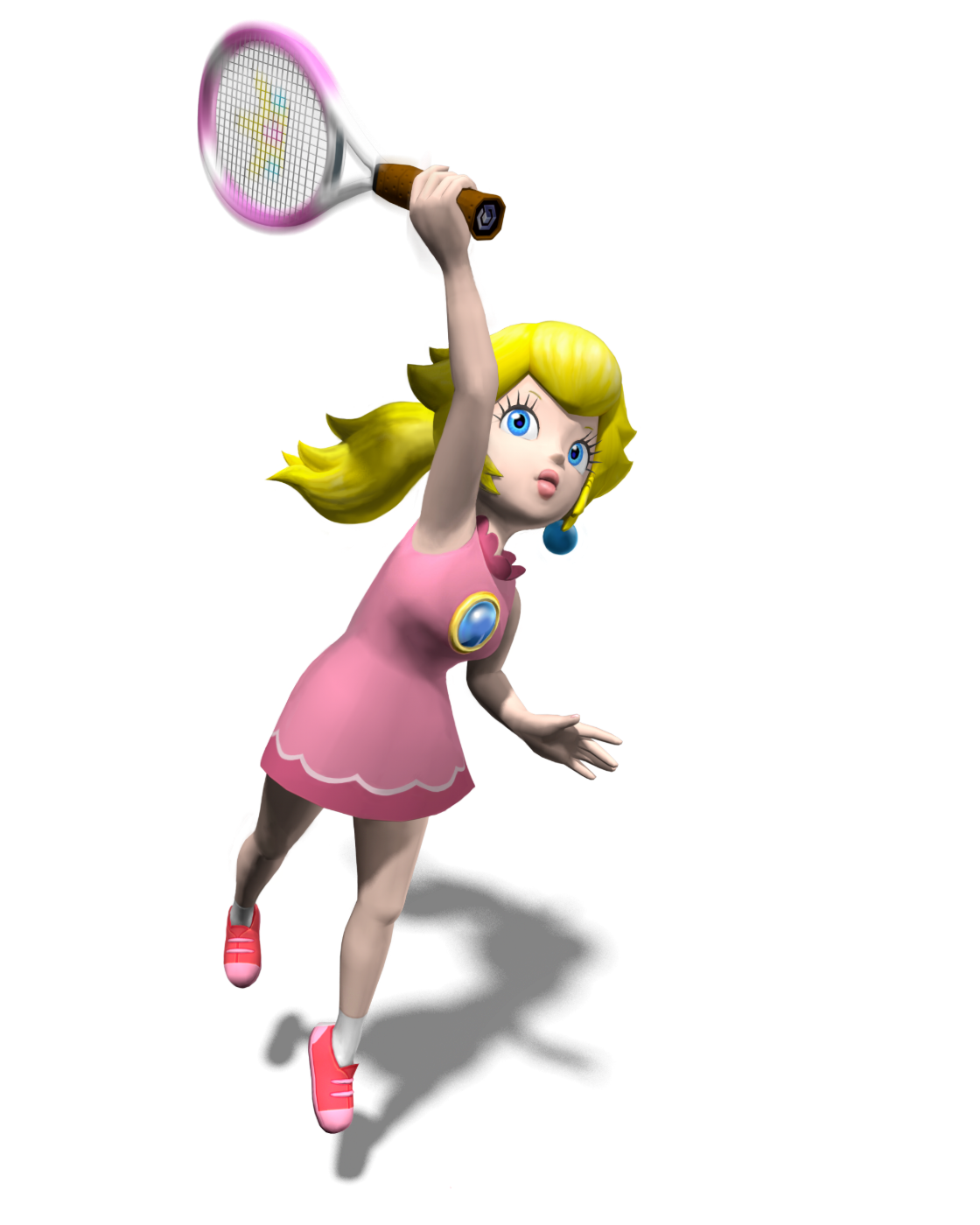 PeachTechnique · from the start
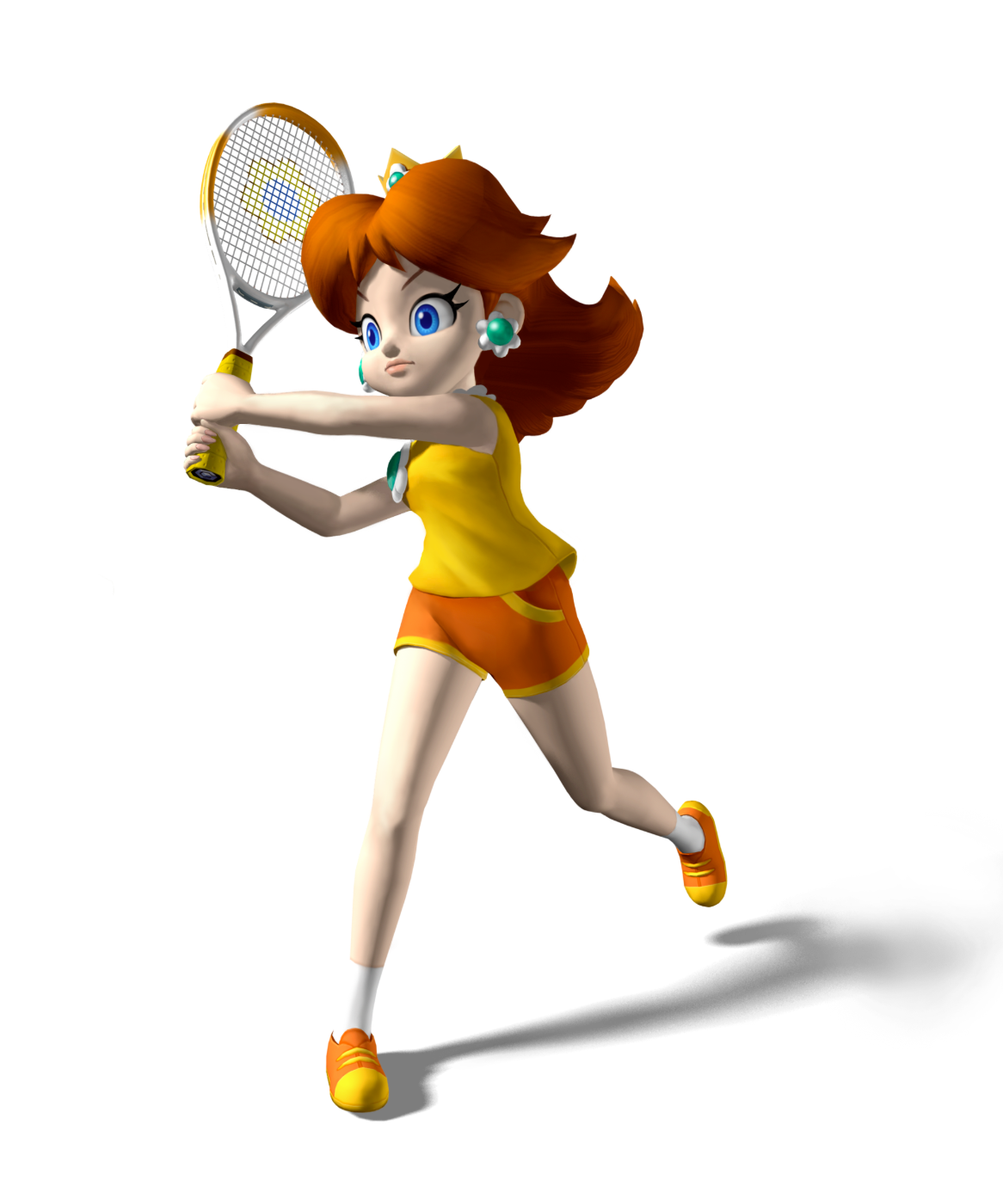 DaisyTechnique · from the start
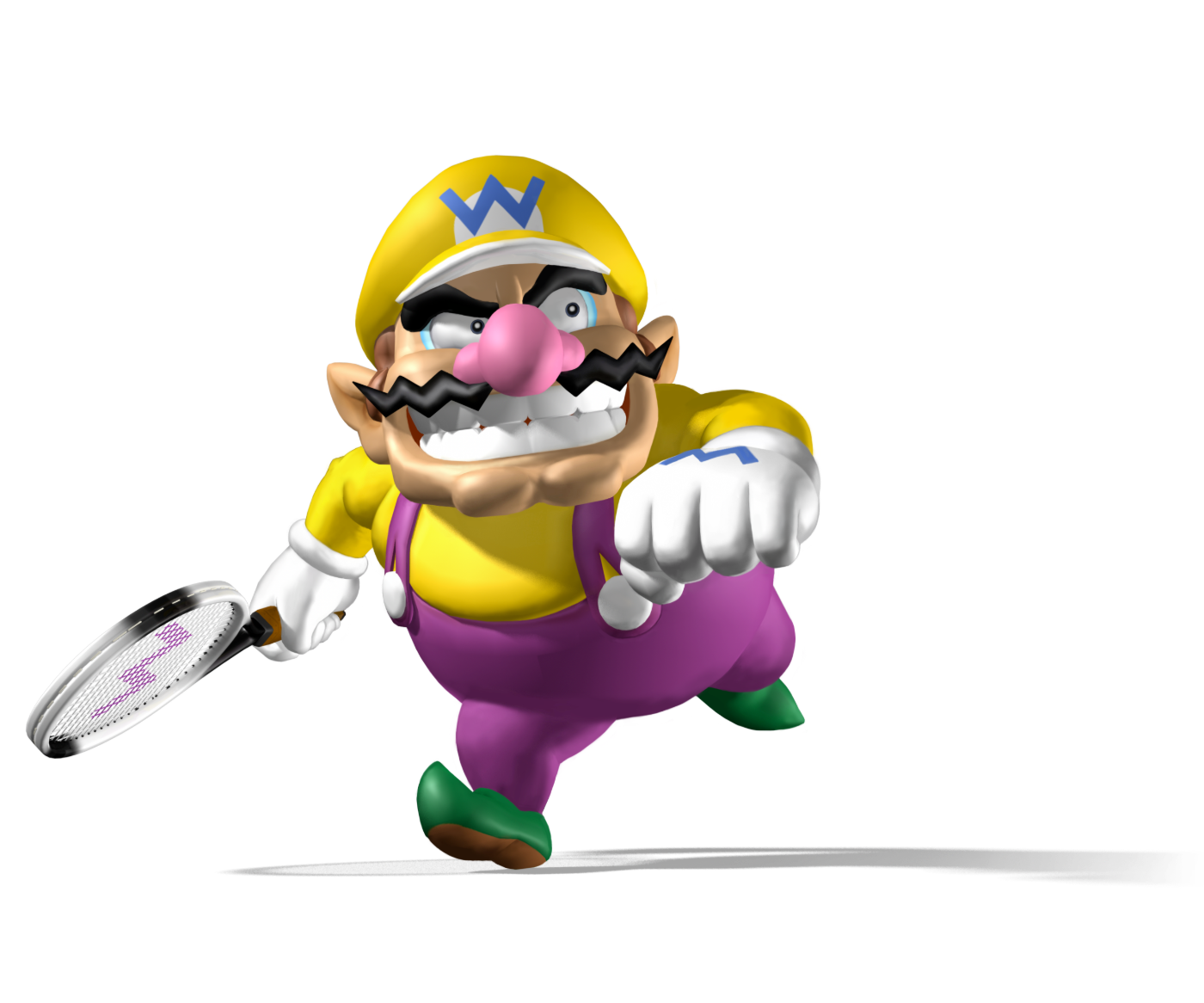 WarioPower · from the start
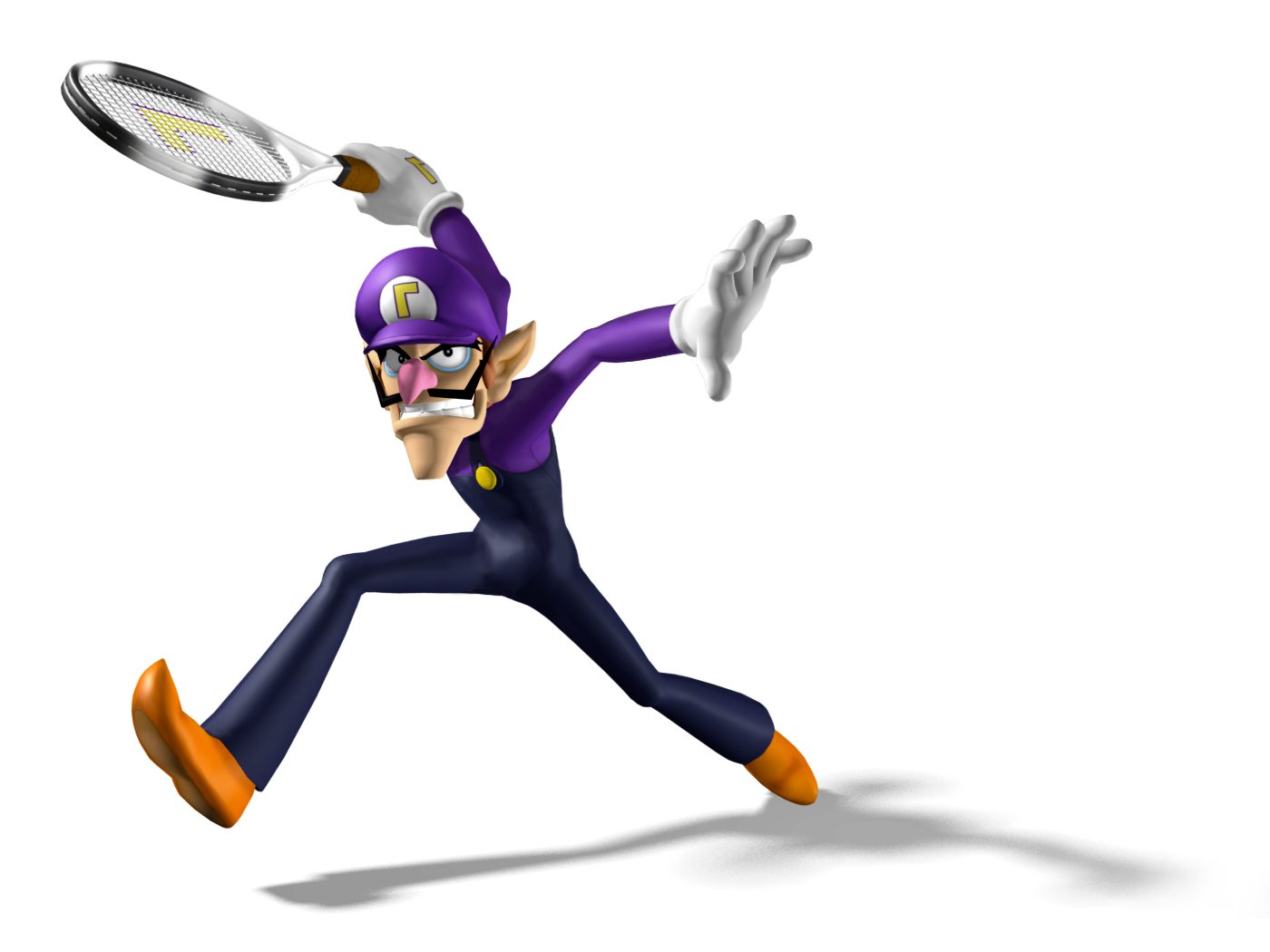 WaluigiDefense · from the start
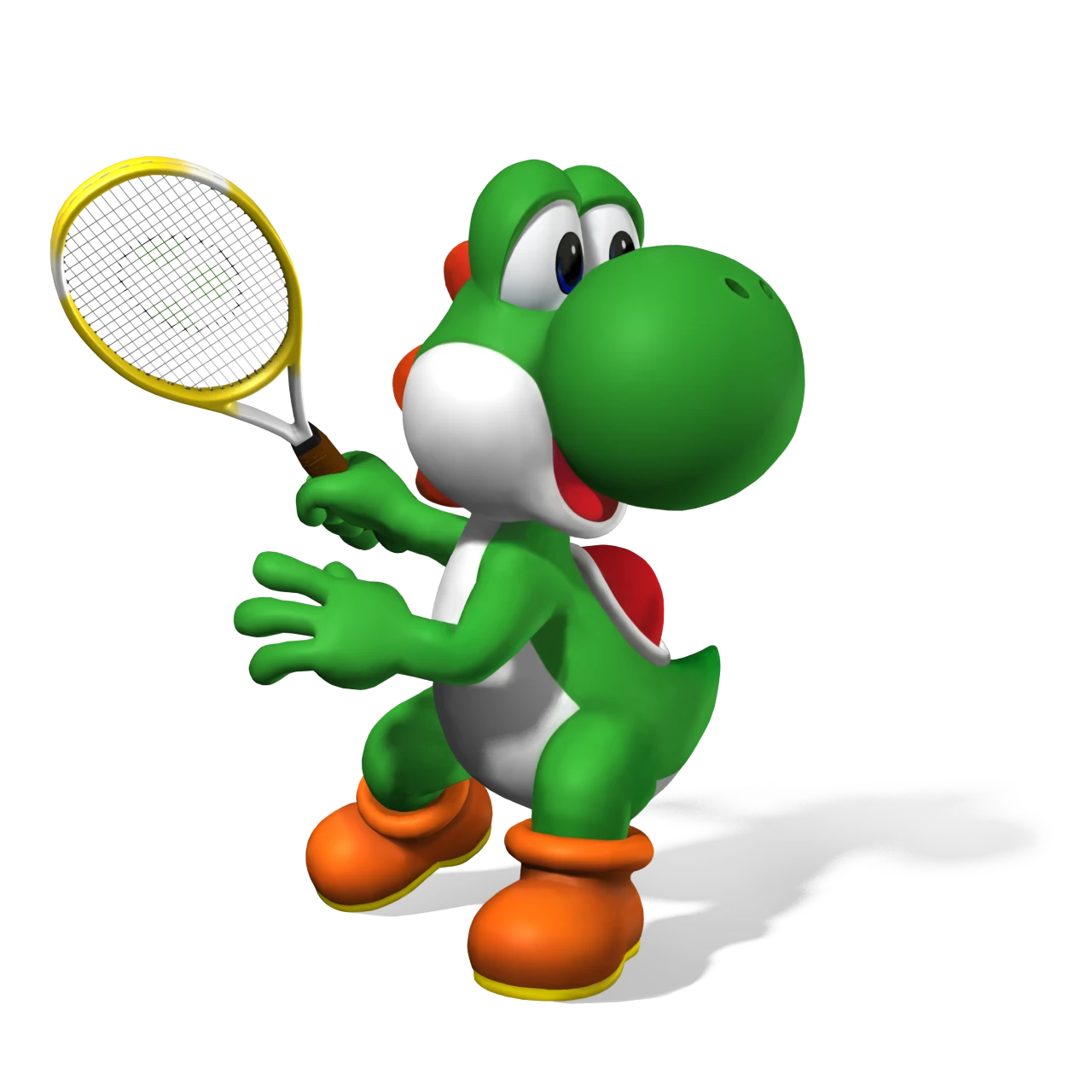 YoshiSpeed · from the start
 Koopa TroopaSpeed · from the start
 Donkey KongPower · from the start
 Diddy KongSpeed · from the start
 BooTricky · from the start
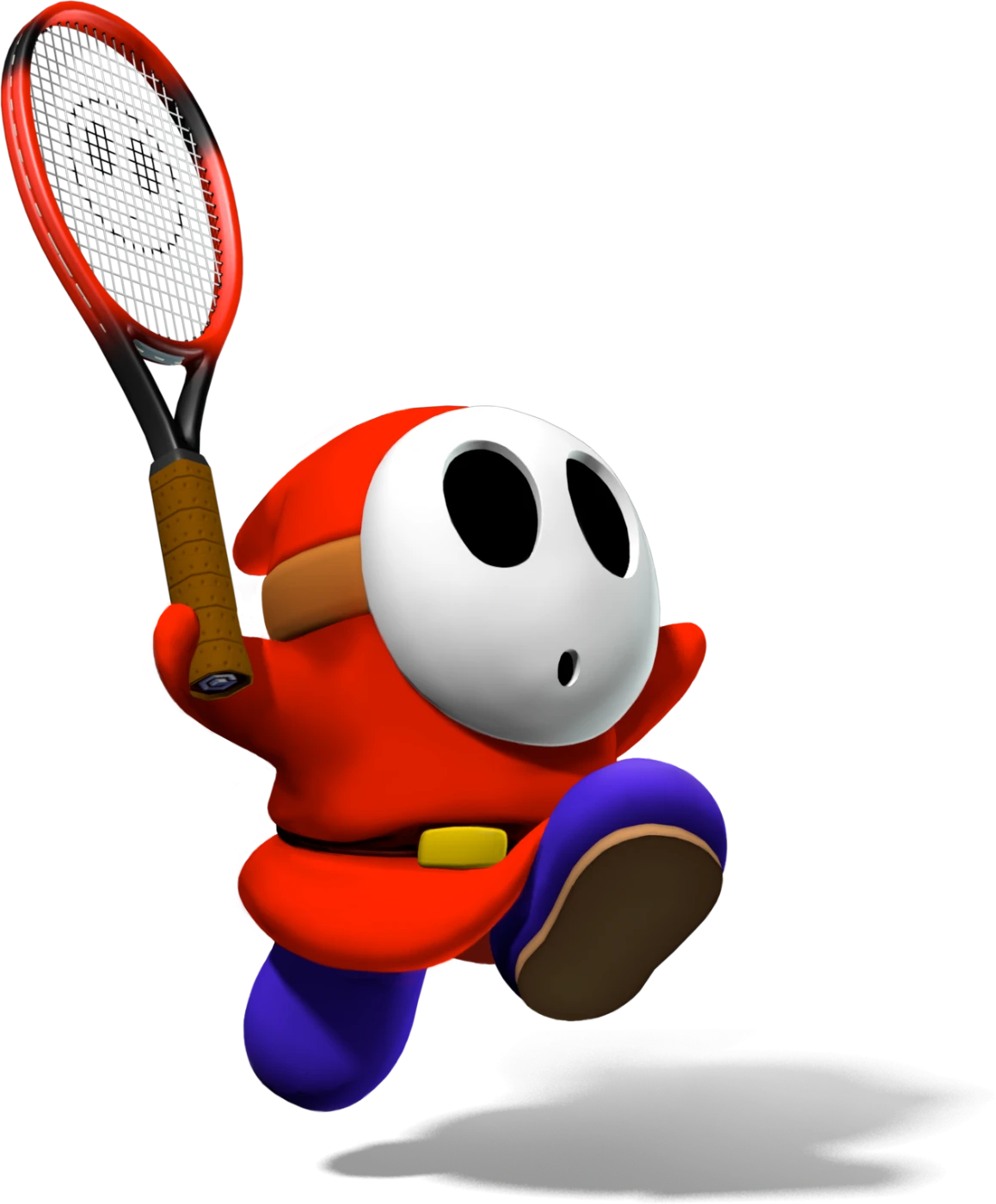 Shy GuyTechnique · from the start
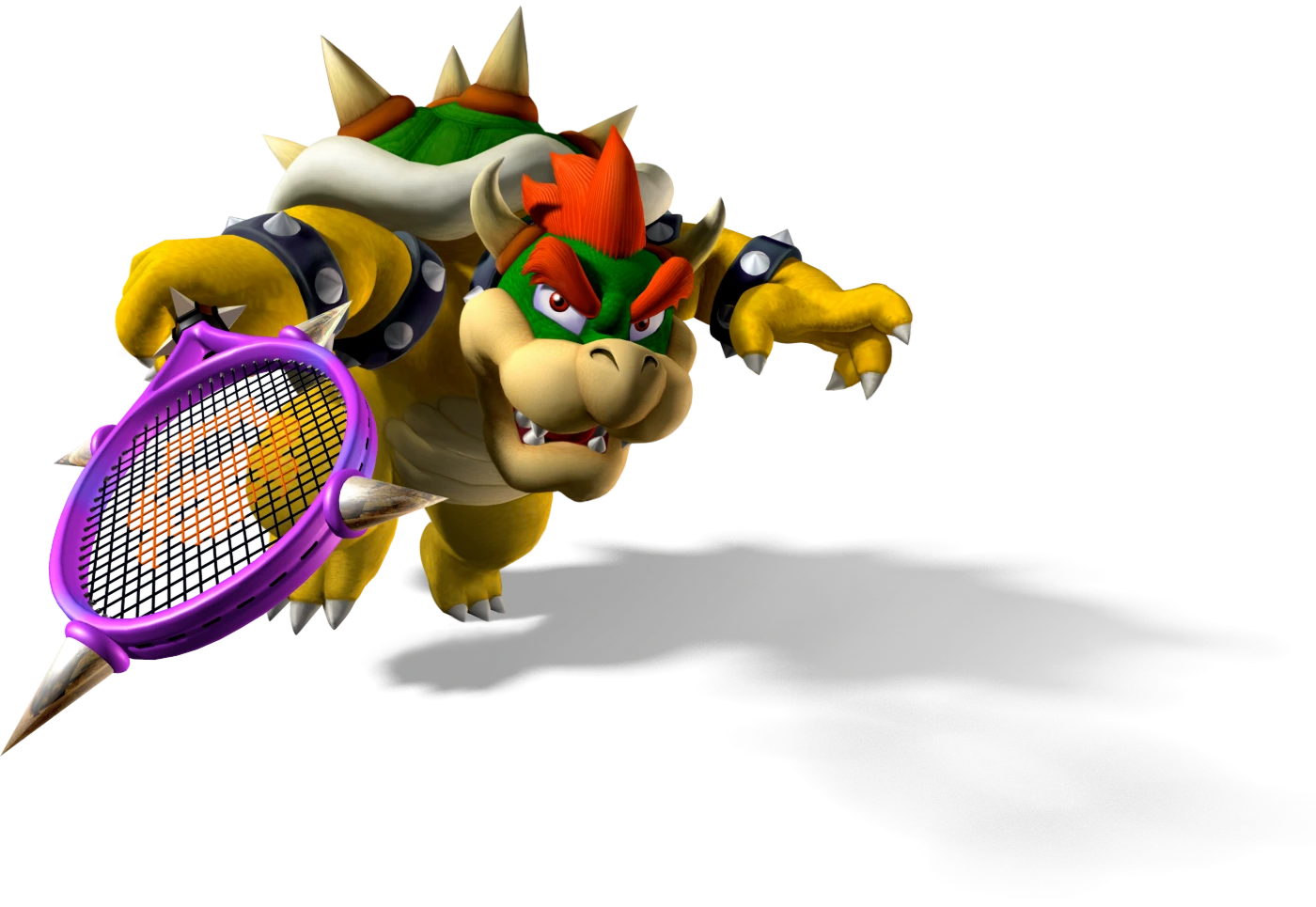 BowserPower · from the start
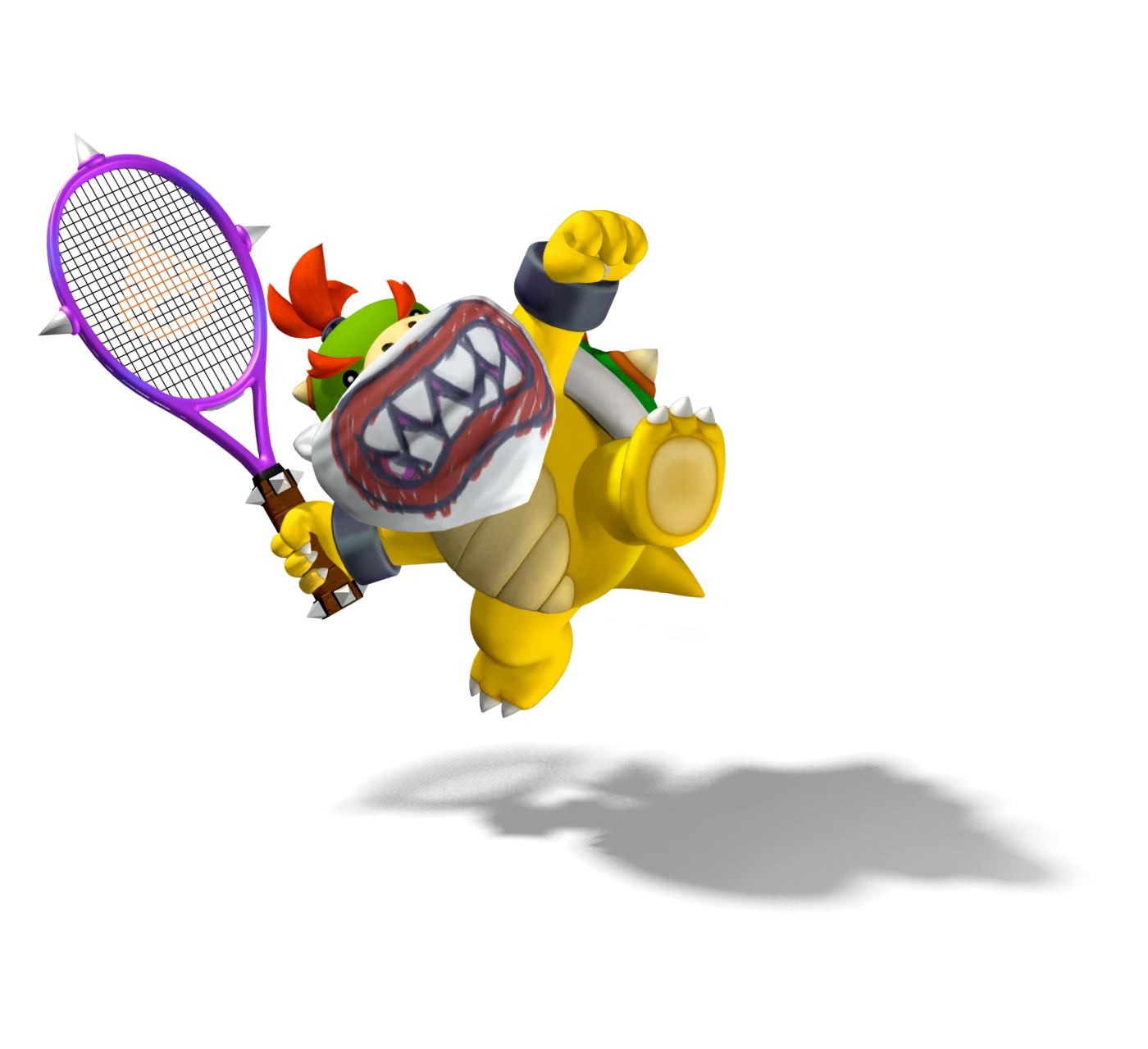 Bowser Jr.Tricky · from the start
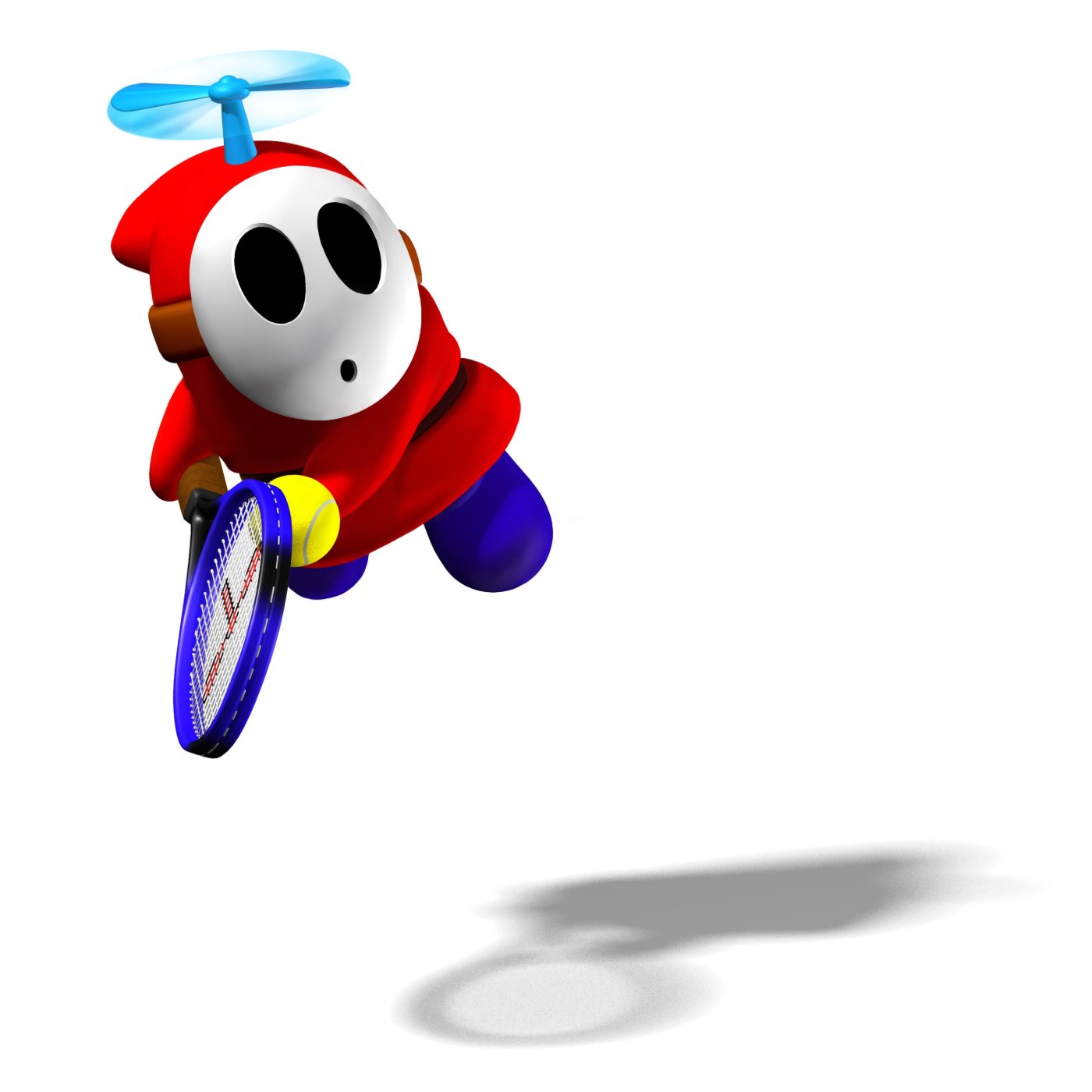 Fly GuyTricky · unlockable
 ParatroopaTechnique · unlockable
 WigglerDefense · unlockable
 Petey PiranhaPower · unlockable
 Gooper Blooper (boss)Gooper Blooper VolleyHolds a racket in each of four tentacles.
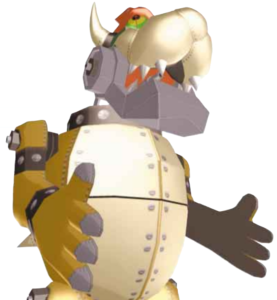 Mecha-Bowser (boss)Mecha-Bowser MayhemFires light beams, flames, Bullet Bills and Bob-ombs for you to send back.
 Bullet BillOpening filmBowser’s last resort, returned by Mario into the Bob-omb launcher.
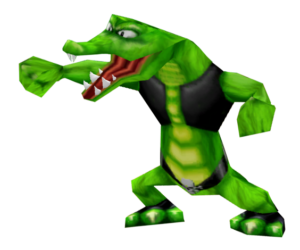 KritterDK Jungle CourtStand around the edge of the court, in their Donkey Kong 64 designs.
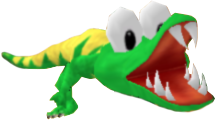 KlaptrapDK Jungle Court, Balloon PanicThe court’s leg-biters, in green and red.
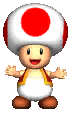 ToadsCrowdRed, blue, yellow, green and purple Toads fill the stands.
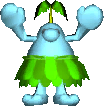 Piantas and NokisCrowdIsle Delfino’s residents come to watch.