
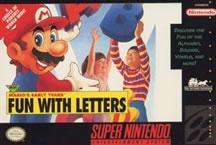
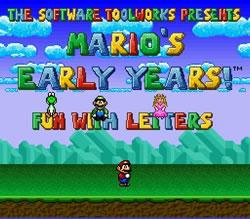
Mario’s Early Years! Fun with Letters
A,B,C with Mario — pre-reading basics for the very youngest players
Overview
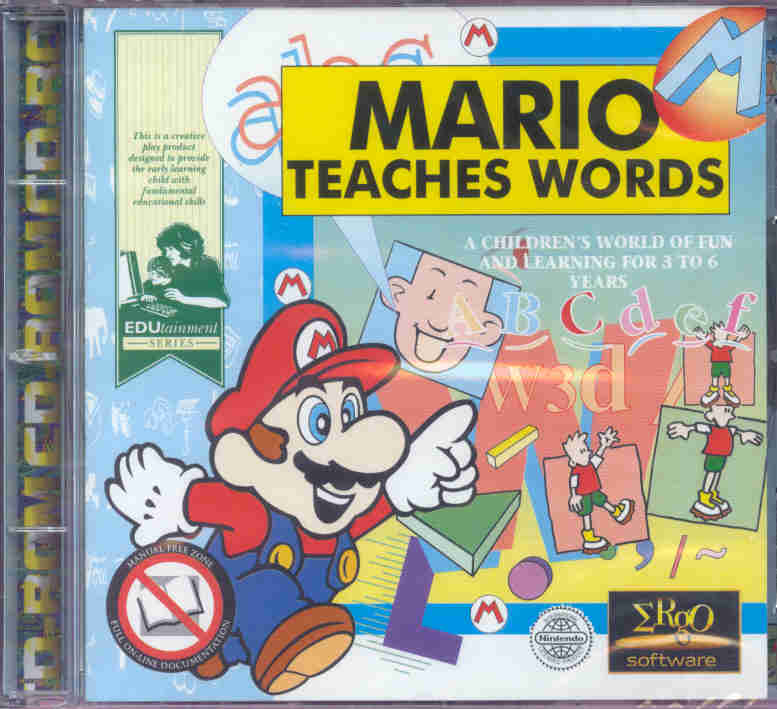
The UK IBM-PC release was titled Mario Teaches Words rather than Fun with Letters.
Mario’s Early Years! Fun with Letters is an educational game aimed squarely at very young children — think pre-kindergarten to early primary school. It was developed and published by The Software Toolworks (under licence from Nintendo) and released for MS-DOS in 1993 and SNES in 1994. In the UK the PC version was renamed Mario Teaches Words, presumably to tie in with the existing Mario Teaches Typing brand.
It’s one of three games in the Mario Early Years series — the others being Fun with Numbers and Preschool Fun — and all three are part of the broader Mario Discovery Series, which also included Mario is Missing! and Mario’s Time Machine. The three Early Years games share the same structure and engine; they just teach different subjects. Fun with Letters covers the alphabet, phonics and basic pre-reading skills.
“Part of the Mario Discovery Series — a whole curriculum in a green cap.”
How it works
The game is controlled almost entirely with a mouse — on SNES that means the SNES Mouse peripheral. The player moves a cursor around the screen and clicks on objects or answers to interact. The character (Mario or Princess Toadstool, your pick — though it makes no gameplay difference) will walk over to whatever you click on and interact with it automatically.
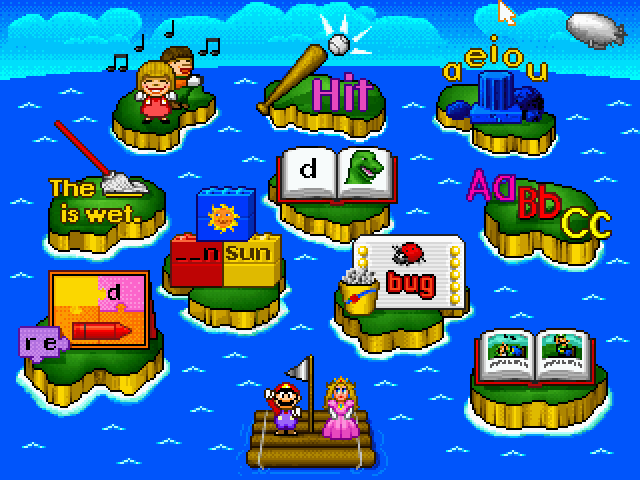
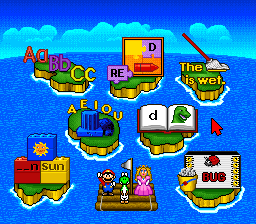
The game opens on a world selection screen: a view of the ocean with an archipelago of seven islands, each one representing a different learning world. At the bottom, a raft carries the playable characters. Click an island to jump straight into that world — there’s no mandatory order, so kids can explore freely.
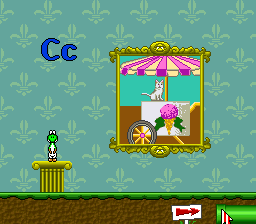
Inside each world, different rooms are connected by warp pipes. Each room presents a task: maybe filling in missing letters to complete a word, identifying which objects start with the same letter, or picking out words containing a specific sound. You usually choose from three or four options. Get enough right answers and you move on to the next room, eventually clearing the world.
There’s also a helpful feature for when kids get stuck: clicking on Luigi, who’s asleep in each room, wakes him up. Once he’s watching, he’ll cheer every correct answer and sometimes other characters pop in too. It’s a nice way to make the game feel more alive without being annoying.
The worlds
The SNES version has seven worlds, each focused on a different aspect of letters and early reading:
- First Letter World — Identifying which letter a word starts with. Great for absolute beginners just getting to grips with the alphabet.
- Vowel World — All about A, E, I, O and U. Kids learn to identify vowels and how they sound in words.
- Alphabet World — A broad tour of all 26 letters, their names and their sounds.
- Sentence World — Moving beyond individual letters into words in context, filling in gaps to complete simple sentences.
- Building World — Word-building by blending letter sounds together (called “Blending World” in the PC version — same content, different name).
- Sound World — Finding words that share a particular sound, building phonetic awareness.
- Last Letter World — Focusing on the letters words end with, rounding out the phonics picture.
The PC version has a couple of extra worlds that didn’t make it to SNES: Sing Song World (nursery rhymes performed with the Mario cast — Twinkle Twinkle, The ABC Song, etc.) and Story World (two short stories read aloud featuring Mario characters). Both were cut from the SNES version, almost certainly due to cartridge space limitations.
Characters
You choose between Mario or Princess Toadstool as your on-screen character at the start — a purely cosmetic choice with no effect on anything. On SNES, Yoshi was added as a third playable option, giving kids one more familiar face to pick.
Luigi is ever-present in each room, sleeping in the corner until you click on him. Once woken, he watches and reacts to your answers — celebrating when you get things right. Various other Mario characters make cameo appearances in the worlds, including Bowser, the Koopalings and Piranha Plants as part of the scenery and activities.
Audio & music
The audio is a real highlight for a young child’s game. All dialogue is fully voiced — narrated in a child’s voice, with prerecorded words stitched together to form sentences. Luigi has his own distinct voiced lines too, though his aren’t assembled from fragments in the same way.
The soundtrack draws on Super Mario World‘s music, mixing original compositions with remixed versions of the SMW score. You’ll also recognise some classic nursery rhymes woven in — Twinkle Twinkle Little Star and Itsy Bitsy Spider both make appearances. Sound effects are also taken straight from Super Mario World, giving the whole thing a very familiar, warm feel for any Mario fan.
SNES vs PC — what’s different?
The two versions are largely the same game, but the SNES version made a few tweaks:
- Yoshi was added as a third playable character on SNES — not present in the original PC version
- Character sprites were redrawn to match official appearances (five fingers instead of four, for instance)
- Two worlds were cut: Sing Song World and Story World — almost certainly due to cartridge space
- The options menu was simplified — no toggles for music, sound, or voice clips on SNES
- The ability to randomise questions and a help screen with tips were also removed
- Alphabet World lost one of its game modes on SNES (the one focused specifically on letter sounds)
- Building World on SNES = Blending World on PC — same content, renamed to avoid confusion with a completely different PC game also called Building World
- Various background graphics differ between versions
Gallery
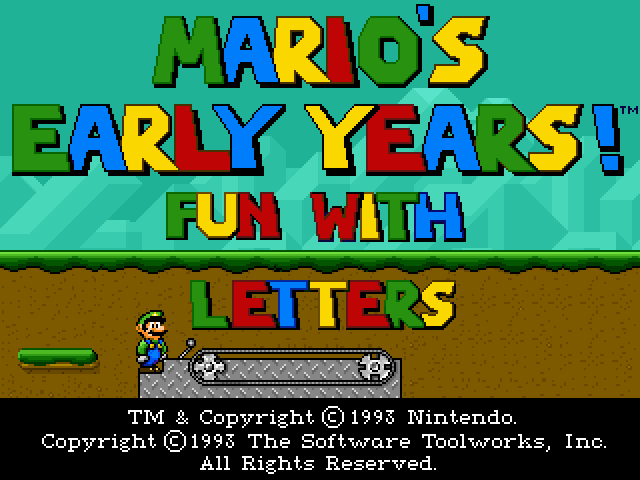
Screenshots from both the MS-DOS PC and SNES versions:

CD-ROM Collection & Mud Pies
The MS-DOS versions of all three Mario’s Early Years titles were released together as the Mario’s Early Years! CD-ROM Collection — a single compilation disc containing Fun with Letters, Fun with Numbers, and Preschool Fun. Notably, the CD-ROM Collection version of Preschool Fun includes a brand-new world, Time World, not found in the standalone version.
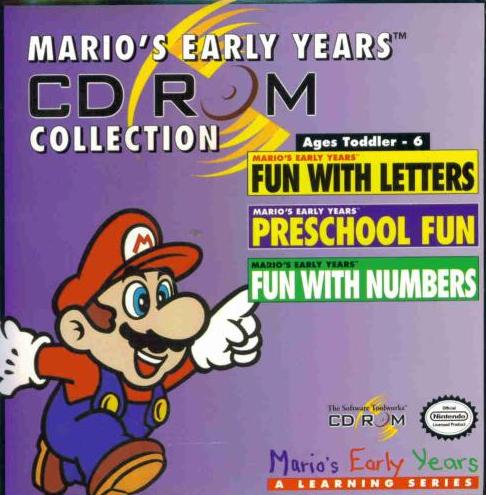
Mario’s Early Years! CD-ROM Collection front cover. Note Mario wearing a green cap instead of his usual red.
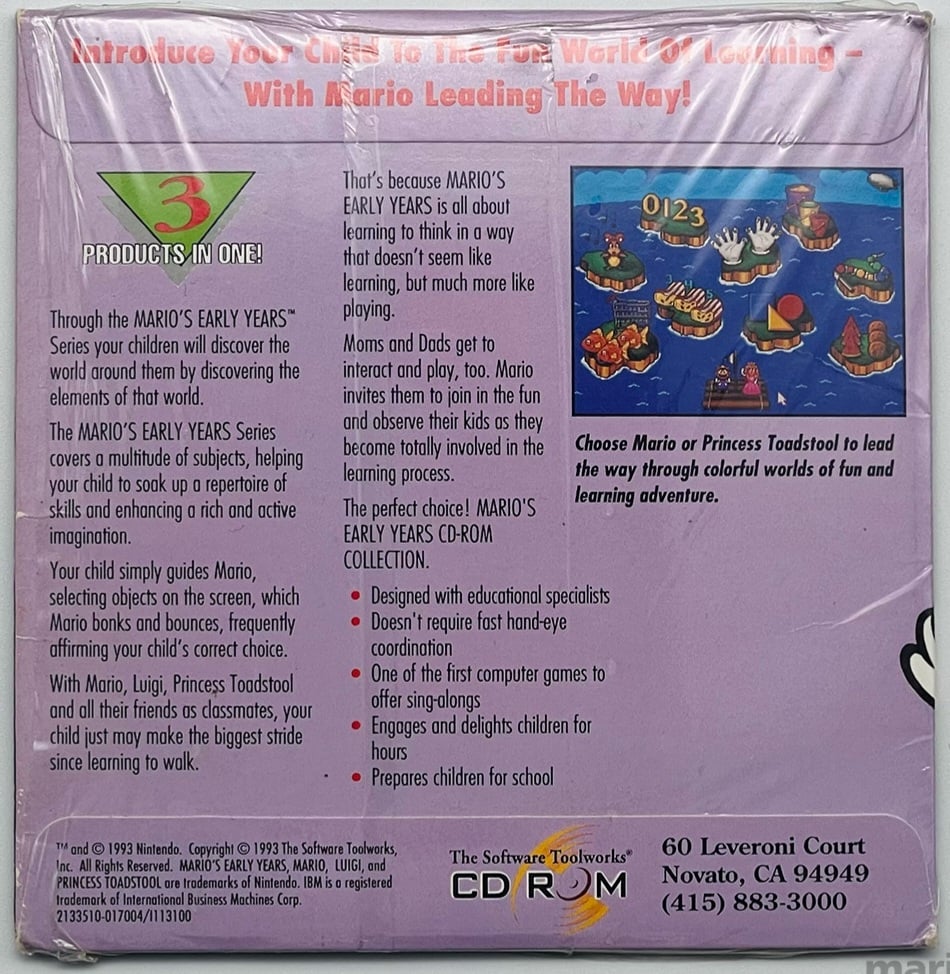
Back cover of the CD-ROM Collection.
Mud Pies was a further compilation set that included the entire Mario’s Early Years Collection alongside two other products: Shelley Duvall’s It’s A Bird’s Life and CardShop Plus! — making it a multi-software family bundle released for the PC.
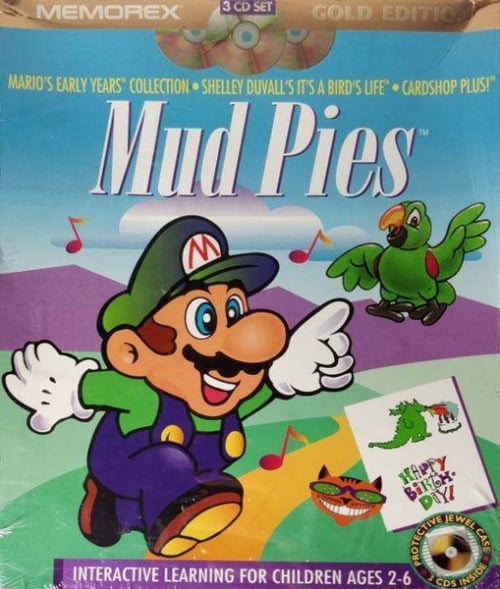
The Mud Pies compilation, which included all three Mario’s Early Years titles, Shelley Duvall’s It’s A Bird’s Life, and CardShop Plus!
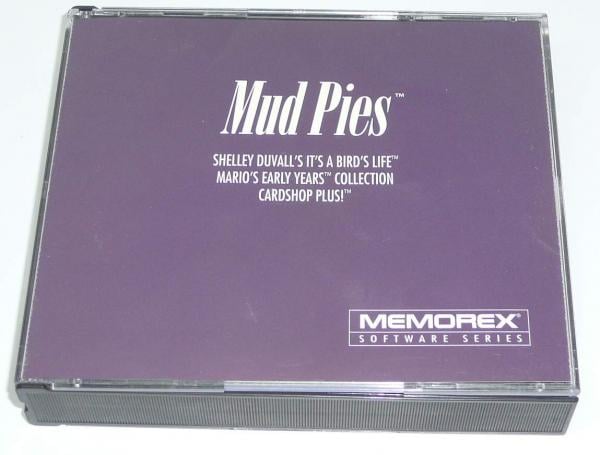
Alternate cover artwork for the Mud Pies compilation set.
Release information
A CD-ROM compilation — Mario’s Early Years! CD-ROM Collection — bundled all three Early Years games together and was released for MS-DOS in 1995.
Trivia & interesting facts
- Part of the Mario Discovery Series — which also includes Mario is Missing!, Mario’s Time Machine, Fun with Numbers and Preschool Fun
- In the UK, the PC version was called Mario Teaches Words — presumably to tie in with Mario Teaches Typing
- The game was released on PC first (1993), with the SNES version following in 1994
- Yoshi is a SNES-exclusive playable character — he’s not in the original PC version
- All seven SNES worlds can be accessed in any order from the start — no forced progression
- Two PC worlds (Sing Song World and Story World) were cut from the SNES version, almost certainly due to cartridge space
- Character sprites were redrawn for the SNES version to give them the correct number of fingers (five instead of four)
- Luigi is present in every room as a sleeping assistant — clicking him wakes him up to cheer your correct answers
- The soundtrack mixes original music with remixed Super Mario World tunes and classic nursery rhymes
- The game uses a child’s voice for all narration, with words prerecorded and stitched together to form sentences
- Building World on SNES was renamed from the PC’s Blending World because the PC had a completely different game called Building World
- All three Early Years games were later bundled as the Mario’s Early Years! CD-ROM Collection in 1995
- Never released in Japan
Reference & downloads