MS-DOS · Super NES1993EducationalThe Software ToolworksNine worlds on PC, seven on Super NESHidden developer heads on Super NESTen Little Koopas sing-alongUK title: Mario Teaches Sums
Mario’s Early Years! Fun with Numbers
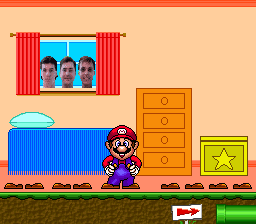
Mario’s maths lesson for the very young. Mario’s Early Years! Fun with Numbers is the counting half of The Software Toolworks’ licensed Early Years trio: a point-and-click game in which Mario or Princess Toadstool sails between islands to recognise numbers, count objects, compare sizes, spot shapes and sort things into groups, with every question read aloud and a sleepy Luigi on hand to cheer. The MS-DOS original of 1993 has nine worlds, including a sing-along where the Koopalings perform Ten Little Koopas; the Super NES cartridge from Mindscape, released in September 1994, has seven, adds Yoshi and hides a bizarre Easter egg in which three photographed heads of the developers count to six. In Britain it was Mario Teaches Sums; in France and Germany it learned to count in their own languages.
Developer:The Software Toolworks, under licence from Nintendo
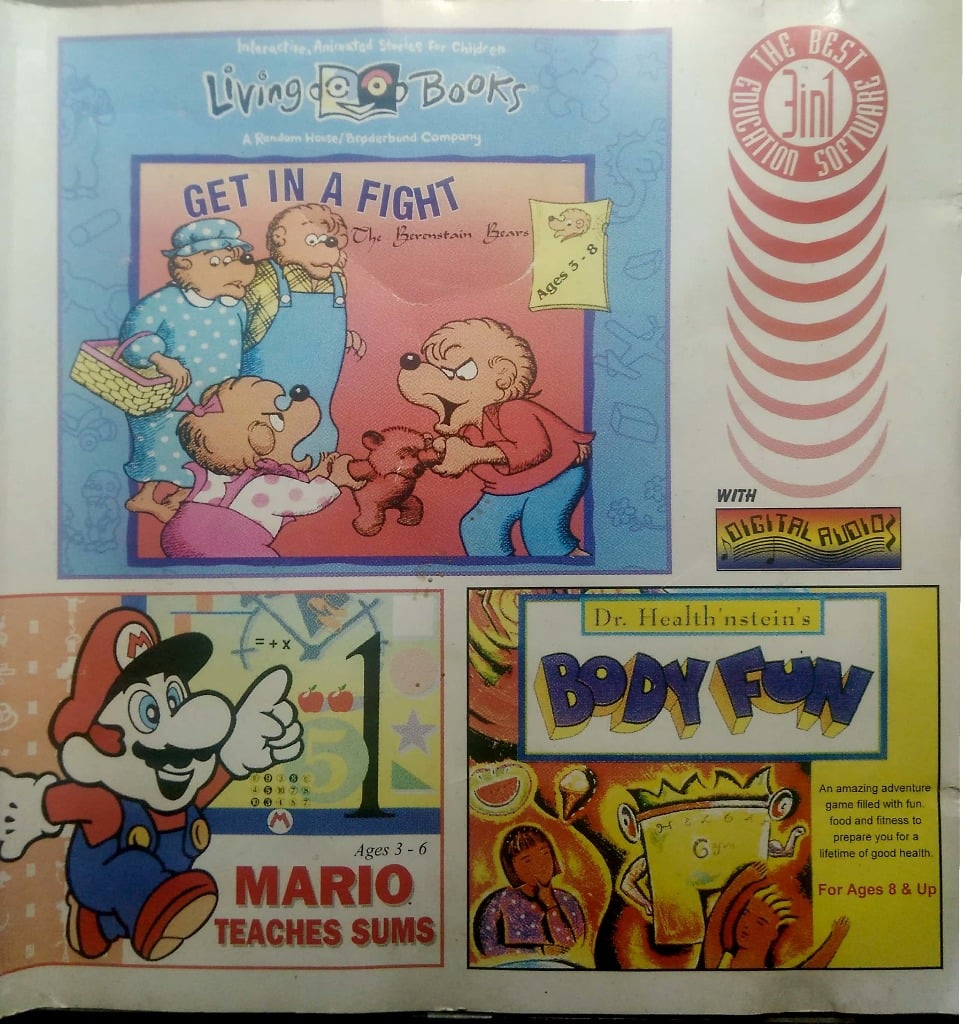
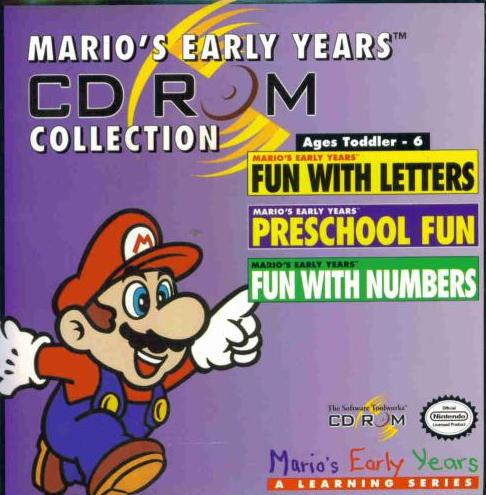
Re-releases:Mario’s Early Years! CD-ROM Collection (MS-DOS, 1994); UK Dr. Health’nstein’s Body Fun Bundle; Mud Pies bundle
Advertisement
Overview
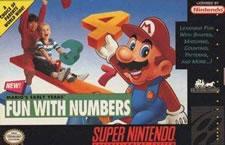
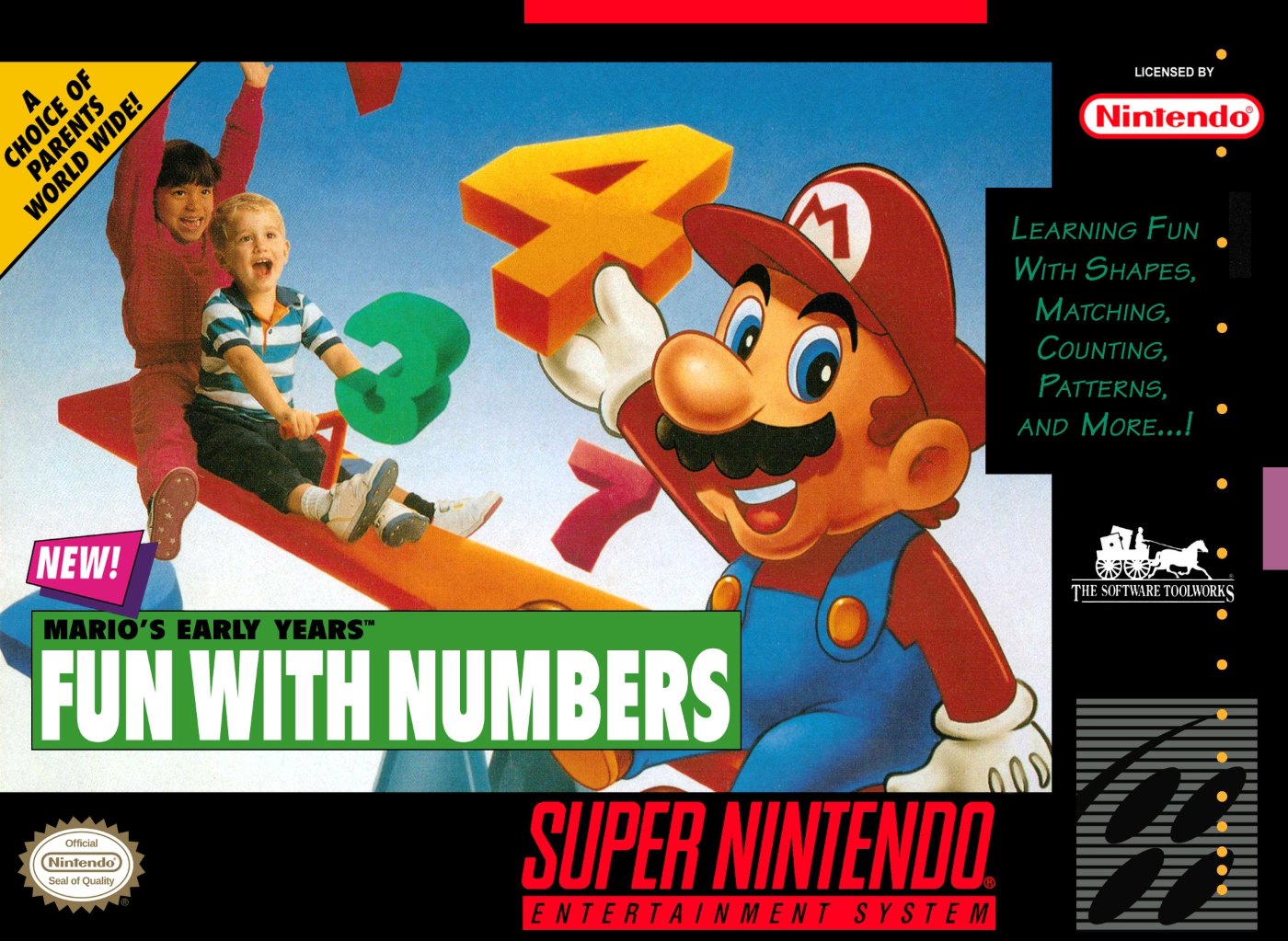
The Super NES box, released by Mindscape in September 1994.
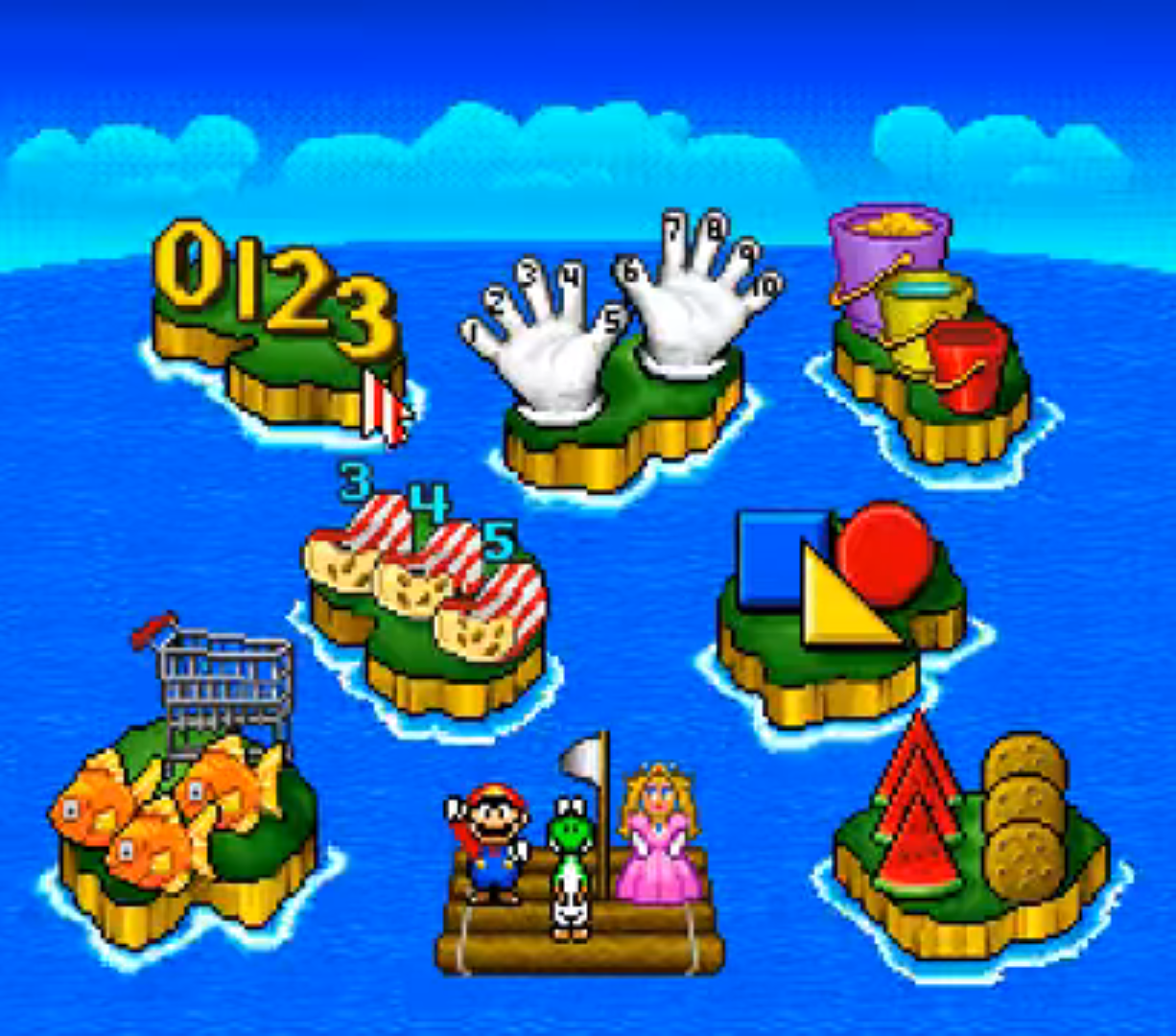
The Software Toolworks made three Mario’s Early Years! games for pre-schoolers under its Nintendo licence, and Fun with Numbers is the one that does the sums. It sits between Fun with Letters and Preschool Fun and shares their engine: an ocean dotted with islands, a raft to sail between them, rooms joined by Warp Pipes and a child narrator who reads out every question.
The maths is the gentle, hands-on kind. One island has you spot the right number on hotel doors and house fronts; another drops you into Mario’s own bedroom and kitchen to count socks, buttons, cups and cookies; others ask which swing is tallest, which animal has the right number of spots, which shape finishes the train and which object does not belong. Each correct answer brings a little character popping out of the scenery to say well done.
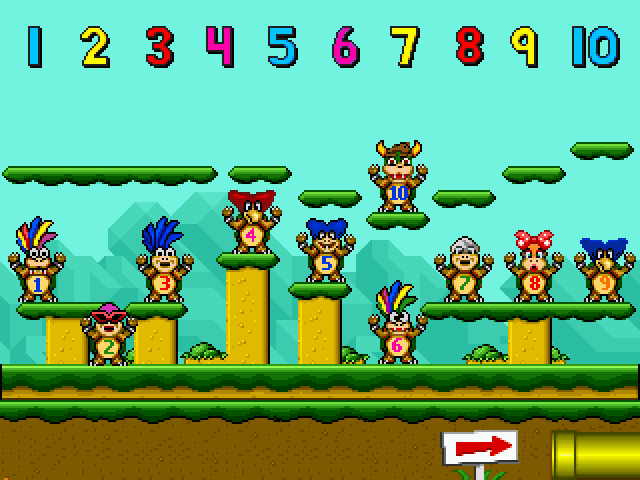
The PC version has nine islands, two of them extras: a Pattern World and a Sing Song World where Mario acts out nursery rhymes and the Koopalings line up for Ten Little Koopas. The Super NES cartridge, published by Mindscape in September 1994, drops both, along with most of the options for parents, but brings Yoshi aboard the raft and tucks away one of the oddest secrets in any Mario game: three digitised human heads that pop up and count to six.
Why Fun with Numbers matters to Mario fans
It gives the Koopalings a scene of their own, singing Ten Little Koopas with a pint-sized Bowser, and it lets you wander around Mario’s own bedroom and kitchen. On top of that the Super NES version hides a developer Easter egg strange enough to have its own place in Mario trivia.
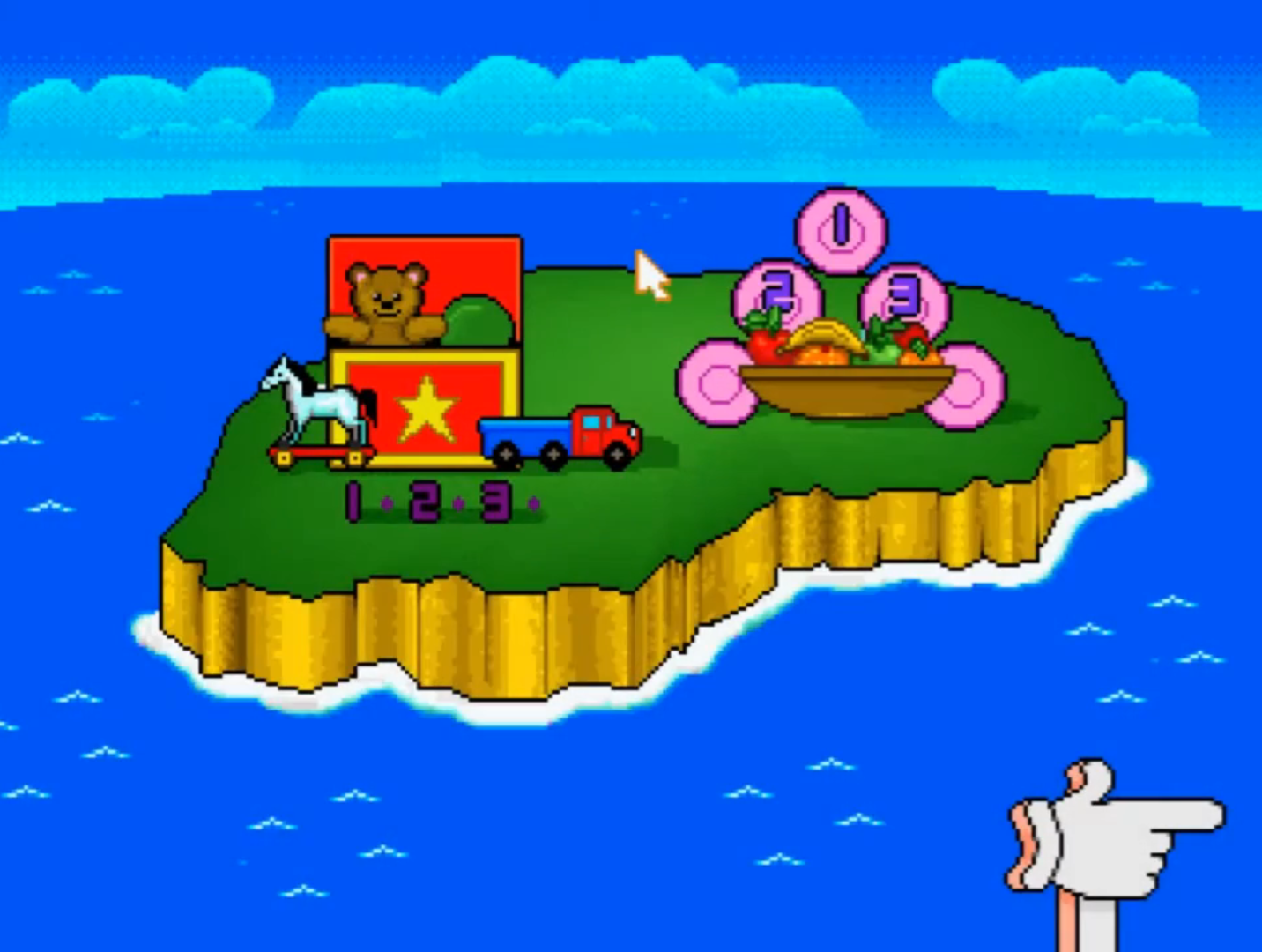
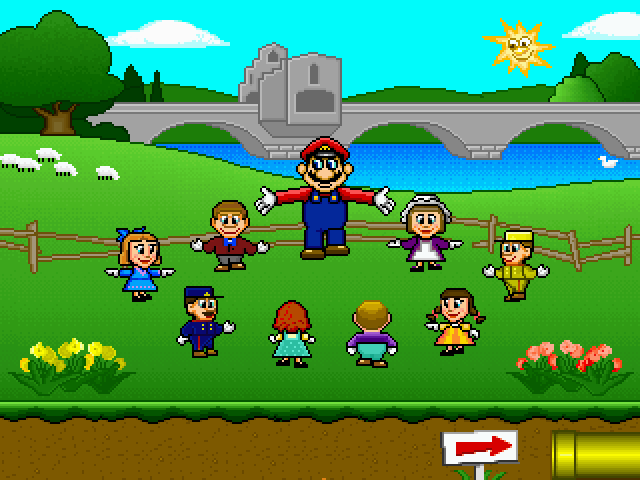
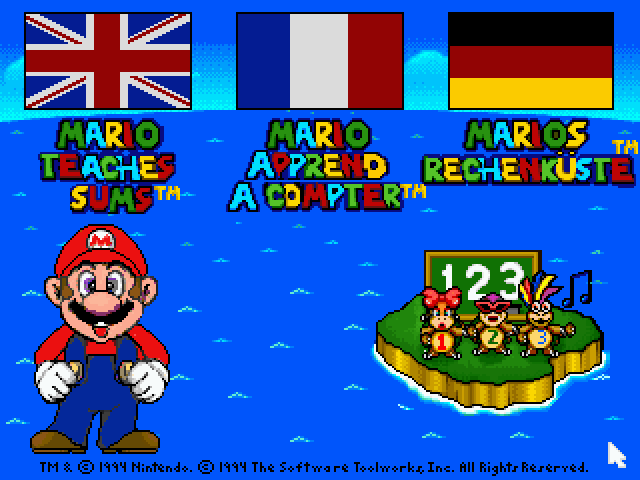
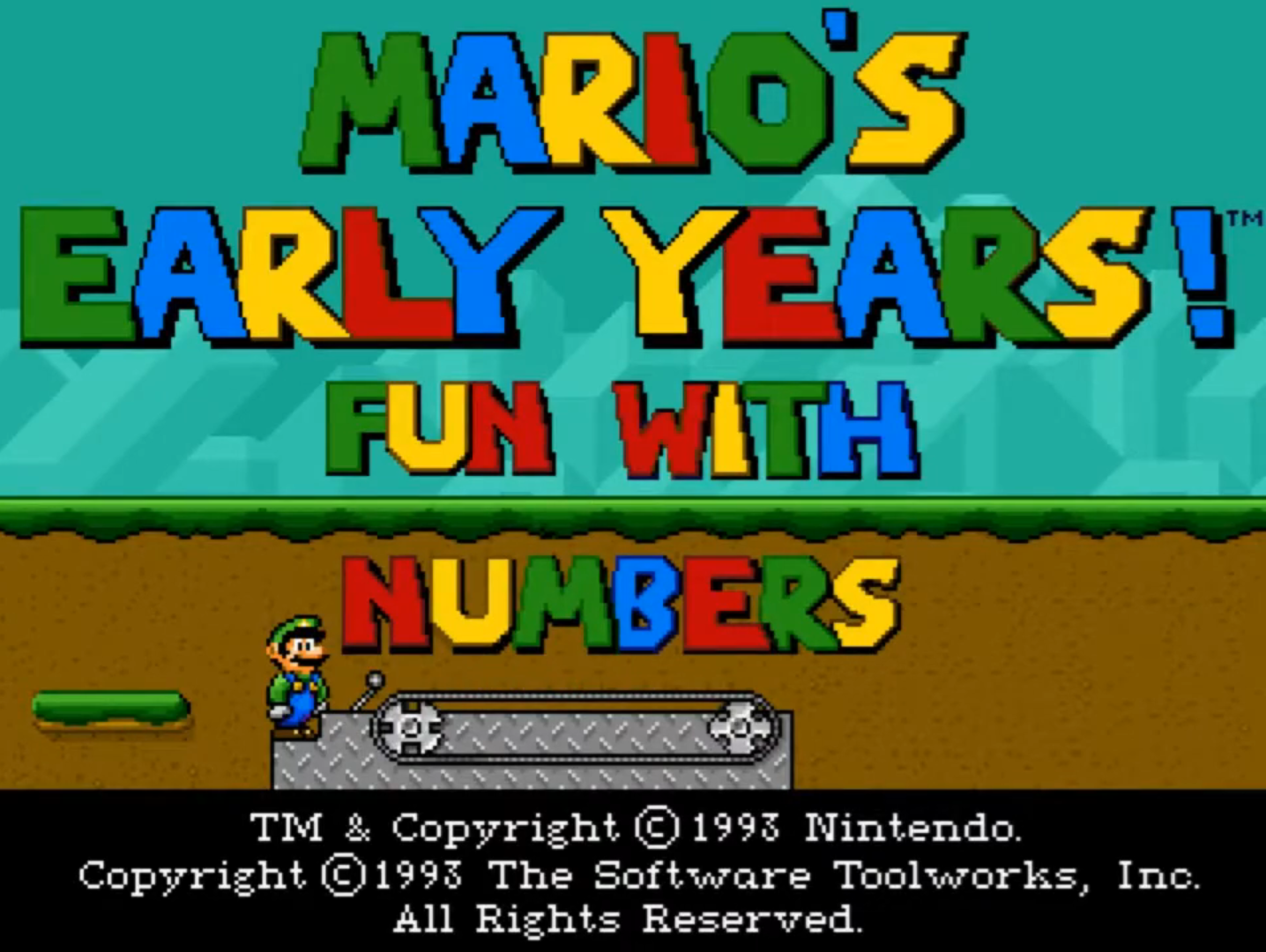
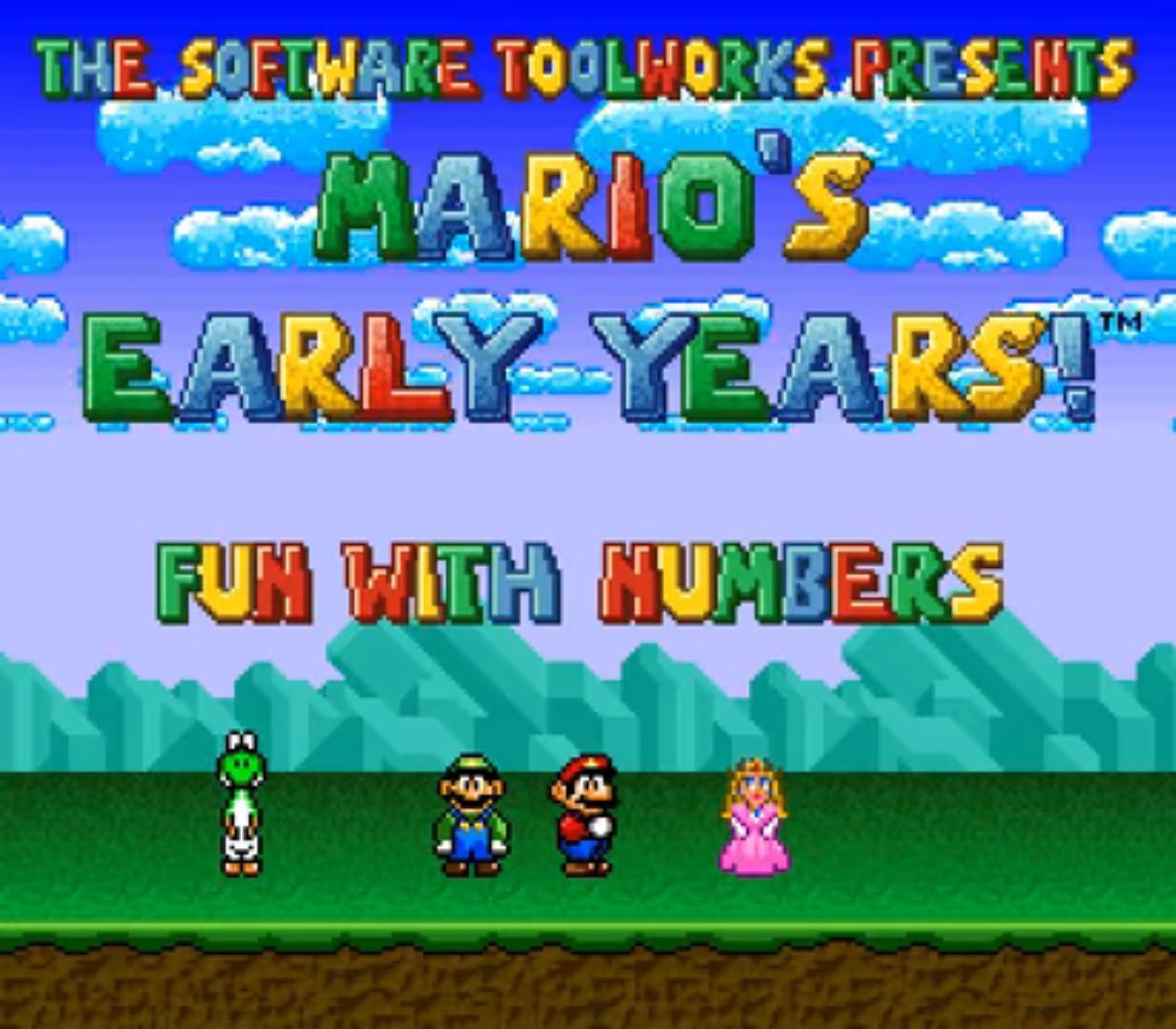
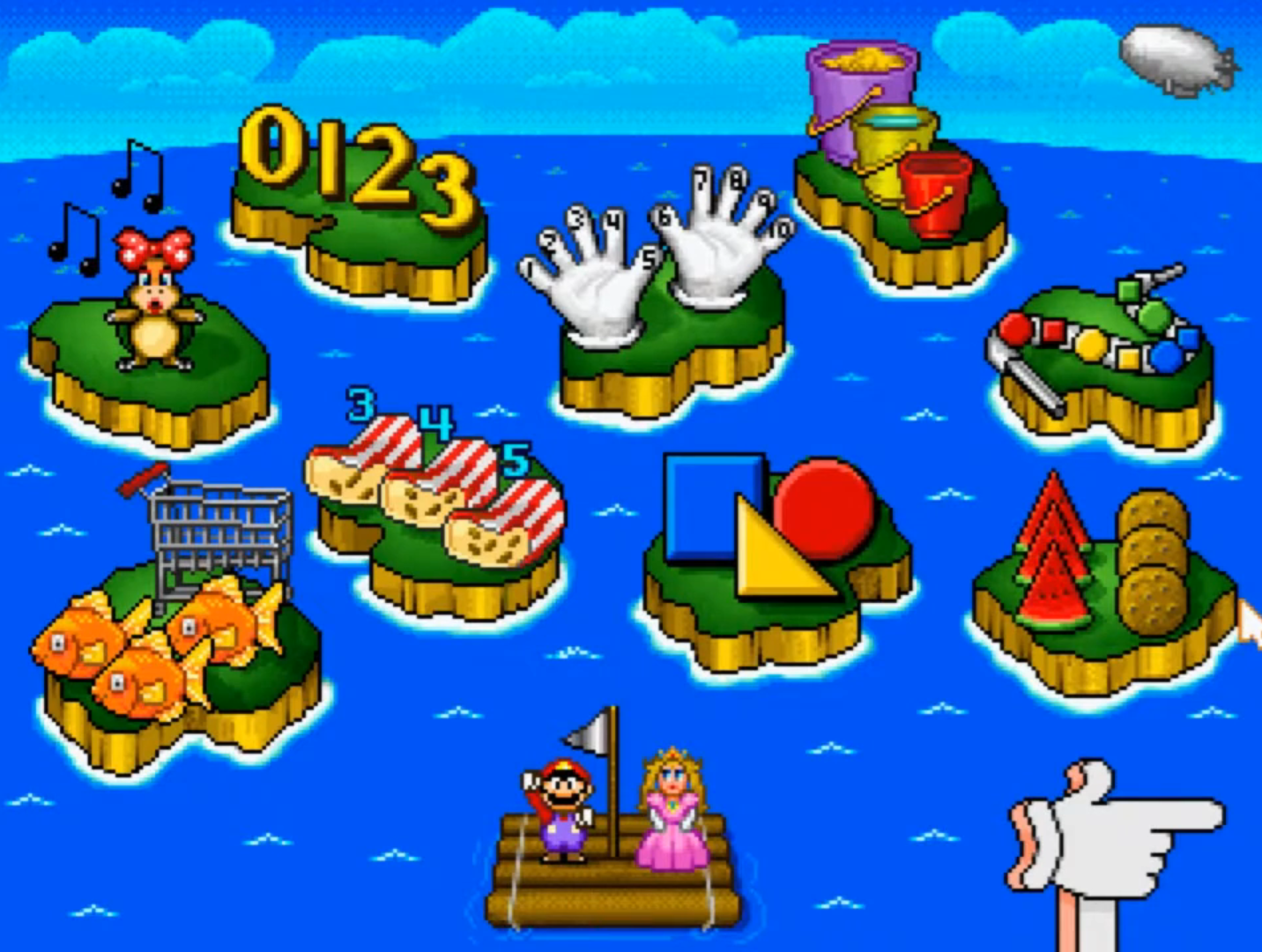
The MS-DOS title screen.The Super NES title screen.The PC island map.The Super NES island map.
Quick Answers
Quick answers about Mario’s counting game.
Who made Mario’s Early Years! Fun with Numbers?
The Software Toolworks developed it under licence from Nintendo and published the PC version; the Super NES cartridge came out under the Mindscape name. Nintendo did not make it. More →
When did it come out?
On MS-DOS in 1993 and on Super NES in North America in September 1994. More →
What does it teach?
Number recognition, counting, comparing sizes, shapes, spotting the odd one out and sorting by shape, size and colour, plus patterns on PC. More →
How many worlds are there?
Nine on PC and seven on Super NES; the cartridge leaves out Pattern World and Sing Song World. More →
What is the Easter egg with the heads?
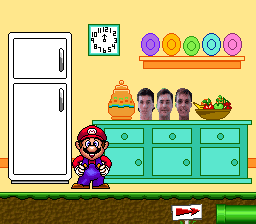
In the Super NES version, clicking a tiny spot on the ground at the left of the screen in Mario’s Bedroom or Mario’s Kitchen in Counting World makes three photorealistic heads of the developers appear and count from one to six. More →
Are the Koopalings in it?
Yes, in the PC version’s Sing Song World, where they perform Ten Little Koopas with a small Bowser. Wendy also stands for that island on the map. More →
Does Mario talk? Is it Charles Martinet?
The instructions are spoken by an uncredited child narrator, and no voice actors are named in the credits, so there is no sourced link to Charles Martinet. More →
What is Mario Teaches Sums?
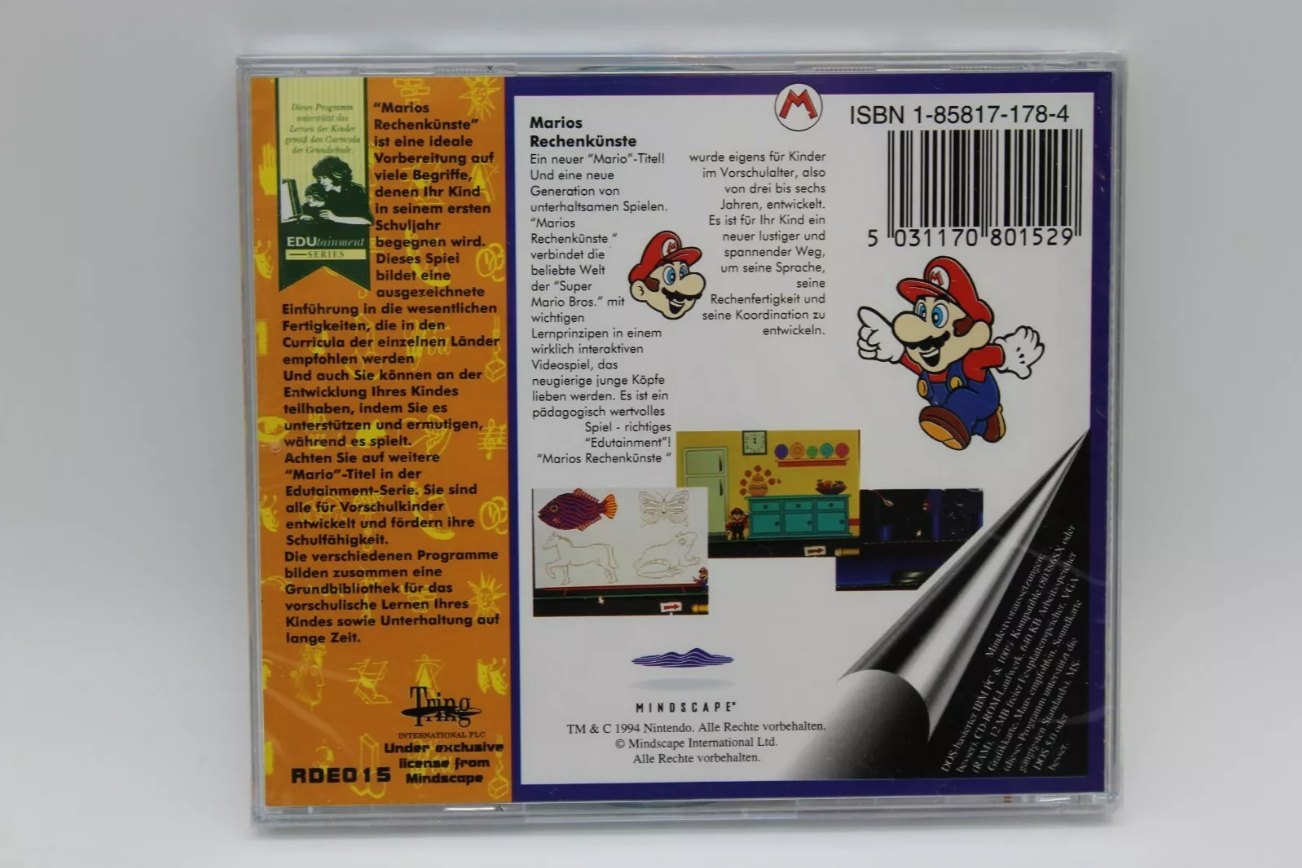
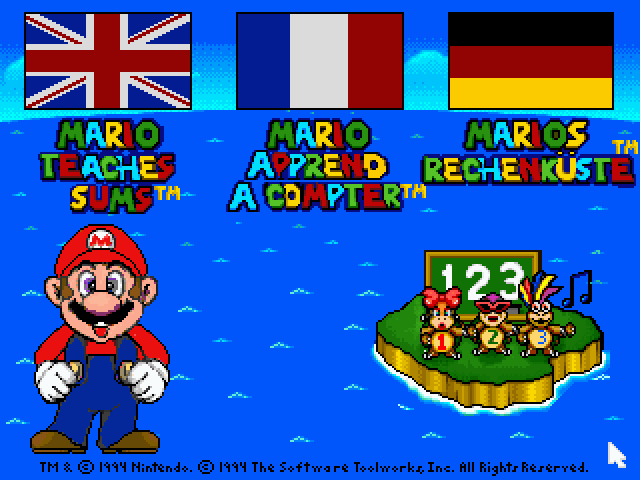
The British title of the PC game. France had Mario Apprend à Compter and Germany Marios Rechenkünste, and the European CD-ROM let you choose English, French or German when it started. More →
Lessons & Activities
There is no plot, just a sea of islands visited in any order. Each island has a picture that hints at its subject: two hands with numbers on the fingers for counting, three buckets for comparing, three bags of peanuts for How Many World, a triangle, circle and square for shapes, goldfish and a shopping trolley for Same and Different.
Below is every island, with the two PC-only worlds at the end.
Number World: spot the number
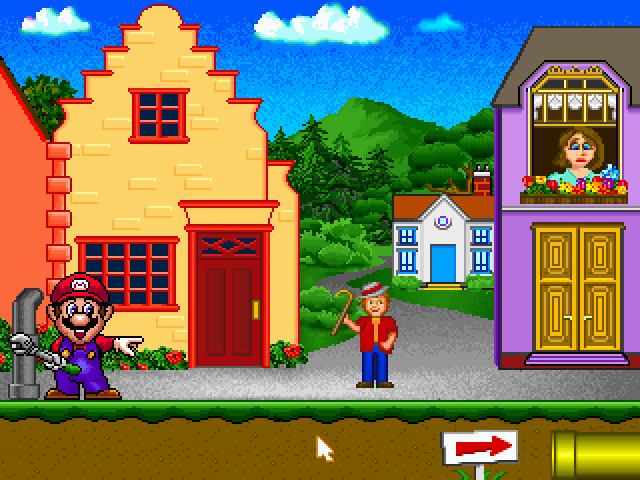
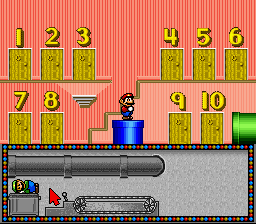
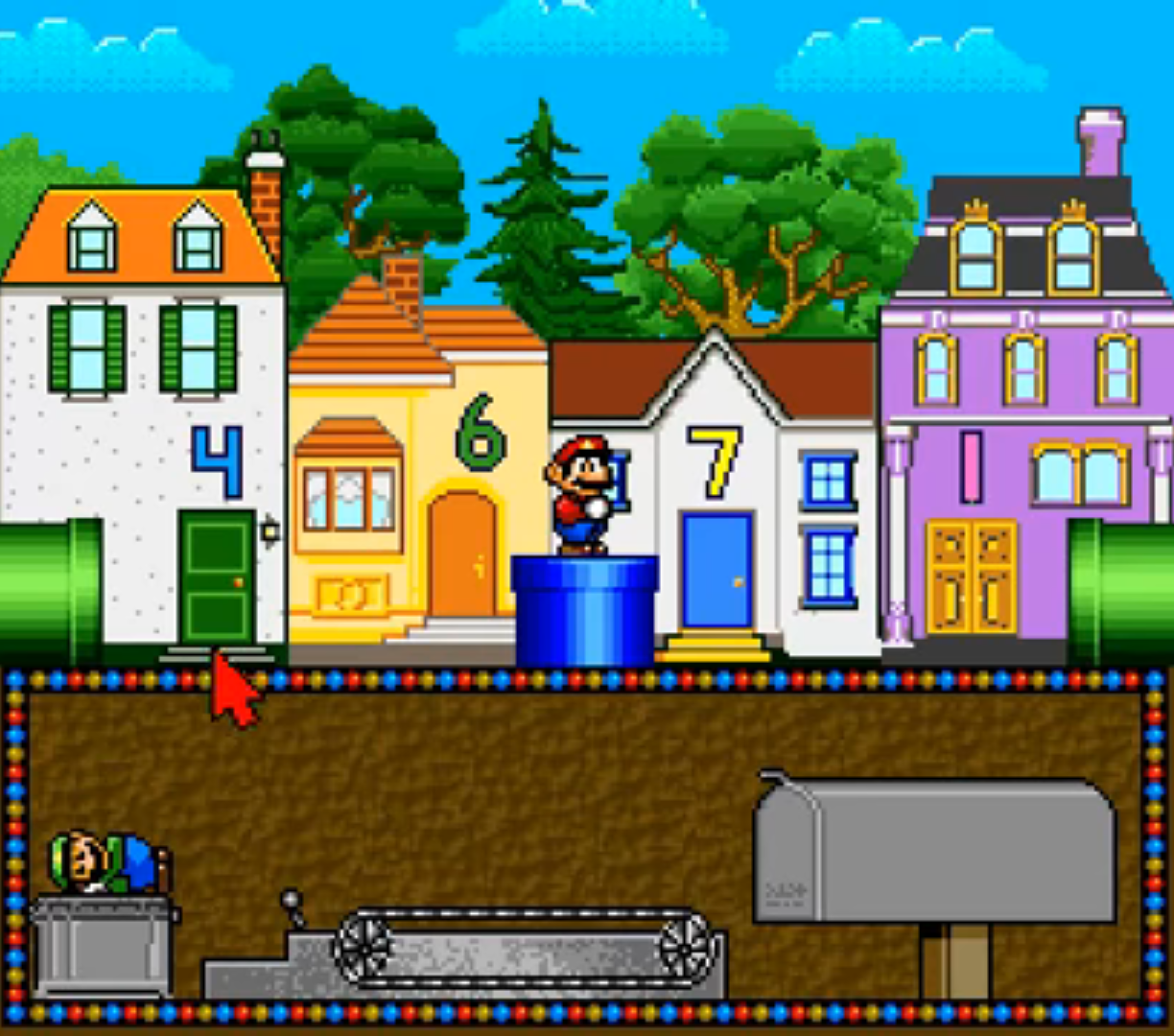
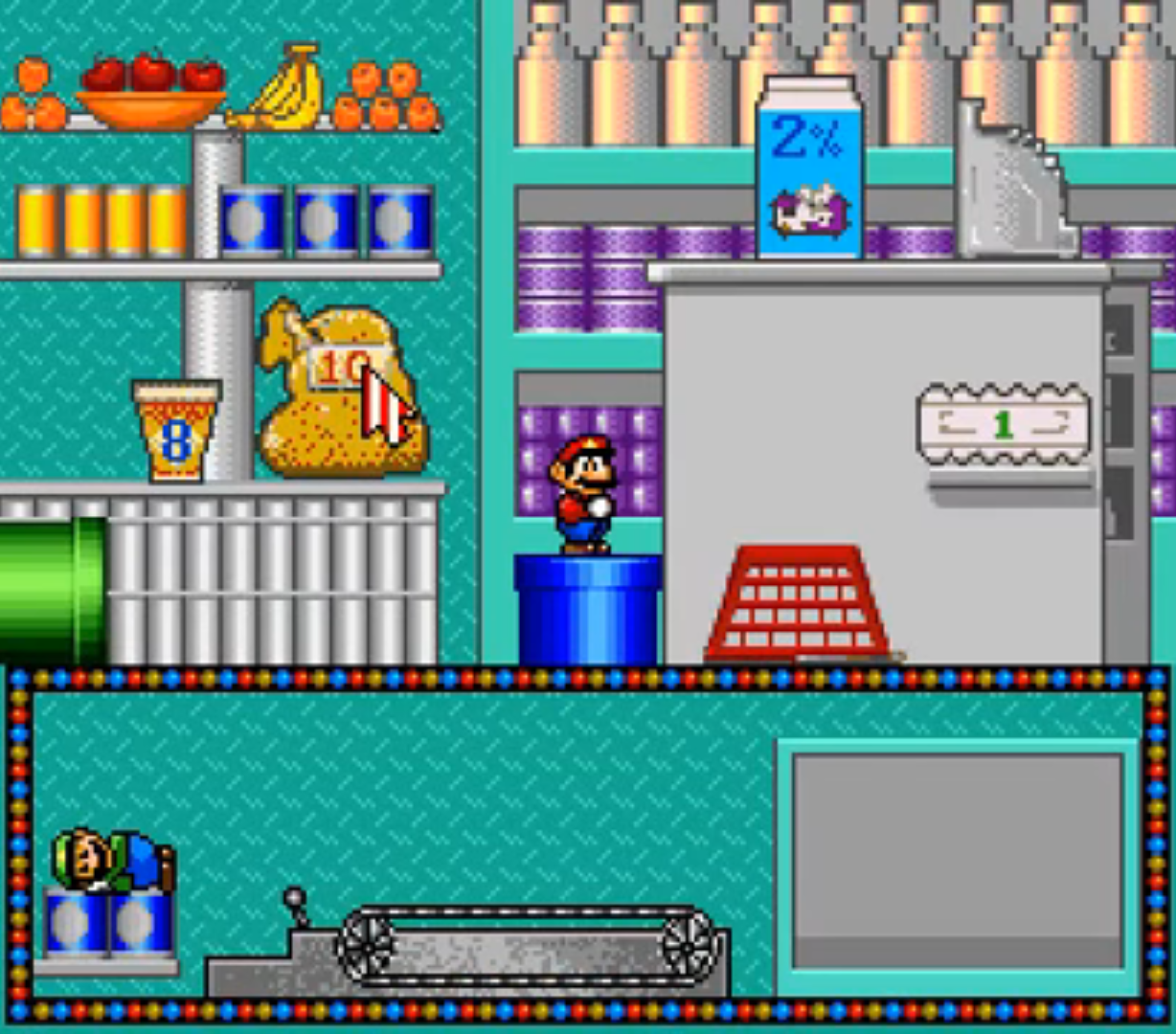
Three rooms of number recognition. In a two-storey hotel the room numbers slide along a conveyor belt and you pick the one asked for; in a street of four houses you choose house numbers to fill a postbox; and at a supermarket checkout you fill up a television screen by choosing the right answers. Five right answers open each pipe.
The hotel (Super NES).The street of houses (Super NES).The checkout (Super NES).
Counting World: a visit to Mario’s house
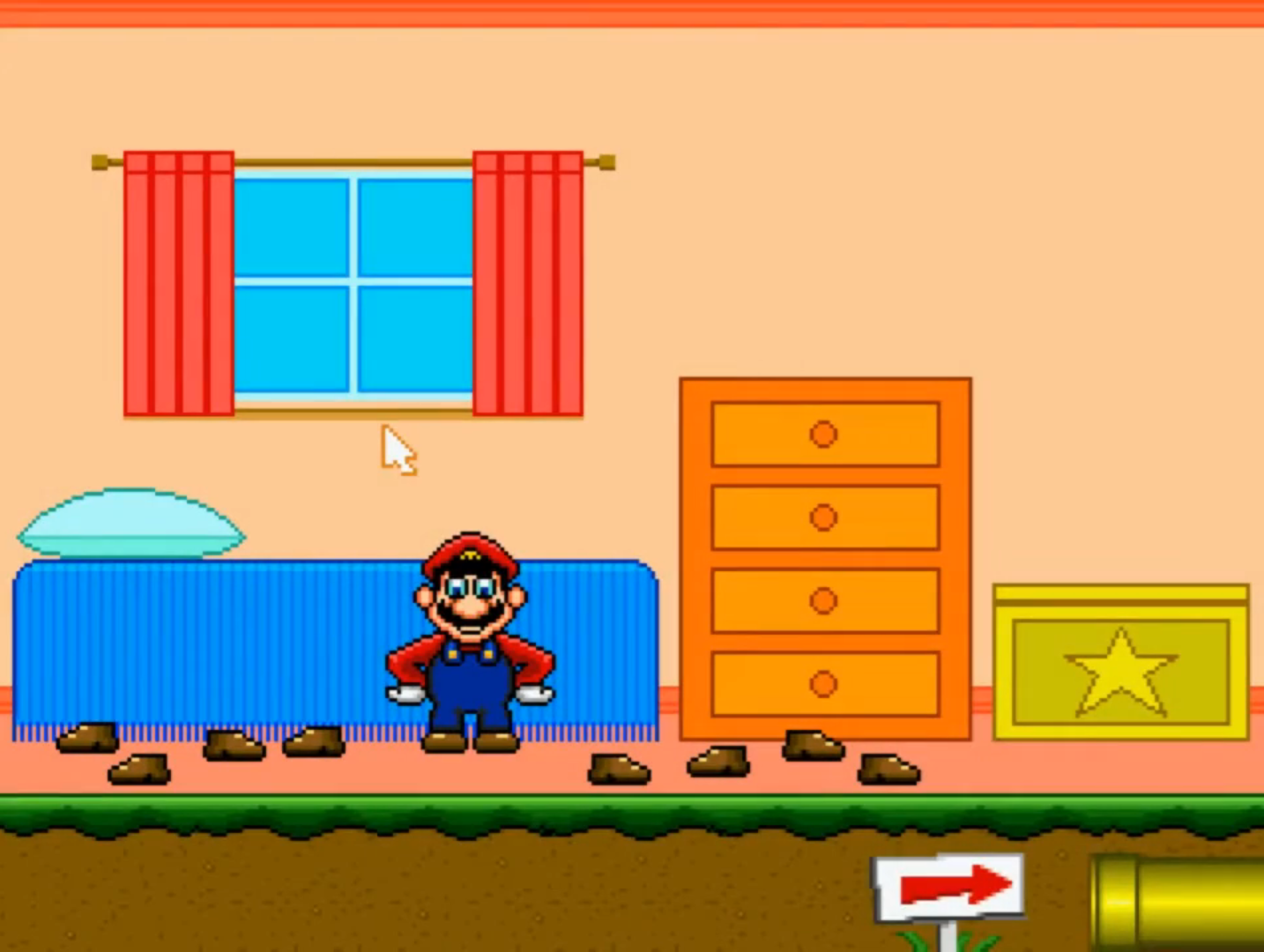
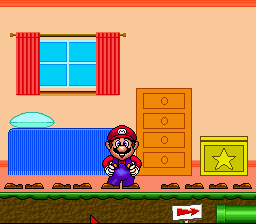
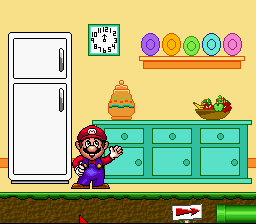
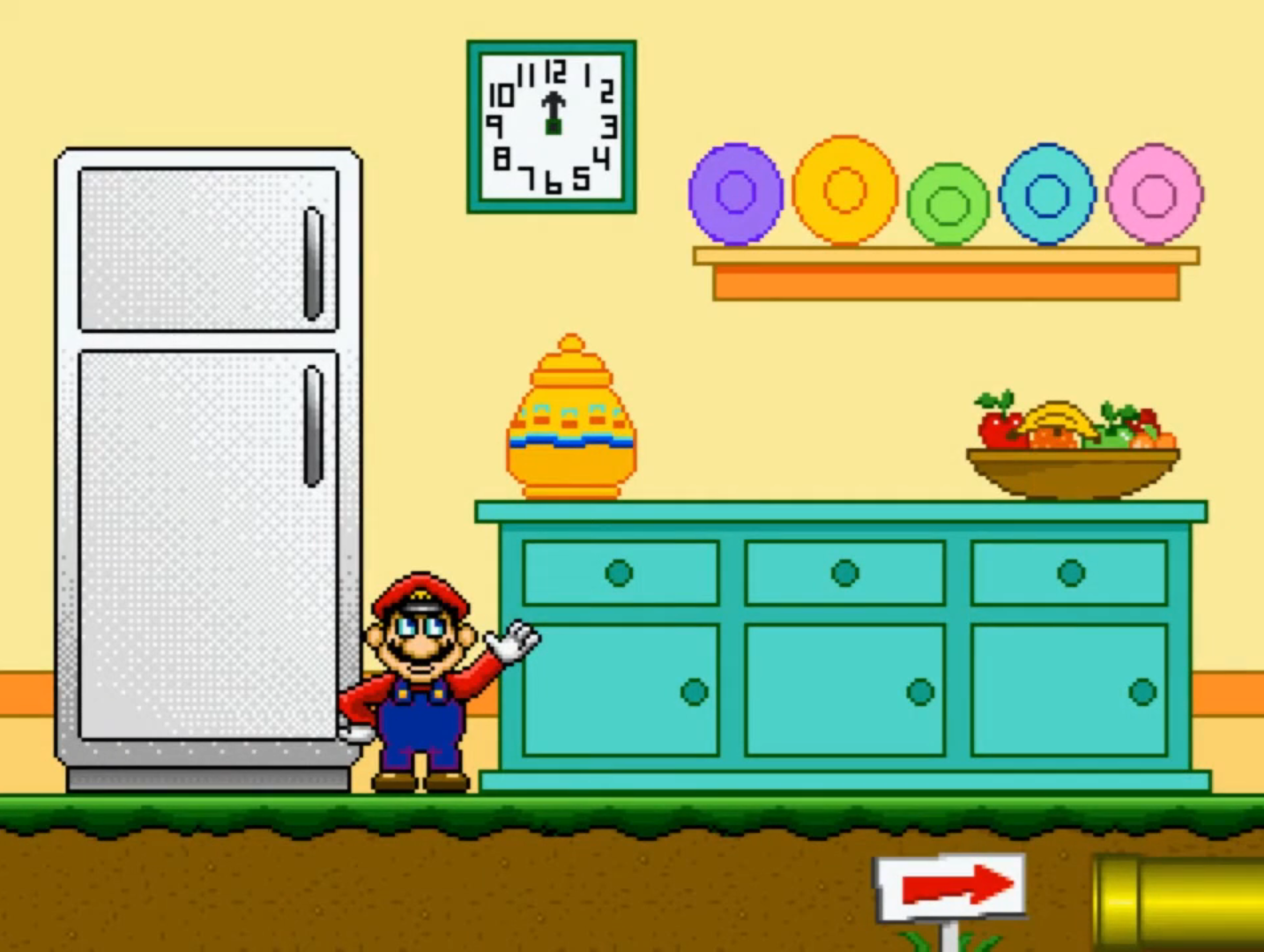
The most personal island in the series. It has two rooms, Mario’s Bedroom and Mario’s Kitchen, and instead of a fixed lesson you are free to explore and count whatever you click. The bedroom is full of buttons and pockets on a coat, socks, toys and shoes; the kitchen holds cups, plates, utensils, fruit, vegetables, cookies, ice lollies and a clock. The kitchen is the only place in the game that counts all the way to twelve, while the bedroom, oddly, has nothing that adds up to three or nine.
Mario’s Bedroom (Super NES).Mario’s Kitchen (Super NES).Mario’s Kitchen on PC.
Comparing World: biggest, smallest, tallest
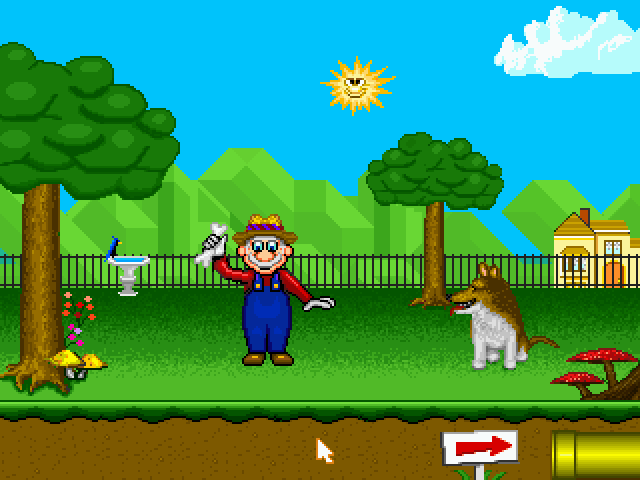
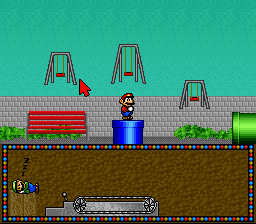
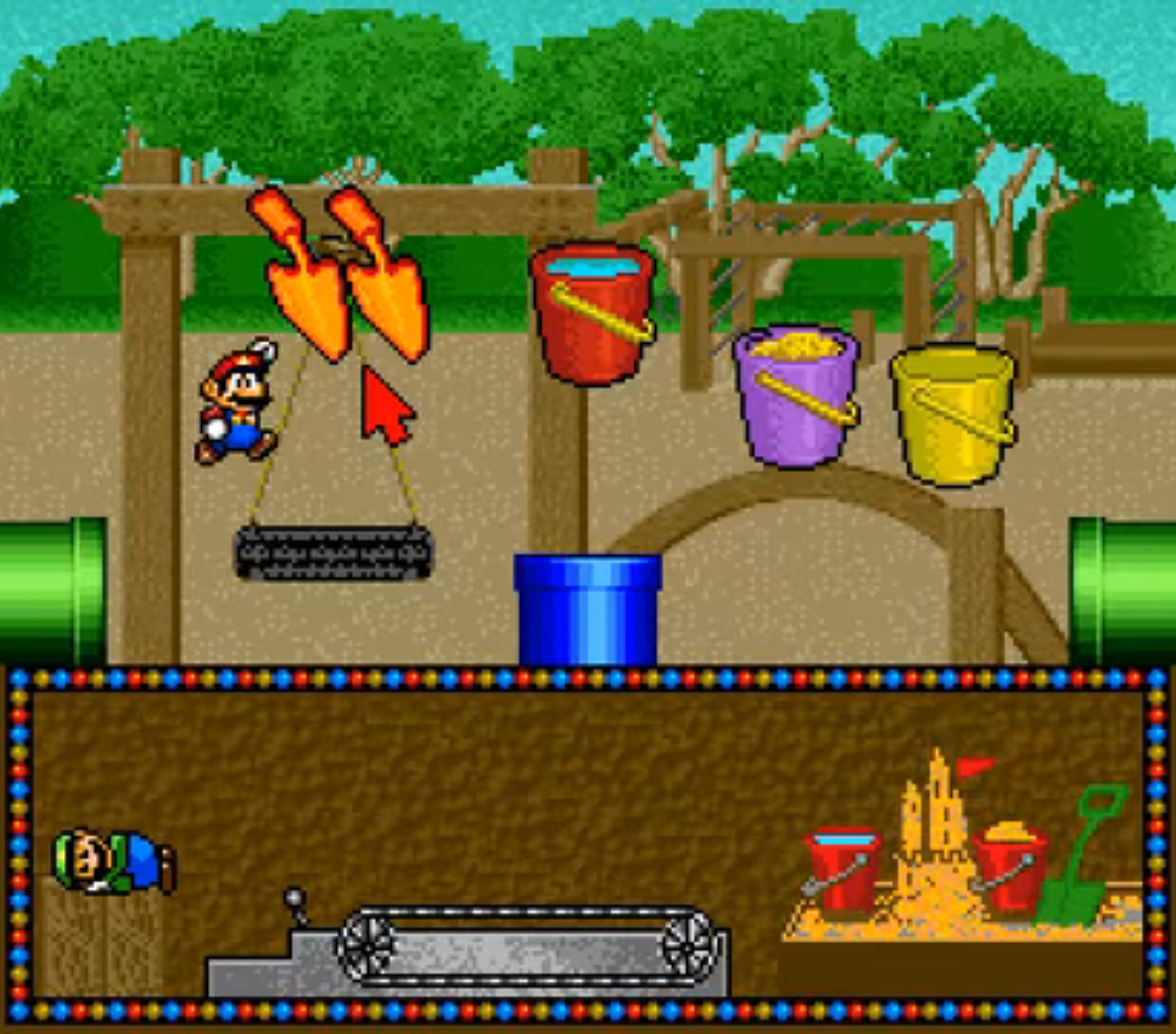
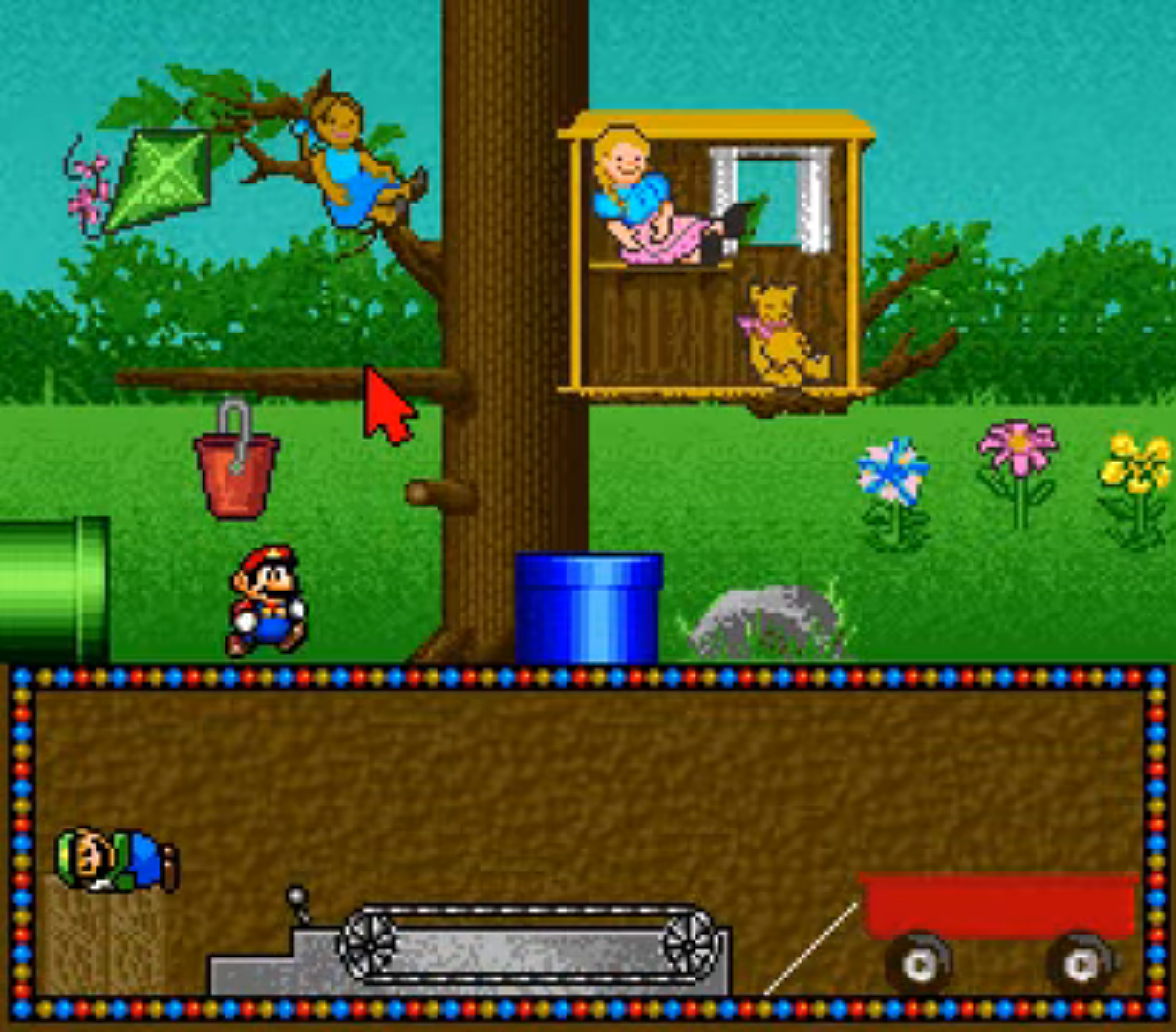
Three outdoor rooms for size words. In the park you pick the smallest, tallest, biggest or middle-sized swing or child; in the sandbox it is buckets and spades, full, empty or half-full, beside a tyre swing and monkey bars; and in the back garden, by a tree house, you load toys such as teddy bears, dolls and kites into a red wagon.
The park (Super NES).The sandbox (Super NES).The back garden (Super NES).
How Many World: a day at the zoo
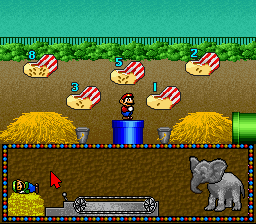
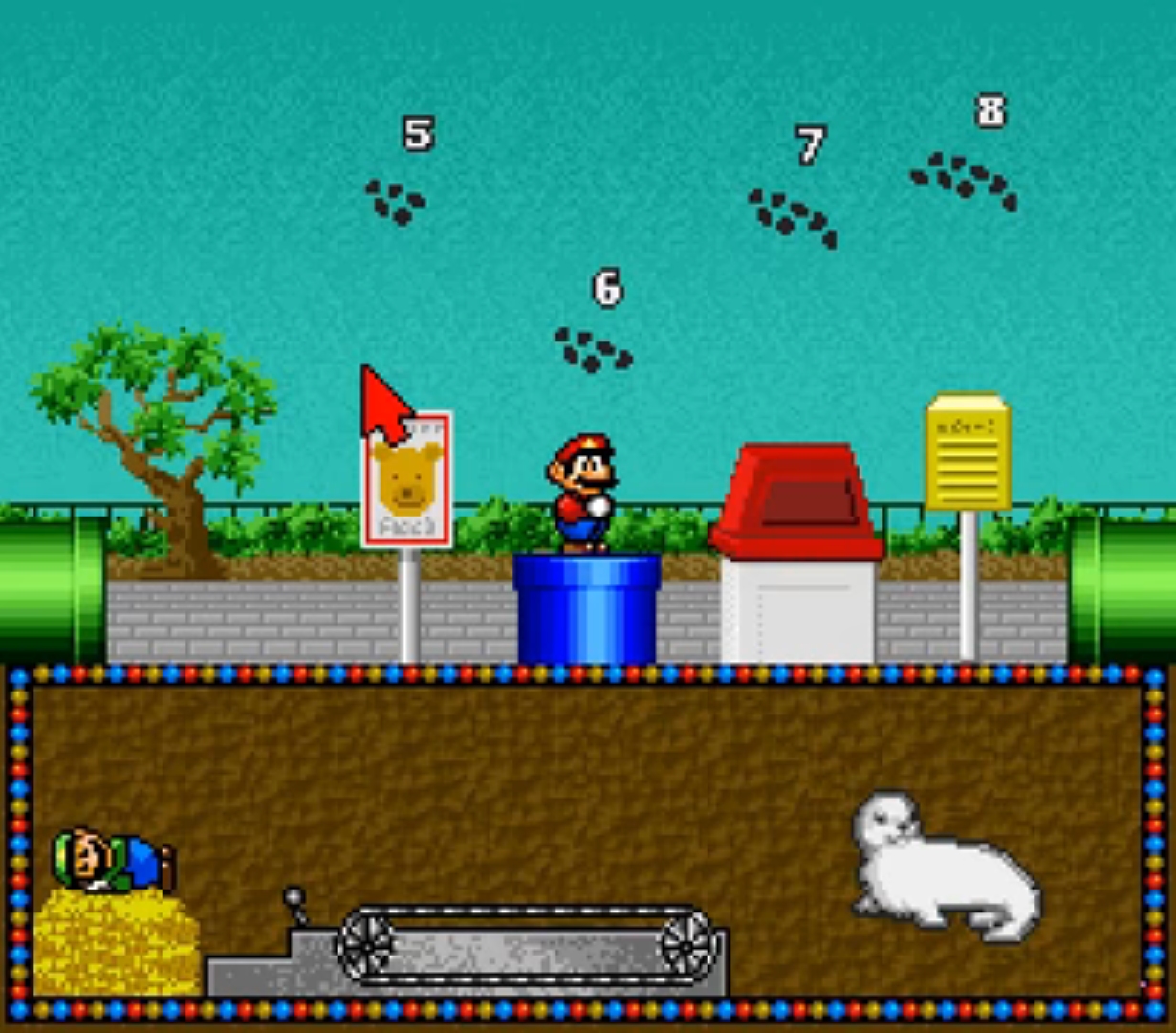
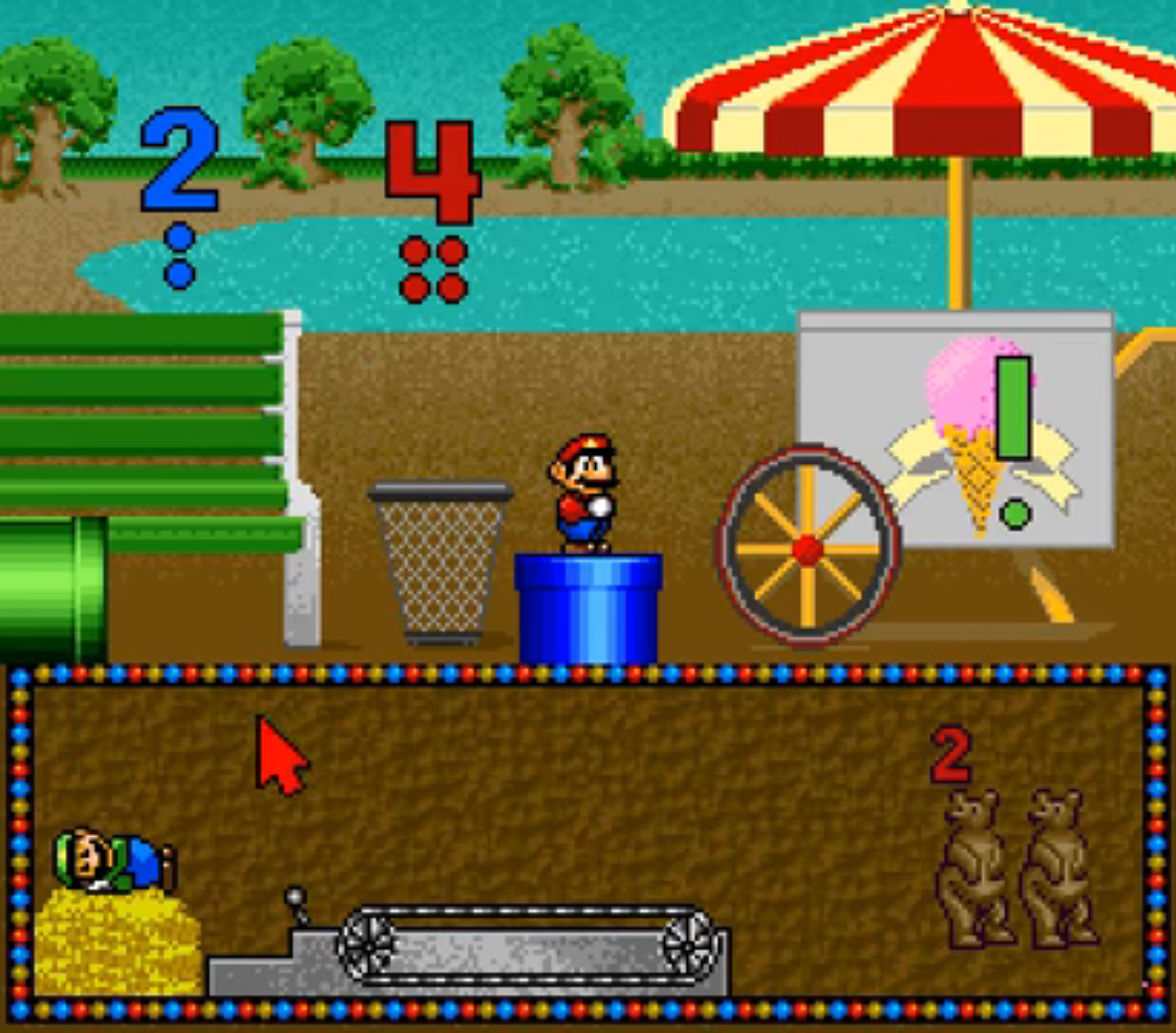
Counting with animals across four areas. You hand a hungry elephant the right number of peanut bags, then count spots on a seal, feathers on an ostrich, whiskers on a lion and stripes on a zebra. Next you match groups of animals to the numbers along the bottom of the screen, and finally, at the ice-cream wagon, you do it the other way round, finding the number that goes with each group.
Feeding the elephant (Super NES).Counting spots, feathers and stripes (Super NES).Matching animal groups to numbers (Super NES).
Shape World: build a train
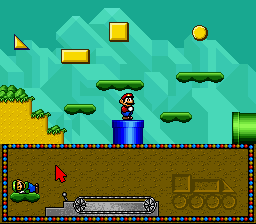
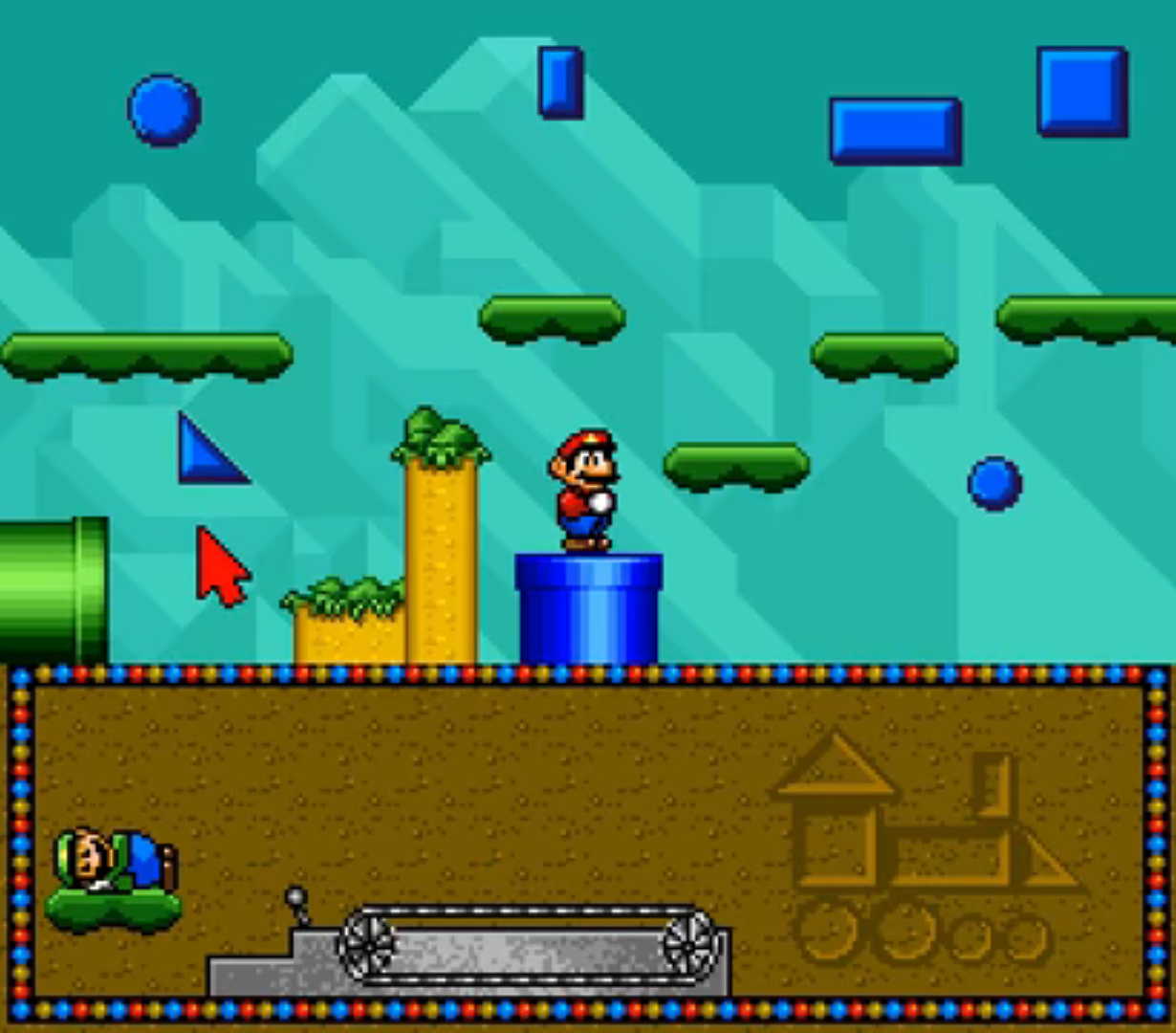
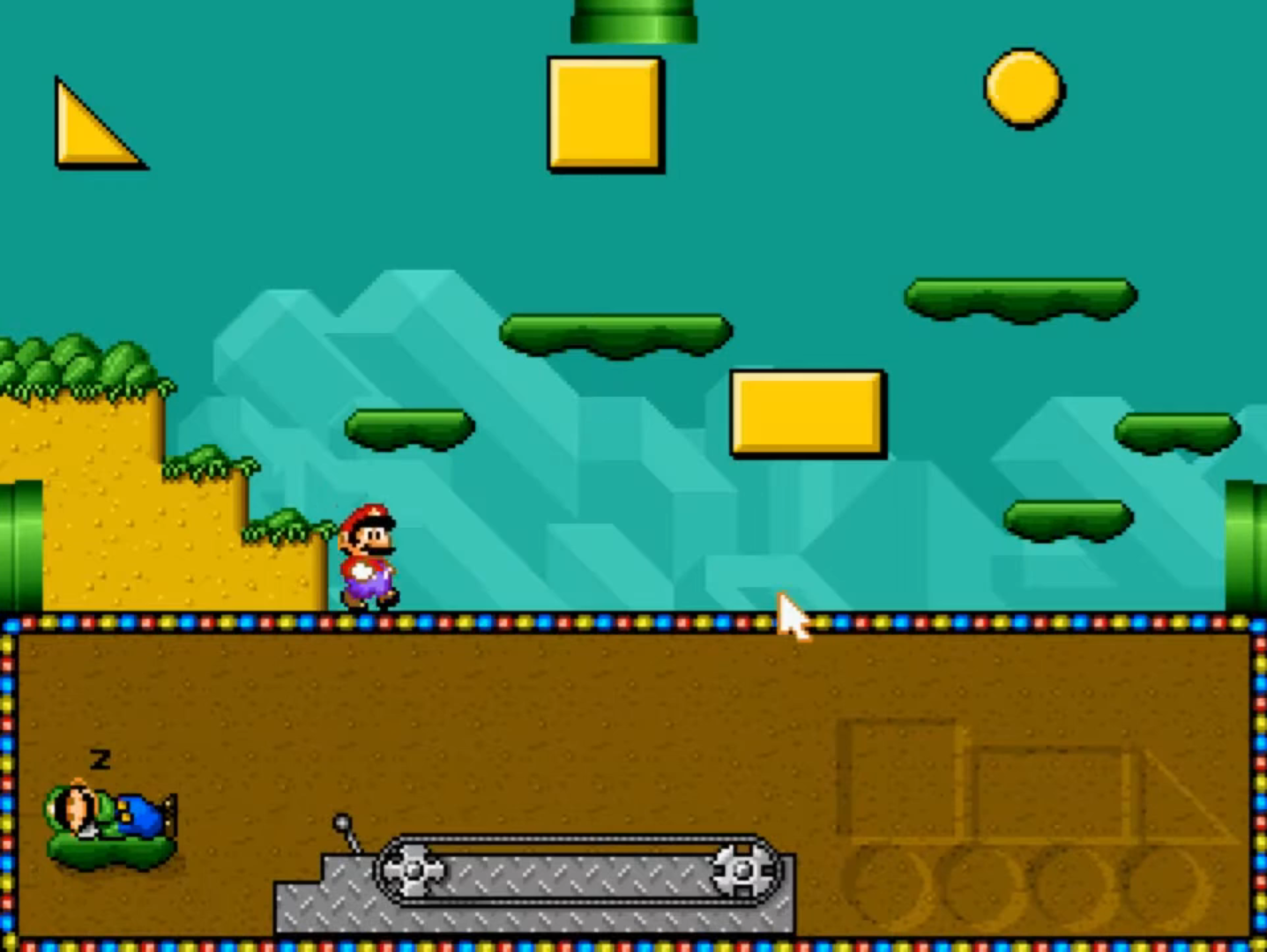
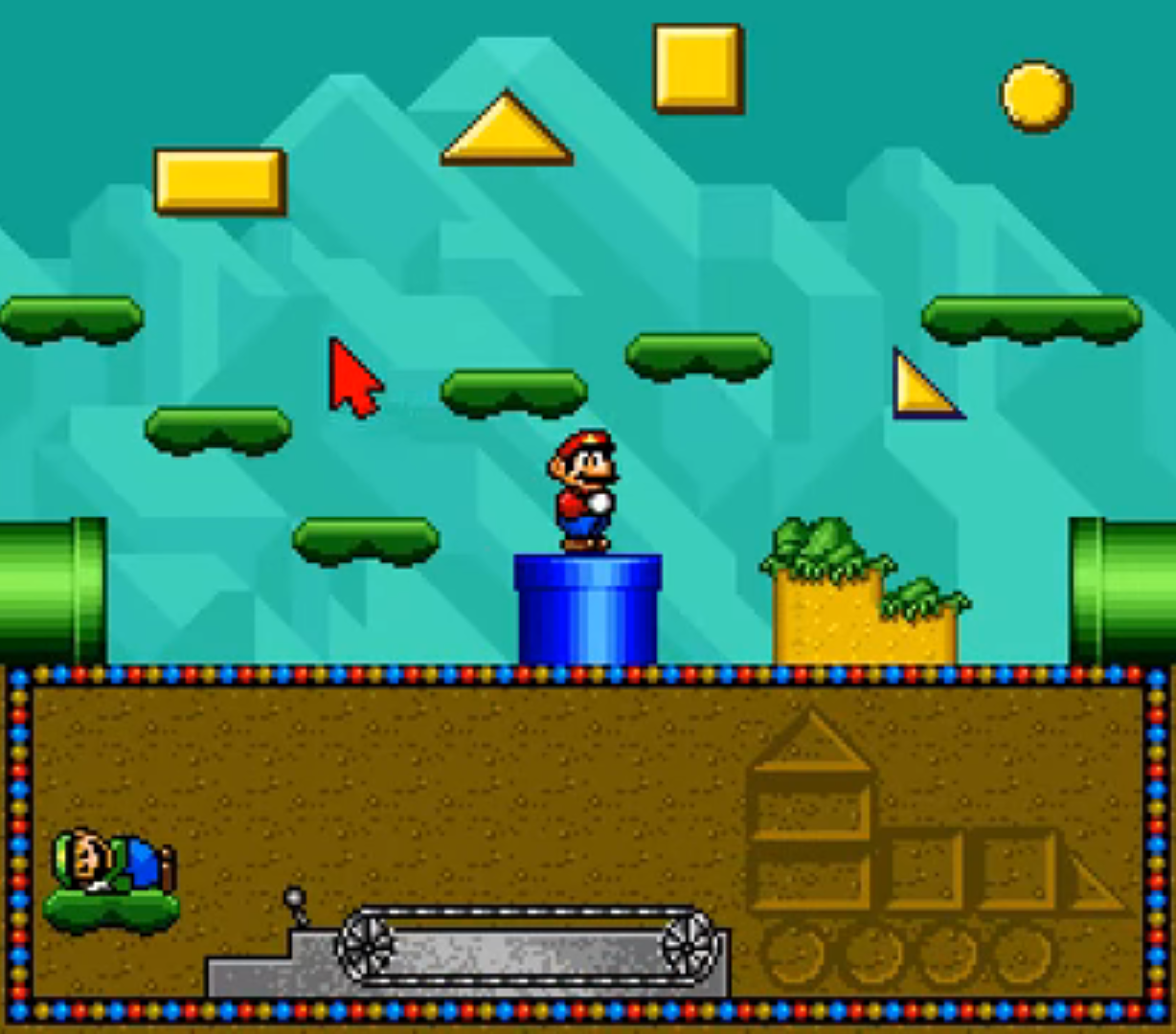
Four rooms set among hills and cliff ledges that recall Dinosaur Land. You pick the shape asked for to help build a train, and each room makes the train longer and more complicated, with more shapes in more sizes.
The first train (Super NES).The last, most complex train (Super NES).Shape World on PC.
Same and Different World: odd one out
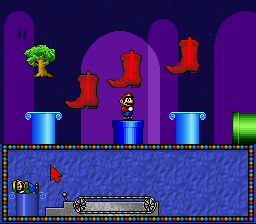
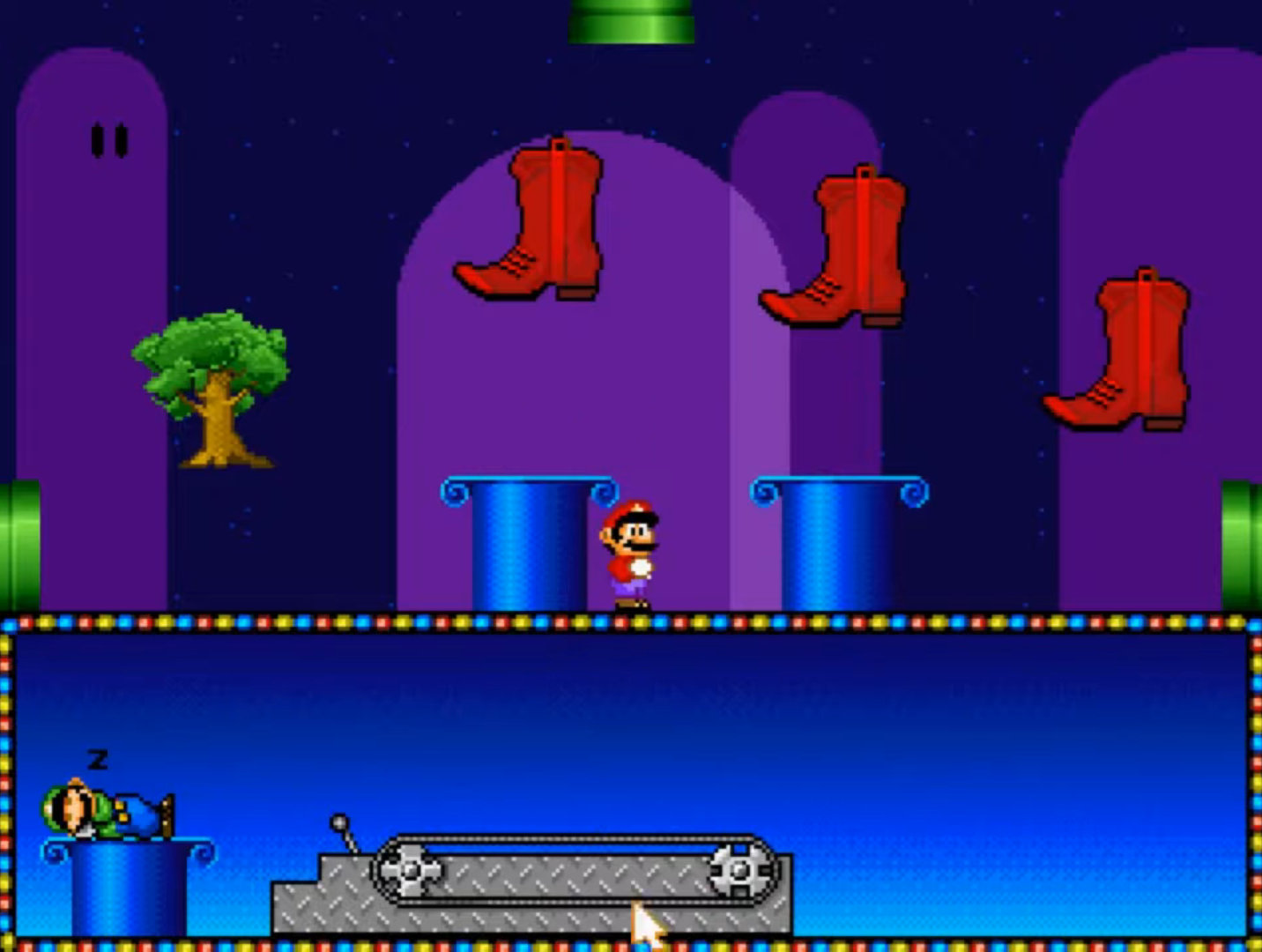
Four twilight rooms with Mario-style hills and pillars. First you pick the one item that differs from the rest of a group; then the groups get trickier and you choose the thing from a different category, a fish among pens or a shoe among kitchen tools. The third room asks which whole scene does not fit, and the fourth which object stands apart from its neighbours. Three right answers move you on.
Same and Different World (Super NES).Same and Different World on PC.
Sorting World: shape, size and colour
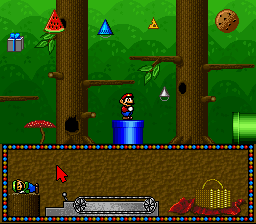
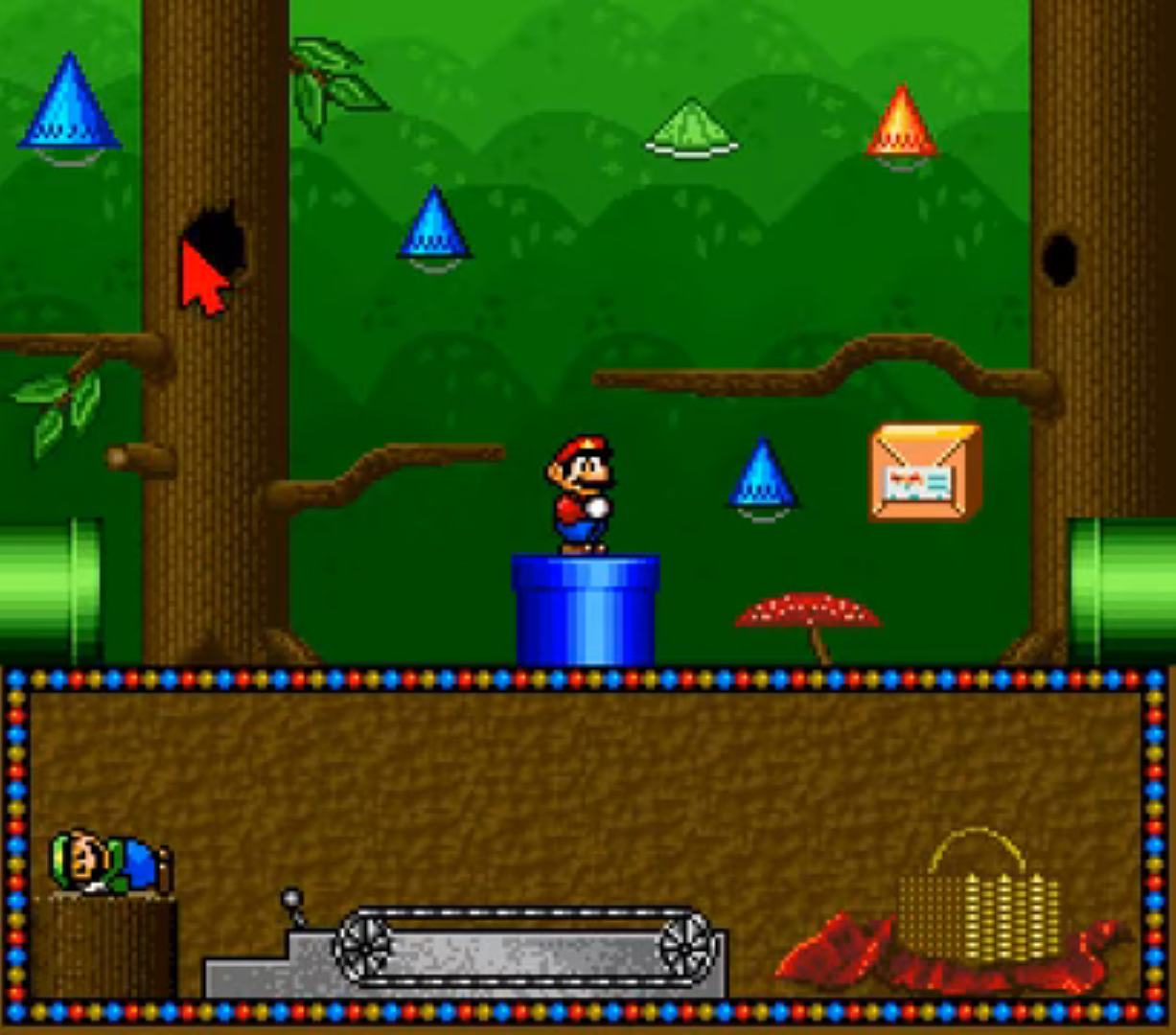
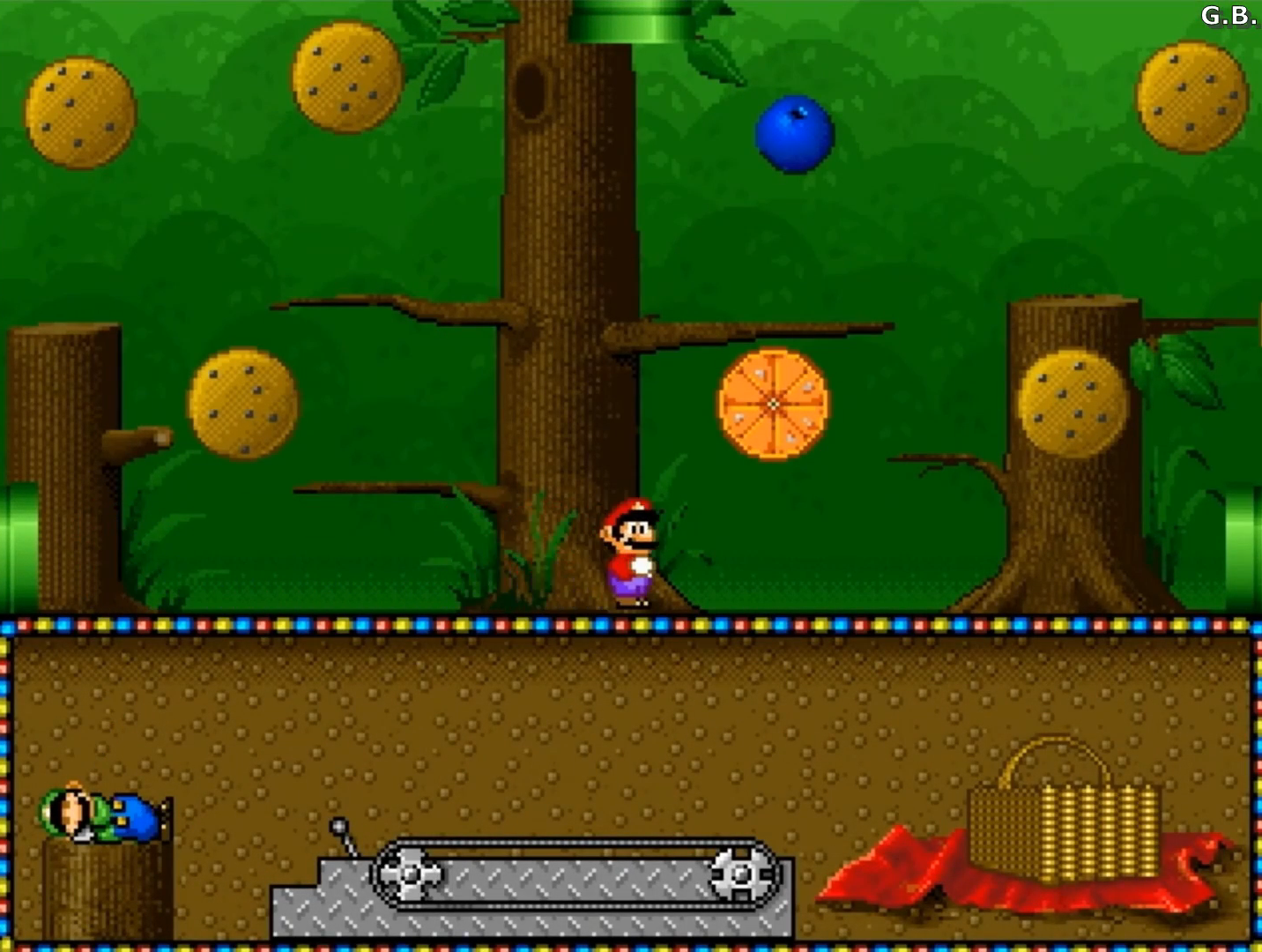
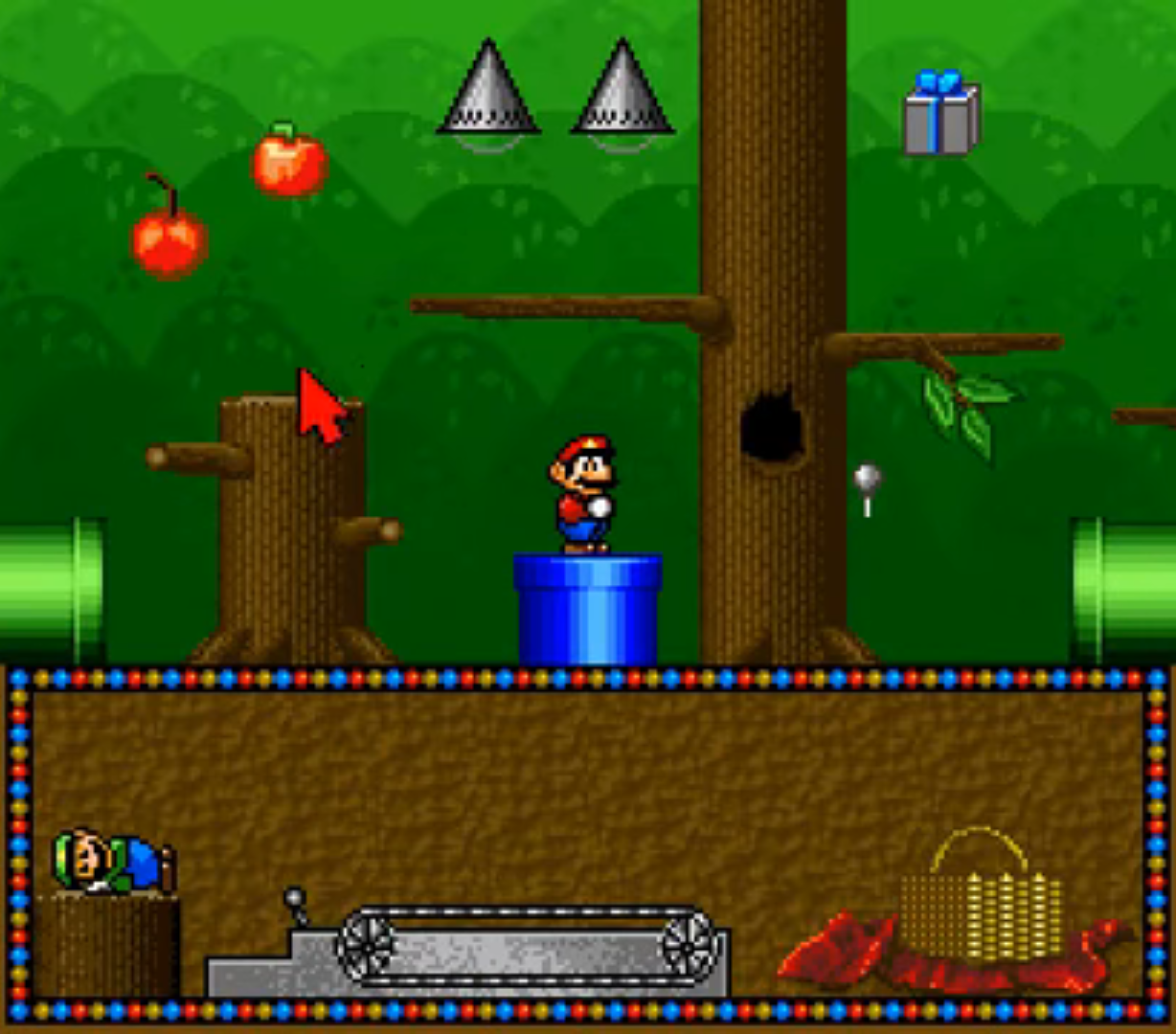
The biggest island, with six rooms in the same forest. The first only asks for a shape to drop into a picnic basket; the second adds size, the third colour, the fourth colour and shape together, the fifth size and shape, and the sixth all three at once.
Filling the picnic basket (Super NES).A later room, sorting by size and shape (Super NES).The sixth and hardest room on PC.
PC only: Pattern World and Sing Song World
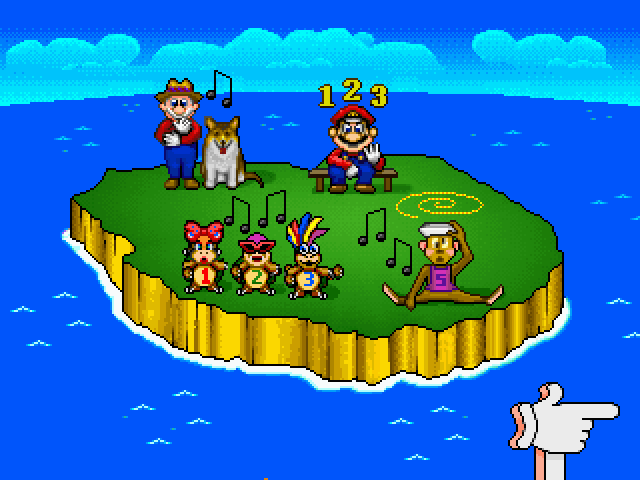
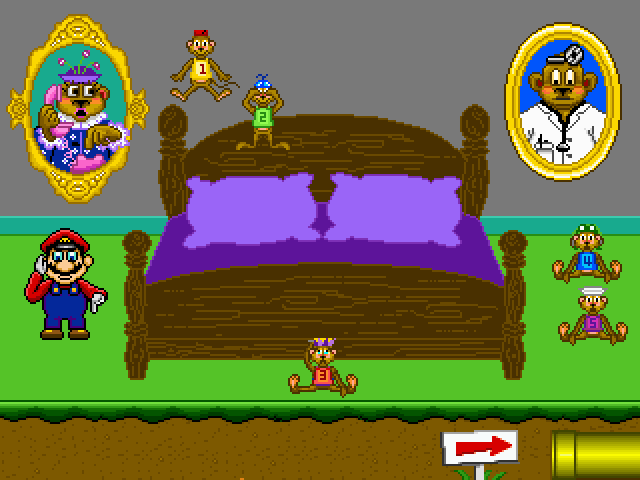
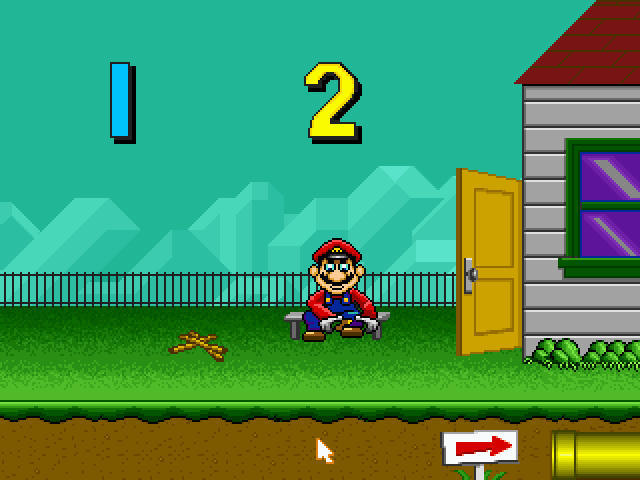
The PC version has two more islands. Pattern World teaches simple patterns. Sing Song World, marked on the map by Wendy and two singing children, plays songs with a scene for each: Mario dances with monkeys in a bedroom for Five Little Monkeys Jumping on the Bed, performs outside a house for One, Two, Buckle My Shoe and plays the old man himself in This Old Man, which runs to its fifth verse. The star turn is Ten Little Koopas, sung by the Koopalings with a smaller Bowser and two Ludwig look-alikes.
The European versions add one song each. The German edition has Hänschen klein, with Mario mending a pipe while a boy leaves home and comes back when his mother cries; the French edition has Sur le Pont d’Avignon, with Mario and friends dancing in a ring before the famous bridge.
Sing Song World on PC.Ten Little Koopas.Five Little Monkeys Jumping on the Bed.
Every world in Fun with Numbers
Nine islands on PC, seven on Super NES.
Number WorldPC and Super NES · 3 roomsPick out numbers in a hotel, a street and a supermarket.
Counting WorldPC and Super NES · 2 roomsCount anything you like in Mario’s Bedroom and Kitchen.
Comparing WorldPC and Super NES · 3 roomsBiggest, smallest and tallest in a park, a sandbox and a garden.
How Many WorldPC and Super NES · 4 areasCounting peanuts, spots, whiskers and stripes at the zoo.
Shape WorldPC and Super NES · 4 roomsChoose shapes to build ever-longer trains.
Same and Different WorldPC and Super NES · 4 roomsFind the odd one out at twilight.
Sorting WorldPC and Super NES · 6 roomsSort by shape, size and colour in a forest.
Pattern WorldPC onlySimple patterns to learn.
Sing Song WorldPC only · 4 songs, plus 1 in French or GermanNursery songs acted out by Mario and the Koopalings.
Advertisement
Gameplay & Controls
Everything is done with the pointer. Click an island and your hero sails there by raft; click inside a room and they walk over; click an object and the narrator names it or counts it. There is no score, no time limit and no way to fail.
Mario, the Princess and (on Super NES) Yoshi
As in the rest of the series you pick who walks about on screen, Mario or Princess Toadstool, and the Super NES version adds Yoshi as a third choice. It changes nothing about the questions.
Rooms, pipes and a sleepy Luigi
Each island is a chain of rooms. Luigi is snoozing in every one, and you click him to wake him up before the activity begins; after that he cheers you on. Each right answer makes a character pop out of the scenery, and after a set number of right answers (five in most rooms, three in Same and Different World) a pipe opens to the next room. The last room of each island ends at a blue pipe.
For parents
The PC version lets grown-ups mute the music, sound effects or voices, shuffle the questions and show on-screen text in some worlds, and has a help screen with ideas for learning away from the computer. The Super NES version keeps none of these.
PC and Super NES compared
Besides losing two islands and the parent options, the cartridge changes some small things. When you finish a room on PC the screen irises out around your character as they stand still; on Super NES the character walks into a Warp Pipe first and the iris closes on the pipe. The PC’s exit pipe at the top of the screen is gone, some backgrounds are different, and the PC loading screen, with Mario checking his watch, becomes a plain black screen.
Number World on Super NES.The same room on PC.
The European editions
In Europe the game was sold as Mario Teaches Sums in the UK, Mario Apprend à Compter (“Mario learns to count”) in France and Marios Rechenkünste (“Mario’s arithmetic skills”) in Germany. The European CD-ROM opens with a language menu offering English, French or German, and the French version greets the player with a welcome message that the others lack.
The language menu on the European CD-ROM.
Cast & Credits
The usual Early Years line-up, with a rare full turn-out from the Koopalings on PC.
Character
Who they are
In this game
Abilities & notes
MarioPlayable
The star, here at home.
One of the heroes you can steer. Counting World takes place in his own bedroom and kitchen, and he is the performer in most of the Sing Song World numbers.
PC and Super NES
Princess ToadstoolPlayable
The Mushroom Kingdom’s princess.
The second hero to choose, purely cosmetic.
PC and Super NES
YoshiPlayable on Super NES
Mario’s dinosaur friend.
Added to the cartridge version as a third hero.
Super NES only
LuigiHelper
Mario’s brother, asleep in every room.
Wake him with a click to start an activity; he then cheers right answers.
PC and Super NES
The KoopalingsSing Song World (PC)
Bowser’s seven troublemakers.
They perform Ten Little Koopas, joined by a smaller Bowser and two Koopas that look like Ludwig. Wendy also represents Sing Song World on the island map.
PC only
The developer headsEaster egg (Super NES)
Three digitised heads of the game’s makers.
They appear in Counting World and count from one to six when you click a secret spot on the ground.
Super NES only
The narratorVoice
An uncredited child’s voice.
Reads out every question and counts aloud as you click. The British and French editions use women’s voices instead of children.
No voice actor credited
Credits
The credits list the same team that made Fun with Letters. No voice actors or Nintendo staff are named.
Andy IversonDirectorCo-director.
Henrik MarkarianDirector, programmerCo-director and one of the programmers.
Brian Greenstone, Jeff DaviesProgrammersProgrammed the game with Markarian.
Duncan Knarr, John Root, Jan SleeperArtCredited for the art.
Erica BensonOriginal artCredited for the original art.
Paul Melmed, Ph.D.; Gaye Slocum, M.S., CCC, SLP; Marc Roegiers; Cassandra NordstrandOriginal program designThe educational design team.
Rob Wallace, Sam PowellOriginal music and soundMusic and sound.
Buck Irving, Craig M. Brisgel, Scott van Schoik, Rod VanceQuality assuranceTesting.
How It Was Made
The making of the game is barely documented, but the period press and the European releases fill in some of the picture.
One of a trio
Toolworks had already turned Mario into a geography and history teacher in Mario is Missing! and Mario’s Time Machine. The Early Years games were the follow-up for younger children, and the October 1993 issue of Electronic Games listed all three for release in the last quarter of 1993. Wikipedia’s account says Toolworks hired child-development specialists, education researchers and speech and language teachers for the series, and the credits name a design team including Paul Melmed, Ph.D., and Gaye Slocum, M.S., CCC, SLP.
Learning to count in three languages
Europe got the game in late 1993. PC Player’s report from the autumn European Computer Trade Show listed Mario Teaches Sums for November, and the French magazine Tilt covered it that month too. The European CD-ROM put English, French and German on one disc, each with its own title and the French and German versions each with a song of their own in Sing Song World.
The Super NES version
Mindscape released the cartridge in North America in September 1994, the first of the three Early Years games on the Super NES. It fits on 8 megabits with no save, and it works with the Super NES Mouse or a joypad. To make it fit, the developers cut the two extra islands and the parent options, redrew some backgrounds and replaced the PC loading screen, while slipping in a little in-joke of their own: the counting heads in Counting World.
Advertisement
Cheats & Secrets
There are no codes or unlockables, but the Super NES version hides one genuine secret.
The counting developer heads (Super NES)
In Counting World, click a pixel-sized spot on the ground at the left of the screen in Mario’s Bedroom or Mario’s Kitchen and three photorealistic heads of the developers appear and count from one to six. The PC version does not have the joke.
Muting the narrator (PC)
If the voice gets too much, the PC version’s options let you switch off the voice clips, music and sound effects separately. The Super NES version has no such options.
Videos
There is no official trailer online, so here are two fan uploads: one of the Super NES version and one of the PC original.
Third-party upload: a complete longplay of the Super NES version.
Third-party upload: the MS-DOS version played through.
Trivia & Interesting Facts
The British name, Mario Teaches Sums, matched Mario Teaches Typing, which the trivia blog Supper Mario Broth suggests was the point.
The German language menu misspells its own title as “Marios Rechenküste”.
Ten Little Koopas in Sing Song World.The Koopalings sing Ten Little Koopas in the PC version, with a smaller Bowser and two Ludwig look-alikes among them.
Mario’s Kitchen is the only room in the game that counts as high as twelve.
Mario’s Bedroom has nothing in it that comes in threes or nines.
Sorting World, with six rooms, is the largest island in the game.
Wendy O. Koopa represents Sing Song World on the PC island map.
The PC loading screen shows Mario checking his watch; the Super NES just goes black.
In the British and French versions the child narrators are replaced by women’s voices.
In the UK, Mario Teaches Sums was also sold in Dr. Health’nstein’s Body Fun Bundle with Dr. Health’nstein’s Body Fun and The Berenstain Bears Get in a Fight.
The heads in Mario’s Kitchen.The Super NES Easter egg is not in the PC version: three digitised developer heads that count to six in Counting World.
The cover of the Mario’s Early Years! CD-ROM Collection shows Mario dressed in green.
Regional Box Art
The American PC and Super NES boxes, the European back covers and the bundles the game later turned up in.
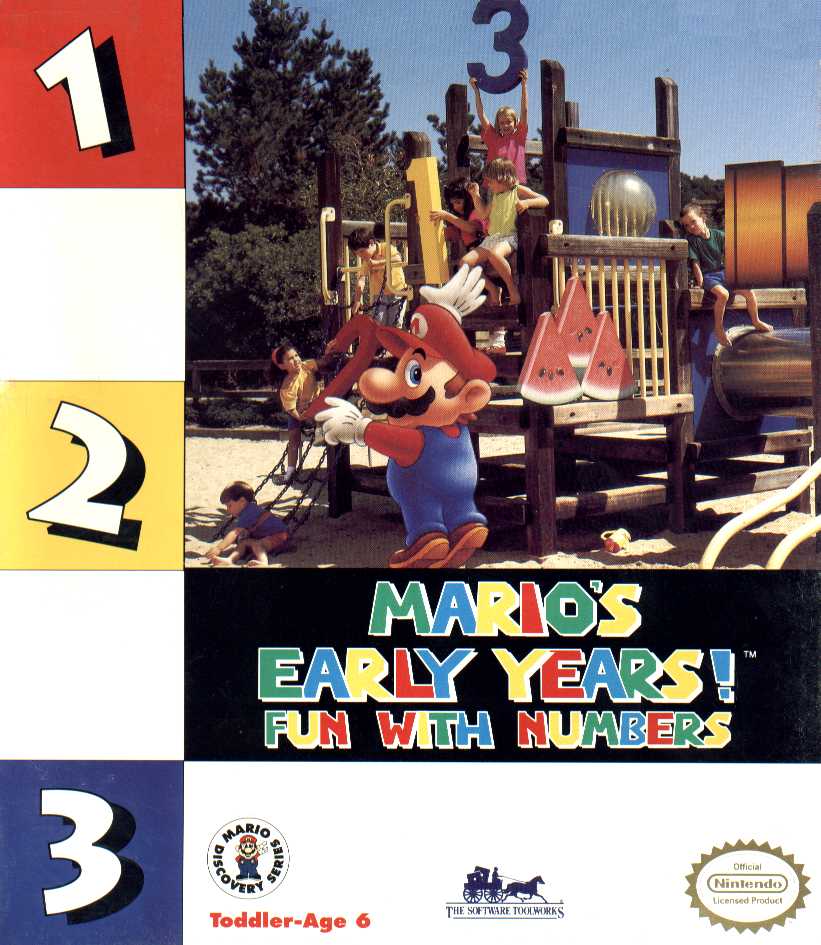
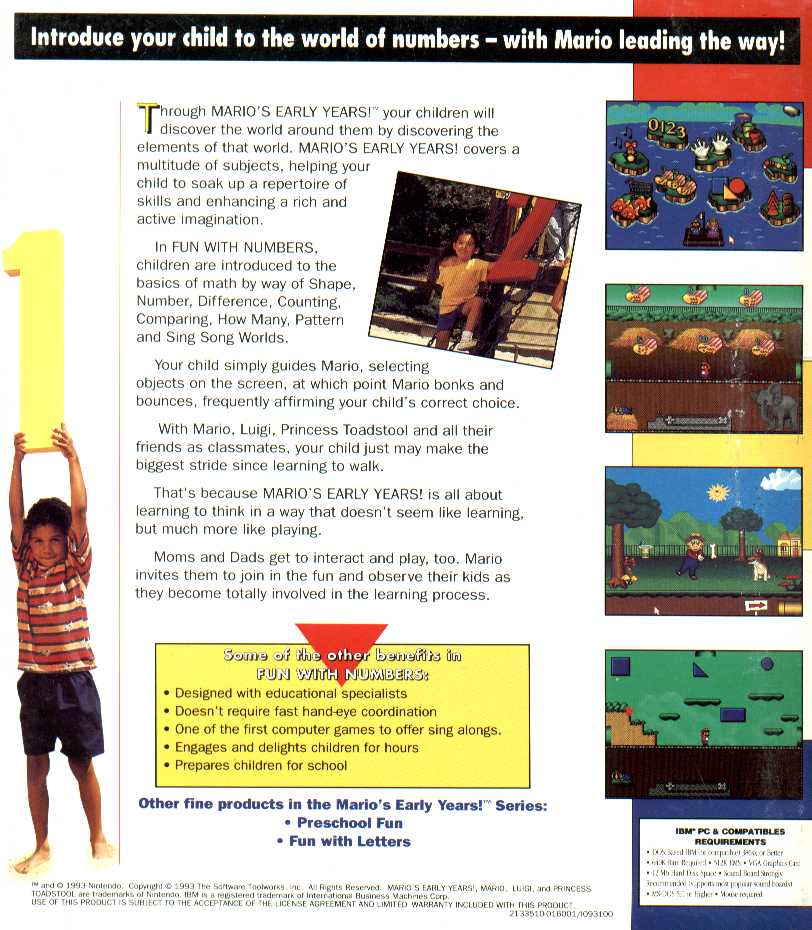
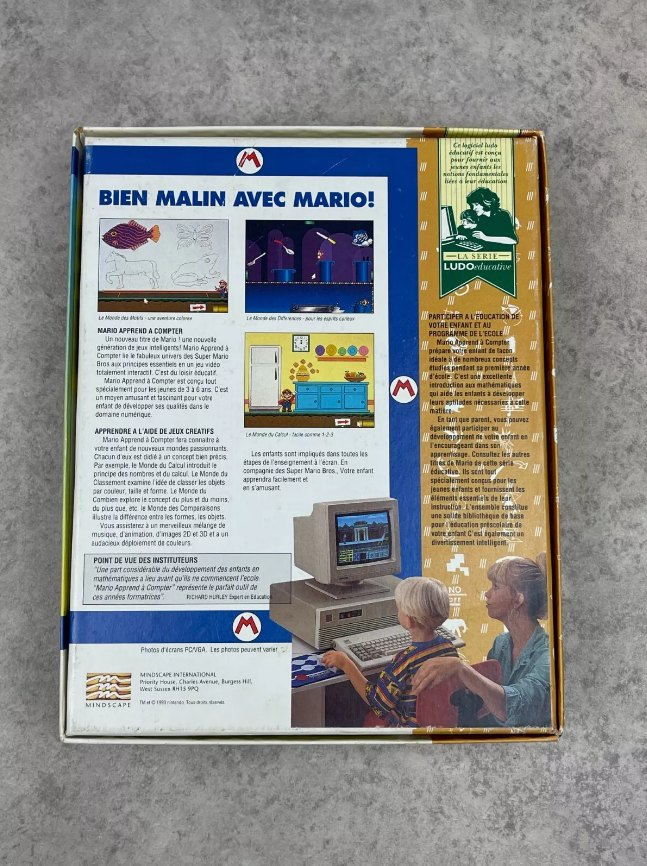
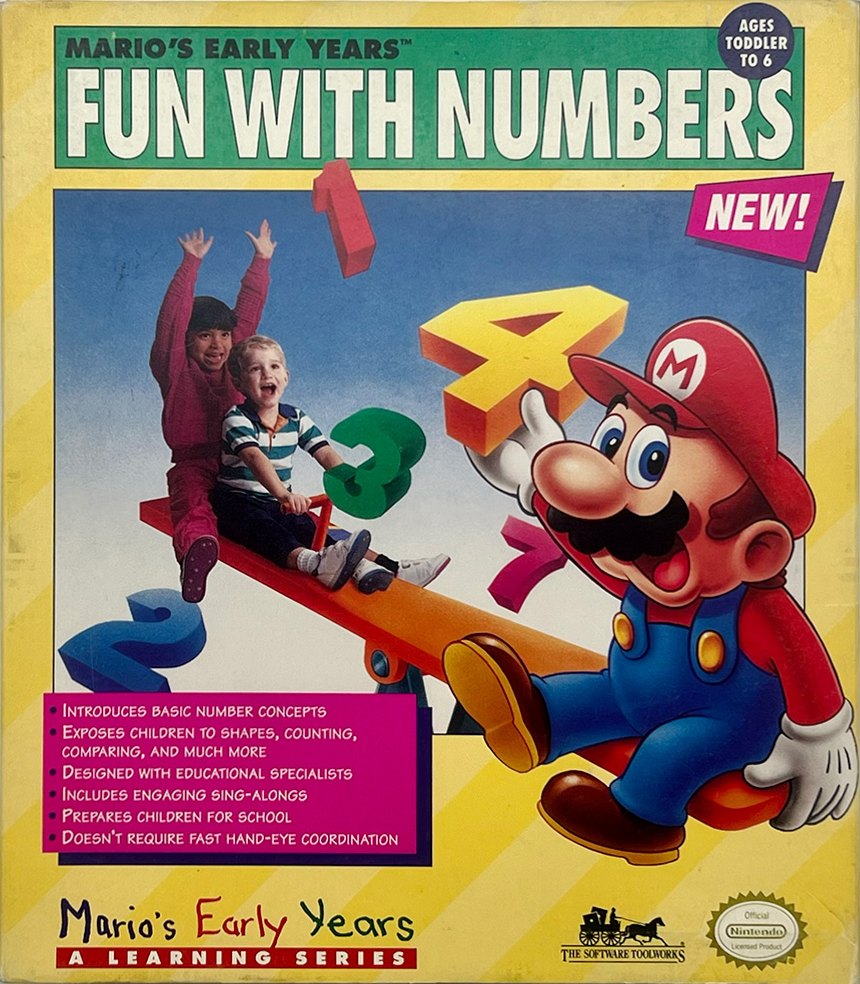
North America · MS-DOSThe Software Toolworks, 1993North America · MS-DOS, alternate frontNorth America · MS-DOS, alternate backNorth America · Super NESMindscape, September 1994France · MS-DOS, backMario Apprend à CompterGermany · MS-DOS, backMarios RechenkünsteUK · Dr. Health’nstein’s Body Fun BundleWith Mario Teaches Sums insideNorth America · CD-ROM CollectionAll three Early Years games on one disc
Screenshots
More from both versions.
Counting World on PC.Mario’s Bedroom on PC.The developer heads in Mario’s Kitchen (Super NES).Where to click to trigger the heads in the bedroom (Super NES).Mario as the old man in This Old Man.Hänschen klein, from the German edition.Sur le Pont d’Avignon, from the French edition.
Artwork & Media Gallery
Logos and the PC title art.
The Mario’s Early Years! logo.The Mario Discovery Series logo.The PC title screen.The Koopalings’ song.
Legacy & Re-releases
The game appeared on disk, cartridge and CD-ROM in 1993 and 1994 and in a few bundles after that.
Release history
MS-DOS1993North American release by The Software Toolworks.
MS-DOS (Europe)1993Mario Teaches Sums (UK), Mario Apprend à Compter (France), Marios Rechenkünste (Germany); a European CD-ROM carries all three languages.
Super NESSeptember 1994Mindscape’s North American cartridge, with seven worlds and Yoshi.
MS-DOS CD-ROM1994Mario’s Early Years! CD-ROM Collection, with this game unchanged.
BundlesUndatedDr. Health’nstein’s Body Fun Bundle (UK) and Mud Pies (with the CD-ROM Collection).
Like the rest of the series, the game was covered mainly by computer and parenting magazines, often as part of the trio. No sales figures have been published.
CD-ROM TodayUS · MS-DOS · review of the Mario’s Early Years! series, June 1994
3/5
The parenting magazine Working Mother featured the series in December 1993. On the Super NES, Nintendo Power’s December 1994 review of the sister game Preschool Fun liked how rewarding the activities were but worried that, without much game in them, they could soon become tedious, and it found the digitised voice annoying.
SLB User Reviews
Mario’s Early Years! Fun with Numbers has yet to receive a community review on Super Luigi Bros.
If you’ve played Mario’s Early Years! Fun with Numbers and would like to submit a review, please get in touch.
More from the Super Luigi Bros Guide
These picture lists come from the earlier Super Luigi Bros guide to Mario’s Early Years! Fun with Numbers and are kept here in full.
Gallery
Screenshots from both the MS-DOS PC and SNES versions, plus the language select screen from the European PC release:
Main menu (MS-DOS PC version)
Main menu (SNES version)
Title screen (MS-DOS PC version)
Title screen (SNES version)
Language select screen — European PC release (Mario Teaches Sums). Players could choose English, French, German, Spanish or Italian.
To provide the best experiences, we use technologies like cookies to store and/or access device information. Consenting to these technologies will allow us to process data such as browsing behavior or unique IDs on this site. Not consenting or withdrawing consent, may adversely affect certain features and functions.
Functional
Always active
The technical storage or access is strictly necessary for the legitimate purpose of enabling the use of a specific service explicitly requested by the subscriber or user, or for the sole purpose of carrying out the transmission of a communication over an electronic communications network.
Preferences
The technical storage or access is necessary for the legitimate purpose of storing preferences that are not requested by the subscriber or user.
Statistics
The technical storage or access that is used exclusively for statistical purposes.The technical storage or access that is used exclusively for anonymous statistical purposes. Without a subpoena, voluntary compliance on the part of your Internet Service Provider, or additional records from a third party, information stored or retrieved for this purpose alone cannot usually be used to identify you.
Marketing
The technical storage or access is required to create user profiles to send advertising, or to track the user on a website or across several websites for similar marketing purposes.

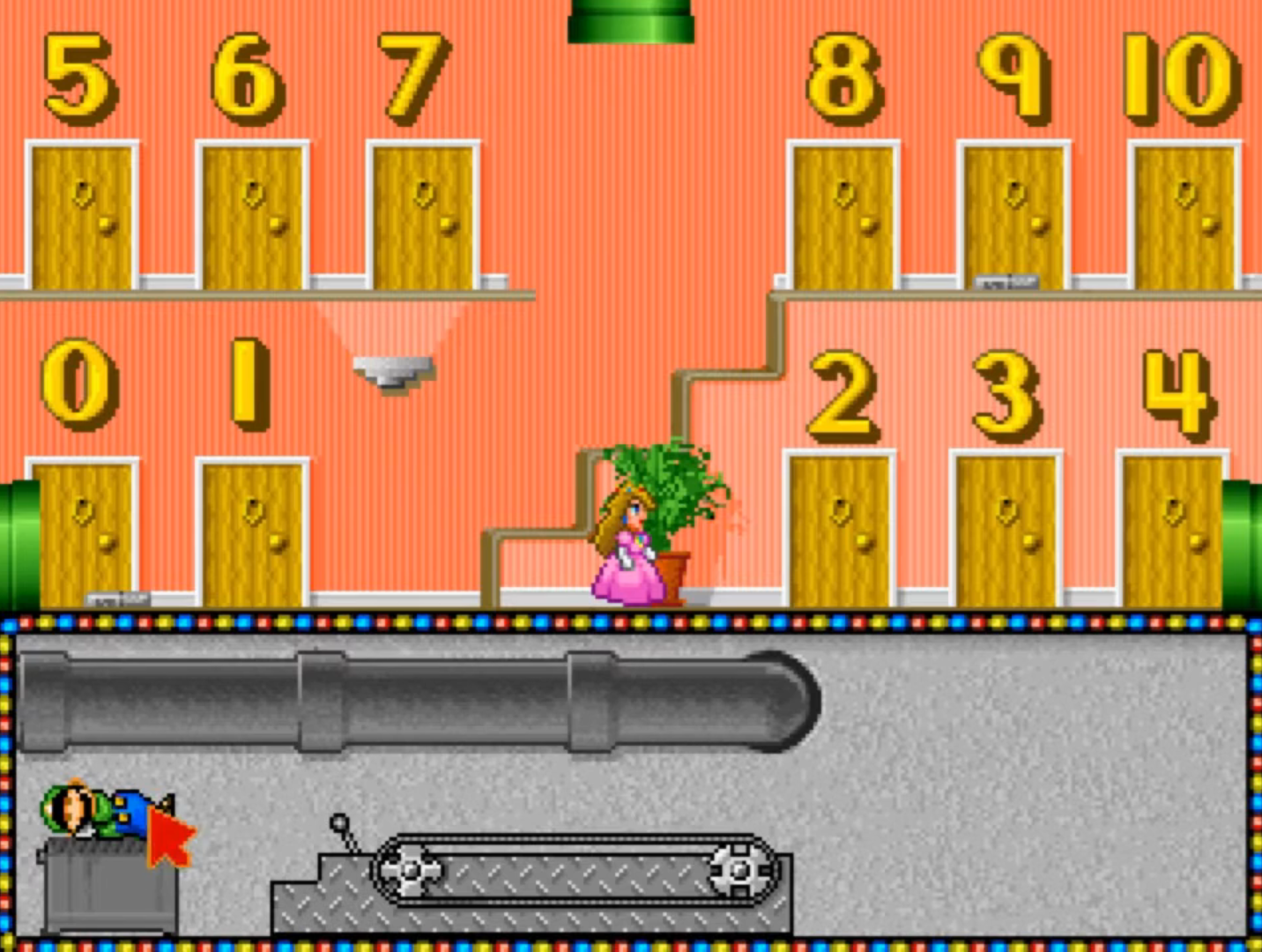 Number WorldPC and Super NES · 3 roomsPick out numbers in a hotel, a street and a supermarket.
 Counting WorldPC and Super NES · 2 roomsCount anything you like in Mario’s Bedroom and Kitchen.
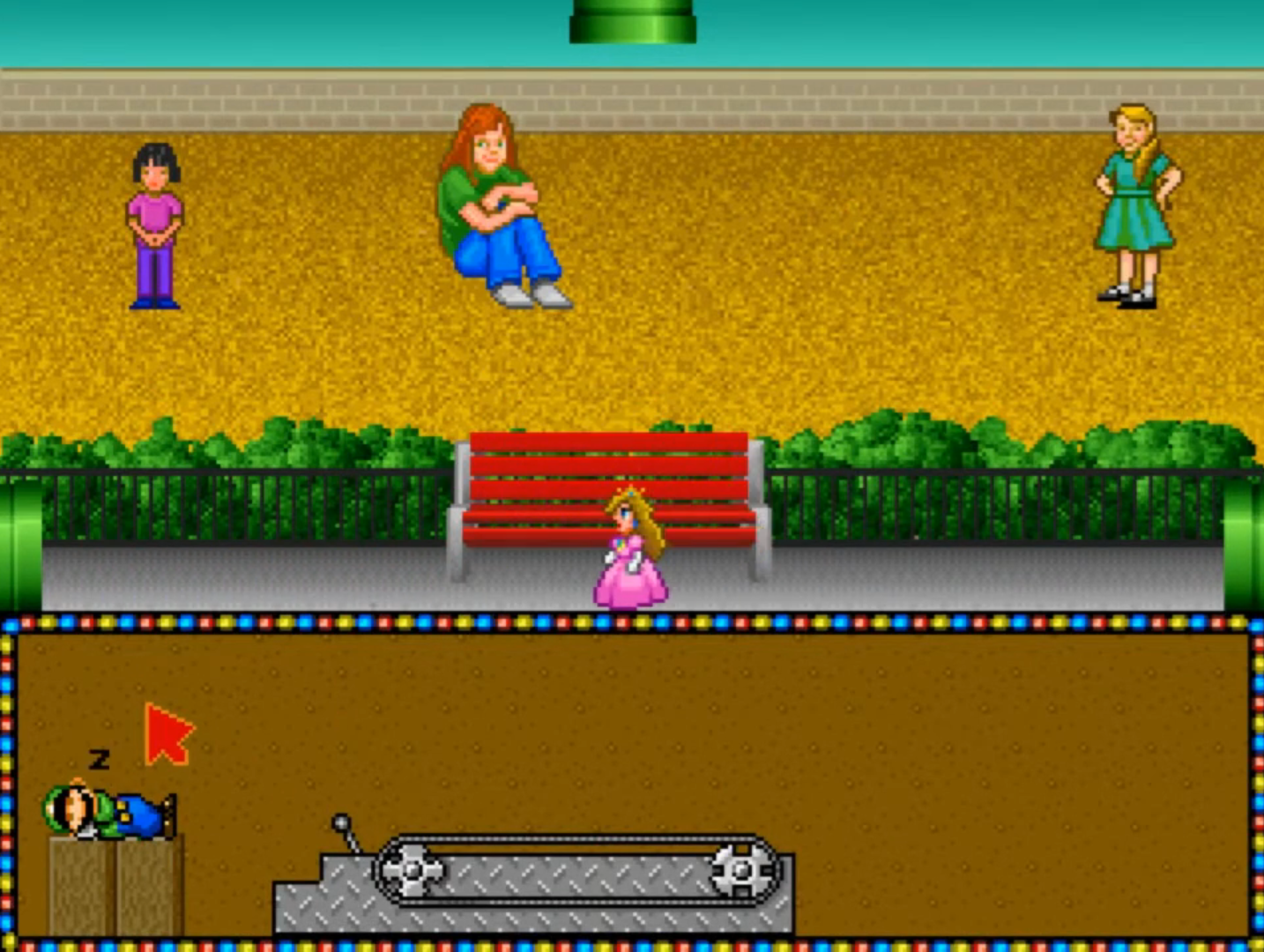 Comparing WorldPC and Super NES · 3 roomsBiggest, smallest and tallest in a park, a sandbox and a garden.
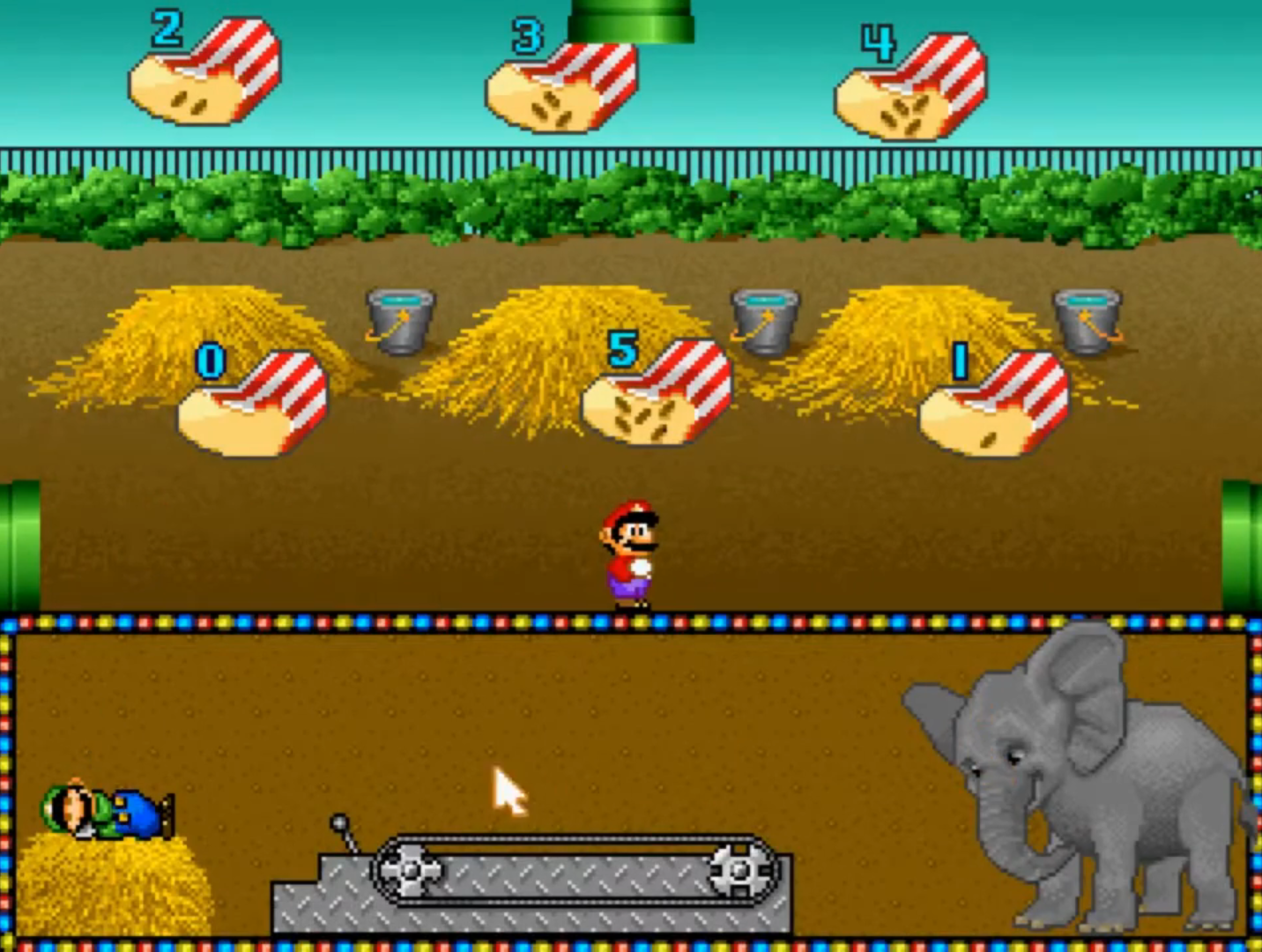 How Many WorldPC and Super NES · 4 areasCounting peanuts, spots, whiskers and stripes at the zoo.
 Shape WorldPC and Super NES · 4 roomsChoose shapes to build ever-longer trains.
 Sorting WorldPC and Super NES · 6 roomsSort by shape, size and colour in a forest.
 Sing Song WorldPC only · 4 songs, plus 1 in French or GermanNursery songs acted out by Mario and the Koopalings.
 The developer headsEaster egg (Super NES)