Nintendo DS2010Nintendo Software TechnologyPuzzle103 levels + Plus ModeDebut of Mini PaulineOnline level sharing and contestsMetacritic 79Eight theme-park attractions
Mario vs. Donkey Kong: Mini-Land Mayhem! (Nintendo DS)
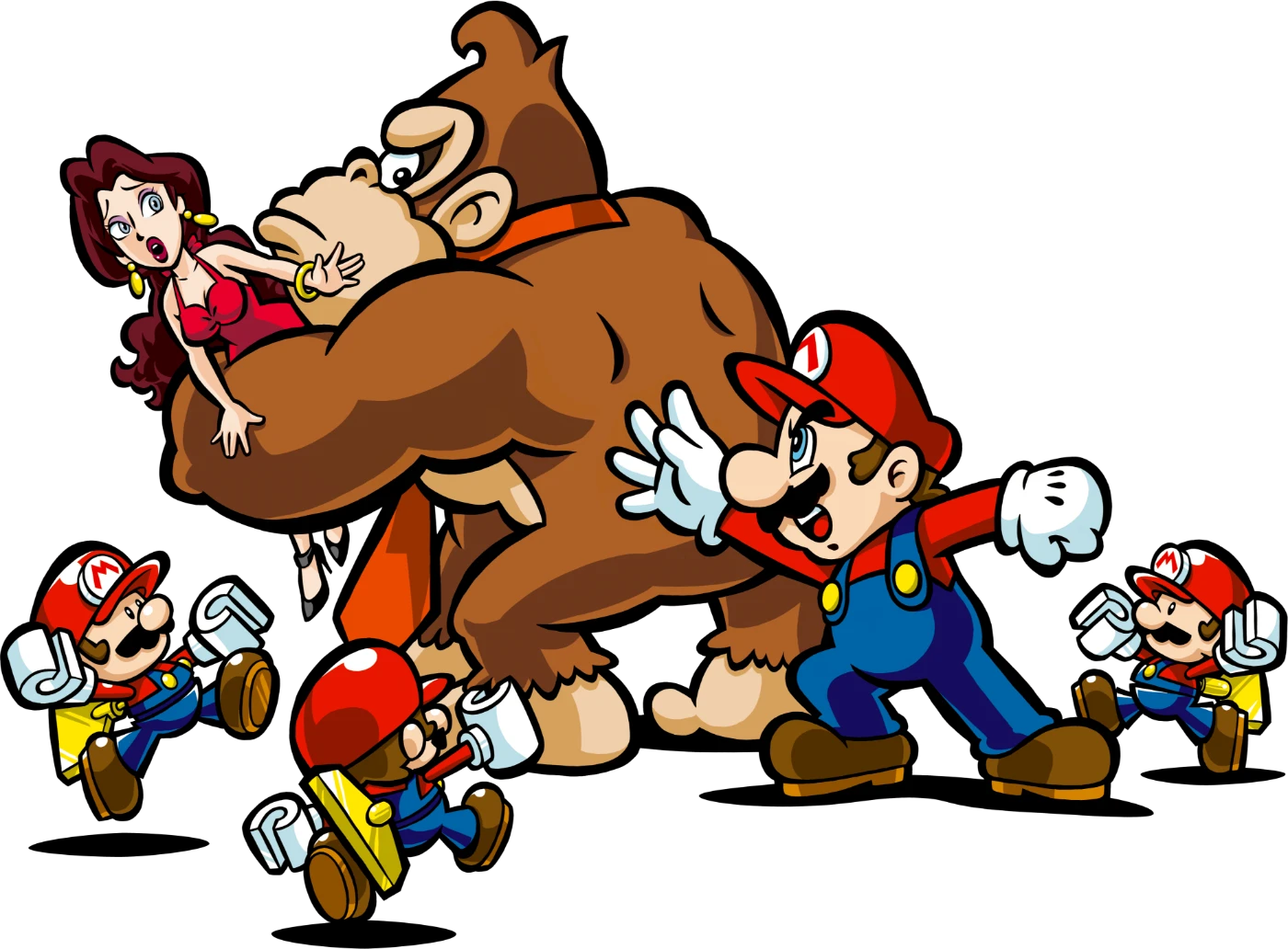
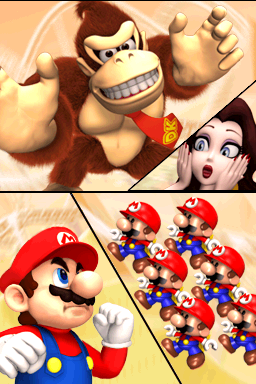
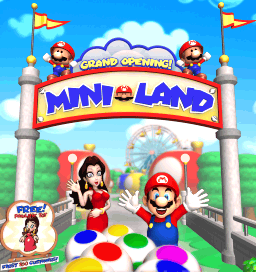
The first hundred guests at Mario’s new theme park, Mini-Land, go home with a Mini Pauline toy. Donkey Kong barges through the queue and turns out to be number 101. No toy for him, so he takes the real Pauline instead. Mini-Land Mayhem!, released on Nintendo DS in North America on 14 November 2010 and in Europe on 4 February 2011, is the fourth game in the series and the one that changed the controls again: once a Mini sets off it can no longer be stopped or turned, and with the stylus you draw Red Girders, place ladders and conveyor belts and move pipes to build their route. There are eight attractions of eight levels and a Donkey Kong battle, the Final Ferris Wheel, a Plus Mode in which Minis must reach the door in order, 20 Special levels in Rainbow Summit and 10 Expert levels in Secret Storage. The Construction Zone came with online sharing, ratings and fortnightly contests over Nintendo Wi-Fi Connection until 20 May 2014.
Developer:Nintendo Software Technology (Redmond, Washington), with Nintendo SPD Group No. 3
Publisher:Nintendo
Platform:Nintendo DS
Genre:Puzzle
N. America:14 November 2010
Japan:2 December 2010
Australia:3 February 2011
Europe:4 February 2011
Players:1 (levels shared locally or via Nintendo WFC)
Director:Yukimi Shimura
Producers:Kensuke Tanabe; general producer Shinya Takahashi; executive producer Satoru Iwata
Supervisor:Shigeru Miyamoto
Music:Lawrence Schwedler (music supervisor Koji Kondo)
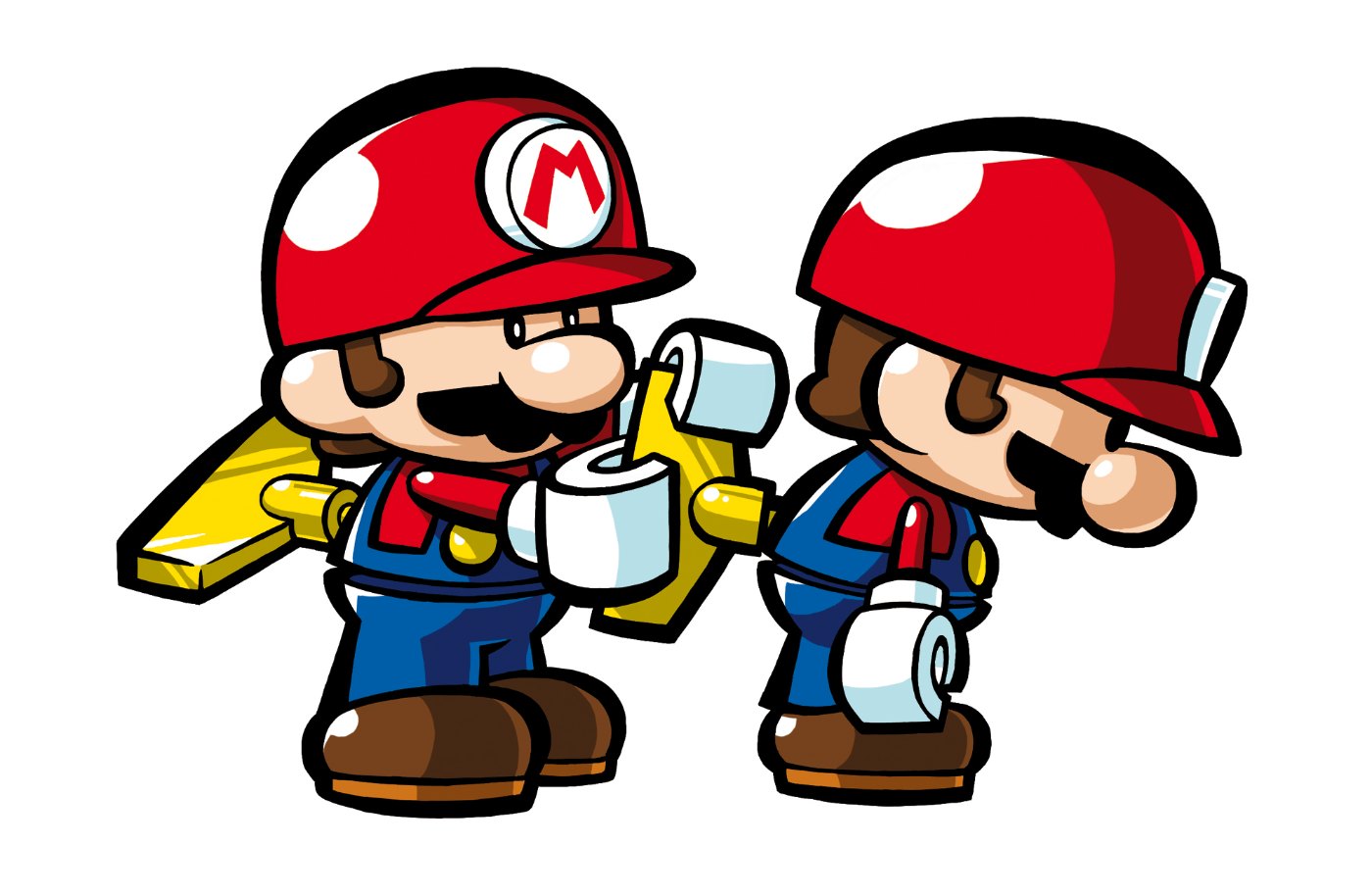
Minis:Mini Mario, Mini Toad, Mini Peach, Mini Donkey Kong, Mini Pauline
Levels:103: eight attractions of 9 (72), the Final Battle, 20 Special levels and 10 Expert levels; plus 8 minigames and Plus Mode
Ratings:ESRB E · PEGI 3 · CERO A · ACB G · USK 0
Japanese title:Mario vs. Donkey Kong: Totsugeki! Mini Land
Online:Nintendo Wi-Fi Connection level sharing and contests, ended 20 May 2014
Advertisement
Overview
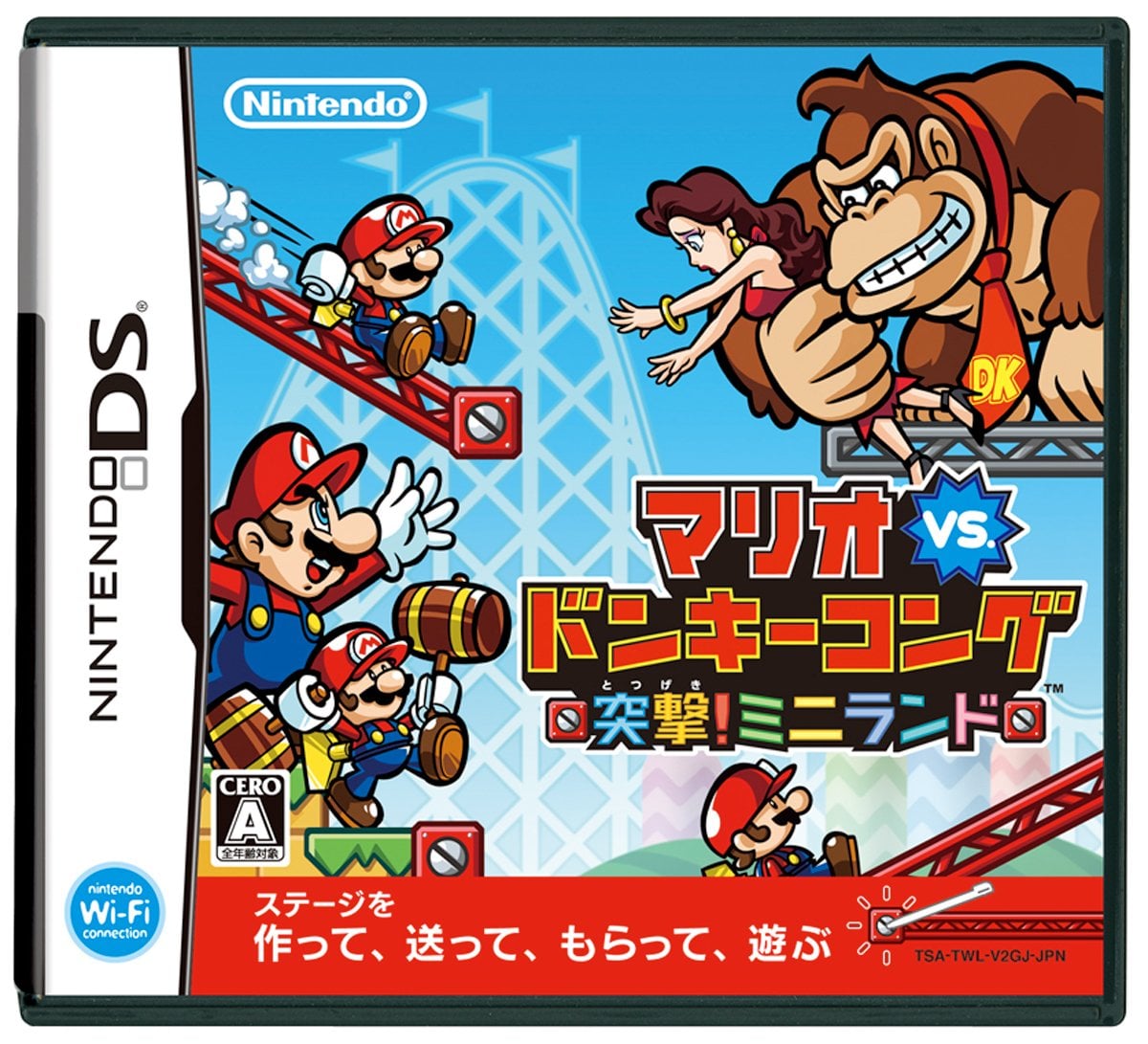
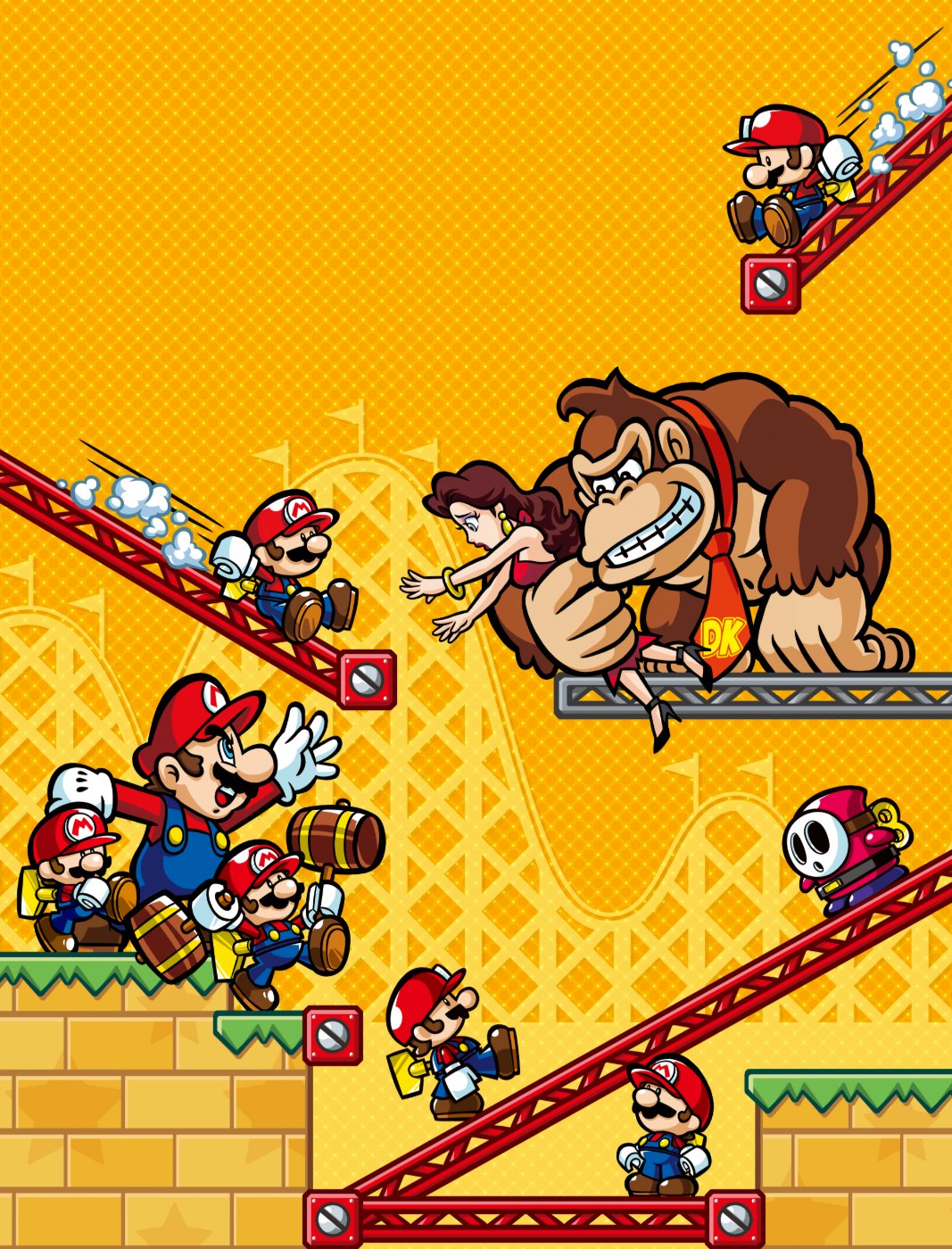
The key artwork used on the European, Australian and Japanese covers.
After March of the Minis and the DSiWare follow-up Minis March Again!, Nintendo Software Technology made one more full Mini-Mario game for the DS, and critics rated it above March of the Minis. The theme park is called Mini-Land this time, the kidnap victim is once again Pauline, and the culprit is a Donkey Kong who simply arrived too late for a free toy.
The big change is in your hands. Minis no longer need steering one by one: tap one and it marches off on its own, turning at walls and climbing whatever it meets. Your job is to build the path. Drag a Red Girder between two rivets to make a bridge or a slope, drop in Blue Ladders and Purple Conveyors, slide pipes into place, and get every toy through the exit before the door locks behind the first one.
Eight themed attractions, from Coaster Hills to Super Skywheel, each end with a Donkey Kong battle, and the Final Ferris Wheel brings the showdown. Then Plus Mode sends you round again with a twist: the Minis must reach the door in a set order. M-Tokens open 20 Special levels in Rainbow Summit, trophies open 10 Expert levels in Secret Storage, and the cast of Minis now includes Mini Toad, Mini Peach, Mini Donkey Kong and, making her debut, Mini Pauline.
The Construction Zone grew up too. After a four-lesson tutorial you could build levels with every element in the game, share them over local wireless, upload them for strangers to download and rate, and enter contests Nintendo ran every two weeks. Critics liked it more than its predecessor: Metacritic’s average is 79.
At the grand opening of Mario’s third theme park, the first 100 guests receive a new Mini Pauline toy. Donkey Kong arrives as the 101st guest and finds himself out of luck. He grabs Pauline and heads into the park with Mario and his Mini Marios in hot pursuit. The fourth game in the series adds new challenges and new opportunities for users to share what they have created.
— Official description (Nintendo UK, 2011)
Why Mini-Land Mayhem! matters to Mario fans
It is the game where Pauline’s toy finally joins the line-up: Mini Pauline makes her first appearance here. It also gives Pauline a bigger voice than she had in years, rebuilds the arcade Donkey Kong stages out of girders and ladders you place yourself, and turned the series into a community of shared levels that carried on into Tipping Stars.
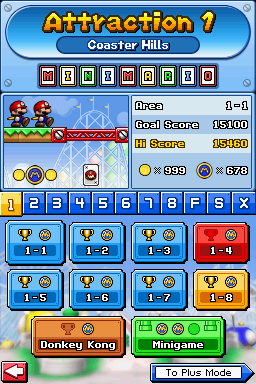
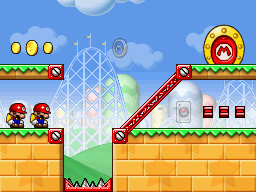
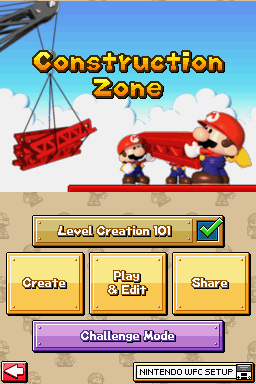
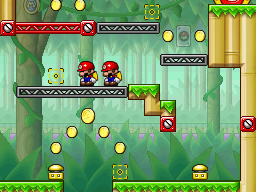
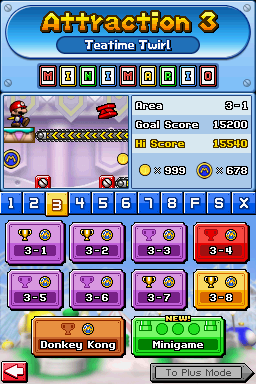
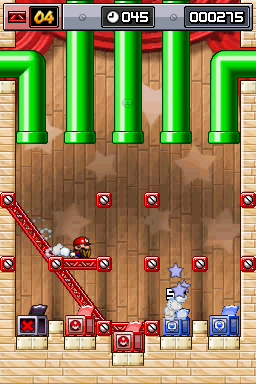
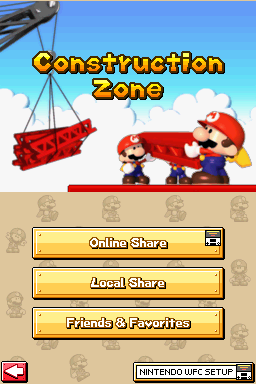
Drawing girders to guide the Minis.The Coaster Hills level select.Area 1-2.The Construction Zone menu.
Quick Answers
Short answers to the questions people ask most about Mini-Land Mayhem!.
How many levels are in Mini-Land Mayhem!?
103: eight attractions with eight levels and a Donkey Kong battle each (72), the Final Battle, 20 Special levels in Rainbow Summit and 10 Expert levels in Secret Storage. The main levels can be replayed in Plus Mode, and each attraction has a minigame. More →
What are the attractions?
Coaster Hills, Jumpy Jungle, Teatime Twirl, Warped Mansion, Sandstorm Steps, Cosmic Adventure, Cannon Cove and Super Skywheel, then the Final Ferris Wheel; Rainbow Summit and Secret Storage are the bonus areas. More →
Why does Donkey Kong kidnap Pauline?
At Mini-Land’s opening, the first 100 visitors each got a Mini Pauline toy from Mario. Donkey Kong pushed to the front and was guest number 101, found the toys gone and grabbed the real Pauline. More →
Which Minis are in the game?
Mini Mario, Mini Toad, Mini Peach, Mini Donkey Kong and Mini Pauline, who appears for the first time. They all behave the same, but each has its own exit door. More →
What is Plus Mode?
The second run, unlocked when Donkey Kong snatches Pauline again after the Final Battle. Every level must be cleared with the Minis entering the door in the order shown; beating the Final Battle again gives the true ending. More →
How do you unlock Rainbow Summit and Secret Storage?
Each Rainbow Summit level opens for every 10 M-Tokens collected; each Secret Storage level opens for every 10 trophies won by beating levels’ goal scores. More →
How do the Minis move?
On their own once tapped. You shape their route with the stylus by drawing Red Girders between rivets and placing ladders, conveyors and pipes. When the first Mini enters the door a countdown starts, and if the others do not follow in time the door locks. More →
Can you still share levels online?
No. Online Share and the contests used Nintendo Wi-Fi Connection, which Nintendo discontinued on 20 May 2014. Local wireless sharing still works. More →
Who made it?
Nintendo Software Technology in Redmond, directed by Yukimi Shimura and produced by Kensuke Tanabe, with Shigeru Miyamoto as supervisor. More →
Is it on Wii U or Switch?
No re-release is listed in the sources we checked; it remains a DS game. The series continued with Tipping Stars and the 2024 Switch remake of the first game. More →
Attractions & Levels
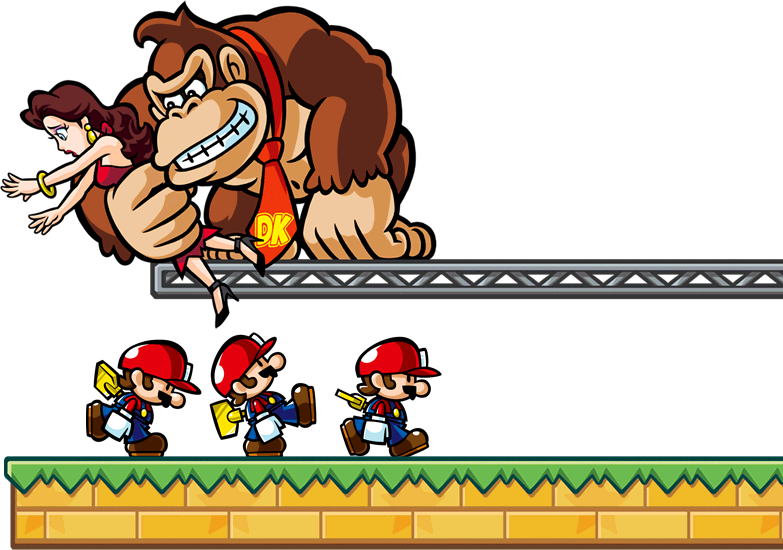
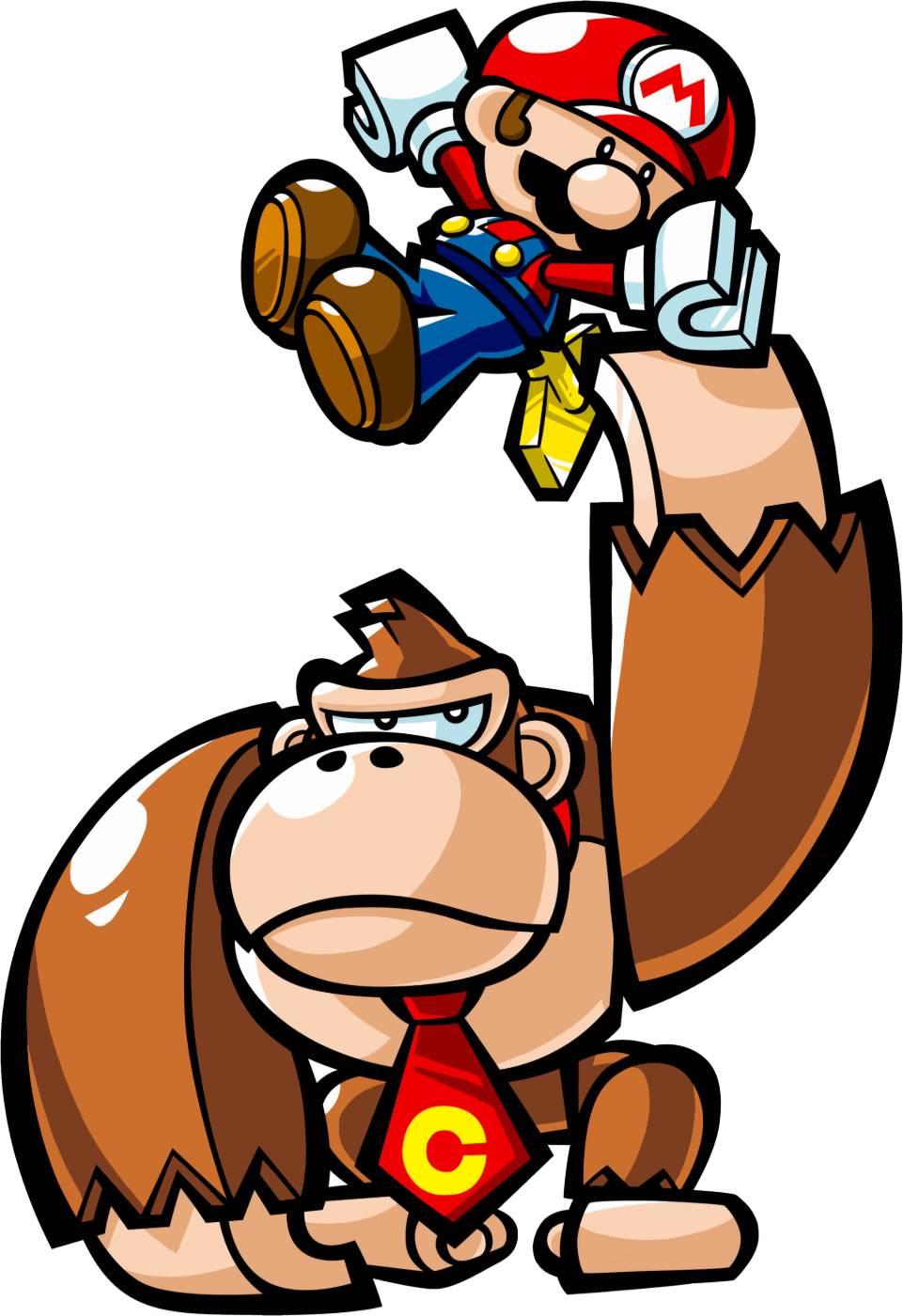
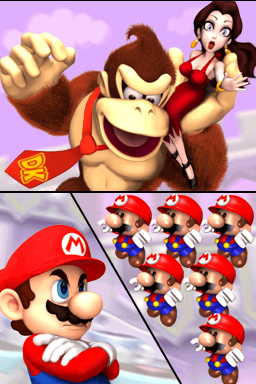
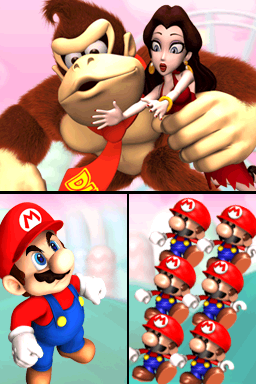
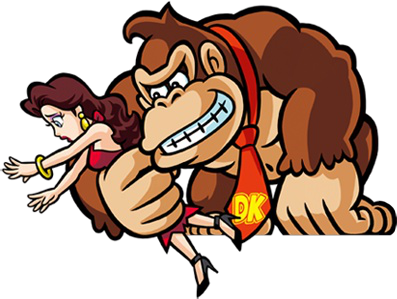
Donkey Kong holding Pauline.
Mini-Land is Mario’s new theme park, and its attractions double as the game’s worlds. Mario chases Donkey Kong and Pauline through them aboard the Super Mini Mario Express; at the start of each attraction Mario demonstrates its new gadgets with the Minis, and at the end the Minis take on Donkey Kong.
Opening day at Mini-Land
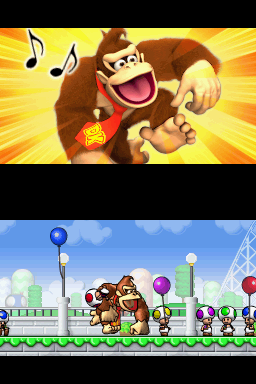
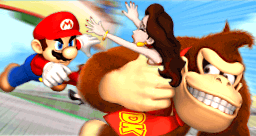
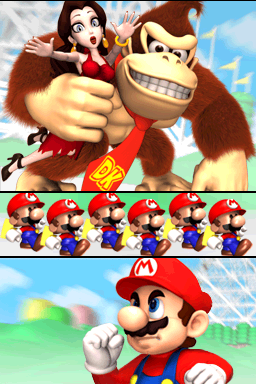
Pauline is the guest of honour at the grand opening, and Mario has a treat for the crowd: a Mini Pauline toy for each of the first hundred visitors. Donkey Kong wants one badly enough to charge through the queue of Toads, only to learn he is visitor 101 and the toys have run out. He loses his temper, grabs the real Pauline and makes off into the park. Mario winds up his Mini Marios and sends them after her.
Pauline at the opening.From the opening movie.Pauline and Donkey Kong.
Coaster Hills
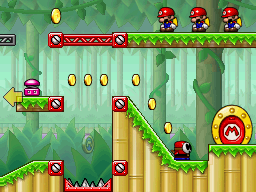
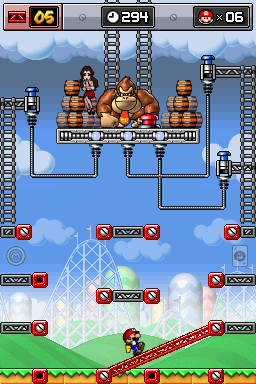
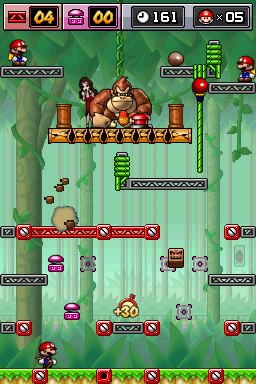
The tutorial attraction, set to rearranged Super Mario Bros. 2 music. Red Girders, pipes and ladders are introduced, Shy Guys and Circus Kongs provide the opposition, and in Area 1-DK the Minis climb ladders to send sparks down the wires and electrocute Donkey Kong while he flips which rivets are live and shakes barrels down on them.
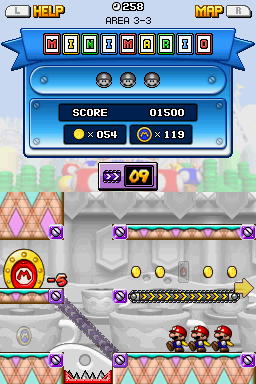
Coaster Hills.Area 1-2.Area 1-DK.
Jumpy Jungle
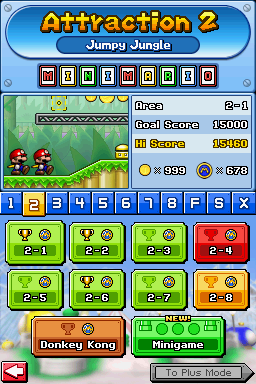
Springs, vertical and horizontal, bounce the Minis across a jungle that dances to DK Island Swing from Donkey Kong Country. In Area 2-DK they climb ropes to pick up rocks and drop them on the ape, who answers by pounding the ground until stone heads fall.
Jumpy Jungle.Area 2-2.Area 2-DK.
Teatime Twirl
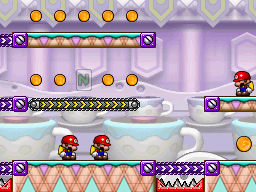
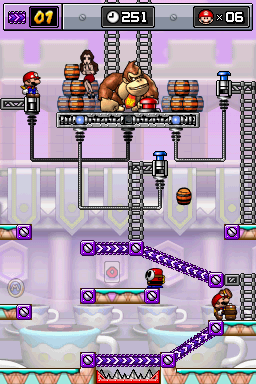
An attraction built around conveyor belts, grey and purple, with Peach’s Castle music from Super Mario 64 playing. Donkey Kong reverses the Purple Conveyors in Area 3-DK while the Minis climb to the wires.
Teatime Twirl.Area 3-3.Area 3-DK.
Warped Mansion
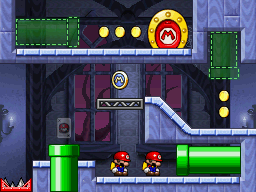
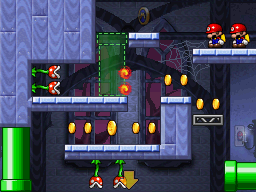
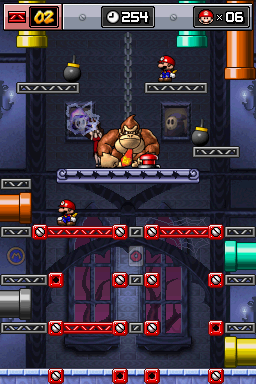
A mansion of Movable Green Pipes, Piranha Plants and Piranhas with Fire, which can pass their fireballs to ordinary Piranha Plants. In Area 4-DK the Minis ride Warp Pipes up to knock down bombs that explode on Donkey Kong, while he calls Polterguys out of the paintings.
Warped Mansion.Area 4-5.Area 4-DK.
Sandstorm Steps
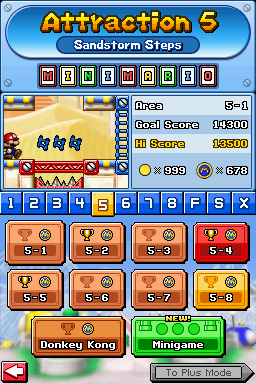
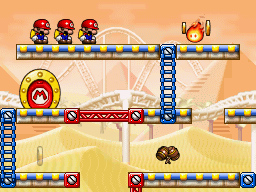
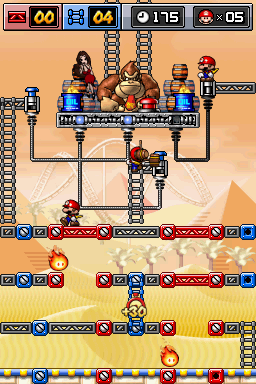
Sandstorm Steps is a tribute to the arcade game: Blue Ladders, Fireballs and hammers, with Area 5-2 laid out after 25 m and 75 m. Capture Kongs join the cast. Area 5-DK has Donkey Kong lighting an oil drum to spawn Fireballs while the Minis climb to spark the wires.
Sandstorm Steps.Area 5-2, a nod to 25 m and 75 m.Area 5-DK.
Cosmic Adventure
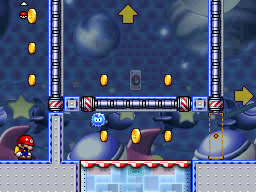
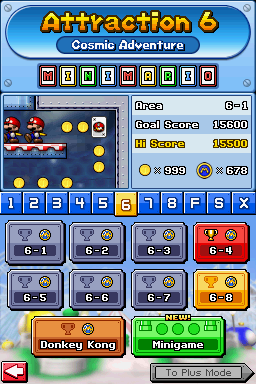
Magnet Blocks and Magnet Rods let the Minis walk on walls and ceilings here, alongside Blockers to place, Magnet Sparkies and the first Thwomps. Area 6-DK is a rocket launch: the Minis cross the Magnet Ground to light three rockets, each of which hits Donkey Kong.
Cosmic Adventure.Area 6-2.Area 6-DK.
Cannon Cove
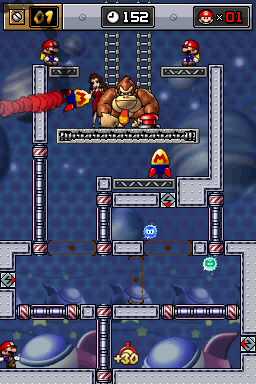
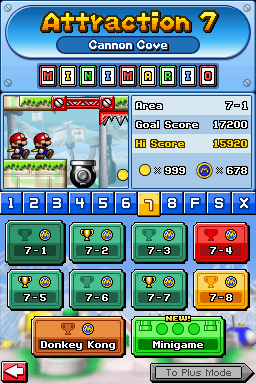
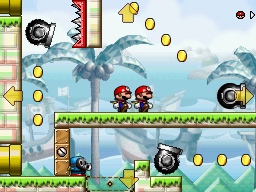
A cove full of cannons that fire Minis in every direction, plus a few Snifits. In Area 7-DK the ape turns cannons and girder rivets on and off to keep the Minis from the wires.
Cannon Cove.Area 7-6.Area 7-DK.
Super Skywheel
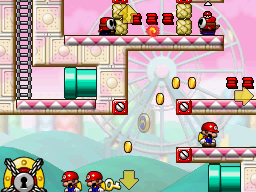
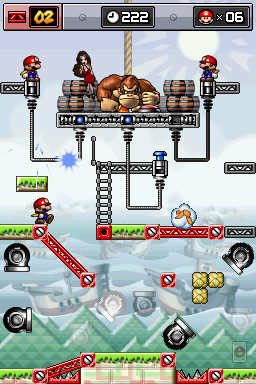
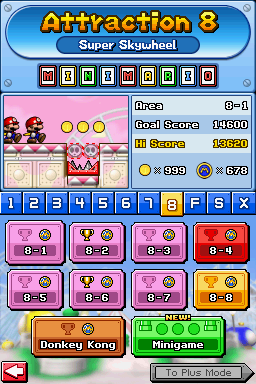
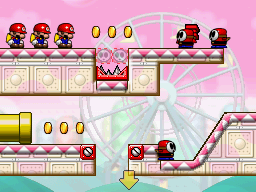
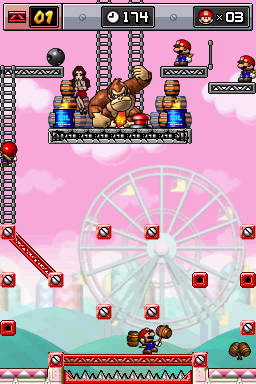
The last regular attraction recaps everything and adds Shy Guy and Pokey Blocks, outlines that turn solid when the right enemy walks into them. Pokeys appear here for the first time in the game. In Area 8-DK climbing the ladders knocks iron balls down on to Donkey Kong.
Super Skywheel.Area 8-1.Area 8-DK.
The Final Ferris Wheel
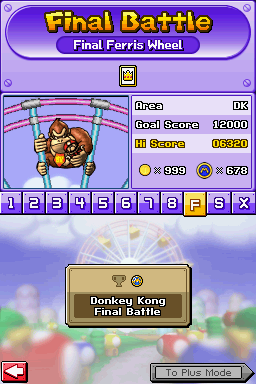
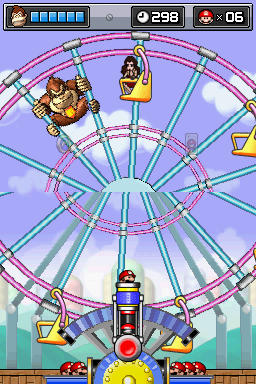
The Donkey Kong Final Battle changes the rules. The Minis are loaded into a cannon at the bottom of the screen, which you slide and fire at Donkey Kong as he clings to a swinging Ferris wheel, firing missiles and floating spiked balls. After a few hits he snatches a Mini, and you have to shoot him quickly to free it before he throws it away.
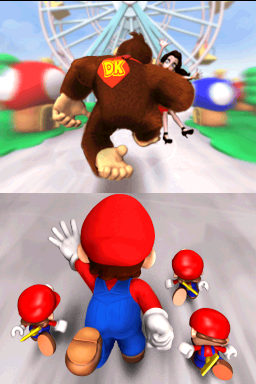
He falls, Pauline is free, Mario runs to hug her… and Donkey Kong grabs her all over again. That opens Plus Mode.
The Final Ferris Wheel.The Donkey Kong Final Battle.The intro before the Final Battle.
Plus Mode and the true ending
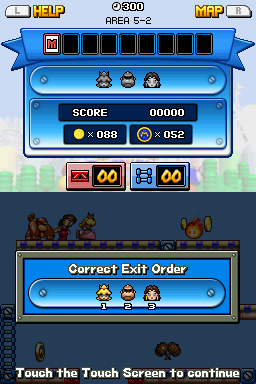
Plus Mode, which you can switch to at any time from the level select, replays the adventure with one new rule: the Minis must reach the door in the order shown at the start of the level and on the top screen, and that order is rarely the one they start in. Break the order and it is game over, with a comparison of what you did and what was wanted. The layouts are the same but the backgrounds are subtly redecorated, and every M-Token and card has to be collected again.
Beat Donkey Kong at the Final Ferris Wheel once more and the second ending plays. He is about to make off with Pauline a third time when Mario holds out a Mini Pauline. The ape takes it, delighted, and rides the Ferris wheel with Mario, Pauline and the Minis while the Toads celebrate.
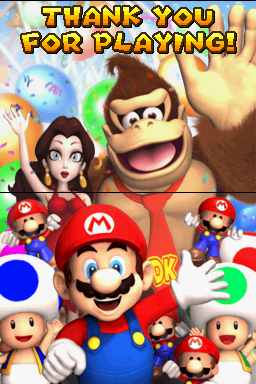
Plus Mode: the required order is shown first.The Thank You for Playing screen.
Rainbow Summit and Secret Storage
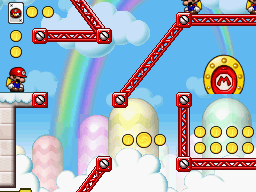
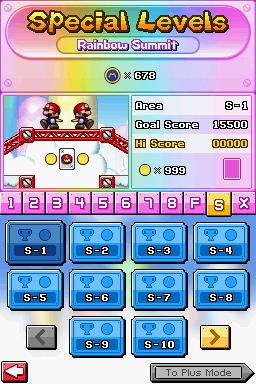
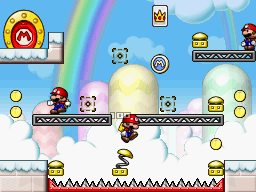
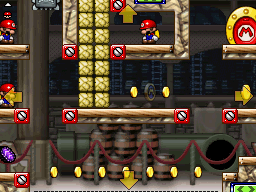
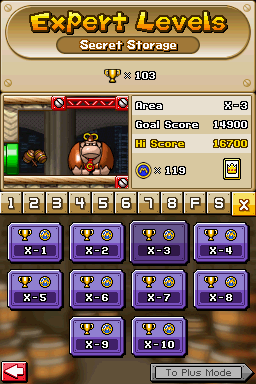
Rainbow Summit is the biggest attraction, twenty Special levels spread over two level-select screens, each opened by ten M-Tokens. Here the level cannot be altered until you tap Start, which sets every Mini off at once, so all the building happens on the move. Secret Storage holds ten Expert levels, unlocked one per ten trophies, which mix every mechanic in the game into much harder puzzles, to an arrangement of the Super Mario Bros. underground theme.
Rainbow Summit.Area S-3.Area X-6 in Secret Storage.
Every attraction in Mini-Land Mayhem!
Each regular attraction has eight levels, a Donkey Kong battle and a minigame. The two bonus attractions open with M-Tokens and trophies.
Attraction 1: Coaster HillsAreas 1-1 to 1-8, 1-DK · Minigame 1Red Girders, pipes and ladders; Shy Guys and Circus Kongs.
Attraction 2: Jumpy JungleAreas 2-1 to 2-8, 2-DK · Minigame 2Vertical and Horizontal Springs.
Attraction 3: Teatime TwirlAreas 3-1 to 3-8, 3-DK · Minigame 3Conveyor belts, grey and purple, to a Super Mario 64 tune.
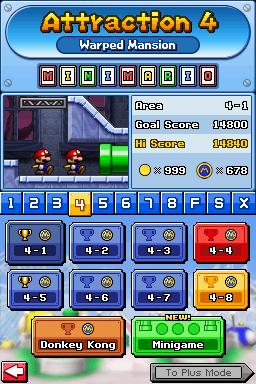
Attraction 4: Warped MansionAreas 4-1 to 4-8, 4-DK · Minigame 4Movable Green Pipes, Piranha Plants and Piranhas with Fire.
Attraction 5: Sandstorm StepsAreas 5-1 to 5-8, 5-DK · Minigame 5Blue Ladders and Fireballs in homage to the arcade game; Capture Kongs arrive.
Attraction 6: Cosmic AdventureAreas 6-1 to 6-8, 6-DK · Minigame 6Magnet Rods, Blockers and the first Thwomps.
Attraction 7: Cannon CoveAreas 7-1 to 7-8, 7-DK · Minigame 7Cannons firing Minis in every direction, and a few Snifits.
Attraction 8: Super SkywheelAreas 8-1 to 8-8, 8-DK · Minigame 8Shy Guy and Pokey Blocks, the first Pokeys, and a recap of everything.
Final Ferris WheelDonkey Kong Final Battle · cannon fightFire Minis at Donkey Kong as he swings on the big wheel.
Plus ModeEvery attraction again · exit-order ruleThe same levels, but the Minis must reach the door in the order shown.
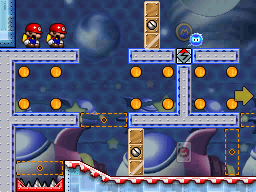
Rainbow SummitAreas S-1 to S-20 (Special) · 10 M-Tokens per levelPress Start to release every Mini at once; only then can you build.
Secret StorageAreas X-1 to X-10 (Expert) · 10 trophies per levelThe hardest puzzles in the game.
8 × 9 = 72, plus the Final Battle, 20 Special and 10 Expert levels: 103 levels, before Plus Mode and the eight minigames.
Advertisement
Gameplay & Controls
Mini-Land Mayhem! is a construction game disguised as a platformer. The Minis do the walking; you lay the track.
Building the route
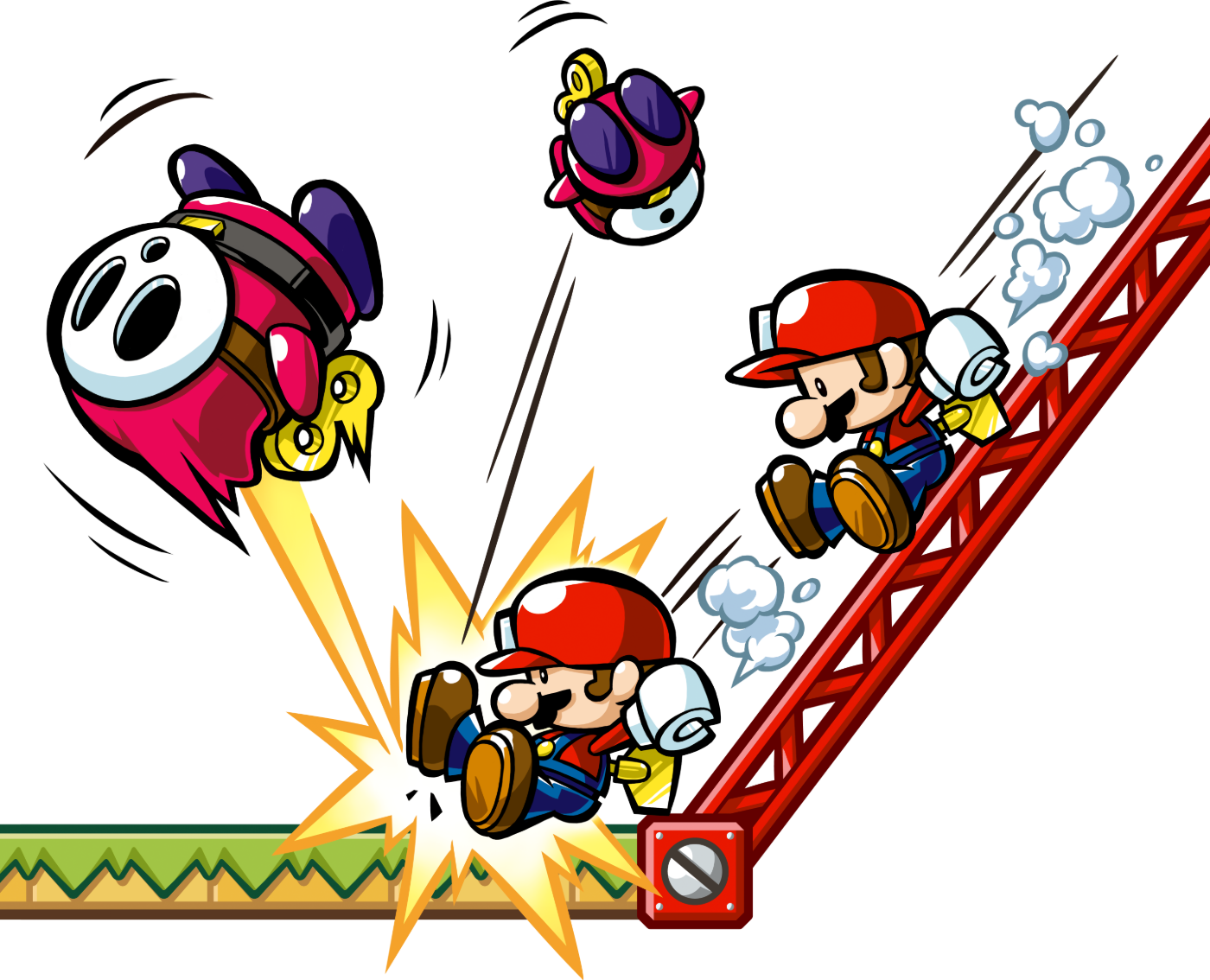
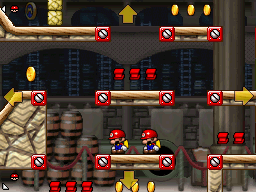
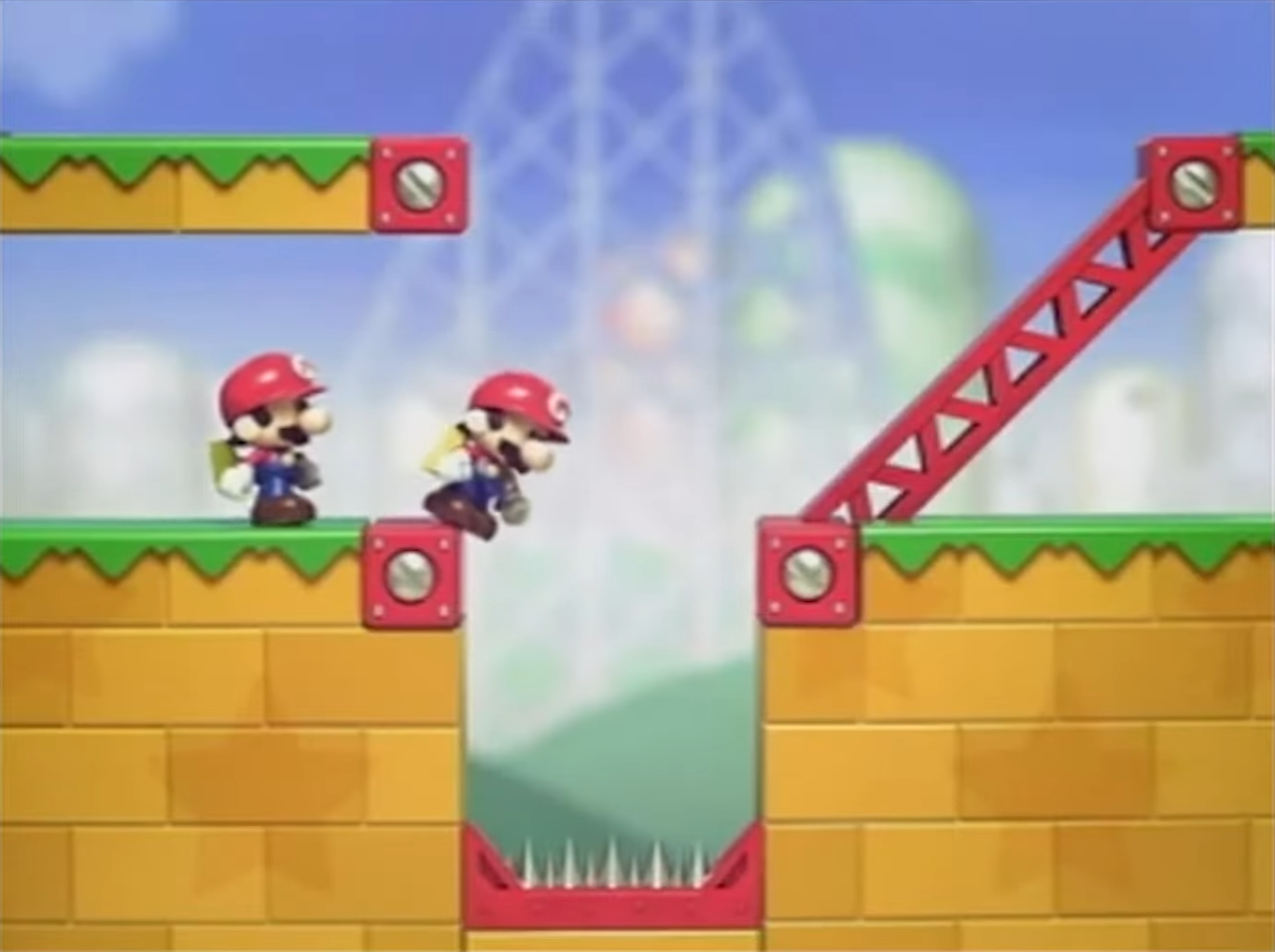
Tap a Mini and it sets off, marching back and forth, hopping single blocks and turning round at taller walls, narrow gaps or conveyors running against it. Anything that bumps into a waiting Mini starts it too. You never steer them directly. Instead, the stylus draws Red Girders between pairs of rivets (flat, or as slopes the Minis slide down), places Blue Ladders, Purple Conveyors and Blockers, and slides Movable Pipes into position. Most pieces are limited, and Girder, Ladder and Conveyor Pickups hand out more. Some objects freeze the whole level, clock included, and turn the screen grey while you place them.
Minis are breakable. Enemies, spikes and Fireballs all break them, and so does a fall of ten blocks or more unless a slope breaks it. Hammers let them flatten enemies, cannons fire them across the level, and steep slopes send them sliding fast enough to smash Crumble Blocks.
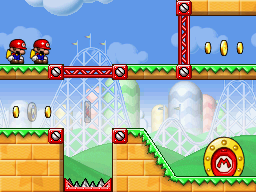
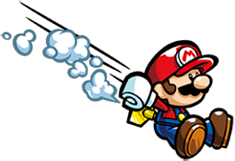
A typical level, with girders drawn in.A Red Girder.A Mini Mario sliding down a girder.
Doors, keys and the five Minis
Every level is against a 300-second clock, and the Minis must all reach the exit. When the first one goes through, a countdown begins; if the next does not follow before it ends, the door locks and the level is lost. Each kind of Mini, Mario, Toad, Peach, Donkey Kong and Pauline, has a door of its own in levels that use them.
Two variations add spice. In Multi-Door levels there are several exits, and most of the Minis start sealed in capsules that a free Mini must break open. In Key levels, a Mini has to carry a key to the door before anyone can go through.
Mini Pauline’s exit door.A locked door.Mini Pauline.
Coins, M-Tokens, cards and trophies
Every level holds an M-Token (2,000 points) and a Mini Mario Card (1,000), along with coins worth 100 and large coins worth 500. Seconds left on the clock are worth 20 each, and collecting everything in a level adds a 6,000-point Collection Bonus. Beat a level’s goal score and you win a trophy.
Each piece of the collection opens something. M-Tokens open the levels of Rainbow Summit, ten tokens a level. Trophies open Secret Storage, ten a level. And collecting all nine cards in an attraction, spelling MINIMARIO, opens its minigame.
An M-Token.A Mini Mario Card.A trophy.
Donkey Kong battles
Each attraction ends in a fight with no exit door. Instead the Minis have to reach the machinery that hurts Donkey Kong: in several arenas they climb ladders to send sparks down wires that electrocute him; elsewhere they drop rocks on his head, knock bombs or iron balls loose, or light rockets. He fights back by flipping switches that turn girder rivets, ladders, conveyors and cannons on and off, and by pounding the ground to bring down barrels, stone heads, Fireballs or Polterguys.
After each win, the Minis watch Donkey Kong climb away with Pauline, a ladder-climbing scene borrowed from the arcade game, to the tune of a rearranged “Game Start” jingle.
Area 1-DK: sparks along the wires.The intro before Area 1-DK.
Minigames
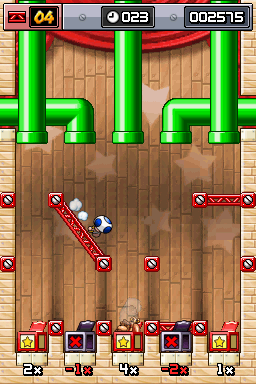
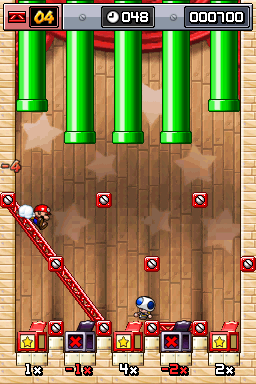
Each attraction’s minigame is a pachinko board. Minis tumble from the top, and you draw girders and conveyors to steer them into toy boxes at the bottom within 60 seconds; clock items add ten more. Rarer Minis are worth more: 25 points for Mini Mario, 50 for Mini Toad, 75 for Mini Peach, 100 for Mini Donkey Kong and 200 for Mini Pauline. Odd-numbered boards have multiplier boxes and Minus Boxes; even-numbered ones want each Mini in the box with its face. Three target scores each award an M-Token.
Minigame 1.Minigame 2, where each Mini wants its own box.
Help Mode, the Mini Guide and the map
Press L in a level for Help Mode, which pauses the game and explains any object you tap. Fail a level five times in a row and the Mini Guide appears, demonstrating one way through, to an arrangement of the Super Star music. Press R to swap the top screen between the score panel and a map showing every Mini and enemy, a feature first tried in a demo of March of the Minis.
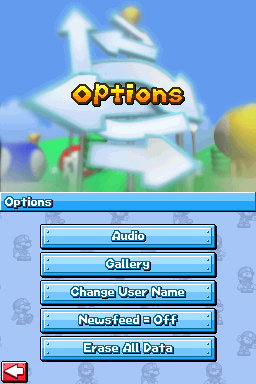
Beat the final boss and the Options menu gains a Sound Test of 137 tunes and 235 sound effects. A Gallery replays every movie you have seen.
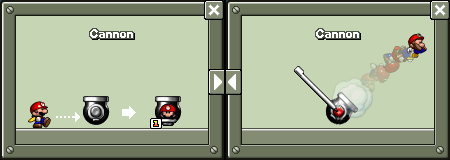
Help Mode explaining a cannon.The Options menu.
The Construction Zone and online sharing
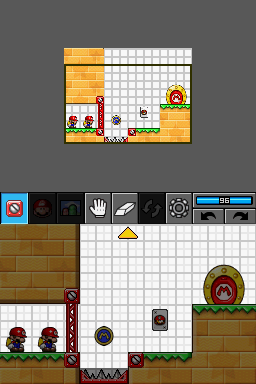
Before the editor opens you choose a user name and work through Level Creation 101, four lessons in which you finish almost-complete levels. After that you pick a game rule (the Key and Multi-Door rules unlock once Coaster Hills is done) and a template, and build with the sets you have earned in the main game. Coaster Hills’ set is ready at once; the others unlock as their attractions are completed. The Play & Edit list holds 160 levels.
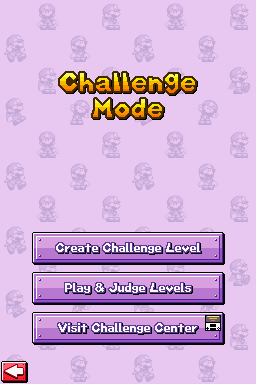
Local Share swaps levels with nearby players over DS wireless. Online, Nintendo Wi-Fi Connection let you upload levels publicly or privately, search other players’ levels by category, size and rule, download and rate them out of five, browse levels made by Nintendo, and follow up to thirty friends and favourite creators. Challenge Mode ran level-building contests that Nintendo hosted every two weeks, announced through an in-game Newsfeed. All of the online features ended when Nintendo Wi-Fi Connection was discontinued on 20 May 2014.
A Level Creation 101 lesson.The Share menu.Challenge Mode.
Items and objects
The game’s objects, with their in-game sprites.
Red GirderDrawn with the stylus between two rivets; the basic building block.
Blue LadderA ladder you place for the Minis to climb.
Purple ConveyorA conveyor belt you place yourself.
BlockerA metal block placed to make a wall or floor.
Girder PickupGives you more Red Girders; the big one gives five.
Ladder PickupGives you more Blue Ladders.
Conveyor PickupGives you more conveyor belts.
Conveyor beltCarries Minis and enemies one way.
Conveyor switchTap it to reverse every belt in the level.
LadderA fixed ladder.
Vertical SpringBounces Minis straight up.
Horizontal SpringBounces Minis in a wide arc.
CannonFires a Mini to another part of the level.
Movable PipeA green pipe you drag into one of its dotted outlines.
PipeA blue warp pipe linking two points.
Split PipePaired pipes of the same colour.
Magnet BlockMinis walk sideways and upside down on it.
Magnet RodFlips Minis on to another magnetic path.
Crumble BlockBreaks under a Mini, a cannon shot or a Thwomp.
HammerStuns enemies such as Circus Kongs and breaks Crumble Blocks; plays the arcade hammer jingle.
Shy Guy BlockAn outline that becomes a solid platform when a Shy Guy fills it.
Pokey BlocksThree-tile outlines that a Pokey fills to make a platform.
SpikesBreak a Mini on contact.
Oil drumDonkey Kong’s source of Fireballs in Area 5-DK.
Coin100 points.
Large coin500 points.
M-TokenOne per level, 2,000 points; ten open a Rainbow Summit level.
Mini Mario CardOne per level; nine spell MINIMARIO and open the minigame.
TrophyWon by beating a level’s goal score; ten open a Secret Storage level.
Exit DoorThe goal of every normal level.
Exit Door (Mini Pauline)Each kind of Mini has its own door.
Exit Door (locked)Needs a key, carried by a Mini, in Key levels.
Cartoons, Comics & Other Media
The theme park is decorated with Nintendo history, and its newest toy turned up again.
Donkey Kong (arcade, 1981)Girders, ladders, hammers, musicIts title music is woven into the main theme; Red Girders, Blue Ladders and hammers (with their jingle) recall its stages; Area 5-2 is a tribute to 25 m and 75 m; and the ape climbs away with Pauline after each boss, as he did in 1981. See Donkey Kong.
Super Mario Bros. and Super Mario Bros. 2MusicThe Super Mario Bros. overworld theme is part of the main theme and its underground theme plays in Secret Storage; Coaster Hills uses Super Mario Bros. 2 music, including its boss theme for Area 1-DK.
Donkey Kong Country and Super Mario 64MusicDK Island Swing plays in Jumpy Jungle and the Peach’s Castle theme from Super Mario 64 in Teatime Twirl.
New Super Mario Bros.AnimationMario’s walk in the final rescue scene reuses his walk cycle from New Super Mario Bros.
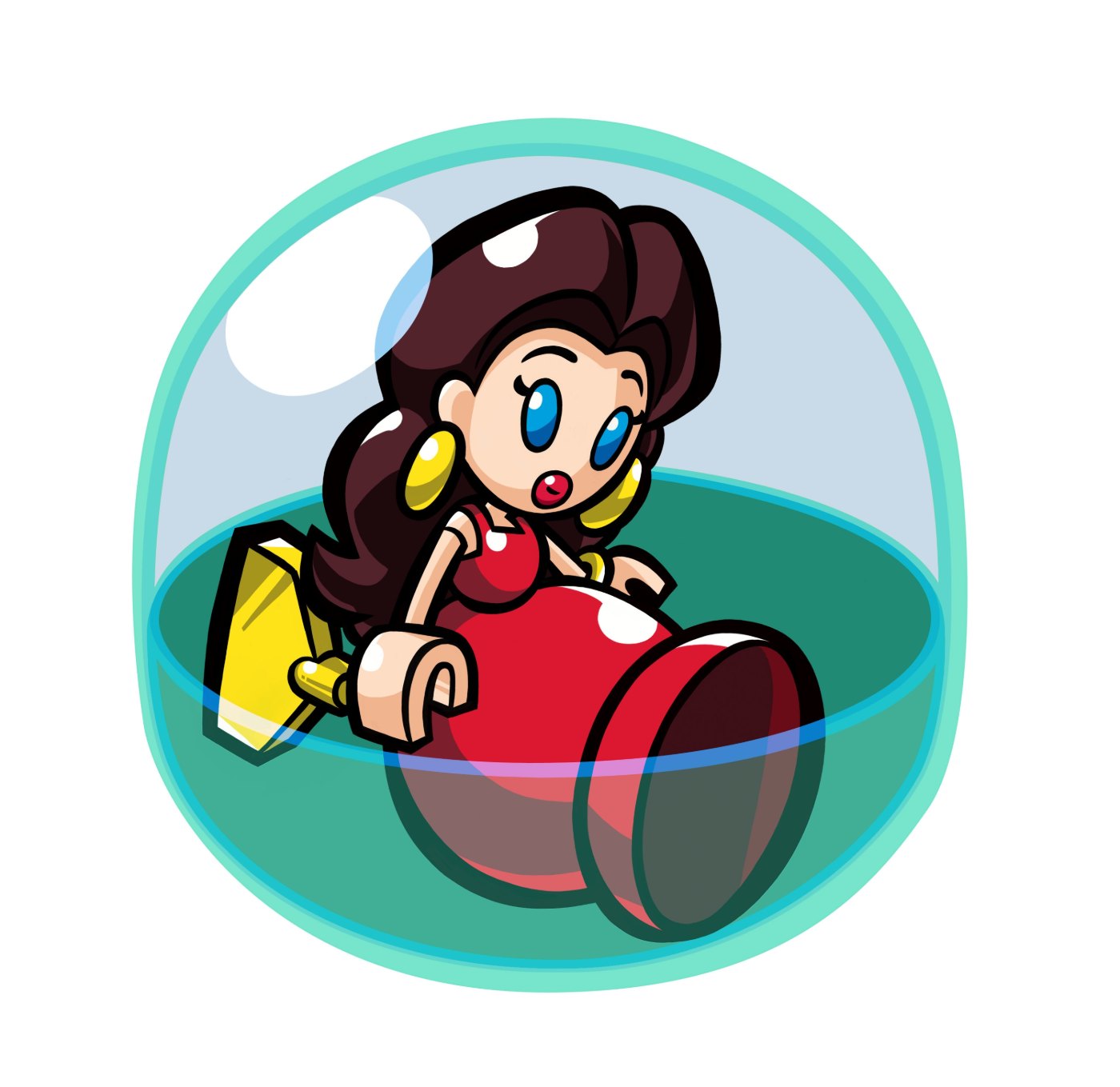
Mini Mario & Friends: amiibo Challenge2016Mini Pauline’s latest appearance is usually recorded as an advertisement cameo in this game.
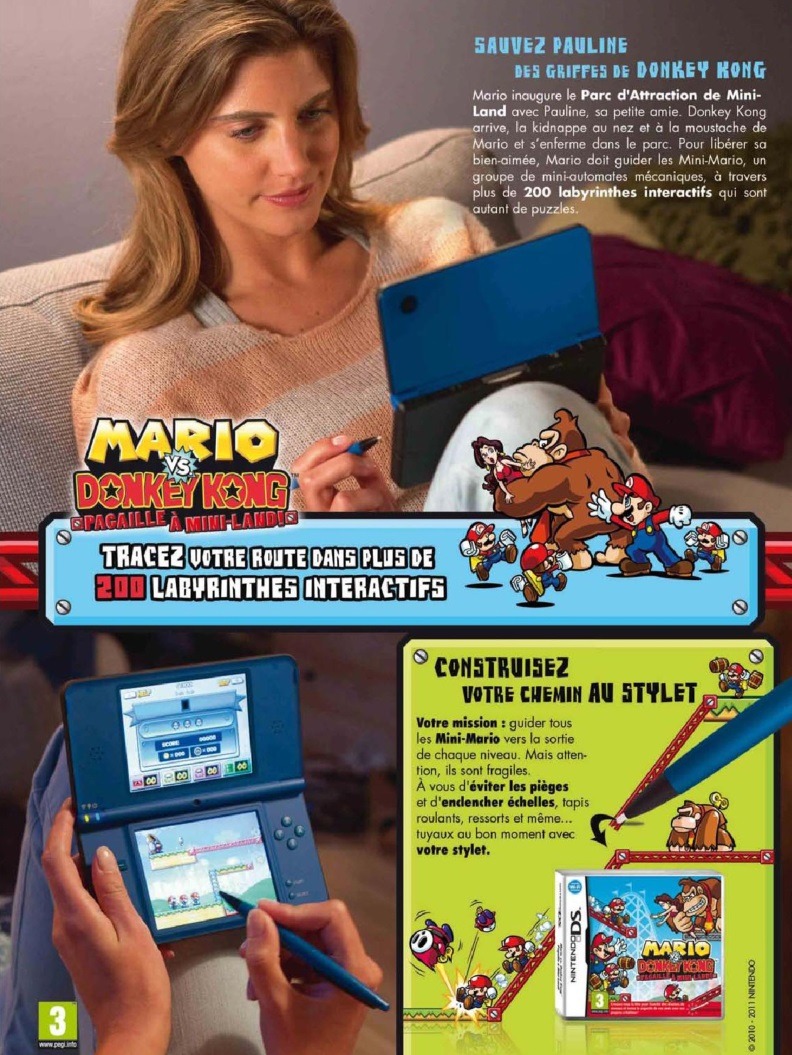
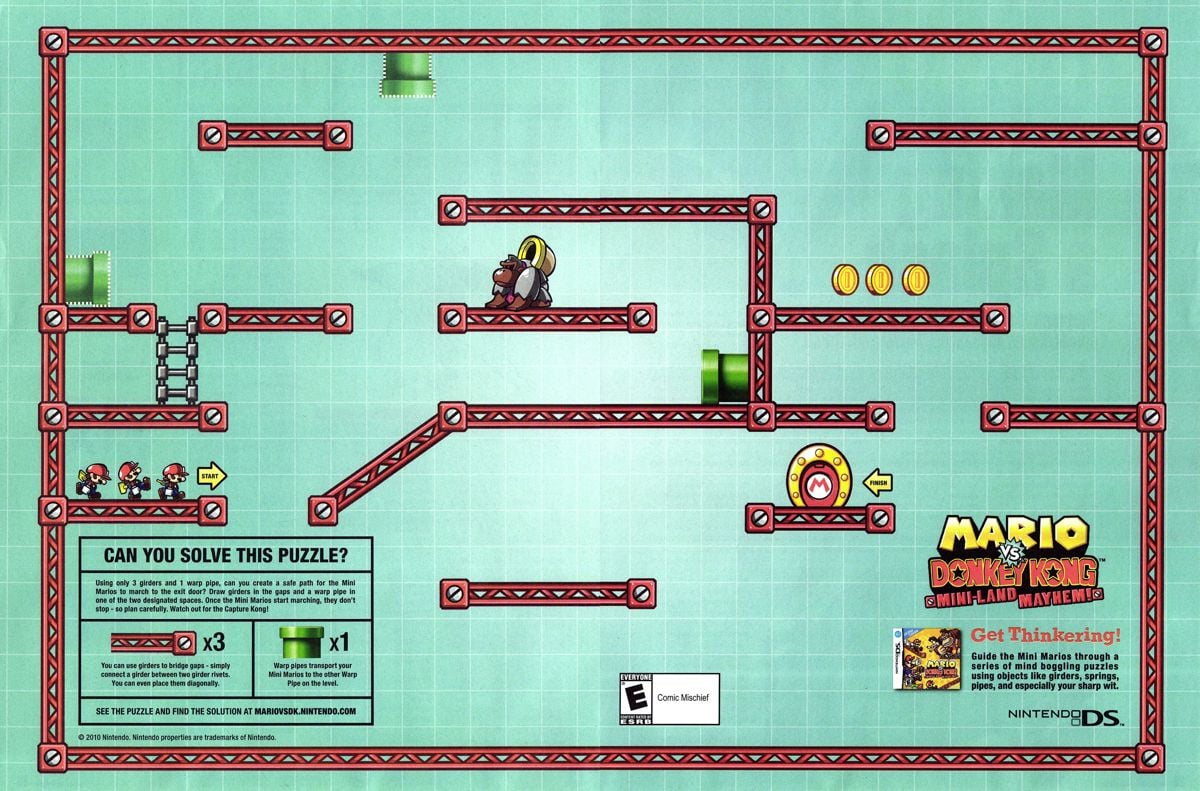
TV commercials and print adsNorth America, Japan, FranceNintendo ran television commercials in North America and Japan and print advertisements in North America and France.
Advertisement
Characters
Five kinds of Mini and the familiar trio. Voice roles are uncredited in the game but widely attributed.
Character
Who they are
In this game
Abilities & notes
Mini MarioThe main Mini
The clockwork Mario toy, voiced by Charles Martinet.
The star of most levels. Walks, hops single blocks, climbs ladders and turns at walls; can wield hammers and slide down slopes.
Broken by spikes, Shy Guys, Pokeys, Thwomps and long falls. Worth 25 points in the minigames.
Mini ToadMini
A wind-up Toad, voiced by Samantha Kelly.
Behaves exactly like Mini Mario and has its own exit door.
50 points in the minigames.
Mini PeachMini
A wind-up Princess Peach, also voiced by Samantha Kelly.
Behaves exactly like Mini Mario and has its own exit door.
75 points in the minigames.
Mini Donkey KongMini
A wind-up Donkey Kong, voiced like the real one by Takashi Nagasako and Grant Kirkhope.
Behaves exactly like Mini Mario and has its own exit door.
100 points in the minigames.
Mini PaulineNew in this game
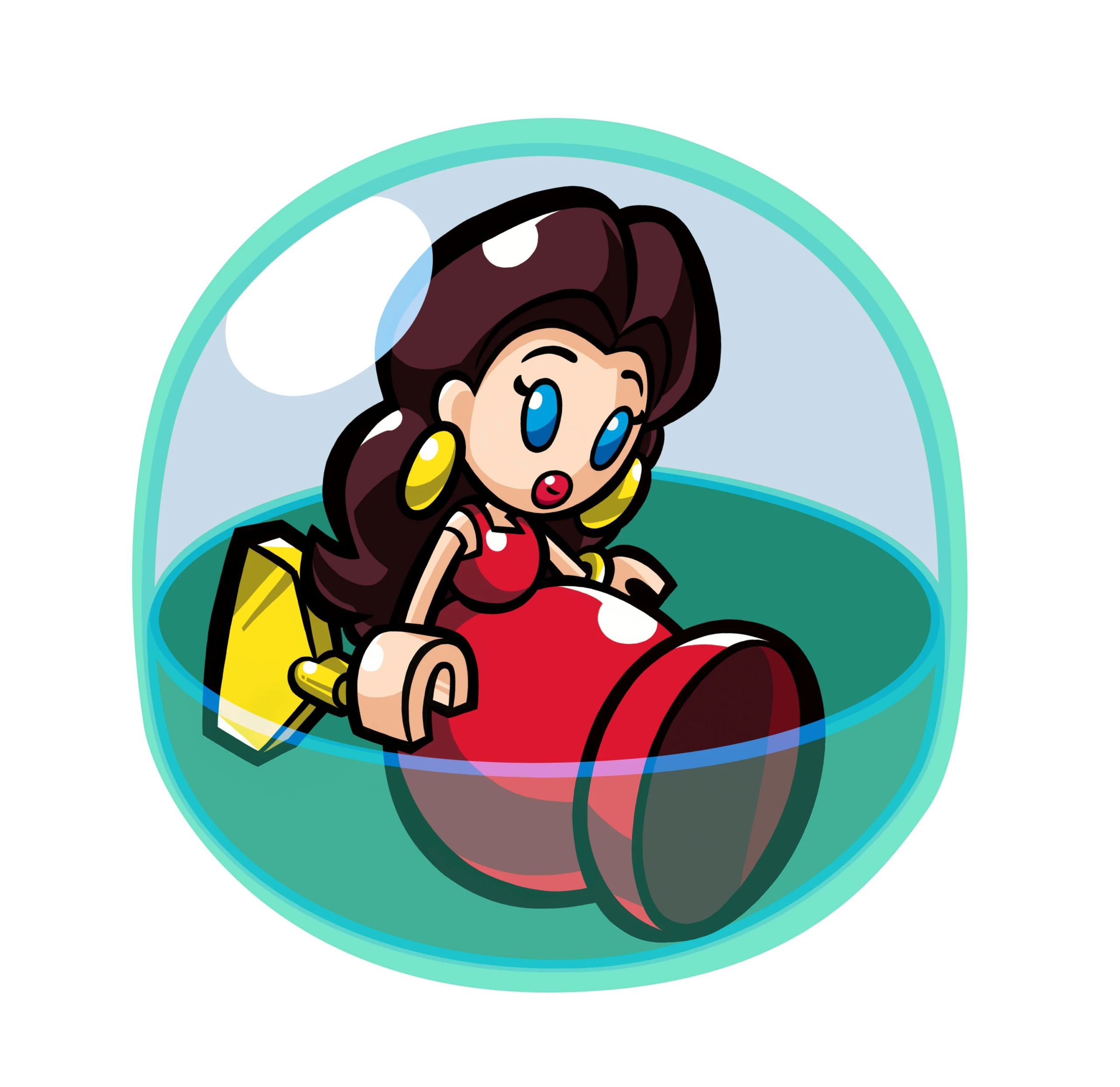
The toy at the heart of the plot, handed to the first 100 guests. This game is usually given as her first appearance.
A playable Mini with its own door; in the true ending Mario gives one to Donkey Kong.
200 points in the minigames, the most of any Mini.
MarioPark owner
The owner of Mini-Land, voiced by Charles Martinet.
Seen only in the movies: he chases Donkey Kong on the Super Mini Mario Express and shows off each attraction’s gadgets with the Minis.
Not playable.
PaulineGuest of honour and captive
The guest of honour at Mini-Land’s opening.
Carried from attraction to attraction, she watches each boss fight from beside Donkey Kong and calls for help in the movies, with more voice acting than in the E3 2010 trailer.
Appears only in movies and boss arenas.
Donkey KongGuest number 101
The ape who arrived one guest too late.
Fought at the end of every attraction and on the Final Ferris Wheel, twice. Ends the game with a Mini Pauline of his own.
Changes the arena with switches and ground-pounds; voiced by Takashi Nagasako and Grant Kirkhope.
ToadsVisitors
The crowd at the park.
Queue for the opening, get barged aside by Donkey Kong, and celebrate at the end.
Background characters.
Donkey Kong battles and enemies
The nine Donkey Kong battles first, then all the enemies with the level where each first appears.
Donkey Kong (boss)Area 1-DK, Coaster HillsSparks down the wires; rivets switched, barrels dropped.
Donkey Kong (boss)Area 2-DK, Jumpy JungleRocks dropped on his head; stone heads fall.
Donkey Kong (boss)Area 3-DK, Teatime TwirlSparks down the wires; Purple Conveyors reversed, barrels dropped.
Donkey Kong (boss)Area 4-DK, Warped MansionBombs knocked down from Warp Pipes; Polterguys from the paintings.
Donkey Kong (boss)Area 5-DK, Sandstorm StepsSparks down the wires; rivets and Blue Ladders switched, Fireballs from an oil drum.
Donkey Kong (boss)Area 6-DK, Cosmic AdventureThree rockets lit across Magnet Ground; Magnet Sparkies.
Donkey Kong (boss)Area 7-DK, Cannon CoveSparks down the wires; girders and cannons switched, barrels dropped.
Donkey Kong (boss)Area 8-DK, Super SkywheelIron balls knocked down by climbing ladders; Fireballs dropped.
Donkey Kong (final boss)Final Ferris WheelA cannon battle against missiles and spiked balls; shoot him fast if he grabs a Mini.
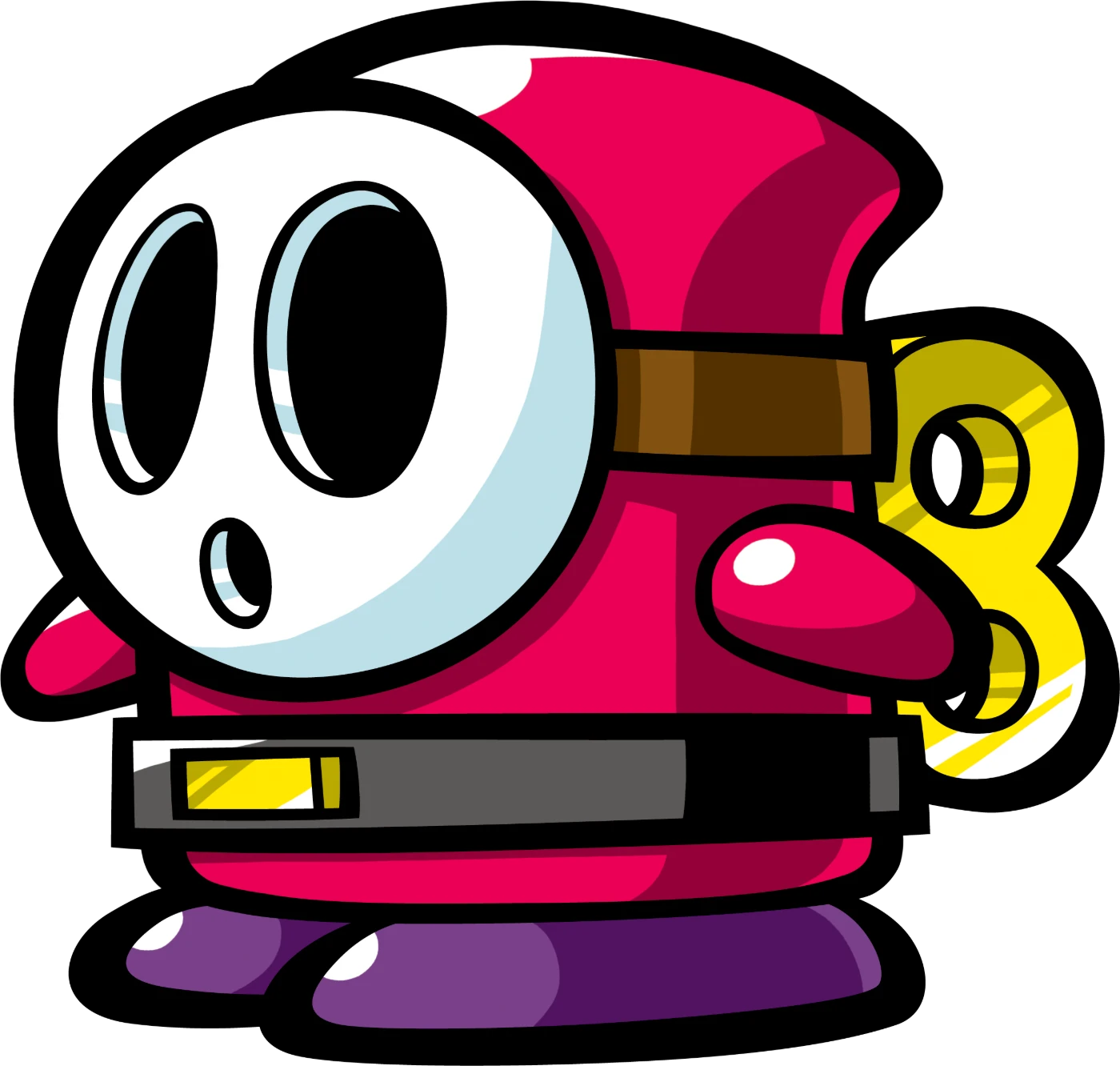
Shy GuyArea 1-4Can be stood on; fills Shy Guy Blocks to make platforms.
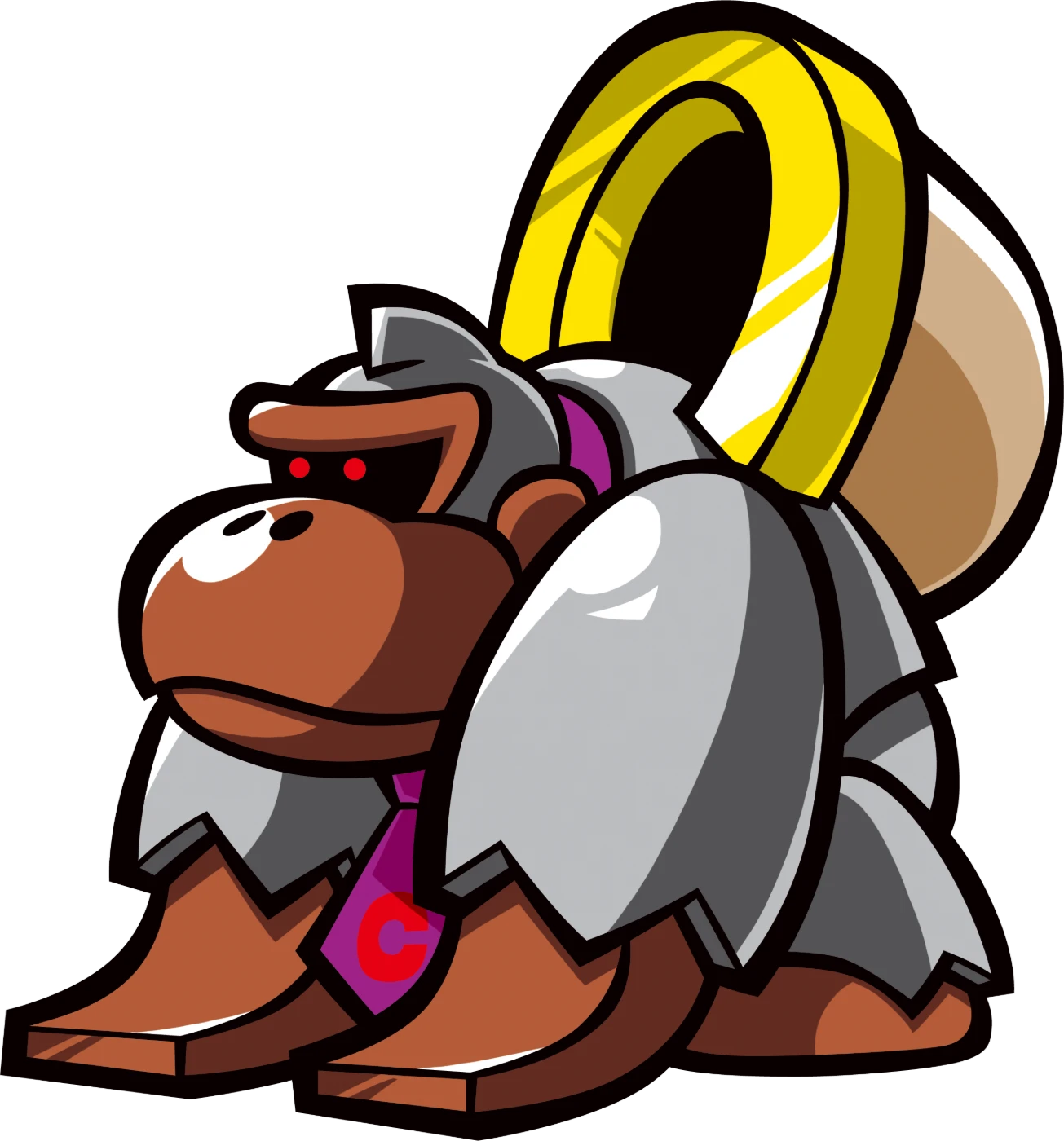
Circus KongArea 1-7Tosses Minis into the air; a hammer stuns it.
BarrelArea 1-DKShaken down by Donkey Kong; red ones release Shy Guys when they break.
Piranha PlantArea 4-5Catches fireballs from a Piranha with Fire and spits them back.
Piranha with FireArea 4-5Spits fireballs that break Minis.
PolterguyArea 4-DKSummoned from a Shy Guy portrait; leaves flames in places.
FireballArea 5-2Rolls along the ground and charges at a Mini holding a hammer, which can defeat it.
Capture KongArea 5-7Traps a Mini in the barrel on its back; a hammer stuns it.
Magnet SparkyArea 6-2Runs along magnetic surfaces; flipping a Magnet Rod changes its route.
ThwompArea 6-3Drops to crush Minis and smashes Crumble Blocks.
SnifitArea 7-6Races along firing five bullets in a row.
PokeyArea 8-3Walks the ground and fills Pokey Blocks; a cannon-fired Mini beats it.
Key staff
From the game’s credits.
Yukimi ShimuraDirector (NST)Director of all three of NST’s main Mario vs. Donkey Kong games on GBA and DS.
Kensuke TanabeProducer
Shinya TakahashiGeneral producer
Satoru IwataExecutive producer
Shigeru MiyamotoSupervisor
Shigeki YamashiroNST president
Philip Brodsky, Richard Vorodi, Stephen MortimerGame and level design
Wing S. ChoUGC and UI design leadThe Construction Zone and its sharing features.
Masamichi AbeBoss AI lead
Rory JohnstonEngineering director
Brian McNeelyArt director
Lawrence SchwedlerAudio director
Koji KondoMusic supervisor
Charles Martinet, Samantha Kelly, Takashi Nagasako, Grant KirkhopeVoices (uncredited)Mario and Mini Mario; Mini Peach and Mini Toad; Donkey Kong and Mini Donkey Kong.
How It Was Made
The third Mini-Mario puzzle game from Nintendo Software Technology, made by a team that had now been working on the series for six years.
The team
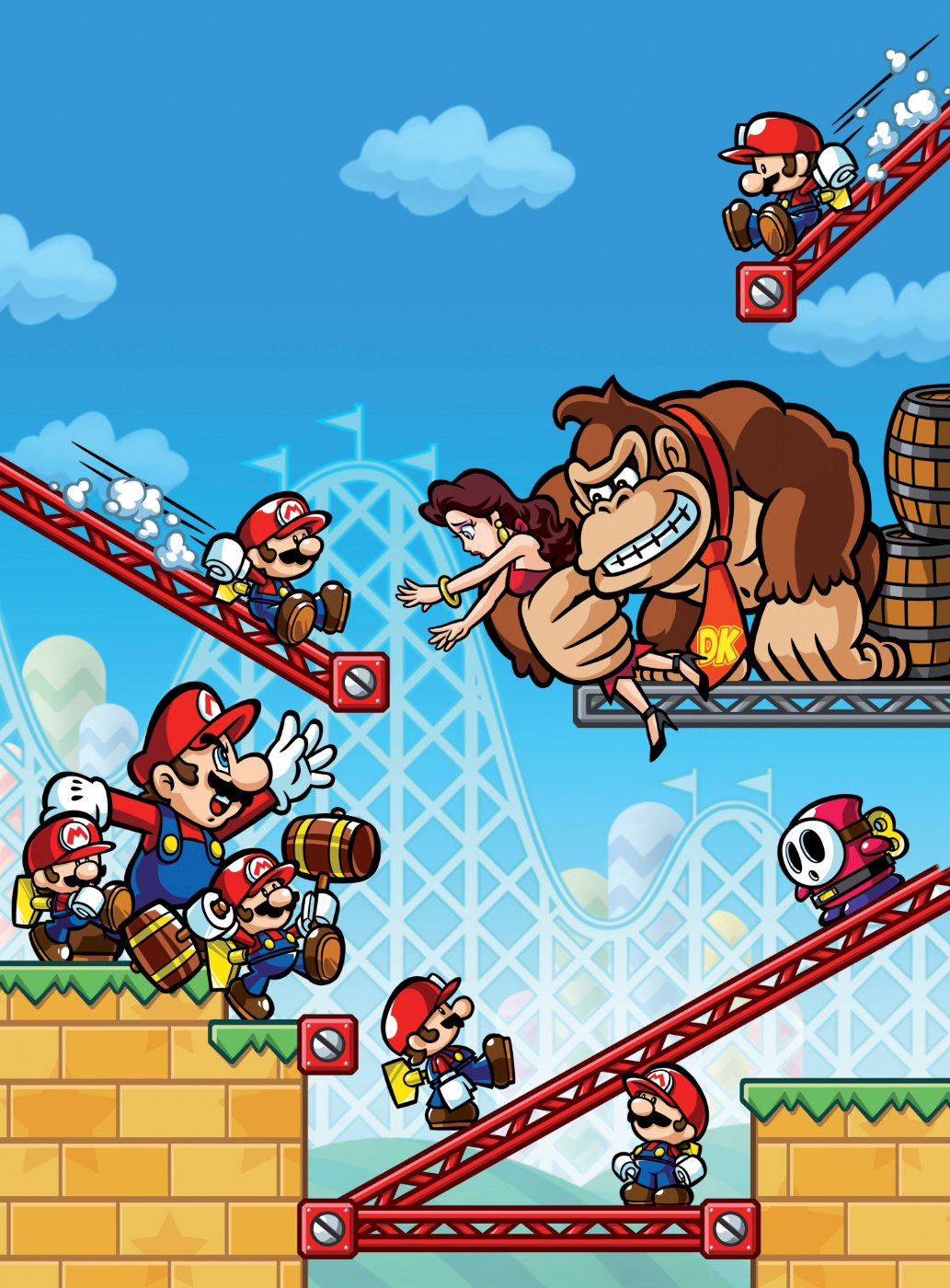
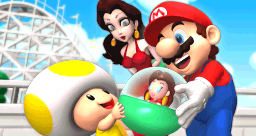
Mario, Donkey Kong, Pauline and the Minis together in one piece of art.
Yukimi Shimura directed, as on both earlier GBA and DS games, with Kensuke Tanabe producing for Nintendo, Shinya Takahashi as general producer, Satoru Iwata as executive producer and Shigeru Miyamoto as supervisor. At NST in Redmond, Rory Johnston led engineering, Brian McNeely the art and Lawrence Schwedler the audio under Koji Kondo’s supervision. The credits list a dedicated boss AI lead, Masamichi Abe, and a separate engineering team for the user-generated content side, led in design by Wing S. Cho.
Wikipedia’s infobox names Stephen Mortimer and Richard Vorodi as designers and Cho as writer, and the New York Post, as quoted there, enjoyed the circus-flavoured remixes of Mario standards.
The E3 2010 trailer
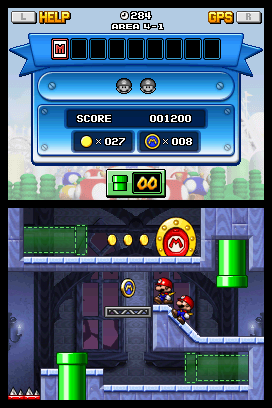
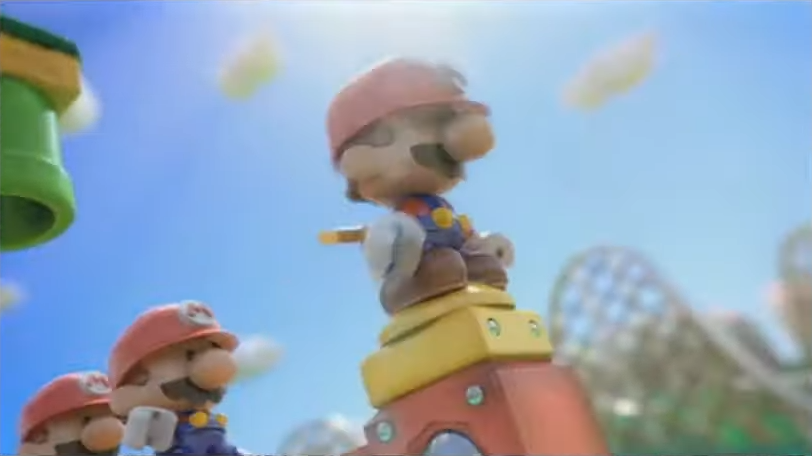
A pre-release screenshot of Area 4-1.
The game was shown in a trailer at E3 2010. Several things changed before release: Pauline’s simple cries for help, borrowed from Minis March Again!, were replaced by fuller voice acting; Donkey Kong in Teatime Twirl looked less angry; a minigame was set in Rainbow Summit; and the Minus Boxes were purple with a skull instead of black with an X. A spear-carrying Shy Guy sprite from Minis March Again! is still in the game’s files.
Built for sharing
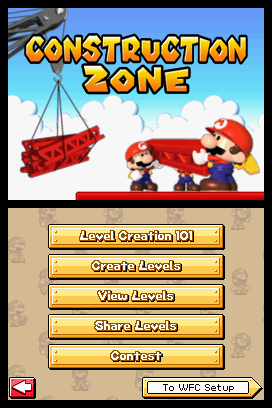
The Construction Zone menu in a pre-release build.
Where March of the Minis let you send levels to registered friends, this game was designed around a public library. Players could upload levels for anyone, search and rate them, download Nintendo’s own, and enter regular contests through Challenge Mode, with an in-game Newsfeed announcing each theme. Destructoid, cited by Wikipedia, noted that the editor resembled the one in Minis March Again! but allowed every element of the main game.
Series Firsts
New to the series in this game.
1Mini PaulineMini-Land Mayhem! is usually listed as Mini Pauline’s first appearance; she is the plot’s MacGuffin and the highest-scoring Mini.
2A map, four years lateThe level map on the top screen was first tried in a pre-release build of March of the Minis and cut; it became a standard feature here.
Cheats & Secrets
Unlockables and techniques; there are no button codes.
Rainbow Summit
Each of its 20 levels opens for every 10 M-Tokens collected. Every level has one token, and each minigame awards up to three more for reaching its target scores.
Secret Storage
Each of its 10 Expert levels opens for every 10 trophies, which you win by beating levels’ goal scores.
Minigames
Collect all nine Mini Mario Cards in an attraction. In Plus Mode the minigames have to be unlocked again.
Plus Mode
Opens after the first Final Battle. Switch between modes at any time using the level select’s To Plus Mode button.
Sound Test
Defeat the final boss to add a Sound Test with 137 tunes and 235 sound effects to the Options menu.
Construction Zone sets
Complete Level Creation 101 first. Coaster Hills’ set is available at once; the others unlock as you finish their attractions, the Key and Multi-Door rules after Coaster Hills, and Rainbow Summit’s and Secret Storage’s sets after the Final Ferris Wheel.
Collection Bonus
Pick up everything in a level (coins, M-Token and card) for 6,000 extra points, and finish fast: every second left is worth 20.
Stuck? Ask for help
Press L for Help Mode, R for the map. After five game overs in a row on the same level, the Mini Guide shows a solution.
Glitches & Oddities
There is one known glitch.
Through the girder
Mini Marios sliding down a Red Girder.
If a Mini Mario is trapped between two Red Girder rivets, quickly holding one rivet and drawing a girder between the two lets the Mini walk straight through the new girder. It works horizontally and vertically.
Videos
A trailer for the game and IGN’s video review from the time of its release; no copy on an official Nintendo channel could be found.
Trailer for the DS game uploaded by IGN (third-party channel, not Nintendo’s own).
IGN’s video review of the game (third-party).
Trivia & Interesting Facts
The Japanese title is Mario vs. Donkey Kong: Totsugeki! Mini Land, “Attack! Mini-Land”; the Spanish one, ¡Megalío en Minilandia!, translates as a mega-mess in Mini-Land.
Donkey Kong only kidnaps Pauline because he was the 101st guest, one too late for a free Mini Pauline.
Area 5-2.Area 5-2 in Sandstorm Steps is built as a tribute to the arcade game’s 25 m and 75 m.
The hammer plays its original 1981 jingle.
The Mini Guide, which appears after five game overs in a row, is accompanied by an arrangement of the Super Star theme.
Mario’s walk in the final rescue scene reuses his animation from New Super Mario Bros.
Mini Pauline is worth 200 points in the minigames, eight times as much as Mini Mario.
In the E3 2010 trailer, the minigames’ Minus Boxes were purple with a skull; in the finished game they are black with an X.
An unused spear-carrying Shy Guy sprite from Minis March Again! survives in the game’s files.
Unlike earlier games, Plus Mode does not add a + to the attraction and level names.
The purple Toad sprite.Toads come in several colours in the crowd, including a purple one.
The Sound Test unlocked after the final boss holds 137 tunes and 235 sound effects.
Nintendo hosted Construction Zone contests every two weeks until the online service closed.
Regional Box Art
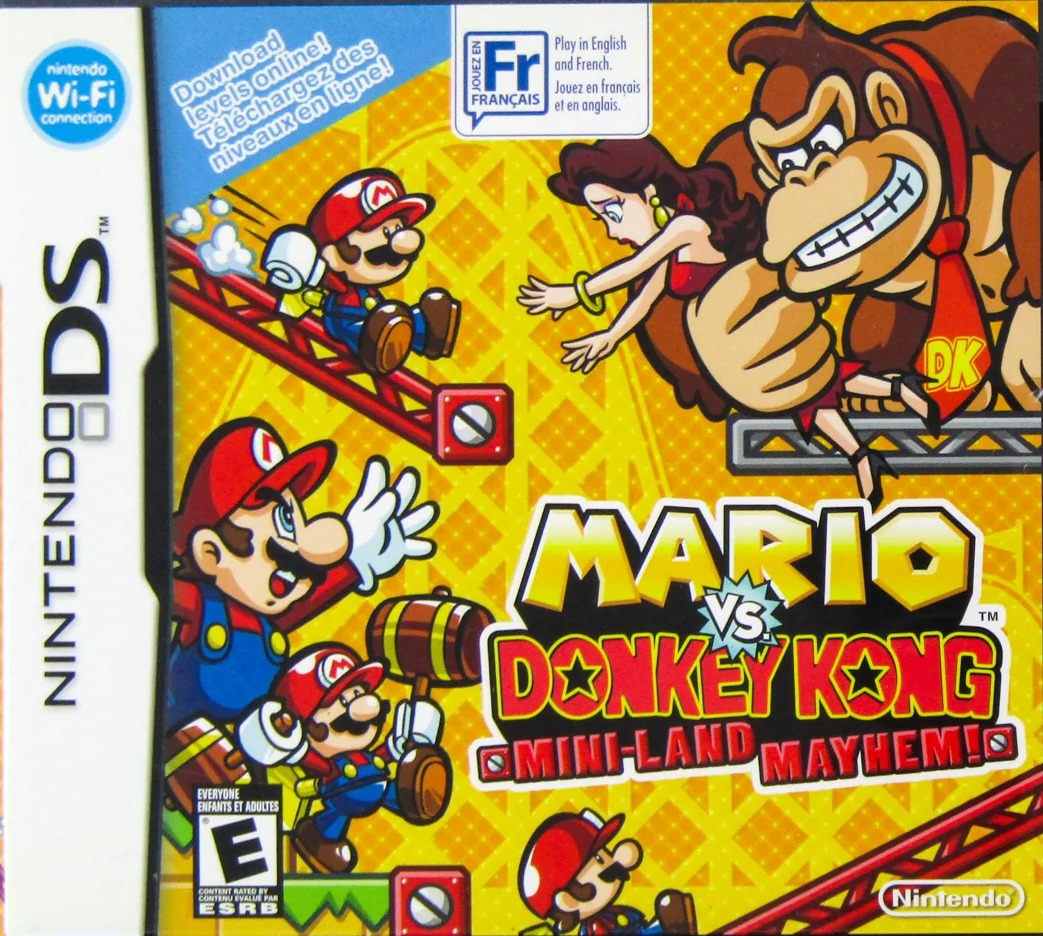
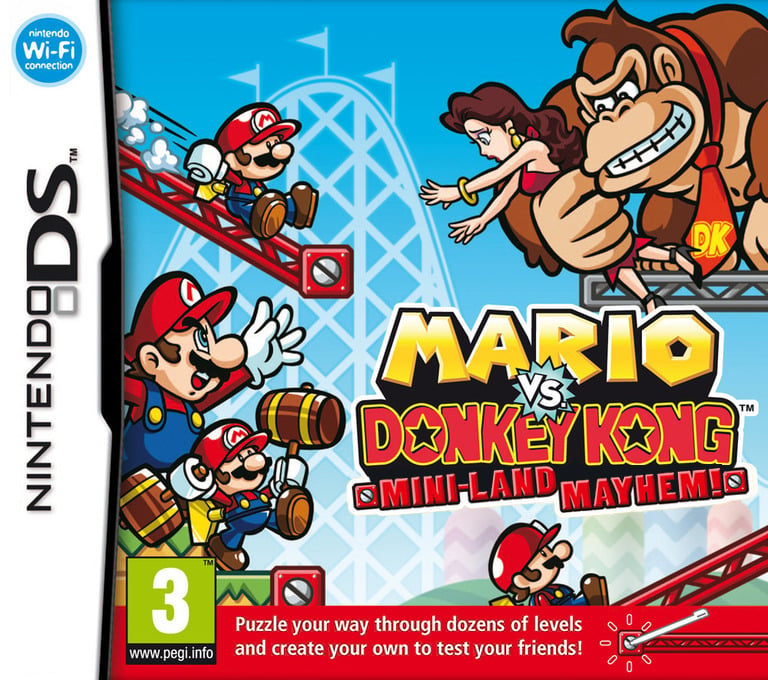
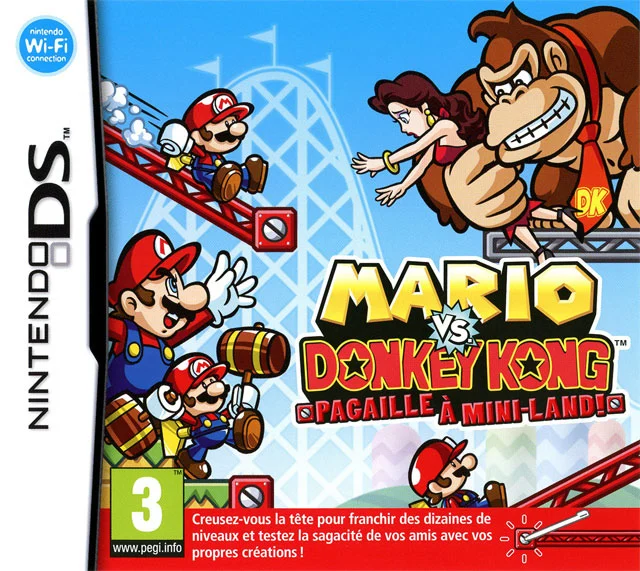
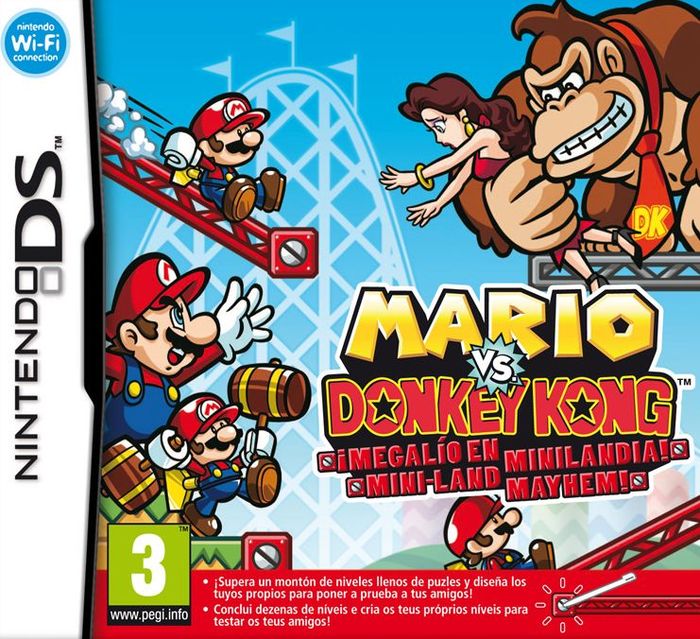
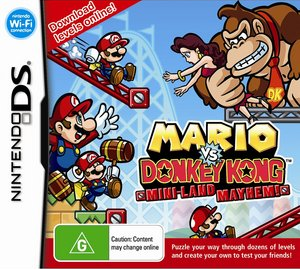
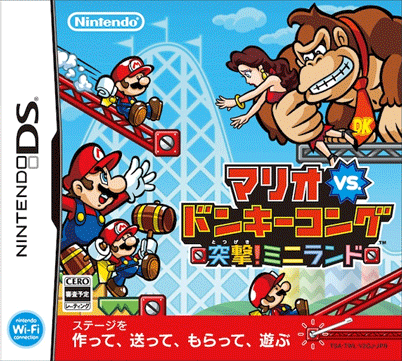
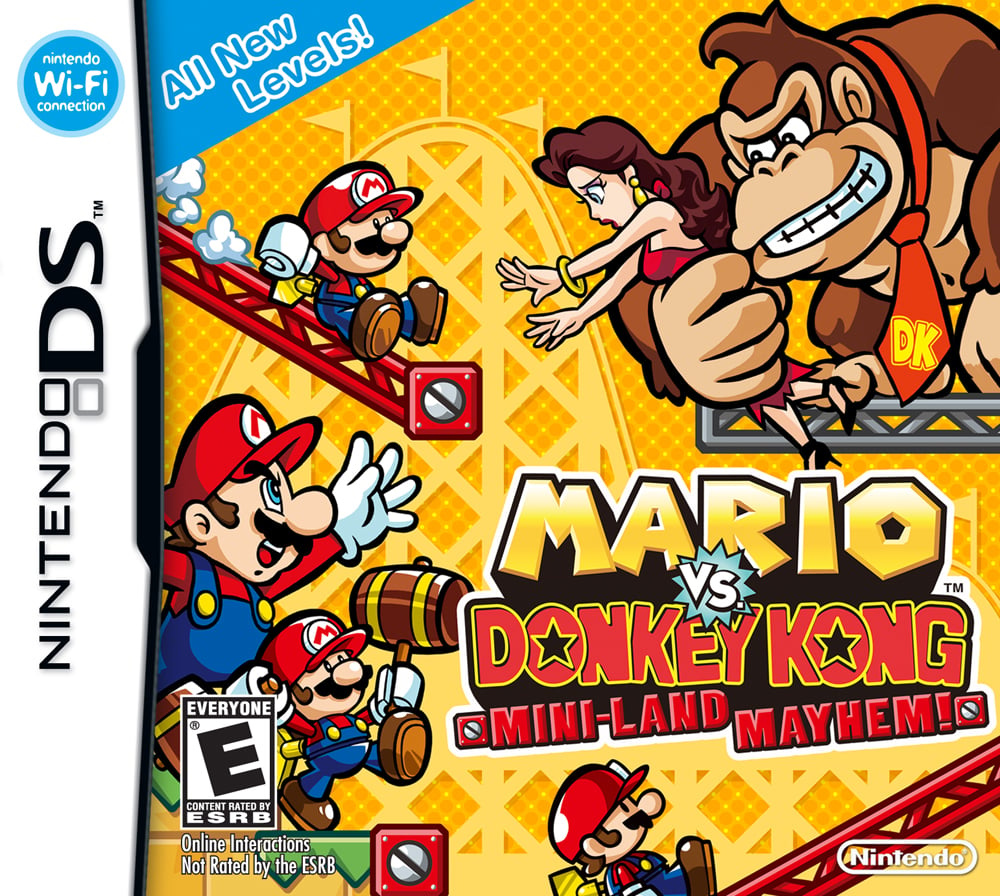
Two versions of the key art: a yellow sky for North America and a blue sky for Europe, Australia and Japan.
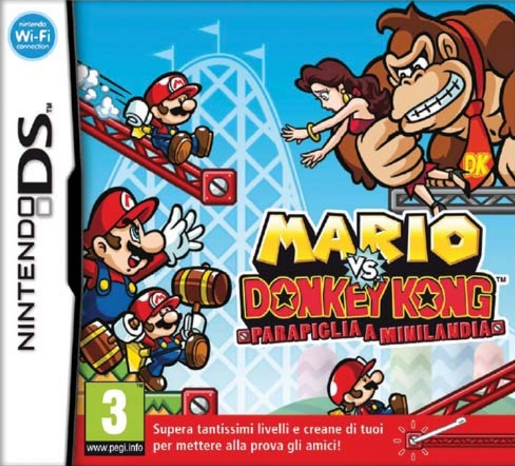
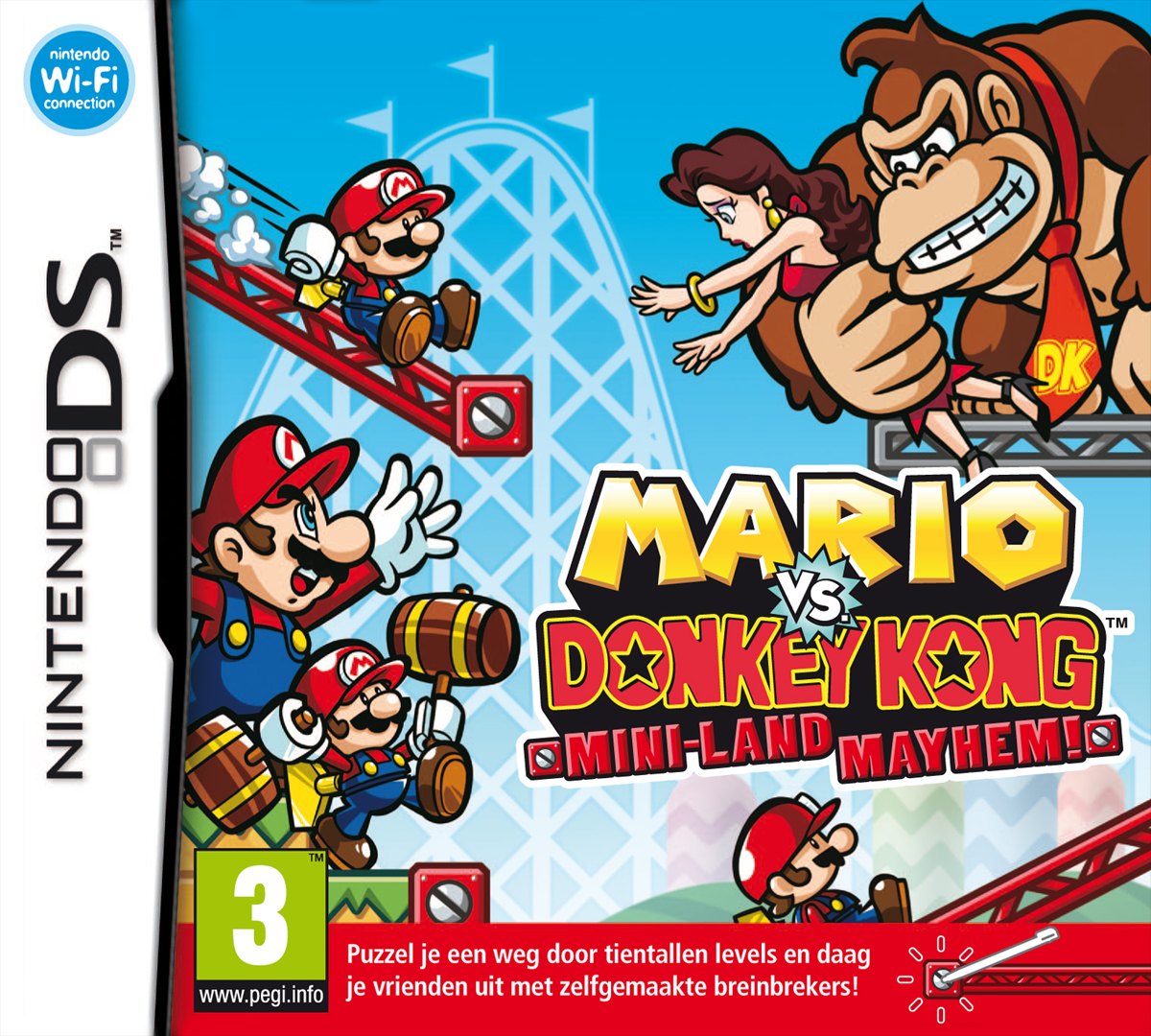
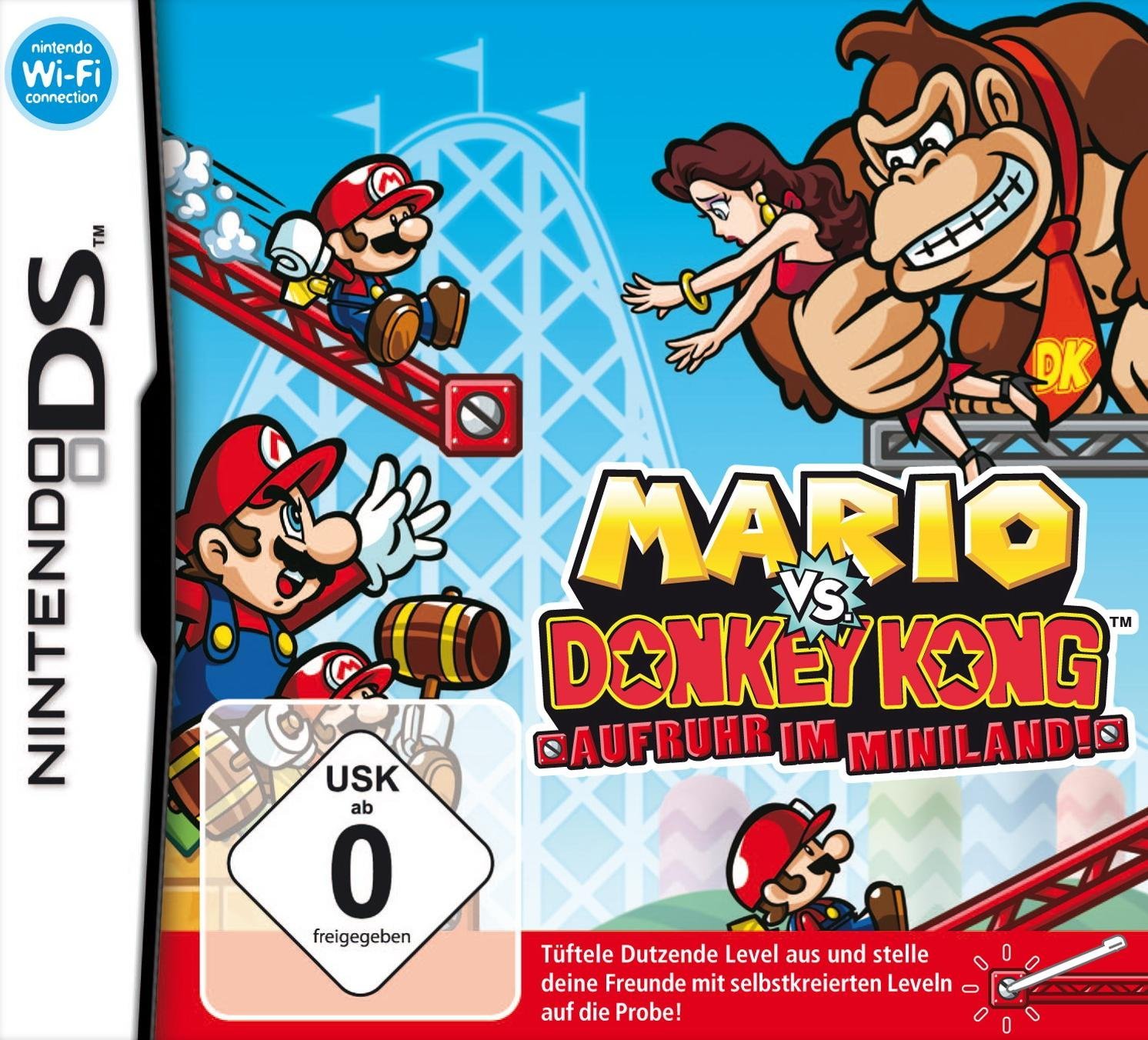
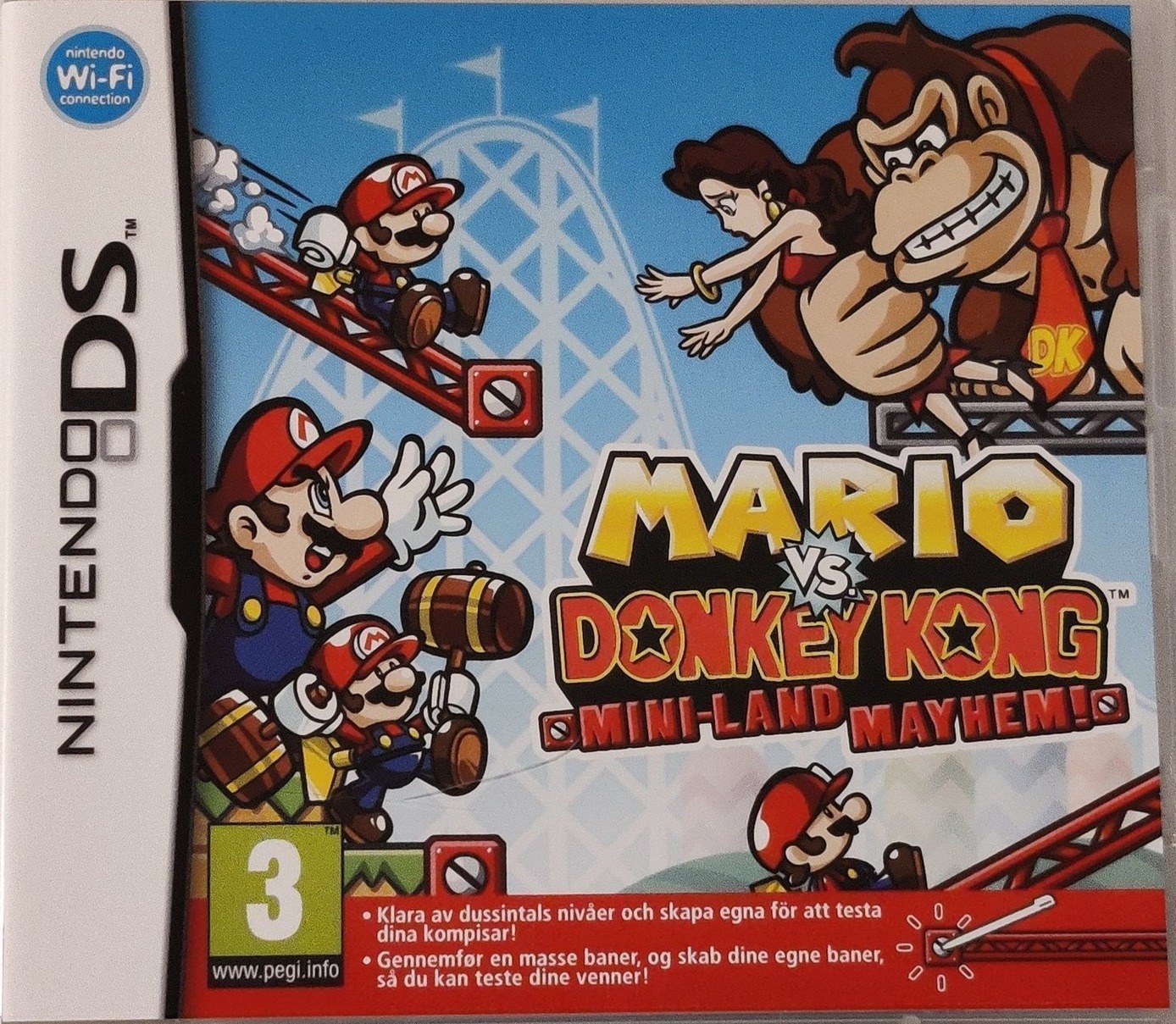
North AmericaWith the yellow-sky key art.CanadaEuropeWith the blue-sky key art.FrancePagaille à Mini-Land !Spain and Portugal¡Megalío en Minilandia!ItalyParapiglia a MinilandiaThe NetherlandsGermanyAufruhr im Miniland!Sweden and DenmarkAustralia and New ZealandJapanTotsugeki! Mini LandJapan (pre-release version)
Screenshots
More levels from the attractions and bonus areas, a minigame and the Construction Zone.
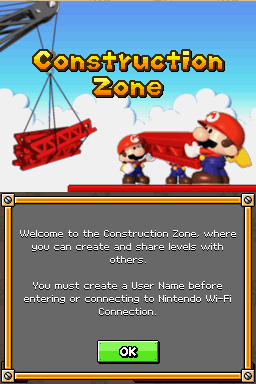
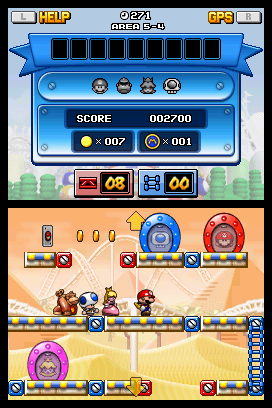
Area 1-1, the first level.Area 2-5 in Jumpy Jungle.Area 4-1 in Warped Mansion.Area 6-6 in Cosmic Adventure.Area 8-8, the last regular level.Area S-20, the last Special level.Area X-10, the last Expert level.Minigame 5.The intro before Area 5-DK.The Construction Zone greeting panel.A pre-release screenshot of Area 5-4.
Artwork & Media Gallery
Nintendo’s artwork, the in-game sprites, stills from the movies and advertising.
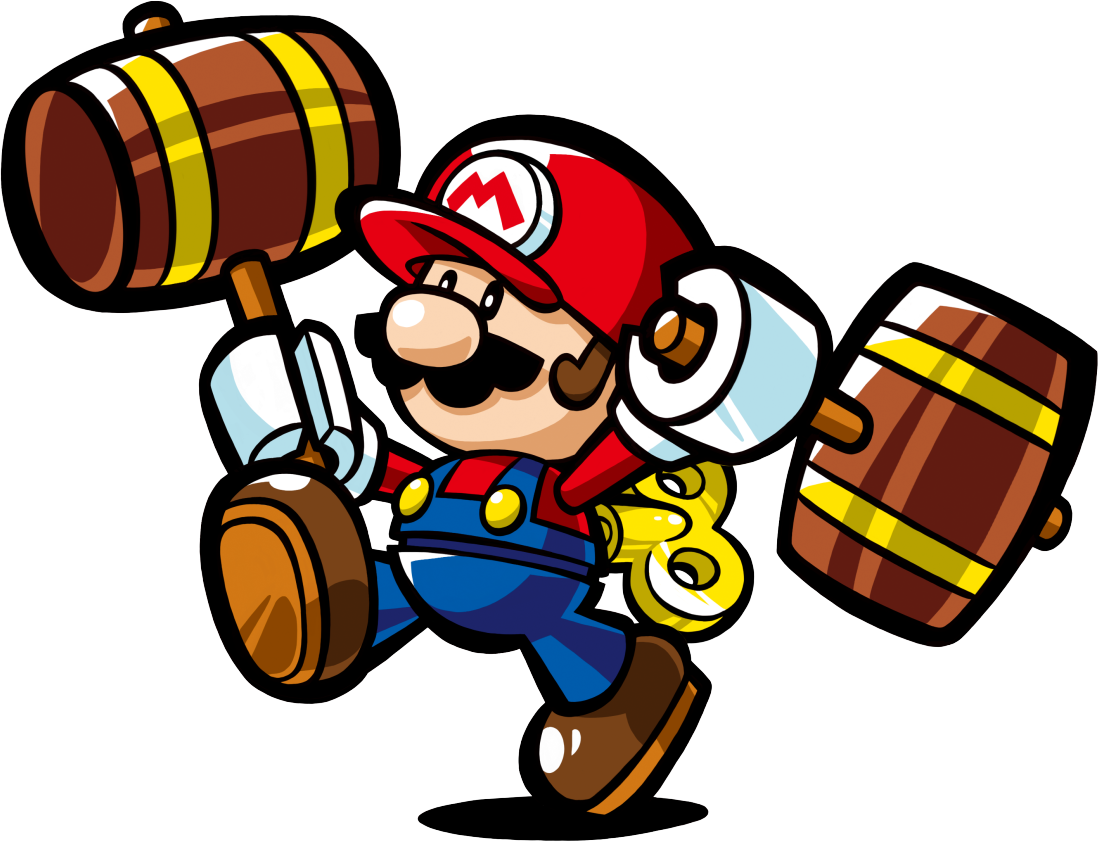
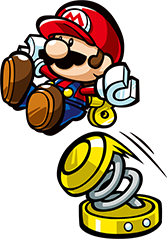
The English logo.The Japanese logo.Key art with a yellow sky, as seen on the North American box.Donkey Kong and Pauline looming over a group of Mini Marios.A Mini Mario with hammers.A Mini Mario jumping off a spring.One Mini Mario winding up another.A Shy Guy.Capture Kong.Circus Kong.Mario’s sprite.Donkey Kong carrying Pauline.Mini Mario’s sprite.Mini Toad’s sprite.Mini Peach’s sprite.Mini Donkey Kong’s sprite.From the opening movie.From the opening movie.From the opening movie.The intro before Area 3-DK.The intro before Area 8-DK.A North American TV commercial.The Japanese TV commercial.A French print advertisement.
Legacy & Re-releases
The last of the DS Mini games, and the template for the series’ later shared-level games.
Releases
Nintendo DS2010–2011North America 14 November 2010, Japan and Taiwan 2 December 2010, Australia 3 February 2011, Europe 4 February 2011.
Nintendo WFC closes20 May 2014Online Share, the public level library, Nintendo’s levels and Challenge Mode contests end with Nintendo Wi-Fi Connection. Local Share still works.
What came next
NST kept the Minis and the Construction Zone going on new hardware: Mario and Donkey Kong: Minis on the Move in 2013 and Tipping Stars on Wii U and 3DS in 2015. Mini Pauline’s most recent appearance is, by most accounts, an advertisement cameo in Mini Mario & Friends: amiibo Challenge (2016). In 2024 the same studio returned to the very beginning with a Switch remake of the first game.
Reviews & Sales
Sales figures
Nintendo’s own results briefing for the year to March 2011 lists 1.78 million copies sold worldwide by 31 March 2011, its only published figure for the game. It also outscored March of the Minis with critics: Metacritic’s average is 79 from 51 reviews, against 76 for its predecessor.
1.78msold by 31 Mar 2011 (Nintendo)
79Metacritic (51 reviews)
80.08%GameRankings
9/10IGN and Nintendo Life
103levels
Reception and review scores
Scores from Wikipedia’s review table.
IGNDaemon Hatfield · 12 November 2010
9/10
Nintendo LifePhilip J Reed · 19 December 2010
9/10
Game InformerBryan Vore · No. 212 · December 2010
8.25/10
GameRevolutionDaniel R. Bischoff · 15 November 2010
B+
FamitsuJapan · reported 24 November 2010
32/40
GameSpotNathan Meunier · 12 November 2010
8/10
EurogamerJeffrey Matulef · 16 November 2010
8/10
The Daily TelegraphNick Cowen · 2 February 2011
8/10
MetroRoger Hargreaves · 17 December 2010
8/10
JoystiqMitch Krpata · 14 November 2010
4/5
The GuardianKeith Stuart · 8 February 2011
4/5
GameTrailers13 November 2010
7.9/10
DestructoidJonathan Holmes · 16 November 2010
7.5/10
GameZone10 December 2010
7.5/10
Nintendo PowerVol. 262
7.5/10
EdgeNo. 223 · January 2011
7/10
GameProMcKinley Noble · 16 November 2010
3/5
Critics warmed to it more than to March of the Minis. IGN’s Daemon Hatfield found it a joy to play and thought the collectibles and creation tools gave it plenty of life, though he wished the Minis walked faster in the early levels. Nintendo Life’s Philip J Reed recommended it to newcomers and praised the graphics, the soundtrack, the touch controls and the way shared levels keep the game going.
GameSpot’s Nathan Meunier thought the story thin but preferred the build-the-path idea to the earlier games’ mechanics. In Britain, the Telegraph found more depth than it expected and the Guardian singled out the level design.
SLB User Reviews
Mario vs. Donkey Kong: Mini-Land Mayhem! (Nintendo DS) has yet to receive a community review on Super Luigi Bros.
If you’ve played Mario vs. Donkey Kong: Mini-Land Mayhem! (Nintendo DS) and would like to submit a review, please get in touch.
More from the Super Luigi Bros Guide
These picture lists come from the earlier Super Luigi Bros guide to Mario vs. Donkey Kong: Mini-Land Mayhem! (Nintendo DS) and are kept here in full.
Mini Toys
Five Mini toy types appear in Mini-Land Mayhem! Each has its own character-specific exit door and must reach the matching door to count. Mini Pauline is brand new to the series.
Mini Mario
Mini Toad
Mini Princess
Mini DK
Mini Pauline ⭐ New
Reference / Information
Mini-Land Mayhem! is packed with musical and visual references to classic Nintendo games — a trademark of the series:
Game
Reference
Donkey Kong (Arcade)
The main theme is an arrangement of “Title BGM”. Red Girders, Blue Ladders and Hammers are all direct references to the arcade game’s stage elements. Area 5-2 is a homage to 25m and 75m levels. Boss battle intros reference the iconic ladder-climbing sequence.
Super Mario Bros.
“Ground BGM” is arranged into the main theme. “Underground BGM” is arranged for the Secret Storage soundtrack.
Super Mario Bros. 2
“Ground BGM”, “Player Down” and “Course Clear” are arranged for the Coaster Hills soundtrack.
Donkey Kong Country
“DK Island Swing” is arranged for the Jumbo Jungle soundtrack.
Super Mario 64
“Peach’s Castle” is arranged for the Teatime Twirl soundtrack.
New Super Mario Bros.
Mario’s walk cycle from this game is reused in the final cutscene when Pauline is rescued.
To provide the best experiences, we use technologies like cookies to store and/or access device information. Consenting to these technologies will allow us to process data such as browsing behavior or unique IDs on this site. Not consenting or withdrawing consent, may adversely affect certain features and functions.
Functional
Always active
The technical storage or access is strictly necessary for the legitimate purpose of enabling the use of a specific service explicitly requested by the subscriber or user, or for the sole purpose of carrying out the transmission of a communication over an electronic communications network.
Preferences
The technical storage or access is necessary for the legitimate purpose of storing preferences that are not requested by the subscriber or user.
Statistics
The technical storage or access that is used exclusively for statistical purposes.The technical storage or access that is used exclusively for anonymous statistical purposes. Without a subpoena, voluntary compliance on the part of your Internet Service Provider, or additional records from a third party, information stored or retrieved for this purpose alone cannot usually be used to identify you.
Marketing
The technical storage or access is required to create user profiles to send advertising, or to track the user on a website or across several websites for similar marketing purposes.

 Secret StorageAreas X-1 to X-10 (Expert) · 10 trophies per levelThe hardest puzzles in the game.




 Blue LadderA ladder you place for the Minis to climb.
 Purple ConveyorA conveyor belt you place yourself.
 BlockerA metal block placed to make a wall or floor.
 Girder PickupGives you more Red Girders; the big one gives five.
 Ladder PickupGives you more Blue Ladders.
 Conveyor PickupGives you more conveyor belts.
 Conveyor beltCarries Minis and enemies one way.
 Conveyor switchTap it to reverse every belt in the level.
 LadderA fixed ladder.
 Vertical SpringBounces Minis straight up.
 Horizontal SpringBounces Minis in a wide arc.
 CannonFires a Mini to another part of the level.
 Movable PipeA green pipe you drag into one of its dotted outlines.
 PipeA blue warp pipe linking two points.
 Split PipePaired pipes of the same colour.
 Magnet BlockMinis walk sideways and upside down on it.
 Magnet RodFlips Minis on to another magnetic path.
 Crumble BlockBreaks under a Mini, a cannon shot or a Thwomp.
 HammerStuns enemies such as Circus Kongs and breaks Crumble Blocks; plays the arcade hammer jingle.
 Shy Guy BlockAn outline that becomes a solid platform when a Shy Guy fills it.
 Pokey BlocksThree-tile outlines that a Pokey fills to make a platform.
 SpikesBreak a Mini on contact.
 Oil drumDonkey Kong’s source of Fireballs in Area 5-DK.
 Coin100 points.
 Large coin500 points.
 Exit DoorThe goal of every normal level.
 Mini Mario & Friends: amiibo Challenge2016Mini Pauline’s latest appearance is usually recorded as an advertisement cameo in this game.
 TV commercials and print adsNorth America, Japan, FranceNintendo ran television commercials in North America and Japan and print advertisements in North America and France.
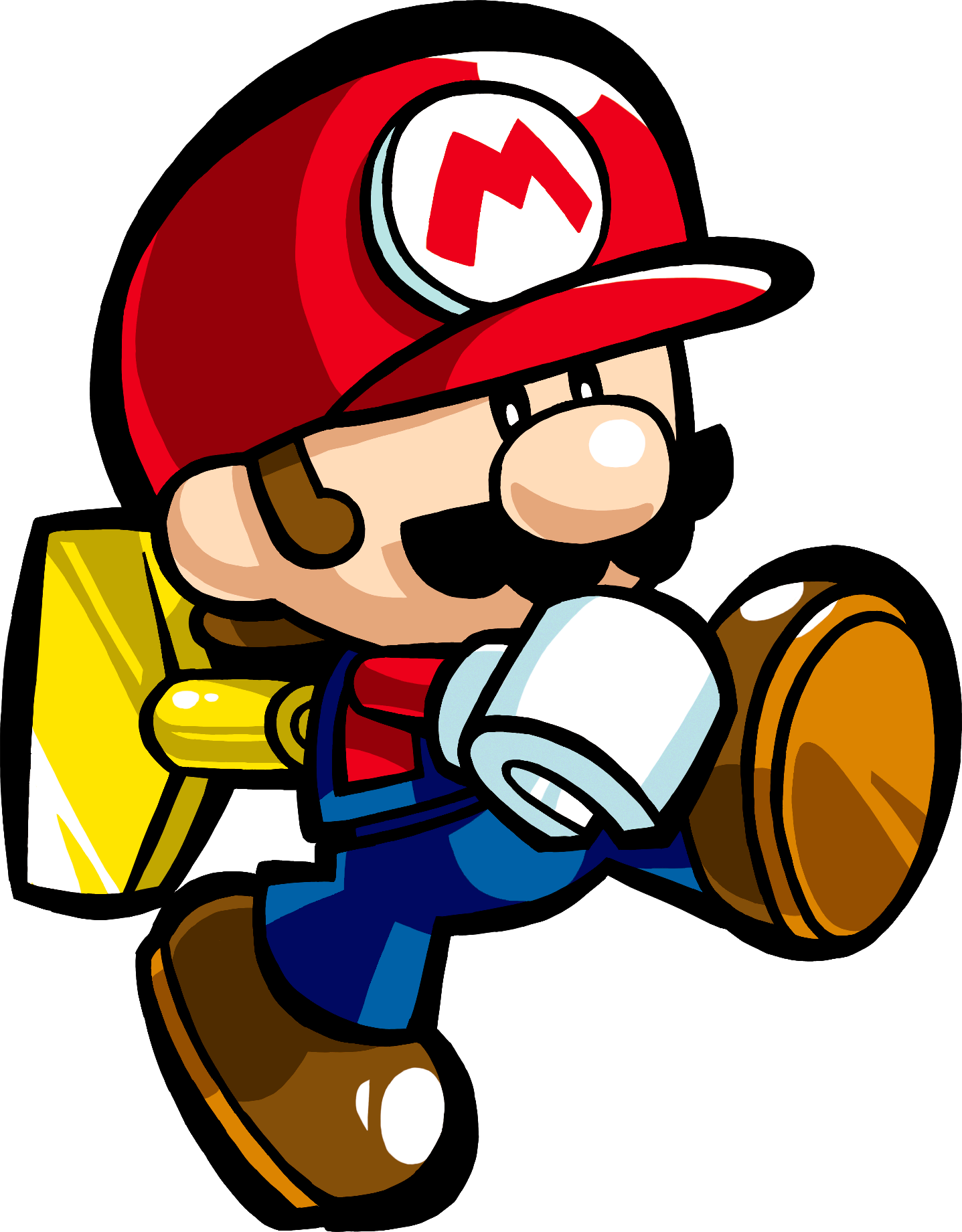 Mini MarioThe main Mini
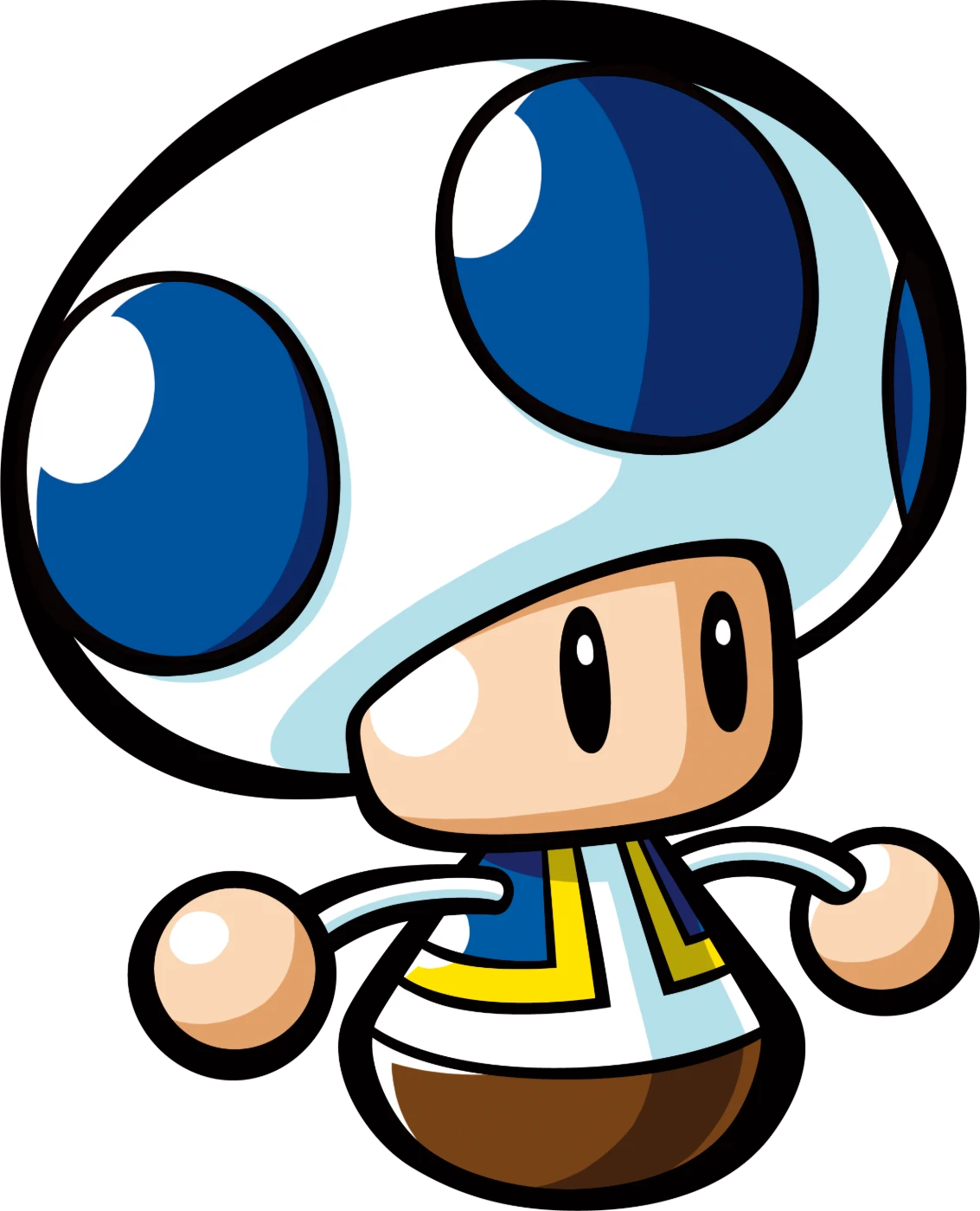 Mini ToadMini
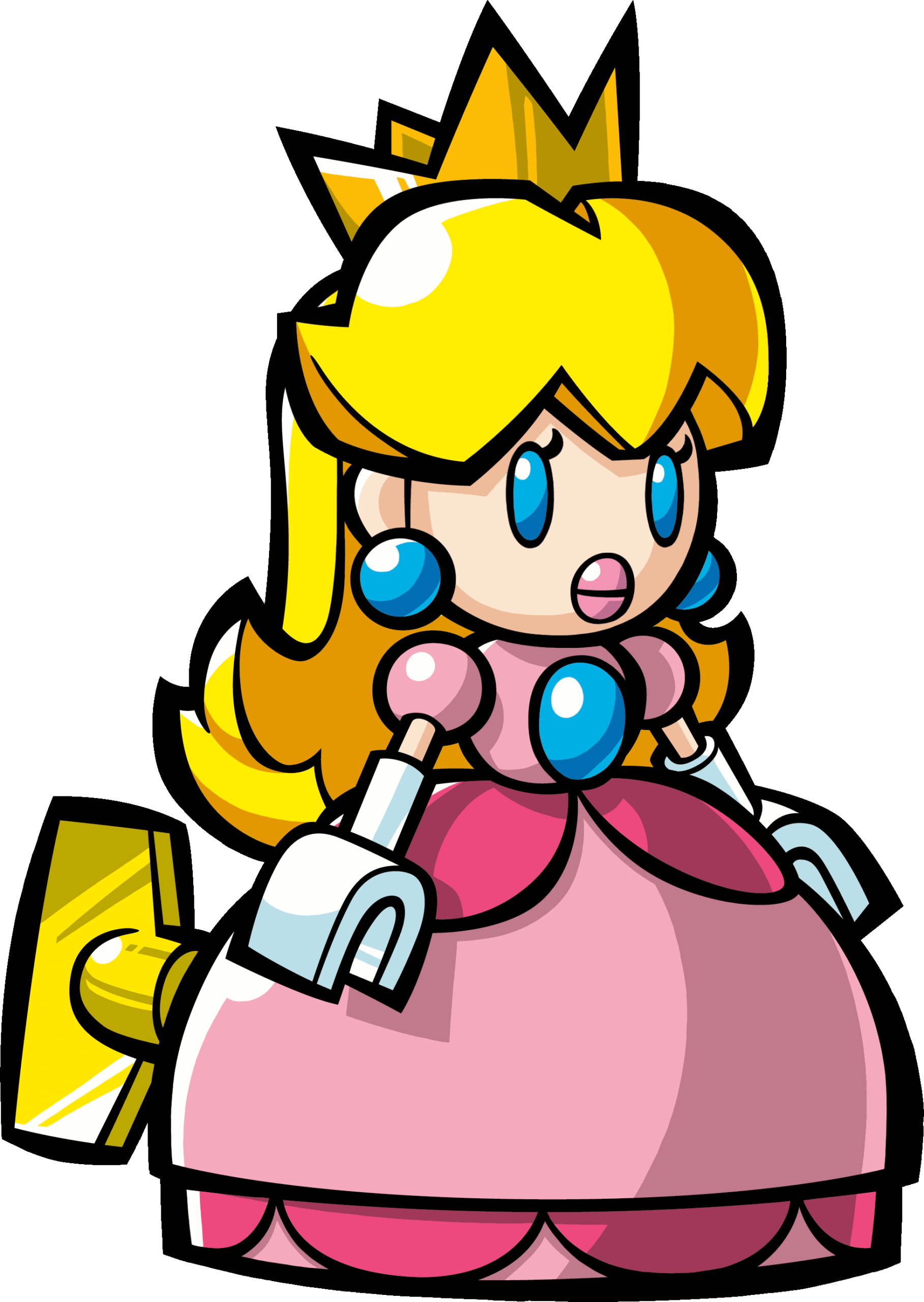 Mini PeachMini
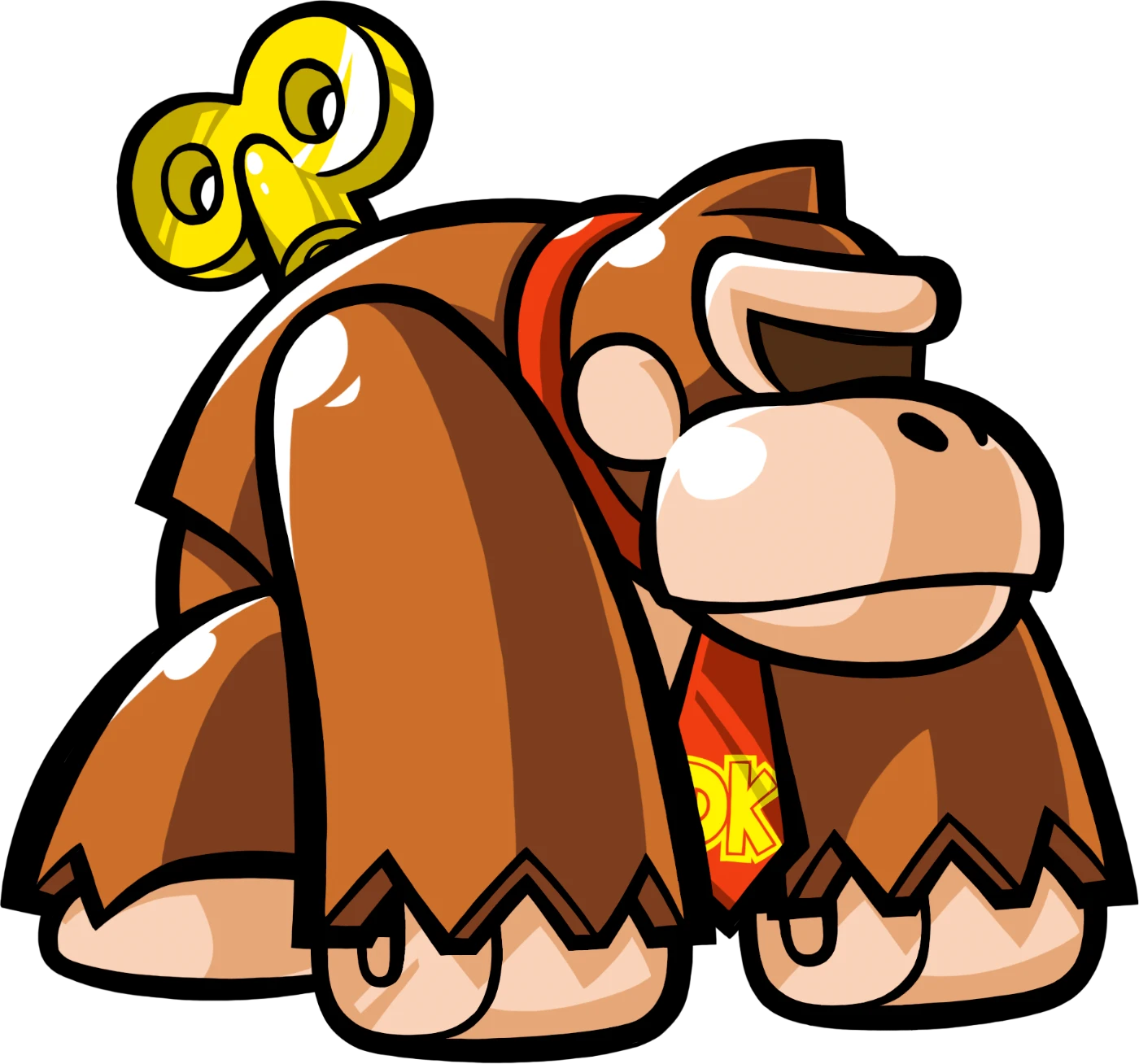 Mini Donkey KongMini
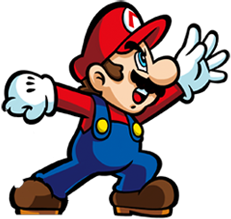 MarioPark owner
 PaulineGuest of honour and captive
 Donkey KongGuest number 101
 ToadsVisitors
 Shy GuyArea 1-4Can be stood on; fills Shy Guy Blocks to make platforms.
 Circus KongArea 1-7Tosses Minis into the air; a hammer stuns it.
 BarrelArea 1-DKShaken down by Donkey Kong; red ones release Shy Guys when they break.
 Piranha PlantArea 4-5Catches fireballs from a Piranha with Fire and spits them back.
 Piranha with FireArea 4-5Spits fireballs that break Minis.
 PolterguyArea 4-DKSummoned from a Shy Guy portrait; leaves flames in places.
 FireballArea 5-2Rolls along the ground and charges at a Mini holding a hammer, which can defeat it.
 Capture KongArea 5-7Traps a Mini in the barrel on its back; a hammer stuns it.
 Magnet SparkyArea 6-2Runs along magnetic surfaces; flipping a Magnet Rod changes its route.
 ThwompArea 6-3Drops to crush Minis and smashes Crumble Blocks.
 SnifitArea 7-6Races along firing five bullets in a row.
 PokeyArea 8-3Walks the ground and fills Pokey Blocks; a cannon-fired Mini beats it.